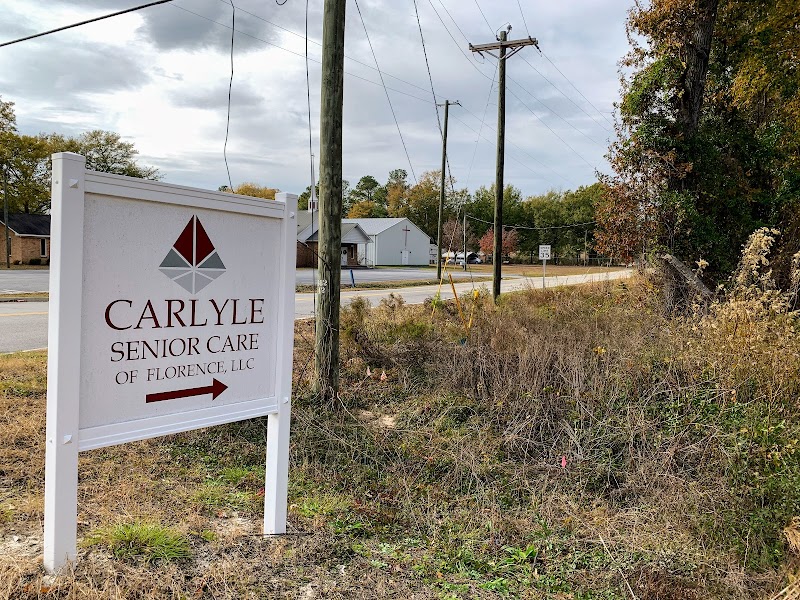
Carlyle Senior Care of Florence
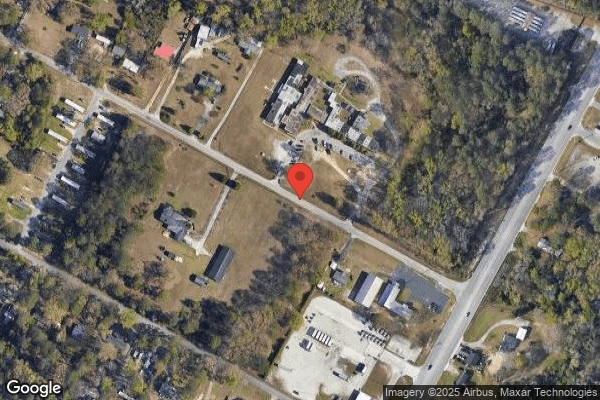
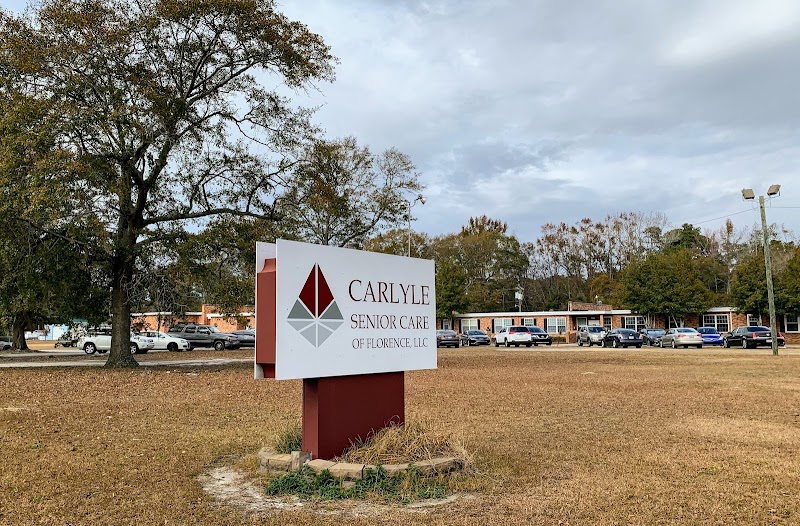
133 West Clarke Road, Florence, SC 29501 (843) 669-4374
For profit - Corporation 88 Beds CARLYLE SENIOR CARE Data: November 2025 1 Immediate Jeopardy citation
Trust Grade
28/100
#147 of 186 in SC
Last Inspection: March 2025

Within standard 12-15 month inspection cycle. Federal law requires annual inspections.

Overview

Carlyle Senior Care of Florence has received a Trust Grade of F, indicating significant concerns about the facility's operations and care quality. Ranking #147 out of 186 facilities in South Carolina places it in the bottom half, and #8 out of 9 in Florence County means there is only one local option that performs worse. The facility's performance is worsening, with the number of issues increasing from 5 in 2024 to 6 in 2025. Staffing is a concern with a rating of 2 out of 5 stars and a turnover rate of 61%, which is notably higher than the state average of 46%. While there have been no fines reported, which is a positive aspect, specific incidents such as failing to isolate COVID-19 positive residents and not employing a qualified dietary manager highlight significant shortcomings in care and safety protocols.
Trust Score
F
28/100
In South Carolina
#147/186
Bottom 21%
Safety Record
High Risk
Review needed
Inspections
Getting Worse
5 → 6 violations
Staff Stability
⚠ Watch
61% turnover. Above average. Higher turnover means staff may not know residents' routines.
Penalties
✓ Good
No fines on record. Clean compliance history, better than most South Carolina facilities.
Skilled Nurses
⚠ Watch
Each resident gets only 27 minutes of Registered Nurse (RN) attention daily — below average for South Carolina. Fewer RN minutes means fewer trained eyes watching for problems.
Violations
⚠ Watch
16 deficiencies on record. Higher than average. Multiple issues found across inspections.
★☆☆☆☆
1.0
Overall Rating
★★☆☆☆
2.0
Staff Levels
★☆☆☆☆
1.0
Care Quality
★★☆☆☆
2.0
Inspection Score
Stable
2024: 5 issues
2025: 6 issues

The Good

  • Full Sprinkler Coverage · Fire safety systems throughout facility
  • No fines on record

Facility shows strength in fire safety.

The Bad

1-Star Overall Rating

Below South Carolina average (2.8)

Significant quality concerns identified by CMS

Staff Turnover: 61%

15pts above South Carolina avg (46%)

Frequent staff changes - ask about care continuity

Chain: CARLYLE SENIOR CARE

Part of a multi-facility chain

Ask about local staffing decisions and management

Staff turnover is elevated (61%)

13 points above South Carolina average of 48%

The Ugly 16 deficiencies on record

1 life-threatening
Mar 2025 6 deficiencies
CONCERN (D)

Potential for Harm - no one hurt, but risky conditions existed

Deficiency F0552 (Tag F0552)

Could have caused harm · This affected 1 resident

**NOTE- TERMS IN BRACKETS HAVE BEEN EDITED TO PROTECT CONFIDENTIALITY** Based on interview and record review, the facility failed to ensure a resident's representative (RP) was informed of the risks a...

Read full inspector narrative →
**NOTE- TERMS IN BRACKETS HAVE BEEN EDITED TO PROTECT CONFIDENTIALITY** Based on interview and record review, the facility failed to ensure a resident's representative (RP) was informed of the risks and benefits associated with the resident taking psychotropic medications for one of three residents (R) Resident 72) reviewed for unnecessary medication use out of a total sample of 28. This failure had the potential to affect residents receiving psychotropic medications. Findings include: Review of R72's Face Sheet located in the electronic medical record (EMR) under the Profile tab revealed the resident was admitted to the facility on [DATE] with diagnosis which included strange and inexplicable behavior. Review of R72's quarterly Minimum Data Set (MDS) with an Assessment Reference Date (ARD) of 02/03/25 and located in the resident's EMR under the MDS tab revealed a Brief Interview for Mental Status (BIMS) score of 13 out of 15, which indicated the resident was cognitively intact. Review of R72's Certification of Inability to Make Healthcare Decisions located in the electronic medical record (EMR) under the Misc tab and dated 07/27/23 revealed two physicians certified the resident was unable to make healthcare decisions for himself. Review of R72's Informed Consent for psychoactive medication Use located in the electronic medical record (EMR) under the Misc tab and dated 03/20/25 revealed the resident signed the document that indicated the risk and benefits of receiving a psychotropic medication. Further review revealed the nurse completing the form was the Director of Nursing (DON). During an interview 03/27/25 at 9:52 AM the Director of Nursing (DON) said she was unaware that R72 had been deemed incapably of making health care decisions. She agreed the RP should have signed the form and not R72. She said she only looked at the resident's BIMS score. She said she spoke with R72 about the medication. He said okay, so she assumed he understood. But she agreed that if a physician had deemed him incapable it was inappropriate to discuss the risk and benefits of the medications with him and have him sign the document.
CONCERN (D)

Potential for Harm - no one hurt, but risky conditions existed

Deficiency F0583 (Tag F0583)

Could have caused harm · This affected 1 resident

Based on review of the facility policy, observation and interviews, the facility failed to ensure medical records containing personal health information (PHI) were not accessible to 16 of 16 residents...

Read full inspector narrative →
Based on review of the facility policy, observation and interviews, the facility failed to ensure medical records containing personal health information (PHI) were not accessible to 16 of 16 residents.This failure had the potential to allow inappropriate access to residents' records. Findings include: Review of the facility policy titled HIPAA Security Measures last revised 09/30/24 revealed, it is the facility's policy to implement reasonable and appropriate measures to protect and maintain the confidentiality, integrity, and availability of the resident's identifiable information and /or records that are in electronic format . During an observation on 03/25/25 at 10:44 AM, the east unit nursing medication cart was in the hallway and the cart was locked but the computer screen was on and revealed six resident names. Four residents and three staff walked past the medication cart and computer screen before Licensed Practical Nurse (LPN)7 returned to the cart. During an interview on 03/25/25 at 10:47AM, LPN7 stated the computer screen was locked. She said she leaves the screen open with the residents' names but there was no medical information on the screen. When asked to click on one of the residents' names, she saw that PHI immediately display on the computer screen. She said she did not know how to lock the screen and would have to close the computer to lock it. During an interview 03/27/25 at 9:52 AM, the Director of Nursing (DON) stated nursing staff were supposed to keep computer records out of sight and that all computer screens should have been locked when nurses were not at the medication cart. She said all medical documentation containing PHI should be kept out of view and secured.
CONCERN (D) 📢 Someone Reported This

A family member, employee, or ombudsman was alarmed enough to file a formal complaint

Potential for Harm - no one hurt, but risky conditions existed

Free from Abuse/Neglect (Tag F0600)

Could have caused harm · This affected 1 resident

**NOTE- TERMS IN BRACKETS HAVE BEEN EDITED TO PROTECT CONFIDENTIALITY** Based on review of facility policy, record review, document review and interviews, the facility failed to protect the residents ...

Read full inspector narrative →
**NOTE- TERMS IN BRACKETS HAVE BEEN EDITED TO PROTECT CONFIDENTIALITY** Based on review of facility policy, record review, document review and interviews, the facility failed to protect the residents from physical and verbal abuse by another resident or staff for four of five residents (Resident (R)72, R71, R12, and R52) reviewed for abuse. This had the potential to affect residents in the facility who were at risk for abuse. Findings include: Review of the facility's policy titled Abuse, Neglect and Exploitation revised 10/24/22 revealed, it is the policy of this facility to provide protections for the health, welfare, and rights of each resident by developing and implementing written policies and procedures that prohibit and prevent abuse . 1. Review of R54's Face Sheet located in the electronic medical record (EMR) under the Profile tab revealed the resident was admitted to the facility on [DATE] with diagnoses which include but are not limited to: autistic disorder, anxiety disorder, mental disorder, and mood disorder. Review of R54's quarterly Minimum Data Set (MDS) with an Assessment Reference Date (ARD) of 01/17/25 and located in the resident's EMR under the MDS tab revealed a Brief Interview for Mental Status (BIMS) score of seven out of 15, which indicated the resident was severely cognitively impaired. Review of R54's Care Plan, dated 12/05/24 and located in the EMR under the Care Plan tab revealed, Disruptive and anxious behaviors, yelling and slamming doors, restlessness, agitation and non-compliance. Interventions put in place were when resident becomes agitated intervene before agitation escalates. Review of R72's Face Sheet located in the EMR under the Profile tab revealed the resident was admitted to the facility on [DATE] with diagnoses which include but are not limited to: strange and inexplicable behavior. Review of R72's quarterly MDS with an ARD of 02/03/25 and located in the resident's EMR under the MDS tab, revealed a BIMS score of 13 out of 15, which indicated the resident was cognitively intact. Review of R72's Nurse's Note dated 02/11/25 at 3:04 PM and located in the EMR under the Notes tab written by Licensed Practical Nurse (LPN) 2 revealed, This nurse had a conversation with resident about reportable incident from the night before to get his side of the story, this resident told me that he was sitting in the lobby in his usual chair looking at the TV. He stated the accused aggressor started talking loudly and yelling, when this resident asked aggressor what was wrong, aggressor walked up to him and hit me on my right cheek. This resident stated he only hit him 1 time and then walked away. This resident denies hitting aggressor back. Review of the Facility's Five Day Follow Up dated 02/14/25 revealed the date and time of the incident was 02/10/25 at 11:00 PM. Further, the summary indicated the residents did have a physical alteration. During an interview on 03/26/25 at 1:15 PM, R72 stated, on the night of 02/10/25 he was sitting on one couch and R54 was sitting on the other couch across from him. He stated R54 got up and walked over to him and hit him on the side of his face with an open hand. During an interview on 03/26/25 at 1:40 PM, LPN2 stated she spoke with R72 on 02/11/25 who reported on the night of 02/10/25 he was just watching TV when R54 said something to him, but he did not say anything. Then R54 hit him in the face once and walked away. He said staff were notified who separated them. During an interview on 03/26/25 at 3:09 PM, Certified Nurse Aide (CNA)2 stated, on the night of 02/10/25 she was coming down the hall when she saw R54 hit R72. She said they were each sitting on a couch in the TV area when R54 got up and walked over towards R72 and hit him on the side of his face. She said they were arguing about something and that R72 did not do anything. During an interview on 03/26/25 at 4:24 PM, the Facility Administrator (FA) stated they found that the incident did occur and that it was substantiated. 2. Review of R71's Face Sheet revealed he was admitted to the facility on [DATE] with diagnoses that include but are not limited to: bipolar disorder, human immunodeficiency virus, and attention deficit. Review of R71's annual MDS with an ARD of 03/18/25, indicated a BIMS score of 15 out of 15 which indicated the resident was cognitively intact. Review of a Facility Related Incident Report (FRI), indicated that R71 was verbally abused by CNA9. Review of the facility investigation revealed that on 02/12/25 at 4:54 AM, CNA9 was charging her cell phone in the day room of the west unit. R71 was up and had gone to his friend's room to get his cell phone charger. R71 was returning to his room when CNA9 accused him of stealing her phone. Review of the facility statement from CNA9 revealed, I was charging my phone on a table in the day room. I saw R71 coming out of another residents room. I looked on the table and my phone was gone. It had to be R71. He was the only one up. I told him that I was not leaving without my phone. He stole it and ditched it in another resident's room. I did not curse at him. During an interview on 03/26/25 at 2:14 PM R71 stated, CNA9 said that I took her phone. I did not take her phone. I went to another room to get a phone charger. CNA9 was outside of another room when she saw me and asked what I was doing. I went back to my room. She then accused me of taking her phone. She is not her anymore. CNA9 said she was calling the police. I told her that I was calling the police. She said she was going to beat my mother f*** a**if I didn't return her phone. During an interview on 03/26/25 at 5:45 PM CNA10 stated, I witnessed CNA9 telling another staff that R71 took her phone. CNA9 stated that he took her [foul word] phone, and he better give it back. She did state that she would beat his a**. R71 was sitting in the corner of the day room and could hear her. During an interview on 03/27/25 at 6:58 PM, the FA stated, [R71] did let staff look for the phone in his room and it was not found. CNA9 was immediately suspended pending investigation and quit. She never returned to the facility. We try to prevent abuse of any kind and protect our residents. 3. Review R12's admission Record found in the EMR under the Profile tab, revealed R12 was admitted to the facility on [DATE] with a diagnosis of Alzheimer's disease. Review of R12's annual MDS with an ARD of 02/21/25 located in the EMR under the MDS tab indicated short term and long-term memory problems. R12 was rarely/never understood. The MDS indicated that R12 wanders daily and that R12's wandering significantly intrudes on the privacy of activities of others. Review of a Skin Note found in the EMR under the Notes tab dated 02/20/25 revealed, .R12 noted to have red areas around after incident with other resident, no other visible injuries noted. Review R52's admission Record found in the EMR under the Profile tab revealed R52 was re-admitted to the facility on [DATE] with a diagnosis of dementia. Review of R52's quarterly MDS with an ARD of 01/09/25 located in the EMR under the MDS tab with a BIMS score of 10 out of 15, which indicated R52's cognition was moderately impaired. The MDS indicated that R52 had no behaviors. Review of R60's annual MDS with an ARD of 12/05/24, located in the EMR under the MDS tab with a BIMS score of 15 out of 15 which indicated R60's cognition was intact. Review of R60's Statement from the person alleging abuse or reportable incident dated 02/19/25 indicated, I yelled at [R12] to get out of my room. [R52] got up and tried to make her [R12] get out of the room. [R12] held onto my bed and would not turn it loose. [R12] slapped [R52] and [R52] slapped her [R12] back. Review of the Initial Report dated 02/19/25 indicated, On 02/19/25 at approximately 7:20 PM, residents [R12 and R52] had a physical altercation. Residents were immediately separated by staff Further review revealed, a statement from R52 saying, [R12] was in our room. We told her to get out. She would not leave; I pushed her out of the room, and she slapped me in my face. I slapped her back on her face. Review of LPN1's Witness Statement, dated 02/19/25, stated, I heard the two residents arguing. I went to the room and [R12] was standing in [R52's] doorway .I did not see the altercation but heard [R52] yelling. During an interview on 03/25/25 at 11:37 AM, R52 said R12 came into her room, went into the bathroom, came out and sat down, so R52 opened the bedroom door and told R12 to get out. R52 said that R12 pushed her, so she pushed R12 back. R52 said that an unknown nurse came into the room and removed R12 from the room and told R12 not to come back. During an interview on 03/26/25 at 2:15 PM, R12 was alert, but confused and unable to recall the incident. During an interview on 03/26/25 at 2:50 PM, LPN2 said R12 had wandered into R52's room, touching things, and R52 was yelling at R12. Staff immediately went into R52's room and removed R12. During an interview on 03/25/25 at 4:00 PM, LPN1 said R12 was at the doorway of R52's room. LPN1 said the residents were separated and indicated R12 wanders throughout the facility. LPN1 confirmed there were no further incidents. During an interview on 03/26/25 at 5:23 PM, the FA stated, The FA stated both residents should have immediately had a skin assessment after the incident; however, FA confirmed that R12's skin assessment was not completed until 02/20/25. The FA confirmed that this incident was resident to resident abuse. During an interview on 03/26/25 at 6:16 PM, LPN4 said she was giving report to the oncoming shift and had to go down to R52's room because R12 wandered inside. Once there in the room, R52 and R12 were separated. R52 and R60 said that R12 hit first, who had redness to one side of the neck and there was no redness to R52. LPN4 said that there have been no further incidents between these residents.
CONCERN (D)

Potential for Harm - no one hurt, but risky conditions existed

Investigate Abuse (Tag F0610)

Could have caused harm · This affected 1 resident

**NOTE- TERMS IN BRACKETS HAVE BEEN EDITED TO PROTECT CONFIDENTIALITY** Based on record review, interview, and policy review, the facility failed to thoroughly investigate resident to resident abuse f...

Read full inspector narrative →
**NOTE- TERMS IN BRACKETS HAVE BEEN EDITED TO PROTECT CONFIDENTIALITY** Based on record review, interview, and policy review, the facility failed to thoroughly investigate resident to resident abuse for four of five residents (Resident (R)72, R54, R12, and R52) reviewed for abuse out of 28 sample residents. This had the potential to affect residents in the facility who were at risk for abuse. Findings include: Review of the facility's policy titled Abuse, Neglect and Exploitation revised 10/24/22 revealed, .an immediate investigation is warranted when suspicion of abuse . or reports of abuse, .occur. Written procedures for investigations include: Identifying and interviewing all involved persons, including the alleged victim, alleged perpetrator, witnesses, and others who might have knowledge of the allegations . 1. Review of R54's Face Sheet located in the electronic medical record (EMR) under the Profile tab revealed the resident was admitted to the facility on [DATE] with diagnoses which include but are not limited to: autistic disorder, anxiety disorder, mental disorder, and mood disorder. Review of R54's Quarterly Minimum Data Set (MDS) with an Assessment Reference Date (ARD) of 01/17/25 and located in the resident's EMR under the MDS tab revealed a Brief Interview for Mental Status (BIMS) score of seven out of 15, which indicated the resident was severely cognitively impaired. Review of R72's Face Sheet located in the EMR under the Profile tab revealed the resident was admitted to the facility on [DATE] with diagnoses which include but are not limited to: strange and inexplicable behavior. Review of R72's Quarterly MDS with an ARD of 02/03/25 and located in the resident's EMR under the MDS tab, revealed a BIMS score of 13 out of 15, which indicated the resident was cognitively intact. Review of the Facility's Five Day Follow Up Report dated 02/14/25, revealed the date and time of the incident was 02/10/25 at 11:00 PM. The summary finding indicated the residents did have a physical alteration. Further review did not indicate what occurred or who the aggressor was. There was no interview with [R72] after the incident occurred. It did not indicate what staff member witnessed the incident or an interview with that staff member. There were no interviews with any other residents who may have been in the Television (TV) room or had any knowledge of the incident or residents. During an interview on 03/26/25 at 4:24 PM, the Administrator stated he was the Abuse Coordinator, and it was his responsibility to ensure the completion of the investigation. He said anytime there was a resident-to-resident incident the investigation should include: statements by any staff who witnessed the incident, all residents involved and any staff in the area. He stated staff should have interviewed R72 the night of the incident to ensure he felt safe and had no concerns. He also stated he thought the Certified Nurse Aide (CNA) who witnessed the incident was interviewed. He agreed the CNA should have been identified in the investigation. 2. Review R12's admission Record found in the EMR under the Profile tab, revealed R12 was admitted to the facility on [DATE] with a diagnosis of Alzheimer's disease. Review of R12's Annual MDS with an ARD of 02/21/25 located in the EMR under the MDS tab indicated both short term and long-term memory problems and R12 rarely/never understood. The MDS also indicated that R12 wanders daily and that R12's wandering significantly intrudes on the privacy of activities of others. Review R52's admission Record found in the EMR under the Profile tab revealed R52 was re-admitted to the facility on [DATE] with a diagnosis of dementia. Review of R52's Quarterly MDS with an ARD of 01/09/25 located in the EMR under the MDS tab with a BIMS score of 10 out of 15, which indicated R52's cognition was moderately impaired. The MDS indicated that R52 had no behaviors. Review of R60's Annual MDS with an ARD of 12/05/24, located in the EMR under the MDS tab with a BIMS score of 15 out of 15 which indicated R60's cognition was intact. Review of R60's Statement from the person alleging abuse or reportable incident dated 02/19/25 indicated, I yelled at [R12] to get out of my room. [R52] got up and tried to make her [R12] get out of the room. [R12] held onto my bed and would not turn it loose. [R12] slapped [R52] and [R52] slapped her [R12] back. Review of the facility's Initial Report dated 02/19/25 indicated, On 02/19/25 at approximately 7:20 PM, residents [R12 and R52] had a physical altercation. Residents were immediately separated by staff and law enforcement notified . Review of R60's statement from the reportable incident dated 02/19/25, indicated, I yelled at [R12] to get out of my room. [R52] got up and tried to make her [R12] get out of the room, [R12] held onto my bed and would not turn it loose. [R12] slapped [R52] and [R52] slapped her [R12] back. Review of R52's statement from the person alleging abuse or reportable incident dated 02/19/25, indicated, [R12] was in our room. We told her [R12] to get out. She [R12] would not leave; I pushed her out of the room, and she [R12] slapped me in my face. I slapped her [R12] back in her face. Review of the facility's investigative documents revealed no evidence of interview with other residents. During an interview on 03/25/25 at 11:37 AM, R52 said R12 came into her room, went into the bathroom, came out and sat down, so R52 opened the bedroom door and told R12 to get out. R52 said that R12 pushed her, so she pushed R12 back. R52 said that the unknown nurse came into the room and removed her from the room and told her not to come back. During an interview on 03/26/25 at 2:15 PM, R12 was alert, but confused and unable to recall the incident. During an interview on 03/26/25 at 5:23 PM, the Administrator confirmed that there were no further residents' interviews. The Administrator stated that this was an isolated incident and that was the reason why only R52 and R60 was interviewed. The Administrator confirmed that R12 has a low BIMS score and was unable to be interviewed. He confirmed that a statement was not written regarding this information about R12.
CONCERN (E)

Potential for Harm - no one hurt, but risky conditions existed

Antibiotic Stewardship (Tag F0881)

Could have caused harm · This affected multiple residents

**NOTE- TERMS IN BRACKETS HAVE BEEN EDITED TO PROTECT CONFIDENTIALITY** Based on review of the facility policy, record review and interviews, the facility failed to monitor and evaluate antibiotic usa...

Read full inspector narrative →
**NOTE- TERMS IN BRACKETS HAVE BEEN EDITED TO PROTECT CONFIDENTIALITY** Based on review of the facility policy, record review and interviews, the facility failed to monitor and evaluate antibiotic usage for four of five residents (Resident (R) 24, R81, R55, and R15) reviewed for antibiotic usage out of 28 sample residents. This failure had the potential to affect residents' safety related to antibiotic usage. Findings include: Review of the facility's policy titled, Antibiotic Stewardship Program dated 09/30/24 revealed, It is the policy of this facility to implement an Antibiotic Stewardship Program as part of the facility's overall infection prevention and control program. The purpose of this program is to optimize the treatment of infections while reducing the adverse events associated with antibiotic use .Antibiotic orders obtained from consulting, specialty, or emergency providers shall be reviewed for appropriateness .Random audits of antibiotic prescriptions shall be performed to verify completeness and appropriateness (process measure) . 1. Review of R24's admission Record located under the Profile tab of the electronic medical record (EMR) revealed R24 was admitted to the facility on [DATE]. R24 was sent to the emergency room (ER) on 02/18/25 for an indwelling urinary catheter. A urine analysis (UA) was completed, and an antibiotic was started. R24 returned to the facility and completed the antibiotic. A culture was not done by the ER and the Infection Preventionist (IP) did not question the antibiotic. 2. Review of R81's admission Record located under the Profile tab of the EMR revealed R81 was admitted to the facility on [DATE]. R81 was sent to the ER on [DATE] for urinary retention, was catheterized, and came back to the facility on an antibiotic. No UA or culture was completed. 3. Review of R55's admission Record located under the Profile tab of the EMR revealed R55 was admitted to the facility on [DATE]. R55 was sent on 03/04/25 to the ER for a change in condition and came back to the facility on an antibiotic. A UA was completed by the ER; however, a culture was not ordered to be completed. 4. Review of R15's admission Record located under the Profile tab of the EMR revealed R15 was admitted to the facility on [DATE]. R15 has a Stage IV pressure ulcer to the sacrum. The Wound Doctor was alerted to an odor coming from the sacrum and ordered an antibiotic (Doxycycline) for 14 days. No culture was order by the provider to determine if antibiotic was needed or appropriate. During an interview on 03/25/25 at 12:43 PM, Licensed Practical Nurse (LPN9) revealed, I noticed a foul odor coming from the sacrum with drainage. I notified the wound doctor, and he came and evaluated the resident. A culture was not completed on the wound. Doxycycline was ordered for 14 days. I informed the IP that an antibiotic was started. During an interview on 03/27/25 at 2:45 PM, the IP stated, I told LPN9 and the wound doctor that a culture should have been done on R15. The wound doctor usually does a culture, but for some reason, did not do one on this resident. I have learned that I must get cultures from the hospital to see if a resident did have a Urinary Tract Infection (UTI) and that they are on the correct antibiotic. If I do not have a culture, I will call the hospital to get one. During an interview on 03/27/25 at 3:43 PM, the wound doctor revealed, I normally do a culture. I am not sure why I did not do one. I understand that a culture should always be completed before an antibiotic is given. During an interview on 03/27/25 at 6:53 PM, the Administrator revealed, My expectation for antibiotic stewardship is to follow the Centers for Medicare and Medicaid Services (CMS) guidelines.
CONCERN (F)

Potential for Harm - no one hurt, but risky conditions existed

QAPI Program (Tag F0867)

Could have caused harm · This affected most or all residents

Based on review of facility policy, document review and interview, the facility failed to develop and implement an effective, comprehensive, data-driven Quality Assurance and Performance Improvement (...

Read full inspector narrative →
Based on review of facility policy, document review and interview, the facility failed to develop and implement an effective, comprehensive, data-driven Quality Assurance and Performance Improvement (QAPI) program that focuses on indicators of the outcomes of care and quality of life and addresses all the care and unique services the facility provides. Specifically, they failed to complete systematic investigations and analysis of underlying causes or contributing factors of problems affecting facility-wide processes that impact quality of care, quality of life, and resident safety related to abuse prevention. This deficient practice has the potential to affect all residents in the facility. Findings include: Review of the facility's policy titled QAPI dated 10/24/22, revealed, It is the policy of this facility to develop, implement, and maintain an effective, comprehensive, data-driven QAPI program that focuses on indicators of the outcomes of care and quality of life and addresses all the care and unique services the facility provides .The facility conducts at least one distinct performance improvement project (PIP) annually that focuses on high risk or problem prone areas. PIPs shall be designed to achieve and sustain performance improvement over time and to have an expected favorable outcome. The Quality Assessment and Assurance (QAA) shall select additional members to participate in various subcommittees based upon the PIP topic and participant expertise. Upon conclusion of the PIP, the sub-committee shall provide the QAA committee with a report, which contains a summary and analysis of activities and recommendations for improvement. Review of the facility ' s PIP's over the past year and interview on 03/27/25 at 6:52 PM with the Administrator, Director of Nursing (DON), and the Infection Preventionist (IP), the PIP consisted of a one page document that stated the problem to be solved was abuse prevention. This PIP was completed in two days by the Administrator. A form was filled out using F223 for abuse, which is no longer the federal regulation for abuse. The goal was there would be no abuse in the facility. There was no documentation to go along with this PIP. When the Administrator was questioned on the effectiveness of this PIP, he stated Our goal is to have zero abuse. When asked if he feels that this PIP is achievable, he did not reply. The survey team entered the facility with three abuse complaints that were all substantiated. Three weeks prior, the State Agency (SA) investigated several abuse complaints. The PIP did not contain a summary, how this was identified to QAPI, a sub-committee, or a summary and analysis of the process. When the Administrator was asked if he understood the purpose of QAPI and an annual PIP, he stated Yes.
Feb 2024 5 deficiencies
CONCERN (D)

Potential for Harm - no one hurt, but risky conditions existed

Transfer Notice (Tag F0623)

Could have caused harm · This affected 1 resident

**NOTE- TERMS IN BRACKETS HAVE BEEN EDITED TO PROTECT CONFIDENTIALITY** Based on review of facility policy, interviews, and record review, the facility failed to provide a notice of transfer for hospi...

Read full inspector narrative →
**NOTE- TERMS IN BRACKETS HAVE BEEN EDITED TO PROTECT CONFIDENTIALITY** Based on review of facility policy, interviews, and record review, the facility failed to provide a notice of transfer for hospitalization and the reasons for the transfer in writing, or as soon as practicable to the Ombudsman for 1 out of 1 resident reviewed for transfer, discharge notification Resident (R) 87. Findings include: Review of facility's policy titled, Discharge and Transfer (Including AMA)-Policy effective date 11/23/16 indicated, 6(d) A copy of the notice shall be provided to a representative of the Office of the State Long Term Care Ombudsman. Review of R87's Face Sheet revealed R87 was admitted to the facility on [DATE] with diagnoses including but not limited to; diabetes; hypertension, major depressive disorder, chronic pain and tachycardia. Review of R87's Quarterly Minimum Data Set (MDS) with an Assessment Reference Date (ARD) date of 02/09/24 revealed a Brief Interview for Mental Status (BIMS) score of 0 out of 15, indicating R87 has severe cognitive impairment. Review of R87's Transfer Discharge Notice to Resident/Resident Representative and Ombudsman dated 9/14/23 and 11/22/23 revealed discharge from facility to the hospital. During an interview on 02/09/24, Social Services stated the Ombudsman office is notified via email about transfer and discharge. She stated she didn't have the notification where Ombudsman was notified but would look in previous Social Services worker documents to see if she could find the documentation. At the time of exit, this information was not provided by Social Services.
CONCERN (D)

Potential for Harm - no one hurt, but risky conditions existed

Pressure Ulcer Prevention (Tag F0686)

Could have caused harm · This affected 1 resident

Based on the facility policy titled, Wound Treatment Management, and Clean Dressing Change, observations and interviews, the facility failed to ensure a procedure was followed for wound care for Resid...

Read full inspector narrative →
Based on the facility policy titled, Wound Treatment Management, and Clean Dressing Change, observations and interviews, the facility failed to ensure a procedure was followed for wound care for Resident (R)17 and R68, to promote healing and to reduce the likelihood of infection for 2 of 2 residents reviewed for wound care. Findings include: Review of the facility policy titled, Wound Treatment Management, states, Policy: To promote wound healing of various types of wounds. It is the policy of this facility to provide evidenced based treatments in accordance with current standards of practice and physician orders. Review of the facility policy titled, Clean Dressing Change, states, Policy: To provide wound care in a manner to decrease potential for infection and/or cross contamination. Policy Explanation and Compliance Guidelines: 9. Loosen the tape and remove the existing dressing. If needed to minimize sin stripping or pain, moisten with prescribed cleansing solution or use adhesive remover to remove tape. 10. Remove gloves, pulling inside out over the dressing. Discard into appropriate receptacle. 11. Wash hands and put on clean gloves. 12. Clean the wound as ordered, taking care not to contaminate other skin surfaces or other surfaces the wound (i.e. clean outward from the center of the wound.) Pat dry with gauze. The facility admitted R17 with diagnoses including, but not limited to, pressure ulcers of the left and right ischium. An observation on 02/08/2024 at 10:30 PM of wound care for R17 went as followed: Observation revealed R17 was ready for wound care, his soiled dressings were removed, and the resident was rolled to his right side, exposing his entire back side. The supplies were set up on the over bed table. The Registered Nurse (RN), wound care nurse, washed her hands and applied gloves. The 2 areas for wound care were red and irritated, but clean and dry. The RN applied saline to the 4x4 gauze and wiped inside the wound bed of the left ischium. She went around and around inside the wound bed using the same wipe and then went outside of the wound bed to the surrounding area and wiped around and around in a circular motion using the same wipe, she used to clean the wound bed. The RN then removed her gloves and washed her hands, applied gloves and applied the calcium alginate to the border gauze and then applied it to the wound bed. The RN removed her gloves and washed her hands and applied gloves. She then proceeded to apply normal saline to a 4x4 gauze and wiped the wound bed, going around and around, in a circular motion, and over the wound bed using the same normal saline soaked gauze. Then she went outside the wound bed to the surrounding tissue, using the same 4x4 saline soaked gauze used for the wound bed and wiped around the outside tissue of the wound, several times. The facility admitted R68 with diagnoses of paraplegia and a stage 4 pressure ulcer. An observation on 02/08/2024 at 11:00 AM of wound care for R68 went as followed: The RN had already cleaned the over bed table, and once in the room she spread a clean towel over the table's surface. The RN set up the supplies, the Certified Nursing Assistant (CNA) donned (put on) a gown and gloves, and moved the R68's over bed table and wheel chair away from the bathroom door so that the RN could wash her hands. The RN applied a yellow gown, opened the supplies and placed them and the gloves on the table. The RN took a marker from her pocket and wrote the date, and her initials on the border gauze. The RN washed her hands and applied gloves. R68 turned himself in bed onto his right side and the RN removed the soiled dressing and with the same gloved hands, applied normal saline to a 4x4 gauze and wiped the wound bed and then with the same wipe used to clean the wound bed, she wiped around and around, the outside edges of the wound. The RN then removed her gloves and washed her hands and applied gloves, opened another 4x4, and applied the normal saline and sprayed a small amount from the vial into the wound bed. The RN wiped inside the wound bed again, and then with the same 4x4 wiped around and around the out side edges of the wound. The RN then removed her gloves, washed her hands and applied gloves. She then opened the calcium alginate with silver and placed it on the border gauze and covered the wound. The RN them helped the CNA pull up the resident's brief, bagged the soiled linen, tied the bag, removed her gloves and gown and bagged the trash and then washed her hands. She carried the trash and the soiled linen to the proper receptacle, and then cleaned her hands with hand sanitizer and charted the treatment. During an interview on 02/08/2024 at 11:25 AM with the RN wound nurse, she confirmed that she had removed the soiled dressing and with the same gloved hands she took a 4x4 and applied normal saline and wiped inside the wound bed and with the same wipe she wiped the surrounding tissue going around and around the out outside of the wound. The RN stated that she did not know that she could not remove the soiled dressing and then clean the wound with the same gloved hands because both areas were considered dirty areas. The RN also confirmed the observations for cleaning the wounds for R17 and R68.
CONCERN (D)

Potential for Harm - no one hurt, but risky conditions existed

Infection Control (Tag F0880)

Could have caused harm · This affected 1 resident

Based on review of the facility policy titled, Hand Hygiene, observations, and interviews, the facility failed to ensure proper hand hygiene during wound care for Resident (R)68) for 1 of 2 residents ...

Read full inspector narrative →
Based on review of the facility policy titled, Hand Hygiene, observations, and interviews, the facility failed to ensure proper hand hygiene during wound care for Resident (R)68) for 1 of 2 residents reviewed for wound care. Findings include: Review of the facility policy titled, Hand Hygiene, revealed under policy, All staff will perform proper hand hygiene procedures to prevent the spread of infection to other personnel, residents. and visitors. This applies to all staff working in all locations of the facility.Hand Hygiene Table, states, After handling contaminated objects. After handling items potentially contaminated with blood, body fluids, secretions, or excretions and when, during resident care, moving from a contaminated body site to a clean body site. The facility admitted R68 with diagnoses of paraplegia and a stage 4 pressure ulcer. An observation on 02/08/2024 at 11:00 AM of wound care for R68 went as followed: The RN had already cleaned the over bed table, and once in the room she spread a clean towel over the table's surface. The RN set up the supplies, the Certified Nursing Assistant (CNA) donned (put on) a gown and gloves, and moved the R68's over bed table and wheel chair away from the bathroom door so that the RN could wash her hands. The RN applied a yellow gown, opened the supplies and placed them and the gloves on the table. The RN took a marker from her pocket and wrote the date, and her initials on the border gauze. The RN washed her hands and applied gloves. R68 turned himself in bed onto his right side and the RN removed the soiled dressing and with the same gloved hands, applied normal saline to a 4x4 gauze and wiped the wound bed and then with the same wipe used to clean the wound bed, she wiped around and around, the outside edges of the wound. The RN then removed her gloves and washed her hands and applied gloves, opened another 4x4, and applied the normal saline and sprayed a small amount from the vial into the wound bed. The RN wiped inside the wound bed again, and then with the same 4x4 wiped around and around the out side edges of the wound. The RN then removed her gloves, washed her hands and applied gloves. She then opened the calcium alginate with silver and placed it on the border gauze and covered the wound. The RN them helped the CNA pull up the resident's brief, bagged the soiled linen, tied the bag, removed her gloves and gown and bagged the trash and then washed her hands. She carried the trash and the soiled linen to the proper receptacle, and then cleaned her hands with hand sanitizer and charted the treatment. During an interview on 02/08/2024 at 11:25 AM with the RN wound nurse, she confirmed that she had removed the soiled dressing and with the same gloved hands she took a 4x4 and applied normal saline and wiped inside the wound bed and with the same wipe she wiped the surrounding tissue going around and around the out outside of the wound. The RN stated that she did not know that she could not remove the soiled dressing and then clean the wound with the same gloved hands because both areas were considered dirty areas.
CONCERN (F)

Potential for Harm - no one hurt, but risky conditions existed

Deficiency F0801 (Tag F0801)

Could have caused harm · This affected most or all residents

Based on observations, interviews, and facility policy review, the facility failed to employ a qualified Certified Dietary Manager (CDM). Findings include: Review of CMS Manual System Publication 100-...

Read full inspector narrative →
Based on observations, interviews, and facility policy review, the facility failed to employ a qualified Certified Dietary Manager (CDM). Findings include: Review of CMS Manual System Publication 100-07 State Operations Provider Certification from the Department of Health and Human Services (DHHS) Centers for Medicare and Medicaid Services (CMS) dated September 30, 2022, revealed, If a qualified dietitian or other clinically qualified nutrition professional is not employed full-time, the facility must designate a person to serve as the director of food and nutrition services. The director of food and nutrition services must at a minimum meet the following qualifications, has an associate's degree or higher in food service management or in hospitality, if the course study includes food service or restaurant management, from an accredited institution of higher learning; or has two (2) or more years of experience in the position of director of food and nutrition services in a nursing facility setting and has completed a course of study in food safety and management, by no later than October 1, 2023, that includes topics integral to managing dietary operations including, but not limited to , foodborne illness, sanitation procedures, and food purchasing/receiving. Review of the facility's CDM credentials revealed an expiration date of 10/08/2018 and serv-safe expiration date of 07/15/2026. On 02/06/2024 at 10:44 AM, the former CDM stated they were aware their credentials were expired and had completed the course to obtain new credentials. However, they had not taken/passed the exam yet. On 02/07/2024 at 1:01 PM, the Regional Dietary Manager (RDM) stated the facility did not have a Certified Dietary Manager. The former CDM had not successfully passed the course/test to renew their CDM credentials, which had expired October 2018. On 02/09/2024 at 11:54 AM, the Administrator stated they were aware the facility did not have a CDM. The former CDM whose credentials had expired, was scheduled to take the exam after survey, although an exact date was not known.
CONCERN (F)

Potential for Harm - no one hurt, but risky conditions existed

Food Safety (Tag F0812)

Could have caused harm · This affected most or all residents

Based on observations and interviews, the facility failed to properly label, store and discard expired foods. Findings include: On 02/06/2024 at 10:11 AM, an initial kitchen walkthrough with [NAME] #1...

Read full inspector narrative →
Based on observations and interviews, the facility failed to properly label, store and discard expired foods. Findings include: On 02/06/2024 at 10:11 AM, an initial kitchen walkthrough with [NAME] #1 revealed the following: 1 (one) bag of uncooked rice, opened, undated, and unlabeled 1 (one) bag of flour, opened, undated, and unlabeled 1 (one) bag of fruit loop cereal, opened, undated, and unlabeled 1 (one) bag of cornflakes cereal, opened, undated, and unlabeled 1 (one) bag of cooked rice, opened, undated, and unlabeled 1 (one) cup of grapes, undated and unlabeled 1 (one) opened bag of whipped topping, expired on 01/20/2024 1 (one) plastic tray of turkey bacon, opened and uncovered, undated and unlabeled 1 (one) jar of chicken base, opened, undated and unlabeled 1 (one) jar of beef base, opened, undated and unlabeled 1 (one) jar of cherry halves, expired on 11/23/2023 1 (one) cup of hard-boiled eggs, undated and unlabeled 1 (one) bag of deli ham, opened, undated and unlabeled 1 (one) bowl of gravy, expired on 02/05/2024 1 (one) prepackaged frozen cooked meat lasagna, expired 02/02/2024 1 (one) container of potato salad, expired 01/29/2024 1 (one) block of velveeta cheese, opened, undated and unlabeled 1 (one) Styrofoam to go plate with a garden salad, undated and unlabeled During an interview on 02/06/2024 at 10:22 AM, the former Certified Dietary Manager (CDM) stated the food truck delivery comes every Monday and Thursday. When the inventory is received, the items are labeled with the date. Staff are to label food items opened, pulled for use, or thawed, with the date and time. Leftover food that would be used again, is to be labeled with what the items were, the date, time and use by date. The former CDM stated that staff were aware of how to properly label and store food items because there was a chart posted in both the dry storage and refrigeration area of the kitchen.
Jan 2022 5 deficiencies 1 IJ (1 affecting multiple)
CRITICAL (K)

Immediate Jeopardy (IJ) - the most serious Medicare violation

Infection Control (Tag F0880)

Someone could have died · This affected multiple residents

**NOTE- TERMS IN BRACKETS HAVE BEEN EDITED TO PROTECT CONFIDENTIALITY** Based on observations, resident and staff interviews, record review, facility policy review, and review of Centers for Disease C...

Read full inspector narrative →
**NOTE- TERMS IN BRACKETS HAVE BEEN EDITED TO PROTECT CONFIDENTIALITY** Based on observations, resident and staff interviews, record review, facility policy review, and review of Centers for Disease Control and Prevention (CDC) guidance, the facility failed to protect the 53 residents that were negative for COVID-19 out of a total census of 79 resident from the spread of COVID-19 within the facility by: 1. failing to isolate residents who tested positive for COVID-19 from their roommates that tested negative for COVID-19 on the 01/24/22 facility wide COVID-19 testing but instead cohorted in the same room the COVID-19 positive residents with the COVID-19 negative residents; 2. failing to educate all staff on the COVID-19 status of the residents for whom the staff was providing care as staff was providing care to both positive and negative residents during their work shift; and 3. failing to make hand sanitizing supplies and Personal Protective Equipment (PPE) easily accessible for staff use. On 01/26/22 at 11:00 PM, the Administrator was notified an Immediate Jeopardy (IJ) was identified at F880-K Infection Prevention and Control. The IJ began on 01/24/22 when the facility failed to isolate seven residents who tested positive for COVID-19 but instead continued to cohort the COVID-19 positive residents with roommates that tested negative. The facility provided an acceptable plan for removal of the IJ on 01/27/22 at 7:00 PM. Staff interviews, record reviews, policy and procedure reviews and review of the training and education were completed during the survey to verify the immediate corrective actions were implemented by the facility as defined in the accepted plan of removal. The survey team validated the immediacy was removed on 01/27/22. The noncompliance at F880 remained at a lower scope and severity of E (pattern of no actual harm with the potential for more than minimal harm that was not immediate jeopardy). Findings include: Review of CDC guidelines, Control Recommendations for Healthcare Personnel During the Coronavirus Disease 2019 (COVID-19) Pandemic, Updated Sept. 10, 2021, revealed .2. Recommended infection prevention and control (IPC) practices when caring for a patient with suspected or confirmed SARS-CoV-2 infection: The Infection Prevention and Control (ICP) recommendations described below also apply to patients with symptoms of COVID-19 (even before results of diagnostic testing) and asymptomatic patients who have met the criteria for Transmission-Based Precautions (quarantine) based on close contact with someone with SARS-CoV-2 infection. However, these patients should NOT be cohorted with patients with confirmed SARS-CoV-2 infection unless they are confirmed to have SARS-CoV-2 infection through testing . Place a patient with suspected or confirmed SARS-CoV-2 infection in a single-person room. The door should be kept closed (if safe to do so). The patient should have a dedicated bathroom. Facilities could consider designating entire units within the facility, with dedicated HCP [Healthcare Professional], to care for patients with SARS-CoV-2 infection. Dedicated means that HCP are assigned to care only for these patients during their shifts . HCP who enter the room of a patient with suspected or confirmed SARS-CoV-2 infection should adhere to Standard Precautions and use a NIOSH-approved N95 or equivalent or higher-level respirator, gown, gloves, and eye protection (i.e., goggles or a face shield that covers the front and sides of the face) . Review of the facility's policy titled, Novel Coronavirus Prevention and Response, revised 11/2021, revealed 6 . f.) Educate staff on proper use of PPE and application of standard, contact, droplet and airborne precautions. g.) Promote easy and correct use of PPE by: i.) posting signs on the door or wall outside of the resident room that clearly describes the type of precautions needed and required PPE . ii.) Make PPE including face masks, eye protection, gowns and gloves available immediately outside of the resident's rooms . iii) Position a trash can near the exit of the room to make it easy to discard PPE . Review of the facility's policy titled, Hand Hygiene, date implemented 11/17/17, revealed that all staff will perform proper hand hygiene procedures to prevent the spread of infection to other personnel, residents, and visitors. This applies to all staff working in all locations within the facility. During an interview on 01/27/22 at 2:00 PM, the Administrator and Director of Nursing (DON) provided the following information: The census at the time of the survey was 79 with all but two residents fully vaccinated. There were seven rooms identified as having a COVID negative resident cohorting with a newly identified COVID-19 positive resident. The positive tests were a result of facility wide testing of residents and staff on 01/24/22. The facility had been in outbreak status since 01/01/22. The week of 01/01/22 six staff and two residents tested positive. This constituted an outbreak status for the facility and staff and residents were being tested twice weekly regardless of vaccination status due to the outbreak and due to a high/RED county transmission rate per the Centers for Disease Control Data Tracking site for County transmission rates. An observation in Unit 1 (East Unit) outside the room of R1 and R49 on 01/25/22 at 9:15 AM revealed two signs on the door stating Droplet Precautions: Stop. Everyone must: Clean their hands, including before entering and when leaving the room. Make sure their eyes, nose and mouth are fully covered before room entry. Transmission-based precautions: Stop. Everyone must: 1. Clean hands before entering and leaving the room by using and alcohol-based hand rub or Washing with soap and water 2. Wear Personal Protective Equipment: Gloves, N95 respirator or facemask if not fitted, isolation gown, face shield or goggles These precautions are required upon ALL room entries, regardless of anticipated patient contact. Further observation of the two signs revealed no identification to indicate if one or both residents in the room were COVID positive. During the observation on 01/25/22 at 9:15 AM, Registered Nurse (RN) 1 was asked by the surveyor if the residents in that room were positive for COVID-19. RN1 stated, one of them is. RN1 indicated that R1 was COVID-19 positive and the roommate, R49, was negative for COVID-19. When asked why the two residents were housed in the same room, RN1 stated she did not know, but that since R49 had already been exposed he had not been moved from the room. No PPE was observed to be available to don (put on) prior to entering the room. When asked where the PPE was kept for entry into the room, RN1 stated that there was a PPE cart down the hallway. RN1 proceeded to a small PPE cart down the hallway that was found to be empty. RN1 then stated that there should be an isolation cart (infection control carts that stores and organizes supplies required to mitigate the risk of transmitting infection) on one of the other hallways. No PPE cart was found in the current hallway. The Assistant Director of Nursing (ADON) interjected during the interview on 01/25/22 at 9:20 AM with RN1 and stated that there was an isolation cart nearby. ADON then led the surveyor down the hallway out of Unit 1 and around the corner toward another unit. The surveyor ceased to follow ADON as no isolation cart was located on Unit 1. On 01/25/22 at 12:14 PM, CNA2 was observed entering R22's room (private room, Unit 1). CNA2 was wearing a KN95 mask and face shield, but no gown or gloves. There were two signs on R22's door stating Droplet Precautions: Stop. Everyone must: Clean their hands, including before entering and when leaving the room. Make sure their eyes, nose and mouth are fully covered before room entry. Transmission-based precautions: Stop. Everyone must: 1. Clean hands before entering and leaving the room by using and alcohol-based hand rub or Washing with soap and water 2. Wear Personal Protective Equipment: Gloves, N95 respirator or facemask if not fitted, isolation gown, face shield or goggles These precautions are required upon ALL room entries, regardless of anticipated patient contact. Continued observation on 01/25/22 at 12:14 PM revealed no PPE was available outside R22's room. When asked if this was a COVID-19 positive room, CNA2 stated she did not know. CNA2 then asked Licensed Practical Nurse (LPN)1 if R22 had COVID-19. LPN1 stated, yes. CNA 2 then proceeded to find an isolation gown. Observation of CNA1 on 01/26/22 at 5:50 PM revealed CNA1 was in R1 and R49's room. Observation of R1 and R49's room revealed two signs on the door stating Droplet Precautions: Stop. Everyone must: Clean their hands, including before entering and when leaving the room. Make sure their eyes, nose and mouth are fully covered before room entry. Transmission-based precautions: Stop. Everyone must: 1. Clean hands before entering and leaving the room by using and alcohol-based hand rub or Washing with soap and water 2. Wear Personal Protective Equipment: Gloves, N95 respirator or facemask if not fitted, isolation gown, face shield or goggles These precautions are required upon ALL room entries, regardless of anticipated patient contact. Further observations of the signage on the door revealed no indication if one or both residents in the room were COVID positive. Review of the EMR Lab Results tab revealed R1 tested positive for COVID-19 on 01/24/22. Review of the EMR Lab Results tab revealed R49 tested negative for COVID-19 on 01/24/22. Continued observation on 01/26/22 at 5:50 PM revealed CNA1 was wearing an isolation gown, a KN95 mask, and a face shield and was carrying a clipboard upon entering R1 and R49's room. The privacy curtain between the two residents was drawn. R1's bed was closest to the door. CNA1 placed the clipboard on the R1's (who was COVID positive) side table and donned a pair of gloves. CNA1 pulled out a thermometer, pulse oximeter, and wrist blood pressure cuff from his pocket and took R1's vital signs. CNA1 wrote on the clipboard on R1's bedside table. CNA1 moved onto R49, drew back the privacy curtain without changing any of his PPE, including his gloves, or sanitizing the thermometer, pulse oximeter, or wrist blood pressure cuff and took R49's (who was COVID negative) vital signs with the same instruments he had just used on R1. CNA1 returned to R1's bedside table to write on the clipboard he had placed there. CNA1 began to remove his gown and gloves, stopped halfway, and returned behind the privacy curtain to say a few words to R49. CNA1 returned to the door and finished removing the gown and gloves and placed them in a trash receptacle near the room door. CNA1 performed hand hygiene with the alcohol hand rub dispenser in the room before exiting room. In an interview on 01/26/22 at 6:31 PM, CNA1 stated that he was aware that R1 was COVID-19 positive. CNA1 further stated that he believed R49 was also COVID-19 positive, since the residents were in the same room. When asked how he knew that R49 was also COVID-19 positive, CNA1 stated, why else would they be in the same room? Observation on 01/25/22 at 10:00 AM revealed no isolation signs on the door of R225 and R31. Further observations on 01/26/22 at 6:30 PM revealed an isolation kit on the door of R225 and R31. Review of the EMR Lab Results tab revealed R225 tested positive for COVID-19 on 01/24/22. Review of the EMR Lab Results tab revealed R31 tested negative for COVID-19 on 01/24/22. In an interview with the Director of Nursing (DON) on 01/26/2022 at 8:18 PM, the DON confirmed that R225 had tested positive for COVID-19 on 1/24/22 but the facility failed to initiate isolation precautions including posting signage on the R225 and R31's door to indicate R225's COVID positive status, until 01/26/22, to alert staff and visitors of the necessity for precautions. During further interview on 01/26/22 at 8:18 PM, when asked what the facility's practice was when a resident tested positive, the DON stated that the resident would be placed on isolation. A sign would be placed on the door and an isolation cart would be placed in the hallway. When told that there was no sign on R225 and R31's door when surveyors entered the building on 01/25/22, the DON stated that it was easier to just leave the residents where they were because the COVID-19 unit was full. When told there were no isolation carts and signage on R225's door until 01/26/22, two days after he tested positive, the DON offered no further explanations. On 01/27/22 at 1:10 PM, CNA5 was observed to entered R18 and R41's room. CNA5 was wearing a KN95 mask and a face shield, but no gown or gloves. An isolation kit containing necessary PPE was mounted on the door and two signs on the door stating Droplet Precautions: Stop. Everyone must: Clean their hands, including before entering and when leaving the room. Make sure their eyes, nose and mouth are fully covered before room entry. Transmission-based precautions: Stop. Everyone must: 1. Clean hands before entering and leaving the room by using and alcohol-based hand rub or Washing with soap and water 2. Wear Personal Protective Equipment: Gloves, N95 respirator or facemask if not fitted, isolation gown, face shield or goggles These precautions are required upon ALL room entries, regardless of anticipated patient contact. CNA5 was observed to set down a food tray for R18 on the bedside table and did not perform hand hygiene before entering the room or after exiting the room. Review of the EMR Lab Results tab revealed R18 tested positive for COVID-19 on 01/24/22. Review of the EMR Lab Results tab revealed R41 tested negative for COVID-19 on 01/24/22. Continued observation on 01/27/22 at 1:10 PM revealed CNA5 picked up a food tray and entered R4 and R11's room. Review of the EMR Lab Results tabs revealed R4 and R11 both tested negative for COVID-19 on 01/24/22. CNA5 did not perform hand hygiene between serving residents positive with COVID-19 and residents negative for COVID-19. Continued observations on 01/27/22 at 1:15 PM revealed CNA6 entered into R225's (who was COVID positive) room wearing a KN95 mask and face shield but no gown or gloves and delivered a food tray to R225. There was an isolation kit with PPE on door. CNA6 did not perform hand hygiene before entry, or after exiting R225's room. CNA6 proceeded to the food cart and picked up another tray. CNA6 then served a tray to R27 who per review of the EMR Lab Results tab was COVID-19 negative. CNA6 did not perform hand hygiene between serving R225 and R27. CNA6 performed hand hygiene in the hallway after exiting R27's room. In an interview with the Director of Nursing (DON) on 01/26/22 at 10:15 AM regarding the availability of PPE supplies for staff, the DON stated the facility had ample PPE stored in an outside storage area and staff were to bring supplies into the building as needed. A surveyor accompanied the DON to the storage area outside the COVID unit and confirmed there was adequate quantities of PPE, but it was not easily accessible for staff use resident rooms that required all PPE. The DON stated that they had closed their COVID unit a few months ago because things [COVID-19 transmission] seemed to even out, but the facility had to reopen a COVID unit after the number of residents with positive tests went up following the holidays. During an interview on 01/25/22 at 1:10 PM, when asked about cohorting negative and positive residents in the same room during an interview on 01/25/22 at 1:10 PM, the facility Administrator said that the facility was following guidance provided by the South Carolina Department of Health and the facility Medical Director. The Administrator stated . once we [the facility] got above just a few positives we were instructed to leave the residents where they were, or to essentially shelter in place. The Administrator and DON stated they had been in frequent contact with a named DHEC staff member since their COVID positive numbers started to increase after the holidays. The DON stated that after the COVID unit was reopened and the positives continued to come in they were told by the Medical Director and DHEC that the negative residents in the rooms with the residents that tested positive on 01/24/22 had close proximity exposures and transferring the residents within the facility added to the spread of the infection. During a phone interview on 01/26/22 at 7:10 PM, the Medical Director stated that the residents shed the virus prior to testing positive and the negative roommate had already been exposed and would most likely test positive in about three days. The Medical Director stated, If there are rooms available or a specific unit with COVID positive beds, then the facility can move residents to cohort; but once the number of positives is above four or five residents then it is an outbreak, and moving residents just drags the virus through-out the facility. The Medical Director confirmed the facility was currently in outbreak status and further stated that unless N95s are provided to all residents the exposure risk is elevated regardless of room changes. The MD stated the facility was communicating with DHEC staff and continuing to do their best to prevent the spread, but that moving residents and/or shared equipment does not achieve that goal. In response to the IJ survey citation for Tag F-880-K in which [NAME] Senior Care of [NAME] failed to segregate COVID positive residents and failed to follow Centers for Disease Control (CDC) quarantine guidelines to prevent the spread of COVID-19 infections, [NAME] Senior Care agrees to complete the following corrective actions to ensure compliance with this standard is met: [NAME] Senior Care will continue facility wide outbreak testing for all residents and staff. Effective immediately, a dedicated COVID unit has been reopened to allow segregation of positive residents from noninfected residents. The facility will perform enhanced terminal cleaning of all resident rooms, clinical and non-clinical areas, and non-public spaces. All residents that test positive for COVID-19 will be moved to a unit with dedicated COVID positive rooms, equipment, and staff with increased Transmission Based Precautions (TBPs) on that hall/unit. When space is no longer available on the dedicated COVID unit, residents that test positive for COVID will be cohorted in a room designated as a COVID positive room. The door to the quarantined/COVID positive room will remain closed, and TBPs will be implemented for both/all residents in that room. Personal Protective Equipment will be easily accessible for staff entering the room to provide care. New trash receptacles will be placed at the doorways so staff can doff and discard contaminated PPE prior to exiting the room to contain the spread. Infection Control Preventionist (ICP), the Director of Nursing (DON), and the Administrator will round on the nursing units to ensure staff and residents are following transmission-based precautions, practicing good hand hygiene, and utilizing appropriate PPE to ensure care team members follow the CDC recommended guidelines for TBPs and identification and isolation of positive residents. Any issues with the segregation of the COVID positive residents from non-COVID residents will be addressed by the Administrator and DON in real time and will be used as opportunities for re-education. The Nursing Home Administrator and Director of Nursing are responsible for the corrective actions outlined to be completed by January 27, 2022, and for ongoing monitoring to ensure compliance with this plan to prevent the spread of COVID-19 infection. The IJ removal was confirmed through resident and staff interviews about PPE and identifying residents on quarantine. Observations confirmed terminal room cleans were performed prior to transfers and new room assignments were made for the seven newly identified COVID positive residents; placement of new Personal Protective Equipment (PPE) carts and door bins increased availability of PPE in the rooms of COVID positive residents and in the hallway for staff entering COVID positive rooms. New trash receptacles were placed at the door of the COVID positive rooms so that PPE could be appropriately doffed before exiting the positive room. Staff interviews confirmed requirements in the removal plan that the staff had been reeducated by the facility prior to the start of their shifts and/or during their shift on 01/27/22 regarding proper donning/doffing of PPE, hand hygiene, and how to identify positive and negative rooms/residents while providing cares. The staff were reeducated specifically to include Centers for Disease Control (CDC) recommendations for cohorting residents and PPE/TBPs. The staff sign-in sheets and staff education records were reviewed. The facility policy related to COVID-19 was updated to include the CDC recommendations per Nurse Consultant (NC) 1.
CONCERN (D)

Potential for Harm - no one hurt, but risky conditions existed

MDS Data Transmission (Tag F0640)

Could have caused harm · This affected 1 resident

**NOTE- TERMS IN BRACKETS HAVE BEEN EDITED TO PROTECT CONFIDENTIALITY** Based on interview, record review, and review of the Resident Assessment Instrument (RAI) manual, the facility failed to complet...

Read full inspector narrative →
**NOTE- TERMS IN BRACKETS HAVE BEEN EDITED TO PROTECT CONFIDENTIALITY** Based on interview, record review, and review of the Resident Assessment Instrument (RAI) manual, the facility failed to complete a discharge Minimum Data Set (MDS) assessment for one of one resident (Resident (R) 2) reviewed for missing MDS assessments in a total of 18 sampled residents. Findings include: Review of the RAI Manual, October 2019 edition, revealed Discharge Assessment refers to an assessment required on resident discharge from the facility . This assessment includes clinical items for quality monitoring as well as discharge tracking information Entry and Discharge Reporting MDS assessments and tracking records that include a select number of items from the MDS used to track residents and gather important quality data at transition points, such as when they enter a nursing home, leave a nursing home, or when a resident's Medicare Part A stay ends, but the resident remains in the facility . Required Tracking Records and Assessments are Federally mandated, and therefore, must be performed for all residents of Medicare and/or Medicaid certified nursing homes . They include: . o Discharge (return not anticipated or return anticipated) . Timeliness Criteria In accordance with the requirements . long-term care facilities participating in the Medicare and Medicaid programs must meet the following conditions: o Completion Timing: For all non-admission . assessments, the MDS Completion Date . must be no later than 14 days after the Assessment Reference Date (ARD) . Review of R2's facility printed Face Sheet showed an admission date of 09/14/21, with medical diagnoses that included type II diabetes and anxiety disorder, and a discharge date of 09/15/21. Review of the Notes tab in the electronic medical record (EMR) revealed a nurse's note dated 09/14/21 and timed at 7:00 PM stating [number] year old male. admitted to facility to skilled services of [physician name]. Dx [diagnoses] Osteomyelitis [sic], Anxiety, Hypokalemia, lDDM [insulin dependent diabetes], Hyperlipidemia, Parkinson Disease, S/P [after] right great toe amputation and Depression. Alert and oriented x 3 [time, person, place]. Anxious on admission stated he thought he was going home. called [sic] his daughter several times requesting she come pick him up. Ambulating throughout facility with boot to right foot. Resident agreed to stay 24 hours and reassess current arrangements in the morning . sutures in place to surgical site right great toe, will follow up with surgeon on Sept. 20th for suture removal. Antibiotic in progress related to recent amputation. Denies any complaints of pain or discomfort on admission . Further review of the Notes tab in the EMR revealed a nurse's note dated 09/15/21 and timed at 2:27 PM stating Adm/Discharge Note: . He was admitted on [DATE] and signed out on 9-15-2021 with home health. He was alert, oriented and very pleasant. Review of the EMR MDS tab showed an Entry MDS on 09/14/21 and a five-day admission MDS dated [DATE], but no other MDS assessment tracking. During an interview on 01/26/22 at 9:25 PM, the Director of Nursing (DON) confirmed the two MDS assessments showing on MDS tab and stated, The resident [R2] left on September 15th and no discharge MDS was sent. The DON confirmed the facility uses the Resident Assessment Instrument [RAI] Manual as the procedure manual for MDS assessments.
CONCERN (D)

Potential for Harm - no one hurt, but risky conditions existed

Assessment Accuracy (Tag F0641)

Could have caused harm · This affected 1 resident

**NOTE- TERMS IN BRACKETS HAVE BEEN EDITED TO PROTECT CONFIDENTIALITY** Based on interview, record review, and review of the Resident Assessment Instrument (RAI) Manual, the facility failed to accurat...

Read full inspector narrative →
**NOTE- TERMS IN BRACKETS HAVE BEEN EDITED TO PROTECT CONFIDENTIALITY** Based on interview, record review, and review of the Resident Assessment Instrument (RAI) Manual, the facility failed to accurately code Minimum Data Set (MDS) for; 1. injections for one of 24 residents (Resident (R) 13) reviewed for the initial pool and 2. a hospice admission on a significant change in status assessment (SCSA) for one of one resident deaths (Resident (R) 77) reviewed as a closed record in a total sample of 18 residents. Findings include: 1. Review of the Resident Assessment Instrument (RAI) Manual, October 2019, showed: Steps for Assessment: 1. Review the resident's medication administration records for the 7-day look-back period (or since admission/entry or reentry if less than 7 days). 2. Determine if the resident received insulin injections during the look-back period. 3. Determine if the physician (or nurse practitioner, physician assistant, or clinical nurse specialist if allowable under state licensure laws) changed the resident's insulin orders during the look-back period. 4. Count the number of days insulin injections were received and/or insulin orders changed. Review of R13's annual MDS with an Assessment Reference Date (ARD) 05/02/21, showed a facility admission date of 12/14/20 with medical diagnoses that included diabetes, end stage renal disease, and hypertension. Review of R13's Orders, located in the electronic medical record (EMR) tab and dated 06/07/21, showed a physician's order for Trulicity 0.75milligrams (mg)/0.5 milliliters (ml) once weekly on Friday. Review of the Trulicity website ( https://www.trulicity.com/how-to-use ) on 01/26/22 showed: Trulicity is a non-insulin option that helps your body release the insulin it's already making. Review of R13's quarterly MDS with an ARD of 10/31/21 revealed the MDS was coded as R13 having had received one insulin injection in the previous seven days; a quarterly MDS with an ARD of 08/01/21 was coded as R13 having two insulin injections in the previous seven days; and an annual MDS with an ARD of 05/02/21 was coded as R13 having received one insulin injection in the previous seven-day assessment period. During an interview on 01/26/22 at 9:32 PM, Nurse Consultant (NC) 1 reviewed R13's EMR for the insulin coding, and stated, Yes, it looks like she [clarified to be the MDS Coordinator] coded it [Trulicity] as insulin. [MDS Coordinator name] did not know that Trulicity was not an insulin. After further review of R13's EMR, NC1 stated she was unable to find a second injection for the August MDS and confirmed it was not correct. 2. Review of the October 2019 RAI Manual showed: An SCSA is required to be performed when a terminally ill resident enrolls in a hospice program (Medicare-certified or State-licensed hospice provider) or changes hospice providers and remains a resident at the nursing home. The ARD must be within 14 days from the effective date of the hospice election (which can be the same or later than the date of the hospice election statement, but not earlier than). An SCSA must be performed regardless of whether an assessment was recently conducted on the resident. This is to ensure a coordinated plan of care between the hospice and nursing home is in place. A Medicare-certified hospice must conduct an assessment at the initiation of its services. This is an appropriate time for the nursing home to evaluate the MDS information to determine if it reflects the current condition of the resident, since the nursing home remains responsible for providing necessary care and services to assist the resident in achieving his/her highest practicable well-being at whatever stage of the disease process the resident is experiencing . Review of R77's printed Face Sheet showed an admission date to the facility on [DATE] with medical diagnoses that included chronic obstructive pulmonary disease, myocardial infarction, diabetes, protein malnutrition, and dementia. Review of R77's medical hard (paper) chart showed a physician telephone order for admission to hospice services effective 12/09/21. Review of R77's significant change of status assessment (SCSA) with an ARD of 12/16/21 revealed the MDS was not coded for hospice services for R77. During an interview on 01/28/22 at 11:48 AM, NC2 confirmed that the hospice admission had not been coded on the 12/16/21 SCSA MDS and hospice was the reason for the significant change.
CONCERN (D)

Potential for Harm - no one hurt, but risky conditions existed

Deficiency F0688 (Tag F0688)

Could have caused harm · This affected 1 resident

**NOTE- TERMS IN BRACKETS HAVE BEEN EDITED TO PROTECT CONFIDENTIALITY** Based on observations, staff interviews, record review, and review of the facility's policy, the facility failed to ensure that ...

Read full inspector narrative →
**NOTE- TERMS IN BRACKETS HAVE BEEN EDITED TO PROTECT CONFIDENTIALITY** Based on observations, staff interviews, record review, and review of the facility's policy, the facility failed to ensure that one resident (Resident (R) 8) of four residents reviewed for limited range of motion (ROM), received appropriate treatment and services to increase range of motion and/or to prevent further decrease in range of motion and functional ability. Findings include: Review of the facility policy for Prevention of Decline in Range of Motion, dated as implemented 11/17/17, revealed Policy Explanation and Compliance Guidelines: 1. The facility, in collaboration with the Medical Director (MD), the Director of Nurses (DON) and as appropriate physical/occupational consultant, shall establish and utilize a systematic approach for prevention and decline in range of motion, including assessment . and preventative care . 3. a. Based on the comprehensive assessment the facility will provide interventions, exercises and/or therapy to maintain or improve range of motion. b. The facility will provide treatment and care in accordance with professional standards of practice. This includes but is not limited to: i. appropriate services (specialized rehabilitation, restorative or maintenance services). ii.) appropriate equipment (braces or splints) . 4. b. Staff will be educated on basic, restorative nursing care that does not require a qualified therapist or licensed nurse . During an observation on 01/25/22 at 10:15 AM, R8 was in bed, and noted to have bilateral upper and lower extremity contractures (a condition of shortening and hardening of muscles, tendons, or other tissue, often leading to deformity and rigidity of joints). R8 had splints to her lower extremities visible under the blanket, but no treatment was being provided to the upper extremities/hands at this observation. During an interview and observation on 01/26/22 at 8:50 AM with Certified Nursing Assistant (CNA) 2 revealed R8 was totally dependent on staff for feeding and other activities of daily living (ADLs). CNA 2 stated R8 had recently had COVID-19 resulting in an aggressive decline since then, and at times was minimally responsive. During this observation, R8 had gauze woven between her fingers on the left hand but not the right. When asked about the gauze CNA 2 stated, . we try to keep them in there to protect her hands, but they [gauze] end up in the bed every time. When asked to see the skin on the palms of R8's contracted hand, the resident's hand could not be opened without a painful reaction from R8. Review of the undated Face Sheet in the electronic medical record (EMR) revealed R8 was admitted to the facility on [DATE] with diagnoses including, mental disorder and intellectual disabilities, unspecified dementia, rheumatoid arthritis, and spinal stenosis (narrowing of the spinal column). Review of R8's quarterly Minimum Data Set (MDS) with an Assessment Reference Date (ARD) of 10/24/21 revealed a Brief Interview for Mental Status (BIMS) score of 13 out of 15, indicating R8 was cognitively intact. However, R8 had recently tested positive for COVID and remained on the COVID unit. R8 was not alert and able to be reliably interviewed about her care during the survey. The MDS assessment documented that R8 was totally dependent on staff for all ADLs and had impairments to both upper and both lower extremities; R8 had a functional limitation in range of motion on both sides in both the upper and lower extremities and had not received physical therapy, occupational therapy or restorative or range of motion services during the seven-day assessment period. Review of R8's current Physician's Orders, dated January 2022 and located in the Orders tab of the EMR, revealed an order written on 11/20/20 to . maintain gauze between fingers for contractions[sic] until hand splints arrive . Therapy to provide screens (eval/treat) PRN [as needed]. No hand splints (other than the gauze between the fingers) were observed to have been applied for R8 during the four-day survey conducted 01/25/22 through 01/28/22. Direct observations of R8 were made at 10:15 AM on 01/25/22; at 8:50 AM and again at 6:20 PM on 01/26/22; and on 01/27/22 at 2:30 PM, and no splint, hand roll or brace of any kind was applied to R8's upper extremities/hands during these observations. Review of an Occupational Therapy (OT) Discharge summary, dated [DATE] and provided by the facility, revealed Discharge Recommendations: restorative plan. Restorative Program Established/Trained = Restorative Splint and Brace Program . splints for [NAME][sic], ring and index fingers. Wear time 6-8 hours; apply left thumb support 6-8 hours. Right hand rolls apply 6-8 hours. In an interview with the Director of Nursing (DON) on 01/28/22 at 1:30 PM, she stated she was aware of R8's upper extremity contractures. The DON confirmed the earlier CNA interview that R8 had declined since her COVID infection. The DON was asked about splints or hand rolls as ordered and stated they [facility] had ordered special splints for R8 that could be applied to each individual finger, but it was painful for her, and R8 didn't tolerate wearing them. The DON confirmed the gauze wrapped in R8's hand would possibly protect the skin, but not reduce or correct the contractures. The DON stated that she would have therapy re-evaluate R8, . because the splints aren't doing any good if she won't wear them. The DON confirmed that the CNAs provided passive exercises while providing cares, but it was not documented as restorative nursing activities in the EMR. Interview with the Physical Therapist/ Rehab Director (PT1) on 01/28/22 at 3:10 PM revealed that R8 had been measured that day (1/28/22) for new devices for her hands. The therapist confirmed the braces she had for each finger, were in the resident's bedside drawer and not being applied consistently because the braces were painful for R8. The therapist confirmed there was currently no device in use that R8 could tolerate that would help reduce or correct the contractures for R8's upper extremities. The previous individual finger braces were not discontinued but were not being used either.
CONCERN (D)

Potential for Harm - no one hurt, but risky conditions existed

Deficiency F0849 (Tag F0849)

Could have caused harm · This affected 1 resident

Based on record review, interview, and review of the facility's policy, the facility failed to ensure hospice care and services were integrated into the facility plan of care for one of one resident (...

Read full inspector narrative →
Based on record review, interview, and review of the facility's policy, the facility failed to ensure hospice care and services were integrated into the facility plan of care for one of one resident (Resident (R) 46) reviewed for hospice services out of a total sample of 18 residents. Findings include: Review of the facility policy titled Hospice Services Facility Agreement, implemented 11/17/17, showed: .7. The facility will, under a written agreement, ensure that each resident's written plan of care includes both the most recent hospice plan of care and a description of the services furnished by the facility to attain or maintain the resident's highest practicable physical, mental, and psychosocial well-being. Review of the October 2019 Resident Assessment Instrument [RAI] Manual showed: Hospice residents: When a SNF [Skilled Nursing Facility] or NF [Nursing Facility] is the hospice resident's residence for purposes of the hospice benefit, the facility must comply with the Medicare or Medicaid participation requirements, meaning the resident must be assessed using the RAI, have a care plan and be provided with the services required under the plan of care. This can be achieved through cooperation of both the hospice and long-term care facility staff (including participation in completing the RAI and care planning) with the consent of the resident. Review of R46's facility printed Face Sheet showed an admission date to the facility of 06/09/21 with medical diagnoses that included metabolic encephalopathy (blood imbalance that affects the brain), dementia, and severe protein calorie malnutrition. Review of R46's quarterly Minimum Data Set (MDS) Assessment with an Assessment Reference Date (ARD) of 12/12/21 indicated the first coding of a hospice admission. Review of a facility provided copy of a printed care plan with handwritten updates for R46 showed nine of sixteen pages with the handwritten approach (to meet the goal of the care plan) for [Business name] Hospice as indicated. Further review of R46's hard (paper) medical chart and electronic medical record (EMR) did not show what specific services or when hospice services were to be provided. During an interview on 01/28/22 at 9:35 AM, the MDS Coordinator confirmed she was the hospice coordinator designee and stated, I'm new to MDS and care plans and I was not aware of the need to integrate the care plan with the hospice services.
Understanding Severity Codes (click to expand)
Life-Threatening (Immediate Jeopardy)
J - Isolated K - Pattern L - Widespread
Actual Harm
G - Isolated H - Pattern I - Widespread
Potential for Harm
D - Isolated E - Pattern F - Widespread
No Harm (Minor)
A - Isolated B - Pattern C - Widespread

Questions to Ask on Your Visit

  • "What changes have you made since the serious inspection findings?"
  • "Why is there high staff turnover? How do you retain staff?"
  • "Can I speak with families of current residents?"
  • "What's your RN coverage like on weekends and overnight?"

Our Honest Assessment

Strengths
  • • No fines on record. Clean compliance history, better than most South Carolina facilities.
Concerns
  • • Multiple safety concerns identified: 1 life-threatening violation(s). Review inspection reports carefully.
  • • 16 deficiencies on record, including 1 critical (life-threatening) violation. These warrant careful review before choosing this facility.
  • • Grade F (28/100). Below average facility with significant concerns.
  • • 61% turnover. Above average. Higher turnover means staff may not know residents' routines.
Bottom line: Trust Score of 28/100 indicates significant concerns. Thoroughly evaluate alternatives.

About This Facility

What is Carlyle Senior Care Of Florence's CMS Rating?

CMS assigns Carlyle Senior Care of Florence an overall rating of 1 out of 5 stars, which is considered much below average nationally. Within South Carolina, this rating places the facility higher than 0% of the state's 100 nursing homes. A rating at this level reflects concerns identified through health inspections, staffing assessments, or quality measures that families should carefully consider.
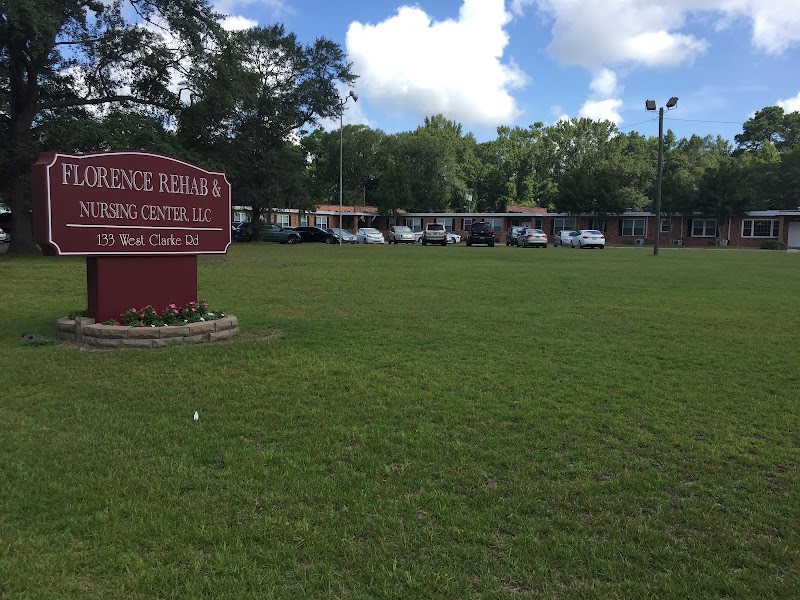
How is Carlyle Senior Care Of Florence Staffed?

CMS rates Carlyle Senior Care of Florence's staffing level at 2 out of 5 stars, which is below average compared to other nursing homes. Staff turnover is 61%, which is 15 percentage points above the South Carolina average of 46%. High turnover can affect care consistency as new staff learn residents' individual needs. RN turnover specifically is 85%, which is notably high. RNs provide skilled clinical oversight, so turnover in this role can affect medical care quality.

What Have Inspectors Found at Carlyle Senior Care Of Florence?

State health inspectors documented 16 deficiencies at Carlyle Senior Care of Florence during 2022 to 2025. These included: 1 Immediate Jeopardy (the most serious level, indicating potential for serious harm or death) and 15 with potential for harm. Immediate Jeopardy findings are rare and represent the most serious regulatory concerns. They require immediate corrective action.
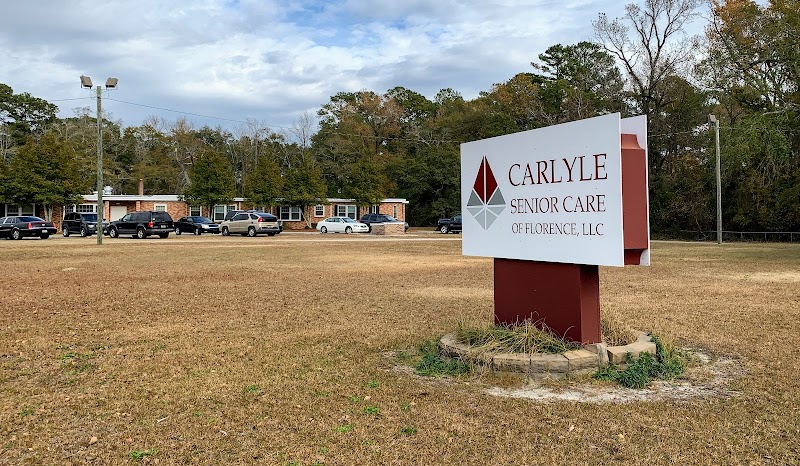
Who Owns and Operates Carlyle Senior Care Of Florence?

Carlyle Senior Care of Florence is owned by a for-profit company. For-profit facilities operate as businesses with obligations to shareholders or private owners. The facility is operated by CARLYLE SENIOR CARE, a chain that manages multiple nursing homes. With 88 certified beds and approximately 79 residents (about 90% occupancy), it is a smaller facility located in Florence, South Carolina.

How Does Carlyle Senior Care Of Florence Compare to Other South Carolina Nursing Homes?

Compared to the 100 nursing homes in South Carolina, Carlyle Senior Care of Florence's overall rating (1 stars) is below the state average of 2.8, staff turnover (61%) is significantly higher than the state average of 46%, and health inspection rating (2 stars) is below the national benchmark.

What Should Families Ask When Visiting Carlyle Senior Care Of Florence?

Based on this facility's data, families visiting should ask: "What changes have been made since the serious inspection findings, and how are you preventing similar issues?" "How do you ensure continuity of care given staff turnover, and what is your staff retention strategy?" "Can you walk me through typical staffing levels on day, evening, and night shifts?" "Can I visit during a mealtime to observe dining assistance and food quality?" These questions are particularly relevant given the facility's Immediate Jeopardy citations, the facility's high staff turnover rate, and the below-average staffing rating.

Is Carlyle Senior Care Of Florence Safe?

Based on CMS inspection data, Carlyle Senior Care of Florence has documented safety concerns. Inspectors have issued 1 Immediate Jeopardy citation (the most serious violation level indicating risk of serious injury or death). The facility has a 1-star overall rating and ranks #100 of 100 nursing homes in South Carolina. Families considering this facility should ask detailed questions about what corrective actions have been taken since these incidents.

Do Nurses at Carlyle Senior Care Of Florence Stick Around?

Staff turnover at Carlyle Senior Care of Florence is high. At 61%, the facility is 15 percentage points above the South Carolina average of 46%. Registered Nurse turnover is particularly concerning at 85%. RNs handle complex medical decisions and coordinate care — frequent RN changes can directly impact care quality. High turnover means new staff may not know residents' individual needs, medications, or preferences. It can also be disorienting for residents, especially those with dementia who rely on familiar faces. Families should ask: What is causing the turnover? What retention programs are in place? How do you ensure care continuity during staff transitions?

Was Carlyle Senior Care Of Florence Ever Fined?

Carlyle Senior Care of Florence has no federal fines on record. CMS issues fines when nursing homes fail to meet care standards or don't correct problems found during inspections. The absence of fines suggests the facility has either maintained compliance or corrected any issues before penalties were assessed. This is a positive indicator, though families should still review recent inspection reports for the full picture.

Is Carlyle Senior Care Of Florence on Any Federal Watch List?

Carlyle Senior Care of Florence is not on any federal watch list. The most significant is the Special Focus Facility (SFF) program, which identifies the bottom 1% of nursing homes nationally based on persistent, serious quality problems. Not being on this list means the facility has avoided the pattern of deficiencies that triggers enhanced federal oversight. This is a positive indicator, though families should still review the facility's inspection history directly.