Lake City Scranton Healthcare Center
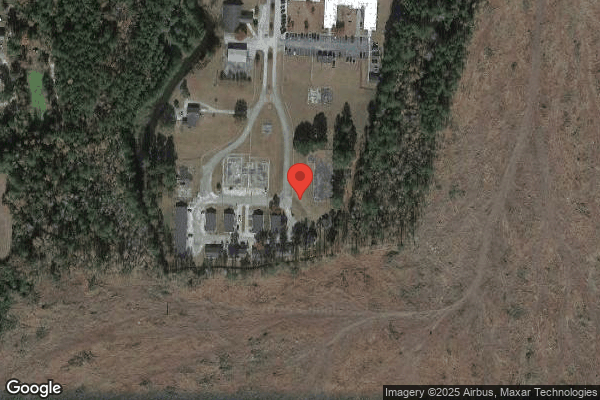
1940 Boyd Road, Scranton, SC 29591 (843) 389-9201
For profit - Corporation 88 Beds FUNDAMENTAL HEALTHCARE Data: November 2025
Trust Grade
80/100
#11 of 186 in SC
Last Inspection: July 2025

Inspected within the last 6 months. Data reflects current conditions.

Overview

Lake City Scranton Healthcare Center has a Trust Grade of B+, which means it is above average and recommended for families considering care options. It ranks #11 out of 186 nursing homes in South Carolina, placing it in the top half, and #2 out of 9 in Florence County, indicating only one other local facility is rated higher. The facility's performance has been stable, with the same number of issues reported in both 2024 and 2025. Staffing is a concern, receiving a 2 out of 5 stars rating, but with a turnover rate of 39%, which is better than the state average of 46%, suggesting some staff stability. There have been no fines on record, which is a positive sign, and the facility has average RN coverage, meaning they have sufficient registered nurse oversight. However, there are notable weaknesses, including specific incidents where medications were not properly secured in multiple areas, which poses a safety risk. Additionally, the facility failed to offer adequate meal alternatives for residents who refuse the initial meal, and temperature checks for refrigerators and freezers were not consistently performed, risking food safety. Families should weigh these strengths and weaknesses carefully when considering this nursing home.

Trust Score
B+
80/100
In South Carolina
#11/186
Top 5%
Safety Record
Low Risk
No red flags
Inspections
Holding Steady
4 → 4 violations
Staff Stability
○ Average
39% turnover. Near South Carolina's 48% average. Typical for the industry.
Penalties
✓ Good
No fines on record. Clean compliance history, better than most South Carolina facilities.
Skilled Nurses
⚠ Watch
Each resident gets only 23 minutes of Registered Nurse (RN) attention daily — below average for South Carolina. Fewer RN minutes means fewer trained eyes watching for problems.
Violations
⚠ Watch
21 deficiencies on record. Higher than average. Multiple issues found across inspections.
★★★★★
5.0
Overall Rating
★★☆☆☆
2.0
Staff Levels
★★★★★
5.0
Care Quality
★★★★☆
4.0
Inspection Score
Stable
2024: 4 issues
2025: 4 issues

The Good

  • 5-Star Quality Measures · Strong clinical quality outcomes
  • Full Sprinkler Coverage · Fire safety systems throughout facility
  • No fines on record
  • Staff turnover below average (39%)

    9 points below South Carolina average of 48%

Facility shows strength in quality measures, fire safety.

The Bad

Staff Turnover: 39%

Near South Carolina avg (46%)

Typical for the industry

Chain: FUNDAMENTAL HEALTHCARE

Part of a multi-facility chain

Ask about local staffing decisions and management

The Ugly 21 deficiencies on record

Jul 2025 4 deficiencies
CONCERN (D)

Potential for Harm - no one hurt, but risky conditions existed

Resident Rights (Tag F0550)

Could have caused harm · This affected 1 resident

**NOTE- TERMS IN BRACKETS HAVE BEEN EDITED TO PROTECT CONFIDENTIALITY** Based on review of the facility policy, observation, interview, and record review, the facility failed to ensure Resident (R)74 ...

Read full inspector narrative →
**NOTE- TERMS IN BRACKETS HAVE BEEN EDITED TO PROTECT CONFIDENTIALITY** Based on review of the facility policy, observation, interview, and record review, the facility failed to ensure Resident (R)74 had a right to a dignified existence in the presence of other residents/peers during a resident council meeting, 1 of 10 reviewed for dignity.Findings include:Review of the facility policy titled, Social Services Policies and Procedures: Patient/Resident Rights, last revised 06/09/23 revealed, The facility employs measures to ensure patient and resident personal dignity, well-being, and self-determination are maintained and will educate patients and residents regarding their rights and responsibilities. The Facility has established the Patient/Resident [NAME] of Rights and responsibilities in accordance with state and federal regulations. The Facility will communicate the Patient/Resident [NAME] of Rights and Responsibilities to the patient and residents in a language or means of communication that ensures patient and resident understanding. The [NAME] of Rights is recognized and supported by all facility staff. Staff document the communication and provision of this information when provided to the patient, resident, and legal representative.Resident Rights: The resident has a right to a dignified existence, self-determination, and communication with and access to persons and services inside and outside the facility, including those specified in this section. A facility must treat each resident with respect and dignity and care for each resident in a manner and in an environment that promotes maintenance or enhancement or his or her quality of life, recognizing each resident's individuality .During an observation on 07/28/25 at 3:00 PM, during the state agency Resident Council meeting with residents, revealed a resident having a medical emergency. The surveyor conducting the meeting then went to find facility staff to assist the resident in need. When the surveyor returned to the meeting, Maintenance Worker (MW)2 was observed speaking in a loud tone and being disrespectful towards R74, and in the presence of other residents. MW2 was observed telling R74, he has a bad attitude and that's why staff don't like to take care of him. During this observation, R74 and another resident R7 also got into a verbal altercation related to R74's verbal interaction with MW2.Record review of R74's Face Sheet revealed he was admitted to the facility on [DATE] with diagnoses including but not limited to muscle weakness, hypertension, type two diabetes with diabetic neuropathy, and pain.Review of R74's admission Minimum Data Set (MDS) with an Assessment Reference Date (ARD) of 07/20/25 revealed that R74 has a Brief Interview of Mental Status (BIMS) score of 14 out of 15, indicating he is cognitively intact.Record review of a Witness Statement written on behalf of R74 and dated 07/28/25 revealed R74 told writer that employee (MW2) yelled at him and told him he had a bad attitude during a resident council meeting.A follow up interview with R74 on 07/28/25 at 3:15 PM revealed that MW2 had come into the dining room and started speaking disrespectfully towards him while the surveyor was assisting another resident with a medical emergency. R74 stated that he felt embarrassed by how MW2 had spoken to him and was upset because he had no reason to be disrespectful to him. R74 further stated that R7 and him had gotten into a verbal altercation because R7 was attempting to calm him down.Review of R7's Face Sheet revealed R7 was admitted to the facility on [DATE] with diagnoses including but not limited to end stage renal disease, age related nuclear cataract, and chronic pain.Record review of R7's Quarterly MDS with an ARD of 06/09/25 revealed R7 has a BIMS score of 15 out of 15, indicating he is cognitively intact.A follow up interview with R7 on 07/28/25 at 3:27 PM revealed R7 was in better spirits and stated that he has calmed down since the incident. During the interview with R7, he stated MW2 entered the dining room to get something and that's when R47 and MW2 got into an argument. R7 stated that he was unsure of who exactly ‘started the argument' but stated that he was frustrated with R47 because he should have let what MW2 said go because it wasn't a big deal. Record review of R21's Face Sheet revealed she was admitted to the facility on [DATE] with diagnoses including but not limited to chronic obstructive pulmonary disease, major depressive disorder recurrent, anxiety disorder, and aphasia.Review of R21's Quarterly MDS with an ARD of 07/28/25 revealed that R21 has a BIMS score of 15 out of 15, indicating she is cognitively intact.Record review of R21's Witness Statement dated 07/28/25 revealed Writer asked resident if MW2 came in, R21 stated yes, and he yelled at a resident (she pointed at R74). MW2 stated that R74 had a bad attitude, she also stated that R74 and R7 were arguing with each other.Review of R82's Face Sheet revealed she was admitted to the facility on [DATE] with the diagnosis including but not limited to hemiplegia and hemiparesis following cerebral infarction, hypertension, muscle weakness, and unsteadiness on feet.Record review of R82's admission MDS with an ARD of 07/14/25 revealed that she has a BIMS score of 15 out of 15, indicating she is cognitively intact.Review of R82's Witness Statement dated 07/28/25 revealed R82 stated that MW2 yelled at R74 during a resident council meeting.An interview with the Administrator and Director of Nursing on 07/28/25 at unspecified time, revealed that the facility has suspended MW2 due to this incident.
CONCERN (D)

Potential for Harm - no one hurt, but risky conditions existed

Infection Control (Tag F0880)

Could have caused harm · This affected 1 resident

Based on observation, interview, and review of facility policy, the facility failed to ensure that appropriate hand hygiene was implemented in 1 of 1 kitchen observed. Additionally, the facility faile...

Read full inspector narrative →
Based on observation, interview, and review of facility policy, the facility failed to ensure that appropriate hand hygiene was implemented in 1 of 1 kitchen observed. Additionally, the facility failed to ensure an effective water management program was in place to safeguard and reduce the potential growth and spread of Legionella and other pathogens in the facility water systems. The facility further failed to ensure the proper PPE (Personal Protective Equipment) was used to reposition Resident (R)42, prior to receiving wound care, for 1 of 1 resident reviewed for pressure ulcers.Findings include: Review of the facility policy titled, “Sanitation and Food Safety In Food and Nutrition Services,” last reviewed 06/20/23, revealed “Infection Control and sanitation practices are followed to minimize the risk of contamination of food and prevent food borne illness.” Review of the facility policy titled, “Hand Hygiene/Handwashing,” last revised on 05/15/23, revealed, “Method: Hand Hygiene technique .Rinse hands with water and dry thoroughly with a disposable towel.” An observation on 07/27/25 at 10:00 AM revealed that disposable towels were not available above the employee handwashing sink in the kitchen. During an interview on 07/30/25 at 10:30 AM, the Certified Dietary Manager revealed that the disposable towels should always be available, and the expectation is staff should coordinate with housekeeping to replace disposable towels once they run out. Review of the facility policy titled, Water Systems, Safety and Management, states as the policy: The facility will implement procedures and safeguards to reduce the potential of growth and spread of Legionella and other opportunistic pathogens in building water systems. Procedures: 1. Assessment Phase: B. Facility Leadership in conjunction with the Safety Committee and Infection Preventionist will comprise the Water Management Team. 2. Implementation Phase: A. Water Management Team to oversee the assessment, implementation and functioning of the Program. B. Develop written descriptions of the building water systems using text and flow diagrams, as specified in CDC's Toolkit. C. Water Management Team (WMT) identifies areas where Legionella could grow or spread. D. Water Management Team determines where control measures need to be applied and how to monitor. E. Establish and document interventions for instances that control limits are not met. F. WMT evaluates program routinely and at least annually, to ensure effectiveness of design and implementation. During an interview on 07/29/2025 at 10:55 AM with the current Maintenance Director, he stated that the facility had not implemented a Water Management Program. He did provide a copy of the CDC (Centers for Disease Control and Prevention) Toolkit that was in his possession. He could not provide any measures taken by the facility to safeguard the residents from potential growth and spread of Legionella via the building water systems. Review of the facility policy titled, Transmission Based/Standard Precautions, and Enhanced Barrier Precautions. under Procedures: states, Enhanced Barrier Precautions (EBP). 1. Enhanced Barrier Precautions expand the use of PPE (gowns and gloves) during high-contact resident care activities that provide opportunities for transfer of MDROs to staff hands and clothing. A. EBP will be implemented for All residents with the following: 1. Infection or colonization with an MDO when Contact Precautions do not otherwise apply. 2. Wounds and/or indwelling medical devices (Central lines, urinary catheter, feeding tube, tracheostomy/ventilator) regardless of MDRO colonization status. B. EBP will be implemented during the following high-contact resident care activities. 1) Dressing 2) Bathing/showering 3) Transferring 4) Providing hygiene 5) Changing linens 6) Changing briefs or assisting with toilet 7) Device care or use: central lines, urinary catheter, feeding tube, tracheostomy/ventilator. The facility admitted R42 with diagnoses including, but not limited to, a sacral pressure ulcer. During an observation of wound care on 07/29/2025 at 08:45 AM, 2 Certified Nursing Assistants (CNAs), went into R42's room, who is currently on EBP (Enhanced Barrier Precautions) for a wound. R42 was going to receive wound care by the wound nurse. The CNAs were going to pull R42 up in bed and and position her for the wound care nurse to change the wound dressing. During a second observation on 07/29/2025 at 08:47 AM, 2 CNAs, knocked on the door of R42's room and entered. Neither CNA, had cleaned their hands or donned gowns or gloves. Both CNAs proceeded to pull R42 up in bed and position her for wound care using their bare hands. During an interview on 07/29/2025 at 08:51 AM with CNA1, she stated that the CNA assisting her to reposition R42 had taken the soiled gloves and gown out of the room with her when she left. No soiled gowns or gloves were observed leaving the room with either CNA. During a second interview on 07/29/2025 at 09:05 AM with CNA2, she stated, that she could not lie, that neither CNA had worn a gown or gloves to reposition R42 for wound care. She stated they were nervous and failed to clean their hands and to don [put on] the proper PPE for a resident on Enhanced Barrier Precautions prior to repositioning her in bed.
CONCERN (E)

Potential for Harm - no one hurt, but risky conditions existed

Deficiency F0565 (Tag F0565)

Could have caused harm · This affected multiple residents

**NOTE- TERMS IN BRACKETS HAVE BEEN EDITED TO PROTECT CONFIDENTIALITY** Based on interview, record review, and facility policy the facility failed to act promptly to resolve resident grievances from r...

Read full inspector narrative →
**NOTE- TERMS IN BRACKETS HAVE BEEN EDITED TO PROTECT CONFIDENTIALITY** Based on interview, record review, and facility policy the facility failed to act promptly to resolve resident grievances from resident groups/family members. Grievances included but were not limited to quality of care and quality of life concerns with residents in the facility. 10 of 10 interviewed during the state agency resident council meeting; specified unresolved grievances include 2 of 10 residents.Findings include:Review of the facility policy titled, Social Services Policies and Procedures Complaints/Grievances Process last revised 11/06/23, revealed The Facility's Leadership will support the patients/residents right to voice complaints/grievances to the facility or other agencies/entities that hear grievances regarding concerns they have about services and treatment received including but not limited to treatment, care, advance care directives, management of funds, behaviors of other patients/residents, violations of resident rights, behavior of staff, environmental issues. The facility's leadership will accept grievances/complaints from the patient/resident, family member. Facility leadership acts promptly to understand and resolve complaints and grievances completed in a reasonable expected time frame. After receiving a grievance/complaint, the facility's leadership will seek a problem resolution and will keep the patient/resident informed of the progress toward resolution. Grievances both new and outstanding are reviewed in the Interdisciplinary Team (IDT) morning meeting. The Grievance official ensures all sections of the grievances are completed appropriately by the staff completing the investigation and developing the resolution, ensure any supportive documentation related to the grievance is attaches, ensure that all written grievances decisions include the date the grievance was received, the steps taken to investigation, a summary or pertinent finding or conclusions, ensure to include a statement as to whether the grievance was confirmed or not, confirm any action taken or to be taken by the facility and the date the decision was issued.During a Resident Council meeting, conducted by the state agency surveyor on 07/28/25 at 2:03 PM, 10 of 10 residents who regularly attend the facility's Resident Council meetings, revealed by raising their hands/vocally stating that they have concerns with the facility responding to call lights in a timely manner. Residents also revealed concerns with the facility utilizing agency staffing and not adequately training those staff members on the specific needs of residents. Residents stated that agency staff often take up to 30 minutes or more to respond to their call lights, specifically on the weekends and on night shift. Lastly, residents stated that they have addressed their concerns in resident council meeting in the past but have had no true resolution with their efforts.Review of the 02/24/25 Resident Council meeting minutes, started at 2:00 PM and adjourned at 2:40 PM with twelve residents in attendance and seven staff members present revealed, No old business to discuss, this meeting included care and help the resident are receiving: do you get help and care you need without having to wait long periods of time? Does staff respond to your call light timely? What is timely to you? How long on average does it take for staff to answer your call light? .Review of the 03/31/25 Resident Council meeting minutes, started at 2:00 PM and adjourned at 2:25 PM, Resident Council Minutes with ten residents in attendance and three staff members present revealed Old Business - call lights not being answered, missing laundry, respecting residents, shower chair/bed. This month's meeting was about activities; are they happy with activities? Tell your favorite activity? Do activities meet their interests? .Review of the 04/29/25 Resident Council meeting minutes, started at 2:00 PM and adjourned at 2:40 PM Resident Council Minutes with 7 residents in attendance and four staff members present revealed Old Business - call light being answered - Director of Nursing/ Administrator.Review of the 05/27/25 Resident Council meeting minutes, started at 2:00 PM and adjourned at 2:26 PM, Resident Council Meeting with six residents in attendance revealed no old business follow up related to staffing. Follow up included missing/unlabeled laundry, resident council meal choice, and spring/summer schedule.Review of the 06/23/25 Resident Council meeting minutes, started at 2:06 PM and adjourned at 2:58 PM, Resident Council Meeting with six members in attendance and three staff members present revealed List of old business (unresolved) resident choice meal = revised/postponed/ may need to change dates when meals are planned. Changes to facility practices (policies or procedures) or resident right since last meeting): no changes to facility practices, resident rights were read and explained, State survey explained and informed of location of survey's, reviewed elder abuse, types, signs, etc. and numbers to call.Record review of a Record-Of-In-Service titled, Call lights/Grievances with no specified date or facility staff to review the in-service, revealed 31 staff members with signatures and their titled/department of the facility with no date/specified in-service completed.An interview with Resident (R)13 during the state agency Resident Council Meeting revealed that R13 is still receiving pull-ups instead of briefs, R13 stated that he is receiving pull-ups due to staff convenience/ having to care for him more often.Record review of R13's Face Sheet revealed he was admitted to the facility on [DATE] with diagnoses including but not limited to schizoaffective disorder, intellectual disabilities, chronic pain syndrome, and epilepsy.Record review of R13's Minimum Data Set (MDS) with an Assessment Reference Date (ARD) of 07/16/25 revealed R13 has a Brief Interview of Mental Status (BIMS) score of 10 out 15, indicating he has a moderately, impaired cognitive state.Record review of R13's Compliant/Grievance Report dated 05/26/25 revealed resident prefers brief and not pull ups, staff give him pull ups over his preference. Findings of investigation include will inform staff of resident preference of briefs, care plan updated for preference of brief.Record review of R13's Care Plan with a problem start date of 09/10/25 and revised with a new intervention related to briefs on 02/10/25 revealed R13 has a self-care deficit related to weakness; he appears to be more able to participate in the Activities of Daily Living (ADLS) in the morning and may be need more assistance with the evening ADLs R13 prefers briefs instead of pull-ups.An interview with R16 during the state agency Resident Council meeting revealed that they had concerns with weekend/agency staff responding to their call light in a timely manner.Record review of R16's Face Sheet revealed they were admitted to the facility on acute embolism and thrombosis, contracture, pain, hypertension, and cerebral infraction.Record review of R16's MDS with an ARD of 06/04/25 revealed R16 has the BIMS score of 12 out of 15, indicating that R16 has a moderately, impaired cognitive state.Record review of R16's Complaint/Grievance Report dated 02/24/25 revealed When he presses the call light on second shift, staff comes in with an attitude and ask why he didn't have the first shift staff completed his request/ do it. Plan to resolve complaint/grievance include speak/educate to second shift staff about attitudes towards resident. Expected results of actions taken include resident will be more satisfied with care received from staff.Record review of R16's Complaint/Grievance Report dated 05/27/25 revealed States staff takes a long time to answer call light and once they (are rude/take a long time) R16 is already soiled (staff ask) R16 why he is already soiled? Findings of investigation include urinal is full - not emptied in time, during the night (resident takes medication at 8:00 pm). Plan to resolve complaint/grievance include provide two urinals. Expected results of actions taken include resident will be satisfied with care.During an interview with the Administrator related to Quality Assurance Performance Improvement (QAPI) on 07/30/25 at 5:07 PM revealed that grievances are reviewed daily during the morning stand up meeting. This review includes but is not limited to patterns of grievances, patterns with persons filing grievances, and status of resolved grievances. During the interview, the Administrator was unable to describe the process of the Medical Director/Governing Body's involvement with grievances/ reoccurring grievances within the facility.
CONCERN (E)

Potential for Harm - no one hurt, but risky conditions existed

ADL Care (Tag F0677)

Could have caused harm · This affected multiple residents

**NOTE- TERMS IN BRACKETS HAVE BEEN EDITED TO PROTECT CONFIDENTIALITY** Based on the facility policy, observations, record reviews, and interviews, the facility failed to ensure Resident 1 (R1) and R2...

Read full inspector narrative →
**NOTE- TERMS IN BRACKETS HAVE BEEN EDITED TO PROTECT CONFIDENTIALITY** Based on the facility policy, observations, record reviews, and interviews, the facility failed to ensure Resident 1 (R1) and R26, residents without the capacity to complete his/hers activities of daily living, received the care and services needed for bathing and grooming for 2 of 3 reviewed for activities of daily living.Findings include: Review of the facility policy titled, Activities of Daily Living, Optimal Function, states, Activities of daily living (ADL's), refer to tasks related to personal care including, grooming, dressing, oral hygiene, transfer, bed mobility, eating, bathing and communication system. The Policy, states, The facility provides care and services to ensure that a resident's abilities in activities of daily living do not diminish unless circumstances of the individual's clinical condition demonstrate that such diminution was unavoidable. The facility provides necessary care to all residents that are unable to carry out activities of daily living on their own to ensure they maintain proper nutrition, grooming and hygiene. Procedures: 1. Facility staff recognize and assess an inability to perform ADLs, or a risk for decline in any ability to perform ADLs by reviewing the most current comprehensive or most recent quarterly assessment. 2. Facility staff to monitor conditions which may cause an unavoidable decline in the resident's ability to perform ADLs: A natural progression of a debilitating disease. B. Onset of an acute episode causing physical or mental disability, C. Resident's or his/her representative's decision to refuse care and treatment offered to restore/maintain functional abilities after the facility has informed and educated about the benefits/risks of the proposal care and treatment. 3. Staff will develop and implement interventions in accordance with the resident's assessed needs, goals for care, preferences and recognized standards of practice that address the identified limitations in ability to perform ADLs. The facility admitted R1 on 04/11/2025 and readmitted him on 05/02/2025 with diagnoses including, but not limited to, cerebrovascular accident with hemiplegia and hemiparesis affecting the right dominant side, benign paroxysmal vertigo, pneumonia, malaise, and severe protein calorie malnutrition. Also, macular degeneration, lack of coordination and muscle weakness. An observation on 07/27/2025 at 10:40 AM of R1 revealed a small male resident with several days of beard growth to his face. During a subsequent interview, he reported that he had not have a brief change since sometime in the night. He stated there is not enough staff to take care of the residents and when he puts on the call light either no one comes or it takes so long for them to come to his room to provide care. He stated that his son in law will come sometimes and help him shave and if not, the staff would most likely get it done when they got time. Review of the Point of Care History, dated 07/01/2025 through 07/28/2025, which includes the question, How did the resident bathe? documented 28 days. Upon review, R1 is only charted as receiving a bed bath on 07/13/2025, all other days are recorded as, did not receive. No documentation could be found in the medical record to ensure R1 was offered or received a bath on any other days of the month provided. Review on 07/30/2025 of a form submitted by the facility on the last day of the survey, revealed a Shower Schedule. R1 is to receive showers on Mondays and Fridays from 7-3 as his preference. There are 6 days listed and indicates R1 received only 2 showers for the month of July 2025. One was on 07/04/2025 and one on 07/11/2025. He refused showers on 07/07/2025, 07/14/2025, 07/18/2025 and 07/21/2025. It is hand written on the shower form that R1 was given a bed bath after refusing a shower. There is no other documentation to ensure R1 was offered a shower or a bath for July 2025. Review of the Comprehensive Plan of Care dated, 07/29/2025, states, Resident has impaired functional mobility. requires assistance with ADLs due to: Weakness. Resident has a self care deficit and requires assistance from staff for daily activities of living including bathing, dressing, grooming and eating related to right side hemiparesis, right hand contracture, right hand splint as tolerated. Resident will refuse nail care at times, showers and getting out of bed. This problem area was edited by staff at this time. Review of the progress notes on 07/30/2025 for June 2025 and July 2025, did not indicate that R1 had refused incontinent care, or baths or showers. On 0516/2025 at 09:57 AM, R1 refused nail care only. During an interview with the Director of Nursing (DON), she acknowledged the findings and did not offer any further comment concerning the ADL care for R1. Review of R26’s Face Sheet revealed she was admitted to the facility on [DATE] with diagnoses including but not limited to anxiety disorder, hypertension, disorder of pigmentation, and congestive heart failure. Record review of R26’s Quarterly Minimum Data Set (MDS) with an Assessment Reference Date (ARD) of 07/16/25 revealed she the Brief Interview of Mental Status (BIMS) score of 15 out of 15, indicating she is cognitively intact. Further review of R26’s MDS revealed she is dependent on staff for toileting hygiene, requires substantial/maximal assistance with shower/bathing, and is always incontinent of her bowel and bladder. Record review of R26’s Physician Orders for July 2025 revealed an order for “Bathing (bath/shower/weekly on Thursdays) once a day on Thursdays.” Record review of R26’s June Point of Care (POC) History for June 2025, specifically her “Type of Bath ADL documentation” revealed R26 had a shower on 06/12/25, the other dates documented in June were bed baths. Record review of R26’s June POC History for June 2025 specifically her Type of Bath revealed the following dates with no ADL documentation: 06/01/2025,06/02/2025,06/04/2025-06/08/2025, 06/11/2025, 06/13/2025-06/14/2025, 06/17/2025-06/18/2025, 06/22/2025, 06/26/2025,06/28/2025-06/29/2025. Record review of R26’s July POC History, specifically “Type of Bath” documentation revealed R26 has not received a shower from 07/01/2025 – 07/29/2025. Record review of R26’s July POC History specially Type of Bath revealed the following dates with no ADL documentation: 07/03/2025,07/06/2025-07/09/2025, 07/12/2025-07/14/2025, 07/16/2025, 07/18/2025, 07/21/2025-07/27/2025. Record review of R26’s POC History July 2025 “Skin Documentation” revealed the following documentation: -07/04/25- redness on leg -07/04/25- redness on buttock -07/05/25- redness on buttock -07/17/25- redness on buttock -07/28/25- redness on buttock Record review of R26’s POC History July 2025 “Skin Documentation” revealed the following dates with no documentation: 07/06/2025, 07/08/2025, 07/12/2025, 07/18/2025, 07/21/2025, 07/23/2025. Record review of R26’s POC History June 2025 “Skin Documentation” revealed the following documentation: -06/09/25 – redness on buttock -06/12/25 – redness on buttock -06/18/25 – redness on buttock, leg, and foot/heel -06/19/25 – redness on buttock -06/20/25 – redness on buttock -06/30/25 – redness on buttock Review of R26’s Care Plan last revised 07/17/25 revealed, “R26 has impaired functional mobility, requires assistance with ADLs due to weakness. She will refuse care at times and will not go to the shower. Her hair is very matted but will not let anyone do haircare. R26 refuses nailcare from staff she prefers to do own nail trimming and prefers longer nails, she fuse to use a Hoyer lift to get out of bed. Goals include she will be clean, dressed appropriately to weather, participate to preferred activities and stable weight for 90 days. Interventions include resident prefers to wear Prevalon boots at night, resident prefers to have legs elevated with pillows in daytime, resident will refuse to have boots removed at times. Provide with nail clippers and [NAME] board, assist with bathing and dressing, set up for oral care every day and as needed. Administer medications as prescribed, include resident in daily decision-making situation, aske preferences and honor when feasible.” An observation and interview on 07/27/25 at 11:32 AM with R26 revealed her hair appeared to be matted. R26 stated that she has to wear head coverings because she is embarrassed of the way her hair looks/the state it’s in. Observation of R26 revealed Prevalon boots on her feet at this time, resident stated that she prefers to have her boots removed by 8:00 AM each day (resident has sign in her room stating this preference). R26 stated that she was in need of toileting care and was last provided care around 6:30 AM, before 3rd shift left for the morning. During observation and interview, the surveyor requested resident to use her call light to notify staff that needed assistance. R26 put her call light on at 07/27/25 at 11:26 AM. Certified Nursing Assistant (CNA)3 entered the room quietly, without knocking. R26 became upset and told CNA3 that she could not provide care for her due to not introducing herself prior to entering the resident’s room. CNA3 became rude with R26 and stated that she had taken care of the resident before and stated that she is not allowed to provide the resident care alone due to the resident’s verbal behaviors and refusals. During this interaction, the surveyor had to de-escalate the argument with facility staff and R26 and encouraged CNA3 to exit the room and to notify their supervisor. An observation and interview on 07/27/25 at 11:46 AM with the Unit Manager and CNA4 revealed, CNA4 knocked and entered resident room and attempted to provide toileting care to R26, but she refused. R26 stated that the Unit Manager is not allowed in her room, and she will not allow her to provide her care. CNA4 stated that there is no other staff that would be able to assist the resident at this time, due to staff having to pass out lunch trays. A follow-up interview with CNA4 on 07/27/25 at 12:27 PM revealed that all other staff are assisting other residents with meals at this time and R26 would have to wait until after lunch for toileting care. An observation and interview of a skin-audit on 07/29/25 at 10:30 AM of R26 revealed “her skin is intact on heels, back, buttocks, and sacral area. Skin is dirty and in need of a bath, her skin is very moist on her back and buttocks. R26 keeps personal documentation of when staff assist her with toileting care, R26 stated that her last care was provided on 07/28/25 at 11:50 PM, resident brief at this time was heavily saturated with urine. At 1040 this AM staff are outside of room to come in and finally change her soiled brief. The stench is horrific, the chucks has a large dark yellow stain. An interview on 07/30/25 at 10:18 AM with Licensed Practical Nurse (LPN)3 revealed that the resident can be difficult to interact with and often refuses. LPN3 stated that CNA staff should notify them of the resident’s refusal and attempt one more time and then document the refusal in the Nursing Notes. LPN3 stated that the Unit Manager instructs all agency nurses and CNAs related to resident preferences and their expectations on entering and greeting the resident. An interview on 07/30/25 at 10:32 AM with CNA5 revealed that R26 expects for staff to knock prior to entering her room and to ask permission to enter, R26 also expects for staff to introduce themselves and state what care they are about to provide. CNA5 stated that if staff don’t meet her expectations related to dignity, then the resident will refuse care. CNA5 further stated that when a resident refuses, they should tell the nurse, and they should document the refusal in the Nursing Notes. CNA5 further stated that ADL documentation should be completed for each resident, on each shift. An interview on 07/30/25 at 10:46 AM with CNA6 revealed that staff should complete ADL documentation each day/each shift. An interview with the Unit Manager (UM) on 07/30/25 at 1:45 PM revealed that they are familiar with R26, her preferences, and history of refusals. UM stated if staff don’t approach the resident exactly how she would like/ prefers then R26 will refuse ADL care. R26 also has specific staff members that she will only allow to care for her. UM stated that staff are expected to round on residents every two hours, if a resident refuses care, CNA staff are to tell the nursing staff, then nursing staff must make another attempt and document the refusal in the medical record. UM finally stated that they expect for CNAs to provide/offer ADL care to each resident and document it on each shift. An interview with the Director of Nursing (DON) on 07/30/25 at 4:35 PM revealed that they are familiar with R26 and her preferences. DON stated that the resident has a history of refusals and preference on staff that she will allow to provide her care. At times, there are no staff working that the resident prefers and she will refuse all care. DON further stated that their expectation is for staff to offer to provide care three times then document the resident’s refusal, and that ADL care should be offered on each shift.
May 2024 4 deficiencies
CONCERN (D) 📢 Someone Reported This

A family member, employee, or ombudsman was alarmed enough to file a formal complaint

Potential for Harm - no one hurt, but risky conditions existed

Free from Abuse/Neglect (Tag F0600)

Could have caused harm · This affected 1 resident

**NOTE- TERMS IN BRACKETS HAVE BEEN EDITED TO PROTECT CONFIDENTIALITY** Based on interviews, record review, and facility policy review, the facility failed to ensure residents were free from abuse for...

Read full inspector narrative →
**NOTE- TERMS IN BRACKETS HAVE BEEN EDITED TO PROTECT CONFIDENTIALITY** Based on interviews, record review, and facility policy review, the facility failed to ensure residents were free from abuse for two of four residents (Resident (R) 66 and R11) reviewed for abuse and neglect of 29 sampled residents. This had the potential to affect resident safety at the facility. Findings include: Review of the facility's policy titled, Abuse, Neglect, Exploitation, or Mistreatment, dated 10/01/20, documented The facility's leadership prohibits neglect, mental, physical, and/or verbal abuse . Abuse is the willful infliction of injury, unreasonable confinement, intimidation, or punishment with resulting physical harm, pain, or mental anguish .Willful, as used in this definition of abuse, means the individual must have acted deliberately, not that the individual must have intended to inflict injury or harm. 1.a. Review of R66's undated Face Sheet located in the electronic medical record (EMR), under the Face Sheet tab, indicated R66 was admitted to the facility on [DATE], with diagnoses including encounter for orthopedic aftercare following surgical amputation, closed fracture of left radius, and diabetes mellitus. Review of R66's annual Minimum Data Set (MDS) with an Assessment Reference Date (ARD) of 02/20/24, located in R66's EMR under the Resident Assessment Instrument (RAI) tab, revealed the resident had a Brief Interview for Mental Status (BIMS) score of 15 out of 15, which indicted the resident was cognitively intact. There were no behaviors identified during this seven-day look back assessment. b. Review of R235's undated Face Sheet located in the EMR under the Face Sheet tab, indicated the resident was admitted on [DATE], with diagnoses including paraplegia, hypertension, and depression. Review of R235's annual MDS with an ARD of 01/22/24 located in the EMR under the RAI tab, revealed the resident had a BIMS score of 15 out of 15, which indicated the resident was cognitively intact. There were no behaviors identified during this seven-day look back period. Review of the facility's initial Facility Reportable Incident, dated 02/11/24 and provided by the facility, revealed On 02/11/24, at approximately 10:15 PM, NHA [Nursing Home Administrator] was notified by direct care staff of a resident-to-resident altercation in the facility. Staff reported that the altercation started off as verbal, to which multiple staff members promptly responded to. Staff found two residents, [R235], and [R66], arguing loudly. As staff members were separating the residents, [R235] swung his arm at R66 and grazed his face. Staff members immediately continued to separate the residents and monitor them for injury. They then commenced with moving [R235] to another room, as the two residents were roommates and friends. No interaction was noted between the two residents prior to this incident, and once separated and calmed by staff, no other action occurred. During an interview conducted on 05/22/24 at 3:30 PM, R66 was questioned concerning what happened between him and R235 on 02/11/24. R66 responded that R235 and himself were in the dining area, and he said B give me my lighter back R235 became upset, and they started arguing, then R235 took a swing at him. The staff came in and separated them. During a telephone interview conducted on 05/23/24 at 10:44 AM, Licensed Practical Nurse (LPN)3 was asked if she witnessed the altercation between R66 and R235, and what happened. LPN3 responded that she did witness it, R235 hit R66 then backed away. LPN3 stated R66 instigated it, he was taunting R235. She added that R235 was normally a very sweet and patient person, this was the first time this had happened. During a telephone interview conducted on 05/23/24 at 11:38 AM, Certified Nurse Aide (CNA)6, was asked if she recalled the incident between R66 and R235. CNA6 responded she did not feel comfortable talking about the incident over the phone, but to refer to her written statement provided to the facility. Review of CNA6's written Witness Statement, dated 02/11/24, revealed CNA6 documented I was in the back at the nurse station and overheard yelling and cursing. I jumped up and ran to the dining area. I arrived in the dining room to see [R235] and [R66] arguing. I asked what was going on and they said it started over a lighter. I began trying to deescalate the situation. It kept going then [R235] hit [R66] in the face on his left side. We pulled them apart. Then he began to call staff b*****s and f**k you to me and other staff. We separated them and [R235] kept coming back arguing and trying to keep the argument going. During an interview conducted with the Director of Nursing (DON) on 05/23/24 at 11:22 AM, the DON was questioned concerning the incident between R66 and R235. The DON responded that the staff had not witnessed the incident but were informed by R66 of what happened. The DON stated both residents were examined and there were no injuries. The DON notified the Administrator at that time of the incident. The DON stated the police, physician, state, and ombudsman were also notified. 2. Review of R11's undated Face Sheet located in the resident's EMR, under the Face Sheet tab, indicated R11 was admitted to the facility on [DATE], with diagnoses including severe dementia with behavioral disturbances, hypertension, and chronic obstructive pulmonary disease. Review of R11's admission MDS with an ARD of 04/03/24, located in R11's EMR, under the RAI tab, revealed the resident's BIMS score was a six out of 15, which indicated the resident was severely cognitively impaired. R11 was assessed as exhibiting behavioral symptoms, that included physical behavioral symptoms directed towards others (e.g., hitting, kicking, pushing, scratching, and grabbing others), and verbal behavioral symptoms directed toward others(e.g., threatening others, screaming at others, cursing at others) that occurred one to three days during the seven-day look back period. Review of R11's Care Plan, dated 04/01/24 and located in the EMR under the RAI tab, revealed at risk for having mood and behavior needs due to diagnosis of dementia as evidenced by periods of agitation, physically aggressive, verbally aggressive, refusing care, and not easily redirected during behavioral episodes .becomes combative towards staff and residents .uses profanity towards staff and residents . Interventions included: on 03/21/24-altercation with roommate-residents separated, room change and sent to ER [emergency room] for evaluation, attempt non-pharmacological interventions .ensure physical needs are met .if resident becomes physically agitated and aggressive remove from other residents to safe, less stimulating environment. Set firm limits by telling them to stop current behavior. Review of the facility's initial Facility Reportable Incident, dated 04/22/24 and provided by the facility, revealed R66 was in the dining hall when R11 began accusing him of stealing her gray purse. R11 took the snack that R66 was eating from him and threw it on the floor. R11 then began slapping R66 on his stomach, chest, and face. During an interview on 05/22/24 at 3:30 PM, R66 was questioned as to what happened between him and R11. R66 stated that he was plugging his cellphone in the wall to charge by the table that R11 was sitting at, and said I'll be right back. I went to my own table, R11 proceeded to come up to me and began to yell and hit me. R11 stated I stole her purse. I reported it to the nurse. 3. Review of R187's undated Face Sheet located in the EMR, under the Face Sheet tab, indicated R187 was admitted to the facility on [DATE], with diagnosis of unspecified dementia, moderate with psychotic disturbance. Review of R187's quarterly MDS with an ARD of 02/06/24, located in R187's EMR under the RAI tab, revealed the resident had a BIMS score of seven out of 15, which indicated the resident was severely cognitively impaired. There were no behaviors identified during this seven-day look back assessment. Review of the facility's initial Facility Reportable Incident, dated 03/31/24 and provided by the facility, revealed On 03/31/24, at approximately 5:00 PM, the DON was notified of a resident-to-resident altercation which occurred between R187 and R11. R187 was observed to be standing over her roommate, R11 and swatting/hitting motions towards R11's face and head. There were red scratches and red marks visible to the direct care staff. The staff immediately separated the residents and assessments were performed by the nursing staff. The facility on call doctor was notified and received orders for R11 to be transferred to the emergency room. R11 returned to the facility later that evening and was moved to a different room on a different hallway than R187. The next of kin and police were notified. During a phone interview on 05/22/24 at 2:20 PM, Registered Nurse (RN)1 stated the Nurse Practitioner had decreased R187's medication and that was when R187 had started again being bossy and nosey with the other residents. RN1 also reported there were no behaviors such as hitting other residents before this incident occurred. During a phone interview on 05/22/24 at 2:52 PM, LPN5 stated, The nurse for the hallway was on break so I was covering the floor. R11 had been telling R187 to go back into the hallway because R11 did not want her in the room. Then R187 was seen swatting at R11 in the face and on the right side of R11's head. There were some red marks noted. We called the DON, the doctor on call, the next of kin, and the police.
CONCERN (D) 📢 Someone Reported This

A family member, employee, or ombudsman was alarmed enough to file a formal complaint

Potential for Harm - no one hurt, but risky conditions existed

Investigate Abuse (Tag F0610)

Could have caused harm · This affected 1 resident

**NOTE- TERMS IN BRACKETS HAVE BEEN EDITED TO PROTECT CONFIDENTIALITY** Based on record review, interview, and policy review, the facility failed to conduct a thorough investigation for an alleged inc...

Read full inspector narrative →
**NOTE- TERMS IN BRACKETS HAVE BEEN EDITED TO PROTECT CONFIDENTIALITY** Based on record review, interview, and policy review, the facility failed to conduct a thorough investigation for an alleged incident of resident-to-resident altercation for two of four residents reviewed out of 29 sampled residents (Resident (R) 187 and R11). This had the potential to affect resident safety at the facility. Findings include: Review of the facility's policy titled, Abuse, Neglect, Exploitation, or Mistreatment, dated 10/01/20, revealed Determine the type of abuse and where/ when incident occurred. Interview individuals having firsthand knowledge of the incident and write summaries of the interviews. NOTE: Employees/witnesses are not to write out statements. Employees/witnesses will be interviewed by designated facility staff and the interviewer will record all witness accounts in a document, written, dated, and signed by the interviewer. Social Service will provide support services to the resident/patient and implement an interdisciplinary care plan. Depending on the incident, other residents in the facility may be interviewed. The Director of Nursing or his/her designee will review the resident's medical record. Establish findings, outcomes, resolutions, and corrective actions necessary to prevent further incidents Unless otherwise directed by the Legal Department, document investigation activities, findings, outcomes, resolutions, and corrective actions taken to prevent further incidents and maintain in the Administrator's office. 1. Review of R187's undated Face Sheet located in the electronic medical record (EMR), under the Face Sheet tab, indicated R187 was admitted to the facility on [DATE], with diagnosis of unspecified dementia, moderate with psychotic disturbance. Review of R187's quarterly Minimum Data Set (MDS) with an Assessment Reference Date (ARD) of 02/06/24, located in R187's EMR under the Resident Assessment Instrument (RAI) tab, revealed the resident had a Brief Interview for Mental Status (BIMS) score of seven out of 15, which indicted the resident was severely cognitively impaired. There were no behaviors identified during this seven-day look back assessment. Review of R187's care plan, dated 11/13/23 and located in the EMR under the Care Plan tab, revealed [R187] is at risk for having mood and behavior needs as evidenced by periods of combative and resistive behaviors related to diagnosis of dementia with psychotic disturbance. Interventions put into place revealed, Communicate resident status via 24-hour report as needed. Notify the family of changes in resident status or of new or escalated behaviors. Get their input as to suggestions or recommendations of interventions/approaches. 2. Review of R11's undated Face Sheet located in the EMR under the Face Sheet tab, indicated the resident was admitted on [DATE], with diagnosis of unspecified dementia, unspecified severity, with psychotic disturbances. Review of R11's admission MDS with an ARD of 04/03/24 located in the EMR under the RAI tab, revealed the resident had a BIMS score of six out of 15, which indicated the resident was severely cognitively impaired. There were no behaviors identified during this seven-day look back period. Review of the five day Facility Reportable Incident, dated 04/03/24 and provided by the facility, the summary did not include the date or time of the resident-to-resident altercation. There were only two witness statements included in the investigation, Certified Nursing Assistant (CNA)3 and Licensed Practical Nurse (LPN)5. There was no date, time, or signature of the staff person performing the body audits/interviews. During a phone interview on 05/22/24 at 2:20 PM, Registered Nurse (RN)1 stated the Nurse Practitioner had decreased R187's medication and that was when R187 had started again being bossy and nosey with the other residents. RN1 also reported there were no behaviors such as hitting other residents before this incident occurred. During a phone interview on 05/22/24 at 2:32 PM, CNA3 stated, I didn't see [R187] being physical with [R11], but the two ladies had been arguing about something all shift. I helped [R187] to the bathroom and on the way out of the bathroom, R187 was saying stuff to [R11]. [R187] said she wanted to sit on the side of the bed with her back towards the roommate's curtain. I left the room and heard [R11] say She hit me. During an interview with the Director of Nursing (DON) on 05/23/24 at 11:23 AM, when asked if staff had made her aware of R187 and R11 arguing on 03/31/24 before the altercation occurred, the DON stated, In hindsight, Yes it probably would have been better (to have been notified prior to the incident of the roommates arguing), but I didn't get any communication of this happening before this incident occurred. During an interview with the Administrator on 05/23/24 at 1:17 PM, the Administrator stated, I did the five-day summary to the state on an outdated form that was not used anymore. I interviewed the two employees that were assigned to R187 and R11 on 03/31/24. When asked if there had been a history of behaviors exhibited by R187 the Administrator stated, R187 has been picking on other residents but this resident is hard because she doesn't have behaviors.
CONCERN (D)

Potential for Harm - no one hurt, but risky conditions existed

ADL Care (Tag F0677)

Could have caused harm · This affected 1 resident

**NOTE- TERMS IN BRACKETS HAVE BEEN EDITED TO PROTECT CONFIDENTIALITY** Based on observations, interview, record review, and facility policy review, the facility failed to ensure residents who were de...

Read full inspector narrative →
**NOTE- TERMS IN BRACKETS HAVE BEEN EDITED TO PROTECT CONFIDENTIALITY** Based on observations, interview, record review, and facility policy review, the facility failed to ensure residents who were dependent on staff for activities of daily living (ADL) assistance received services for one of one resident (Resident (R) 33) reviewed for fingernail care in a total sample of 29 residents. This failure placed residents at risk for diminished self-worth, self-esteem, feelings of embarrassment, and/or medical issues. Findings include: Review of the facility's policy titled, Activities of Daily Living (ADL), revised on 05/05/23, documented .The facility provides necessary care to all residents that are unable to carry out activities of daily living on their own to ensure they maintain proper nutrition, grooming, and hygiene . Review of the undated Face Sheet located in the electronic medical record (EMR) under the Resident tab, documented R33 was admitted to the facility on [DATE] and had diagnoses that included Alzheimer's disease and diabetes mellitus. Review of the Care Plan in the EMR under the Resident tab and dated 03/22/22, related to ADL/self-care deficit, revealed [R33] required assistance from staff for grooming related to weakness, decreased mobility, and cognitive impairment. Review of the quarterly Minimum Data Set (MDS) assessment located in the EMR under the MDS tab with an Assessment Reference Date (ARD) of 05/01/24, documented R33 was rarely/never understood, required maximum assistance with personal hygiene, and had no behaviors. Review of ADL documentation, provided by the facility, dated 05/01/24 to 05/23/24, revealed personal care and ADL care was consistently provided. Observations conducted on 05/21/24 at 11:11 AM and on 05/22/24 at 11:01 AM and 4:24 PM revealed R33 was sitting in a recliner chair in the hallway. R33 had long fingernails, black material under all of her nails, and needed nail care. During an interview on 05/22/24 at 4:27 PM, Licensed Practical Nurse (LPN)1 stated R33 had dementia, was cooperative with nail care, and the staff provided her nail care. LPN1 acknowledged that R33's fingernails were very long and dirty.
CONCERN (D)

Potential for Harm - no one hurt, but risky conditions existed

Respiratory Care (Tag F0695)

Could have caused harm · This affected 1 resident

**NOTE- TERMS IN BRACKETS HAVE BEEN EDITED TO PROTECT CONFIDENTIALITY** Based on observation, interview, and record review, the facility failed to ensure the oxygen units were cleaned and sanitary for...

Read full inspector narrative →
**NOTE- TERMS IN BRACKETS HAVE BEEN EDITED TO PROTECT CONFIDENTIALITY** Based on observation, interview, and record review, the facility failed to ensure the oxygen units were cleaned and sanitary for three of three residents (Resident (R) 68, R69, and R42) reviewed for respiratory care of 29 sampled residents. This failed practice has the potential to cause respiratory and other infections for residents. Findings include: 1. Review of R68's undated Face Sheet located in the electronic medical record (EMR) under the Face Sheet tab, documented R68 was admitted to the facility on [DATE]. Review of R68's quarterly Minimum Data Set (MDS) assessment located in the EMR under the MDS tab with an Assessment Reference Date (ARD) of 03/11/24, revealed a Brief Interview for Mental Status (BIMS) score of 14 out of 15, indicating R68 had intact cognition and oxygen usage. Review of the Physician Orders located in the EMR under the Orders tab and dated 03/13/24, revealed an order for Oxygen at 2 liters per minute via nasal cannula as needed (prn) for shortness of breath (SOB). Observations conducted on 05/21/24 at 10:26 AM and on 05/22/24 at 10:18 AM and at 4:05 PM, revealed R68's oxygen unit was soiled with gray grim and there was caked dust on the oxygen filter. During an interview on 05/22/24 at 4:13 PM, Licensed Practical Nurse (LPN) 7 confirmed R68's oxygen unit and filter were dirty with grime and dust. 2. Review of R69's undated Face Sheet located in the EMR under the Face Sheet tab, documented R69 was admitted to the facility on [DATE]. Review of R69's quarterly MDS assessment located in the EMR under the MDS tab with an ARD of 04/24/24, revealed a BIMS score of 99, which indicated severe cognitive impairment and oxygen usage. Review of the Physician Orders located in the EMR under the Orders tab and dated 11/23/23, revealed an order for oxygen at 3 liters per minute continuous. Observations conducted on 05/21/24 at 9:48 AM and at 4:30 PM and on 05/22/24 at 10:10 AM and 4:00 PM, revealed R69's oxygen unit was soiled with light gray grime and there was a large amount of caked on dust on the oxygen filter. 3. Review of R42's undated Face Sheet located in the EMR under the Face Sheet tab, indicated the resident was admitted to the facility on [DATE], with diagnoses including respiratory failure, congestive heart failure, and diabetes. Review of R42's admission MDS with an ARD of 02/28/24, located in the EMR under the MDS tab, revealed the residents BIMS score was a 15 out of 15, indicating the resident was cognitively intact. Further review of the MDS indicated R42 received oxygen therapy continuously and bilevel positive airway pressure (BiPap) at night. Review of R42's Physician Orders, dated 02/22/24, located in the EMR under the Orders tab, revealed O2 [oxygen] at 2 L/min [liters per minute] per NC [nasal cannula] continuously. During observations conducted on 05/21/24 at 11:58 AM and on 05/22/24 at 9:30 AM, R42's oxygen concentrator located next to her bed an unknown brown substance on the filter area located on the back of concentrator. During an observation and interview on 05/22/24 at 4:10 PM, the unsanitary oxygen units were reviewed with the Director of Nurses (DON). The DON stated the oxygen units and filters for R68, R69, and R42 were unsanitary, and the filters had a lot of dust. The DON stated the housekeeping staff were to clean the outside of the oxygen units as needed during resident room cleaning and the Unit Manager was to ensure oxygen filters were cleaned. She stated the issue would be addressed.
Mar 2022 13 deficiencies
CONCERN (D)

Potential for Harm - no one hurt, but risky conditions existed

Resident Rights (Tag F0550)

Could have caused harm · This affected 1 resident

**NOTE- TERMS IN BRACKETS HAVE BEEN EDITED TO PROTECT CONFIDENTIALITY** Based on observation, record review, staff interview, and review of the facility policy, the facility failed to maintain the res...

Read full inspector narrative →
**NOTE- TERMS IN BRACKETS HAVE BEEN EDITED TO PROTECT CONFIDENTIALITY** Based on observation, record review, staff interview, and review of the facility policy, the facility failed to maintain the resident's dignity by ensuring (Resident (R) 24's) catheter bag was covered for one of one sampled residents. Specifically, R24's catheter bag was uncovered on multiple observations throughout the survey (March 21-24, 2022). This failure had the potential to affect the residents right for privacy. Findings include: A review of the facility's policy titled Nursing Policies and Procedures with a revision date of 07/01/16 includes the following: Subject: Catheter / urinary catheter, use of Purpose: All residents with an indwelling urinary catheter will be assessed for a clinical condition that demonstrates the necessity of placement. An indwelling catheter is not used unless there is a valid medical justification for catheterization and the catheter is discontinued as soon as clinically warranted. A catheter that is used for appropriate indications and in a dignified manner may enhance an individual's independence and dignity. Review of the Face Sheet located in the Electronic Medical Record (EMR) under the Face Sheet tab, revealed R24 was admitted to the facility on [DATE] with diagnoses including but not limited to urethral fistula, cutaneous abscess of the perineum, retention of urine, and urinary tract infection (UTI). On 03/21/22 at 04:08 PM, R24 was observed propelling in his wheelchair throughout the facility with his catheter bag next to him. The catheter bag was uncovered and a yellow substance was visible. On 03/22/22 at 09:15 AM, R24 was observed propelling himself throughout the unit. His catheter bag was uncovered next to him in his wheelchair. On 03/23/22 at 3:45 PM, R24 was observed propelling his wheelchair in the dining room. His catheter bag was exposed and the urine in it was visible to anyone passing by him. On 03/24/22 at 11:10 AM, R24 was observed propelling his wheelchair out of the dining room area. His catheter bag was uncovered exposing the urine in it. An interview on 03/24/22 at 11:25 AM with Licensed Practical Nurse (LPN) 1 confirmed R24's catheter bag was uncovered with exposed urine.
CONCERN (D)

Potential for Harm - no one hurt, but risky conditions existed

Deficiency F0578 (Tag F0578)

Could have caused harm · This affected 1 resident

Based on observations, record reviews and interviews the facility failed to assure that a decision-making capacity form and/or power of attorney was recorded for 1 of 2 residents reviewed for advanced...

Read full inspector narrative →
Based on observations, record reviews and interviews the facility failed to assure that a decision-making capacity form and/or power of attorney was recorded for 1 of 2 residents reviewed for advanced directives (Resident (R) 29). This failure had the potential to affect the resident's right to make healthcare decisions Findings include: On 3/23/22 at approximately 8:50 AM, a review of the medical record for R29 revealed admission to the facility on 9/22/21 with diagnoses including, but not limited to chronic pulmonary disease. Further review revealed R29 was DNR (Do Not Resuscitate), but failed to find a decision-making capacity form signed by two physicians or a copy of a power of attorney initiated by R29. On 3/23/22 at approximately 9:12 AM, a review of the Care Plan for R29 revealed Reviewed/Revised 12/28/21 at 3:11 PM by RN (Registered Nurse)1-R29 is a Full Code and Reviewed/Revised 3/18/22 at 12:53 PM revealed R29 has a DNR code status by SS (Social Services) 1. On 3/23/22 at approximately 9:22 AM, SS 1 stated there was no decision-making capacity form completed by two physicians when R29's condition declined rapidly around 3/16/22 and the decision was made by her son, who has healthcare POA (Power of Attorney), to make her a DNR instead of Full Code. On 3/23/22 at approximately 1:05 PM, SS 1 stated that the facility does not have a copy of the healthcare POA for R29 and the son, who lives out of state, has been contacted and will fax it by tomorrow morning (3/24/22). On 3/24/22 at approximately 10:02 AM, SS 1 stated that R29's healthcare POA had not been received and that she would call to verify. On 3/24/22 at approximately 1:28 PM, SS 1 provided a photocopy of the Durable Power of Attorney Effective on Disability signed by R29 on January 25, 2012 which stated This document shall become effective upon the date of my disability or legal incapacity and shall not, otherwise, be affected by my disability or legal incapacity.
CONCERN (D)

Potential for Harm - no one hurt, but risky conditions existed

Deficiency F0657 (Tag F0657)

Could have caused harm · This affected 1 resident

Based on record reviews, interviews, and review of the facility policy titled, Fall Management, the facility failed to ensure interventions were put into place and the care plan for Resident #71 (R71)...

Read full inspector narrative →
Based on record reviews, interviews, and review of the facility policy titled, Fall Management, the facility failed to ensure interventions were put into place and the care plan for Resident #71 (R71) was revised with the interventions to reduce falls and or to prevent falls for 1 of 1 residents reviewed for falls with a major injury. No other residents in the facility obtained a fall with a major injury. Findings included: The facility admitted R71 with diagnoses including, but not limited to Abnormality of Gait and Mobility, Lack of Coordination, Difficulty Walking, Attention and Concentration Deficit, Muscle Wasting, Dementia and Chronic Pain. Review on 3/22/22 at 9:31 AM of the medical record for R71 revealed a fall on 3/7/22. At the time of the fall on 3/7/22, R71 had no signs or symptoms of injury. On 3/10/22, R71 was complaining of pain, it was reported to the physician and an X-ray of the left hip was obtained. The results revealed, an acute left subcapital femoral fracture with mild displacement. The bony structures appear osteopenic. There are scattered artherosclerotic calcifications. R71 was transported to the hospital and underwent surgery to fix the fractured left hip. Further review of the medical record for R71 revealed a previous fall on 6/17/21 in which R71 obtained a fractured right wrist. A third fall was also documented in which R71 fell without injury. Review on 3/22/22 at 10:00 AM of the Comprehensive Care Plan for R71 revealed a problem under category of Falls and states, Resident has the potential for further falls/injury related to weakness, has a history of falls and episodes of confusion, resident is compulsive with little safety awareness and does not always respond well to redirection. The Goal is, Risk of future falls/injury will be minimized with interventions. The interventions listed on the care plan are: Restorative program to assist with bathing, dressing, personal hygiene, transfers for 15 minutes every shift everyday as tolerated. Ensure leg brace remains in place as ordered for 15 minutes every shift. Weight bearing as tolerated to left leg. Assist resident every 2 hours to toilet as needed for 14 days. Encourage resident to ask for assistance with ambulation. Encourage resident to change positions slowly, especially from lying or sitting to standing. Encourage use of call light for assistance. Discourage from picking up things that have fallen and remind them to ask for assistance. Therapy referral as indicated. No other interventions were in place to attempt to decrease or prevent falls for R71 (ie., non skid socks, low bed, fall mats, frequent rounding etc.) R71 has a BIMS score (Brief Interview of Mental Status) of 4 out of 15. An interview on 3/24/22 at 12:55 PM with the MDS (Minimum Data Set) assessments and Care Plan Coordinator, confirmed the above listed interventions and stated, We cannot prevent falls, we try to prevent injury. She went on to say that the interventions on the care plan for R71 were not geared to prevent falls. Review on 3/24/22 at 1:30 PM of the facility policy and procedures titled, Fall Management, states under policy, The facility will identify each patient/resident who is at risk for falls and will plan care and implement interventions to manage falls. A patient/resident fall management program will be implemented that educates staff in creative, functional strategies while recognizing patient's/resident's rights and their need to maintain the highest practical level of function. Procedures include: The Fall Risk Evaluation assists in identifying the appropriate preventative interventions that will be recorded on the patient's/resident's care plan. The facility provides assistive devices based on individual resident needs to facilitate mobility and prevent falls.
CONCERN (D)

Potential for Harm - no one hurt, but risky conditions existed

Quality of Care (Tag F0684)

Could have caused harm · This affected 1 resident

**NOTE- TERMS IN BRACKETS HAVE BEEN EDITED TO PROTECT CONFIDENTIALITY** Based on observation, record review, interviews, and review of the facility policy, the facility failed to provide necessary car...

Read full inspector narrative →
**NOTE- TERMS IN BRACKETS HAVE BEEN EDITED TO PROTECT CONFIDENTIALITY** Based on observation, record review, interviews, and review of the facility policy, the facility failed to provide necessary care and services to prevent constipation and gastro-internal discomfort to resident (R)42 diagnosed with abnormalities of gait and mobility, chronic pain, muscle wasting, and atrophy and who is on scheduled opioid medications for one of one sampled resident reviewed for constipation. The facility's failure put the resident at risk for fecal impaction. Additionally, the facility failed to ensure Hospice services were rendered in accordance to the R1's hospice contract for one of one resident reviewed for Hospice. Findings include: A review of the facility titled Restorative Nursing Policies and Procedures dated 01/01/20. Subject: Bowel Retraining (Bowel Management Program) Policy: To provide the appropriate bowel management interventions based upon the individualized evaluation of patients/residents who may have chronic constipation/bowel dysfunction with intact sensation, sphincter control, and normal cognition. Document BMs per facility policy. Daily bowel movements are unnecessary, but do not allow the patient/resident to go for more than 3 days (after the initial diary phase completed for up to 3-5 days) without a bowel movement. A review of the Physician's Order, located in the Electronic Medical Record (EMR) under the Physician's Order tab, revealed R42 is scheduled to receive one tab of Hydrocodone-acetaminophen 5-325mg twice a day for chronic pain, one tab of Gabapentin 600mg four times a day for seizure, and one tab of Maalox Advanced (alum-mag hydroxide-time) 10mg twice per day as needed for heartburn. A review of the R42's care plan, dated 11/19/21, indicated R42 has the potential for constipation related to limited mobility. The goal is to have a bowel movement (BM) at least every 3 days. The approach is to monitor and record BMs. A review of R42's quarterly Minimum Data Set (MDS) assessment with an assessment Reference Date (ARD) of 02/15/22 revealed R42 had a Brief Interview for Mental Status (BIMS) score of 11 of 15, which indicated R42 has moderately impaired cognition. R42 is incontinent of bowel and bladder and requires extensive assistance with transfer, dressing, toilet use, and personal hygiene. During an interview with R42 on 03/21/22 at 04:01 PM, he started feeling bloated, uncomfortable, and having pain in the lower abdomen. He also added that he has not had a bowel movement for 3 days. A review of R42 Resident Bowel Management Report from 12/30/21 through 03/24/22 revealed the following: No BMs were recorded from 03/04/22 to 03/06/22, 03/09/22 to 03/15/22, 03/17/22 to 03/20/22, and 03/23/22. No BMs were recorded from 02/08/22 to 02/27/22. In an interview with a licensed practical nurse (LPN) 9 on 03/24/22 at 09:58 AM, she stated that the resident is not on a laxative, after verifying the resident ' s clinical record. She added that today is the first day she has him and has no complaint to her about feeling constipated. She also said that, as far as she knows, the CNAs document the resident ' s BM. In an interview with the certified nursing assistant (CNA) 1 on 03/24/22 at 10:09 AM, she stated that R42 has not had an MB during the days she worked with him. She works with him Wednesdays and Thursdays. Review of facility policy titled Hospice Care dated 2016 revealed .6. The Facility will schedule an interdisciplinary care plan meeting for the facility team, hospice provider and the resident and/or resident's family to discuss the collaborative plan of care between the hospice provider and the facility. The resident's preferences will be outlined within the collaborative care plan .8. The facility and hospice provider will have ongoing collaborative communication. The facility staff must immediately contact and communicate with the hospice staff, the resident's family and/or legal representative any significant changes in the resident's status, clinical complications or emergent situations .10. To address communication regarding the resident's care between the nursing home and the hospice, the nursing facility will designate a staff person to participate in the ongoing communication and include the resident representative in decision-making. The nursing facility will provide the name of the designated staff member/or designee to the resident/representative for ongoing communication regarding care or concerns. Review of hospice contract dated 07/30/21 revealed 3.2 .Hospice shall provide Hospice Services to each Hospice Patient in accordance with the Hospice Plan of Care for that patient and at the same level and to the same extent as those services would be provided if the Nursing Facility resident were in his or her own home .4. Coordination of Services .4.7 In order to ensure that the needs of Hospice Patients are addressed and met twenty-four (24) hours a day, on or prior to the execution of the Agreement, Hospice and Nursing Facility shall each designate a representative to serve as liaison between Hospice and Nursing Facility, to facilitate cooperative efforts between Hospice and Nursing Facility in performance of their respective obligations under this Agreement .5. Records 5.1 Hospice shall keep, maintain and store all medical and financial records relating to its services rendered hereunder in accordance with accepted professional standards and practices, and as me be required by Facility and by any fiscal intermediary, federal, state, or local government agency, or other party to whom [NAME] for Hospice's services are rendered. Hospice further agrees to make all such records available upon request for inspection or copying by Facility, subject to any federal or state laws relating to confidentiality of such records . Review of facility Electronic Medical Record (EMR) dated 12/09/21 revealed R1 was admitted to the facility for the following diagnoses: unspecified dementia without behavioral disturbance (Primary, Admission), chronic kidney disease, stage 4 (severe), major depressive disorder, single episode, unspecified, and moderate protein-calorie malnutrition. Review of 5 day scheduled Minimum Data Set (MDS) dated [DATE] revealed a Brief Interview for Mental Status score (BIMS) of 13 out of 15, which indicated R1 was cognitively intact with special treatments for oxygen therapy and hospice services. Review of R1's ER physician orders dated 12/29/21 revealed To receive hospice care with Hospice and 03/22/22 order for O2 (oxygen) @ (at) 2 LPM (liters per minute) via nasal cannula to keep sats (saturation) greater than 90% (percent) . Review of ER care plan dated 12/16/21 revealed R1 has an order to receive hospice services with a long term goal of R1 and family will be accepting of impending decline AEB (as evidenced by) voicing understanding as necessary occasions arise . Review of Hospice Certification and Plan of Care dated 12/14/21 revealed R1's start of care date for hospice services was on 12/14/21. Review of Hospice Recertification calendar frequency dated effective 02/12/22 to 04/12/22 revealed the following discipline visit schedule: SN (skilled nurse) effective 02/12/22 1WK1 (one time a week for one week), 7WK8 (seven times a week for eight weeks), 3PRN (as needed) for symptom management, HHA (home health aide) effective 02/13/22 5WK8 (five times a week for eight weeks), 2WK1 (two times a week for 1 week), CH (chaplain) effective 02/13/22 2WK8 (two times a week for eight weeks), 1WK1 . Review of hospice Skilled Nurse frequency visit sheets in the hospice booklet on the unit revealed the following visits were completed for R1: 02/15/22, 02/17/22, 02/21/22, 02/28/22, 03/02/22, 03/05/22 (PRN visit), 03/07/22. Further review identified visits were not conducted according to the frequency schedule. Review of hospice sign in sheet in hospice booklet revealed the following nursing visit dates: 02/15/22, 02/21/22, 02/28/22, 03/02/22, 03/05/22, 03/07/22, 03/14/22, and 03/17/22. During an interview on 03/23/22 at 1:44 PM with Licensed Practical Nurse (LPN)8 stated, Hospice comes in daily and the nurse comes weekly. They come in and write that they were here and they let the nurse know if there are any concerns. Hospice puts the sheets in the book at the facility from the care they provided. I am unsure if someone is responsible for the information in the books. I haven't looked in that book to know what's in it. During an interview on 03/24/22 at 9:23 AM with the DON stated, Hospice keeps a binder on the halls and communicate with us when they are here. They put info (information) in the binders every time they come. No one is designated as a go between for the facility and hospice. They usually communicate with that assigned nurse for the day. We call the resident representative or hospice of any changes. Hospice does not attend our IDT (Interdisciplinary meeting) or QAPI (Quality Assurance Performance Improvement) meetings.
CONCERN (D)

Potential for Harm - no one hurt, but risky conditions existed

Pressure Ulcer Prevention (Tag F0686)

Could have caused harm · This affected 1 resident

Based on record review, observations, interview, and review of the facility policy titled, Wound Care Policies and Procedures, Performing a Dressing Change, the facility failed to ensure a procedure w...

Read full inspector narrative →
Based on record review, observations, interview, and review of the facility policy titled, Wound Care Policies and Procedures, Performing a Dressing Change, the facility failed to ensure a procedure was followed during wound care for Resident (R)50 to promote healing and to prevent infection for 1 of 2 residents reviewed for Pressure Ulcers. Specifically, Licensed Practical Nurse (LPN)10 failed to clean the scissors, that were removed from her pocket, to cut Calcium Alginate to be placed in a wound bed. Findings include: The facility admitted R50 with diagnoses including, but not limited to, Diabetes Type II, Severe Protein Calorie Malnutrition, and a Stage III Pressure Ulcer of the Sacrum. Review of the medical record on 3/24/22 at 9:20 AM revealed a physician's order for wound care that states, Cleanse the wound to gluteal cleft with Normal Saline or Wound Cleanser, apply Collagen (Puracol Ultra Powder) to the wound bed, then apply Calcium Alginate over Collagen, then cover with a dry dressing daily and as needed. An observation on 3/24/22 at 9:25 AM of wound care for R50 was completed as follows: LPN 10 knocked on R50's room door. R50 asked us to come in. LPN 10 explained the procedure and this surveyor asked for permission to observe the nurse performing wound care, and R50 gave permission. The LPN and a Certified Nursing Assistant (CNA) washed their hands and the CNA provided privacy and applied gloves. LPN 10 taped a biohazard bag to the over bed table. She had previously placed the supplies on the table after cleaning it with a clorox wipe. LPN 10 then applied gloves, the CNA positioned R50 on her left side and unfastened her brief. LPN 10 took a pair of scissors from her uniform pocket, but did not clean them at that time. The LPN then removed her gloves and washed her hands and then applied gloves and took the wound cleanser and sprayed 4 x 4's. LPN 10 removed her gloves and washed her hands and then reapplied her gloves and took a wound cleanser soaked gauze and cleaned the wound bed x 3 and them cleaned around the wound using a clean 4 x 4 soaked with wound cleaner each swipe. Then, the LPN removed her gloves, washed her hands, and applied gloves and sprinkled the wound bed with small dusting of the powder and explained that she only used a small amount because it would expand. Then taking the scissors that were not cleaned and cut a small piece of Calcium Alginate and placed it in the wound bed over the powder previously sprinkled in the wound bed the applied the silicone dry dressing. LPN 10 removed her gloves and washed her hands and applied gloves and aided the CNA with making the resident comfortable. LPN 10 removed her gloves and reapplied gloves and bagged the trash and cleaned the over bed table and carried the trash to the soiled utility room, and carried the soiled scissors in one hand. When she finished placing the trash in the trash receptacle she washed her hands and proceeded to clean the scissors. During an interview on 3/24/22 at 9:50 AM with LPN 10 she confirmed that she had not cleaned her scissors and was aware that she had not at the time of the wound care, but proceeded to complete the wound care. Review on 3/24/22 at 10:15 AM of the facility policy titled. Wound Care Policies and Procedures, Performing a Dressing Change, states under Policy: A dressing change will follow specific manufacture's guidelines and general infection control principles.
CONCERN (D)

Potential for Harm - no one hurt, but risky conditions existed

Accident Prevention (Tag F0689)

Could have caused harm · This affected 1 resident

Based on record reviews, interviews and the policy title, Fall Management, the facility failed to ensure that interventions were in place to prevent or decrease falls for Resident (R) 71 for 1 of 1 re...

Read full inspector narrative →
Based on record reviews, interviews and the policy title, Fall Management, the facility failed to ensure that interventions were in place to prevent or decrease falls for Resident (R) 71 for 1 of 1 residents reviewed for falls with a major injury. No other residents in the facility obtained a fall with a major injury Fndings include: The facility admitted R71 with diagnoses including, but not limited to Abnormality of Gait and Mobility, Lack of Coordination, Difficulty Walking, Attention and Concentration Deficit, Muscle Wasting, Dementia and Chronic Pain. Review on 3/22/22 at 9:31 AM of the medical record for R71 revealed a fall on 3/7/22. At the time of the fall on 3/7/22, R71 had no signs or symptoms of injury. On 3/10/22, R71 was complaining of pain, it was reported to the physician and an X-ray of the left hip was obtained. The results revealed, an acute left subcapital femoral fracture with mild displacement. The bony structures appear osteopenic. There are scattered artherosclerotic calcifications. R71 was transported to the hospital and underwent surgery to fix the fractured left hip. Further review of the medical record for R71 revealed a previous fall on 6/17/21 in which R71 obtained a fractured right wrist. A third fall was also documented in which R71 fell without injury. Review on 3/22/22 at 10:00 AM of the Comprehensive Care Plan for R71 revealed a problem under category of Falls and states, Resident has the potential for further falls/injury related to weakness, has a history of falls and episodes of confusion, resident is compulsive with little safety awareness and does not always respond well to redirection. The Goal is, Risk of future falls/injury will be minimized with interventions. The interventions listed on the care plan are: Restorative program to assist with bathing, dressing, personal hygiene, transfers for 15 minutes every shift everyday as tolerated. Ensure leg brace remains in place as ordered for 15 minutes every shift. Weight bearing as tolerated to left leg. Assist resident every 2 hours to toilet as needed for 14 days. Encourage resident to ask for assistance with ambulation. Encourage resident to change positions slowly, especially from lying or sitting to standing. Encourage use of call light for assistance. Discourage from picking up things that have fallen and remind them to ask for assistance. Therapy referral as indicated. No other interventions were in place to attempt to decrease or prevent falls for R71 (ie., non skid socks, low bed, fall mats, frequent rounding etc.) R71 has a BIMS (Brief Interview of Mental Status) score of 4 out of 15. An interview on 3/24/22 at 12:55 PM with the MDS (Minimum Data Set) assessments and Care Plan Coordinator, confirmed the above listed interventions and stated, We cannot prevent falls, we try to prevent injury. She went on to say that the interventions on the care plan for R71 were not geared to prevent falls. Review on 3/24/22 at 1:30 PM of the facility policy and procedures titled, Fall Management, states under policy, The facility will identify each patient/resident who is at risk for falls and will plan care and implement interventions to manage falls. A patient/resident fall management program will be implemented that educates staff in creative, functional strategies while recognizing patient's/resident's rights and their need to maintain the highest practical level of function. Procedures include: The Fall Risk Evaluation assists in identifying the appropriate preventative interventions that will be recorded on the patient's/resident's care plan. The facility provides assistive devices based on individual resident needs to facilitate mobility and prevent falls.
CONCERN (D)

Potential for Harm - no one hurt, but risky conditions existed

Deficiency F0698 (Tag F0698)

Could have caused harm · This affected 1 resident

**NOTE- TERMS IN BRACKETS HAVE BEEN EDITED TO PROTECT CONFIDENTIALITY** Based on interview, record review, and review of facility contract, the facility failed to ensure ongoing communication and coll...

Read full inspector narrative →
**NOTE- TERMS IN BRACKETS HAVE BEEN EDITED TO PROTECT CONFIDENTIALITY** Based on interview, record review, and review of facility contract, the facility failed to ensure ongoing communication and collaboration with the dialysis facility regarding dialysis care and services for one Resident (R) 56 of 1 resident reviewed for dialysis. Specifically, the facility failed to ensure communication sheets between the facility and the dialysis facility were acquired, reviewed, and maintained in R56's medical chart. Findings include: Review of facility policy titled Dialysis-Hemodialysis revised date 07/01/16 revealed .2. The facility staff will participate in ongoing communication with the dialysis center by using the Dialysis Communication Form which is filed in the resident's medical record . Review of dialysis contract dated 03/23/22 revealed .3. Designated Resident Information. Facility shall ensure that all appropriate medical, social, administrative, and other information accompany all Designated Resident at the time of transfer to Center. This information, shall include, but is not limited to, where appropriate, the following: (a) Designated Resident's name, address, date of birth and Social Security Number; (b) Name, address and telephone number of the Designated Resident's next of kin; (c) Designated Resident's third party payor data and copies of cards or certificates evidencing same; (d) Appropriate medical records, including history of the Designated Resident's illness, including laboratory and x-ray findings; (e) Treatment presently being provided to the Designated Resident, including medications and any changes in a patient's condition (physical or mental), change of medication, diet or fluid intake; (f) Name, address and telephone number of the nephrologists with admitting privileges at Center referring the Designated Resident to Center; (g) Any advance directive executed by the Designated Resident; and (h) Any other information that will facilitate the adequate coordination of care, as reasonably determined by Center . Review of Electronic Medical Record (EMR) face sheet dated 02/01/22 revealed R56 was admitted to the facility for the following pertinent diagnoses: end stage renal disease (ESRD) and diabetes mellitus with diabetic neuropathy, unspecified. Review of R56's 5 day Minimum Data Set (MDS) dated [DATE] revealed a Brief Interview for Mental Status (BIMS) score of 15 out of 15, which indicated cognitively intact with special treatment of dialysis services. Review of physician orders dated 01/13/22 revealed Dialysis Mon (Monday)-Wed (Wednesday)-Fri (Friday) (Dialysis facility ) once a day .Pre and Post Dialysis weight once a day on Mon, Wed, Fri . Review of EMR Care Plan dated 03/05/21 revealed R56 has a Dx (diagnosis) of ESRD and dependence upon hemodialysis for waste elimination; Dialysis M-W-F .Potential risk for: *Fluid overload or dehydration *Infection/complications with AV (arteriovenous) shunt left upper arm .with Approach of .2. Ensure dialysis communication sheet is updated properly and returns with resident . Review of dialysis Communication Sheets for R56 revealed Resident Communication Sheets for the following days: 02/16/22 and 03/16/22. Further review revealed Dialysis treatment sheets for the following days: 02/14/22, 02/25/22, and 03/16/22. During an interview on 03/22/22 at 3:42 PM with Licensed Practical Nurse (LPN)8 stated, A face sheet and a communication form is given to the transport on the days of her treatment and we fill in the pre and post weights. When she returns the forms get scanned into the chart by medical records. During an interview on 03/23/22 at 1:51 PM with LPN8 stated, If we don't get the communication form back from the dialysis center, we call them. She has declined treatment before and we will inform the dialysis clinic of her wishes. We evaluate her for any signs and symptoms if she refuses to go and we try to encourage her. I don't know of a specific person for the facility who communicates with the dialysis facility. They call and ask to speak with the nurse here if they have a concern or need to talk to someone. During an interview on 03/24/22 at 9:23 AM with the DON stated, MDS (Minimum Data Set) Coordinator or Social Services has a call with the dialysis facility on a monthly basis. Also, we have a communication sheet that goes with them (the resident) on their dialysis days. The MDS/SS are the designated persons for the facility. We will call if something is very important with the resident but mostly we use the communication sheet for information. The sheets document information from us and information from them. We are supposed to be getting the sheet back from them but if not then we call them. During an interview on 03/24/22 at 9:38 AM with MDS Coordinator stated, Care plan meetings are completed quarterly or with a significant change for each resident. Social Services keeps the information from the care plan conferences which is not stored in the EMR. SS and MDS collaborate about residents on dialysis and we have a separate care plan meeting call with the dialysis center. We set up the meeting just for them in addition to our quarterly meetings for the residents. SS keeps the dialysis meeting minutes for the care plan. During an interview on 03/24/22 at 11:40 AM with Social Services (SS) stated, R56's dialysis facility does not participate in Care plan meetings for this resident.
CONCERN (D)

Potential for Harm - no one hurt, but risky conditions existed

Room Equipment (Tag F0908)

Could have caused harm · This affected 1 resident

**NOTE- TERMS IN BRACKETS HAVE BEEN EDITED TO PROTECT CONFIDENTIALITY** Based on observations, interviews, review of maintenance logs, and review of the facility policy titled, Maintenance/Housekeepin...

Read full inspector narrative →
**NOTE- TERMS IN BRACKETS HAVE BEEN EDITED TO PROTECT CONFIDENTIALITY** Based on observations, interviews, review of maintenance logs, and review of the facility policy titled, Maintenance/Housekeeping Policies and Procedures, Equipment and Utilities Management Program, for clothes dryers, the facility failed to ensure an excessive amount of lint was removed from over the wiring and on all three sides of the lint compartment in 3 of 3 clothes dryers. Findings include: An observation on 3/24/22 at 8:00 AM revealed 3 of 3 clothes dryers with excessive lint on the wiring over the lint baskets, and on the 3 upper sides inside the dryers over the lint baskets. An interview on 3/24/22 at 8:05 AM with the Housekeeping Supervisor confirmed the findings. The Housekeeping Supervisor stated that the Maintenance Department was responsible for removing the lint from the wiring and from the upper 3 sides of the clothes dryers. All the laundry workers cleaned were the floors of the dryers and the actual lint baskets. Review on 3/24/22 at 9:30 AM of the facility policy titled, Maintenance/Housekeeping Policies and Procedures Equipment and Utilities Management Program, for Clothes Dryers, monthly procedures include: 1) Lubricate main bearings on drum. 2) Remove the front panel and clean inner chamber. 3) Check exhaust ducts and motors for excessive lint. 4) Check belts for deterioration and replace if required. 5) Grease [NAME] arm pulleys. 6) Clean exhaust ducts and motors every six months or sooner if needed. Review on 3/24/22 at 9:35 AM of the logs revealed that this is being completed monthly, but the built up lint remains excessive on the wiring and on the inside 3 upper sides.
CONCERN (E)

Potential for Harm - no one hurt, but risky conditions existed

Medical Records (Tag F0842)

Could have caused harm · This affected multiple residents

**NOTE- TERMS IN BRACKETS HAVE BEEN EDITED TO PROTECT CONFIDENTIALITY** Based on interview, record review and review of facility policy and procedure the facility failed to ensure Activities of Daily ...

Read full inspector narrative →
**NOTE- TERMS IN BRACKETS HAVE BEEN EDITED TO PROTECT CONFIDENTIALITY** Based on interview, record review and review of facility policy and procedure the facility failed to ensure Activities of Daily Living (ADL) care was documented for 3 of 3 Residents (R)1, 14, and 56). Specifically, the facility failed to ensure daily ADL care for bathing was documented. Findings include: Review of facility policy titled Activities of Daily Living revised date 1/1/20 revealed The restorative nursing staff will assist patients/residents who demonstrate a decreased ability in performing or participating in bathing, dressing and hygiene/grooming activities with interventions to restore, maintain or improve their participation activities of daily living (ADL) .12. ADL Self-Performance. Code for resident's performance over all shifts-not including setup. If the ADL activity occurred 3 (three) or more times at various levels of assistance, code the most dependent-except for total dependence, which requires full staff performance every time . 1. Review of R1's facility Electronic Medical Record (EMR) dated 12/09/21 revealed R1 was admitted to the facility for the following diagnoses: unspecified dementia without behavioral disturbance (Primary, Admission), chronic kidney disease, stage 4 (severe), muscle wasting and atrophy, and moderate protein-calorie malnutrition. Review of 5 day scheduled Minimum Data Set (MDS) dated [DATE] revealed a Brief Interview for Mental Status (BIMS) score of 13 out of 15, which indicated R1 is cognitively intact, ADL care of total dependence for bathing and dressing, and special treatments for oxygen therapy and hospice services. Review of care plan dated 03/22/22 revealed R1 has a self-care deficit: Requires assistance from staff for daily activities of living including bathing, dressing and grooming related to overall decline in health status; hospice services . Review of EMR Point of Care History dated 02/01/22 to 02/28/22 revealed ADL care for the following days: 02/26/22 and 02/28/22 days and 03/01/22 to 03/24/22 revealed no weekend documentation of ADL care provided by the facility with no additional daily documentation of care. Review of CNA (certified nursing assistant)-ADL Tracking Form dated for the month of 02/22 revealed one documented day on 02/28/22 for the 7a-7p shift with no documentation for the 7p-7a shift and for the month of 03/22 tracking form revealed documented care for 03/21/22, 03/22/22, and 03/24/22 with no weekend documentation. 2. Review of R14's EMR dated 11/13/15 revealed R14 was admitted to the facility for the following diagnoses: chronic obstructive pulmonary disease, unspecified, unspecified sequelae of unspecified cerebrovascular disease, and adult failure to thrive. Review of 5 day MDS dated [DATE] revealed a BIMS score of 10 out of 15, which indicated R14 is mildly cognitively intact, ADL care of total dependence for bathing and dressing by one person, and no special treatments or procedures. Review of care plan dated 11/21/16 revealed R14 has a self care-care deficit: Dependent upon staff for bathing, dressing, and grooming R/T (related to) impaired mobility and cognition w(with)/poor decision making . Review of EMR Point of Care History dated 02/01/22 to 02/28/22 revealed ADL care for the following days: 02/09/22, 02/11/22, 02/12/22, 02/16/22, 02/22/22 and 02/25/22 and 03/01/22 to 03/24/22 revealed ADL care for 03/01/22, 03/07/22, and 03/09/22 by the facility with no additional daily documentation of care. Review of CNA (certified nursing assistant)-ADL Tracking Form dated for the month of 02/22 revealed one documented day of ADL care on 02/16/22 for the 7a-7p shift and 02/02/22 documentation for the 7p-7a shift. No ADL tracking form was noted for the month of 03/22. 3. Review of R56's EMR face sheet dated 02/01/22 revealed R56 was admitted to the facility for the following pertinent diagnoses: end stage renal disease (ESRD) and diabetes mellitus with diabetic neuropathy, unspecified. Review of R56's 5 day Minimum Data Set (MDS) dated [DATE] revealed a Brief Interview for Mental Status (BIMS) score of 15 out of 15, which indicated cognitively intact, one person supervision for dressing and bathing, and special procedures for dialysis services. Review of care plan dated 03/05/21 revealed R56 has a self-care deficit: Requires assistance from staff for daily activities of living including bathing, dressing and grooming related to unsteadiness, at times . Review of EMR Point of Care History dated 02/01/22 to 02/28/22 revealed ADL care for the following days: 02/11/22, 02/12/22, 02/13/22, 02/17/22, 02/18/22, 02/22/22, 02/26/22 and 02/27/22 and 03/01/22 to 03/24/22 revealed ADL care for 03/01/22, 03/11/22, 03/13/22, 03/16/22 and 03/19/22 by the facility with no additional daily documentation of care. Review of CNA (certified nursing assistant)-ADL Tracking Form dated for the month of 02/22 revealed no documented ADL care for the 7a-7p shift and 7p-7a shift. No ADL tracking form was noted for the month of 03/22. During an interview on 03/24/22 at 12:50 PM, the Director of Nursing (DON) stated, It is the expectation that the staff will document daily whether ADL care has or has not provided to the resident. During an interview on 03/24/22 at 3:04 PM, the Certified Nursing Assistant (CNA)1 stated, If the Internet is up then I use the kiosk and document about ADL care before the end of the shift. We work 12 hour shifts. If the Kiosk is unavailable then we can document it on the ADL forms. If unable to complete before the end of the shift then I report off to the oncoming shift and the nurse. During an interview on 03/24/22 at 3:05 PM, the CNA 2 stated, ADL care is to be documented at least once during the shift. During an interview on 03/24/22 at 3:05 PM , the CNA 3 stated, If the Internet is up then I use the kiosk and document ADL care before the end of the shift. If its unavailable then I report off to the next shift and the nurse. During an interview on 03/24/22 at 3:06 PM, the CNA 5 stated, I document once during the shift. We are required to document ADL Care on a daily basis. If I can't get in the kiosk then I document it on the ADL Care sheet. During an interview on 03/24/22 at 3:25 PM, the Licensed Practical Nurse LPN 8 stated, The staff have ADL sheets to complete for the residents. If there is no sheet in the book then a sheet has not been completed for that month.
CONCERN (F)

Potential for Harm - no one hurt, but risky conditions existed

Deficiency F0761 (Tag F0761)

Could have caused harm · This affected most or all residents

**NOTE- TERMS IN BRACKETS HAVE BEEN EDITED TO PROTECT CONFIDENTIALITY** Based on observations, record reviews, interviews, pharmacy labeling, manufacturer labeling, manufacturer package inserts and fa...

Read full inspector narrative →
**NOTE- TERMS IN BRACKETS HAVE BEEN EDITED TO PROTECT CONFIDENTIALITY** Based on observations, record reviews, interviews, pharmacy labeling, manufacturer labeling, manufacturer package inserts and facility policy and procedures, the facility failed to ensure medications were properly stored and/or secured in 4 of 4 medication carts, 1 of 2 treatment carts, and 1 of 2 medication rooms. The facility further failed to ensure a medication cart on Palmetto Hall 2 was locked and medications that were in medication cups and ready to administer were secured before leaving the medication cart and going into resident rooms during one random observation. Findings include: On 3/21/22 at approximately 3:11 PM, inspection of the Palmetto Treatment Cart revealed that the cart was unlocked, unattended with wandering residents in the area and one opened and approximately 1/3 empty bottle of Sterile Water, USP (United States Pharmacopoeia) 1,000 ml (milliliter) by Medline located in bottom drawer. The bottle was labeled by Medline: No antimicrobial or other substances added. and Contents sterile unless container is opened or damaged. On 3/21/22 at approximately 3:17 PM these findings were verified by LPN (Licensed Practical Nurse) 1. On 3/21/22 at approximately 3:27 PM inspection of the Palmetto Medication Cart (rooms 137 to 148) revealed one opened and in-use (approximately 1/2 empty) floor stock bottle of Acidophilus Probiotic 1 BILLION Active Lactobacillus Acidophilus CFU'S (colony forming units) per serving by Geri-Care Pharmaceutical Corporation labeled Store unopened container at room temperature. REFRIGERATE AFTER OPENING., one opened and in-use inhaler of Fluticasone Propionate and Salmeterol 250 mcg (micrograms)/50 mcg by HIKMA belonging to R (Resident) 56 dated by the facility as opened 2/15/22 and labeled Discard the inhaler one month after opening the foil pouch., one opened and undated Humalog Kwikpen with a pharmacy label stating expires 28 days after opening belonging to R 56, one opened and undated Humalog Kwikpen with a pharmacy label stating expires 28 days after opening belonging to R 60, one opened and undated Novolog Flexpen with a pharmacy label stating expires 28 days after opening belong to R 40 and one opened and undated Lantus Solostar with a pharmacy label stating expires 28 days after opening belonging to R 65. On 3/21/22 at approximately 3:38 PM these findings were verified by LPN 2. On 3/21/22 at approximately 3:45 PM inspection of the Magnolia Medication Cart (rooms 101 to 112) revealed one opened, undated and in-use inhaler of Fluticasone Propionate and Salmeterol 100 mcg/50 mcg by Geri-Care Pharmaceutical Corporation belonging to R 48 labeled Discard the inhaler one month after opening foil pouch. On 3/21/22 at approximately 3:51 PM this finding was verified by LPN 3. On 3/21/22 at approximately 3:58 PM inspection of the Palmetto Medication Cart (rooms 125 to 136) revealed one opened, undated and in-use inhaler of Incruse Ellipta 62.5 mcg belonging to R 27 labeled: Discard the inhaler 6 weeks after opening the moisture-protective foil tray. On 3/21/22 at approximately 4:09 PM this finding was verified by LPN 4. On 3/21/22 at approximately 4:18 PM inspection of the Magnolia Medication Cart (rooms 113 to 124) revealed one opened and undated Lantus Solostar with a pharmacy label stating expires 28 days after opening belonging to R 71 and one opened and undated Novolog Flexpen with a pharmacy label stating expires 28 days after opening belonging to R 71. On 3/21/22 at approximately 4:24 PM these findings were verified by LPN 5. On 3/23/22 at approximately 2:35 PM inspection of the Magnolia Medication Room Refrigerator for vaccines (small black Frigidare refrigerator with glass door) revealed the refrigerator was against the wall and a typed note on the floor stated: The small black fridge is for vaccines only. Please ensure this fridge is NOT pushed against the wall and that it is completely closed at all times. Not doing so will cause the fridge to stop cooling. Thanks! The temperature reading of facility thermometer inside the refrigerator was approximately 56 degrees F (Fahrenheit) and contained one opened, undated and approximately 1/3 empty vial of Tuberculin PPD (purified protein derivative) , Aplisol 5TU (test units)/0.1ml 1ml (10 tests) by PAR labeled Store between 2 degrees and 8 degrees C (Centigrade) (36-46 degrees F), one unopened vial of Tuberculin PPD, Aplisol 5TU/0.1ml 1ml (10 tests) by PAR labeled Store between 2 degrees and 8 degrees C (Centigrade) (36-46 degrees F), one Pneumovax 23 Syringe by Merck labeled store 2-8 degrees C (36-46 degrees F) and one opened vial of Flucelvax Quadrivalent 2021-22 Formula by Seqirus 5 ml labeled store between 2-8 degrees C (36-46 degrees F). On 3/23/22 at approximately 2:46 PM, LPN 6 verified the undated PPD, the refrigerator thermometer reading and storage temperatures specified for the medications. LPN 6 was asked about the note cautioning refrigerator placement and upon inspection stated that the refrigerator was pushed against the wall and that it was very hot when she pulled it away from the wall. On 3/23/22 at approximately 2:48 PM, a review of the facility March, 2022 Medication Storage Monthly Temperature Log for the small fridge revealed that it had been checked twice daily March 1 through 21, 2022 with readings varying between 38 degrees F and 41 degrees F. No temperatures had been recorded for March 22 or 23, 2022. This finding was verified by LPN 6 on 3/23/22 at approximately 2:50 PM. 03/23/22 at approximately 2:52 PM, LPN 6 was asked to contact maintenance to verify refrigerator temperature with a Maintenance thermometer. While waiting the Surveyor placed his calibrated [NAME] thermometer inside the refrigerator keeping the door closed and at 3:13 PM (approximately 21 minutes later) the reading was approximately 63 F as read through the refrigerator glass door. On 03/23/22 at approximately 3:16 PM, MT (Maintenance Technician) 1 arrived with a thermometer used to check residents' skin temperature and stated there was no other thermometer. At approximately 3:17 PM, MT 1 checked the Surveyor's thermometer inside the refrigerator by looking through the refrigerator glass door and stated the thermometer reading was approximately 62 or 63 degrees F. With the refrigerator door kept closed, the Surveyor and MT 1 waited until 3:25 PM and agreed that the temperature was 62 degrees. From 2:52 PM to 3:25 PM (approximately 33 minutes) the Surveyor's thermometer had been kept inside the refrigerator with the door closed. Package inserts for Humalog Kwikpen by Lilly, Novolog Flexpen Novo-Nordisk and Lantus Solostar by Sanofi-Aventis state that once opened the medication should be discarded after 28 days. Pharmacy Policies and Procedures Section 5 - Medication Disposal and Returns POLICY: 1. It is the responsibility of the nursing staff to dispose of any discontinued and/or expired medications that are NOT returnable to the LTC Provider Pharmacy. PROCEDURES: 5. Licensed nursing staff is for promptly removing all expired medications from the cart and/or storage area. Pharmacy Services Policies and Procedures Section 8 - Medication Storage SUBJECT: 8.2 GENERAL GUIDELINES FOR STORAGE OF MEDICATION AND BIOLOGICALS revised 5/18/21: POLICY: 1. Medications and biologicals are stored safely, securely and properly following manufacturer's recommendation or those of the supplier. In accordance with State and Federal laws, the facility will store all drugs and biologicals in locked compartments under proper temperatures and other appropriate environmental control to preserve their integrity. PROCEDURES: 6. Once any medication or biological package is opened, the facility should follow manufacturer/supplier guidelines with respect to expiration dates of opened medications. 7. Once any multi-dose packaged medication or biological is opened, nursing will mark multi-dose products (e.g. inhalers, insulin, ophthalmics, otics and the like) with the date opened and follow manufacturer/supplier guidelines with respect to expiration dates. A random observation on 3/24/22 at 9:30 AM revealed the medication cart on Palmetto Hall 2 unlocked and pills in cups ready for administration were sitting on top of the cart unsecured. A resident did walk out of his room while this surveyor was waiting for the nurse to return to the cart. During an interview on 3/24/22 at 9:35 AM LPN 7 confirmed that she had left the medication cart on Palmetto Hall 2 unlocked and medications in cups on the top of the medication cart unattended. She went on to say that she was was only away from the cart for a short time.
CONCERN (F)

Potential for Harm - no one hurt, but risky conditions existed

Deficiency F0806 (Tag F0806)

Could have caused harm · This affected most or all residents

Based on observation, interview, review of facility policy and procedure, and dietary contract the facility failed to ensure 80 of 81 residents were offered options of similar nutritive value to resid...

Read full inspector narrative →
Based on observation, interview, review of facility policy and procedure, and dietary contract the facility failed to ensure 80 of 81 residents were offered options of similar nutritive value to residents who choose not to eat food that is initially served or who request a different meal choice. Specifically, the facility failed to ensure alternative meals were not sandwiches and soups offered on a daily basis if a meal is refused. Findings include: Review of facility policy titled Menus revised date 08/01/20 revealed Menus will be planned to meet the nutritional needs and preferences of the patients or residents and are in accordance with the recommended dietary allowances of the Food and Nutrition Board of the National Research Council, National Academy of Sciences 8. Substitutions offer similar nutritive value to the food being replaced. 9. Provide an alternate entree, vegetable and starch at lunch and dinner to allow choice and meet the needs of patients or residents who refuse the original menu. If using a leftover as the alternate, it is not served the day immediately after it was on the menu. Another option for the provision of choice is an always offered menu developed with input from the patients or residents. There are some menu choice offerings appropriate for all therapeutic diets. The alternate choices and/or always offered menus are posted along with the menu . Review of dietary contract dated 04/15/21 revealed .7. RD (Registered Dietician) Dining Services: . c. Assists CDM (Clinical Dietary Manager) with menu changes and approves menus as needed. d. Reviews and signs menu substitution changes as needed. e. Assists with implementation of systems to improve menu selection/choices and ensure residents' preferences are honored . Review of facility 2021 Week 2 menu revealed Monday lunch menu: Italian sausage sandwich with peppers and onions, green beans, buttered rice, dinner roll, chocolate brownie, iced tea and ice water. The week 2 menu was signed off by RD 2. An observation of lunch service on 03/21/22 at 12:08 PM revealed R38 observed with a ham and cheese sandwich, chocolate brownie, lemonade and ice cream for lunch. An observation of lunch service on 03/21/22 at 12:08 PM revealed R62 observed with a ham and cheese sandwich, plain potato chips in a zip lock bag, chocolate brownie, iced tea and ice water. Review of R38's lunch slip on 03/21/22 at 1:33 PM revealed Substitute: Soup of choice with crackers, Pimento cheese sand (sandwich), grilled cheese sand, ham & (and) cheese sand, turkey & cheese sand, PB&J (peanut butter and jelly) sand, toss salad, green beans, tomato juic (sic). Review of R62's lunch slip on 03/21/22 at 1:33 PM revealed Substitute: Soup of choice with crackers, Pimento cheese sand (sandwich), grilled cheese sand, ham & (and) cheese sand, turkey & cheese sand, PB&J (peanut butter and jelly) sand, toss salad, green beans, tomato juic (sic). During an interview on 03/21/11 at 12:25 PM R56 stated, They only give us a sandwich or soup at supper time. During an interview on 03/21/22 at 1:35 PM R38 stated, I have different food allergies and some of the meals they serve I can't eat them so I usually end up eating only a sandwich and soup a lot. During an interview on 03/21/22 at 1:37 PM R62 stated, If there is something that I don't want to eat that is offered for a particular meal then I am offered a sandwich and some soup. I get tired of eating a soup and a sandwich all the time. During an interview on 03/22/22 at 9:30 AM with Clinical Dietary Manager stated, We offer the substitute meals because they are items we keep all of the time. Residents can get them anytime. We do not offer any other meal as a substitute if the residents don't like the main meal. They can get soup and a sandwich, or a salad if they want it instead of the menu for the day. During an interview on 03/24/22 at 12:23 PM with RD2 stated, My understanding is the facility has an available alternate menu that is being served. The soup and sandwich as the alternative menu wasn't my understanding as to what is supposed to be happening. The sandwiches and soups are supposed to be served as anytime type of menus and not as the alternative menu. I have been going (to the facility) once a month for the last few months. We provide eight hours per week remote coverage for the facility. During an interview on 03/24/22 at 1:09 PM with RD1 stated, The alternative meal should be similar in nutritious value as the main meal which is offered for that meal. I create the base menu for the facilities and the facility dietician signs off at the facility level. There is usually more than just a sandwich and soup which should be offered to the resident. There are alternative menus that were created that I can send you in relation to the base menu. Alternate menus were not provided prior to exit at the facility. During an interview on 03/24/22 at 2:22 PM with RD3 stated, I have been lately covering the residents at that facility. I have not been a part of the menu making process. There is another RD who comes onsite to the facility for that. I am remote only for them. During an interview on 03/24/22 at 2:33 PM with CDM stated, There are 80 out of 81 residents who receive a meal tray from the kitchen. The current census is 81 with a capacity of 88.
CONCERN (F)

Potential for Harm - no one hurt, but risky conditions existed

Food Safety (Tag F0812)

Could have caused harm · This affected most or all residents

Based on observation, interview, and review of facility policy and procedure the facility failed to ensure 1 of 1 three door refrigerator and 2 of 2 freezer temperatures were checked twice a day, a te...

Read full inspector narrative →
Based on observation, interview, and review of facility policy and procedure the facility failed to ensure 1 of 1 three door refrigerator and 2 of 2 freezer temperatures were checked twice a day, a temperature log was maintained for 1 of 1 white stand alone freezer, and expired supplements were removed from the kitchen area. Specifically, the facility failed to check the temperature log sheets for the refrigerators and freezers twice a day, maintain a temperature log sheet for a freezer, and discard expired supplements. Findings include: Review of facility policy titled Food Safety In Receiving And Storage revised date 08/01/20 revealed .3. Check and record refrigerator temperatures at least 2 times per day (Refer to Refrigerator/Freezer Temperature Log). Temperatures not in the appropriate range are reported to the Food and Nutrition Director or maintenance. 4. Maintain the ambient temperature of refrigerators at 34 to 38 degrees F (Fahrenheit) or per state regulations. Maintain the ambient temperature of freezers so that foods are solidly frozen or per state regulations. 1. Review of facility Refrigerator/Freezer Temperature Log for the months of 01/22, 02/22, and 03/22 revealed one time a day checks for the kitchen refrigerators and freezers. Further review revealed refrigerator temperatures below the designated 34 degrees to 38 degrees (F) for the following days: 01/25, 01/26, 01/28, 01/29, 01/30, 01/31, 02/24, 02/25, 02/26, 02/27, 02/28, 03/17, 03/18, 03/19, 03/20, and 03/21. 2. During an observation on 03/21/22 at 10:55 AM revealed a white freezer in a corner by a fire extinguisher noted with no temperature log sheet for twice daily monitoring. Freezer temperature noted to be -10 (minus ten) degrees (F) with a frozen bag of corn dogs and two bags of potato tots. 3. During an observation on 03/22/22 at 09:35 AM revealed the following expired supplements located across the hallway from the kitchen: A. 12 (twelve) bottles of Osmolite 1.0 (one) Cal (calorie) tube feeding expired 11/1/21. B. 22 (twenty-two) 8 (eight) oz (ounce) cartons of Nepro with Carb (carbohydrate) Steady (nutritional supplement) expired 1/1/21. During an interview on 03/21/22 at 10:56 AM with the Clinical Dietary Manager (CDM) stated, We are supposed to have a sheet for it (the freezer) and the refrigerators are supposed to be checked twice a day. During an interview on 03/22/22 at 9:40 AM with Supply Manager stated, I check the supplies twice a month for expirations.
CONCERN (F)

Potential for Harm - no one hurt, but risky conditions existed

Garbage Disposal (Tag F0814)

Could have caused harm · This affected most or all residents

Based on observation and interview, the facility failed to ensure proper dispose of refuse for 1 of 2 grease collection sites. Specifically, the facility failed to properly dispose of used fryer kitch...

Read full inspector narrative →
Based on observation and interview, the facility failed to ensure proper dispose of refuse for 1 of 2 grease collection sites. Specifically, the facility failed to properly dispose of used fryer kitchen grease post accumulation and maintain a clean area around the collection site. Findings include: A facility policy and procedure was requested with none provided prior to exit. A copy of the last grease disposal pick up by the local company was requested with none provided prior to exit. An observation on 03/22/22 at 09:45 AM revealed a 25 (twenty-five) gallon black metal drum cans sitting next to the wall of the facility. Spilled black grease consistency substance running on the ground around the can, on top of the can and black stains on the wall of the facility behind the can. The following items were on the ground below the black metal drum with grease: a long black hose, the base of something, a small motor of some type, and a broken broom handle. In an interview on 03/22/22 at 9:47 AM, the Clinical Dietary Manager (CDM) stated, We just drain the fryer and maintenance gets rid of it for us. In an interview on 03/23/22 at 9:16 AM, the Maintenance Director (MD) stated, A local Septic company comes and picks up the grease for us. We have them set up to come every two months because we have issues with water collecting around the building. During an interview on 03/24/22 at 9:21 AM, the MD stated, The items on the ground around the 25 gallon black drum with grease in it is a circulation pump. It is used for the in-ground grease collection pit when it fills with water and the company comes to pump the grease out. We can clean up better around the can so it looks better. I was also unable to reach the company that comes every two months to pick up our metal drum. Unsure if they went out of business.
Understanding Severity Codes (click to expand)
Life-Threatening (Immediate Jeopardy)
J - Isolated K - Pattern L - Widespread
Actual Harm
G - Isolated H - Pattern I - Widespread
Potential for Harm
D - Isolated E - Pattern F - Widespread
No Harm (Minor)
A - Isolated B - Pattern C - Widespread

Questions to Ask on Your Visit

  • "Can I speak with families of current residents?"
  • "What's your RN coverage like on weekends and overnight?"

Our Honest Assessment

Strengths
  • • Grade B+ (80/100). Above average facility, better than most options in South Carolina.
  • • No major safety red flags. No abuse findings, life-threatening violations, or SFF status.
  • • No fines on record. Clean compliance history, better than most South Carolina facilities.
  • • 39% turnover. Below South Carolina's 48% average. Good staff retention means consistent care.
Concerns
  • • 21 deficiencies on record. Higher than average. Multiple issues found across inspections.
Bottom line: Generally positive indicators. Standard due diligence and a personal visit recommended.

About This Facility

What is Lake City Scranton Healthcare Center's CMS Rating?

CMS assigns Lake City Scranton Healthcare Center an overall rating of 5 out of 5 stars, which is considered much above average nationally. Within South Carolina, this rating places the facility higher than 99% of the state's 100 nursing homes. This rating reflects solid performance across the metrics CMS uses to evaluate nursing home quality.

How is Lake City Scranton Healthcare Center Staffed?

CMS rates Lake City Scranton Healthcare Center's staffing level at 2 out of 5 stars, which is below average compared to other nursing homes. Staff turnover is 39%, compared to the South Carolina average of 46%. This relatively stable workforce can support continuity of care. RN turnover specifically is 56%, which is notably high. RNs provide skilled clinical oversight, so turnover in this role can affect medical care quality.

What Have Inspectors Found at Lake City Scranton Healthcare Center?

State health inspectors documented 21 deficiencies at Lake City Scranton Healthcare Center during 2022 to 2025. These included: 21 with potential for harm.

Who Owns and Operates Lake City Scranton Healthcare Center?

Lake City Scranton Healthcare Center is owned by a for-profit company. For-profit facilities operate as businesses with obligations to shareholders or private owners. The facility is operated by FUNDAMENTAL HEALTHCARE, a chain that manages multiple nursing homes. With 88 certified beds and approximately 82 residents (about 93% occupancy), it is a smaller facility located in Scranton, South Carolina.

How Does Lake City Scranton Healthcare Center Compare to Other South Carolina Nursing Homes?

Compared to the 100 nursing homes in South Carolina, Lake City Scranton Healthcare Center's overall rating (5 stars) is above the state average of 2.9, staff turnover (39%) is near the state average of 46%, and health inspection rating (4 stars) is above the national benchmark.

What Should Families Ask When Visiting Lake City Scranton Healthcare Center?

Based on this facility's data, families visiting should ask: "Can you walk me through typical staffing levels on day, evening, and night shifts?" "Can I visit during a mealtime to observe dining assistance and food quality?" "How do you handle medical emergencies, and what is your hospital transfer rate?" "Can I speak with family members of current residents about their experience?" These questions are particularly relevant given the below-average staffing rating.

Is Lake City Scranton Healthcare Center Safe?

Based on CMS inspection data, Lake City Scranton Healthcare Center has a clean safety record: no substantiated abuse findings (meaning no confirmed cases of resident harm), no Immediate Jeopardy citations (the most serious violation level indicating risk of serious injury or death), and is not on the Special Focus Facility watch list (a federal program monitoring the lowest-performing 1% of nursing homes). The facility has a 5-star overall rating and ranks #1 of 100 nursing homes in South Carolina. While no facility is perfect, families should still ask about staff-to-resident ratios and recent inspection results during their visit.

Do Nurses at Lake City Scranton Healthcare Center Stick Around?

Lake City Scranton Healthcare Center has a staff turnover rate of 39%, which is about average for South Carolina nursing homes (state average: 46%). Moderate turnover is common in nursing homes, but families should still ask about staff tenure and how the facility maintains care continuity when employees leave.

Was Lake City Scranton Healthcare Center Ever Fined?

Lake City Scranton Healthcare Center has no federal fines on record. CMS issues fines when nursing homes fail to meet care standards or don't correct problems found during inspections. The absence of fines suggests the facility has either maintained compliance or corrected any issues before penalties were assessed. This is a positive indicator, though families should still review recent inspection reports for the full picture.

Is Lake City Scranton Healthcare Center on Any Federal Watch List?

Lake City Scranton Healthcare Center is not on any federal watch list. The most significant is the Special Focus Facility (SFF) program, which identifies the bottom 1% of nursing homes nationally based on persistent, serious quality problems. Not being on this list means the facility has avoided the pattern of deficiencies that triggers enhanced federal oversight. This is a positive indicator, though families should still review the facility's inspection history directly.