Presbyterian Communities Of South Carolina-Florenc
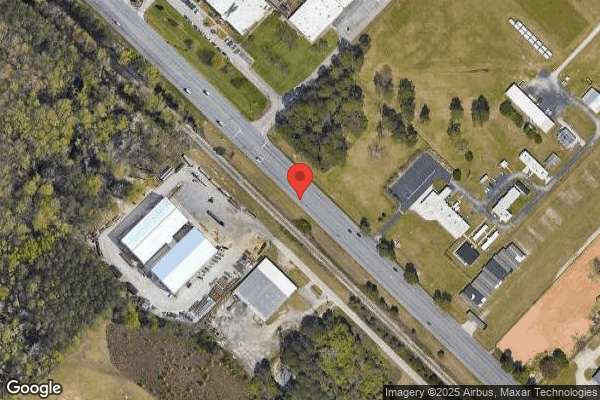

2350 W Lucas Street, Florence, SC 29501 (843) 665-2222
Non profit - Corporation 25 Beds PRESBYTERIAN COMMUNITIES OF SOUTH CAROLINA Data: November 2025
Trust Grade
80/100
#50 of 186 in SC
Last Inspection: August 2025

Inspected within the last 6 months. Data reflects current conditions.

Overview

Presbyterian Communities of South Carolina-Florence has a Trust Grade of B+, which means it is above average and recommended for families looking for care. It ranks #50 out of 186 nursing homes in South Carolina, placing it in the top half of facilities in the state, and #4 out of 9 in Florence County, indicating that only three local options are better. However, the facility is experiencing a worsening trend, with issues increasing from 2 in 2024 to 4 in 2025. Staffing is considered a strength here, receiving a 3/5 rating, and the turnover rate is 47%, which is slightly below the state average, suggesting some stability. On a positive note, the facility has no fines on record and provides more RN coverage than 76% of South Carolina facilities, which is beneficial for resident care. However, there are concerns, including improper food storage temperatures that could lead to foodborne illnesses, excessive lint accumulation in the dryers, and failure to label and date opened food items properly, which raises potential safety issues. Overall, while there are strengths in staffing and oversight, families should be aware of the recent increase in deficiencies.

Trust Score
B+
80/100
In South Carolina
#50/186
Top 26%
Safety Record
Low Risk
No red flags
Inspections
Getting Worse
2 → 4 violations
Staff Stability
⚠ Watch
47% turnover. Above average. Higher turnover means staff may not know residents' routines.
Penalties
✓ Good
No fines on record. Clean compliance history, better than most South Carolina facilities.
Skilled Nurses
✓ Good
Each resident gets 46 minutes of Registered Nurse (RN) attention daily — more than average for South Carolina. RNs are trained to catch health problems early.
Violations
○ Average
10 deficiencies on record. Average for a facility this size. Mostly minor or procedural issues.
★★★★☆
4.0
Overall Rating
★★★☆☆
3.0
Staff Levels
★★★★★
5.0
Care Quality
★★★☆☆
3.0
Inspection Score
Stable
2024: 2 issues
2025: 4 issues

The Good

  • 5-Star Quality Measures · Strong clinical quality outcomes
  • Full Sprinkler Coverage · Fire safety systems throughout facility
  • No fines on record

Facility shows strength in quality measures, fire safety.

The Bad

Staff Turnover: 47%

Near South Carolina avg (46%)

Higher turnover may affect care consistency

Chain: PRESBYTERIAN COMMUNITIES OF SOUTH C

Part of a multi-facility chain

Ask about local staffing decisions and management

The Ugly 10 deficiencies on record

Aug 2025 4 deficiencies
CONCERN (D) 📢 Someone Reported This

A family member, employee, or ombudsman was alarmed enough to file a formal complaint

Potential for Harm - no one hurt, but risky conditions existed

Deficiency F0761 (Tag F0761)

Could have caused harm · This affected 1 resident

Based on review of facility policy, observation and interview, the facility failed to ensure expired medications and/or biologicals were removed from and not stored with other medications and/or biolo...

Read full inspector narrative →
Based on review of facility policy, observation and interview, the facility failed to ensure expired medications and/or biologicals were removed from and not stored with other medications and/or biologicals in use for residents in one of one treatment cart.Findings include: Review of the facility policy titled Medication Storage revealed under 1. General Guidelines: 8. Unused medications: The pharmacy and all medication rooms are routinely inspected by the consultant pharmacist for discontinued, outdated, defective, or deteriorated medications with worn, illegible, or missing labels. These medications are destroyed in accordance with our Destruction of Unused Drugs Policy. During an observation on 08/07/25 at 7:30 AM, of the treatment cart revealed the following:- One bottle of Iodoform Packing, sterile, 1 x 1/4 x 15 feet, manufactured by Curity with Cardinal Health Ref 7831, opened and partially used, no longer sterile and stored back on the treatment cart.- One Occlusive Gauze Strip Overwrap, 5 x 9, Manufactured by Covidien, with Lot #2101405, was expired on 09/30/24. - Four Occlusive Gauze Strip Overwraps, 5 x 9, Manufactured by Covidien, with Lot #3081406, were expired on 07/31/25.- One Occlusive Gauze Strip Overwrap, 5 x 9, with Lot #4111404, open and left on the treatment cart, no longer sterile. - Two AMD Antimicrobial, Sterile 2 x 2's, manufactured by Curity, with Lot #19K181062, were expired on 10/01/24.- One Plus Silicone Border Dressing, manufactured by Zetruvit, with Lot #200504131, was expired on 08/01/25. During an interview on 08/07/25 at 8:00 AM, the Director of Nursing confirmed the expired biologicals, and they were removed from the treatment cart.
CONCERN (D)

Potential for Harm - no one hurt, but risky conditions existed

Infection Control (Tag F0880)

Could have caused harm · This affected 1 resident

**NOTE- TERMS IN BRACKETS HAVE BEEN EDITED TO PROTECT CONFIDENTIALITY** Based on review of facility policy, observation and interview, the facility failed to ensure proper handling and processing of t...

Read full inspector narrative →
**NOTE- TERMS IN BRACKETS HAVE BEEN EDITED TO PROTECT CONFIDENTIALITY** Based on review of facility policy, observation and interview, the facility failed to ensure proper handling and processing of the resident's laundry; furthermore, the facility failed to follow enhanced barrier precautions for (R)4 during care.Findings include:Review of the facility policy titled, Laundry with an implementation date of 04/15/25, states: Policy: The facility launders linens and clothing in accordance with current CDC guidelines to prevent transmission of pathogens. Policy Explanation and Compliance Guidelines: 1. Aligning with the principles of standard precautions, staff shall consider all previously worn clothing and used linens as potentially contaminated. 3. Soiled laundry will be kept separate from clean laundry at all times.Review of the facility policy titled, Hand Hygiene with an implementation date of 04/15/25, states: All staff will perform proper hand hygiene procedures to prevent the spread of infection to other personnel, residents, and visitors. This applies to all staff working in all locations within the facility. Definitions: Hand hygiene is a general term for cleaning your hands by handwashing with soap and water or the use of an antiseptic hand rub, also known as alcohol-based hand rub (ABHIR).Policy Explanation and Compliance Guidelines:1. Staff will perform hand hygiene when indicated, using proper technique consistent with accepted standards of practice. 6. Additional considerations: a. the use of gloves does not replace hand hygiene. If your task requires gloves, perform hand hygiene prior to donning gloves, and immediately after removing gloves.Review of the facility policy titled, Enhanced Barrier Precautions with an implementation date of 04/15/25, states: Policy: It is the policy of this facility to implement enhanced barrier precautions for the prevention of transmission of multidrug-resistant organisms. Definitions: Enhanced [NAME] precautions (EBP) refer to an infection control intervention designed to reduce transmission of multidrug-resistant organisms that employs targeted gown and cloves use during high contact resident care activities. Policy Explanation and Compliance Guidelines:1. Prompt recognition of need: All staff receive training on enhanced barrier precautions upon hire and at least annually and are expected to comply with all designated precautions. b. All staff receive training on high-risk activities and common organisms that require enhanced barrier precautions. c. The facility will have the discretion on how to communicate to staff which residents require the use of EBP, as long as staff are aware of which residents require the use of EBP prior to providing high-contact care activities. 2. Initiation of Enhanced Barrier Precautions: b. An order for enhanced barrier precautions will be obtained for residents with any of the following: i. Wounds (e.g., chronic wounds such as pressure ulcers, diabetic foot ulcers, unhealed surgical wounds, and chronic venous stasis ulcers) and/or indwelling medical devices (e g., central lines, urinary catheters, feeding tubes, tracheostomy/ventilator tubes, hemodialysis catheters. PICC lines, midline catheters) even if the resident is not known to be infected or colonized with a MDRO. (Peripheral IVs, continuous glucose monitors, insulin pumps, or ostomies without an associated indwelling medical device are not an indication for EBP.). 3. Implementation of Enhanced Barrier Precautions: b. PPE for enhanced barrier precautions is only necessary when performing high-contact care activities and may not need to be donned prior to entering the resident's room. 4. High-contact resident care activities include: a. Dressing b. Bathing c. Transferring d. Providing hygiene e. Changing linens f. Changing briefs or assisting with toileting g. Device care or use: central lines, urinary catheters, hemodialysis catheters, PICC lines, midline catheters h. Wound care: any skin opening requiring a dressing. 10. Enhanced barrier precautions should be used for the duration of the affected resident's stay in the facility or until resolution of the wound or discontinuation of the indwelling medical device that placed them at higher risk.Review of R4's Face Sheet revealed the facility admitted R4 on 12/15/23 with diagnoses including but not limited to: urinary tract infection, severe protein calorie malnutrition, dysphagia following other cerebrovascular disease and sepsis due to pseudomonas. R4 is on EBP due to the foley catheter.During an observation on 08/06/25 at 8:50 AM, revealed R4 was on EBP as indicated by a sign on the resident's room door. Licensed Practical Nurse (LPN)1 was asked to confirm that there was a privacy bag on R4's foley bag. LPN1 entered the resident's room with no personal protective equipment on. LPN1 touched R4's foley catheter and anchor device with no gloves or other personal protective equipment in place. The anchor device had dislodged and was no longer anchoring the foley catheter. LPN1 exited R4's room to retrieve another anchor device. LPN1 returned to R4's room at 9:00 AM. LPN1 reentered R4's room with a gown and gloves on. LPN1 touched the blinds to close them with her gloves on and then touched the resident's foley catheter.During an observation on 08/07/25 at 9:30 AM, revealed the Laundry Specialist pushed the clean linen cart along with the soiled linen cart in the hall at the same time. She put on gloves to get the soiled linen from the shower room on the Price Hall unit where the soiled bins are stored. She also removed soiled clothing protectors from the soiled linen hampers in the dining room on the Price Hall unit. She took off the gloves to put the clean linen in the clean linen closet and she did not sanitize or wash her hands. She repeated this process in the shower room and the two clean linen closets on the [NAME] Grove unit. The Laundry Specialist put on gloves to get the soiled linen from the shower room on the [NAME] Grove unit. She took off the gloves to put the clean linen in the clean linen closets and she did not sanitize or wash her hands.During an interview with LPN1 at 9:15 AM revealed, I thought you were just going to show me something. That is why I did not put on the personal protective equipment at first. I know I touched the blind with my gloves on. I am sorry.During an interview with the Laundry Specialist on 08/07/25 at 9:35 AM, the Laundry Specialist confirmed that she did not wash her hands after removing her gloves. She stated that no one had ever trained her to wash her hands after removing gloves.During an interview with the Director of Nursing (DON) on 08/06/25 at 9:45 AM, revealed, I expect one hundred percent compliance with the knowledge of enhanced barrier precautions.During an interview with the Director of Facilities on 08/07/25 at 10:00 AM, revealed that he has educated the Laundry Specialist about washing her hands up to the elbows each time she removes gloves.
CONCERN (F) 📢 Someone Reported This

A family member, employee, or ombudsman was alarmed enough to file a formal complaint

Potential for Harm - no one hurt, but risky conditions existed

Food Safety (Tag F0812)

Could have caused harm · This affected most or all residents

**NOTE- TERMS IN BRACKETS HAVE BEEN EDITED TO PROTECT CONFIDENTIALITY** Based on observation, interview, and review of facility policy, the facility failed to ensure that food items were properly stor...

Read full inspector narrative →
**NOTE- TERMS IN BRACKETS HAVE BEEN EDITED TO PROTECT CONFIDENTIALITY** Based on observation, interview, and review of facility policy, the facility failed to ensure that food items were properly stored/maintained at or below 41 degrees Fahrenheit (F), to reduce the potential of foodborne illnesses. The facility further failed to monitor equipment (refrigerator) to ensure proper functioning in 1 of 1 satellite kitchen reviewed.Findings include:Review of facility policy titled Policy for recording temperatures in a culinary department, with no revision date, documented, 1. Understand the temperature danger zone. - The temperature danger zone is the range where bacteria multiply rapidly, between 41 degrees Fahrenheit (5 degrees Celsius) and 135 degrees Fahrenheit (57 degrees Celsius). - Food should be kept out of this zone as much as possible. 2. Utilize appropriate equipment. - Accurate thermometers: Use calibrated thermometers for refrigerators, freezers, and for checking the internal temperature of food. - Temperature logs: Have standardized log sheets for different stages of food handling. 3. Establish critical control points (CCPs) for temperature monitoring. - Storage: Maintain refrigerated foods at or below 41 degrees Fahrenheit (5 degrees Celsius). 4. Implement monitoring and recording procedures: - Documentation: Record the date, time, food item, temperature, and initials of the person taking the reading. Include corrective actions taken if the temperature is out of range. - Health and safety risks: Neglecting maintenance can create unpleasant odors, attract pests, and potentially lead to the spread of bacteria and foodborne illnesses.During an observation on 08/05/25 at 10:40 AM of the Healthcare Service Kitchen (satellite kitchen) located on Price Hall Unit, with the Executive Chef, revealed refrigerator temperature logs for the dates of 07/01/25 - 08/05/25 were documented out of safe range. Inside the refrigerator there were 6 cartons of milk, individual packages of butter, and individual packages of grape and strawberry jelly. The refrigerator internal temperature reading was 38 degrees Fahrenheit. The Executive Chef checked the temperature of the milk with a thermometer, and the milk temperature was found to be above the normal range at 52 degrees Fahrenheit. The Executive Chef instructed the kitchen staff to remove and discard everything that was in the refrigerator, not to use the refrigerator and to notify maintenance to have the refrigerator checked. Review of the Refrigeration, Freezer, and Dry Storage Temperatures for the month of July 2025 - August 2025, Location: Healthcare Kitchen, revealed the following documented temperatures:July 1: AM (morning) 51 Degrees Fahrenheit / PM (afternoon/evening) 52 degrees Fahrenheit (external) and AM 51 / PM 52 (Internal), [DATE]: AM DEF / PM DEF (External), AM DEF / PM DEF (Internal), [DATE]: AM 49 / PM 52 (External), AM 52 / PM 52 (Internal), [DATE]: AM 49 / PM 52 (External), AM 50 / PM 52 (Internal), [DATE]: AM DEF / PM 50 (External), AM 51 (Internal), [DATE]: AM DEF / PM DEF (External), AM 52 / PM 51 (Internal), [DATE]: AM DEF / PM DEF (External), AM 51 / PM 52 (Internal), [DATE]: AM 47 / PM DEF (External), AM 52 / PM 51 (Internal), [DATE]: AM 46 / PM 51 (External), AM 50 / PM 55 (Internal), [DATE]: AM 47 / PM 50 (External), AM 50 / PM 53 (Internal). Further review of the temperature log revealed the remaining dates for the month of [DATE] - [DATE]; the documented temperatures were over the regulated range. During an interview on 08/05/25 at 10:45 AM, the Executive Chef revealed the temperatures are checked daily and monitored by the sous chef. The Executive Chef could not explain the out-of-range refrigerator temperatures and the lack of action being taken to correct the problem. Food items and beverages are transferred from the main kitchen and plated and served to the residents from the satellite Healthcare Service Kitchen located on the Price Hall Unit.During an interview on 08/06/25 at 9:38 AM, Culinary Manager revealed if any discrepancy is noted with the temp, the staff should notify someone immediately. The Sous Chef is supposed to check temperature logs daily to ensure temps are being checked and logs are being filled out. He is not sure why the problem wasn't addressed sooner.During an interview on 08/06/25 at 10:00 AM, the Registered Dietitian (RD) revealed the kitchen staff are all trained in diets, temperature and documentation. The temperature checks should be the responsibility of everyone. The Culinary Director should be monitoring the temperature logs. Some of the outside gauges are not working properly; therefore, internal gauges should be checked for accurate temperature reading. During an interview on 08/06/25 at 10:12 AM, the Director of Nursing (DON) revealed she was made aware of the temperature logs discrepancy today.During an interview on 08/06/25 at 10:33 AM, the Sous Chef revealed, she is responsible for checking and verifying temperature logs. She would rather see temperature logs filled in rather than not. She normally asks the kitchen staff whether the temperatures have been done, and she takes their word without checking. She doesn't take the time to check the temperature log to see what the reading is. The Sous Chef stated the kitchen staff have been taught how to check the temperatures and to be aware of normal and abnormal temperature ranges. Her expectation is for the kitchen staff to do what is supposed to be done. The Sous Chef concluded, I am being honest; I haven't been doing what I am supposed to be doing by checking and verifying the temperature logs. I'm just being honest.During an interview on 08/07/25 at 10:15 AM, the Director of Facilities revealed he received a work order on Tuesday, 08/05/25, for the refrigerator not temping like it should. The refrigerator was then pulled and placed out of service. All the food items that were in the refrigerator have been discarded. The kitchen staff has been instructed not to use the refrigerator. The Director of Facilities stated his expectation is the maintenance staff is to notify of any malfunction of equipment. All malfunctioning equipment is to be reported immediately.
CONCERN (F) 📢 Someone Reported This

A family member, employee, or ombudsman was alarmed enough to file a formal complaint

Potential for Harm - no one hurt, but risky conditions existed

Room Equipment (Tag F0908)

Could have caused harm · This affected most or all residents

Based on review of the facility policy, observation and interview, the facility failed to ensure an excessive amount of lint was removed from 1 of 3 clothes dryers.Findings include:Review of the undat...

Read full inspector narrative →
Based on review of the facility policy, observation and interview, the facility failed to ensure an excessive amount of lint was removed from 1 of 3 clothes dryers.Findings include:Review of the undated facility policy with no title documented, Policy Statement Lint Trap should be kept clean. Policy Interpretation and Implementation: All dryer lint traps will be cleaned after each load. Procedure: 1. After removing clothes from dryer, clean lint trap after every load. Review of the facility policy titled Laundry with an implementation date of 04/15/25 documented, Policy Explanation and Compliance Guidelines: . 5. Laundry equipment will be used and maintained according to manufacturer's instructions . 12. Laundry staff will be in-serviced on handling linens and laundry on a regular basis. During an observation on 08/07/25 at 9:10 AM revealed the laundry attendant opened an empty dryer and removed the lint trap. The lint trap baskets and the three walls below the dryer were observed with excessive amounts of lint. Laundry Staff and the Director of Facilities were immediately made aware of these findings.During an interview with the Laundry Specialist on 08/07/25 at 9:30 AM, the Laundry Specialist stated, Sometimes I clean the lint after every load if the load has heavy linen. If the load has light linen, I wait until the end of the day to clean the lint basket.During an interview on 08/07/25 at 9:45 AM the Director of Nursing stated, The Administrator is currently on leave, and I do not know about the dryers and all that. The Director of Facilities can help you with that.During an interview on 08/07/25 at 10:00 AM the Director of Facilities revealed lint traps should be cleaned after every load of laundry. He also stated that the Laundry Specialist had been educated as recently as this morning that she should be cleaning the lint basket and walls of the dryers of lint after each load of laundry.
Aug 2024 2 deficiencies
CONCERN (D)

Potential for Harm - no one hurt, but risky conditions existed

Comprehensive Care Plan (Tag F0656)

Could have caused harm · This affected 1 resident

**NOTE- TERMS IN BRACKETS HAVE BEEN EDITED TO PROTECT CONFIDENTIALITY** Based on review of facility policy, record review, observation, and interview, the facility failed to implement care plan interv...

Read full inspector narrative →
**NOTE- TERMS IN BRACKETS HAVE BEEN EDITED TO PROTECT CONFIDENTIALITY** Based on review of facility policy, record review, observation, and interview, the facility failed to implement care plan interventions for Resident (R)20's refusal of oxygen, for 1 of 2 residents reviewed. Findings include: Review of the undated facility policy titled Developing and Evaluating Goals and Objectives, Care Plans states, 1. Care plan goals and objective are defined as the desired outcome for a specific resident problem. 2. When goals and objectives are not achieved the resident's clinical record will be documented as to why the results were not achieved and what new goals and objectives have been established. Care plans will be modified accordingly. Review of R20's Face Sheet revealed R20 was admitted to the facility on [DATE], with diagnoses including, but not limited to: dependence on supplemental oxygen, chronic obstructive pulmonary disease, acute respiratory failure with hypoxia, hypertensive heart and chronic kidney disease, thalassemia, dementia, cerebral infarction, and posthemorrhagic anemia. Review of R20's unspecified Minimum Data Set (MDS) with an Assessment Reference Date (ARD) of 07/31/24, revealed R20's Brief Interview for Mental Status (BIMS) score was not notated, resident's cognitive skills are impaired. Further review revealed under section E revealed R20 did not exhibit signs of rejection of care behavior. Review of R20's unspecified MDS with an ARD of 07/08/24, revealed R20's BIMS score was 8 out of 15, indicating R20 had moderate cognitive impairment. Further review revealed under section E revealed R20 did not exhibit signs of rejection of care behavior. Review of R20's Physician Orders revealed R20 has an order for, Oxygen at 2 liters continuous: may remove for short period of time or for transport every day and night shift. Review of R20's Care Plan revealed, R20 has COPD and shortness of breath. The Goal outlined in this Care Plan indicated that R20 will display optimal breathing patterns daily through review date. The Interventions directed staff to give aerosol or bronchodilators as ordered. Monitor/document any side effects and effectiveness. The nursing staff are to monitor for signs and symptoms of acute respiratory insufficiency: anxiety, confusion, restlessness, shortness of breath at rest, cyanosis, somnolence. Monitor/document/report as needed any sign and symptom of respiratory infection: Fever, Chills, increase in sputum, chest pain, increased difficulty breathing (Dyspnea), increased coughing and wheezing. Oxygen settings are O2 at 2L/min via NC continuous. Further review of the Care Plan revealed, [R20] has oxygen therapy related to COPD. At times removes continuous oxygen. The Goal outlined in this Care Plan indicated that R20 will not have any sign and symptom of poor oxygen absorption through review date. The Interventions directed staff to give medications as ordered by physician. Monitor/document side effects and effectiveness. Monitor for sign and symptoms of respiratory distress and report to physician. Staff to assess as needed R20's respirations, pulse oximetry, increased heart rate (Tachycardia), restlessness, diaphoresis, headaches, lethargy, confusion, atelectasis, hemoptysis, cough, pleuritic pain, accessory muscle usage, skin color. Oxygen settings: oxygen at 2L/min via nasal cannula continuous. Staff to reapply oxygen nasal cannula when noted to be taken off by R20. During an observation on 08/13/24 at 12:06 PM, R20 was not wearing the nasal cannula. Nasal cannula was observed on the recliner chair in the resident's room, with the oxygen concentrator running at 2 liters per minute. R20 was in his wheelchair, leaning in tripod position (physical stance that people may assume when they are out of breath or experiencing respiratory distress. The position involves sitting or standing while leaning forward and supporting the upper body with the hands on the knees or another surface) unable to answer questions in a full sentence without catching his breath. No staff was observed in the resident's room. Licensed Practical Nurse (LPN)1, who was the nurse on the unit, was assisting with lunch trays. During an observation and interview on 08/13/24 at 12:11 PM, LPN1 was informed of the respiratory concerns for R20. LPN1 entered the resident's room and witnessed R20 in the tripod position. LPN1 stated, R20 is noncompliant with oxygen. R20 stated, he did not need oxygen. LPN1 stated, This morning his SPO2 [oxygen saturation, is a percentage that measures the amount of oxygen-carrying hemoglobin in the blood] was 94% around 9 AM and he refused oxygen since earlier this morning. LPN1 states, she has not been able to chart or notify anyone regarding R20's refusal to receive oxygen. LPN1 further states she has not rechecked R20's SPO2 since 9 AM and denied calling a physician or notifying the Nurse Practitioner. LPN1 stated, This is his usual behavior and I've been assisting with passing trays for lunch. I tried to assist [R20] but he refused and at one point was standing up from wheelchair. During an observation and interview on 08/13/24 at 12:16 PM, R20 stated, he refused oxygen because the nasal cannula hurts his nostrils. R20 was unable to state this in a full sentence without needing to catch his breath. LPN1 was still present to witness the conversation with R20. When the interview was completed with R20, LPN1 exited the room and began assisting with lunch trays. During an interview and observation on 08/13/24 at 12:19 PM, this surveyor immediately revealed R20's respiratory concerns to the Director of Nursing (DON). The DON revealed if a patient has been refusing oxygen, the Nurse Practitioner should be contacted and the nurse should do continuous or very frequent oxygen saturation checks, the responsible party should be notified and documentation of the refusal as soon as possible. On 08/13/24 at 12:29 PM, the DON went to R20's room to observe the location of the nasal cannula and resident concern. The DON assessed R20 immediately. The portable Spirometer (finger) monitor was unable to read R20's SPO2, after multiple attempts. A Hill-Rom [NAME] Allyn Spot Vital Signs 4400 (a machine used to take residents' vital signs) was brought into the room to obtain R20's SPO2. At 12:36 PM, R20's SPO2 reading was 82%-84%. LPN1 was observed still passing lunch trays. The DON requested LPN1 to stop and assist with assessing the resident. During an interview on 08/13/24 at 12:43 PM, the Nurse Practitioner (NP) revealed that she is familiar with the resident and is aware that he has the behavior of not following orders for his diet and oxygen. The NP revealed that she expects the nurse to redirect the patient. If the patient is refusing, the staff should continue to monitor for respiratory distress and notify if there is a condition change. The NP stated, In general, if the SPO2 is 88% or lower and not increasing with or without supplement oxygen, I expect to be notified as soon as possible. I have only been here for a month. I have not been contacted today regarding [R20's] refusal of oxygen or [R20] having a low SPO2. During an interview on 08/13/24 at 2:51 PM, the DON revealed to the Assistant Director of Nursing (ADON) that R20 was in a tripod position and should have been assessed by LPN1. The DON stated she witnessed LPN1 not assisting with the resident. The DON expressed concerns regarding the non-action and presented this surveyor with R20's Care Plan that directed the staff with interventions to be followed when R20 refuses oxygen. The DON stated that the nurse is expected to place priorities on airway, breathing, and circulation of a resident over passing out lunch trays.
CONCERN (E)

Potential for Harm - no one hurt, but risky conditions existed

Deficiency F0760 (Tag F0760)

Could have caused harm · This affected multiple residents

**NOTE- TERMS IN BRACKETS HAVE BEEN EDITED TO PROTECT CONFIDENTIALITY** Based on record review, interviews, and review of facility policy, the facility failed administer medication to Resident (R)26, ...

Read full inspector narrative →
**NOTE- TERMS IN BRACKETS HAVE BEEN EDITED TO PROTECT CONFIDENTIALITY** Based on record review, interviews, and review of facility policy, the facility failed administer medication to Resident (R)26, in a timely manner, for 1 of 6 residents reviewed for unnecessary medications. Specifically, R26 was administered multiple medications late on multiple day. Finding include: Review of a document, provided by the Administrator, undated and titled Medication Pass Statement revealed, PCSC (Presbyterian Communities of South Carolina) Follows a Liberalized Med Pass Structure which states: Daily 7a-11a Evening 3p-8p QHS (bedtime) 8p-12a PPI 5a-6:30a FSBS 6:30a-730a BID 7a-11a and 7p-11p TID 7a-11a and 11a-3p and 7p-11p Review of R26's Face Sheet revealed R26 was admitted to the facility on [DATE], with diagnoses including but not limited to: systolic (congestive) heart failure, atypical flutter and insomnia. During an interview on 08/13/24 at approximately 1:00 PM, R26 stated that for the past several weeks she was being woken up after her normal 9:00 PM bedtime so that medications could be administered. On 08/13/24 at approximately 3:30 PM, a review of R26's Physician Orders and Medication Administration Record (MAR) revealed that medications were being administered at the scheduled time. On 08/13/24 at approximately 4:15 PM, this Surveyor asked the Administrator to provide R26's Medication Administration Audit Report (MAAR) for July 2024, which will show the actual time of administration and not the default time as shown on the MAR for July 2024. On 08/14/24 at approximately 11:55 AM, a copy of R26's July 2024 MAAR was provided by the Director of Nursing (DON) with subsequent review by the Surveyor on 08/14/24 at approximately 12:05 PM, revealing that multiple medications, were being administered late according to the facility's liberalized med pass structure. The medications are listed as follows: 1. Digoxin 12.5 mcg (microgram) Give 1 tablet in the evening related to ATYPICAL ATRIAL FLUTTER Hold for pulse less than 60. 1900 (7:00 PM), administered late approximately eighteen (18) times varying between 43 minutes late on 07/18/24 and 4 hours 15 minutes late on 07/5/24, given at 0015 hours (12:15 am) on 07/06/24. 2. Boudreauxs Butt Paste External Ointment 17% (percent) (Zinc Oxide Topical) Apply to sacrum topically every day and night shift for preventive measures. 1900, administered late approximately nineteen (19) times varying between none (zero) being administered on 07/05/24 and 9 hours 16 minutes late on 07/13/24 given at 0516 (5:16 AM) on 07/14/24. 3. Metoprolol Succinate ER (extended release) Oral Tablet Extended Release 24 hour 25 mg (milligram) give 1.5 tablet two times a day relayed to HYPERTENSIVE HEART DISEASE WITH HEART FAILURE. 1900 administered late approximately two (2) times varying between 1 hour 10 minutes and 1 hour 14 minutes. 4. Apixaban Oral Tablet 5 mg Given 1 tablet by mouth two times daily related to CHRONIC ATRIAL FIBRILLATION, UNSPECIFIED 1900 administered late approximately one (1) times by 1 hour 10 minutes. 5. Mirtazapine Tablet 7.5 mg Give 2 tablet by mouth at bedtime for insomnia and appetite stimulant related to INSOMNIA, UNSPECIFIED. 2000 (8:00 PM), on 07/13/24 administered late on 07/14/24 0007 (12:07 AM). During an interview on 08/14/24 at approximately 1:05 PM, the Director of Nursing reviewed some of the findings and confirmed that multiple medications were being given late.
Sept 2022 4 deficiencies
CONCERN (D)

Potential for Harm - no one hurt, but risky conditions existed

Deficiency F0761 (Tag F0761)

Could have caused harm · This affected 1 resident

Based on review of the facility policy and procedures, observation, and interview, the facility failed to assure expiration dating of an insulin product in 1 of 2 medication carts. Findings include: ...

Read full inspector narrative →
Based on review of the facility policy and procedures, observation, and interview, the facility failed to assure expiration dating of an insulin product in 1 of 2 medication carts. Findings include: Review of the facility's policy titled, Storage and Expiration of Medications, Biologicals, effective 12/01/07 and updated 7/21/22 sets forth the procedures relating to the storage and expiration dates of medications biological, syringes and needles. The policy states once any medication or biological package is opened, facility should follow manufacturer/supplier guideline with respect to expiration dates for opened mediations, facility staff should record the date opened on the primary medication container (vial, bottle, inhale) when the medication has a shortened expiration date once opened or opened and if a multi-dose vial of an injectable mediation has been opened or accessed (e.g. (for example) needle-punctured) the vial should be dated and discarded within 28 days unless the manufacturer specifies a different (shorter or longer) date for that opened vial. Further review of the manufacturer package insert states in-use (opened) prefilled pens expires 28 days after opening, On 09/26/22 at approximately 10:45 AM inspection of the medication cart for rooms 1 through 19 revealed an opened, undated, and in use Insulin Glargine Pen belonging to Resident (R)7, which had been labeled by pharmacy Discard unused medications after 28 days. Date _______. There was no date entered on the pharmacy applied label or the plastic bag container the insulin pen. On 9/26/22 at approximately 10:49 AM this finding was verified by Licensed Practical Nurse (LPN)1.
CONCERN (E)

Potential for Harm - no one hurt, but risky conditions existed

Room Equipment (Tag F0908)

Could have caused harm · This affected multiple residents

Based on review of the facility policy, observation, and interview, the facility failed to ensure an excessive amount of lint was removed from 2 of 3 clothes dryers. Findings include: Review of the un...

Read full inspector narrative →
Based on review of the facility policy, observation, and interview, the facility failed to ensure an excessive amount of lint was removed from 2 of 3 clothes dryers. Findings include: Review of the untitled and undated facility policy revealed, Lint trap should be kept clean. All dryer lint traps will be cleaned after each load. After removing clothes from dryer, clean lint trap after every load. An observation on 9/27/22 at 11:10 AM of the laundry room revealed 2 clothes dryers with an excessive amount of lint in the bottoms, on all 3 upper walls and hanging off the filled lint baskets. During the observation of the clothes dryers, the Administrator and the Laundry Worker (LW) were in attendance and verified the excessive amount of lint in the 2 clothes dryers. During an interview on 9/27/22 at 11:15 AM with the LW, she stated the lint is removed from the dryers after 3 loads. The LW then stated she sweeps it out as best as she can and the maintenance department will come every once in a while and vacuum out the bottoms of the dryers. The LW provided a copy of the log which should be documented that the lint has been removed from the dryers after 3 loads and the log did not have any documentation to ensure the clothes dryers were cleaned of the lint on 9/26/2022, and until 11:00 AM on 9/27/2022 the log was not not completed. The laundry worker states she starts washing and drying clothes at 5:00 AM in the morning.
CONCERN (F)

Potential for Harm - no one hurt, but risky conditions existed

Food Safety (Tag F0812)

Could have caused harm · This affected most or all residents

Based on review of the facility policy titled, Labeling and Dating Foods (date Marking), observation, and interview, the facility failed to ensure foods that were opened and stored contained an open d...

Read full inspector narrative →
Based on review of the facility policy titled, Labeling and Dating Foods (date Marking), observation, and interview, the facility failed to ensure foods that were opened and stored contained an open date in 1 of 1 main kitchen. The facility further failed to ensure expired items were removed from 1 of 2 nutrition refrigerators on 1 of 2 halls. Findings include: Review of the facility policy titled, Labeling and Dating Foods (Date Marking), states, All foods stored will be properly labeled according to the following guidelines. 1. Date marking for dry storage food items, states The exception to dating individual dry storage food items includes individually packaged food items stored in bulk containers such as packets of hot chocolate, tea bags, saltine crackers, packets of sugar and packets of individual cookies, etc. There is no data on the policy for removing packages from boxes and using portions and then dating them after resealing them for future use. 2. Date marking for refrigerated storage food items: Once opened, all ready to eat, potentially hazardous food will be re-dated with a use by date according to current safe food storage guidelines or by the manufacturers expiration date. 3. Date marking for freezer storage food items: Once a package is opened, it will be redated with the date the item was opened and shall be used by the safe food storage guidelines or by the manufacturer's expiration date. On 9/26/22 at 10:45 AM during initial tour of the main kitchen revealed the following: An observation of the dry storage area in the main kitchen revealed a plastic bag of Oreo cookie crumbs, opened, and partially used and resealed with no open date. A large disposable beverage cup with a dark liquid belonging to an employee was sitting on a shelf with other items to be used in preparing meals. Tour of the walk in freezer revealed frozen cream filling, opened and covered with a plastic wrap with no open date, and a bag of donuts opened and partially used with no open date. A bag of chocolate chip cookies, unsealed without an open date was also observed. Tour of the walk in refrigerator revealed an undated tray of salads in carry out containers. An interview on 9/26/22 at 10:46 AM with the Dining Services Director confirmed the findings. Review on 9/27/22 at 12:50 PM of 1 of 2 nourishment refrigerators on the units revealed: 4 cartons of Non Fat Milk expired on 9/25/22, 3 Peanut Butter and Jelly sandwiches dated 9/24/22 - 9/25/22 were in the refrigerator, hard and dried out, and a box of Ready Care was expired on 4/26/22; opened and in use for residents. An interview on 9/27/22 at 12:50 PM with the Registered Nurse, Life Enrichment Worker, confirmed the findings and brought them to the attention of the Assistant Director of Nursing.
CONCERN (F)

Potential for Harm - no one hurt, but risky conditions existed

Garbage Disposal (Tag F0814)

Could have caused harm · This affected most or all residents

Based on review of the facility policy, observation, and interview, the facility failed to ensure trash and debris was removed from the area around the base of 3 of 3 facility dumpsters. Findings incl...

Read full inspector narrative →
Based on review of the facility policy, observation, and interview, the facility failed to ensure trash and debris was removed from the area around the base of 3 of 3 facility dumpsters. Findings include: Review of the facility policy titled,Maintaining a Safe and Sanitary Environment around Trash Receptacles, states under Dumpster Care: Dumpsters and surrounding area should be kept clear of large debris that could impede pickup and delivery of dumpster. No garbage should be placed on top of dumpster. Dumspters should not be overloaded. An observation on 9/27/22 at 8:45 AM of the outside trash receptacles revealed a large amount of paper products, a white plastic apparatus, and a discarded broom. The findings were confirmed on 9/27/22 at 8:45 AM by a Maintenance Worker. On 9/27/22 at 9:10 AM, during an interview with the Administrator, and her viewing of the dumpsters with this surveyor, she also confirmed that there was a large amount of paper products, a white plastic broken apparatus, and a discarded broom was on the ground outside the 3 dumpsters.
Understanding Severity Codes (click to expand)
Life-Threatening (Immediate Jeopardy)
J - Isolated K - Pattern L - Widespread
Actual Harm
G - Isolated H - Pattern I - Widespread
Potential for Harm
D - Isolated E - Pattern F - Widespread
No Harm (Minor)
A - Isolated B - Pattern C - Widespread

Questions to Ask on Your Visit

  • "Can I speak with families of current residents?"
  • "What's your RN coverage like on weekends and overnight?"

Our Honest Assessment

Strengths
  • • Grade B+ (80/100). Above average facility, better than most options in South Carolina.
  • • No major safety red flags. No abuse findings, life-threatening violations, or SFF status.
  • • No fines on record. Clean compliance history, better than most South Carolina facilities.
Concerns
  • • No significant concerns identified. This facility shows no red flags across CMS ratings, staff turnover, or federal penalties.
Bottom line: Generally positive indicators. Standard due diligence and a personal visit recommended.

About This Facility

What is Presbyterian Communities Of South Carolina-Florenc's CMS Rating?

CMS assigns Presbyterian Communities Of South Carolina-Florenc an overall rating of 4 out of 5 stars, which is considered above average nationally. Within South Carolina, this rating places the facility higher than 99% of the state's 100 nursing homes. This rating reflects solid performance across the metrics CMS uses to evaluate nursing home quality.

How is Presbyterian Communities Of South Carolina-Florenc Staffed?
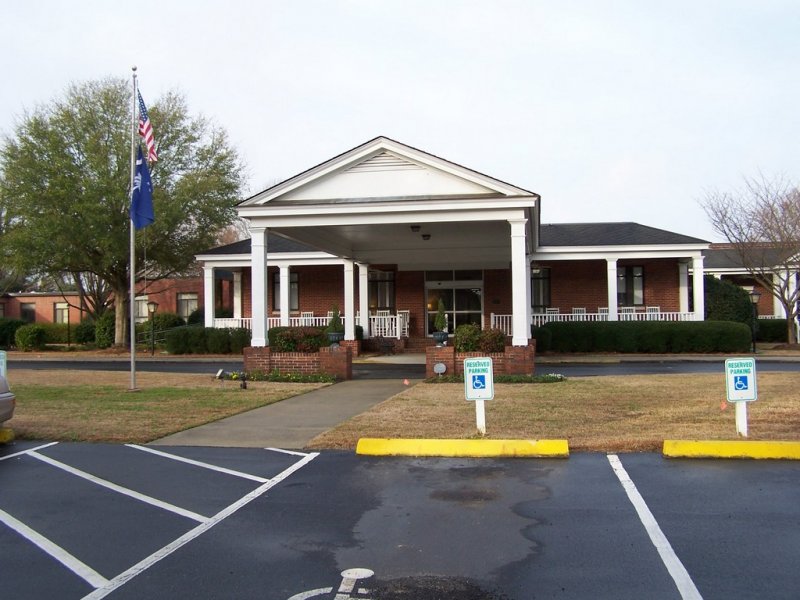
CMS rates Presbyterian Communities Of South Carolina-Florenc's staffing level at 3 out of 5 stars, which is average compared to other nursing homes. Staff turnover is 47%, compared to the South Carolina average of 46%.

What Have Inspectors Found at Presbyterian Communities Of South Carolina-Florenc?

State health inspectors documented 10 deficiencies at Presbyterian Communities Of South Carolina-Florenc during 2022 to 2025. These included: 10 with potential for harm.

Who Owns and Operates Presbyterian Communities Of South Carolina-Florenc?

Presbyterian Communities Of South Carolina-Florenc is owned by a non-profit organization. Non-profit facilities reinvest revenue into operations rather than distributing to shareholders. The facility is operated by PRESBYTERIAN COMMUNITIES OF SOUTH CAROLINA, a chain that manages multiple nursing homes. With 25 certified beds and approximately 20 residents (about 80% occupancy), it is a smaller facility located in Florence, South Carolina.

How Does Presbyterian Communities Of South Carolina-Florenc Compare to Other South Carolina Nursing Homes?

Compared to the 100 nursing homes in South Carolina, Presbyterian Communities Of South Carolina-Florenc's overall rating (4 stars) is above the state average of 2.9, staff turnover (47%) is near the state average of 46%, and health inspection rating (3 stars) is at the national benchmark.

What Should Families Ask When Visiting Presbyterian Communities Of South Carolina-Florenc?

Based on this facility's data, families visiting should ask: "Can I visit during a mealtime to observe dining assistance and food quality?" "How do you handle medical emergencies, and what is your hospital transfer rate?" "Can I speak with family members of current residents about their experience?"

Is Presbyterian Communities Of South Carolina-Florenc Safe?

Based on CMS inspection data, Presbyterian Communities Of South Carolina-Florenc has a clean safety record: no substantiated abuse findings (meaning no confirmed cases of resident harm), no Immediate Jeopardy citations (the most serious violation level indicating risk of serious injury or death), and is not on the Special Focus Facility watch list (a federal program monitoring the lowest-performing 1% of nursing homes). The facility has a 4-star overall rating and ranks #1 of 100 nursing homes in South Carolina. While no facility is perfect, families should still ask about staff-to-resident ratios and recent inspection results during their visit.

Do Nurses at Presbyterian Communities Of South Carolina-Florenc Stick Around?

Presbyterian Communities Of South Carolina-Florenc has a staff turnover rate of 47%, which is about average for South Carolina nursing homes (state average: 46%). Moderate turnover is common in nursing homes, but families should still ask about staff tenure and how the facility maintains care continuity when employees leave.

Was Presbyterian Communities Of South Carolina-Florenc Ever Fined?

Presbyterian Communities Of South Carolina-Florenc has no federal fines on record. CMS issues fines when nursing homes fail to meet care standards or don't correct problems found during inspections. The absence of fines suggests the facility has either maintained compliance or corrected any issues before penalties were assessed. This is a positive indicator, though families should still review recent inspection reports for the full picture.

Is Presbyterian Communities Of South Carolina-Florenc on Any Federal Watch List?

Presbyterian Communities Of South Carolina-Florenc is not on any federal watch list. The most significant is the Special Focus Facility (SFF) program, which identifies the bottom 1% of nursing homes nationally based on persistent, serious quality problems. Not being on this list means the facility has avoided the pattern of deficiencies that triggers enhanced federal oversight. This is a positive indicator, though families should still review the facility's inspection history directly.