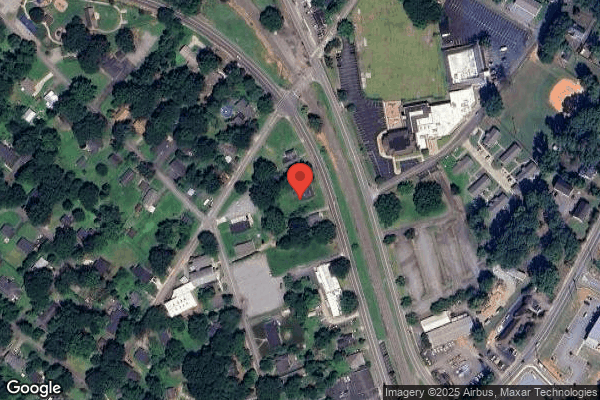

Inman Healthcare

51 N Main St, Inman, SC 29349 (864) 472-9370
For profit - Limited Liability company 40 Beds Independent Data: November 2025
Trust Grade
80/100
#38 of 186 in SC
Last Inspection: April 2025

Within standard 12-15 month inspection cycle. Federal law requires annual inspections.

Overview

Inman Healthcare has received a Trust Grade of B+, which indicates it is above average and recommended for families seeking care. It ranks #38 out of 186 facilities in South Carolina, placing it in the top half, and #2 out of 15 in Spartanburg County, meaning there is only one local option that is better. The facility is showing an improving trend, with issues decreasing from five in 2024 to two in 2025. Staffing is rated 4 out of 5 stars, which is good, but the turnover rate is at 49%, slightly above the state average, indicating a need for stability. Although there are no fines on record, there are concerns regarding food temperature and infection control practices, such as inadequate handwashing facilities and food storage issues, which could potentially affect resident safety and satisfaction.

Trust Score
B+
80/100
In South Carolina
#38/186
Top 20%
Safety Record
Low Risk
No red flags
Inspections
Getting Better
5 → 2 violations
Staff Stability
⚠ Watch
49% turnover. Above average. Higher turnover means staff may not know residents' routines.
Penalties
✓ Good
No fines on record. Clean compliance history, better than most South Carolina facilities.
Skilled Nurses
○ Average
Each resident gets 31 minutes of Registered Nurse (RN) attention daily — about average for South Carolina. RNs are the most trained staff who monitor for health changes.
Violations
⚠ Watch
11 deficiencies on record. Higher than average. Multiple issues found across inspections.
★★★★☆
4.0
Overall Rating
★★★★☆
4.0
Staff Levels
★★★★★
5.0
Care Quality
★★★☆☆
3.0
Inspection Score
Stable
2024: 5 issues
2025: 2 issues

The Good

  • 4-Star Staffing Rating · Above-average nurse staffing levels
  • 5-Star Quality Measures · Strong clinical quality outcomes
  • Full Sprinkler Coverage · Fire safety systems throughout facility
  • No fines on record

Facility shows strength in staffing levels, quality measures, fire safety.

The Bad

Staff Turnover: 49%

Near South Carolina avg (46%)

Higher turnover may affect care consistency

The Ugly 11 deficiencies on record

Apr 2025 2 deficiencies
CONCERN (F)

Potential for Harm - no one hurt, but risky conditions existed

Deficiency F0804 (Tag F0804)

Could have caused harm · This affected most or all residents

**NOTE- TERMS IN BRACKETS HAVE BEEN EDITED TO PROTECT CONFIDENTIALITY** Based on observation, record review, interview, and facility policy review, the facility failed to ensure palatability for resid...

Read full inspector narrative →
**NOTE- TERMS IN BRACKETS HAVE BEEN EDITED TO PROTECT CONFIDENTIALITY** Based on observation, record review, interview, and facility policy review, the facility failed to ensure palatability for residents' food being served at an appropriate temperature for 3 of 3 residents (Resident (R)29, R31, and R30) out of 13 sampled residents. This failure had the potential to affect all 34 residents (2 puree, 11 mechanical textures, and 21 regular) in the facility, who received food that was cold and undesirable to eat. This had the potential to create dissatisfaction with meals and decrease the residents' quality of life. Findings include: Review of the facility's undated policy titled, Food Temperatures, indicated, Foods will be maintained at proper temperature to ensure food safety. The point of service temperature to residents will be within the range of 120-140 degrees based on the resident's preference. The following range of temperatures is recommended for food at point of tray assembly. Broth, soup, hot beverages 180-190 degrees F [Fahrenheit] 160 Meat, portioned for service degrees F, Casserole dishes, creamed items, creamed soup 160 degrees F, Potatoes and vegetables 160 degrees F and Chilled food and beverages 40 degrees F or below. 1. Review of R29's Face Sheet located in the electronic medical record (EMR) under the Profile tab revealed that R29 was admitted to the facility on [DATE], with a diagnoses that included but was not limited to: age-related osteoporosis without current pathological fracture, and scoliosis, unspecified. Review of R29's Quarterly Minimum Data Set (MDS) with an Assessment Reference Date (ARD) of 02/19/25, located under the MDS tab revealed a Brief Interview for Mental Status (BIMS) score of 15 out of 15, which indicated R29 was cognitively intact. During an interview on 04/01/25 at 11:02 AM, R29 revealed that the food was very cold. R29 stated in the mornings, My butter will not melt in the grits, they are so cold. R29 stated everybody wanted to have hot grits, just hot food in general. R29 stated they were not sure why they could not keep the food warm coming from the kitchen to their rooms. 2. Review of R31's Face Sheet located in the EMR under the Profile tab revealed that R31 was admitted to the facility on [DATE], with diagnoses that included but was not limited to: adult failure to thrive,. Further review revealed R31 was on hospice. Review of R31's quarterly MDS with an ARD of 01/11/25, located under the MDS tab revealed a BIMS score of 14 out of 15, which indicated R31 was cognitively intact. During an interview on 04/01/25 at 11:10 AM, R31 indicated the food could be hotter, didn't know how many people were working in the building, but could do a better job making sure they got hot food. 3. Review of R30's EMR located in the Profile tab indicated the R30 was admitted on [DATE], with a diagnoses including but not limited to: chronic kidney disease. Review of R30's significant change MDS with an ARD of 02/26/25, indicated R30 had a BIMS of 14 out of 15, which indicated R30 was cognitively intact. During an interview on 04/01/25 at 11:56 AM, R30 revealed the food was usually cold, and on dialysis days, I do not get a hot breakfast; it is usually cereal and applesauce. Review of Resident Council Meeting Minutes, dated 07/01/24, revealed a complaint/grievance report that food was cold. The findings included by Dietary Manager (DM)1 revealed, The food leaves the kitchen at the proper temperature. The cooks take temperatures and document as necessary. Plan to resolve the complaint/grievance, residents who specify will have there [sic] trays heated before giving directly to them. Expected results of actions, this action will eliminate the complaint of the food not being warm enough. Signed by DM1 on 07/24/24. Further review of the Resident Council Meeting Minutes revealed on 01/06/25 and 02/05/25, complaints of meals being cold. During lunch observations on 04/02/25 at 11:27 AM, the menu included beef tips and rice, mixed vegetables, fruit, roll, coffee, and milk. The tray line was observed at 11:50 AM with meat at 148 degrees Fahrenheit (F), puree 130 degrees F, mechanical was 176 degrees F, vegetables was 146 degrees F, puree vegetable was 144 degrees F, and rice was 148 degrees F. The test tray left the kitchen at 12:07 PM. During an observation and interview on 04/02/25 at 12:24 PM, the test tray was evaluated with DM1, the beef tips were 114 degrees F, and the vegetables were 100 degrees F. The food was tested together, and DM1 confirmed that the food was not very warm. DM1 revealed that the cart was not heated, the food was taken from the steam table, placed onto the plates, and covered with the dome. DM1 stated, We are trying to figure out a way to get the food to the residents while it is still hot. During an observation and interview on 04/03/25 at 11:45 AM, in the kitchen, the menu and temperatures for the day was smothered turkey in gravy 180 degrees F, mashed potatoes 160 degrees F, puree 160 degrees F, mechanical soft 160 degrees F, vegetable (carrots) 175 degrees F, and puree vegetable 160 degrees F. The test tray left the kitchen at 12:11 PM. The test tray was evaluated at 12:25 PM with DM1 and DM2, which revealed the meat was 110 degrees F, potatoes 130 degrees F, and carrots 118 degrees F. Both DMs confirmed that there was a huge drop with temperatures and the food for the residents needed to be warmer. During an interview on 04/03/25 at 10:57 AM, the Registered Dietician (RD) explained that they ensured food temperatures were maximized before leaving the kitchen. Specifically, regarding the beef tips, the dietician admitted that the temperature should have been higher at the time of plating. The RD stated although they had not received recent complaints about cold food, she would recommend implementing temperature checks over several days to monitor the situation more effectively. During an interview on 04/03/25 at 3:50 PM, the Administrator indicated they had been working on getting new carts, which would hold the temperatures of the food. The Administrator acknowledged being aware of the food temperature problem since they had received multiple complaints from the same group of people.
CONCERN (F)

Potential for Harm - no one hurt, but risky conditions existed

Infection Control (Tag F0880)

Could have caused harm · This affected most or all residents

Based on observations, interviews and facility policy review, the facility failed to ensure a handwashing sink was available, personal protective equipment (PPE) was available, failed to maintain the ...

Read full inspector narrative →
Based on observations, interviews and facility policy review, the facility failed to ensure a handwashing sink was available, personal protective equipment (PPE) was available, failed to maintain the wall space around the dryer vents which left openings in the wall large enough for pests or small rodents to enter, failed to prevent cross contamination from dirty areas to clean areas within the laundry room, failed to provide a system to enable staff to fold clothing on a surface that could be sanitized, failed to store clean clothing, assorted pillows, and towels in an area to maintain cleanliness, and failed to maintain cleanliness and maintenance of two washing machines for one of one laundry room. This failure had the potential to affect infection control measures for 34 of 34 census residents. Findings include: Review of the facility's policy titled, Laundry with a review date of 07/14/24, indicated: 1. Aligning with principles of standard precautions, staff should consider all previously worn clothing and used linens as potentially contaminated. 2. The facility's laundry area will provide hand washing facilities and products as well as PPE. 3. Soiled laundry shall be kept separate from clean laundry at all times. During a laundry room observation on 04/02/25 at 1:10 PM, there were no handwashing sinks for laundry staff to use in the area and no PPE (gowns, goggles, facemasks) for laundry staff. There was an opening in the wall behind the two dryers that had not been closed leaving space for pests and small rodents to enter the laundry room. Clean clothes were hanging on a rack that was pushed up to the dirty washer and clothing, pillows, towels were placed in a laundry basket on the floor. Further observation revealed socks on top of the dryer and no surface for folding clean clothing. Observation of the washing machines revealed dust, lint, gritty appearance, on the underside of the washing machine lids and around the openings of both washers. Observation of the bleach dispenser compartment on the top of the washer housing above the drum (the area that holds the garments) and the circumference of the washer housing revealed a dark, dry, brown substance (rust-like in appearance) in varying degrees. During an interview on 04/02/25 at 1:10 PM, Laundry Aide (LA)1 stated that she did not have PPE to wear when handling dirty clothing and did not usually wear PPE, stated that she had seen a gecko (lizard) in the laundry room, and that the clothing, pillows, and towels in the laundry basket on the floor were clean. When asked if she had a schedule for cleaning the washing machines, she stated she did not. During an interview on 04/02/25 at 2:00 PM, the Administrator stated that she did not know the condition of the laundry and had only done spot checks. The Administrator stated she did not know that there was an opening large enough for pests and small rodents to enter the area, and that there was no handwashing sink, PPE, or surface to fold clean clothes on. The Administrator stated that a new supervisor would begin in two weeks. The Administrator stated that she would try to find information that would describe the specific job duties of a laundry aide and maintenance logs for the laundry. None were provided. During a follow up interview on 04/02/25 at 3:53 PM, the Administrator stated that the Maintenance Director would oversee the equipment in the laundry and that the facility team was discussing new strategies going forward that maintain a focus on infection control, cross contamination, re-educating the staff, and ensuring that residents receive clean clothing back in a timely manner.
Mar 2024 5 deficiencies
CONCERN (D)

Potential for Harm - no one hurt, but risky conditions existed

Transfer Notice (Tag F0623)

Could have caused harm · This affected 1 resident

**NOTE- TERMS IN BRACKETS HAVE BEEN EDITED TO PROTECT CONFIDENTIALITY** Based on facility policy, record review and interviews the facility failed to provide written notices of hospitalization to the ...

Read full inspector narrative →
**NOTE- TERMS IN BRACKETS HAVE BEEN EDITED TO PROTECT CONFIDENTIALITY** Based on facility policy, record review and interviews the facility failed to provide written notices of hospitalization to the Responsible Party (RP) and/or the Resident (R) and failed to ensure that the Ombudsman was notified for (R)3 in a timely manner for 1 of 2 residents reviewed for hospitalizations. The findings include: The facility admitted R3 with diagnoses including but not limited to, cirrhosis of liver, dementia, and history of falling. Review of Nurses Notes for hospitalizations on 02/28/24 revealed documentation from 06/28/2023 at 6:24 PM, Resident stated she wanted to be sent to Emergency Department (ED). This nurse and [another] nurse assessed [patient] pt. Abnormal [vital signs] v/s. Resident states I don't feel good she also stated that her body was aching all over. Resident was slurring her speech and had periodic episodes of rolling her eyes back and screaming I want to go now. Showing [signs and symptoms] s/s of anxiety while waiting on [Emergency Medical Service] EMS. Resident have been experiencing [Nausea, Vomiting, Diarrhea] NVD the past few days. [Nurse Practitioner] NP notified. New order to send to ED. [Left Voicemail] LVM for [Responsible Party] RP. Documentation from nurse's note on 06/28/2023 at 6:41 PM, EMS arrival and departed @ 6:40 PM to transfer resident to [Spartanburg Regional Medical Center] SRMC. Documentation from nurse's note on 07/18/2023 at 12:00 PM, readmitted to room [ROOM NUMBER]-4 from hospital. Alert to name and place. Up in [wheelchair] w/c with assistance of [one] 1, ate 25% of lunch. Meds verified per [Nurse Practitioner] NP. Documentation from nurse's note on 7/23/2023 07:45 AM, Resident alert and oriented x 3, started screaming saying her legs hurt and she is going to hospital. Offered to contact on call to obtain pain medication, but resident said no she wants to go to SRMC. Therefore contacted all disciplines needed and transferred to SRMC via stretcher. Documentation from nurse's note on 7/28/2023 at 8:30 PM, Resident returned from SRMC via stretcher and readmitted to room [ROOM NUMBER]-4 from hospital. Alert to name and place. Up ambulates with assistance of [one] 1. Meds verified per on call and NP to reassess Monday currently continue with all meds as ordered. Documentation from 10/12/2023 at 3:00 PM, Call light came on. [Certified nursing assistant] CNA went in, bad alarm was sounding. Resident on floor in front of wheelchair (w/c), hit knees when fell. I came in to check resident. Resident stated I was going to bathroom and fell. Hit my knees and they hurt. Neuro check [within normal limits] WNL. Check skin - intact. Moving all extremities. Lift used to put resident in bed. With CNA and me present. Call light in place, bad alarm in place and functioning. Resident told not to get [out of bed] OOB without calling for help . Vital signs are good. Alert and answering appropriately. Will monitor closely. Documentation from nurse's note on 10/15/2023 at 3:25 PM, Hospital. Documentation from nurse's note on 10/24/2023 at 4:29 PM Resident returned to facility via EMS from SRMC. Resident transferred to bed x2 assist. Condition stable. Call bell within reach, will continue to monitor. Documentation from nurse's note on 11/27/2023 at 2:18 PM, Resident weak, not eating slow to respond. NP in building and gave order to transport to SRMC for [Evaluation] eval and treat. Message left for RP to call facility. Documentation from 11/28/2023 at 12:23 PM, Call placed to SRMC, resident remains in [Emergency Room] ER at this time, has been admitted and is waiting on an available bed. Admit [Diagnosis] dx: elevated Ammonia level (176) and [Urinary Tract Infection] UTI. Documentation from 12/5/2023 at 3:33 PM, Resident returned from SRMC via stretcher. Resident transferred to w/c x2 [Medical Technician] med techs. Resident condition stable. Resident request to use resident phone to call nephew to bring her a hot dog. Will continue to monitor. During an interview on 03/06/24 at 1:44 PM the Social Worker (SW) provided the bed hold policy but reported that there was not one completed for the resident for the following hospitalizations: 11/27/23, 10/15/23, 7/23/23, and 06/28/23. She stated that family was notified but not informed about the bed hold. In reviewing documentation for notification of the Ombudsman in a binder, the SW reported that the resident did not show up on her report that was sent to the Ombudsman at the end of each month. During an interview on 03/06/24 at 2:03 PM the Director of Nursing (DON) reported the procedure for residents transferring or being discharged was to notify the family/representative and document using the Situation, Background, Assessment, and Recommendation (SBAR) or at least in a nurses note. The DON reported that the bed hold policy is signed on admission, the ombudsman is notified monthly and social services does this part. During an interview on 03/06/24 at 2:07 PM the Administrator reported the procedure for residents transferring or being discharged was to notify family/representative. She reported that the bed hold policy is signed on admission and social services sends a monthly report to the Ombudsman. When asked if this procedure was for all residents whether they were admitted to the hospital or transferred but then returned in short time frame, she stated she believed so but would check.
CONCERN (D)

Potential for Harm - no one hurt, but risky conditions existed

Deficiency F0625 (Tag F0625)

Could have caused harm · This affected 1 resident

**NOTE- TERMS IN BRACKETS HAVE BEEN EDITED TO PROTECT CONFIDENTIALITY** Based on facility policy, record review, and interviews, the facility failed to provide the bed hold document to Resident (R)3 a...

Read full inspector narrative →
**NOTE- TERMS IN BRACKETS HAVE BEEN EDITED TO PROTECT CONFIDENTIALITY** Based on facility policy, record review, and interviews, the facility failed to provide the bed hold document to Resident (R)3 and/or Resident Representative (RR) in a timely manner for 1 of 2 reviewed for hospitalization. Findings include: Review of the facility policy titled, Bed Hold and Therapeutic Leave Policy, undated, revealed Before the Center transfers a Resident to a hospital ., the Center must provide this written information to the Resident or the Resident Representative that specifies the Center's bed hold and therapeutic/temporary leave policy. The following applies to all residents. Medicaid Residents-Bed Hold: If the Resident leaves the Center for hospitalization, the Center will reserve or hold a bed available for the Resident for up to ten (10) consecutive calendar days per medically necessary hospital stay when the Resident is expected to return to the Center per South Carolina Medicaid. If the Resident is hospitalized for a period longer than ten (10) days, the Resident will be discharged . Bed holds for leaves of absence of more than 10 days are considered non-covered services and not paid by South Carolina Medicaid. The Resident may elect to pay the full Medicaid daily rate to continue the bed hold for up to thirty (30) calendar days. If the Resident does not elect to pay to hold the bed and the leave exceeds the bed hold period of 10 days, the Resident may return to the Center to their previous room, if available, or immediately upon the first availability of a bed in a semi-private room, if the Resident: a0 requires the services provided by the Center and b.) is eligible for Medicare or Medicaid nursing facility services. Review of R3's Electronic Medical Record (EMR) revealed R3 was admitted to the facility on [DATE] with diagnoses including but not limited to, cirrhosis of liver, dementia, delusional disorders, urinary tract infection, and history of falling. Review of R3's Quarterly Minimum Data Set (MDS) with an Assessment Reference Date (ARD) date of 06/21/22 revealed a Brief Interview for Mental Status (BIMS) score of 10 out of 15, indicating R3 has moderate cognitive impairment. Review of R3's electronic medical record (EMR) revealed R3 was discharged to the hospital on [DATE], 07/23/23, 10/15/23, and 11/27/23. There was no documentation of a bed hold notification given to the resident and/or responsible party prior to R3's transfer to the hospital on any of the above dates. During an interview on 03/06/24 at 1:44 PM the Social Worker (SW) provided the bed hold policy but reported that there was not one completed for the resident for the following hospitalizations: 11/27/23, 10/15/23, 07/23/23, and 06/28/23. She stated that family was notified but not informed about the bed hold. In reviewing documentation for notification of the Ombudsman in a binder, the SW reported that the resident did not show up on her report that was sent to the Ombudsman at the end of each month. During an interview on 03/06/24 at 2:03 PM, the Director of Nursing (DON) reported the procedure for residents transferring or being discharged was to notify the family/representative and document using the Situation, Background, Assessment, and Recommendation (SBAR) or at least in a nurses note. The DON reported that the bed hold policy is signed on admission, the Ombudsman is notified monthly and Social Services does this part. During an interview on 03/06/24 at 2:07 PM, the Administrator reported the procedure for residents transferring or being discharged was to notify family/representative. She reported that the bed hold policy is signed on admission and social services sends a monthly report to the Ombudsman. When asked if this procedure was for all residents whether they were admitted to the hospital or transferred but then returned in short time frame, she stated she believed so but would check. During an interview on 03/06/24 at 2:10 PM, the Executive Director reported that on admission the bed hold policy is signed but once a resident is discharged /transferred a conversation takes place to discuss payment etc. on the day of the discharge/transfer or shortly thereafter in cases involving a weekend for example. She confirmed that the Ombudsman is notified at the end of the month.
CONCERN (D)

Potential for Harm - no one hurt, but risky conditions existed

ADL Care (Tag F0677)

Could have caused harm · This affected 1 resident

Based on observations, interviews, record review, and facility policy review, the facility failed to provide services to residents who were unable to carry out activities of daily living (ADL) necessa...

Read full inspector narrative →
Based on observations, interviews, record review, and facility policy review, the facility failed to provide services to residents who were unable to carry out activities of daily living (ADL) necessary to maintain good grooming and personal hygiene for Resident (R)9; 1 of 4 reviewed for assistance with ADL care. Findings include: Reviewed the facility's undated policy titled, Activities of Daily Living (ADLs), revealed, Policy Explanation and Compliance Guidelines 3. a resident who is unable to carry out activities of daily living will receive necessary services to maintain good nutrition, grooming, and personal and oral hygiene. Review the facility's undated policy, titled, Nail Care, revealed, Policy Explanation and Compliance Guidelines: 3. Routine cleaning and inspection of nails will be provided during ADL care on an ongoing basis. 4. Routine nail care, to include trimming and filing, will be provided on a regular schedule (such as weekly on Wednesday 3-11 shift). Nail care will be provided between scheduled occasions as the need arises. Review of the face sheet revealed the facility admitted R9 on 01/02/2024 with diagnoses that included but were not limited to:hemiplegia, cerebral infarction due to unspecified occlusion or stenosis of unspecified cerebral artery, and major depressive disorder. Review of an admission Minimum Data Set (MDS) Assessment with an Assessment Reference Date of 01/10/24 revealed R9 was coded for functional Limitation in Range of Motion with upper extremity on one side and lower extremity impairment on one side with wheelchair mobility. Review of R9's Care Plan revealed, The resident has an ADL self-care performance deficit Fatigue, Hemiplegia, Impaired balance, Limited Mobility. The goal was: the resident will maintain the current level of function through the review date. Interventions included: BATHING/SHOWERING: The resident requires extensive assistance by (1) staff with bathing/showering. PERSONAL HYGIENE/ORAL CARE: The resident requires extensive assistance by (1) staff with personal hygiene and oral care. TOILET USE: The resident is totally dependent on (1) staff for toilet use. During an observation on 03/05/2024 at 01:02 PM, R9 was observed sitting in a chair beside her bed with the call light in reach. R9's hand were observed with brown debris underneath her nails on both hands. During an observation and interview on 03/06/2024 at 08:15 AM, R9 was observed lying in the bed in the supine position. R9 stated she was waiting for breakfast. Additional observation of R9's hands revealed her fingernails were dirty with brown debris underneath. During an interview on 03/06/2024 at 11:34 AM, R9 ' s family member revealed R9's nails were dirty because staff did not cut up R9 ' s meat and when R9 feeds herself, she gets food underneath the fingernails. During an interview on 03/06/2024 at 01:36 PM, Certified Nursing Assistant (CNA)1 revealed R9 was scheduled to get showers on the 2nd shift. CNA1 revealed that hand hygiene was completed before and after each meal and nail care was completed randomly by the CNAs or the activity CNA . CNA1 accompanied the surveyor to R9 ' s room and observed R9 ' s hands with identified food debris between the fingers and brown debris underneath the fingernails on both of the resident ' s hands. CNA1 revealed R9 sometimes complains of pain in her hand, especially in left hand. CNA1 revealed R9 ' s hands were dirty because they had just finished lunch and used her hands to feed herself. CNA1 revealed she would use a warm washcloth to clean R9 ' s hands and get a tool to clean R9 ' s fingernails. During an interview on 03/03/2024 at 02:09 PM, the Director of Nursing (DON) revealed nail care was to be done daily during ADL care. The DON revealed staff were expected to check residents ' nails daily when washing their face and hands and clean nails as needed. During an interview on 03/07/2024 at 11:55 AM, the Administrator revealed nail care should be provided daily by the staff, or nurse. The Administrator also stated the unit manager is responsible for monitoring staff to ensure nail care was done.
CONCERN (D)

Potential for Harm - no one hurt, but risky conditions existed

Respiratory Care (Tag F0695)

Could have caused harm · This affected 1 resident

**NOTE- TERMS IN BRACKETS HAVE BEEN EDITED TO PROTECT CONFIDENTIALITY** Based on review of facility policy, observations, interviews, and record review, the facility failed to administer oxygen per ph...

Read full inspector narrative →
**NOTE- TERMS IN BRACKETS HAVE BEEN EDITED TO PROTECT CONFIDENTIALITY** Based on review of facility policy, observations, interviews, and record review, the facility failed to administer oxygen per physician's orders for 1 of 1 residents reviewed for respiratory care, Resident (R)17. Findings include: Review of the facility's policy titled, Oxygen Administration dated 2024 revealed, Policy: Oxygen is administered to residents who need it, consistent with professional standards of practice, the comprehensive person-centered care plans, and resident's goals and preferences. Definitions: 'Oxygen therapy' is the administration of oxygen at concentrations greater than that in ambient air (20.9%) with the intent of treating or preventing the symptoms and manifestations of hypoxia. 'Hypoxia' means decreased perfusion of oxygen to the tissues. Policy Explanation and Compliance Guidelines: 1. Oxygen is administered under orders of a physician . 2. Personnel authorized to initiate oxygen therapy include physicians, RNs, LPNs, and respiratory therapists. 3. Staff shall document the initial and ongoing assessment of the resident's condition warranting oxygen and the response to oxygen therapy. Review of R17's Electronic Medical Record (EMR) revealed R17 was admitted to the facility on [DATE] with diagnoses including but not limited to; chronic respiratory failure with hypoxia, chronic obstructive pulmonary disease, anxiety disorder, chronic pain syndrome, paroxysmal atrial fibrillation, major depressive disorder. Review of R17's Quarterly Minimum Data Set (MDS) with an Assessment Reference Date (ARD) date of 01/18/24 revealed a Brief Interview for Mental Status (BIMS) score of 15 out of 15, indicating R17 has cognition intact. Review of R17's Care Plan documented, the focus The resident has altered respiratory status/difficulty breathing. Further review of the Care Plan revealed the following goal, The resident will have no [signs and symptoms] s/sx of poor oxygen absorption through the review date. The care plan also documented intervention: OXYGEN SETTINGS: [Oxygen] O2 via nasal prongs @ 4 [Liters] L continuously. Humidified. Review of R17's Physician Order documented, Oxygen at 4 L/[minute] min [by] via [nasal cannula] n/c continuous [related to] R/T Chronic respiratory Failure with hypoxia. every shift. During an observation of R17's room on 03/05/24 at 11:00 AM, the oxygen concentrator was noted at 3 1/2 L/min via nasal cannula. Resident reported that the rate was supposed to be at 4 L/min. During an observation of R17's room on 03/06/24 at 8:25 AM, the oxygen concentrator was noted at 4 L/min. via nasal cannula. During an observation of R17's room on 03/07/24 at 8:18 AM the oxygen concentrator was noted at 4 L/min. via nasal cannula. During a staff interview on 03/07/24 at 10:35 AM, Licensed Practical Nurse (LPN)1 stated, R17's physician order for oxygen was for 4 L/min. She looked at R17's physician order in electronic medical record and confirmed the oxygen concentrator was to be set at 4 L/min. LPN1 then went to room and verified oxygen setting on concentrator and confirmed 4 L/min. During a staff interview on 03/07/24 at 10:42 AM, the Director of Nursing (DON) stated that her expectation for nurses is to verify orders and to check daily during their assessment to ensure that oxygen setting was at the correct setting.
CONCERN (F)

Potential for Harm - no one hurt, but risky conditions existed

Food Safety (Tag F0812)

Could have caused harm · This affected most or all residents

Based on observations, interviews, and review of the facility policy, the facility failed to ensure foods that are stored in the freezer, refrigerators and dry food storage were appropriately sealed, ...

Read full inspector narrative →
Based on observations, interviews, and review of the facility policy, the facility failed to ensure foods that are stored in the freezer, refrigerators and dry food storage were appropriately sealed, labeled, dated with a use by date and/or discarded after the manufacturer's expiration date. Findings include: Review of the facility's undated policy titled, Food Safety Requirements, showed that food will be stored, prepared, distributed and served in accordance with professional standards for food service safety. Policy Explanation and Compliance guidelines: Storage of food in a manner that helps prevent deterioration or contamination of the food, including from growth of microorganisms. Facility staff shall inspect all food, food products, and beverages for safe transport and quality upon delivery/receipt and ensure timely and proper storage. Labeling, dating, and monitoring refrigerated food, including but not limited to leftovers, so it is used by its use-by date, or frozen (where appl)/discarded. During an observation on 03/05/24 at 10:58 AM, the kitchen refrigerator revealed one 1-gallon jug of ranch dressing not fully closed and dressing on outside of lid; 1 package of 160 slices pasteurized process American yellow cheese slices (individual slices, not individually wrapped) opened and not properly sealed nor dated with an opened date or use by date; 2 large bags of salad mix with a use by date of 3/4/2024. The kitchen freezer revealed 1 open bag of frozen pancakes containing 9 pancakes that was not dated with no open or use by date; 1 bag of frozen potato wedges with a use by date of 12/5/2023. During an observation on 03/05/24 at 11:26 AM, 1 pan of Jello gelatin was observed in the freezer, undated and unlabeled, 1 bag of frozen biscuits- open, undated and unlabeled, 1 box dated 2/26 containing a 10 lb (pound) bag of chopped chicken, opened and not properly sealed. During an observation on 03/05/24 at 11:35 AM, the dry food storage revealed an 11.8 lb bag of basic American foods potato pearls, opened and not sealed, 1 24 oz (ounce) bag of AM fruit punch drink mix, opened and not sealed, 1 package of chicken flavored gravy mix, opened, wrapped in saran wrap, and undated, 1 5 lb bag of thick & easy instant rice, opened and not properly sealed with a date marked 1/29, 1 5 lb bag of curly, extra wide egg noodles, opened and undated, 1 5 lb bag of ziti cut, macaroni noodles, opened and undated. Observation of the small, refrigerated cooler on 03/05/24 at 11:57 AM revealed 1, 1 ½ gallon jug of buttermilk with a use by date of 2/29/24. During an interview on 03/07/24 at 11:12 AM, Dietary Manager (DM) stated, All staff should check dates, but the cooks are responsible for checking the dates, as well as the manager. Food storage dates are routinely checked twice a week and sometimes more. The dietary manager revealed that it is her expectation that food be labeled and dated and prepared food only be held for three days. During an interview on 03/07/24 at 11:49 AM, the Director of Nursing (DON) revealed that dates on food should be checked daily by everyone but ultimately the DM is responsible. The DON stated that her expectation is that food should be sealed, labeled and dated in the kitchen, and the nursing staff ensure food items are safe at the nursing station. During an interview on 03/07/24 at 11:55 AM , the Administrator stated that her expectation of staff when it comes to food storage, is that the person responsible for opening an item is the person that should date and label the item. She revealed that the DM is responsible for monitoring the dates and food storage. The Administrator also revealed that she oversees that kitchen and performs checks monthly to ensure that the kitchen staff is following protocol.
Feb 2022 4 deficiencies
CONCERN (D)

Potential for Harm - no one hurt, but risky conditions existed

Pharmacy Services (Tag F0755)

Could have caused harm · This affected 1 resident

Based on observation, interview, record review, and policy review, the facility failed to ensure controlled substance medications were secured under double lock and key to prevent the potential for re...

Read full inspector narrative →
Based on observation, interview, record review, and policy review, the facility failed to ensure controlled substance medications were secured under double lock and key to prevent the potential for residents accidentally ingesting the medications or drug diversion if staff confiscates the medications. Findings include: Review of the facility policy titled, Storage and Expiration Dating of Medications, Biologicals revised 1/1/22, revealed: Store all drugs and biologicals in locked compartments, including Schedule II-V medications in separately locked permanently affixed compartments, permitting only authorized personnel to have access. On 2/15/22 at 9:05 a.m., the Survey Team entered the facility to conduct a Recertification Survey and was directed to work in the Administrator's Office. The office door remained unlocked to allow the team to enter and exit the office as needed. When Registered Nurse (RN) #2 started his/her shift later that day, he/she discovered some resident-controlled medications that needed to be destroyed as the resident had been discharged that day with no indication of readmission to the facility. RN #2 immediately located the Director of Nursing (DON) and gave her the following medications to secure along with their Controlled Medication Utilization Records. Lorazepam: 58 one (1) milligram (mg) tabs. Give one (1) tab by mouth every six (6) hours for anxiety. Oxycodone: 33 Oxycodone Immediate five (5) milligram (mg) tabs. Give two (2) tabs by mouth three (3) times a day as needed for pain. On 2/16/22 at 9:05 a.m., the Survey Team entered the facility to conduct day two (2) of the survey. The door to the Administrator's office was unlocked. Lying on the desk chair were blister packs and a bottle containing the above-mentioned pills. The controlled medications were not double locked as required by professional scope of practice and the facility policy. The team immediately notified the DON who stated he/she had placed those medications on the chair as she/he did not have a key to the locked file cabinet and thought the door would lock behind her. I should have never left the medications unsecured on the chair. During an interview 2/16/22 at approximately 3:05 p.m., RN #2 stated he/she had found the resident's medications in his/her medication cart at the start of his/her shift and immediately gave them to the DON to lock up. During an interview on 2/17/22 at 9:30 a.m., the Nurse Practitioner (NP) stated the controlled medications should have been double locked and it would be an inappropriate action to leave the medications on a chair. During an interview on 2/17/22 at 2:07 p.m., the Consultant Pharmacist (CP) stated controlled medications should always be stored under double lock and key An interview was conducted during the exit meeting with the DON and the Administrator on 2/18/22 at approximately 1:35 p.m. The DON stated she had immediately placed the controlled medications, after receiving them from RN #2, on the chair in the Administrator's office since she did not have a key to the secured file cabinet. Both stated that a serious error had occurred, and the medications should have been double locked and secured.
CONCERN (E)

Potential for Harm - no one hurt, but risky conditions existed

Grievances (Tag F0585)

Could have caused harm · This affected multiple residents

Based on interviews and record reviews the facility failed to ensure that dietary services demonstrated their response to grievances filed by the Resident Council group and residents, and the rational...

Read full inspector narrative →
Based on interviews and record reviews the facility failed to ensure that dietary services demonstrated their response to grievances filed by the Resident Council group and residents, and the rationale for such response. Findings include: A review of the policy/procedure with the subject of Resident Right-Grievance (no date) showed that the resident has the right to and the facility will make prompt efforts by the facility to resolve grievances the resident may have, in accordance with this paragraph. A review of the policy/procedure with the subject of Dietary Services - Menus and Nutritional Adequacy (no date) showed that Menus will: (4) Reflect, based on a facility's reasonable efforts, the religious, cultural and ethnic needs of the resident population, as well as input received from residents and resident groups. A review of the four (4)-week menu for the facility showed that there was no bacon offered as part of the menu for breakfast throughout the entirety of the menu cycle. A review of the Resident Council Meeting Minutes showed that on 9/14/21, residents stated that they wanted bacon. They also stated that they wanted onions, pinto beans, pork chops tenders, and fried squash. On 10/12/21, the meeting minutes showed that the residents stated that they don't have a choice. Residents stated that they wanted grits in a bowl and cornbread without sugar. Residents also stated that they wanted fresh bread, chicken tenders were too hard, they wanted a variety of salad dressings, and that they were having chicken too much. On 1/11/22, residents stated that they wanted more corn, bacon, two (2) pieces of cornbread, and more slaw. During an interview on 2/17/22 at 2:39 p.m., Resident #28 stated that the food is the biggest complaint of the meetings. She/he stated that nothing had changed with the complaints, and no one from dietary had attended the meetings and given the Resident Council group any resolution to their complaints. During an interview on 2/17/22 at 3:02 p.m., Resident #19 stated that there were times when she/he does not want the food, but most times will not eat the alternative and will just not eat at all. Resident denies having any major weight loss. During an interview on 2/18/22 at 9:24 a.m., Lead [NAME] (LC) stated that residents have a choice of soup and sandwiches as an alternative to the scheduled meal. Sandwich selections consisted of peanut butter and jelly, pimento cheese, and ham. During an interview on 2/18/22 at 9:32 a.m., Activities Director (AD) stated that when residents requested an alternative, they have the option of a peanut butter and jelly sandwich. AD also stated that when residents do not want the alternative, if the resident has money, then he/she will go to a local restaurant and purchase the resident an alternative meal. During an interview on 2/18/22 at 10:01 a.m., Registered Dietitian (RD) stated that it was not his/her expectation for a facility of that size to prepare an alternative meal for residents. During an interview on 2/18/22 at 12:39 p.m., the Administrator stated that he was not aware of the issues that residents were having with dietary.
CONCERN (F)

Potential for Harm - no one hurt, but risky conditions existed

Deficiency F0806 (Tag F0806)

Could have caused harm · This affected most or all residents

Based on observation, record reviews, and interviews the facility failed to provide an appropriate alternative to the normal menu. Findings Include: A review of the four (4)-week menu for the facilit...

Read full inspector narrative →
Based on observation, record reviews, and interviews the facility failed to provide an appropriate alternative to the normal menu. Findings Include: A review of the four (4)-week menu for the facility showed there were no food alternatives shown for the main menu. A review of the policy/procedure titled Dietary Services - Menus and Nutritional Adequacy (no date) showed l. Specially prepared or alternative food requested instead of the food and meals generally prepared by the facility. During an interview on 2/17/2022 at 2:39 p.m., Resident #28 who stated that the food is the biggest complaint of the meetings. She stated that nothing has changed with the complaints, and no one has given them any resolution to their complaints. During an interview on 2/17/2022 at 3:02 p.m., Resident #19 stated that there are times when she/he does not want the food, but most times will not eat the alternative and will just not eat at all. During an interview on 2/18/22 at 9:32 a.m., Activities Director (AD) stated that when residents request an alternative, they have the option of a peanut butter and jelly sandwich. AD AA also stated that when residents do not want the alternative, if the resident had money, then he/she will go to a local restaurant and purchase the resident an alternative meal. During an interview on 2/18/22 at 10:01 a.m., Registered Dietician (RD) stated that it was not his/her expectation for a facility of that size to prepare an alternative meal for residents. During an interview on 2/18/22 at 12:39 p.m., the Administrator stated that he/she was limited to what he/she is able to purchase from the local grocery stores due to the federal regulations placed a limit on purchasing from various vendors.
CONCERN (F)

Potential for Harm - no one hurt, but risky conditions existed

Food Safety (Tag F0812)

Could have caused harm · This affected most or all residents

Based on observation and interviews, the facility failed to follow proper sanitation and food handling practices by maintaining kitchen equipment in a clean and sanitary manner and the facility failed...

Read full inspector narrative →
Based on observation and interviews, the facility failed to follow proper sanitation and food handling practices by maintaining kitchen equipment in a clean and sanitary manner and the facility failed to follow proper sanitation and food handling practices to prevent the outbreak of foodborne illness. The findings included: During the initial tour of the facility on 2/15/22 at 10:03 a.m., it was observed that a dust build up was on the range hood. The range hood cleaning sticker showed the hood was last cleaned in May 2021 and was scheduled to be cleaned again in November 2021. Dust particles were observed along the edge of the hood. During the initial tour of the kitchen on 2/15/22 at 10:13 a.m., an observation of the reach in freezer showed that sausage patties, chopped grilled chicken, and sliced carrots were not stored in closed containers and were not dated and labeled. A request was made twice for a cleaning schedule for the kitchen but was not received. A review of the policy entitled Safety (Revised 8/2013) under the portion entitled Safety Guidelines showed that equipment was to be cleaned per the manufacturer's instructions. A review of the policy entitled Storage of Food and Supplies (Revised 12/5/17) under the portion entitled Procedures showed that any food removed from its original package must be labeled with proper identifying information such as the name of the product, date it was opened on its original package, and discard date. During an interview on 2/15/22 10:13 a.m., Staff JJ stated that he/she did not know when the items had been opened and that there were no dates on the items [opened date or discard date]. During an interview on 2/18/22 at 10:53 a.m., the Administrator stated there was no Dietary Manager, but Staff JJ is ServSafe Certified. Staff stated that Registered Dietitian (RD) comes for four (4) hours once weekly, but had not been in in a couple weeks. During an interview on 2/15/22 at 10:03 a.m., Staff JJ stated that he/she thought that the hood had been cleaned more recently. During an interview on 2/15/22 at 10:53 a.m., the Administrator stated the facility does not have full-time Dietary Manager (DM), a full-time dietary consultant, nor a full-time Registered Dietitian (RD). Staff reported that the facility had attempted to hire a DM but had been unsuccessful.
Understanding Severity Codes (click to expand)
Life-Threatening (Immediate Jeopardy)
J - Isolated K - Pattern L - Widespread
Actual Harm
G - Isolated H - Pattern I - Widespread
Potential for Harm
D - Isolated E - Pattern F - Widespread
No Harm (Minor)
A - Isolated B - Pattern C - Widespread

Questions to Ask on Your Visit

  • "Can I speak with families of current residents?"
  • "What's your RN coverage like on weekends and overnight?"

Our Honest Assessment

Strengths
  • • Grade B+ (80/100). Above average facility, better than most options in South Carolina.
  • • No major safety red flags. No abuse findings, life-threatening violations, or SFF status.
  • • No fines on record. Clean compliance history, better than most South Carolina facilities.
Concerns
  • • 11 deficiencies on record. Higher than average. Multiple issues found across inspections.
Bottom line: Generally positive indicators. Standard due diligence and a personal visit recommended.

About This Facility

What is Inman Healthcare's CMS Rating?

CMS assigns Inman Healthcare an overall rating of 4 out of 5 stars, which is considered above average nationally. Within South Carolina, this rating places the facility higher than 99% of the state's 100 nursing homes. This rating reflects solid performance across the metrics CMS uses to evaluate nursing home quality.

How is Inman Healthcare Staffed?

CMS rates Inman Healthcare's staffing level at 4 out of 5 stars, which is above average compared to other nursing homes. Staff turnover is 49%, compared to the South Carolina average of 46%. RN turnover specifically is 67%, which is notably high. RNs provide skilled clinical oversight, so turnover in this role can affect medical care quality.

What Have Inspectors Found at Inman Healthcare?

State health inspectors documented 11 deficiencies at Inman Healthcare during 2022 to 2025. These included: 11 with potential for harm.

Who Owns and Operates Inman Healthcare?

Inman Healthcare is owned by a for-profit company. For-profit facilities operate as businesses with obligations to shareholders or private owners. The facility operates independently rather than as part of a larger chain. With 40 certified beds and approximately 34 residents (about 85% occupancy), it is a smaller facility located in Inman, South Carolina.

How Does Inman Healthcare Compare to Other South Carolina Nursing Homes?

Compared to the 100 nursing homes in South Carolina, Inman Healthcare's overall rating (4 stars) is above the state average of 2.9, staff turnover (49%) is near the state average of 46%, and health inspection rating (3 stars) is at the national benchmark.

What Should Families Ask When Visiting Inman Healthcare?

Based on this facility's data, families visiting should ask: "Can I visit during a mealtime to observe dining assistance and food quality?" "How do you handle medical emergencies, and what is your hospital transfer rate?" "Can I speak with family members of current residents about their experience?"

Is Inman Healthcare Safe?

Based on CMS inspection data, Inman Healthcare has a clean safety record: no substantiated abuse findings (meaning no confirmed cases of resident harm), no Immediate Jeopardy citations (the most serious violation level indicating risk of serious injury or death), and is not on the Special Focus Facility watch list (a federal program monitoring the lowest-performing 1% of nursing homes). The facility has a 4-star overall rating and ranks #1 of 100 nursing homes in South Carolina. While no facility is perfect, families should still ask about staff-to-resident ratios and recent inspection results during their visit.

Do Nurses at Inman Healthcare Stick Around?

Inman Healthcare has a staff turnover rate of 49%, which is about average for South Carolina nursing homes (state average: 46%). Moderate turnover is common in nursing homes, but families should still ask about staff tenure and how the facility maintains care continuity when employees leave.

Was Inman Healthcare Ever Fined?

Inman Healthcare has no federal fines on record. CMS issues fines when nursing homes fail to meet care standards or don't correct problems found during inspections. The absence of fines suggests the facility has either maintained compliance or corrected any issues before penalties were assessed. This is a positive indicator, though families should still review recent inspection reports for the full picture.

Is Inman Healthcare on Any Federal Watch List?

Inman Healthcare is not on any federal watch list. The most significant is the Special Focus Facility (SFF) program, which identifies the bottom 1% of nursing homes nationally based on persistent, serious quality problems. Not being on this list means the facility has avoided the pattern of deficiencies that triggers enhanced federal oversight. This is a positive indicator, though families should still review the facility's inspection history directly.