Rosecrest Rehabilitation and Healthcare Center


200 Fortress Drive, Inman, SC 29349 (864) 599-8600
Non profit - Church related 75 Beds Independent Data: November 2025
Trust Grade
75/100
#58 of 186 in SC
Last Inspection: February 2025

Within standard 12-15 month inspection cycle. Federal law requires annual inspections.

Overview

Rosecrest Rehabilitation and Healthcare Center has a Trust Grade of B, indicating it is a good choice for families looking for care, but there may be some areas for improvement. It ranks #58 out of 186 facilities in South Carolina, placing it in the top half, and #3 out of 15 in Spartanburg County, meaning only two local options are better. The facility’s trend is stable, with four issues reported in both 2023 and 2025, and there have been no fines recorded, which is a positive sign. Staffing received an average rating of 3 out of 5 stars, with a turnover rate of 55%, which is concerning but on par with the state average, while RN coverage is lower than 82% of facilities in South Carolina, suggesting potential gaps in oversight. However, there have been some specific incidents of concern. For example, there were issues with food storage and labeling, which could lead to contamination risks. Additionally, medication carts were not properly secured, allowing unauthorized access to medications. Lastly, one resident fell because staff did not use the required mechanical lift during a transfer, highlighting a need for better adherence to safety protocols. Overall, while there are strengths in the facility, families should be aware of these weaknesses when considering care options.

Trust Score
B
75/100
In South Carolina
#58/186
Top 31%
Safety Record
Low Risk
No red flags
Inspections
Holding Steady
2 → 2 violations
Staff Stability
⚠ Watch
55% turnover. Above average. Higher turnover means staff may not know residents' routines.
Penalties
✓ Good
No fines on record. Clean compliance history, better than most South Carolina facilities.
Skilled Nurses
⚠ Watch
Each resident gets only 29 minutes of Registered Nurse (RN) attention daily — below average for South Carolina. Fewer RN minutes means fewer trained eyes watching for problems.
Violations
✓ Good
Only 4 deficiencies on record. Cleaner than most facilities. Minor issues only.
★★★★☆
4.0
Overall Rating
★★★☆☆
3.0
Staff Levels
★★★☆☆
3.0
Care Quality
★★★★☆
4.0
Inspection Score
Stable
2023: 2 issues
2025: 2 issues

The Good

  • Full Sprinkler Coverage · Fire safety systems throughout facility
  • No fines on record

Facility shows strength in fire safety.

The Bad

Staff Turnover: 55%

Near South Carolina avg (46%)

Frequent staff changes - ask about care continuity

Staff turnover is elevated (55%)

7 points above South Carolina average of 48%

The Ugly 4 deficiencies on record

Feb 2025 2 deficiencies
CONCERN (D)

Potential for Harm - no one hurt, but risky conditions existed

Deficiency F0761 (Tag F0761)

Could have caused harm · This affected 1 resident

**NOTE- TERMS IN BRACKETS HAVE BEEN EDITED TO PROTECT CONFIDENTIALITY** Amended [DATE] Based on review of the facility policy, observations, and interviews, the facility failed to: 1. properly lock an...

Read full inspector narrative →
**NOTE- TERMS IN BRACKETS HAVE BEEN EDITED TO PROTECT CONFIDENTIALITY** Amended [DATE] Based on review of the facility policy, observations, and interviews, the facility failed to: 1. properly lock and secure two medication carts on the Overlook Point Unit for one of the two units. This failure created a situation where residents, staff, or visitors could have accessed medications without the nurse's awareness. 2. ensure the emergency kit contents were replaced, and medications were not expired in one of the two medication rooms and one of the three medication carts. Findings include: Review of the facility policy titled, Medication Labeling and Storage dated February 2023, states under the policy: Compartments, including but not limited to drawers, carts . containing medications and biologicals are locked when not in use, and trays or carts used to transport such items are not left unattended if open or otherwise potentially available to others. If the facility has outdated medications, the dispensing pharmacy is contacted for instructions regarding returning or destroying these items. Review of the facility policy titled, Administering Medications, records under the policy Medications are administered in a safe and timely manner. During administration of medications, the medication cart is kept closed, locked when out of sight of the medication nurse or aid . Review of the facility policy titled, Emergency Pharmacy Service and Emergency Kits (E-Kits) dated 01/25, revealed under the policy: If the facility has discontinued medications the dispensing pharmacy is contacted for instructions regarding returning or destroying these items. The provider pharmacy supplies emergency or stat medications according to the provider pharmacy agreement. Emergency medications are kept secure, checked periodically for integrity and dating . 1. During an observation on [DATE] at 12:40 PM, Licensed Practical Nurse (LPN)1 was observed administering medication. After retrieving an as-needed medication, she left the medication cart unattended without locking it. She walked past the nurse's station, near the medication room, and into the hallway. When asked if she had locked the medication cart, she turned around, apologized, and returned to lock it. She acknowledged, We're not supposed to leave the medication cart unlocked. During an observation of medication administration on [DATE] at 8:37 AM, Registered Nurse (RN)1 was observed preparing medication and then RN1 left the medication cart unattended without locking it. No staff or residents were observed in the hallway. The third drawer was open, not flush with the other drawers. RN1 exited the room at 8:41 AM and returned to the medication cart. When asked about the unlocked medication cart and after it was observed by her, RN1 stated, I forgot to lock the cart. I am supposed to lock the med cart after each resident if I don't have my eye on it. During an Interview on [DATE] at 10:18 AM, the Director of Nursing (DON) stated, for medication administration, you make sure the cart is locked when you are not right there with it. So anytime you walk away you ensure it is locked. If you are not right there it better be locked. She said her nurse; LPN 1 told her yesterday that she left the cart unlocked and unattended. I gave her education about the medication cart, it was verbal. When asked if she have provided education about securing the medication to other nurses, she stated, no. Record review of a list of residents on the Overlook Point Unit that have the potential to wander revealed, one resident was recorded as a wanderer. The list of potential wanderers on the Orchard View Unit recorded 4 residents who have the potential to wander on the unit. She confirmed the Units are usually open and they can wander between them. 2. During an observation with LPN1 on [DATE] at 2:00 PM, the following was noted: a) An open undated vial of Humulin R Insulin in an emergency kit in the medication room refrigerator. The slip inside the kit was dated [DATE]. LPN 1 said, The form is the white and the yellow (carbon copy), both medication confirmation slips. This hasn't been refilled since [DATE], that was me who pulled the insulin out. b) Insulin Glargine Lantus 10 milliliters (ml) and Insulin Lispro Humalog 10 ml both missing from the emergency kit. LPN 1 stated, There is supposed to be 3 different insulins in here. c) An intravenous (IV) start kit was open, with an expiration date of [DATE] was also observed in the drawer of the medication room. LPN 1 confirmed it was expired. An observation on [DATE] at 11:15 AM of medication cart 2 located on the Overlook Unit revealed the following: 1. Epinephrine 0.3 milligrams (mg) auto inject that expired [DATE] with lot number G230602X. Record review of the pharmacist consultant findings of the Overlook Unit dated [DATE] revealed Emergency Medication Services, kits conform with regulation and securely stored/sealed. During an interview on [DATE] at 11:25 AM LPN1 stated, the night nurse goes through the cart to check the kits, and pharmacy usually comes out once a month and checks the kits. During an interview on [DATE] at 5:18 PM with the DON and the Administrator, they said, The pharmacist comes quarterly, a nurse consultant quarterly, they won't come in the same month. January was the last time they came in and reviewed the carts. They review the med rooms as well. We immediately corrected the insulin yesterday. We call the pharmacist, and they immediately changed it out, (the kit). We were made aware of the Epi Pen expired. The DON said, I would have expected the pharmacist that did the review to find it.
CONCERN (F)

Potential for Harm - no one hurt, but risky conditions existed

Food Safety (Tag F0812)

Could have caused harm · This affected most or all residents

Based on review of the facility policy, observations, and interview, the facility failed to ensure foods were properly labeled, stored, and discarded in 1 of 1 main kitchens. Findings include: Review ...

Read full inspector narrative →
Based on review of the facility policy, observations, and interview, the facility failed to ensure foods were properly labeled, stored, and discarded in 1 of 1 main kitchens. Findings include: Review of the undated facility policy titled Food Storage, documented, Policy: . Food will be stored at appropriate temperatures and by methods designed to prevent contamination or cross contamination. Procedure: 7. All stock must be rotated . Rotating stock is essential to assure the freshness and highest quality of all foods. B. Food should be dated as it is placed on the shelves . c. Date marking should be visible of all high risk food to indicate the date by which a ready-to-eat TCS food should be consumed, sold or discarded. d. Food will be stored and handled to maintain the integrity of the packaging until ready for use . 13. Refrigerated food storage: E. Cooked foods must be stored above raw foods to prevent contamination. Raw animal foods should be separated from each other and stored on lower shelves . and in drip proof containers. F. All foods should be covered, labeled and dated . 14. Frozen Foods: c. All foods should be covered, labeled and dated . During an observation on 02/25/25 at 10:44 AM, the walk-in refrigerator revealed the following: 4 bags of shredded cheese not sealed and not labeled. 2 silver pans of cooked ground meat, covered in plastic, not labeled. 1 container of a white creamy substance, not labeled. 1 large metal container of raw pork chops not labeled and stored on top of a box of raw bacon. 1 pit ham opened and not labeled. 1 container of sliced fruit not labeled. 2 trays of assorted vegetables not labeled. 1 container of parfait not labeled. 1 clear plastic container of a chunky white substance not labeled. 1 silver pan of ground cooked meat stored on top of raw meat. 1 silver pan containing cooked bacon and cooked sausage not labeled. 1 box of tomatoes with the tomatoes having fuzzy black and white spots. During an observation on 02/25/25 at approximately 11:00 AM, the dry storage revealed the following: 1 bottle of Worcestershire sauce opened and not dated. 1 6 pound 5 ounce can of Monarch [NAME] Beans, dented and stored with usable cans. During an interview on 02/25/25 at 11:09 AM, the Dietary Director stated anything not labeled should not be in the refrigerator and items should be pulled and discarded.
May 2023 2 deficiencies
CONCERN (D)

Potential for Harm - no one hurt, but risky conditions existed

Accident Prevention (Tag F0689)

Could have caused harm · This affected 1 resident

Based on observation, record review, interviews, and facility policy review, the facility failed to provide adequate supervision and assistive devices to prevent accidents for 1 (Resident (R)25) of 2 ...

Read full inspector narrative →
Based on observation, record review, interviews, and facility policy review, the facility failed to provide adequate supervision and assistive devices to prevent accidents for 1 (Resident (R)25) of 2 residents reviewed for accidents. Specifically, R25 sustained a fall when two staff failed to utilize a mechanical lift to transfer the resident. Findings include: A review of the facility's policy/procedure titled, Lifting Machine, Using a Mechanical with a revision date of July 2021, revealed, The purpose of this procedure is to establish the general principles of safe lifting using a mechanical lifting device. The policy indicated, 1. Mechanical lifts may be used for tasks that require: b. Transferring a resident from bed to chair; c. Lateral transfers. The policy further revealed, 2. Types of lifts that may be available in the facility are b. Sit-to-stand lifts. A review of R25's Minimum Data Set (MDS), with an Assessment Reference Date (ARD) of 01/16/2023, revealed the facility admitted the resident on 10/21/2021. The resident had active diagnoses including but not limited to; anemia, heart failure, diabetes, hemiplegia (paralysis) or hemiparesis (partial weakness). The MDS indicated R25 had a Brief Interview for Mental Status (BIMS) score of 13 out of 15, indicating that the resident was cognitively intact. According to the MDS, R25 required extensive assistance of two or more staff for transfers and was not steady moving from a seated to standing position nor with transfers. The MDS revealed R25 had sustained no falls since the previous assessment. A review of R25's Care Plan, revealed the resident was at risk for falls related to decreased mobility, weakness, and left hemiplegia. Interventions established on 11/02/2022 directed staff to remind the resident to call for assistance before moving from the bed-to-chair and from the chair-to-bed and provide reminders to use ambulation and transfer assist devices. A review of R25's Safe Patient Handing/Transfer Algorithm dated 03/09/2023, revealed two staff were required to assist the resident with transfers with a sit-to-stand lift. During an interview on 05/22/2023 at 1:12 PM, R25 stated approximately three weeks earlier three staff assisted the resident with standing. Staff did not use the sit-to-stand lift and during the transfer the resident fell and sustained bruising and small cuts to the left arm. A review of a Fall Details Report, dated 03/31/2023, revealed R25 sustained a fall on 03/31/2023. According to the report, R25 told staff the resident could transfer with the assistance of one staff and declined using the sit-to stand lift. R25 sustained a skin tear to the back of the left upper arm. The facility concluded staff education was needed regarding utilizing the transfer algorithm as a guide to assist with transfers. A review of the facility's Educational In-service Sign-in, dated 04/01/2023, directed staff of the following: When assisting residents with a transfer ensure you are using the transfer status algorithm in the wardrobes. Do not transfer a resident based on the resident telling you how they transfer. When in doubt ask your nurse. **Note if a resident requires any lift to be used it is MANDATORY TO HAVE 2 STAFF AT ALL TIMES** Failing to safely transfer a resident can put the resident in harm, and will result in further disciplinary action. A review of R25's quarterly MDS, with an ARD date of 04/16/2023, revealed the resident's BIMS score was 14 out of 15, indicating R25 was cognitively intact. The MDS indicated the resident continued to require two or more staffs' assistance with transfers and was unsteady. However, even though the resident sustained a fall on 03/31/2023, according to the MDS, R25 had not sustained any falls since the previous assessment on 01/16/2023. A review of the facility's Safe Patient Handing/Transfer Algorithm, dated 05/04/2023, revealed R25 was able to bear partial weight and was cooperative. The transfer algorithm continued to direct two staff to assist the resident with transfers utilizing a sit-to-stand lift. During an observation on 05/22/2023 at 1:11 PM, Certified Nursing Assistant (CNA)6 assisted R25 from a wheelchair to a recliner with no assistance from staff nor a sit-to-stand lift. CNA6 placed the wheelchair next to the recliner, assisted the resident to a standing position, completed a pivot transfer to the left, and assisted the resident to a recliner. During a phone interview on 05/24/2023 at 8:45 AM, CNA6 stated the facility placed a transfer sheet in each resident's room, which directed staff how to transfer a resident. CNA6 stated she was aware R25 required the use of a sit-to-stand lift. Regarding the transfer on 05/22/2023, CNA6 stated the resident did not like to use the sit-to-stand lift and she assisted the resident to stand and pivot to transfer from the wheelchair to the recliner. During an interview on 05/24/2023 at 7:10 AM, Licensed Practical Nurse (LPN)7 stated R25 required a sit-to-stand lift due to the resident's history of falls and unreliability. LPN7 stated for resident safety, two staff were required when a sit-to-stand lift was being utilized. During an interview on 05/04/2023 at 9:20 AM, the Director of Nursing (DON) stated information on how to transfer a resident was listed on a transfer sheet in the resident's room and on the resident's care plan. Regarding the fall on 03/31/2023, R25 told staff he/she could transfer without the lift. Staff tried to assist the resident with the transfer, and the resident fell. The DON stated her expectation was if a resident refused to use the lift, staff were to notify the nurse. In addition, two staff were required when using the sit-to-stand lift, and staff were to look at the transfer sheet before transferring a resident. During an interview on 05/24/2023 at 9:42 AM, the Administrator stated the transfer status of residents were noted in the residents' care plans and in the Kiosk. Her expectation was for staff to follow the requirement. She stated she was not surprised by the 03/31/2023 incident because R25 was vocal about his/her refusal. The Administrator stated residents had rights, and when a resident refused to use a lift, the resident had the right to refuse and fall. She stated there was a balance and residents had a say in their care plan. However, if a resident refused, staff should notify the nurse, and the nurse should have a discussion with the resident about risks and benefits of their decision.
CONCERN (D)

Potential for Harm - no one hurt, but risky conditions existed

Medication Errors (Tag F0758)

Could have caused harm · This affected 1 resident

Based on record review, interviews, and facility policy review, the facility failed to ensure a psychotropic medication ordered to be administered pro re nata (PRN; as needed) had a stop date after fo...

Read full inspector narrative →
Based on record review, interviews, and facility policy review, the facility failed to ensure a psychotropic medication ordered to be administered pro re nata (PRN; as needed) had a stop date after fourteen days or physician justification for extension of the PRN order beyond fourteen days for 1 (Resident (R)20) of 5 residents reviewed for unnecessary medications. Findings included: Review of a facility policy titled, Medication Monitoring Medication Management dated 2007, specified, Additional specific guidelines are applied to Psychotropic drugs which are defined as any drug that affects brain activities associated with mental processes and behavior. This includes, but are not limited to Antipsychotics; Antidepressants; Anti-anxiety; and Hypnotics. Based on a comprehensive assessment of a resident, the facility must insure: Residents who have not used psychotropic drugs are not given these drugs unless the medication is necessary to treat a specific condition as diagnosed and documented in the clinical record. Residents who use psychotropic drugs receive gradual dose reductions, and behavioral interventions, unless clinically contraindicated, in an effort to discontinue these drugs. PRN orders for psychotropic drugs are limited to 14 days. Exception: If the attending physician or prescribing practitioner believes that it is appropriate for the PRN order to be extended beyond 14 days, he or she should document their rationale in the resident's medical record and indicate the duration for the PRN order. PRN orders for anti-psychotic drugs are limited to 14 days and cannot be renewed unless the attending physician or prescribing practitioner evaluates the resident for the appropriateness of that medication. The intent of this requirement is that: each resident's entire drug/medication regimen is managed and monitored to promote or maintain the resident's highest practicable mental, physical, and psychosocial wellbeing; the facility implements gradual dose reductions (GDR) and non-pharmacological interventions, unless contraindicated, prior to initiating or instead of continuing psychotropic medication; and PRN orders for psychotropic medications are only used when the medication is necessary and PRN use is limited. A review of R20's Face Sheet indicated the facility admitted the resident on 10/24/2019 with diagnoses including but not limited to; hemiplegia following cerebral infarction affecting the left nondominant side. A review of R20's quarterly Minimum Data Set (MDS) with an Assessment Reference Date (ARD) of 04/06/2023, revealed a Brief Interview for Mental Status (BIMS) score of 9 out of 15, indicating R20 had moderately impaired cognition. A review of R20's Care Plan Report with a goal date of 07/20/2023, revealed a problem area regarding a history of anxiety. An undated intervention directed staff to administer medications as ordered. A review of R20's physician orders, with an order date of 05/08/2023, indicated staff were directed to administer alprazolam 0.5 milligram (mg) to the resident PRN two times daily. No stop date after 14 days (05/21/2023) was indicated. A review of R20's Progress Notes dated 05/08/2023, indicated, Changed [Xanax; alprazolam] to [twice daily] as needed instead of scheduled. There was no stop date indicated or rationale provided by the physician indicating a reason why staff should extend the availability of PRN alprazolam past fourteen days. A review of R20's May 2023 Medications revealed the resident was administered PRN alprazolam 0.5 mg on 05/22/2023 and 05/23/2023, 15 and 16 days after the 14-day stop date, respectively. During an interview on 05/24/2023 at 1:12 PM, Licensed Practical Nurse (LPN)3 stated Medical Doctor (MD)4 changed R20's order for alprazolam from scheduled twice a day to twice a day as needed on 05/08/2023. LPN3 stated the proper stop date for PRN alprazolam was 14 days after ordered unless extended by a provider. LPN3 noted MD4 did not provide a stop date for R20's PRN alprazolam order. During an interview on 05/24/2023 at 3:36 PM, the Director of Nursing (DON) stated the expectation for a PRN psychotropic medication's stop date was 14 days after the order date unless a physician documented a reason to extend the stop date. The DON confirmed there was no stop date for R20's PRN alprazolam and there were no notes in the system from MD4 to rationalize not having a stop date. During an interview on 05/25/2023 at 9:50 AM, MD4 stated PRN psychotropic medications were to have a stop date after 14 days with a reassessment of the medication conducted in order to justify its continuation. MD4 noted that continuation of a PRN psychotropic medication required documentation of the justification for continuation beyond 14 days of available administration. MD4 stated there was no stop date for R20's alprazolam order, dated 05/08/2023, because she had intended to reassess R20 before the 14 days were over.
Understanding Severity Codes (click to expand)
Life-Threatening (Immediate Jeopardy)
J - Isolated K - Pattern L - Widespread
Actual Harm
G - Isolated H - Pattern I - Widespread
Potential for Harm
D - Isolated E - Pattern F - Widespread
No Harm (Minor)
A - Isolated B - Pattern C - Widespread

Questions to Ask on Your Visit

  • "Why is there high staff turnover? How do you retain staff?"
  • "Can I speak with families of current residents?"
  • "What's your RN coverage like on weekends and overnight?"

Our Honest Assessment

Strengths
  • • No major safety red flags. No abuse findings, life-threatening violations, or SFF status.
  • • No fines on record. Clean compliance history, better than most South Carolina facilities.
  • • Only 4 deficiencies on record. Cleaner than most facilities. Minor issues only.
Concerns
  • • 55% turnover. Above average. Higher turnover means staff may not know residents' routines.
Bottom line: Generally positive indicators. Standard due diligence and a personal visit recommended.

About This Facility

What is Rosecrest Rehabilitation And Healthcare Center's CMS Rating?

CMS assigns Rosecrest Rehabilitation and Healthcare Center an overall rating of 4 out of 5 stars, which is considered above average nationally. Within South Carolina, this rating places the facility higher than 99% of the state's 100 nursing homes. This rating reflects solid performance across the metrics CMS uses to evaluate nursing home quality.
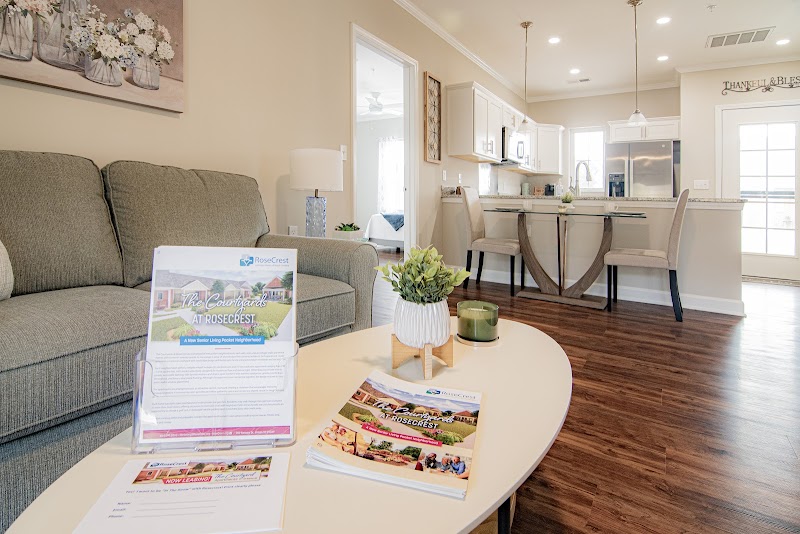
How is Rosecrest Rehabilitation And Healthcare Center Staffed?

CMS rates Rosecrest Rehabilitation and Healthcare Center's staffing level at 3 out of 5 stars, which is average compared to other nursing homes. Staff turnover is 55%, which is 9 percentage points above the South Carolina average of 46%. High turnover can affect care consistency as new staff learn residents' individual needs. RN turnover specifically is 56%, which is notably high. RNs provide skilled clinical oversight, so turnover in this role can affect medical care quality.

What Have Inspectors Found at Rosecrest Rehabilitation And Healthcare Center?

State health inspectors documented 4 deficiencies at Rosecrest Rehabilitation and Healthcare Center during 2023 to 2025. These included: 4 with potential for harm.
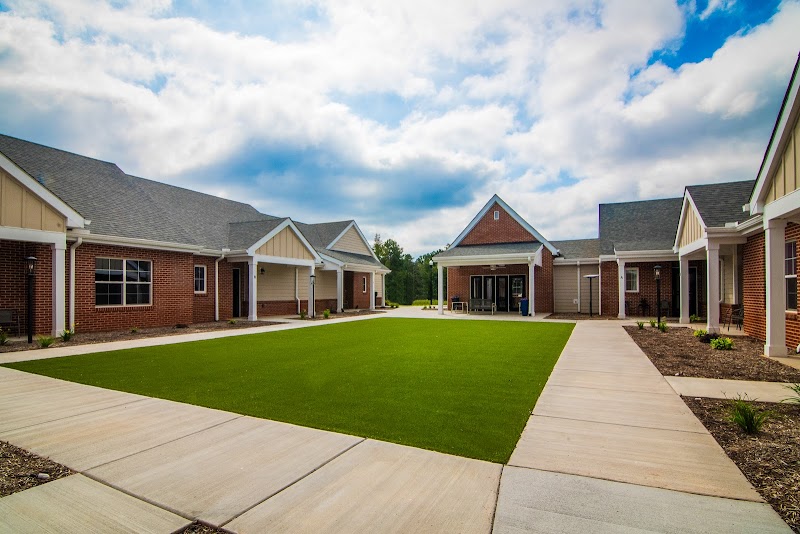
Who Owns and Operates Rosecrest Rehabilitation And Healthcare Center?

Rosecrest Rehabilitation and Healthcare Center is owned by a non-profit organization. Non-profit facilities reinvest revenue into operations rather than distributing to shareholders. The facility operates independently rather than as part of a larger chain. With 75 certified beds and approximately 48 residents (about 64% occupancy), it is a smaller facility located in Inman, South Carolina.

How Does Rosecrest Rehabilitation And Healthcare Center Compare to Other South Carolina Nursing Homes?

Compared to the 100 nursing homes in South Carolina, Rosecrest Rehabilitation and Healthcare Center's overall rating (4 stars) is above the state average of 2.9, staff turnover (55%) is near the state average of 46%, and health inspection rating (4 stars) is above the national benchmark.

What Should Families Ask When Visiting Rosecrest Rehabilitation And Healthcare Center?

Based on this facility's data, families visiting should ask: "How do you ensure continuity of care given staff turnover, and what is your staff retention strategy?" "Can I visit during a mealtime to observe dining assistance and food quality?" "How do you handle medical emergencies, and what is your hospital transfer rate?" "Can I speak with family members of current residents about their experience?" These questions are particularly relevant given the facility's high staff turnover rate.

Is Rosecrest Rehabilitation And Healthcare Center Safe?

Based on CMS inspection data, Rosecrest Rehabilitation and Healthcare Center has a clean safety record: no substantiated abuse findings (meaning no confirmed cases of resident harm), no Immediate Jeopardy citations (the most serious violation level indicating risk of serious injury or death), and is not on the Special Focus Facility watch list (a federal program monitoring the lowest-performing 1% of nursing homes). The facility has a 4-star overall rating and ranks #1 of 100 nursing homes in South Carolina. While no facility is perfect, families should still ask about staff-to-resident ratios and recent inspection results during their visit.

Do Nurses at Rosecrest Rehabilitation And Healthcare Center Stick Around?

Staff turnover at Rosecrest Rehabilitation and Healthcare Center is high. At 55%, the facility is 9 percentage points above the South Carolina average of 46%. Registered Nurse turnover is particularly concerning at 56%. RNs handle complex medical decisions and coordinate care — frequent RN changes can directly impact care quality. High turnover means new staff may not know residents' individual needs, medications, or preferences. It can also be disorienting for residents, especially those with dementia who rely on familiar faces. Families should ask: What is causing the turnover? What retention programs are in place? How do you ensure care continuity during staff transitions?

Was Rosecrest Rehabilitation And Healthcare Center Ever Fined?

Rosecrest Rehabilitation and Healthcare Center has no federal fines on record. CMS issues fines when nursing homes fail to meet care standards or don't correct problems found during inspections. The absence of fines suggests the facility has either maintained compliance or corrected any issues before penalties were assessed. This is a positive indicator, though families should still review recent inspection reports for the full picture.

Is Rosecrest Rehabilitation And Healthcare Center on Any Federal Watch List?

Rosecrest Rehabilitation and Healthcare Center is not on any federal watch list. The most significant is the Special Focus Facility (SFF) program, which identifies the bottom 1% of nursing homes nationally based on persistent, serious quality problems. Not being on this list means the facility has avoided the pattern of deficiencies that triggers enhanced federal oversight. This is a positive indicator, though families should still review the facility's inspection history directly.