PruittHealth- Moncks Corner
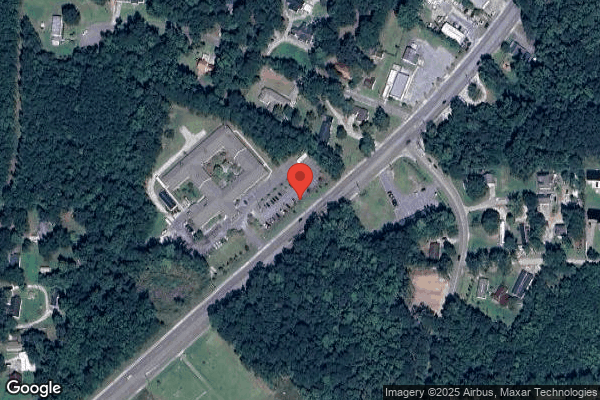
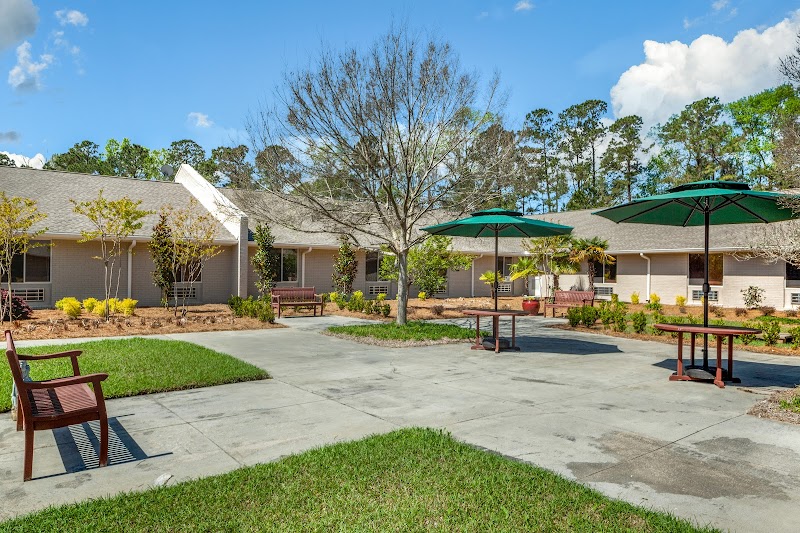
505 South Live Oak Drive, Moncks Corner, SC 29461 (843) 761-8368
For profit - Limited Liability company 132 Beds PRUITTHEALTH Data: November 2025 3 Immediate Jeopardy citations
Trust Grade
0/100
#168 of 186 in SC
Last Inspection: June 2024

Within standard 12-15 month inspection cycle. Federal law requires annual inspections.

Overview

PruittHealth-Moncks Corner has received a Trust Grade of F, indicating significant concerns about the quality of care provided. With a state rank of #168 out of 186 facilities, they fall in the bottom half of nursing homes in South Carolina, and locally, they rank #3 out of 4 in Berkeley County, meaning only one other facility in the area is rated worse. Although the facility is improving, having reduced serious issues from 14 in 2024 to 1 in 2025, they still have a troubling history, including critical incidents where a resident with dementia was able to leave the facility unsupervised and another instance where 11 residents did not receive their prescribed medications. Staffing ratings are average, with a turnover rate of 46%, which aligns with the state average, and while RN coverage is also average, the presence of registered nurses is vital for catching potential problems. The facility has incurred $21,970 in fines, which is concerning but not among the highest in the state, indicating ongoing compliance issues that families should consider.

Trust Score
F
0/100
In South Carolina
#168/186
Bottom 10%
Safety Record
High Risk
Review needed
Inspections
Getting Better
14 → 1 violations
Staff Stability
⚠ Watch
46% turnover. Above average. Higher turnover means staff may not know residents' routines.
Penalties
✓ Good
$21,970 in fines. Lower than most South Carolina facilities. Relatively clean record.
Skilled Nurses
○ Average
Each resident gets 33 minutes of Registered Nurse (RN) attention daily — about average for South Carolina. RNs are the most trained staff who monitor for health changes.
Violations
⚠ Watch
23 deficiencies on record. Higher than average. Multiple issues found across inspections.
★☆☆☆☆
1.0
Overall Rating
★★★☆☆
3.0
Staff Levels
★★★☆☆
3.0
Care Quality
★☆☆☆☆
1.0
Inspection Score
Stable
2024: 14 issues
2025: 1 issues

The Good

  • Full Sprinkler Coverage · Fire safety systems throughout facility
  • No fines on record

Facility shows strength in fire safety.

The Bad

1-Star Overall Rating

Below South Carolina average (2.8)

Significant quality concerns identified by CMS

Staff Turnover: 46%

Near South Carolina avg (46%)

Higher turnover may affect care consistency

Federal Fines: $21,970

Below median ($33,413)

Minor penalties assessed

Chain: PRUITTHEALTH

Part of a multi-facility chain

Ask about local staffing decisions and management

The Ugly 23 deficiencies on record

3 life-threatening 2 actual harm
Feb 2025 1 deficiency
CONCERN (D) 📢 Someone Reported This

A family member, employee, or ombudsman was alarmed enough to file a formal complaint

Potential for Harm - no one hurt, but risky conditions existed

Deficiency F0602 (Tag F0602)

Could have caused harm · This affected 1 resident

**NOTE- TERMS IN BRACKETS HAVE BEEN EDITED TO PROTECT CONFIDENTIALITY** Based on review of facility policy, observation, record review and interview, the facility failed to ensure Resident (R)1 was fr...

Read full inspector narrative →
**NOTE- TERMS IN BRACKETS HAVE BEEN EDITED TO PROTECT CONFIDENTIALITY** Based on review of facility policy, observation, record review and interview, the facility failed to ensure Resident (R)1 was free from misappropriation of a narcotic medication for 1 of 1 residents reviewed for misappropriation. Findings include: Review of the facility policy last reviewed on 11/15/2024, titled, Prevention of Patient Abuse, Neglect, Exploitation, Mistreatment, and Misappropriation of Property documented, It is the policy of PruittHealth and its affiliated entities to actively preserve each patient's right to be free from . misappropriation of patient property . Definitions: Misappropriation of Patient Property means the deliberate misplacement, exploitation, or wrongful, temporary or permanent use of a patient's belongings or money without the patient's consent. Review of R1's Face Sheet revealed R1 was admitted to the facility on [DATE], with diagnoses that included but was not limited to: cognitive communication deficit, anxiety disorder, and unspecified intellectual disabilities. Review of R1's Minimum Data Set (MDS) with an Assessment Reference Date of 01/06/25, revealed a Brief Interview for Mental Status (BIMS) score of 9 out of 15, indicating R1 was moderately cognitively impaired. Review of the Monthly Controlled Drug Report revealed on 01/09/25, R1's Ativan 1 milligram (mg) containing 45 tablets, was delivered to the facility Review of a Narcotic Refill Request Log revealed on 01/19/25, R1's Ativan was requested from the pharmacy. Review of the Controlled Drug Record documented, Ativan 0.5 mg tab three times a day (TID) dated 01/21/25, number of doses 3, retrieved from the Cubex (automatic electronic drug kit in the facility). Further review revealed, written on the form were three entries where each dose was signed as the medication was administered on 01/21/25 at 3:00 PM, 01/21/25 at 9:00 PM, and 01/22/25 at 2:00 AM. Review of page 3 of the Medication Administration Record (MAR) documented, Ativan (Lorazepam) 1 mg was reordered on 01/20/25 at 9:00 AM, reordered at 3:00 PM and Drug/Item unavailable at 9:00 PM. Additionally, on 01/21/25 at 3:00 PM the medication was requested. Review of R1's MAR dated 01/01/25, did not reveal an order for Ativan 0.5 mg to be given for 3 doses. During an interview with the Administrator on 02/05/25 at 4:25 PM, the Administrator stated, I think the control sheet and the card were missing, so we don't have a copy of the sheet. I'll get the Director of Nurses (DON) and she can review that with you. During an interview on 02/05/25 at 4:30 PM, the DON confirmed it was the 1 mg Ativan that went missing. The DON revealed we were alerted by our Physician Assistant (PA). It was a request from pharmacy that it was too soon to order the 1 mg Ativan. The PA gave an order for Ativan 0.5 mg to be given and pulled from the e-kit until the pharmacy could deliver a new card. The DON stated R1 went 2 doses without the Ativan, but he covered her with the Ativan 0.5 mg until pharmacy could replace the missing card. During an interview on 02/05/25 at 4:55 PM, Registered Nurse (RN)1, with the DON present, stated the PA called me, saying I am ok to pull 0.5 mg Ativan from the Cubex, until the card arrives. The 0.5 mg Ativan was given via a verbal order, that was [DATE]st. RN1 further stated, she called the pharmacy and requested the number to pull the Ativan. They approved it. The PA spoke to them first. R1 was not my resident. I was helping the other nurse by getting the medication from the Cubex, so I did not write the order. During an interview on 02/05/25 at 6:03 PM, the PA confirmed he did not put the order in the system. The PA stated he didn't remember the exact date, but he remembered speaking to RN1 about this. The PA further stated the Cubex had 0.5 mg of Ativan, not 1 mg tablets. He gave a verbal order for RN1 to pull the medication, 3 doses. The PA concluded that he put this order in as late even though it was already given. During a follow up interview on 02/05/25 at 6:15 PM, the DON revealed there was a card of 15 tablets and the Controlled Drug Sheet went missing. It was the 9th of January. The Pharmacy filled 45 tablets, in 2 medication cards. One was a card of 30 tablets and we confirmed those were given as ordered. The narcotic sheet confirms it was zeroed out. The DON stated we cannot account for the second medication card that contained 15 tablets, or the narcotic sheet that went with it. The second med card is what disappeared. It was 15 tablets. We started going through all the meds for the upcoming storm. The DON stated, the [PA] alerted me stating the pharmacy notified him, said it was too soon to reorder the Ativan. That's how I was alerted to it. When I looked at it, I realized the math didn't add up. The storm was on the 21st. We started looking right away for the missing card. My initial findings were the one resident. Because the [PA] or [RN1] wrote the order for Ativan that would go to the MAR, the 3 doses he ordered and [RN1] pulled from the Cubex, they weren't signed off as given on the MAR. The DON stated the Controlled Drug Record is the proof that they were administered twice on 01/21/25, and the missing dose on 01/22/25 at 3 PM, on 01/20/25 at 9:00 PM and on 01/21/25 at 9:00 AM, even though the MAR reveals Ativan 1 mg was given, it was not. R1 missed 2 doses related to the missing drug card and sheet.
Oct 2024 2 deficiencies 2 IJ
CRITICAL (J) 📢 Someone Reported This

A family member, employee, or ombudsman was alarmed enough to file a formal complaint

Immediate Jeopardy (IJ) - the most serious Medicare violation

Free from Abuse/Neglect (Tag F0600)

Someone could have died · This affected 1 resident

**NOTE- TERMS IN BRACKETS HAVE BEEN EDITED TO PROTECT CONFIDENTIALITY** Based on interview, record review, and facility policy the facility failed to ensure that Resident (R)1, a resident diagnosed wi...

Read full inspector narrative →
**NOTE- TERMS IN BRACKETS HAVE BEEN EDITED TO PROTECT CONFIDENTIALITY** Based on interview, record review, and facility policy the facility failed to ensure that Resident (R)1, a resident diagnosed with dementia, was free from neglect by failing to provide necessary care and services to prevent R1 from eloping from the facility which had the potential for serious bodily harm. On [DATE] at approximately 8:00 PM, R1 was found in the parking lot of the facility near a major U.S. Highway (Highway 17) by staff after they were unable to locate the resident for bedtime. On [DATE] at 5:51 PM, the Administrator was notified that the failure to ensure Resident (R)1 was free from neglect, which resulted in a successful elopement on [DATE] at approximately 8:00 PM, constituted Immediate Jeopardy (IJ) at F600. On [DATE] at 5:51 PM, the survey team provided the Administrator with a copy of the CMS IJ Template and informed the facility IJ existed as of [DATE], when a resident successfully eloped from the facility through the front door. F600 were related to 483.12 Freedom from Abuse, Neglect, and Exploitation. On [DATE] at 2:33 PM, the facility presented a successful plan of removal. The survey team validated the plan of removal and verified the facility put forth due diligence in addressing the noncompliance, indicating this IJ at Past Noncompliance as of [DATE]. An Extended Survey was conducted on [DATE], in conjunction with the Complaint Survey for non-compliance at F600 constituting substandard quality of care. Findings Include: Review of the facility policy titled Abuse Prevention and Reporting last revised on [DATE], documented, Neglect the failure to provide goods and services necessary to avoid harm, mental anguish or mental illness. Neglect may include instances of being left to sit or lie in urine, isolating a resident in their room or locations apart from other residents or supervision by the other staff, failure to answer requests for assistance and treatment. Review of R1's Face Sheet revealed R1 was admitted to the facility on [DATE], with diagnosis including but not limited to: vascular dementia without behaviors, cognitive communications deficit, altered mental status, and history of falling. Review of R1's Quarterly Minimum Data Set (MDS) with an Assessment Reference Date (ARD) of [DATE], revealed R1 had a Brief Interview for Mental Status (BIMS) score of 2 out of 15, which indicated R1 had severe cognitive impairment. Review of R1's Nurses Notes dated [DATE] at 11:20 PM, documented, [R1] continuously attempting to leave facility throughout the day, redirected multiple times by staff, patient unable to tell staff where he is going or why he wants to go, speech very garbled. By the end of the day the patient became combative when staff was attempting to redirect. Resident refusing personal care and incontinent, unable to take vital signs however patient had no temperature, Nurse Practitioner notified and verbalized that resident should be send to the emergency room (ER), patient sent via 911 to hospital, manager, Director of Nursing (DON) and resident notified. Review of R1's Nurses Notes dated [DATE] at 5:03 AM, documented, Resident [R1] was at the door of the facility fighting with staff, yelling, argumentative and setting off the EMD alarm. Attempts by writer successful to remove/calm/redirect resident from the situation and the front of the building. Once [R1] was brought back to the unit, conversed with [R1] and reassured that all was well within the facility. [R1] was bathed, Activities of Daily Living (ADL) care provided, and he was then placed in his bed after sitting with writer at the nurses station approximately one hour. Once in bed, resident rested the remainder of the shift with no further behaviors/confusion episodes noted, no signs or symptoms or discomfort to report as bed remained low with call bell and bedside table within reach. Review of R1's Nurses Note dated [DATE] at 5:28 AM, documented, At approximately 8:00 PM [late entry from [DATE]] resident [R1] was observed to be missing from the facility. Certified Nursing Assistant (CNA) was looking for the resident to prepare him for bed was unable to find him. CNA went searching for the resident and found him outside the building wheeling himself towards the road. Nursing staff was able to wheel the resident back into the building and a body audit was completed with no problems noted. Resident assisted to bed and fell asleep shortly afterwards. Resident calmly asleep in bed for the rest of the night, call light within reach, all necessary documentation completed. Responsible party notified, headcount was done per protocol and every resident in the building accounted for. Review of R1's Quarterly assessment dated [DATE], revealed that R1 was high risk for elopement. Review of R1's Physician Orders revealed an order for an Electronic Monitoring Device to right ankle, dated [DATE]. Review of R1's Care Plan, last revised on [DATE], documented, R1 requires an Electronic Monitoring Device related to periods of disorientation and attempts of exit seeking looking for his spouse. Interventions include: provide increased supervision during periods of increased wandering and agitation; assess for psychosocial and cognitive changes; evaluate unit for possible safety hazards; develop an activities program to divert attention and meet needs for social and cognitive stimulation; check EMD for proper functioning and placement per facility protocol or manufacture's recommendation; re-direct provide diversional activities; assess/record/report to Medical Director risk factors for potential elopement such as wandering, repeat requests to leave the facility, statements such as I'm leaving I'm going home, attempts to leave facility or elopement attempts from previous facility or hospital; complete Elopement Risk Assessment. Review of the weather report revealed that on [DATE] at approximately 7:55 PM, the weather was 70 degrees Fahrenheit, sunset already occurred for the evening. During an interview on [DATE] at 11:28 AM, R1's Resident Representative (RR) revealed that they were informed that the resident eloped from the facility through the front door and was found by facility staff in the parking lot around 8:00 PM on [DATE]. However, they were not notified of the elopement until [DATE] around 6:00 AM by nursing staff. The RR had many concerns related to the elopement because this was not the resident's first time eloping from the facility and staff did not provide a lot of detail on how the elopement occurred. R1's RR further stated that R1 recently eloped about 2 months ago which prompted the facility to add an Electronic Monitoring Device (EMD) to the resident's leg ([DATE] according to the Physician Orders) but does not know much about that elopement because staff refused to go into detail about the incident. During an interview on [DATE] at 2:41 PM, Licensed Practical Nurse (LPN)1 revealed that during the day, R1 is easy to redirect but when the evening comes R1 exhibits sun-downing behaviors and can be combative with staff. LPN1 stated that they typically work first shift at the facility but has witnessed R1 be combative with other staff when attempting to exit seek. LPN1 was unaware of the resident eloping from the facility on [DATE]. During an interview on [DATE] at 2:45 PM, CNA2 revealed that during the day, R1 is agreeable to receiving care and easy to redirect when he attempts to exit seek. CNA2 stated that at times the resident can become combative but if left alone for a few minutes and reapproached, during the day the resident normally attends activities which keeps him occupied and his mind off his deceased wife who prior to passing also resided at the facility. CNA2 further stated when the resident is exit-seeking, he typically is looking for his wife, but with redirection will normally stop. CNA1 was unaware of the resident eloping from the facility on [DATE]. During a phone interview on [DATE] at 3:24 PM, RN1 revealed that they were the resident's assigned nurse on [DATE]. RN1 stated that she gave R1 the last of his bedtime medications around 8:00 PM and around 8:30 PM a CNA brought R1 back to the unit and explained that she found him outside. RN1 stated that she was still passing medications when the CNA informed her that she found the resident in the parking lot of the facility. RN1 further stated that she completed a body audit on R1, and he had no signs of harm or distress, and she informed the Director of Nursing and R1's daughter of the elopement. RN1 was unable to recall the last time they had elopement training or dementia training specifically but stated that they had general training a few weeks ago but was unable to provide details. RN1 finally stated that they did not hear any alarms going off during this time because they were in the room passing medications and the resident exited out of the front of the facility. During a phone interview on [DATE] at 4:00 PM, CNA1 revealed that they were R1's assigned CNA for the evening (of the elopement) and last saw the resident on [DATE] around 8:00 PM. CNA1 stated, [R1] was at the nurses station in his wheelchair and told me that he wasn't ready for bed yet. I went to go put another resident to bed which took about 10 minutes or so and when I went to find [R1] again to see if he was ready for bed, but I couldn't find him. I know [R1] likes to hang out in the day area near the kitchen in the front of the facility, so I headed there but still couldn't find him, something told me to look outside because I heard the alarm going off by the front door and that's when I found [R1] with another resident's family member in the middle part of the parking lot of the facility. I couldn't hear the alarm from the resident's unit because it is in the back portion of the facility and [R1] went out of the front door. It took me a while to convince [R1] to come back inside but he eventually was agreeable to returning. When I found the resident, he had on full clothes, but it was dark because the sun recently set for the evening. I didn't tell the nurse that he was missing, I just went to go look for him and brought him to the nurse and then I explained that I found him outside in the parking lot. Further interview with CNA1 revealed that the resident was missing for about 10 - 15 minutes before finding him in the parking lot. During an interview on [DATE] at 4:44 PM, the Director of Nursing (DON) revealed that they were made aware that the resident was found outside of the building on [DATE] at approximately 8:45 PM. The DON stated the facility was putting measures in place to ensure the resident did not elope again. Interventions that have initiated so far are checking the door to ensure it alarms appropriately, checking the resident's EMD to ensure it alarms by door correctly, and re-education of staff. The DON stated that this was still in the process at this time but the direct staff that were involved with the elopement were re-educated. During an interview on [DATE] at 5:08 PM, the Administrator revealed that they were informed the resident eloped from the facility on [DATE] and came to the facility to ensure that R1 did not elope again from the front door and other residents as well. The Administrator stated that when he arrived at the facility, they completed a head count to ensure all residents were in house and they began to try to find the cause of how the resident eloped. The Administrator stated, There had been on-going issues with the door, and we (Administrator and Maintenance Staff) examined the door and it was not properly aligned on it's hinges which is why the door did not lock when [R1] exited, even though he had an EMD. The alarms for the EMD were working appropriately but because the door was not aligned correctly which allowed the resident to exit. The Administrator further stated that he had been working to try and fix the door in the past, for other issues (not elopement) but it needs replacing because companies no longer make parts to fix that specific door. The facility is now in the process of replacing the door, along with other doors and EMD alarms at the facility because the facility is under renovation. On the night of [DATE], the Administrator had a staff member complete 1:1 of the front door to ensure no other residents or R1 could elope and did door monitoring from [DATE] - [DATE]. The door was able to be fixed and is now working and locking appropriately when residents with an EMD go near the door. Interventions that were put into place on [DATE] included: re-educating staff related to elopement and the process of what to do if a resident has eloped, education on EMD's and door alarms, and the notification process. On [DATE] at 2:33 PM, the facility presented a plan of removal, which included the following: Immediate Action: R1 had the potential to be affected by the alleged isolated deficient practice as evidenced by nursing progress note dated [DATE] at 5:28 AM indicated R1 was observed missing from the facility and found outside the building with the front door alarming. R1 did not leave facility property, R1 was brought back into the facility immediately and safely by the Certified Nursing Assistant (CNA) and the Nurse. A body audit was completed which revealed no injuries. R1 was assisted to bed where he fell asleep and remained for the remainder of the night. R1 responsible party was notified, and a 100% resident head count was completed for all residents with all residents being accounted for, Medical Director/provider made aware. Facility Administrator was on-site within an hour of the reporting of the incident. Upon discovery of the front door in disrepair, the electronic medical device system was functioning properly despite the functionality of the latching of the door. The Maintenance Director was contacted and arrived at the facility minutes later to repair the front door. All other doors checked and verified for proper egress/ingress functioning to include alarming the electronic medical device system. The front door was monitoring continuously until the repairs were completed and appropriate functionality of the door was confirmed. The front door continued to be monitored for 24 hours after the event with no recurrence. No residents sustained any negative outcome related to the isolated event. Methods to identify any other residents who might be affected include all residents demonstrating exit-seeking behavior had the potential to be affected by the alleged deficient practice. Residents were protected by the timeliness of response to Code Pink and the repairs as well as the continual 24-hour monitoring of the front door post event. Systemic changes include all staff are to received education on Code Pink/ Missing Residents which include neglect of a resident; how to handle malfunctioning doors by the Administrator, Clinical Competency Coordinator (CCC), Director of Health Services (DHS), and/or licensed designated charge nurse initiated on [DATE]. All new hires will receive education in orientation. Any partner that is on leave will receive education prior to their next scheduled shift. Replacement of the front door has been approved and the work order has been requested by the vendor, awaiting date/time of replacement to be scheduled. However, all doors not limited to the front door is in working order to secure the facility properly and functioning properly. Monitoring includes the Maintenance Director or designee will verify the proper functioning of all doors twice daily times one month or until replacement of the door is complete. Results will be reviewed in the Quality Assurance and Performance Improvement (QAPI) monthly for three months and/or until substantial compliance is achieved.
CRITICAL (J) 📢 Someone Reported This

A family member, employee, or ombudsman was alarmed enough to file a formal complaint

Immediate Jeopardy (IJ) - the most serious Medicare violation

Accident Prevention (Tag F0689)

Someone could have died · This affected 1 resident

**NOTE- TERMS IN BRACKETS HAVE BEEN EDITED TO PROTECT CONFIDENTIALITY** Based on interview, record review, and review of the facility policy, the facility failed to ensure that adequate supervision wa...

Read full inspector narrative →
**NOTE- TERMS IN BRACKETS HAVE BEEN EDITED TO PROTECT CONFIDENTIALITY** Based on interview, record review, and review of the facility policy, the facility failed to ensure that adequate supervision was in place to prevent Resident (R)1 from eloping from the facility. Specifically, on 10/02/24 at approximately 8:00 PM, R1 was found in the parking lot of the facility near a major U.S. Highway (Highway 17), by staff after they were unable to locate the resident for bedtime. On 10/04/24 at 5:51 PM, the Administrator was notified that the failure to ensure Resident (R)1 was free from neglect, which resulted in a successful elopement on 10/02/24 at approximately 8:00 PM, constituted Immediate Jeopardy (IJ) at F689. On 10/04/24 at 5:51 PM, the survey team provided the Administrator with a copy of the CMS IJ Template and informed the facility IJ existed as of 10/02/24, when a resident successfully eloped from the facility through the front door. F689 were related to 483.25 Quality of Care . On 10/07/24 at 2:33 PM, the facility presented a successful plan of removal. The survey team validated the plan of removal and verified the facility put forth due diligence in addressing the noncompliance, indicating this IJ at Past Noncompliance as of 10/03/24. An Extended Survey was conducted on 10/07/24, in conjunction with the Complaint Survey for non-compliance at F689 constituting substandard quality of care. Findings include: Review of the facility policy titled Occurrences last revised on 01/11/24, documented, The healthcare center recognizes that due to the frailty of the patients/residents served, there is an increased risk of occurrences that may result in injury to the patient/resident and/or others. To prevent occurrences, each patient/resident will be observed to and assessed for risk. Appropriate, realistic interventions will be implemented in accordance with their plan of care. Definitions include occurrence hazards are physical feature in the healthcare center environment which may pose a risk to a patient/residents safety, including but not limited to any event, accident, or incident on or off healthcare center property which results in an injury or has the potential for injury; elopement from healthcare center property regardless of whether there was an injury associated with the elopement. Review of R1's Face Sheet revealed R1 was admitted to the facility on [DATE], with diagnosis including but not limited to: vascular dementia without behaviors, cognitive communications deficit, altered mental status, and history of falling. Review of R1's Quarterly Minimum Data Set (MDS) with an Assessment Reference Date (ARD) of 08/14/24, revealed R1 had a Brief Interview for Mental Status (BIMS) score of 2 out of 15, which indicated R1 had severe cognitive impairment. Review of R1's Nurses Notes dated 07/26/24 at 11:20 PM, documented, [R1] continuously attempting to leave facility throughout the day, redirected multiple times by staff, patient unable to tell staff where he is going or why he wants to go, speech very garbled. By the end of the day the patient became combative when staff was attempting to redirect. Resident refusing personal care and incontinent, unable to take vital signs however patient had no temperature, Nurse Practitioner notified and verbalized that resident should be send to the emergency room (ER), patient sent via 911 to hospital, manager, Director of Nursing (DON) and resident notified. Review of R1's Nurses Note dated 10/03/24 at 5:28 AM, documented, At approximately 8:00 PM [late entry from 10/02/24] resident was observed to be missing from the facility. Certified Nursing Assistant (CNA) was looking for the resident to prepare him for bed was unable to find him. CNA went searching for the resident and found him outside the building wheeling himself towards the road. Nursing staff was able to wheel the resident back into the building and a body audit was completed with no problems noted. Resident assisted to bed and fell asleep shortly afterwards. Resident calmly asleep in bed for the rest of the night, call light within reach, all necessary documentation completed. Responsible party notified, headcount was done per protocol and every resident in the building accounted for. Review of R1's Quarterly assessment dated [DATE], revealed that R1 was high risk for elopement. Review of R1's Physician Orders revealed an order for an Electronic Monitoring Device to right ankle, dated 07/23/24. Review of R1's Care Plan, last revised on 07/24/24, documented, R1 requires an Electronic Monitoring Device related to periods of disorientation and attempts of exit seeking looking for his spouse. Interventions include: provide increased supervision during periods of increased wandering and agitation; re-direct provide diversional activities. During a phone interview on 10/04/24 at 3:24 PM, RN1 revealed that they were the resident's assigned nurse on 10/02/24. RN1 stated that she gave R1 the last of his bedtime medications around 8:00 PM and around 8:30 PM a CNA (Certified Nursing Assistant) brought R1 back to the unit and explained that she found him outside. RN1 stated that she was still passing medications when the CNA informed her that she found the resident in the parking lot of the facility. RN1 further stated that she completed a body audit on R1, and he had no signs of harm or distress, and she informed the Director of Nursing and R1's daughter of the elopement. RN1 finally stated that they did not hear any alarms going off during this time because they were in the room passing medications and the resident exited out of the front of the facility. During a phone interview on 10/04/24 at 4:00 PM, Certified Nursing Assistant (CNA)1 revealed that they were R1's assigned CNA for the evening (of the elopement) and last saw the resident on 10/02/24 around 8:00 PM. CNA1 stated, [R1] was at the nurses station in his wheelchair and told me that he wasn't ready for bed yet. I went to go put another resident to bed which took about 10 minutes or so and when I went to find [R1] again to see if he was ready for bed, but I couldn't find him. I know [R1] likes to hang out in the day area near the kitchen in the front of the facility, so I headed there but still couldn't find him, something told me to look outside because I heard the alarm going off by the front door and that's when I found [R1] with another resident's family member in the middle part of the parking lot of the facility. I couldn't hear the alarm from the resident's unit because it is in the back portion of the facility and [R1] went out of the front door. It took me a while to convince [R1] to come back inside but he eventually was agreeable to returning. When I found the resident, he had on full clothes, but it was dark because the sun recently set for the evening. I didn't tell the nurse that he was missing, I just went to go look for him and brought him to the nurse and then I explained that I found him outside in the parking lot. Further interview with CNA1 revealed that the resident was missing for about 10 - 15 minutes before finding him the parking lot. During an interview on 10/04/24 at 4:44 PM, the Director of Nursing (DON) revealed that they were made aware that the resident was found outside of the building on 10/02/24 at approximately 8:45 PM. The DON stated the facility was putting measures in place to ensure the resident did not elope again. Interventions that have initiated so far are checking the door to ensure it alarms appropriately, checking the resident's EMD to ensure it alarms by door correctly, and re-education of staff. The DON stated that this was still in the process at this time but the direct staff that were involved with the elopement were re-educated. During an interview on 10/04/24 at 5:08 PM, the Administrator revealed that they were informed the resident eloped from the facility on 10/04/24 and came to the facility to ensure that R1 did not elope again from the front door and other residents as well. The Administrator stated that when he arrived at the facility, they completed a head count to ensure all residents were in house and they began to try to find the cause of how the resident eloped. The Administrator stated, There had been on-going issues with the door, and we (Administrator and Maintenance Staff) examined the door and it was not properly aligned on it's hinges which is why the door did not lock when [R1] exited, even though he had an EMD. The alarms for the EMD were working appropriately but because the door was not aligned correctly which allowed the resident to exit. The Administrator further stated that he had been working to try and fix the door in the past, for other issues (not elopement) but it needs replacing because companies no longer make parts to fix that specific door. The facility is now in the process of replacing the door, along with other doors and EMD alarms at the facility because the facility is under renovation. On the night of 10/02/24, the Administrator had a staff member complete 1:1 of the front door to ensure no other residents or R1 could elope and did door monitoring from 10/02/24 - 10/03/24. The door was able to be fixed and is now working and locking appropriately when residents with an EMD go near the door. Interventions that were put into place on 10/02/24 included: re-educating staff related to elopement and the process of what to do if a resident has eloped, education on EMD's and door alarms, and the notification process. The facility's removal plan for F689 included Immediate Action: R1 had the potential to be affected by the alleged isolated deficient practice as evidenced by nursing progress note dated 10/03/24 at 5:28 AM indicated R1 was observed missing from the facility and found outside the building with the front door alarming. R1 did not leave facility property, R1 was brought back into the facility immediately and safely by the Certified Nursing Assistant (CNA) and the Nurse. A body audit was completed which revealed no injuries. R1 was assisted to bed where he fell asleep and remained for the remainder of the night. R1 responsible party was notified, and a 100% resident head count was completed for all residents with all residents being accounted for, Medical Director/provider made aware. Facility Administrator was on-site within an hour of the reporting of the incident. Upon discovery of the front door in disrepair, the electronic medical device system was functioning properly despite the functionality of the latching of the door. The Maintenance Director was conducted and arrived at the facility minutes later to repair the front door. All other doors checked and verified for proper egress/ingress functioning to include alarming the electronic medical device system. The front door was monitoring continuously until the repairs were completed and appropriate functionality of the door was confirmed. The front door continued to be monitored for 24 hours after the event with no recurrence. No residents sustained any negative outcome related to the isolated event. Methods to identify any other residents who might be affected include all residents demonstrating exit-seeking behavior had the potential to be affected by the alleged deficient practice. Residents were protected by the timeliness of response to Code Pink and the repairs as well as the continual 24-hour monitoring of the front door post event. Systemic changes include all staff are to received education on Code Pink/ Missing Residents which include neglect of a resident; how to handle malfunctioning doors by the Administrator, Clinical Competency Coordinator (CCC), Director of Health Services (DHS), and/or licensed designated charge nurse initiated on 10/02/24. All new hires will receive education in orientation. Any partner that is on leave will receive education prior to their next scheduled shift. Replacement of the front door has been approved and the work order has been requested by the vendor, awaiting date/time of replacement to be scheduled. However, all doors not limited to the front door is in working order to secure the facility properly and functioning properly. Monitoring includes the Maintenance Director or designee will verify the proper functioning of all doors twice daily times one month or until replacement of the door is complete. Results will be reviewed in the Quality Assurance and Performance Improvement (QAPI) monthly for three months and/or until substantial compliance is achieved.
Aug 2024 1 deficiency 1 IJ
CRITICAL (J) 📢 Someone Reported This

A family member, employee, or ombudsman was alarmed enough to file a formal complaint

Immediate Jeopardy (IJ) - the most serious Medicare violation

Deficiency F0760 (Tag F0760)

Someone could have died · This affected 1 resident

Based on review of facility policy, observation, record review, and interview, the facility failed to ensure 11 of 76 residents, Residents (R)4, R5, R6, R7, R8, R9, R10, R11, R12, R13, and R14, receiv...

Read full inspector narrative →
Based on review of facility policy, observation, record review, and interview, the facility failed to ensure 11 of 76 residents, Residents (R)4, R5, R6, R7, R8, R9, R10, R11, R12, R13, and R14, received their physician ordered medications. On 08/27/24 at 5:40 PM, the State Agency (SA) determined that the facility's non-compliance with one or more federal health, safety, and/or quality regulations could cause serious harm. On 08/28/24 at 9:10 AM, the survey team provided the Administrator with a copy of the CMS Immediate Jeopardy (IJ) Template, informing the facility IJ existed as of 08/22/24. The IJ was related to 42 CFR 483.25 - Residents are free of Significant Medication Errors. On 08/28/24, the facility provided an acceptable IJ Removal Plan. On 08/28/24, the survey team validated the facility's corrective actions and determined the facility put forth due diligence in addressing the noncompliance. The SA is considering this IJ at Past Noncompliance as of 08/23/24. An extended survey was conducted in conjunction with the Complaint Survey for non-compliance at F760, constituting substandard quality of care. Findings include: Review of the facility policy dated 07/22/24, titled, Medication Administration: General Guidelines revealed under the policy, Medications are administered as prescribed . the authorized personnel will compare the Advantage bag to the MAR and will check off in ink on the bag the medications as they correspond to the MAR. Medications are administered within 60 minutes before or after scheduled time . which are administered precisely as ordered. During an observation on 08/27/24 and review of the Electronic Medication Administration Record (EMAR) dated 08/22/24, revealed the following: R4 had a pack of Oxybutynin ER 10 milligrams (mg), a pack of Duloxetine DR 60 mg, and a pack of Amlodipine 10 mg dated 08/22/24. The medications were scheduled to be given at 9:00 AM. The EMAR documented the medications as Not Administered. R5 had a pack of Methocarbamol 750 mg scheduled to be administered at 3:00 PM, a pack of Gabapentin 800 mg scheduled to be administered at 1:00 PM, a pack of Valsartan 80 mg, Senna 8.6 mg, and Methocarbamol 750 mg scheduled to be administered at 9:00 AM and a pack of Gabapentin 800 mg scheduled to be administered at 9:00 AM. The EMAR documented the medication as late administration. R6 had a pack of Eliquis 5 mg 2 tablets, x2 packages (loading dose for new Deep Vein Thrombosis (DVT) to be administered at 9:00 AM and 5:00 PM, a pack of Venlafaxine ER 150 mg pack to be administered at 9:00 AM, a pack of Metoprolol 25 mg, Hydroxychoraquine 200 mg, Amlodipine 10 mg to be administered at 9:00 AM and Zylopim 100 mg to be administered at 9:00 AM. The EMAR documented the medications as Not Administered. R7 had a pack of Carbid/Levod/Entaca 25 mg-100 mg-200 mg x2 packages, scheduled to be administered at 2:00 PM and 6:00 PM. The EMAR documented the medication as late administration. R8 had a pack of Prednisone 20 mg, scheduled to be administered at 9:00 AM. The EMAR documented the medication as late administration, however observation revealed the medication remained in the package. R9 had a pack Midodrine 5 mg to be administered at 1:00 PM, a pack Isoniazid 300 mg scheduled to be administered at 9:00 AM, a pack of Midodrine 5 mg, Escitalopram 10 mg, B6 Vitamin 50 mg to be administered at 9:00 AM. The EMAR documented the medications as Not Administered. R10 had a pack of Divalproex Sprinkle 125 mg scheduled to be administered at 9:00 AM, a pack of Olanzapine 10 mg, Metformin 1000 mg, and Januvia 25 mg scheduled to be administered at 9:00 AM. Also, a pack of Farxiga 10 mg scheduled to be administered at 9:00 am. The EMAR documented the medication as Not Administered. R11 had a pack of Carbidopa/Levodopa 25/100 mg x2 packs, one to be administered at 9:00 AM and the other to be administered at 1:00 PM. Also, a pack of Amlodipine 5 mg scheduled to be administered at 9:00 AM. The EMAR documented the medication as Not Administered. R12 had a pack of Eliquis 5 mg, a pack of Amlodipine 5 mg and a pack of Folic Acid 1 mg scheduled to be administered at 9:00 AM. The EMAR documented the medication as Not Administered. R13 had a pack of Metoprolol 25 mg, a pack of Finasteride 5 mg, a pack of Valsartan 160 mg, Metformin 500 mg, Levetiracetam, all scheduled to be administered at 9:00 AM. The EMAR documented the medication as Not Administered. R14 had a pack of Sulfamethoxazole/Trimethoprim 800 and a pack of Baclofen 5 mg, both scheduled to be administered at 9:00 AM. The EMAR documented the medication as Not Administered. During an interview on 08/27/24 at 1:35 PM, R5 stated, I heard about this last week. There was a day when I didn't get my medication. I need my medication. During an interview on 08/27/24 at 1:52 PM, R4 stated, I remember that day, the nurse said she was late passing medication, last week. She came in for my roommate. I asked her if she was going to give me my meds, she said she was late passing them. It only happened that one time. It was almost time for my evening meds, so I didn't take them. She said it was too close to give with my other medicine. During an interview on 08/27/24 at 9:53 AM, the Interim Director of Nurses (IDON) stated, On Friday morning, 08/23/24, I was reminded I was in charge for the next week. The Infection Preventionist (IP) Nurse told me after morning meeting, there were some medications documented as given, she had them (the actual pills) and gave them to the Administrator. She said the night shift nurse had given them to her. I went to the Administrator, and he gave me the pills. He asked me to pull the MAR and see what was going on. The nurse who did not administer the medication is [Licensed Practical Nurse Unit Manager [LPNUM]]. I opened the e-mar. I had the medications that were in the original packing and unopened. I compared them. She had notes in several of the meds on the MAR that said, not administered, but without an explanation. The Admin and I left her many messages, but she didn't return our calls. He finally left her a message on Friday that she was being suspended and she needed to call. I interviewed her yesterday. The [LPNUM] was scheduled on the med cart Thursday, 08/22/24 from 7a-7p, but the night [Registered Nurse [RN]] came in early to relieve her. She was the one who found the pills in the original package and reported it. During an interview on 08/27/24 at 11:26 AM, the Administrator stated, The IP nurse brought me the medications on Friday 08/23/24. She said they were found in the bin, the nurse who worked the night before had given them to her. She said she suspected the nurse before her didn't give them, [LPNUM]. I tried all day to contact her but couldn't reach her. She did finally text me after I left a message to suspend her. She text me on Saturday (08/24/24) morning. The interim DON was able to reach her yesterday to interview her. During a phone interview on 08/27/24 at 11:36 AM, the Director of Nursing (DON) stated, I was not made aware of [LPNUM] running late on her med pass. I would expect the nurse to come to me and report she was not passing medication. I would also expect the nurse to notify the doctor, that would be standard nursing practice. During an interview on 08/27/24 at 12:43 PM, the IP stated, I worked a med cart on Thursday evening from 4 PM-9:30 PM. I was wheeling myself to clock out. The night RN said, I need to show you something. I said ok. She showed me a box that was full of open med packets, but there were some that still had medications in them. She noticed them and looked at the dates and times. I was surprised and absolutely disappointed. I looked at them and said I cannot do anything about this now, put them away and I'll review first thing in the morning. The next morning, Friday 08/23/24, I went to the computer to check each residents' med orders. Unfortunately, most were active orders. The nurse who pulled the meds off the roll pulled 9 AM, 1 PM, 5 PM and 9 PM meds for the day. I then took the medications to the Administrator. Protocol is to place the empty packages into the little box which is kept in the med cart, empty it into the shredder box at the end of your shift, to be destroyed. Each shift completes that. The RN had relieved our LPNUM, on Thursday 08/22/24. During an interview on 08/27/24 at 1:03 PM, the LPNUM stated, On Thursday August 22, 2024, I arrived to work at 8:20 AM or so. My title is a Unit Manager. Often times I am assigned to work the cart. The night nurse RN didn't have relief. I got report from her. I started the back hall, cart 2. While on the cart I'm pulled away from the cart, concerning questions, therapy, etc. Around 11-12 noon I was in Matrix e-MAR. I saw some medications turn red. I realized I was not going to get through my med pass, I had 40 patients. I was behind in my med pass. I thought, let me tell my DHS. I locked my med cart. I marched to her office and said I need to get off the cart. I wasn't thinking clearly. I told her I am really slow today, I'm not in a mental state to tell myself to push through. I should have left the keys on her desk and said I need to leave now. I waited for her to call somebody in. I worked 4 more additional hours. I'm still on the cart going really slow. I was being pulled to the med room, etc. My relief came in, the same nurse that I relieved, around 4:35 PM. I made sure my patients who needed pain medication got it and other Hospice patients got theirs. I told one resident I didn't give her morning meds. I said it was too late to give them. I thought about calling the doctor, but I did not. I should have looked in Matrix for all who were in red, then report it. By this time, it's late and I did not give them, I was afraid of patient harm by then. I told the RN there were some people who didn't get their morning meds. I didn't know who got the same meds again, so I was afraid to give them so late. On 08/28/24, the facility provided an acceptable IJ Removal Plan, which included the following: IMMEDIATE CORRECTIVE ACTION: Residents (R) 4, 5, 6, 7, 8, 9 10, 11, 12, 13, and 14 were immediately assessed by licensed registered nurse, medical director/provider notified, resident responsible parties notified, nurse in question (UM LPN) immediately suspended, notification and reporting process initiated by Administrator on 08.23.2024. No residents sustained any negative outcome related to the isolated event. The licensed nurse in question (UM LPN) was suspended immediately pending investigation, and at conclusion of investigation, terminated related to medication administration discrepancies. METHODS TO IDENTIFY ANY OTHER RESIDENTS WHO MIGHT BE AFFECTED: All residing residents on the UP LPN assignment for 8.22.2024 had the potential to affected by the alleged deficient practice. The medication cart and disposal bin were thoroughly observed by the licensed nurse for any additional medications. All residents on assignment were observed by the license nurse and remained at baseline with no negative effects. SYSTEMIC CHANGES: All licensed nurses are to receive education on medication administration and the process when medications are not given timely and/or have the potential to not be given timely by the Clinical Competency Coordinator (CCC), Director of Health Services (DHS), and/or licensed designated charge nurse initiated on 08.23.2024. Any new hire licensed nurses will receive education in orientation. The CCC, DHS, and/or licensed charge nurse will observe/document licensed nurse(s) medication pass 3 x per week at random to validate the competency and timeliness of the medication administration. Any discrepancies observed will be reported to the DHS for further review and action. MONITORING: Monthly the CCC and/or DHS will present all reportable events to the QAPI committee x 3 months and/or until substantial compliance determined.
Jun 2024 11 deficiencies
CONCERN (D)

Potential for Harm - no one hurt, but risky conditions existed

Resident Rights (Tag F0550)

Could have caused harm · This affected 1 resident

**NOTE- TERMS IN BRACKETS HAVE BEEN EDITED TO PROTECT CONFIDENTIALITY** Based on review of facility policy, record review, observations, and interviews, the facility failed to maintain the dignity of ...

Read full inspector narrative →
**NOTE- TERMS IN BRACKETS HAVE BEEN EDITED TO PROTECT CONFIDENTIALITY** Based on review of facility policy, record review, observations, and interviews, the facility failed to maintain the dignity of Resident (R)40, for 1 of 2 residents reviewed for dignity. Specifically, R40's nose hairs failed to be trimmed. Findings include: Review of the facility's Certified Nursing Assistant (CNA) Position Description with a modified date of September 2016 indicated, the job's purpose is that it, Provides each of the assigned patients with routine daily nursing care and services in accordance with the patient's assessment and care plan, and as directed by the nurse supervisor. Further review of the description under Key Responsibilities indicates that CNAs Assists patients in dressing, or undressing, and personal grooming e.g., oral/denture care, brushing hair, trimming fingernails and toenails, skin care and shaving. Review of the facility's policy titled Documentation: Charting Activities of Daily Living (ADLs) dated for 01/11/24 under Policy Statement revealed, It is required for Activities of Daily Living (ADL) care given by Certified Nursing Assistants and Nurses to be documented under Care Assist in patient's/resident's Electronic Healthcare Record (EHR). For the healthcare centers not utilizing EHR, all documentation will be completed using the CNA ADL Flow Sheet Form. Further review of the policy under Procedure the monthly ADL tracking tool is utilized to code self-performance and for coding all ADL's when support is provided. When the Care Assist is unavailable, the ADL documentation should be completed using the CNA/ADL Flowsheet form. CNAs are required to enter documentation at the point of care. Review of R40's Face Sheet revealed R40 was admitted to the facility on [DATE], with diagnoses including but not limited to: unspecified dementia, altered mental status, and other lack of coordination. Review of R40's Quarterly Minimum Data Set (MDS) with an Assessment Reference Date (ARD) of 06/13/24, indicated the resident had a Brief Interview for Mental Status (BIMS) score of 00 out of 15, indicating R40 was severely cognitively impaired. The MDS also indicated the resident is dependent on staff for oral hygiene, toileting hygiene, personal hygiene, and toilet transfer tasks. Review of R40's Care Plan, with a start date of 11/08/18, identified the resident as dependent upon staff to anticipate and provide extensive to total assist with all his Activities of Daily Living (ADL)'s, including his feeding. Interventions included that the resident will be clean, dry, odor free and appropriately dressed through the next review. Review of R40's Point of Care History dated 6/17/24 - 6/20/24, revealed R40's maintained personal hygiene: 06/18/24 2nd Shift [unanswered] 06/18/24 2:35pm 1st Shift Total Dependence care 06/18/24 1:13am 3rd Shift Activity did not occur 06/19/24 1:39am 3rd Shift Total Dependence 06/19/24 3:02pm 1st Shift Total Dependence 06/19/24 5:40pm 2nd Shift Total Dependence 06/20/24 6:22am 3rd Shift Total Dependence 06/20/24 1st Shift [unanswered] 06/20/24 2nd Shift [unanswered] Staff support provided for personal hygiene as follows: 06/18/24 2:35pm 1st Shift 1-person physical assist 06/19/24 5:40pm 2nd Shift 1-person physical assist 06/19/24 3:02pm 1st Shift 1-person physical assist 06/19/24 1:39am 3rd Shift 1-person physical assist 06/20/24 6:22am 3rd Shift 1-person physical assist During an observation on 06/18/24 at approximately 2:31 PM, R40 was observed in his room on the 200-hall lying awake on his back with nose hairs extending beyond his nostrils. During an interview on 06/19/24 at 9:36 AM, Registered Nurse (RN)2 stated that the CNAs provide ADL care for shaving at least 1 to 3 times a week. During an interview on 06/20/24 at 9:43 AM, CNA2 stated that she's not sure how to address his (R40) nose hair care but can find out. CNA2 further stated that she's only required to shave his beard and mustache. During an interview on 06/20/24 at 2:25 PM, the Director of Nursing (DON) stated the expectation is that the CNAs would groom residents daily, and that the CNAs would shave the residents as needed using a razor. The DON stated that she considers that ADLs are what a person does to get themselves out and about in the morning.
CONCERN (D)

Potential for Harm - no one hurt, but risky conditions existed

PASARR Coordination (Tag F0644)

Could have caused harm · This affected 1 resident

Based on record review and interview, the facility failed to ensure Resident (R)8, with a diagnoses of post traumatic stress disorder and bipolar disorder, was referred and screened for possible neede...

Read full inspector narrative →
Based on record review and interview, the facility failed to ensure Resident (R)8, with a diagnoses of post traumatic stress disorder and bipolar disorder, was referred and screened for possible needed services, utilizing the PASARR Level II screening and evaluation tool for 1 of 3 residents reviewed for PASARR Level II. Findings include: Review of R8's Face Sheet revealed the facility admitted R8 on 06/14/18, with diagnoses including, but not limited to: cerebral vascular accident, anxiety, pain disorder, morbid obesity, and panic disorder. Review of R8's PASARR Level I Screening was completed on 06/28/17, prior to admission and did not include the diagnoses of bipolar disorder and the post traumatic stress disorder (PTSD), panic disorder nor anxiety disorder. The PASARR Level I did state under recommendation, No further evaluation recommended, but indicators are present. State reasons below. No reasons were provided on the PASARR Level I. Review R8's Medical Record on 06/19/24 at 2:54 PM, revealed diagnosis of PTSD dated 01/28/20 and 05/03/23, bipolar disorder, anxiety disorder and panic disorder. Further review of R8's Medical Record revealed, revealed no documentation of a PASARR Level II screening or evaluation, after R8 was diagnosed with PTSD, bipolar disorder, panic disorder, and anxiety disorder. During an interview on 06/20/24 at 12:20 PM, the Social Services Director stated that R8 was screened on admission and R8 did not have the diagnoses of PTSD and Bipolar Disorder. The Social Services Director stated that the facility is in the process of completing an audit to submit the paperwork for screening residents for the PASARR Level II.
CONCERN (D)

Potential for Harm - no one hurt, but risky conditions existed

Comprehensive Care Plan (Tag F0656)

Could have caused harm · This affected 1 resident

**NOTE- TERMS IN BRACKETS HAVE BEEN EDITED TO PROTECT CONFIDENTIALITY** Based on observations, interviews, and record review, the facility failed to update Resident (R)677's Care Plan related to oxyge...

Read full inspector narrative →
**NOTE- TERMS IN BRACKETS HAVE BEEN EDITED TO PROTECT CONFIDENTIALITY** Based on observations, interviews, and record review, the facility failed to update Resident (R)677's Care Plan related to oxygen use and pain management for 1 of 5 residents reviewed. Furthermore, the facility failed to accurately reflect R31's advance directives in the Care Plan for 1 of 3 residents reviewed for Advance Directives. Findings include: Review of the facility policy titled Care Plans with a revised date of [DATE], documented, It is the policy of the health care center for each patient/resident to have a person - centered baseline care plan followed by a comprehensive care plan developed . The baseline care plan should be updated to reflect changes since base line care plan implementation. 3. The comprehensive person-centered care plan is developed to include measurable goals and timeframes to meet a patient/resident's medical, nursing and psychosocial needs . Review of the facility policy titled Advance Directives: South Carolina with a reviewed date of [DATE], documented, This healthcare center recognizes the right of patients/residents to control decisions related to their medical care. Review of R677's Face Sheet revealed R677 was admitted to the facility with diagnoses including but not limited to: paroxysmal atrial fibrillation, shortness of breath, and chronic pain. Review of R677's Physician Order indicated an order for hydromorphone, a Schedule II pain medication, dated [DATE]. Review of R677's admission Minimum Data Set (MDS) with an Assessment Reference Date (ARD) of [DATE], indicated the use of oxygen therapy. Review of R677's Nursing Progress Notes for the following dates: [DATE], [DATE], [DATE], [DATE], [DATE], and [DATE], revealed R677 complained of pain presence. Review of R677's Physician Progress Note dated [DATE], indicated R677 received oxygen therapy via nasal cannula at 2 liters, and at 3 liters on [DATE], [DATE], [DATE], [DATE]. Review of R677's [DATE] and [DATE] Treatment Administration Record (TAR) indicated that a referral was made to pain management on [DATE]. The TAR also indicated that R677 reported pain at a level 10 (pain scale of 1 - 10, 10 being severe) on [DATE], [DATE], [DATE], [DATE], [DATE], [DATE], [DATE], [DATE] and [DATE]. Review of R677's Care Plan did not indicate goals and approaches for pain management or oxygen therapy. During an observation on [DATE] at 9:30 AM and [DATE] at 8:37 AM, revealed R677 grimaced and grabbed their shoulder when moving their right arm and right shoulder. During an interview on [DATE] at 1:52 PM, R677 stated the presence of pain occurs twenty-four seven. During an interview on [DATE] at 11:32 AM, R677 stated, I'm hurting so bad that I can hardly move my arm. During an interview on [DATE] at 8:37 AM, R677 stated, My shoulder hurts so bad and revealed that they received their pain medicine already. During a combined interview on [DATE] at 10:35 AM, with the Director of Nursing (DON) and the Consultant. The Consultant revealed they are aware of R677's pain concerns. The Consultant further stated they believe that R677's current pain regimen works, and the hope is that the regimen will continue to work once R677 is discharged . During an interview with the Administrator on [DATE] at 2:30 PM, revealed that if a resident is on oxygen, then it should be care-planned. The Administrator stated that management often reviews orders and updates the care plan during morning meetings. The administrator confirmed that oxygen use was not indicated on the care plan. Review of R31's Face Sheet revealed R31 was admitted to the facility on [DATE], with diagnoses including but not limited to: seizures, peripheral vascular disease, heart failure, and dementia. Further review of the Face Sheet, under the Advance Directive section, revealed R31 was Do Not Resuscitate (DNR) and on Hospice. Review of R31's DNR Authorization Form for Patient/Resident Without Decision-Making Capacity dated [DATE] and [DATE], revealed, As the attending physician of [R31], I hearby authorize the entry of an order in the medical record instructing this healthcare center not to provide Cardiopulmonary Resuscitation (CPR) . Further review revealed, The patient/resident has a medical condition which can be expected to result in the imminent death of the resident/patient. Review of R31's Physician Order revealed, Code Status: DNR with a start date of [DATE]. Review of R31's Care Plan with a start date of [DATE], indicated a problem under the category Advance Directives, Attempt Resuscitation Full Code the goal with a target date of [DATE], indicated, Patient/Resident's Advance Directives are in effect, and their wishes and directions will be carried out in accordance with their advance directives on an ongoing basis. During an interview on [DATE] at 10:44 AM, Licensed Practical Nurse (LPN)3, who is also the Case Mix Coordinator, stated, I didn't make that update. There are 3 other staff under me that can update the care plan. All the nurses can too. If there is a change in advance directives it should be updated with the change. During an interview on [DATE] at 2:25 PM, the DON revealed there are multiple ways to make sure things don't fall through the cracks. The DON stated, My expectation is that the order/care plan is updated to reflect what the resident wants.
CONCERN (D)

Potential for Harm - no one hurt, but risky conditions existed

Pressure Ulcer Prevention (Tag F0686)

Could have caused harm · This affected 1 resident

Based on review of the facility policy, observation, record review, and interviews, the facility failed to ensure proper hand washing during wound care for Resident (R)13. Furthermore the facility fai...

Read full inspector narrative →
Based on review of the facility policy, observation, record review, and interviews, the facility failed to ensure proper hand washing during wound care for Resident (R)13. Furthermore the facility failed to properly clean the wounds and additionally failed to ensure resident privacy before providing wound care for 1 of 1 resident observed for wound care. Findings include: Review of the undated facility policy titled, Guidelines for Cleansing and Observing a Wound, states as the Procedure: 1. Identify resident. 3. Explain procedure to resident. 4. Perform hand hygiene according to facility/protocol. 5. [NAME] personal protective equipment as appropriate for procedure. 6. Apply cleansing solution to the sponge, then squeeze it so it is not dripping. 7. Gently clean the wound with the ordered cleanser or normal saline. 9. To cleanse an injury or pressure ulcer, work in half circles or full circles, beginning in the center of the wound and working outward. Cleanse the skin at least one inch beyond the edge of the dressing. Use a new sponge for each circle. 10. Avoid rubbing back and forth. Rinse using the same technique. 11. Use each gauze sponge once, then discard it. 14. As soon as you have finished removing the soiled dressing and cleansing the wound , remove and discard your gloves. Otherwise, everything you touch will be contaminated with the microorganisms on your gloves. 16. Wash your hand (or use an alcohol cleanser) after removing and discarding the existing dressing. 17. Put on clean gloves before applying a new dressing. 19. Perform hand hygiene according to facility policy/protocol. Review of R13's Face Sheet revealed the facility admitted R13 with diagnoses including, but not limited to: anoxic brain damage, muscle contractures, osteomyelitis, and contracture of the left and right ankles and the right foot. During an observation of wound care on 06/19/24 at 11:55 AM the following was observed: R13 is on Enhanced Barrier Precautions due to multiple wounds, pressure ulcers, a Foley catheter, feeding tube, colostomy and a J tube. Registered Nurse (RN)1 cleaned the scissors and her hands with hand sanitizer outside the residents room before donning a gown, and 3 pairs of gloves. RN1 knocked on the residents door and the roommate asked us in. This surveyor asked permission to observe wound care, even though R13 is non verbal. RN1 explained the procedure to the resident, but she did not shut the room door, did not pull the privacy curtain, and did not close the blinds as R13's bed is beside an outside window facing the front parking lot. RN1 removed the bed covers from the residents feet and raised the bed. She then removed one pair of the gloves applied before entering the room. RN1 opened a drape and placed it onto the over bed table that had been cleaned by a Certified Nursing Assistant (CNA). The supplies were left inside a wash basin brought into the room upon entering and placed on the drape. RN1 removed the socks from the resident's feet and then removed the second pair of gloves. RN1 used the scissors to remove the Kerlix from both feet and removed the soiled dressing from the right ankle. RN1 then removed the third pair of gloves. RN1 donned clean gloves, but did not wash or clean her hands. She opened the normal saline (NS) and squeezed it onto a 4 x 4 and blotted the right ankle wounds x2, removed gloves and applied gloves, and opened the another plastic tube of NS and applied it to the gauze and blotted the ankle a second time. RN1 removed her gloves and applied gloves and took a piece of Prisma Matrix, cut a small piece with the scissors x2 and placed it on the 2 small wound beds. She then removed her gloves cleaned her hands with hand sanitizer and took a marker from her pocket and wrapped it in gauze and wrote the date and her initials on the border foam and placed it over the right ankle. RN1 applied gloves and removed the soiled dressing from the right great toe area, removed her gloves and applied gloves, RN1 did not clean her hands, took the saline and squeezed it onto a 4x4 gauze and cleaned the area x2 wiping over the raw area of her right great toe and it did have some bloody drainage. RN1 removed her gloves, did not clean her hands, applied new gloves and opened another plastic tube of NS and applied it to a 4x4 gauze and cleaned between the resident's toes. RN1 removed her gloves and applied gloves, RN1 did not wash or clean her hands prior to donning clean gloves. RN1 then took another 4x4, applied NS and cleaned under her toes on her right foot, wiping over and over them. RN1 then removed her gloves and opened another plastic tube of NS and squeezed it on a 4x4 gauze and wiped the toe area a second time. She removed her gloves and applied gloves, she took a piece of Prisma Matrix and cut it and applied it to her right great toe area and then opened the foam dressing and took the marker and wrote the date and her initials onto the outer dressing and applied it to the toe wound and removed her gloves and applied gloves, RN1 did not wash or clean her hands after removing her gloves. Left foot - heel only - With gloved hands after finishing with the right foot, RN1 applied normal saline to a 4x4 gauze, removed the soiled dressing to her left heel, and then wiped the heel wound and blotted it several times, removed her gloves and cut a piece of Prisma Matrix, applied gloves, placed it onto the heel wound, opened the opti foam dressing and wrote the date and her initials in the dressing and placed it over the heel wound. RN1 then went to the residents closet and took out a pair of socks and placed them on the residents feet. Took the pillow from under her feet and place it under her left arm, and applied the heel protecting boots to her bilateral feet and covered the resident. RN1 lowered the bed and made the resident comfortable. RN1 removed her gloves, applied gloves, moved the trash can, removed her gloves, applied gloves, gathered the supplies, clean the pen and the scissors, and removed her gloves. RN1 did not wash her hands after care. RN1 then gathered the soiled linen and the trash and carried it to the soiled utility room. During an interview on 06/19/24 at 12:35 PM, RN1 did not comment regarding the residents privacy during wound care. RN1 confirmed that she cleaned her hands only one time during wound care. RN1 concluded that she had not provided privacy during wound care.
CONCERN (D)

Potential for Harm - no one hurt, but risky conditions existed

Incontinence Care (Tag F0690)

Could have caused harm · This affected 1 resident

Based on review of the facility policy, observation, and interview, the facility failed to follow a procedure during catheter care to prevent infections for Resident (R)13, for 1 of 1 residents review...

Read full inspector narrative →
Based on review of the facility policy, observation, and interview, the facility failed to follow a procedure during catheter care to prevent infections for Resident (R)13, for 1 of 1 residents reviewed for catheter care. Finding include: Review of the undated facility policy tiled Catheter Care states for a female resident, 1. Wet washcloth and sparingly apply soap or perineal cleanser. 2. Separate inner labia with nondominant hand. Wash down the center, wiping downward from front to back and stopping at the base of the labia. Continue washing, wiping from front to back, alternating from side to side moving outward to the thighs. Turn the wash cloth or use a new washcloth for each area. 3. Rinse and dry the urethral and perineal area, working in the same direction until the entire area is clean, soap free, and dry. 4. Hold catheter tubing to one side and support against leg to avoid traction or unnecessary of the catheter while washing perineum. Keep drainage bag below level of the bladder. 5. When washing, rinsing, and drying the urethral area: a. Gently wash, rinse and dry around the juncture of the catheter and meatus. b. Wash the catheter from the meatus down the tube about 3 inches. 11. Position the bed linen and the resident. 12. Perform hand hygiene according to facility policy/protocol. 13. Document procedure per facility policy/protocol. 14. Take appropriate actions for abnormal findings or observations. Review of R13's Face Sheet revealed the facility admitted R13 with diagnoses including, but not limited to: anoxic brain damage, history of urinary tract infections, chronic pain, and osteomyelitis. During an observation on 06/20/24 at 11:00 AM, of Foley catheter care was performed as follows: Certified Nursing Assistant (CNA)1 applied a gown, gloves and a mask outside the resident room due to the resident being on enhanced precautions. CNA1 knocked on the door, R13 was non verbal, we entered the room, and CNA1 provided privacy, and explained the procedure to the resident. This surveyor asked permission to observe CNA1 performing the catheter care, the resident is non verbal, so she did not answer. CNA1 went into the bathroom, took the bath basin, added warm water, and a hand towel and a washcloth. CNA1 placed a towel over the resident's private area prior to catheter care. CNA1 then removed her gloves, cleaned her hands, applied gloves, and wet a wash cloth. CNA1 did not use soap or any type of cleaner, and took her left hand and held the catheter tubing, with the wet cloth wiped down the tubing, folding the wet wash cloth each time she wiped down the tubing x5. Then CNA1 dried the tubing using a hand towel, holding the tubing with her left hand and wiping down the tubing x4 with her right hand. CNA1 then took the soiled linen and placed it in a plastic bag, poured out the water, rinsed out the basin, and then dried it with paper towels. CNA1 removed her gloves, cleaned her hands, applied gloves, emptied the Foley bag of 350 milliliters of clear concentrate urine, poured out the urine, rinsed out the cylinder used to measure the urine, and placed it on back of the commode. CNA1 removed her gloves, cleaned her hands, applied gloves, and made the resident comfortable. CNA1 then cleaned the resident's mouth and wiped the dried secretions from the left side of her lower face. CNA1 removed her gloves, raised the head of the bed, and exited the room. CNA1 exited with the mask and the soiled gown, and removed them in the hallway, then placed them in the plastic bag and then carried the bag of soiled linen to the soiled utility room. During an interview on 06/20/24 at 11:20 AM, CNA1 stated, I was taught in school to only clean the tubing. CNA1 further stated, The nurses do the rest.
CONCERN (D)

Potential for Harm - no one hurt, but risky conditions existed

Respiratory Care (Tag F0695)

Could have caused harm · This affected 1 resident

Based on review of facility policy, observations, interviews, and record review, the facility failed to establish a physician order related to oxygen use for Resident (R)677, for 1 of 5 residents revi...

Read full inspector narrative →
Based on review of facility policy, observations, interviews, and record review, the facility failed to establish a physician order related to oxygen use for Resident (R)677, for 1 of 5 residents reviewed. Findings include: Review of the facility policy titled Oxygen Administration revised on 08/02/23, indicated, Oxygen will be administered by licensed personal only when ordered by the physician, PA, or NP. Review of R677's Face Sheet revealed R677 was admitted to the facility with diagnoses including but not limited to: shortness of breath and paroxysmal atrial fibrillation. Review of R677's admission Minimum Data Set (MDS) with an Assessment Reference Date (ARD) of 05/28/24, indicated the use of oxygen therapy. Review of R677's Physician Orders did not indicate an order for the use of oxygen therapy. Review of R677's Care Plan did not include a Care Plan for oxygen therapy. Review of a Physician Progress Note dated 05/24/24, indicated R677 received oxygen therapy via nasal cannula at 2 liters on 05/24/24, and at 3 liters on 05/27/24, 05/28/24, 05/29/24, 06/05/24. During an observation on 06/18/24 at 1:52 PM, 06/19/24 at 11:32 AM, and 06/20/24, revealed R677 was receiving oxygen via nasal cannula. During an interview on 06/20/24 at 10:30 AM, the Director of Nursing (DON) revealed there should be a physician order present if a resident receives oxygen. The DON further stated the only instance where a resident should use oxygen without a current physician order is if there is an emergency where oxygen is being used as 911 is called. The DON verified that there was no oxygen order for R677.
CONCERN (D)

Potential for Harm - no one hurt, but risky conditions existed

Deficiency F0760 (Tag F0760)

Could have caused harm · This affected 1 resident

**NOTE- TERMS IN BRACKETS HAVE BEEN EDITED TO PROTECT CONFIDENTIALITY** Based on observation, record review, and interview, the facility failed to assure that a medication prescribed to Resident (R)38...

Read full inspector narrative →
**NOTE- TERMS IN BRACKETS HAVE BEEN EDITED TO PROTECT CONFIDENTIALITY** Based on observation, record review, and interview, the facility failed to assure that a medication prescribed to Resident (R)38 for a fecal impaction, was being administered according to physician orders for 1 of 3 residents reviewed for hospitalization. Findings include: Review of R38's Face Sheet revealed R38 was admitted to the facility on [DATE], with diagnoses including but not limited to constipation. On 06/20/24 at approximately 1:09 PM, a review of R38's Medical Record revealed that he had been hospitalized on [DATE], due to projectile vomiting with a subsequent hospital diagnosis of small bowel obstruction. Further review of the Medical Record revealed R38 was discharged back to the facility on [DATE] with a physician order for Senokot Plus 8.6 mg (milligram) - 50 mg 2 tablets twice daily at 9:00 AM and 9:00 PM daily for fecal impaction. Review of R38's Medication Administration Record (MAR) for May 2024 and June 2024, revealed the 9:00 PM doses of Senokot Plus 8.6 mg-50 mg were not being administered as prescribed, after R38 returned to the facility from the hospital on [DATE]. The 9:00 PM doses were not documented as having been administered on 05/10/24, 05/24/24, 06/10/24, 06/15/24, and 06/16/24. During an interview on 06/20/24 at approximately 12:39 PM, the Interim Director of Nursing acknowledged multiple doses of medications were not being administered to R38 as ordered by the physician on the evening shift, including Senokot 8.6 mg-500mg.
CONCERN (D)

Potential for Harm - no one hurt, but risky conditions existed

Infection Control (Tag F0880)

Could have caused harm · This affected 1 resident

Based on observation, interview, facility policy review, and glucometer manufacturer recommendations, the facility failed to assure that proper infection control practices were being followed regardin...

Read full inspector narrative →
Based on observation, interview, facility policy review, and glucometer manufacturer recommendations, the facility failed to assure that proper infection control practices were being followed regarding glucometer cleaning for 1 of 3 residents, (Resident (R)42) observed for finger stick blood sugar testing during medication pass administration. Findings include: Review of the facility policy and procedure titled Glucometer Cleaning and Disinfecting revised on 06/27/23 and reviewed on 06/18/24 states, If one device must be used to monitor several residents, it must be cleaned and disinfected after every use following the manufacturer's instructions to prevent carryover of blood and infectious agent. Review of the Medline EvenCare G3 Blood Glucose Monitoring System (glucometer) User's Guide dated 2016, under Cleaning and Disinfecting Procedure for the Meter states, The EVENCARE G3 Meter should be cleaned and disinfected between each patient. The following products have been approved for cleaning and disinfecting the EVENCARE G3 Meter: Dispatch Hospital Cleaner Disinfectant Towels with Bleach, Medline Micro-Kill+ Disinfecting, Deodorizing Cleansing Wipes with Alcohol, Clorox Healthcare Bleach Germicidal and Disinfectant Wipes and Medline Micro-Kill Germicidal Bleach Wipes. During medication pass observation on 06/18/24 at approximately 4:29 PM, Licensed Practical Nurse (LPN)1 wiped an EvenCare G3 glucometer with an alcohol prep pad prior to performing a finger stick blood sugar test on R42. During an observation and interview on 06/18/24 at approximately 4:32 PM, LPN1 returned to the medication cart, wiped the EvenCare G3 glucometer with an alcohol prep pad and placed it in a basket designated for the glucometer. When asked if the glucometer was used for other residents, LPN1 responded Yes and I usually use an alcohol prep pad to clean . Is that okay? LPN1 went on to find a container of MicroKill Bleach in the treatment cart and showed it to the Surveyor, but did not use the MicroKill Bleach to clean the glucometer. During an interview on 06/19/24 at approximately 9:19 AM, LPN1 revealed that she had talked with the Director of Nursing and that she had made a mistake cleaning the glucometer for R42 yeserday, and had been in-serviced.
CONCERN (E)

Potential for Harm - no one hurt, but risky conditions existed

Deficiency F0730 (Tag F0730)

Could have caused harm · This affected multiple residents

Based on record reviews and interviews, the facility failed to have a system in place to ensure every employed nurse aide had a completed performance review every 12 months. The facility further faile...

Read full inspector narrative →
Based on record reviews and interviews, the facility failed to have a system in place to ensure every employed nurse aide had a completed performance review every 12 months. The facility further failed to ensure each nurse aide received the required 12 hours of inservice based on the outcome of the performance reviews. Findings include: Review of the Annual Skills Fair, dated 08/18/23, did not include the content, the total hours, and did not include the required 12 hours of inservice, based on performance reviews for Certified Nursing Assistants (CNA)s. The Annual Skills Fair included all staff, nurses, certified nursing assistants, maintenance, and housekeeping. Review of a document on 06/20/24 at 2:45 PM, titled, Course Completion History listed a total of 20 CNAs. Further review revealed 13 of the 20 CNAs had not completed the required 12 hours of inservice. The CNAs that completed at least 12 hours of training, did not mention receiving a performance review. During an interview on 06/20/24 at 3:00 PM, the Administrator confirmed that each employee had attended the annual skills fair on 08/18/23, but did not provide documentation for all CNAs performance reviews and the 12 hours of required in services based on the performance reviews.
CONCERN (E)

Potential for Harm - no one hurt, but risky conditions existed

Deficiency F0761 (Tag F0761)

Could have caused harm · This affected multiple residents

Based on observation, record review, interview, review of facility policy, and manufacturer labeling, the facility failed to assure that medications were properly stored for 1 of 20 residents, 1 of 2 ...

Read full inspector narrative →
Based on observation, record review, interview, review of facility policy, and manufacturer labeling, the facility failed to assure that medications were properly stored for 1 of 20 residents, 1 of 2 medication rooms and 2 of 2 treatment carts. Findings include: During an initial tour on 06/18/24 at approximately 10:36 AM, an opened bottle of esomeprazole magnesium 20 mg (milligram) (a proton pump inhibitor used to treat GERD (gastroesophageal reflux disease)) was observed sitting on the bedside table belonging to Resident (R) 66, R66 was not in the room. During an observation, from the entrance to R66's room, on 06/18/24 at approximately 11:41 AM, the opened bottle of esmoprazole magnesium was still sitting on R66's bedside table and the resident was still not in the room. Licensed Practical Nurse (LPN)1 was walking on the unit and was asked to come to the room. During an interview on 06/18/24 at approximately 11:41 AM, LPN1 acknowledged the finding and stated she would discard the medication and did not know how it got there. During an interview on 06/18/24 at approximately 12:15 PM, R66 denied having esmoprozole magnesium in her possession. During observation on 06/20/24 at approximately 1:49 PM, of the 100 Hall Treatment Cart revealed the following: three tubes of MediHoney 1.5 oz. (ounce) by Derma Sciences labeled with resident names. The manufacturer's labeling on each tube states: Single Use Only . Tube sterility guaranteed in unopened, undamaged package. During an interview on 06/20/24 at approximately 2:03 PM, LPN2 acknowledged the manufacturer labeling and that each of the three containers had been opened and were in use. During an observation on 06/20/24 at approximately 1:55 PM, of the 200 Hall Treatment Cart revealed the following: two opened MediHoney 1.5 oz. (one tube without a cap and contents exposed) labeled with resident names. During an interview on 06/20/24 at approximately 2:20 PM, LPN2 acknowledged the manufacturer labeling and that each of the two tubes had been opened with one tube not having been secured with the manufacturer supplied screw cap. On 6/20/24 at approximately 2:08 PM inspection of the Hall 200 Medication Room Refrigerator revealed a thermometer which read 28 degrees F (Fahrenheit) with this finding being verified by Registered Nurse (RN) RN1 who was present at the time. The facility had placed a label on the front of the refrigerator which stated: REMEMBER! .Fridge Temp: 36 degrees to 46 degrees. On 6/20/24 at approximately 2:15 PM the Maintenance Director was called to bring to bring his thermometer and while waiting RN1 obtained another refrigerator thermometer and placed inside the refrigerator closing the door. Approximately 5 minutes later this thermometer read approximately 33 degrees F. On 6/20/24 at approximately 2:25 PM the Maintenance Director brought an infrared thermometer and R1 used his thermometer with varying results around 32 degrees F. On 6/20/24 at approximately 2:32 PM, the Surveyor used his calibrated thermometer leaving in the refrigerator for approximately 5 minutes and got a reading of 32 degrees F. The refrigerator contained insulins (Basalgar, Lantus, Humalog, Levemir, Novolin N, Novolin R and Novolog), Aplisol Injection, Ozempic 2 mg (milligram)/3 ml (milliliter), Acetaminophen 650 mg Suppositories and Promethazine 25mg Suppository. Manufacturer recommendations for these medications are 36-46 degrees F. The temperature log affixed to the refrigerator door stated the AM (morning) temperature on 6/20/24 was 39 degrees. On 06/20/24 at approximately 2:47 PM the Director of Nursing was informed of the investigative results and advised that refrigerator temperature is highly problematic for being approximately 32 degrees F or below. She stated she would immediately investigate.
MINOR (C)

Minor Issue - procedural, no safety impact

Staffing Information (Tag F0732)

Minor procedural issue · This affected most or all residents

Based on record reviews and interviews, the facility failed to designate a licensed nurse to serve as a charge nurse on each tour of duty. Findings include: Review on 06/20/24 at 2:06 PM, of the daily...

Read full inspector narrative →
Based on record reviews and interviews, the facility failed to designate a licensed nurse to serve as a charge nurse on each tour of duty. Findings include: Review on 06/20/24 at 2:06 PM, of the daily staffing sheets, as worked, posted for each shift from January 1, 2024 through June 16, 2024, did not include a designated licensed nurse to serve as a charge nurse for each shift. Review of the Daily Staffing Sheets revealed a line which indicated, Shift Supervisor. Each sheet revealed a blank where it had not been completed. During an interview on 06/20/24 at 3:25 PM, the Director of Nursing (DON) stated that each nurse working on each unit should be the charge nurse and confirmed that no one nurse is designated on each shift to be in charge. When asked if something occurs and no one is available, how does staff know who to contact, the DON did not respond.
Dec 2023 1 deficiency
CONCERN (D) 📢 Someone Reported This

A family member, employee, or ombudsman was alarmed enough to file a formal complaint

Potential for Harm - no one hurt, but risky conditions existed

Comprehensive Care Plan (Tag F0656)

Could have caused harm · This affected 1 resident

**NOTE- TERMS IN BRACKETS HAVE BEEN EDITED TO PROTECT CONFIDENTIALITY** Based on observations, interviews, record reviews and review of facility policy, the facility failed to implement care plan inte...

Read full inspector narrative →
**NOTE- TERMS IN BRACKETS HAVE BEEN EDITED TO PROTECT CONFIDENTIALITY** Based on observations, interviews, record reviews and review of facility policy, the facility failed to implement care plan interventions, for 1 of 3 residents, to prevent accidents/hazards for Resident (R)1. Specifically, the facility failed to ensure fall mats were in place. Findings include: A review of the facility's policy titled Care Plans with a revised date of 07/27/23 revealed, The goal is an expected outcome the patients/residents should achieve by implementing specific interventions. Furthermore, the policy revealed, The care plan approach serves as instructions for the patients/residents' care and provides continuity of care by all partners. Review of R1's Face Sheet revealed R1 was admitted to the facility on [DATE] with diagnoses including but not limited to: muscle weakness, dementia, repeated falls, schizoaffective disorder and contracture of the left and right knee. Review of R1's quarterly Minimum Data Set (MDS) with and Assessment Reference Date (ARD) of 08/24/23 revealed a Brief Interview for Mental Status (BIMS) score of 99 indicating R1 was unable to complete the interview. Review of R1's Comprehensive Care Plan with a start date of 03/09/22 revealed, [R1] is at risk for falls related to: impaired mobility secondary to diagnosis of bilateral knee contractures and left-hand contracture . and has a history of falls including: 3/9/22, 6/12/22, 6/16/22, 10/9/22, 10/30/22, 11/4/22, 11/15/22 and 9/13/23. With approaches that included: Bed lowered to lowest position and fall mats placed on bilateral sides of her bed. Review of R1's Physician Order's dated 03/10/22 revealed orders for fall mats at side of bed at all times. During an observation on 12/28/23 at 10:43 AM, revealed R1 lying in bed with fall mats located on the wall adjacent to R1's bed and R1's bed not in the lowest position. Further observation at 12:53 PM revealed R1 lying in bed with falls mats on wall adjacent to bed and bed not in lowest position while a Certified Nursing Assistant (CNA)1 was at bedside. During an interview on 12/28/23 at 12:56 PM, CNA1 states that the resident is to have her bed in the lowest position and fall mats placed to both sides of the bed at all times. CNA1 further states that a therapy provider must have been in the room and left without placing the mats back down. During an interview on 12/28/23 at 2:22 PM, Registered Nurse (RN)1 stated that she does not remember any encounters with the resident falling or having any injuries. RN1 further stated that when changes are made to the Care Plan the hospice team communicates with them in person and are usually here two to three times a week. RN1 was unsure of fall interventions currently in place for R1, but did state that she was a high risk for falls. During an interview on 12/28/23 at 2:48 PM, the Director of Health Services (DHS) stated that it is her expectations that nurses and CNAs follow resident care plans exactly as written. The DHS further states that fall mats can be requested by nurses from maintenance staff, and that care plan changes are communicated through communication binders that are located at both nurses' stations and staff sign off on any changes.
Oct 2022 4 deficiencies 1 Harm
SERIOUS (G)

Actual Harm - a resident was hurt due to facility failures

Accident Prevention (Tag F0689)

A resident was harmed · This affected 1 resident

**NOTE- TERMS IN BRACKETS HAVE BEEN EDITED TO PROTECT CONFIDENTIALITY** Based on interviews, record review, and policy review, the facility failed to ensure a safe environment for 1 Resident (R)77) of...

Read full inspector narrative →
**NOTE- TERMS IN BRACKETS HAVE BEEN EDITED TO PROTECT CONFIDENTIALITY** Based on interviews, record review, and policy review, the facility failed to ensure a safe environment for 1 Resident (R)77) of 3 residents reviewed for accidents. Specifically, R77 ingested unsecured medications of another resident, risperidone (antipsychotic), buspirone (anti-anxiety), and gabapentin (anti-convulsant), which were left unsupervised on the top of the medication cart. The practice of lack of supervision of residents, and unsecured medications resulted in the resident experiencing a medical emergency that required the resident to be transferred to the emergency room (ER). Findings include: Review of the facility's policy titled Medication Administration: Oral Medications dated 12/10/21, revealed it is the policy of (facility name) that oral medications are administered in an organized and safe manner. Review of the facility's policy titled Medication Discrepancies and Adverse Reactions dated 06/22/22, revealed, Definitions: Medication Discrepancy: An inappropriate or incorrect medication prescribed for, dispensed for, or given to a patient/resident. It is also an omission of a vital due to a prescribing, dispensing, or administration error. Adverse Medication Reaction: An undesirable or unintended harmful effect occurring as a result of a medication (e.g., heavy sedation .) .In the event of a medication discrepancy or adverse medication reaction, immediate action is taken, as necessary, to protect the patient/resident's safety and welfare. The attending physician is notified promptly of the error or significant adverse medication reaction. The physician's orders are implemented, and the patient/resident is monitored closely for 24 to 72 hours or as directed. Review of R77's undated Face Sheet located in the EMR under Face Sheet tab, indicated the resident was admitted on [DATE], with diagnoses including Alzheimer's disease, dementia with behavioral disturbance, anxiety disorder, cognitive communication deficit, major depressive disorder, and altered mental status. Review of R77's quarterly Minimum Data Set (MDS), located in R77's EMR under the MDS tab, with an Assessment Review Date (ARD) of 09/05/22, revealed R77's Brief Interview for Mental Status (BIMS) score was 1 out of 15, indicating R77's cognition was severely impaired. R77 was assessed as wandering daily. Review of R77's Care Plan dated 10/13/21, located in R77's EMR under the Care Plan tab, indicates R77 presents a risk for elopement as evidenced by exit seeking behaviors, asking for money to catch the bus. Approaches include provide discuss with resident/family risks of elopement and wandering, observe unit for possible safety hazards, provide increased supervision during periods of increased wandering and agitation, re-direct, provide diversional activities, wander guard on wrist. Review of R77's Progress Notes dated 04/14/22, located in R77's EMR under Progress Notes tab, revealed Behavior Note: Resident is wandering on and off units. Insists that she is allowed to go home, tried all doors to see if she could go out of them .Insisted that her w/c [wheelchair] was not her own, walked all the way to the fire doors from her room . Review of R77's Progress Notes dated 04/16/22 at 11:38 PM, located in R77's EMR under the Progress Notes, revealed the Director of Nursing (DON), who was R77's night shift nurse, documented upon arriving for nurse shift, resident lying in reclining chair at nurses' station, lethargic appearing. During report, nurse LPN [Licensed Practical Nurse] 2 reports med [medication] error regarding resident. NP [nurse practitioner] notified per nurse [LPN2], who orders to monitor resident's vital signs. Vital signs obtained. 92% (oxygen saturations) on room air oxygen, 12 respirations, 65/30 (blood pressure), and 65 heart rates. 911 called. Director of Nursing notified; RP [Responsible Party] notified via phone. Review of R77's Progress Notes dated 04/17/22 at 12:46 AM, located in R77's EMR under Progress Notes tab, the DON documented Resident is in the ER, RP notified of this . Review of R77's Event Information dated 04/17/22, located in R77's EMR under the Event tab, revealed on 04/16/22 at 9:00 PM, R77 took medicine that was crushed in a cup that was not hers. Medications included risperidone (antipsychotic), buspirone (anti-anxiety), and gabapentin (anti-convulsant). R77 was sent to hospital for further evaluation due to blood pressure lowering. Review of the emergency room Provider Documentation dated 04/16/22, revealed Diagnoses: hypotensive episode, hyperglycemia, and accidental overdose. Per ER provider notes, inadvertently given essentially double her p.m. (evening) medications. Staff apparently had called the nursing home physician who did not think that this was a significant overdose. EMS [emergency medical services)] states that initial blood pressure was in the 70s, they gave her about 600 milliliters of fluids. A request was made to the Administrator and Director of Nursing on 10/05/22 for documentation related to vital signs and monitoring of R77 from the date/time of incident on 04/16/22 at 9:00 PM until the on-coming nurse at 11:38 PM. The facility was unable to provide this information. During an interview conducted with the Administrator on 10/04/22 at 4:16 PM, the Administrator was questioned concerning R77's medication event on 04/16/22. The Administrator responded that LPN2 was an agency nurse, who crushed a resident's medications and left them on top of the medication cart. R77 took the medications sitting on-top of the medication cart. The on-coming nurse noticed something different about R77 and LPN2 informed her of the medication error. The resident was sent to the hospital. During an interview with the DON on 10/05/22 at 9:38 AM, the DON was questioned concerning the incident with R77 on 04/16/22. The DON responded that she had come in for the 11PM to 7 AM shift, and asked LPN2 what was wrong with R77. LPN2 told her that she had mixed medicine for another resident, sat the medications onto the cart, and walked away. When LPN2 came back, R77 was eating the medicine that had been mixed in pudding. LPN2 notified the NP and was instructed to monitor vital signs. The DON was asked to describe R77's condition when she had arrived. The DON responded that she obtained R77's vital signs and her blood pressure and it was something like 60/30 and resident was very lethargic. The DON stated she called the NP and sent R77 to the ER. During an interview conducted with Certified Nurse Aide (CNA)1 on 10/05/22 at 10:05 AM, CNA1 responded that R77 usually wanders around in her wheelchair but will stand up and walk with the wheelchair. During an interview conducted on 10/05/22 at 10:30 AM, the NP responded that LPN2 had called and reported to her that R77 ingested someone else's medication. The NP gave orders to monitor vital signs every 15 minutes for two hours, and if the blood pressure drops below 90/60 to send to hospital. The NP added that R77's vital signs improved when the EMS (Emergency Medical Services) gave her a liter of fluid. During an interview on 10/05/22 at 12:10 PM, LPN2 revealed that she had crushed another resident's medications, mixed the medications in some pudding, and left the pudding with the medications on top of the medication cart and walked away to answer a call light. When LPN2 returned to the medication cart, R77 was eating the pudding with medications in it. LPN2 added there was no one around cart when she left the medication on it; however, R77 wanders a lot in her wheelchair and can also stand up and walk.
CONCERN (D)

Potential for Harm - no one hurt, but risky conditions existed

Report Alleged Abuse (Tag F0609)

Could have caused harm · This affected 1 resident

**NOTE- TERMS IN BRACKETS HAVE BEEN EDITED TO PROTECT CONFIDENTIALITY** Based on observations, interviews, record review and policy review, the facility failed to ensure that 1 Resident (R)13) of 3 re...

Read full inspector narrative →
**NOTE- TERMS IN BRACKETS HAVE BEEN EDITED TO PROTECT CONFIDENTIALITY** Based on observations, interviews, record review and policy review, the facility failed to ensure that 1 Resident (R)13) of 3 residents sampled for accidents with injuries, was reported to the State Survey Agency. Specifically, R13 experienced an unwitnessed fall and sustained significant bruising to forehead and bilateral eyes. This deficient practice places other facility residents, at risk of further injuries of unknown origins that would not be reported to the State Survey Agency. Findings include: Review of the facility's policy titled, Reporting Patient Abuse, Neglect, Exploitation, Mistreatment, and Misappropriation of Property revised 07/29/19, revealed any allegation, suspicion, or identified occurrence is identified involving abuse . including injuries of unknown source, should be immediately reported to the Administrator of the provider entity. In accordance with applicable laws and regulations, the Administrator or his or her designee should notify the appropriate state agency (or agencies), The state survey agency and the state agency for adult protective services should be notified in accordance with state law . within 2 hours after the allegation is made if the events upon which the allegation is based involve abuse or result in serious bodily injury, and not later than 24 hours if the events upon which the allegation is based do not involve abuse and do not result in serious bodily injury. Review of R13's undated Face Sheet located in the electronic medical record (EMR) under Face Sheet tab indicated that R13 was admitted on [DATE] with diagnoses including muscle weakness, peripheral vascular disease, and wedge compression fracture of thoracic vertebrae. Review of R13's quarterly Minimum Data Set (MDS) with an Assessment Reference Date (ARD) of 07/01/22, located in R13's EMR under the MDS tab, Brief Interview for Mental Status (BIMS) was assessed as 00 out of 15 indicating R13 cognition was severely impaired. R13 was assessed as not exhibiting any behaviors, including refusal of care. R13 requires extensive assistance of one person for bed mobility, transfers, locomotion on unit, dressing, eating, toilet use, and personal hygiene. R13 was not steady, only able to stabilize with staff assistance when moving from seated to standing position, and surface to surface transfers, and uses a wheelchair for mobility. Review of R13's Progress Notes located in R13's EMR under the Progress Notes revealed R13 was found on floor, unwitnessed on 09/24/22. Resident had some bruising and scabs. On 09/29/22, resident observed to have dark purple bruise to left eye and a red bruise to the left forehead related to a recent fall. Observation conducted during the initial tour of the facility on 10/03/22 at 10:37 AM, R13 was observed seated in her wheelchair with extensive bruising to forehead, and bilateral eyes in various stages of healing. Facial coloring was from yellow, blue, red, and black bruising around both eyes and forehead. Interviews conducted on 10/05/22 at 10:45 AM, with the Administrator and Director of Nursing (DON) confirmed R13 had an unwitnessed fall and possibly sustained extensive facial bruising. The Administrator and DON stated that the incident had not been reported to the State Survey Agency, and probably should have been reported.
CONCERN (D)

Potential for Harm - no one hurt, but risky conditions existed

Investigate Abuse (Tag F0610)

Could have caused harm · This affected 1 resident

**NOTE- TERMS IN BRACKETS HAVE BEEN EDITED TO PROTECT CONFIDENTIALITY** Based on facility policy review, record review, interviews, and observation, the facility failed to thoroughly investigate an un...

Read full inspector narrative →
**NOTE- TERMS IN BRACKETS HAVE BEEN EDITED TO PROTECT CONFIDENTIALITY** Based on facility policy review, record review, interviews, and observation, the facility failed to thoroughly investigate an unwitnessed fall with injuries for 1 of 3 residents (Residents (R)13) reviewed for accidents with injuries. Failure to conduct a thorough and complete investigation after falls, that involve injuries, places residents at risk for potential abuse and neglect if causative situations are not identified during the investigation. Findings include: Review of the facility's policy titled Investigation of Patient Abuse, Neglect, Exploitation, Mistreatment, Misappropriation of Property revised 10/09/20, revealed it is the policy of (facility name) to investigate allegations and occurrences of patient abuse, .injuries of unknown origin . The Administrator of the provider is responsible for assuring that an accurate and timely investigation is completed. If there is an occurrence of or allegation involving patient abuse (including injuries of unknown source) .the following investigation procedures will be followed: The provider should assure that precautions are taken to protect the health and safety of the resident during the course of and following the investigation . If it appears to a reasonable person that injury of unknown cause has occurred, interviews should be conducted. Signed statements should be gathered from: staff who cared for patient just prior to and just after injury; other reliable patients in the vicinity nearby area; and family or visitors who may have noticed anything. Once an injury of unknown source has been identified, staff should observe the patient and watch his or her behavior to see if the source of injury can be identified based on the patient's behavior (e.g., how the patient moves his or her arms, walks, pushes a wheelchair, behaves). The patient's chart should be reviewed for any pertinent information that could help the investigation. Observation during the initial tour of the facility on 10/03/22 at 10:37 AM revealed R13 was observed seated in her wheelchair with extensive bruising to forehead, and bilateral eyes in various stages of healing. Facial coloring was from yellow, blue, red, and black bruising around both eyes and forehead. Review of R13's undated Face Sheet located in the electronic medical record (EMR) under Face Sheet tab indicates R13 was admitted on [DATE] with diagnoses including muscle weakness, peripheral vascular disease, and wedge compression fracture of thoracic vertebrae. Review of R13's quarterly Minimum Data Set (MDS) with an Assessment Reference Date (ARD) of 07/01/22, located in R13's EMR under the MDS tab, Brief Interview for Mental Status (BIMS) is assessed as 00 out of 15 indicating R13 cognition is severely impaired. R13 is assessed as not exhibiting any behaviors, including refusal of care. use, and personal hygiene. R13 is not steady, only able to stabilize with staff assistance when moving from seated to standing position, and surface to surface transfers, and uses a wheelchair for mobility. Review of R13's Progress Notes located in R13's EMR under the Progress Notes nursing documented on 09/29/22 when resident was found yesterday, she only had some redness on her forehead, this am when I went to see resident in her bed her left eye was black, and her right eye was getting black. I went to Director of Nursing [DON] to make sure she knew there was no evidence of this the day prior when it happened, when found by certified nurse aide [CNA], she was attempting to get into her bed when she fell, it was not obvious at the time that she would have two black eyes. Review of facility's document titled, Falls related to [resident ' s name] September 2022 provided by the DON, revealed on 09/24/22 notified via telephone by Registered Nurse (RN)2, that resident was found out of wheelchair on the floor. On 09/29/22, RN2 spoke with DON, who was concerned with black eyes. During DON assessment, it was noted that resident had a small hematoma in center of forehead, where it appears that blood was pooling under the skin, causing the black eyes. Interviews conducted on 10/05/22 at 10:45 AM, with the Administrator and DON confirmed R13 had an unwitnessed fall and possibly sustained extensive facial bruising. The Administrator and DON stated that the incident had not been thoroughly and completely investigated and had been assumed the injury was caused by the resident's fall.
CONCERN (D)

Potential for Harm - no one hurt, but risky conditions existed

Deficiency F0883 (Tag F0883)

Could have caused harm · This affected 1 resident

**NOTE- TERMS IN BRACKETS HAVE BEEN EDITED TO PROTECT CONFIDENTIALITY** Based on interview, record review, review of the Centers for Disease and Prevention (CDC) guidelines, and facility policy review...

Read full inspector narrative →
**NOTE- TERMS IN BRACKETS HAVE BEEN EDITED TO PROTECT CONFIDENTIALITY** Based on interview, record review, review of the Centers for Disease and Prevention (CDC) guidelines, and facility policy review, the facility failed to ensure that 2 Residents (R)1 and R84) of 5 residents sampled for immunization reviews, were offered, and given the option to receive or decline pneumonia vaccine. Findings include: Review of the CDC guidelines located at https://cdc.gov/vaccines/vpd/pnuemo/hcp/recommendations , CDC recommends, PCV15 or PCV20 for: Adults 65 or older . Review of the facility's policy titled, Pneumococcal Vaccinations, revised 12/10/21, revealed All patients/residents who reside in this healthcare center are to receive the pneumococcal vaccine(s) within the current CDC guidelines unless contraindicated by their physician or refused by the patient/resident or patient/resident's family. If the patient/resident is cognitively impaired as evidenced by scoring on the MDS, the responsible party will be contacted and their wishes will be followed in this matter . The admission process will include determining whether the patient/resident has received pneumococcal vaccine in the past. This will be the responsibility of the Director of Health Services or designee. Every effort will be made to obtain documentation of the date of prior immunization and what type of vaccine, Pneumovax (PPSV23), Pneumococcal 2}-valent Conjugate Vaccine 20 (PCV20), Pneumococcal l5-valent Conjugate Vaccine (PCVI5) or Pneumococcal 13-valent Conjugate Vaccine (PCV13), was administered. If reliable documentation of previous immunization is obtained, the date should be entered on the Immunization Record and made a part of the clinical record . Administration: Adults [AGE] years of age or older who have not previously received a pneumococcal conjugate vaccine or whose previous vaccination history is unknown should receive a pneumococcal conjugate vaccine (either PCV20 or PCV15). If PCV15 is used, this should be followed by a dose of PPSV23. 1. Review of R1's undated Face Sheet located in R1's electronic medical record (EMR) under the Face Sheet tab, indicated R1 was [AGE] years old and admitted to the facility on [DATE], with diagnoses including cerebral infarction (stroke), peripheral vascular disease, and hypertension. Review of R1's undated Pneumococcal Vaccines located in R1's EMR under the Preventative Health Care tab, indicated R1's PPSV23 (Pneumococcal polysaccharide vaccine) and Prevnar (Pneumococcal conjugate vaccine) administration was unknown. 2. Review of R84's undated Face Sheet located in R84's EMR under the Face Sheet tab, indicates R84 is [AGE] years old and was admitted to the facility on [DATE], with diagnoses including hypertension, acute respiratory disease, and intellectual disabilities. Review of R84's undated Pneumococcal Vaccines located in R1's EMR under the Preventative Health Care tab, indicated R84's PPSV23 is unknown and Prevnar13 vaccine administration was prior to admission. During an interview conducted with the Infection Control Preventionist (ICP) on 10/05/22 at 3:01 PM, the ICP stated confirmed that the ICP stated that the Administrator and she reviewed these two residents charts and all the facility's documentation and they could not find anything related to these two residents receiving/refusing or declining the
Apr 2021 3 deficiencies 1 Harm
SERIOUS (G)

Actual Harm - a resident was hurt due to facility failures

Accident Prevention (Tag F0689)

A resident was harmed · This affected 1 resident

**NOTE- TERMS IN BRACKETS HAVE BEEN EDITED TO PROTECT CONFIDENTIALITY** Based on observation, record reviews, interviews, and review of facility policy, the facility failed to ensure that the resident...

Read full inspector narrative →
**NOTE- TERMS IN BRACKETS HAVE BEEN EDITED TO PROTECT CONFIDENTIALITY** Based on observation, record reviews, interviews, and review of facility policy, the facility failed to ensure that the resident's environment remained free of accident hazards as possible and that the resident received adequate supervision as well as assistance to prevent accidents for one (1) of 27 sampled residents (Resident #77). The facility was aware Resident #77 exhibited confusion, ambulated via rolling walker, and had an un-steady gait, however failed to ensure the residents safety by leaving a wheelchair in a shared bathroom, resulting in a fall with fracture to the left scapula. Findings include: Review of the policy titled Occurrence Reduction Program Fall Risk Observation Form, dated 1997 and revised 11/21/2017, revealed the Policy Statement This healthcare center recognizes that due to the frailty of the patients/residents served, there is an increased risk of occurrences that may result in injury to the patient/resident and/or others. In an effort to prevent occurrences, each patient/resident will be assessed for risk and appropriate and realistic interventions will be implemented upon identification of risk and after a fall. These interventions will be included in the care plan. SCOPE: This policy applies to the staff at the healthcare center. PROCEDURE: Admission/readmission: 1. All patients/residents will have a score Fall Risk Observation Form completed. 2. All patients/residents will be assessed utilizing the Fall Risk Observation Form upon admission/readmission by admitting licensed nurse. Fall Risk Observation Form is available in AHT/LTC electronically or paper copy. E.H.R. facilities should be using the Fall Risk Observation Form electronically and in the event that the electronic documentation is not available, the Fall Risk Observation Form is located in the Policy Tech Software. 3. The licensed nurse will develop an individualized fall care plan with appropriate interventions upon admission/readmission regardless of score on Fall Risk Observation. 4. All new admissions/readmissions will be reviewed at the next Weekly Occurrence Reduction Committee Meeting. Guidelines to be Used: 1. When the patient/resident is admitted to the healthcare center the fall risk assessment will be completed and it will generate appropriate interventions, which could include: -Frequent reorienting and repetitively reinforcing use of the call bell, which is placed within reach -Reassessing for a clutter-free, well lighted environment -Adjusting of bed to its lowest position -Reinforcing use of assistive devices -Assessing for safe footwear -Monitoring use of eyeglasses and hearing aid, if applicable -Using a rehabilitation screen, if appropriate -Instituting bowel/bladder routine program, as appropriate -Conducting a medication review -Consultation with attending physician regarding medication or environmental factors as appropriate -Evaluating the need for an adjustment in patient/resident's daily activity schedule -Educating patient/resident's family/significant other regarding patients/resident's risk of falls and the interventions implemented and encouraging family assistance and support. 2. Quarterly & Significant Change: -A score Fall Risk Observational Form will be completed on all patients/residents quarterly and with significant change (decline or improvement). -If a patient/resident scores greater than 10 on the score Fall Risk Observation Form, an individualized fall care plan will be implemented. -Patients/residents will be placed on the Occurrence Reduction Program as indicated. Determining Placement of Patients/Residents on Occurrence Reduction Program: If a patient/resident has had a fall in the past 30 days regardless of injury or fall risk assessment score he/she will be placed on the Occurrence Reduction Program with appropriate interventions as indicated. -One fall with or without injury -A skin tear requiring the physician intervention and treatment such as stitches, staples, etc. -Three skin tears in a 30- day period, regardless of type of treatment required. Review of the clinical record revealed Resident #77 was admitted to the facility on [DATE]. The resident was assessed on the Quarterly Minimum Data Set (MDS) assessment, dated 10/2/2020, to have diagnoses of Type 2 Diabetes Mellitus, Unspecified Complications (primary), Unspecified Fracture of Left Femur, (admission) Unspecified Dementia without Behavioral Disturbance, Muscle Weakness, (generalized), Other Encephalopathy, Other Abnormalities of Gait and Mobility, Unsteadiness on Feet, Cognitive Communication Deficit, History of Falling, Pain in Left Hip, Primary Osteoarthritis, Stress Fracture Pelvis, Fracture of Unspecified Part of Capula Left Shoulder, Hyperlipidemia, Essential Primary Hypertension, Hypothyroidism, Chronic Kidney Disease Stage 3, and Multiple Fractures of Ribs Right Side. Resident #77 had a Brief Interview for Mental Status (BIMS) score of 11 of 15 indicating mildly impaired cognition. The MDS revealed Resident #77 did not participate in skilled therapies or restorative nursing programs during the assessment review period. Under Section G functional status, the resident was coded as requiring supervision from staff for all activities of daily living including toileting and the use of mobility devices such as cane/crutch and walker. Review of the Care Plan dated 7/3/2020 with revision date of 12/28/2020, revealed Resident #77 had fallen and was at risk for further falls due to generalized weakness and painful knees, and poor safety awareness. Resident #77 required set up to total assistance with ADL care and used a rolling walker when ambulating. Resident #77 had a fall with left scapula fracture and was sent to (ER) emergency room for evaluation and treatment. Under the goals section, target date 7/9/21, the resident would not sustain any life-threatening injury from falls though the next review. Resident's ADL needs would be met, and independence potential maximized through next review. Under the approaches section, staff were to ensure non-skid socks were on at all times when shoes were not being worn. The ADL flow sheet would be completed every shift. Staff would provide assistive devices as needed, and Physical Therapy (PT) and Occupational Therapy (OT) would evaluate and treat. Set up resident for ADL's if needed and notify the physician of changes. Review of the facility's John Hopkins Fall Assessment Tool, dated 7/3/2020, revealed Resident #77 had a total fall risk score of (15) fifteen, indicating the resident was at high risk of falls. Review of the facility's John Hopkins Fall Assessment Tool, dated 12/28/2020, revealed Resident #77 had a total fall risk score of (0) zero, indicating the resident was at a low risk for falls for not having a fall in the previous (6) six months. Review of the facility's John Hopkins Fall Assessment Tool, dated 3/10/21, revealed Resident #77 had a total fall risk score of (50) fifty indicating the resident was assessed to be a very high risk for falls. Review of the Nursing Progress Note dated 12/28/2020 at 6:22 a.m. for Resident #77 revealed He/she was found on the floor by the bathroom door. Stated he/she grabbed for the door and fell found on bottom sitting. Head to toe assessment yielded no visible injuries and resident family called. Also called physician and is aware of fall with no injuries at present. Resident on neurological checks will continue to monitor stable at present time. Review of the Nursing Progress Note for Resident #77 dated 12/28/2020 at 12:14 p.m. revealed Resident complained of pain in left shoulder, noted small bruise, that is alleviated by PRN (as needed) Tylenol. placed order for left shoulder x-ray. Review of the Nurse Practitioner Order, dated 12/28/2020 at 3:45 p.m., revealed new order send to emergency room (ER) for evaluation and treat related to left scapula fracture. Spoke with NP. Also notified family of fracture. Review of the Nursing Progress Note for Resident #77 dated 12/28/2020 at 4:35 p.m. revealed send to ER for evaluation via personal care. Left facility at 4:35 p.m. Review of the Nursing Progress Note for Resident #77 dated 12/28/2020 at 8:10 p.m. revealed returned from the hospital with no new orders. Resident has a left arm sling with diagnosis of Scapular Fracture. Resident is resting in bed with call light in reach. Review of the Nurse Practitioner Order for Resident #77 dated 12/29/2020 at 10:30 a.m. revealed a new order noted for Tramadol 50 milligrams (mg) one (1) tablet po (by mouth) q 6 (every six) hours as need for moderate pain related to left scapular fracture. Ortho appointment scheduled for 12/30/2020 at 10:00 a.m. Left message with family to return call. Review of the facility's Accident or Incident Occurred Report, dated 12/28/2020, revealed Resident #77 had an incident occur in the resident's bathroom. Resident had initially stated that he/she slipped and fell, but after investigation, it was found that he/she tripped over another resident's wheelchair that was left in their shared bathroom. Resident #77 later reported pain and an X-ray was done in the facility. He/she was sent to the emergency room (ER) for evaluation and returned with a diagnosis of left scapula fracture. He/she returned with orders for orthopedics follow up, a sling and pain medication. He/she went to orthopedics on 12/30/2020. Review of the Roper St. [NAME] Hospital Report, dated 12/28/2020, revealed Resident #77 was diagnosed with a Left Scapula fracture, a break in the large bone behind the shoulder blade. The facility did not provide any documented evidence of in-services related to ensuring trip hazards or equipment were not left in resident's rooms to prevent falls. Observation of Resident #77 on 4/26/21 at 9:40 a.m., revealed the resident was standing up in his/her room moving about using a rolling walker and had on grey tennis shoes. When queried about his/her fall, Resident #77 stated someone pushed me off the subway. Resident #77 appeared confused and not sure of what happened. Observation of Resident #77 on 4/27/21 at 9:36 a.m. revealed he/she was sitting in the dayroom with a rolling walker in front of him/her and had on new grey tennis shoes. Observation of Resident #77 on 4/28/21 at 9:00 a.m. revealed he/she was sitting in his/her chair in the room with clothes laid out on the bed, the rolling walker was close by him/her and he/she had on a pair of blue tennis shoes. Another observation on 4/28/21 at 10:45 a.m. revealed the resident was ambulating down the hallway using the rolling walker with blue tennis shoes on. An interview was conducted on 4/26/21 at 2:23 p.m. with Certified Nursing Assistant (CNA) #2 which revealed I would consider Resident #77 a fall risk at times and other times no. I was told to make sure he/she has on non-skid socks and shoes; and have been in-serviced to ensure there are no trip hazards in the resident's rooms. An interview was conducted on 4/26/21 at 2:33 p.m. with Certified Nursing Assistant (CNA) #1 that revealed Resident #77 is considered a fall risk and uses a walker for ambulation. The CNA's are responsible for making sure that all trip hazards are out of bathrooms. Sometimes night shift will leave wheelchairs in the bathrooms after toileting another resident, they forget it's there. An interview was conducted on 4/26/21 at 2:55 p.m. with Licensed Practical Nurse (LPN) #2, which revealed I remember Resident #77 had already exited the bathroom and was sitting on the bed. The resident stated his/her shoulder was hurting and that he/she fell in the bathroom. I looked in the bathroom and seen the resident from the adjoining rooms wheelchair wedged in between the door and that is what he/she tripped over. The LPN stated, There was another resident on the toilet and Resident #77 was trying to go into the bathroom as well. When shown the incident report by the surveyor and queried about the what really happened; the LPN stated, I would agree that what I told you is different from what is stated in the report. The LPN further revealed during the time of the fall he/she was the only unit manager responsible for (2) two units, having one (1) unit manager may have interfered with the interventions to prevent Resident #77's fall. An interview was conducted on 4/26/21 at 3:14 p.m. with the Director of Nursing (DON) that revealed Resident #77 had a history of falls prior to being admitted to the facility. On 12/28/2020, I remember the resident stating that he/she slipped on something, the CNA from the night shift left another resident's wheelchair in the shared bathroom and Resident #77 tripped over it and fell. The DON stated, I did verbal education to the CNA that left the wheelchair in the bathroom, but I did not conduct an in-service. It's my expectation that staff ensure there are no trip hazards in the bathrooms; and I follow up with them to make sure. An interview on 4/27/21 at 9:28 a.m. with the Nurse Practitioner (NP) revealed Resident #77 was considered a high fall risk and because of that he/she was on the NP's list to be seen three (3) times per week. An interview on 4/27/21 at 12:20 p.m. with the Administrator revealed it is his/her expectation that staff absolutely keep the resident's rooms and bathrooms clear of trip hazards to prevent falls. The Administrator stated, I am not sure if the wheelchair in Residents #77's bathroom was folded or open, but it's inappropriate to have it in there.
CONCERN (D)

Potential for Harm - no one hurt, but risky conditions existed

Deficiency F0655 (Tag F0655)

Could have caused harm · This affected 1 resident

**NOTE- TERMS IN BRACKETS HAVE BEEN EDITED TO PROTECT CONFIDENTIALITY** Based on interview and record review, the facility failed to develop and implement a Baseline Care Plan for each resident that i...

Read full inspector narrative →
**NOTE- TERMS IN BRACKETS HAVE BEEN EDITED TO PROTECT CONFIDENTIALITY** Based on interview and record review, the facility failed to develop and implement a Baseline Care Plan for each resident that includes the instructions needed to provide effective and person centered care of the resident that meet professional standards of quality care for one (1) of one (1) residents reviewed for care plans out of 29 sampled residents (Resident #96). Findings include: Review of the facility's Care Plan policy, most recently revised 10/5/17, revealed Scope: Baseline Care Plan: Must include the minimum healthcare information necessary to properly care for each patient/resident immediately upon their admission, which would address patient/resident specific health and safety concerns to prevent decline or injury, and would identify needs for supervision, behavioral interventions, and assistance with activities of daily living as necessary. Procedure: New admission Baseline Plan of Care: Upon a new admission, a baseline care plan will be developed by the admitting nurse/nurses in conjunction with other Interdisciplinary Department Team (IDT), the patient/resident and/or patient/resident representative. The baseline care plan should be initiated in 24 hours and will be completed and implemented within 48 hours of admission. Resident #96 was admitted to the facility on [DATE] from an acute care hospital for skilled nursing services to include Speech Therapy (ST), Physical Therapy (PT) and Occupational Therapy (OT), with the intention of returning to an Assisted Living Facility (ALF), with primary diagnoses of Acute Kidney failure, Sepsis, Urinary Tract Infection (UTI), Dysphagia, Dementia and Malnutrition. Review of the Admitting Physician's Orders dated 2/3/21 indicated orders for amoxicillin capsule 500 milligrams (mg) one (1) by mouth (po) every eight (8) hours for sepsis/UTI. An order for Occupational Therapy (OT) five (5) times a week x four (4) weeks for generalized weakness. An order for Physical Therapy (PT), five (5) times a week x four (4) weeks for sepsis and UTI and generalized weakness. An order for Speech Therapy (ST) five (5) times a week x six (6) weeks for communication deficits and dysphagia. Also orders for behavior monitoring every shift, and regular diet with puree food. Review of the admission Minimum Data Set (MDS) assessment dated [DATE], revealed that Section V0200 Care Area and Care Planning indicated the following care areas triggered: Cognition, communication, urinary incontinence, psychosocial wellbeing, mood state, behavioral symptoms, activities, falls, nutrition, dehydration/fluid maintenance, dental and pressure ulcer. Further review of Resident #96's Care Plan revealed that on 2/11/21 there was one (1) care planned intervention for behaviors (seven (7) days after admission). The clinical record lacked evidence that any other problems were added to his/her care plan. A review of Resident #96's clinical record revealed a note titled Care Conference with a family note, dated 2/8/21, indicated Resident #96 cannot ambulate independently and needs assistance with all Activities of Daily Living and is presently receiving Speech Therapy (ST), Physical Therapy(PT), and Occupational Therapy(OT) to increase mobility, balance, and cognition. On 4/28/21 at 10:30 a.m., an interview with the Director of Nursing (DON) indicated that the admitting nurse should do the baseline care plan on admission to include the admitting diagnosis and should be reviewed the next day at morning meeting, stating, but we obviously didn't review Resident #96. On 4/28/21 at 10:55 a.m., an interview with the MDS Coordinator indicated the baseline care plan should be done within 48 hours of admission to include the resident's admitting diagnosis. The MDS Coordinator also stated the care plan was reviewed during the Professional Advisory Committee (PAC) meeting by the Unit Manager and it was turned into a comprehensive care plan on day 21. On 4/28/21 at 11:15 a.m., an interview with the Nurse Navigator in the presence of four (4) surveyors indicated the baseline care plan was supposed to be completed within 48 hours of admission. The Nurse Navigator confirmed that the admitting diagnosis/concerns on admission should be included in the baseline care plan. During an interview on 4/28/21 at 11:30 a.m. with the Administrator, he/she indicated baseline care plans were to be completed upon admission and discussed in the morning meeting every morning and reviewed at that time, but Resident #96 obviously got by us all.
CONCERN (D)

Potential for Harm - no one hurt, but risky conditions existed

Deficiency F0801 (Tag F0801)

Could have caused harm · This affected 1 resident

Based on interview, and review of a position description, the facility failed to hire an individual to direct the dietary department that meets the qualifications of a Certified Dietary Manager (CDM)....

Read full inspector narrative →
Based on interview, and review of a position description, the facility failed to hire an individual to direct the dietary department that meets the qualifications of a Certified Dietary Manager (CDM). The facility did not have a qualified Food Service Director managing the kitchen. Findings include: An initial tour of the kitchen was conducted on 4/25/21 at 11:59 a.m. A request was made of the kitchen staff to speak to the Food Service Director. The dietary staff indicated there was currently no one serving as a Food Service Director. In an interview on 4/26/21 at 2:40 p.m. with the Administrator, he/she stated the Food Service Director walked off the job about a week and a half ago. He/she acknowledged there was no one qualified in the kitchen to take over. He/she stated he/she had an add online for the position but had not found a qualified candidate. The Administrator also stated he was trying to get Dietary Aide #2 to take the job and he/she would then enroll them in the Certified Dietary Manager course. In an interview on 04/27/21 at 12:18 p.m., with the Consultant Dietitian s/he stated the company didn't have another Food Service Director to help fill the position right now. S/he stated the other facilities had suffered due to COVID-19 and staffing had been difficult. In an interview on 04/27/21 at 3:00 p.m., with Dietary Aide #2, s/he stated s/he was approached about the Food Service Director position and was considering it. S/he stated s/he could do the food order and the schedule. Review of the facility's Position Description, dated 9/08, documented the minimum licensure/certification required by law for Dietary Manager: Must be certified in an accredited course in dietetic training approved by the Association of Nutrition and Foodservice Professionals and/or the Academy of Nutrition and Dietetics.
Understanding Severity Codes (click to expand)
Life-Threatening (Immediate Jeopardy)
J - Isolated K - Pattern L - Widespread
Actual Harm
G - Isolated H - Pattern I - Widespread
Potential for Harm
D - Isolated E - Pattern F - Widespread
No Harm (Minor)
A - Isolated B - Pattern C - Widespread

Questions to Ask on Your Visit

  • "What changes have you made since the serious inspection findings?"
  • "What safeguards are in place to prevent abuse and neglect?"
  • "Can I speak with families of current residents?"
  • "What's your RN coverage like on weekends and overnight?"

Our Honest Assessment

Strengths
  • • Licensed and certified facility. Meets minimum state requirements.
Concerns
  • • Multiple safety concerns identified: Federal abuse finding, 3 life-threatening violation(s), 2 harm violation(s). Review inspection reports carefully.
  • • 23 deficiencies on record, including 3 critical (life-threatening) violations. These warrant careful review before choosing this facility.
  • • $21,970 in fines. Higher than 94% of South Carolina facilities, suggesting repeated compliance issues.
  • • Grade F (0/100). Below average facility with significant concerns.
Bottom line: This facility has a substantiated abuse finding. Extreme caution advised. Explore alternatives.

About This Facility

What is Pruitthealth- Moncks Corner's CMS Rating?

CMS assigns PruittHealth- Moncks Corner an overall rating of 1 out of 5 stars, which is considered much below average nationally. Within South Carolina, this rating places the facility higher than 0% of the state's 100 nursing homes. A rating at this level reflects concerns identified through health inspections, staffing assessments, or quality measures that families should carefully consider.
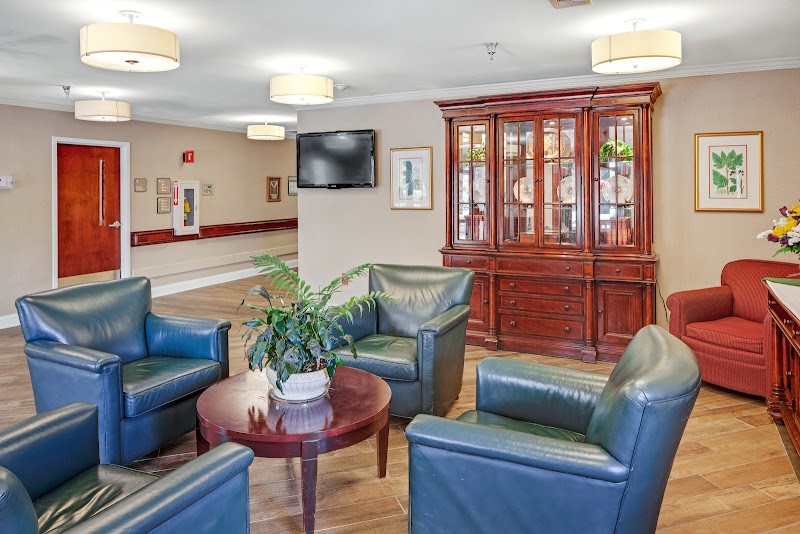
How is Pruitthealth- Moncks Corner Staffed?

CMS rates PruittHealth- Moncks Corner's staffing level at 3 out of 5 stars, which is average compared to other nursing homes. Staff turnover is 46%, compared to the South Carolina average of 46%.

What Have Inspectors Found at Pruitthealth- Moncks Corner?

State health inspectors documented 23 deficiencies at PruittHealth- Moncks Corner during 2021 to 2025. These included: 3 Immediate Jeopardy (the most serious level, indicating potential for serious harm or death), 2 that caused actual resident harm, 17 with potential for harm, and 1 minor or isolated issues. Immediate Jeopardy findings are rare and represent the most serious regulatory concerns. They require immediate corrective action.
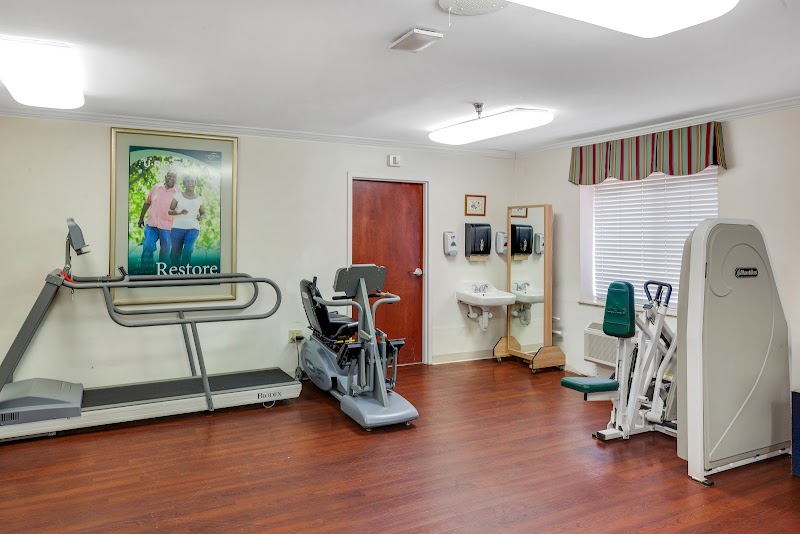
Who Owns and Operates Pruitthealth- Moncks Corner?

PruittHealth- Moncks Corner is owned by a for-profit company. For-profit facilities operate as businesses with obligations to shareholders or private owners. The facility is operated by PRUITTHEALTH, a chain that manages multiple nursing homes. With 132 certified beds and approximately 85 residents (about 64% occupancy), it is a mid-sized facility located in Moncks Corner, South Carolina.
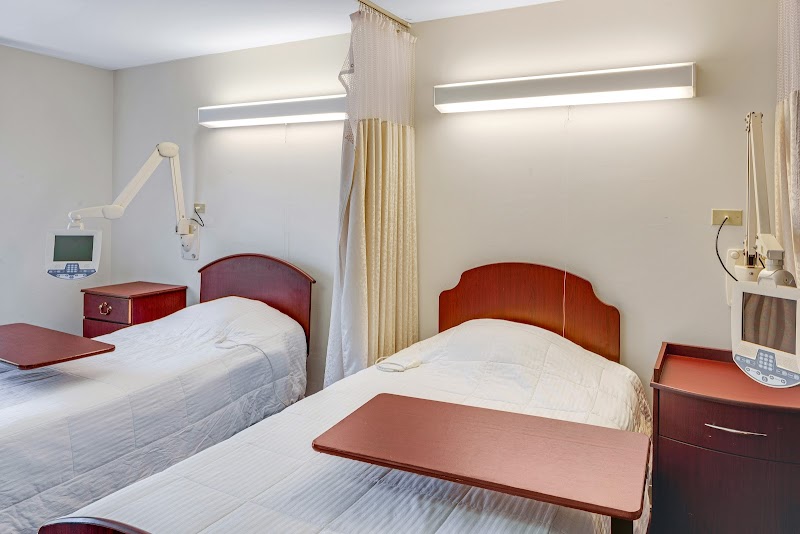
How Does Pruitthealth- Moncks Corner Compare to Other South Carolina Nursing Homes?

Compared to the 100 nursing homes in South Carolina, PruittHealth- Moncks Corner's overall rating (1 stars) is below the state average of 2.8, staff turnover (46%) is near the state average of 46%, and health inspection rating (1 stars) is much below the national benchmark.

What Should Families Ask When Visiting Pruitthealth- Moncks Corner?

Based on this facility's data, families visiting should ask: "What changes have been made since the serious inspection findings, and how are you preventing similar issues?" "What safeguards and monitoring systems are in place to protect residents from abuse or neglect?" "Can I visit during a mealtime to observe dining assistance and food quality?" "How do you handle medical emergencies, and what is your hospital transfer rate?" These questions are particularly relevant given the facility's Immediate Jeopardy citations and the substantiated abuse finding on record.

Is Pruitthealth- Moncks Corner Safe?

Based on CMS inspection data, PruittHealth- Moncks Corner has documented safety concerns. The facility has 1 substantiated abuse finding (meaning confirmed case of resident harm by staff or other residents). Inspectors have issued 3 Immediate Jeopardy citations (the most serious violation level indicating risk of serious injury or death). The facility has a 1-star overall rating and ranks #100 of 100 nursing homes in South Carolina. Families considering this facility should ask detailed questions about what corrective actions have been taken since these incidents.

Do Nurses at Pruitthealth- Moncks Corner Stick Around?

PruittHealth- Moncks Corner has a staff turnover rate of 46%, which is about average for South Carolina nursing homes (state average: 46%). Moderate turnover is common in nursing homes, but families should still ask about staff tenure and how the facility maintains care continuity when employees leave.

Was Pruitthealth- Moncks Corner Ever Fined?

PruittHealth- Moncks Corner has been fined $21,970 across 3 penalty actions. This is below the South Carolina average of $33,299. While any fine indicates a compliance issue, fines under $50,000 are relatively common and typically reflect isolated problems that were subsequently corrected. Families should ask what specific issues led to these fines and confirm they've been resolved.

Is Pruitthealth- Moncks Corner on Any Federal Watch List?

PruittHealth- Moncks Corner is not on any federal watch list. The most significant is the Special Focus Facility (SFF) program, which identifies the bottom 1% of nursing homes nationally based on persistent, serious quality problems. Not being on this list means the facility has avoided the pattern of deficiencies that triggers enhanced federal oversight. This is a positive indicator, though families should still review the facility's inspection history directly.