Willow Brooke Court At Park Pointe Village
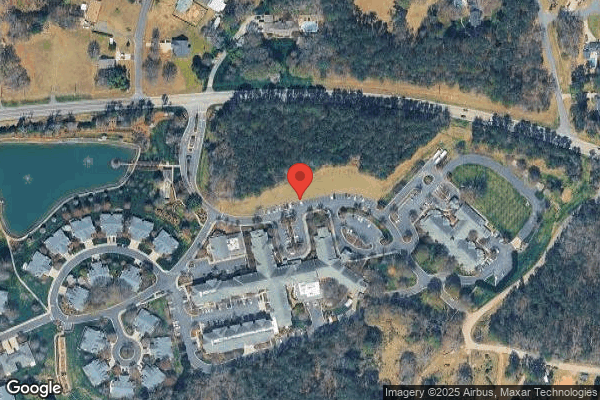
3025 Chesbrough Blvd, Rock Hill, SC 29732 (803) 980-8605
Non profit - Corporation 20 Beds ACTS RETIREMENT-LIFE COMMUNITIES Data: November 2025
Trust Grade
90/100
#33 of 186 in SC
Last Inspection: March 2025

Within standard 12-15 month inspection cycle. Federal law requires annual inspections.

Overview

Willow Brooke Court At Park Pointe Village has received a Trust Grade of A, indicating it is an excellent facility that is highly recommended. It ranks #33 out of 186 nursing homes in South Carolina, placing it in the top half of all facilities, and #3 of 8 in York County, meaning only two local options are better. The facility's performance has remained stable over recent years, with the same number of issues reported in 2021 and 2025. Staffing is a strong point, boasting a 5-star rating and a turnover rate of 37%, which is below the state average, indicating a consistent and knowledgeable staff. Notably, there have been no fines reported, and the facility has more RN coverage than 92% of South Carolina facilities, ensuring that residents receive attentive care. However, there are some weaknesses to consider. Recent inspections revealed four concerns, including that the facility failed to keep drainage pipes above floor level, which could pose a contamination risk in case of a sewer backup. Additionally, residents were not adequately informed about their rights to access important information regarding advocacy and complaint procedures. Lastly, the facility did not implement a required Baseline Care Plan for a resident within 48 hours of admission, which could impact personalized care. Overall, while the facility has many strengths, families should be aware of these specific areas needing improvement.

Trust Score
A
90/100
In South Carolina
#33/186
Top 17%
Safety Record
Low Risk
No red flags
Inspections
Holding Steady
2 → 2 violations
Staff Stability
○ Average
37% turnover. Near South Carolina's 48% average. Typical for the industry.
Penalties
✓ Good
No fines on record. Clean compliance history, better than most South Carolina facilities.
Skilled Nurses
✓ Good
Each resident gets 69 minutes of Registered Nurse (RN) attention daily — more than 97% of South Carolina nursing homes. RNs are the most trained staff who catch health problems before they become serious.
Violations
✓ Good
Only 4 deficiencies on record. Cleaner than most facilities. Minor issues only.
★★★★★
5.0
Overall Rating
★★★★★
5.0
Staff Levels
★★★★★
5.0
Care Quality
★★★★☆
4.0
Inspection Score
Stable
2021: 2 issues
2025: 2 issues

The Good

  • 5-Star Staffing Rating · Excellent nurse staffing levels
  • 5-Star Quality Measures · Strong clinical quality outcomes
  • Full Sprinkler Coverage · Fire safety systems throughout facility
  • No fines on record
  • Staff turnover below average (37%)

    11 points below South Carolina average of 48%

Facility shows strength in staffing levels, quality measures, fire safety.

The Bad

Staff Turnover: 37%

Near South Carolina avg (46%)

Typical for the industry

Chain: ACTS RETIREMENT-LIFE COMMUNITIES

Part of a multi-facility chain

Ask about local staffing decisions and management

The Ugly 4 deficiencies on record

Mar 2025 2 deficiencies
CONCERN (D)

Potential for Harm - no one hurt, but risky conditions existed

Deficiency F0655 (Tag F0655)

Could have caused harm · This affected 1 resident

**NOTE- TERMS IN BRACKETS HAVE BEEN EDITED TO PROTECT CONFIDENTIALITY** Based on review of the facility policy, observation, interviews and review of the facility assessment, the facility failed to co...

Read full inspector narrative →
**NOTE- TERMS IN BRACKETS HAVE BEEN EDITED TO PROTECT CONFIDENTIALITY** Based on review of the facility policy, observation, interviews and review of the facility assessment, the facility failed to complete and implement a Baseline Care Plan within 48 hours of an admission, for Resident (R)218. Findings include: Review of the facility policy titled, Baseline Care Plan, with a revision date of November 2024 revealed, 1. The licensed nurse will develop a baseline care plan in the electronic application under the assessment tab for each resident within 48 hours of a resident's admission. Review of R218's Face Sheet revealed she was admitted to the facility on [DATE] with diagnoses including, but not limited to, displaced fracture of upper end of left humerus, subsequent encounter for fracture with routine healing, history of falling, muscle weakness, difficulty in walking, lack of coordination, Parkinson's disease. Review of R218's Fall Risk Evaluation conducted on 03/20/25 revealed a score of 9. Review of R218's Care Plan with a start date of 03/26/25, revealed [R218] have an ADL self-care performance deficit r/t Limited ROM, Musculoskeletal impairment. I had a fall at home and fractured my left humerus. Interventions include I am training ambulation with therapy with a cane. Sling to left arm. Non-weight bearing to left arm. I am able to: bathe upper body but need asst with lower. Allow me sufficient time for dressing and undressing. R218 I am a fall risk r/t Deconditioning/discomfort secondary to fracture to left arm. I had a fall at home with left humerus fracture initiated on 03/26/25. Interventions include Anticipate and meet my needs. Be sure my call light is within reach and encourage me to use it for assistance as needed. I would like a prompt response to all my requests for assistance. Encourage me to participate in activities that promote exercise, physical activity for strengthening and improved mobility. Ensue that I am wearing appropriate footwear when ambulating or mobilizing in w/c. During an interview on 03/26/25 at 2:40 PM, the Minimum Data Set (MDS) coordinator stated the assessments they perform on admission are as follows: the Braden assessment, the fall assessment, the side rail wander assessment, the skilled evaluation, the baseline care plan, a Covid screening, and a good body audit. She stated that these are the assessments that she could remember off the top of her head. The MDS coordinator stated the baseline care plan must be completed in 48 hours of admission, and the comprehensive care plan is due by day 21. She stated that she is working on completing the care plan for R218. She stated that staff communicates about the resident's care via a walking report system. The MDS coordinator admits that all of the information needs to relayed in the care plan. She stated the purpose of the care plan is to outline the resident's strengths and weaknesses and how to care for the residents. During an interview on 03/26/25 at 3:05 PM, the Director of Nursing (DON) stated the importance of the care plan is to give the staff an outline of the goal for the resident and the plans and interventions to reach those goals. She stated the care plan is initiated on admission. The DON stated that the baseline care plan is continuously updated. The DON expects the MDS coordinator to complete the base line care plan in 48 hours of admission of the resident. During an interview on 03/26/25 at 3:21 PM, Licensed Practical Nurse (LPN)1 stated the importance of the care plan is to establish goals for the residents and the care plan shows whether the resident is progressing or not. LPN1 stated that she follows the care plan to care for the residents. She looks at the care plan daily. LPN1 stated the care plan is very important because it is the basis of how she takes care of the residents.
CONCERN (E)

Potential for Harm - no one hurt, but risky conditions existed

Deficiency F0574 (Tag F0574)

Could have caused harm · This affected multiple residents

Based on record review and interviews, the facility failed to ensure residents were informed of their right to have access to names, addresses and telephone numbers of all pertinent state regulatory a...

Read full inspector narrative →
Based on record review and interviews, the facility failed to ensure residents were informed of their right to have access to names, addresses and telephone numbers of all pertinent state regulatory and informational agencies, resident advocacy groups and information on filing a complaint and or reporting alleged abuse violations. The facility further failed to ensure residents knew where the above information was located within the facility as revealed by 7 of 7 residents during 1 of 1 resident council meetings. The findings included: Record review of the Resident Council Minutes for December 2024, January 2025, and February 2025, no notice of informing residents og their right to have access to names, addresses and telephone numbers of all pertinent state regulatory and informational agencies, resident advocacy groups and information on filing a complaint and or reporting alleged abuse violations. The Resident Council Minutes did not mention the whereabouts of such information within the facility. Interviews on 03/26/25 at 02:17 PM, during a resident council meeting, 4 of 4 residents in attendance confirmed they were not aware of their right to have access to a list of names, addresses and telephone numbers of all pertinent state regulatory and informational agencies, resident advocacy groups and information on filing a complaint and or reporting alleged abuse violations and the whereabouts of this information in the facility. Interview on 03/26/25 at 03:13 PM, the Activities Director revealed, I go through the [Critical Element] CE pathway for resident council every quarter and ask the questions. I do not include this information in the resident council meeting minutes. We play resident's rights Bingo at least yearly. The Ombudsman comes to the facility yearly and reviews their rights with them. No documentation could be found to ensure residents were informed of their right to have access to state regulatory and informational agencies and how to file a complaint and or reporting abuse.
Dec 2021 2 deficiencies
CONCERN (D)

Potential for Harm - no one hurt, but risky conditions existed

Deficiency F0849 (Tag F0849)

Could have caused harm · This affected 1 resident

**NOTE- TERMS IN BRACKETS HAVE BEEN EDITED TO PROTECT CONFIDENTIALITY** Based on interview, record review, and review of facility policy, the facility failed to ensure a coordinated/integrated plan of...

Read full inspector narrative →
**NOTE- TERMS IN BRACKETS HAVE BEEN EDITED TO PROTECT CONFIDENTIALITY** Based on interview, record review, and review of facility policy, the facility failed to ensure a coordinated/integrated plan of care was developed for one (Resident (R) 112) of one residents reviewed for Hospice care out of the total census of 10 residents. R112's care plan failed to describe the coordination of care between the facility and the Hospice provider, including which services each party would provide for the resident. Findings include: During an interview on 12/29/21 at 10:27 AM, R112 stated she was not on Hospice care and that I'm just happy here in my chair. Review of R112's printed admission Record from the electronic medical record (EMR) Profile tab, showed a facility admission date of 12/03/21. Review of R112's Medical Diagnosis EMR tab showed diagnoses that included dementia with behavioral disturbance, major depressive disorder, and pain. A review of R112's admission Minimum Data Set [MDS] assessment with an Assessment Reference Date (ARD) of 12/10/21 revealed R112 was enrolled in and receiving hospice services both prior to and after admission to this facility on 12/03/21. A review of R112's care plan, initiated 12/03/21, (from the EMR Care Plan tab) revealed that R112 was on Hospice care but included no information as to how often Hospice was providing services such as personal care by a certified nurse aide (CNA) or how often a Registered Nurse, Social Services, or Ministerial services would be available. Review of the care plan revealed no coordination of care regarding what services the facility would provide versus what services Hospice would provide. A review of R112's EMR Progress Notes tab for 12/15/21 showed a late entry by the Social Services Coordinator (SSC) which was not completed until 12/30/21 at 8:51 AM, after initiation of the recertification survey. It stated, Social Services Note: Late Entry: Note Text: Comprehensive POC [Plan of Care] Review: IDT [Interdisciplinary] and Hospice team met with [name of R112's Heath Care Power of Attorney (HCPOA)] on 12/15/2021-- to discuss res [resident] POC needs and concerns. Concerns were voiced and addressed by appropriate team members. Res is alert, verbal with confusion noted. Res has adjusted well to change in the environment. Res has been pleasant and cooperative with staff and others. Res preferences have been honored by staff to promote Life enrichment and engagement living too. Res has continued with routine. Her family has made her environment homelike and accessible. Res is very comfortable in the new environment. [HCPOA] expressed to IDT that she is very pleased with the res adjustment at WBC [facility name]. Res enjoys her routine activities for meals, ADL [activities of daily living], and for leisure time. Res is a delight to work with. Res is stable for mood and behavior. Staff continues to honor res preferences when appropriate. Staff continues to honor res rights and choices. Review of this note revealed no information as to coordination of care as to the services the facility would provide versus the services for which Hospice was responsible. On 12/30/21 at 2:30 PM, MDS Coordinator/Licensed Practical Nurse (LPN) 1 stated the person identified as the Hospice Coordinator in the entrance conference documentation was the facility Social Services Coordinator (SSC), who was currently out of the office. A request was made for evidence of a coordinated care plan related to the resident's Hospice services. A care plan from the assisted living facility where R112 previously resided was provided. Review of this Hospice Interdisciplinary [IDT] Care Plan, dated 08/20/21, revealed the approaches listed were to assess and instruct for spiritual care; assess, perform, and instruct for counseling; and assess, perform, and instruct for grief management. The care plan from the assisted living revealed no coordination of services detailing which party (the facility or Hospice) was responsible for the delivery of each service. During an interview on 12/31/21 at 10:03 AM, the SSC stated R112 came over from an assisted living unit and was admitted to this facility for long term services on hospice care. The SSC stated that when admitted , a new hospice nurse was assigned, and they (hospice) should be sending an integration (plan of care) from the new nurse since she was transferred here. The SSC stated that the Hospice IDT care plan came with her record to us [from the assisted living where R112 previous resided] and the coordination would be from the new admission here. When evidence of coordination of care with hospice services was requested for the 12/03/21 admission to this facility, the SSC indicated that it had not yet been received, stating, That is coming to us. When asked how she coordinates care between hospice services and the facility, the SSC stated, We have the letter that we send to them, clarifying that this was a letter sent to hospice to invite them to the care plan conference. The SSC stated the facility's nursing disciplines for care were not initially included in the facility care plan, so I added that, but the rest of it was there. The SCC stated that her only coordination involved care plan meetings, and coordination of nursing staff care was the responsibility of the MDS Coordinator. Interview with the Interim Director of Nursing (IDON) on 12/31/21 at 10:11 AM revealed that MDS Coordinator/LPN 1 would be the coordinator for hospice care, and she would arrange an interview. In an interview on 12/31/21 at 10:45 AM, Registered Nurse (RN) 9 was unaware how often hospice services were to be provided for R112, stating, Honestly, I'm not sure. I did see [name] here for [R112]. I guess it's weekly. I'm not used to charting system yet, so I'm not sure where it would be. When asked if she would expect to see the coordinated care between hospice and the facility described in the care plan, RN9 responded, As a nurse, yes, I would expect to see it in the care plan. In a follow-up interview on 12/31/21 at 10:49 AM, the SSC provided paperwork faxed from Hospice that showed Update to Physician Orders. The SSC confirmed this paperwork was just faxed over today and stated, The orders remained the same from over there [the assisted living center where R112 was prior to admission]. Included in the fax was a Hospice Nursing Clinical Note dated 12/27/21 that did not mention any type of frequency of visits or coordination of care with the facility. The SSC again stated she was not in charge of coordinating care, just inviting Hospice to the care plan meeting, which had been done on 12/03/21 for a 12/15/21 meeting. During an additional interview on 12/31/21 at 11:26 AM, the IDON was asked about coordination of care and stated, The Hospice nurse comes to speak with nurse, two CNAs twice a week and nurse weekly and as needed. The hospice nurse will sit with facility nurse and MDS Coordinator will then update the information. When asked to clarify where the information was to be updated, the IDON stated it was normally supposed to be put in the resident's care plan. During a telephone interview on 12/31/21 at 12:47 PM, MDS Coordinator/LPN1 stated the plan of care is created by Hospice and they direct how often they visit or social services comes to see R112. I had them call over to hospice and send it [plan of care] over. I was surprised it wasn't in our files already. When asked if/how the hospice plan of care was incorporated into the facility care plan, MDS Coordinator/LPN1 stated that she did not want to be very specific on the care plan in case Hospice did not show up. When asked about the 08/20/21 assisted living hospice care plan, MDS/Coordinator/LPN1 stated, Hospice should have updated their IDT care plan when she had the change of care [admission to this facility on 12/03/21]. During an additional interview on 12/31/21 at 3:11 PM, the IDON brought in the facility hospice policy and stated, Yes, coordination of care is supposed to be identified on the care plan. Review of the facility policy titled Hospice Care, revised 08/2013, revealed that, Coordination of Care Practices while in Oak Bridge Terrace (OBT) and WBC .3. All services necessary to meet the physical, psychological, medical, and spiritual needs of the beneficiary and family are reflected in the plan of care. The coordinated plan of care will identify the discipline and provider responsible for each intervention. The most recent hospice plan if care is to be retained in the resident's file.
CONCERN (F)

Potential for Harm - no one hurt, but risky conditions existed

Safe Environment (Tag F0921)

Could have caused harm · This affected most or all residents

Based on observation, interview, and record of professional reference information, the facility failed to maintain a safe, sanitary, functional environment by assuring that the drainage pipes from the...

Read full inspector narrative →
Based on observation, interview, and record of professional reference information, the facility failed to maintain a safe, sanitary, functional environment by assuring that the drainage pipes from the juice bar table and the ice machine were above floor level. In the event of a sewer back-up, drainpipes at or below floor level which do not have an air gap of at least one inch can be contaminated by the dirty sewer liquid backup, creating the potential to affect any of the current ten residents. Findings include: During an initial tour of the kitchen on 12/29/21 at 9:50 AM with the Registered Dietician (RD), an observation of the drain area between the ice machine and the beverage bar area (coffee machine, juice machine on stainless table table) revealed that two of three drains (both approximately 1-inch PVC pipes, the third was approximately a 2.5-inch PVC pipe) were draining below floor level with the PVC tubing lying on the floor. At 9:52 AM, the RD confirmed two of the drainpipes were discharging lower than floor level. At 9:58 AM on 12/29/21, the Maintenance Foreman (MFM) entered the kitchen and confirmed the pipes were below the floor level. When asked what the consequences could be of discharge pipes below floor level, the MFM responded, If sewer backed up it would go into the [water] system. On 12/29/21 at 1:45 PM, the RDDC stated one of the below-floor level drainpipes was from the ice machine, while the other was from the drain under the juice machine. A review of a professional reference material from the Pennsylvania State University College of Agricultural Sciences titled, Understanding and Preventing Backflow in Your Food Facility is Critical to Ensure Safe Food for Your Customers updated 02/01/19 and retrieved on 07/21/21 from https://extension.psu.edu/safe-water-and-your-foodservice-operation, revealed in pertinent part, One of the greatest safety risks to water in an establishment is the creation of cross-connections. A cross-connection is a direct link between safe and unsafe water .Cross-connections are dangerous because they create an opportunity for backflow. Backflow occurs when contaminants from dirty water flow back into the stream of safe water, making it unsafe to use . An air gap is a 100% [percent] sure way to prevent backflow. This is a physical space between a safe water outlet and a source of unsafe water. Review of professional reference material from the International Association of Plumbing & Mechanical Officials titled, Air Gap and Air Break Required retrieved on 07/21/21 from http://forms.iapmo.org/email_marketing/codespotlight/2017/July13.htm, revealed in pertinent part that for a plumbing air gap, the the minimum vertical distance as measured from the lowest point of the indirect waste pipe or the fixture outlet to the flood-level rim of the receptor shall be not less than 1 inch. In an interview on 12/31/21 at 3:15 PM, the Director of Culinary and Nutrition Services (DCNS) stated, There is no specific policy regarding air gaps.
Understanding Severity Codes (click to expand)
Life-Threatening (Immediate Jeopardy)
J - Isolated K - Pattern L - Widespread
Actual Harm
G - Isolated H - Pattern I - Widespread
Potential for Harm
D - Isolated E - Pattern F - Widespread
No Harm (Minor)
A - Isolated B - Pattern C - Widespread

Questions to Ask on Your Visit

  • "Can I speak with families of current residents?"
  • "What's your RN coverage like on weekends and overnight?"

Our Honest Assessment

Strengths
  • • Grade A (90/100). Above average facility, better than most options in South Carolina.
  • • No major safety red flags. No abuse findings, life-threatening violations, or SFF status.
  • • No fines on record. Clean compliance history, better than most South Carolina facilities.
  • • Only 4 deficiencies on record. Cleaner than most facilities. Minor issues only.
Concerns
  • • No significant concerns identified. This facility shows no red flags across CMS ratings, staff turnover, or federal penalties.
Bottom line: Generally positive indicators. Standard due diligence and a personal visit recommended.

About This Facility

What is Willow Brooke Court At Park Pointe Village's CMS Rating?

CMS assigns Willow Brooke Court At Park Pointe Village an overall rating of 5 out of 5 stars, which is considered much above average nationally. Within South Carolina, this rating places the facility higher than 99% of the state's 100 nursing homes. This rating reflects solid performance across the metrics CMS uses to evaluate nursing home quality.
How is Willow Brooke Court At Park Pointe Village Staffed?
CMS rates Willow Brooke Court At Park Pointe Village's staffing level at 5 out of 5 stars, which is much above average compared to other nursing homes. Staff turnover is 37%, compared to the South Carolina average of 46%. This relatively stable workforce can support continuity of care.

What Have Inspectors Found at Willow Brooke Court At Park Pointe Village?

State health inspectors documented 4 deficiencies at Willow Brooke Court At Park Pointe Village during 2021 to 2025. These included: 4 with potential for harm.

Who Owns and Operates Willow Brooke Court At Park Pointe Village?

Willow Brooke Court At Park Pointe Village is owned by a non-profit organization. Non-profit facilities reinvest revenue into operations rather than distributing to shareholders. The facility is operated by ACTS RETIREMENT-LIFE COMMUNITIES, a chain that manages multiple nursing homes. With 20 certified beds and approximately 15 residents (about 75% occupancy), it is a smaller facility located in Rock Hill, South Carolina.

How Does Willow Brooke Court At Park Pointe Village Compare to Other South Carolina Nursing Homes?

Compared to the 100 nursing homes in South Carolina, Willow Brooke Court At Park Pointe Village's overall rating (5 stars) is above the state average of 2.9, staff turnover (37%) is near the state average of 46%, and health inspection rating (4 stars) is above the national benchmark.

What Should Families Ask When Visiting Willow Brooke Court At Park Pointe Village?

Based on this facility's data, families visiting should ask: "Can I visit during a mealtime to observe dining assistance and food quality?" "How do you handle medical emergencies, and what is your hospital transfer rate?" "Can I speak with family members of current residents about their experience?"

Is Willow Brooke Court At Park Pointe Village Safe?

Based on CMS inspection data, Willow Brooke Court At Park Pointe Village has a clean safety record: no substantiated abuse findings (meaning no confirmed cases of resident harm), no Immediate Jeopardy citations (the most serious violation level indicating risk of serious injury or death), and is not on the Special Focus Facility watch list (a federal program monitoring the lowest-performing 1% of nursing homes). The facility has a 5-star overall rating and ranks #1 of 100 nursing homes in South Carolina. While no facility is perfect, families should still ask about staff-to-resident ratios and recent inspection results during their visit.

Do Nurses at Willow Brooke Court At Park Pointe Village Stick Around?

Willow Brooke Court At Park Pointe Village has a staff turnover rate of 37%, which is about average for South Carolina nursing homes (state average: 46%). Moderate turnover is common in nursing homes, but families should still ask about staff tenure and how the facility maintains care continuity when employees leave.

Was Willow Brooke Court At Park Pointe Village Ever Fined?

Willow Brooke Court At Park Pointe Village has no federal fines on record. CMS issues fines when nursing homes fail to meet care standards or don't correct problems found during inspections. The absence of fines suggests the facility has either maintained compliance or corrected any issues before penalties were assessed. This is a positive indicator, though families should still review recent inspection reports for the full picture.

Is Willow Brooke Court At Park Pointe Village on Any Federal Watch List?

Willow Brooke Court At Park Pointe Village is not on any federal watch list. The most significant is the Special Focus Facility (SFF) program, which identifies the bottom 1% of nursing homes nationally based on persistent, serious quality problems. Not being on this list means the facility has avoided the pattern of deficiencies that triggers enhanced federal oversight. This is a positive indicator, though families should still review the facility's inspection history directly.