White Oak At North Grove Inc


290 N Grove Medical Park Drive, Spartanburg, SC 29303 (864) 345-1700
For profit - Corporation 132 Beds WHITE OAK MANAGEMENT Data: November 2025 1 Immediate Jeopardy citation
Trust Grade
41/100
#138 of 186 in SC
Last Inspection: May 2025

Inspected within the last 6 months. Data reflects current conditions.

Overview

White Oak At North Grove Inc has a Trust Grade of D, indicating below-average performance with several concerns raised. Ranked #138 out of 186 facilities in South Carolina, they are in the bottom half overall and #9 out of 15 in Spartanburg County, meaning there are only a few local options that perform better. The facility is improving, having reduced its issues from 7 in 2024 to 5 in 2025. Staffing is a strength here, with a rating of 4 out of 5 stars and only 34% turnover, which is lower than the state average, suggesting that staff are experienced and familiar with the residents. However, there are significant weaknesses, including critical incidents where the facility failed to accurately document residents' end-of-life wishes, potentially putting their preferences at risk, and concerns about food safety, such as not properly labeling and discarding expired foods, which could lead to foodborne illnesses.
Trust Score
D
41/100
In South Carolina
#138/186
Bottom 26%
Safety Record
High Risk
Review needed
Inspections
Getting Better
7 → 5 violations
Staff Stability
○ Average
34% turnover. Near South Carolina's 48% average. Typical for the industry.
Penalties
⚠ Watch
$10,364 in fines. Higher than 96% of South Carolina facilities. Major compliance failures.
Skilled Nurses
○ Average
Each resident gets 30 minutes of Registered Nurse (RN) attention daily — about average for South Carolina. RNs are the most trained staff who monitor for health changes.
Violations
⚠ Watch
15 deficiencies on record. Higher than average. Multiple issues found across inspections.
★★☆☆☆
2.0
Overall Rating
★★★★☆
4.0
Staff Levels
★★★☆☆
3.0
Care Quality
★★☆☆☆
2.0
Inspection Score
Stable
2024: 7 issues
2025: 5 issues

The Good

  • 4-Star Staffing Rating · Above-average nurse staffing levels
  • Full Sprinkler Coverage · Fire safety systems throughout facility
  • No fines on record
  • Staff turnover below average (34%)

    14 points below South Carolina average of 48%

Facility shows strength in staffing levels, fire safety.

The Bad

2-Star Overall Rating

Below South Carolina average (2.8)

Below average - review inspection findings carefully

Staff Turnover: 34%

11pts below South Carolina avg (46%)

Typical for the industry

Federal Fines: $10,364

Below median ($33,413)

Minor penalties assessed

Chain: WHITE OAK MANAGEMENT

Part of a multi-facility chain

Ask about local staffing decisions and management

The Ugly 15 deficiencies on record

1 life-threatening
May 2025 5 deficiencies 1 IJ
CRITICAL (J)

Immediate Jeopardy (IJ) - the most serious Medicare violation

Deficiency F0578 (Tag F0578)

Someone could have died · This affected 1 resident

**NOTE- TERMS IN BRACKETS HAVE BEEN EDITED TO PROTECT CONFIDENTIALITY** Based on observation, interview, and record review, the facility failed to ensure the residents' code status documented in the e...

Read full inspector narrative →
**NOTE- TERMS IN BRACKETS HAVE BEEN EDITED TO PROTECT CONFIDENTIALITY** Based on observation, interview, and record review, the facility failed to ensure the residents' code status documented in the electronic medical record and facility code status binder accurately reflected the residents' end of life wishes for three residents (R)328, R82, and R23) reviewed for code status. R328 who wished to have a Do Not Resuscitate (DNR) status was listed as having a Full code status in the electronic medical records. R82 and R23 were listed as having a DNR status in the EMR but were listed as having a full code and DNR in the facility code status binder. These failures placed all residents who were admitted and/or readmitted to the facility at risk for their end-of-life code status wishes not to be honored. An Immediate Jeopardy was identified on [DATE] and was determined to exist on [DATE], when R82's DNR order was signed, at §483.10 F578: Request/Refuse/Discontinue; Formulate Advance Directives. The Administrator was notified on [DATE] at 5:56 PM of the Immediate Jeopardy. The facility provided an acceptable removal plan on [DATE] at 10:28 AM. The removal plan included auditing all residents' electronic medical record code status, including DNR order verification and appropriate face sheet labeling; auditing of all records in the facility code status binder, and educating all licensed personnel on the facility's processes regarding resident code status. Through interviews with facility staff, review of electronic medical records and the facility code status binder, and review of staff education records, the survey team verified all elements of the facility's IJ Removal Plan and removed the IJ, effective [DATE] at 6:22 PM, and the S/S was lowered to a D, isolated with no actual harm with potential for more than minimal harm. Findings include: Review of the facility's undated policy titled, Advanced Directives revealed, It is the policy of [NAME] Oak Management, Inc. and its member facilities to act affirmatively to preserve the life of all residents. However, [NAME] Oak Management, Inc. recognizes that in certain cases, medical treatment or resuscitative efforts, such as cardiopulmonary resuscitation, may be medically contraindicated inappropriate or inconsistent with a resident's expressed wishes. [NAME] Oak Management, Inc. recognizes the rights of competent residents to accept or reject medical treatment. It is the policy of [NAME] Oak Management, Inc. to honor advance directives which are properly executed in accordance with State law. Such advance directives will be honored consistent with the procedures outlined in the Policy and Procedure manual for Advance Directives. 1. Review of R328's Face Sheet, located in resident's electronic medical record (EMR) under the Profile tab, revealed the resident was admitted to the facility on [DATE] and was listed as Full code. Review of R328's banner, listed on the face sheet of the EMR, revealed the resident was listed as Full Code. Review of R328's Physician Orders, located in the resident's EMR under the Orders tab, revealed no order for code status. Review of the code status binder located at the N1 unit wing nurses' station revealed a signed DNR form for R328, dated [DATE], located behind R328's face sheet. During an interview on [DATE] at 11:35 AM, Family member (FM)1 and (FM)2 stated that R328 wanted to be a DNR, and the facility was provided with all that information during the admission process. During an interview on [DATE] at 3:10 PM, R328 stated, I want to be a DNR, not resuscitated. Review of the Code Status Nursing report, dated [DATE] at 3:19 PM and provided by the facility, revealed R328's code status was listed as full code. 2. Review of R82's Face Sheet, located in resident's EMR under the Profile tab, revealed the resident was admitted to the facility on [DATE] and was listed as DNR and attempt CPR. Review of R82's banner, listed on the face sheet of the EMR, revealed the resident was listed as DNR. Review of R82's Physician Orders, located in the resident's EMR under the Orders tab, revealed an order for DNR. Review of the code status binder located at the N1 unit wing nurses station revealed full code and a black dot which indicated DNR, with a signed DNR, dated [DATE], behind R82's face sheet. 3. Review of R23's Face Sheet, located under the Resident tab in the EMR indicated R23 was readmitted to the facility on [DATE] with diagnoses that included congestive heart failure. Review of R23's admission Minimum Data Set (MDS), located under the RAI (Resident Assessment Instrument) tab in the EMR and with an Assessment Reference Date (ARD) of [DATE], indicated R23 had a Brief Interview for Mental Status (BIMS) score of 10 out of 15, which indicated R23 was moderately cognitively impaired. Review of R23's Medical Condition Certification, located under the Resident Documents in the EMR and dated [DATE], indicated, . This resident DOES [sic] possess decisional capacity to make healthcare decisions for self . Review of R23's Physician's Orders, located under the Orders tab in the EMR, revealed an order dated [DATE] for Code Status - DNR. Review of R23's Care Plan, located under the RAI tab in the EMR, revealed the code status of DNR was not reflected in the resident's care plan. Review of R23's Face Sheet, located in the N3 Notebook at the Nurses' Station 5-6 revealed a dot at the top of the Face Sheet and beside the resident's name it was recorded, Full Code. Review of R23's South Carolina Emergency Medical Services, located under the Resident Document tab in the EMR, revealed a Do Not Resuscitate Order, signed by R23 and dated [DATE], which indicated, . This notice is to inform all emergency medical personnel who may be called to render assistance to [name of R23] that he/she has a terminal condition which has been diagnosed by me and has specifically requested . that no resuscitative efforts including artificial stimulation of the cardiopulmonary system by electrical, mechanical, or manual means be made in the event of cardiopulmonary arrest . During an interview on [DATE] at 3:15 PM, R23 stated, I want to be a DNR. During an interview on [DATE] at 11:43 AM, Licensed Practical Nurse (LPN)1 stated when a resident was found unresponsive, they would look at the banner in the EMR or at the physician's order. She stated they could look in the code status binder. She stated they can also look at the resident's face sheet. During an interview on [DATE] at 11:45 AM, LPN3 was asked where she would go to check a resident's code status. She stated, I will go in the computer to check the code status of a resident. During an interview on [DATE] at 12:55 PM, LPN4 was asked where she would go to check a resident's code status. She stated, I will go into the computer to check the code status. When asked where she would look to determine a resident's code status if the computer was not working, LPN4 stated, I would look in the binder at the nurses' desk. When asked what she would do if there was a dot at the top of the Face Sheet in the binder, which indicated DNR, and beside of the resident's name it was written Full Code, LPN4 stated, Then I would have to call the doctor and clarify this with him. During an interview on [DATE] at 1:20 PM, the Social Services Director (SSD) stated after a resident was admitted , their code status would come up in the EMR under the advanced directives tab. She stated the binder would come into play as a backup if the EMR system went down. The SSD stated she was unsure if the binders were audited to catch discrepancies. She stated staff would look at the order for code status, but if there was no order, they would have to look in the binder. The SSD stated a DNR was indicated in the binder by a black dot on the face sheet. She stated if the face sheet indicated both full code and had a dot, staff should know the dot meant DNR, but she agreed that it would be confusing for staff and there should not be two different code statuses listed. The SSD stated R328 was currently a DNR because she watched her sign the DNR. She looked at the resident's EMR and stated R328was listed as a full code and that staff would follow that if she were to be found unresponsive. The SSD stated she was unsure why the EMR had not been updated to reflect the DNR status or why there was no order for code status. During an interview on [DATE] at 1:23 PM, the Administrator stated the binder was only used as a backup when staff were unable to access the EMR. He stated the code status listed in the EMR was the most accurate. During an interview on [DATE] at 2:25 PM, LPN 2 (a nurse on 400 hallway) stated if a resident's face sheet had a black dot and also recorded that the resident was a full code, she would then check the computer for the resident's code status LPN2 stated if a resident coded, she would check the computer first for the code status. During an interview on [DATE] at 4:47 PM, the Director of Nursing (DON) stated getting advanced orders and code status in place was a basic process. The DON stated the Social Worker (SW) spoke with the family and the resident and would get an order from the physician. He stated the order should have been updated in the medical record to reflect the correct code status based on the resident and family's wishes. The DON stated the code status binder was the last thing he ever expected to be inaccurate. He stated it was just audited prior to the start of the survey but staff did not catch the discrepancies that were identified by the survey team.
CONCERN (D)

Potential for Harm - no one hurt, but risky conditions existed

Resident Rights (Tag F0550)

Could have caused harm · This affected 1 resident

Based on observation, interview, record review, and facility policy review, the facility failed to promote a dignified dining experience which included timely meal service and eating meals at the same...

Read full inspector narrative →
Based on observation, interview, record review, and facility policy review, the facility failed to promote a dignified dining experience which included timely meal service and eating meals at the same time as tablemates for two of two residents (Resident (R) 67, and R78) reviewed for dignity in dining out of a total sample of 32. This failure had the potential to cause R67 and R78 to feel less dignified. Findings include: Review of the facility's policy titled, Meal Delivery Service, dated 09/12/16, indicated, Considerations for Optimal Meal Service and Delivery Desired Components . Guidelines For an Orderly and Timely Meal Delivery System: . III. Supervision: . E. All residents must be at the table when meal delivery begins. Trays should be served by tables . Review of R67's annual Minimum Data Set (MDS), with an Assessment Reference Date (ARD) of 03/19/25 and located in the electronic medical record (EMR) under the MDS 3.0 Assessments tab, revealed the resident had problems with short-term memory and long-term memory. Review of R78's quarterly MDS, with an ARD of 03/12/25 and located in the EMR under the MDS 3.0 Assessments tab, revealed the resident had problems with short-term memory and long-term memory. Observation on 05/14/25 at 8:40 AM revealed R67, R78, R87, and two randomly observed residents were seated at a table in the 400 Hall dining room. At this time, R87 and the two randomly observed residents were observed eating their breakfast meals, but R67 and R78 were not served their breakfast yet. Continuous observation on 05/14/25 from 8:40 AM to 9:15 AM revealed the three residents continued to eat their breakfast meals, but staff did not serve R78 breakfast until 9:06 AM, and R67 was not served breakfast until 9:15 AM. Observation on 05/14/25 at 8:48 AM revealed R78 reached over and took R87's napkin which was placed next to R87's plate. During an interview on 05/14/25 at 8:50 AM, the Director of Nursing (DON) confirmed R78 had taken R87's napkin and that R78 and R67 had not been served their breakfast meal while their three tablemates were in the process of eating their meals. The DON stated he thought R78 and R67 had not been served their breakfast yet because one of the nursing assistants (NA), who was working in the 400-hall dining room, was assisting another NA with resident incontinent care at this time. During an interview on 05/14/25 at 9:05 AM, the Dietary Manager (DM) confirmed R67 and R78 had not been served their breakfast while their three tablemates were in the process of eating their meals. The DM stated R67 and R78 were on pureed diets, and the kitchen staff failed to deliver enough pureed meals to the 400 hallway during this meal, so R67 and R78 were being served their breakfast meal later than their three tablemates. The DM stated all residents who ate at the same dining room table should be served their meals at the same time.
CONCERN (D)

Potential for Harm - no one hurt, but risky conditions existed

Respiratory Care (Tag F0695)

Could have caused harm · This affected 1 resident

**NOTE- TERMS IN BRACKETS HAVE BEEN EDITED TO PROTECT CONFIDENTIALITY** Based on observation, interview, record review and policy review, the facility failed to administer oxygen as ordered by the phy...

Read full inspector narrative →
**NOTE- TERMS IN BRACKETS HAVE BEEN EDITED TO PROTECT CONFIDENTIALITY** Based on observation, interview, record review and policy review, the facility failed to administer oxygen as ordered by the physician for one of two residents (Resident (R) 23) out of a total sample of 32. This failure had the potential for R23 to experience adverse reactions by not receiving the prescribed oxygen concentration. Findings include: Review of the facility's undated policy titled, Oxygen Therapy indicated, . To administer oxygen in conditions in which insufficient oxygen is carried by the blood stream . The policy did not indicate to administer the oxygen by physician's orders. Review of the facility's policy Comprehensive Team Care Planning, dated 01/09/12, indicated . Specific, individualized steps or approaches that staff will take to assist the resident to achieve the goals. These approaches serve as instructions for resident care and provide for continuity of care by all staff . Review of R23's Face Sheet, located under the Resident tab in the electronic medical record (EMR), indicated R23 was readmitted to the facility on [DATE] with diagnoses that included congestive heart failure and dependence on supplemental oxygen. Review of R23's admission Minimum Data Set (MDS), located under the RAI (Resident Assessment Instrument) tab in the EMR and with an Assessment Reference Date (ARD) of 04/24/25, indicated R23 had a Brief Interview for Mental Status (BIMS) score of 10 out of 15, which indicated R23 was moderately cognitively impaired. R23 was also coded as requiring continuous oxygen on admission to the facility. Review of R23's Care Plan, located under the RAI tab in the EMR and dated 04/18/25 revealed a Problem for Dependence on oxygen r/t [related to] CHF [congestive heart failure]. Interventions were O2 [oxygen] @ [at] [blank]LPM [liters per minute] via [by] [blank], as ordered. Further review of R23's entire care plan revealed no documented evident that R23 refused to wear oxygen as ordered or had the behavior of adjusting the oxygen flow meter on the oxygen concentrator. Review of R23's Physician's Orders, located under the Orders tab in the EMR and dated 04/18/25, revealed, . Oxygen at 2L/min [sic] [liters/minute] via nasal cannula as ordered . Observations were made on 05/13/25 at 10:49 AM and again on 05/14/25 at 8:30 AM of R23's oxygen flow meter setting on 1.5L/min via nasal cannula. On 05/14/25 at 10:45 AM, Licensed Practical Nurse (LPN) 3 accompanied the surveyor into R23's room and LPN3 confirmed the oxygen was at 1.5L/min via nasal cannula. LPN3 adjusted the oxygen flow meter so that 2 L/min would be given to the resident as the physician ordered. R23's oxygen saturation was checked, and it was 99%. During an interview on 05/14/25 at 12:37 PM, Registered Nurse (RN) 4 was asked to review the care plan for R23. RN4 was asked what the interventions were for R23. RN4 stated, O2 [oxygen] as ordered per the provider. RN4 was notified that when the care plan was reviewed by the surveyor earlier on 05/14/25 the O2 was blank. RN4 stated, I went in and fixed this one this morning. RN4 confirmed that the intervention for O2 was blank prior to doing the revision of the care plan. RN4 also stated, I was using a template, and I didn't fill in the area. During an interview on 05/15/25 at 9:19 AM, the Assistant Director of Nursing stated, The oxygen should be administered at whatever the doctor ordered it to be. During an interview on 05/15/25 at 5:57 PM, the Director of Nursing (DON) was asked what the purpose of the resident's care plan was. The DON stated, It provides guidelines for resident care.
CONCERN (D)

Potential for Harm - no one hurt, but risky conditions existed

Deficiency F0883 (Tag F0883)

Could have caused harm · This affected 1 resident

**NOTE- TERMS IN BRACKETS HAVE BEEN EDITED TO PROTECT CONFIDENTIALITY** Based on interview, record review, policy review, and review of the Centers for Disease Control and Prevention (CDC) guidelines,...

Read full inspector narrative →
**NOTE- TERMS IN BRACKETS HAVE BEEN EDITED TO PROTECT CONFIDENTIALITY** Based on interview, record review, policy review, and review of the Centers for Disease Control and Prevention (CDC) guidelines, the facility failed to offer pneumococcal vaccinations per CDC recommendations for two of five residents (Residents (R)14 and R31) reviewed for immunizations out of a total sample of 32. This failure had the potential to place the residents at increased risk of pneumonia. Findings include: Review of CDC website titled, Pneumococcal Vaccination: Summary of Who and When to Vaccinate, https://www.cdc.gov/vaccines/vpd/pneumo/hcp/who-when-to-vaccinate.html, last reviewed 09/12/24, indicated . CDC recommends pneumococcal vaccination for all adults 65 years or older. The tables below provide detailed information . For adults 65 years or older who have not previously received any pneumococcal vaccine, CDC recommends you . Give one dose of PCV20 [pneumococcal conjugate vaccines] or PCV21 . If PCV15 is used, this should be followed by a dose of PPSV23 [pneumococcal polysaccharide vaccine] at least one year later. The minimum interval is 8 weeks and can be considered in adults with an immunocompromising condition, cochlear implant, or cerebrospinal fluid leak . If PCV20 or PCV21 is used, Give a dose of PCV15 at least one year later . For adults 65 years or older who have only received a PPSV23, CDC recommends you . May give one dose of PCV20 or PCV21 . The PCV20 or PCV15 dose should be administered at least one year after the most recent PPSV23 vaccination. Regardless of if PCV15 or PCV20 is given, an additional dose of PPSV23 is not recommended since they already received it. For adults 65 years or older who have only received PCV13, CDC recommends you . Give PPSV23 as previously recommended. For adults who have received PCV13, Give one dose of PCV20 or PCV21 or PPSV23 to be administered at least a year later . If PCV20 and PCV21 are used, their pneumococcal vaccinations are complete . Review of the facility's policy titled, Influenza and Pneumonia Vaccination Policy and Procedure, dated 04/23/25, revealed, . Frequency of Administering Vaccines . Pneumonia .Per CDC guidelines or specific order of physician, based on individual's overall health . 1. Review of R14's Face Sheet, located under the Resident tab in the electronic medical record (EMR), indicated R14 was admitted to the facility on [DATE] with diagnoses that included diabetes mellitus. R14 was over [AGE] years old. Review of R14's Immunizations, located under the Preventive Health Care tab in the EMR, revealed R14 was given a PPSV23 on 08/30/23. There was no documentation R14 received or refused any further pneumococcal immunizations. 2. Review of R31's Face Sheet, located under the Resident tab in the EMR, indicated R31 was admitted to the facility on [DATE] with diagnoses that included diabetes mellitus. R31 was over [AGE] years old. Review of R31's Immunizations, located under the Preventive Health Care tab in the EMR, indicated R3's RR had refused the pneumococcal vaccine on 09/20/19. There was no further documentation regarding pneumococcal vaccinations in the resident's clinical record. During an interview on 05/15/25 at 5:30 PM, the Infection Preventionist (IP) stated, When I was putting the information into the PneumoRecs VaxAdvisor (mobile application from the CDC), I accidentally put in the wrong information in. The IP stated the recommendation that came up recorded that R14 needed another pneumococcal vaccine in five years. The IP stated that for R31, she had called the family member and asked if she wanted R31 to have the pneumococcal vaccine. The IP stated the family member had informed her that she wanted to wait until R31 was off of antibiotics. The IP was asked if this was documented in the EMR, and the IP replied, No. During an interview on 05/15/25 at 7:05 PM, the Director of Nursing was asked the expectations of the IP nurse in regard to administering vaccinations. The DON stated, They will be given as recommended.
CONCERN (F)

Potential for Harm - no one hurt, but risky conditions existed

Food Safety (Tag F0812)

Could have caused harm · This affected most or all residents

Based on observation, interview, and facility policy review, the facility failed to keep food scoops, food preparation and service pans, a kitchen drawer, and a kitchen shelf clean. The facility also ...

Read full inspector narrative →
Based on observation, interview, and facility policy review, the facility failed to keep food scoops, food preparation and service pans, a kitchen drawer, and a kitchen shelf clean. The facility also failed to discard lettuce that had signs of spoilage and failed to cover or date food that was stored in the kitchen's refrigeration and freezer units. These failures had the potential to create an environment for food-borne illnesses which could affect 128 residents who consumed food prepared from the facility's kitchen. Findings include: Review of the facility's policy titled, Sanitation/Infection Control, dated 08/2010, specified, . Policy: Clean equipment and utensils will be handled in a manner to prevent contamination . 2. Cleaned and sanitized equipment and utensils shall be stored in a clean, dry location in a manner to protect them from splashes or dust . Review of the facility's policy titled, Storage of Food and Supplies, dated 08/2010, specified, Purpose: To ensure foods and supplies are stored appropriately to maintain wholesomeness and meet regulatory requirements . 5. Staple, frozen, and refrigerated foods are stored with the new product to the back of the older products. Foods removed from the original packaging will be labeled with the received date, either individually or as a unit . 7. All opened items are securely wrapped or stored in a secure storage container and labeled to identify the product (if not readily identifiable) as well as the date opened or a use-by date no greater than 72 hours after opening (unless documentation for a longer shelf life is available) . 1. Observation during the initial kitchen inspection on 05/13/25 from 8:40 AM to 9:05 AM, with the Dietary Manager (DM) present, revealed the following unclean food preparation and service equipment that was stored and ready for use: a drawer that contained numerous food preparation scoops was unclean with dried substances and accumulated food crumbs; four food scoops were unclean with dried food on them; a shelf, which had cutting boards stored on it, was unclean with dried and sticky substances; and six food preparation and service pans were unclean with dried food on them. During an interview on 05/13/25 at 9:10 AM, the DM confirmed the kitchen's drawer which contained numerous food scoops, the four food scoops, the shelf with cutting boards stored on it, and the six-food preparation and service pans were not clean. The DM stated staff should keep drawers and shelves clean and food scoops and food preparation and service pans should be cleaned by staff prior to being stored for use. 2. Observation during the initial kitchen inspection on 05/13/25 from 8:40 AM to 9:05 AM, with the DM present, revealed the following concerns with food storage: a. Observation of food stored in the kitchen's walk-in refrigerator revealed undated American cheese slices that were wrapped in plastic wrap; undated Swiss cheese slices that were wrapped in plastic wrap; an opened package of Heritage blend lettuce that was wrapped in plastic wrap, with a handwritten date of 04/22/25 on it, with lettuce that was black in color. b. Observation of food stored in the kitchen's walk-in freezer revealed a box of cheddar cheese omelets, a box of beef patties, and a box of biscuits that were stored opened to air and unprotected from possible contamination. c. Observation of food stored in the kitchen's reach-in refrigerator revealed undated American cheese slices that were wrapped in plastic wrap and a box of bacon slices that was stored opened to air and unprotected from possible contamination. During an interview on 05/13/25 at 9:10 AM, the DM confirmed the spoiled lettuce and undated and uncovered food that was observed stored in the kitchen's refrigerator units and walk-in freezer. The DM stated food should be dated and closed when stored and spoiled food should be discarded by kitchen staff.
Jun 2024 7 deficiencies
CONCERN (D)

Potential for Harm - no one hurt, but risky conditions existed

Deficiency F0553 (Tag F0553)

Could have caused harm · This affected 1 resident

**NOTE- TERMS IN BRACKETS HAVE BEEN EDITED TO PROTECT CONFIDENTIALITY** Review of the facility's policy titled Comprehensive Team Care Planning revision date 01/09/12 revealed, Residents and/or their ...

Read full inspector narrative →
**NOTE- TERMS IN BRACKETS HAVE BEEN EDITED TO PROTECT CONFIDENTIALITY** Review of the facility's policy titled Comprehensive Team Care Planning revision date 01/09/12 revealed, Residents and/or their designated representatives are encouraged to participate in the development of their plan of care. Each resident will be invited by the Social Services Department to participate to the extent practicable or designate a representative to participate on his behalf. If a resident is unable due to mental or physical impairment, the resident ' s representative must be afforded the opportunity to represent the resident. An explanation must be included in the resident ' s medical record if the participation of the resident and his resident representative is determined not practicable for the development of the resident Care Plan . Review of R69's Face sheet dated June 2024 revealed R69 was admitted to the facility with diagnoses including, but not limited to, muscle weakness, ataxic gait, atrial fibrillation, hypoxemia, polyneuropathy, diastolic congestive heart failure, edema, type 2 diabetes mellitus with diabetic neuropathy, venous insufficiency, and acute kidney failure. Review of R69's quarterly MDS with an ARD of 06/04/24 revealed R69 was cognitively intact, scoring a 14 out of 15 on the BIMS assessment. Review of R69's RAI Process Review/Care Plan Review sheet for 03/28/24 revealed there was no resident or representative signature, indicating that they attended the care plan meeting. Also, the signatures of the IDT members were noted to have various dates in May 2024 for their signatures. During an interview on 06/25/24 at 4:05 PM, with R69, she stated, I fussed at them for not telling me about care plan meetings. During an interview on 06/27/24 at 10:11 AM with the Social Services Director (SSD) revealed, Each social worker has two households and an MDS nurse. If the resident is competent, the social worker asks them to attend care plan. If the resident is incompetent, the social worker mails a cardstock invitation to the family or responsible party, and they note that on the calendar. Care plan invitations go out every ninety days. If the resident declines to attend care plan, we make a note that states resident declined care plan. If a resident does not come to a care plan due to their choice, illness or another reason there is no follow up and the meeting is canceled. The care plan probably would not be rescheduled unless the resident requests that the meeting be rescheduled. If the family attends and the resident does not attend, the social worker asks the family if they will discuss the results of the care plan meeting with resident. If the family does not wish to discuss the results of the care plan with resident. SW just had a care plan with the resident and she was out of the facility on a home visit that resulted from the care plan meeting. During a follow-up interview on 06/27/24 at 3:30 PM with the SSD revealed, she does not know why the dates on the RAI Process Review/ Care Plan Review sheet have such a big gap, but usually the dates of which each discipline signs would either be a day or two before or a day or two after the care plan date. She is not familiar with the sheet as the MDS coordinator completes the care plan review form. During an interview on 06/27/24 at 1:28 PM with the Director of Nursing (DON) revealed, The social worker is responsible for arranging the care plan meetings and making sure that residents are invited, and that the interdisciplinary team is in attendance. There are no care plan issues to his knowledge. My expectation is that each resident/responsible party would be invited and encouraged to attend care plan meetings. An attempt was made on 06/27/24 to interview the MDS nurse, she was unavailable, due to attending a conference off site. Based on record review, interviews, and review of the facility policy, the facility failed to allow Resident (R)4 and R69 to participate in care plan meetings and be fully informed about care and treatment, regarding any changes in the resident's condition, for 2 of 2 residents reviewed. Findings include: Review of the facility policy with a revision date of 06/08/17 titled, Comprehensive Team Care Planning, revealed The plan must specify goals and approached to resolve the resident's identified problems or needs, accentuate resident strengths, acknowledge the resident's preference and/ or participation when appropriate, and be developed in coordination with the physician order. The resident/representative and team members sign the (Resident Assessment Instrument) RAI Process Review Sheet indicating participation into developing the plan of care. Physician signs approval for current plan of care on monthly physician orders and should also sign the RAI Process Review Sheet to indicate participation in the plan of care. A registered nurse must approve and sign all care plans, which may be indicated on the RAI Process Review Sheet. Review of the facility policy with a revision date of 05/18/17 titled Care Plan Management Meeting, revealed an announcement is made at least 15 minutes prior to each RPOC (Resident Plan of Care) conference, so everyone knows when and where the meeting is to take place. Review of R4's Face Sheet revealed R4 was admitted to the facility on [DATE], with a readmission date of 05/23/22. R4 was admitted with diagnoses including, but not limited to, toxic encephalopathy, urinary tract infection, aphasia, and dysphagia. Review of R4's Annual Minimum Data Set (MDS) with an Assessment Reference Date (ARD) of 03/28/24 revealed a Brief Interview for Mental Status (BIMS) score of 13 out of 15, indicating R4 is cognitively intact. Further review of the MDS revealed, R4 is independent of the ability to maintain personal hygiene, including combing hair, shaving, applying makeup, washing/drying face and hands (excludes baths, showers, and oral hygiene). R4 has minimal difficulty in some environments (when person speaks softly, or setting is noisy). R4's speech is clear with distinct intelligible words. R4 has the ability to express ideas and wants, both verbal and non-verbal expressions, also understands with clear comprehension of verbal content, however able (with hearing aid or device if used). R4 has adequate vison to see fine detail, including regular print in newspaper/books. Review of R4's Care Plan with a start date of 05/23/22, revealed care plan goals to extend invitation to the resident and her family to attend the regularly scheduled care plan meetings. Interventions were included to encourage resident's family to visit as often as possible, encourage resident to attend activities of choice, and follow the residents RPOC. Review of R4's RAI Process Review Care Plan Review dated 05/01/24-05/06/24 with revision date of 05/17/24 has no resident or family signatures indicating that R4 or her family representative took part in attending or participating in a care plan meeting. During an interview on 06/25/24 at 10:55 AM, R4 stated, She does not participate in care plan meetings. During an interview on 06/27/24 at 10:11 AM with the Social Services Director (SSD) revealed, Residents are invited to attend care plan meetings by sending a card invitation and verbal invitation. Social Worker writes meetings on calendar by hand and puts a note to say whether resident decline or not. Family does have an opportunity to come. A new care plan meeting is offered again in 90 days. Protocol for this procedure is uniform for all social workers. Social worker will go over the care plan with MDS nurse. If a resident or family member is not present, we don't have a meeting. Residents are given a choice to participate in care or not. Family or SSD can notify residents of changes if they are not attendance. During an interview on 06/27/24 at 1:15 PM, the Administrator stated, The Administrator will handle RAI sheets since the MDS coordinator is out. RAI sheets are individualized and will tell if resident attended or declined care plan meeting.
CONCERN (D)

Potential for Harm - no one hurt, but risky conditions existed

Deficiency F0582 (Tag F0582)

Could have caused harm · This affected 1 resident

Based the facility procedure for Advanced Beneficiary Notice, record reviews, and interviews, the facility failed to provide the correct form for notice of financial liability. The form CMS-10055 was ...

Read full inspector narrative →
Based the facility procedure for Advanced Beneficiary Notice, record reviews, and interviews, the facility failed to provide the correct form for notice of financial liability. The form CMS-10055 was not issued to Resident #112 (R112) notifying them of full financial responsibility for 1 of 3 residents reviewed for advance beneficiary notice. Review of the facility procedure titled, Skilled Nursing Facility Advance Beneficiary Notice, states: Providers are requires to give a notice of financial liability anytime a Medicare beneficiary is or will be receiving a service, normally covered by Medicare, but which the Provider believes is not (a) medically necessary or (b) is custodial care. This notice allows the beneficiary to make a choice about receiving the service with the knowledge the Medicare, probably, will not pay and the full financial liability will be theirs. The Skilled Nursing Facility Advance Beneficiary Notice (SNF-ABN{CMS-10055}) is the form used to issue the notice to the beneficiary. The SNF-ABN will be issued: 1. When a resident is coming off a Medicare Part A stay, has not exhausted their 100-day benefit period and will be remaining in the facility. A Notice of Medicare Provider Non-Coverage (and ED/Generic Notice_ would also have been issued. The two forms may be issued at the same time. The findings include: The facility admitted R112 for a Medicare Part A stay for therapy services. Once the Medicare Part A services ended, R112 opted to remain in the facility. Review of the documentation on 06/26/2024 at 08:27 PM of the forms issued R112 revealed that instead of issuing CMS Form-10055 the facility had issued form CMS-R-131 for Part B services and not Medicare Part A services. During an interview on 06/27/2024 at 08:45 AM with the Business Office Assistant, she confirmed that she had provided R112 with the CMS-R-131 and not the CMS-Form-10055.
CONCERN (D)

Potential for Harm - no one hurt, but risky conditions existed

Deficiency F0625 (Tag F0625)

Could have caused harm · This affected 1 resident

Based on facility policy, record reviews and interviews, the facility failed to ensure Resident #62 (R62) and Resident #46 (R46) and/or their personal representative received the Bed Hold Policy which...

Read full inspector narrative →
Based on facility policy, record reviews and interviews, the facility failed to ensure Resident #62 (R62) and Resident #46 (R46) and/or their personal representative received the Bed Hold Policy which specifies the duration of the bed hold and the bed hold amount in a timely manner for 2 of 2 residents reviewed for hospitalization. Review on 06/27/2024 at 02:43 PM of the facility policy titled, Bed Hold Policy, A medicaid resident cannot pay to hold a bed prior to admission. Medicaid will pay up to 10 days to hold a bed only if the resident is hospitalized . The resident continues to pay the recurring income during the ten day bed hold. A medicaid resident can pay to hold a bed following this 10 day period by making prior arrangements with the Business Office or Social Worker. Medicaid residents that are not readmitted from the hospital within 10 days and choose not to hold the bed will be readmitted to the facility immediately upon the first available bed in a semi private room. All other conditions of admission must be satisfied. The Bed Hold Policy did not include the bed hold amount. The findings included: The facility admitted R46 on 09/29/2022 with diagnoses including, but not limited to, mild cognitive impairment, anxiety disorder, depression, hypotension and mood disturbance. Review on 06/27/2024 at 02:43 PM of the medical record for R46 revealed a hospital stay starting on 05/07/2024. A form titled, Bed Hold Policy, with no documentation to ensure R46 nor her responsible party received a copy of the bed hold policy in a timely manner. And no bed hold amount was noted the bed hold policy. The facility admitted R62 with diagnoses including, but not limited to, delirium, mild cognitive impairment, legally blind, and a cerebrovascular accident. Review on 06/26/2024 at 04:11 PM of the medical record for R62 revealed a hospital stay beginning on 04/28/2024. Further review of the medical record for R62 revealed no documentation to ensure R62 and/or her responsible party received a copy of the bed hold policy. During an interview on 06/27/2024 at 09:24 AM with the facility Administrator, he stated that a copy of the bed hold policy is sent in a packet that goes to the hospital with the resident at time of discharge. A copy is later mailed to the personal representative.
CONCERN (D)

Potential for Harm - no one hurt, but risky conditions existed

Quality of Care (Tag F0684)

Could have caused harm · This affected 1 resident

Based on interview, observation, record review, and review of facility policy, the facility failed to provide needed care and services consistent with the professional standards of practice for 2 of 2...

Read full inspector narrative →
Based on interview, observation, record review, and review of facility policy, the facility failed to provide needed care and services consistent with the professional standards of practice for 2 of 2 (Residents (R)10 and R26) reviewed for dressing changes, Specifically R10 was observed on multiple occasions without appropriate labeling on her foam dressing and R26 was observed without appropriate labeling on her tube feed dressing. Findings include: Review of the facility's policy titled, Dressing-Nonsterile last revised 08/04 states, To protect wound from contamination and/or injury, furthermore, it states under Key Points Date and initial dressing. During observations on 06/25/24 at 4:34 PM, 06/26/24 at 11:29 AM, and 06/27/24 at 11:09 AM, R10's left lateral foot dressing was observed without a label (date/initials). During observations on 06/25/24 at 1:40 PM, 06/26/24 at 11:35 AM, and 06/27/24 at 11:13 AM, R26's tube feed dressing was observed without a label (date/initials). Review of R10's quarterly Minimum Data Set (MDS) with an Assessment Reference Date (ARD) of 03/26/24 revealed a Brief Interview for Mental Status (BIMS) score of 15 out of 15, indicating R10 was cognitively intact. Review of R10's Physician Orders dated 04/28/24, revealed the following orders: Border foam after cleaning with normal saline wipe to left lateral foot, pat dry then skin prep before applying every three days and as needed r/t wound. Review of R26's quarterly MDS with an ARD of 05/08/24 revealed no BIMS score as R26 is rarely/never understood. Review of R26's Physician Orders dated 03/02/24, revealed the following orders: split gauze to tube site: clean and change split gauze shiftly and PRN r/t soliage and skin breakdown prevention. During an interview on 06/27/24 at 11:17 AM, Licensed Practical Nurse (LPN)6 stated, I did not label the peg tube dressing this morning because I will change it twice on my shift. Furthermore, LPN6 states that date and initial is expected and in our policy. During an interview on 06/27/24 at 11:30 AM, the Director of Nursing (DON), stated, it is his expectation that nurses should labeled and dating dressings.
CONCERN (D)

Potential for Harm - no one hurt, but risky conditions existed

Deficiency F0761 (Tag F0761)

Could have caused harm · This affected 1 resident

Based on observation, interview, and record review, the facility failed to ensure medications were safely stored. Specifically, Resident (R)69's medications were left at the resident's bedside. Findin...

Read full inspector narrative →
Based on observation, interview, and record review, the facility failed to ensure medications were safely stored. Specifically, Resident (R)69's medications were left at the resident's bedside. Findings include: Review of R69's Face Sheet revealed, R69 was admitted to the facility with diagnoses including, but not limited to, muscle weakness, ataxic gait, atrial fibrillation, hypoxemia, polyneuropathy, diastolic congestive heart failure, edema, Type 2 Diabetes Mellitus, venous insufficiency, hyperlipidemia, lymphedema, and acute kidney failure. Review of R69's Quarterly Minimum Data Set (MDS) with an Assessment Reference Date (ARD) of 06/04/24 revealed a Brief Interview for Mental Status (BIMS) score of 14 out of 15, indicating R69 was cognitively intact. During an observation on 06/27/24 at 12:40 PM, revealed two medication cups on R69's bed, with a white cream in them and a pair of non-latex gloves noted on the resident's bed beside the medication cups. During an observation on 06/27/24 at 1:07 PM, the two medication cups containing a white cream, in a ribbon pattern, were still present at R69's bedside. Review of R69's Physician Order Report order dated 06/25/24, revealed R69 was prescribed Triamcinolone 0.1% cream topically daily on day shift, every day, directed to apply cream to elbow daily related to psoriasis. Further review of the Physician Order Report revealed an order dated 05/29/24, for Clotrimazole 1% topical cream, to administer one applicator to skin daily during the day and evening shifts, related to Manilia (Yeast). During an interview on 06/27/24 at 1:14 PM with Licensed Practical Nurse (LPN)3 revealed, I have a feeling that I know what you want to talk to me about. I left some cream on a resident's bed. I meant to go back, and I got busy. During an interview on 06/27/24 at 1:28 PM, the Director of Nursing (DON) stated, My expectation of nursing staff would be that they do not leave medications at bedside.
CONCERN (E)

Potential for Harm - no one hurt, but risky conditions existed

Infection Control (Tag F0880)

Could have caused harm · This affected multiple residents

Based on observations, interviews, record reviews, and review of Facility Policy, the facility failed to implement an infection prevention and control program (IPCP) designed to provide a safe and san...

Read full inspector narrative →
Based on observations, interviews, record reviews, and review of Facility Policy, the facility failed to implement an infection prevention and control program (IPCP) designed to provide a safe and sanitary environment to help prevent the possible development and transmission of infections and communicable diseases. Specifically, the facility failed to: 1. Ensure that during dining services, staff wore gloves instead of using bare hands to grab and serve baked potatoes to residents. 2. Ensure that during laundry services, the laundry attendant (LA) did not contaminate a clean linen cart while wearing soiled personal protective equipment (PPE) and ensure that the laundry attendant removed PPE without contaminating herself with the dirty gown. Findings include: Review of the facility's policy titled Antibiotic Stewardship Program revised on 06/23/17 revealed, Infection Prevention, 6). Proper hand hygiene is the single most important way to decrease the risk of infection and cross contamination. Review of the facility's undated policy titled Infection Prevention and Control Program states, An effective prevention control program is necessary to control the spread of infections and/or outbreaks. Review of the facility's undated policy titled Sequence for Taking off PPE, Gown, Unfasten gown ties, taking care that sleeves don't contact your body when reaching for ties, pull gown away from neck and shoulders, touching inside of gown only, Turn gown inside out and Fold or roll into a bundle and discard in waster container. During an observation and interview on 06/25/24 at 12:50 PM of the Cedar Hall dining area with the Dietary Manager (DM) and Homemaker (HM), the HM was witnessed using her bare hands to grab baked potatoes and place them on the resident's plate, HM was also observed touching the plates on the serving side with her bare hands. DM stated that this was not the correct policy and procedure, and that the HM needs to be corrected. During an observation and interview on 06/26/24 at 01:40 PM with the LA and Laundry Director (LD), the LA was witnessed placing soiled linens into the washer and then using her contaminated gloves to move a clean linen cart. Furthermore, the LA was witnessed incorrectly removing her PPE by dragging the soiled side across her back, contaminating herself in the process. The LD then stated and confirmed that the LA was probably nervous but what she had done was not correct procedure and she would provide education to the LA. During an interview on 06/27/24 at 09:35 AM, the Corporate Nurse Consultant (CNC) stated that the facility does have issues with Infection Control, and could improve.
CONCERN (F)

Potential for Harm - no one hurt, but risky conditions existed

Food Safety (Tag F0812)

Could have caused harm · This affected most or all residents

Based on observations, interviews, and review of the facility policy, the facility failed to correctly label, date, and remove expired foods for 2 of 6 kitchens reviewed for storage and sanitization. ...

Read full inspector narrative →
Based on observations, interviews, and review of the facility policy, the facility failed to correctly label, date, and remove expired foods for 2 of 6 kitchens reviewed for storage and sanitization. Findings include: Review of the facility policy titled, Storage of Food and Supplies with a revision date of 12/05/17 states, Food and supplies are received and checked for accuracy, damage, and appropriate temperature. Non - Time/Temperature Control for Safety (TCS) foods should be dated when opened and may be used until the expiration or use-by manufacturer's date. TCS foods should be discarded by the use-by or manufacturer's expiration date. During an initial tour of the kitchen on 06/25/24 at 1:19 PM, revealed an opened and undated jar of minced garlic, a 12-pack of opened hamburger buns with no open date, with an expiration date of 06/22/24. There were also six bags of 12-count Ballpark hot dog buns noted with an expiration date of 06/21/24. A bottle of caramel sauce was noted to be opened and undated. During an observation of the dry storage area revealed, 13 - 4-ounce cups of Hormel Thick and Easy cranberry juice cocktail with an expiration date of 06/14/24. During an observation on 06/25/24 at 1:59 PM, in the emergency food supply revealed, 6-105 ounce cans of Chefmate Sausage Gravy with an expiration of 02/18/19. During an interview on 06/25/24 at 1:33 PM with the Certified Dietary Manager (CDM) revealed that expiration dates should be checked when food is delivered and any items that are close to the expiration date are returned to the delivery driver, and newer items replace the items that are close to expiration.
May 2022 3 deficiencies
CONCERN (D)

Potential for Harm - no one hurt, but risky conditions existed

Deficiency F0604 (Tag F0604)

Could have caused harm · This affected 1 resident

**NOTE- TERMS IN BRACKETS HAVE BEEN EDITED TO PROTECT CONFIDENTIALITY** Based on interviews, record reviews, and review of facility policies, the facility failed to ensure the right to be free from re...

Read full inspector narrative →
**NOTE- TERMS IN BRACKETS HAVE BEEN EDITED TO PROTECT CONFIDENTIALITY** Based on interviews, record reviews, and review of facility policies, the facility failed to ensure the right to be free from restraints was exercised for one of one resident (Resident (R) 62) reviewed for restraints. Specifically, staff physically restrained (restrict freedom of movement) R62 to obtain nasal swab for COVID-19 test after R62 refused the procedure. The facility's deficient practice had potential to inflict mental anguish and/or physical harm to R62. Findings include: Review of facility-provided policy titled Physical Devices/ Restraints dated 12/10 revealed PHYSCIAL RESTRAINTS-Any manual method . to the resident's body that . restricts freedom of movement . [of] one's own body . Residents have the right to be free of restraints . restraints must have a physician order . RISK FACTORS RELATED TO RESTRAINT USEAGE . Accidents Agitation/delirium Confusion . Dignity issues . Review of facility-provided policy titled, NEGLECT, ABUSE, MISTREATMENT, THREATENED OR ALLEGED ABUSE OF RESIDENTS dated 08/16 revealed, .It is the policy . that all residents have the right to be free from verbal, sexual physical, mental, and emotional abuse: free from corporal punishment and involuntary seclusion . Resident must not be subjected to abuse by anyone including but not limited to, facility, staff other residents, consultants contractors, volunteers, staff of other agencies serving the individual, family members or legal guardians friends or other individuals, and other care givers who provide care and services to resident on behalf of the facility. Review of facility-provided policy titled, Facility Guidelines for COVID-19 Testing dated 01/14/22 revealed .Newly admitted resident, regardless of vaccination status, will have a series of two viral test for SAR-CoV-2 Infection; immediately and, if negative, again 5-7 days after their admission . Asymptomatic residents who refuse testing during outbreak will undergo additional monitoring to ensure the resident maintain appropriate distance from other residents. The facility's policy did not include implementation of restraining residents for obtaining COVID testing (nasal swab) after resident's refusal. Review of R62's facility-provided folder titled FRI [facility reported incidents] [R62] revealed the facility reported to the state agency, Department Health Environmental Control (DHEC), on 02/21/22 the following abuse allegation .staff members attempted to obtain Covid swab from a combative resident for routine testing. This was second attempt as resident refused first attempt earlier. Staff member reported that resident did not want it done and was combative. Review of R62's facility-provided document titled CONFIDENTIAL OCCURRENCE STATEMENT OR INTERVIEW dated 02/21/22 revealed .witnessed several staff members holding down a resident in her wheelchair . resident stated she didn't want this done . and was attempting to move & get away. signed by Doctor (DR). Review of R62's facility-provided document titled, CONFIDENTIAL OCCURRENCE STATEMENT OR INTERVIEW dated 02/21/22 revealed, Res. [resident] was sitting in w/c [wheelchair] in living RM [room] and I was ask [sic] to assist the Ladies doing Covid testing as she is combative every time they try, I said sure and the tester was standing behind her and ask if I could just hold her hands as she tried to swab her so I did, Res started spitting & kicking & trying to bite me, I just continue [sic] to hold her hands in her Lap, tester could not get it still so I took the swab & swabbed her Nose & handed it Back to tester. signed by Licensed Practical Nurse (LPN) 2. Review of R62's facility-provided document titled, CONFIDENTIAL OCCURRENCE STATEMENT OR INTERVIEW dated 02/21/22 revealed, As I . approached . [R62] . to obtain her COVID-19 swab . began to yell . informed [LPN2] . continued to move forward with swabbing and came back to resident . Nurse insisted on swabbing resident in common area. Resident began to become very aggressive yelling cussing, spitting, kicking [at] nurse, lab tech and assistant. Nurse on duty placed residents [sic] hands in a safe position in order to obtain swab, but resident was highly aggressive. Resident started to bite nurse and spitting on staff. signed by Lab Technician (LT). Review of R62's electronic medical record (EMR) under Basic information revealed R62 was admitted to the facility on [DATE]. Review of facility-provided document titled [R62] Face Sheet under the heading Diagnoses revealed multiple diagnosis to include unspecified dementia without behavioral disturbances, Alzheimer's disease, and anxiety disorder. Review of facility-provided document titled Minimum Data Set (MDS) with an Assessment Reference Date (ARD) of 12/23/21 revealed R62 had a BIMS (Brief Interview Mental Status) score of six out of 15, indicating severely cognitive impairment. Review of Restraints assessment indicated the facility entered not used. Review of facility-provided document titled [R62's] Physician Order for the month of February 2022 revealed no order for the use of physical restraints. Review of facility-provided documents titled Progress Notes for the month of February 2022, no entry note regarding R62's refusal for testing, notifying doctor for refusal, physical restraints, or obtaining nasal swab for COVID test for 02/21/22. Review of facility-provided document titled [R62] Care Plan revealed .Resident is at risk for skin injury related to fragile skin . Approach resident in a calm, friendly manner . Leave resident alone of [sic] she becomes combative. start date 10/15/21, and .resident has refused . treatments . Notify the physician if needed of refusals., start date 05/03/21. No entry was included for physical restraints, indicating no intervention was implemented on R62's care plan for use of restraints. An interview was conducted on 05/03/22 at 11:17 AM with R62's Family Member (F) who confirmed the staff physically restrained R62 to perform a COVID swab in her nose. F stated, he spoke with the facility's Administrator about it. F stated he was upset because he thought the facility did not force residents to do things they refused. F stated R62 was a Registered Nurse and an Administrator at a facility. F stated R62 always took care of herself. F stated sometimes R62 refused care. F stated R62 had dementia and the social worker told him R62 may just very well forget the whole incident. During an interview on 05/03/22 at 12:04 PM, R62 who confirmed staff physically restrained her to obtain a nasal swab COVID test after she refused the task on 02/21/22. R62 stated, I just don't want them to come back. I try to forget things that are unpleasant. During an interview on 05/03/22 at 3:11 PM, the Visitation Concierge (VC) confirmed she witnessed four staff members (LPN2, Certified Nurse Aide (CNA) 1, CNA2 and LT) physically restrain R62 to obtain a nasal swab COVID-19 test in the living room on the unit, after R62 verbally refused more than twice, to have test performed. VC stated she did not report the incident to Administrator or supervisor because she also witnessed DR approach the staff and inform them he was reporting the incident to the Administrator. VC confirmed she wrote the witness statement (dated 02/21/22 and signed) included with the facility's investigation folder for R62 on allegation of abuse, describing the allegation of abuse. During an interview on 05/03/22 at 4:48 PM, the Administrator confirmed he received R62's allegation of abuse from the physician (DR) with some concerns related to R62 being COVID testing that day (02/21/22) and that it was a resident refusal. The Administrator stated, we felt we probably needed to report it based on his report. The Administrator confirmed that residents were allowed to refuse treatment at the facility. The Administrator confirmed residents at the facility are allowed to refuse COVID-19 testing. The Administrator confirmed it was not a common practice at the facility for staff members to physically restrain residents for any treatment, even COVID-19 testing. The Administrator confirmed his facility investigation was unsubstantiated for R62 allegation of abuse. The Administrator stated the reason the conclusion was made was the staff were not hitting, cussing and they were trying to get the required testing that R62 could have and did refuse. The Administrator stated the staff were trying to get a procedure done. The Administrator stated patients like R62 had the right to refuse. The Administrator confirmed the staff did not provide privacy during obtaining of specimen. The Administrator confirmed R62 had been vaccinated and had booster for COVID-19. He stated, We re-educated the staff involved on resident rights, dignity, dementia residents, and refusing care. The Administrator confirmed the facility had a policy addressing the right to refuse covid testing which including confining residents to their room. The Administrator stated the staff could have handled the situation another way. The Administrator confirmed four staff members physically restrained R62 in the living room on the unit to obtain a nasal swab for a COVID-19 test. The Administrator confirmed four staff members were involved in the incident. The Administrator confirmed the staff members were LPN2, CNA 1, CNA2, and LT. During an interview on 05/03/22 4:28 PM, DR confirmed he witnessed four staff members holding R62 to obtain a nasal swab for a COVID-19 test in the living area of the unit. DR stated R62 was not a patient of his. DR stated, I did not know that person [R62]. DR stated he reported the incident to the facility. DR stated he was passing by and saw someone (R62) that did not want to be COVID tested. DR stated, it just seemed like she did not want it done. DR confirmed he witnessed staff physically restraining R62 to obtain nasal swab COVID-19 test. DR confirmed he wrote the witness statement (included with R62's facility report incident folder), describing his observations of the allegation. During an interview on 05/04/22 at 9:52 AM, CNA2 confirmed she assisted (one of four of the facility's staff) to physically restrain R62 (holding arms, shoulders, and head) to obtain a nasal swab for a COVID-19 test on 02/21/22, after R62 refused the testing multiple times on 02/21/22. CNA2 confirmed the facility's policy was not to perform the nasal swab COVID-19 test if a resident refused. CNA2 confirmed the facility's deficient practice of physically restraining R62 on 02/21/22 to obtain COVID test, after R62 refused, could potentially cause R62 mental harm and was considered abuse. During an interview on 05/04/22 at 10:33 AM, CNA1 confirmed she physically restrained (holding R62's shoulders), in the living room on the unit, to assist with obtaining nasal swab from R62 for COVID-19 test after R62 refused to have specimen obtained on 02/21/22. CNA1 confirmed three staff members had their hands on R62 to physically restrain (restrict movement) her. CNA1 confirmed, she held R62's shoulder, while LT held R62's head and CNA2 held R62's hands. CNA1 confirmed LPN2 obtained the nasal swab. CNA1 confirmed four staff members were involved with the incident and allegation of abuse to R62. CNA1 confirmed she was following the direction of LPN1. CNA1 stated she thought the COVID-19 test was mandatory. CNA1 confirmed physically restraining R62 after refusal of treatment/testing was considered abuse. During an interview on 05/04/22 at 3:34 PM, with Registered Nurse Supervisor (RN) 1 who confirmed staff were informed by the facility that residents were allowed to refuse Covid-19 swab test. RN1 stated no staff were allowed to physically restrain residents for a treatment the resident refused. RN1 confirmed, physically holding resident to obtain the COVID-19 test, after R62 refused, was considered resident abuse.
CONCERN (D)

Potential for Harm - no one hurt, but risky conditions existed

Investigate Abuse (Tag F0610)

Could have caused harm · This affected 1 resident

**NOTE- TERMS IN BRACKETS HAVE BEEN EDITED TO PROTECT CONFIDENTIALITY** Based on interviews, record reviews, and review of facility policies, the facility failed to ensure one of one resident (Residen...

Read full inspector narrative →
**NOTE- TERMS IN BRACKETS HAVE BEEN EDITED TO PROTECT CONFIDENTIALITY** Based on interviews, record reviews, and review of facility policies, the facility failed to ensure one of one resident (Resident (R) 62) reviewed for abuse were protected during the facility's investigation of an allegation of abuse. Specifically, the facility failed to ensure the staff (perpetrators) were suspended pending outcome of R62's facility investigation for allegation of abuse. The facility deficient practice had potential for R62 to suffer alleged abuse to include mental anguish and/or physical harm. Findings include: Review of facility-provided policy titled, NEGLECT, ABUSE, MISTREATMENT, THREATENED OR ALLEGED ABUSE OF RESIDENTS dated 08/16 revealed, .It is the policy . that all residents have the right to be free from verbal, sexual physical, mental, and emotional abuse: . Resident must not be subjected to abuse by anyone including but not limited to, facility, staff other residents, consultants contractors, volunteers, staff of other agencies serving the individual, family members or legal guardians friends or other individuals, and other care givers who provide care and services to resident on behalf of the facility. and . Protection of the Resident . alleged victim of abuse . Such measures . Suspension of alleged staff pending investigation outcome. Review of R62's facility-provided folder titled FRI [facility reported incidents] [R62] revealed the facility reported to the state agency, Department Health Environmental Control (DHEC), on 02/21/22 the following abuse allegation .staff members attempted to obtain Covid swab from a combative resident for routine testing. This was second attempt as resident refused first attempt earlier. Staff member reported that resident did not want it done and was combative. The facility checked abuse allegation and the word Alleged Perpetrator had a line drawn through, and the words staff involved were handwritten above with the names of the following staff: Licensed Practical Nurse (LPN) 2, Certified Nurse Aide (CNA) 2, CNA 1 and Lab Technician (LT). The summary of investigation was dated on 02/24/22 and signed by Administrator of the facility. Cross refer F604 for full details of the allegations. Review of facility-provided document titled CONFIDENTIAL OCCURRENCE STATEMENT OR INTERVIEW dated 02/21/22 revealed witnessed several staff members holding down a resident in her wheelchair . resident stated she didn't want this done . and was attempting to move & get away. signed by Doctor (DR). Review of R62's electronic medical record (EMR) under Basic information revealed R62 was admitted to the facility on [DATE]. Review of facility-provided document titled [R62] Face Sheet under the heading Diagnoses revealed multiple diagnoses to include unspecified dementia without behavioral disturbances, Alzheimer's disease, and anxiety disorder. Review of facility-provided document titled Minimum Data Set (MDS) with an Assessment Reference Date (ARD) of 12/23/21 revealed R62's Brief Interview Mental Status (BIMS) score was six out of 15, indicating severe cognitive impairment. Review of Restraints assessment indicated the facility entered not used. Review of facility-provided document titled [R62's] Physician Order for the month of February 2022 revealed no order for the use of physical restraints. Review of facility-provided documents titled Progress Notes for the month of February 2022, no entry note regarding R62's refusal for testing, notifying doctor for refusal, physical restraints, or obtaining nasal swab for COVID test for 02/21/22. Review of facility-provided document titled [R62] Care Plan revealed .Resident is at risk for skin injury related to fragile skin . Approach resident in a calm, friendly manner . Leave resident alone of [sic] she becomes combative. start date 10/15/21, and .resident has refused . treatments . Notify the physician if needed of refusals., start date 05/03/21. No entry was included for physical restraints, indicating no intervention was implemented on R62's care plan for use of restraints. During an interview on 05/03/22 at 12:04 PM, R62 who confirmed staff physically restrained her to obtain a nasal swab COVID test after she refused the task on 02/21/22. During an interview on 05/03/22 at 3:11 PM, the Visitation Concierge (VC) confirmed she witnessed four staff members (LPN2, CNA1, CNA2 and LT) physically restrain R62 to obtain a nasal swab COVID-19 test in the living room on the unit, after R62 verbally refused more than twice, to have test performed. VC stated she did not report the incident to Administrator or supervisor because she also witnessed DR approach the staff and inform them he was reporting the incident to the Administrator. VC confirmed she wrote the witness statement (dated 02/21/22 and signed) included with the facility's investigation folder for R62 on allegation of abuse, describing the allegation of abuse. During an interview on 05/03/22 at 4:48 PM, the Administrator confirmed he received the allegation of abuse from the physician (DR) with some concerns related to R62 being COVID tested that day (02/21/22) and that it was a resident refusal. The Administrator stated, we felt we probably needed to report it based on his report. The Administrator confirmed, residents were allowed to refuse treatment and COVID-19 testing at the facility. The Administrator confirmed his facility investigation was unsubstantiated for abuse for R62 because the staff were not hitting, cussing, and they were trying to get the required testing that R62 could have and did refuse. The Administrator stated the staff were trying to get a procedure done. The Administrator confirmed LPN2 was suspended on 02/21/22 and did not return until 02/24 or 02/25, after the investigation was completed. The Administrator confirmed CNA1, CNA2 and LT were listed as perpetrators for R62's allegation of abuse and were not suspended during the facility's investigation. The Administrator stated LPN2 had initiated the incident to obtain the specimen from R62. The Administrator confirmed the facility's policy for abuse investigations was for the alleged perpetrators to be suspended. The Administrator stated, we did not follow the policy because we felt like [LPN2] was the leader with the allegation of abuse, because she said let's just do it right here, after the other staff offered to take [R62] to her room. The Administrator confirmed the facility had a policy addressing the residents' right to refuse COVID-19 testing which including confining residents to their room. The Administrator stated the staff could have handled the situation another way. ADM confirmed, four staff members physically restrained R62, in the living room, on the unit to obtain nasal swab for COVID test. The Administrator confirmed four staff members (LPN2, CNA1, CNA2, and LT) were involved in the incident. During an interview on 05/04/22 at 9:52 AM, CNA2 who confirmed she assisted in physically restrain R62 to obtain a nasal swab for a COVID-19 test on 02/21/22 after R62 refused the testing multiple times by holding R62's arms, shoulders, and head. CNA2 confirmed she was not suspended from work, pending the outcome of the facility's investigation of R62's abuse allegations on 02/21/22. During an interview on 05/04/22 at 10:33 AM, CNA1 confirmed she physically restrained R62 by holding R62's shoulders in the living room on the unit, to obtain a nasal swab after R62 refused to have specimen obtained on 02/21/22. CNA1 confirmed, three staff members had their hands on R62 to physically restrain her. CNA1 confirmed she held R62's shoulder, while lab technician held R62's head and CNA2 held her hands. CNA1 confirmed LPN2 obtained the nasal swab. CNA1 confirmed she was following the direction of the LPN2. CNA1 confirmed she was not suspended by the facility during the investigation of allegation of abuse of R62 on 02/21/22. CNA1 confirmed physically restraining R62 after refusal of treatment/testing was considered abuse.
CONCERN (D)

Potential for Harm - no one hurt, but risky conditions existed

Assessment Accuracy (Tag F0641)

Could have caused harm · This affected 1 resident

Based on record review, interview, and review of the Resident Assessment Instrument (RAI) Manual, the facility failed to accurately code hospice services on the Minimum Data Set (MDS) assessment for o...

Read full inspector narrative →
Based on record review, interview, and review of the Resident Assessment Instrument (RAI) Manual, the facility failed to accurately code hospice services on the Minimum Data Set (MDS) assessment for one of one residents (Resident (R) 81) reviewed for hospice services. Findings include: Review of the October 2019 Resident Assessment Instrument manual, page 0-5, showed: . Hospice care . Code residents identified as being in a hospice program for terminally ill persons where an array of services is provided for the palliation and management of terminal illness and related conditions. The hospice must be licensed by the state as a hospice provider and/or certified under the Medicare program as a hospice provider. Review of R81's admission Record, located under the electronic medical record (EMR) Profile tab, showed a facility admission date of 05/15/17 with medical diagnoses that included COVID-19, unspecified protein calorie malnutrition, and unspecified Dementia (memory disorder). Review of the facility's resident matrix (a form that shows different services/diagnoses for the current residents) showed R81 was a hospice patient. Review of R81's MDS significant change of assessment (SCSA) with an Assessment Reference Date of 03/24/2022 did not show R81 coded as receiving hospice services. Review of R81's orders dated 03/29/22 states As of 3/24/22 admit [name of Hospice company] with a diagnosis of malnutrition with life expectancy of 6 months or less if disease follows natural course. During an interview on 05/04/22 at 5:09 PM, regarding the assessment coding, the Resident Care Assessment Coordinator/MDS Coordinator (MDSC) stated, Yes, resident is on Hospice as of 03/24/22 and that was the reason I would have been doing the significant change, so that was an error and will need to be updated.
Understanding Severity Codes (click to expand)
Life-Threatening (Immediate Jeopardy)
J - Isolated K - Pattern L - Widespread
Actual Harm
G - Isolated H - Pattern I - Widespread
Potential for Harm
D - Isolated E - Pattern F - Widespread
No Harm (Minor)
A - Isolated B - Pattern C - Widespread

Questions to Ask on Your Visit

  • "What changes have you made since the serious inspection findings?"
  • "Can I speak with families of current residents?"
  • "What's your RN coverage like on weekends and overnight?"

Our Honest Assessment

Strengths
  • • 34% turnover. Below South Carolina's 48% average. Good staff retention means consistent care.
Concerns
  • • Multiple safety concerns identified: 1 life-threatening violation(s). Review inspection reports carefully.
  • • 15 deficiencies on record, including 1 critical (life-threatening) violation. These warrant careful review before choosing this facility.
  • • $10,364 in fines. Above average for South Carolina. Some compliance problems on record.
  • • Grade D (41/100). Below average facility with significant concerns.
Bottom line: Trust Score of 41/100 indicates significant concerns. Thoroughly evaluate alternatives.

About This Facility

What is White Oak At North Grove Inc's CMS Rating?

CMS assigns White Oak At North Grove Inc an overall rating of 2 out of 5 stars, which is considered below average nationally. Within South Carolina, this rating places the facility higher than 0% of the state's 100 nursing homes. A rating at this level reflects concerns identified through health inspections, staffing assessments, or quality measures that families should carefully consider.

How is White Oak At North Grove Inc Staffed?
CMS rates White Oak At North Grove Inc's staffing level at 4 out of 5 stars, which is above average compared to other nursing homes. Staff turnover is 34%, compared to the South Carolina average of 46%. This relatively stable workforce can support continuity of care.

What Have Inspectors Found at White Oak At North Grove Inc?

State health inspectors documented 15 deficiencies at White Oak At North Grove Inc during 2022 to 2025. These included: 1 Immediate Jeopardy (the most serious level, indicating potential for serious harm or death) and 14 with potential for harm. Immediate Jeopardy findings are rare and represent the most serious regulatory concerns. They require immediate corrective action.

Who Owns and Operates White Oak At North Grove Inc?

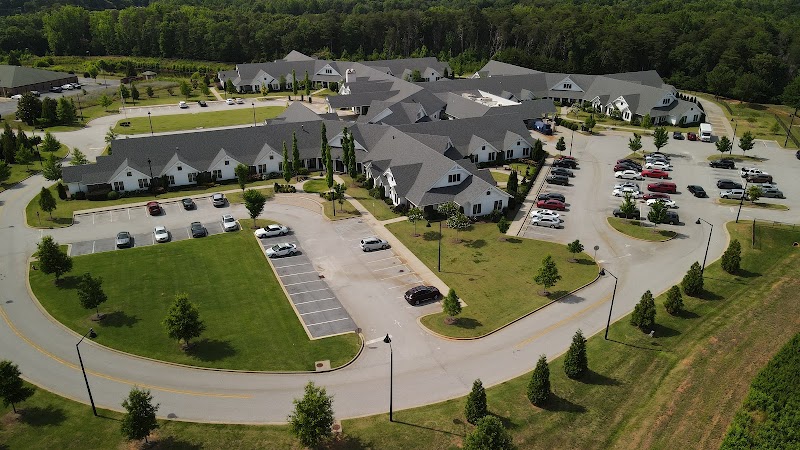
White Oak At North Grove Inc is owned by a for-profit company. For-profit facilities operate as businesses with obligations to shareholders or private owners. The facility is operated by WHITE OAK MANAGEMENT, a chain that manages multiple nursing homes. With 132 certified beds and approximately 128 residents (about 97% occupancy), it is a mid-sized facility located in Spartanburg, South Carolina.

How Does White Oak At North Grove Inc Compare to Other South Carolina Nursing Homes?

Compared to the 100 nursing homes in South Carolina, White Oak At North Grove Inc's overall rating (2 stars) is below the state average of 2.8, staff turnover (34%) is significantly lower than the state average of 46%, and health inspection rating (2 stars) is below the national benchmark.

What Should Families Ask When Visiting White Oak At North Grove Inc?

Based on this facility's data, families visiting should ask: "What changes have been made since the serious inspection findings, and how are you preventing similar issues?" "Can I visit during a mealtime to observe dining assistance and food quality?" "How do you handle medical emergencies, and what is your hospital transfer rate?" "Can I speak with family members of current residents about their experience?" These questions are particularly relevant given the facility's Immediate Jeopardy citations.

Is White Oak At North Grove Inc Safe?

Based on CMS inspection data, White Oak At North Grove Inc has documented safety concerns. Inspectors have issued 1 Immediate Jeopardy citation (the most serious violation level indicating risk of serious injury or death). The facility has a 2-star overall rating and ranks #100 of 100 nursing homes in South Carolina. Families considering this facility should ask detailed questions about what corrective actions have been taken since these incidents.

Do Nurses at White Oak At North Grove Inc Stick Around?

White Oak At North Grove Inc has a staff turnover rate of 34%, which is about average for South Carolina nursing homes (state average: 46%). Moderate turnover is common in nursing homes, but families should still ask about staff tenure and how the facility maintains care continuity when employees leave.

Was White Oak At North Grove Inc Ever Fined?

White Oak At North Grove Inc has been fined $10,364 across 1 penalty action. This is below the South Carolina average of $33,183. While any fine indicates a compliance issue, fines under $50,000 are relatively common and typically reflect isolated problems that were subsequently corrected. Families should ask what specific issues led to these fines and confirm they've been resolved.

Is White Oak At North Grove Inc on Any Federal Watch List?

White Oak At North Grove Inc is not on any federal watch list. The most significant is the Special Focus Facility (SFF) program, which identifies the bottom 1% of nursing homes nationally based on persistent, serious quality problems. Not being on this list means the facility has avoided the pattern of deficiencies that triggers enhanced federal oversight. This is a positive indicator, though families should still review the facility's inspection history directly.