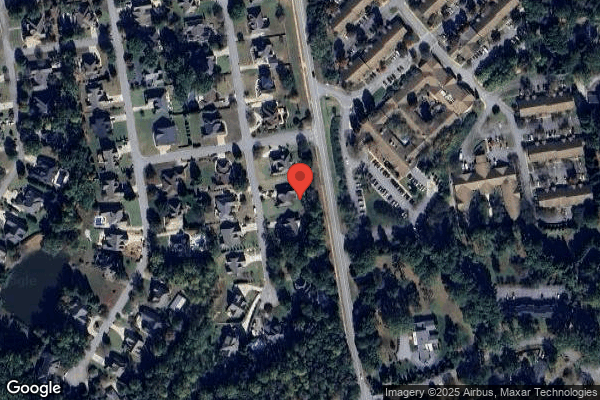
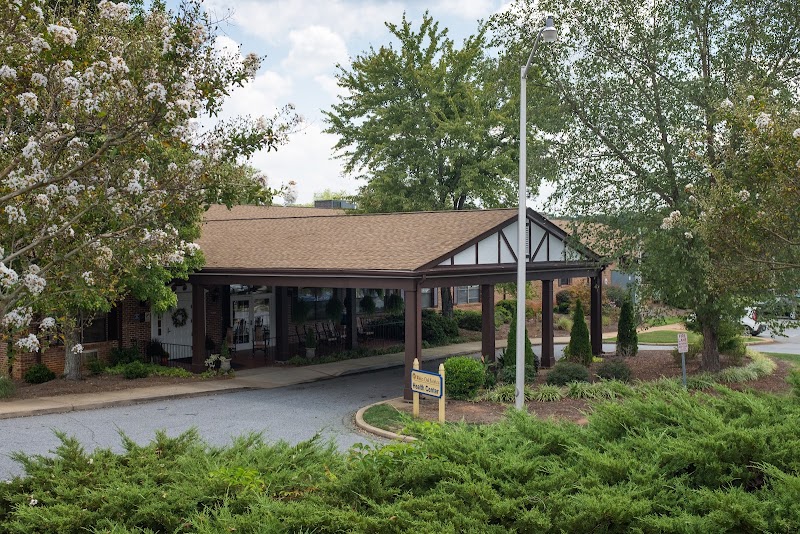
White Oak Estates

400 Webber Road, Spartanburg, SC 29302 (864) 579-7004
For profit - Corporation 88 Beds WHITE OAK MANAGEMENT Data: November 2025 2 Immediate Jeopardy citations
Trust Grade
24/100
#139 of 186 in SC
Last Inspection: January 2025

Within standard 12-15 month inspection cycle. Federal law requires annual inspections.

Overview

White Oak Estates in Spartanburg, South Carolina, has received a Trust Grade of F, indicating significant concerns about the facility's quality and care. Ranked #139 out of 186 facilities statewide, they are in the bottom half, and #10 out of 15 in Spartanburg County, meaning there are only a few local options that are better. The facility is experiencing a worsening trend, with issues increasing from 1 in 2024 to 2 in 2025, and they have a concerning staff turnover rate of 60%, which is higher than the state average. While RN coverage is average, the facility has been fined $8,827, which reflects a level of compliance issues that is not uncommon in South Carolina facilities. Specific incidents from inspections raise serious concerns. A critical finding revealed that a resident was not protected from the misappropriation of property, indicating a failure to safeguard residents' belongings. Additionally, there was a failure to protect another resident from physical abuse, highlighting significant lapses in safety protocols. Food safety issues were also noted, with expired perishables available for resident consumption, which could jeopardize residents' health. While the staffing rating is average, the facility's overall performance raises red flags for families considering care options.

Trust Score
F
24/100
In South Carolina
#139/186
Bottom 26%
Safety Record
High Risk
Review needed
Inspections
Getting Worse
1 → 2 violations
Staff Stability
⚠ Watch
60% turnover. Above average. Higher turnover means staff may not know residents' routines.
Penalties
○ Average
$8,827 in fines. Higher than 57% of South Carolina facilities. Some compliance issues.
Skilled Nurses
○ Average
Each resident gets 34 minutes of Registered Nurse (RN) attention daily — about average for South Carolina. RNs are the most trained staff who monitor for health changes.
Violations
⚠ Watch
13 deficiencies on record. Higher than average. Multiple issues found across inspections.
★★☆☆☆
2.0
Overall Rating
★★★☆☆
3.0
Staff Levels
★★★☆☆
3.0
Care Quality
★★☆☆☆
2.0
Inspection Score
Stable
2024: 1 issues
2025: 2 issues

The Good

  • Full Sprinkler Coverage · Fire safety systems throughout facility
  • No fines on record

Facility shows strength in fire safety.

The Bad

2-Star Overall Rating

Below South Carolina average (2.8)

Below average - review inspection findings carefully

Staff Turnover: 60%

13pts above South Carolina avg (46%)

Frequent staff changes - ask about care continuity

Federal Fines: $8,827

Below median ($33,413)

Minor penalties assessed

Chain: WHITE OAK MANAGEMENT

Part of a multi-facility chain

Ask about local staffing decisions and management

Staff turnover is elevated (60%)

12 points above South Carolina average of 48%

The Ugly 13 deficiencies on record

2 life-threatening
Jan 2025 2 deficiencies
CONCERN (D)

Potential for Harm - no one hurt, but risky conditions existed

Accident Prevention (Tag F0689)

Could have caused harm · This affected 1 resident

**NOTE- TERMS IN BRACKETS HAVE BEEN EDITED TO PROTECT CONFIDENTIALITY** Based on interviews, record review, and review of facility policy, the facility failed to maintain resident safety for 1 of 4 re...

Read full inspector narrative →
**NOTE- TERMS IN BRACKETS HAVE BEEN EDITED TO PROTECT CONFIDENTIALITY** Based on interviews, record review, and review of facility policy, the facility failed to maintain resident safety for 1 of 4 residents reviewed for accidents. Specifically, a Hospice - Certified Nursing Assistant (HCNA) gave Resident R(38) a shower, without verifying R38's ambulation, transfer status, or Activities of Daily Living (ADL) care, resulting in a fall with R38 suffering minor injuries. Findings include: Review of the undated facility policy titled Fall Management Program documented, The Fall Management Program has been developed to assist facilities in identifying strategies to minimize the risk of falls for residents and still maintain the highest practicable level of functioning and mobility through a comprehensive analysis of physical, mental and psychosocial conditions and the development and implementation of individualized plan of care. The Fall Risk Data Collection Tool (electronic UDA) determines program placement. Review of the undated facility policy titled Safe Resident Handling Program documented, Purpose: To provide residents with the safe assistance of mechanical lifts as indicated by their condition; to eliminate unnecessary manual repositioning and lifting by employees. 4. Gait/transfer belts will be used as assessed for residents requiring less than 50 % manual assistance for ambulation and transfer activities. Review of R38's Face Sheet revealed R38 was admitted to the facility on [DATE], with diagnoses including but not limited to: mild cognitive impairment of uncertain or unknown etiology, dementia - without behavioral/psychotic disturbance, essential tremor, peripheral vascular disease and osteoarthritis. Review of R38's Significant Change in Status Minimum Data Set (MDS) with an Assessment Reference Date (ARD) of 12/10/24, revealed a Brief Interview for Mental Status (BIMS) of 10 out of 15 indicating R38 was moderately cognitively impaired. Further review of R38's MDS revealed that R38 is dependent on staff for toileting, showering/bathing, and personal hygiene. R38's mobility is substantial/maximal assistance for sit-to-stand and dependent on staff for tub/shower transfer. Review of R38's Care Plan, last care conference dated 01/02/25, documented, Category: Cognitive Loss/Dementia The resident is now under the care of Interim hospice with admitting dx of dementia. Start of care date 12/19/2024. Created: 12/19/2024. Goal - Resident will maintain a quality of life, as possible, with needs and comfort being met through Created: 12/19/2024. Approach Hospice providers visit schedule: CNA - 1-3 days per week, Nurse - at least weekly, Social Worker - at least monthly, and Chaplain - at least monthly. Category: Falls Resident is at risk for falls and fall-related injuries r/t weakness and cognitive impairment. Goals: Falls will not create injury Edited: 12/13/2024, Approach: Assist with ambulation. Category: ADLs Functional Status/Rehabilitation Potential Resident requires assistance for ADLs r/t cognitive impairment and generalized weakness Edited: 12/13/2024. Goal- Resident will participate in ADLs as able. Approach: Assist resident with bathing, hair care, toileting needs, oral hygiene, dressing, etc. Bathe per facility protocol, w/c for mobility. Review of R38's Physical Therapy Discharge Summary with dates of service 08/22/24 - 10/20/24, revealed the D/C Reason: Highest Practical Level Achieved. Clinical Impressions: Pt exibits slow velocity and narrow step widths. Conference with nursing regarding mobility and transfer status with recommendations GB x 1, and communicate with pt in a loud clear voice with strong eye contact due to communication deficits. Pt did not show signs of O2 desaturation or SOB going from sitting to supine position. Fall prevention measures taught and educated pt about safety strategies to reduce risks of falls including: not to attempt ambulating without assistance as pt is high fall risk. Review of R38's Progress Note dated 12/23/24 at 8:35 AM, written by Registered Nurse (RN)1 revealed, Called to room by primary nurse stating resident had fallen in the bathroom. Certified Nursing Assistant (CNA) with hospice was present. She stated she had the resident in the shower in room when the resident's legs gave out on her and resident went down on her knees. Upon entering room, resident back in bed, skin tear noted on left great toe and left 5th toe. The resident denies pain. CNA reports resident may have hit her head slightly on shower wall, no bruising or redness noted. Will place resident on HTP (Head Trauma Protocol) due to not being witnessed by staff at WOE. Educated CNA on not giving residents showers unless it is in the shower room in a shower chair or performing a bedbath on resident due to weakness. CNA stated understanding. Review of a follow-up Progress Note dated 12/23/24 at 5:49 PM revealed, Nurse saw pt multiple times today. At 0808, pt. was found on the floor of her bathroom naked with the hospice aide attempting to pick her up. Blood was on the floor beneath pt. The nurse came in, took pt.'s vitals, & assessed her body for wounds. The CNA came in & helped with putting pt. in bed. Multiple bruises, cuts, and scrapes were found on pt.'s knees, feet, & toes. Pt. was cleaned & dressed. Aide told the nurse that the pt. did hit her head when she fell. The nurse did not see a bruise. Pt. has been placed on head trauma protocol. Pt.'s family was notified. Hospice personnel did attend to the pt. & to do a report on the incident. Review of R38's Morse Fall Scale dated 12/01/24, revealed R38's gait is weak and her mental status overestimates/forgets limitations. The total score of 70.0000 indicating: Level: High Risk for falls. During a phone interview with R38's Representative (RP) on 01/08/25 at 9:35 AM, revealed R38 was admitted to hospice services early December 2024 and has been in hospice for about a month. The RP stated he received a call from the facility stating that hospice aide took R38 in the shower, and R38's legs gave out and fell. The RP states the facility called him and notified him immediately. The RP states he doesn't remember who he spoke too, resident obtained scrapes on knees and her feet as a result, no broken bones. During an interview with Certified Nursing Assistant (CNA)1 on 01/08/25 at 12:44 PM, CNA1 confirmed she worked the day of the incident, and that she is R38's aide. CNA1 stated R38 has transitioned to hospice services in December 2024, approximately 1 month. CNA1 stated that R38 is generally weak and has not ambulated much since admitting to hospice services, however, when she is out of bed she is a one-person assist. CNA1 stated on 12/23/24, Hospice Aide came to the building, stopped by the nurses station and communicated with a Licensed Practical Nurse (LPN)1 that she was with the hospice company and that she was going to give R38 a shower since that day was shower day and continued to walk to R38's room. CNA1 stated Hospice Aide never got the report or asked questions related to how R38 received her showers or ambulated since that was her first encounter with the patient. CNA1 stated hospice aide only asked LPN1 where R38's shower things were located and LPN1 replied bed bath. CNA1 stated approximately 20 minutes later R38's bathroom call light was activated as she could see from the nurse's station, and upon walking in R38's room CNA1 stated she saw R38 naked in the shower kneeling, and wet. CNA1 stated she asked Hospice Aid what occurred and the hospice aide replied that R38's knees bucked and she thought R38 hit her head. CNA1 stated she told the hospice aide to cover R38 up while she grabbed LPN1. LPN1 arrived to the room, and assessed R38, with vitals within normal limits, no evidence of fractures, and the nurse gave the okay for R38 to be placed in bed. CNA1 stated R38 was bleeding from her right foot. CNA1 stated once R38 was placed back in bed, the Hospice aide then gave the resident a bed bath while LPN1 assessed R38's right foot and bleeding came from scratches on R38's right toes. CNA1 stated hospice nurses came in the next day to apologize for what had occurred with R38 and assigning a new hospice aide. During an interview with Registered Nurse (RN)1 on 01/08/24 at 1:36 PM, via phone call, revealed she was called to the room by LPN1, with a Hospice Aide present. RN1 stated upon entering the room, resident was in bed, skin tear was noted on left great toe and left 5th toe. R38 denied pain. The Hospice Aide stated she had the resident in the shower in the room when R38's legs gave out on her and R38 went down on her knees. RN1 stated Hospice Aide reported that R38 may have hit her head slightly on the shower wall, she couldn't remember. RN1 stated she explained to the Hospice Aide she should have never done that because the resident is fragile and weak. RN1 stated Hospice Aide didn't speak to any facility staff related to how the resident received baths, or the amount of assistance the resident needed. RN1 stated Hospice Aide assumed that the resident had a shower in her room, got her up, and walked her in the shower. RN1 stated Hospice Aide called her boss and discussed what had occurred with her boss. The next day, the Hospice Nurse and Hospice Liaison came on site, apologized, and agreed that the Hospice Aide should have never given the resident a shower. RN1 stated a few days later, the resident's family decided to use another hospice company. During an interview with Licensed Practical Nurse (LPN)1 on 01/08/24 at 2:18 PM, LPN1 confirmed she is R38's nurse and is familiar with the incident. LPN1 stated right before Christmas 2024, a Hospice Aide came up to the nurses station, stated her name, and that she was here to see R38 and to shower her. LPN1 stated she corrected the Hospice Aide and told her the resident received a bed bath. LPN1 stated a few minutes later she saw R38's bathroom call light was on and went to R38's room and saw the resident naked, wet, and kneeling in the shower. LPN1 stated Hospice Aide told her, She fell because she didn't hold on to the grab bar. LPN1 stated that she yelled for R38's aide to assist her with assessing R38 and placing her back to bed. LPN1 stated no visible broken bones, and R38's vitals were within her normal limit, however, blood was in the shower floor. LPN1 stated that R38's knees were slightly bruised, and the hospice aide told her that R38 hit her head as she was falling, head trauma protocol (HTP) was initiated. LPN1 stated Hospice Supervisor came and did a report. LPN1 states the Hospice Aide didn't ask level of assistance, despite telling her twice she was a bed bath and not a shower, she still didn't understand. LPN1 stated the situation really bothered staff because R38 is weak and fragile. During an interview with Registered Nurse (RN) Supervisor on 01/08/25 at 3:33 PM, the RN Supervisor stated due to the holidays, the Facility Medical Director (MD) was not in the building until 01/03/25, which is when he signed the document, and the hospice plan of care was in medical records awaiting to be scanned. Per the RN Supervisor she is not sure what documentation the Hospice Aide went by due to it not being in R38's hospice binder. During a phone interview with the Hospice Aide on 01/08/24 at 3:49 PM, the Hospice Aide confirmed knowing the resident and being her aide the day of 12/23/24. The Hospice Aide stated the encounter was her first encounter with R38 back in December 2024. The Hospice Aide stated she went to R38's room, got her out of bed, walked R38 to her bathroom, sat her on the toilet to use the restroom, got her back up, undressed her and got her in the shower. The Hospice Aide stated the resident stood up for a little bit then her legs bucked up and she fell. The Hospice Aide stated she used no assistive devices or a gait belt when she got R38 up from the bed and to the shower. The Hospice Aide further stated she spoke with R38's nurse however, she doesn't remember what the nurse told her. The Hospice Aide stated when the resident fell, she pressed the call light located in R38's bathroom for assistance because she was having trouble getting her up. The Hospice Aide stated she did not know her transfer status and states she did not look when reviewing her plan of care, just the shower part. The Hospice Aide stated she called the hospice company she is employed through and explained what occurred that day to them. The Hospice Aide stated that R38's plan of care said shower, and that's what she went by. During an interview with Social Services (SS) on 01/09/24 at 11:23 PM, revealed she was notified that morning that the Hospice Aide got R38 up, walked her to her private shower located in her room, had her stand up, she got weak and fell. SS stated the Hospice Aide should have placed her in a shower chair, and took her to the shower room on the unit. SS stated she contacted the hospice company liaison and explained what happened, confirming R38 should not have been showered. SS stated from what she gathered, the Hospice Aide asked the nursing staff if the resident gets showered, the nursing staff replied yes, in the shower room, or a bed bath. SS stated she believed the Hospice Aide misunderstood and gave the resident a shower in her room instead of the shower room located on the unit. During an interview with the Assistant Director of Nursing (ADON) on 01/09/25 at 1:59 PM, revealed she was working the day of the incident. The ADON stated RN1 reported that the Hospice Aide came in the building, went straight to the resident's room, got her up, and gave her a shower without communicating with the facility staff that was caring for R38. The ADON stated the Hospice Aide thought R38 could stand, however didn't verify. The ADON states CNA1 walked in the room and saw the Hospice Aide attempting to pick the resident up from the floor. RN1 was notified and assessed R38 which she had minor injuries such as scrapes on her knees, and bleeding from her toes. The ADON stated the Hospice Liaison asked the Hospice Aide what happened, and the Hospice Aide replied that she was rushing because she had somewhere to be. The ADON stated typically when Hospice Aides or nurses come in, they are required to speak with facility staff and discuss the residents prior to providing care, and that's the expectation every time they enter the building.
CONCERN (E)

Potential for Harm - no one hurt, but risky conditions existed

Deficiency F0761 (Tag F0761)

Could have caused harm · This affected multiple residents

**NOTE- TERMS IN BRACKETS HAVE BEEN EDITED TO PROTECT CONFIDENTIALITY** Based on observation, interview and review of facility policy, the facility failed to ensure that medication and biologicals wer...

Read full inspector narrative →
**NOTE- TERMS IN BRACKETS HAVE BEEN EDITED TO PROTECT CONFIDENTIALITY** Based on observation, interview and review of facility policy, the facility failed to ensure that medication and biologicals were properly stored in 3 of 3 medication carts. Findings include: Review of the facility policy dated 09/21/22, titled Medication Storage in the Facility documents, medications and biologicals are stored safely, securely, and properly following manufacturer's recommendations or those of the supplier. The medication supply is accessible only to licensed nursing personnel, pharmacy personnel, or staff members lawfully authorized to administer medications. Procedure 9. Outdated, contaminated, or deteriorated medications and those in containers that are cracked, soiled, or without secure closures are immediately removed from stock, disposed of according to procedures for medication destruction, and reordered from the pharmacy, if a current order exists. During an observation on 01/08/25 at 2:34 PM, of the Unit 2 Wound Treatment Cart revealed [NAME] Calcium Alginate Dressing 4-inch x 4 3/4 inch: sterile open with the expiration date and lot number torn off. Licensed Practical Nurse (LPN)3 verified and discarded the dressing in a trash can. During an observation on 01/08/25 at 4:47 PM, of the Unit 1 Wound Treatment Cart revealed an open 3% Xeroform 4 inch x 4 inch sterile dressing which was open, MFR# 2206. A colostomy bag loose not in original package. LPN2 verified and discarded the items in trash can. During an observation on 01/09/25 at 8:01 AM, of Treatment Cart 4 revealed a Suture Removal Kit Metal forceps which was open and no longer sterile, MFR# 240P, Manufacturer [NAME], Lot# CZ09-02. During an interview on 01/09/25 at 08:01 AM, the Director of Nursing (DON) stated, We have three treatment carts. It is the responsibility of all the nurses to check the cart to keep it cleaned out and check for expiration dates.
Apr 2024 1 deficiency 1 IJ
CRITICAL (J) 📢 Someone Reported This

A family member, employee, or ombudsman was alarmed enough to file a formal complaint

Immediate Jeopardy (IJ) - the most serious Medicare violation

Deficiency F0602 (Tag F0602)

Someone could have died · This affected 1 resident

**NOTE- TERMS IN BRACKETS HAVE BEEN EDITED TO PROTECT CONFIDENTIALITY** Based on record review, facility policy review, and interviews, the facility failed to ensure 1 of 1 resident (Resident(R)1 was ...

Read full inspector narrative →
**NOTE- TERMS IN BRACKETS HAVE BEEN EDITED TO PROTECT CONFIDENTIALITY** Based on record review, facility policy review, and interviews, the facility failed to ensure 1 of 1 resident (Resident(R)1 was free from misappropriation of property on 01/21/24. On 04/26/24 at 1:00 PM, the survey team provided the Administrator with a copy of the CMS Immediate Jeopardy (IJ) Template, informing the facility IJ existed as of 01/21/24. The IJ was related to 42 CFR 483.25 - Freedom from Abuse, Neglect, and Exploitation. On 04/26/24 the facility provided an acceptable IJ Removal Plan. On 04/26/24 the survey team, validated the facility's corrective actions and determined the facility put forth due diligence in addressing the noncompliance. The IJ is considered at Past Non-Compliance as of 01/22/24. An extended survey was conducted in conjunction with the Complaint Survey for non-compliance at F602, constituting substandard quality of care. Findings include: Review of the facility's policy titled Neglect, Abuse, Mistreatment . revised on 05/2017, revealed, Misappropriation of resident property means the deliberate misplacement, exploitation, of wrongful, temporary, or permanent use of a resident's belongings or money without the resident's consent. Review of the facility's undated policy titled Residents Personal Property revealed under procedures, 6. Send money and valuables to business office for safekeeping. Review of R1's Face Sheet revealed R1 was admitted to the facility on [DATE] with diagnoses including, but not limited to: hypertensive chronic kidney disease, muscle weakness, and periprosth fracture. Review of R1's Minimum Data Set (MDS) with an Assessment Reference Date (ARD) of 12/13/23, indicated a Brief Interview for Mental Status (BIMS) score of 10 out of 15, which indicated R1 had moderate cognitive impairment. Review of R1's Check #7425 written on 12/08/23, revealed the amount of $6,500.00 and the memo line stated car, and written out to Certified Nursing Assistant (CNA)1 Review of R1's Check #7429 written on 12/28/23, revealed the amount of $6,000.00, the memo line documented Car/Title, and written out to CNA1. During an interview on 04/25/24 at 1:24 PM, R1's resident representative (RR) revealed, while going over his mother's bank account statement he saw a check written to someone that he didn't know. The checkbook was in his mother's possession. The RR stated he told the facility about the check, and he wanted it reported to the police. When the RR went to the bank to follow up on the situation, he was told by the bank teller, here's another bad check. The RR further stated, They [bank teller] showed me a print of the bad check. The 1st bad check was shown to the police officer that came out to the facility and spoke with mom a little bit. Later the officer called and stated, because of the amount involved, they were going to send it to the State Attorney General Office. The RR further stated, he found out later by the facility that they began their investigation and do what they do on their end. They suspended the employee in question. Once they spoke to the police officer, the person who wrote the fraudulent checks, was seen on a video at the bank where they were trying to cash the check in a different part of the state. The RR concluded, The [NAME] Oak people said, yes that is the person in question and basically that was it, they suspended her. The police took the information, I sent them a copy of the 2nd check, and that's the last I heard of it. During an interview on 04/25/24 at 1:40 PM, CNA2 stated, There was a visitor in the room [R1's room] whom I've never seen before. I asked [R1] how she was doing, and R1 responded, Have you ever had anyone steal money from you? and I responded No. At this point the visitor showed me a copy of checks and I recognized they were written to [CNA1]. I then went and reported it to the nurse. During an interview on 04/25/24 at 1:46 PM, Registered Nurse (RN) revealed that CNA2 notified her of the alleged incident, R1's RR was showing CNA2 a check, the RN then called the Director of Nursing (DON) and the Administrator to notify them of the alleged incident. During an interview on 04/25/24 at 1:59 PM, the DON revealed when R1 was interviewed, R1 stated, the police was in my house, and why does everyone keep asking me about [CNA1]? The DON stated, [CNA1] denied knowing anything about any missing money or checks belonging to the resident. The resident had her checkbook in her possession and her son was adamant about his mother having her checkbook with her. Prior to the alleged incident the resident did not have a lock box for her items. The [local police department] made the facility aware of a surveillance video that they had from the bank in which [CNA1] deposited the check, and wanted to know if they could identify the person on the video. The facility responded if it was a clear video, they could. The police officer came and showed the video to me and the Administrator, and we identified the person as [CNA1]. During an interview on 04/25/24 at 2:16 PM, the Administrator revealed, when she became aware of the alleged incident, she immediately began an investigation. The staff member in question was suspended immediately pending the investigation. CNA1 was contacted and immediately suspended during the facility's investigation. The Administrator stated CNA1 denied everything regarding R1's missing checks. CNA1 told the Administrator that on the date of one of the missing checks, she got an alert on her phone, to contact the bank because someone was trying to open an account in her name. The Administrator stated she requested CNA1 provide proof of this and CNA1 never provided the proof. The Administrator stated she was able to positively identify CNA1 from the surveillance video footage that the [local police department] showed her. The Administrator stated that the time stamp on the check and the video were the same date and time, which lead to the termination of CNA1. During an interview on 04/25/24 at 2:59 PM, CNA1 revealed she has never been assigned to R1, but has assisted R1 to the bathroom [ROOM NUMBER] or 3 times, when she responded to the resident's call light. CNA1 stated she has no knowledge of any missing checks or any other missing property belonging to R1. CNA1 further stated the Administrator called and left her a voicemail that she was being terminated based on the outcome of the facility's investigation. On 04/26/24 the facility provided an acceptable IJ Removal Plan, which included the following: Identification: Resident was admitted to facility on 9/12/23 with diagnoses that include, but not limited too . Resident's Resident Representative (RR) notified the facility on 1/21/2024 regarding a check from the Resident's checkbook was made out to a facility staff member for $6500.00 and it was processed. The RR removed the checkbook from where the check was used from but her reported the Resident had 2 other checkbooks in her possession. At first the Resident would not give the other checkbooks to her son and declined the use of a lockbox. On 1/24/24, Resident accepted a lockbox and placed the other 2 checkbooks in it which included a Trust account and another checkbook that had no more blank check in it. The staff member was identified as a NA. The Resident denied making the check out to the NA and the Resident's signature appeared to not be the Resident's legal signature. The NA was contacted by the Administrator who at first could not be reached but returned the Administrator's call, and reported that she is a victim of identity theft and an account was opened under her name that is different from her current banking institution. The NA was informed that she was immediately suspended pending the investigation and to be available by phone for questions. A 2-hour reportable was faxed to the State Agency and the police was notified. The Police Officer reported the named NA was accused of stealing funds at another facility but returned the funds to the resident and no charges were pursued. The named NA was hired on 4/10/23. When the facility followed their abuse protocol for background checks and reference checks. Resident was a Resident Assistant (RA) at first, and then her NA's certification was checked when she completed her NA class and has a current/active certification from 6/13/23 to 6/13/25. Action: An audit was completed by the Nursing Supervisor on 1/21/2024 of current residents to determine which residents had personal funds in their possession including money, checkbooks and credit cards. The immediate action was to offer to lock up the the identified residents' monetary possessions in the business office and a lockbox will be purchased by the facility and provided to the identified residents on 1/23/2024. Current residents were also interviewed to ensure no other personal properties or funds were misappropriated. The other current residents and RRs will be notified of the availability to secure their monetary possessions, if ever needed, by facility's newsletter. Newly admitted residents will be informed of the availability of lockboxes if needed to secure monetary possessions during the Admissions Conference. The facility staff were re-educated on the abuse protocol with the emphasis of misappropriation of resident's funds and property. the re-education also included to never take, use or ask for resident's property nor accept monetary gifts from the residents and RRs, and abuse including misappropriation of resident's funds is not tolerated by the facility and legal actions will be taken. This re-education was completed on 1/22/2024 by Administration. Newly hired staff will receive this education during job specific orientation by the Staff Development Coordinator (SDC). The facility Nursing Administration or Social Services Department will monitor current and newly admitted residents by conducting an interview with 5 residents or RRs weekly for 12 weeks to ensure monetary possessions are secured and lockboxes are provided as indicated. The facility Nursing Administration or Social Services Department will also monitor by interviewing 5 staff members weekly for 12 weeks regarding the knowledge of misappropriation of resident's funds, and adhering to the rules of not taking, using or asking for residents' property/funds and not accepting monetary gifts from residents and families. Identified trends or issues from the monitoring tools will be discussed during the morning Quality Improvement (QI) meetings, weekly for 12 weeks, and then discussions with the Quality Assurance (QA) Committee meetings for further recommendations as needed. The Administrator, Director of Nursing (DON) and Social Services Director (SSD) are responsible for the ongoing compliance of F602. Compliance date is 1/22/2024.
Mar 2023 7 deficiencies
CONCERN (D) 📢 Someone Reported This

A family member, employee, or ombudsman was alarmed enough to file a formal complaint

Potential for Harm - no one hurt, but risky conditions existed

Notification of Changes (Tag F0580)

Could have caused harm · This affected 1 resident

**NOTE- TERMS IN BRACKETS HAVE BEEN EDITED TO PROTECT CONFIDENTIALITY** Based on review of the facility policy, interviews, and record reviews, the facility failed to ensure that the physician was imm...

Read full inspector narrative →
**NOTE- TERMS IN BRACKETS HAVE BEEN EDITED TO PROTECT CONFIDENTIALITY** Based on review of the facility policy, interviews, and record reviews, the facility failed to ensure that the physician was immediately notified of a change in condition for one (Resident (R) 291) resident. Staff failed to notify the physician when R291 first experienced vomiting, placing the resident at risk of delayed treatment. Findings include: Review of the facility's policy titled, Acute Episode Documentation revised 12/17/21 stated, An 'Acute Episode' is any unusual occurrence or happening for a particular resident . Acute episode documentation is to be instituted immediately upon any change noted in the resident's physical, mental or emotional status. Detailed documentation is to be entered in the EMR [electronic medical system] each shift until the acute episode is resolved or stabilized .Shift documentation will be done until the episode is resolved, decreased and or/or stabilized . Acute documentation may only be discontinued by/with the input of the R.N. [Registered Nurse] Supervisor. Physician and resident's family/responsible party are to be notified of any acute episode and/or change in the resident's status. Review of R291's Face Sheet provided by the facility revealed she was admitted to the facility on [DATE] with a primary diagnosis of acute respiratory failure with hypoxia. Review of R291's Care Plan initiated 12/31/22 included the resident having a history of stroke and deconditioning/weakness as evidenced by recent hospitalization for congestive heart failure. Review of R291's Progress Notes in the electronic medical record (EMR) for 01/12/23 revealed nursing staff did not chart or report to the physician or nurse practitioner that the resident was vomiting clear or possible brown emesis. Review of R291's Medicare Skilled Daily Note dated 01/12/23 at 7:03 PM by Licensed Practical Nurse (LPN) 6 did not include documentation that the resident was vomiting or in any way having a change in condition. Review of R291's Medicare Skilled Daily Note dated 01/13/23 at 9:36 AM by LPN7 did not include documentation that the resident vomiting or in any way having a change in condition. Review of R291's Medicare Skilled Daily Note dated 01/16/23 at 10:06AM by LPN7 did not include documentation of the resident having a change in condition. Review of R291's Departmental Notes provided by the facility dated 01/16/23 at 12:29 PM stated, New orders per NP [Nurse Practitioner]for STAT [immediate] BMP [Basic Metabolic Panel] and CBC w/diff [complete Blood Count], speech therapy to evaluate, and increase atorvastatin to 80mg [milligrams] daily, RP [Responsible Party] aware. Review of R291's Departmental Notes provided by the facility dated 01/16/23 2:16 PM by LPN7 revealed, Resident noted with abnormal lower extremity movements and eyes rolling backwards. Placed on PRN [as needed] 02 [oxygen] on resident. Assessed vitals, orthostatic hypotension noted. Notified NP .new order to send to ER [emergency room] for eval [evaluation]). Notified daughter, agreeable to send to ER. Called 911. EMS arrived, resident transferred to [] Hospital via stretcher. Review of R291's Departmental Notes provided by the facility dated 01/17/23 at 6:23 PM, Resident sent to the hospital on [DATE] due to change in condition per the Social Services Director. Review of R291's hospital Inpatient Medicine Discharge Summary, provided by the facility and dated 01/19/23, indicated the resident was hospitalized from [DATE]-[DATE] and diagnosed with upper gastrointestinal bleed. Patient had notable dark stools as well as episodes of vomiting. Upon clarification and investigation it appears patient had multiple episodes of hematemesis which is documented with photographs .Patient's hemoglobin on presentation was 5.2. She was transfused 2 unit PRBCs [packed red blood cells]. Review of R291's Confidential Occurrence Statement or Interview, dated 01/19/23, revealed that LPN8 was aware that R291 had a vomiting episode with clear substance like water on 01/12/23. Per this document, LPN8 did not report this change in condition to the Director of Nursing (DON) until 01/19/23, when being interviewed. When interviewed again by the DON, LPN8 confirmed that R291 vomited mostly clear substance with brown substance but the nurse did not report it to the nurse practitioner or medical director for further evaluation because she did not think it was acute and that she thought the brown substance the resident vomited was food. During an interview with the DON on 03/15/23 at 10:58AM, the DON stated that an in-service regarding changes in condition was provided to all staff due to R291's acute change in condition, which was experienced on 01/12/23, not being reported to administration, the physician, or the NP. When asked if she was aware of R291 having brown emesis on 01/12/23, she stated she was notified by the third shift LPN that the second shift LPN had reported watery emesis; however, neither nurse charted the emesis episode or reported it to the physician or nurse practitioner. The DON stated it had been reported to her on 01/13/23 that the resident had one episode of watery emesis and she was not aware of brown emesis until the investigation was completed on 01/19/23. Per the DON, the resident was confirmed to have had one to two clear and/or brown emesis episodes 01/12/23-01/13/23. Once R291 was sent to the emergency department on 01/16/23, her hemoglobin had dropped to 5 (normal levels for females range 12-16 grams per deciliter) and severe anemia was confirmed due to a diagnosed gastrointestinal bleed at the hospital. After the resident was noted to be leaning and having a syncope episode (sudden drop in blood pressure) on 01/16/23, the nurse practitioner was notified and ordered stat labs on 01/16/23. After the incident was confirmed to have occurred 01/12/23-01/13/23, the agency nurse (LPN7) was asked not to return to the facility due to not reporting the resident's acute change in condition. During an interview on 03/15/23 at 5:40PM with R291's RP, they stated that on 01/15/23, the previous social services director called to notify her that on 01/13/23, the nurses had reported that on the evening of 01/12/23, the resident drank water too fast and had a vomiting episode. The RP then visited the facility and her mother was noted to have three gowns with dark substances dried on the gowns. Staff could not tell her what the substances were but that they suspected it was chocolate or coffee. However, the RP stated, her mother did not drink coffee or eat chocolate. The RP spoke with the DON who told her the nurses had documented it was a watery substance that was thrown up. The RP also stated that after her mother went to the hospital on [DATE] and it was confirmed that although she had started throwing up on 01/12/23, it had not been reported to the physician until 01/16/23, she filed a formal grievance/complaint with the facility. Her mother was later released from the hospital and was admitted to another skilled nursing facility. During an interview on 03/15/23 at 6:07 PM with NP, she stated she was not notified about R291's vomiting episodes that occurred on 01/12/23-01/13/23 until 01/16/23 when the resident experienced a possible seizure episode. The NP stated she had ordered labs, but the resident was acutely ill and had to be transferred to the emergency department before labs could be drawn at the facility. The NP confirmed that the RP was at the facility when she evaluated R291 on 01/16/23, and the NP let her know that neither she, nor the medical director, were notified of the emesis episodes and the NP could not confirm how many days the resident had been experiencing emesis episodes prior to hospitalization. During an interview on 03/15/23 at 6:45 PM, the Administrator stated that, after investigation, LPN8 was asked to not return to work at the facility for the failure to report the acute change the resident's condition.
CONCERN (D) 📢 Someone Reported This

A family member, employee, or ombudsman was alarmed enough to file a formal complaint

Potential for Harm - no one hurt, but risky conditions existed

ADL Care (Tag F0677)

Could have caused harm · This affected 1 resident

**NOTE- TERMS IN BRACKETS HAVE BEEN EDITED TO PROTECT CONFIDENTIALITY** Based on review of facility policy, record review, observations, and interviews, the facility failed to provide assistance with ...

Read full inspector narrative →
**NOTE- TERMS IN BRACKETS HAVE BEEN EDITED TO PROTECT CONFIDENTIALITY** Based on review of facility policy, record review, observations, and interviews, the facility failed to provide assistance with Activities of Daily Living (ADLs) for 1 (Resident (R) 60) of eight residents reviewed for ADL care. Staff failed to provide bathing and grooming/removal of facial hair for the resident, who was dependent on staff for assistance with ADLs. Findings include: Review of the facility's, Resident Care Services policy, dated 06/25/01, revealed, Resident are neat, clean, appropriately and comfortably dressed in clean clothes and provided the necessary items and assistance if needed to maintain their personal cleanliness, e.g. bar soap. 1. Review of R60's admission Record located under the Profile tab of the electronic medical record (EMR) revealed R60 was admitted on [DATE] with diagnoses of anemia, dysphagia, unspecified osteoarthritis, and cognitive communication deficit. Review of R60's annual Minimum Data Set (MDS), located in the EMR under the MDS tab with an Assessment Reference Date (ARD) of 01/26/23, revealed the resident had a Brief Interview for Mental Status (BIMS) score of 3/15, indicating the resident was severely cognitively impaired. Per the MDS, R60 required extensive assistance with personal hygiene and bathing, and had no refusals of care during the assessment period. During an observation on 03/13/23 at 11:39 AM, R60 was observed to have long facial hair above her lip, with some of the long hair covering her top lip. Facial hair was observed growing below her cheek bones. The resident was unable to answer questions about the facial hair. During an observation on 03/13/23, at 3:30 PM, the resident was observed to have facial hair above her lip and on her cheeks. During an observation of R60 on 03/14/23, at 10:40 AM, the resident had lip and cheek hair, and her hair had come out of her ponytail on the side. The resident was unable to answer questions about when she was last bathed. During an interview with Registered Nurse (RN)1 on 03/14/23 at 10:17 AM, she stated that resident showers were listed in a schedule book, and showers/baths were recorded on a sheet and placed in a shower book, as well as documented in the Certified Nursing Assistant (CNA) electronic charting. Per RN1, residents had certain shower days, usually twice a week, and the daily schedule/ sheets were provided to the CNAs at the time of their shift. All aides performed bathing and were assigned certain residents based on rooms and halls. The expectation was that grooming, including hair care, shaving, and trimming nails was also to be performed at that time. RN1 stated the CNAs should also comb resident hair and check resident hygiene when getting the resident up in the morning. Record review of the shower records revealed that R60 was scheduled for bathing on Mondays and Thursdays on second shift. A complete review of the resident shower sheets revealed no evidence that the resident had received any baths/showers over the last 3 months. Record review of the CNA bath recording in the electronic record revealed the documentation showed R60 was bathed on 12/18/22, 01/02/23, and 02/24/23. During an interview with CNA1 on 03/14/23 at 10:43 AM, she stated CNAs receive bath assignments for residents at the start of the shift. They were to complete a shower sheet and record the bath in the EMR including refusals. CNA1 stated grooming, such as shaving and nail trimming, was to be completed at that time. CNA1 stated she had not noticed R60's facial hair. During an interview with Licensed Practical Nurse (LPN) 1 on 03/14/23 at 10:48 AM, she stated the belief that R60 received a bath the previous afternoon (03/13/23) on 2nd shift. She stated the resident often refuses baths, but this should be recorded on the bath sheet and on the CNA record in the EMR. She stated R60 was particular about her appearance. She had not noticed the resident's facial hair and did not know if anyone had tried to shave the resident's face. During an interview with LPN3, on 03/14/23 at 10:55 AM, she first stated R60 received a bath on 03/13/23, PM shift, by CNA2. LPN3 was unaware there was no bathing sheet for the resident and then stated the resident may have refused the bath. She was unaware the resident had any facial hair. LPN3 stated grooming, including shaving, should be offered at the time of bathing. LPN3 stated that residents should be dressed and have their hair combed when CNAs get them up in the morning. She stated CNAs should offer to shave the resident's face, but was unaware if this was being offered. During an interview with CNA1 on 03/14/23 at 11:00 AM, she stated that residents are offered baths usually twice a week. However, she could not recall ever bathing R60. CNA1 stated that the CNAs fill out the shower sheets and record the resident's bathing in the EMR. CNA1 confirmed that if female residents had facial hair, staff should offer to shave it. During an interview with CNA2 on 03/14/23 at 2:57 PM, she stated that R60 refused her bath on 03/13/23, and she forgot to fill out a bath sheet. She stated she has bathed the resident numerous times in the past. CNA2 stated she has never offered to shave the resident's face and had never been told to offer this service. During an interview on 03/14/23 at 3:30 PM, the Director of Nursing (DON) stated residents should be bathed two times a week or more if the resident requests. There is a bath schedule, bath sheets in a shower book, and baths are recorded in the CNA electronic record. If a resident refuses a bath, it should be recorded. The DON was unaware of R60's facial hair but CNAs should offer to shave this at the time of a bath. During an additional interview on 03/14/23 at 4:30 PM, the DON stated the bathing schedule was unacceptable for R60, and there was no clear reason that bathing was not being performed as scheduled. During an interview on 03/14/23 at 5:00 PM, the Administrator stated residents should be bathed twice per week, which included grooming. The Administrator added that, if this was not being done or there were numerous refusals by the resident, there should be discussion on how to correct the problem. Per the Administrator, if females had facial hair, staff should offer to shave it.
CONCERN (D) 📢 Someone Reported This

A family member, employee, or ombudsman was alarmed enough to file a formal complaint

Potential for Harm - no one hurt, but risky conditions existed

Accident Prevention (Tag F0689)

Could have caused harm · This affected 1 resident

**NOTE- TERMS IN BRACKETS HAVE BEEN EDITED TO PROTECT CONFIDENTIALITY** Based on interview, record review, and review of facility policy, the facility failed to ensure 1 (Resident (R) 46) of five resi...

Read full inspector narrative →
**NOTE- TERMS IN BRACKETS HAVE BEEN EDITED TO PROTECT CONFIDENTIALITY** Based on interview, record review, and review of facility policy, the facility failed to ensure 1 (Resident (R) 46) of five residents sampled for accidents, was provided the assistance needed to prevent accidents. The resident fell during a transfer in which one staff failed to assure the assistance of two staff and/or use all required equipment. Findings include: Review of the Resident Assessment Instrument (RAI) 3.0 User's Manual, dated 10/2019, revealed the following definition of a fall: Unintentional change in position coming to rest on the ground, floor or onto the next lower surface (e.g., onto a bed, chair, or bedside mat) . An intercepted fall occurs when the resident would have fallen if he or she had not caught him/herself or had not been intercepted by another person - this is still considered a fall. Review of the undated facility policy titled, Fall Management Program, revealed, The fall Management Program has been developed to assist facilities in identifying strategies to minimize the risk of falls for residents .development and implementation of individualized plan of care. Review of the facility's policy, titled, Occurrence Report, dated 11/23/10, revealed To document all occurrences occurring to resident .Occurrence Report Form .Supervisor Investigation Form .Chart occurrence on clinical record .Notify physician, family and nursing supervisor .Supervisor will investigate occurrence complete report form and submit to nursing office before the end of tour of duty, Review of R46's undated face sheet, located on his electronic medical record (EMR) revealed he was initially admitted to the facility on [DATE] and readmitted on [DATE] with multiple diagnoses, including hemiplegia (right dominant side), epilepsy, aphasia following cerebral infarction, and lack of coordination. Review of R46's Safe Resident Handling Data Collection Form, dated 12/28/22 and provided by the Director of Nursing (DON) revealed that the resident required a Gait Belt (GB) X 2 [times two staff] for transfers Review of R46's quarterly Minimum Data Set (MDS) with an Assessment Reference Date (ARD) of 01/24/23 and located in his EMR under the MDS tab, revealed a Brief Interview for Mental Status (BIMS) with a score of 6/15, indicating he was severely cognitively impaired,. Per the MDS, R46 received one person physical assist to transfer from bed to wheelchair, his balance during transition was not steady and the resident was only able to stabilize with human assistance during transfer. R46 had lower extremity impairment on one side. Review of R46's comprehensive Care Plan under the Care Plan tab located on his EMR revealed .Resident is at risk for acute injury/fracture from falls .poor safety awareness and right hemiplegia s/p [status post] stroke. Interventions includes, Start date 02/01/21 .Non-slip socks to feet at bedtime as resident will allow .Encourage resident to wear non-skid socks. The care plan also stated, Start date 10/26/22 .Transfer resident appropriate device .Reassess transfer status as indicated. Further review of the care plan revealed that although it called for staff to Transfer resident appropriate device, it failed to document what type of device was to be used for transfers (i.e., gait belt, mechanical lift, etc.). In addition, the care plan was not revised to show the number of staff needed after the 12/28/22 Safe Resident Handling Data Collection Form identified that two staff were needed for transfers. Review of R46's Progress Notes under the Progress Notes tab located in his EMR revealed that on 01/24/23 at 11:16 AM, the Assistant Director of Nursing (ADON) documented, Transfer GB X2 staff assist .Gripper strips to left side of the bed .Non slip socks as tolerated by resident. No falls in the last 3 months .Will continue to monitor and update as needed, Further review of the progress notes revealed no evidence that the resident sustained a fall or other accident on 01/24/23. Review of R46's Concern/Grievance Report, dated 01/24/23, revealed the Director of Nursing (DON) documented the following information: Resident had a fall in room? .Spoke with CNA [Certified Nursing Assistant 3] , stated resident lost his balance during transfer, [CNA 3] stated she sat resident down and asked staff for help with transfer. Further review of the document revealed a Follow up with Resident Representative on 02/02/23 .Was expectation met .No .RP [Responsible Party] feels staff lied, dropped resident/bruised him. This note was signed by the Social Services Director (SSD) and the Administrator. Further review of the Concern/Grievance report revealed the following statement signed by CNA3 and dated 01/21/23 [sic]: d. Statement .he stood up, I realized he could not keep his balance he thought he was going to fall so I assisted him back to his bed and put on a Hoyer [mechanical] lift .I noticed the place on his back before the shower it was an old skin mark. Review of an undated statement signed by CNA5 revealed, As I was coming back from the kitchen the CNA called .Resident was lying on the floor. The CNA stated resident did not fall but almost did, so she lowered him to the floor. Total lift was used to transfer resident from the floor to the chair. During an interview on 03/15/23 at 11:52 AM, the Nurse Practitioner (NP) stated R26 had paralysis of both limbs on one side from a CVA [cardiovascular accident]. The NP stated R46's care plan intervention of transfer with device referred to the use of the Hoyer lift for R46's transfers. During an interview on 03/15/23 at 12:08 PM with the Medical Director (by telephone), the NP informed the Medical Director of the contents of the grievance form, including stating the three CNA's document inconsistent stories regarding a suspected fall for R46 on 01/24/23. The Medical Director stated R 46's transfer method with the facility using one staff was inconsistent with the care he required. The Medical Director confirmed R46 had a one-sided weakness and required more than one staff for his transfers. During an interview on 03/15/23 at 4:24 PM, the SSD verified she completed the grievance for R46 dated 01/24/23 and reported the incident to the DON. The SSD stated the wife reported R46 had a fall in the shower; however, the investigation found that R46 had a fall in his room while getting ready to go to the shower. The SSD stated she reported the incident to the DON who spoke with the nursing staff. The SSD stated she spoke with R46's spouse and R46 to get additional information from both. The SSD confirmed R46 told her he had a fall. The SSD stated the wife told her R46 suffered injuries; however, the facility's body audit did not reveal any injuries. The SSD stated she signed the resolution end of the document, and the DON gave the document back to her to file in the binder after she completed the investigation. During an interview on 03/15/23 at 6:52 PM, CNA3 stated she was providing care for R46 and attempted to transfer him from his bed to the wheelchair on 01/24/23 without a gait belt, slipper socks or another staff member. CNA3 stated R46 was standing and lost his balance at the time of the incident, and she eased R46 to the floor. CNA3 stated R46 did not have any injuries from the incident, adding that the resident did have a spot on his back that she observed was purplish/red and looked like a boil to her after the incident; however, she did not document it. CNA3 stated she was trying to finish her resident's task because all the staff were very busy. CNA3 stated she did not realize R46 required a transfer device to transfer from his bed to the chair. CNA3 confirmed she should have checked the resident's care plan to be sure she provided him with correct transfer assistance. During an interview on 03/15/23 at 7:43 PM, the DON stated the SSD reported R46 had a fall to her on 01/24/23. The DON stated she determined R46 did not fall and instead was lowered to the floor. The DON stated the investigation found that CNA3 was performing R46's transfer alone from his bed to his wheelchair. The DON confirmed R46 had right sided hemiplegia, and, per R46's Safe Resident Handling Data Collection form dated 12/28/22, CNA3 should have used two people and a gait belt for R46's transfer. The DON stated according to her investigation R46 did not have a gait belt on, did not have slipper socks on, and the transfer was attempted by one staff member. The DON stated R46 was not injured in the incident. The DON stated that she performed a skin assessment but did not document it. She stated that R46's skin assessment revealed a marble- sized abscess on his right middle to lower back; however, it was not from the fall.
CONCERN (D)

Potential for Harm - no one hurt, but risky conditions existed

Medication Errors (Tag F0758)

Could have caused harm · This affected 1 resident

**NOTE- TERMS IN BRACKETS HAVE BEEN EDITED TO PROTECT CONFIDENTIALITY** Based on observation, interview, record review, review of medication information, and review of facility policy, the facility fa...

Read full inspector narrative →
**NOTE- TERMS IN BRACKETS HAVE BEEN EDITED TO PROTECT CONFIDENTIALITY** Based on observation, interview, record review, review of medication information, and review of facility policy, the facility failed to ensure one (Resident (R) 28) out of five sampled residents reviewed for unnecessary medications was free from unnecessary medication. Antipsychotic medication (Seroquel) was prescribed without adequate indication and given for reasons such as sleep, behaviors of cursing, and dementia, even though Seroquel, which has an increased risk of mortality for elderly patients, is not to be used for elderly patients with dementia-related psychosis. The antipsychotic was used for an extended duration without an attempt at a gradual dose reduction (GDR). The facility's deficient practice increased R28's risk of adverse medication consequences. Findings include: Review of an undated document titled, Highlights of Prescribing Information, provided by the Corporate Nurse Consultant revealed Seroquel .Increased Risk of Mortality with Elderly Patient .Atypical antipsychotic drugs are associated with an increased risk of death .Quetiapine is not approved for elderly patients with Dementia-Related Psychosis .Indication and Usage .an atypical antipsychotic agent indicated for .The acute and maintenance treatment of schizophrenia. Review of the facility's undated policy titled, Behavior Management, revealed Each resident should achieve .highest practical psychosocial well being without psychotic medication .Therefore, each individual resident exhibiting behavioral symptoms will be identified and assessed for possible causes/contributing factors with appropriate interventions provided to alleviate or reduce the frequency or intensity of the behavior. Review of the facility's policy titled, General Guideline for Physician Orders, dated 05/04/07, revealed, Medications .Psychotropic justification must state potential injury to self or others specifically and not just diagnosis. Review of R28's undated Face Sheet, located in her electronic medical record (EMR), revealed she was initially admitted to the facility on [DATE] with multiple diagnoses including dementia, cerebral palsy, anxiety disorder, and depression, and without a diagnosis of schizophrenia. The resident was [AGE] years old. Review of R28's quarterly Minimum Data Set (MDS), with an Assessment Reference Date (ARD) of 12/27/22, located in her EMR under the MDS tab, revealed a Brief Interview for Mental Status (BIMS) score of 14/15, indicating the resident was cognitively intact. Per the MDS, the resident had anxiety disorder, and dementia depression disorder, received an antipsychotic, antidepressant, antianxiety, and opioid all seven days of the assessment period. The MDS showed no behaviors exhibited during the assessment period. The MDS documented that no GDR was attempted. Review of R28's Physician's Orders for 03/2023 under the Orders tab in the EMR revealed a current order for Quetiapine Fumarate [Seroquel] 25 mg [milligrams] tab by mouth at bedtime dementia diagnosis with behavioral disturbances. Review of R28's Medication Administration Record (MAR) for 03/2023 under the Orders tab located in her EMR revealed Quetiapine Fumarate 25 mg tab by mouth bedtime (dementia) was administered as ordered. Further review of the MAR indicating behavior monitoring with administration of Quetiapine for hitting staff, for 6:30 AM, 2:30 AM and 10:30 PM. A 0 was entered with staff initials for 03/01/23-03/13/23. with the exception of 03/09/23 at 6:30 AM when a 3 was entered. Review of behavior monitoring for yelling out on the 6:30 AM, 2:30 AM and 10:30 PM shifts revealed 0 was entered with staff initials for 03/01/23-03/13/23. Behavior monitoring for biting/pinching staff for the 6:30 AM, 2:30 AM and 10:30 PM shifts revealed 0 was entered with staff initials for 03/01/23-03/13/23 with the exception of 03/09/23 at 6:30 AM when a 2 was entered. Further review of the MAR revealed no explanation as to what these codes meant. Review of R28's Prescriber Recommendation Form, dated 10/31/22, under the Pharmacy Consultant tab located on her hard chart, revealed a recommendation from the Consultant Pharmacist stating, Seroquel 25 mg qhs [at bedtime] since July 2020. Please consider attempting a GDR. Review of the Prescriber Response revealed a statement from the Nurse Practitioner (NP) on 11/14/22 that The benefits of continuing the medication at the current dose outweighs the potential risks. Resident has tolerated the med in question without problems and is the best option at this time. The facility was unable to provide any further pharmacy recommendations or evidence that a GDR was contraindicated due to previous attempts and failure at reducing the antipsychotic. During an observation on 03/13/23 at 1:49 PM of R28 in her room, Certified Nursing Assistant (CNA)7 transferred the resident with a Hoyer lift from the chair to the bed, changed her soiled brief and transferred back to her wheelchair. Throughout the care provided by the staff, R28 was calm, cooperative and without aggressive behaviors. During an observation on 03/15/23 at 9:59 AM, R28 was sitting in her wheelchair across from the nursing station. R28 was talking to another resident about going to a movie. R28 was not displaying aggressive behaviors. During an observation on 03/15/23 at 11:09 AM, R28 was sitting in her wheelchair in the dining room with over ten other residents. R28 was watching music and dancing on the television. R28 was talkative to other residents and did not display any aggressive behaviors. An attempt was made to conduct an interview with R28 on 03/14/23 at 11:59 AM. R28 was in her wheelchair in the front day area at a table, and stated she did not want to talk to the surveyor. During an interview on 03/14/23 at 12:08 PM with R11(R28's roommate), R11 stated R28 yells out at night in her sleep and had once called out for her mom. R11 stated she thought maybe R28 had nightmares. R11 stated she and R28 got along real good since she was admitted to the facility and moved into R28's room. R11 stated the two had not had any altercations including verbal altercations. R11 stated R28 was generous and kind to her and looked at her for assistance like knowing where the staff were. During an interview on 03/14/23 at 4:00 PM, the Director of Nursing (DON) stated R28 tended to use curse words. The DON stated R28's behaviors were combative physically aggressive towards staff and not towards other residents. The DON stated R28 was not possessive over her things in her room. The DON was asked about the behavior documentation and what the numbers on the MAR meant. The DON stated she did not know but would get back with the surveyor. No further information was provided prior to exit to explain what the numbers on the resident's MAR meant or to show that the resident had displayed behaviors requiring the use of an antipsychotic. During an interview on 03/14/23 at 5:38 PM, the Administrator stated R28 (who has dementia) had childlike behavior. During an interview on 03/15/23 at 11:24 AM, the Nurse Practitioner (NP) stated she thought R28's Seroquel order for dementia with behavioral disturbances helped her sleep. The NP stated R28 had not been at a point that her behaviors had been stable enough to attempt a GDR. The NP stated she had not attempted R28's GDR because of ongoing behaviors of verbal aggression. The NP stated the facility had not added any non-pharmacological interventions to decrease her behaviors of cursing. The NP stated she did not think clinically a GDR should be attempted for Seroquel. During an interview on 03/15/23 at 1:51 PM, the Pharmacy Consultant (PC) confirmed R28 was ordered and administered an antipsychotic (Seroquel) for her diagnosis of dementia with behaviors. The Pharmacy Consultant stated the facility had not attempted a GDR for R28's Seroquel GDR since 07/20/20. He stated he asked R28's provider to perform a GDR for her Seroquel four times; however, the providers declined to attempt one. The Pharmacy Consultant stated antipsychotic medications, including Seroquel, were not approved, or indicated to use for a dementia diagnosis. The PC confirmed Seroquel's manufacturer's black box warning was that it increased the risk of death for residents with a dementia diagnosis. During an additional interview on 03/15/23 at 7:14 PM, the DON again verified R28 was ordered and administered Seroquel for unspecified dementia. The DON stated she was not familiar with any specific black box warnings for geriatric patients with the use of Seroquel The DON then used her computer and verified the black box warning that R28's Seroquel medication was not approved for treatment of dementia with behavioral problems.
CONCERN (D)

Potential for Harm - no one hurt, but risky conditions existed

Unnecessary Medications (Tag F0759)

Could have caused harm · This affected 1 resident

**NOTE- TERMS IN BRACKETS HAVE BEEN EDITED TO PROTECT CONFIDENTIALITY** Based on observation, interview, record review, and review of facility policy, the facility failed to ensure a medication error ...

Read full inspector narrative →
**NOTE- TERMS IN BRACKETS HAVE BEEN EDITED TO PROTECT CONFIDENTIALITY** Based on observation, interview, record review, and review of facility policy, the facility failed to ensure a medication error rate of less than five percent. A total of two errors were made during medication administration for one (Resident (R) R33) of 13 residents who were observed for medication administration. The facility's medication error rate was 8%. Findings include: Review of the facility's policy titled Oral Medication Administration Procedure dated 09/21/22, stated For solid medications: .If 'Do Not Crush' is added to a medication order and the resident needs to have the medication crushed, please consult the pharmacy .Administer medication and remain with resident while medication is swallowed. A. Never leave a medication in a resident's room without orders for self-administration. Review of the undated resident Face Sheet found in the electronic medical record (EMR) revealed R33 was admitted to the facility on [DATE] with a primary diagnosis of cardiac arrhythmias. Review of R33's Physicians Order located in the EMR under the Orders tab included: 1. cholestyramine powder (reduces bile acids in the stomach) dissolve four grams as directed and take by mouth twice daily. 2. arthritis pain [pain reliever/analgesic] ER [extended release] 650mg [milligram] caplt [caplet] take 1 (one) tablet PO [by mouth] three times a day. - DO NOT CRUSH. Additionally, the physicians order stated May not crush medications at the bottom of the consolidated report. During an observation on 03/15/23 at 1:43 PM, Licensed Practical Nurse (LPN)1 was observed preparing R33's arthritis pain ER tablets, crushing them and mixing them with pudding. LPN1 also prepared the cholestyramine powder in a small amount of fluid. LPN1 then took the medications to R33's room. The resident agreed to take the pain medication which was crushed and mixed in pudding. The resident then stated she wanted to wait to drink the cholestyramine preparation, due to feeling nauseated. LPN1 left the medication sitting on the resident's bedside table, exited the room to obtain nausea medication, returned to administer nausea medication, and again left the cholestyramine preparation on the table without administering it to the resident. During an interview with LPN1 on 03/15/23 at approximately 2:20PM, LPN1 was asked if there was a physician's order for crushing the medications. She stated, yes, but she did not catch that the pain medication was not supposed to be crushed. LPN1 stated she would notify the nurse practitioner to obtain an order for pain medication that could be crushed due to the resident preferring her medications being crushed and administered in pudding. During an interview on 03/15/23 at 4:12 PM with the Director of Nursing (DON), she stated her expectation was that nursing staff would follow physician orders, as well as not leave medications at the bedside as there were currently no residents that self-administer medications.
CONCERN (D)

Potential for Harm - no one hurt, but risky conditions existed

Deficiency F0909 (Tag F0909)

Could have caused harm · This affected 1 resident

**NOTE- TERMS IN BRACKETS HAVE BEEN EDITED TO PROTECT CONFIDENTIALITY** Based on observation, interview, and record review, the facility failed to ensure bed rails (also known as side rails) were main...

Read full inspector narrative →
**NOTE- TERMS IN BRACKETS HAVE BEEN EDITED TO PROTECT CONFIDENTIALITY** Based on observation, interview, and record review, the facility failed to ensure bed rails (also known as side rails) were maintained in a fixed (tightened) position for one (Resident (R)5) of 27 sampled residents. In addition, the facility failed to conduct regular inspections to ensure that all bed frames, mattresses, and bed rails (if present) were inspected as a part of a regular maintenance program. Findings include: Observation in R5's room on 03/13/23 at 12:14 PM revealed the bilateral bed rails on R5's bed were loose. Interview with the resident, who was present during this observation, revealed that the loose bed rails had been like that for quite some time, making it difficult for her to turn and reposition herself Review of R5's undated Face Sheet, located in the electronic medical record (EMR), revealed the resident was admitted on [DATE] with a primary diagnosis of cardiac arrhythmias. Review of R5's most recent Minimum Data Set (MDS), a quarterly assessment with an Assessment Reference Date (ARD) of 12/29/22 revealed the resident required extensive one person assist for bed mobility. Per the MDS, the resident was cognitively intact, based on a Brief Interview for Mental Status (BIMS) score of 14/15. Review of R5's current Physician Orders, located in the EMR, revealed they included the use of half bed rails bilaterally for bed mobility and repositioning, related to generalized weakness secondary to a left above-the-knee amputation. Review of the facility's undated document titled, Quarterly Health & Safety Checklist revealed that equipment for residents, including beds and bed rails should be inspected quarterly. Review of R5's Bed System Measurement Device Test Results Worksheet, provided by the facility and dated 11/17/22, indicated the bed and bed rails passed inspection at that time. Interview on 03/14/23 at 10:41 AM with Certified Nursing Assistant (CNA )5 revealed the CNA was not aware of R5's loose side rails. CNA5 confirmed the bed rails were loose after observation with surveyor. Interview on 03/14/23 at 11:00 AM with Licensed Practical Nurse (LPN)2 confirmed that R5's bilateral side rails were loose, and the LPN placed a request for maintenance to tighten the rails. Interview on 03/14/23 at 11:52 AM with LPN4 revealed the LPN was not aware that R5's bilateral bed rails were loose and was not aware that LPN2 had previously called in a request for maintenance to check the bed. Interview on 03/14/23 at 4:55 PM with LPN5 revealed she was not aware that R5's bed rails were loose. During an observation at this time, LPN5 confirmed the bilateral bed rails were loose, adding they should not be, due to the risk for injury. LPN5 then placed a call to the Director of Nursing (DON) at 5:09 PM, reporting that the bed rails were loose and that she could not locate a maintenance log to report the problem. Interview on 03/14/23 at 7:30 PM with the DON revealed that maintenance staff had been notified of R5's loose bed rails. The DON stated that the rails were not able to be tightened, so the bed was going to be replaced. The DON confirmed that, prior to the bed replacement, the bilateral bed rails were loose. Interview on 03/15/23 at 6:27 PM with the Administrator revealed that staff were to fill out a repair requisition form, and the housekeeping director or someone from the maintenance department would address the concern. The Administrator stated that, as of 02/2023, the facility did not have a maintenance director and that a maintenance assistant from the adjacent apartment community would assist with repairs as needed. The Administrator confirmed that R5's bed had not been seen by maintenance since 11/2022 and should have been next evaluated by maintenance in 02/2023; however, the facility did not have a maintenance director so it had not been done. Per the Administrator, the maintenance director for the apartment community evaluated the bed on 03/14/23 and determined the bed rails could not be tightened, so the bed was exchanged on 03/15/23. The Administrator stated it was her expectation that any staff should report faulty equipment. If it was an emergent situation, then staff should notify the on-call maintenance department that was available twenty four hours a day, seven days a week. The Administrator was not sure why this had not been done prior to surveyor intervention.
CONCERN (F)

Potential for Harm - no one hurt, but risky conditions existed

Food Safety (Tag F0812)

Could have caused harm · This affected most or all residents

**NOTE- TERMS IN BRACKETS HAVE BEEN EDITED TO PROTECT CONFIDENTIALITY** Based on observation, interview, and review of facility policy, the facility failed to ensure food was appropriately stored in t...

Read full inspector narrative →
**NOTE- TERMS IN BRACKETS HAVE BEEN EDITED TO PROTECT CONFIDENTIALITY** Based on observation, interview, and review of facility policy, the facility failed to ensure food was appropriately stored in two Unit pantry refrigerators, one walk-in refrigerator in the main kitchen, and the dry storage area in the kitchen. Expired perishables were available for use. Opened foods were not securely closed, labeled, and dated. This had the potential to affect 81 of 81 residents who consumed food from the kitchen. Findings include: Review of the Dietary Policy, dated 08/2010, revealed, Food [NAME] into facility for residents - Purpose: To promote residents' rights for a home-like atmosphere: The facility recognizes the importance of family support of residents, including the area of home cooked or special food items brought in by family or friends for the resident's enjoyment .Procedures: 1. Upon admission, residents and,/or responsible parties receive written instructions concerning bringing in food items to residents. These instructions include the importance of having the charge nurse determine that the food meets the consistency and therapeutic restrictions of each resident's diet order. Single service items are encouraged or food should be placed in a clean, sealed, air-tight container, dated, and labeled as to the contents. 2. Foods requiring refrigeration and stored as outlined above, may be stored in the unit refrigerator for up to 3 days unless approved by the Dietary Director. Foods that are improperly stored or labeled or stored for more than 3 days will be discarded by the nursing staff. 1. During an initial kitchen walk-through with the Dietary Manager (DM) on 03/13/23 beginning at 10:21 AM, observation revealed: a. The main walk-in refrigerator had uncovered chicken salad in a container, The DM stated all items in the refrigerator should be dated and covered. b. In the dry storage area, a package of sun-dried tomatoes was unsealed. There were three liquid bottles (syrup, soy sauce, and Worcestershire sauce) that were opened and not dated with the received or opened date. The DM stated all items should be dated when received and when opened, and include an expiration date. On 03/13/23 at 10:51 AM, observation of the Unit One pantry refrigerator revealed two opened bottles of water with no names or dates. The DM stated the items in the refrigerator were for resident use, with some items provided by the facility and other items by families. The DM discarded the water bottles, stating that if an item was for a particular resident, it should be labeled with the resident's name, opened date, and expiration date. On 03/13/23 at 11:01 AM, observation of the Unit Two pantry refrigerators revealed an opened bottle of water and an opened fruit juice with no names or dates. Per the DM, items in that refrigerator were provided by the facility or families. The pantry freezer contained an expired open half-gallon container of vanilla ice cream, with no resident name or open date. The DM discarded the items, saying that the expectation was the item should be labeled when opened, and discarded when the item expired. Per the DM, the pantry refrigerators were checked daily by dietary staff. During the interview on 03/13/23 at 11:00 AM, the DM stated she expected all foods to be stored properly, including being dated and labeled as required. The DM stated that she expected the staff to check as needed for expired foods. She expected staff to discard expired foods, to properly cover foods, and check the pantry foods for labeling if family brought items into the facility. During an interview on 03/14/23 at 4:42 PM, the Administrator stated she expected food items to be properly covered and sealed. She said she expected that, if family members brought in foods for residents, they should be labeled with the resident name and date opened. In addition, per the Administrator, staff should not store their food or beverages in the resident's pantry refrigerators.
Nov 2022 1 deficiency 1 IJ
CRITICAL (J) 📢 Someone Reported This

A family member, employee, or ombudsman was alarmed enough to file a formal complaint

Immediate Jeopardy (IJ) - the most serious Medicare violation

Free from Abuse/Neglect (Tag F0600)

Someone could have died · This affected 1 resident

**NOTE- TERMS IN BRACKETS HAVE BEEN EDITED TO PROTECT CONFIDENTIALITY** Based on review of facility policy, record review, and interviews, the facility failed to protect Resident (R)1 from physical ab...

Read full inspector narrative →
**NOTE- TERMS IN BRACKETS HAVE BEEN EDITED TO PROTECT CONFIDENTIALITY** Based on review of facility policy, record review, and interviews, the facility failed to protect Resident (R)1 from physical abuse, for 1 of 3 residents reviewed for abuse. Findings include: Review of the facility policy titled Neglect, Abuse, Mistreatment, Threated or Alleged Abuse Of Residents with a revision date of 05/17 revealed Policy: It is the policy of [NAME] Oak Management, Inc. and its member facilities that all residents have the right to be free from verbal, sexual, physical, mental, and emotional abuse; free from corporal punishment and involuntary seclusion; and free from physical or chemical restraints imposed for purposes of discipline or convenience and that are not required to treat the resident's medical symptoms. Resident must not be subjected to abuse by anyone, including but not limited to, facility staff, other residents, consultants, contractors, volunteers, staff of other agencies serving the individual, family members or legal guardians, friends or other individuals, and other caregivers who provide care and services to residents on behalf of the facility. R1 was admitted to the facility on [DATE] with diagnoses including, but not limited to: Alzheimer's Disease, chronic ischemic heart disease, atherosclerotic heart disease, hypertension and Dementia. Review of R1's Minimum Data Set (MDS) with an unspecified Assessment Reference Date (ARD) revealed R1 has a Brief Interview of Mental Status (BIMS) of 3, indicating severe cognitive impairment. During an interview with Certified Nursing Assistance (CNA)1 on 11/02/22 at 12:03 PM, revealed that on 10/31/22 at 10:40 PM CNA1 was coming out of the soiled linen room. CNA1 stated she heard yelling and screaming coming from R1's room, so she walked towards the room to see what was going on. CNA1 and CNA2 entered the room together. CNA1 stated that when she entered the room, she witnessed an agency CNA changing R1. Agency CNA had her knee on R1's leg and was holding her down. CNA1 asked agency CNA what was going on and the agency CNA revealed that R1 had pooped everywhere and R1 tried to put poop in her hair. Then agency CNA picked up her dirty linen off the floor and left the room. CNA1 states that she noticed R1's face was red and there was a bruise on right arm and left lower leg of R1. CNA1 further stated that R1 told her that the agency CNA hit her several times while R1 was crying and upset. CNA1 states she notified the nurse of the incident. CNA1 finally stated that she cared for R1 the night prior to this incident and there were no bruises observed on resident's body and that R1 is not combative if you explain what you are going to do. During an interview with CNA2 on 11/02/22 at 12:12 PM revealed on 10/31/22 at 10:40 PM, she was walking out of another resident's room when she heard loud screaming. CNA2 and CNA1 entered the room to see what was going on. CNA2 states she entered the room and asked R1 questions as to what happened. R1 was crying and telling us to get the agency CNA out of her room. R1 appearred red in the face and was rubbing her right arm. Agency CNA interrupted while questioning R1 and stated that R1 had pooped everywhere and R1 tried to put poop in her hair. The agency CNA gathered all the dirty linen off the floor and left the room. CNA2 states she and CNA1 followed the agency CNA down the hall and she got her things and left the facility. During a combined interview and record review of after incident Skin Audit with Licensed Practical Nurse (LPN)1 on 10/31/22 at 10:45 PM revealed LPN1 entered R1's room to assess resident after the incident. LPN1 verified the following: Neck 2x2 centimeter (cm) red discoloration, right arm 6x5 cm bluish purple hematoma, left hand 4x5 cm purple discoloration, and redness to left lower leg. LPN1 revealed that she notified the Administrator and Director of Nursing (DON) of the incident. LPN1 further revealed that R1 was upset and crying when she entered the room. Review of the facility's investigation with an unspecified date revealed, R1 was sent to Spartanburg Regional Hospital for evaluation. Summary of the facility's investigation was listed as follows: Last night a CNA witnessed another CNA physically abusing patient. Law enforcement called and resident was sent to hospital for evaluation. Patient has expressive Aphasia and severe dementia, so unable to tell what happened. Resident has large bruising and Hematoma on Right arm and bruising down right arm. Bruising to left hand and chest. Documents signed by Nurse Practitioner. Futher review of the facility's investigation revealed police, responsible party and nurse practitioner were notified on 10/31/22 at 11:30 PM. A review of Skin Observations for the months of August, September and October, revealed there were no concerns or issues with skin. During an interview with the agency CNA on 11/02/22 at 12:25 PM, revealed she was doing her second rounds when she peeked under the covers and noticed that resident had pooped all over herself. Agency CNA stated she went to get clean linen to clean R1 up. Agency CNA further stated when she tried to take R1's brief off, she began to yell and scream at the top of her lungs and swing at her. Agency CNA stated she turned R1 to her right side and R1 grabbed her hair and started to pull it. Agency CNA states she slid to the bottom of the bed and yanked her head to remove her hair from R1's hand, then R1 punched her. Agency CNA further stated that R1 was swinging the entire time and pushing against her so she placed her knee at the bottom of the bed near the headboard to hold herself sturdy. Agency CNA states it was her first time working at the facility and she did not know the resident well. Review of the Comprehensive Care Plan with a start date of 01/19/22 revealed R1 is prone to skin injury/discoloration due to poor safety awareness, fragile skin and combative behavior. Interventions for R1 included: may require 2-person assistance during Activities of Daily Living (ADL) care, when R1 becomes combative/agitated leave her alone. Re-approach at a time when she is calm. During an interview with R1 on 11/02/22 at 11:35 AM, she was asked has any staff hit her and she stated that they do hit her. Resident was asked the second time has any staff ever been rough with her or hit her and R1 held up her arms and stated look, what do you think? R1 showed the bruises to her right arm and left hand at that time. During an interview with the Social Services Director on 11/02/22 at 5:32 PM, revealed she has not yet provided R1 with psychosocial visits related to the incident on 10/31/22 . During an interview with R1's Responsible Party (RP) on 11/02/22 at an unspecified time revealed he was informed of the abuse allegation and he has not seen any bruises on his mother's arm when he visits. RP further stated he doesn't get to the facility as much as he likes to and when he does come, his mother has on long sleeves, so he doesn't know if she has bruises or not. Review of the facility's 5-day report submitted on 11/07/22 at 7:13 PM revealed agency CNA reported that R1 became combative during care and injuries were sustained due to R1 behavior. Agency CNA admits that she did not step away, she continued to provide care, but denies putting her knee on R1's leg. Agency CNA's contract was terminated due to not following protocol. During an interview with the DON on 11/02/22 at 4:49 PM revealed that before agency staff are allowed to start working with residents, they go through the orientation process that usually lasts about an hour. DON further revealed she was not sure if agency CNA was given a report before providing care to R1. On 11/02/22 at 6:09 PM the survey team provided an Immediate Jeopardy (IJ) template to the facility's Administrator and Director of Nursing (DON) notifying them that IJ existed at F600. The facility presented an acceptable removal plan of the IJ on 11/02/22 at approximetly 11:00 AM. The survey team validated that the IJ was removed on 11/03/22 at approximetly 3:00 PM following the facility's implementation of the plan of removal of the IJ. The facility remained out of compliance at F600 at a lower scope and severity of D (isolated with potential for minimal harm) following removal of the IJ. The facility's removal plan included the following: Protect the Resident from abuse 1. CNA was removed from facility and assignment terminated. 2. Completed interviews and body audits of Residents to ensure no further incidents of abuse. Prevent Resident abuse 1. Identify residents with history of combative behaviors. 2. Educate [NAME] Oak Staff and Agency staff of residents with history of combative behaviors 3. Report at change of shift by nurse to assigned [NAME] Oak and Agency CNA's to include mental status and known compative behaviors of each resident 4. White Oak CNA's and Agency CNA's will acknowledge assignment and report given by the nurse to include mental status and known combative behaviors of each resident by signing the assignment sheet every shift. 5. White Oak Staff and Agency staff will be educated on new report process for [NAME] Oak and Agency CNAs. Make up education will be provided for [NAME] Oak or Agency staff that miss in-service. 6. Education with [NAME] Oak staff and Agency staff on Abuse and Neglect policy. Make up education will be provided for [NAME] Oak or Agency staff that miss in-service. Education started on November 1, 2022 and will be complete by November 7, 2022. 6. Education with [NAME] Oak staff and Agency staff on caring for Residents with Combative behavior & de-escalation. Make up education will be provided for [NAME] Oak or Agency staff that miss in service. Education started on November 1, 2022 and will be complete by November 7, 2022. 7. Education with [NAME] Oak staff and Agency staff on Resident Rights. Make up education will be provided for [NAME] Oak or Agency staff that miss in-service. Education started on November 1, 2022 will be complete by November 7, 2022. 8. Newly hired [NAME] Oak staff and agency staff will continue to be trained on Abuse and Neglect, caring for resident with Combative behavior and de-escalation and resident rights at orientation and then yearly there after. 9. Newly hired [NAME] Oak staff and Agency staff will be educated on report process between nurse and CNA at shift change and CNA signature of acknowledgement of residents mental status and known combative behavior on the assignment sheet. 10. The Allegation of compliance date is November 3, 2022. On 11/02/22 - 11/03/22 an extended survey was conducted due to identified substandard quality of care. On 11/03/22 at 1:25 PM the Administrator and DON were notified that the immediate jeopardy was removed.
Sept 2021 2 deficiencies
CONCERN (D)

Potential for Harm - no one hurt, but risky conditions existed

Deficiency F0558 (Tag F0558)

Could have caused harm · This affected 1 resident

**NOTE- TERMS IN BRACKETS HAVE BEEN EDITED TO PROTECT CONFIDENTIALITY** Based on interview, record review, and observation, the facility failed to ensure the call light was within reach for one (Resid...

Read full inspector narrative →
**NOTE- TERMS IN BRACKETS HAVE BEEN EDITED TO PROTECT CONFIDENTIALITY** Based on interview, record review, and observation, the facility failed to ensure the call light was within reach for one (Resident (R) 43) of 25 residents reviewed for call light accessibility. This failure had the potential to impact R43's physical and emotional well-being by limiting his access to call for help in the event of an emergency. Findings include: Based on the review of R43's admission Minimum Data Set (MDS) assessment, with an Assessment Reference Date (ARD) of 08/19/21, the resident was admitted to the facility on [DATE] with diagnoses including hemiplegia or hemiparesis following cerebral infarction affecting left dominant side (left side paralysis), aphasia, and stroke. R43's Brief Interview for Mental Status (BIMS) score was 12, indicating moderate cognitive impairment. R43 was assessed as needing extensive assistance and needing two+ persons physical assist .with bed mobility. Additionally, there was impairment in range of motion on one side of R43's upper extremity. A Review of a Care Plan, dated 08/24/21, found in R43's electronic medical record (EMR) under the Care Plan tab, revealed R43 was at risk for falls due to mobility impairment. Staff was to .keep call light within easy reach. R43 also had . self-care deficits due to cognitive impairment and left sided weakness/neglect. In an observation on 09/20/21 at 11:14 AM, R43 was lying in bed with his call light on his left side. R43 was determined to be non-interviewable at this time. In an interview with R43's representative (RP) on 09/20/21 at 11:14 AM, it was revealed on several occasions while visiting R43, his call light was on the left side of his bed. RP added R43 had mobility issues on his left side and she has asked the staff to ensure the call light was on his right side. In an observation on 09/21/21 at 09:08 AM, R43 was lying in bed with his call light on his left side. In an observation on 09/22/21 at 08:51 AM, R43 was lying in bed with his call light on his left side. In an interview on 09/22/21 at 08:52 AM, Certified Nursing Assistant 1 (CNA) acknowledged R43 had left-sided mobility issues, adding R43's call light should be on his right side. In an interview with the Rehabilitation Manager/Regional Manager, an Occupational Therapist, on 09/22/21 at 11:46 AM, she confirmed R43's call light should be placed on his right side. A facility policy titled, Points to Remember in Respecting Dignity, revised August 2016, revealed .always keep call lights within reach of residents.
CONCERN (D)

Potential for Harm - no one hurt, but risky conditions existed

Comprehensive Care Plan (Tag F0656)

Could have caused harm · This affected 1 resident

Based on interview, record review, and review of the facility's policy, it was determined the facility failed to develop and implement a comprehensive person-centered care plan for 1 Resident (R 30) o...

Read full inspector narrative →
Based on interview, record review, and review of the facility's policy, it was determined the facility failed to develop and implement a comprehensive person-centered care plan for 1 Resident (R 30) of 3 residents reviewed for urinary tract infections (UTIs) out of a total sample of 16. R30 had a history of recurrent UTIs, and the Care Plan failed to address the resident's risk for recurrent UTIs or interventions to reduce the recurrent of UTIs. Findings include: Review of the facility's policy titled Person-Centered Care Plan Process, revised 7/1/16, revealed the facility developed and implemented a baseline and comprehensive Care Plan for each resident that included instructions needed to provide effective and person-centered care of the resident that met professional standards of quality care. Review of the clinical record revealed the facility admitted R30 on 09/01/16 with diagnoses including muscle weakness, lack of coordination, difficulty in walking, dementia with behavioral disturbances, generalized anxiety, type 2 diabetes mellitus, hypothyroidism, and major depressive disorder. Review of the quarterly Minimum Data Set (MDS) assessment, with an assessment reference date (ARD) of 08/04/21, revealed the facility assessed R30's cognition as mildly impaired with a Brief Interview for Mental Status (BIMS) score of 13 out of 15. R30 received antibiotics for six of the last seven days and had a diagnosis of UTI. Review of R30's 07/22/21 Nursing Note, located in the Notes tab of the electronic medical record (EMR), revealed she had a UTI that was treated with antibiotics. An 08/22/21 Nursing Note revealed R30 had another UTI that was treated with antibiotics. Review of R30's comprehensive Care Plan revealed there was no information addressing the resident's risk for UTIs or interventions to prevent recurrence. Interview with the MDS Coordinator (Registered Nurse (RN) 2) on 9/22/21 at 2:45 PM revealed the purpose of the Care Plan was to provide information to the staff on the care needs of each resident. RN2 stated she was aware R30 had a history of recurrent UTIs and confirmed UTIs were not addressed on the Care Plan. RN2 reported UTIs were a new concern for this resident, and they should have been addressed in the Care Plan.
Understanding Severity Codes (click to expand)
Life-Threatening (Immediate Jeopardy)
J - Isolated K - Pattern L - Widespread
Actual Harm
G - Isolated H - Pattern I - Widespread
Potential for Harm
D - Isolated E - Pattern F - Widespread
No Harm (Minor)
A - Isolated B - Pattern C - Widespread

Questions to Ask on Your Visit

  • "What changes have you made since the serious inspection findings?"
  • "Why is there high staff turnover? How do you retain staff?"
  • "Can I speak with families of current residents?"
  • "What's your RN coverage like on weekends and overnight?"

Our Honest Assessment

Strengths
  • • Licensed and certified facility. Meets minimum state requirements.
Concerns
  • • Multiple safety concerns identified: 2 life-threatening violation(s). Review inspection reports carefully.
  • • 13 deficiencies on record, including 2 critical (life-threatening) violations. These warrant careful review before choosing this facility.
  • • Grade F (24/100). Below average facility with significant concerns.
  • • 60% turnover. Above average. Higher turnover means staff may not know residents' routines.
Bottom line: Trust Score of 24/100 indicates significant concerns. Thoroughly evaluate alternatives.

About This Facility

What is White Oak Estates's CMS Rating?

CMS assigns White Oak Estates an overall rating of 2 out of 5 stars, which is considered below average nationally. Within South Carolina, this rating places the facility higher than 0% of the state's 100 nursing homes. A rating at this level reflects concerns identified through health inspections, staffing assessments, or quality measures that families should carefully consider.

How is White Oak Estates Staffed?

CMS rates White Oak Estates's staffing level at 3 out of 5 stars, which is average compared to other nursing homes. Staff turnover is 60%, which is 13 percentage points above the South Carolina average of 46%. High turnover can affect care consistency as new staff learn residents' individual needs. RN turnover specifically is 60%, which is notably high. RNs provide skilled clinical oversight, so turnover in this role can affect medical care quality.

What Have Inspectors Found at White Oak Estates?

State health inspectors documented 13 deficiencies at White Oak Estates during 2021 to 2025. These included: 2 Immediate Jeopardy (the most serious level, indicating potential for serious harm or death) and 11 with potential for harm. Immediate Jeopardy findings are rare and represent the most serious regulatory concerns. They require immediate corrective action.

Who Owns and Operates White Oak Estates?

White Oak Estates is owned by a for-profit company. For-profit facilities operate as businesses with obligations to shareholders or private owners. The facility is operated by WHITE OAK MANAGEMENT, a chain that manages multiple nursing homes. With 88 certified beds and approximately 82 residents (about 93% occupancy), it is a smaller facility located in Spartanburg, South Carolina.

How Does White Oak Estates Compare to Other South Carolina Nursing Homes?

Compared to the 100 nursing homes in South Carolina, White Oak Estates's overall rating (2 stars) is below the state average of 2.8, staff turnover (60%) is significantly higher than the state average of 46%, and health inspection rating (2 stars) is below the national benchmark.

What Should Families Ask When Visiting White Oak Estates?

Based on this facility's data, families visiting should ask: "What changes have been made since the serious inspection findings, and how are you preventing similar issues?" "How do you ensure continuity of care given staff turnover, and what is your staff retention strategy?" "Can I visit during a mealtime to observe dining assistance and food quality?" "How do you handle medical emergencies, and what is your hospital transfer rate?" These questions are particularly relevant given the facility's Immediate Jeopardy citations and the facility's high staff turnover rate.

Is White Oak Estates Safe?

Based on CMS inspection data, White Oak Estates has documented safety concerns. Inspectors have issued 2 Immediate Jeopardy citations (the most serious violation level indicating risk of serious injury or death). The facility has a 2-star overall rating and ranks #100 of 100 nursing homes in South Carolina. Families considering this facility should ask detailed questions about what corrective actions have been taken since these incidents.

Do Nurses at White Oak Estates Stick Around?

Staff turnover at White Oak Estates is high. At 60%, the facility is 13 percentage points above the South Carolina average of 46%. Registered Nurse turnover is particularly concerning at 60%. RNs handle complex medical decisions and coordinate care — frequent RN changes can directly impact care quality. High turnover means new staff may not know residents' individual needs, medications, or preferences. It can also be disorienting for residents, especially those with dementia who rely on familiar faces. Families should ask: What is causing the turnover? What retention programs are in place? How do you ensure care continuity during staff transitions?

Was White Oak Estates Ever Fined?

White Oak Estates has been fined $8,827 across 1 penalty action. This is below the South Carolina average of $33,167. While any fine indicates a compliance issue, fines under $50,000 are relatively common and typically reflect isolated problems that were subsequently corrected. Families should ask what specific issues led to these fines and confirm they've been resolved.

Is White Oak Estates on Any Federal Watch List?

White Oak Estates is not on any federal watch list. The most significant is the Special Focus Facility (SFF) program, which identifies the bottom 1% of nursing homes nationally based on persistent, serious quality problems. Not being on this list means the facility has avoided the pattern of deficiencies that triggers enhanced federal oversight. This is a positive indicator, though families should still review the facility's inspection history directly.