Bethesda Of Beresford
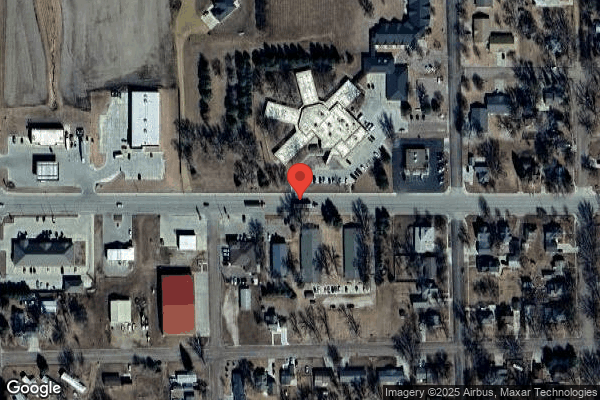
606 W CEDAR, BERESFORD, SD 57004 (605) 763-2050
Non profit - Corporation 39 Beds Independent Data: November 2025
Trust Grade
38/100
#56 of 95 in SD
Last Inspection: August 2025

Inspected within the last 6 months. Data reflects current conditions.

Overview

Bethesda of Beresford has received a Trust Grade of F, indicating significant concerns about the quality of care provided, which places them in the poor category. They rank #56 out of 95 nursing homes in South Dakota, meaning they are in the bottom half of facilities in the state and are the second lowest option in Union County. The facility is currently improving, having reduced their number of issues from 15 in 2024 to 4 in 2025, but they still have a concerning staff turnover rate of 63%, which is above the state average. Although they have good RN coverage, more than 90% of other facilities in South Dakota, there were serious incidents, such as a mechanical lift accident that caused injury to a resident due to inadequate staff training, as well as concerns about long wait times for call light responses and food safety violations in the kitchen. Overall, while there are some strengths, such as improved quality measures, the weaknesses in staffing and safety raise important questions for families considering this home.

Trust Score
F
38/100
In South Dakota
#56/95
Bottom 42%
Safety Record
Moderate
Needs review
Inspections
Getting Better
15 → 4 violations
Staff Stability
⚠ Watch
63% turnover. Above average. Higher turnover means staff may not know residents' routines.
Penalties
✓ Good
$16,088 in fines. Lower than most South Dakota facilities. Relatively clean record.
Skilled Nurses
✓ Good
Each resident gets 55 minutes of Registered Nurse (RN) attention daily — more than average for South Dakota. RNs are trained to catch health problems early.
Violations
⚠ Watch
25 deficiencies on record. Higher than average. Multiple issues found across inspections.
★★☆☆☆
2.0
Overall Rating
★★★☆☆
3.0
Staff Levels
★★★★☆
4.0
Care Quality
★★☆☆☆
2.0
Inspection Score
Stable
2024: 15 issues
2025: 4 issues

The Good

  • 4-Star Quality Measures · Strong clinical quality outcomes
  • Full Sprinkler Coverage · Fire safety systems throughout facility
  • No fines on record

Facility shows strength in quality measures, fire safety.

The Bad

2-Star Overall Rating

Below South Dakota average (2.7)

Below average - review inspection findings carefully

Staff Turnover: 63%

17pts above South Dakota avg (46%)

Frequent staff changes - ask about care continuity

Federal Fines: $16,088

Below median ($33,413)

Minor penalties assessed

Staff turnover is elevated (63%)

15 points above South Dakota average of 48%

The Ugly 25 deficiencies on record

1 actual harm
Aug 2025 4 deficiencies
CONCERN (D) 📢 Someone Reported This

A family member, employee, or ombudsman was alarmed enough to file a formal complaint

Potential for Harm - no one hurt, but risky conditions existed

Accident Prevention (Tag F0689)

Could have caused harm · This affected 1 resident

**NOTE- TERMS IN BRACKETS HAVE BEEN EDITED TO PROTECT CONFIDENTIALITY** Based on South Dakota Department of Health (SD DOH) facility-reported incident (FRI) review, record review, observation, intervi...

Read full inspector narrative →
**NOTE- TERMS IN BRACKETS HAVE BEEN EDITED TO PROTECT CONFIDENTIALITY** Based on South Dakota Department of Health (SD DOH) facility-reported incident (FRI) review, record review, observation, interview, and policy review, the provider failed to ensure the safety of one of one sampled resident (40) who eloped (left the facility without staff knowledge).Findings include:1. Review of the provider's 7/9/25 submitted SD DOH FRI regarding resident 40 revealed:*On 7/9/25 at 1:44 p.m. resident 40 was found on the east side of the building by certified nursing assistant (CNA) M.*CNA M brought her back into the facility and notified the registered nurse (RN) N.*Staff determined she had exited the facility through the east door in the therapy department.*The door leading into the therapy department had been propped open and the east door leading to outside was unalarmed.*She did not recall leaving the facility and her vital signs (measurements of the body's basic functions, such as temperature, blood pressure, pulse, and respiration rate) were within normal limits.*Therapy staff were educated that they needed to keep the door to the therapy department shut.*A sign had been placed on the door indicating to staff to keep it shut at all times. Review of resident 40's electronic medical record (EMR) revealed:*She was admitted to the facility on [DATE].*She had a diagnosis of paranoid schizophrenia (a disorder that affects a person's ability to think, feel, and behave clearly) and generalized anxiety disorder.*Her Brief Interview of Mental Status (BIMS) assessment score was 4, which indicated she had severe cognitive impairment.*Her 6/23/25 elopement evaluation indicated she was not at risk for elopement.*She needed supervision while walking and wandered the facility without a purpose.*She did not use assistive devices for walking.*She occasionally pushed on the exit doors until they alarmed and would forget that she needed help when exiting the facility.*Her progress notes revealed she wandered consistently in the hallways and would push on exit doors, which, if alarmed, would sound an alarm to alert staff that the door had been opened.-On 6/23/25 at 2:06 p.m. the therapy department notified the nursing staff she had gotten into the therapy room and had tried to use the exit door.-On 7/1/25 and 7/5/25 she had set off the door alarms.-On 7/9/25 at 12:56 p.m. she had attempted to exit the 100-hall door.-On 7/9/25 at 2:10 p.m. she had eloped and was found walking in the parking lot towards the road.-On 7/10/25 she attempted to exit the 100-hall door.-On 7/12/25 she attempted to exit the front door with another resident.-On 7/13/25 she had been at the 100-hall door and stated to staff that you could push on the door for 10 seconds and it would open because the sign on the door said so.-On 7/16/25 and 7/18/25 she had set off the door alarms.*On 7/25/25 she was sent to the hospital for a mental health evaluation and placed on a mental health hold.-The resident had been discharged and was no longer at the facility. Observation on 8/11/25 at 3:35 p.m. revealed the door to the therapy room had a sign on it stating to keep it shut at all times. Observation on 8/12/25 at 1:55 p.m. revealed the door to the therapy room had been propped open. Observation on 8/13/25 at 1:12 p.m. revealed that the door to the therapy room had been propped open. Interview on 8/13/25 at 10:44 a.m. with CNA H regarding resident 40 revealed she wandered the hallways constantly and would set off the door alarms. Interview on 8/13/25 at 10:53 a.m. with RN I regarding resident 40 revealed:*She did not seem to try to exit the facility in the beginning of her stay.*She had eloped through the therapy department door.*The therapy department had been educated to keep their door shut.*There was a key hanging on the wall beside the door to get into the therapy room.*Resident 40 was no longer at the facility because she needed a mental health evaluation. Interview on 8/13/25 at 1:53 p.m. with interim director of nursing (IDON) B and administrator A revealed:*The door to the therapy department had been propped open the past two days due to a contracted worker installing an alarm to the therapy department's east door exit.*The administrator had told that worker that he needed to keep the door closed.*The administrator confirmed that she had educated the therapy department about keeping the door closed.*They stated they thought that the elopement occurred because it was a system failure, which was corrected by installing an alarm on the door inside the therapy department.*The administrator confirmed that all other doors in the facility were alarmed.*IDON B did not think that resident 40 had exit seeking behaviors because she had never tried to pack her bags or state to staff that she wanted to leave the facility.*IDON B believed that to determine if residents were at risk for elopement, exit seeking behaviors needed to be intentional.*IDON B confirmed that resident 40 was not re-evaluated for risk of elopement after she eloped because she did not think it was necessary.*IDON B confirmed that interventions for elopement had not been documented in resident 40's care plan after she had eloped. Review of the provider's undated Elopement policy revealed:* To assess and identify residents at risk of elopement. To provide a system of documentation for the prevention of elopement. To minimize risk of elopement through individualized interventions. To identify a plan in the event of a resident elopement.* 1. At the time of admission, identify the resident who is at risk for elopement on the initial/temporary care plan with interventions specific to the resident to minimize individual risk. This is to be reviewed again quarterly and PRN [as needed].
CONCERN (D)

Potential for Harm - no one hurt, but risky conditions existed

Infection Control (Tag F0880)

Could have caused harm · This affected 1 resident

**NOTE- TERMS IN BRACKETS HAVE BEEN EDITED TO PROTECT CONFIDENTIALITY** Based on observation, interview, record review, and policy review, the provider failed to ensure infection control practices wer...

Read full inspector narrative →
**NOTE- TERMS IN BRACKETS HAVE BEEN EDITED TO PROTECT CONFIDENTIALITY** Based on observation, interview, record review, and policy review, the provider failed to ensure infection control practices were followed by failing to place one of one sampled resident (23) with an open surgical wound on his ear on enhanced barrier precautions (EBP) (gloves and gown use when providing contact care).Findings include: 1. Observation on 8/11/25 at 3:38 p.m. of resident 23 in the hallway revealed there was a bandage on his right ear that appeared to be soaked with blood. Record review of resident 23's electronic medical record (EMR) revealed:*He was admitted to the facility on [DATE].*He had a diagnoses of squamous cell carcinoma (a type of skin cancer originating from the outer layer of the skin) of the skin of the right ear and the external auricular (ear) canal. *He had seen a dermatologist to remove the area of skin cancer on his right ear.*His power of attorney (POA) (someone designated on a legal document to act on behalf of a resident) was informed that the surgical wound on his right ear would be slow healing.*A skin evaluation on 8/11/25 of his surgical wound indicated there was small amount of drainage and the wound bed appeared red with lump-like tissue.*There was no mention of the resident being placed on enhanced barrier precautions in his EMR documentation. Observation on 8/12/25 at 10:43 a.m. of resident 23's room revealed:*There was no sign posted inside or outside of his room that indicated he was on enhanced barrier precautions.*There was no personal protective equipment (gowns and gloves) (PPE) available inside or outside of his room for staff to use while providing his contact care needs. Observation and interview on 8/13/25 at 9:34 a.m. with registered nurse (RN) I in resident 23's room revealed:*Resident 23 had an open wound on his right ear due to a surgical procedure.*She performed hand hygiene and put on a pair of gloves.*She removed resident 23's dressing for the surveyor to observe the open wound.*She reapplied the dressing, removed her gloves, and performed hand hygiene.*She confirmed that the resident had not been on EBP since his surgical procedure on 6/19/25. Interview on 8/13/25 at 1:53 p.m. with interim director of nursing/infection preventionist B revealed resident 23 should have been on EBP due to his open surgical wound on his right ear. Review of the provider's 4/1/2024 Enhanced Barrier Precautions policy revealed:* Enhanced Barrier Precautions involve gown and glove use during high-contact resident care activities for residents known to be colonized or infected with a MDRO [multi-drug-resistant organism] as well as those at increased risk of MDRO acquisition (e.g., residents with wounds or indwelling medical devices.)* High-contact resident activities include: Dressing, bathing/showering, transferring, providing hygiene, changing linens, changing briefs or assisting with toileting, device care, wound care: any skin opening requiring a dressing.* Wound in relation to this guidance, this generally includes residents with chronic wounds.* Examples of chronic wounds include, but are not limited to, pressure ulcers, diabetic foot ulcers, unhealed surgical wounds, and chronic venous status ulcers.
CONCERN (E)

Potential for Harm - no one hurt, but risky conditions existed

Respiratory Care (Tag F0695)

Could have caused harm · This affected multiple residents

**NOTE- TERMS IN BRACKETS HAVE BEEN EDITED TO PROTECT CONFIDENTIALITY** Based on observation, interview, record review, policy review, and manufacturer's guideline review, the provider failed to ensur...

Read full inspector narrative →
**NOTE- TERMS IN BRACKETS HAVE BEEN EDITED TO PROTECT CONFIDENTIALITY** Based on observation, interview, record review, policy review, and manufacturer's guideline review, the provider failed to ensure:*Oxygen equipment for two of two sampled residents (3 and 28) who required the use of supplemental oxygen was kept off the floor and appropriately serviced.*Infection control practices had been followed by three of three staff members (registered nurse (RN) J, certified nursing assistant (CNA) K, and CNA L) to minimize the risk of contamination to the oxygen tubing, for one of one sampled resident's (3) who required the use of continuous oxygen.*One of one sampled resident (3) received oxygen as ordered by the physician.*One of one sampled resident's (28) continuous use of oxygen at night was addressed in the resident's care plan. Findings include:1. Observation and interview on 8/12/25 at 9:05 a.m. with resident 3 while he was in his bed in his room revealed:*He communicated with sounds and gestures.*He had an oxygen (O2) concentrator (a device that filters room air into purified oxygen) next to his dresser, near the bathroom, which contained:-An undated O2 tubing and nasal cannula tubing (flexible tubing with prongs that delivers oxygen through the nose).-A humidifier bottle that did not contain any liquid.-An orange medical supply service sticker indicated that the O2 concentrator had been serviced on 7/30/24 and was due for service on 7/25.*The filter on the back side of the concentrator was missing.*An open jug of purified water dated 6-9 was on the table next to the O2 concentrator, which contained approximately one inch of water.*His wheelchair, located in the bathroom, had a portable O2 tank on it with an undated O2 nasal cannula tubing attached to it hanging towards the floor. Review of resident 3's electronic medical record (EMR) revealed:*He was admitted on [DATE].*His diagnoses included emphysema (a chronic lung disease), chronic obstructive pulmonary disease (a lung disease that blocks airflow and makes it hard to breathe) (COPD), obstructive sleep apnea (a chronic condition in which the throat muscles relax during sleep and the airway may become partially or fully blocked), and dementia (a group of symptoms affecting memory, thinking, and social abilities).*His 7/31/25 Minimum Data Set assessment indicated his speech was unclear, with slurred or mumbled words, and he sometimes made himself understood with limited ability to make concrete requests.*A 2/24/23 physician order indicated Change oxygen and/or nebulizer [a device that converts liquid medication into an inhalable mist] equipment and clean filters one time a day every 2 [two] weeks on FRI [Friday] for infection control. *A 12/20/24 physician's order indicated ensure that oxygen is in place and oxygen in tank two times a day.*A 2/19/25 physician order indicated Oxygen continuously at 3L [liters] per nasal cannula.Keep oxygen levels above 90% [percent].*His current care plan included:- I have COPD and acute on chronic respiratory failure.- I have obstructive sleep apnea and I wear oxygen at night and throughout the day to maintain my oxygen SATs [saturation level].- I have an oxygen tank in my wheelchair. I sometimes do not want to wear the oxygen and will take it off at my discretion. I often will become distressed by this decision. Please encourage me to always keep it on. Observation and interview on 8/13/25, starting at 9:30 a.m. in resident 3's room revealed:*Resident 3 was in bed and was not wearing his oxygen. His undated O2 nasal cannula tubing was on the floor in front of his O2 concentrator.*At 9:34 a.m. CNA K and CNA L entered resident 3's room.-CNA L shut off resident 3's O2 concentrator, picked the nasal cannula up off the floor, coiled up the nasal cannula tubing, and placed it in a blue bag that hung from his dresser drawer.--CNA K explained that the blue bag was where resident 3's oxygen nasal cannula was to be stored when he was not wearing it between uses.*CNA K stated that the red spots on resident 3's pillow and t-shirt were blood from his bloody nose. She thought that his nose was dry from his oxygen use.*CNA L and CNA K assisted resident 3 with personal hygiene, using the toilet, and getting dressed, and then assisted him into his wheelchair.-Resident 3 had not worn his oxygen during any of those activities.*Resident 3's nose bled off and on. He wiped his nose several times with his hand, and CNA K used a tissue and blotted blood from his left nostril.*Once seated in his wheelchair, resident 3 communicated with CNA L and CNA K with grunting sounds and gestures. He pointed to his O2 concentrator and touched his face several times. He took deep breaths, leaned forward, and appeared frustrated.*CNA K stated that she needed a new oxygen tank for resident 3's wheelchair and that she would put his oxygen on as soon as she changed that tank. She then left his room while pushing him in his wheelchair. Observation and interview on 8/13/25 at 10:01 a.m. with CNA K and resident 3 in the oxygen storage room revealed:*At 10:02 a.m. CNA K placed the nasal cannula that had been attached to the portable oxygen tank on resident 3 and turned it on. She stated he received three liters of oxygen.-Resident 3 had been without oxygen for at least 30 minutes.*CNA K confirmed that resident 3 was to always wear his oxygen, that she had not tried to put his oxygen on him before that time, but that he was known to remove his oxygen when he was agitated.*CNA K did not know how often the nasal cannula tubing was to be replaced because the nurse did that.*She did not monitor resident 3's oxygen saturation (percentage of oxygen in the blood) levels during the above observation. Observation and interview on 8/13/25 at 10:44 a.m. with RN J in resident 3's room revealed:*She stated that resident 3's humidifier had been empty that morning when she filled it with distilled water.*Residents' O2 tubing, nasal cannulas, humidifiers and concentrator filters were to be changed every two weeks and documented on the TAR.*She removed resident 3's nasal cannula from the blue bag and confirmed that the nasal cannula was not labeled.*After having been informed of the above observations of CNA L having picked that nasal cannula up off the floor, coiled it up, and placed it in the blue bag, RN J stated that resident 3 often removed his nasal cannula. She stated that earlier that morning, she had picked it up off his fall mat, and he had allowed her to put it back on. RN J then placed the nasal cannula back into the blue bag that hung from his dresser handle.*She expected CNA L and CNA K to have attempted to put resident 3's nasal cannula back on him and to have encouraged him to wear his oxygen because it was ordered by the physician to be on continuously.*RN J confirmed that there was no filter on the back of resident 3's concentrator and that the service sticker indicated it had been due for service on 7/25. She did not know who serviced the concentrators. 2. Observation and interview on 8/12/25 at 9:39 a.m. with resident 28 and two family members in her room revealed:*Resident 28 wore oxygen every night and occasionally during the day when she had difficulty breathing.-She felt that the facility was very dry and she often had a dry nose and throat.*Resident 28's family member stated they had put a large plant in resident 28's room to add some moisture.*There was an O2 concentrator next to resident 28's bed.-An orange medical supply service sticker indicated that the concentrator had been serviced on 7/30/24 and was due for service on 7/25.*There were two one-gallon jugs of distilled water behind resident 28's recliner.*Resident 28 stated that she had an O2 humidifier on the O2 concentrator when she came to the facility, but there had been a problem with that humidifier. The humidifier had been removed, but it had not been replaced. Review of resident 28's EMR revealed:*She was admitted on [DATE].*Her diagnoses included chronic bronchitis (a respiratory condition with a persistent cough) and COPD.*Her 7/8/25 BIMS assessment score was 13, which indicated she was cognitively intact.*A 2/13/25 physician order indicated Oxygen at 1L/NC [1 liter per nasal cannula]at bedtime for [to] Keep SpO2 [oxygen saturation levels] > [greater than] 90%.*Her care plan did not address her use of supplemental oxygen. 3. Interview on 8/13/25 at 11:00 a.m. with interim director of nursing (IDON) B and administrator A revealed they had been aware that the O2 concentrators had been due for services. Administrator A had planned to call to schedule that service but had forgotten. 4. Observation on 8/13/25 at 11:05 a.m. with IDON B in resident 3's room revealed IDON B:*Stated resident 3's O2 concentrator was provided by the Veterans Administration, but was to be serviced by the facility.*Confirmed resident 3's concentrators had been due for service on 7/25.*IDON B expected:-Resident 3's O2 humidifier to have been refilled, when empty, by a CNA or a nurse when they assisted resident 3 with putting on or taking off his oxygen in his room.--She had not been aware that resident 3 had a bloody nose or that the humidifier had been empty for two days.-Resident 3's O2 concentrator filter to have been replaced when it was missing by the facility.-CNA L to have discarded resident 3's nasal cannula tubing when it had been found on the floor and notified the nurse for a replacement nasal cannula.-CNA L and CNA K to have encouraged resident 3 to wear his oxygen during activities of dressing, using the toilet, and personal hygiene.-RN J to have discarded and replaced resident 3's nasal cannula tubing when notified that it had been on the floor.-The nasal cannula and oxygen tubing to have been changed and dated every two weeks. Observation on 8/13/25 at 11:08 a.m. with IDON B in resident 28's room revealed IDON B confirmed resident 28's concentrators had been due for service on 7/25. 5. Interview and review of resident 28's care plan on 8/13/25 at 2:52 p.m. with IDON B revealed:*Resident 28 had not required oxygen until about one month after she was admitted to the facility.*IDON B expected resident 28's use of nighttime oxygen to have been added to her care plan when she began using oxygen.*IDON B was unaware that there had been a problem with resident 28's O2 humidifier or that it had been removed.*Resident 28's use of the humidifier did not require a physician's order, and they should have replaced it. 6. Review of the provider's April 2009 Oxygen Concentrator Operator's Manual revealed:*DO NOT operate the concentrator without the filter installed.*Remove each filter and clean at least once a week. Only qualified personnel should perform preventative maintenance on the concentrator.*At a minimum, preventative maintenance MUST be performed according to the maintenance record guidelines.every 4,380 hours. (4,380 hours are equivalent to usage 24 hours a day, 7 [seven] days a week for 6 [six] months. Review of the provider 1/1/2019 Oxygen Concentrator policy revealed:*Purpose: To deliver oxygen in a safe manner. To keep oxygen equipment clean and maintained in good condition.*It was their policy to perform nursing functions in compliance with State and Federal Regulations and with practices/procedures that are widely accepted across the nursing industry.*Change tubing, cannula or mask and clean filters located on the concentrator every other week as schedule[d] on TAR.*Fill humidifier jar half full of distilled water, if used.*The policy did not address discarding potentially contaminated oxygen equipment, servicing of the concentrator, following the physician's order, or care planning for the use of oxygen.
CONCERN (E)

Potential for Harm - no one hurt, but risky conditions existed

Food Safety (Tag F0812)

Could have caused harm · This affected multiple residents

**NOTE- TERMS IN BRACKETS HAVE BEEN EDITED TO PROTECT CONFIDENTIALITY** Based on observation, interview, and policy review, the provider failed to follow standard food safety practices to ensure:*Docu...

Read full inspector narrative →
**NOTE- TERMS IN BRACKETS HAVE BEEN EDITED TO PROTECT CONFIDENTIALITY** Based on observation, interview, and policy review, the provider failed to follow standard food safety practices to ensure:*Documentation was completed consistently for two of two weekly scheduled cleaning tasks of the kitchen.*Temperature monitoring and documentation was completed consistently for one of one coffee machine.*One of one dietary aide (O) had washed her hands before and after serving and touching resident food items to prevent potential contamination.Findings include:1. Observation on 8/11/25 at 1:50 p.m. in the kitchen revealed:*A binder containing the weekly kitchen cleaning schedules.*The binder indicated staff needed to initial a task when it was completed. *On the 8/4 - 8/10 weekly cleaning schedule 13 out of the 40 listed tasks were not marked complete.*On the 7/28-8/3 weekly cleaning schedule 14 out of the 40 listed tasks were not marked complete. 2. Observation on 8/11/25 at 2:45 p.m. in the dining room revealed:*A coffee machine on the counter by the kitchen doorway.*There was a temperature log taped to the side of the coffee machine dated August 25.*There were three columns labeled for breakfast, lunch, and supper to document the temperature of the coffee.-Out of the 33 areas to document coffee temperatures on that log, only 6 had documented temperatures.*There was an education sign-in sheet for hot liquid temperatures taped next to the temperature log on the coffee machine.-It indicated staff understood how to properly check and document the temperatures of hot liquids.-It had 11 staff signatures on it. Interview on 8/13/25 at 5:00 p.m. with dietary aides F and E in the dining room regarding the coffee machine temperature sheet revealed:*Dietary aide F stated the kitchen staff no longer needed to check the temperature of the coffee machine because it had been calibrated to be at the correct temperature.*Dietary aide E stated that kitchen staff still needed to check the temperature of the coffee even though it had been calibrated. 3. Observation on 8/11/25 at 4:30 p.m. of dietary aide O in the kitchen revealed:*No hand hygiene was observed:-Before or after she checked the temperatures of food items for the supper meal.-Before or after she served the residents' plated meals during the supper meal service.-Before or after she grabbed a resident's sandwich from a plastic bag from the refrigerator and placed it on a plate with her bare hands. Interview directly after the supper meal service with dietary aide O revealed she should have performed hand hygiene before and after checking the food temperatures, before and after serving the supper meal service, and before and after touching resident food items. 4. Interview on 8/13/25 at 10:36 a.m. with dietary manager C revealed:*He expected the kitchen staff to perform hand hygiene before serving meals to residents and before and after they touched resident food items.*He expected the kitchen cleaning tasks to be completed as scheduled and the logs to be filled out to indicate those tasks had been completed daily.*The coffee machine had been calibrated to ensure it would be the correct temperature for resident safety, but he still expected staff to check the temperature with a thermometer and document those temperatures on the coffee temperature log. 5.Interview on 8/13/25 at 5:29 p.m. with administrator A revealed:*She expected staff to be checking the temperature of the coffee machine daily even if the machine had been calibrated.*The provider did not have a policy regarding how to check the temperature of food items.*She expected staff to clean the kitchen and perform hand hygiene appropriately. Review of the provider's 4/24/24 Sanitation of Dietary Department policy revealed:* The dietary staff shall maintain the sanitation of the Dietary Department through compliance with a written, comprehensive cleaning schedule.* A cleaning schedule shall be posted weekly for all cleaning tasks, and employees will initial tasks as completed. Review of the provider's revised 5/22/25 Hand Hygiene policy revealed:* It is the policy of Bethesda of [NAME] that all staff practice accepted hand hygiene in order to help prevent the spread of infection.* Hand hygiene should be performed, but not limited to:-Before and after feeding residents, perform in between when feeding residents if you touch a resident, touch food, or touch utensils touched by a resident (if assisting more than one resident).
Aug 2024 1 deficiency
CONCERN (E) 📢 Someone Reported This

A family member, employee, or ombudsman was alarmed enough to file a formal complaint

Potential for Harm - no one hurt, but risky conditions existed

Deficiency F0625 (Tag F0625)

Could have caused harm · This affected multiple residents

Based on record review, interview, and policy review, the provider failed to ensure a Bed Hold Notice form was given to four of four sampled residents (1, 2, 3, and 4) prior to transfer to the emergen...

Read full inspector narrative →
Based on record review, interview, and policy review, the provider failed to ensure a Bed Hold Notice form was given to four of four sampled residents (1, 2, 3, and 4) prior to transfer to the emergency departmentl. Findings include: 1. Review of resident 1's electronic medical record (EMR) revealed: *She required an emergency room evaluation on 4/4/24. *Resident 1 was hospitalized for nausea/vomiting and stomach pain. *Her emergency contact had been notified on 4/4/24 of the need for an emergency room evaluation. *There had not been any documentation found regarding notification of the resident's bed hold. 2. Review of resident 2's EMR revealed: *She required an emergency room evaluation on 6/20/24. *Resident 2 was hospitalized for gastrointestinal bleeding. *Her power of attorney (POA) was notified on 6/20/24 of the need for an emergency room evaluation. *There had not been any documentation found regarding notification of the resident's bed hold. 3. Review of resident 3's EMR revealed: *She required an emergency room evaluation on 3/24/24. *Resident 3 was hospitalized for sepsis of unknown organism. *Her POA was notified on 3/25/24 of the need for hospitalization. *There had not been any documentation found regarding notification of the resident's bed hold. 4. Review of resident 4's EMR revealed: *He required an emergency room evaluation on 4/14/24. *Resident 4 was hospitalized for pneumonia. *His POA was notified on 4/14/24 of the need for hospitalization. *There had not been any documentation found regarding notification of the resident's bed hold. 5. Interview on 8/8/24 at 9:10 a.m. with administrator A regarding the bed hold for residents that required hospitalization revealed: *Residents who had been sent to the emergency room and required hospitalization should have received a bed hold notice. *She had changed who was responsible for doing the bed holds in April. *She thought the business manager was doing the bed hold notices, but he was not doing them. *She agreed the bed hold notices were not given to the residents when they transferred to the hospital. 6. Review of the provider's undated Resident Admission/Bed hold/readmission policy revealed: *A bed will be held for the resident during his/her absence from the facility as long as the resident or responsible party agrees to pay the established base room rate. The responsible party/resident will be asked to sign or give verbal consent to a bed hold policy within 48 hours of transfer. The Department of Social Services will reimburse the facility 100% for Medicaid absence of up to 5 days if the absence is due to admission to an acute care general hospital, and a maximum of 15 days if the absence is for a therapeutic home visit, and the absence has been provided for in the individual's plan of care.
Apr 2024 14 deficiencies
CONCERN (D)

Potential for Harm - no one hurt, but risky conditions existed

Deficiency F0575 (Tag F0575)

Could have caused harm · This affected 1 resident

Based on interview, observation, and review of the resident admission packet, the provider failed to ensure the ombudsman and South Dakota Department of Health (SD DOH) contact information had been po...

Read full inspector narrative →
Based on interview, observation, and review of the resident admission packet, the provider failed to ensure the ombudsman and South Dakota Department of Health (SD DOH) contact information had been posted in a location accessible to all 35 current residents, visitors, and families. Findings include: 1. Interview with the resident council on 4/24/24 from 1:00 p.m. through 1:35 p.m. revealed the residents were: *Unaware where to find contact information for the ombudsman (resident advocate). *Not aware they could contact the SD DOH directly or file a complaint with the SD DOH. 2. Observation on 4/24/24 at 1:40 p.m. and again on 4/25/24 at 2:16 p.m. revealed the following: *The ombudsman contact information was posted in the entryway vestibule and the social worker's office. -In the entryway vestibule, the information was posted at standing-eye-level and required a door code to access the area. -In the social worker's office, there was a poster on the wall above the bookshelf. It was posted near the ceiling. The social worker's office was not always accessible to the residents. *There was no SD DOH contact information posted anywhere in the facility. *There was no statement posted that the resident could file a complaint with the SD DOH concerning any suspected violation of state or federal facility regulations. 3. Interview on 04/25/04 at 2:08 p.m. with administrator A confirmed: *The ombudsman's contact information was posted only in the social worker's office above a bookshelf. *The SD DOH contact information was not posted. *A statement that the resident could file a complaint with the SD DOH concerning any suspected violation of state or federal facility regulations was not posted. *A description of how to file a complaint with the state survey agency, SD DOH, was not posted. 4. Review of the admission handbook revealed: *The table of contents listed State and Federal Contacts was on page 19. *There was no page 19. *The State and Federal Contacts started on page 18. *The page after page 18 was labeled page 2. *Page 2 had contact information for the state ombudsman program, but it was not the current contact information. *The SD DOH complaint coordinator's phone number was not correct.
CONCERN (D)

Potential for Harm - no one hurt, but risky conditions existed

Deficiency F0577 (Tag F0577)

Could have caused harm · This affected 1 resident

Based on interview, observation, and policy review, the provider failed to make the most recent survey results accessible to all residents and their representatives. Findings include: 1. Interview wit...

Read full inspector narrative →
Based on interview, observation, and policy review, the provider failed to make the most recent survey results accessible to all residents and their representatives. Findings include: 1. Interview with the resident council on 4/24/24 from 1:00 p.m. through 1:35 p.m. revealed the residents were unaware of their right to read the state survey results or where to find them. Observation of the lobby and public areas on 4/24/24 at 1:40 p.m. and again on 4/25/24 at 2:16 p.m. revealed the survey results had not been made available. Interview on 04/25/04 at 2:08 p.m. with administrator A confirmed: *The survey results were not currently posted. *The survey binder had been removed from the front lobby in January 2024 after a water leak. Review of the facility resident rights document in the admission packet provided to residents revealed the right to .examine the results of the most recent survey of [provider's name] conducted by Federal or State surveyors and any plan of correction in effect. Results are located at the nurses' station and next to the business office.
CONCERN (D)

Potential for Harm - no one hurt, but risky conditions existed

Deficiency F0578 (Tag F0578)

Could have caused harm · This affected 1 resident

**NOTE- TERMS IN BRACKETS HAVE BEEN EDITED TO PROTECT CONFIDENTIALITY** Based on record review, interview, and policy review, the provider failed to implement a revised advanced directive for one of s...

Read full inspector narrative →
**NOTE- TERMS IN BRACKETS HAVE BEEN EDITED TO PROTECT CONFIDENTIALITY** Based on record review, interview, and policy review, the provider failed to implement a revised advanced directive for one of sixteen sampled residents (32) reviewed for advance directives. Findings include: 1. Review of resident 32's paper and electronic medical record (EMR) revealed: *The dashboard indicated full code. (Individual desire for cardiopulmonary resuscitation [CPR] to be initiated if their heart stopped.) *The physicians' order dated [DATE] indicated full code. *The care conference notes dated [DATE] indicated Code status was changed from Full Code to DNR [do not resuscitate]. Provider was faxed. Interview on [DATE] at 11:06 a.m. with administrator (ADM) A revealed: *It was her expectation that staff would look at the EMR dashboard to find a resident's current code status. *She recalled the power of attorney (POA) changed resident 32's code status at the last care conference that was held on [DATE]. *She stated, I should have followed up with a new Expressions of Healthcare Preferences form. *It was her expectation that when a resident code status changed: -The Expression of Health Care Preferences form would have been completed with the resident or the resident's POA. -That form would have been sent to the physician for signature and uploaded to the EMR. -The physician orders and dashboard would have been updated. *She confirmed that she didn't follow up, and that the steps above had not been completed. Interview on [DATE] at 11:02 a.m. with ADM A revealed she: *Provided an Expression of Healthcare Preferences form for resident 32 dated [DATE]. *Provided a copy of a stamp that was typically stamped on the physicians' order. *Indicated that the stamp provided the steps that should be followed after receiving all physician's order. *Indicated they did not have an Advance Directives Policy as requested but provided a Denoting Code Status policy. Review of resident 32's Expression of Healthcare Preferences form revealed the form: *Indicated, I DO NOT desire cardiopulmonary resuscitation (CPR). *Was signed by the resident's POA on [DATE]. *Was signed by the physician on [DATE]. *Had not been stamped with the stamp mentioned above. Review of the providers'[DATE] Denoting Code Status policy revealed: *Upon admission, and after orders for advance directives have been received, an area by the resident's door is marked to denote their code status. *The policy did not mention: -The use of a stamp. -The steps or expectations indicated above by ADM A.
CONCERN (D)

Potential for Harm - no one hurt, but risky conditions existed

Comprehensive Care Plan (Tag F0656)

Could have caused harm · This affected 1 resident

**NOTE- TERMS IN BRACKETS HAVE BEEN EDITED TO PROTECT CONFIDENTIALITY** Based on observation, interview, record review, and policy review, the provider failed to develop, revise, and implement a compr...

Read full inspector narrative →
**NOTE- TERMS IN BRACKETS HAVE BEEN EDITED TO PROTECT CONFIDENTIALITY** Based on observation, interview, record review, and policy review, the provider failed to develop, revise, and implement a comprehensive person-centered care plan that addressed nail care and range of motion for two of fourteen sampled residents (3 and 5). Finding Include: 1. Observation and interview on 4/23/24 at 9:19 a.m. with resident 3 revealed: *There was a picture on the wall with instructions on how to put on a right-hand splint and a schedule for the times that the splint was to have been put on. *Resident 3 indicated she had not worn that splint for a long time. *She rested her right hand in her lap. *When asked to lift her arms she was unable to lift her right arm. *She stated, No, none, when asked about range of motion exercises and if anyone helped her to move her arms. *She indicated that she: -Had been in therapy but was not currently. -Wanted an exercise program for her right arm. Interview on 4/24/24 at 2:35 p.m. with registered nurse (RN) N revealed that resident 3 only wore the hand splint at night, and I don't know any more about it. -That contradicted resident 3's report that she had not been wearing the splint. Review of resident 3's paper and electronic medical record (EMR) revealed: *An admission date of 5/24/22. *Diagnoses included hemiplegia and hemiparesis following cerebral infarction affecting the right dominant side and contracture of muscle; right hand. *The most recent annual comprehensive Minimum Data Set (MDS) with an assessment reference date of 5/2/23 that indicated: -Functional Limitation in Range of Motion: Upper extremity. -Impairment on one side. -She has worked with therapy in the facility but is currently doing restorative. *There was no current documentation in the EMR of a restorative program or use of the right-hand splint. *The Occupational Therapy Discharge summary dated [DATE] indicated Splint and Brace Program Established/Trained: Splint on at night off in the morning. Review of resident 3's care plan with a revision date of 5/19/23 revealed: *A goal of, To voice adequate pain control and be able to participate in therapy. *An intervention of, I have a contracture of my left hand r/t [related to] my CVA [cerebral vascular accident (stroke)]. I am working with OT [occupational therapy]. *The care plan had not been revised after discharge from occupational therapy on 9/26/23. *There were no goals or interventions related to her right-hand contracture. *There were no goals or interventions related to limited range of motion (ROM) of her right arm. Interviews on 04/25/24 at 11:32 a.m. and again on 4/25/24 at 12:26 p.m. with administrator A revealed: *She was unable to locate documentation on the use of a hand splint for resident 3. *I don't have anything on [resident 3's] splint, that would be OTR (registered occupational therapist) O. *In reference to the sign hanging in resident 3's room, she stated, I don't think the sign should be in her room, I will find out. She was unable to provide confirmation. *They do not have a policy for the restorative nursing program. 2. Observation and interview on 4/23/24 at 11:34 a.m. with resident 5 revealed: *She had long jagged, thickened fingernails with dark colored residue under the tips. -The nails were brownish yellow in color and the growth was both upward and beyond the fingertip. *She had a blue foam roll in her left hand. *Both her left and right hands were resting in her lap with her fingers curled under. *When asked to open her finger, she demonstrated minimal movement. *She stated: -She was not happy about not receiving exercises for her hands. -No one moves my hand. Observation and interview on 4/23/24 at 9:45 a.m. and again on 4/25/24 at 10:03 a.m. with resident 5 revealed: *She had a blue foam roll in her left hand. *The foam roll had an unidentifiable substance on it. *Her fingernails remained long and there was an unidentified orange and brown substance under her nails. *She stated she liked to look nice. *Stated she wanted to get her nails done on Thursday. Review of resident 5's EMR revealed: *An admission date of 6/24/19. *Diagnoses that included hemiplegia and hemiparesis following cerebral infarction affecting the left non-dominant side and weakness. *A physician order dated 7/8/23 for Blue palm protector to right hand ON in AM off at HS one time a day for skin integrity of hand due to contracture and remove per schedule. *The most recent MDS significant change in status with an assessment reference date of 7/14/23 revealed: -Functional Limitation in Range of Motion: Upper extremity .Impairment on both sides. -Functional Limitation in Range of Motion: Lower extremity .Impairment on both sides. *There was no nail care or refusal of nail care documentation in the nurse's notes, care tasks, or Treatment Administration Record. Review of resident 5's care plan with a revision date of 10/19/23 indicated: *I have history of a CVA. *I have residual hemiplegia/hemiparesis to my left side. *I have very limited ROM r/t my spinal stenosis and arthritis. *I will maintain current level of function. -There were no interventions related to limited range of motion of her arms and legs. *I like lipstick and to look nice . *She requires one person assistance with personal hygiene. *Skin assessments were to be completed weekly. *There were no goals or interventions related to her nail care. Interview on 4/25/24 at 9:38 a.m. with certified nurse assistant (CNA) X revealed: *Nail care was provided with scheduled baths once a week by the nursing assistants. -There was no specific nail care documentation to complete. It's basic care. *Skin assessments were completed by the nurse on bath day. *The activities department provided a nail class on Thursdays each week. *She provided a bath to resident 5, but: -CNAs did not complete resident 5's nail care. -A nurse does her nails, both toes and fingers. *Resident 5 is not always receptive to baths or nail care. Interview on 4/25/24 at 9:31 a.m. with licensed practical nurse F revealed: *Resident 5 goes to nail class on Thursdays with activities but sometimes refuses. *It was her expectation that: -CNAs can care for [resident 5's finger] nails. -That was typically completed on bath days. Interview on 4/25/24 at 9:51 a.m. with activities director R revealed: *Resident 5 attended nail class occasionally depending on her mood. *We just polish or [NAME] her nails. *We are careful about her nails. 3. Interview on 4/25/24 at 12:26 p.m. director of nursing (DON B) revealed: *Residents 3 and 5 had not been assessed and was not receiving any restorative program. *Care plans were updated when MDSs were completed or when changes were identified. Review of the provider's Care Planning Process policy reviewed 10/27/21 and 4/25/24 revealed: *To insure a comprehensive, individualized plan of care for each resident. * .each resident will have an individualized plan of care which addressed the resident's needs and severity of condition, impairment disability or disease . *It is the responsibility of the IDT [interdisciplinary team] members to assess the resident, individualize the plan of care, evaluate the effectiveness and [of] the plan of care as a resident's needs change . Review of the RAI [resident assessment instrument] Version 3.0 Manual dated October 2023 revealed: *Good assessment is the starting point for good clinical problem solving and decision making and ultimately for the creation of a sound care plan. *The care plan should be revised on an ongoing basis to reflect changes in the resident and the care that the resident is receiving.
CONCERN (D)

Potential for Harm - no one hurt, but risky conditions existed

Deficiency F0688 (Tag F0688)

Could have caused harm · This affected 1 resident

Based on observation, interview, record review, and policy review, the provider failed to ensure an ongoing restorative nursing program for two of two sampled residents (3 and 5) at risk for a decline...

Read full inspector narrative →
Based on observation, interview, record review, and policy review, the provider failed to ensure an ongoing restorative nursing program for two of two sampled residents (3 and 5) at risk for a decline in range of motion. Findings include: 1. Observation and interview on 4/23/24 at 9:19 a.m. with resident 3 revealed: *There was a picture on the wall with instructions on how to put on a right-hand splint and a wearing schedule for that splint. -Resident 3 indicated she had not worn that splint for a long time. *She rested her right hand in her lap. *When asked to lift her arms she was unable to lift her right arm. *She stated, No, none, when asked about range of motion exercises and if anyone helped her to move her arms. *She indicated that she: -Had been in therapy but was not currently. -Wanted an exercise program for her right arm. Review of resident 3's paper and electronic medical record (EMR) revealed: *An admission date of 5/24/22. *Diagnoses included hemiplegia and hemiparesis following cerebral infarction affecting the right dominant side and contracture of muscle; right hand. *The most recent annual comprehensive Minimum Data Set (MDS) with an assessment reference date of 5/2/23 indicated: -Functional Limitation in Range of Motion: Upper extremity. -Impairment on one side. -She has worked with therapy in the facility but is currently doing restorative. --There was no documentation to support her participation in a restorative program. *The care plan with a revision date of 5/19/23 indicated: -A goal of, To voice adequate pain control and be able to participate in therapy. -An intervention of, I have a contracture of my left hand r/t [related to] my CVA [cerebral vascular accident (stroke)]. I am working with OT [occupational therapy]. -No intervention related to her right hand contracture. *The 9/26/23 Occupational Therapy Discharge summary dated indicated Splint and Brace Program Established/Trained: Splint on at night off in the morning. *There was no documentation in the EMR of a restorative program or use of the right-hand splint. 2. Observation and interview on 4/23/24 at 11:34 a.m. with resident 5 revealed: *She had a blue foam roll in her left hand. *Both her left and right hands were resting in her lap with her fingers curled under. -When asked to open her fingers, she demonstrated minimal movement. *She stated: -She was not happy about not receiving exercises for her hands. -No one moves my hand. Review of resident 5's EMR revealed: *An admission date of 6/24/19. *Diagnoses that included hemiplegia and hemiparesis following cerebral infarction affecting the left non-dominant side and weakness. *A physician order dated 7/8/23 for palm protector to right hand . for skin integrity of hand due to contracture . *The most recent MDS significant change in status with an assessment reference date of 7/14/23 revealed: -Functional Limitation in Range of Motion: Upper extremity .Impairment on both sides. -Functional Limitation in Range of Motion: Lower extremity .Impairment on both sides. *The care plan with a revision date of 10/19/23 indicated: -I have history of a CVA. -I have residual hemiplegia/hemiparesis to my left side. -I have very limited ROM [range of motion] r/t [related to] my spinal stenosis and arthritis. -I will maintain current level of function. Interview on 4/25/24 at 8:48 a.m. with physical therapy assistant (PTA) P revealed: *She was familiar with both resident 3 and resident 5. *Neither of those resident were receiving skilled therapy. *In regards to a restorative nursing program she stated, I believe they should both [resident 3 and resident 5] have a program. -Those programs would have been provided to [director of nursing (DON B)]. Interview on 4/25/24 at 10:50 a.m. with registered occupational therapist (OTR) O revealed: *Resident 3 was not currently receiving any skilled therapy services. *Resident 3 wore a hand splint and: -She stated, I am not sure if she [resident 3] is tolerating it. --She was uncertain if resident 3 had a restorative program. *It was her expectation that if therapy recommended a splint schedule or restorative program when the resident was discharged from therapy, nursing would complete it or communicate if there was a problem. *Resident 5 was not currently receiving any skilled therapy services. *She was uncertain if resident 5 had a restorative program. *Restorative exercise and splinting programs, when written by a therapist, were given to (DON) B. Interview on 04/25/24 at 11:32 a.m. and again on 4/25/24 at 12:26 p.m. with administrator A revealed: *She was unable to locate documentation on the use of a hand splint for resident 3. *In reference to the sign hanging in resident 3's room, she stated, I don't think the sign should be in her room, I will find out. She was unable to provide confirmation. *They do not have a policy for the restorative nursing program. Interview on 4/25/24 at 12:26 p.m. DON B revealed: *Restorative is a nursing program she leads. *Therapy involvement is limited to recommendation. Restorative programs will be modified by nursing. *I don't need to communicate with therapy if I change the program that they wrote. *She had created a restorative User-Defined Assessment (UDA) in point click care (PCC) [the EMR software]. *Not every resident has been assessed yet using that UDA and: -As residents would come due for their annual MDS, she would evaluate the need for restorative programs and put them back in place. -Residents 3 and 5 had not been assessed and did not have restorative programs.
CONCERN (E) 📢 Someone Reported This

A family member, employee, or ombudsman was alarmed enough to file a formal complaint

Potential for Harm - no one hurt, but risky conditions existed

Safe Environment (Tag F0584)

Could have caused harm · This affected multiple residents

**NOTE- TERMS IN BRACKETS HAVE BEEN EDITED TO PROTECT CONFIDENTIALITY** Based on observation, interview, and record review, the provider failed to ensure a clean and homelike environment was maintaine...

Read full inspector narrative →
**NOTE- TERMS IN BRACKETS HAVE BEEN EDITED TO PROTECT CONFIDENTIALITY** Based on observation, interview, and record review, the provider failed to ensure a clean and homelike environment was maintained in the following areas: *The activities room. *Resident rooms (1, 4, 5, 9, 13, 17, and 22). *The surfaces of the mechanical lifts. *The hand sanitizer dispensers. *The scale room. Findings include: 1. Observation on 4/23/24 at 8:13 a.m. in the activities room revealed: *There were glitter and confetti pieces on the tables and on the floor. *The counters were cluttered with several art and craft supplies that had not been put away (paper, puzzles, games, painting supplies, potting soil, crayons, colored pencils, markers). *There were dust bunnies, dead leaves, and dirt particles on the floor throughout the room. 2. Observation on 4/23/24 at 8:36 a.m. in the scale room revealed: *The carpet had stained spots throughout the room. *There were bits of what appeared to be torn paper scattered on the floor. *The scale itself had flakes of an unidentified white material and was missing pieces of the plastic covering on the base. 3. Observation on 4/23/24 from 8:41 a.m. to 9:24 a.m. in the 100-hallway revealed: *The hand sanitizer drip tray outside of room [ROOM NUMBER] was dirty with dust and congealed hand sanitizer. *Resident 22's room had: -Scratches on the walls near the dresser. -A missing a chunk of wood with sharp edges on the bathroom door. -A shelf above the bathroom sink that was visibly dirty with an unidentified substance. *Resident 17's room, had a cord between the bed and the TV taped to the floor. The tape was peeling away, creating a potential tripping hazard. *Resident 9's room had sharp edges on the edge of the entry door. *Resident 5's room had a bed rail and several other items cluttered on the floor. 4. Observation and interview on 4/23/24 at 9:19 a.m. with resident 1 in her room revealed: *Her walker had a layer of dust buildup on the tennis balls on the feet of the walker. *She stated her room was awful and she wished her room was cleaner. 5. Observation on 4/23/24 from 9:35 a.m. to 9:56 a.m. throughout the facility revealed there were at least 10 hand sanitizer drip trays that were soiled with congealed hand sanitizer and dust. 6. Observation and interview on 4/23/24 at 10:29 a.m. with resident 4 in his room revealed: *Long streak marks, chunks of paint, and exposed drywall areas missing along the bottom left edge of the wall. -At least three different areas where the drywall was exposed. -A two-foot missing section of the baseboard. -The remaining baseboard was peeling away from the walls. *He mentioned his wheelchair scrapes up against that side of the wall. *His bedside table was stained with a scattered clear glossy substance. It appeared to be sticky. 7. Observation on 4/23/24 at 10:52 a.m. of the E-Z Way stand aide labeled #5 revealed the foot base was filthy with a buildup of an unidentified orange crust, the leg brace had specks of unidentified white flakes, and the rubber safety caps were missing from where the sling was hooked onto the machine. 8. Observation on 4/23/24 at 11:05 a.m. of the E-Z Way stand aide labeled S1 revealed the foot base was filthy with dirt and food crumbs and was missing several areas of paint with rusty metal exposed. 9. Observation on 4/23/24 at 12:16 p.m. in the 200-hallway tub room revealed: *The tub chair had several areas that were cracked, broken, rusted, and missing plastic pieces. *The top of the storage shelf was unclean. 10. Observation on 4/23/24 at 2:52 p.m. of the E-Z Way stand aide labeled 3 revealed: *There was a buildup of food particles and dirt in the foot base. *The rubber safety caps were missing from where the sling was hooked onto the machine. *One of the wheels was missing the protective covering. 11. Interview on 4/23/24 at 4:18 p.m. with resident 13's daughter revealed: *She wished her mom's room was kept in a cleaner condition. *When she visited, the floor in resident 13's room frequently had dust bunnies under and around the bed. *The bedside table was often sticky with an unknown residue. *The flooring tiles near the window were cracked. *The common areas, such as the activities room, were always messy and disorganized. -Dirt and dust were commonly seen on the floor. 12. Observation on 4/24/24 at 8:34 a.m. in the activities room revealed it was in the same condition as stated previously. 13. Observations on 4/24/24 from 8:36 a.m. to 8:50 a.m. throughout the facility revealed that the hand sanitizer drip trays remained in the same condition. 14. Observation on 4/24/24 at 10:21 a.m. in resident 13's room revealed: *Several floor tiles beneath her window were cracked. -One of the tiles had a physical bump from the cracks. -There was about a half-inch gap between the bottom of the baseboard and the floor tiles. 15. Observation on 4/24/24 from 10:43 a.m. to 10:53 a.m. throughout the facility revealed the mechanical lifts were in the same condition as stated previously. 16. Interview on 4/24/24 at 4:10 p.m. with business office manager J revealed: *He was a certified nurse aide (CNA) and helped fill in when needed. *If he saw something that needed fixing, he would write it in the maintenance request book located in the CNA room. *When he was in resident rooms, he normally looked for call light placement, not necessarily for environmental concerns that needed to have been fixed. 17. Interview on 4/25/24 at 9:28 a.m. with environmental services technician G about her normal cleaning routine revealed: *If she saw something that needed fixing, she verbally informed maintenance director D. *She had been the only housekeeper that week. *She was aware of the broken tiles in resident 13's room but had not informed maintenance director D. *She was aware of the state of resident 4's wall, but she explained that management knew about that. *She was not aware that the activity room was not clean. *A resident's room was deep cleaned when they changed rooms or if they were discharged . *There was no regular deep cleaning schedule if a resident had been living there for a long time. *The nursing staff were responsible for cleaning the resident mechanical lifts. 18. Observation on 4/25/24 at 9:42 a.m. of E-Z Way stand aide labeled 4 revealed there were food crumbs and pieces of cashew nuts in the foot base. 19. Interview on 4/25/24 at 10:19 a.m. with maintenance director D about building repairs revealed: *He checked the maintenance request book every morning. *He performed room checks once a month to see what needed to be repaired. *When asked if he kept a record of items that needed fixing or things that had been fixed already, he tapped his head and said he kept a mental note. *Larger repairs, like patching holes in walls and replacing the baseboard, was usually performed when the resident moved out or when the resident was not in the room. *He was aware of the needed repairs in resident 4's room. -He recently replaced a hole in that wall, explaining that was why part of the baseboard was missing. *He was constantly repairing scrapes in the walls from resident wheelchairs. *He was not aware of the broken tiles in resident 13's room. 20. Interview on 4/25/24 at 10:29 a.m. with CNA E about the mechanical lifts revealed: *Nursing staff were responsible for cleaning the mechanical lifts. *Bleach wipes were used to clean the high-touch areas in between each resident use. *She thought that the night staff were responsible for deep cleaning the mechanical lifts. *She agreed there were cleanliness concerns with the mechanical lifts. 21. Review of the provider's Maintenance Requisition from 12/15/23 through 4/22/24 revealed: *There was a note from 2/20/24 that read, Please have housekeeping check request log daily - does not look like things are being followed up on. *A request was submitted on 3/19/24 that read, Rm. 208 hole in wall behind bed (headboard). -The request had not been marked as completed by the time of the survey. *A request was submitted on 4/7/24 that read, room [ROOM NUMBER]: bed control cord wires exposed. -The request had not been marked as completed by the time of the survey.
CONCERN (E) 📢 Someone Reported This

A family member, employee, or ombudsman was alarmed enough to file a formal complaint

Potential for Harm - no one hurt, but risky conditions existed

Grievances (Tag F0585)

Could have caused harm · This affected multiple residents

Based on interview, observation, admission packet review, policy review, and plan of correction review, the provider failed to: *Make information available on how to file a grievance and the location ...

Read full inspector narrative →
Based on interview, observation, admission packet review, policy review, and plan of correction review, the provider failed to: *Make information available on how to file a grievance and the location of the grievance forms readily available to residents and their representatives. *Designate who the grievance official was. Findings Include: 1. Interview with the resident council on 4/24/24 from 1:00 p.m. through 1:35 p.m. revealed: *The residents were not aware of who the grievance official was. *The residents were not aware how to file a grievance or where to find the necessary forms. Observation of the lobby and the public area in the center of the facility around the nursing station on 4/24/24 at 1:40 p.m. and again on 4/25/24 at 2:16 p.m. revealed the grievance official contact information, how to file a grievance, and the grievance forms were not in prominent locations that would be readily available to anyone with a grievance. Interview on 04/25/04 at 2:08 p.m. with administrator A revealed: *She was the grievance official and handles all the paperwork. *It was her expectation that residents write it [the grievance] on regular paper and that she would complete the grievance form. *Information on the grievance process was provided to residents at the November 2023 resident council meeting but she was unable to provide those resident council minutes. *Grievance information was kept in a black plastic pocket file hung on the wall above the nurses' station and noted the label on the file was missing. *The forms were kept where residents could not reach them or prevent one of the residents from taking all of them. -She explained one of the residents had a habit of taking items from the nurses' station. Review of the provider's 10/24/23 admission packet revealed: * .there are also forms by the front office you can fill out with your concerns or thoughts. *The packet did not specify who the grievance official was. *There was no grievance form located in the packet. Review of the provider's Grievance policy effective 10/24/23 revealed: *Upon request, the facility will provide residents or their representative(s) information regarding the internal grievance process including whom to contact to file a grievance. *The policy did not specify who the grievance official was. Review of the provider's plan of correction for the survey completed on 10/4/23 revealed: *Resident Council will be held on 11/1/23 to discuss the new Grievance Policy and Procedure and where to locate them and announcing the Social Services Designee as the grievance official. *Grievance forms will be located outside the nurse's station and included in the Resident admission Handbook as well as .next to the Administration office with clear signage and in plain view. *The provider was found in compliance with the plan of correction at the time of the revisit that was conducted on 11/7/23.
CONCERN (E)

Potential for Harm - no one hurt, but risky conditions existed

Deficiency F0761 (Tag F0761)

Could have caused harm · This affected multiple residents

Based on observation, interview, record review, and policy review, the provider failed to ensure expired medications were not administered to residents, and removed and discarded for nine of thirty bu...

Read full inspector narrative →
Based on observation, interview, record review, and policy review, the provider failed to ensure expired medications were not administered to residents, and removed and discarded for nine of thirty bulk medications in two of two medication carts. Findings include: 1. Observation on 4/25/24 at 10:20 a.m. of the 200/300 hallway medication carts with licensed practical nurse (LPN) F revealed there were several bulk medications that were past the manufacturer's expiration dates: *A bottle of Senna with an open date of 8/6, and an expiry date of 1/2024. *A bottle of TUMS, there was no open date or expiry date noted. *A bottle of multivitamins with an open date of 2/10/23 and a Best if Used By date of 3/2024. *A bottle of calcium tablets with an open date of 12/29/22, and an expiry date of 12/22/23. *A bottle of aspirin with an open date of 8/26/23 and an expiry date of 2/2024. 2. Observation on 4/25/24 at 10:55 a.m. of the 100/400 hallway medication cart with registered nurse K revealed: *An open bottle of TUMS, there was no open date, the expiry date was 6/2025. *An opened bottle of Milk of Magnesia, there was no open date, the expiry date was 4/2025. *A bottle of Tylenol with an open date of 4/10/24 and an expiry date of 3/2024. *A bottle of Senna with an open date of 3/2024 and an expiry date of 1/2024. 3. Interview on 4/25/24 at 10:40 a.m. with LPN F revealed: *She confirmed the written dates with a black Sharpie were the dates the bottles were opened to administer the medications to the residents. -Clearly, some expired medications were missed and left on the cart. -The pharmacist would come into the facility and audit the medications in the store room and the medication carts monthly. -Nurses should be checking for expiration dates before administering medications and if the medications were expired they should have removed them from the cart and prepared them for disposal. 4. Interview on 4/25/24 at 10:55 a.m. with registered nurse (RN) K revealed: *She confirmed the written dates with black Sharpie were the dates the bottles were opened and administered to the residents. -Some of those medications were outdated and should have been removed from the medication cart. -We use Milk of Magnesia up so fast it would not last until its expiration date. -Nurses should verify the expiration date before administering medications to the residents. 5. Interview on 4/25/24 at 11:30 a.m. with Administrator A revealed: *The director of nursing was out with a sick child. -Outdated medications should be disposed of and not used. *She thought the pharmacist had recently been on site to do the audit, but, I will just own it and move on. 6. Review of the provider's 4/25/24 policy and procedure for Storage of Medications policy revealed: *Medications labeled for individual residents were stored separately from the floor-stock medications. *Outdated medications were disposed of according to procedures for medication disposal. *Medication storage conditions were monitored on a monthly basis by the consultant pharmacist or pharmacy designee. *If drugs dispensed in the manufacturer's container or vial was initially broken, the container or vial would have been dated. -The nurse would place a date opened on the medication. -The expiration date of the vial or container would have been 30 days unless the manufacturer recommends another date or regulations/guidelines required different dating. -The nurse would check the expiration date of each medication before administering it. *No expired medications should have been administered to a resident. *All expired medications should have been removed from the active supply and destroyed in the facility, regardless of the amount remaining.
CONCERN (E)

Potential for Harm - no one hurt, but risky conditions existed

Deficiency F0909 (Tag F0909)

Could have caused harm · This affected multiple residents

Based on observation, interview, record review, and policy review, the provider failed to ensure the regular safety inspection of bed rails for two of two sampled residents (2 and 7). Findings include...

Read full inspector narrative →
Based on observation, interview, record review, and policy review, the provider failed to ensure the regular safety inspection of bed rails for two of two sampled residents (2 and 7). Findings include: 1. Observation and interview on 4/23/24 at 8:49 a.m. with resident 7 revealed: *She had bed rails on the bed in the up position. -She stated she had a stroke 5 years ago and could not use her right leg or arm. -She said she used the bed rails sometimes for repositioning, otherwise, they are just there. Interview with CNA X revealed: *Resident 7 used thebed rail at night, but she never observed her using them. 2. Observation and interview on 4/23/24 at 9:24 a.m. with resident 2 revealed: *She was sitting in her wheelchair in her room while CNA Y made her bed. *Resident 2 would not respond when questioned about the use of the rail. -There was one bed-rail on her bed that was near the wall. -CNA Y stated the resident did not use the bed rail. 3. Interview on 4/25/24 at 10:15 a.m. with maintenance director D revealed he: *Did not assess the bedrails. -Did not have measurements or any log with bedrail information. -Would put the bedrails on the bed when he received a physician's order. -Did not do annual checks or monitoring of those bed rails once they are placed on the residents bed. 4. Review of the providers undated Bed Inspection and Bed Rail Policy revealed: *It was the policy of the facility to identify and reduce safety risks and hazards commonly associated with bed rail use. A duo-faceted approach would be used to achieve sustainable quality outcomes, including 1) regular bed maintenance and 2) individual bed rail evaluations. In response to the requirement of providing for a safe, clean, comfortable, and homelike environment, the facility's regular maintenance program would include regular inspection of all bed systems (e.g. rails, frames, and mattresses, and operational components) to ensure they were clean, comfortable, and safe. The facility would also ensure individual resident bed rail evaluations were performed on a regular basis. Individual bed rail evaluations would include data collection analysis and determination of potential alternatives to bed rail use. When bed rail(s) were deemed necessary and appropriate, the facility would provide education to resident or resident's representative pertaining to the risks and benefits of bed rail use. The facility's priority was to ensure safe and appropriate bed rail use. -The objective of the bed rail use policy is to determine if resident use was safe and appropriate. The interdisciplinary team would use data collected from regular bed inspections and individual bed rail evaluations to bolster care planning and positive resident outcomes. The bed rail use policy would be reviewed annually or more frequently as needed and would be integrated into the facility quality assurance and performance program.
CONCERN (E) 📢 Someone Reported This

A family member, employee, or ombudsman was alarmed enough to file a formal complaint

Potential for Harm - no one hurt, but risky conditions existed

Deficiency F0919 (Tag F0919)

Could have caused harm · This affected multiple residents

**NOTE- TERMS IN BRACKETS HAVE BEEN EDITED TO PROTECT CONFIDENTIALITY** Based on observation, resident and family interview, call light audit review, and policy review, the provider failed to ensure t...

Read full inspector narrative →
**NOTE- TERMS IN BRACKETS HAVE BEEN EDITED TO PROTECT CONFIDENTIALITY** Based on observation, resident and family interview, call light audit review, and policy review, the provider failed to ensure the resident call light system was functioning for 2 of 13 sampled residents (5 and 13) out of 35 total residents. Findings include: 1. Observation and interview on 4/23/24 between 11:34 a.m. and 11:41 a.m. with resident 5 in her room revealed: *At times she waited hours at night for someone to assist her when she used her call light. *The blue call button was pushed at 11:41 a.m. -The red indicator light was not activated. -There was no indication outside the room that the resident's call light was on. Observation and interview on 4/23/24 at 11:48 a.m. with certified nurse assistant (CNA) Y revealed: *She walked past resident 5 ' s room for a second time. *When asked if resident 5 ' s call light was activated, she stated that the call light was not currently activated on her walkie [walkie-talkie]. -She carried the walkie [walkie-talkie] in her pocket, and it audibly announced which room number was calling. --It repeated that information until it was cleared by pressing the orange button on the call light. *Upon entering resident 5's room she attempted to activate the call light and stated, It's not on my walkie [walkie talkie] .the red light should be on. The batteries could not be working. *She stated she would not know if the call light was not working unless someone told her. *She explained that there was a maintenance book to let maintenance know when things were broken. *She assisted resident 5 out of her room. *She took the call light box to maintenance now and get it fixed right away. Observation and interview on 4/24/24 at 10:18 a.m. with licensed practical nurse F revealed: *She arrived at resident 5 ' s room because the call light had been activated. -Had heard the call light activation on her walkie [walkie-talkie]. *She confirmed that the red light was not lit. -Stated that it should be lit [indicating the call light was activated] because it was on her walkie. *When asked how she would know the call light was broken, she said Someone would have to say they called, and no one answered. *She changed the batteries herself at times when the call lights were not working. Review of resident 5's call light audit report revealed the following: *There was no indication that the batteries were low. *There was no record of the call light having been activated when the call light button was pressed on 4/23/24 at 11:41 a.m. *The call light started working again at 11:59 a.m. 2. Interview on 4/23/24 at 4:18 p.m. with resident 13's daughter revealed: *She was visiting resident 13 recently and the call light was not working. -They pressed the button, but nothing happened. -After waiting for some time, she went to find a staff member for help. *The staff member discovered at that time that resident 13's call light had stopped working. *They had given resident 13 a different call light that was functioning properly. Interview on 4/24/24 at 10:21 a.m. with resident 13 revealed: *She remembered when her call light stopped working a couple of weeks ago. *Staff had given her a different call light to use. Interview on 4/24/24 at 10:29 a.m. with CNA E regarding resident call lights revealed: *When a resident pressed the call light, the staff's radio would announce which room number needed help. *There was an alarm in the CNA room that alerted when a portable call light's battery was low. *They were not able to reassign the call light room number if they had to give a resident a new call light. -For example, resident 13 had the call light assigned to room [ROOM NUMBER], even though resident 13 was not in room [ROOM NUMBER]. -The radio would announce that room [ROOM NUMBER] needed help if resident 13 pressed her call light. -Staff would write down what resident had which call light on a piece of paper or sticky notes attached to the call light computer in the CNA room. *She agreed that the system could have been confusing since several residents were using call lights that were not assigned to their room numbers. Interview on 4/24/24 at 1:12 p.m. with administrator A regarding resident call lights revealed: *She received a text on 3/31/24 stating that resident 13's call light was not working. *She instructed staff to give the call light assigned to room [ROOM NUMBER] to resident 13. *Based on call light audits, resident 13's call light potentially stopped working on 3/29/24. *Resident 13 was still using the call light assigned to room [ROOM NUMBER]. *She could reassign room numbers in the call light system computer program so that each resident's call light would match their room number. -However, the call light system computer program was not reliable and would crash each time she reassigned a room number. -That caused the entire call light system to malfunction and turn off. *She explained that if she had a list of 10 resident call lights to reassign, the program would crash and restart 10 times. -That caused residents and staff to become upset and stressed because the call light system would be nonfunctioning for an uncertain amount of time. *She did not know which company provided the call light system computer software. -At one point, they had a computer programmer examine their call light computer, but they were unable to fix it. *She confirmed there was no regular preventative maintenance for the resident's call lights. *After the malfunctioning call light incident with resident 13, she conducted a facility-wide audit from 4/3/24 to 4/5/24. -She replaced some call lights because they were not working properly. *Staff contacted her directly if they noticed a resident's call light button was broken, and she would instruct them what to do, or she would fix it herself. *Sometimes, staff reported a malfunctioning call light button in the maintenance request book. Interview on 4/25/24 at 10:19 a.m. with maintenance director D regarding the call lights revealed: *They did not have a preventative maintenance program for the call lights. *If a call light was malfunctioning, the staff informed him verbally and he would fix it right away. *He replaced the batteries in the call lights. Review of resident 13's call light audit report from 2/24/24 to 4/24/24 revealed: *She had been using a call light with the Remote ID of 38-5-100. *A Low Battery signal was transmitted on 3/28/24 at 5:30 p.m. *The resident's call light stopped functioning on 3/29/24 around 7:00 p.m. *The resident was given a different call light with the Remote ID of 38-4-251. -She first used that call light on 3/31/24 at 2:24 p.m. 3. Review of the provider's Maintenance Requisition from 12/15/23 through 4/22/24 revealed: *12/15/23, 107 call light not working. That request was not recorded as having been completed. *12/17/23, 119 call light unhooked. That request was not recorded as having been completed. *4/19/24, Rm [Room] 202 BR [bathroom] call light doesn't work. Review of the provider's revised 4/24/24 Call Light policy revealed: *There was no procedure on what staff were expected to do if a call light was malfunctioning. *There was no description of regular preventative maintenance checks for the call lights.
CONCERN (F) 📢 Someone Reported This

A family member, employee, or ombudsman was alarmed enough to file a formal complaint

Potential for Harm - no one hurt, but risky conditions existed

Deficiency F0725 (Tag F0725)

Could have caused harm · This affected most or all residents

**NOTE- TERMS IN BRACKETS HAVE BEEN EDITED TO PROTECT CONFIDENTIALITY** Based on observation, interviews, record review, and policy review, the provider failed to ensure there were sufficient nursing ...

Read full inspector narrative →
**NOTE- TERMS IN BRACKETS HAVE BEEN EDITED TO PROTECT CONFIDENTIALITY** Based on observation, interviews, record review, and policy review, the provider failed to ensure there were sufficient nursing staff to ensure call lights were answered in a reasonable time for five of thirty-five sampled residents (3, 4, 5, 13, and 21). Findings include: 1. Interview on 4/23/24 at 10:29 a.m. with resident 4 in his room revealed he: *Pointed out his pendant call light and stated its function. *Mentioned that sometimes he had to wait 20 to 30 minutes for someone to answer the call light. *Did not use the call light frequently. Review of resident 4's call light audit report from 2/24/24 to 4/24/24 revealed: *The report was generated from 2/24/24 to 4/24/24, but there was no data on the report before 4/5/24. *There were three call light wait times over 15 minutes. *The longest call light wait time was 40 minutes. 2. Interview on 4/23/24 at 11:01 a.m. with resident 3 about call light wait times revealed that she noticed she had to wait longer at nighttime. Review of resident 3's call light audit report from 2/24/24 to 4/24/24 revealed: *There were 19 call light wait times over 15 minutes. *The longest call light wait time was 30 minutes. 3. Interview on 4/23/24 at 11:41 a.m. with resident 5 revealed that she sometimes waited for hours for someone to come help her at night when she used her call light. Observation on 4/23/24 at 11:48 a.m. revealed that resident 5's call light was not functioning. -When the button was pressed it did not show up on call light report. -It was discovered that the battery needed to have been replaced. Review of resident 5's call light audit report from 2/24/24 to 4/24/24 revealed there was one time on the evening of 4/22/24 where her call light wait time was 40 minutes. 4. Interview on 4/23/24 at 2:30 p.m. with resident 21 in her room revealed she: *Was there for therapy after she fell at home and broke her hip. *Had to wait long periods of time for staff to help her, but she did not keep track of how long she waited. *Was not supposed to stand up on her own but did that anyway because when you have to go, you have to go. *Was incontinent at times because she could not make it to the bathroom in time. *Was able to sense when she needed to use the restroom. *Wore incontinent briefs for the occasional accident. Review of resident 21's call light audit report from 4/8/24 to 4/24/24 revealed: *There were 25 call light wait times over 15 minutes. *The longest call light wait time was 109 minutes. *Specific long call light wait times that correlated to her incontinence episodes were as follows: -4/11/24, call light triggered at 12:30 p.m., alarm cleared at 1:00 p.m. after 30 minutes. -4/19/24, call light triggered at 4:02 a.m., alarm cleared at 4:25 a.m. after 23 minutes. -4/20/24, call light triggered at 7:05 a.m., alarm cleared at 7:28 a.m. after 23 minutes. Review of resident 21's bladder incontinence records revealed she was incontinent on the following dates and times: *4/11/24, 4:37 a.m. *4/13/24, 7:49 p.m. *4/14/24, 9:05 p.m. *4/17/24, 5:06 a.m. *4/19/24, 4:59 a.m. *4/21/24, 8:21 p.m. Review of resident 21's bowel incontinence records revealed she was incontinent on the following dates and times: *4/10/24, 5:19 a.m. *4/11/24, 1:58 p.m. *4/20/24, 8:56 a.m. *4/21/24, 8:21 p.m. Review of resident 21's 4/11/24 admission Minimum Data Set assessment revealed she was occasionally incontinent of urine and frequently incontinent of bowel. Interview on 4/24/24 at 3:35 p.m. with licensed practical nurse (LPN) F about bowel and bladder incontinence charting revealed: *Some staff chart on a resident's continence right away after assisting that resident, while others chart later. *They would write quick notes on the pocket care plan to chart on later. Interview on 4/24/24 at 3:44 p.m. with certified nurse aide (CNA) W about charting revealed that she usually wrote whether the resident was continent or incontinent on the pocket care plan, and then charted later. Interview on 4/24/24 at 4:10 p.m. with business office manager/CNA J revealed: *He usually assisted on the floor during busier times. *If he assisted residents to use the bathroom and noted that they were continent or incontinent, he charted later. Interview on 4/25/24 at 2:23 p.m. with resident 21 revealed she: *Confirmed she was able to sense when she needed to use the bathroom. *Wore an incontinence brief for the occasional accident. *Confirmed she had a few accidents where she could not make it to the bathroom in time because she had to wait too long for staff to assist her to the bathroom. *Indicated some staff were quicker to respond than others. Interview on 4/25/24 at 3:14 p.m. with administrator A about resident 21 revealed: *When she admitted on [DATE], she was more incontinent of bowel than she was now due to adverse side effects of some medications. *Her physician stopped that medication and her incontinence improved. *She was aware of some of the longer call light wait times on resident 21's call light audit report. -She said, I hope it's just because they [the staff] forgot to turn the call light off. 5. Interview on 4/23/24 at 4:18 p.m. with resident 13's daughter revealed she: *Visited her mom frequently. *Noticed longer call light wait times, usually around 30 minutes. Review of resident 13's call light audit report from 2/24/24 to 4/24/24 revealed: *There were 19 call light wait times over 15 minutes. *The longest call light wait time was 46 minutes. *The resident's call light stopped functioning on 3/29/24 around 7:00 p.m. *The resident was given a different call light on 3/31/24. Interview on 4/24/24 at 10:29 a.m. with CNA E about resident call lights revealed: *There were a few different styles of call lights used. -A portable button. -A corded button attached to the wall. -A paddle button attached to the wall. *All types of call lights were connected to the staff radios. *When a resident pressed their call light, the staff's radio would audibly announce which room number needed assistance. 6. Interview on 4/24/24 at 1:00 p.m. with the resident council revealed: *It was harder to get staff to answer the call lights in the evening. *One resident stated he often waited in bathroom for 30 minutes for staff to answer his call light. -He stated that he recently waited on the toilet for 45 minutes. *Another resident stated she called the facility on her cell phone when she had to wait more than 20 minutes. *The residents stated, We have to be patient in the evening or morning. 7. Interview on 4/25/24 at 3:15 p.m. with administrator A about the long call light wait times revealed: *She was aware of the long call light wait times. *She performed a call light audit at the beginning of the month and noticed longer call light wait times in the morning around shift change. *She confirmed the night shift staff consisted of one CNA and one nurse from 10:00 p.m. to 6:00 a.m. *They changed the morning shift process to get the CNAs onto the floor sooner to assist the residents with getting up for the day. *The night shift ended at 6:15 a.m., and the morning shift started at 5:45 a.m. which allowed for a 30-minute overlap between shifts to provide time for the shift-to-shift reports. 8. Review of nursing staff schedules for March and April 2024 confirmed the day-to-day staffing pattern consisted of the following for a maximum of 35 residents: *From 10:00 p.m. until about 5:45 a.m. the next morning, there was only one nurse and one CNA scheduled. *One daytime charge nurse from 5:45 a.m. to 6:15 p.m. *One daytime treatment nurse from 5:45 a.m. to 6:15 p.m. *Three daytime CNAs from 5:45 a.m. to 2:00 p.m. *One daytime CNA from 5:45 a.m. to either 4:00 p.m. or 6:15 p.m. *Anywhere from two to four evening CNAs from 2:00 p.m. to 10:00 p.m. *One evening medication aide from 5:45 p.m. to 10:00 p.m. *One night CNA from 5:45 p.m. to 6:15 a.m. *One night nurse from 5:45 p.m. to 6:15 a.m. Review of the provider's revised 4/24/24 Call Light policy revealed: *Purpose: -To assure that resident always has a method of calling for assistance. -To promptly answer the resident's call. *Procedure: -1. When resident's call light is observed, go to resident's room promptly. -2. Turn call light off and inquire about resident's request in a friendly manner and respond as soon as possible. -3. When leaving the room, place call light within easy reach of resident if in bed. If out of bed, stretch call light cord across bed so resident is able to reach it. *The policy did not define an acceptable time frame to answer call lights.
CONCERN (F)

Potential for Harm - no one hurt, but risky conditions existed

Food Safety (Tag F0812)

Could have caused harm · This affected most or all residents

Based on observation, interview, record review, and policy review, the provider failed to ensure necessary food safety guidelines were implemented and followed for appropriate storage and labeling of ...

Read full inspector narrative →
Based on observation, interview, record review, and policy review, the provider failed to ensure necessary food safety guidelines were implemented and followed for appropriate storage and labeling of food and chemical items, appropriate monitoring of the low-temperature dishwasher, and cleaning and sanitary maintenance of one of one kitchen. Findings include: 1. Observation on 4/23/24 at 8:26 a.m. during the initial kitchen tour revealed: *There were approximately 35 cans of fruits and vegetables in the dry storage room with no manufacturer's date and no date when those food items were received. *There were four dented cans in the dry storage room. *The chemical sanitizer monitoring sheet for the low-temperature dishwasher was missing concentration measurements for the following dates: 4/2/24, 4/6/24, 4/7/24, 4/9/24, 4/12/24, 4/16/24 4/19/24, 4/20/24, 4/21/24, and 4/23/24. *The chlorine testing strips for testing the dishwasher chemical sanitizer concentration had an expiration date of September 1, 2023. *A bottle of liquid bleach disinfecting cleaner and two spray bottles of degreaser were sitting next to the stand mixer in the kitchen preparation area. *The ceiling vent in the dry storage room was covered with dust and grime. *The stand mixer had crusty food particles and flour on the backsplash of the mixer. -The mixer was not covered with a protective stand cover. *There was a bucket with standing water and unidentified food particles scattered beneath the plumbing pipes of one of the prep sinks. -The pipe was held up by a bungee cord. *The bottom of the convection oven had burnt food on the bottom of the oven surface. *Dust was caked behind the oven and on the top of the stove. *The ice dispenser in the dining room had a thick layer of hard water sediment around the dispenser spout, the catch grate beneath, and on the counter around the ice machine. *There was food build-up on the inside of the dishwasher doors. *Ceiling vents throughout the kitchen were dusty and covered with unidentified dark matter. *Chains above the food preparation counter that held utensils were dusty and covered with cobwebs. The serving ladles were placed directly beneath those chains and were covered with a layer of dust and grime. *The floor drain that was by the refrigerator had a green discoloration. *One measuring cup was stored inside the flour bag in a storage container. *The refrigerator floor under the shelves had a build-up of an unidentified brown substance. -A bottle of grape juice with a best used by April 12, 2024, in the refrigerator. -Strawberry sauce dated 3/20 was in the refrigerator. -Sauerkraut dated 3/18 was in the refrigerator. -Three glasses of undated tomato juice. -Sliced cheese wrapped in plastic wrap that was undated. 2. Observation and interview with 4/24/24 at 3:40 pm with dietary cook I revealed: *The sink leaks when the lid to the garbage disposal was used. -The bin stopped water from leaking on the floor. *The maintenance director (MD) D was responsible for cleaning the ice dispenser. -She would run hot water down the drain every day that she worked to clean the ice tray. 3. Interview on 4/25/24 at 9:57 a.m. with administrator (ADM) A revealed: *There were no cleaning policies or consistent schedules for cleaning the kitchen. *There was no ice dispenser cleaning log. *MD D overseen the cleaning of the ice dispenser. 4. Observation on 4/25/24 at 11:30 a.m. of dietary manager (DM) C revealed that he was prepping and handling food without wearing a beard net to cover his facial hair. 5. Interview on 4/25/24 at 1:57 p.m. with DM C revealed: *He usually returned dented cans to the food supplier. *He was not aware that the cans of food did not have a manufacturer's expiration date. -He had never thought to date cans when they were received. *There were no cleaning schedules for the kitchen. *He was unaware that the chlorine testing strips were expired. *Scoops were not to have been left in food storage containers. *There was a policy for the use of hairnets and hairnets were to have been worn when working in the kitchen. -There were hairnets and beard nets available. -He thought that his beard was trimmed enough that he would not need to wear a beard net. 6. Interview on 4/25/24 at 2:45 p.m. with MD D and ADM A revealed: *The policy was to clean the ice dispensers twice a year. *They confirmed the ice dispensers, had not been cleaned in the last six months. -There were no cleaning logs for the ice dispensers. -They were aware of the hard water build-up under the ice dispenser in the dining room. 7. Review of the provider's 4/24/24 Sanitation of Dietary Department policy revealed the dietary staff should maintain the sanitation of the dietary department through compliance with a written and comprehensive cleaning schedule. Review of the provider's 4/24/24 Leftovers policy revealed: *All leftovers should have been properly covered and labeled with the name of the product and the date it was prepared. *Refrigerated leftovers should be used within 72 hours. *Items that cannot be used in 72 hours should have been placed in the freezer. Review of the provider's 4/24/24 Food Preparation/Food Storage Policy revealed: *The principles of first in, first out (FIFO) will be used on all areas of food storage for rotation of food items. Refer to state regulations regarding dating of stock. (Dating can assist in demonstration of FIFO[first in, first out]) *Foods which have been opened or prepared will be placed in an enclosed container, dated, and labeled. (See policy and procedure on leftovers). Cover, date, and label trays of individually poured items such as glasses of juice, milk, supplements. *Expiration dates will be checked on a regular basis and food and fluids which have expired will be discarded. Potentially hazardous foods will be discarded after three days in refrigerator. *Chemicals will not be stored near food items. Review of the 4/24/24 provider's user manual for low temperature dishwasher policy revealed: *Dishwasher for ADS (American Dish Service) AF-C Policy revealed sanitizer should be 6% solution of sodium hypochlorite [a chemical sanitizer]. *The initial setting is 5cc [cubic centimeter] and this should be checked regularly with a chlorine test kit. Free chlorine in the final rinse should be 50 ppm or more. However, high concentrations can cause deterioration of metal. Review of provider's undated maintenance and cleaning ice machine policy for the ice dispenser revealed maintenance and cleaning should be scheduled at a minimum of twice per year.
CONCERN (F)

Potential for Harm - no one hurt, but risky conditions existed

Staffing Data (Tag F0851)

Could have caused harm · This affected most or all residents

Based on Certification and Survey Provider Enhanced Reports (CASPER) data review, staff schedule and timecard review, and interview, the provider failed to ensure Payroll Based Journal (PBJ) (informat...

Read full inspector narrative →
Based on Certification and Survey Provider Enhanced Reports (CASPER) data review, staff schedule and timecard review, and interview, the provider failed to ensure Payroll Based Journal (PBJ) (information of the provider's daily staffing hours for the care of the residents) data was accurately completed before submission to the Center for Medicare and Medicaid Services (CMS) for three of four federal fiscal quarters (Quarter 2, 2023; and Quarter 3, 2023; and Quarter 1, 2024). Findings include: 1. Review of the PBJ data submitted to CMS for the three quarters listed above revealed: *The following items were triggered: -Excessively low weekend staffing (Quarter 3, 2023 only). -Failed to have licensed nursing coverage 24 hours per day. *The infraction dates for failing to have licensed nursing coverage 24 hours per day was as follows: -Quarter 1, 2024 (October 1, 2023, to December 31, 2023): 10/7/23, 10/16/23, 11/18/23, 11/23/23, 11/27/23, 12/9/23, 12/16/23, 12/19/23, 12/23/23, 12/25/23, and 12/26/23. -Quarter 3, 2023 (April 1, 2023, to June 30, 2023): 4/1/23, 4/5/23, 4/6/23, 4/7/23, 4/8/23, 4/9/23, 4/14/23, 4/19/23, /22/23, 5/6/23, 5/29/23, 6/24/23, and 6/30/23. -Quarter 2, 2023 (January 1, 2023, to March 31, 2023): 1/1/23, 1/11/23, 1/13/23, 1/18/23, 1/28/23, 1/30/23, 2/4/23, 2/13/23, 2/18/23, 2/22/23, 2/23/23, 2/28/23, 3/1/23, 3/8/23, 3/10/23, 3/11/23, 3/13/23, 3/19/23, 3/23/23, 3/24/23, 3/25/23, 3/26/23, 3/27/23, 3/28/23, 3/29/23, and 3/31/23. 2. Review of the provider's 2023 employee staffing schedules and timecards revealed they had licensed nursing coverage 24 hours per day on the dates listed above. 3. Interview on 4/25/24 at 4:08 p.m. with administrator A regarding the PBJ staffing data revealed: *She confirmed the staffing schedules were correct and they had met the requirement to have licensed nursing coverage for 24 hours per day. *She was not aware that the staffing data had been inaccurately submitted to CMS. *The former business office manager was responsible for submitting the staffing data. -That employee stopped working for the facility in October 2023. *She speculated that the former employee had been submitting the staffing data incorrectly. *She was unsure why the most recent quarter's staffing data was incorrect.
CONCERN (F)

Potential for Harm - no one hurt, but risky conditions existed

Infection Control (Tag F0880)

Could have caused harm · This affected most or all residents

Based on interview and policy review, the provider failed to ensure that Legionella monitoring and prevention were addressed in the infection control program, which had the potential to affect all 35 ...

Read full inspector narrative →
Based on interview and policy review, the provider failed to ensure that Legionella monitoring and prevention were addressed in the infection control program, which had the potential to affect all 35 residents within the facility. Findings include: 1. Review of the provider's 10/27/21 infection prevention and control program revealed there was nothing related to the prevention and monitoring of Legionella. 2. Interview on 4/25/24 at 8:15 a.m. with administrator A about the provider's Legionella program revealed: *She was not aware of any water testing for Legionella. *Director of nursing B was the infection preventionist, but she was not present in the facility for an interview. *Maintenance director D might know more about the Legionella monitoring. Interview on 4/25/24 at 11:31 a.m. with maintenance director D about Legionella revealed: *He did not perform any testing on the facility's water supply. *They were connected to the city's municipal water system. *He contacted the city's municipal water department and learned they did not monitor for Legionella. -They only monitored the pH of the water supply, not the concentration of chlorine sanitizer necessary to prevent the growth of Legionella bacteria. *He confirmed the water had not been tested in the three years he had been working at the facility. Interview on 4/25/24 at 3:29 p.m. with administrator A revealed she confirmed they had no Legionella monitoring or prevention plan as part of the facility's infection control program.
Oct 2023 2 deficiencies 1 Harm
SERIOUS (G) 📢 Someone Reported This

A family member, employee, or ombudsman was alarmed enough to file a formal complaint

Actual Harm - a resident was hurt due to facility failures

Accident Prevention (Tag F0689)

A resident was harmed · This affected 1 resident

Based on review of a South Dakota Department of Health facility incident report, interview, observation, policy review, and document review, the provider failed to develop and implement an effective t...

Read full inspector narrative →
Based on review of a South Dakota Department of Health facility incident report, interview, observation, policy review, and document review, the provider failed to develop and implement an effective training and orientation program for five of seven certified nurse assistants (CNAs) (C, E, F, G, and H) that might have contributed to an accident involving a full-body mechanical lift falling on top of one of one sampled resident (1) resulting in bodily injury. Findings include: 1. Review of the provider's incident report submitted to the South Dakota Department of Health on 8/24/23 revealed the following: *On 8/24/23 at approximately 7:40 a.m., CNAs E and F were assisting resident 1 from her bed to her wheelchair using the full-body mechanical lift (EZ Way). *Both CNA E and F were contracted staff employed through a staffing agency. *CNA E was controlling the mechanical lift, while CNA F was standing behind the wheelchair and holding onto the resident's sling handles. *CNA F tilted the wheelchair back to maneuver the resident into the wheelchair. *At some point, the full-body mechanical lift began to tip to the right. -The legs of the lift were in the open position. *Using the controls, CNA E began to lift the resident back up in the air to prevent her from falling with the lift. *At some point, the wheelchair tilted all the way back and fell to the floor. *CNA F was holding onto the sling with [resident 1] and then lowered [resident 1] to the ground. *During the process of the lift tilting, lowering [resident 1] to the ground, the Full Lift bumped [resident 1] on the head. -[Resident 1] stated the top support bar of the Full Lift hit her forehead, the top support with the pad, hit the top of her head. *The nurse on staff was notified and resident 1 was assessed for injury. -The nurse noted that resident 1 had a hematoma to left forehead and one to top of her head. -The hematoma to her forehead measured 6 centimeters (cm) by 4.5 cm. *Upon entering the room, the nurse noted that resident 1 was sitting on the floor on her buttocks in upright position slightly to the left, [CNA F] was assisting [resident 1] to stay upright. *Two nurses and the two CNAs assisted resident 1 to her wheelchair. *After the incident, the full-body mechanical lift and the resident's sling were removed, and the lift manufacturer was contacted to inspect the EZ Way mechanical lift. 2. Review of the undated email report from the full-body mechanical lift manufacturer's representative (rep) revealed: *The serial number of the lift examined was 030159. *The rep noted the following: -The lift had old hanger bars. -The lift had a new actuator. The actuator was the motor of the machine that lifted the resident up and down. -They were using a Guldman Large sling with head support (I did stress to her that she should use the same brand with lifts). -I could not see any mechanical issues that would have failed during a transfer. All leg bolts were tight and other than age and wear, nothing appeared faulty . 3. Interview on 10/3/23 at 2:19 p.m. with resident 1 about the incident revealed: *CNAs E and F were transferring her from her bed to her wheelchair using the full-body mechanical lift. *It was the norm for her to have been transferred using the full-body mechanical lift due to a previous stroke, and she was no longer able to move her left leg or left arm. *During the transfer, she looked up and the thing was hanging over me like a pterodactyl. -The lift started to tilt forward on top of her. -The CNAs were trying very hard to not let it hit me. *Resident 1 stated that she used to work as a CNA, and in her opinion the CNAs were doing everything correctly. *She stated that was not the first time a mechanical lift had fallen on top of her during a transfer. She indicated that had happened about five years ago. *From her perspective during the transfer, she was in the sling facing CNA E. -CNA E was manning the lift controls. -CNA F was behind her holding onto the sling. *As she was being lowered into the wheelchair, the lift started to tilt forward, and the wheelchair started to tilt backward. The machine had not stopped going down and hit her in the head. -The metal support bar hit her forehead and the top of her head. Interview on 10/3/23 at 2:38 p.m. with administrator A about the incident revealed: *She confirmed that CNAs E and F were contracted staff from a staffing agency and that they were no longer employed with the provider. *Her expectations after a resident experienced a fall with staff present were: -Staff were to make sure the resident was okay first, then leave the scene as it was before getting help. -They taught that to new CNAs-in-training during their orientation. -I would assume that trained CNAs would know this already. *Their orientation and training process was to partner the new CNA agency staff with a CNA who was already acquainted with the facility and the residents. -The new CNA agency staff would have one day to partner with another CNA. -She can't be 100% sure about what topics were discussed during the agency CNAs' first day. 4. Observation and interview on 10/3/23 at 3:50 p.m. with CNAs C and H demonstrating how they transferred resident 1 revealed: *The CNAs placed the sling under the resident by rolling her from side to side and adjusting the sling underneath her. *CNA C moved the mechanical lift into place above the resident in her bed, and CNA H locked the wheels. *They attached the anchor points of the sling onto the lift support bar and slowly lifted her into the air. *Resident 1 stated that she liked to hang onto the lift support bar while she was transferred. *While she was lowered into her wheelchair, resident 1 mentioned that the lift was going about the same speed as it was when the incident happened. Further review of the manufacturer's guidelines about how to use the full-body lift revealed: *On page 6, under Step 2, Moving the lift to the patient: -2) Do not lock the wheels of the EZ Way Smart Lift when lifting or transferring patients. A follow-up interview was attempted with CNAs C and H after the transfer. However, they were unavailable. 5. Phone interview on 10/3/23 at 4:52 p.m. with CNA E about her training and orientation experience at the facility revealed: *She laughed and said, What orientation? *On her first day at that facility, she went to the morning meeting and was given a pocket care plan. *She explained that she was supposed to have been paired with another CNA to shadow. -She said that her CNA partner was not very helpful and said to her, I don't get paid enough to train you. -CNA E mentioned that she had informed other CNAs and nurses about that CNA's comments, but no one had done anything about it. *She had operated several different styles and brands of full-body mechanical lifts previously. -She confirmed that no one at that facility had shown her how to use those facility-specific lifts. 6. Phone interview on 10/3/23 at 6:05 p.m. with CNA F about her orientation and training experience with the provider facility revealed: *When asked about the orientation process, she laughed and said, What orientation process? They handed you a piece of paper and said good luck. *On her first day with the provider, she arrived early for the morning meeting. -The night shift discussed updates and pertinent information about the previous night. -She was assigned to a CNA to shadow for the day. -The pocket care plan was handed to her, and she went on her way. *She said, The first week was rough because you're thrown into it without much direction. *She confirmed that no staff had educated her on how to properly operate the facility's full-body mechanical lift. 7. Interview on 10/4/23 at 11:37 a.m. with CNA H about her experience with the provider's orientation and training process revealed: *She was a per diem CNA, meaning she picked up shifts as needed. *She was not employed through the provider, rather she was employed through a staffing agency. *She had worked about five or six shifts at the facility. *On her first day, she attended the morning report meeting, received a pocket care plan, was assigned to a group of specific residents, and was set free. *No one had oriented her to the facility. -She was not introduced to the residents. -No staff had shown her where important resident care items were located. -She had no knowledge about the communication radios until the end of her first shift. -To communicate with other staff members and to ask for assistance, she had to walk around the facility to find other staff to assist her. -She was not aware that she and the other staff were expected to chart on resident care items in the electronic medical chart. --Items such as toileting, continence, and transferring. 8. Interview on 10/4/23 at 12:58 p.m. with administrator A and registered nurse B about the orientation and training process for new CNAs revealed: *Administrator A confirmed the following: -There was no documentation for orientation, training, education, or competency checks for CNAs E and F. -They had no formal training or orientation for new agency staff. *Their process was to pair the new CNAs with another CNA that had been here awhile, and check in with the new staff several times throughout their first day to see if they had any questions. *RN B indicated that they relied on the fact that they are trained CNAs for competency and scope of practice. 9. Interview on 10/4/23 at 2:15 p.m. with CNA G about her experience with the provider's orientation and training revealed: *She was a contracted CNA through a staffing agency. *She had been there for about two weeks. *When asked about her orientation and training experience at the facility, she chuckled and said, There's no orientation. They say, 'Here's your group,' and they let you go. I didn't even get a walk-through of the building. No one introduced me to the residents. *On her first shift at the facility, she arrived at 5:45 a.m. and attended the morning meeting. *She was paired with a float staff person who had not been employed at that facility very long. 10. Review of resident 1's electronic health record revealed: *Under the skin observation tool assessments: -8/26/23 Top of Scalp bruising --Length was 11 cm, width was 5 cm. --Post fall bruising beginning to yellow and heal. No noted open areas. Skin clean, dry and intact. -8/28/23 Face bruising --There were no measurements. --Bruising to forehead, bilateral eyes and cheeks noted post incident. Bruising has indications of healing. -9/2/23 Face bruising and Top of Scalp bruising --There were no measurements. --Post fall bruising beginning to yellow and heal . *A health status note from 8/24/23 at 9:24 a.m. read, Resident seen by [medical doctor] in facility today for recertification visit. Provider did neuro assessment and it was wnl [within normal limits]. *A nurse's progress note from 8/24/23 at 10:16 a.m. read, Lift tipped over during transfer this morning. Two CNA's present in room. Lift landed on top of resident. Has a 1cm circular bruise to left arm, near elbow. Bruise and lump to left top of forehead and a lump to top of head, with no immediate bruise. [Medical doctor] in building and aware. Brother [name redacted] was left a VM [voicemail]. Neuro checks started. Ice [pack] to top of head. Pain immediately following was 4/10. VSS [Vital signs stable] Assisted to w/c [wheelchair] with 2 nurses and 2 CNA's present in room and use of hoyer lift [full-body mechanical lift]. *A nurse's note from 8/25/23 at 3:30 a.m. and 9:29 p.m. read (both notes were the same), Fall follow-up from fall on 8/24/23. Resident A/O [alert and oriented] x 3, neuro's unremarkable. Resident has no complaints of pain in head or body at this time. Bruising to head and arm continue but no noted new bruises. right extremities have full active ROM [range of motion] and left has full passive ROM. *Another nurse's note from 8/25/23 at 3:09 p.m. read, Fall f/u [follow-up]: Res compliant with assessment. Res continues with scattered bruising r/t [related to] the fall. Res denies any pain/discomfort at this time r/t the fall. Neuros WNL. VSS. Res pleasant and able to make her needs known. *Nursing notes indicate the bruise was spreading from the top of her head and forehead down to her face, around her eyes, and down her neck as it healed. *Her medication administration record indicated she received a dose of the painkiller tramadol on 8/26/23 and 8/27/23 due to pain. -She had a physician's order for traMADol HCl Oral Tablet 50 MG [milligrams] (Tramadol HCl) Give 1 tablet by mouth as needed for Pain/headache not managed with tylenol TID/PRN [three times a day/as needed] that was ordered on 4/20/23. *There were no other notes, assessments, or physician's orders regarding her bruising after 8/27/23. *Her care plan read: -Under the ADLS section (activities of daily living), there was an intervention which read TRANSFER: Assist of 2 with the hoyer. Date Initiated: 06/24/2022 Revision on: 06/24/2022 11. Review of the EZ Way Smart Lift Competency Checklist that the provider utilized for staff after the resident's fall revealed: *CNAs E, F, G, and H had not completed the competency checklists. *CNA C completed his competency checklist on 8/27/23.
CONCERN (F) 📢 Someone Reported This

A family member, employee, or ombudsman was alarmed enough to file a formal complaint

Potential for Harm - no one hurt, but risky conditions existed

Grievances (Tag F0585)

Could have caused harm · This affected most or all residents

**NOTE- TERMS IN BRACKETS HAVE BEEN EDITED TO PROTECT CONFIDENTIALITY** Based on interview, observation, and policy review, the provider failed to implement an effective grievance process to ensure a ...

Read full inspector narrative →
**NOTE- TERMS IN BRACKETS HAVE BEEN EDITED TO PROTECT CONFIDENTIALITY** Based on interview, observation, and policy review, the provider failed to implement an effective grievance process to ensure a resident's right to file grievances included documentation, investigation, and follow-up with the resident and the resident's representative's grievances regarding issues of resident care and quality of life that were important to the resident. That failure had the potential to affect all 35 residents. Specifically, the provider failed to ensure the following: *Information on how to file a grievance or complaint was available to the resident and their representative and posted in a prominent location. *The right to file a grievance, orally or in writing, the right to file grievances anonymously, the contact information of the grievance official with whom a grievance could have been filed, a reasonably expected time frame for completing the review of the grievance, and the right to obtain a written decision regarding his or her grievance. *The Grievance Official was clearly identified (the person who was responsible for overseeing the grievance process, receiving and tracking grievances through to a conclusion; leading any necessary investigations; maintaining the confidentiality of all information associated with grievances, for example, the identity of the resident for those grievances submitted anonymously, and issuing written grievance decisions to the resident). *All written grievance decisions included the date that the grievance was received, a summary statement of the resident's grievance, the steps taken to investigate the grievance, a summary of the pertinent findings or conclusions regarding the resident's concern(s), a statement as to whether the grievance was confirmed or not confirmed, any corrective action taken or to have been taken by the provider as a result of the grievance, and the date the written decision was issued. *Maintenance of grievance documentation for a period of no less than three (3) years from the issuance of the grievance decision. *Prompt efforts to resolve grievances and to have kept the residents informed of progress toward the resolution. *Staff completed a grievance form if given an oral grievance, investigated and followed up with the resident and their representative. *The provider informed the resident council in writing the responses to concerns brought up in the resident council meetings and provided a prompt update on efforts by the provider to resolve any grievances. Findings include: 1. Interview on 10/3/23 at 4:12 p.m. with resident 1 about submitting grievances revealed: *She verbally informed the director of nursing (DON) of any issues she had. *The resident explained that the DON had ended her employment with the provider the previous week. *She had a concern about certified nurse aide (CNA) C who had been rough with her over the past weekend. -Since the DON was no longer employed with the provider, she told the nurse on staff about the situation. -She could not remember which nurse she had informed about the above incident. -That nurse encouraged her to tell the administrator about the incident. -The resident informed the administrator the next day. -She said, They must have talked to him [the CNA] about it because he came back and apologized. -She confirmed she felt comfortable with allowing CNA C to continue to provide care for her. 2. Interview on 10/4/23 at 1:39 p.m. with administrator A and registered nurse (RN) B about their grievance process revealed: *They were aware of the above-described incident between resident 1 and CNA C. *Administrator A had spoken to CNA C and the CNA's contracted agency about the incident. -She felt that she had resolved the resident's concern. *She confirmed there was no documentation about that grievance. *The leadership team talked about grievances in their morning meeting each day and documented the grievance topics on their morning meeting notes. *She confirmed they had no formal grievance tracker. -There was no documentation of follow-up or actions that were completed regarding resolving grievances. -They usually would informally resolve issues and concerns. *They had no grievance official. 3. Observations conducted throughout the facility on 10/4/23 from 2:30 p.m. to 2:49 p.m. revealed there was no information on how to file a grievance or complaint available to the residents or their representatives posted in a visible location. 4. Interview on 10/4/23 at 2:30 p.m. with resident 2 about how he submitted grievances revealed: *If he had a concern to voice, he would inform whoever would come into his room. *He was not aware of any way to formally submit a grievance. *He had lost some clothes a while back. -He told administrator A about his lost items. -He had not heard back about those lost clothes for about three weeks. -Eventually, administrator A informed him that they could not find his lost clothing and offered to replace the clothing items. But they didn't fit anyway, he said. 5. Continued interview on 10/4/23 at 2:50 p.m. with administrator A and RN B about resident or resident representative grievances revealed: *The residents who attended resident council would mostly voice complaints about food. -They were not aware of the requirement to address grievances that were brought up in resident council. *They confirmed there was no documentation of the verbal grievances from residents 1 and 2. *RN B revealed there was a manila folder with blank grievance forms that were hidden from plain view inside a binder which was labeled Accident Reporting Urgent Safety. -The binder was used for staff to report work-related personnel injuries. -The binder was stored in a group of metal slots near the administration offices that contained the previous survey results. -The grievance forms were not in plain view. 6. A request had been submitted on 10/3/23 to administer A to review the past 60 days of grievances. Administrator A indicated there was no formal grievance documentation. 7. Review of the provider's policy Resident/Family/Representative Grievances/Complaints, last reviewed 2/6/14, read in pertinent part: *Purpose .Residents and their families are encouraged to be in close communication with staff. -We desire for them to feel free to visit with appropriate department heads .at the time there is a question, concern, problem, or recommendation regarding treatment or care. -This should always be done on a verbal basis first; Bethesda will make every effort to come to a resolution. -If this should prove unsatisfactory, then the following grievance procedure should be used so that problems and misunderstandings between Bethesda of [NAME] and resident and their families may be resolved in a fair and equitable manner. *Definitions: -Complaint: --A verbal concern regarding resident care or services which is resolved at the point of service; or --A verbal concern that could have been addressed by staff present at the point of service if staff had been informed of the complaint at that time. -Grievance: --A verbal complaint that cannot be resolved by the staff present, is postponed for later resolution, is referred to other staff for later resolution, required investigation, and/or requires further actions for resolution; or --A written complaint is always considered a grievance. --If an identified resident writes or attaches a written complaint on a resident satisfaction survey and requests resolution, then the complaint meets the definitions of a grievance. If a resident has not requested resolution, the complaint will be treated as a grievance under this policy only if the organization would usually treat such a complaint as a grievance .; or --All verbal or written complaints regarding abuse, neglect, resident harm or compliance with CMS [Centers for Medicare and Medicaid Services] requirements are grievances and shall be addressed immediately; or --If a resident or the resident's representative requests that his/her complaint be handled as a formal complaint or grievance or requests a response from Bethesda of [NAME], then the complaint is considered a grievance. *Policy: .Whenever reasonably possible, resident concerns will be resolved informally at the point of service. For concerns that cannot be promptly resolved, or that for other reasons are considered grievances rather than complaints, Bethesda will review, investigate, and respond to the resident/representative in a manner compliant with its grievance procedure. *Procedure: -Complaints Procedure --1. Any resident who has a concern shall be encouraged to notify the caregiver. --2. Social Services may serve as a resource to assist in a resolution of complaints. --3. A complaint is considered resolved when a resident or representative is satisfied with the actions taken on their behalf. A complaint that is unresolved shall be handled as a grievance. --4. Complaint information should be documented in the incident reporting system. -Grievance Procedure, Submission of Grievances: --1. Upon request, the facility will provide resident or their representative(s) information regarding the internal grievance process including whom to contact to file a grievance. As part of its notification of resident rights, the facility will also provide resident and their representatives a phone number and address for filing a grievance with state agencies. --2. Any Bethesda employee who receives a written or verbal grievance promptly contacts administration or available supervisory staff for further follow-up and resolution. --3. Grievances involving situations or practices that place the resident in immediate danger shall be referred to the administrative staff; however, staff present shall be responsible to ensure that the resident is removed from danger. --4. Staff shall initiate abuse/neglect protocols respective to facility policy and procedure for grievances involving allegations of abuse or neglect. -Grievance Investigation and Response: --1. Administrative staff will initiate a Complaint/Grievance investigation upon receipt of a written or verbal grievance. --2. An investigation must be completed for all grievances. The investigation may be informal, but must be thorough . --3. The administrative staff shall be responsible to undertake a thorough investigation of the concern which may include but is not limited to review of any necessary documents/medical records, staff interviews, and family/representative follow-up interviews. --4. In all cases, a response .shall be provided to the resident/representative with supporting documentation . -Grievance Documentation: --1. Bethesda of [NAME] will maintain documentation of its efforts to resolve resident grievances to include but not limited to name of resident/representative submitting complaint/grievance, summary of the concern, investigation, and response provided.
Apr 2023 4 deficiencies
CONCERN (D)

Potential for Harm - no one hurt, but risky conditions existed

Deficiency F0700 (Tag F0700)

Could have caused harm · This affected 1 resident

**NOTE- TERMS IN BRACKETS HAVE BEEN EDITED TO PROTECT CONFIDENTIALITY** Based on observation, interview, medical record review, and policy review, the provider failed to assess for the need for bed ra...

Read full inspector narrative →
**NOTE- TERMS IN BRACKETS HAVE BEEN EDITED TO PROTECT CONFIDENTIALITY** Based on observation, interview, medical record review, and policy review, the provider failed to assess for the need for bed rails for one of five sampled residents (36). Findings include: 1. Observation and interview on 4/3/23 at 4:30 p.m. with resident 36 in her room revealed she: *Was admitted about one month ago. *Had bilateral quarter bed rails on her bed. -She said the bed rails were on the bed when she was admitted . *Used the bed rails to reposition herself. 2. Interview on 4/5/23 at 10:23 a.m. with director of nursing B about bed rails revealed: *When a resident was discharged , she would submit a work order for maintenance to remove the bed rails in preparation for a new resident. *Before they would install bed rails, they would submit a request to the resident's physician to order a bed rail assessment. *If the bed rail assessment revealed the resident would benefit from bed rails, they would have completed the following steps: -Educated the resident and their representatives about bed rail use and safety. -Obtained signed consent forms for the use of bed rails. -Submitted a request for maintenance to install the bed rails. *She confirmed they had not obtained a physician's order, educated the resident, or had a signed consent form for resident 36 to use bed rails. *She had forgotten she had already added bed rails to resident 36's care plan. 3. Interview on 4/5/23 at 4:07 p.m. with administrator A regarding resident 36's bed rails revealed: *There was a breakdown in communication between the nursing and maintenance departments about which bed needed the bed rails removed before resident 36 had moved into the facility. 4. Review of resident 36's medical record revealed: *She was admitted on [DATE]. *There was no record of a bed rail assessment. *She had a Brief Interview for Mental Status score of 14, indicating she was cognitively intact. *Under the activities of daily living portion of her care plan, there was an intervention that read, BED MOBILITY- 1 assist. I have bilateral 1/4 side rails for bed mobility. -The intervention was initiated on 4/3/23. 5. Review of the provider's 6/23/17 Bed Inspection and Bed Rail policy and procedure revealed: *Under the procedure section: -1. Resident will be assessed upon admission, quarterly and [as needed] for need of side rails. -2. Upon determination of need for side rails physician order will be obtained along with resident and/or family consent. -3. Resident and/or family will have risks and benefits explained including the risk of significant injury if a fall occurs. -4. Side rail assessment will be completed quarterly and [as needed] -5. Bed Rail safety assessment will be completed Annually per maintenance department to include each zone on attached assessment.
CONCERN (E)

Potential for Harm - no one hurt, but risky conditions existed

Deficiency F0761 (Tag F0761)

Could have caused harm · This affected multiple residents

Based on observation, interview, record review, and policy review, the provider failed to ensure: *Four of four sampled residents (1, 5, 19, and 36) scheduled IV controlled medications had been count...

Read full inspector narrative →
Based on observation, interview, record review, and policy review, the provider failed to ensure: *Four of four sampled residents (1, 5, 19, and 36) scheduled IV controlled medications had been counted and secured under a double lock system. *One of one medication refrigerator had the proper interventions documented for out of range temperatures. Findings include: 1. Observation and interview on 4/5/23 2:30 p.m. with director of nursing (DON) B revealed: *Schedule IV controlled medications in two of two medication carts (100/400 and 200/300) included: -Alprazolam 0.5 milligram (mg) 17 tablets for resident 19. -Clonazapam 0.5 mg 4 tablets for resident 36. -Lorazepam 0.5 mg 31 tablets for resident 5. -Temazepam 30 mg 9 capsules resident 1. *DON B confirmed those scheduled IV controlled medications were not kept in the locked controlled substance compartment in the medication carts. Those medications had not been included in the nurses- controlled medication counts. Review of the provider's 3/3/15 Controlled Substances policy requirements for storage and documentation only applied to schedule II and other controlled substances. The policy had not listed what the other controlled substances had included. 2. Observation on 4/5/23 at 3:00 p.m. of the locked medication storage room revealed a medication refrigerator. It contained medications that included several types of insulin pens, suppositories, influenza vaccine, and tuberculin purified protein derivative. Interview on 4/5/23 at 3:10 p.m. with DON B revealed the temperature of the refrigerator was recorded on a daily basis. The refrigerator temperature should have been maintained between 36 and 46 degrees F. Review of the provider's Medication Room RefrigeratorTemperature Monitoring log revealed: *February 2023: 26 out of the 28 days the temperature had been recorded below 36 degrees F. There were no actions documented by staff if the temperature was out of range. *March 2023: 25 out of the 31 days the temperature had been recorded below 36 degrees F. There were no actions documented by staff if the temperature was out of range. *April 1st through the 4th, 2023: 3 out of the 4 days the refrigerator temperature had been recorded below 36 degrees F. There were no actions documented by staff if the temperature was out of range. Interview on 4/5/23 at 4:00 p.m. with DON B revealed: *She received the medication room refrigerator temperature logs after the end of each month. *She had not reviewed those logs to ensure the temperatures had stayed in the correct range or if there had been any documentation of corrective action taken by staff. *Staff had not informed her the refrigerator temperatures had been out of the correct range. *They had no policy for the medication refrigerator temperatures.
CONCERN (E)

Potential for Harm - no one hurt, but risky conditions existed

Food Safety (Tag F0812)

Could have caused harm · This affected multiple residents

Based on observation, interview and policy review, the provider failed to: *Ensure appropriate glove use during the meal preparation and food service by one of one cook (F) during one of one observed ...

Read full inspector narrative →
Based on observation, interview and policy review, the provider failed to: *Ensure appropriate glove use during the meal preparation and food service by one of one cook (F) during one of one observed meal service. *Maintain the cleanliness of the exhaust fans in one of one walk-in cooler. 1. Observation on 4/3/23 at 4:15 p.m. through 5:15 p.m. during food preparation and meal service with cook F revealed: *She washed her hands with soap and water, dried them, and put on a pair of gloves. *Foods were taken out of the oven and placed on the steam table for the meal service. *Grilled cheese had been on the menu. *There had been a stack of buttered slices of bread on a wooden cutting board on the food preparation table. *A plastic container with slices of cheese was next to the cutting board. *She began to assemble the grilled cheese and placed them on the hot cooktop grill. *The cheese container was returned to the cooler. *At 4:39 p.m. she walked over to a kitchen drawer and opened it with her gloved hands to retrieve a serving tool. -She went to the cooktop grill, removed one of the grilled cheese sandwiches and placed it on the cutting board. -With the same gloved hands touched the top of the sandwich with the palm of her gloved right hand, cut it in half and placed the halves into a serving container using her gloved hands. -She removed and discarded her gloves and placed new gloves on her hands without washing or sanitizing her hands. *At 4:53 p.m. she walked to the cooler and retrieved the plastic container with slices of cheese with her gloved hands. -With the same gloved hands took two buttered slices of bread, a slice of cheese out of the plastic container, assembled the sandwich, and placed it onto the cooktop grill. *During the meal service she used serving utensils for placing food onto plates for the residents. *At 5:03 p.m. she went to the cooler with her gloved hands and got a plastic container of shredded cheese and placed it next to the service counter. *With those same gloved hands she was observed placing foods into small dishes for soup or side dishes. -When food had spilled onto the surface of the dish, she took her gloved right index finger and moved the spilled food back into the serving container. -She was observed to used her gloved right index finger to move food back into a serving dish on 3 more occasions during the meal service. Interview on 4/3/23 at 5:20 p.m. with cook F revealed: *She agreed she had missed opportunities for hand hygiene and glove changes during meal preparation and the food service. *Her education and training was up to date on proper hand hygiene and glove usage. Review of the provider's March 2023 revised Glove Use policy revealed: *Hands are to be washed thoroughly before putting gloves on and after taking gloves off. *Gloves are to be changed: -Before handling ready to eat foods. -When coming in contact with something that is contaminated such as opening a trash can or touching a door knob or faucets. 2. Observation and interview on 4/3/23 at 3:18 p.m. with [NAME] F revealed: *The walk-in cooler exhaust fans had tendrils of a dark, thick, fuzzy layer of debris that was blowing out from the fan covers. *She had not been sure who had been responsible to ensure the fans were cleaned but thought maintenance was. Observation on 4/4/23 at 5:10 p.m. of the walk-in cooler exhaust fans revealed they were in the same condition as above. Interview on 4/4/23 at 4:37 p.m. with administrator A revealed: *Her expectation would have been for the staff to follow proper procedures for hand hygiene and glove use while working in the kitchen. *Cook F had received training on hand hygiene and glove use and had not followed the provider's policy. *She should have included the walk-in cooler exhaust fans on a cleaning list.
CONCERN (F)

Potential for Harm - no one hurt, but risky conditions existed

Deficiency F0801 (Tag F0801)

Could have caused harm · This affected most or all residents

Based on interview, and job description review, the provider failed to employ a qualified nutritional professional to serve as the dietary manager. Findings include: 1. Interview on 4/3/23 at 3:00 p.m...

Read full inspector narrative →
Based on interview, and job description review, the provider failed to employ a qualified nutritional professional to serve as the dietary manager. Findings include: 1. Interview on 4/3/23 at 3:00 p.m. with [NAME] F. during the initial kitchen tour revealed: *They currently had no dietary manager. *The administrator had been filling the position until someone could be hired. *It had been many months since they had a dietary manager on staff. Interview on 4/4/23 at 4:16 p.m. with administrator A revealed: *The last dietary manager had left in early October 2022. -She had worked as the CDM a few months, left for maternity leave, and put in her notice when she returned after her maternity leave ended. *They had recruited for the open dietary manager position but were not successful in getting someone hired. *She confirmed awareness that she had been required to have education and training if she served in the dietary manager position. *She had not enrolled in or started a dietary manager training program. *She was not Serv Safe certified. *None of the cooks or dietary staff had been Serv Safe certified. *A registered dietician (RD) was contracted to complete nutritional assessments and take care of any dietary needs of the residents. *The RD came to the facility at least every two weeks. Review of the provider's dietary manager job description revealed: *Qualifications: -Dietary manager's certificate. *If not certified upon hire, must enroll in a course within 90 days of hire. Review of the provider's administrator job description revealed: *Recommends and develops policies and procedures for aspects of the care center according to state and federal regulations.
Understanding Severity Codes (click to expand)
Life-Threatening (Immediate Jeopardy)
J - Isolated K - Pattern L - Widespread
Actual Harm
G - Isolated H - Pattern I - Widespread
Potential for Harm
D - Isolated E - Pattern F - Widespread
No Harm (Minor)
A - Isolated B - Pattern C - Widespread

Questions to Ask on Your Visit

  • "Why is there high staff turnover? How do you retain staff?"
  • "Can I speak with families of current residents?"
  • "What's your RN coverage like on weekends and overnight?"

Our Honest Assessment

Strengths
  • • Licensed and certified facility. Meets minimum state requirements.
Concerns
  • • 25 deficiencies on record, including 1 serious (caused harm) violation. Ask about corrective actions taken.
  • • $16,088 in fines. Above average for South Dakota. Some compliance problems on record.
  • • Grade F (38/100). Below average facility with significant concerns.
  • • 63% turnover. Above average. Higher turnover means staff may not know residents' routines.
Bottom line: Trust Score of 38/100 indicates significant concerns. Thoroughly evaluate alternatives.

About This Facility

What is Bethesda Of Beresford's CMS Rating?

CMS assigns Bethesda Of Beresford an overall rating of 2 out of 5 stars, which is considered below average nationally. Within South Dakota, this rating places the facility higher than 0% of the state's 100 nursing homes. A rating at this level reflects concerns identified through health inspections, staffing assessments, or quality measures that families should carefully consider.

How is Bethesda Of Beresford Staffed?

CMS rates Bethesda Of Beresford's staffing level at 3 out of 5 stars, which is average compared to other nursing homes. Staff turnover is 63%, which is 17 percentage points above the South Dakota average of 46%. High turnover can affect care consistency as new staff learn residents' individual needs.

What Have Inspectors Found at Bethesda Of Beresford?

State health inspectors documented 25 deficiencies at Bethesda Of Beresford during 2023 to 2025. These included: 1 that caused actual resident harm and 24 with potential for harm. Deficiencies causing actual harm indicate documented cases where residents experienced negative health consequences.

Who Owns and Operates Bethesda Of Beresford?

Bethesda Of Beresford is owned by a non-profit organization. Non-profit facilities reinvest revenue into operations rather than distributing to shareholders. The facility operates independently rather than as part of a larger chain. With 39 certified beds and approximately 34 residents (about 87% occupancy), it is a smaller facility located in BERESFORD, South Dakota.

How Does Bethesda Of Beresford Compare to Other South Dakota Nursing Homes?

Compared to the 100 nursing homes in South Dakota, Bethesda Of Beresford's overall rating (2 stars) is below the state average of 2.7, staff turnover (63%) is significantly higher than the state average of 46%, and health inspection rating (2 stars) is below the national benchmark.

What Should Families Ask When Visiting Bethesda Of Beresford?

Based on this facility's data, families visiting should ask: "How do you ensure continuity of care given staff turnover, and what is your staff retention strategy?" "Can I visit during a mealtime to observe dining assistance and food quality?" "How do you handle medical emergencies, and what is your hospital transfer rate?" "Can I speak with family members of current residents about their experience?" These questions are particularly relevant given the facility's high staff turnover rate.

Is Bethesda Of Beresford Safe?

Based on CMS inspection data, Bethesda Of Beresford has a clean safety record: no substantiated abuse findings (meaning no confirmed cases of resident harm), no Immediate Jeopardy citations (the most serious violation level indicating risk of serious injury or death), and is not on the Special Focus Facility watch list (a federal program monitoring the lowest-performing 1% of nursing homes). The facility has a 2-star overall rating and ranks #100 of 100 nursing homes in South Dakota. While no facility is perfect, families should still ask about staff-to-resident ratios and recent inspection results during their visit.

Do Nurses at Bethesda Of Beresford Stick Around?

Staff turnover at Bethesda Of Beresford is high. At 63%, the facility is 17 percentage points above the South Dakota average of 46%. High turnover means new staff may not know residents' individual needs, medications, or preferences. It can also be disorienting for residents, especially those with dementia who rely on familiar faces. Families should ask: What is causing the turnover? What retention programs are in place? How do you ensure care continuity during staff transitions?

Was Bethesda Of Beresford Ever Fined?

Bethesda Of Beresford has been fined $16,088 across 1 penalty action. This is below the South Dakota average of $33,240. While any fine indicates a compliance issue, fines under $50,000 are relatively common and typically reflect isolated problems that were subsequently corrected. Families should ask what specific issues led to these fines and confirm they've been resolved.

Is Bethesda Of Beresford on Any Federal Watch List?

Bethesda Of Beresford is not on any federal watch list. The most significant is the Special Focus Facility (SFF) program, which identifies the bottom 1% of nursing homes nationally based on persistent, serious quality problems. Not being on this list means the facility has avoided the pattern of deficiencies that triggers enhanced federal oversight. This is a positive indicator, though families should still review the facility's inspection history directly.