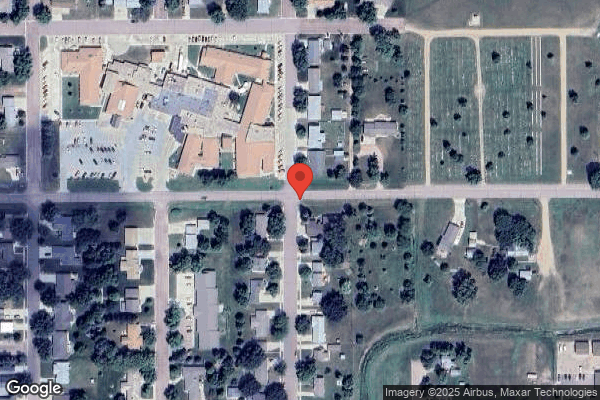
AVERA BORMANN MANOR

501 NORTH 4TH STREET, PARKSTON, SD 57366 (605) 928-3384
Non profit - Corporation 49 Beds Independent Data: November 2025 1 Immediate Jeopardy citation
Trust Grade
38/100
#36 of 95 in SD
Last Inspection: September 2025

Inspected within the last 6 months. Data reflects current conditions.

Overview

Avera Bormann Manor has received a Trust Grade of F, indicating significant concerns about the facility's performance. Ranking #36 out of 95 nursing homes in South Dakota puts them in the top half, but they are #3 out of 3 in Hutchinson County, meaning there are no better local options available. The facility is improving, having reduced issues from 7 in 2024 to just 3 in 2025, although it still has a concerning total of 11 deficiencies. Staffing is a relative strength with a rating of 4 out of 5 stars and a turnover rate of 35%, which is well below the state average, indicating staff stability and familiarity with residents. However, the facility has faced $42,773 in fines, which is higher than 83% of similar facilities, suggesting ongoing compliance issues. Several critical incidents raise red flags: one resident fell from a mechanical bath chair due to a missing safety belt, resulting in hospitalization and later death, while another resident had an unwitnessed fall from a lift chair, leading to significant injuries. Additionally, there were failures to assess the safe use of alarm systems designed to alert staff of residents in need. While the staffing and improvement trends are positive, the facility's serious incidents and fines warrant careful consideration for families researching options for their loved ones.

Trust Score
F
38/100
In South Dakota
#36/95
Top 37%
Safety Record
High Risk
Review needed
Inspections
Getting Better
7 → 3 violations
Staff Stability
○ Average
35% turnover. Near South Dakota's 48% average. Typical for the industry.
Penalties
⚠ Watch
$42,773 in fines. Higher than 97% of South Dakota facilities. Major compliance failures.
Skilled Nurses
✓ Good
Each resident gets 52 minutes of Registered Nurse (RN) attention daily — more than average for South Dakota. RNs are trained to catch health problems early.
Violations
⚠ Watch
11 deficiencies on record. Higher than average. Multiple issues found across inspections.
★★★☆☆
3.0
Overall Rating
★★★★☆
4.0
Staff Levels
★★☆☆☆
2.0
Care Quality
★★★☆☆
3.0
Inspection Score
Stable
2024: 7 issues
2025: 3 issues

The Good

  • 4-Star Staffing Rating · Above-average nurse staffing levels
  • Full Sprinkler Coverage · Fire safety systems throughout facility
  • No fines on record
  • Staff turnover below average (35%)

    13 points below South Dakota average of 48%

Facility shows strength in staffing levels, fire safety.

The Bad

3-Star Overall Rating

Near South Dakota average (2.7)

Meets federal standards, typical of most facilities

Staff Turnover: 35%

11pts below South Dakota avg (46%)

Typical for the industry

Federal Fines: $42,773

Above median ($33,413)

Moderate penalties - review what triggered them

The Ugly 11 deficiencies on record

1 life-threatening 3 actual harm
Sept 2025 1 deficiency
CONCERN (D)

Potential for Harm - no one hurt, but risky conditions existed

Deficiency F0761 (Tag F0761)

Could have caused harm · This affected 1 resident

**NOTE- TERMS IN BRACKETS HAVE BEEN EDITED TO PROTECT CONFIDENTIALITY** Based on observation, interview, and policy review, the provider failed to:Ensure a controlled medication (medications at risk f...

Read full inspector narrative →
**NOTE- TERMS IN BRACKETS HAVE BEEN EDITED TO PROTECT CONFIDENTIALITY** Based on observation, interview, and policy review, the provider failed to:Ensure a controlled medication (medications at risk for abuse and addiction) was securely stored by one of one registered nurse (RN) E who placed a controlled medication (Norco) in an unsecured cabinet in the north hallway and did not administer that medication to one of one sampled resident (4) as ordered by the resident's physician.Ensure controlled medication patches were handled and securely stored for destruction according to the provider's policy.Findings include:1. Observation on 9/16/25 11:12 a.m. of the personal protective equipment (PPE) cabinet in the north hallway next to room [ROOM NUMBER] revealed: *The cabinet was recessed in the north hallway and contained washable gowns and disposable gloves on the shelves. *A medicine cup with an unidentified medication tablet on the bottom shelf of that cabinet. 2. Observation and interview on 9/16/25 at 12:24 p.m. with director of nursing (DON) B of the north hallway PPE cabinet revealed: *A medication cup on the bottom shelf of the cabinet with an unidentified medication in it. *She agreed it was not secured and should not be stored there. *She expected medications to be administered as ordered by the physician. *She took that medication to the pharmacy for identification. 3. Follow up interview on 09/16/2025 at 1:43 p.m. with DON B regarding the medication observed in the hallway PPE cabinet revealed: *The pharmacist identified the medication as Norco 5 milligram (mg)/32 mg [(Hydrocodone Bitart/Acetaminophen). A controlled pain medication] *Resident 4 had an order to receive one Norco 5-325 5mg/325mg tablet by mouth at midnight, 6:00 a.m., noon, and 6:00 p.m. *She contacted registered nurse (RN) E, who worked the night before, and RN E confirmed she placed that medication cup with the medication in it in the PPE cabinet. *RN E told DON B that she set the medication in the PPE cabinet to assist another resident, and forgot she put it in the cabinet. *She confirmed that medication was resident 4's Norco. 4. Interview on 9/17/25 at 3:55 p.m. with RN E revealed: *Resident 4 was administered her medications between 5:30 and 6:30 a.m. *She stated she must have gotten the prepared resident 4's Norco for administration and then a staff member asked for assistance with another resident. *She put the medication cup with the Norco in it in the PPE cabinet to go help with the other resident. *She forgot she put the Norco in the PPE cabinet. *She signed the medication off as given when she completed the medication count at shift change with the oncoming day nurse, and the count was accurate. *She was not sure if she placed the Norco in the PPE cabinet the morning of 9/12/25 or 9/13/25. *She knew all medications needed to be secured and administered as ordered. 5. Interview on 9/17/25 at 4:45 p.m. with resident 4 regarding her pain revealed: *She felt she received her pain medications as scheduled, and her pain was under control. 6. Interview on 9/18/ 25 at 1:15 p.m. with DON B regarding medication administration and storage revealed:*Staff were educated annually on the 5 rights of medication administration (a set of safety checks used by healthcare professionals to prevent medication errors) through an on-line learning format. *She expected staff who administered medications to follow the 5 rights for medication administration and the provider's medication administration policy. *She agreed the Norco should not have been left unattended in the PPE cabinet. 7. Interview on 9/18/25 at 1:35 pm with administrator A regarding medication administration and storage revealed: *Staff should follow the 5 rights for medication administration. *She expected the staff who administered medications to follow the provider's policy for medication administration and storage to ensure medications were secured and administered as ordered. 8. Interview on 9/17/25 at 11:50 p.m. with Medication Aide (MA) H regarding controlled medications revealed: *Controlled medications (medications at risk for abuse and addition) were to be stored in a locked box within the locked medication cart. *Resident 41 had an active order for a Fentanyl (a controlled pain medication) 12 mcg (microgram) transdermal (active ingredients are delivered across the skin) patch to be administered every 72 hours. *She had not applied or removed the Fentanyl patch from resident 41. -Only nursing were allowed to apply and remove Fentanyl (controlled pain medication) patches. 9. Interview on 9/17/25 at 12:25 p.m. with RN D revealed: *Resident 41's Fentanyl patch was ordered and scheduled to be removed by the night shift nurse. -Her process was to place the used and exposed Fentanyl patch into a medication cup after being removed from the patient and placed in the locked box within the medication cart. - The exposed Fentanyl patch had then been destroyed by placing it into the Rx Destroyer (liquid chemical solvent) by both the night and day nurse the following morning. *This process was done after nursing staff had accounted for all narcotics in the locked box at the beginning and ending of each shift. 10. Interview on 9/17/2025 at 5:51 p.m. with RN E revealed she: *She would remove the used Fentanyl patch from a resident as ordered and place it back into the locked box within the medication cart. -The used Fentanyl patch would then be destroyed by the night nurse and the oncoming nurse the following morning. -That was the process that she was taught, and she had always done it that way. 11. Interview on 9/18/2025 at 11:24 a.m. with director of nursing B regarding the provider's policy for controlled medications revealed: *Resident 41's used and exposed Fentanyl patch was not stored and destroyed according to the provider's policy. Review of the provider's 4/8/24 revised LTC Controlled Substances-System Standard Policy revealed: *”Policy” *”It is the policy of [Provider] to properly acquire, receive, store, administer, track, reconcile, document, and dispose of controlled substances consistent with State and federal guidelines.” -”A. To provide pharmaceutical services to meet the needs of each resident.” -”B. To accurately account for and reconcile controlled substances for prompt identification of loss or potential diversion.” -”C. To educate nurses to identify discrepancies and the need for reconciliation and accountability.” *”D. To provide a system that oversees that controlled substances are acquired, handled, administered, reconciled, stored, and disposed of properly.” -”E. To assure proper record-keeping for controlled substances.” *”Procedure” -“C. Place controlled substance(s) received from the pharmacy in a locked storage area with limited staff access. CII meds will be maintained in a separately locked permanent affixed compartment. Schedule III, IV, V may be stored in a separate locked container or may be integrated with other medications as long as there is a system for accountable tracking (punch cards).” Review of the provider's revised Medication Disposal Policy dated June 2024 revealed: *”Medications that may not be returned to pharmacy (i.e, opened liquid medications, opened boxes of medications (nebulizers), opened eye drop bottles, etc.) will be destroyed in the facility.” *”Controlled medications are disposed of in the facility by a pharmacist and a registered nurse. The registered nurse and pharmacist co-sign as each other's witness. Controlled medications may also be destroyed by two registered nurses if pharmacist is unavailable in a timely manner.”
Jun 2025 1 deficiency 1 Harm
SERIOUS (G) 📢 Someone Reported This

A family member, employee, or ombudsman was alarmed enough to file a formal complaint

Actual Harm - a resident was hurt due to facility failures

Accident Prevention (Tag F0689)

A resident was harmed · This affected 1 resident

**NOTE- TERMS IN BRACKETS HAVE BEEN EDITED TO PROTECT CONFIDENTIALITY** Based on South Dakota Department of Health (SD DOH) facility-reported incident (FRI), record review, interview, and policy revie...

Read full inspector narrative →
**NOTE- TERMS IN BRACKETS HAVE BEEN EDITED TO PROTECT CONFIDENTIALITY** Based on South Dakota Department of Health (SD DOH) facility-reported incident (FRI), record review, interview, and policy review, the provider failed to assess for safe usage of a lift chair for one of one sampled resident (1) who had an unwitnessed fall and required hospitalization for injuries acquired from the fall and pain management. This citation is considered past non-compliance based on a review of the provider's corrective actions immediately following the incident. Findings include: 1. Review of provider's 5/27/25 SD DOH FRI for resident 1 revealed: *On 5/24/25 the resident was found on the floor in front of her lift chair laying on her right side. *Her lift chair was raised all the way up in the air. *She was unsure how she fell and ended up on the floor. *She had a large hematoma (collection of blood outside a blood vessel) to the left side of her forehead. *She had a skin tear and bruise on the top of her right hand. *She had adequate range of motion (ROM) to all four extremities. *Her neurological assessment was within normal limits (WNL). *She had good neck ROM from side to side and when looking down. *She had complained of discomfort when looking up towards the ceiling. *Ice was applied to her forehead after being assisted with a total lift from the floor into her wheelchair. *Her family was notified of fall. *Her primary care provider (PCP) was notified of the fall and he advised the staff to monitor and notify him of any change in the resident's condition. *On 5/27/25 she was having complaints of neck pain and was sent to the local clinic for evaluation. *A computed tomography (CT) scan was completed and revealed: -An acute nondisplaced fracture of the C2 (second cervical vertebra). -A suspected acute nondisplaced type 1 dens fracture (a break at the tip of the second cervical vertebra). *She was admitted to the local hospital on 5/27/25 for observation, and then admitted as an inpatient on 5/28/25 for pain control and a neurosurgery consult. *She returned to the facility on 5/29/25 at 2:57 p.m. and was admitted to hospice on 5/30/35. *No lift chair safety assessment had been documented for the resident prior to the fall on 5/24/25. 2. Review of resident 1's electronic medical record (EMR) revealed: *She admitted to the facility on [DATE]. *She was identified as having a high fall risk on her 3/6/25 and 5/24/25 fall risk assessments. *Her Brief Interview for Mental Status (BIMS) assessment score on 5/22/25 was three indicating she had severely impaired cognition. *She had the above fall with injury from her lift chair on 5/24/25. -She was admitted to the hospital on [DATE] and returned to the facility on 5/29/25. *She was admitted to hospice services in the facility on 5/30/25. *She had a lift chair safety assessment completed on 5/30/25, after her 5/24/25 fall. -That assessment found she needed total assistance from others to operate her lift chair. *Her lift chair was unplugged from the wall, and her family was notified. *She passed away on 6/4/25. 3. Interview on 6/26/25 at 9:14 a.m. with registered nurse (RN)/Minimum Data Set (MDS) coordinator C revealed: *She had worked for the facility for almost six years. *Resident 1 did not have a lift chair safety assessment completed before her 5/24/25 fall incident. *Resident 1 had a lift chair safety assessment completed after her return from the hospital on 5/30/25. *Nurses were responsible for resident assessments at the time of a resident's admission. *She completed the quarterly, significant change, comprehensive and annual assessments for residents with their MDS assessments. *Nurses should know resident assessments were due as they would be on the worklist in the resident's EMR to be completed at certain times. *She received education following the incident on 5/24/25 for resident 1 related to completing lift chair safety assessments and when they were due. *All residents who used a lift chair had lift chair safety assessments completed after resident 1's incident on 5/24/25. Interview on 6/26/25 at 9:26 a.m. with director of nursing (DON) B revealed: *She started her position on 5/19/25. *Floor nurses completed resident assessments which triggered on worklists in the EMR to be completed at certain times. *RN/MDS coordinator C would complete resident assessments when their MDS assessment was due. *She expected assessments to be completed when they were due. *She agreed that lift chair safety assessments had not been completed for any residents prior to the incident on 5/24/25 with resident 1. *She and RN D had completed all lift chair safety assessments for residents following the 5/24/25 incident. *She and RN D had also updated all resident care plans following that 5/24/25 incident. Interview on 6/26/25 at 9:52 a.m. with administrator A revealed: *She expected resident assessments to be completed when the resident assessment instrument (RAI)/MDS schedule stated they needed to be completed and upon the resident's admission to the facility. *She expected the provider's policies to be followed when they were implemented and development of a plan during the quality assurance and performance improvement (QAPI) process. *She agreed lift chair safety assessments had not been completed for residents prior to resident 1's 5/24/25 fall from her lift chair. 4. Review of the provider's October 2024 Lift Chair Safety Assessment Policy revealed: *A. Before a lift chair is used by a resident, a member of the intradisciplinary team will complete a lift chair safety assessment. The provider's implemented actions to ensure the deficient practice does not reoccur was confirmed on 6/26/25 after record review revealed the facility had followed their quality assurance process, education was provided to all nursing staff regarding lift chair safety assessments and care plan updating. Interviews with nursing staff revealed they understood the education provided regarding the topics. Observation of lift chairs in residents' rooms were conducted. Audits were completed for newly admitted resident's, assessments were being completed, and residents' care plans were updated. Based on the above information, non-compliance at F689 occurred on 5/24/25, and based on the provider's implemented corrective action for the deficient practice confirmed on 6/26/25, the non-compliance is considered past non-compliance.
Mar 2025 1 deficiency 1 IJ
CRITICAL (J) 📢 Someone Reported This

A family member, employee, or ombudsman was alarmed enough to file a formal complaint

Immediate Jeopardy (IJ) - the most serious Medicare violation

Accident Prevention (Tag F0689)

Someone could have died · This affected 1 resident

**NOTE- TERMS IN BRACKETS HAVE BEEN EDITED TO PROTECT CONFIDENTIALITY** Based on South Dakota Department of Health (SD DOH) facility-reported incidents (FRI) review, record review, observation, interv...

Read full inspector narrative →
**NOTE- TERMS IN BRACKETS HAVE BEEN EDITED TO PROTECT CONFIDENTIALITY** Based on South Dakota Department of Health (SD DOH) facility-reported incidents (FRI) review, record review, observation, interview, and policy review, the provider failed to ensure the safety of one of one sampled resident (1) who fell from a mechanical bath chair lift, suffered injuries that required emergency room treatment, hospitalization, and subsequently died when one of one certified nursing assistant (CNA) (C) failed to ensure a safety belt was used. This citation is considered past non-compliance based on review of the corrective actions the provider implemented immediately following the incident. On [DATE] at 9:00 a.m. Immediate Jeopardy (IJ) was identified for resident safety related to a facility-reported incident that occurred on [DATE] when a resident (1) fell from a bath chair, received serious injuries, and later died. The investigation revealed staff education and competencies initiated on [DATE] removed the immediacy. On [DATE] at 5:00 p.m. administrator A was informed of the IJ and was given the IJ template. The current census was 46. Substantial compliance was confirmed on [DATE] at 4:00 p.m. after review of the providers corrective actions revealed the provider had followed its quality assurance process, the provider's whirlpool bath policy was updated to ensure safety measures would be implemented, staff education was provided, and competencies were completed regarding safety precautions, including the use of the bath chair lift safety belt, safety checks, and interventions for resident refusals to wear the safety belt. Observations and staff interviews revealed staff understood the education provided and the proper use of safety precautions. All resident care plans were updated as applicable to address resident refusals to use the safety belt. Audits were implemented and staff monitoring will continue for compliance with safety precautions. That data will be reported at the monthly QAPI meetings by the DON or designee. Findings include. 1. Review of the provider's [DATE] SD DOH FRI regarding resident 1 in the tub room revealed: *On [DATE] at 6:36 a.m. resident 1 had taken a whirlpool bath and was sitting on a mechanical bath chair lift approximately 25 to 30 inches high. *She had resisted wearing a safety belt. *CNA C had turned to grab the resident's clothing and heard a noise. *Resident 1 had fallen onto the floor. -CNA C called for assistance of other staff. -A registered nurse (RN) arrived and noted the resident had a left forehead hematoma with a laceration. -Staff used a total body mechanical lift (a mechanical lift and sling used to lift a person's full body) to assist resident 1 into a wheelchair and she was transferred to the emergency room for evaluation. *Resident 1 had a Brief Interview for Mental Status (BIMS) assessment score of 0, which indicated she had severe cognitive impairment. *Resident 1 was hospitalized on [DATE] with non-displaced fractures involving ribs 2, 4, 5, 6, 7, and 8, and a confirmed apical pneumothorax (air accumulation in the space between the lungs and the chest wall). *Resident 1 was readmitted to the facility on [DATE] on hospice services. *Resident 1 passed away on [DATE]. 2. Interview on [DATE] at 10:49 a.m. with administrator A revealed: *All CNAs who were scheduled to provide resident care in the tub room were retrained and provided competencies regarding the mechanical bath chair lift and safety strap use that were to be completed before bathing residents. *All other CNAs were retrained and provided competencies in case they worked in the tub room. *The director of nursing (DON) B or designee would be completing audits of the bathing process of the mechanical bath chair lift and safety strap use following the manufacturers guidelines five times a week for 30 days and then three times a week for 2 months. *Their next QAPI (Quality Assurance and Performance Improvement) meeting was scheduled for [DATE] and they planned to review the new policies and competencies to ensure they were effective in preventing the reoccurrence of similar incidents. The provider's implemented actions to ensure the deficient practice does not reoccur was confirmed on [DATE] after a record review revealed: *The provider had followed its quality assurance process and education was provided to staff who would be providing bathing to residents. -The staff had been educated regarding safety precautions including using a safety belt on all residents, competencies were conducted, and audits had been completed on 19 residents from [DATE] through [DATE] with the expectation to complete auditing five times per week for 30 days and then three times per week for 2 months by DON B or the designee. *Audit data would be reported to QAPI monthly by the DON. *The provider's Whirlpool Bath policy was updated to ensure safety measures to be implemented. *Observations and staff interviews revealed the staff understood how to use the safety belt and perform other safety checks within the tub room before bathing residents, and what to do if a cognitively impaired resident refused to use the safety belt. *All residents care plans were updated as necessary based on refusal of using a safety belt and alternative bathing interventions. Based on the above information, non-compliance at F689 occurred on [DATE], and based on the provider's implemented corrective actions for the deficient practice confirmed on [DATE], the non-compliance is considered past non-compliance.
Jul 2024 5 deficiencies 1 Harm
SERIOUS (G)

Actual Harm - a resident was hurt due to facility failures

Deficiency F0604 (Tag F0604)

A resident was harmed · This affected 1 resident

**NOTE- TERMS IN BRACKETS HAVE BEEN EDITED TO PROTECT CONFIDENTIALITY** Based on observation, interview, record review, and policy review, the provider failed to implement the following for one of one...

Read full inspector narrative →
**NOTE- TERMS IN BRACKETS HAVE BEEN EDITED TO PROTECT CONFIDENTIALITY** Based on observation, interview, record review, and policy review, the provider failed to implement the following for one of one sampled resident (17): *Assess for the use of an audible chair alarm. *Document the use of the chair alarm. *Reassess for the continued use of the chair alarm. *Ensure the audible chair alarm was not causing harm. Findings include: 1. Observation on 7/9/24 at 9:58 a.m. in resident 17's room revealed: *She was seated in her recliner. *There were two alarm devices on her bedside table. One was connected to her bed, and the other was connected to her recliner and shirt. *She was wearing a pendant call light around her neck. *She pressed the pendant call light because she needed to use the bathroom. Staff promptly responded to the call light. 2. Observation and interview on 7/9/24 at 2:04 p.m. with resident 17 in her room revealed she: *Was seated in the same recliner. *Showed the surveyor a chair alarm was clipped to her shirt. *Was able to explain the purpose of the alarm. *Explained that it made a noise if she tried to move. *Said, I don't like it. It's loud and scares me. They don't want me to get up by myself. 3. Observation on 7/10/24 at around 12:55 p.m. near resident 17's room revealed that there was a loud and pulsating alarm emitting from her room. 4. Interview on 7/10/24 at 4:24 p.m. with certified nursing assistant (CNA) J about resident 17's chair alarm revealed: *She denied that the alarm physically restrained the resident, indicating that the resident could easily move, and the string attached to the resident's clothing would detach. *When she heard the alarm, she would have gone running to attend to the resident because she was a fall risk. *The resident had fallen previously and was bruised from the fall. *Resident 17 knew how to use the call light. *The resident usually attempted to get up by herself when she needed to use the bathroom. 5. Interview on 7/11/24 at 8:44 a.m. with director of nursing (DON) B about the chair alarms revealed: *If a resident tended to get up on their own and was not the safest to ambulate by themselves, they would place a tabs alarm on the resident. *The alarm would be clipped to the back of a resident's shirt so they would not be able to remove it easily. *She confirmed there was no assessment process prior to implementing a tabs alarm. *The bed alarms were silent. -If the bed alarm was triggered, the resident's call light would turn on. *The tabs alarms were loud and audible. -If the resident moved a certain way, the tabs alarm would become disconnected and emit a loud and audible alarm. *She confirmed there was no assessment to determine if the resident felt restrained by the device. *She had not considered if the resident could have been frightened by the audible chair alarm. 6. Interview on 7/11/24 at 9:34 a.m. with registered nurse (RN) N about the audible chair alarms revealed: *If a resident had an unwitnessed fall, the first intervention was usually to have placed the tabs alarm on the resident. *If a fall occurred, the resident's family would have been contacted to inform them of the fall and the implementation of the tabs alarm. *Other fall prevention interventions included signage in the resident's rooms to remind them to call don't fall. *Resident 17 was a patient in the adjoining hospital prior to her admission to the nursing home and received physical and occupational therapy to improve her strength and balance after she broke her hip from a fall at her previous living accommodations. *Resident 17 was more forgetful when she first admitted to the nursing home and would shout out for help rather than using her call light. -She understood how to use the call light now. -The resident had a habit of using the call light and standing up immediately rather than waiting for help to arrive. -She doesn't like to wait. 7. Review of resident 17's electronic medical record revealed: *She was admitted on [DATE]. *Her Brief Interview for Mental Status (BIMS) score was 11, which indicated she had moderate cognitive impairment. *There was no documentation of when the audible chair alarm was implemented. *There was no assessment to determine if the use of the audible chair alarm was appropriate or if it was a restraint. *There was no physician's order or duration of use for the audible chair alarm. *Her care plan included the following under the Fall risk problem initiated on 6/16/24: -An intervention of Mobility Alarm .sensory pad on in chair and in bed with a start date of 6/25/24. --A frequency of Every 8 Hours was attached to the intervention for the silent bed alarm only, not the audible chair alarm. -There were no other interventions for the audible chair alarm on her care plan. 8. Review of the provider's 6/23 Falls and Accidents policy revealed: *Purpose: To be proactive in preventing resident falls and accidents. *Policy Statement: To provide a systematic approach to fall and accident prevention and monitoring, including identifying and evaluating hazards and risk, individualizing approaches to reduce the risk of falls and accidents, and monitoring for effectiveness of interventions when necessary. *Definitions: Position change alarms: alerting devices intended to monitor a resident's movement. -The devices emit an audible signal when the resident moves in a certain way. -Types of position change alarms include chair and bed sensor pads, bedside alarmed mats, alarms clip[ped to a resident's clothing, seatbelt alarms, and infrared beam motion detectors. *Policy implementation: -2. Resident assessment and intervention --A. Upon admission/readmission, quarterly, and with status changes, staff will assess each resident's individual risk factors including fall risk, elopement risk, and risks and hazards within the physical environment. --B. Based on assessment of fall risk and elopement risk for each resident, staff will implement appropriate individualized, resident-centered interventions to reduce the likelihood of falls and elopement and communicate the risk and intervention to the staff through the plan of care. --C. Effectiveness and modification of interventions is monitored on a regular basis by the QAPI [quality assurance and performance improvement] program. - .4. Hazards in the physical environment --A. Staff will ongoingly assess the physical environment with regard to potential hazards, including .position change alarms .resident mobility devices . Any deficiencies in the safety of the physical environment will be immediately addressed. -- .C. The resident care plan will specifically address any risk factors that provide a benefit, such as use of a side rail or mobility device. -- .E. The facility will provide adequate supervision through assessing the appropriate level and number of staff, the competency and training of staff, and the frequency of supervision needed based on resident needs. 9. Review of the provider's 5/24 Restraint Policy revealed: *Policy Statement: It is the philosophy of [NAME] LTC [long term care] to keep residents unrestrained and as independent as possible. -If the results of a comprehensive, interdisciplinary assessment determine that there are no alternative to provide resident safety, or that the alternative methods have been unsuccessful, a physical and/or chemical restraint will be recommended for use. *Definitions: Physical restraint: any manual or physical device, material or equipment attached to or adjacent to the resident's body that the individual cannot remove easily which restricts freedom of movement or normal access to one's body. -Physical restraints include but are not limited to leg or arm restraints, bolster mattresses, hand mitts, soft ties or vests, leg cushions and lap trays the resident cannot remove, and tucking a sheet around a resident so that resident cannot move. *Policy Implementation: -1. Members of an interdisciplinary team (IDT) will evaluate the resident's safety needs. -2. If a problem is identified, the least restrictive method will be tried first and the results documented. The use of restraints shall require clinical justification and shall be employed only to protect a resident from self-injury or from injuring others. -Restraints must not be used to limit mobility, for convenience of staff, for punishment, or as a substitute for supervision . -3. If a restrains is found to be necessary, appropriate health professional will complete the Pre-Restraining intervention in the electronic health record (EHR). The assessment will include medical condition requiring need for restrain and will be documented in the intervention. -4. Physician notification is required for all restraints initiated and a [physician's] order must be obtained prior to implementation. Restraint orders must be specific and include: type of restraint, specific periods of time restraint is to be used, medical symptom for restraint use, check by staff every 30 minutes, release every 2 hours, and specific times when restraint can be removed. -5. Resident and family will be educated on restraint use, reasons for use, assessment results, and risks and benefits associated with restraint use. -6. Resident or resident's family must sign a consent form for restraint use. - .8. Interdisciplinary team and physician will evaluate restraint usage monthly at minimum and will be reviewed at quarterly care conference by care planning team, resident and resident's family. -9. Restraints must be routinely observed and assessed. The restraints are to be periodically removed and range of motion, massage, or exercise applied, and hygiene, nutrition, and toileting offered. -a. Staff will check the resident's restraint every 30 minutes. -10. Quarterly documentation of attempted restraint reduction will be completed in the Restraint Assessment and noted on all applicable MDS [Minimum Data Set] assessments on the CAAs [care area assessments]. Early release and alternatives to restraint are to be continually explored. 10. Review of the provider's 3/24 Transfers policy revealed: *Purpose: To establish a protocol for staff for proper transfer techniques and decrease risk of injury to self and patient. *Protocols: Transfer Set-up: - .7. Put on tabs monitor or safety devices if needed and give call light (if inpatient or NH [nursing home]).
CONCERN (D)

Potential for Harm - no one hurt, but risky conditions existed

Deficiency F0558 (Tag F0558)

Could have caused harm · This affected 1 resident

Based on observation, interview, and policy review, the provider failed to ensure one of one sampled resident (13) with hand contractures had a call light she was able to use and was within her reach....

Read full inspector narrative →
Based on observation, interview, and policy review, the provider failed to ensure one of one sampled resident (13) with hand contractures had a call light she was able to use and was within her reach. Findings include: 1. Observation on 7/9/24 at 10:44 a.m. of resident 13 revealed: *She had hand contractures to both of her hands. *She communicated verbally with yes or no. *She did not have her call light within her reach. Interview on 7/9/24 at 10:44 am. with registered nurse (RN) O in regard to resident 13's use of a call light revealed: *She did not believe resident 13 could push her call light button because her hands were tight due to contractures. *Staff would check on her frequently. Observation and Interview on 7/10/24 at 8:32 a.m. with resident 13 and certified nursing assistant (CNA) Q in regard to resident 13 and use of her call light revealed: *Resident 13 could use her left hand and CNA Q placed the call light in her hand. *She was unable to activate the call light when she held it with her left hand. *He stated he would check on her every hour and a half. Interview on 7/10/24 at 8:41 a.m. with RN N in regard to resident 13 revealed: *Staff were supposed to lay the call light across her, but she could not use the call light. *She stated she had a soft squeeze call light when in her previous room that she was able to use. *She had not had the soft squeeze call light for at least one month and she would get it for her. Observation on 7/10/24 at 2:08 p.m. with resident 13 revealed: *She now had a soft squeeze call light and was able to activate it. Observation and interview on 7/11/24 at 12:37 p.m. with resident 13 and RN N revealed: *She is in a specialized wheelchair. *Her call light was not within her reach, and was clipped to her bed. *She responded yes when asked if she had been up in her wheelchair for a while. *She was given the call light and she activated it. *RN N answered the call light and stated resident 13 had been at chapel and whoever brought her back to her room did not place the call light within her reach. Interview on 7/11/24 at 12:55 p.m. with director of nursing (DON) B revealed: *She was aware resident 13 had not had a call light she could use for at least a month. *She stated, are you kidding me and shook her head when it was discussed that resident 13 did not have her call light within reach when she was returned to her room after chapel. Review of the provider's call light policy dated 7/2024 revealed: *The objective, 1. To respond to patient/resident's requests and needs on a timely basis. *The procedure noted, 9. A 'soft touch' or bell was available for residents unable to use a standard call light.
CONCERN (D)

Potential for Harm - no one hurt, but risky conditions existed

Quality of Care (Tag F0684)

Could have caused harm · This affected 1 resident

Based on observation, interview, record review, and policy review, the provider failed to ensure two certified nursing assistants (H and K): *Applied a mechanical stand aide sling to sampled resident ...

Read full inspector narrative →
Based on observation, interview, record review, and policy review, the provider failed to ensure two certified nursing assistants (H and K): *Applied a mechanical stand aide sling to sampled resident (22) prior to use. *Transferred a sampled resident (22) safely from the bathroom to a specialized wheelchair. *Received documented training for the use of a mechanical stand aide and resident transfers using a specialized wheelchair (Broda chair). Findings include: 1. Observation on 7/9/24 at 2:22 p.m. in resident 22's room revealed: *Resident 22 was resting in his recliner. *Certified nursing assistant (CNA) H and K entered his room to assist him with transferring him from the recliner to his Broda (specialized) wheelchair. *They used the recliner remote to lift him upwards. *They positioned the mechanical stand aide in front of resident 22 and placed his feet on the footboard. *They guided his hands up to the handlebars and instructed him to hold on. *Without strapping the mechanical stand aide sling around him, CNA H raised the mechanical stand aide slightly so that resident 22 was standing up from the recliner. -He was visibly shaking and appeared to have been struggling to hold on. *While he was standing, CNA K put the sling behind the resident and CNA H then seated him back down into the recliner. *With the sling correctly placed around resident 22 and hooked into the mechanical stand aide, they raised him from his recliner to a standing position and transferred him to the bathroom, positioned him onto the toilet, and then exited his room. 2. Continued observation on 7/9/24 at 2:43 p.m. in resident 22's room revealed: *CNAs H and K reentered resident 22's room and attended to his needs in the bathroom. *They transferred him out of the bathroom using the same mechanical stand aide. *CNA H positioned resident 22 in front of his Broda chair. *CNA H instructed CNA K to go behind the Broda chair and lift the back two wheels off the ground to tilt the chair forward. -As CNA K held up the Broda chair, CNA H lowered resident 22 down into the Broda chair. *It was unknown if the wheels of the Broda chair were locked or not during the transfer. 3. Interview on 7/9/24 at 5:57 p.m. with CNA K about the above observation revealed: *She confirmed she was taught to lift the back wheels of resident 22's Broda chair upwards to tilt the chair forwards to easily position the resident all the way into the chair. *She said, He's a stiff guy, so they tried to tilt the chair to get him into the correct position when they transferred him into the Broda chair. 4. Interview on 7/9/24 at 4:44 p.m. with CNA H about the above observation revealed: *She confirmed the way staff had figured out how to get resident 22 correctly positioned into the Broda chair was to tilt the back end up the chair upwards. *She said, Since he is so tall and still, he doesn't bend much. We have to tilt it up to get him all the way in. *She indicated they had tried other methods, but he was not able to sit all the way back into his wheelchair. -In those cases, they required three people to hoist him into the Broda chair. *She was educated to tilt the Broda chair forward to transfer him into the chair. She did not recall who instructed her. 5. Interview on 7/10/24 at 12:55 p.m. with registered nurse (RN) M about the above observation revealed: *She was aware that staff lifted the back wheels of resident 22's Broda chair to tilt it forward to position him all the way into the chair. *She said that he is a stuff guy and had a difficult time bending to sit in the chair. *She confirmed there were functioning brakes available to use on all four wheels of the Broda chair. 6. Interview on 7/10/24 at 1:28 p.m. with CNA P about how to safely transfer resident 22 revealed: *She was able to state the correct procedure of placing the mechanical stand aide sling on the resident prior to lifting the resident with the mechanical stand aide. *She was not aware of the tilting method to place resident 22 into his Broda chair. 7. Continued interview on 7/10/24 at 1:33 p.m. with RN M about how to safely transfer resident 22 revealed: *She would have expected staff to have placed the sling around the resident first and to ensure it was secure prior to lifting the resident with the mechanical stand aide. 8. Interview on 7/11/24 at 8:58 a.m. with director on nursing B about how to safely transfer resident 22 revealed: *She would have expected staff to have secured the sling around the resident prior to lifting the resident with the mechanical stand aide. *She was not aware staff were lifting the back two wheels of his Broda chair to place him in the chair. -That's not the best thing for staff to do either due to safety concerns. *She confirmed there was no documentation that supported either CNA had been educated on how to properly operate the mechanical stand aide or the Broda chair. 9. Review of resident 22's electronic medical record revealed: *He required extensive to total staff assistance with activities of daily living due to the late stages of dementia. *His care plan indicated to use the Broda chair. However, there was nothing in the care plan that instructed staff to lift the back two wheels of the chair to place him in the chair. 10. Review of the provider's 3/24 Transfers policy revealed: *Purpose: To establish a protocol for staff for proper transfer techniques and decrease risk of injury to self and patient. *Protocols: Transfer Set-up: -1. Check physician's order and care plan to see if restrictions and weight bearing status. - .4. Lock all transfer surfaces. -5. Put transfer belt on patient. 11. Review of the January 2007 manufacturer's operating instructions for the Broda chair revealed the manual did not indicate if it was an acceptable practice to lift the back two wheels off the floor to tilt the chair forward during a resident transfer. 12. Review of the 7/30/18 manufacturer's operator's instructions for the mechanical stand aide revealed: *Page 5, Transferring the patient: -Attach harness --1) Position the harness around the upper body of the patient so the sides of the harness are between the patient's torso and arm, resting 2 - 3 inches below the underarm. --2) For the safety of the patient, securely fasten the safety strap around the patient's torso. --3) Secure the buckle and pull the strap to tighten. *The manual further explained the following steps prior to raising the patient: position shin pad and foot plate, position the mechanical stand aide in front of patient, and attach harness to the mechanical stand aide. *There was a warning on page 7 that read, Patient MUST ALWAYS wear the harness when using the [mechanical stand aide]. It can be helpful to use the seat strap or support strap during ambulation. *The manual indicated to lock the wheelchair/chair/bed/transfer surface prior to lowering the patient down onto that surface.
CONCERN (D) 📢 Someone Reported This

A family member, employee, or ombudsman was alarmed enough to file a formal complaint

Potential for Harm - no one hurt, but risky conditions existed

Accident Prevention (Tag F0689)

Could have caused harm · This affected 1 resident

Based on South Dakota Department of Health (SD DOH) facility-reported incident (FRI), record review, interview, and observation, the provider failed to ensure the safety of one of one sampled resident...

Read full inspector narrative →
Based on South Dakota Department of Health (SD DOH) facility-reported incident (FRI), record review, interview, and observation, the provider failed to ensure the safety of one of one sampled resident (47) who eloped from the facility (left without staff's knowledge) and failed to report the elopement within the required timeframe. Failure to ensure safety could have led to resident injury had he not been found. This citation is considered past non-compliance based on review of the corrective actions the provider implemented immediately following the incident. Findings include: 1. Review of the provider's 6/24/24 SD DOH FRI revealed: *Resident 47 was admitted to the nursing home on 6/17/24. He was previously living at the adjoining assisted living facility. *At around 5:15 p.m., director of plant operations E found resident 47 near the adjoining hospital entrance. *The resident was brought back to the nursing home. *A wander bracelet was put in place afterward. *The door alarms were functioning at the time of the incident. *The resident was not injured. *The nurse on staff that day was not aware that the incident was regarded as an elopement since the resident did not leave the campus. *All staff were reeducated about elopement and reporting requirements. The provider implemented systemic changes to ensure the deficient practice does not recur was confirmed after: *Observations throughout the survey of resident 47 revealed that his wander bracelet was in place and functioning. *Interviews with staff (certified nursing assistants, registered nurses, maintenance staff, and the management team) confirmed they knew the reporting requirements for elopement and were aware of the procedures to address a resident who had eloped. *Record review confirmed staff were regularly checking for wander bracelet placement and functioning, the interventions were added to resident 47's care plan, and education was provided to all direct care staff regarding missing residents and reporting requirements. Based on the above information, non-compliance at F689 occurred on 6/17/24, and based on the provider's implemented corrective actions for the deficient practice confirmed on 6/30/24, the non-compliance is considered past non-compliance.
CONCERN (D)

Potential for Harm - no one hurt, but risky conditions existed

Infection Control (Tag F0880)

Could have caused harm · This affected 1 resident

Based on observation, interview, record review, and policy review, the provider failed to ensure current infection control policies for hand hygiene and mechanical lift disinfection were followed by t...

Read full inspector narrative →
Based on observation, interview, record review, and policy review, the provider failed to ensure current infection control policies for hand hygiene and mechanical lift disinfection were followed by two of five staff observed (certified nursing assistant (CNA) H and K). Findings include: 1. Observation on 7/9/24 at 2:22 p.m. with CNAs H and K during a transfer with resident 22 revealed: *The CNAs entered resident 22's room and discovered the hand sanitizer dispenser was empty. *CNA H exited the room to retrieve a new bottle of hand sanitizer. *CNA K proceeded to put on a clean pair of gloves without performing hand hygiene. *CNA H came back into the room and stated she could not find a new bottle of hand sanitizer. -She proceeded to put on a clean pair of gloves without performing hand hygiene. *They assisted resident 22 to stand up from his recliner using the mechanical stand aide. *While he was standing, CNA K checked his brief and discovered he was incontinent. *The CNAs brought him into his bathroom. *A few minutes later, CNA H came out of the bathroom without gloves on. -She grabbed a clean pair of gloves and brought them to the bathroom. -She came back out of his bathroom and left the resident's room without performing hand hygiene to find hand sanitizer. *CNA K exited the resident's room with a bag of trash. -She performed hand hygiene in the handwashing sink in the hallway after throwing out the trash. *The two CNAs left the resident on the toilet so he could finish going to the bathroom. 2. Observation on 7/9/24 at 2:43 p.m. with CNAs H and K in resident 22's room revealed: *They returned to transfer resident 22 from the bathroom to his Broda chair. *They both performed hand hygiene prior to putting on clean gloves. *After they were finished transferring, they placed the mechanical stand aide in the hallway. *Neither of them sanitized the stand aide prior to moving on to a different task. -There was a container of sanitizer wipes available in a pouch on the stand aide. 3. Interview on 7/10/24 at 2:59 p.m. with registered nurse (RN) N about the above observations revealed: *It was her expectation that: -Staff should have performed hand hygiene prior to putting on gloves. -Staff should have performed hand hygiene after removing gloves. -If the hand sanitizer dispenser was empty, they should have retrieved a new container. -If a new container was not available, staff should have washed their hands with soap and water. -Staff should have sanitized the lift equipment after each use. 4. Interview on 7/10/24 at 3:44 p.m. with infection preventionist G about the above observations revealed: *It was her expectation that: -Staff should have washed their hands with soap and water if hand sanitizer was not available. -The mechanical lifts should have been sanitized after each use. There was a container of sanitizer wipes with each mechanical lift. 5. Review of the provider's 5/24 Hand Hygiene policy revealed: *Purpose: Hand hygiene is the single most important procedure for the control of infection. It is a critical component of patient and employee safety. *Policy: I. Indications and Procedure for Hand Hygiene -A. Hand Hygiene with Soap and Water: 1. Wash hands with system approved soap and water: --a. When hands are visibly dirty. --b. When hands are contaminated with proteinaceous material. --c. When hands are visibly soiled with blood or other body fluid . -B. Hand Hygiene with Alcohol Hand Rub (Antisepsis): 1. If hands are not visibly soiled, use system approved alcohol-based hand rub for routinely decontaminating hands in most other clinical situations: --a. Before each patient contact. --b. Before donning sterile gloves . -- .d. After routine patient care (e.g., taking vital signs, lifting/positioning/ambulating a patient) where there is no contact with body fluids. --e. After contact with inanimate objects (including medical equipment) in the immediate vicinity of the patient. --f. After glove removal. 6. Review of the provider's 5/23/24 Disinfection of Non-Critical Resident Care Equipment policy revealed: *I. Purpose: - .C. For the safety and comfort of residents, all reusable (non-critical) resident care items will be cleaned, disinfected, fand maintained in a safe manner between resident uses. *II. Information: -A. Reusable resident care equipment/items fall into 3 different classification categories for disinfection and sterilization: 'non-critical, semi-critical, and critical.' --1. 'Non-Critical' items are those that come into contact with intact skin but not mucous membranes. These are divided into resident care items and environmental surfaces. ---a. Noncritical resident care items (Examples include blood pressure cuffs, stethoscopes, wheelchairs, therapy equipment) are cleaned between/after each resident use. They require Low level disinfection by cleaning following manufacturer instructions with an EPA [Environmental Protection Agency]-registered disinfectant, detergent, or germicide that is approved for healthcare settings . *III. Policy: -A. Community/facility items removed from a resident's room needs to be disinfected prior to use by a different resident. -B. Resident equipment will be disinfected immediately following resident use when the item has been contaminated with blood or other potentially infectious material or is visibly soiled. - .D. All reusable resident care equipment removed from a resident room/procedure room is disinfected before use on another resident. - .J. Disinfection Recommendations- --1. Reusable resident care equipment: All applicable label instructions on EPA-registered disinfectant products must be followed. ---a. Between each resident use and when soiled.f. Lifts & slings. - .M. Monitoring of disinfection recommendations will be done by observation by management staff and no written documentation is required. However, to maintain continuity, units may maintain a worksheet with cleaning/disinfection schedules.
Jan 2024 2 deficiencies 1 Harm
SERIOUS (G) 📢 Someone Reported This

A family member, employee, or ombudsman was alarmed enough to file a formal complaint

Actual Harm - a resident was hurt due to facility failures

Free from Abuse/Neglect (Tag F0600)

A resident was harmed · This affected 1 resident

**NOTE- TERMS IN BRACKETS HAVE BEEN EDITED TO PROTECT CONFIDENTIALITY** Based on review of the South Dakota Department of Health (SD DOH) online report, observation, record review, interview, and poli...

Read full inspector narrative →
**NOTE- TERMS IN BRACKETS HAVE BEEN EDITED TO PROTECT CONFIDENTIALITY** Based on review of the South Dakota Department of Health (SD DOH) online report, observation, record review, interview, and policy review, the provider failed to ensure one of three sampled residents (20) received appropriate care to prevent a burn from a warm pack. 1. Review of the SD DOH online report revealed the following: *On 1/20/24 restorative aide F applied a warm pack on the back of resident 20's neck. -The warm pack was a heated wet hand towel wrapped in Chux (disposable waterproof-under pad). -Resident 20's cognition score was a 4. Observation and interview on 1/30/24 at 12:22 p.m. resident 22 in his room revealed: *He was seated in a Broda [a specialized wheelchair] chair. *He made no eye contact, and was unable to respond coherently to questions. Review of resident 20's electronic medical record revealed his: *12/27/23 Brief Interview of Mental Status score was a 4, meaning he was cognitively impaired. *Diagnoses included Alzheimer's Disease and Lewy Body dementia with behavioral disturbance, and anxiety. *Medication administration record included a 1/20/24 physician order for Silver Sulfadiazine (Silvadene 1%) to the right side of the neck for a burn. *Care plan included the following: -Resident blank stares and is verbally unresponsive to family and staff. -Staff will anticipate needs. -Chronic Pain-as evidenced by: hx [history] of headaches, GERD [gastroesophageal reflux disease], monitor for facial grimacing and nonverbal s/s [signs and symptoms] of pain. -He required the assistance of two staff members for most activities of daily living. Interview on 1/30/24 at 10:44 a.m. with restorative aide (RA) F regarding the above-referenced report revealed: *Her employment began in March, 2023, and she: -Had transferred from a sister facility. -Had worked as the RA for about three months. -Had previously worked for the provider for a a year or two a few years ago. *She had started placing warm packs on residents' necks before completing the restorative nursing care to help loosen the residents' neck muscles. -She had no training in the use of warm packs. -She had no guidance from a nurse or physical therapist in the use of warm packs. -Warm packs were heated up in the microwave for 30 seconds. *On 1/20/24 she had heated three warm packs in the microwave and she: -Took two of the warm packs and placed them on resident 21 and resident 22's necks. -Thought the third warm pack had cooled. -Then placed the third warm pack back in the microwave and warmed it for another 30 seconds. --That warm pack she wrapped in a Chux with the plastic side out, and placed on the back of resident 20's neck, was not on for 20 minutes. -She had not thought it would get that hot (to cause a burn). Interview on 1/30/24 at 12:38 p.m. with certified nursing assistant (CNA) G regarding the use of warm packs revealed: *CNAs did not use warm packs. *RA F and nurses had used them for resident care. Observation and interview on 1/30/24 at 12:45 p.m. of resident 20 with registered nurse (RN) D revealed: *The mid-back of resident 20's neck had an area of eschar (a collection of dead tissue within the wound of the skin) approximately the size of a quarter, and on the right side of the back of his neck were two areas of eschar the approximate size of dimes. *RN D stated those eschar areas were caused from a warm pack burn on 1/20/24. -CNAs and RA F were able use warm packs on residents that were cognitively aware and could tell them if the warm pack was too hot. -She was not certain who would have trained CNAs and RAs in the use of warm packs. -She thought the RA F would have known how to use them, as she had been trained in restorative. Interview on 1/30/24 at 12:56 p.m. with RN C regarding the use of warm packs for residents revealed: *On 1/20/24 she observed resident 20's neck after staff notified her of a possible burn. -The back of his neck was red, was not raised, or blistered. --She placed a cool pack on it and called his medical provider. *She stated the area had not become open and had some eschar tissue on the area where the warm pack had been placed. *Warm packs were only used on residents who were cognitively aware and could say if the warm packs were too warm. *She was not certain who had trained CNAs and RAs in the use of warm packs. Interview on 1/30/24 at 1:06 p.m. with administrator A regarding the use of warm packs and restorative nursing care revealed: *There was not a restorative nursing care training program for staff. -CNAs were trained, during their CNA certification course, and how to complete basic restorative care. *There was no documented restorative nursing care training for RA F. *A RA job description was requested from administrator A and was not provided by the end of the survey period. -She thought RA F had not signed a RA job description, as she had started her employment as a CNA. *Thought RA F had RA training during her previous employment with a sister facility. -There was no documentation to support that the training had occurred. Interview on 1/30/24 at 3:25 p.m. with administrator A and clinical care coordinator (CCC) E regarding the use of warm packs revealed: *RA F was also a CNA. *RA F was not provided initial training in restorative nursing care as: -She previously worked at this facility. -Her employment was transferred from a sister facility. *CCC E stated nurses may have known RA F was using warm packs for resident 20's neck but she was not certain. *Administrator A stated the process for warm packs had been changed on 1/24/24. -The process now included not using warm packs on cognitively impaired residents. -Training for the nursing employees regarding the new process was completed on 1/24/24. DON B was not available for an interview during the survey period. Review of the provider's September 2023 facility assessment revealed: *One RA was scheduled for five days per week. *Staff competency was to have been assessed annually. Review of the provider's November 2023 Restorative Nursing Care Program policy revealed: *The Restorative Nursing Care Program, coordinated by the Director of Physical Therapy, provides exercises for patients based on their individualized needs. A physical therapist evaluates and designs the exercise program for each patient. The patient care staff is instructed by the physical therapist on how to carry out that exercise program. Review of the provider's undated Warm Packs policy revealed: *Warm Packs -Moisten wash cloth or towel with warm water from the faucet. Wring cloth or towel out, place in microwave no more than 30 seconds, then place in a plastic bag and [NAME] with a dry cloth. Apply to affected area. Check every 15-30 minutes and reheat/reapply as needed. Do NOT place wet cloth/towel in microwave more than 30 seconds .Check area where warm pack is applied every 15-30 [minutes]. -This policy was developed as a guide for the delivery of health services and is not intended to define the standard of care. *The policy did not include who was able to apply warm packs to residents. Review of the provider's revised August 2020 Abuse, Neglect, Mistreatment and Misappropriation of Resident Property policy revealed: *Definitions of Abuse and Neglect -f. Neglect is the failure of the facility, its employees or service providers to provide goods and services to a resident that are necessary to avoid physical harm, pain, mental anguish, or emotional distress. *Abuse policy -Additionally, residents will be protected from abuse, neglect, and harm while they are residing at the facility. -The facility will strive to educate staff and other applicable individuals in techniques to protect all parties.
CONCERN (D) 📢 Someone Reported This

A family member, employee, or ombudsman was alarmed enough to file a formal complaint

Potential for Harm - no one hurt, but risky conditions existed

Deficiency F0658 (Tag F0658)

Could have caused harm · This affected 1 resident

**NOTE- TERMS IN BRACKETS HAVE BEEN EDITED TO PROTECT CONFIDENTIALITY** Based on a review of the South Dakota Department of Health (SD DOH) online report, interview, and policy review, the provider fa...

Read full inspector narrative →
**NOTE- TERMS IN BRACKETS HAVE BEEN EDITED TO PROTECT CONFIDENTIALITY** Based on a review of the South Dakota Department of Health (SD DOH) online report, interview, and policy review, the provider failed to ensure one of one sampled restorative aide (F) provided appropriate care to prevent a burn on one of one sampled resident (20) from a warm pack. 1. Review of the SD DOH online report revealed the following: *On 1/20/24 restorative aide F applied a warm pack on the back of resident 20's neck. -The warm pack was a heated wet hand towel wrapped in Chux (disposable waterproof under pad). Interview on 1/30/24 at 10:44 a.m. with restorative aide (RA) F regarding the above-referenced report revealed: *She had started placing warm packs on residents' necks before completing their restorative nursing care to help loosen the neck muscles. -She had no training in the use of warm packs. -She had no guidance from a nurse or physical therapist in the use of warm packs. Interview on 1/30/24 at 12:45 p.m. of resident 20 with registered nurse (RN) D revealed: *CNAs and RA F were able to use warm packs on residents who were cognitively aware and could tell them if the warm pack was too hot. *She was not certain who would have trained CNAs and RAs in the use of warm packs. Interview on 1/30/24 at 12:56 p.m. with RN C regarding the use of warm packs for residents revealed: *Warm packs were only used on residents who were cognitively aware and could say if the warm packs were too warm. *She was not certain who had trained CNAs and RAs in the use of warm packs. Interview on 1/30/24 at 1:06 p.m. with administrator A regarding the use of warm packs and restorative nursing care revealed: *There was not a restorative nursing care training program for staff. -CNAs were trained, during their CNA certification course, and how to complete basic restorative care. *There was no documented restorative nursing care training for RA F. *A RA job description was requested from administrator A and was not provided by the end of the survey period. -She thought RA F had not signed a RA job description, as she had started her employment as a CNA. *Thought RA F had RA training during her previous employment with a sister facility. -There was no documentation to support that the training had occurred. Interview on 1/30/24 at 3:25 p.m. with administrator A and clinical care coordinator (CCC) E regarding the use of warm packs revealed: *RA F was a CNA. *RA F was not provided initial training in restorative nursing care as: -She previously worked at the facility. -Her employment was transferred from a sister facility. DON B was not available for an interview during the survey period. Review of the provider's September 2023 facility assessment revealed: *Staff competency was to have been assessed annually. Review of the provider's November 2023 Restorative Nursing Care Program policy revealed: *The Restorative Nursing Care Program, coordinated by the Director of Physical Therapy, provides exercises for patients based on their individualized needs. A physical therapist evaluates and designs the exercise program for each patient. The patient care staff is instructed by the physical therapist on how to carry out that exercise program. Review of the provider's undated Warm Packs policy revealed: *Warm Packs -Moisten wash cloth or towel with warm water from the faucet. Wring cloth or towel out, place in microwave no more than 30 seconds, then place in a plastic bag and [NAME] with a dry cloth. Apply to affected area. Check every 15-30 minutes and reheat/reapply as needed. Do NOT place wet cloth/towel in microwave more than 30 seconds .Check area where warm pack is applied every 15-30 [minutes]. -This policy was developed as a guide for the delivery of health services and is not intended to define the standard of care. *The policy did not include who was able to administer warm packs to residents or any training that was required before to administering them those warm packs. Review of the provider's revised August 2020 Abuse, Neglect, Mistreatment and Misappropriation of Resident Property policy revealed: *Definitions of Abuse and Neglect -f. Neglect is the failure of the facility, its employees or service providers to provide goods and services to a resident that are necessary to avoid physical harm, pain, mental anguish, or emotional distress. *Abuse policy -The facility will strive to educate staff and other applicable individuals in techniques to protect all parties. Refer to F600.
Jun 2023 1 deficiency
CONCERN (E)

Potential for Harm - no one hurt, but risky conditions existed

Deficiency F0583 (Tag F0583)

Could have caused harm · This affected multiple residents

Based on observation, interview, and policy review, the provider failed to ensure the privacy and confidentiality of resident electronic health records had been maintained by three of three staff (reg...

Read full inspector narrative →
Based on observation, interview, and policy review, the provider failed to ensure the privacy and confidentiality of resident electronic health records had been maintained by three of three staff (registered nurse (RN) D, RN E, and certified nurse assistant/medication aide (CNA/MA) F) during medication administration. Findings include: 1. Observation on 6/6/23 from 9:14 a.m. to 9:20 a.m. of one medication cart computer in the north hall revealed: *It was placed in the north hallway and there were no staff within view of the medication cart. *The medication computer screen had been facing the hallway and was open to a resident's medication administration record. *The unattended computer screen was visible to any resident, staff, or visitors that would have been passing by the medication cart. *It contained the following information: -The resident's name and room location. -Age and date of birth . -Gender. -Cardiopulmonary status. -Height, weight and body mass index (BMI). -Allergies -Medical record number. -Medications ordered by the physician. *RN D had come out of a resident's room, looked at the chart, then went back into the resident's room. *The computer screen was still open to the resident's medication administration record. 2. Observation on 6/6/23 at 9:45 a.m. of one medication cart computer located at the nurse's station revealed: *RN E had been at the medication cart getting the medications ready to administer to a resident. *He had walked away from the medication cart and was filling a cup with water. *The medication computer screen had been facing the hallway and was open to a resident's administration record. *The record had been visible to any resident, staff or visitors passing by the medication cart. *He walked back to the medication cart, then he walked away into the clean utility room. *The medication computer screen was still open to the resident's medication administration record. *He had walked past the medication cart and walked down the hall to the staff lounge. 3. Observation on 6/6/23 at 11:36 a.m. of one medication cart computer located in the resident's dining room revealed: *The medication computer screen had been facing a table of four residents sitting down to eat lunch and was opened to a resident's medication administration record. *RN E had walked away from the medication cart and out of the dining room. *The medication computer screen was still open to the resident's medication administration record. 4. Observation on 6/6/23 at 11:11 a.m. of one computer located at the nurse's station revealed: *The computer screen was opened to a resident's medical record. *Nurse D walked up to the computer to answer the phone that had been ringing next to it. *She talked on the phone for several minutes then she walked away from the nurse's station. *The computer screen was still open to the resident's medical record. 5. Observation on 6/7/23 at 7:57 a.m. of one medication cart computer located in the resident's dining room revealed: *CNA/MA F had been administering medications to the residents in the dining room. *The medication computer screen had been facing the door to the dining room and a table that seated three residents. *The medication administration record was visible to any resident, staff or visitors passing by the dining room door. *She administered the medications to three residents, leaving the computer screen within view of the residents seated at the table and anyone walking into the dining room throughout the entire medication administration. *All four times CNA/MA F had left the cart unattended and unlocked. -Any resident or visitor in the vicinity would have had access to the resident medications in the cart. *The medication cart drawers contained the following: -Residents' prescription medications. 6. Observation on 6/8/23 at 8:57 a.m. of one medication cart computer located in the resident's dining room revealed: *The medication computer screen had been facing the door to the dining room and a table that seated three residents. *There had been no staff at the medication cart. *While RN E sat at a table with his back to the medication cart administering medications to a resident, the medication cart was unlocked. -A visitor had walked past the dining room door, he was seen glancing at the open computer screen that reflected a resident's medication administration record. *The unattended medication cart was monitored for 3 minutes before RN B came back to the unlocked medication cart. *RN B had come back to the medication cart. Interview on 6/8/23 at 9:01 a.m. with RN E regarding the above observation revealed: *He stated that it was easier to leave the computer screen and medication cart unlocked when administering medications in the dining room when he was in view of the medication cart. *It was his understanding that the computer screen would have gone black within sixty seconds and the computer program would have locked itself after 3 minutes. 7. Interview on 6/8/23 at 9:54 a.m. with director of nursing (DON) B regarding the above observations revealed she: *Would have expected all nurses to have locked the medication carts and the computer screen prior to leaving the medication cart unattended. *Agreed that if the computer screen was not locked when unattended resident's personal medical information could have been viewed by anyone walking past that medication cart. *Agreed the staff would need to have been re-educated regarding the potential breaches in resident privacy and confidentiality. 8. Review of provider's January 2023 Confidentiality policy revealed: *POLICY: -Confidentiality: The patient/resident has the right to expect that records pertaining to his care will be treated as confidential, and the Facility has the obligation to safeguard his records against unauthorized disclosure. *PROCEDURE: -B. Computer Security -b. Position computer monitors so that visitors and others cannot see confidential information. -c. Don't leave confidential information on the screen; file documents and sign off the computer when you are done using it.
Understanding Severity Codes (click to expand)
Life-Threatening (Immediate Jeopardy)
J - Isolated K - Pattern L - Widespread
Actual Harm
G - Isolated H - Pattern I - Widespread
Potential for Harm
D - Isolated E - Pattern F - Widespread
No Harm (Minor)
A - Isolated B - Pattern C - Widespread

Questions to Ask on Your Visit

  • "What changes have you made since the serious inspection findings?"
  • "Can I speak with families of current residents?"
  • "What's your RN coverage like on weekends and overnight?"

Our Honest Assessment

Strengths
  • • 35% turnover. Below South Dakota's 48% average. Good staff retention means consistent care.
Concerns
  • • Multiple safety concerns identified: 1 life-threatening violation(s), 3 harm violation(s), $42,773 in fines. Review inspection reports carefully.
  • • 11 deficiencies on record, including 1 critical (life-threatening) violation. These warrant careful review before choosing this facility.
  • • $42,773 in fines. Higher than 94% of South Dakota facilities, suggesting repeated compliance issues.
  • • Grade F (38/100). Below average facility with significant concerns.
Bottom line: Trust Score of 38/100 indicates significant concerns. Thoroughly evaluate alternatives.

About This Facility

What is Avera Bormann Manor's CMS Rating?

CMS assigns AVERA BORMANN MANOR an overall rating of 3 out of 5 stars, which is considered average nationally. Within South Dakota, this rating places the facility higher than 99% of the state's 100 nursing homes. This mid-range rating indicates the facility meets federal standards but may have areas for improvement.

How is Avera Bormann Manor Staffed?

CMS rates AVERA BORMANN MANOR's staffing level at 4 out of 5 stars, which is above average compared to other nursing homes. Staff turnover is 35%, compared to the South Dakota average of 46%. This relatively stable workforce can support continuity of care.

What Have Inspectors Found at Avera Bormann Manor?

State health inspectors documented 11 deficiencies at AVERA BORMANN MANOR during 2023 to 2025. These included: 1 Immediate Jeopardy (the most serious level, indicating potential for serious harm or death), 3 that caused actual resident harm, and 7 with potential for harm. Immediate Jeopardy findings are rare and represent the most serious regulatory concerns. They require immediate corrective action.

Who Owns and Operates Avera Bormann Manor?

AVERA BORMANN MANOR is owned by a non-profit organization. Non-profit facilities reinvest revenue into operations rather than distributing to shareholders. The facility operates independently rather than as part of a larger chain. With 49 certified beds and approximately 47 residents (about 96% occupancy), it is a smaller facility located in PARKSTON, South Dakota.

How Does Avera Bormann Manor Compare to Other South Dakota Nursing Homes?

Compared to the 100 nursing homes in South Dakota, AVERA BORMANN MANOR's overall rating (3 stars) is above the state average of 2.7, staff turnover (35%) is significantly lower than the state average of 46%, and health inspection rating (3 stars) is at the national benchmark.

What Should Families Ask When Visiting Avera Bormann Manor?

Based on this facility's data, families visiting should ask: "What changes have been made since the serious inspection findings, and how are you preventing similar issues?" "Can I visit during a mealtime to observe dining assistance and food quality?" "How do you handle medical emergencies, and what is your hospital transfer rate?" "Can I speak with family members of current residents about their experience?" These questions are particularly relevant given the facility's Immediate Jeopardy citations.

Is Avera Bormann Manor Safe?

Based on CMS inspection data, AVERA BORMANN MANOR has documented safety concerns. Inspectors have issued 1 Immediate Jeopardy citation (the most serious violation level indicating risk of serious injury or death). The facility has a 3-star overall rating and ranks #1 of 100 nursing homes in South Dakota. Families considering this facility should ask detailed questions about what corrective actions have been taken since these incidents.

Do Nurses at Avera Bormann Manor Stick Around?

AVERA BORMANN MANOR has a staff turnover rate of 35%, which is about average for South Dakota nursing homes (state average: 46%). Moderate turnover is common in nursing homes, but families should still ask about staff tenure and how the facility maintains care continuity when employees leave.

Was Avera Bormann Manor Ever Fined?

AVERA BORMANN MANOR has been fined $42,773 across 3 penalty actions. The South Dakota average is $33,507. While any fine indicates a compliance issue, fines under $50,000 are relatively common and typically reflect isolated problems that were subsequently corrected. Families should ask what specific issues led to these fines and confirm they've been resolved.

Is Avera Bormann Manor on Any Federal Watch List?

AVERA BORMANN MANOR is not on any federal watch list. The most significant is the Special Focus Facility (SFF) program, which identifies the bottom 1% of nursing homes nationally based on persistent, serious quality problems. Not being on this list means the facility has avoided the pattern of deficiencies that triggers enhanced federal oversight. This is a positive indicator, though families should still review the facility's inspection history directly.