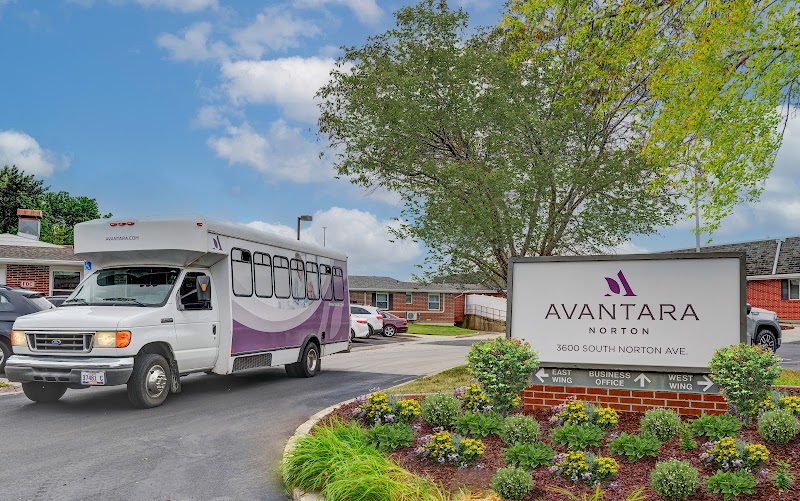


AVANTARA NORTON

3600 SOUTH NORTON AVENUE, SIOUX FALLS, SD 57105 (605) 338-9891
For profit - Limited Liability company 110 Beds CASCADE CAPITAL GROUP Data: November 2025 2 Immediate Jeopardy citations
Trust Grade
0/100
#74 of 95 in SD
Last Inspection: March 2025

Within standard 12-15 month inspection cycle. Federal law requires annual inspections.

Overview

Avantara Norton in Sioux Falls, South Dakota, has received a Trust Grade of F, indicating significant concerns about the facility's quality of care. Ranking #74 out of 95 in South Dakota places it in the bottom half of nursing homes in the state, while being #6 out of 9 in Minnehaha County suggests limited better local options. Unfortunately, the facility's situation is worsening, with reported issues increasing from 15 in 2024 to 16 in 2025. Staffing is below average, rated at 2 out of 5 stars with a 58% turnover rate, which is concerning as it means many staff members are leaving. The facility has also accumulated $225,199 in fines, which is higher than 96% of other South Dakota facilities, highlighting ongoing compliance issues. Specific incidents include a resident who was not positioned correctly in bed, as required by their care plan, creating a risk of falls, and another resident who showed signs of dehydration and was not monitored adequately despite clear needs. Additionally, some residents reported long wait times for assistance, indicating staffing shortages that affect their care. While there is some positive feedback about the staff's demeanor, the overall deficiencies in care and management raise serious concerns for families considering this facility for their loved ones.

Trust Score
F
0/100
In South Dakota
#74/95
Bottom 23%
Safety Record
High Risk
Review needed
Inspections
Getting Worse
15 → 16 violations
Staff Stability
⚠ Watch
58% turnover. Above average. Higher turnover means staff may not know residents' routines.
Penalties
✓ Good
$225,199 in fines. Lower than most South Dakota facilities. Relatively clean record.
Skilled Nurses
○ Average
Each resident gets 37 minutes of Registered Nurse (RN) attention daily — about average for South Dakota. RNs are the most trained staff who monitor for health changes.
Violations
⚠ Watch
74 deficiencies on record. Higher than average. Multiple issues found across inspections.
★☆☆☆☆
1.0
Overall Rating
★★☆☆☆
2.0
Staff Levels
★★☆☆☆
2.0
Care Quality
★☆☆☆☆
1.0
Inspection Score
Stable
2024: 15 issues
2025: 16 issues

The Good

  • Full Sprinkler Coverage · Fire safety systems throughout facility
  • No fines on record

Facility shows strength in fire safety.

The Bad

1-Star Overall Rating

Below South Dakota average (2.7)

Significant quality concerns identified by CMS

Staff Turnover: 58%

12pts above South Dakota avg (46%)

Frequent staff changes - ask about care continuity

Federal Fines: $225,199

Well above median ($33,413)

Significant penalties indicating serious issues

Chain: CASCADE CAPITAL GROUP

Part of a multi-facility chain

Ask about local staffing decisions and management

Staff turnover is elevated (58%)

10 points above South Dakota average of 48%

The Ugly 74 deficiencies on record

2 life-threatening 16 actual harm
Jul 2025 4 deficiencies 1 Harm
SERIOUS (G) 📢 Someone Reported This

A family member, employee, or ombudsman was alarmed enough to file a formal complaint

Actual Harm - a resident was hurt due to facility failures

Pressure Ulcer Prevention (Tag F0686)

A resident was harmed · This affected 1 resident

**NOTE- TERMS IN BRACKETS HAVE BEEN EDITED TO PROTECT CONFIDENTIALITY** Based on record review, interview, and policy review, the provider failed to ensure one of one sampled resident (3) with a press...

Read full inspector narrative →
**NOTE- TERMS IN BRACKETS HAVE BEEN EDITED TO PROTECT CONFIDENTIALITY** Based on record review, interview, and policy review, the provider failed to ensure one of one sampled resident (3) with a pressure ulcer received the necessary dressing changes as ordered and interventions according to the resident's care plan to prevent his ulcer and infection from worsening. This citation is considered past non-compliance based on a review of the provider's corrective actions immediately following the incident. Findings include:1. Review of resident 3's electronic medical record (EMR) revealed:*He was admitted on [DATE] for intensive (extreme in degree of care) wound cares with intravenous (administration of medications directly into a vein) (IV) antibiotics. *He had a Brief Interview for Mental Status (BIMS) assessment score of 11, which indicated he had moderate cognitive impairment.*His diagnoses included: an unstageable pressure ulcer (a full-thickness wound where the depth cannot be determined because the base of the ulcer is obscured by slough, which is (yellowish, tan, gray, green, or brown dead tissue,) or eschar, which is (black, brown, or tan dead tissue) to his left lower leg/heel, non-pressure chronic ulcer (a persistent skin wound caused by conditions other than pressure), type two diabetes mellitus (the body does not use insulin properly), diabetic polyneuropathy (nerve damage complication of diabetes that causes pain), peripheral vascular disease (narrowing of blood vessels that reduces blood flow to limbs and organs), and cellulitis (bacterial skin infection that causes redness, swelling, and pain) of his left lower leg. *His current care plan interventions included:*A physician order initiated on 4/15/25 for staff to offload (remove or reduce pressure to body areas) his heels.*A physician order initiated on 4/15/25 for staff to ensure he utilized a crow boot (a specialized boot that redistributes pressure and stabilizes the foot) to his left foot and a custom shoe to his right foot when he was out of bed.*A physician order initiated on 4/15/25 for staff to monitor and document the location, size, and treatment and to report abnormalities, failure to heal, and signs and symptoms of infection to the medical doctor. *A physician order initiated on 4/15/25 to change the dressing to left lower leg/heel twice daily and as needed with betadine (topical antiseptic used to prevent and treat infections), adaptic (non-adhering dressing), 4x4's gauze pads, ABD (gauze pads to absorb wound drainage), wrap with kerlix (woven gauze bandage roll) and an Ace wrap (elastic bandage wrap). *A physician order initiated on 4/15/25 for IV Zosyn (an antibiotic) 4-0.5 GM/100ML therapy was to be administered three times daily through his PICC line (long, thin, flexible tube inserted into a vein in the arm, and threaded into a large vein near the heart to administer fluids or to draw blood samples). *A physician order initiated on 4/17/25 his left lower leg/heel ulcer was to be monitored weekly by licensed practical nurse (LPN)/wound nurse C.*He had been seen by the physician on 4/29/25 with much improvement to the pressure ulcer and less swelling and signs of infection to lower left leg/heel.*On 5/1/25 at 9:19 PM revealed resident 3's left lower leg/heel ulcer measurements were 12.10 Length (L) x 11.00 width (W) x 0.10 diameter (D).*Treatment administration record (TAR) documentation for 5/1/25 through 5/5/25 had been signed off by registered nurse (RN) J, RN K, RN M, and RN N, indicating resident 3's dressing changes to left lower leg/foot/heel had been completed twice daily, as ordered by the physician.*On 5/6/25, a progress note revealed resident 3's Left medial ankle wound communicating to left lower leg, rear. Left lower leg, pressure unstageable: 16.00 L x 32.50 W x 0.10 D.-On 5/6/25, LPN/wound nurse C had completed the dressing change after identifying that it had not been changed on 5/1/25 at 9:00 PM, and 5/2/25, 5/3/25, and 5/4/25, at 8:00 AM, and 9:00 PM as ordered. There was heavy drainage, wound bed wetness, and an odor noted during the dressing change. -Resident 3 had increased fatigue and was afebrile. *Resident 3's primary care provider was notified that resident 3 had not received wound care to his left lower leg/heel on 5/1/25 at 9:00 PM, and 5/2/25, 5/3/25, and 5/4/25, at 8:00 AM, and 9:00 PM as ordered. -Orders were received for blood work and to notify the infectious disease (ID) doctor for further management. *An order was received on 5/5/25 by the ID doctor for resident 3 to be sent to the emergency room for further evaluation. -Resident 3's laboratory results showed an up-trending white blood count (WBC) which was 16.0 on 4/28/25 and on 5/5/25 it was 20.2 which indicated he had an infection and a mild increase in C-reactive protein (CRP) (measures the inflammation in the body) which was 137.1 and reference range is less than 5.0 milligrams per liter (mg/L). -Radiography (X-rays) of his left tibia and fibula (two bones of the lower leg) did not show osteomyelitis (infection in the bone). *Resident 3's primary care provider and his family had been notified regarding his care on his dressing changes to his left lower leg/heal had not been changed as ordered by the provider. *Resident 3 returned to the facility on 5/6/25 after his evaluation in the ED. *Orders received from the ED included:-A doctor's order to continue IV Zosyn 4-0.5 GM/100ML every eight hours until seen by ID.-A doctor's order for doxycycline (an antibiotic) oral tablet, 100 milligrams (MG) by mouth twice daily for seven days.-To continue with the same wound care to his pressure ulcer on his left lower leg/heel as was previously ordered and follow up with the ID clinic on 5/20/25.*Resident 3 had blood drawn on 5/12/25 to be tested at the lab to recheck WBC and CRP (C-reactive protein).-Those lab results verified that there had been a decrease in his WBC and CRP levels. *Documentation in EMR indicated that resident 3 complained of more open wounds than he had previously on his left lower leg/heel.*A 5/13/25 doctor's order for wound care on resident 3's lower left leg/heel had increased from twice daily to four times per day and as needed. *Resident 3 had discharged on 5/21/25 to his private home. 2. Interview on 7/9/25 at 2:45 p.m. with director of nursing (DON) B and LPN/wound nurse C revealed:*Resident 3 had not received his scheduled physician-ordered dressing changes to his lower left leg/heel ulcers seven out of nine times.*Resident 3's lower left leg/heel pressure ulcers had gotten worse with heavy serosanguineous (a mixture of plasma and red blood cells) drainage and erythema (redness of the skin) and required additional oral antibiotics and continuation of IV antibiotics. They expected for the doctor's order for the dressing changes to resident 3's left lower leg/heel to be followed. *They expected each resident's care plan to be followed for any interventions listed. 3. Interview on 7/10/25 at 8:30 a.m. with RN J revealed he:*Verified those were his initials that were documented on the TAR for 5/2/25 at 9:00 p.m., which revealed this was a treatment that had not been completed.*Completed a dressing change on resident 3 but was not real sure which one it was.*Indicated the resident had multiple dressing changes that were to be completed. 4. Interview on 7/10/25 at 9:45 a.m. with RN K revealed he:*Verified those were his initials documented on the TAR for 5/3/25 and 5/4/25 at 8:00 a.m., which revealed this was a treatment that had not been completed.*Could not recall if he had completed the dressing change on resident 3's left lower leg/heel ulcer. 5. Interview on 7/10/25 at 12:30 p.m. with RN M revealed:*He verified those were his initials documented on the TAR for 5/3/25 at 9:00 p.m., which revealed this was a treatment that had not been completed.*He did not remember resident 3 or if he had completed the resident's dressing change on the left lower leg/heel ulcer.*He usually worked one day per month at the facility. 6. Interview on 7/10/25 at 1:18 p.m. with RN N revealed she:*Verified those were her initials documented on the TAR for 5/1/25 and 5/4/25 at 9:00 p.m., which revealed this was a treatment that had not been completed.*Could not justify doing the dressing change on resident 3's left lower leg/heel ulcer, as the previous one completed was done late. 7. Interviews on 7/10/25 at 3:45 p.m. with LPN O and RN K revealed education was provided to all staff on following physician orders, abuse and neglect, and skin and pressure injury prevention. 8. Review of the provider's updated 9/11/24 skin and pressure injury prevention program policy revealed:*A wound assessment will be completed:*When a pressure injury is identified: This assessment will include: a) Site, stage, size, appearance of wound bed, (use %) undermining, depth, drainage, (amount, color, type, consistency and odor) and status of peri-wound tissue;b) Treatment of the pressure injury, (cleansing, debridement, dressings);c) A review of the resident's current POC and medical status- and other possible risk factors, impaired healing due to diagnoses;d) Type of skin injury (MD/Provider is asked to identify type of injury, if needed-e.g., pressure, stasis (venous), ischemic (arterial), or neuropathic (Diabetic), and provide skin treatment orders. Reassess the wound at least weekly (If the wound has not improved within 2-3 weeks, contact MD/Provider for a change in treatment). * Pressure injuries are often made worse by continual pressure, heat, moisture, irritating substances on the resident's skin (i.e., perspiration, feces, urine, wound discharge, soap residue, etc.), decline in nutrition and hydration status, acute illness and/or decline in the resident's physical and/or mental condition.The provider's implemented actions to ensure the deficient practice does not reoccur was confirmed on 7/10/25 after record review review revealed the facility had followed their quality assurance process, education was provided to all nursing staff regarding the Provider Orders Policy, Abuse and Neglect Policy, and Skin and Pressure Injury Prevention Policy. Interview with staff revealed they understood the education provided regarding the topics, and the importance of following physician orders to prevent ulcers and infection from worsening. Audits were completed on following physician orders for dressing changes to ensure they are being completed as written. These were started on 5/9/25 and completed weekly x 4 weeks and then monthly x 2. These will be reviewed during QAPI (Quality Assurance and Performance Improvement) meetings. Observations and staff interviews revealed the staff understood the education provided and the revised processes.Based on the above information, non-compliance at F686 occurred on 5/1/25, and based on the provider's implemented corrective action for the deficient practice confirmed on 7/10/25, the non-compliance is considered past non-compliance.
CONCERN (D) 📢 Someone Reported This

A family member, employee, or ombudsman was alarmed enough to file a formal complaint

Potential for Harm - no one hurt, but risky conditions existed

Free from Abuse/Neglect (Tag F0600)

Could have caused harm · This affected 1 resident

Based on South Dakota Department of Health (SD DOH) facility-reported incident (FRI), record review, review of call light log, review of personnel file, interviews and policy review, the provider fail...

Read full inspector narrative →
Based on South Dakota Department of Health (SD DOH) facility-reported incident (FRI), record review, review of call light log, review of personnel file, interviews and policy review, the provider failed to protect the resident's right to be free from neglect for one of one sampled resident (2) who waited for staff assistance for more than an hour after turning on his call light. This citation is considered past non-compliance based on a review of the provider's corrective actions immediately following the incident.Findings include: 1. Review of the provider's 5/30/25 SD DOH FRI regarding resident 2 revealed:*Resident 2 filed a grievance with the provider on 5/30/25.*On the night of 5/28/25 resident 2 did not receive help from staff. -His call light (a device that alerts staff of a request for assistance) had been on for an extended period.-Certified nursing assistant (CNA) D came in to his room to assist him, was rude, and walked out.-CNA D was suspended pending investigation.-The resident's primary care provider (PCP) was notified of the grievance.-An investigation was initiated.*An assessment of the resident's skin was completed on 5/30/25 with no new identified skin areas.*Resident 2's call light response times for 5/28/25 were reviewed.-At 6:16 p.m. CNA Q delivered his dinner tray.-At 6:40 p.m. licensed practical nurse (LPN) R entered his room and completed his medication administration.--He had stated to LPN R that no one would answer his call light, LPN R told him that staff were doing the best they could.-At 8:22 p.m. CNA L entered his room and told him she would come back to assist him.-At 9:45 p.m. CNA D responded to his call light, he was upset, CNA D left room and asked for assistance from CNA L.-When CNA L arrived at resident 2's room resident 2 refused assistance with his cares and was getting himself ready for bed.*Following a review of the staff schedules for the evening of 5/28/25 education was provided to the nurse managers and staffing coordinator S for scheduling conflicts and how to address them.*Five residents who reside in the same hall on the same hall were interviewed and had no concerns with staff response to call lights.*Call light response audits and education on the call light policy, the abuse and neglect policy, and providing resident cares in pairs (two staff members assisting a resident together) was initiated.*Resident 2's care plan was reviewed, and it was determined he would remain to be assisted by staff using cares in pairs to ensure his safety.*CNA D was educated on the call light policy, the abuse and neglect policy, residents who needed care provided by using cares in pairs and was allowed to return to work.*The resident's PCP was notified of above interventions.*Resident 2 was responsible for himself and was pleased with those interventions. 2. Review of resident 2's electronic medical record (EMR) revealed:*His Brief Interview for Mental Status (BIMS) assessment score on 4/16/25 was 15 which indicated his cognition was intact.*He had diagnoses of:-Diabetes Mellitus type one (the body's immune system mistakenly attacks and destroys insulin-producing cells in the pancreas).-Legal blindness (significant vision impairment).-Anxiety disorder (intense, persistent worry or fear).*His care plan revealed:-He received behavioral counseling services.-He required cares in pairs.-He had skin wounds to his left and right heels.-He was resistant to cares, treatments and medications.-He required assistance with all activities of daily living (ADLs).*There were multiple documentations of refusal of wound treatments, bathing, and medication administration in his progress notes. 3. Review of the 5/28/25 call light log for resident 2 revealed:* He had activated his call light four times between 6:00 p.m. and 9:45 p.m.-At 6:12 p.m. his call light had been on for four minutes.-At 6:23 p.m. his call light was on for seventeen minutes.-At 8:28 p.m. his call light was on for six minutes.-At 8:37 p.m. his call light was on for one hour and eight minutes. 4. Review of personnel file on 7/9/25 at 11:40 a.m. for CNA D revealed:*A corrective action suspension on 5/30/25 for an allegation of neglect.*An employment termination corrective action dated 7/7/25 regarding an investigation related to the provider's harassment policy. 5. Interview on 7/9/25 at 11:00 a.m. with CNA Q revealed:*He brought resident 2's dinner tray to his room a little after 6:00 p.m. on 5/28/25.*He had not noticed if resident 2's light was on.*There had been four staff working in that wing on 5/28/25.*Resident 2 did not have behaviors.*Resident 2 did not refuse assistance with his cares.*Resident 2 would refuse to eat lunch sometimes.*Resident 2 was alert and oriented.*Resident 2 was legally blind.*Resident 2 transfers with two assistance of two staff members and a gait belt (a waist strap gripped as support for safe mobility and transfers).*Resident 2 call light was to always be in a specific spot, so he would know where it was.*Resident 2 was able to make his needs known. Interview on 7/9/25 at 1:20 p.m. with resident 2 revealed:*He felt CNA D seemed to have an attitude and was rude.*He could wait an hour or more for staff to respond to his call light at times.*On 5/28/25 he turned his call light on because he needed help with getting ready for bed and waited over an hour for staff to respond to it.*CNA D came in and shut his light off, she did not come back for over an hour.*He had concerns that if he had a low blood sugar or a high blood sugar, he could have another stroke.*He had facility acquired wounds on his heels also that required care.*He denied that he refused staff assistance with his care needs.*Management staff had talked with him after the incident occurred as was satisfied with the interventions. Interview on 7/9/25 at 4:56 p.m. with LPN R revealed:*On the evening of 5/28/25 they were short a CNA to work.*While passing medications his call light went off around 6:30 p.m.*She had asked CNA D around 7:30 p.m. to check his light, and CNA D had turned it off after entering his room.*LPN R was unaware if he turned his call light back on after that.*She thought his light had been on for about 45 minutes before it was answered by CNA D.*Resident 2 had voiced concern about CNA D not caring about what he needed and had turned his light off without helping him.*When CNA D returned to resident 2's room, resident 2 refused to allow CNA D to help him.*LPN R had entered resident 2's room about 8:15 p.m. and helped him get ready for bed that night.*LPN R received education on call lights and abuse/neglect after this incident occurred.*Resident 2 had behaviors and refused staff assistance with his cares, medications, and meals at times.*CNA's and nurses were responsible for answering lights. Interview on 7/10/25 at 11:04 a.m. with CNA L revealed:*She had worked on 5/28/25. She arrived late to work that night at about 8:00 p.m.*When she arrived to work at 8:00 p.m., resident 2's and about ten other call lights were on.*Resident 2 would be upset if his call light was not answered right away.*Resident 2 would sometimes refuse staff assistance with his care needs.*She had answered resident 2's light about 8:30 p.m. and refilled his water as he requested.*She thought CNA D had come in to work at about 9:00 p.m. that night.*CNA D had requested help with resident 2 later that evening as he seemed upset.*CNA L and CNA D assisted resident 2's roommate to bed after resident 2 was already in bathroom.*She thought resident 2's call light had been on for about an hour when CNA D went to answer it as she was assisting other residents.*She had asked resident 2 if he needed anything before they left his room, and he stated he wanted nothing from them.*She had not seen resident 2's call light on the rest of the night. Interview on 7/10/25 at 1:43 p.m. with administrator A revealed:*A management meeting following the above incident on 5/28/25, regarding scheduling conflicts and how to handle them was held on 5/29/25, which was verified by a text message meeting invitation.*Education to nursing staff was completed on the provider's call light policy and their abuse and neglect policy.*Call light audits were being completed and ongoing for call lights being on over ten minutes time.*Resident 2's grievance was addressed and he was satisfied with the interventions put in place after the above incident occurred. 6. Review of the provider's revised September 2024 Call light policy revealed:*It is the policy of the facility to ensure that there is prompt response to the resident's call for assistance.*1. Facility [staff] shall answer call lights in a timely manner. If immediate assistance cannot be provided and there is not an emergent need, call light may be turned off and resident informed that staff member will be back to assist them shortly. Review of the provider's revised February 2024 Abuse and Neglect policy revealed:*It is the policy of the facility to provide professional care and services in an environment that is free from any type of abuse, corporal punishment, misappropriation of property, exploitation, neglect, or mistreatment. The facility follows the federal guidelines dedicated to [the] prevention of abuse and timely and thorough investigations of allegations. These guidelines include compliance with the seven federal components of prevention and investigation.*Neglect is the failure to provide necessary and adequate(medical, personal, or psychological) care. Neglect is the failure to care for a person in a manner, which would avoid harm and pain, or the failure to react to a situation which may be harmful. Staff may be aware or should have been aware of the service the resident requires but fails to provide that service. The provider's implemented actions to ensure the deficient practice does not reoccur was confirmed on 7/10/25 after record review revealed the facility had followed their quality assurance process, education was provided to all staff regarding their call light and abuse and neglect policies. Interviews completed with staff revealed they understood the education provided regarding those topics. Audits were completed regarding call light wait times, which are ongoing following the incident, and resident 2 felt his grievance had been addressed. Quality Assurance and Performance Improvement meeting 6/2025 addresses this staff education and continued audits. Based on the above information, non-compliance at F600 was determined to have occurred on 5/28/25, and based on the provider's 5/30/25 implemented corrective action for the deficient practice confirmed on 7/10/25, the non-compliance is considered past non-compliance.
CONCERN (D) 📢 Someone Reported This

A family member, employee, or ombudsman was alarmed enough to file a formal complaint

Potential for Harm - no one hurt, but risky conditions existed

Deficiency F0658 (Tag F0658)

Could have caused harm · This affected 1 resident

Based on South Dakota Department of Health (SD DOH) facility reported incident (FRI), interview, record review, and policy review, the provider failed to ensure professional nursing standards of pract...

Read full inspector narrative →
Based on South Dakota Department of Health (SD DOH) facility reported incident (FRI), interview, record review, and policy review, the provider failed to ensure professional nursing standards of practice regarding medication administration were followed by licensed practical nurse (LPN) (F) who administered one of one sampled resident'(4) another resident's medications. That failure resulted in medication errors.Findings include:1. Review of the 6/9/25 SD DOH FRI revealed:* On the evening of 6/9/25, LPN F mistakenly administered resident 5's medications to resident 4.*Medications administered to resident 4 included Zolpidem (medication to assist with sleeping) 10 milligrams (mg) and Eliquis (blood thinning medication) 5 mg.*Resident 4 had an allergy to Zolpidem and did not take blood thinning medications.*The on-call physician was notified of those medication errors.*The on-call physician ordered for the resident to be monitored by staff and for resident 4's normal medications to be resumed the next day.*No adverse reactions were noted to resident 4 due to the medication errors. 2. Interview on 7/9/25 at 2:15 p.m. with registered nurse (RN) G revealed:*She had been employed by the facility for about six months.*To identify a resident before administering their medications, there was a picture of the resident in their electronic medical record (EMR). The resident's name outside of their door should match the name in the EMR. If the resident had appropriate cognition, she would have the resident give their name and date of birth . 3. Interview on 7/9/25 at 2:25 p.m. with LPN E revealed:*She had been employed by the facility for about two months.*To identify the resident before administering medications, she would compare the room number to the number in the EMR. She would then use the picture of the resident in the EMR for further identification. If the resident had appropriate cognition, she would have the resident give their name and date of birth .*She recalled receiving recent education regarding the six rights of medication administration. 4. Interview on 7/9/25 at 4:55 p.m. with director of nursing (DON) B revealed:*She interviewed LPN F after the 6/9/25 medication error and LPN F admitted she did not follow the six rights to medication administration (Right Patient, Right Medication, Right Dose, Right Route, Right Time, and Right Documentation).*DON B acknowledged the facility policy stated five rights of medication administration, but staff were educated on the six rights of medication administration.*It was DON B's expectation that the six rights of medication administration would be followed by staff who were administering medications. 5. Interview on 7/10/25 at 8:50 a.m. with LPN F revealed:*She recalled working the evening of 6/9/25.*She recalled it had been a busy evening, and there was a resident in the hallway who was talking to her, and she felt that had become a distraction.*She recalled having administered the evening medications for both resident 4 and resident 5.*She had prepared and written the first name of the resident on each of the cups containing each of those residents' medication.*She stated that those residents' first names were similar, and their rooms were located next to each other.*She recalled stepping away from the medication cart to help with assisting the resident in the hallway.*When she came back to the medication cart, she grabbed resident 5's medications and administered them to resident 4.*She came back to the medication cart to get resident 5's medications to administer to him, she realized she had given resident 4 resident 5's medications in error. *She immediately contacted the DON and on-call physician to explain the medication error to them. 6. Review of the provider's undated medication administration policy revealed:*Medications are administered as prescribed in accordance with good nursing principles and practices and only by legally authorized to do so.*4. FIVE RIGHTS-Right resident, right drug, right dose right route, and right time, are applied for each medication being administered. A triple check of these 5 Rights is recommended at three steps in the process of preparation of medication for administration: (1)when the medication is selected, (2)when the dose is removed from the container, and finally (3) just after the dose is prepared and the medication is put away.
CONCERN (D) 📢 Someone Reported This

A family member, employee, or ombudsman was alarmed enough to file a formal complaint

Potential for Harm - no one hurt, but risky conditions existed

Accident Prevention (Tag F0689)

Could have caused harm · This affected 1 resident

**NOTE- TERMS IN BRACKETS HAVE BEEN EDITED TO PROTECT CONFIDENTIALITY** Based on South Dakota Department of Health (SD DOH) facility-reported incident (FRI), record review, interview and policy review...

Read full inspector narrative →
**NOTE- TERMS IN BRACKETS HAVE BEEN EDITED TO PROTECT CONFIDENTIALITY** Based on South Dakota Department of Health (SD DOH) facility-reported incident (FRI), record review, interview and policy review, the provider failed to protect the safety of one of one sampled resident (1) identified as at risk for elopement (leaving the facility without staff knowledge). Who was assisted out of the building by certified nursing assistant (CNA) H who left the facility property and resident 1 remained outside unsupervised. This citation is considered past non-compliance based on a review of the provider's corrective actions immediately following the incident.Findings include:1.Review of the provider's 6/7/25 SD DOH FRI involving resident 1 revealed:*On 6/7/25 at 6:31 p.m. resident 1 exited the building when certified nursing assistant (CNA) H held the door open for her at the end of her shift.*Resident 1 remained on the property in the front of the building unsupervised.*CNA P and licensed practical nurse (LPN) I recognized when leaving resident 1 should not have been outside alone at approximately 6:38 p.m.*CNA P and LPN I remained with resident 1 outside, until she agreed to return inside the building.*Director of nursing (DON) B called CNA H and re-educated her about the elopement binder and how to find out which residents were at risk for elopement.*A skin assessment was completed on resident 1 on 6/7/25, and no injuries were found.*CNA H's new hire orientation was reviewed, and elopement was a part of her completed of new hire orientation.*All staff education on the elopement policy and where the elopement binder was located was initiated.*Elopement drills were completed on all shifts following the above incident on what to do if a resident was missing.*Elopement audits were started 6/19/25 weekly and reviewed:-Staff were aware of which residents were at risk of elopement.-Reviewed new admissions, readmissions or change in condition of resident elopement risk.-Reviewed all residents at risk of elopement care plan's, elopement risk evaluations, and elopement binder.*Audits were to be reviewed at the next Quality Assurance and Performance Improvement (QAPI) meeting for the elopement policy and to review audits completed for needed changes.*Resident 1's care plan was reviewed.*An elopement risk assessment of resident 1 was completed on 6/7/25.*Her primary care provider (PCP) and family were notified of the incident and had no further concerns. 2. Review of resident 1's electronic medical record (EMR) revealed:*She admitted to the facility on [DATE].*Her care plan included a focus area that indicated she had the potential for elopement which was initiated on 8/7/2023 interventions included:-Exit and stairwell alarms.-Facility doors alarmed/secured to prevent elopement.-Follow a familiar routine.-If exit seeking, keep photographs of the resident on the unit and at the front desk.-Maintain elopement binder.-Provide care, activities and a daily schedule that resembles resident 1's prior lifestyle as able.*She was identified as having a low risk for elopement on her 10/11/24 elopement risk assessment.*Her Brief Interview for Mental Status (BIMS) assessment score on 4/21/25 was three, which indicated she had severely impaired cognition.*She was identified as having a high risk for elopement on her 6/7/25 and 6/9/25 elopement risk assessment. 3. Interview on 7/10/25 at 8:20 a.m. with administrator A revealed:*CNA H walked out of the building with resident 1.*Resident 1 was at risk for elopement.*Resident 1 was left by CNA H, unattended by staff, so the incident was considered an elopement. Interview on 7/10/25 at 9:46 a.m. with CNA H revealed:*She had started working at the facility a few months before the 6/7/25 incident involving resident 1.*She had completed her orientation training which included elopement prevention and how to locate a missing resident and managing elopement.*She had completed her shift on 6/7/25 at approximately 6:30 p.m.*She saw resident 1 standing at the front entry door and held the door open for her to exit the building.*After assisting resident 1 out of the building she left for the day.*She was unaware that resident 1 should not have been left outside by herself.*She was educated on the elopement binders by DON B on 6/7/25 and that they were located at the nurses' stations and the reception desk after the above incident occurred.*She was educated on their elopement policy following the above incident. Interview on 7/10/25 at 10:55 a.m. with DON B revealed:*All staff were to be educated upon hire about elopement and the facility's elopement binders.*CNA H had received that education before she started to work with residents in the facility.*CNA H had been re-educated on the elopement policy and where the elopement binders were located following the incident with resident 1 on 6/7/25.*She expected all facility policies to be followed by the staff.*Staff could ask members of the management team or the on-call staff if they had questions. 4. Review of the provider's revised February 2024 Elopement policy revealed:*The facility must take steps to keep the resident safe and assess residents to identify those who are risk for elopement. Facility personnel must investigate all reports of missing residents. Elopement drills should be conducted monthly.*2. It is the responsibility of all personnel to report any resident attempting to leave the premises, or suspected of being missing, to the charge nurse as soon as practical, unless the resident is alert and oriented, has a [an] MD [medical doctor's] order for a LOA and has signed out for an outing or to go outside and is safe to do so. The provider's implemented actions to ensure the deficient practice does not reoccur was confirmed on 7/10/25 after record review revealed the facility had followed their quality assurance process, education was provided to all nursing staff regarding the elopement policy and the elopement binders. Interviews with staff revealed they understood the education provided regarding the topics, and missing resident drills had been completed. Audits were completed and continue regarding identifying residents at risk for elopement, resident elopement risk assessments being completed and up-to-date, the care plan includes resident's elopement risk and the elopement binder is to be current and up to date and staff are aware of which residents were at risk of elopement, reviewed new admissions/readmissions and change of condition resident's. Based on the above information, non-compliance at F689 was determined to have occurred on 6/7/25, and based on the provider's 6/27/25 implemented corrective action for the deficient practice confirmed on 7/10/25, the non-compliance is considered past non-compliance.
Apr 2025 3 deficiencies
CONCERN (D) 📢 Someone Reported This

A family member, employee, or ombudsman was alarmed enough to file a formal complaint

Potential for Harm - no one hurt, but risky conditions existed

Deficiency F0602 (Tag F0602)

Could have caused harm · This affected 1 resident

Based on the South Dakota Department of Health (SD DOH) facility reported incident (FRI), interview, record review, and policy review, the provider failed to ensure two of two sampled residents' (1 an...

Read full inspector narrative →
Based on the South Dakota Department of Health (SD DOH) facility reported incident (FRI), interview, record review, and policy review, the provider failed to ensure two of two sampled residents' (1 and 2) prescribed controlled (medications with risk for abuse and addiction) pain medications were not diverted (when prescribed medication is obtained or used illegally by another person) by one registered nurse (RN) (E). Failure to ensure prevention of diversion of those medications had the potential to cause those residents increased pain and potentially placed all residents' safety at risk who were under RN E's care. This citation is considered past non-compliance based on the provider's identification of the potential diversion and actions implemented following the incident. Findings include: 1. Review of the provider's 3/3/25 SD DOH FRI revealed: *Director of nursing (DON) B notified registered nurse (RN) E's Health Professional Assistance Program (HPAP) caseworker regarding concerns that RN E may have been diverting controlled medications from the facility due to his agitated behavior. *The HPAP caseworker notified DON B on 3/3/25 that RN E's random drug test was positive for hydrocodone and oxycodone (controlled pain medications) and he was not currently prescribed those medications. *RN E did not work any further shifts at the facility and had resigned his position on 3/4/25. *During an interview with administrator A and DON B, RN E admitted to diverting oxycodone from residents (1 and 2). *He reported diverting the residents' PRN (as needed) pain medication when the residents did not ask for it, explaining that the residents did not go without pain medication if they needed it. *He reported that he began diverting oxycodone while working in the facility in mid to late January 2025. *He was unable to give an exact amount of oxycodone that he had diverted from the residents. *A review of resident 1's medication administration record (MAR) revealed RN E had documented that he had: -Administered one tablet of oxycodone 5 milligrams (mg) four times in February 2025. -Administered two tablets of oxycodone 5 mg 25 times in February 2025. *A review of resident 2's MAR revealed RN E had documented that he had: -Administered four doses of oxycodone 7.5 mg tablet in December 2024. -Administered 14 doses of oxycodone 7.5 mg tablets in January 2025. -Administered 11 doses of oxycodone 7.5 mg tablets in February 2025. *The local police department was notified of the event and performed an investigation. *That police department's detective who investigated the incident reported the information shared in RN E's interview matched the information RN E had given to the provider. 2. Interview on 4/9/25 at 1:55 p.m. with DON B revealed: *RN E was hired in December 2024. *DON B was aware RN E was in the HPAP program but was not aware of the reason he was in the HPAP program. *DON B was to evaluate and report to RN E's caseworker every three months on his job performance. *He had not completed the first evaluation of RN E before the above reported incident on 3/3/25. 3. Interview on 4/10/25 at 2:00 p.m. with DON B revealed: *DON B reported when narcotic (controlled) sign-out sheets were completed, they were scanned into the resident's EMR. *If no discrepancies were noted (the number of remaining pills matching the number on the sign-out sheet), no further review was completed. *When reviewing the narcotic sign-out sheets, there was no comparison made between the narcotic sign-out sheet and the resident's MAR, they only verified that the number of the resident's remaining pills matched the pill count that was documented on the sign-out sheet. 4. Interview on 4/9/25 at 10:18 a.m. with resident 1 revealed: *He did not recall asking for pain medication and not receiving it. *He felt his pain was adequately controlled. *His Brief Interview for Mental Status (BIMS) score was 14, which indicated he was cognitively intact. 5. Review of resident 1's MAR revealed: *During February 2025, his PRN 5 mg oxycodone was documented as administered seven times. -Three of those times, the dose was documented as administered by RN E. *During February 2025, his PRN 10 mg oxycodone was documented as administered 61 times. -Twenty-six of those times, the dose was documented as administered by RN E. 6. Review of the narcotic sign-out sheet and resident 1's MAR revealed: *On 2/9/25 at 7:30 p.m., two oxycodone pills were signed out on the narcotic sheet by RN E, but only one pill was documented as administered in the MAR. *On 2/17/25 at 1:16 a.m., two oxycodone pills were documented in the MAR as administered by RN E, but no pills were signed out on the narcotic sheet. *On 2/18/25 at 1:30 a.m., two oxycodone pills were signed out on the narcotic sheet by RN E, but no pills were documented as administered in the MAR. *On 2/23/25 at 4:00 a.m., one oxycodone pill was signed out on the narcotic sheet by RN E, but no pills were documented as administered in the MAR. 7. Interview on 4/9/25 at 1:15 p.m. with resident 2 revealed: *She did not recall asking for pain medication and not receiving it. *She felt her pain was adequately controlled. *Her BIMS score was 7, which indicated she may have severe cognitive impairment. 8. Review of resident 2's MAR revealed: *During January 2025, her PRN 7.5 mg oxycodone dose was documented as administered 14 times, all by RN E. *During February 2025, her PRN 7.5 mg oxycodone dose was documented as administered 11 times, all by RN E. 9. Review of the provider's Staff In-Service Sheet and Opioids audits revealed: *On 4/9/25, a staff in-service was held. -When administering prn/scheduled narcotics the narc [narcotic] book and MAR should match. Need to document timely. *Audits included DON or designee will audit the medication administration record for 10 residents receiving prn opioids weekly x [times] 4 weeks, then monthly for 3 months to determine if there is a suspicious pattern of specific nurses administering prn doses of opioids. -Audits had been completed on 3/14/25, 3/21/25, 3/28/25, and 4/4/25 with no identified concerns. 10. Review of the provider's February 2024 abuse and neglect policy revealed: *Policy Statement: It is the policy of the facility to provide professional care and services in an environment that is free from any type of abuse, corporal punishment, misappropriation of property, exploitation, neglect, or mistreatment. 11. Review of the provider's drug diversion prevention policy revealed: *Policy, It is the policy of this facility to set forth standards related to preventing the diversion of medications. Medications classified by the Drug Enforcement Administration (DEA) as controlled substances are subject to special handling, storage, disposal, and record keeping. *3. Administration of Controlled Substances: a. Documentation of each administered dose of a controlled substance is to occur on the resident's Medication Administration Record (MAR) and the specific medication's inventory sheet at the time of administration. The provider's implemented actions to ensure the deficient practice does not recur was confirmed after record review revealed the facility had followed their quality assurance process, a thorough investigation was completed, staff education was provided regarding patterns of certain nurses administering narcotic medications, interviewing residents to ensure they received their medications, comparing residents' MAR to narcotic sheets, record review and interviews revealed staff understood the education provided, completed audits revealed no identified concerns, and the auditing is ongoing as part of their QAPI plan and process to prevent drug diversion. Based on the above information, non-compliance at F602 occurred on 3/3/25, and based on the provider's implemented corrective action for the deficient practice confirmed on 4/9/25, the non-compliance is considered past non-compliance.
CONCERN (D) 📢 Someone Reported This

A family member, employee, or ombudsman was alarmed enough to file a formal complaint

Potential for Harm - no one hurt, but risky conditions existed

Deficiency F0624 (Tag F0624)

Could have caused harm · This affected 1 resident

**NOTE- TERMS IN BRACKETS HAVE BEEN EDITED TO PROTECT CONFIDENTIALITY** Based on South Dakota Department of Health (SD DOH) complaint report, record review, interview, and policy review, the provider ...

Read full inspector narrative →
**NOTE- TERMS IN BRACKETS HAVE BEEN EDITED TO PROTECT CONFIDENTIALITY** Based on South Dakota Department of Health (SD DOH) complaint report, record review, interview, and policy review, the provider failed to ensure one of one sampled resident (3) had received discharge instructions and education on the risks versus benefits prior to leaving against medical advice (AMA). Findings include: 1. Review of the SD DOH complaint intake report received on 4/9/25 revealed: *A resident had been admitted to the facility on [DATE]. *There were concerns of the resident being unhappy with her medication administration and the lack of explanation of her medication that had been administered. 2. Review of resident 3's electronic medical record (EMR) revealed: *She was admitted on [DATE] for rehabilitation services following a left hip replacement. *Three days later she left AMA. *She had signed the provider's AMA form prior to leaving. *A Brief Interview for Mental Status (a tool to determine cognitive function) was not completed prior to her leaving AMA to support if she had been competent enough to make that decision. *There was no documentation to support: -Interventions and other resources had been provided in an attempt to prevent the resident from leaving AMA. -Discharge instructions and medication administration education had not been provided to her ensuring safety after she left AMA. -The resident had been educated on the benefits of remaining in the facility versus the potential risks associated with leaving AMA. 3. Interview on 4/10/25 at 12:30 p.m. with social services (SS) D regarding resident 3 revealed: *She had been informed by director of nursing (DON) B that resident 3 wanted to leave AMA on 4/7/25. *She had notified the resident's physician that resident 3 wanted to leave AMA. *She had attempted to explain to the resident the risks of leaving AMA. *She confirmed she had not documented her conversation with the resident in an attempt to make her say. She agreed she should have. 4. Interview on 4/10/25 at 1:55 p.m. with administrator A, DON B, and regional nurse consultant (RNC) C regarding resident 3 revealed: *Administrator A would have expected the staff to have explained the risks of leaving AMA and the benefits of staying in the facility. -That education should have been documented in the resident's EMR to support that it happened. *RNC C stated if a resident left AMA medication and discharge instructions were not provided to the resident prior to leaving the facility. Review of the provider's November 2024 Against Medical Advice (AMA) Discharge revealed: *Staff shall provide attention and make reasonable effort to prevent a resident from leaving AMA. *Assess the resident's competence to make the AMA decision (vital signs, mental status examination, including presence or absence of hallucinations and delusions, judgment, reasoning, awareness, and insight). *Use all available resources to discourage a resident from leaving AMA. This may include the social worker, nurse, nursing assistant, activity staff, a family member or even a friend. *Explain and document the discussion(s) of the reason to remain in the facility and all the potential serious risks associated with leaving. *Explain and document your ongoing concern for the resident and his/her well-being. *Ask the physician if they want to give a verbal order to release medication to the resident at discharge. *Document when a resident leaves AMA, along with any instructions given and medications sent with resident.
CONCERN (E) 📢 Someone Reported This

A family member, employee, or ombudsman was alarmed enough to file a formal complaint

Potential for Harm - no one hurt, but risky conditions existed

Deficiency F0658 (Tag F0658)

Could have caused harm · This affected multiple residents

**NOTE- TERMS IN BRACKETS HAVE BEEN EDITED TO PROTECT CONFIDENTIALITY** A. Based on record review, interview, and policy review, the provider failed to follow professional standards by not having ensu...

Read full inspector narrative →
**NOTE- TERMS IN BRACKETS HAVE BEEN EDITED TO PROTECT CONFIDENTIALITY** A. Based on record review, interview, and policy review, the provider failed to follow professional standards by not having ensured two of two sampled residents (1 and 2) had received their PRN (as needed) controlled (medications with risk for abuse and addiction) pain medications as ordered by the physician. Findings include: 1. Review of resident 1's electronic medical record (EMR) revealed his medication administration record (MAR) indicated: *He had a physician's order for oxycodone (a controlled pain medication), 5 milligram (mg) tablet, Give 2 tablet[s] orally every 4 hours as needed for pain. *On 2/17/25, he was given two oxycodone tablets by registered nurse (RN) E at 1:16 a.m., and two oxycodone tablets by licensed practical nurse (LPN) G at 2:12 a.m. -Less than one hour had passed between those administrations. *On 3/20/25, he was given one oxycodone tablet by certified medication aide (CMA) F at 4:37 p.m., and two oxycodone tablets by LPN H at 7:35 p.m. -Less than three hours had passed between those administrations. On 3/21/25, he was given two oxycodone tablets by LPN I at 5:26 p.m., and two oxycodone tablets by RN J by 7:23 p.m. -Less than two hours had passed between those administration. *All of those documented administrations were given before four hours had passed between administrations as ordered. 2. Review of resident 2's EMR revealed her January 2025 MAR indicated: *She had a physician's order for oxycodone, 5 milligram (mg) tablet. Give 7.5 mg by mouth every 4 hours as needed for pain. *On 1/3/25 at 1:28 a.m., RN E documented administering resident 2's PRN oxycodone. -On 1/3/25 at 1:30 a.m., RN E documented administering her an additional dose of oxycodone. *On 1/21/25 at 2:01 a.m., RN E documented administering resident 2's PRN oxycodone. *On 1/21/25 at 5:00 a.m., RN E documented administering her an additional dose of oxycodone. *All of those documented administrations were given before four hours had passed between administrations as ordered. 3. Interview on 4/9/25 at 2:00 p.m. with director of nursing (DON) B revealed: *It was his expectation that medications would be administered following the physician's orders. *He was not sure if there was a policy that would state if and how early a PRN medication could be administered. *He thought that if a PRN medication was requested early, it should not have been administered more than 30 minutes before the next ordered dose. 4. Review of the provider's October 2024 medication administration-general guidelines policy revealed: *Medications were to be administered observing SIX RIGHTS- Right resident, right drug, right dose, right route, right time, and right documentation, are applied for each medication being administered. *Prior to administration of any medication, the medication and dosage schedule on the resident's medication administration record (MAR) are compared with the medication label. * Medications are administered in accordance with written orders of the prescriber. B. Based on record review, interview, and policy review, the provider failed to follow professional standards by not having ensured one of one sampled resident (3) with a documented weight gain had been re-weighed and that the physician was notified of the resident's weight gain according to their policy. Findings include: 1. Review of resident 3's electronic medical record (EMR) revealed: *She was admitted on [DATE] with a diagnoses of: -congested heart failure (a condition when the heart is unable to pump blood efficiently and causes fluid buildup), and a left hip replacement. *On 4/4/25, resident 3 had an admission weight of 215 pounds (lbs). *On 4/5/25, her documented weight was 221 lbs an increase of six pounds. -There was no documentation of the resident being re-weighed related to the six-pound weight gain. *On 4/6/25 her documented weight was 227 lbs an increase of six pounds from the previous day's weight. *There was no documentation of the charge nurse having acknowledged resident 3's weight gain. *There was no documentation that the physician had been notified of resident 3's twelve-pound weight gain in two days. Interview on 4/10/25 at 1:55 p.m. with administrator A, director of nursing (DON) B, and regional nurse consultant (RNC) C regarding resident 3' s weights revealed: *RNC C stated that resident 3's weight upon admission of 215 lbs had been her hospital weight and was not obtained upon her admission to the facility. *They agreed that there was no documentation that the physician had been notified of resident 3's weight gain and their policy had not been followed. Review of the provider's February 2024 Weighing the Resident revealed: *Report significant weight loss/weight gain to the charge nurse who will report to the registered dietitian and physician. *If weight does not appear correct, re-weigh resident to ensure weight is accurate. Consider re-weighing the resident if there is a 5-pound difference from the resident's last weight.
Mar 2025 9 deficiencies 1 Harm
SERIOUS (H) 📢 Someone Reported This

A family member, employee, or ombudsman was alarmed enough to file a formal complaint

Actual Harm - a resident was hurt due to facility failures

Deficiency F0675 (Tag F0675)

A resident was harmed · This affected multiple residents

**NOTE- TERMS IN BRACKETS HAVE BEEN EDITED TO PROTECT CONFIDENTIALITY** 9. Interview on 2/25/25 at 1:08 p.m. with resident 4 in her room revealed she: *Felt there was not enough staff to assist her wi...

Read full inspector narrative →
**NOTE- TERMS IN BRACKETS HAVE BEEN EDITED TO PROTECT CONFIDENTIALITY** 9. Interview on 2/25/25 at 1:08 p.m. with resident 4 in her room revealed she: *Felt there was not enough staff to assist her with the care she needed. *Had waited 30 minutes to one hour, at times for her call light to be answered by the staff. *Felt the staff nurses and certified nursing assistants (CNAs) were really good but there was not enough of them to help the residents. Interview on 2/27/25 at 9:16 a.m. with resident 4 in her room revealed: *She stated having to wait a long period of time for staff to respond to her call light had become almost a daily event and staff response times were hardly ever within 15 minutes. *She said on 2/26/25 she had returned from physical therapy around 1:00 p.m. and had eaten her lunch in her room. *She then put on her call light for assistance to get into her bed. -After waiting quite a while, a staff member came into her room and turned the call light off and said she would be back as she left the room. -She stated they never come back and she sat in pain for a while. --She stated her pain level was at seven, nearing eight on the pain scale (a tool used to measure and describe the intensity of pain on a scale range from 0 to 10). --She stated her pain caused her physical distress. -She then put her call light on again and a staff member came in again and stated she was waiting for sheets to put on her bed, turned off the call light, and then left the room. --She waited in pain for another 15 to 20 minutes for the staff to return with the sheets to make her bed and then she was transferred into her bed by two staff using the full body mechanical lift around 2:30 p.m. *She stated the pain in her right leg caused her distress as she needed to lay down in her bed for the pain to ease. -She stated her pain was so intense she was frustrated and close to tears. 10. Interview on 3/5/25 at 10:45 a.m. with certified nursing assistant (CNA) S revealed: *She worked full-time at the facility on the day shift. *When fully staffed, she was responsible for assisting between eight to ten residents with their care needs. *When not fully staffed, she was assigned to assist 18 to 20 residents. -She stated that not being fully staffed occurred randomly, she estimated about 25% of the time she worked. *She had worked on 2/26/25 and recalled the interaction with resident 4 that day after lunch. -She stated they were fully staffed that day. -She stated resident 4 had complained to her about not being transferred to bed timely. -The resident stated she waited too long for her call light to be answered and was in pain. --She added the resident is always in pain and recalled that the resident had requested her pain medication. --CNA S recalled she had informed the nurse of resident 4's request for pain medication. Review of the 2/26/25 call light log for resident 4 revealed: *At 1:27 p.m. the call light was activated with a response time of 15 minutes and 47 seconds. *At 1:57 p.m. the call light was activated with a response time of 1 minute and 46 seconds. Record review of resident 4's call light log from 2/1/25 to 2/26/25 revealed there were 20 of 58 call light response times were over 15 minutes which indicated 35% of the staff's response times to resident 4's call light were over 15 minutes. Interview and review of resident 4's call light log on 3/5/25 at 10:27 a.m. with director of nursing (DON) B revealed: *He stated his expectation was that staff would respond to residents' call lights within five to ten minutes. *He acknowledged resident 4's call light response times were long and stated There is much going on during the day and he was unable to provide a reason for those long response times. Interview and record review on 3/5/25 at 11:00 a.m. with DON B regarding resident 4's report of pain on 2/26/25 revealed: *He confirmed CNA S had worked that day. *In reviewing resident 4's medication administration record (MAR) no pain medication had been administered on 2/26/25. *The resident's February 2025 MAR included twice daily pain evaluations. -He noted that her pain rating on 2/26/25 was 0 during Day Shift and 0 on Evening Shift. Further interview and record review on 3/5/25 at 12:23 p.m. with DON B regarding resident 4's February 2025 MAR, pain levels, and staff's comments revealed: *The February 2025 pain evaluations revealed 21 of 28 day shift ratings were 0 which indicated no pain. -One day shift pain level had been rated at six which indicated a moderate pain level. -There were no levels recorded of the resident having severe (rating of seven to nine) or excruciating pain (rating of 10). *Nineteen of 28 evening shift ratings were 0 which indicated no pain. -Seven times on evening shift her pain level had been rated at a four or five which indicated moderate pain. -There were no levels recorded of the resident having severe or excruciating pain during the evening shift. *MDS coordinator H's 2/25/25 progress note, provided by DON B revealed Resident states PRN Tramadol [pain medication] works to relieve their pain . States they sometimes get high pain but the Tramadol always helps to lower it to an acceptable level. *DON B was not sure of the reason why the resident's statements, CNA S's comment, and MDS coordinator H's progress note noted above were not accurately reflected in the resident's February 2025 pain evaluations. *DON B confirmed the resident's right leg caused her pain and that the staff should have responded timely to assist with her request to get into bed to relieve that pain. Review of resident 4's EMR revealed; *She had admitted to the facility on [DATE]. *Her 1/27/25 BIMS was 14 which indicated she was cognitively intact. *Her 1/27/25 admission MDS indicated she experienced frequent pain at an intensity rating of seven on the pain scale that interfered with her day-to-day activities. *Her current care plan revealed: -She used a full body mechanical lift for transfers with an XL full body sling. -She was dependent on staff to assist her with toileting, personal hygiene, showers, dressing, footwear, bed mobility, and transfers. -She was at risk for pain . -Interventions included that staff were to: --Evaluate efficacy of pain management. --Observe for non-verbal signs of pain. --Offer to medicate prior to therapy/treatment. --Utilize non-pharmacological intervention like talking to loved ones, watching television, resting, reposition, [and] elevate legs. 14. Interview on 2/27/25 at 7:30 a.m. with resident 65 regarding call light response time revealed: *One time she had to wait so long that it pissed her off so she wheeled herself over to the call buttons on the wall and pushed the emergency button. *She stated that the call light response times had been discussed as a concern in resident council meetings with no change or improvement. Review of resident 65's EMR revealed: *She had a BIMS score of 14 that had been completed on 12/17/24 which indicated she was cognitively intact. *She required the assistance of two staff and a total lift to transfer from her bed to her wheelchair. Review of call light times from 2/1/25 through 2/26/25 for resident 65 revealed: *Forty times the resident waited longer than 10 minutes for a staff response. *Three times she had waited for 50 minutes to one hour for her call light to have been answered. 15. Interview on 3/5/25 at 9:04 a.m. with administrator A regarding a staffing policy revealed: *Staffing was based on resident census and acuity. *She would have used her facility assessment to assist with staffing as well. 16. Review of the 8/2023 through 7/2024 facility assessment regarding staffing for the nursing department revealed: *Licensed nurses providing direct care needed was seven. *Nurse aides needed was 17. *Other nursing personnel (e.g., those with administrative duties) was eight. *Instructions were to consider if and how the degree of fluctuation in the census and acuity levels impact staffing. *This plan referred to CMS Minimum staffing rule. 17. Interview on 2/25/25 at 9:45 a.m. with resident 47 in her room regarding call light response wait times revealed: *She had waited long periods of time for her call light to get answered by the staff and she had experienced pain. *She required more assistance when she returned from dialysis because she felt weaker on those days. *She would be embarrassed if she had an accident related to waiting for staff to assist her. *She wore a Rooke Boot (a boot that provided redistribution of pressure along the calf to help treat and prevent lower-extremity skin breakdown) on her left foot. -The Rooke boot limited her mobility. -Staff were needed to help her transfer in and out of bed. Review of resident 47's EMR revealed: *She was admitted on [DATE]. *She had an 11/7/24 BIMS score of 15 which indicated she was cognitively intact. * Her dialysis schedule was Monday, Wednesday, and Friday. Review of call light times from 2/1/25 through 2/26/25 revealed resident 47 waited longer than 10 minutes for a staff response 51 times. 18. Resident council meeting held on 2/26/25 at 1:30 p.m. with residents 3, 10, 12, 61, and 62 regarding staff response to resident call lights revealed: *Call lights were not answered timely in the afternoon, evening, during meals, and at staff shift change. *Call lights had been brought up at resident council meetings in the past. *The staff response times would get better for a while, but then it would go back to long wait times. *They felt there was no consistency to address the call light issue. *They expressed that they were frustrated with the lack of oversight and response to the call lights. 19. Interview and resident council meeting minutes review on 3/4/25 at 9:50 a.m. with social services DD regarding resident council meetings revealed: *If an issue was brought up during resident council meetings a grievance form was filled out and it was given to the appropriate department to be addressed. *Call light issues were normally investigated by the administrator. *She confirmed resident call lights were an issue that had been brought up at multiple meetings. *Resident council meeting minutes dated 2/12/25 revealed under old business: -Staff stating they return and not returning in a timely manner. -Nine residents agreed it was resolved. -Six residents disagreed it was resolved, indicating it was still an issue. 20. Interview on 3/5/25 at 11:56 a.m. with administrator A and DON B regarding call lights revealed: *Call light time expectations for staff answering them was 10 minutes or less. *There may be times when an incident happened that the response could take longer. *Staff had been educated about answering call lights. *Staff were to inform the resident if extra help was needed. *It was their expectation that all staff would answer call lights. *They confirmed that residents requiring staff assistance should have had their needs met in a timely manner. *They were unaware of any psychosocial or emotional distress being caused to residents. 21. Review of the provider's 9/30/24 revised Call Lights policy revealed: *It is the policy of the facility to ensure that there is prompt response to the resident's call for assistance. *1. Facility shall answer call lights in a timely manner. If immediate assistance cannot be provided and there is not an emergent need, call light may be turned off and resident informed that staff member will be back to assist them shortly. *2. Orient all new residents to the call light at bedside as well as the call light in the bathroom and in the shower or tub rooms, as applicable. *3. If a call light is not functional, notify the Administrator or Maintenance Director immediately. Evaluate and provide another means in order for the resident to call for assistance (i.e. bell) until the call light is fixed. *4. Ensure call lights are placed within reach of residents. *5. Ensure that when the call light is triggered, it will either alert the staff visually or audibly or both. *6. For residents who are physically unable to depress the traditional call light but cognitively able to call for help, evaluate the need for alternate call system i.e., soft touch, mouth call light activator, etc. 11. Observation and interview on 2/25/25 at 9:04 a.m. with resident 64 in is room revealed: *He was sitting in his wheelchair with a full body lift sling under him. *He stated there were times he did not feel there was enough staff. *He stated there were times that it took a long time for his call light to be answered and when it was answered staff would tell him there were not enough people to help him. *He stated he has given up on turning on his call light. *He stated one time he was lying in bed and could not reach his urinal. He turned on his call light, but it was not answered before he had to urinate. He stated he urinated in the trash can beside his bed because he did not want to urinate on the floor. *He stated that he felt like a bother sometimes. *When he requested pain medication some staff would give him his pain medication, others would turn off his call light, walk out the door and not return. Interview on 3/4/25 at 9:38 a.m. with resident 64 regarding his call light revealed: *At times when he had to wait a long time for his call light to be answered he felt like the staff were just sitting around and did not want to help him. *He stated he did not like to have to wait for staff assistance and sometimes it made him upset. *He stated a times staff answered his call light promptly, turned off the call light, and told him they would return. -By the time they returned it was too late (he could not hold his urine anymore). *He felt if he was promised something by the staff it should be done. *He felt like he could not do anything about the time it took the staff to answer call lights, or return to assist him, and that made him mad. Review of resident 64's EMR revealed: *He was admitted to the facility on [DATE]. *His 2/19/25 BIMS assessment score was 12, which indicated he had moderate cognitive impairment. *He transferred with a full body mechanical lift with the assistance of two staff. *He required staff to set up or assist with his activities of daily living. *He was occasionally incontinent of urine. *Staff were to Remind, offer and assist with toileting as needed. I use the urinal for voiding. Review of resident 64's call light logs from 2/2/25 through 2/25/25 revealed: *He had utilized his call light 36 times: -12 times the response time was greater than 10 minutes. -Six times the response time was greater than 30 minutes. -Three times the response time was greater than 45 minutes. -The longest wait time identified was one hour four minutes and fifty-one seconds. 12. Interview on 2/25/25 at 8:57 a.m. with resident 51 in her room revealed: *She stated when she asked for staff to do something, at times it takes a while. *She stated she had been incontinent of urine while she waited for her call light to be answered by the staff and that happened more than one time. Observation and interview on 2/27/25 at 9:47 a.m. with resident 51 in her room revealed: *She was lying in bed. *Her call light was draped over the bedside table away from her bed and out of her reach. *She requested her call light be given to her so she could call someone. *She stated she felt very restless when she had to wait for her call light to be answered. Review of resident 51's EMR revealed: *She was admitted on [DATE]. *Her 2/18/25 BIMS assessment score was 9, which indicated she had moderate cognitive impairment. *She required staff assistance with all her activities of daily living. *She had a history of falling. Interview on 2/27/25 at 8:30 a.m. with licensed practical nurse (LPN) K revealed it was her expectation that residents' call lights be answered within ten minutes. 13. Observation and interview on 2/25/25 at 2:11 p.m. with resident 349 and his wife about call light response time revealed: *The resident was sitting in his recliner and his call light was on his bed out of his reach. *His wife stated, They have some definite issues with that here. *He stated he felt frustrated. *He would put his call light on to get help from staff to go to the bathroom, and it would sometimes take forever for his light to be answered. *He said sometimes, by the time he got help, it was too late, and he would become incontinent. *He said this made him feel like an old person. *He said he knew it was because they were short-staffed and [CNA V] is great, and she is doing all she can, but there was just too much work for the staff that's here. Review of resident 349's EMR revealed: *He was admitted on [DATE]. *He had a 2/17/25 BIMS assessment score of 13, which indicated he was cognitively intact. *He required substantial/maximal staff assistance with toileting hygiene. *He was at risk for falls related to his Parkinson's disease. *Staff were to: -Keep his call light within his reach. -Remind, offer and assist him with toileting as needed. No call light logs were available for review for resident 349's room. It was located in a part of an addition to the facility where call light audits had not been available. Based on observation, interview, record review, resident council interview, and policy review, the provider failed to ensure prompt response to call lights and necessary care and services were provided for eight sampled residents (4, 6, 12, 47, 51, 64, 65, and 349) and four additional council meeting residents (3, 10, 61, and 62) to maintain their physical, mental, and emotional well-being. Residents reported frustration, sadness, incontinence, and pain related to the delay in staff's response to their call lights and requests for assistance. Findings include: 1. Interview on 2/25/25 at 6:57 a.m. with registered nurse (RN) E regarding day shift staffing revealed: *RN E stated the halls/wings were staffed with two nurses. -One nurse was staffed on the T-wing/East-wing hall. -One nurse was staffed on the Red unit. *She stated the halls/wings were staffed with four certified nursing assistants (CNAs). -Two CNAs were staffed on the T-wing/East-wing hall. -Two CNAs were staffed on the Red unit. *She provided copies of the nursing staff report sheets for T-wing and the East-wing. -The report sheets identified residents that were to receive care and assistance with two people. -She stated the residents were identified as Pairs with Cares with pear signs posted outside of the resident rooms. 2. Observation and interview on 2/25/25 at 8:41 a.m. with resident 12 revealed: *He was sitting up in bed and watching television with his call light within his reach. *He stated there was not enough staff to help him and he started to cry. *He stated, I hate it here and the upper managers don't care about us, they just care about the money. *He had stated living here made him very depressed and he was tired of being here when no one cared. *He stated it had taken staff five minutes to three hours to answer his call light and sometimes staff had not come at all. *The staff's response to answer the call light had been terrible and made him feel upset and mad. *He stated at different times he had to call the receptionist's desk on the phone and tell her to send staff for help. *He could not get out of bed by himself and required assistance from staff. *He would have liked to have been out of bed every day. *He thought he had not been out of bed since Wednesday 2/19/25. *He said he had not received his scheduled shower on Sunday 2/23/25 and had not yet been offered a shower since then. *He had stated, They don't have enough help, and I get infections because they don't take care of me right. *He felt the incontinent products he used did not fit him properly, leaked, and had caused him to have rashes in his groin area and made his skin sore. *The resident continued to cry and paused when he was unable to speak about his care. *He asked staff for different incontinence products, but no alternative had been offered. -He was unable to release the adhesive strips on the incontinence products by himself timely and would become incontinent and unable to use the urinal. *He became frustrated and mad and would refuse staff assistance by the time staff responded to his call light. -He had become tired of waiting and figured what was the point. -He said the staff would respond, shut the call light off, tell him they would return, leave, and not come back to assist him. Review of resident 12's EMR revealed: *He was admitted to the facility on [DATE]. *He had a 11/26/24 Brief Interview for Mental Status (BIMS) assessment score of 15, which indicated he was cognitively intact. *His diagnoses included immobility syndrome (paraplegic), chronic pain, rheumatoid arthritis, and spinal stenosis (narrowing of the spaces within the spinal canal). -He was non-ambulatory. *He required two staff for assistance with his activities of daily living. -He was identified as Pairs with Cares with pear sign posted outside of his room. -He required an EZ-stand lift (a mechanical lift used to assist from a seated to a standing position) for all transfers. Review of call light logs from 2/1/25 through 2/26/25 for resident 12 revealed: *He had utilized his call light 248 times. Of those: -45 times the response time was over 10 minutes. -40 times the response time was over 20 minutes. -21 times the response time was over 40 minutes. -16 times the response time was over 60 minutes. *The longest response time identified was one hour fifty-nine minutes and twenty-four seconds. 3. Observation and interview on 2/25/25 at 9:16 a.m. with resident 6 in his room revealed: *He was lying in bed with his call light within his reach. *He stated it could take staff one to two hours to respond to his call light. -Some staff would respond to the call light, shut it off, and leave his room without saying anything, and did not return to assist him. -Some staff were unable to assist him and would respond to the call light, tell him they would send someone to assist him, but no one would return. *He stated at different times he and his roommate had to call the receptionist's desk on the phone and tell her to send staff for help. Interview and observation on 3/4/25 at 10:09 a.m. with resident 6 in his room revealed: *He stated that he had pushed his call light at approximately 9:30 a.m. for assistance to get up out of bed. *The assistant director of nursing (ADON) C responded to the call light, shut it off, and told him she would send a CNA to assist him, and then left his room. *No CNA had come to assist him as of 10:09 a.m. *He stated some staff did a good job but most of them did not. *When surveyors were present staff would do better, but it would never last. *He stated it was all about the money and that was the facility's primary concern. -He stated that made him feel sad and mad and his concerns should be important. *He stated staffing issues had always been a problem and would stay a problem and he felt the staff's pay was not enough for the hard work that was done. Observation and interview on 3/4/25 at 10:20 a.m. with resident 6 in his room revealed: *The resident pushed his call light for staff assistance. -He stated he needed his urinary catheter drain bag emptied. -Licensed Practical Nurse (LPN) L responded to his call light at 10:29 a.m. and assisted him. Review of resident 6's electronic medical record (EMR) revealed: *He was admitted to the facility on [DATE]. *He had a 1/16/2025 Brief Interview for Mental Status (BIMS) assessment score of 15, which indicated he was cognitively intact. *His diagnoses included a history of an embolism with stroke, legal blindness, Type 1 Diabetes, neuromuscular dysfunction, tremor, and segmental and somatic dysfunction of the cervical region (impaired function of the spine). *He required two staff for assistance with his activities of daily living. -He was identified as Pairs with Cares with pear sign posted outside of his room. Review of call light logs from 2/1/25 through 2/26/25 for resident 6 revealed: *He had utilized his call light 116 times. Of those: -20 times the response time was over 10 minutes. -18 times the response time was over 20 minutes. -10 times the response time was over 40 minutes. -12 times the response time was over 60 minutes. *The longest response time identified was two hours forty-four minutes and twenty-nine seconds. 4. Observation on 2/26/25 at 11:39 a.m. of rooms on the East-wing and T-wing revealed: *Seven resident rooms had a Pairs with Cares symbol/sign posted on the outside of their doors. -Two of 18 residents in the East-wing were to be assisted by two staff with their cares. -Six of 21 residents in the T-wing were to be assisted by two staff with their cares. 5. Interview on 2/26/25 at 2:01 p.m. with director of nursing (DON) B regarding nursing department staffing revealed he stated: *They utilized their own staff and were contracting with two to three travel nurses to staff appropriately. *They were currently orienting three new nursing staff employees. *The staffing ratio for the day shift for the facility units/halls were four nurses, two medication aides, and nine CNAs. *The staffing ratio for the evening/night shift for the facility units/halls was three nurses, and seven CNAs. *They currently had two to three CNA positions available for hire. *The units/halls would have had a shortage of CNAs on occasion related to staff callouts and illness. -Other staff on the units/halls and other licensed staff from management would have assisted during those staffing shortages. 6. Observation of call lights on 3/5/25 from 8:34 a.m. through 8:49 a.m. of the T-wing hall revealed: *Call lights for residents 313 and 325's rooms were alarming when the surveyor began observing at 8:34 a.m. *At 8:48 a.m. the assistant director of nursing (ADON) C responded to room [ROOM NUMBER]'s call light. -That was a minimum time of 14-minutes for staff to respond. *At 8:49 a.m. CNA R responded to room [ROOM NUMBER]'s call light. -That was a minimum time of 15-minutes for staff to respond. 7. Interview on 3/5/25 at 8:50 a.m. with restorative aide O revealed she stated she thought 10 minutes would be an appropriate amount of time to answer a resident's call light. 8. Interview on 3/5/25 at 9:17 a.m. with CNA R revealed an appropriate amount of time to answer a call light would be within seven to eight minutes, or as soon as possible.
CONCERN (D)

Potential for Harm - no one hurt, but risky conditions existed

Comprehensive Care Plan (Tag F0656)

Could have caused harm · This affected 1 resident

**NOTE- TERMS IN BRACKETS HAVE BEEN EDITED TO PROTECT CONFIDENTIALITY** Based on observation, interview, record review, and policy review, the provider failed to ensure resident care plans reflected t...

Read full inspector narrative →
**NOTE- TERMS IN BRACKETS HAVE BEEN EDITED TO PROTECT CONFIDENTIALITY** Based on observation, interview, record review, and policy review, the provider failed to ensure resident care plans reflected the current individualized needs for: *One of one sampled resident (54) who utilized oxygen and a respiratory device. *One of one sampled resident (64) who had his indwelling feeding tube removed. 1. Observation and interview on 2/25/25 at 6:49 a.m. with resident 54 revealed: *An oxygen concentrator (a machine that takes surrounding air and purifies it into breathable oxygen) was at his bedside. *A continuous positive airway pressure (CPAP) machine (a machine to treat sleep-related breathing issues) was on his bedside table. *He had lived in the facility for about three weeks. *He indicated he wore the oxygen as needed. *He stated he was supposed to wear the CPAP every night, but he had only been using it intermittently at night. *He was admitted to the facility with the oxygen and CPAP. Review of resident 54's EMR revealed: *He was admitted on [DATE]. *His 2/2/25 BIMS assessment score was 15, which indicated he was cognitively intact. *His diagnoses included chronic (long term) respiratory failure with hypoxia (low oxygen levels in the blood), diabetes, and heart failure. *There was a 1/22/25 physician's order for 2L [2 liters] [of] O2 [oxygen] as needed for hypoxia. *There was no physician's order for the CPAP use. Review of resident 54's 2/25/25 care plan revealed: *There was no focus area regarding resident 54's respiratory status. *The use of oxygen was not addressed in his care plan. *The use of a CPAP was not addressed in his care plan. 2. Observation and interview on 2/25/25 at 9:04 a.m. with resident 64 in his room revealed: *On the counter beside the sink there was: -Three syringes and two plastic containers used to measure liquid. --One of those containers was labeled with the resident's name. -An opened bottle labeled wound cleanser without a resident name or date on it. *Resident 64 indicated the bottle of wound cleanser was used to clean around his feeding tube. *He stated that he had the tube removed from his stomach about one week ago. *He lifted his shirt and pointed to a gauze dressing on his abdomen that was dated 2/24. *He indicated the tube was put in after he had surgery on his tongue and neck, but he was able to eat now so he had it taken out. Review of resident 64's EMR revealed: *He was admitted to the facility on [DATE]. *His 2/19/25 BIMS assessment score was 12, which indicated he had moderate cognitive impairment. *His diagnoses included malignant neoplasm of the tongue (tongue cancer), and dysphagia (difficulty swallowing). *His physician's orders included the following medications with the route of administration identified as G-TUBE (a tube surgically inserted through the abdomen into the stomach). -Ondansetron tab (a medication given to nausea) 4mg (milligrams) every eight hours as needed. -Milk of Magnesia (a medication used for constipation)-400MG/5ML (milliliters) given 30 ML once daily as needed. -Hydrocodone/APAP (narcotic pain medication)7.5-325 give 15ML every 6 hours as needed for pain. *A progress note on 2/20/25 at 1:01 p.m. written by registered nurse (RN)/unit manager F stated, Resident's PEG tube was removed on 2/20/25 with appointment that was set up by [the resident's] niece and not communicated with [the] facility. Resident returned to [the] facility with removed PEG tube site covered with dry gauze and tegaderm [clear adhesive dressing]. No orders sent back from [the] provider, standing order [was] entered for [the] dressing. Site was clean dry and intact at [the] time of [the] observation. Review of resident 64's 2/25/25 care plan revealed: *There was a goal to tolerate current TF [tube feeding] with no s/sx [signs and symptoms] of GI [gastrointestinal] distress and/or significant residuals. *His care plan had not been updated to reflect his feeding tube had been removed on 2/20/25 or the wound/dressing. 3. Interview on 3/5/25 at 9:30 a.m. with Minimum Data Set (MDS) coordinator I revealed: *The unit managers and the nurse managers were responsible for updating the residents' care plans. *MDS coordinators would assist the unit managers and nurse managers with care plan updates. *The care plans were updated quarterly, if there was a significant change, if there were any newly identified resident needs, and if there was any change in the resident's plan of care. *The purpose of the resident care plan was to provide adequate and appropriate care of the residents and to keep them safe. The care plan would keep the care team up to date on any changes with resident care needs. *Areas that may be addressed within a resident care plan included breathing issues, precautions such as enhanced barrier precautions, wounds and treatment of wounds, and any other care areas to address the resident's needs. *She would expect the use of oxygen to be on a resident's care plan. 4. Interview on 3/5/25 at 11:56 a.m. with director of nursing (DON) B and administrator A revealed: *Care plan updates and revisions were most often completed by the interdisciplinary team (IDT). *Nurses had the training and ability to update resident care plans. 5. Review of the provider's 9/30/24 Care Plans policy revealed: *Individual, resident-centered care planning will be initiated upon admission and maintained by the interdisciplinary team throughout the resident's stay . *The personal history, habits, likes and dislikes, life patterns and routines, and personality facets must be addressed in addition to medical/diagnosis-based care considerations. *Care planning is constantly in process. *The physician's orders (including medications, treatments, labs, and diagnostics) in conjunction with the resident's care plan constitute the total 'plan of care'.
CONCERN (D)

Potential for Harm - no one hurt, but risky conditions existed

Deficiency F0658 (Tag F0658)

Could have caused harm · This affected 1 resident

**NOTE- TERMS IN BRACKETS HAVE BEEN EDITED TO PROTECT CONFIDENTIALITY** 2. Review of resident 51's EMR revealed: *She was admitted on [DATE]. *Her 2/18/25 BIMS assessment score was 9, which indicated ...

Read full inspector narrative →
**NOTE- TERMS IN BRACKETS HAVE BEEN EDITED TO PROTECT CONFIDENTIALITY** 2. Review of resident 51's EMR revealed: *She was admitted on [DATE]. *Her 2/18/25 BIMS assessment score was 9, which indicated she had moderate cognitive impairment. *Her diagnoses included: essential hypertension, orthostatic hypotension (low blood pressure after standing up from a seated or lying position), and syncope (fainting) and collapse. *She was prescribed the following medications to treat her blood pressure: -Hydrochlorothiazide 50 mg (milligrams) one time daily. -Losartan 100 mg one time daily. -Norvasc 5 mg one time daily. -Metoprolol succinate ER (extended release) 50 mg one time daily. --Additional instructions for the metoprolol succinate ER were to, Hold if HR [heart rate] < [less than] 50bpm [50 beats per minute]. *There were no parameters to hold resident 51's blood pressure medications if her blood pressure was below a designated number. 3. Review of resident 51's December 2024 medication administration record (MAR) and continued review of her MAR revealed: *On 12/3/24 at 7:43 a.m. her blood pressure was documented as 95/63. *On 12/7/24 at 7:56 a.m. her blood pressure was documented as 93/60. *On 12/16/24 at 8:25 a.m. her blood pressure was documented as 95/60. -The 12/16/24 progress note in the EMR stated, Faxed PCP [primary care provider]- Resident's HR was 21 BPM. Took again at 0820 [8:20 a.m.] and it was 46 BPM. Held Metoprolol today and yesterday. Please advise. Awaiting response. --On 12/15/24 resident 51's pulse was documented in the MAR as 64 beats per minute and the metoprolol was documented as administered. --On 12/16/24 at 8:00 a.m. the metoprolol was documented as administered. -On 12/16/24 at 12:19 p.m. a progress note stated, PCP response- Hold metoprolol for next 5 days and daily HR and BP [blood pressure] monitoring for now. *On 12/18/24 at 8:09 a.m. her blood pressure was documented as 94/62. *Resident 51's Norvasc, Losartan, and hydrochlorothiazide medications were documented as administered on the above dates. Review of resident 51's January 2025 MAR and continued review of her EMR revealed: *On 1/5/25 at 10:15 a.m. her blood pressure was documented as 79/52. -The next documented blood pressure was 114/68 on 1/6/25 at 7:05 a.m. -Her 1/5/25 metoprolol succinate ER, Norvasc, and hydrochlorothiazide, were documented in the MAR as administered. -Her Losartan was documented as V which indicated Vitals outside parameters. *On 1/11/25 at 8:12 a.m. her blood pressure was documented as 98/64. -Her next blood pressure was documented as 115/78 at 12:51 a.m. on 1/11/25. -A progress note on 1/11/25 at 11:14 a.m. stated, B/P [blood pressure] this am [a.m.] 98/64. B/P meds not administered. Will monitor B/P/pulse through the day and adm [administer] B/P [medications] when systolic > [greater than] 110. -Her 1/11/25 metoprolol succinate ER, Norvasc, hydrochlorothiazide, and Losartan were documented as administered in the MAR. *On 1/18/25 at 9:05 a.m. her blood pressure was documented as 96/55. -Her next documented blood pressure was 116/75 on 1/19/25 at 10:14 a.m. -Her 1/18/25 metoprolol succinate ER, Norvasc, and hydrochlorothiazide, were documented in the MAR as administered. -Her 1/18/25 Losartan was documented as V which indicated Vitals outside parameters. *On 1/22/25 at 10:02 a.m. her blood pressure was documented as 77/50. -Her next documented blood pressure was 114/72 on 1/23/25. -A progress note on 1/22/25 at 11:14 a.m. stated, Held metoprolol and Losartan B/P 77/50 and Pulse 67. -Her 1/22/25 metoprolol succinate ER, Norvasc, hydrochlorothiazide, and Losartan were documented as administered in the MAR. *There was no documentation to support that the physician was notified of the low blood pressures or held medications 4. Interview on 2/26/25 at 3:46 p.m. with certified nursing assistant (CNA/medication aid (CMA) Y revealed: *Each resident had parameters within their EMR that indicated what vital signs were outside the normal range and when medications were to be held. *She would consider a systolic blood pressure under 100 to be low and a pulse less than 60 beats per minute to be low. *If she held a medication due to the established parameters, she would notify the nurse and then document V in the MAR for vital signs outside the parameters, and write a progress note. 5. Interview on 2/26/25 at 3:49 p.m. with director of nursing (DON) B revealed: *He was unable to locate blood pressure parameters for resident 51 in her EMR. *He verified that there were low blood pressures documented in December 2024 and January 2025. *He verified that there was a 12/16/24 progress note written in resident 51's EMR that stated a medication was held but the MAR indicated the medication was administered. *He expected that the MAR would have indicated the medication was held on that date. *He was unable to find documentation that the resident's primary care provider was notified each time a medication was held. 6. Interview on 2/27/25 at 8:30 a.m. with licensed practical nurse (LPN) K regarding resident vital signs revealed: *She would expect a nurse to be notified if a resident had any vital signs outside of the normal range. *She would then recheck the resident's vital signs and complete an assessment of the resident. *She would then notify the physician of the abnormal vital signs and the assessment of the resident. Interview on 3/4/25 at 10:28 a.m. with medical director BB revealed: *He would expect to be notified of a resident's abnormal vital signs. *He would expect if a resident was found to have vitals signs out of the normal range, the vital signs be repeated, and he would be updated on the vital signs and the resident's condition. *He expected to be contacted to determine if a medication needed to be held and to give an order to hold the medication if needed. Review of the provider's 9/30/24 Following Physician Orders policy revealed, The physician should be notified when an order is not followed for any reason (omission, medication not in stock, resident refusals, etc.) Review of the provider's December 2019 Medication Administration- General Guidelines policy revealed: *The individual who administers the medication dose records the administration on the resident's MAR/eMAR [electronic medication administration record] directly after the medication is given. *Procedures -Administration --Medications are administered within 60 minutes of scheduled time. Review of the provider's 2/14/24 Weighing the Resident policy revealed: *Policy -The purpose of this procedure is to determine the resident's weight and height, to provide a baseline and an ongoing record of the resident's body weight as an indicator of the nutritional status and medical condition of the resident, and to provide a baseline height to determine the ideal weight of the resident. *Procedures -Report significant weight loss/weight gain to the charge nurse who will then report to the RD [registered dietitian] and physician. -The threshold for significant unplanned and undesired weight loss/gain will be based on the following criteria: --1 month- 5% weight loss is significant; greater than 5% is severe. --3 months- 7.5% weight loss is significant; greater than 7.5% is severe. --6 months- 10% weight loss is significant; greater than 10% is severe. Based on observation, interview, record review, and policy review, the provider failed to follow professional standards for medication administration and physician notification regarding the: *Administration of prescribed medication within the scheduled timeframe for one of one sampled resident (349). *Prompt physician notification of one of one sampled resident's (349) significant weight gain. *Prompt physician notification of abnormal vital signs (such as heart rate and blood pressure) and the holding of medications for one of one sampled resident (51). Findings include: 1. Observation and interview on 2/25/25 at 2:11 p.m. with resident 349 and his spouse in his room revealed: *He was sitting in his recliner with his feet elevated. *He had significant swelling in his lower legs. *They both stated they had concerns about resident 349 getting his Parkinson's medication on time. *Resident 349 stated there was one day when he had to ask staff three times for his dose of his Parkinson's medication. *His wife stated she didn't think the staff understood the importance of the timing of this medication for managing his symptoms of Parkinson's disease. *His wife stated she was also concerned about new swelling in his lower legs. *She pointed at his legs and stated, You don't have to be a nurse to know that is not normal. *She stated when she noticed the resident's swelling a few days ago, she had reported the swelling to his nurse, who came and looked at his legs and told them his feet needed to be elevated. Review of resident 349's electronic medical record (EMR) revealed: *He was admitted on [DATE]. *He had a 2/17/25 Brief Interview for Mental Status (BIMS) assessment score of 13, which indicated he was cognitively intact. *His diagnoses included Parkinson's disease without dyskinesia (involuntary movements), essential (primary) hypertension (high blood pressure), venous insufficiency (problem with the flow of blood from the legs back to the heart due to damaged valves in the veins), Type 2 Diabetes Mellitus with other circulatory complications, and paroxysmal atrial fibrillation (irregular heartbeat that occurs intermittently). *From 2/14/25 to 2/25/25, his carbidopa/levodopa (medication to treat Parkinson's disease) was not administered within 60 minutes of the scheduled administration time on 2/14/25, 2/16/25, 2/18/25, 2/22/25, and 2/25/25. *On 2/17/25 resident 349 weighed 187 pounds. *On 2/22/25 he weighed 196.7 pounds. -That was a 9.7 pound increase that equaled a 5% weight gain in five days. *A 2/25/25 Weight Change/Weight Warning Note indicated [resident 349] is triggering for significant wt [weight] gain, of approximately ten pounds since admission. -No nutrition recommendations were made by the dietitian. *A 2/28/25 IDT (interdisciplinary team) Progress Note indicated his weights had been stable since admission. *There was no documentation to support the physician was notified of his weight gain. Interview on 3/5/25 at 11:56 a.m. with director of nursing (DON) B revealed: *For a significant weight gain for a resident, he would expect the CNA to alert the charge nurse and reweigh the resident for accuracy, then notify the dietitian and provider. *When asked about a resident with a significant weight gain and without documentation of physician notification, he stated he would have expected the physician to be notified.
CONCERN (E)

Potential for Harm - no one hurt, but risky conditions existed

Deficiency F0582 (Tag F0582)

Could have caused harm · This affected multiple residents

Based on record review and interview, the provider failed to ensure the proper Medicare notices were filled out completely and were in the required format for three of three sampled residents (12, 13,...

Read full inspector narrative →
Based on record review and interview, the provider failed to ensure the proper Medicare notices were filled out completely and were in the required format for three of three sampled residents (12, 13, and 354) prior to their discharge from Medicare Part A skilled services. Findings include: 1. Review of the three Entrance Conference Worksheets completed by the provider on 2/25/25 revealed 50 residents were identified as having been discharged from Medicare Part A skilled services: *Twenty-five of those residents remained in the facility following their discharge from Medicare Part A skilled services. *Twenty-five of those residents were discharged to home or to a lesser care level following their discharge from Medicare Part A skilled services. 2. Review of resident 354's CMS (Centers for Medicare and Medicaid Services) SNF (Skilled Nursing Facility) Beneficiary Protection Notification Review form completed by Minimum Data Set (MDS) coordinator H on 2/26/25 revealed: *Resident 354's Medicare Part A Skilled Services Episode start date was 9/25/24. *Her last covered day on Medicare Part A Skilled Service was 11/5/24. *The form's first question: Was a SNF ABN [Skilled Nursing Facility Advance Beneficiary Notice of Non-coverage], Form CMS-10055 provided to the resident? was answered No with the explanation, The resident was discharged from the facility and did not receive non-covered services. *The form's second question: Was a NOMNC [Notice of Medicare Non-Coverage], Form CMS-10123 provided to the resident? was answered Yes and a copy of the form that was signed by resident 354 was provided. Review of the 12/31/11 NOMNC Form CMS 10123 signed by resident 354 on 11/1/24 revealed: *The provider's name and address were typed above the form's title. *The provider's phone number was not listed as required. *The Effective Date Coverage of Your Current Medicare Part A Services Will End section had the date 11/5/24 handwritten on it. *Resident 354 was provided the notice four days before the date her Medicare Part A skilled services ended, which met the required two-day notice. 3. Review of resident 12's CMS SNF Beneficiary Protection Notification Review form completed by MDS coordinator H on 2/26/25 revealed: *His Medicare Part A Skilled Services Episode start date was 11/20/24. *His last covered day on Medicare Part A Skilled Service was 11/26/24. *The form's questions included: -Was a SNF ABN, Form CMS-10055 provided to the resident? -Was a NOMNC, Form CMS-10123 provided to the resident? -Both of those questions were answered Yes and copies of those forms that were signed by resident 12 were provided. Review of the 2018 SNF ABN Form CMS-10055 signed by resident 12 on 11/22/24 revealed: *The form was outdated and was not the revised 2024 Form CMS-10055, CMS required to be used beginning on 10/31/24. *The provider's name, address, and phone number were handwritten appropriately in an approximately 12-point font above the form's title. *The Care section that described the care that would not be covered by Medicare Part A after 11/26/24 had R&B handwritten on it. -There was no description of what R&B meant. *The Reason Medicare May Not Pay section that provided a brief explanation to help understand why Medicare may deny payment had @ [at] prior level of function handwritten on it. -That explanation was not easily understandable as it used technical jargon used by physical and occupational therapists. Review of the 12/31/11 NOMNC Form CMS-10123 signed by resident 12 on 11/22/24 revealed: *The provider's name and address were typed above the form's title. *The provider's phone number was not listed as required. *The Effective Date Coverage of Your Current Medicare Part A Services Will End section had the date 11/26/24 handwritten on it. *Both forms above provided resident 12 with a four-day notice before his Medicare Part A skilled services ended, which met the required two-day notice. 4. Review of resident 13's CMS SNF Beneficiary Protection Notification Review form completed by MDS coordinator H on 2/26/25 revealed: *Her Medicare Part A Skilled Services Episode start date was 1/7/25. *Her last covered day on Medicare Part A Skilled Service was 2/4/25. *The form's questions included: -Was a SNF ABN, Form CMS-10055 provided to the resident? -Was a NOMNC, Form CMS-10123 provided to the resident? -Both of those questions were answered Yes and copies of the forms that indicated they were explained verbally on a 1/31/25 phone call to resident 13's son/power of attorney (POA) were provided. Review of the 2018 SNF ABN Form CMS-10058 for resident 13 that noted the 1/31/25 phone call to her son/POA revealed: *The form was outdated and was not the required revised 2024 Form CMS-10055. *The provider's name was handwritten above the title of the form. *The provider's address and phone number were not listed as required. *The Care section that described the care that would not be covered by Medicare was handwritten R&B. -There was no description of what R&B meant. *The Reason Medicare May Not Pay section was completed with a handwritten explanation of plateaued [reached a state of little or no change]. -That reason used technical jargon and was not easily understandable. *The outdated form's signature box contained a handwritten note spoke to [resident 13's son] [on] 1/31/25 [at] 12:30p [p.m.] no appeal with MDS coordinator H's signature. -The form did not indicate if a copy of the annotated SNF ABN form had been mailed to resident 13's son/POA to confirm the telephone contact was made or if any attempts had been made to obtain his signature on the form. Review of the 2025 NOMNC form CMS 10123 for resident 13 revealed: *It was the revised CMS form required to be used beginning on 1/1/25. *The provider's name, address, and phone number were typed in a small 8-point font above the form's title. -This had not met the Form Instructions for the NOMNC, which required that notice entries must be at least as large as 12-point type and legible. *The Medicare Coverage of Your Current Skilled Services Will End section had the date of 2/4/25 handwritten on it. *The form's Additional information section indicated an explanation of the notice was provided to resident 13's son/POA on 1/31/25 at 12:30 p.m., four days before her Medicare Part A skilled services ended. *The form did not indicate if a copy of the annotated NOMNC form had been mailed to resident 13's son/POA on 1/31/25 to confirm the telephone contact was made. 5. Interview on 3/4/25 at 9:02 a.m. with administrator A regarding beneficiary notification revealed: *They did not have a policy regarding the NOMNC and SNF ABN notices. *The MDS coordinators were responsible for the beneficiary notifications. *She expected the requirements, guidelines, and instructions for the forms to be followed. 6. Interview on 3/4/25 at 11:44 a.m. with MDS Coordinator H and MDS Coordinator I regarding beneficiary notification revealed: *They completed training on the Medicare notices in May 2024. *They had been responsible for providing the required Medicare notices to residents ending their Medicare Part A stay since June 2024. *They attended a weekly Medicare meeting during which the provider's therapy department discussed the residents who were nearing the end of Medicare Part A coverage and needed to be provided the required Medicare notice(s). *They were aware of and had used the new 2025 NOMNC form CMS 10123. *Business office manager N had made them aware of the revised 2024 SNF ABN Form CMS-10055 that morning, 3/4/25. -They agreed resident 12 and resident 13 had received the outdated 2018 SNF ABN notice and they should have used the revised 2024 SNF ABN form that was required for use as of 10/31/24. *The Form Instructions Skilled Nursing Facility Advanced Beneficiary Notice of Non-coverage (SNFABN) Form CMS-10055 and Form Instructions for the Notice of Medicare Non-Coverage (NOMNC) CMS-10123 were provided and reviewed with them including: -Instructions that the name, address and telephone number of the provider must appear above the title of the form. -They both agreed that: --Resident 13's SNF ABN notice had not included the provider's address or phone number. --Resident 354's and resident 12's NOMNC notice did not include the provider's phone number. --The SNF ABN notice forms filled out by MDS Coordinator I for residents 12 and 13 that contained the care description R&B and the explanations for the reason Medicare was ending were not easily understood and did not include an explanation of what R&B meant. 7. Interview on 3/4/25 at 12:22 p.m. with DON B regarding beneficiary notices revealed: *The MDS coordinators were responsible for delivering those Medicare notices. *He agreed that the description of the services ending and the explanation of why those services would no longer be covered by Medicare needed to be provided in a way that was easily understood. *He expected the requirements, guidelines, and instructions for the forms to be followed. 8. Review of the Form Instructions Skilled Nursing Facility Advanced Beneficiary Notice of Non-coverage (SNFABN) Form CMS-10055 and Form Instructions for the Notice of Medicare Non-Coverage (NOMNC) CMS-10123 provided to the MDS Coordinators on 3/4/25 at 11:44 a.m. revealed: *Completing the SNF ABN indicated the following: -Entries may be typed or legibly hand-written and should be large enough for easy reading (approximately 12 point font). -The SNF must include the SNF's name, address, and phone number, at a minimum. -In the Care section, the SNF lists the care that it believes may not or won't be covered by Medicare. The description must be written in plain language that the beneficiary can understand. -In the Reason Medicare May Not Pay section the SNF must give . a brief explanation of why the beneficiary's medical needs or condition do not meet Medicare coverage guidelines. The reason must be sufficient and specific enough to enable the beneficiary to understand why Medicare may deny payment. *The NOMNC form's instructions included: -For the Heading . The name, address and telephone number of the provider that delivers the notice must appear above the title of the form . notice entries must be at least as large as 12- point type and legible. -The provider must ensure that the beneficiary of representative signs and dates the NOMNC to demonstrate that the beneficiary or representative received the notice and understands that the termination decision can be disputed. -If the provider is personally unable to deliver a NOMNC to a person acting on behalf of an enrollee, then the provider should telephone the representative to advise him or her when the enrollee's services are no longer covered. The date of the conversation is the date of the receipt of the notice. Confirm the telephone contact by written notice mailed on that same date. 9. Review of the 8/1/24 Medicare Claims Processing Manual Chapter 30 revealed: *Section 50 - Advance Beneficiary Notice of Non-coverage (ABN) provided the guidance that required the healthcare provider to notify a beneficiary in advance of furnishing a service that will likely be denied by Medicare as not reasonable and necessary because the service constitutes custodial care. -Section 50.8.1-Options for Delivery Other than In-Person indicated that when in-person delivery is not possible, the provider may deliver the form by the following methods: --Direct telephone contact. --Mail. --Secure fax machine. --Internet e-mail. --Telephone contacts should be followed immediately by either a hand-delivered, mailed, e-mailed, or a faxed notice. --The notifier [provider] must keep a copy of the unsigned notice on file while awaiting receipt of the signed notice . the notifier should document the initial contact and subsequent attempts to obtain a signature . on the notice itself. *Section 70 - Skilled Nursing Facility Advance Beneficiary Notice of Non-Coverage (SNF ABN) provided the standards and instructions required by the SNF healthcare provider that included: -When completing and delivering the SNF ABN, SNFs must meet the written notice standards in . 50.8 noted above. -Written Notification must be given . During the inpatient stay, the SNF timely furnishes to the beneficiary [resident] a SNF ABN notifying the beneficiary that the covered . service(s) will no longer be covered. *Section 260.3 - Notice of Medicare Non-Coverage (NOMNC) provided the standards and instructions required that included: -The provider must ensure that the beneficiary or representative signs and dates the NOMNC to demonstrate that the beneficiary or representative received the notice and understands that the termination decision can be disputed. -Section 260.3.8 - NOMNC Delivery to Representatives indicated acceptable Exceptions to in person notice delivery which detailed The provider must complete the NOMNC as required and telephone the representative at least two days prior to the end of covered services . --The NOMNC must be annotated . --Note the name of the staff person initiating the contact, the name of the representative contacted by phone, the date and time of the telephone contact, and the telephone number called. --A copy of the annotated NOMNC should be mailed to the representative the day telephone contact is made and a dated copy should be placed in the beneficiary's medical file. 10. Review of the CMS website revealed: *An 8/28/24 post stated, With the help of our contractors, we revised the SNF ABN, Form CMS-10055, and the form instructions. The SNF ABN form and instructions are located in the download section and are available for immediate use, but will be mandatory for use on 10/31/2024. *An 11/18/24 post stated, The Office of Management and Budget (OMB) has approved a revised Notice of Medicare Non-Coverage (NOMNC / CMS-10123) . Providers must use the revised NOMNC beginning January 1, 2025.
CONCERN (E)

Potential for Harm - no one hurt, but risky conditions existed

Respiratory Care (Tag F0695)

Could have caused harm · This affected multiple residents

**NOTE- TERMS IN BRACKETS HAVE BEEN EDITED TO PROTECT CONFIDENTIALITY** Based on observation, record review, interview, and policy review, the provider failed to ensure proper infection control practi...

Read full inspector narrative →
**NOTE- TERMS IN BRACKETS HAVE BEEN EDITED TO PROTECT CONFIDENTIALITY** Based on observation, record review, interview, and policy review, the provider failed to ensure proper infection control practices had been followed for six of six sampled residents (6,12,22,32,54, and 62) who required respirator devices had appropriate cleaning, storage, and replacement of those devices. 1. Observation and interview on 2/25/25 at 6:49 a.m. with resident 54 in his room revealed: *There was an oxygen concentrator at his bedside. *There was a continuous positive airway pressure (CPAP) machine (a machine to treat sleep-related breathing issues) on his bedside table. *He had lived in the facility for about three weeks. *He indicated he wore the oxygen as needed. *He stated he was supposed to wear the CPAP every night, but he had only been using it intermittently at night. *He was admitted to the facility with oxygen and the CPAP. Observation on 2/26/25 at 11:14 a.m. of resident 54's room revealed: *The room door was open but resident 54 was not in his room. *The oxygen nasal cannula (tubing that delivers oxygen through the nose) was lying on the floor. *There was no date written on the nasal cannula tubing. *There was no bag or other containment device for the nasal cannula to be stored in while it was not being used. *The concentrator oxygen flow level was set at 2 L and oxygen was flowing out of the nasal cannula. *The oxygen concentrator (a machine the purifies surrounding air into breathable oxygen) filter was coated in a thick layer of gray fuzz. *The CPAP mask and tubing were draped over the oxygen concentrator and air was flowing from the mask. Observation and interview on 2/26/25 at 1:21 p.m. with resident 54 revealed: *He was sitting in his recliner. *The oxygen nasal cannula was lying on the floor. *The oxygen concentrator was running. *He stated that his nasal cannula had been replaced one time since he was admitted to the facility. *He was unsure if anyone had cleaned his CPAP tubing but thought someone might have wiped off his CPAP mask. Review of resident 54's electronic medical record (EMR) revealed: *He was admitted on [DATE]. *His 2/2/25 Brief Interview for Mental Status (BIMS) assessment score was 15, which indicated he was cognitively intact. *His diagnoses included chronic (long term) respiratory failure with hypoxia (low oxygen levels in the blood), diabetes, and heart failure. *There was a 1/22/25 physician's order for 2L [2 liters] [of] O2 [oxygen] as needed for hypoxia. *There was no physician's order for the CPAP use. *There was no task in the MAR or TAR to replace the nasal cannula. *There was no task in the MAR or TAR to rinse or replace the filter on the concentrator. *There was no task in the MAR or TAR to clean the CPAP machine, mask, or tubing. *There was no task in the MAR or TAR to replace the CPAP mask or tubing. 2. Observation and interview on 2/25/25 at 8:54 a.m. with resident 62 while lying in her bed revealed she: *Had been wearing oxygen by nasal cannula at 2 liters per minute. *Had used oxygen at night while sleeping. *There had not been a plastic bag for storage of the nasal cannula when not in use. Observation on 2/26/25 at 11:54 a.m. of the filter on the back of the resident 62's concentrator revealed the intake grate contained dust and debris. Review of resident 62's MAR and TAR revealed there had been no documentation the concentrator filter had been cleaned or the oxygen tubing had been changed. 3. Observation on 2/25/25 from 5:55 a.m. through 6:42 a.m. of resident 32 in her room revealed: *She had been in bed asleep. *An oxygen concentrator had been running. -She was wearing oxygen via a nasal cannula at five liters per minute (5 lpm) -The extra nasal cannula tubing had been lying on the floor. *A nebulizer machine (a small machine that turns liquid medication into a mist that can be inhaled through a mask or mouthpiece) had been stored on the bottom shelf of a small wooden stand. -The nebulizer tubing had been lying on the floor. -The nebulizer mask had been assembled and stored on top of the nebulizer machine. Observation and interview on 2/25/25 at 12:16 p.m. with resident 32 revealed: *She had been sitting in her wheelchair. *The oxygen concentrator machine had been running with no humidification or filter. -The filter intake grate on the back of the concentrator had been visibly dirty with dust. *Oxygen had been running at five liters per nasal cannula. *Oxygen tubing on the concentrator had been dated 2/16/25 and initialed by staff. -The extra nasal cannula tubing had been lying on the floor. -There had been no storage bag or other containment device for the nasal cannula tubing to have been stored when not in use. *Her nebulizer tubing and mask had been dated 2/16/25 and initialed by staff. -The mask had not been stored on a barrier to protect it from contamination. *Her portable O2 tank tubing had been dated 2/16/25 and initialed by staff. -There had not been any storage bag or other containment device for the nasal cannula tubing to have been stored when not in use. Interview on 3/4/25 at 11:04 am with resident 32 revealed: *She had been sitting in her wheelchair. *Her oxygen concentrator had been running without a filter. -The filter intake grate on the back of the concentrator had been visibly dirty with dust. *She had been unsure when staff had changed her oxygen or nebulizer tubing and supplies. *She stated staff did not clean the nebulizer mask after each use. *The nebulizer mask remained assembled and stored on top of the nebulizer machine. *The extra 14-foot nasal cannula tubing was lying on the floor. Review of resident 32's EMR revealed: *She had been admitted on [DATE]. *Her 2/12/25 BIMS assessment score was 10, which indicated she had moderate cognitive impairment. *Her EMR contained orders for the following: *Order dated 5/8/24 was to change nebulizer tubing, date and initial every Saturday night shift. -This indicated her nebulizer tubing should have been replaced on 2/22/25. *Order dated 7/10/24 was to rinse the concentrator filter with warm water and let dry every Saturday night shift. *Order dated 7/10/24 was to change oxygen tubing, date and initial every Saturday night shift. -This indicated her oxygen tubing should have been replaced on 2/22/25. 4. Observation on 2/26/25 at 11:55 a.m. with resident 6 in his room revealed: *His nebulizer machine was stored on his bedside table. -The nebulizer tubing was not dated. -The nebulizer pipe was assembled, dated 2/26/25, and next to the nebulizer machine. -The pipe was stored on top of a roll of clear trash bags and a small green spray bottle of men's body spray. -No clean barrier was noted to protect the nebulizer from potential contamination. Observation on 3/4/25 at 10:46 a.m. of resident 6's room revealed the nebulizer machine remained stored on the dresser. Observation on 3/4/25 at 10:57 a.m. of resident 6's room revealed: *The nebulizer machine was stored on his bedside table. *The nebulizer tubing was now dated 2/27/25. *The assembled nebulizer pipe was still dated 2/26/25 and was next to the nebulizer machine. -The pipe remained stored on top of the trash bags and men's body spray. *No clean barrier was noted. 5. Observation and interview on 2/25/25 at 8:41 a.m. with resident 12 in his room revealed: -His CPAP machine was stored on a stand that was cluttered with personal items next to his bed. -The stand and personal items were visibly dirty with dust fibers. -The CPAP machine was visibly dirty and covered with dust and lint fibers. -The CPAP hose, head strap and mask were stored on top of the machine, moisture was noted in the water chamber and the filter was dusty. *The oxygen concentrator was visibly dirty with dust. *The intake grate contained dust, lint fibers and had no filter. *The oxygen tubing on the concentrator was lying on the floor. *The O2 tubing on the concentrator was not dated or initialed. -There was no storage bag or other containment device for the nasal cannula tubing to be stored when not in use. Review of resident 12's EMR revealed: *He was admitted to the facility on [DATE]. *He had an order to clean the CPAP facemask, hose, water chamber with mild detergent and water, rinse well and air dry every Sunday. *There was no order to change his oxygen tubing. *There was no order to rinse or change the filter on the oxygen concentrator. Observation on 3/4/25 at 11:00 a.m. in resident 12's room revealed: *One half of the green oxygen tubing on the concentrator was on the floor and the other half was on top of a black and yellow tote with two cardboard boxes stored on top of it. -The tubing was not dated or initialed. *The oxygen concentrator was visibly dirty with dust. *The intake grate contained dust, lint fibers and had no filter. 6. Observation on 2/25/25 at 12:50 p.m. of resident 22's room revealed: *An oxygen concentrator was running at 4L via nasal cannula tubing. -The tubing was not dated or initialed. *There was no storage bag or other containment device for the nasal cannula tubing to be stored. *Her nebulizer machine with tubing and assembled mask was stored on top of the resident's dresser. -No barrier was used. -The nebulizer tubing was dated 2/9/25 and not initialed. -The nebulizer mask was not dated or initialed. Review of resident 22's EMR revealed: *Oxygen tubing was to be changed weekly on Sunday night. -Tubing should have been changed on 2/23/25. *Concentrator filter should have been cleaned weekly on Sunday night and as needed. -Filter should be rinsed with water and allowed to dry. 7. Interview on 2/26/25 at 11:27 a.m. with registered nurse (RN)/unit manager F revealed: *Oxygen tubing, cannulas, masks, and supplies for the nebulizer devices were to be replaced weekly, usually on the night shift. *An order was entered into the resident's chart for replacing those items. *That task was to be documented on the medication administration record (MAR) or treatment administration record (TAR) according to how the order was entered. *Oxygen cannulas were to be stored in privacy covers while not in use. *He was unsure about the process of cleaning the oxygen concentrator filter. Continued interview on 2/26/25 at 12:12 p.m. with RN/unit manager F revealed the filters on the concentrators were to be cleaned by the oxygen supplier. 8. Interview on 2/26/25 at 1:33 p.m. with certified nursing assistant (CNA) U regarding the cleaning of oxygen concentrator filters revealed she had worked here four months and had not been assigned the task to clean oxygen concentrator filters. *She had been unsure of who should have been cleaning the concentrator filters. 9. Interview on 2/26/25 at 1:40 p.m. with assistant director of nursing (ADON) C revealed: *Nebulizer masks should have been disassembled, rinsed with water and placed on a barrier (clean paper towel) and air dried. *She was unsure about the oxygen concentrator and nebulizer filter cleaning. 10. Interview on 2/26/25 at 2:01 p.m. with director of nursing (DON) B revealed: *He stated the oxygen tubing should have been changed weekly on Sundays. -It was a task on the treatment administration record (TAR) completed by the nurses. *Oxygen concentrators are rented through a vendor and were scheduled every Friday to replace oxygen tanks. -He was unsure if they checked the concentrator filters. -He would need to contact the vendor about the filters. -Staff should have cleaned the filters as needed. *Nebulizer tubing and supplies should have been changed weekly on Sundays. -Nebulizer masks/pipes should have been rinsed with water, placed on clean surface (paper towel) to air dry. *He would need to refer to the policy on dating and timing of the oxygen and nebulizer tubing. 11. Interview on 2/26/25 from 3:07 p.m. through 3:17 p.m. with registered nurse (RN) G revealed: *Oxygen and nebulizer supplies should have been changed weekly. -She stated the night shift would usually complete that on Sundays. 12. Interview on 3/4/25 at 2:03 p.m. with ADON C revealed: *She was the infection preventionist for the facility. *Oxygen and nebulizer supplies were to be changed weekly on Sunday nights. *The supplies were to be dated and initialed by the person who completed the change when they were replaced. *Oxygen tubing, masks, and nasal cannulas were to be stored in a bag when they were not in use to keep them free from potential contamination. *The oxygen concentrator filters were to be cleaned with a mild detergent or changed, depending on the concentrator. *CPAP mask, tubing, and humidification chamber were to be washed with a mild detergent every morning and hung to dry. *The orders for the cleaning and changing of the supplies were to be entered by the unit managers when a resident was admitted with or began receiving oxygen therapy, nebulizer treatments, or a CPAP. *It was her expectation for nasal cannulas or other supplies to be replaced if they were on the floor or in contact with any contaminated surface. 13. Review of the providers 2/2/2024 Nebulizer Cleaning policy revealed: *Nebulizer set will be replaced and dated weekly. *After each use, the mask/reservoir will be cleaned. Rinse mask/reservoir with tap water and place upside down to dry on a paper or cloth towel. *Weekly the mask/reservoir and tubing will be replaced, and the outside of the machine will be disinfected with disinfectant wipes. Review of the provider's 11/19/24 Oxygen Administration policy revealed: *Oxygen masks and tubing will be changed weekly and as needed. Change tubing and mask should be documented in the medical record. When not in use, the nasal cannula should be stored in a plastic bag. *Oxygen concentrators will have exterior wiped down when soiled and at least weekly. If equipped with a filter, filter will be cleaned at least weekly by rinsing with water and allow to dry. If filter becomes torn, filter should be replaced. Weekly cleaning of the concentrator and filter should be documented in the medical record. Review of the provider's 2/20/24 CPAP and BiPAP Cleaning policy revealed: *After each use, the mask/reservoir will be wiped with warm soapy water per manufacturer's instructions, rinsed, and placed upside down to dry on a paper towel. *The tubing will be replaced, and the machine should be wiped down per manufacturer's instructions on a weekly basis.
CONCERN (E)

Potential for Harm - no one hurt, but risky conditions existed

Food Safety (Tag F0812)

Could have caused harm · This affected multiple residents

Based on observation, interview, record review, and policy review, the provider failed to follow acceptable food standards and their policies to ensure refrigerator temperatures were properly maintain...

Read full inspector narrative →
Based on observation, interview, record review, and policy review, the provider failed to follow acceptable food standards and their policies to ensure refrigerator temperatures were properly maintained and documented for safe food temperatures, food was labeled, stored, and monitored for safe consumption and to prevent potential outbreaks of foodborne illness for thirteen of thirteen observed residents' (1, 6, 18, 19, 22, 36, 37, 44, 49, 50, 63, 65, and 79) personal refrigerators. Findings include: 1. Observation on 2/25/25 from 9:15 a.m. through 12:50 p.m. of residents' personal refrigerators and review of temperature logs revealed: *The temperature logs did not indicate: -The temperature should have been in a certain range (i.e. 41° Fahrenheit (F) or lower). -What should have been done if the temperature was out of an acceptable range or higher than 41° F. *Resident 1's refrigerator was missing temperature documentation for 2/1/25, 2/2/25, 2/7/25, 2/8/25, 2/9/25, 2/15/25, 2/16/25, 2/20/25, and 2/24/25. *There was no thermometer in the refrigerator. *Resident 1 had documented refrigerator temperatures above 41° Fahrenheit (F) which allowed for the rapid growth of pathogenic microorganisms that can cause foodborne illness. -On 2/3/25, 2/4/25, and 2/17/25 the refrigerator temperatures were 42°F -On 2/5/25, 2/6/25, 2/10/25, 2/11/25, 2/12/25, 2/14/25, and 2/21/25 the temperatures were 43°F. -On 2/13/25, 2/22/25, and 2/23/25 the temperatures were 44°F. *Resident 6's refrigerator was missing temperature documentation for 2/1/25, 2/2/25, 2/7/25, 2/8/25, 2/9/25, 2/15/25, 2/16/25, 2/19/25, 2/20/25, 2/21/25, 2/22/25, 2/23/25, and 2/24/25. *Resident 6 had documented refrigerator temperatures above 41°F. -On 2/3/25, 2/4/25, 2/10/25, 2/11/25, 2/12/25, 2/13/25, 2/14/25, and 2/17/25 the refrigerator temperatures were 42°F. -On 2/5/25, and 2/6/25 the refrigerator temperatures were 43°F. *Resident 6 shared the refrigerator with resident 12. -There was a small unlabeled zip-lock bag dated 2/19/25 with one to two slices of unidentified meat on the top shelf of the refrigerator. -Resident 12 stated, It's roast beef and I plan to eat it in the next day or two. -There was no use by date on it. -Other foods and beverages in the refrigerator were not labeled for each resident. *Resident 22's refrigerator was missing temperature documentation for 2/1/25, 2/2/25, 2/7/25, 2/8/25, 2/9/25, 2/15/25, 2/16/25, 2/20/25, 2/22/25, 2/23/25, and 2/24/25. *Resident 37's refrigerator had no temperature log or documentation for February 2025. *There was no thermometer in the refrigerator. *Resident 50's refrigerator was missing temperature documentation for 2/1/25, 2/2/25, 2/3/25, 2/4/25, 2/5/25, 2/6/25, 2/7/25, 2/8/25, 2/9/25, 2/10/25, 2/11/25, 2/12/25, 2/15/25, 2/16/25, 2/20/25, 2/22/25, 2/23/25, and 2/24/25. *There was no thermometer in the refrigerator. *Resident 50 had documented refrigerator temperatures above 41°F. -On 2/14/25, and 2/17/25 the refrigerator temperatures were 43°F. *Resident 65's refrigerator was missing temperature documentation for 2/1/25, 2/2/25, 2/7/25, 2/8/25, 2/9/25, 2/15/25, 2/16/25, 2/20/25, and 2/24/25. *Resident 79's refrigerator was missing temperature documentation for 2/1/25, 2/2/25, 2/3/25, 2/7/25, 2/8/25, 2/9/25, 2/15/25, 2/16/25, 2/19/25, 2/20/25, and 2/24/25. *There was no thermometer in the refrigerator. *Resident 79 had documented refrigerator temperatures above 41°F. -On 2/13/25 the refrigerator temperature was 42°F. -On 2/4/25, 2/5/25, 2/6/25, 2/14/25, 2/17/25, 2/18/25, and 2/21/25 the refrigerator temperatures were 43°F. -On 2/22/25, and 2/23/25 the refrigerator temperatures were 44°F. -On 2/11/25, and 2/12/25 the refrigerator temperatures were 45°F. -On 2/10/25 the refrigerator temperature was 46°F. 2. Observation on 2/26/25 from 8:35 a.m. through 11:39 a.m. of residents' personal refrigerators and review of temperature logs revealed: *Resident 18's refrigerator was missing temperature documentation for 2/1/25, 2/2/25, 2/7/25, 2/8/25, 2/9/25, 2/15/25, 2/16/25, 2/17/25, 2/18/25, 2/21/25, and 2/24/25. *Resident 19's refrigerator was missing temperature documentation for 2/1/25, 2/2/25, 2/7/25, 2/8/25, 2/9/25, 2/15/25, 2/16/25, 2/20/25, 2/22/25, 2/23/25, 2/24/25, and 2/25/25. *Resident 36's refrigerator was missing temperature documentation for 2/1/25, 2/2/25, 2/7/25, 2/8/25, 2/9/25, 2/15/25, 2/16/25, 2/20/25, and 2/24/25. *There was no thermometer in the refrigerator. *Resident 44's refrigerator was missing temperature documentation for 2/1/25, 2/2/25, 2/5/25, 2/7/25, 2/8/25, 2/9/25, 2/15/25, 2/16/25, 2/20/25, 2/24/25, and 2/25/25. *Resident 44 had documented refrigerator temperatures above 41F°. -On 2/10/25 the refrigerator temperature was 42°F. *Resident 49's refrigerator was missing temperature documentation for 2/1/25, 2/2/25, 2/5/25, 2/6/25, 2/7/25, 2/8/25, 2/9/25, 2/15/25, 2/16/25, 2/19/25, 2/20/25, and 2/24/25. *There was no thermometer in the refrigerator. *Resident 49 had documented refrigerator temperatures above 41F°. -On 2/10/25 the refrigerator temperature was 44°F. *Resident 63's refrigerator was missing temperature documentation for 2/1/25, 2/2/25, 2/7/25, 2/8/25, 2/9/25, 2/15/25, 2/16/25, 2/20/25, 2/22/25, and 2/24/25. *The residents' personal refrigerator log did not include accurate identifying information. -The temperature logs had the room numbers written on them. -The room numbers did not distinguish which resident's refrigerator it was or if it was a double occupant room. 3. Interview on 2/26/25 at 1:40 p.m. with assistant director of nursing (ADON) C revealed: *She was the provider's infection preventionist. *Regarding infection control guidelines for residents sharing refrigerators in their rooms, she stated: -Resident 6 was the only resident who shared a refrigerator with his roommate. -Resident 6 and resident 12 had been roommates for a long time. -The facility respected resident 6's decision to share his refrigerator with resident 12. *The housekeepers were responsible for the cleaning and maintenance of residents' personal refrigerators. -The residents' refrigerators should have had temperature checks completed and documented, and the food should have been monitored daily. *Refrigerator temperature logs should have been in the resident rooms. -The resident's refrigerators should have been checked for appropriate temperatures and food items being labeled, dated, and discarded based on a use-by date. *She was unsure if each resident refrigerator should have had a thermometer in it and deferred the surveyor to ask housekeeper Z. 4. Interview on 2/26/25 at 2:01 p.m. with director of nursing (DON) B regarding residents' refrigerators revealed: *The housekeepers were responsible for checking temperatures and cleaning the residents' personal refrigerators. *He would need to refer to the policy for the process but stated, I thought it was completed daily. *The residents' refrigerator temperature logs were maintained by housekeeper Z. *He stated thermometers should have been in all residents' personal refrigerators. *The resident should get permission from their roommate to share the refrigerator if they chose to do so. *The facility should respect the resident's decision and follow the policy. 5. Interview on 2/26/25 at 2:38 p.m. with housekeeper Z revealed: *Housekeeping staff were responsible for monitoring and maintaining the residents' personal refrigerators. *Resident refrigerator temperatures should have been checked and documented daily on the temperature logs. *She used an infrared thermometer laser gun to check temperatures of residents' refrigerators with no thermometers. *She thought the resident refrigerator temperatures should have been maintained between 38°F and 45°F. -She stated she determined the temperature parameters for the resident refrigerators. -She was unaware of the Danger Zone temperatures above 41°F and below 135°F according to the Food and Drug Administration (FDA) for food safety. *She stated the logs had missing temperatures but did the best she could with that. *The resident's refrigerator logs were collected at the end of the month and maintained in a binder in her office. *Food and beverages in the resident refrigerators should have been checked by the housekeepers for outdated items daily. *Food should have been labeled and dated when it was opened. -Opened food items should have been thrown out after 48 hours. *Foods in resident refrigerators including food brought in to the residents by family and friends should have been labeled and dated for safety. -She was unaware of the unlabeled meat dated 2/19/25 in resident 6's refrigerator that belonged to resident 12. -She stated that residents 6 and 12 were the only residents in the facility that shared a refrigerator. -It was the choice of resident 6 if he wanted to share his refrigerator with resident 12. *The refrigerators were cleaned as needed by housekeeping. *Housekeeping did not have a policy for resident's personal refrigerators. -There were no cleaning records for resident refrigerators for February 2025. *If temperature or other problems were identified with the resident refrigerators staff should have contacted maintenance staff. -There were no work orders for resident refrigerators for February 2025. Review of the provider's 8/8/19 Record of Refrigeration Temperatures policy revealed: *A daily temperature record is to be kept of refrigerated items. *The refrigerator must be clean, and temperatures must be 41°F or less per the food code, a 1-2-degree variance is allowed for accuracy. *Temperatures greater than these areas are to be reported immediately. *Note on the temperature forms the plan of action taken when temperatures are not in acceptable range. *Have work orders in writing as proof of requested work. *Nursing unit refrigerators and freezers and any other refrigerators/freezers having resident food stored in it must be clean, have 'Use-By Dates' on food products (not outdated), and have temperatures recorded. Medications and food cannot be stored together. Employee food and resident food should not be stored together. The community designates the cleaning of the refrigerator and freezer and the recording of temperatures. Review of the provider's 8/31/18 Cultural Change in Dining Services policy revealed: *The community still has [the]responsibility to store, prepare and serve food in a manner that prevents contamination and spread of food-borne illness: -Protect food from contamination; -Ensure temperature control (hot food hot; cold food cold); *The community has [the] responsibility to: -Train and educate residents and staff; -Provide individual packaging where appropriate; -Involve residents in review of person-directed policies and procedures. *In order to preserve sanitary conditions, the community must do the following in person-centered dining: -Temperature monitoring; -Food labeling and dating; -Discarding oversight; -Monitor all dining areas for sanitary conditions. *The resident has the right to have food from outside or brought in by family. -The staff ensures that this food is: -Safely handled; -Labeled and dated; -If leftovers, store in refrigerator.
CONCERN (E)

Potential for Harm - no one hurt, but risky conditions existed

Administration (Tag F0835)

Could have caused harm · This affected multiple residents

Based on observation, interview, record review, and policy review, the provider failed to ensure the facility was operated and administered by administrator A, director of nursing (DON) B, assistant d...

Read full inspector narrative →
Based on observation, interview, record review, and policy review, the provider failed to ensure the facility was operated and administered by administrator A, director of nursing (DON) B, assistant director of nursing (ADON) C, and unit managers F and G, in a manner that ensured quality of life and overall well-being for all 94 residents in the facility. Findings include: 1. Observations, interviews, record reviews, and policy reviews throughout the survey on 2/25/25 through 2/27/25 and 3/4/25 through 3/5/25 revealed administrator A, DON B, ADON C, and unit managers F and G, had not ensured the quality of life and overall well-being of all the residents who lived in the facility. This was evidenced by: *A widespread system breakdown to ensure infection control practices, policies and procedures were followed regarding: -Enhanced barrier precautions. -Personal protective equipment. -Air-borne vs. droplet precautions as it pertained to Covid. -Hand hygiene. -Oxygen concentrator preventive maintenance. *The development and revision of care plans in a timely manner. *Services provided to meet professional standards as it pertained to medication administration and physician notifications. *Responsiveness to residents' concerns with call lights and staffing issues that resulted in an overall negative effect on the residents' psycho-social well-being. Refer to F656, F658, F675, F695 and F880.
CONCERN (E)

Potential for Harm - no one hurt, but risky conditions existed

Deficiency F0837 (Tag F0837)

Could have caused harm · This affected multiple residents

Based on observations, interview, record reviews, and policy reviews, the governing body failed to ensure the facility was operated in a manner that ensured the overall quality of life and well-being ...

Read full inspector narrative →
Based on observations, interview, record reviews, and policy reviews, the governing body failed to ensure the facility was operated in a manner that ensured the overall quality of life and well-being for all 94 residents in the facility. Findings include: 1. During the survey from 2/25/25 through 2/27/25 and 3/4/25 through 3/5/25 deficient practices identified the provider had not been operating in a manner to ensure the residents had received quality care. Refer to F582, F656, F658, F675, F695, F812, F835, and F880.
CONCERN (E)

Potential for Harm - no one hurt, but risky conditions existed

Infection Control (Tag F0880)

Could have caused harm · This affected multiple residents

**NOTE- TERMS IN BRACKETS HAVE BEEN EDITED TO PROTECT CONFIDENTIALITY** Based on observation, interview, and policy review, the provider failed to ensure proper infection control practices had been fo...

Read full inspector narrative →
**NOTE- TERMS IN BRACKETS HAVE BEEN EDITED TO PROTECT CONFIDENTIALITY** Based on observation, interview, and policy review, the provider failed to ensure proper infection control practices had been followed for: *Two of two sampled residents (5 and 70) who had wound dressings changed by two of two observed staff licensed practical nurse/wound nurse (LPN) M and certified nurse practitioner (CNP) CC. *Four of four sampled residents (29,34, 345, and 350) who required Enhanced Barrier Precautions (EBP) (an infection control strategy in nursing homes that expands the use of personal protective equipment (PPE) specifically gowns and gloves, during high contact resident care activities to reduce the transmission of multi-drug-resistant organisms (MDROs). *Four of four sampled residents (5, 6, 35, 37, and 64) who had unlabeled personal care products to identify the correct resident for usages. Findings include: 1. Observation on [DATE] at 9:13 a.m. with LPN/wound nurse M and CNP CC while they performed a dressing change for resident 70's abdominal wound revealed: *Dressing supplies had been placed on a clean barrier on the resident's bedside table by LPN/wound nurse M. *CNP CC had put on a pair of gloves prior to entering the room and then performed wound debridement (removal of dead or infected tissue) to resident 70's abdomen with a gauze pad and then cleaned the wound with Vashe wound wash. *CNP CC removed his gloves and did not perform hand hygiene (washing or sanitizing of hands) and put on a new pair of gloves. *LPN/wound nurse M put on a pair of gloves touched the resident's blanket with her left gloved hand, and used a gauze pad to wipe the wound with her right hand. *With those same gloved hands, she: -Opened a sterile tongue depressor and applied collagen powder (to help with wound healing) onto the resident's abdominal wound. -Used an ink pen from the resident's room, dated the dressing, and applied it to the resident's abdominal wound. *LPN/wound nurse M removed her gown and gloves, placed them in the garbage, and performed hand hygiene. Then she: -Left the Vashe wound wash in the resident's room. -Removed the garbage. *Performed hand hygiene before leaving the resident's room. Interview with LPN/wound nurse M following the above observation revealed: *She would typically help with cueing wound care personnel about hand hygiene if they did not do that correctly. *She agreed CNP CC had missed some opportunities when he should have performed hand hygiene. 2. Observation on [DATE] at 9:40 a.m. of LPN/wound nurse M and CNP CC while they performed a dressing change on resident 5's right leg wounds revealed: *CNP CC performed hand hygiene and put on a pair of gloves. *LPN/wound nurse M had been gathering supplies for the dressing change. *CNP CC had removed his gloves in the resident's room, performed hand hygiene, and put on a new pair of gloves. *With those gloved hands he removed the resident's soiled dressing from the right leg wound. *He then removed those gloves and put on a new pair of gloves without performing hand hygiene. *CNP CC then: -Measured the resident's wound and took a picture of it. -Touched the camera and screen of the iPad. -Reached into his pocket of his jacket and grabbed a packaged scalpel and opened the package. -Removed his gloves and performed hand hygiene. *LPN/wound nurse M reminded him that they needed to wear a gown while performing the dressing change. -Resident 5 was on EBP due to his open wound to his right leg. *CNP CC then applied his gown and with those same pair of gloves he performed wound cleansing to the resident's right leg wound. *With those same pair of gloves he proceeded to the next task of wound care. He then: -Began debriding the resident's right leg wound. -Obtained another picture of the resident's wound. -Touched the iPad screen with his gloved hands. *Removed his gloves and performed hand hygiene. 3. Observation on [DATE] at 6:00 a.m. of resident 34's door revealed there had been one sign on the door requesting for staff/visitors to please knock on the door and wait for him to respond before entering. Continued observation on [DATE] at 6:47 a.m. of resident 34's door now revealed another sign had been added to his door that directed the staff to use EBP when assisting him with personal cares. Observation and interview on [DATE] at 8:49 a.m. with resident 34 while he was lying in bed revealed: *He had a dressing on his right leg that had been dated [DATE]. *He stated he had a skin infection to his right leg and required a dressing change to it every week. Review of resident 34's electronic medical record (EMR) revealed on [DATE] a physician's order had been given for wound care to his right lower leg abrasions. The EBP sign had not been placed on his door to direct the staff to use the appropriate PPE while assisting him with personal care and wound care until 114 days after it was identified that he had wounds on his right leg that required treatment. The initiation of that sign had not occurred until after the surveyors had entered the facility and started the survey process. 4. Observation and interview on [DATE] at 9:04 a.m. with resident 64 in his room revealed: *Resident 64 shared a room with resident 35. *On the counter surrounding the sink were: -Three syringes and two graduate containers (plastic containers with markings to measure liquid). --One of those containers was labeled as resident 64's and was dated [DATE]. --There were no resident identifiers or dates on the syringes. -An opened bottle of wound cleanser without a resident's name or date on it. -Two plastic kidney-shaped basins with a toothbrush and toothpaste in each. --There were no resident identifiers or dates on those basins or toothbrushes. -Roll on deodorant without a resident identifier or date when it was opened. -A bladed razor on the shelf above the sink without a resident identifier written on it. *Under the sink, lying on the floor there was a bedpan that was not in a bag and did not have a resident identifier on it or a date. *Resident 64 was able to identify the wound cleanser as something that was used to clean around his feeding tube before he had it removed. *He was unable to identify if any of the other personal supplies were his or his roommates. 5. Interview on [DATE] at 1:41 p.m. with CNA U regarding residents' personal supplies revealed: *They were changed every 14 days or if they were soiled or missing. *They were to be labeled with the resident's name, room number, and the date of the change. *The personal items for the resident in bed A were placed on one side of the sink and the personal items for the resident in bed B were placed on the other side. *The date on the items were to alert staff when the personal items needed to be changed. *There was no place to document that the personal items were changed. 6. Interview on [DATE] at 2:03 p.m. with assistant director of nursing (ADON) C revealed: *She was the infection preventionist for the facility. *Residents' personal supplies were to be changed when worn, soiled, after illness, if expired, or if a change was requested. *The residents' personal supplies were to be dated and marked with the initials of the resident to determine who the personal supply belonged to. *She felt the provider needed a better process in place for the replacement of personal supplies. *It was her expectation that nothing be stored under a sink to protect from contamination and a bedpan that was not in a bag should not have been directly on the floor. 7. Observation on [DATE] at 5:59 a.m. of resident 29's room revealed: *His light was off, and his door was mostly closed. *There was no personal protective equipment (PPE) (equipment worn to minimize exposure to hazards) or sign posted that indicated staff were to use EBP when providing contact care on his door. Observation on [DATE] at 9:38 a.m. revealed that PPE and a sign that indicated the need for EBP had been placed on his door. Review of resident 29's electronic medical record (EMR) revealed: *He was admitted on [DATE]. *He had a [DATE] Brief Interview for Mental Status (BIMS) assessment score of 0, which indicated he had severe cognitive impairment. *His diagnoses included unspecified dementia, unspecified severity, and presence of other vascular implants and grafts (artificial devices implanted to maintain blood flow). *A [DATE] skin evaluation indicated an open area inside right buttocks and manager on duty notified. -The presence of a wound would indicate the need for EBP. *His care plan included a [DATE] initiated focus area of EBP for wound care. The EBP sign had not been placed on his door to direct the staff to use the appropriate PPE while performing wound care until 4 days after it was identified that he had a wound that required treatment. The initiation of that sign had not occurred until after the surveyors had entered the facility and started the survey process. 8. Observation on [DATE] at 6:01 a.m. of resident 345 in his room from the hallway revealed: *He was resting in his bed. *There was no PPE or any sign indicating the need for EBP on his door. *He had a urinary catheter (a thin, flexible tube inserted into the bladder to drain urine) hanging on his bed frame. -The presence of a urinary catheter would indicate the need for EBP. Interview on [DATE] at 6:04 a.m. with certified nursing assistant (CNA) Q when she exited resident 345's room about what care she had provided for him revealed: *She stated she had just emptied his urinary catheter. *She had not worn a gown while emptying the urinary catheter. Interview on [DATE] at 6:45 a.m. with resident 345 about his catheter revealed he had been admitted from the hospital on [DATE] with a catheter in place because of an enlarged prostate and difficulty with urination. Review of resident 345's medical record revealed: *He was admitted on [DATE]. *He had a [DATE] BIMS assessment score of 15, which indicated he was cognitively intact. *He did not have a diagnosis that indicated the need for a urinary catheter. *His care plan included a [DATE] initiated focus area of EBP for catheter care. The EBP sign had not been placed on his door to direct the staff to use the appropriate PPE while performing catheter care until 5 days after he was admitted with a catheter. The initiation of that sign had not occurred until after the surveyors had entered the facility and started the survey process. 9. Observation and interview on [DATE] at 8:14 a.m. with resident 350 in her room revealed: *There was PPE and a sign that indicated the need for EBP on the door. *She said the EBP had just started yesterday on [DATE]. *She said staff told her they had to wear a gown now because of her urinary catheter. *She said she was admitted from the hospital with a catheter in place because of difficulty urinating after surgery. -The presence of a urinary catheter put her at increased risk for infection and would indicate the need for EBP. The EBP sign had not been placed on her door to direct the staff to use the appropriate PPE while performing catheter care until 7 days after she was admitted with a catheter. The initiation of that sign had not occurred until after the surveyors had entered the facility and started the survey process. Review of resident 350's medical record revealed: *She was admitted on [DATE]. *She had a [DATE] BIMS assessment score of 14, which indicated she was cognitively intact. *Her orders included: -A [DATE] order to perform catheter cares every shift. -A [DATE] order for EBP for catheter cares. 10. Interview on [DATE] at 11:56 a.m. with director of nursing (DON) B revealed: *All managers can make rounds and participate in EBP initiation for residents that should be on those precautions. *All nursing staff can initiate EBP for residents. *He would expect that staff knew how to initiate EBP. 11. Observation on [DATE] from 5:55 a.m. through 6:28 a.m. in the East-wing and T-wing units/halls revealed: *A musty urine odor was noted down the hallways. *Resident 37's room revealed: -A black case storing a wound vac was on the floor at the foot of the resident's bed. -There was a soiled, unlabeled, empty urinal on his bedside table next to his blue insulated water cup. -Two soiled, unlabeled urinals were stored on another bedside table next to a Kleenex box and a lift sling. 12. Observation on [DATE] at 12:34 p.m. of resident 5 in his room revealed: *The resident was asleep in bed. *Two 32-ounce urinals were full of yellow urine and stored over the resident's headboard of the bed. -The urinals were not dated or initialed. Observation on [DATE] at 1:09 p.m. of resident 5 revealed: *Resident was awake and in a therapy session. *There were now, three 32-ounce urinals full of yellow urine stored over the resident's headboard of bed. -The room smelled of musty urine. Observation and interview on [DATE] at 3:12 p.m. with resident 5 revealed: *Resident was sitting at edge of his bed and had finished his lunch. *The three full urinals were still stored and had not been emptied. -His room had a stronger musty urine smell. Review of resident 5's EMR revealed: *He was admitted on [DATE]. *His BIMS assessment score completed on [DATE] was 15, which indicated he was cognitively intact. *His diagnoses included acquired absence of left leg above knee and acute kidney failure. *He had a history of urinary incontinence. *Staff were to provide set-up assistance and assist him as needed with toileting. Interview on [DATE] at 11:14 a.m. with registered nurse (RN) G regarding urinals in resident rooms revealed: *She stated staff were to check and empty urinals once a shift or as needed. *Urinals should have been replaced weekly. *It was her expectation that full urinals should be emptied timely to ensure they were not spilled. *The other personal care items (toothbrush, denture cup, etc.) should have been replaced monthly or as needed. Interview on [DATE] at 11:22 a.m. with resident 5 revealed: *He stated the staff did not empty or rinse his urinals unless he put the call light on and asked them to. *He stated the urinals did not get changed out on a routine basis. *He stated he would have to tell the staff to rinse them once they emptied them or that would not get completed. *He stated he would empty and rinse the urinals when staff would not. 13. Observation on [DATE] at 11:55 a.m. with resident 6 in his room revealed: *The bathroom was shared by him and his roommate. -There was a dirty empty urinal stored on the back of the toilet identified as 300A and dated [DATE]. -There was a plastic graduate container stored on the back of the toilet dated 2/10 with no other identifiers. *There was a red basket stored on the counter left of the sink with no resident identifier that contained: -A 500ml bottle of equate mouth wash with no resident identifier. -A bottle of men's aftershave with no resident identifier. -A spray bottle of clean and free peri cleanser with no resident identifier. -A white toothbrush with no resident identifier. -Three used 60cc plastic irrigation syringes were stored in opened packages. One was dated [DATE] and not initialed, one was dated [DATE] and initialed, and one was dated [DATE] and initialed. *The left counter stored an incentive spirometer (a handheld medical device used to help improve lung function) with no resident identifier. *A graduated plastic container identified as resident 6 and dated [DATE]. -It stored an unpackaged 60cc irrigation syringe with no date and initials. *A pair of scissors with no resident identifier. *A hairbrush with no resident identifier. *There was a small clear plastic bin stored on the counter to the right of the sink with no resident identifier that contained: -An opened catheter insertion tray that expired on [DATE]. -A paper bag labeled Crest that contained gauze and flossing picks with no resident identifier. -A tube of toothpaste with no resident identifier. -A clear plastic cup with no resident identifier. -A used and undated 30cc plastic syringe that contained 17cc's of unused sterile water with a printed label that read: -Contents: Sterile Water, To Inflate Catheter Only. *The right counter stored a container of floss with no resident identifier. *A small, opened bottle of mouthwash with no resident identifier. *A Philips Norelco electric razor with no resident identifier. *Stored on the floor under the sink was a gray plastic bedpan dated [DATE] with resident 12's initials. -It was stored on top of a pink plastic basin and was not covered or contained. -There was no barrier between the pink plastic basin and the bed pan. *The pink plastic basin was stored on top of a cardboard box. *A dirty blue disposable glove was on the floor by the cardboard box. *A clear plastic tote with dressing supplies was stored next to the cardboard box. -The lid for the tote was under the sink against the wall and open to potential contamination. *The trash can had no liner and contained soiled trash. Review of resident 6's EMR revealed: *He was admitted to the facility on [DATE]. *He had a BIMS assessment score completed on [DATE] of 15, which indicated he was cognitively intact. *Catheter care was to be completed every shift. *His catheter bag and graduate were to be changed weekly every Sunday night and labeled with his initials and dated. Interview and observation on [DATE] at 10:09 a.m. with resident 6 revealed: *His catheter drain bag had over 2000 cc of clear, yellow urine in it and was bulging. *He stated the catheter drain bag had not been emptied for a while. *The catheter drain bag had a cover but was not dated. *The spigot was not contained in the holder and was resting on the floor. 14. Observation and interview on [DATE] at 8:41 a.m. with resident 12 in his room revealed: *He used his urinals at bedside independently. *Two dirty urinals were stored on the edge of his trash can next to his bed. -One urinal was dated [DATE] and initialed. -The other was labeled with his name, dated [DATE] and initialed. Review of resident 12's EMR revealed: *He was admitted to the facility on [DATE]. *He had a BIMS assessment score on [DATE] of 15, which indicated he was cognitively intact. 15. Observation on [DATE] at 6:16 a.m. outside of resident 22's room revealed: *A Droplet infection control precaution sign was posted on the door of the resident's door. *A personal protective equipment (PPE) supply cart with gowns, gloves, eyeglasses/shields, and N95 masks was set up outside the resident's door. Interview on [DATE] at 6:22 a.m. with LPN M revealed resident 22 had tested positive for COVID. Review of the [DATE] CDC guidelines and recommendations at www.cdc.gov revealed residents should be placed on airborne isolation for SARS COVID pathogen. Interview on [DATE] at 1:56 p.m. with assistant director of nursing (ADON)/infection preventionist C revealed resident 22 would come off the infection control COVID precautions in 10 or 14 days. Interview on [DATE] at 3:21 p.m. with registered nurse (RN) G regarding resident 22 revealed: *The resident had tested positive with COVID on [DATE]. *Staff should have been using droplet precautions with resident. Review of resident 22's EMR revealed: *She was on isolation with droplet precautions since [DATE]. *She would come off droplet precautions by 2/28.25. *Her diagnoses included chronic obstructive pulmonary disease, and chronic respiratory failure with hypoxia *Staff were to use appropriate personal protective equipment and follow droplet precautions. *Oxygen was to be continuous at 2 lpm via the nasal cannula tubing. *Nebulizer medications were to be given as ordered for shortness of breath. Observation on [DATE] at 9:34 a.m. outside of resident 22's room revealed: *The personal protective equipment (PPE) supply cart was removed. *The Droplet precaution sign had been removed from the resident's door. *The resident's had come off Droplet precautions on Friday [DATE]. 16. Interview on [DATE] at 9:59 a.m. with CNA T revealed: *When asked what process was in place for staff to determine who or when a resident should be placed on enhanced barrier precautions (EBP) or transmission-based precautions (TBP). *She stated if a resident would be admitted with a foley catheter, a nurse would place the proper signage and set up the cart outside of the room. -She stated staff would get a report on the resident at change of shifts. -She could have located the resident care plan on the kiosk or computer and looked at the resident's information to know how to care for them. 17. Interview on [DATE] at 12:08 p.m. with ADON C revealed: *She was the infection preventionist for the facility. *She stated catheter care was provided every shift and as needed. -The certified nursing assistants and nurses could complete the catheter care tasks. *Catheter supplies should have been stored in the central supply room, the medication carts, or the medication storage room. *Catheter supplies should not have been stored in resident rooms. *It was her expectation that full urinals should have been emptied timely. 18. Review of the provider's [DATE] Care and Storage of Personal Care Items revealed: *Personal care items such as razors, combs, denture cups, shall be labeled, if applicable, with the resident's name and stored separately from that of their roommate. *If a personal care item is found to be left out in a shared space, it will be discarded and replaced with a new one, or if cleanable, will be disinfected prior to return to appropriate storage area. Review of the provider's [DATE] Enhanced Barrier Precautions policy revealed: *Enhanced Barrier Precautions (EBP) should be used for all residents with wounds or indwelling devices. *They are intended to be in place for the duration of a resident's stay in the facility or until resolution of the wound or discontinuation of the indwelling medical device that placed them at higher risk. Review of the provider's [DATE] Transmission Based Precautions policy revealed: *The facility will not use Airborne Precautions due to no availability of Airborne infection isolation room (air/negative pressure room). *Our facility does not have Airborne Infection Isolation (AIIR) rooms and thus cannot provide Airborne isolation in our facilities. *Any resident suspected of having an Airborne infectious disease shall be masked and transported to a facility with an AIIR room. *This includes measles, varicella, and tuberculosis. *For diseases with multiple routes of transmission, more than one transmission-based precaution category may be required (e.g. Droplet and Contact for COVID-19). *Contact precautions or Droplet precautions, whether used singly or in combination, must always be used in addition to Standard precautions. *Under certain circumstances, such as a novel respiratory infection (e.g., COVID-19) the CDC recommends the use of both Contact precautions and Droplet precautions together. Review of the provider's [DATE] Hand Hygiene policy revealed: *This facility considers hand hygiene the primary means to prevent the spread of infection. Hand Hygiene is part of Standard Precautions. *In most situations, the preferred method of hand hygiene is with an alcohol-based had rub. If hands are not visibly soiled, use an ABHR containing 60-90% ethanol or isopropanol or 65% alcohol if had wipes utilized, for all the following situations: -When entering and leaving a Resident care area/room. -Before donning and after removing gloves. -After handling used dressings, contaminated equipment, etc. *The use of gloves does not replace handwashing/hand hygiene. Hand hygiene must be completed prior to and after removal of gloves.
Dec 2024 1 deficiency
CONCERN (D) 📢 Someone Reported This

A family member, employee, or ombudsman was alarmed enough to file a formal complaint

Potential for Harm - no one hurt, but risky conditions existed

Quality of Care (Tag F0684)

Could have caused harm · This affected 1 resident

**NOTE- TERMS IN BRACKETS HAVE BEEN EDITED TO PROTECT CONFIDENTIALITY** Based on the South Dakota Department of Health (SD DOH) facility reported incident (FRI), interview, record review, and policy r...

Read full inspector narrative →
**NOTE- TERMS IN BRACKETS HAVE BEEN EDITED TO PROTECT CONFIDENTIALITY** Based on the South Dakota Department of Health (SD DOH) facility reported incident (FRI), interview, record review, and policy review the provider failed to establish and ensure ongoing open communication with the hospice services provider regarding the use of an overlay air mattress (an air-filled mattress placed over a regular non-air mattress) that had been used by one of one sample resident (1). Findings include: 1.Review of the provider's 12/20/24 SD DOH FRI revealed: *On 12/13/24 [name] wound nurse asked [name] administrator about [name] resident [1] having an overlay air mattress on her bed versus having an alternating low air loss mattress (a type of mattress that combines low air loss and alternating pressure to help prevent and treat pressure ulcers) in her room. *Per quality assurance (QA) team it is facility preference to utilize alternating low air loss mattress. *[name] wound nurse visited with [name] resident regarding the alternating low air loss mattress versus an overlay air mattress. [name] resident had been agreeable to try the new mattress. *[name] maintenance director brought the alternating low air loss mattress to [name] resident room and switched out the mattresses. [name] maintenance director verified the mattress was inflating and functioning appropriately as witnessed by [name] administrator. *On 12/14/24 [name] certified nursing assistant (CNA) got [name] resident out of bed and indicated the air mattress was inflated and working. [name] resident complained of back and buttock pain. -[name] CNA notified the nurse of [name] resident's complaint. [name] resident received pain medication as ordered by the physician. *On 12/14/24 at 8:30 a.m. [name] resident's daughter had stopped at the nurses' station and told [name] licensed practical nurse (LPN) and [name] med aide that [name] resident air mattress was flat, and that [name] resident had slept bad and could feel the bars on the bed. -[name] LPN assessed the air mattress, and it was plugged in, and the mattress was on static pressure (all the air cells within the mattress remain inflated at a constant pressure) instead of alternating pressure and changed it to the appropriate setting upon identification. *On 12/14/24 at 8:55 a.m. [name] resident's daughter returned to the nurses' station and was upset about the air mattress. 2. Interview on 12/26/24 at 1:43 p.m. with CNA I regarding resident 1's air mattress revealed: *She had helped get resident 1 out of bed and ready for breakfast. *She had not known that resident 1's overlay air mattress had been removed and switched for an alternating low air loss mattress. *She had informed the nurse that resident 1 had complained of lower back pain and the nurse had visited with resident 1. *Resident 1's daughter had sat on the mattress and could feel the springs of the bed. *She does not check the controls on the air mattress to make sure it is functioning properly. 3. Interview on 12/26/24 at 2:30 p.m. with LPN L regarding resident 1's air mattress revealed: *She had spoken to resident 1 on 12/14/24, and resident 1 told her she did not sleep good last night. *She had checked the air mattress, and it was inflated and hard, but switched the mattress function from static pressure to alternating low air pressure. *Resident 1's daughter had informed her that the mattress on her bed was not the one that had been on her bed before. *LPN L had helped with switching out the alternating low air loss pressure air mattress to a weight distribution mattress (a regular non-air mattress). 4. Interview on 12/26/24 at 3:00 p.m. with CNA/Med Aide J regarding resident 1's mattress revealed: *Resident 1's daughter had informed her that the mattress was not working. *She had informed resident 1's daughter that maintenance had replaced her overlay air mattress with one of the facilities air mattresses. *Hospice had called back after resident 1's daughter had contacted them, hospice had been fine with using a weight distribution mattress instead of an overlay air mattress. *CNA/Med Aide J had offered a regular mattress or a recliner, resident 1's daughter had indicated she would have taken a mattress off an empty bed and use it for her mother. -A regular mattress had been provided for resident 1 that day. 5. Interview on 12/26/24 at 3:30 p.m. with hospice registered nurse (RN) F regarding resident 1's mattress revealed: *On 9/18/24 hospice had suggested the use of an overlay air mattress for resident 1. *She had not known that an overlay air mattress was not acceptable at the facility. *She had attended care conferences for resident 1 and the overlay air mattress had not been mentioned during the conferences. *On 12/16/24 hospice had been notified that the company policy did not allow air overlay mattresses in their facility. 6. Interview on 12/26/24 at 3:45 p.m. with LPN G regarding resident 1's mattress revealed: *She had worked on 12/14/24 and had been unaware of what type of air mattress resident 1 had been using on her bed. *She had worked a few Saturdays prior to 12/14/24 and was unaware that resident 1 had an overlay air mattress on her bed. 7. Interview on 12/26/24 at 4:00 p.m. with RN unit manager C regarding resident 1's overlay air mattress revealed he had been unsure of when the use of overlay air mattress begun. 8. Interview on 12/26/24 at 4:15 p.m. with director of nursing (DON) B regarding resident 1's use of an overlay air mattress revealed he was unsure of when the over lay air mattress use had been implemented. 9. Interview on 12/27/24 at 8:40 a.m. with LPN wound nurse D regarding resident 1's overlay air mattress revealed: *She had known that the overlay mattress had been used since 9/23/23. *The mattress had been changed to one of their alternating low air loss mattresses for wound healing. *The interdisciplinary team had discussed changing the overlay air mattress to one of their air mattresses. *She had spoken to resident 1's daughter on 12/11/24 with a wound care and treatment update but did not recall informing her of changing the mattress on her mother's bed. *On 12/13/24 the alternating low air loss pressure mattress had been placed on resident 1's bed. 10. Interview on 12/27/24 at 10:55 a.m. with administrator A, DON B, and senior regional nurse consultant K regarding resident 1's overlay air mattress revealed: *Administrator A had known about resident 1's overlay air mattress since September when it arrived in the building from hospice. *She had not thought an overlay air mattress was a mattress was an air mattress. *She attempted to remove the overlay air mattress in October and again in November, and finally 12/13/24 they had removed the overlay air mattress with the assistance of maintenance. *She had not notified hospice until 12/16/24 that the overlay air mattress was against their company policy and not allowed in their facility. *She agreed that resident 1 was more comfortable on the overlay air mattress. -The overlay air mattress had been replaced on resident 1's bed on 12/21/24 for resident 1's comfort. 11. Review of resident 1's electronic medical record (EMR) revealed: *There had not been any documentation of: -Notification of resident 1's daughter of the changing of her air mattress on her bed. -Notification to hospice of the changing of her overlay air mattress and the provider's policy of the use of the overlay air mattress. Review of the provider's September 2024 Skin and Pressure Injury Prevention Program revealed: *Intervention and Prevention Measures-General Preventative Measures: -Identify risk factors for pressure injury development. -For a person in bed: --Determine is resident needs a specialized air mattress. --If a special mattress is needed, use one that contains foam, air, gel, or water, as indicated.
Nov 2024 1 deficiency
CONCERN (D) 📢 Someone Reported This

A family member, employee, or ombudsman was alarmed enough to file a formal complaint

Potential for Harm - no one hurt, but risky conditions existed

Free from Abuse/Neglect (Tag F0600)

Could have caused harm · This affected 1 resident

Based on South Dakota Department of Health (SD DOH) facility reported incident (FRI), interview, and policy review, the provider failed to protect one of one sampled resident (1) from neglect by certi...

Read full inspector narrative →
Based on South Dakota Department of Health (SD DOH) facility reported incident (FRI), interview, and policy review, the provider failed to protect one of one sampled resident (1) from neglect by certified nursing assistant (CNA) (C) who did not provide timely care, which potentially resulted in the resident being incontinent for an unknown length of time and may have contributed to the resident's development of two skin sores. Findings include: 1. Review of the provider's SD DOH FRI submitted on 10/26/24 at 4:23 p.m. revealed: *CNA C worked in the wing where resident 1 resided during the night shift of 10/25/24. *CNA C had asked CNA D to assist her with her assigned residents, and she had assumed resident 1's care needs had been provided by CNA D. *CNA C did not verify resident 1's care had been provided. *CNA D stated she did help on CNA C's wing, but did not help with resident 1. *Camera footage for the time period was reviewed and revealed that resident 1 was checked on at 10:00 p.m. by CNA F and was not checked on again until approximately 4:30 a.m. on 10/26/24 by licensed practical nurse (LPN) G when he administered resident 1's morning medications. -LPN G reported resident 1 was in bed when he gave her her morning medications. *CNA F reported at 10:00 p.m. resident 1 was still sitting in her chair and did not want to go to bed. *Resident 1 was not checked on again until approximately 8:30 a.m. and was found to have been incontinent with stool on her bed sheets. *Resident 1's Brief Interview for Mental Status (BIMS) assessment score was 0, which indicated she had severe cognitive impairment and was therefore unable to be interviewed about the above incident. *A skin assessment was performed after the above incident that indicated the discovery of a stage 2 pressure ulcer (an open sore or blister) on resident 1's left buttock, that measured 1.7 centimeters (cm) by 0.4 cm and a stage 2 pressure ulcer to her right buttock, that measured 1.5 cm by 0.9 cm. *The allegation of neglect by CNA C was substantiated (confirmed) by the provider's investigation of the incident. *CNA C was given disciplinary action, education to check on residents every two hours and change incontinence products if needed, and of the facility's abuse and neglect policy. 2. Interview on 11/14/24 at 11:00 a.m. with administrator A and director of nursing (DON) B revealed: *The camera footage regarding the above incident was reviewed by DON B and he verified resident 1 was left unattended from approximately 10 p.m. to 4:30 a.m., and then again from 4:30 a.m. to approximately 8:00 a.m. *DON B verified resident 1 could not have been checked for incontinence or changed when necessary. *Referring to when a CNA would ask for help from another CNA, DON B's expectation was that each CNA was responsible for the residents in their assigned unit. -CNA C was responsible for ensuring resident 1's care needs were provided. *It was DON B's expectation that residents would be checked on at least every two hours. 3. Interview on 11/14/24 at 12:10 p.m. with CNA E revealed: *She had been a CNA for several years. *She felt it was a general expectation that all residents were to be checked on and changed as necessary at least every two hours. *Referring to when one CNA would ask for assistance from another CNA, she stated she would check on her resident as soon as she was able to ensure residents had received proper care. *When a CNA would help with residents in another wing, it was still the responsibility of that CNA to ensure cares were completed for their assigned residents. 4. Phone interview on 11/14/24 at 1:06 p.m. with resident 1's granddaughter revealed: *She did not have any concerns about the care her grandmother was receiving. *She had been notified of the above incident and of resident 1's two skin sores. 5. Interview on 11/14/24 at 1:15 p.m. with administrator A revealed: *They did not have a specific written check and change every two hours policy, but it was their expectation that residents would be checked on and changed as necessary at least every two hours. *She stated this was considered a professional standard. *After the incident, CNA C had been educated on checking residents and changing as necessary every two hours. *There had been no facility-wide education provided to staff to check and change residents every two hours since the incident. 6. Review of the provider's toileting and incontinence policy revealed: As appropriate, based on assessing the category and causes of incontinence, the staff will provide scheduled toileting, prompted voiding, bowel routines, or other interventions to try to manage incontinence. 7. Review of the provider's CNA job description revealed: *Essential Functions number 4. Attends to individual needs of all Guests [residents] in regards to incontinent care, transferring, ambulation, range of motion, communication and other needs. *Essential Functions number 5. Provides care that maintains each Guests [residents] skin integrity to prevent pressure ulcers, skin tears and other damage by changing incontinent Guests [residents], turning, repositioning immobile Guests [residents] and by applying moisturizers to fragile skin and other areas. 8. Review of the provider's abuse and neglect policy revealed: *Neglect definition, Neglect is the failure to provide necessary and adequate (medical, personal, or psychological) care. Neglect is the failure to care for a person in a manner, which would avoid harm and pain, or the failure to react to a situation which may be harmful. Staff may be aware or should have been aware of the service the resident requires but fails to provide that service.
Oct 2024 2 deficiencies 1 Harm
SERIOUS (G) 📢 Someone Reported This

A family member, employee, or ombudsman was alarmed enough to file a formal complaint

Actual Harm - a resident was hurt due to facility failures

Deficiency F0726 (Tag F0726)

A resident was harmed · This affected 1 resident

**NOTE- TERMS IN BRACKETS HAVE BEEN EDITED TO PROTECT CONFIDENTIALITY** Based on South Dakota Department of Health (SD DOH) facility-reported incident (FRI), record review, and interviews with facilit...

Read full inspector narrative →
**NOTE- TERMS IN BRACKETS HAVE BEEN EDITED TO PROTECT CONFIDENTIALITY** Based on South Dakota Department of Health (SD DOH) facility-reported incident (FRI), record review, and interviews with facility staff failed to ensure the safety of one of one sampled resident (1) whose tunneled chest catheter (a thin tube inserted into a vein in the chest, neck, or groin and tunneled under the skin to a large vein near the heart referred to as a central venous catheter (CVC) to allow access to the vein for medication administration) was removed by registered nurse (RN) (C), not trained to safely perform that task. Findings include: 1. Review of providers 10/25/24 DOH FRI report revealed: *Resident 1 is receiving intravenous (IV) antibiotics for osteomyelitis [a bone infection that causes bone tissue inflammation and swelling]. *She had a tunneled chest catheter placed in her right chest area and on 10/17/24, that tunneled chest catheter was removed by RN C. -Although resident 1 had questioned RN C about removing it, she was told it was no longer needed. -The nurse practitioner was not notified of the mistake (the removal of her tunneled chest catheter). -She had approximately 1 month of IV antibiotic treatment remaining at the time of the reported incident. 2. Review of resident 1's electronic medical record revealed: *Multiple references to a peripherally inserted central catheter (PICC) usually inserted into a vein in the upper arm rather than to the tunneled chest catheter or CVC that resident 1 had in her right chest. -Flush PICC line before and after medication administration every shift. -PICC dressing change to be completed every Wednesday. *She is currently hospitalized . *Resident 1's diagnoses included: -End stage renal disease -dependence on renal dialysis -chronic pain. -Osteomylelitis *She had a (brief interview of mental status) BIMS score of 10, which indicated moderate cognitive impairment. -Resident 1 was on an antibiotic therapy related to an Osteomyelitis infection. *On 10/10/24, she had a tunneled chest catheter placed at the hospital on the right side of her chest and returned from the hospital on [DATE]. *On 10/17/24, an order from resident 1's nurse practitioner directed ok to remove PICC (a thin tube inserted into a vein in the arm, leg or neck and threaded into a large vein near the heart to allow long-term access to the vein) line. *On 10/18/24, an order was received from resident 1's nurse practitioner for placement of a new tunneled chest catheter to be placed on 10/22/24. 3. On 10/28/24 at 4:10 pm PICC line removal policy, and IV medication administration policy and PICC line training/education was requested from administrator B. -Administrator B did not provide a PICC line removal policy by the end of the survey on 10/29/24. *Staff training and education requested for RN C revealed the education packet did not include: -Tunneled chest catheter placement or removal. -IV medication administration. -Administrator B did not provide an IV medication administration policy. 4. Interview on 10/28/24 at 4:35 p.m. with RN C revealed: *He has been employed at the facility for one year and two months. *He had no training during his employment at the facility regarding: -IV medication administration. -The placement or removal of PICC lines or tunneled chest catheters. -He states the only training he received was what was included in the training packet he completed when he was hired. *He reported resident 1 had one PICC line present on the date that he removed the line. -He thought resident 1 had a PICC line present because that's the way it is noted in the chart. -He reported that the line he removed was located in resident 1's right upper chest. -He stated Sometimes PICC lines can be present in that location of the body. -He stated he was aware resident 1 had an order for antibiotics through 11/16/24. *He stated that he removed the PICC line because he got an order from the nurse practitioner to do so. -He stated, In my defense, I had the resident lie flat and hold her breath while I removed it. 5. Interview on 10/29/24 at 8:27 a.m. with assistant director of nursing (ADON) F revealed: -She participated in antibiotic stewardship and infection control. -Every morning, she receives a list of residents who were receiving an antibiotic. *Resident 1's antibiotic therapy was discussed at the intradisciplinary team (IDT) meeting on 10/17/24. -Note in resident 1's chart regarding the (IDT) meeting on 10/17/24 that indicated resident was not on an antibiotic, was written in error. -There was no order received by the facility to discontinue resident 1's IV antibiotic therapy. -Resident 1 was receiving IV antibiotic therapy on 10/17/24. 6. Interview on 10/29/24 at 9:36 a.m. with director of nursing (DON) A revealed: *He was aware that the nursing staff had received an order from the nurse practitioner to remove resident 1's tunneled chest catheter. *An order was not received to discontinue resident 1's IV antibiotic therapy. -He was aware that the day before resident 1's catheter was removed, her nurse practitioner came to the facility for a visit with her and documented to continue her IV antibiotics through 11/16/24. -He stated, Its possible that the nurse read the date of 11/16/24 and thought it said 10/16/24 as the date that the antibiotic therapy was to be completed. *He did not visualize the IV line that resident 1 had. *He stated that the facility received approximately one resident weekly with a PICC line present. -He stated the facility rarely receive residents with a tunneled chest catheter present. *He was not aware of any nursing education for the placement or removal of PICC lines or tunneled chest catheters. *He stated the pharmacy came on 9/12/24 to complete staff education for all nursing staff. *He states that the facility did not have a policy that includes PICC line removal or tunneled chest catheter removal. 7.Interview on 10/29/24 at 10:10 a.m. with Administrator B revealed: *She did not visualize the tunneled chest catheter that resident 1 had. -She was not aware of any policies regarding PICC line or tunneled chest catheter placement or removal. -She denied any education was provided by the facility to staff regarding PICC line or tunneled chest catheter placement or removal. *She denied any competencies regarding PICC line removals had been completed. 8.Interview on 10/29/24 at 11:10 a.m. with licensed practical nurse (LPN) E revealed she: *Had no education regarding IV antibiotic therapy while employed at this facility. *Did not administer any IV antibiotics to resident 1. *Denied being present at a pharmacy training in September 2024. 9.Interview on 10/29/24 at 11:15 a.m. with RN D revealed she: *Had administered IV antibiotics to resident 1 one time. *Had not had any training regarding IV antibiotic medication administration during her employment at this facility. *Was present at a pharmacy presentation in September 2024 but stated that no training was completed that day.
CONCERN (D) 📢 Someone Reported This

A family member, employee, or ombudsman was alarmed enough to file a formal complaint

Potential for Harm - no one hurt, but risky conditions existed

Deficiency F0657 (Tag F0657)

Could have caused harm · This affected 1 resident

Based on South Dakota Department of Health (SD DOH) facility reported incident (FRI), record review, and policy review the provider failed to ensure the care plan reflected the current individualized ...

Read full inspector narrative →
Based on South Dakota Department of Health (SD DOH) facility reported incident (FRI), record review, and policy review the provider failed to ensure the care plan reflected the current individualized treatment needs for a tunneled chest catheter (a thin tube inserted into a vein in the chest, neck, or groin and tunneled under the skin to a large vein near the heart referred to as a central venous catheter (CVC) to allow access to the vein for medication administration) versus a peripherally inserted central catheter (PICC) inserted into a vein in the upper arm for one of one sampled resident (1). Findings include: 1. Review of resident 1's electronic medical record revealed: *Multiple references of the tunneled chest catheter as referred to as a PICC line multiple times by the resident's clinical nurse practitioner (CNP) and the nursing home staff. *A health status note dated 10/11/24, that indicated resident 1 had a tunneled chest catheter placed on 10/10/24 on the right side of her chest in the hospital. *Resident 1 would be returning to the facility and was to receive intravenous (IV) antibiotics. *Her diagnoses included: -End stage renal disease. -Dependence on renal dialysis. -Chronic pain. -Osteomyelitis (a bone infection that causes bone tissue inflammation and swelling). *Resident 1's care plan: -Did not reflect a tunneled chest catheter. -Indicated resident 1 was on antibiotic therapy related to an Osteomyelitis infection. -Did not indicate the route of administration for her antibiotics. -Did not address dressing changes for the insertion site. *Physicians order summary dated 10/11/24 included orders for: -Ertapenem Sodium [an antibiotic] Injection Solution Reconstituted 1 Gram one time daily. -Flush PICC before and after med admin every shift. -PICC dressing change one time a day every Wed. for. -Remove chest suture from tunneled catheter in 6 weeks, order (written 10/10/24) one time only for suture care for 1 Day. *She had an interdisciplinary team (IDT) meeting on 10/17/24. *Her 10/14/24 Vascular Access Evaluation did not mention a tunneled chest catheter or peripherally inserted central catheter (PICC) line. *Her 10/21/24 Vascular Access Evaluation did not mention a tunneled chest catheter or PICC line. *Her 10/21/24 Brief Interview for Mental Status (BIMS) assessment score was 10 which indicated she had moderate cognitive impairment. *She was currently hospitalized . 2. Review of the provider's September 2019 Care Plans Policy revealed: *Individual, resident-centered care planning will be initiated upon admission and maintained by the intradisciplinary team throughout the resident's stay to promote optimal quality of life while in residence. *Physician's orders are referenced in the resident's care plan, but not rewritten into the care plan. *The formal care plan (multi-page) is completed/updated by the IDT members prior to the care conference.
Sept 2024 1 deficiency
CONCERN (D) 📢 Someone Reported This

A family member, employee, or ombudsman was alarmed enough to file a formal complaint

Potential for Harm - no one hurt, but risky conditions existed

Deficiency F0655 (Tag F0655)

Could have caused harm · This affected 1 resident

**NOTE- TERMS IN BRACKETS HAVE BEEN EDITED TO PROTECT CONFIDENTIALITY** Based on the South Dakota Department of Health (SD DOH) complaint online report, observation, interview, record review, and poli...

Read full inspector narrative →
**NOTE- TERMS IN BRACKETS HAVE BEEN EDITED TO PROTECT CONFIDENTIALITY** Based on the South Dakota Department of Health (SD DOH) complaint online report, observation, interview, record review, and policy review, the provider failed to ensure that one of one sampled resident (1) had a baseline care plan created that identified her care needs, goals, and interventions within 48 hours of admission. Findings include: 1. Review of SD DOH complaint online report revealed: *Resident 1 was admitted to the facility on [DATE]. *The complainant reported that resident 1 experienced excruciating pain throughout the entire weekend following her admission. *It was also reported that the resident's room was not cleaned. *The complainant reported that resident 1 should have had dressing changes to her legs multiple times per day. -The complainant reported that dressings changes were not completed, and drainage from resident 1's leg wounds would collect on the floor. 2. Observation throughout the facility on 9/25/24 revealed: *Resident rooms appeared to be clean and uncluttered. *Trash cans were empty. *The floors appeared clean. 3. Interview on 9/25/24 at 2:00 p.m. with director of nursing (DON) B revealed: *A member of the management staff performs the admission assessment and care plan when a new resident is admitted . -That could be the charge nurse the day of admission or the DON. *The resident's admission (baseline) care plan is to be completed within the first 48 hours of admission to the facility. 4. Interview on 9/26/24 at 10:30 a.m. with licensed practical nurse (LPN) E revealed: *She recalled the day resident 1 was admitted to the facility. *She stated the admission care plan should have been completed within 48 hours of admission to the facility. *When asked how staff would know how to provide care for the resident, she stated there are daily care sheets that are printed for staff. -The daily care sheets would have information from the resident's care plan, such as how the resident transferred and other specific care information related to the resident. -She stated this was not part of the resident's electronic medical record (EMR). -She stated the care sheet would have been updated for resident 1 before she left work on 8/30/24, and would have given staff a brief care summary of the resident. -She could not provide a copy of the daily care sheet for resident 1 for 8/30/24. 5. Interview on 9/25/24 at 12:10 p.m. with certified nursing assistant D revealed: *She had worked for two years in the hallway where resident 1 resided. *She recalled resident 1 had resided on her hallway, she was here for just a couple weeks. *She stated she knew how to care for residents because they would have a care plan with that information. -She stated she referred to the residents' care plans to know how much assistance they required. 6. Interview on 9/26/24 at 9:03 a.m. with social services director C revealed: *Resident 1 was admitted to the facility on Friday, 8/30/24 at approximately 3:30 p.m. *On admission, resident 1's son was not happy that his mother had been discharged from another facility, then admitted to this facility. 7. Review of resident 1's EMR revealed: *The resident was admitted on [DATE]. *No care plan had been created to identify and inform staff of resident 1's cares, needs, goals, and interventions within 48 hours of her admission. *The resident's care plan was initiated on 9/3/24, day five of resident 1's stay. *Her pain medications were administered as ordered. *Her dressing changes were completed as ordered. 8. Review of the facility's September 2019 Care Plans policy revealed: *Page 1, Policy: Individual, resident-centered care planning will be initiated upon admission and maintained by the interdisciplinary team throughout the resident's stay to promote optimal quality of life while in residence. *Page 1, Policy: 6. The DON will be responsible for holding the team accountable to initiating and completing the admission care plan within 48 hours and the long-term care plan by day 21 and updated as necessary thereafter. *Page 2, Procedure: 2. A Baseline Care plan is started by nursing staff on the first day of admission to provide guidance to direct care givers as soon as possible after admission and completed no later than 48 hours after admission. Nursing, Dietary, Therapeutic Recreation and Social Services Staff complete formal assessments, interviews and observations and begin formulating the full care plan as soon after admission as possible. (These departments do have areas that need to be completed by the 48-hour deadline).
Aug 2024 3 deficiencies 1 Harm
SERIOUS (G) 📢 Someone Reported This

A family member, employee, or ombudsman was alarmed enough to file a formal complaint

Actual Harm - a resident was hurt due to facility failures

Pressure Ulcer Prevention (Tag F0686)

A resident was harmed · This affected 1 resident

**NOTE- TERMS IN BRACKETS HAVE BEEN EDITED TO PROTECT CONFIDENTIALITY** Based on South Dakota Department of Health (SD DOH) complaint online report, observation, interview, and policy review, the prov...

Read full inspector narrative →
**NOTE- TERMS IN BRACKETS HAVE BEEN EDITED TO PROTECT CONFIDENTIALITY** Based on South Dakota Department of Health (SD DOH) complaint online report, observation, interview, and policy review, the provider failed to implement pressure ulcer prevention interventions to prevent the development of pressure ulcers for one of one sampled resident (3). Findings include: 1. Record review of the SD DOH complaint revealed: *Resident 3 was coded that she did not have skin issues. -She had a pressure ulcer that had worsened. -She had no wound interventions in place to ensure her wound healed. -She did not have documentation in her electronic medical record of her refusing repositioning. -She did no have documentation of her being educated to why repositioning would be beneficial to her wound healing. 2. Observation on 8/19/24 at 4:45 p.m. revealed resident 3 was sleeping in bed on her back, with her call light within reach. 3. Observation on 8/20/24 at 4:45 p.m. revealed resident 3 was again sleeping in bed on her back with her call light within reach. 4. Observation and interview on 8/20/24 at 8:53 a.m. with resident 3 with certified medication aide (CMA) P and certified nursing assistant (CNA) Q revealed: *They were repositioning her in bed because she had shifted down her mattress. *CMA P stated resident 3 does have pain because her legs are stiff. *Resident 3 asked CMA P why they were moving her and told her it was because she said she was uncomfortable when she got her medications. *She had bilateral heel boots on, and refused to have a pillow placed between her legs and said Maybe later. *Resident said when she was at home her husband had taken care of her wounds but could no longer care for her. *She had a carton of Boost supplement, drank a few sips and said that was enough. 5. Interview on 8/20/24 at 11:53 a.m. with resident 3's family revealed: *Resident 3 accepted repositioning if she was comfortable and without pain. *He stated resident 3 had three pressure ulcers and the one on her sacrum (tailbone) was down to the bone and was the size of a half dollar. She had been cared for at home for 7 years and the wounds had healed, but would open easily with any movement. -The family used foam surgical tape and rolled towels for repositioning. -Pillows were kept under her feet to prevent heel wounds. -She would refuse to move from her recliner, which was brought from home, to bed because it was uncomfortable. - They could have stood her up and adjusted the cushion for repositioning. *Family stated she laid in a crappy diaper for half an hour, and they were short on help. *She had been placed on hospice care last week and they were readjusting her oxycodone (pain medication) so she doesn't sleep as much. *Call light staff response had taken an hour at times, and she would call her family and they would call the facility and ask someone to go help her. *They had talked to social service director N and she would file grievances. *She didn't get the heel boots until after the right heel wound had already started. Before that, she had been wearing regular nursing home slippers. 6. Interview on 8/20/24 at 9:14 am. with Registered Nurse (RN) D regarding resident 3 revealed: *She had a history of wounds at home and had come back but were getting better. *The heel wound was newer, and she had an order for heel protector boots. *Resident 3 had refused to wear the boots, and her refusals were documented. - She would wear them now because of the heel wound. *RN D said the wounds could have been prevented if she would have worn the Prevlon heel boots. *She would refuse repositioning because she couldn't see the TV while lying on her side. *She had refused physical therapy. 7. Interview 8/21/24 at 9:08 with CNA R regarding resident 3 revealed: *She would get repositioned every 2 hours but would refuse at times. *When she complained of pain it would have been reported and the nurse would get pain medication for her. 8. Record review of call lights response from 6/1/24 to 8/20/24 for resident 3 revealed on multiple occasions it had been on for 20-38 minutes. 9. Review of resident 3's care plan dated 3/13/24 revealed: *The skin ulcer prevention interventions did not include repositioning *She had heel protectors ordered but didn't care to wear them as she preferred socks. *Prevalon boots were not included in her care plan but were ordered on 8/2/24. 10. Review of resident 3's skin/wound note on 6/27/24 at 4:44 p.m. revealed Reviewed resident's sacrum/bilateral buttocks. When resident first admitted to facility resident resident had a stage 3 pressure, it healed and resident developed a rash. Rash has healed and resident's sacrum/bilateral buttocks has re-opened. Due to previously having a stage 3, it is classified as a stage 3 with re-opening. Current measurement: 13x13.0.01 cm. writer applied triad and border foam to area. Faxed provider update and for new orders. Updated family. 11. Review of resident 3's skin/wound care orders revealed: *On 5/28/24 Following facility standing wound orders. Cleanse with normal saline, pat dry, cover with collagen gel, apply bordered foam. *On 5/31/24 Reviewed resident's sacrum/buttocks. Current measurement: 10 x 8.5 cm. Applied current orders: Cleanse with normal saline, pat dry cover with collagen gel, apply bordered foam. Applied barrier cram to erythema. *On 6/20/24 Clean wound, apply medihoney and cover with bordered foam dressing daily until resolved. *On 6/28/24 PCP-ok to apply collagen particles mixed with triad daily and as needed with incontinence episodes to sacrum/bilateral buttocks ok to discontinue medihoney/borderfoam. *On 7/19/24 Updated orders: 1. Sacrum: cleans with wound cleanser, apply skin prep, apply collagen particles, and cover with hydrocolloid. 2. Bilateral buttocks: apply triad mixed with collagen particles. *On 8/19/24 Ok for [NAME] hopice to eval and treat. *On 8/19/24 Received fax from hospice . New orders: right heel-cover with optifoam dressing every other day. Coccyx-apply therahoney, then calcium alginate and cover with optifoam dressing every day. 12. Review of resident 3's wound assessments details report for her sacrum/buttocks and right heel revealed: *The reports were signed and completed by a licensed practical nurse (LPN). -There was no collaboration between a registered nurse (RN) and he LPN for skin assessments. *The wound was on the bilateral buttocks/sacrum. *The wound was facility-acquired 7/4/24 *The status, type, classification, clinical stage and measurement size in centimeters in Length (L) x width (W) x depth (D) of that wound was documented as follows: -On 6/6/24 active, rash, erythema (redness) and measured 10.00 x 8.50 x 0.01. -On 6/13/24 active, rash, erythema and measured, 9.00 x 6.50 x 0.01. -On 6/20/24 active, rash, erythema and measured, 9.00 x 7.00 x 0.01. -On 6/27/24 healed, rash, erythema and measured, 0.00 x 0.00 x 0.00. -On 7/4/24 active, pressure ulceration, stage 3, and measured 13.00 x 11.00 x 0.01. -On 7/11/24 active, pressure ulceration stage 3 and measured 13.50 x 12.0 x 0.01. -On 7/18/24 active, pressure ulceration, stage 3 and measured 15.00 x 12.50 x 0.01. -On 7/25/24 active, pressure ulceration, stage 3 and measured 12.50 x 12 x 0.01. -On 8/8/24 active, pressure ulceration, stage 3 and measured 13.00 x 12.50 x 0.10. -On 8/1/24 active, pressure ulceration, stage 3 and measured 12.50 x 12.0 x 0.01. -On 8/12/24 active, pressure ulceration, stage 3 and measured 3.20 x 4.50 x unknown. -On 8/19/24 active, pressure ulceration, stage 3 and measured 3.40 x 4.00 x 1.10. *On 8/1/24 active, pressure blister, deep tissue pressure injury and measured 2.0 x 3.50 x unknown. -On 8/8/24 active, pressure blister, deep tissue pressure injury and measured 2.0 x 3.50 x unknown. -On 8/12/24 active, pressure blister, deep tissue pressure injury and measured 2.70 x 2.20 x unknown. -On 8/19/24 active, pressure blister, deep tissue pressure injury and measured 4.10 x 2.90 x unknown. Summary Resident 3's Sacrum and buttocks wounds were healed 6/27/24 and a facility acquired pressure injury that measured 13.00 x 11.00 x 0.01 on 7/4/24 as a stage 3 and had worsened and measured 3.40 x 4.00 x 1.10. Her right heel wound was a facility acquired deep tissue pressure injury that measured 2.0 x 3.50 on 8/1/24 and had worsened to 4.10 x 2.90. 13. Record review of the providers skin and pressure injury prevention program policy dated March 23, 23 revealed: *To provide care and services to prevent pressure injury development to promote the healing pressure injuries/wounds that are present. 14. Grievances were reviewed, but none were found from resident 3.
CONCERN (E) 📢 Someone Reported This

A family member, employee, or ombudsman was alarmed enough to file a formal complaint

Potential for Harm - no one hurt, but risky conditions existed

Deficiency F0760 (Tag F0760)

Could have caused harm · This affected multiple residents

B. Based on the South Dakota Department of Health (SD DOH) complaint online report, observation, interview, record review, and policy review, the provider failed to ensure that one of one sampled resi...

Read full inspector narrative →
B. Based on the South Dakota Department of Health (SD DOH) complaint online report, observation, interview, record review, and policy review, the provider failed to ensure that one of one sampled resident (5) received medications as prescribed by a physician. Findings include: 1. Review of SD DOH complaint online report on 8/19/24 at 10:00 a.m. revealed: *An anonymous complainant reported that resident 5 had not received his ordered insulin. *The anonymous source reported a nurse assigned to another unit was asked to administer medications to resident 5 at 1:00 a.m. by his licensed practical nurse (LPN) S. *The anonymous source reported that nurse was not comfortable giving resident 5's insulin past the prescribed time and not being able to adequately monitor him from their assigned wing. *The anonymous source reported that on another shift that same nurse had been asked to administer resident 5's medications. 2. Observation and interview on 8/19/24 at 3:10 p.m. with resident 5 revealed: *Resident 5 had lived at the facility for two years. *He described staff and said, there's good people, and there are not so good people. *Resident 5 stated there were times when he did not get his medications, including his insulin. *Resident 5 stated he was told, a high sugar is better than a low sugar. *He stated he had blood sugars higher than 250 [milligrams per deciliter (mg/dl)] and there were nurses who would not give him his insulin. *He said there was a nurse that he did not like, and that he did not let her in his room. 3. Review of resident 5's medication (med) administration record (MAR) revealed: *Ordered bedtime blood glucose checks were not obtained on 7/5, 7/10, 7/12, 7/23, 7/24, 7/30, 7/31, 8/4, and 8/6. *Ordered bedtime long-acting insulin was not administered on those dates or on 8/11 and 8/12. *Ordered 8:00 p.m. Latanoprost eye drops were not administered on 7/5, 7/10, 7/12, 7/24, 7/30, 7/31, and 8/6. *Ordered 8:00 p.m. Propranolol (blood pressure med) capsule was not administered on 7/12, 7/24, 7/30, 7/31, and 8/6. *Ordered 8:00 p.m. Topiramate (seizure/headache med) tablet was not administered on 7/5, 7/10, 7/12, 7/24, 7/30, 7/31, and 8/6. *Ordered 8:00 p.m. Brimonidine Tartrate eye drops were not administered on 7/5, 7/10, 7/12, 7/24, 7/30, 7/31, and 8/6. *Ordered 8:00 p.m. Carboxymethylcellulose Sodium eye drops were not administered on 7/5, 7/10, 7/12, 7/24, 7/30, 7/31, 8/6, and 8/13. *Ordered 8:00 p.m. Dorzolamide HCL eye drops were not administered on 7/5, 7/10, 7/12, 7/24, 7/30, 7/31, 8/6, and 8/13. *Ordered 8:00 p.m. Methenamine Hippurate (antiseptic med) tablet was not administered on 7/5, 7/10, 7/12, 7/24, 7/30, 7/31, and 8/6. *Ordered 8:00 p.m. Polyethylene Glycol (laxative )powder was not administered on 7/5, 7/10, 7/12, 7/24, 7/30, 7/31, and 8/6. *Ordered 8:00 p.m. Saline Nasal Solution was not administered on 7/5, 7/10, 7/12, 7/24, 7/30, 7/31, and 8/6. *Ordered 8:00 p.m. Vitamin C tablet was not administered on 7/5, 7/10, 7/12, 7/24, 7/30, 7/31, and 8/6. *LPN S was the charge nurse on those night shifts and was assigned to the wing resident 5 resided on. 4. Review of resident 5's progress notes revealed: *Progress notes in resident 5's chart written by agency registered nurse (RN) L indicated that on the night of 7/26, she was pulled from her unit to give medications on LPN S's unit because LPN S was not allowed in resident 5's room. -Agency RN L agreed to administer resident 5's medications. -Agency RN L obtained resident 5's blood glucose and it was 357mg/dl. -After collecting insulin syringe for administration, LPN S said, resident 5's BS (blood glucose) is known to fall quickly and if patient's BS crashed it would be on me. -Agency RN L then called the on-call RN and was advised to recheck blood glucose and then administer if she was comfortable administering the insulin. -Agency RN L did not administer the insulin out of caution. She faxed the resident's primary care physician and left a note for the director of nursing describing the incident. 5. Interview on 8/20/24 at 8:45 a.m. with agency RN V revealed: *She stated resident 5 was different than most diabetics. -She said he would skip a lot of meals and his blood glucose would drop fast if he were not eating. -She said she would make sure he has been eating before she would give him his insulin. *When asked if there was a reason that the resident did not receive his insulin on the dates previously listed, she said she would have to talk to the nurse who was working that shift. *She said there was a nurse resident 5 would not allow to provide cares for him. She did not want to provide a name. 6. Interview on 8/20/24 at 9:25 a.m. with LPN E revealed: *When asked if she had ever worked with LPN S, she said that she had only met her during the change of shift because she worked the day shift. *She also said she would describe LPN S as abrasive, but not rude. *When asked if there was a nurse that resident 5 would not allow in his room, she said yes, but that nurse no longer works here, and identified her as LPN S. 7. Follow up interview on 8/20/24 at 12:30 p.m. with resident 5 revealed: *He was asked if he was able to feel when his blood glucose went low, he said sometimes. *Resident said I'm a brittle diabetic. He stated that his blood glucose would go up and down frequently. *He stated that he could sometimes tell when his blood glucose gets low because he would get hungry or feel tired. But he could not always tell when his blood glucose was getting low. *He said that he wanted to get a Dexcom device that would give him constant blood glucose monitoring. 8. Interview on 8/20/24 at 2:20 p.m. with director of nursing (DON) B regarding resident 5 revealed: *He can be a difficult resident. *He felt LPN S and resident 5 had never been able to get along but was not aware of a specific reason why. *He stated resident 5's blood glucose was known to range widely from high to low, and resident 5 would go unresponsive if his blood glucose got too low. *Resident 5's evening blood glucose on 8/11/24 was 301mg/dl and on 8/12/24 it was 366mg/dl, ordered insulin was not administered. -LPN S was the charge nurse both of those nights and was assigned to resident 5's wing. -Resident 5's ordered insulin was not given those evenings. *DON B stated it was not acceptable that insulin was not given unless there was a reason, it should have been documented. *When asked if he agreed with the progress note from 7/26, he stated even if agency nurse L administered the insulin, resident 5 would still have been the responsibility of LPN S. *LPN S had resigned on 8/14/24, and DON B stated he was not able to speak to LPN S about the insulin. 9. Review of a grievance filed by resident 5 revealed: *On 7/25/24, a grievance report was filed by resident 5 and collected by social service designee F. *In the grievance form, it stated, Resident stated he did not get his medication and insulin last night. *Resolution of grievance stated, Nurse verbalized medication was given. Notified provider. Resident verbalizes it was not given. EMAR doesn't show meds given 7/24/24. Education provided to nurse. 10. Interview on 8/21/24 at 10:25 a.m. with DON B and regional nurse consultant (RNC) C revealed: *Reviewed July dates in which evening medications were not administered to resident 5 (July 5, 10, 12, 23, 24, 30, and 31). *It was DON B's expectation that resident 5's medications should have been administered, and if they were not administered, it should have been document in resident's chart and the provider should have been notified. *When asked if management received any type of notification when medication administrations were missed, DON B stated he would only receive a notification if a medication was documented as not given, but not if the medication was just not given and not documented. *It was DON B's expectation that even if resident 5's medication administration needed to be delegated to another nurse, that resident 5 should have received his mediations. 11. Review of the provider's Medication Administration-General Guidelines revealed: *Section B. Administration stated, 2. Medications are administered in accordance with written orders of the prescriber. *Section D. Documentation stated, 1. The individual who administers the medication dose records the administration on the resident's MAR/eMAR directly after the medication is given. At the end of each medication pass, the person administering the medications reviews the MAR/eMAR to ensure necessary doses were administered and documented. In no case should the individual who administered the medication report off-duty without first recording the administration of any medications. A. Based on South Dakota Department of Health (SD DOH) complaint online report, observation, interview, and policy review, the provider failed to administer medications ordered by the physician for 2 of 2 sampled residents (1 and 2). Findings include: 1. Review of SD DOH 8/14/24 complaint revealed: *Resident 2 had a lung transplant and had not been getting her immunosuppressant medication. *The medication had not been ordered timely and received at the facility. 2.Interview on 8/20/24 at 10:17 a.m. with registered nurse (RN) unit manager O regarding missed doses of resident 2's medication Everolimus (an immunosuppressant medication for her lung transplant) revealed: *He was aware that she had not received a dose on 8/18/24. *Her 2.5 mg tablet supply of Everolimus did not come in. * He notified director of nursing (DON) B and he had emailed the pharmacy and expected it to be delivered today 8/20/24. *He agreed the doctor should have been notified. 3. Interview on 8/20/24 at 12:38 p.m. with resident 2 revealed: *She had a lung transplant on March 20, 2023. *She stated her medications were sometimes difficult to get while living a home she would order them in plenty of time to prevent running out. *She had no problems with her medications being available since living at the nursing home. *She was not aware that she had ever missed any doses while at the nursing home. 4. Interview on 8/21/24 at 10:09 a.m. with DON B and observation of the Everolimus medication package on the medication cart revealed: *There were two boxes of 1 milligram (mg) tablets (tabs) of Everolimus labeled with instructions to give 3 tabs (3 mg) two times daily. *The box contained individual foil - backed bubble packages that indicated each bubble contained a 1 mg tablet. *He stated there were no 2.5 mg or .5 mg tabs available on the cart because the order was for was 3 mg dose which had changed from the 2.5 mg dose. 5. Interview on 8/21/24 at 12:40 p.m. with DON B and nurse consultant C regarding resident 2's Everolimus medication order revealed: *The order had changed from 2.5 mg to 3.0 mg. *There was possibly a transcription error in the electronic medical record (EMR) and they would start an investigation. *The pharmacy would fax the current order. *The lab would come in and obtain a specimen to get the resident's current trough (lowest concentration of medication in a person's system) level of that medication in her system. 6. Review of resident 1's EMR revealed: *She had an order for Lorazepam injection solution 2 MG/ML, inject 0.5 ml intramuscularly every 6 hours as needed for violent muscle twitching, muscle jerking greater that 5 minutes related to conversion disorder with seizures or convulsions dated 4/11/24. *On 7/14 the nurse progress noted she had a second episode that lasted 6 minutes with more thrashing but there was no documentation that the medication was administered. *On 7/28/24 the nurse noted she had convulsions during the episode but there was no documentation that the medication was given. 7. Interview on 8/21/24 at 11:39 a.m. with DON B regarding resident 1's medication revealed: *He confirmed she had an order for Lorazepam injection solution 2 MG/ML, inject 0.5 ml intramuscularly every 6 hours as needed for violent muscle twitching, muscle jerking greater that 5 minutes related to conversion disorder with seizures or convulsions dated 4/11/24. *He stated the nurses would assess her during an episode and decide if she should get that medication at that time. *He stated if the nurses charted the term convulsion or thrashing that he would have expected the medication to be given. 8. Review of resident 2's medication administration record (MAR) notes regarding Everolimus revealed: *On 8/13/24 partial administration, no 0.5 mg tabs. *On 8/7/24 medication was not given. *On 8/8/24 There was a duplicate order. *On 8/9/24 a partial dose of 2 mg had been given, and the pharmacy was called to order the 0.5 mg tabs. *On 7/29/24 a new order was put in, and the new order was received for Everolimus. Take 6 (3 mg) PO BID. *On 8/14/24 the medication was on order. *On 8/18/24 The medication was not given due to there was no 0.5 mg tabs available. 9. Review of resident 2's medication administration orders and administration documentation for July and August 2024 revealed: *A 5/29/24 order to start Everolimus Immunosuppressant give 3 mg by mouth one time a day every Wednesday for lung transplant that discontinued on 7/2/24. *A 7/10/24 order to start Everolimus Immunosuppressant give 3 mg by mouth one time a day every Wednesday and no discontinue date. -There was no documentation as given on 7/3/24 and there was no reason documented as why it was not given. *A 5/28/24 order to start Everolimus Immunosuppressant give 2.5 mg by mouth at bedtime every Mon, Tue, Wed, Thurs, Fri, Sat, Sun related to lung transplant that discontinued 7/2/24. -There was no documentation that dose was given on 7/2/24 *A 7/3/24 order to start Everolimus Immunosuppressant give 2.5 mg by mouth at bedtime every Mon, Tue, Wed, Thu, Fri, Sat, Sun related to lung transplant status. -Medication was documented as not given and to see progress note -There was no documentation that a dose was given and indicated to see nurse note which was not viewed. *In August the orders were as follows: *A 7/3/24 to start Everolimus Immunosuppressant give 2.5 mg by mouth at bedtime every Mon, Tue, Wed, Thu, Fri, Sat, Sun related to lung transplant status there was no discontinue date. -There was no documentation that a dose was given on August 7 and August 18 and indicated to see nurse note which noted 8/7/24 medication not given and no reason of why and on 8/18/24 noted not given due to no .05 mg dose. *A 7/4/24 order to start Everolimus Immunosuppressant give 3 mg by mouth one time a day every Mon, Tue, Thu, Fri, Sat, Sun related to lung transplant and there was no discontinue date. -This was not reviewed after the 19th. *A 7/10/24 order to Everolimus Immunosuppressant give 3 mg by mouth one time a day every Wed for lung transplant status there was no discontinue date. -This record was not reviewed after the 19th. *A 7/20/24 order to start Everolimus Immunosuppressant give 3 mg by mouth every morning and at bedtime related to lung transplant status and there was no discontinue date. -Documented as see nurse note for 8/7/24 which noted medication not given and on 8/14/24 noted medication on order. 10. Review of a physician's order faxed to the facility from the pharmacy on 8/21/24 at 3:57 p.m. revealed: *Resident 2 had an order to increase her Everolimus dose to 3 mg twice daily as of 7/29/24. *A 12 -hour trough was to be obtained one week after dose changes. 101. The provider's undated medication administration general guidelines revealed: *The facility has sufficient staff and a medication distribution system to ensure safe administration of medications without unnecessary interruptions. *Procedure, A. 4. FIVE RIGHTS-Right resident, right drug, right dose, right route and right time, are applied for each medication being administered . *B. Administration 6. Medications are administered without unnecessary interruptions. *D. Documentation (including electronic) 6. If a dose of regularly scheduled medication is withheld, refused, not available, or given at a time other than the scheduled time (e.g., the resident is not in the facility at scheduled dose time, or a started dose of antibiotic is needed), the space provided on the front of the MAR for that dosage administration is [initialed and circled]. If electronic MAR is used, documentation of the unadministered dose is done as instructed by the procedures for use of the eMAR system. An explanatory note is entered on the reverse side of the record. If [XX consecutive doses] of a vital medication are withheld, refused, or not available the physician notified. Nursing documents the notification and physician response.
CONCERN (E) 📢 Someone Reported This

A family member, employee, or ombudsman was alarmed enough to file a formal complaint

Potential for Harm - no one hurt, but risky conditions existed

Deficiency F0804 (Tag F0804)

Could have caused harm · This affected multiple residents

Based on South Dakota Department of Health (SD DOH) complaint online report, observation, interview, resident council meeting minutes review, and policy review the provider failed to ensure room trays...

Read full inspector narrative →
Based on South Dakota Department of Health (SD DOH) complaint online report, observation, interview, resident council meeting minutes review, and policy review the provider failed to ensure room trays were served at a satisfactory temperature for two of three sampled residents (4 and 6). Findings include: 1. Review of the 8/2/24 DOH complaint online report revealed: *Alternate menu items were: -Warmed up. -Wrapped in plastic. -Set on the counter until served. *The food had sat on the counter for an hour before being served. *Hamburgers, chicken strips, and fried eggs were examples of foods left on the counter. 2. Observation and interview on 8/19/24 at 4:30 p.m. with resident 4 in his room regarding food temperatures revealed: *He was sitting up in his bed. *He preferred to eat in his room. *Breakfast was the only meal he ate. *His menu consisted of two fried eggs and a hamburger patty. *His breakfast had been delivered to his room cold several times. *He had discussed his issue with the food temperature with the dietary manager. Observation and interview with cook U on 8/20/24 from 7:50 a.m. through 8:38 a.m. in the east dining room kitchenette revealed: *At 7:50 a.m. there were three Styrofoam plates with two fried eggs on each plate on the back kitchenette counter. *Another Styrofoam plate had a cheeseburger on it. *All the plates were covered in plastic wrap. *Cook U was serving breakfast from the steam table to the residents in the dining area. *At 8:22 a.m. cook U reheated two of the plates of fried eggs in the microwave for 45 seconds. *He put two eggs each on two new plates and covered them with an insulated cover. *The eggs were put on a cart and were delivered to resident rooms. *Cook U did not check the temperature of the eggs. *At 8:32 a.m. cook U reheated the last plate of two eggs and the plate with the cheeseburger for 45 seconds each. *He was asked by this surveyor to get a current temperature of the eggs and cheeseburger. *The eggs had a temperature of 122 degrees (Fahrenheit). *The cheeseburger had a temperature of 132 degrees. *Cook U stated the eggs and cheeseburger had not gotten hot enough. *He put the eggs in the microwave for another 45 seconds and took the temperature again. *The eggs were then at 183 degrees. *He put the cheeseburger in the microwave for another 45 seconds and took the temperature. *The cheeseburger was then at 182 degrees. *He covered the eggs and cheeseburger with an insulated cover and an unidentified certified nursing assistant took the room tray to resident 4. *Cook U stated the preferred temperature for reheated eggs was a minimum of 145 degrees and the cheeseburger should have been at least 165 degrees. *He confirmed he had not temped the first two plates of fried eggs before they were sent to resident rooms. *He agreed the reheated items had to be microwaved for more than 45 seconds to reach appropriate temperatures. Observation and interview on 8/20/24 at 8:44 a.m. with resident 4 in his room regarding his breakfast revealed: *He was sitting upright in his bed with his breakfast on an over-bed table in front of him. *One of the fried eggs and the cheeseburger were on the over-bed table. *He confirmed that his breakfast was hot when it came to his room today. Interview on 8/20/24 at 10:20 a.m. with dietary manager T regarding food temperatures revealed: *She was aware room tray food temperatures had been an issue. *They had tried different methods to ensure food was kept warm. *Dietary staff were educated on proper food temperatures during general orientation and annually. *It was a trial and error process. *She had done some food audits to monitor the room tray food temperatures. *She expected the dietary staff to reheat food items to the appropriate temperatures. 3. Observation and interview on 8/20/24 at 1:45 p.m. with resident 6 in his room regarding his breakfast room tray revealed: *He was sitting in his wheelchair. *He eats most of his meals in his room. *He stated the food could be hotter when it was delivered. *His eggs were cold that morning. *He thought the food was cold because the room trays were served after other residents were served in the dining room. 4. Review of the May, June, July, and August resident council meeting minutes regarding food temperatures revealed: *Food temperature issues were documented in the May and June meeting minutes. *There was no follow up documentation for food temperatures in the July meeting minutes. *The August meeting minutes indicated food was at acceptable temperatures for the last couple of days. 5. Interview on 8/21/24 at 12:20 p.m. with social services designee F regarding food temperatures revealed: *Food issues were a topic at almost all resident council meetings. *The dietary department had implemented several changes to try to address food temperatures. *The dietary manager would address concerns that were brought up at resident council with the residents. *The administrator had done several audits on food temperatures and food services. Interview on 8/21/24 at 1:10 p.m. with administrator A regarding food temperatures revealed: *She knew food temperatures were an issue. *Dietary manager T had educated staff on proper food temperatures. *She had conducted audits and tested sample food trays personally. *Her expectation was dietary staff would follow the food service policies. 6. Review of the provider's revised 3/19/2020 Food Temperatures policy revealed: *Food should be served at proper temperature to insure food safety and palatability. *9. Reheating food for hot holding either in the oven or microwave must reach 165 (degrees) F and hold for 15 seconds. Reheating should be done within a 2-hour period. Reference Food Code Temperatures (DOC 401).
Jul 2024 1 deficiency
CONCERN (F) 📢 Someone Reported This

A family member, employee, or ombudsman was alarmed enough to file a formal complaint

Potential for Harm - no one hurt, but risky conditions existed

Food Safety (Tag F0812)

Could have caused harm · This affected most or all residents

**NOTE- TERMS IN BRACKETS HAVE BEEN EDITED TO PROTECT CONFIDENTIALITY** Based on observation, interview, record review, and policy review, the provider failed to maintain a clean and sanitary foodserv...

Read full inspector narrative →
**NOTE- TERMS IN BRACKETS HAVE BEEN EDITED TO PROTECT CONFIDENTIALITY** Based on observation, interview, record review, and policy review, the provider failed to maintain a clean and sanitary foodservice environment on one of one kitchen and two of two kitchenettes and implement safe food storage practices in one of one kitchen. Findings include: 1. Observation and interview on 7/16/24 from 3:31 p.m. to 3:45 p.m. in the main kitchen with dietary manager (DM) B revealed: *The overhead ventilation hood panels above the convection oven and clean dishes storage shelves were covered in a layer of grease and dust. *There was a pungent smell coming from the dirty dish room. *In the dirty dish room: -There was dried food splattered extensively on the ceiling. -Fruit flies were flying throughout the kitchen. There was a large collection of them around the trash cans. -The sink leading into the dishwasher was leaking. -DM B claimed the sink was leaking because it was full of water and dirty dishes, and that it had not been leaking for that long. -There was standing water on the floor beneath that sink. -The underside of the sink had a growth of an unidentified gray stringy substance from the dripping water. -The walls under the counters were covered with food splatters and an unidentified black substance that appeared to have been mold or mildew. -Some of the metal wall panels were bent and exposing the wall behind it due to what appeared to have been expanding insulation foam. -There was a gray sludge buildup on the inside of the dishwasher. *There was standing water in the chemical storage closet. -There was a strong pungent smell coming from that room. -DM B explained that they had work done on the pipes that day and had to shut the water off for about 30 minutes. The water came back up through the floor drain in the chemical storage closet when the water was turned back on. *The door to the chemical storage closet was warped from water damage and the particle board was chipping away. *In the walk-in cooler: -The metal floor paneling was caked with an unidentified black substance. -Some of the metal floor panels were chipped and corroded away, exposing the subfloor beneath. -The condenser was dripping water onto boxes of food items below. -There was a case of sausage stored above other potentially hazardous foods. *The floor in the walk-in freezer was scattered with bits of food, crumbs, plastic packaging, and ice. 2. Continued observation and interview on 7/16/24 at 3:50 p.m. with DM B in the [NAME] kitchenette revealed: *There were at least three containers of unlabeled and undated food items in the resident refrigerator. -DM B was aware of those containers and had planned on throwing those items away if no one had claimed them by supper that night. *There was a flying insect inside the supplement refrigerator. *The cupboard under the sink appeared to have water damage and an unidentifiable black stain. *The drawers and cupboards had an extensive collection of crumbs, dust, dirt, and other unidentifiable particles. *DM B indicated she was not aware of the state of the drawers and cupboards in that kitchenette. 3. Continued observation and interview on 7/16/24 at 4:00 p.m. with DM B in the East kitchenette revealed: *That kitchenette was in a similar state as the [NAME] kitchenette with crumbs and other particles in the drawers and cupboards. *The cupboards were covered with dried food splatters. *DM B indicated that staff were supposed to clean the kitchenettes at the end of each day. 4. Interview on 7/17/24 at 2:16 p.m. with administrator A about the leaking sink revealed that she was briefed on the situation that day, and indicated the maintenance department had planned to assess the situation that day. 5. Interview on 7/17/24 at 3:45 p.m. with DM B about the concerns in the dietary department revealed: *The staff had cleaning tasks to perform and document every day. *Each role had different task assignments. *She reviewed the cleaning checklists weekly to ensure the areas were cleaned. *She said that she may have missed a week here and there. *In reference to the insects, she said, It's hot outside. There's going to be bugs. Sometimes they get in and go towards the garbage. -They had since taken out the trash multiple times and replaced the trashcan lids to deter the bugs. *They discovered a crack in the seam of the sink, which she stated was the cause of the leaking. 6. Review of the dietary department cleaning checklists from April 2024 to July 2024 revealed that staff had signed off on the tasks each week as having been completed. 7. Review of the provider's 8/31/18 Cleaning Schedules policy revealed: *Policy: The Food and Nutrition Services Staff shall maintain the sanitation of the Food and Nutrition Services Department through compliance with written, comprehensive cleaning schedules developed for the community by the Director of Food and Nutrition Services or other qualified nutrition professional. *Note: Community satellite kitchens will be held to the same sanitary standards as the main kitchen, utilizing a comprehensive cleaning schedule specific to each kitchen. *The Director of Food and Nutrition Services or other qualified nutrition professional shall record all cleaning and sanitation tasks for the Food and Nutrition Services Department. 8. Review of the provider's 8/31/18 Operation and Sanitation policy revealed: * .5. When equipment is not functioning correctly or there are cracks and chips in the walls or floods, write a work order to request repair/maintenance of the equipment and follow up to assure repair work is completed. 9. Review of the provider's 9/1/18 Environmental Safety policy revealed: *Policy: All work areas shall be provided with adequate lighting, ventilation, and humidity control. *Procedure: -1. Food and Nutrition Services personnel should report safety problems immediately to the Director of Food and Nutrition Services or other clinically qualified nutrition professional. -2. The Director of Food and Nutrition Services or other clinically qualified nutrition professional is responsible for communicating any safety problems immediately to the Administrator and maintenance. 10. Review of the provider's 2/2/12 Floor Safety policy revealed: *Policy: Floors shall be maintained in a safe manner. *Procedure: -1. Floors should be kept clean and dry. - .8. Any spills occurring should be cleaned immediately. 11. Review of the provider's 8/31/18 Hoods and Filters policy revealed: * .5. Hoods must be kept free of grease and dust at all times. -a. Because of a potentially high fire hazard, it is important that hood filters be part of a strictly enforced cleaning schedule and be free of grease and dust at all times. * .11. Hood light fixtures must be cleaned every two weeks or when soiled. Hood lights must have protective guards over them and be in good operating condition. 12. Review of the provider's 3/9/20 Food Storage policy revealed: *Policy: .Food items should be stored, thawed, and prepared in accordance with good sanitary practice. Any expired or outdated food products should be discarded. *Procedure: .Leftovers should be dated according to 'Refrigerated Leftover Storage.' .Food brought to the community from an offsite kitchen must have that kitchen inspected by appropriate federal, state, or local authorities. *Raw Meat -1. Raw meat is to be stored in drip-proof containers separately from cooked meats and other raw foods at temperatures of 41 [degrees Fahrenheit] or less. 13. Review of the provider's 8/31/18 Dishmachine policy revealed: *Sanitation of Equipment: -Frequency: After each meal --1. Carefully remove top wash arms, scrap trays, and all curtains. --2. Thoroughly clean and replace dishmachine. --3. Remove debris and rinse interior of machine. --4. Wipe exterior of machine and soap dispenser. Dry and polish with cloth . -Frequency: Weekly --1. Clean dishmachine exterior with deliming solution. --2. Check to see if dishmachine is clean (wash arms, top and bottom; scrap trays and rinse jets). Place all items in their proper place, including curtains .
Jun 2024 2 deficiencies 1 Harm
SERIOUS (G) 📢 Someone Reported This

A family member, employee, or ombudsman was alarmed enough to file a formal complaint

Actual Harm - a resident was hurt due to facility failures

Resident Rights (Tag F0550)

A resident was harmed · This affected 1 resident

**NOTE- TERMS IN BRACKETS HAVE BEEN EDITED TO PROTECT CONFIDENTIALITY** Based on the South Dakota Department of Health (SD DOH) facility reported incident (FRI), interview, record review, and policy r...

Read full inspector narrative →
**NOTE- TERMS IN BRACKETS HAVE BEEN EDITED TO PROTECT CONFIDENTIALITY** Based on the South Dakota Department of Health (SD DOH) facility reported incident (FRI), interview, record review, and policy review, the provider failed to honor a resident's refusal to shower and to follow that resident's bathing preferences as directed on their care plan for one of one sampled resident (1). Failure to do so resulted in the resident expressing feelings of anger and mistrust towards a staff member. This citation is considered past non-compliance based on a review of the corrective actions the provider implemented following the incident. Findings include: 1. Review of the provider's SD DOH FRI submitted on 5/28/24 at 11:22 a.m. revealed: *Resident 1 reported certified nurse aide (CNA) E was rough with her on the morning of 5/27/24. *She reported that CNA E forced her to wake up at 7:10AM and demanded she take a shower because she urinated on herself, and grabbed her by the arms and pushed her down into the chair. 2. Interview on 6/19/24 at 1:36 p.m. with resident 1 regarding the above incident revealed: *A staff member came in her room around 7:00 a.m. and woke her up. *She had not seen that staff person before. *The staff person startled her and was tried to tell her to get up to take a shower. -She asked the staff person who she was. -She said the staff person said, I don't work here, I'm just a temporary. *The staff person grabbed her by both arms and slammed her down in the shower chair. -Resident 1 said that she told the staff person to get your hands off me or I'm going to deck you. *She said that she was manhandled. *She said her shoulders were hurt because that staff person grabbed her. *She did not like to wake up that early and would rather have gotten up around 8:00 a.m. or 9:00 a.m. *She went to physical therapy after that incident and told the therapist about the situation. She thought that the therapist informed the head therapy gal. *Her son visited that morning, and she also told him about the incident. -Her son immediately informed the manager about the situation and demanded that that CNA was not to go into his mother's room anymore. 3. Interview on 6/19/24 at 2:58 p.m. with physical therapy assistant (PTA) H and physical therapist (PT) I regarding resident 1 revealed: *PTA H confirmed he was present on the day of that incident. *He remembered resident 1 having had mentioned being upset about not wanting to get up that early to shower. *He did not recall her saying anything about being manhandled. *PT I indicated if a resident concern was serious enough like this incident described, they would have reported it to administrator A or director of nursing (DON) B. *Neither of them reported resident 1's concern to anyone. 4. Interview on 6/19/24 at 4:25 p.m. with resident 1 regarding the above incident revealed: *She did not recall having been incontinent that morning. *She said, I may have piddled because she was startled. *She did not believe she was soaked with urine that morning. *She said in regards to having been awakened for bathing, It made me mad, first fucking thing in the morning. 5. Interview on 6/20/24 at 9:05 a.m. with CNA G regarding the above incident revealed: *She confirmed she was working that day. *She remembered hearing about the situation but had not witnessed it. *Resident 1 did not always like to shower, especially in the morning. *She confirmed she worked with CNA E that day and did not have any concerns with how CNA E had interacted with other residents. *She confirmed CNA E worked the entire shift from 6:00 a.m. to 6:30 p.m. 6. Interview on 6/20/24 at 9:18 a.m. with licensed practical nurse (LPN) D regarding the above incident revealed she: *Confirmed she was working that day. *First learned of the incident when the resident's son came to her that morning and told her that he did not want CNA E involved in his mother's care going forward. *Spoke to resident 1 and she told her CNA E had came in and hoisted her. *Said that resident told her she had reported the incident to PTA H earlier. *Recalled feeling frustrated about the situation because neither PTA H nor CNA E had told her about the incident. *Helped resident 1 with filling out a grievance form on 5/27/24 and gave that form to the manager on duty, LPN C, and texted administrator A that same day to let her know about the incident. *Told CNA E not to go into resident 1's room or answer her call lights anymore that day. *Indicated that day was her first time working with CNA E, but she was great at getting her job done and reported no other concerns with CNA E's demeanor. *Spoke with PTA H and reminded him to let them know if a resident tells [him] anything like that. *Confirmed that LPN C was on site that day from about 8:00 a.m. to around 4:00 p.m. 7. Interview on 6/20/24 at 10:49 a.m. with CNA E regarding the incident between her and resident 1 revealed: *She signed up for a full shift on 5/27/24. *They were overscheduled that day, so she was reassigned to help with showers in the rehabilitation (rehab) unit. *She had never worked on that unit before, and she did not know those residents. *She was not briefed on who the residents were, if they needed help with transferring, or anything directed on their care plans. -She was given a piece of paper with resident names and room numbers on it and was told those residents needed a shower that day. *No one told her that resident 1 did not like to wake up that early in the morning, or that the resident would rather shower in the evening. *Before breakfast that day, she knocked and walked into resident 1's room and introduced herself. -The resident needed to use the toilet. -She placed the resident's wheelchair next to her bed. -The resident was not steady. *She tried to explain to the resident that she needed to shower because her brief and clothes were wet. -She said the resident said to her, I don't give a fuck about being wet. -She was trying to convince her that you [resident 1] really need to shower. -Resident 1 said to her again, I don't want to shower. *She helped the resident undress and transfer to the toilet. *Resident 1 stood up from the toilet suddenly and looked unsteady, so she placed her right hand on the resident's left arm to guide her to the shower chair to prevent her from falling. *CNA G came in to help. *CNA E informed the nurse about the situation immediately. *She said after that incident, she had helped the resident two more times before the nurse instructed her to not go into resident 1's room anymore. -Resident 1 put her call light on twice after breakfast and was perfectly sweet. -The resident's son was the one who requested other staff to care for resident 1, not the resident herself. *She confirmed she worked the rest of her shift. *She confirmed that before she started working for the facility, she reviewed an orientation packet that included training on abuse and neglect. *Either administrator A or DON B contacted her on 5/28/24 to inform her of the investigation process and they would be in touch with her regarding her employment. *She received a notification from her staffing company that she was put on the do not return list for this facility. 8. Interview on 6/20/24 at 12:02 p.m. with LPN C regarding the above incident revealed: *She confirmed she was filling in as the manager on duty that day. -She was the only manager in the building that day, and it was a very busy day. *LPN D had informed her of the situation, but she said her understanding of the situation was resident 1 was frustrated with being here and had trouble with a CNA transferring her. *She had instructed LPN D to help resident 1 fill out a grievance form. *She did not review the grievance form before LPN D had slipped the form under the door of either the social worker or the administrator. *Her impression of the situation was not manhandling. -If I had been told that there was alleged abuse, I would have called [DON B] or [administrator A] right away. *Administrator A reeducated her, and the management team, regarding the provider's abuse and neglect policy and when to report incidents. *She spoke with resident 1 the next day and the resident had not reported any concerns at that time. *During shift change, staff were to have reviewed the daily assignments sheets, reviewed diets, special equipment, how residents transfer, and their code status. *Staff were to have a Kardex pocket care plan as well. 9. Interview on 6/20/24 at 12:29 a.m. with administrator A and DON B regarding the incident between resident 1 and CNA E revealed: *It was their expectation to have been notified immediately regarding any potential abuse or neglect situations. *Administrator A was notified of the situation through a grievance form on 5/28/24. *She immediately suspended the CNA pending the investigation and spoke with resident 1 regarding the incident. *She spoke with CNA E to obtain her side of the story. *As part of the investigation, she: -Interviewed other residents on the rehab unit to learn if there were any other resident concerns. -Interviewed staff to learn about their involvement. -Informed the director of therapy of the situation so she could educate therapy staff about what to report, when to report, and who to report to. -Reeducated staff from all departments about the provider's abuse and neglect policy and expectations for reporting. *Her expectation would have been to allow resident 1 to refuse the shower and to come back later or have a different staff member come back later to assist the resident. *Administrator A denied she had received a text from LPN D on 5/27/24 regarding the incident. *She informed the staffing agency to not allow CNA E return to the facility. 10. Review of the grievance form written by LPN D on 5/27/24 revealed: *The form was filled out at 12:30 p.m. *LPN D received information from both resident 1 and resident 1's son. *Under the Describe Grievance or Satisfaction section: -0700 [7:00 a.m.] - Resident reports that this morning CNA had come in to get her up. -Resident reports that CNA had put shower chair in front of her and resident had stated 'I don't want a shower this early.' -CNA then had said 'Well you peed all over yourself.' -Resident reports that then CNA [picked her] up by both her arms and placed her in shower chair. -Resident reports that CNA had told her she didn't [work] here and resident had replied 'Well why are you here.' -Resident also reports that CNA was very rough with her this morning. *The Resolution section read, Reported to DOH [Department of Health], see investigation Finding in file. 11. Review of the provider's investigation into the incident revealed the following: *When the administrator received the grievance form on the morning of 5/28/24, she immediately suspended CNA E pending the investigation. *A skin assessment was completed on resident 1 with no new skin concerns identified. *The resident expressed her experience through additional interviews. *Other staff and residents were interviewed regarding CNA E. -All other residents interviewed verbalized having been free from abuse and neglect. -No new concerns from other staff members were identified. *CNA E's staffing agency was notified that she was not allowed to return to the facility. *Resident 1 and her son were informed of the outcome of the investigation and indicated satisfaction with the grievance outcome. *A complaint was submitted to the South Dakota Board of Nursing regarding CNA E. 12. Review of resident 1's electronic medical record revealed: *She was admitted on [DATE]. *Her most recent Minimum Data Set assessment was completed on 5/22/24. -The Brief Interview for Mental Status score was 13, indicating she was cognitively intact. *CNA E documented resident 1 had received a shower on 5/27/24. -It was documented the resident required total dependence [of staff] of one person physical assist with the shower. *The resident's last documented shower before the incident was on 5/23/24 at 1:15 p.m. *Resident 1 was incontinent of bladder and continent of bowel on the morning of 5/27/24. *She had physician's orders for the following pain medications: -Acetaminophen Oral Tablet 500 MG [milligrams] (Acetaminophen) Give 500 mg by mouth three times a day for Pain don't exceed Tylenol 3gm [grams]/24 hours. That had a start date of 5/22/24. --On 5/27/24, she reported her pain level at a 0 out of 10 for the three doses administered. --On 5/28/24, she reported her pain level at a 4 out of 10 at the 9:00 a.m. dose, 7 out of 10 at the 1:00 p.m. dose, and 4 out of 10 at the 5:00 p.m. dose. -Acetaminophen Oral Tablet (Acetaminophen) Give 650 mg by mouth every 6 hours as needed for pain or fever. That had a start date of 5/16/24. --She did not take any of the as needed (PRN) acetaminophen between 5/27/24 and 5/31/24. -oxyCODONE HCl Oral Tablet 5 MG (Oxycodone HCl) Give 2.5 mg by mouth every 4 hours as needed for pain management until 6/13/24. She did not use the PRN oxycodone during May 2024. Review of resident 1's care plan at the time of the incident (5/27/24) revealed: *A focus area that read, [Resident 1] requires assistance with [activities of daily living] (bed mobility, transfers, dressing, walking, personal hygiene, eating and toileting). Initiated on 5/16/24. Revised on 5/28/24. -An intervention under that section read, Assist resident with shower/bathing 2 showers per week in evening. Initiated on 5/16/24. Revised on 5/16/24. *There was nothing in her care plan at the time of the incident indicating how the resident was to have been transferred. -An intervention was added on 5/28/24 that read, [Resident 1] is independent with toileting hygiene and transfers will self-propel in wheelchair without pedals, she will at times remove her foot pedals and will at times remove the bag off the back of the wheelchair for foot pedals. Initiated on 5/28/24. Revised on 6/19/24. Review of the therapy provider's progress notes revealed: *Resident 1 received occupational therapy and physical therapy services on 5/27/24. *The occupational therapist assistant's note read: -Pt [patient] presents supine [laying on her back] in bed and requires supervision to push up into sitting at EOB [edge of bed]. -Pt ambulates to bathroom with use of FWW [front wheeled walker] and transfers onto toilet with use of grab bars with CGA-SBA [contact guard assist-stand by assist] for safety. -Pt ambulates throughout facility with FWW and CNA and demonstrates ability to ambulate from room to therapy gym. -There was no mention of the resident's demeanor or any complaints during the occupational therapy session. *The physical therapist assistant's note read: -Patient pleasant and cooperative with no new complaints. Denies any new pains/soreness. 13. Review of the provider's February 2024 Grievances policy revealed: *Procedure: - .2. The facility Administrator has been designated to receive all grievances. - .6. During the investigation, the facility will put in place immediate action to prevent potential violation of resident's rights. -7. If the grievance includes suspected abuse, neglect, injury of unknown source, or misappropriation of property, abuse protocol will be followed. (See Abuse and Neglect Policy) -Process: Party initiating the comment of Grievances or Satisfaction: -- .If there is a grievance that needs immediate attention, please bring it to your charge nurse's attention right away so it can be addressed by the facility Administrator. --Some situations that require a more immediate response include but are not limited to: .situations that could be abuse such as yelling, rough treatment, hitting, etc. -Process: Staff Member: -- .Submit the forms to the Charge Nurse. Alert the Administrator if immediate action needs to occur. -Process: Charge Nurse and Management Team Members: -- .If it is a Grievance, determine if immediate intervention is needed. Alert the administrator if immediate action needs to occur. 14. Review of the provider's February 2024 Abuse and Neglect policy revealed: *Policy Statement: It is the policy of the facility to provide professional care and services in an environment that is free from any type of abuse, corporal punishment, misappropriation of property, exploitation, neglect, or mistreatment. -The facility follows the federal guidelines dedicated to prevention of abuse and timely and thorough investigations of allegations. -These guidelines include compliance with the seven (7) federal components of prevention and investigation. *Types of Abuse and Examples: Physical -Physical abuse includes but not limited to infliction of injury that occur other than by accidental means and requires medical attention. Examples: hitting, slapping, kicking, squeezing, grabbing, pinching, punching, [NAME], twisting, and roughly handling. -Any person in a position of power or authority may potentially cause harm to a resident. Potential aggressors include but are not limited to, facility staff, .other visitors. *If abuse/neglect is suspected the facility will: -1. Take immediate steps to assure the protection of the resident(s). This may involve separation from the alleged abuser and/or provision of medical care. -2. Notify the appropriate/designated organization/authority that an investigation is being initiated immediately following intervention for the resident's safety. -3. Conduct a careful and deliberate investigation centering on facts, observations and statements from the alleged victim and witnesses. -4. Notify law enforcement authorities if indicated (i.e., a crime such as physical or sexual abuse, theft, etc.) -5. Report the investigation findings to all necessary state and/or local agencies and any other identified persons as required by law. *VII. Reporting/Response . -All allegations and/or suspicions of abuse must be reported to the Administrator immediately. If the Administrator is not present, the report must be made to the Administrator's Designee. -All allegations of abuse will be reported to your state agency immediately (within 2 hours) after the initial allegation is received. *In section 1150 B of the policy: -Reporting: All allegations and/or suspicions of abuse/neglect must be immediately reported to the facility Administrator or designee in the absence of the administrator. -Failure of an employee to report an allegation and/or suspicion of abuse will result in disciplinary action. -The Administrator is the Abuse Coordinator. -The abuse coordinator must submit a preliminary investigation report to their required state agency immediately once assurances for the resident's or other resident's safety have been established. The provider implemented actions to ensure the deficient practice does not recur was confirmed after: record review revealed the facility had followed their quality assurance process, provided education to all staff working within the facility regarding abuse, neglect, and reporting, and resident's rights, review of those educational materials and staff signature sheets of acknowledgement of that education, and interviews with several staff from various departments including housekeeping, social services, nursing, and therapy revealed staff understood the education provided regarding abuse, neglect, and the reporting process. Based on the above information, non-compliance at F550 occurred on 5/27/24 when resident 1's right to refuse a shower was not honored when staff gave her a shower after she verbalized she did not want to take a shower, and her previously care planned preferences for showering and bathing were not followed. Based on the provider's implemented corrective actions the deficient practice confirmed during the survey from 6/19/24 to 6/20/24, the non-compliance is considered past non-compliance.
CONCERN (D) 📢 Someone Reported This

A family member, employee, or ombudsman was alarmed enough to file a formal complaint

Potential for Harm - no one hurt, but risky conditions existed

Report Alleged Abuse (Tag F0609)

Could have caused harm · This affected 1 resident

Based on South Dakota Department of Health (SD DOH) facility reported incident (FRI), interview, record review, and policy review, the provider failed to immediately report allegations of abuse experi...

Read full inspector narrative →
Based on South Dakota Department of Health (SD DOH) facility reported incident (FRI), interview, record review, and policy review, the provider failed to immediately report allegations of abuse experienced by one of one sampled resident (1). Failure to immediately report allegations of abuse delayed the reporting and investigation process, potentially putting residents at risk for further alleged abuse. This citation is considered past non-compliance based on a review of the corrective actions the provider implemented following the incident. Findings include: 1. Review of the SD DOH FRI submitted on 5/28/24 at 11:22 a.m. revealed: *A written grievance form was reviewed by the administrator on 5/28/24. *Resident 1 reported that certified nurse aide (CNA) E was rough with her on the morning of 5/27/24. *She reported that CNA E forced her to wake up at 7:10AM and demanded she take a shower because she urinated on herself, and grabbed her by the arms and pushed her down into the chair. 2. Interview on 6/20/24 at 12:29 a.m. with administrator A and DON B regarding the incident between resident 1 and CNA E revealed: *It was their expectation to have been notified immediately regarding any potential abuse or neglect situations. *Administrator A was notified of the situation through a grievance form on 5/28/24. *She immediately suspended the CNA pending the investigation and spoke with resident 1 regarding the incident. *She spoke with CNA E to obtain her side of the story. *As part of the investigation, she: -Interviewed other residents on the rehab unit to learn if there were any other resident concerns. -Interviewed staff to learn about their involvement. -Informed the director of therapy of the situation so she could educate therapy staff about what to report, when to report, and who to report to. -Reeducated staff from all departments about the provider's abuse and neglect policy and expectations for reporting. *Her expectation would have been to allow resident 1 to refuse the shower and to come back later or have a different staff member come back later to assist the resident. *Administrator A denied she had received a text from LPN D on 5/27/24 regarding the incident. *She informed the staffing agency to not allow CNA E to return to the facility. The provider implemented actions to ensure the deficient practice does not recur was confirmed after: record review revealed the facility had followed their quality assurance process, provided education to all staff working within the facility regarding abuse, neglect, and reporting, review of those educational materials and staff signature sheets of acknowledgement of that education, and interviews with several staff from various departments including housekeeping, social services, nursing, and therapy revealed staff understood the education provided regarding abuse, neglect, and the reporting process. Based on the above information, non-compliance at F609 occurred on 5/27/24 when the allegations of abuse were not immediately reported to the administrator or designee, and based on the provider's implemented corrective actions the deficient practice confirmed during the survey from 6/19/24 to 6/20/24, the non-compliance is considered past non-compliance.
Apr 2024 1 deficiency
CONCERN (D) 📢 Someone Reported This

A family member, employee, or ombudsman was alarmed enough to file a formal complaint

Potential for Harm - no one hurt, but risky conditions existed

Deficiency F0726 (Tag F0726)

Could have caused harm · This affected 1 resident

Substantial compliance was confirmed on 4/14/24 at 3:23 p.m. after a phone interview was conducted with hospice liaison that the numbers for three of the nurse's stations were provided to the hospice ...

Read full inspector narrative →
Substantial compliance was confirmed on 4/14/24 at 3:23 p.m. after a phone interview was conducted with hospice liaison that the numbers for three of the nurse's stations were provided to the hospice provider for faxing physician's orders that would include new medication orders.
Mar 2024 3 deficiencies 2 Harm
SERIOUS (G) 📢 Someone Reported This

A family member, employee, or ombudsman was alarmed enough to file a formal complaint

Actual Harm - a resident was hurt due to facility failures

Accident Prevention (Tag F0689)

A resident was harmed · This affected 1 resident

**NOTE- TERMS IN BRACKETS HAVE BEEN EDITED TO PROTECT CONFIDENTIALITY** Based on the South Dakota Department of Health (SD DOH) complaint online report, observation, interview, record review, and poli...

Read full inspector narrative →
**NOTE- TERMS IN BRACKETS HAVE BEEN EDITED TO PROTECT CONFIDENTIALITY** Based on the South Dakota Department of Health (SD DOH) complaint online report, observation, interview, record review, and policy review, the provider failed to ensure: *One of one sampled resident (2) had staff supervision in place to prevent a hot liquid burn. *Two of two sampled residents (2, and 3) had hot liquid safety evaluations completed, were documented accurately, and interventions in place to prevent potential burns from hot liquids. Findings include: 1. Review of the 3/5/24 SD DOH facility reported incident regarding resident 2 revealed: *On 3/4/24 at approximately 10:30 a.m. resident 2 was in her wheelchair in the central dining room. *She placed hot water from a coffee/water dispenser into a personal plastic cup to make tea. *When the cup was filled with water, she pressed the lid onto the cup and placed the cup between her thighs on top of the wheelchair seat. *Resident 2 then used her arms to wheel herself out of the dining room and into the hallway toward her room. *When she entered the hallway, resident 2 yelled which caught the attention of a nearby nurse. *The plastic cup that held the hot liquid melted and spilled the hot water onto her inner thighs. *Resident 2 was quickly taken to her room by the responding nurse and cold compresses were applied to the areas. *The nurse completed a skin assessment that revealed a reddened skin area of 1.2 centimeters (cm) in width x 6.2 cm in length. *Physician's orders were obtained for treatment of the burn. Observation on 3/12/24 at 10:40 a.m. during the initial walk-through tour revealed: *Automatic coffee/ hot water dispensers in the following areas: -The central dining room. -The rehabilitative dining area. -Across the hallway from the nurse's station, but that coffee/hot water dispenser had been out of service. Interview on 3/12/24 at 11:45 a.m. with activities director D who was assisting with the central dining room meal service revealed: *The central dining room doors remained open all day. *Activities were conducted in that dining area such as bingo, or other scheduled activities for the residents to participate in. *Staff, visitors, and residents were free to come in and out of the central dining room for beverages if they chose. *The residents were able to get beverages independently. Interview on 3/12/24 at 11:50 a.m. with dietary manager F revealed: *Coffee and hot water were available for residents, visitors, and staff. *The doors of the central dining room stayed open because the room was used throughout the day. *Residents were in and out of the dining room for activities or leisure. *She confirmed residents could get hot water or coffee independently. *Insulated coffee cups were stored on a table nearby and were available if someone wanted a beverage. Review of resident 2's electronic medical record (EMR) revealed: *She was admitted on [DATE]. *Her Brief Interview for Mental Status (BIMS) score of 12 indicated she had mild cognitive impairment. *Hospice services had began on 1/18/24. *Her diagnoses included the following: -Anemia. -History of amnesia. -Cirrhosis of the liver. -Osteoarthritis. -Congestive heart failure. -Atherosclerotic heart disease. -Chronic kidney disease. -Atrial fibrillation. -Anxiety disorder. *The physician was contacted on 3/4/24 and an order was received to continue monitoring the burn area. Apply cold/ice pack as needed. *An additional physician's order was received on 3/5/24 for Sulfadiazine cream to burn twice daily with an applied thickness of 1/16 inch. *Wound assessments and physician-ordered wound treatment was reviewed and completed by nursing staff. *The wound was healing. Review of resident 2's 1/15/24 admission Hot Liquids Safety Evaluation revealed: *The total score of the evaluation was four, that indicated she was at risk for injury related to handling hot liquids, and individualized interventions were to have been put in place. *Section B: Made decisions regarding tasks of daily life was documented with a score of one, and marked modified independence. *Section G: Demonstrates ability to handle eating equipment (cup, glass, utensils) was documented with a score of three, and marked no. *Section III: Determination -I. --A was blank: A Score of 3 or > (greater) list interventions put in place, in comments section below. --B was documented: Resident is not considered to be at risk related to hot liquids at this time. -II. The additional comments section was blank. Review of resident 2's 3/5/24 Hot Liquids Safety Evaluation revealed: *The form was documented with a score of four. *However, the evaluation was still documented: Resident is not considered to be at risk related to hot liquids at this time. *A note was added in the comments section, Resident used a cup for hot water that was not appropriate for hot water and it melted. Review of resident 2's 1/15/24 care plan revealed: *Interventions: [Resident name] has a burn to her inner right thigh from hot liquid. [Resident name] was educated on the importance of proper container use, use of a lid, and to ask for help pouring and transporting hot liquids. Initiated: 3/8/24. *Those interventions were not added to her care plan until after the resident was burned with hot water on 3/4/24. *If nursing staff had completed the admission Hot Liquids Safety Evaluation correctly, resident 2 should have had staff assistance when she had hot liquids from the time of her admission and the need for staff assistance would have been added to her care plan at her admission. Interview on 3/13/24 at 9:45 a.m. with resident 2 in her room revealed: *She was seated in her wheelchair next to her bed. *When asked about the incident that had resulted in her burn, she said she used a plastic cup that she thought would work for hot drinks. *She was in the central dining area after breakfast. *She went to the coffee/hot water dispenser while in her wheelchair to make a cup of hot tea. *She put hot water into her plastic cup, placed the cup between her legs, and wheeled out of the central dining room into the hall and toward her room. *Shortly after she got to the hall, she felt a hot sensation against the skin of her legs, yelled, and threw the cup from between her legs and onto the floor. *A nurse came over and helped her to her room and placed a cold cloth on the area. *The plastic cup had melted from the hot water. *The nurses would check the area twice a day, put a cream on it, and cover it with a bandage. *The wound was healing. *She had gotten hot beverages independently since her admission and that was the first time she had been burned. *After the burn incident, a nurse asked her to request staff assistance when she wanted hot beverages and she agreed to that. *The cup that she used when she had gotten burned was thrown away after the incident. 2. Observation on 3/12/24 at 12:23 p.m. in the central dining room with resident 3 revealed: *She left her spot at the dining room table, and wheeled her wheelchair next to the coffee/hot water dispenser. *She placed an insulated cup under the coffee spout, filled the cup with coffee, placed a lid on top of the cup, set the cup to her right between the side of the wheelchair and her right thigh and then wheeled back to her room. *Staff were present in the central dining room assisting other residents with their meals, but none of the staff approached and offered assistance to resident 3 with the hot coffee. Review of resident 3's EMR record revealed: *She was admitted on [DATE]. *Her BIMS score of 14 indicated her cognition was intact. *Her diagnoses included the following: -Cerebral Palsy -Adrenal gland disorder -Cancer of the left lower lung and bronchus -Anemia -Charcot's joint, left ankle and foot -Unsteadiness Review of resident 3's Hot Liquids Safety Evaluation revealed: *She had not had an evaluation completed in the last quarter *Her last evaluation was completed on 2/25/23 with a score of 4. *That score indicated she would require interventions regarding hot liquids and staff assistance. Review of resident 3's revised 3/5/24 care plan revealed: *There were no interventions related to the resident's handling hot liquids or the need for staff assistance. Interview on 3/12/24 at 4:45 p.m. with administrator A regarding residents 2 and 3 revealed: *Hot Liquids Safety Evaluations were to have been completed on admission, quarterly, and with a significant change of condition. *The Minimum Data Set (MDS) coordinator was primarily responsible for completing the Hot Liquids Safety Evaluations when the MDS assessments were done. *The floor nurses would complete the Hot Liquids Safety Evaluations when needed. *She confirmed that resident 2 and 3's evaluation forms had been documented incorrectly. *If a resident had scored higher than a three on the evaluation, the resident should have had staff supervision which would include the staff getting the hot beverage and delivering it to the resident in their room or the dining area. *Education on how to complete the evaluations would be prioritized to ensure the forms were completed accurately. *She agreed resident 2 should have had staff assistance according to their Hot Liquids Safety Evaluation scoring. *Resident 3 should have had a hot liquid evaluation completed the past quarter. *On prior evaluations resident 3 had scored a three or higher and should have had staff supervision with hot liquids. *The nurses had difficulty with completing the evaluations due to other duties on the floor. *They had issues filling the MDS coordinator position and had not had someone in that position consistently. -The current MDS coordinator was new to the position and had started at the beginning of 2024. Review of the provider's revised 3/23/23 Hot Liquid Safety policy revealed: *Hot Liquid Safety Evaluation will be completed on admission, re-admission, quarterly, with significant change, and as needed. *The Hot Liquid Safety Evaluation includes the following: -Vision -Decision Making Ability -Altered Level of Consciousness -Psychomotor Retardation -Upper Extremity Impairment -Upper Extremity Tremors -Ability to handle eating utensils -Diagnoses *Procedure: 1. Complete the [facility corporate name] Hot Liquids Safety Evaluation (West) to determine if the resident scores 3 or greater. 2. If resident scores 3 or greater proceed to care plan and implement individualized interventions for safe handling of hot liquids.
SERIOUS (G) 📢 Someone Reported This

A family member, employee, or ombudsman was alarmed enough to file a formal complaint

Actual Harm - a resident was hurt due to facility failures

Deficiency F0697 (Tag F0697)

A resident was harmed · This affected 1 resident

**NOTE- TERMS IN BRACKETS HAVE BEEN EDITED TO PROTECT CONFIDENTIALITY** Based on the South Dakota Department of Health (SD DOH) complaint online report, record review, interview, and policy review, th...

Read full inspector narrative →
**NOTE- TERMS IN BRACKETS HAVE BEEN EDITED TO PROTECT CONFIDENTIALITY** Based on the South Dakota Department of Health (SD DOH) complaint online report, record review, interview, and policy review, the provider failed to follow physician orders to provide pain medication before scheduled wound care was completed for one of one sampled resident (1). Findings include: 1. Review of the South Dakota Department of Health facility complaint online report revealed: *A family member of resident 1 had concerns regarding the resident receiving his pain medication, specifically his oxycodone that was prescribed for pain. *That family member reported that resident 1 was frequently in pain, would cry out in pain, and noticed a substantial decline in his health. *On 2/10/24 the resident requested to go to the emergency room (ER) due to complaints of his pain and rated his pain a 10 out of 10 scale rating (A pain scale with 10 being the worst pain you could experience) according to the records provided. The resident was admitted to the hospital for acute encephalopathy and cellulitis of the right lower extremity. He was later discharged into hospice care on 2/13/24 and passed away on 2/16/24. 2. Review of resident 1's electronic medical record (EMR)revealed: *The resident's diagnoses included Type 2 diabetes, chronic kidney disease, atherosclerotic heart disease, depression, and a history of [NAME]-[NAME] disease (a genetic disorder that caused blisters and erosions on the skin). *There were multiple days in January 2024 where there was no pain rating obtained by staff or only one pain rating documented for resident 1. * A Wound Care progress note dated 1/10/24 indicated that the resident had an unstageable pressure ulcer (An ulcer that has full-thickness skin and muscle tissue loss and covered in dead tissue making it difficult to stage) measuring 4 centimeters (cm) in length x 3 cm in width with no measurable depth with an area of 12 square (sq) cm. The resident reported pain 10/10 on the pain scale. *Resident 1's Medication Administration Record (MAR) indicated that he only had acetaminophen for pain as needed for pain twice daily. That was not administered on 1/10/24 when resident complained of the above 10/10 pain. *Wound nurse/licensed practical nurse (LPN) C had sent a fax on 1/10/24 to the resident's medical provider that stated, CNP [certified nurse practitioner] wound provider recommends lidocaine 4% gel or stronger oral pain medication for dressing changes based on 10/10 [pain scale] rating with recent dressing changes. Would you approve lidocaine and recommend an oral pain medication? *The medical provider's order was received and noted on 1/12/24 for lidocaine gel, would schedule Tylenol at that time. Administer tramadol 25 milligram (mg) thirty minutes before the dressing change, no more than once daily. *Review of the resident 1's January MAR revealed: -A physician order dated of 1/12/2024 for tramadol 25 mg tablet by mouth for thirty minutes before the scheduled dressing change. -A physician order for acetaminophen 500 mg tablet by mouth as needed for mild pain was only administered four times in the month of January (Dressing changes to resident 1's right heel was scheduled daily). *Review of resident 1's January Treatment Administration Record (TAR) revealed that the resident received wound care to the right heal on 1/12/24 through 1/21/24. *According to the January MAR the resident only received the tramadol 25 mg in four out of the ten dressing changes scheduled from 1/12/24 through 1/21/24. *According to the January MAR lidocaine gel was not documented as being administered from 1/12/24 through its discontinued date on 1/23/24. *Wound nurse/LPN C had sent a fax on 1/22/24 to the resident's medical provider stating Resident c/o [complains of] 10/10 pain with dressing changes with new order of tramadol 25 mg. Would it be possible to increase? Wound care CNP would like to debride site but still too painful with this medication and lidocaine. *An order was received and noted on 1/23/24 to increase tramadol to 50 mg PO (by mouth) daily PRN [as needed] with dressing changes. *Resident 1's January TAR revealed that resident 1 received wound care daily from 1/24/24 through 1/31/24. *Resident's January MAR revealed that resident had only received tramadol 50 mg before the scheduled wound care twice out of eight dressing changes. *On 2/1/2024 the resident was prescribed oxycodone 5 mg tablet by mouth every 6 hours as needed for pain. That medication was to have been given thirty minutes before the residents scheduled dressing changes. *The February TAR indicated that the resident received wound care from 2/2/24 through 2/8/24. *Resident 1's February MAR indicated that the resident had not received the oxycodone 5 mg tablet before his scheduled dressing change on 2/3/24, 2/7/24, and 2/8/24. *A nursing progress note dated 2/4/24 at 9:55 a.m. stated, Yelling out of room wanting for staff [requesting staff assistance], not using call light. Non-pharmacological interventions: reorientation to situation. Pharmacological intervention: NA *There was no documentation found that the resident's pain had been assessed or that the physician-ordered pain medication was offered or administered at that date and time. *A nursing progress note dated 2/7/24 at 4:26 p.m. stated that resident refused wound care (That was confirmed to have been due to his pain through an interview with wound nurse LPN C on 2/13/24 at 4:30 p.m.) *A nursing progress note dated 2/8/24 at 1:48 p.m. stated Resident attention seeking, moaning, and yelling from room all day long and stopped when wife and daughter came to visit resident. As soon as [the] family [had left,] resident started to moan and yell from [his] room despite all needs being met. Despite medication being given on time . No non-pharmacological or pharmacological interventions were noted. *Review of the February 2024 MAR indicated that on 2/8/24 the resident received his scheduled morning dose of acetaminophen 1000 mg, but the physician ordered oxycodone 5 mg had not been administered. *A progress note dated 2/8/24 from the resident's primary care provider CNP stated Resident continues to complain of right heel pain. Review of the [February 2024] MAR shows Oxy IR [oxycodone immediate release] has not been utilized to fullest extent. Resident had only received four doses [of the Oxy IR] since the initiation of that medication ordered on 2/1/24. He had been receiving scheduled acetaminophen twice daily. He had one additional PRN [as needed] dose of acetaminophen that could have been utilized. He had received no PRN doses of acetaminophen since [the physician's order] change on 2/1/24. His pain does not appear to be well managed with PRN dosing. *The resident's pain was only assessed once on multiple days in January 2024 other days there was no assessment of his pain documented. *Resident 1's care plan dated 12/26/23 revealed that the pain interventions included the following: -Evaluate the efficacy of pain management. -Medicate before therapy and treatment. -Notify the physician if there was inadequate pain relief. -Observe for non-verbal signs of pain. -Provide analgesics as ordered. -Utilize non-pharmacological interventions. 3. Interview on 3/12/24 at 1:45 p.m. with LPN/wound nurse C revealed: *When asked about the resident's pain medication before the resident's scheduled dressing change. She stated that he would often refuse medications and his scheduled dressing changes due to his complaints of pain. *She was only able to provide documentation for one day where resident 1 had refused his dressing change. When asked specifically about the lidocaine gel she stated that the wound care CNP normally would apply it for the resident's wound debridement and that was why it was never documented on the MAR. 4. Interview on 3/12/24 at 3:10 p.m. with long term care (LTC) unit manager E revealed the resident's pain was supposed to have been assessed every shift. 5. Interview on 3/13/24 at 10:30 a.m. with LPN/wound nurse C and director of nursing (DON) B revealed: *They were not able to locate any documentation for the dates requested that the physician ordered pain medication was administered before the scheduled dressing changes and documented in the MAR for resident 1. *They both agreed that if it was not documented they would not be able to prove that the resident received his pain medication before his dressing change. *When asked how it was determined that medication was ineffective when the dosage increases were requested, they were not able to answer that question. *DON B expected that the resident would have been assessed for pain and administered his pain medication before his scheduled wound care. 6. Review of provider's March 2023 Pain Management Policy revealed: *The process for managing pain included assessing for potential pain, recognizing the presence of pain, identifying characteristics of pain, addressing the causes of the pain, developing and implementing interventions for pain (including pharmacological and non-pharmacological interventions), monitoring effectiveness of the interventions, and modifying interventions as necessary. *Comprehensive pain assessments were to have been completed upon admission, with the quarterly review, whenever there was a significant change in condition, and when there was onset of new pain. *Pain was to have been assessed at least twice daily during the day and the night shifts.
CONCERN (D) 📢 Someone Reported This

A family member, employee, or ombudsman was alarmed enough to file a formal complaint

Potential for Harm - no one hurt, but risky conditions existed

Deficiency F0658 (Tag F0658)

Could have caused harm · This affected 1 resident

Based on observation, interview, record review, and policy review, the provider failed to ensure medications were administered at the time they were prepared and by the individual who prepared the med...

Read full inspector narrative →
Based on observation, interview, record review, and policy review, the provider failed to ensure medications were administered at the time they were prepared and by the individual who prepared the medications for one of one sampled resident (4). Findings include: 1. Observation and interview on 3/12/24 at 11:30 a.m. through 11:50 a.m. with resident 4 revealed: *There was a medication cup full of multiple pills on her bedside table. There were no staff in the resident's room at that time. *When the resident was asked what medications were in the medication cup, she stated that those were the pills that the nurse had given her. She was unable to tell me what medications were in the medication cup. *When asked if she was in pain, she stated she was always in pain. When asked to rate her pain she was unable to do so and seemed agitated. 2. Interview on 3/12/24 at 11:55 a.m. with certified nursing assistant/medication technician (CNA/MT) H regarding the medications that were left on resident 4's bedside table revealed: *She stated that those medications were her morning medications scheduled for 8:00 a.m. and stated that the resident had gotten up late that day. *She stated that she had not set up resident 4's morning medications and that the travel agency registered nurse (RN) G was the one who had set up the medications and placed them in the resident's room. *When asked CNA/MT H if that was a common practice to leave resident's medications in the room without administering them, she stated no. *She was not sure how long those medications had been sitting in resident 4's room. 3. Interview on 3/12/24 at 12:21 a.m. with travel agency RN G revealed: *She was not aware that she had left medications in resident 4's room and thought the resident had taken her medications while she was in the room. *RN G then showed me that she administered the medications by showing me resident 4's Medication Administration Record (MAR) and explained that the medications that were in green were given. *When she was asked what medications were in the resident's room, she stated that she did not know because she thought the resident had taken them. *When asked if she could come to the residents' room to confirm what the medications were she stated that she would not be able to confirm what those medications were. *When asked RN G confirmed that resident 4 did not have a physician's order to self-administer her own medications and it was not common practice to leave medications unattended in the resident's rooms. *RN G went to resident 4's room and asked resident 4 if she took her medications that morning. *When resident 4 stated that she was in pain, RN G stated she would have to wait an hour because she had just taken her pain medication that was in the medication cup that was sitting in the resident's room on the bedside table. *CNA/MT H administered the medications to resident 4 that were sitting on the bedside table (after she had confirmed she had not set up resident 4's medications). 4. Review of resident 4's MAR revealed that resident 4's morning medications scheduled for 8:00 a.m. included the following: *Duloxetine 60 milligram (mg) one time a day. *Ferrous sulfate 325 mg tablet one time a day. *Losartan potassium 50 mg tablet one time a day. *Magnesium oxide 400 mg tablet one time a day. *Multivitamin tablet one time a day. *Omeprazole 20 mg tablet one time a day. *Thiamine HCI 100 mg tablet one time a day. *Phospha 250 mg neutral tablet one time a day. *Gabapentin 300 mg capsule three times a day. *Lactose 3000 unit tablet three times a day. *Tramadol 50 mg tablet three times a day. 5. Review of resident 4's 12/26/2023 care plan revealed: *Resident 4 was at risk for altered thought processes. *She had a Brief Interview for Mental Status (BIMS) score of 9 which suggested moderate cognitive impairment. *There was a diagnosis of dementia. *The resident would often refuse to take her medications, would pick out certain pills, and then refuse to take them. 6. Interview on 3/13/24 at 10:30 a.m. with director of nursing (DON) B revealed: *The expectation was that the resident's medications would have been administered at the time they were set up. *Medications were not to be left unattended in the resident's rooms. 7. Review of the provider's undated Medication Administration Policy revealed: *Medications were to have been administered by licensed nursing, medical, pharmacy, or other personnel authorized by state laws and regulations to administer medications. *When medications were administered by mobile cart and taken to the resident's location (room, dining room, etc.) medications were administered at the time they were prepared. *Medications were not to have been pre-poured or pre-setup in advance of the medications pass or for more than one resident at a time. *Medications were to have been administered without unnecessary interruptions. *The person who prepared the medication dose for administration was the person who administered the dose. *Individuals who administered the medications dose records the administration in the resident's MAR directly after the medications were given. *The residents MAR was initialized by the person administering the medications. 8. Review of the provider's January 2020 Self-Administration of Medications Policy revealed: *Nursing was to have gotten an order from the clinician for self-administration of medications. *Documentation of the ability to self-administer medications would have appeared on the resident's plan of care. *Residents would not have been permitted to self-administer narcotics.
Dec 2023 2 deficiencies
CONCERN (D) 📢 Someone Reported This

A family member, employee, or ombudsman was alarmed enough to file a formal complaint

Potential for Harm - no one hurt, but risky conditions existed

Resident Rights (Tag F0550)

Could have caused harm · This affected 1 resident

**NOTE- TERMS IN BRACKETS HAVE BEEN EDITED TO PROTECT CONFIDENTIALITY** Based on observation, interview, record review, and review of grievances, the provider failed to ensure staff interactions and s...

Read full inspector narrative →
**NOTE- TERMS IN BRACKETS HAVE BEEN EDITED TO PROTECT CONFIDENTIALITY** Based on observation, interview, record review, and review of grievances, the provider failed to ensure staff interactions and services were provided in a manner that maintained a sense of dignity and respect for two of two sampled residents (144 and 252). Findings include: 1. Observation and interview on 12/14/23 at 3:40 p.m. with resident 252 revealed she: *Was in her room on the [NAME] wing eating a late lunch while seated in a wheelchair. *Had moved in on Thursday, 12/7/23, into a room on the East wing and then was moved to the [NAME] [Medicare A therapy] wing on 12/11/23. *Had been left completely on my own in her room after moving in, and felt like a non-entity. *Waited for a nurse to go over her medications with her and take her insulin to the refrigerator but she never saw a nurse until 4 a.m. *Had asked for the nurse to come in to take my blood sugar. I kept calling for the nurse to do it. The nurse was upset with me. I overheard her tell someone, 'Tell her I'll get there when I get there.' *Waited over an hour for someone to come clean the toilet after it was soiled by a resident who shared the bathroom. No one returned after a staff person had initially answered her call light, and she ended up having to use paper towels to clean the toilet. *Heard one staff person say they had inadequate staff, and the staff appeared to be were running around. -Being left completely on my own after moving in, and she said I felt like a non-entity. -Could hear a resident repetitively saying, Please help me followed eventually by someone saying, What do you want? *Talked a bit with social services designee (SSD) E on Thursday, and then SSD E came back on Friday and asked, 'How was your first night?' She made excuses to address what had happened. *Reported to her physician on Friday when he came to check on her that she wasn't getting my anti-rejection drugs. The nurse gave excuses in front of him. *Believed the nurse did not put her insulin in the refrigerator and it had gotten ruined because, when she changed the insulin in the reservoir for her insulin pump on Saturday night, her blood sugar on Sunday was high at breakfast, and even higher at noon. *Did not get the daily chronicle or snacks for the first two days, not until Sunday. *Felt completely different on 12/11/23 after she moved to a room on the [NAME] wing. *Had tears in her eyes and struggled to talk several times when describing her experience. Administrator/temporary manager (ADM/TM) C was present and observed during the interview with resident 252. Review of grievance and satisfaction forms revealed resident 252 had voiced a grievance by email on 12/10/23 at 4:53 p.m. to a healthcare provider, which had then been forwarded to the nursing home on [DATE] at 1:20 p.m. (Refer to F 585, finding 1). Review of the Staff Huddle Daily Stand-up Meeting notes revealed resident 252's name was listed: *On 12/7/23, under Pending Admits with (Med A) room [ROOM NUMBER] (2 pm). *On 12/8/23, under Admission with (Med A) room [ROOM NUMBER]. *On 12/11/23, under Changes noting room [ROOM NUMBER]. Review of resident 252's electronic medical record (EMR) revealed: *She moved into the nursing home on [DATE]. *The 12/7/23 nursing admission UDA, which was locked on 12/8/23 at 11:23 a.m., noted: *Her vitals were recorded on 12/7/23 at 2:45 p.m. in the nursing admission UDA, but the remaining sections were not completed at that time. No time was listed for education regarding orientation to facility, unit & [and] room, orientation to call light, and resident's medication review, upon admission. The UDA was locked on 12/8/23 at 11:23 a.m. *A 12/7/23 admission summary progress note at 2:45 p.m. stated, Arrived to the facility via wheelchair with assist of son .Insulin pump is controlled by resident. Had kidney transplant in 2017. Alert and oriented communicates with clear speech has a left foot heel ulcer and a pea size mark on her left skin. *A 12/7/23 Skin/Wound Note was documented at 10:18 p.m. that included measurements of the left heel ulcer and a discussion with resident 252 about therapy. *The 12/8/23 social services UDA noted the Resident's Attitude Toward Placement included Resident displays/is unsure/insecure/anxious about placement. *A 12/10/23 progress note at 4:24 p.m. noted resident 252 voiced grievances about not receiving therapy on that day. -Resident visibly upset (crying) stated that she came to the facility for therapy and wanted to be home for christmas [sic], she said she wasn't here because she needed to be taken care [of]. -Resident said she was writing a letter to her pcp [primary care provider] and asked the therapist's name to which writer did not ask. -Writer notified DON of situation and asked to have him touch basis [sic] with resident on Monday. *A 12/12/23 progress note at 3:48 p.m. noted resident 252 was concerned that her medications were not given at the times she normally takes them, printed off the order list and allowed the resident time to edit list and give times of meds [medications], reviewed list with resident and adjusted times on mar [medication administration record] to reflect resident preferences. *Review of the care plan revealed: -Initiated on 12/7/23 and revised on 12/12/23, requires assistance with ADL's, with an intervention initiated on 12/11/23 for Transfers: pivot assist 1-2 [staff persons]. -Initiated on 12/7/23 and revised on 12/12/23, at risk for fluctuating blood sugars, with an intervention initiated on 12/12/23, Resident self-administers blood glucose checks, supplies are kept at bedside table, she has been assessed and is safe to self-admin [administer], ok per MD order. *The 12/12/23 Medication Self-Administration Evaluation noted resident 252's cognition was alert and oriented x [times] 3, Able to recall instructions of how to administer medication. Able to recall what time medication should be taken. On 12/13/23 at 3:15 p.m., ADM A was requested to provide a copy of the provider's admission policy. She replied they had no policy related to the admission process. On 12/14/23, ADM A provided a typed document titled admission Process that listed eight bullets that stated what each department would do for admission documentation when someone moved into the nursing home. Interview on 12/14/23 at 5:39 p.m. with DON B regarding resident 252's experiences after moving in, he *Agreed the approach should have been better. *Confirmed there was no process that described how a resident would have been welcomed and oriented to the nursing home. *Said those staff actions should happen from common courtesy. *Wished someone would have reported her concerns to him. *Had been in the nursing home on Saturday and Sunday but had not checked in with her. 2. Observation and interview on 12/14/23 at 4:04 p.m. with resident 144 revealed she: *Was in her room and seated in a wheelchair with a portable table in front of her while she worked on a beading craft. *Voiced concerns about the way staff had treated her recently when she called for help to the bathroom. *Turned on call light, waited 30 minutes before CNA F came and told her, You'll have to wait because we are serving meals. *Said that was about 4:30 [p.m.] It was about 7-7:30 [p.m.] before someone came. *Also voiced concerns about how CNA G was very belligerent with how the sling straps were positioned. *Described the interaction with CNA G as follows: -That presses the straps into my skin. -CNA G, We know how to put it on. -I'm telling you what is comfortable with me. -CNA G, We know what we are doing. She kept pulling the sling. -It's not going to work. Put me back on the bed and start over. -CNA G, You realize you are a lot bigger than we are. -Honey, I realize that. -CNA G pulled the sling out and threw it on the chair and walked out. *It really, really upset me. *Had only been in this condition since April. I've been here since October. *Never had experience with being in a nursing home until then. *Had tears in her eyes and struggled to talk twice when describing her concern. Administrator/temporary manager (ADM/TM) C was present and observed the interview with resident 144. Review of grievance and satisfaction forms revealed resident 144 had voiced two grievances related to the concerns reported above. (Refer to F 585, finding 2) Review of resident 144's EMR revealed: *She moved into the nursing home on [DATE]. *The 10/6/23 social services UDA noted the Resident's Attitude Toward Placement included: -Resident views admission as necessary. -Resident appears to accept. -Resident appears positive. -Resident's coping skills were checked as: can verbalize feelings, strong supportive relationships, and planning/logical thinking. *On the 10/12/23 admission Minimum Data Set (MDS) assessment, the Brief Interview for Mental Status (BIMS) score of 15 noted she had intact cognitive function. *Care plan focuses on 10/5/23 related to: -Activities of daily living (ADLs) with assistance of 2 persons to transfer her using a full-body mechanical lift with a divided leg sling. -At risk for bowel and bladder functioning related to incontinence and high risk for skin breakdown. -At risk for chronic pain related to fibromyalgia and low back pain. *Care plan focuses were added on 10/7/23 for potential psychosocial well-being problem related to: recent admission and on 11/17/23 for manipulative behavior (alleged mistreatment). Review of progress notes for resident 144 revealed: *A behavior note on 11/26/23 at 11:30 a.m. noted similar information as the grievance on 11/27/23 noted above: -Resident 144 told cnas [sic] to straighten out her hoyer sling because it wasn't [was not] on right .her diaper is in the vagina and its [sic] hurting .the cna told her that it was because she was a much larger person than they were and that's [that is] why .she told them that her depend was on incorrectly and that all the cna did was take out the hoyer sling and left. -The Summary/Outcome noted: --Two cnas went in to assist resident .was asked about the sling never mentioned about the diaper until cnas were walking out. CNA stated that 'Went adjusted as best as we could' Resident said she was sitting on a knot and cnad [sic] took out the sling from underneath her. --Resident then changed demeanor with staff and to staff said 'If you would've [would have] done it right like I told you too [sic], it would've been on right!' --Cna said to resident 'you're not going to be respectful, we did the best we could.' --Resident then said 'I'll [I will] see about that!' --Cna states that she never once brought up the resident's size or anything they just told her they couldn't move hoyer sling. --Resident then called center nurses station asking to speak to DON. *A general progress note on 11/26/23 at 4:07 p.m. noted resident 144 reported concerns regarding staffing: -She told center med aid [medication aide] that her call light had been on for two hours and no one had answered call light. -Writer .let resident know that her call light had not been on for two hours since writer had been at nurses station for the last two hours and her call light had not been on until after [sic] and it was on for maybe 5-10 mins [minutes] max [maximum] when another nurse and CNA went in to assist resident. -Resident stated that she never said that her call light had been on for two hours but that she had put her call light on two different times around noon. *A behavior note on 12/2/23 that described the same situation as on the handwritten note by CNAs I and J, noted above. *A social service note on 12/5/23 noted resident 144's family member called and stated, Under no conditions do I want [CNA F] to be in [resident 144's] room again. Interview on 12/13/23 at 4:00 p.m. with licensed practical nurse/unit manager L about CNA F, she replied she was a good CNA. The interview was interrupted at that time and never resumed During the exit conference on 12/14/23 at 7:15 p.m., administrator A commented that resident 144 tears up very easily.
CONCERN (D) 📢 Someone Reported This

A family member, employee, or ombudsman was alarmed enough to file a formal complaint

Potential for Harm - no one hurt, but risky conditions existed

Grievances (Tag F0585)

Could have caused harm · This affected 1 resident

**NOTE- TERMS IN BRACKETS HAVE BEEN EDITED TO PROTECT CONFIDENTIALITY** Based on observation, interview, record review, and grievance policy review, the provider failed to take steps to investigate al...

Read full inspector narrative →
**NOTE- TERMS IN BRACKETS HAVE BEEN EDITED TO PROTECT CONFIDENTIALITY** Based on observation, interview, record review, and grievance policy review, the provider failed to take steps to investigate all allegations reported by two of three sampled residents (144 and 252). Findings include: 1. Observation and interview on 12/14/23 at 3:40 p.m. with resident 252 revealed she: *Was in her room on the [NAME] wing eating a late lunch while seated in a wheelchair. *Had moved in on Thursday, 12/7/23, into a room on the East wing and then was moved to the [NAME] [Medicare A therapy] wing on 12/11/23. *Described multiple concerns she had experienced the first three days after moving in. *Had tears in her eyes and struggled to talk several times when describing her experience. (Refer to F 550, finding 1.) Review of the provider's grievance and satisfaction form dated 12/11/23 at 1:20 p.m. revealed: *Resident 252 had voiced a grievance by email on 12/10/23 at 4:53 p.m. to a healthcare provider, which had then been forwarded to the nursing home. *In addition to the concerns she described during the interview on 12/14/23 at 3:40 p.m., other concerns included: -Nobody on this side - not even the social worker or the nursing staff, knew that I was here for rehab. -Physical therapy evaluated her on Friday, 12/8/23, and told her she would received therapy 6 days a week, Sundays thru Fridays. I have not seen a rehab person since .I have now sat here doing nothing for 3 days. -She had not been able to sleep at all while waiting for the nurse to go over her medications. -After her evening meal was delivered, she discovered no silverware. I pushed my button. Waited 20 minutes to ask for silverware. Aide said she'd be right back. Never came back so after an hour I pushed my button again. -I understand they are over-worked and under-staffed on this side, but I deserve help also but NOT HERE. Further review of the grievance and satisfaction form on 12/11/23 revealed: *The investigation notes listed: -Items 1 through 7 that addressed the therapy concern. -Item 8, Educate staff on not all residents on LTC [long-term care] units are LTC [,] some are rehab to home. -Item 9, Dietitian, DSM [dietary services manager] meeting with resident regarding diet and preferences. -Item 10, Moved to room when available on Rehab. 12/11/23. -Item 11, Nurse management to review medications. -Item 12, Reviewed concerns w/ [with] Transplant team 12/12/23 *The investigation notes did not address resident 252's concerns regarding being left alone, delayed timing of the nurse on the first day, or delayed response for staff to assist with cleaning the toilet and providing silverware for her meal. *The resolution was, Moved to rehab unit 12/11/23. Reviewed therapy schedule with resident (frequency). Wound nurse assessed edema followed up on Lasix. *Resident 252 was notified of the resolution on 12/11/23. 2. Observation and interview on 12/14/23 at 4:04 p.m. with resident 144 revealed she: *Was in her room and seated in a wheelchair with a portable table in front of her while she worked on a beading craft. *Reported two incidents of staff interactions that concerned her. *Had tears in her eyes and struggled to talk twice when describing her concern. (Refer to F 550, finding 2) Review of grievance and satisfaction forms revealed resident 144 had voiced two grievances as follows: *A grievance was on 11/27/23 regarding CNA G noted: -CNA G, on day shift yesterday [11/26/23, Sunday], she didn't [did not] put the sling (hoyer sling) under her correctly. -Resident 144 tried to alert her that she wasn't [was not] going to be able to sit up very long. -CNA G proceeded to get her up and place her in her w/ch [wheelchair]. -Resident 144 stated the sling was cutting into her peri-area. -CNA G told resident that she knows that she is heavy woman. -Resident 144 felt disrespected that she was called fat. *The investigation by director of nursing (DON) B on 11/29/23 noted the following interview notes with resident 144: -On Sunday, after lunch. -Hoyer from bed to chair, very tight and asked to be put back down. -CNA G continued to put her in chair. -Resident 144 states 'this is not how it's supposed to be.' -CNA G grabs sling and takes it out from under her and throws it on the chair next to her. -Resident 144 said the helper was 'light skinned,' maybe from [NAME], Tried to state they need to be further down. *The resolution written by DON B and shared with resident 144 on 11/29/23 revealed: -Competencies continued w/ [with] staff. -Don't [do not] have [CNA G] help [resident 144] again unless CNA can act right and listen. *A second grievance on 12/5/23 regarding CNA F noted, resident crying, saying CNA hates her & [and] never takes her to the bathroom. *The investigation notes documented by director of nursing (DON) B on 12/7/23 noted the following interview notes with resident 144: -Put on call light, CNA F came in, said 'Someone was using hoyer so it would be a minute.' -Called main number, [activity director K] answered. -Two CNAs came in .took 25 minutes in total - she looked @ (at) clock. -Going to the bathroom is more important than other people's lunches. -When it's [it is] [CNA F] coming in it's 'you always have to wait.' *Three handwritten notes revealed the following: -By CNA F, not dated: Answered call light .told her CNA H would be right back in with her [,] I went to break and when I returned .she yelled at me to get out of her room and not talk to her. -A note that was not signed or dated, [CNA F] left to pick up daughter, CNA H said he was going to take her to the bathroom, never did. When CNA F checked on resident 144, she was already on bed pan and was crying saying [CNA F] always does 'this' to her & that [CNA F] hates her. -By CNAs I and J, on 12/2/23: [Resident 144] asked .where's all the girls, I need to go the bathroom. --CNA I said, I think they are getting people up or they might even still be doing breakfast. --Resident 144 said, That's not my problem! Me going to the bathroom is more important than that. --While CNA I and J proceeded to transfer resident 144 onto her bed, CNA I explained the other CNAs were busy with other residents and can't [cannot] do two things at once. --Resident 144 said, I don't care they can stay in bed so I can get layed [sic] down. --CNA J offered the bed pan twice and resident 144 replied twice, I'm not using that I'm going to pee in my brief. --CNA I offered the call light after getting resident 144 situated in bed and resident 144 said, don't bother I'm not going to turn it on anyway. --Resident 144 did turn on the light and she was crying when CNA I and J returned to change her and transfer her back into her chair. *The resolution documented by DON B and shared with resident 144 on 12/6/23 included: -Follow-up w/ [with] social services on referrals to [another location]. -Discussing/educating at all staff [meeting] on toileting policy. Review of the working nursing staff schedules from 11//22/23 through 12/11/23 to correlate resident 144's concerns to the staff involved revealed: *For the grievance on 11/27/23: -CNA G, a contracted agency CNA, worked on 11/26/23, which was consistent with the date reported by resident 144. However, Resident 144 resided on East and CNA G's assignment was Center bath aide. -CNA G also worked on 11/25/23 as T-wing CNA, 11/24/23 at East/T-wing Bath-Aide, and 11/23/23 as T-wing CNA. *For the grievance on 12/5/23: -CNA F worked on 12/5/23 as East/T-wing Bath-Aide, 12/4/23 as T-wing CNA, and 12/1/23 as East CNA. -CNA H worked on 12/5/23 as East CNA, and on 12/4/23 as East CNA. -CNAs I and J worked on 12/2/23 as East/T-wing meds and East CNA, respectively. Interview on 12/14/23 at 5:39 p.m., DON B provided no further information about resident 144's grievances. 3. Review of the provider's policy for Grievances revealed the provider did not follow the procedures to: *Confer with persons involved in the incident and other relevant persons. *Include . -The steps taken to investigate the grievance. -A summary of the pertinent findings or conclusions regarding the resident concerns. -A statement as to whether the grievance was confirmed or not confirmed. -Any corrective action taken to be taken by the facility as a result of the grievance. -The date the written decision was issued. Determine who was involved, what happened and the circumstances surrounding the issues .determine the root cause of the issue based upon the information you have received. Based upon the facts determine if your investigation needs to be expanded to identify any other potential 'like' residents.
Nov 2023 19 deficiencies 1 IJ (1 affecting multiple)
CRITICAL (K) 📢 Someone Reported This

A family member, employee, or ombudsman was alarmed enough to file a formal complaint

Immediate Jeopardy (IJ) - the most serious Medicare violation

Accident Prevention (Tag F0689)

Someone could have died · This affected multiple residents

**NOTE- TERMS IN BRACKETS HAVE BEEN EDITED TO PROTECT CONFIDENTIALITY** C. Based on observation, interview, record review, policy review, and job description review, the provider failed to ensure fall...

Read full inspector narrative →
**NOTE- TERMS IN BRACKETS HAVE BEEN EDITED TO PROTECT CONFIDENTIALITY** C. Based on observation, interview, record review, policy review, and job description review, the provider failed to ensure fall management and documentation protocols had been followed for one of two sampled residents (39). Findings include: 1. Observation on 10/31/23 from 11:09 a.m. through 2:11 p.m. revealed resident 39 was lying in her bed that was not in the low position and no floor mat was placed near the bed. Interview on 10/31/23 at 2:21 p.m. with certified nursing assistant (CNA) U revealed: *CNA U stated that resident 39 stays in bed most of the time and was to have been repositioned every 2 hours. *CNA U was not aware if the floor mat was supposed to have been used. Review of resident 39's electronic medical record (EMR) revealed the following: *A 9/25/23 Fall Risk Evaluation indicated that the resident was categorized as high risk for falls. *The 09/27/23 care plan revealed the following: -Resident 39 was at risk for falls due to poor safety awareness, disease process, decline in functional status, fatigue, and weakness. -Interventions included a floor mat placed next to bed and the bed was to have been placed in the low position. Observation on 10/31/23 at 4:54 p.m. revealed resident 39 was lying in her bed with the bed was not in the low position setting and the floor mat not in place. *Interview on 11/02/23 at 3:31 p.m with CNA II regarding resident 39 revealed: *CNA II stated that when they placed the floor mat by the bed, after some time they would find it moved away from the bed. CNA II stated that staff believed that the resident was moving the floor mat because she did not like it and could not get to her tray when the floor mat was placed next to the bed. *When asked if the bed should have been in the low position, CNA II stated yes and then lowered the residents' bed into the correct position. Interview on 11/03/23 at 3:09 p.m. with licensed practical nurse (LPN) unit manager M revealed: *CNAs would use the Kardex and the rounding sheet to know how to provide care and implement interventions for the residents. *They do not use the floor mat for resident 39 anymore because the resident would move the floor mat, and that was determined to have been a safety concern. Review of resident 39's 9/27/23 care plan revealed that the floor mat placed next to the bed was still an intervention but the Kardex and not listed the use of the floor mat of the bed in low position. Observation on 11/06/23 from 11:16 a.m. through 1:49 p.m. with resident 39 revealed she was lying in her bed with the bed in the regular position. Observation on 11/08/23 at 3:50 p.m. revealed resident 39 with bed not in the regular position. The resident was lying in bed with her head leaning over the side of the bed. A CNA was informed of her current position. Observation on 11/08/23 at 5:25 p.m. revealed resident 39 was lying in her bed with the bed in the regular position. Review of fall management policy revealed: *The procedure for fall management was to assess and review resident's risk factors for fall and injuries upon admission, with a significant change in condition, quarterly, annually or after a fall. The procedure also listed steps to implement goals and interventions based on individual needs and identified risks and to communicate those interventions to the caregiving teams. The process of how to update and communicate interventions was not detailed in the policy. Interview with DON B and LPN/Unit Manager J revealed: *Unit managers were responsible to document interventions into the care plan. *Resident Kardex, rounding sheet, and shift change stand up reports were how resident conditions changes were communicated on the care plan. D. Based on observation, interviews, record review and policy review, the provider failed to implement interventions for one of one sampled resident (87) to reduce the risk of the ingestion of hand sanitizer who had a known history of ingesting hand sanitizer and a known history of alcohol dependency. Findings include: 1. Interview on 11/2/23 at 2:55 p.m. with DON B revealed: *On 10/04/23, DON B was approached by Nurse Practitioner (NP) JJ regarding concerns that resident (87) was showing signs of intoxication. NP JJ reported to DON B that resident (87)'s eyes were red and glossy, smelled like alcohol, and was acting strange. *After being notified of resident 87's condition, DON B entered resident's room and found that resident was lethargic, slurring his words, and was unable to keep eyes open. *While in residents' room, DON B noticed an empty bottle of hand sanitizer in the trash can. *When asked by staff, resident 87 denied drinking the hand sanitizer. *The hand sanitizer bottle that was found in the trash can was a 250 ml bottle of Instant Hand Sanitizer with aloe and vitamin E. *Poison control was contacted, and it was recommended that the resident be transferred to the hospital and testing for methanol be completed due to certain hand sanitizers having contamination. *DON B stated that emergency medical services (EMS) were called and that resident 87 denied drinking the hand sanitizer to the EMS staff and resident stated he used it to wash his hands. Resident 87 refused to go to the hospital. *DON B stated that resident's medical provider was notified of the refusal to go to the hospital and *DON B received orders to educate and monitor the resident. *DON B reported that he educated resident 87 regarding the recommendations of poison control. The resident again denied drinking hand sanitizer and stated he used it to wash his hands. He again refused to be transported to the hospital. Resident was monitored for the rest of the night with no issues. *DON B stated that all bottled hand sanitizer had been removed from the facility and replaced with sanitizing hand wipes. Observation on 11/8/23 at 10:07 a.m. revealed a bottle of hand sanitizer sitting at the central nurse's station. Interview on 11/8/23 at 10:07 a.m. with RN L revealed that RN L was aware of resident 87 ingesting hand sanitizer but stated that residents don't come back behind the nurse's station. Interview on 11/8/23 at 10:30 a.m. with DON B and nurse consultant HH revealed: *The only brand of hand sanitizer that was removed from the facility was the brand that was ingested by resident (Instant Hand Sanitizer with aloe and vitamin E). All other liquid hand sanitizer is still available and being used. *DON B states they only removed the Instant Hand Sanitizer with aloe and vitamin E because poison control stated if may be contaminated with methanol. *DON B could not tell me if the hand sanitizer discovered on the central nurse's station was contaminated with methanol. *When asked what would staff do if a resident ingested the bottle of hand sanitizer that was found at the nurse's station, nurse consultant HH stated they would call poison control. *Informal training regarding the removal of hand sanitizer was completed for all staff at shift change for approximately a couple weeks after the incident, but nothing is in place for ongoing training of new staff or temporary staff after that. *Staff are allowed to carry person bottles of hand sanitizer but no facility specific training or policy in place to let staff know of the risk of ingestion by residents. *Nurse consultant HH and DON B agreed that there is still a potential risk for resident to ingest hand sanitizer. Interview on 11/9/23 at 10:25 a.m. with social services designee (SSD) Q revealed: *Resident 87 was assessed, and she was aware of the resident's alcohol related accident and history of alcohol dependence. *SSD Q stated that she noted this in his admissions assessment on 10/1/23. *Care plan interventions for resident 87 regarding substance abuse and chemical dependency were updated after the resident's ingestion of hand sanitizer to include social services to meet with resident weekly. *When asked if any interventions were completed to ensure the resident did not ingest hand sanitizer, social services coordinator stated that staff completed a training regarding the removal of the hand sanitizer concerning resident 87. Review of resident 87's 10/11/23 care plan revealed: *Focus: -SUBSTANCE ABUSE/CHEMICAL DEPENDENCY DISORDERS The resident has a history of substance abuse/chemical dependency Attempting to refuse blood or urine testing. On-going self-harmful/self-destructive behavior i.e., ingesting hand sanitizer for alcohol content. *Interventions: -Continue to offer resident support services through Mental Health Counseling and/or AA, currently declining services. -Implement increasingly restrictive interventions in an effort to help the resident break addictive cycle. Interventions may include: supervision while in the community, restricted independent pass privileges, implementation of money guidance and budget controls to reduce/prevent access to substances. -Meet with the IDT to discuss the extent of the resident's illness. The physician may consider a referral to the psychiatrist and/or write an order restricting pass privileges. -Social Services or designee to meet with resident weekly. *Review of resident 87's 10/11/23 care plan revealed that there were no interventions developed regarding the removal of hand sanitizer bottles in resident's environment regarding the risk of resident ingesting hand sanitizer. Review of providers 09/2019 care planning policy revealed: *Care plans are accessible to all direct-care staff, including the resident's physician/nurse practitioner. It is the responsibility of all direct care members to familiarize themselves with the care plans and review them routinely for changes. *Care Plans should be updated between care conferences to reflect current care needs of the individual resident as changes occur. B. Based on observation, interview, record review, and policy review, the provider failed to ensure staff provided adequate supervision with person-centered interventions, and adequately understood the door exit system to prevent unwitnessed elopements for two of two sampled residents (10 and 55). Findings include: 1. IMMEDIATE JEOPARDY NOTICE Notice of immediate jeopardy was given verbally and in writing on 11/7/23 at 2:02 p.m. to administrator A for F689 Accidents related to adequate supervision for residents at risk for elopement. *Report of a resident who exited the building on 4/4/23, review of record revealed no physician's order and no monitoring of the Wanderguard bracelet on resident as identified on the care plan. Door alarm he went out of by room [ROOM NUMBER] was found to be off at that time. *Another resident was observed outside of exit door by room [ROOM NUMBER] with door alarm going off on 11/6/23 and staff were attempting to redirect the resident back into the building. *Review of six residents identified by facility as having Wanderguard bracelets revealed inconsistent documentation regarding physician order, assessment, monitoring location and functioning of Wanderguard bracelet, and care plan. *Only three of the ten exit doors have the Wanderguard locking mechanism. *Documentation of monitoring of Wanderguard door alarms was weekly and door alarms were daily. This documentation was not clear regarding monitoring the function of door alarms from the Wanderguard alarms. *Failed to have an elopement policy that addressed the Wanderguard system and failed to have a Wanderguard policy. IMMEDIATE JEOPARDY REMOVAL PLAN On 11/7/23 at 4:11 p.m., administrator A provided the survey team with a written plan for removal of the immediate jeopardy. The removal plan, after revisions, with guidance from the long-term care advisor for the South Dakota Department of Health, was approved by the survey team on 11/7/23 at 4:35 p.m.: Provider's Immediate Jeopardy Removal Plan reflected: *[Resident name] has Wanderguard order placed in EMR, monitoring order placed in TAR and Care plan reviewed and updated 11/7/23. All door alarms checked and were found to be working appropriately 11/7/23. All residents with Wanderguard audited and physician order, assessment, monitoring location and functioning of Wanderguard bracelet, and care plan updated 11/7/23. Contacted contractor for BID for Wanderguard system 11/7/23. Updated TELS document to specify Wanderguard door alarm checks 11/7/23. Wanderguard policy created 11/7/23. All staff educated on Wanderguard policy prior to next scheduled shift. *Layout of building, geographical location of building, climate/weather areas that cannot be changed. Facility to review recruitment and retention plan and will implement long-term care contracts to replace per diem contracts as able. *Educate all staff on new Wanderguard policy and elopement policy prior to next shift. Educate staff on which residents are an elopement risk. Identified list of elopement risk resident's and where Wanderguard is located on residents will be communicated through elopement binders placed at each nurses station. Each elopement binder will contain all at risk residents. All at risk residents will have PCP orders in place on EMR, will have monitoring records in place on TAR, care plans updated, and elopement risk assessment will be completed on Admission, Readmission, Quarterly, and with significant change. Review all residents on Admission, Readmission, Quarterly, and with Significant change. Staff will be informed with any changes of elopement binder through staff huddle. On 11/8/23 at 3:30 p.m., the survey team determined the immediacy was removed. After the immediacy was removed, the severity and scope was a level E. 2. Observation on 11/06/23 at 4:30 p.m. of resident 55 being assisted back into the building revealed: *Staff had been alerted by the door alarm at the end of the yellow hallway. *The resident's wander guard had not alarmed. Interview on 11/6/23 at 4:45 p.m. with LPN/unit manager Y regarding Wanderguard alarms revealed: *The only door that would have alarmed would have been the main entrance to the building. *The other exit door would have only had door alarms. Interview on 11/7/23 at 9:35 a.m. with director of maintenance BB regarding wander guard alarmed doors revealed: *There had been three doors with wander guard alarms including: -The main entrance door. -Two exit doors on the T-wing. *He would have tested the wander guard doors weekly with a wander guard pendant in his pocket. *If he had a door that would not have alarmed, he would have checked the batteries and change them as needed. *If door had not alarmed after the batteries had been changed, he would have informed the administrator. *All other exit doors would have alarmed if the door had been opened. -He would have checked the door alarms daily. Record review of resident 55's EMR revealed she: *Had an elopement on the following days: -On 6/13/23 at 4:30 p.m. when the wander guard and door alarmed. -On 8/10/23 at 6:11 p.m. when the resident walked out the yellow hallway door. -On 9/5/23 at 3:36 p.m. when the resident exited the door near her room. -On 9/13/23 at 2:00 p.m. when the resident exited out the yellow hallway door. -On 10/7/23 at 3:30 p.m. when the resident exited out the yellow hallway door. -On 10/12/23 at 4:12 p.m. when the door alarmed, and the resident exited the building. -On 10/15/23 at 5:30 p.m. when the resident had exited the building. -On 10/30/23 at 2:47 p.m. when the door alarmed, and the resident had exited the building. -On 11/6/6/23 at 4:30 p.m. when the door alarmed, and the resident exited out the yellow hallway door. *Had an elopement risk evaluation on the following days: -On 6/13/23 indicating she had been high risk. -On 8/10/23 indicating she had been high risk. -On 9/13/23 indicating she had been low risk. -On 9/14/23 indicating she had been high risk. -On 9/15/23 indicating she had been high risk. -On 10/7/23 indicating she had been high risk. -On 10/12/23 indicating she had been low risk. -On 10/15/23 indicating she had been high risk. -On 10/30/23 indicating she had been high risk. -On 11/6/23 indicating she had been high risk. -On 11/7/23 indicating she had been high risk. *On 9/14/23 a physician's order had been obtained for the use of a wander guard. Review of resident 55's care plan revealed: *Focus: has impaired cognitive function/dementia or impaired thought processes related to or as evidence by: unspecific dementia without behavioral disturbances. *Goal: will maintain current level of cognitive function and communication ability through the next review period. *Interventions: Wander guard to left ankle to alert staff of exiting without assist for safety. *Focus: require assistance with activities of daily living (ADL) dressing, walking, bathing, bed mobility, personal hygiene, eating and toileting. *Goal: will be assisted with ADL's as needed through next review period. *Interventions: Elopement risk-has wander guard to ankle, respond to alarm as indicated. *Focus: is potential for elopement. History of attempts to leave the facility unattended, and wandering into other resident's room invading personal space, impaired safety awareness. Resident wanders aimlessly. *Goals: will remain safe within the facility. *Interventions: apply personal safety alarm and/or wander alert per physician's order. Approach from the front and walk in step with resident before attempting to redirection. Has wander guard to ankle, respond to alarm as indicated. If exit seeking keep photographs of the resident on the unit and at the front desk. 3. Observation and interview on 11/2/23 at 9:52 a.m. with resident 10 revealed: *He was leaning to the right with his head down and his back to the hallway while seated in his wheelchair that was adjacent to his recliner. *When asked if he was uncomfortable and wanted to sit in his recliner, he shifts his torso slightly so that he was a bit more upright and denied needing his recliner. *A visitor showed up while visiting with him. He called her his ex and she rolled her eyes. *When asked if he had any concerns, he said something about getting out of here. The visitor then said, he's always trying to go somewhere. He replied, this is a good place to be. Review of the 10/13/23 quarterly MDS for resident 10 revealed: *His BIMS score was 3, which indicated he had severely impaired cognition. *No mood symptoms were coded. *The only behavior coded was rejection of care. *He had no impairment of both upper and lower extremities. *He needed a helper to do more than half of all mobility activities. Review of the 7/13/22 admission Lift Evaluation V.1 UDAs for resident 10 revealed: *A. 3. Can Resident stand, pivot, & walk with no assistance or with limited assistance from the staff with no risk of falling or injury to staff? was marked YES-NO Lift Needed (STOP HERE). Review of the OBRA MDS UDA - V3 Lift Evaluation section for resident 10 revealed: *The 10/27/22 annual was coded as: -A. 3. Can Resident stand, pivot, & walk with no assistance or with limited assistance from staff with no risk of falling or injury to staff? was marked YES-NO Lift Needed (STOP HERE). *The 5/12/23 quarterly was coded as: -A. 3. Can Resident stand, pivot, & walk with no assistance or with limited assistance from staff with no risk of falling or injury to staff? was marked NO-Continue to assessment below. -A. 4. Level of Assistance: Partial Assist. *B. 1. Is the resident able to bear at least 50% [percent] weight on at least 1 [one] leg? was marked Yes. *B. 2. Can the resident sit upright without Physical Assistance? was marked Yes (Sit to Stand). *B. 3. Is the resident able to follow simple directions? was marked Yes. *B. 4. Resident has upper extremity strength to grip with at least one hand? was marked Yes. *B. 5. Is Resident able to tolerate moderate pressure to mid to lower back? was marked Yes. *C. 1. Can resident tolerate being in a semi-reclined position? was marked as Yes. *D. 1. Type of lift required: Partial Dependent (i.e. [that is], Sit to Stand Lift). *D. 2. Sling Size: [blank] Review of the 10/31/23 quarterly Lift Evaluation V.1 UDAs for resident 10 revealed: *A. 3. Can Resident stand, pivot, & walk with no assistance or with limited assistance from the staff with no risk of falling or injury to staff? was marked NO-Continue to assessment below. *The remaining questions were coded as the 5/12/23 quarterly OBRA MDS UDA - V3 Lift Evaluation, except for D. 2. Sling Size: large. Review of the care plan completed on 10/19/23 for resident 10 revealed: *Focus: impaired cognitive function/dementia or impaired though processes as evidenced by: BIMS Score less than 13, initiated 7/19/22, revised 8/10/22. -Intervention: Keep my routine consistent and try to provide consistent care givers as much as possible in order to decrease confusion, initiated 7/19/22. *Focus: requires assistance with ADL's, initiated 7/14/22. -Intervention: Transfers with stand aide x1 assist, initiated 10/24/22. -Intervention: non-compliant with assistance with transfers .often tries to self-transfer into bathroom, initiated 11/7/22. *Focus: at risk for Elopement related to hx [history] of elopements and frequent exit seeking behaviors, initiated 7/14/22, revised 10/17/23. -Intervention: Wanderguard on WheelChair, initiated 4/4/23, revised 4/10/23. -Intervention: Moved to room closer to nurses station, initiated 5/15/23. -Intervention: Lay eyes on [resident 10] where abouts hourly to ensure he is in building, assist him as needed otherwise ok to check you saw him at the time you checked, initiated 7/27/23. Focus: at risk for falls related to: Disease process: Dementia, antidepressant use, incontinence, initiated 7/26/22, revised 8/22/23. -Intervention: mobility with w/c at this time to move around room and facility, initiated 7/26/22, revised 5/9/23. -Intervention: often tries to self-transfer into bathroom, initiated 11/23/22. -Intervention: Resident will have frequent rounds/checks completed, initiated 4/3/23, revised 5/9/23. -Intervention: monitor for increased behaviors r/t self-transferring/care, initiated 7/6/23. -Intervention: Low bed when in bed, initiated 7/19/23. Observation and interview on 11/6/23 at 3:12 p.m. with resident 10 revealed: *He was sitting in his wheelchair in the doorway of his room facing the hallway. *When asked how he was doing, he replied, babysitting [NAME]. *He put his hand on the left brake plastic knob on his wheelchair and made a comment about it being better than the brake handle on the right, which had no plastic knob on it. *Visual glance at his ankles, wrists, and around the wheelchair did not reveal the presence of a Wanderguard bracelet. Review of the care plan on 11/9/23 for resident 10 revealed the following changes had been made: *Focus: requires assistance with ADL's, Intervention: Transfers with stand aide x1 assist, had an addition of large size sling. revised on 11/1/23. *Focus: at risk for Elopement, -Intervention: Referrals being sent to facilities for Alzheimer care, put on hold for fair hearing per ombudsman, revised 11/3/23. -Intervention: Lay eyes on [resident 10] where abouts hourly . initiated 7/27/23, was revised on 11/7/23 to Round on [resident 10] hourly to verify safety. Review of completed UDA list of Elopement Risk Evaluation(s) for resident 10 revealed the Category and Score as follows: *On 8/23/22: High Risk, 7.0. *On 4/4/23: Low Risk, 0.0. *On 7/20/23: High Risk, 5.0 *On 10/30/23: High Risk, 6.0. Review of a 4/4/23 Incident Note in the EMR for resident 10 revealed: *Resident found outside blue hall, after staff heard resident knocking to come back inside. *Resident stated he was looking for his wife and her boyfriend. *Staff reported that he was sitting in his w/c when she went into another resident's room but was gone when he [she?] came back out, she assumed he went back to his room. *She went in another room and heard knocking. *Screamer alarm was in off position, so alarm did not sound. *All door alarms checked, and blue hall alarm turned to on position. Review of Behavior Notes in the EMR for resident 10 revealed wandering or elopement behavior had been documented on: *8/22/22 at 3:18 p.m. writer heard door alarm sound [location not noted]. *7/20/23 at 7:42 a.m. actively going out the east exit door, 2:37 p.m. by the doors by the delivery room on the east hall, and 3:59 p.m. outside the doors of the east wing delivery room and wander guard set off the alarm. *7/28/23 at 3:26 p.m. Nurse redirected and put resident near nurses station and away from exit door [location not identified]. Resident resistant and put one wheelchair brake on when moving away from the door. *8/8/23 at 3:41 p.m. attempting to go out side door near the East nurse's station multiple times. Nurse intervened and notified resident he cannot go outside by himself. Nurse attempted to redirect resident, resident resorted to yelling at nurse [swear words] .Resident kept pushing on the door a couple of more times and another staff member redirected him to his room. *9/7/23 at 0:46 a.m. exit seeking near entrance by maintenance office .Tried to redirect resident to come closer to nurses station .Resident stated, 'I'm going outdoors!' Staff tried to redirect .patient stated, [swear words]. and 10:58 a.m. exit seeking .redirected to come to nurses station .went to T wing hall and had to be redirected back to his room. *9/13/23 at 8:55 p.m. started roaming hallways asking for the front door to get outside .explained to resident that its getting late and he should probably allow staff to help him get ready for bed. Resident started using gibberish sentences 15 minutes later, left side entrance door alarm sounded at the nurses station .redirected and rolled back to nurses station. Resident then started forcefully pushing back in wheelchair while being rolled by staff. *9/30/23 at 6:42 p.m. exit seeking .redirected resident to nurse station .follow nurse into another resident's room .residents from that room told resident to leave their room which resident did resident went down T wings hall to exit seek. Nurse redirected resident from exit seeking back to nurses station. *10/1/23 at 3:08 p.m. exit seeking when redirected by nurse, resident said, 'why don't you come get me' Nurse had to go get resident have him be by the nurses station and provided snack for resident. and 6:41 p.m. continuously exit seeking [locations not noted]. *10/5/23 at 6:57 a.m. received call from [NAME] nurse stated that resident was sitting out in the door open and the alarm going off. [NAME] nurse states that he did not make it outside that resident was sitting inside with door open. This nurse went to grab resident from [NAME] and wheeled his chair back to east nurses station and tried to redirect resident letting him know that he needed to stay put .already talked about exit seeking earlier in the morning and proceed to look for a door to open and would not move away from open door despite alarms going off. Nurses had to move resident physically away from the door and close to east nurse station. *11/1/23 at 7:35 a.m. exit seeking by housekeeping's office waiting for someone to open the door for him. Review of the documentation for Ensure Wander guard is in place on wheelchair each shift every shift, Start date 4/4/23 on the Treatment Administration Record (TAR) for resident 10 revealed: *On October 2023 -18 of 31 morning shifts were not documented. -8 of 31 night shifts were not documented. -LOC [location] was coded every time with a x.' *On November 1-8, 2023 -2 of 8 morning shifts were not documented. -8 of 8 night shifts were documented. -LOC [location] was coded on 11/7/23 and 11/18/23 as chair for both morning and night shifts, all other were coded a x.' Review of Task documentation for resident 10 revealed: *A Task labeled Time Study. *Question 1 for that task was labeled 1:1 [one to one] Sitter. *Looking back at 30 days of documentation from 11/9/23 revealed No Data Found. Interview on 11/6/23 at 12:13 p.m. with agency LPN LL about resident 10 confirmed he had a Wanderguard bracelet under his wheelchair because he will clip it off. Interview on 11/6/23 at 4:05 p.m. with LPN/unit manager Y about resident 10 revealed: *She confirmed the Wanderguard was on his wheelchair. *All exit doors have a screamer alarm. *The exit door alarms are audited everyday during walking rounds to make sure the alarms are on. *The charge nurse has to use the key to turn it on or off. *Other times when he had attempted to go out of the building the staff had intervened, noticed him or heard the alarm. *He self-transfers frequently. *They moved him closer so he can be monitored more closely. Interview on 11/8/23 at 2:06 p.m. with LPN/unit manager Y about resident 10 revealed: *ADM A just talked with me about monitoring [resident 10] each hour. *She had not found a pattern with his attempts to self-transfer and exit seek. It varies but is daily at least. He doesn't have good balance and doesn't realize that. Interview on 11/9/23 at 1:07 p.m. with DON B and RNC HH abut resident 10 revealed: *When asked if the care plan specified when it was necessary to document the 1:1 sitter time study: -DON B looked and replied, No, it is not on the care plan. It might be a PCC issue. -RNC HH looked and reported that task was created 7/13/22, then again 10/18/23. *When asked about the gaps in documentation, no response was given by DON B. -RNC HH mentioned the PCC dashboard. *When asked if DON B had been using the PCC dashboard to monitor staff to ensure interventions were being completed, he replied, Yes. -RNC HH added he can verify that the TAR was complete. 9. Observation and interview on 11/2/23 at 12:40 p.m. of CNA/CMA VV and CNA II while they transferred resident 244 in his room with a full-body mechanical lift from his wheelchair to the bed with LPN/Unit Manager M present in the room revealed: *A blue sling with divided leg was used. *When asked, LPN/Unit Manager M stated that was the correct sling to be used. *After fastening the sling to the lift, CNA/CMA VV stepped away from the resident to operate the lift while CNA II remained with the resident guiding him over the bed as he was lifted and moved to the bed. *Once on the bed, CNA II unfastened the sling from the lift and with CNA II and CNA/CMA VV on opposite sides of the bed, both staff assisted the resident to roll from side to side to
SERIOUS (H)

Actual Harm - a resident was hurt due to facility failures

Pressure Ulcer Prevention (Tag F0686)

A resident was harmed · This affected multiple residents

**NOTE- TERMS IN BRACKETS HAVE BEEN EDITED TO PROTECT CONFIDENTIALITY** 2. Observation on 11/2/23 at 11:20 a.m. of resident 37 revealed: *The resident was sitting in her recliner with a walker next to...

Read full inspector narrative →
**NOTE- TERMS IN BRACKETS HAVE BEEN EDITED TO PROTECT CONFIDENTIALITY** 2. Observation on 11/2/23 at 11:20 a.m. of resident 37 revealed: *The resident was sitting in her recliner with a walker next to the recliner and she was watching TV. The call light was attached to the recliner. *The resident was able to respond to questions asked appropriately but was confused as to why she was being asked questions. Interview on 11/2/23 at 11:25 a.m. with CNA I regarding resident 37's care revealed: *The resident was able to reposition herself. *Resident 37 would ambulate with a gait belt and assist of 1 staff member and a walker. *CNA I thought the pressure ulcer on the coccyx was healed. *Staff would attempt to assist the resident to the bathroom every 2 hours, but the times could be inconsistent from 1.5 hours to 2.5 hours dependent on staff availability. Review of resident 37's 10/2/23 care plan revealed the following interventions: Apply a moisture barrier to the peri-area after an incontinent episode. The call light should be in reach. Remind, offer, and assist the resident with toileting as needed. Review of resident 37's EMR revealed: *The resident had diagnoses of the following: -Unspecified dementia. -Mild protein-calorie malnutrition. -Iron deficiency anemia. -Type II diabetes mellitus. *Resident was on a constant carbohydrate diet. *The November 2023 Medication Administration Record (MAR) for resident 37 revealed resident 37 was taking Preservision multivitamin 2 caps once daily for a supplement. No other supplements for the pressure ulcer had been ordered. *A 10/11/23 Braden scale and clinical evaluation indicated resident 37 was at low risk for developing pressure ulcers with a score of 22. *A 10/14/23 progress note revealed the following: -A CNA reported a skin alteration for resident 37. -The note reported a blanchable red area measuring 0.5 cm x 0.5 cm, intact area on the coccyx. -The progress note also reported redness to the bilateral groin area. -The area was cleansed with soap and water, patted dry, and barrier cream was applied. -The resident's physician and family were notified. -The manager on call was also notified. *A 10/19/23 progress note revealed a Stage 2 (partial thickness loss of dermis presenting as a shallow open ulcer with red or pink wound bed without slough or bruising) coccyx pressure ulceration, which was previously thought to have been MASD (Moisture Associated Skin Damage). -The area of redness/MASD measured 9.2 cm x 5.8 cm. -The opened pressure ulcer area measured 1 cm in length x 1 cm width x 0.01 cm depth. -Intervention for the coccyx area included cleansing with normal saline or soap and water then covering with a bordered foam dressing every 3 days or as needed if soiled or removed. Review of resident 37's 10/2/23 care plan revealed: *The resident had a pressure ulcer to her L (left) lateral ankle and coccyx area. *Interventions included: -The wound treatment mentioned above. -Keep skin clean and dry. -Pressure relieving mattress. -Reposition at least every 2 hours. -Heel protection boots at bedtime. Review of the October 2023 Treatment Administration Record (TAR) revealed: *Wound care to the coccyx started on 10/19/23. *Wash the area with soap and water or normal saline and cover with bordered foam dressing every three days and as needed if soiled or removed. Telephone interview on 11/2/23 at 12:08 p.m. with resident 37's daughter revealed: *She stated that she believed the pressure ulcer on her mother's coccyx was a result of not being toileted regularly. *She stated that family had concerns about staff providing proper care to their mother specifically on the weekends. Observation on 11/6/23 at 11:24 a.m. of LPN/wound nurse R completing skin monitoring on resident 37 revealed the area on the coccyx was healed. Interview on 11/9/23 at 09:21 a.m. with LPN/would nurse R regarding resident 37 revealed: *The initial pressure ulcer prevention interventions that were started on the 10/2/23 admission included the following: -Two-hours bathroom checks. -Pressure relieving mattress. *The resident had a blanchable reddened area on right side of the coccyx that was identified on 10/14/23 related to MASD due to incontinence. *A 10/16/23 wound round form revealed, that resident 37 had a reddened area on the coccyx measuring 9.2 cm in length x 5.8 cm in width x 0.01 in depth. *A moisture barrier cream was ordered on 10/16/23 to have been applied during bathroom changes. *New interventions and care changes were communicated to CNAs through morning stand-up huddles, the resident's care plan, and the [NAME]. Review of resident 37's [NAME] revealed there was no moisture barrier cream listed. *LPN/Wound nurse R stated that the barrier cream was best practice and stated she had no concerns that the intervention was getting done. Barrier cream use for the resident was not documented by the staff. *A 10/19/23 wound round form revealed a stage 2 pressure ulcer with an open area pressure ulcer measuring 1 cm x 1 cm x 0.01 cm. *The wound healed on 11/4/23. Interview on 11/9/23 at 11:05 p.m. with DON B, LPN unit manager J, and regional nurse consultant HH revealed: *A grievance was filed by the resident's daughter-in-law on 10/13/2023. The grievance report indicated a concern that the family had not felt that the resident had been changed regarding her incontinence all morning and that she had not received breakfast. *When asked how interventions for bath rooming every 2 hours was being completed, regional nurse consultant HH stated they could not ensure that residents were toileted every two hours. 3. Observation on 10/31/23 from 11:09 a.m. through 2:11 p.m. revealed: *Resident 39 was lying in bed with a foot cradle supporting the blankets off of her feet. *Heel protector boots were lying on the sink counter in the resident's room. Observation and interview on 10/31/23 at 2:21 p.m. of CNA U performing personal care for resident 39 revealed: *CNA U stated that resident 39 stayed in bed much of the time throughout the day and night. *She was supposed to have been repositioned every 2 hours while she was in bed. *When asked about the heel protector boots, CNA U was not aware when resident 39 was to wear those heel protector boots. *CNA U used a rounding sheet to provide care for those residents she had been assigned to care for. *The rounding sheet that was used for resident 39's care had not listed the heel protector boots. Observation on 10/31/23 at 4:54 p.m. revealed resident 39 was lying in bed and was still not wearing those heel protector boots. Review of the October 2023 TAR revealed that LPN MM had documented that resident 39's heel protector boots were on during the day of 10/31/2023. Review of resident 39's 7/11/23 care plan revealed: *The resident had the potential for impairment to skin integrity. *The intervention included heel protection boots should have been on at all times. Interview on 11/3/23 at 3:09 p.m. with LPN/unit manager M revealed CNAs would use the [NAME] and the rounding sheet to provide care and implement interventions for the residents from the information listed on the [NAME] and the rounding sheets. Review of resident 39's EMR revealed: *A 10/24/23 Braden scale and clinical evaluation indicated the resident scored a 12 and was categorized at high risk for skin breakdown. *A 06/22/23 Skin Evaluation indicating that resident 39 had a stage I pressure ulcer (a reddened, painful area on the skin that does not blanch when pressed) on her R (right) great toe measuring 0.8 cm in length and 0.5 cm in width and a stage I pressure ulcer on her R second digit that measured 0.5 cm in length and 0.3 cm in width. *A foot tent was ordered to keep the blankets off of her feet, heel lift boots were to be worn, and a low-loss air mattress to the bed. Interview 11/6/23 8:53 a.m. with CNA W was employed with a contract agency revealed: *She stated that today was her first shift on her assigned wing. *When asked how she would know what the care needs were for resident 39, she stated that she was given a rounding sheet with their resident's code status and how the resident's transfer. *When asked about the heel protector boots sitting in the resident's wheelchair. She had no knowledge about them or if they needed to have been placed on the resident's feet. *CNA W admitted she did not known much about the resident and was going to assist the resident out of bed until she was stopped by another staff member that explained to her that the resident stays in bed. Observation on 11/6/23 at 9:58 a.m. revealed resident 39 lying in bed and the heel protection boots were still sitting in the resident's wheelchair in her room. Interview on 11/6/23 at 9:59 a.m. with RN NN regarding resident 39 revealed: *She had been employed for a month. *She had no knowledge as to when the heel protector boots were supposed to have been on but reviewed the resident's EMR and stated that those heel protector boots should have been on at all times. *When asked where that intervention was documented to ensure the heel protector boots were put on, RN NN reported that she had documented that the heel protector boots were on but acknowledged that she had not checked to ensure those heel protector boots were on prior to documenting in the EMR. Interview and review of resident 39's [NAME] on 11/7/23 at 9:44 a.m. with LPN/wound nurse R revealed. *The heel protector boots should have been listed on the [NAME] so that the CNAs caring for resident 39 knew those boots should have been on at all times. *It was confirmed by LPN/wound nurse R that the heel protection boots were not listed on the [NAME]. *LPN/wound nurse R stated that she would have completed a teachable moment with the CNA. That would have been an informal reeducation for the CNA regarding the heel protector boots. Interview on 11/9/23 at 10:32 a.m. with LPN unit manager M regarding resident 39's pressure ulcers to her toes revealed: *The cause of the resident pressure ulcers on her toes were from the friction of the resident's sheets. The resident would wrap herself in the sheets and the heel protector boots still left the toes exposed to the friction of the bed sheets. *The foot cradle was ordered and the pressure ulcers to the toes have since healed. *They were starting to use the rounding sheet more by adding more interventions for the residents. *She agreed that communication was an issue with ensuring that direct care staff implemented resident's care plan interventions. Interview on 11/9/23 at 11:05 a.m. with director of nursing (DON) B, LPN unit manager J, and regional nurse consultant HH revealed: *Unit managers were responsible to ensure that interventions and changes to the resident's care plans were communicated to direct care staff. *That was completed through the [NAME], rounding sheets, and staff stand-up huddles. *All direct care staff were given access to Point Click Care (the provider's electronic medical record). *Managers would educate direct care staff on how to use Point Click Care and where to find the [NAME]. -LPN unit manager J was attempting to develop a better system to communicate interventions to the direct care staff and was currently working with quality improvement on the issue. Review of the 3/23/23 Skin and Pressure Injury Prevention Program Policy revealed: *Nursing personnel who would have been providing care to the residents would have been instructed in the individual interventions for each resident. *Nursing personnel would monitor response to the resident's plan of care and ensure implementation of the resident's individualized plan of care. Based on observation, interview, record review, and policy review, the provider failed to ensure interventions that had been put in place were consistently implemented and documentation was consistent for four of four sampled residents (3, 37, 39, and 193) who developed pressure ulcers after admission to the facility. Findings include: 1. Interview on 10/31/23 at 10:30 a.m. with resident 193's wife revealed she had found a large blister on his right heel the previous night. She was surprised staff had not found it. She had informed the nurse at that time. The nurse had placed a foam dressing over his right heel the morning of 10/31/23. They had given him heel protector boots. He had told her his heels were causing him pain. Observation and interview on 10/31/23 at 10:30 a.m. with resident 193 revealed: *He was seated in his wheelchair. *He had bilateral heel protector boots on. *The back part of his heels on both of his feet rested against the outer edge of the foot pedals. *He stated his heels hurt and liked to keep his feet off of the foot pedals. Observation and interview on 11/2/23 at 9:19 a.m. with licensed practical nurse (LPN)/wound nurse R and registered nurse (RN) L of resident 193's heels after his shower revealed: *A large intact blister on his left heel. *A large opened area with the skin from the blister attached to his right heel. *LPN/wound nurse R would be measuring and placing dressings on his heels after she had clarified the treatment order. *No dressing was applied to his heels at that time. Observation on 11/2/23 at 11:30 a.m. of resident 193 revealed he was seated in his wheelchair. He had slipper socks on both feet. He did not have his heel protector boots on. Review of a 11/2/23 11:10 a.m. progress note by LPN/Wound nurse R revealed: *She had contacted the dermatologist office on 11/1/23 regarding his bullous phemigoid (a rare skin condition that causes large, fluid-filled blisters. They develop on areas of skin that often flex such as the lower abdomen, upper thighs, or under the arms.) and the blisters on his heels. *The dermatologists nurse reported back to her that their team felt the blisters on his heels were a manifestation of his bullous pemphigoid due to recently finishing prednisone. *Resident 193 will see the dermatologist on 11/15/23 for a full review at that time. Observation and interview on 11/2/23 at 3:00 p.m. of a dressing change for resident 193 by LPN/wound nurse R and RN/Minimum Data Set (MDS) coordinator E revealed: *He was lying in bed without his heel protector boots on. *He had no dressing on either of his heels. *An Optifoam Gentle EX dressing was placed on each of his heels. *His left heel blister was intact and measured 3.0 centimeters (cm) in length by 3.8 cm in width. *His right heel had an open blister that was reddened and had no drainage. The measurements were 3.1 cm in length by (X) 4.8 cm in width X 0.1 cm in depth. *LPN/wound nurse R stated a new service My Wound Care Plus would be making an initial visit on 11/13/23. Either a physician or a nurse practitioner would come and assess resident's wounds and order treatments. *LPN/wound nurse R stated the blisters on his heels were from his bullous phemphigoid. *She agreed the dermatologist had not seen the blisters to ensure they were not pressure ulcers. *She agreed the blisters were full skin thickness and looked different than the other blisters he had. *She agreed she did not know a lot about bullous phempigoid. Observation on 11/6/23 at 9:35 a.m. revealed resident 193: *Seated in his wheelchair in his room and he was wearing his regular shoes. *His heel-protector boots were lying on his bed. Interview on 11/6/23 at 10:00 a.m. with certified nursing assistant (CNA) T revealed: *She was a traveling CNA and picked up shifts at the facility and was under contract for thirteen weeks. *She had not worked on the yellow hall, where resident 193's room was located, prior to today. *Shift change rounds were completed with the night CNA. *Used a report sheet when making rounds and could write more information on the sheet regarding the care of the residents. *Stated she had given her report sheet to someone else. *Found a report sheet for the yellow hall and agreed the information for resident 193 only included his code status and how he was to have been transferred. *Stated it had not been reported to her that he had pressure ulcers to his heels, was to wear heel protectors, and was not to wear regular shoes. *Observations on 11/6/23 at 11:00 a.m. and again at 12:01 p.m. revealed resident 193 was in the hallway by his room and then in the dining room. He was not have wearing his heel protector boots. Continuous observation on 11/6/23 from 4:15 p.m. through 4:49 p.m. of resident 193 revealed he was lying in bed on his back. He did not have the heel protector boots on. His feet were slightly elevated on a pillow, but his heels were still touching the bed. He was only wearing socks. Interview on 11/6/23 at 4:57 p.m. with LPN D regarding resident 193's heel protector boots revealed: *She stated that resident 193 had his heel protector boots on today. *When she was informed of the above observations and the interview with CNA T she stated she was surprised by that. She was sure she had observed him with them on. *Report in the mornings for the CNA's was the off-going CNA would give report to the on-coming CNA. *The nurse would inform the CNAs if there had been any changes with the residents. *She would not review the residents conditions with the CNAs if they had not worked in the halls. *She thought the off-going CNA would have informed them of what care the residents required. Interview on 11/6/23 at 6:00 p.m. revealed LPN/unit manager J and RN/MDS coordinator E stated they had given CNA T education regarding resident 193's need for his heel protector boots. Observations on 11/7/23 at 8:05 a.m. and again at 10:00 a.m. revealed resident 193 did not have his heel protector boots on. He had regular shoes on and was seated in his wheelchair. The first observation in the dining room and the second one was in his room. The heel protector boots were observed lying on the floor between his bed and his bedside table. Interview on 11/7/23 at 11:16 a.m. with CNA W regarding resident 193 revealed: *When asked why he did not have his heel protector boots on earlier. She stated she had initially been told he did not need them and then was told he did when she laid him down in bed. *She was not sure who had told her he did not need the heel protector boots. *She had not worked on the yellow hall prior to today. *She was a traveling CNA. *She had access to the resident [NAME] but had not looked at it to check what each resident needed. Review of resident 193's electronic medical record (EMR) revealed: *He was admitted on [DATE] after a hospitalization. *His diagnoses included: Parkinson's and mild cognitive impairment. *A previous diagnosis of bullous pemphigoid disorder was added on 10/27/23 from his dermatologist. Review of resident 193's 10/24/23 nursing admission assessment revealed he had: *Bruising to the top front of his left hip, right shin, and left shin. *He had complaints of feeling pins and needles sensation in his feet. Review of resident 193's 10/24/23 admission Braden Scale (assessment used for the risk for developing pressure ulcers) and clinical evaluation documentation revealed his score was a 5 which placed him at high risk for developing a pressure ulcer. Review of resident 193's 10/24/23 baseline care plan revealed: *Skin integrity had been triggered from his initial nursing assessment. *The interim focus area was Resident has (Specify: potential for/an actual) impairment to skin integrity. Potential for or an actual skin impairment had not been specified. *Goals included: -Resident will continue to have skin intact. *Interventions included: -LOW RISK - Skin weekly. Report changes to the nurse. *Off load heals as ordered and turn and reposition every two hours and as needed had not been chosen as interventions. Review of resident 193's skin alteration evaluation's revealed: *On 10/27/23 he had a blister to the shin of his left leg and a skin tear to his right elbow. *On 10/29/23 closed blisters to his bilateral heels had been added. *On 11/5/23 the only documentation was for other. Scattered blisters due to bullous pemphigoid diagnosis. Review of resident 193's 11/1/23 Braden Scale and clinical evaluation documentation revealed his score was a 13 which placed him at high risk for developing a pressure ulcer. Review of resident 193's 11/2/23 wound assessment for his right and left heel blisters revealed: *His left heel blister was intact and had not been classified as a pressure injury or staged. *His right heel blister was open and had not been classified as a pressure injury. It's clinical stage was listed as Partial Thickness. *Both were facility acquired. Review of resident 193's care plan for skin impairment revealed: *Focus revised on 11/2/23. -[Resident] has an actual impairment to skin integrity skin tear to right hand and bulbous [bullous] pemphigoid. This is a chronic skin issue and will continue to develop blister to all areas of my skin and it is unpreventable. I am seen by [name of dermatology clinic]. *Goal had not been updated since 10/27/23. *Interventions: -Revised 11/2/23 Coordinate care with [name of dermatology clinic] and primary care provider and determine plan of care and any treatment needed. -Revised 11/2/23 High Risk-Skin weekly. Report abnormalities to the nurse. *There had been no interventions added to specify the treatment for his bilateral heel blisters. *There had been no interventions added to specify any preventative skin interventions for other skin conditions other than his bullous phemphigoid. Review of a 11/3/23 physician's order revealed resident 193's primary care physician deferred any wound care to Dakota Dermatology. Review of a 11/7/23 faxed communication to the dermatologist revealed Resident has light bleeding to blister at right heel, ok to use collagen one a day until resolved or until seen by you clinic? There had been no reply from the dermatologist by the end of the survey on 11/9/23. Review of resident 193's [NAME] as of 11/6/23 revealed under resident care: *Assist with application of appliances if needed. *High-risk skin inspections weekly, Report abnormalities to the nurse. *There were no specific instructions for his heel protector boots. Review of the CNA skin monitoring observation documentation from 10/25/23 through 11/6/23 for the question Does the resident have a skin alteration? Yes was only documented on 10/29/23, 10/31/23, 11/4/23, and 11/6/23. Interview on 11/8/23 at 3:59 p.m. with director of nursing (DON) B and regional nurse consultant HH revealed: *Wound rounds were done weekly. *DON B stated LPN/wound nurse R would be taking a wound care course. *Had not been aware resident 193's intervention for bilateral heel protector boots had not been consistently followed. *They were not aware LPN/unit manager J had provided education to CNA T regarding resident 193's heel protector boots. *Agreed after LPN/unit manager J had provided education to CNA T The intervention should have been entered on the [NAME]. Review of the provider's 3/23/23 Pressure Injury Prevention policy revealed: *General preventative measures included: -Repositioning, need for a specialized mattress, wheelchair cushion, reducing friction, and shear. *Interventions and preventative measures would be implemented for resident with risk factors of moisture, friction and shear, bed-fast resident, chair-fast residents, immobility, bowel and/or bladder incontinence, poor nutrition, and impaired cognitive status. *Additional clinical conditions, treatments, and abnormal laboratory values could also indicate a resident was at risk for a pressure injury. Those included: -Impaired/decreased mobility and decreased functional ability. -Conditions, such as end stage renal disease, terminal cancer, or diabetes. -Medications that could affect would healing. -Blood flow impairment. -Cognitive impairment. -A healed ulcer. The history of a healed pressure injury and its stage is important since areas of healed stage 3 or 4 pressure injuries are more likely to have recurrent breakdown. 4. Interviews and observations on 10/31/23 at 4:15 p.m., 11/2/23 at 9:45 a.m. and again at 3:40 p.m. with resident 3 revealed she: *Was in her room seated in a recliner chair watching television. *Was not able to carry on an extensive conversation during each visit, but responded to questions that indicated she had no concerns. Review of the 10/22/23 quarterly Minimum Data Set (MDS) assessment for resident 3 revealed: *The Submission Information for MDS was listed as export ready, which indicated it had not yet been submitted. *Her Brief Interview for Mental Status (BIMS) was scored at 03, which indicated she had severe cognitive impairment. *No behaviors, mood indicators, or reports of pain were coded on the MDS. *She needed a helper to perform more that 50 percent of the effort with all mobility tasks. *She frequently incontinent of bladder but continent of bowel. *Skin conditions was marked as No pressure ulcer/injury and Yes for skin tears. Review of resident 3's care plan revealed actual impairment to skin integrity stage I [one] pressure ulcer to right buttock, date initiated: 10/09/2023, revision on: 10/17/2023. Review of the Order Summary for resident 3 revealed order dates of: *4/13/23, Pressure relieving mattress. *7/13/23, SKIN CARE: Apply bordered foam dressing for protection (sacrum) change q [every] 3 days or as needed every day shift every 3 day(s). *10/17/23, WOUND CARE: Cleanse open area to right buttock with wound cleanser and cover with bordered optifoam. Change dressing every 3 days and prn [as needed] if soiled. Reposition resident as frequent as possible and monitor area for any signs of infection and update provider if signs are present. Hospice nurse to assess weekly. one time a day every 3 day(s) for skin alteration AND as needed for skin alteration change prn if soiled. Review of the weekly Skin Evaluations revealed: *On 10/13/23, Resident has alteration in skin integrity was marked as Yes. Coccyx was listed as the Site with a description of redness under the heading for NON PRESSURE ULCER. There was no documentation in Additional Skin/Treatment Note. On 10/15/23, Resident has alteration in skin integrity was marked as Yes. Right gluteal fold was listed as the Site with the Type of open area under the heading for PRESSURE ULCER. The measurements for Length [L], Width [W], and Depth [D] were blank, and the Stage was not selected. Review of Skin/Wound notes for resident 3, written by LPN/wound nurse R, revealed: *On 10/9/23, the first note to acknowledge the wound, Reviewed open area to resident right buttock. Current measurement: 1.9 [centimeters (cm)] x [by] 1.7 x 1.01 cm. Applied wound care per current orders. *On 10/16/23, Current measurement: 1.8 x 1.5 x 0.02 cm. *On 10/17/23, Reviewed open area to resident right buttock with hospice nurse. Hospice nurse staged as a pressure I [one] injury ro right coccyx, continuing with plan of mepilex every 3 days. Amending wound rounds ot [to] show as stage I pressure injury. *On 10/23/23, Reviewed pressure ulcer to resident right buttock with [hospice] RN. Current measurement 1x1.1x0.02cm. Review of WOUND ASSESSMENT DETAILS REPORT for resident 3, completed by LPN/wound nurse R, revealed the wound decreased in size but was consistently labeled as a skin tear instead of a pressure ulcer, as follows: *On 10/9/23, right buttock, Type Skin Tear, Classification Type 3: Total Flap Loss, Source: Facility-acquired, Date identified: 10/3/23, Clinical Stage: Full Thickness, Size (cm): 1.90 x 1.70 x 0.01 (L x W x D). *On 10/16/23, Type and Classification the same as 10/9/23, Size (cm) 1.80 x 1.60 x 0.02 (L x W x D). *On 10/23/23, Type and Classification the same as 10/9/23, Size (cm) 1.10 x 1.10 x 0.02 (L x W x D). *On 10/30/23, Type and Classification the same as 10/9/23, Size (cm) 1.00 x 1.10 x 0.02 (L x W x D). *On 11/4/23, Type and Classification the same as 10/9/23, Size (cm) 0.40 x 0.30 x 0.01 (L x W x D). Interview on 11/8/23 at 4:18 p.m. with DON B and RNC HH revealed there was a discrepancy between the type and classification of skin tear or stage I pressure ulcer on the Skin Evaluations, Skin/Wound Notes, and the Wound Assessment Detail Reports. Interview on 11/8/23 at 5:04 p.m. with RN/MDS coordinator E revealed she: *Believed the coding of skin tear on the 10/22/23 export ready MDS was accurate. *The first note that identified it as a pressure ulcer was 10/23/23, which was after the assessment reference date (ARD) of 10/22/23 for the MDS. Interview on 11/8/23 at 5:32 p.m. with RN/MDS coordinator E and LPN/wound nurse R revealed they confirmed the wound was a pressure ulcer before the ARD and the MDS coding would have to be changed before it was submitted.
SERIOUS (H)

Actual Harm - a resident was hurt due to facility failures

Deficiency F0725 (Tag F0725)

A resident was harmed · This affected multiple residents

**NOTE- TERMS IN BRACKETS HAVE BEEN EDITED TO PROTECT CONFIDENTIALITY** Based on observation, interview, record review, and policy review, the facility failed to ensure sufficient nursing staff to pro...

Read full inspector narrative →
**NOTE- TERMS IN BRACKETS HAVE BEEN EDITED TO PROTECT CONFIDENTIALITY** Based on observation, interview, record review, and policy review, the facility failed to ensure sufficient nursing staff to provide care or complete/accurate documentation for 41 of 54 residents reviewed during the survey (1, 3, 5, 6, 7, 9, 10, 11, 12, 19, 23, 24, 26, 28, 32, 33, 36, 37, 38, 39, 46, 53, 58, 60, 62, 64, 67, 71, 72, 73, 74, 75, 77, 79, 81, 84, 87, 91, 193, 244, and 253). The census of the facility was 95 at the time of the survey. These failures placed residents at risk for unmet care needs and negative outcomes. Findings include: 1. The provider failed to ensure staff were provided with accurate information about each resident's transfer equipment needs, including sling size, and were competent to safely use the mechanical lift equipment for nine of twelve sampled residents (1, 9, 24, 32, 33, 60, 77, 79, 244). Refer to F689 Base A. 2. The provider failed to ensure staff provided adequate supervision, appropriate interventions, and adequately understood the door exit system to prevent unwitnessed elopements for two of two sampled residents (10 and 55). Refer to 689 Base B. 3. Interview on 10/31/23 at 10:30 a.m. with resident 6 regarding call light response time revealed: *It had taken an hour and an half [90 minutes] one time to answer her call light. *Staff would have answered her light then would have returned later to help her. Interview on 11/6/23 at 10:10 a.m. with sixteen residents (5, 7, 12, 19, 23, 28, 38, 46, 53, 58, 62, 67, 71, 73, 74, and 81) who attended resident council meetings replied with the following: *When asked if the residents received the help and care they needed without waiting a long time, the residents stated, -Call light buttons are not being answered. -It can be 3-4 [three to four] hours at night. -The staff stick their hand through the doorway and turn off the call light and walk away. *When asked about receiving snacks at bed time or when requested, the response was No. Refer to F809. *When asked if they felt the rights of the residents were respected and encouraged, the response was No. Examples provided by the residents included: -Not receiving timely meal trays when choosing to eat in the resident's room. -Not getting a bath or shower when requested, and having to take a bath or shower when staff offer to do it or it would be marked as a refusal. -Not getting enough opportunities to do restorative exercises. -Tired of being asked every shift if the resident had a bowel movement during the day when they should know because they had to help the resident use the toilet. Refer to F561 Review of the handwritten Resident Council Minutes for six months revealed concerns related to nursing services had been reported as follows: *On 6/14/23: -Call lights: Staff will shut off light and not come. Sometimes not getting them [bathes]. -Nursing: sometimes nurses dont [do not] help if CNA [certified nursing assistants] not around. -Snacks: Feels staff ignor [ignore] snacks - not getting. -Therapy: would like one more restorative. Walking programs - sometimes not happening. *On 7/12/23: -Call lights: Still shutting call light off and not answering, staff visiting at station instead of answering call lights. and -Nursing: some [staff] good, some not so good - set at desk, grumpy. -Snacks: Some [residents] state [they are] getting (East) [snacks], some [residents] state [they are] not getting. *On 8/9/23: -Call lights: Under Resolved column - better, but still some' -Nursing: would like to walk outside of therapy - restorative. *On 9/13/23: -Call lights: Same concerns - too long. Shutting light off and not returning -Nursing: some say they [staff] are going to do something - didn't come back. *On 10/11/23: -Activities: snacks [-] if [activity coordinator C] not here dont [do not] always get done. -Call lights: Still issue [,] turn off and waiting long times over an hr [hour]. Residents are missing activities cause of it. -Kitchen: Late w/meals [with meals] - room trays, nurses aides not willing to warm up food. -Nursing: Nurses & [and] aides [CNAs] still issues with saying come back and dont [do not]. Snacks at night late. Issues with water pass during day. Refer to F565. Interview on 11/06/23 at 9:03 a.m. resident 64's response to call lights revealed: *CNA not very good, she stands outside my door but doesn't come in to help me. *No shower since last Friday *No help here, no shower given on Monday. Observation and interview on 11/06/23 at 11:04 a.m. with CNA W from Clipboard Health-while transferring resident 64 revealed: *CNA W had picked up shifts the last two months. *Did not get orientation. *She learns as she goes. Interview on 11/8/23 at 2:20 p.m. RN F revealed: * Responsible for 23 or more residents,. *One nurse in the building on night shift when another nurse goes home sick,. *One nurse is responsible for 17 skin assessments, medication administration, physician orders, CNA's and phone calls. Interview on 11/6/23 at 4:48 p.m. with Administrator (ADM) A revealed they have been conducting call light audits since call light reports are not available with the call light system in the building. Review of fifteen (15) call light audit forms provided by ADM A completed between July 18, 2023 and November 5, 2023 revealed: *The quantity of audit forms did not meet the expected Instructions stated on the form, Daily x [times] 4 weeks. *Call light observations recorded 61 times included: -36 observations were noted with a.m. (morning) times. -3 observations were noted as p.m. (afternoon) times. -22 observations did not specify whether the observations were a.m. or p.m. *Recorded room locations included 4 on [NAME] (100 rooms), 28 on Center (200 rooms), 25 on East (300 rooms), and 3 rooms that were not specified by room number. *Of the 61 observations, 51 observations met the criteria for the acceptable call light time of answered in under 10 minutes. *Observations that did not meet the criteria included: -7/19/23, room [ROOM NUMBER] at 10:40 a.m. - 10:57 a.m. for 17 minutes and room [ROOM NUMBER] at 10:57 a.m. - 11:30 a.m. for 33 minutes. Comments were noted as 1:1 [one to one] caretaker hired by family had to request help and [staff name] on break until 10:55 a.m. -9/3/23, room [ROOM NUMBER] at 9:50 a.m. - 10:02 a.m. for 12 minutes. There were no Comments or Summary of findings recorded. -9/9/23, room [ROOM NUMBER] at 8:32 - 8:53 (a.m. or p.m. not specified) for 21 minutes. The Summary of findings noted, Center aides cannot seem to work together. -9/10/23, room [ROOM NUMBER] at 8:09 - 8:37 (a.m. or p.m. not specified) for 28 minutes and 307 at 8:12 - 8:23 (a.m. or p.m. not specified) for 11 minutes. The Summary of findings noted, 329 took a while due to 2 CNA's in 2 assist room & 1 CNA in [resident initials] room. -9/30/23 - 10/1/23, room [resident initials] at 8:00 a.m. - 8:21 a.m. for 21 minutes. There were no Comments or Summary of findings. -10/7/23, room [ROOM NUMBER] at 9:00 a.m. - [call light time turned off had a dash mark]. Comments noted Aid [CNA] never shut light off. -10/28/23, room [ROOM NUMBER] at 9:39 - 9:52 (a.m. or p.m. not specified) for 13 minutes. There were no Comments or Summary of findings. -11/4/23 - 11/5/23, room [ROOM NUMBER] at 9:05 - 9:30 (a.m. or p.m. not specified) for 25 minutes and room [ROOM NUMBER] at 9:02 - 9:12 (a.m. or p.m. not specified) for 10 minutes, and room [ROOM NUMBER] at 5:38 -5:51 (a.m. or p.m. not specified) for 13 minutes. There were no Comments or Summary of findings. Interview on 11/9/23 at 10:40 a.m. with ADM A and review of Weekend MOD [manager on duty] Checklist, MOD schedule, and November 2023 On Call nurse schedule revealed: *The MOD is expected to be in the building for three to four hours on the weekend, and should include being present for at least one meal. *The MOD is also on call for the weekend. *The on call nurse is scheduled to be the evening manager on weekdays in the building through the evening shift change and available every weekend. *The MOD checklist listed general duties to be addressed included: -Any staffing issues -Door alarms working -Wanderguard system working -Any customer complaints -Meals served timely (7:15 a.m., 11:15 a.m., 5:15 p.m.) -Ensure water pass occurs (10:00 a.m., 2:00 p.m., 10:00 p.m.) -Snack pass (2:00 p.m., 8:00 p.m.) -Call lights answered timely (Less than 5-8 minutes) 4. The provider failed to ensure interventions that had been put in place were consistently implemented and documentation was consistent for four of four sampled residents (3, 37, 39, and 193) who developed pressure ulcers after admission to the facility. Refer to F686. Review of the provider's Facility Assessment revealed: *It had updates of 10/23/22, 4/16/23, 6/30/23, and 7/13/23. *It had been reviewed with the quality assurance/performance improvement (QAPI) committee on 10/25/22 and 8/16/23. *Staff that had been involved in completing the assessment included: Administrator A, DON B, Governing Body Representative/regional director of operations, medical Director social service designee Q, business office manager H, dietary manager N, licensed practical nurse/unit managers J, M, and Y, human resource director GG, and Minimum Data Set coordinator E. *The provider is licensed for 110 residents with an average daily census of 90 residents with approximately 15% being short-term residents (13-14 residents). *Pertinent facts considered when determining staffing and resource needs are the residents sleep schedule, bathing schedule, dietary needs, weekend activities, community outings, and religious preferences. Based on the provider's resident population and resident needs for care and support, their approach to staffing was ensure they had sufficient staff to meet the needs of the residents at any given time and to simultaneously meet the requirements of Centers for Medicare and Medicaid Services regulations F725, F741, F802, and F839. their staffing plan included: -One full-time DON. -The ratio of registered nurses (RN) and LPNs to certified nursing assistants (CNA) shall be sufficient to assure professional guidance and supervision in the nursing care of the residents. Facility retains sufficient staffing to maintain a 24-hour licensed nurse (8-hours are a RN, 7 days a week). -CNAs and Restorative Aides [RA] are scheduled based on resident needs and current census. The typical staffing level for each shift as follows: --CNAs and RAs: Day shift 9-10 scheduled Night shift: 5-6 scheduled. --CNAs and RAs are scheduled for 12, 8, or 4 hours shifts. --Qualified Medication Aides (QMA) are scheduled to support the nurses and CNAs. QMAs are scheduled 12, 8, or 4 hour shifts. QMAs are scheduled 1-3 per day depending on resident needs and current census. -The facility provides enough support personnel to safely and effectively carry out the functions of the food and nutrition service. The minimum staffing consists of one cook and one dietary aide per meal. Based upon the licensed occupancy , the Dietary Manager may serve as a member of the line staff to meet this requirement. Interview on 11/9/23 at 1:31 p.m. with DON B and RNC HH revealed they agreed there was a need to address sufficient staffing and competencies related to the repeated pattern of concerns of timeliness to call lights and room trays and snack delivery. Refer to F561, F565, F802, and F809.
SERIOUS (H) 📢 Someone Reported This

A family member, employee, or ombudsman was alarmed enough to file a formal complaint

Actual Harm - a resident was hurt due to facility failures

Deficiency F0726 (Tag F0726)

A resident was harmed · This affected multiple residents

**NOTE- TERMS IN BRACKETS HAVE BEEN EDITED TO PROTECT CONFIDENTIALITY** Interview on 10/31/23 at 3:38 p.m. with CNA X regarding her orientation for working at the facility revealed: *She had not recei...

Read full inspector narrative →
**NOTE- TERMS IN BRACKETS HAVE BEEN EDITED TO PROTECT CONFIDENTIALITY** Interview on 10/31/23 at 3:38 p.m. with CNA X regarding her orientation for working at the facility revealed: *She had not received any orientation at the facility prior to working. *She had not completed any competency for the full-body lift use. *She stated this is her fourth time working here. *She does not know where in the chart to find the resident care plans. *Rounding sheets had been provided and used as a patient care guide. Interview on 11/9/23 at 8:33 a.m. with human resource director GG regarding orientation of agency staff revealed she and staffing coordinator WW coordinated the agency staff orientation. Interview on 11/9/23 at 9:12 a.m. with staffing coordinator WW revealed: *She had been staffing coordinator since August/September 2022. *She assembled an orientation packet with an agency orientation checklist on top along with the user's EHR log-in credentials and would leave the packet at the center nurses station. *The charge nurse was responsible to have the agency staff complete the orientation packet before starting their shift. *She would then sign the orientation packet as completed and gave the packet to human resource director GG. *When asked about LPN LL's agency orientation checklist, she could not locate her agency orientation checklist. Interview on 11/9/23 at 9:56 a.m. with staffing coordinator WW confirmed that LPN LL had not completed an agency orientation checklist. Based on observation, interview, record review, review of provider policy and Facility Assessment, the provider failed to ensure nursing staff were verified as competent to perform tasks in accordance with the provider's policies prior to performing them and had adequate knowledge and access to resident information to meet resident needs for 41 of 54 residents reviewed during the survey (1, 3, 5, 6, 7, 9, 10, 11, 12, 19, 23, 24, 26, 28, 32, 33, 36, 37, 38, 39, 46, 53, 58, 60, 62, 64, 67, 71, 72, 73, 74, 75, 77, 79, 81, 84, 87, 91, 193, 244, and 253). Findings include: 1. Interview on 10/31/23 at 5:32 p.m. with director of nursing (DON) B revealed: *When asked how they verified the competencies of agency staff, he replied, Good question. *He understood that agency staff who picked up shifts through the [name of agency] app (an electronic recruitment and scheduling app) were their own independent contractor. *The agency app made it possible for agency staff to pick up a shift on a moment's notice. *He confirmed there was a need to determine how they would verify competencies at the time the agency contractor showed up for the shift they picked up. Observation and interview on 11/6/23 between 6:00 p.m. and 6:30 p.m. at East nurses desk, with dietary manager (DM) N while room trays were being delivered, revealed: *A cart with wheels was setting across from the nurses desk with mugs on the top tray of the cart that were filled with water. *When asked about the mugs -Agency certified nursing assistant (CNA) KK replied that she did not know the reason for the cart of water mugs. She explained this was the second day she had worked there. -Agency licensed practical nurse (LPN) LL replied she had not been aware the cart was there. She confirmed it looked like the water mugs were new since there were no straws in them. -DM N confirmed the water mugs had been filled by dietary staff for the 3:00 p.m. water pass, and it appeared they had not been passed. Observation and interviews on 11/9/23 between 8:45 a.m. - 9:10 a.m. revealed: *An overhead announcement was heard for all staff to Center for daily huddle. *Housekeeping supervisor AA confirmed the routine practice had been for daily stand-up in the conference room for managers followed by an all staff huddle at Center during the weekdays. *LPN/unit manager J reported that ADM A prepared the daily huddle information on a typed sheet, staff would sign-off on the Staff In-Service Sheets, and that information and the sign off sheets were kept in a binder at the Center nurses desk. *LPN/unit manager Y reported the daily huddle today was earlier than usual and it worked better when the breakfast meal was done. Interview on 11/9/23 at 9:19 a.m. with DON B revealed: *The Daily Stand Up Meeting sheet was reviewed during the daily huddles on weekdays. *Nursing department staff used the unit sheets that listed the residents in two columns for shift to shift report. Review of the unit sheets for East and T-Wing revealed the only resident specific information listed included each resident's advance directive code status and the assistance and equipment needs for transferring each resident between surfaces. Review of daily huddle reports for two weeks from the Center binder revealed Staff In-Service Sheets with signatures and Daily Stand-Up Meeting typed sheets that included the following topics: *10/26/23 Night shift, topics: admissions, discharges, room and dining changes, resident appointments, MDS [Minimum Data Set] interviews due and care conferences, influenza vaccine, dining room to chart meals, bathing preferences, sling and Hoyer [mechanical lift] use *10/30/23 at 10:00 a.m., topics: admissions, discharges, room and dining changes, resident appointments, MDS [Minimum Data Set] interviews due and care conferences *10/30/23 NOC [night] shift, topics: Hoyer [mechanical lift] use, bath preferences, and walkie-talkies. *10/31/23 at 10:00 a.m., topics: discharges, pending admissions, room and dining changes, resident appointments, MDS [Minimum Data Set] interviews due and care conferences, and a separate typed page that listed 6 bulleted items: 1 bullet addressed a specific resident, 2 bullets addressed operational topics, 1 bullet addressed a policy, and 2 bullets addressed care needs including, Please attempt to complete some baths today per schedule. *11/8/23 at 6 p.m., topics: discharge, change of conditions, and Misc [miscellaneous] that included elopement and Wanderguard training, mechanical lift training, new flooring being installed on East . *11/9/23 with no time listed, topics: discharge, room and dining changes, resident appointments, care conferences, risk events, change of conditions, and the same Misc [miscellaneous] as 11/8/23 with the addition of Fire Watch initiated this morning. Interview on 11/9/23 at 9:37 a.m. with ADM A confirmed there were gaps in the daily huddle documentation because we were doing one on one trainings related to the survey team findings. Interview on 11/9/23 at 1:31 p.m. with DON B and regional nurse consultant (RNC) HH agreed there was a need to address sufficient and competent staffing in nursing and/or dietary. Review of the Facility Assessment, last updated on 7/13/23 and last reviewed by the QAPI (quality assurance and performance improvement) committee on 8/16/23, revealed: *Purpose: The purpose of the assessment is to determine what resources are necessary to care for residents competently during both day-to-day operations and emergencies .Using a competency-based approach focuses on ensuring that each resident is provided care that allows the resident to maintain or attain their highest practicable physical., and psychosocial well-being. *Guidelines for Conducting the Assessment: 4. The facility assessment should serve as a record for staff and management to understand the reasoning for decisions made regarding staffing and other resources and may include the operating budget necessary to carry out facility functions. *Part 1: Our Resident Profile: -1.1. Licensed number of residents: 110 total with possibility of 110 maximum. -1.2. Average daily census: 90 residents, of which approximately 15% [percent] are short-term. -1.5. Major Rug-IV [resource utilization groups-four] Categories that give an overall picture of acuity levels. --Major Rug-IV Categories: Percent of population Rehabilitation: 19%, Extensive Services 47%, Special Care 32%, Clinically Complex 34%, Behavioral Symptoms and Cognitive Performance 35%, Reduced Physical Function 98%. --Special Treatment and Conditions: number of residents with behavioral health needs - 17 --Assistance with Activities of Daily Living: number of resident needing assist of 1-2 staff plus dependent for transfer 73 + 6 = 79, toilet use 79 + 3 = 82. -1.6. We strive to maintain a respectful and neighborly environment for our staff and residents. in response to this diversity, we strive to maintain activities, traditions, meals, and an environment that is reflective of many cultures .We strive to ensure residents have a choice in their activities of daily living. Our dietary staff regularly solicit input from the resident council regarding menu and food preparation. -1.7. Other pertinent facts we consider when determining staffing and resource needs are our resident's sleep preferences, bathing schedules, dietary needs, weekend activities, community outings and religious preferences. *Part 2: Services and Care We offer Based on our Residents' Needs -Activities of daily living: bathing, showers .eating, support with needs related to hearing/vision/sensory impairment, supporting resident independence . -Mobility and fall/fall with injury prevention: transfers, ambulation, restorative nursing . -Skin integrity: pressure ulcer prevention and care, skin care, wound care .with repositioning, w/c [wheelchair] cushions and pressure relieving mattresses. -Mental health and behavior: manage the medical conditions and medication-related issues causing psychiatric symptoms and behavior, identify and implement interventions to help support individuals with issues such as dealing with anxiety, care of someone with cognitive impairment, care of individual with depression, trauma/PTSD [post traumatic stress disorder] . -Nutrition: individualized dietary requirements, liberal diets, specialized diets .culture or ethnic dietary needs . -Provide person centered/directed care: --Build relationship with resident/get to know him/her; engage resident in conversation. --Find out what resident's preferences and routines are; what makes a good day for the resident; what upsets him/her and incorporate this information into the care planning process. --Make sure staff caring for this resident have this information. --Provide culturally competent care: learn about resident preferences and practices regarding culture and religion, stay open to requests and preferences and work to support those as appropriate. --Identify hazards and risks for residents. *Part 3: Facility Resources Needed to Provide Competent Support and Care for our Resident Population Every Day and During Emergencies -3.1. The following is a list of staff/services that are typically provided for our residents. Some of these services are covered by multiple staff members . --Nursing Services: Director of Nursing (DON), Assistant Director of Nursing, Registered Nurses (RN), Licensed Practical Nurses (LPN), Certified Nursing Assistants (CNA), Certified Medication Assistant, CCN [??] Nurse, Treatment Nurse --Food and Nutrition Services: Dietary Director, Dietary Aide, Cook, Registered Dietitian --Hospitality aide -3.2. Staffing plan --Licensed nurses: DON (1 FTE [full-time equivalent]) .RN or LPN charge nurse: Minimum of 2-4 [two to four] for each shift based [on] resident needs and current census. Nurses are scheduled for 12, 8, or 4 hour shifts always with no less than 2 licensed nurses on duty per shift. --Direct care staff: The typical staffing level for each shift is as follows . CNAs and restorative aides: Day = 9-10 scheduled, Night = 5-6 scheduled. Nurse aides and Restorative Aides are scheduled for 12-, 8-, or 4-hour shifts. Qualified Medication Aides (QMA) are scheduled to support the nurses and CNAs. QMAs are scheduled 12,8,or 4- hour shifts. QMA are scheduled 1-3 per day depending on resident needs and current census. --Dietary: The minimum staffing consists on one cook and one dietary aide per meal. Based upon the licensed occupancy, the Dietary Manager may serve as a member of the line staff to meet this requirement. -3.3. Avantara [NAME] nursing schedule is reviewed by nursing leadership on a weekly/daily basis to ensure adequate staffing and consistent assignments. Avantara [NAME] utilizes a consistent staffing model to coordinate staffing assignments for the facility. -3.4. All employees complete training and competencies on the following upon hire: --Company policies regarding effective communication for direct care staff .problem resolution procedure .cell phones and cameras. --Environmental Services: *hazard communication .Preventing Slips; Trips and Falls . --Clinical Services: .*elopement, .caring for visually .impaired; caring for depression / delirium and dementia; *dietary and hydration needs of residents; resident rights; *person-centered care/management for persons with dementia, depression, delirium, and trauma,
CONCERN (D)

Potential for Harm - no one hurt, but risky conditions existed

Comprehensive Care Plan (Tag F0656)

Could have caused harm · This affected 1 resident

Based on observation, interview, record review, and policy review, the provider failed to ensure one of one sampled resident (75) who received dialysis comprehensive care plan included information on ...

Read full inspector narrative →
Based on observation, interview, record review, and policy review, the provider failed to ensure one of one sampled resident (75) who received dialysis comprehensive care plan included information on his dialysis access, type of diet, and parameters for fluctuations in his weight. Findings include: 1. Observation and interview on 11/2/23 at 3:30 p.m. with resident 75 revealed: *He had just returned from his dialysis treatment. *Has been receiving dialysis for about 6 years. *His dialysis treatments were scheduled on Tuesday, Thursday, and Saturday mornings at [provider name] dialysis. *He had an upper left chest central venous catheter dialysis access. There was an intact gauze dressing over the insertion site. *He stated the staff here do not take care of the dialysis access area. Interview on 11/6/23 at 10:00 a.m. with licensed practical nurse D revealed: *A communication sheet was sent with resident 75 when he went to dialysis. *When he returned the communication sheet is reviewed for any changes in his condition he might have had during his dialysis treatment. *His dialysis access site was not assessed when he returned from his dialysis treatments . *She was unsure what she would have done if he had any problems with his dialysis access. Interview on 11/8/23 at 10:00 a.m. with registered nurse/Minimum Data Set (MDS) coordinator E revealed: *His care plan did not provide individualized interventions for the following: -Monitoring of his dialysis access site. -What type of diet was ordered. -Why his weight was to have been monitored. -Which dialysis provider he received dialysis from. Review of resident 75's 2/11/22 dialysis care plan revealed his interventions included the following: *Monitor access site for bleeding. -It did not indicate where his access site was or what interventions were to have been initiated if there was bleeding. *Provide diet as ordered. -It did not indicate what type of diet he was to have received. *Record resident 75's post dialysis weight when he returns from dialysis on Tuesday, Thursday, and Saturday. -There were no parameters set for any extreme weight loss or gain. *It indicated he received dialysis at [name of dialysis center]. -He actually received dialysis through [another name of a dialysis center]. Review of the provider's September 2019 Care Planning policy revealed: *Interventions act as the means to meet the individuals needs (not to continue outmoded institutional practices). *The recipe for care requires active problem solving and creative thinking to attain, and clearly delineates who, what, where, when, and how the individual resident goals are being addressed and met. Assessment tools are used to help formulate the interventions (they are not THE intervention).
CONCERN (D)

Potential for Harm - no one hurt, but risky conditions existed

Deficiency F0658 (Tag F0658)

Could have caused harm · This affected 1 resident

Based on observation, interview, record review, and policy review the provider failed to administer medications according to the physician's order for one of two sampled residents (84) during one of o...

Read full inspector narrative →
Based on observation, interview, record review, and policy review the provider failed to administer medications according to the physician's order for one of two sampled residents (84) during one of one medication pass with one of one certified medication aide (CMA) PP. Findings include: This requirement was NOT MET as evidenced by: 1. Observation on 11/7/23 at 7:50 a.m. with CMA PP administering medication to resident 84 revealed: *CNA PP was going to administer Klor-Con M20 Oral tablet Extended Release (potassium chloride microencapsulated crystals) after checking the medication against the November 2023 medication administration record (MAR). *The physician's order on the MAR indicated to administer 20 mEq (milliequivalent) by mouth one time a day for a supplement while on a diuretic (furosemide) for localized edema. *When asked when the resident had taken his furosemide CMA PP stated that the resident's furosemide had been discontinued. *CMA PP consulted with licensed practical nurse (LPN)/unit manager J and CMA PP was instructed to hold the medication and LPN J would consult the resident's physician. Review of resident 84's electronic medical record (EMR) revealed: *A physician's order to discontinue furosemide on 09/5/2023 was noted by LPN QQ. *There were two medication regimen reviews completed by a pharmacist on 9/10/2023 and again on 10/13/23 that reported no irregularities identified. Interview on 11/9/23 at 1:46 p.m. with LPN/Unit Manager J, nurse consultant HH, and director of nursing (DON) B revealed: *The potassium supplement was not discontinued at the time the furosemide was discontinued. The resident continued to receive the potassium supplement after the furosemide had been discontinued. *LPN/Unit manager J stated the directions should have been changed on the MAR. *LPN/Unit manager J had received a physician's order to discontinue the resident's potassium on 11/7/2023. Review of the 11/7/23 physician's order for resident 84 revealed a note, Potassium level was ok but on the higher end on lab 10/30/23. Discontinue potassium. Review of provider's undated Medication Administration-General Guidelines Policy revealed that medications were to have been administered in accordance with the written orders of the prescriber.
CONCERN (D)

Potential for Harm - no one hurt, but risky conditions existed

Infection Control (Tag F0880)

Could have caused harm · This affected 1 resident

Based on observation, interview, and policy review the provider failed to ensure infection control policies were adhered to with the following: *Appropriate hand hygiene and glove use by five of five ...

Read full inspector narrative →
Based on observation, interview, and policy review the provider failed to ensure infection control policies were adhered to with the following: *Appropriate hand hygiene and glove use by five of five certified nursing assistants (CNAs) X, U, I, K, and T during the provision of personal care for three of three sampled residents (9, 25, and 7). Findings include: 1. Observation on 10/31/23 at 11:29 a.m. with CNA X and CNA U getting resident 9 out of bed using a mechanical full-body lift revealed: *CNA X had removed her gloves without performing hand hygiene and applied a new pair of gloves. *Staff attempted to raise the resident out of the bed and the resident slide out and onto her bed the straps were crossed between her legs. *CNA X had removed her gloves. *CNA X applied a new pair of gloves and assisted with changing resident 9's incontinent brief. *CNA X performed peri-care and with her gloved hands: -Rolled resident over to her left side to remove the old incontinent brief. -Continued to perform peri-care and removed the old incontinent brief. -Placed a clean brief under the resident and helped roll her to her right side. -Removed her gloves and performed hand hygiene. -Assisted the resident with pulling her pants up. *Put on a clean pair of gloves without performing hand hygiene and assisted with positioning the green sling under the resident. *Removed her gloves without performing hand hygiene. Interview on 10/31/23 at 11:30 a.m. with CNA X regarding the above observation revealed: *She had not realized that she had not changed her gloves after performing peri-care and removing the soiled brief. *Agreed that she should have changed her gloves and performed hand hygiene after performing the resident's peri-care. 2. Observation on 11/2/23 at 9:21 a.m. with CNA I and registered nurse (RN) L changing resident 25's incontinent brief revealed: *RN L performed hand hygiene and applied a new pair of gloves. *Resident 25 was transferred from her wheelchair to bed using the mechanical full-body lift with a large, divided leg sling. *CNA I retrieved a new pair of gloves and put them without performing hand hygiene and with those same gloved hands she: -Assisted with changing the resident's soiled incontinent brief. -Used wipes to perform peri-care and then assisted the resident to roll to her right side. -Removed her old incontinent brief and slid a new brief under the resident. -Reached into the resident's bedside table and retrieved some cream. -Applied the cream to the resident's buttock and then assisted resident to roll to her left side. -Secured the new brief and then helped pull the resident's pants up. -Retrieved the mechanical lift to move it closer to the resident. -Attached the sling to the full-body lift. *She removed her gloves without performing hand hygiene and assisted with lifting the resident out of her bed and back into her wheelchair. *CNA I removed the lift from the room *RN L removed his gloves and grabbed the resident's glasses and then performed hand hygiene. Interview with CNA I following the above observation revealed: *She stated that she had removed a pair of gloves from her pocket and changed her gloves after performing peri care on the resident. *She had not performed any hand hygiene after the removal of her gloves. 3. Observation on 11/6/23 9:01 a.m. of CNA K and CNA T transferring resident 7 back to bed with the full-body lift revealed: *They both used their gloved hands and the mechanical full-body lift to transfer him back to bed. *CNA K performed peri-care and rolled the resident over to his left side and with those same gloved hands she: -Continued to perform peri-care and removed his old incontinent brief, and applied ointment to his buttock. -Assisted with applying the new incontinent brief and rolling the resident to his right side. -Pulled his pants back up. -Placed the resident's shoes on his feet. *Removed her gloves and assisted with transferring the resident with the full-body lift. *CNA T had removed her gloves and then performed hand hygiene. Interview with CNA K following the above observation revealed: *She had not realized that she had not changed her gloves and performed hand hygiene after going from a unclean surface to a clean job. *Agreed that she should have changed her gloves and performed hand hygiene more often during the above observation. Interview on 11/9/23 at 11:19 a.m. with director of nursing (DON) B infection control, licensed practical nurse (LPN) J infection control, and regional nurse consultant HH regarding the above observation of resident cares revealed: *They agreed that the CNA's should have changed their gloves and performed hand hygiene after removing the soiled brief. *Agreed that if CNA I had kept gloves in her pocket those gloves would not have been clean to use for resident care. Review of the provider's January 2023 revised Hand Hygiene policy revealed: *If hands are not visible soiled, use an alcohol based hand rub for the following situations: -Before putting on and after removing gloves. -Glove changes and hand hygiene before and after moving from a contaminated body site during resident care, (e.g., after cleaning perineal area and prior to proceeding to another area of the body or dressing the resident).
CONCERN (E)

Potential for Harm - no one hurt, but risky conditions existed

Deficiency F0561 (Tag F0561)

Could have caused harm · This affected multiple residents

**NOTE- TERMS IN BRACKETS HAVE BEEN EDITED TO PROTECT CONFIDENTIALITY** Based on interview, observation, resident grievance review, resident council minutes review, kitchen crew meeting minutes review...

Read full inspector narrative →
**NOTE- TERMS IN BRACKETS HAVE BEEN EDITED TO PROTECT CONFIDENTIALITY** Based on interview, observation, resident grievance review, resident council minutes review, kitchen crew meeting minutes review, manager on duty checklist review, and policy review, the provider failed to support residents' choices for 22 of 53 sampled residents (5, 7, 11, 12, 19, 23, 28, 36, 38, 46, 53, 58, 62, 67, 71, 72, 73, 74, 81, 253, and two residents who had discharged prior to the survey) regarding menu options, condiments, beverages, and timely delivery of meal trays to residents who chose to eat in their rooms. Findings include: 1. Interview on 10/31/23 at 5:14 p.m. with resident 12 revealed: *He was unable to choose from the alternate menu. *The daily menu for lunch and dinner was listed in The Daily Chronicle, a newsletter the activities department supplied to the residents daily. *To order off the alternate menu, your choice for the lunch menu had to be given to the dietary personnel by 10:00 a.m. and by 3:00 p.m. for the dinner menu. *He was blind, so if no one read the menu to him, he was unable to choose an alternate. *The menus had previously been given out in advance. He was not sure how long ago that had been. Interview on 11/1/23 at 9:30 a.m. with activity coordinator C revealed: *The Daily Chronicle was passed out daily to all the residents. *There were copies by each nurses station. *The daily lunch and dinner menus were listed in the newsletter. *Residents who were unable to read or were unable to understand had the menu read to them from the newsletter. *She did not keep a list of which residents required assistance to read the menu and chose an alternate if they wanted. 2. Observation and interview on 10/31/23 at 11:36 a.m. with resident 72 revealed: *She was eating soup in her room. *She said the soup had a good temp, just could use some salt. *Licensed practical nurse (LPN)/unit manager M was in hallway outside of resident 72's room getting ready to serve a room tray to anther resident. When asked if resident 72 had requested or been offered salt, she replied that resident 72 didn't [did not} ask [for salt] because no one had been here when her meal tray was delivered. Observation and interview on 10/31/23 at 11:38 a.m. with LPN/unit manager M revealed: *As she was putting on personal protective equipment to enter resident 253's room with his room tray, she confirmed there were no condiments or seasonings on his tray to go along with the meal. *She reported many residents have some in their rooms. 3. Interview on 11/2/23 at 3:42 p.m. with resident 11 revealed he: *Had multiple complaints about the quality of the food delivered to his room including over easy eggs have come to my room black, cheeseburgers were red in the middle, they added water to the tomato soup instead of milk, and grilled cheese sandwiches were burnt. *Wrote down on the alternate menu request sheet the condiments he wanted with his meals, but they still had not come with the meals. *Had told the aides [certified nursing assistants} about those concerns. *Never knew how to get ahold of anyone from the kitchen. *Talked with the dietary manager just yesterday to quit sending out salads. 4. Review of Grievance and Satisfaction Forms for six months revealed the individual resident grievances related to meals and snacks as follows: *On 5/4/23, a resident who was discharged at the time of the survey reported she waited an hour for her lunch tray which never came. She then asked for a PB&J [peanut butter and jelly sandwich] and asked for it again an hour later. At that time she was told she could have a snack because it was not a meal time. -There was no documentation in the investigation section. -The resolution section noted a PB&J sandwich was obtained for the resident and she was told the DON [director of nursing] and administrator would follow up. *On 5/25/23, Resident 5 reported Meals do not come complete. Regularly missing items that are not substituted. Condiments are rarely sent on tray such as ketchup & [and] syrup. Also drinks are not being sent. When alternative menu is filled out, alternatives are not sent. -The investigation section reiterated his grievances with more details but did not document any information that would have identified a root cause. -The resolution section noted a plan to meet with resident 5 once a week to follow-up. *On 6/21/23, a resident who was discharged at the time of the survey reported she only had 6-7 [six to seven] hot meals since she has been here and does not get condiments & sometimes does not get desserts. -The investigation section noted, Resident is on Heart Healthy diet. Educating resident on Diet and Serving out of east dining room. Educate/encourage resident to come out for meals. -The resolution section noted, Informed resident issues would be addressed with each department. Resident educated. *On 6/21/23, resident 53 reported snack pass cart is out .have asked about it and the [they] ignore him about it. happened 6/20 night. was on the phone ignoring him. third time this has happened. -There was no documentation in the investigation section. -The resolution section noted, education and audits being completed to ensure snacks are being passed. *On 8/13/23, resident 36 who was discharged at the time of the survey, reported he was angry that breakfast was over hour late, upset chicken was ground up like baby food. -The investigation section noted, When upset resident focuses on dietary. -The resolution was noted as educated staff on reading tickets appropriately. *On 8/18/23 at 9:20 a.m., resident 74 reported, 8 pm [p.m.] asked where supper was. Staff said they didn't [did not] know. 10 minutes later staff brought yogurt and said that was their supper. Currently [resident] does not have breakfast yet either. -The investigation section noted reviewed cameras didn't get supper tray w/other room trays. Did receive tray after identifying that supper was missed .Requested audit of tray tickets be completed to make sure all tickets are available for staff to prevent form occurring again. -The breakfast grievance was not addressed in the investigation section. -The resolution section noted, Residents were given supper after identified they hadn't received. 5. Interview with on 11/6/23 at 10:10 a.m. during a resident group interview with sixteen residents (5, 7, 12, 19, 23, 28, 38, 46, 53, 58, 62, 67, 71, 73, 74, and 81) who attended resident council meetings revealed there was consensus on the following concerns: *You had to read The Daily Chronicle yourself to know what was being served for each meal. *If you wanted an alternate, you would have to turn in the request sheet by 10:00 a.m. for the noon meal or 3:00 p.m. for the evening meal. *Food options on the alternate request sheet were not always available. *They were tired of having to request the same alternate food options, but they had to because the food for planned meals were either undercooked or overcooked. *Room trays with meal items were not delivered timely to the resident rooms. *Some residents had gone without a breakfast or evening meal when they chose to eat in their rooms. *Staff did not take the time to offer condiments or help residents with setting up the meal trays when it was served in the residents' rooms. *Preferred beverages were not always served at the same time as the meal tray. *Snack carts were delivered to the nurses'stations, but snacks were not distributed. Residents would have to go to the cart to get a snack. Review of the handwritten Resident Council Minutes for six months revealed concerns regarding meals and snacks had been reported on 6/14/23, 7/12/23, 9/13/23, and 10/11/23. (Refer to F 565.) Review of minutes for Kitchen Crew Meetings [a meeting for residents to discuss concerns related to the dietary department] revealed concerns were reported as follows: *On 8/29/23: temperature of food not right related to supper's slow delivery process, and condiments were missing on the trays. *In September: still not getting condiments. *In October: food not hot enough. Interview on 11/7/23 at 9:37 a.m. with social service designee Q revealed: *Resident council or individual resident concerns were reported during stand-up meetings and then passed off to the applicable department manager for investigation and correction. *She confirmed the residents would be a little frustrated that they don't know what changes have been made. 6. Observation and interview on 11/6/23 of the supper meal service between 6:00 p.m. and 6:30 p.m. revealed: *Cook CC started dishing plates in the Center kitchen for the meal room trays at 6:00 p.m. *Dietary Manager (DM) N said, This is the normal time for room trays. *At 6:05 p.m., one wheeled cart of room trays was taken out of the kitchen to the Center unit resident rooms. *At 6:19 p.m., the first cart of room trays was taken of the kitchen out to the East unit resident rooms. *At 6:22 p.m., room trays were observed being served to resident rooms on the East unit. *At 6:28 p.m., another cart with room trays for resident rooms arrived on the East unit. DM N reported there was one more [cart] to come to the East unit. Interview on 11/8/23 at 9:01 a.m. with dietary manager N revealed: *When questioned about residents' concerns regarding timeliness of room meal tray delivery, she explained the operational process for serving three dining rooms and then room trays. -She confirmed the posted mealtimes were correct: breakfast started at 7:15 a.m., lunch started at 11:15 a.m., supper started at 5:15 p.m. -The dining rooms were served consistently in the order of [NAME], Center, and then East. -The delivery of the room trays always followed after serving the dining rooms. -The order of room tray delivery was rotated so that one unit was not always the last one to receive room trays. *When residents voiced concerns, she educated them on the process and encouraged them to come to the dining room. *There was a manager on duty during each meal to ensure room trays were delivered to the rooms timely. *She did not know if the concerns about timeliness of meal delivery were related to the timing of the carts with room trays getting to the units or the room trays getting to the resident rooms. 7. Interview on 11/9/23 at 10:40 a.m. with administrator A and review of Weekend MOD [manager on duty] Checklist, MOD schedule, and November 2023 On Call nurse schedule revealed (refer to F 726): *The MOD was expected to have been in the building for three to four hours on the weekend, and should include being present for at least one meal. *The on-call nurse was scheduled to be the evening manager on weekdays in the building through the evening shift change and available every weekend. *The MOD checklist listed general duties to be addressed included: -Any customer complaints -Meals served timely (7:15 a.m., and 11:15 a.m., and 5:15 p.m.) -Snack pass (2:00 p.m., 8:00 p.m.) Review of the provider policy, Dining Room Service, copyright 2018, [NAME] Corporate Dietitians, revealed: *Policy: Residents should be encouraged to receive dining room service whenever possible, be served with dignity and promptly assisted. *Procedure: -1. Restaurant style service is encouraged. - 2. Resident trays or meals are distributed by nursing or dietary or other designated staff. Order of service should be rotated. -7. Hotel style room service should be the goal for room trays. Room trays should be served in approximately 20 minutes or in a prompt manner in order to assure palatability.
CONCERN (E)

Potential for Harm - no one hurt, but risky conditions existed

Deficiency F0565 (Tag F0565)

Could have caused harm · This affected multiple residents

**NOTE- TERMS IN BRACKETS HAVE BEEN EDITED TO PROTECT CONFIDENTIALITY** Based on interview, observation, review of resident council minutes, a resident council department response form, and policy rev...

Read full inspector narrative →
**NOTE- TERMS IN BRACKETS HAVE BEEN EDITED TO PROTECT CONFIDENTIALITY** Based on interview, observation, review of resident council minutes, a resident council department response form, and policy review, the provider failed to promptly act upon grievances and provide a response for sixteen residents (5, 7, 12, 19, 23, 28, 38, 46, 53, 58, 62, 67, 71, 73, 74, and 81) who reported ongoing grievances regarding meal and snack service and response to call lights. Findings include: 1. Interview on 11/6/23 at 10:10 a.m. during a resident group interview with sixteen residents (5, 7, 12, 19, 23, 28, 38, 46, 53, 58, 62, 67, 71, 73, 74, and 81) who attended resident council meetings revealed there was consensus on the following concerns: *When asked if the nursing home acts promptly on grievances and provides a response to concerns that had been voiced by residents, the residents stated, -If it suits the nursing home, sometimes there will be an explanation. -A lot of times we just hear they are going to fix it. -They [staff] say, We're working on it. -Staff have bad attitudes, which was described as employees talk about things that are not happening right, the big bosses are never out of their offices when you [surveyors] are gone, and staff actions will go back to the way they were doing it after you [surveyors] leave. *When asked if the residents received the help and care they needed without waiting a long time, the residents stated (Refer to F 725): -Call light buttons are not being answered. -It can be 3-4 [three to four] hours at night. -The staff stick their hand through the doorway and turn off the call light and walk away. *When asked about receiving snacks at bedtime or when requested, the response was No. (Refer to F 809.) *When asked if they felt the rights of the residents were respected and encouraged, the response was No. Examples provided by the residents included: -Not being able to choose and receive alternate food items, preferred beverages, timely snacks, and timely meal trays and snacks when choosing the eat in the resident's room (Refer to F 561, finding 5). -Not getting a bath or shower when requested, and having to take a bath or shower when staff offer to do it or it would be marked as a refusal. -Not getting enough opportunities to do restorative exercises. -Tired of being asked every shift if the resident had a bowel movement during the day when they [the staff] should know because they had to help the resident use the toilet. Observation and interview on 11/6/23 between 6:00 p.m. and 6:30 p.m. revealed: *Cook CC started dishing plates in the Center kitchen for the meal room trays at 6:00 p.m. *Dietary manager (DM) N said, This is the normal time for room trays. *At 6:28 p.m., another cart with room trays for resident rooms arrived on East. DM N reported there was one more [cart] to come to East. Review of the handwritten Resident Council Minutes for six months revealed concerns had been reported as follows: *On 6/14/23: -Call lights: Staff will shut off light and not come. Sometimes not getting them [bathes]. -Food: Not getting what is listed. Undercooked sometimes. Not tasty. Cold. -Nursing: sometimes nurses dont [do not] help if CNA not around. -Snacks: Feels staff ignor [ignore] snacks - not getting. -Therapy: would like one more restorative. Walking programs - sometimes not happening. *On 7/12/23: -Call lights: Still shutting call light off and not answering, staff visiting at station instead of answering call lights. and -Food: Fried chicken [served] undercooked. Feels like seeing more fish. -Nursing: some [staff] good, some not so good - set at desk, grumpy. -Snacks: Some [residents] state [they are] getting (East) [snacks], some [residents] state [they are] not getting. *On 8/9/23: -Call lights: Under Resolved column - better, but still some' -Food: Chicken slimy, still feels like to [too] much fish. -Nursing: would like to walk outside of therapy - restorative. -Snacks: Under Resolved column - Yes *On 9/13/23: -Activities: like to go outside more before it turns too cold. -Call lights: Same concerns - too long. Shutting light off and not returning -Food: New concerns: Condiments - do not get - East/T-wing and Center. Temp getting better, still not warm enough sometimes. -Nursing: some say they [staff] are going to do something - didn't come back. *On 10/11/23: -Activities: snacks [-] if activity coordinator C not here dont [do not] always get done. -Call lights: Still issue [,] turn off and waiting long times over an hr [hour]. Residents are missing activities cause of it. -Food: Run out of condiments. Still too much fish. Pork chops overcooked. Veggies mushy. -Kitchen: Late w/meals [with meals] - room trays, food overcooked, cold food sometimes, nurses aides not willing to warm up food. -Nursing: Nurses & [and] aides [CNAs] still issues with saying come back and dont [do not]. Snacks at night late. Issues with water pass during day. Review of a Resident Council Department Response Form regarding the concerns reported during the Resident Council meeting on 6/14/23 noted above revealed: *The form was distributed to Department Head on 6/19/23. *The department response included: -DM N will be staying later on days to watch. -Some menu items will be changing. -We will start serving [NAME] out of [NAME] center out of center & east out of east. *The form was signed by DM N and Administrator (ADM) A on 6/20/23. *The date for Departmental Response Presented to Resident Council was blank. Interview on 11/7/23 at 9:37 a.m. with social service designee Q revealed: *Resident council or individual resident concerns were reported during stand-up meetings and then passed off to the applicable department manager for investigation and correction. *She had neglected to fill out Resident Council Department Response Form for the concerns from each of the Resident Council meetings except for the food concerns reported on 6/14/23. *Some of the resolutions that had been implemented were reported to the Resident Council and written on the Resident Council Minutes. *She agreed that the handwritten Resident Council Minutes would be hard for residents to read and understand what was discussed during the meetings and what resolutions had been implemented. *She confirmed the residents would be a little frustrated that they don't know what changes have been made. Interview on 11/8/23 at 9:01 a.m. with DM N revealed: *A couple of months ago they started using plate warmers to address concerns related to temperature palatability. *She had educated staff about proper cooking methods to ensure palatable results related to not being undercooked or overcooked. *When questioned about residents' concerns regarding timeliness of room meal tray delivery, she explained the operational process for serving three dining rooms and then the room trays. *She confirmed the posted meal times were correct: breakfast started at 7:15 a.m., lunch started at 11:15 a.m., supper started at 5:15 p.m. *The dining rooms were served consistently in the order of the [NAME] unit, the Center unit, and then the East unit. *The delivery of the room trays always followed after serving the dining rooms. *The order of room tray delivery was rotated so that one unit was not always the last one to receive room trays. *When residents voiced concerns, she educated them on the process and encouraged them to come to the dining room. *There was a manager on duty during each meal to ensure room trays were delivered to the residents' rooms timely. *She did not know if the concerns about timeliness of meal delivery were related to the timing of the carts with room trays getting to the units or the room trays getting to the the residents' rooms. Review of the provider policy, Grievances, revised on 1/5/21 revealed: *POLICY: It is the policy of this facility to investigate all grievances. *PROCEDURE: -The facility Administrator or Administrator Designee, referred to as the grievance official, has been designated to receive all grievances. -Any resident or representative or member of the resident's family or the resident council may present a grievance to the grievance official orally or in writing giving rise to the grievance. -The grievance official shall confer with persons involved in the incident and other relevant persons and within three (3) days of receiving the grievance shall provide a written explanation, upon request, of findings and proposed remedies to the complainant and the aggrieved party, if other than the complainant and legal representative, if any. -All written grievance decisions will include the date the grievance was received, a summary statement of the resident's grievance, the steps taken to investigate the grievance, a summary of the pertinent findings or conclusions regarding the resident concerns, a statement as to whether the grievance was confirmed or not confirmed, any corrective action taken to be taken by the facility as a result of the grievance, and the date the written decision was issued. *PROCESS: -Staff Member: Assist residents, family members or others who wish to voice a comment of grievances or satisfaction with locating the form and completing it. -Charge Nurse and Management Team Members: Attempt to gather as much information surrounding the grievance as you can, addressing anything you are able to .complete the areas on the form you can and submit it to the grievance official for further follow up. -Grievance Official: --All Grievance and Satisfaction Forms will come to the stand-up meetings and are reviewed by the grievance official to determine what actions need to be taken and who will follow up on the Grievance. --The grievance official should actively participate in the investigation and resolution but may delegate portions of the tasks to the appropriate individuals. *RECOGNIZE: Recognizing a concern as a grievance early in the process is crucial to an effective and successful resolution. *Examine (investigate): Establish and investigate the Facts: -The first objective is to determine who was involved, what happened and the circumstances surrounding the issues. -Next, determine the root cause of the issue based upon the information you have received. It is important to note that failure to accurately determine the room cause will inevitably affect satisfactory resolution of the grievance. -Based upon the facts determine if your investigation needs to be expanded to identify any other potential 'like' residents. -Decide what course of action will be taken to produce resolution to the grievance that will satisfy the customer. Discuss your findings and plan with the customer. *Action: The way in which the facility carries out the plan of action can have a significant impact on coming to a satisfactory conclusion for the customer. Clear communication between the customer and all involved facility staff is essential. Everyone needs to have a clear understanding of their role in resolving the grievance as well as what steps will be taken to minimize the chance of recurrence.
CONCERN (E)

Potential for Harm - no one hurt, but risky conditions existed

Transfer Notice (Tag F0623)

Could have caused harm · This affected multiple residents

**NOTE- TERMS IN BRACKETS HAVE BEEN EDITED TO PROTECT CONFIDENTIALITY** 2. Review of resident 6's EMR revealed she: *Was hospitalized for shortness of breath on 7/19/23 and then readmitted to the faci...

Read full inspector narrative →
**NOTE- TERMS IN BRACKETS HAVE BEEN EDITED TO PROTECT CONFIDENTIALITY** 2. Review of resident 6's EMR revealed she: *Was hospitalized for shortness of breath on 7/19/23 and then readmitted to the facility on [DATE]. *There was another hospitalization for shortness of breath and knee pain on 8/1/23 with a readmission to the facility on 8/4/23. 3. Review of resident 9's EMR revealed she: *Was hospitalized for low sodium on 10/18/23 and then readmitted to the facility on [DATE]. 4. Review of resident 91's EMR revealed he: *Had been hospitalized on [DATE] and then readmitted to the facility on [DATE]. *Had fallen on 9/2/23 and was sent to the emergency room. -Sustained a right leg tibia and fibula fracture from the fall. *Had been readmitted to the facility on [DATE]. 5. Interview on 11/8/23 at 10:30 a.m. with administrator A regarding notification to the Ombudsman when a resident had transferred to the hospital revealed: *She explained that they had discussed that after the last survey and social services would have been in charge of that task. *She was not aware if social services had been notifying the Ombudsman when a resident transferred to the hospital. 6. Interview on 11/8/23 at 11:09 a.m. with social services designee (SSD) Q regarding notifying the Ombudsman when a resident had been transferred to the hospital revealed: *She had not been notifying the Ombudsman if a resident had been transferred to the hospital. *She would have notified the Ombudsman if a resident had left the facility against medical advice or if the resident had been discharged from the facility. Review of the provider's February 2023 Discharge and Transfer of Residents/Bed Hold policy revealed: *It had not mentioned notification to the Ombudsman with transfers. Based on record review, interview, and policy review, the provider failed to notify the Ombudsman regarding transfers initiated by the provider for four of four sampled residents (6, 9, 24, and 91). Findings include: 1. Review of the electronic medical record (EMR) for resident 24 revealed a Late Entry Incident Note dated 10/23/23 at 4:45 p.m., created on 10/24/23 at 7:40 p.m. that documented: *The nurse was called to the room by two certified nursing assistants (CNA) and observed the resident laying on the ground with the hoyer [Hoyer] sling beneath her. *The nurse asked the CNAs about the transfer and they stated the hoyer machine was tilting because the resident was leaning more to one side than the other on the hoyer sling. -No injuries were observed and no pain was reported at that time. Review of the facility investigation of the incident, completed on 10/27/23, revealed: *Resident 24 complained of pain in her left leg and head when she was laid down after dinner. *The provider was made aware of the symptoms as a result of the incident and sent orders to transfer her to the emergency room department. *Resident 24 was transferred on 10/23/23 at approximately 10:00 p.m. and was admitted to the hospital with a fractured hip. Further review of the EMR revealed there was no notification to the Ombudsman that resident 24 had been sent and subsequently admitted to the hospital.
CONCERN (E)

Potential for Harm - no one hurt, but risky conditions existed

Deficiency F0625 (Tag F0625)

Could have caused harm · This affected multiple residents

**NOTE- TERMS IN BRACKETS HAVE BEEN EDITED TO PROTECT CONFIDENTIALITY** 2. Review of resident 6's EMR revealed she: *Was hospitalized for shortness of breath on 7/19/23 and then readmitted to the faci...

Read full inspector narrative →
**NOTE- TERMS IN BRACKETS HAVE BEEN EDITED TO PROTECT CONFIDENTIALITY** 2. Review of resident 6's EMR revealed she: *Was hospitalized for shortness of breath on 7/19/23 and then readmitted to the facility on [DATE]. *There was another hospitalization for shortness of breath and knee pain on 8/1/23 with a readmission to the facility on 8/4/23. 3. Review of resident 9's EMR revealed she: *Was hospitalized for low sodium on 10/18/23 and then readmitted to the facility on [DATE]. 4. Review of resident 91's EMR revealed he: *Had been hospitalized on [DATE] and then readmitted to the facility on [DATE]. *Had fallen on 9/2/23 and was sent to the emergency room. -Sustained a right leg tibia and fibula fracture from the fall. *Had been readmitted to the facility on [DATE]. 5. Interview on 11/6/23 at 11:30 a.m. with licensed practical nurse (LPN) D regarding bed hold notification upon a residents transfer to the hospital revealed: *She thought that social services had contacted the resident representative regarding the bed hold. -She had not reviewed the information with the resident or the resident's representative when a resident was transferred to the hospital. Interview on 11/6/23 at 11:40 a.m. with social services designee (SSD) Q regarding bed hold notices reviewed upon transfer revealed: *She believed that BOM H would have provided the bed hold notice to the resident or the resident's representative when they are transferred to the hospital. Interview on 11/6/23 at 11:43 a.m. with BOM H regarding bed hold policy revealed: *She would have made a courtesy call to the family or the resident regarding the bed hold policy. *She believed that nursing services would have been in charge of the documentation of the bed holds when a resident left the building. Interview on 11/7/23 at 7:50 a.m. with LPN J regarding bed hold notification upon resident's transfers revealed: *She would have documented in a progress note that the bed hold policy had been discussed with the resident or the representative upon transfer. Interview on 11/7/23 10:18 a.m. with administrator A regarding the requested bed hold notices for residents 6,9 and 91 revealed: *They did not have any documentation that residents 6, 9 and 91 had been given the bed hold notices upon their transfer to the hospital. Interview on 11/8/23 at 8:08 a.m. with director of nursing (DON) B regarding bed hold notices given when the residents leave the facility revealed: *He knew that the business office manager would contact the family regarding the bed hold notice. *Agreed that nursing staff should have reviewed the bed hold policy with the resident and or representative and documented it in the nursing progress notes. 6. Review of the provider's February 2023 Discharge and Transfer of Residents/Bed Hold Policy revealed: *The Notice of Transfer/Discharge form and bed hold policy will be given to the resident or resident representative prior to the discharge or the transfer. *If the resident is being transferred emergently, the form will be given as soon after the transfer as practicable. *Transfer to the hospital for emergent care is considered a facility-initiated transfer. Based on record review, interview, and policy review, the provider failed to notify the resident or representative regarding the provider's bed-hold policy at the time of transfer for four of four sampled residents (6, 9, 24 and 91). Findings include: 1. Review of the electronic medical record (EMR) for resident 24 revealed a Late Entry Incident Note dated 10/23/23 at 4:45 p.m., created on 10/24/23 at 7:40 p.m. that documented: *The nurse was called to the room by two certified nursing assistants (CNA) and observed the resident laying on the ground with the hoyer sling beneath her. *The nurse asked the CNAs about the transfer and they stated the hoyer [Hoyer] machine was tilting because the resident was leaning more to one side than the other on the hoyer sling. -No injuries were observed and no pain was reported at that time. Review of the facility investigation of the incident, completed on 10/27/23, revealed: *Resident 24 complained of pain in her left leg and head when she was laid down after dinner. *The provider was made aware of the symptoms as a result of the incident and sent orders to transfer her to the emergency room department. *Resident 24 was transferred on 10/23/23 at approximately 10:00 p.m. and was admitted to the hospital with a fractured hip. Further review of the EMR did not reveal notification to the resident's representative about the provider's bed-hold policy. Interview on 11/8/23 at 2:12 p.m. with licensed practical nurse/unit manager (LPN/UM) Y regarding the bed-hold notification process revealed: *We usually tell the business office manager (BOM) H when a resident was transferred to the hospital. *The bed-hold notice was not in the transfer packet. *She did not know if it was listed on the checklist that staff would use when completing a transfer. Interview on 11/9/23 at 1:30 p.m. with director of nursing (DON) B and regional nurse consultant (RNC) HH revealed: *The nurse on duty at the time of the transfer was supposed to talk with the resident or family about bed hold but it was not documented.
CONCERN (E) 📢 Someone Reported This

A family member, employee, or ombudsman was alarmed enough to file a formal complaint

Potential for Harm - no one hurt, but risky conditions existed

Deficiency F0657 (Tag F0657)

Could have caused harm · This affected multiple residents

**NOTE- TERMS IN BRACKETS HAVE BEEN EDITED TO PROTECT CONFIDENTIALITY** 6. Interview on 11/2/23 at 2:55 p.m. with director of nursing (DON) B revealed: *On 10/4/23, DON B was approached by nurse pract...

Read full inspector narrative →
**NOTE- TERMS IN BRACKETS HAVE BEEN EDITED TO PROTECT CONFIDENTIALITY** 6. Interview on 11/2/23 at 2:55 p.m. with director of nursing (DON) B revealed: *On 10/4/23, DON B was approached by nurse practitioner (NP) JJ regarding concerns that the resident was showing signs of intoxication. NP JJ reported to DON B that the resident's eyes were red and glossy, smelled like alcohol, and was acting strange. *After the above notification of resident's condition, DON B entered the resident's room and found that resident was lethargic, slurring his words, and was unable to keep eyes open. *The DON noticed an empty bottle of hand sanitizer in the trash can. *When asked, the resident denied drinking the hand sanitizer. *The hand sanitizer bottle was a 250 milliliter (ml) bottle of Instant Hand Sanitizer with aloe and vitamin E. *Poison control was contacted, and it was recommended that the resident be transferred to the hospital and testing for methanol be completed due to certain hand sanitizers having contamination. *Emergency medical services (EMS) were called and when they arrived to the facility the resident denied drinking the hand sanitizer and stated that he used it to wash his hands. The resident refused to go to the hospital. *The resident's medical provider was notified of the refusal to go to the hospital and physician orders were received to educate and monitor the resident. *DON B educated the resident regarding the recommendations of poison control. The resident again denied drinking the hand sanitizer and stated he had used it to wash his hands and refused to be transported to the hospital. The resident was monitored by nursing staff for the rest of the night with no issues. *DON B stated that all bottled hand sanitizer had been removed from the facility and replaced with sanitizing hand wipes. Observation and interview on 11/8/23 at 10:07 a.m. with RN L revealed: *A bottle of hand sanitizer was sitting at the central nurse's station. *RN L stated that he was aware that resident 87 had ingested hand sanitizer but then stated that residents would not come back behind the nurse's station. Interview on 11/8/23 at 10:30 a.m. with nurse consultant HH and DON B revealed: *The only brand of hand sanitizer that was removed from the facility was the brand that was ingested by the resident (Instant Hand Sanitizer with aloe and vitamin E). All other liquid hand sanitizer was still available and was being used by staff. *DON B stated the Instant Hand Sanitizer with aloe and vitamin E was the only hand sanitizer that was removed because poison control stated it might have been contaminated with methanol. *DON B was not aware if the hand sanitizer discovered on the central nurse's station was contaminated with methanol. *Informal staff training was completed at each shift change regarding the removal of the hand sanitizer for approximately a couple weeks after resident 87 had ingested the hand sanitizer, but there were no processes in place for ongoing training of new staff or temporary staff. *Nursing staff were allowed to carry personal bottles of hand sanitizer but there was no facility-specific training or any policy or procedure in place to inform staff of the risk of ingestion by the residents. *They both agreed that there was still a potential risk for residents to ingest hand sanitizer. Interview on 11/9/23 at 10:25 a.m. with social services designee Q revealed: *She was aware of the resident's hand sanitizer ingestion and history of alcohol dependence and had noted that information in her admissions assessment on 10/1/23. This was entered into his care plan. *Care plan interventions for resident 87 regarding his substance abuse and chemical dependency were updated after the resident's ingestion of hand sanitizer and that was to include social services to meet with resident weekly. *When asked if any processes were put into place or completed to ensure the resident would not ingest hand sanitizer, she stated that staff completed training regarding the removal of the hand sanitizer. *No formal documentation was provided of the above training. Review of resident 87's 10/11/23 care plan that was initiated after the 10/4/2023 hand sanitizer ingestion revealed: *Focus: -SUBSTANCE ABUSE/CHEMICAL DEPENDENCY DISORDERS The resident has a history of substance abuse/chemical dependency Attempting to refuse blood or urine testing. On-going self-harmful/self-destructive behavior i.e. ingesting hand sanitizer for alcohol content. *Interventions: -Continue to offer [NAME] support services through Mental Health Counseling and/or AA, currently declining services. -Implement increasingly restrictive interventions in an effort to help the resident break addictive cycle. Interventions may include: supervision while in the community, restricted independent pass privileges, implementation of money guidance and budget controls to reduce/prevent access to substances. -Meet with the IDT to discuss the extent of the resident's illness. The physician may consider a referral to the psychiatrist and/or write an order restricting pass privileges. -Social Services or designee to meet with resident weekly. Record review of resident 87's 10/11/23 care plan revealed that there were no interventions developed regarding the removal of hand sanitizer bottles in resident's environment regarding the risk of resident ingesting hand sanitizer. Review of providers 9/2019 care planning policy revealed: *Care plans are accessible to all direct-care staff, including the resident's physician/nurse practitioner. It is the responsibility of all direct care members to familiarize themselves with the care plans and review them routinely for changes. *Care Plans should be updated between care conferences to reflect current care needs of the individual resident as changes occur. 7. Interview on 11/6/23 at 9:03 a.m. with resident 64 revealed: *For breakfast I received eggs, a slice of bread, and cereal. *I cannot have pork due to my religion. *They used to provide turkey sausage or turkey bacon but I have not had any for three months. *I asked again last week for the turkey sausage or turkey bacon and they said they ordered it. Observation and interview on 11/6/23 at 11:50 a.m. with resident 64 in the dining room revealed: *She had a foil container that contained [NAME] that she was eating. *My family will bring food for my cultural preferences at least once a week. Interview on 11/6/23 at 3:37 p.m. with dietary manager N revealed: * I was out of turkey bacon and sausage for at least two to three months. *I could have gone to the store to purchase those products as there is no policy against that, I just didn't. Review of resident 64's 1/20/21 care plan revealed: *The only interventions related to her cultural and religious preferences had been listed as interventions for her fluctuating blood sugars. 8. Observation on 10/31/23 at 11:29 a.m. of certified nursing assistants (CNAs) X and U getting resident 9 out of bed using the full-body lift: *Resident had a blue divided leg sling under her. *CNA X attempted to raise the resident out of the bed and the resident slide out of the sling and onto her bed the straps had been crossed between her legs. *CNA X identified that sling was too large for the resident. *CNA X retrieved a different sling, that one is green colored and full body for the lift. *Staff assisted with rolling the resident from left to right to place the new sling under her. *They hooked the sling to the lift. *Resident 9 was then lifted into her wheel chair. Review of the Blue hall rounding sheet revealed: *Information on this sheet had been pulled from the resident's care plan. *Transfers: Use the hoyer full body sling. *Had not indicated the size of the sling. *Resident had been assessed on 10/31/23 to use the Hoyer lift with the large divided leg sling. Review of the provider's September 2019 Care Planning policy revealed: *Individual, resident-centered care planning will be initiated upon admission and maintained by the interdisciplinary team throughout the resident's stay to promote optimal quality of life while in residence. *Interventions act ass the means to meet the individual's needs. The recipe: for care requires active problem solving and creative thinking to attain, and clearly delineates who, what, where, and how the individual resident goals are being addressed and met. *Care plans are accessible to all direct-care staff, including the resident's physician/nurse practitioner. It is the responsibility of all direct care members to familiarize themselves with the care plans and review them routinely for changes. *Care Plans should have been updated between care conferences to reflect current care needs of the individual resident as changes occur. When changes are made in the electronic health record (EHR) care plan dates, time and name/initial are automatically entered. 5. Observation and interview on 11/2/23 at 12:40 p.m. of resident 244 with CNA/CMA VV and CNA II transferring him in his room with a full-body mechanical lift from his wheelchair to the bed with LPN/Unit Manager M present in the room revealed: *Resident was seated in his wheelchair with a wanderguard fastened to the wheelchair and not on his body. *A blue sling with divided leg was used. *When asked about the sling, LPN/Unit Manager M stated the large sling with divided leg was the correct sling to be used. *After fastening the sling to the lift, CNA/CMA VV stepped away from the resident to operate the lift while CNA II remained with the resident guiding him over the bed as he was lifted and moved to the bed. *Once on the bed, CNA II unfastened the sling from the lift and with CNA II and CNA/CMA VV on opposite sides of the bed, both staff assist the resident to roll side to side to remove the sling from underneath the resident. Review of the [NAME] Hall rounding sheet revealed: *Resident 244 was one of the fourteen residents listed. *His transfer information stated Hoyer, sling size Medium split leg. *No mention was made of his wandering behavior/elopement risk. *Information on this sheet had been pulled from the resident's care plan. Review of resident 244's electronic medical record on 11/2/23 revealed: *His 9/18/23 BIMS score was 0 indicating severe impairment. *Resident had been assessed on 10/31/23 to use the full-body mechanical lift with a medium sling. Review of resident 244's care plan on 11/2/23 revealed: *An intervention for ADLs regarding his transfers that stated total assist Hoyer and 2 assist, Hoyer sling size medium divide leg. *An intervention for his wandering behavior and risk for elopement that stated Wanderguard applied to right ankle. 3. Observation and interview on 10/31/23 at 2:21 p.m. of CNA X and CNA OO who transferred resident 1 from her bed to her wheelchair using the full body lift. A full body sling size large was used. CNA OO was not sure who chose which size or type of sling a resident was to have used. She thought it might be licensed practical nurse (LPN)/unit manager J. They were not sure where to find the sling sizes for the residents. Review of resident 1's 9/19/22 care plan focus area for activities of daily living (ADL) revealed: *A 10/31/23 revised intervention Transfers: Full body lift for transfers with assist of 2. *There was no information of what type of size of lift sling was to have been used. 4. Observation and interview on 10/31/23 at 3:45 p.m. of resident 77 during a transfer with a full body lift from her wheelchair to her bed. CNAs P and OO assisted with the transfer. A full body sling size large was used. That sling was soiled and a clean sling was brought into the room. Resident 77 stated she was glad the new, clean sling was not a split kind. She stated it hurt and pinched her inner thighs when it was used. Review of resident 77's revised 10/23/22 care plan focus area for ADLs revealed: *A 10/23/22 interventionTransfers: Total Dependence of 2 staff with hoyer (full body lift) lift. *There was no information of what type of size of lift sling was to have been used. Based on observation, interview, record review and policy review, the provider failed to ensure care plans were revised to adequately address relevant needs and ensure accurate information for 8 of 31 sampled residents (1, 9, 10, 24, 64, 77, 87, 244). Findings include: 1. Observations and interviews on 11/2/23 at 9:52 a.m. and on 11/6/23 at 3:12 p.m. with resident 10 revealed he: *Was able to converse but his responses were not always consistent with the questions asked. *Had no complaints. *Was able to move about in his wheelchair. Review of the 10/13/23 quarterly MDS for resident 10 revealed: *His BIMS score was 3, which indicated he had severely impaired cognition. *No mood symptoms were coded. *The only behavior coded was rejection of care. Review of Behavior Notes between 8/22/22 - 11/1/23 revealed: *Multiple events of resident 10 exit seeking (wanting to go outside). *Staff response on most occasions was to redirect him away from the door and offer a snack. *In most instances, that intervention failed to change his desire to go outside, and sometimes created a behavioral reaction to the attempted redirection. *Refer to F 689, finding B1. An Incident Note on 4/4/23 in the EMR for resident 10 revealed the resident had exited the building without staff witness. Review of the care plan completed on 10/19/23 for resident 10 revealed the interventions had not been modified to accommodate his desire to go outside: *Focus: impaired cognitive function/dementia or impaired though processes as evidenced by: BIMS Score less than 13, initiated 7/19/22, revised 8/10/22. -Intervention: Keep my routine consistent and try to provide consistent care givers as much as possible in order to decrease confusion, initiated 7/19/22. *Focus: at risk for Elopement related to hx [history] of elopements and frequent exit seeking behaviors, initiated 7/14/22, revised 10/17/23. -Intervention: Wanderguard on WheelChair, initiated 4/4/23, revised 4/10/23. -Intervention: Moved to room closer to nurses station, initiated 5/15/23. -Intervention: Lay eyes on [resident 10] where abouts hourly to ensure he is in building, assist him as needed otherwise ok to check you saw him at the time you checked, initiated 7/27/23. Review of the care plan on 11/9/23 for resident 10 revealed the following changes had been made: *Focus: at risk for Elopement, -Intervention: Referrals being sent to facilities for Alzheimer care, put on hold for fair hearing per ombudsman, revised 11/3/23. -Intervention: Lay eyes on [resident 10] where abouts hourly . initiated 7/27/23, was revised on 11/7/23 to Round on [resident 10] hourly to verify safety. Interview on 11/6/23 at 4:05 p.m. and on 11/8/23 at 2:06 p.m. with LPN/unit manager Y about resident 10 revealed: *When he had attempted to go out of the building the staff had intervened, noticed him or heard the alarm. *They moved him closer so he can be monitored more closely. *She had not found a pattern with his attempts to self-transfer and exit seek. It varies but is daily at least. 2. Observation and interview on 11/6/23 at 3:16 p.m. with resident 24 revealed she: *Was lying in her bariatric bed with the head of the bed raised about 45 degrees. *Had just returned from being in the hospital for a few days. *Was being treated for a fractured hip because she fell out of bed. Review of the 10/21/23 quarterly Minimum Data Set (MDS) assessment for resident 24 revealed: *The Brief Interview for Mental Status (BIMS) was scored at 11, which indicated she had moderately impaired cognition. Review of care plan on 10/31/23 for resident 24 revealed: *Focus: ADVANCE DIRECTIVE CODE STATUS (CODE STATUS: Full code, initiated 8/13/21, revised 12/12/22. -Intervention: As indicated, document FULL CODE status on the Physician's Order Sheet (POS) in the EMR system, Review of the undated [NAME] rounding sheet revealed for resident 24: DNR [do not resuscitate].
CONCERN (E)

Potential for Harm - no one hurt, but risky conditions existed

Deficiency F0692 (Tag F0692)

Could have caused harm · This affected multiple residents

3. Observation and interview on 11/8/23 at 8:25 a.m. with resident 26 at breakfast in the dining room revealed: *She had no supplement on her table. *She did not get a supplement this morning. Inte...

Read full inspector narrative →
3. Observation and interview on 11/8/23 at 8:25 a.m. with resident 26 at breakfast in the dining room revealed: *She had no supplement on her table. *She did not get a supplement this morning. Interview on 11/8/23 at 8:25 a.m. with dietary manager N revealed: *She refuses it, she doesn't like it and pushes it away. *She had not documented it in her progress note. Record review on 11/7/23 at 2:52 p.m. resident 26 revealed house supplement amounts consumed were not recorded on her medication administration record. Based on observation, interview, record review, and policy review, the provider failed to ensure three of three sampled residents (6, 26, and 193): *Received nutritional supplements as ordered and/or recommended for weight loss prevention and wound healing. *Had amounts of the nutritional supplement documented in their medical record. Findings include: 1. Observation and interview on 11/2/23 at 9:44 a.m. of resident sitting up in her bed revealed: *She had an thin, frail appearance. *She would get up at 11:00 a.m. for lunch. Review of resident 6's electronic medical record (EMR) revealed: *On 7/30/23 her recorded weight was 164 pounds. *On 10/30/23 her record weight was 143 pounds which is a -12.80% weight loss. * On 8/15/23 a physician's order had been obtained for ensure plus or boost 8 ounces (oz) to be given three times per day with meals. *She had weight warning progress notes on the following days: -8/4/23 current weight was 164.0 the resident's son, provider and dietitian had been notified of the weight loss due to poor appetite. -8/14/23 current weight was 163.0 an update had been sent to the dietitian. -8/30/23 current weight was 141.0 the dietitian had been notified and will await any recommendations. -9/4/23 current weight was 144.0 weekly monitoring and dietitian is following the resident and her family had been re-educated on hospice. -9/7/23 current weight was 143.0 weekly monitoring and dietitian notified. -9/11/23 current weight was 145.0 weekly monitoring. *She had been evaluated by the registered dietitian (RD) on the following days: -9/20/2023 had reviewed the resident's weights and the percentage of meal intake which had been 50-75%. --Recommendation to continue supplement of Ensure/Boost 8 oz three times per day. -10/31/23 had reviewed the resident's weights and percentage of meal intake which had been 50-100%. --Recommendation to continue supplement of Ensure/Boost 8 oz three time per day. Resident accepts the nutrition supplement well, but occasionally does not finish it. Review of resident 6's care plan initiated on 2/21/22 revealed: *Focus: is at risk for alteration in nutritional status related to poor appetite, a therapeutic and mechanically altered diet. *Goals: would like to keep her weight in the 150 pound plus or minus 5 pounds range through the next review date. *Interventions: can eat independently, but likes her food close to her on her lap. Monitor resident for difficulty of chewing or swallowing, assess for signs of choking and or aspiration. Obtain weight monthly on the 7th. Report significant change to physician. Provide diet as needed. *Had not mentioned her nutritional supplement of Ensure/Boost 8 oz three times per day. Interview on 11/6/23 at 9:37 a.m. with licensed practical nurse (LPN) D regarding resident's house supplements revealed: *Dietary would have given the house supplement at meal time and then documented the amount taken. *She would have documented the amount of cubic centimeters (ccs) that dietary had recorded on the medication administration record (MAR). *Nursing staff would not have given the supplement, but they would have signed off that it had been given on the MAR. Interview on 11/6/23 at 9:38 a.m. with dietary aide FF and dietary manager N regarding the documentation of supplements provided to the resident's revealed: *They would have documented the amount of fluids taken at that meal time. *They had not documented the amount of supplement taken separately from all the other fluids taken in at that meal time. Interview on 11/6/23 at 9:50 a.m. with LPN D regarding the amount of supplement that had been recorded by dietary revealed: *She had not been aware that amount of fluids documented included all the fluids at that meal time. *She agreed that the documented fluid amount on the MAR had not indicated the specific amount of the supplement taken. Interview on 11/6/23 2:57 p.m. with RD DD and with regional certified dietary manager (CDM) EE regarding the documentation of amount of supplement taken in at meal time revealed: *They would have expected the nursing staff to document the amount of supplement the resident had taken. *RD DD agreed that they do not have a way to document the amount of supplement that had been taken separately and to monitor the effectiveness of the intervention. Interview on 11/6/23 3:51 p.m. with director of nursing (DON) B regarding nursing staff signing off administration of supplement that wasn't given by them revealed: *Staff should not have been signing off tasks that they had not performed. *Agreed that they would not have an accurate way to assess if the intervention is working or not without an accurate amount of the supplement that had been taken by the resident. Observation and interview on 11/9/23 at 9:00 a.m. with resident 6 regarding her breakfast meal revealed: *She had eaten 75-100% her breakfast. *She had not been provided a house supplement of Ensure/Boost 8 oz. Review of resident's MAR on 11/9/23 revealed: *The Ensure/Boost 8 oz to be given three times per day had signed off as given for breakfast. Review of the provider's undated Weight Management Guidelines revealed: *Nursing should notify the physician and family of significant or severe weight loss. *All planned, unplanned, and unavoidable weight loss should be care planned and have nutritional goals and approaches. The RD, resident and family must approve planned weight loss. *follow Best Practice guidelines for interventions. Obtain the resident's preferences regarding interventions and individualize. Try food first. 2. Interview on 11/6/23 at 3:52 p.m. with DON B revealed: *He agreed resident 193 was to have received eight ounces of a nutritional supplement daily. *Nursing documented the resident received the nutritional supplement. *Nursing documentation was based off of what dietary had documented on the intake record. *The amount of the nutritional supplement and other fluids the resident received were not recorded as separate entries in the intake record. Observation and interview on 11/8/23 at 9:30 a.m. dietary aide (DA) S revealed: *She was documenting the what the residents had eaten and drank. *DA's document the percentage of what was eaten and amount of fluids drank. *The fluids the resident drank included any nutritional supplement they were supposed to receive. *She stated the CNAs document what the assisted dining residents ate and drank. Interview on 11/8/23 at 9:45 a.m. with CNA P revealed she had assisted resident 193 with his breakfast this morning, He had not received any nutritional supplement to drink.
CONCERN (E)

Potential for Harm - no one hurt, but risky conditions existed

Drug Regimen Review (Tag F0756)

Could have caused harm · This affected multiple residents

Based on interview, record review, and policy review, the provider failed to ensure the consultant pharmacist(s) communicated their recommendations to the residents physicians. Findings include: 1. In...

Read full inspector narrative →
Based on interview, record review, and policy review, the provider failed to ensure the consultant pharmacist(s) communicated their recommendations to the residents physicians. Findings include: 1. Interview on 11/8/23 at 11:35 a.m. with licensed practical nurse (LPN) unit manager J revealed she: *Had only been in her current position since June 2023. *Received the pharmacists recommendations from director of nursing (DON) B each month. *Would send the consultant pharmacist recommendations to the residents physicians and wait for the response, *Was not sure if the consultant pharmacist also sent the recommendations to the residents physicians. *Did not have responses to the consultant pharmacists recommendations for resident 12: -Those recommendations included: --A 3/13/23 request for a gradual dose reduction of a psychoactive medication. --A 7/14/23 request for thyroid laboratory tests. --A 9/10/23 request for lipid (blood test that measures the amount of certain fat molecules) due to medication use. Interview on 11/8/23 at 3:46 p.m. with DON B and Regional Nurse Consultant (RNC) HH revealed: *The consultant pharmacist sent to DON B and administrator A a report which included: -Recommendations for residents physicians. -Recommendations for nursing personnel. *DON B and the unit managers would then send any recommendations to the residents physicians. *The consultant pharmacist did not communicate of the recommendations to the residents physicians. *They were unaware the consultant pharmacist should have sent the recommendations to the residents physicians and the provider would then follow-up on those recommendations. Review of the provider's revised December 2019 Consultant Pharmacist Reports policy revealed: *The consultant pharmacist reviewed the medication regime of each resident at least monthly. *The findings are phoned, faxed, or e-mailed within (24 hours) to the director of nursing or designee and are documented and stored with the other consultant pharmacist recommendations in the resident's [active record]. *The prescriber (physician) is notified if needed. *At least monthly, the consultant pharmacist reports any irregularities to the attending physician, medical director and director of nursing, at a minimum. 2. Interviews and observations on 10/31/23 at 4:15 p.m., 11/2 at 9:45 a.m. and at 3:40 p.m. with resident 3 revealed she: *Was in her room seated in a recliner chair watching television. *Was not able to carry on an extensive conversation during each visit, but responded to questions that indicated she had no concerns. Review of the Order Summary for Resident 3 revealed: *On 5/24/23, Anti-anxiety Behavior Tracking- record number of episodes for agitation every shift for monitoring. *On 8/8/93, RisperDAL Oral Tablet 0.5 MG (Risperidone) Give 0.5 mg by mouth three times a day for anxiety *On 9/17/23, LORazepam Oral Tablet 2 MG (Lorazepam) Give 0.5 mg by mouth every 2 hours as needed for anxiety or restlessness related to ANXIETY DISORDER, UNSPECIFIED (F41.9) Review of the Medication Administration Records for October - November 2023 revealed the LORazepam had not been administered. Review of a Psychotropic Drug Evaluation 1.3 dated 6/28/23 revealed a Change in Medication that included: *LORazepam Concentrate 2 MG/ML [milligrams/milliliter], an anti-anxiety, last administered on 6/25/23, consent was obtained and the care plan was updated/current. *RisperDAL Oral Tablet (Risperidone), an antipsychotic, last administered on 6/28/23, consent was obtained and the care plan was updated/current. *Conclusion/Narrative Summary: resident end of life care Review of the Medication Regimen Review (MRR) UDAs [user defined assessments] for resident 3 revealed: See report for any noted irregularities and/or recommendations was checked on the MRRs dated 6/16/23, 8/18/23, and 10/13/23. Request for those MRR reports revealed: *On 6/16/23, the Pharmacist Recommendations to MD form had reported, unfortunately a diagnosis of anxiety for risperidone will not suffice for survey. The physician responded on 7/13/23 with a note, This is being used off label for dementia with behavior disturbance. *On 8/18/23, the Pharmacist Recommendation to Nursing noted, Resident is on hospice, but was noted residents [sic] blood pressures [BPs] have been elevated; possibly due to anxiety? Is provider aware of elevated BPs? No physician response was provided. *On 10/13/23, the Recommendation Summary Reoprt [sic] (DON/Medical Director Copy) noted, Resident has an order for XXX with no stop dated indicated. Review of the care plan for resident 3 revealed: *Focus: at risk for altered thought process related to dx [diagnosis] of dementia, initiated 2/16/23. -Intervention: Give medications as ordered, initiated 2/20/23, had not been changed in light of medication changes. *Focus: on Hospice related to a diagnosis of Severe Protein Calorie Malnutrition, initiated 8/25/23. *Focus: taking psychotropic medication Risperdal and Lorazepam to help manage and alleviate Agitation and aggressive behavior., Anxiety, initiated 6/13/23, revised 7/29/23. *Goal: [resident 3] will comply with the physician orders for taking psychoactive medication through hospice care, initiated 6/13/23. Review of the 10/22/23 quarterly MDS assessment for resident 3 revealed: *Her Brief Interview for Mental Status (BIMS) was scored at 03, which indicated she had severe cognitive impairment. *No behaviors, mood indicators, or reports of pain were coded on the MDS. Interview on 11/8/23 at 4:12 p.m. with DON B and RNC HH revealed DON B: *Was not aware the order for RisperDAL had not been updated based on the physician's response on 7/13/23 to the 6/16/23 MRR report. *Will update the care plan regarding the use of Risperdal and Lorazepam. *Will follow-up on the physician's response for 8/18/23 MR report. *Will follow-up with the pharmacist about the xxx in the 10/31/23 report that was emailed to him just today from the pharmacist. *Was not aware the Lorazepam has not been administered. *Understood that anti-anxiety medications cannot continue as an as needed order beyond a 14 day time frame without being re-ordered. 3. Review of the Medication Regimen Review (MRR) UDAs for resident 32 revealed: See report for any noted irregularities and/or recommendations was checked on the MRR dated 3/13/23. On 11/9/23 at 1:14 p.m., DON B provided a blank Recommendations Summary (Medical Director copy). He stated, If there was an irregularity, there isn't information to follow through. 4. Review of the Medication Regimen Review (MRR) UDAs for resident 33 revealed: See report for any noted irregularities and/or recommendations was checked on the MRR dated 5/13/23. Request for the MRR reports revealed, on 5/13/23, the Recommendations Summary (Medical Director copy) reported: *Resident received sertraline 25 mg qd [every day] for depression. *I was unable to find documentation of an attempt or documentation of a GDR [gradual dose reduction] for this resident since admission. If no reduction attempted at this time, please document rationale for keeping current dosage. Interview on 11/9/23 at 1:20 p.m. with DON B and RNC HH revealed the MRR recommendation had not be followed through on with the physician.
CONCERN (E)

Potential for Harm - no one hurt, but risky conditions existed

Medication Errors (Tag F0758)

Could have caused harm · This affected multiple residents

Based on record review, interview, and policy review, the provider failed to ensure three of three (3, 12, and 33) sampled residents reviewed for unnecessary psychotropic (mood stabilizer) medications...

Read full inspector narrative →
Based on record review, interview, and policy review, the provider failed to ensure three of three (3, 12, and 33) sampled residents reviewed for unnecessary psychotropic (mood stabilizer) medications had a gradual dose reduction (GDR). Findings include: 1. Review of resident 12's consultant pharmacist monthly documentation revealed: *The consultant report indicated a recommendation had been made on 4/1/23. *The recommendations were not located in his electronic medical record. Interview on 11/8/23 at 11:35 a.m. with licensed practical nurse (LPN) unit manager J revealed she: *Was not aware of the consultant pharmacists recommendation to resident 12's physician for a gradual dose reduction of his psychoactive medications. *Received the pharmacists recommendations from director of nursing (DON) B each month. *Would send the consultant pharmacist recommendations to the residents physicians and wait for the response. Review of the consultant pharmacists 4/1/23 recommendations summary received from LPN/unit manager J on 11/8/23 at 2:30 p.m. revealed: *The recommendations summary included: -A review of the current medications he was taking. -A recommendation to his physician for a GDR of his Seroquel XR (mood stabilizer)100 milligrams (mg) every day and his escitalopram (anti-depressant) 20 mg every day. Interview on 11/8/23 at 3:46 p.m. with DON B and Regional Nurse Consultant (RNC) HH revealed: *DON B had found the recommendation in the provider's copies of the consultant pharmacists recommendations. *Confirmed the recommendation had not been sent to the provider. *The consultant pharmacist sent to DON B and administrator A a report which included: -Recommendations for residents physicians. -Recommendations for nursing personnel. *DON B and the unit managers would then send any recommendations to the residents physicians. *The consultant pharmacist did not communicate of the recommendations to the residents physicians. Review of the provider's revised 3/23/23 Psychotropic Medications policy revealed: *GDR guidelines consisted of tapering the resident's daily dose to determine if the resident's symptoms would be controlled by a lower dose or to determine if the dose could be eliminated. *Residents who received any psychotropic medications, unless clinically contraindicated, would undergo a GDR. *If the psychotropic was initiated within the last year the GDR would be attempted in two separate quarters with at least one month between attempts. *If more than one year since the medication was initiated, attempt a GDR annually, unless contraindicated. 2. Interviews and observations on 10/31/23 at 4:15 p.m., 11/2 at 9:45 a.m. and at 3:40 p.m. with resident 3 revealed she: *Was in her room seated in a recliner chair watching television. *Was not able to carry on an extensive conversation during each visit, but responded to questions that indicated she had no concerns. Review of the Order Summary for Resident 3 revealed: *On 5/24/23, Anti-anxiety Behavior Tracking- record number of episodes for agitation every shift for monitoring. *On 8/8/93, RisperDAL Oral Tablet 0.5 MG (Risperidone) Give 0.5 mg by mouth three times a day for anxiety *On 9/17/23, LORazepam Oral Tablet 2 MG (Lorazepam) Give 0.5 mg by mouth every 2 hours as needed for anxiety or restlessness related to ANXIETY DISORDER, UNSPECIFIED (F41.9) Review of the Medication Administration Records for October - November 2023 revealed the LORazepam had not been administered. Review of a Psychotropic Drug Evaluation 1.3 dated 6/28/23 revealed a Change in Medication that included: *LORazepam Concentrate 2 MG/ML [milligrams/milliliter], an anti-anxiety, last administered on 6/25/23, consent was obtained and the care plan was updated/current. *RisperDAL Oral Tablet (Risperidone), an antipsychotic, last administered on 6/28/23, consent was obtained and the care plan was updated/current. *Conclusion/Narrative Summary: resident end of life care Review of the Medication Regimen Review (MRR) UDAs [user defined assessments] for resident 3 revealed: See report for any noted irregularities and/or recommendations was checked on the MRRs dated 6/16/23, 8/18/23, and 10/13/23. Request for those MRR reports revealed: *On 6/16/23, the Pharmacist Recommendations to MD form had reported, unfortunately a diagnosis of anxiety for risperidone will not suffice for survey. The physician responded on 7/13/23 with a note, This is being used off label for dementia with behavior disturbance. *On 8/18/23, the Pharmacist Recommendation to Nursing noted, Resident is on hospice, but was noted residents [sic] blood pressures [BPs] have been elevated; possibly due to anxiety? Is provider aware of elevated BPs? No physician response was provided. *On 10/13/23, the Recommendation Summary Reoprt [sic] (DON/Medical Director Copy) noted, Resident has an order for XXX with no stop dated indicated. Review of the care plan for resident 3 revealed: *Focus: at risk for altered thought process related to dx [diagnosis] of dementia, initiated 2/16/23. -Intervention: Give medications as ordered, initiated 2/20/23, had not been changed in light of medication changes. *Focus: on Hospice related to a diagnosis of Severe Protein Calorie Malnutrition, initiated 8/25/23. *Focus: taking psychotropic medication Risperdal and Lorazepam to help manage and alleviate Agitation and aggressive behavior., Anxiety, initiated 6/13/23, revised 7/29/23. *Goal: [resident 3] will comply with the physician orders for taking psychoactive medication through hospice care, initiated 6/13/23. Review of the 10/22/23 quarterly MDS assessment for resident 3 revealed: *Her Brief Interview for Mental Status (BIMS) was scored at 03, which indicated she had severe cognitive impairment. *No behaviors, mood indicators, or reports of pain were coded on the MDS. Interview on 11/8/23 at 4:12 p.m. with DON B and DNP/RNC HH revealed DON B: *Was not aware the order for RisperDAL had not been updated based on the physician's response on 7/13/23 to the 6/16/23 MRR report. *Will update the care plan regarding the use of Risperdal and Lorazepam. *Will follow-up on the physician's response for 8/18/23 MR report. *Will follow-up with the pharmacist about the xxx in the 10/31/23 report that was emailed to him just today from the pharmacist. *Was not aware the Lorazepam has not been administered. *Understood that anti-anxiety medications cannot continue as an as needed order beyond a 14 day time frame without being re-ordered. 3. Review of the Medication Regimen Review (MRR) UDAs for resident 33 revealed: See report for any noted irregularities and/or recommendations was checked on the MRR dated 5/13/23. Request for the MRR reports revealed, on 5/13/23, the Recommendations Summary (Medical Director copy) reported: *Resident received sertraline 25 mg qd [every day] for depression. *I was unable to find documentation of an attempt or documentation of a GDR [gradual dose reduction] for this resident since admission. If no reduction attempted at this time, please document rationale for keeping current dosage. Interview on 11/9/23 at 1:20 p.m. with DON B and DNP/RNC HH revealed the MRR recommendation had not be followed through on with the physician.
CONCERN (E)

Potential for Harm - no one hurt, but risky conditions existed

Deficiency F0802 (Tag F0802)

Could have caused harm · This affected multiple residents

**NOTE- TERMS IN BRACKETS HAVE BEEN EDITED TO PROTECT CONFIDENTIALITY** Based on interview, observation, review of weekly schedule for dietary, Grievance and Satisfaction Forms, Resident Council Minut...

Read full inspector narrative →
**NOTE- TERMS IN BRACKETS HAVE BEEN EDITED TO PROTECT CONFIDENTIALITY** Based on interview, observation, review of weekly schedule for dietary, Grievance and Satisfaction Forms, Resident Council Minutes, a Resident Council Department Response Form, minutes of Kitchen Crew Meetings, provider policy, and the Facility Assessment, the provider failed to have sufficient dietary personnel to ensure timely delivery of meal room trays and snacks for twenty residents (5, 7, 11, 12, 19, 23, 28, 36, 38, 46, 53, 58, 62, 67, 71, 73, 74, 81, and two discharged residents) who reported ongoing grievances regarding timely meal and snack services. (Refer to F 809.) Findings include: 1. Interview on 10/31/23 at 10:42 a.m. with dietary manager (DM) N revealed: *The lunch meal service started at 11:15 a.m. on the [NAME] unit, then the Center unit, then the East unit. *The supper meal service following the same rotation and started at 5:15 p.m. Observation and interview on 10/31/23 of the lunch meal service from 11:15 a.m. through 12:30 p.m. revealed: *At 11:15 a.m., in the [NAME] dining room, cook C dished food onto plates and a dietary aide (DA) RR served beverages and plated food. *At 11:38 a.m., licensed practical nurse (LPN)/unit manager (UM) M served room trays to a resident room on the [NAME] unit. *At 11:43 a.m., cook SS prepared a requested alternate grilled cheese sandwich in the Center kitchen. *At 12:00 p.m., -Cook CC was preparing to dish food onto plates in the East dining room and DA RR was serving beverages. -DA TT discovered there were no cups in the East dining room to serve coffee to a resident who had just requested some. He left to retrieve some from the Center kitchen. -At that time, DM N discovered the coffee machine had just started a cleaning cycle. DM N reported there was no way to schedule the cleaning cycle. She directed someone to retrieve a pot of coffee from the Center kitchen. *At 12:08 p.m., DA FF served the cup of coffee to the resident who had requested it at 12:00 p.m. *At 12:10 p.m., DA RR served the first plated food to a resident. *At 12:15 p.m., DA RR delivered plated food to a table with two residents. Restorative aide UU commented she had been offering beverages to the residents for about 20 minutes while waiting for their food. *At 12:23 p.m., cook SS just started setting up room trays for Center unit, and East room trays would be done next. *At 12:30 p.m., DM N reported she usually staffed one morning cook and one evening cook, and they work together over the noon meal. She also explained several people [were] in training today. Review of the weekly schedule for dietary between 10/29/23 to 11/4/23 revealed: *One a.m. cook and one p.m. cook were scheduled on Sunday through Friday, and their schedules overlapped the noon meal. *Only one cook was scheduled on Saturday. *One cook that was in training was scheduled on Monday, two cooks were in training on Tuesday - Thursday, and one cook was in training on Friday. *Three dietary aides were scheduled on Sunday and on Wednesday through Friday. *Five dietary aides were scheduled on Monday. *Four dietary aides were scheduled on Tuesday. *One dietary aide in training was scheduled Monday through Friday. Review of Grievance and Satisfaction Forms for the past six months revealed the individual resident grievances related to meals and snacks as follows (refer to F 561, finding 4): *On 5/4/23, a resident, who was discharged at the time of the survey, reported she waited an hour for her lunch tray which never came. She then asked for a PB&J [peanut butter and jelly sandwich] and asked for it again an hour later. At that time she was told she could have a snack because it was not a meal time. *On 6/21/23, a resident who was discharged at the time of the survey reported she only had 6-7 [six to seven] hot meals since she has been here. *On 6/21/23, resident 53 reported snack pass cart is out .have asked about it and the [they] ignore him about it. happened 6/20 night. was on the phone ignoring him. third time this has happened. *On 8/13/23, resident 36 who was discharged at the time of the survey, reported he was angry that breakfast was over hour late. *On 8/18/23 at 9:20 a.m., resident 74 reported, 8 pm [p.m.] asked where supper was. Staff said they didn't [did not] know. 10 minutes later staff brought yogurt and said that was their supper. Currently [resident] does not have breakfast yet either. Interview on 11/6/23 at 10:10 a.m. during a resident group interview with sixteen residents (5, 7, 12, 19, 23, 28, 38, 46, 53, 58, 62, 67, 71, 73, 74, and 81) who attended resident council meetings revealed there was consensus on the following concerns (refer to F 565): *Room trays with meal items were not delivered timely to the resident rooms. *Some residents had gone without a breakfast or evening meal when they chose to eat in their rooms. *Staff had not taken the time to offer condiments or help residents with setting up the meal trays when it was served in the residents' rooms. *Preferred beverages were not always served at the same time as the meal tray. *Snack carts were delivered to the nurses' stations, but snacks were not distributed. *Residents would have to go to the cart to get a snack. Review of the handwritten Resident Council Minutes for the past six months revealed concerns regarding meal service and snacks had been reported: *On 6/14/23: -Food: Not getting what is listed. Undercooked sometimes. Not tasty. Cold. -Snacks: Feels staff ignor [ignore] snacks - not getting. *On 7/12/23: -Food: Fried chicken [served] undercooked. Feels like seeing more fish. -Snacks: Some [residents] state [they are] getting (East) [snacks], some [residents] state [they are] not getting. *On 8/9/23: -Food: Chicken slimy, still feels like to [too] much fish. -Snacks: Under Resolved column - Yes *On 9/13/23: -Food: New concerns: Condiments - do not get - East/T-wing and Center. Temp getting better, still not warm enough sometimes. *On 10/11/23: -Activities: snacks [-] if activity coordinator C not here dont [do not] always get done. -Food: Run out of condiments. Still too much fish. Pork chops overcooked. Veggies mushy. -Kitchen: Late w/meals [with meals] - room trays, food overcooked, cold food sometimes, nurses aides not willing to warm up food. -Nursing: Nurses & [and] aides [CNAs] still issues with saying come back and dont [do not]. Snacks at night late. Issues with water pass during day. Review of a Resident Council Department Response Form regarding the concerns reported during the Resident Council meeting on 6/14/23 noted above revealed: *Dietary Manager (DM) N will be staying later on days to watch. *Some menu items will be changing. *We will start serving [NAME] out of [NAME] center out of center & east out of east. Review of minutes for Kitchen Crew Meetings revealed concerns as follows: *On 8/29/23: temperature of the food was not right related to the supper's slow delivery process, and condiments were missing on the trays. *In September: residents were still not getting condiments. *In October: the food was not hot enough. Observation and interview on 11/6/23 between 6:00 p.m. and 6:30 p.m. revealed: *Cook CC started dishing plates in the Center kitchen for the meal room trays at 6:00 p.m. after completing meal service in the dining room for [NAME], Center, and East. *Dietary Manager (DM) N said, This is the normal time for room trays. *At 6:05 p.m., one wheeled cart of room trays was taken out of the kitchen to Center resident rooms. *At 6:19 p.m., the first cart of room trays was taken of the kitchen out to East resident rooms. *At 6:22 p.m., room trays were observed being served to resident rooms on East. *At 6:28 p.m., another cart with room trays for resident rooms arrived on East. DM N reported there was one more [cart] to come to East. Interview on 11/8/23 at 9:01 a.m. with DM N revealed: *A couple of months ago they started using plate warmers to address concerns related to temperature palatability. *She had educated staff about proper cooking methods to ensure palatable results related to not being undercooked or overcooked. *When questioned about residents' concerns regarding timeliness of room meal tray delivery, she explained the operational process for serving three dining rooms and then room trays. *She confirmed the posted mealtimes were correct: breakfast started at 7:15 a.m., lunch started at 11:15 a.m., supper started at 5:15 p.m. *The dining rooms were served consistently in the order of [NAME], Center, and then East. *The delivery of the room trays always followed after serving the dining rooms. *The order of room tray delivery was rotated so that one unit was not always the last one to receive room trays. *When residents voiced concerns, she educated them on the process and encouraged them to come to the dining room. *There was a manager on duty (MOD) during each meal to ensure room trays were delivered to the rooms timely. *She did not know if the concerns about timeliness of meal delivery were related to the timing of the carts with room trays getting to the units or the room trays getting to the resident rooms. Interview on 11/8/23 at 2:23 p.m. with LPN/UM manager Y revealed: *A lot of people have room trays. *Dietary staff alert the nursing staff when the trays arrive. *The MOD was responsible to ensure room trays and the snacks were distributed in the evening and on the weekend. *Room trays were to have been delivered within 10-15 minutes after being delivered to the unit. *Activity coordinator C delivered the snacks from the carts on the weekdays. *The evening snack cart came out from the kitchen between 7:30 p.m. and 8:00 p.m *The snack cart stays available for only two hours since there were perishable food items on the cart. Interview on 11/8/23 at 5:11 p.m. with DM N revealed she: *Confirmed more dietary staff would be beneficial to address the resident concerns of timeliness. *Wondered if the dietary staff would be able to serve room trays since they were not certified nursing assistants. Interview on 11/9/23 at 10:40 a.m. and review of Weekend MOD [manager on duty] Checklist with administrator A revealed (refer to F 726): *The MOD was expected to be in the building for three to four hours on the weekend, and should include being present for at least one meal. *The MOD checklist listed general duties to be addressed included: -Any customer complaints -Meals served timely (7:15 a.m., 11:15 a.m., 5:15 p.m.) -Snack pass (2:00 p.m. and 8:00 p.m.) Review of the provider policy, Dining Room Service, copyright 2018, [NAME] Corporate Dietitians, revealed: *Policy: Residents should be encouraged to receive dining room service whenever possible, be served with dignity and promptly assisted. *Procedure: -1. Restaurant style service is encouraged. - 2. Resident trays or meals are distributed by nursing or dietary or other designated staff. Order of service should be rotated. -7. Hotel style room service should be the goal for room trays. Room trays should be served in approximately 20 minutes or in a prompt manner in order to assure palatability. Review of the Facility Assessment, last updated on 7/13/23 and last reviewed by the QAPI (quality assurance and performance improvement) committee on 8/16/23, revealed (refer to F 726): *Purpose: The purpose of the assessment is to determine what resources are necessary to care for residents competently during both day-to-day operations and emergencies *Guidelines for Conducting the Assessment: 4. The facility assessment should serve as a record for staff and management to understand the reasoning for decisions made regarding staffing and other resources and may include the operating budget necessary to carry out facility functions. *Part 1: Our Resident Profile: -1.1. Licensed number of residents: 110 total with possibility of 110 maximum. -1.2. Average daily census: 90 residents, of which approximately 15% [percent] are short-term. -1.6. We strive to maintain a respectful and neighborly environment for our staff and residents. In response to this diversity, we strive to maintain activities, traditions, meals, and an environment that is reflective of many cultures .We strive to ensure residents have a choice in their activities of daily living. Our dietary staff regularly solicit input from the resident council regarding menu and food preparation. -1.7. Other pertinent facts we consider when determining staffing and resource needs are our resident's .dietary needs . *Part 2: Services and Care We offer Based on our Residents' Needs -Nutrition: individualized dietary requirements, liberal diets, specialized diets .culture or ethnic dietary needs . -Provide person centered/directed care: --Build relationship with resident/get to know him/her; engage resident in conversation. --Find out what resident's preferences and routines are; what makes a good day for the resident; what upsets him/her and incorporate this information into the care planning process. --Make sure staff caring for this resident have this information. --Provide culturally competent care: learn about resident preferences and practices regarding culture and religion, stay open to requests and preferences and work to support those as appropriate. *Part 3: Facility Resources Needed to Provide Competent Support and Care for our Resident Population Every Day and During Emergencies -3.1. The following is a list of staff/services that are typically provided for our residents. Some of these services are covered by multiple staff members . --Food and Nutrition Services: Dietary Director, Dietary Aide, Cook, Registered Dietitian --Hospitality aide -3.2. Staffing plan --Dietary: The facility provides enough support personnel to safely and effectively carry out the function of the food and nutrition service. The minimum staffing consists on one cook and one dietary aide per meal. Based upon the licensed occupancy, the Dietary Manager may serve as a member of the line staff to meet this requirement.
CONCERN (E)

Potential for Harm - no one hurt, but risky conditions existed

Deficiency F0809 (Tag F0809)

Could have caused harm · This affected multiple residents

**NOTE- TERMS IN BRACKETS HAVE BEEN EDITED TO PROTECT CONFIDENTIALITY** Based on interview, review of Resident Council Minutes, Grievance and Satisfaction Forms, Kitchen Crew Meetings minutes, manager...

Read full inspector narrative →
**NOTE- TERMS IN BRACKETS HAVE BEEN EDITED TO PROTECT CONFIDENTIALITY** Based on interview, review of Resident Council Minutes, Grievance and Satisfaction Forms, Kitchen Crew Meetings minutes, manager on duty documents, and policy review, the provider failed to ensure timely delivery of meal room trays and snacks for nineteen residents (5, 7, 12, 19, 23, 28, 36, 38, 46, 53, 58, 62, 67, 71, 73, 74, 81, and two discharged residents) who reported ongoing grievances regarding timely meal and snack service. Findings include: 1. Interview on 11/6/23 at 10:10 a.m. during a resident group meeting with sixteen residents (5, 7, 12, 19, 23, 28, 38, 46, 53, 58, 62, 67, 71, 73, 74, and 81) who attended resident council meetings revealed there was consensus that: *Room trays with meal items were not delivered timely to the resident rooms. *Some residents had gone without a breakfast or evening meal when they chose to eat in their rooms. *Snack carts were delivered to the nurses' stations, but snacks were not distributed. Residents would have to go to the cart to get a snack. Refer to F565. Review of the handwritten Resident Council Minutes for six months revealed concerns regarding snacks had been reported on 6/14/23, 7/12/23, 9/13/23, and 10/11/23. Review of Grievance and Satisfaction Forms for six months revealed individual resident grievances related to snacks as follows (refer to F 561, finding 4): *On 5/4/23, a resident, who was discharged at the time of the survey, reported she waited an hour for her lunch tray which never came. She then asked for a PB&J [peanut butter and jelly sandwich] and asked for it again an hour later. At that time she was told she could have a snack because it was not a meal time. *On 6/21/23, a resident who was discharged at the time of the survey reported she only had 6-7 [six to seven] hot meals since she has been here. *On 6/21/23, resident 53 reported snack pass cart is out .have asked about it and the [they] ignore him about it. happened 6/20 night. was on the phone ignoring him. third time this has happened. *On 8/13/23, resident 36 who was discharged at the time of the survey, reported he was angry that breakfast was over hour late. *On 8/18/23 at 9:20 a.m., resident 74 reported, 8 pm [p.m.] asked where supper was. Staff said they didn't [did not] know. 10 minutes later staff brought yogurt and said that was their supper. Currently [resident] does not have breakfast yet either. Review of minutes for Kitchen Crew Meetings revealed concerns as follows: *On 8/29/23: temperature of food not right related to supper's slow delivery process, and condiments were missing on the trays. *In September: still not getting condiments. *In October: food not hot enough. Interview on 11/8/23 at 9:01 a.m. with dietary manager N revealed: *When questioned about residents' concerns regarding timeliness of meal room tray delivery, she explained the operational process for serving three dining rooms and then room trays. -She confirmed the posted meal times were correct: Breakfast starts at 7:15 a.m., Lunch starts at 11:15 a.m., supper starts at 5:15 p.m. -The dining rooms were served consistently in the order of [NAME], Center, and then East. -The delivery of the room trays always followed after serving the dining rooms. -The order of room tray delivery was rotated so that one unit was not always the last one to receive room trays. *There was a manager on duty to ensure room trays and snacks were delivered to the rooms timely. *She did not know if the concerns about timeliness of meal delivery were related to the timing of the carts with room trays getting to the units or the room trays getting to the resident rooms. Interview on 11/8/23 at 2:23 p.m. with licensed practical nurse/unit manager Y revealed: *A lot of people have room trays. *Dietary staff alert the nursing staff when the trays arrive. *The MOD is responsible to ensure trays and snacks are distributed in the evening and on the weekend. *Room trays are to be delivered within 10-15 minutes after being delivered to the unit. *The timing for the carts with room trays to arrive from the kitchen varied day to day. *It had helped that cook CC announced when meal service was started for each unit. *She had changed the time for the East residents to be in the dining room for meals since the East unit was the third location for food delivery. Interview on 11/9/23 at 10:40 a.m. with administrator A and review of Weekend MOD [manager on duty] Checklist, revealed (refer to F 726): *The MOD is expected to be in the building for three to four hours on the weekend, and should include being present for at least one meal. *The MOD checklist listed general duties to be addressed included: -Any customer complaints -Meals served timely (7:15 a.m., 11:15 a.m., 5:15 p.m.) -Snack pass (2:00 p.m., 8:00 p.m.) Review of the provider policy, Dining Room Service, copyright 2018, [NAME] Corporate Dietitians, revealed: *Policy: Residents should be encouraged to receive dining room service whenever possible, be served with dignity and promptly assisted. *Procedure: -1. Restaurant style service is encouraged. - 2. Resident trays or meals are distributed by nursing or dietary or other designated staff. Order of service should be rotated. -7. Hotel style room service should be the goal for room trays. Room trays should be served in approximately 20 minutes or in a prompt manner in order to assure palatability.
CONCERN (F)

Potential for Harm - no one hurt, but risky conditions existed

Administration (Tag F0835)

Could have caused harm · This affected most or all residents

Based on observation, interview, record review, complaint reviews, and policy review, the provider failed to ensure the facility was operated and administered by administrator A and director of nursin...

Read full inspector narrative →
Based on observation, interview, record review, complaint reviews, and policy review, the provider failed to ensure the facility was operated and administered by administrator A and director of nursing (DON) B, in a manner that ensured the safety and overall well-being of all 95 residents in the facility. Findings include: 1. Observations, interviews, record reviews, and policy reviews throughout the survey revealed administrator A and DON B had not ensured the safe management and overall well-being of all the residents who lived in the facility. This was evidenced by: *There was a widespread system breakdown to ensure the facility was free from accident hazards from the use of mechanical lifts, residents with elopement risks had been identified and interventions had been put in place for prevention. *Lack of staff education, monitoring, and communication to prevent facility acquired pressure injuries. *Concerns regarding the lack of communication available to staff to ensure appropriate care of the residents had been provided. *Responsiveness to residents choices for dietary concerns. *Responsiveness to residents concerns with staffing and call light issues. Refer to F561, F565, F686, F689, F725, F726, F802, and F809.
CONCERN (F)

Potential for Harm - no one hurt, but risky conditions existed

Deficiency F0837 (Tag F0837)

Could have caused harm · This affected most or all residents

Based on observations, interviews, record reviews, and policy reviews, the governing body failed to ensure the facility was operated in a manner that ensured the safe management and overall well-being...

Read full inspector narrative →
Based on observations, interviews, record reviews, and policy reviews, the governing body failed to ensure the facility was operated in a manner that ensured the safe management and overall well-being for all 95 residents in the facility. Findings include: 1. During the survey, from 10/31/23 through 11/2/23 and 11/6/23 through 11/9/23, the provider had not been operated in a manner to ensure the residents had received quality care. Refer to F561, F565, F623, F625, F656, F657, F658, F686, F689, F692, F725, F726, F756, F758, F802, F809, F835, and F880.
Oct 2023 2 deficiencies
CONCERN (D) 📢 Someone Reported This

A family member, employee, or ombudsman was alarmed enough to file a formal complaint

Potential for Harm - no one hurt, but risky conditions existed

ADL Care (Tag F0677)

Could have caused harm · This affected 1 resident

**NOTE- TERMS IN BRACKETS HAVE BEEN EDITED TO PROTECT CONFIDENTIALITY** Surveyor: [NAME], [NAME] Based on observation, interview, record review, and policy review, the provider failed to meet the bath...

Read full inspector narrative →
**NOTE- TERMS IN BRACKETS HAVE BEEN EDITED TO PROTECT CONFIDENTIALITY** Surveyor: [NAME], [NAME] Based on observation, interview, record review, and policy review, the provider failed to meet the bathing and toileting needs for 4 of 5 sampled residents (4, 5, 9, and 10). Findings include: 1. Observation and interview on 10/3/23 at 4:55 p.m. with resident 4 revealed: *She was in bed with the head of the bed raised so that she was sitting upright. *An over-the-bed table on wheels was positioned in front of her and above her legs. *A portable commode was setting on the floor at the foot of the bed and in front of the bathroom door. *She had been told by staff to eliminate her urine and bowels into her brief, but I cannot do that, it is not right. *She preferred to be transferred onto the commode or into the bathroom and onto the toilet to urinate or have a bowel movement. *She felt very good when she recently had been able to have a bowel movement while sitting on the commode. Review of resident 4's 8/11/23 significant change Minimum Data Set (MDS) revealed: *A Brief Interview for Mental Status (BIMS) score of 15, which indicated intact cognitive abilities. *Verbal and physical behaviors that had occurred on one to three days during the seven days before 8/11/23. *A need for extensive or total support of one to two persons when transferring, toileting, and bathing. *Incontinence of bladder and bowel all the time. Review of the care plan for resident 4 included the following areas related to toileting, incontinence, and bathing: *A diagnoses of unspecified hydronephrosis [a condition of excess urine accumulation in kidney(s) that causes swelling of kidneys]. *Revised on 8/4/22, at risk for alteration in bowel elimination related to diagnosis of malaise [a feeling of general discomfort], reducible hernia without obstruction [a bulge that flattens when lying down], use of bowel medications as ordered, urinary incontinence, & [and] history of bowel obstruction related to hernia. *Revised on 8/21/22, assistance with ADL's [activities of daily living] with the following interventions revised on: -8/14/23, TRANSFERS: Hoyer lift only [,] She does refuse to use stand aide appropriately and complains staff are being abusive/mean to her because they will not perform the task unsafely per her instruction. -8/24/23, assist with shower or bed bath. Resident prefers one shower per week, Any time of day any day of week. If refused, offer the following day. *Revised on 11/11/22, at risk for alteration in bowel elimination with a goal revised on 8/4/22 to remain free from skin breakdown due to incontinence and brief use, and the following interventions revised on: -2/22/22, I have incontinence; staff assists me with toileting, peri-cares, and changing protective product as needed. -2/22/22, I wear a protective product to wick moisture from my skin. -2/14/22, Remind, offer and assist with toileting as needed. *Revised on 8/21/23, potential for pressure ulcers related to limited mobility, incontinence and redness to coccyx, with the following interventions revised on 10/26/22: -Assist with repositioning to help her remain comfortable & [and] free of skin breakdown. -Keep her skin clean & dry .changing her incontinence products as needed. Review of the bath schedule dated 9/25/23 for the hallway where resident 4 resided revealed her bathing preference was for a shower on Monday and Friday. Review of the ADL task documentation for resident 4 between 9/5/23 and 10/4/23 revealed: *Toilet transfer: The ability to get on and off a toilet or commode was documented on only two days: -On 10/3/23 at 5:59 p.m., the column for Dependent was checked. -On 10/4/23 at 1:58 a.m., the column for Not applicable was checked. *Urinary/Bladder was documented as incontinent one to three times on every day with the exception of 9/29/23, which had no documentation. *Bowel was documented as continent on 9/18/23, incontinent one to three times on 19 days, and was noted as Response Not Required on 9 days. *Bathing was documented as completed only two days, as follows, according to the scheduled days: -9/8/23, Friday. -9/22/23, Friday. *Only one other bath was documented on 9/20/23, Wednesday. *The other Monday and Friday bath days were not documented as given nor marked as resident refused, including: -9/11/23, Monday. -9/15/23, Friday. -9/18/23, Monday. -9/25/23, Monday. -9/29/23, Friday. -10/2/23, Monday. Interview on 10/4/23 at 9:20 a.m. with certified nursing assistant (CNA) F revealed: *She had started as a CNA in February 2023 and was assigned most of the time to resident 4's hallway. *Resident 4 used the commode when she needed to have a bowel movement. *The Hoyer mechanical lift was used to transfer resident 4 on and off the commode. *There was no room in the bathroom to transfer resident 4 onto the toilet using the Hoyer lift. Interview on 10/4/23 at 10:11 a.m. with director of nursing (DON) B revealed: *The Hoyer mechanical lift would not fit into the bathroom to transfer resident 4 onto the toilet. *Resident 4 had expectations that were not always reasonable. *He confirmed the daily toilet transfer documentation was missing. *He thought there was a need to provide education to staff on the documentation expectations. 2. Observation and interview on 10/3/23 at 4:00 p.m. with resident 5 revealed he: *Was sitting in a specialized wheelchair in his room facing the doorway. *Had limitation of movement in both arms and legs due to a spinal injury, but his right arm and hand had regained some functional ability. *Had moved into the nursing home just seven days ago. *Had reported complaints to the nurse when staff had not helped him brush his hair and put his socks on, and when he had to wait to get out of bed one day until after the staff gave him his bath. *Understood how CNAs were supposed to meet the needs of residents because he had been one for 27 years before his injury. *Explained that the CNA who had not brushed his hair had told him she was not the CNA assigned to his area. *Had witnessed CNAs go into resident rooms in response to a call light that was on, turn it off, and walk out of the room. Review of resident 5's care plan revealed: *His admission date was 9/25/23. *An (interim) focus, initiated on 9/25/23, of requires assistance with ADL's with no interventions listed. *There was no information about the bathing ADL task. Review of a 10/1/23 Health Status Note at 3:56 p.m. in resident 5's electronic medical record (EMR) revealed he reported to the nurse: *No one would help the resident get out of bed for 18 hours this past Thursday and today. *The shower aide promised a shower at 11am [11:00 a.m.], but then informed him that he will get a shower after lunch .and he will have to wait. *He had wanted to get up in his chair and be put down later that afternoon, but he did not get out of bed until after the shower was complete. *After getting a shower, the bath aid did not brush his hair or put socks on. Review of resident 5's 10/2/23 admission MDS revealed: *It was still in progress with most sections not yet completed. *A Brief Interview for Mental Status (BIMS) score of 15, which indicated intact cognitive abilities. Review of the ADL-bathing task documentation for resident 5 revealed: *His bathing preference was for a shower 2x [two times] weekly in the afternoon. Placed on schedule for Tues. [Tuesday] and Sat. [Saturday]. *Baths had been documented as given on 9/29/23, Friday, at 4:33 p.m. and on 10/1/23, Sunday, at 3:32 p.m. *There were no days marked as resident refused. Interview on 10/4/23 at 9:20 a.m. with CNA F revealed she: *Had helped the bath CNA on the day resident 5 received his bath. *Was assigned to work on yellow that day, which was a different hallway than where resident 5 resided. Interview on 10/4/23 at 9:55 a.m. with CNA G revealed: *She was a full-time bath CNA. *Resident bath preferences might not have been accommodated related to the bath CNA getting pulled to work the floor. *She was working on the day of resident 5's last bath. *She had to give him a bed bath on that day because she had to work the floor on Friday and Saturday. Interview on 10/4/23 at 10:11 a.m. with DON B revealed: *If a bath was missed, the resident should have been offered a bath on the next day. *He thought that resident 5's bathing preferences had not been completely worked into the rotation for the bath schedule. 3. Observation and interview on 10/3/23 at 2:37 p.m. with resident 9 revealed she: *Was in bed with the head of the bed raised so that she was sitting in a reclined position. *An over-the-bed table on wheels was positioned in front of her and above her legs. *Would like to use the toilet but they only give me pads.' Interview on 10/4/23 at 9:20 a.m. with CNA F revealed: *She was assigned most of the time to the hallway where resident 9 resided. *Resident 9 had never told her that she would prefer to use the toilet. Review of the 9/5/23 quarterly MDS for resident 9 revealed: *A BIMS score of 13, which indicated intact cognitive abilities. *A need for extensive or total support of one to two persons when transferring and toileting. *Incontinence of bladder and bowel all the time. Review of resident 9's care plan included the following areas of focus related to toileting, incontinence, and bathing: *Revised on 6/12/23, assistance with ADL's with the following interventions: -Initiated on 10/23/22, Toileting: Total dependence with 2 staff assist. -Revised on 10/23/22, Transfers: Hoyer [mechanical] lift for all transfers with 2 staff assist. -Revised on 4/19/23, Bathing: Total dependent, prefers whirlpool twice weekly on Tues/Fri. Will sometimes refuse. *Revised on 9/19/23, At risk for alteration of bowel and bladder functioning related to: deconditioning and decreased mobility, History of UTIs [urinary tract infections]. Review of the bath schedule dated 9/11/23 for the hallway where resident 9 resided revealed her bathing preference was listed as a whirlpool on Tuesday and Friday. Review of the ADL task documentation for resident 9 between 9/5/23 and 10/4/23 revealed: *Toilet transfer: The ability to get on and off a toilet or commode was documented as not applicable on only one day, 10/3/23. *Urinary/Bladder was documented as incontinent one to three times on every day. *Bowel was documented as incontinent one to three times on 26 days, and was noted as Response Not Required on 2 days. *Bathing was documented as completed per her preference on the following five days: -9/5/23, Tuesday. -9/8/23, Friday. -9/12/23, Tuesday. -9/19/23, Tuesday. -9/26/23, Tuesday. *Another bath was given on 9/30/23, Saturday. *The remaining Friday bath days on 9/15/23, 9/22/23, and on 9/29/23 were not documented as given nor marked as resident refused. Review of three progress notes on 9/24/23 between 00:40 a.m. and 9:30 a.m. in resident 9's EMR revealed she had been sent to the emergency room for abdominal pain. Review of the census record for resident 9 revealed she had been assigned to her current room on 9/25/23 from the room on a different hallway where she had resided since 1/1/23. Interview on 10/4/23 at 10:11 a.m. with DON B revealed he: *Confirmed that resident 9 had been moved from her previous room to the current room in which she resided. *Had not sees resident 9 up from her bed very often. *Had not provided an explanation for the missed documentation for toileting transfers and the baths, but thought her care plan might need to have been revised. 4. Observation and interview with resident 10 on 10/3/23 at 2:50 p.m. revealed: *He was seated in a wheelchair in his room. *His hair appeared greasy at the scalp and was styled in a long braid with loose strands. *He stated he had not had a bath since Friday, 9/29/23, and was supposed to get baths on Mondays, Wednesdays, and Fridays. Interview on 10/3/23 at 3:00 p.m. with East hallway unit manager I revealed: *An assigned CNA does baths every day. *Any missed baths from the day before were passed onto the next day's shift report. *The bath CNA should have offered the resident a bath three times in an effort to make-up a missed or refused bath. *She confirmed resident 10's bath schedule included Monday, Wednesday, and Friday. *Resident 10 was on the shift report list to make-up for the missed bath on 10/2/23. Review of the 7/12/23 quarterly MDS for resident 10 revealed: *A BIMS score of 15, which indicated intact cognitive abilities. *No verbal or physical behaviors that impacted care routines. *A need for total support of two persons when transferring. Review of resident 10's care plan revealed a preference, revised on 4/26/23, for a shower on Monday, Wednesday, and Friday before breakfast. Review of the bathing schedule (not dated) where resident 10 resided revealed his: *Preferred days were included. *Preference for before breakfast was not listed. Review of the ADL task documentation of bathing for resident 10 between 9/8/23 and 10/4/23 revealed: *A bath on 9/8/23, Friday, at 6:00 a.m. was according to his preference. *Two baths on 9/11/23, Monday, and 9/15/23, Friday, were on his preferred days of the week but not until at 5:00 p.m. *A bath on 9/27/23, Wednesday, was also on his preferred day but not until 11:44 a.m. *The bath he reported missing on 10/2/23, Monday, was given on 10/3/23 after 5:00 p.m. *Six baths on his preferred days, as follows, were not documented as No or Resident Refused including: -9/13/23, Wednesday. -9/18/23, Monday. -9/20/23, Wednesday. -9/22/23, Friday. -9/25/23, Monday. -9/29/23, Friday. Interview on 10/4/23 at 10:00 a.m. with CNA H revealed: *She was working as the bath CNA in the unit where resident 10 resided. *She normally worked as a CNA on another unit. *Scheduled resident baths were missed because the bath CNA gets pulled off the floor when people call off. *Seven residents were to have been given missed baths that day in addition to the residents already scheduled for their baths. Interview on 10/4/23 at 10:11 a.m. with DON B revealed: *He had frequently given education and reminders to the staff to work together to get resident baths completed on the day of the residents' preferences. *Resident 10 would frequently refuse his baths. 5. Review of the provider policy, Toileting and Incontinence, created in March 2021, revealed: *It is the policy of this facility to ensure that residents requiring assistance are assisted to the restroom to reduce the number of incontinent episodes. *If the individual remains incontinent despite treating transient causes of incontinence that staff will initiate a toileting plan. *Toileting plans will be included on the plan of care. Review of the provider policy, Bathing, last reviewed on 8/23/23, revealed: *The resident has the right to choose the timing and frequency of bathing activity. Bathing preferences should be asked upon admission and during quarterly care conferences. *Document bathing activity or refusal of bathing activity. If a resident refuses bathing, reapproach resident at a later time or offer another day to bathe the resident.
CONCERN (E) 📢 Someone Reported This

A family member, employee, or ombudsman was alarmed enough to file a formal complaint

Potential for Harm - no one hurt, but risky conditions existed

Safe Environment (Tag F0584)

Could have caused harm · This affected multiple residents

**NOTE- TERMS IN BRACKETS HAVE BEEN EDITED TO PROTECT CONFIDENTIALITY** Based on observation, interview, and policy review, the provider failed to ensure: *One of one carpeted wing (300 east) had carp...

Read full inspector narrative →
**NOTE- TERMS IN BRACKETS HAVE BEEN EDITED TO PROTECT CONFIDENTIALITY** Based on observation, interview, and policy review, the provider failed to ensure: *One of one carpeted wing (300 east) had carpet that was free from multiple stains. *Thirteen of thirty resident bathroom doors (rooms 302, 305, 308, 309, 311, 312, 315, 318, 319, 325, 326, 327, and 328) were free from scratches and gouges to prevent resident injuries. Findings include: 1. Observation and interview on 10/3/23 at 8:57 a.m. with environmental consultant J on the 300 wing revealed: *He was in the building to train the newly hired maintenance director D. *He was the consultant for fifteen buildings. *The provider worked on environmental issues as they were identified. *He agreed the carpet in the 300 wing had multiple stains. 2. Interview on 10/3/23 at 9:05 a.m. with maintenance director D on the 300 wing revealed: *He had been in his position for eight weeks. *He was working with environmental consultant J on addressing issues in the building. *He agreed the carpet in the 300 wing was stained by most of the resident room doorways. *They had recently hired an individual to complete floor maintenance in the building. *He was not sure when the carpet had been cleaned. *They had gotten an estimate to replace the carpet, but approval had not been received from the corporate office. 3. Observation and interview on 10/3/23 at 1:15 p.m. with one of one sampled resident 2 in her room on the 300 wing revealed she: *Was admitted on [DATE]. *Was living at another nursing home until a private room had become available here at Avantara [NAME]. *Had mentioned the scratched bathroom door and stated the maintenance staff would fix it if she would ask them. *Was happy that she would not have to share a room with another resident. 4. Observation and interview on 10/3/23 at 3:50 p.m. with administrator A and nurse consultant C on the 300 wing revealed: *They had identified the 300 wing for replacing the carpet and plank flooring. *Administrator A had received an estimate for the completion of the work. *They were not aware of the scratches and gouges on the bathroom doors in the following rooms: 302, 305, 308, 309, 311, 312, 315, 318, 319, 325, 326, 327, and 328. *They used a computerized system for submitting and tracking maintenance requests and environmental issues. *Administrator A would add the bathroom doors to the list for maintenance to repair. *They agreed the carpet was stained around the doorways leading to resident rooms and the bathroom doors needed repair or replacement. *They were not aware of any maintenance requests to fix the bathroom doors. A door maintenance policy was requested from administrator A on 10/3/23 at 4:00 p.m., but she stated there was no such policy.
Mar 2023 3 deficiencies 2 Harm
SERIOUS (G) 📢 Someone Reported This

A family member, employee, or ombudsman was alarmed enough to file a formal complaint

Actual Harm - a resident was hurt due to facility failures

Quality of Care (Tag F0684)

A resident was harmed · This affected 1 resident

**NOTE- TERMS IN BRACKETS HAVE BEEN EDITED TO PROTECT CONFIDENTIALITY** A. Based on closed record review, interview, and policy review, the provider failed to monitor and assess resident for frequency...

Read full inspector narrative →
**NOTE- TERMS IN BRACKETS HAVE BEEN EDITED TO PROTECT CONFIDENTIALITY** A. Based on closed record review, interview, and policy review, the provider failed to monitor and assess resident for frequency of bowel movements and constipation as well as identify and assess resident with significant weight loss for one of one sampled resident (2). Findings include: 1.Review of resident 2's closed medical record revealed: *He had originally been admitted on [DATE]. *His diagnoses included the following: unspecified ileus (inability of the intestine to contract normally and move waste out of the body), bowel obstruction, influenza A, history of malignant neoplasm of the large intestine, hypertension, and chronic obstructive pulmonary disease. *A 1/13/23 physician's progress note had report of constipation and to continue: -Bisacodyl suppository rectally daily as needed. -Milk of Magnesia 30 milliliters (ml) orally daily as needed. -Miralax 17 grams (gm) orally daily as needed. -Magnesium Oxide 400 milligrams (mg) orally twice a day. -Senna-S two tablets orally nightly. -Encourage adequate water intake. -Continue to monitor and adjust as needed. *From 1/16/23 through 1/22/23, he had only one large bowel movement (BM) in those seven days. *From 1/1/23 through 1/23/23, he received one dose of Milk of Magnesia 30 ml on the 1/23/23, the day he was admitted to the hospital. *From 1/1/23 through 1/23/23, there was no nursing documentation addressing his constipation or having a bowel assessment completed by nursing. *From 1/23/23 through 1/30/23, he had been hospitalized for an ileus versus small bowel obstruction. *From 1/31/23 through 3/7/23, there was no BM recorded between 2/15/23 and 2/17/23 and only one medium BM in the eight days between 2/21/23 and 3/1/23. *From 1/31/23 through 3/7/23, there was no nursing documentation addressing his constipation or having a bowel assessment competed by nursing. *On 3/8/23, he had been transferred to a hospital and had not returned to the facility. 2.Continued review of resident 2's medical record revealed: *A 2/20/23 physician's progress note reflected he had lost more than forty pounds since his 10/10/18 admission and had lost almost twenty pounds since October 2022. -He had a poor appetite and complaints of nausea. -Labs had been ordered to evaluate his weight loss. -He was started on Mighty Shake supplement three times daily. -It's not clear whether his poor appetite and nausea is from the side effect of the sertraline or from the recent intestinal obstruction. *Recorded weights from 9/15/22 through 3/1/23 were: -On 9/15/22, his weight was 178 pounds. -On 10/22/22, his weight was 180 pounds. -No weights were documented for November 2022. -On 12/27/22, his weight was 169 pounds. -On 1/30/23, his weight was 165.6 pounds. -On 2/12/23, his weight was 162 pounds. -On 3/1/23, his weight was 151 pounds. -From 9/15/22 through 3/1/23, he had a 15 percent weight loss. *Meal intake documentation from 1/1/23 through 1/22/23 and from 1/31/23 through 3/7/23 had not been documented for 104 of the 174 meals he should have been offered. *From 1/1/23 through 3/8/23, his weight loss had not been addressed in nursing documentation until 2/20/23 when the physician had assessed him, that was 67 days after the first noted weight loss. -He was started on Mighty Shakes three times daily. *On 8/17/22 and 2/17/23, the registered dietician (RD) had evaluated him. -The 2/17/23 Dietary Evaluation reflected: --Resident 2 was on a regular National Dysphagia Diet (NDD) level 2 (foods that may be chopped or ground and were moist, soft-textured, and easier to swallow) and 4 oz Mighty Shake at each meal. --He had had an insidious weight loss due to decreased oral intake. --He was at risk of malnutrition. --Weight had been trending down over time, more recently with decreased appetite-stated food has been tasting the same, but just not feeling like eating. Added Mighty Shakes yesterday per his preference. Goals for wt [weight] in the 160-170# [pound] range through next review. *His 2/6/23 care plan reflected: -He was at risk for altered bowel function. -He was at risk for alteration in nutritional status related to: Altered texture. I frequently refuse to follow the order. -He would have less episodes of constipation. -He would have been free of signs and symptoms of dehydration and malnutrition. -He would maintain his weight. Interventions included: --Monitor my bowel movements and document if I have not had a bowel movement in three days, or offer a laxative or stool softener as needed. ---I prefer to maintain a weight of 180-190 pounds. --Monitor for signs and symptoms of dehydration and weight loss. --Obtain weight as ordered. -His weight loss was not documented in his comprehensive individualized care plan. 3. Interview on 3/22/23 at 2:15 with dietary manager (DM) I regarding resident 2's weight loss revealed: *He ate most of his meals in his room. *She had noticed he was not eating as well because his food tray was coming back to the kitchen and the food had not been eaten. *He did have snacks in his room, but she did not know if he was eating them. *He was on a Mighty Shake three times a day, but he was not drinking them. *The registered dietician (RD) came to the facility every Tuesday. *There was a nutrition risk meeting held every Tuesday when the RD was in the facility and residents' weights were reviewed at that time. *The RD and nursing were required to monitor resident's weights. *The RD was the one who completed all the dietary evaluations. Interview on 3/22/23 at 2:26 p.m. with registered nurse H regarding resident 2's constipation and weight loss revealed: *He had been able to inform staff if he had not had a bowel movement. *He had been able to inform the nurse when he had not had a bowel movement and ask the nurse for a laxative. *If a resident had not had a bowel movement for two days, then she would have administered a laxative. *The floor nurses would get a list of resident names from one of the nurse managers for the residents who had not had a bowel movement and needed to have been administered a laxative. *He had snacks in his room he could eat independently. *He was not compliant with his diet and had not liked staff to assist him. *He ate his meals in his room. *She was not sure how often he would have eaten snacks or accepted an alternate if he had not liked what was served at scheduled mealtimes. Interview on 3/22/23 at 3:25 p.m. with RD J regarding resident 2's weight loss revealed: *She came to the facility weekly on Tuesdays. *Since he had returned from the hospital on 1/31/23 she had been looking at resident 2's weights and intakes weekly. *Initially he had refused to try a dietary supplement and then in February 2023 he had agreed to try the Mighty Shakes three times a day with meals. *His intakes were 75 to 100 percent at meals times, when they were documented. *She was responsible to complete all dietary assessments, the nutritional section of the Minimum Data Set assessment, update the resident care plans, reviewing residents' menus, educating staff, and reviewing all residents' nutritional status' in the facility. *Had not been aware his weight loss was not addressed in his comprehensive individualized care plan. *She organized and ran the monthly nutrition risk meetings where residents who were at risk or had a nutritional problem had been discussed by the interdisciplinary team. -Her Nutrition Risk meeting notes about resident 2 reflected: --On 1/17/23 his weights from 8/11/22 through 12/27/22; he had been on Lasix 40 mg (a medication used to remove extra fluid from the body) daily; and his diet order with meal consumption of 75 to 100 percent. Then, --On 2/6/23, her notes only indicated his diet order was not entered into his electronic medical record. --On 3/7/23, her notes reflected his weight was 151 pounds and he had been down eleven pounds in one month, down sixteen pounds in three months, and down twenty-four pounds in six months. ---He was getting 4 ounces of Mighty Shake three times a day. ---He was on the NDD 2 diet. ---His meal intakes were at 75 percent. *She had not documented in the resident's medical record what was discussed at these meetings because she had not had the time. Continued interview on 3/23/23 at 8:29 a.m. with RD J regarding documentation of resident meal intakes revealed she: *Was aware meals had not been documented consistently. *Used what information was documented to complete her assessments. *Had informed administrator A and interim director of nursing (DON) B at the Nutrition Risk meetings about the missing documentation. Interview on 3/22/23 at 4:07 p.m. with administrator A, interim DON B, and DON C regarding resident 2's constipation and weight loss revealed: *Interim DON was training the current DON. *Resident 2 had been assessed on 1/14/23 by his physician and no changes had been made to his bowel regimen at that time. *The interdisciplinary team (IDT) had met each weekday morning and reviewed the dashboard on PointClickCare (the provider's electronic record keeping system). *The dashboard would have assisted the IDT by pulling information to show them which resident had not had a bowel movement in three days or if a resident had a weight loss. *They all had thought maybe the system was not working appropriately because resident 2 had only been on the list for not having a bowel movement on 1/20/23. *Agreed he should have been offered a laxative on 1/20/23. *They had expected the nurses to administer a laxative if the resident had not had a bowel movement in three days. *They all had not been aware meals were not being consistently documented. *Care plans were reviewed an updated when the MDS (Minimum Data Set) was completed. *His daughters had reported he might have had cancer but there was no documentation to support a cancer diagnosis. *Administrator B was aware RD J was not documenting in resident's medical records after Nutrition Risk meetings were held. *They all had agreed any member of the IDT could have documented in the resident's medical record what had been discussed in the Nutrition Risk meeting. 4. A policy had been requested from administrator A on 3/22/23 at 2:45 p.m. for a bowel policy or protocol. Interim DON B had brought in a printed page from a slide show used to educate staff after the provider's last survey in October 2022. This printed page indicated: *Importance of Documentation of Bowel Movements -Identify Change of Conditions -Identify if resident is exhibiting signs and symptoms of dehydration or constipation *Bowel Movement Protocol -If a resident had not had a Bowel Movement in 72 hours Milk of Magnesium should be given and abdominal assessment should be completed for bowels sounds. -If not bowel movement after 24 hours of receiving Milk of Magnesium should be given a suppository. -If no bowel movement within 24 hours after suppository Primary Care Physician should be notified for further follow up. Review of the provider's January 2021 Weighing the Resident policy revealed: *The purpose of this procedure is to determine the resident's weight and height, to provide a baseline and an ongoing record of the resident's body weight as an indicator of the nutritional status and medical condition of the resident . *5. Report significant weight loss/weight gain to the nurse supervisor who will then report to the RD and physician. *7. The threshold for significant unplanned and undesired weight loss/gain will be based on the following criteria (where percentage of body weight loss = [equals] [usual weight - [minus] actual weight] / [divided by] [usual weight] x [times] 100): -1 month - 5% [percent] weight loss is significant, greater than 5% is severe. -3 months - 7.5% weight loss is significant, greater than 7.5% is severe. -6 months - 10% is significant, greater than 10% is severe. Review of the provider's September 2019 Care Planning policy revealed: *Individual, resident-centered care planning will be initiated upon admission and maintained by the interdisciplinary team throughout the resident's stay to promote optimal quality of life while in residence. *9. Care plans should be updated between care conferences to reflect current care needs of the individual resident as changes occur. B. Based on observation, interview, record review, and policy review, the provider failed to ensure timely physician notification after a fall, follow physical therapy recommendations for a restorative program, and ensure resident bathing was completed and documented for one of one sampled resident (1). Findings include: 1. Interview and observation on 3/21/23 at 2:58 p.m. with resident 1 and her daughter-in-law revealed: *Resident 1 had Steri-strips applied to the left side of her neck and a yellowish colored bruise extending from the left side of her forehead to below the outer area of her left eye. -There was what appeared to have been dried blood on her skin and the Steri-strips. *Her daughter-in-law stated she would be leaving soon and asked the surveyor to return to visit with resident 1 at that time. Observation and interview on 3/21/23 at 5:20 p.m. with resident 1 revealed she: *Got up from her bed and went into her bathroom without using her call light for assistance or her walker. *Was coming out of the bathroom, using a four-wheeled walker, and returned to her bed. *Was admitted for skilled rehabilitation therapy after a stay in the hospital. *Had cancer and was planning on returning to her home. *Had fallen on the 3/14/23 while getting ready to attend her care conference. -Her injuries from the fall included: --Hitting her head on the floor causing a goose egg and bruise to her forehead, that was a greenish yellow in color and extended from the left side of her forehead to below the outer side of her left eye with a dark purple colored area about the size of a dime in the left outer corner of her eye. --A skin tear approximately three inches long to her right arm forearm that had been closed together with Steri-strips. There was dried blood on and around those Steri-strips. --A skin tear approximately one inch long near her jugular vein on the left side of her neck that had been closed together with Steri-strips. There was dried blood on and around the Steri-strips. --Bruising to her left clavicle in an area that was approximately three inches by five inches. --Bruising to her left hip that extended down her leg and she stated it was painful. --She indicated her four wheeled walker and wheelchair had been sitting close together and her foot got caught in the walker, and that had caused her to fall. --She stated she was bleeding all over and had to wait for a while as the nurse called the doctor because she hit her head. --She was sent to the emergency department (ED) at the hospital on that day for the injuries from her fall. Review of resident 1's medical record revealed: *She was admitted on [DATE] and her diagnoses included cancer of the pancreas and kidney, adult failure to thrive, depression, and repeated falls. *Her 2/23/23 Brief Interview of Mental Status (BIMS) score was a 15, meaning her cognition was intact. Review of resident 1's physician admitting medication orders revealed she had been on Apixaban (a blood thinner) and sertraline (an antidepressant). Review of resident 1's 3/21/23 comprehensive individualized care plan revealed: *She was at risk for falls related to her poor safety awareness, decline in functional status, and history of falls. *A 1/13/23 goal was to prevent further falls. *She had poor insights to her deficits. *She used a walker as an assistive device during ambulation to prevent falls. *She was at risk for pain due to her cancer diagnosis. *Her discharge plan was to have completed rehabilitation and to have been discharged home. Review of resident 1's progress notes revealed: *On 3/14/23 she had a care conference scheduled. -She had fallen just prior to the care conference and was unable to attend. -Her son and daughter-in-law attended the conference. -Her discharge plan was to return home. --Her safety at home was a concern as she had multiple falls while in her home. Review of resident 1's fall records revealed: *She had numerous falls in her room prior to 3/14/23. *She had fallen in her room on 3/14/23 at approximately 2:30 p.m. -The nurse on duty had faxed her physician on 3/14/23 at 2:35 p.m. and related she had a fall and had hit her head. --The nurse had not notified the physician on this fax that she was on a blood thinner. --The physician did not respond to this fax. -The nurse called another physician on 3/14/23 at 6:31 p.m. and received a physician's order for a non-emergent transfer to the hospital emergency department (ED) for treatment. --This was a three hour and 25-minute time span from when the fax had been sent to her physician and when the nurse called a different physician for an order to transfer to the ED. --Resident 1 left the facility at 7:10 p.m. for the ED and was seen there at 7:29 p.m. --The initial fax was responded to by that physician the next day, on 3/15/23 at 6:56 a.m. with an order to continue to monitor her. Interview on 3/23/23 at 9:00 a.m. with agency registered nurse K regarding resident falls revealed: *When a resident had a fall, she would assess them and if there was an obvious injury, she would have called the residents primary physician or the physician on call. --She would not have faxed the physician. *If a resident was on a blood thinner, fell, and hit their head she would have notified the physician right away. --She indicated if a resident was on a blood thinner, fell, and hit their head it might cause a brain bleed up to two weeks after the initial fall. Interview on 3/23/23 at 11:16 a.m. with administrator A, interim DON B, and DON C regarding resident 1's falls revealed: *She had a fall on 3/14/23 and hit her head on the floor while she had been getting ready for her care conference. -She had not used her call light for assistance. *Administrator A's expectations for when a resident fell were: -A fall with an injury would have required the nurse to notify the physician by telephone. -If there was not an injury related to the fall, the nurse could notify the physician by facsimile. -Interim DON B and administrator A would have expected the nurse to telephone the physician when resident 1 had fallen on 3/14/23 due to the extent of her injuries and the fact that she was taking a blood thinner. -Interim DON B would have expected the facsimile that had been sent to the physician to include that resident 1 had been taking a blood thinning medication, and it had not. -Administrator A was not sure why there had been a delay in resident 1 receiving emergency care on 3/14/23 after her fall as we don't have that documentation piece. -The nurse that faxed the physician had not been educated on calling versus faxing a physician after a fall with injury. Review of the provider's November 2019 Falls Management policy revealed: *Post Fall/Injury Resident Management: -9. Contact provider and resident representative and document in the medical record, including time and person spoken with. If transferred, document transferring agency/responders. -11. The Director of Nursing or designee will be notified immediately for falls resulting in major injury or transfer. 2. Continued review of resident 1's 3/21/23 comprehensive individualized care plan revealed the following: *A 1/13/23 intervention of Skilled Rehabilitation Therapy evaluation and treatment as indicated. -There was no documentation of a restorative nursing care program. *She was taking a psychoactive medication for her depression and to have been monitored for any ill effects related to the anti-depressant. *Her discharge plan was to have completed rehabilitation and to have been discharged home. Continued review of resident 1's progress notes revealed: *A 3/13/23 progress note from the certified nurse practitioner that indicated the following: -She had a 1/20/23 PHQ-9 Score (a multipurpose instrument for screening, diagnosing, monitoring and measuring the severity of depression) of 11 (she had moderate depression). -She attributes worsening of her depression symptoms for not participating with PT (physical therapy) and OT (occupational therapy) at this time. -Increase restorative activities. -May increase her sertraline dose in the future if moving to a different hallway and increased restorative activities do not help in improving her mood. -Continue Sertraline 50 mg daily. -No dose reduction at this time as patient is dealing with major health issues and high PHQ-9 score. *On 3/14/23 she had a care conference scheduled. -She had fallen just prior to the care conference and was unable to attend. -Her son and daughter-in-law attended the conference. -She would be starting restorative nursing therapy as her skilled therapy had ended. -Her discharge plan was to return home. --Her safety at home was a concern as she had multiple falls while in her home. Interview on 3/22/23 at 10:35 a.m. with interim director of nursing (DON) B regarding restorative program for resident 1 revealed: *Resident 1's restorative program had not been added to her electronic medical record. *She indicated the restorative nursing aide might have been documenting the restorative care on paper form. Interview and review of restorative medical records on 3/22/23 at 1:19 p.m. with restorative nursing aide F regarding resident restorative nursing care revealed: *She was the only restorative nursing aide employed at the facility. -She had one day off every two weeks. -She had 36 residents on her case load that day. -Her resident case load was assigned by the nursing department with recommendations from the skilled therapy department. *Resident 1's restorative nursing care started on 3/17/23, was to have been completed six times per week, and had included the following: --Walking 250 feet with stand by assist and a front wheeled walker. --Active range of motion with her upper extremities using dumbbells for 15 repetitions. --Upper extremity arm bike for 15 minutes. --Riding a NuStep bike for 15 minutes. ---Resident 1 liked to ride the NuStep bike. ---Resident 1 had not liked the other restorative programs and restorative nursing aide F had not been completing them with her. ---She would notify the nursing department if a resident had not liked to do a specific area of the restorative program. ---She had not notified anyone that resident 1 had not liked the other areas of her restorative program. *She documented resident 1's restorative nursing care on paper form. *She had received a 3/22/23 new nursing order transfer form from the nursing department for restorative nursing care that remained the same as the orders from 3/17/23. Interview on 3/22/23 at 2:49 p.m. with physical therapist (PT) G regarding resident 1's therapy and restorative nursing care revealed: *Restorative nursing care was to assist residents in maintaining their current level of functioning. *When a resident was discharged from skilled nursing therapy, the therapist would develop a restorative program for the nursing department to implement for that resident. -Depending on the restorative program required, the program should have been started right away, within a couple of days, or a week. *Resident 1 had been discharged from skilled therapy on 3/6/23 as she had reached her highest level of functioning. -There had been a restorative nursing program written for her on 3/8/23. --He would have expected her restorative nursing program to start within a week or 10 days after 3/8/23. -Resident 1's restorative program started on 3/17/23 that was 11 days after PT G had written the restorative program. Interview on 3/23/23 at 11:16 a.m. with administrator A, interim DON B, and DON C regarding resident 1's restorative nursing care program revealed: *Administrator A's expectation was that: -Restorative nursing would have been set up within a week or two of a resident that was discharged from skilled therapy. -All areas of resident 1's restorative program should have been implemented. --If there had been any issues with resident 1's restorative program it should have been brought to someone's attention. -Interim DON B indicated when a physician order for restorative nursing was received, a nurse would enter the order in the computer, educate the restorative aide as to the order, and clarify the order if needed for frequency of visits or an increase of the restorative nursing care. -Both administrator A and interim DON B's expectations for resident 1's 3/13/23 physician ordered restorative nursing care should have been started on or about 3/13/23. Review of the provider's March 2021, Restorative Nursing policy revealed: *Policy: -Generally restorative nursing programs are initiated when a resident is discharged from formalized physical, occupational, or speech therapy. *Procedures: -3. Implementation of a Restorative nursing program may also occur following a course of physical, occupation or speech therapy. In these cases, the therapist will: provide resident specific training to the appropriate staff members; assist the Restorative team in establishing initial Restorative goals; and suggest interventions/approaches. -8. Measurable objectives and interventions must be documented in the resident's care plan and medical record. -10. Restorative nursing staff will document the program performed on the Point of Care Kiosks/computers. -11. A physician's order is not needed for a Restorative Nursing Program. Review of the provider's revised May 2021 Following Physician Orders policy revealed: *Policy: -To correctly and safely receive and transcribe physician's orders so correct order is followed/administered. *Procedure: -1. All physician's orders will be received by a licensed nurse, therapist, or dietitian. -2. Orders may be received through written communication in the resident's chart, verbally, by Fax, electronically entered into PCC, or per the telephone. -6. If the order is for a medication or treatment, it should be entered in the MAR/TAR [medication administration record/treatment administration record]. 3. Interview on 3/22/23 at 9:50 a.m. with resident 1 revealed she: *Had not had a bath for about 6-8 weeks and would prefer a bath over a shower. *Had not liked to complain. Review of resident 1's documented bathing records from 2/2/23 through 3/22/23 revealed: *She had received a shower on 2/2/23, 2/9/23, 2/16/23, 2/22/23 and a bed bath on 3/2/23. -The next documented bathing record was on 3/22/23. -That was 20 days between receiving a bath or shower from 3/2/23 until 3/22/23. Interview on 3/22/23 at 12:25 p.m. with interim DON B and administrator A regarding bathing of resident 1 revealed: *They thought she had received one the week before 3/22/23 but could not find any documentation to support that. *They were not aware that her preference would have been for a bath rather than a shower. *They had started asking what preferences residents had upon their admission, they were unsure of the date of when that had started. -Resident 1 had no bathing preferences identified on her admission. Interview on 3/23/23 at 10:35 a.m. with director of nursing (DON) C and administrator A regarding bathing for resident 1 revealed: *Bathing documentation was completed in each resident's electronic medical record. *They had identified an issue with the bathing documentation not being completed. *Agreed there was no bathing documentation to support resident 1 had received a bath for 20 days. *When a resident refused a bath, it would have been documented. -There was no documentation to support resident 1 had refused a bath. Review of the provider's September 2019 Bathing policy revealed: *POLICY -The purposes of this procedure are to promote cleanliness, provide comfort to the resident and to observe the condition of the resident's skin. The resident has the right to choose timing and frequency of bathing activity. Bathing preferences are asked upon admission and during quarterly care conference. C. Based on closed record review, interview, and policy review, the provider failed to ensure timely family/representative notification when resident had a change in condition for one of one resident (3). Findings include: 1. Closed record review for resident 3 revealed: *He had died in the facility on 2/28/23. *On 2/24/23 he had become lethargic with complaints of not feeling well and hurting all over. *On 2/24/23 he was seen by his physician and a chest x-ray was ordered and completed. *On 2/25/23 he was started on Augmentin for right upper and left lower lobe infiltrates (pneumonia). *On 2/27/23 he became short of breath and his oxygen saturation was seventy-seven percent on room air (normal oxygen saturation is ninety-five to one hundred percent). *The physician had assessed him and wrote new orders to discontinue Augmentin, start Doxycycline, resume Duonebs, discontinue Tramadol, start Rocephin intravenously (IV) daily, and draw labs. *On 2/28/23 at 4:00 a.m. he was found in his bed with no vital signs present. *There was no documentation his family or representative had been notified of his change of condition until after his death. Interview on 3/22/23 at 2:44 p.m. with RN H regarding resident 3's change of condition revealed: *She had been working on 2/27/23 when his physician came to assess him. *She was not the nurse in charge of his care on 2/27/23 but had assisted with getting the IV started and mixed the Rocephin for administration. *She had not known if any of the nursing staff had attempted to contact his family when residents' condition changed. *It was an expectation nursing staff contact a resident's family or representative when a resident had a change of condition. *Resident 3 had a daughter who came to the facility after his death. Interview on 3/23/23 at 9:30 a.m. with Interim DON B regarding resident 3's change of condition revealed: *She was unsure if any of the nursing staff had attempted to contact resident 3's family or representative when he had a change of condition. *She expected nursing staff to document in the resident's medical record when they contacted residents' family or representatives. *After he died the facility initially could not get a hold of his representative because there had not been a working phone number in his medical record. *His daughter was contacted by social service director D on the morning of 2/28/23 via social media and was asked to call the facility. *The daughter then called the facility and was informed of his death. Review of the provider's December 2019 Notification of Change of Condition policy revealed: *The facility will provide care to residents and provide notification of resident change in status. *1. The facility must immediately inform the resident; consult with the resident's physician; and notify, consistent with his or her authority, the resident representative(s) when there is: -&quo
SERIOUS (G) 📢 Someone Reported This

A family member, employee, or ombudsman was alarmed enough to file a formal complaint

Actual Harm - a resident was hurt due to facility failures

Deficiency F0726 (Tag F0726)

A resident was harmed · This affected 1 resident

**NOTE- TERMS IN BRACKETS HAVE BEEN EDITED TO PROTECT CONFIDENTIALITY** 3. Review of resident 1's fall records revealed: *She had fallen in her room on [DATE] at approximately 2:30 p.m. *The nurse on ...

Read full inspector narrative →
**NOTE- TERMS IN BRACKETS HAVE BEEN EDITED TO PROTECT CONFIDENTIALITY** 3. Review of resident 1's fall records revealed: *She had fallen in her room on [DATE] at approximately 2:30 p.m. *The nurse on duty had faxed her physician on [DATE] at 2:35 p.m. and related she had a fall and had hit her head. *The nurse had not notified the physician on this fax that she was on a blood thinner. -The physician did not respond to this fax. *The nurse called another physician on [DATE] at 6:31 p.m. and then received a physician's order for a non-emergent transfer to the hospital emergency department (ED) for treatment. -This was a three hour and 25-minute time span from when the fax had been sent to her physician and when the nurse called a different physician for an order to transfer to the ED. Refer to F684, finding B1. 4. Review of resident 1's medical records revealed the following: *Her [DATE] comprehensive individualized care plan included: -A [DATE] intervention of Skilled Rehabilitation Therapy evaluation and treatment as indicated. -There was no documentation of a restorative nursing care program. *A [DATE] progress note from the certified nurse practitioner that included, Increase restorative activities. *On [DATE] she had a care conference note that included she would be starting restorative nursing therapy as her skilled therapy had ended. Interview and review of restorative medical records on [DATE] at 1:19 p.m. with restorative nursing aide F regarding resident restorative nursing care revealed her restorative nursing care started on [DATE]. Refer to F684, finding B2. 5. Review of resident 3's closed medical record revealed: *He had died in the facility on [DATE]. *On [DATE] he had become lethargic with complaints of not feeling well and hurting all over. *On [DATE] he was seen by his physician and a chest x-ray was ordered and completed. *On [DATE] he was started on Augmentin for right upper and left lower lobe infiltrates (pneumonia). *On [DATE] he became short of breath and his oxygen saturation was seventy-seven percent on room air (normal oxygen saturation is ninety-five to one hundred percent). *The physician had assessed him and wrote new orders to discontinue Augmentin, start Doxycycline, resume Duonebs, discontinue Tramadol, start Rocephin intravenously (IV) daily, and draw labs. *There was no documentation his family or representative had been notified of his change of condition until after his death. Refer to F684, finding C1. Based on observation, interview, record review, and policy review the provider fail to ensure nursing staff were competent and had sufficient training for: *Monitoring and assessing one of one sampled resident (2) for frequency of bowel movements and constipation. *Assessing one of one sampled resident (2) with significant weight loss. *Timely notification of a physician for one of one sampled resident (1) after a fall resulting in significant injury and requiring transportation to an emergency department. *Initiating a restorative nursing program timely for one of one sampled resident (1). *Timely notification of family/representative for one of one sampled resident (3) with a significant change of condition. Findings include: 1. Review of resident 2's closed medical record revealed: *On [DATE] he had reported complaints of constipation to his physician. *From [DATE] through [DATE] he had only one large bowel movement in those seven days. *There had been no nursing documentation addressing his constipation or having a bowel assessment completed by nursing. *From [DATE] through [DATE], he had been hospitalized for an ileus versus small bowel obstruction. Refer to F684, finding A1. 2. Review of resident 2's closed medical record revealed: *A [DATE] physician's progress note reflected he had lost more than forty pounds since his [DATE] admission and had lost almost twenty pounds since [DATE]. *Meal intake documentation from [DATE] through [DATE] and from [DATE] through [DATE] had not been documented for 104 of the 174 meals he should have been offered. *From [DATE] through [DATE], his weight loss had not been addressed in nursing documentation until [DATE] when the physician had assessed him, that was 67 days after the first noted weight loss. *On [DATE] and [DATE], the registered dietician (RD) had evaluated him. Refer to F684, finding A2.
CONCERN (D) 📢 Someone Reported This

A family member, employee, or ombudsman was alarmed enough to file a formal complaint

Potential for Harm - no one hurt, but risky conditions existed

Pharmacy Services (Tag F0755)

Could have caused harm · This affected 1 resident

**NOTE- TERMS IN BRACKETS HAVE BEEN EDITED TO PROTECT CONFIDENTIALITY** Based on record review, interview, and policy review, the provider failed to ensure an effective system for monitoring and accou...

Read full inspector narrative →
**NOTE- TERMS IN BRACKETS HAVE BEEN EDITED TO PROTECT CONFIDENTIALITY** Based on record review, interview, and policy review, the provider failed to ensure an effective system for monitoring and accounting for disposition of medications upon resident death (3) and/or resident transfer (2). Findings include: 1. Review of resident 3's closed medical record revealed: *He had died on [DATE]. *A quantity for ten medications on two forms titled Medication Disposition, those medications were: -Escitalopram 20 mg (milligram), quantity left was 30. -Amox/Clav 875/125 mg tablets, quantity left was 16 tablets. -Doxycycline hyclate 50 mg, quantity left was 30. -Gabapentin 600 mg, quantity left was 30. -Gabapentin 600 mg, quantity left was 29. -Iprat/albut 0.5/3 mg 3 ml (milliliters), quantity left was 90 ml. -Ceftriazone 1 G (gram)/NS (normal saline) 100 ml, quantity left was 4. -Levothyroxine 150 mcg (microgram) tablets, quantity left was 23 tablets. -Omeprazole 20 mg capsules, quantity left was 24. -The form had not been filled out completely and had not indicated the disposition of those medications. -The form had no date or staff signature. 2. Review of resident 2's closed medical record revealed: *He was transferred to the hospital on [DATE] and had not returned to the facility. *A quantity for four medications on a form titled Medication Disposition, those medications were: -Sertraline 50 mg tablets, quantity left was 27 tablets. -Losartan 50 mg tablets, quantity left was 8 tablets. -Unidentified medication listed by prescription number, quantity left was 1. -Hydrocortisone 2.5 % (percent) cream, quantity left was 30 gm (gram). -The form had not been filled out completely and had not indicated the disposition of those medications. -The form had no date or staff signature. 3. Interview on [DATE] at 1:47 p.m. with interim director of nursing (DON) B and DON A revealed: *When a resident had been discharged or died the medication aide was to remove the medications from the cart and complete the Medication Disposition form. *The nurse would remove the any controlled medications and puts them in a lock box in the medication room to be destroyed by DON B and ADON A. *The medications were then to have been placed into a bin in the medication room with a copy of the Medication Disposition form to have been returned to the pharmacy for destruction. *The pharmacy would have only documented the destruction of those medications if the facility had sent the Medication Disposition Form with the medications. *The Medication Disposition forms should have been filled out completely to indicate where those medications went and who had completed the form. 4. Review of the provider's undated Continued Care LTC [long-term care] Pharmacy Medication Returns policy revealed the medications should have been put into a box for return with a filled out manifest.
Oct 2022 17 deficiencies 1 IJ
CRITICAL (J)

Immediate Jeopardy (IJ) - the most serious Medicare violation

Deficiency F0692 (Tag F0692)

Someone could have died · This affected 1 resident

**NOTE- TERMS IN BRACKETS HAVE BEEN EDITED TO PROTECT CONFIDENTIALITY** Based on observation, interview, and record review, the provider failed to ensure maintenance of hydration status for one of one...

Read full inspector narrative →
**NOTE- TERMS IN BRACKETS HAVE BEEN EDITED TO PROTECT CONFIDENTIALITY** Based on observation, interview, and record review, the provider failed to ensure maintenance of hydration status for one of one resident (16). Findings include: 1. Observation and interview on 9/27/22 at 9:59 a.m. revealed resident 16: *Was in bed with the head of the bed raised and an overbed table on wheels positioned in front of her. A big water mug with a straw was on the overbed table. *Had patches of flaky skin on her lips and teeth appeared dull with yellow build-up and dry. *Moved her arms about in uncontrollable jerking movements. *Spoke with a muffled sound and moved her lips only slightly when she confirmed that she received enough to drink throughout each day. Observation on 9/27/22 at 12:10 p.m. revealed resident 16 was seated in a high back wheelchair in the dining room being fed by a certified nursing assistant (CNA). Interview on 9/28/22 at 3:51 p.m. with CNAs S and V revealed: *They were assigned to work on resident 16's wing that day for a twelve hour shift starting at 6:00 a.m. *CNAs were responsible for picking up water mugs from resident rooms and delivering fresh water in clean mugs to resident rooms. *They had not had time today to do that. Observation and interview on 9/28/22 at 4:26 p.m. with resident 16 revealed: *Her lips did not have flakes of skin but were pale in color and dry and her teeth remained dull and dry. *A smaller white plastic water mug full of water with a straw was in front of her on the overbed table. *She was unable to state what time it had been provided. Interview on 9/29/22 at 10:00 a.m. revealed the seven residents who attended a resident group meeting at that time agreed they received fresh ice water when they ask for it, but it was not routinely delivered without asking. Observation on 9/30/22 at 10:10 a.m. of resident 16 revealed: *She was in bed sleeping. *Her lips were pale, dry, and rough. *Eight ounces (oz) of water in a 9 oz white plastic water mug with a straw was on the overbed table. Interview on 9/30/22 at 10:12 a.m. with CNA S revealed: *She and the other CNA assigned to the wing had not passed fresh water yet. *She reported resident 16 was able to pick up her water mug and drink from the straw. Review of resident 16's electronic health record (EHR) revealed: *Her entry date was 1/26/21 with diagnoses including multiple sclerosis, Hemiplegia and hemiparesis, neuromuscular dysfunction of bladder, chronic pain syndrome, and major depressive disorder. *The care plan included: -An intervention initiated on 2/10/21 to encourage adequate fluid intake that addressed the goal for no urinary tract infections related to her previous history of UTIs and use of a suprapubic (SP) catheter. -An intervention revised on 7/26/21 to report to the nurse any signs and symptoms of discomfort on defecation and frequency related to her risk for alteration of bowel .related to .always incontinent of bowel. -A focus for use of antidepressant medication, Remeron (mirtazapine), initiated on 9/17/20 and resolved [removed] on 8/2/21, with an intervention to monitor/document side effects .dry mouth, dry eyes, constipation, urinary retention. -Two focus areas revised on 6/15/22 that did not include interventions for how staff would ensure adequate hydration related to: --Required assistance with activities of daily living (ADL) due to hemiparesis, including the ADL of eating. --Potential for altered nutritional status due to multiple sclerosis. One intervention stated, I like iced coffee with my meals with extra cream and sugar. *The September 2022 medication administration record (MAR) revealed the following orders: -On 1/28/21, monitor for dry mouth, constipation . and other potential side effects related to antidepressant use. Both day and evening shifts were documented (except for three blank shifts) with a checkmark instead of as directed: Document: 'Y if monitored and any of the above observed. 'N' if monitored and not of the above was observed. -On 3/4/21, mirtazapine 30 mg [milligrams] by mouth at bedtime for depression. -On 3/23/21, polyethylene glycol 3350 powder 17 gram by mouth as needed every 24 hours for constipation. It was not recorded as being given on any day during the month. -On 11/4/21, Ditropan XL extended release 24 hour 15 mg, give 1 tablet by mouth one time a day to treat muscle spasms. According to Drugs.com, Ditropan is used to treat symptoms of an overactive bladder and may cause side effects including constipation, dehydration, and dry mouth. -On 11/13/21, Bisacodyl tablet delayed release 5 mg give 10 mg by mouth one time a day for constipation. *The most recent quarterly dietary evaluation, dated 2/2/22, noted: -She had functional problems and needed significant physical assistance to eat. -No evaluation of lab values. -An average intake of fluid at 1500-2000 milliliters (mL) daily. *Comparative review of the 11/2/21 annual Minimum Data Set (MDS) assessment and the 7/8/22 quarterly MDS noted the following declines: -The brief interview for mental status scored her as cognitively intact then moderately impaired. -The mood interview coded her as reporting no symptoms then feeling tired or having little energy nearly every day. -Her upper extremity range of motion limitation was coded as just one side then on both sides of her body. -Her bowel status was coded as occasionally incontinent with no constipation to having constipation present. Review of communication records in resident's 16's EHR over the past three months revealed ongoing concerns with irrigation of the catheter, urinary tract infections, and skin breakdown, as follows: *A discharge record dated 7/17/22 from the emergency room (ER) noted a clinical impression of obstructed SP and UTI with instructions for an antibiotic twice a day for three days and push fluids. *Progress notes on 7/18/22, 7/22/22, and 8/2/22 addressed insurance denial, a physician order for use of Renacidin, a catheter irrigation solution, and to use 30cc NS [normal saline] TID [three times a day] as an alternate. *A urology consult on 8/3/22 at 3:49 p.m. ordered irrigate SP catheter PRN [as needed] with 60 cc's [cubic centimeter] of sterile water and a 60 cc cath [catheter] tip syringe if catheter is plugged. *A telemedicine consult on 8/3/22 at 4:28 p.m. noted the SP catheter was plugged and licensed practical nurse (LPN) L could not clear it with irrigation with an order request to send to the ER. *A nursing progress note on 8/21/22 at 4:24 p.m. reported, This am [before noon] prior to Renacidin Foley flush cna reported res [resident] peri [private] area very red with yellow discharge also reported res bypassing urine. Writer also observed res urine coming out of cath insertion site. Attempted to flush cath with renacidin which was a very hard flush. Only small amount went through actual catheter. Flushed cath with ns, then repeated renacidin clamped for 20 min. When disconnecting cath tubing for flush, res urine very thick like maple syrup, and slimy. Urine dark amber color, with very foul odor. Spoke with res about needing to increase fld [fluid] intake, and educated cna as well. *A faxed order on 8/22/22 directed 1500 cc [cubic centimeters] fluid per day, Please write a schedule & [and] make sure this is getting done and check UA [urinalysis] w/C&S [with culture and sensitivity]. *An order was entered on 8/22/22 to give 500 mL of fluids TID. *A note faxed on 8/23/22 to the physician reported an open area to L [left] buttock cheek crease with an order to treat. *Two progress notes on 8/25/22 at 10:39 a.m. and 2:50 p.m. reported, catheter flushes unsuccessful and continues to bypass urine followed by a clinic appointment with a new catheter inserted and orders for next SP catheter change on 9/22/22. *Two progress notes on 9/2/22 reported: -At 10:53 a.m., the urine was completely bypassing catheter and [resident] is lying in urine from shoulders to knees. Sediment packed into catheter tubing and unable to flush with renacidin x 2. resident reports that catheter rarely flushed and has not been flushed in at least three days. some sediment loosened in catheter but unable to unpack. resident reports discomfort. -At 4:36 p.m., an order to obtain a UA and flush 2-3x [times] daily with renaciden (sic) to break down sediment. *A faxed note from the laboratory on 9/6/22 noted, urine sample contaminated. Is patient symptomatic? If symptomatic, collect urine sample again. *A progress note dated 9/8/22 reported urology orders related to UA for Nitrofurantoin [antibiotic] 100 mg [milligrams] bid [two times a day] for 3 weeks. *A progress note dated 9/21/22 reported MASD [moisture-associated skin damage] area to right gluteal [buttock] fold. Review of monitoring records in resident 16's EHR revealed: *The most recent basic metabolic laboratory (lab) report was dated 4/25/22. No further lab results were completed to evaluate her electrolyte balance. *No documentation to indicate a clinical review of her fluid intake was completed to ensure she was receiving adequate fluid intake. *The daily fluid intake records for August and September 2022 had multiple days and times of intake not documented making it difficult to determine actual fluid intake every day and verify that the 1500 cc per day had been met. On the days that were recorded, the intake averaged: -During meals, recorded on 15 days in August and 14 days in September, had an average of 397 mLs fluid per day. -Between meals, recorded 15 days in August and 15 days in September, had an average of 359.67 mLs fluid per day. *The daily bowel record noted bowel movements (BM) on only five days in August (8/2/22, 8/9/22, 8/15/22, 8/23/22, and 8/31/22) and five days in September (9/12/22, 9/13/22, 9/19/22, 9/26/22, and 9/28/22) with the condition of constipation on 9/13/22 and 9/19/22. *The September 2022 MAR noted no checkmarks to indicate orders were administered as started: -On 9/30/21, Flush supra pubic catheter with 10 mL normal saline TID PRN as needed for increased sediment. -On 10/31/21, Flush suprapubic catheter if not draining PRN as needed for flush. -On 11/19/21, Indwelling Catheter Type: Suprapubic, Catheter Size: 16F, 10 CC balloon. Change on the 23rd of the month and PRN as needed for leaking or dislodgement. -On 8/3/22, Irrigate SP catheter PRN with 60 CC of sterile water and 60 CC cath tip syringe if catheter is plugged. *The MAR noted administration for each day in September 2022, except for four blank times, of Renacidin Irrigation Solution (Citric Acid-Gluconolactone-Magnesium Carbonate), Use 1 vial via irrigation three times a day started on 9/2/22. Interview on 9/30/22 at 9:30 a.m. with dietary manager (DM) F, while reviewing resident 16's 9/30/22 dietary meal tickets revealed she would be offered: *No fluids for breakfast. That meal was marked in large bold letters, Do Not Serve DM F stated it was her preference to sleep in during the morning and not be served breakfast. *One cup, 8 fluid ounces (fl oz) or 237mL, of fluids at lunch *Two cups, 16 fl oz or 474 mL, of fluids at supper. IMMEDIATE JEOPARDY HARM Observations and interviews of resident 16 on 9/28/22 through 9/30/22 revealed she had dry, chapped lips with flakes of loose skin, dry mouth when she spoke, and her teeth were dull with yellow buildup. She required extensive assistance of one person to eat and drink. Her EHR revealed she has a suprapubic catheter that required two visits to the ER on [DATE] and 8/3/22 due to complications from a blocked catheter tube and large amounts of sedimentation. A health status note from 8/21/22 indicated she was bypassing the catheter, urine was coming out of catheter insertion site, they attempted to flush renacidin irrigation solution, very hard flush, they disconnected the catheter tubing for the flush, urine was very thick (like maple syrup, slimy, dark amber color, very foul odor). An order on 8/22/22 for a fluid goal of 1500 cc per day and to write a schedule and make sure that this is getting done was entered as an order to give 500mL of fluids TID; however, August and September 2022 fluid intake documentation was inconsistent with multiple days' worth of fluid intakes not documented making it difficult to determine actual fluid intake every day. The registered dietitian had not assessed her nutrition status since February 2022, and it did not include a fluid intake assessment. No other documentation was found in her record to indicate clinical review of fluid intake to ensure she was receiving adequate fluid intake. Lab results for the last six months revealed no labs had been obtained to evaluate her electrolyte balance. Bowel records showed she had only 5 movements in September 2022 with two times recorded as constipation. Random observations made by surveyors from 9/27/22 through 9/29/22 revealed staff do not pass fresh water to residents on a regular basis. Interviews with staff and residents confirmed those observation. IMMEDIATE JEOPARDY NOTICE On 9/30/22 at 11:15 a.m., administrator (ADM) A, director of nursing (DON) B, and regional nurse consultant (RNC) X were requested to provide a plan for removal of the immediate jeopardy that had been determined due to the provider's failure to have systems in place to monitor and ensure resident 16 received adequate hydration per orders placing her at increased risk for negative outcomes, including fluid and electrolyte imbalance, frequent ER visits due to thick urine, frequent UTIs, common symptoms of constipation, continued skin problems, and poor dentition. IMMEDIATE JEOPARDY REMOVAL PLAN On 9/30/22 at 1:21 p.m., ADM A, DON B, and RNC X provided an acceptable removal plan, Ad Hoc QAPI [quality assurance performance improvement], which included: 1. Immediate corrective action for those affected by the deficient practice: *9/30/22 at 11:55AM Resident #16 was assessed for signs and symptoms of dehydration by [name] DON. Suprapubic Site no evidence of urine leakage, no redness, no warmth. Dressing changed, clean, dry, and intact on 09/30/22. Urine amber colored, and dense. Oral membranes were moist, tongue was moist, eyes were moist, lips were dry and cracked. Skin turgor appropriate. Skin turgor did not show tenting. Resident #16 Primary Care Provider was contacted on 09/30/22 at 12:15PM, left message, returned call at 1:00pm and ordered basic metabolic panel and continue to monitor. *Reviewed Resident #16 Order for 1500mL per day fluid goal, schedule as follows, Morning water pass minimum of 200mL, Lunch minimum of 420mL, Afternoon water pass 240mL, Supper minimum of 420mL, NOC [night] shift minimum of 260mL. *Schedule posted on Dietary Wall, in C.N.A. and Nurse Communication book, and at Center Nurses station. *Resident #16 will be interviewed for preferences of beverages she prefer to consume. *Resident #16 Oral care will be provided 3x day by C.N.A. or Nurse. *Resident #16 Nurses will complete abdominal assessment for bowel sounds, and ensure abdomen is soft and non-tender 2x week to assist with signs and symptoms of constipation. Nurses will follow bowel protocol to ensure PRN medications are administered as ordered to assist with prevention of constipation and ensuring appropriate hydration status. *Resident #16 will be assessed by Dietitian on 10/04/2022. *Resident #16 Care Plan will be updated to reflect the above. 2. Process/Steps to identify others having the potential to be impacted by the same deficient practice: *All other residents will be assessed for signs and symptoms of dehydration. If not already on Intake monitoring will be implemented for hydration improvement. *Immediate Education will be provided to C.N.A.'s, Dietary Aides, Cooks, and Nurses regarding importance of hydration, and fluid intake of all residents, signs, and symptoms of dehydration, and on amount of mL's in each beverage container. They will be provided a list of high-risk residents to ensure awareness of fluid consumption. C.N.A.s and nurses will be educated regarding importance of bowel documentation and follow up. *Nurses will have a task on the TAR for monitoring fluid consumption of high-risk residents prior to end of shift, to ensure minimum goal of fluids has been consumed. *Water pass was implemented at 10:30AM on 09/30/22. 3. Measures put in to place/systematic changes to ensure the deficient practice does not reoccur *Nurse Manager will be assigned to observe, monitor, and ensure hydration schedules are being followed, and oral care is completed. *Will review fluid intake and BM documentation daily during morning clinical meeting. 4. Plan to monitor performance to ensure solutions are sustained *Audits 12 resident's intake, oral care, and bowels daily x 4 weeks, 3x week x 4 weeks, weekly x 4 weeks, monthly x 4 months. *Water pass audit daily x4 weeks, 3x week x4 weeks, weekly x4 weeks, and monthly x4 months. IMMEDIATE JEOPARDY REMOVAL REVIEW On 10/03/22 at 12:45 p.m., the survey team requested documentation to verify what was done for removal of the immediate jeopardy. Documentation provided by ADM A and RNC X and reviewed by the survey team revealed: *Resident 16 was interviewed on 9/30/22 at 4:30 p.m. (the name of the interviewer was blank), which revealed: -She reported she felt she got enough fluid. -Her preferences included water and chocolate milk. -She reported having a bowel movement 3 days ago when asked, Have you had difficulty with bowel movements? -She had no concerns with her catheter, going to the bathroom, or with staff. *A one page large print plan for resident 16's Fluid Expectations including: -AM Water Pass: 180mL per day -Lunch: 420mL per day -Afternoon Water pass: 360mL per day. -Supper: 420mL per day. -NOC shift: 360mL per day *Resident 16's care plan had not been revised to reflect these fluid expectations. *Hydration Documentation Education was completed with Hydration, Constipation, and Dehydration quizzes for numerous staff dated 10/1/22. *Audits had been started to monitor for: -Water pass completion through resident interviews and observation of three planned water pass times. -Fluids received, consumed, and documented at meal time and afternoon snack time for 12 random residents per day. -BM documentation completed, abdominal assessment when tree days had passed without a BM, and bowel protocol followed for 12 random residents per day. *A list of high risk residents was prepared for staff to ensure accurate and entered timely fluid documentation. *A Room Roster form that included all residents with rows and columns to record mL amounts of AM, PM, and NOC fluid intakes. Documentation on 10/2/22 and partial documentation on 10/3/22 were the same amounts for all residents. Observation and interview on 10/3/22 at 12:47 p.m. with resident 16 revealed: *She was sitting up in her chair in her room. *Her teeth were yellow but shiny. *Her lips were moist with a pale pink color. *Her speech sounded more fluid. Interview on 10/3/22 at 1:40 p.m. with ADM A and RNC X revealed: *They agreed that staff had documented on the Room Roster for all residents how much fluid was offered not consumed and the staff will need further education. *When asked about who was responsible to ensure the care plan was updated, they indicated -It was a team effort. -They thought DON B had updated the care plan to reflect the current changes for resident 16. -They were not aware it had not been updated. Interview and review of revised documents on 10/3/22 at 2:44 p.m. with ADM A and RNC C revealed: -A Staff In-Service Sheet documented attendance by staff on 10/3/22 for additional hydration education. -The Room Roster intake documentation sheet had been revised to record AM, PM, and NOC amounts offered and consumed. -Resident 16's care plan had been revised on 10/3/22 to include, Encourage and help the resident drink at least 1,500 cc's of fluid each day. 15cc's per pound of body weight is recommended (140 pound person should drink 2,100cc's per day). On 10/3/22 at 2:57 p.m., the survey team notified ADM A and RNC X that the immediate jeopardy was removed, and the remainder of the survey would continue.
SERIOUS (G)

Actual Harm - a resident was hurt due to facility failures

Free from Abuse/Neglect (Tag F0600)

A resident was harmed · This affected 1 resident

**NOTE- TERMS IN BRACKETS HAVE BEEN EDITED TO PROTECT CONFIDENTIALITY** Based on interview, record review, and policy review, the provider failed to protect two of two residents (71 and 73) from mistr...

Read full inspector narrative →
**NOTE- TERMS IN BRACKETS HAVE BEEN EDITED TO PROTECT CONFIDENTIALITY** Based on interview, record review, and policy review, the provider failed to protect two of two residents (71 and 73) from mistreatment while receiving care from staff. Findings include: 1. Interview on 9/27/22 at 2:24 p.m. with resident 71 regarding her care revealed: *Resident 71 recalled on 9/25/22 after supper, but before bedtime, certified nursing assistant (CNA) W assisted her to go to the bathroom with the sit-to-stand aide. *CNA W did not put the sling on correctly and resident 71 slipped through the sling and landed hard onto the toilet. *Resident 71 said CNA W got upset with her and said, I'm not going to take care of you again, and abandoned her in the bathroom. *She had to wait a long time for another aide to help her off the toilet. *Resident 71 said she felt mad at CNA W for leaving her, helpless because she could not stand up on her own, and sad as she cried after the incident. *She thought she had mentioned this incident at her care conference. Interview on 9/29/22 at 11:11 a.m. with director of nursing (DON) B and social services designee (SSD) D revealed: *Neither of them were aware of the incident mentioned above. *SSD D indicated they had resident 71's care conference earlier in the week and she mentioned having to wait a long time for staff to answer her call light, however resident 71 had not mentioned anything about the incident mentioned above. Interview on 9/29/22 at 1:35 p.m. with SSD D revealed: *She talked with resident 71 to learn the full details of the incident. *Resident 71 told SSD D the same details of the incident mentioned above. *SSD D reviewed the working schedule from 9/25/22 and confirmed that CNA W had worked on that day and had been assigned to resident 71's hallway. *SSD D completed a grievance form, informed administrator A, and submitted reports to both adult protective services and the local police department. Interview on 9/29/22 at 2:22 p.m. with human resources director (HRD) H about CNA W's employee file revealed: *CNA W worked at the facility previously and was terminated from her position in January 2020 due to a substantiated allegation of abuse and neglect. *She was rehired in February 2021. *CNA W's employee file in the provider's electronic human resource software program indicated that she was terminated on 1/27/20 for the reason of employee misconduct. *The provider had access to this information of terminated for employee misconduct upon the rehire process in February 2021. *HRD H admitted they should have investigated further on why CNA W was previously terminated before rehiring her. *HRD H said she should have uploaded the corrective action form from January 2020 to their electronic human resource software program so that the leadership team could all have access to the form. -The corrective action form indicated CNA W had been terminated due to substantiated allegation of abuse/neglect. Interview on 9/29/22 at 2:47 p.m. with administrator A and regional nurse consultant (RNC) X revealed they: *Did not know that CNA W was previously terminated from the facility due to a substantiated allegation of abuse/neglect. *Would not have considered CNA W as a potential candidate for rehire if they knew about the previous termination. *Had not been aware of the incident between resident 71 and CNA W before 9/29/22. Interview on 10/3/22 at 3:36 p.m. with HRD H about her process for rehiring former employees revealed: *She reviewed the applicant's file in the provider's electronic human resource software program to learn why they previously left or why they were terminated from their position. *She confirmed again that she should have uploaded CNA W's termination papers from January 2020 into the program for easy access to review. *She was planning on conducting an audit of all employee files due to this incident. *She started to update the provider's do not rehire list. Interview on 10/4/22 at 11:17 a.m. with administrator A and RNC C regarding the incident revealed: *Administrator A interviewed the other staff members that worked on the evening of 9/25/22. -No other staff or residents voiced complaints about CNA W. -The other staff members were not aware that CNA W abandoned resident 71 on the toilet. *They were finishing their investigation to submit to the South Dakota Department of Health (SDDOH). *Due to learning one of their employees had previously been terminated due to abuse and neglect, they committed to improve their hiring practices by thoroughly checking potential applicant's references, looking at their employee files, and keeping their do not rehire list updated. Review of resident 71's electronic medical record revealed: *She was admitted on [DATE]. *She required extensive assistance with transfers. *Her brief interview for mental status score was 15, indicating she was cognitively intact. Review of CNA W's Corrective Action Form signed on 1/31/20 revealed: *The Facts section read, Resident filed complaint. Investigation completed. [Allegation] of abuse/neglect substantiated. [SDDOH] report completed. Last day worked 1/26/20. Review of the provider's Abuse and Neglect policy revealed: *Page one, Policy Statement: It is the policy of the facility to provide professional care and services in an environment that is free from any type of abuse, corporal punishment, misappropriation of property, exploitation, neglect, or mistreatment. *Page one, Definitions of Abuse, Neglect, Exploitation, & Abuse Coordinator. -Abuse: abuse is willful infliction of mistreatment, injury, unreasonable confinement, intimidation or punishment. Abuse assumes intent to harm, but inadvertence or careless behavior done it deliberately that results in harm may be considered abuse. *Page one continued, Types of abuse . -2. Verbal. -3. Mental . -5. Neglect . -7. Involuntary Seclusion. *Page two, Verbal: verbal abuse includes but not limited to the use of oral, written or gestured language. This definition includes communication that expresses disparaging and derogatory terms to residents within their hearing slash seeing distance. -Examples: name calling, swearing, yelling, threatening harm, trying to frighten the resident, racial slurs, etc. *Page two continued, Mental: mental abuse includes but is not limited to humiliation, harassment, threat of bodily harm, punishment, isolation (involuntary, imposed or seclusion) or deprivation to provoke fear of shame. *Page two continued, Involuntary Seclusion: Isolation of a resident against his/her will (involuntary, imposed seclusion) . -Examples: statements to threaten or actually secluding, isolating or locking a resident in their room or a room or area by themselves; leaving a resident in their room all day who does not wish to be left alone in his/her room all day. *Page three, Neglect: Neglect is the failure to provide necessary and adequate (medical, personal or psychological) care. Neglect is the failure to care for a person in a manner, which would avoid harm and pain, or the failure to react to a situation which may be harmful. Staff may be aware or should have been aware of the service the resident requires, but fails to provide that service. *Pages three and four indicated the screening process for potential applicants. There was no process mentioned for screening the facility's own personnel files for potential applicants who had worked at the facility previously. 2. Interview on 9/29/22 at 11:24 a.m. with resident 73 during the resident group meeting revealed: *He sat on the toilet today for an hour before a medication aide arrived. He did not give a name. *She did not want to take the time to get the lift equipment and was going to physically help him stand up off the toilet. *He said no, but she said, 'I'm the boss, we'll do it my way.' *He refused again, and said he asked her what she was smoking, with some added offensive words. *The lift equipment was used to get him off the toilet. *Another staff person came and told him to apologize to the medication aide about his statement to her. Interview on 9/29/22 at 4:34 p.m. with licensed practical nurse (LPN) L revealed: *When asked if she was aware of an incident that morning involving resident 73, she reported he had made a statement to the medication aide about her being on drugs. *She said, He exaggerates. Interview on 10/4/22 at 11:04 a.m. with DON B and RNC X revealed they agreed the incident should have been reported and investigated as an allegation of abuse and neglect. Follow-up interview on 10/4/22 at 11:09 a.m. with LPN L revealed: *The medication aide reported resident 73's refusal to let her transfer him off the toilet. *She went with the medication aide to his room and said to both that she did not want to hear their arguments about how he should be transferred. *She then asked resident 73 how he wanted it done, and he was transferred with the lift. *She did not report the incident for further investigation because it was he said, she said situation. Interview on 10/4/22 at 11:10 a.m. with SSD D revealed she agreed the incident should have reported as an allegation of abuse so it could be investigated. Review of resident 73's electronic health record revealed: *On 8/29/21, a lift evaluation required a sit to stand lift. *The care plan noted current interventions for assistance with activities of daily living (ADL) and risk for falls related to leg impairment due to post-polio plegia: -Revised on 2/18/22, Using stand-aid for transfers. Can get on to toilet per self, needs stand-aid to get off of toilet. -Revised on 4/8/22, Use of assistive device during transfers. Stand-aid. -Revised on 8/31/22 to assist with ADL's/mobility as needed. Stand-aid and motorized w/c [wheelchair]. *On 9/3/22, the annual minimum data set (MDS) coded him as cognitively intact, without behavior symptoms, and needing weight bearing assistance of one person to transfer on and off the toilet. *There was no progress note on 9/29/22 regarding the incident. *Transferring task documentation for 9/29/22 was not documented.
SERIOUS (G)

Actual Harm - a resident was hurt due to facility failures

Quality of Care (Tag F0684)

A resident was harmed · This affected 1 resident

**NOTE- TERMS IN BRACKETS HAVE BEEN EDITED TO PROTECT CONFIDENTIALITY** 5. Observation on 9/28/22 at 5:40 p.m. of CNA R during supper service in the [NAME] dining room revealed she served coffee to re...

Read full inspector narrative →
**NOTE- TERMS IN BRACKETS HAVE BEEN EDITED TO PROTECT CONFIDENTIALITY** 5. Observation on 9/28/22 at 5:40 p.m. of CNA R during supper service in the [NAME] dining room revealed she served coffee to resident 277 without thickening the beverage. Interview at that time with CNA R about resident 277 revealed she: *Did not know resident 277 had an order for nectar thickened fluids. *Did not really know the residents on the [NAME] unit. *Had seen resident 277's wife give him thin fluids previously, so she thought he could have thin fluids. *At that time, she retrieved the coffee, thickened it, and returned it to resident 277. Interview at that time with resident 277's wife revealed she: *Wondered why CNA R served coffee to resident 277 because both she and her husband were active Seventh-Day Adventists. *Discussed that Seventh-Day Adventists practiced certain dietary restrictions, such as refraining from drinking caffeinated beverages. Please refer to tag F656, finding 6 for additional information regarding resident 277's religious dietary preferences. Review of resident 277's order summary report revealed: *He had a 9/12/22 physician's order for nectar thick fluids. 2. Interview on 9/27/22 at 2:06 p.m. with resident 55 revealed she: *Was in her room in a bariatric bed. *Stated she had gone to the hospital this summer for treatment of a UTI. *Could not remember exact date. Record review for resident 55 revealed: *She had been admitted on [DATE]. *She had a brief interview of mental status (BIMS) of 10, meaning she was moderately impaired. *Her diagnosis included: overactive bladder, indwelling catheter, UTI. *She was sent to the emergency room on 6/1/22 after a sudden change in condition. -Diagnosed with sepsis (acute), acute UTI, E. coli bacteremia and acute alteration in mental status. -Returned to the provider on 6/7/22. *Her revised care plan dated 6/9/22 revealed interventions for monitoring resident 55 for: -Risk for alteration of bowel and bladder functioning related to: --Foley catheter use. --Obesity. --Impaired mobility. --Diuretic use. --Bowel incontinence. --History of UTI. -Catheter related trauma. -Catheter care every shift and as needed. -Change Foley catheter per facility protocol or MD order. -Monitor urine/catheter output every shift. -Monitor for pain/discomfort due to catheter use. Interview on 10/04/22 at 9:09 a.m. with regional nurse consultant X and DON B regarding resident 55's UTI/sepsis hospitalization revealed: *Her change in condition was a sudden onset of slurred speech and slow response. *The physician evaluated her while doing rounds and ordered her to be transferred to the emergency department. *The provider did update the care plan after this hospital stay to provide more guidance to staff. *Staff need to do a better job with peri care and re-education. 3. Observation and interview on 9/28/22 at 9:32 a.m. with resident 40 in his room revealed: *He had been sitting in his electric wheelchair. *A catheter bag had been hanging off a garbage can and the tubing had been lying on the floor of his bathroom. *The toilet had urine remaining in the bowl, and fecal matter spattered around the back half of the toilet and the toilet seat. *Stains had been noted on his bed mattress. *The front of his electric wheelchair had a thick layer of dirt. *His ostomy bag had been hanging below his shirt on the outside of his pants. *Multiple bottles of personal hygiene products and empty boxes cluttered up his room. *He did not like people coming into his room to organize his stuff. Review of resident 40's electronic medical record revealed: *He had been admitted on [DATE]. *He had a brief interview for mental status (BIMS) of 15, meaning he was cognitively intact. *His diagnosis included: personal history of malignant neoplasm of bladder, ostomy and urinary tract infection (UTI). *His revised care plan dated 7/13/21 revealed: -He preferred to provide his own ostomy cares. -He did not follow infection protocols as he has done this for many years. *He had been diagnosed with a UTI on 8/4/22. Interview on 9/28/22 at 3:39 p.m. with administrator A regarding observations of resident 40 revealed: *She had agreed his room does need to be reorganized. *He will only allow housekeeping in his room once a month. *She had agreed the catheter tubing laying on the floor would be an infection control issue. Interview on 9/28/22 at 4:21 p.m. with DON B regarding observations of resident 40's bathroom revealed she: *Had not been aware that his catheter bag and tubing had been stored in his bathroom. *Agreed that would have been an infection control issues. *Did not find any documentation that the provider tried to re-educate resident 40 on ostomy care. 4. Review of the provider's September 2019 Catheter Care procedure revealed: *The purpose of the procedure was to prevent catheter-associated infections. *The catheter bag was to be positioned lower than the bladder to prevent urine from flowing back into the bladder. *To keep the catheter tubing and bag off the floor. *Residents who wanted to perform their own catheter care should be assessed to ensure they knew how to do it safely. *To notify the physician immediately with any signs or symptoms of urinary tract infection. Based on observation, interview, record review, and procedure review, the provider failed to: *Follow up and monitor for signs and symptoms for a urinary tract infection (UTI) resulting in hospitalization for one of one sampled resident (12). *Provide sufficient incontinence and peri care to avoid development of a UTI for one of one sampled resident (55). *Provide ongoing educational opportunities for one of one sampled resident (40) who self-cares for his ostomy. *Provide fluids that were thickened to the correct consistency based on physician's orders for one of one sampled resident (277). *Address all aspects of a resident's pain and implement interventions for one of one sampled resident (15). Findings include: 1. Observation and interview on 9/27/22 at 10:54 a.m. of resident 12 in his room while certified nursing assistants (CNA) M and FF assist him to get ready for a shower. *CNAs M and FF used the mechanical total body lift to move him from his wheelchair and into bed. *They undressed him in the bed, emptied his catheter bag, set the catheter bag on his lap, and with the mechanical lift assisted him into the shower chair. *CNA M pushed him to the east shower room in the shower chair with the catheter bag on his lap. *When she got him in the shower, she then moved the catheter bag below the bladder and attached it to the side of the shower chair. Interview on 9/27/22 at 11:32 a.m. with CNA M regarding the above observation revealed: *She had been educated to empty the catheter bag prior to transferring a resident so then the bag could be placed in their lap so it would not get pulled out. *She had agreed there could still be urine in the tubing of the bag that could go back into the bladder. *Resident 12 had a history of UTIs. Interview on 9/27/22 at 11:52 a.m. with licensed practical nurse BB regarding resident 12's catheter revealed: *She had changed the resident's catheter recently with no issues. *He was not currently on antibiotics for UTI. *Did have a history of UTIs. *Had not had an infection or hospitalization recently. *The CNAs put the catheter bag in his lap because resident 12 is nervous it will get pulled on. Review of resident 12's medical record revealed: *4/26/22 he had seen a urologist and a foley catheter was inserted. He was to have the catheter changed every 30 days. *There was an order on his treatment administration record (TAR) to change his catheter on 5/26/22. This had not been signed as completed. *A nurses note from 6/1/22 at 5:58 p.m.: Resident c/o [complaints of] Right side abdominal pain that started this morning et [and] gradually got worse thru out the day pain 6/10 per resident; writer emptied 300cc [cubic centimeter] of dark light brown urine per cath [catheter]bag. PRN [as needed] Tramadol given as ordered for pain PRN. VS [vital signs] 98.9-98-20-158/82. Will continue to monitor. *No other documentation regarding residents' abdominal pain until 6/3/22 at 5:10 p.m. and a nurses note indicated resident was sent to the emergency department for persistent abdominal pain that was not relieved with pain medications. *6/3/22 he was seen by Avel eCare via a two-way audiovisual telehealth system for evaluation of his abdominal pain. -Review of the note from this visit had indicated: --The pain had started the night before. --No mention of the symptoms he was having on 6/1/22. --His abdomen was distended and tender. --Plan was to transfer him to the emergency department to rule out appendicitis. Review of resident 12's 4/29/22 care plan revealed: *[Resident name] will show no signs and symptoms of urinary infection. *Change foley catheter per facility protocol or MD [medical doctor] order. Interview on 9/29/22 at 3:06 p.m. and on 10/3/22 at 3:41 p.m. with director of nursing (DON) revealed: *There had been no other documentation between 6/1/22 when the pain first presented until 6/3/22 when he was sent to the hospital. *Had expected a nurse to notify a doctor with his complaints on 6/1/22. *Had expected nurses to monitor and document in his medical record after his change on 6/1/22. *His catheter should have been changed and signed out on the TAR on 5/26/22. 6. Observation and interview on 9/27/22 at 11:27 a.m. with resident 15 revealed: *Sleeping in the wheelchair is not good, it hurts my tailbone. *He was supposed to be getting a recliner and the social service designee was working on it. *His right leg had an open area that was wrapped, and he reported he went to a wound doctor for it. *He had pain that was increasing, and he received two pills for pain, but he needed more. Review of the 7/12/22 admission Minimum Data Set (MDS) assessment for resident 15 revealed: *The pain interview assessment coded him as having occasional pain at a rating of five that limited his day-to-day activities. *He had shortness of breath when lying flat. Review of resident 15's care plan revealed: *No interventions to obtain a recliner in his room to address his preference and need for comfort. (Refer to F656, finding 1.) *Pain focus area related to his leg wound, revised on 7/14/22, with interventions of: -Resident will report complaints of pain or requests for treatment. -The medication will have the intended effect or the nurse will notify the physician if interventions are unsuccessful. Review of the September 2022 medication administration record (MAR) revealed he received: *Three Gabapentin 300 milligrams (mg) capsules at bedtime for the non-pressure chronic ulcer on his lower leg, started on 9/2/22, (a medication used to manage pain due to damaged nerves). *Two Gabapentin 300 mg capsules two times a day for chronic venous hypertension with ulcer of his lower leg, started on 9/2/22. *Two acetaminophen 325 mg tablets every 4 hours as needed for pain, not to exceed 100 mg a day, started on 7/6/22. *One hydrocodone-acetaminophen 5-325 mg tablet every 6 hours as needed for moderate pain for non-pressure chronic ulcer of lower leg, started on 7/19/22. It was administered only on 9/28/22. An additional order on the September MAR revealed: *Staff were to remind resident to elevate legs above the heart 3-4 times a day for 30-45 minutes and at night when in bed after meals and at bedtime related to generalized edema. *Documentation was present 4 times a day on 9/1/22 - 9/30/22 except for: -The 9:00 p.m. time on 9/2/22. -The 9:00 a.m. and 1:00 p.m. times on 9/26/22. Review of progress notes between 7/19/22 and 10/3/22 revealed: *No notation regarding an effort to obtain a recliner for resident 15. *A 9/2/22 progress note reported: -The order for three Gabapentin at bedtime was an increased dose. -The resident wants a different mattress - he feels like hes [sic] going to fall out of bed. Interview on 10/4/22 at 11:10 a.m. with SSD D revealed: *Resident had used a recliner at his previous long-term care location. *He did not have a bed in his room at that location. *She knew he wanted a recliner and was working on it but confirmed she had not written a progress note.
SERIOUS (G)

Actual Harm - a resident was hurt due to facility failures

Pressure Ulcer Prevention (Tag F0686)

A resident was harmed · This affected 1 resident

**NOTE- TERMS IN BRACKETS HAVE BEEN EDITED TO PROTECT CONFIDENTIALITY** Based on observation, interview, record review, and policy review, the provider failed to ensure one of one resident (20) with a...

Read full inspector narrative →
**NOTE- TERMS IN BRACKETS HAVE BEEN EDITED TO PROTECT CONFIDENTIALITY** Based on observation, interview, record review, and policy review, the provider failed to ensure one of one resident (20) with a facility acquired pressure ulcer had received necessary care and interventions to prevent her wound from developing and worsening. Findings include: 1. Observation and interview on 9/27/22 at 4:02 p.m. with resident 20 revealed: *She had gone several weeks without a bath or a shower. *She could not recall the specific date but stated recently a staff person had assisted her into bed for the evening without changing her brief or removing her clothing. When she woke up in the morning, she was still in the same brief soiled with urine and stool and clothing. *She had been in her wheelchair since they had gotten her out of bed that morning around 10:00 a.m. *It was her normal routine to get up later in the morning around 10:00 a.m. and then be in her chair until the staff assisted her to lay down in the late afternoon or early evening. -She indicated staff usually would not check to see if she was dry, change her brief, or reposition her while she was up in her wheelchair. *In the evening when she was ready to lay down, at times it took up to two hours for staff to come assist her. She was often told 'just a minute' and then no one would come back to assist her. *After she was assisted into bed for the evening, the staff would usually come in between 9:00 p.m. and 10:00 p.m. to ensure her brief was dry, and then she did not get checked again until between 4:00 a.m. and 5:00 a.m. *Staff did not reposition her at night. *She did have a sore on her bottom and the nurses would put cream on it. Observation and interview on 9/28/22 at 3:39 p.m. with resident 20 revealed: *Staff had come in to change her soiled brief around 5:00 a.m. and then was not checked or changed again until she was assisted into her wheelchair for the day around 10:00 a.m. *She had not been changed or moved since they put her into the wheelchair. *She did not know if her brief was soiled or not. Observation on 9/28/22 at 10:51 a.m. of resident 20 in her bed laying on her side while certified nursing assistants (CNA) N and AA performed perineal cares revealed: *Her coccyx was reddened with pinpoint open areas to her lower back on her coccyx. *Licensed practical nurse had come into the room with Calmoseptine cream and instructed CNA AA to apply a thin layer to the reddened open area. Review of resident 20's 7/16/22 significant change MDS revealed: *Her BIMS was 13, indicating her cognition was intact. *She was dependent on two staff for bed mobility, transfers, dressing, toilet use, personal hygiene, and bathing. *She was dependent on one staff for locomotion. *She could not walk and used a wheelchair. *She was always incontinent of bowel and bladder. *She was at risk for developing a pressure ulcer. *She did not currently have a pressure ulcer. *She did have moisture associated skin damage (MASD). *There had been a pressure reducing device for her chair and her bed. Review of resident 20's medical record revealed: *She had been admitted on [DATE]. *She had been admitted with a stage II pressure ulcer to her right buttock that was healed on 7/29/22. *An order to apply Calmoseptine ointment to buttocks twice a day due to incontinence of bowel and bladder. *6/19/22 at 12:11 p.m. a progress note indicated: small of back with a indented are [area] with redness surrounding the indention no visible open are [area] applied zinc oxide. -It had not indicated whether the physician was notified. *She had been hospitalized from [DATE] through 7/12/22. *She had returned from the hospital with fractures to both legs and an elbow. *Wound summary documentation indicated: -She had a stage I pressure ulcer on her low back: --6/22/22, measuring 4 centimeters (cm) x 5 cm. --7/8/22, measuring 3.8 x 4 cm. --7/22/22 and 7/29/22, measuring 2.5 cm x 1 cm. --8/19/22, measuring 2.2 cm x 1 cm. -On 9/19/22 the pressure ulcer was documented as healed. *On 7/12/22 in her readmission user defined assessment (UDA) had indicated she had no: -History of a pressure ulcer. -Existing pressure ulcer. *One 7/12/22 she had refused a skin assessment upon readmission due to complaints of pain. *The first skin assessment was completed on 7/25/22 and stated she had a red groin. *Her skin assessment on: -8/2/22 stated she had an alteration in skin integrity but did not indicate what it was or where it was located. -8/9/22 and 8/16/22 she had redness under breasts, left inner thigh, groin folds, and coccyx. -8/23/22 the skin on her coccyx was pink and irritated. Calmoseptine cream was applied. -8/30/22 her groin is red. -9/6/22 stated she had an alteration in skin integrity but did not indicate what it was or where it was located. -9/14/22 stated she had an alteration in skin integrity but did not indicate what it was or where it was located. *No documentation of how often she was being repositioned. Review of resident 20's bathing documentation between 8/1/22 through 9/28/22 revealed she had: *Received a bath on 9/1/22 and 9/5/22. *Refused a bath on 9/22/22. -There had been no documentation of why or if another time had been set up to make up the missed bath. Review of resident 20's revised 7/21/22 care plan revealed: *She had an actual impairment in skin integrity r/t CKD [related to chronic kidney disease]. *It had not indicated what the skin impairment was or where it was located. *Had a goal for her wound to not develop infection. *Apply wound treatment as ordered by the physician. *Encourage good nutrition and hydration in order to promote healthier skin. *Keep skin clean and dry. Use lotion to dry skin. *Monitor/document location, size and treatment of skin injury. Report abnormalities, failure to heal, signs and symptoms of infection, maceration etc. to MD [medical doctor]. *Pressure reduction mattress and w/c [wheelchair] cushion. This was initiated on 2/25/22. *Turn and reposition as needed. *It had not indicated she was at risk for pressure ulcers or that she currently had a pressure ulcer. Interview on 9/28/22 at 3:54 p.m. with CNA AA regarding resident 20 revealed: *She usually worked a twelve hour day shift. *When she was working, they would get resident 20 up into her wheelchair around 10:00 a.m. or when she called for assistance. -This was the first time she had been changed or repositioned on the day shift. *Resident 20 would then stay in her wheelchair until she was ready to get into bed for the evening. *They did not check to ensure she was dry during the time she was in her wheelchair or reposition her. *Resident 20 was always incontinent of bowel and bladder and did not use the toilet. *Resident 20 did have a sore on her bottom. Interview on 9/28/22 with LPN BB regarding resident 20 revealed: *Resident 20 did have a pressure ulcer to her coccyx area and the nurses were putting cream on it. *She had thought all wounds in the building were measured weekly. *Had not been aware staff did not ensure resident 20's brief was clean and dry while she was up out of bed in her wheelchair. Interview on 9/29/22 at 4:11 p.m. with regional nurse consultant X revealed: *There was not a nurse designated as the wound nurse. *Director of nursing and Minimum Data Set nurse shared the role. *All pressure ulcers were to be measured weekly. Interview on 10/3/22 at 4:00 p.m. with director of nursing B regarding resident 20's pressure ulcer revealed: *Interventions put into place were an air mattress, wheelchair cushion, keep skin clean and dry, and to turn and reposition as needed. *She thought the resident should have been repositioned every two hours. *She had not been aware resident 20 was not checked to ensure she was clean and dry while up in her wheelchair. *She had expected the staff at night to ensure she was clean and dry. *The pressure ulcer and her risk of developing a pressure ulcer should have been included in the care plan. *Resident 20's skin impairment was probably not related to her chronic kidney disease but from not being repositioned and being clean and dry. *They had not had a dedicated wound nurse, so the measurements of wounds were not getting done weekly. Review of the provider's April 2021 Skin Program revealed: *To provide care and services to prevent pressure injury development, to promote the healing of pressure injuries/wounds that are present and prevent development of additional pressure injuries/wounds. *A skin assessment should have been completed at time of readmission. *When a pressure ulcer was identified it was to be reassessed weekly, and provider was to be updated if not improving within two or three weeks. *7. Nursing personnel will develop a plan of care (POC) with interventions consistent with resident and family preferences, goals and abilities, to create an environment to the resident's adherence to the pressure injury prevention/treatment plan. *POC to include: Impaired mobility, Pressure relief, Nutritional status and interventions, Incontinence, Skin condition checks, Treatment, Pain, Infection, Education of resident and family, Possible causes for pressure injury and what interventions have been put into place to prevent. *Skin checks to be completed at least weekly by a Licensed Nurse. Review of the provider's September 2019 Care Planning policy revealed each resident's care plan should be updated to reflect their current needs.
SERIOUS (H)

Actual Harm - a resident was hurt due to facility failures

Deficiency F0725 (Tag F0725)

A resident was harmed · This affected multiple residents

**NOTE- TERMS IN BRACKETS HAVE BEEN EDITED TO PROTECT CONFIDENTIALITY** 3. Interview on 9/27/22 at 4:21 p.m. with resident 61 revealed she: *Had been sitting in her wheelchair in her room. *Had to wai...

Read full inspector narrative →
**NOTE- TERMS IN BRACKETS HAVE BEEN EDITED TO PROTECT CONFIDENTIALITY** 3. Interview on 9/27/22 at 4:21 p.m. with resident 61 revealed she: *Had been sitting in her wheelchair in her room. *Had to wait a long time to use the bathroom. *Had some accidents because she has to wait for someone to transfer her. Record review for resident 61 revealed she: *Was admitted on [DATE]. *Had a diagnosis of unspecified urine incontinence. *Was assessed on the Minimum Data Set (MDS) dated [DATE] as one person physical assist with transfers. 4. Interview on 9/28/22 at 9:07 a.m. with resident 40 revealed he: *Had been sitting in his electric wheelchair in his room. *Had to wait 30 minutes in the morning for help sometimes. *Stated staff take other residents to the dining room to eat and then do not come back to help him. Record review for resident 40 revealed he: *Was admitted on [DATE]. *Had a diagnosis of malignant neoplasm of bladder and a Urostomy. *Was assessed on the MDS dated [DATE] as one person physical assist with transfers. Based on observation, interview, record review, policy review, and facility assessment review, the provider failed to ensure sufficient nursing staff were available to provide nursing services to meet residents' needs safely and in a manner that promoted each resident's rights and physical, mental, and psychosocial well-being for 79 residents. Findings include: 1. Interview on 9/27/22 at 4:02 p.m. with a resident who did not want to be identified revealed: *She did not get a bath regularly. *She had false teeth, staff did not usually brush them, they just put them in a denture cup at night with a denture cleaning tablet, rinse them off in the morning and give them back to her. *Hates the weekends because staff is always short and feels there is no one there to care for her. *Sometimes in the evening when she is ready to get into bed, she has to wait up to two hours for assistance. -She states usually because it takes two staff to transfer her and there is not always two available to help. *She stated the staff will tell her just a minute but then never come back. *Has been put to bed at night soiled and not changed until the next morning. 2. Interview on 9/27/22 at 4:53 p.m. with resident 45 revealed: *At times he has to go without a shower because there is not enough staff to assist him with the task. *He stated This [the provider] is a business and its about meeting the business standards, not taking care of people. *He did not think management listened to what the residents wanted or needed. 5. Interview on 9/27/22 at 3:15 p.m. with certified nursing assistant (CNA) M, who was assigned to give baths that day, revealed: *She did not know where she would be assigned until she arrived that morning, but she was okay with giving the residents baths, because she knew they would get done. *She had been full-time but worked just part-time now because of the concerns she had identified with poor quality of care, including: -Perineal care not getting done correctly leading to a high frequency of urinary tract infections. -Oral care not getting done at all. -Not all of residents were getting routine baths or showers. -Not using two staff when total lifts were used. *She was trying to get as many baths done as she could to get some of the missed residents done. *The tub room was a mess when she first walked into it that morning with soiled towels all over the place. *She named several residents who have had negative experiences related to staffing concerns. 6. Interview on 9/28/22 at 3:51 p.m. with CNAs S and V revealed: *CNA V had been working here for a few weeks, but CNA S started just on Monday, 9/26/22; both were already CNAs when they started. *CNA V reported she had received a little orientation when she started, but CNA S said she had received none. *They were assigned to work two halls together, blue [rooms 218-230, 20 residents as of 9/27/22] and red [209-217, 15 residents as of 9/27/22], but sometimes there was only one CNA for the blue wing. *No help was provided from other staff or nurses. *They did not know who leadership was. *There was no rounding between shifts with the off-going CNAs. *They try hard to do all personal cares. *The bath CNA doesn't do any baths outside of scheduled baths. *The CNAs have to pick up the water cups from each room and return with fresh water during the shift. CNA V reported there was no system for doing that when she first started so she started putting tape on the mugs so she could tell when fresh water was last delivered to each room. *Snack carts had to be done by CNAs if it was going to be done. *They had not had time yet to pass fresh water or snacks. Review of the employee files for CNAs S and V revealed: *CNA V started on 9/15/22 and there was a completed orientation checklist in her file. *CNA S started on 9/26/22 but there was not a completed orientation checklist in her file. Interview on 10/4/22 at 1:15 p.m. with human resource director (HRD) H revealed: *CNA S had not received orientation because she started working before she [HRD H] knew she was starting. *CNA V resigned effective immediately last week. 7. Interview on 9/28/22 at 4:16 p.m. with CNA N, while standing at the nurses desk with no residents in the area, revealed: *She had worked as a CNA here for a year. *The CNAs rotate wing assignments, and it took her two weeks to get to know every resident. *She was assigned as bath CNA that day, but they usually don't know who is assigned until they come on duty. She was the bath CNA maybe once a week out of three to four days. *The day shift CNAs will do walking rounds with the night CNAs if the night CNAs get here on time. *The CNAs do not get report from the nurses. *Regarding the bath schedule: -There is a schedule in the tub room. -The CNAs fill out a bath sheet to report the bath being done and any concerns observed during the skin check. -If scheduled bath is not done, a second CNA may see if the resident is willing to get a bath that day. -If the bath is not done, it may be done on another day if there is time and the bath CNA is aware of who was not done. -Sometimes, the nurse will write a note in the bath book. -We document the bath task in POC [point of care]. *Radios don't help with communication between staff. There was either not enough or they are not charged. *The CNAs are not able to hear call lights from one end to the next. *Most Hoyer [total] lifts are on blue [wing], and the CNAs have to pool together to get two person transfers done. *Mealtimes can be a challenge for assisting all the residents. -Today during lunch, there wasn't enough. Several people, including leadership, left while the surveyors were gone for lunch. -Supper is hardest for having enough staff to assist with the mealtime because we are changing shifts at 6:00 [p.m.] At the end of the interview with CNA N on 9/28/22 at 4:20 p.m., LPN L, who was charting while seated at the nurses desk, spoke up and reported there was never enough staff. She said, Management has asked the CNAs several times what would help, and nothing has changed. 8. Interview on 9/29/22 at 10:00 a.m. with 7 residents (9, 34, 36, 50, 52, 63, and 73) interviewed during the resident group meeting agreed: *They did not know who to go to when reporting a grievance. There had been so many changes in the last two months that they don't know what is happening. *The provider did not have sufficient staff to ensure care was provided in a timely manner: -They reported they have had to wait too long for call lights to be answered. -Staff get pulled away when providing care with a resident, sometimes several times, to help with other situations. -At times, there will be two staff when using a mechanical lift but usually only one. -The CNAs stand at the desk or in the hallway talking and laughing with each other while call lights are going off. -Resident 34 had reported that [when CNAs were not responding to call lights] to the nurse, but no changes in behavior have been seen. -Resident 73 reported he sat on toilet today for an hour before a medication aide arrived and then she did not want to take the time to get the sit-to-stand lift. When he refused, she said, I'm the boss, we'll do it my way. (Refer to F600, finding 2.). -Resident 63 reported staff will not transfer me more than once a day so, when he wanted to attend morning and afternoon activities, he had to choose so he could get off his wheelchair during the day. -Residents 9, 34, and 63 all agreed they have had to help other residents get over a doorway threshold when stuck because there were no staff around to help. Then they get told they were not supposed to help other residents but do not get an explanation for why. -This should be our home, but it isn't. -They treat us as just a reason to get a paycheck. *They got fresh ice water when they ask for it, but it is not routinely distributed. *They had not seen a snack cart and had never been offered snacks at bedtime. 9. Review of the Facility Assessment revealed it was dated 5/24/21 and was based on an average daily census of 52 residents. *The facility census on the 9/27/22 Resident List Report had 79 residents total, with:. -20 residents on Unit: 218-230 Blue (Center). -16 resident on Unit: East-Wing [rooms 301-312]. -15 residents on Unit: 209-217 Red (Center) -12 residents on Unit: 201-208 Yellow (Center). -16 residents on Unit: [NAME] Wing [rooms 100-115]. *Comparative Review of the staffing numbers posted on the dry erase board in the conference room and the August and September 2022 nursing schedules revealed: *The current census was listed on the board as 80, 18 [short stay] residents. The goal census was 80, 20. *The CNA numbers on the board listed eight CNAs, without specifying which shift, assigned as: -CNAs Blue x [times] 2. -East x 2. -Red/Yellow [both wings] x 1. -Bath aid x 1. -[NAME] x 1. -[NAME]/Red x 1. *The August and September 2022 schedules revealed: -On 9/6/22 and 9/7/22, there was only one CNA. -On 9/13/22, there were only three CNAs. -On 8/28/22 - 9/1/22, 9/3/22, 9/11/22, and 9/26/22 [8 days], there were only four CNAs. -There were 13 days with only five CNAs, 17 days with only six CNAs, and 8 days with only seven CNAs. -Only 11 days were covered by eight or more CNAs, most of those days in August. -Only 2 days in September (9/28 and 9/30) had 8 CNAs on the schedule. *The nurse and certified medication aide (CMA) numbers on the board showed 3 and 2 respectively, each day, while the August and September 2022 schedules revealed shortages: -For nurses, three days in August and four days in September. There was only one nurse on 9/17/22. -For CMAs, seven days in August and four days in September. 10. Interview on 10/04/22 at 1:25 p.m. with administrator (ADM) A and regional nurse consultant X regarding staffing revealed: *They have trialed several changes in staffing from eight hour shifts to twelve hours shifts. The change to twelve hours started the end of July. *Residents have been interviewed about staffing concerns. *Staff have been interviewed to see where they felt the high acuity cares were in the building. *ADM A acknowledged that she had not had a chance to update the Facility Assessment to reflect current acuities. *Staff need to use the walkies [radios] to communicate with each other. *Staff have not been willing to cross-over to help each other and will only work on their assigned hallway. We are trying to change the culture. *Bath assignments were trialed two ways: -Had the CNAs give the baths assigned on their hallways each day instead of having an assigned bath aid. -After conducting a bath Ad Hoc quality improvement audit and discovered that baths did not get done that way, we now assign a bath aide every day to give all the baths. *We are working to hold some nurses accountable to make correct decisions about reassigning staff. *We are making progress moving away from having contract staff; we were at 80% [percent] contract staff and now it is 50/50 [50% contract to 50% hired}. 11. Refer also to F600, F677, F685, F686, F689, F692, and F809 for findings that demonstrate the impact that insufficient staffing had on unmet resident needs.
CONCERN (D)

Potential for Harm - no one hurt, but risky conditions existed

Deficiency F0658 (Tag F0658)

Could have caused harm · This affected 1 resident

Based on record review, interview, and policy review the provider failed to: *Follow a physician's order for one of one resident (56) who was to have daily weights and have the physician updated with...

Read full inspector narrative →
Based on record review, interview, and policy review the provider failed to: *Follow a physician's order for one of one resident (56) who was to have daily weights and have the physician updated with changes. *Ensure a physician's order was signed for one of one resident (20) who received an antibiotic. Findings include: 1. Review of resident 56's electronic medical record revealed an order with a start date of 8/31/21: Daily Weight, If weight increases by 2-3 lbs [pounds] in a day or 5 lbs in a week, notify PCP [primary care provider]/Attending MD [medical doctor]. Review of resident 56's electronic medical record revealed: *She had weights entered on these dates: -8/31/2022 at 7:00 a.m. her weight was 312.6 pounds (Lbs). -9/6/2022 at 5:48 p.m. her weight was 312.8 Lbs. -9/7/2022 at 5:38 p.m. her weight was 305.6 Lbs. -9/8/2022 1:28 p.m. her weight was 305.7 Lbs. -9/9/2022 at 5:20 p.m. her weight was 317.4 Lbs. -9/13/2022 at 7:00 a.m. her weight was 317.5 Lbs. -9/23/2022 at 7:00 a.m. her weight was 320.0 Lbs. -9/23/2022 at 9:35 a.m. her weight was 318.6 Lbs. -9/26/2022 at 9:45 a.m. her weight was 320.0 Lbs. -9/26/2022 at 4:19 a.m. her weight was 314.2 Lbs. -9/29/2022 at 10:46 a.m. her weight was 314.0 Lbs. *There was no documentation: -A weight had been obtained on 22 days in September 2022. -A doctor had been notified of her weight changes. -Why the weights had not been obtained daily. Review of resident 56's revised 6/10/22 care plan revealed to obtain weight as ordered. Interview on 10/3/22 at 4:17 p.m. with director of nursing (DON) B regarding resident 56 revealed: *Her daily weight had been missed on several days. *The charge nurse was responsible to ensure it was obtained daily. *She was not aware the daily weights were not being obtained. *The doctor should have been notified with weight changes. *The doctor should have been notified the order was not being followed daily. *Agreed there was no documentation of physician notification. 2. Review of resident 20's medical record revealed a lab result with an order hand written on it for Cefuroxime 250 mg by mouth twice a day for five days. *The order was not signed. *It did not indicate who had written the order. *It was noted on 9/23/22 by an unidentified person. Interview on 10/3/22 at 3:55 p.m. with DON B regarding resident 20's order for Cefuroxime revealed she had agreed the physician had not signed the order. 3. Review of the provider's May 2021 Following Physician Orders policy revealed: It had not addressed what to do if the physician's order was not followed or signed.
CONCERN (D)

Potential for Harm - no one hurt, but risky conditions existed

Accident Prevention (Tag F0689)

Could have caused harm · This affected 1 resident

Based on observation, interview, record review, and policy review, the provider failed to investigate a fall incident from sit-to-stand lift for one of four sampled residents (36). Findings include: 1...

Read full inspector narrative →
Based on observation, interview, record review, and policy review, the provider failed to investigate a fall incident from sit-to-stand lift for one of four sampled residents (36). Findings include: 1. Interview with resident 36 on 9/29/22 at 11:24 a.m. during the resident group meeting revealed: *She was positioned up to a dining room table while seated in a wheelchair with her feet positioned on foot pedals. She said the certified nursing assistants (CNAs) have been too rough when lifting me and have hit my foot during transfers. *When asked if she had let anyone know about that, she replied, They just disregard that and make into big deal. *One CNA was talking on his phone while taking care of me. *Another time, the sling was not fully attached, but her fall was reported as me having sat down instead. Interview on 10/04/22 at 11:04 a.m. with director of nursing B and regional nurse consultant X revealed: *The incident of her sitting down should have been reported and investigated as a fall. *They review the record for fall documentation and provide if anything was found. Review of the admission lift evaluation on 3/22/22 for resident 36 revealed: *She was unable to stand, pivot, & [and] walk with no assistance or with limited assistance and bear at least 50% [percent] on at least 1 leg. *The type of lift required was a sit to stand. Review of resident 36's electronic health record revealed a general progress note dated 3/26/22 that noted: *Licensed practical nurse (LPN) L was called to resident's room by [CNA M]. *Resident [was] sitting on the floor with her back against the bed. *CNA M and resident state that there was no fall. *CNA M lowered the resident to the floor to prevent her from sliding out of the sling on the stand assist. *The progess note included checkmarks so that it would show on the Shift Report and Show on the 24 Hour Report. A review of the user defined assessments (UDA) completed since the admission date of 3/22/22 did not reveal a fall risk evaluation following the 3/26/22 progress note. Comparative review of the 3/28/22 admission Minimum Data Set (MDS) and the 9/15/22 quarterly MDS for resident 36 revealed: *Her admission date was 3/22/22. *The 3/28/22 admission MDS coded none as the number of falls since admission. *The brief interview for mental status revealed she was cognitively intact with no behavior symptoms. *For the activities of daily living (ADL) task of transfer, she required non-weight bearing assistance of one person on 3/28/22 and then weight-bearing assistance of one person on 9/15/22. *For the ADL of toilet use and transferring on and off the toilet, she required non-weight bearing assistance of two persons on 3/28/22 and the weight-bearing assistance of one person on 9/15/22. *Walking in her room occurred once or twice with two persons assist on 3/28/22 and then did not occur on 9/15/22. Review of resident 36's care plan revealed: *The focus for assistance with ADL's revised on 4/24/22 included interventions: -Initiated on 3/22/22 to Provide DME [durable medical equipment] if needed (wheelchair, cane, walker, etc.), but there was no intervention to use a sit-to-stand lift for transfers, except: -Initiated on 7/1/22 for a restorative nursing programs for transfers-sit to stand 10 reps, safety training. Review of September 2022 task documentation for transfers revealed she required weight-bearing physical assistance from one person most of the time that task occurred. Four times there were two persons who assisted. Review of the provider policy dated November 2019 for Falls Management revealed: *The fall definition included: -A fall is the unintentional change in position coming to rest on the ground, floor or onto the next lower surface (e.g., [example] onto a bed, chair, or bedside mat). -An intercepted fall occurs when the resident would have fallen if he or she had not caught him/herself or had not intercepted by another person - this is still considered a fall. *The Procedure upon Admission/Readmission included: -Implement goals and interventions with resident/resident representative for inclusion in the Plan of Care based on individual needs and identified risks. -Communicate interventions to the caregiving teams. *Post Fall/Injury Resident Management included the nurse was to complete a quick head-to-toe scan and obtains vital signs and enters that data into Risk Management. *Fall Injury Prevention - Post Fall included: -Complete Fall Risk Evaluation 1.5 UDA. -Complete Pain Assessment 1.1 Version 2 UDA.
CONCERN (D)

Potential for Harm - no one hurt, but risky conditions existed

Pharmacy Services (Tag F0755)

Could have caused harm · This affected 1 resident

**NOTE- TERMS IN BRACKETS HAVE BEEN EDITED TO PROTECT CONFIDENTIALITY** Based on observation, interview, Narcotic and Hypnotic Inventory Sheets review, and policy review, the provider failed to ensure...

Read full inspector narrative →
**NOTE- TERMS IN BRACKETS HAVE BEEN EDITED TO PROTECT CONFIDENTIALITY** Based on observation, interview, Narcotic and Hypnotic Inventory Sheets review, and policy review, the provider failed to ensure accountability for all controlled substances for two of two observed medication carts and one of one medication refrigerator. Findings include: 1. Observation and interview on 9/29/22 at 7:50 a.m. with certified medication aide (CMA) DD of the East medication cart revealed: *Two nurses count controlled substances at shift change and she has to stay until the count is completed and accurate. *Both nurses are to sign off on the inventory sheets. *Agreed the inventory sheets did not have a signature present for all shift changes. Observation and interview on 9/29/22 at 8:10 a.m. CMA T of the [NAME] medication cart revealed: *Two nurses count controlled substances at shift change. *Both nurses are to sign off on the inventory sheets. *Agreed the inventory sheets did not have a signature present for all shift changes. Observation and interview on 9/29/22 at 12:18 p.m. with registered nurse (RN) Z regarding : *Two nurses do count controlled substances at shift change. *Both are to sign off on the inventory sheet. *Agreed that there were missing signatures on the inventory sheets for the East and [NAME] medication carts. Review of the East medication cart Narcotic and Hypnotic Inventory Sheets from 6/21/22 through 9/28/22 revealed 52 out of 382 missing signatures. Review of the [NAME] medication care Narcotic and Hypnotic Inventory Sheets from 7/5/22 through 9/28/22 revealed 21 out of 340 missing signatures. Interview on 9/29/22 at 1:45 p.m. with director of nursing (DON) B and regional nurse consultant (RNC) X revealed: *Two nurses where to count all controlled substances at shift change. *Both were to sign off on the inventory sheet. *Had not been aware this was not always done. 2. Observation and interview on 10/4/22 at 9:57 a.m. with RN Z of the Central nurse's station medication room revealed: *Only the nurses had a key to the room. *A clear plastic lock box in the refrigerator with a 30 millimeter (ml) bottle of lorazepam 2 milligrams (mg)/ml. -The box had a keyed lock, but was not affixed to the refrigerator. *She did not know how or when the bottle of lorazepam was accounted for. *She did agree that someone could have taken the whole lock box. Interview on 10/4/22 at 10:05 a.m. with licensed practical nurse L regarding the above mentioned bottle of lorazepam revealed: *It was not counted at shift change. *It had been part of their emergency kit, if the needed to use it for a resident, it would have been removed from the lock box, an inventory sheet would be started, and nurses would then count it at shift change. *Only nurses had a key to the central medication room and the lock box inside the refrigerator. *Had agreed someone could take the whole lock box. Interview on 10/4/22 at 10:10 a.m. with DON B revealed: *The nurses did not count the bottle of lorazepam in the lock box at shift change. *Had agreed someone could take the whole lock box. 3. Review of the provider's November 2017 Controlled Substances policy revealed: at each shift change, a physical inventory of controlled medications, as defined by state regulation, is conducted by two licensed clinicians and is documented on the audit record.
CONCERN (D)

Potential for Harm - no one hurt, but risky conditions existed

Infection Control (Tag F0880)

Could have caused harm · This affected 1 resident

Based on observation, interview, record review, and policy review, the provider failed to ensure infection prevention and control practices had been maintained for: *One of one observed dressing chang...

Read full inspector narrative →
Based on observation, interview, record review, and policy review, the provider failed to ensure infection prevention and control practices had been maintained for: *One of one observed dressing change by one of one licensed practical nurse (LPN) (BB) for a resident who was on contact precautions related to methicillin-resistant Staphylococcus aureus (MRSA). *One of one observed LPN (CC) using a portable vital signs machine without disinfecting it between use for three of three residents (12, 14, and 25). Findings include: 1. Observation on 9/28/22 at 9:40 a.m. of LPN BB changing resident 25's dressing to bilateral lower legs and heels in resident 25's room revealed: *Resident 25 was sitting in her wheelchair with her legs elevated on a pillow and the foot pedals. There was a disposable chux between her legs and the pillow. *With a pair of gloves, gown, face mask, and eye protection on she: -Gathered dressing supplies, set some of them on the uncleaned bedside table and some of them on the bed, without a barrier under them. -Pulled out a tube of Medihoney from her pants pocket. -Removed dressings to bilateral lower legs. *Changed her gloves without performing hand hygiene and she: -Ripped open a few packages of 4 x 4 gauze pads, removed the pads, and set them back on top of the empty packages, on the uncleaned bedside table. -Poked a hole in the top of a container of normal saline, poured it over the wounds to bilateral lower legs, and cleaned the wounds with the 4 x 4 gauze pads. -Removed a dressing from her right heel and applied a new one. *Changed her gloves without performing hand hygiene and she: -Applied a dressing to the left heel. -Applied petroleum gauze to the wound on the right lower leg and coved it with two abdominal (ABD) pads. -Set two ABD pads on the soiled disposable chux under resident 25's legs and then put them back on the bed. -Applied petroleum gauze to the wound on the left lower legs and covered it with the two ABD pads from the bed. -Picked up a roll of tape and ripped off two pieces and had resident 25 hold them while she wrapped the first lower leg with gauze and used the tape to hold in place. --Repeated this step to the second leg. -Asked resident 25 if she had hand sanitizer. Resident 25 reached behind the wheelchair and dug through a drawer touching other items in the drawer to find the sanitizer and used it to perform hand hygiene for herself. -Removed the soiled chux and put it in the garbage. *Removed her gloves. *Put a new disposable chux under resident 25's legs and assisted her to put on heel protectors. *Put the supplies away in the room. *Moved the bedside table. *Reached out into the hall, retrieved a container of disinfecting wipes. *Used the wipes to clean the scissors, table, and a marker. *Set the wipes back in the hallway. *Removed her gown and exited the room. *Did not change her mask or clean her eye protection. Interview on 9/28/22 at 10:30 a.m. with LPN BB regarding the above observation with resident 25 revealed she: *Knew resident 25 had MRSA. She did not know if the MRSA was in one wound or all wounds. *Thought she could change her gloves three or four times before she had to perform hand hygiene. *Did not know she should have used a barrier under the clean dressing supplies. *Agreed moving the supplies from the soiled chux to the bed could have contaminated the bed. *Was going to change her face mask but had to go to the nurse's station to get one as there were none available in the personal protective equipment (PPE) supply cart outside the room. *Agreed having the resident help with the dressing change and digging into her drawer for the hand sanitizer could have contaminated the items in the drawer. *Was not aware she should have changed the dressings to one wound at a time to prevent cross contamination of those wounds. *Had not had anyone complete a dressing change competency with her. Interview 9/29/22 at 2:00 p.m. with director of nursing (DON) B and regional nurse consultant X revealed: *LPN BB should have performed hand hygiene with each glove change and when removing her gloves. *A barrier should be used under clean dressings. *Moving the dressings from the contaminated area to the bed could have contaminated the bed. *The resident should not have assisted with the dressing change. *LPN BB should have performed dressing changes to one wound at a time. Review of LPN BB's infection control education provided by the provider revealed on: *11/4/21 she had COVID-19 education which included hand hygiene, PPE, and barriers. *6/23/22 she had acknowledged she had received educational handouts and had no questions regarding: -Break the Chain of Infection (2016 APIC). -Infection Prevention and You in Long-Term Care (APIC) -Do's and Don'ts for Wearing Gloves in the Healthcare Environment (APIC). Review of the provider's May 2021 Standard Precautions policy revealed: *PPE will be available in cart outside transmission-based precaution room (Contact, Droplet, or Enhanced Droplet - combination of Contact and Droplet). *Hand hygiene should be performed prior to application and after removal of gloves. *Gloves should be removed, hand hygiene performed and a new pair of gloves applied before moving from a contaminated area to a clean area. A dressing change policy had been requested from administrator A on 9/29/22 at 1:30 p.m. an undated Dressing Change Competency - Aseptic Technique form was provided, and it revealed: *A barrier was to be used under clean dressing supplies. *Gloves should be changed, and hand hygiene performed after removing a soiled dressing, after cleaning a wound, and after applying a new dressing. *It did not address how to complete dressing changes for a resident with multiple wounds. 2. Observation on 9/29/22 at 7:53 a.m. of LPN CC pushing a portable vital signs machine down the east wing revealed she: *She went into residents 12, 14, and 29's rooms and used the machine to obtain their vitals. *Had not disinfected the machine between use. Observation and interview on 9/29/22 at 10:43 a.m. with LPN CC regarding the above observation revealed she: *Was sitting at the East wing nurses' station and there was a container of disinfecting wipes on the desk next to her. *Knew she should have disinfected the portable vital signs machine between use. *Did not know where the disinfecting wipes were located. Interview on 10/3/22 at 3:41 p.m. with DON B regarding disinfecting the portable vital signs machine revealed she: *Expected all staff to disinfect all re-usable medical equipment between use on residents. *They had a supply of disinfecting wipes. Review of the provider's 4/10/20 Cleaning and Disinfection - COVID-19 policy revealed: Cleaning and disinfection will be completed after use of shared equipment.
CONCERN (E)

Potential for Harm - no one hurt, but risky conditions existed

Deficiency F0574 (Tag F0574)

Could have caused harm · This affected multiple residents

Based on interview and observation, the provider failed to ensure seven residents (9, 34, 36, 50, 52, 63, and 73) had information about how to file complaints with the state survey agency. Findings in...

Read full inspector narrative →
Based on interview and observation, the provider failed to ensure seven residents (9, 34, 36, 50, 52, 63, and 73) had information about how to file complaints with the state survey agency. Findings include: 1. During a resident group interview on 9/29/22 at 10:00 a.m. with residents 9, 34, 36, 50, 52, 63, and 73 revealed: *All of them, except resident 9, identified themselves as being regular attendees of the monthly resident council meetings. *They voiced numerous concerns about: -Being told during resident council meetings that concerns from the previous meeting were addressed but what they experience demonstrated that they really aren't. -There have been so many changes in the last two months that they do not know who to go to when reporting a grievance. -Staff have treated them differently after reporting a concern. Residents 9, 34, 36, 63, and 73 provided examples of specific situations and commented, This should be our home, but it isn't, and They treat us as just a reason to get a paycheck. -Staffing is not enough, Wait too long for call lights to be answered, staff get pulled away during the provision of care, sometimes several times, to help with other situations, and the certified nursing assistants (CNAs) have been seen standing at the desk or in the hallway talking and laughing with each other while call lights are going off. That had been reported to the nurse but there have been no changes. -Fresh water was not routinely delivered but provided if requested and they had never seen a snack cart. -Saturday mail was sometimes not delivered until Sunday because the activity director was the only one that delivered the mail. *They were not aware of the right nor the location of the posted phone number for filing a complaint with the South Dakota Department of Health (SD DOH) complaint department. Observations throughout the facility on 9/29/22 between 12:30 p.m. and 4:00 p.m. did not reveal a notice of the resident's right to contact the SD DOH with the phone number listed. Interview on 9/29/22 at 4:34 p.m. with social services designee D revealed she would: *Address the grievance process during the next Resident Council meeting, *Ensure a SD DOH complaint poster gets hung up where residents can find it. *Have a discussion of rights during each future monthly meeting. *Address delivery of personal mail on Saturdays.
CONCERN (E)

Potential for Harm - no one hurt, but risky conditions existed

Safe Environment (Tag F0584)

Could have caused harm · This affected multiple residents

**NOTE- TERMS IN BRACKETS HAVE BEEN EDITED TO PROTECT CONFIDENTIALITY** 20. Observation on 9/27/22 at 9:35 a.m. in resident 53's revealed: *There was a crack in the wall behind the resident's bed and ...

Read full inspector narrative →
**NOTE- TERMS IN BRACKETS HAVE BEEN EDITED TO PROTECT CONFIDENTIALITY** 20. Observation on 9/27/22 at 9:35 a.m. in resident 53's revealed: *There was a crack in the wall behind the resident's bed and nightstand. The drywall was exposed. *The rubber floorboard near the bathroom was peeling away from the wall. *There were spider webs in the corner of the resident's window. The spider webs were outside. 21. Observation on 9/27/22 at 9:45 a.m. in resident 278's room revealed: *There were five large gouges approximately six inches in length each behind the resident's bed. The drywall was exposed. *The rubber floorboard near the bathroom was peeling away from the wall. 22. Observation and interview on 9/27/22 at 11:18 a.m. with resident 277 in their room revealed: *There were scrapes and gouges in the wall behind the resident's bed and on the wall outside the bathroom door. The drywall was exposed. *Resident 277 said the gouges in the walls were there when he was admitted to the facility on [DATE]. *He was not impressed with the condition of the room. 23. Observation on 9/28/22 at 8:44 a.m. revealed two large stains in the carpet outside of room [ROOM NUMBER]. 24. Observation and interview on 9/28/22 at 9:10 a.m. with resident 60 in her room revealed: *She was admitted on [DATE]. *There were scrapes in the wall behind and beside her bed. The drywall was exposed. *There were dents in the wall next to the bathroom. *There were no decorations on her walls except for one calendar. *Resident 60's birthday was 9/16/22 and she asked staff for a balloon. Staff told her they did not have any balloons. *Resident 60 said she felt left out because her room was bare. -She said one of her neighbors in the facility had a lot of birthday cards hung up in their room from when it was their birthday. Interview on 9/29/22 at 4:04 p.m. with activities director E revealed she was not involved in helping residents decorate their rooms. Interview on 9/29/22 at 4:05 p.m. with social services designee D revealed she: *Recently started her position at the facility. *Did not know who was responsible for assisting residents with making their rooms more homelike, but suspected that part of her duties would be to work with activities director E to help residents make their rooms more homelike. 25. Observation on 9/28/22 at 3:58 p.m. in the [NAME] wing spa room revealed: *There were at least five dead bugs on the floor to the left of the whirlpool bathtub. Interview on 9/29/22 at 3:34 p.m. with maintenance personnel I regarding the condition of the building revealed: *He was not aware of the physical condition of the walls and floorboards on the [NAME] wing. *He had started his position a couple of weeks ago and was trying to make note of everything he needed to address. *Nursing staff had access to their electronic maintenance request forms, however neither housekeeping nor laundry had access. -Housekeeping and laundry had to verbally tell him maintenance requests or wrote their requests on paper to submit in his mailbox. 26. A policy on how staff put in a maintenance request for repairs had been requested on 9/29/22 at 5:30 p.m. Administrator A revealed the provider did not have a policy. A wheelchair and mechanical lift cleaning process and schedule had been requested on 10/3/22 at 5:30 p.m. Administrator A revealed the provider did not have a schedule or process to ensure they had been cleaned regularly. A housekeeping cleaning policy had been requested from the provider on 10/4/22 at 11:45 a.m. Administrator A revealed the provider did not have a policy. Based on observation, interview, and policy review, the provider failed to have a system to ensure a safe, sanitary, and homelike environment was maintained for: *Two of two randomly observed resident (5 and 12) wheelchairs with cracked armrests. *Two of two randomly observed resident (12 and 14) wheelchairs were covered in dust and other particles. *Fifteen of fifteen randomly observed resident (3, 8, 12, 17, 20, 24, 43, 45, 46, 49, 51, 53, 60, 277, and 278) rooms were in good repair. *One of one randomly observed resident room (11) with a television unsafely placed on a bedside dresser. *Two of two mechanical lifts on the East wing. *Two of two resident bathing rooms. *Stains on the carpet outside of room [ROOM NUMBER]. Findings include: 1. Observation on 9/27/22 at 10:46 a.m. of resident 12 in his room revealed: *The mini-blind on the window had some of the slats broken and parts of them missing. *His wheelchair arm rests were cracked making them uncleanable. *The wheelchair leg rests and under carriage were caked with dust and other particles. *His bedside table was covered with dried substances and crumbs. The edges were peeling making it an uncleanable surface. 2. Observation and interview on 9/27/22 at 10:50 a.m. of resident 46's bedside table revealed: *It was covered in a white substance and had been like that for a few days. *He had not had anyone offer to clean it for him. *He was not aware the staff were responsible to ensure he lived in a clean environment. 3. Observation on 9/27/22 at 11:00 a.m. and at 2:07 p.m. of the east hallway shower room revealed: *A white coated wire shelf rack on the wall peeling and rusted. *The countertop was dusty, with fingernail trimmings, and an unidentified brush filled with white hairs. *Several bottles of soap, shampoo, conditioner, and lotion some with resident names and some with not scattered around the shower area and in the cupboard. *Paint coming off the ceiling above shower area. *A blue plastic basket in a cupboard with small manicure sticks, emery boards, 2 partially used rolls of paper tape, yellow highlighter, and several strands of gray hair. *The wooden cupboard on the wall had shelves with unfinished wood inside making it not a cleanable surface. -There had been multiple hairs stuck to the surface of the shelves along with brown colored stains. *The fan on the wall was caked with gray and brown dust. *A scissors on the counter was covered in dust with a piece of white tape stuck to the blade and rust spots to top of blade near the black handle. *A set of 3 plastic drawers on the floor layered with dust particles and a used band aide stuck to the left side with what appeared to be blood on it. *The garbage can was full and had a soiled brief in it. *The window had a white spider web on it with small bugs and flies stuck in it. *A cloth covered chair in the corner with a Roho wheelchair cushion sitting in it. The cover of the cushion was soiled with a brown dried substance. 4. Observation on 9/27/22 at 12:12 p.m. of resident resident 14's wheelchair revealed: *The foot cushion was covered with dust particles. *The foot rests and under carriage was covered with dust and other particles. 5. Observation on 09/27/22 at 2:22 p.m. of the total lift in the east hallway outside of room [ROOM NUMBER] revealed: *The base of the lift was covered in dust particles. *The black plastic covering was missing on the left base leg, exposing the glue, and making it an uncleanable surface. 6. Observation on 9/27/22 at 4:02 p.m. of resident 20's doorway revealed the threshold was missing and there was about a one-fourth inch gap with brown colored build up. 7. Observation on 9/27/22 at 2:26 p.m. in resident 51's bathroom revealed: *Bathroom floor tiles were chipped and broken making the floor uncleanable. *Brown smears on the toilet lid. 8. Observation on 9/27/22 at 3:59 p.m. of a sit-to-stand lift in the east hallway revealed the foot rest and base legs were covered with brown and black dust particles. 9. Observation and interview on 9/27/22 at 4:53 p.m. with resident 45 revealed: *Pieces of paper and Kleenexes on the floor, and brownish dust balls under his roommate's bed. *An open tube of hemorrhoid cream, an open tube of Calmoseptine ointment, an open tube of silicone cream, an open bottle of powder on top of fridge next to a box of soda crackers, a box of Kleenex, and a bowl of what looked like apple crisp. *He was blind and not able to see whether his room was clean or not. *He was not aware the ointments, creams, and powder that were used on his body had been stored next to his food on top of his fridge. *He depended on staff to ensure his environment was kept tidy and clean. 10. Interview on 9/27/22 at 10:54 a.m. with certified nursing assistant (CNA) FF regarding resident 12's broken mini-blind revealed she had put in an electronic maintenance request form more than once, but it never was fixed. Interview on 9/27/22 at 2:22 p.m. with licensed practical nurse (LPN) BB regarding who was responsible to clean the East shower room revealed she: *Had thought the bath aide was to tidy it up and then the housekeepers were to clean it. *Was not aware of how dirty it was. Interview on 10/04/22 at 12:48 p.m. with administrator A revealed: *There was no procedure for who was responsible to clean wheelchairs and mechanical lifts. *She was aware the wheelchairs and mechanical lifts were dirty and needed cleaned. *She had not implemented a process or procedure to ensure they were being cleaned. Interview on 10/04/22 01:08 p.m. and 1:39 p.m. with administrator A and regional nurse consultant X revealed: *There was not a policy for housekeeping procedures. *All bedside tables should be wiped down at least daily. *The provider did not have a procedure for who was responsible for what cleaning tasks. *The bath aide was responsible to clean the shower rooms. 11. Observation on 9/27/22 at 10:05 a.m. revealed a television monitor was on the bed side dresser next to resident 3's bed. The top of the monitor was leaned back against wall and was not secured to the wall. 12. Observation on 9/27/22 at 10:19 a.m. in resident 17's room revealed scrapes and black smudges on the wall beside his bed towards the head of the bed. 13. Observation on 9/27/22 at 10:21 a.m. revealed the material of the armrests on resident 5's wheelchair were torn exposing the stuffing inside and making the armrests not cleanable. 14. Observation on 9/27/22 at 10:28 a.m. revealed gouges in the sheet rock on the wall beside resident 8's bed towards the head of the bed. 15. Observations on 9/27/22 at 10:29 a.m. revealed: *The shared bathroom between rooms [ROOM NUMBERS] had a strong stale urine odor. *The wall on resident 43's side of the room was scraped and smudged with black marks. 16. Interview on 9/28/22 at 9:40 a.m. with housekeeper Q revealed she would report needed repairs on her daily cleaning sheet or a maintenance sheet that she would post weekly on the maintenance office door. 17. Observation on 9/28/22 at 4:15 p.m. revealed the window blinds in resident 49's room were crooked, and many were bent back out of shape. 18. Interview on 9/29/22 at 3:32 p.m. with maintenance personnel I revealed he was not aware of the concerns noted above but confirmed staff are supposed to report those in the electronic TELS system. 19. Observation on 10/3/22 at 3:09 p.m. in resident 24's room revealed: *The bed sheet had been loosened from the top left corner of the mattress and the pattern of the mattress was able to be seen through the cloth of the sheet. *The wall beside the bed had black smudges and scraped paint exposing the sheet rock.
CONCERN (E)

Potential for Harm - no one hurt, but risky conditions existed

Comprehensive Care Plan (Tag F0656)

Could have caused harm · This affected multiple residents

**NOTE- TERMS IN BRACKETS HAVE BEEN EDITED TO PROTECT CONFIDENTIALITY** 6. Observation on 9/28/22 at 5:40 p.m. during supper service in the [NAME] dining room revealed CNA R served coffee to resident ...

Read full inspector narrative →
**NOTE- TERMS IN BRACKETS HAVE BEEN EDITED TO PROTECT CONFIDENTIALITY** 6. Observation on 9/28/22 at 5:40 p.m. during supper service in the [NAME] dining room revealed CNA R served coffee to resident 277. Interview at that same date and time with resident 277's wife revealed she: *Wondered why CNA R served coffee to resident 277 because both she and her husband were active Seventh-Day Adventists. *Explained that Seventh-Day Adventists practiced certain dietary restrictions, such as refraining from drinking caffeinated beverages and eating pork. Interview on 9/29/22 at 10:44 a.m. with CNA/CMA EE regarding resident's food preferences revealed: *Food preferences were usually printed on resident's meal tickets and were in the resident's quick view in their electronic medical record. *CNA/CMA EE confirmed there was no information in resident 277's electronic medical record regarding his food preferences. Interview on 9/29/22 at 10:58 a.m. with DM F regarding his role in the care planning process revealed: *He had not been interviewing residents for their food preferences due to being short-staffed in the dietary department. *He thought the social worker was adding dietary preferences to the care plan. *He was aware that resident 277 refrained from eating pork, however he was not aware that resident 277 also did not drink caffeinated beverages. -He assumed resident 277 was a Muslim because he did not eat pork. -He was not aware that resident 277 was a Seventh-Day Adventist. *He confirmed that resident 277's meal tickets included NO PORK in the notes section of the meal tickets. Interview on 9/29/22 at 1:47 p.m. with SSD D regarding her role in the care planning process revealed she: *Did not add dietary preferences to resident's care plans. *Assumed the dietary manager completed the nutrition and dietary preferences portion of the care plan. *Was aware that resident 277 did not eat pork. *Was unaware that resident 277 was a Seventh-Day Adventist and did not drink caffeinated beverages. *Did not know who was responsible for finding out dietary preferences/allergies/intolerances. Review of resident 277's electronic medical record revealed: *His diet order read Consistent Carbohydrate (CCHO) diet. Regular texture, Nectar thick liquids consistency, Mildly Thick Liquids for Diabetic diet which was ordered on 9/12/22. *His care plan included an intervention of Prescribed diet is heart healthy, which was initiated on 10/3/19. -The Prescribed diet is heart healthy intervention was from a previous stay at the facility. *Resident 277's care plan did not indicate religious dietary preferences of no pork or no caffeinated beverages. 7. Interview on 9/27/22 at 3:07 p.m. with resident 71 regarding her overall health condition revealed: *She was feeling weaker than when she was admitted on [DATE]. *She needed more assistance from staff and a sit-to-stand aide to get up from her chair because she felt her knees would buckle under her. Interview on 9/29/22 at 4:30 p.m. with registered nurse (RN) Z regarding resident's mode of transferring revealed: *Staff found out how to transfer a resident in the electronic medical record. *She expected a resident's mode of transferring would be on the care plan. *She could not find how staff were supposed to transfer resident 71 in her electronic medical record or care plan. Interview on 9/29/22 at 4:44 p.m. with director of nursing (DON) B regarding resident's mode of transferring revealed she expected a resident's mode of transferring would be on the care plan. Review of resident 71's care plan revealed: *She required extensive assistance with transfers. *Her care plan did not mention how staff were supposed to transfer resident 71. 8. Interview on 09/27/22 at 4:02 p.m. with resident 20 revealed she: *Thought she had a sore on her bottom. *Liked to sleep in until about 10:00 a.m. and then go to bed early in the evening. *Was dependent on staff assistance with a mechanical lift to get in and out of the bed and wheelchair. *Most days she would be in the wheelchair until they put her to bed for the night. *Was incontinent of both bowel and bladder and did not always know when she was soiled. *Usually did not get changed from the time the staff assisted her into the wheelchair in the morning until they assisted her back into bed in the evening. *She was currently taking an antibiotic for an urinary tract infection (UTI). Observation on 9/28/22 at 10:51 a.m. of resident 20 while receiving personal cares from CNAs AA and FF and LPN BB revealed: *She had been incontinent of bowel and bladder and was dependent on the staff to clean and change her. *She had small pinpoint open areas to her coccyx area. *LPN BB applied medicated cream to the area and applied skin fold dry sheets into her abdominal folds. Review of resident 20's electronic medical record revealed she had: *A stage I facility acquired pressure ulcer to her low back that was healed on 9/19/22. -No other documentation was present to show that the area had opened again. *Started an antibiotic on 9/23/22 and was to be on the medication for five days related to an UTI. Review of resident 20's revised 7/21/22 care plan revealed: *She was dependent on two staff for bed mobility, dressing, and personal hygiene. *She required a ceiling lift for all transfers. *She had actual skin impairment related to chronic kidney disease. -Had not indicated what the impairment was or where it was located. *It had not addressed the fact that she had a pressure ulcer or that she was at risk for developing a pressure ulcer. *She did have an air mattress and wheelchair cushion. *She was to be turned and repositioned as needed. *She was to be kept clean and dry. *It had not indicated that she was incontinent of bowel and bladder. *It had not indicated how she was toileted or how often she should have been assisted with incontinence care. *It had not indicated she currently had an UTI or was at risk for an UTI. *It had not indicated her personal preferences for when she liked to get in and out of bed. Interview on 10/03/22 at 4:00 p.m. DON B regarding resident 20's care plan revealed: *The air mattress and wheelchair cushion were put into place on 2/25/22. *No new interventions had been added since the development of the pressure ulcer. *She thought resident 20 should be turned and repositioned at least every two hours. *The pressure ulcer and the resident 20's risk of developing a pressure ulcer should have been addressed in the care plan. *Her skin impairment was not related to her chronic kidney disease. *The care plan should have indicated she currently had an UTI and was at risk for developing an UTI. *Resident preferences should be included in the care plan. 9. Review of resident 56's electronic medical record revealed: *She had been hospitalized from [DATE] through 8/30/22. *Discharge orders from the hospital revealed she had two large serum filled blisters to her abdomen from a coffee burn that occurred during her hospital stay. *On 8/30/22 upon her return to the facility a hot liquid safety evaluation was completed and indicated she was at risk for hot liquid safety. -The evaluation had a text box at the bottom with instructions to add the interventions in the box. Review of resident 56's revised 6/15/22 care plan had not addressed: *Her risk for hot liquid safety. *Interventions put into place to prevent further hot liquid injuries. Interview on 10/03/22 at 4:13 p.m. with DON B regarding resident 56's care plan revealed: *The resident's risk for hot liquid injury should be care planned and interventions put into place to ensure it would not happen again. *The charge nurse does the assessments when residents are admitted or return from a hospitalization. *The interdisciplinary team is responsible to update care plans. 10. Review of the provider's September 2019 Care Planning policy revealed: *Individual, resident-centered care planning will be initiated upon admission and maintained by the interdisciplinary team throughout the resident's stay to promote optimal quality of life while in residence. In doing so, the following considerations are made: 1. Each resident is an individual. The personal history, habits, likes and dislikes, life patterns and routines, and personality facets must be addressed in addition to medical/diagnosis-based care considerations. 2. Each resident has the right to be happy, continue their life-patterns as able, and feel comfortable in their surroundings. 3. Care planning is constantly in process; it begins the moment the resident is admitted to the facility and doesn't end until discharge or death. 4. Each resident is included in the care planning process and encouraged to achieve or maintain their highest practicable physical and mental abilities through the nursing home stay. 5. The physician's orders (including medications, treatments, labs, and diagnostics) in conjunction with the resident's care plan constitute the total 'plan of care.' Physician's orders are referenced in the resident's care plan, but not rewritten into that care plan. 6. The DON will be responsible for holding the team accountable to initiating and completing the admission care plan within 48 hours and the long-term care plan by day 21 and updated as necessary thereafter. *5. Interventions act as the means to meet the individual's needs (not to continue outmoded institutional practices). The recipe for care requires active problem solving and creative thinking to attain, and clearly delineates who, what, where, when, and how the individual resident goals are being addressed and met. Assessment tools are used to help formulate the interventions (they are not THE intervention). *9. Care Plans should be updated between care conferences to reflect current care needs of the individual resident as changes occur. When changes are made in the EHR [electronic health record] Care plan dates, time and name/initials are automatically entered. Based on observation, interview, record review, and policy review, the provider failed to develop and implement comprehensive person-centered plans of care for 9 of 9 residents (15, 16, 20, 24, 32, 36, 56, 71, and 277). Findings include: 1. Observation and interview on 9/27/22 at 11:27 a.m. with resident 15 revealed: *He was seated in his wheelchair in his room facing his bed with his back to the door of his room. *After knocking and receiving a response from him, the surveyor entered his room and noted that he appeared sleepy. *He commented he had to wait for staff to get into bed because it was hard to get on it when doing it myself, and he had fallen before when he tried. *Sleeping in the wheelchair is not good, it hurts my tailbone. *Sleeping on the bed was okay but he slept on it better during the day than at night. *He was supposed to be getting a recliner and the social service designee was working on it. Review of the 7/12/22 admission Minimum Data Set (MDS) assessment for resident 15 revealed: *The brief interview for mental status (BIMS) coded him as having moderate cognitive impairment related to orientation to time and ability to recall. *His functional status for bed mobility and transfers required weight bearing assistance of one person. *The pain interview assessment coded him as having occasional pain at a rating of five that limited his day-to-day activities. *He had shortness of breath when lying flat. Review of resident 15's care plan revealed: *No interventions to obtain a recliner in his room to address his preference and need for comfort. *Four focus areas addressed his need for comfort and assistance without noting use of a recliner: -At risk for altered cardiovascular functioning with an intervention initiated on 7/7/22 to provide frequent rest periods. -An intervention revised on 7/14/22 to encourage [resident name] to engage in healthy lifestyle including .healthy sleep habits related to mood symptoms. -Assistance with activities of daily living (ADLs) with an intervention revised on 7/26/22 for one person assist with bed mobility and transfers. -At risk for falls with an intervention initiated on 9/13/22 to add dycem [non-slip mat] under mattress to help prevent sliding. Review of progress notes between 7/19/22 and 10/3/22 revealed no notation regarding an effort to obtain a recliner for resident 15. Interview on 10/4/22 at 11:10 a.m. with social services designee (SSD) D revealed: *Resident had used a recliner at his previous long-term care (LTC) location. *He did not have a bed in his room at that location. *She knew he wanted a recliner and was working on it but confirmed she had not written a progress note for that. 2. Observations and interviews of resident 16 on 9/27/22 at 9:59 a.m., 9/28/22 at 4:26 p.m., and 9/30/22 at 10:10 a.m. revealed: *A water mug with a straw was on the overbed table on wheels positioned in front of her. *Her lips appeared dry, chapped, pale in color, and patches of flaky skin were present on the first observation. *Her teeth appeared dull with yellow build-up and dry. *She spoke with a muffled sound and moved her lips only slightly when she confirmed that she received enough to drink throughout each day. Comparative review of the 11/2/21 annual MDS assessment and the 7/8/22 quarterly MDS noted the following declines: -The BIMS scored her as cognitively intact then moderately impaired. -The mood interview coded her as reporting no symptoms but then feeling tired or having little energy nearly every day. -Her upper extremity range of motion limitation was coded as just one side and then on both sides of her body. Review of resident 16's care plan revealed: *Two focus areas revised on 6/15/22 that did not include interventions for how staff would ensure adequate hydration related to: -Required assistance with activities of daily living (ADL) due to hemiparesis, including the ADL of eating. -Potential for altered nutritional status due to multiple sclerosis. One intervention stated, I like iced coffee with my meals with extra cream and sugar. Review of a physician order for resident 16 on 8/22/22 revealed: *A fluid goal of 1500 cc per day and to write a schedule and make sure that this is getting done. *That was entered as an order to give 500 mL of fluids TID (three times a day). Interview on 9/30/22 at 9:30 a.m. with dietary manager (DM) F, while reviewing resident 16's 9/30/22 dietary meal tickets revealed she would be offered: *No fluids for breakfast. That meal was marked in large bold letters, Do Not Serve DM F stated it was her preference to sleep in during the morning and not be served breakfast. *One cup, 8 fluid ounces (Fl oz) or 237 mL of fluids at lunch *Two cups, 16 Fl oz or 474 mL of fluids at supper. Interview on 9/30/22 at 1:21 p.m. with administrator (ADM) A, director of nursing (DON) B, and regional nurse consultant (RNC) X revealed the immediate jeopardy removal plan (refer to F692, finding 1), Ad Hoc QAPI [quality assurance performance improvement], included: *Resident #16 will be interviewed for preferences of beverages she prefer to consume. *Resident #16 Care Plan will be updated to reflect the above. On 10/03/22 at 12:45 p.m., the survey team reviewed documentation provided by ADM A and RNC X to verify removal of the immediate jeopardy, including: *An interview with resident 16 on 9/30/22 at 4:30 p.m. (the name of the interviewer was blank), which revealed: -She reported she felt she got enough fluid. -Her preferences included water and chocolate milk. *A one page large print plan for resident 16's Fluid Expectations including: -AM Water Pass: 180mL per day -Lunch: 420mL per day -Afternoon Water pass: 360mL per day. -Supper: 420mL per day. -NOC shift: 360mL per day *Resident 16's care plan had not been revised to reflect these fluid expectations. Interview on 10/3/22 at 1:40 p.m. with ADM A and RNC X when asked about who was responsible to ensure the care plan was updated, they indicated: *It was a team effort. *They thought DON B had updated the care plan to reflect the current changes for resident 16. *They were not aware it had not been updated. Interview and review of resident 16's revised care plan on 10/3/22 at 2:44 p.m. with ADM A and RNC C revealed: *It had not been revised to reflect her beverage preferences nor the one page plan noted above. *Instead, it stated, Encourage and help the resident drink at least 1,500 cc's [sic] of fluid each day. 15cc's per pound of body weight is recommended (140 pound person should drink 2,100cc's [sic] per day). 3. Observation and interview on 9/27/22 at 4:19 p.m. with resident 24 in his room revealed: *He gets a bath when the girls have time, and he had only one since I have been here. *He took medicine today that helped him have a bowel movement, and he does not want to get constipated again. Review of resident 24's 7/25/22 admission MDS revealed: *His BIMS score noted he had moderately cognitive ability by answering correctly one of three time orientation questions and being able to recall two of three previously stated items. *He had no behavior symptoms prior to the admission MDS. *His preference for choosing between a tub bath, shower, bed bath, or sponge bath was coded as very important. *He required weight-bearing assistance of one person for most ADL tasks. *He was occasionally incontinent of bladder but always continent of bowel, and constipation was present. *The Care Area Assessments (CAAs) for: -ADL potential did not address further his preference for bathing. -Dehydration acknowledged a newly present constipation related to use of a diuretic [water pill]. Review of resident 24's care plan revealed: *No specific intervention related to bathing for the focus of assistance with ADLs revised on 7/29/22; the bathing intervention only said, Assist resident with shower/bathing per schedule, initiated on 7/18/22. *No interventions for managing constipation related to two focus areas revised on 7/29/22: -Altered cardiovascular functioning with an intervention initiated on 7/18/22 to administer medications as ordered. -Dehydration and fluid volume loss risk related to diuretic use with an intervention initiated on 7/29/22 to assess for signs and symptoms of dehydration. Review of the September 2022 bathing preference schedule noted resident 24's shower was scheduled on Wednesday each week. Review of resident 24's task documentation for August, September, and October 2022 revealed: *ADL - Bathing prefers shower weekly was noted as completed at least weekly in August, but he had not had a shower for 25 days between 9/2/22 and 9/28/22. It was noted resident refused on 9/5/22, but the only other date of 9/21/22 was noted as not applicable. *Bowel documentation was noted as having occurred no more than 2 days apart in August, but there were greater than three days coded as none between the following dates: -Seven days between 8/25/22 and 9/2/22. -Five days between 9/2/22 and 9/8/22. -Four days between 9/11/22 and 9/16/22. -Four days between 9/16/22 and 9/21/22; except 9/19/22 was coded as not applicable. -Eleven days between 9/21/22 and 10/3/22; except 9/23/22 and 10/2/22 were coded as not applicable. Interview on 10/3/22 at 3:29 p.m. with licensed practical nurse (LPN) L revealed resident 24 is the one that will say he is constipated all the time. Interview on 10/4/22 at 11:04 a.m. with DON B and RNC X revealed: *Resident 24 does say he is constipated frequently. *They will review the bowel documentation and provide more information if his record shows that his bowel patterns indicate no irregularities. No further documentation was provided before the end of the survey. 4. Observation on 9/27/22 at 2:50 p.m. revealed resident 32 was visible through the bathroom door and the frame from the hallway. She was seated on the toilet and wiping herself. Her room door was open. Observation and interview on 9/27/22 at 4:52 p.m. with resident 32 revealed: *Staff do not come when her call light is on. *She likes to get up from bed at 6:30 a.m. and needs help getting out of bed but that is the worst time for getting help. *She said, I wish they would answer the light but sometimes they do not and then she does the best she can. *She reported she had not had a bath for a long time, and I suppose they don't have time. *There was an odor of stale urine in her room and on her person. *She reported she was incontinent but also used the bathroom and needed help sometimes. *She also reported she finally had a bowel movement. Interview with resident 32 on 9/28/22 at 4:25 p.m. revealed she had not yet had a bath. Observation on 10/3/22 at 3:08 p.m. revealed resident 32 was asleep on her bed. There was a strong urine odor in her room. Interview on 10/3/22 at 3:23 p.m. with LPN L revealed: *The certified nursing assistants (CNAs) document bowel movements (BM) in the task documentation. *They are supposed to let us know when a resident hasn't had a BM so we can listen to bowel sounds and give them medicine if needed. *Resident 32 can toilet herself. The urine odor was because she probably doesn't drink enough. Observation and interview with resident 32 on 10/4/22 at 10:54 a.m. revealed: *The odor in her room was not as strong. *She reported she would get bath tomorrow, indicated she did not need a weekly bath and could give herself sink baths but they don't give soap for her to do that. Review of the September bathing preference schedule confirmed resident 32 was scheduled to receive a bath on Wednesdays. Comparative review of resident 32's 5/20/22 admission MDS and 8/3/22 quarterly MDS revealed: *Her BIMS was not completed at admission, but she scored as having moderately cognitive ability by answering correctly two of three time orientation questions and being able to recall two of three previously stated items. *Her preference for choosing between a tub bath, shower, bed bath, or sponge bath was coded as very important on the admission MDS. *On both MDS, she required weight-bearing assistance of one person for the ADL tasks of bed mobility, transfer, toilet use, and personal hygiene. The ADL of bathing was coded as activity itself did not occur on both MDS. *She was occasionally incontinent of bladder on both MDS, but declined from always continent of bowel on the admission MDS to always incontinent of bowel on the quarterly MDS. *Constipation was coded as not present on both MDS. *The urinary incontinence CAAs completed with the admission MDS noted her as taking a diuretic, having urinary urgency, and needing assistance with toileting. Review of resident 32's care plan revealed: *Psychosocial concerns due to emergency transfer from another LTC location and need to establish routines without specific person-centered interventions initiated on 5/16/22 to encourage her to be involved in the establishment of her daily routines [that is] bath vs [versus] shower, time to wake and go to bed .honor resident's preferences. *No specific intervention related to bathing for the focus of assistance with ADLs revised on 5/16/22; the bathing intervention only said, Assist resident with shower/bathing per schedule, initiated on 5/15/22. *The focus area of alteration in bowel and bladder functioning, revised on 5/16/22, did not specifically address her urinary urgency related but included non-specific interventions to: -Apply moisture barrier to the peri-area after incontinent episode, initiated on 5/15/22. -Remind, offer and assist with toileting as needed, initiated on 5/15/22. Review of resident 32's task documentation for August and September 2022 revealed: *ADL - Bathing prefers shower weekly was noted as completed weekly in August, but: -She did not have a bath from 8/27/22 until 9/10/22, and not again before the last review of bathing documentation on 10/3/22. -8/31/22 was noted as resident refused, and four dates (9/2/22, 9/9/22, 9/21/22, and 9/28/22) were noted a not applicable. *Bowel documentation revealed frequent gaps of greater than 3 days coded a none, as follows: -Nine days between 8/18/22 and 8/18/22. -Four days between 8/18/22 and 8/23/22. -Four days between 8/26/22 and 8/31/22. -Six days between 9/3/22 and 9/10/22. -Four days between 9/11/22 and 9/16/22. -Six days between 9/20/22 and 9/27/22. Interview on 10/4/22 at 11:04 a.m. with DON B and RNC X revealed they will review her bowel documentation and provide more information if her record shows that her bowel patterns indicate no irregularities. No further documentation was provided before the end of the survey. 5. Interview with resident 36 on 9/29/22 at 11:24 a.m. during the resident group meeting revealed: *She said the certified nursing assistants (CNAs) have been too rough when lifting me and have hit my foot during transfers. *When asked if she had let anyone know about that, she replied, They just disregard that and make into big deal. *One CNA was talking on his phone while taking care of me. *Another time, the sling was not fully attached, but her fall was reported as me having sat down instead. Review of the admission lift evaluation on 3/22/22 for resident 36 revealed: *She was unable to stand, pivot, & [and] walk with no assistance or with limited assistance and bear at least 50% [percent] on at least 1 leg. *The type of lift required was a sit to stand. Review of resident 36's electronic health record revealed a general progress note dated 3/26/22 that noted: LPN L was called to resident's room by [CNA M]. *Resident [was] sitting on the floor with her back against the bed. *CNA M and resident state that there was no fall. *CNA M lowered the resident to the floor to prevent her from sliding out of the sling on the stand assist. *The progress note included checkmarks so that it would show on the Shift Report and Show on the 24 Hour Report. Review of resident 36's care plan revealed: *The focus for assistance with ADL's revised on 4/24/22 included interventions: -Initiated on 3/22/22 to Provide DME [durable medical equipment] if needed (wheelchair, cane, walker, etc.), but there was no intervention to use a sit-to-stand lift for transfers, except: -Initiated on 7/1/22 for a restorative nursing programs for transfers-sit to stand 10 reps, safety training.
CONCERN (E)

Potential for Harm - no one hurt, but risky conditions existed

Deficiency F0809 (Tag F0809)

Could have caused harm · This affected multiple residents

4. Interview on 9/27/22 at 4:02 p.m. with resident 20 revealed: *She only got fresh water when she asked for it. *CNAs used to pass snacks but do not anymore. *One evening she had requested toast an...

Read full inspector narrative →
4. Interview on 9/27/22 at 4:02 p.m. with resident 20 revealed: *She only got fresh water when she asked for it. *CNAs used to pass snacks but do not anymore. *One evening she had requested toast and peanut butter and was told that the kitchen was closed. -The next morning, she was served toast and peanut butter for breakfast. 5. Interview on 9/28/22 at 10:00 a.m. with resident 25 revealed: *There are no snacks passed during the day. *She does not request a snack every day. *Has been told by staff that there were no snacks available. 6. Interview on 9/27/22 at 10:30 a.m. with resident 46 revealed: *Fresh water was not offered. He had to ask staff or go get it himself. *Sometimes he is offered a snack and sometimes he must ask. 7. Interview on 9/28/22 at 3:54 p.m. with CNA AA regarding snack passes to the resident residing on the East wing revealed: *Snacks are supposed to be offered at 2:30 p.m. and bedtime. *Snacks were brought to the central nurse's station but not to the east wing. *If a resident wants a snack a staff person had to go to the central nurse's station to get it. 8. Interview on 9/28/22 at 4:09 p.m. with licensed practical nurse (LPN) BB regarding snack and water passes for the residents on the East wing revealed: *Fresh water should be passed every day at 2:00 p.m. and 7:30 p.m. or as needed. *Agreed the water did not get passed on the day of the interview. *Snacks get passed in the afternoon. She had passed snacks out to the ones who wanted one. *Snacks are delivered to the central nurse's station and staff need to go there to get them. 9. Interview on 10/3/22 at 4:00 p.m. with director of nursing B regarding snack passes revealed: *The dietary staff brought a snack tray around in the afternoon and if needed again in the evening. *She was not aware a snack tray was not being delivered to the East wing. 10. Review of the provider's 4/30/18 Snacks policy revealed: *Daily snacks are provided in accordance with the prescribed diet and in accordance with State law and according to residents' preferences and requests. Individual and/or bulk snacks are available at the nurses' station or other designated locations for consumption by residents. *1. At least one (1) snack is offered at bedtime daily. Snacks should also be available throughout the day per residents' preferences and requests. *2. A minimum of two (2) of the following four food components is offered to all residents for the bedtime snack: -a. Fruit or fruit juice. -b. Whole grain or enriched variety crackers. -c. Variety of cookies. *3. Bedtime snacks for calorie level diabetic and strict renal diets should be outlined on the menu. Diabetics on insulin should also receive a labeled bedtime snack. These snacks should be covered and: -a. Labeled with resident's name, room number and date. -b. Delivered to each nursing unit by Dietary. -c. Offered to the residents by Nursing. -d. Delivered on ice or placed in the Nursing unit refrigerators immediately if desirable temperature is 41 F [41 degrees Fahrenheit] or less. *4. A snack menu should be given to Nursing so they will know what bulk snacks are appropriate for sodium, fat and calorie restricted diets, and modified consistency diets. *5. Acceptance or refusal of these snacks are noted on the Activities of Daily Living (ADLs) where possible. *6. Snacks preferred by residents are a good way to add calories and protein to their diet. Based on observation, interview, and policy review, the provider failed to ensure snacks and fresh water or other beverages were offered and available to 11 of 11 residents (9, 16, 20, 25, 34, 36, 46, 50, 52, 63, and 73). Findings include: 1. Observations on 9/27/22 at 9:59 a.m.,9/28/22 at 4:26 p.m., and 9/30/22 at 10:10 a.m. revealed resident 16: *Had a water mug with a straw on the overbed table positioned in front of her. *Her lips were pale in color, dry and chapped, and had flakes of skin on 9/27/22. *Her teeth appeared dull with yellow build-up and dry. *Moved her arms about in uncontrollable jerking movements. *Spoke with a muffled sound and moved her lips only slightly. Review of resident 16's electronic health record revealed she had signs and symptoms of poor fluid intake. (Refer to F692, finding 1.) 2. Interview on 9/28/22 at 3:51 p.m. with CNAs S and V revealed: *CNA V had been working here for a few weeks, but CNA S started just on Monday, 9/26/22; both were already CNAs when they started. *The CNAs have to pick up the water cups from each room and return with fresh water during the shift. *CNA V reported there was no system for doing that when she first started so she started putting tape on the mugs so she could tell when fresh water was last delivered to each room. *Snack carts had to be done by CNAs if it was going to be done. *They had not had time yet to pass fresh water or snacks. Interview on 9/30/22 at 10:12 a.m. with CNA S revealed She and the other CNA assigned to the wing had not passed fresh water yet. 3. Interview on 9/29/22 at 10:00 a.m. with 7 residents (9, 34, 36, 50, 52, 63, and 73) interviewed during the resident group meeting agreed: *They got fresh ice water when they ask for it, but it is not routinely distributed. *They had not seen a snack cart and had never been offered snacks at bedtime.
CONCERN (F)

Potential for Harm - no one hurt, but risky conditions existed

ADL Care (Tag F0677)

Could have caused harm · This affected most or all residents

**NOTE- TERMS IN BRACKETS HAVE BEEN EDITED TO PROTECT CONFIDENTIALITY** Based on observation, interview, record review, and policy review, the provider failed to ensure 11 of 11 sampled residents (12,...

Read full inspector narrative →
**NOTE- TERMS IN BRACKETS HAVE BEEN EDITED TO PROTECT CONFIDENTIALITY** Based on observation, interview, record review, and policy review, the provider failed to ensure 11 of 11 sampled residents (12, 13, 14, 20, 23, 24, 25, 32, 45, 56, and 71) received baths timely per their preference, or at least weekly. Findings include: 1. Interview on 9/27/22 at 2:24 p.m. with resident 71 regarding her care revealed: *She had not been feeling well on 9/25/22 when it was her scheduled bath day, and she declined having a bath. *Staff reapproached her later in the day on 9/25/22, however resident 71 was still not feeling well and she declined the bath again. *Staff did not reschedule her bath for any other day that week, telling her she would have to wait until the following week for a bath. Review of resident 71's electronic medical record revealed: *She was admitted on [DATE]. *She did not receive a bath until 9/13/22. *She required extensive assistance with transfers, and limited assistance with personal hygiene. *Her brief interview for mental status (BIMS) score was 15, indicating she was cognitively intact. *Her care plan did not indicate bathing preferences, such as how many times per week, or if she preferred a whirlpool bath over a shower or bed bath. *Resident 71 was supposed to have baths on Sundays per the provider's September 2022 bathing schedule. 2. Observation and interview on 9/27/22 at 4:33 p.m. with resident 23 revealed: *Her hair was wet and combed. *She had just washed her hair in the sink because she had not had a shower in days. *She was fed up with going for so long without showering and was annoyed that no one helped her shower before her doctor's appointment that was scheduled the next day. Review of resident 23's electronic medical record revealed: *She was admitted on [DATE]. *She had a BIMS score of 13, indicating she was cognitively intact. *Her care plan had an intervention of Assist of one staff with shower/bathing. Prefers showers 2x/week. I usually like my shower before my doctor appointments, otherwise if no appointment, I like my shower in the morning. Provide assistance with washing hair. Sometimes, I wash my hair in the sink in my room. *Bathing record report generated from 8/1/22-9/29/22 revealed she: -Only received one shower in August, on 8/23/22. -Received only two showers so far in September, on 9/4/22, and 9/23/22. Review of the provider's August 2022 and September 2022 bathing schedule revealed: *In August, resident 23 was supposed to have a shower on Fridays at 8:00 a.m. *In September, resident 23 was supposed to have a shower on Fridays. 3. Interview on 9/27/22 at 10:30 a.m. with resident 12 revealed he did not get a bath regularly. Review of resident 12's bathing documentation from 8/1/22 through 9/29/22 revealed he had received a bath on 8/30/22, 9/13/22, 9/20/22, and 9/27/22. Review of resident 12's 7/1/22 Quarterly Minimum Data Set (MDS) revealed: *His BIMS was 13, indicating his cognition was intact. *He was dependent on one staff for bathing. Review of the provider's bath schedule for resident 12 revealed in: *August 2022, he was scheduled for baths on Tuesdays and Fridays. *September 2022, he was scheduled for a shower on Tuesdays. Review of resident 12's revised 10/19/21 care plan revealed to assist resident with shower/bathing per schedule. 4. Review of resident 13's bathing documentation between 8/1/22 through 9/29/22 revealed he had: *Refused a bath on 8/31/22. *Had received a bath on 9/4/22 and 9/22/22. *On 9/23/22 the bathing documentation is documented as not applicable. Review of resident 13's 7/1/22 quarterly MDS revealed: *His BIMS was 5, indicating his cognition was moderately impaired. *He required extensive assistance with bathing. Review of the provider's bath schedule for resident 13 revealed in: *August 2022, he was not on the schedule. *September 2022, he was scheduled for a shower on Thursdays with hospice and a whirlpool on Fridays. Review of resident 13's revised 1/31/22 care plan indicated resident was to get a bath or shower twice a week. 5. Observation on 9/27/22 at 12:12 p.m. of resident 14 revealed his: *Hair was not combed and was matted in the back. *Facial hair was about one-forth inch long. Interview on 9/28/22 at 3:54 p.m. with certified nursing assistant (CNA) AA regarding resident 14 revealed he did not have a razor and only got shaved on his bath days. Observation on 10/3/22 at 4:30 p.m. and on 10/4/22 at 9:22 a.m. of resident 14 revealed his: *Hair was not combed and was matted in the back. *Facial hair was about one-half inch long. Review of resident 14's bathing documentation between 8/1/22 through 10/3/22 revealed he had a bath on 9/17/22, 9/24/22, and 10/1/22. Review of resident 14's 7/1/22 quarterly MDS revealed: *His BIMS was 3, indicating severely impaired cognition. *He required extensive assist with toilet use and personal hygiene. *He had not received a bath in the last 7 days. Review of resident 14's revised 4/21/21 care plan revealed: Assist [resident's name] with shower/bathing per schedule. [Resident name] prefers1-2 showers per week. If he refuses, try again later. [Resident's name] can become very verbally and physically aggressive. Approach slowly and speak slowly and softly to him. Review of the provider's bath schedule for resident 14 revealed in: *August 2022, he was scheduled for Wednesdays. *September 2022, he was scheduled for a shower on Saturdays. 6. Interview on 9/27/22 with resident 20 revealed she had gone several weeks without a bath due to having to wear leg braces. Review of resident 20's bathing documentation between 8/1/22 through 9/28/22 revealed she had: *Received a bath on 9/1/22 and 9/5/22. *Refused a bath on 9/22/22. -There had been no documentation of why or if another time had been set up to make up the missed bath. Review of resident 20's 7/16/22 significant change MDS revealed: *Her BIMS was 13, indicating her cognition was intact. *She was dependent on two staff for bathing. Review of resident 20's revised 7/21/22 care plan revealed: *Assist [resident's name] with shower/bathing per schedule. *She was dependent on one staff for bathing. Review of the provider's bath schedule for resident 20 revealed in: *August 2022, she was scheduled on Wednesdays. *September 2022, she was scheduled on Thursdays. 7. Review of resident 25's bathing documentation between 8/1/22 through 9/28/22 revealed she had received a bath in: *August on 8/8/22, 8/11/22, 8/12/22, 8/15/22, and 8/23/22. *September on 9/20/22 and 9/23/22. -She had refused her bath on 9/27/22. Review of resident 25's 7/19/22 quarterly MDS revealed: *Her BIMS was not assessed. *She had not received a bath in the last 7 days. *She required extensive assist with personal hygiene and toilet use. Review of resident 25's 4/18/22 admission MDS revealed: *Her BIMS was 14, indicating her cognition was intact. *She had not received a bath in the last 7 days. *She required extensive assist with personal hygiene and toilet use. Review of resident 25's 4/17/22 care plan revealed: Assist resident with shower/bathing per schedule. Review of the provider's bath schedule for resident 25 revealed in: *August 2022, she was not on the bath schedule. *September 2022, she was scheduled for a bed bath on Tuesdays and Fridays. 8. Interview on 9/27/22 at 4:53 p.m. with resident 45 revealed he had to go without a shower at times because there was not enough staff. Review of resident 45's bathing documentation from 8/1/22 through 9/28/22 revealed he had: *A bath on 8/29/22, 9/1/22, 9/8/22, and 9/15/22. *Refused a bath on 9/22/22. Review of resident 45's 8/18/22 quarterly MDS revealed: *His BIMS was 15, indicating his cognition was intact. *He needed substantial/maximal assistance with bathing. Review of resident 45's care plan revealed: *He requires assistance of 1 staff for showers. *He showers weekly. Review of the provider's bath schedule for resident 45 revealed in: *August 2022, he was scheduled on Mondays and Thursdays. *September 2022, he was scheduled on Thursdays. 9. Review of resident 56's bathing documentation from 8/1/22 through 9/28/22 revealed: *She had a bath on 8/9/22, 9/5/22, and 9/8/22. *Documentation on 9/22/22 for whether she had a bath or not stated Not Applicable. Review of resident 56's 9/6/22 significant change MDS revealed: *Her BIMS was 13, indicating her cognition was intact. *She had not received a bath in the last 7 days. *She required extensive assist with personal hygiene and dressing. Review of resident 56's 1/24/22 care plan revealed: Assist resident with shower/bathing per schedule Review of the provider's bath schedule for resident 56 revealed in: *August 2022, she was scheduled for Mondays and Thursdays. *September 2022, she was scheduled for shower on Thursdays. 10. Interview on 9/28/22 at 3:54 p.m. with CNA AA regarding resident bathing revealed: *Residents were supposed to get a bath twice a week, but usually only got one a week. *There was a bathing schedule posted in the central shower room. Interview on 9/28/22 at 4:09 p.m. with licensed practical nurse BB regarding resident bathing revealed: *All residents get one bath a week. *If a resident wanted more than one bath a week they could request one. *The bath aide would often get pulled to the floor if they were short staffed and then the baths did not get done for that day. Interview on 10/03/22 at 3:48 p.m. with director of nursing B regarding resident bathing revealed: *Baths were not done when the bath aide was pulled to work the floor. *All residents should get a bath at least once a week and preferably twice a week. Interview on 10/4/22 at 1:25 p.m. with administrator A and regional nurse consultant X regarding resident bathing revealed: *They had known residents were not getting their baths as scheduled. *The bath aide was getting pulled to work the floor and then baths were not getting done. *They were making some staffing changes in the facility to ensure the bath aide would not get pulled to the floor. 11. Review of the provider's September 2019 Bathing policy revealed: *The resident has the right to choose timing and frequency of bathing activity. *Bathing preferences are asked upon admission and during quarterly care conference. 12. Observation and interview on 9/27/22 at 4:19 p.m. with resident 24 revealed: *He gets a bath when the girls have time, and he had only one since I have been here. Review of resident 24's 7/25/22 admission MDS and care plan revealed: *His preference for choosing between a tub bath, shower, bed bath, or sponge bath was coded as very important. *There was no specific intervention related to bathing for the focus of assistance with ADLs revised on 7/29/22; the bathing intervention only said, Assist resident with shower/bathing per schedule, initiated on 7/18/22. Review of the September 2022 bathing preference schedule noted his shower was scheduled on Wednesday each week. Review of task documentation for August, September, and October 2022 revealed: *The ADL - Bathing prefers shower weekly was noted as completed at least weekly in August, but he had not had a shower for 25 days between 9/2/22 and 9/28/22. *It was noted resident refused on 9/5/22 and 9/21/22 was noted as not applicable, which was his scheduled bath day. 13. Observation and interview on 9/27/22 at 4:52 p.m. with resident 32 revealed: *She had not had a bath for a long time, and I suppose they don't have time. *There was an odor of stale urine in her room and on her person. Interview with resident 32 on 9/28/22 at 4:25 p.m. revealed she had not yet had a bath. Observation on 10/3/22 at 3:08 p.m. revealed she was asleep on her bed. There was a strong urine odor in her room. Observation and interview with resident 32 on 10/4/22 at 10:54 a.m. revealed: *The odor in her room was not as strong. *She reported she would get bath tomorrow, indicated she did not need a weekly bath, and could give herself sink baths but they don't give soap for her to do that. Review of the September 2022 bathing preference schedule confirmed she was scheduled to receive a bath on Wednesdays. Comparative review of resident 32's 5/20/22 admission MDS and 8/3/22 quarterly MDS and her care plan revealed: *Her preference for choosing between a tub bath, shower, bed bath, or sponge bath was coded as very important on the admission MDS. *Psychosocial concerns due to emergency transfer from another LTC location and the need to establish routines, initiated on 5/16/22, did not have specific person-centered interventions to encourage her to be involved in the establishment of her daily routines, i.e., [that is] bath vs [versus] shower, time to wake and go to bed .honor resident's preferences. *No specific intervention related to bathing for the focus of assistance with ADLs revised on 5/16/22; the bathing intervention only said, Assist resident with shower/bathing per schedule, initiated on 5/15/22. Review of resident 32's task documentation for August and September 2022 revealed the task of ADL - Bathing prefers shower weekly was noted as completed weekly in August, but: *She did not have a bath for 13 days, from 8/27/22 until 9/10/22. *On 8/31/22, it was noted as resident refused, and two dates (9/2/22 and 9/9/22) were noted as not applicable. *She had not had a bath since 9/10/22 through last review of bathing documentation on 10/3/22 during the survey, 23 days. *Not applicable was coded on 9/21/22 and 9/28/22, which were her scheduled bath days.
CONCERN (F)

Potential for Harm - no one hurt, but risky conditions existed

Food Safety (Tag F0812)

Could have caused harm · This affected most or all residents

Based on observation, interview, and policy review the provider failed to ensure proper sanitation practices for: *One of one oven had a large amount of dried on food and grease running down the side....

Read full inspector narrative →
Based on observation, interview, and policy review the provider failed to ensure proper sanitation practices for: *One of one oven had a large amount of dried on food and grease running down the side. *Deep fat fryer had grease stains running down the side. *Shelving unit next to the oven covered in crumbs. *Range hood and vents covered in an oily film. *Wall mount fan had lint and dust built up on the back side. 1. Observation on 9/27/22 between 9:01 a.m. and 10:42 a.m. in the main kitchen revealed: *The oven had a large amount of dried on food and grease running down the side of it. *The deep fat fryer had: -grease stains running down the side of it. -A small food strainer hanging next to it. --There was a baseball sized puddle of grease below the strainer on the floor. *The gas line behind the deep fat fryer had dried grease formed on it on both sides of the fryer. *The shelving unit next to the oven had: -A layer of crumbs built up on it. -A pan on the bottom shelf that had an oily film with a layer of crumbs stuck to it. *The range hood above the oven had a thick layer of oil on the edges and vents that had formed droplets. -Documentation on the range hood revealed it had been cleaned by Superior Hood Steamers in May of 2022. *There was an oscillating fan mounted on the wall that: *Had lint and dust built up on the backside and on the pull chains. *Was blowing air across the food preparation table and the stove. Interview on 9/29/22 at 9:00 a.m. with dietary manager F regarding the cleanliness of the kitchen revealed he: *Agreed the kitchen needed a deep cleaning. *Did not have documentation for daily, weekly and monthly cleaning schedules. *Needed to get cleaning schedules in place. Review of the providers 8/31/2018 revised cleaning schedules policy revealed: *The Food and Nutrition Services staff shall maintain the sanitation of the Food and Nutrition Services Department through compliance with written, comprehensive cleaning schedules developed for the community by the Director of Food and Nutrition Services or other clinically qualified nutritional professional. Procedure 1. The Director of Food and Nutrition Services or other qualified nutrition professional shall record all cleaning and sanitation tasks for the Food and Nutrition Department. 2. A cleaning schedule shall be posted with tasks designated to specific positions in the department. 3. All tasks shall be addressed as to frequency of cleaning.
CONCERN (F)

Potential for Harm - no one hurt, but risky conditions existed

Deficiency F0838 (Tag F0838)

Could have caused harm · This affected most or all residents

Based on interview and facility assessment review, the provider failed to ensure a facility-wide assessment had been updated annually to include a comprehensive review of the current resident populati...

Read full inspector narrative →
Based on interview and facility assessment review, the provider failed to ensure a facility-wide assessment had been updated annually to include a comprehensive review of the current resident population and staffing requirements. Findings include: 1. Review of the Facility Assessment revealed it was dated 5/24/21 and was based on an average daily census of 52 residents. *The facility census on the 9/27/22 Resident List Report listed 79 residents total. *Comparative Review of the staffing numbers posted on the dry erase board in the conference room and the August and September 2022 nursing schedules revealed (Refer also to F725, findings 9 and 10): *The CNA numbers on the board listed eight CNAs, without specifying which shift. *The August and September 2022 schedules revealed: -Only 11 days were covered by eight or more CNAs, most of those days in August. -Only 2 days in September (9/28 and 9/30) had 8 CNAs on the schedule. *The nurse and certified medication aide (CMA) numbers on the board showed 3 and 2 respectively, each day, while the August and September 2022 schedules revealed shortages: -For nurses, three days in August and four days in September. There was only one nurse on 9/17/22. -For CMAs, seven days in August and four days in September. Interview on 10/04/22 at 1:25 p.m. with administrator (ADM) A and regional nurse consultant X regarding staffing revealed she acknowledged that she had not had a chance to update the Facility Assessment to reflect current acuities.
CONCERN (F)

Potential for Harm - no one hurt, but risky conditions existed

Antibiotic Stewardship (Tag F0881)

Could have caused harm · This affected most or all residents

2. Interview on 10/3/22 from 4:40 p.m. to 5:10 p.m. with DON B and regional nurse consultant (RNC) X about the provider's antibiotic stewardship program revealed: *DON B ran a monthly report on all th...

Read full inspector narrative →
2. Interview on 10/3/22 from 4:40 p.m. to 5:10 p.m. with DON B and regional nurse consultant (RNC) X about the provider's antibiotic stewardship program revealed: *DON B ran a monthly report on all the different antibiotics that were used in the facility. *She would review the orders for accuracy. *She had a map of the facility that she used to track which residents had an infection, what type of infection, and what antibiotic was being used. -The map was used to track infection trends and to find the source of the infections. *She was not investigating any infections at that time. *They used McGeer criteria for infection surveillance user-defined assessment (UDA) when a resident was placed on an antibiotic. *RNC X mentioned she saw a trend of their providers prescribing an antibiotic for only three days. -They did not have a system in place to monitor for antibiotic time-out other than relying on the providers prescribing an antibiotic for only three days. *Only one resident (61) was receiving an antibiotic at the time of the interview. *DON B and RNC X reviewed resident 61's electronic medical record and confirmed: -On 9/29/22, Resident 61's provider ordered azithromycin tablet 250 mg: Give 500 mg by mouth one time a day for infection for 1 Day THEN Give 250 mg by mouth one time a day for infection for 4 Days. -No one had assessed for antibiotic time-out. -No one had completed the McGeer criteria for infection surveillance UDA for resident 61, when it should have been completed. -They could not find in the progress notes or scanned documents why resident 61 had been prescribed antibiotics, when there should have been evidence in resident 61's electronic medical record as to why the antibiotic was started. Review of resident 61's electronic medical record revealed: *On 9/29/22, an order was started for azithromycin tablet 250 mg: Give 500 mg by mouth one time a day for infection for 1 Day THEN Give 250 mg by mouth one time a day for infection for 4 Days. *A McGeer criteria for infection surveillance UDA was not initiated. *A health status note dated 9/28/22 at 12:25 p.m. read, Data: orders received 9/28/22 after [primary care provider] rounds; [provider's name] orders; 1) azithromycin (zpack) 500mg [by mouth] day 1, then 250mg daily x 4 days . -There were no notes as to why the antibiotic was started. Review of provider's antibiotic stewardship program policy revealed: *Page three, under the Accountability section: -vi. Utilize an antibiotic review process, also known as 'antibiotic time-out' (ATO) for all antibiotics prescribed in the facility. ATOs prompt clinicians to reassess the ongoing need for a choice of an antibiotic when the clinical picture is clearer and more information is available. --1. At 48-72 hours after antibiotic initiation or first dose in the facility, each resident will be reassessed for consideration of antibiotic need, duration, selection, and de-escalation potential (e.g. reducing dose or using narrower spectrum antibiotic instead of broad spectrum). At this time, laboratory testing results, response to therapy, resident condition, and facility needs (e.g., outbreak situation) will be considered. This evaluation must be documented on the Antibiotic Time Out Review Progress Note. *Page three, under the Tracking section: -a. [Infection preventionist] will be responsible for infection surveillance and [multi-drug resistant organism] tracking. -b. [Infection preventionist] should collect and review data/measurements such as: --i. Antibiotic prescriptions orders for completeness: dose, route, frequency, duration, and indication. --ii. Whether appropriate tests such as cultures were obtained before ordering antibiotic. Based on interview, record review, and policy review, the provider failed to provide adequate oversight of antibiotic use in the facility by failing to ensure one of two antibiotic orders reviewed had been signed by a provider, two of two antibiotic orders reviewed had been assessed for antibiotic time-out (ATO), and two of two antibiotic orders reviewed met clinical criteria for antibiotic use. Findings include: 1. Review of resident 20's medical record revealed: *On 9/19/22 she had been seen by a certified nurse practitioner (CNP) and an order was written for a urinalysis with reflux to culture. *There had been no documentation in the record to show she was having signs or symptoms of a urinary tract infection (UTI). *On 9/23/22 there had been an unsigned hand written order on the urine culture results to start Cefuroxime 250 milligrams twice a day for five days. Interview on 10/3/22 at 3:55 p.m. with director of nursing B regarding resident 20 revealed: *Nurses should have documented in the medical record if resident 20 was having signs or symptoms of an UTI. *The provider did not use any form of clinical criteria (such as McGeers) prior to starting an antibiotic. *They gave antibiotics based on what the physician ordered. *She had agreed the CNP had not signed the order for Cefuroxime and the nurse should have called to clarify and documented the conversation in resident 20's medical record. *Did not do an ATO.
Understanding Severity Codes (click to expand)
Life-Threatening (Immediate Jeopardy)
J - Isolated K - Pattern L - Widespread
Actual Harm
G - Isolated H - Pattern I - Widespread
Potential for Harm
D - Isolated E - Pattern F - Widespread
No Harm (Minor)
A - Isolated B - Pattern C - Widespread

Questions to Ask on Your Visit

  • "What changes have you made since the serious inspection findings?"
  • "Why is there high staff turnover? How do you retain staff?"
  • "Can I speak with families of current residents?"
  • "What's your RN coverage like on weekends and overnight?"

Our Honest Assessment

Strengths
  • • Licensed and certified facility. Meets minimum state requirements.
Concerns
  • • Multiple safety concerns identified: 2 life-threatening violation(s), Special Focus Facility, 16 harm violation(s), $225,199 in fines. Review inspection reports carefully.
  • • 74 deficiencies on record, including 2 critical (life-threatening) violations. These warrant careful review before choosing this facility.
  • • $225,199 in fines. Extremely high, among the most fined facilities in South Dakota. Major compliance failures.
  • • Grade F (0/100). Below average facility with significant concerns.
Bottom line: This facility is on CMS's Special Focus list for poor performance. Consider alternatives strongly.

About This Facility

What is Avantara Norton's CMS Rating?

CMS assigns AVANTARA NORTON an overall rating of 1 out of 5 stars, which is considered much below average nationally. Within South Dakota, this rating places the facility higher than 0% of the state's 100 nursing homes. A rating at this level reflects concerns identified through health inspections, staffing assessments, or quality measures that families should carefully consider.

How is Avantara Norton Staffed?

CMS rates AVANTARA NORTON's staffing level at 2 out of 5 stars, which is below average compared to other nursing homes. Staff turnover is 58%, which is 12 percentage points above the South Dakota average of 46%. High turnover can affect care consistency as new staff learn residents' individual needs.

What Have Inspectors Found at Avantara Norton?

State health inspectors documented 74 deficiencies at AVANTARA NORTON during 2022 to 2025. These included: 2 Immediate Jeopardy (the most serious level, indicating potential for serious harm or death), 16 that caused actual resident harm, and 56 with potential for harm. Immediate Jeopardy findings are rare and represent the most serious regulatory concerns. They require immediate corrective action.

Who Owns and Operates Avantara Norton?

AVANTARA NORTON is owned by a for-profit company. For-profit facilities operate as businesses with obligations to shareholders or private owners. The facility is operated by CASCADE CAPITAL GROUP, a chain that manages multiple nursing homes. With 110 certified beds and approximately 94 residents (about 85% occupancy), it is a mid-sized facility located in SIOUX FALLS, South Dakota.

How Does Avantara Norton Compare to Other South Dakota Nursing Homes?

Compared to the 100 nursing homes in South Dakota, AVANTARA NORTON's overall rating (1 stars) is below the state average of 2.7, staff turnover (58%) is significantly higher than the state average of 46%, and health inspection rating (1 stars) is much below the national benchmark.

What Should Families Ask When Visiting Avantara Norton?

Based on this facility's data, families visiting should ask: "What changes have been made since the serious inspection findings, and how are you preventing similar issues?" "How do you ensure continuity of care given staff turnover, and what is your staff retention strategy?" "Can you walk me through typical staffing levels on day, evening, and night shifts?" "Can I visit during a mealtime to observe dining assistance and food quality?" These questions are particularly relevant given the facility's Immediate Jeopardy citations, the facility's high staff turnover rate, and the below-average staffing rating.

Is Avantara Norton Safe?

Based on CMS inspection data, AVANTARA NORTON has documented safety concerns. Inspectors have issued 2 Immediate Jeopardy citations (the most serious violation level indicating risk of serious injury or death). The facility is currently on the Special Focus Facility watch list (a federal program monitoring the lowest-performing 1% of nursing homes nationwide). The facility has a 1-star overall rating and ranks #100 of 100 nursing homes in South Dakota. Families considering this facility should ask detailed questions about what corrective actions have been taken since these incidents.

Do Nurses at Avantara Norton Stick Around?

Staff turnover at AVANTARA NORTON is high. At 58%, the facility is 12 percentage points above the South Dakota average of 46%. High turnover means new staff may not know residents' individual needs, medications, or preferences. It can also be disorienting for residents, especially those with dementia who rely on familiar faces. Families should ask: What is causing the turnover? What retention programs are in place? How do you ensure care continuity during staff transitions?

Was Avantara Norton Ever Fined?

AVANTARA NORTON has been fined $225,199 across 7 penalty actions. This is 6.4x the South Dakota average of $35,331. Fines at this level are uncommon and typically indicate a pattern of serious deficiencies, repeated violations, or failure to correct problems promptly. CMS reserves penalties of this magnitude for facilities that pose significant, documented risk to resident health or safety. Families should request specific documentation of what issues led to these fines and what systemic changes have been implemented.

Is Avantara Norton on Any Federal Watch List?

AVANTARA NORTON is currently an SFF Candidate, meaning CMS has identified it as potentially qualifying for the Special Focus Facility watch list. SFF Candidates have a history of serious deficiencies but haven't yet reached the threshold for full SFF designation. The facility is being monitored more closely — if problems continue, it may be added to the official watch list. Families should ask what the facility is doing to address the issues that led to this status.