LIFE CARE CENTER OF RED BANK
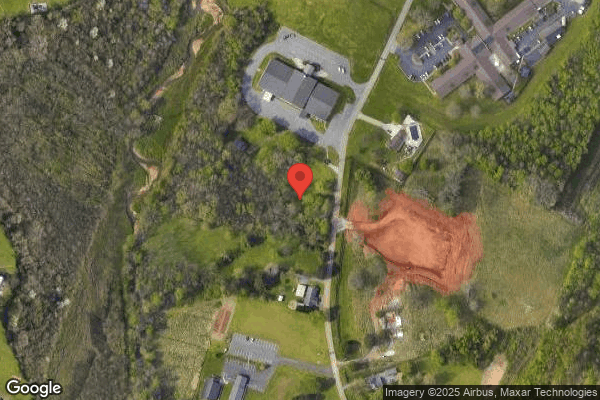

1020 RUNYAN DR, CHATTANOOGA, TN 37405 (423) 877-1155
For profit - Corporation 148 Beds LIFE CARE CENTERS OF AMERICA Data: November 2025
Trust Grade
33/100
#134 of 298 in TN
Last Inspection: July 2024

Within standard 12-15 month inspection cycle. Federal law requires annual inspections.

Overview

Life Care Center of Red Bank has received a Trust Grade of F, indicating poor performance and significant concerns about the quality of care provided. Ranking #134 out of 298 facilities in Tennessee places them in the top half, while their county rank of #8 out of 11 suggests that there are only a few local options that are better. Unfortunately, the facility is worsening, with issues increasing from 3 in 2023 to 13 in 2024. Staffing is rated below average with a 2/5 star rating and a turnover rate of 49%, indicating staff continuity may be a challenge. Notably, there were serious incidents, including a failure to properly implement a resident's care plan, which led to actual harm, and a lack of adequate fall prevention measures for residents, raising concerns about oversight and safety.

Trust Score
F
33/100
In Tennessee
#134/298
Top 44%
Safety Record
High Risk
Review needed
Inspections
Getting Worse
3 → 13 violations
Staff Stability
⚠ Watch
49% turnover. Above average. Higher turnover means staff may not know residents' routines.
Penalties
✓ Good
$8,512 in fines. Lower than most Tennessee facilities. Relatively clean record.
Skilled Nurses
○ Average
Each resident gets 30 minutes of Registered Nurse (RN) attention daily — about average for Tennessee. RNs are the most trained staff who monitor for health changes.
Violations
⚠ Watch
27 deficiencies on record. Higher than average. Multiple issues found across inspections.
★★★☆☆
3.0
Overall Rating
★★☆☆☆
2.0
Staff Levels
★★★★★
5.0
Care Quality
★★☆☆☆
2.0
Inspection Score
Stable
2023: 3 issues
2024: 13 issues

The Good

  • 5-Star Quality Measures · Strong clinical quality outcomes
  • Full Sprinkler Coverage · Fire safety systems throughout facility
  • No fines on record

Facility shows strength in quality measures, fire safety.

The Bad

3-Star Overall Rating

Near Tennessee average (2.8)

Meets federal standards, typical of most facilities

Staff Turnover: 49%

Near Tennessee avg (46%)

Higher turnover may affect care consistency

Federal Fines: $8,512

Below median ($33,413)

Minor penalties assessed

Chain: LIFE CARE CENTERS OF AMERICA

Part of a multi-facility chain

Ask about local staffing decisions and management

The Ugly 27 deficiencies on record

5 actual harm
Jul 2024 9 deficiencies
CONCERN (D)

Potential for Harm - no one hurt, but risky conditions existed

Resident Rights (Tag F0550)

Could have caused harm · This affected 1 resident

**NOTE- TERMS IN BRACKETS HAVE BEEN EDITED TO PROTECT CONFIDENTIALITY** Based on facility policy review, medical record review, observation, and interview, the facility failed to ensure medical inform...

Read full inspector narrative →
**NOTE- TERMS IN BRACKETS HAVE BEEN EDITED TO PROTECT CONFIDENTIALITY** Based on facility policy review, medical record review, observation, and interview, the facility failed to ensure medical information was not visible for 1 resident (Resident #52) of 85 residents observed. The findings include: Review of the facility policy titled, Resident Rights, reviewed on 9/25/2023, revealed .A facility must treat each resident with respect and dignity .The resident has a right to personal privacy and confidentiality of his or her personal and medical records . Review of the facility policy titled, Dignity, reviewed on 9/25/2023, revealed .Each resident has the right to be treated with dignity and respect .The resident has a right to a dignified existence .The facility must protect and promote the rights of the resident .The resident has a right to be treated with respect and dignity .Staff should not .document in charts/electronic health records where others can see a resident's information . Review of the medical record review revealed Resident #52 was admitted to the facility on [DATE] with diagnoses including Alzheimer's Disease, Dementia, Major Depressive Disorder, Atherosclerotic Heart Disease, Adult Failure to Thrive, and Personal History of Transient Ischemic Attack and Cerebral Infarction (Stroke). Review of a quarterly Minimum Data Set (MDS) assessment dated [DATE], revealed Resident #52 had short and long term memory problems and severely impaired cognitive skills for daily decision making. Review of a comprehensive care plan for Resident #52 last reviewed on 5/4/2024, revealed no evidence the resident or resident's representative requested for signage to be posted in the resident's room. During a telephone interview on 7/15/2024 at 4:24 PM, the resident's representative stated she had not requested for the signage to be posted in the room. During observations on 7/15/2024 at 11:46 AM, on 7/16/2024 at 8:05 AM, and on 7/17/2024 at 8:13 AM, Resident #52 was lying in the bed. There was a sign posted across from the resident's bed on the closet door that read, HOSPICE SUPPLIES ARE TO BE USED FOR HOSPICE RESIDENT ONLY. PLEASE DO NOT REMOVE SUPPLIES FROM RESIDENT'S ROOM TO USE FOR ANOTHER RESIDENT. THESE SUPPLIES ARE PAID FOR AND PROVIDED BY HOSPICE. The sign was visible to anyone that entered the room. During an observation and interview on 7/17/2024 at 8:14 AM, with Licensed Practical Nurse (LPN) E, in Resident #52's room, revealed there was a sign posted across from the resident's bed on the closet door that read, HOSPICE SUPPLIES ARE TO BE USED FOR HOSPICE RESIDENT ONLY. PLEASE DO NOT REMOVE SUPPLIES FROM RESIDENT'S ROOM TO USE FOR ANOTHER RESIDENT. THESE SUPPLIES ARE PAID FOR AND PROVIDED BY HOSPICE. LPN E stated the signage was posted by hospice. The LPN confirmed the sign was visible to anyone that entered the room. During an observation and interview on 7/17/2024 at 8:29 AM, with the Director of Nursing (DON), in Resident #52's room, revealed there was a sign posted across from the resident's bed on the closet door that read, HOSPICE SUPPLIES ARE TO BE USED FOR HOSPICE RESIDENT ONLY. PLEASE DO NOT REMOVE SUPPLIES FROM RESIDENT'S ROOM TO USE FOR ANOTHER RESIDENT. THESE SUPPLIES ARE PAID FOR AND PROVIDED BY HOSPICE. The DON confirmed the sign was posted and visible to anyone that entered the room. The DON stated resident needs were to be communicated to staff via the care plan and [NAME] and stated, .I didn't know that was posted until today . The DON was unaware who had posted the sign or why the sign was posted. The DON confirmed signage was not to be posted unless requested by the resident or resident's representative and care planned. During an interview on 7/17/2024 at 11:29 AM, the DON confirmed Resident #52's medical record did not contain any evidence that the signage had been requested by Resident #52's representative.
CONCERN (D)

Potential for Harm - no one hurt, but risky conditions existed

Notification of Changes (Tag F0580)

Could have caused harm · This affected 1 resident

**NOTE- TERMS IN BRACKETS HAVE BEEN EDITED TO PROTECT CONFIDENTIALITY** Based on facility policy review, medical record review, and interview, the facility failed to notify resident representatives of...

Read full inspector narrative →
**NOTE- TERMS IN BRACKETS HAVE BEEN EDITED TO PROTECT CONFIDENTIALITY** Based on facility policy review, medical record review, and interview, the facility failed to notify resident representatives of a change in condition for 2 residents (Residents #14 and #46) of 6 residents reviewed. The findings include: Review of the facility policy titled, Changes in Resident's Condition or Status, reviewed on 8/9/2023, revealed .This facility will notify the .resident/resident representative of changes in the resident's condition or status .A facility must immediately .notify .the resident representative(s) when there is .An accident involving the resident which results in injury and has the potential for requiring physician intervention . Review of the facility policy titled, Incident and Reportable Event Management, reviewed on 9/14/2023, revealed .Event Management includes .Fall .Unwitnessed or Witnessed .Incident/Injury .The licensed nurse should create an 'event note' and include .Notification of family or responsible party . Review of the medical record revealed Resident #14 was admitted to the facility on [DATE] with diagnoses including Cerebral Palsy, Dementia, Deaf, Non-Speaking, and Diabetes. Review of a quarterly MDS assessment dated [DATE], revealed a Brief Interview for Mental Status (BIMS) assessment was not completed because the resident was rarely/never understood. Review of a lab report for Resident #14 dated 7/7/2024, revealed the resident was positive for COVID 19. Review of the Nurse's Notes for Resident #14 dated 7/7/2024-7/16/2024 revealed no documentation the resident's family was notified of the positive COVID status. During a telephone interview on 7/17/2024 at 4:08 PM, Resident #14's responsible party/conservator stated he was not informed of the resident's positive COVID status. During an interview on 7/17/2024 at 4:16 PM, the DON confirmed there was no documentation Resident #14's responsible party/conservator had been notified of the residents positive COVID status. Review of the medical record revealed Resident #46 was admitted to the facility on [DATE] with diagnoses including Alzheimer's Disease, Dementia, History of Falling, Delusional Disorder, and Muscle Weakness. Review of the comprehensive care plan revised on 3/12/2024, revealed Resident #46 was at risk for falls. Review of a quarterly Minimum Data Set (MDS) assessment dated [DATE], revealed Resident #46 had short and long term memory problems and severely impaired cognitive skills for daily decision making. Resident #46 required a wheelchair for mobility and was dependent on staff for sit to stand and transfers to and from the bed. Review of the Event Note for Resident #46 dated 7/12/2024, revealed .Resident is on alert for unwitnessed fall. First shift CNA [Certified Nursing Assistant] [CNA name unknown] heard resident yelling out, upon entering room resident was sitting on floor on buttocks facing bed .CNA notified charge nurse, assessed for injuries, 5cm [centimeter] x [by] 3cm abrasion noted to left thigh .assisted resident back .into bed. Wound care provided. NP [Nurse Practitioner] notified, DON [Director of Nursing] notified . Review of the Event Note for Resident #46 dated 7/15/2024, revealed .IDT [Interdisciplinary Team] reviewed event unwitnessed fall with minor injury that occurred 7/12/24 [2024] @ [at] 0730 [7:30 AM]. Resident was assessed by nurse, injury noted to left thigh (abrasion), treatment order obtained . Attempted telephone interview on 7/16/2024 at 4:32 PM with Resident #46's responsible party. Left message with return contact information. During an interview on 7/16/2024, the DON confirmed Resident #46 had an unwitnessed fall on 7/12/2024 in the resident's room around 7:30 AM and sustained an abrasion to the left thigh from the fall. New orders were obtained for the abrasion. During an interview on 7/16/2024 at 4:37 PM, the DON confirmed the resident's responsible party was not notified of the resident's fall until 7/16/2024 [4 days after the fall] and stated, .I just got off the phone with her son and notified him . The DON confirmed the residents' responsible party was to be notified at the time of a fall and Resident #46's responsible party was not notified of the fall with injury timely. During an interview on 7/17/2024 at 10:46 AM, Licensed Practical Nurse (LPN) MDS Coordinator C stated she was working the floor the morning of Resident #46's fall and was responsible for completing the incident report. LPN MDS Coordinator C confirmed she had notified the DON and the NP and had not notified Resident #46's responsible party of the fall with injury.
CONCERN (D)

Potential for Harm - no one hurt, but risky conditions existed

Assessment Accuracy (Tag F0641)

Could have caused harm · This affected 1 resident

**NOTE- TERMS IN BRACKETS HAVE BEEN EDITED TO PROTECT CONFIDENTIALITY** Based on facility policy review, review of the Resident Assessment Instrument (RAI) Manual 3.0, medical record review, and inter...

Read full inspector narrative →
**NOTE- TERMS IN BRACKETS HAVE BEEN EDITED TO PROTECT CONFIDENTIALITY** Based on facility policy review, review of the Resident Assessment Instrument (RAI) Manual 3.0, medical record review, and interview the facility failed to accurately complete Minimum Data Set (MDS) assessments for 4 residents (Resident #1, #84, #45 and #52) of 42 residents reviewed for accuracy of MDS assessments. The findings include: Review of the facility's policy titled, Certification of Accuracy of the MDS, dated 8/17/2022, revealed .Each person completing .the MDS is required to sign the attestation statement certifying they have used the .Resident Assessment Instrument User's Manual to complete the MDS .The assessment must accurately reflect the resident's status . Review of the RAI Manual 3.0 dated 10/2023, revealed .The MDS is completed on all residents in Medicare or Medicaid certified facilities .Sections A-Q contain the clinical data items used to assess residents in the nursing facility .Assure that the information found in the resident's most current assessment .report changes in the resident's status that may affect the accuracy of this information . Discharge assessment is completed whenever a Medicare Part A stay ends .Discharge Status .This item documents the location to which the resident is being discharged at the time of discharge .Review the medical record including the discharge plan and discharge orders for documentation of discharge location .SECTION O: SPECIAL TREATMENTS, PROCEDURES, AND PROGRAMS .The intent of the items in this section is to identify any special treatments, procedures, and programs that the resident received or performed during the specified time periods Review the resident's medical record to determine whether or not the resident received or performed any of the treatments, procedures, or programs within the assessment period .Hospice care .Code residents identified as being in a hospice program for terminally ill persons where an array of services is provided for the palliation and management of terminal illness . Review of the medical record revealed Resident #1 was admitted to the facility on [DATE], with diagnoses including Quadriplegic Cerebral Palsy (disorder of the brain causing paralysis of the arms and the legs), Brain Damage, Dementia, Anxiety, and Depression. Review of a comprehensive care plan for Resident #1 revised 11/27/2023, revealed .Resident has a terminal prognosis and under hospice services . Review of the Physician's order for Resident #1 revised 4/3/2024, revealed .Admit to .[Hospice] . Review of a quarterly MDS assessment for Resident #1 dated 5/19/2024, revealed the the MDS was not coded for hospice service. During an interview on 7/16/2024 at 2:30 PM, Licensed Practical Nurse (LPN) E stated Resident #1 received hospice care services since admission to the facility. During an interview on 7/17/2024 at 11:14 AM, MDS Coordinator LPN C confirmed Resident #1 received hospice services and the quarterly MDS assessment dated [DATE] was inaccurate. Review of the medical record revealed Resident #84 was admitted to the facility on [DATE] with diagnoses including Joint Replacement, Inflammatory Reaction to Internal Device, and Paroxysmal Atrial Fibrillation. Review of a comprehensive care plan for Resident #84 dated 2/13/2024, revealed .discharge home with wife .when goals are met . Review of the facility document titled, Care Management Form, for Resident #84 dated 5/1/2024, revealed .D/C [discharge] home . Review of the Physician's Orders for Resident #84 dated 5/2/2024, revealed .discharge to home . Review of a discharge MDS assessment dated [DATE], revealed .Discharge- return not anticipated .Type of Discharge .Planned .discharge date .5/2/2024 .Discharge Status .Short-Term General Hospital . During an interview on 7/17/2024 at 11:14 AM, LPN MDS Coordinator C confirmed Resident #84 was discharged home and the discharge MDS assessment dated [DATE] was inaccurate. Review of the medical record revealed resident #45 was admitted to the facility on [DATE] with diagnoses including Parkinson's Disease, Diabetic Polyneuropathy, Muscle Weakness, and Abnormal Gait and Mobility. Review of a comprehensive care plan for Resident #45 dated 3/26/2024, revealed .Total assist with all meals . Review of the Physician's Order for Resident #45 dated 4/4/2024, revealed .Total assist with all meals . Review of a significant change MDS assessment dated [DATE], revealed Resident #45 scored a 12 on the Brief Interview for Mental Status (BIMS) assessment which indicated the resident had mild cognitive impairment. Further review showed the resident required setup or clean-up assistance with meals. During an interview on 7/17/2024 at 5:42 PM, the Clinical Reimbursement Specialist stated Resident #45 had a physician's order dated 4/4/2024 for total assistance with all meals. The Clinical Reimbursement Specialist confirmed the significant change MDS assessment dated [DATE] assessed the resident as requiring set up or clean-up assistance with meals and the significant change assessment was inaccurate. Review of the medical record revealed Resident #52 was admitted to the facility on [DATE] with diagnoses including Alzheimer's Disease, Dementia, Major Depressive Disorder, Atherosclerotic Heart Disease, Adult Failure to Thrive, and Personal History of Transient Ischemic Attack and Cerebral Infarction (Stroke). Review of a physician's order for Resident #52 dated 6/30/2023, revealed .Admit to hospice . Review of a comprehensive care plan for Resident #52 revised on 11/27/2023, revealed .resident has a terminal prognosis and under care of hospice . Review of a quarterly MDS assessment dated [DATE], revealed Resident #52 had short and long term memory problems and severely impaired cognitive skills for daily decision making and did not receive hospice services at the facility. During an interview on 7/17/2024 at 11:13 AM, LPN MDS Coordinator C stated Resident #52 received hospice services effective 6/30/2023. LPN MDS Coordinator C confirmed Resident #52's quarterly MDS assessment dated [DATE] stated the resident did not receive hospice services and was coded inaccurately.
CONCERN (D)

Potential for Harm - no one hurt, but risky conditions existed

PASARR Coordination (Tag F0644)

Could have caused harm · This affected 1 resident

**NOTE- TERMS IN BRACKETS HAVE BEEN EDITED TO PROTECT CONFIDENTIALITY** Review of the medical record revealed Resident #39 was admitted to the facility on [DATE] with diagnoses including Anxiety Disor...

Read full inspector narrative →
**NOTE- TERMS IN BRACKETS HAVE BEEN EDITED TO PROTECT CONFIDENTIALITY** Review of the medical record revealed Resident #39 was admitted to the facility on [DATE] with diagnoses including Anxiety Disorder, Major Depressive Disorder, Primary Insomnia, and Visual Hallucinations. Review of the Notice of PASRR Level I Screen Outcome for Resident #39 dated 2/17/2023, revealed .DIAGNOSIS .Major Depression .Anxiety Disorder .visual hallucinations, insomnia .MAXIMUS OUTCOME .Level I Outcome: No Status Change .A Level II evaluation is not required . Review of the Psychiatric Periodic Evaluation for Resident #39 dated 5/18/2023, revealed a new diagnosis of Delusions was added. During an interview on 7/17/2024 at 12:21 PM, the Director of Nursing (DON) stated Resident #39's PASARR dated 2/17/2023, included diagnoses of Major Depressive Disorder, Anxiety, Visual Hallucinations, and Insomnia. The new diagnosis of Delusion Disorder was added on 5/18/2023. The DON confirmed a new PASARR was not submitted and should have been after the new diagnosis of Delusion Disorder was added on 5/18/2023. Based on facility policy review, medical record review and interview, the facility failed to resubmit a Pre-admission Screening and Resident Review (PASARR) timely after a new mental health diagnosis for 2 residents (Residents #11 and #39) of 10 residents reviewed for PASARR. The findings include: Review of the facility policy titled, Pre-admission Screening and Resident Review (PASARR), reviewed on 9/25/2023, revealed .The facility will ensure that all potential admissions are to be screened for possible serious mental disorders .This initial pre-screening is referred to as PASARR Level I, and is completed prior to admission .A negative Level I screen permits admission to proceed and ends the PASARR process unless a possible serious mental disorder .arises later .A facility must coordinate assessments with the pre-admission screening and resident review (PASARR) program .Coordinate includes .Referring all Level II residents and all residents with newly evident or possible serious mental disorder .for level II resident review . Review of the medical record revealed Resident #11 was admitted to the facility on [DATE] with diagnosis including Depression. Review of a Notice of PASRR Level I Screen Outcome for Resident #11 dated 1/9/2024, revealed .DIAGNOSIS .Depression .MAXIMUS OUTCOME .No Level II - Level I Negative . Review of a Psychiatric Evaluation Note for Resident #11 dated 1/11/2024, revealed a new diagnosis of Adjustment Disorder with Anxiety was added. Review of a Psychiatric Periodic Evaluation for Resident #11 dated 2/22/2024, revealed a new diagnosis of Delusions was added. During an interview on 7/17/2024 at 3:38 PM, the DON confirmed a new PASRR had not been submitted for Resident #11 after new diagnoses of Delusional Disorder and Adjustment Disorder with Anxiety were added. The DON confirmed a new PASRR should have been completed with the new diagnoses.
CONCERN (D)

Potential for Harm - no one hurt, but risky conditions existed

Tube Feeding (Tag F0693)

Could have caused harm · This affected 1 resident

**NOTE- TERMS IN BRACKETS HAVE BEEN EDITED TO PROTECT CONFIDENTIALITY** Based on facility policy review, medical record review, observation and interview, the facility failed to change a tube feeding ...

Read full inspector narrative →
**NOTE- TERMS IN BRACKETS HAVE BEEN EDITED TO PROTECT CONFIDENTIALITY** Based on facility policy review, medical record review, observation and interview, the facility failed to change a tube feeding bag and tubing every 24 hours for 1 resident (Resident #587) of 2 residents reviewed for tube feeding. The findings include: Review of the facility policy titled, Enteral Nutrition Therapy, revised 5/28/2024, revealed .The facility will provide intermittent enteral nutrition therapy in accordance with physician orders and professional standards of practice .Enteral feeding .also referred to as 'tube feeding' .delivery of nutrients .directly into the stomach . Review of the medical record revealed Resident #587 was admitted to the facility on [DATE] with diagnoses including Hemiplegia and Hemiparesis, Gastrostomy [surgical procedure to make an opening in the stomach for tube feeding], Cognitive Communication Deficit, and Chronic Obstructive Pulmonary Disease (COPD). Review of a Nutrition assessment for Resident #587 dated 7/15/2024, revealed the resident was to receive nutritional support through enteral feeding through a feeding tube which was necessitated by a stroke. Review of Physician's Orders for Resident #587 dated 7/15/2024, revealed .Change PEG [percutaneous endoscopic gastrostomy tube for patients who cannot receive adequate oral nutrition] syringe and feeding bags every night shift . Review of a comprehensive care plan for Resident #587 dated 7/15/2024, revealed .The resident requires tube feeding . During an observation and interview on 7/15/2024 at 12:37 PM, in resident #587's room, Resident #587's representative stated both he and his mother observed a nurse (cannot remember who the nurse was), refilling the tube feeding bag on 7/15/2024 in the dated 7/12/2024 bag, with the feeding formula. The resident representative stated the staff member did not hang a new bag and tubing. During an observation and interview on 7/15/2024 at 1:01 PM, Licensed Practical Nurse (LPN) D confirmed the date on the tube feeding bag was 7/12/2024, and the bag should be changed every 24 hours. The LPN confirmed this same bag had been used for 3 days. During an interview on 7/16/2024 at 4:04 PM, the DON stated it was her expectation that the tube feeding bag and tubing would be changed daily for any resident on tube feeding.
CONCERN (D)

Potential for Harm - no one hurt, but risky conditions existed

Respiratory Care (Tag F0695)

Could have caused harm · This affected 1 resident

**NOTE- TERMS IN BRACKETS HAVE BEEN EDITED TO PROTECT CONFIDENTIALITY** Based on facility policy review, medical record review, observation and interview, the facility failed to store the nebulizer an...

Read full inspector narrative →
**NOTE- TERMS IN BRACKETS HAVE BEEN EDITED TO PROTECT CONFIDENTIALITY** Based on facility policy review, medical record review, observation and interview, the facility failed to store the nebulizer and the Continuous Positive Airway Pressure (CPAP - equipment used for individuals with sleep apnea) masks appropriately for 3 residents (Residents #587, #588, and #589) of 21 residents reviewed for respiratory equipment. The findings include: Review of the facility policy titled, Oxygen Administration (Safety, Storage, Maintenance), revised 2/27/2024, revealed .facility must ensure that a resident who needs respiratory care .is provided such care, consistent with professional standards of practice .Store .respiratory supplies in bag labeled with resident's name when not in use . Review of the medical record revealed Resident #587 was admitted to the facility on [DATE] with diagnoses including Hemiplegia and Hemiparesis, Obstructive Sleep Apnea and Chronic Obstructive Pulmonary Disease (COPD). Review of a mental status assessment dated [DATE], revealed Resident #587 scored a 5 on the Brief Interview for Mental Status (BIMS) assessment which indicated the resident had severe cognitive impairment. Review of the Physician's Orders for Resident #587 dated 7/11/2024, revealed .Ipratropium-Albuterol [a respiratory inhaled medication] Solution 0.5-2.5 (3) MG [milligram]/[per] 3ML [milliliter], 3 ml inhale orally via [with] nebulizer every 6 hours as needed . During an observation on 7/15/2024 at 4:16 PM, in Resident #587's room, a nebulizer mask was lying exposed on the resident's bedside table. Review of a Care Plan for Resident #587 dated 7/16/2024, revealed .The resident has COPD .resident will be free of s/sx [signs and symptoms] of respiratory infections through review date . During an observation on 7/17/2024 at 9:19 AM, in Resident #587's room, the resident was resting in bed and a nebulizer mask was lying on the resident's bedside table uncovered. During an observation and interview on 7/17/2024 at 9:21 AM, in Resident #587's room, the Assistant Director of Nursing (ADON) observed a nebulizer mask lying exposed on the resident's bedside table. The ADON confirmed the mask should be covered in a bag and was not stored correctly. Review of the medical record revealed Resident #588 was admitted to the facility on [DATE] with diagnoses including Bipolar Disorder, Insomnia and COPD. Review of a Minimum Data Set (MDS) assessment dated [DATE], revealed Resident #588 scored a 13 on the BIMS assessment which indicated the resident was cognitively intact. Review of a care plan for Resident #588 dated 7/15/2024, revealed .The resident has DX [diagnosis] of COPD .The resident will be free of s/sx of respiratory infections through review date . Review of the Physician's Orders for Resident #588 dated 7/15/2024, revealed .Albuterol Sulfate [an inhaled respiratory medication] Nebulization Solution .3 ml inhale orally via nebulizer four times a day . During an observation on 7/15/2024 at 3:48 PM, in Resident #588's room, the resident was seated on the side of the bed, and a nebulizer mask was lying open on the resident's bedside table. During an observation on 7/16/2024 at 8:17 AM, in Resident #588's room, a nebulizer mask was lying exposed on the resident's bedside table. During an interview on 7/17/2024 at 7:44 AM, LPN A stated Resident #588 had no respiratory infections since admission and received respiratory treatments for COPD. During an observation and interview on 7/16/2024 at 8:30 AM, in Resident #588's room with the Assistant Director of Nursing (ADON), there was a nebulizer mask lying exposed on the resident's bedside table, and the ADON confirmed the mask should be secured in a bag and there was no bag in the room. Review of the medical record revealed Resident #589 was admitted to the facility on [DATE] with diagnoses including COPD, Chronic Respiratory Failure with Hypoxia, and Obstructive Sleep Apnea. Review of a 5-day MDS assessment dated [DATE], revealed Resident #589 had intact short and long term memory. Review of a care plan for Resident #589 dated 6/14/2024, revealed .At risk for respiratory illness R/T [related to] COPD . Review of the Physician Orders for Resident #589 dated 7/3/2024, revealed .Pulmicort [an inhaled respiratory medication] Inhalation Suspension .2 ml inhale orally via nebulizer two times a day related to [COPD] . During an observation and interview on 7/15/2024 at 4:04 PM, in Resident #589's room, the resident stated she used CPAP therapy, and the nurse came in and took off her CPAP mask every morning. The CPAP mask was lying exposed on the resident's bedside table. During an observation on 7/16/2024 at 8:20 AM, in Resident #589's room, a CPAP mask was lying on the resident's bedside table exposed. During an observation and interview on 7/16/2024 at 8:22 AM, in Resident #589's room, the ADON confirmed the CPAP mask was lying exposed on the resident's bedside table. During an interview on 7/16/2024 at 3:11 PM, the Director of Nursing (DON) stated after respiratory equipment was removed from a resident, it was her expectation that the equipment was stored in a bag with the resident's name and date on it. During an observation and interview on 7/17/2024 at 9:21 AM, in Residents #587's room, the ADON stated Resident #587's nebulizer mask was lying exposed on the resident's bedside table and not stored appropriately. During an observation and interview on 7/17/2024 at 9:23 AM, in Resident #588's room, the ADON confirmed Resident #588's nebulizer mask was lying exposed on the resident's bedside table and not stored appropriately. During an observation and interview on 7/17/2024 at 9:25 AM, in Resident #589's room, the ADON confirmed Resident #589's nebulizer and CPAP mask were lying exposed on the resident's bedside table and not stored appropriately. During an interview on 7/17/2024 at 9:30 AM, the ADON stated the respiratory equipment for Residents #587, #588, and #589 should be kept sanitary by putting them in bags with residents' name and date after use. The ADON confirmed the equipment was not being stored in a bag. During an interview on 7/17/2024 at 12:23 PM, Nurse Practitioner (NP) H stated Residents #587, #588, and #589 had not had any respiratory illnesses since admission and had not been affected by the masks being exposed.
CONCERN (D)

Potential for Harm - no one hurt, but risky conditions existed

Garbage Disposal (Tag F0814)

Could have caused harm · This affected 1 resident

Based on facility policy review, observation, and interview, the facility failed to ensure 1 of 1 garbage and refuse storage area was kept in a sanitary condition. The findings include: Review of the ...

Read full inspector narrative →
Based on facility policy review, observation, and interview, the facility failed to ensure 1 of 1 garbage and refuse storage area was kept in a sanitary condition. The findings include: Review of the facility's policy titled, Disposal of Garbage and Refuse, reviewed 4/30/2024, revealed .All areas where garbage/refuse is located is kept clean, free of debris .The garbage storage area is maintained in a sanitary condition to prevent the harborage and feeding of pests . During an observation on 7/15/2024 at 11:44 AM, with the Certified Dietary Manager (CDM), the dumpster area had 2 dumpsters surrounded on 3 sides by a fence. Between the fence and the right dumpster, there was trash on the ground consisting of paper, used exam gloves and straws. Behind the dumpster there was 1 partially decayed animal carcass with exposed bones. During an interview on 7/15/2024 at 11:50 AM, the CDM confirmed the dumpster area was generally unclean and had not been maintained in a sanitary condition.
CONCERN (F)

Potential for Harm - no one hurt, but risky conditions existed

Food Safety (Tag F0812)

Could have caused harm · This affected most or all residents

Based on facility policy review, observation, and interview the facility failed to ensure food items were stored properly in the kitchen and in 2 of 2 nourishment rooms and failed to ensure dishes and...

Read full inspector narrative →
Based on facility policy review, observation, and interview the facility failed to ensure food items were stored properly in the kitchen and in 2 of 2 nourishment rooms and failed to ensure dishes and food preparation equipment were clean and sanitary which had the potential to affect 84 of 85 residents. The findings include: Review of the facility's policy titled, Sanitation and Food Safety, revised 9/8/2022, revealed .food is placed in a .sanitary .container .is labeled .with date .Associate food will not be stored with resident food .Opened packages of food are resealed tightly to prevent contamination of the food item . Review of the facility's policy titled, Safe Food Handling, revised 4/26/2023, revealed .All working surfaces, utensils and equipment are cleaned and sanitized appropriately after each use .Perishable food is not left in the danger zone [41 degrees to 135 degrees Fahrenheit] more than four hours .If this occurs, it is to be discarded . Review of the facility's policy titled, Sanitation and Maintenance, revised 4/26/2023, revealed .Director of Food and Nutrition Services is responsible for ensuring that the department is maintained according to the standards of sanitation .Store, prepare, distribute and serve food in accordance with professional standards for food service safety . During a tour of the kitchen on 7/15/2024 at 10:55 AM, with the Certified Dietary Manager (CDM), the following concerns were found among food services utensils and equipment and with food storage: On a storage rack for pots and pans, dried food debris was found on a stainless steel 1/3 pan. The CDM confirmed the pan was stored dirty and was available for use. The stand mixer had food debris on outside and dried food on the inside of the mixing bowl. The CDM stated the mixer and bowl were supposed to be clean and had not been used for food prep that morning. The CDM confirmed the mixer and bowl were dirty and available for use. On a 3-tier plastic cart next to the steam table, divided plates were stored in a gray plastic bin ready to receive food to deliver to residents. One divided plate had dried food debris in 3 of the 3 sections. The cart itself had food debris on the shelves. The CDM confirmed the plate and cart were unsanitary and were available for use. During an observation on 7/15/2024 at 11:05 AM, the following food storage concerns were found among stored food items in dry storage that were available for resident use: 9 oz (ounce) bag of red, granular seasoning, 1/2 full, unlabeled and undated 1 gallon jug of teriyaki sauce, 75% full, package stated'refrigerate after opening unlabeled with open date and unrefrigerated 5-12 inch flour tortillas in a bag, unsealed, unlabeled and undated During an observation on 7/15/2024 at 11:15 AM, the following food storage concerns were found among stored food items in the reach-in refrigerator that were available for resident use: A 1 gallon plastic storage bag of diced ham, 1/2 full, unsealed and undated A plastic storage bag of 1 slice of ham, unsealed and undated During an observation on 7/15/2024 at 11:37 AM, the following food storage concern was found among stored food items in the walk-in refrigerator that were available for resident use: A 4.5 lb (pound) jar, half full, of maraschino cherries opened and undated. During an interview on 7/15/2024 at 11:43 AM, the CDM confirmed the food items were stored incorrectly in dry storage, reach-in refrigerator and walk-in refrigerator and were not labeled or correctly stored and were available for resident consumption. During an observation and interview on 7/17/2024 at 10:06 AM, the CDM and the Assistant Director of Nursing (ADON) stated the items found below were sitting on the counter of the Southwest resident nourishment room: 1-20 oz bottle sundae syrup, sitting on counter, not labeled with a resident name and undated 1- 30.9 oz can of powdered protein supplement, not labeled with a resident name and undated 1- Individual package of peanut butter crackers with 4 crackers remaining, unsealed, not labeled with a resident name and undated. During an observation and interview on 7/17/2024 at 10:23 AM, in the Northeast nourishment room with the CDM, a 1/3 full bag of cold cereal opened and undated, was in a drawer, and the CDM confirmed the cereal was not sealed, not dated or labeled and available for resident consumption. The CDM stated only resident food should be in the nourishment room. During an interview on 7/17/2024 at 3:21 PM, the Executive Director stated the food in the nourishment rooms were considered available for resident consumption, and employee food should not be in the nourishment rooms. The food in the nourishment rooms should be stored according to the policy for food storage and labeled with a resident name and a date. The Executive Director confirmed staff did not follow the policy for food storage.
CONCERN (F)

Potential for Harm - no one hurt, but risky conditions existed

Infection Control (Tag F0880)

Could have caused harm · This affected most or all residents

**NOTE- TERMS IN BRACKETS HAVE BEEN EDITED TO PROTECT CONFIDENTIALITY** Based on facility policy review, medical record review, observations, and interviews the facility failed to implement Enhanced B...

Read full inspector narrative →
**NOTE- TERMS IN BRACKETS HAVE BEEN EDITED TO PROTECT CONFIDENTIALITY** Based on facility policy review, medical record review, observations, and interviews the facility failed to implement Enhanced Barrier Precautions (EBP) for 8 residents (Residents #34, #1,#43,#50,#21,#72,#66, and #587) of 85 residents reviewed for invasive devices. The findings include: Review of the facility's policy titled, Enhanced Barrier Precautions, dated 6/3/2024, revealed .The facility should use Enhanced Barrier Precautions (EBP) as an additional .mitigation strategy for residents that meet the following criteria, during high-contact resident care activities .indwelling devices .examples include central lines, urinary catheters, feeding tubes . Review of the medical record revealed Resident #34 was admitted to facility on 10/6/2023 with diagnoses including Acute on Chronic Systolic Congestive Heart Failure, Stage 3 Chronic Kidney Disease, and Neuromuscular Dysfunction of Bladder. Review of a comprehensive care plan initiated on 10/6/2023 and revised on 5/6/2024, revealed .resident has Indwelling Catheter . Review of the Physician's Orders for Resident #34 dated 1/9/2024, revealed .Indwelling catheter to straight drainage. Size 16 FR [French] Bulb: 5 cc [cubic centimeter] .every shift related to OTHER NEUROMUSCULAR DYSFUNCTION OF BLADDER . Review of a quarterly Minimum Data Set (MDS) assessment dated [DATE], revealed Resident #34 scored an 8 on the Brief Interview for Mental Status (BIMS) assessment which indicated the resident had moderate cognitive impairment. The resident had an indwelling catheter and an active diagnosis of Neurogenic Bladder. During an observation on 7/15/2024 at 12:29 PM, Resident #34 was resting in bed watching TV. The resident had an indwelling urinary catheter, no enhanced barrier precautions (EBP) signage was posted, and no Personal Protective equipment (PPE) was outside the room available for use. During an observation on 7/15/2024 at 3:57 PM, the resident was resting in bed with eyes closed. The resident had an indwelling urinary catheter, no EBP signage was posted, and no PPE was outside the room available for use. During an interview on 7/15/2024 at 4:01 PM, Licensed Practical Nurse (LPN) A stated she was responsible for Resident #34's care today. LPN A confirmed the resident had an indwelling foley catheter and there was no EBP signage posted. LPN A stated gloves were required for care of the indwelling foley cathether unless the resident had an infection that required additional PPE. LPN A stated she was unaware of EBP. Review of the medical record revealed Resident #1 was admitted to facility on 8/25/2009 and readmitted on [DATE] with diagnoses including Spastic Quadriplegic Cerebral Palsy, Anoxic Brain Damage, and Neuromuscular Dysfunction of Bladder. Review of a comprehensive care plan for Resident #1 initiated on 8/5/2021 and revised on 11/17/2023, revealed .resident has Indwelling Catheter . Review of the Physician's Orders for Resident #1 dated 11/28/2023, revealed .Indwelling catheter to straight drainage. Size 16 FR .every shift related to NEUROMUSCULAR DYSFUNCTION OF BLADDER . Review of a quarterly MDS assessment dated [DATE], revealed Resident #1 did not have a BIMS assessment conducted, the resident was rarely or never understood. The resident had an indwelling catheter and an active diagnosis of Neurogenic Bladder. During an observation on 7/15/2024 at 12:30 PM, Resident #1 was resting in bed with eyes closed. The resident had an indwelling urinary catheter, no EBP precautions signage was posted, and no PPE was outside the room available for use. During an observation on 7/15/2024 at 2:40 PM, Resident #1 was resting in bed with eyes closed. The resident had an indwelling urinary catheter, no EBP signage was posted, and no PPE was outside the room available for use. Review of the medical record revealed Resident #43 was admitted to facility on 11/26/2019 and readmitted on [DATE] with diagnoses including Neuromuscular Dysfunction of Bladder, Chronic Pain Syndrome, and Quadriplegia. Review of a comprehensive care plan for Resident #43 initiated on 11/26/2019 and revised on 5/22/2024, revealed .resident has Suprapubic Catheter . Review of the Physician's Orders for Resident #43 dated 5/9/2024, revealed .Suprapubic catheter to straight drainage. Size 22 FR Bulb: 10 cc .every shift related to NEUROMUSCULAR DYSFUNCTION OF BLADDER . Review of a quarterly MDS assessment dated [DATE], revealed Resident #43 scored a 15 on the BIMS assessment which indicated the resident was cognitively intact. The resident had an indwelling catheter and an active diagnosis of Neurogenic Bladder. During an observation on 7/15/2024 at 2:33 PM, Resident #43 had no enhanced barrier precautions signage posted and no PPE was outside the room available for use. Review of the medical record revealed Resident #50 was admitted to facility on 6/21/2024 with diagnoses including Obstructive and Reflux Uropathy, Malignant Neoplasm of Prostate, and Type 2 Diabetes. Review of an admission MDS assessment dated [DATE], revealed Resident #50 scored a 15 on the BIMS assessment which indicated the resident was cognitively intact. Review of a comprehensive care plan for Resident #50 initiated on 7/1/2024 and revised on 7/15/2024, revealed .resident has indwelling .Catheter . Review of the Physician's Orders for Resident #50 dated 7/9/2024, revealed .Indwelling catheter to straight drainage. Size 16 FR .every shift related to .OBSTRUCTIVE AND REFLUX UROPATHY . During an observation on 7/15/2024 at 11:30 AM, Resident #50 was resting in bed with eyes closed. The resident had an indwelling urinary catheter, no EBP signage was posted, and no PPE was outside the room available for use. During an observation on 7/15/2024 at 2:40 PM, Resident #50 was resting in bed with eyes closed. The resident had an indwelling urinary catheter, no EBP signage was posted, and no PPE was outside the room available for use. Review of the medical record revealed Resident #21 was admitted to the facility on [DATE] with diagnoses including Chronic Obstructive Pulmonary Disease, Hemiplegia, Benign Prostatic Hyperplasia, and Obstructive Reflux Uropathy. Review of the quarterly MDS assessment dated [DATE], revealed Resident #21 scored a 13 on the BIMS assessment which indicated the resident was cognitively intact. The resident had an indwelling catheter and an active diagnosis of Obstructive Uropathy. Review of a comprehensive care plan dated 6/7/2024, revealed Resident #21 had .indwelling catheter .Obstructive uropathy . Review of the Physician's Order for Resident #21 dated 7/5/2024, revealed .Indwelling catheter to straight drainage .16 FR Bulb .related to obstructive and reflux uropathy . During an observation on 7/15/2024 at 11:30 AM, Resident #21 was lying in bed awake. The resident had an indwelling urinary catheter, no EBP signage was posted, and no PPE was outside the room available for use. During an observation on 7/15/2024 at 4:15 PM, Resident #21 was resting in bed with eyes closed. The resident had an indwelling urinary catheter, no EBP signage was posted, and no PPE was outside the room available for use. During an interview on 7/15/2024 at 1:30 PM, LPN B stated the facility did not have any current residents on enhanced barrier precautions. She also stated enhanced barrier precautions would be placed if a resident had an active infection. Review of the medical record revealed Resident #72 was admitted to the facility on [DATE] with diagnoses including Hemiplegia and Hemiparesis after Cerebral Infarction affecting Right Dominant Side, Severe Protein-Calorie Nutrition, Gastrostomy [creation of an artificial external opening into the stomach for nutritional support] Status and Profound Intellectual Disabilities. Review of a quarterly MDS assessment dated [DATE], revealed Resident #72 was rarely/never understood which indicated the resident had severe cognitive impairment and had a feeding tube. Review of a comprehensive care plan for Resident #72 dated 6/7/2024, revealed .artificial nutrition by tube .CVA .Hemiplegia .Developmental Delay . Review of the Physician's Orders for Resident #72 dated 7/15/2024, revealed .Enteral Feed Order .two times a day .via peg [feeding tube placed in stomach that provides artificial nutrition] . During an interview and observation on 7/15/2024 at 12:35 PM, Resident #72's resident representative stated the resident received tube feedings at night. Observation revealed no EBP signage was posted, and no PPE was outside the room available for use. During an observation on 07/15/2024 at 4:08 PM, Resident #72 was lying in bed and the resident had a gastrostomy tube. There was no EBP signage posted or PPE outside the room available for use. Review of the medical record revealed Resident #66 was admitted to the facility on [DATE] with diagnoses including Non-ST Elevation Myocardial Infarction, End Stage Renal Disease, and Dependence on Renal Dialysis. Review of the Physician's Orders for Resident #66 dated 7/1/2024, revealed .Dialysis Resident: Assess Left Chest Permacath [a special catheter used for dialysis, placed inside a blood vessel in the neck or just under the collar bone and threaded into the right side of the heart] Dialysis access site upon return from Dialysis . Review of a 5-day MDS assessment dated [DATE], revealed Resident #66 scored a 15 on the BIMS assessment which indicated the resident was cognitively intact. The resident received dialysis services for a diagnosis of renal failure. Review of a comprehensive care plan for Resident #66 dated 7/9/2024, revealed .Dialysis .left chest vascath [Permacath] .The resident will have no s/sx [signs and symptoms] of complications from dialysis through the review date . During an observation on 7/15/2024 at 4:23 PM, Resident #66 was seated in a wheelchair. The resident had recently returned from outpatient dialysis which was performed through the catheter in her left chest. Further observation revealed no EBP signage was posted, and no PPE was outside the room available for use. Review of the medical record revealed Resident #587 was admitted to the facility on [DATE] with diagnoses including Hemiplegia and Hemiparesis, Gastrostomy Status, and Gastroparesis. Review of an admission MDS assessment dated [DATE], revealed Resident #587 scored a 5 on the BIMS assessment which indicated the resident had severe cognitive impairment and had a feeding tube. Review of a Nutrition assessment for Resident #587 dated 7/15/2024, revealed the resident received nutritional support through a feeding tube. Review of a comprehensive care plan for Resident #587 dated 7/15/2024, revealed .Has .PEG [percutaneous endoscopic gastrostomy tube . During an interview on 7/15/2024 at 4:02 PM, the Director of Nursing (DON) confirmed the facility did not have any residents on enhanced barrier precautions. She also confirmed there was no EBP signage posted, and PPE was not available outside of resident rooms with indwelling foley catheters, gastrostomy tubes, and a central venous line. During an observation and interview on 7/15/2024 at 4:26 PM, in the resident's room, LPN D confirmed Resident #587 was not on enhanced barrier precautions, there was no EBP signage posted or PPE outside the room available for use. During an interview on 7/17/2024 at 9:00 AM, the Regional Director of Clinical Services confirmed the facility was not observing EBP for residents with invasive devices at this time unless ordered by the physician. The Regional Director of Clinical Services confirmed he was aware of guidance released in 4/2024 regarding EBP for residents with invasive devices.
Feb 2024 4 deficiencies 3 Harm
SERIOUS (G) 📢 Someone Reported This

A family member, employee, or ombudsman was alarmed enough to file a formal complaint

Actual Harm - a resident was hurt due to facility failures

Comprehensive Care Plan (Tag F0656)

A resident was harmed · This affected 1 resident

**NOTE- TERMS IN BRACKETS HAVE BEEN EDITED TO PROTECT CONFIDENTIALITY** Based on facility policy review, facility procedure review, medical record review, facility investigation review, and interviews...

Read full inspector narrative →
**NOTE- TERMS IN BRACKETS HAVE BEEN EDITED TO PROTECT CONFIDENTIALITY** Based on facility policy review, facility procedure review, medical record review, facility investigation review, and interviews the facility failed to implement the comprehensive care plan for 1 resident (Resident #3) which resulted in actual Harm, of 5 residents reviewed for care plans for accidents. The facility was cited as past non-compliance and the facility is not required to submit a Plan of Correction for F-656. Non-compliance began on 9/26/2022 and ended on 8/28/2023. The findings include: Review of the facility's policy titled, Comprehensive Care Plans and Revisions, dated 3/2/2022, showed .Procedure .The facility should monitor the resident over time to help identify changes in the resident condition that may warrant an update to the person-centered plan of care. When these changes occur, the facility should review and update the plan of care to reflect the changes to care delivery .Additional interventions on existing problems . Review of a facility procedure titled, Transfer with a Mechanical Lift [device that holds the patient in a hammock-type sling to lift them completely between surfaces] Long-Term Care, dated 5/20/2022, showed .The facility will ensure that two associates should be present during the transfer of residents who require a mechanical lift . Resident #3 was admitted to the facility on [DATE] with diagnoses including Hemiplegia, Hemiparesis, Lack of Coordination, and Muscle Weakness. Review of a quarterly Minimum Data Set (MDS) assessment dated [DATE], showed Resident #3 scored 13 on the Brief Interview for Mental Status (BIMS) assessment, which indicated the resident was cognitively intact and required total 2-person assistance with transfers. Review of Resident #3's comprehensive care plan revised 8/17/2023, showed the resident was at risk for falls secondary to impaired mobility from left sided weakness due to a Cerebral Vascular Accident (CVA), impaired balance, episodes of incontinence, and required 1-2 staff assistance with transfers. The comprehensive care plan was revised to include the sit to stand lift on 9/17/2022 and Hoyer lift with all transfers on 12/28/2022. Review of a post fall investigation report dated 9/17/2022, showed Resident #3 had transferred himself to the toilet without assistance. Certified Nursing Assistant (CNA) #5 entered his room and attempted to assist the resident from the commode back into the wheelchair. During the transfer from the toilet to the wheelchair the resident's hand slipped off the safety bar and the resident fell forward out of the wheelchair. The resident was assessed for injury with none observed. The facility implemented the intervention of a sit to stand lift for transfers and the care plan was updated. Review of a post fall investigation report dated 9/26/2022, showed Resident #3 sustained a fall when CNA #6 was transferring the resident from the bed to the wheelchair using a slide board (device used to aid as a bridge in between 2 surfaces so a patient can slide across to transfer). During the transfer the slide board slipped out of the wheelchair and CNA #6 lowered the resident to the floor. The comprehensive care plan indicated Resident #3 was to be transferred with a sit to stand mechanical lift, the resident sustained a fracture of the left femur and required surgical intervention which resulted in actual Harm to Resident #3. Review of a post fall investigation dated 12/27/2022, showed Resident #3 was being transferred by CNA #7 from the wheelchair to the bed with the use of a sit to stand lift (2 staff had not assisted the resident according to the facility procedure guide), the resident became weak, and was lowered to the floor. The resident was assessed for injury with none observed, the facility discontinued the use of the sit to stand lift for transfers, and implemented a new intervention to use a mechanical hoyer lift for all transfers and the care plan was revised. Review of a transfer injury investigation report dated 5/1/2023, showed Resident #3 was transferred by 2 CNAs, #1 and #8 from the bed to the wheelchair using the sit to stand lift (care planned to use hoyer lift only for transfers). The resident complained of pain to his left arm during the transfer. An x-ray was ordered, and the resident received an acute and impacted humeral neck fracture (left upper arm fracture) and was transported to the emergency room for further evaluation. The facility failed to implement the comprehensive Care Plan intervention for use of a hoyer lift with all transfers which resulted in actual harm to Resident #3 when the resident sustained a left humeral fracture following transfer with the sit to stand lift. During an interview on 2/27/2022 at 9:00 AM, the Director of Nursing (DON) confirmed CNA #6 should have used a sit to stand mechanical lift for the transfer on 9/26/2022, the CNA failed to follow the care planned intervention and Resident #3 was harmed. During an interview on 2/27/2024 at 9:45 AM, the DON confirmed the facility failed to follow Resident #3's comprehensive care plan related to fall interventions. The failure caused the resident harm from the falls on 9/26/2022 and 5/1/2023. During a telephone interview on 2/27/2024 at 6:00 PM, CNA #6 stated on 9/26/2022 she transferred Resident #3 from the bed to the wheelchair using a slide board. During the transfer the slide board slipped out of the wheelchair and CNA #6 lowered the resident to the floor. Continued interview showed CNA #6 always transferred the resident with a slide board. CNA #6 failed to use the sit to stand mechanical lift to transfer Resident #3 and confirmed the care plan had not been followed. Review of an Ad hoc (when necessary or needed/for this situation) Quality Assurance Performance Improvement (QAPI) meeting dated 5/3/2023, showed the facility initiated and conducted a root cause analysis and developed a corrective action plan which was verified by the surveyor on 2/28/2024. The corrective action plan included the following: 1. Conduct staff education to ensure all staff are aware Resident #3 was to be hoyer lift transfer only with 2-person assist. The education included how to transfer current residents list (located at the nurse station), and re-education on the location of special instructions for each resident. The education had been completed by 5/31/2023. 2. An Audit of all residents that required the use of a mechanical lift for transfers and verified the information was correct on the individual care plan. The audits had been completed on 5/10/2023. 3. All CNAs were educated on the following: A. Limited Lift Program (Safe Patient Handling) policy B. Using a Sit to Stand Lift - Skills Checklist C. Transfer using a Sit to Stand Mechanical Lift-Procedure D. Transfer with a mechanical lift, long-term care-Skills checklist E. Transfer with a mechanical lift, long term care - Procedure All CNA education had been completed on 6/9/2023. 4. All licensed nurses Registered Nurse and Licensed Practical Nurse were educated on the following: A. Limited Lift Program (Safe Patient Handling) policy B. Using a Sit to Stand Lift - Skills Checklist C. Transfer using a Sit to Stand Mechanical Lift -Procedure D. Transfer with a mechanical lift, long-term care - Skills checklist E. Transfer with a mechanical lift, long term care - Procedure F. Bedside Mobility Assessment Tool - Procedure G. Bedside Mobility Assessment Tool - Checklist All licensed nurse education had been completed on 6/30/2023. 5. Clinical observation audits were conducted for residents that required the use of a mechanical lift for transfers to ensure residents are transferred properly, 5 residents per week for 12 weeks. Observations were conducted on 2/29/2024 to ensure proper lift usage was completed. 6. Audit of incidents to ensure if a transfer injury occurred, and the correct mechanical lift was utilized if applicable, weekly for 12 weeks. Audits were verified for completion. 7. Audit of all new admissions/readmissions to ensure the level of assistance/type of mechanical lift is reflected in the resident's medical record, weekly for 12 weeks. Audits were verified for completion. Review of the QAPI sign-in sheets dated 5/2023, 6/2023, 7/2023, and 8/2023, and interview with the Administrator on 2/28/2024, confirmed the corrective action audits/observations were completed and discussed in the QAPI meetings. The Performance Improvement Plan (PIP) was considered resolved with the date of compliance effective on 8/28/2023. Non-Compliance began on 9/26/2022 and ended on 8/28/2023.
SERIOUS (G) 📢 Someone Reported This

A family member, employee, or ombudsman was alarmed enough to file a formal complaint

Actual Harm - a resident was hurt due to facility failures

Accident Prevention (Tag F0689)

A resident was harmed · This affected 1 resident

**NOTE- TERMS IN BRACKETS HAVE BEEN EDITED TO PROTECT CONFIDENTIALITY** Based on facility policy review, facility procedure review, medical record review, review of facility investigation documentatio...

Read full inspector narrative →
**NOTE- TERMS IN BRACKETS HAVE BEEN EDITED TO PROTECT CONFIDENTIALITY** Based on facility policy review, facility procedure review, medical record review, review of facility investigation documentation, and interviews the facility failed to prevent falls with major injury for 1 resident (Resident #3) of 5 residents reviewed for accidents. The facility was cited as past non-compliance and the facility is not required to submit a Plan of Correction for F-689. Non-compliance began on 9/26/2022 and ended on 8/28/2023. The findings include: Review of the facility's policy titled, Fall Management, dated 4/7/2022, showed .Accident .Refers to any unexpected or unintentional incident, which results or may result in injury or illness to a resident .Avoidable Accident .an accident occurred because the facility failed to .Evaluate/analyze the hazards and risks and eliminate them, if possible .if not possible .identify and implement measures to reduce the hazards/risks as much as possible .Implement interventions, including adequate supervision and assistive devices, consistent with a resident's needs, goals, care plan .reduce the risk of an accident .Monitor the effectiveness of the interventions and modify the care plan as necessary . Review of a facility procedure titled, Transfer with a Mechanical Lift, Long-Term Care, dated 5/20/2022, showed .The facility will ensure that two associates should be present during the transfer of residents who require a mechanical lift . Resident #3 was admitted to the facility on [DATE] with diagnoses including Hemiplegia, Hemiparesis, Lack of Coordination, and Muscle Weakness. Review of a quarterly Minimum Data Set (MDS) assessment dated [DATE], showed Resident #3 scored 13 on the Brief Interview of Mental Status (BIMS) assessment, which indicated the resident was cognitively intact and required total, 2-person assistance with transfers. Review of a post fall investigation report dated 9/17/2022, showed Resident #3 had transferred himself to the toilet without assistance. Certified Nursing Assistant (CNA) #5 entered his room and attempted to assist the resident from the commode back into his wheelchair. During the transfer from the toilet to the wheelchair the resident's hand slipped off the safety bar and the resident fell forward out of his wheelchair. The resident was assessed for injury with none observed. The facility implemented the intervention of a sit to stand lift for transfers. Review of Resident #3's comprehensive care plan revised 9/17/2022, showed the resident had left sided weakness due to a Cerebral Vascular Accident (CVA) and impaired balance and a sit to stand lift for transfers was implemented after a fall. Review of a post fall investigation report dated 9/26/2022, showed Resident #3 sustained a fall when Certified Nursing Assistant (CNA) #6 was transferring the resident from the bed to wheelchair using a slide board (device used to aid as a bridge in between 2 surfaces so a patient can slide across to transfer). During the transfer the slide board slipped out of the wheelchair and CNA #6 lowered the resident to the floor. Resident #3 complained of pain, the Nurse Practitioner was notified and ordered an x-ray of the resident's bilateral hips and pelvis. Resident #3 had sustained a left hip fracture as a result from the fall. Continued review of the medical record and care plan showed the appropriate device for transfers was a sit to stand lift which had been implemented on 9/17/2022. Review of an x-ray report dated 9/26/2022 for Resident #3, showed . acute displaced .fracture of the proximal left femoral diaphysis [long bone in leg] . Review of a hospital summary dated 9/29/2022, showed Resident #3 underwent a surgical procedure on 9/27/2022 to repair the fracture of the left femur. Review of a Physical Therapy (PT) Evaluation dated 9/30/2022 showed Resident #3 was assessed for transfers and continued the use of the sit to stand lift for transfers. Review of a post fall investigation dated 12/27/2022, showed Resident #3 was being transferred by CNA #7 from the wheelchair to the bed with the use of a sit to stand lift, the resident became weak, and was lowered to the floor. The resident was assessed for injury with none observed and the facility discontinued the use of a sit to stand lift for transfers and implemented the use of mechanical Hoyer lift for all transfers. CNA #7 failed to have assistance of a 2nd staff member transfer of the resident using the sit to stand lift per facility procedure. Review of Resident #3's comprehensive care plan revised 12/28/2022, showed the resident was at risk for falls secondary to impaired mobility from left sided weakness due to a Cerebral Vascular Accident (CVA), impaired balance, episodes of incontinence, and required 1-2 staff assistance with transfers. The comprehensive care plan was revised to include and Hoyer lift with all transfers. Review of a post fall investigation report dated 2/21/2023, showed CNA #2 and Licensed Practical Nurse (LPN) #2 attempted to transfer Resident #3 from his wheelchair to bed using the sit to stand lift. The resident became weak on his left side and was lowered to the floor with no injury. The floor staff were re-educated the resident should be transferred with a mechanical Hoyer lift and the only time he should use the sit to stand lift was during training with restorative nursing staff. Continued review of the medical record and care plan showed the Hoyer lift was the appropriate device to be used during the transfers which had been implemented on 12/28/2022. Review of a transfer injury investigation report dated 5/1/2023, showed Resident #3 was transferred by 2 CNAs from the bed to his wheelchair using the sit to stand lift. The resident complained of pain to his left arm during the transfer. The CNA's reported resident's complaint of pain to LPN #1. The LPN assessed the resident, and he reported his left arm just hurt a little. The resident remained in his wheelchair throughout the day with no reported increased pain. During transfer from the wheelchair back to the bed the resident complained of left arm pain, the NP was notified, and an x-ray of his left shoulder and chest was obtained. Continued review of the medical record and care plan showed the Hoyer lift was the appropriate device to be used during the transfers which had been implemented on 12/28/2022. Review of an X-Ray report dated 5/2/2023, showed Resident #3 had an .acute and impacted humeral neck fracture [left upper arm fracture] . The NP was notified, and the resident was sent to the Emergency Department for evaluation and treatment. Review of Emergency Department documentation dated 5/2/2023, showed .patient [Resident #3] was placed in a shoulder immobilizer and discharged back to the nursing facility with instructions to follow-up with orthopedics with the next week .Patient is stable and in no acute distress . Review of an orthopedic follow-up visit documentation dated 5/12/2023, showed Resident #3 should remain non-weight bearing to left upper extremity, continue with the shoulder immobilizer, and return for a follow-up visit in approximately 3 weeks. During an interview on 2/27/2024 at 9:00 AM, the Director of Nursing (DON) confirmed Resident #3 suffered a left arm fracture during a transfer on 5/1/2023. The facility had failed to use the Hoyer lift which had been implemented and used a sit to stand lift during the transfer which resulted in an injury. During a telephone interview on 2/27/2024 at 9:00 AM, the DON confirmed CNA #6 failed to use the sit to stand lift during a transfer on 9/26/2022. The DON also confirmed Resident #3 sustained a fracture of the left femur, required surgical intervention, and the resident was harmed due to the inappropriate transfer. The facility had failed to use a sit to stand lift which had been implemented and used a slide board during the transfer which resulted in an injury. During an interview on 2/27/2024 at 12:37 PM, the Restorative Certified Nursing Assistant (R-CNA) stated Resident #3 had been resistant to care and mechanical lift usage. R-CNA stated the resident would demand the staff to use the sit to stand lift (device that helps lift a patient into a supported, standing position to move them freely between seated surfaces) instead of the hoyer lift (device that holds the patient in a hammock-type sling to lift them completely between surfaces) and would often refuse to transfer if the sit to stand lift was not used. R-CNA stated she would notify the nurse assigned to his care when he refused usage of the lift. During an interview on 2/27/2024 at 12:48 PM, CNA #2 stated Resident #3 had been resistant to care and lift usage at times. She stated she notified the nurse assigned the residents care when he refused. She also stated during one of the falls [could not recall date] the resident refused to use to the hoyer lift to go to bed and stated the sit to stand lift was used. During an interview on 2/27/2024 at 2:13 PM, Registered Nurse (RN) #1 stated Resident #3 was resistant to transfers which included hoyer lift usage. During an interview on 2/27/2024 at 2:31 PM, Licensed Practical Nurse (LPN) #1 stated multiple CNAs had reported Resident #3 had refused hoyer lift transfers and had been resistant to care. During a telephone interview on 2/27/2024 at 6:00 PM, CNA #6 stated on 9/26/2022 she transferred Resident #3 from the bed to wheelchair using a slide board. During the transfer the slide board slipped out of the wheelchair and CNA #6 lowered the resident to the floor. Continued interview showed CNA #6 always transferred the resident with a slide board. CNA #6 failed to use the sit to stand lift to transfer Resident #3 as indicated on the care plan. During an interview on 2/28/2024 at 11:10 AM, the DON confirmed CNA #7 failed to follow the facility procedure of having 2 staff members present during the use of a sit to stand lift during the 12/27/2022 fall. Review of an Ad hoc (when necessary or needed/for this situation) Quality Assurance Performance Improvement (QAPI) meeting dated 5/3/2023, showed the facility initiated and conducted a root cause analysis and developed a corrective action plan which was verified by the surveyor on 2/28/2024. The corrective action plan included the following: 1. Conduct staff education to ensure all staff are aware Resident #3 was to be hoyer lift transfer only with 2-person assist. The education included how to transfer current residents list (located at the nurse station), and re-education on the location of special instructions for each resident. The education had been completed by 5/31/2023. 2. An Audit of all residents that required the use of a mechanical lift for transfers and verified the information was correct on the individual care plan. The audits had been completed on 5/10/2023. 3. All CNAs were educated on the following: A. Limited Lift Program (Safe Patient Handling) policy B. Using a Sit to Stand Lift - Skills Checklist C. Transfer using a Sit to Stand Mechanical Lift-Procedure D. Transfer with a mechanical lift, long-term care-Skills checklist E. Transfer with a mechanical lift, long term care - Procedure All CNA education had been completed on 6/9/2023. 4. All licensed nurses Registered Nurse and Licensed Practical Nurse were educated on the following: A. Limited Lift Program (Safe Patient Handling) policy B. Using a Sit to Stand Lift - Skills Checklist C. Transfer using a Sit to Stand Mechanical Lift -Procedure D. Transfer with a mechanical lift, long-term care - Skills checklist E. Transfer with a mechanical lift, long term care - Procedure F. Bedside Mobility Assessment Tool - Procedure G. Bedside Mobility Assessment Tool - Checklist All licensed nurse education had been completed on 6/30/2023. 5. Clinical observation audits were conducted for residents that required the use of a mechanical lift for transfers to ensure residents are transferred properly, 5 residents per week for 12 weeks. Observations were conducted on 2/29/2024 to ensure proper lift usage was completed. 6. Audit of incidents to ensure if a transfer injury occurred, and the correct mechanical lift was utilized if applicable, weekly for 12 weeks. Audits were verified for completion. 7. Audit of all new admissions/readmissions to ensure the level of assistance/type of mechanical lift is reflected in the resident's medical record, weekly for 12 weeks. Audits were verified for completion. Review of the QAPI sign-in sheets dated 5/2023, 6/2023, 7/2023, and 8/2023, and interview with the Administrator on 2/28/2024, confirmed the corrective action audits/observations were completed and discussed in the QAPI meetings. The PIP was considered resolved with the date of compliance effective on 8/28/2023. Non-Compliance began on 9/26/2022 and ended on 8/28/2023.
SERIOUS (G) 📢 Someone Reported This

A family member, employee, or ombudsman was alarmed enough to file a formal complaint

Actual Harm - a resident was hurt due to facility failures

Administration (Tag F0835)

A resident was harmed · This affected 1 resident

**NOTE- TERMS IN BRACKETS HAVE BEEN EDITED TO PROTECT CONFIDENTIALITY** Based on facility policy review, review of facility documentation, and interview, the facility's Administration failed to provid...

Read full inspector narrative →
**NOTE- TERMS IN BRACKETS HAVE BEEN EDITED TO PROTECT CONFIDENTIALITY** Based on facility policy review, review of facility documentation, and interview, the facility's Administration failed to provide effective oversight and follow the facility's corporate notification protocol for falls with major injury which resulted in actual Harm of Resident #3 of 5 residents reviewed for falls and had the potential to affect all 86 residents residing in the facility. The facility was cited as past non-compliance and the facility is not required to submit a Plan of Correction for F-835. Non-compliance began on 9/26/2022 and ended on 8/28/2023. The findings include: Review of the facility's policy titled, Incident and Reportable Event Management, dated 9/14/2023, .each resident receives adequate supervision .to prevent accidents .facility has identified the following events as being Never Event [fall that results in serious injury or fracture] and when these type of events occur the Director or Nursing and/or Executive Director should contact their Regional and Divisional team to review the Never Event and determine based on the Never Event the cause of the event, implement corrective actions to prevent future events, and conduct monitoring to ensure desired outcomes are achieved and .through the development of a performance improvement plan (PIP) .identified Never Events are .fall that results in serious injury .fracture . Review of the facility's policy titled, Resident Rights, dated 9/25/2023, showed .The resident has the right to receive the services and/or items included in the plan of care .The resident has the right to reside and receive services in the facility with reasonable accommodation of resident and preferences except when to do so would endanger the health or safety of the resident . Review of the facility's policy titled, Quality Assurance and Performance Improvement Plan [QAPI], dated 10/19/2023, showed .Performance Improvement (PIP) .is the continuous study and improvement of processes with the intent to improve services or outcomes, and prevent or decrease the likelihood of problems, by identifying opportunities for improvement .PI aims to improve facility processes involved in care delivery and enhanced resident quality of life . Review of the facility's policy titled, QAPI - Feedback, Data Systems, and Monitoring, dated 10/19/2023, showed .This facility will establish systems and processes to monitor care and services, utilizing data from multiple sources .This facility will also establish systems to track, investigate, and monitor adverse events to prevent recurrences .The facility will obtain feedback from direct care staff, other staff, residents and resident representatives, as well as other sources, and be used to identify problems that are high-risk, high-volume, and/or problem-prone . Resident #3 was admitted to the facility on [DATE] with diagnoses including Hemiplegia, Hemiparesis, Lack of Coordination, and Muscle Weakness. Review of a post fall investigation report dated 9/26/2022, showed Resident #3 had a fall when staff transferred him from the bed to wheelchair using a slide board (device used to aid as a bridge in between 2 surfaces so a patient can slide across to transfer). Resident #3 had been care planned for staff to transfer him with a sit to stand lift (device that helps lift a patient into a supported, standing position to move them freely between seated surfaces) and the Certified Nursing Assistant (CNA) #6 had not followed the care plan. Resident #3 sustained a left hip fracture as a result from the fall on 9/26/2022. Review of a quarterly Minimum Data Set (MDS) assessment dated [DATE], showed Resident #3 scored 13 on the Brief Interview for Mental Status (BIMS) assessment, which indicated the resident was cognitively intact and required total 2-person assistance with transfers. Review of Resident #3's comprehensive care plan revised 8/17/2023, showed .resident has an ADL [Activities of Daily Living] self-care performance .limited physical mobility r/t [related to] impaired mobility, limited endurance, and poor balance .assist resident in identifying outcomes of refusal of care . Continued review showed showed the resident was at risk for falls secondary to impaired mobility from left sided weakness due to a Cerebral Vascular Accident (CVA), impaired balance, episodes of incontinence, and required 1-2 staff assistance with transfers. The comprehensive care plan was revised to include the sit to stand mechanical lift on 9/17/2022 and the Hoyer mechanical lift with all transfers on 12/28/2022. Record review showed Resident #3 had repeated fall occurrences on 12/27/2022, 2/21/2023, and a transfer injury on 5/1/2023. Review of a transfer injury investigation report dated 5/1/2023, showed Resident #3 had a transfer injury when staff transferred him from bed to wheelchair using a sit to stand lift. Resident #3 was care planned for staff to transfer him with a Hoyer lift and the CNA #1 had not followed the care plan due to resident refusal. Resident #3 sustained a left humerus fracture as a result from the improper transfer. The facility immediately implemented an intervention and corrective actions post Resident #3's injury on 5/1/2023. During an interview on 2/27/2024 at 2:13 PM, Registered Nurse (RN) #1 stated Resident #3 was resistant to transfers which included hoyer lift usage. RN #1 confirmed she had not documented Resident #3's refusal with resistance to transfers in the medical record. During an interview on 2/27/2024 at 2:31 PM, Licensed Practical Nurse (LPN) #1 stated multiple CNAs had reported Resident #3 had refused hoyer lift transfers and had been resistant to care. LPN #1 confirmed she had not documented Resident #3's refusal of transfers and resistance to care in the medical record. During an interview on 2/28/2024 at 11:56 AM, the Director of Nursing (DON) confirmed the medical record for Resident #3 did not reflect his refusals of lift usage or non-compliance with transfers. During an interview on 2/28/2024 at 3:45 PM, the Regional Director of Clinical Services (RDCS) stated the facility had a notification protocol for Never Events (falls with major injury) and the fall on 9/26/2022 for Resident #3 would qualify as a Never Event. The RDCS stated the former Director of Nursing (DON) had not contacted him when the fall with fracture occurred on 9/26/2022 with Resident #3. The RDCS stated it was the facility's expectation when a resident had a fall with major injury and continued non-compliance with safety interventions, the corporate staff would be notified so appropriate oversight and interventions could occur. The RDCS confirmed the former DON did not follow the notification protocol so the corporate team could initiate the appropriate oversight/intervention in response to Resident #3's fall with major injury on 9/26/2022. The RDCS further confirmed this failure to follow the notification process for Never Events resulted in ineffective administration oversight which had the potential to affect all residents residing in the facility. The RDCS stated when the corporate team became aware of Resident #3's multiple falls with major injury, a Performance Improvement Plan (PIP) was initiated, and immediate education was given to the former DON and the former Administrator. Review of an Ad hoc (when necessary or needed/for this situation) Quality Assurance Performance Improvement (QAPI) meeting dated 5/3/2023, showed the facility became aware, initiated and conducted a root cause analysis and developed a corrective action plan on 5/3/2023, which was verified by the surveyor on 2/28/2024. The corrective action plan included the following: 1. Conduct staff education to ensure all staff are aware Resident #3 was to be hoyer lift transfer only with 2-person assist. The education included how to transfer current residents list (located at the nurse station), and re-education on the location of special instructions for each resident. The education was completed by 5/31/2023. 2. An Audit of all residents that required the use of a mechanical lift for transfers and verified the information was correct on the individual care plan. The audits were completed on 5/10/2023. 3. All CNAs were educated on the following: A. Limited Lift Program (Safe Patient Handling) policy B. Using a Sit to Stand Lift - Skills Checklist C. Transfer using a Sit to Stand Mechanical Lift-Procedure D. Transfer with a mechanical lift, long-term care-Skills checklist E. Transfer with a mechanical lift, long term care - Procedure All CNA education was completed on 6/9/2023. 4. All licensed nurses Registered Nurse and Licensed Practical Nurse were educated on the following: A. Limited Lift Program (Safe Patient Handling) policy B. Using a Sit to Stand Lift - Skills Checklist C. Transfer using a Sit to Stand Mechanical Lift -Procedure D. Transfer with a mechanical lift, long-term care - Skills checklist E. Transfer with a mechanical lift, long term care - Procedure F. Bedside Mobility Assessment Tool - Procedure G. Bedside Mobility Assessment Tool - Checklist All licensed nurse education was completed on 6/30/2023. 5. Clinical observation audits were conducted for residents that required the use of a mechanical lift for transfers to ensure residents are transferred properly, 5 residents per week for 12 weeks. Observations were conducted on 2/29/2024 to ensure proper lift usage was completed. 6. Audit of incidents to ensure if a transfer injury occurred, and the correct mechanical lift was utilized if applicable, weekly for 12 weeks. Audits were verified for completion. 7. Audit of all new admissions/readmissions to ensure the level of assistance/type of mechanical lift is reflected in the resident's medical record, weekly for 12 weeks. Audits were verified for completion. Review of the QAPI sign-in sheets dated 5/2023, 6/2023, 7/2023, and 8/2023, and interview with the Administrator on 2/28/2024, confirmed the corrective action audits/observations were completed and discussed in the QAPI meetings. The Performance Improvement Plan (PIP) was considered resolved with the date of compliance effective on 8/28/2023. Non-Compliance began on 9/26/2022 and ended on 8/28/2023.
CONCERN (D) 📢 Someone Reported This

A family member, employee, or ombudsman was alarmed enough to file a formal complaint

Potential for Harm - no one hurt, but risky conditions existed

Medical Records (Tag F0842)

Could have caused harm · This affected 1 resident

**NOTE- TERMS IN BRACKETS HAVE BEEN EDITED TO PROTECT CONFIDENTIALITY** Based on facility policy review, medical record review, and interviews, the facility failed to maintain an accurate medical reco...

Read full inspector narrative →
**NOTE- TERMS IN BRACKETS HAVE BEEN EDITED TO PROTECT CONFIDENTIALITY** Based on facility policy review, medical record review, and interviews, the facility failed to maintain an accurate medical record for 1 resident (Resident #3) of 15 residents reviewed for medical records. The findings include: Review of the facility's policy titled, Authentication of All Record Entries, dated 3/10/2023, .entries are made as soon as possible after an event or observation is made . Review of the facility's policy titled, Refusal of Care or Treatment, dated 8/10/2023, .Documentation of the refusal .should be present in the resident's medical record . Resident #3 was admitted to the facility on [DATE] with diagnoses including Hemiplegia, Hemiparesis, Lack of Coordination, and Muscle Weakness. Review of a quarterly Minimum Data Set (MDS) assessment dated [DATE], showed Resident #3 scored 13 on the Brief Interview for Mental Status (BIMS) assessment, which indicated the resident was cognitively intact and required total 2-person assistance with transfers. Review of Resident # 3's comprehensive care plan revised 8/17/2023, showed .resident has an ADL [Activities of Daily Living] self-care performance .limited physical mobility r/t [related to] impaired mobility, limited endurance, and poor balance .assist resident in identifying outcomes of refusal of care . Review of the medical record revealed no documentation that Resident #3 was resistant to transfers with the Hoyer lift. During an interview on 2/27/2024 at 12:37 PM, the Restorative Certified Nursing Assistant (R-CNA) stated Resident #3 had been resistant to care and mechanical lift usage. R-CNA stated the resident would demand the staff to use the sit to stand lift (device that helps lift a patient into a supported, standing position to move them freely between seated surfaces) instead of the hoyer lift (device that holds the patient in a hammock-type sling to lift them completely between surfaces) and would often refuse to transfer if the sit to stand lift was not used. R-CNA stated she would notify the nurse assigned to his care when he refused usage of the lift. During an interview on 2/27/2024 at 12:46 PM, CNA #3 stated Resident #3 had been resistant to transfers at times stated with any refusal of care or transfer the nurse was notified. During an interview on 2/27/2024 at 12:48 PM, CNA #2 stated Resident #3 had been resistant to care and lift usage at times. She stated she notified the nurse assigned the residents care when he refused. She also stated during one of the falls [could not recall date] the resident refused to use to the hoyer lift to go to bed and stated the sit to stand lift was used. During an interview on 2/27/2024 at 12:50 PM, the Activities CNA stated Resident #3 had been resistant to care and transfers specifically with the hoyer lift. She stated the resident would tell the staff to use the sit to stand lift instead of the hoyer lift. The Activities CNA reported to the nurse when Resident #3 refused care and transfers. During an interview on 2/27/2024 at 2:13 PM, Registered Nurse (RN) #1 stated Resident #3 was resistant to transfers which included hoyer lift usage. RN #1 confirmed she had not documented Resident #3's refusal with resistance to transfers in the medical record. During an interview on 2/27/2024 at 2:31 PM, Licensed Practical Nurse (LPN) #1 stated multiple CNAs had reported Resident #3 had refused hoyer lift transfers and had been resistant to care. LPN #1 confirmed she had not documented Resident #3's refusal of transfers and resistance to care in the medical record. During an interview on 2/28/2024 at 11:56 AM, the Director of Nursing (DON) stated it was her expectation when residents refuse care, transfers, or had any behaviors the nurses would document occurrences in the medical record. The DON confirmed the medical record for Resident #3 did not reflect his refusals of lift usage or non-compliance with transfers which resulted in an inaccurate and incomplete medical record.
Feb 2023 3 deficiencies
CONCERN (D) 📢 Someone Reported This

A family member, employee, or ombudsman was alarmed enough to file a formal complaint

Potential for Harm - no one hurt, but risky conditions existed

Notification of Changes (Tag F0580)

Could have caused harm · This affected 1 resident

**NOTE- TERMS IN BRACKETS HAVE BEEN EDITED TO PROTECT CONFIDENTIALITY** Based on facility policy review, medical record review, and interview, the facility failed to notify the Physician or Nurse Prac...

Read full inspector narrative →
**NOTE- TERMS IN BRACKETS HAVE BEEN EDITED TO PROTECT CONFIDENTIALITY** Based on facility policy review, medical record review, and interview, the facility failed to notify the Physician or Nurse Practitioner (NP) of a critical laboratory value for 1 resident (Resident #6) of 5 residents reviewed for physician notification. The findings include: Review of the facility policy titled, Changes in Resident's Condition or Status, dated 11/26/2018, showed .This facility will notify the .primary care provider .of changes in the resident's condition or status .the facility must ensure that all pertinent information .is available and provided upon request of the physician . Resident #6 was admitted to the facility from home on 9/28/2022 with diagnoses including Unspecified Dementia, Schizophrenia, Aneurysm of Carotid Artery, Hypopituitarism, and Diabetes Insipidus. The resident was discharged to the hospital on [DATE]. Review of a NP progress note dated 10/3/2022, showed .She is being seen today as a new admission .Due to overall debility, weakness and lack of resources she now comes to us from home for long-term care. admission labs revealed hypernatremia [high sodium level], hyperchloremia [high chloride level] and she was given 1 L [Liter] of half- normal saline [intravenous (IV) fluids] over the weekend x [times] 1 liter. Labs repeated this a.m. [AM] and PENDING .No dysuria [difficult urination], urgency or frequency [of urination] .No increased thirst, hunger or urination .Able to make needs known .Assessment and Plan .repeat labs pending .encourage po [by mouth] fluids intake .acute kidney injury .Monitor labs .Encourage PO intake . Review of a Basic Metabolic Panel (BMP) laboratory report dated 10/3/2022, showed a sodium level of 159, indicating a high level. A chloride level of 119, indicating a high level, and BUN (Blood Urea Nitrogen- indicates kidney function) level of 82, indicating a high level. A creatinine (indicates kidney function) level of 9.92, indicating a critically high level. And a Glomerular Filtration Rate (GFR- indicates kidney function) level of 4, indicating a low level. Review of a BMP laboratory report dated 10/4/2022, showed a sodium level of 158, indicating a critical high. A chloride level of 124, indicating a high level. A BUN level of 96, indicating a high level. A creatinine level of 12.0, indicating a high level. And a GFR level of 3, indicating a low level. Review of an NP progress note dated 10/4/2022, showed .Labwork [lab work] follow up .She is being seen today for repeat labwork. admission labs reported by nurse manager revealed hypernatremia and hyperchloremia on 9/29/22. She was given 1L [liter] of ½ NS [Normal Saline- intravenous fluids] with orders to repeat CBC [Complete Blood Count], BMP on Monday 10/3/22. Labwork repeated on 10/3/22: however this provider was not notified of the results. Labwork on 10/3/22 revealed sodium 159, chloride 119, BUN 82 and create [Creatinine] 9.92 .STAT [immediate] CBC, BMP ordered this am 10/4/22. If labs remain the same and/or worsen, will need to be sent to the ER for further evaluation .awake, alert and watching TV .She reports fair PO intake. Denies increased thirst or hunger .Plan .STAT labs reported with worsening renal function. Orders given to be sent to the ER [Emergency Room] for further evaluation . During an interview on 1/31/2023 at 1:42 PM, the Nurse Practitioner (NP) Stated the facility had obtained blood work for Resident #6 as part of the standard admission process at the facility. The resident had some abnormal laboratory results and the NP had ordered IV fluids to be provided. She stated she had ordered repeat blood work to be obtained on 10/3/2022. She confirmed the facility had not reported the critical high creatinine level from the lab report dated 10/3/2022 .I did not receive a phone call about those labs at all . and had not seen the 10/3/2022 lab report until 10/4/2022. The NP stated .I did a STAT repeat and sent her to the emergency room .I don't know where the ball was dropped on this . She confirmed it was her expectation to have been notified on 10/3/2023 of the critical lab value. During an interview on 1/31/2023 at 4:15 PM, Registered Nurse (RN) #1 confirmed she was the Unit Coordinator on 10/3/2022 and confirmed Resident #6's laboratory report had been received by the facility by fax at 12:03 PM. The RN confirmed the Critical Creatinine laboratory value should have been reported to the NP on 10/3/2022. During a telephone interview on 2/1/2023 at 12:25 PM, the Nephrologist stated he had treated Resident #6 at the ER on [DATE]. He stated the resident's outcome would not have changed if the facility had notified the NP of the critically high laboratory results and the resident had been sent to the ER on an earlier date. He stated her kidney function was .so bad [on admission to the facility] it wouldn't have mattered when she came [to the hospital] . During an interview on 2/1/2023 at 3:05 PM, the Director of Nursing (DON) stated the nurses at the facility should call the on-call service when the facility received critical laboratory values for a resident. She stated the laboratory company would fax and call the facility for critical lab results and tell the facility which lab value was critical. The DON confirmed her expectation was for the nurse to call the provider (NP or Physician) if the facility received a critical high laboratory value. During a telephone interview on 2/1/2023 at 3:58 PM, the Medical Director (MD) confirmed it was his expectation for the facility call the on-call system to notify either the NP or Physician when a laboratory report had a critical lab value.
CONCERN (D) 📢 Someone Reported This

A family member, employee, or ombudsman was alarmed enough to file a formal complaint

Potential for Harm - no one hurt, but risky conditions existed

Report Alleged Abuse (Tag F0609)

Could have caused harm · This affected 1 resident

**NOTE- TERMS IN BRACKETS HAVE BEEN EDITED TO PROTECT CONFIDENTIALITY** Based on facility policy review, medical record review, facility investigation review, and interview, the facility failed to rep...

Read full inspector narrative →
**NOTE- TERMS IN BRACKETS HAVE BEEN EDITED TO PROTECT CONFIDENTIALITY** Based on facility policy review, medical record review, facility investigation review, and interview, the facility failed to report the results of an abuse investigation to the State Survey Agency timely for 1 resident (Resident #2) of 4 residents reviewed for abuse. The findings include: Review of the facility policy titled, Protection of Residents: Reducing the Threat of Abuse & Neglect, revised 8/10/2021, showed .Ensure all alleged violations involving abuse .Report the results of all investigations to the .State Survey Agency, within 5 working days of the incident . Medical record review showed Resident #2 was admitted to the facility on [DATE], with diagnoses including Hemiplegia and Hemiparesis Following Cerebral Infarction Affecting Left Non-Dominant Side, Paraplegia, Lumbar Spina Bifida with Hydrocephalus, Generalized Anxiety Disorder, Adjustment Disorder with Depressed Mood, and Major Depressive Disorder Without Psychotic Features. Review of Resident #2's admission Minimum Data Set (MDS) assessment dated [DATE] showed Resident #2 had a Brief Interview for Mental Status (BIMS) score of 15, indicating the resident was cognitively intact. Review of the facility's investigation dated 11/15/2022, showed an incident occurred between Resident #2 and her brother on 11/15/2022 at 2:15 PM. Further review showed .[Resident #2] .stated that her brother was here visiting and they got into an argument because she wouldn't access their father's bank account for him. She went on to say that he called her a [derogatory name] and that he choked her . The facility had timely reported the alleged abuse incident to the State Survey Agency within 2 hours of the allegation. Further review showed no documentation the results of the facility investigation had been reported to the State Survey Agency. During an interview and document review on 2/1/2023 at 2:40 PM, the Administrator confirmed the results of the facility's investigation of the alleged abuse incident were not reported within the 5-day reporting requirement.
CONCERN (D) 📢 Someone Reported This

A family member, employee, or ombudsman was alarmed enough to file a formal complaint

Potential for Harm - no one hurt, but risky conditions existed

Quality of Care (Tag F0684)

Could have caused harm · This affected 1 resident

**NOTE- TERMS IN BRACKETS HAVE BEEN EDITED TO PROTECT CONFIDENTIALITY** Based on facility policy review, medical record review, and interview, the facility failed to accurately reconcile the admission...

Read full inspector narrative →
**NOTE- TERMS IN BRACKETS HAVE BEEN EDITED TO PROTECT CONFIDENTIALITY** Based on facility policy review, medical record review, and interview, the facility failed to accurately reconcile the admission orders for 1 resident (Resident #6) of 4 residents reviewed for medication reconciliation. The findings include: Review of the facility policy titled, Medication Reconciliation across the Continuum of Care, dated 6/8/2020, showed .Upon admission .medications will be reconciled by the licensed nurse .The licensed nurse will complete the home medication list with the electronic health record with input from the resident and/or resident representative .The home medication list (if available), the physician admitting orders .are received by the licensed nurse who reconciles the medication lists, phones the physician if necessary for clarification, obtains the physician orders and then updates the electronic health record . Resident #6 was admitted to the facility from home on 9/28/2022 with diagnoses including Unspecified Dementia, Schizophrenia, Aneurysm of Carotid Artery, Hypopituitarism, and Diabetes Insipidus. The resident was discharged to the hospital on [DATE]. Review of Resident #6's admission orders dated 9/14/2022, showed the facility had received the orders from the resident's Primary Care Physician's (PCP) office. Review showed an active medication list including .Desmopressin Acetate [medication used to treat increased urination associated with Diabetes Insipidus] 0.1 MG [Milligram] Oral Tablet .1 in a.m. [AM] one at bedtime .START/STOP .12/03/21 [12/3/2021] .EScript [Electronic Prescription] .04/18/22 [4/18/2022] .1 in a.m. one at bedtime . and an order for .Desmopressin Acetate 0.2 MG Oral Tablet .1 at bedtime .START/STOP .05/06/21 [5/6/2021] .EScript .04/18/22 [4/18/2022] .1 at bedtime . Review of the Order Summary Report (the facility's admission orders) dated 9/28/2022, showed the facility's Medical Director (MD) had signed the report to approve the admission orders dated 9/28/2022. Further review showed .Desmopressin Acetate Tablet 0.1 MG Give 1 tablet by mouth two times a day related to DIABETES INSIPIDUS .Order date .09/28/2022 .Start Date .09/28/2022 . with a handwritten note in the margin showing .9/30/2022 0.1 mg BID [two times daily] . with Registered Nurse (RN) #1's initials on the note. Review of the Order Summary Report dated 9/28/2022-10/4/2022, showed .Desmopressin Acetate Tablet 0.1 MG give 1 tablet by mouth two times a day related to DIABETES INSIPIDUS . order date 9/28/2022. Further review showed no order for Desmopressin for 0.2 mg at bedtime had been entered into the resident's Electronic Health Record (EHR) during her stay at the facility. During an interview on 1/31/2023 at 10:26 AM, RN #1, Unit Coordinator, stated when a resident was admitted to the facility, the medications would be entered in the EHR by one nurse and reconciled by another nurse. She stated if she found a discrepancy, she would .would probably start by talking to whoever put in [entered orders into the EHR] the orders [if a discrepancy was noted] and from there if there is a discrepancy, I would review it with the doctor . She confirmed the Order Summary Report (admission orders) had been signed by her for Resident #6 on 9/30/2022. She confirmed she was the nurse who reconciled the medications with the resident's home medication list sent by her PCP and there had been a discrepancy with Resident #6's Desmopressin order .so this med [medication] Desmopressin, it looks like I was confirming that yes, we wanted that and it should be 0.1 mg BID .I know we were looking at it .did she need it once a day or twice a day . I think maybe it was the dose that was different .if you look here the order [from the PCP] is really confusing . She confirmed the admission paperwork sent from the resident's PCP showed Desmopressin 0.1 MG in AM and bedtime, and Desmopressin 0.2 MG at bedtime. She stated she had thought it was a duplicate order .and then I got the order for 0.1 MG twice per day .I just wanted clarification for the orders . She confirmed she called the Nurse Practioner (NP) and received an order for Desmopressin 0.1 MG twice per day. During an interview on 1/31/2023 at 1:42 PM, the NP stated RN #1 had called her on 9/30/2022 to clarify the Desmopressin order. She stated RN #1 thought it was a duplicate order. The NP stated .I had not seen her [Resident #6] yet and had not looked at any records .I told her to go ahead and do the twice per day .nothing ever changed with that medication. It stayed twice a day [during her admission to the facility from 9/28/2022-10/4/2022] . The NP stated .I was not shown the home medication list until after she was in the hospital .this was expressed to me as a duplicate order .this is an odd reconciliation .when they brought it to me, I would have asked for a personal pharmacy reconciliation to see what the orders were . She confirmed the home medication list stated the resident was to be administered Desmopressin 0.1 mg twice daily and 0.2 mg at bedtime for total of 0.3 mg at bedtime and the facility had not accurately reconciled the resident's home medications with the facility's medications and had not provided the same dose as the resident had received at home. The NP stated the decrease in dosage had not been a significant decrease. During an interview on 1/31/2023 at 3:27 PM, Licensed Practical Nurse (LPN) #1, Admissions Nurse, stated when a resident was admitted to the facility, she would enter the medication orders into the EHR. She stated if a resident comes to the facility from home .I double check with their home medications .will ask the family to bring in their medicines or ask the family what they take at home .a lot of times they bring the bottles from home .I will check with the bottles and then send those back home .a second nurse is supposed to reconcile . The LPN confirmed she had signed the admission orders for Resident #6 and according to the EHR, she had entered the medication orders into the computer system. The LPN confirmed the bedtime dose of desmopressin 0.2 mg was never entered into the EHR. The LPN stated she thought the PCP medication list stated the 0.2 mg at bedtime had been discontinued. She confirmed if she was unsure about a medication dose, she was to .call the doctor . The LPN confirmed she could not remember if she had reconciled the medications with the resident's representative or with the home medication bottles. During a telephone Interview on 2/1/2023 at 10:34 AM, the PCP NP, stated he had sent the admission orders to the facility. He confirmed her home dosage of Desmopressin had been 0.1 mg twice daily and 0.2 mg at bedtime. During a telephone interview on 2/1/2023 at 3:58 PM, the MD stated his expectation for the facility to accurately reconcile medications upon admission was .to get it right .we needed to figure that .my expectation with med rec [reconciliation] is sometimes its super confusing .but we got to get to the bottom of it .the way it's written [the Desmopressin order on the home medication list from Resident #6's PCP] is a little bit weird because I don't want anyone to have 2 different strengths of the same medicine, so I would have ordered 1 dose written as 0.1 mg 1 tablet in morning and 3 tablets in evening so less confusion . The MD confirmed the facility had not contacted the resident's PCP for clarification .at some point you got to reach out to the PCP and clarify it [medication order] . and had not accurately reconciled Resident #6's dose of Desmopressin upon her admission to the facility. The MD stated the dosage change was a very small decrease and had not affected the resident's overall status.
Oct 2021 7 deficiencies
CONCERN (D)

Potential for Harm - no one hurt, but risky conditions existed

Deficiency F0554 (Tag F0554)

Could have caused harm · This affected 1 resident

**NOTE- TERMS IN BRACKETS HAVE BEEN EDITED TO PROTECT CONFIDENTIALITY** Based on facility policy review, medical record review, observation, and interview, the facility failed to ensure medications we...

Read full inspector narrative →
**NOTE- TERMS IN BRACKETS HAVE BEEN EDITED TO PROTECT CONFIDENTIALITY** Based on facility policy review, medical record review, observation, and interview, the facility failed to ensure medications were administered according to professional standards as well as the facility policy for 2 residents (Resident #52 and Resident #54) of 6 residents reviewed for medication administration. The findings include: Review of the facility policy, Respiratory Medication Administration, revised 10/14/2021 showed .Policy .will provide Respiratory Medication Administration in accordance with professional standards of practice .This facility will utilize .following .Lippincott procedures .Nebulizer [inhaled breathing treatment] Therapy, Small Volume Procedure .Remain with the patient and continue the treatment until the nebulizer begins to sputter . Resident #52 was admitted to the facility on [DATE] with diagnoses including Malignant Neoplasm of Uterus, Anxiety, Constipation, Partial Intestinal Obstruction, Osteoporosis, Muscle Weakness, and Difficulty in Walking, Review of the Physician's Order dated 9/26/2021, showed an order for Ipratropium -Albuterol Solution (an inhaled breathing medication) 0.5-2.5 MG (milligrams- an unit of measure)/ML (milliliter- an unit of measure) orally via (by) nebulizer two times a day for Shortness of Breath. Review of the admission Minimum Data Set (MDS) assessment dated [DATE], showed the resident was cognitively intact. Review of the Comprehensive Care Plan showed no documentation that Resident #52 had been assessed to self-administer nebulizer treatments. During an observation on 10/19/2021 at 8:42 AM, Resident #52 was in the room with the door closed receiving a nebulizer treatment unassisted. No staff in room during nebulizer administration. During an interview on 10/19/2021 at 9:26 AM, Resident #52 stated she received breathing treatments. She stated the nurses come into the room, put the medication into the mask, and the resident turns the machine off. Resident #52 stated, I've just always done it that way since I got here. I am capable of turning it off. During an interview on 10/19/2021 at 9:50 AM, Licensed Practical Nurse (LPN) #3 stated she administered a breathing treatment to Resident #52 this morning and left the room to assist another resident. LPN #3 was unaware if resident had been assessed to self-administer medications. Resident #54 was admitted to the facility on [DATE] with diagnoses including Multiple Myeloma, Osteoporosis, Pain, Dysphagia, Abnormal Gait, Neuromuscular Dysfunction of Bladder, and Respiratory Failure. Review of the quarterly MDS assessment dated [DATE], showed the resident was cognitively intact. Review of the Comprehensive Care Plan showed no documentation the resident had been assessed to self-administer nebulizer treatments. Review of the medical record showed no documentation that Resident #54 had been assessed for self-administration of medication. Review of the Physician Orders dated 3/9/2020, showed .Ipratropium-Albuterol Solution 0.5-2.5 (3) MG /3ML .3 ml inhale orally via nebulizer every 8 hours for resp.[respiratory] failure with hypoxia [decreased oxygen levels] .Albuterol Sulfate Nebulization Solution (2.5 MG/3ML) .3 milliliter inhale orally via nebulizer every 8 hours as needed for Shortness of Breath . The physician orders did not reveal Resident #54 could self-administer nebulizer treatments. During an interview on 10/19/2021 at 9:20 AM, Resident #54 stated she could turn the nebulizer treatment machine on and off. She could hold her own mask while the nebulizer treatments infused. She stated the nursing staff brought the medication into the room and put the medication in the nebulizer cup for inhalation. She stated nursing staff does not stay in the room with her while she is doing her nebulizer treatments. During an interview on 10/19/2021 at 2:44 PM, LPN #3 stated she administered the nebulizer medication to Resident #54. She walked into the room, opened vial of medication, squeezed the medication into the cup, placed the mask on the resident, and turned the nebulizer machine on. She stated she does not always stay in the room while the nebulizer treatment is in use. She goes back and turns the machine off. During an observation on 10/19/2021 at 3:03 PM showed Resident #54 in room, lying in bed with nebulizer treatment administered by face mask. No staff member present in room while treatment administered. During an interview on 10/20/2021 at 8:34 AM, Resident #54 stated she had already completed a breathing treatment this morning; the nurse turned the machine on and then stood out in the hallway like always, this morning she came back and turned the machine off. During an interview on 10/20/2021 at 9:40 AM, Registered Nurse (RN) #1 stated she administered the nebulizer medication to Resident #54. She placed the mask on the resident and turned the machine on but did not stay in the room with the resident for the entire treatment. The resident turned the machine off and removed the mask herself. During an interview on 10/20/2021 at 1:20 PM, the Director of Nursing (DON) stated unless a resident has a self-administration assessment it was her expectation for nurses to follow the policy for nebulizer administration and the [NAME] professional standards. The nurse should remain in the room for the entire treatment unless the resident was assessed for safe self-administration. She confirmed the nursing staff did not follow the facility's policy and left Residents #52 and #54 unattended during nebulizer treatments.
CONCERN (D)

Potential for Harm - no one hurt, but risky conditions existed

Free from Abuse/Neglect (Tag F0600)

Could have caused harm · This affected 1 resident

**NOTE- TERMS IN BRACKETS HAVE BEEN EDITED TO PROTECT CONFIDENTIALITY** Based on facility policy review, medical record review, facility investigation review, and interview, the facility failed to pro...

Read full inspector narrative →
**NOTE- TERMS IN BRACKETS HAVE BEEN EDITED TO PROTECT CONFIDENTIALITY** Based on facility policy review, medical record review, facility investigation review, and interview, the facility failed to protect 1 resident (Resident #20) from abuse of 15 residents reviewed for abuse. The findings include: Review of the facility policy titled, Protection of Residents: Reducing the Threat of Abuse & Neglect, revised 8/10/2021, showed .nursing homes must incorporate clear-cut policies and practices that demonstrate a hardline, zero-tolerance approach to resident abuse .Each resident has the right to be free from abuse .Residents must not be subjected to abuse by anyone. This includes .other residents .It is the policy and practice of this facility that all residents will be protected from all types of abuse .Training .Understanding behavioral symptoms of residents that may increase the risk of abuse .These symptoms include .Wandering or elopement-type behaviors . Medical record review showed Resident #20 was admitted to the facility on [DATE] with diagnoses including Paraplegia, Chronic Pain, and Rheumatoid Arthritis. Review of Resident #20's quarterly Minimum Data Set (MDS) assessment dated [DATE], showed Resident #20 had a Brief Interview for Mental Status (BIMS) score of 15, indicating the resident was cognitively intact. Medical record review showed Resident #26 was admitted to the facility on [DATE] with diagnoses including Dementia with Behavioral Disturbance, Generalized Anxiety Disorder, Alzheimer's Disease, and Delusional Disorders. Review of Resident #26's comprehensive care plan dated 10/31/2019, showed .risk for elopement .behavior of wandering- resident placed in commons areas .Provide for safe wandering- resident is elopement risk . Review of Resident #26's Psychiatric Evaluation dated 4/19/2021, showed .she tends to wander. She does have some intermittent combative behaviors and delusions . Review of Resident #26's quarterly MDS assessment dated [DATE], showed the resident had severely impaired cognitive status. Further review showed the resident wandered daily. Review of Resident #26's Nurse's Progress Note dated 5/9/2021, showed .Resident [Resident #26] up in W/C [wheelchair] wandering on unit as per usual. At 1430 [2:30 PM], resident [Resident #26] attempted to enter [Resident #20's room] while pulling a housekeeping cart with her. Resident of that room [Resident #20] attempted to stop entry and pt [patient, Resident #26] became agitated and aggressive, swinging a gown at resident [Resident #20], using harsh language and then kicked resident [Resident #20] in bilateral shins . Review of Resident #26's Fax Order Request/Notification Form dated 5/9/2021, showed .Increased agitation & attempted aggression. Has physically hit & scratched staff & attempted to hit other pt's. Has now kicked another resident . Review of the facility's investigation dated 5/9/2021, showed an incident had occurred between Resident #20 and Resident #26 on 5/9/2021 at 2:30 PM. Continued review showed .Resident [Resident #20] attempted to stop entry into her room and the other [Resident #26] became agitated and aggressive, using harsh language and kicking the shins of the resident [Resident #20] in room . Further review of Resident #20's statement of the occurrence showed .she was coming into my room pulling a cart and when I tried to stop her she started cursing and swinging a cloth gown at me, but the [then] she started kicking and kicked me all over my legs . Continued review showed the Director of Nursing (DON) had been notified of the incident at 2:58 PM. Review of Resident #26's Psychiatric Evaluation dated 5/19/2021, showed .Visit made today as resident had several days of increased anxiety and combativeness. She would kick, hit, scratch staff and had aggression towards another resident . During an interview on 10/19/2021 at 3:44 PM, the DON confirmed the facility investigation showed Resident #26 had been attempting to enter Resident #20's room when Resident #26 began using harsh language and kicked Resident #20. During an interview on 10/19/2021 at 3:54 PM, Licensed Practical Nurse (LPN) #1 stated a housekeeper had reported the incident to her on 5/9/2021. The housekeeper had stated to LPN #1 that Resident #26 had attempted to take a housekeeping cart into Resident #20's room. LPN #1 stated Resident #20's statement was .she kicked me in my shin . LPN #1 confirmed the incident was an allegation of abuse and she had reported the allegation to the DON. LPN #1 stated Resident #20 had not been injured in the incident. During an interview on 10/19/2021 at 4:14 PM, Resident #20 confirmed Resident #26 had come into her room with a cart. Resident #20 stated she (Resident #20) was trying to push the cart back out of her room, when Resident #26 .Started kicking me and cussing me and fighting me .people say she doesn't know what she is doing . but I think she does sometimes . Resident #20 further stated, Resident #26 took a gown and .wind it up and pop it at me . Resident #20 stated she had not been injured in the incident. She stated Resident #26 was wearing soft shoes and she (Resident #20) had been wearing long pants. During an interview on 10/19/2021 at 4:29 PM, the DON confirmed the facility had not thoroughly investigated the allegation to determine if abuse had occurred.
CONCERN (D)

Potential for Harm - no one hurt, but risky conditions existed

Report Alleged Abuse (Tag F0609)

Could have caused harm · This affected 1 resident

**NOTE- TERMS IN BRACKETS HAVE BEEN EDITED TO PROTECT CONFIDENTIALITY** Based on facility policy review, medical record review, facility investigation review, and interview, the facility failed to rep...

Read full inspector narrative →
**NOTE- TERMS IN BRACKETS HAVE BEEN EDITED TO PROTECT CONFIDENTIALITY** Based on facility policy review, medical record review, facility investigation review, and interview, the facility failed to report an allegation of abuse to the State Survey Agency for 1 resident (Resident #20) of 15 residents reviewed for abuse. The findings include: Review of the facility policy titled, Protection of Residents: Reducing the Threat of Abuse & Neglect, revised 8/10/2021, showed .Ensure all alleged violations involving abuse .are reported immediately, but not later than 2 hours after the allegation is made .to the State Survey Agency . Medical record review showed Resident #20 was admitted to the facility on [DATE] with diagnoses including Paraplegia, Chronic Pain, and Rheumatoid Arthritis. Review of Resident #20's quarterly Minimum Data Set (MDS) assessment dated [DATE], showed Resident #20 had a Brief Interview for Mental Status (BIMS) score of 15, indicating the resident was cognitively intact. Medical record review showed Resident #26 was admitted to the facility on [DATE] with diagnoses including Dementia with Behavioral Disturbance, Generalized Anxiety Disorder, Alzheimer's Disease, and Delusional Disorders. Review of Resident #26's quarterly MDS assessment dated [DATE], showed the resident had severely impaired cognitive status. Further review showed the resident wandered daily. During an interview on 10/19/2021 at 3:54 PM, Licensed Practical Nurse (LPN) #1 stated a housekeeper had reported the incident to her on 5/9/2021. The housekeeper reported to LPN #1 that Resident #26 had attempted to pull a housekeeping cart into Resident #20's room. LPN #1 stated Resident #20's statement to her after the incident was .she kicked me in my shin . LPN #1 confirmed it was an allegation of abuse and she had reported it to the DON. Review of the facility's investigation dated 5/9/2021, showed an incident had occurred between Resident #20 and Resident #26 on 5/9/2021 at 2:30 PM. Further review showed .Resident [Resident #20] attempted to stop entry into her room and the other [Resident #26] became agitated and aggressive, using harsh language and kicking the shins of the resident [Resident #20] in room . Further review of Resident #20's statement of the occurrence showed .she was coming into my room pulling a cart and when I tried to stop her she started cursing and swinging a cloth gown at me, but the [then] she started kicking and kicked me all over my legs . Continued review showed the Director of Nursing (DON) had been notified of the incident at 2:58 PM. During an interview on 10/19/2021 at 4:29 PM, the DON and the Administrator confirmed the allegation of abuse had not been reported to the State Survey Agency.
CONCERN (D)

Potential for Harm - no one hurt, but risky conditions existed

Investigate Abuse (Tag F0610)

Could have caused harm · This affected 1 resident

**NOTE- TERMS IN BRACKETS HAVE BEEN EDITED TO PROTECT CONFIDENTIALITY** Based on facility policy review, medical record review, facility investigation review, and interview, the facility failed to tho...

Read full inspector narrative →
**NOTE- TERMS IN BRACKETS HAVE BEEN EDITED TO PROTECT CONFIDENTIALITY** Based on facility policy review, medical record review, facility investigation review, and interview, the facility failed to thoroughly investigate an allegation of abuse for 1 resident (Resident #20) of 15 residents reviewed for abuse. The findings include: Review of the facility policy titled, Protection of Residents: Reducing the Threat of Abuse & Neglect, revised 8/10/2021, showed .It is the policy of this facility that reports of abuse .are promptly and thoroughly investigated .The written summary of the investigation should include .An interview with the person(s) reporting the incident .Interviews with any witnesses to the incident .The name(s) of any witnesses to the incident . Medical record review showed Resident #20 was admitted to the facility on [DATE] with diagnoses including Paraplegia, Chronic Pain, and Rheumatoid Arthritis. Review of Resident #20's quarterly Minimum Data Set (MDS) assessment dated [DATE], showed Resident #20 had a Brief Interview for Mental Status (BIMS) score of 15, indicating the resident was cognitively intact. Medical record review showed Resident #26 was admitted to the facility on [DATE] with diagnoses including Dementia with Behavioral Disturbance, Generalized Anxiety Disorder, Alzheimer's Disease, and Delusional Disorders. Review of Resident #26's quarterly MDS assessment dated [DATE], showed the resident had severely impaired cognitive status. Further review showed the resident wandered daily. Review of the facility's investigation dated 5/9/2021, showed an incident had occurred between Resident #20 and Resident #26 on 5/9/2021 at 2:30 PM. Further review showed .Another pt. [patient, Resident #26] up in W/C [wheelchair] wandering the unit attempted to enter pt. [Resident #20] room pulling a housekeeping cart. Resident [Resident #20] attempted to stop entry into her room and the other [Resident #26] became agitated and aggressive, using harsh language and kicking the shins of the resident in room . Further review of Resident #20's statement showed .she was coming into my room pulling a cart and when I tried to stop her she started cursing and swinging a cloth gown at me, but the [then] she started kicking and kicked me all over my legs . Continued review showed .no Witnesses found . Further review showed no documentation of a summary of the investigation and no witness statements other than Resident #20's. During an interview on 10/19/2021 at 3:44 PM, the Director of Nursing (DON) stated Resident #26 had attempted to enter Resident #20's room on 5/9/2021. She confirmed Resident #26 had been swinging a gown and using harsh language. The DON stated a housekeeper had witnessed the incident and believed Resident #26 was attempting to push herself backwards in her wheelchair and her foot may have slipped and Resident #20 thought she was kicking at her. The DON confirmed the facility had no other investigation documented other than an incident report on the 2 residents involved. The DON confirmed there was no witness statement from the housekeeper. During an interview on 10/19/2021 at 3:54 PM, Licensed Practical Nurse (LPN) #1 stated a housekeeper had reported the incident to her. The housekeeper had stated to LPN #1 that Resident #26 had attempted to take a housekeeping cart into Resident #20's room. LPN #1 stated the housekeeper told her she had not witnessed the incident. LPN #1 stated Resident #20's statement was .she kicked me in my shin . LPN #1 confirmed the incident was an allegation of abuse and she had reported the allegation to the DON. During an interview on 10/19/2021 at 4:14 PM, Resident #20 confirmed Resident #26 had come into her room with a cart. Resident #20 stated she (Resident #20) was trying to push the cart back out of her room, when Resident #26 .Started kicking me and cussing me and fighting me .people say she doesn't know what she is doing . but I think she does sometimes . Resident #20 further stated, Resident #26 took a gown and .wind it up and pop it at me . During an interview on 10/19/2021 at 4:29 PM, the DON confirmed the facility was not sure which housekeeper had witnessed the incident. She confirmed there had been no witness statement obtained from the housekeeper and no further investigation had been completed. The DON confirmed the allegation of abuse had not been thoroughly investigated.
CONCERN (D)

Potential for Harm - no one hurt, but risky conditions existed

Accident Prevention (Tag F0689)

Could have caused harm · This affected 1 resident

**NOTE- TERMS IN BRACKETS HAVE BEEN EDITED TO PROTECT CONFIDENTIALITY** Based on facility policy review, medical record review, observation, and interview, the facility failed to ensure medications we...

Read full inspector narrative →
**NOTE- TERMS IN BRACKETS HAVE BEEN EDITED TO PROTECT CONFIDENTIALITY** Based on facility policy review, medical record review, observation, and interview, the facility failed to ensure medications were stored and administered safely for 1 resident (Resident #51) of 4 residents reviewed for medication administration when a nurse left the resident's medication at the bedside unattended. The findings include: Review of the facility policy, Oral drug Administration, dated 5/21/2021 revealed .Stay with the patient until the patient has swallowed the drug. If the patient seems confused or disoriented, check the mouth to make sure that the patient has swallowed the drug . Resident #51 was admitted to the facility on [DATE] with diagnoses including Dysphagia, Severe Protein-Calorie Malnutrition, and Cerebrovascular Accident. Review of Resident #51's quarterly Minimum Data Set (MDS) assessment dated [DATE] revealed a Brief Interview for Mental Status score of 9, indicating the resident had moderately impaired cognition. Further review revealed Resident #51 required supervision for eating meals. Review of Resident #51's care plan dated 9/13/2021 revealed .The resident has a nutritional problem r/t [related to] .Dysphagia [difficulty swallowing] .Observe and report PRN [as needed] any s/sx [signs/symptoms] of dysphagia, Pocketing, Choking, Coughing, Drooling, Holding food in mouth .Several attempts at swallowing . Observation on 10/19/2021 at 1:07 PM, of Resident #51 in the resident's room, revealed Resident #51 lying in the bed with eyes closed, holding a drinking cup in her hand. Unidentified medications: 1 pink colored tablet, 1 small peach colored tablet, 1 larger peach colored tablet, 1 white colored tablet, lying on the resident's over-bed table (total of 4 pills). Further observation showed 2 unidentified pills: 1 brown colored and 1 white colored tablet, lying on the top of the resident's bed cover. Continued observation revealed no facility staff was present in the resident's room. At 1:12 PM the Director of Nursing (DON) entered the resident's room. The DON confirmed the medications had been left at the bed side unattended. The DON further confirmed it was her expectation for the nurse to observe the resident to swallow the medictions prior to exiting the room. Further observation revealed no wandering residents were on the hallway close to Resident #51's room. During an interview and observation of Resident #51's Medication Administration Record (MAR) on 10/19/2021 at 1:14 PM, the DON reiewed the AM medications ordered to be administerd at 8:00 AM. The MAR showed the resident was ordered to be administered 1 Baby Aspirin (blood thinning medication) 81mg (milligram) (peach colored), 2 Vitamin D (vitamin supplement) tablets (white tablets), 1 Lisinopril (a blood pressure medication) (peach tablet), 1 Pyridium (medication used for bladder pain) tablet (brown colored), and 1 Cranberry tablet (a supplement) (pink color). Further interview revealed the tablets found at Resident #51's bedside matched the medications ordered to be administered that AM.
CONCERN (D)

Potential for Harm - no one hurt, but risky conditions existed

Medication Errors (Tag F0758)

Could have caused harm · This affected 1 resident

**NOTE- TERMS IN BRACKETS HAVE BEEN EDITED TO PROTECT CONFIDENTIALITY** Based on facility policy review, medical record review, and interview, the facility failed to ensure a Gradual Dose Reduction (G...

Read full inspector narrative →
**NOTE- TERMS IN BRACKETS HAVE BEEN EDITED TO PROTECT CONFIDENTIALITY** Based on facility policy review, medical record review, and interview, the facility failed to ensure a Gradual Dose Reduction (GDR) was attempted for a psychotropic (a medication that affects behavior, mood, thoughts, or perception) medication and failed to reassess and renew a physician's order for an as needed (PRN) anti-anxiety medication timely for 1 resident (Resident #49) of 5 residents reviewed for unnecessary medications. The findings include: Review of the facility's policy titled, Psychotropic Medication Use, dated 12/1/2007, showed .A psychotropic drug is any medication that affects brain activities associated with mental processes and behavior .Facility should comply with the Psychopharmacologic Dosage Guidelines created by the Centers for Medicare and Medicaid Services ('CMS'), the State Operations Manual, and all other Applicable Law relating to the use of psychopharmacologic medications including gradual dose reductions .PRN orders for psychotropic drugs should be limited to 14 days. If the attending physician or prescribing practitioner believes that it is appropriate for the PRN order to be extended beyond 14 days, he or she should document their rationale in the resident's medical record and indicate the duration for the PRN order . Review of the medical record showed Resident #49 was admitted to the facility on [DATE] with diagnoses including Quadriplegia, Generalized Anxiety Disorder, Insomnia, and Major Depressive Disorder. Review of a Physician's order dated 3/23/2020, showed Duloxetine (antidepressant) 30 milligrams (mg) by mouth at bedtime related to Major Depressive Disorder and Duloxetine 60 mg by mouth daily related to Major Depressive Disorder. Review of the quarterly Minimum Data Set (MDS) assessment dated [DATE], showed that Resident #49 received antidepressant medication and antianxiety medication on all 7 days of the look back period. Review of a Physician's Order dated 9/22/2021, showed Alprazolam (antianxiety) 0.125 mg by mouth every 12 hours PRN for anxiety related to Generalized Anxiety Disorder. Review of a Physician's Order dated 10/13/2021, showed Alprazolam 0.125 mg by mouth every 12 hours PRN related to Generalized Anxiety Disorder. During an interview on 10/20/2021 at 11:08 AM, Unit Manger #1 confirmed Duloxetine 30 mg by mouth daily at bedtime and Duloxetine 60 mg by mouth daily was ordered on 3/23/2020 and no GDR had been attempted. Unit Manager #1 stated Alprazolam 0.125 mg by mouth every 12 hours PRN for anxiety was ordered on 9/22/2021 and the physician's order had not been renewed until 10/13/2021 (21 days later). Further interview confirmed the facility failed to obtain an order to renew Alprazolam 0.125 mg by mouth PRN within 14 days.
CONCERN (F)

Potential for Harm - no one hurt, but risky conditions existed

Food Safety (Tag F0812)

Could have caused harm · This affected most or all residents

Based on facility policy, observation, and interview, the facility failed to date and label foods available for resident use and failed to discard molded food available for resident use in 1 of 1 kitc...

Read full inspector narrative →
Based on facility policy, observation, and interview, the facility failed to date and label foods available for resident use and failed to discard molded food available for resident use in 1 of 1 kitchen, which had the potential to affect 80 of 85 residents. The findings include: Review of the facility's policy titled, Food Safety, dated 11/28/2017, showed Food is stored and maintained in a clean, safe and sanitary manner .to minimize contamination and bacterial growth .Food not safe for consumption or the safety of the food is in question will be removed from storage . Review of the facility's policy titled, 'Use by Date' Guide, dated 03/18/2020, showed The following guide can be used to determine a 'use by date' when labeling opened or unopened food that must be used within a certain time frame. Please note that this information is used when there are no guidelines on the containers of food . Further review showed frozen and thawed bread should be labeled with a Use By date of .7 days, after thawed for quality purposes . Observation of the kitchen with the Dietary Director on 10/18/2021 at 10:23 AM, showed the following items on the bread cart: -1 package of 6 hot dog buns undated and molded. -6 packages of hamburger buns undated. -12 loaves of white bread undated. -4 loaves of wheat bread undated. -5 loaves of cinnamon raisin bread undated. During an interview on 10/18//2021 at 10:38 AM, the Dietary Director confirmed that the package of molded hot dog buns was available for resident use. Further interview confirmed the package of hot dog buns, 6 packages of hamburger buns, 12 loaves of white bread, 4 loaves of wheat bread, and 5 loaves of cinnamon raisin bread were undated and available for resident use. During an interview on 10/18/2021 at 10:40 AM, the Registered Dietician (RD) confirmed it is the expectation of the facility for bread to be labeled with a Use By date. The Use By date should be 7 days from the date it was received or taken out of the freezer if frozen. The RD confirmed it was the expectation of the facility for the package of hot dog buns, 6 packages of hamburger buns, 12 loaves of white bread, 4 loaves of wheat bread, and 5 loaves of cinnamon raisin bread to be labeled with a Use By date. Further interview confirmed the package of molded hot dog buns should have been discarded and not available for resident use. During an interview on 10/18/2021 at 4:48 PM, the Dietary Director stated the bread products on the bread cart were received at the facility and frozen on 9/2/2021. The Dietary Director was unable to provide the date the bread had been thawed and was to be used by. The Dietary Director confirmed the facility policy was not followed and the bread should have been labeled and used within 7 days from the date it was removed from the freezer.
Jul 2019 4 deficiencies 2 Harm
SERIOUS (G)

Actual Harm - a resident was hurt due to facility failures

Deficiency F0658 (Tag F0658)

A resident was harmed · This affected 1 resident

**NOTE- TERMS IN BRACKETS HAVE BEEN EDITED TO PROTECT CONFIDENTIALITY** Based on facility policy review, medical record review, observation, and interview the facility failed to follow professional st...

Read full inspector narrative →
**NOTE- TERMS IN BRACKETS HAVE BEEN EDITED TO PROTECT CONFIDENTIALITY** Based on facility policy review, medical record review, observation, and interview the facility failed to follow professional standards of practice per the comprehensive care plan for pain management for 1 resident (#87) of 3 residents reviewed for pain management of 21 sampled residents. The facility's failure to follow professional standards of practice for pain management resulted in actual HARM to Resident #87. The findings include: Review of the facility policy Pain Management dated 11/2016 revealed, .Purpose .To promote patient well-being by reducing their pain .Based on comprehensive assessment [of] the patient, the facility must ensure that pain management is provided to residents who require such services, consistent with professional standards of practice, the comprehensive person-centered care plan, and the residents' goals and preferences . Medical record review revealed Resident #87 was admitted to the facility on [DATE] with diagnoses including Acquired Absence of Right Leg Below Knee, End Stage Renal Disease, Muscle Wasting and Atrophy, Restless Leg Syndrome, Peripheral Vascular Disease, and Dependence on Renal Dialysis. Medical record review of the Physician's Order Summary Report dated 7/10/19 revealed a physician's order for acetaminophen (non-narcotic pain reliever) 325 milligram (mg) give 2 tablets every 4 hours as needed for pain (not to exceed 3 grams in 24 hours), and oxycodone-acetaminophen (narcotic pain reliever) 5/325 mg give 1 tablet every 4 hours as needed for pain. Medical record review of the comprehensive care plan dated 7/11/19 revealed the resident was at risk for pain related to post-operative pain of recent below the knee amputation of right leg .Evaluate the effectiveness of pain interventions .Pain meds [medications] as ordered . Continued review revealed the resident had Peripheral Vascular Disease with the intervention .Give medications as ordered .Observe and report PRN [as needed] any s/sx [signs and symptoms] of complications of extremities .pain . Medical record review of a 14 day Minimum Data Set (MDS) dated [DATE] revealed the resident was cognitively intact. Continued review revealed the resident required the extensive assist of 1 staff for bed mobility, dressing, toileting, and hygiene. Further review revealed the resident had a surgical site of the right lower extremity due to recent amputation. Continued review revealed Resident #87 was assessed as having frequent pain which impacts the resident's daily activities and made it difficult to sleep at night. Further review revealed Resident #87 rated her pain as a '9' on a 1 to 10 scale (0 being no pain, and 10 being worst pain possible). Interview with Resident #87 on 7/30/19 at 9:47 AM, in the resident's room, revealed the resident complained of severe bilateral lower extremity (BLE) pain on 7/29/19 at 9:00 PM, and on 7/30/19 at 12:00 AM and 3:30 AM. Further interview revealed Licensed Practical Nurse (LPN) Charge Nurse #1 advised the resident .it was not time . for another dose of the PRN oxycodone/acetaminophen. Continued interview revealed the resident was not offered a PRN dose of acetaminophen at the time of the resident's complaint of pain. Further interview revealed the resident again complained of continued pain at 12:00 AM (3 hours later) and was told it was not yet time for the PRN dose of oxycodone/acetaminophen. Continued interview revealed .I had my right leg amputated about 3 weeks ago and I have neuropathy in both my legs .and they hurt so bad .I could hardly stand it .I asked her [Charge Nurse #1] to please bring me one [PRN oxycodone/acetaminophen] as soon as I could have it Further interview revealed Resident #87 was not administered the PRN oxycodone/acetaminophen 5/325 mg until 3:30 AM, after the 3rd request on 7/30/19. Interview with the Licensed Practical Nurse (LPN) Charge Nurse #1 by phone on 7/30/19 at 7:23 PM, revealed the LPN thought she had administered the oxycodone/acetaminophen to Resident #87 with her 9:00 PM medications and therefore was not time for another PRN dose. Continued interview with LPN Charge Nurse #1 confirmed the LPN also failed to give the resident the PRN acetaminophen after Resident #87 continued to complain of severe pain. Further interview confirmed the LPN had not administered the PRN dose of oxycodone until 3:30 AM on 7/30/19. Interview with the Director of Nursing (DON) and Unit Supervisor #1 on 7/31/19 at 11:15 AM, in the DON's office, confirmed the resident was not administered the PRN dose of oxycodone/acetaminophen 5/325 mg or acetaminophen 325 mg at 9:00 PM on 7/29/19 or 12:00 AM on 7/30/19 for Resident #87's complaints of severe pain. Further interview confirmed the PRN dose of oxycodone/acetaminophen was not administered until 3:30 AM on 7/30/19 (6.5 hours after the initial request). Continued interview confirmed the facility failed to follow Resident #87's pain management care plan which resulted in severe, unrelieved pain and actual HARM to Resident #87. Refer to F-697
SERIOUS (G)

Actual Harm - a resident was hurt due to facility failures

Deficiency F0697 (Tag F0697)

A resident was harmed · This affected 1 resident

**NOTE- TERMS IN BRACKETS HAVE BEEN EDITED TO PROTECT CONFIDENTIALITY** Based on facility policy review, medical record review, observation, and interview the facility failed to provide effective pain...

Read full inspector narrative →
**NOTE- TERMS IN BRACKETS HAVE BEEN EDITED TO PROTECT CONFIDENTIALITY** Based on facility policy review, medical record review, observation, and interview the facility failed to provide effective pain management for 1 resident (#87) of 3 residents reviewed for pain of 21 sampled residents. The facility's failure to implement an effective pain management program for Resident #87 resulted in an increase in severe pain and actual HARM to Resident #87. The findings include: Review of the facility policy, Pain Management, dated 11/2016, revealed, .Purpose .To promote patient well-being by reducing their pain .Based on .assessment .the facility must ensure that pain management is provided to residents who require such services .Recognition and Management of Pain: In order to help a patient attain or maintain his or her highest practicable level of well-being and to prevent or manage pain, the facility .Recognizes when the patient is experiencing pain .Evaluates the existing pain .Manages or prevents pain . Medical record review revealed Resident #87 was admitted to the facility on [DATE] with diagnoses including Acquired Absence of Right Leg Below Knee, End Stage Renal Disease, Muscle Wasting and Atrophy, Restless Leg Syndrome, Peripheral Vascular Disease, and Dependence on Renal Dialysis. Medical record review of the comprehensive care plan dated 7/11/19 revealed the resident was at risk for post-operative pain related to below the knee amputation of right leg. Continued review revealed pain managment interventions to include evaluating the effectiveness of pain interventions and administer pain medications as ordered. Medical record review of a 14 day Minimum Data Set (MDS) dated [DATE] revealed the resident scored a 13 on the Brief Interview for Mental Status (BIMS) indicating the resident was cognitively intact. Continued review revealed the resident required the extensive assist of 1 staff for bed mobility, dressing, toileting, and hygiene. Further review revealed the resident had a surgical site of the right lower extremity due to recent amputation. Continued review revealed Resident #87 frequently experienced pain which limited daily activities and made it difficult for the resident to sleep at night. Further review revealed the resident rated her pain as a '9' on a 1 to 10 scale (0 = no pain, 10 = worst pain possible). Medical record review of the Physician's Order Summary Report dated 7/10/19 revealed a physician's order for acetaminophen (non-narcotic pain reliever) 325 milligram (mg) give 2 tablets every 4 hours as needed (PRN) for pain (not to exceed 3 grams in 24 hours), and oxycodone-acetaminophen (narcotic pain reliever) 5/325 mg give 1 tablet every 4 hours PRN for pain. Medical record review of the Medication Administration Record (MAR) dated 7/2019 revealed the resident received a PRN oxycodone-acetaminophen 5/325 mg 1 tablet on 7/29/19 at 1:00 AM and on 7/30/19 at 7:16 AM and on 7/30/19 at 3:30 AM. Continued review revealed the PRN acetaminophen 325 mg 2 tablets was not administered on 7/29/19 or 7/30/19. Medical record review of the Controlled Drug Record revealed 1 tablet of the PRN oxycodone-acetaminophen 5/325 mg was removed and signed by the Licensed Practical (LPN) Charge Nurse #1 from the narcotic packet on 7/30/19 at 3:30 AM. Observation and interview with Resident #87 on 7/30/19 at 9:47 AM, in the resident's room, revealed the resident complained of severe bilateral lower extremity (BLE) pain on 7/29/19 at 9:00 PM. Continued interview revealed LPN Charge Nurse #1 instructed Resident #87 the pain medication was included and administered with her night time medications at 9:00 PM on 7/30/19. Further interview revealed the resident's pain was not relieved after the medication was administered. Continued interview revealed the resident continued to have severe pain of the bilateral lower extremities and again requested pain medication at 12:00 AM. Continued interview revealed LPN Charge Nurse #1 advised the resident .it was not time . Further interview revealed, .I had my right leg amputated about 3 weeks ago and I have neuropathy in both my legs .and they hurt so bad last night I could hardly stand it .I knew it might not be due but the pain medicine she gave me at 9:00 [PM] was not working .and I asked her [Charge Nurse #1] to please bring me one as soon as I could have it . Continued interview revealed the resident's pain on 7/29/19 at 9:00 PM through 7/30/19 at 3:30 AM was a 9 on a pain scale of 0-10 (0-No pain, 10-severe pain). Further interview revealed Resident #87 was not administered the PRN pain medication until 3:30 AM, after the resident's 3rd request. Continued interview revealed after Resident #87 received the 3:30 AM PRN dose of medication her pain was relieved. Interview with the LPN Charge Nurse #1 by phone on 7/30/19 at 7:23 PM, confirmed Resident #87 complained of bilateral lower extremity pain at 9:00 PM on 7/29/19, and on 7/30/19 at 12:00 AM, and 3:30 AM. Continued interview revealed after the resident had requested a PRN dose of the oxycodone/acetaminophen on 7/30/19 at 12:00 AM .I talked to her [Resident #87] and told her it wasn't [was not] time, she was not due .because I thought I gave it [oxycodone/acetaminophen] to her [Resident #87] . at 9:00 PM .I thought I gave it to her .but I guess I didn't [did not] because the count was right this morning, and I signed out for the one at 3:30 [3:30 AM dose of oxycodone/acetaminophen] . Further interview confirmed Charge Nurse #1 did not administer the PRN dose of oxycodone/acetaminophen 5/325 mg nor the PRN dose of acetaminophen at 9:00 PM on 7/29/19 or at 12:00 AM on 7/30/19. Further interview confirmed Resident #87 complained of pain again at 3:30 AM, and the PRN oxycodone/acetaminophen 5/325 mg was administered at that time, 6.5 hours after the initial request. Interview with Certified Nursing Assistant (CNA) #2 on 7/31/19 at 7:20 AM, in the conference room, confirmed Resident #87 complained of pain at 12:00 AM on 7/30/19. Continued interview revealed CNA #2 reported the pain and the request for a .pain pill . to Charge Nurse #1. Further interview revealed Charge Nurse #1 instructed CNA #2 the pain medication was not due to be administered. Further interview revealed Charge Nurse #1 entered Resident #87's room and instructed the resident the PRN oxycodone/acetaminophen pain medication was not due at that time. Continued interview revealed Resident #87 advised CNA #2 .my legs are hurting so bad .I can't [cannot] hardly stand it .I need my pain medicine as soon as I can have it . Continued interview revealed CNA #2 applied a blanket to the resident's bilateral lower extremities, adjusted the room temperature, and offered to reposition the resident to aid in comfort. Further interview revealed the interventions to aid the resident's comfort were not successful and the resident continued to complain of pain. Continued interview revealed the resident again reported the continued pain at 3:30 AM. Further interview revealed CNA #2 reported Resident #87's pain and request for pain medication to Charge Nurse #1. Observation and interview with Resident #87 on 7/31/19 at 7:25 AM, in the resident's room, revealed the resident received pain medication .last night . and the resident was free from pain. Interview with the Director of Nursing (DON) and Unit Supervisor #1 on 7/31/19 at 11:15 AM, in the DON's office, confirmed the resident was not administered the PRN pain medication when first requested by the resident at 9:00 PM on 7/29/19 or at 12:00 AM when the resident continued to complain of unrelieved pain. Further interview confirmed the facility failed to implement an effective pain management program for Resident #87 resulting in severe, unrelieved pain for 6.5 hours and actual HARM to Resident #87.
CONCERN (D)

Potential for Harm - no one hurt, but risky conditions existed

PASARR Coordination (Tag F0644)

Could have caused harm · This affected 1 resident

**NOTE- TERMS IN BRACKETS HAVE BEEN EDITED TO PROTECT CONFIDENTIALITY** Based on medical record review and interview, the facility failed to make a referral to the state-designated authority for a Lev...

Read full inspector narrative →
**NOTE- TERMS IN BRACKETS HAVE BEEN EDITED TO PROTECT CONFIDENTIALITY** Based on medical record review and interview, the facility failed to make a referral to the state-designated authority for a Level II PASARR after newly identified serious mental disorders were diagnosed for 2 residents (#27, #44) of 6 residents reviewed for PASARR of 21 sampled residents. The findings include: Medical record review revealed Resident #27 was admitted to the facility on [DATE] with diagnoses including Psychosis, Mood Disorder, and Delusional Disorder. Continued review revealed diagnosis of Schizophrenia was added on 3/18/16, Major Depressive Disorder was added on 12/29/16, and a diagnosis of Bipolar II Disorder was added on 2/13/19. Medical record review of the most recent PASARR Level I assessment dated [DATE] revealed Resident #27 had no diagnosis of mental illness. Interview with the Director of Nursing (DON) on 7/30/19 at 8:30 AM, in the conference room, confirmed Resident #27 was not referred to the state-designated authority for a PASARR Level 2 screen after the resident was newly diagnosed with a serious mental health disorder. Medical record review revealed Resident #44 was admitted to the facility on [DATE] with diagnoses including Dementia and Anxiety. Continued review revealed a diagnosis of Schizoaffective Disorder was added on 1/17/17 and a diagnosis of Bipolar Disorder was added on 2/13/19. Medical record review of the most recent PASARR Level I assessment dated [DATE] revealed Resident #44 had no diagnosis of mental illness. Interview with the DON on 7/29/19 at 3:30 PM, in the conference room, confirmed Resident #44 was not referred to the state-designated authority for a PASARR Level 2 screen after the resident was newly diagnosed with a serious mental health disorder.
CONCERN (D)

Potential for Harm - no one hurt, but risky conditions existed

Accident Prevention (Tag F0689)

Could have caused harm · This affected 1 resident

**NOTE- TERMS IN BRACKETS HAVE BEEN EDITED TO PROTECT CONFIDENTIALITY** Based on facility policy review, medical record review, and interview the facility failed to ensure adequate supervision for 1 r...

Read full inspector narrative →
**NOTE- TERMS IN BRACKETS HAVE BEEN EDITED TO PROTECT CONFIDENTIALITY** Based on facility policy review, medical record review, and interview the facility failed to ensure adequate supervision for 1 resident (#26) of 3 residents reviewed for falls of 21 sampled residents. The findings include: Review of the facility policy Fall Management with effective date 12/13/18 revealed, .The facility must ensure .each resident receives adequate supervision .to prevent accidents . Medical record review revealed Resident #26 was admitted to the facility on [DATE] with diagnoses including Chronic Obstructive Pulmonary Disease, Muscle Weakness, Repeated Falls, and Altered Mental Status. Medical record review of the resident Care Plan dated 3/2/19 revealed, .At risk for injury from falls Relating to .impaired mobility .weakness .Cognitive deficits .frequent falls . Medical record review of a 30 day Minimum Data Set (MDS) dated [DATE] revealed the resident scored a 3 on the Brief Interview for Mental Status (BIMS) indicating the resident was severely cognitively impaired. Continued review revealed the resident required the extensive assistance of 2 staff for transfers and was totally dependent on staff for bathing. Review of the facility fall investigation report dated 4/15/19 revealed, .addendum .4/18/19 resident was in shower room on shower bench .certified nursing assistant [CNA] noted no soap was left .went to supply closet .20 feet from shower room .when re-entered shower room .3 minutes later [Resident #26] was observed on floor .no injuries . Medical record review of a Nurse's Note dated 4/16/19 revealed, .late entry for 4/15/19 Resident on alert for fall .noted resident lying on .right side on the bathroom floor .no injury noted . Interview with CNA #1 on 7/30/19 at 4:25 PM, on the 100 hall, confirmed the CNA exited the shower room leaving Resident #26 unsupervised to go get soap from a separate room and when returned, 3 minutes later, the resident was found on the floor. Interview with Charge Nurse #1 by phone on 7/30/19 at 7:21 PM, confirmed CNA #1 left Resident #26 unsupervised in the shower room which resulted in a fall. Interview with the Director of Nursing (DON) on 7/30/19 at 3:48 PM, in the conference room, confirmed the facility failed to ensure the supervision of Resident #26 resulting in a fall.
Understanding Severity Codes (click to expand)
Life-Threatening (Immediate Jeopardy)
J - Isolated K - Pattern L - Widespread
Actual Harm
G - Isolated H - Pattern I - Widespread
Potential for Harm
D - Isolated E - Pattern F - Widespread
No Harm (Minor)
A - Isolated B - Pattern C - Widespread

Questions to Ask on Your Visit

  • "Can I speak with families of current residents?"
  • "What's your RN coverage like on weekends and overnight?"

Our Honest Assessment

Strengths
  • • Licensed and certified facility. Meets minimum state requirements.
Concerns
  • • Multiple safety concerns identified: 5 harm violation(s). Review inspection reports carefully.
  • • 27 deficiencies on record, including 5 serious (caused harm) violations. Ask about corrective actions taken.
  • • Grade F (33/100). Below average facility with significant concerns.
Bottom line: Trust Score of 33/100 indicates significant concerns. Thoroughly evaluate alternatives.

About This Facility

What is Life Of Red Bank's CMS Rating?

CMS assigns LIFE CARE CENTER OF RED BANK an overall rating of 3 out of 5 stars, which is considered average nationally. Within Tennessee, this rating places the facility higher than 99% of the state's 100 nursing homes. This mid-range rating indicates the facility meets federal standards but may have areas for improvement.
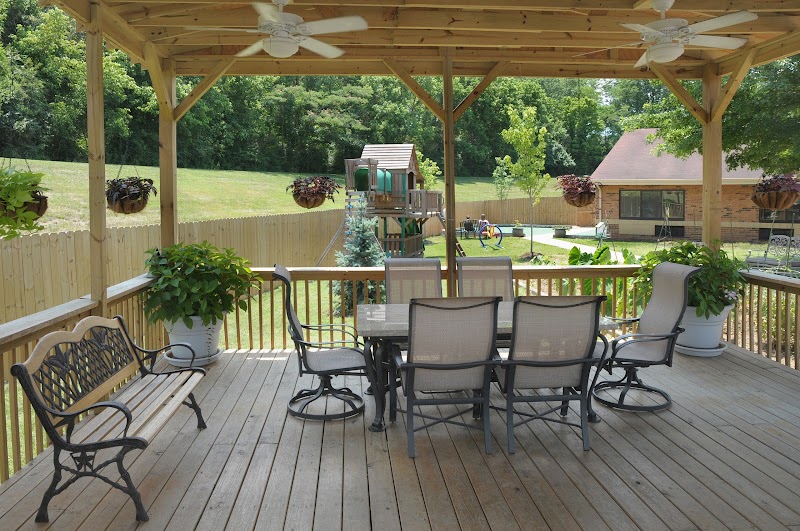
How is Life Of Red Bank Staffed?

CMS rates LIFE CARE CENTER OF RED BANK's staffing level at 2 out of 5 stars, which is below average compared to other nursing homes. Staff turnover is 49%, compared to the Tennessee average of 46%.

What Have Inspectors Found at Life Of Red Bank?

State health inspectors documented 27 deficiencies at LIFE CARE CENTER OF RED BANK during 2019 to 2024. These included: 5 that caused actual resident harm and 22 with potential for harm. Deficiencies causing actual harm indicate documented cases where residents experienced negative health consequences.

Who Owns and Operates Life Of Red Bank?

LIFE CARE CENTER OF RED BANK is owned by a for-profit company. For-profit facilities operate as businesses with obligations to shareholders or private owners. The facility is operated by LIFE CARE CENTERS OF AMERICA, a chain that manages multiple nursing homes. With 148 certified beds and approximately 83 residents (about 56% occupancy), it is a mid-sized facility located in CHATTANOOGA, Tennessee.
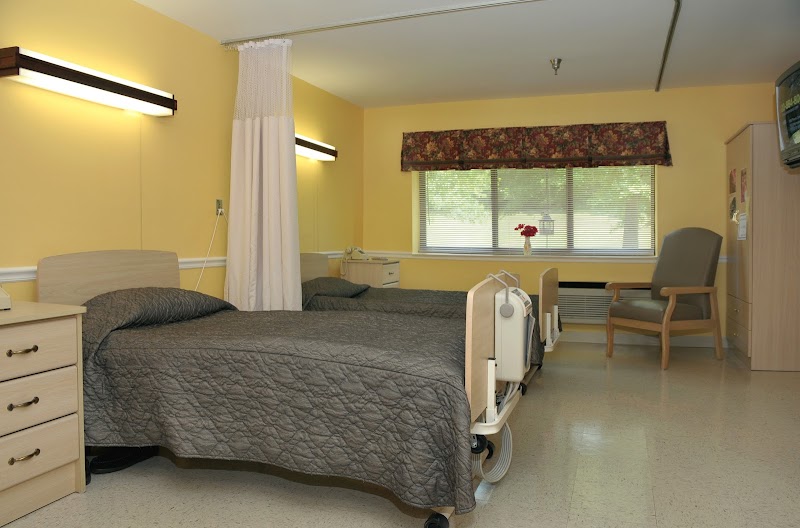
How Does Life Of Red Bank Compare to Other Tennessee Nursing Homes?

Compared to the 100 nursing homes in Tennessee, LIFE CARE CENTER OF RED BANK's overall rating (3 stars) is above the state average of 2.8, staff turnover (49%) is near the state average of 46%, and health inspection rating (2 stars) is below the national benchmark.

What Should Families Ask When Visiting Life Of Red Bank?

Based on this facility's data, families visiting should ask: "Can you walk me through typical staffing levels on day, evening, and night shifts?" "Can I visit during a mealtime to observe dining assistance and food quality?" "How do you handle medical emergencies, and what is your hospital transfer rate?" "Can I speak with family members of current residents about their experience?" These questions are particularly relevant given the below-average staffing rating.

Is Life Of Red Bank Safe?

Based on CMS inspection data, LIFE CARE CENTER OF RED BANK has a clean safety record: no substantiated abuse findings (meaning no confirmed cases of resident harm), no Immediate Jeopardy citations (the most serious violation level indicating risk of serious injury or death), and is not on the Special Focus Facility watch list (a federal program monitoring the lowest-performing 1% of nursing homes). The facility has a 3-star overall rating and ranks #1 of 100 nursing homes in Tennessee. While no facility is perfect, families should still ask about staff-to-resident ratios and recent inspection results during their visit.

Do Nurses at Life Of Red Bank Stick Around?

LIFE CARE CENTER OF RED BANK has a staff turnover rate of 49%, which is about average for Tennessee nursing homes (state average: 46%). Moderate turnover is common in nursing homes, but families should still ask about staff tenure and how the facility maintains care continuity when employees leave.

Was Life Of Red Bank Ever Fined?

LIFE CARE CENTER OF RED BANK has been fined $8,512 across 1 penalty action. This is below the Tennessee average of $33,164. While any fine indicates a compliance issue, fines under $50,000 are relatively common and typically reflect isolated problems that were subsequently corrected. Families should ask what specific issues led to these fines and confirm they've been resolved.

Is Life Of Red Bank on Any Federal Watch List?

LIFE CARE CENTER OF RED BANK is not on any federal watch list. The most significant is the Special Focus Facility (SFF) program, which identifies the bottom 1% of nursing homes nationally based on persistent, serious quality problems. Not being on this list means the facility has avoided the pattern of deficiencies that triggers enhanced federal oversight. This is a positive indicator, though families should still review the facility's inspection history directly.