DURHAM-HENSLEY HEALTH AND REHABILITATION
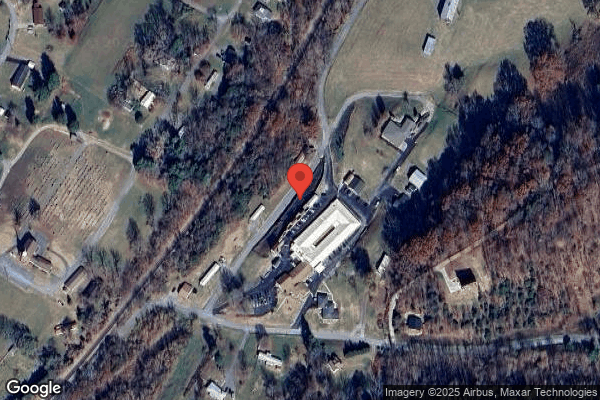
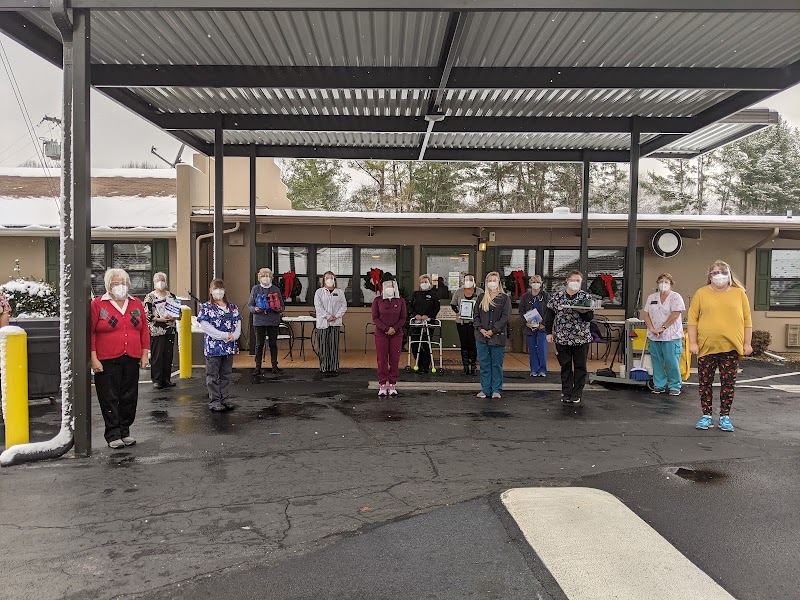
55 NURSING HOME RD, CHUCKEY, TN 37641 (423) 257-6761
For profit - Corporation 75 Beds Independent Data: November 2025
Trust Grade
80/100
#58 of 298 in TN
Last Inspection: August 2023

Over 2 years since last inspection. Current conditions may differ from available data.

Overview

Durham-Hensley Health and Rehabilitation has a Trust Grade of B+, which means it is above average and generally recommended for families considering care for their loved ones. The facility ranks #58 out of 298 nursing homes in Tennessee, placing it in the top half of all facilities in the state, and it is #2 out of 4 in Greene County, indicating that only one local option is better. Unfortunately, the facility's trend is worsening, with the number of issues increasing from 3 in 2019 to 6 in 2023. While staffing is somewhat of a concern with a rating of 2 out of 5 stars and a turnover rate of 41%, which is below the state average, there are no fines on record, which is a positive aspect. However, there were specific incidents noted during inspections that families should be aware of. For example, the facility failed to develop a comprehensive care plan for a resident with PTSD, which is essential for addressing their trauma-related needs. Additionally, there was a failure to implement fall prevention interventions for a resident with severe cognitive impairment, leading to a fall without proper preventive measures being in place. Overall, while there are strengths in staffing stability and no fines, families should consider these weaknesses when evaluating care for their loved ones.

Trust Score
B+
80/100
In Tennessee
#58/298
Top 19%
Safety Record
Low Risk
No red flags
Inspections
Getting Worse
3 → 6 violations
Staff Stability
○ Average
41% turnover. Near Tennessee's 48% average. Typical for the industry.
Penalties
✓ Good
No fines on record. Clean compliance history, better than most Tennessee facilities.
Skilled Nurses
⚠ Watch
Each resident gets only 29 minutes of Registered Nurse (RN) attention daily — below average for Tennessee. Fewer RN minutes means fewer trained eyes watching for problems.
Violations
○ Average
9 deficiencies on record. Average for a facility this size. Mostly minor or procedural issues.
★★★★☆
4.0
Overall Rating
★★☆☆☆
2.0
Staff Levels
★★★☆☆
3.0
Care Quality
★★★★☆
4.0
Inspection Score
Stable
2019: 3 issues
2023: 6 issues

The Good

  • Full Sprinkler Coverage · Fire safety systems throughout facility
  • No fines on record
  • Staff turnover below average (41%)

    7 points below Tennessee average of 48%

Facility shows strength in fire safety.

The Bad

Staff Turnover: 41%

Near Tennessee avg (46%)

Typical for the industry

The Ugly 9 deficiencies on record

Aug 2023 6 deficiencies
CONCERN (D)

Potential for Harm - no one hurt, but risky conditions existed

Deficiency F0645 (Tag F0645)

Could have caused harm · This affected 1 resident

**NOTE- TERMS IN BRACKETS HAVE BEEN EDITED TO PROTECT CONFIDENTIALITY** Based on record review and interview the facility failed to resubmit a timely Level l (one) Pre-admission Screening and Resident...

Read full inspector narrative →
**NOTE- TERMS IN BRACKETS HAVE BEEN EDITED TO PROTECT CONFIDENTIALITY** Based on record review and interview the facility failed to resubmit a timely Level l (one) Pre-admission Screening and Resident Review (PASRR) for 1 resident (#40) of 6 residents reviewed for PASRR. The findings include: Review of the facility's policy titled, Pre-admission Screening & Resident Review (PASRR), dated 2/2020, showed .Level l's are submitted- For everyone regardless of pay source admitting to a Medicaid certified Nursing Facility .Expiration of a time-related stay .Submit a new level l no less than 10 days before expiration date . Resident #40 was admitted to the facility on [DATE] with diagnoses including Dementia, Major Depressive Disorder, General Anxiety Disorder, and Post-Traumatic Stress Disorder. Record review of a PASRR dated [DATE] showed .Your level l screen shows evidence of serious mental illness or intellectual/ development .Further PASRR review is not needed because you meet criteria for a short-term convalescence stay. This means you are approved for up to 60 days in a nursing home .If you or your care provider thinks you need to stay longer than sixty (60) days, then a nursing home staff member must submit a new Level l screen . Record review from [DATE] - [DATE] showed no additional PASRR had been completed or submitted by the facility. Review of a PASARR dated [DATE] showed .Please be advised: This review is a federal compliance issue due to untimeliness of submission with an expired approval .an onsite Level ll will be initiated . Interview with the Director of Nursing (DON) on [DATE] at 9:11 AM, in the conference room, confirmed the facility failed to resubmit a timely Level l PASARR for Resident #40.
CONCERN (D)

Potential for Harm - no one hurt, but risky conditions existed

Comprehensive Care Plan (Tag F0656)

Could have caused harm · This affected 1 resident

**NOTE- TERMS IN BRACKETS HAVE BEEN EDITED TO PROTECT CONFIDENTIALITY** Based on facility policy review, record review, observation and interview, the facility failed to develop a comprehensive care p...

Read full inspector narrative →
**NOTE- TERMS IN BRACKETS HAVE BEEN EDITED TO PROTECT CONFIDENTIALITY** Based on facility policy review, record review, observation and interview, the facility failed to develop a comprehensive care plan to meet the trauma informed care needs of 1 resident (Resident #9) of 29 residents reviewed for care plans. The findings include: Review of the facility's policy titled, Trauma Informed Care, dated 7/2023, showed .Trauma survivors must receive .trauma-informed care .the interdisciplinary team .will develop a care plan to identify triggers and interventions to minimize .effect of the trigger for the resident . Resident #9 was admitted to the facility on [DATE] with diagnoses including Transient Cerebral Ischemic Attacks and Post Traumatic Stress Disorder (PTSD). Review of a quarterly Minimum Data Set (MDS) assessment dated [DATE], showed Resident #9 was cognitively intact and had no behaviors. Review of a care plan showed Resident #9 needed psychotropics to help with mental diagnoses including PTSD. No description of triggers was documented. Review of Social PTSD Screen dated 5/2/2023 showed no description of triggers documented. Review of physician orders showed Ativan (a medication used for anxiety) 0.5 milligrams (mg, a unit of measure) twice a day, dated 7/11/2023 and Trazodone (a medication used for insomnia) 150 mg at bedtime, dated 5/23/2023. Review of a Psychiatric Evaluation dated 7/18/2023, showed Resident #9 had a diagnosis of PTSD. Orders were documented for staff to monitor for changes in mood and behaviors and to continue medications as prescribed, because the resident was stable on the current doses. During an observation and interview on 8/21/2023 at 11:02 AM, Resident #9 stated she had a trauma in her life, and loud noises were one of the triggers for her PTSD. The resident stated she knew staff members that she could talk to when upset, and they wouldn't talk at her, but they listened to her and calmed her. The resident also stated she had no problems or distress from her PTSD during her stay at the facility. No behaviors were noted during the observation. During an interview on 8/23/2023 at 10:55 AM, Certified Nursing Assistant #2 stated she cared for Resident #9 frequently and had never witnessed any behaviors or distress related to PTSD from the resident. During an interview on 8/23/2023 at 3:13 PM, the MDS Coordinator stated when a resident had a diagnosis of PTSD, the facility ensured a care plan was complete and the resident's needs were met. The MDS Coordinator reviewed the care plan and stated no triggers were identified. The MDS Coordinator stated based on the policy, triggers should be described on the care plan and confirmed no triggers were described to make it a person-centered, trauma informed care plan.
CONCERN (D)

Potential for Harm - no one hurt, but risky conditions existed

Accident Prevention (Tag F0689)

Could have caused harm · This affected 1 resident

**NOTE- TERMS IN BRACKETS HAVE BEEN EDITED TO PROTECT CONFIDENTIALITY** Based on facility policy review, record review, observation and interview, the facility failed to implement interventions to pre...

Read full inspector narrative →
**NOTE- TERMS IN BRACKETS HAVE BEEN EDITED TO PROTECT CONFIDENTIALITY** Based on facility policy review, record review, observation and interview, the facility failed to implement interventions to prevent accidents for 1 resident (Resident #32) of 3 residents reviewed for accidents. The findings include: Review of the facility's policy titled, Fall Prevention Program, dated 4/2023, showed .Program is designed to ensure a safe environment for all Residents .When fall occurs .pertinent interventions will be identified and placed by staff . Resident #32 was admitted to the facility on [DATE] with diagnoses including Alzheimer's Disease, Unspecified Dementia and Psychotic Disorder with Delusions. Review of Quarterly Minimum Data Set (MDS) assessment dated [DATE], showed Resident #32 was severely cognitively impaired and required extensive assistance of 2 staff with bed mobility and transfers. Review of a facility investigation dated 5/8/2023, showed Resident #32 had an unwitnessed fall. The resident was assessed, no injury was found, and there was no change in cognition. The new intervention was fall mats to both sides of bed. Review of a care plan for Resident #32 showed a risk for falls due to weakness and an intervention of fall mats to the floor on both sides of resident's bed. Review of current physician's orders for Resident #32 showed a safety intervention of fall mats to the floor on both sides of the resident's bed. During an observation and interview on 8/23/2023 at 1:25 PM, with the Director of Nursing (DON) in Resident #32's room, the resident was in bed and no fall mats were observed on the floor. The DON stated if an intervention of fall mats to the floor was on the care plan, he expected the mats to be on the floor when the resident was in bed. The DON confirmed there were no fall mats on the floor, and the fall intervention was was not place.
CONCERN (D)

Potential for Harm - no one hurt, but risky conditions existed

Deficiency F0757 (Tag F0757)

Could have caused harm · This affected 1 resident

**NOTE- TERMS IN BRACKETS HAVE BEEN EDITED TO PROTECT CONFIDENTIALITY** Based on facility policy review, medical record review and interview, the facility failed to monitor for side effects of anti-co...

Read full inspector narrative →
**NOTE- TERMS IN BRACKETS HAVE BEEN EDITED TO PROTECT CONFIDENTIALITY** Based on facility policy review, medical record review and interview, the facility failed to monitor for side effects of anti-coagulant medications for 2 residents (Resident #29 and Resident #46) of 5 residents reviewed for anti-coagulant medication use. The findings include: Review of the facility's policy titled, Anticoagulation-Clinical Protocol, revised 3/2017, showed .The nurse will be responsible for .Observe to [for] symptoms of bleeding .Notify physician of any signs and symptoms of bleeding . Record review showed Resident #29 was admitted on [DATE] with a diagnosis of Atrial Fibrillation. Review of the Significant Change Minimum Data Set (MDS) dated [DATE], showed Resident #29 scored a 14 on the Brief Interview for Mental Status (BIMS) assessment, which indicated the resident had no cognitive impairment. Further review showed Resident #29 had an active diagnosis of Atrial Fibrillation and had received an anti-coagulant medication for 6 or 7 days. Review of the comprehensive care plan dated 10/26/2022, showed Resident #29 needed an anti-coagulant medication (Warfarin) to help with diagnosis. Review of the Active Orders Report dated 8/23/2023, showed Warfarin Sodium 1 milligram (mg) at bedtime for Atrial Fibrillation. Record review showed Resident #46 was admitted on [DATE] with a diagnosis of Peripheral Vascular Disease (PVD). Review of the Annual MDS dated [DATE], showed Resident #46 scored a 12 on the BIMS assessment, which indicated the resident had moderate cognitive impairment. Further review showed Resident #46 had an active diagnosis of Peripheral Vascular Disease and had received an anti-coagulant medication for 7 of 7 days. Review of the comprehensive care plan dated 6/10/2021, showed Resident #46 needed an anti-coagulant medication (Eliquis) to help with diagnosis. Review of the Active Orders Report dated 8/22/2023, showed Eliquis 5mg twice daily for PVD. Review of the Medication Administration Records (MAR) from 8/1/2023-8/22/2023, showed no anti-coagulant medication monitoring or the monitoring of side effects for the anti-coagulant medications had been ordered for Resident #23 and Resident #46. During an interview on 8/23/2023 at 8:02 AM, the Licensed Practical Nurse (LPN) #1 stated there was no anti-coagulation side effect monitoring in place for Resident #46. LPN #1 stated the facility does not document anti-coagulation medication side effects in the medical record. During an interview on 8/23/2023 at 8:07 AM, LPN #2 stated there was no anti-coagulation medication side effect monitoring in place for Resident #29. During an interview on 8/23/2023 at 8:13 AM, the Nurse Manager confirmed there was no anti-coagulation medication side effect monitoring on the medical record for Resident #29. During an interview on 8/23/2023 at 1:23 PM, the Director of Nursing (DON) confirmed there was no anti-coagulation medication side effect monitoring on the medical record for Resident #46.
CONCERN (D)

Potential for Harm - no one hurt, but risky conditions existed

Garbage Disposal (Tag F0814)

Could have caused harm · This affected 1 resident

Based on facility policy review, observation and interview, the facility failed to ensure garbage and refuse was properly contained in 1 of 2 dumpsters. The findings include: Review of facility polic...

Read full inspector narrative →
Based on facility policy review, observation and interview, the facility failed to ensure garbage and refuse was properly contained in 1 of 2 dumpsters. The findings include: Review of facility policy titled, Trash Disposal, dated 2/27/2020, showed .The Food Service department will dispose of trash appropriately and maintain the dumpster area for cleanliness and prevention of rodents . During an observation and interview with the Certified Dietary Manager on 8/21/2023 at 10:56 AM, showed 1 dumpster containing several bags of refuse and absent of a dumpster drain plug allowing rodents access into the dumpster. The Certified Dietary Manager confirmed the dumpster drain plug was missing allowing possible access of rodents.
CONCERN (D)

Potential for Harm - no one hurt, but risky conditions existed

Infection Control (Tag F0880)

Could have caused harm · This affected 1 resident

**NOTE- TERMS IN BRACKETS HAVE BEEN EDITED TO PROTECT CONFIDENTIALITY** Based on facility policy review, observation and interview, the facility failed to distribute and serve food under sanitary cond...

Read full inspector narrative →
**NOTE- TERMS IN BRACKETS HAVE BEEN EDITED TO PROTECT CONFIDENTIALITY** Based on facility policy review, observation and interview, the facility failed to distribute and serve food under sanitary conditions for 1 of 2 halls observed for dining. The findings include: Review of the facility policy titled, Hand Hygiene, revised 10/2022, showed .the facility considers hand hygiene to be the single most important factor in control of infection .an alcohol-based hand rub containing at least 62% alcohol; or, alternatively, soap and water for the following situations .After contact with objects .in the immediate vicinity of the resident .Before and after eating or handling food . During an observation on 8/21/2023 at 12:01 PM, the Certified Nursing Assistant (CNA) #1 had left room [ROOM NUMBER]A, failed to sanitize her hands, and opened the dining cart to retrieve another resident's meal tray. CNA #1 delivered the meal tray to the resident in room [ROOM NUMBER]B. CNA #1 had brought 48B's breakfast tray out of the room and placed it in the bottom of the dining cart. CNA #1 retrieved a new lunch tray from the dining cart, without sanitizing the hands, and delivered the lunch tray to the resident in room [ROOM NUMBER]. The resident in room [ROOM NUMBER] refused the meal tray. CNA #1 returned the refused tray to the dining cart and failed to sanitize the hands. CNA #1 retrieved another meal tray from the dining cart and entered room [ROOM NUMBER]. CNA #1 assisted Resident #9 with meal tray setup and had exited the room into the hallway. CNA #1 was stopped prior to entering any additional rooms. During an interview on 8/21/2023 at 12:07 PM, CNA #1 stated she was only required to sanitize her hands after delivering a meal tray to every 3rd resident. CNA #1 confirmed she did not sanitize her hands after carrying 3 different trays into 3 resident rooms, handling Resident #9's utensils, and touching objects in resident rooms. During an interview on 8/23/2023 at 10:49 AM, the Certified Dietary Manager (CDM) stated it was the expectation of staff handling or delivering meal trays to sanitize the hands after leaving a resident room. The CDM confirmed CNA #1 did not maintain a sanitary food delivery environment due to inadequate hand hygiene.
Jan 2019 3 deficiencies
CONCERN (D)

Potential for Harm - no one hurt, but risky conditions existed

Deficiency F0657 (Tag F0657)

Could have caused harm · This affected 1 resident

**NOTE- TERMS IN BRACKETS HAVE BEEN EDITED TO PROTECT CONFIDENTIALITY** Based on review of the facility policy, medical record review, observation, and interview, the facility failed to revise the Com...

Read full inspector narrative →
**NOTE- TERMS IN BRACKETS HAVE BEEN EDITED TO PROTECT CONFIDENTIALITY** Based on review of the facility policy, medical record review, observation, and interview, the facility failed to revise the Comprehensive Care Plan to include a new intervention for nutrition at risk/weight loss for 1 resident (#42) of 4 residents reviewed for nutrition of 23 sampled residents. The findings include: Review of the facility policy Nutrition at Risk date revised 3/18 revealed .dietary interventions ordered by the Physician .must also be documented on the Care Plan . Review of the facility policy Care Plans last date revised 11/18 revealed .The Care Plan shall reflect the following: a. PROBLEMS .any area of .concern .d. INTERVENTIONS: .The specific .intervention the staff will take to assist the Resident in meeting/achieving goals .Care Plans will be updated as changes occur. New problems will be added as they occur . Medical record review revealed Resident #42 was admitted to the facility on [DATE] and readmitted on [DATE] with diagnoses including Pressure Ulcer of Right Heel, Type 2 Diabetes, Major Depressive Disorder, and Insomnia. Medical record review of an admission Minimum Data Set (MDS) dated [DATE] revealed the resident scored 9 on the Brief Interview for Mental Status (BIMS) indicating the resident had moderate cognitive impairment. Further review revealed Resident #42 required extensive assist of one with eating. Review of Resident #42's Comprehensive Care Plan last reviewed 12/27/18 revealed the care plan had not been revised to include nutrition at risk/weight loss. Medical record review of Resident #42's weights revealed: 12/20/18 162 pounds 1/21/19 149 pounds. Interview with the Assistant Director of Nursing on 1/24/19 at 10:49 AM, at the [NAME] nurse's station, revealed the facility had reviewed Resident #42 in the Nutrition at Risk (NAR) meeting on 12/27/18 and recommended house supplement 90 ml (milliliters) TID (three times a day). Further interview revealed the supplement had been ordered by the Nurse Practitioner. Medical record review of a Physicians Telephone Order dated 12/28/18 revealed .90 ml med pass 2.0 [nutritional supplement] TID . Interview with the DON on 1/24/19 at 11:20 AM, in the DON office, confirmed the facility failed to revise Resident #42's Comprehensive Care Plan to include nutrition at risk/weight loss. Interview with the Minimum Data Set (MDS) Coordinator on 1/24/19 at 1:40 PM, in the MDS office, confirmed the facility failed to revise Resident #42's Comprehensive Care Plan to include nutrition at risk/weight loss.
CONCERN (D)

Potential for Harm - no one hurt, but risky conditions existed

Deficiency F0692 (Tag F0692)

Could have caused harm · This affected 1 resident

**NOTE- TERMS IN BRACKETS HAVE BEEN EDITED TO PROTECT CONFIDENTIALITY** Based on medical record review, observation, and interview, the facility failed to ensure weight loss interventions were impleme...

Read full inspector narrative →
**NOTE- TERMS IN BRACKETS HAVE BEEN EDITED TO PROTECT CONFIDENTIALITY** Based on medical record review, observation, and interview, the facility failed to ensure weight loss interventions were implemented for 1 resident (#42) of 4 residents reviewed for nutrition of 23 sampled residents. The findings include: Medical record review revealed Resident #42 was admitted to the facility on [DATE] and readmitted on [DATE] with diagnoses including Pressure Ulcer of Right Heel, Type 2 Diabetes, Major Depressive Disorder, and Insomnia. Medical record review of an admission Minimum Data Set (MDS) dated [DATE] revealed the resident scored 9 on the Brief Interview for Mental Status (BIMS) indicating the resident had moderate cognitive impairment. Further review revealed Resident #42 required extensive assist of one with eating. Medical record review of Resident #42's weights revealed he had lost 8% of his weight from 12/20/18 to 1/21/19. Further review revealed the resident had been included in the Nutrition at Risk meeting and weights were reviewed weekly. Medical record review of a Physicians Telephone Order dated 12/28/18 revealed .90 ml [milliliters] med pass 2.0 [nutritional supplement] TID [three times a day] . Medical record review of the December 2018 Medication Record (MAR) revealed the resident had been administered the nutritional supplement as ordered from 12/28/19 through 12/31/18. Further review of the January 2019 MAR dated 1/1/19 through 1/31/19 revealed the resident had not been administered the nutritional supplement from 1/1/19 to 1/17/19. Continued medical record review revealed the resident had been admitted to the hospital on [DATE] and returned to the facility the evening of 1/18/19. Further review revealed the house supplement had not been re-ordered when the resident returned from the hospital. Interview with the Assistant Director of Nursing on 1/24/19 at 11:21 AM, in the Director of Nursing's office, confirmed the facility had failed to administer the house supplement to Resident #42 January 1st through January 17th 2019.
CONCERN (D)

Potential for Harm - no one hurt, but risky conditions existed

Infection Control (Tag F0880)

Could have caused harm · This affected 1 resident

**NOTE- TERMS IN BRACKETS HAVE BEEN EDITED TO PROTECT CONFIDENTIALITY** Based on review of the facility policy, observation, and interview, the facility failed to distribute and serve food under sanit...

Read full inspector narrative →
**NOTE- TERMS IN BRACKETS HAVE BEEN EDITED TO PROTECT CONFIDENTIALITY** Based on review of the facility policy, observation, and interview, the facility failed to distribute and serve food under sanitary conditions for 1of 3 halls observed for dining. The findings include: Review of the facility policy, Hand Hygiene, revised 12/16, revealed .Use an alcohol-based hand rub containing at least 62% alcohol; or, alternatively, soap and water for the following situations: . After contact with objects .in the immediate vicinity of the resident; .Before and after eating or handling food; . Observation on 1/22/19 at 11:54 AM, on the [NAME] Hall, revealed Certified Nursing Assistant (CNA) #1 delivered a lunch tray in the resident's room, elevated the head of the resident's bed, moved the resident's bedside table, and failed to sanitize the hands prior to seting up the resident's lunch tray. Further observation revealed CNA #1 retrieved a lunch tray, delivered a lunch tray to a second resident's room, moved the resident's bedside table, failed to sanitize the hands prior to seting up the resident's tray, and exited the room without performing hand hygiene. Interview with CNA #1 on 1/22/19 at 11:59 AM, on the [NAME] Hall, confirmed CNA #1 failed to perform hand hygiene after contact with objects in the resident's rooms during the lunch meal tray pass. Interview with the Director of Nursing on 1/24/19 at 9:14 AM, at the [NAME] Hall nurse's station, confirmed the facility failed to follow the facility policy on hand hygiene.
Understanding Severity Codes (click to expand)
Life-Threatening (Immediate Jeopardy)
J - Isolated K - Pattern L - Widespread
Actual Harm
G - Isolated H - Pattern I - Widespread
Potential for Harm
D - Isolated E - Pattern F - Widespread
No Harm (Minor)
A - Isolated B - Pattern C - Widespread

Questions to Ask on Your Visit

  • "Can I speak with families of current residents?"
  • "What's your RN coverage like on weekends and overnight?"

Our Honest Assessment

Strengths
  • • Grade B+ (80/100). Above average facility, better than most options in Tennessee.
  • • No major safety red flags. No abuse findings, life-threatening violations, or SFF status.
  • • No fines on record. Clean compliance history, better than most Tennessee facilities.
  • • 41% turnover. Below Tennessee's 48% average. Good staff retention means consistent care.
Concerns
  • • No significant concerns identified. This facility shows no red flags across CMS ratings, staff turnover, or federal penalties.
Bottom line: Generally positive indicators. Standard due diligence and a personal visit recommended.

About This Facility

What is Durham-Hensley's CMS Rating?

CMS assigns DURHAM-HENSLEY HEALTH AND REHABILITATION an overall rating of 4 out of 5 stars, which is considered above average nationally. Within Tennessee, this rating places the facility higher than 99% of the state's 100 nursing homes. This rating reflects solid performance across the metrics CMS uses to evaluate nursing home quality.

How is Durham-Hensley Staffed?

CMS rates DURHAM-HENSLEY HEALTH AND REHABILITATION's staffing level at 2 out of 5 stars, which is below average compared to other nursing homes. Staff turnover is 41%, compared to the Tennessee average of 46%. This relatively stable workforce can support continuity of care.

What Have Inspectors Found at Durham-Hensley?

State health inspectors documented 9 deficiencies at DURHAM-HENSLEY HEALTH AND REHABILITATION during 2019 to 2023. These included: 9 with potential for harm.

Who Owns and Operates Durham-Hensley?

DURHAM-HENSLEY HEALTH AND REHABILITATION is owned by a for-profit company. For-profit facilities operate as businesses with obligations to shareholders or private owners. The facility operates independently rather than as part of a larger chain. With 75 certified beds and approximately 64 residents (about 85% occupancy), it is a smaller facility located in CHUCKEY, Tennessee.

How Does Durham-Hensley Compare to Other Tennessee Nursing Homes?

Compared to the 100 nursing homes in Tennessee, DURHAM-HENSLEY HEALTH AND REHABILITATION's overall rating (4 stars) is above the state average of 2.8, staff turnover (41%) is near the state average of 46%, and health inspection rating (4 stars) is above the national benchmark.

What Should Families Ask When Visiting Durham-Hensley?

Based on this facility's data, families visiting should ask: "Can you walk me through typical staffing levels on day, evening, and night shifts?" "Can I visit during a mealtime to observe dining assistance and food quality?" "How do you handle medical emergencies, and what is your hospital transfer rate?" "Can I speak with family members of current residents about their experience?" These questions are particularly relevant given the below-average staffing rating.

Is Durham-Hensley Safe?

Based on CMS inspection data, DURHAM-HENSLEY HEALTH AND REHABILITATION has a clean safety record: no substantiated abuse findings (meaning no confirmed cases of resident harm), no Immediate Jeopardy citations (the most serious violation level indicating risk of serious injury or death), and is not on the Special Focus Facility watch list (a federal program monitoring the lowest-performing 1% of nursing homes). The facility has a 4-star overall rating and ranks #1 of 100 nursing homes in Tennessee. While no facility is perfect, families should still ask about staff-to-resident ratios and recent inspection results during their visit.

Do Nurses at Durham-Hensley Stick Around?

DURHAM-HENSLEY HEALTH AND REHABILITATION has a staff turnover rate of 41%, which is about average for Tennessee nursing homes (state average: 46%). Moderate turnover is common in nursing homes, but families should still ask about staff tenure and how the facility maintains care continuity when employees leave.

Was Durham-Hensley Ever Fined?

DURHAM-HENSLEY HEALTH AND REHABILITATION has no federal fines on record. CMS issues fines when nursing homes fail to meet care standards or don't correct problems found during inspections. The absence of fines suggests the facility has either maintained compliance or corrected any issues before penalties were assessed. This is a positive indicator, though families should still review recent inspection reports for the full picture.

Is Durham-Hensley on Any Federal Watch List?

DURHAM-HENSLEY HEALTH AND REHABILITATION is not on any federal watch list. The most significant is the Special Focus Facility (SFF) program, which identifies the bottom 1% of nursing homes nationally based on persistent, serious quality problems. Not being on this list means the facility has avoided the pattern of deficiencies that triggers enhanced federal oversight. This is a positive indicator, though families should still review the facility's inspection history directly.