BRIGADIER GENERAL WENDELL H GILBERT TN STATE VETER
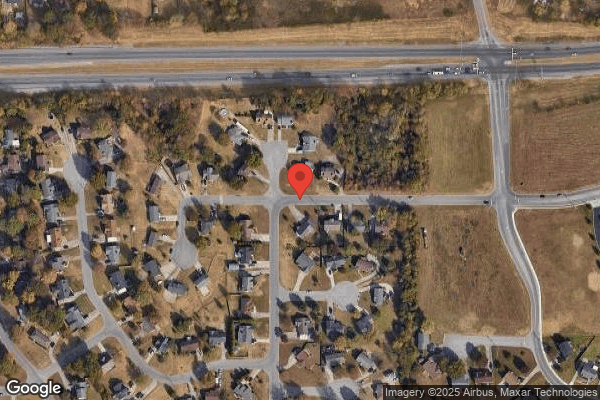

250 ARROWOOD DRIVE, CLARKSVILLE, TN 37042 (931) 245-4700
Government - State 108 Beds TENNESSEE STATE VETERANS' HOME Data: November 2025
Trust Grade
50/100
#177 of 298 in TN
Last Inspection: April 2022

Over 2 years since last inspection. Current conditions may differ from available data.

Overview

Brigadier General Wendell H. Gilbert TN State Veterans Home has a Trust Grade of C, indicating they are average and in the middle of the pack among nursing homes. They rank #177 out of 298 in Tennessee, placing them in the bottom half of facilities, but #2 out of 5 in Montgomery County means they have one of the better options locally. The facility is improving, with issues decreasing from three in 2019 to two in 2022. Staffing is a concern, as they received a low rating of 1 out of 5 stars, although their turnover rate is 0%, which is significantly better than the state average of 48%. While there have been no fines recorded, which is a positive sign, there have been serious incidents, including a resident sustaining multiple fractures from a fall due to a failure to follow fall prevention protocols. Another serious incident involved a resident suffering a deep burn from a HotPac applied without a physician's order. Additionally, there was a concern regarding COVID-19 screening practices for staff, which could have endangered residents. Overall, while there are strengths in the absence of fines and low turnover, the facility's staffing issues and serious incidents warrant careful consideration.

Trust Score
C
50/100
In Tennessee
#177/298
Bottom 41%
Safety Record
Moderate
Needs review
Inspections
Getting Better
3 → 2 violations
Staff Stability
○ Average
Turnover data not reported for this facility.
Penalties
✓ Good
No fines on record. Clean compliance history, better than most Tennessee facilities.
Skilled Nurses
○ Average
RN staffing data not reported for this facility.
Violations
○ Average
7 deficiencies on record. Average for a facility this size. Mostly minor or procedural issues.
★★☆☆☆
2.0
Overall Rating
★☆☆☆☆
1.0
Staff Levels
★★☆☆☆
2.0
Care Quality
★★★☆☆
3.0
Inspection Score
Stable
2019: 3 issues
2022: 2 issues

The Good

  • Full Sprinkler Coverage · Fire safety systems throughout facility
  • No fines on record

Facility shows strength in fire safety.

The Bad

2-Star Overall Rating

Below Tennessee average (2.8)

Below average - review inspection findings carefully

Chain: TENNESSEE STATE VETERANS' HOME

Part of a multi-facility chain

Ask about local staffing decisions and management

The Ugly 7 deficiencies on record

2 actual harm
Apr 2022 2 deficiencies 1 Harm
SERIOUS (G)

Actual Harm - a resident was hurt due to facility failures

Accident Prevention (Tag F0689)

A resident was harmed · This affected 1 resident

**NOTE- TERMS IN BRACKETS HAVE BEEN EDITED TO PROTECT CONFIDENTIALITY** Based on facility investigation, policy review, medical record review, observation, and interview, the facility failed to follow...

Read full inspector narrative →
**NOTE- TERMS IN BRACKETS HAVE BEEN EDITED TO PROTECT CONFIDENTIALITY** Based on facility investigation, policy review, medical record review, observation, and interview, the facility failed to follow interventions to prevent falls and injury for 2 of 13 sampled residents (Resident #22 and #25) reviewed for accidents. The facility's failure to follow fall interventions resulted in Actual Harm when Resident #22 sustained a fall which resulted in a closed fracture (broken bone) of left distal femur (large upper bone of the leg), subarachnoid hemorrhage (bleeding in the space between the brain and the tissue covering the brain), cervical (neck) spine fracture, closed extensive facial fractures, rib fractures, closed fracture of distal end of the left humerus (long bone in the upper arm) and a chest wall hematoma (blood that has collected under the skin) and when Resident #25 sustained a fall which resulted in a fracture of his greater trochanter (bone in the hip). The findings include: Review of the facility's Accident Policy, approved 5/30/2018, revealed .Avoidable accident means that an accident occurred because a facility failed to identify environmental hazards, identify a Resident's individual risk for accidents, evaluate and analyze the hazard/risk, implement interventions and monitor the effectiveness of the interventions implemented .The definition of a fall is unintentionally coming to rest on the ground, floor, or other lower level .when a Resident is found on the floor, a fall is considered to have occurred .Resident Assessment .Each Resident will be assessed for fall risk coinciding with the Minimum Data Set schedule, admission, re-admission, quarterly and with significant change in status . Review of the facility's policy titled, .Resident Lift Policy, dated 5/2016, revealed .two staff members to be present during the use of Resident lifts . Review of the medical record, revealed Resident #22 was admitted to the facility on [DATE] and readmitted on [DATE] with diagnoses of Dementia, Dysphagia, Chronic Pain Syndrome, and Anxiety. Review of the .Nurse Aide's information Sheet dated 10/16/2020 (there were update dates of 9/9 and 10/14 but the year was not included), revealed .TRANSFERS .2 Person Assist . Review of the Fall Risk assessment dated [DATE], revealed Resident #22 was a high risk for falls with a score of 14. Review of the annual Minimum Data Set (MDS) assessment dated [DATE], revealed Resident #22 was assessed to have a Brief Interview Mental Status (BIMS) score of 7, which indicated Resident #22 was severely cognitively impaired, was totally dependent, and required two person assist with transfers. Review of the Care Plan dated 1/11/2022, revealed .at risk for fall .Use Hoyer lift with 2 staff assist with transfers . Review of the Progress Note dated 3/18/2022, revealed .Resident [Resident #22] had a fall in her room .Fall was witnessed by the CNA [Certified Nursing Assistant #7] .on night shift. CNA excitedly told RN [Registered Nurse #5] to come to house 2 as she wanted to show me something .When I entered the room, I observed resident faced-down on the floor outside of the bathroom in room .Resident was laying [lying] in a pool of blood that appeared to be coming from her head .she had a sizeable, deep laceration to her R [Right] eyebrow, a large hematoma above her L [Left] eyebrow, a R black eye with swelling, and bruising around the eye socket and R cheek, a small bruise to the L knee, and a large laceration to the R knee .call Dr [doctor] .contacted 911 .3/18/2022 .Son called and reported resident is being transferred to a .trauma center . Review of the facility's investigation dated 3/18/2022, revealed .resident [Resident #22] had a fall on 3-18-2022 and was sent to the ER [Emergency Room] .An agency CNA was alone in the room with the resident .She stated that she was using the lift to transfer the resident and it, 'buckled and tipped over' .resident fell face first onto the floor. When the nurse was called to the room, the resident was laying on the floor face down in a pool of blood .had multiple injuries .a fractured femur, knee, and eye socket requiring sutures .After the initial investigation by the facility .It appeared that the CNA tried to transfer this resident alone, without a lift .resident fell to the floor . Review of the Police Department Notes dated 3/18/2022, revealed .a resident was injured and had to be transported to the hospital .According to the incident details that [Named CNA #7] .was assisting the victim off the bed to use the restroom by herself with the lift. The policy is to have two personnel at all times and is required to use the lift for each assist .the victim fell off of the lift because it flipped and fell to the ground, striking her head on the floor .The [Named Facility] conducted their own internal investigation .[Named CNA #7] was attempting to lift the victim out of bed herself and appeared to have either dropped the victim or let her go causing her to fall on the floor . Review of Hospital #2 record dated 3/18/2022, revealed .88 y.o. [year old] .significant for dementia .presents to the ED [Emergency Department] .after patient fell from a Hoyer lift about 5 feet .patient is noted to have a left femur fracture and orbital floor [bones of the eye socket floor] fracture .CT [Computerized Tomography scan-a procedure that uses a computer linked to an x-ray machine to make a series of detailed pictures of areas inside the body] head .contusion [bruise of the brain tissue] in the frontal lobes [of the brain] with extensive facial soft tissue injury with a laceration and hematoma with a right orbital medial wall [eye socket] and orbital floor fracture .major traumatic injury . Review of the Trauma Surgery Discharge Summary dated 3/29/2022, revealed .Diagnosis: Active Problems: Closed fracture of left distal femur .Fall from height of greater than 3 feet .subarachnoid hemorrhage [Bleeding in the space between the brain and the tissue covering the brain] .Cervical spine fracture .Closed extensive facial fractures .Rib fractures Closed fracture of distal end of left humerus with routine healing .Chest wall hematoma .Acute pain due to trauma .fall from Hoyer lift at nursing home . Observation in the resident's room on 4/4/2022 at 3:45 PM, revealed Resident #22 lying in bed, eyes closed, wearing a neck brace, stitches above the right eyebrow, and blue/purple bruising on the forehead and left and right side of the face area. During a telephone interview on 4/5/2022 at 7:13 PM, CNA #7 was asked about Resident #22's fall. CNA #7 stated, .put lift pad underneath her, pulled lift over her and made sure all 4 straps connected .as I was lifting her .lift made a noise and buckled and she [Resident #22] completely flipped .face forward .it was bad .I ran and got the nurse .told her what happened .she assessed her .blood on the floor .Hoyer lift tilted over . CNA #7 was asked if Resident #22 was a 1 or 2 person assist. CNA #7 stated, I'm not sure if she was a 1 or 2 person assist . CNA #7 confirmed she had used the Hoyer lift by herself to get Resident #22 out of bed. Observation in the resident's room on 4/6/2022 at 9:34 AM, revealed 5 staff using a Hoyer lift to move Resident #22 to a Geri-chair (a chair with high sides and reclines). During an interview on 4/6/2022 at 10:21 AM, Registered Nurse (RN) #5 was asked about Resident #22's fall. RN #5 stated, .I was told that the CNA was trying to transfer her by herself with the Hoyer lift and you don't do that you always need 2 .she was a 2 person transfer with Hoyer . During an interview on 4/6/2022 at 11:14 AM, the Director of Rehabilitation (DOR) confirmed Resident #22 had been totally dependent on staff for transfers since 11/2020, and a Hoyer lift had been used for transfers for about a year and half. The DOR confirmed the Hoyer lift always requires two persons for transfers and stated, .right now with her [Resident #22] .3 minimal [persons] or more [for transfers] . During an interview on 4/7/2022 at 8:14 AM, the Director of Nursing (DON) confirmed Resident #22 was a 2 person transfer and that CNA #7 had transferred Resident #22 by herself. During an interview on 4/7/2022 at 9:35 AM, the Administrator was asked about Resident #22's incident on 3/18/2022. The Administrator stated, .her statement was that she had put her in the lift by herself which was a violation of our policy .she said it bolted [moved] . The Administrator confirmed there should always be 2 persons using a Hoyer lift and stated, I don't think she used the lift .I think she just tried to transfer her by herself . The facility's failure to follow fall interventions resulted in Actual Harm when Resident #22 sustained a fall which resulted in a closed fracture of the left distal femur, subarachnoid hemorrhage, cervical spine fracture, closed extensive facial fractures, rib fractures, closed fracture of distal end of left humerus and a chest wall hematoma. Review of the medical record, revealed Resident #25 was admitted to the facility on [DATE] with diagnoses of Non-Displaced Fracture of Greater Trochanter of Left Femur, Repeated Falls, Dysphagia, Cerebral Infarction, Hemiplegia, Atherosclerotic Heart Disease, Hypertension, and Chronic Obstructive Pulmonary Disease. Review of the Nurse Aide's Information Sheet (initiated on admission and updated 12/6/2021) revealed, .Transfers .2 Person Assist [checked] . Review of the Fall Risk assessment dated [DATE], revealed Resident #25 was not a risk for falls with a score of 8. Review of the Physical Therapy and Plan of Treatment dated 6/8/2021, revealed .Clinical Impressions: Pt [Patient] [Resident #25] demonstrates decreased standing balance, decreased transfer status, decreased functional activity tolerance that presents him as a high risk for fall . The facility was unable to provide the quarterly Fall Risk Assessment for 9/2021. Review of the annual MDS dated [DATE], revealed Resident #25 was assessed to have a BIMS score of 14, which indicated Resident #25 was cognitively intact, required extensive assistance with his activities of daily living, and had functional limitations in range of motion with impairment in an upper extremity. Review of the Care Plan revised 10/25/2021, revealed Resident #25 had a self-care performance deficit with interventions of .TRANSFER: I need extensive/2 staff assist .TOILETING .I require 2 staff assistance with transfers to the toilet and incontinence care . Review of the Nurses Note dated 12/25/2021, revealed .At about 1553 [3:53 PM] the CNA [#6] came to nurse's station and stated that she needed this nurse right away. The CNA took this nurse to [Resident #25's] room where the resident was on the floor. This nurse stated that we needed to get the Hoyer lift to assist resident to [off] the floor. When this nurse asked what happened this resident stated, I fell hun [honey] and my leg just gave out. This nurse got the [NAME] [machine for vital signs] to obtain VS [vital signs] and another CNA sat with the resident until other staff returned. When this nurse returned to the room she and the other CNA was [were] trying to roll resident to put a brief on him but when turning the resident to the left side he was saying ouch. This was attempted twice then this nurse asked the CNA to call for Nurse supervisor. Once she arrived when assessing resident he continued to say ouch when the left hip was moved a certain way .Family, RN Supervisor notified. 911 called and EMS [Emergency Medical Services] arrived about 1630 [4:30 PM]. Resident transported by stretcher to [Named Hospital] for X-ray and evaluation about 1640 [4:40 PM] . Review of the Fall w [with]/injuries dated 12/25/2021, revealed .About 1553 [3:53 PM] the CNA came to the nurse's station and stated that she needed this nurse right away. The CNA took this nurse to [Resident #25's room] where the resident was on the floor. This nurse stated that we needed to get the Hoyer lift to assist resident to [off] the floor. This nurse got the [NAME] to obtain VS and another CNA sat with the resident. When this nurse returned to the room she and the other CNA was [were] trying to roll resident to put on a brief on him but as we turned to the left side he was saying ouch. This was attempted twice this nurse asked the CNA to call for the nurse supervisor. Once she arrived when assessing resident he continued to say ouch when the left hip was moved a certain way .Resident Description 'Hun I fell, my legs gave out and I just fell' . Review of the Hospital Emergency Documentation dated 12/25/2021, revealed .CT pelvis is indicated with left-sided greater trochanter [hip] fracture .no extension into the neck .range of motion is baseline .Orthopedics recommend weightbearing as tolerated . Review of the Hospital Emergency Department Discharge Instructions dated 12/25/2021, revealed .Discharge Diagnosis: Greater trochanter fracture . Review of the Fall Risk assessment dated [DATE], revealed Resident #25 was a high risk for falls with a score of 10. During an interview on 4/5/2022 at 1:06 PM, Resident #25 was asked if he had sustained any falls. Resident #25 stated, .the staff is no longer here .about 12 weeks ago [fell] .she [CNA #6] wanted to see if I could stand up and I couldn't stand up that long .she wouldn't use the lift . During an interview on 4/6/2022 at 9:15 AM, the DOR was asked if he was familiar with Resident #25. He stated, .yes .before his fall he was a 2-person transfer assist . The DOR was asked if Resident #25 should have been transferred on 12/25/2021 with 2 people. The DOR stated, .right .before his fall he was a 2 person assist .we didn't initiate the Hoyer lift until 12/27/2021 .the last day we saw him was 7/9/2021 and our recommendations at that time was 2 person transfer .they transferred him not following our recommendations .Minimum Assistance means the resident does 75% [percent] of the work, that's why we specify on the CNA [NAME] [Nurse Aide's Information Sheet] the number of people needed for transfers . During an interview on 4/6/2022 at 10:00 AM, the Staff Development Coordinator (SDC) was asked to describe the orientation process. She stated, .they [staff] get 2 days of orientation with me .we go over policies and procedures .and I give them 2 different folders .then they are placed with another CNA for 2 or 3 days . She was asked how the CNAs know what to do for their residents. The SDC stated, .the department heads come in on the first day and reviews the highlights .MDS [Nurse] go over the [NAME] notebook on the unit . During an interview on 4/7/2022 at 8:11 AM, CNA #6 stated, .He [Resident #25] told me he could stand holding the grab bar. I questioned him again to make sure. He had his gait belt on, and the wheelchair was placed behind him in case he gets tired and needed to sit down .without warning, he fell to the side. He denied having pain until he moved a little bit, and I got the nurse [Named Licensed Practical (LPN) #3] . The CNA was asked if she had checked his Care Plan. She stated, .No, I didn't at the time know where they were .[Named CNA #7] told me he was a one man assist .I had transferred by myself . During an interview on 4/7/2022 at 9:30 AM, LPN #3 stated, .I did show her [CNA #6] where the Aide's Care Plans were after the fall because she said she didn't know where they were. They [new hires] are usually shown during their orientation . The facility's failure to follow fall interventions resulted in Actual Harm when Resident #25 sustained a fall which resulted in a fracture of his greater trochanter.
CONCERN (F)

Potential for Harm - no one hurt, but risky conditions existed

Infection Control (Tag F0880)

Could have caused harm · This affected most or all residents

Based on the Centers for Disease Control and Prevention (CDC) guidelines, policy review, review of Employee Screening Logs, Employee Schedules, assignment sheets, and interview, the facility failed to...

Read full inspector narrative →
Based on the Centers for Disease Control and Prevention (CDC) guidelines, policy review, review of Employee Screening Logs, Employee Schedules, assignment sheets, and interview, the facility failed to follow CDC infection control guidelines to ensure practices to prevent the potential spread of COVID-19 when 9 of 113 employees (Registered Nurse (RN) #1, #2, and #3, Licensed Practical Nurse (LPN) #1 and #2, and Certified Nursing Assistant (CNA) #1, #2, #3, and #4) failed to complete screenings for prevention and detection of COVID-19 prior to working 4 of 4 days (3/25/2022, 3/26/2022, 3/27/2022, and 3/28/2022) reviewed. This had the potential to affect the 83 residents residing in the facility. The findings include: Review of the Centers for Disease Control and Prevention (CDC) document titled, Interim Infection Prevention and Control Recommendations for Healthcare Personnel During the Coronavirus Disease 2019 (COVID-19) Pandemic, updated 9/10/2021, revealed .Establish a process to identify anyone entering the facility, regardless of their vaccination status .so that they can be properly managed .Options .include .individual screening on arrival at the facility .before entering the facility . Review of the facility's policy titled, .Occupational Health - COVID-19, revised 12/28/2021, revealed .Employees will be screened prior to starting a shift by having their temp [temperature] taken, signs or symptoms or exposure . Review of the Employee Schedules, assignment sheets, and Employee Screening Logs from 3/25/2022 to 3/28/2022, revealed the following employees worked and failed to screen for signs and symptoms of COVID-19 on the following days: a. 3/25/2022-RN #1, LPN #1, CNA #1, #2 and #3 b. 3/26/2022-RN #1 c. 3/27/2022-RN #1 d. 3/28/2022-RN #2 and #3, LPN #2, and CNA #4 During an interview on 4/6/2022 at 7:52 AM, the Director of Clinical Services confirmed that RN #1, #2, and #3, LPN #1 and #2, and CNA #1, #2, #3, and #4 did not screen prior to working on 3/25/2022, 3/26/2022, 3/27/2022, and 3/28/2022. During an interview on 4/8/2022 at 2:13 PM, the Administrator confirmed staff should screen for signs of COVID-19 upon entering the building and prior to working.
Jun 2019 3 deficiencies
CONCERN (D)

Potential for Harm - no one hurt, but risky conditions existed

Resident Rights (Tag F0550)

Could have caused harm · This affected 1 resident

**NOTE- TERMS IN BRACKETS HAVE BEEN EDITED TO PROTECT CONFIDENTIALITY** Based on policy review, medical record review, observation, and interview, the facility failed to maintain resident dignity for ...

Read full inspector narrative →
**NOTE- TERMS IN BRACKETS HAVE BEEN EDITED TO PROTECT CONFIDENTIALITY** Based on policy review, medical record review, observation, and interview, the facility failed to maintain resident dignity for 1 of 2 (Resident #18) residents observed during insulin administration. The findings include: The Facility's .PHARMACY SERVICES AND PROCEDURES MANUAL . documented, .Observe each resident's privacy and rights in accordance with applicable law . Medical record review revealed Resident #18 was admitted to the facility on [DATE] with diagnoses of Alzheimer's Disease, Depression, Post-Traumatic Stress Disorder, Anxiety Disorder, and Diabetes Mellitus. A physician's order dated 12/27/18 documented, .Novolin R [Regular] .Inject per sliding scale .200-300 = [equals] 4 units .subcutaneously three times a day . Observations in the House 6 Dining Room on 6/11/19 at 11:58 AM revealed Resident #18 seated at a table with 2 other male residents. Licensed Practical Nurse (LPN) #1 lifted Resident #18's shirt, exposed his abdomen, and administered an insulin injection in the right side of his abdomen. LPN #1 exposed Resident #18 to 2 other residents during dining service. Interview with the Director of Nursing (DON) in the Conference Room, on 6/12/19 at 12:59 PM, the DON confirmed insulin should not be administered in the abdomen of a resident in the Dining Room with other residents present.
CONCERN (D)

Potential for Harm - no one hurt, but risky conditions existed

Assessment Accuracy (Tag F0641)

Could have caused harm · This affected 1 resident

**NOTE- TERMS IN BRACKETS HAVE BEEN EDITED TO PROTECT CONFIDENTIALITY** Based on medical record review and interview, the facility failed to accurately assess residents for contractures and medication...

Read full inspector narrative →
**NOTE- TERMS IN BRACKETS HAVE BEEN EDITED TO PROTECT CONFIDENTIALITY** Based on medical record review and interview, the facility failed to accurately assess residents for contractures and medications for 3 of 24 (Resident #4, #19, and #55) sampled residents reviewed. The findings include: 1. Medical record review revealed Resident #4 was admitted to the facility on [DATE] with diagnoses of Cerebral Infarction, Hemiplegia, Atrial Fibrillation, and Aphasia. Review of the quarterly Minimum Data Set (MDS) dated [DATE] revealed a Brief Interview for Mental Status (BIMS) score of 11, which indicated moderate cognitive impairment. Functional limitation in range of motion to the upper extremity was not coded for Resident #4 on this MDS. The Occupational Therapy [OT] OT Evaluation .Plan of Treatment form dated 2/27/19 documented, .Hemiplegia and hemiparesis following cerebral infarction affecting left dominant side .Functional Limitations Present d/t [due to] contracture . Interview with MDS Coordinator #2 on 6/11/19 at 5:13 PM in the Therapy Office, MDS Coordinator #2 was asked if Resident #4 had a contracture to his left hand. MDS Coordinator #2 stated, .I missed it .my bad. 2. Medical record review revealed Resident #19 was admitted to the facility on [DATE] with diagnoses of Anxiety Disorder, Long Term Use of Anticoagulant, Dementia, Major Depression, Chronic Kidney Disease, Heart Failure, and Cardiac Pacemaker. The Physician orders dated 2/20/19 documented, .Warfarin Sodium Tablet Give 6.5 mg [milligrams] by mouth in the evening for coagulation therapy . Review of the March Medication Administration (MAR) revealed Resident #19 did receive Warfarin (an anticoagulant) during the 7 day look back period. Review of the annual MDS dated [DATE] revealed Resident #19 an anticoagulant medication use was not coded on the MDS. Interview with MDS Coordinator #1 on 6/12/19 at 10:53 AM, in the Conference Room, MDS Coordinator #1 was asked if Resident #19's MDS should have been coded for anticoagulant medication. MDS Coordinator #1 stated, Yes. 3. Medical record review revealed Resident #55 was admitted to the facility on [DATE] with diagnoses of Heart Failure, Parkinson's Disease, Dementia, Diabetes, Psychosis, Depression, Generalized Anxiety Disorder, Long Term Use of Anticoagulants, Hallucinations, and Delusional Disorders. Review of the quarterly MDS dated [DATE] revealed Resident #55 did not receive antipsychotic, antidepressant, anticoagulant, and diuretic medications daily during the 7 day look-back period. This MDS was coded to indicate Resident #55 received antibiotic medication during the 7 day look-back period. The Physician orders dated 10/16/18 documented, .Bumetanide Tablet 2 MG Give 6 mg by mouth two times a day .SEROquel Tablet 100 MG (QUEtiapine Fumarate) Give 1 tablet by mouth at bedtime .Sertraline Tablet 50 MG Give 1 tablet by mouth one time a day . The Physician orders dated 11/7/18 documented, .Coumadin Tablet 1 MG (Warfarin Sodium) Give 0.5 mg by mouth one time a day . The Physician orders dated 12/3/18 documented, .Spironolactone Tablet 25 MG Give 0.5 tablet by mouth one time a day . Review of the January 2019 MAR revealed Resident #55 received Seroquel (an antipsychotic), Sertraline (an antidepressant), Coumadin (an anticoagulant), and Bumetanide and Spironolactone (diuretics), and did not receive antibiotic medication during the 7 day look back period. Interview with MDS Coordinator #1 on 6/12/19 at 11:13 AM, in the Conference Room, MDS Coordinator #1 was asked if Resident #55's MDS was coded correctly for antipsychotic, antidepressant, anticoagulant, diuretic and antibiotic medications. MDS Coordinator #1 stated, No, it's not. Interview with the Regional Nurse Consultant on 6/12/19 at 1:22 PM, in the Conference Room, the Regional Nurse Consultant was asked if Resident #4, #19, and #55's MDS assessments were coded correctly. The Regional Nurse Consultant stated, No.
CONCERN (D)

Potential for Harm - no one hurt, but risky conditions existed

Deficiency F0760 (Tag F0760)

Could have caused harm · This affected 1 resident

**NOTE- TERMS IN BRACKETS HAVE BEEN EDITED TO PROTECT CONFIDENTIALITY** Based on review of the GERIATRIC MEDICATION HANDBOOK, medical record review, observation, and interview, the facility failed to ...

Read full inspector narrative →
**NOTE- TERMS IN BRACKETS HAVE BEEN EDITED TO PROTECT CONFIDENTIALITY** Based on review of the GERIATRIC MEDICATION HANDBOOK, medical record review, observation, and interview, the facility failed to ensure 1 of 8 (Licensed Practical Nurse (LPN) #1) nurses administered medications free of significant medication errors. LPN #1 failed to administer insulin within the proper time frame related to food intake for Resident #18, which resulted in a significant medication error. The findings include: 1. The GERIATRIC MEDICATION HANDBOOK, thirteenth edition, page 43, documented, .Novolin .R [Regular] ONSET .0.5 -1 .[30 minutes-1 hour] .ADMINISTRATION .30 minutes prior to meals . Medical record review revealed Resident #18 was admitted to the facility on [DATE] with diagnoses of Alzheimer's Disease, Depression, Post-Traumatic Stress Disorder, Anxiety Disorder, and Diabetes Mellitus. A physician's order dated 12/27/18 documented, .Novolin R [Regular] .Inject per sliding scale .200-300 = [equals] 4 units .subcutaneously three times a day . Observations in the House 6 Dining Room on 6/11/19 at 11:58 AM revealed Resident #18 seated in a wheelchair at the dining table. LPN #1 administered 4 units of Novolin R to the right side of the resident's abdomen. Resident #18 did not receive a meal tray or substantial snack until 1:24 PM, 1 hour and 26 minutes after receiving the insulin which resulted in a significant medication error. Interview with the Director of Nursing (DON) on 6/12/19 at 12:57 PM, in the Conference Room, the DON was asked how soon after receiving Novolin R insulin should a resident eat. The DON stated, They need to have food in front of them. The DON was asked if it was acceptable for a resident to receive fast acting insulin at 11:58 AM and not eat until 1:24 PM. The DON stated, No.
Aug 2018 2 deficiencies 1 Harm
SERIOUS (G)

Actual Harm - a resident was hurt due to facility failures

Accident Prevention (Tag F0689)

A resident was harmed · This affected 1 resident

**NOTE- TERMS IN BRACKETS HAVE BEEN EDITED TO PROTECT CONFIDENTIALITY** Based on review of Brunner & Suddarth's Textbook of Medical-Surgical Nursing, Twelfth Edition, the Hydrocollator (HotPac) HEATIN...

Read full inspector narrative →
**NOTE- TERMS IN BRACKETS HAVE BEEN EDITED TO PROTECT CONFIDENTIALITY** Based on review of Brunner & Suddarth's Textbook of Medical-Surgical Nursing, Twelfth Edition, the Hydrocollator (HotPac) HEATING UNITS User Manual, medical record review, review of a facility investigation, medical equipment inspection reports, maintenance logs, Hydrocollator Temperature logs and interview, the facility failed to implement an effective policy for the application and use of HotPacs for 1 of 3 (Resident #35) sampled residents reviewed for the use of HotPacs (moist heat therapy device). The failure of the facility to prevent a Certified Nursing Assistant (CNA) from applying a HotPac (which was outside her scope of practice) without a physician order resulted in actual Harm when Resident #35 suffered a deep partial thickness burn from an unmonitored HotPac which required application of medication with dressing changes. The findings included: The Brunner & Suddarth's Textbook of Medical-Surgical Nursing Twelfth Edition, page 1720, Table 57-1 CHARACTERISTICS OF BURNS ACCORDING TO DEPTH defines an area that is Blistered, mottled red base, broken epidermis [the outer layer of the skin], weeping surface as a Deep Partial-Thickness (Similar to Second Degree) burn. The Hydrocollator [HotPacs] HEATING UNITS User Manual 120 Volt Units Chattanooga ISO 13485 CERTIFIED dated 2011, documented, .Constantly monitor HotPac application to ensure the skin is not becoming too hot .Damage to skin can occur from exposure to extreme heat .DO NOT apply over insensitive skin or in the presence of poor circulation . Medical record review revealed Resident #35 was initially admitted to the facility on [DATE] with diagnoses of Paraplegia, Peripheral Vascular Disease, Malignant Neoplasm of the Lung, Secondary Malignant Neoplasm of Nervous System, Pressure Ulcer of Right Buttock, Pressure Ulcer of Left Buttock, Pressure Ulcer of Left Ankle, Pressure Ulcer of Sacral Region, Major Depressive Disorder, Adjustment Disorder with Mixed Disturbance of Emotions and Conduct, Post-Traumatic Stress Disorder, Transient Ischemic Attack, Cerebral Infarction and Left Above the Knee Amputation. The annual Minimum Data Set (MDS) dated [DATE] documented a Brief Interview for Mental Status (BIMS) score of 15, which indicated no cognitive impairment, required extensive assistance of 2 staff members with bed mobility, dressing and personal hygiene and total assistance of 2 staff members with transfers, toileting and bathing, impaired Range of Motion (ROM) in the lower extremities on both sides, 1 Stage 2, 1 Stage 3, and 1 Unstageable Pressure Ulcer, and no burns or other wounds. Review of the facility's investigation revealed an incident report dated 7/10/18 at 11:39 PM which documented, .Tech [nursing technician] reported .that resident has a baseball sized blister to the lower part of his left shoulder .Resident stated the heating pad was his. Then later said he got it from therapy once this writer said to him, [Named Resident] I thought you said the heating pad was your personal pad? This is from therapy he said, Yes I got it from there . Review of Physician's Orders from 7/6/18 through 8/6/18 revealed no order for HotPacs to Resident #35's left shoulder. A Physicians Telephone Order dated 7/11/18 documented, Clean L [left] shoulder blade [symbol for with] wound cleanser. Pat dry. Apply Silvadene 1% [percent] to Injured area to L Shoulder blade. Cover [symbol for with] oil Emulsion dsg [dressing] cut to fit area. May Cover [symbol for with] Foam dsg. On Mon [Monday], Wed [Wednesday] [symbol for and] Fri [Friday] and as needed x [times] 14 days then Re Eval [reevaluate] area. The Nurses Note dated 7/11/18 at 6:30 AM documented, .Resident doesn't have an order for the heating pad [HotPac] that he said he'd been using . The Nurses Note dated 7/11/18 at 7:09 AM documented, .Correction on the heating pad being a personal item. The pad came from therapy . The Skin/Wound Note dated 7/11/18 at 11:34 AM documented, Resident noted this morning with area to left shoulder blade .Entire area measures 7.5 cm [centimeters] L [length] X [by] 5 cmW [width] with redness surrounding area .non intact blister .measures 4.5 cmL X 4.5 cmW . Review of a Medical Equipment Services, Inc. [incorporated] invoice revealed the Hydrocollator was last inspected on 9/14/17. Review of the facility's maintenance logs revealed no other equipment inspection on the Hydrocollator Unit documented from 9/14/17 through 7/12/18. A facility Inspection of the Hydrocollator Unit report dated 7/12/18 documented, As a result of a reported burn to a resident after the use of HotPacs from the [named facility] Therapy Department Hydrocollator unit, the Hydrocollator heating unit was inspected by Maintenance .11:00 AM a water temperature check reached a high of 158 degrees .2:00 PM the hotpac was removed from the unit and showed a surface temperature of 145 . Review of the facility's Hydrocollator Temperature Log beginning 7/19/18 revealed that the Hydrocollator temperature was not monitored by staff prior to the burn incident for Resident #35 on 7/10/18. There were no temperature logs provided for the period of time prior to 7/19/18. The Rehabilitation Manager and the Director of Nursing (DON) confirmed there were no temperatures monitored until 7/19/18. The facility did not have a policy for nursing personnel to apply HotPacs to residents prior to resident # 35's burn incident. The Care Plan dated 6/6/18 and updated on 7/11/18, documented, .risk for the development of pressure ulcers and other skin impairment .related to I require assist with bed mobility .paraplegia .L [left] shoulder blade injury Date Initiated: 07/11/2018 . Resident #35 refused observations of his wound by the surveyor. Interview with the Director of Clinical Services on 8/8/18 at 1:16 PM, in the Director of Clinical Services office, the Director of Clinical Services confirmed that the facility has never had a nursing policy for the application of heating pads or pods. Interview with Certified Nursing Assistant (CNA) #1 on 8/9/18 at 10:30 AM, in the conference room, CNA #1 was asked what caused the burn to Resident #35. CNA #1 stated, It was a HotPac .he [Resident #35] requested it for his neck pain .I went to Physical Therapy and asked [named therapist] for it . CNA #1 was asked if she checked for a physician's order for the HotPac before obtaining it from therapy and applying it to Resident #35. CNA #1 stated, I didn't know you had to have a physician's order for a heating pad til this happened . CNA #1 was asked if a nurse was present when she applied the HotPac. CNA #1 stated, No. CNA #1 was then asked to what body part was the HotPac applied. CNA #1 stated, Around the back of the left neck and top of the shoulder. CNA #1 was asked, if at any point did she check on Resident #35 while he was wearing the HotPac. CNA #1 stated .at which time .I got it for him twice .the second time was close to the end of my shift. CNA #1 was asked what time she placed the HotPacs on resident #35. CNA #1 stated Around 8:00 the first time .the second time was around 2:45 PM. CNA #1 was asked if she reported to anyone on the oncoming shift that Resident #35 had a HotPac on, and what time it was placed, prior to leaving for the day. CNA #1 stated, .Maybe, maybe not .I couldn't say for sure. Interview with Licensed Practical Nurse (LPN) #1 on 8/9/18 at 12:11 PM, in the conference room, LPN #1 confirmed that she was Resident #35's nurse on 7/10/18. LPN #1 was asked if she was aware of the CNA applying a HotPac to Resident #35 that day. LPN #1 stated, No. Interview with the Rehab [rehabilitation] Manager on 8/9/18 at 12:52 PM, in the conference room, the Rehabilitation Manager was asked how often a HotPac should be checked after it is applied. The Rehabilitation Manager stated, Every 5 minutes while it is applied .and it should be on no longer than 20 minutes at a time. The Rehabilitation Manager was asked if therapy had a policy on HotPacs. The Rehabilitation Manager stated, No, we have never had a written policy .the class or course I took is how I know to use this heating pad .It is my scope of practice to be able to use it .I was told by the past Director of Nursing [DON] [named former DON] that we were to allow nursing to apply heating pads because it was in their scope of practice .we only asked who the patient was to find out if it was on our case load. If the patient was on our case load we would tell them we would take care of it for them . Telephone interview with CNA #2 on 8/9/18 at 2:25 PM, CNA #2 was asked if she was the CNA who found the burn on Resident #35 on 7/10/18. CNA #2 stated, Yes .I went into the room and he [Resident #35] asked me to turn around and placed his hand on my back and told me to scratch his back where he had placed his hand on mine .I did and I noticed my glove was wet. I told him, your shirt is wet and I pulled it up to look at his back and saw a blister. He [Resident #35] said, 'I had a heating pad on there today.' CNA #2 was asked if she had ever placed a heating pad or HotPac on a resident. CNA #2 stated, No. CNA #2 was asked what she would do if a resident requested a HotPac. CNA #2 stated, I would go to the nurse and tell her the resident was requesting a heating pad. Interview with the DON on 8/9/18 at 2:27 PM, in the conference room, the DON confirmed that she was unaware of the nursing staff applying HotPacs to residents prior to this incident. The DON was asked if she considered this a safe practice. The DON stated, No. Telephone interview with Resident #35's physician on 8/9/18 at 2:48 PM, the physician confirmed that he was familiar with Resident #35. The physician was asked if he had any knowledge about Resident #35's burn. The physician stated, Not much, I believe it came from a heating pod. The physician was then asked if he had given orders for nursing to apply HotPacs. The physician stated, No, ma'am I don't .I don't think that is in their privy [scope of practice]. Interview with CNA #3 on 8/9/18 at 2:50 PM, in the conference room, CNA #3 was asked if she worked in House 5 [Resident #35's assigned unit] on 7/10/18. CNA #3 stated, Yes. CNA #3 was asked if she received report prior to starting her shift that Resident #35 was wearing a HotPac. CNA #3 stated, .I got report but did not receive in report about the heating pad .I saw the heating pad under Resident #35's shoulder sitting in the wheelchair .nobody knew where it came from. CNA #3 was asked if she put Resident #35 back to bed. CNA #3 stated, Yes. CNA was asked if she removed the heating pad when putting Resident #35 back to bed. CNA stated, Cannot remember what happened to the heating pad. Interview with the Administrator on 8/9/18 at 6:25 PM, in the conference room, the Administrator was asked when he was notified of the burn to Resident #35's shoulder. The Administrator stated, Either that day or the morning after .I am not real sure. The Administrator was asked if he was aware how the burn occurred. The Administrator stated, Yes . The Administrator was asked if he was aware that a CNA obtained a HotPac from therapy and applied it to a resident without notifying the nurse and without a physician's order. The Administrator stated, .Yes, it came out in the investigation . The Administrator was asked if he was aware that the CNA was not practicing within her scope of practice. The Administrator stated, .with the investigation it came out . The Administrator was asked whose responsibility it should be to ensure the CNAs are practicing within their scope of practice. The Administrator stated, .the charge nurse and the DON and on up to myself. The Administrator was then asked whose responsibility it is to ensure that the DON is holding everyone accountable for working within their scope of practice. The Administrator stated, .it would be me and then the clinical director . The failure of the facility to prevent a Certified Nursing Assistant (CNA) from applying a HotPac (which was outside her scope of practice) without a physician order resulted in actual Harm when Resident #35 suffered a deep partial thickness burn from an unmonitored HotPac which required application of medication with dressing changes.
CONCERN (D)

Potential for Harm - no one hurt, but risky conditions existed

Deficiency F0698 (Tag F0698)

Could have caused harm · This affected 1 resident

**NOTE- TERMS IN BRACKETS HAVE BEEN EDITED TO PROTECT CONFIDENTIALITY** Based on policy review, medical record review and interview the facility failed to ensure there was communication between the fa...

Read full inspector narrative →
**NOTE- TERMS IN BRACKETS HAVE BEEN EDITED TO PROTECT CONFIDENTIALITY** Based on policy review, medical record review and interview the facility failed to ensure there was communication between the facility and the dialysis clinic for 1 of 1 (Resident #59) sampled residents reviewed for dialysis. The findings included: 1. The [Named Facility] and [Named Dialysis Clinic] RENAL DIALYSIS CENTER TRANSFER AGREEMENT dated 11/1/16, AMENDMENT TO RENAL DIALYSIS CENTER TRANSFER AGREEMENT dated 2/7/17, documented, .(the Facility) desire by means of this agreement, to assist Physicians and the parties hereto in the treatment of patients .timely transfer of patients and medical and other information necessary or useful in the care and treatment of patients .to ensure continuity of care and treatment appropriate to the needs of the patients . 2. The facility's Dialysis policy dated 1/26/18 documented, .[Named Facility] and Dialysis will coordinate care by verbal or written communication . 3. Medical record review revealed Resident #59 was admitted to the facility on [DATE] with diagnoses of Osteomyelitis of Vertebra, Paraplegia, Anxiety Disorder, End Stage Renal Disease, Neurogenic Bowel, Type 2 Diabetes Mellitus, Hypertensive Chronic Kidney Disease with Stage 5 Chronic Kidney Disease, Major Depressive Disorder, Insomnia, and Muscle Spasm. The physician's orders dated 12/8/17 documented, .monitor right side VAS cath [dialysis catheter] for s/s [signs and symptoms] of infection-Remove dressing at bedtime on Tues[Tuesday], Thurs[Thursday], Sat[Saturday] every day and night shift . The significant change Minimum Data Set (MDS) dated [DATE] and the quarterly MDS dated [DATE] documented a Brief Interview for Mental Status which indicated no cognitive impairment and received dialysis services. The care plan dated 6/25/17 documented, .DIALYSIS: I need dialysis r/t [related to] end stage renal disease .R [right] front shoulder vas cath . Review of the facility's Dialysis & Nursing Communication Forms from 3/1/18 to 8/8/18, revealed the facility nursing staff failed to complete the Dialysis & Nursing Communication Form prior to sending Resident #59 to dialysis. Interview with the Director of Clinical Services on 8/8/18 at 4:35 PM, in the conference room, the Director of Clinical Services confirmed there was no communication between the facility nurses and dialysis and stated, .the Dialysis and Nursing Home Communication Form is not being filled out by our nurses . Interview with Licensed Practical Nurse (LPN) #2 on 8/9/18 at 9:46 AM, in House 7 nurse's station, LPN #2 confirmed they are to fill out the dialysis communication sheet prior to sending a resident out to dialysis. LPN #2 was asked if the documentation on the dialysis communication sheet for Resident #59 had been completed prior to sending Resident #59 to dialysis. LPN #2 stated, .obviously I haven't .
Understanding Severity Codes (click to expand)
Life-Threatening (Immediate Jeopardy)
J - Isolated K - Pattern L - Widespread
Actual Harm
G - Isolated H - Pattern I - Widespread
Potential for Harm
D - Isolated E - Pattern F - Widespread
No Harm (Minor)
A - Isolated B - Pattern C - Widespread

Questions to Ask on Your Visit

  • "Can I speak with families of current residents?"
  • "What's your RN coverage like on weekends and overnight?"

Our Honest Assessment

Strengths
  • • No fines on record. Clean compliance history, better than most Tennessee facilities.
Concerns
  • • 7 deficiencies on record, including 2 serious (caused harm) violations. Ask about corrective actions taken.
  • • Grade C (50/100). Below average facility with significant concerns.
Bottom line: Mixed indicators with Trust Score of 50/100. Visit in person and ask pointed questions.

About This Facility

What is Brigadier General Wendell H Gilbert Tn State Veter's CMS Rating?

CMS assigns BRIGADIER GENERAL WENDELL H GILBERT TN STATE VETER an overall rating of 2 out of 5 stars, which is considered below average nationally. Within Tennessee, this rating places the facility higher than 0% of the state's 100 nursing homes. A rating at this level reflects concerns identified through health inspections, staffing assessments, or quality measures that families should carefully consider.
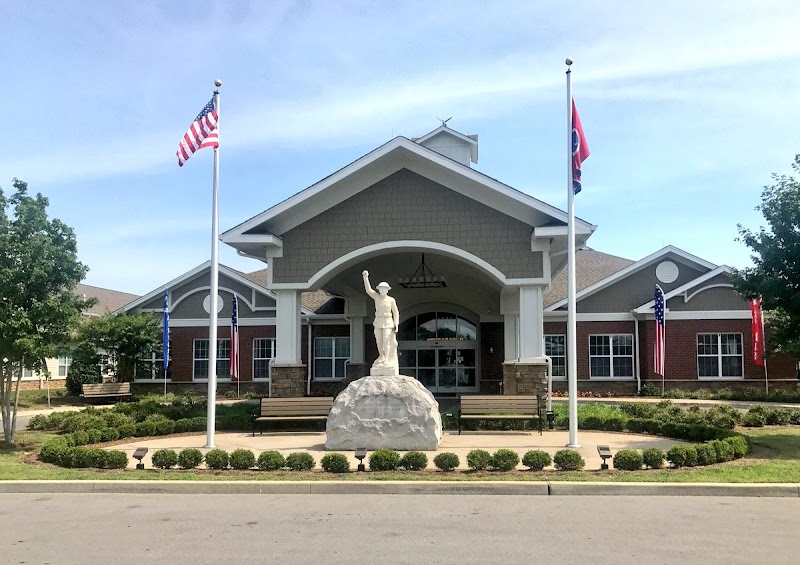
How is Brigadier General Wendell H Gilbert Tn State Veter Staffed?

CMS rates BRIGADIER GENERAL WENDELL H GILBERT TN STATE VETER's staffing level at 1 out of 5 stars, which is much below average compared to other nursing homes.

What Have Inspectors Found at Brigadier General Wendell H Gilbert Tn State Veter?

State health inspectors documented 7 deficiencies at BRIGADIER GENERAL WENDELL H GILBERT TN STATE VETER during 2018 to 2022. These included: 2 that caused actual resident harm and 5 with potential for harm. Deficiencies causing actual harm indicate documented cases where residents experienced negative health consequences.
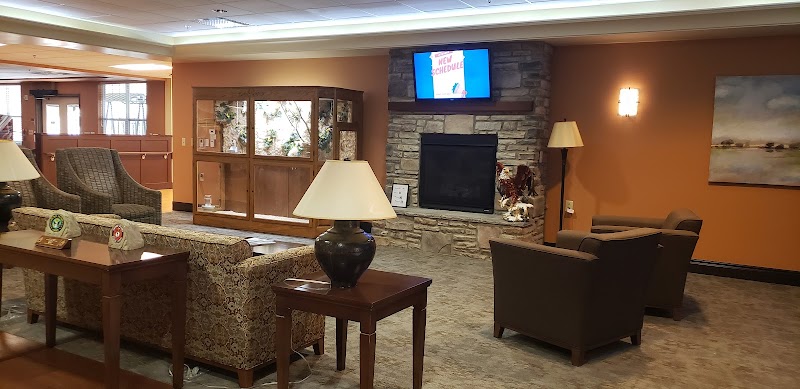
Who Owns and Operates Brigadier General Wendell H Gilbert Tn State Veter?

BRIGADIER GENERAL WENDELL H GILBERT TN STATE VETER is owned by a government entity. Government-operated facilities are typically run by state, county, or municipal agencies. The facility is operated by TENNESSEE STATE VETERANS' HOME, a chain that manages multiple nursing homes. With 108 certified beds and approximately 102 residents (about 94% occupancy), it is a mid-sized facility located in CLARKSVILLE, Tennessee.
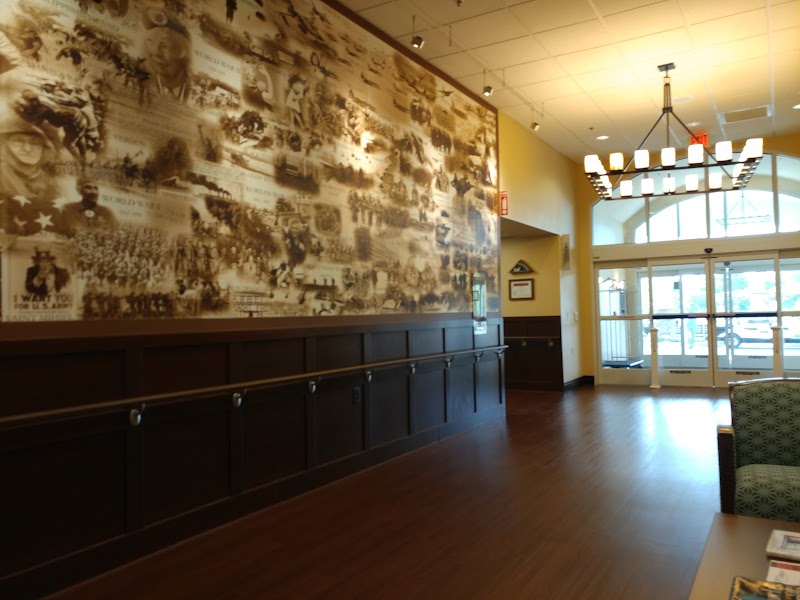
How Does Brigadier General Wendell H Gilbert Tn State Veter Compare to Other Tennessee Nursing Homes?

Compared to the 100 nursing homes in Tennessee, BRIGADIER GENERAL WENDELL H GILBERT TN STATE VETER's overall rating (2 stars) is below the state average of 2.8 and health inspection rating (3 stars) is at the national benchmark.

What Should Families Ask When Visiting Brigadier General Wendell H Gilbert Tn State Veter?

Based on this facility's data, families visiting should ask: "Can you walk me through typical staffing levels on day, evening, and night shifts?" "Can I visit during a mealtime to observe dining assistance and food quality?" "How do you handle medical emergencies, and what is your hospital transfer rate?" "Can I speak with family members of current residents about their experience?" These questions are particularly relevant given the below-average staffing rating.

Is Brigadier General Wendell H Gilbert Tn State Veter Safe?

Based on CMS inspection data, BRIGADIER GENERAL WENDELL H GILBERT TN STATE VETER has a clean safety record: no substantiated abuse findings (meaning no confirmed cases of resident harm), no Immediate Jeopardy citations (the most serious violation level indicating risk of serious injury or death), and is not on the Special Focus Facility watch list (a federal program monitoring the lowest-performing 1% of nursing homes). The facility has a 2-star overall rating and ranks #100 of 100 nursing homes in Tennessee. While no facility is perfect, families should still ask about staff-to-resident ratios and recent inspection results during their visit.

Do Nurses at Brigadier General Wendell H Gilbert Tn State Veter Stick Around?

BRIGADIER GENERAL WENDELL H GILBERT TN STATE VETER has not reported staff turnover data to CMS. Staff turnover matters because consistent caregivers learn residents' individual needs, medications, and preferences. When staff frequently change, this institutional knowledge is lost. Families should ask the facility directly about their staff retention rates and average employee tenure.

Was Brigadier General Wendell H Gilbert Tn State Veter Ever Fined?

BRIGADIER GENERAL WENDELL H GILBERT TN STATE VETER has no federal fines on record. CMS issues fines when nursing homes fail to meet care standards or don't correct problems found during inspections. The absence of fines suggests the facility has either maintained compliance or corrected any issues before penalties were assessed. This is a positive indicator, though families should still review recent inspection reports for the full picture.

Is Brigadier General Wendell H Gilbert Tn State Veter on Any Federal Watch List?

BRIGADIER GENERAL WENDELL H GILBERT TN STATE VETER is not on any federal watch list. The most significant is the Special Focus Facility (SFF) program, which identifies the bottom 1% of nursing homes nationally based on persistent, serious quality problems. Not being on this list means the facility has avoided the pattern of deficiencies that triggers enhanced federal oversight. This is a positive indicator, though families should still review the facility's inspection history directly.