MAGNOLIA CREEK NURSING AND REHABILITATION

1992 HWY 51 S, COVINGTON, TN 38019 (901) 476-1820
For profit - Limited Liability company 156 Beds SIMCHA HYMAN & NAFTALI ZANZIPER Data: November 2025 2 Immediate Jeopardy citations
Trust Grade
4/100
#264 of 298 in TN
Last Inspection: December 2021

Over 2 years since last inspection. Current conditions may differ from available data.

Overview

Magnolia Creek Nursing and Rehabilitation has received a Trust Grade of F, indicating significant concerns about the quality of care provided, which places it among the lowest-rated facilities. It ranks #264 out of 298 nursing homes in Tennessee, meaning it is in the bottom half of all facilities in the state, and it is the second lowest in Tipton County. The facility's situation is worsening, with issues increasing from 1 in 2023 to 4 in 2025, highlighting ongoing problems. Staffing is rated at 2 out of 5 stars, which is below average, and while turnover is slightly better than the state average at 44%, the RN coverage is concerning, being lower than 90% of facilities in Tennessee. Notable incidents include a failure to perform CPR on an unresponsive resident and delays in transferring another resident who displayed acute changes in condition, both of which resulted in critical situations. Overall, while the facility has some strengths in staff retention, the significant issues raised by inspections warrant careful consideration.

Trust Score
F
4/100
In Tennessee
#264/298
Bottom 12%
Safety Record
High Risk
Review needed
Inspections
Getting Worse
1 → 4 violations
Staff Stability
○ Average
44% turnover. Near Tennessee's 48% average. Typical for the industry.
Penalties
⚠ Watch
$15,269 in fines. Higher than 75% of Tennessee facilities, suggesting repeated compliance issues.
Skilled Nurses
⚠ Watch
Each resident gets only 16 minutes of Registered Nurse (RN) attention daily — below average for Tennessee. Fewer RN minutes means fewer trained eyes watching for problems.
Violations
⚠ Watch
25 deficiencies on record. Higher than average. Multiple issues found across inspections.
★☆☆☆☆
1.0
Overall Rating
★★☆☆☆
2.0
Staff Levels
★★☆☆☆
2.0
Care Quality
★☆☆☆☆
1.0
Inspection Score
Stable
2023: 1 issues
2025: 4 issues

The Good

  • Full Sprinkler Coverage · Fire safety systems throughout facility
  • No fines on record
  • Staff turnover below average (44%)

    4 points below Tennessee average of 48%

Facility shows strength in fire safety.

The Bad

1-Star Overall Rating

Below Tennessee average (2.8)

Significant quality concerns identified by CMS

Staff Turnover: 44%

Near Tennessee avg (46%)

Typical for the industry

Federal Fines: $15,269

Below median ($33,413)

Minor penalties assessed

Chain: SIMCHA HYMAN & NAFTALI ZANZIPER

Part of a multi-facility chain

Ask about local staffing decisions and management

The Ugly 25 deficiencies on record

2 life-threatening 2 actual harm
Aug 2025 4 deficiencies 1 IJ
CRITICAL (J) 📢 Someone Reported This

A family member, employee, or ombudsman was alarmed enough to file a formal complaint

Immediate Jeopardy (IJ) - the most serious Medicare violation

Quality of Care (Tag F0684)

Someone could have died · This affected 1 resident

**NOTE- TERMS IN BRACKETS HAVE BEEN EDITED TO PROTECT CONFIDENTIALITY** Based on facility policy review, ANA's [American Nurses Association] Principles for Nursing Documentation, review, job descripti...

Read full inspector narrative →
**NOTE- TERMS IN BRACKETS HAVE BEEN EDITED TO PROTECT CONFIDENTIALITY** Based on facility policy review, ANA's [American Nurses Association] Principles for Nursing Documentation, review, job description review, medical record review, Neuro (Neurological) Check Assessment Form review, and interviews the facility failed to ensure treatment and care was provided in accordance with professional standards of practice, the comprehensive care plan and the resident's goals for care. The facility failed to promptly identify and intervene for an acute change in condition for 1 of 3 (Resident #1) sampled residents reviewed for quality of care. The facility's failure to ensure a resident received appropriate assessments and interventions resulted in Immediate Jeopardy when on [DATE] Resident #1 was noted to have a raised area on his left forehead. Nursing staff notified the contracted telehealth provider and failed to give complete, relevant, and accurate information resulting in Resident #1 remaining in the facility for 7 hours and 36 minutes before being transferred to the emergency room for evaluation of a life-threatening condition. Nursing staff also failed to notify a provider when Resident #1 had an acute change in condition from his baseline status resulting in the family requesting transfer to the hospital. Resident #1 was admitted to the hospital for a subdural hemorrhage on [DATE] and died on [DATE]. Immediate Jeopardy is a situation in which the provider's noncompliance with one or more requirements of participation has caused, or is likely to cause, serious injury, harm, impairment, or death to a resident. The Administrator, the Director of Nursing (DON), the Regional Director of Operations (RDO), the Regional Director of Clinical Services (RDCS) and the Area Director of Clinical Services (ACDS) were notified of the Immediate Jeopardy (IJ) for F-684 during the complaint investigation on [DATE] at 7:39 PM, in the conference room. The facility was cited at F-684 at a scope and severity of J, which is Substandard Quality of Care. A partial extended survey was conducted from [DATE] through [DATE]. An acceptable Removal Plan, which removes the immediacy of the Jeopardy for F-684 was received on [DATE]. The Removal Plan was validated onsite by the surveyors on [DATE] through audit review, medical record review, observation, review of education records, and staff interviews. The IJ began on [DATE] and was removed on [DATE]. Noncompliance at F-684 continues at a scope and severity of D for monitoring the effectiveness of the corrective actions. The facility is required to submit a Plan of Correction. The findings include: Review of the facility policy titled, Neurological Assessment, with a facility review date of [DATE], revealed, .It is the policy of this facility to report potential head injuries to the physician and implement interventions to prevent further injury including Neurological Assessment.Guidelines.1. Neurological assessments are indicated.b. Following an unwitnessed fall.c. Following a fall or other accident/injury involving head trauma.d. When indicated by resident's condition.2. Any change in vital signs or/neurological status in a previously stable resident should be reported to the physician immediately.Compliance Guidelines.Resident Neurological Assessment.a. Vital signs.b. General condition and appearance.c. Neurological evaluation for changes in: i. Level of Consciousness.ii. Resident Response.iii. Movement.iv. Hand Grasp.v. Speech.vi. Pupil Reaction.vii. Pupil Size.d. Initial Evaluation of the head, eyes, ears, and nose for significant changes in vision, hearing, smell, or bleeding. e. Initial Assessment of any injuries to head.5. Notify family and document all assessments, actions, and notifications. Review of the facility policy titled, Notification of Changes, revised on 6/2025, revealed, .The purpose of this policy is to ensure the facility promptly informs the resident, consults the resident's physician; and notifies.resident's representative when there is a change requiring notification.Life-Threatening Conditions Examples-Heart Attack or Stroke.Guidelines.Significant change in the resident's physical, mental or psychosocial condition such as deterioration in health, mental or psychosocial status.Circumstances that require a need to alter treatment. Review of the undated Charge Nurse-Registered Nurse (RN)/Licensed Practical Nurse (LPN) job description revealed, .Complete accident/incident reports, as necessary.Chart nurses' notes in an informative and descriptive manner that reflects the care provided to the resident, as well as the resident's response to care.Write nurses' notes to reflect that the care plan is being followed when administering nursing care or treatment.Deliver and maintain optimum resident care and comfort by demonstrating knowledge and skills of current nursing practices.Notify the resident's attending physician when the resident is involved in an accident or incident.Monitor seriously ill residents, as necessary. The facility was unable to provide a policy for Nursing Services. Review of the medical record revealed Resident #1 was admitted to the facility on [DATE], with diagnoses which included Heart Failure, Convulsion, Hypertension, Occlusion and stenosis of carotid artery, Difficulty in walking, Cognitive communication deficit, Anxiety disorder, and Insomnia. The facility provided Resident #1's hospital history and physical documentation which included a history of falls prior to his admission. Review of the Physician Order Report for Resident #1 revealed, XXX[DATE].carvedilol [medication given for high blood pressure] .12.5 mg [milligram].twice a day .Eliquis [anticoagulant- medication to prevent blood clots which increases the risk of bleeding] .5 mg .Twice A Day XXX[DATE] .levetiracetam [seizure medication] .750 mg .Twice A Day .Code Status: Full-Full Treatment . Review of the comprehensive care plan for Resident #1 dated [DATE], revealed .Problem .Anticoagulant .[Named Resident #1] has potential for injury/bleeding related to anticoagulant therapy .Approach .Observe for signs of active bleeding .Protect resident from injury/trauma . There was no care plan with interventions for Seizures/Anticonvulsant or Advance Directive of Full Code on Resident #1's care plan dated [DATE]. Review of the Risk Assessment Bundle for Resident #1 dated [DATE], revealed Resident #1 had a history of falls, altered gait (pattern in which a person walks) pattern and was high risk for falls. Review of the Physician Order Report for Resident #1 revealed, XXX[DATE] .aspirin [antiplatelet- medication to prevent blood clots, can increase risk of bleeding] .81 mg . Once A Day .amlodipine [blood pressure medication].10 mg.PRN [as needed] . Review of the admission Minimum Data Set (MDS) assessment dated [DATE], revealed Resident #1 had a Brief Interview for Mental Status (BIMS) score of 0, which indicated severe cognitive impairment. Resident #1 required assistance with bed mobility, transfers, and walking 10 feet. Fall history on admission was marked unable to determine. Resident #1 received an anticoagulant, antiplatelet, and anticonvulsant over the 7-day look-back period for this assessment. Review of the meal intake documentation for Resident #1 dated [DATE]-[DATE], revealed meal intakes ranged between 51% to 76% except for [DATE]. On [DATE] Resident #1's meal intake was documented as none for breakfast and lunch. Review of the Progress Notes dated [DATE], [DATE], and [DATE], revealed Resident #1 was up walking around the memory care unit at various times. Review of the Medical Director's Progress Notes dated [DATE], revealed .[Resident #1].with past medical history significant for advanced dementia, hypertension, stroke and seizure disorder.[Resident #1] has history of dementia.continues with Melatonin for sleep. There are no current reported concerns of lethargy [lack of energy or excessive sleepiness] or mental status changes. There are no current reported concerns of decreased oral intake [meals and liquids].no current reported concerns of.elevated blood pressure readings.continues with Eliquis.High risk of fall.Hypercoagulable [High risk of forming blood clots] status.Continue to take.aspirin.Continue full code. Review of the Vital Signs Report dated 5/2025 revealed Resident #1's Blood Pressure (B/P-systolic top number represents pressure in your arteries when your heart beats/ diastolic bottom number the pressure inside the artery when your heart rests between beats) readings documented twice daily for 2 weeks prior to Resident #1's change in condition, averaged between 115-141 systolic and 70-90 diastolic. On [DATE], RN C documented Resident #1's BP reading of 168/97 taken at 8:58 AM. RN C did not document a follow up BP reading during her 6:00 AM-6:00 PM shift. Review of the Progress Note for Resident #1 dated [DATE] at 5:40 AM, revealed .Nurse [LPN B] was made aware by CNA [Certified Nursing Assistant A] .she noted a fluid filled raised area on LT [left] side of [Resident #1] forehead. No noted falls during the night and resident was in bed resting when CNA [CNA A] noticed area.BP 162/116.[Named Telehealth Provider] was contacted, and MD [Telehealth Provider - Medical Doctor (TMD) #1] stated to mark the area and monitor for increase in size and a cool compress could be applied. Review of TMD #1's Progress Note for Resident #1 dated [DATE] revealed, .5:40 [AM].Primary Chief Complaint.Facial Swelling.Defined area on the left side of the forehead noticed today patient denies, and there has been no recorded trauma no falls no hitting head. Patient has no tenderness and his mental status had remained at baseline area appears to look like a lipoma however, we will monitor the size. cold compress q [every] shift.Source of verification for all history: Per nurse and/or patient, Per scanned documents [scanned picture].BP Sys: [systolic]162 ./Dia: [diastolic] 116 .Exam findings per nurse and video observation.left forehead/temporal area with lipoma like mass nontender, no bruising skin intact.Diagnosis.Localized swelling, mass and lump.Please use skin marker to outline the area and evaluate for increase in size.use cool compress Q [every] shiftNotify [shift Notify] a clinician of any change in condition. Review of Resident #1's Medication Administration Record (MAR) dated [DATE], revealed there was no documented administration of amlodipine 10 mg which was ordered as needed for hypertension. There was no documented administration of Resident #1's scheduled medications which included carvedilol 12.5 mg given for hypertension (high blood pressure). Review of the Neuro Check Assessment Form dated [DATE], for Resident #1 revealed 9 neurological assessments were completed from 5:55 AM to 10:40 AM. All areas of the assessments were marked the same. Level of consciousness was marked 1 for fully conscious. Resident response was marked 1 for name. Movement was marked 1 for all 4 extremities. Hand grasp was marked 1 for equal and strong. Speech was marked 1 for clear. Pupil reaction was marked 1 for brisk (both eyes). Pupil size bilateral was marked 3 (choices were 1 for equal in size and 2 for not equal in size). There were no vital signs documented on the form. Review of the Vitals Report and the Progress Notes for Resident #1 revealed there were no vital signs documented on [DATE] after 5:40 AM (when LPN B noted the swollen area on Resident #1's forehead and a BP of 162/116) until Family Member (FM) E found Resident #1 unresponsive and requested RN C to transfer him to the hospital (approximately 7 hours later). The Neuro Check Assessment Form indicated Resident #1's neurological status findings were without change. RN C completed the assessments at 6:25 AM, 6:40 AM, and 7:10 AM. RN C confirmed Resident #1 did not wake up during the neuro check assessments and did not grasp her hand during the neuro check assessment which indicated Resident #1's change in condition. Review of the Daily Skilled Service Observation Details (Daily Skilled Note) for Resident #1 dated [DATE] at 10:07 AM, revealed .Cognition.Alert.Confused.Neurological Symptoms.None.Change in Cognitive Status.No Change.Pulmonary Status.Lungs Clear.Cardiovascular/Circulatory.N/a [Not Applicable].Integumentary Status.No new open Areas or skin issues. The daily Skilled Note was completed by RN S. Review of the Progress Note dated [DATE], revealed .12:46 [PM] .Resident [Resident #1] sent to [Named Hospital #1] ED [Emergency Department] for evaluation per family request. Review of the Discharge/Transfer with Bed Hold document for Resident #1 dated [DATE], revealed, .Blood Pressure 140/106 .Reason for Transfer .Resident or Family initiated transfer .Progress Note related to condition leading to transfer .Family requested resident be sent to ED for evaluation .Name of MD/Provider Notified . [Named NP] . Review of Resident #1's Emergency Medical Service (EMS) report dated [DATE] at 1:05 PM, revealed .dispatched and responded immediately with lights and sirens.to [Named Facility #1] for complaint of hematoma to forehead needing X-ray.Arrived to find [Named Resident #1] sitting limp in wheelchair unresponsive to verbal stimuli and sternal rub [Painful stimulus caused by firmly rubbing with knuckles across an unresponsive person's chest to cause a response]. Pt's [patient's/Resident #1] nurse [RN C] reports last known well to be approximately when she get [got] off her shift last night [[DATE] at approximately 6:30 PM] as he [Resident #1] was up and walking around. Pt's wife [FM E] had come to visit today [[DATE]] and noticed the hematoma on the forehead and requested nurse to send the patient out for evaluation. Nurse [RN C] reported that none of their staff had witnessed any fall or any other mechanism of injury over the night [[DATE]] and that the patient had been asleep all morning [[DATE]] in his wheelchair.Pt is on Eliquis blood thinner .PARAMEDIC ASSESSMENT - GCS [Glasgow Coma Scale- used to help assess acute brain injury and impaired consciousness] 7 [score] (1) eyes none, (2) verbal sounds (pt reacted to IV [catheter inserted into a vein] insertion by shouting), (4) normal flexion (when starting IVs, otherwise unresponsive to any other physical stimuli).hematoma to left forehead and right deviated gaze, pupils 4 mm [millimeter] bilaterally and sluggish reaction to light.extremities flaccid.Pt extremity lifted from wheelchair to stretcher by emt [Emergency Medical Technician] x 2 [two persons] .transported emergent with lights and sirens to [Hospital #2] ED due to neuro specialty. Pt condition remained unchanged throughout transport. Upon arrival.pt was triaged and immediately wheeled to CT [Computed Tomography imaging procedure that uses X-rays] .revealed large right subdural hemorrhage [a pool of blood between the brain and its outermost covering] . Review of Hospital #2's admission Record for Resident #1 dated [DATE], revealed .Chief Complaint Patient presents with Altered Mental Status.M [male] with a h/o [history of] afib [Atrial Fibrillation] on Eliquis, seizures.LKN [Last Known Normal] last night. Possible fall- nursing found pt [patient] this AM with a hematoma to his L [left] forehead.Vitals: BP 141/91.Neurological.Poorly responsive, R [right] gaze deviation - does not regard examiner [look at examiner] or track [follow objects with eyes], nonverbal, not withdrawing to painful stimulus at this time.ED Course.Spoke with radiology-large left sided SDH [Subdural Hematoma/Hemorrhage] 9mm midline shift [brain tissue is displaced across the brain's center line].Call out to neurosurgery, reversing Eliquis.Pt will now intermittently cross midline [moving arms or legs but not consistently], pulling at lines and clothes at times.Pt going to OR [Operating Room] with NSGY [Neurosurgery].CT evaluation of the nonvascular structures of the head and/or neck. Left hemispheric subdural hematoma again observed.There is an acute left cerebral convexity [outer surface of the brain] subdural hemorrhage with maximal thickness of 13 mm .Upon my evaluation, this pt had a high probability of clinically significant imminent or life-threatening deterioration due to subdural hemorrhage.Neuro Critical Care History and Physical.This.male.on Eliquis.seizure.presented with a change in mental status. The wife stated yesterday he was at baseline able to walk, feed himself, and talk some.NEUROSURGERY CONSULT NOTE.Presented to ER with hematoma on the left forehead above the eyebrow .Spoke with family at bedside. They wish for full neurosurgical intervention.PLAN.Unfortunately his exam continues to climb since arrival to ER. I think this is going to continue to get worse if we do not intervene.We will proceed to the OR for a [an] emergent left sided open craniotomy [surgical procedure that involves making an opening in the skull] for subdural hematoma evacuation [removal]. Review of Hospital #2's Patient Summary and Hospital Course dated [DATE], revealed Resident #1 was admitted for traumatic left acute subdural hematoma. Emergency craniotomy was performed to remove the hematoma. Resident #1's prognosis was complicated by postoperative seizures and Resident #1 required intubation (installed tube in the windpipe to maintain the airway) for respiratory failure. Further testing revealed concerns for anoxic/toxic encephalopathy (brain injury caused by a lack of oxygen and/or presence of toxins) with guarded prognosis. Discussion with family related to status resulted in the decision to switch Resident #1 to comfort care measures with Hospice. Resident #1 received Hospice care within the hospital setting and expired on [DATE]. During a telephone interview on [DATE] at 2:20 PM, FM E stated when she left Resident #1 around 6:30 PM on [DATE] he was walking, talking and smiling. FM E stated, .I was a little bit late getting to the facility that morning [[DATE]].about 10:30 [AM], [Resident #1] was not in the hallway like he often was before lunch.he was in the dining room sitting in a wheelchair with his head down.I called his name and he did not turn towards me, as he usually does.I touched him on the shoulder and he did not move or respond.the nurse [RN C] said he was like that when she got there around 6:30 [AM]. I [FM E] said he won't wake up, something is wrong, [RN C] told me he was probably just sleepy because [Resident #1] had been up during the night.[CNA D] told me he was up, dressed and in a chair when she got there.we took him to his room.[RN C] couldn't get him to wake up.I had to ask them to call an ambulance.the ambulance person called me from the ambulance and told me [Resident #1] symptoms were so severe he needed to go on to Memphis.[Facility #1] said he didn't have a fall, something happened, there was skin broke on his left arm. FM E stated the facility did not call her and tell her about the hematoma on Resident #1's forehead. FM E concluded she would have come in earlier and sent Resident #1 to the hospital. FM E then became emotional and ended the phone call. During a telephone interview on [DATE] at 4:38 PM, TMD #1 stated, .The nurse [LPN B] provided a picture.of a gentleman [Resident #1] with a raised area on his forehead.The nurse [LPN B] provided a detailed report of raised soft area and no complaint of pain or tenderness at site.the patient was at baseline cognitive level, and he did have an elevated BP.The nurse [LPN B] reported the patient had a history of hypertension and frequent episodes of elevated BP . TMD #1 confirmed LPN B did not report the patient's use of blood thinning medication, cognitive impairment, or status of fall risk. TMD #1 stated, .the nurse [LPN B] was very sure.clear the patient had not been involved in a fall or other trauma. TMD #1 acknowledged she gave the order to circle the area, monitor for increase in size, and follow up with changes. During a telephone interview on [DATE] at 11:39 PM, LPN B stated, .We [LPN B and CNA A] checked on [Resident #1] frequently all night [[DATE]-[DATE]].he was in bed asleep.a couple of times he was sitting on the side of the bed.[On [DATE]] about 5:30 [AM] [CNA A] was getting him up and she didn't see anything unusual.he [Resident #1] came down the hall and said good morning to me.he walked over to the door to answer because someone was knocking, that's when [CNA A] noticed the raised area on his forehead.his BP was 162/116, but that wasn't unusual for him, he has high blood pressure.I called [TMD #1], I sent a picture.the doctor knew his BP was high.I told her he had not fallen during the night, I told her there had not been any trauma.he was at baseline physically and cognitively.[Resident #1] didn't have any pain.[CNA A] had taken him outside for a while the evening before.I thought it [hematoma] could be an allergic reaction to a mosquito bite.area was soft and squishy.[TMD #1] told me to draw a line around the area to see if it gets bigger.I did not give her a list of medicines.don't recall telling her he was on a blood thinner, they can see his records and I assumed [TMD #1] looked at his meds. I didn't specifically tell [TMD #1] he was cognitively impaired or a high fall risk. Again, they [TMD #1] have access to the medical record, I assume they look at them.There wasn't any trauma that I know of.we watched him.we did not have him.1 on 1 every minute.I guess he could have fallen and got himself up.I know there wasn't an injury. The nurse confirmed she did not ask Resident #1 if he fell or what had happened due to his level of cognitive impairment. LPN B stated, .It is not likely [Resident #1] could tell me, he is on memory care for a reason.Dementia patients show pain in other ways, they don't always tell you. [Resident #1] wasn't scratching at the area, didn't look like bruising.on a blood thinner there would be a bruise, skin would be darker. LPN B was asked if she had opened an event/incident report in the EHR and replied, Yes. LPN B was asked if she performed neuro checks on Resident #1 and she responded, .Yes, I didn't document them [neuro check assessments] in the computer, I put them on the paper form. There is a place to put the neuro checks, it prompts you to add them for head injury.I'm not sure why I put them on paper, it's been a while since that [[DATE] the morning Resident #1 was observed with a hematoma on his left forehead] happened. During a telephone interview on [DATE] at 12:06 AM, CNA A stated, .I checked on him [Resident #1] frequently.he was either sleeping or sitting up on the side of the bed.the bed was in the lowest position, but he could get up.sometimes he did get up and wander around. CNA A confirmed she checked on Resident #1 during the night and was not always monitoring him because there were 15-16 other residents on the Memory Care Unit. CNA A stated the raised area was not present the night of [DATE] and she did not see it until the morning of [DATE]. CNA A stated, .I got him up and dressed him, the nurse [LPN B] took his vital signs and I walked with him to the common area. [Resident #1] was at baseline walking and talking.nothing unusual.didn't even notice the spot [hematoma] until he walked to the back door.it [hematoma] was small, soft, squishy.we [CNA A and LPN B] figured it was a reaction, like allergic to a mosquito bite.I had taken [Resident #1] outside for a little while the night [[DATE]] before.I don't remember asking [Resident #1] what happened to his head.[Resident #1] wasn't scratching at it [hematoma]. During an interview on [DATE] at 12:44 PM, the MD stated he would expect nursing staff to notify the provider to obtain an order for residents to be sent out for evaluation when any type of injury to the head was observed or suspected with use of anticoagulant therapy. The MD was asked about Resident #1's head injury on [DATE]. The MD replied, . [LPN B] called the [Named Telehealth Provider], and the resident was sent out for evaluation. The MD was unaware Resident #1 had remained in the facility for approximately 7 hours prior to being sent out per family request. The MD was asked to review the photo of Resident #1's raised area provided by LPN B to TMD #1. The MD responded, .[Resident #1] should have been sent to the hospital.high fall risk.anticoagulants.location of the area.not a lipoma.located on his forehead above the temple.not on his arm or leg.I am not here to judge another physician.on-call would depend on the nurse to report all risk and potential.should send out. The MD was asked if he would expect vital signs to be obtained and documented as part of the neurological assessments. The MD replied, Yes. The MD was asked if he expected nursing staff to obtain follow-up BP for abnormal readings and document the results. The MD replied, Yes. During a telephone interview on [DATE] at 3:05 PM, CNA D stated on [DATE] she received a report at 6:00 AM from CNA A related to Resident #1 having a raised area on his forehead. Resident #1 was sitting in a chair with a wheelchair beside him in the common area of the hall. CNA D described the raised area as .small, like a mosquito bite, like someone having an allergic reaction to a mosquito bite. CNA D stated at 7:00 AM Resident #1 got into the wheelchair and she pushed him to the dining room. Resident #1 went to sleep and did not eat breakfast. CNA D stated, .I woke him up and he just looked at it [breakfast].that wasn't unusual for him.[Resident #1] didn't eat lunch either, I woke him up and he looked over at the table, then went back to sleep.and like I said, that was not unusual for him.[FM E] came in and tried to wake him up.ask me to take him to his room.[Resident #1] woke up in the room when [FM E] shook him and patted his face.didn't talk, he just looked up and drifted back to sleep. CNA D concluded she had been around Resident #1 all morning in the dining room. CNA D was asked if she saw RN C do vital signs on Resident #1 in the dining room on [DATE]. CNA D replied, .not in the dining room, I saw her do vital signs one time and that was in the room.[FM E] told me to go get the nurse [RN C] because [Resident #1] would not wake up, [RN C] came in the room and did the BP at that time.[FM E] wanted [Resident #1] put in the bed.called [Named CNA R] to help me.[FM E] changed her mind, asked [RN C] to call an ambulance.left him in the chair. During a telephone interview on [DATE] at 12:24 PM, the Paramedic stated Resident #1 was sitting in a wheelchair, limp and slumped over when EMS arrived at the room. Resident #1 was not responsive to physical or verbal stimuli. RN C reported Resident #1's last known well time at the end of her shift (approximately 6:30 PM) on [DATE]. RN C reported Resident #1 was up and walking around when she left on [DATE] and sitting in wheelchair limp and nonresponsive when she arrived the morning (6:00 AM) of [DATE]. RN C reported staff had not witnessed any falls or any injury mechanism overnight. FM E came in to visit and requested to send Resident #1 out. Resident #1 had been sleeping all morning in his wheelchair. The Paramedic stated, .[Resident #1]'s feet were edematous [swollen with fluid].Resident #1] did make a sound when I started the IV.had flexion in his arm when we started the IV.never opened his eyes.GCS of 7. 1 for eyes [no eye opening], 2 for verbal sound [incomprehensible sounds], 4 for flexion [arm-withdrawal from pain].remained unresponsive for duration of care.We took him to [Named Hospital #2].because of his responses and the time he had been sitting with the head injury.being unresponsive gave me a high index of suspicion of traumatic brain injury or brain bleed or stroke.[Resident #1] had a right deviated gaze.gives suspicion of intercranial pressure.indicates brain bleed.Very large hematoma, about the size of a golf ball. The Paramedic confirmed Resident #1 did not wake or walk to the stretcher, his extremities were limp requiring two person lift to the stretcher, and he was never alert during transport. During an interview on [DATE] at 12:38 PM, CNA R stated on [DATE] CNA D asked her to assist with putting Resident #1 in bed. CNA R stated when she arrived at Resident #1's room, she observed Resident #1 sitting in his wheelchair with his head down and eyes closed. CNA R stated, .[Resident #1]'s wife [FM E] told me she didn't want him in the bed, she wanted an ambulance to come and get him.I tried to wake [Resident #1] up.I shook him and called his name, and he never responded.[RN C] came in the room as I was leaving. During an interview on [DATE] at 3:20 PM, RN M stated, .On [DATE] [Named RN C] called and asked what [Named Resident #1]'s baseline was because the wife said he wasn't at his baseline.[Resident #1] was normally alert, oriented to self and recognizes his wife. usually up and walking around, hard to get him to stay in one spot, anxious.I never actually went back to memory care and looked at [Resident #1].helped by documenting [Named Resident #1]'s vital signs, a progress note and printing off transfer paperwork. with a head injury and use of anticoagulants, even if the doctor did not order a transfer out, I would press on to get the order to send out.at times you have to press a little harder with the on-call doctors. During an interview on [DATE] at 3:56 PM, RN S stated she documented Resident #1's Skilled Observation Note on [DATE]. RN S acknowledged she had not actually observed Resident #1 on [DATE] and documented the information provided by RN C. RN S confirmed a resident with a head injury or possible head injury and on blood thinning medications would need to be sent out for evaluation for a brain bleed. RN S stated, .if the telehealth physician did not order the transfer, I would request the order due to the risk of brain bleed.getting evaluation and treatment could prevent death to the resident.I would complete neuro checks in the computer under the event note.if you are performing neuro checks there was a reason to open an event note.wouldn't document in progress note only. During an interview on [DATE] at 4:49 PM, LPN U confirmed residents who present with a raised area or swelling on the forehead need to be evaluated for head injury and if they are taking anticoagulants, they should be sent to the emergency room for evaluation. LPN U concluded she would call the on-call and request the transfer order due to risk of brain bleed. During an interview on [DATE] at 4:55 PM, LPN P was asked what steps she would take for a resident who presented with a raised area to their head, and she was unaware of how the injury occurred. LPN P stated, .the resident could have had a fall or accident.risk of blood clot or brain bleed.need to call someone and get him sent out even if the resident appeared fine, I would be more concerned if the resident was taking Eliquis.could be something more serious.neuro checks are done in the computer system, and they include a blood pressure check. During an interview on [DATE] at 5:16 PM, RN N stated when
CONCERN (D) 📢 Someone Reported This

A family member, employee, or ombudsman was alarmed enough to file a formal complaint

Potential for Harm - no one hurt, but risky conditions existed

Report Alleged Abuse (Tag F0609)

Could have caused harm · This affected 1 resident

**NOTE- TERMS IN BRACKETS HAVE BEEN EDITED TO PROTECT CONFIDENTIALITY** Based on facility policy review, signed Job Description review, medical record review, and interview, the facility failed to ens...

Read full inspector narrative →
**NOTE- TERMS IN BRACKETS HAVE BEEN EDITED TO PROTECT CONFIDENTIALITY** Based on facility policy review, signed Job Description review, medical record review, and interview, the facility failed to ensure an injury of unknown origin was reported to the State Survey Agency (SSA) for 1 of 10 (Resident #1) sampled residents reviewed for abuse. The facility also failed to report the results of a thorough investigation for abuse within 5 working days to the SSA. The findings include: Review of the facility policy titled, Abuse, Neglect and Exploitation, revised 5/2025, revealed .It is the policy of this facility to provide protections for the health, welfare and rights of each resident by developing and implementing written policies and procedures that prohibit and prevent abuse, neglect.Abuse.includes the deprivation by an individual, including a caretaker, of goods or services that are necessary to attain or maintain physical, mental, and psychosocial well-being.Neglect means failure of the facility, its employees, or service providers to provide goods and services to a resident that are necessary to avoid physical harm .Failure to implement effective communication system across all shifts for communicating necessary care and information between staff, practitioners and resident representatives.Prevention of Abuse, Neglect.The identification, ongoing assessment, care planning for appropriate interventions, and monitoring of residents with needs and behaviors which might lead to conflict or neglect.Possible indicators of abuse include.Physical injury of a resident, of unknown source.Failure to provide care needs such as.safety.An immediate investigation is warranted when suspicion of abuse, neglect. Review of the medical record revealed Resident #1 was admitted to the facility on [DATE], with diagnoses which included Heart Failure, Convulsion, and Hypertension. Review of the admission Minimum Data Set (MDS) assessment dated [DATE], revealed Resident #1 had a Brief Interview for Mental Status (BIMS) score of 0, which indicated severely cognitively impaired. Record review revealed on [DATE] at approximately 5:30 AM, nursing staff observed a swollen area on Resident #1's forehead above his left eyebrow. There was no documentation Resident #1 had fallen or sustained an injury. Resident #1 was found by Family Member (FM) E unresponsive and sent to the hospital for evaluation several hours later. Resident #1 underwent emergency surgery due to bleeding in the brain and was discharged to the hospice unit in house where he died on [DATE]. The facility did not investigate the injury of unknown origin and the cause of Resident #1's injury remains unknown. During a telephone interview on [DATE] at 11:39 PM, Licensed Practical Nurse (LPN) B stated on [DATE] at approximately 5:30 AM, Certified Nursing Assistant (CNA) A noticed a raised area on Resident #1's forehead above his left eye. LPN B stated Resident # 1 had been observed sleeping in bed through the night ([DATE]-[DATE]) and did not have any falls or known trauma to his head. LPN B was asked if she had asked Resident #1 what happened to cause the swollen area on his head. LPN B stated she did not ask Resident #1 what happened due to his severe cognitive impairment. LPN B was asked if she knew how Resident #1 sustained the hematoma on his forehead. LPN B stated the raised area was soft and squishy like an allergic reaction to a mosquito bite. LPN B concluded she did not know for certain what caused the raised area due to staff was not monitoring Resident #1 at all times. LPN B confirmed she did not believe Resident #1 had fallen or caused an injury to himself. LPN B was asked if she had received training for abuse which included recognizing and reporting an injury of unknown origin. LPN B stated she had received training on abuse and did not recall reporting injuries as suspected signs of abuse. During a telephone interview on [DATE] at 12:06 AM, CNA A stated on [DATE]-[DATE] she frequently observed Resident #1 in bed sleeping, and sitting on the side of the bed, which was in the lowest position. CNA A stated Resident #1 would get out of bed at times and wander around the Memory Care Unit. CNA A confirmed she was not always monitoring him during the night ([DATE]-[DATE]) because there were 15-16 other residents on the Memory Care Unit. CNA A was asked if she had received education on abuse which included recognizing and reporting an injury of unknown origin. CNA A confirmed she was not aware a head injury could be a sign of abuse. During an interview on [DATE] at 3:56 PM, Registered Nurse (RN) S stated her last abuse in-service was more than a year ago as she had just worked a minimal schedule while attending school. RN S stated she did not recall being given education related to reporting an injury of unknown origin as suspected abuse. During an interview on [DATE] at 4:49 PM, LPN U stated the last in-service training she received was within the past 3 months. LPN U did not recall specific training on injury of unknown origin being included in the reporting requirements for abuse. During an interview on [DATE] at 5:16 PM, RN N stated the last in-service on abuse was within the past year. RN N acknowledged she was not aware of the requirement to report an injury of unknown origin within a specified time frame. During a telephone interview on [DATE] at 11:00 AM, RN C stated on [DATE] she worked 6:00 AM to 6:00 PM on the Memory Care Unit. RN C stated Resident #1 did not have a raised area on his left forehead when she left work on [DATE]. RN C stated during morning (6:00 AM) report on [DATE], LPN B reported Resident #1 had a raised area on his left forehead. LPN B reported Resident #1 had not had a fall and she didn't know what caused the raised area on his forehead. RN C stated LPN B did not complete an event report and did not ask her to complete the event report for the raised area. RN C was asked if she had reported the injury to Administration. RN C replied, No. RN C was asked if she had been educated on recognizing abuse and reporting abuse. RN C acknowledged she had received abuse education, and she had provided abuse education during her employment in the facility. RN C was asked what she was required to do if a resident had an injury no one had witnessed happening and the resident was unable to explain how the injury occurred. RN C replied, .If the injury needed treatment, I would call the doctor.I would fill out an incident report and give it to the Unit Manager. During an interview on [DATE] at 1:45 PM, the Director of Nursing (DON) acknowledged she was aware Resident #1 was sent to the hospital on [DATE] for evaluation of a raised area on his left forehead and she did not have any concerns with the assessment and intervention provided to Resident #1 by nursing staff. The DON was asked if the facility had determined the cause of Resident #1's injury to his forehead. The DON stated there was not an injury or fall and staff concluded the raised area was probably an allergic reaction to a mosquito bite. The DON was asked if staff provided monitoring for Resident #1 at all times during the night of [DATE]-[DATE]. The DON stated staff did not monitor at all times. The DON was asked if Resident #1's injury of unknown cause had been reported to the SSA within two hours and the facility investigation results reported to the SSA within 5 business days. The DON confirmed the injury had not been reported to the SSA and investigated. During an interview on [DATE] at 2:42 PM, the Administrator stated as the Administrator and Abuse Coordinator she was responsible to ensure allegations of abuse, known or suspected, are reported to the SSA in the required time frame. Refer to F684
CONCERN (D) 📢 Someone Reported This

A family member, employee, or ombudsman was alarmed enough to file a formal complaint

Potential for Harm - no one hurt, but risky conditions existed

Investigate Abuse (Tag F0610)

Could have caused harm · This affected 1 resident

**NOTE- TERMS IN BRACKETS HAVE BEEN EDITED TO PROTECT CONFIDENTIALITY** Based on the facility policy review, signed Job Description review, medical record review, and interview, the facility failed to...

Read full inspector narrative →
**NOTE- TERMS IN BRACKETS HAVE BEEN EDITED TO PROTECT CONFIDENTIALITY** Based on the facility policy review, signed Job Description review, medical record review, and interview, the facility failed to investigate an injury of unknown origin for 1 of 10 (Resident #1) sampled residents reviewed for abuse. The findings include: Review of the facility policy titled, Abuse, Neglect and Exploitation with a revision date of 5/2025, revealed .It is the policy of this facility to provide protections for the health, welfare and rights of each resident by developing and implementing written policies and procedures that prohibit and prevent abuse, neglect.Abuse.includes the deprivation by an individual, including a caretaker, of goods or services that are necessary to attain or maintain physical, mental, and psychosocial well-being.The facility will develop and implement written policies and procedures .to investigate any such allegations; and .Include training for new and existing staff on activities that constitute abuse .reporting procedures, and dementia management .Training topics will include .Identifying what constitutes abuse .Recognizing signs of abuse, neglect .Reporting process for abuse, neglect including injuries of unknown sources .Possible indicators of abuse include .Physical injury of a resident, of unknown source .Failure to provide care needs .An immediate investigation is warranted .Reporting of all alleged violations to the Administrator, state agency, adult protective services and to all other required agencies .Immediately, but not later than 2 hours after the allegation . Review of the Director of Nursing's (DON) job description signed on 1/2020, revealed .To manage the overall operations of the Nursing Department in accordance with Company policies, standards of nursing practices and governmental regulations so as to maintain excellent care of all residents' needs.Management duties including.training and developing, coaching and counseling.Inform state of any reportable incidents within appropriate time frames. Complete investigative analysis as required.Study.Medication Incident Reports and Resident Incident Reports for corrective action. Review of the former Administrator's job description signed on [DATE], revealed .Lead and direct the overall operations of the facility in accordance with customer needs, government regulations and.policies . Review of the medical record revealed Resident #1 was admitted to the facility on [DATE], with diagnoses which included Heart Failure, Convulsion, Hypertension, and Difficulty in walking. Review of the admission MDS assessment dated [DATE], revealed Resident #1 had a BIMS score of 0, which indicated severe cognitive impairment. Record review revealed on [DATE] at approximately 5:30 AM, nursing staff observed a swollen area on Resident #1's forehead above his left eyebrow. There was no documentation Resident #1 had experienced a fall or other cause of the resident's swollen area on the forehead. Resident #1 was found by Family Member (FM) E unresponsive and sent to the hospital for evaluation several hours later. Resident #1 underwent emergency surgery due to bleeding in the brain and was discharged to the hospice unit in house where he died on [DATE]. The facility did not investigate the injury of unknown origin and the cause of Resident #1's injury remains unknown. During a telephone interview on [DATE] at 11:39 PM, Licensed Practical Nurse (LPN) B stated Resident #1 was in bed all night ([DATE]-[DATE]/ 2025). Resident #1 was observed sleeping at times and sitting up on the side of the bed at times. The morning of [DATE], Certified Nursing Assistant (CNA) A got Resident #1 up and dressed then walked him to the hall without noticing the hematoma on his forehead. LPN B spoke to Resident #1 as he passed her in the hallway, without noticing the hematoma. Minutes later, Resident #1 walked to the door and CNA A noticed the raised area when she went to assist him. LPN B notified the telehealth provider and obtained orders to outline the raised area and monitor it for changes. LPN B stated the raised area was soft and squishy like an allergic reaction to a mosquito bite. LPN B was asked if she knew how Resident #1 sustained the hematoma on his forehead. LPN B stated, .I guess I couldn't say for sure because I wasn't with him all the time that night [[DATE]-[DATE]].we did not have him 1 on 1 [monitoring] every minute. I guess he could have fallen and got himself up.I know there wasn't an injury. LPN B confirmed she did not ask Resident #1 if he fell or what had happened due to his level of cognitive impairment because it wasn't likely he could tell her what happened. LPN B confirmed she was asked to provide a statement related to the [DATE] incident on [DATE], during the complaint survey. During a telephone interview on [DATE] at 12:06 AM CNA A stated she observed Resident #1 in bed sleeping, and at times sitting on the side of the bed, which was in the lowest position. CNA A stated Resident #1 could get up with the bed in the low level and would wander around the Memory Care Unit. CNA A confirmed she checked on Resident #1 during the night and was not always monitoring him, because there were 15-16 other residents on the memory care unit. CNA A stated, .I didn't see the place [hematoma] on his head the night before. CNA A was asked if she had received education on abuse which included injury of unknown origin, such as a knot on a resident's head with unknown cause. CNA A confirmed she was not aware a head injury could be a sign of abuse. CNA A confirmed she had not been asked to provide a statement about the incident with Resident #1 until [DATE]. During an interview on [DATE] at 1:45 PM, the DON stated the Staff Development Coordinator (SDC) was in the building on [DATE] and told her about Resident #1 getting sent out per family request. The DON concluded she did not have any concerns with the assessment and intervention provided to Resident #1 by nursing staff. The DON was asked if Resident #1 had an injury of unknown origin which required investigation. The DON stated Resident #1's injury (hematoma) was not caused by an injury or fall and was thought to be a mosquito bite. The DON acknowledged Resident #1 was not monitored at all times during the night of [DATE]-[DATE]. The DON stated the facility started an investigation after APS (Adult Protective Services) came to the facility and told them about the investigation ([DATE]). The DON was asked if the facility was required to investigate injuries of unknown origin. The DON put her head down for a minute and then got up from the table and left the room. During an interview on [DATE] at 2:42 PM, the Administrator stated when a resident has an injury that cannot be explained the facility would be required to investigate. Refer to F684
CONCERN (D) 📢 Someone Reported This

A family member, employee, or ombudsman was alarmed enough to file a formal complaint

Potential for Harm - no one hurt, but risky conditions existed

Medical Records (Tag F0842)

Could have caused harm · This affected 1 resident

**NOTE- TERMS IN BRACKETS HAVE BEEN EDITED TO PROTECT CONFIDENTIALITY** Based on the American Nurses Association (ANA)'s Principles for Nursing Documentation review, facility policy review, medical re...

Read full inspector narrative →
**NOTE- TERMS IN BRACKETS HAVE BEEN EDITED TO PROTECT CONFIDENTIALITY** Based on the American Nurses Association (ANA)'s Principles for Nursing Documentation review, facility policy review, medical record review, and interview, the facility failed to ensure medical records were complete and accurately documented for 1 of 7 (Resident #1) sampled residents reviewed. The findings include: Review of the ANA's Principles for Nursing Documentation dated 2010, revealed .Nurses document their work and outcomes for a number of reasons: the most important is for the communicating within the health care team .Nurses and other health care providers aim to share information about patients and organizational functions that is accurate, timely, contemporaneous, concise, thorough, organized, and confidential .Foremost of such electronic documentation is the electronic health record (EHR), provides an integrated, real-time method of informing the health care team about the patient status. Timely documentation of the following types of information should be made and maintained in a patient's EHR to support the ability of the health care team to ensure informed decisions and high-quality care in the continuity of the patient care .Assessments .Medication records (MAR) .Nursing Documentation Principles .Principle 1. Documentation Characteristics .High quality documentation is: Accurate, relevant, and consistent. Clear, concise, and complete. Timely, contemporaneous, and sequential. Reflective of the nursing process .Principle 5. Documentation Entries .Entries into organization documents or the health record (including but not limited to provider orders) must be: Accurate, valid, and complete; Authenticated; that is, the information is truthful, the author is identified, and nothing has been added or inserted; Dated and time-stamped by the persons who created the entry . Review of the facility policy titled, Documentation in Medical Record, with a facility review date of 1/2025, revealed .Each resident's medical record shall contain an accurate representation of the actual experiences of the resident.information to provide a picture of he resident's progress through complete, accurate, and timely documentation.Licensed staff.shall document assessments, observations, and services provided in the resident's medical record.Documentation shall be completed at the time of service.Principles of documentation included.Documentation shall be factual.False information shall not be documented.Documentation shall be accurate, relevant, and complete, containing sufficient details about the resident's care and/or response to care. Review of the facility policy titled, Neurological Assessment, with a facility review date of 6/19/2025, revealed .It is the policy of this facility to report potential head injuries to the physician and implement interventions to prevent further injury including Neurological Assessment.Guidelines.When indicated by resident's condition.Any change in vital signs or/neurological status in a previously stable resident should be reported to the physician immediately.Compliance Guidelines.Resident Neurological Assessment.a. Vital signs.b. General condition and appearance.c. Neurological evaluation for changes in: i. Level of Consciousness.ii. Resident Response.iii. Movement.iv. Hand Grasp.v. Speech.vi. Pupil Reaction.vii. Pupil Size.d. Initial Evaluation of the head, eyes, ears, and nose for significant changes in vision, hearing, smell, or bleeding. e. Initial Assessment of any injuries to head.5. Notify family and document all assessments, actions, and notifications. Review of the medical record revealed Resident #1 was admitted to the facility on [DATE], with diagnoses which included Heart Failure, Convulsion, Hypertension, and Occlusion and stenosis of carotid artery. Review of the admission Minimum Data Set (MDS) assessment dated [DATE], revealed Resident #1 had a Brief Interview for Mental Status (BIMS) score of 0, which indicated severe cognitive impairment. Review of the Medication Administration Record (MAR) for Resident #1 dated 5/4/2025, revealed administration of amlodipine (medication given for hypertension/high blood pressure) 10 mg (milligram) was administered to Resident #1 for an elevated BP (Blood Pressure-the force exerted by the blood on the walls of the arteries as it flows through them) of 168/122. There was no follow-up BP reading documented in the medical record. Review of the MAR for Resident #1 dated 5/5/2025, revealed Licensed Practical Nurse (LPN) O documented administration of amlodipine 10 mg for a BP of 173/121. There was no follow-up BP reading documented in the medical record. Review of the Nurse Practitioner's (NP) Progress Note for Resident #1 dated 5/5/2025, revealed, .no current reported concerns of.elevated blood pressure readings.no current nurse concerns reported . Review of the Medical Director's (MD) Progress Note for Resident #1 dated 5/6/2025, revealed no new event, no complaints, .Advised per progress . Review of the NP's Progress Note for Resident #1 dated 5/7/2025, revealed, .no current reported concerns of.elevated blood pressure readings.no current nurse concerns reported . Review of the MAR for Resident #1 dated 5/24/2025, revealed RN C documented an administration of carvedilol (medication for hypertension) 12.5 mg and a BP reading documented at 168/97. There were no follow up BP measurements documented in the medical record. Review of the Progress Note dated 5/25/2025 at 5:40 AM, revealed Certified Nursing Assistant (CNA) A notified LPN B about a raised area on Resident #1's left forehead. LPN B documented there were no noted falls during the night of 5/24/2025 and early morning on 5/25/2025. LPN B documented Resident #1 was in bed resting when CNA A noticed the raised area to the Resident's forehead. LPN B documented Resident #1's BP reading was 162/116. LPN B contacted the Telehealth Medical Doctor (TMD) #1 and obtained orders to outline the raised area, monitor for an increase in size and apply cool compresses. Review of the TMD #1's Progress Note dated 5/25/2025, revealed notification by LPN B on 5/25/2025 at 5:40 AM related to Resident #1 having swelling on the left side of the forehead with no reported trauma or fall. TMD #1 provided orders to outline the area, evaluate for increase in size, use cool compress every shift and notify a provider of any changes in condition. Review of the Daily Skilled Service Observation Details (Daily Skilled Note) for Resident #1 dated 5/25/2025 at 10:07 AM revealed, .Cognition .Alert .Confused .Neurological Symptoms .None .Change in Cognitive Status .No Change .Pulmonary Status .Lungs Clear .Cardiovascular/Circulatory .N/A [Not Applicable] .Integumentary Status .No new open Areas or skin issues . Review of the Neuro (Neurological) Check Assessment Form dated 5/25/2025 for Resident #1 revealed nursing staff provided handwritten documentation for neurological assessments for 5:55 AM, 6:10 AM, 6:25 AM, 6:40 AM, 7:10 AM, 7:40 AM, 8:40 AM, 9:40 AM, and 10:40 AM. All entries were answered the same for the assessments as follows: level of consciousness was marked 1 for fully conscious, resident response was marked 1 for name, movement was marked 1 for all 4 extremities, hand grasp was marked 1 for equal and strong, speech was marked 1 for clear, pupil reaction was marked 1 for brisk for both eyes, pupil size bilateral was marked 3 (choices for pupil size bilateral were 1 for equal and 2 for not equal). There were no vital signs documented on the form. Resident #1's neurological assessments were documented on paper with handwritten entries including nurse's initials for completion. Registered Nurse's (RN) C) initials were marked under nurse signature for neuro checks completed on the Neuro Check Assessment Form at 6:25 AM, 6:40 AM, and 7:10 AM Review of the Discharge/Transfer with Bed Hold document for Resident #1 dated 5/25/2025, revealed .Blood Pressure 140/106 .Reason for Transfer .Resident or Family initiated transfer .Progress Note related to condition leading to transfer .Family requested resident be sent to ED for evaluation .Name of MD/Provider Notified .[Named NP] . During a telephone interview on 6/24/2025 at 2:20 PM, Family Member (FM) E stated she arrived at Facility #1 between 10:30 AM and 11:00 AM and found Resident #1 sitting in his wheelchair unresponsive to her touch and voice. FM E stated RN C suggested Resident #1 was probably just sleepy due to being up during the night of 5/24/2025. FM E stated she noticed the knot on Resident #1's left forehead and asked CNA D to take Resident #1 to his room and get the nurse. FM E stated the nurse informed her the knot had been found earlier in the morning by LPN B and the doctor had said to mark around it and see if it gets bigger. FM E stated she then demanded RN C to send Resident #1 to the emergency room because he was unresponsive. During a telephone interview on 7/21/2025 at 11:39 PM, LPN B stated on 5/25/2025 Resident #1 presented with an area of swelling above his left eye on his forehead. LPN B stated she notified the Telehealth provider and received orders to mark the perimeter of the swollen area, monitor for an increase in size of the area, use cold compress if needed, and notify the provider with any change of condition. LPN B was asked if she opened an event note in the EHR and completed neuro check assessments. LPN B confirmed she had opened an event note related to the swollen area on Resident #1's forehead and completed 2 neuro assessments before leaving the facility on 5/25/2025. LPN B was asked if the event note prompted her to complete the neuro check assessments. LPN B confirmed there was a prompt for neuro assessments and added, she wasn't sure why she had documented the neuro check assessments on the paper form. LPN B was asked if she had obtained a follow-up BP reading and documented the results. LPN B replied, .Yes, the vital signs would be documented in the computer under vital signs. LPN B stated she had applied the cold compress to Resident #1's head and he tolerated it for a few minutes then refused to keep the compress in place. LPN B was asked if she documented the refusal of treatment in the medical record. LPN B responded, .I don't recall. The facility was unable to provide an event note opened by LPN B on 5/25/2025 for Resident #1. The BP reading obtained at 5:40 AM was documented in a progress note by LPN B. There were no follow-up vital signs documented by LPN B in the vital sign section or the progress notes of Resident #1's EHR. During a telephone interview on 7/21/2025 at 12:06 AM, CNA A stated the raised area on Resident #1's forehead was not present the night of 5/24/2025 and she did not see it until the morning of 5/25/2025. CNA A stated she had taken some of the residents outside for a short time the evening of 5/24/2025. CNA A stated LPN B thought the raised area was an allergic reaction to a mosquito bite. There was no documentation related to Resident #1's activity outside the evening of 5/24/205 and no documented concern for an allergic reaction to an insect bite. During an interview on 7/21/2025 at 12:44 PM, the MD was asked about Resident #1's hematoma and what his expectations were for nursing intervention. The MD stated nursing staff notified the Telehealth Provider and received orders to send Resident #1 out to the emergency room (ER) for evaluation. The MD was asked if his expectations was to have the head injury evaluated immediately or at a later time. The MD stated a resident with a head injury, on anticoagulants, should be evaluated as quickly as possible. The MD was asked if Resident #1 was sent to the ER for evaluation in a timely manner. The MD reviewed Resident #1's EHR and confirmed Resident #1 remained in the facility approximately 7 hours before being sent to the ER. The MD confirmed there was no documentation related to monitoring Resident #1 for changes in condition and no documentation related to monitoring Resident #1's elevated BP on 5/25/2025. The MD was asked if RN C notified him on 5/25/2025 to discuss Resident #1's change in condition and FM E's request to send him to the ER. The MD confirmed RN C did not notify him on 5/25/2025 and obtain an order to send Resident #1 to the ER. During a telephone interview on 7/21/2025 at 3:05 PM, CNA D stated on 5/25/2025 Resident #1 had a small, raised area on his forehead which looked like someone having a reaction to a mosquito bite. CNA D stated Resident #1 was in the dining room all morning. CNA D stated she woke him up for breakfast and lunch and he went back to sleep without saying anything to her. CNA D was asked if she observed RN C obtaining vital signs on Resident #1 or trying to wake him up. CNA D confirmed she observed RN C obtain vital signs once on 5/25/2025 in Resident #1's room after FM E came in and requested a transfer to the hospital. During a telephone interview on 7/22/2025 at 12:24 PM, the Paramedic stated on arrival to Resident #1's room on 5/25/2025, he observed Resident #1 sitting in a wheelchair, limp and slumped over. The Paramedic stated Resident #1's feet were swollen with fluid, and he had a large hematoma on his left forehead. The Paramedic confirmed RN C reported Resident #1 had been sleeping since she arrived for work at approximately 6 AM. RN C reported the resident had no known trauma or fall to cause the hematoma on his left forehead. The Paramedic was asked if RN C provided documentation of neurological assessments with vital signs monitoring. The Paramedic replied the BP reading at 5:40 AM and the BP reading prior to the call for transport were the only readings RN C provided. The Paramedic stated RN C gave the reason for transfer as family request. The Paramedic concluded RN C did not provide documentation of any interventions or assessments completed related to Resident #1's change in condition. During an interview on 7/23/2025 at 12:38 PM CNA R stated on 5/25/2025 she went to assist CNA D in putting Resident #1 in bed. CNA R stated Resident #1 was sitting in his wheelchair with his head down and eyes closed. CNA R stated FM E said she could not wake Resident #1 up. CNA R concluded Resident #1 did not respond when she (CNA R) shook him and called his name. CNA R confirmed RN C came into Resident #1's room as she was leaving. During an interview on 7/23/2025 at 3:20 PM, RN M acknowledged on 5/25/2025 she had documented a progress note and vital signs for Resident #1 which were provided to her by RN C. RN M confirmed she did not go to Memory Care to assess Resident #1's vital signs. RN M was asked if she documented on the residents in her care every day. RN M stated nurses should document all changes in a resident's condition including pain, changes in mental status, and changes in vital signs. RN M stated a nurse should document all interventions provided to the resident and the effect of those interventions. RN M was asked what steps she would take when a resident had a BP reading of 162/116. RN M responded, .If the resident had medication scheduled or PRN [as needed] I would give the medication and recheck the BP to see if the medication was effective. RN M confirmed the follow-up BP reading would be documented in the resident's medical record. During an interview on 7/23/2025 at 3:56 PM, RN S confirmed on 5/25/2025 she had documented Resident #1's Skilled Observation note in the EHR. RN S stated she documented the information RN C provided to her and confirmed she had not been on the Memory Care Unit to observe Resident #1 on 5/25/2025. RN S stated an event note should be completed for any abnormal findings on a resident's skin. RN S was asked if neuro checks would be prompted in the computer as part of an event note for head injury. RN S replied, .Yes. RN S was asked about documentation requirements for nursing. RN S concluded nurses should document when there are changes related to a resident's condition, new orders, effectiveness of treatments, and any information related to following up on the resident's care. RN S was asked if documenting an assessment on a resident using information provided by another nurse was professional standards of practice for a nurse. RN S replied, .I don't believe it is.I didn't consider the information might not be accurate.I do now. During a telephone interview on 7/23/2025 at 7:01 PM, the Emergency Medical Technician (EMT) confirmed when she arrived at Resident #1's room on 5/25/2025, Resident #1 was in a wheelchair slumped over and limp. The EMT stated RN C reported Resident #1 had been sleeping all day and did not have any meal intake, which was unusual for him. The EMT confirmed Resident #1 was unresponsive with a minimal response to pain on the scene and remained unresponsive throughout the transport. During a telephone interview on 7/24/2025 at 11:00 AM, RN C stated she completed neurological assessments which included vital signs on Resident #1 and documented the assessments in the EHR. RN C was asked if she completed and initialed the Neuro Check Assessment form paper documentation in addition to the EHR documentation. RN C replied, .No. RN C stated Resident #1 slept in his chair on 5/25/2025 which was not unusual for him. RN C was asked if Resident #1 had awakened when she completed the neuro check assessments. RN C responded, she attempted to wake Resident #1, and he did not respond verbally, open his eyes or grasp her hands during the neuro assessments. RN C concluded Resident #1 did not want to be bothered and she didn't find that unusual. RN C acknowledged LPN B did not initiate an event note related to the hematoma on Resident #1's forehead. RN C stated Resident #1 was asymptomatic (not showing symptoms) except for sleeping a lot during the day, which was not unusual for him. RN C was asked if Resident #1 had any oral intake including foods and medications on 5/25/2025. RN C responded, .I was about to give him his meds [medication] when his wife came in and demanded me to send him out.he didn't eat breakfast but that wasn't unusual for him, and he left before lunch was served. RN C was asked if she had documented Resident #1's neuro check assessments as normal. RN C stated on the Memory Care Unit it was impossible to have a normal neuro check assessment and confirmed she had documented Resident #1's neuro check assessments as normal. During an interview on 7/25/2025 at 1:45 PM, the DON was asked if staff were required to complete an event note for abnormal skin issue findings or injuries. The DON confirmed staff were required to complete an event note if no one could explain the bruising or injury. The DON stated RN C notified the NP on 5/25/2025 and obtained an order to transfer Resident #1 to the hospital at the wife's request. The DON was asked if neuro checks should be documented as normal if the patient/resident does not wake up during the assessment and the patient/resident was unable to complete the assessment. The DON replied, .No, it would be documented as abnormal findings.the person's ability to complete the assessment could depend on their baseline. The DON was asked if she considered checking a patient's BP as part of the neuro check process was professional standards of practice. The DON replied, .yeah.BP is documented in the vital signs section of the record [EHR]. The DON confirmed nurses should not document an assessment on a resident using information provided to them by another nurse or staff member. The DON was asked to review the transfer form completed on 5/25/2025 and determine which provider was notified for orders to send Resident #1. The DON stated the nurse documented notification to the NP. The DON confirmed notification to the provider should not be documented unless the provider was notified. During a telephone interview on 7/25/2025 at 4:15 PM, LPN T stated she had worked with RN C on occasion and had to help RN C with documenting in the electronic health record. LPN T concluded, .[Named RN C] has lots of trouble on the computer.she forgets how to get in and how to complete documentation. LPN T confirmed she has documented assessments completed by RN C without performing the assessment herself. During a telephone interview on 7/25/2025 at 6:09 PM, the NP stated the facility had not called her on 5/25/2025 to discuss Resident #1's change of condition or request an order to transfer the resident to the ER. Refer to F684
Jun 2023 1 deficiency 1 IJ
CRITICAL (J) 📢 Someone Reported This

A family member, employee, or ombudsman was alarmed enough to file a formal complaint

Immediate Jeopardy (IJ) - the most serious Medicare violation

Deficiency F0678 (Tag F0678)

Someone could have died · This affected 1 resident

**NOTE- TERMS IN BRACKETS HAVE BEEN EDITED TO PROTECT CONFIDENTIALITY** Based on policy review, medical record review, observation, and interview, the facility failed to ensure Cardiopulmonary Resusci...

Read full inspector narrative →
**NOTE- TERMS IN BRACKETS HAVE BEEN EDITED TO PROTECT CONFIDENTIALITY** Based on policy review, medical record review, observation, and interview, the facility failed to ensure Cardiopulmonary Resuscitation (CPR) was performed for 1 of 10 residents (Resident #1) reviewed for advance directives. The facility's failure resulted in Immediate Jeopardy (IJ) when Resident #1 was found unresponsive without respirations and staff failed to perform CPR with chest compressions and artificial respirations per the choice of Resident #1. Immediate Jeopardy (IJ) is a situation in which the provider's noncompliance with one or more requirements of participation has caused or is likely to cause serious injury, harm, impairment, or death to a resident. The Administrator, Director of Nursing, Regional Director of Clinical Services, Registered Nurse (RN) #1, Area Director Clinical Services (ADCS), Regional Director of Operation (RDO), and Licensed Practical Nurse (LPN) #2 were notified of the Immediate Jeopardy (IJ) for F-678 on [DATE] at 4:47 PM, in the Conference Room. The facility was cited F-678 at a scope and severity of J, which is substandard quality of care. A partial-extended survey was completed on [DATE]. The IJ began on [DATE] through [DATE]. The surveyor validated the facility's IJ Removal Plan on [DATE], through medical record review, audit reviews, drill observation, review of education, sign in sheets, interviews with staff and administration. The last day of Immediate Jeopardy was [DATE]. The findings include: 1. Review of the facility's policy titled Emergency Code/ CPR Procedure, Revised 2/2023, revealed .It is the policy of this facility to respond to medical emergencies for residents staff and visitors .The employee who first witnesses or is first on the site of a medical emergency, that are trained will initiate immediate action, including CPR as appropriate, will initiate basic first aid and summon for assistance. CPR will not be initiated if a DNR [Do Not Resituate] order is in place .A nurse will .Assess the situation and determine the severity of the emergency .Stay with the resident .Designate a staff member to announce a Code Blue if necessary, notify the physician and call 911 as needed .A Code Blue will be announced over the intercom system, in necessary .If the resident experiences cardiac arrest, the facility must provide basic life support, including CPR, prior to the arrival of emergency medical services .In accordance with the resident's advance directives, or .In absence of advance directives or a Do Not Resuscitate order . 2. Review of the facility's policy titled Residents' Right Regarding Treatment and Advance Directives, Revised [DATE], revealed .It is the policy of this facility to support and facilitate a resident's right to request, refuse and/or discontinue medical or surgical treatment and to formulate an advance directive .Advance directive is a written instruction, such as a living will or durable power of attorney for health care, recognized under State law .relating to the provision of health care when the individual is incapacitated .On admission, the facility will determine if the resident has executed an advance directive, and if not, determine whether the resident would like to formulate an advance directive .Any decision making regarding the resident's choices will be documented in the resident's medical record and communicated to the interdisciplinary team and staff responsible for the resident's care . 3. Review of the medical record revealed Resident #1 was admitted to the facility on [DATE], with diagnoses of Diabetes Mellitus, Atrial Fibrillation, Cellulitis of Abdominal Wall, and Chronic Kidney Disease. Review of the admission Minimum Data Set (MDS) dated [DATE], revealed Resident #1 was assessed with a Brief Interview for Mental Status score (BIMs) of 15, indicating she was cognitively intact. Review of the Care Plan dated [DATE], revealed .Advance Directive .My code status is Full .Administer CPR in the event that the resident is found without pulse or respirations . Review of the Progress Notes dated [DATE], revealed .06:10 (AM) Upon making shift change rounds Resident was observed laying on right side in floor between bed and night stand table. Resident was assessed and resident was noted unresponsive to verbal or painful stimuli .No rise and fal [fall] of chest observed .911 called at 0610 . Review of the Ambulance Report dated [DATE], revealed, .ON ARRIVAL FOUND A 77 YR [year] .LYING ON RIGHT SIDE OF FLOOR BETWEEN BED, NIGHT STAND AND WALL. NO NURSE WAS AROUND AND HAD TO GET CNA [Certified Nursing Assistant] TO GET ONE. TO COME TO ROOM. WHEN NURSE CAME TO ROOM SHE TOLD ME THAT SHE WAS TRYING TO FIND OUT IF SHE [Resident #1] WAS A FULL CODE. I EXPLAINED THAT IT DID NOT MATTER DUE TO PT. [patient - Resident #1] BEING DOWN FOR SEVERAL HOURS .NURSE TOLD ME .THEY LAST CHECKED ON HER AT 6:00AM THEN THEY CHANGED THAT TIME TO 5:30 THEN AGAIN TO 4:00AM. UNKNOWN HOW LONG PT. HAD BEEN DOWN ON FLOOR. NURSE INFORMED ME THAT THEY FOUND HER WHEN THE DAY SHIFT CAME IN AND FOUND THE PT. IN BED ONE ON FLOOR WHILE TRYING TO PICK HER UP THEY FOUND THE OTHER PT [Resident #1]. AT 0616 .I PLACED MONITOR ON PT. ASYSTOLE IN 3 LEADS AT 6:20 AM. PT WAS PRONOUNCED DOA [dead on arrival] .I HAD TO GO BACK TO NURSING STATION DUE TO NURSE NOT STAYING IN ROOM WITH US . During an interview on [DATE] at 10:17 AM, Nursing Assistant (NA) #1 stated, .I peep around the curtain to check on the other lady .[Named Resident #1] and she was in the floor .she was wedged between the bed and night stand with her .her face was lying down on the floor .I told [Named Licensed Practical Nurse #1 (LPN) #1] this lady [Resident #1] was on the floor too .she [LPN #1] looked at her [Resident #1] from the foot board and said yea she [Resident #1] is gone .didn't touch her [Resident #1] or nothing .she [LPN #1] went to walk out of the room .I have never been in a situation like this and my nurse did not know what to do .I asked her [LPN #1] what are we going to do and asked if we are going to call 911 and she said go ahead and call them .I was in shock .I didn't know at that time .[if Resident #1 had died yet] .on our charting it will say full code or DNR .she [Resident #1] didn't have one .it's automatic a code .she [Resident #1] just came in a week or two and hadn't got all her stuff in the system .they [the nurses] found out after they had done some reading .that she was a full code .I walk out of the room .I call 911 .the lady [911 dispatcher] asked me was she [Resident #1] DNR .I had to go to the nurses station .and [LPN #1] was sitting down at the nurses station .I think she [LPN #1] was trying to figure out if she was a DNR .I asked her [LPN #1] .was she [Resident #1] DNR .full code .and she [LPN #1] said I don't know I'm trying to find it .she [LPN #1] tells the other nurse to take the crash cart down there [to Resident #1's room] .they [the nurses] didn't even open it .EMS [emergency medical services] was down there [in Resident #1's room] .pronounced her [Resident #1] dead at 6:20 . NA #1 confirmed an emergency procedure to perform CPR was never initiated. During an interview on [DATE] at 1:01 PM, Certified Nursing Assistant (CNA) #1 stated, .probably 6:05 [6:05 AM] .[Named NA #1] walked in there first .[Named Resident #7] was in the floor .and she [NA #1] hollered at me to come in there .I see [Named Resident #7] siting up by the door .didn't look like she [Resident #7] was hurt .she [Resident #7] was talking .she wasn't on her oxygen when we found her .[Named NA #1] went to go get the nurse .[Named LPN #1] .she came down the room and asked [Named Resident #7] how did you get in the floor .[Named NA#1] had pulled the curtain back and was saying that [Named Resident #1] .was in the floor .and bleeding .I was going to try to help get her up .she [Resident #1] wasn't moving or answering .and her arm was still in the bed .she [Resident #1] was between the night stand and the bed .I was asking are you ok .she [Named LPN #1] came in between both beds and just looked at her [Resident #1] and said she is probably gone .I couldn't see her back to see if she was breathing .I couldn't see her face .her hair was covering her face .we hadn't had her [Resident #1] long .after [LPN #1] went to the desk and sit down .she [LPN #1] didn't call a code blue [an emergency procedure to initiate CPR] .[NA#1] is on the phone with 911 .and asking if they were a code .she [referring to LPN #1] wouldn't talk to the lady on the phone .she [LPN #1] said she couldn't find what she [Resident #1] was .you are supposed to start CPR . During an interview on [DATE] at 11:16 AM, the Medical Director was asked what Resident #1's code status was. The Medical Director stated, I asked her [Resident #1] that day [day of admission] of code status .I asked her [Resident #1] specially if something was to happen what she wanted done and she said to do everything . The Medical Director was asked would you expect CPR to be initiated. The Medical Director stated, Yes .it's full code .[unless] you prove the opposite . During a telephone interview on [DATE] at 3:32 PM, LPN #1 was asked what Resident #1's code status was. LPN #1 stated, I couldn't find her code status in the system didn't know what it was at the time .might have been one in place but I couldn't find it .I think where I went wrong I left the room to check her code status .I told the graduate nurse to go get the crash cart .and [Named NA #1] asked me do I need to call 911 and I said yes . LPN #1 was asked what you did when you first walked in Resident #1's room. LPN #1 stated, .what original happened when they come in at 6:03 they were asking me to get Bed A [Resident #7] out of the floor .[Named NA #1] walked over to the side of the bed and seen she [Resident #1] was in the floor .said .she [Resident #1] is in the floor too .I immediately walked over there .I touched her .and shook her .felt for a pulse .I just looked at her for a second and it shocked me .the way her arm was up .I told [GPN #1] to get the crash cart .she was on her right side .but her right arm was up behind her .don't know how it happened . LPN #1 was asked did you call a code. LPN #1 stated, No ma'am it happened so fast .I was headed in that direction .I did tell [Named GPN #1] to call up front and tell them to come back here .I should have said page code blue .when I went to go check for code status the paramedic and police was already there .[Named Graduate Practical Nurse (GPN) #1] went back down there with the crash cart .and she couldn't get in there with the crash cart .because [Named Resident #7] was still in the floor .CNAs hadn't got her up .I don't usually get shook up .but finding her [Resident #1] like that shook me up the way her [Resident #1] arm was .it was horrible .the way it was .she [Resident #1] might have been hanging on and maybe her arm went up behind her . LPN #1 was asked how staff know if residents are a code or DNR. LPN #1 stated, It's always put in the computer .I couldn't find it that morning .I went to check her [Resident #1] code status .it just happened so fast .I told them we needed to get her [Resident #1] on her back .not trying to point fingers .the CNAs wasn't helping .not at all .I know they aren't nurses .could have got [Resident #7] out of the floor .I should have told her [GPN #1] to page up front all code blue .for some reason .I just don't know .that morning wasn't my morning threw me all the way off . LPN #1 was asked the process for code. LPN #1 stated, .to check for life .and call code blue right away .I don't know what happened .it wasn't done intentionally .I remember [Named NA #1] talking to 911 in the hallway outside of the room and I got up from the room and went to go check code status .she was on her right side .the bed was in the way .[Resident #7] would have to get up .everything was in the way . LPN #1 was asked what you should have done. LPN #1 stated, I should have stayed in that room .told the aides to call code blue and help me get [Named Resident #7] out of the floor and help me get [Named Resident #1] on her back and initiated CPR .I have been a nurse long enough to know .nothing is wrong with me .it just threw me off .I have done codes before .nurse for 13 years . During an interview on [DATE] at 10:34 AM, Paramedic #1 stated, .no one tried to do anything with her [Resident #1] .had not moved or anything .I'm not seeing how she fell out of bed .small side rail was up .the side she [Resident #1] was on .she was so large .she was on the right side .right arm .was behind her .wasn't touching anything .we had to flip her over .nobody had touched her .I could not put my monitor on her [Resident #1] till we moved the bed .no one could answer any questions .I don't know how long she had been down .it had been longer than 30 minutes .they [facility staff] should have cleared it [the room] out .it was the fire department that moved the bed and the body .so they could turn her [Resident #1] over so I could actually get to the front part of her .she was wedged . Paramedic #1 was asked what were you told the Resident #1's code status was. Paramedic #1 stated, .nobody told us anything .except the aides let us in and told us first room .didn't even tell us the patient [Resident's name] .I thought it was bed 1 [Resident #7] .the fire department walked in and found her [Resident #1] .I demanded a nurse to come down there .they told me she [LPN #1] was down there [at the nurse's station] looking for her [Resident #1] status .the actual aide that was supposed to be taking care of the patient [Resident #1] had actually left, it was the day shift aide that had found her [Resident #1] .but no one was in the room .even with me telling them you have got to get me a nurse now .I still didn't get anybody .to tell me something about the patient [Resident #1] .how long had she [Resident #1] been down .in the floor .when the last time someone checked on her . During a telephone interview on [DATE] at 2:19 PM, Graduate Practical Nurse (GPN) #1 was asked if she had taken the crash cart to Resident #1's room. GPN #1 stated, .nurse did asked me to bring it to her [Resident #1] room .I believe she [LPN #1] was at the desk .she [LPN #1] was looking for her [Resident #1] post status .and the other lady [Resident #7] was still in floor .we couldn't get in the room or anything .she [Resident #7] was right in front of A bed .at the end of her bed .she [LPN #1] was trying to figure out if she [Resident #1] was a full code or anything .we found her [Resident #1] right after shift change .you could tell she [LPN #1] went blank .I remember she [LPN #1] was asking for help .she [LPN #1] was saying get the other lady [Resident #7] off the floor .nobody came together to help out .I went back to the desk .was asked was anybody in the room and helping [Named Resident #7] and [Named Resident #1] .stated no . GPN #1 was asked did you see Resident #1. GPN #1 stated, .she was beside her bed by the window .she was like on her right side .kinda face down .her right arm was behind her back .her bed was kinda high .grab bar by her was up .she had on .shirt or gown .I was looking to see if her chest was raising .nobody was doing anything .I just looked at her .it didn't look like she was .she was kinda slumped over and you couldn't tell if she was . GPN #1 confirmed no code was initiated and stated, .now we know if you don't see their code status .go ahead and administered CPR . During an interview on [DATE] at 3:52 PM, the DON was asked what Resident #1 code status was. The DON stated Full Code . The DON confirmed Resident #1 didn't have an advance directive or a POST form and was asked what the protocol was if a resident is not listed to have a post form or advance direction. The DON stated, A full code . The DON was asked what the nurse or staff should do if they find a resident unresponsive and not breathing. The DON stated, .I think the nurse should be competent enough to start CPR .or the event of irreversible death .they should assess the patient and initiate CPR . The DON was asked what should have happened that morning when staff found Resident #1. The DON stated, .she should have assessed the patient and check for pulse .what she [LPN #1] told me was vital signs was unattainable .should have called code blue . The DON was asked should LPN #1 have left the room. The DON stated, No .you could understand it better if she was a new nurse .and maybe panic .but she has been a nurse for years . The DON confirmed LPN #1 did not call a code blue and CPR was not initiated. The DON was asked what the root cause of the incident was. The DON stated, .we don't know if she fell first or expired first .don't know if she had blood clot that had dislodge and was trying to get up and fell .we are waiting to see what the autopsy shows . The DON was asked if LPN #1 had initiated CPR would it have changed the outcome. The DON stated, .only God knows . During an interview on [DATE] at 4:53 PM, the Administrator was asked what a nurse or staff should do if they find a resident unresponsive and not breathing. The Administrator stated, .first make sure resident is position and do a quick assessment .get in touch 911 .do best practice . The Administrator was asked what Resident #1 code status was. The Administrator stated, .to my knowledge .full code .get in touch with 911 and start the CPR process .based on what I'm hearing she didn't start it . The Administrator was asked if you find a resident that is unresponsive and no pulse what should have been done. The Administrator stated, .CPR . During an interview on [DATE] at 7:55 AM, Regional Director of Clinical Reimbursement (RDCR) confirmed she had done Resident #1's care plan and stated, .she didn't have an advance directive .if you don't have an advance directive and a copy of the POST you have to treat them as a full code . The facility's acceptable IJ Removal Plan was validated onsite by the surveyor on [DATE] through policy review, medical record review, observation, review of education, sign in sheets and staff interviews conducted on all shifts. The Removal Plan was as follows: On [DATE] the Facility notified the Medical Director of the incident. This was verified by the surveyor though medical record review and interview with the Medical Director. On [DATE] The DON or designee completed a chart audit on every resident and compared the advance directives to the physician order for accuracy. This was verified by the surveyor though medical record review and interviews with the DON. On [DATE] The licensed nurse who did not perform CPR on the full code status resident was suspended pending investigation. This was verified by the surveyor though medical record review and interview with the licensed nurse. On [DATE] disciplinary action was taken with licensed nurse who did not initiate CPR on the full code resident and was suspended pending investigation. On [DATE] the nurse was terminated by the administrator and was reported to the Board of Nursing by the Director of Nursing. This was verified by the surveyor though medical record review and interviews with administration. Beginning on [DATE] the DON or designee Staff Development Coordinator (SDC) educated all licensed nurses on the facility's policy and procedure for initiating CPR and the exact steps to take when a resident is found non-responsive. Nurses on leave will receive education prior to their next scheduled shift. After [DATE] no licensed nurse will be permitted to work after without receiving the education. This was verified by the surveyor through review of the education, sign in sheets, interviews with nursing staff, DON and SDC. On [DATE] the SDC added to the orientation outline for all new employee's education regarding Code Status and how to respond to a full code resident and will assure that this education is complete and that return demonstration is performed during orientation. This was verified by the surveyor though interview with the SDC. On [DATE] a Quality Assurance Performance Improvement (QAPI) Performance Improvement Project (PIP) by the DON. The DON to monitor for code status compliance by interviewing licensed nurses about facility CPR policy and procedure, as well as requesting return demonstration of CPR process including exactly how to respond in a code situation. Compliance checks will be conducted 2 times weekly for three months on alternating shifts. Findings will be reported at monthly QAA Committee meeting for 3 months. This was verified by the surveyor though interviews with administration. The DON or designee (SDC, Unit Manager) will audit new admissions to compare the resident's advance directives to the physician orders for accuracy. This audit will continue daily and will be ongoing. The findings will be reviewed at the monthly QAA Committee meeting for 3 months. This was verified by the surveyor though audit review and interviews with staff and the DON. The Unit managers and SDC initiated a Code Blue drill on all shifts for 48 hours with licensed nursing staff. Drills will continue to be held 2 times a month for 3 months. The findings will be reviewed at the monthly QAA Committee meeting for 3 months. This was verified by the surveyor though drill observation, sign in sheets and interviews with the SDC and staff. Upon admission, change of status and quarterly code status will be reviewed with resident and/or responsible party, during resident's care plan meeting (in attendance for care plan meetings are: Social services director, MDS coordinator, Dietary manager, Activities, and Unit Manager). Clinical representative (Unit Manager or DON) will review code status and POST form with resident and/or responsible party. Any changes will be discussed with the MD (by the DON or Unit Manager) and an updated order will be obtained. Residents care plan and face sheet will be updated at that time. Residents face sheet banner in EMR will notify nursing personnel of change. A full code residents banner is GREEN and a DNR residents banner is RED. This was verified by the surveyor though medical record review and interviews with staff and DON. The facility's noncompliance of F-678 continues at a scope and severity of D for monitoring of the effectiveness of the corrective actions. The facility is required to submit a Plan of Correction.
Dec 2021 15 deficiencies 2 Harm
SERIOUS (G)

Actual Harm - a resident was hurt due to facility failures

Deficiency F0657 (Tag F0657)

A resident was harmed · This affected 1 resident

**NOTE- TERMS IN BRACKETS HAVE BEEN EDITED TO PROTECT CONFIDENTIALITY** Based on policy review, medical record review, observation, and interview, the facility failed to revise the Care Plan to reflec...

Read full inspector narrative →
**NOTE- TERMS IN BRACKETS HAVE BEEN EDITED TO PROTECT CONFIDENTIALITY** Based on policy review, medical record review, observation, and interview, the facility failed to revise the Care Plan to reflect the residents' current status for 3 of 27 sampled residents (Resident #11, #20, and #56). The facility's failure to revise the Care Plan with appropriate interventions resulted in actual harm when Resident #56 sustained a fall which resulted in a fracture (broken bone) to the left femur (large upper bone in the leg). Findings include: Review of the facility's policy titled, Falls Management Program Guidelines, dated 12/1/2018, revealed .Should the Resident experience a fall the attending nurse shall complete a post fall assessment. This includes .interventions to reduce the risk of repeat episodes and a review by the IDT [Interdisciplinary Team] to evaluate thoroughness of the investigation and appropriateness of the interventions .The care plan should be updated to reflect, any new or change in interventions . Review of the facility's undated policy titled, Care Planning - Interdisciplinary Team, revealed .Our facility's Care Planning/Interdisciplinary Team is responsible for the development of an individualized comprehensive care plan for each resident . Review of the medical record, revealed Resident #56 was admitted to the facility on [DATE] and readmitted on [DATE] with diagnoses of Diabetes, Hypertension, Depression, and Anxiety Disorder. Review of the admission Minimum Data Set (MDS) assessment dated [DATE], revealed Resident #56 had a Brief Interview for Mental Status (BIMS) score of 7, which indicated the resident had severe cognitive deficits, required supervision with his activities of daily living, and had no functional limitations in range of motion. Review of the Care Plan dated 7/27/2021, revealed Resident #56 was at risk for falls related to impulsiveness, poor safety awareness, and history of falling. The following interventions were identified: follow facility fall protocol, anticipate and meet the resident's needs, be sure the resident's call light is within reach and encourage the resident to use it, the resident needs prompt response to all requests for assistance, Physical Therapy to evaluate and treat as ordered, educate the resident/family/caregivers about safety reminders, and the resident needs a safe environment with even floors free from spills and clutter, adequate glare free light, a working reachable call light, the bed in low position at night, siderails as ordered, handrails on walls, and personal items in reach. Review of the Nursing Progress Notes dated 10/3/2021, revealed .The nurse was called to resident room at 11:00 AM due to resident having a fall in his room. Resident was noted to be sitting in the floor between the air conditioner and the bed .Denies any pain. Neuro checks were started and acceptable . There was no Post Fall Review with interventions for this fall and the Care Plan was not revised to reflect Resident #56's fall on 10/3/2021. Review of the Incident Report dated 10/9/2021, revealed .I walked in and observed the patient on his back and on the floor .He also stated that he bumped his head . Review of the Post Fall Review dated 10/9/2021, revealed the footwear, assistive devices, and safety interventions used at the time of the fall were shoes and slippers. The recommendation on this form was for the resident to wear shoes but according to the documentation on the form this intervention had previously been implemented. The Care Plan was not revised to reflect the fall on 10/9/2021. Review of the quarterly MDS assessment dated [DATE], revealed Resident #56 had a BIMS score of 7, required supervision with his activities of daily living, had no functional limitations in range of motion, and had 1 fall without injury and 1 fall with minor injury since admission. Review of the Nursing Progress Notes dated 10/22/2021, revealed .Resident noted sitting on floor. Resident examined .Denies pain. Neuro intact . The Care Plan was not revised to reflect the fall on 10/22/2021. During an interview on 12/8/2021 at 10:45 AM, the Director of Nursing (DON) was asked if the interventions of wearing shoes/slippers prevented Resident #56 from falling. The DON stated, No .care plan was not updated . The DON was shown the Post Fall Review dated 10/22/2021 and the interventions documented for the resident to wear shoes or slippers and the new intervention was also shoes/slippers. The DON stated, .there are no new interventions that will prevent resident from falling . The DON was asked if the Care Plan was updated. The DON stated, No. The DON was asked if the staff should be updating the Care Plan. The DON stated, Sure. Review of the Incident Report dated 10/23/2021, revealed .I walked in the room and observed [Resident #56] sitting down on the floor beside his bed . The Care Plan was not revised to reflect the fall on 10/23/2021. During an interview on 12/8/2021 at 10:45 AM, the DON was asked if a new intervention was put into place to prevent the resident from falling after the resident had the fall on 10/23/2021. The DON stated, No .I don't see she [staff] updated the Care Plan. Review of the Post Fall Review dated 10/25/2021, revealed .Resident slipped while walking from bed to chair without shoes or non slip socks .List the immediate fall prevention interventions .Non slip socks, call light in reach and instructed on use . Resident #56 had severe cognitive impairment. The Care Plan was not revised to reflect the fall on 10/25/2021. During an interview on 12/8/2021 at 10:45 AM, the DON was asked if there had been any new interventions implemented after Resident #56 fell on [DATE] to prevent the resident from falling. The DON stated, No .no new interventions . Review of the Care Plan dated 10/27/2021, revealed Resident #56 had a fall on 10/27/2021. The interventions documented were .Keep phone and personal items on [in] reach Date Initiated: 10/27/2021 . This new intervention was not implemented and placed on the Care Plan until 12/8/2021. During an interview on 12/8/2021 at 10:45 AM, the DON confirmed there had been no new interventions implemented after the fall on 10/27/2021. Review of the Incident Report dated 11/8/2021, revealed .This nurse was called to the dining room on rehab [rehabilitation therapy] unit .observed resident sitting on buttocks on the floor with a dining room chair behind him .When asked resident if he was hurting anywhere, resident stated, 'My left hip hurts, I cannot move.' . Review of the Radiology Report dated 11/8/2021, revealed .Acute intertrochanteric fracture [broken hip] of the proximal left femur is noted with minimal displacement .Limited range of motion in the left hip joint . Review of the Care Plan dated 11/8/2021, revealed Resident #56 had another fall on 11/8/2021 with the intervention for staff to assist with transfers as allowed and tolerated. This Care Plan intervention was not documented until 12/8/2021 (1 month after Resident #56 fell). The resident was transferred to the emergency room for evaluation and treatment. This intervention was documented on the Care Plan on 12/2/2021. During an interview on 12/8/2021 at 10:45 AM, the DON was asked what interventions were put in place to prevent the resident from falling. The Regional Director of Clinical Services stated, .I don't think any intervention would have kept him from missing the chair. It was an isolated incident . The DON was asked if the resident was safe to ambulate unassisted. The DON stated, .He is care planned for aggressive behaviors .he'll swing at you if he feels like it and difficult to re-direct . The DON was asked if he was agitated during the incident. The DON stated, I don't know. Review of the discharge MDS assessment dated [DATE], revealed Resident #56 was assessed to have a BIMS of 7, required supervision with his activities of daily living, had no functional limitations, had 2 or more falls without injury, 2 or more falls with minor injury, and 1 fall with major injury since the prior assessment. Review of the significant change MDS assessment dated [DATE], revealed Resident #56 now had a BIMS score of 3, which indicated severe cognitive deficits, required extensive assistance with most of his activities of daily living, and had no falls since admission or prior assessment. Review of the Nursing Progress Note dated 11/23/2021, revealed .During rounds CNA [Certified Nursing Assistant] noted resident on floor. Resident immediately notified nurse of the incident . Review of the Referral to Rehabilitation Services dated 11/23/2021, revealed .Resident stated he slipped while attempting to go to the restroom .Pt [Patient] currently on PT [Physical Therapy] /OT [Occupational Therapy]/ST [Speech Therapy] caseload for therapy. Pt's balance and safety awareness are being addressed . Review of the Care Plan dated 11/23/2021, revealed Resident #56 had a fall that day. On 12/8/2021 this fall was documented on the Care Plan with interventions to educate the resident regarding the call light (Resident #56 had severe cognitive deficits). During an interview on 12/8/2021 at 10:45 AM, the DON was asked if educating the resident about using the call light would be effective if the resident had a low BIMS score. The DON stated, .Some days he was really with it . The DON was asked if the Care Plan had been updated to reflect the interventions to prevent the resident from falling. The DON stated, .He was referred to therapy . The DON was informed Resident #56 was already in the therapy case load at the time of the fall. The DON stated, Oh. Review of the Incident Report dated 11/30/2021, revealed .I walked in room and observed patient on the floor . Review of the Care Plan dated 11/30/2021, revealed Resident #56 had a fall on 11/30/2021. Interventions to .Keep in sight as allowed and tolerated . were not documented on the Care Plan until 12/08/2021. During a telephone interview on 12/9/2021 at 8:13 AM, the physician of Resident #56 was asked about Resident #56's falls. The Physician stated, .I know he has fallen .they [facility] probably notified the Nurse Practitioner, I assumed they informed her .I saw him on 10/20/2021 for his low vitamin D labs .a vitamin D deficiency can potentially predispose the resident to fractures . The Physician was asked if Resident #56 could be educated regarding safety measures. The Physician stated, .initially it appeared that he could be educated but if you talked to him long enough, well he doesn't make much sense . The Physician was asked if the facility should have put interventions in place to prevent the falls. The Physician stated, .should have put something in place . During an interview on 12/9/2021 at 8:45 AM, the DON was asked if Resident #56's Care Plan should have been updated with new interventions. The DON stated, Yes. The DON was asked if the resident was wearing shoes, as written in the Post Fall Reviews and if shoes were an appropriate intervention. The DON stated, No. During an interview on 12/9/2021 at 10:45 AM, the Adult Gerontology Acute Care Nurse Practitioner (AGACNP) was asked if Resident #56 could be educated. The AGACNP stated, .I think there is a memory loss, but the staff should re-teach to call for assistance, but I don't think he'll remember . The AGACNP was asked if the facility should be implementing interventions. The AGACNP stated, .Yes, new interventions every time . The facility's failure to update the Care Plan with appropriate interventions resulted in actual harm when Resident #56 sustained a fall which resulted in a fractured left femur. Review of the medical record, revealed Resident #11 was admitted to the facility on [DATE] with diagnoses of Osteoporosis, Parkinson's Disease, Falls, Dysphagia, Tremor, Anxiety Disorder, Dementia and Adult Failure to Thrive. Review of the Post Fall Review dated 9/17/2021, revealed Resident #11 had a fall and documented, .List the immediate fall prevention intervention(s) put in place .place in bed after being up all night. Call light in reach . The Care Plan was not revised for Resident #11's fall on 9/17/2021. Review of the Post Fall Review dated 11/1/2021, revealed Resident #11 had a fall and documented, .List the immediate fall prevention intervention (s) put in place .instructed resident to use call light to call for assistance . Review of the Physician's Orders dated 11/5/2021, revealed .Place Left foot in immobilization foot brace for 2 weeks . The Care Plan was not revised to reflect the fall on 11/1/2021 or the Physician's Orders for the immobilizer ordered on 11/5/2021. During an interview on 12/8/2021 at 4:46 PM, the DON confirmed the Care Plan was not revised timely to reflect Resident #11's falls on 9/17/2021 and 11/1/2021. Review of the medical record, revealed Resident #20 was admitted to the facility on [DATE] with diagnoses of Polyosteoarthritis, Osteoarthritis, Vitamin D Deficiency, Malignant of Colon, Adult Failure to Thrive, and Repeated Falls. Review of the quarterly MDS dated [DATE], revealed Resident #20 had a BIMS of 8, which indicated she was moderately cognitively impaired. Review of the Post Fall Review dated 9/30/2021, revealed Resident #20 had a fall and it was documented, .Bed replaced with scoop mattress and matts [mats] put on floor beside bed . The Care Plan was not revised to reflect Resident #20 was to have a scoop mattress or fall mats at the bedside. Review of the Post Fall Review dated 10/17/2021, revealed Resident #20 had a fall and documented, .List the immediate fall prevention intervention(s) put in place .Redirected resident and encouraged use of call light .Redirect with education the use of the call light and waiting for staff to come assist before attempting transfers . Review of the Care Plan dated 10/17/2021, revealed interventions to keep personal items within reach as allowed and tolerated, redirect resident and encourage to use call light were documented on the Care Plan on 12/9/2021. Review of the Post fall Review dated 10/18/2021, revealed Resident #20 had a fall and documented, .Non-kid socks .Fall Mat at bedside . Review of the Care Plan dated 10/18/2021 and revised on 12/9/2021 documented staff were to monitor for placement of shoes, keep them at the bedside as allowed and tolerated, and encourage to use call light for assistance with all needs. The Care Plan was not revised to reflect that Resident #20 was to have a scoop mattress or fall mats at the bedside. Review of a Fall Incident Report dated 11/7/2021, revealed .Resident was found sitting on the floor beside her bed . There was no Post Fall Review completed on 11/7/2021 and the Care Plan was not revised to reflect Resident #20's fall on 11/7/2021. Observation in the resident's room on 12/9/2021 at 12:23 PM and at 6:31 PM, revealed Resident #20 was seated in a wheelchair in the door of her room. There were no fall mats at the bedside. During an interview on 12/9/2021 at 6:56 PM, Unit Manager #2 and the DON both confirmed the Care Plan was not revised timely to reflect the resident's falls on 9/30/2021, 10/17/2021, 10/18/2021, and 11/7/2021. The DON confirmed that the intervention to educate Resident #20 was not an appropriate intervention. During an interview in the resident's room on 12/9/2021 at 7:07 PM, the DON confirmed there were no fall mats at Resident #20's bedside and stated, .she [Resident #20] was moved from room [ROOM NUMBER] to room [ROOM NUMBER] B on 10/27/2021 .they [staff] should have moved her mats with her . The DON confirmed Resident #20 should have fall mats in place at her bedside.
SERIOUS (G)

Actual Harm - a resident was hurt due to facility failures

Accident Prevention (Tag F0689)

A resident was harmed · This affected 1 resident

**NOTE- TERMS IN BRACKETS HAVE BEEN EDITED TO PROTECT CONFIDENTIALITY** Based on policy review, medical record review, observation, and interview, the facility failed to implement appropriate interven...

Read full inspector narrative →
**NOTE- TERMS IN BRACKETS HAVE BEEN EDITED TO PROTECT CONFIDENTIALITY** Based on policy review, medical record review, observation, and interview, the facility failed to implement appropriate interventions to prevent falls and injury for 1 of 7 sampled residents (Resident #56) reviewed for accidents. The facility's failure to provide appropriate interventions resulted in actual harm when Resident #56 sustained a fall which resulted in a fracture (broken bone) of the left femur (large upper bone of the leg). The findings include: Review of the facility's policy titled, Falls Management Program Guidelines, dated 12/1/2018, revealed .strives to maintain a hazard free environment, mitigate fall risk factors and implement preventative measure .recognizes even the most vigilant efforts may not prevent all falls and injuries. In those cases, intensive efforts will be directed toward minimizing or preventing injury .DEFINITION: A fall is considered to be .an unintentionally coming to rest on the ground, floor, or lower level, but not as a result of an overwhelming external force .An episode where a resident lost his/her balance .would have fallen, if not for staff intervention, is considered a fall .Unless there is evidence suggesting otherwise, when a resident is found on the floor, a fall is considered to have occurred .Should the Resident experience a fall the attending nurse shall complete a post fall assessment. This includes .interventions to reduce the risk of a repeat episode and a review by the IDT [Interdisciplinary Team] to evaluate thoroughness of the investigation and appropriateness of the interventions .The care plan should be updated to reflect, any new or change in interventions . Review of the medical record, revealed Resident #56 was admitted to the facility on [DATE] and readmitted on [DATE] with diagnoses of Diabetes, Hypertension, Depression, and Anxiety Disorder. Review of the Fall Risk Scale dated 7/6/2021, revealed Resident #56 was not at risk for falling. Review of the admission Minimum Data Set (MDS) assessment dated [DATE], revealed Resident #56 had a Brief Interview for Mental Status (BIMS) score of 7, which indicated the resident had severe cognitive deficits, required supervision with his activities of daily living, and had no functional limitations in range of motion. Review of the Care Plan dated 7/27/2021, revealed Resident #56 was at risk for falls related to impulsiveness, poor safety awareness, and history of falling. The following interventions were identified: follow facility fall protocol, anticipate and meet the resident's needs, be sure the resident's call light is within reach and encourage the resident to use it, the resident needs prompt response to all requests for assistance, Physical Therapy to evaluate and treat as ordered, educate the resident/family/caregivers about safety reminders, and the resident needs a safe environment with even floors free from spills and clutter, adequate glare free light, a working reachable call light, the bed in low position at night, siderails as ordered, handrails on walls, and personal items in reach. Review of the Nursing Progress Notes dated 10/3/2021, revealed .The nurse was called to resident room at 11:00 AM due to resident having a fall in his room. Resident was noted to be sitting in the floor between the air conditioner and the bed .Denies any pain. Neuro checks were started and acceptable . Review of the Incident Report dated 10/3/2021, revealed .This nurse was called to resident room by CNA [Certified Nursing Assistant] who was alerted by a housekeeper that resident was sitting in the floor between the air conditioner and the bed . There was no Post Fall Review with interventions for this fall and the Care Plan was not revised to reflect this fall. Review of the Fall Risk Scale dated 10/8/2021, revealed Resident #56 was at low risk for falling. Review of the Incident Report dated 10/9/2021, revealed .I walked in and observed the patient on his back and on the floor .He also stated that he bumped his head . Review of the Post Fall Review dated 10/9/2021, revealed the footwear, assistive devices, and safety interventions used at the time of the fall were shoes and slippers. The recommendation on this form was for the resident to wear shoes but according to the documentation on the form this intervention had previously been implemented. The Post Fall Review is the facility's investigation and the resident's caregivers do not refer to this form for interventions. The Care Plan was not revised to reflect this fall. Review of the quarterly MDS assessment dated [DATE], revealed Resident #56 still had a BIMs of 7, required supervision with his activities of daily living, had no functional limitations in range of motion, and had 1 fall without injury and 1 fall with minor injury since admission. Review of the Fall Risk Scale dated 10/22/2021, revealed Resident #56 was at high risk for falling. Review of the Nursing Progress Note dated 10/22/2021, revealed .Resident noted sitting on floor. Resident examined .Denies pain. Neuro [neurological status] intact . Review of the Incident Report dated 10/22/2021, revealed .Resident noted sitting on floor .Floor cleared of liquids . Review of the Post Fall Review dated 10/22/2021, revealed the footwear, assistive devices, and safety interventions used at the time of the fall were shoes. The intervention/recommendation was shoes which had been in place prior to this fall. The Care Plan was not revised to reflect this fall. During an interview on 12/8/2021 at 10:45 AM, the Director of Nursing (DON) was asked if the intervention of wearing shoes/slippers prevented Resident #56 from falling. The DON stated, No .care plan was not updated . The DON was asked if the Care Plan was updated. The DON stated, No. The DON was asked if the staff should update the Care Plan with new interventions after a fall. The DON stated, Sure. Review of the Incident Report dated 10/23/2021, revealed .I walked in the room and observed [Resident #56] sitting down on the floor beside his bed . Review of the Post Fall Review dated 10/23/2021, revealed the resident was wearing shoes and the intervention for this fall was for the resident to have footwear. This intervention was already in place. The Care Plan was not revised to reflect new interventions after this fall. Review of the Fall Risk Scale dated 10/23/2021, revealed Resident #56 was at high risk for falling. During an interview on 12/8/2021 at 10:45 AM, the DON was asked if a new Care Plan intervention was implemented on 10/22/2021 to prevent any further falls. No .I don't see she [staff] updated the Care Plan. Review of the Incident Report dated 10/25/2021, revealed .Resident was noted to be sitting in the floor at the foot of the bed by the chair. Legs curled to the side. Bare feet no shoes or non skid socks . Review of the Post Fall Review dated 10/25/2021, revealed .Resident slipped while walking from bed to chair without shoes or non slip socks .List the immediate fall prevention interventions .Non slip socks, call light in reach and instructed on use [Resident #56 had severe cognitive impairments] . Review of Resident #56's Care Plan dated 10/25/2021, revealed .10/25/2021 Fall noted. Apply non-skid socks Date Initiated: 10/25/2021 . but the intervention was not placed on the Care Plan until 12/8/2021. During an interview on 12/8/2021 at 10:45 AM, the DON was asked if there had been any new interventions implemented on the Care Plan to prevent the resident from falling after the fall on 10/25/2021. The DON stated, No .no new interventions . Review of the Care Plan dated 10/27/2021, revealed Resident #56 had another fall on 10/27/2021. The interventions documented were .Keep phone and personal items on [in] reach Date Initiated: 10/27/2021 . This new intervention was not implemented and placed on the Care Plan until 12/8/2021. During an interview on 12/8/2021 at 10:45 AM, the DON confirmed there had been no new interventions implemented after the fall on 10/27/2021. Review of the Fall Risk Scale dated 10/27/2021, revealed Resident #56 was at high risk for falling. Review of the Incident Report dated 11/8/2021, revealed .This nurse was called to the dining room on rehab [rehabilitation therapy] unit .observed resident sitting on buttocks on the floor with a dining room chair behind him .When asked resident if he was hurting anywhere, resident stated, 'My left hip hurts, I cannot move.' . Review of the Post Fall Review dated 11/8/2021, revealed the resident was wearing shoes at the time of the fall and the intervention was Physical Therapy and Restorative Nursing. Review of the Radiology Report dated 11/8/2021, revealed .Acute intertrochanteric fracture [broken hip] of the proximal left femur is noted with minimal displacement .Limited range of motion in the left hip joint . Review of the Fall Risk Scale dated 11/8/2021, revealed Resident #56 was at high risk for falling. Review of the Care Plan dated 11/8/2021, revealed Resident #56 had another fall on 11/8/2021 with the intervention for staff to assist with transfers as allowed and tolerated. This Care Plan intervention was not documented until 12/8/2021 (1 month after Resident #56 fell). The resident was transferred to the emergency room for evaluation and treatment. This intervention was documented on the Care Plan on 12/2/2021. During an interview on 12/8/2021 at 10:45 AM, the DON was asked why Resident #56 had been in the Rehabilitation Dining Room by himself. The DON stated, .it wasn't dinner time .he walked down the hall from his room unassisted. There is a big television in there . The DON was asked what interventions were implemented to prevent the resident from falling. The Regional Director of Clinical Services stated, .I don't think any intervention would have kept him from missing the chair. It was an isolated incident . The DON was asked if the resident was safe to ambulate unassisted. The DON stated, .He is care planned for aggressive behaviors .he'll swing at you if he feels like it and difficult to re-direct . The DON was asked if he was agitated during the incident. The DON stated, I don't know. Review of the discharge MDS assessment dated [DATE], revealed Resident #56 still had a BIMS score of 7, required supervision with his activities of daily living, had no functional limitations, had 2 or more falls without injury, 2 or more falls with minor injury, and 1 fall with major injury since the prior assessment. Review of the significant change MDS assessment dated [DATE], revealed Resident #56 had a BIMS score of 3, which indicated severe cognitive deficits, required extensive assistance with most of his activities of daily living, and had no falls since admission or prior assessment. Review of the Nursing Progress Note dated 11/23/2021, revealed .During rounds CNA [Certified Nursing Assistant] noted resident on floor. Resident immediately notified nurse of the incident . Review of the Post Fall Review dated 11/23/2021, revealed the resident was wearing socks at the time of the fall and the fall prevention intervention for this fall was to educate the resident to use the call light when attempting to transfer even though the resident had severe cognitive deficits. Review of the Referral to Rehabilitation Services dated 11/23/2021, revealed .Resident stated he slipped while attempting to go to the restroom .Pt [Patient] currently on PT [Physical Therapy] /OT [Occupational Therapy]/ST [Speech Therapy] caseload for therapy. Pt's balance and safety awareness are being addressed . Review of the Care Plan dated 11/23/2021, revealed Resident #56 had an actual fall on 11/23/2021 and the staff were to increase room rounds to assist with toileting. This intervention was not placed on the Care Plan until 12/8/2021. Review of the Fall Risk Scale dated 11/23/2021, revealed Resident #56 was a high risk for falling. During an interview on 12/8/2021 at 10:45 AM, the DON was asked if educating the resident about using the call light could be effective if the resident had a BIMS score of 3. The DON stated, .Some days he was really with it . The DON was asked if the Care Plan had been updated to reflect interventions to prevent the resident from falling. The DON stated, .He was referred to therapy . The DON was informed Resident #56 was in the therapy case load at this time. The DON stated, Oh. Review of the Nursing Progress Notes dated 11/28/2021, revealed .12:10 PM this nurse was called to resident room to evaluate resident and assist to bed per request of his brother .had attempted to assist resident to the rollator seat beside his bed but was unable to do this .both advised he did not fall he sat him down . Review of the Post Fall Review dated 11/28/2021, revealed .Resident was sitting upright on his buttocks in the floor beside his bed with knees flexed and was laughing when I walked in the room. He said I'm in trouble .Resident was attempting to get to his rollator walker with the assistance of his brother . wearing non skid socks. The resident and his brother were .cautioned against transfer without staff assistance . Review of the Care Plan dated 11/28/2021, revealed the resident had another fall on 11/28/2021 with interventions to .Encourage Family to ask for assistance when assisting Resident with transfers-Mats to bedside . This intervention was not placed on the Care Plan until 12/8/2021. Review of the Fall Risk Scale dated 11/28/2021, revealed Resident #56 was high risk for falling. Review of the Referral to Rehab Services dated 11/29/2021, revealed .Brother tried to assist with walker and sat resident on floor .Pt is currently receiving skilled OT/PT/ST services at this time to address strength, balance, & safety. Resident is not safe to use walker/rollator at this time. Recommend removal [of walker/rollator] . Review of the Incident Report dated 11/30/2021, revealed .I walked in room and observed patient on the floor . Review of the Post Fall Review dated 11/30/2021, revealed the resident was wearing shoes and slippers. The immediate fall prevention interventions implemented were a .fall mat and call assessment . Review of the Care Plan dated 11/30/2021, revealed Resident #56 had another fall on 11/30/2021 with interventions to .Keep in sight of staff as allowed and tolerated . The interventions were placed on the Care Plan on 12/8/2021. Review of the Fall Risk Scale dated 11/30/2021, revealed Resident #56 was at high risk for falling. Observation in the resident's room on 12/6/2021 at 2:45 PM, revealed Resident #56 lying in the B bed (by the window) with a sheet covering his bottom area. A rollator walker was at the foot of his bed next to the wall. Resident #56 was confused and alert to his name only. Observation in the resident's room on 12/7/2021 at 8:55 AM and 3:30 PM, revealed Resident #56 lying in the B bed sleeping with the head of his bed raised. His roommate had his television on, and fall mats were on each side of the roommate's bed. Observation in the resident's room on 12/8/2021 at 10:45 AM, revealed Resident #56 seated on the side of the B bed. His wheelchair was at the bedside. During an interview on 12/8/2021 at 6:52 PM, Licensed Practical Nurse (LPN) #12 was asked which bed was Resident #56's bed. LPN #12 stated, B bed. Observation in the resident's room on 12/9/2021 at 8:08 AM, revealed Resident #56 was seated in his wheelchair with a blanket wrapped around him. The rollator remained at the foot of his bed against the wall. The rollator had been recommended to be removed on 11/29/2021 by therapy. During a telephone interview on 12/9/2021 at 8:13 AM, Resident #56's Physician was asked about Resident #56's fall record. The Physician stated, .I know he has fallen .they [facility] probably notified the Nurse Practitioner, I assumed they informed her .I saw him on 10/20/2021 for his low vitamin D labs .a vitamin D deficiency can potentially predispose the resident to fractures . The Physician was asked if Resident #56 had the cognitive ability to be educated. The Physician stated, .initially it appeared that he could be educated but if you talked to him long enough, well he doesn't make much sense . The Physician was asked if the facility should have put interventions in place to prevent the falls. The Physician stated, .should have put something in place . During an interview on 12/9/2021 at 8:45 AM, the DON was asked if Resident #56's Care Plan should have been updated with new interventions. The DON stated, Yes. The DON was asked if the resident was wearing shoes, as documented in the Post Fall Reviews and if shoes were an appropriate intervention. The DON stated, No. During an interview on 12/9/2021 beginning at 8:50 AM, in Resident #56's room, the DON was asked to identify Resident #56. The DON was informed Resident #56 had been observed on 12/6/2021, 12/7/2021, and 12/8/2021 in the bed by the window. The DON stated, .The resident was moved to the A bed [bed by the door] on Saturday. I guess they [staff] are not communicating because it hasn't been changed in the computer either. The DON was asked if the rollator walker should be in the resident's room if the therapist had recommended it to be removed. The DON stated, It should be removed. The DON was asked if the fall mats would be effective if they were on each side of the A bed when Resident #56 was in the B bed. The DON stated, No. The DON was asked if staff should be with Resident #56 when he was ambulating down the hall. The DON stated, .we can't stop him from ambulating .if staff try to assist him, he will go irate, swing at you, and curse you .staff may not see him . The DON was asked if she felt the interventions were implemented after each fall. The DON stated, No. During an interview on 12/9/2021 at 10:45 AM, the Adult Gerontology Acute Care Nurse Practitioner (AGACNP) was asked if Resident #56 could be educated. The AGACNP stated, .I think there is a memory loss, but the staff should re-teach to call for assistance, but I don't think he'll remember . The AGACNP was asked if the facility should be implementing interventions. The AGACNP stated, .Yes, new interventions every time . During an interview on 12/9/2021 at 9:15 AM, CNA #18 was asked which bed was Resident #56's bed. CNA #18 stated, .he was changed to the A bed .we are moving him today . Observation in the resident's room on 12/9/2021 at 11:44 AM, revealed Resident #56 lying in the A bed wearing nonskid socks. There were floor mats noted on each side of his bed. The facility's failure to provide appropriate interventions resulted in actual harm when Resident #56 sustained a fall which resulted in a fractured left femur.
CONCERN (D)

Potential for Harm - no one hurt, but risky conditions existed

Resident Rights (Tag F0550)

Could have caused harm · This affected 1 resident

**NOTE- TERMS IN BRACKETS HAVE BEEN EDITED TO PROTECT CONFIDENTIALITY** Based on policy review, medical record review, observation, and interview, the facility failed to provide care for residents in ...

Read full inspector narrative →
**NOTE- TERMS IN BRACKETS HAVE BEEN EDITED TO PROTECT CONFIDENTIALITY** Based on policy review, medical record review, observation, and interview, the facility failed to provide care for residents in a manner that maintained or enhanced dignity for 2 of 2 sampled residents (Resident #41 and #251) observed with an indwelling urinary catheter. The findings include: Review of the facility's policy titled, Quality of Life-Dignity, revised 8/2009, revealed .Each resident shall be cared for in a manner that promotes and enhances quality of life, dignity, respect and individuality .Helping the resident to keep urinary catheter bag covered . Review of the medical record, revealed Resident #41 was admitted to the facility on [DATE] with diagnoses of Diabetes, Protein Calorie Malnutrition, Urinary Tract Infection, Hypertension, Obstructive and Reflux Uropathy (blockage of the urinary tract), Neuropathic Bladder, and Heart Failure. Review of the Physician's Orders dated 11/1/2021, revealed .Foley Catheter 18 Fr [French] with 10 cc [centimeters] bulb d/t [due to] Neurogenic bladder . Review of the Physician's Orders dated 11/30/2021, revealed .Privacy bag to foley drainage bag every shift . Observation in the resident's room on 12/6/2021 at 9:23 AM, 3:04 PM, and on 12/7/2021 at 8:08 AM and 2:25 PM, revealed Resident #41 had an indwelling urinary catheter with an uncovered catheter bag that contained amber urine hanging on the left side of the bed. The catheter bag was visible from the door into the hallway. Review of the medical record, revealed Resident #251 was admitted to the facility on [DATE] with diagnoses of Wedge Compression Fracture, Diabetes, Chronic Respiratory Failure, Malignant Neoplasm (tumor) of Prostate, Major Depressive Disorder, and Hypertension. Review of the Physician's Orders dated 11/17/2021, revealed .Foley [catheter] OR Suprapubic catheter 16 FR with 10 cc balloon to bedside straight drainage .diagnosis/Hx [history] .malignant neoplasm of prostate . Observation in the Rehabilitation Hallway on 12/6/2021 at 11:50 AM, revealed Resident #251 was being assisted by a staff member down the hall in his wheelchair. Resident #251 was holding his uncovered indwelling catheter bag that contained amber urine that was visible to anyone in the hallway. Observation in the resident's room on 12/6/2021 at 3:32 PM, revealed an uncovered indwelling catheter bag hanging on the right side of the bed that contained amber urine. Observation in the resident's room on 12/7/21 at 10:25 AM, revealed Resident #251 was receiving therapy in his wheelchair. His indwelling catheter bag was uncovered on the right side of the wheelchair and contained cloudy amber urine. During an interview on 12/7/2021 at 2:24 PM, Unit Manager #1 confirmed that residents' urinary catheter bags should be covered. During an interview on 12/7/2021 at 2:58 PM, the Director of Nursing (DON) confirmed the indwelling catheter bags should be covered.
CONCERN (D)

Potential for Harm - no one hurt, but risky conditions existed

Investigate Abuse (Tag F0610)

Could have caused harm · This affected 1 resident

**NOTE- TERMS IN BRACKETS HAVE BEEN EDITED TO PROTECT CONFIDENTIALITY** Based on policy review, medical record review, observation, and interview, the facility failed to provide interventions to prote...

Read full inspector narrative →
**NOTE- TERMS IN BRACKETS HAVE BEEN EDITED TO PROTECT CONFIDENTIALITY** Based on policy review, medical record review, observation, and interview, the facility failed to provide interventions to protect other vulnerable residents from further abuse during an investigation of an altercation for 1 of 5 sampled residents (Resident #10) reviewed for abuse. The findings include: Review of the facility's policy titled, Abuse, Neglect and Exploitation, dated 9/3/2020, revealed .Protection of Resident .facility will make efforts to ensure all residents are protected from physical and psychosocial harm during and after the investigation . Review of the medical record, revealed Resident #10 was admitted to the facility on [DATE] with diagnoses of Dementia with Behavioral Disturbance, Unsteadiness on Feet, and Parkinson's Disease. Review of the admission Minimum Data Set (MDS) assessment dated [DATE], revealed Resident #10 had severe cognitive impairment. Review of the Care Plan dated 12/8/2021 revealed .12/08/2021 Aggressor: Resident to resident altercation. The resident [Resident #10] grabbed the first female resident and shook her multiple times. This resident caused the first female resident to lose her balance. The resident also grabbed a second female resident who responded by telling him to quit and striking him with an open palm .Interventions .12/8/21 Resident placed on 1:1 [1 on 1] supervision with a nurse. Awaiting psych [psychiatric] referral for transfer to a mental health facility for treatment and evaluation . Review of the Incident Report dated 12/8/2021 at 12:45 PM, revealed .nurse walked into the hallway and observed this resident [Resident #10] hastily pushing another resident in her wheelchair .Resident continued to hold onto wheelchair .nurse asked resident to help with something, resident then let go of this residents [resident's] wheelchair. This resident then grabbed the arm of another resident, squeezed, and would not let go. While attempting to break free of hold, the other resident lost balance and fell .resident was again redirected, but grabbed another resident .and pushed her into the double door .Immediate Action Taken .1:1 monitoring began with this resident . Observation on 12/8/2021 at 6:04 PM, revealed Resident #10 was ambulating down the hall in the Memory Care Unit without any staff present. Resident #64 was also walking down the hall and Resident #10 turned around, walked toward Resident #64 and stopped in front of Resident #10. Resident #64 yelled at Resident #10. Certified Nursing Assistant (CNA) #9 came out of a resident room, intervened, and assisted Resident #10 down the hall. During an interview on 12/8/2021 at 3:46 PM, Licensed Practical Nurse (LPN) #14 stated, .I walked through the door [Named Activity Director] said he [Resident #10] was holding on a resident wheelchair .going back and forth in the Dining Room .said to let her go, he pushed her back and forth .I redirected him to help me with yard work and he let go of her and grabbed another wheelchair .and rolled her back and forth trying to take her out of the dining room .told him to let go .I was pushing her back in the dining room .he grabbed [Named Resident #64's] arm and her shirt and wouldn't let her go and had a tight grip .he let go and she fell in the process .she started wiggling and lost her balance .we initiated one on one . During an interview on 12/8/2021 at 3:47 PM, LPN #14 confirmed Resident #10 was on 1:1 and should not have been walking down the hall unattended by staff. During an interview on 12/9/2021 at 9:06 AM, Certified Nursing Assistant (CNA) #9 confirmed Resident #10 was in the hall by himself yesterday when she intervened between him and Resident #64. CNA #9 stated, .he was supposed to be on 1:1 . During an interview on 12/9/2021 at 7:54 PM, the Director of Nursing (DON) was asked what staff were expected to do if a resident is 1:1 care. The DON stated, Should stay with them at all times .and close enough if they did something the staff member could intervene. The DON was asked if a resident that is 1:1 care should be left unattended, ambulating down the hall without staff. The DON stated, No.
CONCERN (D)

Potential for Harm - no one hurt, but risky conditions existed

Quality of Care (Tag F0684)

Could have caused harm · This affected 1 resident

**NOTE- TERMS IN BRACKETS HAVE BEEN EDITED TO PROTECT CONFIDENTIALITY** Based on medical record review and interview, the facility failed to provide an immobilizer as ordered for 1 of 7 sampled reside...

Read full inspector narrative →
**NOTE- TERMS IN BRACKETS HAVE BEEN EDITED TO PROTECT CONFIDENTIALITY** Based on medical record review and interview, the facility failed to provide an immobilizer as ordered for 1 of 7 sampled residents (Resident #11) reviewed for falls. The finding included: Review of the medical record, revealed Resident #11 was admitted to the facility on [DATE] with diagnoses of Osteoporosis, Parkinson's Disease, Falls, Dysphagia, Tremor, Anxiety Disorder, Dementia, and Adult Failure to Thrive. Review of the Radiology Report dated 11/2/2021, revealed .CONCLUSION: Transverse lucency proximal metaphysics fourth metatarsal [possible broken bone in the foot] likely artifact [likely a defect in the image] .if there is clinical concern here immobilization [elimination of motion] and repeat x-ray in 10-14 days recommended . Review of the Physician's Orders dated 11/5/2021, revealed .Place Left foot in immobilization foot brace for 2 weeks . Review of the Radiology Report dated 11/17/2021, revealed .acute nondisplaced fracture distal diaphysis [main or midsection of the bone] 3rd, 4th, and fifth metatarsal bone .severe degree of osteoporosis and osteoarthritis . During an interview on 12/9/2021 at 1:58 PM, the Physical Therapy Assistant stated .she was supposed to have an immobilizer .never got one . During a telephone interview on 12/9/2021 at 2:03 PM, the Rehabilitation Director stated, .I have called the [Named Company] .had a man come to take measurements . The Rehabilitation Director confirmed she could not provide any documentation that she had ordered the immobilizer. During an interview on 12/9/2021 at 2:54 PM, the Director of Nursing (DON) confirmed the nurses are responsible for entering the orders in the computer system. The DON stated, .when the FNP [Family Nurse Practitioner] makes a recommendation for an immobilizer .they would give the referral to therapy .therapy would order it [the immobilizer] .she would order it [the immobilizer] through the Administrator for all DME [Durable Medical Equipment] . The DON confirmed that she is responsible for making sure the resident receives the care and equipment needed. The DON confirmed the facility should follow the Physician and Nurse Practitioner's recommendations and orders. During a telephone interview on 12/9/2021 at 4:02 PM, the Adult-Gerontology Acute Care Nurse Practitioner stated, .I went back to see the resident .she did not have it [the immobilizer] on .I did not see it in the resident's room .I talked to the nurse .she did not know that she was to have an immobilizer .I went to the nurse and told her we need to figure out why she is not in the immobilizer .
CONCERN (D)

Potential for Harm - no one hurt, but risky conditions existed

Respiratory Care (Tag F0695)

Could have caused harm · This affected 1 resident

**NOTE- TERMS IN BRACKETS HAVE BEEN EDITED TO PROTECT CONFIDENTIALITY** Based on policy review, medical record review, observation, and interview, the facility failed to provide tracheostomy care acco...

Read full inspector narrative →
**NOTE- TERMS IN BRACKETS HAVE BEEN EDITED TO PROTECT CONFIDENTIALITY** Based on policy review, medical record review, observation, and interview, the facility failed to provide tracheostomy care according to the facility's policy 1 of 1 sampled resident (Resident #18) reviewed for tracheostomies. The findings include: Review of the facility's undated policy titled, Tracheostomy Care and Cleaning, revealed .Perform hand hygiene and provide privacy .Open trach [tracheostomy] tray and set on bedside table, position closest to resident. Maintain sterility .Open sterile saline container and pour into trach tray basin .Apply sterile gloves and face shield .Remove gloves, perform hand hygiene, and apply new pair of sterile gloves .Secure the outer cannula neck plate with index finger and thumb of non-dominant hand .replace the inner cannula .with dominant (clean) hand while stabilizing the outer flange of the cannula with non-dominant (dirty) hand .Cleanse around the tracheostomy site with applicator soaked in normal saline .change tracheal ties if needed .Discard soiled equipment, including gloves .perform hand hygiene . Review of the medical record, revealed Resident #18 was admitted to the facility on [DATE] with diagnoses of Chronic Respiratory Failure, Morbid Obesity, Diabetes, Chronic Kidney Failure, Heart Failure, Depression, and Anxiety. Review of the Physician's Orders dated 8/4/2019, revealed .Trach [tracheostomy] care with sterile water and hydrogen peroxide every shift related to CHRONIC RESPIRATORY FAILURE . Observation in the resident's room on 12/7/2021 at 1:59 PM, revealed Unit Manager #1 performed Resident #18's trach care. He washed his hands, gathered his supplies, placed a barrier on the over bed table, and placed the supplies of an inner cannula, mask, and sterile water on the overbed table. Unit Manager #1 donned his gloves, adjusted the head of the bed and the overbed table, removed his gloves, used hand sanitizer, and taped a red biohazard bag on the end of the bed. Unit Manager #1 removed his gloves, washed his hands and donned a new pair of gloves. He removed the tracheostomy ties and applied new ones while holding the neck plate in place. Unit Manager #1 then had the resident hold the neck plate in place with his bare hands. Unit Manager #1 removed the gloves, used hand sanitizer, donned a new pair of gloves, applied new tracheostomy ties, removed his gloves, and washed his hands. Unit Manager #1 then donned a new pair of gloves, removed the disposable inner cannula, removed his gloves, washed his hands, and donned a new pair of gloves. Unit Manager #1 inserted a new inner cannula, removed his gloves, used hand sanitizer, donned a new pair of gloves, and changed out the trach collar. The trach collar was heavily soiled, Unit Manager #1 removed his gloves, washed his hands, and changed and dated the mask. Unit Manager #1 did not use a sterile trach tray and did not don sterile gloves and a face shield according to the facility's tracheostomy care and cleaning policy. Unit Manager #1 allowed Resident #18 to hold the neck plate in place with his bare hands. Unit Manager #1 did not clean around the tracheostomy site. During an interview on 12/7/2021 at 2:46 PM, Unit Manager #1 confirmed he should have opened a sterile tray and donned sterile gloves during tracheostomy care. During an interview on 12/7/2021 at 5:59 PM, the Director of Nursing (DON) confirmed the staff should use a sterile trach tray with sterile gloves and follow the facility's policy and procedure during tracheostomy care.
CONCERN (D)

Potential for Harm - no one hurt, but risky conditions existed

Unnecessary Medications (Tag F0759)

Could have caused harm · This affected 1 resident

**NOTE- TERMS IN BRACKETS HAVE BEEN EDITED TO PROTECT CONFIDENTIALITY** Based on policy review, medical record review, observation and interview, the facility failed to ensure 2 of 6 staff nurses (Lic...

Read full inspector narrative →
**NOTE- TERMS IN BRACKETS HAVE BEEN EDITED TO PROTECT CONFIDENTIALITY** Based on policy review, medical record review, observation and interview, the facility failed to ensure 2 of 6 staff nurses (Licensed Practical Nurse (LPN) #4 and #8) administered medications with a medication error rate of less than 5 Percent (%) for 1 of 9 sampled residents (Resident #67) observed during medication pass. A total of 4 medication errors were made out of 28 opportunities, resulting in a medication error rate of 14.29 %. The findings include: Review of the facility's policy titled Medication Administration, dated [DATE], revealed .Medications are administered by licensed nurses .as ordered by the physician and in accordance with professional standards of practice, in a manner to prevent contamination or infection .If other than PO [by mouth] route, administer in accordance with facility policy for the relevant route of administration .identify expiration date and ensure medication is not expired .Observe resident consumption of medication . Review of the medical record, revealed Resident #67 was admitted to the facility on [DATE] and readmitted on [DATE] with diagnoses of Congestive Heart Failure, Dysphagia, Seizures, Alzheimer's Disease, and Parkinson's Disease. Review of the Physician's Order dated [DATE]-[DATE] revealed the following orders for medications: a. Valproate Sodium 250mg (milligram) ml (milliliter) Give 2.5ml via (by way of) PEG (percutaneous endoscopic-gastrostomy) - Tube two times a day b. Furosemide Tablet 40 MG 1 tablet via PEG-Tube one time a day c. Haloperidol Tablet 2 MG 1 tablet via PEG-Tube two times a day d. Aspirin EC (enteric coated) one time a day e. Polyethylene Glycol 17 grams via PEG-Tube one time a day f. Donepezil 5 MG 2 tablets via PEG-Tube one time a day g. Docusate Sodium 100 MG 1 tablet via PEG-Tube two times a day h. Ferrous Sulfate Tablet 325 MG 1 tablet via PEG-Tube one time a day i. Guaifenesin Tablet 400 MG 1 tablet via PEG-Tube four times a day k. Nasacort Aerosol 1 unit in both nostrils one time a day l. Minocin Capsule 100 MG 1 capsule two times a day Observation in the resident's room on [DATE] at 7:10 AM, revealed LPN #4 performed medication administration through a peg tube to Resident #67. LPN #4 left a small fragment of the undissolved iron tablet in one medication cup, pink liquid was left in one medication cup, and a white liquid substance was left in one medication cup. The medication residue left in the medication cups resulted in medication error #1, #2, and #3. Observation in the resident's room on [DATE] at 5:43 PM, revealed LPN #8 performed medication administration through a peg tube to Resident #67. LPN #8 left a moderate amount of white residue in one of the medication cups. The medication residue left in the medication cup resulted in medication error #4. During an interview on [DATE] at 7:10 AM, LPN #4 was shown the medication cups and was asked if there should be medications left in the cups. LPN #4 stated, .I should have added water till all the meds [medications] were gone . During an interview on [DATE] at 5:43 PM, LPN #8 confirmed that she should not have left any residual in the bottom of the medication cup and that she did not give the entire dose of medication. During an interview on [DATE] at 5:53 PM, the Director of Nursing confirmed that the nursing staff should give the entire dose of medication during medication administration.
CONCERN (D)

Potential for Harm - no one hurt, but risky conditions existed

Safe Environment (Tag F0921)

Could have caused harm · This affected 1 resident

Based on policy review, observation, and interview, the facility failed to provide and maintain a sanitary and comfortable environment as evidenced by overbed tables in disrepair in 1 of 3 Dining Room...

Read full inspector narrative →
Based on policy review, observation, and interview, the facility failed to provide and maintain a sanitary and comfortable environment as evidenced by overbed tables in disrepair in 1 of 3 Dining Rooms (Memory Care Unit). The findings included: Review of the facility's policy titled, Maintenance Service, revised 12/2009, revealed .Maintenance service shall be provided to all areas of the building, grounds, and equipment .Maintaining the building in good repair and free from hazards . Observation in the Dining Room on the Memory Care Unit on 12/6/2021 at 11:12 AM, revealed 2 overbed tables with the vinyl peeled off the top of the table, the wood exposed, and one overbed table with vinyl completely missing and the top of the table revealed pressed wood. During an interview on 12/7/2021 at 4:00 PM, the Maintenance Director was shown the three overbed tables that were in disrepair in the Dining Room and was asked if the overbed tables should be in this condition. The Maintenance Director stated, .no ma'am .I should pay more attention .
CONCERN (D)

Potential for Harm - no one hurt, but risky conditions existed

Deficiency F0924 (Tag F0924)

Could have caused harm · This affected 1 resident

**NOTE- TERMS IN BRACKETS HAVE BEEN EDITED TO PROTECT CONFIDENTIALITY** Based on observation and interview, the facility failed to maintain a safe environment when the handrails in the hallway were lo...

Read full inspector narrative →
**NOTE- TERMS IN BRACKETS HAVE BEEN EDITED TO PROTECT CONFIDENTIALITY** Based on observation and interview, the facility failed to maintain a safe environment when the handrails in the hallway were loose and not secured to the wall for 1 of 5 hallways (Rehabilitation Hallway). The findings include: Observation on the Rehabilitation Hallway on 12/6/2021 at 10:37 AM and on 12/7/2021 at 10:23 AM and 2:31 PM, revealed the handrail between room [ROOM NUMBER] and 15 had plastic pieces protruding from the wall with sharp edges and the handrail between room [ROOM NUMBER] and 12 was hanging off the wall with the screws and sheet rock visible. During an interview on 12/7/2021 at 3:00 PM, the Director of Nursing (DON) confirmed the handrails should not be hanging loose from the wall and should not have sharp plastic pieces coming from the wall. During an interview on 12/7/2021 at 3:09 PM, the Maintenance Director confirmed he could not provide a work order to have the damaged handrails on the Rehabilitation Hallway repaired. The Maintenance Director confirmed the handrail should not be hanging loose from the wall and should not have sharp plastic pieces coming from the wall. During an interview on 12/7/2021 at 3:14 PM, the Maintenance Director confirmed there were no work orders in the Maintenance Tracking System (TELS) and there were no handwritten work orders to repair the damaged handrails on the Rehabilitation Hallway at this time.
CONCERN (E)

Potential for Harm - no one hurt, but risky conditions existed

Deficiency F0569 (Tag F0569)

Could have caused harm · This affected multiple residents

**NOTE- TERMS IN BRACKETS HAVE BEEN EDITED TO PROTECT CONFIDENTIALITY** Based on resident personal funds accounts review, policy review, medical record review, and interview, the facility failed to no...

Read full inspector narrative →
**NOTE- TERMS IN BRACKETS HAVE BEEN EDITED TO PROTECT CONFIDENTIALITY** Based on resident personal funds accounts review, policy review, medical record review, and interview, the facility failed to notify the family and/or resident when the amount in the resident's account exceeded the eligibility limit for 7 of 64 residents (Resident #6, #12, #34, #38, #48, #53, and #75) personal fund account statements reviewed. The findings include: Review of the facility's policy titled, Resident Personal Funds,dated 3/21/2021, revealed .The facility must notify each resident that receives Medicaid benefits: a. When the amount in the resident's account reaches $200 less than the SSI [Social Security Income] resource limit for one person b. If the amount in the account, in addition to the value of the resident's other nonexempt resources, reaches the SSI resource limit for one person, the resident may lose eligibility for Medicaid or SSI . Review of the medical record, revealed Resident #6 was admitted to the facility on [DATE] with diagnoses of Mild Intellectual Disabilities, Peripheral Disease, and Hypertension. Review of the Resident Statement Landscape (resident personal fund account) revealed Resident #6 had the following balances in the personal funds account: a. On 7/2/2021 Resident #6 had a closing balance of $6,851.14. b. On 8/4/2021 Resident #6 had a closing balance of $6,742.42. c. On 9/9/2021 Resident #6 had a closing balance of $6,792.72. During an interview on 12/9/2021 at 5:45 PM, the Business Office Manager (BOM) stated, .we are in the process of getting him new stuff . Review of the medical record, revealed Resident #12 was admitted to the facility on [DATE] with diagnoses of Chronic Obstructive Pulmonary Disease, Parkinson's Disease, Schizoaffective Disorder, Diabetes Mellitus, and Hypertension. Review of the Resident Statement Landscape revealed the following: a. On 7/30/2021 Resident #12 had a closing balance of $3,479.25. b. On 8/17/2021 Resident #12 had a closing balance of $3,460.98. c. On 9/24/2021 Resident #12 had a closing balance of $3,430.15. During an interview on 12/9/2021 at 5:45 PM, the BOM stated, .the Social Worker is supposed to be getting him a burial policy . Review of the medical record, revealed Resident #34 was admitted to the facility on [DATE] with diagnoses of Hemiplegia Following a Cerebral Infarction, Hypertension, and Chronic Obstructive Pulmonary Disease. Review of the Resident Statement Landscape revealed the following: a. On 7/20/2021 Resident #34 had a closing balance of $3,355.61. b. On 8/30/2021 Resident #34 had a closing balance of $3,656.08. c. On 9/3/2021 Resident #34 had a closing balance of $3,992.23. During an interview on 12/9/2021 at 5:45 PM, the BOM stated, .we [facility] are trying to get conservatorship over him so we can get a burial set up . Review of the medical record, revealed Resident #38 was admitted to the facility on [DATE] with diagnoses of Dementia, Paranoid Schizophrenia, Alzheimer's Disease, and Diabetes Mellitus, Review of the Resident Statement Landscape revealed the following: a. On 7/30/2021 Resident #38 had a closing balance of $3,444.23. b. On 8/31/2021 Resident #38 had a closing balance of $3,289.38. c. On 9/28/2021 Resident #38 had a closing balance of $3,100.96. During an interview conducted on 12/9/2021 at 5:45 PM, the BOM stated, .the family knows what the balance is and doesn't want to spend down . Review of the medical record, revealed Resident #48 was admitted to the facility on [DATE] with diagnoses of Cerebral Infarction, Vascular Dementia, Hypertension, and Diabetes Mellitus. Review of the Resident Statement Landscape revealed the following: a. On 7/2/2021 Resident #48 had a closing balance of $5,951.36. b. On 8/13/2021 Resident #48 had a closing balance of $5,976.59. c. On 9/10/2021 Resident #48 had a closing balance of $6,015.56. During an interview on 12/9/2021 at 5:45 PM, the BOM stated, .On April 21, 2021 we spoke with the daughter about putting money towards a burial policy . Review of the medical record, revealed Resident #53 was admitted to the facility on [DATE] with diagnoses of Hemiplegia Following a Cerebral Infarction, Vascular Dementia, Diabetes Mellitus, and Hypertension. Review of the Resident Statement Landscape revealed the following: a. On 7/2/2021 Resident #53 had a closing balance of $5,156.39. b. On 8/3/2021 Resident #53 had a closing balance of $5,206.61. c. On 9/3/2021 Resident #53 had a closing balance of $5,256.83. During an interview on 12/9/2021 at 5:45 PM, the BOM stated, .the family is supposed to be getting her a burial policy . Review of the medical record, revealed Resident #75 was admitted to the facility on [DATE] with diagnoses of Alzheimer's Disease, History of Traumatic Brain Injury, Diabetes Mellitus, Hypertension, and Schizophrenia. Review of the Resident Statement Landscape revealed the following: a. On 7/30/2021 Resident #75 had a closing balance of $2,869.49. b. On 8/9/2021 Resident #75 had a closing balance of $2,749.47. c. On 9/3/2021 Resident #75 had a closing balance of $2,622.40. During an interview on 12/9/2021 at 6:35 PM, the BOM was asked if she was aware and educated the residents' families on the outcome if the resident's funds exceed the resource limit. The BOM stated, .they could lose their Medicaid benefits .I spoke with the Social Worker and she doesn't have any notes either that documented the conversations she had with the family members encouraging them to spend down the resident accounts . During an interview on 12/9/2021 at 7:54 PM, the Administrator was asked what monetary limit of funds the residents can have in their accounts without risking losing their Medicaid. The Administrator stated, Anything close to 1800 hundred that is our bench mark .have to call family members to make authorization to spend it . The facility failed to provide documentation that the residents and/or families were notified when the resident personal funds accounts reached $200.00 less than the SSI resource limit.
CONCERN (E)

Potential for Harm - no one hurt, but risky conditions existed

Safe Environment (Tag F0584)

Could have caused harm · This affected multiple residents

**NOTE- TERMS IN BRACKETS HAVE BEEN EDITED TO PROTECT CONFIDENTIALITY** Based on policy review, observation, and interview, the facility failed to ensure the environment was clean, comfortable, and sa...

Read full inspector narrative →
**NOTE- TERMS IN BRACKETS HAVE BEEN EDITED TO PROTECT CONFIDENTIALITY** Based on policy review, observation, and interview, the facility failed to ensure the environment was clean, comfortable, and sanitary when overbed tables were in disrepair in 8 of 80 resident rooms (room [ROOM NUMBER], #18, #204, #208, #209, #211, #212, and #213) observed. The findings include: Review of the facility's policy titled, Maintenance Service, revised 12/2009, revealed .Maintaining the building in good repair and free from hazards . Observation during initial tour on 12/6/2021 beginning at 9:05 AM, revealed the following: a. room [ROOM NUMBER] A-an overbed table with peeling vinyl and the wood was visible. b. room [ROOM NUMBER] A and B-the overbed tables had peeling vinyl. c. room [ROOM NUMBER] A and B-the overbed tables had peeling vinyl and the wood was visible. d. room [ROOM NUMBER] A and B-the overbed tables were missing part of the vinyl and the wood was visible. e. room [ROOM NUMBER] B-overbed table with peeling vinyl and the wood was visible. f. room [ROOM NUMBER] A and B-the overbed tables had portions of the vinyl missing and the wood was visible. Observation in room [ROOM NUMBER] A on 12/6/2021 at 10:19 AM, revealed the vinyl around the edges of the table were missing. Observation in room [ROOM NUMBER] A on 12/7/2021 at 2:25 PM, revealed an overbed table in disrepair and the brown plastic top coating of polyethylene (vinyl) was peeled off on three fourths of the sides of the overbed table. During an interview on 12/7/2021 at 1:30 PM, Resident #89 (in room [ROOM NUMBER] B) confirmed she had put orange tape on her overbed table due to it .scratches my fingers and hands . During interview on 12/7/2021 at 4:00 PM, the Maintenance Director was shown the overbed tables in the residents' rooms, and he stated, They do look bad .I will try to do better .
CONCERN (E)

Potential for Harm - no one hurt, but risky conditions existed

Deficiency F0761 (Tag F0761)

Could have caused harm · This affected multiple residents

**NOTE- TERMS IN BRACKETS HAVE BEEN EDITED TO PROTECT CONFIDENTIALITY** Based on review of the Medications with Shortened Expiration Dates, policy review, observation, and interview, the facility fail...

Read full inspector narrative →
**NOTE- TERMS IN BRACKETS HAVE BEEN EDITED TO PROTECT CONFIDENTIALITY** Based on review of the Medications with Shortened Expiration Dates, policy review, observation, and interview, the facility failed to ensure medications were stored properly in 5 of 11 medication carts (Rehab (Rehabilitation) Unit Medication Cart #5, Rehab Unit Medication Cart #6, Heritage Way Medication Cart #2, Heritage Way Medication Cart #1, and Memory Care Unit Medication Cart #3) and 1 of 6 nurses (Unit Manager #2) failed to ensure medications were not left unattended and out of sight during medication pass observations. The findings include: Review of the MEDICATIONS WITH SHORTENED EXPIRATION DATES provided by MED PASS, revealed Fluticasone/salmeterol (Advair) expires 30 days after removing from the protective wrap, Combivent expires 3 months after the first actuation, Incruse expires 6 weeks after opening the foil tray, Serevent expires 6 weeks after removal from the moisture protective overwrap, Pulmicort expires 6 weeks after removal from the aluminum pouch, Spiriva expires 3 months after the first use, Humalog and Lantus expires 28 days after the first use or removal from the refrigerator, whichever comes first. Review of the facility's policy titled, Medication Storage, dated [DATE], revealed .During a medication pass, medication must be under the direct observation or locked in the medication storage area/cart .The pharmacy and all medication rooms are routinely inspected by the consultant pharmacist for discontinued, outdated, defected, or deteriorated medications with worn, illegible or missing labels. These medications are destroyed . Review of the facility's policy titled Medication Administration, dated [DATE], revealed .Medications are administered by licensed nurses .as ordered by the physician and in accordance with professional standards of practice, in a manner to prevent contamination or infection .identify expiration date and ensure medication is not expired . Observation of the Rehab Unit Medication Cart #5 on [DATE] at 9:52 AM, revealed the following: a. One open and undated Admelog Lispro insulin pen b. One open and undated Advair Diskus Observation of the Rehab Unit Medication Cart #6 on [DATE] at 10:05 AM, revealed the following: a. One open and undated Semglee insulin Glargine pen b. One open and undated Semglee insulin Glargine pen c. One open and undated Lispro insulin pen d. One open and undated Fluticasone/salmeterol inhaler Observation of the Heritage Way Medication Cart #2 on [DATE] at 10:47 AM, revealed the following: a. One open and undated Lispro insulin pen b. One Semglee insulin Glargine pen with an open date of [DATE] c. One Lispro insulin pen with an open date of [DATE] Observation of the Heritage Way Medication Cart #1 on [DATE] at 11:04 AM, revealed the following: a. Two Novolog insulin pens with an open date of [DATE] b. Three open and undated Lispro Insulin pens c. Two open and undated Humalog pens d. Two open and undated Humulin 70/30 pens e. One open and undated Glargine insulin pens f. One open and undated vial of Lantus g. One open and undated Basaglar KwikPen h. One Semglee insulin Glargine with an open date of [DATE] i. One open and undated Incruse Ellipta inhaler j. One open and undated Fluticasone/salmeterol inhaler k. One open and undated Serevent inhaler Observation of the Memory Unit Medication Cart #3 on [DATE] 05:49 PM, revealed the following: a. One Amelog insulin pen with and open date of [DATE] b. One open and undated Pulmicort inhaler c. One open and undated Spiriva inhaler Observation in the resident's room on [DATE] at 8:13 AM, revealed Unit Manager #2 entered Resident #252's room and placed a bag of intravenous antibiotic and the supplies on the resident's over bed table. Unit Manager #2 went into the resident's bathroom, washed her hands, and left the medication out sight and unattended. During an interview on [DATE] at 11:04 AM, LPN #9 confirmed that the insulin and inhalers should have an open date when opened. During an interview on [DATE] at 6:02 PM, the Director of Nursing (DON) confirmed that the Pharmacist comes to check the medication cart monthly. The DON confirmed that insulin without an open date or medications that have expired past their open date should not be in the medication carts. The DON confirmed that inhalers should be dated when opened. During an interview on [DATE] at 10:17 AM, Unit Manager #2 confirmed that she should not have left the resident's medication on the overbed table out of sight when she went into the bathroom and washed her hands.
CONCERN (E)

Potential for Harm - no one hurt, but risky conditions existed

Food Safety (Tag F0812)

Could have caused harm · This affected multiple residents

Based on observation and interview, the facility failed to provide hand hygiene for residents before dining for 5 of 98 residents (Resident #16, #52, #200, #201, and #202) reviewed during dining obser...

Read full inspector narrative →
Based on observation and interview, the facility failed to provide hand hygiene for residents before dining for 5 of 98 residents (Resident #16, #52, #200, #201, and #202) reviewed during dining observations. The findings include: Observation in the resident's room on 12/6/2021 at 11:45 AM, revealed Resident #16 was served his lunch tray and was observed eating his lunch with his fingers. The Certified Nursing Assistant (CAN) did not encourage the resident to perform hand hygiene and did not offer to perform hand hygiene for Resident #52 prior to eating his meal. Observation in the resident's room on the Isolation Unit on 12/6/2021 at 6:05 PM, Registered Nurse (RN) #4 placed a Styrofoam dinner tray on Resident #200's overbed table. The RN did not encourage the resident to perform hand hygiene and did not offer to perform hand hygiene for Resident #200 prior to eating the meal. Observation in the resident's room on 12/6/2021 at 6:40 PM, revealed Resident #52 was served his meal tray and was observed eating lunch with his fingers. The CNAs did not encourage the resident to perform hand hygiene prior to eating the meal and did not offer to perform hand hygiene for the resident prior to eating the meal. Observation in the resident's room on the Isolation Unit on 12/6/2021 at 6:05 PM, RN #4 placed a Styrofoam dinner tray with on Resident #201's overbed table. The RN did not encourage the resident to perform hand hygiene and did not offer to perform hand hygiene for the resident before the resident's meal. Observation in the resident's room on the Isolation Unit on 12/6/2021 at 6:05 PM, RN #4 placed a Styrofoam dinner tray on Resident #202's overbed table. The RN did not encourage the resident to perform hand hygiene and did not offer to perform hand hygiene for the resident before the meal. Observation in the resident's room on 12/8/2021 at 11:31 AM, revealed Resident #52 seated in his wheelchair in preparation for the meal tray. Resident #52's fingernails had an unknown black substance under the nails. The CNA placed the meal tray in front of the resident and failed to wash Resident #52's hands. Resident #52 was observed eating his meal with his fingers. During an interview on 12/6/2021 at 6:40 PM, Resident #52 confirmed the staff does not wash his hands before and after each meal. The resident stated, .I eat with fingers all the time .I can find it [food] better .but if I have cereal, I eat it with a spoon . During an interview on 12/6/2021 at 6:42 PM, CNA #16 confirmed she did not cleanse Resident #52's hands before serving his meal tray. During an interview on 12/6/2021 at 6:49 PM, CNA #14 stated, .he [Resident #52] is blind .we should use the clock method to explain his meal plate .we should always wash, rinse, and dry the resident's hands before and after their meal . During an interview on 12/7/2021 at 3:00 PM, the Director of Nursing (DON) stated, .tell them [residents] wash their hands before and after each meal . During an interview with the DON on 12/9/2021 at 9:25 AM, the DON was asked if the residents' hands should be cleaned prior to serving a meal. The DON stated, Yes.
CONCERN (F)

Potential for Harm - no one hurt, but risky conditions existed

Deficiency F0809 (Tag F0809)

Could have caused harm · This affected most or all residents

Based on policy review, observation, and interview, the facility failed to deliver meal trays to residents in a timely manner which resulted in delayed mealtimes on 5 of 5 halls (100 Hall, 200 Hall, 3...

Read full inspector narrative →
Based on policy review, observation, and interview, the facility failed to deliver meal trays to residents in a timely manner which resulted in delayed mealtimes on 5 of 5 halls (100 Hall, 200 Hall, 300 Hall, 400 Hall, and the Rehabilitation Hall). This failure had the potential to affect 98 of the 100 residents who received a meal tray. The findings include: Review of the facility's policy titled, Frequency of Meals, dated 7/2017, revealed .Meals will be served .to help assure that residents receive nutritional requirements. The following meal times have been established by our facility for residents: Breakfast 7 AM [7:00 AM] Start .Lunch 11 AM [11:00 AM] Start .Dinner 5 PM [5:00 PM] Start . Observation of the Rehabilitation Hall meal cart revealed the cart was delivered to the unit on 12/6/2021 at 6:19 PM (1 hour and 19 minutes late). Observation of the 300 Hall meal cart revealed the cart was delivered to the 300 Hall on 12/6/2021 at 6:30 PM (1 hour and 30 minutes late). Observation of the 100/400 Hall meal cart revealed the cart was delivered to the 100/400 Hall on 12/6/2021 at 6:40 PM (1 hour and 40 minutes late). Observation of the 200 Hall meal cart revealed the cart was delivered to the 200 Hall on 12/6/2021 at 6:45 PM (1 hour and 45 minutes late). During an interview on 12/6/2021 at 6:50 PM, the Dietary Manager confirmed the dinner trays on 12/6/2021 were scheduled to be served at 5:00 PM. The Dietary Manager stated, .time got away from me .we started supper over an hour late .the dinner trays should have been served at 5 [5:00] PM, with the last cart served at 5:30 PM .the dinner trays were over an hour late .
CONCERN (F)

Potential for Harm - no one hurt, but risky conditions existed

Infection Control (Tag F0880)

Could have caused harm · This affected most or all residents

Based on Centers for Medicare and Medicaid Services (CMS) guidelines, policy review, Staff Screening Tool review, Daily Schedule Report review, and Timecard Detail review, observation, and interview, ...

Read full inspector narrative →
Based on Centers for Medicare and Medicaid Services (CMS) guidelines, policy review, Staff Screening Tool review, Daily Schedule Report review, and Timecard Detail review, observation, and interview, the facility failed to ensure practices to prevent the spread of infection were maintained when 3 of 7 nurses (Licensed Practical Nurse (LPN) #4 and #8, and Unit Manger #2) failed to perform proper hand hygiene during medication administration and discarded a needle into the trash for 3 of 8 sampled residents (Resident #2, #67, and #252) reviewed for medication pass observations and failed to follow Centers for Disease Control (CDC) Infection Control guidelines to ensure all staff who enter the facility completed the screening process for the prevention and potential spread of COVID 19 when 28 of 108 staff members (Registered Nurse (RN) #1 and #2, LPN #1, #2, #3, #4, #5, #6, #7, #8, Certified Nurse Assistant (CNA) #1, #2, #3, #4, #5, #6, #7, #8, #9, #10, #11, #12, #13, #14, and #15, Housekeeper #1 and #2, and Laundry Technician #2) failed to complete the screening log prior to working on 7 of 14 days (11/21/2021, 11/22/2021, 11/23/2021, 11/24/2021, 11/25/2021, 11/26/2021, and 12/4/2021) reviewed. This had the potential to affect the 100 residents residing in the facility. The findings include: Review of the Centers for Medicare and Medicaid Services (CMS) guidelines titled, Recommended routine infection prevention and control (IPC) practices during the COVID-19 pandemic, updated 9/10/2021, revealed .Establish a process to identify anyone entering the facility, regardless of their vaccination status, who has any of the following so that they can be properly managed .1) a positive viral test for SARS-CoV-2, 2) symptoms of COVID-19, or 3) who meets criteria for quarantine or exclusion from work .Options could include (but are not limited to): individual screening on arrival at the facility; or implementing an electronic monitoring system in which individuals can self-report any of the above before entering the facility . Review of the facility's policy titled, Handwashing/Hand Hygiene, revised 8/2015, revealed .Vigorously lather hands with soap and rub them together .for a minimum of 20 seconds .Rinse hands thoroughly under running water .Dry hands thoroughly under running water .Dry hands thoroughly with paper towels and then turn off faucets with a clean, dry paper towel . Review of the facility's policy titled, COVID-19 Standard of Practice (SOP), revised 8/16/2021, revealed, .Complete infection control education and screening questionnaires for all employees, visitors, outpatients, contractors who attempt to enter facility. The screening will include temperature and other possible symptoms of COVID19 .Have designated facility employee at main entrance providing screening and offering education handouts, if possible . Observation in the resident's room on 12/8/2021 at 7:10 AM, revealed LPN #4 performed medication administration on Resident #67 through a percutaneous endoscopic gastrostomy (peg tube) tube. LPN #4 placed medications on the overbed table, washed her hands and turned the faucet off using the same paper towel. LPN #4 donned new gloves, poured water into each medication cup, then went to the medication cart, obtained her stethoscope, and cleaned it with a bleach wipe. LPN #4 washed her hands, turned the faucet off using the same paper towel and donned new gloves. LPN #4 administered medications, removed her gloves, washed her hands, and turned off the faucet using the same paper towel. Observation in the resident's room on 12/8/2021 at 8:13 AM, revealed Unit Manger #2 gathered Intravenous (IV) line supplies and placed them on Resident #252's overbed table which appeared dirty. The Unit Manger went into the bathroom, washed her hands, and turned off the faucet with the same paper towel. Unit Manger #1 placed the medication on the IV pole, donned gloves, wiped the overbed table with a disinfectant wipe, removed her gloves, washed her hands, and turned off the faucet with the same paper towel. During an interview on 12/8/2021 at 10:17 AM, Unit Manager #2 was asked if the resident's medications should have been placed on the resident's dirty over bed table. Unit Manager #2 stated, No, should have wiped the table off . Unit Manager #2 was asked if she should use the same paper towel, she had dried her hands with to turn off the faucet. Unit Manager #2 stated, No. Observation in the resident's room on 12/8/2021 at 8:50 AM, revealed LPN #8 washed her hands prior to medication administration and turned the faucet off using the same paper towel she had used to dry her hands. After injecting Resident #2 with her prescribed insulin, LPN #8 placed the needle from the insulin pen into the resident's trash. During an interview on 12/8/2021 at 8:55 AM, LPN #8 was asked if the syringe should have been discarded in the resident's trash. LPN #8 stated, .no, I should not have . During an interview on 12/9/2021 at 9:25 AM, the Director of Nursing (DON) was asked how staff should wash their hands. The DON stated, They should turn on faucet and let the water run, scrub hand 20-30 seconds .dry hands with paper towel and use a dry towel to turn off the faucet. The DON confirmed staff should not use the same paper towel to dry their hands. Review of the facility's Staff Screening Tool, Daily Schedule Report, and Timecard Detail Report from 11/21/2021-12/4/2021, revealed the following employees worked on the following days and failed to screen for signs and symptoms of COVID-19. a. 11/21/2021 - LPN #1 and LPN #2; CNA #1, #2, #3, #4, and #5. b. 11/22/2021 - LPN #3 and #4; CNA #13 and #14. c. 11/23/2021 - LPN #5 and CNA #15. d. 11/24/2021 - LPN #1, #6, and #8; CNA #2, #6, #8, and #9; Housekeeper #1; and Laundry Technician #2. e. 11/25/2021 - RN #2; CNA #2, #3, #10, and #11 f. 11/26/2021 - LPN #2; CNA #12 and #13; and Housekeeper #2 g. 12/4/2021 - RN #1; LPN #1, #6 and #7; CNA #2, #3, and #7. During an interview on 12/7/2021 at 3:50 PM, Unit Manager #2 and the Infection Preventionist were asked who audited the screening logs to make sure all staff were screening for COVID-19 prior to entering the building. Unit Manager #2 stated, .I audit the screening logs every 3 weeks or so . During an interview on 12/8/2021 at 8:25 AM, the Business Office Manager (BOM) was asked whose responsibility it was to make sure staff screens for COVID-19 prior to entering the facility. The BOM stated, .it's my responsibility to make sure everyone screens. I have 2 receptionist that know they are to make sure everyone that enters the building screens .
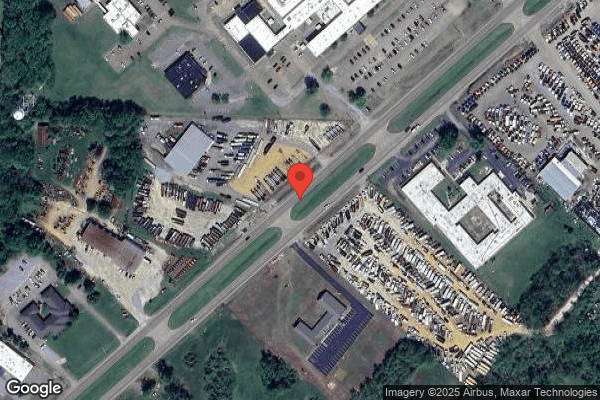
Aug 2019 2 deficiencies
CONCERN (D)

Potential for Harm - no one hurt, but risky conditions existed

Resident Rights (Tag F0550)

Could have caused harm · This affected 1 resident

Based on policy review, observation, and interview, the facility failed to promote care in a manner and in an environment that enhanced dignity and respect for 4 of 24 (Resident #39, #54, #56, and #76...

Read full inspector narrative →
Based on policy review, observation, and interview, the facility failed to promote care in a manner and in an environment that enhanced dignity and respect for 4 of 24 (Resident #39, #54, #56, and #76) residents served in the Main Dining Room. The findings include: The facility's Quality of Life-Dignity policy revised August 2009 documented, .resident shall be cared for in a manner that promotes and enhances quality of life, dignity, respect and individuality .shall be treated with dignity and respect at all times . Observations in the Main Dining Room (100 hall) on 8/19/19 at 11:30 AM, revealed Resident #76 received a meal tray at 11:52 AM, 24 minutes after the residents seated at the table received their meals. Observations in the Main Dining Room on 8/19/19 at 11:35 AM, revealed Resident #7 received her meal. Resident #39, #54, and #56 were seated at the same table. Resident #56 received her meal at 11:52 AM, 17 minutes after Resident #7. Resident #54 received her meal at 11:53 AM, 18 minutes after Resident #7. Resident #39 received her meal at 12:08 PM, 33 minutes after Resident #7. Observations in the Main Dining Room on 8/19/19 at 11:37 AM and 11:40 AM, revealed Resident #54 ate her dessert from a cup with her fingers and then licked the dessert from the cup. Staff did not unwrap the silverware for the resident and did not offer assistance or cueing to Resident #54. Interview with the Director of Nursing (DON) on 8/21/19 at 8:50 AM, in the DON office, the DON was asked should all residents seated at the table be served in a timely manner. The DON stated, .yes . The DON was asked should Resident #54 use her hands and lick the bowl to eat her dessert. The DON stated, Probably not, but it depends .she should be cued and her silverware should be opened for her . Interview with the Dietary Manager on 8/21/19 at 3:55 PM, in the Main Dining Room, the Dietary Manager was asked should all the residents seated at a table be served in a timely manner. The Dietary Manager stated, .yes .
CONCERN (D)

Potential for Harm - no one hurt, but risky conditions existed

Deficiency F0761 (Tag F0761)

Could have caused harm · This affected 1 resident

Based on policy review, observation, and interview, the facility failed to ensure medications were not stored past their expiration date in 1 of 9 (Central Supply Room) medication storage areas. The ...

Read full inspector narrative →
Based on policy review, observation, and interview, the facility failed to ensure medications were not stored past their expiration date in 1 of 9 (Central Supply Room) medication storage areas. The findings include: 1. The facility's Storage of Medications policy revised on April 2007 documented, .store all drugs and biologicals in a safe, secure, and orderly manner .shall not use .outdated .drugs and biologicals .shall be destroyed . 2. Observation in the Central Supply Room on 8/21/19 at 3:28 PM, revealed there were 242 packages of lubrication jelly with an expiration date of 8/2018. 3. Interview with the Director of Nursing (DON) on 8/21/19 at 3:25 PM, in the DON office, the DON was asked should there be expired medications be in medication storage areas. The DON stated, .that's not our practice . Interview with the Staff Development Coordinator on 8/21/19 at 3:29 PM, in the Central Supply Room, the Staff Development Coordinator was asked should expired medications be in the medication storage area. The Staff Development Coordinator stated, No, It should not be in here .
Oct 2018 3 deficiencies
CONCERN (D)

Potential for Harm - no one hurt, but risky conditions existed

Unnecessary Medications (Tag F0759)

Could have caused harm · This affected 1 resident

**NOTE- TERMS IN BRACKETS HAVE BEEN EDITED TO PROTECT CONFIDENTIALITY** Based on policy review, medical record review, observation, and interview, the facility failed to ensure 1 of 7 (Licensed Practi...

Read full inspector narrative →
**NOTE- TERMS IN BRACKETS HAVE BEEN EDITED TO PROTECT CONFIDENTIALITY** Based on policy review, medical record review, observation, and interview, the facility failed to ensure 1 of 7 (Licensed Practical Nurse (LPN) #1) nurses administered medications with a medication error rate less than 5 Percent (%). A total of 2 medication errors were made out of 29 opportunities, resulting in a medication error rate of 6.9%. The findings include: 1. The facility's Administrating Medications policy with a revision date of 12/12 documented, .Medications must be administered in accordance with the orders, including any required time frame . 2. Medical record reviewed revealed Resident #107 was admitted to the facility on [DATE] with diagnoses of Schizophrenia, Major Depressive Disorder, Hemiplegia, Diabetes, Hypertension, Dementia, Hyperlipidemia, and Benign Prostatic Hyperplasia. A physician's order dated 9/24/18-10/24/18 documented, .TIZANidine Tablet 4 MG [milligram] Give 1 tablet by mouth two times a day .Nuedexta Capsule 20-10 MG give 1 capsule by mouth two times a day .ARIPiprazole Tablet 10 MG Give 1 tablet by mouth one time a day .MetFORMIN Tablet 1000 MG give 1000 mg by mouth two times a day .Divalproex Sodium Tablet Delayed Release 250 MG give 1 tablet by mouth two times a day .Carvedilol Tablet 6.25 MG give 1 tablet by mouth two times a day .Pioglitazone Tablet 45 MG give 1 tablet by mouth one time a day .Clopidogrel 75 MG Tablet give 1 tablet by mouth one time a day .Lisinopril Tablet 30 MG give 1 tablet by mouth one time a day .Potassium ER [extended release] Tablet 10 MEQ [milliequivalents] give 1 tablet by mouth one time a day .AmLODIPine Tablet 10 MG give 1 tablet by mouth one time a day .Tamsulosin Capsule 0.4 MG give 2 capsule by mouth one time a day .Gabapentin Tablet 800 MG give 1 tablet by mouth three times a day .CeleXA tablet 40 MG give 1 tablet by mouth one time a day . 3. Observations on 10/24/18 at 8:02 AM in Resident #107's room during medication administration revealed LPN #1 entered the room with the following medications: a. Amlodipine Besyla 10 mg b. Aripiprazole 10 mg c. Carvedilol 6.25 mg d. Citalopram (Celexa) 40 mg e. Clopidogrel 75 mg f. Divalproex 250 mg g. Lisnopril 30 mg h. Metformin 1000 mg i. Nuedexta 20 mg -10 mg j. Piogutazone 45 mg k. Potassium Citrate ER 10 meq l. Tamsulosin 0.4 mg 2 capsules m. Tizanidine HCL 4 mg n. Gabapentin 800 mg During medication administration, LPN #1 dropped two unidentified white pills on Resident #107's chest, without identifying them, picked them up and disposed of them in the sharps container. Interview with LPN #1 on 10/24/18 at 8:02 AM, at the medication cart on the 400 hall, LPN #1 was asked which medications Resident #107 did not receive. LPN #1 stated, .since I threw them away .I can't be 100% sure . Interview with the Director of Nursing (DON) on 10/24/18 at 8:41 AM in the DON's office, the DON was asked what should the nursing staff do if they drop medication during the medication pass. The DON stated, Verify the medication .replace it .give the resident the proper dose .
CONCERN (E)

Potential for Harm - no one hurt, but risky conditions existed

Deficiency F0761 (Tag F0761)

Could have caused harm · This affected multiple residents

Based on policy review, observation, and interview, the facility failed to ensure medications were stored securely, safely, and properly as evidenced by unattended medications in 1 of 78 (Resident #31...

Read full inspector narrative →
Based on policy review, observation, and interview, the facility failed to ensure medications were stored securely, safely, and properly as evidenced by unattended medications in 1 of 78 (Resident #311's room) resident rooms and opened, undated, and expired medication in 5 of 11 (Rehab Unit #1 medication cart, Rehab Unit 2 medication cart, Memory Unit medication cart, 100 hall medication cart, and 100 hall medication room) medication storage areas. The findings include: 1. The facility's Administrating Medications policy with a revision date of 12/12 documented, .Residents may self-administer their own medication only if the attending Physician in conjunction with the interdisciplinary Care Team, has determined that they have the decision-making capacity to do so safely . 2. Observations on 10/23/18 at 9:42 AM in Resident #311's room revealed the following medications were left unattended when Registered Nurse (RN) #1 left them at the bedside and entered the bathroom out of view of the medications to wash her hands: a. Advair Aerosol Inhaler b. Allopurinol 300 mg 1 tablet c. Eliquis 5 mg 1 tablet d. Magnesium Oxide 400 mg 1 tablet e. Metoprolol 25 mg 1 tablet f. Torsemide 20 mg 2 tablets g. Spironolactone 25 mg 1 tablet h. Metformin 500 mg bid 1 tablet Resident #311 self administered the pills while RN #1 was in the bathroom and the medications were out of her sight. Interview with RN #1 on 10/23/18 at 11:43 AM, RN #1 was asked if it was appropriate to leave medications in a resident's room unattended. RN #1 stated, No Ma'am. 3. Observations on 10/23/18 at 9:47 AM of the Rehab Unit 1 medication cart revealed the following: a. 1 opened bottle of Omeprazole 2 milligram/milliliters (mg/ml) with no open date. b. 1 open bottle of Hydrocodone Chlorpheniramine 120 ml with no open date. c. 1 open bottle of Lorazepam oral 2 mg/ml 30 ml with no open date. d. 1 open bottle of Morphine Sulfate 100 mg/5 ml 30 ml with no open date. e. 1 open bottle of Lorazepam 30 ml with no open date. Observations on 10/23/18 at 10:02 AM of the Rehab Unit 2 medication cart revealed the following: a. 1 open bottle of Humulin R (regular) 30 ml vial with no open date. b. 1 open bottle of Potassium Chloride (CL) 20 milliequivalents (meq)/15 ml containing 473 ml with no open date. Observation on 10/23/18 at 10:30 AM of the Memory Unit medication cart revealed 1 open bottle of Vimpapat 10 mg /ml 465 ml with no open date. Observation on 10/23/18 at 10:43 AM of the 100 hall medication cart revealed 1 open bottle of Oxycodone 120 ml 5mg/5 ml with no open date. Observation on 10/23/18 at 10:50 AM in the 100 hall medication storage room revealed 1 open bottle of Liquid Pain Relief Acetaminophen cherry flavor 160 mg/5 ml 473 ml with an expiration date of 7/18. Interview with Licensed Practical Nurse (LPN) #2 on 10/23/18 at 10:30 AM at the memory unit medication cart, LPN #2 was asked if it was acceptable to have open and undated medications on the medication cart. LPN #2 stated, No. Interview with LPN #3 on 10/23/18 at 10:57 AM at the 100 hall nursing station, LPN #3 was asked if it was acceptable to have opened, undated, and expired medications in medication storage areas. LPN #3 stated, No ma'am it's not. Interview with the Director of Nursing (DON) on 10/23/18 at 11:35 AM in the DON's office, the DON was asked if it was acceptable to have open, undated and expired medications in medication storage areas. The DON stated No. The DON was asked if it was acceptable to leave medications unattended in the resident rooms. The DON stated, Absolutely not.
CONCERN (F)

Potential for Harm - no one hurt, but risky conditions existed

Food Safety (Tag F0812)

Could have caused harm · This affected most or all residents

**NOTE- TERMS IN BRACKETS HAVE BEEN EDITED TO PROTECT CONFIDENTIALITY** Based on observation and interview, the facility failed to ensure food was stored under sanitary conditions as evidenced by 2 ga...

Read full inspector narrative →
**NOTE- TERMS IN BRACKETS HAVE BEEN EDITED TO PROTECT CONFIDENTIALITY** Based on observation and interview, the facility failed to ensure food was stored under sanitary conditions as evidenced by 2 gallons of expired milk in the refrigerator, 1 of which had been used in meal preparation that morning. The facility had a census of 111 with 108 of those residents receiving a meal tray from the kitchen. The findings include: Observations during the initial tour of the kitchen on 10/22/18 beginning at 9:10 AM, revealed one unopened gallon of milk with the expiration date of [DATE] and one opened gallon of milk with the expiration date of [DATE] in the walk in refrigerator. Observations on 10/22/18 at 10:40 AM, revealed one unopened gallon of milk with the expiration date of [DATE] in the walk in refrigerator. Interview with the Dietary Manager on 10/22/18 at 10:40 AM, in the kitchen, the Dietary Manager confirmed the opened and expired gallon of milk had been used in meal preparation that morning. The Dietary Manager was asked should the expired milk be stored in the refrigerator. The Dietary Manager stated, No Ma'am.
Understanding Severity Codes (click to expand)
Life-Threatening (Immediate Jeopardy)
J - Isolated K - Pattern L - Widespread
Actual Harm
G - Isolated H - Pattern I - Widespread
Potential for Harm
D - Isolated E - Pattern F - Widespread
No Harm (Minor)
A - Isolated B - Pattern C - Widespread

Questions to Ask on Your Visit

  • "What changes have you made since the serious inspection findings?"
  • "Can I speak with families of current residents?"
  • "What's your RN coverage like on weekends and overnight?"

Our Honest Assessment

Strengths
  • • 44% turnover. Below Tennessee's 48% average. Good staff retention means consistent care.
Concerns
  • • Multiple safety concerns identified: 2 life-threatening violation(s), 2 harm violation(s), Payment denial on record. Review inspection reports carefully.
  • • 25 deficiencies on record, including 2 critical (life-threatening) violations. These warrant careful review before choosing this facility.
  • • $15,269 in fines. Above average for Tennessee. Some compliance problems on record.
  • • Grade F (4/100). Below average facility with significant concerns.
Bottom line: Trust Score of 4/100 indicates significant concerns. Thoroughly evaluate alternatives.

About This Facility

What is Magnolia Creek Nursing And Rehabilitation's CMS Rating?

CMS assigns MAGNOLIA CREEK NURSING AND REHABILITATION an overall rating of 1 out of 5 stars, which is considered much below average nationally. Within Tennessee, this rating places the facility higher than 0% of the state's 100 nursing homes. A rating at this level reflects concerns identified through health inspections, staffing assessments, or quality measures that families should carefully consider.

How is Magnolia Creek Nursing And Rehabilitation Staffed?

CMS rates MAGNOLIA CREEK NURSING AND REHABILITATION's staffing level at 2 out of 5 stars, which is below average compared to other nursing homes. Staff turnover is 44%, compared to the Tennessee average of 46%. This relatively stable workforce can support continuity of care.

What Have Inspectors Found at Magnolia Creek Nursing And Rehabilitation?

State health inspectors documented 25 deficiencies at MAGNOLIA CREEK NURSING AND REHABILITATION during 2018 to 2025. These included: 2 Immediate Jeopardy (the most serious level, indicating potential for serious harm or death), 2 that caused actual resident harm, and 21 with potential for harm. Immediate Jeopardy findings are rare and represent the most serious regulatory concerns. They require immediate corrective action.

Who Owns and Operates Magnolia Creek Nursing And Rehabilitation?

MAGNOLIA CREEK NURSING AND REHABILITATION is owned by a for-profit company. For-profit facilities operate as businesses with obligations to shareholders or private owners. The facility is operated by SIMCHA HYMAN & NAFTALI ZANZIPER, a chain that manages multiple nursing homes. With 156 certified beds and approximately 88 residents (about 56% occupancy), it is a mid-sized facility located in COVINGTON, Tennessee.

How Does Magnolia Creek Nursing And Rehabilitation Compare to Other Tennessee Nursing Homes?

Compared to the 100 nursing homes in Tennessee, MAGNOLIA CREEK NURSING AND REHABILITATION's overall rating (1 stars) is below the state average of 2.8, staff turnover (44%) is near the state average of 46%, and health inspection rating (1 stars) is much below the national benchmark.

What Should Families Ask When Visiting Magnolia Creek Nursing And Rehabilitation?

Based on this facility's data, families visiting should ask: "What changes have been made since the serious inspection findings, and how are you preventing similar issues?" "Can you walk me through typical staffing levels on day, evening, and night shifts?" "Can I visit during a mealtime to observe dining assistance and food quality?" "How do you handle medical emergencies, and what is your hospital transfer rate?" These questions are particularly relevant given the facility's Immediate Jeopardy citations and the below-average staffing rating.

Is Magnolia Creek Nursing And Rehabilitation Safe?

Based on CMS inspection data, MAGNOLIA CREEK NURSING AND REHABILITATION has documented safety concerns. Inspectors have issued 2 Immediate Jeopardy citations (the most serious violation level indicating risk of serious injury or death). The facility has a 1-star overall rating and ranks #100 of 100 nursing homes in Tennessee. Families considering this facility should ask detailed questions about what corrective actions have been taken since these incidents.

Do Nurses at Magnolia Creek Nursing And Rehabilitation Stick Around?

MAGNOLIA CREEK NURSING AND REHABILITATION has a staff turnover rate of 44%, which is about average for Tennessee nursing homes (state average: 46%). Moderate turnover is common in nursing homes, but families should still ask about staff tenure and how the facility maintains care continuity when employees leave.

Was Magnolia Creek Nursing And Rehabilitation Ever Fined?

MAGNOLIA CREEK NURSING AND REHABILITATION has been fined $15,269 across 1 penalty action. This is below the Tennessee average of $33,232. While any fine indicates a compliance issue, fines under $50,000 are relatively common and typically reflect isolated problems that were subsequently corrected. Families should ask what specific issues led to these fines and confirm they've been resolved.

Is Magnolia Creek Nursing And Rehabilitation on Any Federal Watch List?

MAGNOLIA CREEK NURSING AND REHABILITATION is not on any federal watch list. The most significant is the Special Focus Facility (SFF) program, which identifies the bottom 1% of nursing homes nationally based on persistent, serious quality problems. Not being on this list means the facility has avoided the pattern of deficiencies that triggers enhanced federal oversight. This is a positive indicator, though families should still review the facility's inspection history directly.