LIFE CARE CENTER OF JEFFERSON CITY
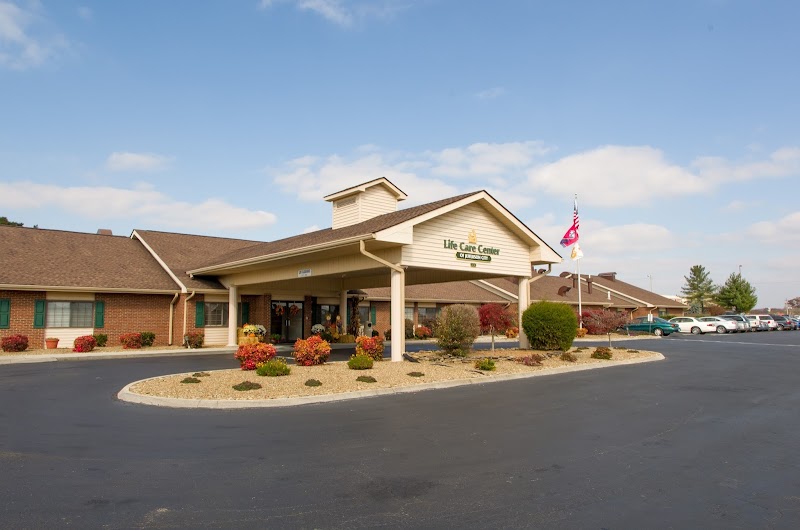
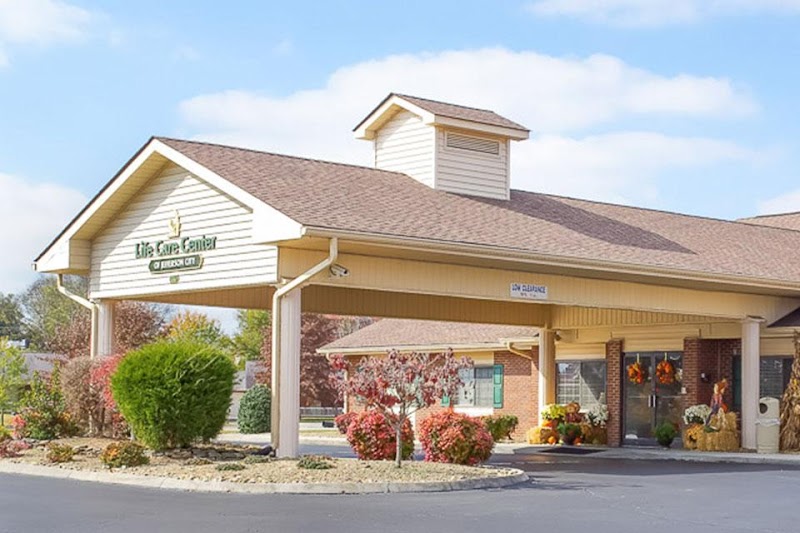
336 WEST OLD ANDREW JOHNSON HWY, JEFFERSON CITY, TN 37760 (865) 475-6097
For profit - Corporation 121 Beds LIFE CARE CENTERS OF AMERICA Data: November 2025
Trust Grade
70/100
#132 of 298 in TN
Last Inspection: June 2025

Inspected within the last 6 months. Data reflects current conditions.

Overview

Life Care Center of Jefferson City has a Trust Grade of B, indicating it is a good facility and a solid choice for nursing home care. It ranks #132 out of 298 nursing homes in Tennessee, placing it in the top half, and #2 out of 3 in Jefferson County, meaning there is only one local option that is better. However, the facility is experiencing a worsening trend, with issues increasing from 4 in 2024 to 6 in 2025. Staffing is average with a turnover rate of 42%, which is better than the state average of 48%, indicating that many staff members remain for extended periods. While the facility has not incurred any fines, which is a positive sign, there have been several concerns regarding cleanliness, such as kitchen equipment not being properly sanitized and lapses in hand hygiene practices that could potentially affect residents. Overall, while there are strengths like good staffing stability and the absence of fines, families should be aware of the recent cleanliness issues.

Trust Score
B
70/100
In Tennessee
#132/298
Top 44%
Safety Record
Low Risk
No red flags
Inspections
Getting Worse
4 → 6 violations
Staff Stability
○ Average
42% turnover. Near Tennessee's 48% average. Typical for the industry.
Penalties
✓ Good
No fines on record. Clean compliance history, better than most Tennessee facilities.
Skilled Nurses
○ Average
Each resident gets 33 minutes of Registered Nurse (RN) attention daily — about average for Tennessee. RNs are the most trained staff who monitor for health changes.
Violations
⚠ Watch
12 deficiencies on record. Higher than average. Multiple issues found across inspections.
★★★☆☆
3.0
Overall Rating
★★★☆☆
3.0
Staff Levels
★★★★☆
4.0
Care Quality
★★★☆☆
3.0
Inspection Score
Stable
2024: 4 issues
2025: 6 issues

The Good

  • 4-Star Quality Measures · Strong clinical quality outcomes
  • Full Sprinkler Coverage · Fire safety systems throughout facility
  • No fines on record
  • Staff turnover below average (42%)

    6 points below Tennessee average of 48%

Facility shows strength in quality measures, fire safety.

The Bad

3-Star Overall Rating

Near Tennessee average (2.8)

Meets federal standards, typical of most facilities

Staff Turnover: 42%

Near Tennessee avg (46%)

Typical for the industry

Chain: LIFE CARE CENTERS OF AMERICA

Part of a multi-facility chain

Ask about local staffing decisions and management

The Ugly 12 deficiencies on record

Jun 2025 6 deficiencies
CONCERN (D)

Potential for Harm - no one hurt, but risky conditions existed

Safe Environment (Tag F0584)

Could have caused harm · This affected 1 resident

**NOTE- TERMS IN BRACKETS HAVE BEEN EDITED TO PROTECT CONFIDENTIALITY** Based on facility policy review, observation and interview, the facility failed to provide a clean and sanitary environment to e...

Read full inspector narrative →
**NOTE- TERMS IN BRACKETS HAVE BEEN EDITED TO PROTECT CONFIDENTIALITY** Based on facility policy review, observation and interview, the facility failed to provide a clean and sanitary environment to ensure cleanliness of a stand-up personal fan for 1 resident (Resident #46) of 89 residents reviewed for a clean and sanitary environment. The findings include: Review of the facility's policy titled, Daily Room Cleaning, reviewed 5/16/2025, revealed .The cleanliness of each resident's room is maintained on a daily basis by the housekeeping staff to provide a fresh, clean, and sanitary environment and reduce the potential for nosocomial infections . Review of the medical record revealed Resident #46 was admitted to the facility on [DATE] with diagnoses including Parkinson's Disease, Diabetes Mellitus, Acquired Absence of Left Leg Above Knee, and Peripheral Vascular Disease. During observations on 6/16/2025 at 3:03 PM and on 6/17/2025 at 3:15 PM, Resident #46's room revealed a portable stand-up fan between resident's bed and window area. The fan blades had a large amount of gray dust and thick debris resembling clumped gray fibers which had accumulated on the protective grille. During an observation and interview on 6/17/2025 at 3:30 PM, the Assistant Director of Nursing (ADON) confirmed Resident #46's fan had a large amount of gray dust on the blades and thick debris resembling clumped gray fibers accumulated on the protective grille, and confirmed the debris should not be present with routine cleaning. During an interview on 6/18/2025 at 11:50 AM, the Environmental Service Director confirmed housekeeping was responsible for ensuring the rooms and contents were cleaned routinely.
CONCERN (D)

Potential for Harm - no one hurt, but risky conditions existed

Assessment Accuracy (Tag F0641)

Could have caused harm · This affected 1 resident

**NOTE- TERMS IN BRACKETS HAVE BEEN EDITED TO PROTECT CONFIDENTIALITY** Based on review of the Centers for Medicare and Medicaid (CMS) Resident Assessment Instrument (RAI) Version 3.0 Manual, medical ...

Read full inspector narrative →
**NOTE- TERMS IN BRACKETS HAVE BEEN EDITED TO PROTECT CONFIDENTIALITY** Based on review of the Centers for Medicare and Medicaid (CMS) Resident Assessment Instrument (RAI) Version 3.0 Manual, medical record review, and interview, the facility failed to accurately complete a Minimum Data Set (MDS) assessment for 2 Residents (Resident #50 and #75) of 9 residents reviewed for anticoagulant use. The findings include: Review of the facility's policy titled, Certification of Accuracy of the MDS, revised 4/22/2025, revealed .each person completing a portion of the MDS is required to sign attestation certifying they have used the Centers for Medicare and Medicaid Long-Term Care Facility Resident Assessment Instrument User's Manual to complete the MDS .Definition-Accuracy of Assessment-means that the appropriate health professionals correctly document the resident's medical, functional, and psychosocial problems .using the appropriate Resident Assessment Instrument (RAI) . Review of the RAI Version 3.0 Manual, Chapter 3, dated 10/2024, revealed instructions .High-Risk Drug Classes: Use and Indication (cont.) .Do not code antiplatelet medications such as aspirin/extended release, dipyridamole [antiplatelet-helps with clotting of blood], or clopidogrel [antiplatelet] as [anticoagulant] [blood thinner] . Review of the medical record revealed Resident #50 was admitted to the facility on [DATE] with diagnoses including Cerebral Palsy, Epilepsy, Congestive Heart Failure, Muscle Weakness, and Diabetes Mellitus. Review of the Physician's Orders dated 4/1/2025, revealed Resident #50 had an active Physician's Order for .Aspirin EC [enteric coated] Tablet Delayed Release 81 MG [milligram] PO [by mouth] one time a day . and .clopidogrel F/C [film coated] 75 mg tablet PO one time a day . There were no orders documented for anticoagulant medication. Review of an admission MDS assessment dated [DATE], revealed Resident #50 was coded on the MDS as being on an anticoagulant medication. Review of the medical record revealed Resident #75 was admitted to the facility on [DATE] with diagnoses including Displaced Intertrochanteric Fracture of Left Femur, Other Abnormalities of Gait and Mobility, and Acute Cystitis with Hematuria. Review of the Physician's Orders dated 4/11/2025, revealed Resident #75 had an active Physician's Order for .Aspirin EC Tablet Delayed Release 325 MG PO one time a day . There were no orders documented for anticoagulant medication. Review of an admission MDS assessment dated [DATE], revealed Resident #75 was coded on the MDS as being on an anticoagulant medication. During an interview on 6/18/2025 at 8:45 AM, the MDS Coordinator confirmed the MDS assessments for Residents #46 and #75 were inaccurately marked for use of anticoagulant medication, in contradiction to the RAI manual's definition of anticoagulant medication.
CONCERN (D)

Potential for Harm - no one hurt, but risky conditions existed

Incontinence Care (Tag F0690)

Could have caused harm · This affected 1 resident

**NOTE- TERMS IN BRACKETS HAVE BEEN EDITED TO PROTECT CONFIDENTIALITY** Based on facility policy review, medical record review, observation, and interview, the facility failed to provide appropriate t...

Read full inspector narrative →
**NOTE- TERMS IN BRACKETS HAVE BEEN EDITED TO PROTECT CONFIDENTIALITY** Based on facility policy review, medical record review, observation, and interview, the facility failed to provide appropriate treatment to restore continence of bowel and bladder for 1 resident (Resident #50) of 4 residents reviewed for bowel and bladder. The findings include: Review of the facility's policy titled, Urinary Incontinence Management, reviewed 9/10/2024, revealed .each resident who is incontinent of urine is identified, assessed and provided appropriate treatment and services to achieve or maintain as much normal bladder function as possible .Procedure: This facility will utilize the [NAME] [renowned medical and nursing journal] procedures . Review of the facility's policy titled, Bowel and Bladder Program, dated 9/24/2024, revealed .the facility will ensure that a resident who is admitted with incontinence of bladder receives appropriate treatment and services .to restore as much normal bladder function as possible .Procedure: This facility will utilize the Lippincott procedures . Review of the medical record revealed Resident #50 was admitted to the facility on [DATE] with diagnoses including Cerebral Palsy, Epilepsy, Congestive Heart Failure, Muscle Weakness, and Diabetes Mellitus. Review of the Comprehensive Care Plan dated 3/28/2025, revealed Resident #50's Care Plan included the focus .bowel incontinence ., with goal .Resident will have no skin breakdown r/t [related to] bowel incontinence ., and interventions including .Assist with toileting as needed .Peri [perineal]care as needed .Remind resident to call for assistance with toileting as soon as need arises . Further review revealed focus .Urinary Incontinence ., with goal .Will have no skin breakdown r/t urinary incontinence ., and interventions including .Assist with toileting as needed .Peri care as needed .Remind resident to call for assistance with toileting as soon as need arises . Review of the admission Minimum Data Set (MDS) assessment dated [DATE], revealed Resident #50 scored an 8 on the Brief Interview for Mental Status (BIMS) assessment which indicated moderate cognitive impairment. Further review revealed Resident #50 was always incontinent of bowel and bladder with no toileting program, and dependent on staff and a mechanical lift for transfers. Review of the medical record document titled, NRSG [Nursing]: Evaluation for Bowel and Bladder Training, dated 3/28/2025, revealed Resident #50 scored a 12 on the evaluation which indicated the resident was a candidate for toileting, timed, or scheduled voiding, and to proceed to the Urinary Incontinence Tool. Continued review revealed the document titled, NRSG: Urinary Incontinence Tool dated 3/28/2025, revealed Resident #50 has .stress incontinence, can comprehend and follow instructions, can recognize urinary urge sensation, can learn to control the urge to void, can contract pelvic floor muscles (Kegels) . and document revealed no comments for referral or additional comments. Review of the medical record document titled, NRSG: Evaluation for Bowel and Bladder Training V2, dated 4/1/2025, revealed Resident #50 scored a 13 which indicated the resident was a candidate for toileting, timed, or scheduled voiding, and to proceed to Urinary Incontinence Tool. Continued review revealed the document titled, NRSG: Urinary Incontinence Tool dated 3/28/2025, revealed Resident #50 has .stress incontinence, can comprehend and follow instructions, can recognize urinary urge sensation, can learn to control the urge to void ., and document revealed no comments for referral or additional comments. Review of the medical record document titled, B&B - Bowel and Bladder Elimination ., for the 30 day look-back period dated 5/19/2025 to 6/17/2025, revealed Resident #50 was incontinent of urine and bowel on 100% of documentation reviewed. During an interview on 6/17/2025 at 2:06 PM, Licensed Practical Nurse (LPN) E, confirmed Resident #50 was incontinent of bowel and bladder, and no toileting, timed, or scheduled voiding had been placed to her knowledge. During an interview on 6/17/2025 at 2:10 PM, Certified Nurse Assistant (CNA) F confirmed Resident #50 was incontinent of bowel and bladder. During an interview on 6/18/2025 at 12:15 PM, the Director of Nursing (DON) confirmed Resident #50 was a candidate for a toileting, timed, or scheduled voiding schedule, and confirmed the Urinary Incontinence Tool indicated Resident #50 should have been placed on a toileting program.
CONCERN (D)

Potential for Harm - no one hurt, but risky conditions existed

Respiratory Care (Tag F0695)

Could have caused harm · This affected 1 resident

**NOTE- TERMS IN BRACKETS HAVE BEEN EDITED TO PROTECT CONFIDENTIALITY** Based on facility policy review, medical record review, observation and interview, the facility failed to ensure oxygen therapy ...

Read full inspector narrative →
**NOTE- TERMS IN BRACKETS HAVE BEEN EDITED TO PROTECT CONFIDENTIALITY** Based on facility policy review, medical record review, observation and interview, the facility failed to ensure oxygen therapy was administered as ordered for 1 Resident (Resident #50) of 6 residents reviewed for oxygen therapy. The findings include: Review of the facility's policy titled, Oxygen Administration (Infection Control, Safety, & Storage), revised 10/11/2024, revealed .the facility must ensure that a resident who needs respiratory care .is provided such care, consistent with professional standards of practice . Review of the medical record revealed Resident #50 was admitted to the facility on [DATE] with diagnoses including Cerebral Palsy, Epilepsy, Congestive Heart Failure, Muscle Weakness, and Diabetes Mellitus. Review of the Comprehensive Care Plan dated 3/28/2025, revealed Resident #50's Care Plan included .the resident has oxygen therapy r/t [related to] CHF [Congestive Heart Failure] .The resident will have no s/sx [signs/symptoms] of poor oxygen absorption .oxygen settings: O2 [oxygen] via [by] nasal prongs @ [at] 3L [liters] continuously .observe for s/sx of respiratory distress and report to MD [medical doctor] PRN [as needed]: Respirations, Pulse oximetry . Review of the Physician's Order for Resident #50 dated 3/31/2025, revealed .oxygen at 3 liters/minute continuously per nasal canula . Review of the admission Minimum Data Set (MDS) assessment dated [DATE], revealed Resident #50 scored an 8 on the Brief Interview for Mental Status (BIMS) assessment which indicated moderate cognitive impairment. Further review revealed Resident #50 had shortness of breath during exertion, shortness of breath while lying flat, and oxygen in use while in the facility. Review of the Medication Administration Record (MAR) for Resident #50 dated 6/1/2025-6/17/2025 revealed, .oxygen at 3 liters/minute [l/m] continuously per nasal cannula . The MAR was signed by nursing staff for each shift on 6/16/2025 and 6/17/2025, which indicated the physician's order for the oxygen therapy was administered as ordered. During an observation on 6/16/2025 at 12:15 PM, revealed Resident #50 was in the dining room with a nasal cannula in use via portable oxygen cannister which was set at 2 l/m. During an observation on 6/17/2025 at 9:40 AM, revealed Resident #50 was in his room with a nasal cannula in use via oxygen concentrator which was set at 2 l/m. During an observation and interview with Licensed Practical Nurse (LPN) E on 6/17/2025 at 9:45 AM, in Resident #50's room, LPN E confirmed Resident #50's oxygen was set to deliver at 2 l/m and Resident #50 received oxygen at 2 l/m. LPN E confirmed Resident #50's oxygen order was for 3 l/m and the 2 l/m was incorrect. During an interview on 6/18/2025 at 8:00 AM, the Director of Nursing (DON) confirmed oxygen was expected to be administered as ordered by the physician or practitioner.
CONCERN (D)

Potential for Harm - no one hurt, but risky conditions existed

Deficiency F0761 (Tag F0761)

Could have caused harm · This affected 1 resident

**NOTE- TERMS IN BRACKETS HAVE BEEN EDITED TO PROTECT CONFIDENTIALITY** Based on facility policy review, manufacturer guidelines review, observation, and interview, the facility failed to discard an e...

Read full inspector narrative →
**NOTE- TERMS IN BRACKETS HAVE BEEN EDITED TO PROTECT CONFIDENTIALITY** Based on facility policy review, manufacturer guidelines review, observation, and interview, the facility failed to discard an expired multi-dose vial of Tuberculin (TB) purified protein derivative (ppd) (an injectable medication used to detect the bacteria that causes Mycobacterium tuberculosis) and failed to date an opened multi-dose vial of TB ppd stored in 1 of 2 medication refrigerators observed. The findings include: Review of the facility policy titled, Storage and Expiration Dating of Medications and Biologicals, dated [DATE], revealed .Once any medication or biological package is opened, facility should follow manufacturer/supplier guidelines with respect to expiration dates for opened medications. Facility staff should record the date opened on the primary medication container .vial, bottle .If a multi-dose vial of an injectable medication has been opened or accessed .needle-punctured .the vial should be dated and discarded within 28 days unless the manufacturer specifies a different (shorter or longer) date for that opened vial . Review of manufacturer guidelines titled, APLISOL - tubercullin purified protein derivative [TB ppd] injection, dated 8/2024, revealed .Storage .This product should be stored between .36* [degrees] and 46* F [degrees Fahrenheit] .Vials in use more than 30 days should be discarded due to possible oxidation and degradation which may affect potency . During an observation of the Unit 2 Medication Storage Room and interview with Registered Nurse (RN) A on [DATE] at 8:10 AM, revealed in the medication refrigerator, 1 of the 30 milliliter (ml) multi-dose vials of TB ppd was 1/4 full with an opened date of 5/6, with no year noted. RN A stated the vial of TB ppd was opened on [DATE], was not discarded after 30 days of opening, and was available for resident use. Continued observation revealed a 2nd 30 ml opened multi-dose vial of TB ppd was 3/4 full and did not contain a date the vial had been opened. RN A confirmed the opened vial of TB ppd did not contain an opened date, was unable to provide a date the vial was opened, and was available for resident use. During an interview on [DATE] at 12:05 PM, the Director of Nursing (DON) stated the 30 ml vial of TB ppd dated 5/6 was not discarded after 30 days of opening and the 2nd 30 ml vial of TB ppd did not include a date the vial had been opened. The DON confirmed the 2 vials of TB ppd which was stored in the Unit 2 medication refrigerator, was available for resident use, and should have been discarded.
CONCERN (F)

Potential for Harm - no one hurt, but risky conditions existed

Food Safety (Tag F0812)

Could have caused harm · This affected most or all residents

Based on review of the facility policy, review of kitchen equipment cleaning documentation, observation, and interview, the facility failed to ensure kitchen equipment was maintained in a clean and sa...

Read full inspector narrative →
Based on review of the facility policy, review of kitchen equipment cleaning documentation, observation, and interview, the facility failed to ensure kitchen equipment was maintained in a clean and sanitary condition. The findings include: Review of the facility's policy titled, Sanitation and Maintenance, dated 4/26/2023, revealed .cleaning fixed equipment .cleaned with detergent and hot water, rinsed, air-dried, and sprayed with a sanitizing solution . During an observation of the kitchen with the Dietary Manager (DM) and Registered Dietitian (RD) on 6/16/2025 from 11:05 AM-11:55 AM, revealed the following: - The 6-burner gas stove had dried dark brown food debris present on the handles to the oven compartments. - The steamer had light brown food debris present on the bottom front of the door and the operational control panel of the unit. - The deep fryer had copious amounts of granular food debris present on the top drip tray of the unit. The sides of the deep fryer had food debris granules present with a dried tan fluid streaked on both sides of the unit. - An electrical box mounted to a pillar beside the deep fryer was observed with the dirty and debris and was sticky to the touch. During an interview on 6/16/2025 at 11:55 AM, the RD stated the kitchen was to be cleaned daily and deep cleaned each week. The RD acknowledged the food debris and build up on the kitchen equipment and confirmed the kitchen equipment was not maintained in a clean and sanitary condition.
Mar 2024 4 deficiencies
CONCERN (D)

Potential for Harm - no one hurt, but risky conditions existed

Comprehensive Care Plan (Tag F0656)

Could have caused harm · This affected 1 resident

**NOTE- TERMS IN BRACKETS HAVE BEEN EDITED TO PROTECT CONFIDENTIALITY** Based on facility policy review, record review, observation, and interview, the facility failed to create person-centered care p...

Read full inspector narrative →
**NOTE- TERMS IN BRACKETS HAVE BEEN EDITED TO PROTECT CONFIDENTIALITY** Based on facility policy review, record review, observation, and interview, the facility failed to create person-centered care plans for 2 residents (Resident #23 and #25) of 26 residents reviewed for care plans. The finding include: Review of the facility's policy titled Comprehensive Care Plans and Revisions, dated 8/22/2023, showed .the facility will ensure the timeliness of each resident's person-centered, comprehensive care plan, and to ensure that the comprehensive care plan is reviewed and revised by an interdisciplinary team .facility should monitor the resident over time to help identify changes in the resident condition that may warrant and update to the person-centered plan of care . Resident #23 was admitted to the facility on [DATE], with diagnoses including Heart Failure, Respiratory Failure, Alzheimer's Disease, and Obstructive Sleep Apnea. Review of a quarterly Minimum Data Set (MDS) assessment dated [DATE], showed Resident #23 was cognitively intact. Review of Resident #23's care plan dated 2/2/2024, showed there was no intervention related to the resident's preference to wear the nasal cannula in her mouth. During an observation and interview on 3/24/2024 at 11:55 AM, Resident #23 was observed lying in her bed with the oxygen nasal cannula in her mouth. The tubing was attached to the oxygen concentrator. Resident #23 stated she liked having it in her mouth better than her nose. During observation and interview on 3/25/2024 at 2:55 PM, Resident #23 was observed sitting on the side of the bed with the nasal cannula in her mouth. The resident stated she liked it better that way. During an interview on 3/25/2024 at 3:00 PM, Licensed Practical Nurse (LPN) #1 stated Resident #23 wore the nasal cannula in her mouth. LPN #1 also stated the facility staff had educated Resident #23 on how to wear the nasal cannula, but the resident did not comply. During an interview on 3/26/2024 at 1:49 PM, the Director of Nursing (DON) stated she did not know Resident #23 preferred to wear her nasal cannula in her mouth. The DON confirmed if it was the resident's preference it should have been on the care plan. Resident #25 admitted to the facility on [DATE] with diagnoses including Acute Respiratory Failure, Bipolar Disorder, Anxiety Disorder, and Muscle Weakness. Review of the medical record showed Resident #25 did not have a diagnosis of Dementia. Review of a quarterly MDS assessment dated [DATE], showed Resident #25 was cognitively intact. Review of Resident #25's care plan dated 2/22/2024, showed behavior problem .interventions: Match your body language to your words - frown and shake your head. People with dementia are better at reading non-verbal cues. Don't accidently encourage inappropriate behavior by sending mixed signals . During an interview on 3/26/2024 at 10:15 AM, the Licensed Social Worker (LSW) stated she was responsible for developing Resident #25's care plan. The LSW confirmed Resident #25 did not have a diagnosis of Dementia and the interventions on the behavior care plan were not person centered. During an interview on 3/26/2024 at 2:04 PM, the DON confirmed the care planned interventions were not person-centered for Resident #25 and the resident did not have a diagnosis of Dementia.
CONCERN (D)

Potential for Harm - no one hurt, but risky conditions existed

Tube Feeding (Tag F0693)

Could have caused harm · This affected 1 resident

**NOTE- TERMS IN BRACKETS HAVE BEEN EDITED TO PROTECT CONFIDENTIALITY** Based on facility policy review, medical record review, observation, and interviews, the facility failed to ensure tube feeding ...

Read full inspector narrative →
**NOTE- TERMS IN BRACKETS HAVE BEEN EDITED TO PROTECT CONFIDENTIALITY** Based on facility policy review, medical record review, observation, and interviews, the facility failed to ensure tube feeding formula was appropriately labeled for 1 resident (Resident #43) of 1 resident sampled for tube feeding. The findings include: Review of the undated [fiber-fortified tube feeding formula] manufacturers' guidelines, showed .hang no longer than 24 hours . Resident #43 was admitted to the facility on [DATE] with diagnoses including Protein-Calorie Malnutrition, Gastrostomy (tube that is placed directly into the stomach through an abdominal wall incision for administration of food, fluids, and medications), and Dysphasia (difficulty swallowing). Review of an admission Minimum Data Set (MDS) assessment dated [DATE], showed Resident #43 had moderate cognitive impairment, had a feeding tube, and received 51% or more calories through tube feeding. Review of a physician order dated 3/14/2024, showed .Enteral Feed .off at 5 am, on at 9 am [fiber-fortified tube feeding formula] at 60 ml/hr [milliliters/hour] .via pump . Review of Resident #43's care plan revised 3/18/2024, showed .resident requires tube feeding .dependent with tube feeding . Review of Resident #43's Medication Administration Record (MAR) dated 3/2024, showed Licensed Practical Nurse (LPN) #3 had signed the enteral tube feeding formula and had been initiated on 3/24/2024 (no defined time). During an observation on 3/24/2024 at 11:10 AM, showed the enteral tube feeding formula was infusing via pump and had not been labeled with the date or the time. During an interview on 3/24/2024 at 11:15 AM, Resident #43 stated the tube feeding had been initiated that morning (time unknown). During an interview on 3/24/2024 at 11:30 AM, LPN #3 stated the tube feeding formula for Resident #43 was initiated that morning (3/24/2024) and verified the tube feeding formula had not been appropriately labeled with the date or the time. LPN #3 did not know the specific time the tube feeding formula was initiated. During an interview on 3/26/2024 at 3:30 PM, Director of Nursing (DON) stated it was her expectation when an enteral tube feeding is initiated, the enteral formula bottle will be labeled with date and time. DON confirmed the LPN did not label the tube feeding formula with date and time.
CONCERN (D)

Potential for Harm - no one hurt, but risky conditions existed

Infection Control (Tag F0880)

Could have caused harm · This affected 1 resident

**NOTE- TERMS IN BRACKETS HAVE BEEN EDITED TO PROTECT CONFIDENTIALITY** Based on facility policy review, medical record review, observations, and interviews, the facility failed to ensure a nasal cann...

Read full inspector narrative →
**NOTE- TERMS IN BRACKETS HAVE BEEN EDITED TO PROTECT CONFIDENTIALITY** Based on facility policy review, medical record review, observations, and interviews, the facility failed to ensure a nasal cannula was stored in a sanitary manner for 1 resident (Resident #78) of 10 residents observed for oxygen use and the facility failed to follow infection control practices for 1 resident (Resident #59) of 4 residents reviewed for medication administration. The findings include: Review of the facility's policy titled, Administration of Medications, dated 8/24/2023, showed .the facility will ensure medications are administered safely and appropriately . Review of the facility policy titled Oxygen Administration (Safety, Storage, Maintenance), dated 2/27/2024, showed .Store oxygen and respiratory supplies in a bag labeled with resident's name when not in use . Resident #78 was admitted to the facility on [DATE], with diagnoses including Aftercare for Joint Replacement and Chronic Obstructive Pulmonary Disease (COPD). Review of the medical record, showed Resident #78 did not have any recent respiratory infections. Resident #78's physician orders dated 3/14/2024, showed an order for continuous oxygen at 2 liters per minute per nasal cannula. During an observation on 3/25/2024 at 10:09 AM, showed an oxygen nasal cannula lying on the floor under Resident #78's bed. Resident #78 was not in the room at the time. The nasal cannula tubing was attached to an oxygen concentrator. There was a plastic storage bag on the oxygen concentrator labeled 3/21 (3/21/2024). During an observation on 3/25/2024 at 2:36 PM, Resident #78 was seated in a wheelchair with a nasal cannula in her nose. The nasal cannula tubing was attached to the oxygen concentrator behind the resident. A plastic storage bag was attached to the oxygen concentrator. A portable oxygen tank on a cart with a tubing curled up and attached was also in the room. During an interview on 3/25/2024 at 2:40 PM, Licensed Practical Nurse (LPN) #1 stated if an oxygen nasal cannula was on the floor, it was not supposed to be used again. The nasal cannula would need to be replaced. LPN #1 stated she had not changed the nasal cannula for Resident #78 that day. LPN #1 also stated if a nasal cannula was removed from the resident it was to be rolled up and placed in a plastic storage bag attached to the oxygen concentrator or portable tank. During an interview on 3/25/2024 at 2:43 PM, the Physical Therapist Assistant (PTA) stated when she transported Resident #78 to her room, she observed the nasal cannula attached to the oxygen concentrator lying on the bed. The PTA stated she removed the nasal cannula attached to the portable oxygen tank and replaced it with the nasal cannula lying on the bed. During an interview on 3/26/2024 at 1:49 PM, the Director of Nursing (DON) confirmed the nasal cannula should have been replaced after it was observed on the floor and not placed back on the resident. Resident #59 was admitted to the facility on [DATE] with diagnoses including Atrial Fibrillation, Major Depressive Disorder, and Chronic Pain Syndrome. Review of the physician recapitulation orders dated 3/2024, showed Resident #59 had ordered Citalopram (anti-depressant) 20mg (milligrams) once a day, Buspirone (anti-anxiety) 10mg three times a day, Apixaban (anti-coagulant) 5mg two times a day, and Hydrocodone-Acetaminophen (pain reliever) 5/325mg every six hours. During a medication administration observation and interview on 3/25/2024 at 8:31 AM, showed LPN #1 had pushed 3 medication (Citalopram, Buspirone, Apixaban) tablets through the blister packets onto her bare hands, placed the tablets into the medication cup. LPN #1 had obtained Hydrocodone (pain reliever) from the narcotic box, pushed one tablet through the blister packet and the pill fell onto the surface of the medication cart. LPN #1 picked up the medication (Hydrocodone) with her bare hands and placed the medication into the medication cup. Further observation showed LPN #1 administered prepared medications to Resident #59. LPN #1 stated she knew she was not supposed to administer medications that way [using her bare hands] but it was easier to use her bare hands to place the medications into the cup. LPN #1 confirmed infection control practices had not been followed during the medication administration for Resident #59.
CONCERN (F)

Potential for Harm - no one hurt, but risky conditions existed

Food Safety (Tag F0812)

Could have caused harm · This affected most or all residents

Based on facility policy review, observation, and interview the facility failed to maintain sanitary kitchen equipment which had the potential to effect 97 residents in the facility. The findings incl...

Read full inspector narrative →
Based on facility policy review, observation, and interview the facility failed to maintain sanitary kitchen equipment which had the potential to effect 97 residents in the facility. The findings include: Review of the facility policy titled, Sanitation and Maintenance revised 4/26/2023, showed .when cleaning fixed equipment .the non-removable parts .cleaned with detergent and hot water, rinsed and air dried .Procedures for cleaning equipment are readily available .All equipment is .cleaned and sanitized according to manufacturer's instructions .Fixed .equipment in the foodservice area will be .sanitary .Physical facilities are cleaned as often as necessary to keep them clean . During the initial kitchen observation on 3/24/2024 at 10:10 AM, with the Food Service Manager (FSM) showed the outside of the left dishwasher door was 1/3 covered with a dried light brown film from the bottom of door up to the handle. The burners of the gas stove were observed to have dried brown/black food debris present on all; the stove's drip pans had multiple blackened pieces of pasta and other food debris present. The stoves' griddle was observed to be in an unsanitary condition with layer of dried brown/black food debris noted on the right-side of the metal splashguard between the griddle and gas stove. The Left side of the metal splashguard was observed to have been covered with yellowish-brown, sticky substance which also had brown specks of food debris which resembled breading. The double convection oven was observed to have dried brown food debris splatter on the exterior surface of the door handles and atop of both doors of the bottom convection oven. Further observation showed the can opener blade had a dried, thick layer of an unknown brown substance; no shards of metal were present on the blade. The flour and powdered sugar bins were noted to have multiple specks of various colored food debris present on the tops of both bins, and the powdered sugar had a scoop present inside of the bin. Review of the facility's menu for the month of March 2024 showed on week 4-day 6 (Friday) of the menu plan, pasta had been served. Review of the weekly cleaning schedule dated 3/17/2024, showed the dish machine, stove top and grill, deep fryer, and oven/doors were initialed as completed. During an interview on 3/24/2024 at 11:12 AM, the FSM stated it was her expectation the kitchen equipment was cleaned daily and deep cleaned weekly. The FSM confirmed the kitchen equipment was in an unsanitary condition.
Jul 2021 2 deficiencies
CONCERN (D)

Potential for Harm - no one hurt, but risky conditions existed

Medical Records (Tag F0842)

Could have caused harm · This affected 1 resident

**NOTE- TERMS IN BRACKETS HAVE BEEN EDITED TO PROTECT CONFIDENTIALITY** Based on medical record review and interview, the facility failed to maintain an accurate medical record for 1 resident (#174) o...

Read full inspector narrative →
**NOTE- TERMS IN BRACKETS HAVE BEEN EDITED TO PROTECT CONFIDENTIALITY** Based on medical record review and interview, the facility failed to maintain an accurate medical record for 1 resident (#174) of 29 residents reviewed for medical records. The findings include: Medical record review showed Resident #174 was admitted to the facility on [DATE] with diagnoses including Surgical wound, Collapsed Vertebra, Multiple Sclerosis, Protein-Calorie Malnutrition, Colostomy, Gastrostomy, Anxiety, Major Depressive Disorder, and Gastroesophageal Disease. Review of the Tennessee Physicians Orders for Scope of Treatment (POST) form dated [DATE] showed .Do Not Attempt Resuscitation (DNR/no CPR) [cardiopulmonary resuscitation] .Comfort Measures .No artificial nutrition by tube . Review of the Physician Orders dated [DATE], showed .Enteral Feed Order every shift .via pump .Full Code with Full Treatment . During an interview on [DATE] at 3:55 PM, the Director of Nursing confirmed the physician order did not match the POST form and the medical records were inaccurate.
CONCERN (E)

Potential for Harm - no one hurt, but risky conditions existed

Infection Control (Tag F0880)

Could have caused harm · This affected multiple residents

**NOTE- TERMS IN BRACKETS HAVE BEEN EDITED TO PROTECT CONFIDENTIALITY** Based on review of the facility policy, observations, and interviews, the facility failed to maintain hand hygiene practices for...

Read full inspector narrative →
**NOTE- TERMS IN BRACKETS HAVE BEEN EDITED TO PROTECT CONFIDENTIALITY** Based on review of the facility policy, observations, and interviews, the facility failed to maintain hand hygiene practices for 4 of 6 rooms on 1 hallway (Covid-19/Quarantine hallway) of 3 hallways observed, having the potential to affect 4 of 6 residents on the Covid-19/Quarantine hallway. The findings include: The Covid-19/Quarantine hallway had 6 residents being observed for 14 days due to new admissions from hospitals or readmissions. They had tested negative for Covid-19 prior to admission and were unvaccinated. The facility had no positive Covid-19 cases in the facility. Review of the facility policy, Hand Hygiene, dated 12/4/2020 showed .Handwashing/hand hygiene is .considered the most important single procedure for preventing .infections .hand hygiene is performed .between residents .during care . During an observation on 7/12/2021 at 12:36 PM, Certified Nursing Assistant (CNA #1) donned (put on) an isolation gown, delivered the food tray to room [ROOM NUMBER], touched the door handle, entered the room, set the tray up, doffed (removed) an isolation gown, touched the trash barrel lid, and exited the room. CNA #1 failed to perform hand hygiene prior to entering or exiting room [ROOM NUMBER]. During an observation on 7/12/2021 at 12:37 PM, CNA #1 donned a new isolation gown, retrieved the food tray from the cart and delivered the food tray to room [ROOM NUMBER], touched the door handle, entered the room, set the tray up, doffed the isolation gown, touched the trash barrel lid, and exited the room. CNA #1 failed to perform hand hygiene prior to entering or exiting room [ROOM NUMBER]. During an observation on 7/12/2021 at 12:39 PM, CNA #1 donned a new isolation gown, retrieved the food tray from the cart and delivered the food tray to room [ROOM NUMBER], touched the door handle, entered the room, set the tray up, doffed the isolation gown, touched the trash barrel lid, and exited the room. CNA #1 failed to perform hand hygiene prior to entering or exiting room [ROOM NUMBER]. During an observation on 7/12/2021 at 12:42 PM, CNA #1 donned a new isolation gown, retrieved the food tray from the cart and delivered the food tray to room [ROOM NUMBER], touched the door handle, entered the room, set the tray up, exited the room, and doffed the isolation gown in hallway. CNA #1 re-entered room [ROOM NUMBER] to discard the isolation gown in the garbage can, touched the lid of the garbage can, and exited the room. CNA #1 failed to perform hand hygiene prior to entering or exiting room [ROOM NUMBER]. During an observation on 7/12/2021 at 12:44, CNA #1 retrieved a plastic lid from the floor and discarded it in the trash. CNA #1 failed to perform hand hygiene after picking up the plastic lid from the floor. During an interview on 7/12/2021 at 12:51 PM, the Infection Control Practitioner (ICP) stated he expected hand hygiene to be performed when entering and exiting isolation rooms. During an interview on 7/12/2021 at 2:30 PM, CNA #1 confirmed she failed to perform hand hygiene between the patient rooms while delivering food trays on the Covid-19 quarantine hallway. During an interview on 7/14/2021 at 11:30 AM, the Director of Nursing (DON) stated she expected hand hygiene to performed upon entering and exiting resident rooms, especially isolation rooms.
Understanding Severity Codes (click to expand)
Life-Threatening (Immediate Jeopardy)
J - Isolated K - Pattern L - Widespread
Actual Harm
G - Isolated H - Pattern I - Widespread
Potential for Harm
D - Isolated E - Pattern F - Widespread
No Harm (Minor)
A - Isolated B - Pattern C - Widespread

Questions to Ask on Your Visit

  • "Can I speak with families of current residents?"
  • "What's your RN coverage like on weekends and overnight?"

Our Honest Assessment

Strengths
  • • No major safety red flags. No abuse findings, life-threatening violations, or SFF status.
  • • No fines on record. Clean compliance history, better than most Tennessee facilities.
  • • 42% turnover. Below Tennessee's 48% average. Good staff retention means consistent care.
Concerns
  • • 12 deficiencies on record. Higher than average. Multiple issues found across inspections.
Bottom line: Mixed indicators with Trust Score of 70/100. Visit in person and ask pointed questions.

About This Facility

What is Life Of Jefferson City's CMS Rating?

CMS assigns LIFE CARE CENTER OF JEFFERSON CITY an overall rating of 3 out of 5 stars, which is considered average nationally. Within Tennessee, this rating places the facility higher than 99% of the state's 100 nursing homes. This mid-range rating indicates the facility meets federal standards but may have areas for improvement.
How is Life Of Jefferson City Staffed?

CMS rates LIFE CARE CENTER OF JEFFERSON CITY's staffing level at 3 out of 5 stars, which is average compared to other nursing homes. Staff turnover is 42%, compared to the Tennessee average of 46%. This relatively stable workforce can support continuity of care.

What Have Inspectors Found at Life Of Jefferson City?

State health inspectors documented 12 deficiencies at LIFE CARE CENTER OF JEFFERSON CITY during 2021 to 2025. These included: 12 with potential for harm.

Who Owns and Operates Life Of Jefferson City?

LIFE CARE CENTER OF JEFFERSON CITY is owned by a for-profit company. For-profit facilities operate as businesses with obligations to shareholders or private owners. The facility is operated by LIFE CARE CENTERS OF AMERICA, a chain that manages multiple nursing homes. With 121 certified beds and approximately 89 residents (about 74% occupancy), it is a mid-sized facility located in JEFFERSON CITY, Tennessee.
How Does Life Of Jefferson City Compare to Other Tennessee Nursing Homes?

Compared to the 100 nursing homes in Tennessee, LIFE CARE CENTER OF JEFFERSON CITY's overall rating (3 stars) is above the state average of 2.8, staff turnover (42%) is near the state average of 46%, and health inspection rating (3 stars) is at the national benchmark.

What Should Families Ask When Visiting Life Of Jefferson City?

Based on this facility's data, families visiting should ask: "Can I visit during a mealtime to observe dining assistance and food quality?" "How do you handle medical emergencies, and what is your hospital transfer rate?" "Can I speak with family members of current residents about their experience?"

Is Life Of Jefferson City Safe?

Based on CMS inspection data, LIFE CARE CENTER OF JEFFERSON CITY has a clean safety record: no substantiated abuse findings (meaning no confirmed cases of resident harm), no Immediate Jeopardy citations (the most serious violation level indicating risk of serious injury or death), and is not on the Special Focus Facility watch list (a federal program monitoring the lowest-performing 1% of nursing homes). The facility has a 3-star overall rating and ranks #1 of 100 nursing homes in Tennessee. While no facility is perfect, families should still ask about staff-to-resident ratios and recent inspection results during their visit.

Do Nurses at Life Of Jefferson City Stick Around?

LIFE CARE CENTER OF JEFFERSON CITY has a staff turnover rate of 42%, which is about average for Tennessee nursing homes (state average: 46%). Moderate turnover is common in nursing homes, but families should still ask about staff tenure and how the facility maintains care continuity when employees leave.

Was Life Of Jefferson City Ever Fined?

LIFE CARE CENTER OF JEFFERSON CITY has no federal fines on record. CMS issues fines when nursing homes fail to meet care standards or don't correct problems found during inspections. The absence of fines suggests the facility has either maintained compliance or corrected any issues before penalties were assessed. This is a positive indicator, though families should still review recent inspection reports for the full picture.

Is Life Of Jefferson City on Any Federal Watch List?

LIFE CARE CENTER OF JEFFERSON CITY is not on any federal watch list. The most significant is the Special Focus Facility (SFF) program, which identifies the bottom 1% of nursing homes nationally based on persistent, serious quality problems. Not being on this list means the facility has avoided the pattern of deficiencies that triggers enhanced federal oversight. This is a positive indicator, though families should still review the facility's inspection history directly.