WEST HILLS HEALTH AND REHAB
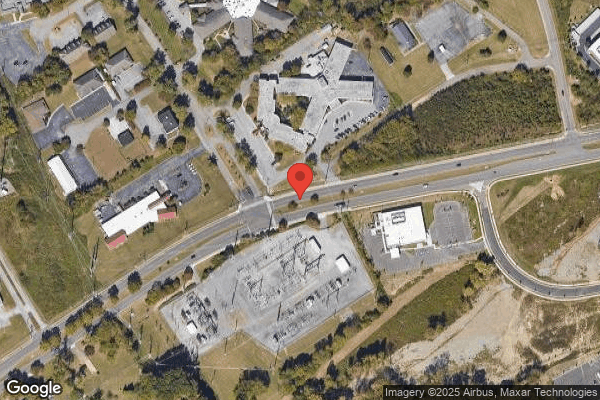
6801 MIDDLEBROOK PIKE, KNOXVILLE, TN 37919 (865) 588-7661
Non profit - Corporation 194 Beds Independent Data: November 2025
Trust Grade
70/100
#104 of 298 in TN
Last Inspection: November 2024

Within standard 12-15 month inspection cycle. Federal law requires annual inspections.

Overview

West Hills Health and Rehab in Knoxville, Tennessee has a Trust Grade of B, which means it is considered a good option for families, though there are areas for improvement. It ranks #104 out of 298 facilities in Tennessee, placing it in the top half of all nursing homes in the state, and #4 out of 13 in Knox County, indicating only three local facilities perform better. However, the facility is worsening, with issues increasing from 1 in 2022 to 5 in 2024. Staffing is a notable strength, with a 2/5 star rating but a 0% turnover, which is significantly better than the state average of 48%, indicating that staff are stable and familiar with residents. There have been no fines recorded, which is a positive sign, and the facility has more RN coverage than 78% of facilities in Tennessee, enhancing care quality. On the downside, the facility has reported two serious incidents where it failed to follow care plans to prevent falls for one resident, leading to actual harm, and did not provide necessary post-dialysis interventions for another resident. While there are strengths in staffing and a good overall rating, these incidents raise concerns about adherence to care protocols, which families should consider when evaluating this facility.

Trust Score
B
70/100
In Tennessee
#104/298
Top 34%
Safety Record
Moderate
Needs review
Inspections
Getting Worse
1 → 5 violations
Staff Stability
○ Average
Turnover data not reported for this facility.
Penalties
✓ Good
No fines on record. Clean compliance history, better than most Tennessee facilities.
Skilled Nurses
✓ Good
Each resident gets 45 minutes of Registered Nurse (RN) attention daily — more than average for Tennessee. RNs are trained to catch health problems early.
Violations
○ Average
10 deficiencies on record. Average for a facility this size. Mostly minor or procedural issues.
★★★★☆
4.0
Overall Rating
★★☆☆☆
2.0
Staff Levels
★★★☆☆
3.0
Care Quality
★★★★☆
4.0
Inspection Score
Stable
2022: 1 issues
2024: 5 issues

The Good

  • Full Sprinkler Coverage · Fire safety systems throughout facility
  • No fines on record

Facility shows strength in fire safety.

The Bad

No Significant Concerns Identified

This facility shows no red flags. Among Tennessee's 100 nursing homes, only 0% achieve this.

The Ugly 10 deficiencies on record

2 actual harm
Nov 2024 5 deficiencies
CONCERN (D)

Potential for Harm - no one hurt, but risky conditions existed

Assessment Accuracy (Tag F0641)

Could have caused harm · This affected 1 resident

**NOTE- TERMS IN BRACKETS HAVE BEEN EDITED TO PROTECT CONFIDENTIALITY** Based on review of facility policy, medical record review and interviews, the facility failed to provide post dialysis intervent...

Read full inspector narrative →
**NOTE- TERMS IN BRACKETS HAVE BEEN EDITED TO PROTECT CONFIDENTIALITY** Based on review of facility policy, medical record review and interviews, the facility failed to provide post dialysis interventions for 1 resident (Resident #151) of 1 residents reviewed for dialysis. The findings include: Review of the facility policy, Dialysis, Residents, Coordination of Care and Post-Care, dated 3/13/2015, revealed All nursing personnel will be responsible for providing safe, accurate, appropriate dialysis care with a general coordination between outside agencies that provide dialysis, post care assessment and interventions to improve resident outcomes .A. General Guidelines 1. Review and ensure orders upon admission are received for follow-up dialysis center appointments, shunt care, diet, and fluid restrictions . Review of the medical record revealed Resident #151 was admitted to the facility on [DATE], with diagnoses including Cirrhosis, Hepatitis C, Osteomyelitis, Chronic Obstructive Pulmonary Disease, Diabetes Mellitus, and End Stage Renal Disease. Review of the comprehensive care plan dated 11/13/2024, revealed The resident needs hemodialysis r/t [related to] renal failure s/p [status post] permanent dialysis catheter placement 10-11-2024 right upper chest .Monitor/document/report PRN [as needed] for s/sx [signs and symptoms] of the following: Bleeding, Hemorrhage, Bacteremia, septic shock . Review of the Medication Administration Record (MAR) dated 11/8/2024, did not indicate the location of Resident #151's dialysis catheter or documentation and monitoring of the catheter post dialysis. Review of a nurse progress note dated 11/13/2024, revealed post dialysis the nurse failed to document an assessment of Resident #151's dialysis catheter. During an observation and interview on 11/15/2024 at 8:45 AM, with Resident #151's nurse revealed he left the facility to go to dialysis prior to her coming on shift. Continued interview revealed she did not know the location of his dialysis catheter because it was her first day to provide care for the resident. Observation of the resident's MAR and further interview confirmed there was no record of the location of the dialysis catheter or documentation of post dialysis care. During an interview on 11/15/2024 at 9:00 AM, with the Director of Nursing confirmed the documentation for post dialysis care was not documented on 11/13/2024.
CONCERN (D)

Potential for Harm - no one hurt, but risky conditions existed

Deficiency F0645 (Tag F0645)

Could have caused harm · This affected 1 resident

**NOTE- TERMS IN BRACKETS HAVE BEEN EDITED TO PROTECT CONFIDENTIALITY** Based on medical record review and interview, the facility failed to resubmit a timely Level I (one) Preadmission Screening and ...

Read full inspector narrative →
**NOTE- TERMS IN BRACKETS HAVE BEEN EDITED TO PROTECT CONFIDENTIALITY** Based on medical record review and interview, the facility failed to resubmit a timely Level I (one) Preadmission Screening and Resident Review (PASRR) for 3 residents (Resident #29, #47 and #54) of 5 residents reviewed for PASRR. The findings include: Review of the medical record revealed Resident #29 was admitted to the facility on [DATE], and readmitted on [DATE], with diagnoses including Metabolic Encephalopathy, COVID-19, Major Depressive Disorder, Anxiety Disorder, and Adult Failure to Thrive. Review of Resident # 29's comprehensive care plan dated 7/25/2024, revealed .The resident uses Antianxiety Medication .The resident has a mood problem .The resident has depression . Interventions were in place and implemented. Review of a quarterly Minimum Data Set (MDS) assessment dated [DATE], revealed Resident #29 scored a 14 on the Brief Interview of Mental Status (BIMS) assessment , which indicated the resident was cognitively intact and required extensive assistance of 1 staff member for bed mobility, transfers, toileting, and Activities of Daily Living (ADL) care. Review of a psychiatric progress note for Resident #29 dated 10/28/2024, revealed .Necessity of follow-up visits related to multiple psychiatric diagnoses, will encourage nursing interventions, including socialization, self-care, sleep hygiene . Review of the electronic physician's recapitulation orders for Resident #29 for 11/2024, revealed .Psych [psychiatric] .services may be obtained for the resident as indicated . Review of the medical record revealed Resident #29 had a Level I PASARR completed 7/17/2024, prior to admission to the facility. The screening concluded no mental health diagnosis is known or suspected. On admission to the facility, the resident had mental health diagnoses documented. No further screening was submitted by the facility to the state-designated authority. Review of the medical record revealed Resident #47 was admitted to the facility on [DATE], and readmitted on [DATE], with diagnoses including Type 2 Diabetes Mellitus, Adjustment Disorder with Mixed Anxiety and Depressed Mood, and Unspecified Psychosis. Review of an annual MDS assessment dated [DATE], revealed the Resident #47 scored 15 on the BIMS, which indicated the resident was cognitively intact. Further review revealed the resident required extensive assistance of 1 staff member for bed mobility, toileting, dressing, and transfers. Review of the comprehensive care plan dated 6/19/2023, revealed .is on antipsychotic medication r/t [related to] hallucinations .at risk for decreased psychosocial well-being r/t [related to] the sudden, unexpected death of a loved one,,,a life-threatening illness/injury . Interventions were initiated. Review of the medical record revealed Resident #47 had a level I PASARR screening completed on 1/8/2021 with Anxiety Disorder and Depression captured for mental health diagnoses. Review of the medical record revealed the diagnosis of psychosis was added on 8/16/2022, and the facility failed to submit to the state-designated authority for a level II screening. Review of the medical record revealed Resident #54 was admitted to the facility on [DATE] with diagnoses including Type 2 Diabetes, Schizophrenia, Anxiety, and Depression. Medical record review of a PASRR for Resident #54 dated 2/8/2024, revealed .Your level I screen shows you have evidence of serious mental illness .you are approved for admission for or up to 180 days in a nursing facility .If you or your care provider thinks you need to stay longer than 180 days, a nursing facility staff member must submit a new Level 1 screen .This must be done by or before the 180th day (August 8th 2024) . Review of a quarterly Minimum Data Set (MDS) assessment dated [DATE], revealed the resident scored a 14 on the Brief Interview for Mental Status (BIMS) assessment, which indicated the resident was cognitively intact. Review of the medical record for Resident #54 from 2/8/2024 - 11/12/2024, revealed no additional PASRR had been completed or submitted by August 8th, 2024 (180th day). During an interview on 11/14/2024 at 2:20 PM, with the Director of Nursing (DON) and the PASARR Coordinator on speaker phone, the Coordinator confirmed the facility failed to resubmit a timely level 1 PASARR for Resident #54. During an interview on 11/15/2024 at 2:32 PM, the DON confirmed a submission for a level II PASARR was not submitted to the state designated authority after a new mental health diagnosis was added for Residents #29 and #47.
CONCERN (D)

Potential for Harm - no one hurt, but risky conditions existed

Respiratory Care (Tag F0695)

Could have caused harm · This affected 1 resident

**NOTE- TERMS IN BRACKETS HAVE BEEN EDITED TO PROTECT CONFIDENTIALITY** Based on medical record review, observation and interview, the facility failed to obtain physician orders for oxygen for 1 resid...

Read full inspector narrative →
**NOTE- TERMS IN BRACKETS HAVE BEEN EDITED TO PROTECT CONFIDENTIALITY** Based on medical record review, observation and interview, the facility failed to obtain physician orders for oxygen for 1 resident (Resident #301) of 3 residents reviewed for oxygen therapy. The findings include: Review of the medical record revealed Resident #301 was admitted to the facility on [DATE] with diagnoses including Dementia, Age Related Physical Disability and COVID-19. Review of Nursing Skilled Evaluation documentation for Resident #301 dated, 11/9/2024, 11/10/2024, 11/11/2024, 11/12/2024 and 11/14/2024, indicated the resident was utilizing oxygen at 2 liters [per minute] via nasal cannula [NC-an oxygen delivery device placed in the nose]. During an observation on 11/12/2024 at 11:00 AM, Resident #301 was resting quietly in bed alert and pleasant. Resident #301 was receiving humidified oxygen at 2 liters via NC. During an observation on 11/13/2024 at 9:30 AM, Resident #301 was sitting up in bed eating breakfast. Resident #301 was receiving humidified oxygen at 2 liters via NC. During an observation on 11/14/2024 at 2:00 AM, Resident #301 was resting quietly in bed alert and pleasant. Resident #301 was receiving humidified oxygen at 2 liters via NC. During an observation on 11/15/2024 at 10:00 AM, resident resting quietly in bed with eyes closed. Resident #301 was receiving humidified oxygen at 2 liters via NC. During an interview on 11/15/2024 at 10:36 AM, the Director of Nursing (DON) stated Resident #301 was hospitalized for COVID and came to the facility on oxygen. The DON onfirmed there was not an order for oxygen and Resident #301's medical provider had been notified. The DON stated the medical provider ordered to discontinue the oxygen administration and monitor the resident to see if she needs to continue the oxygen therapy.
CONCERN (D)

Potential for Harm - no one hurt, but risky conditions existed

Pharmacy Services (Tag F0755)

Could have caused harm · This affected 1 resident

**NOTE- TERMS IN BRACKETS HAVE BEEN EDITED TO PROTECT CONFIDENTIALITY** Based on review of facility policy, medical record review, pharmacy delivery reports, observation and interviews, the facility f...

Read full inspector narrative →
**NOTE- TERMS IN BRACKETS HAVE BEEN EDITED TO PROTECT CONFIDENTIALITY** Based on review of facility policy, medical record review, pharmacy delivery reports, observation and interviews, the facility failed to accurately transcribe a physician's order for 1 resident (Resident #51) of 7 residents reviewed for medication administration. The findings include: Review of the facility's policy titled, Medication and Treatment Orders, revised 7/2016, revealed .Drug and biological orders must be recorded in the medical record . Review of the medical record revealed Resident #51 was admitted to the facility on [DATE], with diagnoses including Dysphagia (difficulty swallowing) following Cerebral Infarction (Stroke), Atrial Fibrillation, Hypertension, Heart Failure, and Depression. Review of an annual Minimum Data Set (MDS) assessment dated [DATE], revealed Resident #51 scored 14 on the Brief Interview for Mental Status (BIMS) assessment, which indicated the resident was cognitively intact. Review of a pharmacy delivery report for Resident #51 revealed Sertraline (Zoloft-antidepressant) 25 mg tablets were delivered to the facility from 9/20/2023-8/1/2024. Review of the Medication Administration Record (MAR) for Resident #51 for 11/2024 revealed .Zoloft [Sertraline] oral [by mouth] Tablet 25 MG [milligrams] .Give 1 tablet by mouth one time a day for DEPRESSION . Review of an electronically transmitted prescription, dated 8/1/2024, revealed the hospice agency sent an electronic order for Resident #51 for Sertraline 50 mg tablet to be administered by mouth once a day to a pharmacy contracted by the facility. Observation of a medication administration pass for Resident #51 on 11/13/2024 at 9:20 AM, revealed Sertraline 50 mg tablet was administered to the resident. During an interview and review of Resident #51's MAR and Sertraline medication package on 11/13/2024 at 10:20 AM, with Licensed Practical Nurse (LPN) A, revealed Sertraline 25 mg by mouth once a day was listed on the MAR. Further review of the medication package revealed Sertraline 50 mg. LPN A confirmed Resident #51 received Sertraline 50 mg. During a telephone interview on 11/15/2024 at 2:40 PM, the hospice Registered Nurse (RN) confirmed Resident #51's Sertraline dosage was increased from 25 mg once a day to 50 mg once a day on 8/1/2024. The hospice RN stated the process for new medication orders was the new order was sent electronically to the pharmacy. The hospice agency then faxed the new order to the facility's 2nd floor nurse's station. During an interview on 11/15/2024 at 3:15 PM, the Director of Nursing confirmed Resident #51's MAR and physician orders were not transcribed correctly.
CONCERN (D)

Potential for Harm - no one hurt, but risky conditions existed

Infection Control (Tag F0880)

Could have caused harm · This affected 1 resident

**NOTE- TERMS IN BRACKETS HAVE BEEN EDITED TO PROTECT CONFIDENTIALITY** Based on review of facility policy, medical record review, observation and interviews, the facility failed to ensure infection c...

Read full inspector narrative →
**NOTE- TERMS IN BRACKETS HAVE BEEN EDITED TO PROTECT CONFIDENTIALITY** Based on review of facility policy, medical record review, observation and interviews, the facility failed to ensure infection control practices were observed during medication administration for 1 resident (Resident #1) of 7 residents observed for medication administration and failed to ensure enhanced barrier precautions (EBP) were implemented for 1 resident (Resident # 45) of 17 residents reviewed for EBP. The findings include: Review of the facility policy titled, Administering Medications, revised 4/2019, revealed .Staff follows established facility infection control procedures ( .handwashing .) for the administration of medications . Review of the facility policy titled, Enhanced Barrier Precautions, revised 8/2022, revealed .Enhanced barrier precautions (EBPs) are utilized to prevent the spread of multi-drug resistant organisms (MDROs) to residents .EBPs employ targeted gown and glove use during high contact resident care activities when contact precautions do no otherwise apply .Gloves and gown are applied prior to performing the high contact resident care activity .Examples of high-contact resident care activities requiring the use of gown and gloves for EBPs include .dressing .bathing/showering .transferring .providing hygiene .changing linens .changing briefs or assisting with toileting .device care or use .wound care .EBPs are indicated .for residents with wounds and/or indwelling medical devices regardless of MDRO colonization .Signs are posted indicating the type of precautions and PPE required .PPE [personal protective equipment] .is available either in the resident room or outside of the resident rooms . Review of the medical record revealed Resident #1 was admitted to the facility on [DATE] with diagnoses including Chronic Obstructive Pulmonary Disease, Type 2 Diabetes Mellitus, Chronic Kidney Disease, Anxiety, and Depression. Review of the medical record revealed Resident #51 was admitted to the facility on [DATE] with diagnoses including Dysphagia (difficulty swallowing) following Cerebral Infarction (Stroke), Atrial Fibrillation, Hypertension, and Heart Failure. During observation of medication administration for Resident #51 on 11/13/2024 at 9:20 AM, Licensed Practical Nurse (LPN) A failed to perform hand hygiene after administering Resident #51's medication and prior to preparing and administering Resident #1's medication. During an interview on 11/13/2024 at 9:28 AM, LPN A confirmed she failed to perform hand hygiene after administering Resident #51's medication and prior to preparing and administering Resident #1's medication. During an interview on 11/13/2024 at 10:30 AM, the Director Of Nursing (DON) confirmed staff were expected to perform hand hygiene between each resident's medication administration. Review of the medical record revealed Resident #45 was admitted to the facility on [DATE] with diagnoses including Encounter for Orthopedic Aftercare and Fracture of Right Lower Leg. Observation of Resident #45 on 11/12/2024 at 11:00 AM, revealed Resident #45 had an external fixator (A device to hold broken bones in place. Metal pins or screws are placed into the bone through small incisions into the skin and muscle. The pins and screws are attached to a bar outside the skin) on the right lower leg. There was no signage posted to indicate the resident was on EBP. Personal protective equipment (PPE) was not available inside or outside of the resident's room. Observation of Resident #45 on 11/13/2024 at 1:04 PM, revealed no signage was posted to indicate the resident was on EBP. PPE was not available inside or outside of the resident's room. Observation of Resident #45 on 11/14/2024 at 1:04 PM, revealed no signage was posted to indicate the resident was on EBP. PPE was not available inside or outside of the resident's room. During an interview on 11/14/2024 at 2:40 PM, the Infection Preventionist (IP) confirmed an external fixator was considered an indwelling medical device, requiring EBP and confirmed Resident #45 was not on EBP.
Feb 2022 1 deficiency
CONCERN (D)

Potential for Harm - no one hurt, but risky conditions existed

ADL Care (Tag F0677)

Could have caused harm · This affected 1 resident

**NOTE- TERMS IN BRACKETS HAVE BEEN EDITED TO PROTECT CONFIDENTIALITY** Based on facility policy review, medical record review, observation, and interview, the facility failed to provide fingernail ca...

Read full inspector narrative →
**NOTE- TERMS IN BRACKETS HAVE BEEN EDITED TO PROTECT CONFIDENTIALITY** Based on facility policy review, medical record review, observation, and interview, the facility failed to provide fingernail care for 1 resident (Resident #45) of 3 residents reviewed for Activities of Daily Living (ADL) Care. The findings include: Review of the facility policy titled, Fingernails/Toenails, Care of, undated, showed .The purposes of this procedure are to clean the nail bed, to keep nails trimmed, and to prevent infections .Nail care includes daily cleaning and regular trimming . Medical record review showed Resident #45 was admitted to the facility on [DATE] with diagnoses including Cerebral Infarction, Lack of Coordination, and Multiple Sclerosis (MS). Review of Resident #45's quarterly Minimum Data Set (MDS) assessment dated [DATE], showed the resident had a Brief Interview for Mental Status (BIMS) score of 14, indicating he was cognitively intact. Further review showed he required extensive assistance with personal hygiene. Review of Resident #45's comprehensive care plan dated 9/12/2021, showed .dependent on staff assistance for ADL's r/t [related to] weakness, MS .Provide nail care PRN [as needed], Keep nails clean and trimmed . During an observation and interview on 1/31/2022 at 11:05 AM, Resident #45 was observed lying on the bed with all 10 nails long with dark debris under all nails. During an interview on 2/2/2022 at 9:36 AM, Certified Nursing Assistant (CNA) #1 stated Resident #45 does allow staff provide nail care. Further interview and observation of Resident #45's nails in the resident's room showed the resident lying on the bed with all 10 nails long with brown debris under the nails. During an interview and observation on 2/2/2022 at 9:43 AM, the Director of Nursing (DON) confirmed Resident #45's nails were untrimmed with brown debris under the nails. Further observation and interview with Resident #45, stated he prefers his nails to be .real short .
Mar 2019 4 deficiencies 2 Harm
SERIOUS (G)

Actual Harm - a resident was hurt due to facility failures

Comprehensive Care Plan (Tag F0656)

A resident was harmed · This affected 1 resident

**NOTE- TERMS IN BRACKETS HAVE BEEN EDITED TO PROTECT CONFIDENTIALITY** Based on review of facility policy, medical record review, review of facility documentation, and interview the facility failed t...

Read full inspector narrative →
**NOTE- TERMS IN BRACKETS HAVE BEEN EDITED TO PROTECT CONFIDENTIALITY** Based on review of facility policy, medical record review, review of facility documentation, and interview the facility failed to follow the plan of care for bed mobility for 1 resident (#9) of 5 residents reviewed for falls of 24 sampled residents. The facility's failure to follow the plan of care for Resident #9 resulted in actual harm. The findings include: Review of the facility policy Falls Management, undated, revealed, .The facility strives to reduce the risk for falls and injuries by promoting the implementation of the Risk Reduction: Falls and Injuries Program. Residents are assessed for the fall risk factors. The interdisciplinary team works with the residents and family to identify and implement appropriate interventions to reduce the risk of falls or injuries . Continued review of the facility's fall policy revealed, .Procedure .3. Discuss goals and interventions with resident/family for inclusion in the interdisciplinary plan of care. 4. Implement the Plan of Care- Fall Risk Reduction based on individual resident needs. 5 Complete the individual resident care plan. 6. Communicate interventions during shift report and clinical rounds to the care teams as appropriate . Resident #9 was admitted to the facility on [DATE] with diagnoses including Major Depressive Disorder, Multiple Sclerosis, Epilepsy, Chronic Pain Syndrome, Cerebral Infarction, Aphasia, Hemiplegia Left Side, Muscle Weakness, Dysphagia, Chronic Obstructive Pulmonary Disease, Contracture Left Wrist and Left Hand, and History of Falling. Medical record review of a Quarterly Minimum Data Set (MDS) dated [DATE] revealed Resident #9 scored a 2 on the Brief Interview for Mental Status (BIMS) indicating the resident was severely cognitively impaired. Continued review revealed Resident #9 required the extensive assistance of 2 staff for bed mobility, and the total dependence of 2 staff for transfers, toileting and hygiene. Medical record review of the comprehensive care plan dated 12/11/18 revealed, .Risk for falls will be minimized/managed and resident will suffer no serious injury related to falls . Continued review revealed, .2 person assist for bed mobility . Medical record review of an undated Certified Nurse Assistant (CNA) ADL (Activities of Daily Living) Care Guide revealed, .two person [staff] for ADLs, bed mobility, and transfers . Medical record review of a Fall Scene Investigation form dated 3/2/19 revealed, .Rolled out of bed while being assisted by one CNA . Medical record review of local hospital History and Physical Reports dated 3/2/19 revealed, .Chest x-ray reveals .rib fractures on the left 2 through 7 .Pneumothorax [collapsed lung] . Further review revealed Resident #9 had a chest tube placed due to the collapsed lung. Review of a Personnel Action Form dated 3/6/19 revealed, .[CNA #1] was providing patient care, alone, on a person who required the assist [assistance] of 2 [staff]. The patient [Resident #9] fell from the bed and sustained injury. Associate did not adhere to the ADL care guide . Interview with CNA #1 on 3/19/19 at 2:20 PM, by phone, confirmed, .changed her [Resident #9] by myself, I always changed her with 1 CNA . Interview with the Director of Nursing (DON) and the Administrator on 3/19/19 at 4:05 PM, in the DON's office, confirmed Resident #9 was care planned for requiring the assistance of 2 staff members for bed mobility. Further interview with the DON and Administrator confirmed CNA #1 had provided care to Resident #9 alone, and had failed to follow the resident's care plan resulting in Resident #9's fall from the bed and sustaining fractured ribs and a collapsed lung.
SERIOUS (G)

Actual Harm - a resident was hurt due to facility failures

Accident Prevention (Tag F0689)

A resident was harmed · This affected 1 resident

**NOTE- TERMS IN BRACKETS HAVE BEEN EDITED TO PROTECT CONFIDENTIALITY** Based on facility policy review, medical record review, and interview, the facility failed to prevent a fall resulting in actual...

Read full inspector narrative →
**NOTE- TERMS IN BRACKETS HAVE BEEN EDITED TO PROTECT CONFIDENTIALITY** Based on facility policy review, medical record review, and interview, the facility failed to prevent a fall resulting in actual Harm for 1 resident (#9) of 5 residents reviewed for falls of 24 sampled residents. The findings include: Review of the facility policy Falls Management, undated, revealed .Residents are assessed for the fall risk factors. The interdisciplinary team works .to identify and implement appropriate interventions to reduce the risk of falls or injuries . Medical record review revealed Resident #9 was admitted to the facility on [DATE] with diagnoses including Major Depressive Disorder, Multiple Sclerosis, Epilepsy, Chronic Pain Syndrome, Cerebral Infarction, Aphasia, Hemiplegia (left side), Chronic Obstructive Pulmonary Disease (COPD), Contracture Left Wrist and Left Hand, Muscle Weakness, and History of Falling. Medical record review of a quarterly Minimum Data Set (MDS) dated [DATE] revealed Resident #9 scored a 2 on the Brief Interview for Mental Status (BIMS) indicating the resident had severe cognitive impairment. Continued review revealed Resident #9 required extensive assistance of 2 staff with bed mobility, and total dependence of 2 staff for transfers, toileting, and hygiene. Medical record review of Resident #9's comprehensive care plan dated 12/11/18 revealed .Ensure fall precautions are in place . Continued review revealed the resident required 2 staff assistance for bed mobility. Medical record review of the untitled Certified Nursing Assistant (CNA) care guide dated 2/28/19 revealed Resident #9 required assistance of 2 staff for bed mobility. Medical record review of a Fall Scene Investigation form revealed on 3/2/19 at 5:45 AM, .Rolled out of bed while being assisted by one CNA . Medical record review of a nurse's note dated 3/2/19 at 6:43 AM, revealed .Nurse was alerted of a fall .Patient was on the floor parralel [parallel] to her bed, laying on her right side. CNA stated that she rooled [rolled] out of bed while .the CNA was trying to do peri-care [perineal care] .no s/s [signs/symptoms] of pain noted . Medical record review of a late entry nurse's note dated 3/2/19 at 5:41 PM, revealed .0700am .O2 [oxygen] sat [saturation] 82-88 on room air, res [resident] having difficulty breathing, neb [nebulizer] tx [treamtment] administered as per prn [as needed] orders, O2 sat improved to 90-93% [percent] on room air, res continues grunting noise and is continuing to be nonverbal, asking res about pain discomfort res still not answering questions. 0745am called on call doctor left voicemail requesting call back .continues to be having changes with resp [respiratory] status . Medical record review of a Physician's Telephone Order dated 3/2/19 revealed .Send to ER for eval /[evaluation] & [and] tx [treatment] due to fall .Resp. status . Medical record review of a hospital History and Physical Report dated 3/2/19 revealed .Chest x-ray reveals subcutaneous emphysema with rib fractures on the left 2 through 7. Pneumothorax [collapsed lung] . Continued review revealed acute respiratory failure associated with COPD and multiple left sided rib fractures .Pneumothorax .Fall from bed .Patient has a history of multiple Cerebrovascular Accidents (CVAs) [stroke] with dense left hemiparesis [paralized or weakness to one side of the body] . Further review revealed a CT (computed tomography) scan of the chest revealed enlarging pneumothorax .chest tube placed . Continued review revealed, .I [the ER physician] have spoken to the patient's sister at bedside and the patient's daughter by telephone .end of life issues were discussed. Prognosis is very poor . Review of a Personnel Consultation form dated 3/6/19 revealed CNA #1's employment was terminated from the facility. Continued review revealed .associate was providing patient care, alone, on a person who required the assist [assistance] of 2 [staff]. The patient [Resident #9] fell from the bed and sustained injury. Associate [CNA #1] did not adhere to the ADL [Activities of Daily Living] care guide . Telephone interview with CNA #3 on 3/19/19 at 5:15 AM revealed CNA #3 was sitting at the nurse's station and heard CNA #1 hollered out to me from the resident's [Resident #9's] room door . Further interview revealed CNA #1 had .not asked for help all night . Telephone interview with CNA #1 on 3/19/19 at 12:55 PM, revealed CNA #1 was providing care to the resident on 3/2/19 at 5:45 AM .changed her by myself .I always changed her [alone] . Continued interview revealed Resident #9 was rolled onto the right side to provide peri-care, the left leg shifted .and threw her off the bed before I could catch her . Interview with CNA #5 on 3/19/19 at 2:46 PM, in the conference room, revealed the CNA had worked in the facility for 7 months. Continued interview revealed the CNA was aware Resident #9 required the assistance of 2 staff for bed mobility, and had always required the assistance of 2 staff since he had been employed in the facility. Interview with CNA #4 on 3/20/19 at 2:20 PM, in the conference room, revealed .we knew she was a 2 person assist by the care guide and by looking at her .she was obese, not active, non-verbal, just needed assistance with everything . Interview with Registered Nurse (RN) #4 on 3/20/19 at 2:50 PM, on the 400 Hall, revealed CNA care guides are updated daily and printed and left in a folder at the nurse's station daily for the CNAs which clearly document the level of assitance Resident #9 required. Interview with the Director of Nursing (DON) and the Administrator, on 3/19/19 at 4:05 PM, in the DON's office, confirmed Resident #9 required 2 person assistance with bed mobility, Resident #9 sustained multiple rib fractures, and the facility failed to provide the required 2 person assistance which resulted in a fall and actual harm to Resident #9. In summary, Resident #9 had been assessed as requiring the assistance of 2 staff members for bed mobility. Resident #9's MDS assessment, Care Plan, and CNA Care Guide all documented Resident #9 needed the assistance of 2 staff members for bed mobility. During interviews conducted with multiple CNAs during the survey, all were aware of the level of assistance Resident #9 required. Interviews confirmed other CNAs were available and nearby when CNA #1 assisted Resident #9, and interviews confirmed CNA #1 only asked for help after Resident #9 had already fallen from the bed.
CONCERN (D)

Potential for Harm - no one hurt, but risky conditions existed

Deficiency F0658 (Tag F0658)

Could have caused harm · This affected 1 resident

**NOTE- TERMS IN BRACKETS HAVE BEEN EDITED TO PROTECT CONFIDENTIALITY** Based on review of the facility policy, medical record review, and interview the facility failed to administer an ordered medica...

Read full inspector narrative →
**NOTE- TERMS IN BRACKETS HAVE BEEN EDITED TO PROTECT CONFIDENTIALITY** Based on review of the facility policy, medical record review, and interview the facility failed to administer an ordered medication to 1 resident (#318) of 24 sampled residents. The findings include: Review of the facility policy Medication Administration, revised 3/16/15, revealed .administer medications within 60 minutes of the scheduled time .routine medications are administered according to the established medication administration schedule for the facility . Medical record review revealed Resident #318 was admitted to the facility on [DATE] with diagnoses including Parkinson's Disease, Anxiety, Chronic Heart Failure, Rash and other Nonspecific Skin Eruption. Medical record review of a Physician Telephone Order dated 3/16/19 revealed .Triamcinolone [medication for itching and inflammation of the skin] cream 0.1% [percent]. Apply to rash on back TID [3 times daily] x [times] 14 d [days] . for diagnosis of heat urticaria (skin rash with itchy red bumps). Medical record review of the MR (Medication Record) revealed no documentation Resident #318 had received the Triamcinolone cream 7 out of 11 ordered doses dated 3/16/19 to 3/20/19. Further review of the MR revealed no documentation for the explanation of the missed Triamcinolone cream administration. Interview with Resident #318 on 3/18/19 at 8:45 AM, in the resident's room, revealed she was concerned about not receiving the Triamcinolone cream three times a day as ordered. Interview with Registered Nurse (RN) #2 on 3/19/19 at 8:30 AM, at the medication cart and review of Resident #318's MR, confirmed Resident #318 had not received the medication as ordered. Interview with RN #3, Account Manager of the Pharmacy on 3/19/19 at 3:30 PM, at the main nursing station, revealed the Triamcinolone cream had been delivered to the facility on 3/17/19. Interview with Licensed Practical Nurse (LPN) #1 on 3/20/19 at 8:22 AM, in the rehabilitation nursing station, revealed when an ordered medication is not given, it is to be circled and documented with the rationale on the back of the MR. Continued interview confirmed the Nurses's Medication Notes on the back of the MR had no documentation of missed or held Triamcinolone cream. Interview with the Director of Nursing (DON) on 3/20/19 at 9:00 AM, in the DON's office, confirmed the facility failed to administer a medication as ordered and failed to document the rationale for not administrating the Triamcinolone cream for Resident #318.
CONCERN (D)

Potential for Harm - no one hurt, but risky conditions existed

Infection Control (Tag F0880)

Could have caused harm · This affected 1 resident

**NOTE- TERMS IN BRACKETS HAVE BEEN EDITED TO PROTECT CONFIDENTIALITY** Based on facility policy review, observation, and interview, the facility failed to follow contact isolation precautions for 1 r...

Read full inspector narrative →
**NOTE- TERMS IN BRACKETS HAVE BEEN EDITED TO PROTECT CONFIDENTIALITY** Based on facility policy review, observation, and interview, the facility failed to follow contact isolation precautions for 1 resident (#87) of 1 resident observed for isolation precautions of 9 halls observed for infection control. The findings include: Review of the facility's policy Contact Precautions, undated, revealed .Wear gloves when entering the room .Wear a gown . Medical record review revealed Resident #87 was admitted to the facility on [DATE] with diagnoses including Intervertebral Disc Degeneration, Muscle Weakness, and Difficulty in Walking. Medical record review of an admission Minimum Data Set (MDS) dated [DATE] revealed Resident #87 had a Brief Interview for Mental Status (BIMS) score of 3 indicating the resident was severely cognitively impaired. Continued review revealed the resident was always incontinent of urine and required the extensive assistance of 2 staff for bed mobility, toileting and personal hygiene. Medical record review of a Physician Telephone Order dated 3/14/19 revealed .contact isolation . Continued review revealed Resident #87 had a diagnosis of Urinary Tract Infection with possible anitbiotic resistant organism. Medical record review of Resident #87's current comprehensive care plan updated 3/18/19 revealed .Interventions .Follow facility isolation policy . Observation on 3/19/19 at 8:19 AM, on the 800 hall, revealed Hydration Aide #1 entering Resident #87's room wearing a gown not properly secured at the waist and ungloved. Continued observation revealed Hydration Aide #1 touched the resident's bed to raise the head of the bed, touched Resident #87 to assist the resident with repositioning in bed, touched the blinds, and sat on the chair. Interview with Registered Nurse (RN) #1 on 3/19/19 at 2:28 PM, at the long term care nurse's station, revealed Resident #87 is on contact isolation precautions. Continued interview revealed .I try to watch them [Hydration Aides] because they don't always gown and glove up . Observation on 3/20/19 at 12:20 PM, on the 800 hall, revealed Certified Nursing Assistant (CNA) #1 sitting on a chair inside Resident #87's room with a gown not properly secured at the waist and her arms resting on the resident's bedside table, holding her gloves in one hand. Observation and interview with the Assistant Director of Nursing on 3/20/19 at 12:22 PM, on the 800 hall, confirmed CNA #1 had not properly donned (put on) a gown and gloves prior to entering and while inside a contact isolation room. Continued interview confirmed the facility failed to follow the contact isolation policy.
Understanding Severity Codes (click to expand)
Life-Threatening (Immediate Jeopardy)
J - Isolated K - Pattern L - Widespread
Actual Harm
G - Isolated H - Pattern I - Widespread
Potential for Harm
D - Isolated E - Pattern F - Widespread
No Harm (Minor)
A - Isolated B - Pattern C - Widespread

Questions to Ask on Your Visit

  • "Can I speak with families of current residents?"
  • "What's your RN coverage like on weekends and overnight?"

Our Honest Assessment

Strengths
  • • No fines on record. Clean compliance history, better than most Tennessee facilities.
Concerns
  • • 10 deficiencies on record, including 2 serious (caused harm) violations. Ask about corrective actions taken.
Bottom line: Mixed indicators with Trust Score of 70/100. Visit in person and ask pointed questions.

About This Facility

What is West Hills Health And Rehab's CMS Rating?

CMS assigns WEST HILLS HEALTH AND REHAB an overall rating of 4 out of 5 stars, which is considered above average nationally. Within Tennessee, this rating places the facility higher than 99% of the state's 100 nursing homes. This rating reflects solid performance across the metrics CMS uses to evaluate nursing home quality.

How is West Hills Health And Rehab Staffed?

CMS rates WEST HILLS HEALTH AND REHAB's staffing level at 2 out of 5 stars, which is below average compared to other nursing homes.

What Have Inspectors Found at West Hills Health And Rehab?

State health inspectors documented 10 deficiencies at WEST HILLS HEALTH AND REHAB during 2019 to 2024. These included: 2 that caused actual resident harm and 8 with potential for harm. Deficiencies causing actual harm indicate documented cases where residents experienced negative health consequences.

Who Owns and Operates West Hills Health And Rehab?

WEST HILLS HEALTH AND REHAB is owned by a non-profit organization. Non-profit facilities reinvest revenue into operations rather than distributing to shareholders. The facility operates independently rather than as part of a larger chain. With 194 certified beds and approximately 112 residents (about 58% occupancy), it is a mid-sized facility located in KNOXVILLE, Tennessee.

How Does West Hills Health And Rehab Compare to Other Tennessee Nursing Homes?

Compared to the 100 nursing homes in Tennessee, WEST HILLS HEALTH AND REHAB's overall rating (4 stars) is above the state average of 2.8 and health inspection rating (4 stars) is above the national benchmark.

What Should Families Ask When Visiting West Hills Health And Rehab?

Based on this facility's data, families visiting should ask: "Can you walk me through typical staffing levels on day, evening, and night shifts?" "Can I visit during a mealtime to observe dining assistance and food quality?" "How do you handle medical emergencies, and what is your hospital transfer rate?" "Can I speak with family members of current residents about their experience?" These questions are particularly relevant given the below-average staffing rating.

Is West Hills Health And Rehab Safe?

Based on CMS inspection data, WEST HILLS HEALTH AND REHAB has a clean safety record: no substantiated abuse findings (meaning no confirmed cases of resident harm), no Immediate Jeopardy citations (the most serious violation level indicating risk of serious injury or death), and is not on the Special Focus Facility watch list (a federal program monitoring the lowest-performing 1% of nursing homes). The facility has a 4-star overall rating and ranks #1 of 100 nursing homes in Tennessee. While no facility is perfect, families should still ask about staff-to-resident ratios and recent inspection results during their visit.

Do Nurses at West Hills Health And Rehab Stick Around?

WEST HILLS HEALTH AND REHAB has not reported staff turnover data to CMS. Staff turnover matters because consistent caregivers learn residents' individual needs, medications, and preferences. When staff frequently change, this institutional knowledge is lost. Families should ask the facility directly about their staff retention rates and average employee tenure.

Was West Hills Health And Rehab Ever Fined?

WEST HILLS HEALTH AND REHAB has no federal fines on record. CMS issues fines when nursing homes fail to meet care standards or don't correct problems found during inspections. The absence of fines suggests the facility has either maintained compliance or corrected any issues before penalties were assessed. This is a positive indicator, though families should still review recent inspection reports for the full picture.

Is West Hills Health And Rehab on Any Federal Watch List?

WEST HILLS HEALTH AND REHAB is not on any federal watch list. The most significant is the Special Focus Facility (SFF) program, which identifies the bottom 1% of nursing homes nationally based on persistent, serious quality problems. Not being on this list means the facility has avoided the pattern of deficiencies that triggers enhanced federal oversight. This is a positive indicator, though families should still review the facility's inspection history directly.