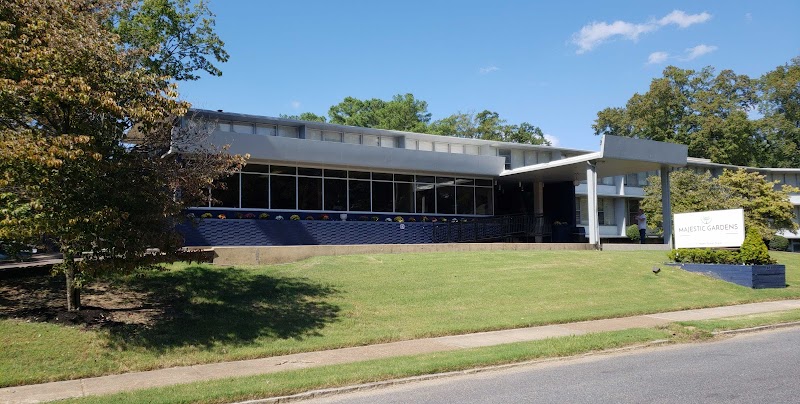
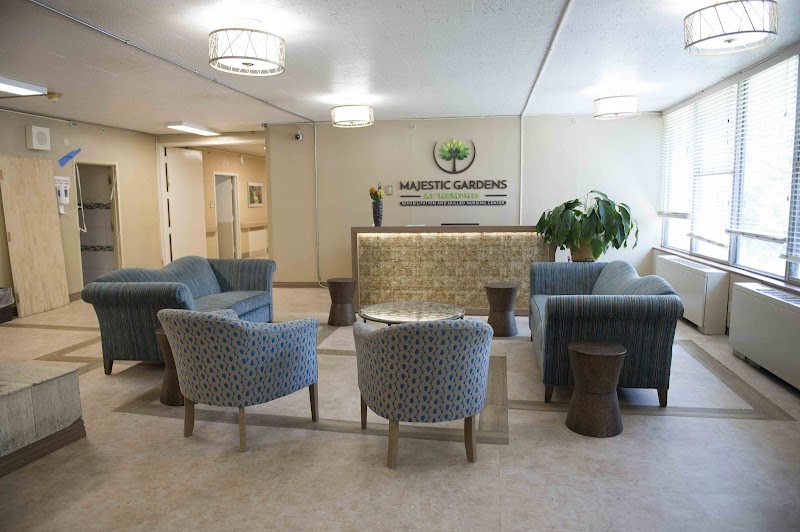
MAJESTIC GARDENS AT MEMPHIS REHAB & SNC

131 N TUCKER, MEMPHIS, TN 38104 (901) 726-5600
For profit - Individual 169 Beds EPHRAM LAHASKY Data: November 2025 7 Immediate Jeopardy citations
Trust Grade
0/100
#266 of 298 in TN
Last Inspection: May 2024

Within standard 12-15 month inspection cycle. Federal law requires annual inspections.

Overview

Majestic Gardens at Memphis Rehab & SNC has received a Trust Grade of F, indicating significant concerns about the facility's quality and care. Ranked #266 out of 298 in Tennessee, and #20 out of 24 in Shelby County, this places them in the bottom half of all facilities in the state and county. While recent trends show improvement, with issues decreasing from 12 in 2024 to just 1 in 2025, the staffing situation is troubling, with a low rating of 1 out of 5 stars and a high turnover rate of 72%, significantly above the state average of 48%. There are also serious concerns regarding safety, including critical incidents where residents were exposed to dangerously high hot water temperatures and risks related to malfunctioning elevators, leading to falls and serious injuries. Overall, while there are some signs of improvement, the facility has significant weaknesses that families should consider carefully.

Trust Score
F
0/100
In Tennessee
#266/298
Bottom 11%
Safety Record
High Risk
Review needed
Inspections
Getting Better
12 → 1 violations
Staff Stability
⚠ Watch
72% turnover. Very high, 24 points above average. Constant new faces learning your loved one's needs.
Penalties
✓ Good
$821,313 in fines. Lower than most Tennessee facilities. Relatively clean record.
Skilled Nurses
⚠ Watch
Each resident gets only 17 minutes of Registered Nurse (RN) attention daily — below average for Tennessee. Fewer RN minutes means fewer trained eyes watching for problems.
Violations
⚠ Watch
41 deficiencies on record. Higher than average. Multiple issues found across inspections.
★☆☆☆☆
1.0
Overall Rating
★☆☆☆☆
1.0
Staff Levels
★★☆☆☆
2.0
Care Quality
★☆☆☆☆
1.0
Inspection Score
Stable
2024: 12 issues
2025: 1 issues

The Good

  • Full Sprinkler Coverage · Fire safety systems throughout facility
  • No fines on record

Facility shows strength in fire safety.

The Bad

1-Star Overall Rating

Below Tennessee average (2.8)

Significant quality concerns identified by CMS

Staff Turnover: 72%

26pts above Tennessee avg (46%)

Frequent staff changes - ask about care continuity

Federal Fines: $821,313

Well above median ($33,413)

Significant penalties indicating serious issues

Chain: EPHRAM LAHASKY

Part of a multi-facility chain

Ask about local staffing decisions and management

Staff turnover is very high (72%)

24 points above Tennessee average of 48%

The Ugly 41 deficiencies on record

7 life-threatening
Aug 2025 1 deficiency
CONCERN (D) 📢 Someone Reported This

A family member, employee, or ombudsman was alarmed enough to file a formal complaint

Potential for Harm - no one hurt, but risky conditions existed

Deficiency F0569 (Tag F0569)

Could have caused harm · This affected 1 resident

**NOTE- TERMS IN BRACKETS HAVE BEEN EDITED TO PROTECT CONFIDENTIALITY** Based on policy review, medical record review, observation and interview, the facility failed to provide care and services when ...

Read full inspector narrative →
**NOTE- TERMS IN BRACKETS HAVE BEEN EDITED TO PROTECT CONFIDENTIALITY** Based on policy review, medical record review, observation and interview, the facility failed to provide care and services when 1 of 3 (Resident #18) discharged sample residents reviewed did not receive a personal refund within 30 days of discharge. The findings include: Review of the facility's policy titled Resident Funds Policy and Procedure, dated 2025, revealed .To ensure that.residents have access to, and are able to manage, their personal funds.Conveyance upon discharge, eviction, or death.Upon discharge, eviction, or death of a resident with a personal fund deposited with the facility, the facility shall convey within 30 days, the resident's funds, and a final accounting of those funds, to the resident, his or her legal representative. Review of the medical record revealed Resident #18 was admitted on [DATE], with diagnoses including Psychotic Disorder with Delusions, Dementia, and Hypertension. Resident #18 was discharged to another facility on 12/13/2025. Review of the facility's Patient Fund Request Form dated 1/30/2025, revealed .Refund due to discharged on 12/13/2025 [Named Resident] .Closed account due to discharged . During a telephone interview on 8/19/2025 at 10:30 AM, Resident #18's daughter (responsible party) confirmed Resident #18's personal account was not received through the mail until 2/5/2025. During an interview on 8/19/2025 at 11:25 AM, the Business Office Manager and the Administrator confirmed the account was not refunded within 30 days.
May 2024 12 deficiencies 1 IJ (1 affecting multiple)
CRITICAL (K) 📢 Someone Reported This

A family member, employee, or ombudsman was alarmed enough to file a formal complaint

Immediate Jeopardy (IJ) - the most serious Medicare violation

Accident Prevention (Tag F0689)

Someone could have died · This affected multiple residents

**NOTE- TERMS IN BRACKETS HAVE BEEN EDITED TO PROTECT CONFIDENTIALITY** Based on policy review, Director of Maintenance job description, facility investigation, manufacturer's manual recommendations, ...

Read full inspector narrative →
**NOTE- TERMS IN BRACKETS HAVE BEEN EDITED TO PROTECT CONFIDENTIALITY** Based on policy review, Director of Maintenance job description, facility investigation, manufacturer's manual recommendations, medical record review, observation, and interview, the facility failed to ensure the environment was free from accident hazards when dangerously elevated hot water temperatures were measured and when the facility failed to provide a safe environment and adequate supervision to prevent falls and injury for 2 of 5 (Resident #14 and #86) sampled residents reviewed for accidents. On 4/29/2024 and 5/7/2024, dangerous elevated hot water temperatures ranging from 121 degrees Fahrenheit (F) to 142 degrees Fahrenheit (F) were found in 32 of 169 (Resident Rooms #100, #101, #102, #103, #104, #105, #106, #107, #108, #109, #110, #115, #116, #203, #205, #212, #213, #215, #216, #306, #309, #316, #317, #318, #320, #325, #332, #400, #401, #406, #413, and #414) resident rooms checked for water temperatures. Hot water temperatures ranging from 121 degrees to 133 degrees F were found in 3 of the 4 (Resident Shower Rooms 100 hall, 200 hall and 400 hall) resident shower rooms. Three Residents who were physically and/or cognitively impaired (Residents #46, #85, and #114) resided in a room with elevated dangerous hot water temperatures and two residents were able to access the hot water in their rooms. Five residents were assessed for wandering (Resident #28, #41, #47, #117, and #479) and at risk of serious bodily injury, harm, burns, or death. Three cognitively intact (Residents #8, #115 and #280) stated the water would get too hot. The facility's failure to prevent the dangerously hot water temperatures placed all residents with the ability to access the hot water in Immediate Jeopardy. The facility's failure to properly use a mechanical lift during the transfer of Resident #86 resulted in Actual Harm when Resident #86 fell and sustained a Lumbar 1 (L1 - a fracture of the lumbar spine that causes moderate to severe pain) compression fracture, and when the facility's failure to implement one on one care for a resident resulted in Resident #14 sustaining a fall which resulted in an emergency room visit. The failure of the facility to maintain safe hot water temperatures placed all residents with access to these rooms in Immediate Jeopardy (IJ) (a situation in which the provider's noncompliance has caused, or has potential to cause serious injury, harm, impairment, or death to a resident). The facility's census was 131. The Director of Nursing (DON) and Assistant Director of Nursing (ADON) were notified of the Immediate Jeopardy (IJ) for F689 on 4/29/2024 at 6:19 PM, in the Conference Room. An acceptable allegation of removal was received on 5/3/2024. On 5/7/2024 beginning at 10:00 AM, while attempting to validate the allegation of removal, dangerously elevated hot water temperatures ranging from 121 degrees F to 124 degrees F were observed in resident rooms #115, #203, #212, #215, #400, #406, #413 and #414 and in the 200 and 400 hall resident shower rooms. The Interim Administrator, Facility Consultant and the DON were notified of the Immediate Jeopardy (IJ) for the amended F689 on 5/7/2024, at 5:19 PM, in the facility Conference Room. An extended survey was conducted 5/1/2024 through 5/8/2024. The Immediate Jeopardy for F-689 began on 4/29/2024. The Immediate Jeopardy is ongoing. The findings include: 1. Review of the facility policy titled, WATER TEMPERATURES, SAFETY OF, revision date 12/2009, revealed .Tap water in the facility shall be kept within a temperature range to prevent scalding of residents .Water heaters that service resident rooms, bathrooms, common areas, and tub/shower areas shall be set to temperatures on no more than 100 .F or the maximum allowable temperature per state regulation .Maintenance staff shall conduct periodic tap water temperature checks and record the water temperatures in a safety log .If any time water temperatures feel excessive to the touch .staff will report this finding to the immediate supervisor .exposure to warm or hot water .to certain temperatures will cause scalding or burns .Nursing staff will be educated about signs and symptoms of burns . Review of the State licensure regulations revealed at 720-18-.08, .Water distribution systems shall be arranged to provide hot water at each hot water outlet at all times. Hot water at shower, bathing and hand washing facilities shall be between 105°F and 115°F . Review of the undated and unsigned Director of Maintenance job description revealed .The Maintenance Director is responsible for maintaining the buildings, grounds and equipment in a safe and operable manner at all times .Maintaining the building in compliance with current federal, state .regulations, and guidelines .Maintaining the building in good repair and free from hazards .Export knowledge of general building maintenance duties .Knowledge of safe practices in Long Term Care environment .Knowledge of Federal and State Regulations . Review of the facility's policy Fall Prevention And Management, dated 10/2023, revealed .It is the policy . to ensure a safe environment .A Fall Prevention and Management Program is used to provide a safe environment for residents .designed to identify residents at risk for falls .define interventions for the prevention of falls and/or decrease the likelihood of injury .A fall is when a resident comes to rest unintentionally on the floor .Interventions appropriate to individual residents and their risk for falls will be implemented .All products and devices included as interventions .will be used according to manufacturer's recommendations . Review of the facility's policy titled, Accidents/Falls, dated 6/8/2022, revealed .The facility strives to promote safety, dignity, and overall quality of life for its residents by providing an environment that is free from any hazards for which the facility has control and by providing appropriate supervision and interventions to prevent avoidable accidents .All employees must follow these guidelines and procedures for safe resident handling . Review of the facility's policy titled, Safe & Proper Resident Handling, dated 6/5/2023, revealed .To provide guidelines that will assist with the facility to select the safest technique and/or equipment for resident handling and movement tasks .Key Points for health care staff to consider .Identify any equipment required and know how to use it . Review of the facility's policy titled, Use of a Mechanical Lift, dated 10/2022, revealed .To define the guideline for use of a Mechanical lift .must be used by two (2) nursing assistants to perform the procedure . Review of the manufacturer's manual Invacare Reliant 450 .600 .Patient Lift, revealed .Operating the Lift WARNING .recommends that two assistants be used for all lifting . Using the Sling WARNING .Be sure to check the sling attachment each time .to ensure that it is properly attached before the patient is removed from a stationary object (bed, chair or commode) .Transferring the Patient WARNING When elevated a few inches off the surface of the stationary object .and before moving the patient, check again to make sure that the sling is properly connected to the hooks of the hanger bar. If any attachments are not properly in place, lower the patient back onto the stationary object .and correct this problem . 3. The surveyor's thermometers were calibrated (a procedure using ice water to ensure the thermometer is measuring correctly) before water temperature checks were obtained. The surveyor's hot water temperature checks in resident rooms on 4/29/2024 beginning at 1:22 PM, revealed the following: room [ROOM NUMBER] was 130 degrees F. room [ROOM NUMBER] was 122 degrees F. room [ROOM NUMBER] was 120 degrees F The Maintenance Team Lead and the surveyor's hot water temperature checks using a calibrated thermometer in resident rooms and showers on 4/29/2024 beginning at 2:40 PM, revealed the following: room [ROOM NUMBER] was 137 degrees F. room [ROOM NUMBER] was 135 degrees F. room [ROOM NUMBER] was 133 degrees F. room [ROOM NUMBER] was 134 degrees F. room [ROOM NUMBER] was 137 degrees F. room [ROOM NUMBER] was 134 degrees F. room [ROOM NUMBER] was 137 degrees F. room [ROOM NUMBER] was 135 degrees F. room [ROOM NUMBER] was 135 degrees F. room [ROOM NUMBER] was 135 degrees F. room [ROOM NUMBER] was 137 degrees F. room [ROOM NUMBER] was 141 degrees F. room [ROOM NUMBER] was 140 degrees F. room [ROOM NUMBER] was 135 degrees F. room [ROOM NUMBER] was 132 degrees F. room [ROOM NUMBER] was 127 degrees F. room [ROOM NUMBER] was 122 degrees F. room [ROOM NUMBER] was 120 degrees F. room [ROOM NUMBER] was 121 degrees F. room [ROOM NUMBER] was 137 degrees F. room [ROOM NUMBER] was 136 degrees F. room [ROOM NUMBER] was 129 degrees F. room [ROOM NUMBER] was 129 degrees F. room [ROOM NUMBER] was 137 degrees F. room [ROOM NUMBER] was 133 degrees F. room [ROOM NUMBER] was 142 degrees F. room [ROOM NUMBER] was 138 degrees F. room [ROOM NUMBER] was 137 degrees F. room [ROOM NUMBER] was 130 degrees F. room [ROOM NUMBER] was 133 degrees F. room [ROOM NUMBER] was 121 degrees F. The Residents' Shower room on the 100-hall in stall #1 was 133 degrees F and in stall #2 was 131 degrees F. The Residents' Shower room on the 200-hall in stall #1 was 122 degrees F. The Maintenance Technician and the surveyor's hot water temperature checks using a calibrated thermometer in residents rooms and showers on 5/7/2024 beginning at 10:00 AM, revealed the following: room [ROOM NUMBER] was 121 degrees F. room [ROOM NUMBER] was 123 degrees F. room [ROOM NUMBER] was 121 degrees F. room [ROOM NUMBER] was 122 degrees F. room [ROOM NUMBER] was 123 degrees F. room [ROOM NUMBER] was 123 degrees F. room [ROOM NUMBER] was 124 degrees F. room [ROOM NUMBER] was 122 degrees F. The Residents'Shower room on the 200-hall in stall #1 was 120 degrees F. The Residents'Shower room on the 400-hall in stall #1 was 121 degrees F. 3. Per Minimum Data Set (MDS) review revealed Residents #46, #85 and #114 were cognitively and/or physically impaired, and the Residents had access to the hot water with the dangerously elevated hot water temperatures. The facility provided a list of ambulatory residents and a list of residents who wander. The facility lists revealed Residents #28, #41, #47, #117 and #479 were cognitively impaired and had been identified by the facility as Residents with wandering behaviors (random, repetitive, or aimless locomotion/movement throughout an area) had the potential to be affected by the dangerously hot water temperatures. 4. Medical record review revealed Resident #28 was admitted to the facility on [DATE], with diagnoses including Hypertension, Dementia, Cognitive Communication Deficit, and Malignant Neoplasm of the Prostate. Review of the annual MDS dated [DATE], revealed a BIMS score of 9 which indicated the Resident was moderately cognitively impaired, and required moderate assistance with bed to chair transfer, required maximum assistance with toileting hygiene and was dependent on staff for bathing. Review of the Wander List dated 4/26/2024, revealed Resident #28 was moderate to high for wandering. Resident #28 resided in a room which measured the dangerously elevated hot water temperature of 137 degrees F in the resident's sink, and the Resident had the ability to access the hot water. 5. Review of the medical record revealed Resident #46 was admitted to the facility on [DATE], with diagnoses including Diabetes, Hypertension, and Dementia. Review of the annual Minimum Data Set (MDS) dated [DATE], revealed Resident #46 scored a 6 on the Brief Interview for Mental Status (BIMS) assessment, which indicated the Resident was severely impaired cognitively. Resident #46 required partial to moderate assistance from staff to wash and dry their face and hands and to shower/bath self. Observation and interview on 4/29/2024 at 4:18 PM, revealed Resident #46 dressed, lying in the bed and was asked about the hot water in his bathroom. Resident #46 stated, The water be too hot. I tell them they have to change the water to make it be not so hot . Resident #46 resided in a room which measured the dangerously hot water temperatures of 121 degrees F. 6. Review of the medical record revealed Resident #85 was admitted to the facility on [DATE], with diagnoses including Traumatic Subdural Hemorrhage, Diabetes, Depression, and Hypertension. Review of the quarterly MDS dated [DATE], revealed a BIMS score of 10 which indicated the Resident was moderately cognitively impaired. Resident #85 used a wheelchair and requires assistance for bathing. Observation on 4/29/2024 at 10:39 AM, revealed 2 staff members in Resident #85's room assisting the Resident to the wheelchair. Observation on 4/30/2024 at 4:15 PM, revealed Resident #85 dressed, and sitting in a wheelchair in the friendship area at the table with other residents playing bingo. Resident #85 resided in a room which measured the dangerously elevated hot water temperatures of 122 degrees F. and had the ability to access the hot water. 7. Review of the medical record revealed Resident #114 was admitted to the facility on [DATE], with diagnoses of Cerebral Infarction due to Embolism of Left Middle Cerebral Artery, Chronic Obstructive Pulmonary Disease, Hypothyroidism, and Left Leg Above the Knee Amputation. Review of the quarterly MDS dated [DATE], revealed a BIMS score of 8 which indicated the Resident was moderately cognitively impaired. Observation on 4/30/2024 at 9:29 AM, revealed Resident #114 sitting in a wheelchair outside with other residents in the smoking area, wearing an apron and smoking a cigarette. Observation on 5/01/2024 at 11:15 AM, revealed Resident #114 self-propelling in a wheelchair down the hall, and stated she was looking for someone to get her some ice. During an interview on 4/29/2024 at 4:21 PM, Resident #114 was asked if the water was hot in her bathroom. Resident #114 stated, .the hot water is too hot . Resident #114 resided in a room which measured the dangerously elevated hot water temperature of 122 degrees F. and the Resident had the ability to access the hot water. 8. Review of the medical record revealed Resident #41 was admitted to the facility on [DATE], with diagnoses including Congenital Diaphragmatic Hernia, Aphasia, Dysphagia, Sleep Disorder, and Alcohol and Cocaine Abuse. The facility identified the resident as ambulatory and had a wanderguard. Review of the quarterly MDS dated [DATE], revealed Resident #41 BIMS score was not assessed. Resident #41 required set up to moderate assistance with Activities of daily living skills, and moderate assistance with toileting hygiene, bathing and mobility. Review of the Care Plan dated 1/23/2024, revealed Resident # 41 was identified for wandering and elopement. Resident #41 resided in a room which measured the dangerously elevated hot water temperature of 137.8 degrees F, and the Resident had the ability to access the hot water. 9. Review of the medical record revealed Resident #47 was admitted to the facility on [DATE], with diagnosis including Diabetes, Kidney Failure, Psychotic Disorder with Delusions, and Heart Failure. Review of the annual MDS dated [DATE], revealed Resident #47 has a BIMS score of 7 which indicated the Resident was severely cognitively impaired. Resident #47's upper/lower extremities were with no impairment, ambulated with a walker, used a wheelchair, and required maximum assistance with bathing. Review of the Care Plan dated 1/23/24, revealed, .I [Resident #47] am a wanderer . Observation on 4/30/2024 at 7:47 AM, revealed Resident #47 dressed, and sitting in a wheelchair across from nursing station with their eyes closed. Resident #47 resided in a room which measured the dangerously hot water temperature of 121 degrees F, and the Resident had the ability to access the hot water. 10. Review of the medical record revealed Resident #117 was admitted to the facility on [DATE], with diagnoses including Alzheimer's, Encephalopathy, Schizophrenia and Hypertension. Review of the quarterly MDS dated [DATE], revealed Resident #117 was rarely or never understood and had impaired long and short-term memory problems. Resident #117 was independent with toilet transfer and required supervision with toilet hygiene. The MDS did not have a BIMS score. Resident #117 resided in a room with the of the dangerously elevated hot water temperature that measured 138.7 degrees F, and the Resident had the ability to access the hot water. 11. Medical record review revealed Resident #479 was admitted on [DATE], with diagnoses including Cerebral Infarction, Hemiplegia, Dementia, Convulsions, Dysphagia and Hypertension. Review of the admission MDS dated [DATE], revealed a BIMS score of 1 which indicated the Resident was severely cognitively impaired. Resident #479 required maximum assistance with toileting hygiene, transfer and bathing. Review of the Wander List dated 4/26/2024, revealed Resident #479 was moderate to high risk for wandering. Resident #479 resided in a room which measured the dangerously elevated hot water temperature of 137 degrees F, and the resident had the ability to access the hot water. 12. Review of the medical record revealed Resident #8 was admitted to the facility on [DATE], with diagnoses including Cerebral Palsy, Repeated Falls, Legal Blindness and Anxiety. Review of the quarterly MDS dated [DATE], revealed Resident #8 with a BIMS score of 13 which indicated the Resident was cognitively intact and was dependent on staff for bathing, no impairment upper and lower extremities, requires moderate assist to transfer from bed to a chair and uses a wheelchair. During an interview on 4/29/2024 at 4:20 PM, Resident #8 stated that sometimes the water was too hot. 13. Review of the medical record revealed Resident #115 was admitted to the facility on [DATE] with diagnoses including Diabetes, Hypertension and Chronic Kidney Disease. Review of the quarterly MDS dated [DATE], revealed Resident #115 with a BIMS score of 15, which indicated the Resident was intact cognitively. Resident #115 used a wheelchair for mobility. During an interview on 4/29/2024 at 4:23 PM, Resident #115 was asked if the water was hot in the bathroom. Resident #115 stated, It gets too hot . 14. Review of the medical record revealed Resident #280 was admitted on [DATE], with diagnoses including Hypertension, Diabetes, Encephalopathy, and Acute Kidney Failure. Review of the admission MDS dated [DATE], revealed Resident #115 scored a 14 on the BIMS which indicated the Resident was cognitively intact. Resident #280 had no impairment on the upper and lower extremities, required set up for bathing and required supervision for transfers from bed to chair. During an interview on 4/29/2024 at 4:03 PM, Resident #280 stated the water temperature had been too hot when bathing and the washcloths were too hot at times. 15. During an interview on 4/29/2024 at 4:33 PM, CNA R was asked about any concerns with the water being too hot or too cold. Staff R stated, .some do get too hot .if you turn it up, it gets really hot .showers not too hot .[the hot water], it don't [doesn't] last long . During an interview on 5/1/2024 at 8:37 AM, Maintenance Team Lead was asked if he had any orientation on checking water temperatures. Maintenance Team Lead stated, No, ma'am .we just started watching them [water temperatures] a year or 2 after I got here. Maintenance Team Lead was asked when they had been notified the water was too hot. Maintenance Team Lead stated, When y'all found out . The Maintenance Team Lead was asked who had trained the Maintenance Technician. The Maintenance Team Lead stated, Nobody .we all didn't have any training .I have trained him [Named Maintenance Technician] this week on taking the water temps. The Maintenance Team Lead was asked how often water temperatures were being checked. The Maintenance Team Lead stated, .every hall gets checked once a week. I was not the one doing it .it was supposed to been done correctly .problems with water pipes in the winter .we had to turn the water up, and we never turned it back down .the water was cold .the hot water tank [heater] was turned up. The Maintenance Team Lead was asked was if the hot water heater was turned up to bring the water temperature up. The Maintenance Team Lead stated, Yes. The Maintenance Team Lead was asked when the hot water heaters were turned back down. The Maintenance Team Lead stated, We never got to it .until now .both water tanks [hot water heaters] were turned up . During an interview on 5/1/2024 at 9:21 AM, the Maintenance Technician was asked about the orientation when hired. The Maintenance Technician stated, .we went over few things I would be doing .I got hands on training .had to learn on my own . The Maintenance Technician was asked who the supervisor was. The Maintenance Technician stated, .[Named Maintenance Team Lead] because we cannot keep a maintenance supervisor . The Maintenance Technician was asked to explain how he took the water temperatures before yesterday 4/30/2024. Maintenance Technician stated, .run the water for 1 to 2 minutes, let the water get hot, place the thermometer tip in between the water. I would have half of the tip out of the water, learned now I should have the tip in the water and before .once I saw the number I would record. The Maintenance Technician was asked how the water temperatures are checked, now that he is trained. Maintenance Technician stated, Now trained to check .turn water on let it run for a few minutes .5 minutes, make sure numbers are not jumping .it will take 2 to 3 minutes of running and tip of thermometer in center to make sure . The Maintenance Technician was presented documentation of the facilities previously documented water temps and asked if he thought the documented water temps were accurate. The Maintenance Technician stated, I would say not . I was doing the tip in the water the wrong way .they are not right, if I was doing them the wrong way . The Maintenance Technician was asked how often the water temps were checked. The Maintenance Technician stated, I used to do them every day but now since . 2 months ago .changed to every Wednesday, do a hall a week . The Maintenance Technician stated he was told yesterday (4/30/2024) that the water temps were too high. The Maintenance Technician was asked had he ever been shown the federal guidelines for water temperatures. Maintenance Technician stated, No. The Maintenance Technician was asked did he know anything about the water being cold. The Maintenance Technician stated, . CNAs complained about the water being cold .I did not think the water was cold, it was warm .the people who put it in came out here and turned it up [referring to the hot water heater] .October . The Maintenance Technician was asked if the water temperatures could be visualized on the hot water heater. The Maintenance Technician stated, Yes. The Maintenance Technician was asked who monitored the water temperatures on the hot water heaters. The Maintenance Technician stated, Nobody. The Maintenance Technician was asked what the temperatures were on the hot water heaters today. The Maintenance Technician stated, .it was at 175 degrees on the oldest hot water heater and [Named Regional Director of Maintenance (RDOM)] changed it this week .[now set at] 115 . The Maintenance Technician confirmed he was not checking the shower room water temperatures. The Maintenance Technician was asked should he check the shower room temps. The Maintenance Technician stated, I think so, now. During an interview on 5/1/2024 at 4:08 PM, the RDOM, who prior to this interview was employed at a sister facility as part of their Maintenance Staff, was asked who was responsible for the maintenance of the facility. The RDOM stated, .I guess right now that would be me. The RDOM was asked about the hot water temperatures at the facility. The RDOM stated, It was brought to my attention you all had seen a temperature reading of 140 or 143. I thought that's impossible and thought that it had to be a bad mixing valve .I went downstairs and lowered temperatures on the boilers [hot water heaters]. The RDOM was asked what the temperatures were at that time. The RDOM stated, I want to say 130, 131 and I reduced it to 115 degrees and opened up the hot water valve in the janitors closet to expel the additional hot water .to bring the temperatures down .brought down to below standards .I lowered it to get the danger to the residents gone, so that it wasn't going to cause harm . This is purely assumption on my part, but makes the most sense, the [previous] Maintenance .turned up the temp and didn't follow up on it .I think when he [Previous Maintenance Director] left nobody looked or checked. If they had been doing temps the correct way, they would have caught it. The RDOM was asked were the two current maintenance staff reeducated about water temperatures and how to take temperatures properly. The RDOM stated, Honestly no, but I will. The RDOM was asked with the seriousness of the situation and the possibility of residents being seriously burned, should they have reeducated staff when this was found. The RDOM stated, .temp reading is something definitely going to be addressed .plan to address tomorrow .been working on Life Safety issues . The RDOM was asked since the problem with the water temperatures has been discovered as being too hot have the maintenance staff checked the water temperatures been taken. The RDOM stated, [Named Maintenance Team Lead] and I have .came in yesterday [4/30/2024] and took temps . did not write them down. The RDOM was asked with the seriousness of harm or death should the water temperatures be written down, kept, and reported back to the Administrator. The RDOM stated, That would fall under the Maintenance Director, and I am currently in that position, that is why I got the temp confirmed, he did not write them down. The RDOM was asked if he knew the federal regulations for water temperatures. The RDOM stated, No, what are they? The RDOM was asked what education was going to be provided to the maintenance staff if he didn't know the federal guidelines for water temperatures. The RDOM stated, . I will know them today. During an interview on 5/01/2024 at 4:49 PM, the Director of Nursing (DON) was asked about the water temperatures. The DON stated, .my understanding 104-110 in resident rooms .I don ' t know shower rooms . The DON was asked has anyone educated them on the correct water temperature ranges this week. The DON stated, I wouldn't say they educated me about it .that was the range we agreed on. The DON confirmed the Maintenance staff should have been able to tell them what the correct temperature ranges should be and stated, .I have not been keeping up with the water . During an interview on 5/02/2024 10:20 AM, the DON stated to the RDOM, . going to have to get tight on the water .the water is too low . The RDOM stated, .I talked to [named Life Safety surveyor] .he told me what the range is . During an interview on 5/02/2024 at 2:09 PM, the Administrator was asked if she had been notified of the hot water temps. The Administrator stated, .Monday night . got a text from my housekeeping supervisor .said we got an IJ [immediate jeopardy] for the water temperature . The Administrator confirmed no one else had let her know about the IJ and stated, The one that should have notified me was the DON who was second in command . The Administrator was asked how the communication was within the facility. The Administrator stated, .it's been poor . The Administrator was asked if she felt the response to the IJ had been immediate. The Administrator stated, .there was a call to a vender .and the boilers [hot water heaters] were turned down immediately .showers were halted and bed baths .until we could determine the proper temperature. The Administrator confirmed everyone should have been aware of the water temperature and stated, .100 degrees for baths .120 degrees for 5 minutes burn . The Administrator confirmed it would be too cold to receive baths/shower under 100 degrees and stated, It would be too cold . The Administrator confirmed she had no idea what the water temperature acceptable ranges should be and was asked who was responsible for the hot water temperatures. The Administrator stated Maintenance .they are supposed to do water checks daily. The Administrator confirmed she was not aware that the maintenance didn't know how to correctly take the water temps. The Administrator was asked where the communication breakdown was. The Administrator stated, .I don't know .it's definitely .a good question .maybe failure to carry out assigned duties [referring to the hot water heater being to high and not being turned down] . The Administrator was asked who was responsible for the building. The Administrator stated, I am. During an interview on 5/08/2024 at 10:51 AM, the Medical Director confirmed he was notified about the IJ related to hot water temperatures and stated, I told them the water should be fixed quickly .I think when it comes to spending money the owners drag their feet .it should be the right temperature .shouldn't be too hot or too cold .the building is [AGE] years old .it's going to cost some money but it is worth it for the residents . During an interview on 5/08/2024 at 11:20 AM, the Superintendent of the Service Department of an outside vendor was asked why they were called out to facility. The Superintendent stated, .they [the facility] are having hot water in faucets .it was hotter than it was supposed to be .when we got here .originally it was a boiler and 2 water tanks .some time ago, in the 80's .90s boiler went out and replaced .with 2 water heaters .we replaced one [referring to the water heater] in the last couple years .it had flooded down there [in the facility basement], it's been years ago when they took the boiler out, they piped it up differently, cold water feeds with them having to circulate through builder boilers, they require a holding tank . when boilers were replaced . they had a boiler with a holding tank, boiler doesn't have a tank and can't circulate .they left the cold tied into the tank instead of the water heaters, they are mixing .the problem was going into the holding tank . we have already rerouted that, to maintain that, they [the facility] kicked the hot water up . the hot and cold was mixing .they have circulating pumps and aren't working . The Superintendent was asked was the water issued fixed at this time. The Superintendent stated, .not that I ' m aware of it shows 74 degrees .to get it right, they would have to re-pipe the whole building .they are so old, they don't have a system monitoring the valves . The Superintendent was asked if the water issues can recur. The Superintendent stated the only way to properly correct the problem was, tearing out walls and ceiling are going to be the only way .yes .&quo[TRUNCATED]
CONCERN (D) 📢 Someone Reported This

A family member, employee, or ombudsman was alarmed enough to file a formal complaint

Potential for Harm - no one hurt, but risky conditions existed

Resident Rights (Tag F0550)

Could have caused harm · This affected 1 resident

Based on policy review, observation, and interview, the facility failed to treat all residents with dignity and respect when 3 of 19 staff members (Certified Nursing Assistant (CNA) - CNA S, and CNA T...

Read full inspector narrative →
Based on policy review, observation, and interview, the facility failed to treat all residents with dignity and respect when 3 of 19 staff members (Certified Nursing Assistant (CNA) - CNA S, and CNA T), and Licensed Practical Nurse (LPN) LPN U) failed to knock and announce themselves before entering a resident's room during dining The findings include: 1. Review of the facility's Resident Rights, undated policy revealed, .These rights include the resident's right to . dignified existence, be treated with respect, kindness, and dignity . 2. Observation during the Hall 300 dining on 4/29/2027 at 11:35 AM, revealed CNA S entered Resident #2's room and failed to knock or announce themself before entering resident's room. 3. Observation during the Hall 300 dining on 4/29/2024 at 11:49 AM, revealed CNA T entered Resident #15's room and failed to knock or announce themself before entering the resident's room. 4. Observation during the Hall 300 dining on 4/29/2024 at 11:55 AM, revealed LPN U entered Resident #26's room and failed to knock or announce themself before entering the resident's room. 5. Observation during the Hall 400 dining on 4/29/2024 at 12:02 AM, revealed LPN U entered Resident #29's room and failed to knock or announce themself before entering the resident's room. 6. During an interview on 5/7/2024 at 2:46 PM, the Director of Nursing (DON) confirmed that staff should knock before entering the resident's room.
CONCERN (D) 📢 Someone Reported This

A family member, employee, or ombudsman was alarmed enough to file a formal complaint

Potential for Harm - no one hurt, but risky conditions existed

Transfer Notice (Tag F0623)

Could have caused harm · This affected 1 resident

**NOTE- TERMS IN BRACKETS HAVE BEEN EDITED TO PROTECT CONFIDENTIALITY** Based on policy review, medical record review, and interview, the facility failed to notify the Ombudsman of emergency transfers...

Read full inspector narrative →
**NOTE- TERMS IN BRACKETS HAVE BEEN EDITED TO PROTECT CONFIDENTIALITY** Based on policy review, medical record review, and interview, the facility failed to notify the Ombudsman of emergency transfers for 1 of 1 (Resident #66) sampled residents reviewed for hospitalization. The findings include: 1. Review of the facility's undated policy, .Notice of Discharge to Ombudsman Policy Statement, revealed .A copy of the transfer notice may be sent .such as a list of residents on a monthly basis . 2. Review of the medical record revealed Resident #66 was admitted to the facility on [DATE] with diagnoses including Metabolic Encephalopathy, Dysphagia, Aphasia, Hemiplegia, Dementia, Congestive Heart Failure, Hypertension, and Contracture of Left Hand. Review of the Progress Notes dated 2/21/2024, revealed .Called to resident room .lying on left side of floor .Md [physician] called with new orders to transport to [Named Hospital] for evaluation . Review of the Hospital's ED [Emergency Department] Note dated 2/21/2024, revealed Resident #66 was in the ED for evaluation. The facility was unable to provide documentation that an Ombudsman List for Residents was completed, and that the Ombudsman was not notified of Resident #66's transfer to the hospital. During an interview on 5/7/2024 at 10:50 AM, Staff Member D was asked, prior to today, has the Ombudsman Emergency Transfer List been completed. Staff Member D stated, No. Staff Member D was asked should the list have been completed monthly and sent to the Ombudsman. Staff Member D stated, Yes. Staff Member D was asked since the list had not been completed and sent, when were you informed that they should be completed and sent. Staff Member D stated, Today.
CONCERN (D) 📢 Someone Reported This

A family member, employee, or ombudsman was alarmed enough to file a formal complaint

Potential for Harm - no one hurt, but risky conditions existed

Assessment Accuracy (Tag F0641)

Could have caused harm · This affected 1 resident

**NOTE- TERMS IN BRACKETS HAVE BEEN EDITED TO PROTECT CONFIDENTIALITY** Based on medical record review and interview the facility failed to accurately assess residents for Brief Interview for Mental S...

Read full inspector narrative →
**NOTE- TERMS IN BRACKETS HAVE BEEN EDITED TO PROTECT CONFIDENTIALITY** Based on medical record review and interview the facility failed to accurately assess residents for Brief Interview for Mental Status (BIMS) scores, falls, discharge disposition, and diagnoses for 5 of 32 sampled residents (Resident #41, #47, #66, #86 and #128) reviewed for accuracy of assessments. The findings include: 1. Review of the medical record revealed Resident #41 was admitted to the facility on [DATE], with diagnoses including Congenital Diaphragmatic Hernia, Aphasia, Dysphagia, Dysarthria, Pseudobulbar Affect, Sleep Disorder, and Alcohol and Cocaine Abuse. Review of the quarterly Minimum Data Set (MDS) dated [DATE], revealed a BIMS assessment was indicated and not completed. During an interview on 5/2/2024 at 11:20 AM, the MDS Coordinator confirmed the BIMS should have been completed. 2. Review of the medical record revealed Resident #47 was admitted to the facility on [DATE], with diagnosis including Diabetes, Kidney Failure, Psychotic Disorder with Delusions, and Heart Failure. Review of the progress note dated 1/12/2024, revealed Resident #47 fell from his wheelchair while in his room. Review of the Care Plan dated 1/23/2024, revealed .I am at risk for falls with dates I am at risk for FALLS and fall related injury r/t requires assistance with transfers, medication regime, limited mobility, incontinence .10/21/23 Unwitnessed fall .11/19/23 Unwitnessed . 11/20/23 Unwitnessed fall . 11/30/23 Witnessed fall . 12/20/23 . 1/12/24 Witnessed fall .3/13/24 Unwitnessed fall . Review of the 5 day Medicare MDS dated [DATE], revealed an entry date 1/16/2024, a BIMS score of 7 indicating severe cognitive impairment, .Section J-Health Conditions .Did the resident have a fall any time in the last month prior to admission/entry or reentry. No. Did the Resident have a fall in the last 2-6 months prior to admission/entry or reentry. No . Review of the annual MDS dated [DATE], revealed an entry date 1/16/2024, a BIMS score of 7 indicating severe cognitive impairment, Section J-Health Conditions .Did the resident have a fall any time in the last month prior to admission/entry or reentry. No. Did the Resident have a fall in the last 2-6 months prior to admission/entry or reentry . [was answered] No . During an interview on 5/2/2024 at 2:27 PM the MDS coordinator confirmed the 1/23/2024 and 2/4/2024 MDS assessments were coded incorrectly for falls. 3. Review of the medical record revealed Resident #66 was admitted to the facility on [DATE], with diagnoses including Metabolic Encephalopathy, Dysphagia, Aphasia, Hemiplegia, Cognitive Communication Review of the facility policy titled, Deficit, Dementia, Congestive Heart Failure, Hypertension, History of Falling, and Contracture of Left Hand. Review of a Progress Note dated 2/21/2024 at 5:40 PM revealed .Called to resident room per cna [Certified Nursing Assistant], [resident] noted lying on left side on floor . Review of the annual Minimum Data Set (MDS) dated [DATE], revealed a BIMS score of 10, which indicated he had moderate cognitive impairment Section J Health Conditions falls since prior Assessment-No. Number of falls since prior Assessment was not answered. Review of the Care Plan dated 3/27/2024, revealed .at risk for falls and fall related injury .2/21/24 Unwitnessed fall . During an interview on 5/01/2024 at 4:56 PM, the MDS coordinator was asked if the MDS should been updated to reflect Resident #66's documented fall with injury on 2/21/2024. The MDS Coordinator stated, .the fall should be on the MDS . 4. Review of the medical record revealed Resident #86 was admitted to the facility on [DATE], with diagnoses including Muscle Wasting and Atrophy and Paraplegia. Review of the quarterly MDS dated [DATE], revealed Section I-Active Diagnoses Paraplegia [was not marked] .Quadriplegia [was marked] . The MDS did not accurately reflect the resident had Paraplegia. 5. Review of the medical record revealed Resident #128 was admitted to the facility on [DATE], and was discharged on 3/29/2024, with diagnoses of Sepsis, Bacteremia, Calculus of Kidney, Obstructive and Reflux Uropathy, Diabetes, Bipolar Disorder, Obstructive Sleep Apnea, and Cognitive Communication Deficit. Review of the discharge MDS dated [DATE], revealed a BIMS of 15, indicating intact cognition and .Section A Identification Information .Discharge Status . [was marked] .Short-Term General Hospital . Review of a Physician's Order dated 3/29/2024 revealed, Discharge home with family along with medications. During an interview on 5/07/2024 at 4:25 PM, the MDS Coordinator was asked, where was this resident discharged to on 3/29/2024. The MDS Coordinator stated, .she was discharged home and not to the hospital .
CONCERN (D) 📢 Someone Reported This

A family member, employee, or ombudsman was alarmed enough to file a formal complaint

Potential for Harm - no one hurt, but risky conditions existed

ADL Care (Tag F0677)

Could have caused harm · This affected 1 resident

**NOTE- TERMS IN BRACKETS HAVE BEEN EDITED TO PROTECT CONFIDENTIALITY** Based on policy review, medical record review, review of Skin Check sheets, and interview the facility failed to ensure Activiti...

Read full inspector narrative →
**NOTE- TERMS IN BRACKETS HAVE BEEN EDITED TO PROTECT CONFIDENTIALITY** Based on policy review, medical record review, review of Skin Check sheets, and interview the facility failed to ensure Activities of Daily Living (ADL) assistance related to bathing was provided for 2 of 3 sampled residents (Resident #1 and #80) reviewed for ADL care. The findings include: 1. Review of the facility policy titled, Resident Showers, revised 3/2023, revealed, .It is the practice of this facility to assist residents with bathing to maintain proper hygiene, stimulate circulation and help prevent skin issues as per current standards of practice .Residents will be provided showers as per request or as per facility schedule protocols and based upon resident safety . 2. Review of the medical record revealed Resident #1 was admitted on [DATE], with diagnoses including Spastic Quadriplegic Cerebral Palsy, Chronic Kidney Disease, Diabetes, Hypertension and Depression. Review of the Quarterly Minimal Data Set (MDS) dated [DATE], revealed a Brief Interview for Mental Status (BIMS) score of 14, which indicated he was cognitively intact, had impairments of range of motion in upper and lower extremities on both sides, received set up assist with meals, and was dependent with other ADLs including bathing. Review of the Care Plan dated 2/20/2024, revealed, .has an ADL Self Care Performance Deficit r/t Limited ROM, Limited Mobility, muscle weakness, cerebral palsy, bilateral ue [upper extremity] contractures .BATHING: The resident is totally dependent on staff to provide a bath . Review of the facility shower schedule revealed Resident #1 should have showers 2 times weekly on Monday and Thursday. Review of the facility Skin Check sheets for April 2024 revealed Resident #1 did not receive showers as scheduled on 4/1/2024, 4/8/2024, and 4/22/2024. During an interview on 5/01/2024 at 2:37 PM, Staff A confirmed residents should get showers 2 times weekly and staff should complete Skin Check sheets when showers are given. During an interview on 5/6/2024 at 11:00 AM, the DON confirmed residents should receive showers 2 times weekly and that Skin Check sheets were not present for Resident #1 for 4/1/2024, 4/8/2024 and 4/22/2024. 3. Review of the medical record revealed Resident #80 was admitted to the facility on [DATE], with diagnoses including Peripheral Vascular Disease, Pressure Ulcer Left Heel Unstageable, Pressure Ulcer Right Heel Stage 3, Heart Failure, Diabetes and Adult Failure to Thrive. Review of the admission MDS dated [DATE], revealed Resident #80 had a BIMS score of 15 which indicated he was cognitively intact and required maximal assistance with bathing. Review of the care plan revealed, .has an ADL Self Care Performance Deficit .Interventions .BATHING: Check nail length and trim and clean on bath day and as necessary. Report any changes to the nurse . Review of the Skin Check sheets for March 2024 and April 2024 revealed Resident #80 did not receive a bath on the following days 3/23/2024, 3/27/2024, 4/3/2024, 4/10/2024, 4/13/2024, 4/17/2024, 4/20/2024, 4/24/2024 and 4/27/2024. During an interview on 5/2/2024 at 9:40 AM, the DON confirmed the Skin Check sheets are used to document resident showers/baths and Resident #80 should have two baths/showers a week. During an interview on 5/2/2024 on 12:21 PM, the DON was shown Resident #80's Skin Check sheets dated 3/27/2024, 3/30/2024, 4/6/2024 and 5/1/2024 and was asked if that was all of these sheets for this resident. The DON stated, That's all we got .wished we had more . During an interview on 5/06/2024 at 5:42 PM, the DON confirmed Resident #80's scheduled shower days are Wednesday and Saturday.
CONCERN (D) 📢 Someone Reported This

A family member, employee, or ombudsman was alarmed enough to file a formal complaint

Potential for Harm - no one hurt, but risky conditions existed

Incontinence Care (Tag F0690)

Could have caused harm · This affected 1 resident

**NOTE- TERMS IN BRACKETS HAVE BEEN EDITED TO PROTECT CONFIDENTIALITY** Based on policy review, medical record review, observation and interview the facility failed to provide care and services for an...

Read full inspector narrative →
**NOTE- TERMS IN BRACKETS HAVE BEEN EDITED TO PROTECT CONFIDENTIALITY** Based on policy review, medical record review, observation and interview the facility failed to provide care and services for an indwelling catheter (a tube in the bladder that drains urine) for 1 of 1 (Resident #44) sampled resident reviewed for indwelling catheters. The findings include: 1. Review of the facility policy titled Foley Catheter Care, revised 6/2023, revealed .The purpose of catheter care is to prevent possible urinary tract infections from bacteria spreading from the perineal area and external catheter into the urinary tract . 2. Review of the medical record revealed Resident #44 was admitted to the facility on [DATE], with diagnoses of Osteomyelitis, Obstructive Uropathy, Hemiplegia, Cerebral Infarction, Hypertension, and Arteriosclerotic Heart Disease. Review of the Care Plan dated 3/13/2024, revealed .has an indwelling Catheter: Obstructive uropathy .Assess/record/report to MD for s/sx [signs and symptoms] UTI: pain, burning, blood tinged urine, cloudiness, no output, deepening of urine color, increased pulse, increased temp, Urinary frequency, foul smelling urine, fever, chills, altered mental status, change in behavior, change in eating patterns .Change foley catheter every month and [abbreviation for as needed] .Check tubing for kinks each shift .Provide foley catheter care every shift and as needed . Review of the admission Minimum Data Set (MDS) dated [DATE], revealed Resident #44 had a Brief Interview for Mental Status Score (BIMS) of 15, indicating the resident was cognitively intact, Further review revealed Resident #44 had an indwelling catheter. Review of the Order Summary Report dated 5/6/2024, revealed .Change foley catheter on the 14th of each month and as needed for blockage/leakage or accidental dislodgement .Active 3/13/2024 . Review of the April 2024 Medication Administration Record revealed the catheter was not signed as being changed on 4/14/2024. Observation in the resident's room on 5/01/2024 at 2:22 PM, revealed Resident #44 resting in bed with an indwelling catheter hanging on the Left side of bed, a privacy bag covering the drainage bag and golden yellow urine in tubing. During an interview on 5/6/2024 at 11:08 AM, the Director of Nursing confirmed Resident #44's catheter was not changed on 4/14/2024 as ordered.
CONCERN (D) 📢 Someone Reported This

A family member, employee, or ombudsman was alarmed enough to file a formal complaint

Potential for Harm - no one hurt, but risky conditions existed

Deficiency F0761 (Tag F0761)

Could have caused harm · This affected 1 resident

Based on medical record review, observation, and interview the facility failed to ensure medication was stored securely when medications were left unattended in resident rooms for 1 of 61 sampled (Res...

Read full inspector narrative →
Based on medical record review, observation, and interview the facility failed to ensure medication was stored securely when medications were left unattended in resident rooms for 1 of 61 sampled (Resident #31) and when 2 of 7 medication carts (Back up medication cart and the 100 hall medication cart) were left unlocked, unattended and out of staff's line of sight. The findings include: 1. Observation in Resident #31's room on 5/1/2024 at 11:01 AM, revealed Resident #31 lying in bed, 2 white pills in a cup on her overbed table. Resident #31 asked for some water so she could take her medicine. LPN B was not present in the room. During an interview on 5/01/2024 at 11:13 AM, LPN B was asked what medication was left at Resident #31's bedside. LPN B stated, .potassium tablet and Vitamin D . LPN B confirmed she left the medications at the bedside because she got busy and didn't make it back to administer the medication. 2. Observation of the 100 hall Nurse's station on 5/06/2024 beginning at 4:21 PM, revealed the Back up medication cart was unlocked, unattended, and out of line of sight of staff. The Director of Nursing (DON) walked up to the Nurses station and observed the unlocked medication cart. LPN F stated, That cart [Back up medication cart] is empty . LPN F opened the top drawer of the Back up medication cart and confirmed they contain the following over the counter medications stored in the top drawer: 1. 1 bottle of ASA 81 mg 2. 3 bottles of Docusate Sodium 100 mg 3. 1 bottle of Gas Relief 80 mg 4. 1 bottle of Vitamin D 25 mcg 5. 1 bottle of Iron 25 mg 6. 1 bottle of Geri Kot 8.6 mg 7. 1 bottle of Sodium Chloride 1 Gram (15.4 gr) 8. 1 bottle of Vitamin B 12 1000 mcg 9. 1 bottle of Loratadine 10 mg 10. 1 bottle of Meclizine 12 mg 11. 1 bottle of Vitamin D 125 mcg 12. 2 bottles of Multivitamin 13. 1 bottle of Vitamin B Complex 14. 1 bottle of Cetirizine 10 mg 15. 1 bottle of Zinc Sulfate 220 mg 16. 1 bottle of Bisacodyl 5mg 17. 1 bottle of Probiotic 500 mg 18. 1 bottle of Acetaminophen 325 mg 19. 1 bottle of Magnesium Oxide 400 mg 3. Observation on the 200 hall on 5/7/2024 at 8:08 AM, revealed the 100 hall medication cart sitting in the 200 hall. The 100 hall medication cart was unlocked, unattended, and out of line of sight of staff. 4. During an interview on 5/7/2023 at 8:20 AM, DON confirmed medication carts should not be unlocked and unattended. The DON was asked why the Back up medication cart was at the 100 hall Nurse's station. The DON confirmed that 1 nurse has residents on 100 and 200 halls and has to share a cart, the nurses decided to separate the medications and make two carts. During an interview on 5/06/24 at 12:23 PM, LPN E confirmed she should not have left the medications on the over bed table when she went to wash her hands. During an interview on 5/7/2024 at 3:18 PM, the DON was asked if a nurse should leave medications unattended at bedside. The DON stated, No ma'am, they shouldn't leave them
CONCERN (D) 📢 Someone Reported This

A family member, employee, or ombudsman was alarmed enough to file a formal complaint

Potential for Harm - no one hurt, but risky conditions existed

Medical Records (Tag F0842)

Could have caused harm · This affected 1 resident

**NOTE- TERMS IN BRACKETS HAVE BEEN EDITED TO PROTECT CONFIDENTIALITY** Based on facility policy, facility document review, medical record review, and interview revealed the facility failed to maintai...

Read full inspector narrative →
**NOTE- TERMS IN BRACKETS HAVE BEEN EDITED TO PROTECT CONFIDENTIALITY** Based on facility policy, facility document review, medical record review, and interview revealed the facility failed to maintain an accurate and complete medical record for 1 of 32 (Resident #66) sampled residents reviewed. Resident #66 ' s medical record contained an inaccurate Neurological check (an evaluation of brain and nervous system function). The findings include: 1. Review of the facility policy titled, Charting Errors and/or Omissions, revised 2006 revealed .Accurate medical records shall be maintained by this facility . Review of the facility policy titled, NEUROLOGICAL ASSESSMENT & FLOW SHEET, dated 12/2023, revealed .Any time an individual has an injury to the head .a Neuro Assessment needs to be done .Put the exact time that the [neurological] check was done and not when it was supposed to be done .exact time is important . 2. Review of the medical record revealed Resident #66 was admitted to the facility on [DATE], with diagnoses including Metabolic Encephalopathy, Dysphagia, Aphasia, Hemiplegia, Cognitive Communication Deficit, Dementia, Congestive Heart Failure, Hypertension, History of Falling, and Contracture of Left Hand. Review of the 5-day Medicare Minimum Data Set (MDS) dated [DATE], revealed a Brief Interview for Mental Status (BIMS) score of 7, indicating severe cognitive impairment. Review of a Progress Note dated 2/21/2024 at 5:40 PM revealed .Called to resident room per CNA [Certified Nursing Assistant], [resident] noted lying on left side on floor .open area noted over left brow . Review of Resident #66 ' s Neuro check sheet dated 2/21/2024 revealed neuro checks were documented at 12:45 PM. Review of the [Named] Fire Department Prehospital Patient Record dated 2/21/2024 revealed Resident #66 left the facility at 6:25 AM, being transported to the emergency room (ER). Resident #66 left the hospital ER at 12:55 PM and transported back to the facility. Staff documented the neuro check for Resident #66 at 12:45 PM, when Resident #66 was not present in the facility. During an interview on 05/08/24 at 10:35 AM, the Director of Nursing (DON) was asked about the neuro check documented on 2/21/2024 at 12:45 PM. The DON stated, .he would have been on his way to the hospital at that time [6:35 AM] and [12:45 PM] would be when he returned from the hospital . The facility failed to maintain accurate records and documentation related to neuro checks for Resident #66.
CONCERN (E) 📢 Someone Reported This

A family member, employee, or ombudsman was alarmed enough to file a formal complaint

Potential for Harm - no one hurt, but risky conditions existed

Deficiency F0578 (Tag F0578)

Could have caused harm · This affected multiple residents

**NOTE- TERMS IN BRACKETS HAVE BEEN EDITED TO PROTECT CONFIDENTIALITY** Based on policy review, medical record review, and interview, the facility failed to provide information regarding a resident's ...

Read full inspector narrative →
**NOTE- TERMS IN BRACKETS HAVE BEEN EDITED TO PROTECT CONFIDENTIALITY** Based on policy review, medical record review, and interview, the facility failed to provide information regarding a resident's right to formulate an Advanced Directive for 21 of 32 sampled residents (Resident #1, #3, #14, #21, #26, #31, #33, #41, #47, #55, #65, #66, #70, #71, #75, #87, #88, #102, #106, #112, and #115) reviewed for Advanced Directives. The findings include: 1. Review of the facility's policy titled, Residents' Rights Regarding Treatment and Advance Directives, dated 12/2023, revealed .It is the policy of this facility to support and facilitate a resident's right to request, refuse and/or discontinue medical or surgical treatment and to formulate an advance directive .On admission, the facility will determine if the resident has executed an advance directive, and if not, determine whether the resident would like to formulate an advance directive and will provide Advance Directive information if requested . 2. Review of the medical record revealed Resident #1 was admitted to the facility on [DATE], with diagnoses of Abnormal Weight Loss, Cerebral Palsy, Major Depressive Disorder, and Diabetes. Review of the quarterly Minimum Data Set (MDS) dated [DATE], revealed Resident #1 had a Brief Interview for Mental Status (BIMS) score of 14, which indicated the resident was cognitively intact. Review of the medical record revealed there was no documentation to indicate that the resident and/or their legal representative was informed, offered, or provided written information regarding their right to formulate an Advance Directive upon admission. 3. Review of the medical record revealed Resident #3 was admitted to the facility on [DATE], with diagnoses of Osteoporosis with Current Pathological Fracture, Contracture, Traumatic Brain Injury, and Diabetes. Review of the quarterly MDS dated [DATE], revealed Resident #3 had a BIMS score of 05, which indicated resident has severe cognitive impairment. Review of the medical record revealed there was no documentation to indicate that the resident and/or their legal representative was informed, offered, or provided written information regarding their right to formulate an Advance Directive upon admission. 4. Review of the medical record revealed Resident #14 was admitted to the facility on [DATE], with diagnoses of Weight Loss, Epileptic Seizures, Fracture, and Falls. Review of the significant change MDS dated [DATE], revealed Resident #14 had a BIMS score of 09, which indicated resident has moderate cognitive impairment. Review of the medical record revealed there was no documentation to indicate that the resident and/or their legal representative was informed, offered, or provided written information regarding their right to formulate an Advance Directive upon admission. 5. Review of the medical record revealed Resident #21 was admitted to the facility on [DATE], with diagnoses of Fracture, Anxiety, Multiple Sclerosis, and Kidney Failure. Review of the quarterly MDS dated [DATE], revealed Resident #21 had a BIMS score of 04, which indicated resident has severe cognitive impairment. Review of the medical record revealed there was no documentation to indicate that the resident and/or their legal representative was informed, offered, or provided written information regarding their right to formulate an Advance Directive upon admission. 6. Review of the medical record revealed Resident #26 was admitted to the facility on [DATE], with diagnoses of Acquired Absence of Left Leg, Cerebral Infarction, Diabetes, and Schizophrenia. Review of the quarterly MDS dated [DATE], revealed Resident #26 had a BIMS score of 09, which indicated resident has moderate cognitive impairment. Review of the medical record revealed there was no documentation to indicate that the resident and/or their legal representative was informed, offered, or provided written information regarding their right to formulate an Advance Directive upon admission. 7. Review of the medical record revealed Resident #31 was admitted to the facility on [DATE], with diagnoses of Lymphadenitis, Hypertension, Psychotic Disorder with Delusions and Tachycardia. Review of the quarterly MDS dated [DATE], revealed Resident #31 had a BIMS score of 12, which indicated resident has moderate cognitive impairment. Review of the medical record revealed there was no documentation to indicate that the resident and/or their legal representative was informed, offered, or provided written information regarding their right to formulate an Advance Directive upon admission. 8. Review of the medical record revealed Resident #33 was admitted to the facility on [DATE], with diagnoses of Absence of Right Leg Below Knee, Anxiety, Cardiomegaly and Sepsis. Review of the quarterly MDS dated [DATE], revealed Resident #33 had a BIMS score of 10, which indicated resident has moderate cognitive impairment. Review of the medical record revealed there was no documentation to indicate that the resident and/or their legal representative was informed, offered, or provided written information regarding their right to formulate an Advance Directive upon admission. 9. Review of the medical record revealed Resident #41 was admitted to the facility on [DATE], with diagnoses of Acute Kidney Failure, Angina Pectoris, Chronic Kidney Disease, and Gastrostomy Status. Review of the quarterly MDS dated [DATE], revealed Resident #41 is rarely/never understood. Review of the medical record revealed there was no documentation to indicate that the resident and/or their legal representative was informed, offered, or provided written information regarding their right to formulate an Advance Directive upon admission. 10. Review of the medical record revealed Resident #47 was admitted to the facility on [DATE], with diagnoses of Embolism and Thrombosis of Deep Veins, Cerebral Infarction, Metabolic Encephalopathy, and Psychotic Disorder. Review of the annual MDS dated [DATE], revealed Resident #47 had a BIMS score of 07, which indicated resident has severe cognitive impairment. Review of the medical record revealed there was no documentation to indicate that the resident and/or their legal representative was informed, offered, or provided written information regarding their right to formulate an Advance Directive upon admission. 11. Review of the medical record revealed Resident #55 was admitted to the facility on [DATE], with diagnoses of Acidosis, Pancytopenia, and Polyneuropathy. Review of the quarterly MDS dated [DATE], revealed Resident #55 had a BIMS score of 03, which indicated resident has severe cognitive impairment. Review of the medical record revealed there was no documentation to indicate that the resident and/or their legal representative was informed, offered, or provided written information regarding their right to formulate an Advance Directive upon admission. 12. Review of the medical record revealed Resident #65 was admitted to the facility on [DATE], with diagnoses of Acquired Absence of Left Leg, Necrotizing Fasciitis, Schizophrenia and Anxiety. Review of a 5 day MDS dated [DATE], revealed Resident #65 had a BIMS score of 06, which indicated resident has severe cognitive impairment. Review of the medical record revealed there was no documentation to indicate that the resident and/or their legal representative was informed, offered, or provided written information regarding their right to formulate an Advance Directive upon admission. 13. Review of the medical record revealed Resident #66 was admitted to the facility on [DATE], with diagnoses of Congestive Heart Failure, Hemiplegia, Metabolic Encephalopathy, and Convulsions. Review of the quarterly MDS dated [DATE], revealed Resident #66 had a BIMS score of 07, which indicated resident has severe cognitive impairment. Review of the medical record revealed there was no documentation to indicate that the resident and/or their legal representative was informed, offered, or provided written information regarding their right to formulate an Advance Directive upon admission. 14. Review of the medical record revealed Resident #70 was admitted to the facility on [DATE], with diagnoses of Adult Failure to Thrive, Anorexia, Psychotic Disorder and Dementia. Review of the significant change of status MDS dated [DATE], revealed Resident #70 had a BIMS score of 03, which indicated resident has severe cognitive impairment. Review of the medical record revealed there was no documentation to indicate that the resident and/or their legal representative was informed, offered, or provided written information regarding their right to formulate an Advance Directive upon admission. 15. Review of the medical record revealed Resident #71 was admitted to the facility on [DATE], with diagnoses of Chronic Obstructive Pulmonary Disease, Schizophrenia, Obesity, and Diabetes. Review of a 5 day MDS dated [DATE], revealed Resident #71 had a BIMS score of 13, which indicated resident is cognitively intact. Review of the medical record revealed there was no documentation to indicate that the resident and/or their legal representative was informed, offered, or provided written information regarding their right to formulate an Advance Directive upon admission. 16. Review of the medical record revealed Resident #75 was admitted to the facility on [DATE], with diagnoses of Aphasia, Encephalopathy, Intracerebral Hemorrhage and Hypertension. Review of the quarterly MDS dated [DATE], revealed Resident #75 had a BIMS score of 03, which indicated resident has severe cognitive impairment. Review of the medical record revealed there was no documentation to indicate that the resident and/or their legal representative was informed, offered, or provided written information regarding their right to formulate an Advance Directive upon admission. 17. Review of the medical record revealed Resident #87 was admitted to the facility on [DATE], with diagnoses of Acquired Absence of Left Leg, Hypertension, and Vascular Dementia with Mood Disturbance. Review of the quarterly MDS dated [DATE], revealed Resident #87 had a BIMS score of 12, which indicated resident has moderate cognitive impairment. Review of the medical record revealed there was no documentation to indicate that the resident and/or their legal representative was informed, offered, or provided written information regarding their right to formulate an Advance Directive upon admission. 18. Review of the medical record revealed Resident #88 was admitted to the facility on [DATE], with diagnoses of Acquired Absence of Kidney, End Stage Renal Disease, Asthma and Renal Dialysis. Review of the quarterly MDS dated [DATE], revealed Resident #88 had a BIMS score of 12, which indicated resident has moderate cognitive impairment. Review of the medical record revealed there was no documentation to indicate that the resident and/or their legal representative was informed, offered, or provided written information regarding their right to formulate an Advance Directive upon admission. 19. Review of the medical record revealed Resident #102 was admitted to the facility on [DATE], with diagnoses of Acute Kidney Failure, Renal Dialysis, End Stage Renal Disease and Diabetes. Review of the annual MDS dated [DATE], revealed Resident #102 had a BIMS score of 08, which indicated resident has moderate cognitive impairment. Review of the medical record revealed there was no documentation to indicate that the resident and/or their legal representative was informed, offered, or provided written information regarding their right to formulate an Advance Directive upon admission. 20. Review of the medical record revealed Resident #106 was admitted to the facility on [DATE], with diagnoses of Acute Respiratory Failure with Hypoxia, Diabetes, Heart Failure and Schizophrenia. Review of the annual MDS dated [DATE], revealed Resident #106 had a BIMS score of 11, which indicated resident has moderate cognitive impairment. Review of the medical record revealed there was no documentation to indicate that the resident and/or their legal representative was informed, offered, or provided written information regarding their right to formulate an Advance Directive upon admission. 21. Review of the medical record revealed Resident #112 was admitted to the facility on [DATE], with diagnoses of Acute Kidney Failure, Urinary Tract Infection, Hemiplegia, Pneumonia, and Heart Disease. Review of the quarterly MDS dated [DATE], revealed Resident #112 had a BIMS score of 15, which indicated resident is cognitively intact. Review of the medical record revealed there was no documentation to indicate that the resident and/or their legal representative was informed, offered, or provided written information regarding their right to formulate an Advance Directive upon admission. 22. Review of the medical record revealed Resident #115 was admitted to the facility on [DATE], with diagnoses of Alcohol Abuse, Chronic Kidney Disease, Drug Induced Subacute Dyskinesia and Schizophrenia. Review of the quarterly MDS dated [DATE], revealed Resident #115 had a BIMS score of 15, which indicated resident is cognitively intact. Review of the medical record revealed there was no documentation to indicate that the resident and/or their legal representative was informed, offered, or provided written information regarding their right to formulate an Advance Directive upon admission. 23. During an interview on 4/30/2024 at 2:16 PM, the Director of Nursing (DON) was asked if she was able to provide any further Advance Directives for the residents. The DON stated, No I am not. The DON was asked should all residents have been offered an advance directive or educated about Advanced Directives on their admission. The DON stated, Yes.
CONCERN (E) 📢 Someone Reported This

A family member, employee, or ombudsman was alarmed enough to file a formal complaint

Potential for Harm - no one hurt, but risky conditions existed

Safe Environment (Tag F0584)

Could have caused harm · This affected multiple residents

**NOTE- TERMS IN BRACKETS HAVE BEEN EDITED TO PROTECT CONFIDENTIALITY** Based on policy review, observation, and interview, the facility failed to provide effective housekeeping and maintenance servic...

Read full inspector narrative →
**NOTE- TERMS IN BRACKETS HAVE BEEN EDITED TO PROTECT CONFIDENTIALITY** Based on policy review, observation, and interview, the facility failed to provide effective housekeeping and maintenance services to ensure a sanitary, orderly, and comfortable environment as evidenced by the odor of urine in Resident's rooms, the 200 and 300 hallways, dirty privacy curtains, standing water in resident's bathroom sinks and in basins, and a loose handrail observed in the 100 Hall. The findings include: 1. Review of the facility's policy, titled, Preventive Maintenance Program, with a revision date of 9/2023, revealed, . A Preventive Maintenance Program shall be developed and implemented to ensure the provision of a safe, functional, sanitary, and comfortable environmental for residents, staff, and the public .The Maintenance Director is responsible is responsible for developing and maintaining a schedule of maintenance services to ensure that the buildings, grounds, and equipment are maintained in a sage and operable manner . Review of the facility's procedure titled, Resident Room Cleaning and Bathroom Cleaning revealed .This routine procedure will clean and disinfect resident rooms and bathrooms .providing a clean, safe, decontaminated environment .Resident rooms and bathrooms that are clean, sanitary, odor free and safe will result from proper cleaning .Use the following procedure when cleaning the residents' rooms .Check privacy curtains, drapes, and vents. Clean as scheduled and as needed .Check walls and spot wash as needed .When a sink is in the resident's room, spray the fixtures with a spray bottle of diluted disinfected cleaner .Damp dust all areas around the basin including the exposed pipes under the sink. Wipe off the fixtures with a damp cloth using the brush and general cleaner purpose cleaner as needed, to remove any residue .General purpose cleaner should be used on any stains in the basin not previously removed by wiping with the disinfectant solution .Use the following procedure when cleaning the residents' bathrooms .Spray the ceramic tub/tile cleaner inside of the toilet bowl and any plumbing fixtures. Allow disinfectant to stand 3-5 minutes. While the disinfectant is standing, clean the sink .Using the cloth and spray bottle of disinfectant solution clean the outside of the toilet bowl .Report any needed maintenance repairs to the housekeeping supervisor .If odor is still present after cleaning thoroughly cleaning the room or bathroom, contact your supervisor . 2. Observations in room [ROOM NUMBER] revealed the following: On 4/29/2024 at 10:40 AM, revealed a strong urine odor in resident's room and bathroom. Yellow stains noted on fitted sheet on resident's bed. On 4/29/2024 at 12:25 PM, revealed a strong urine odor in resident's room. On 4/30/2024 at 8:16 AM and 2:03 PM, revealed a strong odor of urine, and yellow stains noted on the fitted sheet on Resident's bed. On 5/1/2024 at 2:23 PM, revealed an odor of urine, and yellow stains on the resident's fitted sheet. 3. Observations in room [ROOM NUMBER] revealed the following: On 4/30/2024 at 2:06 PM, revealed a large brown stain on the privacy curtain between residents A and B. On 5/2/2024 at 11:17 AM, revealed a brown stain on the privacy curtain. On 5/6/2024 at 10:22 AM, revealed a brown stain on the privacy curtain. On 5/6/2024 at 10:24 AM, revealed a strong urine odor. During an interview on 5/2/2024 at 11:09 AM, Staff I confirmed that resident rooms are cleaned every day with the process of cleaning and wiping down everything in resident's room and bathroom and mopping last. Staff I confirmed that privacy curtains are changed when torn or stained. Staff I stated that there should be two privacy curtains per resident room, and they should be assessed and changed weekly. Staff I was asked if privacy curtains should be in working condition. Staff I stated, Yes. 4. Observations in room [ROOM NUMBER] revealed the following: On 4/29/2024 at 10:46 AM and 3:59 PM, revealed a gray wash basin underneath the sink with brownish water with black particles floating in the water in the shared bathroom. On 4/30/2024 at 9:21 AM, revealed a gray wash basin underneath the sink in the bathroom with yellowish/brown water and black particles in the shared bathroom. On 5/01/2024 at 1:58 PM, revealed a gray wash basin on the floor in the bathroom underneath the sink with yellowish brown water with black particles in the shared bathroom. 5. Observations in room [ROOM NUMBER] revealed the following: On 4/29/2024 at 10:50 AM, 11:35 AM, and 3:00 PM, revealed a strong odor of urine in resident's room and bathroom, and out into the 300 hallway. On 4/30/2024 at 8:00 AM and 4:05 PM, revealed a strong odor of urine in the room, the bathroom, and outside the doorway into the hallway. 6. Observations in room [ROOM NUMBER] revealed the following: On 4/29/2024 at 9:30 AM, 11:00 AM, and 1:15 PM, revealed a strong odor of a urine in the resident's room and bathroom, and an offensive odor from the green-yellowish substance noted in the resident's commode. 7. Observations in room [ROOM NUMBER] revealed the following: On 4/29/2024 at 11:06 AM and 3:27 PM, revealed the adjoining bathroom toilet was dirty with shredded paper and brown water, a dirty towel was on the bathroom floor. Resident's bathroom sink was clogged with water in the sink. On 4/30/2024 at 7:39 AM, revealed resident's toilet was full of toilet paper and dirty brown water. 8. Observations in Room # 414 A revealed the following: On 4/30/2024 at 4:35 PM, revealed standing water in resident's bathroom sink. On 5/1/2024 at 11:18 AM and 2:46 PM, revealed resident's bathroom sink had standing clear water in sink. During an interview on 5/1/2024 at 2:54 PM, CNA H confirmed that resident's sink was stopped up yesterday and that the facility staff were aware. CNA H was asked if maintenance was notified regarding the resident's sink. CNA H stated, No, but I will put in tales today. During an interview on 5/01/24 at 3:25 PM, Staff C confirmed that room [ROOM NUMBER]'s sink had not been entered into tales (a computer reporting program) for a work order request. Staff C was asked if staff should have reported the sink issue to maintenance to be fixed. Staff C stated, Yes ma'am. During an interview on 5/1/2024 at 3:55 PM, Staff C confirmed that he drained Room # 414's bathroom sink and poured Drano down it. He stated he would check it prior to leaving for the day, and if it doesn't work, they will call a plumber. During an observation and interview on 5/2/2024 at 2:58 PM, Staff C checked the water temperature of Room # 414's bathroom sink, when the sink started to fill due to not draining. Staff C stated I need to drain the sink from the pipe under the sink. The Drano did not fix the problem and we are going to have to call someone out to look at it. Staff C started to loosen the pipe from under the sink and the bathroom and water started to run out onto the bathroom floor. 9. Observations in the 100 Hall revealed the following: On 5/1/2024 at 8:27 AM and 3:47 PM, revealed a very loose handrail with one side coming out of the wall on the 100 Hall. On 5/6/2024 9:49 AM, revealed the handrail was still loose and very wobbly. During an interview on 5/8/2024 at 6:39 PM, the Director of Nursing (DON) confirmed that the handrail was not properly secured and that it needed to be fixed. 10. During an interview on 5/1/2024 11:49 AM, Staff J confirmed that she checks the cleanliness of rooms and bathrooms and notifies housekeeping and maintenance when needed. Staff J was asked regarding the odor of urine in room [ROOM NUMBER], and if she was aware. Staff J stated that [named resident] is incontinent and resident's sheets are removed daily to make sure bed is clean when she is out of the room. Staff J was asked if the odor had been reported to administration. Staff J stated, Yes, and with housekeeping and yesterday and last week before I went out of town.
CONCERN (E) 📢 Someone Reported This

A family member, employee, or ombudsman was alarmed enough to file a formal complaint

Potential for Harm - no one hurt, but risky conditions existed

Food Safety (Tag F0812)

Could have caused harm · This affected multiple residents

Based on policy review, observation, and interview, the facility failed to ensure food was stored, prepared, and served under sanitary conditions as evidenced by staff using bare hands to prepare food...

Read full inspector narrative →
Based on policy review, observation, and interview, the facility failed to ensure food was stored, prepared, and served under sanitary conditions as evidenced by staff using bare hands to prepare food, unlabeled, undated food items, and dirty equipment. The facility had a census of 131 with 124 of those residents receiving a tray from the Kitchen. The findings include: 1. Review of the facility's policy Food Preparation and Service, dated 10/2017, revealed .Food and nutrition services employees shall prepare and serve food in a manner that complies with safe handling practices .Bare hand contact with food is prohibited. Gloves must be worn when handling food directly . Review of the facility's policy Food Receiving and Storage, dated 10/2017, revealed .Foods shall be received and stored in a manner that complies with safe food handling practices .All foods stored in the refrigerator or freezer will be covered, labeled and dated ['use by date] . opened containers must be dated Review of the facility's policy Food Safety Requirements, dated 12/2023, revealed .Food will be stored, prepared, distributed and served in accordance with professional standards for food safety . Contamination means the unintended presence of potentially harmful substances including, but not limited to microorganisms, chemicals, or physical objects .Facility staff shall inspect all food .and ensure timely and proper storage .Practices to maintain safe refrigerated storage include .labeling, dating, and monitoring .so it is used by its use-by-date .Use of gloves when touching and assisting with ready-to eat-foods .All equipment used in the handling of food shall be cleaned and sanitized, and handled in a manner to prevent contamination .Staff shall not touch food with bare hands . Review of the facility's policy Sanitization, dated 10/2008, revealed .The food service area shall be maintained in a clean and sanitary manner .All utensils, counters, shelves, and equipment shall be kept clean . Review of the facility's policy, Storage of Refrigerated and Dry Foods,' dated 1/2023, revealed .All containers must be labeled with the contents and date food item was placed in storage .Previously cooked foods can be held in refrigeration .for up to 7 days and then must be discarded . 2. Observation in the Kitchen on 4/29/2024 at 9:40 AM, revealed the following: a. an opened, and undated package of coconut flakes in the dry storage area. b. an opened, and undated package of pancake waffles in the freezer. c. an undated package of corn nuggets in the freezer. d. an undated bag of mangos in the freezer. e. an opened, undated, and unlabeled meat wrapped in aluminum foil in the freezer. f. 3 sleeves (elongated, packaged meat in a clear plastic wrapping) of undated, an unlabeled meat in the freezer 3. Observation in the Kitchen on 4/30/2024 at 10:23 AM, revealed the following a. a deep fryer with dark brown (almost black/could not see through) colored grease and dark brown crumbs. b. 2 undated, and unlabeled sandwiches in a metal pan. c. a plastic container labeled black eye peas dated 4/22/2024, in the refrigerator. 4. Observation in the Kitchen on 5/1/2024 at 11:19 AM, revealed the following: a. Cook/Dietary Aide O used her bare hands to take bread rolls out of its package and placed them on a serving tray. b. a dark brown (almost black/could not see through) colored grease and dark brown crumbs in the deep fryer. 5. Observation in the Kitchen on 5/1/2024 at 3:02 PM, revealed uncovered noodles in a Styrofoam container sitting on the top of a metal shelf. 6. Observation in the Kitchen on 5/8/2024 at 9:35 AM, revealed Cook/Dietary Aide O used her bare hands to pick up slices of cheese and place them on slices of bread. Staff O walked away and left the cheese slices and bread uncovered. 7. During an interview on 5/8/2024 at 5:09 PM, the Certified Dietary Manager (CDM) confirmed items stored in the freezer and other shelf areas should be labeled with a name, opened date, and have a use by date on them. The CDM confirmed dark grease is unaccepted for the deep fryer, the deep fryer should be cleaned, and the grease changed as scheduled and as needed. The CDM confirmed sandwiches should be refrigerated and labeled with name and date it was prepared. The CDM confirmed the black eye peas in the refrigerator dated 4/22/2024 should have been discarded on 4/29/2024. The CDM confirmed staff should not use their bare hands to pick up food, staff should be wearing gloves when picking up food.
CONCERN (E)

Potential for Harm - no one hurt, but risky conditions existed

Room Equipment (Tag F0908)

Could have caused harm · This affected multiple residents

Based on observation, and interview, the facility failed to maintain equipment in safe operating condition for 4 of 4 (Hall 100 shower room stall #2, Hall 200 shower room stall #2, Hall 300 shower roo...

Read full inspector narrative →
Based on observation, and interview, the facility failed to maintain equipment in safe operating condition for 4 of 4 (Hall 100 shower room stall #2, Hall 200 shower room stall #2, Hall 300 shower room stall #2 and Hall 400 shower room stall #2) shower rooms and for 1 of 2 elevators (200 hall elevator) reviewed for safe operating equipment. The findings included: 1. The Maintenance Director and Maintenance Team Lead and the surveyor's checked showers rooms stalls on 5/14/2024 beginning at 11:05 AM, and revealed the following: 100 hall shower room stall #2 was capped off. 200 hall shower room stall #2 was capped off. 300 hall shower room stall #2 was capped off. 400 hall shower room stall #2 was capped off. During an interview on 5/14/2024 at 9:43 AM, the Maintenance Director confirmed that they had capped off one shower stall in each residents' shower room and stated, .water coming out of the sprayer and the shower head at the same time [referring to hall 100 shower room] .water wasn't getting hot enough due to coming out at both places . During an interview on 5/14/2024 at 11:30 AM, the Maintenance Lead was asked when the stalls that were capped off in the resident's showers would be fixed. The Maintenance Lead confirmed they would have to go in behind the wall to make the repairs. 2. Observation of the 200 hall on 5/14/2024 at 3:55 PM, revealed an elevator with caution tape and an out of order sign taped to the elevator door. During an interview on 5/14/2024 at 3:15 PM, the Healthcare Consultant confirmed the 200 hall elevator has not been in working order for nearly a year.
Aug 2023 9 deficiencies 3 IJ (1 affecting multiple)
CRITICAL (J) 📢 Someone Reported This

A family member, employee, or ombudsman was alarmed enough to file a formal complaint

Immediate Jeopardy (IJ) - the most serious Medicare violation

Administration (Tag F0835)

Someone could have died · This affected 1 resident

Based on facility policy review, job description review, and interview, Administration failed to provide oversight that ensured a safe environment and adequate supervision to prevent serious injuries,...

Read full inspector narrative →
Based on facility policy review, job description review, and interview, Administration failed to provide oversight that ensured a safe environment and adequate supervision to prevent serious injuries, failed to ensure a Quality Assurance Performance Improvement (QAPI) process of data collection, analysis, interventions, monitoring and follow up, and failed to ensure the highest practicable wellbeing of residents with wheelchair dependency, dementia and wandering behaviors. The facility Administration failed to ensure the 200 hall elevator functioned in a safe manner, failed to conduct a thorough investigation related to accident/hazards involving the malfunction of the 200 hall elevator, failed to take immediate actions to protect all residents from the 200 hall elevator malfunction, and failed to ensure a safe environment to prevent injuries for 4 of 14 (Residents #1, #2, #6, and # 15) sampled residents for wheelchair/elevator and wandering/elopement accidents and incidents. Residents #1, #2, and #6 experienced falls from their wheelchairs when exiting the 200 hall elevator when the elevator floor was not level with the hallway floor. Resident #6 had a fall exiting the elevator in his wheelchair on 5/22/2023 but did not sustain injuries. Resident #2 sustained a rib fracture and right leg fracture on 6/2/2023. Resident #1 sustained bilateral leg fractures on 7/22/2023, and later died. The facility Administration failed to ensure oversee that services were implemented and evaluated to meet resident needs to maximize resident quality of life, failed to consult with department directors concerning the operation of their departments to assist in correcting problems and improving services, failed to ensure that a system for maintaining and improving building, grounds, and equipment is planned, implemented and evaluated, failed to oversee the planning, implementation and evaluation of an environmental safety program that will maintain the health, welfare and safety of residents, and failed to maintain responsibility for the facility being maintained in a safe manner for residents by assuring that necessary equipment was maintained to prevent elopement hazards for Resident #15, when a cognitively impaired resident who was at risk for wandering, eloped from the facility on 7/7/2023. The facility Administration's failure placed Residents #1, #2, #6, and #15 in Immediate, Jeopardy. Immediate Jeopardy (IJ) is a situation in which the provider's noncompliance with one or more requirements of participation has caused, or is likely to cause, serious injury, harm, impairment, or death to a resident. The Regional Nurse Consultant, the Administrator, and Director of Nursing (DON) were notified of the Immediate Jeopardy on 8/16/2023 at 9:00 AM in the Conference Room. F-835 was cited at a scope and severity of J. The Immediate Jeopardy began on 5/22/2023 and ended on 8/22/2023. An acceptable Removal Plan, which removed the immediacy of jeopardy, was received on 8/21/2023 at 5:07 PM, and was validated onsite by the surveyors on 8/24/2023 through observations, medical record review, review of education records, and audit tools, meeting minutes, and staff interviews. F-835 remains at a scope and severity of D. The findings include: 1. Review of the facility's undated Safety and Supervision policy revealed .Our facility strives to make the environment as free from accident hazards as possible. Resident safety and supervision and assistance to prevent accidents are facility-wide priorities . Review of the facility's policy Elopement revised 3/2023, revealed .Staff shall investigate and report all cases of missing residents. Staff shall promptly report any resident who tries to leave the premises or is suspected of being missing to the Charge Nurse or Director of Nursing . Review of the facility's undated Wandering Policy revealed . Staff will notify the Administrator and Director of Nursing immediately, and will institute appropriate measures [including searching] for any resident who is discovered to be missing from the unit or facility . 2. Review of the facility's undated Licensed Nursing Home Administrator job description, revealed .The primary purpose of the Nursing Home Administrator position is to oversee the day-to-day operation of the facility, to assure resident safety and to review organizational performance .Oversee that nursing services, social service programs, activity programs, food service programs and medical services are planned, implemented and evaluated to meet resident needs to maximize resident quality of life and quality of care .Identify, monitor, and ensure that quality indicators and quality improvement programs are utilized to maximize effectiveness in resident care and services .Consult with department directors concerning the operation of their departments to assist in correcting problems and improving services .Make routine inspections of the facility to assure that established policies and procedures are being followed .Ensure that a system for maintaining and improving building, grounds, and equipment is planned, implemented and evaluated .Oversee the planning, implementation and evaluation of an environmental safety program that will maintain the health, welfare and safety of residents, staff and visitors .Review accident/incident reports and establish an effective accident prevention program .Maintain responsibility for the facility being maintained in a clean and safe manner for resident comfort and convenience by assuring that necessary equipment and supplies are maintained . Review of the facility's undated Director of Nursing Services job description, revealed .The primary purpose of the Director of Nursing [DON] position is to plan, organize, develop, and direct the overall operation of the Nursing Department to ensure that the highest degree of quality care is maintained at all times .Develop, implement, and maintain an ongoing quality assurance performance improvement program for the nursing department .Assist the Quality Assurance Performance Improvement Committee in developing and implementing appropriate plans of action to correct identified deficiencies . Review and insure that charting documentation procedures for nursing are met according to state and federal guidelines .Chair, serve on, participate in, and/or attend various committee meetings of the facility [i.e. Quality Assurance Performance Improvement meetings] .provide written and/or oral reports of the nursing program, as required or directed by the above committees. Evaluate and implement recommendations from established committees as they may pertain to nursing services .Inform nursing personnel of new admissions and include all pertinent logistical information .Review nurses' notes to ensure that they are informative, descriptive of the nursing care and consistent .Assist in the development of preliminary and comprehensive assessments of the nursing needs of each resident .Ensure that all personnel involved in providing care to the resident are aware of the resident's care plan .Review nurses' notes to determine if the care plan is being followed .Communicates with the medical staff, nursing personnel, and other department supervisors . 3. Review of an emailed Transmittal Form dated 5/12/2023, revealed the facility received a packet of documents from [Named Elevator Company] to be completed for approval for updating the 100 hall and the 200 hall elevators. The documents were not completed and signed by the Administrator until 7/27/2023. The Administrator stated the cost of the recommended updating for the 200 hall elevator was not approved until 7/27/2023. During an interview on 8/1/2023 at 11:55 AM, the Administrator was asked what has been put in place since the 3 accidents (On 5/22/2023 Resident #6 fell from a wheelchair when exiting the unleveled floor from the 200 hall elevator. On 6/2/2023, Resident #2 fell to the floor in a wheelchair when exiting the 200 hall elevator and sustained a fractured rib and fractured leg. On 7/22/2023, Resident #1 exited the 200 hall elevator in a motorized wheelchair, the elevator floor was not level with the floor of the hallway when the elevator door opened and the resident sustained bilateral leg fractures, and later died) involving the 200 hall elevator that will keep it from happening again. He stated, .To my knowledge we have never had issues with leveling .I watched the video [for the incident with Resident #1 on 7/22/2023], and it appears the front wheels of the motorized chair got caught in the threshold. I did question the level when I first watched it .It's an old elevator from 1960's. They [Elevator Services] tell us it needs replacing or updating . During an interview on 8/8/2023 at 10:00 AM, when the Administrator was asked if the facility conducted a thorough investigation and questioned all staff concerning the elopement of Resident #15, he stated No, we didn't question all staff. When asked if the facility had a copy of the video footage of Resident #15's elopement, he stated No, I don't have a copy and it's gone from the video system. We don't have Cloud for backup storage . When asked if the facility has a summary of the video footage with times and locations or any notes, he stated No. When asked if the facility conducted a root cause analysis, the Administrator stated No. When asked did you or the DON come in when called by staff, he stated No. 4. During an interview on 8/9/2023 at 10:25 AM, when asked if the staff working on 7/22/2023, when the accident involving Resident #1 happened, had been interviewed and statements recorded in an investigation of the accident, the Director of Nursing (DON) stated Not sure. I talked to the nurse when she called me. I didn't write anything down. [Named Administrator] and the Social Worker were going to get statements . During an interview on 8/14/2023 at 4:39 PM, the DON was asked was a root cause analysis completed for the elopement of Resident #15 or the elevator accidents involving Residents #1, #2 and #6, he stated .No . During an interview on 8/15/2023, when asked if the incident involving Resident #6's fall from the elevator on 5/22/2023 was investigated, the DON stated, It was talked about. The DON confirmed the Quality Assurance Performance Improvement committee did not meet and discuss the incident, implement interventions, or determine a root cause. The DON would not give any details about what was discussed or when it was discussed related to the incident. During an interview on 8/15/2023 at 3:08 PM, the DON was asked if the facility put any interventions in place to keep the unsafe operation of the elevator and resident incident/accidents from happening again [since the 7/22/2023 incident], he stated .No . The DON confirmed there has been no process for tracking and measuring performance; establishing goals and thresholds for performance measurement; identifying and prioritizing quality deficiencies; systematically analyzing underlying causes and developing and implementing corrective action or performance improvement activities and monitoring or evaluating the effectiveness of corrective action/performance improvement activities, and revising as needed for the 7/7/2023 elopement incident or the unsafe operations of the elevator which resulted in resident incidents/accidents 5/22/2023, 6/2/2023 and 7/22/2023. Refer to F689. The surveyors verified the Removal Plan by: 1. Facility Administration consists of the leadership team including: Administrator, Director of Nursing, Unit Managers, Director of Maintenance, Housekeeping Director, Therapy Director, Activities Director, Dietary Manager, and department heads. The surveyor reviewed the list and interviewed Administration. 2. Regional Nurse educated Facility Administration regarding their individual and specific roles related to administration and oversight of the following corrective action plans. The surveyor reviewed the education material, sign in sheet and interviewed Administration. 3. Regional nurse will provide administrative oversight to ensure corrective actions are properly implemented and evaluate effectiveness by conducting routine facility visits and observations. The surveyor interviewed the Regional Nurse. 4. Director of Nursing and/or Unit Managers will complete a new Baseline Elopement assessment for current residents and reevaluate assessments upon admission/readmission, quarterly, annually and change in condition. Any discrepancies identified will be reevaluated by Interdisciplinary team and necessary corrections will be entered to resident's care plan and implemented. The surveyor reviewed the records, audit review and interviewed staff. 5. Director of Nursing/Unit Manager will ensure accuracy by reviewing wander risk assessments during clinical meetings by comparing entered data in residents' charts and actual residents' behaviors. The surveyor reviewed clinical meeting form, record review and interviewed staff. 6. Director of Nursing/Unit Manager will Implement interventions according to wander risk assessment score and elopement assessment. The surveyor reviewed records and interviewed staff. 7. Director of Nursing/Unit Manager/Administrator will ensure adequate staffing for oversight of dementia and wandering residents daily. The surveyor reviewed staffing matrix form for scheduling and interviewed staff. 8. Administration will evaluate referrals and review hospital records with high potential for elopement prior to admission to determine elopement risk. Preadmission evaluations for high-risk elopement referrals will be conducted by DON or Administrator. A determination on whether the resident is appropriate for admission or potential interventions will be made prior to admission. The surveyor reviewed referral admission criteria matrix and interviewed staff. 9. Nurses will check for wander guard placement daily with visual check and documentation on MAR. The surveyor reviewed medical record and interviewed staff. 10. Director of Nursing and/or Unit Managers will review new admits elopement assessments and exit-seeking behaviors to identify high risk residents and transfer to secure unit for monitoring if appropriate, as discussed by interdisciplinary team. The surveyor reviewed records and interviewed staff. 11. Director of Nursing and/or Unit Managers will place photos of residents identified as high risk for elopement at nurses' stations and front desk binder. The surveyor reviewed the books and interviewed staff. 12. Maintenance/Administrator will conduct Elopement Drill and monthly thereafter. The surveyor reviewed the sign in sheets, drill debriefing information and interviewed staff. 13. Maintenance will perform baseline audit of all exit doors to ensure functionality and security. The surveyor reviewed audit sheets and interviewed staff. 14. 200 Hall back elevator will remain off and prohibited from use until replaced and cleared by elevator company. The surveyor observed the elevator, reviewed the audit forms, and interviewed staff. 15. Out of order sign placed on elevator door. The surveyor observed the sign, reviewed the audit form, /and interviewed staff. 16. Sign placed to direct residents/staff/visitors to use front elevators. The surveyor observed the sign and interviewed staff. 17. Director of Nursing and/or Unit Managers will identify residents that use the elevators via standard or electric wheelchairs. The surveyor reviewed the records and interviewed staff. 18. Therapy will evaluate residents that use elevators via standard or electric wheelchairs for safe entering and exiting. The surveyor reviewed the records and interviewed staff. 19. Maintenance will check elevator functionality daily and maintain log. The surveyor reviewed the log and audit and interviewed staff. 20. Facility will initiate and implement QAPI for F835. The surveyor reviewed the forms and interviewed staff. 21. Regional Nurse will in-service Facility Administration regarding F835 and proper facility oversight. The surveyor reviewed the education material, sign in sheet and interviewed staff. 22. Director of Nursing will in-service nurses including agency on accurate completion of elopement assessments. The surveyor reviewed the education material, sign in sheet and interviewed staff. The surveyor reviewed the education material, sign in sheet and interviewed staff. 23. Director of Nursing will in-service nurses including agency regarding implementation of proper interventions based on wander and elopement assessments. The surveyor reviewed the education material, sign in sheet and interviewed staff. 24. Director of Nursing will in-service nurses including agency regarding Dementia, wandering residents and behavior management. The surveyor reviewed the education material, sign in sheet and interviewed staff. 25. Director of Nursing will in-service staff including agency personnel on elopement policy and protocols. The surveyor reviewed the education material, sign in sheet and interviewed staff. 26. Director of Nursing will in-service staff including agency personnel on abuse/abuse reporting. The surveyor reviewed the education material, sign in sheet and interviewed staff. 27. Director of Nursing will in-service staff including agency personnel to ensure that residents with active exit-seeking behaviors are immediately addressed and placed on 1:1 or transferred to the secured unit. The surveyor reviewed the education material, sign in sheet and interviewed staff. 28. Director of Nursing will in-service staff including agency personnel on providing vulnerable residents (moderate/high risk wanderers, active exit-seekers, cognitively impaired with confusion, high fall risks, wheelchair/power chair users) with adequate supervision and safe environment to prevent accidents and elopements. The surveyor reviewed the education material, sign in sheet and interviewed staff. 29. Director of Nursing/Maintenance will in-service staff including agency personnel to ensure exit doors are properly closed and secure, and not propped open to ensure security of residents. The surveyor reviewed the education material, sign in sheet and interviewed staff. 30. Director of Nursing will in-service staff including agency personnel on immediately reporting to Maintenance and/or facility administration when they observe/notice a faulty or improperly functioning elevator. The surveyor reviewed the education material, sign in sheet and interviewed staff. 31. Director of Nursing/Maintenance will in-service staff including agency on proper use of elevator and ensure carts are carefully placed to prevent potential damage to elevator mechanism. The surveyor reviewed the education material, sign in sheet and interviewed staff. 32. Director of Nursing will in-service staff including agency personnel on F835. The surveyor reviewed the education material, sign in sheet and interviewed staff. 33. Education will be ongoing for all new staff including agency. The surveyor reviewed the education material, sign in sheet and interviewed staff. 34. Staff who have not completed education will not be allowed to work the floor until all education is completed and verified. The surveyor reviewed the employee list and interviewed staff. 35. QAPI meeting minutes will be submitted to Regional Nurse for review and verification of completed performance improvement plans. The surveyor reviewed the minutes and interviewed staff. 36. Maintenance will audit and maintain log binder of all exit doors being checked for proper closure daily at minimum, and random times throughout the day. The surveyor reviewed the audits, log binder and interviewed staff. 37. Maintenance will complete audits daily to ensure facility doors are locking appropriately and wander guard system is working. The surveyor reviewed the audits and interviewed staff. 38. Director of Nursing and/or Unit Managers Audits will complete audits 3 times a week to ensure elopement assessments are completed upon admission, quarterly, annually and change of condition; and ensure appropriate interventions are implemented. The surveyor reviewed the audits and interviewed staff. 39. Facility administration will conduct environmental audits 3 times a week to ensure residents have a safe environment to prevent accidents and elopement incidents. The surveyor reviewed the audits and interviewed staff. 40. Audit results will be submitted to QAPI committee to be reviewed and addressed as needed. The surveyor reviewed audit reports and interviewed staff. Noncompliance of F-835 continues at a scope and severity of D for monitoring of the effectiveness of corrective actions. The facility is required to submit a Plan of Correction.
CRITICAL (J) 📢 Someone Reported This

A family member, employee, or ombudsman was alarmed enough to file a formal complaint

Immediate Jeopardy (IJ) - the most serious Medicare violation

QAPI Program (Tag F0867)

Someone could have died · This affected 1 resident

Based on policy review, job description review, review of Quality Assurance Performance Improvement (QAPI) minutes, and interview, the QAPI committee failed to ensure systems and processes were in pla...

Read full inspector narrative →
Based on policy review, job description review, review of Quality Assurance Performance Improvement (QAPI) minutes, and interview, the QAPI committee failed to ensure systems and processes were in place and consistently followed by staff that address quality issues related to a safe environment and adequate supervision to prevent serious injuries. The QAPI Committee failed to identify quality safety deficiencies and failed to implement and monitor effective safety interventions for 4 of 14 (Residents #1, #2, #6, and # 15) sampled residents for wheelchair/elevator and wandering/elopement accidents and incidents. On 5/22/2023, Resident #6 fell from a wheelchair when exiting the unlevel floor from the 200 hall elevator. On 6/2/2023, Resident #2 fell to the floor in a wheelchair when exiting the 200 hall elevator and sustained a fractured rib and fractured leg. On 7/22/2023, Resident #1 exited the 200 hall elevator in a motorized wheelchair, the elevator floor was not level with the floor of the hallway when the elevator door opened and the resident sustained bilateral leg fractures, and later died. Additionally, the QAPI committee failed to conduct thorough investigations to determine the root cause of resident accidents related to an unsafe operating elevator and a resident elopement. The QAPI Committee failed to identify quality safety deficiencies, failed to monitor and maintain secure exit doors, identify residents with exit seeking behaviors and implement safety measures, and monitor the effectiveness of any measures implemented related to a cognitively impaired resident with wandering and exit seeking behaviors. Resident #15 exited the facility on 7/7/2023 at approximately 12:00 AM, without staff knowledge, and was found by the police making rounds at 3:45 AM. The facility's QAPI Committee failures placed Residents #1, #2, #6, and #15 in Immediate Jeopardy. Immediate Jeopardy (IJ) is a situation in which the provider's noncompliance with one or more requirements of participation has caused, or is likely to cause, serious injury, harm, impairment, or death to a resident. The Regional Nurse Consultant, the Administrator and Director of Nursing (DON) were notified of the Immediate Jeopardy on 8/15/2023 at 4:47 PM in the Conference Room. The facility was cited IJ at F-867 at a scope and severity of J. The IJ began on 5/22/2023 and ended on 8/22/2023. The facility was previously cited Immediate Jeopardy at F-689 for elopement on a complaint survey on 3/15/2023. An acceptable Removal Plan, which removed the immediacy of jeopardy, was received on 8/21/2023 at 5:07 PM, and was validated onsite by the surveyors on 8/24/2023 through observations, medical record and record reviews, review of education records and audit tools, and staff interviews. F-867 remains at a scope and severity of D. The findings include: 1. Review of the facility's undated policy titled Quality Assurance and Performance Improvement (QAPI) Program - Design and Scope revealed .The QAPI program is designed to address all systems and practices in this facility that affect residents, including clinical care, quality of life, resident choice and safety . Review of the facility's undated policy titled Quality Assurance and Performance Improvement (QAPI) Program revealed .This facility shall develop, implement, and maintain an ongoing, facility-wide, data-driven QAPI program that is focused on indicators of the outcomes of care and quality of life for our residents .The objectives of the QAPI program are to: provide a means to establish and implement performance improvement projects to correct identified negative or problematic indicators .establish systems through which to monitor and evaluate corrective actions .The administrator is responsible for assuring that this facility's QAPI program complies with federal, state, and local regulatory agency requirements. The QAPI committee reports directly to the administrator .The QAPI committee oversees implementation of our QAPI plan, which is the written component describing the specifics of the QAPI program, how the facility will conduct its QAPI functions, and the activities of the QAPI committee. The QAPI plan describes the process for identifying and correcting quality deficiencies. The components of this process include tracking and measuring performance; establishing goals and thresholds for performance measurement; identifying and prioritizing quality deficiencies; systematically analyzing underlying causes of systemic quality deficiencies; developing and implementing corrective action or performance improvement activities; and monitoring or evaluating the effectiveness of corrective action/performance improvement activities and revising as needed. The committee meets monthly to review reports, evaluate data, and monitor QAPI related activities and make adjustments to the plan . Review of the facility's undated policy titled Quality Assurance and Performance Improvement (QAPI) Program Governance and Leadership revealed .The quality assurance and performance improvement program is overseen and implemented by the QAPI committee, which reports its findings, actions and results to the administrator and governing body .The responsibilities of the QAPI committee are to: collect and analyze performance indicator data and other information; identify, evaluate, monitor and improve facility systems and processes that support the delivery of care and services; identify and help to resolve negative outcomes and/or care quality problems identified during the QAPI process; utilize root cause analysis to help identify where identified problems point to underlying systematic problems; help departments, consultants and ancillary services implement systems to correct potential and actual issues in quality of care; establish benchmarks and goals by which to measure performance improvement; coordinate the development, implementation, monitoring, and evaluation of performance improvement projects to achieve specific goals; and communicate all phases of the QAPI process to the administrator and governing body through sharing meeting minutes, committee activities and results of QAPI activities .Special meetings may be called by the administrator as needed to present issues that need to be addressed before the next regularly scheduled meeting . Review of the facility's undated policy titled Quality Assurance and Performance Improvement (QAPI) Program Analysis and Action revealed .The QAPI program overseen by the QAPI committee is designed to identify and address quality deficiencies through the analysis of the underlying cause and actions targeted at correcting systems at a comprehensive level .The QAPI committee is responsible for analyzing, identified problems, establishing corrective actions, measuring progress against the established goals and benchmarks, communicating information to staff and residents, and reporting findings to the administrator and governing board . Review of the facility's undated policy titled Quality Assurance and Performance Improvement (QAPI) Program Feedback, Data and Monitoring revealed .Information is collected, evaluated and monitored by the QAPI committee .The QAPI process focuses on identifying systems and processes that may be problematic and could be contributing to avoidable negative outcomes related to resident care, quality of life, resident safety, resident choice or resident autonomy, and on making a good faith effort to correct or mitigate these outcomes .Root cause analysis is conducted to identify problematic processes and systems that need to be addressed. Corrective actions and performance improvement activities are initiated and monitored. The committee tracks and documents the progress of existing initiatives as well as newly identified ones, as part of the ongoing QAPI process . Review of the facility's undated policy titled Safety and Supervision of Residents revealed .Our facility strives to make the environment as free from accident hazards as possible. Resident safety and supervision and assistance to prevent accidents are facility-wide priorities .Safety risks and environmental hazards are identified on an ongoing basis through a combination of employee training, employee monitoring, and reporting processes; QAPI reviews of safety and incident/accident data; and a facility-wide a commitment to safety at all levels of the organization. When accident hazards are identified, the QAPI/safety committee shall evaluate and analyze the cause[s] of the hazards and develop strategies to mitigate or remove the hazards to the extent possible .The QAPI committee and staff shall monitor interventions to mitigate accident hazards in the facility and modify as necessary .The interdisciplinary care team shall analyze information obtained from assessments and observations to identify and specific accident hazards or risks for individual residents. The care team shall target interventions to reduce individual risks related to hazards in the environment, including adequate supervision and assistive devices. Implementing interventions to reduce accident risks and hazards .monitoring the effectiveness of interventions .Resident supervision is a core component of the systems approach to safety . Review of the facility's undated policy titled Accidents/Incidents-Medical Director Review of revealed .The medical director shall review accident and incident reports. The medical director shall consult with the administrator and director of nursing regarding accidents and incidents and make recommendations about preventive approaches and corrective actions. As part of the QA process, the medical director will work with the director of nursing services, administrator, and other department to evaluate trends, patterns, and interventions .QA documentation will include the medical director's input on these issues . 2. Review of the facility's undated Licensed Nursing Home Administrator job description, revealed .The primary purpose of the Nursing Home Administrator position is to oversee the day-to-day operation of the facility, to assure resident safety and to review organizational performance .Oversee that nursing services, social service programs, activity programs, food service programs and medical services are planned, implemented and evaluated to meet resident needs to maximize resident quality of life and quality of care .Identify, monitor, and ensure that quality indicators and quality improvement programs are utilized to maximize effectiveness in resident care and services .Consult with department directors concerning the operation of their departments to assist in correcting problems and improving services .Make routine inspections of the facility to assure that established policies and procedures are being followed .Review accident/incident reports and establish an effective accident prevention program .Ensure the integration of resident rights with all aspects of the facility environment . Review of the facility's undated Director of Nursing Services job description, revealed .The primary purpose of the Director of nursing position is to plan, organize, develop, and direct the overall operation of the Nursing Department to ensure that the highest degree of quality care is maintained at all times .Develop, implement, and maintain an ongoing quality assurance performance improvement program for the nursing department .Assist the Quality Assurance Performance Improvement Committee in developing and implementing appropriate plans of action to correct identified deficiencies .Review and insure that charting documentation procedures for nursing are met according to state and federal guidelines .Chair, serve on, participate in, and/or attend various committee meetings of the facility [i.e. Quality Assurance Performance Improvement meetings] .provide written and/or oral reports of the nursing program, as required or directed by the above committees. Evaluate and implement recommendations from established committees as they may pertain to nursing services .Inform nursing personnel of new admissions and include all pertinent logistical information .Review nurses' notes to ensure that they are informative, descriptive of the nursing care and consistent .Assist in the development of preliminary and comprehensive assessments of the nursing needs of each resident. Ensures a written plan of care for each resident is developed that identifies the problems/needs of the resident indicates the care to be given, goals to be accomplished, and which professional service is responsible for each element of care .Ensure that all personnel involved in providing care to the resident are aware of the resident's care plan. Ensure that nursing personnel refer to the resident's care plan prior to administering daily care to the resident. Review nurses' notes to determine if the care plan is being followed . Review of the QAPI minutes dated 7/7/2023, revealed team members names in attendance RN #1 Unit Manager, RN #2 Unit Manager, Maintenance Director, Medical Director. During an interview on 8/1/2023 at 11:55 AM, the Administrator was asked about the accidents involving the 200 hall elevator. He stated, .To my knowledge we have never had issues with leveling [the elevator door would open and the elevator floor was not level with the hallway floor] .I watched the video [for the accident with Resident #1 on 7/22/2023], and it appears the front wheels of the motorized chair got caught in the threshold. I did question the level when I first watched it .It's an old elevator from 1960's. They [Elevator Services] tell us it needs replacing or updating . During an interview on 8/8/2023 at 10:00 AM, the Administrator was asked if the facility did a thorough investigation concerning the elopement of Resident #15, he stated No, we didn't question all staff. When asked if the facility had a copy of the video footage of Resident #15's elopement, The Administrator stated No, I don't have a copy and it's gone from the video system. We don't have Cloud for backup storage . When asked if the facility had a summary of the video footage with times and locations or if there were any notes [related to the elopement], he stated No. When asked if the facility did a root cause analysis [related to Resident #15's elopement], he stated No. When asked if the Administrator or DON came to the facility to begin the investigation to determine the root cause the Administrator said No. During an interview on 8/14/2023 at 4:39 PM, the Director of Nursing (DON) was asked what his role was in QAPI. He stated . [Named Administrator] took control .I did not attend any QAPI meeting .The elopement occurred on a Friday and I was on vacation all the next week .When I came back from vacation, I didn't do anything else related to the elopement . When asked if a root cause analysis was completed for Resident #15's elopement or the elevator accidents involving Resident #1, Resident #2, and Resident #6, he stated .No . During an interview on 8/14/2023 at 4:52 PM, the Director of Social Services was asked what role she had in the investigation of Resident #15's elopement. She stated .My only role was to facilitate a psych [psychiatric] evaluation . When asked about her involvement in meetings, including QAPI, the Director of Social Services stated .no, I had no involvement in any meetings .just notify psych .no QAPI or meeting about it . During a phone interview on 8/14/2023 at 5:05 PM, the RN #2 Unit Manager was asked if a head count was completed after Resident #15's elopement to ensure all residents were accounted, she stated .no . just the room change nothing else . When asked if she participated in meetings about Resident #15's elopement, RN #2 stated .no, no meeting, no monitoring, nothing else comes to mind . During an interview on 8/14/2023 at 5:10 PM, the RN #1 Unit Manager was asked if she participated in meetings about Resident #15's elopement or was asked to monitor anything (resident wandering/elopement screen if completed and accurate, review nurse's notes per shift for resident's behaviors, resident's care plans if completed and accurate), she stated .no meetings .no request to do anything from management .I just know what to do for my patients .no meetings to discuss or investigate what happened .nothing . When asked if she participated in a QAPI meeting, RN #1 stated .no, definitely not . During an interview on 8/15/2023 at 4:04 PM, the Maintenance Director was asked if he was informed of Resident #15's elopement. He stated .No, no one informed me of the elopement until a week later .If [named Administrator] don't want me to know he don't tell me. We close [the Maintenance Director was very close with the previous Administrator], I can't say things if I don't know. We close like that. If you don't know then can't give out information .don't know [the maintenance director stating he doesn't know]. He [previous Administrator] didn't report it to you [State Agency], and he didn't report it to me. A week or so after the elopement happened, he just asked me to copy the video . When asked if he participated in QAPI the Maintenance Director stated .no I don't . When asked if he attended a QAPI meeting about the elopement, he stated .no . When shown the attendance list [for the QAPI minutes dated 7/7/2023] he stated .no didn't know anything about it and no I did not attend . During the interview the Maintenance Director looked at his phone and said I got a text from him on 7/14/2023 and it said he [Administrator] needed a door audit from me and it needed to be dated 7/7/2023 .Another text was sent to me from him dated 7/19/2023 and it said he [Administrator] needed a weekly wander guard test for last 2 weeks and one needs to be on the 7th . The previous Administrator presented a typed list of attendees to the 7/7/2023 QAPI meeting concerning Resident #15's elopement with the Maintenance Director, Unit Manager #1 and #2 and Medical Director listed as being present. In accordance with the listed attendees interviews, they were not present for a QAPI meeting regarding the elopement nor had any part in an investigation related to the elopement. Review of the May 2023 through July 2023 incident/accident reports revealed no documentation the Medical Director reviewed of the reports. During an interview on 8/15/2023 at 3:08 PM, the DON confirmed there was no electronic signature or hard copy print of the incident/accident reports where the medical director had reviewed and signed. He stated .no signature on the electronic record and we do not print a hard copy everything we do is electronic .The medical director would have signed it electronic if reviewed . During a phone interview on 8/16/2023 at 1:00 PM, the Medical Director stated .I was notified of the elopement. I don't recall the date or time .I do not recall any meeting to discuss the investigation or outcomes. I just heard about it .Same about the elevator and the resident [Resident #1] with two fractured femurs that died. I was notified of it but no meeting to discuss any investigation, plans or outcomes. I just heard about it .When asked if she was notified of Resident #2 and Resident #6's accident involving the 200 hall elevator and/or if she attended a meeting to discuss the accidents, the Medical Director stated .no . During an interview on 8/15/2023 at 3:08 PM, the DON stated, No the facility did not perform a root cause analysis on any incidents from May 2 023 - 8/15/2023. The DON confirmed the facility did not identify problems or potential problem areas, did not track and monitor, set goals and threshold, analyze, or develop action plans and assess if those actions were effective for the 7/7/2023 elopement incident or the unsafe operations of the elevator which resulted in resident incidents and accidents on 5/22/2023, 6/2/2023 and 7/22/2023. The DON stated .I went on vacation on 7/10/2023 and did not return until 7/14/2023 and did not participate in anything .no I did not have any system in place to analyze the interventions, monitor and assess the effectiveness of those interventions for the elopement .no, we had no QAPI meeting or discussion of the resident's incidents concerning the elevator floor not being level with the hallway floor when the door opened . When asked if the facility put any interventions in place to keep the unsafe operation of the elevator and resident incident/accident from happening again, the DON stated .No . There was no documentation of an effective QAPI program was in place. Refer to F-689 and F-835. The Surveyor verified the Removal Plan by: 1. QAPI committee will meet weekly to discuss corrective actions to ensure compliance and determine effectiveness of improvement plans. The surveyor reviewed the meeting minutes and interviewed Administration. 2. The QAPI process will serve as formal oversight of completed corrective action plans and identify any trends resulting from audits conducted. The surveyor interviewed Administration. 3. QAPI meeting minutes will be submitted to Regional Nurse for review and verification of completed performance improvement plans and audits. The surveyor interviewed Administration. 4. Director of Nursing will update Wandering Risk Assessment to include guidelines to implement appropriate interventions based on total assessment score. The surveyor reviewed records and interviewed staff. 5. Director of Nursing/Unit Manager will Implement interventions according to wander risk assessment score and elopement assessment. The surveyor reviewed records and interviewed staff. 6. Director of Nursing and/or Unit Managers will complete a new Baseline Elopement assessment for current residents and reevaluate assessments upon admission/readmission, quarterly, annually and change in condition. Any discrepancies identified will be reevaluated by Interdisciplinary team and necessary corrections will be entered to resident's care plan and implemented. The surveyor reviewed records and interviewed staff. 7. Director of Nursing/Unit Manager will ensure accuracy and appropriate interventions by reviewing wander risk assessments during clinical meetings and comparing entered data in residents' charts and actual residents' behaviors. The surveyor reviewed records and interviewed staff. 8. Director of Nursing/Unit Manager/Administrator will ensure adequate staffing for oversight of dementia and wandering residents daily. The surveyor reviewed staffing chart and interviewed staff. 9. Administration will evaluate referrals and review hospital records with high potential for elopement prior to admission to determine elopement risk. Preadmission evaluations for high-risk elopement referrals will be conducted by DON or Administrator. A determination on whether the resident is appropriate for admission or potential interventions will be made prior to admission. The surveyor reviewed admission criteria and interviewed Administration. 10. Nurses will check for wander guard placement daily with visual check and documentation on MAR. The surveyor reviewed medical record and interview of staff. 11. Director of Nursing and/or Unit Managers will review new admits elopement assessments and exit-seeking behaviors to identify high risk residents and transfer to secure unit for monitoring if appropriate, as discussed by interdisciplinary team. The surveyor reviewed audit records and interviewed staff. 12. Director of Nursing and/or Unit Managers will place photos of residents identified as high risk for elopement at nurses' stations and front desk binder. The surveyor reviewed all binders and interviewed staff. 13. Maintenance/Administrator will conduct Elopement Drill and monthly thereafter. The surveyor reviewed the elopement drill documentation and interviewed staff. 14. Maintenance will perform baseline audit of all exit doors to ensure functionality and security. The surveyor reviewed audit results and interviewed staff. 15. 200 Hall back elevator will remain off and prohibited from use until replaced and cleared by elevator company. The surveyor verified by observation and interviewed staff. 16. Out of order sign placed on elevator door. The surveyor verified by observation and interviewed staff. 17. Sign placed to direct residents/staff/visitors to use front elevators. The surveyor verified by observation and interviewed staff. 18. Director of Nursing and/or Unit Managers will identify residents that use the elevators via standard or electric wheelchairs. The surveyor reviewed records and interviewed staff. 19. Therapy will evaluate residents that use elevators via standard or electric wheelchairs for safe entering and exiting. The surveyor reviewed records and interviewed staff. 20. Maintenance will check elevator functionality daily and maintain log. The surveyor reviewed log and interviewed staff. 21. Facility will initiate and implement QAPI for F867. The surveyor reviewed records and interviewed Administration. 22. Regional Nurse will in-service Facility Administration (Administrator, Director of Nursing, Unit Managers, Department heads) regarding F867 and QAPI policy. The surveyor reviewed education material, sign in sheets and interview of staff. 23. Director of Nursing will in-service nurses including agency staff regarding QAPI policy, Root Cause Analysis and Completion of Performance Improvement Plans. The surveyors reviewed education material, sign in sheets and interviewed staff. 24. Director of Nursing will in-service nurses including agency on accurate completion of elopement assessments. The surveyors reviewed education material, sign in sheets and interviewed staff. 25. Director of Nursing will in-service nurses including agency regarding implementation of proper interventions based on wander and elopement assessments. The surveyors reviewed education material, sign in sheets and interviewed staff. 26. Director of Nursing will in-service nurses including agency regarding Dementia, wandering residents and behavior management. The surveyors reviewed education material, sign in sheets and interviewed staff. 27. Director of Nursing will in-service staff including agency personnel on elopement policy and protocols. The surveyors reviewed education material, sign in sheets and interviewed staff. 28. Director of Nursing will in-service staff including agency personnel on abuse/abuse reporting. The surveyors reviewed education material, sign in sheets and interviewed staff. 29. Director of Nursing will in-service staff including agency personnel to ensure that residents with active exit-seeking behaviors are immediately addressed and placed on 1:1 or transferred to the secured unit. The surveyors reviewed education material, sign in sheets and interviewed staff. 30. Director of Nursing will in-service staff including agency personnel on providing vulnerable residents (moderate/high risk wanderers, active exit-seekers, cognitively impaired with confusion, high fall risks, wheelchair/power chair users) with adequate supervision and safe environment to prevent accidents and elopements. The surveyors reviewed education material, sign in sheets and interviewed staff. 31. Director of Nursing/Maintenance will in-service staff including agency personnel to ensure exit doors are properly closed and secure, and not propped open to ensure security of residents. The surveyors reviewed education material, sign in sheets and interviewed staff. 32. Director of Nursing will in-service staff including agency personnel on immediately reporting to Maintenance and/or facility administration when they observe/notice a faulty or improperly functioning elevator. The surveyors reviewed education material, sign in sheets and interviewed staff. 33. Director of Nursing/Maintenance will in-service staff including agency on proper use of elevator and ensure carts are carefully placed to prevent potential damage to elevator mechanism. The surveyors reviewed education material, sign in sheets and interviewed staff. 34. Director of Nursing will in-service staff including agency personnel on F835. The surveyors reviewed education material, sign in sheets and interviewed staff. 35. Education will be ongoing for all new staff including agency. The surveyor reviewed material and interviewed staff. 36. Staff who have not completed education will not be allowed to work the floor until all education is completed and verified. The surveyor reviewed list of employees and interviewed staff. 37. Maintenance will audit and maintain log binder of all exit doors being checked for proper closure daily at minimum, and random times throughout the day. The surveyor reviewed audit tools, results and binders and interviewed staff. 38. Maintenance will complete audits daily to ensure facility doors are locking appropriately and wander guard system is working. The surveyor reviewed audits and interviewed staff. 39. Director of Nursing and/or Unit Managers will complete audits 3 times a week to ensure elopement assessments are completed upon admission, quarterly, annually and change of condition; and ensure appropriate interventions are implemented. The surveyor reviewed audit tools and results and interviewed staff. 40. Facility administration will conduct environmental audits 3 times a week to ensure residents have a safe environment to prevent accidents and elopement incidents. The surveyor reviewed audit tools, results and interviewed staff. 41. Audit results will be submitted to QAPI committee to be reviewed and addressed as needed. The surveyor reviewed audit results and interviewed staff. Noncompliance of F-867 continues at a scope and severity of D for monitoring of the effectiveness of corrective actions. The facility is required to submit a Plan of Correction.
CRITICAL (K) 📢 Someone Reported This

A family member, employee, or ombudsman was alarmed enough to file a formal complaint

Immediate Jeopardy (IJ) - the most serious Medicare violation

Accident Prevention (Tag F0689)

Someone could have died · This affected multiple residents

**NOTE- TERMS IN BRACKETS HAVE BEEN EDITED TO PROTECT CONFIDENTIALITY** Based on policy review, video footage, hospital record review, facility investigation review, medical record review, observation...

Read full inspector narrative →
**NOTE- TERMS IN BRACKETS HAVE BEEN EDITED TO PROTECT CONFIDENTIALITY** Based on policy review, video footage, hospital record review, facility investigation review, medical record review, observation, and interview, the facility failed to ensure a safe environment to prevent serious injury and elopement 4 of 14 (Residents #1, #2, #6, and # 15) sampled residents for wheelchair/elevator and wandering/elopement accidents and incidents. On [DATE] Resident #1 exited the 200 hall elevator in a motorized wheelchair, the elevator floor was not level with the floor of the hallway when the elevator door opened, the resident fell out of the wheelchair sustaining bilateral leg fractures, and later died. Resident #2 fell to the floor in a wheelchair when exiting the unlevel elevator floor on [DATE], resulting in fractured leg, and Resident #6 fell from a wheelchair when exiting the unlevel elevator floor on [DATE], resulting in no injuries. Resident #15, a cognitively impaired resident with Dementia and a history of wandering and exit seeking behaviors, eloped from the facility for an undetermined length of time and was found by the police when making routine rounds on [DATE] at 3:45 AM. Immediate Jeopardy (IJ) (a situation in which the provider's noncompliance with one or more requirements of participation has caused, or is likely to cause, serious injury, harm, impairment, or death to a resident) was identified related to the facility's failure to provide a safe environment to prevent serious injuries which resulted in fractures and potential serious injury for Resident #1, #2, and #6, and failed to supervise a cognitively impaired resident with Dementia and a history of wandering behaviors, which resulted in Resident #15's elopement. The facility's failure placed Resident #1, #2, #6, and # 15 in Immediate Jeopardy. The Regional Nurse Consultant, the Administrator and Director of Nursing (DON) were notified of the Immediate Jeopardy on [DATE] at 4:47 PM, in the Conference Room. F-689 was cited at a scope and severity of J which is Substandard Quality of Care. The IJ began on [DATE] and ended on [DATE]. Noncompliance remains for F-689 at a scope and severity of D The facility was previously cited Immediate Jeopardy at F-689 for elopement on a complaint survey/investigation on [DATE]. An acceptable Removal Plan, which removed the immediacy of the jeopardy, was received on [DATE] at 3:56 PM, and the Removal Plan was validated onsite by the surveyors on [DATE] through observation, medical record review, record review, review of education records and audit tools, and staff interviews on various shifts. The last day the facility was in Immediate jeopardy was [DATE]. The findings include: 1. Review of the facility's undated Safety and Supervision policy revealed .Our facility strives to make the environment as free from accident hazards as possible. Resident safety and supervision and assistance to prevent accidents are facility-wide priorities .The individualized care team shall analyze information obtained from assessments and observations to identify any specific accident hazards or risks for individual residents .The facility-oriented and resident-oriented approaches to safety are used together to implement a systems approach to safety, which considers the hazards identified in the environment and individual resident risk factors, and then adjusts interventions accordingly .Resident supervision is a core component of the systems approach to safety. The type and frequency of resident supervision is determined by the individual resident's assessed needs and identified hazards in the environment .The type and frequency of resident supervision may vary among residents and over time for the same resident. For example, resident supervision may need to be increased when there are temporary hazards in the environment .Due to their complexity and scope, certain resident risk factors and environmental hazards are addressed in dedicated policies and procedures. Thes risk factors and environment factors include the following .Falls .Unsafe wandering . Review of the facility's undated Resident Accident/Incident policy revealed .DEFINITION: An accident is an unexpected, unintended event that can cause a resident bodily injury .PROCEDURE/RESPONSIBILITY/ACTION: 1. All residents will be assessed for fall risk during the initial assessment period. 2. The fall assessment tool will be used as a guide in assessing those residents at risk. 3. If a resident is found to be at risk for an accident or incident a plan of care will be initiated by the IDCP [Interdisciplinary Care Plan] team to prevent such incidents .4. Each resident will be reviewed by the DON/Designee, Unit Manager, and the resident's record, care plan and incident report will be brought to the morning meeting for further review and evaluation .5. The fall assessment will be done initially on admission and readmission, annually and with each significant change in status .DOCUMENTATION .Any resident who sustains an accident or an incident, including Injuries of unknown cause will be assessed and an accident and Incident report will be filled out .A description of the incident is to be noted on the incident report and in the nurse's note .The resident will be questioned (unless resident is not appropriate to interview) as to the cause of the incident and possible corrective action .If the cause is unknown an immediate investigation is to begin and the DON/Designee and administrator are to be notified . Review of the facility's policy titled Unusual Occurrence Reporting revised [DATE], revealed As required by federal or state regulations, our facility reports unusual occurrences or other reportable events which affect the health, safety, or welfare of our residents, employees or visitors .Unusual occurrences shall be reported via telephone to appropriate agencies as required by current law and/or regulations within twenty-four (24) hours of such incident .The administration will keep a copy of written reports on file . Review of the facility's policy Elopement dated 6/2017 and revised 3/2023, revealed .Staff shall investigate and report all cases of missing residents. Staff shall promptly report any resident who tries to leave the premises or is suspected of being missing to the Charge Nurse or Director of Nursing . Review of the facility's undated Wandering Policy revealed .The facility will strive to prevent unsafe wandering while maintaining the least restrictive environment for residents who are at risk for elopement. The staff will identify residents who area at risk for harm because of unsafe wandering [including elopement]. The staff will assess at-risk individuals for potentially correctible risk factors related to unsafe wandering .Nursing staff will document circumstances related to unsafe actions, including wandering, by a resident. Staff will institute a detailed monitoring plan, as indicated for residents who are assessed to have a high risk of elopement or other unsafe behavior. Staff will notify the Administrator and Director of Nursing immediately, and will institute appropriate measures [including searching] for any resident who is discovered to be missing from the unit or facility . 2. Review of the medical record revealed Resident #1 was initially admitted to the facility on [DATE] and readmitted on [DATE], with diagnoses of Diastolic Heart Failure, Atrial Fibrillation, Type 2 Diabetes Mellitus, Sacral Decubitus, Pain in Unspecified Hip, Essential Hypertension, and Chronic Kidney Disease. Review of the quarterly Minimum Data Set (MDS) assessment dated [DATE], documented Resident #1 had a Brief Interview of Mental Status (BIMS) score of 15, which indicated no cognitive impairment for daily decision making. Resident #1 was dependent on staff for transfers and used a motorized wheelchair independently for mobility. Review of a nurse's note dated [DATE], revealed .this nurse was called to the elevator by another resident [Resident #3], where he had witnessed the pt [patient- Resident #1] fall from the elevator .pt c/o [complained of] back and knee pain. Resident was transported to [Named hospital] via 911 . Review of the facility's video camera footage for [DATE], revealed the 200 hall elevator doors opened at 4:32:05 PM Resident #1 attempted to exit the elevator in a motorized wheelchair at 4:32:10 PM. The camera footage revealed the front of the motorized wheelchair immediately tilted forward and Resident #1 fell to the floor and was lying on her right side. The wheelchair remained in the doorway of the elevator with the back of the chair raised. Resident #1 was transferred from the scene of the accident by Emergency Medical Services (EMS) at 4:53:30 PM. Continued review of the video footage revealed Certified Nursing Assistant (CNA) #1 and an EMS personnel pushed the motorized wheelchair slightly backwards and then lifted the back of the chair down to the hallway floor. Review of the facility investigation for Resident #1's fall on [DATE], showed no indication the video camera footage was reviewed. Review of the Resident #1's hospital record revealed Resident #1 presented to the hospital Emergency Department (ED) on [DATE], via EMS. Review of the ED Triage assessment dated [DATE] at 6:42 PM, revealed the Chief Complaint was related to a fall out of the scooter (motorized wheelchair) with complaints of pain to bilateral legs at a scale of 10 out of 10 (a scale with 0 being no pain and 10 being the worst pain). Review of the hospital's Computerized Tomography (CT) results of Resident #1's right leg dated [DATE] at 8:04 PM, revealed .IMPRESSION: Comminuted [broken in more than 3 separate pieces, typically caused from severe trauma] and angulated [the two ends of the broken bone are at an angle to each other] distal right femur fracture . Further review of the hospital CT of Resident #1's left leg dated [DATE] at 8:11 PM, revealed .Distal left femur fracture . Review of Resident #1's hospital ED History and Physical Examination dated [DATE] at 12:30 AM, revealed . She [Resident #1] presents to ED today following a fall from 4 feet. She says she was in her wheelchair and was thrown from a faulty elevator 4 feet to the floor below .Was at [Name of nursing facility] where this occurred . In ED she received pain medications . Review of Resident #1's hospital physician consult dated [DATE] at 11:58 PM, revealed .EVALUATE FOR ICU [Intensive Care Unit] TRANSFER .admitted to medicine service and plans per ortho [orthopedic] to take her to surgery for repair. She became hypotensive [low blood pressure] tonight with a blood pressure of 70/56 [normal 120/80]. We were consulted to evaluate her for ICU transfer. She has Albumin [used to treat low albumin levels and low blood volume] ordered that has not yet infused. Her hbg [hemoglobin- protein in blood that carries oxygen] had a marked decrease from the night she presented to the ED to early the next morning .Because of the earlier decrease in her hgb she is going to get one unit PRBCs [packed red blood cells]. She does have a history of chronic Atrial fibrillation . Review of Resident #1's hospital's physician consult dated [DATE] 6:07 PM, revealed .On admission patient was found hypotensive with decreasing hematocrit from initial of 34.7 to 21.2 .Assessment/Plan .Femur fracture .Fall from height of greater than 3 feet .Acute pain due to trauma .Lactic acidosis .IMPRESSION .Acute kidney injury stage 3 in the setting of hypotension due to hemorrhagic shock--most likely etiology is postischemic acute tubular necrosis. --We will rule out post traumatic rhabdomyolysis .Lactic acidosis on presentation [to the ED] . Review of the hospital's physician progress note dated [DATE] at 11:15 AM, revealed .Presents for fall from scooter. Has bilateral femur fractures. Hospital course complicated by hemorrhagic shock [a form in which severe blood loss leads to inadequate oxygen at the cellular level] likely secondary to rhabdomyolysis [occurs when damaged muscle tissue releases proteins and electrolytes into the blood and can be the result of a crush injury]. Nephrology following. Hemorrhagic shock improved, plans to transfer out of ICU today . Review of the hospital's physician progress note dated [DATE] at 5:00 PM, revealed .Went into afib RVR [Atrial Fibrillation with Rapid Ventricular Response-rapid contractions of the atria makes the ventricles beat fast too] and became hypotensive .OR [surgery] cancelled, transfer to ICU . Review of the hospital's Procedure note dated [DATE] at 7:15 PM, revealed .Central line insertion procedure .Indication: medication delivery, need for venous access, resuscitation . Review of the hospital's Discharge Summary for Resident #1 dated [DATE], revealed .DEATH SUMMARY .CAUSE OF DEATH: Multifactorial shock [Shock after traumatic injury] is likely to be hypovolemic [liquid portion of the blood (plasma) is too low], but different types of shock can occur in combination]. SECONDARY DIAGNOSES .Acute on chronic renal failure with refusal to undergo renal replacement therapy .Hyperkalemia [elevated potassium levels] .Severe lactic acidosis [when the body produces too much lactic acid and cannot metabolize it quickly enough-can occur with severe trauma] .Atrial fibrillation with rapid ventricular response .History of fall with bilateral distal femur fractures . HOSPITAL COURSE .In short, the patient came from her care home after a fall. She was found to have bilateral femur fractures. She had multiple comorbid issues that were treated while she was here. She did have severe renal disease with worsening renal function and hyperkalemia .She was stable for a period and went for attempted operative revision of her femur fractures but developed severe hypotension preoperatively with atrial fibrillation with rapid ventricular response. She was intubated for stabilization and transferred to the intensive care unit where she continued to decline .She was made Do Not Resuscitate and unfortunately passed away shortly after. May she rest in peace . 3. Review of the medical record revealed Resident #2 was admitted to the facility on [DATE], with diagnoses, Cardiac Arrhythmias, Muscle Weakness, and Vitamin D Deficiency. The quarterly MDS assessment dated [DATE], documented the resident scored a 9 on the BIMS assessment which indicated moderate cognitive impairment for daily decision making. The Functional Status section of the MDS dated [DATE], documented the resident needed supervision for transfers and dressing. Further review revealed Resident #2 used a wheelchair independently for mobility. Review of an incident report dated [DATE], revealed .Fall .Incident Location Hallway/Corridor .Problem Statement [Resident #2's] Foot caught on opening of the elevator . Review of a nurse's note dated [DATE], revealed .Summoned to first floor per staff member. Informed that resident [Resident #2] was on floor near elevator. Wheelchair was overturned with resident still in it. States he was getting out of elevator when his foot got caught in elevator door. Resident observed lying on right side. Complains of right side, right hip, and head pain. Unable to extend right leg without pain . The resident was transferred to the hospital for evaluation. Review of the hospital records revealed Resident #2 was admitted to the hospital on [DATE], for surgical interventions. Review of the hospital's History and Physical examination dated [DATE], revealed .Chief Complaint pt [Resident #2] fell out of wheelchair, pt c/o right hip and shoulder pain .The patient sustained a fall from his wheelchair at the skilled nursing facility and complained of right hip and right rib pain .IMPRESSION: 1. Acute appearing nondisplaced right lateral 8th rib fracture .2. Acute impacted subcapital right femoral neck fracture [usually caused by a fall of an elderly patient to the side] . Resident #2 was unable to tolerate a surgical intervention and was discharged back to the nursing home on [DATE], with orders for physical therapy. Review of the quarterly MDS assessment dated [DATE], documented Resident #2 scored a 9 on the BIMS assessment which indicated moderate cognitive impairment for daily decision making. The MDS assessment further documented the resident currently required extensive assist for transfers and dressing. Resident #2 used a wheelchair independently for mobility. Observations of Resident #2 on [DATE] at 3:50 PM at Friendship Corner (activities area), revealed Resident #2 seated in a wheelchair. He was alert and oriented and was able to propel himself in the wheelchair throughout the hallways. During an interview on [DATE] at 9:30 PM, when asked if resident had a fall while at the facility, Resident #2 nodded his head to signify yes and stated, That's how I broke my leg .It was the floor. It was raised up and I didn't know it. I went to get out and my foot got caught on the floor somehow. My wheelchair fell over . [Elevator] still messes up sometimes. One woman fell last week and broke her leg. I heard she died . 4. Review of the medical record revealed Resident #6 admitted to the facility on [DATE], with diagnoses of Hemiplegia and Hemiparesis Left Non-Dominant Side, Aphasia, Heart Failure, Atrial Fibrillation, and Vitamin D Deficiency. Review of the quarterly MDS assessment dated [DATE] documented the resident scored a 3 on the BIMS assessment which indicated severe cognitive impairment for daily decision making. Resident #6 was dependent upon staff for transfers and used a wheelchair independently for mobility. Review of a nurse's note dated [DATE], revealed .Pt [Resident #6] lying in front of w/c [wheelchair at the elevator] alert and verbal. Pt is oriented to staff though unable to verbalize our names. When asked what happened pt answered with one word 'fell' .send to ER for eval [evaluation] . Review of the annual MDS assessment dated [DATE] documented the resident scored a 3 on the BIMS assessment which indicated severe cognitive impairment for daily decision making. Resident #6 was dependent upon staff for transfers and used a wheelchair independently for mobility. Observation and interview on [DATE] at 1:15 PM, in the resident's room, revealed Resident #6 lying supine in bed. The resident was alert and oriented, but unable to speak in full sentences. He used hand gestures to attempt to express his thoughts. When asked if he had a fall, Resident #6 stated, Yes, On/off came down Boom! When asked if he was referring to the elevator, Resident #6 stated, Yes, open then Boom! The resident used hand gestures in an up/down motion then stated, Boom! Resident #6 confirmed he fell from his wheelchair on [DATE] when exiting the elevator. 5. Review of facility requests for the Elevator Services Technician for the rear/200 hall elevator revealed the following: a. [DATE] (Requested after the 3rd resident incident) - the rear elevator (rear/200 hall) is not leveling down properly. b. [DATE] (during the survey) - last night the inner/outer doors on the #2/rear (200 hall) elevator were separated, he (Maintenance Director) used key to reset. During a telephone interview with the elevator Service Technician on [DATE] at 12:16 PM, when asked for a summary of the service call made on [DATE], the Service Technician stated, I came out when the call came in to check the elevator because it was not leveling properly. I was not able to duplicate that [unlevel] .With this being an elevator from 1962, the elevator does not store history for me to be reviewed. We don't have the ability to review the previous activity . 6. Observations on [DATE] at 11:01 AM, at the 200 hall elevator, revealed the elevator did not operate when the up/down button was pressed. There was no Out of Order signage on the elevator. 7. During an interview with Resident #3 on [DATE] at 1:10 PM, when asked if he witnessed Resident #1 have a fall, he stated, I heard Help me! Help me! about four times. I saw her on the floor and her wheelchair turned over. I told the nurse .Her wheelchair was up on the elevator floor. I didn't see her fall. During an interview on [DATE] at 1:32 PM, when asked if aware of any facility elevator malfunctioning, CNA #4 stated (regarding the 200 hall elevator), .Elevator is up higher when door opens at times .A few months ago the elevator was higher than the floor when the door opened; I'd estimate 4 to 5 inches. It was a whole step down .They [Maintenance] knew it wasn't working the way it was supposed to . During a telephone interview on [DATE] at 2:30 PM, when asked if Nurse #1 was aware of any problem with the elevator doors opening and closing properly, Nurse #1 stated, I was working on 200 hall when [Named Resident #1] had the fall. Her wheelchair fell forward, and she was on the floor .In the past the elevator would not be even with the floor when the door opened . When asked if the malfunctioning elevator had been reported, Nurse #1 stated, I had not reported it, but everyone knew it was a problem. It had been reported in the past . During a telephone interview on [DATE] at 3:20 PM, when asked if aware of any problems with the 200 hall elevator functioning properly, CNA #5 stated, .It has not been leveling all the way. If going from up here [2nd floor] to 1st floor when the doors open the elevator floor is up about 12 inches. If you are not paying attention, you would fall off. The last time I saw it doing that was on [DATE]th [2023] Maintenance knew it was messing up. Other residents each had a fall because of that elevator. Maintenance would turn it off a couple days and then it would work again. Sometimes it would be shaky and jerky when riding it. When asked if training or inservices had been given since the accident involving Resident #1, CNA #5 stated, We haven't had anything about that. It's hush hush. During an interview on [DATE] at 3:41 PM, when asked if aware of any problems with the 200 hall elevator functioning properly, Resident #5 stated, Sometimes the elevator won't go all the way down. I can't get out and I push the button in the elevator again and the floor [elevator floor] goes down . During an interview on [DATE] at 11:55 AM, the Administrator was asked if he interviewed staff that were working when the [DATE] accident occurred, the Administrator stated, Not at the time. [Named DON] should have. The Administrator stated he was not aware of a malfunction in the elevator when the other 2 falls [ resident #2 and #6] occurred. During an interview on [DATE] at 1:54 PM, with Resident #8, the Resident Council President, when asked if there had been any discussion in Resident Council meetings related to the elevator problems, Resident #8 stated, No, don't think we talked about it. The elevator on 200 hall sometimes doesn't go all the way down when the door opens .There needs to be some way to remind a person to look and make sure the elevator is all the way down to the floor .If it's not even you could fall. Happened to me, but I didn't fall out of my chair .It was a few inches drop off that time. Sometimes it's more. You never know when it might happen. I looked down at the floor, not everyone looks. Resident #8 was asked when the elevator floor was not level with the hallway floor when the door opened occurred. Resident #8 stated, About 3 weeks ago .The nurses knew about it. They said it had been reported. During an interview on [DATE] at 3:18 PM, when asked if he recalled the details of the accident involving a recent fall at the 200 hall elevator. CNA #6 stated he had not witnessed the floors being unlevel prior to the accident on [DATE] but had heard about it being unlevel from other staff. CNA #6 stated on [DATE], . [Named Resident #1] was on the floor. The wheelchair was in the doorway of the elevator kind of tilted .The front of the wheelchair was tilted. When asked if the elevator floor was level with the hallway floor, CNA #6 stated, No, it was kind of cocked about 12 inches. You could tell the wheelchair back was resting on the floor of the elevator. When questioned when he was asked for a statement about the accident CNA #6 stated, Today [[DATE]]. During an interview on [DATE] at 4:05 PM, the Maintenance Director stated, No one had reported to me that the floor was not level [elevator floor not leveling with the hallway floor] .The elevator company always says to update it. It's from the 1960s and needs replaced. That's what they have told us . During a telephone interview on [DATE] at 9:18 AM, when asked if CNA #2 was working on [DATE] when Resident #1 had a fall from the elevator, CNA #2 stated, .I was working on the 200 hall .The wheelchair was stuck on the elevator. The back wheels were hung on the elevator floor. The front wheels were on the actual hall floor. There was a gap between the elevator floor and the hall floor, maybe 8 inches or more. The wheelchair was at a slant. I heard there had been other issues with the elevator with the doors and the floor. During a telephone interview on [DATE] at 9:46 AM, when asked if Registered Nurse (RN)/Unit Manager #1 was working when Resident #1 had a fall from the elevator on [DATE], RN/Unit Manager #1 stated, .I came to the scene .The elevator would jam sometimes. There have been times when you get on the elevator, and it malfunctions. It would be jerking while it was moving . When asked if she had reported the malfunctions, she stated, No, but they all knew about it. RN #1 stated she was aware of the incident on [DATE] with resident #2 falling when exiting the elevator. During a telephone interview on [DATE] at 9:31 AM, when asked if CNA #1 was aware of anyone having a fall when exiting the 200 hall elevator, CNA #1 stated, .A lady fell at the elevator, [Named Resident #1] .I saw the elevator floor was a foot or so gap higher. It wasn't flush with the floor. Her chair [wheelchair] was at an angle. The rear tires were on the elevator floor . When asked when Resident #1's wheelchair was moved away from the elevator, CNA #1 stated, One of the ambulance personnel assisted me to move the chair out of the elevator door once [Named Resident #1] was taken to the ambulance. We lifted the back [back of wheelchair] that was hung on the floor and set it down to the hallway floor . When asked if he had given a statement about the accident to the Administrator, CNA#1 stated, No ma'am. A couple days ago [[DATE]] was the first time I had spoken to anyone about it in an interview for a statement. During an interview on [DATE] at 12:38 PM, when asked if aware of any problems with any facility elevator not functioning properly, CNA #3 stated, Yes ma'am. I've seen the elevator not level. You never know when it's going to happen. I told the Maintenance people before. I've been on it and the door opened and it was not level .I told Maintenance workers .They would walk around in the morning, and I made sure to tell them. You never knew when it would open and there be a drop down . When asked which elevator, CNA #3 stated, The one on 200 hall. During an interview on [DATE] at 1:36 PM, Resident #9 stated, I've seen the elevator [200 hall elevator] door open and not go all the way down. Something needs to be done. I know to always look, but some people don't know or might forget. I've told my nurse about it. When asked when he had seen the 200 hall elevator floor unlevel with the hall floor, Resident #9 stated, About 2 or 3 weeks ago. During an interview on [DATE] at 3:30 PM, when asked if she had noted any malfunctioning of the 200 hall elevator, the Director of Marketing stated, I don't take that elevator [200 hall elevator] if I can help it after the incident with [Named Resident #2]. He had a fracture after that fall. I was on it one time when it [unlevel floors] happened. I took the stairs after that . During an interview on [DATE] at 11:40 AM, when asked if LPN #2 had known of a resident having a fall at the 200 hall elevator, LPN #2 stated, I remember a while back there was a resident that fell getting off the elevator. The elevators have trouble all the time. When asked if she had reported the elevators malfunctioning, LPN # 2 stated, No, but everyone knew. It happened often, just never knew when it would. During an interview on [DATE] at 3:12 PM, when asked if she had witnessed Resident #6's fall on [DATE], CNA #7 stated, .I heard him hit the floor. The elevator wasn't working, half up and half down [the floor of the elevator was not level with the hallway floor]. He went to go out of it and the wheelchair tilted down .The elevator door was open because the wheelchair was stuck [in the doorway of elevator] .The Supervisor saw the elevator . When asked if the malfunctioning elevator was reported, CNA #7 confirmed she reported to the Nurse Supervisor. During an interview [DATE] at 10:13 AM, when asked if she was notified when Resident #1 had a fall, Nurse Practitioner (NP) #1 stated Yes, I was called .That surprised me because Resident #1 was very knowledgeable of the use of her wheelchair. When asked if she had been told the elevator malfunctioned, she stated .I've been told the floors are not level at times . NP #1 stated she could not remember being told the other falls were caused by the unlevel floors of the elevator and hallway. During an interview on [DATE] at 10:25 AM, when asked if the staff working on [DATE], when the accident involving Resident #1 happened, had been interviewed and statements recorded in an investigation of the accident, the Director of Nursing (DON) stated Not sure. I talked to the nurse when she called me. I didn't write anything down. [Named Administrator] and the Social Worker were going to get statements . The DON stated he was not aware of any other falls related to unlevel floors of the elevator and hallway. During an interview on [DATE] at 11:15 AM, when asked if the 200 hall elevator was out of service, the Maintenance Director stated the elevator was taken out of service because It's a safety concern. The techs [Elevator Technicians] always clear it and we always have issues after it's cleared .I just don't feel comfortable. I don't want anyone else to get hurt. When asked if signage was placed on the elevator doors to alert residents and staff the elevator was out of service, the Maintenance Director stated, My fault. I didn't have any caution tape. When asked about an Out of Order sign, the Maintenance Director stated, Yeah, I could put one up; My fault. The Maintenance Director stated the 200 hall elevator was working when he took it out of order, but because of the random malfunctioning he decided not to allow the elevator to be used. When asked how the residents and staff would know it was out of order, the Maintenance Director stated, It's turned off. When they push the button, nothing will happen. It's completely off. During an interview on [DATE] when asked if the incident involving Resident #6's fall on [DATE] was investigated, the DON stated, It was talked about [in the morning meetings] with the DON and Unit Managers. The DON previously[TRUNCATED]
CONCERN (D) 📢 Someone Reported This

A family member, employee, or ombudsman was alarmed enough to file a formal complaint

Potential for Harm - no one hurt, but risky conditions existed

Deficiency F0602 (Tag F0602)

Could have caused harm · This affected 1 resident

**NOTE- TERMS IN BRACKETS HAVE BEEN EDITED TO PROTECT CONFIDENTIALITY** Based on policy review, Facility Reported Incident (FRI) review, medical record review and interview, the facility failed to ens...

Read full inspector narrative →
**NOTE- TERMS IN BRACKETS HAVE BEEN EDITED TO PROTECT CONFIDENTIALITY** Based on policy review, Facility Reported Incident (FRI) review, medical record review and interview, the facility failed to ensure residents' rights to be free from misappropriation of resident property for 1 of 2 (Resident #6) sampled residents reviewed for abuse. The findings include: 1. Review of the facility's policy titled, Resident Rights, revised 2/2021, revealed, .Federal and state laws guarantee certain basic rights to all residents of this facility. These rights include .be free from abuse, neglect, misappropriation of property, and exploitation . Review of the facility's policy titled, Abuse, Neglect, Exploitation, or Misappropriation-Reporting and Investigating, revised 9/2022, revealed, .All reports of resident abuse (including injuries of unknown origin), neglect, exploitation, or theft/misappropriation of resident property are reported to local, state, and federal agencies (as required by current regulations) and thoroughly investigated by facility management . If resident abuse, neglect, exploitation, misappropriation of resident property or injury of unknown source is suspected, the suspicion must be reported immediately to the administrator and to other officials according to state law .The administrator or the individual making the allegation immediately reports his or her suspicions to the following persons or agencies .The state licensing/certification agency responsible for surveying/licensing the facility .The local/state ombudsman .Adult protective services .law enforcement officials . 'Immediately' is defined as within two hours of an allegation involving abuse or result in serious bodily injury or within 24 hours of an allegation that does not involve abuse or result in serious bodily injury .Upon receiving any allegations .the administrator is responsible for determining what actions (if any) are needed for the protection of residents . 2. Medical record review for Resident #6 documented an admission date of 7/11/2023 with diagnoses that included Type 2 Diabetes Mellitus, Hypertension, Stage 3 Chronic Kidney Disease, and Muscle Weakness. Review of the Comprehensive Minimum Data Set (MDS) dated [DATE] showed no cognitive impairment. Review of the Plan of Care Note dated 1/13/2024 at 11:16 PM revealed, Resident reported that she was unable to find her cell phone. Resident reports that she has an android phone with a pink case that was on her bedside table plugged into the wall. Spoke with the resident aid who took the resident to the shower and the resident aid who assisted in resident transfer about the whereabouts of the resident's cell phone. Both aids and Charge nurse tried to find the cell phone to no avail. Resident was advised that the cell phone was not found. ADON [Assistant Director of Nursing] and emergency contact notified, and a report of incident put under the social workers door. The facility was notified of the missing cell phone on 1/13/2024. The facility was unable to provide any evidence of reporting or investigating this alleged misappropriation until 1/19/2024. (6 days after the alleged occurrence). Review of a Plan of Care Note dated 1/19/2023 at 3:37 PM revealed, This nurse was summon to resident room. [Named Resident #6] explain to me that her cellphone is missing after returning from shower. She stated it has her driver license, several insurance cards, and no money in the phone case. This nurse notified the IDT [Interdisciplinary Team]. Review of the IRS [Incident Reporting System] revealed, .Date/Time/Name of when staff became aware of the incident .01/19/2024 8:00 PM .Date/Time administrator was notified of the incident .01/19/2024 8:30 AM .Resident inform DON [Director of Nursing] that she was missing a bank card inside a punk [pink] case that housed her phone. Investigation ongoing .agencies notified .Police and ombudsman . Review of the Facility's investigation revealed the following: A written statement by LPN #1 dated 1/20/2024 revealed, On 1/13/2024 [Resident #6] reported to me that her cell phone along with her cards were missing. I texted the ADON who advised me to do a statement in the progress not [note] and write a note and put it under the social service door & notify the family. Two statements from both aids were written & put under the social service door & a not [note] put in the plan of care. Family member notified. The next day I reported to DON .I also reported the incident to .Nurse Manager at the desk. During an interview on 1/24/2024 at 6:50 PM, the Administrator was asked about the investigation regarding the missing items for Resident #6. The Administrator stated she did not know about the date. The nurse that reported it stated it happened 6 days earlier and her bank card, AARP (American Association of Retired Persons) card and VA (Veterans Affairs) ID (Identification) cards were also in the phone case. She stated they called, and the bank card was not used, and it was cancelled, and a new card was ordered. A new VA card was also ordered. The cards had not arrived yet. She stated Social Services ordered her a lock box and it is in her room. During an interview on 1/25/2024 at 10:22 AM, the DON was asked what happens when an item is reported missing or stolen. The DON stated first they try to find the item. The report goes to Social (Social Service Director) who writes up a grievance. The DON stated that her phone was missing and that was not reportable. On the 19th (January) it became a reportable when we found out the bank card was missing. If the Resident uses the words, I can't find we consider it a lost item and that's not reportable. During an interview on 1/25/2024 at 1:08 PM, Resident #6 was asked about the missing cell phone. Resident #6 stated week before last her cell phone was gone. She stated, I get a shower on Mondays, Wednesdays and Fridays but that Saturday the 13th [January] I plugged in my phone and left it right here [pointing to the bedside table] . She stated 2 aides took her in a shower chair down the hallway to the shower room. After the shower they took her back to her room and sat her on the side of the bed. Resident #6 stated, I saw the phone was gone and I asked them what happened to my phone. The cord was hanging on the bed rail, but the phone was gone when we came back .I know someone has been in my room, my stuff was moved in my AARP bag. My sister called the bank and they said they would send me a new one . She had a cell phone in her hand, and she was asked if that was the phone that was lost. Resident #6 stated, The Facility bought it for me Saturday, (January 20th) it's the same phone number. Resident #6 stated the facility called her sister about 10 or 11 that night but it went to voice mail. She stated her sister told her later I was glad you weren't sick. During a telephone interview on 1/25/2024 at 2:04 PM, LPN #1 stated she notified the first sister on the list on the face sheet that night. LPN #1 stated she notified the DON the next day about the missing phone, and she went through the steps the ADON told her to do. She stated the DON was very busy when she told her while walking down the 200 Hall with her. The facility was aware of the missing phone on 1/13/2024 but did not report the incident until 1/19/2024 and did not investigate until 1/19-20/2024.
CONCERN (D) 📢 Someone Reported This

A family member, employee, or ombudsman was alarmed enough to file a formal complaint

Potential for Harm - no one hurt, but risky conditions existed

Report Alleged Abuse (Tag F0609)

Could have caused harm · This affected 1 resident

**NOTE- TERMS IN BRACKETS HAVE BEEN EDITED TO PROTECT CONFIDENTIALITY** Based on policy review, medical record review, facility investigation review, and interview, the facility failed to report an al...

Read full inspector narrative →
**NOTE- TERMS IN BRACKETS HAVE BEEN EDITED TO PROTECT CONFIDENTIALITY** Based on policy review, medical record review, facility investigation review, and interview, the facility failed to report an allegation of abuse and injury of unknown origin within 2 hours after the alleged violation and failed to report to the appropriate State Agencies for 2 of 6 (Resident #10 and Resident #11) sampled residents reviewed for abuse and resident rights. The findings include: 1. Review of the facility's policy titled, Resident Rights, revised 2/2021, revealed, .Federal and state laws guarantee certain basic rights to all residents of this facility. These rights include .be free from abuse, neglect, misappropriation of property, and exploitation . Review of the facility's policy titled, Abuse, Neglect, Exploitation, or Misappropriation-Reporting and Investigating, revised 9/2022, revealed, .If resident abuse, neglect, exploitation, misappropriation of resident property or injury of unknown source is suspected, the suspicion must be reported immediately to the administrator and to other officials according to state law .'Immediately' is defined as within two hours of an allegation involving abuse or result in serious bodily injury or within 24 hours of an allegation that does not involve abuse or result in serious bodily injury . Further review of the facility policy defines officials as .The state licensing/certification agency responsible for surveying/licensing the facility .local/state ombudsman .resident representative .Adult Protective Services .Law Enforcement officials 2. Review of the medical record revealed Resident #10 was initially admitted to the facility on [DATE], and readmitted on [DATE], with diagnoses of Dementia, History of Falling, Non-Traumatic Subdural Hemorrhage, Rheumatoid Arthritis, Diabetes, and Osteoarthritis. The admission Minimum Data Set (MDS) assessment dated [DATE], revealed Resident #10 had a Brief Interview for Mental Status (BIMS) of 10, which indicated the resident was moderately cognitively impaired for daily decision making, required substantial/moderate assistance for ambulating 10 feet, and used a wheelchair for mobility. Review of Unit Manager #2's written statement dated 9/26/23, revealed .My conversation with the Charge Nurse [Licensed Practical Nurse #2] I told her to notify [Named Advanced Nurse Practitioner] about this incident .might want skull series or xray of right arm .might send her out because we don't know what happened . Review of the [Named Hospital] Computed Tomography report dated 9/24/2023, revealed .Indications:. BRAIN/VENTRICLES: Bilateral subdural hygromas and an unchanged thin right frontoparietal convexity subdural hematoma. No new hemorrhage .SINUSES.MASTOIDS: The paranasal sinuses and mastoid air cells are well aerated. No acute fracture is seen . Review of a Plan of Care Note dated 9/24/2023 at 4:06 PM, revealed .Resident noticed sitting by elevator with laceration and dried blood on head. Hat stuck to blood .Raised area to right forearm and right wrist . Review of the facility's Incident Detail report dated 9/24/2023, revealed .observed resident sitting in wheelchair near nurse's station with dried blood to forehead .Area cleansed with soap and water to reveal small open area to right side of forehead .Further assessment revealed raised area to right forearm and right wrist .No reports of falling or being found on floor 9/24/2023. Resident was sent to ER for evaluation and admitted . Review of the facility reported incident with a received start date of 9/29/2023 at 2:55 PM, revealed, .Date and Time of incident: 9/26/2023 9:15 AM .During morning meeting on 09.05.23 Administrator asked if the facility had any falls over the weekend and was told yes. Resident was sent to ED [Emergency Department] for eval [evaluation] and treatment on Sunday, 09.24.23 around 4 or 5 pm for an unwitnessed fall .Injury of Unknown Origin was reported to Ombudsman, APS [Adult Protective Services] and MPD [Named police department] . Review of the Radiology Report dated 10/14/2023, revealed .SKULL LESS THAN 4 VIEWS: Comparison 10/9/2023 Results: Nasal Septum fracture, soft tissues are over penetrated . The facility failed to report an injury of unknown origin that occurred on 9/24/2023 at 4:06 PM for Resident #10 within 2 hours of the allegation. The facility reported the occurrence 6 days later on 9/29/2023. 3. Review of the medical record revealed Resident #11 was admitted to the facility on [DATE], with a diagnosis of Diabetes, Hydronephrosis, Muscle Wasting and Atrophy, Chronic Obstructive Pyelonephritis, Symbolic Dysfunctions, Adult Failure to Thrive, Benign Prostate Hypertrophy, Atrial Fibrillation, Psychotic Disorder, Dementia, and History of Alcohol Abuse. Review of the annual MDS dated [DATE] revealed resident #11 had a BIMS score of 3, indicating he was severely cognitively impaired. Review of the facility reported incident investigation dated 11/6/2023 at 15:12 (3:12) PM, revealed, .Date and Time of Incident .10/15/2023 .7:00 AM .Resident abuse, resident rights, nursing service and accidents .Resident #11 reported to nurse .I fell, someone pushed me . and she fell to . The unwitnessed fall with no injury and the allegation someone pushed resident was investigated and determined unsubstantiated. Resident #11 could not recall how the incident happened and Certified Nursing Assistant (CNA) did not witness or report a fall during shift. The facility failed to report an allegation of abuse within 2 hours of the occurrence on 10/15/ 2023 to the Administrator, State Agency, Local Law Enforcement, Ombudsman, and APS for Resident #11. During an interview on 1/4/2024 at 10:37 AM, the Director of Nursing (DON) was asked when an Injury of Unknown Origin should be reported. The DON stated, .we have 2 hours .9/27/2023 is when it was reported . The DON was asked when the Injury of Unknown should have been reported. The DON stated, .we should have reported it right then. During an interview on 1/8/2024 at 8:30 AM, Registered Nurse (RN) #1 was asked should she have reported the allegation of abuse for Resident #11 when he reported that someone pushed him down and he fell. RN #1 stated, I should have reported it to the Administrator. RN #1 confirmed that the allegation that someone pushed him down was an allegation of abuse. During an interview on 1/8/2024 at 1:14 PM, the Administrator was asked why the reported incident that occurred on 10/15/2023 #11 was not reported until 11/6/2023. The Administrator stated .I was looking over incidents in SNF Matrix [incident reporting system] and I could not find the abuse investigation or that it had been reported so I reported it .it should have been reported immediately and within 2 hours .I reported it as soon as I found it which was 11/6 . The Administrator was asked, did you report the abuse allegation to the Police, APS or Ombudsman. The Administrator stated .No, I did not .I should have .I investigated and could not substantiate abuse . The Administrator was asked about Resident #10 injury of unknow origin that occurred on 9/24/2023. The Administrator confirmed that she was not made aware of the incident until Monday 9/25/2023 when she received an email from the hospital informing her of a facility resident that had been admitted to the hospital with a hematoma. The Administrator confirmed that she then asked staff in the morning meeting if they were aware of anyone who had fallen and went out to the hospital and was told that Resident #10 went out.
CONCERN (D) 📢 Someone Reported This

A family member, employee, or ombudsman was alarmed enough to file a formal complaint

Potential for Harm - no one hurt, but risky conditions existed

Investigate Abuse (Tag F0610)

Could have caused harm · This affected 1 resident

**NOTE- TERMS IN BRACKETS HAVE BEEN EDITED TO PROTECT CONFIDENTIALITY** Based on policy review, Facility Reported Incident, (FRI) review, medical record review, facility investigation review, and inte...

Read full inspector narrative →
**NOTE- TERMS IN BRACKETS HAVE BEEN EDITED TO PROTECT CONFIDENTIALITY** Based on policy review, Facility Reported Incident, (FRI) review, medical record review, facility investigation review, and interview, the facility failed to thoroughly investigate an allegation of abuse (misappropriation) for 1 of 2 (Resident #6) sampled residents reviewed for abuse. The findings include: 1. Review of the facility's policy titled, Abuse, Neglect, Exploitation, or Misappropriation-Reporting and Investigating, revised 9/2022, revealed .All reports of resident abuse (including injuries of unknown origin), neglect, exploitation, or theft/misappropriation of resident property are reported to local, state, and federal agencies (as required by current regulations) and thoroughly investigated by facility management . Upon receiving any allegations .the administrator is responsible for determining what actions (if any) are needed for the protection of residents . Follow-up Report .Within five (5) business days of the incident, the administrator will provide a follow-up investigation report . 2. Medical record review for Resident #6 documented an admission date of 7/11/2023 with diagnoses that included Type 2 Diabetes Mellitus, Hypertension, Stage 3 Chronic Kidney Disease, and Muscle Weakness. Review of the Comprehensive MDS dated [DATE] showed no cognitive impairment. Review of a note dated 1/13/2024 at 11:16 PM revealed Resident #6 reported that her cell phone was missing. Resident #6 further reported, .she [Resident #6] has an android phone with a pink case that was on her bedside table plugged into the wall .Both aids and Charge nurse tried to find the cell phone to no avail .ADON [Assistant Director of Nursing] .and a report of incident put under the social workers door. Review of the IRS [Incident Reporting System] revealed, .Date/Time/Name of when staff became aware of the incident .01/19/2024 8:00 PM .Date/Time administrator was notified of the incident .01/19/2024 8:30 AM .Resident inform DON [Director of Nursing] that she was missing a bank card inside a punk [pink] case that housed her phone. Investigation ongoing .agencies notified .Police and ombudsman . Review of the Facility's investigation revealed the following: A written statement by LPN #1 dated 1/20/2024 revealed, On 1/13/2024 [Resident #6] reported to me that her cell phone along with her cards were missing. I texted the ADON who advised me to do a statement in the progress not [note] and write a note and put it under the social service door & notify the family. Two statements from both aids were written & put under the social service door & a not [note] put in the plan of care. Family member notified. The next day I reported to DON .I also reported the incident to .Nurse Manager at the desk. Additional written statements by 8 staff members who worked on 1/18/2024 through 1/20/2024 revealed they were unaware of any missing phone on 1/18-19/2024. The facility investigation was conducted based on the phone being missing on 1/18/24, when the phone was actually missing on 1/13/2024. During an interview on 1/24/2024 at 6:50 PM, the Administrator was asked about the missing cell phone investigation for Resident #6. The Administrator stated she did not know about the date. The Administrator stated the nurse that reported it stated it happened 6 days earlier. During an interview on 1/25/2024 at 10:22 AM, the DON was asked what happens when an item is reported missing or stolen. The DON stated first they try to find the item. The report goes to Social (Social Service Director) who writes up a grievance. The DON stated the Social Service Director investigates the grievances. During an interview on 1/25/2024 at 1:08 PM, Resident #6 was asked about the missing cell phone. Resident #6 stated week before last her cell phone was gone. She stated, .Saturday the 13th [January] I plugged in my phone and left it right here [pointing to the bedside table] . After the shower they took her back to her room and sat her on the side of the bed. Resident #6 stated, I saw the phone was gone and I asked them what happened to my phone. The cord was hanging on the bed rail but the phone was gone when we came back . During a telephone interview on 1/25/2024 at 2:04 PM, LPN #1 stated she notified the ADON by phone that evening and notified the DON the next day about the missing phone. The facility was aware of the missing phone on 1/13/2024 but did not begin the investigation of the incident until 1/19-20/2024 and the investigation was based on the incorrect date the phone went missing.
CONCERN (E) 📢 Someone Reported This

A family member, employee, or ombudsman was alarmed enough to file a formal complaint

Potential for Harm - no one hurt, but risky conditions existed

Deficiency F0657 (Tag F0657)

Could have caused harm · This affected multiple residents

**NOTE- TERMS IN BRACKETS HAVE BEEN EDITED TO PROTECT CONFIDENTIALITY** Based on policy review, medical record review, and interview, the facility failed to ensure residents' care plans were reviewed,...

Read full inspector narrative →
**NOTE- TERMS IN BRACKETS HAVE BEEN EDITED TO PROTECT CONFIDENTIALITY** Based on policy review, medical record review, and interview, the facility failed to ensure residents' care plans were reviewed, revised, and updated for 6 of 6 (Residents #1, #7, #9, #10, #11, and #13) sampled residents reviewed for falls and for 1 of 3 (Resident #11) sampled residents reviewed for weight loss. The findings include: 1. Review of the facility's policy titled, Care Plans, Comprehensive Person-Centered, revised 3/2022, revealed, A comprehensive, person-centered care plan that includes measurable objectives and timetables to meet the resident's physical, psychosocial and functional needs is developed and implemented for each resident .The comprehensive, person centered care plan .describes the services that are to be furnished to attain or maintain the resident's highest practicable physical, mental, and psychological well-being .Care plan interventions are chosen only after data gathering, proper sequencing of events, careful consideration of the relationship between the resident's problem areas and their causes, and relevant clinical decision making .When possible, interventions address the underlying sources of the problem areas .Assessments of residents are ongoing and care plans are revised as information about the residents and the residents' conditions changes. The interdisciplinary team reviews and updates the care plan .when there has been a significant change in the resident's condition .when desired outcomes is not met . 2. Review of the medical record revealed Resident #1 was admitted to the facility on [DATE], with diagnoses of Fractured Neck of Right Femur, Alzheimer's Disease, Dementia, History of Falling, Psychotic Disorders, Muscle Weakness, and Major Depressive Disorder. Review of the admission Minimum Data Set (MDS) assessment dated [DATE], revealed Resident #1 had a Brief Interview of Mental Status (BIMS) of 3, which indicated Resident #1 was severely cognitively impairment, required partial/moderate assistance from staff for transfers and walking less than 10 feet and used a wheelchair for mobility. Review of the comprehensive Care Plan revealed Resident #1's care plan contained the following fall interventions: (a).10/25/2023 - found lying in front of her wheelchair on her left side on the floor in the hallway near the nurse's station. Intervention was a Psychiatric evaluation and medication review. The Psychiatric evaluation and medication review for Resident #1 post fall 10/25/2023, was 11 days after the fall with no new recommendations. (b). 10/27/2023 - found face down on floor in the common area near the nurse's station; fell out of the wheelchair. Intervention was to obtain blood work related to history of seizures. Resident #1 had no diagnosis of seizures listed in the medical record. The Care Plan included encourage use of call light and educate resident about safety reminders as interventions for fall prevention. Resident #1 had severe cognitive impairment and a diagnosis of Dementia. Resident #1 could not be educated about safety and could not recall the purpose of a call light and how to use. During an interview on 1/2/2024 at 12:46 PM, the Director of Nursing (DON) was asked if Resident #1 was capable of being educated. The DON stated, .Can't be educated, Can't be encouraged. The DON was asked if the Care Plan for Resident #1 was updated and revised to reflect the resident's current status. The DON stated, The staff needs educating about the intervention, has to be immediate. Blood work is not immediate, Psych [Psychiatric] eval [evaluation] is not immediate, therapy referral is not immediate . The DON confirmed the interventions for falls on the Care Plan were not appropriate and had not been revised. 3. Review of the medical record revealed Resident #7 was admitted to the facility on [DATE], with diagnoses of Dementia, Muscle Wasting and Atrophy, Lack of Coordination, Hypertension, Psychotic Disorder, Anxiety Disorder, and History of falls. (a). Review of the quarterly MDS dated [DATE], revealed Resident #7 was assessed with a BIMs of 3, indicating the resident is severely cognitively impaired, and wandering episodes, incontinent of both bowel and bladder, and had active diagnoses of Dementia, Non-Alzheimer's Dementia, Anxiety, Lack of Coordination, Glaucoma, and Cognitive Communication Deficit. Resident #7 was assessed with having a fall with no injury prior to this assessment. (b). Review of the Care Plan dated 11/12/2023, revealed, .The resident [Resident #7] has a behavior problem r/t [related to] noncompliance .Removes proper footwear when applied by staff .The resident has impaired cognitive function/[and]dementia or impaired thought process .The Resident with risk for falls r/t requires assistance with transfers .Be sure my call light is within reach and encourage me to use it for assistance as needed .Educate me .about safety reminders and what to do if a fall occurs [Resident #7 has a BIMS of 3] .Review information on past falls and attempt to determine cause of falls. Record possible root cause . remove any potential causes if possible. Educated me .as to causes .The Resident has an ADL [activities of daily living] Self Care Performance Deficit r/t requires assistance with adl [activities of daily living] care .TRANSFER .1 [one] staff participation with transfers . (c). Review of the facility's Incident List for Resident #7 dated 9/1/2023 to 12/1/2023, revealed Resident #7 sustained falls with no injuries on 11/12/2023 and 12/15/2023. Review of the facility's Incident Detail dated 11/12/2023 for Resident #7 revealed .Unwitnessed fall without injury .found the resident was sitting on the floor and his back rests on the bed .the patient said somebody told him sit on the floor .unable to recall being on floor .has BIMS score of 3 .has history of psychotic disorder with delusions . Review of the clinical note for Resident #7 dated 12/15/2023, revealed .Witnessed fall without injury .walking in the hallway of the memory care unit, loss [lost] his balance and fell. Nurse observed resident sitting on his buttocks, with hands grasping wall handrails .Neuro checks started . The facility failed to provide the fall risk assessment for the fall on 12/15/2023, for Resident #7 when requested. (d). Observation in Resident #7's room on 12/6/2023 at 12:30PM, revealed Resident #7 feeding himself his meal with his fingers. Observation in Resident #7's room on 1/8/2024 at 12:30 PM, revealed Resident #7 upper body was unclothed, his pants pulled down around his ankles attempting to remove wander bracelet and kicking off shoes, and speaking to someone and no one was present with entering the room to administer care. During an interview on 1/10/2024 at 2:04 PM, Unit Manager #2 confirmed Resident #7 is severely cognitively impaired with a BIMS of 3 and could not be educated. The facility failed to revise the care plan to ensure appropriate falls interventions for a severely cognitively impaired Resident were developed and implemented. 3. Review of the medical record revealed Resident #9 was initially admitted to the facility on [DATE], and readmitted on [DATE], with diagnoses of Dementia, Osteoporosis, Unspecified Fracture of Unspecified Acetabulum, Unspecified Fracture of Head of Femur Unspecified Fracture of Sacrum, Anxiety, and Disorientation. Review of the quarterly MDS dated [DATE], revealed Resident #9 was assessed with a BIMS score of 3, indicating the resident is severely cognitively impaired, and incontinent of both bowel and bladder. Review of the Care Plan dated 12/11/2023, revealed, .I [Resident #9] have COGNITIVE function; short and long term memory deficit .I am oriented to person at baseline. I have dx [diagnosis] of Dementia, Altered Mental Status, Senile Degeneration of Brain, and Disorientation .I am at risk for FALLS and fall related injury r/t Gait/balance problems, Psychoactive drug use, weakness, impaired safety awareness .Be sure my call light is within reach and encourage me to use it for assistance as needed .Educate me .about safety reminders and what to do if a fall occurs [Resident #9 has a BIMS of 3] .Educate me and my family/caregivers/IDT as to causes [of falls] .educate me on using call light before doing whatever activity I am going to do .Fall prevention: Hold railing when using stairs .Keep away from icy streets, sidewalks, wet/waxed floors. Keep inside well lit at night. Remove things that could make you trip. Wear low heeled soft-soled shoes. Wear padded hip protectors to prevent hip fractures . The resident has an ADL Self Care Performance Deficit r/t functional limitation r/t Dementia, weakness, advanced age .Walk 10 feet: Supervision or touching assistance Walk 50 feet with two turns: Supervision or touching assistance Walk 150 feet: Supervision or touching assistance . (a). Review of the facility's Fall Risk Screen for Resident #9 revealed the following risk scores: 8/29/2023, a score of 16 which indicated a high risk of falls. 10/14/2023, a score of 12 which indicated a moderate risk of falls. 10/23/2023, a score of 17 which indicated a high risk of falls. 12/3/2023, a score of 13 which indicated a moderate risk of falls. 12/11/2023, a score of 20 which indicated a high risk of falls. (b). Review of the facility's Fall Incident List for Resident #9 dated 8/1/2023 to 12/10/2023, revealed Resident #9 sustained falls on 8/25/2023 with injury, and sustained falls on 10/14/2023, 10/22/2023, 12/3/2023, and 12/8/2023 with no injuries. Review of the facility's Incident Detail report dated 12/8/2023 at 4:45 PM, for Resident #9, revealed .observed [Resident #9] sliding to the floor from her wheelchair .trying to pull herself down the hallway using handrail in hallway, lost her balance, and slid from chair .apply dycem [a non-skid mat to hold objects firmly in place] to wheelchair . (c). Observations on the Secure Unit on 1/4/2024 at 9:57 AM, revealed Resident #9 seated in wheelchair in the hallway. The DON and Licensed Practical Nurse (LPN) #1 assisted the Resident to stand from the wheelchair. The Resident's pants and the cushion in the wheelchair was visibly wet. When asked if there was dycem applied to the wheelchair seat, LPN #1 stated, She should have it. No, there isn't any. The DON stated, It isn't under the cushion either . Observations in Resident #9's room on 1/10/2024 at 3:10 PM, revealed Resident #9 lying in bed. When Resident #9 was asked what the call light was used for, the resident fumbled with the cord of the call light and stated, I'm calling the kids to come on home. Unit Manager #2 was at bedside and confirmed Resident #9 did not understand how to use the call light or its purpose. During an interview on the Secure Unit on 1/10/2024 at 3:22 PM, Unit Manager #4 was asked if Resident #9 could be educated. Unit Manager #4 stated, No. The facility failed to revise Resident #9's Care Plan to ensure appropriate interventions for falls for a cognitively impaired resident that included: Be sure my call light is within reach and encourage me to use it for assistance as needed .Educate me .about safety reminders and what to do if a fall occurs .Educate me and my family/caregivers/IDT as to causes [of falls] .educate me on using call light before doing whatever activity I am going to do .Fall prevention: Hold railing when using stairs . 4. Review of the medical record revealed Resident #10 was initially admitted to the facility on [DATE], and readmitted on [DATE], with diagnoses of Dementia, History of Falling, Non-Traumatic Subdural Hemorrhage, Rheumatoid Arthritis, Diabetes, and Osteoarthritis. Review of the admission MDS assessment dated [DATE], revealed Resident #10 had a BIMS of 10, which indicated the resident was moderately cognitively impaired for daily decision making, required substantial/moderate assist for ambulating 10 feet and used a wheelchair for mobility. (a). Review of the facility's Fall Incident List for Resident #10 dated 9/1/2023 to 12/31/2023, revealed Resident #10 sustained a fall on 9/11/2023, 10/6/2023, 3 falls on 10/7/2023, and 2 falls on 10/13/2023. (b).Review of a facility Incident Detail report for Resident #10 dated 9/24/2023, revealed .observed resident [Resident #10] sitting in wheelchair near nurse's station with dried blood to forehead .Area cleansed with soap and water to reveal small open area to right side of forehead .Further assessment revealed raised area to right forearm and right wrist .Resident was sent to ER [emergency room] for evaluation and admitted [to the hospital] . Review of the Hospital's Computed Tomography (CT - an in depth x-ray of the brain) report for Resident #10 dated 9/24/2023, revealed .Indications: Fall .BRAIN/VENTRICLES: Bilateral subdural hygromas [fluid-filled sacs that develop as a result of trauma] and an unchanged thin right frontoparietal convexity subdural hematoma . The facility determined after investigation and review of facility camera video footage that Resident #10 had a fall on 9/24/2023. Review of the facility's Incident Detail report for Resident #10 dated 10/6/2023, revealed .witnesses falling to floor while attempting to stand without assistance. Has history of attempting to stand, transfer, and/or ambulate without assistance .Psych to eval .Currently receiving PT [physical therapy] for gait training .PT consult for strength and mobility .Obtain UA [urinalysis] with C&S [culture and sensitivity] . Review of the Incident Detail report dated 10/13/2023 at 11:05 AM (Fall #2) for Resident #10, revealed .was found on the floor in her room. Unable to determine what she was attempting to do. BIMS score of 10 with dx of Dementia. Staff will evaluate resident's needs prior to leaving for end of shift . The facility obtained a portable x-ray of the skull. Review of the Radiology Report dated 10/14/2023 (related to the 10/13/2023 fall) for Resident #10, revealed .Comparison 10/9/2023 Results: Nasal Septum fracture, soft tissues are over penetrated . The intervention for Fall #2 which resulted in a nasal septum fracture was for staff to assess Resident #10's needs prior to end of shift. (c). Review of the current comprehensive Care Plan for Resident #10 revised 11/30/2023, revealed Focus .at risk for falls .9/11/23, Unwitnessed fall 10/6/23, Witnessed fall without injury 10/7/23, Unwitnessed fall without injury 10/7/2023, Unwitnessed fall without injury 10/7/23, Unwitnessed fall without injury 10/7/2,3 Unwitnessed fall without injury 10/13/23, witnessed fall without injury X [times] 2 .displays behaviors of getting out of w/c [wheelchair] and bed to crawl and sit on floor .The resident has an ADL Self Care Performance deficit .able to propel myself in my wheelchair .require supervision with locomotion on/off unit require extensive assistance with transfers . During an interview on 1/4/2024 at 10:40 AM, the DON was asked if a new intervention was put in place after the fall with injury on 9/24/2023. The DON stated, I would expect a new intervention. Let me look at the care plan. The DON reviewed the comprehensive Care Plan for Resident #10 and stated, No, she does not have one. The DON was asked if Resident #10 had a different intervention after the fall on 10/6/2023 when the resident was witnessed falling to the floor and was lowered to the floor. The DON stated, .Got order to check for UA and PT was consulted. The DON confirmed the intervention for PT referral was not appropriate because the resident was already receiving PT services. The DON was asked if the interventions for Resident #10 were effective. The DON stated, .Nothing has been effective so far. That is why she is continuing to fall. We are going to have to educate on how to put an appropriate intervention in place. We have to educate MDS [Minimum Data Set], Charge Nurse, the whole team. 4. Review of the medical record revealed Resident #11 was admitted to the facility on [DATE], with a diagnosis of Diabetes, Hydronephrosis, Muscle Wasting and Atrophy, Chronic Obstructive Pyelonephritis, Symbolic Dysfunctions, Adult Failure to Thrive, Benign Prostate Hypertrophy, Atrial Fibrillation, Psychotic Disorder, Dementia, and History of Alcohol Abuse. (a). Review of the facility's Fall Risk Screen for Resident #11 dated 10/16/2023 indicated Resident #11 is at moderate risk for falls. (b). Review of a Incident Report dated 10/15/2023, for Resident #11 revealed .fall .no witnesses .oriented x[times] 1 .resident stated he fell to floor .no injuries . (c). Review of the facility's Fall Risk Screen for Resident #11 dated 11/13/2023, and 11/18/2023, indicated Resident #11 is at moderate risk for falls. (d). Review of a Incident Report dated 11/18/2023, for Resident #11 revealed .fall .witnessed .oriented x [times] 1 .no injuries .was standing up and wanted to sit bac down .missed the chair .fell on buttocks .turned over to his knees .has poor balance and gait pattern .staff unable to reach him in time . (e). Review of the Care Plan dated 11/21/2023, revealed, .[Resident #11] has impaired cognitive function/dementia or impaired thought processes r/t Dementia, Psychotic Disorder and hx [history] of alcoholism .risk for falls r/t unsteady gait and history of falls prior to admission .10/15/23 unwitnessed fall .11/18/23 witnessed fall without injury .10/15/23 Ensure that I am wearing appropriate footwear when ambulating .11/18/23 Witnessed fall without injury: Staff to assist with sitting position .Be sure my call light is within reach and encourage me to use it for assistance as needed .I need prompt response to all requests for assistance .Educate me .about safety reminders and what to do if a fall occurs .Orient to call light .Review information on past falls and attempt to determine cause of falls. Record possible root causes. Alter remove any potential causes if possible. Educate me .as to causes .educate me on using call light before doing whatever activity I am going to do . [Resident #9] has a nutritional problem r/t[related to] dx [diagnosis] of Dementia, new environment and receives a mechanically altered diet .Interventions .Assess weights and food intake as needed .Assess .for s/sx [signs and symptoms] of dysphagia .Refusing to eat .malnutrition .significant weight loss .obtain lab/[and] diagnostic work as ordered .Provide and serve diet as ordered .weigh resident per facility protocol .RD [Registered Dietician] to evaluate and make diet change recommendations PRN [as needed] . (f). Review of the quarterly MDS dated [DATE], revealed Resident #11 was assessed with a BIMS of 3, which indicated that the Resident is severely cognitively impaired, wanders, incontinent of bowel and bladder, and had active diagnoses of Dementia, Anxiety, Unsteadiness on Feet, and Cognitive Communication Deficit. Resident #11 was assessed with having one (1) fall with no injury prior to this assessment, and weight loss of 5 percent (%) or more in the last month or loss of 10% or more in the last 6 months. (g). Review of the CLINCALLY UNAVOIDABLE WEIGHT LOSS/ABNORMAL LABS/PRESSURE INJURY(S) dated 11/30/2023, documented .Unavoidable weight loss .have been addressed on the care plan .yes is marked . (h). Observation in the 400-hall dining room on 12/6/2023 at 12:30 PM, revealed Resident #11 was seated at a table motioning as if eating, putting his hand up to his mouth with the lid on the tray. Observation in Resident #11's room on 12/11/2023 at 1:42 PM, revealed Resident #11 lying supine in bed awake, speaking incoherently, difficult to understand, and following surveyor with his eyes. Observation on the 400-hall secure unit on 1/3/2024 at 3:30 PM, revealed Resident #11 was seated at nursing station with nonskid socks on, and does not respond when surveyor asked how he was doing. Observations in Resident #11's room on 1/4/2024 at 8:30 AM, revealed Resident #11 lying supine in bed, awake, fidgeting with blanket, and not attempting to speak when surveyor was in the room. (i). During an interview on 1/8/24 at 9:38 AM, the Certified Dietary Manager (CDM) was asked if Resident #11 was being assisted with meals and was it updated on the care plan. The CDM stated .Resident #11 was being assisted with meals before 11/30 .staff was feeding him .the staff was feeding him about 3 months . The CDM was asked if new staff worked on the memory unit would they know to assist Resident #11 with all meals. The CDM stated .it on the care plan that he should be assisted .the care plan was updated that he needs assistance with meals I did it myself . During an interview with the Registered Dietician (RD) on 1/8/2024 at 9:38 AM. The RD stated .they should be assisting him .he has dementia and has declined . During an interview on 1/8/2024 at 12:11 PM, the MDS Coordinator confirmed that Resident #11 was severely cognitively impaired. The MDS Coordinator was asked would educating or reeducating be an appropriate intervention for Resident #11. The MDS Coordinator stated, .no it is not . The MDS Coordinator confirmed that educating Resident #11 to call for assistance is not an appropriate intervention for the resident. The MDS coordinator stated .Resident #11's care plans interventions for falls and nutrition were auto populated and was not updated .nutrition update was created on 1/5/2023 interventions assisting with meal .not in place [care planned] until 1/5/2023. During an interview on 1/10/2024 at 2:04 PM, Unit Manager #2 was asked if Resident #11 could be educated by staff to use the call light to call for assistance. Unit Manager # 2 confirmed Resident #11 cannot be educated. Unit Manager #2 confirmed Resident #7 is severely cognitively impaired with a BIMS of 3 and is not educatable. Resident #11 had nutritional issues due to Dementia according to the most current care plan dated 11/21/2023. There were no interventions implemented to ensure Resident #11 received assistance with meals or to ensure the Resident was capable of self-feeding. There was no documentation of appropriate interventions developed and implemented for fall prevention. The facility failed to develop and implement an appropriate care plan for a cognitively impaired Resident who had a BIMS of 3. 5. Review of the medical record revealed Resident #13 was initially admitted to the facility on [DATE], and readmitted on [DATE], with diagnoses of Dementia, Bipolar Disorder, Intervertebral Disc Displacement, Seizures, Hypertension, and Chronic Obstructive Pulmonary Disease. Review of the quarterly MDS assessment dated [DATE], documented Resident #13 had a BIMS of 8, which indicated the resident was moderately cognitively impaired for daily decision making, required supervision to moderate assist to ambulate 10-50 feet, and used a wheelchair for mobility. Review of the current comprehensive Care Plan revised on 1/1/2024 for Resident #13, revealed Focus .risk for falls r/t requires assistance with transfers .Interventions/Tasks .Staff will do laundry sign on closet door .Keep walker within easy reach .Ensure I am wearing appropriate footwear when out of bed .Educate me and my family/caregivers about safety reminders and what to do if a fall occurs .Review information on past falls .Educate me .as to causes [Resident #13 has a BIMS of 8] .the resident has an ADL Self Performance Deficit .I require extensive assistance X 1 with transfers .BED MOBILITY: I require (Specify Supervision, cueing, weight bearing assistance, lifter sheet, trapeze) to turn and reposition .BED MOBILITY: I am able to transfer myself in bed without assistance . Observation in the resident's room on 1/3/2024 at 3:52 PM, revealed Resident #13 lying in bed awake and alert with confusion. During an interview on 1/3/2024 at 3:52 PM, LPN #2 was asked what interventions were implemented to manage and prevent falls for Resident #13. LPN #2 stated, .Leave the door open. He won't call and ask for help. We try to have the walker where he can reach it. He don't use his wheelchair . During an interview on 1/4/2023 at 10:39 AM, the DON was asked how fall interventions were determined and communicated to all staff caring for the Residents. The DON stated, .For starts I have the charge nurses to call me at home to get interventions that is appropriate for the fall and I educated they [interventions] have to be immediately .It wasn't clicking that these are not immediate interventions to put in place to keep them safe . The DON was asked when this process was started. The DON stated, November 14 [2023] .
CONCERN (E) 📢 Someone Reported This

A family member, employee, or ombudsman was alarmed enough to file a formal complaint

Potential for Harm - no one hurt, but risky conditions existed

ADL Care (Tag F0677)

Could have caused harm · This affected multiple residents

**NOTE- TERMS IN BRACKETS HAVE BEEN EDITED TO PROTECT CONFIDENTIALITY** Based on policy review, medical record review, observation, and interview, the facility failed to ensure residents with bowel/bl...

Read full inspector narrative →
**NOTE- TERMS IN BRACKETS HAVE BEEN EDITED TO PROTECT CONFIDENTIALITY** Based on policy review, medical record review, observation, and interview, the facility failed to ensure residents with bowel/bladder incontinence received incontinence care for 4 residents (Resident #10, #11, #12, #13) of 5 residents reviewed for incontinent care. The findings include: 1. Review of the undated facility's policy titled Incontinent Care, revealed .Purpose: To outline a procedure for cleansing the perineum, and buttocks after an incontinence episode or with daily care, to assist in maintaining skin integrity. Incontinent checks/care should be provided Q [every] 2 hrs [hours] and PRN [as needed] . 2. Review of the medical record revealed Resident #10 was admitted to the facility on [DATE], with diagnoses of Adult Failure to Thrive, Vascular Dementia, Pseudobulbar Affect, and Anxiety. Review of the quarterly Minimum Data Set (MDS) assessment dated [DATE], revealed Resident #10 had severely impaired cognition, required extensive assistance from staff for bed mobility, personal hygiene/bathing, and toileting. Resident #10 was always incontinent of bowel and bladder. Review of the comprehensive Care Plan dated 8/8/2023, revealed .bowel incontinence r/t [related to] immobility with potential for skin breakdown .Interventions/Tasks .Check resident every two hours .provide pericare after each incontinent episode .bladder incontinence with potential for skin breakdown/UTI [Urinary Tract Infection] MASD [Moisture Associated Skin Damage] to right buttocks-8/9/2023 .Intervention .BRIEF USE: I use disposable briefs. Change Q 2 Hr and prn .I am total dependent on staff for toilet use .ADL [activities of daily living] Self Care Performance Deficit r/t deconditioning . Intervention/Tasks .SKIN INSPECTION: I require SKIN inspection Q shift .PERSONAL HYGIENE: I require total assistance with personal hygiene care . Observation and interview on 8/14/2023 at 2:02 PM, revealed the resident was transferred from a geri-chair to bed by 2 Certified Nursing Assistants (CNAs). Resident #10's pants were wet, brief was saturated with urine and the geri-chair seat was wet. CNA #15 stated, I got her up between 9 [9:00 AM] and 10 [10:00 AM]. I haven't been back in to change her. CNA #15 confirmed Resident #10 had not been changed for greater than 4 hours. Observation and interview on 8/23/2023 at 3:05 PM, in the resident's room, revealed Resident #10 lying in bed awake and alert. There was a strong, foul odor in the room. CNA #1 removed the brief from the resident. The brief was saturated with urine and feces. CNA #1 stated, The brief and linen is soaked. Must have been a few hours since dayshift changed her. That's not good . Observation and interview on 8/24/2023 at 9:02 AM, in the resident's room, revealed Resident #10 lying in bed. Registered Nurse (RN) #3 removed the resident's brief. The brief was wet with urine and feces. The drawsheet, bottom bedsheet, and mattress was wet. There were raised pink areas covering approximately 50% of the left buttock. RN #3 stated, I just saw this area [right buttock] when I changed the dressing earlier today. I didn't see the left area. I didn't look at it . The facility failed to ensure the resident was checked/changed every 2 hours and as needed in accordance with the facility policy. 3. Review of the medical record revealed Resident #11 was admitted to the facility on [DATE], with diagnoses of Adult Failure to Thrive, Cerebrovascular Affect, Deafness, Contracture Right wrist and Right Knee, Urinary Tract Infection, Hemiplegia and Hemiparesis, and Gastrostomy Status. Review of the comprehensive Care Plan dated 8/4/2023, revealed .bladder incontinence r/t Disease Process, Impaired Mobility .Interventions/Tasks .Check my skin integrity every shift and prn when providing incontinent care .ADL Self Care Performance Deficit r/t Disease Process .TOILET USE: 1 staff participation to use toilet .SKIN INSPECTION Q shift . Review of the annual MDS assessment dated [DATE], revealed Resident #11 had severely impaired cognition, required extensive assistance from staff for bed mobility, was dependent on staff for bathing and toileting. Resident #11 was always incontinent of bowel and bladder. Observations on 8/8/2023 at 11:38 AM in the resident's room, revealed a strong urine odor in the room. CNA #14 removed a blue brief and a cream color brief from Resident #11. A bath towel was under the resident's buttocks. The 2 briefs were saturated with urine, the towel and bed sheet were wet, and the mattress was wet. CNA #14 stated, I left the door open because it smelled like urine in here when I changed [Named Resident #10]. When asked if the resident had been provided incontinence care prior to this time, CNA #14 stated, No ma'am, Night shift put these [2 briefs] on her. CNA #14 confirmed the resident had not been provided incontinent care for greater than 4 hours and not checked/changed every 2 hours in accordance with the resident's care plan and facility policy. 4. Review of the medical record revealed Resident #12 was admitted to the facility on [DATE] with diagnoses of Epilepsy, Multiple Sclerosis, Cerebrovascular Accident, and Gastrostomy Status. Review of the quarterly MDS assessment dated [DATE], revealed Resident #12 had severely impaired cognition, was dependent on staff for bed mobility, personal hygiene/bathing, and toileting. Resident #12 was always incontinent of bowel and bladder. Review of the comprehensive Care Plan dated 8/7/2023, revealed .potential/actual impairment to skin integrity/incontinence . dermatitis . Intervention/Tasks .Keep skin clean and dry .bowel incontinence r/t MS [Multiple Sclerosis] and paraplegia .Interventions/Tasks .Check resident every two hours and assist with toileting as needed .ADL Self Care Performance Deficit r/t Multiple Sclerosis .Interventions/Tasks . TOILET USE: I am totally dependent on staff for toilet use .PERSONAL HYGIENE: I require total assistance with personal hygiene care . Observation and interview on 8/8/2023 at 12:06 PM in the resident's room, revealed a clean blue brief with a clean cream color brief stacked together. When asked why the briefs were stacked together, Resident #12 stated, .They [staff] put two [briefs] on me at night because I'm a heavy wetter. When asked if she had been provided incontinence care, Resident #12 stated, Night shift changed me about 5 [5:00 AM] before leaving and dayshift changed me about 10:00[AM] . Observation and interview on 8/14/2023 at 2:22 PM in the resident's room, revealed a foul odor. Resident #12 stated she had not been provided incontinence care since earlier that morning. CNA #11 entered the resident's room to provide incontinence care. When the CNA removed the brief from the resident, Resident #12 was wearing 2 briefs. There was urine and feces on the bottom bedsheet. When asked if the mattress was wet, CNA #11 stated, Probably is wet. That's why I put 2 diapers [briefs] on her. I usually put 2 on her because I don't know how the day is going to go. I may not get time to come back, so I usually put 2. CNA #11 provided incontinence care and placed 2 briefs on the resident, placed clean sheets on the bed and did not clean the mattress. 5. Review of the medical record revealed Resident #13 was admitted to the facility on [DATE] with diagnoses of Respiratory Failure, Infection of Left Hip, Osteoarthritis, Atrial Fibrillation, and Pain Left Hip. Review of the quarterly MDS assessment dated [DATE], revealed Resident #12 had moderately impaired cognition, was dependent on staff for bed mobility, personal hygiene/bathing, and toileting. Resident #12 was always incontinent of bowel and bladder. Review of the comprehensive Care Plan dated 8/7/2023, revealed .potential/actual impairment to skin integrity r/t incontinence and limited mobility .Intervention/Tasks .Keep skin clean and dry .ADL Self Care Performance Deficit . Interventions/Tasks .TOILET USE: I am totally dependent on staff for toilet use . Observation and interview on 8/9/2023 at 8:52 AM in the resident's room, revealed Resident #13 lying in bed wearing a hospital gown and a brief. The resident was alert and oriented. When asked if staff helped her with toileting needs, Resident #13 stated, I wear a diaper brief. I can't go to the bathroom without help. They don't change me enough around here. When asked how long she had to wait between changes of the brief and repositioning, Resident #13 stated, Well it's a long time. Might be 4 hours or when I'm up in my chair it's all day till I get back in my bed .I wear 2 diapers. I wet a lot because I like to drink my water during the day till I go to bed. I guess it takes 2 [briefs] to hold all that urine. When asked how long she is up during the day, Resident #13 stated, I'm supposed to be up 4 hours a day, but mostly I'm up 8 to 10 hours. I don't get changed when I'm up. I don't mind being up, but I would like to be changed. Observations on 8/9/2023 at 3:30 PM in the resident's room, revealed CNA #12 and CNA #13 transferred Resident #13 from the wheelchair to the bed using a manual lift. The cushion in the wheelchair was wet and the resident's pants were wet from the back down the thigh of both legs. The resident's brief was saturated with urine. Resident #13 stated, I get 2 diapers because they don't change me for 4 to 5 hours or longer .I should get changed. CNA #12 confirmed the resident had not been checked or changed since 10:30 AM. 6. During an interview on 8/8/2023 at 11:58 AM, when asked if a 2nd brief was to be used inside a brief for a resident with incontinence of urine and feces, the Director of Nursing stated, We don't have a pad or brief to use inside a brief. We should not be double diapering any time .They [residents] should be checked and changed every 2 hours if needed.
CONCERN (E) 📢 Someone Reported This

A family member, employee, or ombudsman was alarmed enough to file a formal complaint

Potential for Harm - no one hurt, but risky conditions existed

Quality of Care (Tag F0684)

Could have caused harm · This affected multiple residents

**NOTE- TERMS IN BRACKETS HAVE BEEN EDITED TO PROTECT CONFIDENTIALITY** Based on policy review, medical record review, observation, and interview, the facility failed to follow physician's orders for ...

Read full inspector narrative →
**NOTE- TERMS IN BRACKETS HAVE BEEN EDITED TO PROTECT CONFIDENTIALITY** Based on policy review, medical record review, observation, and interview, the facility failed to follow physician's orders for wound/skin care as prescribed for 3 of 5 (Resident #10, #12, and #13) sampled residents. The findings include: 1. Review of the facility's policy titled Physician Services dated 4/1/2020, revealed .Policy Statement The medical care of each resident is under the supervision of a Licensed Physician .The resident's Attending Physician is responsible for prescribing new therapy, ordering a transfer to the hospital .to ensure that the resident receives quality care and medical treatment . Review of the facility's policy Medication and Treatment Orders revised July 2016, revealed .Orders for medications and treatments will be consistent with principles of safe and effective order writing .Medication shall be administered only upon written order of a person duly licensed and authorized to prescribe such medications in the state . 2. Review of the medical record revealed Resident #10 was admitted to the facility on [DATE], with diagnoses of Adult Failure to Thrive, Vascular Dementia, Pseudobulbar Affect, and Anxiety. Review of the Physician's order dated 8/1/2023, revealed .Hydrocol External Pad (Wound Dressings) Apply to right buttocks topically every day shift every 3 day(s) for other Cleanse site with wound cleanser, pat dry, apply hydrocolloid dressing q [every] 3d [day] . Observations on 8/14/2023 at 2:02 PM, revealed the resident was transferred from a geri-chair to bed by 2 CNAs. When the saturated brief was removed there was no hydrocolloid dressing on the resident's right buttock as ordered. After incontinence care was provided, CNA #15 applied Periguard Ointment [a petroleum-based ointment with 3.8% zinc oxide and Chloroxylenol antiseptic] to the resident's buttocks and inner thighs. There was no Physician's Order for the use of Periguard Ointment and the Hydrocol External Pad was not on the resident in accordance with the physician's order. Observation and interview on 8/23/2023 at 3:05 PM in the resident's room, revealed Resident #10 lying in bed awake and alert. Certified Nursing Assistant (CNA)#1 removed the brief from the resident. CNA #1 stated, .The duoderm [an opaque or transparent dressing for wounds] is off. When she has one urine or bowel movement that duoderm is off . 3. Review of the medical record revealed Resident #12 was admitted to the facility on [DATE], with diagnoses of Epilepsy, Multiple Sclerosis, Cerebrovascular Accident, and Gastrostomy Status. Review of the Physician's order dated 4/7/2023, revealed .Silver Sulfadiazine [medicine used to prevent and treat wound infections] Apply to left lateral leg topically one time a day every other day .cleanse area to left lateral leg with wound cleanser, pat dry apply ssd [silverdene cream-medicine used to prevent and treat wound infections] with cover dressing qod [every other day] . Review of the Treatment Administration Record (TAR) dated 8/1/2023 - 8/31/2023, revealed the wound dressing/treatment was ordered on 8/11/2023, but was not administered. Continued review revealed documentation a dressing/treatment was administered on 8/12/2023 (the day after it was ordered), by Licensed Practical Nurse (LPN) #9. Observations on 8/14/2023 at 2:22 PM, in the resident's room, revealed a dressing dated 8/11/2023, covered a wound on Resident #12's left lateral leg. Observations on 8/14/2023 at 5:09 PM, in the resident's room, revealed a dressing dated 8/14/2023 covered a wound on Resident #12's left lateral leg. During an interview on 8/14/2023 at 5:43 PM, LPN #9 stated, .I was assisting the wound nurse. I wrote her initials and I wrote the wrong date [8/12/2023]. When asked why she wrote the other nurse's initials and dated the dressing 8/11/2023, LPN #9 stated, I'm not the wound nurse and I was assisting her. That's my mistake . During an interview on 8/15/2023 at 10:36 AM, when asked the reason the TAR documentation revealed a dressing/treatment was administered on 8/12/2023 and the dressing on Resident #12's left lateral leg revealed a dressing/treatment with the date 8/11/2023, the DON stated, I can't explain why it was dated 8/11 when the TAR was dated 8/12. When asked if Resident #12 was administered the wound dressing/treatment as ordered, the DON stated, If the dressing was dated 8/11 and changed again on 8/14 then it wasn't changed every other day . 4. Review of the medical record revealed Resident #13 was admitted to the facility on [DATE], with diagnoses of Respiratory Failure, Infection of Left Hip, Osteoarthritis, Atrial Fibrillation, and Pain Left Hip. Review of the Physician's order dated 10/20/2022, revealed .Calmoseptine Ointment 0.44-20.6% [moisture barrier] .Apply to BILATERAL BUTTOCKS topically every shift for Reddened Area . Review of the Physician's order dated 8/14/2023, revealed .Duoderm CGF [Control Gel Formula- protection for wounds] Border Apply to crease of buttocks topically one time a day every 3 days . Observations on 8/23/2023 at 3:26 PM in the resident's room, revealed Resident #13 was provided incontinence care. CNA #1 confirmed there was no duoderm dressing on the resident's buttocks as ordered. The CNA applied Periguard Ointment [moisture barrier] to bilateral buttocks. There was no physician's order for the Periguard Ointment used and the duoderm was not used in accordance with the physician's order.
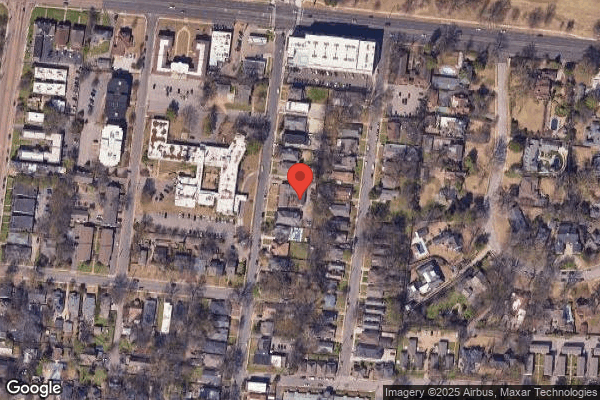
Mar 2023 5 deficiencies 3 IJ
CRITICAL (J) 📢 Someone Reported This

A family member, employee, or ombudsman was alarmed enough to file a formal complaint

Immediate Jeopardy (IJ) - the most serious Medicare violation

Accident Prevention (Tag F0689)

Someone could have died · This affected 1 resident

**NOTE- TERMS IN BRACKETS HAVE BEEN EDITED TO PROTECT CONFIDENTIALITY** Based on policy review, facility investigation review, medical record review, observation, and interview, the facility failed to...

Read full inspector narrative →
**NOTE- TERMS IN BRACKETS HAVE BEEN EDITED TO PROTECT CONFIDENTIALITY** Based on policy review, facility investigation review, medical record review, observation, and interview, the facility failed to ensure a safe environment, provide adequate supervision, and accurately assess a severely cognitively impaired resident with Dementia, confusion and a history of wandering to prevent elopement for 1 of 14 sampled residents (Resident #1) reviewed with wandering behaviors and elopement. Resident #1 eloped from the facility on 1/2/2023 at approximately 1:15 PM, walked across the employee back parking lot and was found near the street. The Weather History web site revealed the recorded temperature for Memphis, TN on 1/2/2023 at 4:00 PM, was 65 degrees Fahrenheit and raining. Resident #1 was unsupervised outside the building without staff knowledge, which resulted in Immediate Jeopardy (IJ) for Resident #1. The facility failed to conduct accurate assessments that ensured a safe environment, provide adequate supervision, and accurately assess 14 of 14 (Residents #1, #4, #6, #7, #8, #10, #12, #18, #19, #20, #21, 23, 24, and #25) residents reviewed with wandering and/or elopement behaviors. Immediate Jeopardy (IJ) (a situation in which the provider's noncompliance with one or more requirements of participation has caused, or is likely to cause, serious injury, harm, impairment, or death to a resident) was identified related to the facility's failure to supervise a severely cognitively impaired resident with Dementia, confusion, and a history of wandering behaviors, which resulted in Resident #1's elopement. The facility's failure placed Resident #1 in Immediate Jeopardy. The Administrator and Director of Nursing (DON) were notified of the Immediate Jeopardy on 3/15/2023 at 2:16 PM in the Conference Room. F-689 was cited at a scope and severity of J which is Substandard Quality of Care. The IJ was effective 1/2/2023 and is ongoing. The findings include: 1. Review of the facility's Wandering, Unsafe Resident policy initiated 6/2017 and reviewed 1/2023, revealed, .The facility will strive to prevent unsafe wandering while maintaining the least restrictive environment for residents who are at risk for elopement .The staff will identify residents who are at risk for harm because of unsafe wandering. The staff will assess at-risk individuals for potentially correctable risk factors related to unsafe wandering. The resident's care plan will indicate the resident is at risk for elopement or other safety issues. Interventions to try to maintain safety will be included in the resident's care plan. Nursing staff will document circumstances related to unsafe actions, including wandering, by a resident. Staff will institute a detailed monitoring plan, as indicated for residents who are assessed to have a high risk of elopement or other unsafe behavior. Staff will notify the Administrator and Director of Nursing immediately and will institute appropriate measures [including searching] for any resident who is discovered to be missing from the unit or facility. Review of the Wandering Risk Screen system revealed a computerized assessment system (Point Click Care) that listed applicable sections titled, Orientation, Behavior/Mood, Recent Experiences, Mobility, Diagnosis, Medications, and History of Wandering. Based on the accuracy of the data entered by the nurse, the system would designate the resident's level for unsafe wandering risk. Review of the facility's Wander Guard Policy policy initiated 6/2017 and reviewed 1/2023 revealed, Wander Guards are put in place to detect when a resident is near a protected exit and alert staff. The exit can then be secured, or the resident can be assisted by a member of staff. Placement of wander guards are determined through nursing assessment and can be added once exit seeking behavior is observed at any time after admission. All wander guards require a physician order for implementation. Weekly monitoring of wander guards and doors equipped with wander guard system. Residents at risk of wandering wear a wrist or ankle transmitter or tag which allows them free movement within the facility but prevents them from exiting monitored doors. Current system is configured to create an audible alert at the door where resident is attempting to exit that has a wander guard on their person. Wander guard is also integrated with Access Control so that the door will lock as the resident approaches and unlock again as they move away from the area. Review of the facility's Admission/Assessment Policy policy dated 4/1/2020 and reviewed 1/5/2023 revealed, Facility shall complete resident assessment upon admission. Residents shall be assessed by nurse and complete a head to toe evaluation including all systems upon admission. Nurse shall complete following assessments: Wandering .Baseline Care plan shall be created within 48 hours of admission based on admission assessments. Appropriate interventions shall be provided to ensure resident safety and maintain functional independence .Nursing shall document admission assessment findings in EMR [electronic medical record] .Wander Guard Orders/Elopement Risk and Documented on Medical Record [if applicable] . 2. Review of the hospital's History and Physical (which was dated 12/19/2022) and received by the facility upon the Resident #1's admission on [DATE] revealed Resident #1, .lived with [his] nephew .fell at home few times .more confused with periods of sundowning and wandering at night . Resident #1 had diagnoses that included Dementia with Behaviors, Diabetes Mellitus Type 2, Syncope and Collapse. Review of Resident #1's Admit/Readmit Information that included the Wandering Risk assessment dated [DATE], revealed there was no documentation the resident's known history of wandering was included. Review of the Instant Care Plan dated 12/30/2022, revealed no documentation Resident #1 had Dementia or wandering behaviors. Review of the Nurse Practitioner note dated 12/30/2022, revealed Resident #1 was had previously been a patient at, .[named hospital] after fall at home .Dementia with increased confusion and sundowning . Review of the physician's order dated 12/31/2022, revealed, .Trazadone HCL [Hydrochloride] [an antidepressant/sedative medication] oral tablet 50 mg [milligrams] give 1 tablet by mouth at bedtime for depression . Review of the Wandering Risk Screen assessment dated [DATE], revealed Resident #1's scored was an 8, which indicated a moderate risk for wandering. There was no documentation in the screen assessment of the resident having the diagnosis of Dementia or the antidepressant medication of Trazadone. Review of the Nurse's notes dated 1/2/2023 at 4:43 PM, revealed, .1322 [1:22 PM] noted pt [Resident #1] not in his room on nurse rounds. last visual on pt was at 1315 [1:15 PM] by nurses in report. Staff sent to check the therapy gym, 100 hall sunroom therapy gym, pt not found. Code Purple [Alert for a missing resident] initiated [at approximately 4:30 PM per Certified Nursing Assistant (CNA) #3's interview] .Pt located by staff approx 1,000 ft [feet] from the building, he was noted alert and w/o [without] s/s [signs and symptoms] of distress and no visual injuries noted. Pt escorted back to the building and was placed on the 400 hall in room [ROOM NUMBER] . Based on the Memphis, TN Weather History web site, the recorded temperature for Memphis, TN on 1/2/2023 at 4:00 PM was 65 degrees Fahrenheit and raining. Review of the Nurse's notes dated 1/2/2023 at 7:39 PM, revealed, Pt wandering in the halls. Wander guard [a sensor alarm system worn by residents to alert staff if a resident attempts to exit through monitored exit doors] placed to the R [right] ankle for safety . During an interview on 3/15/2023 at 8:36 AM, Registered Nurse (RN) #2 was asked when the wander guard was placed on Resident #1. RN #2 stated, .After the elopement I put the wander guard on, not before . Review of the facility's investigation dated 1/3/2023 of Resident #1's elopement on 1/2/2023, revealed the facility reviewed a video (Camera #1) showing the resident exiting the building through the 100 hall unit door out to a courtyard area and rounded the corner. Camera #1 lost view after the resident rounded the corner. Another camera (Camera #2) positioned at the ambulance door aimed at the back parking lot revealed Resident #1 walking toward the street. The ambulance door camera (Camera #2) then lost sight of Resident #1. The facility's investigation documentation revealed he was found outside on the sidewalk beside the street, a 1,000 feet from the building. The facility documented Resident #1 exited the courtyard either thru a gap between a chain link fence and gate (that was loosely locked with a bike type rope lock) or through a gap that was between the chain link fence and the building wall. The facility failed to save the video as part of the investigation and did not include a summary of the video with times and locations in the investigation. The surveyor was unable to view the video and the Administrator did not keep notes from review of the video. During an interview on 3/6/2023 at 12:53 PM, RN #2 stated, .[Resident #1] would walk around a lot, walk to the Friendship corner, sit in the lobby, anywhere there was a TV .[Resident #1] would look at .[Resident #1] would ask why was he here, where is the food, who paid for him to be here, what were we going to do for him .When we couldn't find him [Resident #1] we called a Code Purple and looked everywhere inside the building then looked outside .I can't remember what time I found him on the far side of the back employee parking lot located near the street and the apartments .Resident #1 was walking and looking left and right like didn't know where to go, not sure .Just me and him I don't remember any other staff around when I found him. Resident #1 had on pants and a shirt .It was a little rainy, wet but not cold .I called his name and he said 'Hey baby I'm glad to see you'. I told [Resident #1] let's go back inside and he went with me with no problems . During an interview on 3/6/2023 at 3:04 PM, CNA #1 stated, .I came to work on 200 hall about 3:12 PM to 3:25 PM and was in room [ROOM NUMBER] and looked out the window facing [name of the street, a two lane neighborhood street entering to a busy 6 lane major street] and saw a tall male standing on the sidewalk wearing blue sweatshirt and match blue pants with yellow socks, dark shoes like brown/black house slippers and had a Reacher [a reaching device to maintain independence] hanging on his left arm .[Resident #1] was facing the employee parking lot looking around. He had a clear plastic bag [trash bag] with eyes poked out over his head .the fire department truck was across the street at those [NAME] apartments .An aide told me a person was missing. I said on [Name of the street] .Me [CNA #1] and another employee then got in my truck and started driving slow around to try and find him .I was driving slow and looking everywhere as we drove .It was misting rain and you needed long sleeves .We turned right from the parking lot and drove up to [Name of a busy street] and over to [Name of another street] .when we got a call all clear patient [Resident #1] located outside . During an interview on 3/7/2023 at 3:20 PM, CNA #3 stated, .[On 1/2/2023] I work three to eleven and I was here at 3:00 PM. I saw him [Resident #1] standing at the double door in the lobby between 100 hall and the lobby. He [Resident #1] said I am trying to go to [name of a street] street. I said ok well, let me go down here and see what is going on. I came back up front and he [Resident #1] was gone .It was about 4:30 PM when Code Purple was paged .It was around 6:00 PM before tray pass when someone said he was found in the basement .I never saw him [Resident #1] again that day . The admission Minimum Data Set (MDS) assessment dated [DATE], revealed Resident #1's Brief Interview of Mental Status (BIMS) score was 4, which indicated Resident #1 had severely impaired cognition for daily decision making. Continued review revealed Resident #1 had an unsteady gait and could stabilize without staff assistance. Review of the Wander Guard Bracelet Weekly Inspection form dated January 2023 through March 2023, revealed no documentation Resident #1's wander guard functionality had been inspected in accordance with the facility's wander guard policy. During an interview on 3/7/2023 at 1:40 PM, DON stated, .Maintenance does the resident's wander guard functionality inspection weekly .No, I don't see any documentation where [Named Resident #1] wander guard was inspected for functionality . During an interview on 3/7/2023 at 1:46 PM, the Administrator was asked if there was any documentation of [Resident #1's] wander guard functionality being checked January, February, and March 2023. He stated, .I don't see it .that's all I have, do what you got to do . Observations on 3/8/2023 at 1:30 PM, revealed the 2nd floor activity room/office was unlocked and unattended, and there were residents in the hallway near the entrance. In the activity room/office was another door that led to the roof top of the facility. The door that led onto the facility roof top was not locked and had no alarms to signal when opened. Observations of exit door #9 located between resident dining room and Therapy gym on 3/15/2023 at 11:34 AM, revealed the door opened with employee badge and would remain unlocked until someone could activate the door lock button located on the left top frame of the door. Continued observations revealed the Administrator stated to the employee, .Be sure you press the red button to lock once you go through . Observations of exit door #11, with an indicating exit sign above, located on the 200 hall near the nurse's station on 3/15/2023 at 11:40 AM, revealed the door was not latched and ajar (slightly open) no alarm sounding. This exit door leads to a stair well and to an outside exit door that is not locked and does not alarm when opened. Observations on 3/15/2023 at 11:55 AM revealed exit door #19, with an indicating exit sign above, located on the 2nd floor Memory Care Unit the revealed door was opened by an employee with an employee badge, did not latch, and stayed unlocked with green light on. This exit door leads to a stair well and to an outside exit door that is not locked and does not alarm when opened. During an interview on 3/14/2023 at 1:55 PM, the Maintenance Director stated, .We have two doors that have the wander guard system. The front door and the ambulance entry door .they are the only doors that can detect the wander guard . During an interview on 3/15/2023 at 1:00 PM, the Administrator stated, .That's [doors] definitely got to be fixed .this old building when the weather changes sometimes have to shave the door, things like this . 4. Review of the medical record revealed Resident #4 was admitted to the facility on [DATE] with a diagnosis of Dementia with Psychosis. Review of Resident #4's care plan dated 1/18/2023 revealed there was no documentation of the resident's wandering behaviors. Review of the physician's order dated 1/18/2023 revealed, .Oxycodone Acetaminophen 5-325 mg [a narcotic medication to treat pain] 1 by mouth every 4 hours prn [as needed] for pain . Review of the admission Wander Risk Assessment dated 1/19/2023, revealed Resident #4 scored a 10 indicating moderate risk for wandering. There was no documentation the assessment included the resident's diagnosis of Dementia, and narcotic medication prescribed. Review of the Resident #4's admission MDS assessment dated [DATE], revealed Resident #4 scored a 11 on the BIMS assessment which indicated moderately impaired cognition. The assessment documented Resident #4 had the behaviors of wandering 1 to 3 days of the assessment period. Review of the maintenance record Wander Guard Bracelet Weekly Inspection dated 3/10/2023, revealed there was no documentation that Resident #4's wander guard functionality had been tested. Observations in Resident #4's room on 3/8/2023 at 1:45 PM, revealed Resident #4 to be sitting in a chair, alert and oriented to self, wander guard device on left ankle. 5. Review of the medical record revealed Resident #6 was admitted to the facility on [DATE] with diagnoses Dementia with Behaviors, Anxiety and Alcohol Dementia. Review of the Nurse's note dated 1/18/2023 at 7:55 PM, revealed .Resident [#6] arrived by stretcher with 3 EMT [Emergency Medical Technician] at side upon enter building resident unfasten belt to stretcher and jumped off stretcher. Staff and EMTs caught resident. Resident became violent started swinging and trying to hit staff and EMTs. They assisted resident to room [Resident #4's room number] he started stripping all clothing off, refused to allow staff to place gown on, continued to try and ambulate out of the room, gait very unsteady. Resident AAO x1 [alert, oriented] name only .limited assist with ambulation. Independent with bed mobility and transfer .resident continued to try and ambulate throwing bed sheets and pillows on floor . The admission Minimum Data Set (MDS) 1/25/2023, documented the resident scored a 0 on the BIMS indicating the resident had severely impaired cognition for daily decision making. The assessment documented the resident had the behaviors of wandering 1 to 3 days during the assessment period. Review of the Care Plan dated 1/18/2023, revealed there was no documentation of a wandering/elopement risk. Review of the admission Wander Risk Assessment dated 1/19/2023, revealed Resident #6 scored a 13 which indicated a high risk for wandering. There was no documentation the assessment included the resident's diagnosis of Dementia. 6. Review of the medical record revealed Resident #7 was admitted to the facility on [DATE] with diagnoses of Dementia Without Behavioral Disturbance, End Stage Renal Disease, Dependence on Renal Dialysis, and Essential Hypertension. Review of the hospital History and Physical dated 10/31/2022, received by the facility upon admission, revealed .the patient [Resident #7] has wandered off. Family with concerns regarding the patient's confusion, anxiousness and wandering off . Review of the Instant Care Plan dated 11/16/2022 revealed there was no documentation the care plan included the resident had Dementia or wandering behaviors. Review of the Wandering Risk Screen dated 11/17/2022, revealed Resident #7 scored a 3 which indicated a low risk for wandering. There was no documentation the screen/assessment included the resident having the diagnosis of Dementia and known history of wandering. Review of the Wandering Risk Screen dated 1/4/2023 revealed there was no documentation the screen was completed. Review of a Plan of Care Note dated 1/8/2023, revealed .[Named Resident #7] has packed his clothes and shoes this morning. He stated that he is going to leave the facility. He began walking toward the exit door with his belongings .[Resident #7] has a wander-guard placed on lower extremity . Record review revealed there was no order for a wander guard for Resident #7 and there was no documentation the facility had determined the wander guard functionality. Review of the Care Plan dated 2/7/2023, revealed .Resident was seen by this nurse and a CNA walking towards the side door to outside with a bag in his hand and his cane . Review of the comprehensive care plan with a target date of 5/13/2023, revealed there was no documentation Resident #7 had behaviors of wandering or the use of a wander guard device. Review of the quarterly MDS assessment dated [DATE], revealed Resident #7 scored a 10 on the BIMS assessment which indicated moderately impaired cognition. The resident required limited assistance for ambulation. Resident #7 had an unsteady gait and could stabilize without staff assistance. Observations in the resident's room on 3/8/2023 at 9:59 AM, revealed Resident #7 was seated on the side of the bed and transferred himself to a standing position. A wander guard was in place on the resident's right ankle. He ambulated independently in his room using a cane. The resident stated, I like to walk to the door every morning and would go out, but they put this thing [wander guard] on my leg . During an interview on 3/7/2023 at 2:38 PM, when asked if Resident #7 had a wander guard placed due to wandering/exit seeking behaviors, The DON stated, No one has ever told me he was a wanderer .He doesn't have a wander guard. During an interview on 3/14/2023 at 8:55 AM, when asked if there were any residents on the 100 hall with a wander guard in place, LPN #1 stated, I don't have any resident with a wander guard that I'm aware of . Resident #7 resided on the 100 hall. 7. Review of the medical record revealed Resident #8 was admitted to the facility on [DATE] with diagnoses of Cerebral Infarction, Depression, End Stage Renal Disease, Dependence on Renal Dialysis, Aphasia, Essential Hypertension, and Lack of Coordination. Review of the admission Summary dated 2/14/2023, revealed .Pt [patient, (Resident #8)] is ambulatory and has some confusion, wander guard to R [right] ankle placed . Review of the Admit/Readmit Information assessment dated [DATE], revealed there was no documentation of the resident's cognitive status and taking antidepressants was included in the assessment. Resident #8 had a physician's order dated 2/15/2023 for Zoloft 50 mg daily (an antidepressant medication). The wandering risk assessment was not revised to reflect the Zoloft medication. Review of the Wandering Risk Screen dated 2/15/2023, revealed Resident #8 scored a 4 which indicated a low risk for wandering. The screen/assessment revealed the resident's history of wandering was not included in the screen. Review of the physician's orders dated 2/18/2023, revealed .Check Placement of Wander Guard to right ankle every shift for wandering . Continued review revealed there was no documentation the facility had determined the wander guard was functioning properly. Review of the Plan of Care Note dated 2/18/2023, revealed .Resident is displaying exit seeking behavior. Packing up his belongings and continuing to walk up to exit doors with belongings in his hand . Review of the admission MDS assessment dated [DATE] revealed Resident #8 scored a 6 on the BIMS assessment which indicated severely impaired cognition. The resident required supervision with ambulation and had an unsteady gait and needed staff assistance to stabilize. Review of the Plan of Care Note dated 2/22/2023, revealed Resident #8 was .pacing facility with his belongings in his arms trying to exit facility. Attempted to reorient patient [Resident #8], was unsuccessful . Review of the Wandering Risk Screen dated 2/27/2023, revealed an inaccurate assessment. The screen/assessment did not include the resident's history of wandering. Review of the Plan of Care Note dated 2/27/2023, revealed .resident in the front lobby telling the receptionist that he needed to get out of this place . Observations in the resident's room on 3/13/2023 at 3:25 PM, revealed Resident #8 walking in his room. There was a wander guard on his left ankle. During an interview on 3/13/2023 at 3:29 PM, when asked if Resident #8 had behaviors of wandering and a wander guard placed, RN #4 stated, I don't know. He came to this floor [300 Hall] yesterday. 8. Review of the medical record revealed Resident #10 was admitted to the facility on [DATE] with diagnoses of Cerebrovascular Disease, Delirium, Hypertension and Encephalopathy. Review of physician's orders with a start date 10/18/2022 revealed, .Wander guard monitoring: wander guard on at all times check placement every shift . Review of physician's orders with a start date 10/19/2022 revealed, .Quetiapine Fumarate 50 mg [an antipsychotic medication] 1 by mouth twice daily for psychotic disorder with delusions . The quarterly MDS dated [DATE] documented the resident scored an 8 on the BIMS assessment which indicated moderately impaired cognition for daily decision making. Review of the Wandering Risk Screen dated 1/3/2022 revealed a score of NA (not applicable) low risk, there was no documentation the screen was completed. Review of the maintenance record Wander Guard Bracelet Weekly Inspection dated February and March 2023 revealed there was no documentation of Resident #10's wander guard functionality tested. Observations in room [ROOM NUMBER] B on 3/8/2023 at 1:26 PM revealed Resident #10 lying in bed, alert and oriented to self, wander guard on left ankle. During an interview on 3/13/2023 at 1:19 PM, the Director of Nursing (DON) confirmed Resident #10's wandering risk screen dated 1/3/2023 was not completed. He stated, .all the areas are blank .It is not completed .This was when we were to review all residents on 1/3 [1/3/2023] and 1/4 [1/4/2023] as part of our performance improvement plan .It should have been completed . 9. Review of the medical record revealed Resident #12 was initially admitted to the facility on [DATE] and readmitted on [DATE] with diagnoses of Dementia Without Behavioral Disturbance, Bipolar Disorder, Schizoaffective Disorder, Personality Disorder, and Type 2 Diabetes Mellitus. Review of the quarterly MDS assessment dated [DATE] revealed Resident #12 scored a 10 on the BIMS assessment which indicated moderately impaired cognition. The resident required limited assistance with ambulation. Resident #12 had an unsteady gait and was able to steady self without staff assistance. Review of the Admit/Readmit Information assessment dated [DATE] revealed an inaccurate assessment. The wandering risk assessment section had no documentation of the resident's diagnosis of Dementia. Review of the Admit/Readmit Information assessment dated [DATE] revealed a score of 2 which indicated low risk for wandering. The assessment revealed there was no documentation of the resident's diagnosis of Dementia. Review of the Wandering Risk Screen dated 1/3/2023 revealed no documentation the screen/assessment was completed. Observation in the resident's room on 3/7/2023 at 2:21 PM revealed Resident #12 was not in her room or in the hallway near her room. During an interview on 3/7/2023 at 2:23 PM, when asked where Resident #12 was, LPN #3 stated, I don't know where she is. She is somewhere. She goes around the halls all the time. When asked if the resident had any exit seeking behaviors, the LPN stated, Leave? She might try. She is very confused and has random thoughts . 10. Review of the medical record revealed Resident #18 was admitted to the facility on [DATE] with diagnoses Alzheimer's Disease and Dementia without Behaviors. Review of Resident #18's Wandering Risk Screen dated 1/13/2023 revealed the resident had a known history of wandering. Review of physician's orders with a start date 1/25/2023 revealed, .Wander guard in place every shift for wandering . The admission MDS 1/26/2023 documented the Resident #18 scored a 2 on the BIMS assessment which indicated severely impaired cognition for daily decision making. Review of the care plan dated January 2023 revealed Resident #18 had wandering behaviors with wander guard. Review of Resident #18's MARs dated February through March 2023 revealed the wander guard in was place every shift for wandering was checked as completed on all shifts every day. Review of the maintenance record Wander Guard Bracelet Weekly Inspection revealed on 2/3/2023, 2/17/2023, 3/3/2023 and 3/10/2023 no tag was marked as resident not having a wander guard. Continued review revealed on 2/24/2023 the pass/fail was marked related to Resident #18's wander guard. During an interview on 3/14/2023 at 1:45 PM the Maintenance Assistant was asked about the wander guard bracelet weekly inspection report. The Maintenance Assistant stated . ' no tag ' means not on him .I told nurse [named person] he didn't have one [wander guard] on . Observations on 3/14/2023 at 9:30 AM, revealed Resident #18 had no wander guard on. During an interview on 3/14/2023 at 9:30 AM, CNA #2 confirmed Resident #18 had no wander guard. She stated, .no, he doesn't have one [wander guard] on . 11. Review of the medical record revealed Resident #19 was admitted to the facility on [DATE] and readmitted [DATE] with diagnoses of Dementia without Behaviors, Diabetes Mellitus Type 2, Anxiety, and Major Depression. The quarterly MDS 2/4/2023 for resident #19 documented the resident scored a 5 on the BIMS which indicated severely impaired cognition for daily decision making. Review of the physician's orders with a start date 7/29/2022 revealed .Buspirone HCL 10 mg [medication for anxiety] 1 by mouth twice daily anxiety .Escitalopram Oxalate 10 mg [a medication to treat depression and anxiety] 1 by mouth every am .Trazodone HCL 50 mg [antidepressant] give 25 mg by mouth at hs [bedtime] depression . Review of the physician's orders with a start date 11/30/2022 revealed .Wander guard in place every shift for Wandering . Review of the Wandering Risk Screen dated 1/3/2023 revealed Resident #19 scored a 2 which indicated a low risk for wandering. There was no documentation in the screen/assessment that included the resident's diagnosis of Dementia, no documentation the medications for depression or anxiety were included, and no documentation of the resident's history of wandering included in the screen assessment. Review of Resident #19's MARs dated February and March 2023, revealed Wander guard in place every shift for wandering was checked as completed on all shifts every day. Review of the maintenance record Wander Guard Bracelet Weekly Inspection dated 3/10/23, revealed .pass . During an interview on 3/14/2023 at 1:45 PM, the Maintenance assistant revealed, .pass means they had a wander guard on, and it passed the test . Observations on 3/14/2023 at 9:35 AM, revealed Resident #19 with had no wander guard on. During an interview on 3/13/2023 at 1:19 PM, the DON confirmed Resident #19's wandering risk screen dated 1/3/2023 was not accurate. He stated, .some areas are blank .It is not accurate .This was when we were to review all residents on 1/3 and 1/4 as part of our performance improvement plan .It should have been completed correctly . During an interview on 3/14/2023 at 9:35 AM, CNA #2 confirmed Resident #19 did not have a wander guard. She stated, .No, he doesn't have one [wander guard] on . 12. Review of the medical record revealed Resident #20 was admitted to the facility on [DATE] and readmitted [DATE] with diagnoses Dementia with Agitation and Psychotic Disorder with Delusions. The quarterly MDS 2/9/2023 documented the resident scored a 3 on the BIMS which indicated severely impaired cognition for daily decision making. Review of the physician's orders dated 8/29/2022 [TRUNCATED]
CRITICAL (J) 📢 Someone Reported This

A family member, employee, or ombudsman was alarmed enough to file a formal complaint

Immediate Jeopardy (IJ) - the most serious Medicare violation

Administration (Tag F0835)

Someone could have died · This affected 1 resident

Based on job description review, interview, and document review, the facility Administration failed to administer the facility in a manner that enabled the facility to use its resources effectively an...

Read full inspector narrative →
Based on job description review, interview, and document review, the facility Administration failed to administer the facility in a manner that enabled the facility to use its resources effectively and efficiently to attain the highest practicable wellbeing of residents with Dementia and wandering behaviors. Administration failed to provide appropriate oversight to ensure residents with Dementia and wandering behaviors received care in a safe and supervised environment, failed to ensure the facility conducted accurate resident assessments. The facility Administration failed to be accountable for to the Quality Assurance and Performance Improvement (QAPI) developed by the facility to ensure appropriate actions were implemented after a resident eloped from the facility without staff knowledge and supervision. The Administration's failure to ensure a safe environment placed 1 of 14 sampled residents (Resident #1) in Immediate Jeopardy (IJ) when Resident #1, a severely cognitively impaired, vulnerable resident with Dementia, confusion, and wandering behaviors, eloped from the facility on 1/2/2023 at approximately 1:15 PM, walked across the employee back parking lot and was found near the street. Resident #1 was unsupervised outside the building which resulted in Immediate Jeopardy (IJ) for Resident #1. Immediate Jeopardy (IJ) (a situation in which the provider's noncompliance with one or more requirements of participation has caused, or is likely to cause, serious injury, harm, impairment, or death to a resident) was identified related to the facility's failure to supervise a severely cognitively impaired resident with Dementia, confusion, and a history of wandering behaviors, which resulted in Resident #1's elopement. The facility's failure placed Resident #1 in Immediate Jeopardy. The Administrator and Director of Nursing (DON) were notified of the Immediate Jeopardy on 3/15/2023 at 2:16 PM in the Conference Room. F-835 was cited at a scope and severity of J. The IJ was effective 1/2/2023 and is ongoing. The findings include: 1. Review of the facility's undated Licensed Nursing Home Administrator job description revealed, .The primary purpose of the Nursing Home Administrator position is to oversee the day-to-day operation of the facility, to assure resident safety and to review organizational performance .Oversee that nursing services, social service programs, activity programs, food service programs and medical services are planned, implemented and evaluated to meet resident needs to maximize resident quality of life and quality of care .Identify, monitor, and ensure that quality indicators and quality improvement programs are utilized to maximize effectiveness in resident care and services .Make routine inspections of the facility to assure that established policies and procedures are being followed .establish an effective accident prevention program .Ensure the integration of resident rights with all aspects of the facility environment . Review of the facility's undated Director of Nursing Services (DON) job description revealed, .The primary purpose of the Director of Nursing position is to plan, organize, develop, and direct the overall operation of the Nursing Department to ensure that the highest degree of quality care is maintained at all times .Develop, implement, and maintain an ongoing quality assurance performance improvement program for the nursing department .Assist the Quality Assurance Performance Improvement Committee in developing and implementing appropriate plans of action to correct identified deficiencies .Review and insure that charting documentation procedures for nursing are met .Assist in the development of preliminary and comprehensive assessments of the nursing needs of each resident. Ensures a written plan of care for each resident is developed that identifies the problems/needs of the resident indicates the care to be given, goals to be accomplished, and which professional service is responsible for each element of care .Ensure that all personnel involved in providing care to the resident are aware of the resident's care plan. Ensure that nursing personnel refer to the resident's care plan prior to administering daily care to the resident. Review nurses' notes to determine if the care plan is being followed . 2. The facility Administration failed to provide oversight that established and implemented policies and procedures to ensure a safe environment for all residents. On 1/2/2023 Resident #1, a cognitively impaired resident, eloped from the facility without staff knowledge or supervision and was found approximately 1000 feet from the facility on a street sidewalk. The facility Administration failed to ensure all wander/elopement assessments were accurate for 14 of 14 (Residents #1, #4, #6, #7, #8, #10, #12, #18, #19, #20, #21, 23, 24, and #25) sampled residents with wandering behaviors. 3. The facility Administration failed to maintain oversight, establish, and implement policies and procedures to ensure an effective QAPI was established to oversee the facility, failed to identify the root cause of concerns identified, and failed to ensure systems and processes were developed and consistently followed by facility staff related to a safe environment. The facility Administration developed an improvement plan dated 1/2/2023 to address Resident #1 ' s elopement incident. The facility Administration failed to ensure all interventions in the plan were implemented and were accurate as follows: The Improvement plan to review new admits' elopement assessments for appropriate interventions was not accurate as evidenced by the inaccurate wander/elopement assessments. The Improvement plan to audit all elopement assessments was not implemented as the facility was unable to provide the audits, audit results and the assessments that were conducted were not accurate. The Improvement plan to submit all audit results to the QAPI committee to be reviewed and address as needed was not completed. The facility was unable to provide evidence that the QAPI committee received and reviewed the plan and had not had a meeting. During an interview on 3/7/2023 at 2:30 PM, the DON revealed, .As part of our Performance Improvement [PIP] we audited all residents for wandering risk screen/assessments on 1/3 and 1/4 [2023] to see if anyone was at risk for wandering or elopement or if anyone new . When the DON was asked what they learned and about the outcome, he stated .Well I don't know .We did the audit .No, I don't have any quantitative data to show . When asked how you would know your outcome and if you needed to work on something, he stated, .We wouldn't know .We didn't evaluate it or look at the results . 4. During an interview on 3/7/2023 at 9:09 AM, the DON was asked what he did and his role concerning Resident #1's elopement. The DON stated the staff called and told him that Resident #1 was missing from the facility. The DON stated, .I told them to check the parking lot and the basement. I texted the Administrator .I did not come in until the next day .Once he was found I told them to put a wander guard on him and take him upstairs to the secure unit . The DON stated he was not aware of the resident's wandering history based on the information sent from the hospital. The DON stated he did not participate in a Root Cause Analysis (RCA) related to the elopement incident of Resident #1. The DON stated he did not interview all staff involved related to the elopement incident, only Certified Nursing Assistant (CNA) #1 that saw the resident outside and Registered Nurse (RN) #2 that was the Unit Manager for the hall that Resident #1 resided on. During an interview on 3/7/2023 at 2:50 PM the DON was asked about the Performance Improvement Plan (PIP) interventions that included the Audit Elopement Assessments data related to Resident #1's elopement. The DON stated Review new admits elopement assessment and transfer to secure unit for 7-day monitoring if triggered . The DON stated, .I don't have a tool .I don't have results . When asked if there was documentation of an audit with quantitative results, analysis, interventions, evaluation and follow up, The DON stated, .No . The DON was asked did nursing implement anything because of this elopement to keep it from happening again to residents with wandering behaviors. He stated, .No . During an interview on 3/7/2023 at 3:20 PM, CNA #3 revealed, .I work three to eleven and I was here at 3:00 PM. I saw him [Resident #1] standing at the double door in the lobby between 100 hall and the lobby. He said I am trying to go to [Name of a street]. I said OK well, let me go down here and see what is going on. I came back up front and he was gone . During an interview on 3/15/2023 at 1:00 PM the Administrator was asked what had been put in place since the elopement that will prevent it from happening again. The Administrator stated, .We fixed the gate and the courtyard fence . When the surveyor reviewed the inaccurate wander risk screen assessments with the Administrator, the Administrator stated, .That has definitely got to be fixed . The Administrator was asked about discrepancies with the wander guard system, the ineffective the interventions of checking the functionality of the wander guards, not following or obtaining a physician's order for the wander guards, staff being unaware of the policies/interventions for wander guards, and the non-secure exit doors on the 3/15/2023 tour, The Administrator stated .Yeah .Yes .that has to be fixed . Refer to F689 and F867.
CRITICAL (J) 📢 Someone Reported This

A family member, employee, or ombudsman was alarmed enough to file a formal complaint

Immediate Jeopardy (IJ) - the most serious Medicare violation

QAPI Program (Tag F0867)

Someone could have died · This affected 1 resident

**NOTE- TERMS IN BRACKETS HAVE BEEN EDITED TO PROTECT CONFIDENTIALITY** Based on job description review, policy review, document review, and interview, the Quality Assurance Performance Improvement (Q...

Read full inspector narrative →
**NOTE- TERMS IN BRACKETS HAVE BEEN EDITED TO PROTECT CONFIDENTIALITY** Based on job description review, policy review, document review, and interview, the Quality Assurance Performance Improvement (QAPI) committee failed to provide oversight that established and implemented policies and procedures to assure the facility was administered in a manner to use its resources effectively and efficiently. The QAPI committee failed to ensure a QAPI program that identified opportunities for improvement related to accurate wandering/elopement assessments and failed to implement performance improvement activities to provide a safe environment for residents, identify, report, investigate and prevent incidents of elopement and failed to ensure systemic processes were in place and consistently followed by staff and administration. The QAPI committee failed to implement a systematic approach to accurately identify and assess, implement interventions, monitor the implementation of and the effectiveness of its performance improvement activities to ensure improvements are sustained in identifying processes to identify deviations and adverse events when a resident exited the facility without staff knowledge, failed to provide adequate supervision to prevent elopement and failed to ensure a safe environment for 1 of 14 sampled residents (Resident #1) in Immediate Jeopardy when Resident #1, a severely cognitively impaired, vulnerable resident with Dementia, confusion, and wandering behaviors, eloped from the on 1/2/2023 at an unknown time after 1:15 PM, walked across the employee back parking lot and was found near the street. Resident #1 was unsupervised outside the building which resulted in Immediate Jeopardy (IJ) for Resident #1. Immediate Jeopardy (IJ) (a situation in which the provider's noncompliance with one or more requirements of participation has caused, or is likely to cause, serious injury, harm, impairment, or death to a resident) was identified related to the facility's failure to supervise a severely cognitively impaired resident with Dementia, confusion, and a history of wandering behaviors, which resulted in Resident #1's elopement. The facility's failure placed Resident #1 in Immediate Jeopardy. The Administrator and Director of Nursing (DON) were notified of the Immediate Jeopardy on 3/15/2023 at 2:16 PM in the Conference Room. F-867 was cited at a scope and severity of J. The IJ was effective 1/2/2023 and is ongoing. The findings include: 1. Review of the facility's undated Quality Assurance and Performance Improvement [QAPI] Policy and Procedure, revealed .To ensure that [Name of the facility] implements a comprehensive QAPI program which addresses all the care and unique services that the Facility provides. To ensure continuous evaluation of the Facility's systems .It is the policy of the Facility to develop, implement, and maintain an effective, comprehensive, data driven QAPI program that focuses on indicators of the outcomes of care and quality of life .The facility will maintain a QAPI program that will ensure that the Facility obtains feedback, uses data, and takes action to conduct structured, systematic investigations and analysis of underlying causes or contributing factors of problems affecting Facility-wide processes that impacts quality of care, quality of life, and resident safety .The facility shall develop and implement policies and procedures .These approaches may include root cause analysis, reverse tracker methodology, or healthcare failure and effects analysis .The Facility shall collect and monitor data reflecting its performance, including adverse events. Data collection can be done by audit tools, direct observations, interview, or testing .The Facility will take actions aimed at performance improvement, which includes implementation of corrective actions, measuring success, and tracking performance, to ensure improvements are achieved and sustained .The performance improvement activities will track medical errors and adverse resident events, analyze their causes, implement preventive actions and mechanisms to prevent future events .Responsibilities of QAA [Quality Assurance] Committee .is responsible for .Regularly reviewing and analyzing data .acting on available data to make improvements; identifying and responding to quality deficiencies throughout the facility; .developing and implementing corrective action, and monitoring to ensure performance goals or targets are achieved; revising corrective action when necessary . Review of the facility's policy Quality Assurance Performance Improvement dated 12/15/2020 and reviewed 12/15/2022, revealed .The facility shall implement a QAPI program that addresses all the care and unique services the facility provides .The Administration of this facility will develop and lead the QAPI program .This facility will implement and maintain systems to monitor care and services, drawing data from multiple sources .It also includes tracking, investigating, and monitoring Adverse Events that will be investigated every time they occur, and action plans implemented to prevent recurrences .This facility will conduct Performance Improvements Projects [PIPs] to examine and improve care or services in areas that are identified as needing attention .This facility will use a systematic approach to determine when in-depth analysis is needed to fully understand the problem, its root causes, and implications of a change .This facility has policies and procedures to demonstrate proficiency in the use of Root Cause Analysis . 2. Review of the facility's undated Licensed Nursing Home Administrator job description revealed, .The primary purpose of the Nursing Home Administrator position is to oversee the day-to-day operation of the facility, to assure resident safety and to review organizational performance .Oversee that nursing services, social service programs, activity programs, food service programs and medical services are planned, implemented and evaluated to meet resident needs to maximize resident quality of life and quality of care .Identify, monitor, and ensure that quality indicators and quality improvement programs are utilized to maximize effectiveness in resident care and services .Make routine inspections of the facility to assure that established policies and procedures are being followed .establish an effective accident prevention program .Ensure the integration of resident rights with all aspects of the facility environment . Review of the facility's undated Director of Nursing Services (DON) job description revealed, .The primary purpose of the Director of Nursing position is to plan, organize, develop, and direct the overall operation of the Nursing Department to ensure that the highest degree of quality care is maintained at all times .Develop, implement, and maintain an ongoing quality assurance performance improvement program for the nursing department .Assist the Quality Assurance Performance Improvement Committee in developing and implementing appropriate plans of action to correct identified deficiencies .Review and insure that charting documentation procedures for nursing are met .Assist in the development of preliminary and comprehensive assessments of the nursing needs of each resident. Ensures a written plan of care for each resident is developed that identifies the problems/needs of the resident indicates the care to be given, goals to be accomplished, and which professional service is responsible for each element of care .Ensure that all personnel involved in providing care to the resident are aware of the resident's care plan. Ensure that nursing personnel refer to the resident's care plan prior to administering daily care to the resident. Review nurses' notes to determine if the care plan is being followed . 3. Resident #1 was admitted to the facility from the hospital on [DATE]. The hospital's History and physical was sent to the facility upon the resident's admission and revealed Resident #1 had lived with his nephew, had falls at home, and was having more confusion with periods of sundowning and wandering at night. A staff interview revealed that cognitively impaired Resident #1 exhibited exit seeking behaviors prior to exiting/eloping from the facility. On 1/2/2023 on the 3:00 PM -11:00 PM shift, Certified Nursing Assistant (CNA) #3 stated, .I saw him [Resident #1] standing at the double door in the lobby between 100 hall and the lobby. He said I am trying to go to [Name of a street]. I said ok well, let me go down here and see what is going on. I came back up front and he was gone . There were no interventions implemented for Resident #1's exit seeking behaviors at that time. Resident #1 exited/eloped on 1/2/2023 at an unknown time and was out of the facility unknown to staff and unsupervised by staff for an unknown period of time. The resident was later found by Registered Nurse (RN) #2. RN #2 stated, . I can't remember what time I found him on the far side of the back employee parking lot located near the street [Name of the street] and the apartments .He was walking and looking left and right like didn't know where to go, not sure .Just me and him I don't remember any other staff around when I found him. He had on pants and a shirt .It was a little rainy, wet but not cold .I called his name and he said Hey baby I'm glad to see you . The facility's investigation dated 1/3/2023 of Resident #1's elopement on 1/2/2023 revealed he was found outside on the sidewalk beside the street, a 1,000 feet from the building. The facility documented Resident #1 exited the courtyard either thru a gap between a chain link fence and gate (that was loosely locked with a bike type rope lock) or through a gap that was between the chain link fence and the building wall. The facility failed to save the video as part of the investigation and did not include a summary of the video with times and locations in the investigation. The surveyor was unable to view the video and the Administrator did not keep notes from review of the video. 4. The facility Administration failed to maintain oversight, establish, and implement policies and procedures to ensure an effective QAPI was established to oversee the facility, failed to identify the root cause of concerns identified, and failed to ensure systems and processes were developed and consistently followed by facility staff related to a safe environment. Review of facility data and information obtained during the survey revealed the QAPI committee members consist of at the Administrator, DON, Minimum Data Set (MDS) Nurse, Social Services, Medical Director, Medical Director designee, and Consultant. The facility developed an improvement plan dated 1/2/2023 to address Resident #1's elopement incident. The facility failed to ensure the following interventions were implemented: The Improvement plan to review new admits' elopement assessments for appropriate interventions failed to be implemented as evidenced by the wander/elopement assessments not containing all data. The Improvement plan to audit all elopement assessments was not implemented as the facility was unable to provide the audits, audit results and the assessments that were conducted were not accurate. The Improvement plan to submit all audit results to the QAPI committee to be reviewed and address as needed was not completed as the facility could not provide evidence. The facility's QAPI committee failed to ensure the facility developed, implemented, monitored and sustained appropriate actions to prevent resident elopements and failed to ensure policies and procedures were followed in accordance with the facility QAPI policy. 5. During an interview on 3/7/2023 at 2:30 PM, the DON revealed, .As part of our Performance Improvement [PIP] we audited all residents for wandering risk screen/assessments on 1/3 and 1/4 [2023] to see if anyone was at risk for wandering or elopement or if anyone new . When the DON was asked what was learned and what the outcome was, he stated .Well I don't know .We did the audit .No, I don't have any quantitative data to show . When asked how you would know your outcome and if you needed to work on something, he stated, .We wouldn't know .We didn't evaluate it or look at the results . When asked did you do 100% of the residents, he stated .Yes . When asked about QAPI and the elopement discussion he stated, .I just get into the clinical side how everyone was .didn't get involved in investigation or how he got out. That was administrator and maintenance director . The Surveyor requested every day during the survey for the DON to provide the Performance Improvement Project (PIP) results of an audit of all new admits elopement assessment after 1/4/2023. The DON did not provide documentation of the audit or results during the survey. Review of the facility's census on 1/3/2023, revealed 131 residents. Review of the list of residents with a wander risk screen provided by the DON revealed 48 out of 131 were not completed for a 36.6%. When the DON was asked did you do quantitative results he stated .No .we didn't do that . When asked why were only 63.4% completed, He stated, .I didn't know all [resident screens] were not done .two of my unit managers were to do them . When asked what the analysis and interventions put into place, and were the interventions monitored and evaluated, he stated .We didn't do any of that . During an interview on 3/6/2023 at 12:53 PM, RN #2 was asked what interventions were implemented after the elopement. She stated, .everything stayed the same .I [RN #2] have no knowledge of anything implemented since . When she was asked were you part of a QAPI meeting to discuss the elopement and part of a root cause analysis, she stated, .I was not part of a root cause analysis or QAPI meeting .yes that is my signature on the QAPI paper, but I was not part of a meeting .nothing was implemented that I am aware of . During an interview on 3/15/2023 at 1:00 PM, RN #2 was asked did you participate in the wander risk screen audit for all residents, she stated .I just did what I was told .I did 100 hall .I don't recall anything we did in response to the audit .my process is the same I don't do anything different .it's the same . When she was asked did you audit all residents on 100 hall, she stated .I guess I missed some . During an interview on 3/6/2023 at 2:32 PM, the Director of Maintenance revealed .I don't go to QAPI .I am not part of the QAPI meeting . During an interview on 3/7/2023 at 7:50 AM, RN #1 was asked about her role in QAPI, she stated .Yes that is my signature [QAPI signature sheet] but I can't remember anything about it [meeting about elopement 1/2/2023] .No, don't know how he got out or what interventions put in place after that .I don't know anything about any root cause analysis or analysis . During an interview on 3/8/2023 at 12:30 PM, the Nurse Practitioner revealed, .I got a call when he [Resident #1] got out .I came in the next day examined [named person Resident #1] and met with administrator and I can't remember who else was in there in [named DON] office .I was told he got out through the basement door .I don't know who said that . When asked if she received any follow up from the 1/3/2023 meeting, she stated, .No, I have received no follow up .No discussion .He got out through the basement as far as I know . During an interview on 3/14/2023 at 3:16 PM, the Administrator was asked if a root cause analysis was performed. He stated, .I thought my PIP was a root cause analysis .No, I didn't include in the analysis people involved .If something is nursing, I let [named person DON] speak to that .I watched the video and concluded how he got out . When the Administrator was asked did you ask the staff about any behaviors or triggers the resident may have experienced prior to the incident, the Administrator stated, .I didn't think about that .No, I didn't include direct care staff . When the Administrator was asked did you follow up, what did you do with the audit results or learn from the audit, he stated .No, I see what you are saying . During an interview on 3/15/2023 at 1:00 PM, the Administrator was asked about the Quality Assessment & Performance Improvement (QAPI) PIP dated 1/2/2023, the audit results of all residents wander risk screen/assessments dated 1/3/2023 and 1/4/2023 and the audit results of all new admits after 1/4/2023 wandering risk screen/elopement assessments. He stated, .If it's not there, it is not there .No proof it [audit, analysis, interventions, follow up] was done .I understand not done . Refer to F 689 and F835.
CONCERN (E) 📢 Someone Reported This

A family member, employee, or ombudsman was alarmed enough to file a formal complaint

Potential for Harm - no one hurt, but risky conditions existed

Quality of Care (Tag F0684)

Could have caused harm · This affected multiple residents

**NOTE- TERMS IN BRACKETS HAVE BEEN EDITED TO PROTECT CONFIDENTIALITY** Based on policy review, medical record review, and interview, the facility failed to provide the care and treatment of medicatio...

Read full inspector narrative →
**NOTE- TERMS IN BRACKETS HAVE BEEN EDITED TO PROTECT CONFIDENTIALITY** Based on policy review, medical record review, and interview, the facility failed to provide the care and treatment of medications and wound treatments as ordered by the physician for 4 of 6 (Resident #9, #11, #14, and #16) sampled residents reviewed for medication and treatment administration. The findings included: 1. Review of the facility's policy titled Physician's Orders Policy dated 6/2017 and reviewed 1/2023, revealed .Licensed nurses accept, verify, transcribe, and implement orders from duly authorized prescribers that are received by a variety of methods . Review of the undated facility policy titled Medication Administration Schedule, revealed .Medications shall be administered according to established schedules . 2. Review of the medical record revealed Resident #9 was initially admitted to the facility on [DATE] and readmitted on [DATE] with diagnoses of Type 2 Diabetes Mellitus, Peripheral Vascular Disease, Depression, Dementia Without Behavioral Disturbance, Atherosclerosis, and Delusional Disorders. Review of the physician's orders with a start date of 8/2/2022, revealed Levemir Solution 100 units/milliliter (ml) inject 40 units subcutaneously at bedtime, Lexapro tablet 10 milligrams (mg) by mouth at bedtime, Lipitor tablet 80 mg by mouth at bedtime, Melatonin tablet 5 mg by mouth at bedtime, Metformin tablet 500 mg give 750 mg by mouth two times a day, Xanax tablet 0.5 mg by mouth two times a day, Verapamil 40 mg by mouth three times a day. Review of the Medication Administration Record (MAR) for January 2023 revealed the physician's orders were not followed for medication administration on the following dates and times: a. 1/1/2023 - Levemir 100 units/ml at scheduled time of 8:00 PM. b. 1/7/2023 and 1/27/2023 - Lexapro 10 mg at scheduled time of 9:00 PM. c. 1/7/2023 and 1/27/2023 - Lipitor 80 mg at scheduled time of 9:00 PM. d. 1/7/2023 and 1/27/2023 - Melatonin 5 mg at scheduled time of 9:00 PM. e. 1/7/2023 - Metformin 500 mg at scheduled time of 5:00 PM. f. 1/7/2023 - Xanax 0.5 mg at scheduled time of 5:00 PM. g. 1/7/2023 - Verapamil 40 mg at scheduled time of 5:00 PM. During an interview on 3/14/2023 at 3:38 PM, when asked if the medications were administered as ordered by the physician, the Director Of Nursing (DON) stated, She [the nurse] either gave it and didn't chart it or it wasn't given. When asked if there was documentation the medications were administered, the DON stated, No, the initials are not there. Review of the physician's orders with a start date of 8/16/2022, revealed an order for Hydrocol II Thin Pad (wound dressing) apply to sacrum topically every three days. Cleanse area to sacrum with wound cleanser, pat dry, apply hydrocolloid dressing, change every 3 days and as needed. Review of the Treatment Administration Record (TAR) for December 2022, January 2023 and March 2023 revealed the physician's orders were not followed for wound care treatments on the following dates: a. 12/30/2022 - no documentation of treatment at scheduled time of 9:00 AM. b. 1/2/2023, 1/19/2023, 1/22/2023, and 1/28/2023 - no documentation of treatment at scheduled time of 9:00 AM. c. 3/2/2023 - no documentation of treatment at scheduled time of 9:00 AM. During an interview on 3/13/2023 at 12:05 PM, when asked if Resident #9 received the treatments as ordered on 12/30/2022, 1/2/2023, 1/19/2023, 1/22/2023, and 1/28/2023 Licensed Practical Nurse (LPN) #4 stated, .I can't say, but there are no initials that it was done .I was here. I guess I just forgot. 3. Review of the medical record revealed Resident #11 was admitted to the facility on [DATE] with diagnoses of Type 2 Diabetes Mellitus, Peripheral Vascular Disease, Diabetic Right Plantar Foot Wound, Chronic Neuropathy, Chronic Kidney Disease, Essential Hypertension, Insomnia, and Acute Osteomyelitis Right Ankle and Foot. Review of the admission Minimum Data Set (MDS) dated [DATE], revealed Resident #11 scored 13 on the Brief Interview of Mental Status (BIMS) which indicated no cognitive impairment. Review of the physician's orders with a start date of 12/19/2022, revealed an order for Atorvastatin Calcium tablet 40 mg by mouth at bedtime, Amlodipine 10 mg by mouth one time a day, Aspirin capsule 81 mg by mouth one time a day, Losartan Potassium tablet 50 mg by mouth two times a day, Saccharomycin capsule 250 mg by mouth two times a day, Trazodone tablet 50 mg by mouth at bedtime, and apply Silver External Pad to right plantar topically every 3 days. Cleanse area to right plantar with wound cleanser, pat dry, apply silver alginate with collagen, kerlix wrap every 3 days. Review of the MAR for January 2023 revealed the physician's orders were not followed for medication administration on the following dates and times: a. 1/1/2023 - Amlodipine 10 mg at scheduled time of 9:00 AM. b. 1/1/2023 - Aspirin 81 mg at scheduled time of 9:00 AM. c. 1/1/2023 and 1/7/2023 - Atorvastatin Calcium 40 mg at scheduled time of 8:00 PM. d. 1/1/2023 and 1/7/2023 - Trazodone 50 mg at scheduled time of 8:00 PM. e. 1/1/2023 - Losartan Potassium 50 mg at scheduled time of 9:00 AM and 5:00 PM. f. 1/1/2023 - Saccharomycin 250 mg at scheduled time of 9:00 AM and 5:00 PM. During an interview on 3/14/2023 at 3:38 PM, when asked if the medications were administered as ordered by the physician on the dates listed, the DON confirmed there was no documentation the medications were administered. Review of the TAR for December 2022 and January 2023, revealed the physician's orders were not followed for wound care treatments on the following dates and times: a. 12/24/2022 - no documentation of treatment at scheduled time of 9:00 AM. b. 12/30/2022 - no documentation of treatment at scheduled time of 9:00 AM. c. 1/9/2023, 1/15/2023, 1/19/2023, and 1/21/2023 - no documentation of treatment at scheduled time of 9:00 AM. During a telephone interview on 3/13/2023 at 12:25 PM, when asked if he received the medications that had been ordered by the physician, Resident #11 stated, They didn't give me my medicine .They didn't change my dressing to the wound like it was ordered . 4. Review of the medical record revealed Resident #14 was admitted to the facility on [DATE] with diagnoses of Dementia, Fracture of Nasal Bones, Fracture of One Rib Left Side, Fracture of Fifth Lumbar Vertebra, Depression, Contusion of Lung Bilateral, Neuropathy, Insomnia, and Car Driver Injured in [NAME]. Review of the physician's orders with a start date of 9/22/2022, revealed an order for Melatonin tablet 3 mg give 3 tablets by mouth at bedtime, Quetiapine Fumarate tablet 100 mg by mouth at bedtime, Trazadone tablet 100 mg by mouth at bedtime, and Gabapentin capsule 300 mg by mouth every 8 hours. Review of the MAR for October 2022, revealed the physician's orders were not followed for medication administration on the following dates and times: a. 10/2/2022 - Melatonin 9 mg at scheduled time of 8:00 PM. b. 10/2/2022 - Quetiapine Fumarate 100 mg at scheduled time of 8:00 PM. c. 10/2/2022 - Trazodone 100 mg at scheduled time of 8:00 PM. e. 10/2/2022 and 10/4/2022 - Gabapentin 300 mg at scheduled time of 6:00 AM and 10:00 PM. 5. Review of the medical record revealed Resident #16 was admitted to the facility on [DATE] with diagnoses of Type 2 Diabetes Mellitus, Cerebrovascular Disease, Dementia, Atrial Fibrillation, Heart Failure, Essential Hypertension, and Psoriasis. Review of the current physician's orders dated 9/14/2022, revealed Aldactone tablet 25 mg by mouth one time a day, Atorvastatin Calcium tablet 40 mg by mouth one time a day at bedtime, Dapagliflozin Propanediol Tablet 5 mg by mouth one time a day, Ferrous Sulfate 325 mg by mouth at bedtime, Extended Release Isosorbide Mononitrate tablet 30 mg by mouth one time a day, Lasix tablet 40 mg by mouth one time a day, Multivitamin tablet by mouth one time a day, Pantoprazole Sodium tablet 40 mg by mouth one time a day, Remeron tablet 15 mg by mouth at bedtime, Sertraline tablet 50 mg one time a day, Tradjenta tablet 5 mg one time a day, Apixaban tablet 5mg by mouth two times a day, Hydralazine tablet 25 mg by mouth two times a day, and Metoprolol Tartrate tablet 25 mg by mouth two times a day. Review of the physician's order dated 1/3/2023, revealed Enteric Coated Aspirin 81 mg by mouth one time a day, Review of the MAR for January 2023, revealed the physician's orders were not followed for medication administration on the following dates and times: a. 1/9/2023 - Aldactone 25 mg at scheduled time of 9:00 AM. b. 1/9/2023 - Aspirin 81 mg at scheduled time of 9:00 AM. c. 1/5/2023 and 1/8/2023 - Atorvastatin Calcium 40 mg at scheduled time of 8:00 PM. d. 1/3/2023 and 1/9/2023 - Dapagliflozin Propanediol 5 mg at scheduled time of 9:00 AM. e. 1/5/2023 and 1/8/2023 - Ferrous Sulfate 325 mg at scheduled time of 8:00 PM. f. 1/3/2023 and 1/9/2023 - Isosorbide Mononitrate 30 mg at scheduled time of 9:00 AM. g. 1/3/2023 and 1/9/2023 - Lasix 40 mg at scheduled time of 9:00 AM. h. 1/3/2023 and 1/9/2023 - Multivitamin at scheduled time of 9:00 AM. i. 1/3/2023, 1/6/2023, 1/9/2023 and 1/15/2023 - Pantoprazole Sodium at scheduled time of 6:30 AM. j. 1/5/2023 and 1/8/2023 - Remeron 15 mg at scheduled time of 8:00 PM. k. 1/3/2023 and 1/9/2023 - Sertraline 50 mg at scheduled time of 9:00 AM. l. 1/3/2023 and 1/9/2023 - Tradjenta 5 mg at scheduled time of 9:00 AM. m.1/3/2023, 1/5/2023, 1/8/2023 and 1/9/2023 at scheduled times of 9:00 AM and 5:00 PM. n. 1/3/2023, 1/5/2023, 1/8/2023, 1/9/2023 - Hydralazine 25 mg at scheduled times of 9:00 AM and 5:00 PM. o. 1/3/2023, 1/5/2023, 1/8/2023, and 1/9/2023 - Metoprolol Tartrate 25 mg at scheduled time of 9:00 AM and 5:00 PM. Review of the MAR for February 2023, revealed the physician's orders were not followed for medication administration on the following dates: a. 2/19/2023 - Apixaban 5 mg at scheduled time of 5:00 PM b. 2/19/2023 - Hydralazine 25 mg at scheduled time of 5:00 PM c. 2/19/2023 - Metoprolol Tartrate 25 mg at scheduled time of 5:00 PM Review of the MAR for March 2023, revealed the physician's orders were not followed for medication administration on the following date and time: a. 1/7/2023 - Pantoprazole Sodium at scheduled time of 6:30 AM. Review of the physician's orders with a start date of 2/13/2023, revealed an order for Hydrofoil External pad apply to sacral area topically every day shift every 3 days. Review of the physician's orders with a start date of 2/11/2023, revealed an order for Skin Prep wipe apply to left lateral ankle topically every dayshift. Review of the TAR for March 2023 revealed the physician's orders were not followed for wound care treatments on the following dates: a. 2/28/2023 - no documentation of treatment to sacral area. b. 2/28/2023 - no documentation of treatment to left lateral ankle. During an interview on 3/14/2023 at 3:41 PM, when asked if the treatments had been administered as ordered by the physician, the DON stated, Not done or not charted .It will show up in computer not done. We primarily focus on medications. I guess we need to focus on TARs as well.
CONCERN (E) 📢 Someone Reported This

A family member, employee, or ombudsman was alarmed enough to file a formal complaint

Potential for Harm - no one hurt, but risky conditions existed

Deficiency F0692 (Tag F0692)

Could have caused harm · This affected multiple residents

**NOTE- TERMS IN BRACKETS HAVE BEEN EDITED TO PROTECT CONFIDENTIALITY** Based on policy review, medical record review, observation, and interview, the facility failed to follow the facility's policy f...

Read full inspector narrative →
**NOTE- TERMS IN BRACKETS HAVE BEEN EDITED TO PROTECT CONFIDENTIALITY** Based on policy review, medical record review, observation, and interview, the facility failed to follow the facility's policy for hydration and failed to manage the residents' hydration needs/preferences for 7 of 10 (Resident #9, #16, #26, #27, #28, #29, and #30) sampled residents reviewed for hydration. The findings included: 1. Review of the facility's policy titled Resident Hydration and Prevention of Dehydration dated March 2013 and revised January 2023, revealed .This facility will endeavor to provide adequate hydration and to prevent and treat dehydration .Nurses' Aides will provide and encourage intake of bedside, snack and meal fluids, on a daily and routine basis as part of daily care. Intake will be documented in the medical records. Aides will report intake of less than 1200 ml [milliliters]/day to nursing staff .Nursing will monitor and document fluid intake . 2. Review of the medical record revealed Resident #9 was initially admitted to the facility on [DATE], and readmitted on [DATE], with diagnoses of Type 2 Diabetes Mellitus, Dysphagia, Peripheral Vascular Disease, Major Depression, Dementia Without Behavioral Disturbance, and Delusional Disorders. Review of the quarterly Minimum Data Set (MDS) dated [DATE], revealed a Brief Interview of Mental Status (BIMS) score of 5 which indicated severe cognitive impairment. The resident needed extensive assistance for activities of daily living and was dependent upon staff for transfers. Review of the physician's orders dated 2/3/2023, revealed an order for a regular diet with pureed texture foods with nectar thick consistency for liquids and enteral nutrition via pump of Glucerna 1.5 at 90 milliliters/hour for 12 hours and water flush of 45 cubic centimeters/12 hours. Observations in the resident's room on 3/27/2023 at 12:35 PM, revealed Resident #9 was alert with confusion, attempting to transfer herself out of the bed. There were 3 unopened nectar thick consistency juice containers on the overbed table which was out of reach of the resident. There was one container opened which remained full. Observations in the resident's room on 3/27/2023 at 2:15 PM, revealed the same 3 unopened containers of juice and one container opened and remained full. Another container of juice had been brought in the room, left unopened and out of reach on the overbed table. Observations in the resident's room on 3/28/2023 at 9:30 AM, revealed Resident #9 lying in bed, awake and alert. There were no thickened liquids at bedside or in the resident's refrigerator. When asked if she had water or juice to drink, the resident stated, I would love something to drink. Certified Nursing Assistant (CNA) #1 brought the resident's breakfast tray in the room. The CNA stated, She gets thickened liquids. I guess the nurse gives her water. She don't have a water pitcher . During an interview on 3/28/2023 at 9:34 AM, when asked if water or other liquids are offered to Resident #9, CNA #1 stated, I don't know about her water or juice. I don't know who gets her that .I give what is on the meal tray. When asked where she could get thickened liquids for the resident, CNA #1 stated, .I don't know. During an interview on 3/28/2023 at 10:29 AM, when asked if thickened liquids are kept in a resident's room and available for staff to offer to a resident, the Director of Nursing (DON) stated, The kitchen has the thickened liquids .They [staff] can go to the kitchen if a resident asks for water or a juice. They could ask the resident if they need a drink while in the room. I'll have to inservice them on that. 3. Review of the medical record revealed Resident #16 was admitted to the facility on [DATE], with diagnoses of Type 2 Diabetes Mellitus, Cerebrovascular Disease, Dementia, Atrial Fibrillation, Heart Failure, Essential Hypertension, and Psoriasis. Review of the quarterly MDS dated [DATE], revealed a BIMS score of 11 which indicated moderate cognitive impairment. Observations in the resident's room on 3/28/2023 at 8:28 AM, revealed Resident #16 lying in bed leaning to her right side attempting to drink from a carton of milk. A half full pitcher of water was on the nightstand out of reach of the resident. There was no cup provided. When asked if she had water to drink, Resident #16 stated, I want water. It's over there [pointed to nightstand], not over here. 4. Review of the medical record revealed Resident #26 was initially admitted to the facility on [DATE], and readmitted on [DATE], with diagnoses of Type 2 Diabetes Mellitus, Chronic Kidney Disease Stage 2, Sleep Apnea, and Hypothyroidism. Review of the quarterly MDS dated [DATE], revealed a BIMS score of 14 which indicated no cognitive impairment. The resident needed limited to extensive assistance for activities of daily living except for eating. Observations in the resident's room on 3/27/2023 at 2:23 PM, revealed Resident #26 was alert and oriented. There was an empty water pitcher on the overbed table. During an interview on 3/27/2023 at 2:25 PM, when asked if the staff passed ice and fresh water, Resident #26 stated, We don't usually keep cold water. Not all workers will pass ice .Sometimes we don't have it till the next day . 5. Review of the medical record revealed Resident #27 was admitted to the facility on [DATE] with diagnoses of Type 2 Diabetes Mellitus, Traumatic Subdural Hemorrhage, Essential Hypertension, and History of Transient Ischemic Attack. Review of the admission MDS dated [DATE], revealed a BIMS score of 13 which indicated no cognitive impairment. Observations in the resident's room on 3/27/2023 at 2:04 PM, revealed a half full water pitcher with room temperature water. During an interview on 3/27/2023 at 2:04 PM, when asked if the staff passed ice and fresh water, Resident #27 stated, We don't get cold water much. When the ice melts that's it. I don't really want room temp [temperature] water. 6. Review of the medical record revealed Resident #28 was admitted to the facility on [DATE] with diagnoses of Down Syndrome, Type 2 Diabetes Mellitus, Epilepsy, and Essential Hypertension. Observations in the resident's room on 3/27/2023 at 2:58 PM, revealed Resident #28 lying bed awake and alert with confusion. The resident's family was at bedside. When the surveyor entered the room a family member asked for a cup of ice water for the resident. The family member stated, .Usually have to ask for ice or I get it myself when I'm here. What water he has is from the ice that melts when he gets it. The pitcher is for ice, I guess. They [staff] don't fill it with water. When we are here, we get it. 7. Review of the medical record revealed Resident #29 initially admitted to the facility on [DATE], and readmitted on [DATE], with diagnoses of Cerebral Infarction, Atherosclerotic Heart Disease, Vascular Dementia, and Essential Hypertension. Review of the quarterly MDS dated [DATE], revealed a BIMS score of 6 which indicated severe cognitive impairment. He needed staff supervision for activities of daily living except for bathing and dressing he needed extensive assistance. Observations in the resident's room on 3/27/2023 at 2:41 PM, revealed Resident #29 seated in a wheelchair. The resident was alert, answered questions appropriately, and initiated conversation. When asked if the staff provided the care he needed, Resident #28 asked, Can I have some water? Hadn't had any [water] for a while. There was an empty water pitcher on the overbed table with no cup provided. 8. Review of the medical record revealed Resident #30 initially admitted to the facility on [DATE] and readmitted on [DATE] with diagnoses of Type 2 Diabetes Mellitus, Chronic Obstructive Pulmonary Disease, Essential Hypertension, and Heart Failure. Review of the admission MDS dated [DATE], revealed a BIMS score of 12 which indicated no cognitive impairment. Observations in the resident's room on 3/28/2023 at 8:01 AM, revealed Resident #30 was in bed in an upright position. There was a water pitcher on the nightstand half full of room temperature water. When asked if she liked cold water or room temperature water to drink, Resident #30 stated, I like to have cold or cool water. I try to drink enough water. Most days you have to ask for ice if you are going to get any. When the ice melts then I have water, unless I ask for water to be put in with the ice. Observations on the 100 hall on 3/28/2023 at 8:15 AM, revealed a CNA placing ice in water pitchers in resident rooms. The CNA did not add water to the ice or leave a cup of ice water at bedside. 9. During an interview on 3/27/2023 at 2:55 PM, when asked what was the routine for passing ice and water to the residents' rooms, CNA #6 stated, We passed ice this morning. The water is not cold now, I guess. We don't put water in the pitchers, just ice. During an interview on 3/28/2023 at 10:29 AM, when asked what the facility protocol was for passing ice and fresh water, the DON stated, Some residents want room temp water; some want ice water .Lot of variables to consider. The staff should be asking when they are in the room if the resident needs anything. They could ask if they need a drink. I'll have to inservice them on that. Maybe they [staff] don't ask. If a resident is confused they [the resident] may not ask. When asked if the staff offer water or other drinks to dependent residents or those that need staff assistance, the DON stated, They should. I'll have to inservice them on that.
Jul 2019 9 deficiencies
CONCERN (D)

Potential for Harm - no one hurt, but risky conditions existed

Assessment Accuracy (Tag F0641)

Could have caused harm · This affected 1 resident

**NOTE- TERMS IN BRACKETS HAVE BEEN EDITED TO PROTECT CONFIDENTIALITY** Based on policy review, medical record review, and interview, the facility failed to complete a quarterly Minimum Data Set (MDS)...

Read full inspector narrative →
**NOTE- TERMS IN BRACKETS HAVE BEEN EDITED TO PROTECT CONFIDENTIALITY** Based on policy review, medical record review, and interview, the facility failed to complete a quarterly Minimum Data Set (MDS) for 1 of 35 (Resident #128) sampled residents reviewed. The findings include: 1. The facility's MDS Assessment policy revised 3/2019 documented, .All MDS assessments (e.g.,admission, annual, significant change, quarterly review, etc.) and discharge and reentry records will be completed and electronically encoded .in accordance with current OBRA [Omnibus Budget Reconciliation Act] regulations governing the transmission of MDS data .Quarterly (Non-Comprehensive) . 2. Medical record review revealed Resident #128 was admitted to the facility on [DATE] with diagnoses of Osteoporosis, Cerebral Palsy, Displaced Bicondylar Fracture Left Tibia, Morbid Obesity, and Diabetes Mellitus. Review of the facility's medical record revealed Resident #128 had an admission MDS assessment on 3/21/19. A quarterly MDS assessment would have been due on 6/21/19. The facility failed to complete a quarterly assessment until 7/18/19. Interview with MDS Coordinator #1 on 7/18/19 at 10:56 AM, in the Conference Room, MDS Coordinator #1 was asked if Resident #128's quarterly assessment due 6/21/19 had been completed. MDS Coordinator #1 stated, .no it hasn't been done .it hasn't been started . Interview with the Administrator on 7/18/19 at 1:22 PM, in the Conference Room, the Administrator was asked if the quarterly assessment due 6/21/19 for Resident #128 should have been completed timely. The Administrator stated, Yes, it should have.
CONCERN (D)

Potential for Harm - no one hurt, but risky conditions existed

Comprehensive Care Plan (Tag F0656)

Could have caused harm · This affected 1 resident

**NOTE- TERMS IN BRACKETS HAVE BEEN EDITED TO PROTECT CONFIDENTIALITY** Based on policy review, medical record review, and interview, the facility failed to develop a comprehensive care plan for 1 of ...

Read full inspector narrative →
**NOTE- TERMS IN BRACKETS HAVE BEEN EDITED TO PROTECT CONFIDENTIALITY** Based on policy review, medical record review, and interview, the facility failed to develop a comprehensive care plan for 1 of 31 (Resident #126) sampled residents reviewed. The findings include: 1. The facility's undated Care Planning Interdisciplinary Team policy documented, .A comprehensive care plan for each resident is developed within seven (7) days of completion of the resident assessment (MDS) [Minimum Data Set] . 2. Medical record review revealed Resident #126 was admitted to the facility on [DATE] with diagnoses of Tracheostomy, Multiple Sclerosis, Gastrostomy, Diabetes Mellitus, Hypertension, and Pericardial Effusion. Medical record review revealed the admission MDS was completed 6/21/19. The comprehensive care plan should have been completed by 6/28/19. The facility was unable to provide a comprehensive care plan for Resident #126. 3. Interview with MDS Coordinator #2 on 7/18/19 at 6:06 PM, in the Conference Room, MDS Coordinator #2 was asked what overdue meant in the Point Click Care system )the facility's electronic medical record system). MDS Coordinator #2 stated, It [care plan] hasn't been completed. MDS Coordinator #2 was asked when the comprehensive care plan was due. MDS Coordinator #2 stated, .21 days after admission . MDS Coordinator #2 was asked whose responsibility it was to complete the comprehensive care plan. MDS Coordinator #2 stated, .the person who completed the assessment .
CONCERN (D)

Potential for Harm - no one hurt, but risky conditions existed

Accident Prevention (Tag F0689)

Could have caused harm · This affected 1 resident

Based on observation and interview, the facility failed to ensure the environment was free of accident hazards when unsecured chemicals were observed in 1 of 4 (100 Hall) shower rooms. The findings in...

Read full inspector narrative →
Based on observation and interview, the facility failed to ensure the environment was free of accident hazards when unsecured chemicals were observed in 1 of 4 (100 Hall) shower rooms. The findings include: Observations in the 100 Hall shower room on 7/15/19 at 5:23 AM, 7:46 AM, 8:01 AM, and 8:14 AM, revealed (2) 1 gallon plastic containers of hair and body cleanser and (1) opened, unlabeled and unsealed plastic container, containing a clear yellowish liquid with a strong chemical odor. Interview with Certified Nursing Assistant (CNA) #1 on 7/15/19 at 9:14 AM, in the 100 Hall shower room, CNA #1 was asked if the hair and body cleanser should be left out when not in use. CNA #1 stated, .no. CNA #1 was asked what is this clear yellowish liquid in the unlabeled, unsealed and opened gallon container. CNA #1 stated, .it is bleach . CNA #1 was then asked if these items should be stored unsecured, unsealed and unlabeled in the shower room. CNA #1 stated, No, they should be locked up. Interview with the Administrator on 7/18/19 at 6:19 PM, in the Administrator Office, the Administrator was asked how should chemicals such as bleach be stored. The Administrator stated, .not accessible to residents . The Administrator was asked how should hair and body cleanser be stored in the shower room when not in use. The Administrator stated, .in a locked cabinet .
CONCERN (D)

Potential for Harm - no one hurt, but risky conditions existed

Deficiency F0698 (Tag F0698)

Could have caused harm · This affected 1 resident

**NOTE- TERMS IN BRACKETS HAVE BEEN EDITED TO PROTECT CONFIDENTIALITY** Based on policy review, medical record review, and interview, the facility failed to provide appropriate care and services for 1...

Read full inspector narrative →
**NOTE- TERMS IN BRACKETS HAVE BEEN EDITED TO PROTECT CONFIDENTIALITY** Based on policy review, medical record review, and interview, the facility failed to provide appropriate care and services for 1 of 1 (Resident #130) residents reviewed for dialysis. The findings include: 1. The facility's undated Dialysis Policy and Procedure documented, .When resident is sent to renal dialysis unit .copy of the Facility Dialysis Communication Record to accompany the resident .When the resident returns from renal dialysis unit .Review all test reports and the Dialysis Communication Record returned with the resident . 2. Medical record review revealed Resident #130 was admitted to the facility on [DATE] with diagnoses of End Stage Renal Disease, Dependence on Renal Dialysis, Hypertension, and Diabetes. The 30 day admission Minimum Data Set (MDS) dated [DATE] documented Resident #130 received dialysis. Review of the dialysis communication record revealed the following forms were not completed prior to dialysis on 6/12/19, 6/21/19, 6/24/19, 6/26/19, 6/28/19, 7/8/19, 7/12/19, and 7/15/19. Interview with the Director of Nursing (DON) on 7/18/19 at 10:38 AM, in the Conference Room, the DON was asked when should the dialysis communication records be completed. The DON stated, Before the resident leave the facility for dialysis. The DON was asked should the resident have their communication records completed for each dialysis visit. The DON stated, Yes.
CONCERN (D)

Potential for Harm - no one hurt, but risky conditions existed

Medical Records (Tag F0842)

Could have caused harm · This affected 1 resident

**NOTE- TERMS IN BRACKETS HAVE BEEN EDITED TO PROTECT CONFIDENTIALITY** Based on policy review, medical record review, observation, and interview, the facility failed to ensure weights were accurately...

Read full inspector narrative →
**NOTE- TERMS IN BRACKETS HAVE BEEN EDITED TO PROTECT CONFIDENTIALITY** Based on policy review, medical record review, observation, and interview, the facility failed to ensure weights were accurately obtained and recorded for 1of 4 (Resident #10) sampled residents reviewed for nutritional risk. The findings include: 1. The facility's undated Weight Monitoring policy documented, Monthly weights will be done by the C.N.A (Certified Nursing Assistant) .All weights will be documented in the weight record .Any resident with a weight of five-pound discrepancy will be reweighed by the charge nurse immediately .The charge nurse will be reweighing any discrepancy . 2. Medical record review revealed Resident #10 was admitted to the facility on [DATE] with diagnoses of Heart Failure, Hyertension, Diabetes Mellitus, Acute Kidney Failure, and Depressive Disorder. Review of the facility's Weights and Vitals Summary record dated 7/17/19 revealed no recorded weights for May 2019 and June 2019. Review of the facility's Weights and Vitals Summary record revealed a weight discrepancy of 27.2 pounds from 4/24/19 (259.2 pounds) to 7/3/19 (232 pounds) and a weight discrepancy of 24.5 pounds from 7/3/19 (232 pounds) to 7/17/19 (256.5 pounds) with no recorded reweights. Observations at the end of the 200 Hall on 7/17/19 at 2:10 PM, revealed the weight of the wheelchair was obtained by the Assistant Director of Nursing (ADON) and resulted in a 39.1 pound weight. Certified Nursing Assistant (CNA) #1 and CNA #2 assisted Resident #10 onto the digital wheelchair scales while in his wheelchair and obtained the weight for Resident #10 with the result of 256.5 pounds without the deduction of the wheelchair weight. The weight entered into the electronic medical record for 7/17/19 was 256.5 and the wheelchair weight was not deducted from this weight. Interview with the Director of Nursing (DON) on 7/17/19 at 6:14 PM, in the Conference Room, the DON was asked if the weight of 256.5 pounds that was recorded in the computer for Resident #10 on 7/17/19 reflected the deduction of the wheelchair weight of 39.1 pounds. The DON stated, No, it was not .from admission until now the restorative aids have failed to subtract the wheelchair weight. The DON was asked who was responsible for ensuring that the weights are correct, and if there were any discrepancies that reweights were obtained. The DON stated, The ADON. Interview with the ADON on 7/18/19 at 4:28 PM, in the Conference Room, the ADON confirmed that it was his responsibility to put all weights into the computer system for review, all residents with weight discrepancies should be reweighed, and that the restorative staff failed to deduct the wheelchair weight for Resident #10.
CONCERN (D)

Potential for Harm - no one hurt, but risky conditions existed

Infection Control (Tag F0880)

Could have caused harm · This affected 1 resident

**NOTE- TERMS IN BRACKETS HAVE BEEN EDITED TO PROTECT CONFIDENTIALITY** Based on policy review, medical record review, observation, and interview, the facility failed to ensure practices to prevent th...

Read full inspector narrative →
**NOTE- TERMS IN BRACKETS HAVE BEEN EDITED TO PROTECT CONFIDENTIALITY** Based on policy review, medical record review, observation, and interview, the facility failed to ensure practices to prevent the potential spread of infection were followed when 1 of 1 (Resident #126) residents reviewed in transmission based precautions did not have isolation signage on the resident's door and 1 of 1 (Licensed Practical Nurse (LPN) #8) nurses failed to perform proper hand hygiene during Percutaneous Endoscopic Gastrostomy (PEG) tube care. The findings include: 1. The facility's undated Handwashing Technique policy documented, .To prevent and control transmission of infections, employees hands will be washed . 2. Medical record review revealed Resident #126 was admitted to the facility on [DATE] with diagnoses of Tracheostomy Status, Dysphagia, Gastrostomy Status, Multiple Sclerosis, Diabetes Mellitus, and Hypertension. A physician's order dated 6/25/19 documented, .contact isolation d/t [due to] MRSA [Methicillin-Resistant Staphylococcus Aureus] [a bacterium with antibiotic resistance] in sputum . Observations on the 100 Hall outside of Resident #126's room on 7/15/19 at 5:25 AM, 6:43 AM, and 8:32 AM, revealed no sign on the door alerting staff or visitors to see the nurse prior to entering the room. Interview with LPN #9 on 7/15/19 at 8:32 AM, on the 100 Hall, LPN #9 was asked if Resident #126 was in isolation. LPN #9 stated, Yes . Interview with the Director of Nursing (DON) on 7/18/19 at 5:50 PM, in the Conference Room, the DON was asked how staff, visitors, and residents were notified that someone was in isolation. The DON stated, .sign on the door that says please see nurse before entering. 3. Medical record review revealed Resident #303 was admitted to the facility on [DATE] with diagnoses of Chronic Obstructive Pulmonary Disease, Gastrostomy Status, History of Cerebral Vascular Accident, Depression, and Hypertension. A Physician's Order dated 7/18/19 documented, .Clean peg site with soap and water, pat dry .apply TAO [triple antibiotic ointment] .apply gauze to peg site Q [every] shift . Observations in Resident #303's room on 7/18/19 at 8:53 AM, revealed LPN #8 washed her hands, donned gloves, prepared soapy water in an emesis basin, removed the old dressing from the enteral feeding site, cleansed around the enteral feeding site with soap and water, removed her gloves, and donned clean gloves without performing hand hygiene. LPN #8 dried the area around the enteral feeding site, removed her right glove, donned a glove on her right hand, without performing hand hygiene, applied a topical antibiotic ointment to the enteral feeding site and applied a split gauze sponge around the enteral feeding site. Interview with the DON on 7/18/19 at 9:18 AM, in the Conference Room, the DON was asked what she expected her staff to do between glove changes. The DON stated, Wash their hands.
CONCERN (E)

Potential for Harm - no one hurt, but risky conditions existed

Unnecessary Medications (Tag F0759)

Could have caused harm · This affected multiple residents

**NOTE- TERMS IN BRACKETS HAVE BEEN EDITED TO PROTECT CONFIDENTIALITY** Based on policy review, medical record review, observation, and interview, the facility failed to ensure 4 of 10 (Licensed Pract...

Read full inspector narrative →
**NOTE- TERMS IN BRACKETS HAVE BEEN EDITED TO PROTECT CONFIDENTIALITY** Based on policy review, medical record review, observation, and interview, the facility failed to ensure 4 of 10 (Licensed Practical Nurse (LPN) #2, #3, #8, and Registered Nurse (RN) #1) nurses administered medications with a medication error rate of less than 5 percent (%). A total of 4 errors were observed out of 36 opportunities, resulting in an error rate of 11.11%. The findings include: 1. The facility's undated MEDICATION ADMINISTRATION-GENERAL GUIDELINES policy documented, .Prior to administration, the medication and dosage schedule on the resident's medication administration record (MAR) is compared with the medication label .Medications are administered in accordance with written orders of the attending physician .Medications are administered within 60 minutes of scheduled time . 2. Medical record review revealed Resident #19 was admitted to the facility on [DATE] with diagnoses of Hypertension, Morbid Obesity, Major Depressive Disorder, Heart Failure, Gastroesophageal and Reflux Disease. The Physician Orders dated 4/12/18 documented, .Symbicort Aerosol 80-4.5 MCG [microgram] .2 puff inhale orally two times a day . Observations in Resident #19's room on 7/16/19 at 8:06 AM, revealed LPN #2 administered one puff of Symbicort inhaler to Resident #19. The administration of 1 puff of Symbicort resulted in medication error #1. Interview with LPN #2 on 7/16/19 at 8:10 AM, at the 300 Hall Nurses' Station, LPN #2 was asked how many puffs should the resident receive during medication administration. LPN#2 stated, 2 puffs. 3. Medical record review revealed Resident #105 was admitted to the facility on [DATE] with diagnoses of Hypertension, History of Falls, Obesity, and Dementia. The Physician Orders dated 7/14/19 documented, .Gentamicin Sulfate Solution intramuscularly 100 mg [milligrams] every 12 hours . Observations in Resident #105's room on 7/16/19 at 9:30 AM, revealed LPN #3 administered 80 mg of Gentamicin intramuscular in the right arm to Resident #105. The administration of 80 mg of Gentamicin resulted in medication error #2. Interview with LPN #3 on 7/16/19 at 10:10 AM, at the100 Hall Nurses' Station, LPN #3 was asked what is the correct dose of Gentamicin for Resident #19. LPN #3 stated, 100 milligrams. LPN #3 was asked did the resident get the correct dose of Gentamicin during the medication administration. LPN #3 stated, No. 4. Medical record review revealed Resident #48 was admitted to the facility on [DATE], with diagnoses of Hypertension, Heart Failure, History of Falls, Diabetes, and Viral Hepatitis C. The Physician Orders dated 6/21/19 documented, .Lisinopril Tablet 20 MG Give 1 tablet by mouth at bedtime . Observations in Resident #48's room on 7/16/19 at 4:59 PM, revealed LPN #8 administered Lisinopril 40 mg to Resident #48. The administration of the 40 mg of Lisinopril and at 4:59 PM resulted in medication error #3. Interview with LPN #8 on 7/16/19 at 5:04 PM, at the 100 Hall Nurses' Station, LPN #8 was asked what time are the bedtime medications given. LPN #8 stated, At 8 pm. 5. Medical record review revealed Resident #13 was admitted to the facility on [DATE] with diagnoses of Hypertension, Heart Failure, Dysphagia, Adult Failure to Thrive, and Diabetes. The Physician Orders dated 7/25/19 documented, .Aspirin Tablet 325 MG Give 1 tablet .PEG [Percutaneous endoscopic gastrostomy]-Tube one time a day . Observations in Resident #13's room on 7/17/19 at 10:04 AM, revealed RN #1 administered Aspirin 81 mg via [by way of] peg tube to Resident #13. The administration of Aspirin 81 mg resulted in medication error #4. Interview with RN #1 on 7/17/19 at 11:32 AM, at the 300 Hall Nurses' Station, RN #1 was asked should 325 mg of Aspirin have been administered. RN #1 stated, Yes .I gave her 81 mg . Interview with the Director of Nursing (DON) on 7/16/19 at 5:18 PM, in the Conference Room, the DON was asked should the residents receive the correct dosage during the medication administration. The DON stated, Absolutely. The DON was asked what time are the bedtime medications administered. The DON stated, 9 PM.
CONCERN (E)

Potential for Harm - no one hurt, but risky conditions existed

Deficiency F0761 (Tag F0761)

Could have caused harm · This affected multiple residents

Based on policy review, observation, and interview, the facility failed to ensure medications and chemicals were not stored in the same compartment, medications were dated when opened, not expired, an...

Read full inspector narrative →
Based on policy review, observation, and interview, the facility failed to ensure medications and chemicals were not stored in the same compartment, medications were dated when opened, not expired, and medications were secured and attended for 9 of 14 (Patriot and Tulip Split Hall Medication Cart, Sunflower Hall Medication Cart, Tulip Medication Room, [NAME] Hall Medication Cart, [NAME] Medication Room, [NAME] Hall Medication Cart, [NAME] Medication Room, Sunflower Medication Room, and Tulip Hall Medication Cart) medication storage areas. The findings include: 1. The facility's Undated STORAGE OF MEDICATIONS policy documented, .Medication rooms, carts, and medication supplies are locked or attended by persons with authorized access .Orally administered medications are separated from externally used medications .Outdated, contaminated, or deteriorated medications and those in containers that are cracked, soiled, or without secure closures are immediately removed from stock . 2. Observations on the Patriot Hall and Tulip Split Medication Cart on 7/15/19 at 5:42 AM, revealed one carton of Med Pass (nutritional supplement) and 1 bucket of Micro Kill disinfectant wipes stored in the same compartment. Observations in the Sunflower Hall Medication Cart on 7/15/19 at 5:50 AM, revealed 1 vial of Humulin insulin dated 4/13/19, 1 tub of Micro Kill disinfectant wipes, and 1 quart of Promod (nutritional supplement) stored in the same compartment. Observations in the Tulip Hall Medication Room on 7/15/19 at 6:39 AM, revealed (1) 100 ml [milliliter] bag of Vancomycin with an expiration date of 5/13/19. Observations in the [NAME] Medication Cart on 7/15/19 at 7:28 AM, revealed 1 Levemir Flex Pen opened and undated. Observations in the [NAME] Hall Medication Room on 7/15/19 at 7:33 AM, revealed 2 vials of Tuberculin vaccine opened and undated. Observations in the [NAME] Hall Medication Cart on 7/15/19 at 7:39 AM, revealed the following: a. 1 opened Symbicort inhaler with an open date of 6/13/19 b. 1 Sprivia inhaler with an open date of 6/14/19 c. 1 opened and undated vial of Lidocaine 1 percent (%) Observations in the [NAME] Hall Medication Room refrigerator on 7/15/19 at 7:59 AM, revealed: a. 2 open and undated vials of Tuberculin vaccine b. (1) 100 milliliter (ml) bag of Gentamicin with an expiration date of 7/13/19 c. (3) bags of D5W (Dextrose 5% in water) and 1/2 NS (Normal Saline) 1000 ml with an expiration date of April 2019 Observations in the Sunflower Medication Room refrigerator on 7/15/19 at 8:26 AM, revealed: a. 3 open and undated vials of Tuberculin vaccine Observations on the Tulip Hall Medication Cart on 7/16/19 at 8:10 AM, revealed the following: a. 1 open bottle of Humalog with an open date of 6/11/19 b. 1 Symbicort inhaler with an open date of 6/4/19 c. 1 box of alcohol prep pads stored with 1 box of Ipratropium Bromide and Albuterol in the same compartment Observations at the Sunflower Hall on 7/16/19 at 8:31 AM, revealed the Sunflower Medication Cart was open and unattended. 3. Interview with the Licensed Practical Nurse (LPN) #6 on 7/16/19 at 8:31 AM, at the Sunflower Medication Cart, LPN #6 was asked should you leave your medication cart unlocked and unattended. LPN #6 stated, Never. Interview with the Director of Nursing (DON) on 7/16/19 at 10:50 AM, in the Conference Room, the DON was asked should the medication storage areas have expired medications, and open and undated medications. The DON stated, No. The DON was asked should internal and external medications and chemicals be stored together in the same drawer on the medication cart. The DON stated, No. The DON was asked should nursing staff leave their medication carts open and unattended. The DON stated, No.
CONCERN (F)

Potential for Harm - no one hurt, but risky conditions existed

Food Safety (Tag F0812)

Could have caused harm · This affected most or all residents

Based on policy review, observation, and interview, the facility failed to ensure food was stored, prepared, and served under sanitary conditions as evidenced by a dirty ice machine and milk cooler, r...

Read full inspector narrative →
Based on policy review, observation, and interview, the facility failed to ensure food was stored, prepared, and served under sanitary conditions as evidenced by a dirty ice machine and milk cooler, rusted tables and shelves, loose food particles in the freezer, dusty storage shelves, boxes stored on the floor, open and undated items in the cooler, pots and pans with carbon build-up and a greasy brown substance, and dirty floors and doors. The facility had a census of 139 residents with 125 of those residents receiving a tray from the kitchen. The findings include: 1. The facility's undated CLEANING . policy documented, .Food and Nutrition Services staff shall maintain the sanitation of the Food and Nutrition Services Department . The facility's undated HOW TO CLEAN AND SANITIZE POTS, PANS . policy documented, .Participants will learn proper method of cleaning and sanitizing pots and pans . The facility's undated ICE MACHINE CLEANING . policy documented, .Participants will understand how to wash and sanitize an ice machine .ice chest should be washed and sanitized daily . The facility's undated LABELING AND DATING FOR SAFE FOOD STORAGE policy documented, .Use Use-by-dates on all food once opened and stored under refrigeration . The facility's undated FOOD STORAGE policy documented, .Improper storage of food is the main reason for foodborne illness . 2. Observations in the kitchen beginning on 7/15/19 at 5:41 AM, revealed the following: a. a rusty colored substance covered the bowl of the hand washing sink b. a black, slimy substance on the lip and inside edge of the ice machine c. a black, slimy substance on the rubber seal inside the milk cooler d. torn and dirty foil partially covered the bottom shelf of the coffee and tea service table, the portions of the bottom shelf visible appeared rusted e. mixed vegetables scattered over the bottom of reach-in freezer #2 f. a dry storage shelf appeared rusted g. 5 dry storage shelves covered with a thick layer of dust h. 2 boxes of plastic lids, 1 box of straws, 1 box of plastic bowls, 1 box of cups, and 1 box of oranges stored on the floor i. 1 open gallon of Italian dressing with a use by date of 5/7/19 in the Reach-in refrigerator #2 j. 1 open and undated 30 ounce (oz) jar of sandwich spread in Reach-in refrigerator #2 k. 3 frying pans with a greasy, brown substance and carbon build-up on the outside l. 1 small pot with carbon build-up on the outside m. 2 deep pans with carbon build-up and a greasy, brown substance on the outside n. 8-1/2 (inch) deep pans with carbon build-up and a greasy, brown substance on the outside o. 15-1/4 (inch) deep pans with carbon build-up and a greasy, brown substance on the outside p. 9 large baking sheet pans with carbon build-up q. 3 small baking sheets with a greasy, brown substance on the outside r. dirty floor covered with black and brown build-up s. double doors to the dining room with blacks streaks and brown build-up covering the lower half of the doors Interview with the Registered Dietitian (RD) on 7/15/19 at 8:54 AM, in the 100 Hall, the RD was asked how long the facility had been without a Dietary Manager. The RD stated, .about 3 months. The RD was asked who was responsible for the kitchen sanitation. The RD stated, .I am, since we don't have a CDM [Certified Dietary Manager] . Interview with the RD on 7/18/19 at 11:18 AM, in the Conference Room, the RD was asked should the surfaces, rubber seals or anything inside of the ice machine and milk cooler have a black, slimy substance on them. The RD stated, No. The RD was asked should boxes containing food and plastic dinner ware items be stored on the floor. The RD stated, .not on the floor. The RD was asked should tables and shelves in the kitchen be covered in rust and dust. The RD shook her head no. The RD was asked should open and undated items be stored in the refrigerator. The RD stated, No . The RD was asked should the freezer floor be covered with food particles. The RD stated, No . The RD was asked should the kitchen floors be dirty with black and brown build-up. The RD stated, It should be clean . The RD confirmed the facility had been without a CDM since May 24th. Interview with the Administrator on 7/18/19 at 5:24 PM, in the Administrator Office, the Administrator confirmed the kitchen should not be dirty or unsanitary. The Administrator was asked should pots and pans have carbon build-up and a greasy, brown substance on them. The Administrator stated, No. The Administrator was asked whose responsibility it was to ensure the kitchen was maintained in a clean and sanitary manner for the residents. The Administrator stated, .both the CDM and the Administrator. The Administrator confirmed the facility did not have a CDM at this time.
Sept 2018 5 deficiencies
CONCERN (D)

Potential for Harm - no one hurt, but risky conditions existed

Safe Environment (Tag F0584)

Could have caused harm · This affected 1 resident

**NOTE- TERMS IN BRACKETS HAVE BEEN EDITED TO PROTECT CONFIDENTIALITY** Based on policy review, observation and interview, the facility failed to provide effective housekeeping services to maintain a ...

Read full inspector narrative →
**NOTE- TERMS IN BRACKETS HAVE BEEN EDITED TO PROTECT CONFIDENTIALITY** Based on policy review, observation and interview, the facility failed to provide effective housekeeping services to maintain a sanitary, orderly, and comfortable environment by disrepair, trash and debris in resident rooms, strong urine odors and dirty toilets in resident bathrooms, and leaking air conditioners in 14 of 111 (room [ROOM NUMBER], 303, 304, 305, 309, 311, 312, 313, 315, 320, 325, 327, 331, and 332) rooms. The findings included: 1. The facility's OSHA [Occupational Safety and Health Administration] Environmental Rules and State Regulations policy documented, .35. Dust all vents .39. Be proactive with all odors . The facility's Cleaning and Disinfection of Environmental Surfaces policy (undated) documented, .Housekeeping surfaces (e.g. [example], floors, tabletops) will be cleaned on a regular basis, when spills occur, and when these surfaces are visably soiled . 2. Observations in resident rooms during initial tour on 9/10/18 beginning at 9:40 AM, on 9/11/18 beginning at 8:25 AM, and on 9/12/18 beginning at 7:15 AM, revealed the following: a. room [ROOM NUMBER]: Large amount of unknown liquid spilled on the floor at the foot of the A bed and the B bed the top layer of the over-bed table flaking off b. room [ROOM NUMBER]: Wet, stained blanket on the floor under the air conditioner unit, a 60 cc (cubic centimeter) syringe under the A bed. Trash and debris on the floor around the A and B beds. Two 60 cc syringes on the floor by the B bed. The bathroom threshold was missing. An unknown brown substance at the entrance to the resident's room and bathroom. Clothes, an opened package of disposable briefs, shoes (men's) were stacked in the floor of the B bed's closet. The bottom drawer on B bed side dresser laying on the floor by the dresser c. room [ROOM NUMBER]: A wet, stained blanket under the air conditioner. A wet gown in the floor of the A bed's closet with gnats d. room [ROOM NUMBER]: Yellow/orange build up around the base of the toilet with a strong urine odor e. room [ROOM NUMBER]: Clothes, linens, and an open package of disposable brief in the floor in bed B's closet f. room [ROOM NUMBER]: Sink in the bathroom was covered with a plastic bag because it was leaking g. room [ROOM NUMBER]: Toilet with yellow/orange rings in the toilet bowl and stains on the seat h. room [ROOM NUMBER]: Dirty toilet i. room [ROOM NUMBER]: A wet brief and paper in the bathroom floor j. room [ROOM NUMBER]: Strong urine odor in bathroom k. room [ROOM NUMBER]: Large amount of unknown fluid in floor by the air conditioner l. room [ROOM NUMBER]: Strong urine odor m. room [ROOM NUMBER]: Wardrobe door leaning against the wall in the bathroom n. room [ROOM NUMBER]: Strong urine odor in the bathroom. 3. Interview with the Director of Nursing (DON) on 9/12/18 at 7:15 AM, on the 300 hall, the DON stated .I need to get a team to come up and clean these rooms and maintenance to fix these leaks .room [ROOM NUMBER]'s floor has to be cleaned up .room [ROOM NUMBER]'s bathroom smells of urine and has to be cleaned .clothes and diapers should not be in the floor .room [ROOM NUMBER] .same thing . The surveyor pointed at the sink in room [ROOM NUMBER]'s bathroom and asked the DON why the plastic bag was on the sink. The DON stated, .I've had enough .I trust you .I don't need to see the rest of the rooms .I've never seen this hall this bad . Interview with Director of Maintenance (DOM) on 9/13/18 at 11:30 AM, in the conference room, the DOM was asked how maintenance is aware of issues that need to be fixed in the facility. The DOM stated, .have been in this position less than 3 weeks. Staff is supposed to be putting issues down in a log at each nursing station but sometimes they will stop one of us in the hall and it doesn't end up getting put in the log. The maintenance team now turns in a list of what they have taken care of each day and before I leave for the day, I make rounds to make sure they have done it right. I have talked with the Administrator and DON about having staff document issues in the log books .
CONCERN (D)

Potential for Harm - no one hurt, but risky conditions existed

Quality of Care (Tag F0684)

Could have caused harm · This affected 1 resident

**NOTE- TERMS IN BRACKETS HAVE BEEN EDITED TO PROTECT CONFIDENTIALITY** Based on policy review, medical record review, observation and interview, the facility failed to follow physician's orders for m...

Read full inspector narrative →
**NOTE- TERMS IN BRACKETS HAVE BEEN EDITED TO PROTECT CONFIDENTIALITY** Based on policy review, medical record review, observation and interview, the facility failed to follow physician's orders for medication administration for 2 of 3 (Resident #102 and 108) residents reviewed for administration of medications and failed to follow physician's orders for treatment for 1 of 6 (Resident #108) residents reviewed for wound care and treatment. The findings include: 1. The facility's MEDICATION ADMINISTRATING - GENERAL GUIDELINES policy documented, .Medications are administered as prescribed . 2. Closed medical record review revealed Resident #102 was admitted to the facility on [DATE] with diagnoses of Atherosclerotic Heart Disease, Hyperlipidemia, Atherosclerotic Arteries of the Lower Extremity with Ulceration and Pain at Rest, Peripheral Vascular Disease, Type 2 Diabetes Mellitus with Diabetic Peripheral Angiopathy (disease of the blood vessels), Anemia, Chronic Obstructive Pulmonary Disease, Hypertension, Cerebral Infarction, Congestive Failure, Cardiac Murmur and Vitamin D Deficiency. The resident's comprehensive plan of care dated 3/23/18 documented, . 3/23/18 Arterial Ulcer to L [left] and R [right] lower legs .Surgical incision to the chest .Resident keeps pulling dressing off to bilateral legs and mid chest causing areas to reopen after healing .8/3/18 Resident rubbing right foot against sheets, causing blister (even after being redirected and educated by wound nurse) .non compliant with keeping heel Protectors on feet, and removing dressing from right foot . A physician's order dated 8/15/18 documented, .Doxycycline Hyclate Capsule 100 mg [milligram] .Give 1 capsule by mouth two times a day for anti-infective for 7 Days . Review of the medication administration record (MAR) dated 8/1/18 - 8/31/18 revealed the Doxycycline was only documented as given on 8/15/18 and 8/22/18. Interview with the Director of Nursing (DON) on 9/25/18 at 3:30 PM in the Medical Director's Office, the DON confirmed the lack of documentation on the MAR and when asked why the Doxycycline was not administered as ordered, the DON stated, .That I can not explain . 3. Medical record review revealed Resident #108 was admitted to the facility on [DATE] with diagnoses of Vascular Dementia, Generalized Edema, Chronic Venous Hypertension with Ulcers of the Bilateral Lower Extremities, Peripheral Vascular Disease, Chronic Pain, Hyperlipidemia, Hypertension, Hypertensive Chronic Kidney Disease, Cardiomegaly and Major Depressive Disorder. The resident's comprehensive plan of care dated 6/30/16 reviewed quarterly and updated as needed documented, .[Named Resident #108] has Chronic Cellulitis of the BLE [bilateral lower extremity] placing her at risk for repeated infections .9/30/18 Augmentin [anti-infective] BID [twice daily] x [times] 14 days for infection .Perform wound care as per order . The plan of care addressing inappropriate behaviors dated 3/31/17 documented, .[Named Resident #108] has a behavior of refusing care/refusing to take a shower .10/2/17 Not consistently allowing staff to change her - saturated briefs or dressings - leading to possibility of infections . a. The physician's order dated 9/16/18 documented, .Augmentin Tablet 500 - 125 MG .Give 1 tablet by mouth two times a day for Infection .x 14 days .Order Date .09/16/2018 .Start Date .09/30/2018 . Review of the MAR dated 9/1/18 - 9/30/18 revealed the Augmentin had not been documented as given. Interview with LPN #3, on 9/19/18 at 10:45 AM in the Administrator's Office, LPN #3 stated on 9/16/18 she had received a telephone order from the physician to begin Augmentin 500-125 mg twice daily for 14 days prophylactically (a preventive measure). LPN #3 continued the interview and revealed she had given the order to Resident #108's nurse, Registered Nurse (RN) #2 to enter into the electronic ordering system. Observation and interview with LPN #4 on 9/25/18 at 11:45 AM at the 300 hall nurses station, LPN #4 was asked if Resident #108 was receiving Augmentin. LPN #4 revealed the medication was in the resident's medication drawer and stated she had administered one that morning. LPN #4 opened the drawer which contained a prescription box of 26 Augmentin tablets. LPN #4 counted the tablets and there were 18 tablets left to count. Eight tablets of the prescription had been administered. The resident should have received 18 tablets by 9/25/18. LPN #4 checked the resident's electronic MAR to verify she had given the medication and then stated according to the MAR, the Augmentin could not be documented as given until 9/30/18. LPN #4 then stated, .I guess I didn't [give the medication] . The order was entered into the electronic physician's ordering system incorrectly with a start date of 9/30/18 instead of 9/16/18. Interview with the DON on 9/25/18 at 1:07 PM in the DON Office, the DON was asked if Resident #108's Augmentin had not been administered. The DON stated, .It was ordered prophylactically . When asked, if ordered prophylactically or not, should the medication have been given, the DON stated, Yes. Interview with LPN #3 on 9/25/18 at 2:05 PM in the Medical Director's Office, LPN #3 stated RN #2 had entered Resident #108's Augmentin order into the electronic ordering system incorrectly and the resident should have been receiving the medication twice daily starting 9/16/18. b. Review of the physician's wound treatment orders dated 8/9/18 revealed Resident #108's right and left lower leg arterial/venous ulcers were to be cleansed with wound cleanser, patted dry, Mafenide (a prescription anti-infective) applied to the wound bed, a barrier cream applied to the skin surrounding the wounds, covered with collagen dressings (promotes healthy tissue growth) and wrapped with Kerlix (gauze) daily. Review of the MAR dated 9/1/18-9/30/18 revealed Resident #108's wound treatments had not been documented as administered on 9/15/18. Observations in Resident #108's room on 9/20/18 at 2:00 PM revealed the treatment nurse, Licensed Practical Nurse (LPN) #3 performing wound care for the resident. The resident's right lower extremity had a large irregularly shaped open wound on the back and sides of the leg from inner ankle area to the upper calf/shin area with the tendon exposed at the back of the leg between the ankle and mid-calf. The wound measurements were: Length: 28.4 centimeters (cm) x (by) Width 18.5 cm x Depth 0.1 cm. There were scattered areas of necrotic tissue noted. However, approximately 95 percent of the wound was pink/granulation tissue. There was little drainage and no foul odor noted. The left lower extremity had 3 smaller scattered wounds with pink healthy tissue exposed, the largest of which measured: Length 1.8 cm x Width 1.8 cm x Depth 0.1 cm. There was little drainage and no foul odor was noted. Deficient practice was not observed during wound care. Interview with RN #2 on 9/19/18 at 10:45 AM in the Administrator's Office, RN #2 revealed she had been Resident #108's nurse on 9/15/18 and had not completed her wound care as ordered. Telephone interview with RN #3 on 9/20/18 at 11:23 AM, RN #3 was asked if she had completed the wound treatments for Resident #108. RN #3 revealed she had not. Continuing the interview RN #3 revealed she had worked as the Facility House Supervisor on 9/15/18. When asked if she was responsible for performing wound treatments as House Supervisor, RN #3 stated the nurses were responsible for treatments.
CONCERN (D)

Potential for Harm - no one hurt, but risky conditions existed

Accident Prevention (Tag F0689)

Could have caused harm · This affected 1 resident

**NOTE- TERMS IN BRACKETS HAVE BEEN EDITED TO PROTECT CONFIDENTIALITY** Based on policy review, observation, and interview, the facility failed to ensure the resident's environment remained free from ...

Read full inspector narrative →
**NOTE- TERMS IN BRACKETS HAVE BEEN EDITED TO PROTECT CONFIDENTIALITY** Based on policy review, observation, and interview, the facility failed to ensure the resident's environment remained free from accident hazards when pools of water were observed in 3 of 111 (room [ROOM NUMBER],325, and 421) resident rooms, and 1 of 2 (100 hall) janitor closets was observed unlocked. The findings included: 1. The facility's OSHA [Occupational Safety and Health Administration] Environmental Rules and State Regulations policy documented, .3. Keep all chemicals locked away or on your person at all times .5. Check to make sure a door is locked at all times before leaving .janitor closet doors must be closed and locked AT ALL TIMES . 2. Observations on 9/10/18 beginning at 9:40 AM revealed the following: a. room [ROOM NUMBER]: A large amount of unknown liquid on the floor at the foot of the A bed and the B bed b. room [ROOM NUMBER]: A large amount of unknown fluid in floor by the air conditioner Observations in room [ROOM NUMBER] on 9/11/18 at 11:34 AM, and 3:10 PM, revealed a large amount of water on the floor and along the wall, under the dresser across from Bed A and B beds, and in the middle of the room. Both of the residents were in their beds. There was no signage warning of the wet floor. Interview with Certified Nursing Assistant (CNA) #1 on 9/11/18 at 3:22 PM, in the 400 hallway outside of room [ROOM NUMBER], CNA #1 was asked how long there had been a problem with the water leak in room [ROOM NUMBER]. CNA #1 stated, Off and on for about a month . Interview with the Director of Nursing (DON) on 9/12/18 at 7:25 AM, in room [ROOM NUMBER], the DON was asked to explain the water in the floor. The DON stated, .what is this water? I can't leave this room because a resident could slip and fall . 3. Observations on the 100 hall on 9/10/18 at 10:29 AM, revealed the janitor closet door was unlocked with (named all purpose cleaning solution) in the closet. Observations on the 100 hall on 9/11/18 at 11:44 AM, revealed the same janitor closet was unlocked with a (named floor cleaner) in the closet. Interview with the DON on 9/11/18 at 11:49 AM the DON was asked if the door should be locked. The DON stated, Yes, it should. The DON was asked if the room contained chemicals. The DON stated, Yes.
CONCERN (E)

Potential for Harm - no one hurt, but risky conditions existed

Food Safety (Tag F0812)

Could have caused harm · This affected multiple residents

Based on policy review, observation, and interview the facility failed to ensure that the nourishment refrigerators did not have ice build up in the freezer compartment, that there were thermometers i...

Read full inspector narrative →
Based on policy review, observation, and interview the facility failed to ensure that the nourishment refrigerators did not have ice build up in the freezer compartment, that there were thermometers in the freezers and refrigerators, that the temperature logs were maintained, and that the freezer compartments had functioning doors for 4 of 4 (400 hall, 100 hall, 200 hall, and the 300 hall) nourishment refrigerators. The findings included: 1. The facility's OSHA [Occupational Safety and Health Administration] Environmental Rules and State Regulations policy documented .All refrigerators must be clean and logged accordingly, also must have a tempature [temperature] log . 2. Observations in the 400 hall medication room on 9/11/18 at 11:30 AM, revealed that there was no thermometer in the freezer compartment of the refrigerator. The freezer had ice build up on the sides and bottom of the freezer and there was no door to the freezer section of the refrigerator. There were 5 magic cup supplements in the freezer compartment. The magic cups were not frozen. Interview with Licensed Practical Nurse (LPN) #1 on 9/11/18 at 11:30 AM in the 400 hall medication room, LPN #1 was asked if the magic cup supplements were frozen solid. LPN #1 stated, No. LPN #1 confirmed there was no thermometer in the freezer compartment of the refrigerator. 3. Observations in the 100 hall nourishment room on 9/12/18 at 8:08 AM revealed the nourishment refrigerator did not have a door to the freezer compartment, there was no thermometer in the freezer compartment, and there was ice buildup on the sides and bottom of the freezer compartment. There was one container of orange sherbet in the freezer that was liquid. Interview with LPN #2 on 9/12/18 at 8:08 AM, in the 100 hall nourishment room LPN #2 confirmed there was ice build up in the freezer compartment, the sherbet was liquid, and there was no door on the freezer compartment. 4. Observations in the 200 hall nourishment room on 9/12/18 at 8:13 AM revealed there was no thermometer in the freezer compartment of the nourishment refrigerator. There was one magic cup supplement and 1 carton of liquid milk in the freezer. Interview with LPN #3 on 9/12/18 at 8:13 AM, in the 200 hall nourishment room, LPN #3 confirmed there was no thermometer in the freezer compartment of the nourishment refrigerator. 5. Observations in the 400 hall medication room on 9/12/18 at 8:38 AM revealed there was no thermometer in the freezer compartment of the refrigerator. Interview with LPN #1 on 9/12/18 at 8:38 AM in the 400 hall medication room, LPN #1 was asked if there was a door on the freezer compartment of the nourishment refrigerator. LPN #1 stated, We need a cover for it (freezer) . 6. Observations in the 300 hall break room on 9/12/18 at 9:20 AM revealed the resident's nourishment refrigerator freezer door would not open and there was no thermometer in the refrigerator section. The refrigerator temperature had not been documented for 9/11/18 on the Resident Refrigerator Temperature Log. Interview with Registered Nurse (RN) #1 on 9/12/18 at 9:20 AM in the 300 hall break room, RN #1 confirmed the door to the freezer compartment would not open, there was no thermometer in the refrigerator, and the temperatures had not been checked on 9/11/18. RN #1 was asked if there should be a thermometer in the refrigerator. RN #1 stated, Yes, it should be . Interview with the Certified Dietary Manager (CDM) on 9/12/18 at 9:31 AM in her office, the CDM was asked if every refrigerator and freezer should have a thermometer. The CDM stated, Yes ma'am The CDM was asked if every nourishment freezer should have a door on the compartment and if it was acceptable to have ice build up in the freezers. The CDM confirmed the freezers should have doors and there should not be ice build up.
CONCERN (E)

Potential for Harm - no one hurt, but risky conditions existed

Infection Control (Tag F0880)

Could have caused harm · This affected multiple residents

**NOTE- TERMS IN BRACKETS HAVE BEEN EDITED TO PROTECT CONFIDENTIALITY** Based on policy review, observation, and interview, the facility failed to ensure practices to prevent cross contamination and t...

Read full inspector narrative →
**NOTE- TERMS IN BRACKETS HAVE BEEN EDITED TO PROTECT CONFIDENTIALITY** Based on policy review, observation, and interview, the facility failed to ensure practices to prevent cross contamination and the potential spread of infection were maintained for 12 of 111 (room [ROOM NUMBER],303, 304, 307, 309, 311, 313, 316, 323, 324, 325, 331) shared resident rooms, that contained unlabeled toothbrushes, urinals, denture cups, wash basins, and open packages of briefs stored on the floor. The findings included: 1. The facility's .D. Urinals, Graduates and Bedpan policy documented, .To provide clean personal supplies for the residents and help prevent transmission of diseases . 2. Observations in semi-private (shared) resident rooms during tour on 9/10/18 at 10:25 AM, on 9/11/18 beginning at 8:20 AM, and on 9/12/18 at 7:15 AM, revealed: a. room [ROOM NUMBER]: An unlabeled urinal on the floor An unlabeled wash basin on the bathroom floor next to the toilet and wall b. room [ROOM NUMBER]: An emesis basin in the floor by the A bed c. room [ROOM NUMBER]: 2 Unlabeled toothbrushes and 4 tubes of unlabeled tooth paste in a cup An unlabeled denture cup on the ledge of the sink An unlabeled urinal and wash basin on the floor of the bathroom An unlabeled calibrated canister sitting on the back of the toilet d. room [ROOM NUMBER]: An unlabeled wash basin on top of the bathroom light fixture above the sink e. room [ROOM NUMBER]: An unlabeled urinal in the bathroom An opened package of disposable briefs f. room [ROOM NUMBER]: 2 unlabeled toothbrushes on the ledge over the sink g. room [ROOM NUMBER]: An unlabeled calibrated canister on the floor by the toilet An uncovered plunger on the bathroom floor by the toilet A roll of toilet paper on the floor next to the toilet An open package of briefs on the floor by the A bed h. room [ROOM NUMBER]: An uncovered plunger on the bathroom floor by the toilet i. room [ROOM NUMBER]: An unlabeled toothbrush and tube of toothpaste on the ledge over the sink j. room [ROOM NUMBER]: An unlabeled washbasin and a bedpan on the bathroom floor k. room [ROOM NUMBER]: 2 unlabeled wash basins in the same bag hanging in the bathroom l. room [ROOM NUMBER]: An unlabeled washbasin on the bathroom floor 3. Interview with the Director of Nursing (DON) on 9/12/18 at 7:20 AM on the 300 Hall, the DON was asked how the urinals, toothbrushes, and wash basins should be labeled and stored. The DON stated, .I see it's an infection control issue, its not labeled and don't know who it belongs to .These items should be labeled and in bags .the plungers should be covered and the resident's brief should not be on the floor .
Understanding Severity Codes (click to expand)
Life-Threatening (Immediate Jeopardy)
J - Isolated K - Pattern L - Widespread
Actual Harm
G - Isolated H - Pattern I - Widespread
Potential for Harm
D - Isolated E - Pattern F - Widespread
No Harm (Minor)
A - Isolated B - Pattern C - Widespread

Questions to Ask on Your Visit

  • "What changes have you made since the serious inspection findings?"
  • "Why is there high staff turnover? How do you retain staff?"
  • "Can I speak with families of current residents?"
  • "What's your RN coverage like on weekends and overnight?"

Our Honest Assessment

Strengths
  • • Licensed and certified facility. Meets minimum state requirements.
Concerns
  • • Multiple safety concerns identified: 7 life-threatening violation(s), Special Focus Facility, $821,313 in fines, Payment denial on record. Review inspection reports carefully.
  • • 41 deficiencies on record, including 7 critical (life-threatening) violations. These warrant careful review before choosing this facility.
  • • $821,313 in fines. Extremely high, among the most fined facilities in Tennessee. Major compliance failures.
  • • Grade F (0/100). Below average facility with significant concerns.
Bottom line: This facility is on CMS's Special Focus list for poor performance. Consider alternatives strongly.

About This Facility

What is Majestic Gardens At Memphis Rehab & Snc's CMS Rating?

CMS assigns MAJESTIC GARDENS AT MEMPHIS REHAB & SNC an overall rating of 1 out of 5 stars, which is considered much below average nationally. Within Tennessee, this rating places the facility higher than 0% of the state's 100 nursing homes. A rating at this level reflects concerns identified through health inspections, staffing assessments, or quality measures that families should carefully consider.

How is Majestic Gardens At Memphis Rehab & Snc Staffed?

CMS rates MAJESTIC GARDENS AT MEMPHIS REHAB & SNC's staffing level at 1 out of 5 stars, which is much below average compared to other nursing homes. Staff turnover is 72%, which is 26 percentage points above the Tennessee average of 46%. High turnover can affect care consistency as new staff learn residents' individual needs. RN turnover specifically is 76%, which is notably high. RNs provide skilled clinical oversight, so turnover in this role can affect medical care quality.

What Have Inspectors Found at Majestic Gardens At Memphis Rehab & Snc?

State health inspectors documented 41 deficiencies at MAJESTIC GARDENS AT MEMPHIS REHAB & SNC during 2018 to 2025. These included: 7 Immediate Jeopardy (the most serious level, indicating potential for serious harm or death) and 34 with potential for harm. Immediate Jeopardy findings are rare and represent the most serious regulatory concerns. They require immediate corrective action.

Who Owns and Operates Majestic Gardens At Memphis Rehab & Snc?

MAJESTIC GARDENS AT MEMPHIS REHAB & SNC is owned by a for-profit company. For-profit facilities operate as businesses with obligations to shareholders or private owners. The facility is operated by EPHRAM LAHASKY, a chain that manages multiple nursing homes. With 169 certified beds and approximately 146 residents (about 86% occupancy), it is a mid-sized facility located in MEMPHIS, Tennessee.

How Does Majestic Gardens At Memphis Rehab & Snc Compare to Other Tennessee Nursing Homes?

Compared to the 100 nursing homes in Tennessee, MAJESTIC GARDENS AT MEMPHIS REHAB & SNC's overall rating (1 stars) is below the state average of 2.8, staff turnover (72%) is significantly higher than the state average of 46%, and health inspection rating (1 stars) is much below the national benchmark.

What Should Families Ask When Visiting Majestic Gardens At Memphis Rehab & Snc?

Based on this facility's data, families visiting should ask: "What changes have been made since the serious inspection findings, and how are you preventing similar issues?" "How do you ensure continuity of care given staff turnover, and what is your staff retention strategy?" "Can you walk me through typical staffing levels on day, evening, and night shifts?" "Can I visit during a mealtime to observe dining assistance and food quality?" These questions are particularly relevant given the facility's Immediate Jeopardy citations, the facility's high staff turnover rate, and the below-average staffing rating.

Is Majestic Gardens At Memphis Rehab & Snc Safe?

Based on CMS inspection data, MAJESTIC GARDENS AT MEMPHIS REHAB & SNC has documented safety concerns. Inspectors have issued 7 Immediate Jeopardy citations (the most serious violation level indicating risk of serious injury or death). The facility is currently on the Special Focus Facility watch list (a federal program monitoring the lowest-performing 1% of nursing homes nationwide). The facility has a 1-star overall rating and ranks #100 of 100 nursing homes in Tennessee. Families considering this facility should ask detailed questions about what corrective actions have been taken since these incidents.

Do Nurses at Majestic Gardens At Memphis Rehab & Snc Stick Around?

Staff turnover at MAJESTIC GARDENS AT MEMPHIS REHAB & SNC is high. At 72%, the facility is 26 percentage points above the Tennessee average of 46%. Registered Nurse turnover is particularly concerning at 76%. RNs handle complex medical decisions and coordinate care — frequent RN changes can directly impact care quality. High turnover means new staff may not know residents' individual needs, medications, or preferences. It can also be disorienting for residents, especially those with dementia who rely on familiar faces. Families should ask: What is causing the turnover? What retention programs are in place? How do you ensure care continuity during staff transitions?

Was Majestic Gardens At Memphis Rehab & Snc Ever Fined?

MAJESTIC GARDENS AT MEMPHIS REHAB & SNC has been fined $821,313 across 12 penalty actions. This is 19.9x the Tennessee average of $41,292. Fines at this level are uncommon and typically indicate a pattern of serious deficiencies, repeated violations, or failure to correct problems promptly. CMS reserves penalties of this magnitude for facilities that pose significant, documented risk to resident health or safety. Families should request specific documentation of what issues led to these fines and what systemic changes have been implemented.

Is Majestic Gardens At Memphis Rehab & Snc on Any Federal Watch List?

MAJESTIC GARDENS AT MEMPHIS REHAB & SNC is currently an SFF Candidate, meaning CMS has identified it as potentially qualifying for the Special Focus Facility watch list. SFF Candidates have a history of serious deficiencies but haven't yet reached the threshold for full SFF designation. The facility is being monitored more closely — if problems continue, it may be added to the official watch list. Families should ask what the facility is doing to address the issues that led to this status.