SHELBY OAKS POST ACUTE
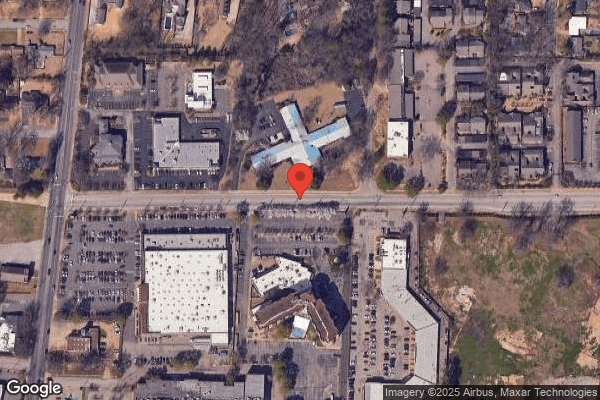
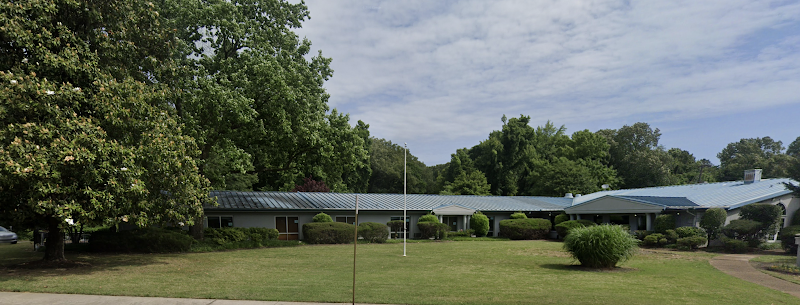
5070 SANDERLIN AVENUE, MEMPHIS, TN 38117 (901) 682-5677
For profit - Corporation 77 Beds LINKS HEALTHCARE GROUP Data: November 2025 1 Immediate Jeopardy citation
Trust Grade
0/100
#283 of 298 in TN
Last Inspection: November 2022

Over 2 years since last inspection. Current conditions may differ from available data.

Overview

Shelby Oaks Post Acute has received a Trust Grade of F, indicating significant concerns about its quality of care. It ranks #283 out of 298 facilities in Tennessee and #23 out of 24 in Shelby County, placing it in the bottom half of all local options. While the trend shows improvement, with the number of reported issues decreasing from 11 in 2022 to just 2 in 2025, the facility still faces serious challenges, including high staff turnover at 76%, which is well above the state average. The facility has incurred fines totaling $108,768, which is concerning and suggests ongoing compliance issues. Specific incidents include a resident being transferred to the hospital after multiple signs of potential abuse and another resident experiencing significant weight loss due to inadequate nutritional monitoring. On a positive note, the facility has more registered nurse coverage than 77% of Tennessee facilities, which can help catch problems that other staff might miss.

Trust Score
F
0/100
In Tennessee
#283/298
Bottom 6%
Safety Record
High Risk
Review needed
Inspections
Getting Better
11 → 2 violations
Staff Stability
⚠ Watch
76% turnover. Very high, 28 points above average. Constant new faces learning your loved one's needs.
Penalties
○ Average
$108,768 in fines. Higher than 66% of Tennessee facilities. Some compliance issues.
Skilled Nurses
✓ Good
Each resident gets 43 minutes of Registered Nurse (RN) attention daily — more than average for Tennessee. RNs are trained to catch health problems early.
Violations
⚠ Watch
21 deficiencies on record. Higher than average. Multiple issues found across inspections.
★☆☆☆☆
1.0
Overall Rating
★★☆☆☆
2.0
Staff Levels
★★☆☆☆
2.0
Care Quality
★☆☆☆☆
1.0
Inspection Score
Stable
2022: 11 issues
2025: 2 issues

The Good

  • Full Sprinkler Coverage · Fire safety systems throughout facility
  • No fines on record

Facility shows strength in fire safety.

The Bad

1-Star Overall Rating

Below Tennessee average (2.8)

Significant quality concerns identified by CMS

Staff Turnover: 76%

30pts above Tennessee avg (46%)

Frequent staff changes - ask about care continuity

Federal Fines: $108,768

Well above median ($33,413)

Significant penalties indicating serious issues

Chain: LINKS HEALTHCARE GROUP

Part of a multi-facility chain

Ask about local staffing decisions and management

Staff turnover is very high (76%)

28 points above Tennessee average of 48%

The Ugly 21 deficiencies on record

1 life-threatening 1 actual harm
Sept 2025 2 deficiencies 1 IJ
CRITICAL (J) 📢 Someone Reported This

A family member, employee, or ombudsman was alarmed enough to file a formal complaint

Immediate Jeopardy (IJ) - the most serious Medicare violation

Free from Abuse/Neglect (Tag F0600)

Someone could have died · This affected 1 resident

**NOTE- TERMS IN BRACKETS HAVE BEEN EDITED TO PROTECT CONFIDENTIALITY** Based on facility policy review, medical record review, Emergency Medical Services (EMS) run report review, hospital record revi...

Read full inspector narrative →
**NOTE- TERMS IN BRACKETS HAVE BEEN EDITED TO PROTECT CONFIDENTIALITY** Based on facility policy review, medical record review, Emergency Medical Services (EMS) run report review, hospital record review, Medicolegal Death Investigator email, and interview, the facility failed to protect the residents' right to be free from abuse for 2 of 9 (Resident #1 and Resident #13) sampled residents reviewed for abuse. On 8/21/2025, the medical record of Resident #1, a vulnerable and cognitively impaired resident, revealed a skin assessment that documented a knot (raised area) to the left and right side of Resident's #1's forehead. On 8/28/2025, the medical record revealed Resident #1's right hand was swollen, warm to the touch, and painful. On 8/29/2025, the medical record documented an opened reddened area to the left side of Resident's #1's abdomen and an abrasion to the Resident's neck, which was documented as a large area of injury from the front of the neck to the back of the neck. On 9/8/2025 at 5:08 AM, Resident #1 was transferred to a local hospital for difficulty breathing, diminished irregular lung sounds and elevated blood pressure, with critical vital signs. The Resident was unable to respond to the nurse. Review of the hospital documentation dated 9/8/2025, revealed an Acute Ischemic Stroke (when a blood clot blocks an artery in the brain cutting off blood flow), Acute Hemorrhagic Stroke (when a blood vessel in or near the brain ruptures, causing bleeding in the brain), Basilar Skull Fracture (a break in one of the bones at the base of the skull), Cervical Spine Injury (spinal cord in the neck is damaged), Epidural Hematoma ( blood accumulates in the skull), Hemothorax (blood accumulates between the lung and the chest wall) , Hemorrhage Shock (blood loss to the body's organs), Hollow Viscus Injury (a tear in the wall of a hollow organ in the gastrointestinal tract), Multiple Rib Fracture, Pneumothorax (air leaks into the space between the lungs and chest wall), Spinal Cord Injury, Splenic Laceration (injury/trauma of the spleen), Subarachnoid Hemorrhage (bleeding between the brain and the tissue covering the brain), Subdural Hematoma (a pool of blood between the brain and it's outermost covering). Facility staff failed to assess Resident #1's injuries and facility staff failed to document or investigate how each of the injuries occurred. Medicolegal Death Investigator email provided to the facility revealed Resident #1's time of death was 9/12/2025 at 4:32 AM. The facility failed to provide documentation of an occurrence report for each of Resident #1's injuries. The facility failed to document the Resident's falls. The facility staff failed to report and investigate injuries of unknown origin. Review of the medical record dated 12/27/2024, revealed Resident #13, who was a vulnerable, cognitively impaired resident, had red scratches on his face, a knot and bruising to the right side of his head, and a swollen left hand which resulted in a 5th proximal phalanx (finger bone) fracture. Nursing staff failed to assess Resident #13's injuries and failed to document and investigate how each of the injuries occurred. The facility failed to provide documentation of an assessment, or an occurrence report for Resident #13's injuries. The facility failed to notify the Physician at the time of occurrence. The facility failed to report and investigate injuries of unknown origin. Resident #13 no longer resides in the facility. The facility should ensure residents residing in the facility receive the needed services to prevent neglect, such as injuries of unknown origin, which can cause serious harm, impairment, or death. Immediate Jeopardy (IJ) (a situation in which the provider's noncompliance with one or more requirements of participation has caused, or is likely to cause, serious injury, harm, impairment, or death to a resident) was identified related to the facility's failure to identify, assess, investigate, and report injuries of unknown origin related to Resident #1's and 13's injuries of unknown, placed all residents at risk. The Administrator and the Director of Nursing (DON) were notified of the Immediate Jeopardy (IJ) for F-600 on 9/23/2025 at 4:01 PM, in the Conference Room.An amended template was presented the Administrator on 9/24/2025 at 4:12 PM. The facility was cited IJ at F-600 at a scope and severity of J, which is substandard quality of care. The Immediate Jeopardy for F-600 began on 8/21/2025 and was removed on 9/25/2025. A partial extended survey was conducted from 9/25/2025 - 9/29/2025. An acceptable Removal Plan, which removed the immediacy of the Jeopardy for F-600 was received on 9/25/2025. The Removal Plan was validated on-site by the surveyor on 9/30/2025 by medical record review, monitoring log review, education record review, and staff interviews. The facility's noncompliance at F-600 continues at a scope and severity of D for monitoring of the effectiveness of the corrective actions. The facility is required to submit a plan of correction. The findings include: 1. Review of the facility policy titled, Identifying Types of Abuse, dated 9/2022, revealed .As part of the abuse prevention strategy.employees.are expected to be able to identify the different types of abuse that may occur against residents.Abuse of any kind against residents is strictly prohibited.Abuse prevention includes recognizing and understanding the definitions and types of abuse that can occur.Abuse is defined as the willful infliction of injury.or punishment with resulting physical harm, pain or mental anguish.Abuse also includes the deprivation by an individual, including a caretaker, of goods or services that are necessary to attain or maintain physical, mental, and psychosocial well-being.Instances of abuse of all residents, irrespective of any mental or physical condition, cause physical harm, pain or mental anguish.Abuse includes verbal abuse, sexual abuse, physical abuse, and mental abuse.Abuse toward a resident can occur as resident- to- resident abuse.staff-to-resident abuse.visitor-to-resident abuse.Physical abuse includes, but is not limited to hitting, slapping, biting, punching or kicking.Corporal (physical) punishment used to control behavior is recognized as a form of abuse.Possible indicators of physical abuse include an injury that is suspicious because the source of the injury is not observed, the extent or location of the injury is unusual, or because of the number of injuries either at a single point in time or over time.Examples of injuries that could indicate physical abuse include, but are not limited to.injuries that are non-accidental or explained.fractures, sprains.scratches, skin tears, and lacerations with or without bleeding, including those that are in locations that would unlikely result from an incident.bruises, including those found in unusual locations such as the head, neck.posterior torso and trunk.facial injuries.facial fractures.bruising.or swelling of mouth or cheeks.Neglect is the failure of the facility, its employees or service providers to provide goods and services to a resident that are necessary to avoid physical harm, pain, mental anguish or emotional distress.Neglect occurs when the facility is aware of, or should have been aware of, goods or services that a resident requires but the facility fails to provide them and this has resulted in (or may result in) physical harm, pain mental anguish or emotional distress.Neglect includes cases where the facility's indifference to or disregard for resident care, comfort or safety results in (or could have resulted in) physical harm, pain, mental anguish or emotional distress.Neglect may be a pattern of failures or may be the result of one or more failures involving one resident and one staff person. 2. Review of the medical record revealed Resident #1 was admitted on [DATE], with readmission on [DATE], with diagnoses including Paranoid Schizophrenia, Alzheimer's Disease, and Hypertension. Review of the Physician's Order dated 6/4/2025, revealed .Apply landing mat on floor to reduce impact and injury of fall while in bed.Bed in lowest position when in bed to lessen impact of fall. Review of the admission Minimum Data Set (MDS) dated [DATE], revealed Resident #1's Brief Interview for Mental Status (BIMS) was 9, indicating Resident #1 was moderately cognitively impaired and had poor short term and long-term memory. Resident #1 required substantial/maximal assistance with toileting, shower/bathing, dressing, and bed mobility.No behaviors were coded during this review period.Resident #1 rarely makes self-understood and rarely understood others during this coded review period. Review of the Care Plan with a goal date of 6/12/2025, revealed .is a risk for falls/injuries r/t [related to] dementia, needs assistance with ADLs [activities of daily living].will be free from injuries related to fall through next review date.BED IN LOWEST POSITION WHEN IN BED TO LESSEN IMPACT OF FALL.LANDING MAT ON FLOOR TO REDUCE IMPACT AND INJURY OF FALL.MAINTAINED CLEAR PATHWAY, FREE OF OBSTACLES/CLUTTERS.ROOM IS CLOSE TO THE STATION TO OBSERVE RESIDENT CLOSELY TO PREVENT FALLS. Review of the Nurse Practitioner (NP) Progress Note dated 8/11/2025, revealed .Resident is awake and alert.no distress noted. However, he has fallen since the last visit. Review of the care plan with a goal date of 8/18/2025, revealed .has a behavior problem r/t crawling onto the floor.The resident will be safe within the facility through the review date.Document behaviors and residents' [resident's] response to interventions.Provide consistent routine care. Review of the medical record revealed no documentation of a fall since the NP last visit of 8/4/2025. The last documented fall for Resident #1 was in May 2025. Review of the medical record SKIN ASSESSMENT (NON-PRESSURE INJURY) dated 8/21/2025, revealed .knot to left and right side of forehead.Face.Other.Knot [raised area] (left & right) . Review of the Nurses Notes dated 8/21/2025, revealed .Resident forehead noted with knot of unknown origin to the left and right side of forehead.DON notified and aware of findings. Review of the Weekly Summary note dated 8/25/2025 revealed .resident continues to place himself on the floor.knot to left and right side of head.aggression both verbal and physical. An addendum was added by the DON to this Weekly Summary dated 9/18/2025 (during the onsite complaint investigation) which revealed .patient continues to have behaviors at least once a day every day of either physical or verbal aggression. patient can be easily redirected by offering food and music to calm him. patient continue [continues] to throw himself down on the floor in his room. mattresses on floor for safety. patient does have a knot on the left and right side of his head due to placing himself on the floor in his room for his behaviors. Review of the medical record SBAR, & INITIAL COC (communication tool that stands for Situation, Background, Assessment, and Recommendation] [and] [change of condition)/ALERT CHARTING & SKILLED DOCUMENTATION electronic form dated 8/28/2025, revealed .Right hand swelling noted with pain as expressed per resident.Not using/moving right hand as he usually does, especially when eating. Review of the medical record SBAR & INITIAL COC/ALERT CHARTING &SKILLED DOCUMENTATION electronic form dated 8/28/2025, revealed .Right hand swelling noted with pain as expressed per resident.Not using/moving right hand as he usually does, especially when eating. Review of the Nurse Practitioner (NP) Progress Notes dated 8/28/2025, revealed .he [Named Resident #1] is noted to have right hand swelling for the past few days.nursing states.no reports of falls or injury.an Xray [medical imaging test to create pictures inside the body] of the right hand will be ordered. Review of the Physician's Order dated 8/28/2025, revealed Hand RT [right] 3V [views].swelling/ [and] pain right hand. Review of Resident #1's Radiology Results dated 8/28/2025, revealed .No gross hand fracture. Review of the SKIN ASSESSMENT (NON-PRESSURE INJURY dated 8/29/2025, revealed .Date of onset 8/28/2025 neck front to back.abrasion.RUQ [right upper quadrant of abdomen] .Resident presents with an abrasion across the back of the neck to the front larynx. Resident has skin tear at RUQ. Review of the NP Progress Note dated 8/29/2025, revealed .nursing staff c/o [complained of] wound to neck.states it started as a skin tear and has progressed. Review of the Physician's order dated 8/29/2025, revealed .Cleanse left side of neck with NS [normal saline], apply mupirocin [topical antibiotic ointment used to treat bacterial skin infections].leave open to air QD [every day] and PRN [as needed].Cleanse RUQ with NS, pat dry, apply iodine [antiseptic] and leave open to air QD and PRN. Review of medical record progress notes dated 9/8/2025, revealed .Upon morning round Nurse was informed by CNA [Certified Nursing Assistant] that resident was breathing weirdly. When assessing resident, he was visually rapid breathing. Vital signs were taken 0443 [at 4:43 AM] as follows: BP [blood pressure] 196/126 HR [heart rate] 120 SpO2 [oxygen saturation of peripheral blood, normal is 95 - 100] 79% [percent] RR [respiratory rate] 30 Temp [temperature] 97.6. Contacted on call Physician [at] 0450 [4:50 AM] and orders were given to place resident on 2L [liters] 02 [oxygen] BNC [binasal cannula] and sent out via 911 [emergency]. Call 911 @0500 [5:00 AM] ambulance arrived @0505 [5:05 AM] to transport resident to [Named] Hospital. Review of Resident #1's [Named Fire Department] run report dated 9/8/2025 4:55 AM, revealed .Altered mental status Primary Symptom: Neuro - Altered mental status.Secondary Impressions: Shortness of breath.Other Symptoms: Shortness of breath.Medical Assessment.Left: Breath Sounds-Decreased; Lung Assessment - Right: Breath Sounds-Decreased; Mental Status Assessment: Combative.Neurological Assessment: Cerebellar Function-Abnormal.Arrived to find [age] male in bed in nursing home. Per staff approx.[approximately] 30 min [minutes] prior to EMS [emergency management services] arrival Pt [patient/Resident #1] was found to be altered. Per staff Pt can normally answer questions with mild confusion. Pt eyes open not responding to questions. Withdraw from pain. Respiration rapid and shallow. Lungs clear on auscultation. SP02 80% on room air. Placed on 02 15 lpm [liters per minute] NRB [non-rebreather mask] and nasal capnography [measures concentration of carbon dioxide in exhaled breath]. Unknow last known well. Unable to complete a stroke screen due to Pt not following commands. Pt moved to cot and secured. Cot to unit. Began transport. C/M [cardiac monitor] applied. 12-lead ECG placement records electrical activity of the heart] obtained and transmitted. BG [blood glucose] tested and IV [intravenous therapy] placed. Report called to ED [emergency department] Sp02 increased with 02, no other changes. Care turned over at ED with report given to ED staff.Summary of Events.dispatched to [age] [year old male] with difficulty breathing and altered mental status change per health care personnel. assumed all pt care and rode into hospital with Pt was secured to stretcher with straps and rails and moved to unit without incident or injury. Pt was transported to [Named local hospital] where nurse signed for pt and report was given, pt was taken to Ct [imaging technique to make images of the body] scan and offloaded in ER [emergency room] . Review of the (Named Hospital) Emergency Department record dated 9/8/2025, revealed Resident #1 arrived the ED at 5:30 AM. Resident #1 had altered mental status, decreased breath sounds, and was .cachectic [condition of physical wasting and muscle loss].ill-appearing.Scrotum [sac of skin and muscles that holds a man's testicles outside of the body] noted to be swollen.Substantial subcutaneous emphysema [rare condition that happens when air gets trapped under the skin, common causes are blunt force trauma, surgery, and infections] appreciated around the patient's neck, anterior chest and proximal lower extremities. Resident #1 was intubated (tube inserted in the trachea for ventilation) in the ED on 9/8/2025 at 6:30 AM and a chest tube was inserted at 7:15 AM for a pneumothorax (collapsed lung). The ED physician documented the following medical conditions, .Bilateral pneumothorax [both lungs collapsed].Closed fracture of manubrium [sternum bone located at the level of the third and fourth thoracic vertebrae].Closed fracture of multiple ribs of both sides.Closed fracture of transverse process of lumbar vertebra [the largest and thickest bones in the lower back].Dissection of cervical artery [tear in the inner layer of an artery in the neck].Laceration of spleen.Midline shift of brain [when the brain tissue moves away from the midline of the skull].Subdural hematoma. The previous diagnoses were each documented as a complicated acute illness or injury that poses a threat to life or bodily functions by the ED physician. The ER physician documented, .Upon my evaluation, this pt had a high probability of clinically significant imminent or life-threatening deterioration due to polytrauma [when a patient has sustained multiple injuries which may cause significant disability and may be life-threatening]. Continued review of the ED record revealed, .M [male] polytrauma w/.aSDH,[a subdural hemorrhage] bilateral pneumothoraces,[pneumothorax in both lungs] deviated trachea [windpipe shifted from the normal position in the center of the chest]. LKW [last known well] yesterday at his nursing home. Unknown mechanism of injury. Hypoxic [inadequate supply of oxygen to tissues and organs] and hypertensive [elevated blood pressure] on arrival. Intubated in ED. Resident #1 was transferred to (Named Hospital) which is a Level 1 trauma center (facility that provides the highest level of care for critically injured patient)] from the ED. Review of the Medicolegal Death Investigator email to the DON dated 9/18/2025, revealed . [Named Resident #1]'s date and time of death are 9/12/2025 at 4:32 AM The cause of death is pending and will be pending until all the investigative work is completed . After Resident #1's death, the following information was documented in the resident's medical record: A SBAR-FALLS electronic form dated 9/23/2025 which documented .Date &Time of FALL: 08/21/2025 00:00 [12:00 AM].location of injury: forehead.Note any injury to the head.Bump.Alert Charting Notes.found to have a knot to the left and right forehead.Date and time Physician was notified 09/23/2025 17:39 [5:39 PM]. A SBAR-FALLS form dated 9/23/2025, for knot on left and right side of head, was completed and documented by the DON,16 days after his discharge from the facility and 34 days after the injury of unknown origin was initially documented in the medical record. A SBAR & INITIAL COC/ALERT CHARTING & SKILLED DOCUMENTATION dated 9/23/2025, revealed .scratches to neck and RUQ [right upper quadrant].Date & Time 08/29/2025 14:25 [2:25 PM].Patient.scratching himself across the neck going from the back of neck extending down/around to the front of his neck, he was also scratching area to RUQ [right upper quadrant] .fingernails were long. A SBAR & INITIAL COC/ALERT CHARTING & SKILLED DOCUMENTATION form dated 9/23/2025 for Resident #1's left side of his stomach open reddened area and an abrasion noted to the Resident's neck, which was documented as a large area of injury from the front of the neck to the back of his neck, was completed and documented by the DON, 16 days after Resident #1 was discharged from the facility and 26 days after the initial occurrence was documented in the medical record. A SBAR-FALLS form dated 9/23/2025, for knot on left and right side of head, was completed and documented by the DON,16 days after his discharge from the facility and 34 days after the injury of unknown origin was initially documented in the medical record. 3. During an interview on 9/11/2025, the Medical Director (MD) was asked when he was notified of Resident #1's injuries. The Medical Director stated The NP was probably notified. The Medical Director was asked if he was aware of Resident #1's injuries from the hospital report on 9/8/2025. The Medical Director stated I'm not sure I have all the details yet. The Medical Director was asked if he would expect the facility to notify him and all State Agencies of injuries of unknown origin. The Medical Director said Yes. The Medical Director was asked if he had been notified of injuries of unknown origin. The Medical Director stated, No, not recently. The Medical Director was asked if he had concerns with the facility's abuse reporting system. The Medical Director stated, I had concerns with the former management team. The Medical Director was asked if the facility's Administrator or DON should identify, report and investigate any form of abuse. The Medical Director stated Yes, that would be my expectations. During an interview on 9/11/2025 at 1:50 PM, Licensed Practical Nurse (LPN) B was asked if Resident #1's condition had changed prior to going to the hospital. LPN B stated .yes, he started pocketing his food a couple of days before he was sent to the hospital, and seemed a little lethargic, with a slight cough. LPN B was asked if Resident #1 had behaviors. LPN B stated Yes, he was resistant to care at times, and we would leave him at the nurse's station in his geri-chair [geriatric chair for limited mobility, for comfort and support] most days, since he would slide out of the chair and roll out of his bed. LPN B was asked if the staff would tell the nurses each time Resident #1 was on the floor. LPN B stated, No, he was care planned to be in the floor. LPN B was asked did the nurses do a head-to-toe assessment each time the resident was on the floor. LPN B stated No, he was allowed on the floor. LPN B was asked if he crawled in other residents' rooms. LPN B stated, Yes, but he was care planned for that. LPN B was asked if the nurses document an occurrence report and start an investigation for resident falls. LPN B stated No, but we will try to do an SBAR for falls. LPN B was asked when Resident #1 had a fall was a SBAR completed. LPN B stated, He is care planned for being in the floor so he wouldn't have one. During an interview on 9/16/2025 at 8:51 AM, LPN A was asked if she completed an occurrence report or an investigation regarding Resident #1's injuries of unknown origin and what was the Knot to left and right side of the resident's forehead. LPN A stated, .[Named Resident #1] had a large, raised area to his left and right forehead that should not be there.there was bluish bruising to the areas . LPN A was asked if she was trained to do an occurrence report or start an investigation when a resident is injured. LPN A stated, No, I wasn't aware to do that, and I did not do an occurrence or investigation, but I did notify the DON. LPN A was asked what the DON said to her after notifying her of the injuries to [Named Resident #1]'s head. LPN A stated, She [DON] just said ‘thank you for notifying me.' LPN A was asked if she completed neuro-checks. LPN A stated, No. LPN A was asked should she have completed neuro-checks. LPN A stated, Yes I should have. LPN A was asked if an injury of unknown origin was considered as an allegation of abuse. LPN A stated, .yes, I suppose so. LPN A was asked if she was asked to write a statement or obtain witness statements from the staff the night the head injury was observed. LPN A stated No. LPN A was asked if Resident #1 could tell her what happened to his head. LPN A stated, .mentally he couldn't explain, he was active, and we had to keep an eye on him.he was a high fall risk.his bed was low to the floor with a floor mat beside his bed, but the floor mat would move away from the side of the bed. LPN A was asked if Resident #1 was on the floor during the night of the occurrence. LPN A stated, .he was in the floor or crawling around almost every night, no one told me when he was in the floor and I didn't ask, but he was care planned for that and he could be in the floor, but as a dignity thing they would just pick him up and put him back to bed.I wasn't told each time he was in the floor. LPN A was asked what her conclusion was of how the injury occurred and if she notified the Physician. LPN A stated, .I cannot answer that question, I did notify the Director of Nursing. LPN A was asked should she have notified the Physician. LPN A stated, Yes. During an interview on 9/16/2025 at 11:45 AM, the DON was asked if an injury of unknown origin for Resident #1 was reported to the State Agencies. The DON stated, No, the [Named Resident #1] did not receive those injuries listed from the hospital report here at this facility. The DON was asked when she was told about Resident #1's injuries and if she started an investigation on that day. The DON stated, I was notified on 9/8/2025. The DON was asked if she started an investigation. The DON stated, No, the injuries didn't occur here. During an interview on 9/18/2025 at 10:45 AM, the Nurse Practitioner (NP) was asked when she was notified Resident #1 had sustained head injuries. The NP stated, I would have to look at my notes.I don't see it documented. The NP was asked would you expect to be notified of a resident's injuries. The NP stated, Yes. The NP was asked when Resident #1 had a fall. The NP stated .I don't recall. The NP was asked if a resident has a fall or is observed on the floor, should that constitute a fall investigation and should the resident be assessed after each fall. The NP stated, Yes. The NP was asked how Resident #1 injured his right hand. The NP stated, I'm not sure.but the Xray was negative for fracture. The NP was asked how he sustained injuries to his neck and abdomen. The NP stated, That's not certain. The NP was asked should these injuries have been investigated. The NP stated, Yes. The NP was asked if bruising was evidenced around his neck. The NP stated, I believe so. There was no documentation in the resident's medical record of a detailed description of Resident #1's neck or abdomen injuries. During an interview on 9/22/2025 at 11:50 AM, the MDS Coordinator was asked if Resident #1 was observed on the floor, would that be considered a fall. MDS Coordinator stated, Yes, it is considered a fall, he had a behavior problem of crawling on the floor, but that wasn't an intervention for a fall. MDS Coordinator was asked how Resident #1 received injuries to the left and right side of his head. MDS Coordinator stated, .I don't remember that. MDS Coordinator was asked if a resident has an injury to the head what should be documented. MDS Coordinator stated, .I would think a skull series. MDS Coordinator was asked what the nurse should document. MDS Coordinator stated, .they should do a head-to-toe assessment and figure out how it happened.if a fall occurred, they should document where it was, how it happened and ask for a witness statements then tell the DON.he [Named Resident #1] had impaired mobility and required staff for transfers and bed mobility. The MDS Coordinator was asked when Resident #1 had his last fall. The MDS Coordinator stated, .[Named Resident #1]'s last falls were in May 2025. His [Named Resident #1] falls occurred 5/10/2025, 5/12/2025, 5/14/2025 and 5/20/2025.there's no documented falls in the medical record since May 2025. The MDS Coordinator was asked what interventions were put into place to prevent falls. The MDS Coordinator stated, .interventions included a landing mat on the floor and for his room to be close to the nurse's station. The MDS Coordinator was asked was his room close to the nurse's station. The MDS Coordinator stated, No, it wasn't.it was at the end of 200 hall. During an interview on 9/22/2025 at 1:40 PM, CNA N was asked if she observed Resident #1's neck wound and RUQ abdomen wound. CNA N stated, .yes, I observed the neck, and it appeared as blue bruising with redness that looked raw, it stretched from one side of his neck to the other side. His stomach injury appeared as a round half dollar size area that was open with white in it like a big pimple with dried blood inside of it. I told my nurse as soon as I found it. CNA N was asked if she knew how it happened. CNA N stated, I was assuming it was a fall.he would crawl from room to room too. CNA N was asked if his fingernails were long. CNA N stated, No, I don't think so, they were okay. CNA N was asked if he had several falls. CNA N stated, No, he was care planned to be on the floor.we would just put him back to bed. CNA N was asked if she told the nurse when he was on the floor. CNA N stated, No not every time, but they [nurses] know he rolls out of bed.he would get between the bed and the air conditioner at times, and we would just pick him up and put him back in bed. CNA N was asked if Resident #1 could say if he was hurt. CNA N stated, Not really. During an interview on 9/22/2025 at 2:23 PM, the Wound Nurse was asked how the injury occurred to the Resident #1's neck and right upper abdomen and asked if she could describe the appearance of the wounds on the day they were assessed. The Wound Nurse stated, .I was told it was from a fall.the neck was worse than an abrasion.it was a big long bruise.looked like a deep tissue injury.it was bruising all around the neck except not on the back of the neck, it appeared as a new blue bruise.they said he had a fall that morning.the resident's right upper quadrant of his abdomen was an open area. The Wound Nurse was asked if either site could have been considered as an injury of unknown origin. The Wound Nurse stated possibly. The Wound Nurse was asked where she documented the description of the injuries. The Wound Nurse stated, I should have charted that. During an interview on 9/22/2025 at 3:45 PM, CNA L was asked about Resident #1‘s behavior the day before he went to the hospital. CNA L stated, .he was up in his Geri chair for a few hours, but we laid him down because he was tired and sleepy. CNA L was asked if he had fallen that day. CNA L stated, Yes, he rolled off the bed between the bed and the air conditioner, the mat would slide away from the bed, he would get on the side of the wall, but he was asleep, so we just put him back in bed. CNA L was asked if she told the nurse. CNA L stated, No, he was care planned for being in the floor. CNA L was asked if Resident#1 acted like he was hurt. CNA L stated, No he was asleep face down when we put him back in bed. CNA L was asked why the nurse wasn't notified. CNA L stated, .they usually just tell us to put him back in the bed. During an interview on 9/23/2025 at 1:55 PM, the DON was asked when Resident #1 was throwing himself in the floor, where was the documentation of an occurrence report or head head-to-toe assessment, documentation the MD was notified, follow up documentation for his behaviors, and the interventions put into place were all documented in the medical record. The DON stated I don't see any documentation of that in his [Resident #1] medical record. The DON was asked if the facility provided adequate monitoring, supervision, adequate assessment and adequate interventions to keep Resident #1 safe in the facility. The DON stated Yes.those type injuries he sustained couldn't have happ
CONCERN (D) 📢 Someone Reported This

A family member, employee, or ombudsman was alarmed enough to file a formal complaint

Potential for Harm - no one hurt, but risky conditions existed

Report Alleged Abuse (Tag F0609)

Could have caused harm · This affected 1 resident

**NOTE- TERMS IN BRACKETS HAVE BEEN EDITED TO PROTECT CONFIDENTIALITY** Based on facility policy review, medical record review, facility investigation review, and interview, the facility failed to ens...

Read full inspector narrative →
**NOTE- TERMS IN BRACKETS HAVE BEEN EDITED TO PROTECT CONFIDENTIALITY** Based on facility policy review, medical record review, facility investigation review, and interview, the facility failed to ensure injuries of unknown origin were reported immediately, but not later than 2 hours, after the allegation was made for 2 of 9 (Resident #1 and Resident #13) sampled residents reviewed for abuse. The findings include: 1. Review of the facility's policy Abuse Investigation and Reporting dated10/2022, revealed .All reports of resident abuse, neglect.and/or mistreatment ( abuse)shall be promptly reported to local, state and federal agencies (as defined by current regulations).Findings of abuse investigations will also be reported.Reporting.All alleged violations involving abuse, neglect, exploitation, or mistreatment, and misappropriation of property will be reported by the facility Administrator, or his/her designee, to the following persons or agencies:.The State licensing/certification agency responsible for surveying/licensing the facility;.The local/State Ombudsman;.The Resident Representative (Sponsor) of record;.Law enforcement officials; The resident's Attending Physician.An alleged violation of abuse, neglect, exploitation or mistreatment will be reported immediately, but not later than:.Two (2) hours if the alleged violation involves abuse OR has resulted in serious bodily injury; or.Twenty-four (24) hours if the alleged violation does not involve abuse OR has not resulted in serious bodily injury.Verbal/written notices to agencies may be submitted via special carrier, fax, e-mail, or by telephone.Notices will include.The name of the resident.The number of the room in which the resident resides.The type of abuse that was committed.The date and time the alleged incident occurred.The name(s) of all persons involved in the alleged incident.and.What immediate action was taken by the facility.The Administrator (or designee) will provide the appropriate agencies or individuals.with a written report of the findings of the investigation within (5) working days of the occurrence of the incident.Appropriate professional and licensing boards will be notified when an employee is found to have committed abuse. Review of the facility's STATEMENT OF IN-SERVICE TRAINING FOR EMPLOYEES dated 9/18/2025, revealed .The following areas of instruction were covered: Event Note/Incident Process (Falls, Abuse, Misappropriation, Behaviors, Elopement, Injuries, new skin issues (abrasions, bruises, lacerations.) Review of the facility's undated policy Falls and Fall Risk, Managing revealed .a fall is defined as.Unintentionally coming to rest on the ground, floor or other lower level, but not as an overwhelming external force.An episode where a resident lost his/her balance and would have fallen.is considered a fall.when a resident is found on the floor, a fall is considered to have occurred. Review of the facility's policy Occurrence Reporting dated 12/1/2023, revealed .The facility may complete a Nurse Event note to document the details of an accident/incident/occurrence/unusual event affecting the resident.Completion of the Nurse Event note is critical to the investigation process.Definitions. A Nurse Event Note is an assessment that is completed to record the details of accidents/incidents, patient injury and other unusual events/occurrences that occur while a patient resides in a health care facility.The following are examples accidents/incidents are events/occurrences that require the completion of a Nurse event note.Violence or aggression (patient to patient altercation).Falls.Bruises.Abrasions.Skin tears.Fracture.All observed, reported, or other acquired knowledge of an occurrence must be reported to the charge nurse or DON [Director of Nursing] by the employee who finds or witnesses the incident. 2. Review of the medical record revealed Resident #1 was admitted on [DATE] with readmission on [DATE], with diagnoses including Paranoid Schizophrenia, Alzheimer's Disease, and Hypertension. Review of the admission Minimum Data Set (MDS) dated [DATE], revealed Resident #1's Brief Interview for Mental Status (BIMS) was 9, indicating Resident #1 was moderately cognitively impaired and had poor short term and long-term memory. Resident #1 required substantial/maximal assistance with toileting, shower/bathing, dressing, and bed mobility. Review of the medical record dated 8/21/2025, revealed Resident #1 sustained an injury of unknown origin, a knot (raised area) to the left and right side of his head. The facility failed to complete an occurrence report, a head-to-toe assessment, or document of how the injury occurred. The facility failed to document a detailed description of the injury of unknown origin in the medical record. Review of the medical record dated 8/28/2025, revealed Resident #1 sustained an injury of a painful swollen right hand. The facility failed to complete an occurrence report, a head-to-toe assessment, or document of how the injury occurred. The facility failed to document a detailed description of the injury of unknown origin in the medical record. Review of the medical record dated 8/29/2025, revealed Resident #1 sustained an injury of a large bruise from stretching from one side of his neck to the other and an open area to his abdomen. The facility failed to complete an occurrence report, a head-to-toe assessment, or document of how the injury occurred. The facility failed to document a detailed description of the injury of unknown origin in the medical record. Resident #1 was transferred to the Emergency Department (ED) on 9/8/2025. Review of the ED record dated 9/8/2025, revealed Resident #1 arrived the ED at 5:30 AM. Resident #1 was diagnosed with a fractured sternum, multiple rib and lumbar (lower back) vertebrae fractures. In addition, a dissection of the cervical artery (tear in an artery in the neck), a lacerated spleen and a subdural hematoma (bleeding near the brain). The ED physician determined Resident #1's multiple injuries were life threatening and required transfer to a Level 1 Trauma Facility (facility that provides the highest level of care for critically injured patient). 3. Review of medical record revealed Resident #13 was admitted on [DATE] with diagnoses including Cerebral Palsy, Cerebrovascular Accident, Hemiplegia right side, and Dementia. Review of the quarterly MDS dated [DATE], revealed a BIMS score was not conducted related to Resident #13's cognitive skills for daily decision making was coded as severely impaired. Resident #13 required total dependence of staff for all activities of daily living. Review of the medical record dated 12/27/2024, revealed Resident #13 sustained an injury of red scratches to his face, bruising noted to the right side of his head and a left hand swollen with a red pinky finger resulting in a 5th phalanx (bone of the finger) fracture. The facility failed to complete an occurrence report, a head-to-toe assessment, or document of how the injury occurred. The Physician was not notified of the red scratches to his face or bruising to the right side of his head. The facility failed to document a detailed description of the injury of unknown origin in the medical record. During an interview on 9/16/2025 at 11:45 AM, the DON was asked if an injury of unknown origin for (Named Resident #1) was reported to the State Agencies. The DON stated, No, the (Named Resident #1) did not receive those injuries listed from the hospital report here at this facility. During an interview on 9/23/2025 at 12:45 PM, the DON was asked if Resident #13's injuries should have been classified as injuries of unknown origin. The DON stated, We should have completed more documentation on that one. The DON was asked if the facility knew how the injuries occurred. The DON stated, .would say no.not by what is in the medical record. The DON was asked if she reported the occurrence of unknown injury to the State Agencies. The DON stated, No.could have done more. During an interview on 9/23/2025 at 2:05 PM, the Administrator was asked how do you decide which injuries of unknown origin should be reported and investigated as alleged occurrences of abuse. The Administrator stated, . it comes down to root cause analysis.you must know the cause of the injury. I think we have verbally done the root cause analysis for [Named Resident #1].aware of needed improvement of documentation. The Administrator was asked if he had reports of an injury of unknown origin. The Administrator stated, No. The Administrator was asked why he did not report the injuries listed from the hospital report. The Administrator stated, The injuries could not have happened here at the facility. The Administrator was asked how he knew the injuries did not occur at the facility. The Administrator stated, .through our witness statements . The Administrator was asked since this was your resident, and the facility was considered an advocate for (Named Resident #1) why wouldn't you report the injuries. The Administrator stated, We decided to report the incident later, but there are no witnesses it occurred here. The Administrator was asked how [Named Resident #1] sustained such serious life threatening injuries. The Administrator stated, I do not know
Nov 2022 11 deficiencies 1 Harm
SERIOUS (G)

Actual Harm - a resident was hurt due to facility failures

Deficiency F0692 (Tag F0692)

A resident was harmed · This affected 1 resident

**NOTE- TERMS IN BRACKETS HAVE BEEN EDITED TO PROTECT CONFIDENTIALITY** Based on policy review, medical record review, observation, and interview, the facility failed to accurately assess the nutritio...

Read full inspector narrative →
**NOTE- TERMS IN BRACKETS HAVE BEEN EDITED TO PROTECT CONFIDENTIALITY** Based on policy review, medical record review, observation, and interview, the facility failed to accurately assess the nutritional status and to follow the facility's policy for monitoring weights for 1 of 3 sampled residents (Resident #24) reviewed for weight loss. The facility's failure to provide nutritional interventions resulted in Actual Harm when Resident #24 had a severe weight loss of 11.13 % in six months. The findings include: 1. Review of the facility's policy, Dietary: Weight Monitoring revised 11/9/2021, revealed .Weight can be a useful indicator of nutritional status. Significant unintended changes in weight .may indicate a nutritional problem .monitoring the effectiveness of interventions and revising them as necessary .Interventions will be identified, implemented, monitored, and modified .to maintain acceptable parameters of nutritional status .a significant change in weight is defined as 5 % [percent] change in weight in 1 month .7.5 % change in weight in 3 months .10 % change in weight in 6 months . 2. Review of the medical record revealed Resident #24 was admitted to the facility on [DATE] with diagnoses of Hypertension, Heart Failure, Dysphagia, Gastrostomy Status, and Malnutrition. Review of the Registered Dietician's Nutritional Note dated 4/27/2022, revealed, .Current wt [weight]: 115 lbs [pounds] .TF [tube feeding] regimen: Jevity 1.5 @ [at] 65 ml/hr x 22 hrs + [plus] 45 ml/hr auto water flush x 22 hrs . Review of the Registered Dietician's Nutritional Note dated 7/15/2022 revealed, .Current wt: 111.8 lbs .RD [Registered Dietician] with no new recommendations . Review of the Registered Dietician's Nutritional Note dated 10/4/2022, revealed, Current wt: 108 lbs .No significant weight changes noted .RD with no new recommendations. Staff will continue to monitor monthly weights and TF tolerance . Review of the quarterly Minimum Data Set (MDS) assessment dated [DATE] revealed Resident #24's Brief Interview for Mental Status (BIMS) was 00, which indicated severe cognitive impairment. Resident #24 was totally dependent on others for all activities of daily living (ADL's), weighed 110 pounds, and had a gastrostomy tube. Review of the Physician's Order Sheet dated 11/2022, revealed, .Jevity 1.5 cal [calorie] at 65 ml/hr [milliliters/ hour] Enteral Tube x [times] 22 hours (off 2 hours daily for ADL's/wound care) . Review of the Care Plan revised on 11/10/2022, revealed, .At risk for compromised nutritional status/malnutrition related to receiving tube feedings .Resident has had weight loss . Review of the Weights and Vitals Summary revealed Resident #24 weighed 115 pounds on 4/27/2022, and 102.2 pounds on 11/2/2022, which indicated an 11.13 % weight loss in 6 months, a severe weight loss. Review of the Clinical Notes dated 11/2/2022, the RD documented, .Current wt: 102.2 lbs .TF regimen: Jevity 1.5 @ 65 ml/hr x 22 hrs. + 45 ml/hr auto water flush x 22 hrs .- [minus] 2.3% weekly weight loss noted. Resident recently added to weekly weights due to gradual weight loss . Observations in the resident's room on 11/16/2022 at 8:24 AM, at 11:34 AM, and at 2:30 PM, revealed Resident #24's enteral feeding was not connected to the resident's feeding tube and the feeding pump was not running. The enteral feeding tubing was capped and hanging over the enteral pump. The Jevity label was dated and revealed, .11/16/2022 0400 [4:00 AM] at 65 cc/hr x 22 hours . The enteral bottle had 950 ml of formula left in the 1000 ml enteral container. During an interview on 11/16/2022 at 2:35 PM, Licensed Practical Nurse (LPN) #4 confirmed Resident #24's enteral feeding tubing was capped and hanging at resident's bedside and not infusing. The enteral feeding bottle contained 950 ml of enteral feeding left in the bottle. LPN #4 stated, .looks like 950 ml left in the bottle .was hung by the previous nurse at 4 AM this morning .I thought I plugged it back up at 8 AM, I guess I forgot .there was no residual with her morning meds .it should have been running . During an interview on 11/16/2022 at 3:57 PM, the RD was asked what interventions were put in place for Resident #24's significant weight loss. The RD stated, .I just look for trends of 2% .weekly loss in general .I did notice a trend .I didn't do anything from a nutritional standpoint .I didn't put on weekly weights because she [Resident #24] wasn't a significant weight loss .just looking at it .yes she should have stayed on weekly weights .She was added to weekly weights 3 weeks ago . The RD was asked if interventions should have been put into place for Resident #24's 11.13% severe weight loss during the last 6 months period. The RD stated, .From nursing .making sure and checking mechanics of her feeding tube more .placement making sure the feeding is hooked up and running . During an interview on 11/17/2022 at 7:56 AM, the Medical Director stated, .I noticed myself that she (Resident #24) is needing more estimated needs for her ideal body weight .I'm going to increase her feeding rate and have the RD re-evaluate her .they should have changed the feeding .it hasn't been changed in over a year and half . During an interview on 11/17/2022 at 7:45 PM, the Interim Director of Nursing (DON) confirmed residents with severe weight loss should have nutritional interventions implemented and in place. The Interim DON confirmed Resident #24's enteral feeding should be given according to the physician's orders.
CONCERN (D)

Potential for Harm - no one hurt, but risky conditions existed

Resident Rights (Tag F0550)

Could have caused harm · This affected 1 resident

Based on policy review, observation, and interview, the facility failed to maintain or enhance residents' dignity and respect when 5 of 12 staff members (Certified Nursing Assistant (CNA) #1 and #2, A...

Read full inspector narrative →
Based on policy review, observation, and interview, the facility failed to maintain or enhance residents' dignity and respect when 5 of 12 staff members (Certified Nursing Assistant (CNA) #1 and #2, Assistant Director of Nursing (ADON), Licensed Practical Nurse (LPN) #3 and Business Office Coordinator) referred to residents as feeders, failed to knock prior to entering resident rooms, and stood over residents during dining observations. The findings include: 1. Review of the facility's policy titled, Promoting/Maintaining Resident Dignity Policy, dated 10/24/2022, revealed .It is the practice of this facility to protect and promote resident rights and treat each resident with respect and dignity as well as care for each resident in a manner and in an environment, that maintains or enhances resident's quality of life by recognizing each resident's individuality .Staff attempt to be at eye level during assist feeding . Review of the facility's admission packet Resident's Rights, revealed .Right to a Dignified Existence .Be treated with consideration, respect, and dignity, recognizing each resident's individually . 2. Observation on the 300 Hall on 11/14/2022 beginning at 12:10 PM, revealed the following: a. LPN #3 stated to the ADON, She is a feeder [referring to a resident]. b. The Business Office Coordinator entered Resident #33's room without knocking on the door or asking permission to enter. c. CNA #2 stated, The trays on the cart .are the feeder trays. d. The ADON announced down the hallway, There are some feeders on here [the meal cart]. Observation on the 300 Hall on 11/15/22 beginning at 8:17 AM, revealed the following: a. CNA #2 entered Resident #29's room, place a meal tray on the over bed table, and stated .I think he is a feeder now .yeah, I think they made him a feeder . b. CNA #1 was standing at the meal cart and asked, Are all these feeders? c. CNA #1 stood over Resident #37 with the meal plate in her left hand held over the resident's head while assisting with the meal. d. CNA #1 asked the Activity Director, Are they feeders? as she looked at the remaining meal trays inside the food cart. Observation in Resident #35's room on 11/16/22 at 8:47 AM, revealed CNA #2 held the plate in her hand while standing over Resident #35 to assist with the meal. 3. During an interview on 11/15/2022 at 8:34 AM, CNA #2 confirmed she should not stand over residents when assisting with meals, should knock on the door prior to entry, and should not refer to the residents as feeders. During an interview on 11/15/2022 at 8:43 AM, CNA #1 confirmed residents should not be referred to as feeders. CNA #1 confirmed she should not stand over residents during meal assistance. During an interview on 11/15/2022 at 8:45 AM, the ADON confirmed staff members should not refer to the residents as feeders, should knock on the door prior to entering, and should not stand over residents during meal assistance.
CONCERN (D)

Potential for Harm - no one hurt, but risky conditions existed

Deficiency F0565 (Tag F0565)

Could have caused harm · This affected 1 resident

Based on observation and interview, the facility failed to provide privacy for 7 of 7 residents (Resident #1, #12, #18, #27, #33, #41, and #57) during a group interview with Resident Council members. ...

Read full inspector narrative →
Based on observation and interview, the facility failed to provide privacy for 7 of 7 residents (Resident #1, #12, #18, #27, #33, #41, and #57) during a group interview with Resident Council members. The findings include: Observation in the Main Dining Room on 11/16/2022 at 3:05 PM, revealed the Resident Council meeting was in progress. The Main Dining Room was open and accessible to anyone. Residents #1, #12, #18, #27, #33, #41 and #57 were in attendance at the Resident Council meeting. During an interview on 11/16/2022 at 3:11 PM, Resident #1, the Resident Council President, confirmed the Resident Council meetings are held in the Main Dining Room. Observation in the Main Dining Room on 11/16/2022 at 3:15 PM, revealed Licensed Practical Nurse (LPN) #2 entered the Main Dining Room and sat down at a table in the back of the room with her lunch while the Resident Council meeting was in progress. Observation in the Main Dining Room on 11/16/2022 at 3:24 PM, revealed CNA #3 entered the Main Dining Room and went to the back of the dining room to the vending machine to make a purchase while the Resident Council meeting was in progress. During an interview on 11/16/2022 at 9:55 AM, the Activities Director confirmed the Resident Council meeting was held in the Main Dining Room (an open area with dining chairs and tables with no doors for privacy or separation from nurses' workstation). The Activities Director confirmed the Main Dining Room was also where the CNAs come to chart on the kiosk mounted on the wall. The Activities Director confirmed staff members should not be allowed to come and go into the Main Dining Room during the Resident Council meeting.
CONCERN (D)

Potential for Harm - no one hurt, but risky conditions existed

Deficiency F0569 (Tag F0569)

Could have caused harm · This affected 1 resident

**NOTE- TERMS IN BRACKETS HAVE BEEN EDITED TO PROTECT CONFIDENTIALITY** Based on review of resident trust accounts, policy review, medical record review, and interview, the facility failed to refund t...

Read full inspector narrative →
**NOTE- TERMS IN BRACKETS HAVE BEEN EDITED TO PROTECT CONFIDENTIALITY** Based on review of resident trust accounts, policy review, medical record review, and interview, the facility failed to refund the residents' funds within 30 days of death or discharge for 1 of 1 sampled resident (Resident #171) reviewed for trust funds. The findings include: Review of the facility's undated policy titled, CHAPTER 10: REFUNDS (WITHDRAWALS), revealed .State regulation, all refunds must be made within 30 days of discharge or expiration . Review of the medical record revealed Resident #171 was admitted to the facility on [DATE] and expired on [DATE]. Review of the trust funds account revealed a check for Resident #171's trust funds was issued on [DATE], 55 days after Resident #171 expired. During an interview on [DATE] at 2:28 PM, the Business Office Coordinator confirmed Resident #171 expired on [DATE], and the facility did not want to write a check until all balances had cleared. The Business Office Coordinator confirmed the facility should have refunded the resident account within 30 days of the resident death.
CONCERN (D)

Potential for Harm - no one hurt, but risky conditions existed

Comprehensive Care Plan (Tag F0656)

Could have caused harm · This affected 1 resident

**NOTE- TERMS IN BRACKETS HAVE BEEN EDITED TO PROTECT CONFIDENTIALITY** Based on policy review, medical record review, and interview, the facility failed to follow the comprehensive Care Plan for 2 of...

Read full inspector narrative →
**NOTE- TERMS IN BRACKETS HAVE BEEN EDITED TO PROTECT CONFIDENTIALITY** Based on policy review, medical record review, and interview, the facility failed to follow the comprehensive Care Plan for 2 of 21 sampled residents (Resident #24 and #57) reviewed for nutrition via Percutaneous Endoscopic Gastrostomy (PEG tube) and for falls. The findings include: 1. Review of the facility's policy titled, Comprehensive Careplan, revised 10/24/2022, revealed .It is the policy of this facility to develop and implement a comprehensive person-centered care plan for each resident .that includes measurable objectives and time frames to meet the resident's .needs .Qualified staff responsible for carrying out interventions specified in the care plan shall be notified of their roles and responsibilities for carrying out the interventions, initially and when changes are made . 2. Review of the medical record revealed Resident #24 was admitted to the facility on [DATE] with diagnoses of Hemiplegia/Hemiparesis, Dysphagia, Gastrostomy Status, and Malnutrition. Review of quarterly Minimum Data Set (MDS) assessment dated [DATE] revealed Resident #24's had a Brief Interview of Mental Status (BIMS) score of 00, which indicated severe cognitive impairment. Review of the Care Plan dated 11/10/2022, revealed .Interventions: Abdominal binder in place . Observations in the resident's room on 11/14/2022 at 9:45 AM and 3:54 PM, 11/15/2022 at 9:39 AM, and on 11/16/2022 at 8:24 AM, 11:34 AM, and 2:30 PM, revealed Resident #24 did not have an abdominal binder in place. Observations in the resident's room on 11/16/2022 at 10:01 AM, revealed Resident #24 did not have an abdominal binder in place, and the Risk Manager was present and confirmed. During an interview on 11/17/2022 at 8:15 AM, the Interim Director of Nursing (DON) confirmed the abdominal binder should be in use. 3. Review of the medical record, revealed Resident #57 was admitted on [DATE] with a diagnoses of Schizophrenia, Hypertension, Anxiety Disorder, Acute Pain, and Repeated Falls. Review of the quarterly MDS assessment dated [DATE], revealed Resident #57 had a BIMS score of 1, which indicated severe cognitive impairment. Review of the Care Plan dated 7/22/2022 revealed .At Risk For Falls R/T [related to] impaired mobility and poor safety awareness 8/8/2022 .Intervention Dycem [non-slip material] in the wheelchair .8/17/2022 .Staff to increase rounds to every 1 hour x [times] 36 hours .8/25/2022 .Staff to keep in eye sight at all times . The facility was unable to provide documentation of the staff's hourly rounds for 36 hours. Observation and interview on 11/17/2022 at 7:44 PM, in Resident #57's room, the Interim Director of Nursing (DON) confirmed there was no Dycem pad in the resident wheelchair. The Interim DON confirmed there was no documentation of the staff's hourly rounds for 36 hours beginning on 8/17/2022. Additionally, the Interim DON confirmed the intervention to keep Resident #57 in eyesight of staff at all times was not an appropriate intervention.
CONCERN (D)

Potential for Harm - no one hurt, but risky conditions existed

Deficiency F0727 (Tag F0727)

Could have caused harm · This affected 1 resident

Based on facility documentation review and interview the facility failed to ensure there was a Registered Nurse (RN) on duty for 8 consecutive hours a day, 7 days a week for 16 of 20 days (10/8/2022, ...

Read full inspector narrative →
Based on facility documentation review and interview the facility failed to ensure there was a Registered Nurse (RN) on duty for 8 consecutive hours a day, 7 days a week for 16 of 20 days (10/8/2022, 10/9/2022, 10/15/2022, 10/16/2022, 10/22/2022, 10/23/2022, 10/29/22, 10/30/22, 11/4/22, 11/5/22, 11/6/22, 11/7/22, 11/8/22, 11/9/22, 11/10/22, and 11/11/22) reviewed. The findings include: The facility was unable to provide documentation showing 8 consecutive hours of daily RN coverage on 10/8/2022, 10/9/2022, 10/15/2022, 10/16/2022, 10/22/2022, and 10/23/2022. Review of the Work Summary report from 10/29/2022 to 11/12/2022, revealed the following days: 10/29/2022, 10/30/2022, 11/4/2022, 11/5/2022, 11/6/2022, 11/7/2022, 11/8/2022, 11/9/2022, 11/10/2022, and 11/11/2022 without 8 consecutive hours of RN coverage. During an interview on 11/16/22 at 7:13 PM, Interim Director of Nursing (DON) was asked to discuss RN coverage. The Interim DON stated .Minimum Data Set (MDS) Coordinator working both jobs .she does the MDS part and as the RN coverage .she split it up . During an interview on 11/17/2022 at 8:06 PM, the Regional Director of Operations confirmed the facility should ensure 8 hours of RN coverage every day.
CONCERN (D)

Potential for Harm - no one hurt, but risky conditions existed

Staffing Information (Tag F0732)

Could have caused harm · This affected 1 resident

Based on policy review, facility documentation review, observation, and interview, the facility failed to post the Daily Nurse Staffing form for 1 of 2 days of survey. The findings include: 1. Review ...

Read full inspector narrative →
Based on policy review, facility documentation review, observation, and interview, the facility failed to post the Daily Nurse Staffing form for 1 of 2 days of survey. The findings include: 1. Review of the facility policy titled, Nurse Staffing Posting Information, dated 10/20/2021, revealed .It is the policy of this facility to make staffing information readily available in a readable format to residents and visitors at any given time .The nurse staffing information shall be posted on a daily basis . 2. Observation in the Front Lobby across from the Nurses' Station on 2/21/2022 at 11:20 AM, revealed the Daily Nurse Staffing posting was dated 2/9/2023. The Daily Nurse Staffing posting had not been updated on a daily basis for 12 days. During an interview on 2/22/2023 at 4:12 PM, the Administrator confirmed that the Daily Nurse Staffing that was posted on 2/21/2023 was dated 2/9/2023. The Administrator was asked how often the Daily Nurse Staffing posting was supposed to be changed. The Administrator stated, Supposed to be daily.
CONCERN (D)

Potential for Harm - no one hurt, but risky conditions existed

Deficiency F0761 (Tag F0761)

Could have caused harm · This affected 1 resident

Based on policy review, observation, and interview, the facility failed to ensure medications were properly stored and secured when medications were found unattended and unsecured in 1 of 5 (300 Hall ...

Read full inspector narrative →
Based on policy review, observation, and interview, the facility failed to ensure medications were properly stored and secured when medications were found unattended and unsecured in 1 of 5 (300 Hall Medication Cart) medication storage areas, and in 1 resident room. The findings include: Review of the facility's policy titled, Medication Administration: Medication, Control and Biological Storage, Night/Emergency Box and Backup Pharmacy, effective 9/20/2022, revealed .All drugs and biological will be stored in locked compartments . Observation in the resident's room on 11/14/2022 at 9:55 AM, 11/15/2022 at 11:09 AM, and 11/16/2022 at 11:30 AM, revealed Resident #35 had a tube of skin barrier protective cream, a tube of Dermasil skin treatment cream, and a bottle of Dawn mist mouth rinse at bedside. Observation on the 300 Hall on 11/15/2022 at 8:52 AM, revealed a bottle of B COMPLEX tablets and a bottle of Cranberry tablets unsecured and unsupervised on top of the medication cart. During an interview on 11/15/2022 at 8:56 AM, Licensed Practical Nurse (LPN) #1 stated, .another nurse brought them [B COMPLEX tablets and Cranberry tablets] and set them on my cart .I was in a resident room . LPN #1 confirmed the medication should not be left on top of the medication cart. During an interview on 11/14/2022 at 10:45 AM, LPN #5 stated, .the over-the-counter ointments and mouth wash should not be at the residents bedside .
CONCERN (D)

Potential for Harm - no one hurt, but risky conditions existed

Infection Control (Tag F0880)

Could have caused harm · This affected 1 resident

Based on observation and interviews policy review, the facility failed to ensure practices to prevent the potential spread of infection when 2 of 2 staff members (Activity Director and Certified Nursi...

Read full inspector narrative →
Based on observation and interviews policy review, the facility failed to ensure practices to prevent the potential spread of infection when 2 of 2 staff members (Activity Director and Certified Nursing Assistant (CNA) #4) failed to clean the reusable equipment before and after use. The finding include: Review of the facility's policy titled, Infection Prevention Control Program, revised 10/24/2022, revealed .All reusable items and equipment requiring special cleaning or disinfection shall be cleaned in accordance with our current procedures governing the cleaning and disinfecting of soiled or contaminated equipment . Observation in the resident room on 11/17/2022 at 4:02 PM, revealed the Activity Director and CNA #4 gathered the weight lift from the hallway, entered Resident #64's room, and weighed Resident #64. Next, the Activity Director and CNA #4 exited the room and continued down the hall to Resident #24's room. Beginning at 4:16 PM, the Activity director and CNA #4 entered Resident #24's room with the weight lift, weighted Resident #24, exited the room, and placed the lift in the hallway. The Activity Director and CNA #4 failed to clean the lift before or after use on either resident. During an interview on 11/17/2022 at 4:20 PM, the Activity Director confirmed reusable equipment should be cleaned before and after use.
CONCERN (E)

Potential for Harm - no one hurt, but risky conditions existed

Unnecessary Medications (Tag F0759)

Could have caused harm · This affected multiple residents

**NOTE- TERMS IN BRACKETS HAVE BEEN EDITED TO PROTECT CONFIDENTIALITY** Based on policy review, medical record review, observation, and interview, the facility failed to ensure a medication administra...

Read full inspector narrative →
**NOTE- TERMS IN BRACKETS HAVE BEEN EDITED TO PROTECT CONFIDENTIALITY** Based on policy review, medical record review, observation, and interview, the facility failed to ensure a medication administration rate of less than 5% (percent) when 1 of 5 nurses (Licensed Practical Nurse (LPN) #6) failed to properly administer medications for 1 of 5 sampled residents (Resident #31) observed during medication administration. This resulted in a medication administration error rate of 56 %. The findings include: Review of the facility's policy titled Medication Administration, revised 10/24/2022, revealed .Medications shall be administered by licensed medical or nursing personnel acting within the scope of their practice and per the Physician's Signed Order .Check to ensure the medication is given within the time constraints of the order .Double check directions and mediations prior to administering meds [medications] .Each medication should be administered separately. Flush between each medication . Review of the medical record revealed Resident #31 was admitted on [DATE] with diagnoses of Acute Kidney Failure, Gastrostomy Status, Anxiety Disorder, and Overactive Bladder. Review of the Physician Order Sheet dated November 2022, revealed .aspirin 81 mg [milligram] .docusate sodium 50 mg/5 ml [milliliters] .lansoprazole 30 mg delayed release .tolterodine 3 mg .atorvastatin 20 mg .midodrine 10 mg .ascorbic acid (vitamin C) 250 mg .calcium carbonate 600 mg .Water Flush (30 ml) .with medication .multivitamin with iron .Vitamin D 350 mcg [micrograms] .Gemtesa 75 mg .memantine 5 mg .busPirone [buspirone] 7.5 mg .Depakote Sprinkles 125 mg . Review of the Physician's Orders dated 11/14/2022, revealed .LORazepam [lorazapam] 0.5 mg .Three Times Daily . Observation in the resident's room on 11/16/2022 at 8:51 AM, revealed LPN #6 brought the following medications to the room: lorazepam 0.5 mg tablet, aspirin 81 mg tablet, Prevacid 30 mg tablet, atorvastatin 20 mg tablet, vitamin C 500 mg tablet, multivitamin with iron tablet, vitamin D3 (cholecalciferol) 25 mcg 2 tablets, Gemtesa 75 mg tablet, tolterodine 2 mg tablet, midodrine 10 mg tablet, calcium carbonate 500 mg tablet, memantine 5 mg tablet, buspirone 7.5 mg tablet, divalproex 125 mg capsule, and midodrine 10 mg tablet. LPN #6 added half the pills into each of 2 separate plastic bags and crushed all the medications except the Depakote Sprinkles capsule. LPN #6 entered Resident #31's room, washed her hands, donned her gloves, and poured both packets of medication into the same cup of water then opened the capsule and added the Depakote Sprinkles, and stirred. LPN #6 flushed the Percutaneous Endoscopic Gastrostomy (PEG) tube with water, then pushed all the medications through the PEG tube simultaneously. The PEG tube became clogged. LPN #6 stopped and exited Resident #31's room to retrieve a declogger (tool used to clear obstructed gastrostomy tubes) from the supply room. LPN #6 reentered Resident 31's room with the declogger for the peg tube, washed her hands, donned her gloves, and declogged the PEG using the tool. LPN #6 then flushed the PEG tube with approximately 10 ml of water, and then finished with administration of the cocktailed medications through the PEG tube. The Lorazepam 0.5 mg was due at 7:00 AM and was given during the 9:00 AM medication administration pass. This resulted in a medication error. The facility was unable to provide a prescriber's order to mix Resident #31's medications. The failure to administer each medication separately to Resident #31 resulted in 15 medication errors. During an Interview on 11/17/2022 at 5:08 PM, the Interim Director of Nursing (DON) confirmed the staff should not crush and mix/cocktail medications together and administer through the PEG tube. The Interim DON confirmed the nursing staff should administer the correct dose and at the correct time.
CONCERN (E)

Potential for Harm - no one hurt, but risky conditions existed

Food Safety (Tag F0812)

Could have caused harm · This affected multiple residents

Based on policy review, medical record review, observation, and interview, the facility failed to ensure food was food was prepared and served under sanitary conditions when soiled serving scoops were...

Read full inspector narrative →
Based on policy review, medical record review, observation, and interview, the facility failed to ensure food was food was prepared and served under sanitary conditions when soiled serving scoops were used during serving, when 2 of 6 staff members (Cook #1, Dietary Aide #1) failed to perform appropriate hand hygiene during food preparation and serving, and when 4 of 12 staff members (Certified Nursing Assistant (CNA) #1, #2, Licensed Practical Nurse (LPN) #1, and Assistant Director of Nursing) failed to perform appropriate hand hygiene during dining. The findings include: 1. Review of the facility's policy titled Dietary - Mechanical Dish Washing, with a revision date of 10/15/2022, revealed .To ensure dishes and utensils are cleaned under sanitary conditions. Dishes shall be cleaned and sanitized after each use . Review of the facility's policy titled Dietary: Cleaning, with a revision date of 9/21/2022, revealed .Adequate cleaning and sanitizing shall minimize the risk of food born illnesses . Review of the facility's policy titled Dietary: Hand Washing Techniques, dated 10/15/2022, revealed .Handwashing is necessary to prevent the spread of bacteria that may cause foodborne illnesses. Dietary employees shall clean their hands in a handwashing sink .After hands have touched anything unsanitary .garbage, soiled utensils/equipment, dirty dishes .While preparing food, as often as necessary to remove soil and contamination and to prevent cross contamination when changing tasks . Review of the Facility's policy titled, Hand Hygiene, effective 3/2022, revealed .Staff involved in direct resident contact will perform proper hand hygiene procedures to prevent the spread of infection .Staff will assist residents as needed and encourage them to perform hand hygiene .to prevent the spread of infection .Hand Hygiene .Between resident contacts .After handling contaminated objects .Before applying and after removing personal protective equipment (PPE), including gloves . Review of the Facility's policy titled, Dietary-Dining Services, revised 4/15/2022, revealed .The nursing staff is responsible to properly prepare the resident for the dining services .During meal service .resident's room should have the following .Appropriate hygiene provided prior to meals being served .Meals are delivered in an enclosed or covered cart . 2. Observations in the kitchen on 11/16/2022 at 11:20 AM, revealed [NAME] #1 laid 7 scoops on the shelf of the steam table with his bare hands, picked up a scoop with his bare hands, picked up a second scoop, looked inside, laid it back down on the shelf, picked up a third scoop and laid it back down on the shelf, put a finger inside a scoop to remove a speck of unknown substance, and failed to perform hand hygiene. [NAME] #1 then used the scoops to plate the food. Observations in the kitchen on 11/16/2022 at 11:29 AM, revealed [NAME] #1 pulled a pair of gloves from his pants pocket and donned the gloves. [NAME] #1 then slipped oven mitts over his gloves and removed rolls from the oven. [NAME] #1 removed the oven mitts, picked up a brush with his gloved hands and brushed melted butter on the rolls. [NAME] #1 used the same gloves to remove the lids from the food containers on the steam table and place them under the steam table. [NAME] #1 then used the same gloves, removed the plastic wrap from the food containers and placed it in the trash can. [NAME] #1 failed to remove his gloves and perform hand hygiene after touching contaminated objects on the serving line. Observations in the kitchen on 11/16/2022 at 11:38 AM, revealed [NAME] #1 placed 3 serving plates on the serving line side by side and placed a pork chop on each plate. As [NAME] #1 scooped up some potatoes off the serving line, one of the potatoes fell from the scoop onto the shelf of the steam table. [NAME] #1 picked up the potato with his gloved hand and placed it on one of the serving plates. [NAME] #1 pushed the pork chops around on each of the serving plates to make space for the potatoes using the same gloved hands. [NAME] #1 wore the same gloves during the entire serving line and failed to remove his gloves and perform hand hygiene. Observations in the kitchen on 11/17/2022, at 9:08 AM, revealed Dietary Aide #1 was unloading the clean dishes from the dish machine. Dietary Aide #1 with her gloved hands reached on the dirty side of the dish machine and pushed a dirty rack into the dish machine. Dietary Aide #1 went back to the clean side of the dish machine and continued to unload the clean dishes without removing her gloves and performing hand hygiene. During an interview on 11/17/22 at 6:44 PM, the Certified Dietary Manager (CDM) was asked when hand hygiene should be performed. The CDM stated, .On entering kitchen .before touching a meal tray, after prepping or preparing the food, after leaving the kitchen and returning back into the kitchen . The CDM was asked when staff should change gloves in the kitchen. The CDM stated, .After touching raw meats, between vegetables and raw meat .when touching contaminated objects . The CDM was asked if a food item should be picked up with contaminated gloved hands, after being dropped on the shelf of the steam table, and then placed on a serving plate. The CDM confirmed it should not. The CDM was asked if the scoops should be handled with contaminated gloves. The CDM confirmed they should not. The CDM was asked if the staff member on the clean side of the dish machine, should push a dirty rack of dishes into the dish machine. The CDM confirmed they should not. 3. Observation in the resident's room on 11/14/2022 at 12:10 PM, revealed Certified Nurse Assistant (CNA) #1 entered Resident #30's room, placed the meal tray on the over bed table, picked up the remote to adjust the resident's bed, and continued with the tray setup. CNA #1 failed to perform hand hygiene before tray setup. Observation in the resident's room on 11/14/2022 at 12:15 PM, revealed, CNA #2 entered Resident #7's room, sat the meal tray on the over bed table, donned her gloves, adjusted a wedge pillow beside Resident #7, positioned the over bed table, and removed her gloves. CNA #2 failed to perform hand hygiene before she opened the sugar packet and poured it into the tea for Resident #7. Observation in the resident's room on 11/15/2022 at 8:11 AM, revealed LPN #1 entered Resident #20's room and placed the meal tray on the over bed table. LPN #1 used her bare hands to pick up a cup off the floor and place it into the trash. LPN #1 reached down with her bare hands multiple times to unlock and adjust the bottom of the over bed table. LPN #1's cell phone dropped out of her scrub pocket, and she picked up her cell phone off the floor and placed it back into her scrub pocket. LPN#1 failed to perform hand hygiene before removing the top lid from the meal plate and touched the resident's straw with her bare hands. Observation in the resident's room on 11/15/2022 at 8:23 AM, revealed CNA #1 entered Resident #37's room, placed the meal tray on the over bed table, picked up the remote and adjusted the resident's head of bed, removed the lid from the meal tray, opened sugar packets and poured into the grits, added butter, and opened and placed the straw in the resident's milk carton. CNA #1 failed to perform hand hygiene before touching or setting up the meal tray for the resident. During an interview on 11/15/2022 at 8:45 AM, the Assistant Director of Nurses (ADON) confirmed that staff members should wash their hands before passing trays and after every third resident. The ADON confirmed the staff members should wash their hands if they touch objects in the residents' rooms and when they remove their gloves. The ADON confirmed that staff should offer to wash the residents' hands prior to their meals being served. During an interview on 11/16/2022 at 4:28 PM, the Interim Director of Nursing (DON) confirmed the staff should perform hand hygiene between each resident, if they touch anything outside of the resident's tray, and after removing their gloves. The Interim DON confirmed staff should provide the residents with hand hygiene before serving their meals.
Jul 2021 6 deficiencies
CONCERN (D)

Potential for Harm - no one hurt, but risky conditions existed

Tube Feeding (Tag F0693)

Could have caused harm · This affected 1 resident

**NOTE- TERMS IN BRACKETS HAVE BEEN EDITED TO PROTECT CONFIDENTIALITY** Based on medical record review, observation, and interview, the facility failed to ensure a continuous tube feeding was administ...

Read full inspector narrative →
**NOTE- TERMS IN BRACKETS HAVE BEEN EDITED TO PROTECT CONFIDENTIALITY** Based on medical record review, observation, and interview, the facility failed to ensure a continuous tube feeding was administered at the ordered rate, and failed to ensure the resident's head of bed was elevated 30 degrees while a continuous feeding was infusing for 1 of 6 sampled residents (Resident #52) reviewed for tube feedings. The findings include: Review of the medical record, revealed Resident #52 was admitted to the facility on [DATE] with diagnoses of Hemiplegia following Cerebral Infarction, Dysphagia, Hypertension, Atherosclerotic Heart Disease, and Multiple Pressure Ulcers. Review of a Care Plan dated 3/1/2021 and reviewed 7/6/2021, revealed Resident #52 had interventions for tube feedings including elevate the head of bed 30 degrees during feeding. Review of a Physician's Order dated 6/30/2021, revealed .Jevity 1.5 cal [calorie] .65 ml [milliliter]/hr [hour] . Review of a Physician's Order dated 6/30/2021, revealed .Water flush 45 ml/hr . Observation in the resident's room on 7/6/2021 at 9:30 AM and 4:05 PM, revealed Resident #52's enteral feeding of Jevity 1.5 was infusing at a rate of 55ml/hr and the water flush was infusing at 40 ml/hr. Observation in the resident's room on 7/6/2021 at 4:26 PM and 5:30 PM, revealed Resident #52's head of bed was below 30 degrees. During an interview on 7/6/2021 at 5:51 PM, Licensed Practical Nurse (LPN) #1 confirmed that the rate of the enteral feeding was incorrect, and the head of the bed was not raised at least 30 degrees.
CONCERN (D)

Potential for Harm - no one hurt, but risky conditions existed

Deficiency F0757 (Tag F0757)

Could have caused harm · This affected 1 resident

**NOTE- TERMS IN BRACKETS HAVE BEEN EDITED TO PROTECT CONFIDENTIALITY** Based on medical record review and interview, the facility failed to follow Physician's Orders for required laboratory monitorin...

Read full inspector narrative →
**NOTE- TERMS IN BRACKETS HAVE BEEN EDITED TO PROTECT CONFIDENTIALITY** Based on medical record review and interview, the facility failed to follow Physician's Orders for required laboratory monitoring for medications and failed to monitor blood sugar levels for 2 of 5 sampled residents (Resident #9 and #12) reviewed for unnecessary medication use. The findings include: Review of the medical record revealed Resident #9 was admitted on [DATE] with diagnoses of Respiratory Failure, Diabetes, Hypertension, Peripheral Vascular Disease, Major Depressive Disorder, Alzheimer's, and Dementia. Review of the Physicians Orders dated 7/2021, revealed .Depakote Sprinkles 125 mg [milligram] po [by mouth] BID [twice a day] .Depakote Sprinkles .give 250 MG PO QHS [every bedtime] .glimepiride 2 mg .Give 1 tab [tablet] po qd [every day] .Lab: Hemoglobin (Hgb) A1c [test to monitor blood sugar over 3 months] .Every Three Months Starting 05/06/2021 .Depakote Level .One Time Yearly Starting 05/10/2021 . Review of laboratory test results revealed the most recent results were from a Comprehensive Metabolic Panel dated 2/23/2021. The facility was unable to provide Hemoglobin A1c results or Depakote levels since 5/2021. Review of the medical record, revealed Resident #12 was admitted on [DATE] with diagnoses of Cardiac Arrhythmia, Chronic Kidney Disease, Diabetes, Hypertension, Anxiety, Depression, and Intracardiac Thrombosis. Review of the Physician's Orders dated 7/2021, revealed .Depakote (a form of Valproic Acid) ER [extended release] 250mg po BID .Lab: Valproic Acid level .One Time Monthly Starting 06/07/2021 . The facility was unable to provide a Valproic Acid level since 6/7/2021. During an interview on 7/8/2021 at 7:10 PM, the Regional Nurse Consultant confirmed that the physician ordered laboratory tests had not been obtained on Resident #9 or #12.
CONCERN (D)

Potential for Harm - no one hurt, but risky conditions existed

Deficiency F0760 (Tag F0760)

Could have caused harm · This affected 1 resident

**NOTE- TERMS IN BRACKETS HAVE BEEN EDITED TO PROTECT CONFIDENTIALITY** Based on review of the Geriatric Medication Handbook, medical record review, observation, and interview, the facility failed to ...

Read full inspector narrative →
**NOTE- TERMS IN BRACKETS HAVE BEEN EDITED TO PROTECT CONFIDENTIALITY** Based on review of the Geriatric Medication Handbook, medical record review, observation, and interview, the facility failed to ensure residents were free from significant medication errors when 1 of 5 nurses (Licensed Practical Nurse (LPN) #1) failed provide a substantial snack or meal within 15 minutes of insulin administration for Resident #62. The failure to provide a substantial snack or meal within 15 minutes of insulin administration resulted in a significant medication error. The findings include: Review of the Geriatric Medication Handbook, tenth edition, page 41 and 43 revealed, .Diabetes Injectable Medications .Novolog .Rapid-Acting Insulin Analog .Onset .15 min [minutes] .15 minutes .prior to meals . Review of the medical record, revealed Resident #62 was admitted to the facility on [DATE] with diagnoses of Chronic Obstructive Pulmonary Disease, Atherosclerotic Heart Disease, Diabetes Mellitus, and Multiple Pressure Ulcers. Review of a Physician's Order dated 5/27/2021, revealed .Novolog Flexpen .Sliding Scale Insulin .Three Times Daily . Observation in the resident's room on 7/6/2021 at 11:16 AM, revealed LPN #1 administered 8 units of Novolog per sliding scale subcutaneously into Resident #62's stomach. Resident #62 received a meal tray in his room and took the first bite of food at 12:04 PM, which was 48 minutes after receiving the insulin. This resulted in a significant medication error. During an interview on 7/8/2021 beginning at 4:46 PM, the Director of Nursing (DON) was asked when a resident should receive a substantial snack or meal after receiving a fast-acting insulin. The DON stated, .within 30 minutes .I prefer them to give the insulin after the residents have eaten .
CONCERN (D)

Potential for Harm - no one hurt, but risky conditions existed

Deficiency F0761 (Tag F0761)

Could have caused harm · This affected 1 resident

Based on observation and interview, the facility failed to properly store and maintain medications safely when 1 of 5 nurses (Licensed Practical Nurse (LPN) #3) left medications unattended and out of ...

Read full inspector narrative →
Based on observation and interview, the facility failed to properly store and maintain medications safely when 1 of 5 nurses (Licensed Practical Nurse (LPN) #3) left medications unattended and out of sight during medication pass observation. The findings include: Observation in the resident's room on 7/7/2021 at 10:50 AM, revealed LPN #3 placed the prepared medications of Clopidogrel and Famotidine in a medicine cup, Miralax, and Alphagan P eye drops on Resident #4's over bed table. LPN #3 walked into the resident's bathroom to get water leaving the medications unattended and out of sight. Observation in the resident's room on 7/7/2021 at 11:09 AM, revealed LPN #3 placed the prepared medication of Potassium Chloride in a medicine cup, and Resident #55's prescribed Lantus that had been drawn up in a syringe on Resident #55's over bed table. LPN #3 left the resident's room for water and hand sanitizer, re-entered the room, placed the water on the over bed table, left the room again for a medication cup, and left Resident #55's medications unattended and unsecured. During an interview on 7/8/2021 beginning at 4:46 PM, the Director of Nursing (DON) was asked what the nurse should do with a resident's medications when she leaves the resident's room or steps into the bathroom to wash her hands. The DON stated, .the nurse is to keep the medications with her .
CONCERN (D)

Potential for Harm - no one hurt, but risky conditions existed

Infection Control (Tag F0880)

Could have caused harm · This affected 1 resident

**NOTE- TERMS IN BRACKETS HAVE BEEN EDITED TO PROTECT CONFIDENTIALITY** Based on Environmental Cleaning Infection Control Compliance Log, observation, and interview, the facility failed to ensure prac...

Read full inspector narrative →
**NOTE- TERMS IN BRACKETS HAVE BEEN EDITED TO PROTECT CONFIDENTIALITY** Based on Environmental Cleaning Infection Control Compliance Log, observation, and interview, the facility failed to ensure practices to prevent the potential spread of infection were maintained when 2 of 5 nurses (Licensed Practical Nurse (LPN) #3 and 4) placed a clean glucometer in their pocket and placed medication cups on top of each other, contaminating the medications in each cup. The findings include: Review of the facility's undated Environmental Cleaning Infection Control Compliance Log, revealed glucometers were to be disinfected before and after each use. Review of the medical record, revealed Resident #55 was admitted to the facility on [DATE] with diagnoses of Diabetes Mellitus, Dementia, Hypertension, Peripheral Vascular Disease, and Psychosis. Review of a Physician's Order dated 5/27/2021, revealed .Novolin R [Regular] .Sliding Scale Insulin .subcutaneously .four times a day . Observation outside of the resident's room on 7/7/2021 at 11:09 AM, revealed LPN #3 placed a disinfected glucometer in her lab jacket pocket. LPN #3 entered Resident #55's room and proceeded to perform a blood sugar check for Resident #55 with the glucometer. During an interview on 7/8/2021 beginning at 4:46 PM, the Director of Nursing (DON) was asked if a glucometer should be stored in a jacket pocket prior to performing an accucheck. The DON stated, .No . Review of the medical record, revealed Resident #26 was admitted to the facility on [DATE] with diagnoses of Heart Failure, Stage 5 Kidney Disease, Atrial Fibrillation, and Acute Respiratory Failure. Review of a Physician's Order dated 5/3/2021, revealed .Amiodarone 100 mg [milligram] .3 tablets .per enteral tube qd [every day] .Ascorbic Acid .500 mg .one tablet per peg [percutaneous endoscopic gastrostomy] tube qd .Aspirin 81 mg .per peg qd .Cyanocobalamin .1000 mcg [microgram] per 15 ml [milliliter] per peg qd .Hydrocodone 5 mg-Acetaminophen 325 mg .per peg BID [twice daily] .Midodrine 2.5 mg .per peg BID .Pantoprazole 40 mg .per peg tube qd . Review of a Physician's Order dated 5/24/2021, revealed .Vitamin D3 50 mcg .once a day per gastrostomy . Review of a Physician's Order dated 6/3/2021, revealed .Nephro-Vite 0.8 mg .via peg tube . Review of a Physician's Order dated 6/11/2021, revealed .Lasix 40 mg .PPT [per peg tube] qd . Observation at the 200 Hall Medication Cart on 7/8/2021 at 9:20 AM, revealed LPN #4 crushed Resident #26's medications individually and placed each crushed medication in an individual medication cup. She then stacked the medication cups on top of each other and placed them in a clear cup. LPN #4 entered the resident's room and proceeded to administer the medication in each cup by dissolving the medications in water and placing the medications into the gastrostomy tube. During an interview on 7/8/2021 beginning at 4:46 PM, the DON was asked if the nurse has multiple medications in medication cups for administering via an enteral feeding tube, should the medication cups be stacked on top of each other during transportation from the medication cart to the resident's room. The DON stated, .No.
CONCERN (D)

Potential for Harm - no one hurt, but risky conditions existed

Deficiency F0919 (Tag F0919)

Could have caused harm · This affected 1 resident

Based on policy review, observation, and interview, the facility failed to provide a functioning call light for 1 of 24 sampled residents (Resident #170) which had the potential to result in unmet car...

Read full inspector narrative →
Based on policy review, observation, and interview, the facility failed to provide a functioning call light for 1 of 24 sampled residents (Resident #170) which had the potential to result in unmet care needs. The findings include: Review of the facility's policy titled, Call Lights: Accessibility and Response, dated 6/1/2019 and revised 6/11/2021, revealed .The purpose of this policy is to assure the facility is adequately equipped with a call light at each Residents' bedside .All staff will be educated on the proper use of the Resident call system, including how the system works and ensuring Residents access to the call light .Staff will report problems with a call light or the call system immediately . Observation in the resident's room on 7/6/2021 at 3:30 PM and 4:33 PM, revealed Resident #170 did not have a call light available to call for assistance. During an interview on 7/6/2021 at 4:34 PM, Licensed Practical Nurse (LPN) #1 confirmed Resident #170 was capable of using her call light, the cord was broken off at the top of the plug, and stated to Resident #170, Looks like your call light is broke. During an interview on 7/8/2021 at 5:12 PM, the Director of Nursing (DON) confirmed the broken call light should have been reported to Maintenance.
Sept 2019 2 deficiencies
CONCERN (D)

Potential for Harm - no one hurt, but risky conditions existed

Deficiency F0692 (Tag F0692)

Could have caused harm · This affected 1 resident

**NOTE- TERMS IN BRACKETS HAVE BEEN EDITED TO PROTECT CONFIDENTIALITY** Based on policy review, medical record review, observation, and interview, the facility failed to ensure nutritional interventio...

Read full inspector narrative →
**NOTE- TERMS IN BRACKETS HAVE BEEN EDITED TO PROTECT CONFIDENTIALITY** Based on policy review, medical record review, observation, and interview, the facility failed to ensure nutritional interventions were followed for 1 of 3 (Resident #57) sampled residents reviewed for nutrition. The findings include: The facility's Weight Monitoring policy dated 11/27/17 documented, .A comprehensive nutritional assessment will be completed upon admission on residents to identify those at risk for unplanned weight loss .or compromised nutritional status .Interventions will be identified, implemented, monitored and modified .consistent with the resident's assessed, needs, choices, preferences, goals and current professional standards . Medical record review revealed Resident #57 was admitted to the facility on [DATE] with diagnoses of Surgical Aftercare, Peripheral Vascular Disease, Chronic Obstructive Pulmonary Disease, Dysphagia, Lung Cancer, Hypertension, and Atrial Fibrillation. Review of the admission Minimum Data Set (MDS) dated [DATE] revealed Resident #57 received 51 percent or more of his total calories through a feeding tube. A Full Nutritional assessment dated [DATE] documented, .Resident recently admitted to the facility on [DATE] .Appears cachectic/malnourished with muscle wasting and subcutaneous fat loss .Resident NPO [Nothing by Mouth] and receives estimated nutrition and hydration needs per PEG [Percutaneous Endoscopic Gastrostomy] tube .Resident discussed in IDT [Interdisciplinary Team] meeting this morning .RD [Registered Dietician] to recommend changing TF [Tube Feeding] regimen to continuous .Jevity 1.5 [at] 75 ml [milliliters]/[per] hr [hour] .Will provide 2475 kcals [kilocalories], 105g [grams] protein .recommend PRO Heal .30 ml BID [twice a day] and MVI [Multivitamin] with minerals . Observations in Resident #57's room on 9/22/19 at 10:15 AM, revealed Resident #57 had a PEG tube and received a continuous feeding of Jevity 1.5 at 75 ml/hour. Review of the August and September, 2019 Medication Administration Records (MAR) revealed Resident #57 did not receive the PRO Heal or the Multivitamin with Minerals as recommended by the RD. Interview with the Director of Nursing (DON) on 9/24/19 at 5:53 PM, in the Conference Room, the DON confirmed Resident #57 should have received the PRO Heal and the Multivitamin with Minerals and stated, The nurses should have gotten the orders .
CONCERN (E)

Potential for Harm - no one hurt, but risky conditions existed

Infection Control (Tag F0880)

Could have caused harm · This affected multiple residents

Based on policy review, observation, and interview, the facility failed to ensure practices to prevent the potential spread of infection were followed when 1 of 4 (Licensed Practical Nurse (LPN) #1) n...

Read full inspector narrative →
Based on policy review, observation, and interview, the facility failed to ensure practices to prevent the potential spread of infection were followed when 1 of 4 (Licensed Practical Nurse (LPN) #1) nurses failed to perform hand hygiene during medication administration and 2 of 3 (LPN #1 and Certified Nursing Assistant (CNA) #4) staff members failed to ensure proper handling of soiled linen during perineal care. The findings include: 1. The facility's Hand Hygiene policy with a revision date of 4/18 documented, .The use of gloves does not replace hand hygiene. Perform hand hygiene after removing gloves . Observations in Resident #36's room on 9/24/19 at 8:55 AM, revealed LPN #1 cleaned the overbed table, removed his gloves, donned new gloves, and picked up the call light and the bed control off of the floor. LPN #1 administered ophthalmic medications to Resident #36, removed his gloves and donned new gloves. LPN #1 administered oral medications to Resident #36, removed his gloves, and signed out the medications. LPN #1 failed to perform hand hygiene between glove changes. 2. The facility's Infection Prevention and Control Program policy with a revision date of 5/19 documented, .11. a. Laundry and direct care staff shall handle, store, process, and transport linens so as to prevent spread of infection .d. Soiled linen shall be collected at the bedside and placed in a soiled linen receptacle which shall be closed securely . Observations in Resident #36's room on 9/24/19 at 9:15 AM, revealed LPN #1 performed perineal care for Resident #36, and threw a soiled incontinent pad on the floor without a barrier. Observations in Resident #61's room on 9/25/19 at 1:06 PM, revealed CNA #4 performed perineal care for Resident #61, and threw a soiled washcloth on the floor without a barrier. Interview with the Director of Nursing (DON) on 9/25/19 at 1:33 PM, in the Minimum Data Set (MDS) Office, the DON was asked if hand hygiene should be performed after the removal of gloves. The DON stated, Yes. The DON was asked if soiled linens should be placed on the floor. The DON stated, No.
Understanding Severity Codes (click to expand)
Life-Threatening (Immediate Jeopardy)
J - Isolated K - Pattern L - Widespread
Actual Harm
G - Isolated H - Pattern I - Widespread
Potential for Harm
D - Isolated E - Pattern F - Widespread
No Harm (Minor)
A - Isolated B - Pattern C - Widespread

Questions to Ask on Your Visit

  • "What changes have you made since the serious inspection findings?"
  • "What safeguards are in place to prevent abuse and neglect?"
  • "Why is there high staff turnover? How do you retain staff?"
  • "Can I speak with families of current residents?"
  • "What's your RN coverage like on weekends and overnight?"

Our Honest Assessment

Strengths
  • • Licensed and certified facility. Meets minimum state requirements.
Concerns
  • • Multiple safety concerns identified: Federal abuse finding, 1 life-threatening violation(s), 1 harm violation(s), $108,768 in fines. Review inspection reports carefully.
  • • 21 deficiencies on record, including 1 critical (life-threatening) violation. These warrant careful review before choosing this facility.
  • • $108,768 in fines. Extremely high, among the most fined facilities in Tennessee. Major compliance failures.
  • • Grade F (0/100). Below average facility with significant concerns.
Bottom line: This facility has a substantiated abuse finding. Extreme caution advised. Explore alternatives.

About This Facility

What is Shelby Oaks Post Acute's CMS Rating?

CMS assigns SHELBY OAKS POST ACUTE an overall rating of 1 out of 5 stars, which is considered much below average nationally. Within Tennessee, this rating places the facility higher than 0% of the state's 100 nursing homes. A rating at this level reflects concerns identified through health inspections, staffing assessments, or quality measures that families should carefully consider.

How is Shelby Oaks Post Acute Staffed?

CMS rates SHELBY OAKS POST ACUTE's staffing level at 2 out of 5 stars, which is below average compared to other nursing homes. Staff turnover is 76%, which is 30 percentage points above the Tennessee average of 46%. High turnover can affect care consistency as new staff learn residents' individual needs. RN turnover specifically is 79%, which is notably high. RNs provide skilled clinical oversight, so turnover in this role can affect medical care quality.

What Have Inspectors Found at Shelby Oaks Post Acute?

State health inspectors documented 21 deficiencies at SHELBY OAKS POST ACUTE during 2019 to 2025. These included: 1 Immediate Jeopardy (the most serious level, indicating potential for serious harm or death), 1 that caused actual resident harm, and 19 with potential for harm. Immediate Jeopardy findings are rare and represent the most serious regulatory concerns. They require immediate corrective action.
Who Owns and Operates Shelby Oaks Post Acute?

SHELBY OAKS POST ACUTE is owned by a for-profit company. For-profit facilities operate as businesses with obligations to shareholders or private owners. The facility is operated by LINKS HEALTHCARE GROUP, a chain that manages multiple nursing homes. With 77 certified beds and approximately 57 residents (about 74% occupancy), it is a smaller facility located in MEMPHIS, Tennessee.
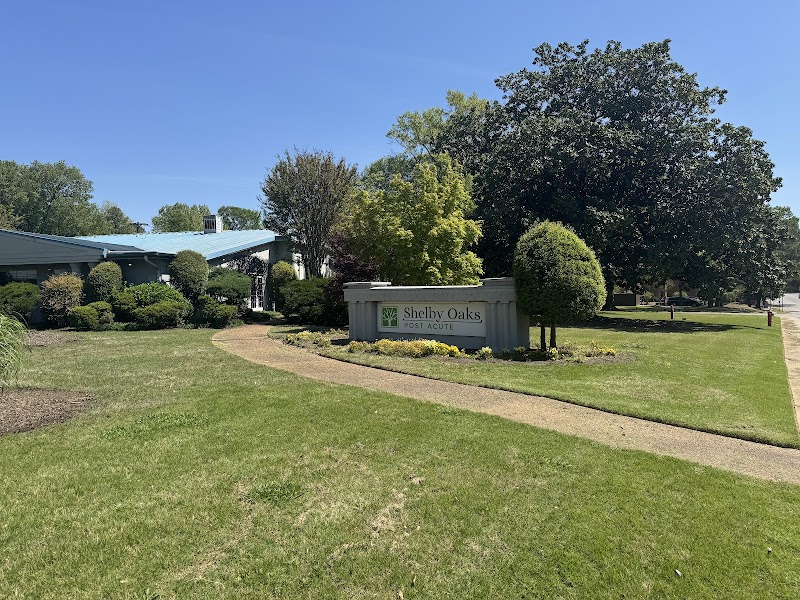
How Does Shelby Oaks Post Acute Compare to Other Tennessee Nursing Homes?

Compared to the 100 nursing homes in Tennessee, SHELBY OAKS POST ACUTE's overall rating (1 stars) is below the state average of 2.8, staff turnover (76%) is significantly higher than the state average of 46%, and health inspection rating (1 stars) is much below the national benchmark.

What Should Families Ask When Visiting Shelby Oaks Post Acute?

Based on this facility's data, families visiting should ask: "What changes have been made since the serious inspection findings, and how are you preventing similar issues?" "What safeguards and monitoring systems are in place to protect residents from abuse or neglect?" "How do you ensure continuity of care given staff turnover, and what is your staff retention strategy?" "Can you walk me through typical staffing levels on day, evening, and night shifts?" These questions are particularly relevant given the facility's Immediate Jeopardy citations, the substantiated abuse finding on record, the facility's high staff turnover rate, and the below-average staffing rating.

Is Shelby Oaks Post Acute Safe?

Based on CMS inspection data, SHELBY OAKS POST ACUTE has documented safety concerns. The facility has 1 substantiated abuse finding (meaning confirmed case of resident harm by staff or other residents). Inspectors have issued 1 Immediate Jeopardy citation (the most serious violation level indicating risk of serious injury or death). The facility has a 1-star overall rating and ranks #100 of 100 nursing homes in Tennessee. Families considering this facility should ask detailed questions about what corrective actions have been taken since these incidents.

Do Nurses at Shelby Oaks Post Acute Stick Around?

Staff turnover at SHELBY OAKS POST ACUTE is high. At 76%, the facility is 30 percentage points above the Tennessee average of 46%. Registered Nurse turnover is particularly concerning at 79%. RNs handle complex medical decisions and coordinate care — frequent RN changes can directly impact care quality. High turnover means new staff may not know residents' individual needs, medications, or preferences. It can also be disorienting for residents, especially those with dementia who rely on familiar faces. Families should ask: What is causing the turnover? What retention programs are in place? How do you ensure care continuity during staff transitions?

Was Shelby Oaks Post Acute Ever Fined?

SHELBY OAKS POST ACUTE has been fined $108,768 across 2 penalty actions. This is 3.2x the Tennessee average of $34,167. Fines at this level are uncommon and typically indicate a pattern of serious deficiencies, repeated violations, or failure to correct problems promptly. CMS reserves penalties of this magnitude for facilities that pose significant, documented risk to resident health or safety. Families should request specific documentation of what issues led to these fines and what systemic changes have been implemented.

Is Shelby Oaks Post Acute on Any Federal Watch List?

SHELBY OAKS POST ACUTE is not on any federal watch list. The most significant is the Special Focus Facility (SFF) program, which identifies the bottom 1% of nursing homes nationally based on persistent, serious quality problems. Not being on this list means the facility has avoided the pattern of deficiencies that triggers enhanced federal oversight. This is a positive indicator, though families should still review the facility's inspection history directly.