AHC SAVANNAH

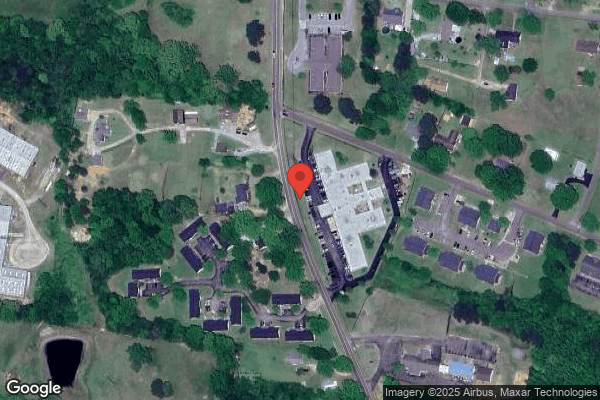
1645 FLORENCE RD, SAVANNAH, TN 38372 (731) 926-4200
For profit - Corporation 120 Beds AMERICAN HEALTH COMMUNITIES Data: November 2025
Trust Grade
80/100
#53 of 298 in TN
Last Inspection: November 2024

Within standard 12-15 month inspection cycle. Federal law requires annual inspections.

Overview

AHC Savannah has a Trust Grade of B+, indicating it is above average and recommended for families considering this facility. It ranks #53 out of 298 nursing homes in Tennessee, placing it in the top half, and is the best option among five facilities in Hardin County. The facility is improving, having reduced its issues from four in 2022 to three in 2024. Staffing is a relative strength with a turnover rate of 31%, well below the state average, but RN coverage is rated as average. While there have been no fines reported, some concerns were raised during inspections, such as expired and unlabeled food items in storage and a nurse failing to perform hand hygiene after providing care, which could pose risks for residents. Additionally, the facility did not promptly inform a resident's family of significant changes in health status, which is a critical oversight. Overall, AHC Savannah has solid strengths, but families should be aware of these specific concerns.

Trust Score
B+
80/100
In Tennessee
#53/298
Top 17%
Safety Record
Low Risk
No red flags
Inspections
Getting Better
4 → 3 violations
Staff Stability
○ Average
31% turnover. Near Tennessee's 48% average. Typical for the industry.
Penalties
✓ Good
No fines on record. Clean compliance history, better than most Tennessee facilities.
Skilled Nurses
○ Average
Each resident gets 32 minutes of Registered Nurse (RN) attention daily — about average for Tennessee. RNs are the most trained staff who monitor for health changes.
Violations
○ Average
8 deficiencies on record. Average for a facility this size. Mostly minor or procedural issues.
★★★★☆
4.0
Overall Rating
★★★☆☆
3.0
Staff Levels
★★★☆☆
3.0
Care Quality
★★★★☆
4.0
Inspection Score
Stable
2022: 4 issues
2024: 3 issues

The Good

  • Full Sprinkler Coverage · Fire safety systems throughout facility
  • No fines on record
  • Staff turnover below average (31%)

    17 points below Tennessee average of 48%

Facility shows strength in fire safety.

The Bad

Staff Turnover: 31%

15pts below Tennessee avg (46%)

Typical for the industry

Chain: AMERICAN HEALTH COMMUNITIES

Part of a multi-facility chain

Ask about local staffing decisions and management

The Ugly 8 deficiencies on record

Nov 2024 3 deficiencies
CONCERN (D) 📢 Someone Reported This

A family member, employee, or ombudsman was alarmed enough to file a formal complaint

Potential for Harm - no one hurt, but risky conditions existed

Notification of Changes (Tag F0580)

Could have caused harm · This affected 1 resident

**NOTE- TERMS IN BRACKETS HAVE BEEN EDITED TO PROTECT CONFIDENTIALITY** Based on policy review, medical record review, and interview, the facility failed to notify the responsible party of a change of...

Read full inspector narrative →
**NOTE- TERMS IN BRACKETS HAVE BEEN EDITED TO PROTECT CONFIDENTIALITY** Based on policy review, medical record review, and interview, the facility failed to notify the responsible party of a change of condition and new physician orders for 1 of 4 (Resident # 109) sampled residents reviewed. The findings include: 1. Review of the facility policy titled, Notification of Change, dated 3/28/2024, revealed .ensure the facility promptly informs .resident's representative, consistent with his or her authority, when there is a change requiring notification .The facility must inform the .resident's family member or legal representative when there is a change requiring such notification .Significant change in the resident's physical, mental or psychosocial condition such as deterioration in health, mental or psychosocial status. This may include .life-threatening conditions .clinical complications .Circumstances that require a need to alter treatment. This may include .new treatment .discontinuation of current treatment .adverse consequences .acute condition . 2. Review of the medical record revealed Resident #109 was admitted to the facility on [DATE], with diagnoses including Alzheimer's Disease, Dementia, Psychotic Disturbance, Behavioral Disturbance, and Agitation. Review of the clinical notes dated 10/21/2023, revealed .CNA [certified nursing assistant] reported resident noted to be more difficult to awake .bp [blood pressure] noted to be 88/48 .Resident only aroused to .sternum rub .resident placed in Trendelenburg and bp increased .Will continue to follow plan of care . Review of the medical record revealed no documentation that Resident #109's Responsible Party (RP) was notified of the Resident's change of condition on 10/21/2023. Review of the clinical note dated 10/25/2023, revealed .CNA reported to nurse that resident has not voided this shift. In and out cathed [catheterized] .foley inserted using sterile technique . Review of the medical record revealed no documentation that Resident #109's RP was notified of physician order for an indwelling catheter placed on 10/25/2023. Review of the comprehensive Minimum Data Set (MDS) assessment dated [DATE], revealed Resident #109 was assessed as moderately impaired for daily decision-making skills and rarely or never understood. Review of the quarterly MDS assessment dated [DATE], revealed Resident #109 was assessed as moderately impaired for daily decision-making skills and rarely or never understood. During an interview on 11/21/2024 at 2:08 PM, the Director of Nursing (DON) confirmed that the RP should have been notified of changes in condition and new orders on residents.
CONCERN (E)

Potential for Harm - no one hurt, but risky conditions existed

Food Safety (Tag F0812)

Could have caused harm · This affected multiple residents

Based on policy review, observation, and interview, the facility failed to ensure food was stored properly when unlabeled and expired items were found in 1 of 2 (100/200 Hall) nourishment refrigerator...

Read full inspector narrative →
Based on policy review, observation, and interview, the facility failed to ensure food was stored properly when unlabeled and expired items were found in 1 of 2 (100/200 Hall) nourishment refrigerators and opened and undated items were found in 1 of 2 (walk in refrigerator) kitchen refrigerators. The findings include: 1. The facility policy titled Dietary: Food Storage, dated 7/25/2024, revealed .Food shall be stored in accordance with professional standards for food service safety .food items are stored .covered, labeled and dated .All stored foods should have an expiration date . 2. Observation and interview in the kitchen walk in refrigerator on 11/18/2024 at 8:49 AM, revealed an open, unlabeled, and undated tray of leftover desserts. The Dietary Manager stated, .this should be labeled and dated . Observation in the 100/200 Hall Nutrition Refrigerator on 11/20/2024 at 10:54 AM, revealed 2 nutritional supplements unlabeled and expired. 3. During an interview on 11/20/2024 at 3:22 PM, Registered Nurse (RN) D confirmed expired and unlabeled items should not be in the nutritional refrigerators. During an interview on 11/21/2024 at 2:08 PM, the DON confirmed expired and unlabeled items should not be in the nutritional refrigerators.
CONCERN (E)

Potential for Harm - no one hurt, but risky conditions existed

Infection Control (Tag F0880)

Could have caused harm · This affected multiple residents

**NOTE- TERMS IN BRACKETS HAVE BEEN EDITED TO PROTECT CONFIDENTIALITY** Based on policy review, medical record review, observation, and interview, the facility failed to ensure practices to prevent th...

Read full inspector narrative →
**NOTE- TERMS IN BRACKETS HAVE BEEN EDITED TO PROTECT CONFIDENTIALITY** Based on policy review, medical record review, observation, and interview, the facility failed to ensure practices to prevent the potential spread of infection were maintained when 1 of 1 staff Licensed Practical Nurse (LPN) C failed to perform hand hygiene after tracheostomy (trach) care and failed to clean reusable equipment after a treatment for 1 of 1 resident (Resident #6) reviewed for trach care. The findings include: 1. Review of the facility policy titled, Infection Prevention and Control Program, dated 10/24/2022, revealed .Hand Hygiene Protocol .staff shall perform hand hygiene . after handling contaminated objects .after PPE [Personal Protective Equipment] removal .before and after performing resident care procedures .all reusable items and equipment requiring .disinfection shall be cleaned in accordance with our current procedures governing the cleaning and disinfection of soiled or contaminated equipment .reusable equipment shall be decontaminated using a germicidal detergent prior to storing for reuse. 2. Review of the medical record revealed Resident #6 was admitted to the facility on [DATE], with diagnoses including Traumatic Brain Injury, Hemiplegia, Gastrostomy, and Tracheostomy. Review of the comprehensive Minimum Data Set (MDS) assessment dated [DATE], revealed a Brief Interview for Mental Status (BIMS) score of 2, which indicated Resident #6 had severe cognitive impairment, and was dependent on staff for all ADLs (Activities of Daily Living) except for feeding self. Resident #6 required suctioning and Tracheostomy Care. Review of the Physician's Orders dated 7/29/2022, revealed .Tracheostomy Care .Clean with normal Saline .trach stoma .Post Trach Care Vitals .Pre Trach Vitals .Tracheostomy cannula care . Observation during trach care on 11/20/2024 beginning at 2:51 PM, revealed LPN C was at Resident #6's bedside, performed trach care, removed his gloves and gown, picked up the pulse oximeter, and exited the room without performing hand hygiene. During an observation and interview on 11/20/2024 at 3:05 PM, LPN C was observed standing behind the Nurse Station with the pulse oximeter in his hand. LPN C was asked what he should have done with the pulse oximeter after completing a treatment. LPN C stated, .Oh I should have wiped it down and put it away ., went to the medication cart and began wiping the pulse oximeter down before placing it into the medication cart. During an interview on 11/21/2024 at 1:39 PM, LPN C confirmed he should have washed his hands before exiting the room and should have immediately sanitized the pulse oximeter before putting it back in the medication cart. During an interview on 11/21/2024 at 1:44 PM, the Director of Nursing (DON) confirmed staff should wash hands after removing gloves and that reuseable medical equipment should be sanitized after use.
Sept 2022 4 deficiencies
CONCERN (D)

Potential for Harm - no one hurt, but risky conditions existed

Assessment Accuracy (Tag F0641)

Could have caused harm · This affected 1 resident

**NOTE- TERMS IN BRACKETS HAVE BEEN EDITED TO PROTECT CONFIDENTIALITY** Based on review of the Minimum Data Set (MDS) 3.0 Resident Assessment Instrument (RAI) Manual v 1.17, October 2019, medical reco...

Read full inspector narrative →
**NOTE- TERMS IN BRACKETS HAVE BEEN EDITED TO PROTECT CONFIDENTIALITY** Based on review of the Minimum Data Set (MDS) 3.0 Resident Assessment Instrument (RAI) Manual v 1.17, October 2019, medical record review, and interview, the facility failed to accurately assess residents for nutrition and falls for 2 of 22 sampled residents (Resident #62 and #74) reviewed for accuracy of MDS assessments. The findings include: Review of the Minimum Data Set, 3.0 RAI Manual v 1.17, dated October 2019, page 1-7 revealed .Federal regulations at 42 CFR 483.20 (b)(1)(xviii ), (g), and (h) require that (1) the assessment accurately reflects the resident's status . Review of medical record revealed Resident #62 was admitted to the facility on [DATE], with diagnoses of Depression, Diabetes, and Protein Malnutrition. Review of the medical record dated 3/10/2022, revealed Resident #62 weighed 148 pounds, and on 8/2/2022 weighed 118 pounds indicating a 20% weight loss in 6 months. Review of the quarterly MDS dated [DATE], revealed Resident #62 had severe cognitive impairment, required extensive assistance from staff for all Activities of Daily Living (ADLs), and was not coded for weight loss in the last 6 months of the review period. During an interview on 9/21/2022 at 4:15 PM, MDS Coordinator #1 confirmed Resident #62's quarterly MDS assessment was not coded for weight loss in the last 6 months. The MDS Coordinator stated, .the MDS [assessments] should reflect weight loss during the last 6 months . Review of medical record revealed Resident #74 was admitted to the facility on [DATE], with diagnoses of Cerebral Infarction, Diabetes, Chronic Kidney Disease, and Dementia. Review of the medical record revealed Resident #74 had 1 fall with no injury on 8/3/2022, and 1 fall with major injury on 8/11/2022, and weighed 134 pounds on 8/1/2022. Review of a Nurses Event Note dated 8/3/2022, revealed Resident #74 had an unobserved fall in his room and documented, .Resident laying in floor on right side beside his bed, Resident stated he was trying to get up . Review of a Nurses Event Note dated 8/11/2022, revealed Resident #74 had an unobserved fall in his room and documented, .Resident laying off to the right side of his bed, sitting up with knees bent, with hands on head .injury to head .complaints of pain at neck and base of head . Review of the admission/readmission MDS dated [DATE], revealed Resident #74 had severe cognitive impairment, required extensive assistance from staff for all ADLs, had no falls since admission, and had no weight loss during the review period. Review of the facility's FULL NUTRITIONAL ASSESSMENT dated 8/17/2022, revealed Resident #74 weighed 128 pounds, and documented .Resident is at risk for malnutrition . Review of a Patient Weight Report dated 9/14/2022, revealed Resident #74's weight was 119 pounds, indicating 7% (percent) weight loss in 30 days. During an interview on 9/21/2022 at 4:55 PM, MDS Coordinator #1 confirmed Resident #74's admission MDS was not coded for falls. MDS Coordinator #1 stated, .should have been coded for 2 falls on the admission/readmission MDS .the falls on the MDS [assessments] are coded incorrectly . MDS Coordinator #1 confirmed that Resident #74 should have been coded for his weight loss.
CONCERN (D)

Potential for Harm - no one hurt, but risky conditions existed

Comprehensive Care Plan (Tag F0656)

Could have caused harm · This affected 1 resident

**NOTE- TERMS IN BRACKETS HAVE BEEN EDITED TO PROTECT CONFIDENTIALITY** Based on policy review, medical record review, and interview, the facility failed to provide Care Plan interventions for an anti...

Read full inspector narrative →
**NOTE- TERMS IN BRACKETS HAVE BEEN EDITED TO PROTECT CONFIDENTIALITY** Based on policy review, medical record review, and interview, the facility failed to provide Care Plan interventions for an anticoagulant medication and failed to develop a comprehensive Care Plan for nutrition for 2 of 22 sampled residents (Resident #53 and #74) reviewed. The findings include: The facility policy titled, Comprehensive Careplan, dated 3/25/2022, revealed .It is the policy of this facility to develop and implement a comprehensive person-centered care plan for each resident .Qualified staff responsible for carrying out interventions specified in the care plan will be notified of their roles and responsibilities for carrying out the interventions, initially and when changes are made . Review of the medical record, revealed Resident #53 was admitted to the facility on [DATE] with diagnoses Heart Failure, Anxiety, Psychotic disorder with Delusions, Alzheimer's Disease, and Diabetes Mellitus. Review of the Care Plan with an effective date of 5/9/2022 - Present, revealed interventions were not developed for Resident #53's anticoagulant medication use. Review of the quarterly Minimum Data Set (MDS) assessment dated [DATE], revealed Resident #53 had severe cognitive impairment and received anticoagulant medication. Review of the Physician's Orders Sheet dated 8/2022, revealed an order for Eliquis (an anticoagulant medication) 2.5 mg [milligram] two times a day. During an interview on 9/21/2022 at 4:10 PM, the MDS Coordinator #1 confirmed Resident #53 had no interventions on the Care Plan for anticoagulant medication. During an interview on 9/21/2022 at 5:02 PM, the Director of Nursing (DON) confirmed there were no interventions on the care plan for anticoagulant medication. Review of medical record revealed Resident #74 was admitted to the facility on [DATE], with diagnoses of Cerebral Infarction, Diabetes, Chronic Kidney Disease, and Dementia. Review of admission/readmission MDS dated [DATE], revealed Resident #74 had severe cognitive impairment and required extensive assistance from staff for all activities of daily living (ADLs). Review of the medical record dated 8/1/2022, revealed Resident #74 weighed 134 pounds. Review of the facility's FULL NUTRITIONAL ASSESSMENT dated 8/17/2022, revealed Resident #74 weighed 128 pounds, and documented .Resident is at risk for malnutrition . Review of a Patient Weight Report dated 9/14/2022, revealed Resident #74 weighed 119 pounds, indicating a 7% (percent) weight loss in 30 days. Review of the Care Plan, initiated 8/1/2022 through present, revealed there was not a comprehensive Care Plan for Resident #74's weight loss. During an interview on 9/21/2022 at 5:30 PM, the DON confirmed that Resident #74 did not have a care plan for weight loss. The DON stated, .he (Resident #74) should have a Care Plan for weight loss .
CONCERN (D)

Potential for Harm - no one hurt, but risky conditions existed

Pressure Ulcer Prevention (Tag F0686)

Could have caused harm · This affected 1 resident

**NOTE- TERMS IN BRACKETS HAVE BEEN EDITED TO PROTECT CONFIDENTIALITY** Based on policy review, medical record review, observation, and interview, the facility failed to ensure a resident's skin condi...

Read full inspector narrative →
**NOTE- TERMS IN BRACKETS HAVE BEEN EDITED TO PROTECT CONFIDENTIALITY** Based on policy review, medical record review, observation, and interview, the facility failed to ensure a resident's skin condition was accurately assessed, a physician's order for treatment was obtained, and treatments were documented as provided for 1 of 2 sampled residents (Resident #87) reviewed with pressure ulcers. The findings include: Review of the facility's policy titled, .Pressure Injury Prevention ., dated 10/15/2021, revealed .This facility is committed to the prevention .and the promotion of healing of existing pressure injuries. It is the policy of this facility to implement evidenced-based interventions for all residents .who have a pressure ulcer .injury present, and to promote wound healing of various types of wounds in accordance with current standards of practice and Physician orders .Assessments of pressure injuries will be performed by a licensed nurse and documented weekly .The attending physician .will be notified for .Presence if a new pressure ulcer/injury . Review of the facility's policy titled, .Physicians Verbal Order Policy, dated 5/24/2022, revealed .Enter the order into the medical record manually or electronically .Write T.O. (telephone order) or V.O. (verbal order), including date, time, name of the resident, the complete order .and sign the name of the physician or health care provider and nurse or sign off the electronic order .Follow through with orders by making appropriate contact or notification . Review of the facility's policy titled, .Documentation of Wound Treatments, dated 9/21/2021, revealed .The purpose of this policy is to provide a consistent process for accurate and complete documentation of wound assessments and treatments .The facility must maintain clinical records on each resident in accordance with accepted professional standards and practices that are .Complete .Accurately documented .Complete the weekly .Wound Assessment which includes the .anatomical location .Treatments are documented after the treatment is performed . Review of the medical record, revealed Resident #87 was admitted to the facility on [DATE], with diagnoses of Seizures, Diabetes, and Pressure Ulcer. Review of the admission Minimum Data Set (MDS) assessment dated [DATE], revealed Resident #87 had intact cognition, was at risk for pressure ulcers, and had one unstageable - deep tissue injury present upon admission/entry. Review of Physician's Orders dated 8/27/2022, revealed there were no orders for wound care. Review of the 8/2022 and 9/2022 Treatment Administration Record (TAR), revealed wound care treatments were not documented as administered. Review of the facility Wound Assessment dated 8/29/2022, revealed .Date Wound Identified 08/27/2022 .Great Toe Left Anterior .Wound Type Pressure .Date of Assessment 08/29/2022 .Deep tissue injury .Intact skin % [percent] 100.00 .Wound size Length (cm) [centimeters] 0.50 .Width (cm) 2.00 . Review of the facility Wound Assessment dated 9/13/2022, revealed .Date Wound Identified 08/27/2022 .Great Toe Right Anterior .Wound Type Pressure .Date of Assessment 09/13/2022 Deep tissue injury .Wound size Length (cm) 0.50 .Width (cm)0.50 . During an interview on 9/20/2022 at 1:39 PM, the Director of Nursing (DON) confirmed skin prep was being applied to Resident #87's left toe daily. The DON confirmed there was not an order for the skin prep treatment, and the treatments were not documented on the TAR. Observation in the resident's room on 9/20/2022 at 1:47 PM, revealed the DON pulled off Resident #87's sock to reveal a purple area to top of Resident #87's left toe, purple in color, approximately 0.3 centimeters long and 0.4 centimeters wide. During an interview on 9/20/22 at 3:03 PM, the DON confirmed the documentation of the right great toe was an error. The DON stated, .I put in right and it is on her left . The DON confirmed the order for skin prep was missed. The DON stated, .I got an order, wrote it on a sticky note and the order never got put in .
CONCERN (D)

Potential for Harm - no one hurt, but risky conditions existed

Deficiency F0692 (Tag F0692)

Could have caused harm · This affected 1 resident

**NOTE- TERMS IN BRACKETS HAVE BEEN EDITED TO PROTECT CONFIDENTIALITY** Based on policy review, medical record review, and interview, the facility failed to follow its policy for weighing residents fo...

Read full inspector narrative →
**NOTE- TERMS IN BRACKETS HAVE BEEN EDITED TO PROTECT CONFIDENTIALITY** Based on policy review, medical record review, and interview, the facility failed to follow its policy for weighing residents for 1 of 7 sampled residents (Resident #74) reviewed for nutritional status. The findings include: Review of the facility's policy titled, Dietary Weight Monitoring revised 11/9/2021, revealed .A weight monitoring schedule will be developed upon admission for all residents .Newly admitted residents .monitor weight . Review of the medical record revealed Resident #74 was admitted to the facility on [DATE], with diagnoses of Cerebral Infarction, Diabetes, Chronic Kidney Disease, and Dementia. Review of the medical record dated 8/1/2022, revealed Resident #74 weighed 134 pounds. Review of the facility's FULL NUTRITIONAL ASSESSMENT dated 8/17/2022, revealed Resident #74 weight was 128 pounds and documented, .Resident is at risk for malnutrition . The facility failed to obtain Resident #74's weight upon admission to the facility. During an interview on 9/21/2022 at 4:45 PM, the Director of Nursing (DON) confirmed Resident #74 was not weighed on admission. The DON stated, .should have been weighed on the day of admission .
Dec 2019 1 deficiency
CONCERN (D)

Potential for Harm - no one hurt, but risky conditions existed

Deficiency F0604 (Tag F0604)

Could have caused harm · This affected 1 resident

**NOTE- TERMS IN BRACKETS HAVE BEEN EDITED TO PROTECT CONFIDENTIALITY** Based on policy review, medical record review, observation, and interview, the facility failed to monitor physical restraints fo...

Read full inspector narrative →
**NOTE- TERMS IN BRACKETS HAVE BEEN EDITED TO PROTECT CONFIDENTIALITY** Based on policy review, medical record review, observation, and interview, the facility failed to monitor physical restraints for 1 of 1 (Resident #8) sampled residents reviewed for physical restraints. The findings include: 1. The facility's Restraint Policy dated 4/2019 documented, .Medical symptoms warranting the use of restraints should be documented in the resident's medical record, ongoing assessments, and care plans . 2. Medical record review revealed Resident #8 was admitted to the facility on [DATE] with diagnoses of Atrial Fibrillation, Cerebral Infarction, Hypertension, Aphasia, Dysphagia, and Impulsiveness. 3. Review of the quarterly Minimum Data Set (MDS) dated [DATE] documented Resident #8 had severe cognitive deficits, required extensive assistance with activities of daily living, had functional limitations in range of motion with impairment on one side of the upper and lower extremity, had (2) falls with no injuries, (1) fall with injury, and had a restraint. The care plan dated 6/27/19 documented Resident #8 had interventions to check the restraint every 30 minutes and release it every 2 hours. A physician's order dated 9/26/19 documented, .Monitor 2 times daily .May utilize roll belt when in wc [wheelchair]. Must check every 30 minutes and release every 2 hours for 15 mins [minutes] while in restraint . A nursing note dated 9/25/19 documented, .New order for roll belt while in wc. Must check every 30 mins and release every 2 hours . The August 2019 Treatments documented, .Monitor non-self-release belt q [every] shift for placement and proper function, must check every 30 mins and release every 2 hours . The facility was unable to provide documentation the restraint was monitored as ordered. Observations on 12/02/19 at 9:10 AM and 4:08 PM on the 200 hall revealed Resident #8 seated in his wheelchair with a restraint around his waist that fastened behind his wheelchair. Observations on 12/4/19 at 3:20 PM outside the Conference Room revealed Resident #8 seated in his wheelchair with a restraint around his waist that fastened behind his wheelchair. Interview with the Director of Nursing (DON) on 12/4/19 at 4:25 PM in the conference room, the DON confirmed there was no documentation on the August, September, and December 2019 treatment record that Resident #8's belt was checked every 30 minutes and released every 2 hours.
Understanding Severity Codes (click to expand)
Life-Threatening (Immediate Jeopardy)
J - Isolated K - Pattern L - Widespread
Actual Harm
G - Isolated H - Pattern I - Widespread
Potential for Harm
D - Isolated E - Pattern F - Widespread
No Harm (Minor)
A - Isolated B - Pattern C - Widespread

Questions to Ask on Your Visit

  • "Can I speak with families of current residents?"
  • "What's your RN coverage like on weekends and overnight?"

Our Honest Assessment

Strengths
  • • Grade B+ (80/100). Above average facility, better than most options in Tennessee.
  • • No major safety red flags. No abuse findings, life-threatening violations, or SFF status.
  • • No fines on record. Clean compliance history, better than most Tennessee facilities.
  • • 31% turnover. Below Tennessee's 48% average. Good staff retention means consistent care.
Concerns
  • • No significant concerns identified. This facility shows no red flags across CMS ratings, staff turnover, or federal penalties.
Bottom line: Generally positive indicators. Standard due diligence and a personal visit recommended.

About This Facility

What is Ahc Savannah's CMS Rating?

CMS assigns AHC SAVANNAH an overall rating of 4 out of 5 stars, which is considered above average nationally. Within Tennessee, this rating places the facility higher than 99% of the state's 100 nursing homes. This rating reflects solid performance across the metrics CMS uses to evaluate nursing home quality.

How is Ahc Savannah Staffed?

CMS rates AHC SAVANNAH's staffing level at 3 out of 5 stars, which is average compared to other nursing homes. Staff turnover is 31%, compared to the Tennessee average of 46%. This relatively stable workforce can support continuity of care.

What Have Inspectors Found at Ahc Savannah?

State health inspectors documented 8 deficiencies at AHC SAVANNAH during 2019 to 2024. These included: 8 with potential for harm.

Who Owns and Operates Ahc Savannah?

AHC SAVANNAH is owned by a for-profit company. For-profit facilities operate as businesses with obligations to shareholders or private owners. The facility is operated by AMERICAN HEALTH COMMUNITIES, a chain that manages multiple nursing homes. With 120 certified beds and approximately 99 residents (about 82% occupancy), it is a mid-sized facility located in SAVANNAH, Tennessee.

How Does Ahc Savannah Compare to Other Tennessee Nursing Homes?

Compared to the 100 nursing homes in Tennessee, AHC SAVANNAH's overall rating (4 stars) is above the state average of 2.8, staff turnover (31%) is significantly lower than the state average of 46%, and health inspection rating (4 stars) is above the national benchmark.

What Should Families Ask When Visiting Ahc Savannah?

Based on this facility's data, families visiting should ask: "Can I visit during a mealtime to observe dining assistance and food quality?" "How do you handle medical emergencies, and what is your hospital transfer rate?" "Can I speak with family members of current residents about their experience?"

Is Ahc Savannah Safe?

Based on CMS inspection data, AHC SAVANNAH has a clean safety record: no substantiated abuse findings (meaning no confirmed cases of resident harm), no Immediate Jeopardy citations (the most serious violation level indicating risk of serious injury or death), and is not on the Special Focus Facility watch list (a federal program monitoring the lowest-performing 1% of nursing homes). The facility has a 4-star overall rating and ranks #1 of 100 nursing homes in Tennessee. While no facility is perfect, families should still ask about staff-to-resident ratios and recent inspection results during their visit.

Do Nurses at Ahc Savannah Stick Around?

AHC SAVANNAH has a staff turnover rate of 31%, which is about average for Tennessee nursing homes (state average: 46%). Moderate turnover is common in nursing homes, but families should still ask about staff tenure and how the facility maintains care continuity when employees leave.

Was Ahc Savannah Ever Fined?

AHC SAVANNAH has no federal fines on record. CMS issues fines when nursing homes fail to meet care standards or don't correct problems found during inspections. The absence of fines suggests the facility has either maintained compliance or corrected any issues before penalties were assessed. This is a positive indicator, though families should still review recent inspection reports for the full picture.

Is Ahc Savannah on Any Federal Watch List?

AHC SAVANNAH is not on any federal watch list. The most significant is the Special Focus Facility (SFF) program, which identifies the bottom 1% of nursing homes nationally based on persistent, serious quality problems. Not being on this list means the facility has avoided the pattern of deficiencies that triggers enhanced federal oversight. This is a positive indicator, though families should still review the facility's inspection history directly.