NHC HEALTHCARE, SOMERVILLE
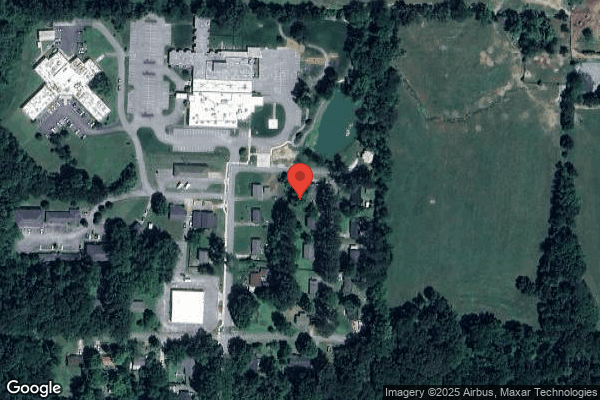
308 LAKE DRIVE, SOMERVILLE, TN 38068 (901) 465-9861
For profit - Corporation 72 Beds NATIONAL HEALTHCARE CORPORATION Data: November 2025
Trust Grade
90/100
#31 of 298 in TN
Last Inspection: December 2021

Over 2 years since last inspection. Current conditions may differ from available data.

Overview

NHC Healthcare in Somerville has received an impressive Trust Grade of A, indicating excellent quality and high recommendations from residents and their families. Ranked #31 out of 298 facilities in Tennessee, they are in the top half, and are the best choice in Fayette County. The facility is on an improving trend, having reduced issues from three in 2019 to none by 2021, showcasing their commitment to better care. Staffing is another strength, rated 4 out of 5 stars, but with a turnover rate of 48%, which is average for the state, indicating room for improvement in staff retention. While there have been no fines, which is a positive sign, the inspector found several concerns, including lapses in food safety practices and improper handling of medication, which point to areas needing attention.

Trust Score
A
90/100
In Tennessee
#31/298
Top 10%
Safety Record
Low Risk
No red flags
Inspections
Getting Better
3 → 0 violations
Staff Stability
⚠ Watch
48% turnover. Above average. Higher turnover means staff may not know residents' routines.
Penalties
✓ Good
No fines on record. Clean compliance history, better than most Tennessee facilities.
Skilled Nurses
○ Average
Each resident gets 35 minutes of Registered Nurse (RN) attention daily — about average for Tennessee. RNs are the most trained staff who monitor for health changes.
Violations
✓ Good
Only 3 deficiencies on record. Cleaner than most facilities. Minor issues only.
★★★★★
5.0
Overall Rating
★★★★☆
4.0
Staff Levels
★★★★★
5.0
Care Quality
★★★★★
5.0
Inspection Score
Stable
2019: 3 issues
2021: 0 issues

The Good

  • 4-Star Staffing Rating · Above-average nurse staffing levels
  • 5-Star Quality Measures · Strong clinical quality outcomes
  • Full Sprinkler Coverage · Fire safety systems throughout facility
  • No fines on record

Facility shows strength in staffing levels, quality measures, fire safety.

The Bad

Staff Turnover: 48%

Near Tennessee avg (46%)

Higher turnover may affect care consistency

Chain: NATIONAL HEALTHCARE CORPORATION

Part of a multi-facility chain

Ask about local staffing decisions and management

The Ugly 3 deficiencies on record

May 2019 3 deficiencies
CONCERN (D)

Potential for Harm - no one hurt, but risky conditions existed

Deficiency F0658 (Tag F0658)

Could have caused harm · This affected 1 resident

**NOTE- TERMS IN BRACKETS HAVE BEEN EDITED TO PROTECT CONFIDENTIALITY** Based on policy review, Manufacturer Guidelines, medical record review, observation, and interview, 2 of 4 (Licensed Practical N...

Read full inspector narrative →
**NOTE- TERMS IN BRACKETS HAVE BEEN EDITED TO PROTECT CONFIDENTIALITY** Based on policy review, Manufacturer Guidelines, medical record review, observation, and interview, 2 of 4 (Licensed Practical Nurse (LPN) #1 and #2) nurses failed to follow the facility policy for the destruction of a medication and failed to follow facility policy for the application of a transdermal patch during medication administration. The findings include: 1. The facility's Controlled Substance Disposal policy dated June 2016 documented, .It [Controlled Substance] is destroyed in the presence of two licensed nurses, and the disposal is documented on the accountability record/book on the line representing that dose . The [Named Manufacturer's] instructions for the Exelon Patch, with a revision date of 12/2018 documented, .Do not apply to a skin area where cream, lotion, or powder has recently been applied . The facility's Specific Medication Administration Procedures IIB13: Transdermal Drug Delivery System (Patch) Application policy dated June 2016 documented, .Identify the clean, hairless location on the body for patch placement . 2. Medical record review revealed Resident #61 was admitted to the facility on [DATE] with diagnoses of Diabetic Neuropathy, Restless Leg Syndrome, and Chronic Kidney Disease. The Physician's order dated 4/12/19 documented, .gabapentin - Schedule V [5] capsule; 400 mg [milligram] .po [by mouth] three times a day . Observations at the North Hall Medication Cart 2 on 5/14/19 beginning at 9:52 AM, revealed LPN #1 dropped Resident #61's Gabapentin on top of the medication cart. LPN #1 discarded the pill into the sharps container, on her medication cart, without obtaining a witness to waste the narcotic. Interview with LPN #1 on 5/14/19 at 10:27 AM, at the North Hall Medication Cart 2, LPN #1 was asked what was the facility policy regarding medication destruction. LPN #1 stated, .I should have had another nurse witness that I had destroyed the Gabapentin. Interview with the Director of Nursing (DON) on 5/14/19 at 1:25 PM, in the DON office, the DON was asked how she expected her nursing staff to destruct Gabapentin. The DON stated, .it [Gabapentin] is considered a narcotic and it should be witnessed by 2 nurses when destructing . 3. Medical record review revealed Resident #21 was admitted to the facility on [DATE] with diagnoses of Dementia, Altered Mental Status, and History of Falling. The Physician's order dated 4/29/19 documented, .rivastigmine patch 24 hour; 13.3 mg / 24 hour .transdermal .Once a day . Observations in Resident #21's room on 5/14/19 at 9:56 AM, revealed LPN #2 removed Resident #21's old transdermal patch from her left arm and placed a new transdermal patch on her right back. The right back was not cleaned prior to the new transdermal patch application. Interview with LPN #2 on 5/14/19 at 9:56 AM, at the North Hall Medication Cart 2, LPN #2 was asked if she should have cleaned the right back area prior to administering the patch. LPN #2 stated, .No, you don't do that . Interview with the DON on 5/14/19 at 1:25 PM, in the DON office, the DON was asked what the procedure was for applying a transdermal patch. The DON stated, .clean the site it's [transdermal patch] going on . Interview with Certified Nursing Assistant (CNA) #3 on 5/15/19 at 1:29 PM, at the North Hall Nurses Station, CNA #3 was asked what activities she did with Resident #21. CNA #3 stated, .I provide personal care . lotion her up . CNA #3 was asked if she applied lotion to her back after a shower or bath. CNA #3 stated, .sometimes I do put lotion on her back .and massage too .
CONCERN (D)

Potential for Harm - no one hurt, but risky conditions existed

Infection Control (Tag F0880)

Could have caused harm · This affected 1 resident

**NOTE- TERMS IN BRACKETS HAVE BEEN EDITED TO PROTECT CONFIDENTIALITY** Based on the Lippincott Manual of Nursing Practice, 10th Edition, policy review, medical record review, observation, and intervi...

Read full inspector narrative →
**NOTE- TERMS IN BRACKETS HAVE BEEN EDITED TO PROTECT CONFIDENTIALITY** Based on the Lippincott Manual of Nursing Practice, 10th Edition, policy review, medical record review, observation, and interview, the facility failed to ensure 2 of 4 (Licensed Practical Nurse (LPN) #3 and #4) nurses followed practices to prevent the potential spread of infection when nebulizing equipment was not properly stored and overfill of a liquid medication was poured back into the dispensing bottle during medication administration. The findings include: 1. The Lippincott Manual of Nursing Practice, 10th Edition, documented, .Disassemble and clean nebulizer after each use .a thorough proper cleaning, sterilization, and storage of equipment, organisms can be prevented from entering the lungs . 2. The facility's Specific Administration Procedures policy dated June 2016 documented, .When treatment is complete, turn off nebulizer and disconnect T-piece, mouth piece and medication cup . 3. Medical record review revealed Resident #67 was admitted to the facility on [DATE] with diagnoses of Chronic Obstructive Pulmonary Disease, Pneumonia, Hypertension, and Obstructive Sleep Apnea. The Physician's order dated 4/16/19 documented, .ipratropium-albuterol; 0.5 mg [milligram] - 3 mg .3 ml [milliliter] .inhalation four times a day . Observations in Resident #67's room on 5/13/19 at 3:58 PM, revealed LPN #3 removed Resident #67's nebulizer mask with the reservoir after a breathing treatment had been administered. LPN #3 placed the nebulizer mask and the reservoir into a plastic bag without disconnecting the T-piece, mouth piece and reservoir. There was moisture in the mask and medicine cup when she placed the equipment into the plastic bag. 4. Medical record review revealed Resident #172 was admitted to the facility on [DATE] with diagnoses of Dysphagia, Encephalopathy, and Gastrostomy. The physician's order dated 4/29/19 documented, .Valproic acid liquid .250 mg / 5 ml .3.5 ml - 125 mg; gastric tube every 8 hours . Observations at the North Hall Medication Cart 1 on 5/14/19 at 10:10 AM, revealed LPN #4 overfilled the medication cup with Valproic Acid. LPN #4 poured the overfill of Valproic Acid back into the Resident #172's medication bottle. Interview with the LPN #4 on 5/14/19 at 10:20 AM, at the North Hall Medication Cart 1, LPN #4 was asked if it was appropriate to pour the overfill of medication back into the original dispensing bottle. LPN #4 stated, .probably not . Interview with the Director of Nursing (DON) on 5/14/19 at 1:25 PM, in the DON office, the DON was asked what she expected her nursing staff to do when too much liquid medication was poured in the medicine cup. The DON stated, .dispose of the overfill medication in a sharps container . The DON was asked if it was appropriate to pour the overfill of medication back into the dispensing bottle of medication. The DON stated, .No, not appropriate .
CONCERN (F)

Potential for Harm - no one hurt, but risky conditions existed

Food Safety (Tag F0812)

Could have caused harm · This affected most or all residents

Based on Lippincott Manual of Nursing Practice, 10th Edition, policy review, observation, and interview, the facility failed to ensure food was stored, prepared, and served under sanitary conditions a...

Read full inspector narrative →
Based on Lippincott Manual of Nursing Practice, 10th Edition, policy review, observation, and interview, the facility failed to ensure food was stored, prepared, and served under sanitary conditions as evidenced by undated, unlabeled, and unsealed food items, expired food items, carbon build up on a pan, improper cleaning of a food thermometer, dented cans, and improper thawing of frozen food, and when 2 of 19 (Certified Nursing Assistant (CNA) #1 and #2) staff members failed to perform hand hygiene during dining. The facility had a census of 70 residents with 68 of those residents receiving a tray from the kitchen. The findings include: 1. The Lippincott Manual of Nursing Practice,10th EDITION documented, Hand hygiene is the single most recommended measure to reduce the risks of transmitting microorganisms .Hand hygiene should be performed between patient contacts .after contact with .contaminated equipment or articles . 2. The facility's Safety & [and] Sanitation Best Practice Guidelines policy revised 1/2011 documented, .Thawing .Store raw foods on pans on the lowest shelves to prevent them from dripping or splashing on other foods .Herbs and spices .A best practice is to use herbs and spices within 2 years of purchase date .Foods will be stored in their original packages .If opened, packages should be closed securely to protect the product .A designated area in or near the storeroom should be labeled for dented cans and damaged product temporary storage .dented cans should be placed in the designated area . 3. Observations in the kitchen on 5/13/19 beginning at 8:50 AM, revealed the following: a. An undated bag of salmon in the walk-in freezer b. An undated bag of meatballs in the walk-in freezer c. An undated bag of bar-b-que in the walk-in freezer d. An undated bag of beef steaks in the walk-in freezer e. 9 undated rolls of ground beef in the walk-in freezer f. An undated bag of lima beans in the walk-in freezer g. An undated bag of tortilla shells in the walk-in freezer h. An undated, unlabeled, and unsealed package of tater tots in the walk-in freezer i. 2 undated packages of waffles in the walk-in freezer j. An undated package of pancakes in the walk-in freezer k. An undated, unlabeled piece of cake in aluminum foil in the walk-in freezer l. 6 undated containers of strawberries in the walk-in freezer m. 1 loaf of bread with a green colored substance on the bread with a best by date of 4/30/19 n. 1 loaf of bread with a best buy date of 4/30/19 o. 2 loafs of bread with a best buy date of 3/30/19 p. 4 loafs of bread with a best buy date of 5/6/19 n. 1 loaf of wheat bread with a best buy date 3/15/19 o. 4 bags of hoagie sandwich buns with a green colored substance on the buns p. 2 undated packages of hot dog buns q. 1 undated plastic container of cocoa in the dry storage room r. 3 undated jars of cherries in the dry storage room s. 1 pan with carbon build up on the bottom of the pan t. 1 undated plastic container of corn flakes on the prep table Observations in the kitchen on 5/14/19 beginning at 11:10 AM, revealed the following: a. 2 jars of cherries not dated in the dry storage room b. 1 dented can of cream of coconut on the shelf with other canned foods in the dry storage room c. 1 dented can of green beans on the shelf with other canned foods in the dry storage room d. 1 dented can of potatoes on the shelf with other canned foods in the dry storage room e. 1 dented can of tomatoes on the shelf with other canned foods in the dry storage room f. 3 rolls of ground beef thawing on a tray above cartons of milk in the walk-in refrigerator g. 1 container of nutmeg with a delivery date of 12/10/15 in the dry storage room Observations in the kitchen on 5/14/19 beginning at 11:55 AM, revealed the following: The Dietary Manager was performing tray line temperatures and placed the thermometer on the shelf with the tip of the thermometer touching a black bag lying next to the thermometer, then placed the thermometer in a tray of pork chops to obtain a temperature without cleaning the thermometer. Interview with the Dietary Manager on 5/15/19 at 10:45 AM, in the Dietary Manager Office, the Dietary Manager was asked if a thermometer should be used to obtain the temperature of a pork chop after it has touched the thermometer bag, without cleaning the thermometer probe. The Dietary Manager stated, No, ma'am. The Dietary Manager was asked if dented cans should be on the shelf with the other canned items. The Dietary Manager stated, No, ma'am. The Dietary Manager was asked if food should be dated and labeled. The Dietary Manager stated, Yes, ma'am. The Dietary Manager was asked should food be sealed. The Dietary Manager stated, Yes, ma'am. The Dietary Manager was asked should frozen ground beef that was thawing be on a tray above crates of milk. The Dietary Manager stated, No, ma,am. The Dietary Manager was asked if bread should have mold on it. The Dietary Manager stated, No, ma,am. The Dietary Manager was asked if bread should be used by the best by date. The Dietary Manager stated, If not used by the best by date it won't have the quality. Interview with the Dietary Manager 5/15/19 at 3:50 PM, in the Kitchen, the Dietary Manager was asked if carbon should be on pans. The Dietary Manager stated, No, ma'am. 4. Observations in the Dining Room on 5/13/19 beginning at 12:50 PM, revealed the following: CNA #1 moved a chair, prepared the meal tray for Resident #54, and fed Resident #54 without performing hand hygiene. CNA #2 moved a chair, prepared the meal tray, and fed Resident #1 without performing hand hygiene. Interview with the Director of Nursing (DON) on 5/15/19 at 3:00 PM, in the DON Office, the DON was asked should staff move a chair and then feed a resident without performing hand hygiene. The DON stated, No .
Understanding Severity Codes (click to expand)
Life-Threatening (Immediate Jeopardy)
J - Isolated K - Pattern L - Widespread
Actual Harm
G - Isolated H - Pattern I - Widespread
Potential for Harm
D - Isolated E - Pattern F - Widespread
No Harm (Minor)
A - Isolated B - Pattern C - Widespread

Questions to Ask on Your Visit

  • "Can I speak with families of current residents?"
  • "What's your RN coverage like on weekends and overnight?"

Our Honest Assessment

Strengths
  • • Grade A (90/100). Above average facility, better than most options in Tennessee.
  • • No major safety red flags. No abuse findings, life-threatening violations, or SFF status.
  • • No fines on record. Clean compliance history, better than most Tennessee facilities.
  • • Only 3 deficiencies on record. Cleaner than most facilities. Minor issues only.
Concerns
  • • No significant concerns identified. This facility shows no red flags across CMS ratings, staff turnover, or federal penalties.
Bottom line: Generally positive indicators. Standard due diligence and a personal visit recommended.

About This Facility

What is Nhc Healthcare, Somerville's CMS Rating?

CMS assigns NHC HEALTHCARE, SOMERVILLE an overall rating of 5 out of 5 stars, which is considered much above average nationally. Within Tennessee, this rating places the facility higher than 99% of the state's 100 nursing homes. This rating reflects solid performance across the metrics CMS uses to evaluate nursing home quality.

How is Nhc Healthcare, Somerville Staffed?

CMS rates NHC HEALTHCARE, SOMERVILLE's staffing level at 4 out of 5 stars, which is above average compared to other nursing homes. Staff turnover is 48%, compared to the Tennessee average of 46%.

What Have Inspectors Found at Nhc Healthcare, Somerville?

State health inspectors documented 3 deficiencies at NHC HEALTHCARE, SOMERVILLE during 2019. These included: 3 with potential for harm.

Who Owns and Operates Nhc Healthcare, Somerville?

NHC HEALTHCARE, SOMERVILLE is owned by a for-profit company. For-profit facilities operate as businesses with obligations to shareholders or private owners. The facility is operated by NATIONAL HEALTHCARE CORPORATION, a chain that manages multiple nursing homes. With 72 certified beds and approximately 71 residents (about 99% occupancy), it is a smaller facility located in SOMERVILLE, Tennessee.

How Does Nhc Healthcare, Somerville Compare to Other Tennessee Nursing Homes?

Compared to the 100 nursing homes in Tennessee, NHC HEALTHCARE, SOMERVILLE's overall rating (5 stars) is above the state average of 2.9, staff turnover (48%) is near the state average of 46%, and health inspection rating (5 stars) is much above the national benchmark.

What Should Families Ask When Visiting Nhc Healthcare, Somerville?

Based on this facility's data, families visiting should ask: "Can I visit during a mealtime to observe dining assistance and food quality?" "How do you handle medical emergencies, and what is your hospital transfer rate?" "Can I speak with family members of current residents about their experience?"

Is Nhc Healthcare, Somerville Safe?

Based on CMS inspection data, NHC HEALTHCARE, SOMERVILLE has a clean safety record: no substantiated abuse findings (meaning no confirmed cases of resident harm), no Immediate Jeopardy citations (the most serious violation level indicating risk of serious injury or death), and is not on the Special Focus Facility watch list (a federal program monitoring the lowest-performing 1% of nursing homes). The facility has a 5-star overall rating and ranks #1 of 100 nursing homes in Tennessee. While no facility is perfect, families should still ask about staff-to-resident ratios and recent inspection results during their visit.

Do Nurses at Nhc Healthcare, Somerville Stick Around?

NHC HEALTHCARE, SOMERVILLE has a staff turnover rate of 48%, which is about average for Tennessee nursing homes (state average: 46%). Moderate turnover is common in nursing homes, but families should still ask about staff tenure and how the facility maintains care continuity when employees leave.

Was Nhc Healthcare, Somerville Ever Fined?

NHC HEALTHCARE, SOMERVILLE has no federal fines on record. CMS issues fines when nursing homes fail to meet care standards or don't correct problems found during inspections. The absence of fines suggests the facility has either maintained compliance or corrected any issues before penalties were assessed. This is a positive indicator, though families should still review recent inspection reports for the full picture.

Is Nhc Healthcare, Somerville on Any Federal Watch List?

NHC HEALTHCARE, SOMERVILLE is not on any federal watch list. The most significant is the Special Focus Facility (SFF) program, which identifies the bottom 1% of nursing homes nationally based on persistent, serious quality problems. Not being on this list means the facility has avoided the pattern of deficiencies that triggers enhanced federal oversight. This is a positive indicator, though families should still review the facility's inspection history directly.