HUMPHREYS COUNTY CARE AND REHABILITATION
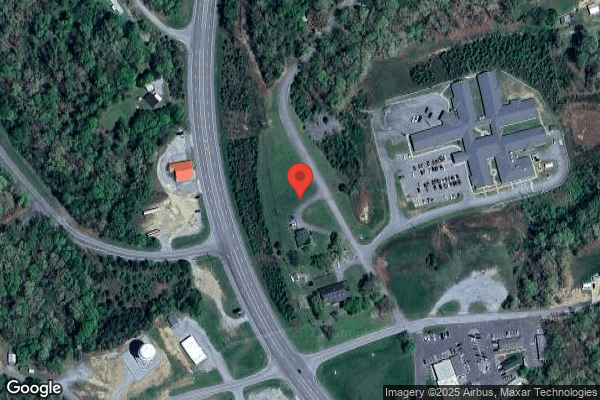
104 FORT HILL ROAD, WAVERLY, TN 37185 (931) 296-2532
Non profit - Other 91 Beds Independent Data: November 2025
Trust Grade
43/100
#193 of 298 in TN
Last Inspection: September 2025

Inspected within the last 6 months. Data reflects current conditions.

Overview

Humphreys County Care and Rehabilitation has a Trust Grade of D, indicating below-average quality and some concerning issues. They rank #193 out of 298 nursing homes in Tennessee, placing them in the bottom half of facilities in the state, and they are ranked #2 out of 2 in Humphreys County, meaning there is only one local option that is better. The facility is experiencing a worsening trend, with the number of reported issues increasing from 10 in 2024 to 12 in 2025. Staffing is a relative strength, with a 4 out of 5 rating and a turnover rate of 40%, which is better than the state average of 48%. However, they have faced $3,145 in fines, which is average for the area, and recent inspections revealed serious concerns, such as failing to monitor the nutritional needs of residents leading to weight loss, insufficient emergency water supply for residents, and unsanitary food handling practices in the kitchen. While the staffing and quality measures are commendable, families should weigh these strengths against the significant care deficiencies reported.

Trust Score
D
43/100
In Tennessee
#193/298
Bottom 36%
Safety Record
Moderate
Needs review
Inspections
Getting Worse
10 → 12 violations
Staff Stability
○ Average
40% turnover. Near Tennessee's 48% average. Typical for the industry.
Penalties
⚠ Watch
$3,145 in fines. Higher than 84% of Tennessee facilities, suggesting repeated compliance issues.
Skilled Nurses
✓ Good
Each resident gets 42 minutes of Registered Nurse (RN) attention daily — more than average for Tennessee. RNs are trained to catch health problems early.
Violations
⚠ Watch
25 deficiencies on record. Higher than average. Multiple issues found across inspections.
★★☆☆☆
2.0
Overall Rating
★★★★☆
4.0
Staff Levels
★★★★☆
4.0
Care Quality
★★☆☆☆
2.0
Inspection Score
Stable
2024: 10 issues
2025: 12 issues

The Good

  • 4-Star Staffing Rating · Above-average nurse staffing levels
  • 4-Star Quality Measures · Strong clinical quality outcomes
  • Full Sprinkler Coverage · Fire safety systems throughout facility
  • No fines on record
  • Staff turnover below average (40%)

    8 points below Tennessee average of 48%

Facility shows strength in staffing levels, quality measures, fire safety.

The Bad

2-Star Overall Rating

Below Tennessee average (2.8)

Below average - review inspection findings carefully

Staff Turnover: 40%

Near Tennessee avg (46%)

Typical for the industry

Federal Fines: $3,145

Below median ($33,413)

Minor penalties assessed

The Ugly 25 deficiencies on record

1 actual harm
Sept 2025 12 deficiencies 1 Harm
SERIOUS (G)

Actual Harm - a resident was hurt due to facility failures

Deficiency F0692 (Tag F0692)

A resident was harmed · This affected 1 resident

**NOTE- TERMS IN BRACKETS HAVE BEEN EDITED TO PROTECT CONFIDENTIALITY** Based on policy review, medical record review, and interview, the facility failed to provide care to ensure acceptable parameter...

Read full inspector narrative →
**NOTE- TERMS IN BRACKETS HAVE BEEN EDITED TO PROTECT CONFIDENTIALITY** Based on policy review, medical record review, and interview, the facility failed to provide care to ensure acceptable parameters of nutritional status were maintained for 2 of 2 (Resident #31 and #75) sampled residents reviewed for weight loss. This resulted in actual harm when the facility failed to implement interventions following a significant weight loss for Resident #31 and #75. The findings include: 1. Review of the facility policy titled, Weight Monitoring, dated 2/2023, revealed .The facility will ensure that all residents maintain acceptable parameters of nutritional status.Information gathered from the nutritional assessment.interventions will be identified, implemented, monitored and modified.consistent with the resident's assessed needs.A significant change in weight is defined as.5% [percent] change in weight in 1 month (30 days). Review of the facility policy titled, Nutritional Management, dated 1/20/2024, revealed .The facility provides care and services to each resident to ensure the resident maintains acceptable parameters of nutrition.Nutritional recommendations may be made by the dietician based on the resident's preferences, goals, clinical condition or other factors and followed up with physician/practitioner for orders as per facility policy. 2.Review of the medical record revealed Resident #31 was admitted to the facility on [DATE], with diagnoses including Aphasia (a disorder that affects a person's ability to communicate), Anxiety, and Dementia. Review of the Care Plan dated 8/13/2025, revealed, .resident has a potential for Nutritional risk r/t [related to] CVA [cerebrovascular accident] [ interruption of blood flow to the brain], Dementia, Adult Failure to thrive and weight loss thru.Provide vitamin and mineral supplements and/or additional protein/nutritional supplements to promote healing. RD [Registered Dietician] to evaluate nutritional status and provide updated recommendations prn [as needed] . Review of the admission Minimum Data Set (MDS) assessment dated [DATE], revealed a Brief Interview for Mental Status (BIMS) score of 1, which indicated Resident #31 was severely cognitively impaired and required staff assistance for activities of daily living (ADLs). Review of the Dietary assessment dated [DATE], revealed, .weight is up from the weight last week and down 7% since admit. Recommend adding House supplements 120ml [milliliter] 2X [times] day . Review of the medical record revealed Resident #31's weight on 8/13/2025 was 134.4 pounds (lbs). On 8/28/2025, the resident weighed 121 lbs which is a 9.97% weight loss. 3. Review of the medical record revealed Resident #75 was admitted to the facility on [DATE], with diagnoses including Parkinson's Disease, Aphasia, Dysphagia (difficulty swallowing food or liquids), Dementia, and Adult Failure to Thrive. Review of the medical record revealed on 8/13/2025 Resident #75's weight was 167 lbs, and on 8/28/2025, the resident weighed 157.9 lbs which is a 5.45% weight loss. Review of the admission MDS assessment dated [DATE], revealed a BIMS score was not completed due to Resident #75 was severely cognitively impaired and required staff assistance for ADLs. Review of the Dietary assessment dated [DATE], revealed .weight is 158 pounds, a decrease of 5% since admit.Recommend adding House supplements 120ml 2X/day with med pass and continue weekly weights. During a telephone interview on 9/4/2025 at 10:45 AM, the Registered Dietician was asked who the recommendations related to weight loss from the Dietary Assessment on 8/27/2025 were given to. The Registered Dietician stated .I left the recommendations with the DON [Director of Nursing] .the ADON [Assistant Director of Nursing] /or DON would then consult with the Doctor or Nurse Practitioner [NP] to determine whether it needed to be ordered. I can't write the order or enter it, but I do make the recommendations. During an interview on 9/4/2025 at 11:59 AM, the NP confirmed she had not been made aware of the Registered Dietician recommendations from 8/27/2025 for Residents #31 or #75. During a phone interview on 9/4/2025 at 4:57 PM, the DON confirmed dietary recommendations are given to or placed in the mailbox of either the DON or ADON and the Physician or NP would be made aware of the recommendation and the ADON would enter the order on the Medication Administration Record (MAR) and complete a diet slip for the kitchen, and that since there is not an ADON at this time the DON is now responsible for doing it. The DON was asked why these recommendations had not been entered on the MAR. The DON stated .Normally they would be in my mailbox, but I can't tell you because I haven't been there this week. The DON was asked if there was someone who should follow up with the recommendations during times of absence to ensure recommendations are reviewed and ordered. The DON stated .Normally it is the ADON. The facility failed to report and implement the Registered Dietician's recommendations for Residents #31 and #75
CONCERN (D)

Potential for Harm - no one hurt, but risky conditions existed

Resident Rights (Tag F0550)

Could have caused harm · This affected 1 resident

**NOTE- TERMS IN BRACKETS HAVE BEEN EDITED TO PROTECT CONFIDENTIALITY** Based on policy review, medical record review, observation, and interview the facility failed to maintain dignity and respect du...

Read full inspector narrative →
**NOTE- TERMS IN BRACKETS HAVE BEEN EDITED TO PROTECT CONFIDENTIALITY** Based on policy review, medical record review, observation, and interview the facility failed to maintain dignity and respect during dining when 1 of 15 (Registered Nurse (RN)) PP staff members failed to use courtesy titles when addressing residents (Resident #69) and when 2 of 15 staff (Certified Nursing Assistant (CNA) Y and QQ) served meals in the hall to 3 of 3 (Resident #31, #51, and #75) residents observed for dining. Based on policy review, medical record review, observation, and interview the facility failed to maintain dignity and respect during dining when 1 of 15 (Registered Nurse (RN)) PP staff members failed to use courtesy titles when addressing residents (Resident #69) and when 2 of 15 staff (Certified Nursing Assistant (CNA) Y and QQ) served meals in the hall to 3 of 3 (Resident #31, #51, and #75) residents observed for dining. The findings include: 1. Review of the facility policy titled, Courtesy Titles dated 9/1/2017, revealed .It is the policy of this facility that all personnel are to treat the residents, their families, visitors, and fellow workers with kindness, dignity, and respect in regards to forms of address and greetings.Staff is not to use names for residents such as honey, baby, sweetie. Review of the facility policy titled, Resident Rights, dated 3/25/2025, revealed .The facility will ensure that all direct care and indirect care staff members .the responsibility of the facility to properly care for its resident . Review of the undated facility's Resident Rights, revealed .Respect and dignity. The resident has a right to be treated with respect and dignity . 2. Review of the medical record revealed Resident #69 was admitted to the facility on [DATE], with diagnoses including Pneumonia, Dysphagia (difficulty swallowing food or liquid), Hypertension, and Chronic Obstructive Pulmonary Disease. Review of the quarterly Minimum Data Set (MDS) assessment dated [DATE], revealed a Brief Interview for Mental Status (BIMS) score of 8, which indicated Resident #69 was moderately cognitively impaired. Observation during dining in Resident #69's room on 9/2/2025 at 12:02 PM, revealed RN PP knocked and entered the resident's room with a lunch tray and stated, .Here's your food honey. Observation in Resident #69's room on 9/2/2025 at 12:14 PM, the resident requested condiments and RN PP stated, .I'll go get you some, baby. Observation in Resident #69's room on 9/2/2025 at 12:16 PM, RN PP stated, .Here you go babydoll. 3. Review on the medical record revealed Resident #31 was admitted to the facility on [DATE], with diagnoses including Aphasia (a language disorder), Anxiety, and Dementia. Review of the care plan dated 8/13/2025, revealed Resident #31 was not care planned to receive meals while sitting in a Geri-chair in the hall. Review of the admission MDS assessment dated [DATE], revealed a BIMS score of 1, which indicated Resident #31 was severely cognitively impaired and required staff assistance for all activities of daily living (ADLs). Observation on the 700 Hall on 9/2/2025 at 12:15 PM, Resident #31 was in a Geri chair (a transport chair designed for people with mobility impairment) on the 700 hallway. CNA Y provided meal assistance to Resident #31 who was sitting in the Geri-chair in the hall. 4. Review of the medical record revealed Resident #51 was admitted to the facility on [DATE], with diagnoses including Dementia, Malnutrition, Anxiety, and Hypertension. Review of the annual MDS assessment dated [DATE], revealed a BIMS score of 3, which indicated Resident #51 was severely cognitively impaired. Resident required set up assistance of staff with eating. Observation on 9/3/2025 at 4:42 PM, Resident #51 was in a Geri chair on the 200 hallway. CNA QQ provided tray/meal set up with the resident in the hall. Resident #51 was not care planned for meal preference in the hall. 5. Review of the medical record revealed Resident #75 was admitted to the facility on [DATE], with diagnoses including Parkinson's Disease, Aphasia, Dysphagia, and Dementia. Review of the care plan dated 8/18/2025, revealed Resident #75 was not care planned for meal preference in the hall. Review of the admission MDS assessment dated [DATE], revealed a BIMS score was not completed due to Resident #75 was severely cognitively impaired and required staff assistance for ADLs. Observation on the 700 Hall on 9/2/2025 at 12:15 PM, Resident #75 was in a Broda chair (a type of wheelchair designed for supportive positioning) on the 700 hallway feeding self lunch from an over bed table. The facility failed to provide dignity with dining for Residents #31, #51, #69 and #75. During an interview on 9/2/2025 at 3:49 PM, RN OO confirmed residents should not be served meals in the hallway if it is not care-planned as their preference. During an interview with on 9/3/2025 at 3:55 PM, the MDS Coordinator confirmed residents should not be served meals in the hallway if it is not care-planned as their preference. During an interview on 9/4/2025 at 4:57 PM, the DON confirmed residents should not be served meals in the hallway if it is not care-planned as their preference, and staff should use courtesy titles when addressing residents
CONCERN (D)

Potential for Harm - no one hurt, but risky conditions existed

Deficiency F0578 (Tag F0578)

Could have caused harm · This affected 1 resident

**NOTE- TERMS IN BRACKETS HAVE BEEN EDITED TO PROTECT CONFIDENTIALITY** Based on policy review, medical record review, and interview, the facility failed to provide written information on how to formu...

Read full inspector narrative →
**NOTE- TERMS IN BRACKETS HAVE BEEN EDITED TO PROTECT CONFIDENTIALITY** Based on policy review, medical record review, and interview, the facility failed to provide written information on how to formulate an Advance Directive for 9 of 24 (Residents #1, #6, #7, #22, #31, #49, # 54, #55, and #83) sampled residents. The findings include: 1.Review of the facility policy titled, Advance Directives, dated 9/1/2017, revealed .Prior to or upon admission of a resident to our facility, the Admissions Director or designee will provide written information.the right to formulate advance directives . 2.Review of the medical record revealed Resident #1 was admitted to the facility on [DATE], with diagnoses including Chronic Obstructive Pulmonary Disease, Congestive Heart Failure and Hypertension. Review of the annual Minimal Data Set (MDS) assessment dated [DATE], revealed a Brief Interview for Mental Status (BIMS) score of 15, which indicated that Resident #1 was cognitively intact. The facility was unable to provide documentation that the resident and/or Responsible Party (RP) were provided with written documentation to formulate an advance directive. 3. Review of the medical record revealed Resident #6 was admitted to the facility on [DATE], with diagnoses including Arthritis, Depression, Hypothyroidism, and Pressure Ulcer. Review of the quarterly MDS assessment dated [DATE], revealed a BIMS score of 11, which indicated Resident #6 was moderately cognitively impaired. The facility was unable to provide documentation that the resident and/or RP were provided with written documentation to formulate an advance directive. 4. Review of the medical record revealed Resident #7 was admitted to the facility on [DATE], with diagnoses including Muscular Dystrophy, Cerebral Palsy, and Intellectual Disorder. Review of the quarterly MDS assessment dated [DATE], revealed a BIMS score of 13, which indicated Resident #7 was cognitively intact. The facility was unable to provide documentation that the resident and/or RP were provided with written documentation to formulate an advance directive. 5. Review of the medical record revealed Resident #22 was admitted to the facility on [DATE], with diagnoses including Cerebral Infarction, Hypertension, Anemia, and Diabetes. Review of the quarterly MDS assessment dated [DATE], revealed a BIMS score of 13, which indicated Resident #22 was cognitively intact. The facility was unable to provide documentation that the resident and/or RP were provided with written documentation to formulate an advance directive. 6. Review on the medical record revealed Resident #31 was admitted to the facility on [DATE], with diagnoses including Anxiety, Urinary Tract Infection, Hypertension, and Dementia. Review of the admission MDS assessment dated [DATE], revealed a BIMS score of 1, which indicated Resident #31 was severely cognitively impaired. The facility was unable to provide documentation that the RP was provided with written documentation to formulate an advance directive. 7.Review of the medical record revealed Resident #49 was admitted to the facility on [DATE], with diagnoses including Hemiplegia, Hypertension, Diabetes, and Atrial Fibrillation. Review of the quarterly MDS assessment dated [DATE], revealed a BIMS score of 13, which indicated Resident #49 was cognitively intact. The facility was unable to provide documentation that the resident and/or RP were provided with written documentation to formulate an advance directive. 8.Review of the medical record revealed Resident #54 was admitted to the facility on [DATE], with diagnoses including Major Depression, Aphasia, Paraplegia, and Impulsive Disorder. Review of the quarterly MDS assessment dated [DATE], revealed a BIMS score of 15, which indicated Resident #54 was cognitively intact. The facility was unable to provide documentation that the resident and/or RP were provided with written documentation to formulate an advance directive. 9. Review of the medical record revealed Resident #55 was admitted to the facility on [DATE], with diagnoses including Sepsis, Pyelonephritis, Colostomy, Emphysema, and Diabetes. Review of the admission MDS assessment dated [DATE], revealed a BIMS score of 15, which indicated Resident #55 was cognitively intact. The facility was unable to provide documentation that the resident and/or RP were provided with written documentation to formulate an advance directive. 10. Review of the medical record revealed Resident #83 was admitted to the facility on [DATE], with diagnoses including Malignant Neoplasm of Colon, Altered Mental Status, Depression, and Anxiety. Review of the admission MDS assessment dated [DATE], revealed a BIMS score of 13, which indicated Resident #83 was cognitively intact. The facility was unable to provide documentation that the resident and/or RP were provided with written documentation to formulate an advance directive. 11. During an interview on 9/3/2025 at 8:38 AM, the Administrator confirmed that the facility is responsible for providing written documentation on how to formulate an advance directive. During an interview on 9/3/2024 at 8:47 AM, the Social Services Director (SSD) confirmed the facility does not have a current process of providing written documentation for advance directives to residents.
CONCERN (D)

Potential for Harm - no one hurt, but risky conditions existed

Report Alleged Abuse (Tag F0609)

Could have caused harm · This affected 1 resident

**NOTE- TERMS IN BRACKETS HAVE BEEN EDITED TO PROTECT CONFIDENTIALITY** Based on policy review, medical record review, and interview, the facility failed to ensure residents were free from misappropri...

Read full inspector narrative →
**NOTE- TERMS IN BRACKETS HAVE BEEN EDITED TO PROTECT CONFIDENTIALITY** Based on policy review, medical record review, and interview, the facility failed to ensure residents were free from misappropriation of resident property when staff did not report an allegation of missing money for 1 of 4 (Resident #2) sampled residents reviewed for abuse, neglect, and misappropriation. The findings include: Review of the facility policy titled, Abuse, Neglect, and Misappropriation of Property, dated 9/15/2023, revealed .It is the organization's intention to prevent the occurrence of abuse.misappropriation of resident property, and to assure all alleged violations of federal or State laws which involve.misappropriation of resident property are investigated, and reported immediately to the Facility Administrator, the State Agency, and other appropriate State and local agencies in accordance with Federal and State law.The Facility Administrator is responsible for reporting all investigations results to applicable State agencies as required by Federal and State law.Misappropriation of resident property is defined as the deliberate misplacement, exploitation, or wrongful, temporary, or permanent us if resident's belongings or money without the resident's consent.Every Stakeholder shall immediately report any allegation of abuse.or suspicion of a crime.All such persons are encouraged to follow these reporting guidelines when they have reason to believe that.exploitation is occurring or has occurred or plausibly may have occurred.Reporting Guidelines.Any allegation of.misappropriation of resident property must be reported to the State Regulatory Agency within 24 hours. Review of the medical record revealed Resident #2 was admitted to the facility on [DATE], with diagnoses including Ulcerative Colitis, Atrial Fibrillation, and Urinary Tract Infection. Review of the quarterly Minimum Data Set (MDS) assessment dated [DATE], revealed a Brief Interview for Mental Status (BIMS) score of 11, which indicated Resident #2 was moderately cognitively impaired. Observation and interview in the Resident's room on 9/2/2025 at 11:00 AM, the resident reported that she had money missing from her top drawer of her nightstand. The resident was unable to give an exact amount and date that the money went missing. The resident reported money went missing from the top drawer of her nightstand when she was in a prior room on the 700 hall. The resident confirmed that it was mostly loose one-dollar bills stored in the top drawer. During an interview on 9/2/2025 at 12:35 PM, the Administrator was informed regarding Resident #2's allegations of missing money from her top drawer in her current room and prior room on the 700 Hall. During an interview on 9/3/2025 at 1:13 PM, the resident's nephew confirmed Resident #2 had reported that she had missing money from her top drawer in her room on multiple occasions, and he had not reported the money missing to staff. During an interview on9/3/2025 at 3:23 PM, the Administrator was asked regarding Resident #2's allegation of missing money. The Administrator stated, I think [Social Services Director] was handling that yesterday . During an interview on 9/3/2025 at 3:26 PM, the Social Services Director (SSD) was asked regarding the status of Resident #2's allegations of missing money. The SSD stated, No, I thought you were referring to the same allegation from resident council regarding the resident's nephew leaving some money at the front office. The SSD confirmed that she had not been made aware of the allegation of missing money from the resident's room. During an interview on 9/4/2025 at 9:17 AM, the Administrator was asked about the status of Resident #2's allegation of missing money. The Administrator stated, I will have to ask [SSD] .I don't remember what she told me last night . The Administrator confirmed she was the Abuse Coordinator and that allegations of misappropriation should be reported to State agencies and local authorities. The facility failed to report the allegation of missing money to State and local agencies
CONCERN (D)

Potential for Harm - no one hurt, but risky conditions existed

Investigate Abuse (Tag F0610)

Could have caused harm · This affected 1 resident

**NOTE- TERMS IN BRACKETS HAVE BEEN EDITED TO PROTECT CONFIDENTIALITY** Based on policy review, facility investigation review, medical record review, and interview, the facility failed to perform a th...

Read full inspector narrative →
**NOTE- TERMS IN BRACKETS HAVE BEEN EDITED TO PROTECT CONFIDENTIALITY** Based on policy review, facility investigation review, medical record review, and interview, the facility failed to perform a thorough investigation for misappropriation of resident property for 1 of 4 (Resident #2) sampled residents reviewed for abuse, neglect, and misappropriation. The findings include: Review of the facility policy titled, Abuse, Neglect, and Misappropriation of Property, dated 9/15/2023, revealed .The organization's policy is that the Facility Administrator, or his or her designee, will conduct a reasonable investigation of each such alleged violation.Investigation Guidelines.The Facility Administrator will investigate all allegations, reports, grievances, and incidents that could potentially constitute.suspicion of crime.the Facility Administrator retains the ultimate responsibility to oversee and complete the investigation, and to draw conclusions regarding the incident.The investigation should include interviews of involved persons.alleged perpetrator, witnesses, and others who might have knowledge of the allegations. To the extent possible and applicable, provide complete and thorough documentation of the investigation. The investigation should be documented, and any specific forms required by the State.The Facility Administrator will make reasonable efforts to determine the root cause of the alleged violation.Any affected resident's physician and family/responsible party [RP] will be informed of the result of the investigation. Review of the medical record revealed Resident #2 was admitted to the facility on [DATE], with diagnoses including Ulcerative Colitis, Atrial Fibrillation, and Urinary Tract Infection. Review of the quarterly Minimum Data Set (MDS) assessment dated [DATE], revealed a Brief Interview for Mental Status (BIMS) score of 11, which indicated Resident #2 was moderately cognitively impaired. Observation and interview in the resident's room on 9/2/2025 at 11:00 AM, the resident reported that she had money missing from the top drawer of her nightstand. The resident was unable to give an exact amount and date that the money went missing. The resident reported money went missing from her top drawer of her nightstand when she was in a prior room on the 700 hall. The resident confirmed that it was mostly loose one-dollar bills stored in the top drawer. During an interview on 9/2/2025 at 12:35 PM, the Administrator was informed regarding Resident #2's allegations of missing money from the top drawer of her nightstand. Review of the Resident Grievance form dated, 9/3/2025, revealed .[named resident].missing a few dollars from the drawer. A few here and there. Don't amount to nothing.Recommendations/corrective action taken.key for drawer lock.Resident does not want money back.will replace $6.00, nephew said she wouldn't have had more than 6.00 [$6.00] for the last month. Was grievance/complaint resolved to the satisfaction of all concerned.Yes, Did not want to take the 6.00 [$6.00] but SW [Social Worker] encouraged.Date resident.individual received report of findings.Yes.Time [left blank].Date 9/4/2024 .Signature of person preparing Investigation Reported.[SSD signature]. Review of the facility's investigation dated 9/3/2025 at 4:20 [PM], revealed an interview with Resident #2, a telephone interview with the Responsible Party (RP), an observation of $6.00 hidden in a tissue box sitting on the resident's nightstand, and the facility replaced $6.00 to the resident. During an interview on 9/4/2025 at 12:20 PM, the Administrator confirmed that a thorough investigation should include residents, and staff interviews to determine the root cause and resolution, documentation of interviews, an investigation summary, and all documentation that is reviewed during the investigation should be included with the investigation
CONCERN (D)

Potential for Harm - no one hurt, but risky conditions existed

Comprehensive Care Plan (Tag F0656)

Could have caused harm · This affected 1 resident

**NOTE- TERMS IN BRACKETS HAVE BEEN EDITED TO PROTECT CONFIDENTIALITY** Based on policy review, medical record review, observation, and interview, the facility failed to develop and implement a compre...

Read full inspector narrative →
**NOTE- TERMS IN BRACKETS HAVE BEEN EDITED TO PROTECT CONFIDENTIALITY** Based on policy review, medical record review, observation, and interview, the facility failed to develop and implement a comprehensive person-centered care plan for 2 out of 18 (Residents #36 and #61) sample residents. The findings include: 1. Review of the facility policy titled, Comprehensive Care Plans, dated 2/5/2025, revealed .It is the policy of this facility to develop and implement a comprehensive person-centered care plan for each resident.The comprehensive care plan will describe, at a minimum, the following:.The services that are to be furnished to attain or maintain the resident's highest practicable physical, mental, and psychosocial well-being.Resident specific interventions that reflect the resident's need. 2. Review of the medical record revealed Resident #36 was admitted to the facility on [DATE], with diagnoses including Severe Dementia, Depression, and Anxiety. Review of the quarterly Minimum Data Set (MDS) assessment dated [DATE], revealed a Brief Interview for Mental Status (BIMS) score of 3, which indicated Resident #36 is severely cognitively impaired. MDS revealed Resident #36 is taking Antipsychotic, Antianxiety, Antidepressant, Anticonvulsant, and Opioid medication. Review of Resident #36's orders revealed: Namenda Oral Tablet 5 MG (Memantine HCl) Give 1 tablet by mouth two times a day for dementia - 10/19/2024. Admit to Memory Care Unit due to Unspecified Dementia - 11/27/2024. Antidepressant Medication- Monitor for side effects of medication such as: N/V, Lethargy, Constipation, Insomnia, dry mouth, diarrhea, increased depression or agitation, s/s of suicidal ideation. Document Y if s/s are present and document the symptoms observed in the nurse notes. Document N if no s/s are present. two times a day for antidepressant medication. - 12/2/2024. Xanax Oral Tablet 0.5 MG (Alprazolam) *Controlled Drug* Give 1 tablet by mouth one time a day for anxiety. - 5/5/2025. HYDROcodone-Acetaminophen Oral Tablet 5-325 MG (Hydrocodone-Acetaminophen) *Controlled Drug* Give 1 tablet by mouth every 6 hours as needed for chronic pain - 7/7/2025 Rexulti Oral Tablet 3 MG (Brexpiprazole) Give 1 tablet by mouth one time a day for depression- 8/18/2025 Review of the care plan dated 7/9/2025, revealed no documentation on the use of antipsychotic, antidepressant, antianxiety, and opioid medications. During an interview on 9/4/2025 at 5:45 PM, the MDS Coordinator confirmed that she develops the care plans for the facility and Resident #36's care plan should address the use of antipsychotic, antidepressants, antianxiety, and opioid medications. 3. Review of the medical record revealed Resident #61 was admitted to the facility on [DATE], with diagnoses including Hemiplegia and Hemiparesis following Cerebral Infraction, Hemiplegia, Contracture, and Joint Derangement. Review of the Physician's Orders dated 5/22/2025, revealed . Pt [patient] to wear L [left] Resting Hand Splint am [morning] to hs [bedtime] as tolerated for contracture management. Gentle PROM [passive range of motion] prior to application . Review of the annual MDS dated [DATE], revealed a BIMS was not performed due to Resident #61 was rarely/never understood, and had limited range of motion in both upper extremities. Review of the Physician's Orders dated 7/8/2025, revealed .Wear R [right] hand splint/Orthosis daily for contracture management from a.m. to h.s. as tolerated . Review of the care plan revealed no documentation to perform PROM or the application of hand splints. The facility failed to care plan Resident #61 for PROM and the application of hand splints. During an interview on 9/4/2025 at 12:50 PM, the MDS coordinator confirmed the care plan should reflect Resident #61's current use of hand splints and PROM
CONCERN (D)

Potential for Harm - no one hurt, but risky conditions existed

Deficiency F0657 (Tag F0657)

Could have caused harm · This affected 1 resident

**NOTE- TERMS IN BRACKETS HAVE BEEN EDITED TO PROTECT CONFIDENTIALITY** Based on policy review, medical record review, and interview, the facility failed to update or revise care plans for 2 of 18 (Re...

Read full inspector narrative →
**NOTE- TERMS IN BRACKETS HAVE BEEN EDITED TO PROTECT CONFIDENTIALITY** Based on policy review, medical record review, and interview, the facility failed to update or revise care plans for 2 of 18 (Resident #3 and #5) sampled residents. The findings include: 1.Review of the facility policy titled, Comprehensive Care Plans, dated 2/5/2025, revealed, .It is the policy of this facility to develop and implement a comprehensive person-centered care plan for each resident.The comprehensive care plan will be reviewed and revised. 2. Review of the medical record revealed Resident #3 was admitted on [DATE], with diagnoses including Bipolar, Lower Back Pain, Wedge Compression Fracture of T7 (seventh thoracic vertebra] -T8 [eighth thoracic vertebra), and Wedge Compression Fracture of Lumbar Vertebra. Review of the admissions Minimum Data Set (MDS) assessment dated [DATE], revealed a Brief Interview for Mental Status (BIMS) score of 14, which indicated Resident #3 was cognitively intact. Review of the facilities Incident Checklist dated 8/8/2025, revealed Resident #3 had a fall on 8/8/2025. Review of the Care Plan revised 9/3/2025, revealed .at risk for fall.Dietary to provide bedtime snack with dinner tray. The facility failed to update Resident #3's Care Plan until 9/3/2025. During an interview on 9/4/2025 at 9:00 AM, the MDS Coordinator was asked when the interventions should be added to the care plan, the MDS Coordinator stated, .the next working day . The MDS Coordinator confirmed the intervention for the fall on 8/8/2025 was added to the care plan on 9/3/2025. 3. Medical record review revealed Resident #5 was admitted to the facility on [DATE], with diagnoses including Anxiety, Delusions, Depression, and Dementia. Review of the quarterly MDS dated [DATE], revealed a BIMS score of 5, which indicated Resident #5 was severely cognitively impaired. Review of the Care Plan dated 7/30/2025, revealed . fluid deficit r/t [related to] Diuretic use . administer diuretic medications as ordered by physician .administer psychotropic medications as ordered by physician . During an interview on 9/4/2025 at 2:41 PM, the MDS Coordinator confirmed that Resident #5 is no longer taking diuretic and psychotropic medications as of 7/16/2025 and the care plan should have been revised. The facility failed to update the care plan after Resident #5 had a significant change.
CONCERN (D)

Potential for Harm - no one hurt, but risky conditions existed

Accident Prevention (Tag F0689)

Could have caused harm · This affected 1 resident

**NOTE- TERMS IN BRACKETS HAVE BEEN EDITED TO PROTECT CONFIDENTIALITY** Based on policy review, medical record review, observation, and interview, the facility failed to ensure the environment was fre...

Read full inspector narrative →
**NOTE- TERMS IN BRACKETS HAVE BEEN EDITED TO PROTECT CONFIDENTIALITY** Based on policy review, medical record review, observation, and interview, the facility failed to ensure the environment was free from accident hazards when unsecure sharps and cleaning chemicals were in 5 of 76 (Residents #11, #18, #65, #66, and #83) sampled residents' rooms. The findings include: 1. Review of the facility policy titled, Sharps Disposal, dated 1/1/2024, revealed .The facility shall discard contaminated sharps into designated containers.Whoever uses contaminated sharps will discard them immediately or as soon as feasible into designated containers.Contaminated sharps will be discarded into container that are: Closable, Puncture resistant, Leakproof on sides and bottom, Labeled or color-coded in accordance with our established labeling system. Review of the facility policy titled, Resident Personal Belongings, dated 7/2025, revealed .If the facility staff identify items or substances that pose risks to residents' health and safety and are in plain view, they may confiscate them. 2. Review of the medical record revealed Resident #11 was admitted to the facility on [DATE], with diagnoses including Dementia, Hypertension, and Hydrocephalus (a build up of fluid on the brain). Review of the admission Minimum Data Set (MDS) assessment dated [DATE], revealed a Brief Interview for Mental Status (BIMS) score of 9, which indicated Resident #11 was moderately cognitively impaired. Resident #11 required moderate assistance of staff for transfers. Observations in the resident's room on 9/2/2025 at 9:30 AM and 11:46 AM, a disposable razor was on the resident's bathroom sink. During an observation and interview on 9/2/2025 at 11:53 AM, Registered Nurse (RN) OO confirmed that the razor should not be unsecure in the resident's room. 3. Review of the medical record revealed Resident #18 was admitted to the facility on [DATE], with diagnoses including Chronic Obstructive Pulmonary Disease, Respiratory Failure, and Atrial Fibrillation (irregular heartbeat). Review of the admission MDS assessment dated [DATE], revealed a BIMS score of 13, which indicated Resident #18 was cognitively intact. Resident #18 required set up assistance of staff to perform activities of daily living (ADLs). Observations in the Resident's room on 9/2/2025 at 9:07 AM and 2:47 PM, revealed one bottle of aerosol air freshener on the bathroom sink. During an observation and interview on 9/2/2025 at 3:49 PM, RN OO confirmed that the bottle of aerosol air freshener should not be unsecured in the resident's room. 4. Review of the medical record revealed Resident #65 was admitted on [DATE], with diagnoses includingDementia, Hypertension, Depression, and Dysphagia. Review of the quarterly MDS assessment dated [DATE], revealed a BIMS score of 4, which indicated Resident #65 was severely cognitively impaired. Resident #65 required set up assistance with ADLs. Observations in the Resident's room on 9/2/2025 at 9:29 AM, and 10:58 AM, revealed 2 disposable razors on the resident's bathroom sink. During an observation and interview on 9/2/2025 at 12:49 PM, RN A confirmed razors should not be left unsecure and unattended. 5. Review of the medical record revealed Resident #66 was admitted to the facility on [DATE], with diagnoses including Heart Failure, Diabetes, Chronic Obstructive Pulmonary Disease, and Acute Respiratory Failure. Review of the significant change MDS assessment dated [DATE], revealed a BIMS score of 9, which indicated Resident #66 was moderately cognitively impaired and was dependent on staff to perform ADLs. Observations in the Resident's room on 9/2/2025 at 9:04 AM, 10:49 AM, and 11:19 AM, revealed 2 aerosol cans of disinfectant spray on the bathroom sink and 1 bottle lemon scented surface cleaner under the bathroom sink. During an observation and interview on 9/02/2025 at 12:42 PM, RN A confirmed the disinfectant spray and surface cleaner should not be unsecure in the resident's bathroom. 6. Review of the medical record revealed Resident #83 was admitted to the facility on [DATE], with diagnoses including Malignant Neoplasm of the Colon, Depression, Anxiety, and Altered Mental Status. Review of the admission MDS assessment dated [DATE], revealed a BIMS score of 13, which indicated Resident #83 was cognitively intact, and the resident required set up assistance from staff to perform ADLs. Observations in the Resident's room on 9/2/2025 at 9:34 AM and 11:23 AM, revealed 2 disposable razors unsecure on the resident's bathroom sink. During an observation and interview in the Resident's room on 9/2/2025 at 11:48 AM, RN OO confirmed that razors should not be unsecure in the resident's room. During an interview on 9/4/2025 at 4:58 PM, the Director of Nursing confirmed that razors and cleaning chemicals should not be left unsecure and unattended in residents' rooms.
CONCERN (D)

Potential for Harm - no one hurt, but risky conditions existed

Deficiency F0761 (Tag F0761)

Could have caused harm · This affected 1 resident

**NOTE- TERMS IN BRACKETS HAVE BEEN EDITED TO PROTECT CONFIDENTIALITY** Based on facility policy review, Daily Refrigerator Temperature Monitor log review, observation and interview, the facility fail...

Read full inspector narrative →
**NOTE- TERMS IN BRACKETS HAVE BEEN EDITED TO PROTECT CONFIDENTIALITY** Based on facility policy review, Daily Refrigerator Temperature Monitor log review, observation and interview, the facility failed to ensure medications were properly stored when medications were unsecure in 2 of 76 (Resident #22 and #55) resident rooms, and when 1 of 12 ( 100 Hall Med Cart ) medication storage areas were left unlocked and unattended, and when staff failed to complete temperature logs for 2 of 6 ( 200 hall and 700 hall ) medication refrigerators. The findings include: 1. Review of the facility policy titled, Medication Storage, dated 2/11/2024, revealed .It is the policy of this facility to ensure all medications housed on our premises will be stored in the pharmacy and/or medication rooms .All drugs and biologicals will be stored in locked compartments .During a medication pass, medications must be under the direct observation of the person administering medications or locked in the medication storage area/cart .Refrigerated Products .Charts are kept on each refrigerator and temperature levels are recorded daily by the charge nurse or other designee . Review of the facility Daily Refrigerator Temperature Monitor log revealed .Instructions .Each day, record the temperature of the refrigerator . 2. Review of the medical record revealed Resident #22 was admitted to the facility on [DATE], with diagnoses including Cerebral Infarction, Hypertension, Anemia, and Diabetes. Review of the quarterly Minimum Data Set (MDS) assessment dated [DATE], revealed a Brief Interview for Mental Status (BIMS) score of 13, which indicated Resident #22 was cognitively intact. Resident #22 required assistance of staff to perform activities of daily living (ADLs). Observations in the Resident's room on9/2/2025 at 9:10 AM, 10:51 AM, and 12:40 PM, revealed the following medications on the resident's bathroom sink: a. [NAME], used to treat congestion, nasal spray b. Systane, used to treat dry eyes, eye drops c. Robitussin DM cough syrup d. Preparation H, used to treat hemorrhoids, ointment Observation and interview in the Resident's room on 9/2/2025 at 12:42, Registered Nurse (RN) A confirmed that medications should not be unsecure in resident's bathroom. 3. Review of the medical record revealed Resident #55 was admitted to the facility on [DATE], with diagnoses including Sepsis, Urinary Tract Infection, Malnutrition, and Diabetes. Review of the admission MDS assessment dated [DATE], revealed a BIMS score of 15, which indicated Resident #55 was cognitively intact, and the resident required moderate assistance of staff to perform ADLs. Observation in the resident's room on 9/2/2025 at 9:40 AM and 11:58 AM, revealed one tube of antifungal ointment and one tube of zinc oxide cream on the bathroom sink. 4. Observation during medication administration on the 100 Hall on 9/3/2025 at 11:33 AM, revealed RN MM left the 100 Hall medication cart unlocked and unattended during medication administration. 5. Observation of the 200 Hall Medication Refrigerator on 9/4/2025 at 8:04 AM revealed, there was no temperature logged on the Daily Refrigerator Temperature Monitor log on the following dates: 6/14/2025, 6/15/2025, 6/18/2025-6/24/2025, 6/26/2025, 6/27/2025, 6/30/2025, 7/1/2025- 7/3/2025, 7/11/2025, 7/22/2025-7/29/2025, 7/31/2025, and 8/24/2025. 6. Observation of the 700 Hall Medication Refrigerator on 9/4/2025 at 8:30 AM revealed, there was no temperature logged on the Daily Refrigerator Temperature Monitor log on the following dates: 6/13/2025, 7/4/2025, and 7/18/2025. During an interview on 9/4/2025 at 4:57 PM, the Director of Nursing confirmed that medications should not be left unsecure in the residents' room, the medication carts should not be left unlocked and unattended, and the medication refrigerator temperature log should be completed daily
CONCERN (D)

Potential for Harm - no one hurt, but risky conditions existed

Infection Control (Tag F0880)

Could have caused harm · This affected 1 resident

**NOTE- TERMS IN BRACKETS HAVE BEEN EDITED TO PROTECT CONFIDENTIALITY** Based on policy review, medical record review, observation, and interview, the facility failed to ensure practices to prevent th...

Read full inspector narrative →
**NOTE- TERMS IN BRACKETS HAVE BEEN EDITED TO PROTECT CONFIDENTIALITY** Based on policy review, medical record review, observation, and interview, the facility failed to ensure practices to prevent the potential spread of infection were maintained when 1 of 15 staff (Certified Nursing Assistant (CNA) NN) failed to perform hand hygiene during dining for 5 of 5 (Residents #15, #42, #43, #44, and #49) residents reviewed for dining, and when staff failed to properly store soiled linens for 1 of 76 (Resident #65) sampled residents. The findings include: 1. Review of the facility policy titled, Hand Hygiene, dated 6/11/2025, revealed, .All staff will perform hand hygiene procedures to prevent the spread of infection to other personnel, residents, and visitors. This applies to all staff working in all locations within the facility.Hand hygiene is a general term used for cleaning your hands by handwashing with soap and water or the use of an antiseptic hand rub. Review of the facility policy titled, Handling Soiled Linen, dated 6/5/2024, revealed .It is the policy of this facility to handle, store.linen in a safe and sanitary method to prevent the spread of infection. The policy pertains to soiled linen.Linen should not be allowed to touch the floor.Used or soiled linen shall be collected at the bedside (or point of use.) and placed in a linen bag or designated lined receptacle.Soiled linen shall not be kept in the resident's room or bathroom. 2. Observation during dining on 9/2/2025 at 11:49 AM, revealed CNA NN assisted Resident #43 with the tray set up, removed the cornbread from the plastic bag with her bare hand, and placed it on the resident's plate. CNA NN exited Resident #43's room and did not perform hand hygiene before removing another meal tray from the cart. 3. Observation during dining on 9/2/2025 at 11:50 AM, CNA NN entered Resident #15's room, assisted with the tray set up, removed the straw from the package and touched the tip of the straw with her bare hand when placing the straw in the resident's drink. CNA NN exited the resident's room and did not perform hand hygiene prior to removing another meal tray from the cart. 4. Observation during dining on 9/2/2025 at 11:54 AM, revealed CNA NN entered Resident #42's room, and assisted with tray set up. CNA NN exited the resident's room and did not perform hand hygiene before removing another meal tray from the cart. 5. Observation during dining on 9/2/2025 at 11:55 AM, revealed CNA NN entered Resident #49's room and assisted with tray set up. CNA NN exited the resident's room and did not perform hand hygiene before removing another meal tray from the meal cart. 6. Observation during dining on 9/2/2025 at 11:58 AM, CNA NN entered Resident #44's room to assist with tray set up. CNA NN touched the tip of the straw with her bare hand when placing the straw in the resident's drink, CNA NN exited the resident's room and did not perform hand hygiene. 7. Review of the medical record revealed Resident #65 was admitted to the facility on [DATE], with diagnoses includingDementia, Hypertension, Depression, and Dysphagia. Review of the quarterly Minimum Data Set (MDS) assessment dated [DATE], revealed a Brief Interview for Mental Status (BIMS) score of 4, which indicated Resident #65 was severely cognitively impaired. Resident #65 required set up assistance with ADLs. Observations in the resident's room on 9/2/2025 at 9:29 AM, 10:58 AM, 12:49 PM, and 3:51 PM, revealed soiled linens and clothing on the floor in the corner near entry door of the resident's room. Observation and interview in the resident's room on9/2/2025 at 3:53 PM, CNA B confirmed that soiled linens should not be placed or left on the resident's floor. During a telephone interview on 9/4/2025 at 4:58 PM, the Director of Nursing (DON) confirmed hand hygiene should be performed during dining and staff should not touch the resident's food with their bare hand. The DON confirmed that soiled linens and clothing should not be placed and left on the resident's floor.
CONCERN (E)

Potential for Harm - no one hurt, but risky conditions existed

Deficiency F0801 (Tag F0801)

Could have caused harm · This affected multiple residents

Based on job description review, observation, and interview, the facility failed to maintain qualified dietary staff for 76 of 76 residents residing in the facility. The findings include: 1. Review of...

Read full inspector narrative →
Based on job description review, observation, and interview, the facility failed to maintain qualified dietary staff for 76 of 76 residents residing in the facility. The findings include: 1. Review of the undated job description titled, Director of Food Services, revealed .Education.Be a graduate of an accredited course in dietetic training approved by the American Dietetic Association.Experience.Must have, as a minimum five (5) years experience in a supervisory capacity in a hospital, nursing care facility, or other related medical facility. Must have training in cost control, food management, diet therapy .Specific Requirements.Must be registered as a Food Service Director in the state.Must be knowledgeable of food services practices and procedures as well as the laws, regulations, and guidelines governing food services functions in nursing care facilities. 2. During an interview on 9/2/2025 at 8:46 AM, Dietary Aide KK was asked who the Dietary Manager (DM) was. Dietary Aide KK stated .we don't have one.quit about 2 weeks ago. During an interview in the kitchen on 9/2/2025 at 2:45 PM, Certified Nursing Assistant (CNA) Z was asked when she started working as the Dietary Manager (DM). CNA Z stated, .The administrator called this morning [9/2/2025] around 9:00 AM and asked me to come back. During an interview on 9/3/2025 at 5:16 PM, CNA Z confirmed she was scheduled to be in the kitchen and was pulled from the kitchen to work as a CNA on 200 Hall. During an interview on 9/4/2025 at 10:00 AM, CNA Z stated .I'm working the 200 Hall as a CNA and can't leave the floor. CNA Z was asked, who was currently supervising the kitchen. CNA Z confirmed uncertainty on who was supervising the kitchen. During an interview on 9/4/2025 at 10:34 AM, the Registered Dietician (RD) confirmed she came to the facility twice a month. The RD was asked, who is currently managing the kitchen. The RD stated, .I believe the Administrator and [named staff dietary staff, [NAME] LL]. During an interview on 9/4/2025 at 11:09 AM, the Administrator was asked who is supervising the kitchen. The Administrator confirmed that [NAME] LL was currently supervising the kitchen. During an interview on 9/4/2025 at 12:07 PM, [NAME] LL was asked, what is your job title. [NAME] LL stated .I'm a cook. During an interview on 9/4/2025 at 3:01 PM, the Administrator confirmed the facility does not currently have a Dietary Manager
CONCERN (F)

Potential for Harm - no one hurt, but risky conditions existed

Deficiency F0922 (Tag F0922)

Could have caused harm · This affected most or all residents

Based on policy review, observation, and interview, the facility failed to ensure a sufficient emergency water supply was available. This had the potential to affect all 76 residents residing in the f...

Read full inspector narrative →
Based on policy review, observation, and interview, the facility failed to ensure a sufficient emergency water supply was available. This had the potential to affect all 76 residents residing in the facility. The findings include: Review of the facility policy titled, Emergency Water Supply, dated 9/17/2024, revealed, .It is the policy of this facility to establish procedures to ensure that water remains available for drinking and essential functions when there is a loss of normal water supply.The volume of water needed.Drinking.1 gallon per day times the number of residents and staff.Handwashing.1 gallon per day time the number of staff.Cooking.1 gallon per day times the number of staff.Toilet flushing.2 gallons per day times the number of residents.Miscellaneous.1 gallon per day times the number of residents and staff.The Dietary Manager maintains a 3-day supply of bottled water for drinking and cooking. Observation and interview in the boiler room on 9/4/2025 at 5:30 PM, revealed 4 hot water heaters with a capacity of 116 gallons. Two of the 4 hot water heaters were not in working order with the front panel missing. The Business Office Manager confirmed the capacity of each tank was 116 gallons and 2 of the 4 tanks were turned off. During an interview on 9/4/2025 at 5:15 PM, the Administrator was asked, what was the average number of employees present in the facility during a 24-hour period. The Administrator stated, 52. During an interview on 9/4/2025 at 6:04 PM, the Administrator confirmed there was not enough water to maintain a 3-day emergency supply
Jun 2024 10 deficiencies
CONCERN (D)

Potential for Harm - no one hurt, but risky conditions existed

Deficiency F0565 (Tag F0565)

Could have caused harm · This affected 1 resident

Based on review of the facility policy, observation, and interview the facility failed to provide a private space that prevented interference for the resident group meeting when 1 of 1 (Resident Counc...

Read full inspector narrative →
Based on review of the facility policy, observation, and interview the facility failed to provide a private space that prevented interference for the resident group meeting when 1 of 1 (Resident Council) sampled group was reviewed. The findings include: 1. Review of the facility's policy titled, Resident Council Meetings, dated 2/1/2024, revealed .This facility supports the rights of residents to organize and participate in resident groups, including a Resident Council . 2. Observation in the Activity Room on 6/4/2024 at 2:11 PM, revealed the Resident Council Meeting was being held in the Activity Room and the location was not being conducted in a private setting. The Activity Room had large openings area on each side of the room, with no doors and was accessible to anyone on the 100 Hall, Administrators Offices, and Dining Room. No signs were posted that the meeting was in progress. There were 17 resident members present. It was very noisy and hard to hear to the point that a microphone was provided to amplify the speaker. Observation in the Activity Room on 6/4/2024 at 2:37 PM, during the Resident Council Meeting, revealed the Assistant Director of Nursing (ADON) came into the Activity Room, went into an attached door, and then exited. Observation in the Activity Room on 6/4/2024 at 2:39 PM, during the Resident Council Meeting, revealed that Housekeeper I came in during the meeting and obtained the trash. Observation in the Activity Room on 6/4/2024 at 2:53 PM, during the Resident Council Meeting, revealed a visitor entered the Activity Room during the meeting to talk to a resident. Observation in the Activity Room on 6/4/2024 at 2:55 PM, during the Resident Council Meeting, revealed the Social Worker came and stood inside the doorway of the Activity Room. 3. During an interview on 6/5/2024 at 12:25 PM, the Director of Nursing (DON) was asked if a private place should be provided for uninterrupted resident council meetings. The DON stated, .That [the activities room] is where they always meet . Based on the federal guidelines should a private place be provided for resident council meetings. The DON replied, Yes. During an interview on 6/5/2024 at 6:54 PM, the Activities Director was asked if a private place should be provided for uninterrupted resident council meetings. The Activity Director stated, .The staff usually doesn't [don't] come in during the meetings . There were several people that came in during the meeting on 6/4/2024. The Activity Director stated, .I will start doing it in another location that can be private .I wasn't aware that it was supposed to be private .
CONCERN (D)

Potential for Harm - no one hurt, but risky conditions existed

Comprehensive Care Plan (Tag F0656)

Could have caused harm · This affected 1 resident

**NOTE- TERMS IN BRACKETS HAVE BEEN EDITED TO PROTECT CONFIDENTIALITY** Based on facility policy review, medical record review, observation, and interview, the facility failed to implement Comprehensi...

Read full inspector narrative →
**NOTE- TERMS IN BRACKETS HAVE BEEN EDITED TO PROTECT CONFIDENTIALITY** Based on facility policy review, medical record review, observation, and interview, the facility failed to implement Comprehensive Care Plans for 2 of 20 sample resident (Resident #33 and #46) reviewed for care planning. Findings include: 1. Review of the facility's policy titled Comprehensive Care Plan, dated 3/5/2024, revealed .It is the policy of this facility to develop and implement a comprehensive person - centered care plan for each resident, consistent with resident rights, that includes measures objectives and timeframe to meet a resident's medial nursing, and mental and psychosocial needs that are identified in the resident's comprehensive assessment .The comprehensive care plan will describe, at a minimum, the following .The services that are to be furnished to attain or maintain the resident's highest practicable physical, [NAME], and psychosocial well-being .Resident specific interventions that reflect the resident's needs . 2. Review of medical record revealed Resident #33 was admitted on [DATE], with diagnoses of Diabetes, Atrial Fibrillation, Benign Prostatic Hyperplasia, Atherosclerotic Heart Disease, Hypertension, Urinary Tract Infection, and Depression. Review of the Physician's Orders dated 5/6/2024, revealed .Furosemide [medication is known as a diuretic .it helps the body get rid of extra water] Oral Tablet 20 MG .Give 1 tablet by mouth one time a day for ATHEROSCLEROTIC HEART DISEASE . Rivaroxaban [used to treat or prevent blood clots] Oral Tablet 20 MG .Give 1 tablet by mouth one time a day for A-Fib-[Atrial Fibrillation is an irregular heart rhythm] . Review of the Physician's Orders dated 5/9/2024, revealed .Ciprofloxacin[used to treat bacterial infection] .Oral Tablet 500 MG .Give 500 mg by mouth two times a day for UTI [urinary tract infection] . Review of the admission Minimum Data Set (MDS) dated [DATE], revealed Resident #33 had a Brief Interview for Metal Status (BIMS) score of 13, which indicated he was cognitively intact and coded for Anticoagulants, Diuretics and Antibiotics. During an interview on 6/4/2024 at 2:24 PM, the MDS Coordinator was asked should resident #33 be Care Planned for anticoagulant, antibiotic, and diuretics. The MDS Coordinator confirmed Resident #33 should be monitored for bleeding, signs and symptoms of infection and dehydration. The facility failed to care plan Resident #33 to monitor for risk of bleeding, dehydration, and risk for infections. 3. Review of the medical record revealed Resident #46 was admitted on [DATE], with diagnoses of Peripheral Vascular Disease, Chronic Kidney Disease, Diabetes, and Hypertension. Review of the quarterly MDS dated [DATE], revealed Resident #46 had a BIMS score of 11, indicating he was moderately impaired and coded for indwelling catheter. Review of the Physician's Orders dated 12/18/2023, revealed .Foley Catheter (16 Fr [french] .) Change every 60 days and PRN [as needed] .urinary retention . Observations in the resident's room on 6/3/2024 at 10:01 AM, and 3:26 PM, on 6/4/2024 at 11:14 AM and 3:54 PM, revealed Resident #46 lying in bed, indwelling urinary catheter at beside with privacy cover. During an interview on 6/5/2024 at 4:44 PM, the MDS Coordinator confirmed Resident #46 is not care planned for an indwelling catheter. The MDS Coordinator was asked, should she be care planned for indwelling catheter. The MDS Coordinator stated, Yes, ma'am .
CONCERN (D)

Potential for Harm - no one hurt, but risky conditions existed

Deficiency F0657 (Tag F0657)

Could have caused harm · This affected 1 resident

**NOTE- TERMS IN BRACKETS HAVE BEEN EDITED TO PROTECT CONFIDENTIALITY** Based on policy review, medical record review, observation, and interview, the facility failed to update and revise the Care Pla...

Read full inspector narrative →
**NOTE- TERMS IN BRACKETS HAVE BEEN EDITED TO PROTECT CONFIDENTIALITY** Based on policy review, medical record review, observation, and interview, the facility failed to update and revise the Care Plan for 1 of 20 sampled resident (Resident #29) reviewed for falls. The findings include: 1. Review of the facility's policy titled, Care Plan Revisions (Named Facility), dated 3/5/2024, revealed .The purpose of this procedure is to provide a consistent process for reviewing and revising the care plan for those residents experiencing a status change .The comprehensive care plan will be reviewed, and revised as necessary when a resident experiences a status change .The care plan will be updated with the new or modified interventions . 2. Review of medical record revealed Resident #29 was admitted on [DATE], with a diagnosis of Muscle Weakness, Ataxic Gait, and Psychotic Disorder. Review of the quarterly Minimum Data Set (MDS) dated [DATE], revealed Resident #29 had a Brief Interview for Mental Status (BIMS) score of 15 which indicated he was cognitively intact with no behaviors identified. Resident #29 required substantial staff assist with most activities of daily living (ADLs) and was occasionally incontinent of bowel and bladder. Review of the Care Plan dated 12/22/2020, revealed .I am at risk for falls .Interventions 1/22/2024, MD [Medical Doctor] to eval (evaluate) . Review of the Incident Scene Statement, dated 1/22/2024, revealed that Resident #29 had an unwitnessed fall. During an interview on 6/5/2024 at 2:02 PM, the Assistant Director of Nursing (ADON) confirmed that an appropriate intervention should have been added to the Care Plan post fall for Resident #29. The facility failed to revise, update, and add an appropriate intervention to the Care Plan for Resident #29 post fall.
CONCERN (D)

Potential for Harm - no one hurt, but risky conditions existed

Accident Prevention (Tag F0689)

Could have caused harm · This affected 1 resident

**NOTE- TERMS IN BRACKETS HAVE BEEN EDITED TO PROTECT CONFIDENTIALITY** Based on medical record review, observation, and interview, the facility failed to ensure for resident was free from accident ha...

Read full inspector narrative →
**NOTE- TERMS IN BRACKETS HAVE BEEN EDITED TO PROTECT CONFIDENTIALITY** Based on medical record review, observation, and interview, the facility failed to ensure for resident was free from accident hazards for 1 of 3 (Resident #65) reviewed for accident hazards. The findings include: 1. Review of medical record revealed Resident #65 was admitted on [DATE], with diagnoses of After Care Joint Replacement, Pain, Hypertension, Urinary Tract Infection, Dementia, and Anxiety Disorder. Review of the quarterly Minimum Data Set (MDS) dated [DATE], revealed Resident #65 had a Brief Interview for Mental Status (BIMS) score of 4, which indicated she was cognitively impaired. Observation on 6/4/2024 at 9:09 AM, at the 700-Hall Nursing Station, revealed Resident #65 in her wheelchair going through the top left side drawer. The left side top drawer had the following items, 3 small tubes of toothpaste and a pair of blunt point scissors. The second drawer contained a can of Clorox 4 in one aerosol spray (Clean and disinfect multiple surfaces) and a can of suave aerosol hair spray. The Right side second drawer contained a bucket of Sani Wipes (disinfectant). 2. During an interview on 6/4/2024 at 9:10 AM, at the 700-Hall Nursing Station, Certified Nursing Assistant (CNA) B was asked should the resident be going through the drawers at the nursing station that contain chemicals. CNA B stated, No .she should not .she was on the other side of the wall .they were mopping the floor .the reason she is in the hall is when she is in her room she gets out of her chair and has a fall .so we keep her at the nursing station so we can watch her . During an interview on 6/5/2024 at 9:54 AM, the Director of Nursing (DON) was asked should you have chemicals at the nursing station stored in the drawers unattended. The DON stated, No. During an interview on 6/5/2024 at 2:41 PM, the Registered Nursing (RN) H was asked should chemicals be stored at the nursing station. The RN H stated, No .she has a bad history of wandering and falling .she come out in the hallway with no walker or wheelchair .she does great if we bring her out here [nursing station] .
CONCERN (D)

Potential for Harm - no one hurt, but risky conditions existed

Incontinence Care (Tag F0690)

Could have caused harm · This affected 1 resident

**NOTE- TERMS IN BRACKETS HAVE BEEN EDITED TO PROTECT CONFIDENTIALITY** Based on facility policy review, medical record review, observations, and interview the facility failed to provide appropriate i...

Read full inspector narrative →
**NOTE- TERMS IN BRACKETS HAVE BEEN EDITED TO PROTECT CONFIDENTIALITY** Based on facility policy review, medical record review, observations, and interview the facility failed to provide appropriate indwelling urinary catheter (a tube in the bladder that drains the urine) care for 2 of 2 sampled residents (Resident #45 and Resident #56) reviewed for catheter care. The Findings include: 1. Review of the facility's policy titled Catheter Care-(Named Facility), dated 3/5/2024 revealed .It is the policy of this facility to ensure that residents with indwelling catheters receive appropriate catheter care and maintain their dignity and privacy when indwelling catheters are in use .drape resident to expose only the perineal area .using circular motion, cleanse the meatus with a clean cloth moistened with water and perineal cleanser (soap) .With a new moistened cloth, starting at the urinary meatus moving down, cleanse the shaft of the penis .With a new moistened cloth, starting at the urinary meatus moving outward, wipe the catheter . 2. Review of the medical record revealed Resident #45 was admitted on [DATE], with a diagnosis of Stroke, Neuromuscular Dysfunction of Bladder, Hypertension, and Hemiplegia. Review of the quarterly Minimum Data Set (MDS) dated [DATE], revealed Resident #45 had a Brief Interview for Mental Status (BIMS) score of 2, which indicated he was severely cognitively impaired with no behaviors identified and was dependent on staff for all activities of daily living (ADLs). Resident #45 was coded for an indwelling urinary catheter. Review of the Physician's Orders dated 12/18/2023, revealed .Foley cath [catheter] #[number]18 French 30cc [centimeter] bulb Change every 60 days and PRN [as needed] for .occlusion . During observation in Resident #45's room on 6/4/2024 at 1:35 PM, Certified Nursing Assistant (CNA E) was performing catheter care and exited the resident room leaving him uncovered in a brief and t-shirt to gather her supplies. CNA E cleaned the scrotum then cleaned catheter with the same washcloth. CNA E rinsed the scrotum and catheter with repeated strokes up and down with the same washcloth. CNA E failed to use a different part of the wash cloth during catheter care. 3. Review of the medical record revealed Resident #56 was admitted on [DATE], with diagnosis of Hypertension, Acute Respiratory Failure, Dementia, and Urinary Tract Infection. Review of the admission MDS dated [DATE], revealed Resident #56 was severely cognitively impaired. Resident #56 was coded for indwelling urinary catheter. Review of the Physician's Orders dated 4/23/2024, revealed . Foley Catheter (16Fr [french], 30cc) Change every 60 days and PRN [as needed] for .occlusion . Observation in the resident's room on 6/5/2024 at 10:07 AM, revealed CNA B failed to clean the over bed table or place down a barrier. CNA B donned her gloves, prepared water in basin, placed the basin on the over bed table, and adjusted bed with remote. CNA B removed her gloves, donned a new pair of gloves and failed to perform hand hygiene. CNA B with a washcloth saturated with water, applied soap to the washcloth, pulled the foreskin back, wiped with several strokes around the meatus with the same washcloth and failed to clean the shaft of the penis. During an interview on 6/5/2024 at 10:25 AM, CNA B was asked should she have performed hand hygiene when she removed her glove and donned a new pair of gloves. CNA B stated, Yes. CNA B was asked if she should have cleansed the shaft of the penis during indwelling catheter care. CNA B stated, Yes. During an interview on 6/5/2024 at 12:15 PM, The Director of Nursing (DON) confirmed that facility policy should be followed during indwelling catheter care. The DON confirmed that staff should not wipe back and forth during catheter care. The DON was asked if hand hygiene should be performed after removing their gloves and before donning a new pair of gloves. The DON replied Yes. The DON confirmed that a resident should not be left exposed while staff are gathering their supplies for catheter care.
CONCERN (D)

Potential for Harm - no one hurt, but risky conditions existed

Deficiency F0698 (Tag F0698)

Could have caused harm · This affected 1 resident

**NOTE- TERMS IN BRACKETS HAVE BEEN EDITED TO PROTECT CONFIDENTIALITY** Based on facility policy review, medical record review and interview, the facility failed to provide ongoing communication of ca...

Read full inspector narrative →
**NOTE- TERMS IN BRACKETS HAVE BEEN EDITED TO PROTECT CONFIDENTIALITY** Based on facility policy review, medical record review and interview, the facility failed to provide ongoing communication of care with the dialysis center for 1 of 1 sampled resident (Resident #64) reviewed for dialysis. The findings include: 1. Review of the facility policy titled Hemodialysis, dated 6/3/2024 revealed .The facility will coordinate and collaborate with the dialysis facility to assure that .The resident's needs related to dialysis treatment are met .The provision of the dialysis treatments and care of the resident meets current standards if practice for the safe administration of the dialysis treatment .There is ongoing communication and collaboration for the development and implementation of dialysis care plan by nursing home and dialysis staff . 2. Review of medical record revealed Resident #64 was admitted on [DATE], with diagnoses of Atrial Fibrillation, Hypertension, End Stage Renal Disease, and Transient Ischemic Attack. Review of the admission Minimum Data Set (MDS) dated [DATE], revealed Resident #64 had a Brief Interview for Mental Status (BIMS) score of 10, which indicated she was moderately impaired and coded for dialysis. Review of the Physician's Orders dated 5/15/2024, revealed .Dialysis at [Named City] clinic on Monday, Wednesday and Friday - Pick up time 6:45am-7:15am .Chair time 7:30am-11:30am . Review of the Dialysis pre (before)- and post (after) Vital Signs and Weight, Communication form dated 5/22/2024, 5/27/2024, and 5/29/2024 revealed the pre information was completed with the vital signs and weight and the post information was not completed by the dialysis clinic with the vital signs, weight, medication administered and the amount of fluid intake in ounces. Review of the Dialysis pre- and post Vital Signs and Weight, Communication form dated 6/3/2024, revealed the pre information was completed with the vital signs and weight and the post the post was completed by the dialysis clinic with the vital signs, weight. The form did not have the medication administered and the amount of fluid intake in ounces. The facility was unable to provide the following Dialysis Communication forms for Resident #64 on 5/13/2024. 5/15/2024, 5/17/2024, 5/20/2024, 5/24/2024, and 5/31/2024. 3. During an interview and record review on 6/5/2024 at 7:57 AM, the Assistant Director of Nursing (ADON) when reviewing the dialysis communication sheets the ADON was asked should the facility have copies of each time the resident goes out to dialysis. The ADON stated, .We should .yes ma'am . The ADON was asked in reviewing the communication sheets should the forms be completed on each dialysis visit. The ADON stated, .Yes ma'am .they should .dialysis should return them here . The ADON was asked who monitored the sheets for accuracy. The ADON stated, .The charge nurse should .when the forms are returned .we [management] should be a back up to monitor . During an interview on 6/5/2024 at 1:55 PM, the Registered Nurse (RN) Charge Nurse at the dialysis clinic was asked about the communication between the dialysis clinic and the facility. The RN Charge Nurse stated, it's hit or miss .we don't always get the forms [from the nursing home] for her [Resident #64] .I have made phone calls to the facility [nursing home facility] .the other patients [at other nursing home facilities] have a binder that come with them .we fill out a form .we send the form to them [the other nursing home facilities] .we have not had a form for the nursing home here .the other nursing homes send the forms routinely .it been a work in progress with them .today was the first day I noticed she [Resident #64] came with a form .if I had a book .I would know to get it out [the form] . The RN Charge Nurse was asked if she had any documentation of the communication with the facility to update on the resident's condition or if there was any issue during treatment. The RN Charge Nurse stated, .No .it is very important that they understand what we have done [during dialysis] .
CONCERN (D)

Potential for Harm - no one hurt, but risky conditions existed

Deficiency F0760 (Tag F0760)

Could have caused harm · This affected 1 resident

**NOTE- TERMS IN BRACKETS HAVE BEEN EDITED TO PROTECT CONFIDENTIALITY** Based on policy review, medical records review and interview the facility failed to ensure residents were free from significant ...

Read full inspector narrative →
**NOTE- TERMS IN BRACKETS HAVE BEEN EDITED TO PROTECT CONFIDENTIALITY** Based on policy review, medical records review and interview the facility failed to ensure residents were free from significant medication errors for 1 of 5 sampled residents (Resident #3) reviewed for unnecessary medications. The findings include: 1. Review of the facility policy tilted Medication Administration - (Named Facility), dated 3/5/2024, revealed .Medications are administered by licensed nurses, or other staff who are legally authorized to do so in this state, as ordered by the physician and in accordance with professional standards of practice, in a manner to prevent contamination or infection .Obtain and record vital signs, when applicable or per physicians orders. When applicable, hold medication for those vital signs outside the physician's prescribed parameters . 2. Review of the medical record revealed Resident #3 was admitted to the facility on [DATE], with diagnoses of Dementia, Delusional Disorder, Depression, Anxiety and Hypertension. Review of the quarterly Minimum Data Set, dated [DATE], revealed a Brief Interview for Mental Status (BIMS) score of 4, which indicated severe cognitive impairment, and received Antipsychotics, Antidepressants and Opioids. Review of the care plan dated 8/26/2021, revealed .I have hypertension (HTN) .Give anti hypertensive medications [lowers the blood pressure] as ordered. Monitor for side effects such as orthostatic hypotension and increased heart rate (Tachycardia) and effectiveness . Review of the Physician's Orders dated 2/17/2023 revealed .Metoprolol Tartrate [a medication to treat high blood pressure] 25 MG [Milligram] Tablet Give 1 tablet by mouth one time a day for HTN [Hypertension] HOLD FOR SBP [Systolic Blood Pressure] < [less than] 100 OR DBP [Diastolic Blood Pressure] < 60 . [order date] 2/17/2023 . Review of the Physician's Orders dated 2/18/2023 revealed .amlodipine Besylate [a medication to treat high blood pressure] 5 MG Tablet Give 1 tablet by mouth one time a day for HTN HOLD FOR SBP < 100 OR DBP < 60; HOLD FOR PULSE < 60 .{order date] 2/17/2023 . Review of the Medication Administration Record (MAR) dated March 2024 revealed amLODIPine Besylate Tablet 5 MG was marked as given on 3/1/2024 and 3/2/2024. Review of the MAR dated March 2024 revealed Metoprolol Tartrate Tablet 25 MG was marked as given on 3/1/2024 and 3/2/2024. Review of the MAR dated March 2024 revealed .Obtain BP and pulse prior to AM med [medication] administration one time a day . Resident #3's blood pressure was documented as 101 Systolic and 55 Diastolic on 3/1/2024 and 3/2/2024. Review of the Weight and Vitals Summary, dated 3/1/2024 - 3/31/2024 revealed Resident #3's blood pressure was recorded as 101 systolic and 55 diastolic. No blood pressure was recorded for 3/2/2024. 3. During an interview on 6/5/2024 at 12:40 PM, the Assistant Director of Nursing (ADON) confirmed Resident #3's Amlodipine and Metoprolol should have been held on 3/1/2024 and 3/2/2024 because her diastolic blood pressure was less than 60.
CONCERN (D)

Potential for Harm - no one hurt, but risky conditions existed

Deficiency F0761 (Tag F0761)

Could have caused harm · This affected 1 resident

**NOTE- TERMS IN BRACKETS HAVE BEEN EDITED TO PROTECT CONFIDENTIALITY** Based on policy review, observation and interview the facility failed to ensure medications were stored appropriately when unsec...

Read full inspector narrative →
**NOTE- TERMS IN BRACKETS HAVE BEEN EDITED TO PROTECT CONFIDENTIALITY** Based on policy review, observation and interview the facility failed to ensure medications were stored appropriately when unsecured and unattended medication for 2 of 67 sampled residents (Resident #3 and #65) were found at the bedside and at the nursing station. The findings include: 1. Review of the facility policy titled Resident Self-Administration of Medication - (Named Facility), revised 3/5/2024, revealed .It is the policy of this facility to support each resident's right to self administer medication. A resident may only self -administer medications after the facility's interdisciplinary team has determined which medications may be self-administered safely .When determining if self-administration is clinically appropriate for a resident, the interdisciplinary team should at a minimum consider .The resident's cognitive status .Bedside medication storage is permitted only when it does not present a risk to confused residents .The manner of storage prevents access by other residents .The medications provided to the resident for bedside storage are kept in containers dispensed by the provider pharmacy . 2. Review of the medical record revealed Resident #3 was admitted to the facility on [DATE], with diagnoses of Dementia, Delusional Disorder, Depression, Anxiety and Hypertension. Review of the quarterly Minimum Data Set (MDS) dated [DATE], revealed the resident had a Brief Interview for Mental Status (BIMS) score of 4, which indicated she had severe cognitive impairment. Random observation in the resident's room on 6/3/2024 at 9:57 AM, revealed a bottle containing mentholated ointment (treat minor aches and pains of the muscle/joints) on the over the bed table. Random observation in the resident's room on 6/3/2024 at 3:22 PM, revealed Resident #3 in the room sitting in her wheelchair and a bottle containing mentholated ointment sitting on the over bed table. Random observation and Interview on 6/3/2024 at 4:21 PM, in the residents room with the Director of Nursing (DON) revealed a bottle of mentholated ointment on the over bed table. The DON confirmed Resident #3 should not have the mentholated ointment in her room. Review of a Self Administration of Medication assessment dated [DATE], revealed .Capable of storing medications in a secure location .not capable .Administration of medication .Topical medication .Not capable . 3. Review of medical record revealed Resident #65 was admitted on [DATE], with diagnoses of After Care Joint Replacement, Pain, Hypertension, Urinary Tract Infection, Dementia, and Anxiety Disorder. Review of the MDS dated [DATE], revealed Resident #65 had a BIMS score of 4, which indicated she was cognitively impaired. Random observation on 6/4/2024 at 9:09 AM, at the 700-Hall Nursing Station, revealed Resident #65 in her wheelchair going through the top left side drawer. The left side top drawer had the following items, 26 packages of vit [vitamin] A & D oint [ointment] and one tube of phytoplex (medication is used as a moisturizer to treat or prevent dry, rough, scaly, itchy skin and minor skin irritations (such as diaper rash, skin burns from radiation therapy). During an interview on 6/4/2024 at 9:10 AM, at the 700-Hall Nursing Station, Certified Nursing Assistant (CNA B) was asked should the resident be going through the drawers at the nursing station that contain chemicals. CNA B stated, No .she should not . During an interview on 6/5/2024 at 9:54 AM, the Director of Nursing (DON) was asked should you have medication at the nursing station stored in the drawers unattended. The DON stated, No.
CONCERN (D)

Potential for Harm - no one hurt, but risky conditions existed

Infection Control (Tag F0880)

Could have caused harm · This affected 1 resident

**NOTE- TERMS IN BRACKETS HAVE BEEN EDITED TO PROTECT CONFIDENTIALITY** Based on policy review, medical record review, observation, and interview, the facility failed to ensure practices to prevent th...

Read full inspector narrative →
**NOTE- TERMS IN BRACKETS HAVE BEEN EDITED TO PROTECT CONFIDENTIALITY** Based on policy review, medical record review, observation, and interview, the facility failed to ensure practices to prevent the potential spread of infection were maintained for 5 of 7 sampled residents (#9, #39, #45, #56, and #319) reviewed for enhanced barrier precautions. The findings include: 1. Review of the facility's policy titled, Enhanced Barrier Precautions (Name Facility), dated 6/18/2024, revealed .It is the policy of this facility to implement enhanced barrier precaution for the prevention of transmission of multidrug-resistant organisms .An order for enhanced barrier precautions will be obtained for residents with any of the following .Wounds .indwelling medical devices .even if the resident is not known to be infected or colonized with a MDRO [multidrug-resistant organism] .Make gown and gloves available immediately near or outside of the residents room .Device care or use .central lines, urinary catheters, feeding tubes, tracheostomy/ventilator tubes, hemodialysis catheters, PICC lines, midline catheters .Wound care .any skin opening requiring a dressing .Therapists should use gown and gloves when working with resident on EBP [enhanced barrier precaution] .in the resident's room . 2. Review medical record revealed Resident #9 was admitted on [DATE], with diagnoses of Encephalopathy, Bipolar Disorder, Depression, Anxiety, and Pressure Ulcer. Review of quarterly MDS dated [DATE], revealed Resident #9's BIMS was coded as 13 indicating her cognition was intact, and coded for a unhealed pressure ulcer. Review of Physician's Orders dated 5/15/2024, revealed .Cleanse stage 4 pressure injury to sacrum with sterile water, apply silver collagen (pad) and cover with a bordered super absorbent dressing .one time a day . Observation on 6/5/2024 at 10:00 AM, during wound care, revealed Licensed Practical Nurse (LPN I)) performed wound care on a stage 4 sacral wound without wearing Personal Protective Equipment (PPE) for enhanced barriers. Resident #9 had no PPE available for enhanced barrier precaution. During an interview on 6/5/2024 at 4:15 PM, LPN I was asked if she wears PPE for enhanced barriers for infection control. LPN I stated, .No I don't know what that is . 3. Review of medical record revealed Resident #39 was admitted on [DATE], with diagnoses of Chronic Obstructive Pulmonary Disease, Hypertension, Anxiety Disorder, Acute Respiratory Failure and Heart Failure Review of the admission MDS dated [DATE], revealed Resident #39 had a Brief Interview for Metal Status (BIMS) score of 3, which indicated she was cognitively impaired and coded for indwelling urinary catheter. Review of Physician's Orders dated 4/16/2024, revealed .Foley Catheter [tube in the bladder to drain urine] (16 Fr [french], 30cc [centimeters]) Change every 60 days and PRN [as needed] for out or occlusion . Observation in the resident's room on 6/4/2024 at 9:03 AM, Resident #39 was in the shower with Occupational Therapist Assistant (COTA) providing a shower, no PPE in use, indwelling catheter on the on the right side of shower chair. Resident #39 had no PPE available for enhanced barrier precaution. 4. Review of medical record revealed Resident #45 was admitted on [DATE], with diagnoses of Stroke, Neuromuscular Dysfunction of Bladder, Hypertension, and Hemiplegia. Review of the quarterly Minimum Data Set (MDS) dated [DATE], revealed Resident #45 had a Brief Interview for Metal Status (BIMS) score of 2, which indicated he was severely cognitively impaired, and was coded for an indwelling urinary catheter. Review of the Physician's orders dated 12/18/2023, revealed .Foley cath [catheter] #[number]18 French 30cc [centimeter] bulb Change every 60 days and PRN [as needed] for .occlusion . During an observation in Resident #45's room on 6/4/2024 at 1:35 PM, Certified Nursing Assistant (CNA E) was performing catheter care, there was no PPE available for enhanced barrier precautions. CNA E did not use any Personal Protective Equipment before doing indwelling urinary catheter care. 5. Review of the medical record revealed Resident #56 was admitted on [DATE], with diagnosis of Hypertension, Acute Respiratory Failure, Dementia, and Urinary Tract Infection. Review of the admission MDS dated [DATE], revealed Resident #56 was severely cognitively impaired, and was coded for indwelling urinary catheter. Review of the Physician's Orders dated 4/23/2024, revealed . Foley Catheter (16Fr [french], 30cc) Change every 60 days and PRN [as needed] for .occlusion . Observation in the resident's room on 6/5/2024 at 10:07 AM, revealed CNA B performed indwelling urinary catheter care without donning PPEs. Resident #56 had no PPE available for enhanced barrier precaution. 6. Review of medical record revealed Resident #319 was admitted on [DATE] with diagnoses of Cerebral Infarction, Traumatic Brain Injury, Dysphonia, and Gastrostomy. Review of the Physician's Order dated 5/30/2024, revealed .enteral nutrition diet NPO (nothing by mouth) texture, NPO /No fluids consistency .Check placement of Enteral tube prior to medication administration every shift . Observation in the resident's room on 6/4/2024 at 9:01 AM, revealed RN H administered peg tube (percutaneous endoscopic gastrostomy tube inserted in the stomach to receive nutrition) medications without wearing PPE. There was no PPE available for Resident #319's room for enhanced barrier precaution. 7. During an interview on 6/4/2024 at 9:30 AM, RN H was asked if she wears personal protective equipment (PPE) for enhanced barriers for infection control. RN H stated, .no I'm not aware of what that means . During an interview on 6/5/2024 at 3:11 PM, with the Director of Nursing (DON) and the Assistant Director of Nursing (ADON), the DON was asked should about enhanced barrier precautions for residents if they have a indwelling urinary catheter (cath), wounds, PEG Tubes (Percutaneous Endoscopic Gastrostomy Tube) (is inserted through the abdomen wall and into the stomach), Central Lines (Thin flexible large bore tube inserted into a large vein), and Tracheostomy. The ADON stated, .is an add on to the standard precaution and it is recommended .for wounds, cath and indwelling medical devices for extra layer of protection .we had and initial education in April about it with the plans to implement it in June .as far as we are aware it was a recommendation .we have not implemented it yet . The DON confirmed they had no residents in enhanced barrier precaution.
CONCERN (E)

Potential for Harm - no one hurt, but risky conditions existed

Food Safety (Tag F0812)

Could have caused harm · This affected multiple residents

Based on policy review, observation and interview the facility failed to ensure food was protected from contamination when 2 of 20 staff members (Certified Nursing Assistant (CNA) C and Admissions Coo...

Read full inspector narrative →
Based on policy review, observation and interview the facility failed to ensure food was protected from contamination when 2 of 20 staff members (Certified Nursing Assistant (CNA) C and Admissions Coordinator ) touched the food with their bare hands, when 3 of 20 staff members (CNA C, and D, and the Admissions Coordinator) failed to perform hand hygiene, when 1 of 20 staff members (CNA B) placed a dirty meal tray back on a clean cart with clean trays, failed to ensure 2 of 2 ice machines were clean, and open and undated food in 1 of 1 pantry refrigerators. The findings include: 1. Review of the facility policy titled Hand Hygiene - [Named facility], revised 3/5/2024, revealed .All staff will perform proper hand hygiene procedures to prevent the spread of infection to other personnel, residents, and visitors .Hand hygiene is indicated and will be performed under the conditions listed in, but not limited to, the attached hand hygiene table .Before applying and after removing personal protective equipment (PPE), including gloves . Review of the facility policy titled Meal Supervision and Assistance - [Named facility], revised 3/5/2024, .The resident will be prepared for a well-balanced meal in a calm environment, location of his/her preference and with adequate supervision and assistance to prevent accidents, provide adequate nutrition, and assure and enjoyable event .Staff member must perform hand hygiene before serving food to resident. If contact is made with soiled dishes, clothing, food or personal effects, the staff must perform hand hygiene before continuing or serving food to the next resident . Review of the facility policy titled Food Receiving and Storage - [Named facility], revised 3/5/2024, revealed .Food shall be received and stored in a manner that complies with safe food handling practices .All foods belonging to residents must be labeled with the resident's name, the item and the use by date . 2. Observation on 6/3/2024 at 11:39 AM, in the dining room, revealed CNA C removed the dinner roll from the plastic wrap with her bare hands and placed the dinner roll on Resident #44's plate. Observation in the dining room on 6/3/2024 at 11:43 AM, revealed CNA C was serving trays in the dining room. CNA C obtained Resident #5's tray from the kitchen and the roll fell off the tray onto the floor. CNA C picked up the roll off the floor with her bare hand and asked the kitchen staff for another roll. CNA C failed to perform hand hygiene, accepted the new dinner roll, in a plastic wrap, with the same bare hand, and placed the dinner roll on the resident tray, then served the tray to Resident #5. Observation in the resident's room on 6/3/2024 at 12:21 PM, revealed CNA D placed a meal tray on Resident #46's over bed table, raised the head of the bed with the bed control, moved a chair to the bed side, donned her gloves, sat down in the chair, removed the cover from the meal tray and began assisting Resident #46 with her meal. CNA D failed to perform hand hygiene before donning her gloves. Observation in the resident's room on 6/3/2024 at 12:02 PM, revealed CNA B entered Resident #40's room and sat the meal tray on the over bed table. CNA B removed items from the meal tray and exited the room and placed the dirty breakfast tray back on the meal cart with 3 clean trays. Observation in the dining room on 6/4/2024 at 4:49 PM, revealed the Admissions Coordinator was assisting Resident #44 with her meal. The Admissions Coordinator cut Resident #44's sandwich with her bare hands, then picked up one piece of the sandwich with her bare hands and held it up to Resident #44's mouth, and picked up another piece of the sandwich with her bare hand and held it up to Resident #44 mouth. During an interview on 6/5/2024 at 7:45 AM, CNA B was asked, should you put the dirty meal trays back on the clean cart with clean trays. CNA B stated, No .I should not have done that . During an interview on 6/5/2024 at 1:36 PM, the Director of Nursing (DON) confirmed staff should perform hand hygiene after picking items up off the floor, before touching items to give to a patient. The DON confirmed staff should not touch food with their bare hands. The DON confirmed staff should wash hands before donning a new pair of gloves. 3. Observations of the ice machine in the dining room on 6/3/2024 at 2:59 PM, and on 6/4/2024 at 8:29 AM, revealed the ice and water dispenser had white stains down the front side of the water and ice dispenser, dark discoloration under the water and ice dispenser, and the back of the drainage pan had a thick white substance along the back edge. Observation of the ice machine in the pantry on 6/4/2024 at 4:40 PM, revealed dark and pink (Biofilm or pink slime in the ice machines that could lead to serious health problems if ingested) discolorations along the water curtain, on top of the ice machine was a large amount of white buildup along the outside top portion, and a large amount of white stain going down the front under the door of the ice machine. During an observation and interview 6/4/2024 at 4:53 PM, in the pantry, CNA A was asked who uses the ice machine in the pantry. CNA A stated, .Every Hall . During an observation and interview 6/4/2024 at 5:32 PM, of the pantry's ice machine, the Administrator was asked should there be dark and pink discoloration on the water curtain and white build-up on the outside of the ice machine. The Administrator confirmed there should not be dark and pink discoloration along the water curtain and build-up on the ice machine. The Administrator was asked if she was aware of what the pink discoloration was. The Administrator stated, .No .I don't know what the pink discoloration is . During an observation and interview on 6/4/2024 at 5:35 PM, in the dining room, the Administrator was asked what the dark discoloration under the ice and water dispenser was. The Administrator stated, .it's either mold or dirt . The Administrator was asked how often the ice machines are cleaned and who cleans them. The Administrator stated, .They are cleaned monthly .by Maintenance . 4. During an observation on 6/4/2024 at 4:42 PM, in the resident refrigerator in the pantry, revealed a sign on the door stating, All items must have name, date placed, and room number. Observation of the freezer revealed one gallon of ice cream opened, undated, with no name or room number. During an observation and interview on 6/5/2024 at 2:33 PM, in the pantry, the Dietary Manager confirmed the ice cream should have a name and date on it. During an interview on 6/5/2024 at 4:41 PM, the Maintenance Director confirmed this was the first time he has deep cleaned the ice machine. The Maintenance Director was asked how often you should clean it. The Maintenance Director stated, I'm not sure. The Maintenance Director confirmed he took the position in February 2024.
Jul 2022 3 deficiencies
CONCERN (D)

Potential for Harm - no one hurt, but risky conditions existed

Deficiency F0604 (Tag F0604)

Could have caused harm · This affected 1 resident

**NOTE- TERMS IN BRACKETS HAVE BEEN EDITED TO PROTECT CONFIDENTIALITY** Based on policy review, medical record review, observation, and interview, the facility failed to ensure restraint assessments w...

Read full inspector narrative →
**NOTE- TERMS IN BRACKETS HAVE BEEN EDITED TO PROTECT CONFIDENTIALITY** Based on policy review, medical record review, observation, and interview, the facility failed to ensure restraint assessments were completed for 1 of 1 sampled residents (Resident #9) reviewed for restraints. The findings include: Review of the facility's undated policy titled, Physical Restraint Policy, revealed .Provide an environment for residents which allows for no use of restraint(s) .It is the policy of this facility to use a physical restraint only after a Pre-Restraining Assessment . Review of the medical record, revealed Resident #9 was admitted to the facility on [DATE] with diagnoses of Atrial Fibrillation, Syncope, Ataxic Gait, and Dementia. Review of the Resident #9's PHYSICAL RESTRAINT INFORMED CONSENT, dated 10/16/2020 revealed .Self-releasing alarming seat belt physical restraint .Acknowledged Signatures .[Resident Representative] .Date 10/16/2020 . Review of the Facility Restraint - Physical (Quarterly/Annual Evaluation) form dated 5/10/2021, revealed Resident #9 was assessed for the use of a restraint. Review of the annual Minimum Data Set (MDS) assessment dated [DATE], revealed Resident #9 had Brief Interview for Mental Status (BIMS) score of 3, indicating Resident #9 was severely cognitively impaired, required extensive assistance from staff for Activities of Daily Living (ADLs), and was coded for the use of an alarm daily. Review of the quarterly MDS assessment dated [DATE], revealed Resident #9 had a BIMS score of 3, indicating Resident #9 was severely cognitively impaired, was totally dependent on staff for ADLs, and was not assessed for the use of a restraint. Review of a Physician Order dated 7/28/2022, revealed .Self Releasing Alarming Seat belt check Q2 [every 2 hours] and release while receiving nutrition every 2 hours for Restraint .Order Date .2/9/2021 .End Date 07/28/2022 . Review of the 4/2022, 5/2022, 6/2022, and 7/2022 Medication Administration Records, revealed .Self Release Alarming Seat belt check Q2 hours and release while receiving nutrition. Every 2 hours for Restraint .Start Date .2/9/2021 . The facility failed to provide documentation for the assessment of the use of the seat belt safety alarm restraint since 5/10/2021. Observation in the Activities Room on 7/27/2022 at 9:44 AM, revealed Resident #9 was in a wheelchair with the self-releasing alarming seat belt around her waist. Observation in the resident's room on 7/27/2022 at 12:33 PM, revealed Resident #9 was seated in her wheelchair with the self-releasing alarming seat belt visible around her waist. Observation in the resident's room on 7/27/2022 at 2:33 PM, revealed Resident #9 was seated in her wheelchair with the self-releasing alarming seat belt visible around the resident's waist. Staff asked the resident to release the safety belt alarm. The resident fumbled with the belt and then the belt released. During an interview on 7/27/2022 at 3:03 PM, Certified Nursing Assistant (CNA) #1 confirmed Resident #9 used a self-releasing alarming seat belt. During an interview on 7/27/2022 at 4:45 PM, the MDS Coordinator confirmed that no restraint assessments had been completed for the use of a self-releasing alarming seat belt physical restraint for Resident #9. During an interview on 7/28/2022 at 9:26 AM, the Assistant Director of Nursing (ADON) was asked what the consent form the family signed documented to be implemented for Resident #9. The ADON stated, A restraint . The ADON confirmed that it was written on the order and on the consent that the self-releasing alarming seat belt was a physical restraint and there was no adequate assessment documentation for the use of a self-releasing alarming seat belt physical restraint.
CONCERN (D)

Potential for Harm - no one hurt, but risky conditions existed

Accident Prevention (Tag F0689)

Could have caused harm · This affected 1 resident

**NOTE- TERMS IN BRACKETS HAVE BEEN EDITED TO PROTECT CONFIDENTIALITY** Based on policy review, medical record review, and interview, the facility failed to ensure fall risk assessments were completed...

Read full inspector narrative →
**NOTE- TERMS IN BRACKETS HAVE BEEN EDITED TO PROTECT CONFIDENTIALITY** Based on policy review, medical record review, and interview, the facility failed to ensure fall risk assessments were completed for 1 of 2 sampled residents (Resident #20) reviewed for falls. The findings include: Review of the facility's policy titled Fall Prevention and Management, revised 10/2021, revealed .The assessment will be completed upon admission, quarterly, annually, and/or if a change in condition . Review of the medical record, revealed the Resident #20 was admitted to the facility on [DATE] with diagnoses of Alzheimer's Disease, Dementia, Abnormalities of Gait and Mobility, Difficulty Walking, and History of Falling. Review of the quarterly Minimum Data Set (MDS) assessment dated [DATE], revealed Resident #20 was severely cognitively impaired, required extensive assistance for Activities of Daily Living (ADLs), and had 2 falls without injury. Review of the quarterly MDS assessment dated [DATE], revealed Resident #20 was severely cognitively impaired, required extensive assistance for ADLs, and had 2 falls without injury. The facility failed to complete a fall risk assessment with the completion of the quarterly MDS assessments. Review of the facility's Fall Investigation dated 5/17/2022, revealed Resident #20 had a fall with a laceration on 5/17/2022. The facility failed to complete a fall risk assessment after the fall with an injury. Review of the annual MDS assessment dated [DATE], revealed Resident #20 had severe cognitive impairment, required extensive assistance for ADLs, was unstable and only able to stabilize with staff assistance, and was assessed with 1 fall with injury. The facility failed to complete a fall risk assessment with the completion of the annual MDS assessment. During an interview on 7/27/2022 at 10:00 AM, the Assistant Director of Nursing (ADON) confirmed that a fall risk assessment should be completed on admission, quarterly with the MDS assessment, after a resident has a fall, and when there is a significant change in the resident. The ADON confirmed that a fall risk assessment should have been completed on 11/30/2021 and 3/1/2022 with the quarterly assessment, 5/17/2022 when the resident fell, and 6/1/2022 with the annual assessment. During an interview on 7/27/2022 at 12:37 PM, the MDS Coordinator confirmed the fall risk assessments should be completed at least quarterly, on admission, when a resident falls, and when there is a significant change.
CONCERN (F)

Potential for Harm - no one hurt, but risky conditions existed

Food Safety (Tag F0812)

Could have caused harm · This affected most or all residents

Based on policy review, observation, and interview, the facility failed to ensure food was stored, prepared, and served under sanitary conditions, when opened and undated food items, soiled serving bo...

Read full inspector narrative →
Based on policy review, observation, and interview, the facility failed to ensure food was stored, prepared, and served under sanitary conditions, when opened and undated food items, soiled serving bowls, unclean storage carts and storage bins were in the Kitchen, and when bleach wipes were stored near food in the Kitchen. The facility had a census of 67 with 67 of those residents receiving a meal from the Kitchen. The findings include: Review of the facility's undated policy titled, Policy for Labeling and Dating Food, revealed Food must have a date when it is opened . Review of the facility's undated policy titled, Cleaning and Sanitation of Dining and Food Service Areas Policy, revealed .The food service staff will maintain the cleanliness and sanitation of the dining and food service areas . Observation in the Kitchen on 7/25/2022 beginning at 9:27 AM, revealed the following: a. 1 blue serving bowl on a tray on top of a metal cart with a clear brownish dried substance on the outside of the bowl b. a plastic container of bleach germicidal wipes sitting on top of a metal table next to a tray of pre-packaged snacks containing peaches, cookies, honey buns, cheese and crackers c. 1 black storage cart with white flakey particles on the bottom tier of the cart f. 1 blue serving bowl on a tray over the steam table with a brownish hard dried substance on the side of the bowl g. a clear bin containing sugar with no date, and a large hard clump of brownish dried substance in the sugar, and a clear sticky substance on top of the lid of the container h. a white storage bin with a clear lid containing corn meal with the lid containing dark speckled debris and a clear sticky substance on the lid of the container i. a white storage bin with a clear lid containing self-rising flour with the lid containing a clear sticky brown substance on the lid of the container j. a 5 pound (lb) of baking powder open and undated k. a white storage bin with a white lid containing water pitchers with white flakey debris at the bottom of the container Observation in the Kitchen in the walk-in refrigerator on 7/25/2022 at 9:27 AM, revealed the following: a. 1 purse on the bottom shelf b. 1 hot dog bun wrapped in plastic wrap open and dated 7/9/2022 with no visible use by or expiration date Observation in the Dining Room outside the Kitchen on 7/25/2022 at 11:34 AM, revealed a plastic container of mini confetti cupcakes open and undated on a table. During an interview on 7/28/2022 at 9:54 AM, the Dietary Manager confirmed that food should be dated with an open date and labeled when stored. The Dietary Manager was asked if bleach wipes should be stored next to food items. The Dietary Manager stated, No. The Dietary Manager was asked if should a purse be stored in the walk-in refrigerator. The Dietary Manager stated, No, that was my lunch . The Dietary Manager confirmed that all bowls and plates should be inspected for cleanliness before being stored and should be free of any debris. The Dietary Manager was asked should the kitchen storage bins have debris and sticky substances on the lids. The Dietary Manager confirmed that all storage bins should be clean and free of any debris.
Understanding Severity Codes (click to expand)
Life-Threatening (Immediate Jeopardy)
J - Isolated K - Pattern L - Widespread
Actual Harm
G - Isolated H - Pattern I - Widespread
Potential for Harm
D - Isolated E - Pattern F - Widespread
No Harm (Minor)
A - Isolated B - Pattern C - Widespread

Questions to Ask on Your Visit

  • "Can I speak with families of current residents?"
  • "What's your RN coverage like on weekends and overnight?"

Our Honest Assessment

Strengths
  • • $3,145 in fines. Lower than most Tennessee facilities. Relatively clean record.
  • • 40% turnover. Below Tennessee's 48% average. Good staff retention means consistent care.
Concerns
  • • 25 deficiencies on record, including 1 serious (caused harm) violation. Ask about corrective actions taken.
  • • Grade D (43/100). Below average facility with significant concerns.
Bottom line: Trust Score of 43/100 indicates significant concerns. Thoroughly evaluate alternatives.

About This Facility

What is Humphreys County Care And Rehabilitation's CMS Rating?

CMS assigns HUMPHREYS COUNTY CARE AND REHABILITATION an overall rating of 2 out of 5 stars, which is considered below average nationally. Within Tennessee, this rating places the facility higher than 0% of the state's 100 nursing homes. A rating at this level reflects concerns identified through health inspections, staffing assessments, or quality measures that families should carefully consider.
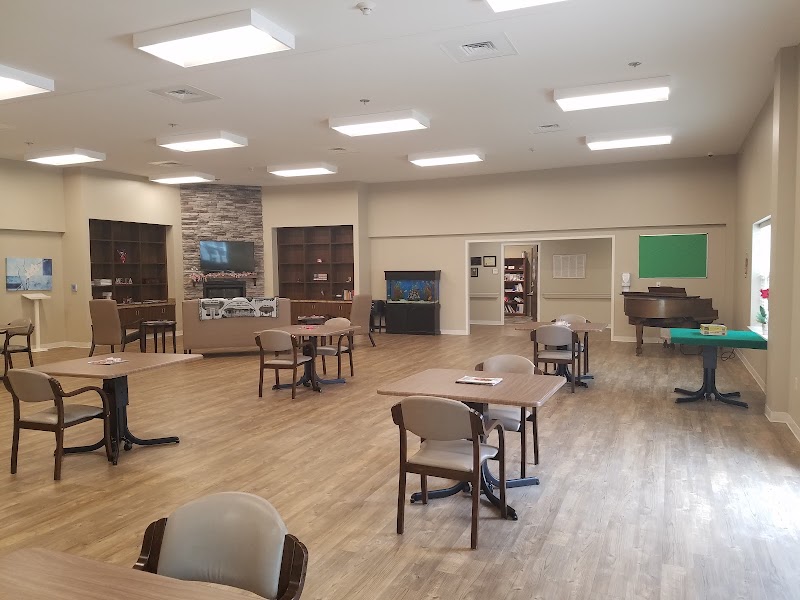
How is Humphreys County Care And Rehabilitation Staffed?

CMS rates HUMPHREYS COUNTY CARE AND REHABILITATION's staffing level at 4 out of 5 stars, which is above average compared to other nursing homes. Staff turnover is 40%, compared to the Tennessee average of 46%. This relatively stable workforce can support continuity of care.

What Have Inspectors Found at Humphreys County Care And Rehabilitation?

State health inspectors documented 25 deficiencies at HUMPHREYS COUNTY CARE AND REHABILITATION during 2022 to 2025. These included: 1 that caused actual resident harm and 24 with potential for harm. Deficiencies causing actual harm indicate documented cases where residents experienced negative health consequences.
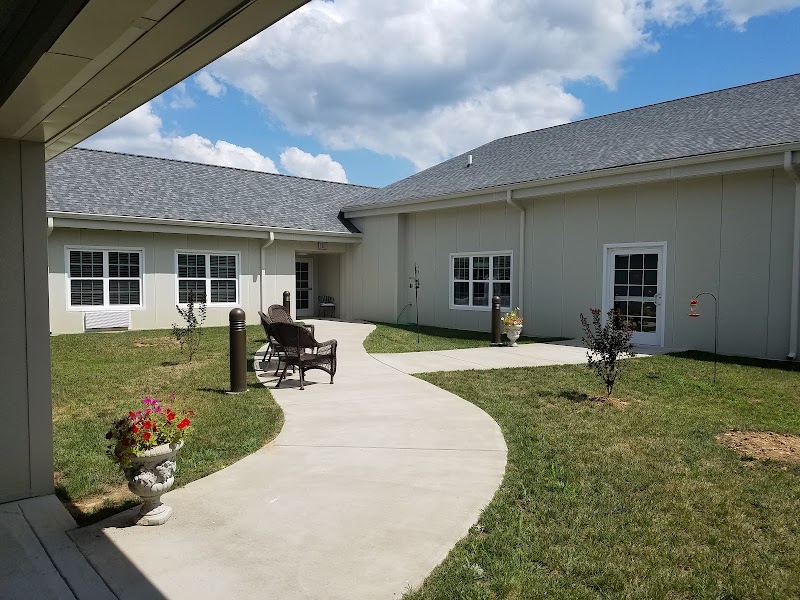
Who Owns and Operates Humphreys County Care And Rehabilitation?

HUMPHREYS COUNTY CARE AND REHABILITATION is owned by a non-profit organization. Non-profit facilities reinvest revenue into operations rather than distributing to shareholders. The facility operates independently rather than as part of a larger chain. With 91 certified beds and approximately 69 residents (about 76% occupancy), it is a smaller facility located in WAVERLY, Tennessee.
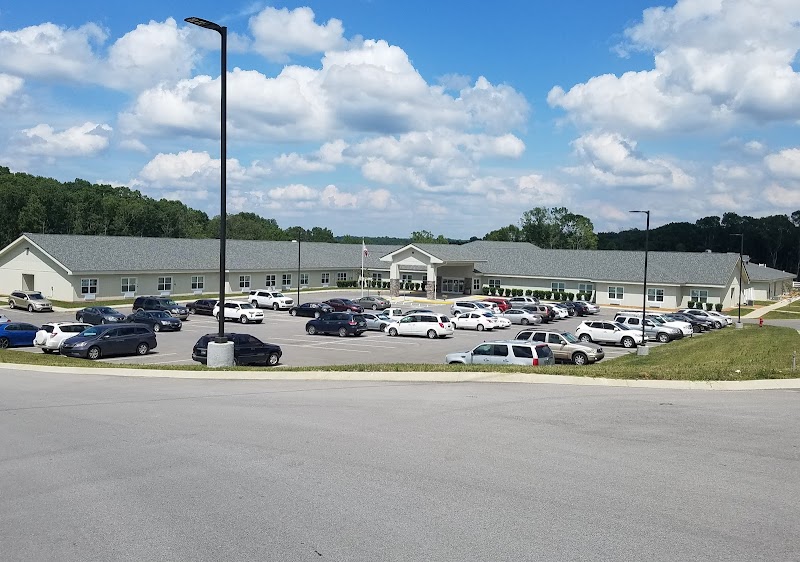
How Does Humphreys County Care And Rehabilitation Compare to Other Tennessee Nursing Homes?

Compared to the 100 nursing homes in Tennessee, HUMPHREYS COUNTY CARE AND REHABILITATION's overall rating (2 stars) is below the state average of 2.8, staff turnover (40%) is near the state average of 46%, and health inspection rating (2 stars) is below the national benchmark.

What Should Families Ask When Visiting Humphreys County Care And Rehabilitation?

Based on this facility's data, families visiting should ask: "Can I visit during a mealtime to observe dining assistance and food quality?" "How do you handle medical emergencies, and what is your hospital transfer rate?" "Can I speak with family members of current residents about their experience?"

Is Humphreys County Care And Rehabilitation Safe?

Based on CMS inspection data, HUMPHREYS COUNTY CARE AND REHABILITATION has a clean safety record: no substantiated abuse findings (meaning no confirmed cases of resident harm), no Immediate Jeopardy citations (the most serious violation level indicating risk of serious injury or death), and is not on the Special Focus Facility watch list (a federal program monitoring the lowest-performing 1% of nursing homes). The facility has a 2-star overall rating and ranks #100 of 100 nursing homes in Tennessee. While no facility is perfect, families should still ask about staff-to-resident ratios and recent inspection results during their visit.

Do Nurses at Humphreys County Care And Rehabilitation Stick Around?

HUMPHREYS COUNTY CARE AND REHABILITATION has a staff turnover rate of 40%, which is about average for Tennessee nursing homes (state average: 46%). Moderate turnover is common in nursing homes, but families should still ask about staff tenure and how the facility maintains care continuity when employees leave.

Was Humphreys County Care And Rehabilitation Ever Fined?

HUMPHREYS COUNTY CARE AND REHABILITATION has been fined $3,145 across 1 penalty action. This is below the Tennessee average of $33,110. While any fine indicates a compliance issue, fines under $50,000 are relatively common and typically reflect isolated problems that were subsequently corrected. Families should ask what specific issues led to these fines and confirm they've been resolved.

Is Humphreys County Care And Rehabilitation on Any Federal Watch List?

HUMPHREYS COUNTY CARE AND REHABILITATION is not on any federal watch list. The most significant is the Special Focus Facility (SFF) program, which identifies the bottom 1% of nursing homes nationally based on persistent, serious quality problems. Not being on this list means the facility has avoided the pattern of deficiencies that triggers enhanced federal oversight. This is a positive indicator, though families should still review the facility's inspection history directly.