FIVE POINTS NURSING AND REHABILITATION

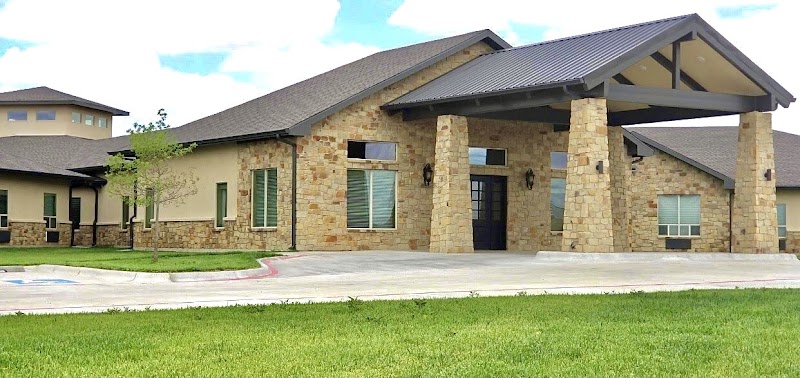
1625 POINT WEST PARKWAY, AMARILLO, TX 79124 (817) 348-8969
For profit - Limited Liability company 120 Beds CREATIVE SOLUTIONS IN HEALTHCARE Data: November 2025
Trust Grade
70/100
#231 of 1168 in TX
Last Inspection: March 2025

Within standard 12-15 month inspection cycle. Federal law requires annual inspections.

Overview

Five Points Nursing and Rehabilitation in Amarillo, Texas, has a Trust Grade of B, indicating it is a good choice but not without some concerns. It ranks #231 out of 1,168 facilities in Texas, placing it in the top half, and #3 out of 9 in Potter County, which means only two local options are better. Unfortunately, the facility is showing a worsening trend, with issues increasing from 3 in 2024 to 10 in 2025. While staffing is rated poorly with only 1 out of 5 stars and a turnover rate of 56%, they have no fines recorded, which is a positive sign. Specific incidents include failures in food storage that could risk food-borne illness and issues with medication management that could endanger residents' health if not addressed. Overall, while there are strengths, such as good food quality ratings, the facility does have significant weaknesses that should be carefully considered.

Trust Score
B
70/100
In Texas
#231/1168
Top 19%
Safety Record
Low Risk
No red flags
Inspections
Getting Worse
3 → 10 violations
Staff Stability
⚠ Watch
56% turnover. Above average. Higher turnover means staff may not know residents' routines.
Penalties
✓ Good
No fines on record. Clean compliance history, better than most Texas facilities.
Skilled Nurses
⚠ Watch
Each resident gets only 20 minutes of Registered Nurse (RN) attention daily — below average for Texas. Fewer RN minutes means fewer trained eyes watching for problems.
Violations
⚠ Watch
16 deficiencies on record. Higher than average. Multiple issues found across inspections.
★★★★☆
4.0
Overall Rating
★☆☆☆☆
1.0
Staff Levels
★★★★★
5.0
Care Quality
★★★★☆
4.0
Inspection Score
Stable
2024: 3 issues
2025: 10 issues

The Good

  • 5-Star Quality Measures · Strong clinical quality outcomes
  • Full Sprinkler Coverage · Fire safety systems throughout facility
  • No fines on record

Facility shows strength in quality measures, fire safety.

The Bad

Staff Turnover: 56%

10pts above Texas avg (46%)

Frequent staff changes - ask about care continuity

Chain: CREATIVE SOLUTIONS IN HEALTHCARE

Part of a multi-facility chain

Ask about local staffing decisions and management

Staff turnover is elevated (56%)

8 points above Texas average of 48%

The Ugly 16 deficiencies on record

Jun 2025 1 deficiency
CONCERN (D) 📢 Someone Reported This

A family member, employee, or ombudsman was alarmed enough to file a formal complaint

Potential for Harm - no one hurt, but risky conditions existed

Medical Records (Tag F0842)

Could have caused harm · This affected 1 resident

**NOTE- TERMS IN BRACKETS HAVE BEEN EDITED TO PROTECT CONFIDENTIALITY** Based on interview and record review the facility failed to, in accordance with professional standards and practices, maintain m...

Read full inspector narrative →
**NOTE- TERMS IN BRACKETS HAVE BEEN EDITED TO PROTECT CONFIDENTIALITY** Based on interview and record review the facility failed to, in accordance with professional standards and practices, maintain medical records on each resident that are accurately documented for 1 (Resident #1) of 7 residents reviewed for accuracy of medical records. The facility failed to ensure LVN A documented the correct time Resident #1 and his family were provided with copies of his baseline care plan. The facility failed to ensure LVN A documented the correct time Resident #1's family and doctor were notified of his fall on 05/21/25. The facility failed to ensure RN B documented the times correctly on 3 progress notes in Resident #1's chart on 05/23/25. These failures could place residents at risk of not receiving necessary care/treatment due to inaccurate medical records. Findings Included: Record review of Resident #1's admission record dated 06/04/25 revealed an [AGE] year-old male admitted to the facility on [DATE] with diagnoses that included, but were not limited to, hemiplegia (paralysis) affecting right dominant side, cerebral infarction (stroke), difficulty in walking, and unsteadiness on feet. Resident #1 discharged from the facility on 05/23/25. The time listed for discharge was 04:30 PM. Record review of Resident #1's care plan revealed it was a baseline care plan initiated on 05/21/25. Resident #1 was noted to be at risk of falling. Record review of Resident #1's EHR in the MDS tab revealed no comprehensive MDS was completed due to the short duration of his stay in the facility. Record review of Resident #1's transfer form completed by DON on 05/23/25 revealed Resident #1's transfer to the hospital for altered mental state was effective on 05/23/25 at 03:10 PM. Record review of Resident #1's progress notes from 05/21/25 to 05/23/25 revealed the following: A note on 05/21/25 at 03:02 PM by LVN A which indicated Resident #1 was admitted to the facility on [DATE] at 03:02 PM. A note on 05/21/25 at 04:00 PM by LVN A which indicated a copy of Resident #1's baseline care plan was provided to Resident #1 and to his family member on 05/21/25 at 12:00 AM. A note on 05/21/25 at 05:29 PM by LVN A which indicated Resident #1 had a fall. The note further indicated Resident #1's doctor and family were notified of his fall on 05/21/25 at 12:00 AM. A note on 05/23/25 at 03:10 PM by DON which indicated Resident #1 was transferred to the hospital. A note on 05/23/25 at 04:47 PM by RN B which indicated a neuro assessment was completed on Resident #1. A note on 05/23/25 at 04:48 PM by RN B which indicated vital signs taken of Resident #1. A note on 05/23/25 at 04:51 PM by RN B which was a fall follow-up and indicated Resident #1 had continuous pain on his right side. During an interview on 06/04/25 at 11:21 AM DON was asked for actual family and physician notification times for Resident #1's fall on 05/21/25. He looked in the EHR and stated he would ask LVN A. During an interview on 06/04/25 at 11:26 AM DON stated LVN A notified Resident #1's family and physician at the time of the note in his EHR (05:29 PM) on 05/21/25. During an interview on 06/04/25 at 11:51 AM DON stated Resident #1 discharged from the facility on 05/23/25 at 03:00 PM. He stated Resident #1 did not return to the facility after that discharge. DON looked at progress notes in Resident #1's EHR and stated, I have no idea why RN B had documented assessments of Resident #1 at times later than the time of his discharge from the facility. During an interview on 06/04/25 at 11:57 AM RN B stated she noticed her notes had not been completed on Resident #1 and she completed the notes with information she had gathered prior to his discharge from the facility and did not change the time of her documentation. During an interview on 06/04/25 at 11:58 AM DON stated he was starting an in-service for nurses to address getting times right in documentation. During an interview on 06/04/25 at 12:12 PM RN B stated residents could be negatively impacted by inaccurate medical records. She stated she was not aware, prior to 06/04/25, of the expectation that assessments in the EHR be entered at the point of assessment. RN B stated it was possible to enter the assessment later and adjust the time of the assessment and that was what she should have done. During an interview on 06/04/25 at 02:45 PM LVN A stated residents might not receive needed care if their medical records are inaccurate. During an interview on 06/04/25 at 03:30 PM LVN C stated it was important to document times accurately in residents' medical records. She stated inaccurate medical records could negatively affect residents. During an interview on 06/04/25 at 03:40 PM LVN F stated residents could be negatively affected by inaccurate medical records. She said, If medical record is inaccurate, they (residents) wouldn't get proper care they (residents) need. During an interview on 06/04/25 at 03:47 PM ADON D stated a resident could be negatively impacted by inaccurate medical records, but it would depend on what is inaccurate. She stated the nurses in the facility were trained on documentation on the job and in nursing school. During an interview on 06/04/25 at 03:49 PM ADON E stated a resident could be negatively impacted by inaccurate medical records depending on what is inaccurate. Regarding training facility nurses on accurate documentation, she said, We do in-services, and we monitor documentation to make sure it is being done in a timely manner. During an interview on 06/04/25 at 03:55 PM DON stated it depends on what you're charting whether or not inaccurate medical records would negatively impact resident care. During an interview on 06/04/25 at 03:58 PM LVN A stated she did not accurately document the times Resident #1's family and physician were contacted on 05/21/25 regarding his fall because she did not realize they were inaccurate until she had signed the document. During an interview on 06/04/25 at 04:20 PM DON stated nurses were trained on documentation in nursing school and when something like this (inaccurate documentation in Resident #1's EHR by LVN A and RN B) happens. Record review of an undated facility policy titled Documentation revealed the following: Documentation is the recording of all information, both objective and subjective, in the clinical record of an individual resident . It has legal requirements regarding accuracy and completeness . 1. The facility will maintain complete and accurate documentation for each resident on all appropriate clinical record sheets. 5. Each entry will be dated and timed.
Mar 2025 8 deficiencies
CONCERN (D) 📢 Someone Reported This

A family member, employee, or ombudsman was alarmed enough to file a formal complaint

Potential for Harm - no one hurt, but risky conditions existed

Deficiency F0578 (Tag F0578)

Could have caused harm · This affected 1 resident

**NOTE- TERMS IN BRACKETS HAVE BEEN EDITED TO PROTECT CONFIDENTIALITY** Based on interview and record review, the facility failed to ensure all residents had the right to formulate an advance directiv...

Read full inspector narrative →
**NOTE- TERMS IN BRACKETS HAVE BEEN EDITED TO PROTECT CONFIDENTIALITY** Based on interview and record review, the facility failed to ensure all residents had the right to formulate an advance directive for 1 (Resident #72) of 19 residents reviewed for DNR orders. Resident #72 had a Full Code Status in active medical orders and on Resident's Face Sheet as well as a Do Not Resuscitate (DNR) form in her health record. This failure could place residents at risk of having their end of life wishes dishonored. Findings: Record review of the face sheet for Resident #72 revealed a [AGE] year-old female admitted to the facility on [DATE] with diagnoses of unspecified intracapsular fracture of right femur (upper leg bone), subsequent encounter for closed fracture with routine healing (break within the hip joint capsule), Alzheimer's disease (memory loss) with late onset, unspecified osteoarthritis (break down of joints causing pain related to age/wear and tear), unspecified site. The Advance Directive tab on the Face Sheet documented Resident #72 as a Full Code (a patient's request to receive all possible medical interventions, including CPR, in the event of a cardiac or respiratory arrest). Record review of the admission MDS dated [DATE] for Resident #72 revealed a BIMS score of 0 out of 15 indicating her cognition was severely impaired. Record review of Resident #72's Electronic Health Record under the miscellaneous tab contained a Do Not Resuscitate form signed by family, 2 witnesses, and physician. Record review of Resident #72's care plan dated [DATE] documented Resident #72 as DNR. Record review of Resident #72's Active Orders as of [DATE] revealed an active order for Full Code dated [DATE]. During an interview on [DATE] at 8:45 AM, the ADON stated that the nursing staff is responsible for putting the code status of the resident in the electronic health record and the nursing staff are supposed to check the next day after admission to make sure the code status was put in correctly. The ADON was shown the Orders and Face Sheet for Resident #72 which revealed the resident was a Full Code, and then was shown the DNR and Care plan which showed Resident #72 was a DNR. The ADON stated this was inaccuracy of records and the negative outcome for inaccuracy for code status for a resident could be that they could perform CPR on someone who would not want to be resuscitated. During an interview on [DATE] at 9:04 AM, LVN F stated he had worked in the facility for 3 ½ years. He confirmed he was the nurse working on the hallway Resident #72 was currently residing on. LVN F stated that if he had a resident who coded (someone who has experienced a cardiac or respiratory arrest, triggering a code blue or similar emergency response, and requiring immediate life-saving measures) on his shift, he would check their chart under code status and if they were a full code, he would send someone to get the crash cart (a wheeled cart stocked with emergency medical equipment, supplies, and drugs, primarily used during medical emergencies, especially for cardiac arrest resuscitation efforts) and start CPR immediately and then call 911. LVN F stated if a resident had CPR performed on them, but they were a DNR, that would be a huge problem. He stated the negative outcome for performing CPR on a resident who had a DNR could be cracking ribs and possibly killing them. During an interview on [DATE] at 9:07 AM, the DON was shown the Face Sheet for Resident #72 being a Full Code and the resident's DNR. The DON stated that it was an inaccuracy of resident records and that a negative outcome for this could be that someone could possibly not see the DNR and perform CPR, which could upset the family because their wishes were not followed. The DON stated that it was the nurse's responsibility to put in code statuses for residents. During an interview on [DATE] at 10:02 AM, the DON stated that they do not have a policy regarding accuracy of records. Record review of facility policy titled, Physician's Orders and dated 2015 revealed: Purpose: To monitor and ensure the accuracy and completeness of all physician orders. 1. Physician's monthly consolidated orders must be reviewed by a licensed nurse to assure they reflect all current orders.
CONCERN (D)

Potential for Harm - no one hurt, but risky conditions existed

Deficiency F0583 (Tag F0583)

Could have caused harm · This affected 1 resident

Based on observation, interview, and record review the facility failed to ensure residents have the right to personal privacy and confidentiality of his or her personal and medical records for 1 of 4 ...

Read full inspector narrative →
Based on observation, interview, and record review the facility failed to ensure residents have the right to personal privacy and confidentiality of his or her personal and medical records for 1 of 4 hallways (Hall 100) that were monitored for personal privacy. A resident information sheet was left in the family area of hallway 100 for a 2-hour period. This failure has the potential to affect residents receiving care in the facility by exposing their personal medical information. Finding include: During an observation on 03/24/25 at 10:00 AM a CNA assignment sheet dated 03/19/25 was observed on a round brown table with 4 chairs at the end of the 100 Hall. Also noted in the room were two large chars for visitors and the room was labeled as the Living Room. The room was open to the 100 Hall with no doors present. The CNA assignment sheet contained 16 resident's names with the following: 16 Residents had their primary diagnoses listed. 16 Residents were listed with dietary needs from mechanical soft diet to regular diet. 16 Residents were listed as a DNR or a Full Code for their Advanced Directive. 14 Resident were listed as incontinent or continent. 11 Residents had their vital signs listed. No staff were present. Two residents were in the hallway within eyesight of the table. During an observation on 03/24/25 at 10:59 AM the same CNA assignment sheet dated 03/19/25 was observed on the round brown table at the end of the 100 Hall. No staff were present. During an observation on 03/24/25 at 12:12 PM the same CNA assignment sheet dated 03/19/25 was observed on the round brown table at the end of the 100 Hall. No staff were present. During an interview on 03/25/25 at 08:48 AM CNA G (assisting with 100 Hall care this shift) reported that resident information should be stored in a way that maintains privacy. CNA G said that resident information should not be stored where someone could see it because that could be a HIPAA violation. CNA G reported that if a resident's information was left out then someone could steal it. CNA G denied that she was the staff member that left the CNA assignment sheet at the end of the 100 Hall. During an interview on 03/25/25 at 09:54 AM LVN C reported that a resident's information should be private and covered. LVN C said that if a resident's information was left out and could be accessed it would violate the residents' rights and that is why it should be kept private so no one can access it. LVN C reported that if a resident's information was left out then anyone could read it and they could give that information to other people. A family member could be in the hallway and could read the residents information and could give that information to someone else. LVN C reported that violating a resident's private information could lead to a resident feeling disappointed, upset, and embarrassed. During an interview on 03/26/25 at 10:22 AM the DON reported that the open areas at the end of each hallway were provided for family to visit with residents. The DON reported that a residents' personal information should be covered for privacy so that it could not be seen. The DON reported that if a residents' information was left for public view the someone could steal it. The DON reported that is a residents' information was exposed then the residents' confidentiality would be affected. Record review of the facility provided policy titled, Resident Rights revised 11/28/16, revealed the following: Privacy and Confidentiality - The resident has a right to personal privacy and confidentiality of his or her personal and medical records.
CONCERN (D)

Potential for Harm - no one hurt, but risky conditions existed

Deficiency F0655 (Tag F0655)

Could have caused harm · This affected 1 resident

**NOTE- TERMS IN BRACKETS HAVE BEEN EDITED TO PROTECT CONFIDENTIALITY** Based on observations, interviews, and record reviews the facility failed to develop and implement a baseline care plan for each...

Read full inspector narrative →
**NOTE- TERMS IN BRACKETS HAVE BEEN EDITED TO PROTECT CONFIDENTIALITY** Based on observations, interviews, and record reviews the facility failed to develop and implement a baseline care plan for each resident that includes the instructions needed to provide effective and person-centered care of the resident that meet professional standards of quality care within 48 hours of a resident's admission for 1 (Resident #228) of 19 residents reviewed for baseline care plans. The facility failed to ensure Resident #228's baseline care plan included information related to her diabetes and spinal fracture. This failure could place residents at risk of not receiving correct and/or necessary care/treatment. Findings included: Record review of Resident #228's face sheet dated 03/24/2025 revealed an [AGE] year-old female admitted to the facility on [DATE] with diagnoses that included fracture of first lumbar vertebra subsequent encounter for fracture with routine healing (spinal fracture) and Type 2 diabetes Mellitus without complications, unspecified fall, subsequent encounter, acute kidney failure, unspecified protein-calorie malnutrition, and Chronic respiratory failure with hypoxia (not enough oxygen in the blood). Record review of Resident #228's MDS face sheet revealed her admission MDS was not yet completed. Record review of Resident #228's baseline care plan completed on 03/18/2025 revealed no mention of her Type 2 diabetes or spinal fracture. Record review of Resident #228's admission assessment completed on 03/18/2025 reflected no mention of her Type 2 diabetes or spinal fracture. Record review of Resident #228's active orders dated 03/18/2025 revealed the following: Humalog Kwik Pen Subcutaneous Solution Pen-Injector 100 unit/ml -Inject subcutaneously before meals and at bedtime related to Type 2 Diabetes Mellitus without complications. PT/OT to evaluate and treat as indicated for primary diagnosis of fracture of first lumbar vertebra subsequent encounter for fracture with routine healing. During an observation and interview on 03/24/2025 at 09:57 AM, Resident #228 was dressed for the day and seated in her wheelchair in her room. Resident #228 stated she was a diabetic and received insulin for her diabetes. Resident stated she was in the facility for skilled care due to hurting her back during a fall. During an observation and interview on 03/25/2025 at 11:00 AM, the DON stated when a resident was admitted to the facility an admission assessment was completed by the nurse on duty with the resident or resident's representative. The DON pulled the assessment up on his computer and demonstrated how the assessment auto populated the base line care plan. The DON stated that if something was missed or not available during the admission assessment the IDT would update that information when they met with the resident or resident's representative within 48 hours of admission. During an interview on 03/25/2025 at 1:45 PM, RN H stated the nurse on duty was responsible for ensuring care was put in the baseline care plan upon a resident's admission and a possible negative outcome for not having a correct care plan would be that staff would not be aware what a resident may need. RN H stated a base line care plan is to be completed within 48 hours. During an interview on 03/25/2025 at 1:52 PM, RN I stated the DON was responsible for ensuring care plans were completed timely and correctly because it revolved around patient safety. During an interview on 03/25/2025 at 3:07 PM, the Corp RN stated the nurses were responsible for ensuring care plans were put in the system timely and correctly but overall, it was the IDT's responsibility to ensure all care plans had resident's information in them. The Corp RN stated that if information was not in the care plan, then staff would not be aware how to care for a resident. The Corp RN stated that information during admission was not always available but said that it was the IDTs responsibility to get that information from the physician, the resident or their representative and put it in the base line care plan within 48 hours. Record review of a facility policy titled Baseline Care Plans (no date) revealed the following: This facility will develop and implement a baseline care plan for each resident that includes the instructions needed to provide effective and person-centered care of the resident that meet professional standard of quality care. The baseline care plan will- Be developed within 48 hours of a resident's admission. Include the minimum healthcare information necessary to properly care for a resident including, but not limited to Initial goals based on admission orders. Physician orders. Therapy services.
CONCERN (D)

Potential for Harm - no one hurt, but risky conditions existed

Respiratory Care (Tag F0695)

Could have caused harm · This affected 1 resident

**NOTE- TERMS IN BRACKETS HAVE BEEN EDITED TO PROTECT CONFIDENTIALITY** Based on observation, interview, and record review, the facility failed to ensure that residents who need respiratory care were ...

Read full inspector narrative →
**NOTE- TERMS IN BRACKETS HAVE BEEN EDITED TO PROTECT CONFIDENTIALITY** Based on observation, interview, and record review, the facility failed to ensure that residents who need respiratory care were provided such care consistent with professional standards of practice for 1 (Resident #31) of 3 residents reviewed for respiratory care. The facility failed to store Resident #31's nasal cannula properly. This failure could affect residents by placing them at risk for respiratory compromise and associated complications such as shortness of breath, confusion, respiratory failure, infection, and exacerbation of their condition. Findings include: Record review of Resident #31's clinical record revealed an [AGE] year-old female resident admitted to the facility on [DATE] with diagnoses to include pleural effusion (the buildup of excess fluid in the pleural space, the area between the lungs and the chest wall), diabetes (a chronic condition that affects the way the body processes blood sugar (glucose), pneumonia (lung inflammation caused by a bacterial or viral infection), and anxiety (a mental health disorder characterized by feeling of worry, anxiety, or fear that are strong enough to interfere with one's daily activities). Record review of Resident #31's clinical record revealed her last MDS was a quarterly completed 3-7-2025 listing her with a BIMS score of 10 indicating she was moderately cognitively impaired, and she had a functionality of being dependent on staff for her activities of daily living such as dressing, bathing, and toileting. Section O-Special Treatments, Procedures, and Programs-Respiratory Programs: Oxygen Therapy-Resident #31 was marked as having oxygen While a Resident. Record review of Resident #31's Order Summary Report with Active Orders as of 3-18-2025 revealed the following order: - May use oxygen @_1-4___l/m via nasal canula every shift. Active 03-08-2025 Record review of Resident #31's clinical record revealed a care plan with the admission date of 5-13-2024, which revealed the following: Focus: Resident has oxygen therapy as needed. Date Initiated: 12-14-2022. Date Revised: 3-25-2024. -there were no interventions for respiratory equipment care to include nasal cannula storage. During an observation on 03/24/25 at 08:53 AM Resident #31 was not present in her room. Her oxygen concentrator was next to her bed with her nasal cannula on the floor behind the concentrator. There were white specks of discoloration on the nasal prongs from use. A storage bag tied to the machine for proper storage not being used. Noted a date on the hydration bottle that was 3-7-2025. During an observation on 03/24/25 at 10:57 AM Resident #31's nasal cannula continued to be on the floor behind her oxygen concentrator. The date on the hydration bottle was still 3-7-2025. No date was on the nasal cannula or tubing. There continued to be white specks on the nasal prongs from previous use. During an observation on 03/24/25 at 12:13 PM Resident #31's nasal cannula continued to be on the floor behind her oxygen concentrator. The date on the hydration bottle was still 3-7-2025. No date was on the nasal cannula or tubing. There continued to be white specks on the nasal prongs from previous use. During an observation on 03/24/25 02:09 PM Resident #31's nasal cannula continued to be on the floor behind her oxygen concentrator. The date on the hydration bottle was still 3-7-2025. No date was on the nasal cannula or tubing. There continued to be white specks on the nasal prongs from previous use. During an observation and interview on 03/25/25 at 06:28 AM Resident #31 was up in her wheelchair dressed for the day wearing her oxygen via NC. There were slight white discolored flecks to the nasal prongs. A date of 3-7-2025 was on the hydration bottle and no date on the nasal cannula or oxygen tubing. Resident #31 stated, Ya, the staff put my oxygen on me last night. Resident #31 did not know which staff member place the oxygen on her the previous evening. Resident #31 reported no issues with her care. During an interview on 03/25/25 at 08:46 AM CNA G (assisting with Hall 100 this shift) who reported that staff are to complete rounds every 2 hours. Staff are to check if the resident was on oxygen and if the resident is wearing it properly, the hydration chamber is full, and the equipment is on. If the resident does not need the oxygen, then staff need to make sure the tubing and nasal cannula were stored correctly. CNA G reported that if the nasal cannula was on the floor, then it needed to be replaced because contact with the floor will contaminate the cannula and that staff do not want to put it on the residents nose. CNA G reported that if a nasal cannula that has been on the floor is put on a resident, then that resident would be at risk for infection. During an interview on 03/25/25 at 08:54 AM LVN C reported that staff were supposed to make rounds every two hours or more frequently if the residents need it. LVN C reported that staff were supposed to check a resident's oxygen and if the resident is on oxygen, do they have the nasal cannula on correctly and was it working. If the resident was not wearing the nasal cannula, then it should be stored correctly in a plastic bag off the floor. LVN C reported that if a nasal cannula was on the floor, then it should be immediately replaced. LVN C reported that if a nasal cannula was on the floor and then put on a resident it will place that resident at risk for infection. During an interview on 03/26/25 at 09:50 AM the DON reported that staff should make rounds as often as possible and should check a resident's oxygen when in the room. If the resident oxygen is not in use, then the tubing and cannula should be stored in a plastic bag. The DON reported that if a resident's oxygen cannula was on the floor, then it should be thrown away. The DON reported that if a nasal cannula that has been on the floor was placed on a resident's face, then it places that resident at risk for infection. During an interview on 03/26/25 at 10:14 AM the DON reported that the Oxygen Administration policy was the only policy the facility had on respiratory equipment. The DON reported that the facility did not have a specific poly on storage of the respiratory equipment like the nasal cannula and tubing. The DON reported that the facility stores the respiratory equipment in a bag off the floor for infection control. Record review of the facility provided policy titled, Oxygen Administration revised 02/13/07, revealed no information of the storage of respiratory equipment to include oxygen tubing and nasal cannula.
CONCERN (D)

Potential for Harm - no one hurt, but risky conditions existed

Infection Control (Tag F0880)

Could have caused harm · This affected 1 resident

Based on observation, interview, and record review, the facility failed to maintain an infection prevention and control program designed to provide a safe, sanitary, and comfortable environment and to...

Read full inspector narrative →
Based on observation, interview, and record review, the facility failed to maintain an infection prevention and control program designed to provide a safe, sanitary, and comfortable environment and to help prevent the development and transmission of communicable diseases and infections for 2 of 8 staff (MA E and CNA K) reviewed for resident care -MA E did not perform hand hygiene before donning gloves to administer medicated eye drops to Resident #5. -CNA K did not perform hand hygiene or glove change after performing perineal care and placing a clean brief on Resident #45. These failures could place residents at risk of cross-contamination and infections. Findings include: During an observation on 03/25/25 at 08:03 AM MA E did not perform hand hygiene before donning gloves to administer medicated eye drops to Resident #5. During an interview on 03/25/25 at 08:09 AM MA E stated that a possible negative outcome for not performing hand hygiene before administering eye drops was contamination. During an interview on 03/25/25 at 08:51 AM DON stated that not performing hand hygiene before medications administration, was cross contamination, as the nurses hands could be dirty and they are touching the residents face. During an observation on 03/25/25 at 10:47 AM CNA K was performing perineal care on Resident #45 and did not change gloves or perform hand hygiene after cleaning the resident. CNA K then proceeded to place a clean brief on Resident #45 with the same gloves she had just performed perineal care with. During an interview on 03/25/25 at 11:03 AM CNA K stated that not changing gloves and performing hand hygiene between the dirty and clean areas of perineal care could lead to the spread of bacteria and lead to an infection. Record review of facility provided policy titled Fundamentals of Infection Control Precautions, revised 03/2024, revealed the following: 1. Hand Hygiene Hand hygiene continues to the primary means of preventing the transmission of infection. The following is a list of some situations that require hand hygiene . .Before and after direct resident contact (for which hand hygiene is indicated by acceptable professional practice) . .Upon and after coming in contact with a resident's intact skin, . .after contact with a resident's mucous membranes and body fluids or excretions; .
CONCERN (E)

Potential for Harm - no one hurt, but risky conditions existed

Pharmacy Services (Tag F0755)

Could have caused harm · This affected multiple residents

Based on observation and record review; it was determined the facility failed to provide pharmaceutical services that assure the accurate acquiring, receiving, and dispensing, and administration of al...

Read full inspector narrative →
Based on observation and record review; it was determined the facility failed to provide pharmaceutical services that assure the accurate acquiring, receiving, and dispensing, and administration of all drugs and biologicals for 3 of 18 (Resident #39, Resident #65, and Resident #230) and 2 of 4 medication carts (Hall 300and Hall 400) under review. -Resident #39's Lispro had an open date on it of 02/17/2025. -Resident #230's Lantus Solostar Pen had an open date on it of 02/08/2025. -1 bottle of Naproxen 220mg that had an expiration date of 02/2025. -Resident #65's Insulin Lispro with an open date of 02/19/2025. The facility's failure to ensure drugs and biologicals were stored and labeled in accordance with currently accepted professional principles, and include the appropriate accessory and cautionary instructions, and the expiration date when applicable could place all residents receiving medication at risk for drug diversion, drug overdose, and accidental or intentional administration to the wrong resident. Findings include: During an observation on 03/24/25 at 10:52 AM revealed Medication cart for 400 Hall having Resident #39's Lispro had an open date on it of 02/17/2025, and Resident #230's Lantus Solostar Pen had an open date on it of 02/08/2025. During an interview on 03/24/25 at 11:05 AM LVN B stated that the negative outcome for having medications with no open dates on them was the medications not being effective. During an observation on 03/24/25 at 11:38 AM revealed the medication cart for Hall 300 revealed Resident #65's Insulin Lispro with an open date of 02/19/2025. 1 bottle of Naproxen 220mg had an expiration date of 02/2025. During an interview on 03/24/25 at 11:46 AM LVN D stated that a negative outcome for having medications with no expiration dates was a medication being used that is not going to be effective. During an interview on 03/25/25 at 07:32 AM DON stated that a negative outcome for giving expired medications is that the medications could lose their effectiveness. Record review of facility provided policy titled, Recommended Medication Storage, Revised 07/2012, revealed the following: Medications that require an open date as directed by the manufacturer should be dated when opened in a manner that is clear when the medication was opened. Record review of facility provided policy titled, Recommended Medication Storage, Revised 07/2012, revealed the following: Medications that require an open date as directed by the manufacturer should be dated when opened in a manner that is clear when the medication was opened.
CONCERN (E)

Potential for Harm - no one hurt, but risky conditions existed

Deficiency F0761 (Tag F0761)

Could have caused harm · This affected multiple residents

Based on observation, interview, and record review, the facility failed to ensure drugs and biologicals were stored in locked compartments and labeled in accordance with currently accepted professiona...

Read full inspector narrative →
Based on observation, interview, and record review, the facility failed to ensure drugs and biologicals were stored in locked compartments and labeled in accordance with currently accepted professional principles and include the appropriate accessory and cautionary instructions, and the expiration date when applicable on 4 of 4 medication carts (Hall 100, Hall 200, Hall 300, and Hall 400) and 6 of 18 residents (Resident #27, #32, #47, #176, #228. and #229) reviewed for medication storage. -Medication on bedside table of Resident #32. -Medication cart for Hall 200 revealed 25.5 unidentifiable loose pills in the medication cart drawers. -Medication cart for 400 Hall had 1.5 loose pills in the bottom of the medication cart drawers. -Resident #229's Stiolto Aer 2.5-2.5 had no open date. -Resident #228's Trelegy Ellipta had no open date. -Medication cart for 300 Hall had 1 bottle of Melatonin 3mg that did not have an expiration date on the bottle. -Medication Triamcinolone acetonide cream was on Resident #27's bed. -Medication cart for 100 Hall had 1 bottle of Aspirin 81mg with no expiration date on the bottle, and 1 Coreg pill was found in the bottom of the medication cart drawer -Resident #47 had a bottle of Aspirin 81mg on her bedside table. -Resident #176 had a tube of Neosporin ointment on her bedside table. The facility's failures could place residents receiving medication at risk for drug diversion, lack of drug efficacy, and adverse reactions. Findings included: During an observation on 03/24/25 at 09:21 AM revealed a nasal spray bottle was on Resident #32's bedside table, the medication was identified as fluticasone propionate. The medication bottle had no open date on it. Resident #32 stated that the medication was not supposed to be in there with her. During an observation on 03/24/25 at 09:53 AM revealed 25.5 loose pills were loose in the medication cart drawers of the medication cart for Hall 200. During an interview on 03/24/25 at 10:13 AM LVN A stated that a negative outcome of having loose pills was a resident missing a dose of medication. LVN A also stated that a negative outcome of leaving medication on a resident's bedside table was to another resident possibly taking the medication or the resident forgetting that they took the medicine and taking another dose. During an observation on 03/24/25 at 10:52 AM revealed Medication cart for 400 Hall having 1.5 loose pills in the bottom of the medication cart drawers. Resident #229's Stiolto Aer 2.5-2.5 had no open date on the medication, Resident #228's Trelegy Ellipta had no open date on the medication. Resident #39's Lispro had an open date on it of 02/17/2025, and Resident #230's Lantus Solostar Pen had an open date on it of 02/08/2025. During an interview on 03/24/25 at 11:05 AM LVN B stated that the negative outcome for having medications with no open dates on them was the medications not being effective, and the negative outcome of having loose pills was that you don't know what it is. During an observation on 03/24/25 at 11:21 AM revealed the medication cart for Hall 100 had 1 bottle of Aspirin 81mg with no expiration date on the bottle and 1 Coreg pill was found in the bottom of the medication cart drawer. This pill was identified by LVN B. During an interview on 03/24/25 at 11:32 AM LVN B stated that a negative outcome for not having an expiration date on a bottle of medication could lead to giving expired medications. LVN stated that having loose pills in the bottom of the medication cart is that you might not know what it is or who it belongs to. During an observation on 03/24/25 at 11:38 AM revealed 1 bottle of Melatonin 3mg did not have an expiration date on the bottle. During an interview on 03/24/25 at 11:46 AM LVN D stated that a negative outcome for having medications with no expiration dates was a medication being used that is not going to be effective. During an observation on 03/24/25 at 02:27 PM revealed Resident #176 had a tube of Neosporin on her bedside. During an observation on 03/25/25 at 07:10 AM revealed a bottle of chewable Aspirin 81mg was on Resident #47's bedside table. When Resident #47 stated that she chews them and puts them on her teeth which cause her pain. During an interview on 03/25/25 at 07:32 AM DON stated that a negative outcome for having loose pills in the medication cart drawers would be first of all a sanitation issue. I hope the nurses don't use them; it could possibly lead to a missed dose. Nurses are responsible for making sure that the carts are clean and orderly. DON stated that a possible negative outcome for giving expired medications is that the medications could lose their effectiveness. DON stated that a possible negative outcome for having medications on a bedside table was another resident taking the medication and having a negative outcome. Record review of facility provided policy titled, Recommended Medication Storage, Revised 07/2012, revealed the following: Medications that require an open date as directed by the manufacturer should be dated when opened in a manner that is clear when the medication was opened. .Fluticasone-expires 6 weeks (50mcg strength) or 2 months (100-250mcg) after initial use. .Insulins (vials, cartridge, pens) . .Humalog Flex Pen 75/25 and 50/50 pens Insulin Glargine (Lantus) . .expires 28 days after initial use regardless of product storage (refrigerated or roo temperature). Record review of facility provided policy titled, Medication Carts, dated 2003, revealed the following: 1. Medication carts shall be maintained by the facility. .5. Carts should be clean. Record review of facility provided policy titled, Medication Administration Procedures, revised 10/25/2017, revealed the following: 1. All medications are administered by licensed medical or nursing personnel. 2. Medications are to poured, administered and charted by the same licensed person. Record review of facility provided policy titled, Recommended Medication Storage, Revised 07/2012, revealed the following: Medications that require an open date as directed by the manufacturer should be dated when opened in a manner that is clear when the medication was opened. .Fluticasone-expires 6 weeks (50mcg strength) or 2 months (100-250mcg) after initial use. .Insulins (vials, cartridge, pens) . .Humalog Flex Pen 75/25 and 50/50 pens Insulin Glargine (Lantus) . .expires 28 days after initial use regardless of product storage (refrigerated or roo temperature). Record review of facility provided policy titled, Medication Carts, dated 2003, revealed the following: 1. Medication carts shall be maintained by the facility. .5. Carts should be clean. Record review of facility provided policy titled, Medication Administration Procedures, revised 10/25/2017, revealed the following: 1. All medications are administered by licensed medical or nursing personnel. 2. Medications are to poured, administered and charted by the same licensed person.
CONCERN (E)

Potential for Harm - no one hurt, but risky conditions existed

Food Safety (Tag F0812)

Could have caused harm · This affected multiple residents

Based on observation, interview, and record review, the facility failed to store, prepare, distribute, and serve food in accordance with the professional standards for food service safety for 1 of 1 N...

Read full inspector narrative →
Based on observation, interview, and record review, the facility failed to store, prepare, distribute, and serve food in accordance with the professional standards for food service safety for 1 of 1 Nourishment Room reviewed for sanitation. 1. The facility failed to ensure freezer items were properly stored, labeled, and dated. 2. The facility failed to ensure refrigerated foods were properly stored, labeled, and dated. These failures could place residents who ate food served by the kitchen at risk of food-borne illness. Findings included: Observation of the refrigerator in the Nourishment Room on 03/24/2025 at 08:55 AM revealed the following: 1. (2) containers of Orange Juice, both opened. No date or label. 2. (1) 4-pack of yogurt smoothie drink, no date or label. 3. (14) cups on tray with unidentified liquid inside, no labels, dates of 3/22/25 on lids. 4. (1) chocolate milk container, opened, no date or label. Observation of the freezer in the Nourishment Room on 03/24/2025 at 9:01 AM revealed the following: 1. (1) box of opened Outshine bars, no date or label. 2. (1) gallon of ice cream, opened and half gone, no date or label. 3. (2) loose popsicles, no date or label. In an interview on 03/25/2025 at 9:01 AM, [NAME] J stated that that all dietary staff are responsible for the Nourishment Room to keep the refrigerator/freezer cleaned out and items labeled. [NAME] J stated that a possible negative outcome for not having labels and dates on items in the refrigerator/freezers could be that people could get sick if expired food was given to residents. In an interview on 03/25/2025 at 9:18 AM, the DON stated that it was the dietary staff who were responsible for the nourishment room refrigerator/freezer. In an interview on 03/25/25 at 11:18 AM, the DM stated that dietary staff are responsible for labeling and dating food in the nourishment room refrigerator and freezer. She stated a possible negative outcome for not labeling/dating food could be that a resident could get some old or outdated food and it could make them sick. Record Review of facility policy dated 2012 titled Storage Refrigerators, revealed in part: 5. Food must be covered when stored, with a date label identifying what is in the container.
Feb 2025 1 deficiency
CONCERN (D) 📢 Someone Reported This

A family member, employee, or ombudsman was alarmed enough to file a formal complaint

Potential for Harm - no one hurt, but risky conditions existed

Free from Abuse/Neglect (Tag F0600)

Could have caused harm · This affected 1 resident

**NOTE- TERMS IN BRACKETS HAVE BEEN EDITED TO PROTECT CONFIDENTIALITY** Based on interviews and record review, the facility failed to ensure residents were free from abuse for 1 of 8 residents (Reside...

Read full inspector narrative →
**NOTE- TERMS IN BRACKETS HAVE BEEN EDITED TO PROTECT CONFIDENTIALITY** Based on interviews and record review, the facility failed to ensure residents were free from abuse for 1 of 8 residents (Resident #2) reviewed for abuse. The facility failed to ensure Resident #2 was free from verbal abuse when on 1/23/25, the ABOM yelled at Resident #2 to get the fuck out of my office. Resident #2, who has Alzheimer's disease, was in front of the ABOM's desk and stroking his penis while asking her if she wanted to fuck. This failure could place residents at risk of mental anguish or emotional distress. This was determined to be PNC as the facility had implemented corrective actions prior to entry. Findings included: Record review on Resident #2's clinical record indicated Resident #2 was an [AGE] year-old male, initially admitted on [DATE], with the following diagnoses: Diverticulitis of large intestine with perforation an abscess (an inflammation or infection in one or more small pouches in the digestive tract which caused contents to leak in the abdomen which formed an abscess), muscle wasting and atrophy (causes muscles to lose mass and strength), difficulty in walking, psychotic disorder with delusions (cause abnormal thinking and perception and cannot tell what's real from what's imagined), major depressive disorder (persistent low mood, loss of interest, and other symptoms that significantly interfere with daily life), Alzheimer's disease with late on set (cognitive decline that typically develops after the age of 65), diabetes (too much sugar in the blood), protein-calorie malnutrition (reduced availability of nutrients leads to changes in body composition and function), hypokalemia (low level of potassium in the blood which can result in fatigue, muscle cramps, and abnormal heart rhythms), Parkinson's disease (a disorder of the central nervous system that affects movement, often including tremors), hypertension (high blood pressure), atrial fibrillation (an irregular, often rapid heart rate that commonly causes poor blood flow), heart failure (the heart doesn't pump blood as well as it should), rheumatoid arthritis (chronic inflammatory disorder usually affecting small joints in the hands and feet), benign prostatic hyperplasia without lower urinary tract obstruction (prostate gland enlargement that can cause urination difficulty), spinal stenosis (spaces inside the bones of the spine get too small), repeated falls and a fracture of lateral malleolus of right fibula (a break in the bone of outer side of the right ankle joint). Record review of Resident #2's quarterly MDS resident assessment, dated 12/30/24, documented the resident scored 11 of 15 on a mini-mental exam for cognitive awareness, Acute change in mental status, inattention, disorganized thinking. Record review of Resident #2's quarterly MDS resident assessment, dated 2/21/25, documented the resident score 9 of 15 on a mini-mental exam for cognitive awareness, he was moderately impaired for daily decision making. Record review of the Provider Investigation Report, dated 1/28/25, documented the following. On 1/23/25 at 4:40 p.m., the ABOM said, in front of two witnesses, stated she was cornered in her office by Resident #2. The ABOM stated Resident #2 said to her, will you fuck me while he was stroking his penis. The ABOM yelled at Resident #2 to get the fuck out of her office three times. ABOM was suspended on 1/24/25 when she arrived for work. Resident #2 was referred to a behavior hospital for alleged sexually inappropriate behaviors. Quality of Life rounds on residents and in-serviced staff members on abuse/neglect, dementia behaviors. (The two witnesses to this conversation were the DON and SW) Review of the Provider Investigation Report included documentation of the inservices provided to staff to cover Abuse/Neglect, dementia training with 56 staff attending. In addition, quality of life rounds were conducted with resident after the incident to ensure all residents did not have any additional concerns. Record review on 2/20/24 of the nurses' notes for Resident #2 revealed the following: 1/23/25 at 5:03 p.m. - called doctor's office on inappropriate behaviors at this time. New order for Paxil 50 mg. Stop Cymbalta and Zoloft once Paxil is in. (Paxil - treats depression, anxiety disorders, obsessive-compulsive disorder, and posttraumatic stress disorder) (Cymbalta - treats depression, anxiety, diabetic peripheral neuropathy, fibromyalgia and chronic muscle or bone pain) (Zoloft - treats depression, obsessive-compulsive disorder, posttraumatic stress disorder, social anxiety disorder and panic disorder) 1/24/25 at 8:50 a.m. - location of event: ABOM office Condition/behavior at time of event: Cognitive impairment, wanders, requires cueing. No pain or injury Was told by the ABOM that Resident #2 cornered her in her office and asked her if she wanted to fuck while stoking his penis three times. Initial treatment/new orders: skin assessment done on resident. Resident Statement: resident had no recollection of event and stated, I think my care is wrecked. Physician and family member notified. 1/24/25 at 11:35 a.m. - Resident was sent to a behavioral hospital for psychiatric evaluation. Record review of the Inservice Training Reports reflected the facility conducted the following in-services on: 1/25/25 - Abuse/Neglect/Dementia Training 1. Any abuse or neglect noted needs to be reported to the Administrator, take immediate action to stop abuse and report to the Administrator. 2. Please see attached policy and procedure for Abuse/Neglect 3. When a resident with dementia approaches you inappropriately, ensure you remain calm and try to redirect resident. If resident tries to become aggressive or you cannot redirect, please try, and get away from the situation, and remember to always communicate these instances with a manager so situations can be followed up. 1/26/25 - Abuse/Neglect/Dementia Training 1. Any abuse or neglect noted needs to be reported to the Administrator, take immediate action to stop abuse and report to Administrator. 2. Please see attached policy and procedures for abuse/neglect. 3. Workplace burnout is a state of mental, physical, and emotional exhaustion that occurs when chronic workplace stress goes unmanaged. 4. Ensure we are notifying managers if you are feeling burnt out at work. If you see a staff member being short with you or not acting like themselves, this could be a sign of burnout and either charge nurse or manager needs to be notified in order to address the situation. 5. Signs of Burnout: Symptoms: Feeling tired, exhausted, or powerless Having trouble sleeping Experiencing headaches, muscle pain or stomach issues Feeling disconnected from work or uninterested in it Turning to substances like alcohol or drugs to cope Feeling helpless, hopeless, or resentful During an interview on 2/29/25 at 6:50 p.m., LVN B stated Resident #2 was confused and tends to wander in other rooms looking for his wife who had passed away several years ago. LVN B stated he had heard about the incident with the ABOM, but he had never witnessed him doing any kind of sexual behaviors before. During an interview on 2/20/25 at 8:25 a.m., the DON stated about 5:00 p.m. at the end of the day shift on 1/23/25, the ABOM came to the nurses' station and said Resident #2 was sexually inappropriate with her. The DON immediately placed Resident #2 one on one after the DON was made aware of the situation and the ABOM quicky left the facility. The DON stated he called the physician and he changed some of Resident #2's medications. The DON stated the next morning, the DON met with the ABOM and LVN A in his office. The DON stated The ABOM was suspended until the investigation was completed then she was terminated for verbally abusing a resident. The DON stated the ABOM admitted she yelled at Resident #2 to get the fuck out of my office three times. The DON stated Resident #2 was sent to a behavior hospital and was now on Hospice. The DON stated Resident #2 labs were out of [NAME], his medications were changed, the family decided to place him on Hospice, Resident #2 was currently back in the facility and had no further inappropriate behaviors. During an interview on 2/20/25 at 1:35 p.m., the ABOM stated she was in her office sitting at her desk with her back against the wall. The ABOM heard a noise and when she turned around, Resident #2 was six inches away from her. The ABOM stated she stood up immediately and hoped since she stood up, she was hoping Resident #2 would move back but he did not. The ABOM stated Resident #2 asked her several times, Are you going to fuck me or not and he started to roll forward towards her. The ABOM stated that she yelled very loudly for Resident #2 to get the fuck out of her office, but no one came. The ABOM stated she was up against the wall in her office. The ABOM stated she told Resident #2 to get the fuck out of her office. The ABOM stated she was loud and direct and hoping someone would come to her rescue. The ABOM stated Resident #2 blocked the doorway and said, Is this the place to fuck? The ABOM stated she ran to the nurses' station and the ADON was there and she told the ADON to get Resident #2 out of her office because he was still stroking himself. The ABOM stated they got Resident #2 out of her office, and she left the facility and did not say a word to anyone. The ABOM came back to the facility in the morning and Resident #2 came back to her office and she told him to get away from her office. The ABOM stated the Regional Director of Nurses suspended her and then she was terminated. Record review on 2/20/25 of a statement handwritten by SW, dated 1/28/25, documented the following: In regard to Resident #2 - ABOM was moved to my office so they shared an office. Resident #2 would wander around the halls and the ABOM had commented when Resident #2 passes by that he (Resident #2) gave her the ick vibes. I informed her that the situation was pure confusion and innocent, and she shrugged her shoulders. The day after her incident with Resident #2 (1/24/25), Resident #2 passed by the office around 8:20 a.m., and she yelled out, You need to get the fuck away from this office. Resident #2 kept rolling past and did not even glance in the direction of the office. Record review of the facility's policy on Abuse/Neglect, revised 3/29/18, reflected the following: The resident has the right to be free from abuse, neglect, misappropriation of resident property, and exploitation as defined in this subpart. This includes but is not limited to freedom from corporal punishment, involuntary seclusion and any physical or chemical restraint not required to treat the resident's medical symptoms. Residents should not be subjected to abuse by anyone, including, but not limited to, facility staff, other residents, consultants or volunteers, staff of other agencies serving the resident, family members or legal guardians, friends, or other individuals. Verbal Abuse: Any use of oral, written or gestured language that willfully includes disparaging and derogatory terms to residents, or within their hearing distance, regardless of their age, ability to comprehend, or disability .Examples of verbal abuse include, but are not limited to: Threats of harm; saying things to frighten a resident, such as telling a resident that she will never be able to see her family again, etc. A. Screening: The facility will conduct criminal background checks of all personnel. B. Training: The facility will train through orientation and on=going in-services on issues related to abuse/neglect prohibition practices regularly. C. Prevention: The facility will provide the residents, families, and staff an environment free from abuse and neglect. D. Identification: The facility will identify and investigate events that may constitute abuse/neglect. E. Reporting: Any person having reasonable cause to believe an elderly or incapacitated adult is suffering from abuse, neglect or exploitation must report this to the DON, administrator, state and/or adult protective services. F. Investigation: All allegations of abuse, neglect, exploitation, mistreatment of residents, misappropriation of resident property and injuries of unknown source will be investigated. G. Protection: The facility will take necessary measures to protect residents and employees from harm during and following an abuse, neglect, exploitation, mistreatment of residents or misappropriation of resident property investigation. Interviews conducted throughout this two day investigation revealed all staff had knowledge and understanding of the in-services they received covering abuse/neglect and dementia training and signs of staff burnout.
Feb 2024 3 deficiencies
CONCERN (D)

Potential for Harm - no one hurt, but risky conditions existed

Comprehensive Care Plan (Tag F0656)

Could have caused harm · This affected 1 resident

**NOTE- TERMS IN BRACKETS HAVE BEEN EDITED TO PROTECT CONFIDENTIALITY** Based on observation, interview and record review, the facility failed to implement a comprehensive care plan for each resident ...

Read full inspector narrative →
**NOTE- TERMS IN BRACKETS HAVE BEEN EDITED TO PROTECT CONFIDENTIALITY** Based on observation, interview and record review, the facility failed to implement a comprehensive care plan for each resident that includes measurable objectives and timeframes to meet a resident's medical, nursing, mental, and psychosocial needs that are identified in the comprehensive assessment and describes the services that are to be furnished to attain or maintain the resident's highest practicable physical, mental, and psychosocial well-being for 1 (Resident #188) of 18 Residents reviewed for comprehensive care plans. -The facility failed to include care plans for Resident #188's use of oxygen therapy. This failure could affect residents receiving care per comprehensive person-centered care plans resulting in resident not being able to attain or maintain their highest practicable physical, mental, and psychosocial well-being. Finding include: Record review of Resident #188's face sheet dated 2-12-2024 revealed she was a [AGE] year-old female resident admitted to the facility originally on 3-27-2019 and readmitted on [DATE] with diagnoses to include acute respiratory failure with hypoxia (sudden failure of lungs to deliver oxygen to the body), Influenza ) a common, sometimes deadly viral infection of the nose, throat, and lungs, also called the flu), major depression (mental illness causing sadness due to lack of chemicals in the brain that cause happiness), falls, anemia (low red blood cell count), chronic kidney disease (longstanding disease of the kidneys leading to kidney failure), hypertension (a condition in which the force of the blood against the artery walls is too high), and Rheumatoid Arthritis (autoimmune inflammation of the joints). Record review of Resident #188's clinical record revealed her last MDS assessment was a quarterly completed 1-10-2024 listing her with a BIMS of 15 indicating she was cognitively intact, and she required the use of a walker and partial/moderate assist with her activities of daily living. Record review of Resident #188's Orders form with active orders as of 2-12-2024 revealed the following orders: May use oxygen @ 2 l/m via nasal cannula every day and night shift- Active 1-11-2024. Record review of Resident #188's Oxygen saturation log from 2-1-2024 to 2-11-2024 revealed that Resident #188 was wearing her Oxygen 26 of the 32 times that her oxygen saturation was checked. Record review of Resident #188's care plan with admission date of 1-3-2024 revealed the following: There was no care plan for oxygen therapy. During an observation and interview on 02-12-2024 at 11:15 AM Resident #188 was noted to be wearing her O2 via NC with hydration set at 3L/min. Resident #188 reported that at one time she was down to needing only 1L/min of oxygen therapy but due to her recent hospitalization she was back to needing 3L/min. Resident #188 stated that she hopes that she can get stronger and wean herself from needing oxygen in the future. During an interview on 02-13-2024 at 09:19 AM with MDS B, MDS C, and MDS D all 3 MDS Nurses were asked that since Resident #188 had orders for oxygen therapy, had documentation for monitoring O2 saturations/oxygen therapy, and Resident #188's MDS was marked for O2 therapy why wasn't Resident #188 care planned for oxygen therapy. MDS C stated that if the oxygen therapy is acute the floor nurses will update the care plan and if the oxygen therapy comes across the MDS when the MDS assessment is due then the MDS nurses would update the care plan. All 3 MDS nurses were asked since it was in the MDS then why wasn't Resident #188's care plan updated, none of the MDS nurses responded. When asked what a negative outcome would be for not updating the care plan, MDS C stated that the residents wouldn't receive the care they are planned for. Record review of facility provided policy titled Comprehensive Care Planning, undated, revealed the following: The facility will develop and implement a comprehensive person-centered care plan for each resident, consistent with the resident rights that include measurable objectives and timeframes to meet a resident medical, nursing, and mental and psychosocial needs that are identified in the comprehensive assessment. The comprehensive care plan will describe the following- -The services that are to be furnished to attain or maintain the resident highest practicable physical, mental, and psychosocial well-being . Each resident will have a person-centered comprehensive care plan developed and implemented to meet his other preferences and goals, and address the residents medical, physical, and psychosocial needs. When developing a comprehensive care plan, facility staff will, at a minimum, use the Minimum Data Set (MDS) .
CONCERN (D)

Potential for Harm - no one hurt, but risky conditions existed

Staffing Information (Tag F0732)

Could have caused harm · This affected 1 resident

Based on observation, interview, and record review the facility failed to post the following information on a daily basis: facility name, the current date, the total number and the actual hours worked...

Read full inspector narrative →
Based on observation, interview, and record review the facility failed to post the following information on a daily basis: facility name, the current date, the total number and the actual hours worked by the following categories of licensed and unlicensed nursing staff directly responsible for resident care per shift--registered nurses, licensed practical nurses, or licensed vocational nurses (as defined under state law), certified nurse aides-and resident census for one of one facility reviewed for posted nurse staffing information. The facility failed to post nurse staffing data as required in that it did not include the current date on posting, posting was dated 01/30/2024. This failure could place residents and visitors at risk of not being informed regarding the current day's nurse staffing levels. Findings included: During an observation on 02/11/2024 at 08:23 AM the nurse staffing posting hanging on the wall hanging next to Nurses station in the center of the facility was dated 01/30/2024. Observation on 02/13/2024 at 08:03 AM revealed the nurse staff posting hanging on the wall next to Nurses station in the center of the facility was dated 12/12/2024. Observation on 02/13/2024 at 10:11AM revealed nursing staff posting hanging on the wall next to the Nurses station in the center of the facility was dated 12/13/2024. Interview on 02/13/2024 at 10:02 AM with ADON, stated that the schedule should be updated on a daily basis. ADON stated, My template that I use the date was not updated to show the correct date. I fixed it the day you guys came in. ADON stated there could be a negative outcome. Interview on 02/13/2024 at 10:07 AM with DON, stated that a negative outcome for not having an updated schedule could lead to staffing ratios not being correct. Interview on 02/13/2024 at 11:14 AM with ADM, stated We do not have a policy regarding schedule posting and that the facility will follow regulations. Record review of the code of Federal Regulations revealed the following guidelines: § 483.35(g) Nurse Staffing Information. § 483.35(g)(1) Data requirements. The facility must post the following information on a daily basis: (i) Facility name. (ii) The current date. (iii) The total number and the actual hours worked by the following categories of licensed and unlicensed nursing staff directly responsible for resident care per shift: (A) Registered nurses. (B) Licensed practical nurses or licensed vocational nurses (as defined under State law). (C) Certified nurse aides. (iv) Resident census.
CONCERN (F)

Potential for Harm - no one hurt, but risky conditions existed

Food Safety (Tag F0812)

Could have caused harm · This affected most or all residents

Based on observation, interview, and record review, the facility failed to store, prepare, distribute, and serve food in accordance with the professional standards for food service safety for 1 of 1 k...

Read full inspector narrative →
Based on observation, interview, and record review, the facility failed to store, prepare, distribute, and serve food in accordance with the professional standards for food service safety for 1 of 1 kitchen reviewed for kitchen sanitation. 1. The facility failed to ensure foods were properly stored, labeled, and dated. 2. The facility failed to ensure personal items were properly stored. These failures could place residents who ate food served by the kitchen at risk of food-borne illness. Findings include: Observation of the freezer on 2/11/24 at 8:05 AM revealed the following: 1. 2 bags of spinach, no label or date, not in the original box. 2. 1 bag of frozen hash brown patties, no label or date, not in the original box. 3. 2 bags of okra, no label or date, not in the original box. 4. 1 plastic baggie of frozen strawberries, no label or date, not in the original box. 5. 1 plastic baggie of eggrolls with frost inside the bag and on the eggrolls. In an observation and interview of the kitchen food preparation area on 2/11/24 at 8:10 am, a personal drink cup was noted on the kitchen prep table. [NAME] A picked up the personal drink cup and stated the cup was hers. [NAME] A stated she knew she was not supposed to have personal drinks in the kitchen preparation area and the drink should have been kept in the office and not on the prep table. She stated this could contaminate the resident foods that were prepared in the kitchen. Observation of the freezer on 2/12/24 @ 10:05 AM revealed the following: 1. 2 bags of spinach, no label or date, not in the original box. 2. 1 bag of frozen hash brown patties, no label or date, not in the original box. 3. 2 bags of okra, no label or date, not in the original box. 4. 1 plastic baggie of frozen strawberries, no label or date, not in the original box. 5. 1 plastic baggie of eggrolls with frost inside the bag and on the eggrolls. In an interview and a walk through with the DM on 2/12/24 at 2:15 pm, the DM stated of the issues with the food not being labeled and dated in the freezer was that it was just missed. The DM stated she trained staff and did in-services frequently on labeling and dating and keeping personal items out of the kitchen prep areas. The DM stated she expected all staff to label and date all food items after they use the package. The DM stated the consequences of not labeling and dating foods could cause residents to have food borne illnesses. The DM stated [NAME] A was just nervous when she left the personal cup on the kitchen preparation table. The DM stated [NAME] A knew she was supposed to keep personal items out of the kitchen preparation area. The DM stated she has a place in her office where staff are to store the personal items. Record Review of the policy titled, Work Conduct, in the Dietary Services Policies and Procedures Manual updated 10/23/23, documented all personal belongings must be kept out of the food preparation area. Record Review of the policy titled, Sanitation and Food Handling, in the Dietary Services Policies and Procedures Manual updated 10/23/23, documented all food items were to be labeled and dated as to their content. Store items in their original container unless otherwise directed to do so.
Dec 2022 3 deficiencies
CONCERN (D)

Potential for Harm - no one hurt, but risky conditions existed

Incontinence Care (Tag F0690)

Could have caused harm · This affected 1 resident

**NOTE- TERMS IN BRACKETS HAVE BEEN EDITED TO PROTECT CONFIDENTIALITY** Based on observation, interview, and record review, the facility failed to maintain an infection prevention and control program ...

Read full inspector narrative →
**NOTE- TERMS IN BRACKETS HAVE BEEN EDITED TO PROTECT CONFIDENTIALITY** Based on observation, interview, and record review, the facility failed to maintain an infection prevention and control program designed to provide a safe, sanitary, and comfortable environment and to help prevent the development and transmission of communicable diseases and infections for 1 of 3 Residents (Resident #39) reviewed for incontinent care. -CNA D and E failed to use proper hand hygiene techniques when providing incontinent care to Resident #39. This failure had the potential to affect all residents in the facility receiving incontinent care by exposing them to care that could lead to the spread of viral infections, secondary infections, tissue breakdown, communicable diseases, and feelings of isolation related to poor hygiene. Findings include: Record review of Resident #39 face sheet dated 12/12/22 reviewed an [AGE] year-old female admitted to the facility on [DATE] with diagnose included, but were not limited to, Alzheimer's disease with late onset, metabolic encephalopathy, urinary tract infection site not specified. Record review of Resident #39 Quarterly MDS dated [DATE] revealed BIMS of 09 of 15 indicating moderately impaired cognition. MDS revealed resident is always incontinent of urine and frequently incontinent of bowel. Record review of Resident #39 care plan last reviewed 09/26/22 revealed the resident has bladder and bowel incontinence. During an observation of incontinent care on 12/11/22 at 02:45 pm for Resident #39, CNA E returned to the room with a bag of incontinent supplies for incontinent care for the resident. Both CNA D and CNA E proceeded to tell the resident what they were intending to do, however they did not wash their hands with soap and warm water or utilize ABHR prior to starting care. Both CNA D and CNA E placed gloves on and completed the incontinent care. No gloves or handwashing or use of ABHR was observed when the dirty brief was removed and prior to the new brief was picked up and placed on the resident. All dirty supplies were placed in a bag at the end of the care and both CNAs removed their gloves. CNA D washed her hands first and then CNA E washed her hands with warm water and soap from resident's sink. During an interview on 12/11/22 at 03:15 pm with CNA D, she was asked about not seeing her washing her hands prior to the incontinent care and was this appropriate. CNA D answered, she did not know she was supposed to do this. CNA D was asked about not changing gloves or washing her hands prior to putting on the resident's new brief and what the consequences of this could cause. CNA D responded that she was nervous and forgot to do this as a part of her procedure and that not doing this could cause contamination to the brief. During an interview on 12/11/22 at 03:25 pm with CNA E, she was asked not seeing her washing her hands prior to incontinent care was this appropriate. CNA E stated this could cause infection. CNA E was asked about not changing gloves or washing her hands prior to putting on the resident's new brief and what the consequences of this could cause. CNA E responded this could contaminate the clean material and that she did not learn this when she became certified. During an interview on 12/13/22 at 08:13 am with the DON, she was asked when do you expect hand hygiene to be completed during incontinent care. DON stated, before they start, after peri-care, from dirty to clean portion, at end and every time they touch the resident. She was asked what do you feel the consequences could be if hand hygiene is not performed. DON stated UTI's and infection control. Record review of facility provided policy titled, Perineal Care dated effective 5/11/22 revealed the following: . Purpose: This procedure aims to maintain the resident dignity and self-worth and reduce embarrassment by providing cleanliness and comfort to the resident, preventing infections and skin irritation, and observing the resident's skin condition Procedure Content . 10) Perform hand hygiene . 24) Doff gloves and PPE 25) Perform hand hygiene . Record review of facility provided competency titled, Nurse Aide Incontinence Care-Proficiency Assessment not dated, revealed the following: This is a supplement to the competencies listed in the competency verification form . Technical competence necessary for safe clinical practice . Complete visual observation and return demonstration . Demonstrates proficiency in performing technical procedures safely in accordance with division standards as evidences by unit-specific criteria. Washes hands before gathering supplies . Washes hands . Puts on gloves . Washes hands/changes gloves . Record review of facility provided policy titled, Fundamentals of Infection Control Precautions, dated 2018, revealed the following: .Hand Hygiene Hand hygiene continues to be the primary means of preventing the transmission of infection. The following is a list of some situations that require hand hygiene: .Before and after assisting a resident with toileting (hand washing with soap and water); .Consistent use by staff of proper hygienic practices and techniques is critical to preventing the spread of infections. It is necessary for staff to have access to proper hand washing facilities with available soap (regular or anti-microbial), warm water, and disposable towels and/or heat/air drying methods. .Except for situations where hand washing is specifically required, antimicrobial agents such as ABHR are also appropriate for cleaning hands and can be used for direct resident care. .Gloving . Wearing gloves does not replace the need for hand washing because gloves may have small inapparent defects or be torn during use, and hands can become contaminated during removal of gloves . Failure to change gloves between resident contacts is an infection control hazard
CONCERN (D) 📢 Someone Reported This

A family member, employee, or ombudsman was alarmed enough to file a formal complaint

Potential for Harm - no one hurt, but risky conditions existed

Pharmacy Services (Tag F0755)

Could have caused harm · This affected 1 resident

**NOTE- TERMS IN BRACKETS HAVE BEEN EDITED TO PROTECT CONFIDENTIALITY** Based on observation, interview, and record review the facility failed to provide pharmaceutical services that include procedure...

Read full inspector narrative →
**NOTE- TERMS IN BRACKETS HAVE BEEN EDITED TO PROTECT CONFIDENTIALITY** Based on observation, interview, and record review the facility failed to provide pharmaceutical services that include procedures to ensure accurate acquiring, receiving, dispensing, and administering of all drugs for 1 of 4 residents (Resident #5) reviewed for medications. The facility failed to ensure Resident #5 did not receive expired medications. This failure could place the residents in the facility at risk for not receiving needed medications to maintain optimum health and/or deterioration in their condition. Findings included: Record review of Resident #5's face sheet dated 12/11/22 revealed a [AGE] year-old female admitted to the facility on [DATE]. Resident #5's diagnoses included, but were not limited to, heart failure unspecified, cellulitis unspecified, essential primary hypertension, permanent atrial fibrillation. Record review of Resident #5's quarterly MDS completed 11/26/2022 revealed she had a BIMS of 12 out of 15 indicating she was moderately cognitive. Active diagnosis revealed she has heart failure unspecified, mild cognitive impairment of uncertain or unknown etiology and permanent atrial fibrillation Record review of Resident #5's physicians orders listed as Active Orders As Of 11/14/2022 revealed the following order: Furosemide Tablet 40mg give 1 tablet by mouth one time a day related to Essential Primary Hypertension, started 04/30/33 06:30, revision date 04/29/22, status Active. Record review of Resident #5's Medication Administration Record: for November 2022 revealed that Resident #5 received Furosemide 40mg 1 tablet every day for the entire month of November. Record review of Resident #5's Medication Administration Record: for December 2022 revealed that Resident #5 received Furosemide 40mg 1 tablet every day from December 1 through December 11, 2022, when record was pulled. During an observation of medication storage on 12/11/22 at 09:45 am, a bottle of Furosemide 40mg tablets belonging to Resident #5 was in drawer 3 of the medication cart on the 300 Hall of a facility. The bottle was labeled with Resident #5's name, medication, dosage, and frequency. The expiration date indicated 11/6/22. During an interview with MA G on 12/11/22 at 09:47 am, she was asked if Resident #5 had a blister pack for Resident #5 of medication Furosemide in the medication cart. MA G checked the medication cart and stated, no there was not a blister pack for furosemide for this resident. During an interview and observation with MA G on 12/12/22 at 08:58 am, she was asked if Resident #5 had any medication of Furosemide in medication cart. MA G looked in all drawers for medication and stated no the resident did not have any Furosemide in the cart. She was asked if there was any medication on hand that Resident #5 would be able to receive. MA G stated yes, they have a pyxis here and I will have to ask the nurse to get it for me. During record review on 12/13/22 at 09:16 am, surveyor attempted to contact pharmacy, and left voicemails 2 times. No returned calls. Record review of Resident #5's pyxis/E-kit report StatSafe revealed 2 tablets were pulled for Furosemide on 12/11/22 by ADON B. The report indicated no Furosemide was given from pyxis/E-kit from admission date until 12/10/22. The first time date retrieved Furosemide via pyxis/E-kit for administration was on 12/11/22. During an interview with CRN F stated on 12/13/22 at 09:50 am revealed that the Furosemide bottle belonged to Resident #5 prior to her admission and was brought to the facility by Resident #5's family. Pharmacy had been providing Furosemide through blister packs until August. Nursing staff was providing Resident #5 medication Furosemide from the blister packs until they became unavailable from the pharmacy. The facility pharmacy discontinued Furosemide without an order in August. Nursing staff began using Resident #5's personal bottle of Furosemide located in medication cart. Unable to determine reason why discontinued. During an interview with the DON with CRN F present on 12/13/22 at 10:11 am, The DON stated that the Pharmacy completed reviews monthly. DON asked if the staff check the cart for expired medications, the DON stated, It is supposed to be completed with the night staff. When asked what was the possible negative outcome using expired medications, the DON responded, There is a reason why medications have expiration dates. When expired medications given it's possible not going to be effective or the resident is not going to receive any of the medication. Record review of the facility provided policy titled, Medication Labeling dated effective 2003 revealed no information Record review of the facility provided policy titled, Recommended Medication Storage, dated 07/2012 revealed no information.
CONCERN (F) 📢 Someone Reported This

A family member, employee, or ombudsman was alarmed enough to file a formal complaint

Potential for Harm - no one hurt, but risky conditions existed

Food Safety (Tag F0812)

Could have caused harm · This affected most or all residents

Based on observations, interviews, and record reviews the facility failed to store food in accordance with professional standards for food service safety to prevent food borne illness in one of one ki...

Read full inspector narrative →
Based on observations, interviews, and record reviews the facility failed to store food in accordance with professional standards for food service safety to prevent food borne illness in one of one kitchen observed for safe food storage in that: Food stored in the walk-in refrigerator, walk-in freezer, and dry storage area was not properly labeled, dated, and stored. These failures could place residents who eat food served by the kitchen at risk of food-borne illness. Findings included: An observation on 12/11/22 at 08:35 AM of the refrigerator revealed the following: 1. A small white bowl of what appeared to be collard greens covered with plastic wrap, unlabeled and undated; 2. Opaque square plastic tub with red lid labeled as gravy with only one date of 12/06; 3. Orange slices in a steam table tray labeled and dated 12/05 and 12/06; 4. Sausage in resealable plastic bag dated 11/29 and 12/5; 5. Bologna in a resealable plastic bag with only one date of 11/28; 6. BBQ Rib meat in a resealable plastic bag dated 12/01 and 12/07; 7. Pot roast in a resealable plastic bag with only one date of 12/07; 8. Flour tortillas in a resealable plastic bag with only one date of 11/23; 9. Cooked spaghetti noodles in a resealable plastic bag with only one date of 12/07 An observation on 12/11/22 at 08:42 AM of the pantry revealed the following: 1. The lid to the plastic bucket of cornmeal was not sealed leaving the cornmeal open to air. 2. The lid to the plastic bucket of sugar was not sealed leaving the sugar open to air. 3. An almost empty plastic bottle of Hershey's chocolate syrup was sitting on a shelf with the lid partially open. The lid was unable to close due to a buildup of a gummy brown substance around the lid. The bottle was labeled and dated but the label and date were unreadable. The manufacturer's directions on the bottle indicated the bottle needed to be refrigerated after opening. An observation on 12/11/22 at 08:52 AM of the freezer revealed the following: 1. A resealable plastic bag of what appeared to be biscuits with no label or date. During an interview on 12/12/22 at 10:53 AM, [NAME] A stated leftover items in the refrigerator should be dated with two dates, the date we make and 6 days afterward. She stated items in the freezer should be dated, the day we got it. [NAME] A said whoever grab[sic] it was responsible for dating leftovers. When asked who was responsible for clearing expired food from the refrigerator she stated, whoever checks, me, her (gestured to the DM), the other cook. [NAME] A said a possible negative outcome of having food improperly labelled, dated, and stored would be, somebody can get sick. During an interview on 12/12/22 at 10:59 AM DM stated leftover food in the refrigerator should be dated, The day we use it and then from that day, 7 days out. She stated kitchen staff label freezer food the day it arrives at the facility. DM said she and the cooks are responsible for labeling and dating food as well as clearing expired food from the refrigerator. She said a possible negative outcome for improperly dated food was, it could make them (residents) sick. She said the same outcome could be true for items not refrigerated properly. When asked to provide a possible negative outcome for improperly sealed food in the pantry, DM said, I would think dust or bugs could get into it. During an interview on 12/13/22 at 11:46 AM ADM stated DM is responsible for labelling and dating food as well as removing expired food from the refrigerator and pantry. She said a possible negative outcome of food being improperly dated or stored was, You know, illness. Record review of the facility provided policy titled Left - Over Foods and dated 2012 revealed the following: 1. Left-over foods shall be refrigerated, dated, labeled, and properly covered promptly after meal service. 4. The guidelines from the 'Texas Food Establishment Rules' will be used when determining the shelf life of leftovers. Record review of the facility provided policy titled Cooling Methods Fact Sheet and dated 02/24/17 revealed the following: . Once the food item has been properly cooled, it should be stored properly - covered and labeled with the 7 day use by date, with the day of preparation being day one. Record review of the facility provided Record of Departmental In Service and Meetings given by DM and attended by 7 kitchen staff on 12/11/22 at 09:30 AM revealed the following: . Summary/Objectives .Date all left over food for 7 days the day it's cooled is day 1. We follow the Texas Food Establishment Rules for left over food storage. After 7 days food is thrown out. All food must have an in date and an out date and product name.
Understanding Severity Codes (click to expand)
Life-Threatening (Immediate Jeopardy)
J - Isolated K - Pattern L - Widespread
Actual Harm
G - Isolated H - Pattern I - Widespread
Potential for Harm
D - Isolated E - Pattern F - Widespread
No Harm (Minor)
A - Isolated B - Pattern C - Widespread

Questions to Ask on Your Visit

  • "Why is there high staff turnover? How do you retain staff?"
  • "Can I speak with families of current residents?"
  • "What's your RN coverage like on weekends and overnight?"

Our Honest Assessment

Strengths
  • • No major safety red flags. No abuse findings, life-threatening violations, or SFF status.
  • • No fines on record. Clean compliance history, better than most Texas facilities.
Concerns
  • • 16 deficiencies on record. Higher than average. Multiple issues found across inspections.
  • • 56% turnover. Above average. Higher turnover means staff may not know residents' routines.
Bottom line: Mixed indicators with Trust Score of 70/100. Visit in person and ask pointed questions.

About This Facility

What is Five Points Nursing And Rehabilitation's CMS Rating?

CMS assigns FIVE POINTS NURSING AND REHABILITATION an overall rating of 4 out of 5 stars, which is considered above average nationally. Within Texas, this rating places the facility higher than 99% of the state's 100 nursing homes. This rating reflects solid performance across the metrics CMS uses to evaluate nursing home quality.
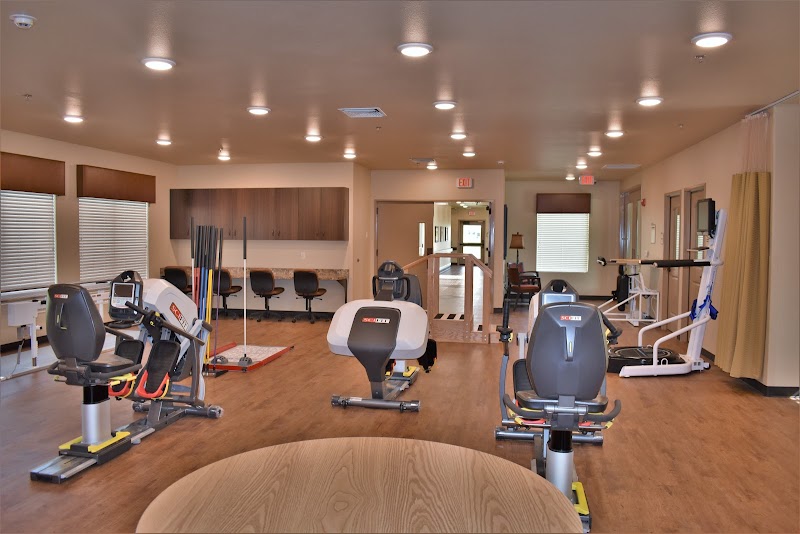
How is Five Points Nursing And Rehabilitation Staffed?

CMS rates FIVE POINTS NURSING AND REHABILITATION's staffing level at 1 out of 5 stars, which is much below average compared to other nursing homes. Staff turnover is 56%, which is 10 percentage points above the Texas average of 46%. High turnover can affect care consistency as new staff learn residents' individual needs. RN turnover specifically is 64%, which is notably high. RNs provide skilled clinical oversight, so turnover in this role can affect medical care quality.

What Have Inspectors Found at Five Points Nursing And Rehabilitation?

State health inspectors documented 16 deficiencies at FIVE POINTS NURSING AND REHABILITATION during 2022 to 2025. These included: 16 with potential for harm.

Who Owns and Operates Five Points Nursing And Rehabilitation?

FIVE POINTS NURSING AND REHABILITATION is owned by a for-profit company. For-profit facilities operate as businesses with obligations to shareholders or private owners. The facility is operated by CREATIVE SOLUTIONS IN HEALTHCARE, a chain that manages multiple nursing homes. With 120 certified beds and approximately 86 residents (about 72% occupancy), it is a mid-sized facility located in AMARILLO, Texas.

How Does Five Points Nursing And Rehabilitation Compare to Other Texas Nursing Homes?

Compared to the 100 nursing homes in Texas, FIVE POINTS NURSING AND REHABILITATION's overall rating (4 stars) is above the state average of 2.8, staff turnover (56%) is significantly higher than the state average of 46%, and health inspection rating (4 stars) is above the national benchmark.

What Should Families Ask When Visiting Five Points Nursing And Rehabilitation?

Based on this facility's data, families visiting should ask: "How do you ensure continuity of care given staff turnover, and what is your staff retention strategy?" "Can you walk me through typical staffing levels on day, evening, and night shifts?" "Can I visit during a mealtime to observe dining assistance and food quality?" "How do you handle medical emergencies, and what is your hospital transfer rate?" These questions are particularly relevant given the facility's high staff turnover rate and the below-average staffing rating.

Is Five Points Nursing And Rehabilitation Safe?

Based on CMS inspection data, FIVE POINTS NURSING AND REHABILITATION has a clean safety record: no substantiated abuse findings (meaning no confirmed cases of resident harm), no Immediate Jeopardy citations (the most serious violation level indicating risk of serious injury or death), and is not on the Special Focus Facility watch list (a federal program monitoring the lowest-performing 1% of nursing homes). The facility has a 4-star overall rating and ranks #1 of 100 nursing homes in Texas. While no facility is perfect, families should still ask about staff-to-resident ratios and recent inspection results during their visit.

Do Nurses at Five Points Nursing And Rehabilitation Stick Around?

Staff turnover at FIVE POINTS NURSING AND REHABILITATION is high. At 56%, the facility is 10 percentage points above the Texas average of 46%. Registered Nurse turnover is particularly concerning at 64%. RNs handle complex medical decisions and coordinate care — frequent RN changes can directly impact care quality. High turnover means new staff may not know residents' individual needs, medications, or preferences. It can also be disorienting for residents, especially those with dementia who rely on familiar faces. Families should ask: What is causing the turnover? What retention programs are in place? How do you ensure care continuity during staff transitions?

Was Five Points Nursing And Rehabilitation Ever Fined?

FIVE POINTS NURSING AND REHABILITATION has no federal fines on record. CMS issues fines when nursing homes fail to meet care standards or don't correct problems found during inspections. The absence of fines suggests the facility has either maintained compliance or corrected any issues before penalties were assessed. This is a positive indicator, though families should still review recent inspection reports for the full picture.

Is Five Points Nursing And Rehabilitation on Any Federal Watch List?

FIVE POINTS NURSING AND REHABILITATION is not on any federal watch list. The most significant is the Special Focus Facility (SFF) program, which identifies the bottom 1% of nursing homes nationally based on persistent, serious quality problems. Not being on this list means the facility has avoided the pattern of deficiencies that triggers enhanced federal oversight. This is a positive indicator, though families should still review the facility's inspection history directly.