Ussery Roan Texas State Veterans Home
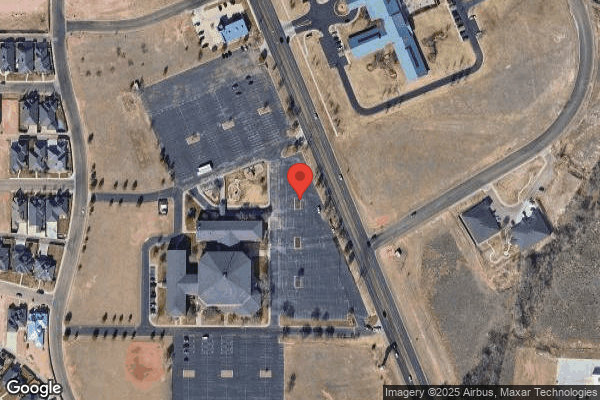
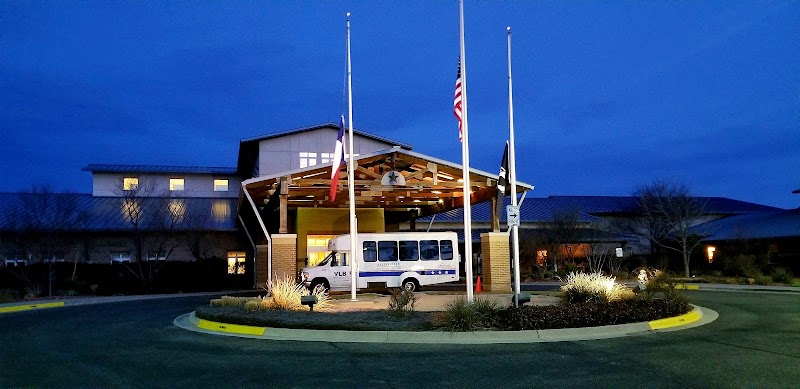
1020 Tascosa Rd, Amarillo, TX 79124 (806) 322-8387
For profit - Limited Liability company 120 Beds TEXVET Data: November 2025 1 Immediate Jeopardy citation
Trust Grade
21/100
#880 of 1168 in TX
Last Inspection: May 2025

Inspected within the last 6 months. Data reflects current conditions.

Overview

Ussery Roan Texas State Veterans Home has received a Trust Grade of F, indicating significant concerns and a poor overall standing. The facility ranks #880 out of 1168 in Texas, placing it in the bottom half of all state facilities, and #8 out of 9 in Potter County, suggesting limited local options for care. While the facility is improving, with issues decreasing from 11 in 2024 to 9 in 2025, it still faces serious challenges, including a concerning staffing turnover rate of 76%, which is above the Texas average of 50%. Specific incidents include a staff member striking a resident, which raises serious safety concerns, and failures in ensuring residents' environments are safe, such as a resident eloping from the facility. Additionally, there are issues with food safety practices that could put residents at risk for food-borne illnesses, emphasizing the need for families to weigh both the improvements and ongoing risks when considering this home.
Trust Score
F
21/100
In Texas
#880/1168
Bottom 25%
Safety Record
High Risk
Review needed
Inspections
Getting Better
11 → 9 violations
Staff Stability
⚠ Watch
76% turnover. Very high, 28 points above average. Constant new faces learning your loved one's needs.
Penalties
○ Average
$9,692 in fines. Higher than 73% of Texas facilities. Some compliance issues.
Skilled Nurses
○ Average
Each resident gets 31 minutes of Registered Nurse (RN) attention daily — about average for Texas. RNs are the most trained staff who monitor for health changes.
Violations
⚠ Watch
32 deficiencies on record. Higher than average. Multiple issues found across inspections.
★★☆☆☆
2.0
Overall Rating
★★★☆☆
3.0
Staff Levels
★★★★☆
4.0
Care Quality
★★☆☆☆
2.0
Inspection Score
Stable
2024: 11 issues
2025: 9 issues

The Good

  • 4-Star Quality Measures · Strong clinical quality outcomes
  • Full Sprinkler Coverage · Fire safety systems throughout facility
  • No fines on record

Facility shows strength in quality measures, fire safety.

The Bad

2-Star Overall Rating

Below Texas average (2.8)

Below average - review inspection findings carefully

Staff Turnover: 76%

30pts above Texas avg (46%)

Frequent staff changes - ask about care continuity

Federal Fines: $9,692

Below median ($33,413)

Minor penalties assessed

Chain: TEXVET

Part of a multi-facility chain

Ask about local staffing decisions and management

Staff turnover is very high (76%)

28 points above Texas average of 48%

The Ugly 32 deficiencies on record

1 life-threatening 1 actual harm
May 2025 8 deficiencies
CONCERN (D)

Potential for Harm - no one hurt, but risky conditions existed

Resident Rights (Tag F0550)

Could have caused harm · This affected 1 resident

**NOTE- TERMS IN BRACKETS HAVE BEEN EDITED TO PROTECT CONFIDENTIALITY** Based on observation, interview, and record review the facility failed to ensure each resident had a right to a dignified existe...

Read full inspector narrative →
**NOTE- TERMS IN BRACKETS HAVE BEEN EDITED TO PROTECT CONFIDENTIALITY** Based on observation, interview, and record review the facility failed to ensure each resident had a right to a dignified existence and to treat each resident with respect and dignity for 1 (Resident #63) of 24 residents reviewed for resident's rights. The facility failed to keep Resident #63's catheter bag covered with a privacy bag. This failure could lead to residents at risk of experiencing feelings of shame and/or embarrassment as well as having their right to privacy violated. Findings include: Record review of Resident #63's face sheet dated 05/28/2025 revealed a [AGE] year-old male admitted to the facility on [DATE]. He had diagnoses that included, but were not limited to, cerebral infarction(stroke), dysphagia (difficulty swallowing in mouth and throat), unsteadiness on feet, abnormalities of gait and mobility, muscle weakness, paranoid schizophrenia (serious mental health disease causing misinterpretation of reality), post-traumatic stress disorder, generalized anxiety disorder (a group of mental illnesses that cause constant fear and worry), cognitive communication deficit (impaired though processes), and unspecified dementia (cognitive loss). Record review of Resident #63's Significant Change MDS dated [DATE] revealed a BIMS score of 3 out of 15 which indicated his cognition to be severely impaired. Record review of Resident #63's care plan dated 04/10/25 revealed a focus area that Resident required an indwelling Foley catheter, date initiated was 12/26/2024 and interventions stated, catheter care per protocol. Record review of Resident #63's physicians orders dated 05/28/2025 revealed the following: foley catheter start date of 03/01/2025 which was active and had no end date. During an observation on 05/28/2025 at 10:47 AM, Resident #63 was sitting at a table in common area, located in the locked unit. Resident #63 was observed to be in a w/c with catheter bag clipped to the underside of the w/c. Catheter bag was in full view of dining area and the bag had liquid in it that was visible to be about ¼ full. During an observation on 05/28/2025 at 11:42 AM, Resident #63 was observed to be sitting at a dining table, soup and a glass of tea were in front of him, no privacy bag observed on catheter bag. During an observation on 05/28/2025 at 3:18 PM, Resident #63 was observed to be asleep, sitting in w/c in common area by the television in the locked unit. Observation of Resident #63's catheter bag without a privacy bag. During an interview on 05/30/2025 at 9:03 AM, CNA L stated she worked on the locked unit and started at the facility 2 months ago. She stated that residents should always have a privacy bag covering their catheter bags. CNA L stated that it was everyone's responsibility for making sure privacy bags were on resident's catheter bags, but the nurses were supposed to bring privacy bags and she stated she felt they could do a better job at doing this. CNA L stated that it was the facilities policy to have privacy bags on catheter bags and a possible negative outcome for them not having one could be a dignity issue - no one was supposed to see resident's urine. During an interview on 05/30/2025 at 9:07 AM, the ADON (the nurse for Resident #63 this shift) stated that if a resident with a catheter does not have a privacy bag, it was definitely a dignity issue. The ADON stated that it was everyone's responsibility to make sure that privacy bags are on, but mainly the nurses. She stated it was their policy to have a privacy bag on all catheter bags and a negative outcome for not having them on would be a violation of resident's dignity and rights. During an interview on 05/30/2025 at 9:27 AM, the DON stated that it was everyone's responsibility to make sure that privacy bags were on catheter bags. She stated it was the policy of the facility to have privacy bags on all catheter bags and a possible negative outcome for this not happening could be dignity of the resident would be violated and visitors could see it. Record review of facility provided policy titled, Catheter Care, Male dated 06/2024 revealed in part: Purpose: It is the policy of the facility to ensure residents with indwelling catheters receive appropriate catheter care using proper technique while maintaining the resident's privacy and dignity. No pertinent information concerning the use of privacy bags. Record review of facility provided policy titled, Resident Rights dated 10/2022 revealed in part . 1. Resident Rights. The resident has the right to a dignified existence. 5. Respect and Dignity. The resident has a right to be treated with respect and dignity .
CONCERN (D)

Potential for Harm - no one hurt, but risky conditions existed

Safe Environment (Tag F0584)

Could have caused harm · This affected 1 resident

**NOTE- TERMS IN BRACKETS HAVE BEEN EDITED TO PROTECT CONFIDENTIALITY** Based on observation, interview, and record review, the facility failed to provide a clean and comfortable environment for 1 of ...

Read full inspector narrative →
**NOTE- TERMS IN BRACKETS HAVE BEEN EDITED TO PROTECT CONFIDENTIALITY** Based on observation, interview, and record review, the facility failed to provide a clean and comfortable environment for 1 of 24 residents (Resident #117) reviewed for environment. -Resident #117 had his evening meal tray left in his room until the next AM. This failure could place residents at risk for diminished quality of life due to the lack of a well-kept environment. Findings include: Record review of Resident #117's clinical record revealed an [AGE] year-old male resident admitted to the facility on [DATE] with diagnoses to include myocardial infraction (heart attack), atrial fibrillation (an irregular, often rapid heart rate that commonly causes poor blood flow), heart failure (a chronic condition in which the heart dose not pump blood as well as it should), basal cell carcinoma of the skin (cancer that begins in the lower part of the epidermis (the outer layer of the skin), chronic obstructive pulmonary disease (a group of lung diseases that block airflow and make it difficult to breath), and osteoarthritis (a type of arthritis that occurs when flexible tissue at the ends of bones wears down). Record review of Resident #117's clinical record revealed his last MDS was an admission completed 04/24/25 listing him with a BIMS score of 05 indicating he was severely cognitively impaired, and he had a functionality of requiring supervision/touching assistance with most of his activities of daily living. Record review of Resident #117's clinical record revealed a care plan with the admission date of 04/18/25, which revealed the following: Focus: o Resident is at risk for alteration in nutrition r/t dx: COPD. Is on Regular diet/mechanical soft texture/thin liquids. Date Initiated: 04/21/2025. Interventions: o Encourage resident to eat all food served on meal tray. Assist as needed. Date Initiated: 04/21/2025 During an observation and interview on 05/28/25 at 08:45 AM Resident #117 was observed in his room in his bed under his covers. Resident #117 was sleeping well and did not wake to knocking or introduction. On the bedside table was Resident #117's dinner tray with a ticket that documented Dinner 05/27/25. The plate was covered and when uncovered noted grilled chicken, broccoli, noodles, and a roll. Also noted was a cobbler desert still covered, and the tea drink. None of the meal had been eaten. During an observation on 05/28/25 at 09:54 AM Resident #117 was not present in his room but his dinner meal tray from 05/27/25 was still on the bedside table in the same condition. During an observation and interview on 05/28/25 at 10:21 AM Resident #117's dinner tray from 05/27/25 was still present in his room. This surveyor asked CNA H (the CNA responsible for Resident #117 this shift) to entered Resident #117's room. Resident #117 was present and awake but did not respond to our presence or when spoken to by this surveyor. CNA H confirmed that Resident #117's meal tray was his dinner tray from the previous evening, that it should not be present, and that it should have been picked up 1 hour after the evening meal was delivered. CNA H stated that the evening meal was at 5:00 PM and the hall trays were delivered between 5:45-6:00 PM. CNA H stated that the tray left in the residents' room could be an issue because he could eat it, become sick, or it could attract bugs, or another resident could eat it. CNA H stated that staff were to make rounds every two hours and that she had just missed the meal tray this shift. During an interview on 05/29/25 at 08:32 AM the DON stated that all meal trays delivered to resident rooms should be picked up within 30-40 minutes after delivery or at minimum 1 hour after they were delivered. The DON stated that all staff should make rounds, especially the CNA's, every 2 hours and check each resident's room. The DON stated that if a meal tray were left in a resident room for 15 hours, that resident could eat it thus making that resident sick, or any resident could eat it making them sick. During an interview on 05/30/25 at 08:38 AM SC I stated that a resident's tray should not be left in their room for more than one hour after the tray had been delivered and that a tray left overnight could result in that resident or another resident eating food that could make them sick or the food could attract bugs. During an interview on 05/30/25 at 08:40 AM RN J (the nurse for Resident #117 this shift) stated that a residents meal tray should not be left in the resident's room overnight, that it should be picked up within one hour after it was delivered. If the tray is left out over time it could result in an infection if it grew bacteria and a resident ate it. Record review of the facility provided policy titled, Serving and Cleaning Up Room Trays in Long-Term Care undated, revealed the following: Purpose: To ensure safe, sanitary, and respectful delivery and removal of meal trays served in resident rooms, in accordance with CMS, infection control . Policy Statement: All room trays will be delivered and picked up by trained staff in a manor that preserved food safety, upholds resident dignity, and prevents the spread of infection. 3. Cleaning Up Room Trays: - Return promptly after meal service (within 1 hour) to collect trays.
CONCERN (D)

Potential for Harm - no one hurt, but risky conditions existed

Assessment Accuracy (Tag F0641)

Could have caused harm · This affected 1 resident

**NOTE- TERMS IN BRACKETS HAVE BEEN EDITED TO PROTECT CONFIDENTIALITY** Based on interview and record review the facility failed to ensure the assessment accurately reflected the resident's status for...

Read full inspector narrative →
**NOTE- TERMS IN BRACKETS HAVE BEEN EDITED TO PROTECT CONFIDENTIALITY** Based on interview and record review the facility failed to ensure the assessment accurately reflected the resident's status for 1 (Resident #1) of 24 residents reviewed for accuracy of assessments. Resident #1 had an active order for oxygen at 3 lpm via NC to maintain Oxygen sats above 90% dated 03/14/2025 and his MDS with a completion date of 05/08/2025 did not indicate he received oxygen while a resident. This failure could place residents at risk of not having their needs identified and therefore not receiving necessary care. Findings Included: Record review of Resident #1's admission record dated 05/28/2025 revealed a [AGE] year-old male originally admitted to the facility on [DATE] with diagnoses that included, but were not limited to, unspecified dementia with behavioral disturbance (breakdown of thought process causing disruptive behavior), malignant neoplasm of unspecified part of unspecified bronchus or lung (cancer in the lungs or airways in the lungs where the specific location or type is not specified), panlobular emphysema (rare form of emphysema which are sacs in the lung can't switch oxygen and carbon dioxide leaving a person breathless, panlobular is a type of emphysema characterized by the destruction of the entire acinus (a cluster of air sacs, or alveoli) in the lung), and pulmonary embolism (clot blocking blood flow to lungs). Record review of Resident #1's quarterly MDS completed on 05/03/2025 revealed a BIMS of 06 which indicated severely impaired cognition. Section O of the MDS revealed Resident #1 was not receiving oxygen On Admission or While a Resident. Record review of Resident #1's care plan with a completion date of 05/07/2025 revealed a focus area of The resident has oxygen therapy r/t Ineffective gas exchange. Resident will maintain O2 sats >90% through next review date. This focus area was initiated on 06/22/23 and revised on 02/2/2024. One of the interventions listed for this focus area was OXYGEN SETTINGS: O2 via nasal prongs @3L/Min via NC to maintain O2 sats>90%. This intervention was initiated on 02/20/2024 and revised on 03/17/2025. Interventions for this focus area stated, resident was encouraged to keep his O2 on at all times and be given medications as ordered by physician. Record review of Resident #1's active order report dated 05/28/2025 revealed the following order: Oxygen at 3L/min via NC to maintain 02 sat>90% every shift . This order had a start date of 03/14/2025 and no end date. Record review of Resident #1's MAR dated 05/01/2025-05/30/2025 revealed Resident #1 was receiving O2 @ 3 lpm via NC to maintain O2 sats > 90% every day, with a start date of 3/14/2025. According to the MAR, Resident #1's O2 sats were being checked morning and evening throughout the month of May. Record review of Resident #1's O2 Sats Summary revealed 32 entries for the 14 days prior to completion of Resident #1's most recent MDS. Of those 32 entries, Resident #1 was receiving O2 31 times and was on room air 1 time. During an interview on 05/30/2025 at 9:16 AM, the DON stated she was the interim DON but had been doing the job of MDS director for one year. She stated she followed the RAI as her policy for completing MDS Assessments and it was her responsibility to make sure MDS's are accurate. The DON stated that a possible negative outcome for a resident not having an accurate MDS assessment could be that the care that they need would not be available for the nurses on the floor. She also stated that an incorrect MDS could affect the facilities funding and it could then affect the care a resident receives. During an interview on 05/30/2025 at 9:29 AM, the ADM stated that the facility used the RAI to fill out residents MDS assessments. She stated a possible negative outcome for not having an accurate MDS could result in an inaccurate care plan and resident could miss services as well as affect funding. Record review of Long-Term Care Facility RAI Manual version 1.18.11 revealed the following: . Section O: Special Treatments, Procedures, and Programs . The intent of the items in this section is to identify any special treatments, procedures, and programs that the resident received or performed during the specified time periods. Reevaluation of special treatments and procedures the resident received or performed, or programs that the resident was involved in during the 14-day look-back period is important to ensure the continued appropriateness of the treatments, procedures, or programs. Steps for Assessment 1. Review the resident's medical record to determine whether or not the resident received or performed any of the treatments, procedures, or programs within the assessment period defined for each column. Coding instructions for Column b. While a Resident Check all treatments, procedures, and programs that the resident received or performed after admission/entry or reentry to the facility and with the last 14 days.
CONCERN (D)

Potential for Harm - no one hurt, but risky conditions existed

Respiratory Care (Tag F0695)

Could have caused harm · This affected 1 resident

**NOTE- TERMS IN BRACKETS HAVE BEEN EDITED TO PROTECT CONFIDENTIALITY** Based on observation, interview and record review, the facility failed to ensure that residents who needed respiratory care were...

Read full inspector narrative →
**NOTE- TERMS IN BRACKETS HAVE BEEN EDITED TO PROTECT CONFIDENTIALITY** Based on observation, interview and record review, the facility failed to ensure that residents who needed respiratory care were provided such care, consistent with professional standards of practice, the comprehensive person-centered care plan and the residents' goals and preferences, for 1 (Resident #1) of 24 residents reviewed for respiratory care. Resident #1 had orders for oxygen at 3 liters per minute and was observed to have an empty oxygen tank for an hour while in the dining area. This failure could place residents who receive oxygen at an increased risk for receiving oxygen at the wrong rate which could lead to hypercapnia (too much carbon dioxide in the blood), pulmonary oxygen toxicity (damage to the lung lining tissues and air sacs), hypoxemia (low levels of oxygen in the blood, decreasing the oxygen supply to vital organs), and shortness of breath. Findings included: Record review of Resident #1's admission record dated 05/28/2025 revealed a [AGE] year-old male originally admitted to the facility on [DATE] with diagnoses that included, but were not limited to, unspecified dementia with behavioral disturbance (breakdown of thought process causing disruptive behavior), malignant neoplasm of unspecified part of unspecified bronchus or lung (cancer in the lungs or airways in the lungs where the specific location or type is not specified), panlobular emphysema (rare form of emphysema which are sacs in the lung can't switch oxygen and carbon dioxide leaving a person breathless, panlobular is a type of emphysema characterized by the destruction of the entire acinus (a cluster of air sacs, or alveoli) in the lung), and pulmonary embolism (clot blocking blood flow to lungs). Record review of Resident #1's quarterly MDS completed on 05/03/2025 revealed a BIMS of 06 which indicated severely impaired cognition. Record review of Resident #1's care plan with a completion date of 05/07/2025 revealed a focus area of The resident has oxygen therapy r/t Ineffective gas exchange. Resident will maintain O2 sats >90% through next review date. This focus area was initiated on 06/22/23 and revised on 02/2/2024. One of the interventions listed for this focus area was OXYGEN SETTINGS: O2 via nasal prongs @3L/Min via NC to maintain O2 sats>90%. This intervention was initiated on 02/20/2024 and revised on 03/17/2025. Interventions for this focus area stated, resident was encouraged to keep his O2 on at all times and be given medications as ordered by physician. Record review of Resident #1's active order report dated 05/28/2025 revealed the following order: Oxygen at 3L/min via NC to maintain 02 sat>90% every shift . This order had a start date of 03/14/2025 and no end date. Record review of Resident #1's MAR dated 05/01/2025-05/30/2025 revealed Resident #1 was receiving O2 @ 3 lpm via NC to maintain O2 sats > 90% every day, with a start date of 3/14/2025. According to the MAR, Resident #1's O2 sats were being checked morning and evening throughout the month of May. Record review of Resident #1's O2 Sats Summary revealed 32 entries for the 14 days prior to completion of Resident #1's most recent MDS. Of those 32 entries, Resident #1 was receiving O2, 31 times and was on room air 1 time. During an observation on 05/28/2025 at 10:32 AM, Resident #1 was sitting in his w/c at a table in the common area of the locked unit. Resident #1 had nasal cannula in nose with an oxygen tank on the back of his w/c that registered 3 lpm, tank was empty. During an interview on 05/28/2025 at 11:15 AM, Resident #1's family member stated that he receives continual oxygen. During an observation on 05/28/2025 at 11:32 AM, Resident #1 was sitting at dining room table with nasal cannula in nose, O2 tank was observed as being empty. During an observation on 05/28/2025 at 11:37 AM, nursing staff were observed to change out empty tank for Resident #1. During an interview on 05/30/2025 at 8:53 AM, CNA K stated she had worked in the facility for 3 months on the locked unit and that the nurses were responsible for changing out oxygen tanks for residents. She stated that a possible negative outcome for a resident to be without oxygen for an hour could be delusion or behaviors, worst case could be passing out or death. CNA K stated that when residents have dementia, many already have behaviors, so going without oxygen could make the behaviors and delusions a lot worse. During an interview on 05/30/2025 at 9:08 AM, the ADON (the nurse for Resident #1 this shift) stated that everyone was responsible for keeping eyes on oxygen tanks, but the nurses were responsible for changing them out. She stated a possible negative outcome for a resident running out of oxygen for an hour could be a big change of condition, they could go unconscious or unresponsive which could lead to death. The ADON also stated that behaviors could change, and an hour with no oxygen could result in bad issues happening for the resident. During an interview on 05/30/2025 at 9:24 AM, The DON stated that the nurses were responsible for changing out oxygen tanks. She stated all nursing staff were supposed to check on levels on tanks during their rounds. The DON stated a possible negative outcome for a resident to be off their oxygen for an hour could be mental status and cardiovascular changes that could affect their health. Record review of facility policy titled, Oxygen Administration and dated February 2015 revealed the following in part: Policy: Correct technique and standards of practice will be used with oxygen administration. Procedure: 1. Check the physician's order for the flow rate and the method of administration.
CONCERN (D)

Potential for Harm - no one hurt, but risky conditions existed

Pharmacy Services (Tag F0755)

Could have caused harm · This affected 1 resident

**NOTE- TERMS IN BRACKETS HAVE BEEN EDITED TO PROTECT CONFIDENTIALITY** Based on observations, interviews, and record review, the facility failed to provide pharmaceutical services (including procedur...

Read full inspector narrative →
**NOTE- TERMS IN BRACKETS HAVE BEEN EDITED TO PROTECT CONFIDENTIALITY** Based on observations, interviews, and record review, the facility failed to provide pharmaceutical services (including procedures that assure the accurate acquiring, receiving, dispensing, administering, and documentation of all drugs and biologicals) to meet the needs of 1 out of 6 residents (Residents #97) who was observed for medication administration. -RN D administered medication to Resident #97 via nebulizer and left Resident #97 unattended. This failure can affect residents that receive medications resulting in adverse reactions to medication, deterioration in their health, exacerbation of their disease process, and/or hospitalization. Findings included: During an observation on 05/29/25 at 08:45 AM Resident #97 was lying in his bed with a nebulizer treatment going and no staff was present in room with the resident. Record review of Resident #97's face sheet, dated 05/29/2025, revealed Resident #97 was a [AGE] year-old male resident who was admitted to the facility on [DATE] with the diagnoses of heart failure (heart muscle doesn't pump blood as well as it should), chronic obstructive pulmonary disease (a common lung disease causing restricted airflow and breathing problems), pulmonary hypertension due to lung diseases and hypoxia (high blood pressure in your pulmonary arteries, which carry oxygen-poor blood from your heart to your lungs), vascular dementia, unspecified severity, without behavioral disturbance, psychotic disturbance, mood disturbance and anxiety (problems with reasoning, planning, judgment, memory and other thought processes caused by brain damage from impaired blood flow to your brain), personal history of transient ischemic attack (TIA), and cerebral infarction without residual deficits (a transient episode of neurologic dysfunction due to the focal brain, spinal cord, or retinal ischemia without acute infarction or tissue injury). Record review of Resident #97's MDS assessment, dated 03/14/2025, revealed that Resident 97 had a BIMS score of 09 which indicates that Resident #1 was moderately cognitively impaired. Resident #97's required supervision assistance with bathing; all care areas are supervision or set-up assistance needed only. Record review of Resident #1's care plan, dated 03/25/2025 revealed the following: Focus o Risk for Ineffective Airway Clearance r/t Respiratory Failure Date Initiated: 09/06/2024 Revision on: 09/06/2024 Goal o Resident Will Maintain Airway Patency Date Initiated: 09/06/2024 Target Date: 03/19/2025 Interventions o Administer nebulizer treatment, per order Date Initiated: 09/06/2024 o Educate Resident / Representative on energy conservation techniques Date Initiated: 09/06/2024 o Encourage ambulation Date Initiated: 09/06/2024 o Encourage participation in coughing, deep breathing and forced expiratory techniques, as ordered Date Initiated: 09/06/2024 o Ensure proper position for optimal breathing Date Initiated: 09/06/2024 o Evaluate for cough Date Initiated: 09/06/2024 o Evaluate for shortness of breath Date Initiated: 09/06/2024 o Evaluate hydration status including: skin turgor, mucous membranes and tongue Date Initiated: 09/06/2024 o Evaluate lung sounds Date Initiated: 09/06/2024 o Evaluate pulse oximetry Date Initiated: 09/06/2024 o Evaluate respiratory rate and effort Date Initiated: 09/06/2024 o Provide oxygen as indicated by Resident condition and / or provider order Date Initiated: 09/06/2024 Record review of Resident #97's electronic medication record, dated, 05/29/2025, revealed Resident #97 received Ipratropium-Albuterol Inhalation solution 0.5-2.5 (3) MG/3ML (Ipratropium-albuterol) 1 vial inhale orally three times a day related to Chronic Obstructive Pulmonary Disease, Unspecified (J44.9)-Start Date-09/01/2024 Record showed that medication was provided to resident at 08:00am. During an interview on 05/29/25 at 08:56 AM Resident #97 was asked about his nebulizer treatment, and Resident #97 was unable to state if the nurses stay with him during his treatment or not. During an interview on 05/29/25 at 08:57 AM Roommate of Resident #97 stated that they just put it (nebulizer mask) on him (Resident #97) and leave. During an interview on 05/29/25 at 10:39 AM LVN D stated I put it on him and then went to go and do something else, but he is always supervised. LVN D stated the negative outcome would be that the resident would not finish the medication or get the whole medication. During an observation on 05/29/25 at 01:39 PM Resident #97 had his nebulizer treatment mask on and receiving a treatment, no nurse or staff present during medication administration. During an interview on 05/30/25 at 08:39 AM DON stated the negative outcome for not staying with a resident during a nebulizer medication administration could be the resident would not receive all of the medication or have an adverse reaction. Record review of facility provided policy titled, Nebulizer Therapy, dated May 2025, revealed no information related to this event. Record review of facility provided policy titled, Medication Administration, dated October 2012, revealed no information related to this event.
CONCERN (D)

Potential for Harm - no one hurt, but risky conditions existed

Deficiency F0761 (Tag F0761)

Could have caused harm · This affected 1 resident

**NOTE- TERMS IN BRACKETS HAVE BEEN EDITED TO PROTECT CONFIDENTIALITY** Based on observation, interview, and record review the facility failed, in accordance with State and Federal laws, to store all ...

Read full inspector narrative →
**NOTE- TERMS IN BRACKETS HAVE BEEN EDITED TO PROTECT CONFIDENTIALITY** Based on observation, interview, and record review the facility failed, in accordance with State and Federal laws, to store all drugs and biologicals in locked compartments under proper temperature controls and permit only authorized personnel to have access to the keys for 1 (Resident #20) of 24 residents reviewed for medication storage. The facility failed to ensure Resident #20 did not have access to 650 mg acetaminophen capsules. This failure could place residents at risk of injury due to ingesting non-prescribed medications. Findings Included: Record review of Resident #20's admission record dated 05/28/25 revealed an [AGE] year-old male admitted to the facility on [DATE] with diagnoses that included, but were not limited to, cerebral infarction (occurs as a result of disrupted blood flow to the brain due to problems with the blood vessels that supply it, stroke), unspecified glaucoma (eye condition that damages optic nerve and can lead to vision loss or blindness), major depressive disorder recurrent severe (a mental disorder characterized by persistent low mood, low self-esteem, and loss of interest or pleasure in normally enjoyable activities), and unspecified dementia severe with agitation (decline in cognitive function and increase in behavioral disturbances such as restlessness, irritability, or aggression). Record review of Resident #20's quarterly MDS completed on 03/31/25 revealed the following: Section C Cognitive Patterns revealed Resident #20 had a BIMS score of 8 which indicated moderate cognitive impairment. Section GG Functional Abilities revealed Resident #29 needed supervision or touching assistance across all ADLs except for eating and rolling left to right for which he needed only set up or clean up assistance. Record review of Resident #20's care plan completed on 04/14/25 revealed he had impaired cognitive function/dementia or impaired thought processes r/t Dementia. The care plan revealed no mention of Resident #20 being allowed to administer acetaminophen to himself as needed. Record review of Resident #20's active orders as of 05/28/25 revealed no order for self-administering medication and no order for acetaminophen. During an observation and interview on 05/28/25 at 11:03 AM Resident #20 was seated on the edge of his bed. He stated he had pounding headaches often and when he asked staff for an aspirin, they told him he would need doctor orders for any medication. He expressed his disgust with this and reached over to open the bottom drawer of his nightstand. Resident #20 pulled out a bottle of acetaminophen 650 mg capsules, shook it, and stated, I don't have time for that. This is my doctor. He stated he took one pill and it usually helped with his headaches but sometimes he had to take two pills. During an observation on 05/29/25 at 10:20 AM the bottle of acetaminophen was in the bottom drawer of Resident #20's nightstand. It appeared to be ¾ full of capsules. During an interview on 05/30/25 at 08:57 AM RN J stated nurses and CMAs were the only people allowed to administer medications to residents. She stated if it was care planned, a resident was allowed to have over the counter medication at their bedside. She stated if a resident was not care planned to self-administer medication, They could be taking too much. During an interview on 05/30/25 at 09:25 AM MA M stated nurses and medication aides were the only people allowed to administer medications to residents. She stated some residents had orders to self-administer medications and it was in the residents' care plan. She stated a resident could be negatively affected by having medication in their possession without a care plan or an order to do so. During an interview on 05/30/25 at 09:35 AM DON stated a nurses or CMAs were responsible for administering medications to residents. She stated residents were allowed to keep medications in their rooms sometimes. DON stated, They would do a medication administration test with us, tell us what it (the medication) is and how often they take it and how to use it. She stated if a resident was allowed to have medication in their room it would be in their care plan. She stated if a resident had medication in their room and it was not care planned it could result in medication error or overuse. She stated she was not aware Resident #20 had acetaminophen in his room. She stated staff did regular sweeps to keep that kind of thing from happening but residents could purchase their own over the counter medications or family members could bring said medications to the residents. During an interview on 05/30/25 at 10:23 AM ADM stated Resident #20 was very angry when staff attempted to remove his bottle of acetaminophen. She stated she told staff to give him time to cool off. ADM stated, Then we will get with him and see if he can tell us how to use, how much to use, and then care plan him for having the medication. Record review of facility policy titled Medication Storage and dated June 20, 2023, revealed the following: . It is the policy of this facility to ensure all medications housed on our premises will be stored in the pharmacy, medication rooms, and/or medication carts according to the manufacturer's recommendations . For residents who self-administer and maintain possession of their medications refer to the policy for self-administration. a. All drugs and biologicals will be stored in locked compartments . b. Only authorized personnel will have access to the locked compartments. 2. Only licensed nurses, pharmacy personnel, and those lawfully authorized to administer medications such as medication aides are allowed access to medications. Record review of facility policy titled Self-Administration of Medications and dated March 2021 revealed the following: . A resident may only self-administer medications after the interdisciplinary team has determined which medications may be safely self-administered. 4. Lockable drawers are required to store medications in the resident's room. 6. The resident's care plan will reflect their desire and ability to self-administer medications.
CONCERN (E)

Potential for Harm - no one hurt, but risky conditions existed

Food Safety (Tag F0812)

Could have caused harm · This affected multiple residents

Based on observation, interview, and record review, the facility failed to store, prepare, distribute, and serve food in accordance with the professional standards for food service safety for 1 of 1 k...

Read full inspector narrative →
Based on observation, interview, and record review, the facility failed to store, prepare, distribute, and serve food in accordance with the professional standards for food service safety for 1 of 1 kitchen reviewed for kitchen sanitation. 1. The facility failed to ensure [NAME] F and [NAME] G 's hands were washed and gloves were changed during preparation of food. 2. The facility failed to ensure [NAME] E wore beard covers while in the kitchen. These failures could place residents who ate food served by the kitchen at risk of food-borne illness. Findings included: In an interview and observation on 5/28/25 at 11:30 am, [NAME] F was observed in the kitchen prep area using the blender to chop meat for the mechanical soft diets. [NAME] F picked up meat patties with her gloved hands and tore meat apart with her gloved hands. [NAME] F put the meat into the blender, then touched the blender buttons, blender lid and kitchen utensils. [NAME] F picked up a container and moved it to the blender. [NAME] F picked up the blender container. [NAME] F removed the lid and used a spatula to scrape meat into the prepared pan. [NAME] F then picked up more meat patties with her gloved hands. [NAME] F tore the meat patties up with her gloved hands and put the meat into the blender. [NAME] F did not change gloves or wash hands during this activity. [NAME] F stated she used her hands because it was easier to break up the food with hands rather than stop and cut it up. She stated I should have used tongs to pick up the meat. I should have changed my gloves. The DM was present and stated the staff should use tongs for everything. She stated she should have also changed gloves between tasks. In an interview and observation on 5/28/25 at 11:36 am, [NAME] E was observed walking into the kitchen with no beard cover on his face. [NAME] E went to the back of the kitchen. [NAME] E stated he was supposed to wear a beard cover while in the kitchen. He stated the consequences of no beard cover would be food borne illnesses. In an observation on 5/28/25 at 11:50 am, [NAME] G was observed in the kitchen prep area with gloved hands. [NAME] G took temperatures of food then opened the steamer oven and took out a pan of zucchini. [NAME] G poured the pan of zucchini into a different serving pan and used his gloved hand to scoop out the remainder of zucchini into the serving pan. [NAME] G put the pan down and walked to the freezer, opened the freezer door, picked up a box of frozen meat patties, carried the box to the prep counter and opened the box. [NAME] G picked up a handful of meat patties from the box. [NAME] G walked to the fryer and put the meat patties into the fryer using his gloved hand. [NAME] G picked up a second handful of meat patties with his gloved hand and put them into the fryer. [NAME] G did not change his gloves or wash his hands. In an observation on 5/28/25 at 12:00 pm, [NAME] G went to the freezer, opened the freezer door, got hamburger patties, and put the patties on a plate with his gloved hands. [NAME] G opened the hamburger bun package and took out the hamburger buns, picked up the butter spatula and put butter on the buns. [NAME] G placed the buttered buns on the griddle with his gloved hand, then put his gloved hand inside the bread wrapper and pulled out bread. [NAME] G picked up the butter spatula and buttered the bread, then put the bread on the griddle. [NAME] G went to the walk-in cooler, opened the door and brought out a package of cheese. [NAME] G unwrapped the cheese and placed cheese slices on the bread on the griddle, picked up a spatula, turned meat patties, took out more cheese from the package, put the cheese slices on the meat, touched the meat, took out ham from a package and put the ham on the grill with his gloved hands. [NAME] G did not change his gloves or wash his hands during this time. In an observation on 5/28/25 at 12:05 pm, [NAME] G picked up a clean pan, walked to the griddle picked up a spatula, slid the spatula under a sandwich, used his gloved hand to slide the sandwich off the spatula, picked up another pan and used his gloved hands to pick up the sandwiches and put the grilled sandwiches into a serving pan. [NAME] G did not change his gloves or wash his hands. In an observation on 5/28/25 at 12:10 pm [NAME] G looked at pages in a menu book, touched pans and kitchen surfaces, adjusted the knobs on the stove, opened the doors of the steamer oven, opened the freezer door, brought out a box of frozen meat, opened the box of meat, then took out the frozen meat patties with his gloved hands and put the meat patties into the fryer. [NAME] G did not change his gloves or wash his hands. In an interview on 5/29/25 at 10:00 am [NAME] G stated he should have changed his gloves and washed his hands when changing tasks and touching food during the lunch meal on 5/28/25. He stated he was busy and just forgot. He stated the consequences for residents would be food borne illness. In an interview on 5/30/25 at 10:10 am, the DM stated she had trained the staff on the use of hair restraints and hand washing. She stated she expected all staff to have all hair and beard covers on at all times and she expected staff to wash hands and change gloves between tasks. She stated the consequences of not having a beard cover or changing gloves and washing hands between tasks would be food borne illnesses and could make residents sick. Record Review of the policy dated October 2018 titled Employee Sanitation documented: Hairnets, caps, beard coverings or other effective hair restraints must be worn to keep hair from food and food contact surfaces. Employees must wash hands and exposed portions of their arms before engaging in food preparation including working with exposed food, clean equipment and utensils and unwrapping single service and single use foods . when switching between working with raw food and working with ready to eat foods, during food preparation including working with exposed food, clean equipment, and utensils. Gloves are not a substitute for thorough and frequent hand washing. When using gloves, always wash hands before touching or putting on new gloves. Use single use gloves for one task. Change gloves between each food preparation task, after touching items, utensils or equipment not related to task, when leaving the food prep area for any reason, when damaged soiled or when interrupted, every hour for all tasks taking longer than one hour. Do not store gloves in pockets or apron. Record Review of the policy dated October 2018 titled Handwashing documented: Hands should be washed after the following occurrences: handling raw food, touching un-sanitized equipment, work surfaces, changing tasks.
CONCERN (E)

Potential for Harm - no one hurt, but risky conditions existed

Infection Control (Tag F0880)

Could have caused harm · This affected multiple residents

Based on observation, interview, and record review, the facility failed to maintain an infection prevention and control program designed to provide a safe, sanitary, and comfortable environment to hel...

Read full inspector narrative →
Based on observation, interview, and record review, the facility failed to maintain an infection prevention and control program designed to provide a safe, sanitary, and comfortable environment to help prevent the development and transmission of communication diseases and infections for 9 of 32 residents (Resident #22, #35, #11, #70, #51, #25, #58, #107, and Resident #9) reviewed for infection control. -CNA A failed to use proper hand hygiene techniques in between assisting Resident #22, #35, #11, #70, and Resident #51 with cutting up their food. -CNA B failed to use proper hand hygiene techniques when assisting Resident #107 to eat after assisting Resident #9 with the cutting up of his meal. -CNA C failed to use proper hand hygiene techniques when assisting Resident #25 to eat after assisting Resident #9 to sit up in his wheelchair. This failure could place residents at an increased risk for potentially exposing them to bacterial or viral infections that could lead to the spread of communicable diseases. Findings included: During an observation on 05/28/25 at 12:25 PM CNA A was cutting up Resident # 22 chicken fried steak, CNA A then went to Resident # 35 to assist her with cutting up her steak, No HH was performed between these 2 residents. CNA A went to Resident # 11 to cut up his steak and then went to Resident # 70, no HH was performed between these 2 residents. CNA A proceeded to touch her hair and then went to assist Resident # 51 to cut up his steak, no HH was performed before touching Resident #51's eating utensils after touching her hair. During an observation on 05/28/25 at 12:44 PM CNA C was assisting Resident # 25 with eating her lunch and then got up to assist another Resident # 58 with cutting up his steak and then returned to feeding Resident #25, no HH was performed before or after assisting Resident #25 or Resident #58. During an observation on 05/28/25 at 12:46 PM CNA B was assisting Resident # 107 with eating, CNA B went to help another staff member move Resident # 9 to sit up more in his Geri-chair, then went back to assist Resident #107 with eating. No HH was performed before or after performing these tasks with either resident. During an interview on 05/28/25 at 02:34 PM CNA B was asked why HH was not performed when assisting a resident to eat, she stated, I didn't think about it, there could have been anything on his w/c. CNA B stated the negative outcome would be infection control. During an interview on 05/28/25 at 03:11 PM CNA A was asked why HH was not performed when assisting residents with the cutting up of their meals, CNA A stated, I wasn't thinking, I just wanted to get it done. CNA A was asked what a negative outcome would be she stated, There isn't one. During an interview on 05/28/25 at 03:14 PM CNA C was asked why HH was not performed, CNA C stated, it flew my mind. CNA C stated a negative outcome was there could be an infection control issue. During an interview on 05/30/25 at 08:39 AM DON stated a negative outcome for not performing HH could lead to an increased risk of infection for the residents. Record review of facility provided policy titled, Handwashing, dated 2013, revealed the following: .After handling soiled equipment or utensils. During good preparation, as often as necessary to remove soil and contamination and to prevent cross contamination when changing tasks. .After in engaging in other activities that contaminate the hands.
Apr 2025 1 deficiency 1 Harm
SERIOUS (G) 📢 Someone Reported This

A family member, employee, or ombudsman was alarmed enough to file a formal complaint

Actual Harm - a resident was hurt due to facility failures

Accident Prevention (Tag F0689)

A resident was harmed · This affected 1 resident

**NOTE- TERMS IN BRACKETS HAVE BEEN EDITED TO PROTECT CONFIDENTIALITY** Based on observations, interview and record review, the facility failed to ensure the residents environment remained free from a...

Read full inspector narrative →
**NOTE- TERMS IN BRACKETS HAVE BEEN EDITED TO PROTECT CONFIDENTIALITY** Based on observations, interview and record review, the facility failed to ensure the residents environment remained free from accidents as was possible and each resident received adequate supervision and assistance devices to prevent accidents for 1 of 12 residents (Resident #1) reviewed for accidents, hazards, and supervision. The facility failed to ensure Resident #1 did not elope from the facility. The noncompliance was identiified as Past Non-Compliance. The Immediate Jeopardy began on 3/7/25 and ended on 4/3/25. The facility had corrected the noncompliance before the survey began. This deficient practice could place residents at risk a serious injury or serious harm and placed residents at risk of heat or cold exposure, dehydration and/or other medical complications, or being struck by a motor vehicle. Findings included: Record review of Resident #1s Face Sheet, undated, documented a [AGE] year-old male was admitted to the facility on [DATE] with the following diagnoses: Sequelae of nontraumatic intracerebral hemorrhage (long-term effects of a hemorrhage stroke - bleeding into the tissues of the brain), hypertension (high blood pressure), hyperlipidemia (high levels of fat particles in the blood), depression, type 2 diabetes (high blood glucose), convulsions (uncontrolled jerking, blank stares or loss of consciousness caused by abnormal electrical activity in the brain), reflux (stomach acid or bile irritates the food pipe lining), Benign Prostatic Hyperplasia without lower urinary tract symptoms (enlarged prostrate but not cancerous), presence of prosthetic heart valve (an artificial device implanted to replace a damaged or malfunctioning heart valve), contusion and laceration of cerebrum with loss of consciousness greater than 24 hours without return to preexisting conscious level, with patient surviving (bruises and tears in the brain tissue), traumatic subdural hemorrhage with loss of consciousness (blood collects between the layers of tissue that cover the brain), hemorrhagic disorder due to extrinsic circulating anticoagulants (caused by blood thinners interfering with normal clotting factors) Record review of Resident #1's Care Plan, updated 3/7/25, documented the resident is an elopement risk related to history of attempts to leave the facility unattended. Interventions: distract resident from wandering by offering pleasant diversions, structured activities, food, conversation, television, book. Provide structured activities: Toileting, walking inside and outside, reorientation strategies including signs, pictures and memory boxed. Wander guard to wrist. Check functioning of secure alarm per order, may attempt to exit seek after having visitors. Record review of Resident #1's admission MDS resident assessment, dated 3/4/25, documented the resident scored 12 of 15 on a mini-mental exam for cognitive awareness and could answer questions correctly, independent with all ADLs but bathing, occasionally incontinent of bladder and bowel, 70 inches tall and 212 pounds. Record review of Resident #1's nurses notes documented the following: 3/7/25 at 6:45 p.m. - This nurse notified via AC that Veterans spouse had contacted her via cell phone stating, My husband called me, and I can hear wind on the phone, and he says he doesn't know where he is. I can tell he is walking somewhere outside. This nurse and RN supervisor immediately began searching for the Veteran. Veteran was located at 6:30 p.m. approximately 500 feet from the facility seated on the ground. Veteran asked what happened and why he left the facility, Veteran responded, I was looking for my truck, it got stolen. Veteran assisted back to facility. Body audit completed: no injuries identified. Blood Pressure 131/75, oxygen saturation 95% on room air, 18 respirations, pulse 86. Wander guard placed to right ankle. One on one initiated upon return to facility. MD/NP ordered veteran be sent to ER for further evaluation. Spouse notified; Administrator notified. 3/11/25 at 4:39 p.m. - Resident here with wife getting reacquainted with unit and staff, was pleasant in conversation, has wander guard to right ankle and is confirmed to be active. Educated resident and family on call light use and to notify staff for outings, as well as proper usage of sign out book - both able to verbalize understanding. Record review of Resident #1's Elopement evaluation, dated 3/7/25 at 9:58 p.m., documented the following: History of elopement while at home: no Wandering behavior, a pattern or goal-directed: no Wanders aimlessly or non-goal-directed: no Wandering behavior likely to affect the safety or well-being of self/others: no Wandering behavior likely to affect the privacy of others: no Recently admitted within past 30 days and has not accepted the situation: no Elopement Score: 1.0 (The resident was not an elopement risk) Record review of the Provider Investigation Report, dated 3/8/25 and filled out by the DON reflected Resident #1, who was independently ambulatory, interviewable and had the capacity to make informed decisions, approached LVN A and said he was looking for his friend. LVN A informed the veteran that she hadn't seen anyone, Resident #1 ambulated back down the hallway. Later, when LVN A was passing meal trays in the dining room, she saw Resident #1 ambulating down the main hallway. The AC received a call from Resident #1's wife who said her husband had called her and did not now where he was at, but he was outside and by a road. The AC immediately contacted the DON, who along with the RN supervisor, got in a car to search the outside of the facility while staff were searching everywhere inside the building. Resident #1 was found in the back of the facility sitting on the ground. Resident #1 was assessed head to toe, and he was assisted back to the community. Body audit was completed on Resident #1, no injuries identified. Placed on 1:1 monitoring pending transport to ER. Vital signs obtained, Blood Pressure 131/75, Oxygen 95% on room air, 18 respirations, pulse 86. Resident #1 does not complain or show signs of symptoms of any physical, mental, or emotional injuries or distress. Resident #1 does not have any ill effects on his psychosocial wellbeing and was sent to the hospital for evaluation and treatment for prior existing elevated INR that was being monitored and the facility was waiting for new orders. Resident #1 was admitted to ICU at the hospital and treated for subdural hematoma. MD/NP and spouse notified. All staff in-service was immediate for: Elopement Procedures and Managing Exit Seeking Behaviors, Resident Specific Care Plan Interventions and Identifying Trippers related to Exit Seeking Behaviors. Staff were also re-educated on the Elopement Risk Book and drills. The facility has created a new position and will hire a nighttime Concierge/Security to help support the community's front entrance. This position will support the community when the daytime concierge leaves for the day During an interview on 4/9/25 at 10:00 a.m., LVN A stated she was making her last rounds right before dinner, Resident #1 approached her and was looking for somebody with blonde hair and wearing boots. LVN A stated she told Resident #1 she had not seen anyone fitting that description and he ambulated away to his room. LVN A stated she was passing trays in the dining room between 5:00 p.m. and 6:00 p.m., when she saw Resident #1 in the main hallway and then she no longer saw him. LVN A stated in the middle of dinner, it was announced that Resident #1 was not in the building. LVN A stated it was not too long and Resident #1 was found. LVN A stated the RN supervisor and the DON assessed Resident #1 and he did not have any injuries. LVN A stated Resident #1 was sent to the hospital because his cognition was worse than it normally was. LVN A stated they had held Resident #1's Coumadin (blood thinner), because his INR was elevated and at the hospital, it was reported to staff the Resident #1 had a subdural hematoma. LVN A stated Resident #1 had not fallen but his INR was elevated, and he was more confused than usual, so they sent him out to the hospital. LVN A stated Resident #1 had since been discharged home. During an interview on 4/9/25 at 10:25 a.m., the DON stated Resident #1's spouse had called the AC, and she was frantic because Resident #1 called her and said he was outside. The DON stated they called a Code [NAME] due to a missing resident. The DON stated they announce overhead and then they started looking for the resident. The DON stated staff were stationed at the front and back doors. The DON stated the charge nurse would identify who stayed on the hall and who looked for the resident. The DON stated she called Resident #1's spouse and said she could not find him as she was outside and drove around the block but could not see him. The DON stated she received a call from the AC that Resident #1 was in the back of the facility sitting on the ground and that was where she found him. The DON stated Resident #1 told her he just sat down. The DON stated Resident #1 was assessed and was more confused than usual. The DON stated Resident #1 was being monitored due to an elevated INR and they were watching for any type of bleeding. The DON stated the RN Supervisor took Resident #1 to his room and assessed him again and there was not any injury. The DON stated during this situation, if passed a certain amount of time, the police would have been called if the resident could not be found. The DON discussed with the provider about the elevated risk because of his elevated INR and they did not know if he fell or just sat down, so they sent him out to the hospital for further evaluation. The DON stated a normal INR was supposed to be between 2 - 3, but Resident #1's was elevated at 3.9, so they held his coumadin dose. The DON stated they previously checked Resident #1's INR and it was 3.9, the INR was checked again at the hospital, and it was over 5. The DON stated she did not understand the rise in the INR because Resident #1 was not given any extra Coumadin because they had followed the provider orders and held the Coumadin dose. The DON stated Resident #1 had been taking Coumadin for a long time. The DON stated they drew INR twice a week and if the INR was abnormal, they draw an INR more often. The DON stated when Resident #1 returned to the facility, he did not have any order for Coumadin due to his high risk. The DON stated Resident #1 was talking in word salad (just jumbled words) before the hospital visit and when Resident #1 returned, he was back to his baseline. The DON stated Resident #1 had only been in the facility for a week as he came in for strengthening. The DON stated Resident #1 had a family member visit that day and he was confused and wanted to go home. The DON stated the interventions after the incident included placing a wander guard on the resident and checking on him every 15 minutes. The DON stated they felt Resident #1 walked out of the front door as the Concierge had left the facility. An observation on 4/9/25 at 11:10 a.m. of the area where the resident was found was at the back edge of the property. Along with the DON and CMS representative, revealed the back door was located between halls 400 and 500 which was always kept unlocked. The large patio had an open sidewalk on the right with no gate and at the end of the patio, there was a large open area, with no gate, leading out to the parking lot. The parking lot was crossed, and the far end of the property is an empty field with a housing development behind it and a road coming off of a main road which was used as a driveway to the back parking area. During an interview on 4/9/25 at 11:30 a.m., the AC stated Resident #1 was a new to the facility. The AC stated when Resident #1's family member called her because she received a call from Resident #1 who was outside somewhere. The AC stated Resident #1's family member said Resident #1 said he did not know where he was, so she notified the supervisor. The AC stated the DON called a Code [NAME] overhead and the DON and supervisor got in a car and went looking for Resident #1 while other staff were looking for him in the facility. The AC stated she called Resident #1's family member back to get his cell phone number so AC called him and asked him questions about what his surroundings looked like. The AC stated pretty soon, she heard the DON talking to him, so she knew Resident #1 was ok. During a telephone interview on 4/9/25 at 11:40 a.m., Resident #1's family member stated Resident #1 called her on his cell phone and said he was somewhere outside and told her he could not make it and he could not find his truck. Resident #1's family member stated she thought he was dehydrated as he had just got out of an intense therapy rehab center. Resident #1's family member stated Resident #1 had been at a rehab facility all last summer and was in intense therapy as his brain injury was very severe. Resident #1's family member stated Resident #1's memory was the problem now, but he was no longer on Coumadin because it was too dangerous for him to continue the medication due to his history of brain bleeds. Resident #1's family member stated Resident #1's INR was elevated and was 5.4 when he got to the ER, and he was dehydrated. Resident #1's Family member stated her husband was on the phone with the AC while staff were looking for him. Resident #1's family member stated he went to the hospital after that, was treated and came back to the nursing home for more rehabilitation and was discharged home with home health on 3/24/25. Resident #1's family member stated once they were aware he left the facility, they kept a better watch on him. Resident #1's family member stated right after the incident, a wander guard was placed on Resident #1 for his safety. During a follow-up interview on 4/9/24 at 11:55 a.m., the DON stated the back doors off of the great room had never been locked but they did have gates on the patio doors, but the owners of the building had them removed a few years ago because they thought it restricted residents too much. During an interview on 4/9/25 at 1:15 p.m., the Administrator stated they could also put a lock on the door that the residents could go outside on the patio and then once they were outside, they could push a button to come back in. The Administrator stated the Maintenance Man had put a chirping alarm on the door already but was looking to get more parts so the door could be locked. The CMS representative asked when the elopement happened - 3/7/25 and what is today's date - 4/9/25, so why did it take so long to act. The Administrator stated the security guard at night was working and they had been getting bids for alarms on the door. Record review of a bid sheet, dated 3/28/25, revealed a quote was submitted from a reputable company for locks for the facility at a cost of $61,240.00. The quote was sent to the corporate office for further review and evaluation. Record review of the facility's undated policy titled, Elopement in the Long-Term Care Setting: Prevention and Response Protocol., documented the following: Code Green: Active Elopement: In our facility, Code [NAME] signals an active elopement. It means a resident is missing and immediate action is required. Elopement Response Procedure: 1. Notify the Manger on Duty, 2. Review the Sign-Out book to confirm where resident has been signed out by family member. 3. Page the resident over the public address system to alert all staff members. 4. Search the Facility - all rooms, hallways, and outdoor areas. 5. Notify Key Personnel - Administrator, DON. 6. Notify family within 30 minutes of discovering the elopement. 7. Report to Law Enforcement if resident is not found. 8. Indoor search - conduct another search within the building to check all areas thoroughly. 9. Notify Regulatory Agencies if resident is still missing. 10. Expand the Search: teams of staff should be assigned to search designated areas outside of the building. Flyers with resident's photo should be distributed. 11. Evaluate the Resident: once located, conduct a physical and emotional evaluation to ensure their well-being. 12. Report and Review: Create a detailed report about the incident and schedule a staff meeting to review the procedures and improve response strategies if needed. Elopement Binders: Located at all nurses' stations and the reception front desk. They contain critical procedures for managing an elopement incident. Veterans with elopement risks listed in the binders. Preventing Elopement: Personalized care plans for each resident: Identify Behavior and environmental triggers and include cognitive considerations. Staff can better anticipate and manage potential elopement behaviors. Record review of facility provided training documents revealed that the facility took the following actions prior to the surveyor entrance and no further elopements occurred: 3/7/25 Upon notification, the resident was assisted to re-enter the facility and assessed per RN on 3/7/25 at 6:35 p.m. with no injury's notes. The MD and responsible party were notified with new orders for resident to be sent to the ER due to deviation from baseline mental status. One-on-one initiated pending ER transfer, wander guard placement prior to ER transfer. Resident returned from hospital on 3/13/25 and discharged home with wife on 3/24/25. The resident's care plan was updated on 3/7/25 to include personalized interventions and potential triggers for exit seeking behavior by the DON and/or Social Worker. 100% of all available staff were trained on elopement procedures on 3/7/25 and all other staff will be trained before their next scheduled shift on elopement procedures and managing exit seeking behaviors by the DON and/or designee. Social Worker was educated on 3/7/25 by DON on resident specific care plan interventions and identify triggers related to exit seeking behaviors. An Elopement Drill was conducted on each shift starting with evening shift on 3/7/25 and completing with night shift 3/8/25 by DON and/or designee. Elopement Risk book reviewed and updated by Social Worker/Designee on 3/8/25. This book contains identification information on residents at risk for wandering. Picture of resident as well as face sheet are included. Book is available to all staff with copy at receptionist desk and on each nursing unit. 100% of available staff were trained on the elopement book by DON/Designee on 3/7/25. All other staff were trained before their next scheduled shift on the elopement book. All doors with the wander guard system were checked to ensure proper function on 3/7/25 by facility maintenance staff. All door wander guards were functioning properly. Elopement risk was completed on all residents by DON/Designee by 3/7/25. Any resident identified with elopement risk had interventions in added. These include but are not limited to Wander Guard, Secure Unit, frequent checks, and the Care Plan updated. These updates reflect resident specific interventions. Residents with any risk had interventions implemented. 3/10/25 - Security Staff job opening posted on hiring platforms for nighttime rounding, monitoring interior and exterior of facility examining doors to ensure they are functioning, secured and untampered. 4/1/25 - All Security job openings were filled, and orientation completed. The start date of them working in their official capacity was 4/3/25 - all rounding sheets reviewed with no concerns, elopements, or significant findings. Elopement policy was reviewed with no updates required by the Regional Clinical Consultant.
Sept 2024 1 deficiency
CONCERN (D) 📢 Someone Reported This

A family member, employee, or ombudsman was alarmed enough to file a formal complaint

Potential for Harm - no one hurt, but risky conditions existed

Quality of Care (Tag F0684)

Could have caused harm · This affected 1 resident

Based on observation, interview and record review, the facility failed to provide treatment and care to residents in accordance with professional standards of practice, the comprehensive person-center...

Read full inspector narrative →
Based on observation, interview and record review, the facility failed to provide treatment and care to residents in accordance with professional standards of practice, the comprehensive person-centered care plan and the residents' choices for one of 11 residents (Resident #1) reviewed for quality of care. CNA L failed to ensure Resident #1 had catheter care on 08/20/2024 resulting in Resident #1's suprapubic catheter leak to go undetected, resulting in Resident #1 being left in a saturated brief and in a bed with urine satured bed linens. The noncompliance was found to be Past Non-Compliance (PNC). The noncompliance began on 08/20/2024 and ended on 08/21/2024 The facility corrected the noncompliance before the investigation began. This deficient practice could result in residents not receiving the necessary care to maintain optimum health and place them at risk of skin breakdown. Findings included: Record review of Resident #1's clinical record revealed a 69 -year-old male admitted to the facility originally on 08/04/22 with diagnoses to include MULTIPLE SCLEROSIS, ANXIETY DISORDER, UNSPECIFIED, BENIGN PROSTATIC HYPERPLASIA WITH LOWER URINARY TRACT SYMPTOMS, VOLVULUS, IMMOBILITY SYNDROME (PARAPLEGIC), MUSCLE WASTING AND ATROPHY, NOT ELSEWHERE CLASSIFIED, UNSPECIFIED SITE, MUSCLE WEAKNESS (GENERALIZED), OTHER MALAISE, NEUROMUSCULAR DYSFUNCTION OF BLADDER, UNSPECIFIED, VITAMIN D DEFICIENCY, UNSPECIFIED, CHRONIC IDIOPATHIC CONSTIPATION. , HEMIPLEGIA, UNSPECIFIED AFFECTING RIGHT DOMINANT SIDE, CHRONIC PAIN SYNDROME, MODERATE PROTEINCALORIE MALNUTRITION, CONTRACTURE, RIGHT WRIST, DEPRESSION, UNSPECIFIED, and PARAPLEGIA, UNSPECIFIED. Record review of Resident #1's clinical record revealed a 14-day MDS completed on 08/04/24 with a BIMS score of 13 indicating he was cognitively intact and a functional status of requiring two-person assistance with all activities. Section H-Bladder and Bowel H0100 A. Indwelling Catheter-Resident #1 was marked yes. Record review of Resident #1's clinical record revealed a care plan with the following: Problem: I am incontinent of bowel and r/t Multiple Sclerosis with loss of peritoneal tone and muscle control. I will remain free from skin breakdown due to incontinence. breakdown, if I am not cleaned properly and regularly. Related To: MS. Check me during rounds and as required for incontinence. Provide peri care with each incontinent episode. Change clothing PRN after incontinent episode. Revised on 9/03/24 observe skin while providing peri care and report signs of breakdown to the Nurse. Record review of Resident #1's clinical record revealed Active Orders with start dates from 5/21/24, 6/29/24. There were orders for catheter care, monitoring, or maintenance. Suprapubic Catheter 24Fr 10cc, change monthly and PRN every 1 hours as needed. Record review of Resident #1's Progress Note on 09/13/24 at 9:22 am revealed his foley was leaking around the insertion site. The foley was changed using sterile technique. During an observation on 09/12/24 at 9:19 AM, Resident #1 was in bed sleeping. A urinary catheter was noted hanging from the side of Resident #1's bed in a privacy bag. Observations and Interviews revealed sampled resident were clean and dry. During an observation on 09/13/24 am, Resident #1 was lying in bed watching TV. CNA G checked resident #1s catheter to ensure it was not leaking. During an interview on 09/12/24 at 11:43 AM, the DON stated a resident with a catheter should have orders for the catheter. Yes, they should have an order for a catheter and the care. The DON said the alleged CNA L on 08/20/2024 did not check Resident #1 during her rounds that morning. Resident 1 was found with a saturated brief and bed linens. The DON said the CNA L was terminated. During an interview on 09/12/24 at 3:30 pm, ADM stated CNA L did not do her job on 8/20/24 and was suspended due to pending investigation and then was terminated on 8/30/2024. During an interview on 09/12/24 at 9:23 am, RN B she said she completed a full skin assessment Resident #1 on 8/20/2024 after the CNAs finished cleaning him up. RN B stated the skin assessment did not reveal any skin breakdown and that Resident #1's skin was clear. RN B stated that there were multiple areas of blanchable redness with no skin breakdown. During an interview on 9/13/24 at 9:51 am, CNA I stated that when she was passing meal trays on 8/21/24 around 11:30 am, she found Resident #1 soaking in urine in his bed. CNA I stated she reported the incident to the nurse. CNA I stated the nurse assessed the resident after they cleaned him up. Record review of the facility's Provider Investigation Report revealed the following. The Provider Investigation Report was completed and signed on 8/26/24. The facility's investigation revealed that CNA L failed to check on Resident #1 in the morning of 8/20/24, resulting in Resident #1 being left unattended for an extended period of time. When assessed by RN B, Resident #1 was noted to have a large urine stain under him on the bottom sheet. RN B assessed Resident #1's suprapubic catheter and found it to be leaking. A skin assessment performed by RN B noted multiple areas of blanchable redness, no open areas. The Provider Investigation Report further documented that CNA L was immediately suspended pending the outcome of the investigation. The Provider Investigation Report documented this interview with CNA L by Admin: 8/20/24 2:15pm {Admin} met with {CNA L} related to an alleged abuse/neglect allegation .{Adm} asked {CNA L} if she had checked on Resident #1 this morning. {CNA L} replied that she did not go into Resident #1's room as she got busy Record review of Resident #1's nursing progress notes dated 8/20/24 at 12:44pm by RN B revealed, This nurse assessed resident head to toe after report of not being changed . Record review of facility provided in-service titled Resident Rights-Abuse/Neglect, Rounding, Catheter Care conducted on 8/21/24 revealed the facility's abuse/neglect policies were reviewed. Record review of the facility provided policy titled, Resident Rights undated, revealed the following: Right of the Elderly. b. An elderly individual has the right to be treated with dignity and respect . 2. has the right to be free from abuse, neglect .
Jul 2024 1 deficiency
CONCERN (D) 📢 Someone Reported This

A family member, employee, or ombudsman was alarmed enough to file a formal complaint

Potential for Harm - no one hurt, but risky conditions existed

Deficiency F0761 (Tag F0761)

Could have caused harm · This affected 1 resident

**NOTE- TERMS IN BRACKETS HAVE BEEN EDITED TO PROTECT CONFIDENTIALITY** Based on observation, interview, and record review; the facility failed to ensure drugs were stored and labeled in accordance wi...

Read full inspector narrative →
**NOTE- TERMS IN BRACKETS HAVE BEEN EDITED TO PROTECT CONFIDENTIALITY** Based on observation, interview, and record review; the facility failed to ensure drugs were stored and labeled in accordance with currently accepted professional principles for 1 of 2 medication rooms. -The facility failed to store Hydrocodone-Acet 325mg properly by putting them with non-controlled discontinued medication in Medication room [ROOM NUMBER] and then later putting the medication in an ADON's office. This failure could result in a drug diversion placing residents at risk of not getting their medications as ordered. Findings included: In an observation on [DATE] at 5:00 AM, revealed Medication room [ROOM NUMBER] had a black plastic bin where non controlled discontinued medications were stored. The black bin had a slit and a hole on the lid and a combination lock on the bin. In an Interview on [DATE] at 5:00 AM, LVN A stated that the medications that were in the bin in the medication room were over the counter, non-controlled, discontinued medications. All controlled medications stayed in the mediation cart until the Pharmacy Nurse retrieved the medication. In an interview with on [DATE] at 5:30 AM, LVN B stated that all narcotics stayed on the locked medication cart until the pharmacy nurse retrieved the medication. LVN B stated that non-narcotic drugs that were discontinued went into the black bin in the medication room. In an interview with on [DATE] at 5:40 AM, LVN C stated that she did not see RN D, or the Hospice Nurse put the Hydrocodone in the black bin but was told that was what occurred. LVN C stated that the Pharmacy Nurse was responsible for removing any narcotics from the medication cart. In an interview with on [DATE] at 6:00 AM, ADON F stated that RN D took Hydrocodone 325 mg and disposed of it on [DATE] and put the medications in the black bin in Medication room [ROOM NUMBER]. ADON F stated that when RN D realized she made a mistake she called RN E the next morning and told her the mistake. RN E went to the bin and took the medication out of the bin and put it under ADON G's door until she could give it to the Pharmacy Nurse. The medication was in ADON G's office until the following day when ADON G took it to the Pharmacy Nurse. ADON F stated the negative outcome for medications not to be properly stored would be that a nurse could take them, and a resident could miss their medications. In an interview with the DON on [DATE] at 8:00 AM, The DON stated that it was a mistake by RN D putting the medication in the wrong bin. The DON stated the protocol for disposing of narcotics was to leave the medication in the medication cart until the Pharmacy Nurse and DON can pick them up and put them in the Pharmacy Nurse's office where she and the pharmacist would then dispose of the medication. The negative outcome for not following the protocol would be that the medication could get lost or stolen and residents would miss their medications. In an interview with RN D on [DATE] at 10:02 AM, RN D stated that the hospice nurse told her that when a resident expired the medications had to be disposed of immediately. RN D said after she and the hospice nurse put the hydrocodones in the bin in Medication room [ROOM NUMBER] she realized she made a mistake and called RN E and told her what she had done, and RN E said she would retrieve them and to not let anything like that happen again. RN D stated the negative outcome for putting medications in the wrong area would be that the medications could go missing and a resident would not have their medication. In an interview with RN E on [DATE] at 10:16 AM, RN E stated that she got the card of 30 hydrocodone out of the bin in Medication room [ROOM NUMBER] and put the card of hydrocodone under ADON G's door. RN E stated the negative outcome for not having the medication in a locked permanently fixed container would be that the medication could get stolen. RN E stated that the Pharmacy Nurse was responsible for getting the medications out of the medication cart and disposing of them. In an interview on [DATE] at 12:31 PM, the Hospice Nurse stated that she and RN D disposed of the medications in the bin in the medication room. In an interview on [DATE] at 12:41 PM, ADON G stated that RN E told her that she retrieved the medication out of the bin in Medication room [ROOM NUMBER]. ADON G stated that she told RN E to lock the medication up, and she didn't think that RN E would put them under her door. ADON G said she had been in health care for a long time, and she knew better than to have the narcotics put under her door. ADON G stated when she returned to work, she took the medications out of her office and gave them to the Pharmacy Nurse to lock them up in her office. ADON G stated that it was the Pharmacy Nurses responsibility to remove the narcotics from the cart and lock them up until the Pharmacy Nurse and Pharmacist disposed of the medications. ADON G stated that her office is kept locked when she is not in the office. ADON G stated the negative outcome for not having controlled drugs under secured conditions that the medications could get lost, disappear or someone could get their hands on them and if the drugs were stolen or lost a resident would need that medication and not have it. Record review of facility provided policy, titled Storage of Medications, revised [DATE], revealed the following: .Schedule II-V controlled medication are stored in separately locked, permanently affixed compartments. Access to controlled medication is separate from access to non-controlled medications. Record review of facility provided policy, title Discarding and Destroying Medications, no date, revealed the following: .All unused controlled substance should be maintained in a securely locked area with restricted access until disposed of.
Mar 2024 9 deficiencies
CONCERN (D)

Potential for Harm - no one hurt, but risky conditions existed

Resident Rights (Tag F0550)

Could have caused harm · This affected 1 resident

**NOTE- TERMS IN BRACKETS HAVE BEEN EDITED TO PROTECT CONFIDENTIALITY** Based on observation, interview and record review the facility failed to ensure residents had the right to and the facility prom...

Read full inspector narrative →
**NOTE- TERMS IN BRACKETS HAVE BEEN EDITED TO PROTECT CONFIDENTIALITY** Based on observation, interview and record review the facility failed to ensure residents had the right to and the facility promoted and facilitated resident self-determination through support of resident choice, which included but not limited to the right to make choices about aspects of his or her life in the facility that were significant to the resident for 3 of 20 residents (Resident #13, Resident # 37, anonymous resident) reviewed for self-determination. A. The facility failed to ensure Resident #13 was allowed to have cereal when he expressed, he would like cereal after breakfast. B. The facility failed to ensure Resident #37 was allowed to choose the type of foods he preferred when he expressed, he would like bacon at breakfast like all the other residents were served. C. In a confidential interview one resident stated he asked for toast and was told no by the DM. This failure could place residents at risk for being denied the opportunity to exercise his or her autonomy regarding things that were important in their life and a decrease in their quality of life. Findings include: Record review of Resident # 13's face sheet revealed a [AGE] year-old-male was admitted to the facility on [DATE] with diagnoses to include chronic kidney disease, moderate protein calorie malnutrition, post-traumatic stress disorder, heart disease and hypertension. Record review of comprehensive MDS assessment dated [DATE] revealed Resident # 13 was always understood. The MDS revealed Resident # 13 had a BIMS of 13 which indicated the resident's cognition was intact. Section K indicated Resident #13 had no swallowing disorders and had no dental issues. Record review of a care plan, dated 01/16/24 for Resident # 13 revealed the following: Problem: Resident has potential problem with Malnutrition Interventions: Monitor/record/report to MD signs and symptoms of malnutrition. Weight loss muscle wasting. Offer snacks between meals. Provide/serve diet as ordered. Problem: Resident has regular diet. Interventions: Provide and serve diet as ordered. Record Review of the monthly Physician's Orders revealed Resident #13 was on regular diet, regular texture, regular liquids. Record review of Resident # 13's weight log, January 2024 -March 2024, indicated there was no significant weight loss at the time of survey. Record Review of Resident #13's RD Annual Nutritional assessment dated [DATE] revealed the goals were to encourage adequate food intake, honor food preferences when able and maintain skin integrity. Record review of Resident #13's Food Preference List dated 9/4/23 revealed resident likes all foods and has no allergies and has no food restrictions. Record Review of Resident #13's ticket ray had no foods listed on it. Record review of Resident # 37's face sheet revealed an [AGE] year-old-male was admitted to the facility on [DATE] with diagnoses to include Parkinsonism, peripheral vascular disease, bipolar disorder in remission, heart disease and muscle weakness. Record review of comprehensive MDS assessment dated [DATE] revealed Resident # 37 was always understood. The MDS revealed Resident # 37 had a BIMS of 10 which indicated the resident's cognition was moderately impaired. Section K indicated Resident #37 had no swallowing disorders and had no dental issues. Record review of a care plan, dated 8/13/22 for Resident # 37 revealed the following: Problem: Resident has potential nutritional problem due to Parkinson's. Interventions: Provide, serve diet as ordered. Record Review of the monthly Physician's Orders dated 2/15/24 documents resident was on regular diet, mechanical soft texture, regular liquids. Record review of Resident # 13 weight log, January 2024 -March 2024, indicated there was no significant weight loss at the time of survey. Record Review of the RD Annual Nutritional assessment dated [DATE] revealed the goals were to encourage adequate food intake, honor food preferences when able and maintain skin integrity. Record review of the Tray ticket revealed the only entry was Mechanical Soft, Regular Diet, Regular liquids. Record review of Resident Food Preference List dated 2/16/24 revealed resident liked bacon, has no allergies and had no food restrictions. In an interview and observation on 3/4/24 at 9:30 am Resident #13 asked this writer for a bowl of Cheerios. The DM was present at the time of the resident's request and stated to this writer he would have to look on the tray ticket to see if Resident #13 could have it. He stated to this writer if it is not on his tray ticket, he cannot have it. In an interview on 3/4/24 at 2:00 pm, Resident # 13 stated he was not given any Cheerios when he had asked this morning. He stated he was still hungry after breakfast and wanted Cheerios to help fill him up after breakfast. He stated he is told no by the DM every time he asks for more food and it makes him really mad. He stated he should get the foods he asks for. In an interview on 3/5/24 at 3:00 pm the DM stated he did not give Resident #13 any Cheerios as requested because he is on a mechanical soft diet and the Cheerios are not mechanical soft. He also stated the Cheerios were not on the tray ticket. He stated he spoke to the ST, and she agreed Resident #13 could not have Cheerios as he is on a mechanical soft diet. In an interview on 3/6/24 at 11:00 am Resident #37 stated he has asked for bacon every day and he was never given bacon. He stated this week the other residents got bacon on Monday and Wednesday(today). He stated he sees other residents eating bacon and does not know why he could not have bacon. Resident #37 stated it makes him feel discriminated against to not get what he asked for when other residents have gotten bacon. Resident #37 stated he was told the bacon was not on his tray slip and that is why he could not have it. In a confidential interview with a facility employee on 3/6/24 at 11:20 am the employee stated another resident always requested extra bacon and had always gotten extra bacon almost every day. The employee stated they ask for bacon for Resident #37 when he requests bacon, but they were told it was not on the tray ticket or there was not enough bacon for Resident # 37. In a confidential interview one resident stopped this wrier in the hall and stated he had asked for toast to take with his medications as he would have an upset stomach if his medications are not taken with food. The resident stated he was told no by the DM. The resident also stated he was given sausage every day and he does not want sausage every day. The resident stated he does not get bacon even when it is served to other residents. The resident stated he had tried to speak to the DM about his meals and it is hard asking for anything from the kitchen because the DM gives him a hard time. When asked what hard time meant, he stated the DM argues with him , tells him the requests are not on the tray ticket and they were not on his diet. the resident stated he did not know what the DM awas talking about because he has a regular diet and can eat whatever he wants to. The resident stated the DM just makes excuses so he can save money. In an interview on 3/6/24 at 10:00 am the Speech Therapist (ST) stated she had not spoken to the DM about Resident # 13 not being able to have Cheerios. She stated Resident # 13 could have the Cheerios if he wanted them. The ST stated the DM is concerned with saving money from the budget. In an interview on 3/6/24 at 1:25 pm the MD stated the residents in the facility can have what they want foodwise. He stated if the residents ask for something foodwise they should get it. He further stated Resident #13 could have Cheerios if he wanted it. Record review of the facility's policy titled, Menu Planning, revised June 2019 revealed: Menus will be prepared for each facility by their food vendor. Menus are updated twice each year and intermittently based on resident preference. The menus will include week at a glance menu, standardized recipes, a nutritional analysis, a production guide and an order guide. The menus are to be reviewed and approved by the Dietitian. The menu will be signed and dated by the dietician. An approved copy of the menus will be kept on file in the DM office. Record review of the facility's policy titled, Liberalized Diets, dated October 2018 revealed: The facility believes residents eat best when allowed to choose their diets.
CONCERN (D)

Potential for Harm - no one hurt, but risky conditions existed

Deficiency F0637 (Tag F0637)

Could have caused harm · This affected 1 resident

**NOTE- TERMS IN BRACKETS HAVE BEEN EDITED TO PROTECT CONFIDENTIALITY** Based on Interview and Record Review the facility failed to review and revise the resident's care plan after each assessment for...

Read full inspector narrative →
**NOTE- TERMS IN BRACKETS HAVE BEEN EDITED TO PROTECT CONFIDENTIALITY** Based on Interview and Record Review the facility failed to review and revise the resident's care plan after each assessment for 1 of 23 residents (Resident #110) reviewed for care plan accuracy. This failure could place residents at risk of not receiving the care needed to maintain their highest, most practicable, physical, social, and psychosocial level of well-being. Findings Included: On 3/4/24 at 9:02AM an interview was attempted with Resident #110 but could not be completed due to resident's level of cognitive decline. Record review on 3/4/24 at 2:19PM revealed a [AGE] year-old male who was admitted to the facility on [DATE] with a diagnosis of, but not limited to, Alzheimer's Disease with Late Onset; Major Depressive Disorder, Recurrent Severe, without Psychotic Features; Anxiety Disorder, Unspecified and Psychotic Disorder with Hallucinations due to known Psychological Conditions. Record review of a Nursing Progress Note dated 12/4/23 at 3:19PM indicated the House Psychiatrist was notified of an incident between Resident #110 and another resident. The House Psychiatrist had not had an initial encounter with Resident #110 and could not prescribe medication to mitigate his behaviors. The PRN orders for Olanzapine 5mg tablet; one half tablet two times daily and Hydroxyzine 25mg; Give on tablet one time daily were continued until a visit with the House Psychiatrist was arranged. Record review of a Change in Condition Evaluation dated 12/4/23 at 3:40PM indicated that Resident #110 was a danger to himself and others. Record review of a Nursing Progress Note dated 12/4/23 at 3:59PM indicated the following: This nurse was sitting at nurse's station, charting, when I heard yelling. Ran to resident's room to find this resident (Resident #110) standing over roommate with his hands around roommate's neck. Pulled this resident off of roommate and this resident attempted to punch me. I told him to get out of the room. He looked at me for a minute and I told him again that he needs to leave the room immediately. He has swollen knuckles on his right hand and redness to the right side of face. Administered PRN medication. Will continue to monitor. Record review of Resident #110's Base-line Care Plan dated 12/5/23 revealed a problematic manner in which the resident acts, characterized by ineffective coping, and verbal/physical aggression. The goal was stated as the resident will not strike or verbally abuse others, with an Intervention of documentation of each episode, noting the cause, successful intervention, frequency, and duration of aggressive symptoms. Additionally documented was the use of Psychotropic Medication related to Behavior Management. The goal was the resident will be/remain free of psychotropic drug related complications, including movement disorder, discomfort, hypotension, gait disturbance, or constipation/impaction/cognitive/behavioral impairment through the target date of 12/10/23. The intervention was administering psychotropic medication as ordered by physician and monitoring for side effects and effectiveness, every shift. Record review of a Nursing Progress Note dated 12/6/23 at 7:45PM a indicated the following: This nurse found resident with his arms wrapped around another resident. He was squeezing very hard and when this nurse asked him to stop, he just looked at me and squeezed again. I asked him to leave the room and asked why he was doing this. He left the room and responded, We're playing Nam. This resident also laid on the floor at beginning of shift pretending to shoot his gun like a sniper. 1:1 monitoring continued. Plan of Care on-going. Record review of a Nursing Note dated 12/6/23 at 8:30PM indicated the following: This nurse walked into a different residents' room while looking for this resident (Resident #110). Resident #110 had his arms wrapped around other resident while standing behind that resident's wheelchair. He was squeezing him as hard as he could and when this nurse asked him to let go, he just stared at me, and then let him go. Removed him (Resident #110) from other resident's room and performed skin assessment. No injuries found upon assessment. When I asked him (Resident #110) why he was doing that he stated' We're playing Nam and then walked away. Notified family, RN Sup, on call, & House Psychiatrist. Plan of Care on-going. Record review of a Change of Condition Evaluation dated 12/7/23 at 2:00AM was initiated due to behavioral symptoms, other signs of delirium and physical aggression toward self and others. The recommendations from House Psychiatrist were giving medicine as prescribed, continue 1:1 monitoring and send out for inpatient psychological evaluation. Plan of Care on-going. Record review revealed on 12/7/23 at 10:22AM the facility notified Resident #110's responsible party that, with her permission, arrangements were being made to discharge Resident #110 to a Behavioral Health Hospital in town or a Behavioral Health Hospital in a town about an hour away, for further observation. Plan of Care on-going. Record review revealed on 12/7/23 at 2:24PM the facility notified Resident #110's responsible party and House Psychiatrist the resident had been denied placement at two inpatient psychological hospitals and notification from a judge, denied emergency placement. Plan of Care on-going. Record review revealed on 12/7/23 at 3:58PM an order was received from the House Psychiatrist to increase Olanzapine 5mg tablet, once daily to Olanzapine 10mg tablet, once daily. NP stated that if resident was still having behaviors tonight, call the office and she will give additional orders. Plan of Care on-going. The Base-line Care Plan from 12/5/23 was not updated to reflect the Change of Condition due to increased behaviors. Record review of a Nursing Progress Note dated 12/9/23 at 11:58AM indicated Resident #110 was pacing around unit, grabbing items, and throwing them; grabbing other resident's wheelchairs, attempting to open doors pushing and yelling I just want to get out of here; Resident very agitated and anxious, not easily redirected at this time. Call placed to House Psychiatrist. Voices to give one time dose of Zyprexa 10mg now and start resident on Vistaril PRN 50mg every 4 hour for 14 days. Orders have been updated and responsible party has been made aware of all new orders and agrees upon. Plan of Care on-going. Record review of a Nursing Progress Note dated 12/11/23 at 3:42PM indicated Resident #110 was observed approaching another resident where he grabbed his chair and hit the chair with his fists, while shaking the chair. This nurse went to Resident #110 and redirected the resident by asking him to come with me to his room to talk. Resident was compliant, he is delusional and hallucinating. With the help of two CNAs, Resident #110 was able to lay down and relax. House Psychiatrist was notified at 3:44PM. Plan of Care on-going. Record review revealed a Change of Condition evaluation was initiated on 12/11/23 at 3:49PM due to altered mental status and behavioral symptoms during this altercation. Record review of a Nursing Progress Noted dated 12/11/23 at 5:00PM indicated House Psychiatrist's NP stated via telephone ther was nothing else she could do at this time; continued medications and 1:1 observation were recommended. Plan of Care on-going. The Base-line Care Plan from 12/5/23 was not updated to reflect the Change of Condition due to increased behaviors. On 12/26/23 at 12:43PM a Nursing Progress Note reflected the following: This nurse called House Psychiatrist's office regarding continued behaviors from Resident #110. He was agitated, delusional, hallucinating, and aggressive towards staff and at times, towards other residents. He was pacing; not sleeping well at night or resting much during the day and was not redirectable during these episodes; he was very aggressive towards staff. Nurse Practitioner called back with orders to increase Zyprexa to 20mg pill, once per day and continue PRN Hydroxyzine 50mg every four hours for 5 more days. Resident will continue with 1:1 observation; will continue to monitor. Plan of Care on-going. Record review of a Nursing Progress Note dated 12/27/23 at 2:42PM reflected Resident #110 started exhibiting agitation, aggression, and pacing around the unit. Refused care; refused medications. Attempted to hit two other residents. Resident #110 was redirected by staff and finally took his medications. PRN medication was given. Resident was in room with 1:1 observation outside of his door. Plan of Care on-going. Record review of a Nursing Progress Note dated 12/29/23 at 4:39PM a reflected Resident #110 continued 1:1 monitoring. Resident was pleasant on the morning part of our shift. Resident was up for all meals. Resident remained calm and relaxed until around 2pm, when he started trying to pace and circle the unit. Refused to take medications. Attempted to hit one of the CNAs; escorted him into his room to calm down. After a few minutes in his room, he took his medication along with PRN dose of Hydroxyzine; able to redirect resident after about 30 minutes; he was still agitated but remained in his room, more relaxed. Stated he was sleepy so 1:1 CNA helped him lay down to rest. Call light in reach and bed locked in low position. Will continue to monitor. Plan of Care on-going Record review of a Nursing Progress Note dated 12/31/23 at 5:08AM revealed Resident #110 made sexually inappropriate comments toward 1:1 CNA; told her to get into bed with him so he could fuck her. Resident attempted to inappropriately touch 1:1 CNA multiple times. Plan of Care on-going. Record review of an Administrator's Progress Note dated 1/2/24 at 6:08PM stated she had made rounds on the locked unit and had found Resident #110 trying to get away from his 1:1 CNA by walking rapidly away from her and pacing the unit. Plan of Care on-going. Record review of a Change of Condition Evaluation dated 1/10/24 at 4:53PM reflected it was initiated due to Resident-to-Resident Contact. The required evaluation indicated the following: The CNAs reported that there had been an incident between residents. CNAs stated that Resident #110 had attempted to take away another resident's soda. Resident #110 picked up the cup and other resident attempted to take it back when Resident #110 grabbed ahold of the other resident's arm. The two CNAs separated the residents. Resident #110 continued to attempt to get ahold of the other resident after the separation. CNA took other resident behind nurse's station to remove him from the area. Nurse notified ADON, On-call Supervisor, and responsible parties for both residents. Plan of Care on-going. The Base-line Care Plan from 12/5/23 was not updated to reflect the Change of Condition due to increased behaviors. In an interview on 3/4/24 at 3:39PM the MDS RN stated the Care Plan for Resident #110 had not been updated since the resident's admission to the facility. When asked what the negative outcome of not updating resident records was, he stated, I guess they wouldn't get the care that they might need. In an interview on 3/4/24 at 3:59PM the Administrator stated she was not aware that the Care Plan for Resident #110 was inaccurate and had not been corrected or updated to reflect his current mental status.
CONCERN (D)

Potential for Harm - no one hurt, but risky conditions existed

Deficiency F0761 (Tag F0761)

Could have caused harm · This affected 1 resident

**NOTE- TERMS IN BRACKETS HAVE BEEN EDITED TO PROTECT CONFIDENTIALITY** Based on observation, interview, and record review the facility failed to ensure drugs and biologicals were stored and labeled i...

Read full inspector narrative →
**NOTE- TERMS IN BRACKETS HAVE BEEN EDITED TO PROTECT CONFIDENTIALITY** Based on observation, interview, and record review the facility failed to ensure drugs and biologicals were stored and labeled in accordance with currently accepted professional principles and include the appropriate accessory and cautionary instructions, and the expiration date when applicable on 2 (Hall 800 medication cart and Hall 500 medication cart) of 4 Medication Carts. There was 1 medication bottle with no expiration date and 3 loose pills in the Hall 800 Medication Cart. There were 2.5 loose pills were in the Hall 500 Medication Cart. The facility's failure could result in residents not receiving an accurate dose of medication as well as not being maintained at their best therapeutic level. Findings include: On [DATE] at 10:09 AM Observation of Hall 800 Medication Cart with LVN H revealed 3 loose pills and an Aspirin bottle with no expiration date on the bottle. LVN H stated that all medications are to have an expiration date on the medication. Loose pills could not be identified by LVN H. On [DATE] at 10:25 AM Observation of Medication Cart for 500 Hall with LVN I revealed 2.5 loose pills. Pills were unidentified by LVN I. Interview on [DATE] at 10:09AM LVN H stated a negative outcome for giving an expired medication, was it would not be the right dosage. Interview on [DATE] at 10:25AM LVN I stated that the process for destroying loose medications was, The loose pills are placed in a drug buster (Drug Disposal System). Interview on [DATE] at 2:27PM DON stated, It's hard to keep pills in the packets. I've passed meds and they can pop out. It's just laziness on the nurse's part. Record Review of facility policy titled, 'Medication and Preparation Administration' , undated, states the following: Medication and Preparation Administration and Delivery 1.1 Preparation of Medication Facility staff should comply with Facility Policy, Applicable Law, and the State Operations Manual when preparing medications. The following guidelines should be utilized during preparation of medication: -medication should not be administered if not appropriately labeled -facility staff should place an opened-on date on the medication label for medications with limited expiration date upon opening
CONCERN (D)

Potential for Harm - no one hurt, but risky conditions existed

Menu Adequacy (Tag F0803)

Could have caused harm · This affected 1 resident

**NOTE- TERMS IN BRACKETS HAVE BEEN EDITED TO PROTECT CONFIDENTIALITY** Based on interviews and record reviews, the facility failed to ensure the menus met the nutritional needs of the residents in ac...

Read full inspector narrative →
**NOTE- TERMS IN BRACKETS HAVE BEEN EDITED TO PROTECT CONFIDENTIALITY** Based on interviews and record reviews, the facility failed to ensure the menus met the nutritional needs of the residents in accordance with established national guidelines, and failed to ensure menus were followed, and failed to ensure menus reflected input received by residents /groups for 3 of 3 days of menus reviewed. The facility failed to: A. Follow the menu from the Menu Management Corporation as written. B. Ensure lunch items served on 03/04/24 and 03/6/24 reflect what was on the DM's menu. C. Ensure all residents recieved Bread/Rolls for the 3/4/24 lunch meal. D. Condiments were available for residents' meals. These failures affected all residents that received meals from the facility kitchen and put them at risk for malnutrition, dissatisfaction of meals and weight loss. Findings include: In an interview and record review on 3/4/24 at 9:30 am, the DM provided and reviewed the following facility menu documenting the meals for the week. The menu read: Menu Management for the week of Winter Spring 2024 Week I diet Regular documented: Monday Lunch- Oven fried chicken with cream gravy, mashed potatoes, seasoned spinach, biscuit, a smore's cup. Monday dinner meal - Blackened fish, seasoned pinto beans, broccoli with cheese, cornbread, and fruit cobbler. Tuesday lunch- BBQ brisket, potato salad, fried okra, sliced bread, vanilla [NAME] dessert, and a drink. Tuesday Dinner-Pork stir fry, fried rice, honey soy glazed carrots, egg roll, mandarin oranges, and a fortune cookie. Wednesday lunch meal- Smothered chicken, fluffy rice, zucchini and tomatoes, dinner roll, milk, and summer fruit cup. The DM then provided and reviewed a different handwritten list of his own meals, stating this was the menu he was serving the residents. The DM stated he just moved the meals around and was still serving the correct meals. He stated the Dietician knew he was doing this and had no problem with his changing the menu around. He stated he does this based on what food he has in stock so he can use up the food he has and therefor save on costs for ordering food. The DM stated he had saved the facility a lot of money by doing this. He stated the budget was his big concern. The DM stated he was serving BBQ Brisket for lunch on Monday 3/4/24 (today) at lunch and he planned to serve Brisket leftovers for the evening dinner meal on Tuesday 3/5/24 night as a BBQ sandwich. The DM stated he does put leftover rice into soups to make them go farther. The DM stated he did not give residents anything if it was not on the meal ticket. He stated he had spoken to the Speech Therapist about what residents can eat. He stated he had not spoken to the MD about what residents could eat. The DM hand written menu was listed as Monday lunch(3/4/24) - Beef brisket, baked potato, chef choice vegetable, (which was mixed vegetables), roll and a brownie. Tuesday lunch (3/5/24)- Pork/Chicken Tamales, Mexican rice, refried beans, and a churro. Tuesday Dinner- BBQ sandwiches (made from the beef brisket he served on3/4/24), coleslaw, fries, and ice cream. Wed lunch-(3/6/24) BBQ Chicken, loaded mashed potatoes, chef choice vegetables, roll and chocolate chip cookie. In an interview and observation of the lunch meal service on 3/4/24 at 11:45 am, a 4 oz scoop was placed on the serving line. When surveyor stated the 4-ounce scoop was too small for the food serving size, the DM stated it is a 4-ounce scoop and the residents will get two scoops to make an 8-ounce portion. Surveyor requested the recipes for review. The DM stated he would get it out later. In an observation and interview on 3/4/24 at 12:00 pm the resident meal trays going to hall D were plated with no hot rolls on the trays. This writer spoke to the ADM who stated she would take a basket of rolls to the hall and pass the rolls out. In a confidential interview on 3/4/24 at 12:23 pm a resident asked for chili for a hot dog. This writer asked the DM for chili for the hot dog. The DM stated there was no chili. He stated the menu listed a hot dog not a chili dog for the alternate. In an interview on 3/5/24 at 8:40 am the Dietician stated she is aware the DM was not following the menu and stated the DM does not substitute but rotates what is on the menu already. She stated this was ok. The dietician stated the DM gives her a handwritten weekly menu based on what he had served for the week. When asked about the dissatisfaction voiced by the residents about rice and potatoes at every meal, she stated she was aware of the complaints, and this was a new menu rotation so she hoped there would be less complaints, but it was too early to tell yet. The Dietician acknowledged the DM was trying to save money on meals for the residents. The dietician stated she was aware of the other conditions in the kitchen such as serving sizes being too small and had spoken to the DM in the past. In a Resident Council Interview on 3/5/24 at 1:30 pm, revealed seventeen confidential group members announced during the group interview that they wanted to talk about the issues with the food and dining services. A member of the group stated the food issues have been talked about in past council meetings and have not been resolved. All the residents agreed to this and the group members began discussing different issues with the food. The residents stated that the Dietary Manager has been told about the concerns with the food and nothing has changed. The group said the meals have potatoes or rice at every meal. The Dietary Manager puts leftover rice in everything to save money and make the food go farther. The facility serves the same vegetables at each meal. Confidential group members also stated the menu is not followed and they never know what will be served daily. Most of the meals do not taste good. Other comments were food here sucks; portions are too small; chili bowl is too small; enchiladas in soup instead of [NAME] chicken; eggs are cooked too hard; hard time getting breakfast early if they have an appointment; get too much rice; rice for 7 days straight; shows up in soup the next day; too much coleslaw as well; veterans ate rice the whole time they were deployed; don't want rice anymore; 5 year contract for kitchen manager; what they have on the menu doesn't get served. In an interview on 3/5/24 at 3:45 pm the ADM stated the residents should get what they want to eat as well as seconds if requested. If the residents, ask for something she expected the resident to get it. The ADM stated she expected the DM to accommodate the residents' requests. The ADM stated she was aware the DM is more concerned with the budget than with the resident requests and needs. In an interview on 3/6/24 at 8:45 am the Activity Director (AD) stated she also assists residents with the Food Committee which is a resident driven meeting like resident Council where the residents discuss food issues and present the findings to the Land Board Manager. She stated eleven residents attend the meetings and have has complaints since January about the food. She stated the residents have complained about too much rice, that mixed vegetables are served more than other vegetables, and there are too many potatoes. The AD stated she does a grievance report about the resident concerns after each meeting, and it was given to the Land Board Manager ( an employee of the Vetrans Land Board ( A person who is stationed in the facility as a representative for the residents) who makes sure the results are sent to the appropriate department. In a confidential employee interview on 3/6/24 at 10:10 am a group of employees stated the residents do not get seconds on anything. The staff is not allowed to ask for anything without a tray ticket. If it is not on the tray ticket the residents cannot have it. All employees agreed this happens with all residents daily. The employees stated the residents should get what thy want. Another employee stated the residents on a pureed diet only get a pudding with their pureed meals every day. The only reason they got a brownie on Monday was because the State was here. The residents on pureed diets would eat the cookies or brownies if they were served it. All employees agreed the rice is served almost daily. A lot of the residents were only served rice to eat for months. Some of the residents are triggered by getting rice at meals because it reminds them of the war when that was all they had to eat for months at a time. One employee stated there are people on diets that are supposed to get gravy on the food. The employees stated there is never gravy on the food. Especially on the pureed meals. Another employee stated all the residents like oatmeal in the mornings and it should be put on everyone's trays, but it is not. The employees stated when they ask for oatmeal at a resident request, they are told they cannot have it. When the residents ask for extra the DM states the kitchen does not cook enough and when the meal is over the kitchen staff eat the food. The employee's stated management is aware of these issues but does not do anything about it. In a confidential interview on 3/6/24 at 11:00 am one employee from the kitchen stated the residents do get rice at every meal and the employee has heard the residents complain about being served potatoes and rice at each meal. The employee stated the DM knows the residents are upset about the food and ignores the complaints. The employee stated the residents should get what they want to eat, and they do not get it. The employee stated the DM is more concerned with saving money on the budget he will not serve what is required for a resident to have a nutritionally adequate meal. The employee stated every day an employee will ask for a food item for a resident and the DM will say no, the resident cannot have it. In an interview on 3/6/24 at 11:30 am, the Land Board Manager stated she is aware of the resident complaints about the food. She stated she has spoken to the ADM about these issues. She stated the residents have told her they do not want the rice served as much. The Land Board Manager stated these residents have fought in the wars and have been served rice for months at a time. She stated some residents have post-traumatic stress over rice being served. She stated the residents have complained that their requests for extra portions were denied and the requests for a different menu go unresolved. She stated she was aware the DM was adding leftover rice to the soups to make it go farther and that the DM used the leftover brisket for sandwiches on 3/5/24. The Land Board Manager stated she is aware the DM has told the facility staff he is more concerned with the budget and has saved the facility a lot of money. In an observation of the meal service on 3/6/24 at 12:02 pm, revealed 3 residents with pureed meals were not served pureed bread or a pureed cookie. The pureed potatoes were regular mashed potatoes and not loaded mashed potatoes as the menu indicated. The scoop size of the mashed potatoes was a 4-ounce size. There was no butter, sour cream, bacon bits or cheese served with the meal. The scoop size of the BBQ chicken and mixed vegetables was a 4 oz scoop size. There were no double scoops on the resident's plates. In an observation of lunch in the dining room on 3/6/24 at 12:05 pm revealed the residents with regular diets were served I piece of chicken with BBQ sauce, a roll, mixed vegetables, 1 small cookie and regular mashed potatoes. The mixed vegetables were the same type of mixed vegetables that were served on 3/4/24. There were no butter, sour cream, or bacon bits served with the meal. In an interview on 3/6/24 at 12:30 pm, one resident asked this writer for gravy for his potatoes. This writer asked [NAME] A if all residents had been served to which he said yes. This writer asked for gravy for a resident. [NAME] A stated No, I don't have any gravy. It's BBQ Chicken today. We did not make gravy. This writer stated a resident was asking for gravy for the potatoes. [NAME] A shrugged his shoulders and turned away. There was no move made to get the residents any gravy. In a confidential interview on 3/6/24 at 12:32 pm one employee stated 2 of the 3 residents with pureed meals would eat everything they were given but they rarely get bread or dessert. The employee stated the only reason two of the residents with pureed meals got the brownie on Monday 3/4/24 was because State was in the building. The employee stated she has asked the kitchen staff for extra food for the residents but is always told no, the residents cannot have extra. The employee stated one resident who gets a pureed meal will squeeze a hand if he wants to say yes. The employee asked the resident if he wanted a cookie, and he squeezed her hand yes. The DM was asked for a pureed cookie. The DM stated if it is not on the tray ticket the resident could not have it. In an interview on 3/6/24 at 1:25 pm the MD stated the residents in the facility can have what they want foodwise. He stated if the residents ask for something foodwise they should get it. In an interview on 3/6/24 at 2:30 pm, the DM denied he was aware of the complaints about the food. The DM stated the resident's had not complained to him about having too much rice served. The DM was told the residents had complained in Resident Council and in the Food Committee about having been served rice in the war and did not want rice so much. The DM stated he had not seen the complaints and was not aware of any complaints with the food. The DM stated he was not aware of the complaints with the taste of the food. The DM stated the residents could not have anything extra if it was not on the resident's meal ticket. The DM stated of the rolls not being on the trays for Hallway 8 that the staff must have just missed it. When the DM was told the residents with pureed meals did not get bread or dessert, he stated the staff must have just missed it. The DM was asked about the consequences of residents not getting all foods listed on the menu. The DM just looked at this writer. The DM had to be prompted to answer weight loss, hunger and dissatisfaction with meals could be a concern. Record Review of the menus from Menu Management did not list potion sizes on the menu. Recipes for the week's meals were requested on 3/4/24, 3/5/24, and 3/6/24 during the survey but were never furnished. Record review of the resident tray tickets revealed there was no listing of foods for the meals they received on that date and no portion sizes were listed. Some tray tickets only listed standing orders and dislikes. There were no facility policies on portion sizes.
CONCERN (D)

Potential for Harm - no one hurt, but risky conditions existed

Infection Control (Tag F0880)

Could have caused harm · This affected 1 resident

Based on observation, interview, and record review, the facility failed to maintain an infection prevention and control program designed to provide a safe, sanitary, and comfortable environment to hel...

Read full inspector narrative →
Based on observation, interview, and record review, the facility failed to maintain an infection prevention and control program designed to provide a safe, sanitary, and comfortable environment to help prevent the development and transmission of communication diseases and infections. -MH failed to use proper hand hygiene techniques when preparing a beverage for himself in the dining area. -CNA L failed to use proper hand hygiene techniques when assisting 2 unidentified residents to eat during lunch meal service. These failures had the potential to affect all residents in the facility by placing them at risk of contracting, spreading, and/or exposing them to bacterial or viral infections that could lead to the spread of communicable diseases. Findings included: During an observation on 03/04/24 at 11:50 AM revealed MH walking into the dining area with gloves on into the beverage preparation area of the dining area and obtaining a drink for himself. MH did not take off his gloves while doing this activity and then took the beverage with gloves still on and left the dining area. Hand hygiene was never performed. During an interview on 03/04/24 at 03:01 PM Maintenance Supervisor regarding MH not performing HH or removing gloves before obtaining a beverage for himself. Maintenance Supervisor stated that he has already spoken to MH and that what he did was a huge No! No! Big time and to never do it again. Maintenance Supervisor stated that a negative outcome would be, a huge infection control issue. During and observation on 03/05/24 at 12:31 PM revealed CNA L feeding 2 different unidentified residents at lunch service in the dining room. CNA L did not perform hand hygiene in between feeding the 2 separate unidentified residents. During an interview on 03/05/24 at 12:36 pm CNA L was asked why hand hygiene was not performed in between each resident. CNA L stated, I thought about that when I sat down to feed them. CNA L was asked about a negative outcome, she stated that it would be cross-contamination. During an interview on 03/05/24 at 02:11 PM MH stated that he knows what he did wrong and was asked what a negative outcome would be, MH stated, You can spread diseases and germs everywhere. During an interview on 03/06/24 at 02:24pm DON stated that by staff not performing HH it could lead to a negative outcome of cross contamination between residents. Record Review of facility provided policy Infection Prevention and Control Program, dated Revised August 2016, revealed, .2. Policies and Procedures a. Policies and procedures are utilized as the standards of the infection prevention and control program. b. The infection prevention and control committee, Medical Director, Director of Nursing Services, and other key clinical and administrative staff review the infection control policies at least annually. The review will include: (1). Updating and supplementing policies and procedures as needed; (2.). Assessment of staff compliance with existing policies and regulations; and (3). Any trends or significant problems since the previous review. No hand hygiene policy was provided by facility.
CONCERN (E)

Potential for Harm - no one hurt, but risky conditions existed

Free from Abuse/Neglect (Tag F0600)

Could have caused harm · This affected multiple residents

**NOTE- TERMS IN BRACKETS HAVE BEEN EDITED TO PROTECT CONFIDENTIALITY** Based on Observation, Interview and Record Review the facility failed to ensure residents were free from abuse, for 6 of 7 resid...

Read full inspector narrative →
**NOTE- TERMS IN BRACKETS HAVE BEEN EDITED TO PROTECT CONFIDENTIALITY** Based on Observation, Interview and Record Review the facility failed to ensure residents were free from abuse, for 6 of 7 residents (Resident #'s 61, 73, 86, 90, 104 and 112) reviewed for abuse. This failure could place these residents at risk of continued abuse on the locked unit of the facility. The failure was identified as past noncompliance as the facility had instituted adequate corrective measures to prevent reoccurrence of the non-compliance. Findings included: On 3/4/24 at 9:02AM an interview with Resident #110 was attempted but was unable be completed due to resident's level of cognitive decline. Interviews with Resident #'s 61, 73, 86, 90, 104 and 112 were attempted, but were unable to be completed due to resident's level of cognitive decline. Record review revealed a [AGE] year-old male who was admitted to the facility on [DATE] with a diagnosis of, but not limited to, Alzheimer's Disease with Late Onset; Major Depressive Disorder, Recurrent Severe, without Psychotic Features; Anxiety Disorder, Unspecified and Psychotic Disorder with Hallucinations due to known Psychological Conditions. Record review of a Nursing Progress Note dated 12/3/23 at 3:23PM indicated Resident #110 showed signs and symptoms of aggressive behavior today on shift. He was aggressive towards staff and other residents. (Other resident names were not recorded in the notes). When attempting to redirect resident from climbing over the wall in the dining area and redirecting him from going into other residents' room, he became aggressive with the staff. During outbursts resident would direct his aggressive tone towards other residents. Family member was here with resident, and he is calm and watching T.V. Family Member was updated on his behaviors today. She stated on yesterday's shift, Resident #110 shoved one of the other residents when he got too close to her. Will continue to monitor. Record review of a Nursing Progress Note dated 12/4/23 at 3:19PM indicated the House Psychiatrist was notified of an incident between Resident #110 and another resident. (Other resident's name was not recorded in the notes). The House Psychiatrist had not had an initial encounter with Resident #110 and could not prescribe medication to mitigate his behaviors. The PRN orders for Olanzapine 5mg tablet; one half tablet two times daily and Hydroxyzine 25mg; Give on tablet one time daily were continued until a visit with the House Psychiatrist was arranged. Record review of a Change in Condition Evaluation dated 12/4/23 at 3:40PM indicated that Resident #110 was a danger to himself and others. Record review of a Nursing Progress Note dated 12/4/23 at 3:59PM indicated the following: This nurse was sitting at nurse's station, charting, when I heard yelling. Ran to resident's room to find this resident (Resident #110) standing over roommate (Other resident's name was not recorded in the notes) with his hands around roommate's neck. Pulled this resident off of roommate and this resident attempted to punch me. I told him to get out of the room. He looked at me for a minute and I told him again that he needs to leave the room immediately. He has swollen knuckles on his right hand and redness to the right side of face. Administered PRN medication. Will continue to monitor. The victim was not harmed. Facility staff completed an assessment. No physical injuries were noted and the resident appeared unaffected by the encounter. Resident #110 was placed on 1:1 supervision on 12/4/23. On 12/5/24, he tested positive for COVID so he was in isolation in his room. Another COVID + resident was also in the room. The staff person providing 1:1 supervision was stationed outside the room. The facility also used video baby monitors to monitor the COVID + rooms. Record review of Resident #110's Base-line Care Plan dated 12/5/23 revealed a problematic manner in which the resident acts, characterized by ineffective coping, and verbal/physical aggression. The goal was stated as the resident will not strike or verbally abuse others, with an Intervention of documentation of each episode, noting the cause, successful intervention, frequency, and duration of aggressive symptoms. Additionally documented was the use of Psychotropic Medication related to Behavior Management. The goal was the resident will be/remain free of psychotropic drug related complications, including movement disorder, discomfort, hypotension, gait disturbance, or constipation/impaction/cognitive/behavioral impairment through the target date of 12/10/23. The intervention was administering psychotropic medication as ordered by physician and monitoring for side effects and effectiveness, every shift. A Nursing Progress Note dated 12/6/23 at 7:45PM indicated the following: This nurse found resident with his arms wrapped around another resident (Other resident's name was not recorded in the notes). He was squeezing very hard and when this nurse asked him to stop, he just looked at me and squeezed again. I asked him to leave the room and asked why he was doing this. He left the room and responded, We're playing Nam. This resident also laid on the floor at beginning of shift pretending to shoot his gun like a sniper. 1:1 monitoring continued. Plan of Care on-going. Record review of a Nursing Progress Note dated 12/6/23 at 8:30PM a indicated the following: This nurse walked into a different resident's (Other resident's name was not recorded in the notes) room while looking for this resident (Resident #110). Resident #110 had his arms wrapped around other resident while standing behind that resident's wheelchair. He was squeezing him as hard as he could and when this nurse asked him to let go, he just stared at me, and then let him go. Removed him (Resident #110) from other resident's room and performed skin assessment. No injuries found upon assessment. When I asked him (Resident #110) why he was doing that he stated' We're playing Nam and then walked away. Notified family, RN Sup, on call, & House Psychiatrist. Plan of Care on-going. Record review of a Change of Condition Evaluation dated 12/7/23 at 2:00AM was initiated due to behavioral symptoms, other signs of delirium and physical aggression toward self and others. The recommendations from House Psychiatrist were giving medicine as prescribed, continue 1:1 monitoring and send out for inpatient psychological evaluation. Plan of Care on-going. Record review of Nursing Progress Notes dated 12/7/23 at 10:22AM revealed the facility notified Resident #110's responsible party that, with her permission, arrangements were being made to discharge Resident #110 to a Behavioral Health Hospital in town or a Behavioral Health Hospital in a town about an hour away, for further observation. Plan of Care on-going. Record review of Nursing Progress Notes dated 12/7/23 at 2:24PM revealed the facility notified Resident #110's responsible party and House Psychiatrist the resident had been denied placement at two inpatient psychological hospitals and notification from a judge, denied emergency placement. Plan of Care on-going. Record review of a Nursing Progress Note dated 12/9/23 at 11:58AM indicated Resident #110 was pacing around unit, grabbing items, and throwing them; grabbing other resident's (Other resident's name was not recorded in the notes) wheelchair, attempting to open doors pushing and yelling I just want to get out of here; Resident very agitated and anxious, not easily redirected at this time. Call placed to House Psychiatrist. Record review of a Nursing Progress Note dated 12/11/23 at 3:42PM indicated Resident #110 was observed approaching another resident (Other resident's name was not recorded in the notes) where he grabbed his chair and hit the chair with his fists, while shaking the chair. This nurse went to Resident #110 and redirected him by asking him to come with me to his room to talk. Resident was compliant, he is delusional and hallucinating. With the help of two CNAs, Resident #110 was able to lay down and relax. House Psychiatrist was notified at 3:44PM. Plan of Care on-going. A Change of Condition Evaluation dated 12/11/23 at 3:49PM was initiated for Resident #110 due to altered mental status and behavioral symptoms during this altercation. Record review of a Nursing Progress Note dated 12/11/23 at 5:00PM indicated House Psychiatrist's NP stated via telephone, there was nothing else she could do at this time; continued medications and 1:1 observation was recommended. Plan of Care on-going. Record review of a Nursing Progress Note dated 12/26/23 at 12:43PM reflected the following: This nurse called House Psychiatrist's office regarding continued behaviors from Resident #110. He was agitated, delusional, hallucinating, and aggressive towards staff and at times, towards other residents. He was pacing; not sleeping well at night or resting much during the day and was not redirectable during these episodes; he was very aggressive towards staff. Nurse Practitioner called back with orders to increase Zyprexa to 20mg pill, once per day and continue PRN Hydroxyzine 50mg every four hours for 5 more days. Resident will continue with 1:1 observation; will continue to monitor. Plan of Care on-going. Record review of a Nursing Progress Note dated 12/27/23 at 2:42PM reflected Resident #110 started exhibiting agitation, aggression, and pacing around the unit. Refused care; refused medications. Attempted to hit two other residents. (Other resident's names were not recorded in the notes). Resident #110 was redirected by staff and finally took his medications. PRN medication was given. Resident was in room with 1:1 observation outside of his door. Plan of Care on-going. Record review of a Nursing Progress Note dated 12/29/23 at 4:39PM reflected Resident #110 continued 1:1 monitoring. Resident was pleasant on the morning part of our shift. Resident was up for all meals. Resident remained calm and relaxed until around 2pm, when he started trying to pace and circle the unit. Refused to take medications. Attempted to hit one of the CNAs; escorted him into his room to calm down. After a few minutes in his room, he took his medication along with PRN dose of Hydroxyzine; able to redirect resident after about 30 minutes; he was still agitated but remained in his room, more relaxed. Stated he was sleepy so 1:1 CNA helped him lay down to rest. Call light in reach and bed locked in low position. Will continue to monitor. Plan of Care on-going Record review of Resident #110's clinical record revealed that the facility is continuing the 1:1 supervision, has educated staff and also obtained psychiatric care for Resident #110. Resident #110 has not exhibited any physically aggressive behavior since early January. The interventions the facility took are documented in his clinical record.
CONCERN (E)

Potential for Harm - no one hurt, but risky conditions existed

Comprehensive Assessments (Tag F0636)

Could have caused harm · This affected multiple residents

**NOTE- TERMS IN BRACKETS HAVE BEEN EDITED TO PROTECT CONFIDENTIALITY** Based on Interview and Record Review the facility failed to conduct initially and periodically a comprehensive, accurate, standa...

Read full inspector narrative →
**NOTE- TERMS IN BRACKETS HAVE BEEN EDITED TO PROTECT CONFIDENTIALITY** Based on Interview and Record Review the facility failed to conduct initially and periodically a comprehensive, accurate, standardized reproducible assessment for 1 of 23 residents (Resident #110) reviewed for accurate assessments. This failure could place residents at risk of not receiving the care needed to maintain their highest, most practicable, physical, social, and psychosocial level of well-being. Findings included: On 3/4/24 at 9:02AM an interview with Resident #110 was attempted but was unable be completed due to resident's level of cognitive decline. Record review on 3/4/24 at 2:19PM revealed a [AGE] year-old male who was admitted to the facility on [DATE] with a diagnosis of, but not limited to, Alzheimer's Disease with Late Onset; Major Depressive Disorder, Recurrent Severe, without Psychotic Features; Anxiety Disorder, Unspecified and Psychotic Disorder with Hallucinations due to known Psychological Conditions. Record review of a Nursing Progress Note dated 11/30/23 at 5:42PM indicated a 14-day PRN prescription from the Primary Care Nurse Practitioner for Olanzapine 5mg tablet; Give one half tablet two times daily for increased agitation/aggression and Hydroxyzine 25mg; Give one tablet one time daily for aggression toward roommate, along with 1:1 observation and referral to psychiatric services for in-house psychological care. Record review of a Nursing Progress Note dated 12/3/23 at 3:23PM indicated Resident #110 showed signs and symptoms of aggressive behavior today on shift. He was aggressive towards staff and other residents. When attempting to redirect resident from climbing over the wall in the dining area and redirecting him from going into other residents' room, he became aggressive with the staff. During outbursts resident would direct his aggressive tone towards other residents. Family member was here with resident, and he is calm and watching T.V. Family Member was updated on his behaviors today. She stated on yesterday's shift, Resident #110 shoved one of the other residents when he got too close to her. Will continue to monitor. Record review of a Nursing Progress Note dated 12/4/23 at 3:19PM indicated the House Psychiatrist was notified of an incident between Resident #110 and another resident. The House Psychiatrist had not had an initial encounter with Resident #110 and could not prescribe medication to mitigate his behaviors. The PRN orders for Olanzapine 5mg tablet; one half tablet two times daily and Hydroxyzine 25mg; Give on tablet one time daily were continued until a visit with the House Psychiatrist was arranged. Record review of a Change in Condition Evaluation dated 12/4/23 at 3:40PM indicated that Resident #110 was a danger to himself and others. Record review of a Nursing Progress Note dated 12/4/23 at 3:59PM indicated the following: This nurse was sitting at nurse's station, charting, when I heard yelling. Ran to resident's room to find this resident (Resident #110) standing over roommate with his hands around roommate's neck. Pulled this resident off of roommate and this resident attempted to punch me. I told him to get out of the room. He looked at me for a minute and I told him again that he needs to leave the room immediately. He has swollen knuckles on his right hand and redness to the right side of face. Administered PRN medication. Will continue to monitor. Record review of a tele-health visit dated 12/5/23 at f11:47AM reflected a visit was conducted by the Nurse Practitioner for the House Psychiatrist. The PRN order for Olanzapine was discontinued and Olanzapine 5mg. tablet was prescribed once daily for psychotic disorder with hallucinations due to known physiological condition, along with Buspar 10mg. once daily for Unspecified Anxiety Disorder and Mirtazapine 15mg. once daily for Major Depressive Disorder. Record review of Resident #110's Base-line Care Plan dated 12/5/23 revealed a problematic manner in which the resident acts, characterized by ineffective coping, and verbal/physical aggression. The goal was stated as the resident will not strike or verbally abuse others, with an Intervention of documentation of each episode, noting the cause, successful intervention, frequency, and duration of aggressive symptoms. Additionally documented was the use of Psychotropic Medication related to Behavior Management. The goal was the resident will be/remain free of psychotropic drug related complications, including movement disorder, discomfort, hypotension, gait disturbance, or constipation/impaction/cognitive/behavioral impairment through the target date of 12/10/23. The intervention was administering psychotropic medication as ordered by physician and monitoring for side effects and effectiveness, every shift. The admission MDS from 11/27/23 was not updated to reflect the Change of Condition due to increased behaviors. Record review of a Nursing Progress Note dated 12/6/23 at 7:45PM indicated the following: This nurse found resident with his arms wrapped around another resident. He was squeezing very hard and when this nurse asked him to stop, he just looked at me and squeezed again. I asked him to leave the room and asked why he was doing this. He left the room and responded, We're playing Nam. This resident also laid on the floor at beginning of shift pretending to shoot his gun like a sniper. 1:1 monitoring continued. Plan of Care on-going. Record review of a Nursing Progress Note dated 12/6/23 t 8:30PM a indicated the following: This nurse walked into a different residents' room while looking for this resident (Resident #110). Resident #110 had his arms wrapped around other resident while standing behind that resident's wheelchair. He was squeezing him as hard as he could and when this nurse asked him to let go, he just stared at me, and then let him go. Removed him (Resident #110) from other resident's room and performed skin assessment. No injuries found upon assessment. When I asked him (Resident #110) why he was doing that he stated' We're playing Nam and then walked away. Notified family, RN Sup, on call, & House Psychiatrist. Plan of Care on-going. Record review of a Change of Condition Evaluation dated 12/7/23 at 2:00AM was initiated due to behavioral symptoms, other signs of delirium and physical aggression toward self and others. The recommendations from House Psychiatrist were giving medicine as prescribed, continue 1:1 monitoring and send out for inpatient psychological evaluation. Plan of Care on-going. Record review of Nursing Progress Notes dated 12/7/23 at 10:22AM revealed the facility notified Resident #110's responsible party that, with her permission, arrangements were being made to discharge Resident #110 to a Behavioral Health Hospital in town or a Behavioral Health Hospital in a town about an hour away, for further observation. Plan of Care on-going. Record review of Nursing Progress Notes dated 12/7/23 at 2:24PM revealed the facility notified Resident #110's responsible party and House Psychiatrist the resident had been denied placement at two inpatient psychological hospitals and notification from a judge, denied emergency placement. Plan of Care on-going. Record review revealed an order was received from the House Psychiatrist on 12/7/23 at 3:58PM to increase Olanzapine 5mg tablet, once daily to Olanzapine 10mg tablet, once daily. NP stated that if resident was still having behaviors tonight, call the office and she will give additional orders. Plan of Care on-going. The admission MDS from 11/27/23 was not updated to reflect the Change of Condition due to increased behaviors. Record review of a Nursing Progress Note dated 12/9/23 at 11:58AM indicated Resident #110 was pacing around unit, grabbing items, and throwing them; grabbing other resident's wheelchairs, attempting to open doors pushing and yelling I just want to get out of here; Resident very agitated and anxious, not easily redirected at this time. Call placed to House Psychiatrist. Voices to give one time dose of Zyprexa 10mg now and start resident on Vistaril PRN 50mg every 4 hour for 14 days. Orders have been updated and responsible party has been made aware of all new orders and agrees upon. Plan of Care on-going. Record review of a Nursing Progress Note dated 12/11/23 at 3:42PM indicated Resident #110 was observed approaching another resident where he grabbed his chair and hit the chair with his fists, while shaking the chair. This nurse went to Resident #110 and redirected him by asking him to come with me to his room to talk. Resident was compliant, he is delusional and hallucinating. With the help of two CNAs, Resident #110 was able to lay down and relax. House Psychiatrist was notified at 3:44PM. Plan of Care on-going. A Change of Condition Evaluation dated 12/11/23 at 3:49PM was initiated for Resident #110 due to altered mental status and behavioral symptoms during this altercation. Record review of a Nursing Progress Note dated 12/11/23 at 5:00PM indicated House Psychiatrist's NP stated via telephone, there was nothing else she could do at this time; continued medications and 1:1 observation was recommended. Plan of Care on-going. The admission MDS from 11/27/23 was not updated to reflect the Change of Condition due to increased behaviors. Record review of a Nursing Progress Note dated 12/26/23 at 12:43PM reflected the following: This nurse called House Psychiatrist's office regarding continued behaviors from Resident #110. He was agitated, delusional, hallucinating, and aggressive towards staff and at times, towards other residents. He was pacing; not sleeping well at night or resting much during the day and was not redirectable during these episodes; he was very aggressive towards staff. Nurse Practitioner called back with orders to increase Zyprexa to 20mg pill, once per day and continue PRN Hydroxyzine 50mg every four hours for 5 more days. Resident will continue with 1:1 observation; will continue to monitor. Plan of Care on-going. Record review of a Nursing Progress Note dated 12/27/23 at 2:42PM reflected Resident #110 started exhibiting agitation, aggression, and pacing around the unit. Refused care; refused medications. Attempted to hit two other residents. Resident #110 was redirected by staff and finally took his medications. PRN medication was given. Resident was in room with 1:1 observation outside of his door. Plan of Care on-going. Record review of a Nursing Progress Note dated 12/29/23 at 4:39PM reflected Resident #110 continued 1:1 monitoring. Resident was pleasant on the morning part of our shift. Resident was up for all meals. Resident remained calm and relaxed until around 2pm, when he started trying to pace and circle the unit. Refused to take medications. Attempted to hit one of the CNAs; escorted him into his room to calm down. After a few minutes in his room, he took his medication along with PRN dose of Hydroxyzine; able to redirect resident after about 30 minutes; he was still agitated but remained in his room, more relaxed. Stated he was sleepy so 1:1 CNA helped him lay down to rest. Call light in reach and bed locked in low position. Will continue to monitor. Plan of Care on-going Record review of a Nursing Progress Note dated 12/31/23 at 5:08AM revealed Resident #110 made sexually inappropriate comments toward 1:1 CNA; told her to get into bed with him so he could fuck her. Resident attempted to inappropriately touch 1:1 CNA multiple times. Plan of Care on-going. Record review of an Administrator's Progress Note dated 1/2/24 at 6:08PM stated she had made rounds on the locked unit and had found Resident #110 trying to get away from his 1:1 CNA by walking rapidly away from her and pacing the unit. Plan of Care on-going. A Change of Condition Evaluation on 1/10/24 at 4:53PM a was initiated due to Resident-to-Resident Contact. The required evaluation indicated the following: The CNAs reported that there had been an incident between residents. CNAs stated that Resident #110 had attempted to take away another resident's soda. Resident #110 picked up the cup and other resident attempted to take it back when Resident #110 grabbed ahold of the other resident's arm. The two CNAs separated the residents. Resident #110 continued to attempt to get ahold of the other resident after the separation. CNA took other resident behind nurse's station to remove him from the area. Nurse notified ADON, On-call Supervisor, and responsible parties for both residents. Plan of Care on-going. The admission MDS from 11/27/23 was not updated to reflect the Change of Condition due to increased behaviors. In an interview on 3/4/24 at 3:39PM the MDS Coordinator revealed that the MDS had not been updated since the resident's admission to the facility. The MDS Coordinator was asked why the evaluations had not been done and updated. He stated that he, would be happy to do another one, right now, if I would like him to. When asked what the negative outcome of not updating resident records was, he stated, I guess they wouldn't get the care that they might need. In an interview on 3/4/24 at 3:59PM the Administrator stated she was not aware that the records for Resident #110 were inaccurate and had not been corrected or updated to reflect his current mental status.
CONCERN (E)

Potential for Harm - no one hurt, but risky conditions existed

Assessment Accuracy (Tag F0641)

Could have caused harm · This affected multiple residents

**NOTE- TERMS IN BRACKETS HAVE BEEN EDITED TO PROTECT CONFIDENTIALITY** Based on interview and record review, the facility failed to ensure an assessment accurately reflected a resident's status for 1...

Read full inspector narrative →
**NOTE- TERMS IN BRACKETS HAVE BEEN EDITED TO PROTECT CONFIDENTIALITY** Based on interview and record review, the facility failed to ensure an assessment accurately reflected a resident's status for 1 of 23 residents (Resident #79) reviewed for accuracy of MDS assessments. -The facility did not correctly identify anticoagulation therapy for Resident #79 on his MDS assessment. This failure to ensure accurate assessments could affect all residents by placing them at risk for inaccurate and incomplete MDS assessment which could result in residents not receiving correct care and services. Finding include: Record review of Resident #79's clinical record revealed a [AGE] year-old male resident admitted to the facility on [DATE] with diagnoses to include schizoaffective disorder, depressive type, dementia in other diseases classified elsewhere, unspecified severity, with psychotic disturbance, muscle weakness (generalized), anxiety disorder, unspecified, vascular dementia, moderate, with other behavioral disturbance, delusional disorders. Record review of Resident #79's last MDS, dated [DATE], revealed that Resident #79 was receiving anticoagulants. Record review of Resident #79's active medication orders revealed that Resident #79 is not on any type of anticoagulant. Record review of Resident #79's discontinued medication orders from date of admission revealed that Resident #79 had never been on an anticoagulant. During an interview on 03/07/24 at 10:36 AM with LVN G was asked if he could assist in finding if Resident #79 was on an anticoagulant. LVN G reviewed Resident 79's active medication orders and could not discover an anticoagulant. During an interview on 03/07/24 at 10:39 AM with MDS RN, MDS RN reviewed Resident #79's medication list and stated, It was an error, and I can correct it. MDS RN stated Not having the correct information and quality measures will be incorrect. MDS RN was asked what guidelines were followed to perform and MDS. MDS RN stated, The RAI. During an interview on 03/07/24 10:53 AM DON was asked what a negative outcome would be for a MDS having incorrect information. DON stated, The veterans wouldn't receive the correct care. DON was asked what policy was used to perform the MDS. DON stated that the Section 8-Comprehensive assessments Frequency and Types of assessments policy should be utilized for MDS assessments.
CONCERN (F)

Potential for Harm - no one hurt, but risky conditions existed

Food Safety (Tag F0812)

Could have caused harm · This affected most or all residents

Based on observation, interview, and record review, the facility failed to store, prepare, distribute, and serve food in accordance with the professional standards for food service safety for 1 of 1 k...

Read full inspector narrative →
Based on observation, interview, and record review, the facility failed to store, prepare, distribute, and serve food in accordance with the professional standards for food service safety for 1 of 1 kitchen reviewed for kitchen sanitation. 1. The facility failed to ensure general sanitary conditions in the kitchen were maintained during preparation and serving of food. 2. The facility failed to ensure hairnets and beard covers were worn. 3. The facility failed to ensure the food items were properly stored, labeled, and dated. These failures could place residents who ate food served by the kitchen at risk of food-borne illness. Findings include: In an interview and observation on 3/4/24 at 8:15 am [NAME] A was observed in the kitchen preparing food with no beard cover. [NAME] A stated, Yes, I should have a beard cover on. I just did not grab one. My bad. In an interview and observation on 3/4/24 at 8:17 am, the DM was observed in the kitchen prep area with no beard cover over his beard and moustache. The DM stated, It is not a beard. It is just a 2-day growth. Observation of the freezer on 3/4/24 at 8:20 am revealed the following: 1. (1) plastic bag of biscuits, no label or date, not in original box. 2. (1) brown bag of food, no label or date, not in original box, sitting on top of a box of frozen potatoes. Observation of the walk-in cooler on 3/4/23 at 8:21 am revealed the following: 1. An opened package of turkey ham lunchmeat, no date. Observation of the kitchen prep area on 3/4/24 at 8:22 am revealed the following: 1. The front and sides of the fryer had food splatters and food debris on the sides of the fryer. There was a pool of grease in the corner of a tray covering the fryer oil. 2. There were 7 cups of orange drink sitting under a cabinet on a tray in the kitchen prep area. The drinks had no lid or covering. The drink glasses were warm to the touch. The drinks were not sitting in any ice. [NAME] C stated the drinks were for lunch. In an interview and observation on 3/4/24 at 10:40 am, the DM was observed in the kitchen prep area with no beard cover. The DM was observed to have shaved off his beard but still had a moustache. The DM stated he had shaved off his beard, so he did not have to wear a beard cover. The DM stated he did not need a beard cover with just a moustache. The DM made no move to get a beard cover to cover his moustache. In an interview and observation on 3/4/24 at 10:50 am, [NAME] A was observed in the kitchen prep area cutting meat with gloved hands. [NAME] A touched the counter of the prep table and the cutting board. [NAME] A picked up a pan of meat and moved the two pans of the meat from one place to another with both hands. [NAME] A picked up the knife and cut more meat using his right hand to hold the knife and his left hand to hold the meat. When [NAME] A transferred the cut meat into the pan from the cutting board, he used his left gloved hand to move the meat to the pan. [NAME] A continued to pick up the meat with his gloved hand and continue to cut more meat. [NAME] A did not wash his hands or change his gloves. [NAME] A stated he should have washed his hands and changed his gloves. [NAME] A stated time was running out and he had to get the meat cut. In an interview and observation on 3/4/24 at 10:55 am, [NAME] B was observed in the kitchen prep area with gloved hands. [NAME] B was observed touching the baked potatoes while cutting slits in the baked potatoes that were on a sheet pan. [NAME] B touched the counter with both gloved hands. [NAME] B opened the door of the warmer and took out a second pan of baked potatoes covered with foil. [NAME] B put the second pan of potatoes on the counter and turned around to close the warmer door. [NAME] B moved the pan of potatoes on the counter back from the edge of the counter with both hands. [NAME] B removed the foil and picked up the potatoes on the sheet pan one by one, squeezing the potatoes open, before then placing the potatoes in the second pan. When the second pan was full [NAME] B took the palm of his hand and pushed the top potatoes into the pan, replaced the foil and opened the door to the warmer. [NAME] B picked up the pan of potatoes and put the potatoes into the oven and shut the door. [NAME] B did not wash his hands or change his gloves. [NAME] B stated he did not realize he had touched other surfaces and should have changes his gloves. In an interview and observation on 3/4/24 at 11:07 am, [NAME] C was observed in the kitchen prep area with the front half of her hair and the sides of her hair not being covered by the hair. [NAME] C stated she should have all her hair covered. She stated it slipped off. In an observation on 3/4/24 at 11:30 am, the DM was observed in the kitchen at the prep table with gloved hands touching the kitchen surfaces, the prep table, and a pan of mashed potatoes. The DM opened several small plastic packages of sour cream and squeezed the sour cream into the potatoes. The DM picked up a package of shredded cheese, pulled open the top of the cheese package and reached into the package of cheese with his gloved hand. The DM dropped the handful of cheese into the pan of potatoes. The DM put his hand into the cheese package and pulled out a second handful of cheese and dropped the cheese into the potatoes. The DM did not change his gloves or wash his hands. In an observation on 3/4/24 at 11:41 am, the DM was observed in the kitchen at the noon meal making grilled cheese sandwiches on the grill. The DM was observed touching various kitchen surfaces in the kitchen then using his hand to turn the sandwiches over on the grill. The DM picked up a utensil in one hand and turned the sandwiches over using one hand to assist in the turning of the sandwich. The DM put the utensil down and picked up a pan of melted butter and poured butter onto the grill. The DM picked up the utensil and continued to use his gloved hand to turn the sandwiches over. In an interview and observation on 3/4/24 at 12:03 am, [NAME] B was observed in the kitchen serving the noon meal. [NAME] B picked up a plate, then picked up a serving utensil and placed the meat on the plate. [NAME] B put the serving utensil down and picked up a baked potato with his gloved hands and placed the potato on the plate. [NAME] B plated the rest of the foods then set the plate on the tray. [NAME] B then picked up a plate and a serving utensil. [NAME] B put meat on the plate then picked up a baked potato with his gloved hand. This occurred with three plates of food. [NAME] B did not change his gloves or wash his hands. [NAME] B stated he did not realize he did that, and he should have used tongs for the potatoes. In an interview and observation on 3/4/24 at 12:05 am, [NAME] D was observed in the kitchen serving area with gloved hands. [NAME] D was observed touching the bars of the serving tray line, the hot food rolling carts and the food trays. [NAME] D touched a tray, picked up a container of cheese, placed the container on the tray then picked up a roll with her gloved hand and placed the roll on the tray. [NAME] D carried the tray to the food cart opened the cart door placed the food tray into the cart then closed the door. [NAME] D returned to the serving line, picked up a container of cheese and put the cheese on the tray. [NAME] D picked up a roll and placed it on the plate. [NAME] D picked up the tray and put the tray in the cart. [NAME] D returned to the line and picked up a container of cheese placed it on the tray and picked up a roll with her gloved hand. [NAME] D did not change her gloves or wash her hands. [NAME] D stated, I have gloves on. Cook D stated she should have used tongs to touch the bread. The residents could get cross contamination. Observations of the kitchen freezer and walk in cooler on 3/5/24 at 10:30 AM revealed the brown bag of frozen food, the biscuits in the freezer and the lunchmeat in the walk-in cooler were still unlabeled and undated. In an interview and observation on 3/5/24 at 10:42 am, [NAME] E was observed in the kitchen prep area with no hair net and no beard cover. [NAME] E stated he had just forgotten to put the hair net and beard cover on. [NAME] E stated he was aware he was to wear the hairnet and beard cover so he would not cause cross contamination. In an interview on 3/7/24 at 2:32 pm, the DM stated of the issues in the kitchen with unlabeled and undated food the employees must have just missed those items and all food items should be labeled and dated. The DM stated he expects all staff to be cleaning daily. The DM stated he does spot checks for cleaning on a regular basis. When asked who trains the staff on the kitchen issues and cleaning practices, the DM stated he does the training. The DM stated he has already given the staff an in-service on hairnets and beard covers and labeling and dating food. The DM stated food borne illnesses and unsanitary surfaces are a consequence of not cleaning the kitchen,and not changing gloves and could make residents sick. He stated residents could get sick from the hairnets and beard covers not being worn. Record Review of the policy dated October 2018 titled Employee Sanitation documented: Hairnets, caps, beard coverings or other effective hair restraints must be worn to keep hair from food and food contact surfaces. Employees must wash hands and exposed portions of their arms before engaging in food preparation including working with exposed food, clean equipment and utensils and unwrapping single service and single use foods . when switching between working with raw food and working with ready to eat foods, during food preparation including working with exposed food, clean equipment, and utensils. Gloves are not a substitute for thorough and frequent hand washing. When using gloves, always wash hands before touching or putting on new gloves. Use single use gloves for one task. Change gloves between each food preparation task, after touching items, utensils or equipment not related to task, when leaving the food prep area for any reason, when damaged soiled or when interrupted, every hour for all tasks taking longer than one hour. Do not store gloves in pockets or apron. Record Review of the policy dated October 2018 titled General Kitchen Sanitation documented: Keep food contact surfaces of all cooking equipment free of encrusted grease deposits and other accumulated soil. Clean all non-foods contact surfaces of equipment at intervals as necessary to keep them free of dust, dirt food particles and otherwise in a clean and sanitary manner. Record Review of the policy dated June 2019 titled Food Storage documented: All containers must be labeled and dated. Date label and seal all refrigerated food. Store frozen food in moisture proof wrap or containers that are labeled and dated. Record Review of the policy dated October 2018 titled Food Holding and Service documented: Take cold foods from the refrigerator only as needed. Keep foods covered to maintain temperature. Rapidly cool all foods requiring refrigeration after preparation by placing food in 2-inch-deep pans and chill for 2 hours. Record Review of the policy dated June 2019 titled Food Holding and Service documented: Take cold foods items from the refrigerator only as needed. Ice down Record Review of the policy dated October 2018 titled Handwashing documented: Hands should be washed after the following occurrences: handling raw food, touching un-sanitized equipment, work surfaces .
Nov 2023 1 deficiency
CONCERN (D) 📢 Someone Reported This

A family member, employee, or ombudsman was alarmed enough to file a formal complaint

Potential for Harm - no one hurt, but risky conditions existed

Pharmacy Services (Tag F0755)

Could have caused harm · This affected 1 resident

**NOTE- TERMS IN BRACKETS HAVE BEEN EDITED TO PROTECT CONFIDENTIALITY** Based on interview, and record review, the facility failed to provide provide routine and emergency drugs and biologicals to its...

Read full inspector narrative →
**NOTE- TERMS IN BRACKETS HAVE BEEN EDITED TO PROTECT CONFIDENTIALITY** Based on interview, and record review, the facility failed to provide provide routine and emergency drugs and biologicals to its residents, or obtain them for 1 of 1 residents (Resident #1) reviewed for medications as evidenced by: The facility failed to transcribe physician orders correctly when Resident #1 returned from the hospital with discharge orders. This failure could place residents at risk of not receiving care and treatment to address their medical condition. Findings included: Record review of Resident #1's face sheet indicated Resident #1 was a [AGE] year-old male who was admitted to the facility on [DATE]. His diagnoses included: hypertension, syncope and collapse, metabolic encephalopathy ( problem in the brain caused by a chemical imbalance in the blood), unspecified atrial fibrillation (irregular heart rate that causes poor blood flow), diabetes, dementia, depressive disorder, pseudobulbar effect( inapprpriate laughing or crying), hypo-osmality ( levels of electrolytes, proteins, and nutrients in the blood are lower than normal)and hyponatremia (low blood sodium), muscle wasting and hypothyroidism ( thyroid gland does not produce enough thyroid hormone). Record review of Resident #1's Quarterly MDS dated [DATE] indicated Resident #1 had a BIMS of 11 out of 15 which indicated cognition was moderately impaired. Record review of Resident #1's revised care plan dated 11/8/23 documented Resident #1 was on an anticoagulant which started 11/8/23 and documented the resident was at risk for bleeding. Review of hospital records revealed Resident #1 was admitted to the hospital for weakness on 10/22/23 and discharged on 10/27/23. Record review of Resident #1's facility physician's summary orders dated 10/1/23 thru 10/31/23 revealed, Apixaban (Eliquis) was not listed on the facility physician orders or the facility medication administration review. Record review of Resident #1's hospital discharge orders dated 10/27/2023 revealed an order for Apixaban 5 mg tablet- Take 2 tablets (10 mg total) by mouth 2 x's per day for 7 days, then 1 tablet (5mg) BID. Last time given was 10 mg on 10/27/23 at 8:47 am at the hospital. Commonly known as Eliquis. Record review of Resident #1's facility physician's summary orders dated 11/1/23 thru 11/30/23 revealed, Apixaban (Eliquis) was listed on the facility physician orders and was given beginning 11/8/23 on the facility medication administration review. In an interview on 11/13/22 at 8:20 am, the ADM stated Resident #1 went to the hospital and the hospital put resident on a blood thinner Apixaban. When Resident #1 was readmitted to the facility, RN A and LVN B, who were working on his re- admission on [DATE], missed the order for Apixaban. The ADM stated RN A and LVN B were terminated. She stated RN A and LVN B did not follow the procedure for readmission and should have caught the order. The ADM stated it was the expectation of the facility that all orders are followed completely. The ADM stated the consequences for not documenting all orders were residents will not get the correct medications or care. In an interview on 11/13/23 at 1:00 pm, the faciliy medical director stated he had taken Resident #1 off blood thinners in the past because it caused too much clotting. He stated Resident #1 had no medical issues because of the medication not being given from 10/27/23 to 11/8/23 and did not feel he had suffered any ill effects from not recieving the blood thinner. Record Review on 11/20/23 of the undated RN Supervisor Worksheet Checklist documented to: visually check on the new admits: all meds in house and available; all orders verified with the MD have been entered; admission readmission assessment has been started. Record Review on 11/20/23 of RN A's employee record revealed she was terminated on 11/10/23. Description of the incident on the Corrective Action Form documented: Employee falsified documentation. Veteran readmitted on [DATE] signed off on her supervisor report under admission that all medications were in house and available. All orders were verified with the MD and had been entered. admission Re admission assessment had been started. None of the above was completed or documented. Specific offense was documented as Willful falsification of information given to a supervisor. Falsifying or misrepresenting official company records. Negligence in the performance of assigned duties affecting health, safety and wellbeing of others. Record Review on 11/20/23 of LVN B's employee record revealed she was terminated on 11/10/23. Description of the incident on the Corrective Action Form documented: Employee failed to verify orders, enter orders, confirm orders with the NP/MD. Therefore, Veteran did not receive one medication that had been sent to initiate on the hospital discharge orders. Assumed the RN Supervisor on duty was completing. Specific offense was documented as neglect of duties/failure to perform duties specifically assigned by a supervisor. Negligence in the performance of assigned duties affecting health, safety and wellbeing of others. A policy on medication orders was requested on 11/20/23 at 3:00 pm but not provided.
Jul 2023 4 deficiencies 1 IJ (1 affecting multiple)
CRITICAL (K) 📢 Someone Reported This

A family member, employee, or ombudsman was alarmed enough to file a formal complaint

Immediate Jeopardy (IJ) - the most serious Medicare violation

Free from Abuse/Neglect (Tag F0600)

Someone could have died · This affected multiple residents

**NOTE- TERMS IN BRACKETS HAVE BEEN EDITED TO PROTECT CONFIDENTIALITY** Based on interviews, observation, and record reviews, the facility failed to ensure the right to be free from abuse was provided...

Read full inspector narrative →
**NOTE- TERMS IN BRACKETS HAVE BEEN EDITED TO PROTECT CONFIDENTIALITY** Based on interviews, observation, and record reviews, the facility failed to ensure the right to be free from abuse was provided for 1 of 8 residents (Resident #2) reviewed for abuse. LVN A was observed striking Resident #2 on his upper arm/shoulder after resident had grabbed LVN A's right breast. An Immediate Jeopardy (IJ) was identified on 6/13/23 at 5:00 PM and the IJ template was provided to the facility Administrator on 6/13/23 at 6/13/23 at 5:00 PM. While the immediate jeopardy was listed on 6/14/23 at 8:00 PM, the facility remained out of compliance at a scope no actual harm with potential for more than minimal harm: and a severity level of pattern, due to the facility's need to evaluate the effectiveness of their plan of correction to prevent further concerns. This failure could place resident at risk of abuse, mental anguish, injury, fear and hopelessness. Findings included: Record review of Resident #2's clinical record revealed an admission date of 11/5/19, was [AGE] years of age with the following diagnoses: dementia without behavioral disturbance, psychotic disturbance, mood disturbance and anxiety, combined systolic (congestive) and diastolic heart failure, type 2 Diabetes mellitus with Diabetic Nephropathy, Osteoarthritis, hypertension, Nonrheumatic aortic valve stenosis (non-rheumatic aortic valve stenosis is narrowing of the valve between the left lower chamber of heart and a major blood vessel called aorta), nonrheumatic mitral valve disorder (problem with the valve located between the left heart chambers (left atrium and left ventricle)), Dementia in other diseases with other behavioral disturbance, spinal muscular atrophy, Alzheimer's disease with late onset, muscle weakness, muscle wasting and atrophy, malaise, major depressive disorder, intermittent explosive disorder, allergic rhinitis, heart-valve replacement, presence of automatic implantable cardiac defibrillator, atherosclerotic heart disease of native coronary artery, gout, personality and behavioral disorders due to known physiological condition. -A quarterly MDS resident #2 assessment dated [DATE], documented Resident #2 had a BIMS score of 08 out of 15 indicated moderately cognitively impairment. Resident's functionality requires extensive assistance with 2 person assistance with all ADL's. - Resident's care plan indicates resident #2 has a behavior problem related to being inappropriate with female resident initiated 11/23/22. Interventions to include observe behavior episodes and attempt to determine underlying cause. Consider location, time of day, persons involved and situations. Document behavior and potential causes. Staff to redirect resident when having inappropriate behaviors. Record review of statement by LVN A and signed on 6/6/23 documented the following: Tuesday, June 6 @ 0635 This nurse was walking toward the 500 hall nurses stations looking for the O2 key. {Resident #2} was sitting at 500 hall nurses station window. As I approached the 500 hall nurses station window, {Resident #2} grabbed my right breast and squeezed it twice. I reacted by pushing his hand away and then slapping his left arm saying with a firm voice, 'Don't do that!' Record review of resident #2's clinical record to include progress notes and nurse's notes on the date of the incident 6/6/23 did not reveal that the resident was assessed for physical or psychosocial injuries/harm after the incident. Record review of witness statement completed and signed by RN D on 6/6/23 documented the following: 6/6/23 At approximately 0635,{LVN A} was walking in front of the 500 unit nursing station, { Resident #2} was sitting in his wheelchair. This RN D heard {LVN A} state loudly, 'you don't do that.' This RN D looked up and saw {LVN A} take his left wrist away from her body and then smacked him on his upper left arm. This RN D called out to her and told her we couldn't do that. She stated to this RN D, 'he grabbed my breast.' This RN D reminded her we can't react to the behavior and then escorted him from the area to the TV area and reminded him he can't touch staff, can't flirt with staff, etc. he stated, 'Yes, Ma'am.' During an Interview on 6/13/23 at 08:30 AM, administrator was asked if LVN A hit Resident #2. Administrator stated LVN A did push his shoulder and was immediately suspended while facility conducted an investigation. Administrator stated Resident #2 has behaviors and he yells out sexual invitations to female staff, as well as grab breasts and bottoms of female staff. During an interview with LVN B on 6/13/23 at 09:16 AM, LVN B stated she observed LVN A being grabbed by Resident #2 on the breast and she slapped him three times across chest and back. LVN B stated LVN A was suspended for a couple of hours but feels LVN A should have been suspended longer. LVN B stated I know Resident #2 is a handful, but you don't hit them. LVN B stated the incident happened at 06:30 AM and LVN A was back to work by noon the same day. LVN B stated RN D on the floor witnessed the event. During an interview with LVN A on 6/13/23 at 09:59 AM LVN A stated Resident #2 has been inappropriate with her physically. LVN A stated her slapping Resident #2 was not retaliatory. LVN A states the first time Resident #2 physically touched her on her butt and she had a firm tone with him. LVN A stated this second incident he grabbed her breast and she smacked him on his left arm. LVN A stated she did not mean to hit Resident #2. LVN A stated she only slapped him once. LVN A stated she was suspended while the facility did their investigation. LVN A states there were several witnesses to this incident. LVN A stated witnesses for the incident were LVN B, RN D, LVN C and MA. LVN A states she was suspended for ½ a day and returned to the facility to finish her shift by approximately 1:00 PM. LVN A stated she does not know the details of the administration investigation; however she was cleared to return work. During an interview on 6/14/23 at 10:28 AM, RN D stated she heard LVN A yell stop don't do that and saw her swat Resident #2 on the left arm. RN D stated, I heard 'Don't do that' and interjected when I saw LVN A's arm swing up and make contact with the resident's arm. When asked if LVN A struck Resident #2 more than once, RN D stated LVN A did not hit Resident #2 more than one time. RN D stated LVN A was suspended but does not know length of time. RN D stated that she began the internal investigation. RN D stated she does not believe LVN A returned to work that day but honestly did not know when LVN A returned to work. During an Interview with LVN C on 6/13/23 at 11:54 AM, LVN C stated I wasn't a witness, I just heard the commotion. LVN C stated I heard what RN D told LVN A. LVN C stated RN D told LVN A You cannot hit Resident #2 like that. LVN A responded to RN D by stating well he grabbed my breast. LVN C stated RN D responded back to LVN A It doesn't matter. LVN C stated LVN A stated I'm sorry. It was a reaction. LVN C stated LVN A was crying. LVN C left interview, however came back in approximately 2 minutes later crying and stated, I just don't understand how they 'suspended' the nurse for just 2 hours. LVN C stated It's not all of Resident #2's fault. LVN C stated How can you let a nurse go for 2 hours and let her come back to the same side that Resident #2 resides on? It's not all of Resident #2's fault. Resident #2 cannot communicate well. During an interview with MA on 6/13/23 at 11:56 AM, MA stated I was on duty. I was getting started. I was cleaning off the medication cart. I heard LVN A on 6/6/23 at approximately 6:35 AM yell 'stop'. MA stated she heard all the commotion but did not actually see what happened. MA stated, I did not see Resident #2 touch her. MA stated that she saw a few nurses run towards LVN A because she was crying inconsolably. MA stated that by the time she started asking questions with LVN A, RN D had come to LVN A and was telling LVN A she needed to speak with her and console her. MA states Resident #2 is 'pretty vulgar' and requires a lot of redirecting and teaching of what is appropriate and what is not appropriate. MA states she did not see LVN A hit Resident #2. MA states the only reaction she saw from LVN A was her crying uncontrollably. MA states it wasn't surprising from what Resident #2 did. During an Interview with Resident #2 on 6/13/23 at 1:11 PM, Resident #2 stated staff treat him real good. When asked who he would go to if he had any problems, Resident #2 stated, the first person I saw. Resident #2 state, I don't have any problems. Resident #2 stated, as far as I know I'm safe here. I haven't had any incidents with anybody that I am aware of. During an interview with Admin on 6/13/23 at 1:25 PM, Admin was asked what steps the facility implements to ensure this type of incident did not occur again. Admin stated, We in serviced staff on appropriate approaches and responses and when staff have those negative behaviors. Admin stated the facility had QAPI'd the incident. During an interview with DON on 6/13/23 at 1:48 PM DON stated QAPI meeting is not scheduled until 6/22/23. DON handed what would be in the QAPI meeting titled What is a Behavior and Helping MANAGE BEHAVIORS Appropriately undated. DON states I will get every resource in here to protect Resident #2, especially when his behaviors effect his quality of life. I want Resident #2 to have the best quality of life. During the interview, a record review of Resident #2's care plan was reviewed with DON, RN D changed Resident #2's care plan to include: The resident has a behavior problem TOUCHING STAFF INAPPROPROIATELY date initiated 6/6/23 revised 6/13/23. DON stated LVN A has been moved to the memory care unit or the 800 hall to give her and Resident #2 a break from each other. DON stated she failed to obtain LVN A's signature on sign in sheet for in service as they did a 1:1 education in her office dated 6/6/23. DON states that Admin and DON counselled LVN A while educating her as they felt LVN A had no intent of harming resident and LVN A needed assistance with dealing and developing coping skills. DON states You're my patient regardless of your past and I put a blanket of protection over all of them. That also goes to my nurses. Record review on 6/13/23 of the facility's internal investigation revealed the incident occurred on 6/5/23 with corrective action notice and written counseling held with LVN A for 'failure to demonstrate a respectful, and cooperative demeanor in all interactions with patients.' The corrective action notice was signed by LVN A, DON and Admin on 6/5/23. Record review on 6/13/23 of internal investigation reveals letter written by Admin dated 6/7/23, documented the following: This administrator met with Resident #2 today in his room to discuss his continued inappropriate behavior with staff. Upon approach Resident #2 was alert and oriented. Informed Resident #2 why and what I was there to discuss. Resident #2 stated again. Informed Resident #2 that any form of sexual behavior such as making sexual comments, touching or grabbing is unacceptable and that it will not be tolerated. Informed Resident #2 that his increase in this sexual behavior had been discussed with his daughter in the special care plan last week and consideration for other placement had been discussed if the behavior did not cease. Resident #2 stated I'll behave. Asked Resident #2 if he was aware of his behavior as being inappropriate. He reported that that he just likes to have fun. Allowed Resident #2 to repeat his understanding of the importance of this conversation and the immediate need for this behavior to cease. He verbally acknowledged he understood. Will continue to follow up with staff in regard to Resident #2 behavior. Interview with LVN A on 6/14/23 at 1:26 PM to clarify what date incident occurred. Corrective Action Notice (written counseling) was signed and dated 6/5/23. Witness statements from LVN A and RN D both indicate incident occurred on 6/6/23. LVN A pulled up her timesheet while on phone with surveyor and stated she worked a full day on 6/5/23 and this incident occurred on 6/6/23. Based on this information the Corrective Action Notice (Written counseling) was signed and dated incorrectly with incorrect date on 6/5/23 and should have been dated 6/6/23. Record review of internal investigation reveals a facility copy of Resident Abuse Policy dated 2020, documented the following: Policy Statement: It is the responsibility of our facility employees/associates, consultants, attendings physicians, family members, visitors, etc., to promptly report any incident of suspected neglect or resident abuse, including injuries of an unknown source, and theft or misappropriate of resident property to facility management. POLICY INTERPRETATION AND IMPLEMENTATION 1. Our facility will not condone resident abuse by anyone, including associates (associates herein refer to covered individuals), staff members, physicians, consultants, volunteers, staff of other agencies serving the resident, family members, legal guardians, sponsors, other residents, friends or other individuals. The Facility will not employ persons who have been found guilty of abuse, neglect or mistreatment or have had a finding entered into a state registry or licensing authority concerning such behaviors. 4. When an alleged or suspected case of exploitation, mistreatment, neglect, injuries of an unknown source, or abuse is reported, the Facility Administrator, or his/her designee, will notify the following persons or agencies per the current state/federal reporting requirements of such incident, if appropriate: a) The State licensing/certification agency responsible for surveying/licensing the Facility. b) The Resident's Representative (Sponsor) of Record. c) Law Enforcement Officials d) The Resident's Attending Physician, and e) The Facility Medical Director 6.Definitions of abuse . a) Abuse is defined as the willful infliction of injury, unreasonable confinement, intimidation, or punishment with resulting physical harm, pain or mental anguish. Abuse also includes the deprivation by an individual, including a caretaker, of goods or services that are necessary to attain or maintain physical, mental and psychosocial well-being. Instances of abuse of all residents, irrespective of any mental or physical condition, cause physical harm, pain or mental anguish. Any act, failure to act, or incitement to act done willfully, knowingly or recklessly through words or physical action which causes or could cause mental or physical injury or harm or death to a resident. This it includes verbal abuse, sexual abuse, mental/psychological, or physical abuse and mental abuse, including abuse facilitated or enabled through the use of technology. Willful, as used in this definition of abuse, means the individual must have acted deliberately, not that the individual must have intended to inflect injury or harm. Including corporal punishment, involuntary seclusion or any other actions within this definition. ABUSE INVESTIGATIONS POLICY STATEMENT All reports of resident abuse, neglect and injuries which have an unknown source (defined per state regulations) shall be promptly and thoroughly investigated by the Facility management. POLICY INTERPRETATION AND IMPLEMENTATION 6. Associates/Employees of this facility who have an allegation against them of resident abuse may be reassigned to non-resident care duties or suspended from duty until the results of the investigation have been reviewed by the Administrator/designee. On 6/13/23 at 5:00 PM, The Administrator was notified that an Immediate Jeopardy had been identified, IJ template provided, and a Plan of Removal was requested. The Facility's Plan of Removal (as follows) was accepted 6/14/23 at 3:45 PM. The Facility's Plan of Removal F600 - 6/13/2023 Facility failed to protect the veteran from physical abuse. Resident grabbed LVN breast. In response the LVN physically removed his hand, then slapped the resident on the shoulder/upper arm. 1. Administrator/ DON/Designee to give Abuse and Neglect education/in-service to all staff on 6/6/2023. 2. Administrator/DON/ Designee Abuse and Neglect education/in-service to be provided to staff again beginning on 6/13/2023 and ongoing until all current staff are obtained. To include who is the abuse coordinator, what constitutes abuse, and to always report when in doubt. 3. DON/ Designee Education and Training to all staff provided on difficult/inappropriate behaviors and redirection interventions beginning 6/13/2023 and ongoing on how to deal with redirection/difficult and inappropriate behaviors. 4. DON/ Administrator to perform weekly random Q&A validation audits during rounds to include who is the abuse coordinator, how to deal with difficult behaviors, examples of abuse and neglect. 5. Director of Resident Care Services and Education (regional) provided education to Facility Management team on Regulatory Reporting on 06/13/2023. Facility staff member slapped a resident which has the potential to cause physical or psychosocial harm. 1. Staff member was suspended pending investigation. Prior to return to work on 6/6 employee received a write up to include how to respond to respond when a resident exhibits an inappropriate behavior. Staff member was not put on schedule to work and provide care to this resident. 2. Dir of Resident Care & Services (regional) to follow-up with staff member to validate understanding of how to respond appropriately to inappropriate behaviors (6/14/2023) 3. Administrator/DON/Social Worker to immediately assess and document all investigations of abuse. 4. DON/ADON/Designee to educate/in-service Nursing staff to assess and document in the veterans/residents record a head to toe skin assessment and in a progress note document veterans/residents' psychosocial wellbeing. 5. Psych Services to be notified and ask to visit veteran/resident if currently being seen or SW to ask resident/RR if would agree to psych consult visit request if necessary. 6. Resident Care Plan updated 6/6 and 6/13/2023 and again 6/14/2023 to include interventions to assist staff in helping resident with his inappropriate behavior. Updated C.N.A. POC [NAME] with helpful interventions for staff when interacting with resident. Facility had the responsibility to protect residents from abuse that could cause serious injury or harm. 1. If an abuse allegation is made the Administrator/DON/SW will address the allegation immediately by: a. Protecting the resident(s) immediately involved in the allegation and protecting other residents from the alleged perpetrator(s) b. Immediately reporting all allegations of A/N/E to the State per current regulatory requirements, c. Initiate a thorough investigation as to the allegation(s), including but not limited to assessing the resident(s) involved, obtaining statements of those allegedly involved, interviews with witnesses, suspending staff, re-enactments if needed. d. Follow the facility A/N/E policy. 2. If abuse involves an employee, an employee will be suspended based upon pending investigation. 3. Based upon results of investigation, the employee may be terminated. 4. If unfounded, facility will determine need for alternative staffing assignment. 5. DON/Administrator/Designee to provide 1:1 education/in-service how to respond/ Appropriate interventions and received a write up prior to returning to a floor assignment. 6. Will report and review Failure to protect to QAPI monthly for compliance for 6 months, plan to be modified as needed based upon audit results. Monitoring of the Plan of Removal included: During an interview on 6/14/23 at 4:29 PM with ADM would obtain copies of all education/in-services listed on Plan of Removal for surveyor. ADM stated facility had Q&A cards with questions about abuse, neglect and behavior interventions and each manager would ask random residents and staff weekly, log it and report this information to the ADM and DON. ADM clarified Corrective Action Notice date was incorrect. ADM stated the Corrective Action Notice (written counseling) date was in error and would be corrected. Copy of crossed-out date of 6/5/23 with corrected date of 6/6/23 and initials from admin was written on Corrective Action Notice. ADM stated once abuse had been reported, there would be a protocol for ADM, social worker and DON to know our part to take action. During interviews on 6/14/23 from 5:11 PM to 5:42 PM with staff members (listed below) regarding receiving in-service training on Abuse, Neglect and Exploitation, Redirecting Difficult Behaviors, Regulatory Reporting and Nursing Skin Assessment. Out of 10 CNA's interviewed, 7 stated they had received and signed in-service training on 6/14/23. One CNA stated she was agency, did not sign the in-service training, but did receive the training. One CNA stated she was 'too busy' working and had not received it. One CNA, who was working, stated she had received verbal information about the incident but not about the in-service training. Four LVN's, all stated signed and received the in-service training. Two RN's, all stated signed and received the in-service training. Five office staff, all stated signed and received the in-service training. One Maintenance Director stated he had signed and received the in-service training. During an observation on 6/14/23 at 5:12 PM one RN was educating night supervisor RN regarding in-service training of Abuse, Neglect and Exploitation, Redirecting Difficult Behaviors, Regulatory Reporting and Nursing Skin Assessment. Record review of the facility provided in-service sign in sheet revealed staff were trained on Validation of Education Managing Inappropriate Behaviors on 6/14/23, Abuse and Neglect Inservice Education dated 6/13/23, Regulatory Reports dated 6/14/23, Nursing Skin assessment, Nursing Notes to include psychosocial wellbeing dated 6/14/23, ANE (Resident #2. Incident) dated 6/6/23, How to Re-direct and Deal with Difficult Behaviors - Resident #2 dated 6/7/23, Q&A index Cards - Abuse, Neglect and Behavior Interventions An Immediate Jeopardy (IJ) was identified on 6/13/23 at 5:00 PM and the IJ template was provided to the facility Administrator at 6/13/23 at 5:00 PM. While the immediate jeopardy was lifted on 6/14/23 at 8:00 PM the facility remained out of compliance at a scope potential for more than minimal harm: and a scope of pattern, due to the facility's need to evaluate the effectiveness of their plan of correction to prevent further concerns. The Immediate Jeopardy was re-opened on 7/5/23 at 10:00 AM due to the facility failed to follow their Plan of Removal. Based on the Plan of Removal, if abuse involves an employee, an employee will be suspended based upon pending investigation. LVN A was allowed to continue to work with residents. Interview on 7/5/23 at 10:56 AM with Administrator and DON, administrator stated she and the DON felt that LVN A was capable of working with dementia residents and was very familiar with their behaviors and confused state of minds. Administrator and DON were notified that Immediate Jeopardy was re-opened until further investigation evidence was determined. Administrator stated that LVN A's personnel file had not been updated since 6/14/23, as their had not been any issues or concerns. Admin stated all personnel that worked in the vicinity of the incident had been interviewed and 2 witness statements (LVN A and RN D) were the only statements that had been in the investigation file. Interview on 7/5/23 at 11:20 AM DON stated LVN A had been suspended until investigation was thoroughly completed. Interview on 7/5/23 at 2:00 PM, DON stated the list of employees that completed in-service trainings on Abuse, Neglect and Exploitation, Redirecting Difficult Behaviors, Regulatory Reporting and Nursing Skin Assessment were color coded and all staff had been trained. The one CNA that had reported to surveyor that she was too busy working had signed the in-service trainings, but no longer works at the facility. DON stated that LVN A has been removed from the schedule effective 7/6/23 through 7/15/23 as proactive measures since facility does not know what is going to happen with this investigation. DON stated schedule has not been posted and this was just for staffing coordinator and DON at this time. Interview on 7/5/23 at 2:15, LVN B stated that administrator or any upper management interviewed her about the incident. LVN B stated that her immediate supervisor (care coordinator previous ADON) was standing directly beside her and saw the entire incident occur. LVN B stated immediate supervisor told LVN B that she would take care of everything. LVN B stated she was told she did not have to document the incident. LVN B stated she was told to call the family and LVN B asked if she was supposed to tell the family that Resident #2 had been slapped she was told no. LVN B stated she yelled at LVN A You can't do that. LVN A stated RN D also yelled You can't do that upon seeing LVN A strike Resident #2. Interview on 7/5/23 at 2:32 PM, RN D stated no on was standing beside her. RN D believes LVN B was standing behind her at her medication cart and that there was someone at the computer but does not recall who this person was. RN D stated she was the only person that yelled You can't do that when she saw LVN A strike Resident #2. RN D stated she took LVN A to her office and had LVN A write up her statement and then sent her home. RN D stated later that day she told LVN B to complete a skin assessment on Resident #2, which was not completed. RN D stated she told LVN B to call Resident #2's family to notify them of the incident. RN D stated LVN B asked what she was supposed to tell the family and RN D stated to LVN B to follow the incident report questions. Interview on 7/5/23 at 3:22 PM, DON stated social worker completed safety rounds with all residents asking resident if they felt safe. DON stated psychiatrist saw Resident #2 on 6/6/23 and on 6/16/23. DON stated resident was placed in a behavioral facility for 2 weeks due to another incident. DON stated she was unaware of LVN B witnessing incident. DON stated she does not know where LVN B was at the time of the incident and that LVN B did not report to her or administrator that she was a witness to the incident. Interview on 7/5/23 at 3:43 PM, Administrator stated she did not interview LVN B and was unaware that LVN B was a witness to the incident. Administrator stated she had just started working on her investigation when she called corporate and was told this was not a reportable offense and did not need to be investigated. Administrator states the investigation file she has only has the two witnesses (LVN A and RN D) as witnessing the incident. Interview on 7/5/23 at 4:25 PM, Admin interviewed regarding plan of removal to protect all residents from abuse, neglect and exploitation. Plan of Removal reviewed for assurances that employee will be suspended until investigation is completely resolved of deficiencies, plan of care and board of nursing action. Record review of the facility provided in-service sign in sheets revealed all staff were trained on How to Re-direct and Deal with Difficult Behaviors - Resident #2, Abuse and Neglect, Nursing Skin Assessment Nursing Notes to include psychosocial wellbeing, Regulatory Reporting. Record review of the facility provided in-service sign in sheets revealed all residents were interviewed for safety rounds. Record review of the facility Provider Investigation Report dated 6/15/23 with no intake number. Record review of the facility schedule for LVN A for June 2023 and July 2023. LVN A worked 10 days after IJ was lifted and was removed from the facility on 7/5/23 at 11:15 AM. LVN A worked on the following dates: 6/14/23, 6/16/23, 6/19/23, 6/2023, 6/23/23, 6/24/23, 6/25/23, 7/1/23, 7/2/23 and 7/5/23. The Immediate Jeopardy (IJ) that was lifted on 6/14/23 at 8:00 PM was re-opened on 7/5/23 at 10:00 AM due to the facility failing to follow their plan of removal. While the immediate jeopardy was lifted on 7/5/23 at 5:30 PM, the facility remained out of compliance at a scope potential for more than minimal harm: and a scope of pattern, due to the facility's need to evaluate the effectiveness of their plan of correction to prevent further concerns.
CONCERN (D) 📢 Someone Reported This

A family member, employee, or ombudsman was alarmed enough to file a formal complaint

Potential for Harm - no one hurt, but risky conditions existed

Abuse Prevention Policies (Tag F0607)

Could have caused harm · This affected 1 resident

Based on interview and record review it was determined the facility failed to implement its' written policies and procedures that prohibit and prevent abuse for 1 of 8 residents (Resident #2) reviewed...

Read full inspector narrative →
Based on interview and record review it was determined the facility failed to implement its' written policies and procedures that prohibit and prevent abuse for 1 of 8 residents (Resident #2) reviewed for abuse. -the facility was made aware of an allegation that Resident #2 was struck by a staff person but failed to report the allegation to State in a timely manner. The facility's failure to ensure suspicions of abuse/neglect were investigated and report to State could place all residents at risk for poor self-esteem, poor self-worth, neglect, abuse, misappropriation of property and continued contact with the perpetrator of the abuse. The evidence is as follows: Record review of internal investigation for the incident involving Resident #2 revealed an allegation of Resident Abuse occurring on 6/6/23. A written statement dated 6/6/23, by LVN A and RN documented that on 6/6/23 Resident #2 grabbed LVN A's breast. LVN A pushed Resident #2's hand away and slapped his left arm saying in a firm voice Don't do that!. During an interview on 6/13/23 at 8:30 AM, the Administrator stated she was aware of the incident related to Resident #2 and was told by her corporate office that she did not need to report it to the State office as it was not a reportable offense. The Administrator stated the facility suspended LVN A while they did an internal investigation and LVN A returned to the facility that afternoon to finish her shift upon the facility findings of their investigation. Record review reveals a facility copy of Resident Abuse Policy dated 2020, documented the following: Policy Statement: It is the responsibility of our facility employees/associates, consultants, attendings physicians, family members, visitors, etc., to promptly report any incident of suspected neglect or resident abuse, including injuries of an unknown source, and theft or misappropriate of resident property to facility management. POLICY INTERPRETATION AND IMPLEMENTATION 4. When an alleged or suspected case of exploitation, mistreatment, neglect, injuries of an unknown source, or abuse is reported, the Facility Administrator, or his/her designee, will notify the following persons or agencies per the current state/federal reporting requirements of such incident, if appropriate: a) The State licensing/certification agency responsible for surveying/licensing the Facility. b) The Resident's Representative (Sponsor) of Record. c) Law Enforcement Officials d) The Resident's Attending Physician, and e) The Facility Medical Director 12. The Administrator/designee will provide written report HHSC Provider Investigation Report of the results of all abuse investigation and appropriate action taken to the state survey and certification agency within five days of the reported incident.
CONCERN (D) 📢 Someone Reported This

A family member, employee, or ombudsman was alarmed enough to file a formal complaint

Potential for Harm - no one hurt, but risky conditions existed

Report Alleged Abuse (Tag F0609)

Could have caused harm · This affected 1 resident

**NOTE- TERMS IN BRACKETS HAVE BEEN EDITED TO PROTECT CONFIDENTIALITY** Based on interview and record review, it was determined the facility failed to ensure that all alleged violations involving abus...

Read full inspector narrative →
**NOTE- TERMS IN BRACKETS HAVE BEEN EDITED TO PROTECT CONFIDENTIALITY** Based on interview and record review, it was determined the facility failed to ensure that all alleged violations involving abuse, neglect, exploitation or mistreatment, including injuries of unknown source and misappropriate of resident property were reported immediately, if the events that cause the allegation involve abuse or result in serious bodily injury, to the administrator of the facility and to other officials (including to the State Survey Agency) after the allegation was made in accordance with State law for 1 of 8 residents (Resident #2) reviewed for abuse/neglect. The facility failed to report an allegation of abuse involving Resident #2 to the State Survey Agency that occurred when LVN A struck Resident #2 in the upper arm after Resident #2 grabbed LVN A's breast. This failure could affect residents by placing them at risk of not having incidents of abuse, neglect, exploitation, and misappropriation of resident property being reviewed and investigated in a timely manner by the facility and State Survey Agency. Findings included: Record review of Resident #2's clinical record revealed an admission date of 11/5/19, was [AGE] years of age with the following diagnoses: dementia without behavioral disturbance, psychotic disturbance, mood disturbance and anxiety, combined systolic (congestive) and diastolic heart failure, type 2 Diabetes mellitus with Diabetic Nephropathy, Osteoarthritis, hypertension, Nonrheumatic aortic valve stenosis, nonrheumatic mitral valve disorder, Dementia in other diseases with other behavioral disturbance, spinal muscular atrophy, Alzheimer's disease with late onset, muscle weakness, muscle wasting and atrophy, malaise, major depressive disorder, intermittent explosive disorder, allergic rhinitis, heart-valve replacement, presence of automatic implantable cardiac defibrillator, atherosclerotic heart disease of native coronary artery, gout, personality and behavioral disorders due to known physiological condition. -A quarterly MDS resident assessment dated [DATE], documented Resident #2 had a BIMS score of 08 out of 15 indicating moderately cognitively impairment. Resident's functionality requires extensive assistance with 2 person assistance with all ADL's. - Resident's care plan indicates resident has a behavior problem related to being inappropriate with female resident initiated 11/23/22. Interventions to include observe behavior episodes and attempt to determine underlying cause. Consider location, time of day, persons involved and situations. Document behavior and potential causes. Staff to redirect resident when having inappropriate behaviors. Record review of statement by LVN A and signed on 6/6/23 documented the following: Tuesday, June 6 @ 0635 This nurse was walking toward the 500 hall nurses stations looking for the O2 key. {Resident #2} was sitting at 500 hall nurses station window. As I approached the 500 hall nurses station window, {Resident #2} grabbed my right breast and squeezed it twice. I reacted by pushing his hand away and then slapping his left arm saying with a firm voice, 'Don't do that!' Record review of resident's clinical record to include progress notes and nurse's notes did not reveal that the resident was assessed for physical or psychosocial injuries/harm after the incident. Record review of witness statement completed and signed by RN D on 6/6/23 documented the following: 6/6/23 At approximately 0635,{LVN A} was walking in front of the 500 unit nursing station, { Resident #2} was sitting in his wheelchair. This RN D heard {LVN A} state loudly, 'you don't do that.' This RN D looked up and saw {LVN A} take his left wrist away from her body and then smacked him on his upper left arm. This RN D called out to her and told her we couldn't do that. She stated to this RN D, 'he grabbed my breast.' This RN D reminder her we can't react to the behavior and then escorted him from the area to the TV area and reminded him he can't touch staff, can't flirt with staff, etc. he stated, 'Yes, Ma'am.' During an Interview on 6/13/23 at 08:30 AM, administrator was asked if LVN A hit Resident #2. Administrator stated LVN A did push his shoulder and was immediately suspended while facility conducted an investigation. Administrator stated Resident #2 has behaviors and he yells out sexual invitations to female staff, as well as grab breasts and bottoms of female staff. During an interview with LVN B on 6/13/23 at 09:16 AM, LVN B stated LVN A was grabbed by Resident #2 on the breast and she slapped him three times across chest and back. LVN B stated LVN A was suspended for a couple of hours but feels LVN A should have been suspended longer. LVN B stated I know Resident #2 is a handful, but you don't hit them. LVN B stated the incident happened at 06:30 AM and LVN A was back to work by noon the same day. LVN B stated RN D on the floor witnessed the event. During an interview with LVN A on 6/13/23 at 09:59 AM LVN A stated Resident #2 has been appropriate with her physically. LVN A stated her slapping Resident #2 was not retaliatory. LVN A states the first time Resident #2 physically touched her on her butt and she had a firm tone with him. LVN A stated this second incident he grabbed her breast and she smacked him on his left arm. LVN A stated she did not mean to hit Resident #2. LVN A stated she only slapped him once. LVN A stated she was suspended while the facility did their investigation. LVN A states there were several witnesses to this incident. LVn A states she was suspended for ½ a day and returned to the facility to finish her shift by approximately 1:00 PM. LVN A states she does not know the details of the administration investigation; however she was cleared to return work. LVN A stated witnesses for the incident were LVN B, RN D, LVN C and MA. During an interview on 6/14/23 at 10:28am, RN D stated she heard LVN A yell stop don't do that and saw her swat Resident #2 on the left arm. RN D stated, I heard 'Don't do that' and interjected when I saw LVN A's arm swing up and make contact with the resident's arm. When asked if LVN A struck Resident #2 more than once, RN D stated LVN A did not hit Resident #2 more than one time. RN D stated LVN A was suspended but does not know length of time. RN D stated that she began the internal investigation. RN D stated she does not believe LVN A returned to work that day but honestly does not know when LVN A returned to work. During an Interview with LVN C on 6/13/23 at 11:54 AM, LVN C stated I wasn't a witness, I just heard the commotion. LVN C stated I heard what RN D told LVN A. LVN C stated RN D told LVN A You cannot hit Resident #2 like that. LVN A responded to RN D by stating well he grabbed my breast. LVN C stated RN D responded back to LVN A It doesn't matter. LVN C stated LVN A stated I'm sorry. It was a reaction. LVN C stated LVN A was crying. LVN C left interview, however came back in approximately 2 minutes later crying and stated, I just don't understand how they 'suspended' the nurse for just 2 hours. LVN C stated It's not all of Resident #2's fault. LVN C stated How can you let a nurse go for 2 hours and let her come back to the same side that Resident #2 resides on? It's not all of Resident #2's fault. Resident #2 cannot communicate well. LVN C states the staff joke around with him example given, one staff member had a baby and they joke the baby's name is Resident #2's first name and Jr. During an interview with MA on 6/13/23 at 11:56 AM, MA stated I was on duty. I was getting started. I was cleaning off the medication cart. I heard LVN A yell 'stop'. MA stated she heard all the commotion but did not actually see what happened. MA stated, I did not see Resident #2 touch her. MA stated that she saw a few nurses run towards LVN A because she was crying inconsolably. MA stated that by the time she started asking questions with LVN A, RN D had come to LVN A and was telling LVN A she needed to speak with her and console her. MA states Resident #2 is 'pretty vulgar' and requires a lot of redirecting and teaching of what is appropriate and what is not appropriate. MA states she did not see LVN A hit Resident #2. MA states the only reaction she saw from LVN A was her crying uncontrollably. MA states it wasn't surprising from what Resident #2 did. During an Interview with Resident #2 at 1:11 PM, Resident #2 stated staff treat him real good. When asked who he would go to if he had any problems, Resident #2 stated, the first person I saw. Resident #2 state, I don't have any problems. Resident #2 stated, as far as I know I'm safe here. I haven't had any incidents with anybody that I am aware of. During an interview with Admin on 6/13/23 at 1:25 PM, Admin was asked what steps the facility implements to ensure this type of incident did not occur again. Admin stated, We in serviced staff on appropriate approaches and responses and when staff have those negative behaviors. Admin stated the facility had QAPI'd the incident. During an interview with DON on 6/13/23 at 1:48 PM DON stated QAPI meeting is not scheduled until 6/22/23. DON handed what would be in the QAPI meeting titled What is a Behavior and Helping MANAGE BEHAVIORS Appropriately undated. DON states I will get every resource in here to protect Resident #2, especially when his behaviors effect his quality of life. I want Resident #2 to have the best quality of life. During the interview DON looked at Resident #2's care plan with the DON, RN D changed Resident #2's care plan to include: The resident has a behavior problem TOUCHING STAFF INAPPROPROIATELY date initiated 6/6/23 revised 6/13/23. DON stated LVN A has been moved to the memory care unit or the 800 hall to give her and Resident #2 a break from each other. DON states she failed to obtain LVN A's signature on sign in sheet for in service as they did a 1:1 education in her office dated 6/6/23. DON states that Admin and DON counselled LVN A while educating her as they felt LVN A had no intent of harming resident and LVN A needed assistance with dealing and developing coping skills. DON states You're my patient regardless of your past and I put a blanket of protection over all of them. That also goes to my nurses. Record review of internal investigation reveals a facility copy of Resident Abuse Policy dated 2020, documented the following: Policy Statement: It is the responsibility of our facility employees/associates, consultants, attendings physicians, family members, visitors, etc., to promptly report any incident of suspected neglect or resident abuse, including injuries of an unknown source, and theft or misappropriate of resident property to facility management. POLICY INTERPRETATION AND IMPLEMENTATION 4. When an alleged or suspected case of exploitation, mistreatment, neglect, injuries of an unknown source, or abuse is reported, the Facility Administrator, or his/her designee, will notify the following persons or agencies per the current state/federal reporting requirements of such incident, if appropriate: a) The State licensing/certification agency responsible for surveying/licensing the Facility. 12. The Administrator/designee will provide written report HHSC Provider Investigation Report of the results of all abuse investigation and appropriate action taken to the state survey and certification agency within five days of the reported incident.
CONCERN (E) 📢 Someone Reported This

A family member, employee, or ombudsman was alarmed enough to file a formal complaint

Potential for Harm - no one hurt, but risky conditions existed

Deficiency F0657 (Tag F0657)

Could have caused harm · This affected multiple residents

**NOTE- TERMS IN BRACKETS HAVE BEEN EDITED TO PROTECT CONFIDENTIALITY** Based on record review and interview the facility failed to review and revise the comprehensive care plan after each assessment ...

Read full inspector narrative →
**NOTE- TERMS IN BRACKETS HAVE BEEN EDITED TO PROTECT CONFIDENTIALITY** Based on record review and interview the facility failed to review and revise the comprehensive care plan after each assessment for 8 of 8 (Resident #1, Resident #2, Resident #3, Resident #4, Resident #5, Resident #6, Resident #7 and Resident #8) residents reviewed for care plan timing. The facility failed to update to comprehensive person-centered care plans to address resident's needs after MDS assessments. The deficient practice could affect residents by delaying treatment, care and services that could result in residents not attaining or maintaining their highest practicable physical, mental, and psychosocial well-being. Findings include: Record review of Resident #1's face sheet dated 6/14/23, revealed a [AGE] year old male admitted to the facility on [DATE] with diagnosis that included, but were not limited to, congestive heart failure, dementia, hypertension, atherosclerotic heart disease, obstructive sleep apnea, schizoaffective disorder bipolar type, cardiomyopathy, atrial fibrillation. Record review of Resident #1's Quarterly MDS, dated [DATE], revealed a BIMS of a 7 out of 15 indicating resident has a moderate cognitive impairment. Record review of Resident #1's EHR care plan tab revealed Resident #1's most recent care plan was completed on 10/25/22, with next review date on 5/23/23. Record review of Resident #1's care plan, initiated 7/20/22, new review date 5/23/23, revealed 29 goals. 27 goals were initiated in 2022, 18 goals were revised on 2/1/23 and had a target date of 5/23/23. Nine goals were revised on 5/22/23 with a target date of 8/30/23. Two goals were initiated in 2023, were revised on 2/1/23 and had a target date of 5/23/23. Record review of Resident #2's face sheet dated 6/14/23, revealed a [AGE] year old male admitted to the facility on [DATE] with a diagnosis that included, but were not limited to, dementia, congestive heart failure, type 2 diabetes mellitus with diabetic nephropathy, osteoarthritis, hypertension. Record review of Resident #2's Quarterly MDS, dated [DATE], revealed a BIMS of 08 out of 15 which indicated moderate cognitive impairment. Record review of Resident #2's care plan, dated 11/23/22, revealed 24 goals. All goals had a target date of 2/19/23. Record review of Resident #3's face sheet, dated 06/14/23, revealed an [AGE] year-old male admitted to the facility on [DATE] with diagnoses that included, but were not limited to, cognitive communication deficit, anxiety disorder, prostate cancer, heart disease, and depression. Record review of Resident #3's Quarterly MDS, dated [DATE], revealed a BIMS of 14 out of 15 which indicated mildly impaired cognition. Record review of Resident #3's EHR care plan tab revealed Resident #3's most recent care plan was completed on 05/18/23. Record review of Resident #3's care plan, dated 05/18/23, revealed 8 goals. All 8 goals had a revision date of 05/18/23. Four of the goals had a target date of 08/30/23 and four had a target date of 05/17/23. Record review of Resident #4's face sheet, dated 6/14/23, revealed an [AGE] year old male admitted to the facility on [DATE] with diagnoses that included, but were not limited to, pulmonary hypertension due to lung diseases and hypoxia, type 2 Diabetes Mellitus, Gastro-esophageal Reflux disease, malignant neoplasm of prostate, obstructive sleep apnea. Record review of EHR MDS tab revealed Resident #4's admission MDS, dated [DATE],revealed a BIMS of 15 out of 15. Resident #4 was discharged on 5/13/23 with re-entry to facility on 5/31/23 and a Quarterly MDS in progress dated 6/24/23. Record review of Resident #4's EHR care plan tab revealed Resident #4's most recent care plan was completed on 03/17/23. Record review of Resident #4's care plan, dated 3/17/23, revealed 11 goals. Nine goals were initiated in March 2023 and have a target date of 7/24/23. Two goals were initiated on 6/7/23 and have a target date of 7/24/23. Record review of Resident #5's face sheet, dated 06/14/23, revealed an [AGE] year-old male admitted to the facility on [DATE] with diagnoses that included, but were not limited to, heart disease, high blood pressure, dementia, chronic kidney disease, and cognitive communication deficit. Record review of Resident #5's Quarterly MDS, dated [DATE], revealed a BIMS of 5 out of 15 which indicated severely impaired cognition. Record review of Resident #5's EHR care plan tab revealed Resident #5's most recent care plan was completed on 12/05/22. Record review of Resident #5's care plan, dated 12/05/22, revealed 20 goals. All 20 goals had a target date of 12/07/22. 13 of the goals had an initiated date of 11/18/22. Five of the goals had an initiation date of 12/05/22. One of the goals had an initiation date of 11/21/22 and one had an initiation date of 11/22/22. Record review of Resident #6's face sheet, dated 06/14/23, revealed an [AGE] year-old male admitted to the facility on [DATE] with diagnoses that included, but were not limited to, Alzheimer's, high cholesterol, congestive heart failure, and obesity. Record review of Resident #6's Quarterly MDS, dated [DATE], revealed a BIMS of 11 out of 15 which indicated moderate cognitive impairment. Record review of Resident #6's EHR care plan tab revealed Resident #6's most recent care plan was completed on 01/06/23. Record review of Resident #6's care plan, dated 01/06/23, revealed 23 goals. All 23 goals had a target date of 01/05/23. Record review of Resident #7's face sheet, dated 06/14/23, revealed a [AGE] year-old male admitted to the facility on [DATE] with diagnoses that included, but were not limited to, Alzheimer's disease, dementia, psychotic disorder with delusions, major depressive disorder, high cholesterol, and high blood pressure. Record review of Resident #7's Quarterly MDS, dated [DATE], revealed no BIMS as the resident is rarely/never understood. Record review of Resident #7's EHR care plan tab revealed Resident #7's most recent care plan was completed on 03/10/23. Record review of Resident #7's care plan, dated 03/10/23, revealed 24 goals. 20 of the 24 goals were initiated in 2022, revised on 03/10/23, and had a target date of 05/18/23. Three of the goals were initiated in 2020, revised on 03/10/23, and had a target date of 05/18/23. One of the goals was initiated on 03/10/23 with a target date of 01/15/23. Record review of Resident #8's face sheet, dated 06/14/23, revealed an [AGE] year-old female admitted to the facility on [DATE] with diagnoses that included adult failure to thrive, dementia, anxiety disorder, and psychotic disorder with delusions. Record review of Resident #8's Quarterly MDS, dated [DATE], revealed a BIMS of 5 out of 15 which indicated severe cognitive impairment. Record review of Resident #8's EHR care plan tab revealed Resident #8's most recent care plan was completed on 04/18/23. Record review of Resident #8's care plan, dated 04/18/23, revealed 18 goals. The care plan revealed the last revision date for 17 of the 18 goals was 04/07/23. The other goal was revised on 01/04/23. All 18 goals had a target date of 04/03/23. During an interview on 6/14/23 at 6:44 PM with RN E via phone stated facility utilizes the RAI and state regulations as a policy for care plans and MDS timing. RN E states she is mostly responsible with another corporate RN assisting. RN E states RN D assists with updating care plans as needed in the facility. RN E states there is not a time coordination between MDS and care plans. RN E stated a baseline care plan is due within 48 hours. Care plans are to be completed by day 21 or 7 days of initial MDS and quarterly after 92 days unless a significant change has occurred. RN E stated there is not a negative outcome for completing a care plan prior to completing an MDS. RN E stated the facility may do an update at any time. The facility can initiate the care plan before MDS because it is always in progress and things are resolved or active.
Feb 2023 7 deficiencies
CONCERN (D)

Potential for Harm - no one hurt, but risky conditions existed

Comprehensive Assessments (Tag F0636)

Could have caused harm · This affected 1 resident

**NOTE- TERMS IN BRACKETS HAVE BEEN EDITED TO PROTECT CONFIDENTIALITY** Based on observation, interview, and record review the facility failed to conduct a comprehensive and accurate assessment of eac...

Read full inspector narrative →
**NOTE- TERMS IN BRACKETS HAVE BEEN EDITED TO PROTECT CONFIDENTIALITY** Based on observation, interview, and record review the facility failed to conduct a comprehensive and accurate assessment of each resident using the resident assessment instrument (RAI) specified by CMS for 1 of 21 residents (Residents #9) whose records were reviewed for assessments. Resident #9 was on CPAP therapy for Obstructive Sleep Apnea effective 6/23/2022 and it was not assessed in his admission MDS dated [DATE]. These failures to ensure comprehensive and accurate assessments could affect residents by placing them at risk for inaccurate and incomplete MDS assessment which could result in residents not receiving correct care and services. Finding include: Resident #9 Record review of Resident #9's face sheet dated 2-6-2023 revealed an [AGE] year-old male resident admitted to the facility on [DATE] with diagnoses to include chronic kidney disease (longstanding disease of the kidneys leading to renal failure), cerebral infarction (occurs as a result of disrupted blood flow to the brain), diabetes (a group of diseases that result in too much sugar in the blood), obstructive sleep apnea (intermittent airflow blockage during sleep), dementia (a group of thinking and social symptoms that interferes with daily functioning) and major depressive disorder (a mental health disorder characterized by persistently depressed mood). Record review of Resident #9's admission MDS dated [DATE] listed him with a BIMS of 11 indicating he was moderately cognitively impaired, and he had a functionality of requiring set-up assistance with all his activities. Record review of Resident #9's 6-29-22 admission MDS revealed the following: Section O Special Treatment, Procedures, and Programs: -Respiratory Treatments G-Non-Invasive Mechanical Ventilator (BiPAP/CPAP)- neither while not a resident or while a resident is mark as the resident having either one of these therapies. Record review of Resident #9's care plans (with admission date of 6-23-2022) revealed the following: Problems: The resident has the potential for shortness of breath r/t Obstructive Sleep Apnea-Date initiated 8-30-2022 Interventions: Resident has a CPAP but does not use it every night-Date initiated 8-30-2022 Record review of the Resident #9's progress notes revealed the following: Effective 6-23-2022 at 6:55 PM-Resident admitted to the facility at 2:00 PM . Resident has his own CPAP machine . Per observation completed on 02-06-2023 at 09:42 AM, Resident #9 was in his room laying in his recliner sleeping with noted snoring. Resident #9 was noted to have a CPAP on his bedside dresser on the opposite side of the resident's current position and he was not wearing the CPAP. During an interview on 02-06-2023 at 11:24 AM Resident #9 reported that he was admitted last May, and he has had his CPAP since he was in his 50's, and that he cannot sleep without the CPAP. Resident #9 reported that staff will help him with his CPAP if needed. During an interview on 02-08-2023 at 10:09 AM MDS A reviewed Resident #9's admission MDS dated [DATE], verified that Resident #9 was not marked/addressed for the use of CPAP, verified that Resident #9 did not have documentation in his chart for the use of his CPAP other that his admission note. MDS A reported that if Resident #9 had CPAP in his room, then it should be addressed on his MDS. MDS A reported that it only affects facility reimbursement if Resident #9's CPAP was not addressed in his MDS and the facility could lose money, that it does not affect resident care. During an interview on 2-8-2023 at 10:09 AM the MDS A reported that the facility policy is to use the RAI manual to complete all MDS assessments. Record review of the Long Term Care Facility Resident Assessment Instrument 3.0 User's Manual Version 1.17, dated October 2019 revealed the following: Section O0100 Special Treatment, Procedures, and Programs- o O0100G, Non-invasive Mechanical Ventilator (BiPAP/CPAP) Code any type of CPAP or BiPAP respiratory support devices that prevent airways from closing by delivering slightly pressurized air through a mask or other device continuously or via electronic cycling throughout the breathing cycle. The BiPAP/CPAP mask/device enables the individual to support his or her own spontaneous respiration by providing enough pressure when the individual inhales to keep his or her airways open, unlike ventilators that breathe for the individual. If a ventilator or respirator is being used as a substitute for BiPAP/CPAP, code here. This item may be coded if the resident places or removes his/her own BiPAP/CPAP mask/device.
CONCERN (D)

Potential for Harm - no one hurt, but risky conditions existed

Assessment Accuracy (Tag F0641)

Could have caused harm · This affected 1 resident

**NOTE- TERMS IN BRACKETS HAVE BEEN EDITED TO PROTECT CONFIDENTIALITY** Based on observation, interview, and record review the facility failed to ensure resident assessments accurately reflected the r...

Read full inspector narrative →
**NOTE- TERMS IN BRACKETS HAVE BEEN EDITED TO PROTECT CONFIDENTIALITY** Based on observation, interview, and record review the facility failed to ensure resident assessments accurately reflected the resident's status for 1 of 21 residents (Resident #49) whose records were reviewed for assessments. Resident #49 was assessed in his quarterly MDS dated [DATE] for having a catheter when he was not receiving catheter care. These failures to ensure comprehensive and accurate assessments could affect residents by placing them at risk for inaccurate and incomplete MDS assessment which could result in residents not receiving correct care and services. Findings include: Record review of Resident #49's face sheet dated 2-8-2023 revealed a [AGE] year-old male resident admitted to the facility on [DATE] with diagnoses to include chronic obstructive pulmonary disease (a group of lung diseases that block air flow and make it difficult to breath), cognitive communication deficit (difficulty with language and how someone uses language), muscle wasting (the decrease in size of muscle tissue), disorder of the kidney and ureter (a blockage in one or both of the tubes that care urine from the kidneys), malnutrition (lack of nutrition) and hypertension (a condition in which the force of the blood against the artery walls is too high). Record review of Resident #49's quarterly MDS dated [DATE] listed him with a BIMS of 14 indicating he was cognitively intact, and he had a functionality of requiring one to two-person assistance with all his activities. Record review of Resident #49's quarterly MDS dated [DATE] revealed the following: Section H Bladder and Bowel -H0100 Appliances A. Indwelling Catheter-Resident #49 is marked as having a catheter Record review of Resident #49's Order Summary Report with active orders as of 11-1-2022 revealed the resident had no orders for a catheter for the month of November Record review of Resident #49's care plans with admission date of 5-6-2021 with last update of 12-23-2021 revealed no care plans for a catheter. Record review of Resident #49's treatment administration record and progress notes for the month of November revealed no documentation for the use of a catheter. During an observation on 2-06-2023 at 02:24 PM Resident #49 observed in his room with no catheter. During an interview on 02-08-2023 at 09:54 AM, MDS A reviewed Resident #49's clinical record, determined that Resident #49 was marked on his 11-27-2022 quarterly MDS as having a catheter, had no documentation in his clinical record during the month of November 2022 for a catheter, had no care plans for a catheter, and had no progress notes documenting the use of catheter. MDS A verified that the 11-27-2022 quarterly MDS was marked incorrectly. During an interview on 02-08-2023 at 10:07 AM the DON reported that she was aware that Resident #49 was marked incorrectly for having a catheter on his MDS and that she had already asked for the MDS to be corrected. The DON reported that the facility was aware that this was a problem and that on January 1, 2023 she had started a review of every resident's care plans to hopefully address any issues that might have been missed on MDS especially since their MDS Coordinator is new. The DON also reported that she felt resident care was not affected as the residents continued to receive all required care and that only facility reimbursement was affected if the MDS was incorrect. During an interview on 2-8-2023 at 10:09 AM the MDS A reported that the facility policy is to use the RAI manual to complete all MDS assessments. Record review of the Long Term Care Facility Resident Assessment Instrument 3.0 User's Manual Version 1.17, dated October 2019 revealed the following: Section H Bladder and Bowel H0100 Appliances - Coding Instructions Check next to each appliance that was used at any time in the past 7 days. Select none of the above if none of the appliance's A-D were used in the past 7 days. o H0100A, indwelling catheter (including suprapubic catheter and nephrostomy tube)
CONCERN (D)

Potential for Harm - no one hurt, but risky conditions existed

Deficiency F0645 (Tag F0645)

Could have caused harm · This affected 1 resident

**NOTE- TERMS IN BRACKETS HAVE BEEN EDITED TO PROTECT CONFIDENTIALITY** Based on interview and record review the facility failed to ensure that each resident was screened for a mental disorder or inte...

Read full inspector narrative →
**NOTE- TERMS IN BRACKETS HAVE BEEN EDITED TO PROTECT CONFIDENTIALITY** Based on interview and record review the facility failed to ensure that each resident was screened for a mental disorder or intellectual disability prior to admission for 2 of 21 residents (Residents #67 and #79) reviewed for PASRR compliance. The facility failed to ensure that an initial PASRR screening (Level I screen) was completed for Resident #67 prior to admission to the facility. The facility failed to ensure that an initial PASRR screening (Level I screen) was completed for Resident #79 prior to admission to the facility. These failures could place residents at risk of not receiving specialized and/or habilitative services as needed to meet their needs and as required by law due to an inability to identify potential mental disorders or intellectual disabilities. Findings Include: Record review of Resident #67's face sheet revealed a [AGE] year-old male admitted to the facility on [DATE] with diagnoses that included, but were not limited to, schizoaffective disorder bipolar type (mental disorder in which a person experiences a combination of symptoms of schizophrenia and mood disorder), dementia, type 2 diabetes, anxiety disorder, paranoid schizophrenia, and encephalopathy (a brain disease that alters brain function or structure). Record review of Resident #67's MDS, dated [DATE], revealed a BIMS score of 11 out of 15 which indicated moderate cognitive impairment. The MDS indicated Resident #67 needed limited assistance or supervision by one staff member across all ADLs. Record review of Resident #67's care plan, dated 10/26/22, revealed no documentation regarding PASRR status or services received. Record review of a document from Resident #67's EHR titled PASRR Level 1 Screening indicated that the assessment was completed on 04/04/22, 4 days after he was admitted to the facility. Record review of Resident #79's face sheet revealed an [AGE] year-old female admitted to the facility on [DATE] with diagnoses that included, but were not limited to, high blood pressure, cognitive communication deficit, dementia, history of falling, and muscle weakness. Record review of Resident #79's MDS, dated [DATE], revealed a BIMS score of 01 out of 15 which indicated severe cognitive impairment. The MDS indicated Resident #79 needed extensive assistance by one or two staff members across all ADLs except eating where she required supervision and set up help only. Record review of Resident #79's care plan, dated 11/18/22 revealed no documentation regarding PASRR status or services received. Record review of a document from Resident #79's EHR titled PASRR Level 1 Screening indicated that the assessment was completed on 01/17/22, 3 days after she was admitted to the facility. During an interview on 02/08/23 at 10:32 AM MDS A stated she has only been working for the facility for three weeks and she was just learning about PASRR. She said she was the person responsible for ensuring PASRRs are completed prior to admission as required. When asked why the PASRRs for Residents #79 and #67 were not performed prior to their admission to the facility she replied, I wasn't here, or I could tell you. During an interview on 02/08/23 at 11:22 AM the DON said a possible negative outcome of not having a PASRR completed prior to admission was, You're not gonna know what you need to be treating or care planning. She stated the resident might have a mental illness that is not recognized upon admission and that could cause a problem because it is a disease process we need to be addressing. During an interview on 02/08/23 at 11:38 AM the ADM said she could not think of a negative outcome of not having a PASRR completed prior to admission. She stated, I mean, no, it's not gonna affect the resident initially. The facility did not have a policy regarding PASRR. Instead, the DON provided a Texas Health and Human Services document, titled, Detailed Item by Item Guide for Referring Entities to Complete the PASRR Level 1 Screening Form dated 07/2021. Record review of the Texas Health and Human Services document titled, Detailed Item by Item Guide for Referring Entities to Complete the PASRR Level 1 Screening Form dated 07/2021 revealed no information on the requirement for PASRR Level 1 to be completed prior to admission.
CONCERN (D)

Potential for Harm - no one hurt, but risky conditions existed

Pharmacy Services (Tag F0755)

Could have caused harm · This affected 1 resident

**NOTE- TERMS IN BRACKETS HAVE BEEN EDITED TO PROTECT CONFIDENTIALITY** Based on interview and record review, the facility failed to provide pharmaceutical services that include the accurate dispensin...

Read full inspector narrative →
**NOTE- TERMS IN BRACKETS HAVE BEEN EDITED TO PROTECT CONFIDENTIALITY** Based on interview and record review, the facility failed to provide pharmaceutical services that include the accurate dispensing and administering of all dugs and biologicals to meet the need of each resident for 1 of 4 (Resident #31) residents reviewed for medication administration. The facility administered insulin to Resident #31 after it was expired. This deficient practice can affect residents that receive medications resulting in deterioration in their health, exacerbation of their disease process, and/or hospitalization. Finding include: Record review of Resident #31's face sheet dated 2-7-2023 revealed she was a [AGE] year-old female resident admitted to the facility on [DATE] with diagnoses to include diabetes (a group of diseases that result in too much sugar in the blood), dementia (a group of thinking and social symptoms that interferes with daily functioning), muscle weakness, hypertension (a condition in which the force of the blood against the artery walls is too high), pain, anxiety (intense, excessive, and persistent worry), agoraphobia (fear of places and situations that might cause panic), and post-traumatic stress disorder (a disorder win which a person has difficulty recovering after experiencing or witness a terrifying event). Record review of Resident #31's annual MDS dated [DATE] lindicated her BIMS score was 10 of 14, indicating she was moderately cognitively impaired, she had a functionality of requiring set-up assistance with her activities, and Section I2900 she was positive for Diabetes Mellites. Record review of Resident #31s care plan with admission dated of 2-8-2017 revealed the following: Problem: I have diabetes-Date initiated 7-13-2022 Intervention: Administer my medications as recommended by my doctor .-Date initiated 8-25-2020 Record review of Resident #31's physician active orders as of 2-7-2023 revealed the following: Novolog Solution 100 Units/Ml (inulin/Aspart) inject per sliding scale-If 200-250=2 units, 251-300=4 units, 301-350=6 units, 351-400=8 units, 401-450=10 units. Start date of 10-16-2020 Record Review for Resident #39's February-2023 medication administration record revealed the following: 1-29-2023-Resident 39 received 1 dose of Novolog 1-30-2023-Resident 39 received 2 doses of Novolog 1-31-2023-Resident 39 received 2 doses of Novolog 2-1-2023-Resident 39 received 4 doses of Novolog 2-2-2023-Resident 39 received 2 doses of Novolog 2-3-2023-Resident 39 received 1 dose of Novolog 2-4-2023-Resident 39 received 1 dose of Novolog 2-5-2023-Resident 39 received no doses of Novolog 2-6-2023 Resident 39 received 2 doses of Novolog Resident #39 received 15 doses of Novolog insulin after the insulin was opened/accessed and expired. During an observation on 02-07-2023 at 09:39 AM with RN B of the 600 Hall medication cart Resident #31's NovoLog insulin was noted with an open date of 12-31-2022 and an expiation date that was illegible. This was verified by RN B. RN B reported that if the insulin was not marked correctly then you will not know when it expires which can result in giving a resident medication that was ineffective. She reported she has been on night shifts at this facility, and it was the night shift supervisor's responsibility to complete an audit of the medication cart to ensure that the cart was clean and ready for the day shift. During an interview on 02-07-2023 at 10:29 AM RN B reported Resident #31's Novolog insulin had to be discarded within 28 days of being opened. Resident #31's insulin was expired and was discarded per facility policy. RN B reported that she had not given Resident #31's insulin today but it was given yesterday and was expired at that time. She verified Resident #31 does not appear to have any ill effects from the expired insulin at this at this time according to her assessment of Resident #31 today. During an interview on 02-07-2023 at 11:24 AM RN B reported that if medications are not labeled in the medication carts correctly then residents could receive doses that could affect their condition and/or place them at risk of endangering their condition. It could affect their treatment. During an interview on 2-7-2023 at 3:32 PM the DON reported that administering an expired medication can be ineffective and a resident could receive medication that would not treat their condition. With the expired insulin it could affect the resident's diabetes. The DON reported that they had started an Inservice with nursing staff to address monitoring medications especially multidose such as insulin and ensuring that they are not expired. Record review of the facility provided policy titled Storage and Expiration Dating of Medication, Biologicals dated revised 7-21-2022, revealed the following: 5.3-If a multi-dose vial of injectable medication has been opened or accessed (e.g., needle-punctured), the vial should be dated and discarded within 28 days .
CONCERN (D)

Potential for Harm - no one hurt, but risky conditions existed

Medical Records (Tag F0842)

Could have caused harm · This affected 1 resident

**NOTE- TERMS IN BRACKETS HAVE BEEN EDITED TO PROTECT CONFIDENTIALITY** Based on interview and record review, the facility failed to maintain medical records in accordance with accepted professional s...

Read full inspector narrative →
**NOTE- TERMS IN BRACKETS HAVE BEEN EDITED TO PROTECT CONFIDENTIALITY** Based on interview and record review, the facility failed to maintain medical records in accordance with accepted professional standards and practices that are complete, accurately documented, readily accessible, and systematically organized for four out of 21 residents (Residents #17, #45, #50 and #94) reviewed for complete and accurate medical records. Residents #17, #45, #50, and #94 had Out-Of-Hospital DNR forms that were not accurately completed. This failure could place residents with advance directives at risk for not having their end-of-life wishes followed. Findings include: 1. Record review of Resident #17's face sheet, dated [DATE], revealed an [AGE] year-old male admitted to the facility on [DATE] with diagnoses that included, but were not limited to, cerebral infarction (a stroke during which the brain does not get the blood flow it needs), venous insufficiency (veins in legs and occasionally arms have trouble moving blood back to the heart, results in swelling and often pain), type 2 diabetes, high blood pressure, major depressive disorder, and cognitive deficits following cerebral infarction. The face sheet also indicated under the section titled, Advance Directive that Resident #17 had a DNR. Record review of Resident #17's significant change MDS, dated [DATE], revealed a BIMS score of 14 which indicated intact cognition. Section G of the MDS revealed Resident #17 required extensive assistance by one or two staff members across all ADLs. Record review of Resident #17's care plan, dated [DATE], revealed, in part, I/Family/RP has completed documentation for DNR status. I wish to be designated DNR. Community will follow DNR status request through review date. Review code status quarterly and as needed. Record review of Resident #17's physician's orders revealed, in part, .DNR . Advance Directive Status: Current and Verified . dated [DATE] Record review of a document in Resident #17's chart titled Out-Of-Hospital Do-Not-Resuscitate (OOH-DNR) Order, dated [DATE], revealed a date, printed name, and a signature by Resident #17 in Section A labeled Declaration of the adult person which reflected, I am competent and at least [AGE] years of age. I direct that no resuscitation measures be initiated or continued for me. The section titled Two Witnesses contained the printed names of two witnesses with corresponding dates the form was signed and signatures. The section titled Physician's Statement reflected, I am the attending physician of the above-noted person and have noted the existence of this order in the person's medical records. I direct health care professionals acting in out-of-hospital settings, including a hospital emergency department, not to initiate or continue resuscitation measures for the person. This section contained the physician's name, license number, and signature but no date the form was completed by the physician. 2. Record review of Resident #45's face sheet, dated [DATE], revealed a [AGE] year-old male admitted to the facility on [DATE] with diagnoses that included but were not limited to, Alzheimer's disease, cognitive communication deficit, anxiety disorder, major depressive disorder, chronic obstructive pulmonary disease (inflammation of lung tissue due to non-infectious causes, which results in cough without mucus or phlegm, shortness of breath, and fatigue), high blood pressure, and psychotic disorder with delusions. The face sheet also indicated under the section titled, Advance Directive that Resident #45 had a DNR. Record review of Resident #45's quarterly MDS, dated [DATE], revealed a BIMS score of 8 which indicated moderately impaired cognition. Section G of the MDS revealed Resident #45 required extensive assistance or supervision by one or two staff members across all ADLs. Record review of Resident #45's care plan, dated [DATE], revealed, in part, I/Family/RP has completed documentation for DNR status. I wish to be designated DNR. Community will follow DNR status request through review date. A physician's order for DNR is to be placed in my clinical record .Keep a copy of the OOHDNR form in my clinical record .Send a copy of the OOHDNR with me in the event of transfer to the hospital or other facility . Record review of Resident #45's physician orders revealed, in part, .DNR . Advance Directive Status: Current and Verified . dated [DATE]. Record review of a document in Resident #45's chart titled Out-Of-Hospital Do-Not-Resuscitate (OOH-DNR) Order, dated [DATE], revealed a date, printed name, and a signature by Resident #45's family member in Section B labeled Declaration by legal guardian, agent or proxy on behalf of the adult person who is incompetent or otherwise incapable of communication: I am the agent in a Medical Power of Attorney. The section titled Two Witnesses contained the printed names of two witnesses with corresponding dates the form was signed and signatures. The section titled Physician's Statement reflected, I am the attending physician of the above-noted person and have noted the existence of this order in the person's medical records. I direct health care professionals acting in out-of-hospital settings, including a hospital emergency department, not to initiate or continue resuscitation measures for the person. This section contained the physician's name, license number, and signature but no date the form was completed by the physician. 3. Record review of Resident #94's face sheet, dated [DATE], revealed a [AGE] year-old male admitted to the facility on [DATE] with the following diagnoses, post-traumatic stress disorder, displaced intertrochanteric fracture of left femur (break of the large bone in the top of the left leg), and high blood pressure. The face sheet also indicated under the section titled, Advance Directive that Resident #94 had a DNR. The face sheet also indicated Resident #94 had been receiving hospice care since [DATE]. Record review of Resident #94's admission MDS, dated [DATE], revealed a BIMS score of 10 which indicated moderately impaired cognition. Section G of the MDS revealed Resident #94 required extensive assistance or supervision by one or two staff members across all ADL's. Record review of Resident #94's care plan, dated [DATE], revealed, in part, I/Family/RP has completed documentation for DNR status. I wish to be designated DNR .Community will follow DNR status request through review date .A physician's order for DNR is to be placed in my clinical record .Keep a copy of the OOHDNR form in my clinical record .Review code status quarterly and as needed .Send a copy of the OOHDNR with me in the event of transfer to the hospital or other facility . Record review of Resident #94's physician orders revealed, in part, .DNR . Advance Directive Status: Current and Verified . dated [DATE]. Record review of a document in Resident #94's chart titled Out-Of-Hospital Do-Not-Resuscitate (OOH-DNR) Order, dated [DATE], revealed a date, printed name, and a signature by Resident #94's family member in Section C labeled Declaration by a qualified relative of the adult person who is incompetent or otherwise incapable of communication: I am the above noted person's adult child. The section titled Two Witnesses contained the printed names of two witnesses with corresponding dates the form was signed and signatures. The section titled Physician's Statement reflected, I am the attending physician of the above-noted person and have noted the existence of this order in the person's medical records. I direct health care professionals acting in out-of-hospital settings, including a hospital emergency department, not to initiate or continue for the person: cardiopulmonary resuscitation (CPR), transcutaneous cardiac pacing, defibrillation, advanced airway management, artificial ventilation. This section contained the physician's name, license number, and signature but on the line for the date the form was completed by the physician there was only a numeral 1. 4. Record review of Resident #50's face sheet, dated [DATE], revealed a [AGE] year-old male admitted to the facility on [DATE] with diagnoses that included but were not limited to, Parkinson's disease (chronic and progressive movement disorder that initially causes tremors in one hand and stiffness or slowing of movement), benign prostatic hyperplasia (the flow of urine is blocked due to the enlargement of prostate the gland; symptoms include increased frequency of urination at night and difficulty in urinating), muscle wasting and atrophy, violent behavior, major depressive disorder, migraine, kidney disease, post-traumatic stress disorder, and umbilical hernia. The face sheet also indicated under the section titled, Advance Directive that Resident #50 had a DNR. Record review of Resident #50's quarterly MDS, dated [DATE], revealed a BIMS score of 14 which indicated intact cognition. Section G of the MDS revealed Resident #50 requires supervision and set up help only across all ADL's. Record review of Resident #50's care plan, dated [DATE], revealed, in part, I have completed documentation for DNR status. I wish to be designated DNR .Community will follow DNR status request through review date .A physician's order for DNR is to be placed in my clinical record .Keep a copy of the OOHDNR form in my clinical record .Review code status quarterly and as needed .Send a copy of the OOHDNR with me in the event of transfer to the hospital or other facility . Record review of Resident #50's physician orders revealed, in part, .DNR . Advance Directive Status: Current and Verified . dated [DATE]. Record review of a document in Resident #50's chart titled Out-Of-Hospital Do-Not-Resuscitate (OOH-DNR) Order, dated [DATE], revealed a printed name and the signature of Resident #50 but no date in the requisite blank in section A labeled Declaration of the adult person which reflected, I am competent and at least [AGE] years of age. I direct that none of the following resuscitation measures be initiated or continued for me: cardiopulmonary resuscitation (CPR), transcutaneous cardiac pacing, defibrillation, advanced airway management, artificial ventilation. The section titled Two Witnesses contained the printed names of two witnesses with corresponding dates the form was signed and signatures. The section titled Physician's Statement reflected, I am the attending physician of the above-noted person and have noted the existence of this order in the person's medical records. I direct health care professionals acting in out-of-hospital settings, including a hospital emergency department, not to initiate or continue for the person: cardiopulmonary resuscitation (CPR), transcutaneous cardiac pacing, defibrillation, advanced airway management, artificial ventilation. This section contained the physician's name, license number, signature, and the date the form was signed. During a telephone interview on [DATE] at 08:27 AM the power of attorney for Resident #45 stated Resident #45's desire to be DNR. During an interview on [DATE] at 08:46 AM RN B looked at the DNR for Resident #45 and said she believed it was valid. When the lack of a date by the physician was shown to her, RN B gasped and shook her head. When asked for a possible negative outcome for a resident if a DNR is not valid she answered, Somebody gets coded when family didn't want it. During an interview on [DATE] at 09:32 AM LVN C looked at the DNR for Resident #94 and was unable to identify the missing physician date. When asked for the date the DNR was activated she looked at the date the witnesses wrote on the form. When shown the missing physician date she looked surprised. When asked for a possible negative outcome of an invalid DNR for a resident she said, They would not have their wishes followed. During an interview on [DATE] at 09:37 AM Resident #94 nodded emphatically when asked if he wanted to be DNR. He stopped nodding and said, Yes. During an interview on [DATE] at 10:18 AM the DON said SW oversees getting DNR forms filled out and scanned into the EHR. She said a DNR form that was not dated by the physician was invalid. When asked for a possible negative outcome for a resident if their DNR was invalid she replied, Initiating a code and not following their wishes. That (DNR form) is a two-parter, they (physicians) have to sign it and date it or it is not valid. During an interview on [DATE] at 11:06 AM SW said a DNR that is not signed by the physician shouldn't be valid. She continued, That is where I usually come in to make sure they are dated. When asked why there appeared to be a few that were not dated in the facility's EHRs she said it was probably before she was hired. When asked what a possible negative outcome could be for a resident if their DNR was not valid she did not respond. During an interview on [DATE] at 08:28 AM Resident #50 confirmed he wanted to be DNR. He said, I want to die. During an interview on [DATE] at 08:31 AM Resident #17 confirmed his desire to be DNR. Record review of instructions accompanying Residents #94, and #45's DNRs titled, INSTRUCTIONS FOR ISSUING AN OOH-DNR ORDER, dated as revised on [DATE], revealed, in part, .The original or a copy of a fully and properly completed OOH-DNR Order or the presence of an OOH-DNR device on a person is sufficient evidence of the existence of the original OOH-DNR Order and either one shall be honored by responding health care professionals. Record review of the facility's policy titled Do Not Resuscitate Order and dated 04/2017, did not indicate how a DNR should be completed.
CONCERN (D)

Potential for Harm - no one hurt, but risky conditions existed

Infection Control (Tag F0880)

Could have caused harm · This affected 1 resident

Based on observation, interview, and record review, the facility failed to maintain an infection prevention and control program designed to provide a safe, sanitary, and comfortable environment to hel...

Read full inspector narrative →
Based on observation, interview, and record review, the facility failed to maintain an infection prevention and control program designed to provide a safe, sanitary, and comfortable environment to help prevent the development and transmission of communication diseases and infections for 2 of 5 staff (CNA E and CNA F) observed for hand hygiene. -CNA E and CNA F failed to use proper hand hygiene techniques when providing incontinent care to Resident #54. This failure had the potential to affect all residents in the facility receiving incontinent care by exposing them to care that could lead to the spread of viral infections, secondary infections, tissue breakdown, communicable diseases, and feelings of isolation related to poor hygiene. Findings include: During an observation of incontinent care on 02/07/23 at 10:25 am for Resident #54, CNA E and CNA F entered room and introduced self to Resident #54. Door to resident #54 was closed, and privacy curtain was closed. All supplies were assembled before procedure. CNA F explained to Resident #54 they were going to change his brief. Resident #54 approved. Both CNA E and CNA F washed their hands with soap and water prior to starting care. Both CNA E and SNA F placed gloves on and completed the incontinent care. Resident #54 was rolled over and his anal region was cleaned. Linens were removed due to being soiled. During entire process, CNA E and CNA F removed their gloves and changed them often, however they did not wash their hands or utilize ABHR between glove changes. Upon leaving Resident #54 in a clean and safe position with call light in place, both CNA E and CNA F removed their gloves and washed their hands with soap and water. Observed ABHR dispenser in room outside restroom. During an interview on 02/07/23 at 10:42 am with CNA E, she was asked about changing her gloves multiple times but not washing her hands or using ABHR between glove changes. CNA E responded, I forgot. During an interview on 02/07/23 at 10:44 am with CNA F, she was asked about changing her gloves multiple times but not washing her hands or using ABHR between glove changes. CNA F responded, I didn't have any on hand. I thought about it and questioned it but didn't really know if I needed to do it or not. During an interview on 02/08/23 at 3:11 pm with the DON, she stated she handed out ABHR 'like Oprah'. I have a bottle for you, I have one for you and one for you The DON stated all staff should have ABHR on hand and utilizing it when caring for the residents. Record review of facility's provided competency titled, Handwashing/Hand Hygiene revised date August 2019, revealed the following: Policy Statement This community considers hand hygiene the primary means to prevent the spread of infections. Policy Interpretation and Implementation .Use an alcohol-based hand rub containing at least 62% alcohol; or, alternatively, soap (antimicrobial or non-antimicrobial) and water for the following situations: .Before and after direct contact with residents .Before moving from a contaminated body site to a clean body site during resident care . .After contact with a resident's intact skin . .The use of gloves does not replace hand washing/hand hygiene. Integration of glove use along with routine hand hygiene is recognized as the best practice for preventing healthcare-associated infection . Record review of facility's provided policy titled, Standard Precautions revised October 2018, revealed the following: Policy Statement Standard precautions are used in the care of all residents regardless of their diagnoses or suspected or confirmed infection status. Standard precautions presume that all blood, body fluids, secretions, and excretions (except sweat), non-intact skin and mucous membranes may contain transmissible infectious agents. Policy Interpretation and Implementation Standard precautions include the following practices: .Hand hygiene .Hand hygiene is performed with ABHR or soap and water: .before and after contact with the resident . .Hands are washed with soap and water whenever: .after direct or indirect contact with dirt, blood or body fluids .after removing gloves . .Gloves are changed as necessary, during the care of a resident to prevent cross-contamination from one body site to another (when moving from a dirty site to a clean one) . .Gloves are removed promptly after use, before touching non-contaminated items and environmental surfaces, and before going to another resident . Record review of facility's provided policy titled, ML Healthcare Standard Precautions revised July 5, 2021, revealed the following: Handwashing All associates are required to wash their hands after each direct veteran/resident contact for which handwashing is indicated by accepted professional practice. As stated earlier, handwashing facilities are available and accessible to all associates. Handwashing techniques are posted at each handwashing station. The CDC guidelines regarding handwashing are to be followed by associates after each veteran/resident contact. Record review of facility provided bulletin titled, Your 5 Moments for Hand Hygiene not dated, revealed the following: 1) Before touching a patient 2) Before clean/aseptic procedure 3) After body fluid exposure risk 4) After touching a patient 5) After touching patient surroundings
CONCERN (E)

Potential for Harm - no one hurt, but risky conditions existed

Deficiency F0761 (Tag F0761)

Could have caused harm · This affected multiple residents

Based on observation, interview, and record review, the facility failed to ensure that drugs and biologicals used in the facility were labeled in accordance with currently accepted professional princi...

Read full inspector narrative →
Based on observation, interview, and record review, the facility failed to ensure that drugs and biologicals used in the facility were labeled in accordance with currently accepted professional principles, and included the appropriate accessory and cautionary instructions, and the expiration date when applicable for 3 of 4 medication carts (400 Hall, 500 Hall and 600 Hall) reviewed. The facility failed to ensure medication carts on the 400 Hall, 500 Hall and 600 Hall did not contain loose pills. This failure could place residents at risk for drug diversion, drug overdose, and accidental or intentional missed doses or administration of medications to the wrong resident. Findings include: During an observation on 02-07-2023 at 08:42 AM of the 400 Hall medication cart, 6 loose pills were found under blister packs. The following loose pills removed from the cart included: *2 tabs Carbidopa-Levadopa for Parkinson's, *1 cap Lubiprostone 24 mcg for constipation, *1 tab Wellbutrin for depression, *1 tab Finasteride 5 mg for benign prostatic hyperplasia, and *½ tab unknown medication. During an interview on 02-7-2023 at 08:46 AM, LVN I stated the medications could fall on the floor and a resident ambulating by could pick them up and put them in their mouth. LVN I also stated, nurses just being lazy and the nurse either popped another out of the blister pack or the medication was not given. During an observation on 02-07-2023 at 09:53 AM of the 500 Hall medication cart the following 2 loose pills removed from the cart were: 1 tab Eliquis 5 mg and 1 tab Eliquis 2.5mg for blood thinners. During an observation on 02-07-2023 at 09:39 AM of the 600 Hall medication cart the following 5 loose pills removed from the cart were: *½ tab of 40mg Lasix for excess fluid, *½ tab 25/100mg Carbidopa-Levadopa for Parkinson's, *1 tab Namenda 5mg for dementia, *1 tab Metoprolol 25mg for high blood pressure, and *½ tab 25 mg Metoprolol for high blood pressure. During an interview with RN B during this observation, she reported she has been on night shifts at this facility, and it was the night shift supervisor's responsibility to complete an audit of the medication cart to ensure that the cart was clean and ready for the day shift. During an interview on 02-07-23 at 09:58 AM, LVN H stated the nurse may have thought it popped out and missed it. LVN H stated the nurse could have popped another out of the pack which causes the count to be off. She stated, the nurse was being lazy if they just popped it out. She stated the residents may not have gotten their medications or the nurses popped out new ones and are wasting medications. During an interview on 02/07/23 11:24 AM, RN B reported if the pills are misplaced or not labeled in the medications carts they can fall out on the floor and a resident could pick them up and take them especially on the memory care unit which the 600 Hall medication cart was for. She reported that residents could miss doses that could affect their condition and/or place them at risk of endangering their condition. It could affect their treatment. Record review of the facility provided policy titled, 5.3 Storage and Expiration Dating of Medications, Biologicals, dated 7/21/22, revealed: Applicability This Policy 5.3 sets forth the procedures relating to the storage and expiration dates of medications biologicals, . Procedure .Facility should ensure that medication and biologicals are stored in an orderly manner in cabinets, drawers, carts, refrigerators/freezers of sufficient size to prevent crowding . .Facility should ensure that the medication and biologicals for each resident are stored in the containers in which they were originally received .Facility personnel should inspect nursing station storage areas for proper storage compliance on all regularly scheduled basis .
Understanding Severity Codes (click to expand)
Life-Threatening (Immediate Jeopardy)
J - Isolated K - Pattern L - Widespread
Actual Harm
G - Isolated H - Pattern I - Widespread
Potential for Harm
D - Isolated E - Pattern F - Widespread
No Harm (Minor)
A - Isolated B - Pattern C - Widespread

Questions to Ask on Your Visit

  • "What changes have you made since the serious inspection findings?"
  • "Why is there high staff turnover? How do you retain staff?"
  • "Can I speak with families of current residents?"
  • "What's your RN coverage like on weekends and overnight?"

Our Honest Assessment

Strengths
  • • Licensed and certified facility. Meets minimum state requirements.
Concerns
  • • Multiple safety concerns identified: 1 life-threatening violation(s), 1 harm violation(s). Review inspection reports carefully.
  • • 32 deficiencies on record, including 1 critical (life-threatening) violation. These warrant careful review before choosing this facility.
  • • Grade F (21/100). Below average facility with significant concerns.
  • • 76% turnover. Very high, 28 points above average. Constant new faces learning your loved one's needs.
Bottom line: Trust Score of 21/100 indicates significant concerns. Thoroughly evaluate alternatives.

About This Facility

What is Ussery Roan Texas State Veterans Home's CMS Rating?

CMS assigns Ussery Roan Texas State Veterans Home an overall rating of 2 out of 5 stars, which is considered below average nationally. Within Texas, this rating places the facility higher than 0% of the state's 100 nursing homes. A rating at this level reflects concerns identified through health inspections, staffing assessments, or quality measures that families should carefully consider.
How is Ussery Roan Texas State Veterans Home Staffed?
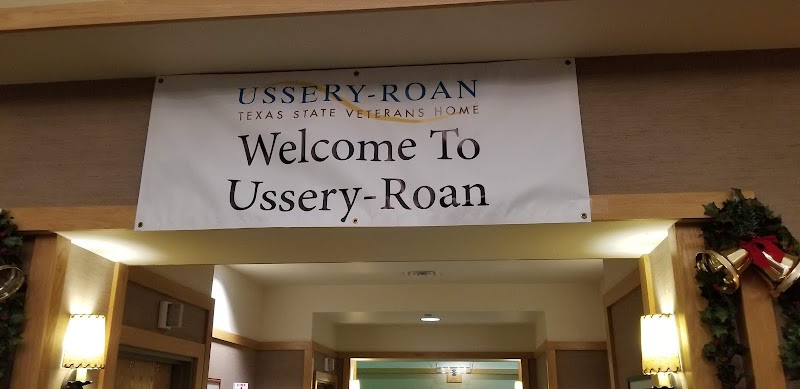
CMS rates Ussery Roan Texas State Veterans Home's staffing level at 3 out of 5 stars, which is average compared to other nursing homes. Staff turnover is 76%, which is 30 percentage points above the Texas average of 46%. High turnover can affect care consistency as new staff learn residents' individual needs. RN turnover specifically is 90%, which is notably high. RNs provide skilled clinical oversight, so turnover in this role can affect medical care quality.

What Have Inspectors Found at Ussery Roan Texas State Veterans Home?

State health inspectors documented 32 deficiencies at Ussery Roan Texas State Veterans Home during 2023 to 2025. These included: 1 Immediate Jeopardy (the most serious level, indicating potential for serious harm or death), 1 that caused actual resident harm, and 30 with potential for harm. Immediate Jeopardy findings are rare and represent the most serious regulatory concerns. They require immediate corrective action.

Who Owns and Operates Ussery Roan Texas State Veterans Home?

Ussery Roan Texas State Veterans Home is owned by a for-profit company. For-profit facilities operate as businesses with obligations to shareholders or private owners. The facility is operated by TEXVET, a chain that manages multiple nursing homes. With 120 certified beds and approximately 116 residents (about 97% occupancy), it is a mid-sized facility located in Amarillo, Texas.

How Does Ussery Roan Texas State Veterans Home Compare to Other Texas Nursing Homes?

Compared to the 100 nursing homes in Texas, Ussery Roan Texas State Veterans Home's overall rating (2 stars) is below the state average of 2.8, staff turnover (76%) is significantly higher than the state average of 46%, and health inspection rating (2 stars) is below the national benchmark.

What Should Families Ask When Visiting Ussery Roan Texas State Veterans Home?

Based on this facility's data, families visiting should ask: "What changes have been made since the serious inspection findings, and how are you preventing similar issues?" "How do you ensure continuity of care given staff turnover, and what is your staff retention strategy?" "Can I visit during a mealtime to observe dining assistance and food quality?" "How do you handle medical emergencies, and what is your hospital transfer rate?" These questions are particularly relevant given the facility's Immediate Jeopardy citations and the facility's high staff turnover rate.

Is Ussery Roan Texas State Veterans Home Safe?

Based on CMS inspection data, Ussery Roan Texas State Veterans Home has documented safety concerns. Inspectors have issued 1 Immediate Jeopardy citation (the most serious violation level indicating risk of serious injury or death). The facility has a 2-star overall rating and ranks #100 of 100 nursing homes in Texas. Families considering this facility should ask detailed questions about what corrective actions have been taken since these incidents.

Do Nurses at Ussery Roan Texas State Veterans Home Stick Around?

Staff turnover at Ussery Roan Texas State Veterans Home is high. At 76%, the facility is 30 percentage points above the Texas average of 46%. Registered Nurse turnover is particularly concerning at 90%. RNs handle complex medical decisions and coordinate care — frequent RN changes can directly impact care quality. High turnover means new staff may not know residents' individual needs, medications, or preferences. It can also be disorienting for residents, especially those with dementia who rely on familiar faces. Families should ask: What is causing the turnover? What retention programs are in place? How do you ensure care continuity during staff transitions?

Was Ussery Roan Texas State Veterans Home Ever Fined?

Ussery Roan Texas State Veterans Home has been fined $9,692 across 1 penalty action. This is below the Texas average of $33,176. While any fine indicates a compliance issue, fines under $50,000 are relatively common and typically reflect isolated problems that were subsequently corrected. Families should ask what specific issues led to these fines and confirm they've been resolved.

Is Ussery Roan Texas State Veterans Home on Any Federal Watch List?

Ussery Roan Texas State Veterans Home is not on any federal watch list. The most significant is the Special Focus Facility (SFF) program, which identifies the bottom 1% of nursing homes nationally based on persistent, serious quality problems. Not being on this list means the facility has avoided the pattern of deficiencies that triggers enhanced federal oversight. This is a positive indicator, though families should still review the facility's inspection history directly.