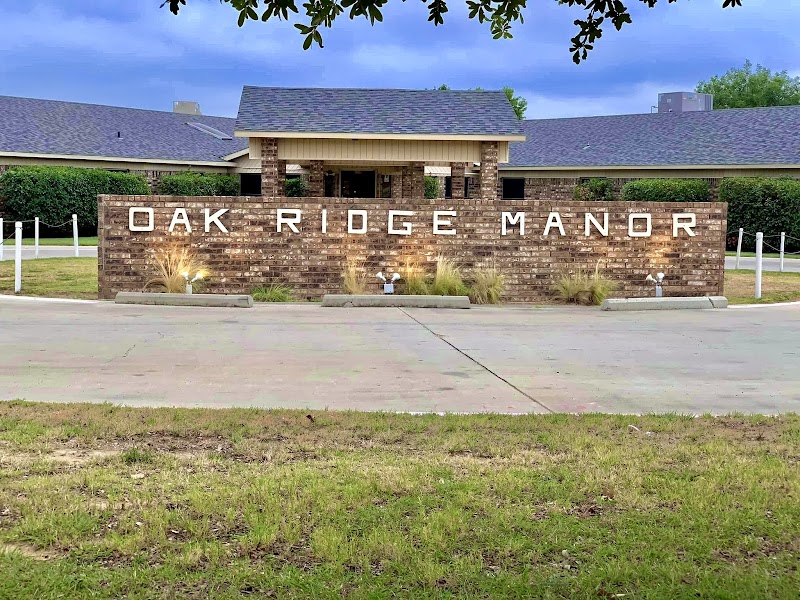
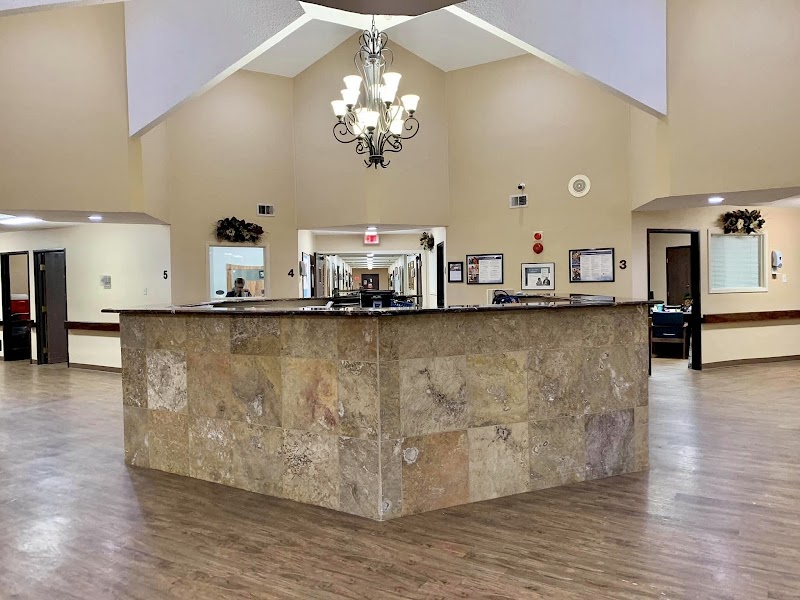
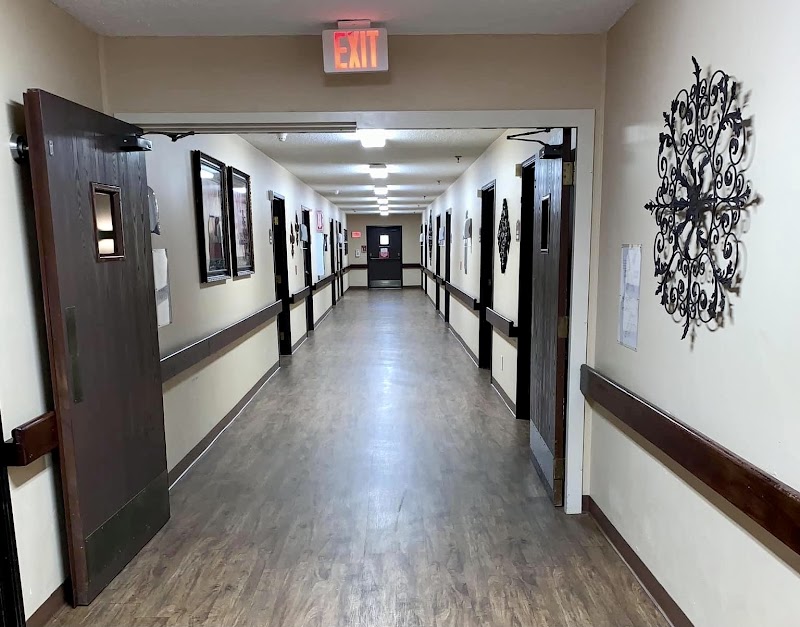
OAK RIDGE MANOR

2501 MORRIS SHEPPARD DR, BROWNWOOD, TX 76801 (325) 643-2746
For profit - Corporation 114 Beds CREATIVE SOLUTIONS IN HEALTHCARE Data: November 2025 3 Immediate Jeopardy citations
Trust Grade
24/100
#299 of 1168 in TX
Last Inspection: September 2024

Within standard 12-15 month inspection cycle. Federal law requires annual inspections.

Overview

Oak Ridge Manor has received a Trust Grade of F, indicating significant concerns about the quality of care provided. It ranks #5 out of 7 nursing homes in Brown County, meaning only one local option is better, but it is in the top half of Texas facilities overall at #299 out of 1,168. The facility is currently improving, with issues decreasing from 14 in 2023 to just 3 in 2024. Staffing is a relative strength, rated 3 out of 5 stars with a turnover rate of 38%, which is better than the Texas average of 50%. However, the facility has concerning fines totaling $174,677, which are higher than 90% of Texas facilities, indicating repeated compliance issues. There have been critical incidents, including failures to manage wounds properly, resulting in infections and hospitalizations for residents. One resident did not receive necessary treatment for a wound under a splint, which led to an infection, while another resident developed avoidable pressure ulcers due to inadequate care. While the facility has strengths, such as good RN coverage and improving trends, these serious issues highlight significant areas for concern.

Trust Score
F
24/100
In Texas
#299/1168
Top 25%
Safety Record
High Risk
Review needed
Inspections
Getting Better
14 → 3 violations
Staff Stability
○ Average
38% turnover. Near Texas's 48% average. Typical for the industry.
Penalties
○ Average
$174,677 in fines. Higher than 59% of Texas facilities. Some compliance issues.
Skilled Nurses
○ Average
Each resident gets 32 minutes of Registered Nurse (RN) attention daily — about average for Texas. RNs are the most trained staff who monitor for health changes.
Violations
⚠ Watch
18 deficiencies on record. Higher than average. Multiple issues found across inspections.
★★★★☆
4.0
Overall Rating
★★★☆☆
3.0
Staff Levels
★★★★★
5.0
Care Quality
★★★☆☆
3.0
Inspection Score
Stable
2023: 14 issues
2024: 3 issues

The Good

  • 5-Star Quality Measures · Strong clinical quality outcomes
  • Full Sprinkler Coverage · Fire safety systems throughout facility
  • No fines on record
  • Staff turnover below average (38%)

    10 points below Texas average of 48%

Facility shows strength in quality measures, fire safety.

The Bad

Staff Turnover: 38%

Near Texas avg (46%)

Typical for the industry

Federal Fines: $174,677

Well above median ($33,413)

Significant penalties indicating serious issues

Chain: CREATIVE SOLUTIONS IN HEALTHCARE

Part of a multi-facility chain

Ask about local staffing decisions and management

The Ugly 18 deficiencies on record

3 life-threatening
Sept 2024 3 deficiencies
CONCERN (E)

Potential for Harm - no one hurt, but risky conditions existed

Comprehensive Care Plan (Tag F0656)

Could have caused harm · This affected multiple residents

**NOTE- TERMS IN BRACKETS HAVE BEEN EDITED TO PROTECT CONFIDENTIALITY** Based on interviews and record reviews, the facility failed to develop and implement a comprehensive person-centered care plan b...

Read full inspector narrative →
**NOTE- TERMS IN BRACKETS HAVE BEEN EDITED TO PROTECT CONFIDENTIALITY** Based on interviews and record reviews, the facility failed to develop and implement a comprehensive person-centered care plan based on assessed needs with measurable objectives that have the ability to be evaluated or quantified to attain or maintain the resident's highest practicable physical, mental, and psychosocial well-being for 2 (Resident #34, Resident #50) of 5 residents reviewed for comprehensive person-centered care plans. 1. The facility failed to develop care plans based on assessed needs for diagnosis of Type II Diabetes Mellitus, and Interventions for Suprapubic catheter not followed. 2. The facility failed to develop care plan based on assessed needs for weight loss and Knee immobilizer. These failures could affect the residents by placing them at risk for not receiving care and services to meet their needs. The findings included: 1. Record review of Resident #34's electronic face sheet revealed: [AGE] year-old female admitted [DATE] with diagnoses of Unspecified fracture of shaft of let fibula, Unspecified fracture of left tibia, and Depression. Record review of Resident #34's admission MDS dated [DATE] revealed: Section C-cognitive patterns had a BIMS of 11 (moderate cognitive impairment). Section K-swallowing/Nutritional Status-height 79 inches weight 123 pounds. Weight loss 5% or more- No. Record review of Resident #34's Care Plan dated 08/31/2024 revealed: No care plan, goals or interventions for left knee immobilizer or weight loss. Record review of Resident #34's Physician orders dated 09/01/2024 revealed: Knee immobilizer to left leg. No weight bearing to left lower extremities. Keep brace on and do not remove. Monitor skin around knee immobilizer left leg for redness, swelling. Regular diet, Regular texture, Regular consistency. Record review of Resident #34's weights revealed: 08/31/2024 Weight was 137 pounds and on 09/18/2024 weight was 126.2 pounds. A weight loss of 7.88% in 19 days. Record review of Resident #50's electronic face sheet revealed: [AGE] year-old male admitted [DATE] with diagnoses of Type II Diabetes Mellitus, Dysphagia (difficulty swallowing), Mild cognitive impairment, Generalized Anxiety Disorder. 2. Record review of Resident # 50's Quarterly MDS dated [DATE] revealed: Section C-Cognitive patterns had a BIMS score of 04 (severe cognitive impairment). Section H-Bowel and Bladder- Indwelling catheter (suprapubic) (above the pubic bone). Section I- Active Diagnosis- Neurogenic Bladder, Diabetes Mellitus. Section N-Medications Insulin injections 7 (received insulin injections 7 of 7 days). Record review of Resident # 50's Care Plan dated 08/07/2024 revealed: No care plan, goals, interventions for diagnosis of Type II diabetes mellitus. Record review of Resident # 50's Physician orders dated 09/01/2024 revealed: Trulicity Subcutaneous .5mL (milliliters) every Saturday. Insulin glargine 20 units SQ (subcutaneous) two times a day, Admelog Solostar insulin PRN (as needed) per insulin sliding scale, Metformin 500 mg ½ tab by mouth two times a day. Ensure foley catheter bag is in privacy bag every shift. Urinary catheter to gravity drainage every shift. During an interview on 09/24/ 2024 at 12:08 PM, the DON stated the MDS Coordinator initiated the care plan. The DON stated she was responsible for overseeing the care plans was accurate. The DON stated the staff met weekly and reviewed care plans. The DON stated she was not sure why the failure occurred, other than just being pulled in different directions and not being notified by staff of changes. The DON stated her expectations was that all care plans would be correct and address all problems. The DON stated the effect on the residents could be not all disciplines being aware of residents needs and interventions that should be in place. Review of facility's policy titled Comprehensive Care Planning (no date) The facility will develop and implement a comprehensive person-centered care plan for each resident, consistent with the resident rights that includes measurable objectives and timeframes to meet a resident's medical, nursing, and mental and psychosocial needs that are identified in the comprehensive assessment When developing the comprehensive care plan, the facility staff will, at a minimum, use the Minimum Data Set (MDS) to assess the resident's clinical condition, cognitive and functional status, and use of services. The resident's care plan will be reviewed after each Admission, Quarterly, Annual and/or Significant Change MDS assessment, and revised based on the changing goals, preferences and needs of the resident and in response to current interventions.
CONCERN (E)

Potential for Harm - no one hurt, but risky conditions existed

Incontinence Care (Tag F0690)

Could have caused harm · This affected multiple residents

**NOTE- TERMS IN BRACKETS HAVE BEEN EDITED TO PROTECT CONFIDENTIALITY** Based on observation, interview, and record review, the facility failed to ensure a resident who is incontinent of bladder recei...

Read full inspector narrative →
**NOTE- TERMS IN BRACKETS HAVE BEEN EDITED TO PROTECT CONFIDENTIALITY** Based on observation, interview, and record review, the facility failed to ensure a resident who is incontinent of bladder receives appropriate treatment and services to prevent urinary tract infections and to restore continence to the extent possible for 3 of 3 residents (Residents #50, #258, and #8) reviewed for indwelling urinary catheter. 1. The facility failed to ensure Resident #50's and Resident #258's catheter bag was off the floor and protect from potential contaminants on the floor. 2. The facility failed to ensure Resident #50, Resident #258, and Resident #8 had a related diagnoses for urinary catheter in the physician orders This deficient practice could place residents with indwelling urinary catheters at-risk for urinary tract infections and/or pain. Findings included: Resident #50 Review of Resident #50's electronic face sheet revealed a [AGE] year-old male admitted to the facility on [DATE] with diagnosis to include: Dysfunction of the bladder, dementia, and brain bleed. Review of Resident #50's Quarterly MDS assessment dated [DATE], revealed a BIMS score of 04 which indicated severe cognitive impairment. Further review of MDS Section H Bladder and Bowel revealed indwelling catheter. Review of Resident #50's Comprehensive Care Plan last reviewed 08/14/2024, revealed: Focus: resident has Suprapubic (above the pubic bone) catheter. Goals: resident will show no signs or symptoms of Urinary infection and resident will be/remain free from catheter-related trauma. Interventions: The resident has 18French/10cc suprapubic cath. Position catheter bag and tubing below the level of the bladder and in a privacy bag. Change catheter as ordered. Check tubing for kinks and maintain drainage bag off the floor. Ensure tubing is anchored to the residents' leg or linens so that tubing is not pulling on the urethra. Review of Resident #50's electronic physicians orders revealed, Urinary Catheter 16 French/10 cc to gravity with no related diagnoses entered, order date 06/03/2024. During an observation on 09/22/24 at 1:26 PM, Resident #50 was resting in bed with his catheter bag sitting on the floor at bedside with privacy bag in place. Resident #258 Review of Resident #258's electronic face sheet revealed an [AGE] year-old male admitted to the facility on [DATE] with diagnosis to include: Dysfunction of the bladder, Depression, and urinary tract infection. Review of Resident #258's Entry MDS assessment dated [DATE], revealed admission on [DATE] from hospice. Review of Resident #258's Comprehensive Care Plan initiated 09/18/2024, revealed: Focus: resident has Indwelling Suprapubic Catheter: Neurogenic bladder. Goals: The resident will show no signs or symptoms of Urinary infection. Interventions: The resident has (Size) (Type of Catheter). Position catheter bag and tubing below the level of the bladder and in a privacy bag. Change the catheter as ordered. Check tubing for kinks and maintain the drainage bag off the floor. Ensure tubing is anchored to the residents' leg or linens so that tubing is not pulling on the urethra. Review of Resident #258's electronic physicians orders revealed, Urinary Catheter 16 French/30 cc to gravity with no related diagnoses entered, order date 09/21/2024. Further review of physicians' orders revealed, Ensure foley bag is in a privacy bag while in bed or chair, ordered date 09/21/2024. During an observation on 09/23/24 at 9:24 AM, Resident #258 was sitting in his recliner with his catheter bag sitting on floor beside recliner with no privacy bag. During an observation on 09/24/24 at 10:30 AM, Resident #258 was sitting in his recliner with his catheter bag sitting on floor beside recliner with no privacy bag. Resident #8 Review of Resident #8's electronic face sheet revealed a [AGE] year-old female admitted to the facility on [DATE] with diagnosis to include: Dysfunction of the bladder, dementia, and urinary tract infection. Review of Resident #8's Quarterly MDS assessment dated [DATE], revealed a BIMS score of 11 which indicated moderate cognitive impairment. Further review of MDS Section H Bladder and Bowel revealed indwelling catheter. Review of Resident #8's Comprehensive Care Plan last reviewed 08/07/2024, revealed: Focus: resident has Suprapubic (above the pubic bone) catheter. Goals: resident will be/remain free from catheter-related trauma. Interventions: The resident has 16French suprapubic cath. Change catheter as ordered. Check tubing for kinks and maintain drainage bag off the floor. Ensure tubing is anchored to the residents' leg or linens so that tubing is not pulling on the urethra. Review of Resident #8's electronic physicians orders revealed, Suprapubic (above the pubic bone) Catheter 16 French/30 cc to gravity with no related diagnoses entered, order date 06/03/2024. During an interview on 09/24/24 at 11:17 AM, the DON stated all urinary catheters must have a related diagnosis connected with them in the physicians' orders. She stated she was not aware that the orders did not have the diagnosis. She stated it was her responsibility to ensure this is done. She stated a catheter bag should never be on the floor because it causes contamination and possible infection. Review of facility policy titled, Catheter Care, revised February 2007, revealed in part: General Guidelines .10. Be sure the catheter tubing and drainage bags are kept off the floor.
CONCERN (E)

Potential for Harm - no one hurt, but risky conditions existed

Respiratory Care (Tag F0695)

Could have caused harm · This affected multiple residents

**NOTE- TERMS IN BRACKETS HAVE BEEN EDITED TO PROTECT CONFIDENTIALITY** Based on observation, interview and record review, the facility failed to ensure that residents who needed respiratory care were...

Read full inspector narrative →
**NOTE- TERMS IN BRACKETS HAVE BEEN EDITED TO PROTECT CONFIDENTIALITY** Based on observation, interview and record review, the facility failed to ensure that residents who needed respiratory care were provided such care consistent with professional standards of practice, the comprehensive person-centered care plan, and the resident's goals and preferences for 3 (Resident #259, Resident #8, and Resident #32) of 3 residents reviewed for respiratory care. 1. The facility failed to obtain a Physician's order for Resident #259's continuous supplemental oxygen. 2. The facility failed to ensure Residents #8's nasal cannula and Resident #259's nebulizer was kept in a bag while not in use. 3. The facility failed to ensure Resident #8's and Resident #32's humidifier bottles (bottled water) were changed out weekly per physician orders. These failures could place residents who received oxygen therapy at risk of oxygen toxicity, respiratory infections, nose bleeds, and nasal discomfort. Findings included: Resident #259 Review of Resident #259's electronic face sheet revealed a [AGE] year-old female admitted to the facility on [DATE] with diagnosis to include: heart failure, respiratory failure, and sleep apnea. Review of Resident #259's Entry MDS assessment dated [DATE], revealed admitted on [DATE]. Review of Resident #259's Comprehensive Care Plan initiated 09/21/2024, revealed: Focus: Resident has Oxygen Therapy. Goal: Resident will have no signs or symptoms of poor oxygen absorption. Interventions: Oxygen settings at LPM per nasal cannula. Monitor for signs and symptoms of respiratory distress and report to medical director. Review of Resident #259's electronic physicians orders revealed no evidence of any orders related to oxygen therapy. During an observation on 09/23/24 at 10:52 AM, Resident #259 was in bed wearing oxygen at 2 LPM via nasal canula. Observed nebulizer lying on nightstand not in bag and not dated. Resident #8 Review of Resident #8's electronic face sheet revealed a [AGE] year-old female admitted to the facility on [DATE] with diagnosis to include: Dysfunction of the bladder, dementia, and urinary tract infection. Review of Resident #8's Quarterly MDS assessment dated [DATE], revealed a BIMS score of 11 which indicated moderate cognitive impairment. Further review of MDS Section O: special treatments, procedures, and programs revealed oxygen therapy. Review of Resident #8's Comprehensive Care Plan last reviewed 08/07/2024, revealed: Focus: Resident has Oxygen Therapy. Goal: Resident will have no signs or symptoms of poor oxygen absorption. Interventions: Oxygen settings at 2 LPM continuously. Monitor for signs and symptoms of respiratory distress and report to medical director. Review of Resident #8's electronic physicians orders revealed, May use oxygen at 2 LPM via nasal cannula as needed for shortness of breath, ordered 08/15/2016 and change bottled water and clean filter on oxygen concentrator every night shift on Tuesday ordered 12/12/2022. During an observation on 09/24/24 at 9:10 AM, Resident #8's nasal cannula was lying on her nightstand not in a bag. Observed no date on humidifier bottle (bottled water) and there was no bag to place the tubing in. Resident #32 Review of Resident #32's electronic face sheet revealed an [AGE] year-old female admitted to the facility on [DATE] with diagnosis to include: respiratory failure, depression, and heart abnormality. Review of Resident #32's Quarterly MDS assessment dated [DATE], revealed a BIMS score of 10 which indicated moderate cognitive impairment. Further review of MDS Section O: special treatments, procedures, and programs revealed oxygen therapy. Review of Resident #32's Comprehensive Care Plan last reviewed 07/10/2024, revealed: Focus: Resident has Oxygen Therapy. Goal: Resident will have no signs or symptoms of poor oxygen absorption. Interventions: Oxygen settings at 2 LPM continuously. Monitor for signs and symptoms of respiratory distress and report to medical director. Review of Resident #32's electronic physicians orders revealed, May use oxygen at 2 LPM via nasal cannula every shift, ordered 06/20/2022 and change humidifier bottle and clean filter on oxygen concentrator every night shift on Sunday ordered 12/12/2022. During observation and interview on 09/24/24 at 08:57 AM, Resident 32's humidifier bottle (bottled water) had no date and the bag containing the oxygen tubing was dated 08/26/2024. Resident #32 stated she didn't wear oxygen all of the time but sometimes needed it. She stated she used it at least a couple of days a week. During an interview on 09/24/24 at 11:17 AM, the DON stated residents must have an order for oxygen. The DON stated oxygen tubing should aways be stored in a bag when not on the resident. She stated bags and tubing are changed when soiled or dirty. The DON stated humidifier bottles (bottled water) were to be changed weekly and dated when changed. She stated if a bottle is not dated that indicated it was not changed. She stated tubing should never be laid out on a nightstand when not in use. She stated this could lead to contamination and possible infection. She stated it was her responsibility to ensure this is done. Review of facility policy titled, Respiratory Policies and Procedures 2.0 Nasal Cannula, revised June 1, 2007, revealed in part: Process: 1. Verify physicians orders .15. Replace entire set-up every seven days. Date and store in treatment bag when not in use.
Aug 2023 9 deficiencies
CONCERN (D) 📢 Someone Reported This

A family member, employee, or ombudsman was alarmed enough to file a formal complaint

Potential for Harm - no one hurt, but risky conditions existed

Deficiency F0578 (Tag F0578)

Could have caused harm · This affected 1 resident

**NOTE- TERMS IN BRACKETS HAVE BEEN EDITED TO PROTECT CONFIDENTIALITY** Based on interview and record review, the facility failed to ensure residents have the right to formulate an advance directive f...

Read full inspector narrative →
**NOTE- TERMS IN BRACKETS HAVE BEEN EDITED TO PROTECT CONFIDENTIALITY** Based on interview and record review, the facility failed to ensure residents have the right to formulate an advance directive for 2 of 24 residents (Resident #07, Resident #276) reviewed for advanced directives. The facility failed to have an Advanced Directive, Out of Hospital Do Not Resuscitate (OOHDNR) consent form which includes a Representative and physician signature and License # in the electronic charting or admission paperwork for Resident #07 and Resident #276. This failure could affect residents by not having their preferences honored concerning advanced directives. Finding included: Record review on [DATE] of the electronic face sheet revealed Resident #7 was an [AGE] year-old female, admitted on [DATE] with DNR status and a diagnosis of encephalopathy (A disorder of the brain that can be caused by disease, injury, drugs, or chemicals) and Congestive Heart Failure. Residents Brief Interview of Mental Status (BIMS) assessment on [DATE] was 11 (moderately impaired). Resident physician's orders dated [DATE] revealed an order for DNR. Residents electronic health record revealed: no evidence of an Advanced Directive for Out of Hospital Do Not Resuscitate Order (OOH-DNR) form; no evidence of documentation of progress notes relating to the DNR status; and no evidence of a preadmission Advanced Directive Information form; and no evidence of an Advanced Directive for Out of Hospital Do Not Resuscitate Order (OOH-DNR) verbal assessment. Record review on [DATE] of the electronic face sheet revealed Resident #276 was a [AGE] year-old male, admitted on [DATE] with a DNR status and a diagnosis of Type 2 Diabetes Mellitus, Muscle Weakness, Muscle Wasting and Chronic Obstructive Pulmonary Disease (COPD). Residents Brief Interview of Mental Status (BIMS) assessment dated [DATE] was 4 (severe Impairment). Residents physician's orders dated [DATE] revealed an order for a DNR. Residents electronic health record revealed: no evidence of an Advanced Directive for Out of Hospital Do Not Resuscitate Order (OOH-DNR) form; no evidence of documentation of progress notes relating to the DNR status; and no evidence of a preadmission Advanced Directive Information form; and no evidence of an Advanced Directive for Out of Hospital Do Not Resuscitate Order (OOH-DNR) verbal assessment. An interview on [DATE] at 06:09 PM, the RN E stated the protocols for an unresponsive resident would be to check the resident's DNR status (Full Code or DNR) on their electronic Facesheet. She stated if the Resident had an official DNR document, it should have been scanned into the Residents electronic record. An interview on [DATE] at 6:31 PM, the DON stated the resident code status was located in the facility's Electronic Charting under Face sheet. She stated upon the resident's admission, if the resident has a signed OOHDNR, and admitted from the hospital with one, the residents DNR status would be documented on the Facesheet at that time. The DON stated if the resident verbalized that they prefer to be a DNR status, staff would perform a DNR assessment at that time. She stated this documentation would be found under assessments in the residents Electronic Charting. The DON stated anyone can initiate the DNR assessment and would be done immediately, then taken to the resident's Doctor to sign. She stated if the resident was on Hospice Services, Hospice would initiate the DNR paperwork consenting to the status with the Hospice book being left at the nurses' station, and if Hospice staff is in the facility to see the resident, they maybe would have taken the binder to the residents room. The DON stated Resident #276's was admitted to the facility on Hospice, and they would have a copy of the OOHDNR in the binder. She stated Resident #276's binder was not in the facility at that time of interview. The DON also stated since the OOHDNR was not in the facility, there should have been a DNR assessment done., She stated there was no DNR assessment previously done for Resident #276 as the nurse forgot to do so. The DON stated the responsible party for completing a DNR for the resident's end of life wishes would have been the DON or SW. She stated the previous SW had left, leaving the facility without one. The DON stated they fell short due to the hospice nurse visiting every day since this resident's admission and still did not have the DNR assessment nor the OOHDNR consent. She stated the negative impact to the resident could be death if resident has a status of DNR and was an actual Full Code status. She stated what led to the failure was that nurses had gotten too busy and had not documented correctly or following up with DNR statuses. The DON stated her expectations were that if a resident requested a DNR, the staff members need to document and follow up with the OOHDNR paper with the proper signatures. Once done, the paperwork should be uploaded in the resident Electronic Charting that same day or by the next morning. Record Review of a blank Out of Hospital Do Not Resuscitate (OOH-DNR) Order Tx Dept. of State Health Services consent form, page 1, reads in part: This document becomes effective immediately on the date of execution for health care professionals acting in out of hospital settings. It remains in effect until the person is pronounced dead by an authorized medical or legal authority or the document is revoked. Resuscitation measures include cardiopulmonary resuscitation (CPR), transcutaneous cardiac pacing, Defibrillation, advanced airway management, artificial ventilation. Comfort care will be given with a Representative and physician signature and License # in the electronic charting or admission paperwork. The Physician Statement section and the final section instructs and reads in part, All persons who have signed above must sign, acknowledging the document has been properly completed. Record Review of page 2 of the Texas Out of Hospital Do Not Resuscitate form, Publication No EF01-11421 revised [DATE], by the Texas Department of State Health Services titled Instructions for Issuing an OOH-DNR Order reads in part: IMPLEMENTATION: A competent adult person .or the person's authorized representative or qualified relative may execute or issue an OOH-DNR Order. The person's attending physician will document existence of the Order in the person's permanent medical record. The OOH-DNR Order may be executed as follows: Section A-If an adult person is competent and at least [AGE] years of age, he/she will sign and date the Order in Section A. Section B-If an adult person is incompetent or otherwise mentally or physically incapable of communication and has either a legal guardian, agent in a medical power of attorney, or proxy in a directive to physicians, a guardian, agent, or proxy may execute the OOH-DNR Order by signing and dating in section B. Section D if the person is incompetent and his/her attending physician has seen evidence of the person previously issued proper directive to physicians or observe the person competently issue and OH DNR order or a nonwritten manner, the physician may execute the order on behalf of the person signing and dating it in section D. In addition, the OOH-DNR order must be signed and dated by two competent adult witnesses, who have witnessed either the competent adult person making his/her signature in section A, or authorized declarant making his/her signature in either section B, C, or E, and if applicable have witnessed a competent adult person making an OOH-DNR order by nonwritten communication to the attending physician, who must sign in section D and also the physicians statement section. Record Review of the electronic Texas Health and Safety Code, Chapter 166 (C), Section 166.082 (b) stated The attending physician of the declarant must sign the order . (statutes.capitol.texas.gov/Docs/HS/htm/HS.166.htm). Record Review of the facility policy Do Not Resuscitate Order, revised [DATE] revealed: The facility will honor two types of Do Not Resuscitate orders; a physician's order for Do Not Resuscitate and the Texas Out of Hospital DNR Order. Goals: 1. The resident will verbalize end of life wishes. 2. The resident will execute a valid living will that reflects his/her wishes. 3. The resident verbalizes feelings about a decision for end of life wishes. 4. The resident and/or family receive support and education about end-of-life decisions Physician Order for Do-Not-Resuscitate According to CHAPTER 166. Advance Directives Sec 166.202 as it relates to application to a DR order issued in a health care facility or hospital. Procedure: Physician's order for DNR A DNR order issued for a patient is valid only if the patient's attending physician issues the order, the order is dated, and the order: (1) Is issued in compliance with: (A) The written and dated directions of a patient who was competent at the time the patient wrote the directions; (B) The oral directions of a competent patient delivered to or observed by two competent adult witnesses (C) The directions in an advance directive (D) The directions of a patient's legal guardian or agent under a medical power of attorney The DNR order takes effect at the time the order is issued, provided the order is placed in the patient's medical record as soon as practicable 1. The physician's order for DNR should be maintained in the resident's clinical record. 2. Any resident who has a physician's order for DNR will have it noted in PCC 3. All validly executed physician orders for DNR orders will be honored by the facility. 4. Emergency workers will not honor the physician's order for DNR. Out of Hospital DNR Form The Out of Hospital DNR form was designed by the Texas Department of Human services to comply with the requirements as set forth in the Health and Safety Code for the purpose of instructing Emergency Medical personnel and other health care professionals to forgo resuscitation attempts
CONCERN (D)

Potential for Harm - no one hurt, but risky conditions existed

Deficiency F0602 (Tag F0602)

Could have caused harm · This affected 1 resident

**NOTE- TERMS IN BRACKETS HAVE BEEN EDITED TO PROTECT CONFIDENTIALITY** Based on observations, interviews, and record reviews, the facility failed to ensure residents the right to be free from misappr...

Read full inspector narrative →
**NOTE- TERMS IN BRACKETS HAVE BEEN EDITED TO PROTECT CONFIDENTIALITY** Based on observations, interviews, and record reviews, the facility failed to ensure residents the right to be free from misappropriation of property for 1 of 24 (Resident #15) reviewed for personal property. The facility failed to maintain a system to prevent Resident #15's personal money from being taken by a staff member. This failure placed residents at risk of loss of personal property and financial hardship. Findings included: Record review of Resident #15's Facesheet dated 08/16/23 revealed an [AGE] year-old male admitted to the facility on [DATE]. He had a diagnosis list that included: COPD (Primary), Generalized anxiety, Depression. Record review of Resident #15's admission MDS dated [DATE] revealed a BIMS of 9 meaning moderate cognitive impairment. He needed extensive 2-person assistance for most ADL functions, an indwelling catheter and was continent of bowel. Record review of Resident #15's Care plan dated 07/07/23 revealed no care areas regarding personal funds. Record review of PIR dated 07/25/23 revealed: Incident occurred 07/12/23 at 6:00PM and was reported by Resident #15 on 07/20/23. Description of Allegation: on 7/20/2023 at approx 5p NA-B reported to Admin, that Resident #15 said someone took his money while he was in rest room Investigation Summary: On 7/20/2023 at approx 5 pm NA B, reported to facility admin that Resident #15 was missing money. Facility admin interviewed Resident #15 and it was determined that NA A, was in the room when his money went missing on 7/12/2023, Res reported that he was missing $140, he stated he had the money in his motor wheelchair and after he went to the rest room, he was going to put it back in his drawer and noticed it was missing. Res reported that NA A, never went back to his room after the incident. Facility admin notified Police Department; Res doesn't wish to file any charges. NA A suspended immediately until further investigation. Resident is A&O X 4, and it was confirmed with resident's daughter that he had money in his possession. After facility administrators investigation, it is founded, and NA A will be terminated from facility. Witness statement signed 07/20/23 by NA B Wednesday July 19th, 2023, resident #15 reported to me did a couple weeks ago or possibly more recently, that an aide stole money from his drawer. He stated that the aide took him to the bathroom and closed the door. After using the bathroom, he noticed $140 missing from his drawer. He didn't get her name, but said she had a bun in her hair, and she was white. I made sure to have him tell me this story at two different times, and it was the same. I have not checked to see if he possibly just misplaced it for the reason being I don't want possible accusations towards me. he came to the conclusion it was stolen from him and did not want to cause trouble for her. During an observation and interview on 08/13/23 at 4:21PM with Resident #15, he was lying in bed with an electric wc in his room. Resident was pleasant and explained that he knew who took his money. He said the situation included that an NA A assisted him to the restroom and pulled his pants down for him to use the toilet and she removed the electric wc from the bathroom and shut the door. She left the door shut and stayed in the room and asked him repeatedly if he was ready for his chair while he used the bathroom. He said that had been the first- and only-time staff ever took his electric wc out of the bathroom. Resident #15 said he was suspicious of the situation because they never took the chair out of the bathroom and the NA A kept asking him if he was finished. He said after he got finished and was back in his electric wc, he then looked into his black bag that he kept on the arm of his electric wc while out of bed and discovered money missing from his wallet. He said he was very upset and said he did not understand why the aide did not take all his money. He said he had 4 100-dollar bills and 5 20-dollar bills prior to her helping him in the restroom and when he checked his wallet a 100-dollar bill and 2 20-dollar bills were missing. Resident #15 said that aide never returned to his room ever again, and he told the nurse about the incident that night. Resident #15 said the aide had denied taking his money until being confronted with the sheriff, and she no longer worked at the facility as far as he knew. He said, There is nothing I hate more than a liar and a thief. During an interview on 08/15/23 at 9:10AM with ADM, she said the resident did not want to press charges on the aide, so she did not file a police report, the police department only did a service call because she had called them originally when she was made aware of the allegations. ADM said the aide never confessed to taking Resident #15's money, however she had a history of suspicious behavior and Resident #15 had been interviewed 3 different occasions by an aide he reported the incident to as well as 2 times he had been interviewed by ADM, and he had the same recall of events each time. ADM said the aide that allegedly taken the money had a history of trying to break into offices late at night. ADM said that she felt that even without the aide confessing to the incident that she may have very likely taken Resident #15's money. During an interview on 08/16/23 at 6:17PM with ADM, she said Resident #15 was never able to tell her a specific day that the event occurred, however, she reviewed the days worked by the now former aide and narrowed it down to occurring on 07/12/23 due to the fact that she called in any time she was scheduled to work until she came back and was suspended due to the allegations on 07/21/23. She was subsequently terminated on 07/26/23. ADM said she spoke to Resident #15 in length to determine a description of the alleged perpetrator and during his description, he stated that the person work a headband or bandana on her head. ADM said the aide that they terminated was the only staff member that wore anything on her head that could fit that description. ADM said that she also showed Resident #15 different staff member photographs that they utilized on their social media website and Resident #15 positively identified that aide. ADM said there had been a recent domestic violence issue between the former aide and her boyfriend that had been in the local paper. Record review of NA A personnel file revealed: Hire date of 10/22/21. -Her last EMR/NAR had been checked 11/1/22 with no noted issues. -Disciplinary Report Action Request dated 6/9/23. On 6/9/2023 ADM told employee NA A her boyfriend was not allowed at the facility while she was working. Admin also told NA A she was not allowed to use her cell phone in resident rooms or hallways. -Witness Statement dated 06/11/23. RN C Issue related to NA A. This nurse overheard other nurse saying that NA A was on her cell phone again. This nurse did not step in until resd fell, NA A showed up to scene with phone in hand saying, I will call you back. but continued to talk on phone while other nurse asked her to assist getting resd into wc from floor. Also, her boyfriend has been in car in parking lot most of night. -Disciplinary Report Action Request dated 06/15/23. Date of infraction 6/11/23, 6/14/23. Employee has continued to be late. As well as cell phone usage on the floor and in the resident's room. -Text message printed 08/15/23 at 11:42AM that was dated 06/12 at 1:29AM from Nurse NA A's bf (boyfriend) is sitting in the parking lot. She's been on the phone in residents' rooms and even FaceTime is what staff J said. ADM response Can you. Send her home I went up Friday night and told her this is not allowed with HR witness. -Text message printed 8/15/23 at 11:42AM. That was dated 6/7/ at 9:33AM from HR What would you write someone up for breaking into an office no response to the message from ADM. Record review of facility policy labeled Abuse/Neglect revised 03/29/18 revealed: Misappropriation of resident property: means the deliberate misplacement, exploitation, or wrongful, temporary, or permanent use of a resident's belongings or money without the resident's consent . With an allegation of abuse, neglect. exploitation, mistreatment of residents or misappropriation of resident prope1ty, the employee(s) will immediately be suspended pending an investigation. The employee will have an opportunity to present a written statement to answer the allegation(s) of abuse, neglect, exploitation, mistreatment of residents or misappropriation of resident property. The employee will have the opportunity to be advised of the outcome of the investigation in the determination of disciplinary action and/or reinstatement. Abuse, neglect, exploitation, mistreatment of residents or misappropriation of resident property of residents by employees of any facility will be grounds for immediate termination.
CONCERN (D)

Potential for Harm - no one hurt, but risky conditions existed

MDS Data Transmission (Tag F0640)

Could have caused harm · This affected 1 resident

**NOTE- TERMS IN BRACKETS HAVE BEEN EDITED TO PROTECT CONFIDENTIALITY** Based on interviews and record reviews, the facility failed to ensure a Minimum Data Set (MDS) assessment was electronically com...

Read full inspector narrative →
**NOTE- TERMS IN BRACKETS HAVE BEEN EDITED TO PROTECT CONFIDENTIALITY** Based on interviews and record reviews, the facility failed to ensure a Minimum Data Set (MDS) assessment was electronically completed and transmitted to the CMS System within 14 days after completion for 1 of 17 (Resident #14) reviewed for MDS information. The facility failed to encode, complete and submit a discharge MDS for Resident #14. This failure could place residents at risk of facilities have provided resident specific information for payment and quality measure purposes. Findings included: Record review of Resident #14's Facesheet dated 08/16/23 revealed an [AGE] year-old female that discharged on 05/05/23. Record review of Resident #14's Care plan last revised 03/01/23 revealed: Resident #14 wishes to return home. Establish a pre-discharge plan with resident/family/caregivers) and evaluate progress and revise plan. Evaluate and discuss with resident/family/caregivers the prognosis for independent or assisted living. Identify, discuss and address limitations, risks, benefits and needs for maximum independence. Record review of Resident #14's Discharge Summary completed 05/05/23 revealed: Date of discharge 05/05/23. Record review of Resident #14's MDS assessment completion list did not reveal a Discharge MDS had been completed. During an interview on 08/16/23 at 6:41 PM with MDS LVN, she said she had a 14-day window to complete any MDS be it an admission, quarterly or discharge MDS. She said Resident #14 discharged on 05/05/23 back to her assisted living facility. She reviewed Resident #14's MDS schedule and verified that Resident #14 did not have a Discharge MDS started, completed or submitted to CMS. She said she had a scheduler built into the EHR. She did not understand how she did not receive an alert that Resident #14 needed a Discharge MDS and said that the scheduler was in part a reason for the failure to complete and submit a Discharge MDS. She said that the DON was responsible for the RN signature on MDS's, but her signature was only to state that the MDS that was being submitted was complete. MDS LVN said that DON did not routinely manage her to ensure that resident MDS's were due or needed to be completed and submitted. During an interview on 08/16/23 at 7:01PM with DON, she said that she only signed MDS's that had already been completed to state that they were complete and nothing more. She said that she did not manage the MDS nurse to know if she had missed any resident's MDS's. Record review of facility policy labeled Resident assessment dated 2023 revealed: A comprehensive assessment will be completed within 14 days of admission and annually on each resident. The facility will utilize the Resident Assessment Instrument (RAI). The assessment will include at least the following .Discharge potential RAI assessments must be conducted within 14 days after the date of admission; promptly after a significant change in the resident's physical or mental condition (as soon as the resident stabilizes at a new functional or cognitive level, or within two weeks, whichever is earlier)
CONCERN (E)

Potential for Harm - no one hurt, but risky conditions existed

Abuse Prevention Policies (Tag F0607)

Could have caused harm · This affected multiple residents

**NOTE- TERMS IN BRACKETS HAVE BEEN EDITED TO PROTECT CONFIDENTIALITY** Based on interviews and record reviews, the facility failed to implement written policies and procedures that protected resident...

Read full inspector narrative →
**NOTE- TERMS IN BRACKETS HAVE BEEN EDITED TO PROTECT CONFIDENTIALITY** Based on interviews and record reviews, the facility failed to implement written policies and procedures that protected residents from abuse, neglect, exploitation of residents, and misappropriation of resident property for 3 of 15 employees (ADM, LVN A, and LVN B) reviewed for EMR/NAR's. The facility failed to conduct an EMR/NAR check ADM for 18 months from hire date of 02/14/22 to 08/12/23. The facility failed to conduct an EMR/NAR check on LVN B annually since her hire date of 07/26/22. The facility failed to conduct an EMR/NAR check on LVN C annually since her hire date of 01/09/18. These failures placed residents at risk of abuse, neglect, exploitation and misappropriation of property. Findings included: Personnel File review on 08/16/23 revealed: ADM hire date of 02/14/22 with an EMR/NAR EMR/NAR check on 08/14/23, with an 18-month space between initial and current EMR/NAR. LVN B was hired on 07/26/22 with her initial EMR/NAR checked on 06/20/22 and no further EMR/NAR checks. LVN C was hired on 01/09/18 with her initial EMR/NAR checked on 01/04/18. And no further EMR/NAR checks. During an interview on 08/16/23 at 7:26PM with ADM, she said the EMR/NAR check should have been performed before initial hire and within days of their anniversary of their hire date. She said the reason for the annual checks was to ensure that the staff had not committed crimes that would make the residents unsafe. Through her review, she verified that 3 employees, including herself had not had an annual EMR/NAR within the timeframe of the yearly anniversary of their hire date. Record review of facility policy labeled Abuse/Neglect revised 03/29/18 revealed: A. Screening: Criminal History and Background Checks The facility will conduct criminal background checks of all personnel in accordance with Texas Health and Safety Code, Chapter 250. 1.l11e facility administrator will be responsible for ensuring compliance with the policy and Texas state law regarding criminal background checks. All potential employees will be screened for history of abuse, neglect or mistreating of elderly/individuals as defined by the applicable requirements of 483.13 (c) (1) (ii) (A) and (B). Employees will be screened for abuse, neglect, and exploitation of the elderly by accessing the Employee Misconduct Registry by calling the Texas Department of Aging and Disability at [PHONE NUMBER]. The hiring authority will follow the automated response prompts to screen the employee for abuse, neglect, exploitation of a resident or misappropriation of a resident's or consumer's property. The hiring authority is responsible for training an individual to complete misconduct registry checks on every employee. The facility is required to provide a written statement to the employee upon hire about the Employee Misconduct Registry including a statement indicating that a person may not be employed if listed on the registry.
CONCERN (E) 📢 Someone Reported This

A family member, employee, or ombudsman was alarmed enough to file a formal complaint

Potential for Harm - no one hurt, but risky conditions existed

Deficiency F0727 (Tag F0727)

Could have caused harm · This affected multiple residents

Based on interview and record review, the facility failed to ensure the DON did not serve as a charge nurse when the facility had an average daily occupancy of 60 or more residents for 6 (08/09/23, 08...

Read full inspector narrative →
Based on interview and record review, the facility failed to ensure the DON did not serve as a charge nurse when the facility had an average daily occupancy of 60 or more residents for 6 (08/09/23, 08/10/23, 08/11/23, 08/12/23, 08/13/23, and 08/15/23) of 16 days reviewed for DON coverage. The facility failed to ensure the DON did not serve as a charge nurse when the facility had an average daily occupancy of 60 or more residents on 08/09/23, 08/10/23, 08/11/23, 08/12/23, 08/13/23, and 08/15/23. This failure leaves residents without the nursing administrative oversight that only the DON can provide. Findings include: During an interview on 08/13/2023 at 10:15 am, the Area Director of Operations stated the DON would not be available for the next 2 days due to having to work night shift as a charge nurse. Review of daily staffing schedule revealed DON worked as a charge nurse on 08/09/23, 08/10/23, 08/11/23, 08/12/23, 08/13/23, and 08/15/23. During an interview on 08/15/23 at 05:20 PM, the Administrator stated the failures noted in the facility were because the DON, ADON, and treatment nurse had all been working night shift as charge nurses and had not been able to perform their management duties. She stated the MDS (LVN) had been running the building while the DON had been working as a charge nurse. During an interview on 08/16/23 at 06:22 PM, the DON stated she was responsible for monitoring her staff and ensuring things are done correctly. She stated the failure occurred because she had been working night shift as the charge nurse and had not been able to perform her DON duties. She stated no-one else had been designated to perform her duties while she had not been able to. Policy for RN/DON coverage was requested on 08/16/2023 but wasn't provided. Review of document titled, Job Description Director of Nursing dated 2014, revealed: The following is a non-exhaustive criterion that relates to the job of a Director of Nursing, and it is consistent with the business needs of the facility. These are legitimate measures of the qualifications for Director of Nursing. and are related to the functions that are essential to the job of a Director of Nursing. Knowledge Base: Working knowledge of nursing home regulations. Accountable for nursing compliance, excellence, and delivery of resident care services in adherence with The Company, local, state and federal regulations. Manage nursing staff through appropriate hiring, training, evaluation, assignment, and delegation of duties, within budget and resident census guidelines. Augment floor staffing if needed. o Ensure appropriate equipment
CONCERN (E) 📢 Someone Reported This

A family member, employee, or ombudsman was alarmed enough to file a formal complaint

Potential for Harm - no one hurt, but risky conditions existed

Deficiency F0760 (Tag F0760)

Could have caused harm · This affected multiple residents

**NOTE- TERMS IN BRACKETS HAVE BEEN EDITED TO PROTECT CONFIDENTIALITY** Based on observations, interviews, and record reviews, the facility failed to ensure residents are free of any significant medic...

Read full inspector narrative →
**NOTE- TERMS IN BRACKETS HAVE BEEN EDITED TO PROTECT CONFIDENTIALITY** Based on observations, interviews, and record reviews, the facility failed to ensure residents are free of any significant medication errors, for 4 of 8 Residents (Resident #31, Resident #18, Resident #276, and Resident #29) reviewed for medication administration. 1. The facility failed to administer 7 doses of Creon (medication used to help digest food for people with pancreas issues and gastric issues) to Resident #31 due to medication not being available, but MAR indicated 3 of those doses were administered when they were not. 2. The facility failed to administer 4 doses of Empagliflozin (medication used to lower blood glucose) to Resident #18 due to medication not being available and did not monitor blood glucose per physicians' orders. 3. The facility failed to administer 6 doses of Albuterol Sulfate (medication used to help with breathing for people with lung disease) and 6 doses of Symbicort (medication used to help with breathing for people with lung disease) to Resident #276 due to medication not being available, but MAR indicated 2 of those doses were administered when they were not. 4. The facility failed to administer 2 weekly doses of Trulicity (medication used to lower blood glucose) to Resident #29. These failures placed residents at risk for not receiving therapeutic effects of their medications and possible adverse reactions. The findings included: Resident #31 Review of Resident #31's electronic face sheet revealed an [AGE] year-old male admitted to the facility on [DATE] with diagnosis that included: Gastro-Esophageal Reflux Disease, Type 2 Diabetes Mellitus, and Dementia. Review of Resident #31's Quarterly MDS assessment dated [DATE] revealed a BIMS score of 10 (indicating moderate cognitive impairment). Review of Resident #31's Care Plan last revised on 06/11/2019 revealed: Focus: GERD. Goals: Will remain free from discomfort, complications, or signs and symptoms of GERD. Interventions .Give medications as ordered. Monitor/document side effects and effectiveness. Review of Resident #31's electronic physician ordered revealed: Creon Capsule Delayed Release Particles 6000 UNIT Give 1 capsule by mouth three times a day for before meals before meals. Review of Resident #31's MAR revealed Resident #31 had not received Creon on 08/13/23 at 12 pm and 5 pm and 08/15/23 at 8am and 12 pm. Further review of the MAR revealed Creon was administered on 08/14/23 at 8 am, 12 pm, and 5 pm by LVN C. Further review of MAR revealed Resident #31's Creon was ordered from the pharmacy on 08/14/2023 by RN A. During an observation of medication pass on 08/13/23 at 11:00 AM, RN A did not administer Creon to Resident #31 due to the medication not being available. During an interview on 08/13/23 at 11:50 AM, RN A stated Resident #31 was out of his Creon, and she did not have it to administer to him. She stated she ordered Resident #31's Creon on 08/12/23 but it had not come it yet. She stated she had not notified the physician of the missing medications. During an interview on 08/15/23 at 12:17 PM, Residents #31 stated he was not aware he had not received his medication. Review of pharmacy invoice dated 08/14/2023 6:16 PM revealed Resident #31's Creon was delivered to the facility on the night of 08/14/2023. During an interview via phone on 08/15/23 at 12:50 PM, LVN C stated she could not remember if she gave Resident #31 his Creon or not. She stated she would not have signed it off if it wasn't available. She then stated she might have been in a hurry and not realized she had not given when signing the MAR. Resident #18 Review of Resident #18's electronic face sheet revealed an [AGE] year-old female admitted to the facility on [DATE] with diagnosis that included: Type 2 Diabetes Mellitus, heart failure, and Dementia. Review of Resident #18's admission MDS dated [DATE] revealed a BIMS score of 10 (indicating moderate cognitive impairment). Review of Resident #18's Care Plan last revised on 05/19/2023 revealed: Focus: Diabetes Mellitus. Goals: Will have no complications related to diabetes. Interventions .Give medications as ordered. Monitor/document side effects and effectiveness. During an interview on 08/13/23 at11:50 AM, RN A stated Resident #18 had not received her Empagliflozin the past 2 days due to not having the medication in stock. She stated Resident #18's Empagliflozin had already been ordered and she did not know why it wasn't available. She stated she had not notified the physician of the missing medication. Review of Resident #18's electronic physicians orders revealed: Empagliflozin Oral Tablet 10 MG (Empagliflozin) Give 1 tablet by mouth one time a day related to TYPE 2 DIABETES MELLITUS WITHOUT COMPLICATIONS. Further review of electronic physicians' orders revealed no evidence of blood glucose monitoring. Review of written physician's order dated 07/31/2023, revealed Recommend tight glucose control. Review of Resident #18's MAR revealed Resident #18 had not received Empagliflozin on 08/12/23, 08/13/23, 08/14/23, and 08/15/23. Further review of MAR revealed Resident #18's Empagliflozin was ordered on 8/6/23 and again on 8/14/23. Review of Resident #18's electronic record under the weights and Vitals tab revealed Resident #18's blood glucose had not been checked since 05/25/2023 with a result of 162 mg/dl. During an interview on 08/15/23 at 05:20 PM, the Administrator stated she was aware of Resident #18 not having her medication. She stated the family had refused to pay the pharmacy bill because the medication was high priced. She stated the facility had paid for the medication once and the family was supposed to make arrangements with another pharmacy to receive the medication. She stated she had not informed the DON or notified the doctor of the situation. She stated the only documentation she had was an email sent to the family on 08/01/2023. She stated the issue should had been addressed in a timelier manner and the doctor should had been notified. She stated the facility paid for one more fill and the medication would be delivered tonight. During an interview attempt on 08/15/23 at 05:40 PM, Resident #18's family did not answer the phone. Voice mail was left with no return call. Resident #276 Review of Resident #276's electronic face sheet revealed a [AGE] year-old male admitted to the facility on [DATE] with diagnosis that included: Chronic Obstructive Pulmonary Disease (lung disease) and cancer of the lung. Review of Resident #276's admission MDS not completed yet. Review of Resident #276's Care Plan initiated on 08/06/2023 revealed: Focus: COPD. Goals: Will display optimal breathing pattern daily. Interventions .Give medications as ordered. Monitor/document side effects and effectiveness. Review of Resident #276's electronic physician ordered revealed: Albuterol Sulfate HFA Inhalation Aerosol Solution 108 (90 Base) MCG/ACT 2 puff inhale orally every 6 hours. Further review revealed: Symbicort Inhalation Aerosol 160-4.5MCG/ACT Give 2 puffs inhale orally two times a day with a discontinue date of 08/09/23. Review of Resident #276's MAR revealed Resident #276 had not received Albuterol on 08/06/23 at 11 pm, 08/07/23 at 5 am, 11 am, 5 pm, and 11 pm, 08/08/23 at 5 am. Further review of MAR revealed Resident #276's Symbicort was ordered from the pharmacy on 08/06/2023. Review of pharmacy invoice dated 08/07/2023 4:11 PM revealed Resident #276's Albuterol was delivered to the facility on the night of 08/07/2023. Review of Resident #276's MAR revealed Resident #276 had not received Symbicort on 08/06/23 at 8 pm, 08/07/23 at 8 am and 8 pm, and 08/09/23 at 8 am. Further review of the MAR revealed Symbicort was administered on 08/07/23 at 8 am and 8 pm by LVN B and LVN D. Further review of MAR revealed Resident #276's Symbicort was ordered from the pharmacy on 08/06/2023. During an interview on 08/16/23 at 02:52 PM, the pharmacist stated Resident #276's Symbicort was never delivered due to it not being covered by insurance. He stated the order was discontinued and a new medication was ordered. Resident #29 Review of Resident #29's electronic face sheet revealed an [AGE] year-old female admitted to the facility on [DATE] with diagnosis that included: Type 2 Diabetes Mellitus, Stroke, and high blood pressure. Review of Resident #29's Quarterly MDS dated [DATE] revealed a BIMS score of 09 (indicating moderate cognitive impairment). Further review of MDS revealed: Section M: Medications: Insulin injections give 7 days in the last 7 days. Review of Resident #29's Care Plan last revised on 03/08/2023 revealed: Focus: Diabetes Mellitus. Goals: Will have no complications related to diabetes. Interventions. Give medications as ordered. Monitor/document side effects and effectiveness. Review of Resident #29's electronic physician ordered revealed: Trulicity Subcutaneous Solution Pen-injector 1.5 MG/0.5ML Inject 0.5 ml subcutaneously one time a day every Thursday. Review of Resident #29's MAR revealed Resident #29 had not received Trulicity on 08/03/23 at 5 am and 08/10/23 at 5 am. Further review of MAR revealed Resident #29's Trulicity was ordered from the pharmacy on 08/03/2023 by LVN D. Review of pharmacy invoice dated 08/11/2023 8:31 PM revealed Resident #29's Trulicity was delivered to the facility on the night of 08/11/2023. During an interview on 08/15/23 at 10:36 AM, Area Director of Operations stated it was unacceptable for residents not to have medications available. She stated she did not know the reason for the failure. During an interview on 08/15/23 at12:34 PM, the DON stated she was not aware that multiple residents had not received their medications. She stated the night shift nurse was responsible for ordering medications. She stated she had been working nights and forgot to order medications. She stated she had ordered some medications on 08/11/23 but had forgotten the pharmacy didn't deliver on weekends. She stated if a medication was not available, the nurse should have called the on-call pharmacy and ensured the medication was delivered. She stated there was always a way to get all medications and all medications should have been available for the residents. She stated documenting that a medication was given when it was not given was unacceptable. She stated Resident #31's Creon was not in the facility and there was no way the nurse gave it on 08/08/14/23. She stated this was false documentation and could lead to residents not receiving the medications they needed. She stated when a medication was not available, the physician and the family member should have been notified. She stated if the medication was not available, there should have been a doctor's order to hold and not give the medication. She stated her and other management staff received phone calls, emails, and other notifications when the medication was not available from the pharmacy for multiple reasons. She stated no family members or doctors had been notified of the missing medications. She stated she was not aware there was an issue with Resident #18's Empagliflozin. During an interview on 08/15/23 at 05:20 PM, the Administrator stated the failure with not having the other residents' medications available was because the DON, ADON, and treatment nurse had all been working night shift and had not been able to perform their management duties. During an interview on 08/16/23 at 02:44 PM, the MDS nurse stated the pharmacy usually called the facility when medications were not available. She stated she had never seen any paper notifications. She stated medications were delivered at night, so the night nurse would have received the notifications and should have relayed them to management. She stated it was the nurses' responsibility to call the pharmacy and follow up if medications were not available, but they were not doing that. She stated if a medication dose was missed the dose should have been given as soon as the medication arrived, and dose and schedule changes should have been made. She stated if a resident received a weekly medication the day and time should have been adjusted, and no-one should have gone 2 weeks without receiving a medication. She stated the physician and family should have been notified. During an interview on 08/16/23 at 02:52 PM, the pharmacist stated the pharmacy called the facility to notify them any time a medication was not able to be filled when ordered. He stated the pharmacy also sent a paper notification every night with the delivery service. During an interview on 08/16/23 at 06:22 PM, the DON stated she was responsible for monitoring her staff and ensuring things were done correctly. She stated the failure occurred because she had been working night shift and had not been able to perform her DON duties. She stated no one else had been designated to perform her duties while she had not been able to. Review of the facility's policy titled, Ordering Medications dated 2023, revealed, Medications and related products are received from the pharmacy supplier on a timely basis. The facility maintains accurate records of medication order and receipt. Procedures:2. Repeat medication (refills) are written on a medication order form for that purpose an ordered as follows: Reorder medication three or four days in advance of need to assure an adequate supply is on hand . Review of the facility's policy titled, Medication Administration Procedures dated 2023, revealed, .5. After the resident has been identified, administer the medication and immediately chart doses administered on the medication administration record. It is recommended that medication be charted immediately after administration, but if facility policy permits, medication may be charted immediately before administration. Initials are to be used. Check marks are not acceptable. During the medication administration process, the unlocked side of the cart must always be in full view of the nurse. All nurses administering medication must sign and initial the designated area of each resident's medication/treatment administration record or resident specific master signature log for identification of all initials used in charting. 6. If a dose of regularly scheduled medication is withheld or refused, the nurse is to initial and circle the front of the medication administration record in the space provided for that dosage administration and an explanatory note is to be entered in the nursing notes or in the PRN nurses notes section of the medication administration record. In the presence of individual facility policies concerning refused and held documentation, the facility policy supersedes this policy .15. Medication errors and adverse drug reactions are immediately reported to the resident's Physician. In addition, the Director of nurses and/or designee should be notified of any medication errors. Any medication error will require a medication error report that includes the error and actions to prevent reoccurrence.
CONCERN (E) 📢 Someone Reported This

A family member, employee, or ombudsman was alarmed enough to file a formal complaint

Potential for Harm - no one hurt, but risky conditions existed

Deficiency F0761 (Tag F0761)

Could have caused harm · This affected multiple residents

Based on observation, interview, and record review, the facility failed to ensure drugs and biologicals used in the facility were labeled and discarded when expired in accordance with currently accept...

Read full inspector narrative →
Based on observation, interview, and record review, the facility failed to ensure drugs and biologicals used in the facility were labeled and discarded when expired in accordance with currently accepted professional principles and the open date and expiration date when applicable for 1 of 3 medication carts (medication cart on 100 hall) reviewed for labeling and storage. The facility also failed to store all drugs and biologicals in locked compartments for 2 (medication cart 100 hall and medication cart 200 hall) of 3 medication carts reviewed for medication storage. The facility failed to discard expired insulin for Resident # 10 from 100 hall medication cart. The facility failed to properly label insulin with open date for Resident # 6 from 100 hall medication cart. The facility failed to properly label insulin with open date for Resident # 40 from 100 hall medication cart. This failure could place residents who receive medications at risk for receiving outdated medications which could result in residents not receiving the intended therapeutic effects of their medications and health decline and of having access to unauthorized medications and medical supplies leading to possible harm or drug diversions. The facility failed to ensure medication cart 100 hall was locked when unattended by LVN B on 2 separate observations. The facility failed to ensure medication cart 200 hall was locked when unattended by RN A. Findings included: During an observation on 08/13/23 at 10:30 AM, medication cart 100 hall was unlocked against the wall across from the nurse's station. 3 nurses were sitting at nurses' station. Surveyor opened medication cart and no nurses noticed. Observation of medication cart revealed: expired Humalog (insulin) for Resident # 10, Admelog (insulin) with no open date for Resident # 6, and Insulin Glargine (insulin) with no open date for Resident #40. Surveyor asked nurses who was responsible for cart and LVN B stated she was. Inventory of medication cart hall 100 revealed: Prescription and OTC eye medication in the top left drawer, Insulin meds, syringes and scissors were in the top right drawer. The second left drawer of the cart contained blister packs of prescription medications, and the third left drawer contained overflow medications cards and over the counter liquid medications. The second right drawer contained narcotics in the single locked drawer. The third right drawer contained OTC medications and the fourth right drawer contained wound care supplies, such as gels, sprays, tape and gauze. All unlocked drawers were easily accessible. During an interview on 08/13/23 at 10:40 AM, LVN B stated she did not mean to leave her medication cart unlocked. She stated leaving her medication cart unlocked could lead to residents getting medications they did not need. She stated it could also lead to drug diversion. She stated insulin was to be dated when opened and must be discarded after 28 days. She stated the night nurses were responsible for auditing the carts for expired medications. She stated ultimately it was her responsibility to check prior to giving the medications. During an observation on 08/13/23 at 03:40 PM, medication cart 100 hall was unlocked in the 100 hallway. Observed 2 residents and 1 CNA in the hallway. LVN B was in a resident's room with back turned. During an observation on 08/13/23 at 03:50 PM, medication cart 200 hall was unlocked in the 200 hallway with the keys laying on top of the cart. 2 CNAs were in the hallway. RN A was in a resident room. During an interview on 08/13/23 at 04:44 PM, RN A stated she did not mean to leave the med cart unlocked with the keys on top. She stated she was just in the resident's room for a minute, and she forgot to lock it. She stated residents and staff could get meds out of the cart. Review of medication cart audit performed by pharmacist on 05/01/2023 revealed expired and discontinued medication on cart and medications not dated. Review of Medication pass audit performed by pharmacist on 06/02/2023 revealed cart was left unlocked during medication pass. During an interview on 08/15/23 at 05:20 PM, the Administrator stated the failures noted in the facility were because the DON, ADON, and treatment nurse had all been working night shift and had not been able to perform their management duties. During an interview on 08/16/23 at 06:22 PM, the DON stated medication carts should be locked anytime the nurse was away from the cart. She stated leaving medication carts unlocked could lead to residents receiving the wrong medications by accident or staff stealing medications. She stated all expired medications should be removed from the medication cart and discarded. She stated all insulin bottles, and other multi dose containers should always be labeled with an open date. She stated the night nurses were responsible for auditing the medication cart, but it was ultimately her responsibility. She stated she had reviewed the pharmacy med pass audit and reviewed them with her nurses, but she had not done any in-services. She stated she is responsible for monitoring her staff and ensuring things are done correctly. She stated the failure occurred because she had been working night shift and had not been able to perform her DON duties. She stated no-one else had been designated to perform her duties while she had not been able to. Review of facility policy titled, Medication Labeling dated 2003, revealed: Medications are labeled in accordance with facility requirements and state and federal laws. Only the provider pharmacy modifiers or changes prescribed labels. Procedure: Each prescription medication label includes: 1) Residents name 2) Physicians name 3) Quantity 4) Expiration date of all time dated drugs 5) Name, address and telephone number of provider pharmacy 6) Prescription number 7) Accessory labels 8) Container number 9) Generic or trade Name of the medication 10) Recipient directions for use. Including route of administration 11) Strength of medication 12) Initials of dispensing pharmacist. Review of facility policy titled, Recommended Medication Storage revised 07/2012, revealed: Medications that required an open date as directed by the manufacturer should be dated when opened in a manner that it is clear when the medication was opened.
CONCERN (E) 📢 Someone Reported This

A family member, employee, or ombudsman was alarmed enough to file a formal complaint

Potential for Harm - no one hurt, but risky conditions existed

Infection Control (Tag F0880)

Could have caused harm · This affected multiple residents

Based on observations, interviews and record reviews, the facility failed to maintain an infection prevention and control program designed to provide a safe, sanitary, and comfortable environment and ...

Read full inspector narrative →
Based on observations, interviews and record reviews, the facility failed to maintain an infection prevention and control program designed to provide a safe, sanitary, and comfortable environment and to help prevent the development and transmission of communicable diseases and infections for 3 of 3 (RN-A, LVN-B, and NA-G) staff observed during medication administration and incontinent care. 1. The facility failed to ensure RN-A sanitized the glucometer before or after use on a resident. 2. The facility failed to ensure RN-A did not sanitize the blood pressure cuff before or after use on a Resident #29. 3. The facility failed to ensure LVN-B did not sanitize blood pressure cuff or use hand hygiene during medication pass. 4. The facility failed to ensure NA-G did not perform proper peri-care (incontinent care) or proper hand hygiene for Resident #13. These failures placed residents of the facility at risk of infections from medication administration and incontinent care. Findings included: Record Review of the resident #13's Face Sheet dated 08/14/2023, revealed she was an 84 yr. old female. Her original admit to the facility was on 03/02/2021. Resident 13 had a diagnosis of UTI, Peripheral Vascular Disease (slow and progressive circulation disorder caused by narrowing, blockage or spasms in a blood vessel), and Stroke followed by weakness. Resident #13's MDS assessment Section C, Cognitive Patterns dated 05/12/2023, revealed a BIMS score of 08 (moderately impaired). Resident #13's Care Plan dated 05/31/2023 revealed an ADL Deficit, were at risk of pressure injury related to immobility, CNA should follow facility policies/protocols for the prevention/treatment of skin breakdown, and do not massage over bony prominences and use mild cleansers for peri-care/washing. During observation on 08/14/23 at 2:05 PM, NA-G performed peri-care for Resident #13. No hand washing or hand gel use was observed throughout peri-care as well as the same gloves being used from beginning to end. The NA-G was observed folding each wipe 2-3 times, wiping each time after each fold, before getting another clean wipe. The NA-G also applied cream to Resident #13 with the same contaminated glove after peri-care was performed. An interview on 08/14/2023 at 2:32 PM, NA-G stated she only had on the job training. The NA-G stated what she had done in the resident's room was how she learned which was from the previous facility. She stated she had not been in-serviced on incontinent care once hired on with the current facility. She stated during incontinent care, she was not supposed to have wiped from back to front nor fold and re-wipe with one wipe. She stated the correct way was to always wipe once and discard into trash bag. The NA-G stated she knew she did not use proper hand hygiene such as wash and/or use hand gel. She stated she had hand gel in her pocket that she could have used and stated, I just didn't use it, but knew I had it. She stated with good hand hygiene not being performed while taking care of resident, especially during pericare, there could have been the possibility of spreading bacteria causing infections. An interview on 08/14/2023 at 2:45 PM, the ADM stated she did not think there were in-services performed with staff. She stated the DON monitored staff performing peri-care or incontinent care. The ADMN stated the negative impact to residents would be contamination and possible UTI's. She also stated the failure began with avoiding hand hygiene, and possibly not following hygiene and peri-care checkoffs. Her expectations were for all staff to be trained properly and not faulter from what they are taught. During an interview on 08/15/23 at 2:55 PM, the DON stated she normally monitored staff who performs incontinent care on residents. She stated the staff have been in-serviced on incontinent care but could not show any proof of them having been completed. The DON stated the negative impact for resident were that bad incontinent care and hand hygiene could have led to infection and/or the possibility of death. She also stated in performing incontinent care incorrectly, it could have led to chronic UTI's. The DON stated what she felt led to the failure of poor hand hygiene and incontinent care were the lack of charge nurses; no follow up with their new hires and not having the correct protocols put in place or correctly. Her expectations were for all staff to perform proper hand hygiene and proper incontinent care. During an interview on 08/16/23 at 11:45 AM, the DON stated the facility had not tracked UTI's consistently, nor do they track the root cause analysis of infections. She stated when there were cultures performed, the Physician used the hospital protocols and not the facility's. She stated the facility did not keep any documentation as to such with the lab or physician had used phone calls to them daily to contact them with the updated information. The DON stated with the hospital having done it that way, there was a failure in the tracking of infections, as they had not previously documented tracking. She stated her expectations were for her or the facility should have documented and tracked such infections as soon as they are resulted from the lab. The DON stated she had also not mapped UTI's and feel there had been more in the facility recently. She stated there had been no in-services for staff on tracking. The DON stated without infection being tracked, that could have possibly caused an uptick of infections. During Observation on 08/13/2023 at 11:45 AM the RN A did not perform hand hygiene before or after taking a blood sugar on Resident #2. The RN A also did not clean the glucometer for hall 200 prior to being used on residents. The RN A also did not place a barrier between the glucometer and the shower room table, before being used on the resident. The RN A did not clean or sanitize the glucometer after using it on resident. During Observation on 08/13/23 at 04:15 PM the RNA did not wash her hands or sanitize the glucometer and blood pressure cuff before using it on the residents before or after use. The RN-A then performed blood sugar check and blood pressure check on Resident #29, then placed the glucometer and blood pressure cuff in her pocket. RN-A then walked to the medication cart and placed the glucometer in the top drawer without cleaning it. During an interview on 08/13/23 at 4:44 PM the RN-A stated the glucometer and blood pressure cuff should be cleaned after each use. She stated she did not know the proper procedure for how to clean them. She states she had never been in-serviced or trained on the procedures. She stated not cleaning the glucometer and blood pressure cuff could cause cross contamination. During observation on 08/13/23 at 04:50 PM of medication pass, the LVN-B entered Resident #54's room without washing her hands or cleaning blood pressure cuff before or after use and placed it back into the medication cart. The LVN-B then entered Resident #44's room and took his blood pressure with the same blood pressure cuff. The LVN-B again then placed the blood pressure cuff in the medication cart without cleaning it. During an interview on 08/13/23 at 5:35 PM the LVN-B stated the glucometer should be cleaned before and after each use. She stated the blood pressure cuffs should also be cleaned before and after each use. The LVN-B stated she had never been trained on the proper cleaning procedures for the glucometer or blood pressure cuff. During an interview on 08/16/23 at 6:22 PM the DON stated the glucometers and blood pressure cuffs should be cleaned before and after every use. She stated they should not be placed on contaminated services or placed in pockets while performing a blood sugar of blood pressure checks on or between each resident. She stated, not cleaning these items properly, could have led to the spread of infection. She stated she had reviewed the pharmacy medication pass audit and reviewed them with her nurses but stated she had not done any in-services with them. The DON stated she was responsible for monitoring her staff, ensuring things were done correctly. She stated the failure occurred because she had been working the night shift and had not been able to perform her DON duties. She stated no one else had been designated to perform her duties while she had not been able to. Record review titled Medication Pass Audit dated 06/02/2023, performed by pharmacist revealed: cart was left unlocked during medication pass did not wash hands before or after gather blood sugars and giving insulin. Recommended washing hands. Reviewed with nurse to sanitize blood pressure cuff and glucometer in between residents. of the medication pass audit revealed; cart was left unlocked during medication pass did not wash hands before or after gather blood sugars and giving insulin. Recommended washing hands. Reviewed with nurse to sanitize blood pressure cuff and glucometer in between residents. Record review of the policy titled Glucometer dated 2003 and revise February 13th of 2007, revealed: 4. Maintenance 1. Clean and inspect meter exterior with each use Record review of the policy titled Fundamentals of Infection Control Precautions dated 2019 revealed: 1. Hand Hygiene Hand hygiene continues to be the primary means of preventing the transmission of infection. The following is a list of some situations that require hand hygiene; o Before and after performing any invasive procedure (e.g. finger stick blood sampling); o Before and after assisting a resident with personal care o upon and after coming in contact with a residence in tech skin (e.g., when taking a pulse or blood pressure, and letting a resident); o after handling soiled or used linens, dressings, bedpans, catheters and urinals; o after removing gloves or aprons; 10. Other staff-Related Preventative Measures 3. Staff will wear intact disposable gloves in good condition and change after each use, which helps reduce the spread of microorganisms Record review of the policy titled Infection Control Plan: Overview dated 2019 revealed: Infection Control The facility will establish and maintain an infection control program designed to provide a safe, sanitary, and comfortable environment and to help prevent the development and transmission of disease and infection. Infection Control Program . (3) Maintains a record of incidences and corrective actions related to infections. Facility Assessment At least annually and on and as needed basis the facility will conduct a facility wide assessment to determine the resources needed to maintain an efficient and up-to-date infection control program. The facility assessment can assist in determining the types of residents being cared for, what is needed to care for those residents, and what education facility staff need. Preventing Spread of Infection . (3) the facility will require staff to wash their hands after each direct resident contact for which hand washing is indicated by accepted professional practice Intent; The intent of this policy is to assure that the policy develops, implements, and maintains an infection prevention and control program in order to prevent, recognize, and control, to the extent possible, the onset spread of infection within the facility. The program will; o Prevent and control outbreaks and cross contamination using transmission based precautions in addition to standard precautions; o implement hand hygiene (hand washing) practices consistent with accepted standards of practice, to reduce the spread of infections and prevent cross contamination Record review of the policy titled Perineal Care Female dated 2009 revealed; Purpose; To clean the female perineum without contaminating the referral area with germs from the rectal area. Procedural Guidelines A. Beginning Steps a. Wash hands F. If heavy soiling is present, wear gloves and it use tissues or wipes to remove heavy soiling prior to perineal care. DO NOT WIPE MORE THAN ONCE WITH THE SAME SURFACE OF THE TISSUE OR WIPES H. Wash hands and put on clean gloves for perineal care. I. Gently wash perineal area, wiping from clean urethral area toward dirty rectal area to avoid contaminating urethral area with germs from the rectum. DO NOT WIPE MORE THAN ONCE WITH THE SAME SURFACE OF THE WASH CLOTH OR PRE-MOISTENED CLEANSING WIPES. IF AT ANYTIME YOUR GLOVES BECOME CONTAMINATED WITH FECES, CHANGE GLOVES c. Change the washcloth or free moistens cleansing white surface or use a new washcloth or pre moistened cleansing wipe with each wipe. d. Change gloves J. Cleaning the rectal and buttocks area c. Change glove g. Apply moisture barrier, and less contraindicated h. Remove gloves K. Closing steps a. If gloved, remove and discard gloves. Wash hands No policy was provided for the sanitizing of Blood Pressure Cuffs before exit.
CONCERN (F) 📢 Someone Reported This

A family member, employee, or ombudsman was alarmed enough to file a formal complaint

Potential for Harm - no one hurt, but risky conditions existed

Food Safety (Tag F0812)

Could have caused harm · This affected most or all residents

Based on observation, interview, and record review, the facility failed to store, prepare, distribute, and serve food in accordance with professional standards for food service safety for 1 of 1 kitch...

Read full inspector narrative →
Based on observation, interview, and record review, the facility failed to store, prepare, distribute, and serve food in accordance with professional standards for food service safety for 1 of 1 kitchen reviewed, in that: The facility failed to ensure open items in the freezer, refrigerator, and dry food storage were dated and labeled and free from expired foods. These failures could place residents at risk for food borne illness and cross-contamination. Findings included: An observation on 08/13/2023 at 10:20 AM, of the dry storage revealed: 1. 1 gallon bag of cooked cornbread not labeled or dated. 2. 1 gallon bag of dry toast not labeled or dated. 3. 1 gallon bag of croissants not labeled or dated. 4. 1 opened bag of powdered creamer not sealed or dated. 5. 1 opened bag of instant peppered old fashioned biscuit gravy mix with expiration date of 06/19/2023, not sealed or dated. 6. 1 opened bag of cornbread mix with expiration date of 05/25/2023, not sealed or dated. 7. 1 pan of sealed 1 oz containers of brown sugar not labeled or dated. 8. 1 small 8 oz container of white sugar with no lid, not labeled or dated. 9. 1 pan of sealed 1 oz clear containers, with lids, of jelly not labeled or dated. 10. 1 open (open to air) in original bag of French Vanilla Coffee Creamer not sealed or dated. An observation on 08/13/2023 at 11:09 AM, of 1 of 2 refrigerators revealed: 1. 2 open gallons of whole white milk with no open date. 2. 1-ounce containers of what appeared to be ketchup with lids, not labeled or dated. 3. 1 sealed clear bag of what appeared to contain butter, not labeled, or dated. 4. 1 gallon of lime juice with an expiration date of 06/18/2023. An observation on 08/13/2023 at 10:44 AM, freezer #1 of 4 revealed: 1. 2 unopened bags, out of original box, of frozen pepperonis not labeled or dated. 2. 1 opened, in original bag, open to air, not labeled or dated. 3. 1 opened box of frozen cheese omelets open to air. 4. 1 opened box of frozen carrots open to air. During an interview on 08/13/2023 at 2:04 PM, the DM stated all dry storage products were to be dated upon arrival when delivered to the facility. If removed from the products original box, a label should be placed which included the product as well as an in/opened date. The DM stated if there was an opened bag of food product, it should have been placed in an airtight container and sealed with labeling and dating of what was in the container. The DM stated the negative impact to residents could be not knowing the expiration date, food could become spoiled which could have led to residents getting sick. He stated what led to the failure occurred with the previous DM not training the staff correctly. His expectations were for staff to follow company policy. During an interview on 08/15/2023 at 10:18 AM, the ADM stated the DM should have monitored the labeling/storage as well as the expiration dates on products. She stated the Dietary staff had been in-serviced on label/storage and expiration of food products. She stated all products needed to be labeled with an expiration date unless the original box had that information on it. Record Review of facility policy, Food Storage and supplies dated 2012, revealed: All facilities storage areas will be maintained in an orderly manner that preserves the condition of food and supplies. We will ensure storage areas are clean, organized, dry and protected from vermin and insects. Procedure: . .3. Dry bulk food (e.g., flour, sugar) are stored in seamless metal or plastic containers with tight covers or bins which are easily sanitized . .4. Open packages of food are stored in closed containers with covers or in sealed bags, and dated as to when opened . .6. When items are received from the vendor, they should be first examined for expiration date, and if an expiration date is present, it is beneficial to mark it by circling it so it is readily visible and noticeable. It is important to distinguish between an expiration date and a production date, or a best by or use by date. Production dates indicate when the product was manufactured, not when it expires, and should not be interpreted as a best by or use by date. Best by or use by dates indicate when a product will have best flavor or quality and are not an indicator of the products safety. As the quality may deteriorate after the date passes, the Dietary Manager should closely inspect any products that are past the best by date to determine if they are still good quality. If in doubt, discard the product. If any sent date is unclear, contact the food vendor for clarification. If an item does not have a date designated by the manufacturer as an expiration date, then the item should be dated as to when it is received, and shelf stable items will be stored in a first in, first out Manor, to be used within one year. After one year, any product that is shelf stable will be inspected by the dietary manager to ensure that it is good quality before it is used. Any product with a stamped expiration date will be discarded once that date passes. Review of Texas food Establishment Rules accessed https://www.fda.gov/media/164194/download 08/16/2023 revealed in annex 3 page 17: the manufacturer's use-by date is its recommendation for using the product while its quality is at its best. Although it is a guide for quality, it could be based on food safety reasons. It is recommended that food establishments consider the manufacturer's information as good guidance to follow to maintain the quality (taste, smell, and appearance) and salability of the product. If the product becomes inferior quality-wise due to time in storage, it is possible that safety concerns are not far behind.
Jun 2023 1 deficiency
CONCERN (D) 📢 Someone Reported This

A family member, employee, or ombudsman was alarmed enough to file a formal complaint

Potential for Harm - no one hurt, but risky conditions existed

Report Alleged Abuse (Tag F0609)

Could have caused harm · This affected 1 resident

**NOTE- TERMS IN BRACKETS HAVE BEEN EDITED TO PROTECT CONFIDENTIALITY** Based on observation, interview and record review the facility failed to ensure all alleged violation which involved abuse, negl...

Read full inspector narrative →
**NOTE- TERMS IN BRACKETS HAVE BEEN EDITED TO PROTECT CONFIDENTIALITY** Based on observation, interview and record review the facility failed to ensure all alleged violation which involved abuse, neglect, exploitation or mistreatment, which included injuries of unknown source and misappropriation of resident property, were reported immediately, but not later than 24-hours if the events that caused the allegation did not involve abuse and did not result in serious bodily injury to the administrator of the facility and to other officials, which included the State Survey Agency in accordance with State law through established procedures for 1 of 6 air conditioning units (600 Hallway) reviewed for abuse and neglect. The facility failed to report the non-functioning air conditioning unit on Hall 600 to the State Survey Agency. This failure could place residents at risk of heat related complications and dehydration. Findings include: Record review of Resident #1's face sheet, dated 6/23/23, revealed the resident was admitted to the facility on [DATE] with diagnoses which included: Urinary tract infection, unsteadiness on feet, weakness, and muscle weakness. During an observation of Hall 600 on 6/22/23 at 11:45 AM revealed the area felt warm. The thermostat on the wall by the nurses' station showed the room temperature to be 76 degrees F and the thermostat was set to 73 degrees. During an observation of Hall 600 on 6/23/23 at 10:30 AM revealed the area felt warm. Fans were observed in the hallway to keep it cool. The AC had not been fixed at this time. There were two total fans set up in the hallway. There were no residents on this hallway. During an interview on 6/22/23 at 9:45 AM, Resident #1 stated her hallway started to get warm on 6/16/23 in the afternoon. She stated LVN-B came to her and let her know the AC unit for her hallway had gone out. She stated she never started to sweat but it did get warm. She stated the facility did offer her to move but was happy because it was finally warm in the facility. During an interview on 6/22/23 at 9:15 AM, MS-A stated he received a call late on 6/16/23 by LVN-B informing him hallway 600 was warmer than the rest of the hallways. He stated he was not at the facility at the time. He stated he stopped what he was doing and immediately went to the facility to start working on the AC unit. He stated the entire time the AC unit was out on hallway 600 and had never gone over 80 degrees. He stated he and staff offered to move the residents. He stated some of the residents at first refused to move because they liked the warmth. He stated by 6/19/23 all residents had been moved to other halls for their safety, even though some were still refusing. He stated he was waiting for an entire new unit to come in, the expectation was for the AC unit to be installed on 6/27/23. During an interview on 6/22/2023 at 11:00 AM, LVN-B stated she worked the day the AC went out because she was helping maintenance try and figure out why it went out. She stated no matter what they did anytime the AC unit would come on it would immediately kick off and flip the breaker off. She stated on 6/16/23 the facility went to each resident's room and explained to them what was going on. She stated the residents stated they did not want to move because this was the warmest, they had ever been. She stated the only reason they ultimately moved the residents from hallway 600, on 6/21/23, was because the temperature did get to 80 degrees in the hallway. During an interview on 6/23/2023 at 12:15 PM, the ADMIN stated she did not report the AC going out because she did not feel any of the residents were at risk in any way. She stated it was also only one hallway the AC went out-on, and they were able to move the residents before any resident got to hot. She stated she understood PL 19-17 and that was one of the guidelines she followed but did not find the situation emergent, so she did not report the AC going out. Record review of the city's temperatures for the dates of 6/16/23 to 6/20/23 was accessed at https://weather.com revealed the following temperatures: Friday, 6/16/23- 96 degrees F Saturday, 6/17/23- 96 degrees F Sunday 6/18/23- 94 degrees F Monday 6/19/23- 104 degrees F Tuesday 6/20/23- 107 degrees F
Apr 2023 4 deficiencies 3 IJ
CRITICAL (J) 📢 Someone Reported This

A family member, employee, or ombudsman was alarmed enough to file a formal complaint

Immediate Jeopardy (IJ) - the most serious Medicare violation

Notification of Changes (Tag F0580)

Someone could have died · This affected 1 resident

**NOTE- TERMS IN BRACKETS HAVE BEEN EDITED TO PROTECT CONFIDENTIALITY** Based on interviews and record review, the facility failed to immediately consult with the physician of a significant change in ...

Read full inspector narrative →
**NOTE- TERMS IN BRACKETS HAVE BEEN EDITED TO PROTECT CONFIDENTIALITY** Based on interviews and record review, the facility failed to immediately consult with the physician of a significant change in the resident's physical, mental, psychosocial status; or a need to alter treatment significantly for 1 (Resident #1) of 5 residents reviewed for physician notification. The facility failed to notify the primary physician that Resident #1's wound to her right elbow underneath the splint which led to an infection resulting in hospitalization. An Immediate Jeopardy (IJ) situation was identified on 04/20/2023 at 3:00 PM. While the IJ was removed on 04/21/2023 at 6:35 PM, the facility remained out of compliance at a scope of isolated with actual harm that is not immediate jeopardy, due to the facility's need to continue to monitor the implementation and effectiveness of their corrective systems. This failure placed residents at risk for improper wound management, deterioration, infection, pain, loss of limb, or death. Findings include: Review of Resident #1's electronic face sheet, dated 04/16/2023, revealed a [AGE] year-old female who was admitted to the facility on [DATE] with diagnoses which included: displaced comminuted supracondylar fracture without intercondylar fracture right humerus (also called a broken elbow) and unspecified fracture of right pubis (also called a broken pelvis). Review of Resident #1's Comprehensive MDS assessment, dated 02/28/2023, revealed a BIMS score of 10 which indicated moderate impaired cognition. Section G Functional Status revealed Resident #1 required extensive assistance from two persons for bed mobility and transfers, extensive assistance from one staff for locomotion on and off the unit, and extensive assistance from two persons for dressing, personal hygiene, and bathing. Section M Skin Conditions revealed Resident #1 was at risk for pressure ulcers/injuries but did not have any. Review of Resident #1's care plan, initiated 02/22/2023, revealed: Focus Goal Interventions/Tasks Position Freq/Resolved. Resident #1 is at risk for pressure injury. Resident #1will have intact skin, free of redness, blisters, or discoloration by/through review date. Target Date: 03/07/2023. Ensure heels are floated with the use of pillows. The resident needs assistance to turn/reposition at least every 2 hours. The resident requires a cushion to their wheel or Geri chair. Use lifting device, draw sheet, etc. to reduce friction. Further review of care plan revealed no evidence of fractured elbow, no evidence of splint, and no evidence of wounds. Review of Resident #1's skin assessment, dated 04/07/2023, signed 04/14/2023, by the TX Nurse, revealed: 1cm x 0.7cm abrasion to right elbow. Area cleaned with NS, anasept (antimicrobial cleanser) and collagen applied and covered with border foam dressing, daughters aware and present. Discussed with daughters that splint was no longer form fitting and needed to be discontinued or replaced, both verbalized understanding and agreed. Further review of skin assessment revealed no evidence of notification to physician. Review of Resident #1's electronic nurse progress notes, from 02/21/23 to 04/16/23, revealed no evidence of discovering abrasion to right elbow, treating the wound, or notifying the physician. Review of Resident #1's electronic physicians' orders, from 02/21/23 to 04/16/23, active and discontinued, revealed no evidence of treatment orders for abrasion to right elbow. Review of hospital history and physical, dated 04/11/23, signed by Hospitalist, revealed: Assessment: Resident #1's splint was removed from right arm and there was a malodorous lesion above the fracture and the skin was red and warm. Admitting Diagnosis: Septic shock-secondary to right upper extremity wound and cellulitis Sepsis, Acute kidney injury- secondary to sepsis, wound of right upper extremity, cellulitis of right upper extremity, Elevated troponin trend- secondary to sepsis from right elbow wound with cellulitis. Treatment Plan: Admit to ICU. Continue Zosyn and vancomycin (antibiotics), Consult orthopedics. Consult wound care for concerns wound may go down to the fracture and may require debridement. Review of Resident #1's the hospitals wound care notes, dated 04/12/23, revealed: Right lateral elbow abrasion full thickness sero-sanguineous (yellowish-bloody) exudate measuring 2.3x2.3x0.2 (LxWxD in cm), Right posterior heel deep tissue pressure injury persistent non-blanchable deep red, maroon, or purple discoloration measuring 1.1x1 (LxW in cm), Left heel deep tissue pressure injury persistent non-blanchable(unable to make go away by pressing on) deep red, maroon, or purple discoloration measuring 1.2x1.9, Right posterior forearm deep tissue pressure injury persistent non-blanchable deep red, maroon, or purple discoloration measuring 0.6x6, and sacral deep tissue pressure injury persistent non-blanchable deep red, maroon, or purple discoloration measuring 4x4. Review of Resident #1's hospital records, dated 04/11/23 to 04/18/23, revealed Resident #1 was in the intensive care unit from 04/11/23 until 04/17/23 then transferred to the cardiac unit. Further review of hospital records revealed resident received 16 doses of IV (intravenous) Ancef (antibiotic), 6 doses of IV Zosyn (antibiotic), and 4 doses of IV Vancomycin (antibiotic) during her hospital stay. Review of Resident #1's hospital discharge progress note and discharge orders, dated 04/18/23, revealed Resident #1 to continue IV Ancef for 4 weeks ending 05/12/23 and to receive outpatient wound care. During an interview on 04/15/2023 at 1:30 PM, TX Nurse LVN stated she was not aware of any other skin issues until the abrasion on Resident #1's right elbow was discovered on 04/07/23. She stated she advised Resident #1's family members the splint needed to be reformed to the arm because Resident #1 had lost a lot of muscle mass and the splint did not fit perfectly as it was oversized and had gaps. She stated she thought the wound on Resident #1's right elbow was from rubbing of the splint that didn't fit anymore. TX Nurse LVN stated she first discovered the abrasion on Resident #1's right elbow on 04/07/23 while she was working as a charge nurse. She stated she did not receive an order from the doctor for treatment, nor did she call the doctor to notify of the abrasion. She did not follow up on the abrasion or the poor fit of the splint. She stated she was not used to working as a charge nurse and she did not document for this day or when she assessed the skin underneath the splint every other day. TX Nurse LVN, she stated per protocol when a new wound was discovered she notified DON, then notified the physician to receive orders. She stated when she discovered the abrasion to Resident #1' right elbow on 04/07/23 she was busy and notifying the physician to receive an order slipped her mind. She stated it was just an abrasion and she was treating the wound appropriately even though she did not have an order. During an interview on 04/15/2023 at 5:00 PM, DON stated she was unaware what Resident #1's skin looked like under the splint when sent to the hospital. The DON stated she was ultimately responsible for monitoring and overseeing the skin assessments, making sure physicians are notified of changes. DON stated if a wound was identified it needs to be documented on skin assessment. She stated the physician should be contacted immediately to give treatment orders. She stated all wounds should have a treatment order entered in the computer. She stated without an order there was no way to document and ensure treatments are being done. She stated the physician needs to be notified of skin issues that require treatment. She stated the failure of not identifying and treating wounds occurred due to lack of communication between charge nurses, Treatment Nurse, and DON. She stated the failure occurred due to the Treatment Nurse had been working as a charge nurse a lot which takes from her duties as a treatment nurse. She stated all nurses should be responsible skin assessments, notifying physicians, and entering treatment orders. She stated not discovering a wound, treating a wound, or notifying the physician could be very detrimental and could lead to loss of life. She stated it was important to notify the physician of a new wound or a wound change because the physician needs to be aware and can assess and treat the wound appropriately. She stated she was ultimately responsible for ensuring all was done correctly. During an interview on 04/18/23 at 2:30 PM, Resident #1's Primary Physician stated she was not notified of Resident #1's right elbow wound. She stated her expectation was to be notified of all changes including wounds. She stated a wound not properly treated could lead to sepsis. She stated she believed the wound was not discovered by the facility because the facility usually notified her of all changes. During an interview on 04/20/23 at 12:00 PM, ADMIN stated there was obviously a failure in the facilities skin assessment system. She stated the facility should have notified the physician when the wound was discovered. She stated it was ultimately her responsibility to ensure failures not happen. She states the facility staff work as a team and are all responsible. She stated herself and the DON are both new and don't have a lot of experience. Review of the facility's policy titled, Notifying the Physician of Change in Status, revised March 11, 2013, revealed: The nurse should not hesitate to contact the physician at any time when an assessment and their professional judgment deemed it necessary for immediate medical attention . 1. The nurse will notify the physician immediately with significant change in status. The nurse will document signs and symptoms of significant change, time/date of call to physician, and interventions that were implemented in the resident's clinical record. 3. The nurse may collect several non-emergent items and place one telephone call during the shift in order to avoid multiple calls to the physician with non-emergent questions. The nurse is responsible, however, for responding to a changing condition in a timely and effective manner. The nurse will document the [NAME] a call to physician in the clinical record. 5. The resident's family member or legal guardian should be notified of significant change in resident status unless he went has specified otherwise. This was determined to be an Immediate Jeopardy on 04/20/2023 at 3:00 PM. The Administrator was notified. The Administrator was provided with the IJ template on 04/20/2023 at 3:00 PM. The following Plan of Removal was submitted by the facility was accepted on 04/21/2023 at 6:20 PM: Problem: Notification of physician of decline in wound Medical Director was notified on 4/20/2023 at 3:05 pm Interventions: Resident #1 was discharged to hospital on 4/11/2023, Charge Nurses were in- serviced by the DON on 4/20/2023 to Notify Physician of any and all issues that might require a change in care immediately. The DON, ADON, and Treatment Nurse were provided a one on one in-service by the RCN, regarding reporting negative changes in skin condition to the physician - i.e. new wound or decline of a current wound. Complete skin rounds, including assessing the skin of all 59 residents from head to toe, were completed on 4/15/23 by the DON, ADON, Treatment Nurse, and MDS Coordinator, with RCN oversight. Four residents were identified with non- intact skin issues on 4/15/23. One resident was identified to have eight stage 2 pressure wounds to buttocks and lumbar spine. One resident was identified to have one stage 2 pressure wound to coccyx. One resident was identified to have stage 1 pressure wounds to left foot 2nd and 5th digits. One resident was identified to have a stage two the coccyx. All skin issues were communicated to the residents' Physicians via phone call on 4/15/23 and 4/16/2023. All skin concerns have treatment orders in place. Care plans have been updated. The following in-services were initiated by the DON and ADON on 4/20/23. Any Licensed Nurses, CNAs, Nurse Aides, and CMA not present or in service on 4/20/23 will not be allowed to assume their duties until in-service. o Licensed Nurses Reporting negative changes in condition assessed by the nurse or reported by the nurse aides to the physician - i.e. any wound discovered or has a decline from previous assessment, physician will be notified timely, before shift ends, and physician orders will be followed. Nurse Aides, CNAs, CMA Pressure ulcer prevention and treatment. Reporting skin issues The Medical Director was notified of the immediate jeopardy situation on 4/20/23 at 3:05 p.m. Monitoring The DON/designee is assessing/monitoring all wound assessment weekly x 4 weeks and as needed by comparing documentation to current wounds for any changes in conditions to ensure the documentation is accurate. The Physician will be notified timely before end of shift via phone of any changes. The QA committee will meet monthly and as needed to review findings and make changes as needed. AD HOC QAPI meeting was conducted on 4/21/2023 at 8:30 a.m. to review IJ findings, interventions, and monitoring for compliance. Surveyors monitored the facility's Plan of Removal and confirmed it was sufficient to remove the IJ through observation, interviews, and record reviews as follows: Review of Resident #1's discharge summary revealed Resident #1 was sent to the hospital on 4/11/23. Review of progress notes for 59 residents revealed head-to-toe skin assessment completed on 4/15/23. Four residents identified with new skin issues discovered, physicians notified, and treatment orders received, and care plans were updated. During random observation and interview on 04/21/23 at 4:00 PM revealed 1 nurse aide being educated by the ADON on pressure ulcer prevention and treatment and reporting skin issues. Staff stated understanding of preventing pressure ulcers and the importance of reporting any skin issues. During random interviews on 04/21/2022 at 4:30 PM revealed 8 CNA/NAs and 4 Licensed Nurses who worked the day shift had been educated on pressure ulcer prevention and treatment and reporting skin issues; what to do when a resident was admitted with an immobilizer without orders to remove, when to remove immobilizer to assess skin and check pules, when to report skin issues to the DON, and notifying physician of change in condition. All staff acknowledged understanding of the education. During random observation on 04/21/23 at 6:00 PM revealed 2 nurses who work the night shift being educated by the ADON on Pressure ulcer prevention and treatment, what to do when a resident is admitted with an immobilizer without orders to remove, when to remove and assess skin and check pulses, when to report skin issues to DON, and notifying physician of change in condition. All staff acknowledged understanding of the education. During random observation on 04/21/23 at 6:20 PM revealed 2 CNA's who work the night shift being educated by the ADON on pressure ulcer prevention and treatment and reporting skin issues. All staff acknowledged understanding of the education. Record review in-services initiated 04/14/23 revealed 24 of 24 CNA/NA's had been educated on pressure ulcer prevention and treatment and reporting skin issues. Record review in-services initiated 04/14/23 revealed 16 of 16 nurses had been educated on Pressure ulcer prevention and treatment, what to do when a resident is admitted with an immobilizer without orders to remove, when to remove and assess skin and check pulses, when to report skin issues to DON, and notifying physician of change in condition. All staff acknowledged understanding of the education. Review of QAPI meeting signature page, with medical director signature, with attached meeting minutes with IJ template attached. The Administrator was informed that the Immediate Jeopardy was removed on 04/21/2023 at 6:35 PM. The facility remained out of compliance at a scope of isolated with actual harm that is not immediate jeopardy, due to the facility's need to continue to monitor the implementation and effectiveness of their corrective systems that were put into place.
CRITICAL (J) 📢 Someone Reported This

A family member, employee, or ombudsman was alarmed enough to file a formal complaint

Immediate Jeopardy (IJ) - the most serious Medicare violation

Quality of Care (Tag F0684)

Someone could have died · This affected 1 resident

**NOTE- TERMS IN BRACKETS HAVE BEEN EDITED TO PROTECT CONFIDENTIALITY** Based on interview, and record review the facility failed to ensure a resident with a wound received the necessary treatment and...

Read full inspector narrative →
**NOTE- TERMS IN BRACKETS HAVE BEEN EDITED TO PROTECT CONFIDENTIALITY** Based on interview, and record review the facility failed to ensure a resident with a wound received the necessary treatment and services, consistent with professional standards of practice, to promote healing, prevent infection and prevent new wounds from developing for 1 of 4 residents (Resident #1) reviewed for wounds related to splints, braces, and immobilizers. The facility failed to remove Resident #1's arm splint to identify, treat, and monitor a wound underneath Resident #1's arm splint to Resident #1's right elbow which led to an infection resulting in hospitalization. An Immediate Jeopardy (IJ) situation was identified on 04/20/2023 at 3:00 PM. While the IJ was removed on 04/21/2023 at 6:35 PM, the facility remained out of compliance at a scope of isolated with actual harm that is not immediate jeopardy, due to the facility's need to continue to monitor the implementation and effectiveness of their corrective systems. This failure placed residents at risk for improper wound management, the development of new pressure ulcers, deterioration, infection, pain, loss of limb, or death. Findings include: Review of Resident #1's electronic face sheet, dated 04/16/2023, revealed a [AGE] year-old female who was admitted to the facility on [DATE] with diagnoses which included: displaced comminuted supracondylar fracture without intercondylar fracture right humerus (also called a broken elbow) and unspecified fracture of right pubis (also called a broken pelvis). Review of Resident #1's Comprehensive MDS assessment, dated 02/28/2023, revealed a BIMS score of 10 which indicated moderate impaired cognition. Section G Functional Status revealed Resident #1 required extensive assistance from two persons for bed mobility and transfers, extensive assistance from one staff for locomotion on and off the unit, and extensive assistance from two persons for dressing, personal hygiene, and bathing. Section M Skin Conditions revealed Resident #1 was at risk for pressure ulcers/injuries but did not have any. Review of Resident #1's care plan, initiated 02/22/2023, revealed: Focus Goal Interventions/Tasks Position Freq/Resolved. [Resident #1] is at risk for pressure injury. [Resident #] 1will have intact skin, free of redness, blisters, or discoloration by/through review date. Target Date: 03/07/2023. Ensure heels are floated with the use of pillows. The resident needs assistance to turn/reposition at least every 2 hours. The resident requires a cushion to their wheel or Geri chair. Use lifting device, draw sheet, etc. to reduce friction. Further review of care plan revealed no evidence of her fractured elbow, no evidence of the use of a splint, and no evidence of wounds. Review of Resident #1's hospital clinical record titled Physicians Orders, date 02/21/2023, revealed: Follow up with Orthopedic in 1 week. PT/OT eval and treat. Weight bearing as tolerated to hip, non-weight bearing to right arm, no range of motion to right arm, PT/OT to assist with getting up and out of bed. Review of Resident #1's admission nurse's note, dated 02/21/2023, completed by the MDS nurse, revealed no evidence of skin issues and no evidence of splint to her right arm. Review of Resident #1's skin assessment, dated 02/22/2023, completed by TX Nurse LVN, revealed right arm fracture, sling in place blanchable redness to bilateral heels and buttocks. Further review of the initial skin assessment revealed no evidence of documentation of an abrasion to her right arm and no evidence Resident #1 had a splint. Review of Resident #1's order summary report, dated 02/23/23, signed 03/01/23, by the Primary Physician, revealed no evidence of treatment orders for the abrasion to her right elbow and no evidence of orders regarding a splint. Review of Resident #1's Physician's Progress Note, completed by the Orthopedic Physician, from visit on 03/01/2023 revealed: Assessment/Plan: Closed supracondylar fracture of humerus- X rays taken today show mild displacement of her fracture. I discussed this with her and her family. They would like to avoid surgery if at all possible. We will leave her in a splint for now. She was counseled to wear the sling at all times. I will see her back in about two weeks for another check with X-rays. They were counseled that non operative care does increase the chance that she may have limited elbow function both the patient and her family are accepting to this. Further review revealed an order received for no range of motion to right elbow, splint at all times. Review of Resident #1's Physician's Progress Note, completed by the Orthopedic Physician, from visit on 03/20/23 revealed: Assessment/Plan: Closed supracondylar fracture of humerus- X-rays of right elbow show well aligned fracture supracondylar humerus. We will continue to treat this non operatively. There does appear to be some callous formation but not enough for me to remove immobilization. I would like her to continue her splint. I will see her back in two to three weeks for another check with X-rays and see if she is having enough healing, we will discontinue the splint. Further review revealed an order received to continue humorous split. Review of Resident #1's electronic physician's orders, from 02/21/23 to 04/16/23, active and discontinued, revealed Assess skin above and below cast for any redness, s/s of infection and pulses and document any abnormalities twice daily entered on 03/21/2023. Further review revealed no evidence of an order to continue the splint. Review of Resident #1's skin assessments dated, 03/03/23, 03/10/23, 03/18/23, 03/24/23, and 03/31/23 revealed no evidence of an abrasion to her right elbow and no evidence Resident #1 had a splint. Review of Resident #1's skin assessment, dated 04/07/2023, and signed 04/14/2023 by the TX Nurse LVN, revealed: 1cm x 0.7cm abrasion to right elbow. Area cleaned with NS, anasept (antimicrobial cleanser) and collagen applied and covered with border foam dressing, [family members] aware and present. Discussed with [family members] that splint was no longer form fitting and needed to be discontinued or replaced, both verbalized understanding and agreed. Review of Resident #1's electronic physician's orders, from 02/21/23 to 04/16/23, active and discontinued, revealed no evidence of treatment orders for the abrasion to the right elbow. Review of Resident #1's electronic nurse's progress notes, from 02/21/23 to 04/16/23, revealed no evidence of discovering an abrasion to Resident #1's right elbow, treating the wound, or notifying the physician. During an interview on 04/15/2023 at 1:30 PM, TX Nurse LVN stated Resident #1's arm was not assessed underneath the splint at time of admission. She stated she was responsible for the dressing changes for Resident #1. TX Nurse LVN stated a skin tear was found a few days after admission when the bandage was saturated with blood, then the splint and wrap were removed but she did not document nor notify anyone. TX Nurse LVN stated she often forgot to document things in the progress notes. She stated she was not aware of any other skin issues until the abrasion on Resident #1's right elbow was discovered on 04/07/23. She stated she thought the wound on Resident #1's right elbow was from rubbing of the splint. She stated she did contact the doctor for orders to treat the wound nor notification of abrasion. She stated she did not follow up on the abrasion or the poor fit of the splint. She stated the facility protocol for newly admitted residents was the braces, splints, or immobilizer was to remove and assess unless there was a doctor's order to leave in place. She stated Resident #1 was transferred to the hospital on [DATE]. TX Nurse LVN stated she adjusted the dressing around Resident #1's splint on 04/11/23 prior to Resident #1 being transferred to the hospital. During an interview on 04/15/2023 at 5:00 PM, the DON stated she was unaware what Resident #1's skin looked like under the splint when she was sent to the hospital on [DATE]. She stated she had never removed the splint or assessed Resident #1's arm. The DON stated she was ultimately responsible for monitoring and overseeing the skin assessments, making sure they were being done. The DON stated her, and the TX Nurse collaborated to identify wounds when skin assessments were done. She stated they then notified the physician if needed. The DON stated she was not aware of the abrasion to Resident #1's right elbow until 04/07/23. The DON stated her expectation was skin assessments were to be completed and documented on day of admission. The DON stated the protocol should have been to remove splint and assess underneath every day and notify the physician if needed. She stated the failure of not identifying and treating wounds and pressure ulcers occurred due to lack of communication between charge nurses, the TX Nurse, and herself. She stated the failure occurred due to the TX Nurse had been working as a charge nurse a lot which took from her duties as a treatment nurse. She stated all nurses should be responsible skin assessments, notifying physicians, and entering treatment orders. She stated not discovering a wound, treating a wound, or notifying the physician could be very detrimental and could lead to loss of life. She stated it was important to notify the physician of a new wound or a wound change because the physician needed to be aware and could assess and treat the wound appropriately. She stated she was ultimately responsible for ensuring all was done correctly. Review of Resident #1's hospital history and physical, dated 04/11/23, signed by the Hospitalist, revealed: Assessment: [Resident #1's] splint was removed from right arm and there was a malodorous lesion above the fracture and the skin was red and warm. Admitting Diagnosis: Septic shock-secondary to right upper extremity wound and cellulitis (skin infection), Sepsis, Acute kidney injury- secondary to sepsis, wound of right upper extremity, cellulitis of right upper extremity, Elevated troponin trend- secondary to sepsis from right elbow wound with cellulitis. Treatment Plan: Admit to ICU. Continue Zosyn and vancomycin (antibiotics), Consult orthopedics. Consult wound care for concerns wound may go down to the fracture and may require debridement. Review of Resident #1's hospital wound care notes, dated 04/12/23, indicated 5 wounds total. The notes reflected a right lateral (outer) elbow abrasion full thickness sero-sanguineous (yellowish-bloody) exudate measuring 2.3 x 2.3 x 0.2 (LxWxD in cm); right posterior (back) heel deep tissue pressure injury persistent non-blanchable deep red, maroon, or purple discoloration measuring 1.1 x 1 (LxW in cm); left heel deep tissue pressure injury persistent non-blanchable(unable to make go away by pressing on) deep red, maroon, or purple discoloration measuring 1.2 x 1.9; right posterior forearm deep tissue pressure injury persistent non-blanchable deep red, maroon, or purple discoloration measuring 0.6 x 6; and sacral deep tissue pressure injury persistent non-blanchable deep red, maroon, or purple discoloration measuring 4x4. Review of Resident #1's hospital records, dated 04/11/23 to 04/18/23, revealed Resident #1 was in the intensive care unit from 04/11/23 until 04/17/23 then transferred to the cardiac unit. Further review of hospital records revealed resident received 16 doses of IV (intravenous) Ancef (antibiotic), 6 doses of IV Zosyn (antibiotic), and 4 doses of IV Vancomycin (antibiotic) during her hospital stay. Further review of Resident #1's hospital discharge progress note and discharge orders, dated 04/18/23, revealed Resident #1 to continue IV Ancef for 4 weeks ending 05/12/23 and to receive outpatient wound care. During an interview on 04/17/23 at 09:45 PM, the Hospitalist stated the sepsis came from Resident #1's right elbow wound infection. He stated the dressing was saturated with blood and malodorous (foul odor). He stated the bloody saturated dressing was removed from around the split and he was unable to see if the dressing was dated due to the saturation. He stated the splint was removed, and a bloody bordered gauze was on the elbow abrasion. The Hospitalist stated, There was no way the facility did not notice the dressing being saturated with blood and the foul odor. He stated the resident was septic and needed intensive care. During an interview on 04/18/23 at 11:30 AM, the ADON stated he was aware that Resident #1 had a splint to the right arm. He stated a couple of days after Resident #1 was admitted her bandage was bleeding. He stated he did not remove the splint to assess where the bleeding was coming from. He stated he rewrapped the splint with a bandage. He stated he was never aware that Resident #1 had a wound or abrasion to the right elbow. He stated he had not seen or noticed any drainage to the arm since then. During an interview on 04/18/23 at 12:20 PM, LVN A stated she was the nurse on duty the day that Resident #1 was sent to the hospital, and she did not notice any drainage to her bandage on her arm. During an interview on 04/18/23 at 2:30 PM, Resident #1's Primary Physician stated she was not notified of Resident #1's right elbow wound. She stated her expectation was to be notified of all changes including wounds. She stated a wound not properly treated could lead to sepsis. She stated she believed the wound was not discovered by the facility because the facility usually notified her of all changes. During an interview on 04/20/23 at 12:00 PM, ADMIN stated there was obviously a failure in the facilities skin assessment system. She stated it was ultimately her responsibility to ensure failures did not happen. She stated the facility staff worked as a team and are all responsible. She stated herself and the DON are both new and don't have a lot of experience. During an interview on 04/21/23 at 4:00 PM, NA C stated she had showered Resident #1 multiple times. She stated she did not remove the split. NA C stated she did not do anything with splints or immobilizers. She stated she had never noticed any drainage to the bandage on Resident #1's arm. She stated she wrapped Resident #1's arm with plastic wrap when she showered her. Review of the facility's policy, dated 2003, titled Immobilization Devices, Splints/Slings/Collars/Straps indicated: Goals 1. The resident will achieve safe and effective application of supportive immobilization devices. 2. The resident will maintain baseline neurovascular and skin integrity status. 3. The resident will be free from injury associated with immobilization devices. Procedure 1. Review physician's order. 4.4. Remove the splint periodically to assess skin and maintain cleanliness and dryness under the splint. 8. All immobilization devices, except clavicle straps, should be removed periodically. All devices will be monitored on every two-hour schedule. Monitoring will be documented in the clinical record or flow sheet. 9. Neurovascular assessment should be performed before, during, and after the application of the immobilization device. Assessments will be documented on the clinical record or flow sheet. 10. Skin integrity should be assessed periodically when the device is removed. Review of the facility's policy, dated 2003, titled Skin Assessments indicated: It is the policy of this facility to establish a method whereby nursing can assess a resident's skin integrity to allow of appropriate intervention be initiated in a timely manner. Procedure: 1. All new admits and residents returning from a hospital stay will have a head-to-toe skin assessment completed. If the facility treatment nurse is available, he/she should complete the assessment within four hours of resident's arrival at the facility. If the treatment nurse isn't available, then the charge nurse should complete the assessment within four hours of the resident arrival to the facility. The charge nurse will notify the treatment nurse of any skin problems noted. Completely appropriate attachments/assessments. The DON, along with treatment nerves, and other team members will review for the follow up assessment and recommendations. Any pressure ulcer should also be care planned. Any alteration in skin integrity will be treated according to physicians' orders. Notify DON and responsible family member. Documentation will then be entered into the residence chart with the following information. 2. All residents should have a skin assessment on a weekly basic completed in PCC. 3. If the resident has any type of ulcer (pressure injury, arterial, venous, diabetic) an ulcer assessment should be completed at least weekly. This was determined to be an Immediate Jeopardy on 04/20/2023 at 3:00 PM. The ADMIN was notified. The ADMIN was provided with the IJ template on 04/20/2023 at 3:00 PM. The following Plan of Removal was submitted by the facility was accepted on 04/21/2023 at 6:20 PM: Problem: Failure to prevent pressure injury in splints/braces/immobilizers Interventions: Two residents requiring the use of splints/braces/immobilizers have had a head-to-toe skin assessment completed on 4/15/23. No issues found. Residents requiring the use of splints/braces/immobilizers will be checked daily by the Charge Nurse/Treatment Nurse/DON to ensure skin is intact with no signs of discoloration, pain, discomfort, or edema caused by the splint/brace/immobilizer. Any new issues found will be addressed, treatment orders will be obtained by notifying the Physician by phone immediately, ulcer assessment will be completed, and care plans updated. Families and physicians will be notified of any skin issues found before the end of the shift. Orders for two residents requiring the use of a splint, brace or immobilizer were entered 4/21/23 into PCC to remove splint/brace/immobilizer to assess skin each shift. Residents not requiring the use of splints/braces/immobilizers will have a weekly head to toe skin assessment completed by the Treatment Nurse and documented accordingly in PCC. Skin assessments completed on 100% of residents on 4/15/23 by the DON, ADON, Treatment Nurse, and MDS Coordinator, with RCN oversight to ensure all adverse skin conditions are being addressed. Four residents were identified with non- intact skin issues on 4/15/23. One resident was identified to have eight stage 2 pressure wounds to buttocks and lumbar spine. One resident was identified to have one stage 2 pressure wound to coccyx. One resident was identified to have stage 1 pressure wounds to left foot 2nd and 5th digits. One resident was identified to have a stage 2 to coccyx. All skin issues were communicated to the residents' Physicians via phone call on 4/15/23 and 4/16/2023. All skin concerns have treatment orders in place. Care plans have been updated. Five residents with existing pressure ulcers were also assessed 4/15/23 to ensure ulcer assessments were complete and treatment order in place. One resident with left heel DTI and left lateral foot unstageable; one resident with right heel DTI, posterior right calf unstageable, right lateral malleus stage 3; one resident with left heel stage 3; one resident had midline sacral unstageable, lumbar spine stage 3, left heel stage 3, right heel unstageable; one resident with stage 2 to sacral. Resident #1 was discharged from facility on 4/11/23 to a higher level of care hospital due to a change of condition and Resident #2 still resides in facility, immobilizer has been discontinued, complete head to toe assessment done 4/15/23 and has right heel DTI, posterior right calf unstageable originated and right lateral malleus stage 3 - all present prior to 4/14/23. Residents affected: Residents requiring the use of splints/braces have the potential to be affected by alleged deficient practice. Systemic Changes: The DON, ADON and Treatment Nurse were in serviced one on one by Regional Compliance Nurse on 4/15/23. Any direct care staff not present or in-serviced on 4/15/23, will not be allowed to assume their duties until in-serviced. o Licensed Nurses: Pressure ulcer prevention and treatment. What to do when a resident is admitted with an immobilizer without orders to remove, when to remove and assess skin and check pulses. When to report skin issues to DON o Nurse Aides: Pressure ulcer prevention and treatment. Reporting skin issues The medical director was notified of the immediate jeopardy situation on 4/20/23 at 3:05pm. No new orders were given at this time. Monitoring The DON/designee will monitor all newly admitted residents or any existing residents that obtain new orders for a immobilizers/brace/splint to ensure orders are in place for removal of immobilizer per physician orders, treatments have been ordered, ensure assessments done daily, 5 days a week for the duration of the resident brace/splint/immobilizer to ensure compliance. The DON/designee will view each pressure ulcer weekly for the duration of the use of the brace/splint/immobilizer. DON/designee will audit initial skin assessment charting to ensure documentation matches the resident condition. Newly and readmitted residents. The QA committee will review findings at the monthly QA meeting and make changes as needed. Surveyors monitored the facility's Plan of Removal and confirmed it was sufficient to remove the IJ through observation, interviews, and record reviews as follows: Review verified two residents in the facility required the use of splints/braces/immobilizers. Review of progress notes revealed head-to-toe skin assessment completed on 4/15/23 with no issues discovered. Review of physician's orders for the two residents in the facility required the use of splints/braces/immobilizers verified. Both residents had orders remove splint/brace/immobilizer each shift and assess skin underneath two times a day entered on 04/21/23. Review of care plans addressed care for splint/brace/immobilizer. Review of physician's orders for 59 residents revealed orders for weekly skin assessments. Review of progress notes for 59 residents revealed head-to-toe skin assessment completed on 4/15/23. Four residents identified with new skin issues discovered, physicians notified, and treatment orders received, care plans updated. Review of records revealed all five residents with existing pressure ulcers had: weekly ulcer assessments, treatment orders for all pressure ulcers, and all pressure ulcers were addressed on care plans. Review of Resident #1's discharge summary revealed Resident #1 was sent to the hospital on 4/11/23. Review of Resident #2's's physicians orders revealed order to discontinue immobilizer on 03/29/23 and orders to treat pressure ulcers. Weekly ulcer assessments were initiated and completed when each ulcer was discovered. During random observation and interview on 04/21/23 at 4:00 PM revealed 1 nurse aide being educated by the ADON on pressure ulcer prevention and treatment and reporting skin issues. Staff stated understanding of preventing pressure ulcers and the importance of reporting any skin issues. During random interviews on 04/21/2022 at 4:30 PM revealed 8 CNA/NAs and 4 Licensed Nurses who worked the day shift had been educated on pressure ulcer prevention and treatment and reporting skin issues; what to do when a resident was admitted with an immobilizer without orders to remove, when to remove immobilizer to assess skin and check pules, and when to report skin issues to the DON. All staff acknowledged understanding of the education. During random observation on 04/21/23 at 6:00 PM revealed 2 nurses who work the night shift being educated by the ADON on Pressure ulcer prevention and treatment, what to do when a resident is admitted with an immobilizer without orders to remove, when to remove and assess skin and check pulses, and when to report skin issues to DON. During random observation on 04/21/23 at 6:20 PM revealed 2 CNA's who work the night shift being educated by the ADON on pressure ulcer prevention and treatment and reporting skin issues. All staff acknowledged understanding of the education. Record review in-services initiated 04/14/23 revealed 24 of 24 CNA/NA's had been educated on pressure ulcer prevention and treatment and reporting skin issues. Record review in-services initiated 04/14/23 revealed 16 of 16 nurses had been educated on Pressure ulcer prevention and treatment, what to do when a resident is admitted with an immobilizer without orders to remove, when to remove and assess skin and check pulses, and when to report skin issues to DON. Review of QAPI meeting signature page, with medical director signature, with attached meeting minutes with IJ template attached. The ADMIN was informed that the Immediate Jeopardy was removed on 04/21/2023 at 6:35 PM. The facility remained out of compliance at a scope of isolated with actual harm that is not immediate jeopardy, due to the facility's need to continue to monitor the implementation and effectiveness of their corrective systems that were put into place.
CRITICAL (J) 📢 Someone Reported This

A family member, employee, or ombudsman was alarmed enough to file a formal complaint

Immediate Jeopardy (IJ) - the most serious Medicare violation

Pressure Ulcer Prevention (Tag F0686)

Someone could have died · This affected 1 resident

**NOTE- TERMS IN BRACKETS HAVE BEEN EDITED TO PROTECT CONFIDENTIALITY** Based on observation, interview, and record review the facility failed to ensure that a resident received care, consistent with ...

Read full inspector narrative →
**NOTE- TERMS IN BRACKETS HAVE BEEN EDITED TO PROTECT CONFIDENTIALITY** Based on observation, interview, and record review the facility failed to ensure that a resident received care, consistent with professional standards of practice, to prevent pressure ulcers that were avoidable and failed to ensure a resident with pressure ulcers received necessary treatment and services, consistent with professional standards of practice, to promote healing, prevent infection and prevent new ulcers from developing for 1 of 5 residents (Resident #2) reviewed for skin integrity. 1. The facility failed to prevent avoidable pressure ulcers caused by a knee immobilizer for Resident #2 that led to an infection which resulted in hospitalization. 2. The facility failed to obtain orders for wound care and treatments for Resident #2 that led to an infection which resulted in hospitalization. 3. The facility failed to provide appropriate interventions to prevent pressure ulcers for Resident #2 that led to an infection which resulted in hospitalization. An Immediate Jeopardy (IJ) situation was identified on 04/20/2023 at 3:00 PM. While the IJ was removed on 04/21/2023 at 6:35 PM, the facility remained out of compliance at a scope of isolated with actual harm that is not immediate jeopardy, due to the facility's need to continue to monitor the implementation and effectiveness of their corrective systems. These failures could place residents at risk of wound deterioration, wound development, and infection. Findings included: Resident #2 Review of Resident #2's electronic face sheet, dated 04/16/2023, revealed a [AGE] year-old female who was admitted to the facility on [DATE] with diagnoses which included: unspecified fracture of right femur (thigh bone), urinary tract infection, and dementia. Review of Resident #2's Comprehensive MDS assessment, dated 03/22/2023, revealed a BIMS score of 03 which indicated severe impaired cognition. Section G Functional Status revealed Resident #2 required extensive assistance from two persons for bed mobility and transfers, extensive assistance from one staff for locomotion on and off the unit, and extensive assistance from one person for dressing, personal hygiene, and bathing. Section M Skin Conditions revealed Resident #2 was at risk for pressure ulcers/injuries but did not have any. Review of Resident #2's Care Plan, initiated 06/09/2022, revealed: Focus Goal Interventions/Tasks Position Freq/Resolved. [Resident #2] is at risk for pressure injury. [Resident #2] will have intact skin, free of redness, blisters, or discoloration by/through review date. Interventions: Administer medications as ordered. Monitor/document for side effects and effectiveness. Do not massage over bony prominences and use mild cleansers for peri care/washing. Educate the resident/family/caregivers as to causes of skin breakdown; including transfer/positioning requirements; importance of taking care during ambulating/mobility, good nutrition, and frequent repositioning. Ensure heels are floated with the use of pillows. Follow facility policies/protocols for the prevention/treatment of skin breakdown. Incontinent care after each episode and apply moisture barrier. Inform the resident/family/caregivers of any new area of skin breakdown. Monitor nutritional status. Serve diet as ordered, monitor intake and record. Notify nurse immediately of any new areas of skin breakdown: Open area, redness, Blisters, Bruises, discoloration noted during bath or daily care. Obtain and monitor lab/diagnostic work as ordered. Report results to MD and follow up as indicated. The resident needs assistance to turn/reposition at least every 2 hours. The resident requires a cushion to their wheel or Geri chair. The resident requires the bed as flat as possible to reduce shear. Use lifting device, draw sheet, etc to reduce friction. Further review of care plan revealed no evidence of Resident #2's fractured femur, no evidence of the use of an immobilizer, and no evidence of pressure ulcers. Review of Resident #2's hospital discharge records prior to admission, dated 02/27/23, revealed: Knee immobilizer on right lower extremity to be on lower extremity at all times. Further review of hospital records revealed no evidence of wounds. Review of Resident #2's Initial skin assessment signed, 02/27/2023, by LVN B, revealed: redness from brace down entire right leg. Further review of initial skin assessment revealed no evidence of documentation regarding Resident #2's right calf. Review of Resident #2's electronic progress notes, from 02/27/23 to 03/03/23, revealed no evidence of documentation regarding Resident #2's right calf, no treatments or interventions put into place to prevent injury, or immobilizer on admission. Review of Resident #2's Weekly Ulcer Assessment signed 03/03/23, by TX Nurse LVN, revealed unstageable pressure ulcer covered by necrotic tissue to right posterior calf measured 6cm x 4cm (LxW). Further review of Resident #2's Weekly Ulcer Assessment revealed physician and family member notified on 02/27/23 at 18:00. Review of Resident #2's Weekly Ulcer Assessment signed 03/08/23, by TX Nurse LVN, revealed deep tissue injury pressure ulcer to the right heel measured 3cm x 3.7cm. Further review of Resident #2's Weekly Ulcer Assessment revealed physician and family member notified on 03/28/23 at 00:00. Review of Resident #2's Weekly Ulcer Assessment signed 03/28/23, by TX Nurse LVN, revealed pressure ulcer right lateral malleolus (outer side of ankle) measured 7cm x 1.5cm. Review of Resident #2's electronic physicians orders, from 02/27/23 to 04/15/23, active and discontinued, revealed: Start date 02/28/23: monitor skin daily and do skin care. Monitor for any open areas under brace every day shift Start date 03/03/23: clean posterior right calf with normal saline and gauze, apply aquacel (antimicrobial dressing) and cover with dressing, Start date 03/06/23: may remove brace to check skin weekly and prn every Monday Start date 03/09/23: paint right heel with betadine daily every day shift for deep tissue injury to right heel., Start date 03/20/23: Immobilizer to be worn only while in bed, Discontinue date 03/29/23: Start date 04/17/23: clean right lateral malleolus with normal saline and gauze, apply aquacel (antimicrobial dressing), ABD and wrap every day shift every Monday and Friday, Review of Resident #2's Treatment Administration Record, from 03/01/23 to 03/31/23, revealed: monitor skin daily and do skin care. Monitor for any open areas under brace every day shift initialed as completed every day. Review of Resident #2's hospital admission records, dated 03/12/23, revealed Resident #2 was admitted with diagnosis of confusion, disorientation, and cellulitis (skin infection) of right leg. Further review of hospital admission records revealed: [Resident #2] admitted due to altered mental status; multiple bed sores on her buttock region; right leg from the knee immobilizer; and right calcaneal heel) region. Review of Resident #2's hospital wound care notes, dated 03/13/23, revealed right calf trauma wound measured 7.1cm x3 cm with slough (necrotic tissue formed because of infection) present. Review of Resident #2's physician Discharge summary dated [DATE], revealed: admission Diagnosis: Confusion and disorientations and Cellulitis of leg.' Further review or physician discharge summary revealed: Resident #2 was admitted for delirium. Delirium was due to abscess to left middle finger and cellulitis to right lower extremity. Resident #2 was kept on IV (intravenous) Cefepime (antibiotic) and IV Vancomycin (antibiotic) during her hospitalization. During an observation on 04/16/23 at 10:00 AM, Resident #2 was resting in bed with both legs flat. Her heels were not elevated. Immobilizer was not in place. Dressing to wounds clean with no date on them. Resident was unable to answer questions. During an interview on 04/15/2023 at 5:00 PM, the DON stated she was ultimately responsible for monitoring and overseeing the skin assessments to ensure they were being completed. She stated that pressures ulcers are to be documented in the skin assessment of the resident's record to ensure that wound care was monitored consistently. She stated when pressure ulcers were discovered, she was to be notified to assess and stage the pressure ulcer. The DON stated the facility protocol was for nursing staff to remove splints/braces/immobilizers to assess the skin underneath every day. She stated she was responsible for monitoring the treatment, but she lacked training and was new to long term care. She stated the failure was because she did not review skin assessments, physicians' orders, and care plans adequately. During an interview on 04/16/23 at 12:30 PM, TX Nurse LVN stated Resident #2 was admitted from the hospital on [DATE] with an unstageable pressure ulcer to her right posterior calf from the immobilizer. TX Nurse LVN stated she was primarily responsible for performing skin assessments. She stated she often forgot to document things in the progress notes. She stated she conducted a weekly ulcer assessment on Resident #2 on admission but failed to sign the documentation until 03/03/23. TX Nurse LVN stated she did notify the physician but could not recall reason for not entering Resident #2's treatment order in resident's record until 03/03/2023. TX Nurse LVN stated Resident #2's condition declined, and she was sent to the hospital on [DATE] and returned on 03/15/23 with a new pressure ulcer to her right lateral malleolus. She stated she completed the weekly pressure ulcer assessment on 03/15/23 but forgot to sign it until 03/28/23. She stated the protocol for newly admitted residents was the braces, splints, or immobilizer was to be removed and assessed unless there was a doctor's order to leave in place. During an interview on 04/16/23 at 1:00 PM, the RCN stated she was aware the facility had issues with poor documentation. She stated all pressure ulcers are avoidable with the proper interventions. During a follow up interview on 04/20/23 at 10:30 AM, the DON stated Resident #2 had a knee immobilizer since admission on [DATE]. She stated the immobilizer had been discontinued at the end of March. The DON stated all braces/splints/immobilizers that could be removed needed to be removed and the skin underneath assessed upon admission. She stated the facility should call the physician to receive an order that reflects to check the pulses and to check the skin above and below the device. She stated if the device could not be removed there should be an order not to remove. She stated braces/splints/immobilizers and pressure ulcers should be documented on admission in the admission assessment and on the initial skin assessment. She stated if a pressure ulcer was identified on admission, the nursing staff were to document on the initial skin assessment as well as notifying the physician immediately to obtain treatment orders. The DON stated that her expectation was that all pressure ulcers were to have treatment orders entered in the resident electronic record. She stated without an order there was no way to document and ensure treatments were being done. She stated the failure of not identifying and treating pressure ulcers occurred due to lack of communication between charge nurses, the Treatment Nurse, and herself. She stated all nurses should be responsible skin assessments, notifying physicians, and entering treatment orders. She stated not discovering a wound, treating a wound, or notifying the physician could be very detrimental and could lead to loss of life. She stated it was important to notify the physician of a new wound or a wound change because the physician needed to be aware and could assess and treat the wound appropriately. She stated she was ultimately responsible for ensuring all was done correctly. During an interview on 04/20/23 at 12:00 PM, the ADMIN stated there was obviously a failure in the facility's skin assessment system. She stated it was ultimately her responsibility to ensure failures not happen. She stated the facility staff worked as a team and were all responsible. She stated herself and the DON were both new and didn't have a lot of experience. During an interview on 04/21/23 at 4:00 PM, NA C stated she had showered Resident #2 multiple times. She stated she did not remove the split. NA C stated she did not do anything with splints or immobilizers. She stated she had the charge nurse remove resident #2's knee immobilizer prior to the shower. She stated she wrapped Resident #2's leg with plastic wrap when she showered her because she had dressings in place. NA C stated Resident #2 had worn a knee immobilizer since she fell and went to the hospital in February. Review of the facility's policy, revised 8/12/16, titled Pressure Injury: Prevention, Assessment and Treatment indicated: Procedure: 1. Nursing personnel will continually aim to maintain the skin integrity, tone, turgor and circulation to prevent breakdown, injury and infection. 2. Early prevention and/or treatment is it sensual upon initial nursing assessment of the condition of the skin on admission and whenever a change in skin status occurs. the nurse will determine if prevention and/or treatment Add pressure stores is indicated and notify the treatment nurse of any potential problems.3. upon assessment and identification of a pressure sore the staff nurse will notify the treatment nurse. The nurse will: 1. notify the position of pressure sore and obtain and follow any orders as directed by the physician. 2. Notify the family and dietary department. Document notification .6. Nursing action/rationale: 1. Prevention: the nurse can assist in the prevention of pressure injuries by performing the following nursing intervention and add any interventions to the care plan. 1. Determining residence skin tolerance to pressure and develop a turning schedule residents should be turned every two hours or more often if necessary and notify the treatment nurse of any potential problems. 2. Pressure sore identification: director of nursing or treatment nurse will classify the pressure injury according to the following descriptions and the different stages. Review of the facility's policy, revised 8/12/16, titled Skin Assessment indicated: It is the policy of this facility to establish a method whereby nursing can assess a residence skin integrity to allow of appropriate interventions be initiated in a timely manner. Procedure: 1. All new admins and residents returning from a hospital stay will have a head-to-toe skin assessment completed. If the facility treatment nurse is available, he/she should complete the assessment within four hours of the resident's arrival at the facility. If the treatment nurse isn't available, then the charge nurse should complete the assessment within four hours of their residence arrival at the facility. The charge nurse will then notify the treatment nurse of any skin problems noted. Complete the appropriate assessments. The Don, along with the treatment nurse and the team members will review for follow up assessment and recommendations. Any pressure ulcer should also be care planned. Any alterations in skin integrity will be treated accordingly to physician orders. Notified [NAME] and responsible family member. Documentation will then be entered into the residence start with the following information. 2. All residents should have a skin assessment on a weekly basis completed. 3. if the resident has any type of ulcer an ulcer assessment should be completed at least weekly. The ADMIN was notified of an Immediate Jeopardy on 04/20/2023 at 3:00 PM. The ADMIN was notified. The Administrator was provided with the IJ template on 04/20/2023 at 3:00 PM. The following Plan of Removal was submitted by the facility and was accepted on 04/21/2023 at 6:20 PM: Problem: QOC related to Failure to prevent pressure injury Interventions: 1. Two residents requiring the use of splints/braces/immobilizers have had a head-to-toe skin assessment completed on 4/15/23. No skin issues or concerns found. 2. Residents requiring the use of splints/braces/immobilizers will be assessed daily by the Charge Nurse/Treatment Nurse/DON to ensure skin is intact with no signs of discoloration, pain, discomfort, or edema caused by the splint/brace/immobilizer. Any new issues found will be addressed, treatment orders will be obtained by notifying the Physician by phone immediately, ulcer assessment will be completed, and care plans updated. Families and physicians will before the end of shift of any skin issues found. 3. Two resident orders were entered in PCC (Point Click Care) by the DON on 4/21/23 to remove splint/brace/immobilizer to assess skin each shift. Residents not requiring the use of splints/braces/immobilizers will have a weekly head to toe skin assessment completed by the Treatment Nurse. 4. Skin assessments completed on 100% of residents on 4/15/23 by DON, ADON, Treatment Nurse and MDS Coordinator, with RCN oversight to ensure all adverse skin conditions are being addressed. Four residents had adverse skin conditions. The physician was notified, via telephone, treatment orders given and were entered in PCC (Point Click Care). 5. Four residents were identified with non- intact skin issues on 4/15/23. One resident was identified to have eight stage 2 pressure wounds to buttocks and lumbar spine. One resident was identified to have one stage 2 pressure wound to coccyx. One resident was identified to have stage 1 pressure wounds to left foot 2nd and 5th digits. One resident was identified to have a stage two the coccyx. All skin issues were communicated to the residents' Physicians via phone call on 4/15/23 and 4/16/2023. All skin concerns have treatment orders in place. Care plans have been updated. 6. Any alteration of intact skin is considered a new skin issue. 7. Six residents with existing pressure ulcers were also assessed by the Treatment Nurse/DON/ADON on 4/15/23 to ensure appropriate treatment orders and interventions were in place. 8. Resident #2 still resides in the facility. The immobilizer has been discontinued, complete head to toe assessment done 4/15/23 and has right heel DTI, posterior right calf unstageable originated and right lateral malleus stage 3 - all present prior to 4/14/23. Resident #1 was discharged from the facility to a higher level of care hospital on 4/11/23 due to a change in condition. Residents affected: 9. Residents requiring the use of splints/braces have the potential to be affected by alleged deficient practice. Systemic Changes: 10. The following in-services were initiated by the RCN 4/15/23: Any direct care staff not present or in-serviced on 4/15/23, will not be allowed to assume their duties until in-serviced. Ongoing In-service will be completed by DON/ADON/TREATMENT NURSE/OR RN Supervisor, until all staff, weekend, prn, and agency staff is completed. The following in-services were initiated by the RCN 4/15/23: o Licensed Nurses: Pressure ulcer prevention and treatment. What to do when a resident is admitted with an immobilizer without orders to remove, when to remove and assess skin and check pulses. When to report skin issues to DON o Nurse Aides: Pressure ulcer prevention and treatment. Reporting skin issues 11. The Medical Director was notified of the immediate jeopardy situation on 4/20/23 at 3:05 p.m. No new orders were given at this time. Monitoring 12. The DON/designee will monitor all residents with immobilizers/braces to ensure orders are in place for removal of immobilizer per physician orders, treatments have been ordered, ensure assessments are done daily, 5 days a week for the duration of the resident brace to ensure compliance. 13. The DON / designee will view each pressure ulcer weekly for the duration of the use of the brace/splint/immobilizer. 14. The DON/designee will audit the initial skin assessment charting to determine that the assessment matches the skin issues new and readmitted residents. 15. The QA committee will review findings at the monthly QA meeting and make changes as needed. Surveyors monitored the facility's Plan of Removal and confirmed it was sufficient to remove the IJ through observation, interviews, and record reviews as follows: Review verified two residents in the facility required the use of splints/braces/immobilizers. Review of progress notes revealed head-to-toe skin assessment completed on 4/15/23 with no issues discovered. Review of physician's orders for the two residents in the facility required the use of splints/braces/immobilizers verified. Both residents had orders to remove splint/brace/immobilizer each shift and assess skin underneath two times a day entered on 04/21/23. Review of active care plans addressed care for splint/brace/immobilizer. Review of physician's orders for 59 residents of 59 residents revealed orders for weekly skin assessments. Review of progress notes for 59 residents revealed head-to-toe skin assessment completed on 4/15/23. Four residents identified with new skin issues discovered, physicians notified, and treatment orders received, care plans updated. Review of records revealed all five residents with existing pressure ulcers had: weekly ulcer assessments, treatment orders for all pressure ulcers, and all pressure ulcers were addressed on care plans. Review of Resident #1's discharge summary revealed Resident #1 was sent to the hospital on 4/11/23. Review of Resident #2's's physicians orders revealed an order to discontinue immobilizer on 03/29/23 and orders to treat pressure ulcers. Weekly ulcer assessments were initiated and completed when each ulcer was discovered. During an observation and interview on 04/21/23 at 4:00 PM revealed 1 nurse aide being educated by the ADON on pressure ulcer prevention and treatment and reporting skin issues. Staff stated understanding of preventing pressure ulcers and the importance of reporting any skin issues. During interviews on 04/21/2022 from 4:30 PM - 6:00 PM revealed 8 CNA/NAs and 4 Licensed Nurses who worked the day shift had been educated on pressure ulcer prevention and treatment and reporting skin issues; what to do when a resident was admitted with an immobilizer without orders to remove, when to remove immobilizer to assess skin and check pules, and when to report skin issues to the DON. All staff acknowledged understanding of the education. During an observation on 04/21/23 at 6:00 PM revealed 2 nurses who work the night shift being educated by the ADON on pressure ulcer prevention and treatment, what to do when a resident is admitted with an immobilizer without orders to remove, when to remove and assess skin and check pulses, and when to report skin issues to DON. During an observation on 04/21/23 at 6:20 PM revealed 2 CNAs who worked the night shift being educated by the ADON on pressure ulcer prevention and treatment and reporting skin issues. All staff acknowledged understanding of the education. Record review of in-services initiated 04/14/23 revealed 24 of 24 CNA/NAs had been educated on pressure ulcer prevention and treatment and reporting skin issues. Record review of in-services initiated 04/14/23 revealed 16 of 16 nurses had been educated on pressure ulcer prevention and treatment, what to do when a resident is admitted with an immobilizer without orders to remove, when to remove and assess skin and check pulses, and when to report skin issues to DON. Review of the QAPI meeting signature page, with Medical Director signature, with attached meeting minutes with IJ template attached. The Administrator was informed that the Immediate Jeopardy was removed on 04/21/2023 at 6:35 PM. The facility remained out of compliance at a scope of isolated with actual harm that is not immediate jeopardy, due to the facility's need to continue to monitor the implementation and effectiveness of their corrective systems that were put into place.
CONCERN (D) 📢 Someone Reported This

A family member, employee, or ombudsman was alarmed enough to file a formal complaint

Potential for Harm - no one hurt, but risky conditions existed

Comprehensive Care Plan (Tag F0656)

Could have caused harm · This affected 1 resident

**NOTE- TERMS IN BRACKETS HAVE BEEN EDITED TO PROTECT CONFIDENTIALITY** Based on interview and record review, the facility failed to develop a comprehensive person-centered care plan based on assessed...

Read full inspector narrative →
**NOTE- TERMS IN BRACKETS HAVE BEEN EDITED TO PROTECT CONFIDENTIALITY** Based on interview and record review, the facility failed to develop a comprehensive person-centered care plan based on assessed needs to attain or maintain the resident's highest practicable physical, mental, and psychosocial well-being for 2 (Resident #1 and Resident #2) of 5 residents reviewed for comprehensive person-centered care plans. The facility failed to develop a comprehensive person-centered care plan based on assessed needs to address actual pressure ulcers, fractures, and the use of a splints/braces/immobilizers for Resident #1 and Resident #2. These failures could affect the residents by placing them at risk for not receiving care and services to meet their needs. Findings included: Resident #1 Review of Resident #1's electronic face sheet, dated 04/16/2023, revealed a [AGE] year-old female who was admitted to the facility on [DATE] with diagnoses which included: displaced comminuted supracondylar fracture without intercondylar fracture right humerus (also called a broken elbow) and unspecified fracture of right pubis (also called a broken pelvis). Review of Resident #1's Comprehensive MDS assessment, dated 02/28/2023, revealed a BIMS score of 10 which indicated moderate impaired cognition. Section G Functional Status revealed Resident #1 required extensive assistance from two persons for bed mobility and transfers, extensive assistance from one staff for locomotion on and off the unit, and extensive assistance from two persons for dressing, personal hygiene, and bathing. Section M Skin Conditions revealed Resident #1 was at risk for pressure ulcers/injuries but did not have any. Review of Physicians Progress Note, completed by Orthopedic Physician, from visit on 03/20/23 revealed: Assessment/Plan: Closed supracondylar fracture of humerus- X-rays of right elbow show well aligned fracture supracondylar humerus. We will continue to treat this non operatively. There does appear to be some callous formation but not enough for me to remove immobilization. I would like her to continue her splint. I will see her back in two to three weeks for another check with X-rays and see if she is having enough healing, we will discontinue the splint. Further review revealed order received to continue humorous split. Review of Resident #1's Weekly Pressure Ulcer Assessment, signed 03/16/23, by TX Nurse LVN, revealed pressure ulcer to left heel measured 0.3cmx0.2cm and right heel 0.5cmx0.5cm. Review of Resident #1's care plan, initiated 02/22/2023, revealed: Focus Goal Interventions/Tasks Position Freq/Resolved. Resident #1 is at risk for pressure injury. Resident #1will have intact skin, free of redness, blisters, or discoloration by/through review date. Target Date: 03/07/2023. Ensure heels are floated with the use of pillows. The resident needs assistance to turn/reposition at least every 2 hours. The resident requires a cushion to their wheel or Geri chair. Use lifting device, draw sheet, etc. to reduce friction. Further review of care plan revealed no evidence of fractured elbow, no evidence of splint, and no evidence of wounds. Resident #2 Review of Resident #2's electronic face sheet, dated 04/16/2023, revealed a [AGE] year-old female who was admitted to the facility on [DATE] with diagnoses which included: unspecified fracture of right femur (thigh bone), urinary tract infection, and dementia. Review of Resident #2's Comprehensive MDS assessment, dated 03/22/2023, revealed a BIMS score of 03 which indicated severe impaired cognition. Section G Functional Status revealed Resident #2 required extensive assistance from two persons for bed mobility and transfers, extensive assistance from one staff for locomotion on and off the unit, and extensive assistance from one person for dressing, personal hygiene, and bathing. Section M Skin Conditions revealed Resident #2 was at risk for pressure ulcers/injuries but did not have any. Review of Resident #2's hospital discharge records, dated 02/27/23, revealed: Knee immobilizer on right lower extremity to be on LE at all times.: Further review of hospital records revealed no evidence wounds. Review of Resident #2's Weekly Ulcer Assessment signed 03/03/23, by TX Nurse LVN, revealed pressure ulcer to right posterior(back) calf measured 6cmx4cm (LxW). Review of Resident #2's Weekly Ulcer Assessment signed 03/08/23, by TX Nurse LVN, revealed pressure ulcer to right heel measured 3cmx3.7cm. Review of Resident #2's Weekly Ulcer Assessment signed 03/28/23, by TX Nurse LVN, revealed pressure ulcer right lateral malleolus (outer side of ankle) measured 7cmx1.5cm. Review of Resident #2's Care Plan, initiated 06/09/2022, revealed: Focus Goal Interventions/Tasks Position Freq/Resolved. Resident #2 is at risk for pressure injury. Resident #will have intact skin, free of redness, blisters, or discoloration by/through review date. Interventions: Administer medications as ordered. Monitor/document for side effects and effectiveness. Do not massage over bony prominences and use mild cleansers for peri care/washing. Educate the resident/family/caregivers as to causes of skin breakdown; including transfer/positioning requirements; importance of taking care during ambulating/mobility, good nutrition, and frequent repositioning. Ensure heels are floated with the use of pillows. Follow facility policies/protocols for the prevention/treatment of skin breakdown. Incontinent care after each episode and apply moisture barrier. Inform the resident/family/caregivers of any new area of skin breakdown. Monitor nutritional status. Serve diet as ordered, monitor intake and record. Notify nurse immediately of any new areas of skin breakdown: Open area, Redness, Blisters, Bruises, discoloration noted during bath or daily care. Obtain and monitor lab/diagnostic work as ordered. Report results to MD and follow up as indicated. The resident needs assistance to turn/reposition at least every 2 hours. The resident requires a cushion to their wheel or Geri chair. The resident requires the bed as flat as possible to reduce shear. Use lifting device, draw sheet, etc to reduce friction. Further review of care plan revealed no evidence of fractured femur, no evidence of immobilizer, and no evidence of pressure ulcers. During an interview on 04/16/23 at 12:45 PM, DON stated all fractures, pressure ulcers and Splints/braces/immobilizers should have been care planned when resident were admitted and when new pressure ulcers were discovered. [NAME] stated she was not aware that care plans were not being updated with pressure ulcers. She stated she was responsible for monitoring the treatment, but DON' lacked training and was new to long term care. She stated the failure with care plans was because she did not review care plans adequately. During an interview on 04/20/23 at 10:30 AM, DON stated everyone had a part in the care plan process, but the MDS nurse creates most of the care plans to ensure they are done in a timely manner. She stated DON reviews care plans and MDS's and signs. She stated braces, splints, immobilizers, all and all pressure ulcers should be on the care plan She stated pressure ulcers should be claimed on the MDS. She stated she was ultimately responsible for ensuring all was done correctly. During an interview on 04/20/23 at 11:00 PM, MDS Nurse stated she did the bulk of the care plans. She stated she initiated care plans. She stated immobilizers/braces/splints, fractures, and all pressure ulcers should be care planned. MDS Nurse stated the treatment nurse should have updated the pressure ulcers in the care plans. Record review of the facility's policy titled Comprehensive Care Planning not dated revealed: The facility will develop and implement a comprehensive person-centered care plan for each resident, consistent with the resident rights that includes measurable objective and time frames to meet a residents medical, nursing, and mental and psychosocial needs that are in identified in the comprehensive assessment.
Jun 2022 1 deficiency
CONCERN (E)

Potential for Harm - no one hurt, but risky conditions existed

Food Safety (Tag F0812)

Could have caused harm · This affected multiple residents

Based on observations, interviews, and record reviews the facility failed to properly store, prepare, distribute, and serve food in accordance with professional standards for food service safety for 1...

Read full inspector narrative →
Based on observations, interviews, and record reviews the facility failed to properly store, prepare, distribute, and serve food in accordance with professional standards for food service safety for 1 of 1 kitchen reviewed. The facility failed to ensure foods were sealed and/or labeled properly in refrigerators and dry storage. These failures could place residents that eat out of the kitchen at risk for food borne illnesses. Findings included: Observation of the Kitchen on 06/26/22 between 10:30 AM and 12:30 PM revealed: Refrigerator #1 1. Covered metal bowl containing frozen chicken not labeled with date or item. 2. Plastic bag with seal containing sliced white cheese not sealed. 3. Plastic bag with seal containing ham not sealed. 4. Plastic bag with seal containing grated mozzarella cheese not sealed. 5. 2 bags of lettuce with a use by date of 6/14/22. 6. 1 bag of lettuce with a use by date of 06/21/22. 7. Plastic bag with seal containing lunch meat not sealed. 8. Plastic bag with seal containing yellow cheese not sealed. 9. Plastic bag with seal containing chicken not sealed. 10. 1 bottle of Salsa Verde with the lid not secure on bottle. 11. 2 trays of individual serving size containers filled with ketchup not labeled with item or date. 12. 1 tray of individual serving size containers filled with butter not labeled with item or date. 13. 1 metal bowl covered containing meat not labeled with item or date. 14. 1 metal container covered with foil containing mashed potatoes not labeled with item or date. 15. 1 metal container covered with foil containing hamburger steak not labeled with item or date 16. 1 metal container covered with foil containing gravy not labeled with item or date Freezer #1 1. 1 package of flour tortillas not sealed. 2. Package of garlic toast not in original container not labeled with item or date. 3. Plastic bag with seal containing hamburger steak not labeled with item or date. Dry Storage 1. Plastic bag with seal containing corn chips not sealed with a date of 4/21. 2. Large plastic container containing powder sugar and brown sugar, the lid was soiled with white substance and food particles on top. 3. Large plastic container containing different flavors of pudding mix, the lid was soiled with green leafy substance. 4. Large plastic container containing soft serve mix, the lid was soiled with white substance and food particles on top. 5. Large plastic container containing shell pasta, lid soiled with food particles, lid cracked and not sealed; not labeled with a date. 6. Large plastic container containing macaroni pasta, lid soiled with food particles; not labeled with a date. 7. Large plastic container containing egg noodle pasta, lid soiled with food particles; not labeled with a date. 8. Large plastic container containing cavatappi pasta, lid soiled with food particles; not labeled with a date. 9. Large plastic container containing penne pasta not labeled with a date. 10.Large plastic container containing a white substance not labeled with item or a date. 11. Plastic container containing raisin bran flake cereal not labeled with item or date. 12. Plastic container containing corn flake cereal not labeled with item or date, lid not sealed. 13. Plastic container containing cheerios cereal not labeled with item or date, lid not sealed. 14. Plastic container containing dry oatmeal not labeled with item or date. 15. Plastic container containing fruit loop cereal not labeled with item or date. 16. Plastic container containing rice crispy cereal not labeled with item or date. During interview on 06/28/22 at 9:12 AM with [NAME] A, she stated that food items needed to be dated when received and once opened they need to be dated with an open date. [NAME] A stated that containers should be sealed, and the container should be cleaned. [NAME] A stated what lead to failure was that staff were in a hurry and forgot to seal containers back. [NAME] A stated that the cooks were responsible for throwing out expired food. During interview on 06/28/22 at 9:25 AM with the ADM, she stated her expectation was that food items were placed and sealed in proper containers; and labeled with date and item. ADM stated that these failures could affect residents by causing allergic reaction or make them sick. ADM stated what lead to these failures was staff need ongoing training, a lapse in following polices and lack of monitoring by management. Record review of policy titled, Food Storage and Supplies, dated 2012 revealed: Dry bulk foods (e.g., flour, sugar) are stored in seamless metal and plastic containers with tight covers or bins which are easily sanitized. Containers are labeled . Containers are cleaned regularly. Open packages of food are stored in closed containers with covers or in sealed bags and dated as to when opened . If an item does not have a date designated by the manufacturer as an expiration date, then the items should be dated as to when it is received, and shelf-stable items will be stored in a first in, first out manner, to be used within one year . Frozen items that should be thawed before preparation should be stored under refrigeration until thawed, and should be dated with the date removed from the freezer and used within seven days.
Understanding Severity Codes (click to expand)
Life-Threatening (Immediate Jeopardy)
J - Isolated K - Pattern L - Widespread
Actual Harm
G - Isolated H - Pattern I - Widespread
Potential for Harm
D - Isolated E - Pattern F - Widespread
No Harm (Minor)
A - Isolated B - Pattern C - Widespread

Questions to Ask on Your Visit

  • "What changes have you made since the serious inspection findings?"
  • "Can I speak with families of current residents?"
  • "What's your RN coverage like on weekends and overnight?"

Our Honest Assessment

Strengths
  • • 38% turnover. Below Texas's 48% average. Good staff retention means consistent care.
Concerns
  • • Multiple safety concerns identified: 3 life-threatening violation(s), $174,677 in fines. Review inspection reports carefully.
  • • 18 deficiencies on record, including 3 critical (life-threatening) violations. These warrant careful review before choosing this facility.
  • • $174,677 in fines. Extremely high, among the most fined facilities in Texas. Major compliance failures.
  • • Grade F (24/100). Below average facility with significant concerns.
Bottom line: This facility has 3 Immediate Jeopardy findings. Serious concerns require careful evaluation.

About This Facility

What is Oak Ridge Manor's CMS Rating?

CMS assigns OAK RIDGE MANOR an overall rating of 4 out of 5 stars, which is considered above average nationally. Within Texas, this rating places the facility higher than 99% of the state's 100 nursing homes. This rating reflects solid performance across the metrics CMS uses to evaluate nursing home quality.

How is Oak Ridge Manor Staffed?

CMS rates OAK RIDGE MANOR's staffing level at 3 out of 5 stars, which is average compared to other nursing homes. Staff turnover is 38%, compared to the Texas average of 46%. This relatively stable workforce can support continuity of care.

What Have Inspectors Found at Oak Ridge Manor?

State health inspectors documented 18 deficiencies at OAK RIDGE MANOR during 2022 to 2024. These included: 3 Immediate Jeopardy (the most serious level, indicating potential for serious harm or death) and 15 with potential for harm. Immediate Jeopardy findings are rare and represent the most serious regulatory concerns. They require immediate corrective action.

Who Owns and Operates Oak Ridge Manor?

OAK RIDGE MANOR is owned by a for-profit company. For-profit facilities operate as businesses with obligations to shareholders or private owners. The facility is operated by CREATIVE SOLUTIONS IN HEALTHCARE, a chain that manages multiple nursing homes. With 114 certified beds and approximately 52 residents (about 46% occupancy), it is a mid-sized facility located in BROWNWOOD, Texas.

How Does Oak Ridge Manor Compare to Other Texas Nursing Homes?

Compared to the 100 nursing homes in Texas, OAK RIDGE MANOR's overall rating (4 stars) is above the state average of 2.8, staff turnover (38%) is near the state average of 46%, and health inspection rating (3 stars) is at the national benchmark.

What Should Families Ask When Visiting Oak Ridge Manor?

Based on this facility's data, families visiting should ask: "What changes have been made since the serious inspection findings, and how are you preventing similar issues?" "Can I visit during a mealtime to observe dining assistance and food quality?" "How do you handle medical emergencies, and what is your hospital transfer rate?" "Can I speak with family members of current residents about their experience?" These questions are particularly relevant given the facility's Immediate Jeopardy citations.

Is Oak Ridge Manor Safe?

Based on CMS inspection data, OAK RIDGE MANOR has documented safety concerns. Inspectors have issued 3 Immediate Jeopardy citations (the most serious violation level indicating risk of serious injury or death). The facility has a 4-star overall rating and ranks #1 of 100 nursing homes in Texas. Families considering this facility should ask detailed questions about what corrective actions have been taken since these incidents.

Do Nurses at Oak Ridge Manor Stick Around?

OAK RIDGE MANOR has a staff turnover rate of 38%, which is about average for Texas nursing homes (state average: 46%). Moderate turnover is common in nursing homes, but families should still ask about staff tenure and how the facility maintains care continuity when employees leave.

Was Oak Ridge Manor Ever Fined?

OAK RIDGE MANOR has been fined $174,677 across 2 penalty actions. This is 5.0x the Texas average of $34,826. Fines at this level are uncommon and typically indicate a pattern of serious deficiencies, repeated violations, or failure to correct problems promptly. CMS reserves penalties of this magnitude for facilities that pose significant, documented risk to resident health or safety. Families should request specific documentation of what issues led to these fines and what systemic changes have been implemented.

Is Oak Ridge Manor on Any Federal Watch List?

OAK RIDGE MANOR is not on any federal watch list. The most significant is the Special Focus Facility (SFF) program, which identifies the bottom 1% of nursing homes nationally based on persistent, serious quality problems. Not being on this list means the facility has avoided the pattern of deficiencies that triggers enhanced federal oversight. This is a positive indicator, though families should still review the facility's inspection history directly.