Woodland Manor Nursing and Rehabilitation
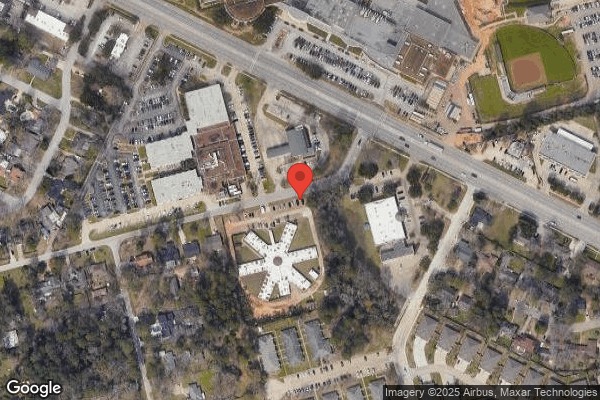
99 Rigby Owen Rd, Conroe, TX 77304 (936) 756-1240
For profit - Limited Liability company 146 Beds SLP OPERATIONS Data: November 2025 1 Immediate Jeopardy citation
Trust Grade
26/100
#1167 of 1168 in TX
Last Inspection: March 2025

Within standard 12-15 month inspection cycle. Federal law requires annual inspections.

Overview

Woodland Manor Nursing and Rehabilitation has received a Trust Grade of F, indicating significant concerns about the quality of care provided at this facility. Ranking #1167 out of 1168 in Texas places it in the bottom tier of nursing homes, and it is last in Montgomery County, suggesting there are no better local options available. The facility is worsening, with issues increasing from 4 to 6 in the past year. Staffing is a major concern, with only 1 out of 5 stars and a high turnover rate of 65%, which is above the Texas average, indicating instability among caregivers. There have also been serious incidents, such as a resident suffering multiple falls due to inadequate supervision and interventions, and multiple food safety violations, including improper food handling and sanitation practices. Overall, while there are some strengths, the significant weaknesses and recent trends make this facility a risky choice for families seeking care for their loved ones.
Trust Score
F
26/100
In Texas
#1167/1168
Bottom 1%
Safety Record
High Risk
Review needed
Inspections
Getting Worse
4 → 6 violations
Staff Stability
⚠ Watch
65% turnover. Above average. Higher turnover means staff may not know residents' routines.
Penalties
✓ Good
$21,530 in fines. Lower than most Texas facilities. Relatively clean record.
Skilled Nurses
⚠ Watch
Each resident gets only 12 minutes of Registered Nurse (RN) attention daily — below average for Texas. Fewer RN minutes means fewer trained eyes watching for problems.
Violations
⚠ Watch
17 deficiencies on record. Higher than average. Multiple issues found across inspections.
★☆☆☆☆
1.0
Overall Rating
★☆☆☆☆
1.0
Staff Levels
★★☆☆☆
2.0
Care Quality
★★☆☆☆
2.0
Inspection Score
Stable
2024: 4 issues
2025: 6 issues

The Good

  • Full Sprinkler Coverage · Fire safety systems throughout facility
  • No fines on record

Facility shows strength in fire safety.

The Bad

1-Star Overall Rating

Below Texas average (2.8)

Significant quality concerns identified by CMS

Staff Turnover: 65%

19pts above Texas avg (46%)

Frequent staff changes - ask about care continuity

Federal Fines: $21,530

Below median ($33,413)

Minor penalties assessed

Chain: SLP OPERATIONS

Part of a multi-facility chain

Ask about local staffing decisions and management

Staff turnover is elevated (65%)

17 points above Texas average of 48%

The Ugly 17 deficiencies on record

1 life-threatening
Aug 2025 1 deficiency 1 IJ (1 affecting multiple)
CRITICAL (K) 📢 Someone Reported This

A family member, employee, or ombudsman was alarmed enough to file a formal complaint

Immediate Jeopardy (IJ) - the most serious Medicare violation

Accident Prevention (Tag F0689)

Someone could have died · This affected multiple residents

**NOTE- TERMS IN BRACKETS HAVE BEEN EDITED TO PROTECT CONFIDENTIALITY** Based on observation, interview and record review the facility failed to ensure adequate supervision and assistance devices to p...

Read full inspector narrative →
**NOTE- TERMS IN BRACKETS HAVE BEEN EDITED TO PROTECT CONFIDENTIALITY** Based on observation, interview and record review the facility failed to ensure adequate supervision and assistance devices to prevent accidents for one of six residents (Resident #1) reviewed for accident hazards in that: -The facility failed to ensure Resident #1 had interventions in place after she fell on 8/10/2025, 8/11/2025, or 8/14/2025 when she sustained a hematoma to her forehead and on 8/16/2025 when she fell again and suffered a laceration over the right eye requiring 7 sutures.-The facility failed to adequately supervise Resident #1 after she experienced the first fall on 8/10/2025. -The facility failed to determine the causative factors of the falls and address those factors timely. Resident #1 was admitted on [DATE]. An Immediate Jeopardy (IJ) was identified on 8/22/2025 at 3:40pm. The IJ template was provided to the facility on 8/22/2025 at 3:40pm. While the IJ was removed on 8/24/2025, the facility remained out of compliance at a scope of pattern and a severity level of no actual harm as the facility continued to monitor the implementation and effectiveness of their plan of removal.This failure could place residents at risk of serious injuries requiring hospitalization or surgical intervention, and/or death.Findings Included:Record review of Resident #1's face sheet dated 8/7/2025 revealed that she was a [AGE] year-old female that was admitted to the facility on [DATE] and re-admitted on [DATE] with diagnoses of hypertension (high blood pressure), other muscle spasms(involuntary contractions of muscles), long-term aromatase inhibitors(used to treat hormone-receptor-positive breast cancer in women), and cervical myelopathy (a nervous system disorder that affects the spinal cord) and a history of falls.Record review Resident #1's care plan dated 8/8/2025 revealed that a 48-hour baseline had been completed. Problem: Baseline care plan will identify my care needs, risks, strengths and goals for the first 48-hoursGoal: Initial goal is to have access of services to promote adjustment to my new living environment. Approach: Safety falls: Fall risk evaluation will be completed to identify and minimize initial risk factors for falls/injury. Record review of Resident #1's initial MDS assessment dated [DATE] revealed:Section C500- Brief Interview for Mental Status was unscored.Section GG01300- Functional Abilities revealed C. toileting hygiene was coded as 04- representing supervision or touching assistance was needed by helper. E. Shower/bathe self was coded as 01- Dependent -helper does all of the work. F. Upper body dressing, lower body dressing, personal hygiene and putting on/taking off footwear were all coded as 3. Representing partial/moderate assistance needed by a helper.Section GG0170- Mobility revealed sit to stand, chair/bed-to-chair-transfer, and toilet transfer were coded as (2)- which represented substantial/maximum assistance-helper does more than half the effort. Helper lifts or holds trunk or limbs and does more than half the effort. Section J1700-Fall History A. Did the resident have a fall any time in the last month prior to entry/entry or reentry was coded 1. YesJ1800- Any falls since admission was coded as 1. Yes Record review of Resident #1's Morse Fall scale dated 8/7/2025 revealed Resident #1 had a history of falls, ambulated with a walker, had weakness, Gait: Normal. There was a score of 40 and she was deemed a low risk for falls.Record review of the morse scoring data revealed five factors for scoring:1. History of Falls (25 points)- Resident #1 has fallen prior to admission2. Secondary Diagnosis (15 points)- Resident #1 has more than one medical diagnosis3. IV Therapy- (0) - Resident #1 does not have an IV4. Gait- (20) points- Resident #1 had impaired gait, difficulty rising or poor balance5. Mental Status- (15 points) - Resident #1 overestimates her ability and is forgetful of their limitations. Low Risk if (Score of 0-24 points)Medium Risk- (Score of 25-44)High Risk (Score of 44 or higher than 50) Record review of Resident #1's admitting hospital record dated 6/25/2025 revealed the resident was admitted to the hospital and assessed due to recent falls, hemiplegia and hemiparesis following cerebral infarction. Record review of the Resident #1's clinical record from a local hospital ER visit dated 8/4/2025 revealed her chief complaint was a fall. She now presents with multiple falls due to myelopathy. CT head was negative however x-ray showed right shoulder mid shaft clavicle fracture comminuted proximal phalanx. Neurology was consulted to decompress her spinal cord as she underwent C3-C4, C4-C5, C5-C6 ACDF on 8/24/2022. She was not wearing her soft collar. Record review of Resident #1's clinical record from ER visit dated 8/14/2025 revealed she was admitted due to a fall at the facility and sustained a head injury and possible lumbar transverse process fracture. Activity instructions were for Resident #1 were to get up using only her walker, take her time standing and ask for assistance when needed. Continue wearing the cervical collar and sling. Record review of Resident #1's ER record dated 8/16/2025 revealed she was admitted to the hospital following a fall with a laceration over her right eyebrow. She received 7 sutures. Record review of Resident #1's nursing progress notes revealed: 8/10/2025 at 7:09pm- LVN D observed call light and upon arrival Resident #1 was observed on the floor. Resident #1 stated she was going to the restroom. No injuries observed, denied pain, neuro checks started every 30 minutes for 2 hours. 8/11/2025 at 2:57pm- LVN D stated she was notified by PT personnel that Resident #1 was observed on the floor. Observed to be in sitting position on the floor. Resident stated she was getting up to go to the restroom. RP, physician notified.8/14/2025 at 1:58am- LVN A wrote Resident #1 was lying on the floor, assessed and had hematoma to right forehead. She is alert with confusion, physician said send to ER via 911. No complaint of pain.8/16/2025 at 9:15am- LVN H wrote she was called to room to assess resident due to rt eye bleeding. Area cleansed with normal saline and dressing. Physician, RP, DON notified. Physician said send Resident #1 to ER. Record review of incidents of falls report dated 7/18/2025-8/18/2025 revealed:08/10/2025 06:53PM Resident #1-Fall 08/10/2025 06:51PM Resident #1- Fall08/11/2025 02:26PM Fall Resident#1's Room door was OPENED08/14/2025 02:11AM Resident#1's Room door was OPENED08/16/2025 09:14AM Resident #1's Room door was OPENED resident fell while attempting to transfer to restroomhematoma to right forehead.An observation and interview with Resident #1 on 8/18/2025 at 11:19am she had a bandage over her right eyebrow, hematoma on her forehead and a blackened right eye. She said she had been at the facility for a couple of weeks and fell twice when she was going to the restroom. She seemed confused when she was told that she had 5 falls at the facility. She said she kept falling because she lost her balance and was dizzy. She said her friend (RP) took care of her when she resided in her RV. She said she was confused sometimes and forgot to get help and that her falls were when she was going to the restroom. She said staff would not come to help her to the restroom. She admitted she would not use the call light although call light string was pinned to her fitted sheet.An interview with Resident #1's RP on 8/18/2025 at 11:21am said Resident #1 had experienced multiple falls at the facility due to staff not helping her to get to the restroom. She said Resident #1 had only been at the facility for about 2 weeks and had multiple falls. She admitted that Resident #1 had falls prior to being admitted to the facility due to her having a stroke. She said Resident #1 broke her collar bone and had surgery to remove two lipomas off her spine. She said the facility staff should be able to help her to the restroom as they were aware of her falls before coming to the facility. She said she had spoken to the DON about staff helping Resident #1 as they said they would. She said adequate supervision was needed because Resident #1 was confused. An interview with Resident #1's Psychiatrist NP on 8/18/2025 at 12:03pm she revealed she had visited with Resident #1 only once for an evaluation and said she was confused and had early signs of dementia. She said her dementia perhaps caused her to believe she was still capable of ambulating unassisted. She stated that they would be evaluating her medications to figure out if they could be causing her falls. She said this was her 2nd visit and she wanted to quickly find out if there was something she could do to help with the falls.An interview with PT Director on 8/18/2025 at 12:14pm he stated Resident #1 had received 5 days (8/11-8/15/2025) of PT to address falls, balance, and gait. He said Resident #1 participated in bilateral lower extremities (BLE) strengthening program to improve physical performance, dynamic standing balance to improve safety and prevent falls. He said Resident #1 would improve her ability to complete toilet/commode transfers with supervised or touching assistance with better balance. He said Resident #1 had been granted another 5 days of physical therapy and she started again today (8/18/2025). He said her left shoulder was also weak from a shoulder injury prior to coming to the facility. He said they would also concentrate on generalized weakness. He said the management team had discussed her falls and put therapy in place. He was not aware of any other interventions.Attempted interviews were made on 8/18, 8/19 and 8/23/2025 to contact LVN C and LVN D, which were the nurses on the night shift when Resident #1 fell on 8/10, 8/11 and 8/14/2025. These attempted phone calls were unanswered and not returned.An interview with the MDS Nurse on 8/18/2025 at 3:35pm she said she had been employed for 1 year. She said as the MDS Coordinator she completed the MDS assessment upon admission, quarterly, and upon significant change. She said she was working on Resident #1's initial MDS today (8/18/2025). She stated she had been at a work conference last week and knew coming back today (8/18/2025), that she would have to complete it. She said falls were discussed in morning meetings and there had already been discussions about Resident #1's falls. She said once there is a fall, another fall risk assessment should be completed, documentation should be done on an incident report and interventions added to the care plan. She said she looked at the care plan because she noticed there were no interventions it came up when she started the MDS. She said she discussed it with the DON today. She said they were still within their window for completing the comprehensive care plan because it was due within 7 days after completing the MDS or by day 21 of the resident' stay.An interview with the DON on 8/18/2025 at 4:25pm revealed she had been employed by the facility since April 2025. She said her duties were to oversee clinical for the residents and work closely with medical director in caring for the residents. She stated Resident #1 had about 5 falls. She said they had already provided physical therapy for her for one week. She said she was ambulatory with her walker, but she does not wait or call for assistance from staff. She said she believed that the resident was experiencing vertigo (a medical condition that causes a person to feel like they are spinning or moving). She said they did not use fall mats because they posed more of a risk for ambulatory residents. She said she had educated the resident on locking her overbed table to gain her footing first then to grab her walker. She said her bed was in its lowest position, however she had access to the remote control for the bed and would often lower and raise it as she wanted. She said Resident #1 had a C-collar when she was admitted and sling on her right arm. She said she used the affected arm which was another issue. Rehab was altering a wheelchair for her to be able to use it. She said they were in discussions with regional and had QAPI concerning the resident since it was difficult for her to determine the next steps for her. She said it was her expectation for nursing staff to make timely rounds to check on the residents. She said she felt facility staff supervised her, but Resident #1 did not wait for them to come to help. She said Resident #1 could have re-injured her shoulder or even worst she could have had a spinal injury from the falls. An interview with the VPO on 8/18/2025 at 4:27pm, he said he had been in the facility on Mondays, Thursday and Fridays since the facility did not have an Administrator. He stated that he wished he could argue their non-compliance, but he could not. He said Resident #1 had multiple falls and although PT was started to help with strengthening it was not enough especially since she continued to fall. He said there were not completed progress notes about the incidents. He said his expectation was for the nursing staff to document falls, brainstorm interventions and immediate act on those to prevent further falls.An interview with PCP-NP on 8/19/2025 at 1:13pm she stated she just started going to the facility. She said she saw Resident #1 for the first time today (8/19/2025). She said nursing staff briefed her and said she was a fall risk and had a cervical fracture prior to being admitted . She said she thought this fracture was from a few months ago, this is why she was admitted . She said Resident #1 would be having her sutures removed in the next few days. She said Resident #1 was confused and cognition seemed to be off. She said she would review any labs that were done or order labs just to check to see if there was some other underlying reason for her falls. An interview with Resident #1's PCP on 8/19/2025 at 1:28pm he said he saw her the day after she was admitted (8/8/25). He said he was not on his laptop to give specifics, but he had been notified she have had quite a few falls. He said she can slightly communicate and was very confused at times. He said what he did recall was that she wanted to do things on her own. He said Resident #1 fell this past weekend because she wanted to go to the restroom on her own. She needed help. She was not able to control her balance. He stated he was at the facility 2 times a week and his NP was there 3 times per week. He said the call light was in reach at his last visit. He said he did not think she fully understood that she could really hurt herself. He said he educated her on using the call light and the importance of her waiting for help. He said he believed the staff tried to supervise her to prevent her from falling. He said she could have injured herself badly. He agreed that a laceration requiring sutures was considered a serious injury. He said his NP was at the facility (today)and would be looking into some possible causes of her falls by looking at her labs.A subsequent interview with the VPO on 8/22/2025 at 3:34pm he stated that they discussed Resident #1's falls with the medical director because he was aware that they had no interventions in place and honesty he was upset to find there were no progress notes about the falls prior to 8/15/2025.An interview with LVN A on 8/23/2025 at 6:48pm, he said he had been employed since 2008. He worked the 6pm-6am Hall D and E (Hall 400 and 500). He stated he completed the Morse scale assessment for Resident #1 upon her admission. He input yes or no to the questions about gait, diagnosis and the system gave him a score of 40. He said he was not sure about the range for determining high or low risk. He said he entered her history of falls and answered all the questions, and the system tabulated and said she was a low risk for falls. He stated he was not the nurse on duty for none of the falls. He documented post fall observations as nurse observe 3 days after a fall. He stated that he reviewed the notes, and she fell on the day shift on 8/11 and 8/16, and he was not the night nurse on 8/10, 8/14 or 8/16/2025. He said they were oriented on the fall risk assessments being updated after a fall. He said Resident #1 could have re-injured herself and got more or worst injures from the falls. Accident and hazards policy was not received prior to exit. An IJ was identified on 8/22/2025 at 3:40 pm. The IJ template was provided to the facility on 8/22/2025 at 3:40 p.m. The Facility's plan of removal was accepted on 8/23/2025 at 11:44 a.m. and included the following: Immediate Action:Date: 08/23/2025-The facility failed to ensure Resident #1 had interventions in place after she fell on 8/10/2025, 8/11/2025, sustained a hematoma to right forehead on 8/14/2025 and a laceration over the right eye requiring 7 sutures on 8/16/2025.-The facility failed to provide an emergency plan to adequately supervise Resident #1 after she experienced the first fall on 8/10/2025. -The facility failed to determine the causative factors of the falls and address those factors timely. Resident #1 had been admitted since 8/7/2025Resident #1 was sent to the hospital for further evaluation. Resident has since returned to the facility, has sutures to right eyebrow, hematoma on her forehead, and a discoloration to right eye and is behaving per norm, no further concerns noted. Immediate action: Action: Resident #1 will have a medication review by the Medical Director. Resident #1 was care planned for the following interventions: education on safety, cont. encourage ask for assist and ask for assist to go to bathroom, monitor for orthostatic hypotension per order, frequent checks and see if needs assistance, continue with neck brace and sling per order, keep bed in low position. Notify nurse if resident removes neck brace or sling. Continue follow with Ortho.Resident #1 will be evaluated for appropriate assistive devices and will use wheelchair Resident #1 will be evaluated by PT servicesResident #1 will have medication review by Medical Director; (MD has discontinued Cycobenzapine and has initiated orthostatic blood pressure checks every shift which occurred on 8/22/2025).Resident #1 will have orthostatic b/p checks every shift-Resident will be monitored every shift, for 3 days, and daily thereafter for 7 days, on follow up charting related to the changes, including changes with medications. This will be located in the resident's progress notes and/or observations in the electronic medical record. Any concerns with medication changes and/or resident status will be communicated to the physician for further direction.Person(s) Responsible: Charge Nurse, Regional Nurse Consultant, and/or DesigneeDate: 8/22/2025Action: Review all residents fall risk assessments to ensure they are updated and accurately reflect the resident. Based on resident assessment and chart review, 25 residents were changed to from low fall risk to high fall risk. Their care plans will reflect their assessments. Person(s) Responsible: Clinical Case Manager, Wound Care Nurse, and/or Designee Date of Completion: 8/22/2025 Action: A 30-day audit will be completed for all falls in the facility, 12 falls were identified, 7 total residents affected. The facility will review all care planned interventions for the fall(s) to ensure they are present and person-centered. Person(s) Responsible: Clinical Case Manager, Wound Care Nurse, and/or Designee Date of Completion: 8/22/2025 Action: Initiate a review of all admissions, prior to admitting into the nursing home, to identify if a resident is at risk for falls and to create a person-centered care plan/baseline care plan with person centered interventions in an attempt to reduce the risk of falling upon admission. Administrator and/or designee will monitor for compliance. Person(s) Responsible: Nursing Administration, Clinical Case Manager, Wound Care Nurse, and/or Designee Date of Completion: 8/22/2025Facility's Plan to ensure compliance quickly:Action: Educate Charge Nurses and CNAs over resident person-centered interventions for falls. Education to include implementing interventions, notifying on call nursing administration, consulting the physician, getting therapy involved, increased rounding, etc. Test will be distributed to evaluate the effectiveness of the education. All Charge Nurses and CNAs will be educated prior to working their next shift. Person(s) Responsible: Clinical Case Manager, Wound Care Nurse, and/or Designee Date of Completion: 8/22/2025 Action: Educate CNAs and Nurses on resident profile that will alert staff of a resident that is a fall risk, interventions will also be located in the resident profile located in the electronic medical record. CNAs and Charge Nurses will complete a return demonstration on pulling the resident profile and where to view interventions. All CNAs and Charge Nurses will be educated prior to working their next shift. Person(s) Responsible: Clinical Case Manager, Wound Care Nurse, and/or Designee Date of Completion: 8/22/2025 Action: Falls will be reviewed/monitored during clinical meetings, daily x5 days weekly, to review the event report, attempt to root cause, and update the care plan with person centered interventions. Administrator and/or designee will monitor for compliance.Person(s) Responsible: Clinical Administration, Assistant Director of Nursing, Clinical Case Manager, and/or Designee.Date of Completion: 8/23/2025 Action: Ad hoc QAPI to inform Medical Director of the IJ template for 689 and the facility's plan to remove the immediacy. Person(s) Responsible: Regional [NAME] President, Clinical Case Manager, Wound Care Nurse, and/or DesigneeDate of Completion: 8/22/2025 Monitoring: Observation of Resident #1 on 8/22/2025 and 8/23/2025 at various times revealed her to have her neck brace and sling on her right arm. Record review of Resident #1's care plan included the following interventions: Education of safety, continue to encourage ask for assist to go to the bathroom, monitor her orthostatic hypertension. Frequent checks will be provided, and staff would inform the nurse if she removed her neck brace and sling per order. Continue to follow with Orthopedic physician. Resident #1 would be evaluated for appropriate assistive devices and will use wheelchair. Resident #1 will be evaluated for PT. Resident #1's record also included a PT evaluation conducted on 8/22/2025. She was placed on services for five days.Record review of Resident #1's MAR was updated to reflect orthostatic blood pressure every shift. Further review revealed MD discontinued Cyclobenzaprine. Record review of Resident #1's progress note dated 8/23/2025 revealed she had been reporting that she was well without taking the muscle relaxer Cyclobenzaprine.Record review of the list of 25 residents listed were changed from low to high risk for falls.Record review of 5 out of 25 sampled residents from the list of 25 residents had updated care plans related to falls (Residents #1, 2, 3, 4 and 5).Record review of Resident #1's and Resident #3's resident profile revealed that it alerted staff that they are a fall risk. Record review of test given to the clinical staff asked questions concerning fall interventions, when and who should notify RP, Physician, DON, Administrator. Interviews with CNA's A, B, C, and D were conducted between 8/22-8/25/2025 on the 6am-6pm shift were able to communicate the recent in-services in which they were told where they could find resident interventions in their EMAR, notifying on-call administration after an incident event, and notifying their nurse of any incidents. Interviews with the night shift (6p-6a) staff were CNA's E, F, H, and J were conducted on 8/24/2025. They were able to communicate their in-services on interventions, resident profiles, increased rounding and notifying the Charge Nurse when there are Resident incidents. Interviews with LVN's A, B and G were conducted between 8/24 and 8/25/2025 of night shift staff revealed they had been in-serviced on completion of a fall risk assessment, adding additional or different interventions to the care plans, notifying the RP, Physician, DON and Administrator, checking Resident profile for their person-centered assessments, providing full body skin assessments.Interview with MDS Coordinator and Wound care nurse on 8/23/2025 revealed them to state they had been in-serviced on resident interventions, accurate and timely documentation, fall risk assessments, notifying Administration, RP, and Physicians. They were given a test for understanding the updated protocols. The VPO was informed the Immediate Jeopardy was removed on 8/25/2025 at 3:40pm. The facility remained out of compliance at a severity of no actual harm with potential for more than minimal harm that is not an immediate jeopardy and a scope of pattern due to the facility's need to evaluate the effectiveness of the corrective systems that were put into place.
Jul 2025 2 deficiencies
CONCERN (E) 📢 Someone Reported This

A family member, employee, or ombudsman was alarmed enough to file a formal complaint

Potential for Harm - no one hurt, but risky conditions existed

Deficiency F0804 (Tag F0804)

Could have caused harm · This affected multiple residents

**NOTE- TERMS IN BRACKETS HAVE BEEN EDITED TO PROTECT CONFIDENTIALITY** Based on observations, interviews, and record review, the facility failed to serve foods that were palatable and attractive and ...

Read full inspector narrative →
**NOTE- TERMS IN BRACKETS HAVE BEEN EDITED TO PROTECT CONFIDENTIALITY** Based on observations, interviews, and record review, the facility failed to serve foods that were palatable and attractive and prepare food by methods that conserve nutritive value, flavor, and appearance for 4 (Resident #1, #2, #3, and #4) of 7 residents reviewed. 1. Resident #3 revealed pictures of meals on 06/26/25, 06/23/25, and 06/22/25 that showed small meal portions with unpalatable and unrecognizable food items. 2. A test tray was provided for the lunch meal service that contained a chopped steak that resembled a slab of meat covered in gravy and a hashbrown casserole that was bland and gummy. These failures could place residents at risk of decreased food intake, hunger, unwanted weight loss, and diminished quality of life. Findings included:Record review of Resident #1' s face sheet revealed a [AGE] year-old man who was admitted to the facility on [DATE]. His admitting diagnoses were Hemiplegia and hemiparesis (loss of strength and weakness to a side of the body) and vascular dementia. Record review of Resident #2' s face sheet revealed a [AGE] year-old man who was admitted to the facility on [DATE]. His admitting diagnoses were diabetes mellitus due to underlying condition with diabetic neuropathy (pain, tingling, or numbness in the hands or feet related to diabetes), Benign neoplasm of meninges (tumors that develop from the membranes surrounding brain and spinal cord), and lack of coordination. Record review of Resident #3' s face sheet revealed a [AGE] year-old man who was admitted to the facility on [DATE]. His admitting diagnoses were hypertension (high blood pressure), Stage 3 Chronic Kidney disease, and Type 2 Diabetes. Record review of Resident's #4's face sheet revealed a [AGE] year-old woman who was admitted to the facility on [DATE]. Her admitting diagnoses were cerebral edema (brain swelling), anoxic brain damage (brain injury where the brain loses oxygen), and unsteadiness on feet. In an observation and interview on 06/27/25 at 2:28 pm, Resident #1, #2, and #3 were sitting in a room enjoying a game. Resident #1, #2, and #3 stated unanimously that they have a strong aversion to the food and often have to order food from outside of the facility to feel satisfied. Resident #1 expressed that he always received his food cold and stated that although the aides could warm it up, he wanted to receive his food like it was when it was first cooked. When asked if he would go to the dining room during meal services, Resident #1 refused and stated his preference was to enjoy his meals in his room. Resident #1 added that he recently (date unknown) received a biscuit that was overcooked on top and raw on the inside, expressing that he felt the dietary requirements were not right at the facility and he inquired where his payments were going. Resident #1 explained that sometimes he would refuse medication because some of the meds he took required food and he would not take them on an empty stomach. Resident #3 explained that all three of the men were diabetics and it was important that they not only ate, but received enough food with access to snacks. Resident #2 agreed that he did not get large enough portions and explained that for dinner on 06/26/25 he received a piece of turkey, lettuce and a tortilla, and that was not enough to hold them overnight. Resident #2 stated that the two men who worked in the kitchen were lazy and recalled how he received grits for breakfast that were as hard as a baseball. During this conversation, Resident #3 interjected and stated that he had been taking pictures of the food they had been receiving during meals. Record review of the pictures shared by Resident #3 detailed the following:1. For dinner on 06/26/25 at 5:40pm, residents received a roll, creamed peas, a white tortilla with a small piece of lettuce, a possible piece of meat, and a heavy serving of a white sauce drenched across that tortilla. The food was hard to identify and did not look attractive. 2. For breakfast on 06/23/25 at 7:43 am, he received oatmeal that was shaped in a dome as if it was scooped out with an ice cream scooper and a Cinnabon with frosting. 3. For dinner on 06/22/25 at 5:51pm, he received one piece of what appeared to be a fried chicken strip, a roll, a very small scoop of peas, and a scoop of a red vegetable that could not be identified by Resident #3 or the investigator. In an interview on 06/27/25 at 2:36 pm, the DM stated that she had been working at the facility for 2 years and she started off as a cook. She explained that food was served first in the dining room and came to the halls after all the residents had received a plate. She admitted that she had received complaints regarding the food being cold and portion sizes from Resident #1, Resident #2, and Resident #3. She stated that when the trays came, the staff would let them sit on the hall and delayed passing them out immediately. The DM explained that she had spoken to the DON and nurses about the hall trays and suggested to get additional help from other staff to get trays out faster and to get more residents into the dining room for a hot plate. The interview was cut short due to the DM having prior engagements. In an observation on 07/02/25 at 9:45 am in the kitchen, a pack of ground beef sat in the sink while hot water ran over the meat and a gulf of hot steam came off of the meat. [NAME] A came over and turned the water off and took the meat out of the sink with his bare hands and placed it on a silver tray. The menu for 07/02/25 displayed that lunch for that day would consist of smothered chopped steak, hash brown casserole, green beans, garlic cheese biscuit, banana pudding desert, and a beverage. On a bulletin board, DA A and [NAME] A displayed up to date food service certifications. In an interview on 07/02/25 at 10:03 am, [NAME] A stated that he had worked as a cook in the kitchen for almost 2 months and his schedule was 6am-6pm daily. He explained that when he took the meat out of the sink, he seasoned it and spread it flat the silver pan. He stated that since they were serving smothered steak, the DM told him it would be better to cook that way. He stated that he had a received a few complaints regarding the food and said the criticism was centered around the way the food looked and was presented. He explained that the resident's wanted it a little neater on the plate. He stated that he had tried some of the meals that were prepared by him but he did not like them, but the things he did like he would eat. In an interview on 07/02/25 at 10:24 am, Resident #4 stated she would sometimes try food from the kitchen but it was not her favorite. She stated that the oatmeal came unsweetened and she would have to ask for extra sugar to put on it just so she would be able to eat it. She explained that the food tasted flat, lacked flavor, and was not served hot during meals. Resident #4 explained she stopped asking staff to do things for her because she felt that would put her down. She recalled that one staff (unknown) told her before you know it, you will be a diabetic and she responded before I know it, I will be malnourished because the food has no taste whatsoever. In an interview on 07/02/25 at 11:28 am, the AD stated that in a recent Resident Council meeting, he received complaints that the trays being served on the halls were cold and the food was not good. The AD said he explained to the residents that the DM had no control over the menu and they were pushed out by corporate. He stated that the biggest concern with the resident's was the food not being appealing to. The AD stated that he also told residents to let the aides know any issues with their food and document while he informed the nurses and management. In an observation on 07/02/25 at 11:43 am in the kitchen, three grilled cheese sandwiches were sitting on the counter. Of the 3, the top slice of bread on one the sandwiches was almost completely brunt. In an interview on 07/02/25 at 12:34 pm, Resident #1 was in his room and had just received his tray from one of the aides off the hall. He stated that his food was cold and the investigator checked the food on his lunch tray using a thermometer. The temperatures were 128 degrees F for the hashbrown casserole, 146 degrees F for the chopped steak, and 118 degrees F for the string beans. The suggested holding temperature should be heated to at least 135 degrees F. On 07/02/25 at 1:30 pm, the investigator began to taste the test tray provided by [NAME] A. The string beans were fine and had been seasoned and cooked properly. The chopped steak was unappealing to the eye and looked like a slab of mashed ground beef covered in gravy. The hashbrown casserole was bland and gummy. In an interview on 07/02/25 at 3pm with the DM, she explained that she trained all staff verbally and [NAME] A trained with her for 4 days but she could not locate any training information when asked. The DM stated she had been working with [NAME] A for two months and felt that he did well initially but had slacked off. She expressed that he had also completed his food handler's certification course when hired, but he would always say that he didn't remember what was covered. She explained that she would often have to redirect [NAME] A on kitchen protocols involving portion sizes, puree's, and using salt, but she felt that he did not follow instructions. Another issue she had with [NAME] A was that he would cook the biscuits too fast and not allow them to brown. Lastly, she expressed that her biggest issues were found the days he worked in the kitchen. The DM was showed the picture of the grilled cheese sandwich from the lunch service and she responded that she had told [NAME] A several times not to serve burnt food. With all of the information presented, the DM said that the kitchen practices performed by her staff could put residents at risk for cross contamination. The DM also informed the investigator that she had recently hired a new cook and she was going to shorten [NAME] A's hours until she was able to remove him from her kitchen because she needed someone who followed direction and was consistent with meal quality. On 07/02/25 at 3:15 pm, a request was made to the DM to attain any training and in-services completed by the DM to [NAME] A. The DM stated she could not remember where she put them and none could be located before the investigator exited the facility. In an interview on 07/02/25 at 4:22 pm with the ADM, he was informed of the errors identified during the lunch meal service. He shook his head and stated that he spoke with corporate and the facility was in the process of ordering new covers for the tray cart that would help keep the food warmer for the residents who chose to eat meals outside of the dining room. Record review of the facility's grievance logs from April 2025-July 2025 displayed no grievances regarding food had been documented. Record review of the facility's policy titled Food Handling revised June 1, 2019, documented that the facility's policy was to ensure that all food served by the facility is of good quality and safe for consumption, all food will be handled according to the state and US Food Codes and HACCP guidelines.
CONCERN (F) 📢 Someone Reported This

A family member, employee, or ombudsman was alarmed enough to file a formal complaint

Potential for Harm - no one hurt, but risky conditions existed

Food Safety (Tag F0812)

Could have caused harm · This affected most or all residents

**NOTE- TERMS IN BRACKETS HAVE BEEN EDITED TO PROTECT CONFIDENTIALITY** Based on observation, interview, and record review, the facility failed to store, prepare, distribute, and serve food in accorda...

Read full inspector narrative →
**NOTE- TERMS IN BRACKETS HAVE BEEN EDITED TO PROTECT CONFIDENTIALITY** Based on observation, interview, and record review, the facility failed to store, prepare, distribute, and serve food in accordance with professional standards for food service safety for 1 of 1 kitchen reviewed for sanitation in that: 1. [NAME] A placed a 10lb pack of ground beef in the sink underneath running hot water to defrost for lunch service. 2. Intern A failed to secure her waist length hair in a hair net. 3. [NAME] A failed to use gloves when handling the ground beef for lunch service. 4. During a food temperature check, [NAME] A placed the thermometer in each item of food without properly sanitizing the thermometer between checks. 5. [NAME] A failed to wash hands before utilizing gloves. 6. [NAME] A touched the top of the trashcan with his gloved hands and proceeded to prepare a test tray for the investigator. 7. For lunch service, Resident #1 received food that fell below safe temperatures for hot foods during his lunch service on 07/02/25. The temperatures of the hashbrowns were 128 degrees F and string beans were 118 degrees F. These failures could place residents at risk of foodborne illnesses. The findings included:Record review of Resident #1' s face sheet revealed a [AGE] year-old man who was admitted to the facility on [DATE]. His admitting diagnoses were Hemiplegia and hemiparesis (loss of strength and weakness to a side of the body) and vascular dementia. In an observation on 07/02/25 at 9:45 am in the kitchen, a pack of ground beef sat in the sink and while hot water ran over the meat and a gulf of steam came off of the water. [NAME] A came over and turned the water off and took the meat out of the sink with his bare hands and placed it on a silver tray. There was a handwashing sink a few feet away from where the meat was being thawed, however, [NAME] A did not wash his hands prior to grabbing the meat. Intern A had long orange hair that hung to her waist that was not covered with a hair net. [NAME] A could be observed minutes later mixing the ground beef with his bare hands in a silver pan. The menu for 07/02/25 displayed that lunch for that day would consist of smothered chopped steak, hash brown casserole, green beans, garlic cheese biscuit, banana pudding desert, and a beverage. On a bulletin board, DA A and [NAME] A displayed up to date food service certifications. In an interview on 07/02/25 at 9:59 am, Intern A stated she had been interning in the kitchen as a dietary aide for 4.5 weeks and her last day would be July 11th. Some of her job duties included wrapping silverware for meal services, filling tea cups, clean up, and occasionally serving food in the dining room. In an interview on 07/02/25 at 10:03 am, [NAME] A stated that he had worked as a cook in the kitchen for almost 2 months and his schedule was 6am-6pm daily. He explained that when he took the meat out of the sink, he seasoned it and spread it flat in the silver pan. He stated that since they were serving smothered steak, the DM told him it would be better to cook that way. [NAME] A stated that he didn't normally unthaw meat using hot water but it was taking a long time to thaw out. He stated his normal practice was to place it in a pan of room temp water. When asked what the health concerns were of running partially frozen ground beef under hot water to unthaw and he explained that it depended on the time frame, and [NAME] A had only ran the hot water of the ground beef for 10 minutes. He explained that he worked yesterday (07/01/25), but he forgot to take meat out of the freezer. In an interview on 07/02/25 at 11:14 am, LPN A stated that when the trays came out to the halls for meal services, she tried to push them out immediately. In the past she had gotten complaints of the food being cold, one of the resident's being Resident #1. She explained that when the food was cold, she would take the plate and reheat it in the microwave. In an interview on 07/02/25 at 11:28 am, the AD stated that in a recent Resident Council meeting, he received complaints that the trays being served on the halls were cold. The AD said he explained to the residents that the residents who sat in the dining room were severed first and then trays were pushed out to the halls. He gave them the suggestion to eat their meals in the dining room and the residents understood but they refused to budge, which they have the right to. The AD stated that he also told residents to let the aides know their food was cold and document while he informed the nurses and management. In an observation on 07/02/25 at 11:43 am in the kitchen, the investigator requested temperature checks for the lunch service. [NAME] A grabbed the thermometer out of a basket and walked to the steam table. The temperatures were 200.7 degrees F for the chopped steak, 196.3 degrees F for the hashbrowns, and 174.4 degrees F for the green beans (range should be over 165 degrees F for hot food). During the temperature checks, [NAME] A took the thermometer from the chopped steak, to green beans, to hashbrowns and did not wipe or sanitize the thermometer between food items. Back in the kitchen, [NAME] A wiped the thermometer off with a paper towel and placed it back into the basket. The investigator requested a test tray to sample and [NAME] A grabbed the plate with his hands, but the investigator stopped him and requested he put gloves on prior to serving and told him that she noticed that he had not been wearing gloves. [NAME] A stated that he was supposed to wear gloves while cooking and he normally did. He grabbed a pair of gloves from a corner on the counter and mumbled that they were too small when his left hand burst through the plastic. With the right glove still on his hand, he walked to the trash can, opened the trash can lid with his right gloved hand, tossed the ripped glove inside with his left hand, returned the trash can's top with his right gloved hands, walked back to the box of gloves, and grabbed another glove to put back on his left hand. [NAME] A then returned to the plate to begin serving, however the investigator stopped him. The investigator explained that how he touched the trash can and plate with his gloves was a method of cross contamination. [NAME] A explained that his hands burst through the glove because they were a size medium and he normally wore a size large. When he wore gloves, his hands would burst through the gloves so it was almost like no point. He stated that the kitchen was required to keep the trashcan covered, but he understood how touching the lid with his glove and beginning to plate would be hazardous. When asked why he did not wear gloves when he handled the ground beef form earlier, he stated that he did not know they had gloves so he didn't put any on. On the counter wear the thermometer was held was a box of size large gloves. When asked about his training, he stated that he had completed his food handler's certification course and showed the investigator where it was placed on a bulletin board. In an observation and interview on 07/02/25 at 12pm, the DM entered the kitchen to oversee the lunch service. Intern A hair was still pulled back in a ponytail and no hair net was present. Intern A grabbed a pair of the large gloves, put them on, and began to rub her gloved hands on her mouth and face. The DM noticed that Intern A did not have a hair net on, and in structed her to get a hair net 3 times. After each request. Interne A replied what, huh, WHAT?, I don't know how. The DM grabbed a hair net and took her to the side to help place the net on her head. The DM told her to remove her gloves and walked her over to the kitchen and showed her how to properly wash her hands and gave her new gloves to place on her hands. When intern A was asked why she did not wear a hair net earlier, she explained that she did not normally wear a hair net and although she saw others doing it, no one had ever let her know it needed to be done. In an interview on 07/02/25 at 12:34 pm, Resident #1 stated that his food was cold. The investigator checked the food on his lunch tray using a thermometer. The temperatures were 128 degrees F for the hashbrown casserole, 146 degrees F for the chopped steak, and 118 degrees F for the string beans. In an interview on 07/02/25 at 3 pm with the DM, she stated that Intern A was not employed with the facility, but was a high school student with a work force staffing agency. She said Intern A had worked with the kitchen for less than a month and did not realize that she was not easy to direct. When informed that [NAME] A ran hot water to thaw the meat from today's lunch, she stated that she had gotten on him about that in the past and he was supposed to use cold water because hot water could cook the meat. She expressed that he should have known that from his food handler's certification course, but he would always say that he didn't remember. [NAME] A had also been written up recently regarding wearing improper footwear in the kitchen. She explained that the proper technique was to wear gloves when handling meat and she had often told him that if he was not sure, then he should ask her but she felt that he did not follow instructions. She explained that she trained all staff verbally and he trained with her for 4 days but she could not locate any training information when asked. The DM stated she had been working with [NAME] A for two months and felt that he did well initially, but he slacked off. With all the information presented, DM said that kitchen practices preformed by her staff could put residents at risk for cross contamination, especially using hot water to unthaw the meat and not wearing gloves. The DM also informed the investigator that she had recently hired a new cook and she was going to shorten [NAME] A's hours until she was able to remove him from her kitchen. She explained that since she had been getting complaints, she had started to pop up on weekends to monitor the kitchen staff and she also would assist at meal servings to monitor portion sizes and presentation. She wanted kitchen staff who were able to work without supervision and could train others when she was not there so that she could complete her duties. In an interview on 07/02/25 at 4:22 pm with the ADM, he was informed of the errors identified during the lunch meal service. He shook his head with a grimace and stated that he spoke with corporate and that the facility was in the process of ordering covers for the tray cart that would help keep the food warmer for the residents who chose to eat meals outside of the dining room. Record review of the facility's policy titled Employee Sanitation dated 2018, documented that:1. Employee Cleanliness Requirementsa. All employees must wear clean outer clothing.b. Hairnets, headbands, caps, beard coverings or other effective hair restraints mustbe worn to keep hair from food and food-contact surfaces2. Hand washinga. Employees must wash their hands and exposed portions of their arms atdesignated hand washing facilities at the following times:i. After touching bare human body parts other than clean hands andclean, exposed portions of armsii. After using the toilet roomiii. After coughing, sneezing, using a handkerchief or disposable tissue,using tobacco, eating, or drinkingiv. Immediately before engaging in food preparation including workingwith exposed food, clean equipment and utensils, and unwrappedsingle-service and single-use articlesv. During food preparation, as often as necessary to remove soil andcontamination and prevent cross contamination when changing tasksvi. When switching between working with raw foods and working withready-to-eat foodsvii. After engaging in other activities that contaminate the hands.3. Use of Glovesa. Gloves are not a substitute for thorough and frequent hand washing. Whenusing gloves, always wash hands before touching or putting on new gloves.b. Do not use latex or corn starch powder, which can transfer protein allergensfrom latex to person consuming foodc. Use single use gloves for one task.d. Change gloves:i. Between each food preparation task.ii. After touching items, utensils or equipment not related to task.iii. After touching hair, face or any other source of contaminationiv. When leaving food preparation area for any reason.v. When damaged, soiled or when interrupted.vi. Every hour for all tasks taking longer than one hour.e. Do not store gloves in pockets or aprons. Record review of the facility's policy titled Food Handling revised June 1, 2019, documented that:1. Thawing Foodsa. Thaw meat, poultry and fish in a refrigerator at 41 F or less.b. Foods may also be thawed using the following procedures:i. Completely submerged under running water at a temperature of 70 F or below with sufficient water velocity to agitate and float off loosened food particles into the overflow:1. For a period of time that does not allow thawed portions of ready-to-eat food to rise above 41 F; or2. For a period of time that does not allow thawed portions of a raw animal food requiring cooking to be above 41 F for more than four hours including the time the food is exposed to the running water and the time needed for preparation for cookingii. In a microwave oven using the defrost mode and immediately transferred to conventional cooking equipment with no interruption in the processiii. As part of the cooking process3. Hot Food Temperaturesa. Do not remove meats and other raw foods from refrigerator until ready to cook.b. [NAME] comminuted meat (such as hamburger) products thoroughly to heat all parts of the meat to a minimum temperature of 155 F for at least 15 seconds.c. [NAME] raw animal products such as eggs, fish, lamb, pork or beef, except roast beef, and foods containing these raw ingredients to an internal temperature of 145 F or above for at least 15 seconds.d. [NAME] poultry, stuffed fish or meat, stuffed pasta or stuffing containing fish, meat or poultry to 165 F or above for 15 seconds.e. When cooking raw animal foods in a microwave oven:i. Rotate or stir throughout or midway during cooking to compensate for uneven distribution of heatii. Cover to retain surface moistureiii. Heat to a temperature of at least 165 F throughout all parts of the foodiv. Allow to stand covered for two minutes after cooking to obtain temperature equilibrium.
Mar 2025 3 deficiencies
CONCERN (D)

Potential for Harm - no one hurt, but risky conditions existed

Deficiency F0561 (Tag F0561)

Could have caused harm · This affected 1 resident

**NOTE- TERMS IN BRACKETS HAVE BEEN EDITED TO PROTECT CONFIDENTIALITY** Based on observation, interview, and record review, the facility failed to promote and facilitate resident self-determination th...

Read full inspector narrative →
**NOTE- TERMS IN BRACKETS HAVE BEEN EDITED TO PROTECT CONFIDENTIALITY** Based on observation, interview, and record review, the facility failed to promote and facilitate resident self-determination through support of resident choice to including but not limited to the residents right to make choices about aspects of his or her life in the facility that are significant to the resident, healthcare and providers of healthcare services consistent with his or her interest, assessments, and plan of care and other applicable provisions of this part for 1 (Resident #4) of 8 residents reviewed for resident rights. The facility failed to honor Resident #4's request to be assisted to shower on Saturdays. This failure could place residents at risk for lack of choices/decision making resulting in depression, and diminished quality of life. Findings included: Record review of Resident #4's face sheet dated 03/20/2025 revealed a [AGE] year-old admitted to the facility on [DATE] and latest re-admission date of 02/28/2025. His diagnoses included Alzheimer's disease (a progressive brain disorder that slowly destroys memory and eventually the ability to carry out simple tasks)Parkinson's disease (a nervous system disorder), diabetes, Metabolic encephalopathy (a change in how the brain works due to an underlying condition), dementia, polyneuropathy (peripheral nerve disease) and history of fungal infection of the skin and nails. Record review of Resident #4's Quarterly MDS assessment dated [DATE] revealed a BIMS score of 12 out of 15 indicating moderate cognitive impairment. He had no rejection of care. He was feeling down, depressed, or hopeless for several days over a two-week period. He had functional limitations in range of motion to one side of lower extremity. He used a wheelchair for mobility. He required partial/moderate assistance from staff with showering self. He required supervision for personal hygiene and upper body dressing and substantial assistance with lower body dressing. He was always incontinent of bowel and bladder. Record review of Resident #4's undated care plan included Problem: the following tasks will be documented in POC (Point of Care) assist. Problem start date was 01/15/2025. -Goal: the resident will perform the following tasks at their highest practicable level. Target date was 05/28/2025. - Approach included: I prefer to take my bath/shower on Tuesday, Thursday, and Saturday. Last reviewed/revised on 3/04/2025. Problem: Resident #4 had refusals of ADL incontinent care, baths/showers, changing clothes and taking medications. Problem start date was 07/03/2023. Goal: maintain skin integrity issue. Target date was 05/28/2025. Approach included: educate as needed, explain benefits, explain risk, update MD as needed and skin checks per schedule. Last reviewed/revised on 3/04/2025. Record review of Resident #4's POC History for dates 3/1/2025 to 3/20/2/2025 revealed CNA A documented a shower was done on Saturday 03/15/2025 at 6:06 AM. Record review of the facility's Shower Logbook revealed Resident #4 received a shower on 3/20/25 by CNA A and on 3/18/2025 by Shower Tech. There was no shower sheet for 3/15/2025. Record review of Resident #4's progress notes dated 03/06/2025 to 03/20/2025 revealed no refusals of showers. There was no documentation that resident did not shower on 03/15/2025. In an interview on 03/20/2025 at 10:23 AM, Resident #4 stated he was not getting showers three times a week like he is scheduled to on Tuesdays, Thursdays, and Saturdays. He stated he preferred showers after the afternoon smoke break. He stated he did not receive a shower on Saturday 3/15/2025. He stated they don't care, and it made him mad that he had to beg for showers. He stated that he did not refuse showers. He stated he reported the missed shower to the Administrator on Tuesday. He stated he did get a shower on Tuesday 3/18/2025. In an interview on 3/21/2025 at 10:40 AM, CNA A denied showering Resident #4 on Saturday 3/15/2025. CNA A stated there were no clean slings for the mechanical lift so she did not provide a shower for Resident #4. CNA A stated she did not offer him a bed bath but did wipe him down. CNA A stated sometimes she clicks on everything really quickly on the POC and did not intend to document that a shower was completed on 3/15/2025. In an interview on 3/21/2025 at 10:45 AM, the Shower Tech stated she worked Monday to Friday and had no issues getting all her assigned showers completed. In an interview on 3/21/2025 at 10:40 AM, LVN B stated that she worked on Saturday 3/15/2025 and did not recall if anyone told her Resident #4 missed a shower. LVN B stated the CNAs were responsible to provide the showers when there are no shower techs and that there was no shower tech available that day. She stated she worked from 6:00 AM to 6:00 PM shift. In an interview on 3/21/2025 at 10:50 AM, Resident #4 denied getting washed down on Saturday 3/15/2025. In an interview on 3/21/2025 at 11:00 AM, the RN Supervisor stated he was the weekend supervisor and stated sometimes the showers would be split between the CNAs and himself. He stated no one notified him that Resident #4 did not receive a shower on 3/15/2025. He stated he escorted Resident #4 to smoke breaks on 3/15/2025 and Resident #4 had the opportunity to tell him of any issues but did not. RN Supervisor stated the risk of not getting showers as scheduled would be health issues such as skin infection. He stated that he himself would feel uncomfortable if he did not shower. RN Supervisor stated there was a shower logbook the CNAs would record showers. He stated the CNAs would inform the nurse and then the nurse would notify him of any issues. He stated the residents deserve the right to shower anytime. He stated it was his job to ensure Saturday showers schedules were completed even if he had to be the one to do it. He stated moving forward he would ensure Resident #4 and other residents receive their showers on Saturdays. In an interview on 3/21/2025 at 12:00 PM, the Director of Housekeeping/Laundry stated he worked on Saturday 3/15/2025 during the day and did not receive any notifications from staff regarding unavailability of clean slings. He stated he keeps 20 slings for the mechanical lift. In an interview on 3/21/2025 at 11:15 AM, the Administrator stated Resident #4 notified him last week to complain about not getting showers as scheduled. The Administrator stated he expected the staff to call him on the weekend if there was a supply issue such as no clean slings. He stated he was unaware of any issues over the weekend of 3/15/2025. He stated a possible risk to Resident #4 would be skin breakdown and agitation if he did not receive showers. He stated there were times the staff could not find Resident #4 after a shower time was agreed upon or if he refused. The Administrator stated moving forward he would conduct staff Inservice on shower schedules. In an interview on 3/21/2025 at 1:15 PM, the DON stated the weekend supervisor was responsible to ensure showers were done on Saturdays and the charge nurse oversees it as well. She stated the CNAs assigned to the resident were responsible for showers when no shower techs were available. She stated she did not know why Resident #4 did not receive a shower on 3/15/2025. The DON stated the risks of not getting showers as expected would be a decreased feeling of well-being. Record review of the facility's policy for Resident Rights, revised in February 2021 read in part: Policy Statement: Employees shall treat all residents with kindness, respect, and dignity . 1. Federal and state laws guarantee certain basic rights to all residents of this facility. These rights include the resident's right to: a. a dignified existence .e. self-determination .
CONCERN (D)

Potential for Harm - no one hurt, but risky conditions existed

Deficiency F0583 (Tag F0583)

Could have caused harm · This affected 1 resident

**NOTE- TERMS IN BRACKETS HAVE BEEN EDITED TO PROTECT CONFIDENTIALITY** Based on observation, interview and record review, the facility failed to ensure the residents' right to personal privacy and co...

Read full inspector narrative →
**NOTE- TERMS IN BRACKETS HAVE BEEN EDITED TO PROTECT CONFIDENTIALITY** Based on observation, interview and record review, the facility failed to ensure the residents' right to personal privacy and confidentiality of his or her personal medical records for 2 (Resident #34 and Resident #18) of 8 residents reviewed for personal privacy. The facility failed to ensure LVN C protected resident's right to privacy by verbalizing that Resident #34 was going to receive Insulin within earshot of Resident #18. This failure could place residents' protected HIPPA information at risk of being overheard resulting in low self-esteem and a diminished quality of life. Findings included: Record review of Resident #34's face sheet dated 03/20/2025 revealed a [AGE] year-old admitted to the facility on [DATE] and re-admitted on [DATE]. His diagnoses included orthopedic aftercare following surgical amputation, stroke, diabetes, and cognitive communication deficit. Record review of Resident #34's quarterly MDS assessment dated [DATE] revealed a BIMS score of 4 out of 15 indicating severe cognitive impairment. Resident #34 was dependent on staff for ADLs. Record review of Resident #34's Continuity of Care Document dated 03/20/2025 revealed a physician order with start date of 03/05/2025 for Lantus insulin 20 units subcutaneous once a day for diabetes. Record review of Resident #18's face sheet dated 3/20/2025 revealed a [AGE] year-old admitted to the facility on [DATE] and re-admitted on [DATE]. His diagnoses included diabetes, schizophrenia (a serious mental disorder, characterized by symptoms such as hallucinations, delusions and disorganized thinking) and depression. Record review of Resident #18's Quarterly MDS assessment dated [DATE] revealed a BIMS score of 15 out of 15 indicating intact cognition. He required a wheelchair for mobility. Record review of Resident #18's physician orders revealed an order for Lispro Insulin 5 units subcutaneous with meals at 7:00 AM, 12:00 PM and 5:00 PM, with a start date of 02/24/2025. Observation on 03/20/2025 at 6:50 AM, LVN C brought Resident #18 from the dining room to the medication cart in the 200 hall across from Resident #34's room. The room door was open, and Resident #34 was in the bed. LVN C asked Resident #18 if he was OK with checking his blood glucose level in the hallway. Resident #18 said yes. LVN C told Resident #18 she would first give Resident #34 his insulin. Resident #18 was sitting in his wheelchair next to LVN C. LVN C verbalized that she would administer 20 units of insulin to Resident #34. In an interview on 03/20/2025 at 7:03 AM after Resident #18 left the medication cart, LVN C stated she did not know if Resident #34 was OK with other residents hearing about his insulin. She stated she was nervous and should not have done so in front of another resident. In an interview on 3/20/2025 at 9:50 AM, Resident #18 stated he did hear LVN C say that she would give Resident #34 his insulin shot before she checks his blood sugar. Resident #18 stated she should have kept that information to herself. He stated a similar situation happened to him in the past and said it made him feel terrible knowing that other resident's had knowledge of his medical status. Record review of the facility's policy for Resident Rights, revised in February 2021 read in part: Policy Statement: Employees shall treat all residents with kindness, respect, and dignity .1. Federal and state laws guarantee certain basic rights to all residents of this facility. These rights include the resident's right to: a. a dignified existence .e. self-determination .h. be supported by the facility in exercising his or her rights .t. privacy and confidentiality .3. The unauthorized release, access, or disclosure of resident information is prohibited. All release, access, or disclosure of resident information must be in accordance with current laws governing privacy of information issues . Record review of the facility's example of a staff checklist for trainings and topics included HIPPA.
CONCERN (D)

Potential for Harm - no one hurt, but risky conditions existed

Infection Control (Tag F0880)

Could have caused harm · This affected 1 resident

**NOTE- TERMS IN BRACKETS HAVE BEEN EDITED TO PROTECT CONFIDENTIALITY** Based on observation, interview, and record review, the facility did not maintain an infection prevention program designed to pr...

Read full inspector narrative →
**NOTE- TERMS IN BRACKETS HAVE BEEN EDITED TO PROTECT CONFIDENTIALITY** Based on observation, interview, and record review, the facility did not maintain an infection prevention program designed to provide a safe, sanitary, and comfortable environment to help prevent the development and transmission of communicable diseases and infections for 1 of 8 residents (Resident #31) reviewed for infection control. -CNA A failed to change gloves and perform hand hygiene during incontinent care on Resident #31. This failure could place residents who required incontinent care at risk for cross contamination and infection. Findings included: Record review of Resident #31's face sheet dated 3/20/2025 revealed a [AGE] year-old male admitted to the facility on [DATE] and initially admitted on [DATE]. His diagnoses included: traumatic brain injury (a serious condition that occurs when an external force causes damage to the brain),stage 4 pressure ulcer of the sacrum (a deep wound that exposes underlying muscle, tendon, cartilage or bone to the tailbone),adult failure to thrive (a gradual decline in health and functional abilities), neuromuscular dysfunction of bladder (nerves to the bladder are damaged) vitamin deficiency, blindness to the left eye, elevated blood pressure and depression. Record review of Resident #31's significant change in status Minimum Data Set (MDS) assessment dated [DATE] revealed Resident #31 had a BIMS score of 13 indicating he was cognitively intact. Resident #31 had impairment to one side of the upper and lower body. Resident #31 was dependent on staff for all ADLs. He was always incontinent of bowel and bladder. Record review of Resident #31's undated care plan, last reviewed/revised on 03/12/25, revealed in part; -Focus: Resident #31 had a stage 4 pressure ulcer to his sacrum. Interventions included: Resident #31 will be repositioned off his sacrum every 2 hours. He will have wound care daily by nursing. -Focus: Resident #31 required enhanced barrier precautions due to wounds. He was at increased risk of a MDRO (multidrug resistant organism) acquisition due to having a wound. Interventions included: Staff will wear PPE (personal protective equipment) during high-contact activities such as dressing bathing/showering, transferring, providing hygiene, changing linens, incontinent care, wound care of any type requiring a dressing. -Focus: Resident #31 is at risk for pressure ulcers d/t failure to thrive, vitamin deficiency, abnormal weight loss, low calcium, GERD, dysphagia (difficulty swallowing) and decreased oral intake. Interventions included: Follow facility skin care protocol. Observation and interview on 3/21/2025 at 7:15 AM, CNA A performed incontinent care on Resident #31. The resident was on EBP (enhanced barrier precautions) as evidenced by the signage on the door to the resident's room. CNA A gathered supplies, performed hand hygiene, donned PPE prior to entering resident room, then closed the door and drew the privacy curtain. CNA A unfastened Resident #31's brief. She then used disposable wipes to cleanse the front of the resident's peri areas. She then rolled the resident to his left side. The resident had a (BM) bowel movement. Using clean wipes, she cleansed Resident #31 from front to back using a fresh wipe for each pass until skin was clear. The resident had a large white dressing adhered to his skin just above the sacrum. The sacrum had an open wound that was clean and dry. The dressing was no longer covering the wound. The BM did not extend up to the sacral area. CNA A then touched the clean brief and positioned it under the resident then secured. CNA A touched the bedding to cover the resident. CNA A removed gloves, placed in trash bag, reached underneath her gown and into the pocket of her scrubs for hand sanitizer, then sanitized hands. She then removed a pair of gloves from her pocket, donned the gloves, gathered the trash, removed PPE and secured the trash bag. CNA A then performed hand washing at the sink. CNA A then opened door, picked up trash bag, deposited trash bag into dirty utility closet. CNA A hand sanitized her hands. CNA A said she was nervous and should have removed the dirty gloves, hand sanitized then put on clean gloves. She said the risk is cross contamination and risk of transferring dirt to the resident's wound area. CNA A stated she would notify the nurse about the loose dressing. In an interview on 3/21/2025 at 7:45 AM, the DON stated that she expected the staff to hand wash before going into the room and put clean gloves on. She stated she expected soiled gloves to be removed before touching anything clean to prevent cross-contamination. She stated she had been working hard on inservicing the staff on infection control. Record review of CNA A Nurse Aide Proficiency Audit signed and dated on 12/07/24 by CNA A and observed and signed by RN Supervision on 12/07/24, indicated CNA A's Hand Hygiene Competency, Perineal Care Return Demonstration, Personal Protective Equipment (PPE) Competency was validated. Record review of the facility policy for Handwashing/Hand Hygiene, revised on 1/20/23 read in part: Policy Statement - This facility considers hand hygiene the primary means to prevent the spread of infections. Policy Interpretation and Implementation: 1. All personnel shall follow the handwashing/hand hygiene procedures to help prevent the spread of infections to other personnel, residents, and visitors .5. Hand hygiene must be performed prior to donn (putting on) and after doffing (removing) gloves . Record review of the facility policy for Perineal Care, revised on 1/20/23 read in part: Policy Statement - Perineal Care is providing cleanliness and comfort to the resident, to prevent infections, skin irritation, and to observe the resident's skin condition 11. Discard disposable items into designated containers. 12. Remove gloves and discard into designated containers. 13. Perform Hand Hygiene. 14. Reposition the bedcovers .
Dec 2024 2 deficiencies
CONCERN (D) 📢 Someone Reported This

A family member, employee, or ombudsman was alarmed enough to file a formal complaint

Potential for Harm - no one hurt, but risky conditions existed

Quality of Care (Tag F0684)

Could have caused harm · This affected 1 resident

**NOTE- TERMS IN BRACKETS HAVE BEEN EDITED TO PROTECT CONFIDENTIALITY** Based on interview, and record review the facility failed to ensure that residents receive treatment and care in accordance with...

Read full inspector narrative →
**NOTE- TERMS IN BRACKETS HAVE BEEN EDITED TO PROTECT CONFIDENTIALITY** Based on interview, and record review the facility failed to ensure that residents receive treatment and care in accordance with professional standards of practice for (1)of 4 residents reviewed. The facility failed to conduct a head-to-toe assessment to determine if Resident # 1 had sustained any injuries from his apparent fall. This failure could place residents at risk of not having necessary care and services to address the resident's individual needs. Findings include: Record review of Resident #1's face sheet revealed a [AGE] year-old male who was admitted to the facility on [DATE]. His diagnoses included cerebral , urinary tract infection, Unspecified Dementia, Muscle weakness (generalized), cognitive communication deficit, Hyperlipidemia, and Type 2 diabetes Mellitus without complications. Review of Resident #1's Quarterly MDS assessment dated [DATE], section C revealed a BIMS score of 4, indicating severe cognitive impairment. Section G regarding resident's Activities of Daily Living (ADL) Assistance revealed resident needs supervision and two persons assisting with bed mobility, transferring and toilet use. It also revealed resident required, two-person assistance with dressing, and personal hygiene. Record review of Resident #1's care plan dated 10/24/2024 revealed Resident #1 was care planned for falls. ADL Self Care Performance Deficit: Goal-Resident will remain free from falls. Approach- Resident's bed will be placed in its lowest position and a fall mat will be placed next to the resident's bed. Record review of video dated 12/14/24 revealed that Resident #1 was on the floor in his room in a prone position (lying on his stomach with his head on a pillow. The video showed that before he was lifted off the floor LVN A failed to perform and assessment on Resident #1 for possible injuries. The video did not reflect a time stamp. Record review of Resident #1's vital signs report dated 12/14/24 reflected there was no record of resident vital signs being taken during the time he was lifted off the floor The vitals report reflected that Resident #1's vitals were checked early in the day of 12/14/24 at 8:10am by LVN A. Interview with LVN-A on 12/24/24 at 12:22pm, she said that when a resident is found on the floor and it is unknown how the resident ended up on the floor, then a head-to-toe assessment should be performed. She said that the reason for the head-to-toe assessment is to rule out any serious injuries before the resident is moved. She said that she did not perform a head-to-toe assessment on Resident #1 when he was found on the floor in his room on 12/14/24. She said that she did a quick visual assessment because Resident #1's family was belligerent and that she just wanted to get Resident #1 off the floor and into his bed. She said that a head-to-toe assessment should include the vitals being taken and the resident's range of motion being checked to ensure no dislocations or broken bones before the resident is removed from the floor. And the risk of not performing a head-to-toe assessment could lead to injury. Interview with CNA-A on 12/24/24 at 12:36pm, she said that if a resident is found on the floor and the fall is unwitnessed then a nurse must perform a head-to-toe assessment before the resident is removed from the floor. She said that the reason for the assessment is to make sure that the resident does not have any serious injuries that would prevent the resident from being removed from the floor. She said that the head-to-toe assessment includes vitals, range of motion check and a check for a fracture. Interview with DON on 12/24/24 at 3:30pm, she said that if a resident is found on the floor and it is not clear how the resident ended up on the floor then a head-to-toe assessment should be performed to ensure that the resident does not have any serious injuries before they are removed from the floor. She said that if the assessment is not performed by a nurse, then it could lead to serious injury when removing the resident from the floor. She said that a head-to-toe assessment should include vital signs, range of motion and check for any fractures. Interview with Administrator on 12/24/24 at 3:50pm, he said that if a resident has a fall, then the resident should be assessed before they are removed from the floor because it's not sure if the resident is injured or the extent of their injuries if there are any. He said that each nurse should know to perform an assessment on a resident that has a fall or suspected fall. Record review of the facility's fall prevention policy dated 11/2024 revealed that: 1. If a resident has just fallen or is found on the floor without a witness to the event, evaluate for possible injuries to the head, neck, spine, and extremities. The resident is not moved until after evaluation by a nurse. 2. Obtain and record vital signs as soon as it is safe to do so. 3. If an assessment rules out significant injury or complaints of pain, help the resident to a comfortable sitting, lying position, and then document relevant details. 4. Notify the resident's attending physician and family in an appropriate time frame.
CONCERN (D) 📢 Someone Reported This

A family member, employee, or ombudsman was alarmed enough to file a formal complaint

Potential for Harm - no one hurt, but risky conditions existed

Accident Prevention (Tag F0689)

Could have caused harm · This affected 1 resident

**NOTE- TERMS IN BRACKETS HAVE BEEN EDITED TO PROTECT CONFIDENTIALITY** Based on interview, and record review the facility failed to ensure that the resident environment remains as free of accident ha...

Read full inspector narrative →
**NOTE- TERMS IN BRACKETS HAVE BEEN EDITED TO PROTECT CONFIDENTIALITY** Based on interview, and record review the facility failed to ensure that the resident environment remains as free of accident hazards as is possible and each resident receives adequate supervision and assistance devices to prevent accidents for (1) of (4) residents reviewed. The facility failed to use proper lifting technique or lifting device to remove resident#1 off the floor. This failure could place residents at risk of accidents and injuries. Findings include: Record review of Resident #1's face sheet revealed a [AGE] year-old male who was admitted to the facility on [DATE]. His diagnoses included cerebral urinary tract infection, Unspecified Dementia, Muscle weakness (generalized), cognitive communication deficit, Hyperlipidemia, and Type 2 diabetes Mellitus without complications. Review of Resident #1's Quarterly MDS assessment dated [DATE], section C revealed a BIMS score of 4, indicating severe cognitive impairment. Section G regarding resident's Activities of Daily Living (ADL) Assistance revealed resident needs supervision and two persons assisting with bed mobility, transferring and toilet use. It also revealed resident required, two-person assistance with dressing, and personal hygiene. Record review of Resident#1's care plan dated 10/24/2024 revealed Resident #1 was care planned for falls. ADL Self Care Performance Deficit: Goal-Resident will remain free from falls. Approach- Resident's bed will be placed in its lowest position and a fall mat will be placed next to the resident's bed. Record review of video dated 12/14/24 revealed that Resident #1 was on the floor in his room in a prone position (lying on his stomach) with his head on a pillow. The video showed LVN A grabbed Resident #1 by his left arm while CNA A grabbed Resident #1's right arm and together they lifted Resident #1 off the floor by his arms. The video did not reflect a time stamp. Interview with LVN-A on 12/24/24 at 12:22pm she said that she along with CNA-A lifted rResident #1 off the floor and placed him in his bed. She said that they grabbed Resident #1 by his upper extremities. She said that they were just trying to get the resident off the floor as soon as possible because the family was belligerent. Interview with CNA- A on 12/24/24 at 1:01pm she said that she and LVN-A rolled Resident#1 over on his back and picked him up in a cradle position and put him in his bed. Interview with CNA-B on 12/24/24 at 12:36pm she said that the correct and safest way to lift a resident off the floor is to get a mechanical lift and lift the resident off the floor. She said that at no time should a resident be lifted off the floor by their extremities because a dislocation may occur. Interview with LVN-B on 12/24/24 at 1:26pm she said that when a resident is on the floor in a prone position that the resident should be rolled over to their back and a mechanical lift should be used to lift the resident off the floor. And at no time should a resident be lifted off the floor by their extremities because of possible dislocation. Interview with DON on 12/24/24 at 3:30pm, she said that if a resident is found on the floor and after the resident has been assessed. Then the resident should be rolled over onto their back and a mechanical lift should be used to lift the resident off the floor. But at no time should the resident be lifted off the floor by their extremities are if the resident is on their stomach.
May 2024 2 deficiencies
CONCERN (E) 📢 Someone Reported This

A family member, employee, or ombudsman was alarmed enough to file a formal complaint

Potential for Harm - no one hurt, but risky conditions existed

Resident Rights (Tag F0550)

Could have caused harm · This affected multiple residents

**NOTE- TERMS IN BRACKETS HAVE BEEN EDITED TO PROTECT CONFIDENTIALITY** Based on observation, interview and record review, the facility failed to treat the resident with respect and dignity and care f...

Read full inspector narrative →
**NOTE- TERMS IN BRACKETS HAVE BEEN EDITED TO PROTECT CONFIDENTIALITY** Based on observation, interview and record review, the facility failed to treat the resident with respect and dignity and care for each resident in a manner that promotes enhancement of his or her quality of life, recognizing each resident's individuality for 4 (Resident #1,#2,#3,#4) of 6 residents reviewed for resident rights. The facility failed to provide Resident #1 with scheduled showers and grooming. The facility failed to provide Resident #2 with scheduled showers. The facility failed to provide Resident #3 with scheduled showers. The facility failed to provide Resident #4 with scheduled showers and grooming. This failure could place residents at risk for loss of dignity. Findings included: Resident #1 Record review of Resident #1's face sheet dated 5/14/2024 revealed a [AGE] year-old male admitted on [DATE] (originally on 5/22/2023) with the following diagnosis included: heart disease, lack of coordination, reduced mobility, muscle weakness and dementia. Record review of Resident #1's care plan dated 5/14/2024 revealed the following: Problem: ADLs Functional status/rehabilitation potential. Goal: Resident will achieve maximum functional mobility. Approach: Bathing/Hygiene, Dressing/Grooming, Resident care as per facility protocol. Problem: General the following Task will be documented in POC . Goal: Resident will perform the following task at their highest practicable level. Approach: I prefer to take my Bath/Shower on Tuesday, Thursday, Saturday. My preferred time to Bath/Shower is 6a-6p. Flowsheet: ADL Once a Day on Tues, Thursday, Saturday 6a - 6p. Record review of Resident #1's MDS (optional payment ) assessment dated [DATE] revealed he had a BIMS of 7 which indicated severe cognitive impairment. Record review of Resident #1's progress notes dated 3/10/2024 - 5/8/2024 revealed Resident #1's last documented shower was 4/24/2024. Record review of Resident #1's shower sheets documentation over a 4-day look-back period reflected the last documented shower was 5/10/2024 (Friday). His shower day was Saturday and he has not had a shower in 3 days, Resident #2 Record review of Resident #2's face sheet dated 5/14/2024 revealed a [AGE] year-old female admitted on [DATE] (originally 11/9/2023) with the following diagnoses included: candidiasis of vulva and vagina (itching/irritation in the vagina), need assistance with personal care, obesity, diabetes, depression, muscle weakness and lack of coordination. Record review of Resident #2's care plan dated 4/5/2024 revealed the following: Problem: General the following Task will be documented in POC . Goal: Resident will perform the following task at their highest practicable level. Approach: Start Date: 11/13/2023. I prefer to take my Bath/Shower on (Mon, Wed, Fri). My preferred time to Bath/Shower is (Day Shift). Flowsheet: ADL once a day on Mon, Wed, Fri: 6 AM- 6 PM. Record review of Resident #2's (other payment ) MDS assessment dated [DATE] revealed she had a BIMS of 12 which indicated moderate cognitive impairment. Resident #2 required extensive assistance with 2 persons from wheelchair. Record review of Resident #2's shower sheets documentation over a 4-day look-back period reflected revealed a shower did not occur on 5/13/2024 (scheduled shower day). Resident #3 Record review of Resident #3's face sheet dated 5/14/2024 revealed a [AGE] year-old male admitted on [DATE] with the following diagnoses included: diarrhea, hypertension (high blood pressure), kidney failure and edema. Record review of Resident #3's care plan dated 5/7/2024 revealed the care plan did not include a problem, goal or an approach that addressed baths or showers. Record review of Resident #3's admission MDS assessment dated [DATE] reflected it was in progress and did not have the BIMS completed. Record review of Resident #3's point of care history dated 5/13/2024 revealed he did not receive a shower on 5/13/2024. Record review of facility shower sheet binder cover revealed the following: Shower Schedule Monday/Wednesday/Friday - [rooms where Residents #1, #2, #3, and #4 resided] Resident #4 Record review of Resident #4's face sheet dated 5/14/2024 revealed a [AGE] year-old male with the following diagnoses included: multiple sclerosis (disease that affects central nervous system) and major depressive disorder. Record review of Resident #4's care plan dated 2/12/2024: Problem: General the following Task will be documented in POC . Goal: (Resident #4) will perform the following task at their highest practicable level. Approach: Start Date: 11/13/2023. I prefer to take my Bath/Shower on (Mon, Wed, Fri). My preferred time to Bath/Shower is 6 AM- 6 PM. Flowsheet: ADL once a day on Mon, Wed, Fri: 6 AM- 6 PM. Record review of Resident #4's MDS (other payment ) assessment dated [DATE] revealed he had a BIMS of 15 which indicated he was cognitively intact. Record review of Resident #4's point of care history with a 6-day look-back period, revealed Resident #4 did not receive a bath on his scheduled bath/shower days 5/10/2024 (Friday) and 5/13/2024 (Monday). Observation and interview on 5/14/2024 at 9:34 AM revealed Resident #1 laying in his bed. Resident #1 had a full overgrown beard and nose hairs. Resident #1 said he had not had his showers consistent on his shower days and had not been shaven or asked if he wanted to be shaved. He said he did not feel respected Interview on 5/14/2024 at 10:57 AM with the ADON said Resident #1 should have been offered or shaved and groomed when he had a shower. She said a resident's dignity can be negatively affected by not being groomed. Interview on 5/14/2024 at 11:05 AM with the DON said when residents do not receive their showers as scheduled it is a dignity and rights issue. Interview on 5/14/2024 at 11:10 AM with Resident #2 said she did not receive her scheduled shower on yesterday (Monday). She said she felt nasty. She said she last had a shower on Friday. She said there used to be a shower tech who would help with the showers. She said today she was told by a CNA (unknown) she had to wait until after lunch for a shower. Observation and Interview on 5/14/2024 at 11:20 AM with Resident #3 revealed him in bed. Resident #3 said he had not had a shower or bed bath. He said he wanted a shower to feel refreshed. Interview on 5/14/2024 at 11:25 AM CNA A said she had to wait until after lunch for showers. Interview and observation on 5/14/2024 at 11:30 AM Resident #4 said he did not have a shower on his scheduled shower day (Monday). He said he had not received his shower because staff have recently quit and there are not enough staff. He said he did not feel clean. He said he would feel better about himself if he had his shower. Resident #4 was in bed, had on a hospital gown and his beard was overgrown and not groomed. Interview on 5/14/2024 at 12:15 PM with the ADMIN, said the facility has had some challenges with staff when it came to ensuring showers were completed with residents. She said the facility had a dedicated shower technician, but that position was eliminated last week. She said two staff called in yesterday so there may have been resident who did not get a shower but should have received a bed bath. She said the newly hired wound care nurse was supposed to ensure residents received their showers. The ADMIN said the CNA's should have filled out the shower sheets after showers were completed. The ADMIN said the expectation was for residents to receive their showers on assigned days or as needed. She said regular scheduled showers help to maintain the resident dignity. Interview on 5/14/2024 at 2:45 PM with the ADMIN facility shower policy was requested and the ADMIN said the facility did not have a shower policy. Record review of facility policy, Resident Rights (revised February 2021) revealed the following in part: Employees shall treat all residents with kindness, respect, and dignity. 1. Federal and state laws guarantee certain basic rights to all residents of this facility. 2. These rights include the resident's right to : a. A dignified existence b. Be treated with respect, kindness and dignity . Record review of facility policy on Activities of Daily Living (ADLs), Supporting (Revised March 2018) revealed the following in part: Residents will be provided with care, . and services as appropriate to maintain or improve their ability to carry out activities of daily living (ADL). Residents who are unable to carry out activities of daily living independently will receive the services necessary to maintain good .grooming and personal and oral hygiene. 2. Appropriate care and service will be provided for residents who are unable to carry out ADL's independently, with the consent of the resident in accordance with the plan of care, including appropriate support and assistance with: a. Hygiene ( bathing, dressing, grooming, and oral care). 6. Interventions to improve or minimize a resident's functional abilities will be in accordance with the resident's assessed needs, preferences, stated goals and recognized standards of practice. Record review of facility CNA job description dated 10/25/2021 revealed the following in part: Under the supervision of the Charge Nurse and Director of Nursing, the Certified Nursing Assistant (CNA) performs direct resident care duties . Essential Functions/Primary Duties: Assist residents with activities of daily living including bathing, dressing, grooming .
CONCERN (E) 📢 Someone Reported This

A family member, employee, or ombudsman was alarmed enough to file a formal complaint

Potential for Harm - no one hurt, but risky conditions existed

ADL Care (Tag F0677)

Could have caused harm · This affected multiple residents

**NOTE- TERMS IN BRACKETS HAVE BEEN EDITED TO PROTECT CONFIDENTIALITY** Based on observation, interview, and record review the facility failed to ensure a resident who was unable to carry out activiti...

Read full inspector narrative →
**NOTE- TERMS IN BRACKETS HAVE BEEN EDITED TO PROTECT CONFIDENTIALITY** Based on observation, interview, and record review the facility failed to ensure a resident who was unable to carry out activities of daily living (ADLs) received the necessary services to maintain nutrition, grooming and personal and oral hygiene for 4 of 6 residents (Resident #1, #2, #3, #4) reviewed for ADLs. The facility failed to provide Resident #1 with scheduled showers and personal grooming (shaving of beard and nasal hairs). The facility failed to provide Resident #2 with scheduled showers. The facility failed to provide Resident #3 with scheduled showers. The facility failed to provide Resident #4 with scheduled showers and personal grooming (shaving of beard). This failure could place residents at risk for discomfort, and dignity issues. Findings included: Record review of Resident #1's face sheet dated 5/14/2024 revealed a [AGE] year-old male admitted on [DATE] (originally on 5/22/2023) with the following diagnoses included: heart disease, lack of coordination, reduced mobility, muscle weakness and dementia. The picture on Resident #1's face sheet revealed he had a goatee (short facial hair style that grows from the chin and not on the cheeks) Record review of Resident #1's care plan dated 5/14/2024 revealed the following: Problem: ADLs Functional status/rehabilitation potential. Goal: Resident will achieve maximum functional mobility. Approach: Bathing/Hygiene, Dressing/Grooming, Resident care as per facility protocol. Problem: General the following Task will be documented in POC . Goal: Resident will perform the following task at their highest practicable level. Approach: I prefer to take my Bath/Shower on Tuesday, Thursday, Saturday. My preferred time to Bath/Shower is 6a-6p. Flowsheet: ADL Once a Day on Tues, Thursday, Saturday 6am - 6pm. Record review of Resident #1's MDS (optional payment) assessment dated [DATE] revealed he had a BIMS of 7 which indicated severe cognitive impairment. Record review of Resident #1's progress notes dated 3/10/2024 - 5/8/2024 revealed Resident #1's last documented shower was 4/24/2024. Record review of Resident #1's shower sheets documentation over a 4-day look-back period reflected the last documented shower was 5/10/2024 (Friday). Resident #2 Record review of Resident #2's face sheet dated 5/14/2024 revealed a [AGE] year-old female admitted on [DATE] (originally 11/9/2023) with the following diagnoses included: candidiasis of vulva and vagina (itching/irritation in the vagina), need assistance with personal care, obesity, diabetes, depression, muscle weakness and lack of coordination. Record review of Resident #2's care plan dated 4/5/2024 revealed the following: Problem: General the following Task will be documented in POC . Goal: Resident will perform the following task at their highest practicable level. Approach: Start Date: 11/13/2023. I prefer to take my Bath/Shower on (Mon, Wed, Fri). My preferred time to Bath/Shower is (Day Shift). Flowsheet: ADL once a day on Mon, Wed, Fri: 6 AM- 6 PM. Record review of Resident #2's (other payment) MDS assessment dated [DATE] revealed she had a BIMS of 12 which indicated moderate cognitive impairment. Resident #2 required extensive assistance with 2 persons for bathing. Resident #3 Record review of Resident #3's face sheet dated 5/14/2024 revealed a [AGE] year-old male admitted on [DATE] with the following diagnoses included: diarrhea, hypertension (high blood pressure), kidney failure and edema. Record review of Resident #3's care plan dated 5/7/2024 revealed the care plan did not include a problem, goal or an approach that addressed baths or showers. Record review of Resident #3's admission MDS assessment dated [DATE] reflected it was in progress and did not have the BIMS completed. Record review of Resident #3's point of care history dated 5/13/2024 revealed he did not receive a shower on 5/13/2024. Resident #4 Record review of Resident #4's face sheet dated 5/14/2024 revealed a [AGE] year-old male with the following diagnoses included: multiple sclerosis (disease that affects central nervous system) and major depressive disorder. Record review of Resident #4's care plan dated 2/12/2024 revealed the following: Problem: General the following Task will be documented in POC . Goal: (Resident #4) will perform the following task at their highest practicable level. Approach: Start Date: 11/13/2023. I prefer to take my Bath/Shower on (Mon, Wed, Fri). My preferred time to Bath/Shower is 6 AM- 6 PM. Flowsheet: ADL once a day on Mon, Wed, Fri: 6 AM- 6 PM. Record review of Resident #4's MDS (other payment) assessment dated [DATE] revealed he had a BIMS of 15 which indicated he was cognitively intact. Resident #4 required extensive assistance with 2 persons for bathing. Record review of Resident #4's point of care history with a 6-day look-back period, revealed Resident #4 did not receive a bath on his scheduled bath/shower days 5/10/2024 (Friday) and 5/13/2024 (Monday). Observation and interview on 5/14/2024 at 9:34 AM revealed Resident #1 laying in his bed. Resident #1 had a full overgrown beard and nose hairs that extended past his nostrils. Resident #1 said he had not had his showers consistent on his shower days and had not been shaven or asked if he wanted to be shaved. Resident #1 said his beard hair was too long and he usually wore a goatee and not a full beard. Interview on 5/14/2024 at 10:11 AM CNA A said she had to wait until after lunch for showers. She said residents are supposed to be groomed when showers were given. She said male residents should be shaven if they wanted along with other grooming task needed. She said they should document showers given on shower sheets. She said a resident's state of mind could be affected and they would not feel their best if they do not receive their showers. She is not sure why residents who should have received a shower did not. Interview on 5/14/2024 at 10:57 AM with the ADON said Resident #1 should have been offered or shaved and groomed when he had a shower. She said residents should receive their showers and been groomed as scheduled. She said she rounded daily but did not always fully look at a resident but would quickly peep in the room and say, How are you doing. She said she was not aware Resident #1's beard and nose hairs were as long as they were. She said it was the newly hired wound care nurse's responsibility to ensure the . She said the problem could have been that the facility had a dedicated shower tech and now the CNA's are responsible for showers. Interview on 5/14/2024 at 11:05 AM with the DON said when residents do not receive their showers as scheduled it is a dignity and rights issue. Interview on 5/14/2024 at 11:10 AM with Resident #2 said she did not receive her scheduled shower on yesterday (Monday). She said she felt nasty. She said she last had a shower on Friday. She said there used to be a shower tech who would help with the showers. She said today she was told by a CNA (unknown) she had to wait until after lunch for a shower. Interview and Record review on 5/14/2024 at 11:20 AM with Resident #3 revealed him in bed. Resident #3 said he had not had a shower or bed bath. He said he wanted a shower to feel refreshed. Interview and observation on 5/14/2024 at 11:30 AM Resident #4 said he did not have a shower on his scheduled shower day (Monday). He said he had not received his shower because staff had recently quit and there are not enough staff. He said he did not feel clean. Resident #4 was in bed, had on a hospital gown and his beard was overgrown and not groomed. Interview on 5/14/2024 at 12:52 PM with WC A said she looked at the shower sheets to check if showers had been completed. RN A did not have a specific protocol because she was new in the position. She said residents should receive their showers as scheduled. Interview on 5/14/2024 at 2:41 PM with the ADMIN, said the facility has had some challenges with staff when it came to ensuring showers were completed with residents. She said the facility had a dedicated shower technician, but that position was eliminated last week. She said two staff called in yesterday so there may have been resident who did not get a shower but should have received a bed bath. She said the newly hired wound care nurse was supposed to ensure residents received their showers. The ADMIN said the expectation was for residents to receive their showers on assigned days or as needed by CNA's. Record review of facility shower sheet binder cover revealed the following: Shower Schedule Monday/Wednesday/Friday - [rooms where Residents #1, #2, #3, and #4 resided] Record review of facility policy, Resident Rights (revised February 2021) revealed the following in part: Employees shall treat all residents with kindness, respect, and dignity. 1. Federal and state laws guarantee certain basic rights to all residents of this facility. 2. These rights include the resident's right to : a. A dignified existence b. Be treated with respect, kindness and dignity . Record review of facility policy on Activities of Daily Living (ADLs), Supporting (Revised March 2018) revealed the following in part: Residents will be provided with care, . and services as appropriate to maintain or improve their ability to carry out activities of daily living (ADL). Residents who are unable to carry out activities of daily living independently will receive the services necessary to maintain good .grooming and personal and oral hygiene. 2. Appropriate care and service will be provided for residents who are unable to carry out ADL's independently, with the consent of the resident in accordance with the plan of care, including appropriate support and assistance with: a. Hygiene ( bathing, dressing, grooming, and oral care. 6. Interventions to improve or minimize a resident's functional abilities will be in accordance with the resident's assessed needs, preferences, stated goals and recognized standards of practice. Record review of facility CNA job description dated 10/25/2021 revealed the following in part: Under the supervision of the Charge Nurse and Director of Nursing, the Certified Nursing Assistant (CNA) performs direct resident care duties . Essential Functions/Primary Duties: Assist residents with activities of daily living including bathing, dressing, grooming .
Dec 2023 3 deficiencies
CONCERN (D) 📢 Someone Reported This

A family member, employee, or ombudsman was alarmed enough to file a formal complaint

Potential for Harm - no one hurt, but risky conditions existed

Deficiency F0602 (Tag F0602)

Could have caused harm · This affected 1 resident

Deficiency Text Not Available

Read full inspector narrative →
Deficiency Text Not Available
CONCERN (D) 📢 Someone Reported This

A family member, employee, or ombudsman was alarmed enough to file a formal complaint

Potential for Harm - no one hurt, but risky conditions existed

Unnecessary Medications (Tag F0759)

Could have caused harm · This affected 1 resident

**NOTE- TERMS IN BRACKETS HAVE BEEN EDITED TO PROTECT CONFIDENTIALITY** Based on observation, interview, and record review, the facility failed to ensure that the medication error rate was not five pe...

Read full inspector narrative →
**NOTE- TERMS IN BRACKETS HAVE BEEN EDITED TO PROTECT CONFIDENTIALITY** Based on observation, interview, and record review, the facility failed to ensure that the medication error rate was not five percent (%) or greater. The facility had a medication error rate of 6% based on 2 errors out of 32 opportunities, which involved 2 of 5 residents (Residents #37 and #38) reviewed for medication errors. -MA A administered the wrong dose of Vitamin D to Resident #37 according to Physician orders. -MA A administered expired Sodium Bicarbonate tablets (an antacid that neutralizes stomach acid) to Resident #38. These failures could place residents at risk of inadequate therapeutic outcomes. Findings include: 1.Record review of Resident #37's face sheet revealed a [AGE] year-old male admitted on [DATE]. His diagnoses included: multiple sclerosis (a disease that affects the central nervous system), vitamin deficiency, displaced bimalleolar (broken ankle) fracture of right lower leg, and hypertension (elevated blood pressure) Record review of Resident #37's quarterly MDS assessment dated [DATE] revealed a BIMS score of 15 out of 15 which indicated no cognitive impairment. He required assistance of staff for ADL care. Record review of Resident #37's physician orders for December 2023 revealed an order for Vitamin D3 125 mcg one tablet once a day for vitamin deficiency, order date 4/18/23. In an observation on 12/20/23 at 8:24 a.m. with MA A, she prepared Resident #37's morning medication for administration. She prepared Vitamin D3 25 mcg - 1 tablet, Baclofen 15 mg three 5 mg tablets, Sertraline 25 mg - 1 tablet, and Metoprolol 25 mg - 1 tablet for a total of six pills. She administered the medications to Resident #37 and documented the administration on the computer. In an interview on 12/20/23 at 8:34 a.m. MA A said she reviewed each of Resident #37's medications one by one and verified the right name, dosage, and time. She said the Vitamin D3 bottle said 25 mcg but also had 125% daily value written on it. She said she gave Resident #37 one tablet which equaled 25 mcg and 125% daily value. She said she thought the medication she gave was the same as the physician's order. She said if it was not the same, she would have to give five tablets for the dosage to be the same. She said the directions said to administer one tablet. She said she did not ask a nurse about it. She said the staff who trained her no longer worked at the facility. In an interview on 12/20/23 at 8:46 a.m. MA A showed this Surveyor a bottle of Vitamin D 125 mcg. She said the staff who trained her did not use the right Vitamin D during the training. In an interview on 12/21/23 at 12:19 p.m. the DON said nursing staff should verify the physician's order and the medication should match the order. He said nursing staff should verify the right dose, expiration date, patient, time, documentation, medication, and frequency. He said the MA should have stopped and verified the medication with the nurse. He said Resident #37 did not receive the full amount of Vitamin D3 but said he was unsure of the side effects because it was a vitamin. 2. Record review of Resident #38's face sheet revealed a [AGE] year-old male who readmitted on [DATE]. His diagnosis included chronic obstructive pulmonary disease, respiratory failure, diabetes, and heart failure. Record review of Resident #38's quarterly MDS assessment dated [DATE] revealed a BIMS score of 11 out of 15 which indicated moderate cognitive impairment. He was independent with ADLs. Record review of Resident #38's physician orders for December 2023 revealed an order for Sodium Bicarbonate 650 mg give 2 tablets three times a day for deficiency of other specified nutrient elements, order date 7/23/23. In an observation and interview on 12/20/23 at 9:09 a.m. with MA A, she prepared Resident #38's morning medication for administration. She prepared and administered 11 medications which included Sodium Bicarbonate 650 mg - 2 tablets with an expiration date of 11/2023. MA A said the Sodium Bicarbonate was expired as of 11/2023. She said she checked expired medications prior to administering to the resident. She said expired medications should not be administered because it may not work and could affect the process. She said she checked her medication cart approximately once every other week for expired medications and said they should be removed from the cart and placed in the medication room. She said the medication aides were responsible for ensuring expired medications were not on the cart. In an interview on 12/21/23 at 12:19 p.m. the DON said nursing staff should check the expiration date before the medication was administered. He said expired medications could not be given because it was not what the facility did. He said expired medications should be removed from the cart. He said the nurses conducted random checks and the Pharmacist inspected the carts for expired medications. Record review of the facility's Administering Medications policy dated April 2019 read in part, .Medications are administered in a safe and timely manner, and as prescribed . 4. Medications are administered in accordance with prescriber orders . 10. The individual administering the medication checks the label THREE times to verify the right resident, right medication, right dosage, right time and right method of administration before giving the medication . 12. The expiration/beyond use date on the medication label is checked prior to administering . .
CONCERN (E) 📢 Someone Reported This

A family member, employee, or ombudsman was alarmed enough to file a formal complaint

Potential for Harm - no one hurt, but risky conditions existed

Safe Environment (Tag F0584)

Could have caused harm · This affected multiple residents

**NOTE- TERMS IN BRACKETS HAVE BEEN EDITED TO PROTECT CONFIDENTIALITY** Based on observation, interview, and record review, the facility failed to provide a safe, functional, sanitary, comfortable, an...

Read full inspector narrative →
**NOTE- TERMS IN BRACKETS HAVE BEEN EDITED TO PROTECT CONFIDENTIALITY** Based on observation, interview, and record review, the facility failed to provide a safe, functional, sanitary, comfortable, and homelike environment for three of twelve residents (Resident #12, Resident #26, and Resident #200) reviewed for a safe, clean, and homelike environment. -The facility failed to ensure Resident #12's restroom vent was clean. -The facility failed to ensure Resident #26's room had a clean air vent, clean restroom door, or a restroom door did not have a hole in it. -The facility failed to ensure Resident #200's ceiling was unstained. These failures could place the residents at risk of risk of decreased quality of like due to the lack of a well-maintained environment or possible health concerns from the particles in the air vents. Findings included: Resident #12 Record review of Resident #12's face sheet dated 12/21/2023 revealed an [AGE] year-old woman admitted on [DATE]. The face sheet documented her diagnoses included Alzheimer's disease (progressive type of brain disorder that causes problems with memory, thinking and behavior), major depressive disorder (mental health disorder having episodes of psychological depression), vascular dementia (condition caused by the lack of blood that carries oxygen and nutrient to a part of the brain causing problems with reasoning, planning, judgment, and memory), anxiety (fear characterized by behavioral disturbances), allergic rhinitis (disorder caused by allergy-causing substance, called allergens), and rash and other nonspecific skin eruption (common skin irritation). Record review of Resident #12's quarterly MDS dated [DATE] revealed a BIMS score of 10 indicating a moderate cognitive impairment. The MDS documented she required a wheelchair for mobility. Per the MDS, Resident #12 required supervision or touching assistance with oral hygiene, toileting, bathing, and personal hygiene. The MDS revealed she was independent in toilet transfers and tub and toilet transfers. The MDS documented she was continent of bladder and bowel and was not on a toileting program. Record review of Resident #12's care plan dated 8/30/2023 revealed a focus on her ADL function with interventions including independent transfers and ambulation, supervision with bathing and hygiene, and cuing related to dressing, grooming, and toileting. Observation of Resident #12's restroom vent fan revealed it appeared covered in a dust-like substance and the. The dust-like substance covered the vent blades and the interior of the vent surfaces. Resident #26 Record review of Resident #26's face sheet dated 12/21/2023 revealed a [AGE] year-old woman admitted on [DATE]. The face sheet documented her diagnoses included chronic kidney disease (condition characterized by a gradual loss of kidney function), dry eye syndrome (condition that occurs when your tears aren't able to provide adequate lubrication for your eyes), asthma (lung disorder characterized by narrowing of the airways, the tubes which carry air into the lungs, that are inflamed and constricted, causing shortness of breath, wheezing and cough), and allergic rhinitis (disorder caused by allergy-causing substance, called allergens). Record review of Resident #26's quarterly MDS dated [DATE] revealed a BIMS score of 15 indicating no cognitive impairment. The MDS documented she was independent, or required supervision or minimal assistance, with toileting, oral and self-hygiene, and toilet transfers. Record review of Resident #26's care plan dated 8/9/2023 revealed a focus on her ADL care with interventions including minimal assistance with restroom transfers, wheelchair transfers, and hygiene. Interview and observation on 12/20/2023 at 9:54 AM with Resident #26 revealed her air vent and restroom door were both dirty and had been for a long time. Resident #26 said she also had a hole in the bottom of her restroom door. Resident #26 said she did not recall how long the hole had been in the door. Resident #26's room revealed the air vent above her bed appeared to have a black and brown substance on the vents. There was also a black substance above and below the vent on the ceiling and wall. Resident #26's restroom door had a blueish stain. The stain was located on the center of the door beginning at approximately door handle height and ended just above the ground. The door also had a hole in the bottom corner near the hinge. Resident #200 Record review of Resident #200's face sheet dated 12/21/2023 revealed a [AGE] year old man admitted on [DATE]. The face sheet documented his diagnoses included shortness of breath, sepsis (blood poisoning), anxiety disorder (fear characterized by behavioral disturbances), Chronic Obstructive Pulmonary Disease (COPD, common, preventable, and treatable disease that is characterized by persistent respiratory symptoms like progressive breathlessness and cough), and dependence on supplemental oxygen (external oxygen use). Record review of Resident #200's admission MDS dated [DATE] revealed a BIMS score of 14 indicating minimal cognitive impairment. The MDS documented he required assistance with showering, dressing, and personal hygiene, and setup assistance with eating, oral hygiene, and toileting. Record review of Resident #200's undated care plan revealed a focus on his oxygen therapy with interventions including oxygen administration, monitoring for signs of hypoxia (below-normal level of oxygen in the blood), and monitoring his lung sounds. The care plan documented a focus on his ADL care with interventions including extensive assistance with oral care, bathing, and grooming. Interview and observation on 12/20/2023 at 9:39 AM with Resident #200, he said the black substance on his ceiling had been there since he had moved in. Resident #200 said the air vent had been dirty in the past as well, but the facility had replaced it approximately two weeks prior. Resident #200's room revealed two areas on the ceiling near the air vent that were darker than the rest of the ceiling. The darkest areas were concentrated near the air vent and then extended out. The air vent appeared clean and new. Interview on 12/21/2023 at 10:40 AM with CNA I revealed she had been employed by the facility for three years. CNA I said her primary duties included providing care to residents including, feeding, and communicating with them. CNA I said the facility's rooms were not as clean as they should be. CNA I said the facility's vents and ceilings needed cleaned and/or replaced. Interview on 12/21/2023 at 11:29 AM with the Housekeeping Director (HKD) revealed her primary duties included training staff, ordering supplies, writing the housekeeping schedule, and ensure the housekeeping staff were completing their tasks as needed. The HKD said the residents' rooms were supposed to be cleaned once daily and then as needed after that. The HKD said all rooms were to be deep cleaned once monthly. The HKD said the air vents and ceilings should be cleaned during the monthly deep cleaning. The HKD said if air vents were not cleaned during the monthly deep clean, the staff who failed to clean the vent would be retrained. The HKD said if a resident had a breathing issue, a vent that was not cleaned could exacerbate the resident's breathing concerns. The HKD said some of the facility's ceilings were hard to clean because they were popcorn style ceilings. The HKD said she had informed the facility's administrator about the concerns. The HKD said the darkened areas in Resident #200's had been addressed in the past but had not been completely removed as the stains were difficult to remove. The HKD said the vents in room Resident #12's bathroom and Resident #26's should not look like they did. The HKD said the vents should have been cleaned. The HKD said it was ultimately her responsibility to ensure the vents were cleaned. The HKD said the door to the bathroom in Resident #26's room should have a stain and a hole. Interview on 12/21/2023 at 1:51 PM with the Admin, she said she expected housekeeping and maintenance to clean the resident rooms once daily and then staff to assist in keeping them clean. The Admin said the facility was in the process of replacing all the vents in the resident rooms. The Admin said the facility had purchased 50 new vents and still needed to purchase more to replace all of them. The Admin said the hole in Resident #26's bathroom door appeared to be from a wheelchair but would be replaced. The Admin said Resident #26's air vent would be replaced, and Resident #12's restroom vent should be cleaned. The Admin said the vent in Resident #12's restroom may not work because of the dust-like substance coating it. Record review of the facility's Maintenance Service policy dated November 2021 revealed a policy statement which read Maintenance service shall be provided to all areas of the building, grounds, and equipment. The policy documented the maintenance department was responsible for maintaining the buildings, grounds, and equipment of the facility. The policy revealed the building would be maintained in good repair and free from hazards.
Nov 2023 1 deficiency
CONCERN (D) 📢 Someone Reported This

A family member, employee, or ombudsman was alarmed enough to file a formal complaint

Potential for Harm - no one hurt, but risky conditions existed

Assessment Accuracy (Tag F0641)

Could have caused harm · This affected 1 resident

**NOTE- TERMS IN BRACKETS HAVE BEEN EDITED TO PROTECT CONFIDENTIALITY** Based on interview and record review the facility failed to complete an accurate assessment of resident's functional capacity fo...

Read full inspector narrative →
**NOTE- TERMS IN BRACKETS HAVE BEEN EDITED TO PROTECT CONFIDENTIALITY** Based on interview and record review the facility failed to complete an accurate assessment of resident's functional capacity for 1 (Resident #1) out of 3 residents reviewed for MDS assessment. Facility failed to document stage II pressure ulcer in Resident #1's MDS dated [DATE]. This failure placed residents at risk of not receiving adequate services and/or care. Findings included: Record review of face sheet revealed Resident #1 was a [AGE] year old male who was admitted to the facility on [DATE]. His diagnoses included Hemiplegia (Muscle weakness or partial paralysis on one side of the body that can affect the arms, legs, and facial muscles), Acute posthemorrhagic anemia (a condition which a person quickly loses a large volume of circulating blood), Dysphagia (difficulty swallowing), Gastro-esophageal reflux disease (A chronic disease that occurs when stomach acid flows into the food pipe and irritates the lining), Hyperlipidemia (A condition in which there are high levels of fat particles in the blood), Traumatic subarachnoid hemorrhage (bleeding inside the brain), Hypertensive urgency (A hypertensive urgency is a clinical situation in which blood pressure is very high with minimal or no symptoms, and no signs or symptoms indicating acute organ damage). Review of admission record dated 10/12/2023 revealed Resident #1 was admitted with stage 2 pressure ulcer. Review of care plan dated 10/17/2023 revealed Resident #1 had pressure ulcer with goal to prevent and heal the pressure sore and skin breakdown. Review of TAR (Treatment Administration Record) for the month of October and November 2023 revealed documentation of pressure ulcer treatment for Resident #1. Review of MDS dated and signed as completed on 10/17/2023, section M revealed Resident #1 had no pressure ulcer. On 11/09/2023 at 3:22pm in an interview with the DON, he stated the MDS record was completed by the MDS nurse who was the one responsible for completing the MDS care assessment. On 11/09/2023 at 3:58 pm in an interview with the MDS nurse, she stated the MDS was started on the 10/12/2023 when the resident was admitted . The MDS was signed complete on 10/17/2023 indicating the assessment of the resident was done and completed. She stated she was not aware of the resident having any wound or pressure ulcer at the time of the assessment. She stated she became aware of the pressure ulcer about two weeks ago. She also stated she did not correct the MDS at that time because she did not know how to edit or correct the MDS record because she was still in training by the Corporate MDS Nurse. When asked why she did not ask the Director of nursing or the Corporate MDS Nurse training her how she could fix the MDS, she stated mmm .I don't know. She said she did not ask anyone because she did not know she had to ask someone. She stated MDS record was an important part of resident's information, it should contain accurate information about residents, and it helped to know the area of need that the patient was being treated for. Record review of facility policy dated November 2019 titled 'Certifying Accuracy of the Resident Assessment' revealed in part, The information on the assessment reflects the status of the resident during the period for that assessment .The resident assessment coordinator is responsible for ensuring that MDS has been completed for each resident. Each assessment is coordinated and certified as complete by the resident assessment coordinator.
Apr 2023 1 deficiency
CONCERN (D) 📢 Someone Reported This

A family member, employee, or ombudsman was alarmed enough to file a formal complaint

Potential for Harm - no one hurt, but risky conditions existed

Resident Rights (Tag F0550)

Could have caused harm · This affected 1 resident

**NOTE- TERMS IN BRACKETS HAVE BEEN EDITED TO PROTECT CONFIDENTIALITY** Based on observation, interview, and record review, the facility failed to ensure each resident had the right to a dignified exi...

Read full inspector narrative →
**NOTE- TERMS IN BRACKETS HAVE BEEN EDITED TO PROTECT CONFIDENTIALITY** Based on observation, interview, and record review, the facility failed to ensure each resident had the right to a dignified existence, self-determination, and communication with and access to persons and services inside and outside the facility for 1 of 9 residents (Resident #1) reviewed for resident rights. The facility failed to acknowledge and respond to multiple attempts by the Social Security Administration to renew Resident #1's disability benefits and resulted in termination of her benefits in December of 2020 until her family member realized she no longer received the 30.00 monthly personal allowance in April 2022. The facility failed to address and attempt to get Resident #1's benefits reinstated in a timely manner from April 2022 until November 2022. These failures placed residents who received social security benefits at risk of not having funds to pay bills, purchase personal necessities, and other financial hardships. Findings included: Record review of Resident #1's face sheet revealed she was a [AGE] year-old female who was admitted to the facility on [DATE]. She was diagnosed with cerebral infarction (stroke), contracted right hand (shortening and hardening of muscle), cognitive communication deficit (difficulty in thinking and using language), hemiplegia (paralysis on one side of the body), hemiparesis (weakness on one side of the body), and vascular dementia (brain damage caused by multiple strokes). Record review of Resident #1's MDS dated [DATE] revealed she was rarely/never understood, so no BIMS was conducted; she had short-term and long-term memory problems; she required supervision and setup assistance with bed mobility, transfers, dressing, eating, toilet use; she required one-person physical assistance with locomotion (via wheelchair) and personal hygiene; she was totally dependent on staff for bathing; and she was occasionally incontinent of bladder and frequently incontinent of bowel. Record review of Resident #1's care plan updated on 03/09/2023 revealed she had impaired communication due to aphasia (loss of ability to understand or express speech, caused by brain damage) (Goal: Resident will communicate needs daily. Approach: Attempt to apply communication in yes/no questions as able; Encourage to use communication device, praise efforts; Allow plenty of time to communicate needs, including non-verbal needs); and she had cognitive loss/dementia and exhibits impaired long term memory loss and impaired safety awareness due to dementia and history of stroke (Goal: Resident will maintain ability to understand simple communications, and will maintain safety. Approach: Encourage to use call light for all needs/wants; Use simple verbal cues and yes/no questions as able; Orient PRN to person, place, and time). Observation and interview with Resident #1 on 03/21/2023 at 11:30 a.m. revealed she was alert, oriented, and self- ambulated via wheelchair. Resident #1 stated she lived in the facility three years. She said she was supposed to get two monthly allowances of 30.00 each (for a total of 60.00), but one (30.00) was held up. Resident #1 said she guessed she just had not been able to buy as much stuff as she wanted without the extra money. Record review of email correspondence between the Ombudsman, Resident #1's family members, a former administrator (name was not listed), and other previous facility administrative staff dated 06/13/2022 at 2:53 p.m. revealed the Ombudsman wrote, . Resident #1 has not been receiving her personal needs allowance . This needs to be resolved ASAP as it is very important that the residents receive their funds . Record review of Resident #1's progress notes for November 2022 revealed: On 11/16/2022, the Former BOM wrote, called Social Security and spoke with representative to check payment status with resident. Per representative from January 2020 to July 2020 they never received a response from the facility on letters that were mailed out. December 2020 was the last month she (Resident #1) received benefits. The representative stated that Resident #1 would have to reapply, and she (the representative) emailed me (the Former BOM) the starter kit. I forwarded the starter kit to the Social Worker (SW) 11/18/2022. On 01/01/2023, the SW wrote, Administrator went to social security office for update to SSI application and learned the following from the representative: the application was logged in 01/10/2023, it was uploaded on 01/25/2023, it is not slated for review until the month of February, notification of decision will be mailed to center addressed to resident, process could take 30-60 days. Family and ombudsman provided update via email. In an interview with Resident #1's family member on 03/21/2023 at 9:30 a.m., she stated she became aware that Resident #1's social security benefits had been terminated in April 2022. She said at the end of March 2022 or beginning of April 2022, Resident #1 was scheduled for surgery and she (Resident #1) called her (the family member) and asked for money. She said she was alerted at that time because Resident #1 should have had money in her trust account. She said that was when found out Resident #1 was not getting the 30.00 monthly allowance and asked the facility what was going on. She said the Ombudsman found out Resident #1's benefits had been canceled. In an interview with the Administrator and SW on 03/21/2023 at 10:30 a.m., the Administrator said he was hired by the facility in August 2022 and the SW was hired in July 2022. The Administrator said Resident #1 lost her SSI benefits back in February 2022, well before he and the SW were hired. The Administrator said he did not know who was in charge at that time, but since they (the Administrator and SW) were hired, the SW has straightened things out. The Administrator said the Former BOM was hired at end of October 2022 and she left in January 2023 when they discontinued the BOM position. The Administrator said the Former BOM also assisted with trying to have Resident #1's benefits reinstated. The SW said during the administration before them, Resident #1's SSI lapsed, so she was not getting the full 60.00 (30.00 from SSI and 30.00 from the state) that her family felt she should have been getting. The Administrator said before he was hired, there was nobody answering the mail and there was no BOM. The Administrator said currently, all mail was forwarded to him, and he opened and distributed all business-related mail to their corporate office. The Administrator said when he was hired, there were stacks of mail to be processed. The Administrator said the facility did not file Resident #1's SSI renewal because there was nobody there to do it, and not because they did not want to do it. The Administrator said Resident #1's family knew about the issues before they (the Administrator and SW) were hired. The SW said facility did make the mistake, but they have been trying to fix the issue since the new administration had been there. The SW said when Resident #1's family found out her SSI was discontinued, she (SW) thought they should have been proactive and took care of it. The SW said Resident #1's family knew her benefits were terminated since early 2022. The Administrator said the facility errored in not opening mail and it was absolutely their fault Resident #1 lost her SSI benefits. The Administrator said the facility recently had a high turnover rate with 8-9 BOM's, three Administrators, and many DONs. The Administrator said all those things created the problem, but they have been working on this for months. In a telephone interview with the Former BOM on 03/21/2023 at 2:55 p.m., she stated before she left the facility in January 2023, she and the SW were working to get Resident #1's social security benefits started up again. She said she was the person who spoke to social security with Resident #1 in November 2022. The Former BOM said the representative told her they sent numerous correspondence to the facility, and they never got a response back regarding renewal of Resident #1's benefits. She said she had Resident #1 come down to her office and they called the social security office together. She said it had to have been before November 2022 when Resident #1's family found out there was an issue because when she (the Former BOM) explained to the family member what happened, the family member explained all that happened prior to November 2022. She said she and the SW got together right away and started the process to reinstate Resident #1's benefits. Interview with the Administrator on 03/21/2023 at 11:00 a.m. revealed there was no facility policy directly related to Resident #1's loss of benefits. Record review of facility policy, Abuse Prevention Program revised June 2021 revealed, . Neglect means the failure of the Center, its employees or service providers to provide goods and services to a resident that are necessary to avoid physical harm, pain, mental anguish, or emotional distress .
Sept 2022 2 deficiencies
CONCERN (D)

Potential for Harm - no one hurt, but risky conditions existed

Deficiency F0645 (Tag F0645)

Could have caused harm · This affected 1 resident

**NOTE- TERMS IN BRACKETS HAVE BEEN EDITED TO PROTECT CONFIDENTIALITY** Based on interviews and record review, the facility failed to ensure proper assessments with the pre-admission screening and res...

Read full inspector narrative →
**NOTE- TERMS IN BRACKETS HAVE BEEN EDITED TO PROTECT CONFIDENTIALITY** Based on interviews and record review, the facility failed to ensure proper assessments with the pre-admission screening and resident review program (PASRR) for 1 (Residents # 22) of 4 residents reviewed for PASRR. The facility failed to complete a Level II PASRR Evaluation for Resident # 22 after an incorrectly completed Level 1 PASRR. This failure could affect residents with a diagnosis of mental illness and could result in these residents not receiving needed services. Findings included: Review of Resident # 22's MDS Assessment, dated 08/06/22, reflected a [AGE] year-old male admitted to the facility on [DATE] diagnoses included paranoid schizophrenia and unspecified mood affective disorder. Review of Resident # 22's PASRR Level 1 Screening, dated 04/25/22, reflected a negative screening for mental illness. An interview with Corporate MDS Coordinator on 09/28/22 9:15 AM revealed when asked if she knew that Resident # 22's diagnosis of paranoid schizophrenia should trigger a positive PASRR screening, she responded that she was unaware that Resident # 22 was mistakenly assessed as not having a mental disorder diagnosis. Corporate MDS Coordinator stated that Resident # 22 was diagnosed with schizophrenia. Corporate MDS Coordinator said residents who are identified with a mental disorder must have a level two pre-admission screening and resident review program completed when the resident is identified to have a mental disorder. Corporate MDS Coordinator said that the facility Resident # 22 came from, sent the level one evaluation without identifying that Resident # 22 had a mental disorder. Corporate MDS Coordinator said that the administration team (MDS Coordinator and DON) is responsible to ensure that residents with a mental disorder are evaluated and that the level one pre-admission screening and resident review program is filled out correctly. Corporate MDS Coordinator said that this missed identification of a mental disorder was the administration team's fault. An interview on 09/28/22 9:40 AM with the DON revealed residents that were identified with a mental disorder are required to have a level two pre-admission screening and resident review program evaluation. When a resident is identified that has a mental disorder, they are required to have a screening and the referral sent out to the local authority. She said that Resident # 22 did not have his level two evaluation completed. She said that the MDS coordinator is responsible to make sure that residents with a mental disorder are receiving their level two one pre-admission screening and resident review program evaluation. She said that this error was an oversight and should have been caught by staff. Review of the facility's policy on Pre-Admission, Screening, and Resident Review, dated 05/21/20, reflected: Individuals suspected to have MI or ID/DD or related conditions may not be admitted to the facility unless approved through Level II PASRR determination by the local authority (LA).
CONCERN (F)

Potential for Harm - no one hurt, but risky conditions existed

Food Safety (Tag F0812)

Could have caused harm · This affected most or all residents

Based on observation, interview, and record review, the facility failed to store, prepare, distribute, and serve food in accordance with professional standards for food service safety for 1 of 1 kitch...

Read full inspector narrative →
Based on observation, interview, and record review, the facility failed to store, prepare, distribute, and serve food in accordance with professional standards for food service safety for 1 of 1 kitchen reviewed for dietary services. 1. The facility failed to ensure [NAME] A wore his mask over his nose and mouth in the kitchen. 2. The facility failed to ensure [NAME] A cleaned/sanitized his hands after pulling his mask up with his hand and then began serving the residents' food. 3. The facility failed to ensure [NAME] A properly cleaned/sanitized hands after handling cleaning supplies and then pulled raw defrosted meat out of a water bath in the sink with his bare hands. 4. The facility failed to ensure Dietary Manager secured all hair in a hairnet. 5. The facility failed to ensure there was minimal carbon build-up on 5 large baking pans. 6. The facility failed to ensure the stove top and back was free of grease and carbon buildup. 7. The facility failed to ensure cleaning solutions, cleaning supplies, and dirty cleaning towels were stored out of the food preparation area of the kitchen. 8. The facility failed to ensure the ceiling air vent covers were clean in the kitchen. These failures placed residents at risk of food-borne illness. Findings included: During an initial tour observation in the kitchen on 9/26/22 starting at 8:55 AM revealed the following observations: --The Dietary Manager's hairnet failed to secure her hair in the front and on the side of her face; --Cook A with his mask below his nose and mouth; --Cook A entered the kitchen carrying a large bottle of orange cleaning solution and he put it in the supply closet, and then he came back into the kitchen and proceeded to reach his bare hands into a sink filled with defrosted raw meat and pulled the raw meat out of the sink and placed in a pan and did not wash or sanitize his hands prior to handling the raw meat; --5 large pans with black carbon buildup; --Grease and carbon buildup on the top and back of the stove; --A hand towel soiled with a black grease-like substance on the bottom shelf beside the stove along with three black foam like blocks and two large bottles of degreaser; --Two ceiling air vents located in the aisle in front of the stove and freezers had a fuzzy brown/gray substance covering them. During an observation outside of the kitchen, in front of the steam table, located in the dining room on 9/26/22 at 12:15 PM, revealed [NAME] A carried food from the kitchen to the steam table and then pulled his mask up with his bare hands and then proceeded to serve the residents' food; he did not clean or sanitize his hands. During an observation in the kitchen on 9/27/22 at 11:50 AM revealed the Dietary Manager was preparing meals for the lunch service and her hair around her face was not secured in the hairnet. She said [NAME] A had quit after the lunch service 9/26/22 without notice and she had to prepare the meals until her second cook returned from being off work. Surveyor attempted to notify [NAME] A by phone, but there was no answer and was unable to leave a message. During an interview on 9/28/22 at 8:50 AM, [NAME] B revealed he had been working at the facility as a cook for two weeks. He said all hair should be inside the hairnet to keep hair out of the residents' food. He said the air vents had looked dirty like they did now since he started working at the facility. He said the Maintenance Supervisor was responsible for cleaning the air vents in the kitchen. He said he had not reported the dirty air vents to the Maintenance Supervisor. He said masks should be worn covering your nose and mouth to prevent spreading of germs to the residents. He said raw meat should be defrosted in the bag under running cold water and you should wash and sanitize your hands before, between, and after handling raw meat to prevent transferring bacteria. He said cleaning supplies and dirty rags should not be kept in the kitchen and should be stored in the cleaning supply closet. He said he would remove the cleaning supplies on the shelf beside the stove and take the black dirty rags to be laundered. He said the black foam like blocks, cleaners, and dirty rags were for cleaning the grill and stove, but they should not be stored on the shelf beside the stove. He said cleaners/dirty rags/grill cleaning blocks in the kitchen area could lead to cross contamination. During an interview on 9/28/22 at 9:03 AM, the Dietary Manager said she had been employed at the facility for thirteen months. She said she was a cook for the first two months and then became the Dietary Manager. She said she required her staff to clean the entire kitchen every day. She said raw meat should be defrosted either in the refrigerator or under running water. She said staff should wash and sanitize hands prior to handing raw meats and after handling raw meat to prevent spread of bacteria and/or cross contamination. She said masks should be worn over the nose and mouth to prevent the spread of germs. She said staff should wash and sanitize their hands after handling their face, mask, or personal items to prevent cross-contamination. She said staffs' hair should be completely secured in a hair net to prevent hair from getting in the residents' food. She said she had so much hair that it was hard to get and keep all her hair in one hairnet but said I guess I could wear two hairnets. She said the high carbon build up on the pans and the grease/carbon build up on the stove could be a fire hazard. She said cleaning supplies, dirty rags, and the black form like blocks should not be stored on the shelf beside the stove. She said all cleaning supplies should be stored in the cleaning supply closet, to prevent cross-contamination or potential fire hazard. She said [NAME] A had been a problem and she had talked to him on several occasions about his mask and his sanitary practices in the kitchen. She said the Maintenance Supervisor was responsible for cleaning the air vents and changing the air filters. She said she did not know when the last time they were cleaned or changed. She said she had not thought to look at the ceiling air vents and had not reported them being dirty to the Maintenance Supervisor. During an interview on 9/28/22 at 9:30 AM, the Maintenance Supervisor said he had been working at the facility since October 2021. He said there was a maintenance logbook kept at the nurses' station that anyone could add needed maintenance requests in. He said he reviewed it several times a week and corrected issues as quickly as he could, but he said he was just one person. He said he had not received requests to clean the air vents or filters in the kitchen. He said he changed the air filters and cleaned the air vents in the kitchen monthly. He said the air vents and filters in the aisle in front of the stove were changed in August 2022. He said he had documentation of when it was changed on his computer system. He provided surveyor with a work history report with highlighted date of 8/31/22 that stated clean/change air filter and verify unit operation, but it did not specify the kitchen vents or air filter Surveyor questioned that it was not specific to the kitchen, and he said he changed all the facility's air filters and cleaned the air vents on 8/31/22. He said the kitchen vents seem to get dirtier quicker than the rest of the facility. He said he would clean the kitchen vents as soon as he could. During an interview on 9/28/22 at 1:13 PM, the Administrator revealed he would expect the dietary staff to adhere to the facility's policies to prevent foodborne illnesses. He said [NAME] A no longer works at the facility. He said he would work with the Maintenance Supervisor to schedule time when there was no food preparation in the kitchen to get the air filters cleaned to prevent possible food contamination. Record review of a facility food handling policy titled Preventing Foodborne Illness dated 4/2022 revealed .food will be stored, prepared, handled and served so that the risk of foodborne illness is minimized . critical factors implicated in foodborne illness are: poor personal hygiene of food service employee . all employees who handle, prepare or serve food will be trained in the practices of safe food handling and preventing foodborne illness . employees will demonstrate knowledge and competency in these practices prior to working with food or serving food to residents . Record review of a facility face mask policy titled Personal Protective Equipment-Using Face Masks dated 9/2010 revealed . use of masks: to prevent transmission of infectious agents through the air . be sure face mask covers the nose and mouth . never touch the mask while it is in use . follow established handwashing techniques . Record review of The Texas Administrative Code Chapter 229 Food and Drug, dated 6/14/2020, revealed . Sanitation of food-contact surfaces. All food-contact surfaces, including utensils and food-contact surfaces of equipment, must be cleaned as necessary to protect against allergen cross contact and against contamination of food . Sanitation of non-food-contact surfaces. Non-food-contact surfaces of equipment used in the operation of a food plant must be cleaned in a manner and as frequently as necessary to protect against allergen cross contact and against contamination of food, food-contact surfaces, and food-packaging materials . During warehousing and transporting, all chemicals must be properly stored and physically separated from foods to preclude contamination . Toxic cleaning compounds, sanitizing agents, and pesticide chemicals must be identified, held, and stored in a manner that protects against contamination of food, food-contact surfaces, or food-packaging materials .
Understanding Severity Codes (click to expand)
Life-Threatening (Immediate Jeopardy)
J - Isolated K - Pattern L - Widespread
Actual Harm
G - Isolated H - Pattern I - Widespread
Potential for Harm
D - Isolated E - Pattern F - Widespread
No Harm (Minor)
A - Isolated B - Pattern C - Widespread

Questions to Ask on Your Visit

  • "What changes have you made since the serious inspection findings?"
  • "Why is there high staff turnover? How do you retain staff?"
  • "Can I speak with families of current residents?"
  • "What's your RN coverage like on weekends and overnight?"

Our Honest Assessment

Strengths
  • • Licensed and certified facility. Meets minimum state requirements.
Concerns
  • • Multiple safety concerns identified: 1 life-threatening violation(s). Review inspection reports carefully.
  • • 17 deficiencies on record, including 1 critical (life-threatening) violation. These warrant careful review before choosing this facility.
  • • $21,530 in fines. Higher than 94% of Texas facilities, suggesting repeated compliance issues.
  • • Grade F (26/100). Below average facility with significant concerns.
Bottom line: Trust Score of 26/100 indicates significant concerns. Thoroughly evaluate alternatives.

About This Facility

What is Woodland Manor Nursing And Rehabilitation's CMS Rating?

CMS assigns Woodland Manor Nursing and Rehabilitation an overall rating of 1 out of 5 stars, which is considered much below average nationally. Within Texas, this rating places the facility higher than 0% of the state's 100 nursing homes. A rating at this level reflects concerns identified through health inspections, staffing assessments, or quality measures that families should carefully consider.
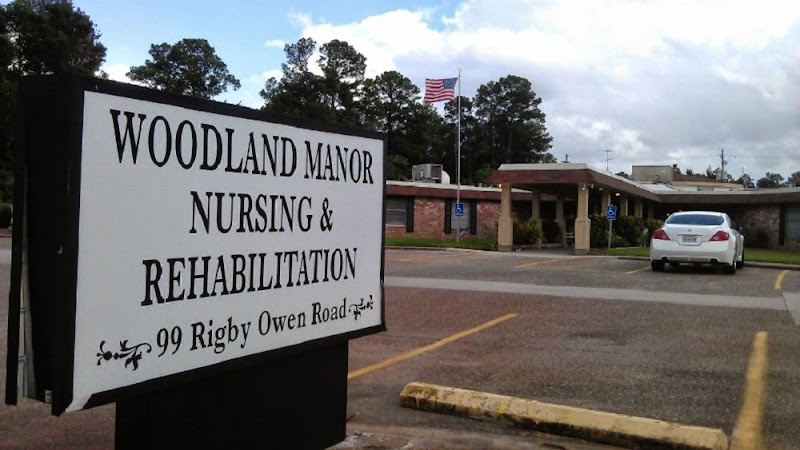
How is Woodland Manor Nursing And Rehabilitation Staffed?

CMS rates Woodland Manor Nursing and Rehabilitation's staffing level at 1 out of 5 stars, which is much below average compared to other nursing homes. Staff turnover is 65%, which is 19 percentage points above the Texas average of 46%. High turnover can affect care consistency as new staff learn residents' individual needs. RN turnover specifically is 57%, which is notably high. RNs provide skilled clinical oversight, so turnover in this role can affect medical care quality.

What Have Inspectors Found at Woodland Manor Nursing And Rehabilitation?

State health inspectors documented 17 deficiencies at Woodland Manor Nursing and Rehabilitation during 2022 to 2025. These included: 1 Immediate Jeopardy (the most serious level, indicating potential for serious harm or death) and 16 with potential for harm. Immediate Jeopardy findings are rare and represent the most serious regulatory concerns. They require immediate corrective action.
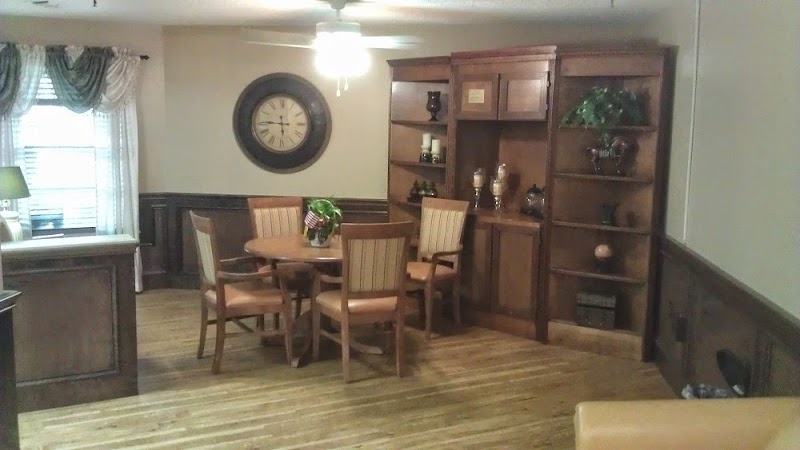
Who Owns and Operates Woodland Manor Nursing And Rehabilitation?

Woodland Manor Nursing and Rehabilitation is owned by a for-profit company. For-profit facilities operate as businesses with obligations to shareholders or private owners. The facility is operated by SLP OPERATIONS, a chain that manages multiple nursing homes. With 146 certified beds and approximately 49 residents (about 34% occupancy), it is a mid-sized facility located in Conroe, Texas.

How Does Woodland Manor Nursing And Rehabilitation Compare to Other Texas Nursing Homes?

Compared to the 100 nursing homes in Texas, Woodland Manor Nursing and Rehabilitation's overall rating (1 stars) is below the state average of 2.8, staff turnover (65%) is significantly higher than the state average of 46%, and health inspection rating (2 stars) is below the national benchmark.

What Should Families Ask When Visiting Woodland Manor Nursing And Rehabilitation?

Based on this facility's data, families visiting should ask: "What changes have been made since the serious inspection findings, and how are you preventing similar issues?" "How do you ensure continuity of care given staff turnover, and what is your staff retention strategy?" "Can you walk me through typical staffing levels on day, evening, and night shifts?" "Can I visit during a mealtime to observe dining assistance and food quality?" These questions are particularly relevant given the facility's Immediate Jeopardy citations, the facility's high staff turnover rate, and the below-average staffing rating.

Is Woodland Manor Nursing And Rehabilitation Safe?

Based on CMS inspection data, Woodland Manor Nursing and Rehabilitation has documented safety concerns. Inspectors have issued 1 Immediate Jeopardy citation (the most serious violation level indicating risk of serious injury or death). The facility has a 1-star overall rating and ranks #100 of 100 nursing homes in Texas. Families considering this facility should ask detailed questions about what corrective actions have been taken since these incidents.

Do Nurses at Woodland Manor Nursing And Rehabilitation Stick Around?

Staff turnover at Woodland Manor Nursing and Rehabilitation is high. At 65%, the facility is 19 percentage points above the Texas average of 46%. Registered Nurse turnover is particularly concerning at 57%. RNs handle complex medical decisions and coordinate care — frequent RN changes can directly impact care quality. High turnover means new staff may not know residents' individual needs, medications, or preferences. It can also be disorienting for residents, especially those with dementia who rely on familiar faces. Families should ask: What is causing the turnover? What retention programs are in place? How do you ensure care continuity during staff transitions?

Was Woodland Manor Nursing And Rehabilitation Ever Fined?

Woodland Manor Nursing and Rehabilitation has been fined $21,530 across 1 penalty action. This is below the Texas average of $33,294. While any fine indicates a compliance issue, fines under $50,000 are relatively common and typically reflect isolated problems that were subsequently corrected. Families should ask what specific issues led to these fines and confirm they've been resolved.

Is Woodland Manor Nursing And Rehabilitation on Any Federal Watch List?

Woodland Manor Nursing and Rehabilitation is not on any federal watch list. The most significant is the Special Focus Facility (SFF) program, which identifies the bottom 1% of nursing homes nationally based on persistent, serious quality problems. Not being on this list means the facility has avoided the pattern of deficiencies that triggers enhanced federal oversight. This is a positive indicator, though families should still review the facility's inspection history directly.