HILL COUNTRY HEIGHTS
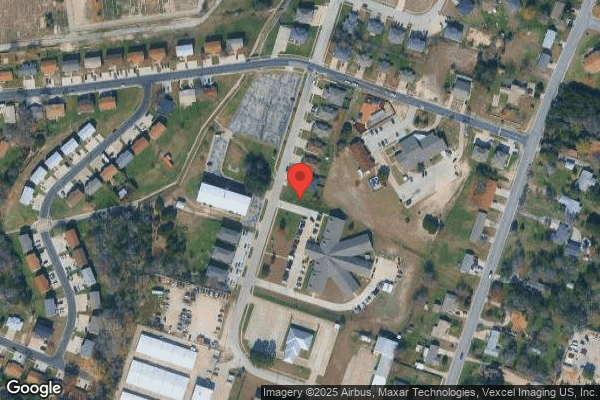
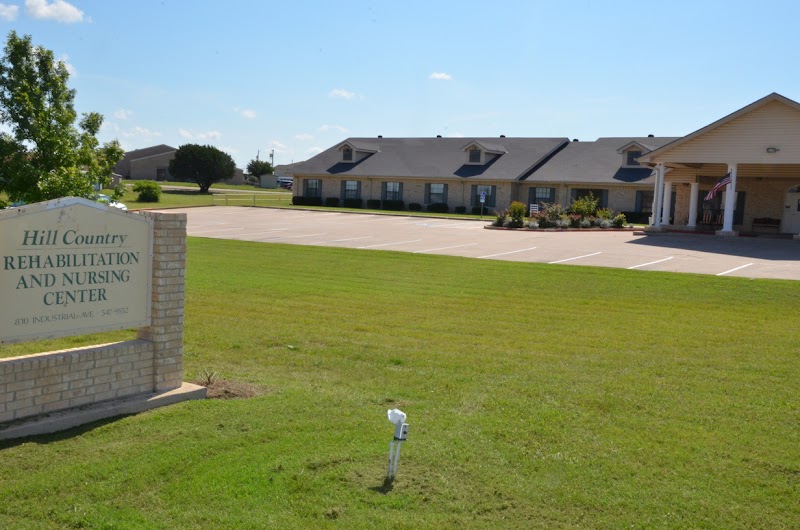
810 INDUSTRIAL AVE, COPPERAS COVE, TX 76522 (254) 547-9552
For profit - Limited Liability company 96 Beds TOUCHSTONE COMMUNITIES Data: November 2025 1 Immediate Jeopardy citation
Trust Grade
51/100
#254 of 1168 in TX
Last Inspection: March 2025

Within standard 12-15 month inspection cycle. Federal law requires annual inspections.

Overview

Hill Country Heights in Copperas Cove, Texas, has a Trust Grade of C, which means it is average and in the middle of the pack among nursing homes. It ranks #254 out of 1,168 facilities in Texas, placing it in the top half, and #2 out of 4 in Coryell County, indicating only one local option is better. The facility is improving, with the number of issues decreasing from 10 in 2024 to 3 in 2025. However, staffing is a concern, with a rating of 2 out of 5 stars and a turnover rate of 46%, which is below the Texas average of 50%. The facility has faced some serious issues, including a critical incident where a resident fell and suffered a fractured ankle due to inadequate supervision during a transfer, and another case where a resident did not receive proper treatment for pressure ulcers, leading to further complications. While there are strengths in areas like quality measures, families should consider these weaknesses when making their decision.

Trust Score
C
51/100
In Texas
#254/1168
Top 21%
Safety Record
High Risk
Review needed
Inspections
Getting Better
10 → 3 violations
Staff Stability
⚠ Watch
46% turnover. Above average. Higher turnover means staff may not know residents' routines.
Penalties
✓ Good
$20,257 in fines. Lower than most Texas facilities. Relatively clean record.
Skilled Nurses
⚠ Watch
Each resident gets only 25 minutes of Registered Nurse (RN) attention daily — below average for Texas. Fewer RN minutes means fewer trained eyes watching for problems.
Violations
⚠ Watch
26 deficiencies on record. Higher than average. Multiple issues found across inspections.
★★★★☆
4.0
Overall Rating
★★☆☆☆
2.0
Staff Levels
★★★★★
5.0
Care Quality
★★★☆☆
3.0
Inspection Score
Stable
2024: 10 issues
2025: 3 issues

The Good

  • 5-Star Quality Measures · Strong clinical quality outcomes
  • Full Sprinkler Coverage · Fire safety systems throughout facility
  • No fines on record

Facility shows strength in quality measures, fire safety.

The Bad

Staff Turnover: 46%

Near Texas avg (46%)

Higher turnover may affect care consistency

Federal Fines: $20,257

Below median ($33,413)

Minor penalties assessed

Chain: TOUCHSTONE COMMUNITIES

Part of a multi-facility chain

Ask about local staffing decisions and management

The Ugly 26 deficiencies on record

1 life-threatening 1 actual harm
Mar 2025 3 deficiencies
CONCERN (D)

Potential for Harm - no one hurt, but risky conditions existed

Infection Control (Tag F0880)

Could have caused harm · This affected 1 resident

**NOTE- TERMS IN BRACKETS HAVE BEEN EDITED TO PROTECT CONFIDENTIALITY** Based on observation, interview, and record review the facility failed to establish and maintain an infection prevention and con...

Read full inspector narrative →
**NOTE- TERMS IN BRACKETS HAVE BEEN EDITED TO PROTECT CONFIDENTIALITY** Based on observation, interview, and record review the facility failed to establish and maintain an infection prevention and control program designed to provide a safe, sanitary, and comfortable environment and to help prevent the development and transmission of communicable diseases and infections for 1 of 2 (MA A) staff members and 2 of 4 residents (Residents #47, and #221) reviewed for infection control procedures. MA A failed to disinfect the blood pressure cuff in between blood pressure checks for Residents #47 and #221. This failure could place residents at risk for cross contamination and infections. Findings included: Record review of Resident #47's quarterly MDS assessment, dated 01/25/25, revealed a [AGE] year-old female who was admitted to the facility on [DATE]. Resident #47 had diagnoses which included: Diabetes (high blood sugar), and hypertension (high blood pressure). Resident #47 was cognitive and able to make decisions and required assistance of one staff for activities of daily living. Record review of Resident #47's physician orders dated 03/20/24 reflected, carvidol (high blood pressure) 3.125mg give one tab by mouth two times a day and to obtain blood pressure one time a day on each shift. Record review of Resident #221's other payment MDS Assessment, dated 02/10/25, revealed a [AGE] year-old female who was admitted to the facility on [DATE]. Resident #221 had diagnoses which included: diabetes (increased blood sugar), hypertension (increased blood pressure), and heart failure (weak heart). Resident #221 was cognitively able make all decisions for herself and required one staff for assistance with activities of daily living. Record review of Resident #221's physician orders dated 03/05/25 (open ended) reflected, Coreq (high blood pressure) 10 mg give one tab by mouth every day, Lisinopril (high blood pressure med) 2.5mg one tab by mouth every day. Obtain blood pressure one time a day on each shift. Observation on 03/18/25 at 9:43 a.m., revealed MA A performing morning medication pass, during which time she checked the blood pressure on Resident #221. MA A failed to sanitize the blood pressure cuff before or after using it on Resident #221. Observation on 03/18/25 at 10:01 a.m., revealed MA A performing morning medication pass, during which time she checked the blood pressure, on Resident #47, used the same blood pressure cuff used on Resident #221. MA A failed to sanitize the blood pressure cuff before or after using it on Resident #47. An interview on 03/18/25 at 10:25 a.m., MA A stated she did not think about cleaning the blood pressure cuff between usage, she had forgotten. MA A stated she used hand sanitizer between each usage when she took the blood pressure. MA A stated if the cuff was on the residents and then not cleaned it could spread germs to others. An interview with the DON, who was the infection control preventionist on 03/19/25 at 2:43 p.m., revealed the DON stated that all direct care staff must clean equipment, including blood pressure cuffs after having contact with each resident. The DON stated, the staff has available the disinfectant wipes that will kill all germs. The DON stated the staff would be in-serviced on infection control and she would perform teaching concerning infection control. If they do not clean the blood pressure cuffs appropriately, they could spread germs to themselves and the residents. Record review of an in-service log dated 02/10/25 revealed MA A, had received cleaning and properly storing equipment after each use. Record review of the Facility's Policy titled Infection Prevention and Control dated March 2019, reflected: Compliance Guidelines: The infection prevention and control program is a facility-wide effort involving all disciplines and individuals and is an integral part of the quality assurance and performance improvement program. The elements of the infection prevention and control program consist of coordination/oversight, guidance/procedures, surveillance, data analysis, antibiotic stewardship, outbreak management, prevention of infection, and employee health and safety. Staff Responsible: .e. staff will receive training in community's infection prevention and control program to include but not limited to preventative measures, standard precautions . and are expected to comply with all designated precautions 9. Prevention of infection . (6) educating staff and ensuring that they adhere to proper infection prevention and control practices when performing resident care activities as it pertains to his/her role responsibilities and situation Record review of the Facility's Policy titled Cleaning and Disinfecting Resident Care items and Equipment dated February 2018 reflected: Multi-patient use equipment should be cleaned and disinfected between patient use . 1. The following categories are used to distinguish the levels of sterilization/disinfection necessary for items used in resident care: . c. Non-critical items are those that come in contact with intact skin but not mucous membranes. Non-critical resident-care items include bedpans, blood pressure cuffs, crutches and computers . 2. Multi-patient use (reusable items) equipment to That is designated reusable should be used by more than one resident . should be cleaned and disinfected between resident use . 3. Approved cleaning/disinfecting/sanitizing products should be used
CONCERN (E)

Potential for Harm - no one hurt, but risky conditions existed

Accident Prevention (Tag F0689)

Could have caused harm · This affected multiple residents

**NOTE- TERMS IN BRACKETS HAVE BEEN EDITED TO PROTECT CONFIDENTIALITY** Based on observation, interview and record review, the facility failed to ensure all assistive devices were maintained and free ...

Read full inspector narrative →
**NOTE- TERMS IN BRACKETS HAVE BEEN EDITED TO PROTECT CONFIDENTIALITY** Based on observation, interview and record review, the facility failed to ensure all assistive devices were maintained and free of hazards for four (Residents #13, #21, 48 and #221) of fifteen residents reviewed for essential equipment. The facility failed to properly maintain wheelchairs for Residents #13, #21, #48 and #221. These failures could place residents at risk for equipment that is in unsafe operating condition, which could cause injury. Findings included: Review of Resident #13's annual MDS assessment, dated 12/04/2024, reflected she was a [AGE] year-old female admitted to the facility on [DATE] with diagnoses of Cerebral Infarction (stroke), generalized weakness, and hemiplegia/hemiparesis (loss of use arms and legs). Resident #13 had a BIMs score of 00 indicating she was severely cognitively impaired and unable to make decisions for herself. Section GG of the MDS reflected wheelchair mobility for locomotion. Review of the Resident #13's plan of care dated 12/04/2024 with updates reflected goals and approaches to include wheelchair mobility for locomotion. Observation on 03/18/2025 at 9:35 a.m. revealed Resident #13 was lying in the bed sleeping with no noted skin problems. The wheelchair's right armrests were cracked with exposed foam. Review of Resident #21's quarterly MDS assessment, dated 02/06/2025, reflected she was an [AGE] year-old female admitted to the facility on [DATE], with diagnoses of cerebrovascular disease (heart dieses), abnormalities of gait and mobility (cannot walk safely), and muscles weakness. Resident #21 had a BIMs score of 12 reflecting she was moderately cognitively impaired and able to make decisions for herself. Section GG of the MDS reflected wheelchair mobility for locomotion. Review of the Resident #21's plan of care dated 02/06/2025 with updates reflected goals and approaches to include wheelchair mobility for locomotion. Observation on 03/18/2025 at 9:45 a.m. revealed Resident #21 was sitting in her wheelchair in the common area and had no skin problems. The wheelchair's left and right armrests were cracked with foam exposed. In an attempt to interview on 03/18/2025 at 11:45 a.m. Resident #21 revealed she was not interested in talking about her wheelchair. Review of Resident #48's quarterly MDS assessment, dated 02/12/2025, reflected he was a [AGE] year-old male admitted to the facility on [DATE], with diagnoses of muscle weakness, Cerebral infarction (stroke), ataxic gait (shuffling walk), and hypertension (high blood pressure). Resident #48 had a BIMs score of 8 reflecting he was moderately cognitively impaired and able to make decisions for herself. Section GG of the MDS reflected wheelchair mobility for locomotion. Review of Resident #48's plan of care dated 02/20/2025 with updates reflected goals and approaches to include wheelchair mobility. Observation and interview on 03/18/2025 at 12:00 p.m. revealed Resident #48 sitting in his wheelchair in the dining room. Resident #48 revealed the wheelchair's left and right armrests were cracked with foam exposed. Resident #48 was asked about his wheelchair, and he stated, It was needing some work, and the wheelchair had been provided to him by the facility. Resident #48 stated he had told the charge nurse but could not recall when or which nurse. There were no skin tears on the arms. Review of Resident #221's other MDS assessment, dated 02/10/2025, reflected she was a [AGE] year-old female admitted to the facility on [DATE], with diagnoses of chronic congestive heart failure (heart does not pump correctly), respiratory failure (lungs weak), and muscle weakness. Resident #221 had a BIMs score of 15 reflecting she was cognitively alert and oriented and able to make decisions for himself. Section GG of the MDS reflected wheelchair mobility for locomotion. Review of the Resident #221's updated plan of care dated 02/20/2025 with updates reflected goals and approaches to include wheelchair mobility. Observation and interview on 03/18/2025 at 11:45 a.m. revealed Resident #221 in her wheelchair in her room eating lunch. Resident #221 stated that her arm rests were rough on the right side. The wheelchair's right armrest cracked with exposed foam. Resident #221 stated she had not been hurt, just was uncomfortable. In an interview on 03/19/2025 with the DON at 2:43 p.m. revealed the wheelchairs were repaired by the maintenance supervisor. The DON stated all the departments head did a sweep about two months ago and then the armrest requiring repair were given to the maintenance supervisor, I do not know why the wheelchairs have not been repaired. In an interview on 03/19/2025 at 3:21 p.m. the Maintenance Supervisor stated that he was responsible for the repair of wheelchairs. He stated he finds most of his information through the staff telling him, or if he sees it himself. Sometimes the department heads complete angel rounds and give him a list of what they see during rounds. The Maintenance Supervisor stated he had not had any staff members tell him about any wheelchairs needing repair, recently. In an interview on 03/20/2025 at 9:00 a.m. with the Administrator revealed the wheelchair had all been looked at, all that required armrest had been replaced and he had ordered additional armrest. The Administrator stated the facility was going to be doing monthly rounds and keep additional supply on hand for any repairs. There was no policy provided by the facility by the time of exit, that had been requested from the Adminstrator.
MINOR (C)

Minor Issue - procedural, no safety impact

Staffing Data (Tag F0851)

Minor procedural issue · This affected most or all residents

Based on interview and record review, the facility failed to electronically submit to CMS complete and accurate direct care staffing information for the third quarter (April 1, 2024, to June 30, 2024)...

Read full inspector narrative →
Based on interview and record review, the facility failed to electronically submit to CMS complete and accurate direct care staffing information for the third quarter (April 1, 2024, to June 30, 2024) reviewed for Administration. The facility failed to submit complete PBJ staffing information to CMS for April 1, 2024, to April 30, 2024. This failure could place all residents at risk for personal needs not being identified and met, decreased quality of care, decline in health status, and decreased feelings of well-being within their living environment. Findings Included: Record review of the Casper3 PBJ report revealed the facility had four areas triggered on the FY Quarter 3 (April1- June30) report. The areas were One Star Staffing Rating, Excessively low Weekend Staffing, No Rn hours, and Failed to have Licensed Nursing Coverage 24 hours/day. The report details no RN hours for every day in April 2024. It also details Failed to have Licensed Nursing Coverage 24 hours/day for every day in April 2024. Record review of an email sent from the Administrator on 03/18/25 at 11:37 AM revealed a file with programming code entries. Employee and employee ID were listed. Workday was entered and hours were entered. Record review of an email received from the Administrator on 03/18/25 at 5:15 PM, revealed the submission email to CMS dated 05/14/2024. It showed 1 file processed, 1 file accepted, 0 rejections,0 Files submitted without authority, O Messages. This page reported 97 records and 1311 Total Staffing Hour Records. The report confirmed Total Employee Link Records Not Submitted. A second attachment listed a CMS Payroll Based Journal- Upload Date File. This confirmed the submission was received and will be checked for Errors. It also provided additional details and instructions. The third attachment was a repeat of the coding sent at 11:37 AM. Record review of an email received from the Administrator on 03/19/2025 revealed a handwritten schedule for April 2024 was provided. This schedule confirmed the shifts were covered by both RN and LVN staff for the entire month of April 2024. In an interview with the Administrator on 03/18/25 at 8:46 AM. The PBJ report was discussed during the entrance conference. The administrator was unaware the report did not include RN and Nursing hours for the month of April 2024. He stated there were no problems The administrator was asked was there was anything that happened with staffing for the month of April. He stated the management company was in bankruptcy and they switched companies on May 1 2024. He stated that corporate office enters the PBJ information. He stated that he is not sure what information they can still access but he will provide me with whatever information they have. He agreed to have to DON pull the working schedule for April 2024. In an interview with the DON on 03/18/2025 at 8:57AM. She stated that she was working during the month of April and there would have been no days without a working RN. She stated that she was unaware of any issues and stated she would pull the working schedule. She stated she did not know if she could get the punch records but would let the surveyor know during the survey. In an Interview with the Administrator on 03/18/2025 at 2:35 PM. He stated that he is not sure if they can get the punches but he has corporate looking into it. He stated that they were able to get into some records and they should be coming shortly. He stated that he doesn't know what they can find but someone from ABRI may be able to get some documents. In an interview with the Administrator on 03/20/2025 at 1:30 PM. He stated that he thinks both companies submitted the data and it could have caused the problems in reporting the hours worked by Nursing staff. He stated that he understand the need for accurate reporting to CMS and stated it could affect the care Residents receive when hours are reported. He stated that this was the only month and the error is most likely related to the change from one company to the new company and does not expect any issues in the future.
Jun 2024 1 deficiency 1 IJ
CRITICAL (J) 📢 Someone Reported This

A family member, employee, or ombudsman was alarmed enough to file a formal complaint

Immediate Jeopardy (IJ) - the most serious Medicare violation

Accident Prevention (Tag F0689)

Someone could have died · This affected 1 resident

**NOTE- TERMS IN BRACKETS HAVE BEEN EDITED TO PROTECT CONFIDENTIALITY** Based on observation, record reviews and interviews, the facility failed to ensure a resident's environment remained free of acc...

Read full inspector narrative →
**NOTE- TERMS IN BRACKETS HAVE BEEN EDITED TO PROTECT CONFIDENTIALITY** Based on observation, record reviews and interviews, the facility failed to ensure a resident's environment remained free of accident hazards and received adequate supervision and assistance devices to prevent accidents for 1 of 13 residents (Resident #1) reviewed for transfers in that: CNA A failed to provide adequate supervision and transfer assistance for Resident #1 in the shower resulting in Resident #1 falling and having an open right ankle fracture with bleeding. Resident #1 had to be hospitalized and required surgical intervention. The facility failed to update the Kardex and POC to reflect current safe transfer status requirements for Resident #1 and 12 other residents. The facility failed to ensure CNAs were knowledgeable on how to locate the Kardex to determine if 1 or 2 staff were required to safely transfer/assist a resident. An IJ was identified on 06/21/24. The IJ Template was provided to the facility on [DATE] at 04:25 PM. While the IJ was removed on 06/23/2024, the facility remained out of compliance at a scope of isolated and a severity with no actual harm due to the facility's need to evaluate the effectiveness of the corrective systems. This failure could place residents at risk of harm and/or injury and contribute to avoidable accidents. Findings included: Review of Resident #1's face sheet dated 06/21/24 revealed a [AGE] year-old male who was admitted to the facility on [DATE] with a diagnosis of venous insufficiency-chronic-peripheral (a condition in which the flow of blood through the veins is blocked, causing blood to pool in the legs), other secondary parkinsonism (a condition that causes tremor, muscle movement issues, rigidity, and postural instability), Alzheimer's disease (a type of dementia that affects memory, thinking, and behavior), unspecified dementia (neurodegenerative disease characterized by a general decline in cognitive abilities that affect a person's ability to perform every day activities), repeated falls, ataxic gait (a type of walking disorder caused by damage to the cerebellum the part of the brain that controls coordination and balance- it is characterized by clumsy staggering movements with a wide base of support, difficulty walking in a straight line, poor balance, and errors in the direction, speed, and rhythm of the limbs), generalized muscle weakness (muscle weakness throughout the body resulting in an inability to perform a given task on the first attempt), and chronic venous hypertension-idiopathic (high blood pressure in the legs) with inflammation of right lower extremity. The face sheet reflected Resident #1 was discharged to the hospital 05/13/2024. Review of Resident #1's fall risk evaluation dated 02/23/24 revealed unable to independently come to a standing position. Exhibits loss of balance while standing. Decreased muscle coordination. Interventions noted: He needs a two-person assistance. Review of Resident #1's fall risk evaluation dated 03/20/24 revealed: Unable to independently come to a standing position. Exhibits loss of balance while standing. Requires hands-on assistance to move from place to place. Uses an assistive device. No interventions noted. Review of Resident #1's admission MDS dated [DATE] revealed section GG: Functional abilities tub/shower transfer was marked for total dependence, helper does ALL the effort. Resident does none of the effort to complete the activity. Or the assistance of 2 or more helpers is required for the resident to complete the activity. The MDS assessment was missing information that would have identified if the resident was a 1 or 2 person assist; the level of care required to perform a safe transfer. Review of Resident #1's Discharge MDS dated [DATE] reflected GG: Functional abilities tub/shower transfer was marked for total dependence, helper does ALL the effort. Resident does none of the effort to complete the activity. Or the assistance of 2 or more helpers is required for the resident to complete the activity. The MDS assessment was missing information that identified if the resident was a 1 or 2 person assist; the level of care required to perform a safe transfer. Review of Resident #1's care plan revealed: Resident is at risk for falls and is at risk for increased falls and injury r/t hx of repeated falls, anticoagulant use, weakness r/t recent hospital stay, poor vision, and cognition. Functional ability: GG Mobility: Tub/Shower transfer The care plan did not indicate if Resident #1 was a 1 or 2 person transfer assist. The care plan only referenced section GG Functional abilities of the MDS assessment which the MDS assessments (admission and discharge) reflected he was dependent on staff. The care plan also revealed therapy services to focus on shower transfers to decrease risk for falls and increase safety awareness with initiated date of 03/21/24. Review of the facility incident reports with date range of 03/20/24 to 06/20/24 revealed Resident #1 suffered a fall on 03/20/24 and 05/13/24. Review of Resident #1's nursing progress notes revealed a nurse progress note dated 03/20/24 which said Resident #1 suffered a fall during a shower transfer from the shower chair to the wheelchair on 03/20/24. The note stated there were 3 staff total present during the fall (to include CNA A), Resident #1 received an x-ray which returned negative for a fracture; redness to the left knee was noted. A separate nursing progress note dated 05/13/24 revealed Resident #1 suffered a fall during a 1-person shower transfer with CNA A that occurred on 05/13/24 which resulted in an open right ankle fracture with bleeding (an open fracture is type of bone fracture where the bone breaks through the skin). The progress note said 911 emergency services was immediately notified and a RN stayed with the resident until EMS arrived. Review of the facility's reported incident investigation forms dated 05/13/24 revealed, [Resident #1 care plan was updated. [Resident #1] is anticipated to return to the facility post-surgery of his ankle . An interview on 06/20/24 at 12:56 PM with CNA A she stated that in the fall incident that occurred on 05/13/24 with Resident #1- to her knowledge Resident #1 was a 1 person transfer assist in showers at that time. CNA A said that she obtained that information from asking PT. CNA A said she did not review residents care plans or the Kardex section of the EMR that provided information on a resident's required level of assistance to determine whether a resident was a 1 or 2 person assist and would only ask PT or another CNA. CNA A said that on 05/13/24 after Resident #1 finished his shower CNA A put his shirt on and then instructed Resident #1 to stand up and grab the shower bars because she was preparing to do a 1 person transfer. While Resident #1 was standing, CNA A stated she attempted to put his brief under his legs but Resident #1's legs became weak and in a matter of seconds he started to go down. CNA A said that she attempted to get him up but due to his size (Resident #1's recorded weight dated 05/14/24 was 244 pounds) she was unable to help him up alone. CNA A said that Resident #1's feet and legs were pointed inward, and she believed as he was falling down his positioning along with his weight caused his fracture. CNA A stated that as the resident was going down, he exclaimed, my ankle, my ankle! - but he was too far down at that point that she was unable to make any adjustments and needed to run out of the shower to get help. In the fall incident that occurred on 03/20/24, CNA A said she was also assisting Resident #1 with his shower and transfer at that time. CNA A stated that she believed Resident #1 was also a 1 person transfer at that time, but she did not verify that by looking at the care plan or Kardex. CNA A stated there were 2 other shower aides at the time in the shower with her but she said, they were standing off to the side talking about which residents they were going to shower next. CNA A said she was the only person hands on with Resident #1's shower and transfer. In the events CNA A described for the incident on 03/20/24, CNA A stated that Resident #1 lost his balance while being transferred from the shower chair to his wheelchair. CNA A said, he had his brief and everything pulled up and he lost his balance while turning and trying to sit in the wheelchair. CNA A said once again said she believed she had access to the Kardex but does not recall looking at documentation that would have said whether Resident #1 was a 1 or 2 person transfer assist and she was the only individual assisting Resident #1 on both occasions 03/20/24 and 05/13/24. CNA A said she believed if they are not sure what the transfer needs of the resident are they should ask a nurse or PT prior to a transfer. An interview on 06/20/24 at 03:04 PM with PTD she stated that in the care plan where it stated, therapy services to focus on shower transfers to decrease risk for falls and increase safety awareness initiated 03/21/24- that therapy assisted only once after Resident #1's fall on 03/20/24 to provide education to the resident and caregiver (CNA A) on shower transfers. PTD stated that only a verbal in-service was done for CNA A on the appropriate way to transfer and to her knowledge no other staff was provided education on transfers or use of the Kardex. The PTD stated after the incident on 03/20/24 with Resident #1 and CNA A they felt CNA A needed the in-service but at the time it was not thought of as a systemic concern where all staff needed to be re-inserviced. PTD stated that PT is used to assist in training staff on an as needed basis. An interview on 06/20/24 at 03:08 PM with CNA B, she stated if she needed to find out a residents transfer status, she would ask another CNA. CNA B stated she did not know of anywhere she could go in the medical records that detailed a resident's transfer status such as the Kardex and was not trained on it. An interview on 06/20/24 at 03:10 PM with CNA C, he stated he will sometimes receive a residents transfer status through verbal exchange when he starts his shift from the prior CNA. CNA C stated if he did not know a residents transfer status that he would ask one of the nurses on duty, he stated he did not know where to find a residents transfer assist requirements in the medical record or Kardex. CNA C said if he was assisting a resident in the shower and needed to put a brief, he would make sure to get additional assistance to be safe. An interview on 06/20/24 at 03:20 PM with CNA D she stated she would ask either a nurse or PT if she needed to know if a resident was a 1 or 2 person assist. CNA D said she was not trained on where to locate a resident's required level of transfer assistance in the Kardex. An interview and observation on 06/20/24 at 05:31 PM with the MDS Coordinator she stated a residents transfer assist is determined by nursing staff and PT which is communicated to her so she can update the care plans and Kardex as needed. A sticky note was observed on the MDS coordinators desk containing the names of individuals that were identified to have missing or incorrect transfer status in the care plans and Kardex which the MDS Coordinator stated she had corrected moments before this interview. The MDS Coordinator stated these residents were identified in an audit completed that day 06/20/24 by the DON and RDCO that took place for care plans and Kardex after the state incident investigation had started . She stated the Kardex is what CNAs should be accessing to determine the safe way to transfer a resident. She stated if the POC is not updated with the current transfer status or has missing transfer information that would mean it would most likely be missing from the Kardex as well. She stated it would be the DON or charge nurses that show the aides how to locate that information upon hire or as needed. She said a negative outcome to not having that information is residents would not be transferred correctly or safely. An interview and record review on 06/21/24 at 01:10 PM the RDCO stated that in a care plan/ Kardex audit that was completed 06/20/24 after the investigation had started, 12 other residents separate from Resident #1 were also identified as having transfer status that were either missing or inaccurate . The RDCO stated they were all corrected on 06/20/24 and each resident was assessed with no negative outcomes noted or reported. A record review of the 12 residents was conducted and revealed interventions were updated on all 12 residents POC. A record review of incident/ accident reports with date range from 03/20/24 to 06/20/24 revealed none of the 12 residents had a transfer related incident/ accident. An interview on 06/21/24 at 04:08 PM with the DON, she said it was the responsibility of the MDS coordinator to update the MDS as needed after admission with any changes of condition. The DON said it was her expectation that all CNAs knew where to locate the Kardex information related to a residents transfer needs. The DON said that a potential negative outcome with missing or incorrect Kardex information is that a resident would not get transferred correctly which means they would be provided the wrong care. The DON stated the aides are in-serviced upon hire on the Kardex and as needed. The DON stated the most recent in-service occurred 05/14/24 after Resident #1's incident and covered fall prevention measures, post fall response, monitoring post fall assessment, and reviewing Kardex. She was not aware at that time that there was information that had not been updated to reflect some of the residents' safe transfer information. The DON stated that in the incident that occurred on 03/20/24 only CNA A was in-serviced because they did not see it as a systemic issue and the training was done in an as needed basis. After the second incident with Resident #1 on 05/13/24, the facility saw the need to ensure more staff were properly trained. An interview on 06/21/24 at 04:15 PM with the RDCO she stated that it was her expectation that care plans and Kardex were updated to reflect the individualized needs of the resident. She stated that if the Kardex had incorrect or missing information they risk not being able to meet the residents needs and anything that does not match the residents' needs is a risk to the resident. The RDCO stated that care plans, MDS assessments, and Kardex information should be updated on admission, quarterly, and anytime there is a significant change. She stated, even if their condition improves it needs to be addressed in the MDS and care plans, and especially if they decline. An interview on 06/21/24 at 04:17 PM with the ADM he stated it was the role of the MDS coordinator to ensure MDS assessments, care plans, and Kardex are updated- but ultimately it is the IDT also. The ADM said its his expectation that Kardex and care plans are updated and accurate as soon as a change is identified. He stated he expects that all the CNAs are knowledgeable on how to access the Kardex information and that they use that as their source to determine how to safely transfer a resident. The ADM said failing to have updated accurate information or failing to look at that information to determine safe transfer status would mean they are not accurately following the residents plan of care. Review of the facility Safe Resident Handling/ Transfers policy last revised 01/2023 revealed: It is the policy of this community to ensure that patients/residents are handled and transferred safely to prevent or minimize risks for injury and provide and promote a safe, secure, and comfortable experience for the patient/resident while keeping the team members safe in accordance with current standards and guidelines. - All patients/residents require safe handling when transferred to prevent or minimize the risk for injury to themselves and the team members that assist them. The use of mechanical lifts is a safer alternative to manual lifting for patients, residents, and caregivers. Compliance Guidelines: - The interdisciplinary team or designee will evaluate and assess individual mobility needs, considering other factors as well, such as weight and cognitive status. - The mobility needs will be addressed on admission and reviewed quarterly, after a significant change in condition or based on direct care staff observations or recommendations. - Team members will be educated on the use of safe handling/transfer practices to include use of mechanical lift devices upon hire, annually and as the need arises or changes in equipment occur. - Team members are expected to maintain compliance with safe handling/transfer practices. Failure to maintain compliance may lead to disciplinary action up to and including termination of employment. - Lifting and transferring will be performed according to the individualized plan of care. Review of the facility comprehensive assessments policy last revised 03/2023 revealed: Comprehensive resident assessment The community uses the Resident Assessment Instrument (RAI) to develop the comprehensive resident assessment. It identifies the care, services, and treatments that each resident needs to attain or maintain his or her highest practicable mental and physical functional status. The ADM. DON, and RDCO were notified on 06/21/24 at 04:25 PM that an IJ situation was identified due to the above failures and the IJ template was provided. The Plan of Removal was accepted on 06/23/24 at 11:00 AM and included: Plan of Removal Problem: F689 Free from Accidents/ Hazards Interventions: 1. DNS/Designee conducted a 100% Audit of all residents who reside in the community was conducted on 6/20/2024 to validate care plans and Kardex accuracy reflected the current care needed for each resident. 12 residents were identified during this process and care plan/Kardex was updated to reflect the current need of each resident identified. Date commenced: 6/20/2024 Date completed: 6/21/2024 2. All 12 residents identified with care plan updates were assessed on 6/21/2024 with no negative outcomes. Date completed: 6/21/2024 3. AdHoc meeting to address issue, correction, action plan and plan of removal with Administrator, Director of Nursing Services, Assistant Director of Nursing Services, Director of Clinical Operations and Medical Director was conducted on 6/22/2024. 4. DNS/ADNS/Designee (Charge Nurse) will ensure all staff on leave/agency staff /PRN staff are in serviced prior to working their shift. No licensed nurse, certified medication aide or certified nurse aide will assume an assignment of patient care until they have passed skills validation of accessing the Kardex. Community will ensure administrative nursing staff in the community to provide in-service/education prior team members working their assigned shift. These trainings will also be conducted with new hires. In-services: 5. Regional Nurse (Director of Clinical Operations) re-educated the Director of Nursing on the following: oImportance of nursing staff reviewing the Kardex before providing care to ensure proper level of care is provided according to the resident's need and adherence to the resident's plan of care. Staff should report any concerns or inaccuracies of the care plan/Kardex to the charge nurse/licensed nurse for direction prior to care being provided, so that the licensed nurse can evaluate the resident and determine the appropriate level of care necessary as well as monitoring the resident to ensure that the appropriate care is being provided in accordance to the resident's needs; thus, updating the care plan/Kardex as indicated. The licensed nurse should ensure that the appropriate care needs are communicated across all shifts by reviewing the information with the on-coming shift nurse, in order to ensure that care provided is consistently provided in a safe manner until the plan of care/Kardex has been updated. The IDT will review and update the plan of care with necessary changes within 24-72 hrs as per the RAI, which indicates that necessary changes to the plan of care should be within a reasonable period of time. Until the plan of care has been updated the charge nurses will continue to communicate necessary care to be provided during shift-to-shift report. Preventing Accidents/Fall Prevention/Promoting a Safe Environment: identifying risk, reducing risks, and promoting an accident-free environment as indicated in the plan of care. 6. All Nursing Team Members were educated on providing care to residents were re-educated/re-trained by the Director of Nursing or Designee. Nursing staff reviewing the Kardex before providing care to ensure proper level of care is provided according to the resident's need and adherence to the resident's plan of care. Staff should report any concerns or inaccuracies of the care plan/Kardex to the charge nurse/licensed nurse for direction prior to care being provided, so that the licensed nurse can evaluate the resident and determine the appropriate level of care necessary as well as monitoring the resident to ensure that the appropriate care is being provided in accordance to the resident's needs; thus, updating the care plan/Kardex as indicated. The licensed nurse should ensure that the appropriate care needs are communicated across all shifts by reviewing the information with the on-coming shift nurse, in order to ensure that care provided is consistently provided in a safe manner until the plan of care/Kardex has been updated. The licensed nurse should ensure that the appropriate care needs are communicated across all shifts by reviewing the information with the on-coming shift nurse, in order to ensure that care provided is consistently provided in a safe manner until the plan of care/Kardex has been updated. Education provided to all Nursing Department Preventing Accidents/Fall Prevention/Promoting a Safe: identifying risk, reducing risks, and promoting an accident-free environment indicated in the plan of care by DNS/Designee. The IDT will review and update the plan of care with necessary changes within 24-72 hrs as per the RAI, which indicates that necessary changes to the plan of care should be within a reasonable period of time. Until the plan of care has been updated the charge nurses will continue to communicate necessary care to be provided during shift-to-shift report. DNS/ADNS/Designee conducted 100% audits of skills validation of accessing the Kardex by return demonstration; observing the direct care team member is has verified competency by return demonstration of accessing the Kardex to review the level of care to be provided. Date commenced: 6/20/2024 Date completed: 6/22/2024 7. All licensed nurses were re-educated on the completion and accuracy of care plans to ensure they reflect the current needs of each resident. Baseline Care plans must be completed within 48 hours of admission. Care plans must be updated as clinically indicated. Kardex must be initiated upon admission and updated as clinically indicated. Date commenced: 6/20/2024. Date completed: 6/22/2024. Risk Response: Residents who currently reside in community potentially can be affected by the deficient practice. DNS/Designee conducted a 100% Audit of all residents who reside in the community was conducted on 6/20/2024 to validate care plans and Kardex accuracy reflects the current care needs for each resident. 12 residents were identified during the review process. Careplan/Kardex were updated to reflect the current need of each resident identified. Date commenced: 6/20/2024. Date completed: 6/21/2024 The DNS (Director of Nursing) will ensure all staff on leave/agency/PRN staff are in serviced prior to working their shift. No licensed nurse, certified medication aide or certified nurse aide will assume an assignment of patient care until they have passed skills validation of accessing the Kardex. The DNS will ensure administrative nursing staff will provide in-service/education prior team members working their assigned shift. These trainings will also be conducted with new hires. The Administrator is responsible for validating that all tasks assigned and monitoring efforts (as indicated on this plan) has been achieved and that compliance is maintained. Systemic Response: 100% Direct care educated on review of the Kardex before providing care to all residents assigned to them to ensure proper assistance and interventions are utilized according to the resident's need and adherence to the resident's plan of care. Reporting any concerns or inaccuracies to the charge nurse/licensed nurse for additional direction prior to care provided. 100 % Education provided to all Nursing Department Preventing Accidents/Fall Prevention/Promoting a Safe: identifying risk, reducing risks, and promoting an accident-free environment indicated in the plan of care by DNS/Designee. 100% care plans were reviewed for all residents with fall prevention interventions to ensure interventions on the Kardex are in place. 100% validation of accessing the Kardex was conducted on all nursing department. Date commenced: 6/20/2024 Date of completion: 6/22/2024 The Director of Nursing / Asst. Director of Nursing will ensure all staff on leave/agency/PRN staff are in serviced prior to working their shift. No licensed nurse, certified medication aide or certified nurse aide will assume an assignment of patient care until they have passed skills validation of accessing the Kardex. DNS will ensure administrative nursing staff will provide in-service/education prior team members working their assigned shift. These trainings will also be conducted with new hires. The Administrator is responsible for validating that all tasks assigned and monitoring efforts (as indicated on this plan) has been achieved and that compliance is maintained. Monitoring Response: The Administrator/ DNS/ designee will conduct weekly rounds to validate interventions related to fall prevention is in place 1-7 days a week for 2 months. The DNS/Designee will conduct random skills validations regarding Kardex use 3-7 days a week for 2 months to ensure direct staff is compliant with the use of the Kardex. Policies are followed to ensure the safety and wellbeing of our residents. Additional education will take place based on needs observed during this process. The Administrator is responsible for validating that all tasks assigned and monitoring efforts (as indicated on this plan) has been achieved and that compliance is maintained. All findings will be reported to the QAPI committee during monthly meeting until there is 100% compliance observed during observations. On 06/22/24 and 06/23/24 the surveyor confirmed the facility implemented their plan of removal sufficiently to remove the IJ by: 06/22/24: In an interview on 06/22/24 at 09:15 AM with the DON, she stated she had already sent out the care feed system (a system that communicated with all staff via text) in services facility wide to all staff related to accessing Kardex, ANE, Fall Prevention and Care Plans. She stated that they have visually checked off staff prior to their shift to ensure they are able to access the Kardex system and training is ongoing and in progress. She stated Care plans were updated for the 12 residents of concern related to transfer status. Education will remain ongoing until 100% of staff are trained. Staff education: 28 staff were educated on Kardex 30 staff were educated on ANE 28 staff were educated on Fall Prevention 9 (nurses) staff were educated on Care Plans Record reviews were conducted by surveyor. 12 residents were identified during the review process by DON and RDCO. Care plans/Kardex were updated to reflect the current need of each resident identified. Surveyor verified updated care plans for 12 residents affected. QAPI committee meeting to address issue, correction, action plan and plan of removal with Administrator, Director of Nursing Services, Assistant Director of Nursing Services, Director of Clinical Operations and Medical Director was conducted on 6/22/2024. Sign in sheet was obtained by surveyor. An interview on 06/22/24 at 09:36 AM with RN G, she validated she knew where to find information on the care needs of the resident via the Kardex and POC. She verbalized examples of fall prevention and hazard free environment and demonstrated action to take in response to how to know about a change of condition. An interview and observation on 06/22/24 at 09:40 AM with the ADON validated training on accessing the Kardex to determine the transfer needs of the resident by accessing the Kardex and POC. The ADON was observed in return demonstration via the computer. Prevention of falls to include gait belts, ensuring correct method of transfer. The ADON stated CNAs know to consult PT when transfer needs of the resident are in question. An interview on 06/22/24 at 09:49 AM with PT H, he discussed how and when CNAs are trained and stated that they will routinely seek out PT for guidance on how best to transfer residents. An interview on 06/22/24 at 09:51 AM with CNA E verbalized the need to access Kardex to know transfer status and care needs of the resident. She stated the prevention of falls includes interventions such as appropriate socks and shoes, gait belt, get help if needed with transfers. An interview on 06/22/24 at 10:01 AM with CMA I, she confirmed recent training on Kardex and accessing information regarding the status of resident transfers. She stated she consistently assists with transfers as needed, especially in the use of the Hoyer Lift. Able to discuss various methods for fall/accident prevention: ie, appropriate shoes/socks, gait belt. An interview on 06/22/24 at 10:13 AM with CNA F she stated that was her first day working there and she was able to verbalize the process to access the Kardex and POC. An interview on 06/22/24 at 10:20 AM with LVN J she stated she had received training and then demonstrated knowledge on how to access the EMR and POC. She stated she takes that information into consideration but will also conduct her own nursing assessments. An interview on 06/22/24 at 10:45 AM with CMA K she confirmed she received training related to transfers and accessing the EMR and POC on 06/21/24. CMA K verbalized i[TRUNCATED]
Jan 2024 9 deficiencies
CONCERN (D)

Potential for Harm - no one hurt, but risky conditions existed

Resident Rights (Tag F0550)

Could have caused harm · This affected 1 resident

**NOTE- TERMS IN BRACKETS HAVE BEEN EDITED TO PROTECT CONFIDENTIALITY** Based on observation, interview, and record review the facility failed to treat each resident with respect and dignity and provi...

Read full inspector narrative →
**NOTE- TERMS IN BRACKETS HAVE BEEN EDITED TO PROTECT CONFIDENTIALITY** Based on observation, interview, and record review the facility failed to treat each resident with respect and dignity and provide care in a manner that promoted maintenance or enhancement of their quality of life for two (Resident #3 and Resident #39) of six residents reviewed for rights. 1. The facility failed to ensure Resident #3 catheter bag was covered when out of room. 2. The facility failed to provide dignity and respect for Resident #39 by not aiding a resident that required assistance in dressing. These failures placed the residents at risk of a decline of their sense of dignity, level of satisfaction with life, and feelings of self-worth. Findings included: 1. Review of Resident #3's face sheet, dated 01/31/2022, reflected a 70 -year-old female admitted to the facility on [DATE] and readmitted on [DATE] with diagnoses of: cognitive communication disorder (difficulty with any aspect of communication that is affected by disruption of cognition such as: attention, memory, organization, and problem solving/ reasoning), complete traumatic ( related to physical injury) amputation (surgically cutting off a limb) at level between left hip and knee, pain due to internal orthopedic prosthetic devices ( used to keep fractured bones stabilized and in alignment) , implants ( replace missing body parts, and grafts (healthy tissue taken from one part of the body to replace diseased or injured tissue removed from another part of the body), obesity ( having too much body mass- a measurement of a person's weight with respect to his or her height), bipolar disorder (causes extreme mood swings that include emotional highs and lows- depression),schizophrenia (causes delusions- false believe or judgement and hallucinations- see things that are not there like objects, shapes, people or lights) and, anxiety (when the mind and body encounters stressful, dangerous, or unfamiliar situations). Review of Resident #3's Five Day Scheduled MDS, dated [DATE], reflected Resident #3 had a BIMS score of 15 indicated her cognition was intact. Resident #3 required partial/moderate assistance, and with lower body dressing and with putting on/taking off footwear (helper does more than half the effort). Resident #3 was also assessed of having indwelling catheter (a flexible tube inserted through a narrow opening into the bladder for removing fluid). Resident #3 had received scheduled pain medication. Review of Resident #3's Comprehensive Care Plan with a target date of 04/19/2024 reflected catheter was not care planned and Resident #3's preference to place own cover on catheter bag. Resident #3 request if she forgets to place the catheter cover bag prior to leaving the room and she is in public for the staff to remind her and assist her with the catheter cover bag. Resident #3 required assistance with ADL Care. Review of Resident #3's Physician Orders, dated 01/09/2024 reflected a new order on 12/16/2023 for foley care: output every shift (a medical device that helps drain urine from your bladder). Review of Social Workers progress notes from 12/30/2021- 01/19/2024 reflected Resident #3 did not express any preferences of wanting to place a bag over catheter themselves instead of staff. Review of Resident #3's Nurses Notes from 12/16/2023 - 01/30/2024 reflected facility staff did not document Resident #3 preference of placing a catheter bag on her own catheter and if she Resident #3 forgets when she was outside of her room the staff was to remind her and assist with covering her catheter bag. Review of Resident #3's Nurses Notes dated 01/19/2024 reflected IDT met to discuss resident's plan of care. Plan of care updated . Observation on 01/29/2024 at 9:55 AM Resident #3 was sitting in the hallway and her catheter was not covered. Observation on 01/29/2024 at 10:00 AM Resident # 44 was making retching noises (when the body keeps wanting to vomit but cannot). Interview on 01/29/2024 at 10:05 AM Resident #44 stated looking at that pee in the bag. It is making me sick and I almost vomited. I cannot stand to look at pee or anyone's bowels. It makes me sick to my stomach. Interview on 01/29/2023 at 10:08 AM Resident #3 stated she was so embarrassed and humiliated for people to know she wears a catheter. She stated there were times she forgets to put the bag over the catheter and several residents had explained to her it made them sick to look at the urine. Resident #3 stated she told the Social Worker and a nurse (she did not recall the nurses name) she preferred to put the catheter bag on herself but if she was out of her room and forgot to cover the catheter bag, she wanted nursing staff to remind her and assist her with covering the catheter bag. Resident #3 also stated the staff would remind her sometimes but usually the other residents would ask me the cover my catheter bag. She stated when she was overwhelmed having a catheter and it made her nervous. Resident #3 also stated she may have to re-think attempting to place the catheter bag on by herself if she continues to forget. Interview on 01/31/2023 at 9:13 AM The Administrator stated all catheters were expected to be covered. She stated it was the staff's responsibility to ensure the catheter were covered especially when a resident was outside of their room The Administrator stated if Resident #3 stated she wanted to cover her own catheter and she exited her room and went into common areas it was the staff responsibility to ensure the catheter was covered. She stated if other residents made statements, it made them sick to look at the urine in the catheter this does affect the other residents' rights. (The Administrator did not elaborate on her statement). Interview on 01/31/2024 at 9:43 MDS Coordinator/LVN stated Resident # 3's catheter was expected to be covered. She stated it was a dignity issue. She stated Resident #3 may become embarrassed for staff, visitors, or other residents to see her urine in catheter bag and Resident #3 may not want anyone to know she was wearing a catheter. She stated it was a potential for Resident #3 become anxious and depressed due to her diagnosis of anxiety and other mental diagnosis. MDS Coordinator / LVN stated there was a potential of Resident #3 becoming embarrassed if other residents, staff, and visitors to view her uncovered catheter. MDS Coordinator/LVN stated she did not know if Resident #3 told anyone she wanted to place the catheter bag on herself and if she forgot she wanted the staff to remind her if she forgets. She also stated the staff was expected to place cover on Resident #3's catheter bag if her bag was not covered. She stated it also may affect other residents' rights to view the urine in the bag. Interview on 01/31/2024 at 10:56 AM ADON stated all catheters were expected to be covered when residents are out of room. He stated if Resident #3 care plan should reflect, she had a catheter. He stated if Resident #3 was placing catheter bag over catheter herself and forgot to do this task it was the staff responsibility to ensure Resident #3 catheter was covered. He stated he was not going to comment on other residents not wanting to look at a urine in a catheter bag. ADON also stated if the uncovered catheter embarrassed and humiliated Resident #3 it was a dignity issue. 2. A record review of Resident# 39's face sheet dated 01/31/24 revealed Resident# 39 was admitted on [DATE] with a diagnosis of psychotic disturbance, mood disturbance, and anxiety (mood disorder causing feeling of fear, dread, and uneasiness); ataxic gait (failure of muscle coordination characterized by an irregular foot placement, wide base, and instability), heart failure, age-related physical debility, gout (inflammatory arthritis that causes pain and swelling in joints), hypertension (high blood pressure), unspecified convulsions (seizure disorder), and hyperlipidemia (elevated level of lipids or fats such as cholesterol and triglycerides in the blood). A record review of Resident# 39's MDS last revised 01/11/24 reflected a BIMS score of 5 suggesting cognitive impairment. Resident# 39's MDS functional abilities assessment reflected she required substantial/ maximal assistance in lower/upper body dressing and footwear. A record review of Resident# 39's care plan revised 01/25/24 revealed she required 1 person assist with dressing. An observation and interview on 01/30/24 beginning at 8:29 AM revealed Resident# 39 sitting in her wheelchair at her bedroom door near the hall. Resident# 39 was not wearing pants or socks and wore only a shirt and her incontinence brief. Resident# 39's eyes appeared red, watery, and her mood appeared dejected. In an interview, Resident# 39 said you can call them referring to staff, and she was observed stretching her shirt over her legs attempting to cover herself. In an interview on 01/31/24 at 12:13 PM Resident# 39 stated she was in her wheelchair near the hall attempting to get assistance with getting dressed. She said she relies on care staff for assistance putting her pants on. Resident# 39 stated well it didn't make me feel good said she was embarrassed sitting exposed near the hall. In an interview on 01/31/24 at 01:35 PM CNA E stated it was the CNA's responsibility to dress the residents that require assistance in the morning. CNA E said she was familiar with Resident# 39's care and knows that Resident# 39 requires total care or full assistance regarding getting dressed. CNA E said that Resident# 39 not having pants on and sitting near the hall in her briefs is a dignity issue and could have a negative effect on Resident# 39's mental health. In an interview on 01/31/24 at 02:53 PM the Administrator revealed it was the CNA's responsibility to dress residents that require assistance in the morning which should be done before breakfast. She said nurses will also make sure they are dressed when entering the room for morning medication administration, and that department heads are also assigned rooms/ halls to check that residents are up, dressed, and are having their needs met. The administrator said it is her expectation that those that require assistance receive assistance. She said adverse effects of someone not being dressed or left exposed could lead to or worsen depression, anxiousness, and cause undo stress. The administrator stated that it could affect a resident's self-worth; they would no longer want to come out of their room or participate in activities. It could also potentially lead them to being victimized or taken advantage of by staff or other residents. Record Review of facility Dignity policy revised February 2021 revealed: Each resident shall be cared for in a manner that promotes and enhances his or her sense of well-being, level of satisfaction with life, and feelings of self-worth and self-esteem. Policy also revealed demeaning practices and standards of care that compromise dignity is prohibited. Staff are expected to promote dignity and assist residents; for example: Helping the resident to keep urinary catheter bags covered. Individual needs and preferences of the resident are identified through the assessment process. When assisting with care, residents are supported in exercising their rights. For example, residents are encouraged to dress in clothing they preferred. Under Policy Interpretation and Implementation it states, Residents are treated with dignity and respect at all times. Individual needs and preferences of the resident are identified through the assessment process. Demeaning practices and standards of care that compromise dignity are prohibited. Staff are expected to promote dignity and assist residents. The policy references OBRA regulatory reference numbers §483.l0(a) Resident Rights; §483.l0(b) Exercise of Rights and Survey Tag F550.
CONCERN (D)

Potential for Harm - no one hurt, but risky conditions existed

Deficiency F0655 (Tag F0655)

Could have caused harm · This affected 1 resident

**NOTE- TERMS IN BRACKETS HAVE BEEN EDITED TO PROTECT CONFIDENTIALITY** Based on interviews and record reviews, the facility failed to develop and implement a baseline care plan for each resident with...

Read full inspector narrative →
**NOTE- TERMS IN BRACKETS HAVE BEEN EDITED TO PROTECT CONFIDENTIALITY** Based on interviews and record reviews, the facility failed to develop and implement a baseline care plan for each resident within 48 hours of the resident's admission that included instructions for providing effective person-centered care for the resident and met professional standards of quality of care for 1 of 4 residents (Resident # 58) reviewed for care plans, in that: The facility failed to develop and implement a baseline care plan for Resident #58. This failure placed residents at risk of not having their immediate care needs met or not receiving continuity of care. Findings included: Record review of Resident #58's face sheet, dated 01/31/2024, reflected an [AGE] year old female was admitted to the facility on [DATE] with diagnoses including type 2 diabetes mellitus without complications ( a condition that happens because of a problem in the way the body regulates and uses sugar as fuel), chronic kidney disease, stage 4 ( kidneys are moderately or severely damaged and are not working as well as they should be to filter waste from your blood), cutaneous abscess of abdominal wall ( a pocket of pus- collection of dead, white blood cells that accumulates when the body's immune system activates in response to an infection- located in the abdomen), acute cholecystitis (a redness and swelling of the gallbladder), hypertension ( occurs when you have abnormally high blood pressure that's not the result of a medical condition), infective myositis ( uncommon group of inflammatory myopathies-( any disease that affects the muscles that control voluntary movement in the body) caused by a range of infective agents such as viral, bacterial, fungal, and parasitic, depression ( a mood disorder that causes a persistent feeling of sadness and loss of interest), generalized anxiety disorder (a condition of excessive worry about everyday issue and situations), and other malaise (a feeling of general discomfort, uneasiness or lack of wellbeing and often the first sign of an infection or other disease). Record review of Resident #58's admission MDS Assessment, dated 12/31/2023, reflected Resident #58 had a BIMS score of 15. Resident #58 required assistance with ADLs. She had medically complex conditions (usually involve multiple body systems and are often chronic in nature. Persist over a long time, usually for a person's lifetime). Resident #58 had a surgical wound. She was at risk of developing pressure ulcers/injuries. Resident #58 was receiving OT (Occupational Therapy- assist people to overcome various problems to live more independent lives). Record review of Resident #58's clinical record reflected her baseline care plan was not completed within 48 hours. Resident #58's baseline care plan was initiated on 01/02/2024 and was not completed. Interview on 01/31/2024 at 9:13 AM with the Administrator stated all baseline care plans were to be completed within 48 hours of admission. She stated if a resident was admitted on a Friday afternoon the baseline care plan was expected to be completed over the weekend. The Administrator stated the social worker, admitting nurse either on weekend or during week, DON, and MDS nurse was responsible for completing the baseline care plan. She stated if a resident was admitted on a Friday afternoon, she expected the baseline to begin at that time and throughout the 48 hours until it was completed. She also stated if the baseline were not completed there was a potential of a resident would not receive personalize care to meet their physical and mental needs such as: proper transfers, incontinent care, the correct wound care, and emotional support. The administrator stated it was the MDS nurse responsibility to monitor the baseline care plan to ensure it was completed. Interview on 01/31/2024 at 9:43 AM, MDS Coordinator/LVN stated the baseline care plan was required to be completed within 48 hours of the resident's admission date. MDS Coordinator/LVN reviewed the baseline care plan during the interview and agreed the baseline care plan for Resident #58 was not completed and the baseline care plan was late. She stated Resident #58's baseline care plan was expected to be completed within 48 hours of her admission date. She stated Resident #58's admission date was 12/29/2024 in the afternoon. She also stated the baseline care plan was dated on 01/02/2024. MDS Coordinator/ LVN stated the baseline care plan was used as a tool to know what type of care a resident needed. She stated the Nurses does complete a nurse assessment; however, the baseline care plan gave more information of what type of care the resident required. She stated the nurses did not document in their admission assessment everything on the baseline care plan. MDS Coordinator/ LVN stated if the nursing staff did not have the information from the baseline care plan there was a potential of the resident not receiving proper care such as improper transfers. She stated if a resident was not transferred properly there was a possibility a resident may injure themselves with an improper transfer. She stated the staff would not know the personalize care the resident needed at time of admission. Interview on 01/31/2024 at 10:56 AM, the ADON stated all baseline care plans were to be completed within 48 hours of admission. He stated the resident would continue to receive care from the staff. The baseline care plan had more information of personalize care for the residents. The staff would not have all the information to give care to residents without the baseline care plan. He stated to refer to the MDS Coordinator for further information on baseline care plans and possible negative outcomes of a resident if the baseline care plan was not completed. Review of the Facility's Baseline Care Plan Policy, dated 03/2022, reflected A baseline plan of care to meet the resident's immediate health and safety needs is developed for each resident within forty-eight (48) hours of admission. The baseline care plan includes instructions needed to provide effective, person-centered care of the resident that meet professional standards of quality of care and must include the minimum healthcare information necessary to properly care for the resident including, but not limited to the following: A. Initial goals based on admission orders and discussion with the resident/ representative. B. Physician orders. C. Dietary orders. D. Therapy Services. E. Social Services. F. PASARR recommendations, if applicable. (PASARR- a federal requirement to help ensure that individuals are not appropriately placed in nursing homes for long term care)
CONCERN (D)

Potential for Harm - no one hurt, but risky conditions existed

Comprehensive Care Plan (Tag F0656)

Could have caused harm · This affected 1 resident

**NOTE- TERMS IN BRACKETS HAVE BEEN EDITED TO PROTECT CONFIDENTIALITY** Based on, interviews, and record review the facility failed to develop and implement a comprehensive person-centered care plan f...

Read full inspector narrative →
**NOTE- TERMS IN BRACKETS HAVE BEEN EDITED TO PROTECT CONFIDENTIALITY** Based on, interviews, and record review the facility failed to develop and implement a comprehensive person-centered care plan for each resident that included measurable objectives and timeframes to meet a resident medical, nursing and mental and psychosocial needs for 3 (Resident # 3, 52 and 55) 16 residents reviewed for care plans. 1. The facility failed to ensure Resident # 3's Catheter was addressed on her care plan. 2. The Facility failed to ensure Resident # 52's care plan was updated by removing isolation when the resident no longer medically required it. 3. The facility failed to ensure Resident # 55's Fluid restriction and noncompliance with restrictions was on the care plan. This failure placed the resident at risk for not having their individual needs met in a timely manner and communicated to provide and could result in injury and a decline in physical well-being. Findings included. 1. Review of Resident #3's face sheet, dated 01/31/2022, reflected a 70 -year-old female admitted to the facility on [DATE] and readmitted on [DATE] with diagnoses of: cognitive communication disorder (difficulty with any aspect of communication that is affected by disruption of cognition such as: attention, memory, organization, and problem solving/ reasoning), complete traumatic( related to physical injury) amputation (surgically cutting off a limb) at level between left hip and knee, pain due to internal orthopedic prosthetic devices ( used to keep fractured bones stabilized and in alignment), implants ( replace missing body parts, and grafts (healthy tissue taken from one part of the body to replace diseased or injured tissue removed from another part of the body), obesity ( having too much body mass- a measurement of a person's weight with respect to his or her height), bipolar disorder (causes extreme mood swings that include emotional highs and lows- depression),schizophrenia (causes delusions- false believe or judgement and hallucinations- see things that are not there like objects, shapes, people or lights) and, anxiety (when the mind and body encounters stressful, dangerous, or unfamiliar situations). 2. Review of Resident # 52 face sheet, dated 1/29/2024, reflected an [AGE] year-old female admitted to the facility on [DATE] with a diagnosis of Unspecified Dementia, moderate, with mood disturbance ( A group of thinking and social symptoms that interferes with daily functioning mood disturbances can include apathy, anxiety and agitation) Essential Hypertension( elevated Blood pressure), Hypothyroidism( a disorder of the thyroid where it does not produce enough hormones) Insomnia( the ability to fall or stay asleep) 3. Review of Resident # 55's face sheet, dated, 1/29/2024, reflected a [AGE] year-old male admitted to the facility on [DATE] with the diagnosis of Hemiplegia and hemiparesis following Cerebral infarction affecting the left side (a paralysis of partial or total body function on one side of the body and weakness as a result of disrupted blood flow to the brain due to problems with the blood vessels that supply it. ) Chronic obstructive pulmonary disease (a group of lung disease that block airflow and make it difficult to breathe.), Essential Hypertension (elevated blood pressure), Dysphagia (Difficulty swallowing can have causes that aren't due to underlying disease) 1. Review of Resident #3's Five Day Scheduled MDS, dated [DATE], reflected Resident #3 had a BIMS score of 15 indicated her cognition was intact. Resident #3 was assessed to have an indwelling catheter (a flexible tube inserted through a narrow opening into the bladder for removing fluid). 2. Review of Resident # 52 's Quarterly MDS dated [DATE], reflected Resident # 52 had a BIMS Score of 5 which indicates her cognition was severely impaired. 3. Review of Resident # 55 Quarterly MDS dated [DATE] reflects Resident # 55 had a BIMS score of 10 which indicates his cognition was moderately impaired. Review of Resident #3's Comprehensive Care Plan with a target date of 04/19/2024 reflected Resident #3's catheter was not care planned. Resident #3 required assistance with ADL Care. Review of Resident # 54's comprehensive Care plan with a target date of 3/7/2023 indicates that Resident # 54 on 1/16/2024 requires transmission-based precautions due to a positive covid test. The resident had completed the required 10-day isolation per policy and was asymptomatic on 01/26/2024. Review of Resident # 55's Comprehensive Care Plan with a target date of 3/20/2024, reflected Resident #55's fluid restriction was not on the care plan, nor was his non-compliance with the restriction documented on the care plan. Interview on 01/31/2024 at 9:13 AM The Administrator stated Resident #3's catheter was expected to be on the care plan. She stated to refer to the MDS coordinator concerning any questions about the care plans. She also stated to refer to MDS Coordinator for any possible negative outcomes if catheter was not care planned. She stated the MDS Coordinator was responsible for monitoring care plans. Interview on 01/31/2024 at 11:30 am with the ADM stated her expectations are that the MDS Coordinator keeps the care plans up to date and refer to the DON for that process as she only has a passing knowledge of the process. She was not sure if harm could occur if the care plan was not updated. She was not aware that Resident #52's care plan reflected isolation for Covid. She stated that she was aware of Resident # 55's fluid restriction and his non-compliance with it and thought it was care planned. Interview on 1/31/2024 at 11:00 am with DON, her expectations are that the MDS Coordinator updates the care plans as the residents' needs change. She stated that if the care plan was not updated the staff are not aware how to meet the resident's needs. Interview on 01/31/2024 at 9:43 AM The MDS Coordinator / LVN stated after reviewing Resident #3's comprehensive care plan, Resident #3's catheter was not on the care plan. She stated any Resident with a catheter it was expected to be on the care plan. MDS Coordinator/LVN stated it was missed when Resident #3's care plan was revised/ updated in December 2023. She stated if the catheter was not on the care plan it would not be on the [NAME] where the CNAs refer to when giving care to Resident #3. MDS Coordinator/LVN stated the catheter was on Resident #3's physician's orders. She also stated the physician's order on 12/16/2023 for Foley care was referring to Resident #3's catheter. MDS Coordinator stated it was a possibility Resident # 3 may not receive proper treatment during catheter care. She stated it was documented in the nurse's notes Resident #3 was receiving catheter care but it should have been care planned. She also stated it was assessed on the MDS Resident #3 had a catheter. MDS Coordinator/ LVN stated the care plan was developed from the MDS. She stated if the catheter was not care planned the staff would not know the individualized care Resident #13 required for her catheter. Interview on 01/31/2024 at 12:15 pm with MDS Coordinator/LVN stated that she was unaware that Resident # 55 was on a fluid restriction, she reviewed the orders and found the fluid restriction in the dietary order, stating it needed to be care planned so the staff was aware of the restriction. She stated that her plan was to update Resident # 52's care plan when the facility was cleared of all covid and not wearing masks anymore. She stated that it could be confusing for the staff that the care plan stated Resident # 52 was in isolation when there were no supplies outside of her room. Interview on 01/31/2023 at 10:39 AM CNA A stated the CNAs had been in serviced on catheter care (did not know the last time the in-service was given) and CNA B was aware Resident #3 had a catheter. CNA B stated she would need to review the [NAME] to determine if catheter care was on the electronic medical record for the CNAs and would give a more definite answer later. (did not receive a response prior to exit). Interview on 01/31/2024 at 10:46 AM CNA B stated Resident #3 did have a catheter and the nurses reviewed catheter care with the staff. Interview on 1/31/2024 at 3 PM CNA K stated that she was not aware Resident # 55 was on a fluid restriction, she stated it is not on the [NAME] and she did not receive it in report. She stated to her knowledge Resident #52 was taken out of isolation on 1/16/2024 and there was not any PPE outside of her room. Interview on 1/31/2024 10:40 AM Interview LVN J stated she was aware of Resident # 55's fluid restriction as she checks the trays during lunchtime, and she is aware he is non-compliant always asking for extra fluids with meals. She stated she did not document his behavior and she was unaware some of the staff were unaware of the restriction. She stated the Resident # 52 had recovered from covid and was no longer in isolation. Interview on 1/31/2024 1:00 pm Interview with RN I, she stated that she wa aware of Resident #55's fluid restriction and that he was non-compliant, she seemed surprised that some staff were not aware of it. She stated Resident # 52 was recovered and no longer required isolation. Interview on 01/31/2023 at 10:56 The ADON stated he expected catheters to be care planned. He stated he would defer to the MDS nurse to discuss any further questions about care plans or MDS. He stated the MDS Coordinator had more knowledge about care plans. He stated the MDS nurse was responsible for care plans. Record Review 1/31/2024 09:30 am of Policy Care Plans, comprehensive Person-centered revised March 2022 states 7. The comprehensive, person-centered care plan: a. includes measurable objectives and timeframes; b. describes the services that are to be furnished to attain or maintain the resident's highest practicable physical, mental, and psychosocial well-being, including: (1) services that would otherwise be provided for the above, but are not provided due to the resident exercising his or her rights, including the right to refuse treatment; (2) any specialized services to be provided as a result of P ASARR recommendations; and (3) which professional services are responsible for each element of care 11. Assessments of residents are ongoing and care plans are revised as information about the residents and the residents' conditions change.
CONCERN (D)

Potential for Harm - no one hurt, but risky conditions existed

ADL Care (Tag F0677)

Could have caused harm · This affected 1 resident

**NOTE- TERMS IN BRACKETS HAVE BEEN EDITED TO PROTECT CONFIDENTIALITY** Based on observation, interview, and record review the facility failed to ensure residents unable to conduct activities of daily...

Read full inspector narrative →
**NOTE- TERMS IN BRACKETS HAVE BEEN EDITED TO PROTECT CONFIDENTIALITY** Based on observation, interview, and record review the facility failed to ensure residents unable to conduct activities of daily living (ADLs) received the necessary services to maintain good grooming and personal hygiene for two of eight residents (Resident # 11 and Resident # 16) reviewed for quality of life. 1. The facility failed to ensure Resident #11's nails were trimmed. 2. The facility failed to ensure Resident #16's nails were cleaned. These failures could place residents at risk for poor hygiene, dignity issues, and decreased quality of life. Findings included: 1. Record review of Resident #11's face sheet, dated 01/31/2024 reflected an [AGE] year old female admitted to the facility on [DATE] and readmitted on [DATE] with a diagnoses included muscle weakness ( a lack of strength in muscles), cerebral infarction ( caused by impaired blood flow to the brain), chronic pain syndrome ( pain that lasts longer than three months), and cognitive communication deficit (difficulty with any aspect of communication that is affected by disruption of cognition such as: attention, memory, organization, and problem solving/ reasoning). Record review of Resident #11's Quarterly MDS assessment, dated 01/17/2024, reflected Resident #11 had a BIMS score of an 8 indicated her cognition was moderately impaired. Resident #11 did not refuse care. Resident #11 required assistance with ADLs including personal hygiene. Resident #11 required partial to moderate assistance with personal hygiene-the helper does more than half the effort. Helper lifts or holds or supports trunk or limbs and provides more than half the effort. Record review of Resident #11's Comprehensive Care Plan with next review date 04/16/2024, reflected Resident #11 required ADL assist and nursing/therapy assist as needed related to cerebral infarction (caused by impaired blood flow to the brain), weakness (lack of strength), muscle spasms (when your muscles can not relax), and chronic pain issues (pain that lasts longer than three months). Intervention: assist with functioning and ADLs. Observation on 01/29/24 at 9:47 AM revealed Resident #11 was breaking off her nails during the observation. Her nails were thin. Resident #11's forefinger, middle finger and ring finger on her right hand were jagged. There was a sharp piece of nail on her ring finger, and middle finger on her left hand. The other nails on her left hand were jagged. In an interview on 01/29/2024 at 9:50 AM Resident #11 stated her nails were long and she had asked someone to cut them last week. She stated she asked a person who brought her meal tray to her and made up her bed. She stated she also asked another staff who passed out medications approximately 2 weeks ago. Resident #11 stated she was afraid she would scratch herself and cause her skin to become infected or rub her eyes and may scratch her eyeball. She stated she was having to be so careful what she did due to not wanting to scratch herself. 2. Record review of Resident # 16's face sheet dated 01/30/2024 reflected an [AGE] year old female was admitted to the facility on [DATE] and was readmitted on [DATE] with a diagnoses included type 2 diabetes (a condition that happens because of a problem in the way the body regulates and uses sugar as fuel), Alzheimer's disease (a brain disorder that slowly destroys memory and thinking skills and, eventually, the ability to carry out the simplest tasks), and muscle weakness (a lack of strength in muscles). Record review of Resident#16's Quarterly MDS Assessment, dated 01/18/2024, reflected Resident #16 had a BIMS score of 2 indicated her cognitive status was severely impaired. Resident was dependent on staff for all ADLs. Resident #16 did not reject care. Record review of Resident #16's Comprehensive Care Plan with a target date of 04/17/2024 reflected Resident #16 required assistance with ADLs. Observation on 01/29/2024 at 10:10 AM revealed Resident #16's forefinger, middle finger and ring finger on her right hand had a blackish hard substance underneath the nails. In an interview on 01/29/2024 at 10:13 AM Resident #16 did not speak during conversation. She would mumble at times. Resident #16 was not interviewable. In an interview on 01/29/2023 at 9:13 AM The Administrator stated the nurses were responsible to trim and clean all resident's nails with a diagnosis of diabetes. She stated it was the CNAs responsibility to clean and trim all other residents' nails. The Administrator also stated she did not know the information of when nail care was to be completed on the residents. She stated if the residents' nails were sharp or jagged there was a possibility a resident may cut themselves or may rub their eyes and scratch the cornea (the transparent part of the eye that covers the iris (the color part of the eye that surrounds the pupil) and the pupil (opening at the center of the iris through which light passes) and allows light to enter the inside. The Administrator stated a resident had a potential of ingesting bacteria into their mouth if there was blackish substance underneath their nails. She stated there was a potential a resident may become ill such as vomiting or diarrhea if the black substance was some type of bacteria. She also stated it was the Director of Nurses responsibility to monitor nail care. In an interview on 01/29/2024 at 9:43 AM MDS Coordinator/LVN stated the nurses were responsible to trim and clean all resident's nails with a diagnosis of diabetes. She stated it was the CNA's responsibility to clean and trim all other residents' nails. MDS Coordinator/ LVN stated the CNAs report to nurses of any diabetic resident's nails needed to be trimmed or cleaned. She stated the nurses makes rounds and check residents, with diabetes, nails. She also stated the CNAs usually did nail care when residents received a shower or as needed. She stated if anyone observed a brownish and/or blackish substance underneath residents nails the nursing staff were expected to clean the resident's nails or ask the appropriate nurse to complete the nail care. She stated the blackish/ brownish substance possibility could be feces or any type of bacteria underneath the resident's nails. MDS Coordinator/LVN stated if a resident swallowed the bacteria there was a possibility a resident may become extremely ill with stomach issues such as diarrhea or vomiting. In an interview on 01/29/2024 at 10:39 AM CNA A stated the CNAs were responsible for nail care unless a resident was a diabetic. She stated the CNAs usually trimmed and cleaned nails during showers. She stated the nails can be cleaned or trimmed by nurses or CNAs as needed. CNA G stated the nursing staff was expected to clean and trim residents' nails immediately if there was a blackish substance underneath the residents' nails and/ or if their nails needed to be trimmed. CNA G stated the blackish substance may be fecal matter underneath the residents' nails. She stated if a resident swallowed the blackish substance there was a possibility a resident may become ill with stomach issues or any type of intestinal issues. She stated a resident may need to be assessed at the emergency room if they became severely ill. She stated she had been in-serviced on cleaning nails . In an interview on 01/29/2024 at 10:47 AM CNA B stated it was the nurses and the CNAs responsibility to trim, cut, and clean residents' fingernails. CNA B stated only the nurses can trim and clean residents with diagnosis of diabetes. CNA B stated if there was a blackish substance underneath a resident's nails there was a possibility the substance was feces. CNA B stated if a resident placed their finger in their mouth the feces could transfer from their fingers to their mouth. CNA B also stated if the resident swallowed bacteria a resident may develop a stomach infection. Review of the Facilities Policy on Activities of Daily Living Supporting, dated 03/2018, reflected Residents will be provided with care, treatment, and services as appropriate to maintain or improve their ability to carry out activities of daily living. Residents who are unable to carry out activities of daily living independently will receive the services necessary to maintain good nutrition, grooming, and personal and oral hygiene.
CONCERN (D)

Potential for Harm - no one hurt, but risky conditions existed

Quality of Care (Tag F0684)

Could have caused harm · This affected 1 resident

**NOTE- TERMS IN BRACKETS HAVE BEEN EDITED TO PROTECT CONFIDENTIALITY** Based on observation, interview, and record review, the facility failed to ensure residents received treatment and care in accor...

Read full inspector narrative →
**NOTE- TERMS IN BRACKETS HAVE BEEN EDITED TO PROTECT CONFIDENTIALITY** Based on observation, interview, and record review, the facility failed to ensure residents received treatment and care in accordance with professional standards of practice for 2 (Resident # 6 and Resident # 22) of 8 reviewed for Quality of care. The facility failed to maintain the drainage bag to Resident # 6's surgical wound in a position that it could drain. The facility failed to obtain a physician's order for finger sticks for Resident # 22 who was on sliding-scale insulin. These Failures could put the residents at risk for infection, and risk for medical decline. Findings included: Review of Resident # 6's face sheet revealed an [AGE] year-old female, admitted to the facility on [DATE] and readmitted on [DATE], and 1/1/2024 with diagnoses that include Acute Cholecystitis (Inflammation of the Gallbladder), Malignant Neoplasm of Pancreas (A type of cancer that begins as a growth of cells in the pancreas), Diabetes mellitus due to underlying condition (elevated blood sugar due to a medical condition) Review of Resident # 22 face sheet revealed a [AGE] year-old female, admitted to the facility on [DATE] and readmitted on [DATE] with diagnoses that include displaced fracture of the left femur (a misaligned fracture of the left leg bone), Fracture of the left ulna and lower end of the left radius ( a break in the bones of the forearm), Type 2 diabetes mellitus with diabetic chronic Kidney disease ( elevated blood sugar that causes kidney damage ), and End Stage Kidney Disease ( the final permanent stage of kidney disease, where Kidney function has declined to the point that the kidneys can no longer function on their own) Review of Resident # 6's Quarterly MDS dated [DATE] reveals a BIMS score of 15 which indicates Resident # 6 was cognitively intact. Review of Resident # 22's admission MDS dated [DATE] reveals a BIMS score of 13 which indicates Resident # 22 is cognitively intact. Review of Resident #6's care plan with a revision date of 1/18/2024 shows Acute Infection: Cholecystitis with extended antibiotic ordered x 90 days. I also have a drain in place to my right upper abdomen. Interventions include Monitor drain to right upper abdomen for s/s of infection. Review of Resident # 22's care plan with a revision date of 1/29/2024 revealed a listed problem of The resident has Diabetes Mellitus with retinopathy and kidney disease and is on sliding-scale insulin. Interventions include Chemsticks and fasting serum blood sugar as ordered by doctor. A review of Resident # 6's physician orders revealed a current order date of 10/10/2023 Monitor drain site to upper right abdomen for signs and symptoms of infection every shift for prophylaxis, Ordered dated 1/1/2024 Monitor drainage band and notify provide with any concerns every shift. Order dated 1/2/2024 Monitor and document output from drainage bag every shift. Review of Resident # 22's physician orders revealed a current order date of 1/13/2024 Insulin Lispro ( 1 unit dose) 110 unit/ml solution pen injector Inject as per sliding scale: if 150-199= unit, 200- 249 = 2 unit, 250 -299 = 3 unit, 300- 349 = 4 unit, 350 - 400 = 5 unit, subcutaneously three times a day for D.M. There were no orders present to obtain fingerstick for obtaining blood glucose for sliding scale. Review of Resident #6's MAR from January 2024 indicates that the resident is receiving a fingerstick four times a day to monitor for need for insulin sliding scale. Observation of Resident # 6 in the dining room on 1/29/2024 at 12:13 PM revealed drainage bag with a privacy bag (1000 mg foley drainage bag) in a to the right upper abdominal wound was hanging over the right shoulder of Resident # 6. Observation of Resident # 6 1/29/2024 at 1:30 pm in her room revealed the drainage bag was still hanging over her shoulder. Observation of Resident # 6 on 1/31/2024 at 12:34 in the dining room revealed the drainage bag in a privacy bag hanging off the back of the wheelchair. Interview on 1/31/2024 with LVN J on 01/31/2024 at 11:00 am stated she was aware of the drainage bag on Resident #6's wound but did not notice how it was positioned. She stated that the drainage bag should be hung below the wound to ensure gravity drainage. Interview on 1/30/2024 11:45 am RN I stated that she was unaware that there were no finger sticks ordered for Resident # 22 as part of documenting the medication in the MAR, you must input a blood glucose number, the program will not let you administer the medication without it documented. She states she feels there was no harm to the resident since the medication cannot be given with a fingerstick, she stated she was not aware what their policy stated on the matter. She did look up the order and noted there was no order for the actual fingerstick. Interview with DON 1/31/2024 11:00 am She stated they do not have a policy on the management of surgical wound drains. She stated drains to gravity should be below the wound and was not aware how the bag on Resident # 6 was being positioned. She stated that Resident # 6 runs the risk of clogging the drain or getting an infection if the drainage bag is not correctly positioned. DON stated that she was not aware there was not an order for finger sticks on Resident # 22, but upon review of MAR they are being done. She stated the sliding scale order in the MAR requires a blood sugar reading, so it is being done. She does not know what their policy states about having an order from the physician order for finger sticks. She stated since the MAR requires a blood sugar reading to administer the insulin, she felt the resident was not at risk of harm. Interview with ADM 1/31/2024 11:30 am stated that she was not aware of a policy on the management of surgical wound drains, as far as nursing care of the residents she referred to the DON. She referred to the DON on questions regarding Resident # 22. Record Review on 1/31/2024 9:30 am of Policy Diabetes- Clinical Protocol revised November 2020 page 3 2. As indicated, the physician will order appropriate lab tests (for example, periodic finger sticks of A1C) and adjust treatment based on their results and other parameters. (3) Monitor 3 to 4 times a day if on intensive insulin therapy or sliding scale.
CONCERN (D)

Potential for Harm - no one hurt, but risky conditions existed

Deficiency F0692 (Tag F0692)

Could have caused harm · This affected 1 resident

**NOTE- TERMS IN BRACKETS HAVE BEEN EDITED TO PROTECT CONFIDENTIALITY** Based on interviews and record review the facility failed to ensure residents maintained acceptable parameters of nutritional st...

Read full inspector narrative →
**NOTE- TERMS IN BRACKETS HAVE BEEN EDITED TO PROTECT CONFIDENTIALITY** Based on interviews and record review the facility failed to ensure residents maintained acceptable parameters of nutritional status for 1 resident ( Resident # 57) of 8 reviewed for accurate weights. The facility failed to establish a consistent method of weighing residents to ensure the accuracy of weight. for 1 resident (Resident # 57) of 8 reviewed for accurate weights. This failure put the residents at risk for undetected weight loss, malnutrition, medical complications poor quality of life. Findings included: Review of Resident # 57 face sheet revealed a [AGE] year-old male, admitted to the facility on [DATE] and readmitted on [DATE] with diagnoses that include Heart Failure ( a chronic condition in which the heart doesn't pump blood as well as it should), Acute Respiratory Failure with Hypoxia ( a condition where you don't have enough oxygen in the tissues in your body), Metabolic Encephalopathy ( an acute condition of global cerebral ( Brain) dysfunction in the absence of brain disease. ) Review of Resident # 57's readmission MDS dated [DATE] reveals a BIMS score of 9, which indicates Resident #57 is cognitively moderately impaired. Review of Resident # 57's Physician's order dated 11/07/2023 Weight: Upon admission/ readmission and weekly x 4 weeks. Review of Resident #57 Weight log dated 1/31/2024 revealed. 1/24/2024 155 lbs. Wheelchair 1/17/2024 165 lbs. Mechanical lift 1/12/2024 162 lbs. Wheelchair 1/10/2024 162.2 lbs. Wheelchair 1/9/2024 162 lbs. Mechanical lift 1/7/2024 163.1 lbs. Mechanical lift 1/5/2024 162.8 Wheelchair 1/4/2024 164.2 Mechanical lift 1/3/2024 164.2 Mechanical lift 12/27/2023 160. Wheelchair 12/21/2023 155.4 Mechanical lift Interview of Adm on 1/31/2024 at 11:30 am she referred all medical questions and concerns to DON. Her expectation was the nursing policy was followed. Interview on 1/31/2024 at 11:00 am with DON, her expectation was that weights are done on the same device each time, and if there was a discrepancy to report it to the nurse. DON states policy does not address using the same scale, the staff knows of her expectations of the same scale. They have a CNA who comes in once a week whose only job is to complete weekly weights. She stated that an inaccurate weight on someone with a medical need for the weight can cause potential harm from medical complications.
CONCERN (D)

Potential for Harm - no one hurt, but risky conditions existed

Deficiency F0697 (Tag F0697)

Could have caused harm · This affected 1 resident

**NOTE- TERMS IN BRACKETS HAVE BEEN EDITED TO PROTECT CONFIDENTIALITY** Based on interviews and record review , the facility failed to ensure that pain management was provided to residents who require...

Read full inspector narrative →
**NOTE- TERMS IN BRACKETS HAVE BEEN EDITED TO PROTECT CONFIDENTIALITY** Based on interviews and record review , the facility failed to ensure that pain management was provided to residents who require such services, consistent with professional standards of practice, the comprehensive person-centered care plan, and the residents' goals and preferences for 1 of 1 resident reviewed for pain management (Resident #27), in that: RN C failed to assess and evaluate Resident# 27's existing pain and cause for pain in the administration of an opioid (narcotic). RN C failed to verify last administered dose of an opioid (narcotic) and available PRN pain medications putting the resident at risk for overmedication causing oversedation hypoxia oversedation respiratory failure. This failure placed Resident# 7 residents at risk for continued pain and adverse drug consequences. A record review of Resident# 27's face sheet dated 01/31/24 revealed he was admitted on [DATE] with a diagnosis of Hemiplegia and Hemiparesis following unspecified cerebrovascular disease affecting left non-dominant side (weakness on one side of the body), Cerebral infarction due to unspecified occlusion or stenosis of unspecified cerebral artery (death of tissue in the brain), type 2 diabetes, pressure ulcer of left ankle stage 3, anemia (deficiency of healthy red blood cells in the blood) in chronic kidney disease, and end stage renal disease. A record review of Resident# 27's most recent quarterly MDS dated [DATE] reflected a BIMS score of 13 suggesting cognition is intact. MDS reflected current use of Opioid medication with indication for use. A record review of Resident#27's care plan revised 01/25/24 reflected resident has pain related to cerebral vascular disease (conditions affecting blood flow to the brain) affecting left non-dominant side, CKD 5 (kidney failure), and wounds. Care plan reflects interventions of administering pain meds as ordered by physician, assess for pain every shift, and assess pain for source, duration, and severity. A record review of Resident# 27's orders reflected an active order with a start date of 08/07/23 for Hydrocodone-Acetaminophen oral tablet 5-325MG , 1 tablet by mouth every 8 hours as needed for pain. It also reflected an active order for Tylenol Extra Strength Oral Tablet 500MG (Acetaminophen), 1 tablet by mouth every 6 hours as needed for pain. A record review of Resident#27's nursing medication administration record for dated 01/31/24 reflected Hydrocodone-Acetaminophen oral tablet 5-325MG, 1 tablet by mouth every 8 hours as needed for pain was administered by RN E 01/31/24 at 07:00 AM with a pain assessment of 7. It also reflected Tylenol Extra Strength Oral Tablet 500MG (Acetaminophen), 1 tablet by mouth every 6 hours as needed for pain administered by RN E 01/31/24 at 12:56 PM with a pain assessment of 8. An interview on 01/31/24 at 12:39 PM with Resident# 27 revealed he was in pain. Nursing staff was notified. An observation and interview what date beginning at 12:45 PM revealed RN E went from the nurse's station to the medication cart outside Resident# 27's room. Without assessing Resident# 27's pain or verifying last administered dose; RN E dispensed 1 tablet of Hydrocodone-Acetaminophen oral tablet 5-325MG from a pill blister card into a medicine cup. RN E picked up the medicine cup to enter Resident#27's room. An interview with RN E revealed she did not assess for Resident#27's pain or review the last administered dose of Hydrocodone-Acetaminophen oral tablet 5-325MG. RN E was then observed reviewing the MAR, and stated, oh this was given at 07:00 AM today, it's too soon to give. RN E was then observed calling for the DON in order to waste the dispensed Hydrocodone-Acetaminophen oral tablet 5-325MG that was unable to be administered. An observation 01/31/24 at 12:50 PM revealed RN E entering Resident#27's room and assessing for pain. Resident#27 stated his pain level was an 8 on a scale of 1 to 10. RN E advised Resident#27 it was too soon for Hydrocodone-Acetaminophen oral tablet 5-325MG and asked if he would like his PRN Tylenol Extra Strength Oral Tablet 500MG (Acetaminophen) to which he said yes. An observation 01/31/24 at 12:55 PM revealed RN E dispensing 1 tablet of Tylenol Extra Strength Oral Tablet 500MG (Acetaminophen) in a medicine cup and providing it to Resident#27. An Interview on 01/31/24 at 12:59 PM revealed it was not a standard of practice to dispense medication prior to a pain assessment and administration verification. She said she should assess for pain first, check the order, and verify the last administered dose before dispensing the medication. In an interview on 01/31/24 at 03:12 PM RN E said that if Resident#27 would have received Hydrocodone-Acetaminophen oral tablet 5-325MG too soon it could have caused Resident#27 to become lethargic, his respirations could decrease, and it would not have been good for his kidneys. RN E said Resident #27 was on dialysis which makes the medication harder to process by the kidneys. RN E said she should have verified the last administered dose first before attempting to dispense and administer the medication. In an interview on 01/31/24 at 02:00 PM with LVN D she said the standard process when a resident complains of pain was to first conduct a pain assessment on a scale of 1 to 10 or look for non-verbal cues was the resident is unable to communicate. LVN D said that after the pain assessment, the resident is was given a choice on their available PRN pain medications because some people will not want a narcotic as their first choice. LVN D said it was not standard practice to dispense medication prior to a pain assessment or verification of the last dose administered. In an interview on 01/31/24 at 02:29 PM with the DON, she said the standard process in pain management was to complete a pain assessment to determine intensity and type (sharp/dull) and then to verify the physician orders available to the resident. The DON said the last administered dose should be checked as well. The DON stated that it is not standard practice to dispense medication before those steps are completed and verification takes place. She said it is her expectation that pain is assessed and the last dose is verified before administration of any medication. In an interview on 01/31/24 at 02:53 PM with the Administrator she said it is her expectation that nursing staff are verifying orders to determine what is available to the resident, assessing for pain, and verifying the last administered dose. She said after administration of the medication she expects it to be documented and the resident to be monitored for adverse effects. The Administrator said giving a medication too early could result in making the resident sick or result in adverse drug effects. POLICY: Record review of Administering Medications policy revised April 2019 stated: The individual administering the medication checks the label three times to verify the right resident, right medication, right dosage, right time, and right method (route) of administration before giving the medication. Medications are administered in accordance with prescriber orders, including any required time frame.
CONCERN (F)

Potential for Harm - no one hurt, but risky conditions existed

Deficiency F0804 (Tag F0804)

Could have caused harm · This affected most or all residents

**NOTE- TERMS IN BRACKETS HAVE BEEN EDITED TO PROTECT CONFIDENTIALITY** Based on observation and interviews , the facility failed to ensure each resident received and the facility provided food and dr...

Read full inspector narrative →
**NOTE- TERMS IN BRACKETS HAVE BEEN EDITED TO PROTECT CONFIDENTIALITY** Based on observation and interviews , the facility failed to ensure each resident received and the facility provided food and drink that was palatable, attractive and at a safe and appetizing temperature for residents who consumed foods orally from the only kitchen in the facility in that: 1. The facility failed to provide palatable food that was attractive or appetizing to residents' who complained the food was unidentifiable and did not taste good. 2. The test tray of the lunch meal foods were dry, bland, and cold. This failure could place residents at risk of decreased food intake, hunger, unwanted weight loss, and diminished quality of life. The findings included: 1. a. During a confidential interview and observation on 01/29/24 at 12:52 PM a resident stated she was not eating the unstuffed peppers being served and said, I do not eat anything I cannot look at and easily identify or know what it is. An observation of the resident's lunch plate revealed the served unstuffed peppers entrée was not touched by the resident. b. During a confidential group interview on 01/30/24 at 10:00 AM 5 residents voiced complaints about the food. The resident group stated the food was tasteless and the vegetables always have too much water in them. They said the kitchen staff boil the vegetables in a lot of water and don't strain them properly before serving. They also believe all that water is the cause of the vegetables having no flavor in the end. They said, half the kitchen staff can't cook. One resident stated the person that puts the condiments on the meal trays does not always put the correct ones or any at all on some trays. They said that whenever an entrée has any type of gravy or sauce it usually does not have any flavor to it. The group agreed that most of the time the food being served isn't recognizable or easy to identify what is being served. One resident said it looks like dog food. One resident stated, I am constantly having to go to the kitchen to tell them not to give me certain foods and it is on my food slip on my dislikes, and they continue to give me food I can't eat. A resident stated I am lactose intolerant and it's on the food-slip, but they will give me milk and cottage cheese. Anyone else checking the trays should know your likes and dislikes besides just the cook. c. Record review of Resident#4's face sheet dated 01/31/24 indicated Resident# 4 was a [AGE] year-old female, admitted to the facility on [DATE] with a diagnosis of retained cholelithiasis (gallstones) following cholecystectomy (removal of gallbladder), muscle weakness, hypothyroidism (condition where thyroid gland does not produce enough thyroid hormones), anxiety, and depression. During an interview on 01/31/24 at 02:30 PM with Resident# 4 spoke about the lunch meal from 01/30/24, the resident stated the pasta was overcooked. She said there was no taste to the sauce over the pasta and she didn't realize there was chicken on the plate until she moved the pasta to the side due to not being able to eat it from being overcooked. The resident said there was so much water in the vegetables she could not eat them. She said it was like eating vegetable soup cooked in water. The resident stated the roll was very hard on the bottom, so she only ate the top part. The resident stated she ate the chicken and asked for a sandwich and something else to eat which she was satisfied with since she couldn't eat the initial meal. d. Record review of Resident#7's face sheet dated 01/31/24 indicated Resident# 7 was a [AGE] year-old male, admitted to the facility on [DATE] with a diagnosis of COPD (a condition involving constriction of the airways and difficulty or discomfort in breathing), mild protein-calorie malnutrition, hypothyroidism (condition where thyroid gland does not produce enough thyroid hormones), abnormal weight loss, and anemia (deficiency of healthy red blood cells in the blood). During an interview on 01/31/24 at 03:00 PM with Resident# 7 about the lunch meal from 01/30/24, the resident stated the noodles on his plate were dry. The resident stated, If I ate a rubber band it would probably taste the same as the noodles. He said the noodles looked like rubber bands and had the same color and consistency. He said he moved the noodles to the side and said he saw the chicken which he didn't know what there because it was covered by the horrible noodles. The resident said the pasta sauce looked like vomit. The resident said the vegetables did not have flavor and laid in too much water. He stated the chocolate cake or whatever it was was not fully cooked. The resident said he requested a different meal and received a sandwich which satisfied him. 2. An observation at 01/30/24 at 02:30 PM a lunch test tray was sampled. The test tray consisted of regular textured food items. The meal tray consisted of fettuccine pasta with chicken and pasta sauce, a small roll, and a small bowl of vegetable medley to the side. A small plate with a brownie for dessert was also provided. On initial observation of the meal, unable to distinguish if there was chicken on the entrée. Chicken was hidden under a large amount of sauce and over very little pasta. The pasta was overcooked and dry, it had a dark appearance to it. The pasta was extremely tough and difficult to swallow, had to have fluids to aid in swallowing. Both the sauce and the chicken had no flavor to it and did not have the appearance of seasonings, they appeared pale and bland. The vegetable medley with a variety of vegetables sat in a bowl with a lot of water and only the corn had some flavor. After pouring the water from the vegetable medley onto the entrée plate it was observed covering half of the entrée dinner plate. The small roll was overbaked and hard on the bottom and on the sides. The roll would not bend when squeezing. The brownie dessert was undercooked, and the center had a dough/ unfinished taste. The appearance of the brownie was thin, flat, and had no visual appeal. It did not appear to rise properly as baked goods should. During an Interview on 01/31/24 at 02:07 PM with the DM she said it is was her expectation that food looks appealing, is edible, and something that the residents enjoy. She said the residents are also offered alternatives which should be desirable and are always offered on the back of the meal ticket, choices that are developed by the resident and care team. She said if the food isn't good, it could cause residents to lose weight which could affect their health. During an Interview on 01/31/24 at 02:53 PM with the Administrator she said, the food should always look appealing because we eat with our eyes as well. It should be bright, appealing, and should not be too soggy. She said the vegetables should be separated from the main entrée. She said, cold items should be cold and warm items should be warm. The administrator stated, residents should be able to identify what the food is and not have to ask. The administrator said, pleasant to eat and pleasant to smell. The administrator stated that adverse effects of having unappetizing, unappealing, and inedible food could result in the resident becoming depressed or homesick. She said that if a resident is diabetic, it would cause issued with blood sugar levels. She said it could cause a resident to lose weight, and they could also begin to look for other food sources like having family bring meals that may not adhere to their nutritional needs. She said it could also cause residents to steal food from other resident's mini fridges in their rooms.
CONCERN (F)

Potential for Harm - no one hurt, but risky conditions existed

Food Safety (Tag F0812)

Could have caused harm · This affected most or all residents

Based on observation, interview, and record review, the facility failed to store, prepare, distribute, and serve food in accordance with professional standards for food service safety for 1 of 1 kitch...

Read full inspector narrative →
Based on observation, interview, and record review, the facility failed to store, prepare, distribute, and serve food in accordance with professional standards for food service safety for 1 of 1 kitchen reviewed for food and nutrition services. 1. The facility failed to ensure dry storage food was properly labeled and dated. 2. The facility failed to ensure dry storage items were sealed properly. 3. The facility failed to properly label and date items in the refrigerator and freezer. 4. The facility failed to ensure expired food was discarded. 5. The facility failed to ensure kitchen staff practiced proper hand hygiene and glove use. 6. The facility failed to ensure hairnets were worn while in the kitchen. These failures could place residents at risk for food contamination and foodborne illness. Findings included: During the initial tour of the kitchen on 01/29/24 at 08:49 AM the following was observed: 1. Baked beans were observed in a metal pan covered with saran wrap with use by date of 01/03/24. 2. Pie crust sealed in a clear bag with no label or date observed in the freezer. 3. Frozen pepperonis wrapped in saran wrap not labeled or dated in the freezer. 4. Diced chicken in a clear bag in the freezer with no label or date, bag had a baseball-size hole exposing contents to air. 5. Frozen turkey in the freezer with no label or date. 6. Pork loin in the freezer with no label or date. 7. 10 loafs of bread in dry storage with no labels or dates. 8. White rice in dry storage was kept in a container that did not seal, the lid was only placed on top. 9. Melted chocolate kept in dry storage container dated 1/2/24 was not sealed tightly. 10. Potatoes kept in a cardboard box on the bottom shelf in dry storage was not labeled or dated and contained 15 potatoes that appeared sprouted, wrinkled, and had an old grey appearance. 11. A bag of country style gravy mix stored in a Ziplock bag in dry storage was not labeled or dated. During an observation on 01/29/24 at 10:15 AM of pureed food prep, [NAME] F was observed putting the blender in the dishwashing machine, discarded gloves and did not wash her hands then began mixing and prepping unstuffed peppers for lunch. During an observation on 01/29/24 at 10:51 AM Kitchen aide G was observed changing gloves and not washing hands in between. He was then observed picking an item off the floor with those same gloves and then preparing the regular texture peach cobbler dessert without changing gloves or washing hands. An observation on 01/29/24 at 12:30 PM a residents friend not residing in the facility was observed entering the kitchen without a hairnet. During an interview on 01/29/24 with the DM she said she had trained staff and it wasis h ER expectation that the first items stored are the first ones used she said, first in first out. The DM said in-services for staff is done on a monthly basis. She said if something is mislabeled or past the expiration date it could affect the residents in that it could make them really sick from foodborne illness. During an interview on 01/29/24 with Kitchen aide G he said that contamination could occur from not washing hands or changing gloves and then prepping food. He said he was not sure why he did not change his gloves after picking the item off the floor. During an interview on 01/30/24 at 09:17 AM the DM stated it is her expectation that all staff wash their hands in the kitchen between meal prep, when changing gloves, and after touching trash or anything else that may cause contamination. She said staff should change their gloves when moving from one food prep item to another and should wash their hands in between. The DM said that if proper handwashing and glove use is not followed then it would lead to cross contamination of food. She said it is also an infection control issue and could make the residents very ill from foodborne illnesses. During an interview on 01/31/24 at 02:07 PM with the DM she said it is her expectation that anyone who enters the kitchen wears a hairnet. She said not wearing one could lead to hair in the food which is an infection control issue. The DM stated that nobody other than kitchen staff is allowed in the kitchen. During an interview on 01/31/24 at 02:53 PM with the Administrator, she said it is her expectation when items arrive in the kitchen that they are inspected to make sure they are intact and then be properly labeled and dated as appropriate. She said all items should cold or dry should be sealed otherwise it would promote bacterial growth. She said that if items are not labeled properly the residents could be exposed to an allergen, something could be expired and they wouldn't know, and a residents religious food aspects could be compromised. She said if items in dry storage are not sealed properly, they could be exposed to moisture or mildew and could attract pests. The administrator stated if items in the freezer were not sealed or stored properly, they could get freezer burn which would make it inedible. The Administrator stated it is her expectation that all kitchen staff follow proper handwashing and glove use. She said hands should be washed when first entering the kitchen, after removing gloves, in between activities such as dishwashing and food handling, and before and in between handling different food items. She said not following proper glove use and handwashing could expose residents to illness causing bacteria or allergens. She said you could also promote cross contamination by touching raw items and not washing your hands. The administrator said it is her expectation that hairnets are always worn by anyone in the kitchen. She said only kitchen staff should be in the kitchen and residents' family members should not be going in because they are not aware of the facilities policies and procedures. The administrator said that by not wearing a hairnet you expose food to hair or hair particles like dandruff and could cause the residents to become sick and develop diarrhea, vomiting, or upset stomach. POLICY: Facility Food and Nutrition Services, Sanitation- Food Storage policy with an effective date of 11/2022 stated: All food purchased will be wholesome, manufactured, processed, and prepared in compliance with all State, Federal, and local laws, and regulations. Food will be stored in a safe and sanitary method to prevent contamination and food-borne illness. Foods should be used or discarded prior to the expiration date. Food removed from its original packaging should be dated and labeled. Tightly wrap or cover all opened containers and leftover food in clean containers. It should be labeled, dated with the opened or use by date. Facility Food and Nutrition Services, Sanitation- Hand Washing and Glove Use policy with an effective date of 10/2021 stated: 1. Employees are to wash hands: a. Before starting work. b. After handling soiled dishware, equipment, or utensils and after handling boxes, cans, or crates. c. Before handling any clean dishware. d. After all work breaks, using the restroom, tobacco use, eating or any instance of coughing, sneezing, and touching face, hair, or clothing. e. When switching between working with raw food and working with ready-toeat food. f. After visiting resident rooms, when re-entering the kitchen, and prior to any food production. g. During food preparation, as often as necessary to prevent cross contamination when changing tasks. h. After handling chemicals that may affect the safety of foods. i. After cleaning or bussing tables. j. Before donning gloves to initiate a task that involves handling ready-to-eat food. k. After engaging in any other activity that may contaminate the hands. 2. Change gloves when an un-sanitized item or surface is touched and when gloves are soiled or torn. 3. The use of gloves or the use of hand sanitizer does not replace handwashing. Facility Food and Nutrition Services, General- Personnel Guidelines policy with an effective date of 11/2022 under dress code stated: Hair should be fully covered with hairnet or hair bonnet within the department. Other hair restraints require approval from the Dietitian or designee. All restraints must fully cover the hair, not be worn outside of the kitchen and remain clean.
Oct 2023 3 deficiencies
CONCERN (D) 📢 Someone Reported This

A family member, employee, or ombudsman was alarmed enough to file a formal complaint

Potential for Harm - no one hurt, but risky conditions existed

Deficiency F0694 (Tag F0694)

Could have caused harm · This affected 1 resident

**NOTE- TERMS IN BRACKETS HAVE BEEN EDITED TO PROTECT CONFIDENTIALITY** Based on observation, interview, and record review, the facility failed to administer parenteral fluids consistent with professi...

Read full inspector narrative →
**NOTE- TERMS IN BRACKETS HAVE BEEN EDITED TO PROTECT CONFIDENTIALITY** Based on observation, interview, and record review, the facility failed to administer parenteral fluids consistent with professional standards of practice and in accordance with physician orders for two (Resident #1 and Resident #2) of two residents reviewed for parenteral fluids. 1. The facility failed to ensure RN A and LVN B stopped administration of TPN (nutrition administered intravenously through a large vein near the heart) which could cause tissue damage, while performing a sterile dressing change for Resident #1. 2. The facility failed to ensure Resident #1 and Resident #2 had their central lines maintained per professional standards, physician's order, or facility policy. These failures could place the residents with central lines at risk for serious infection, impaired nutrition, and hospitalization. Findings included: 1) Review of Resident #1's undated face sheet reflected a [AGE] year-old female admitted to the facility on [DATE]. Her diagnoses included hypomagnesemia (low magnesium level in the blood) , unspecified protein-calorie malnutrition (lack of sufficient nutrients), essential hypertension (high blood pressure), malignant neoplasm of cervix uteri (cancer), unspecified intestinal obstruction, fistula of the intestine (an abnormal connection of two body cavities) and gastroparesis (delay in stomach emptying). Review of Resident #1's admission MDS dated [DATE] reflected a BIMS of 15 indicating intact cognition. Section K reflected the resident received parenteral/IV feeding while not a resident at the facility and while a resident at the facility. Review of Resident #1's comprehensive care plan dated 8/23/23, reflected only a urinary tract infection and she preferred not to attend group activities. The care plan did not address the central line or the total parenteral nutrition. Review of Resident #1's physician order dated 8/25/2023 reflected, TPN 3-1. Infuse via central line at 133.3 ml/hr x 12 hrs at night. Mix vial 1 and vial 2 vitamins prior to infusion. Start 1400, stop 0200. Review of Resident #1's physician order dated 8/29/2023 reflected, Central line dressing and cap change weekly using sterile technique per protocol every day shift every Tuesday. Review of Resident #1's Medication/Treatment Administration Record for 10/1/23 through 10/31/23 reflected the central line dressing was changed on 10/3/23 by RN C. There was no documentation of a dressing change on 10/7/23 as written on the dressing. Review of Resident #1's progress noted dated 10/10/23 at 4:09 PM written by LVN B reflected, During PICC line dressing change, PICC line migrated from original site. Attempt made to locate original measurements of line, but unable to locate any documentation. TPN fluid began seeping through insertion site. On call NP notified. Received orders to discontinue existing PICC and the send resident to emergency department to receive new PICC. PICC line ended up coming all the way out of insertions site before having chance to pull it out. No bleeding noted. Remained at resident for approximately 5 minutes and applied intermittent pressure to site to ensure bleeding would not start. Afterward EMS was notified. Resident left with EMS at approximately 5:30 PM. Observation on 10/10/23 at 10:04 AM, revealed Resident #1 in her room lying in bed with the presence of a double lumen central line in her right, upper chest. Neither lumen was observed marked specifically for TPN. The transparent dressing was curled around the edges and about one third of the dressing was lifted away from her body. Resident #1 pressed on the dressing to make it flat. The dressing was labeled with initials KG and the date 10/7/23. The time of the dressing change was not on the label. Three small black dots to indicate 1cm measurements were visible on the central line. During an observation on 10/10/23 at 4:00 PM, Resident #1 was sitting up on the edge of the bed. The TPN bag was connected to the central line with IV tubing. The IV pump indicated the TPN was infusing at 133 ml/hr. The IV tubing was not taped or secured to the resident. RN A assisted Resident #1 to lay down on the bed. LVN B requested permission to move items off the table in order to use the table for her sterile field. Resident #1 consented. LVN B moved the items, performed hand hygiene, donned a face mask then sterile gloves then prepared her sterile work area. RN A stated to LVN B, I'll remove the old dressing while you do that. Wearing non-sterile gloves, RN A removed the dressing from the chest then stepped back which left the central line and IV tubing unsecured. RN A was not observed wearing a mask. Resident #1 was not observed wearing a mask. Neither RN A nor LVN B were observed to have offered Resident #1 a mask nor instructed her to look away from the procedure. Resident #1 was observed watching the dressing being removed. Resident #1 repositioned herself slightly then as she crossed her arms across her abdomen/chest which placed pressure on the IV tubing which caused the central to protrude further from the insertion site than previously observed. LVN B measured the length of the central line. LVN B stated to RN A, 14 cm or 5.5 inches. RN A was observed leaving the room to verify the length of the previously charted. LVN B was observed cleaning the skin around the insertion site with alcohol swabs from the dressing kit. A white fluid, consistent with the TPN fluid in the bag was observed as it leaked and pooled around the insertion site. LVN B walked around the bed and pushed the pause button on the IV pump. LVN B held gauze on the insertion site. Resident observed the procedure and told LVN B the central line tubing looked different than it had earlier in the day. The alarm on the pump sounded and Resident #1 asked LVN B if she should push the pause button again. LVN B replied, No, we can wait for her to come back in and push the button to stop it. During an interview on 10/10/23 at 10:04 AM, Resident #1 stated her central line dressing needed to be changed because it was not sticking to her skin. She then stated, This is missing the round thing that they usually put on there. When asked if she was referring to an antimicrobial patch she stated, Yes. Resident #1 stated the staff had changed her dressing, Every other week or so. Resident #1 stated, Last time the state was here, a week or two ago, the central line got pulled out a little, but they got right on it. Resident stated the facility got an order for an x-ray. She stated waiting for the x-ray caused a delay in the TPN being administered but, They got it back on schedule. During an interview on 10/10/23 at 3:18 PM with RN A, she stated, she had worked at the facility for about seven years, but most recently working as an agency nurse through the company's agency. She stated central line dressings were checked every shift. She stated dressings were changed every seven days and as needed. She stated she did not have any central line dressing changes scheduled on her shift. She stated she did not know when Resident #1 had been scheduled for a dressing change. RN A checked in the computer and reported the change had been scheduled for 6:00 AM today but it was not signed off as completed. She then stated the pharmacy had been notified by the day shift nurse and they were waiting for the dressing kit to be delivered as they did not have any in stock. She stated on a double lumen central line, the red lumen was used for TPN, and the purple was used for meds and things. She stated she did not know if the facility marked a lumen specifically for TPN and stated she did not know if there was a policy and procedure about the lumen being marked. RN A stated she did not remember any training at this facility regarding central line use and maintenance. She stated she had worked with central lines in the past and was familiar with maintaining central lines. During an interview on 10/10/23 at 3:35 PM with LVN B, she stated she was the treatment nurse and she occasionally changed central line dressings but usually it was done by the floor nurses. She stated she has maintained her IV certification throughout her career, and she completed the on-line course provided by the facility prior to the facility accepting residents requiring TPN. She stated dressing changes should be completed weekly. She stated an adverse outcome for a central line not properly maintained could be infection or death. During an interview on 10/10/23 at 4:38 PM with the ADON, he stated, he had been trained on central lines. His competency had been verified by the DON. He stated for central line dressing changes, he maintained sterile at the start and throughout. He stated the site was assessed prior to changing anything and abnormal findings were reported to the provider. He stated after the old dressing was removed, hand hygiene was performed, and sterile gloves applied. He stated, Use what is in the kit to change the dressing. He stated the label was marked with the date, time, and initials. He stated a mask for the nurse completing the procedure, the resident, and any others in the room during the procedure is required to prevent the spreading of droplets. He stated he expected staff to follow the policies when they changed central line dressings. He stated central line dressings should be changed every seven days unless otherwise ordered. He stated residents were at risk for infection and infections associated with lines if the central line is not properly maintained. During an interview on 10/10/23 at 4:40 PM with RN A, she stated Resident #1 would be sent out to the hospital for placement of a new central line. She stated they had received orders to remove the current central line. During a telephone interview on 10/11/23 at 12:39 PM with PHARM, when asked if TPN solution could be caustic or cause damage to tissue if the central line became dislodged, he stated, it depended on the pH, osmolarity, and the ingredients, but TPN could potentially be caustic if it got in the tissues. Review of the facility's policy titled Parenteral Nutrition, revised March 2022, reflected the following: Preparation 1. A physician's order is necessary for this treatment. The PN order should include the formula or a list of all individual ingredients/nutrients in the base solution, total volume and rate of administration as well as orders for monitoring laboratory results on a routine basis. Safety Precautions 1. Parenteral nutrition orders will include an order for dextrose 10% IV to run at the same rate as PN, in case the PN has to be stopped or discontinued suddenly. 4. Administer PN via an electronic pump. The solution must be filtered. 8. For multi-lumen catheters, specify/label one lumen for PN use only. Do not use this lumen for other infusions or blood sampling. Steps in the procedure 18. Check connections. Secure tubing to resident with tape. Documentation The following should be documented in the resident's medical record. 3. Rate and volume infused. Review of the policy titled Central Venous Catheter Care and Dressing Changes, revised March 2022, reflected the following: General Guidelines 1. Perform site care and dressing change at established intervals or immediately if the integrity of the dressing is compromised (e.g., damp, loosened, or visibly soiled). 3 Change the dressing if it becomes damp, loosened or visibly soiled and: c. immediately if the dressing or cite appear compromised. 5. d. palpate and inspect the skin, dressing and securement device for signs of complications including: dislodgement, redness, tenderness, swelling, infiltration, induration, elevated body temperature or drainage. e. Ask the resident if he or she is experiencing pain, tingling, or numbness. 6. Measure the length of the external central vascular access device with each dressing change or if catheter dislodgement is suspected. Compare with the length documented at insertion. Assessment Observe insertion site and surrounding area for complications. Steps in the Procedure 1. Clean over the bed table with soap and water, or alcohol. 4. Resident should be lying on bed, with head facing opposite direction from dressing site 5. Ask resident to keep arms at side of body or have someone help him or her to do this. 7. e. Label with initials, date and time. Review of the National Library of Medicine website Chapter 4 Manage Central Lines - Nursing Advanced Skills - NCBI Bookshelf (nih.gov) accessed on 10/16/23 read, High osmolarity solutions refer to a highly concentrated solution expressed as the total number of solute particles per liter. High osmolarity solutions, such as total parenteral nutrition and hypertonic IV fluids, are irritating to peripheral vessels and increase the client's risk for phlebitis, thrombosis, and occlusion. Additionally, vesicant medications (such as certain antineoplastic drugs, antibiotics, electrolytes, and vasopressors) can cause severe tissue injury or destruction if they extravasate. Extravasation refers to leakage of fluid into the tissues around the IV site, causing tissue injury when the catheter has dislodged from the blood vessel but is still in the nearby tissue. For this reason, infusions of high osmolarity solutions and vesicant medications are administered through a CVAD into a large vein such as the superior vena cava. When these solutions enter this larger vessel, the solution is hemodiluted, thus minimizing the risk of these complications from occurring. Infiltration or extravasation Palpate over the catheter insertion site dressing and around the surrounding area for sponginess and observe for redness or swelling. Note any labored breathing exhibited by the client or complaints of pain with infusions. Observe IV flow rate for free-flowing fluid. Aspirate for blood return. Stop the infusion and/or administration of the vesicant solution. If extravasation occurs, aspirate any remaining medication from the catheter after disconnection to prevent further damage to vessels. To maintain skin integrity, administer antidote or therapeutic medication as appropriate per protocol.[20] Discontinue IV solutions. Apply warm/cold compresses as recommended by agency policy. Notify the provider and anticipate an order for a chest X-ray to evaluate catheter integrity and placement. 2.) Review of Resident #1's physician order dated 10/11/23 reflected Dextrose Intravenous solution 10% (dextrose) Use 133 ml/hr intravenously as needed for TPN DC or must be stopped Start Dextrose 10% @ 126 ml/hr if suddenly discontinued or TPN must be stopped. Review of Resident #1's Medication Administration Record for 10/1/23 through 10/31/23 did not reflect administration of IV dextrose after the TPN had been stopped. Review of Resident #1's progress notes dated 9/29/23 reflected, Resident reported that during dressing reinforcement yesterday PICC line came out a little bit and was pushed back in by nurse. The dressing was changed and NP notified. Orders received for chest x-ray to verify placement. Review of Resident #1's Medication Administration Record for 9/1/23 through 9/30/23 reflected the central line dressing was changed on 9/26/23. There was no documentation of a dressing change on 9/29/23. Review of Resident #2's undated face sheet reflected a [AGE] year-old female admitted to the facility on [DATE]. Her diagnoses included postsurgical malabsorption not elsewhere classified, decreased white blood cell count, compression of the first, second, and fifth lumbar vertebra, chronic heart failure, and chronic obstructive pulmonary disease. Review of Resident #2's admission MDS dated [DATE] reflected a BIMS of 14 reflecting intact cognition. Section K reflected the resident received parenteral/IV feeding while not a resident at the facility and while a resident at the facility. Review of Resident #2's comprehensive care plan initiated 8/17/23 reflected the problem The resident requires TPN r/t short gut syndrome. The goal reflected, The resident will remain free of side effects or complications related to TPN through review date. The Intervention reflected, Obtain and monitor lab/diagnostic work as ordered, Report results to MD and follow up as indicated. Another care plan problem reflected, I am on a regular diet, regular texture, regular liquids. I also receive nutrition via TPN. The goal and interventions for this problem did not address the TPN or central line. No other entries on the care plan addressed the TPN or central line. Review of Resident #2's physician order dated 8/20/23 reflected, TPN electrolytes Intravenous Concentrate Use 126.2 ml/hr intravenously one time a day for Nutrition Inject with Vial 1 and 2 of vitamins and infuse over 14 hours. Review of Resident #2's physician order dated 9/6/23 reflected, PICC line dressing and cap change weekly using sterile technique per protocol every day shift every Wednesday. Review of Resident #2's Medication Administration Record for 9/1/23 through 9/30/23 reflected PICC line dressing and cap change weekly using sterile technique per protocol. There was no check mark or initials for Wednesday 9/20/23, indicating the dressing was not changed. The previous dressing change was documented 9/13/23 and the subsequent dressing change was documented on 9/27/23. Review of Resident #2's Medication Administration Record for 10/1/23 through 10/31/23 reflected PICC line dressing and cap change weekly using sterile technique per protocol. A check mark and initials indicated the dressing was last changed on 10/4/23. Observation on 10/10/23 at 10:11 AM revealed Resident #2 lying in bed. A double lumen peripherally inserted central catheter (PICC) was observed in her left upper arm. Neither lumen was marked specifically for TPN. The dressing was not dated, timed, or initialed. Observation on 10/10/23 at 2:55 PM revealed Resident #2 lying in bed. A double lumen PICC was observed in her left upper arm. TPN was connected and infusing. The dressing was dated for 10/7/23 and initialed by RN C. The dressing was not timed. During an observation and interview on 10/11/23 at 11:12 AM, Resident #1 was lying in her bed. She stated she went out to the hospital yesterday, but the hospital wanted to wait a couple of days before replacing the central line. She stated someone was supposed to come out to the facility to insert a new line. She stated she did not get her TPN last night because she did not have a central line in place. No central lines or IV access observed on arms or chest. During an observation and interview on 10/12/23 at 10:10 AM, Resident #1 was observed lying in bed. A PICC line was observed in her left upper arm. The dressing was clean, dry, and intact. An antimicrobial patch was in place at the insertion site. Resident #1 stated she did not get her TPN last night because the x-ray had to be rescheduled. No other IV access observed. During an interview on 10/10/23 at 10:42 AM with RN C, she stated, she did not have any central line dressings scheduled to be changed on her shift. During an interview on 10/10/23 at 10:52 AM with the ADON, he stated central line dressing changes could be changed by LVNs or RNs if they had been trained or checked out first. Central line competencies were requested. During an interview on 10/10/23 at 1:38 with RN C, she stated she had received training on how to change central line dressings, flush and hook up TPN. She stated when she changed a central line dressing, she removed the old dressing, changed gloves, put a mask on herself then one on the resident. She stated she would use the supplies in the dressing kit. Once covered, she wrote her initials and date on the label. She stated they were supposed to put filters on TPN lines then added, Sometimes the filters don't work with the machines. She verified the machine was the electronic IV pump. She stated she looked at the physician orders and the care plan to determine the care needed. She stated if a central line got pulled out, she would flush the line and look at the site. She stated an adverse outcome for a resident if a central line is not properly maintained could be an infection. During an interview on 10/10/23 at 2:11 PM with the MDS nurse, she stated, she expected to find a care plan for TPN that included monitoring the PICC line, dressing changes, flushes, and weight monitoring. She stated if TPN was not care planned, the resident could be at risk for dehydration, heart failure, staff not following up or checking on the resident. During an interview on 10/10/23 at 3:40 PM with RN A, she stated, I think I may have told you wrong, it is the purple line for TPN. During an interview on 10/11/23 at 2:10 PM with the DON, she stated Central line dressings were labeled with the date of the change. She stated she was familiar with the PN policy and stated the facility does follow the policy. She stated the facility did not mark a lumen specific for TPN on double lumen lines, We just use the red one. She stated the facility did not have orders for dextrose should the TPN be stopped unexpectedly. She stated both the DON and ADON were responsible for ensuring staff were trained.
CONCERN (D) 📢 Someone Reported This

A family member, employee, or ombudsman was alarmed enough to file a formal complaint

Potential for Harm - no one hurt, but risky conditions existed

Deficiency F0726 (Tag F0726)

Could have caused harm · This affected 1 resident

**NOTE- TERMS IN BRACKETS HAVE BEEN EDITED TO PROTECT CONFIDENTIALITY** Based on observation, interview, and record revies, the facility failed to have sufficient nursing staff with appropriate compet...

Read full inspector narrative →
**NOTE- TERMS IN BRACKETS HAVE BEEN EDITED TO PROTECT CONFIDENTIALITY** Based on observation, interview, and record revies, the facility failed to have sufficient nursing staff with appropriate competencies and skills sets to provide nursing services to assure resident safety and maintain the highest practicable, physical, well-being of the resident for two (Resident #1 and Resident #2) of two residents and three (RN A, RN C, and LVN D) of four staff reviewed for competent nursing. 1. The facility failed to ensure RN A and LVN B stopped administration of TPN (nutrition administered intravenously through a large vein near the heart) which could cause tissue damage while performing a sterile dressing change for Resident #1. 2. The facility failed to ensure nursing staff (RN A, RN C, and LVN D) who cared for residents with central lines (Resident #1 and Resident #2) were competent in providing care following physician orders and facility policy. These failures could place the residents with central lines at risk for serious infection, impaired nutrition, and hospitalization. Findings included: 1.) Review of Resident #1's undated face sheet reflected a [AGE] year-old female admitted to the facility on [DATE]. Her diagnoses included hypomagnesemia (low magnesium level in the blood), unspecified protein-calorie malnutrition (lack of sufficient nutrients), essential hypertension (high blood pressure), malignant neoplasm of cervix uteri (cancer), unspecified intestinal obstruction, fistula of the intestine (an abnormal connection of two body cavities) and gastroparesis (delay in stomach emptying). Review of Resident #1's admission MDS dated [DATE] reflected a BIMS of 15 indicating intact cognition. Section K reflected the resident received parenteral/IV feeding while not a resident at the facility and while a resident at the facility. Review of Resident #1's comprehensive care plan dated 8/23/23, reflected only a urinary tract infection and she preferred not to attend group activities. The care plan did not address the central line or the total parenteral nutrition. Review of Resident #1's physician order dated 8/25/2023 reflected, TPN 3-1. Infuse via central line at 133.3 ml/hr x 12 hrs at night. Mix vial 1 and vial 2 vitamins prior to infusion. Start 1400, stop 0200. Review of Resident #1's physician order dated 8/29/2023 reflected, Central line dressing and cap change weekly using sterile technique per protocol every day shift every Tuesday. Review of Resident #1's Medication/Treatment Administration Record for 10/1/23 through 10/31/23 reflected the central line dressing was changed on 10/3/23 by RN C. There was no documentation of a dressing change on 10/7/23 as written on the dressing. Review of Resident #1's Medication Administration Record for 10/1/23 through 10/31/23 reflected the central line dressing was changed on 10/3/23 by RN C. There was no documentation of a dressing change on 10/7/23. Review of Resident #1's progress noted dated 10/10/23 at 4:09 PM written by LVN B reflected, During PICC line dressing change, PICC line migrated from original site. Attempt made to locate original measurements of line, but unable to locate any documentation. TPN fluid began seeping through insertion site. On call NP notified. Received orders to discontinue existing PICC and the send resident to emergency department to receive new PICC. PICC line ended up coming all the way out of insertions site before having chance to pull it out. No bleeding noted. Remained at resident for approximately 5 minutes and applied intermittent pressure to site to ensure bleeding would not start. Afterward EMS was notified. Resident left with EMS at approximately 5:30 PM. Observation on 10/10/23 at 10:04 AM, revealed Resident #1 in her room lying in bed with the presence of a double lumen central line in her right, upper chest. Neither lumen was observed marked specifically for TPN. The transparent dressing was curled around the edges and about one third of the dressing was lifted away from her body. Resident #1 pressed on the dressing to make it flat. The dressing was labeled with initials KG and the date 10/7/23. The time of the dressing change was not on the label. Three small black dots to indicate 1cm measurements were visible on the central line. During an observation on 10/10/23 at 4:00 PM, Resident #1 was sitting up on the edge of the bed. The TPN bag was connected to the central line with IV tubing. The IV pump indicated the TPN was infusing at 133 ml/hr. The IV tubing was not taped or secured to the resident. RN A assisted Resident #1 to lay down on the bed. LVN B requested permission to move items off the table in order to use the table for her sterile field. Resident #1 consented. LVN B moved the items, performed hand hygiene, donned a face mask then sterile gloves then prepared her sterile work area. RN A stated to LVN B, I'll remove the old dressing while you do that. Wearing non-sterile gloves, RN A removed the dressing from the chest then stepped back which left the central line and IV tubing unsecured. RN A was not observed wearing a mask. Resident #1 was not observed wearing a mask. Neither RN A nor LVN B were observed to have offered Resident #1 a mask nor instructed her to look away from the procedure. Resident #1 was observed watching the dressing being removed. Resident #1 repositioned herself slightly then was observed as she crossed her arms across her abdomen/chest which placed pressure on the IV tubing which caused the central to protrude further from the insertion site than previously observed. LVN B was observed as she measured the length of the central line. LVN B stated to RN A, 14 cm or 5.5 inches. RN A was observed leaving the room to verify the length of the previously charted. LVN B was observed cleaning the skin around the insertion site with alcohol swabs from the dressing kit. A white fluid, consistent with the TPN fluid in the bag was observed as it leaked and pooled around the insertion site. LVN B walked around the bed and pushed the pause button on the IV pump. LVN B held gauze on the insertion site. Resident observed the procedure and told LVN B the central line tubing looked different than it had earlier in the day. The alarm on the pump sounded and Resident #1 asked LVN B if she should push the pause button again. LVN B replied, No, we can wait for her to come back in and push the button to stop it. During an interview on 10/10/23 at 3:18 PM with RN A, she stated, she had worked at the facility for about seven years, but most recently working as an agency nurse though the company's agency. She stated central line dressings were checked every shift. She stated dressings were changed every seven days and as needed. She stated she did not have any central line dressing changes scheduled on her shift. She stated she was the nurse assigned to Resident #1 but she did not know when Resident #1 had been scheduled for a dressing change. RN A checked in the computer and reported the change had been scheduled for 6:00 AM today but it was not signed off as completed. She then stated the pharmacy had been notified and they were waiting for the dressing kit to be delivered as they did not have any in stock. She stated on a double lumen central line, the red lumen was used for TPN, and the purple was used for meds and things. She stated she did not know if the facility marked a lumen specifically for TPN and stated she did not know if there was a policy and procedure about the lumen being marked. RN A stated she did not remember any training at this facility regarding central line use and maintenance. She stated she had worked with central lines in the past. During an interview on 10/10/23 at 3:35 PM with LVN B, she stated she was the treatment nurse and she occasionally changed central line dressings but usually it was done by the floor nurses. She stated she has maintained her IV certification throughout her career, and she completed the on-line course provided by the facility prior to the facility accepting residents requiring TPN. She stated dressing changes should be completed weekly. She stated an adverse outcome for a central line not properly maintained could be infection or death. During an interview on 10/10/23 at 4:38 PM with the ADON, he stated, he had been trained on central lines. His competency had been verified by the DON. He stated for central line dressing changes, he maintained sterile at the start and throughout. He stated the site was assessed prior to changing anything and abnormal findings were reported to the provider. He stated after the old dressing was removed, hand hygiene was performed, and sterile gloves applied. He stated, Use what is in the kit to change the dressing. He stated the label was marked with the date, time, and initials. He stated a mask for the nurse completing the procedure, the resident, and any others in the room during the procedure was required to prevent the spreading of droplets. He stated it did not meet his expectations if the resident and a nurse did not wear a mask during a central line dressing change. He stated if a nurse had not taken the IV class they would not participate in that practice. He stated he and the DON were responsible for monitoring the completion of training. He stated, to his knowledge, the IV Mastery course was not required. During an interview on 10/10/23 at 4:40 PM with RN A, she stated Resident #1 would be sent out to the hospital for placement of a new central line. She stated they had received orders to remove the current central line. During a telephone interview on 10/11/23 at 12:39 AM with PHARM, he stated, it depended on the pH, osmolarity, and the ingredients, but TPN could potentially be caustic if it got in the tissues. Review of the facility's policy titled Parenteral Nutrition, revised March 2022, reflected the following: Preparation 2. A physician's order is necessary for this treatment. The PN order should include the formula or a list of all individual ingredients/nutrients in the base solution, total volume and rate of administration as well as orders for monitoring laboratory results on a routine basis. Safety Precautions 2. Parenteral nutrition orders will include an order for dextrose 10% IV to run at the same rate as PN, in case the PN has to be stopped or discontinued suddenly. 5. Administer PN via an electronic pump. The solution must be filtered. 9. For multi-lumen catheters, specify/label one lumen for PN use only. Do not use this lumen for other infusions or blood sampling. Steps in the procedure 18. Check connections. Secure tubing to resident with tape. Documentation The following should be documented in the resident's medical record. 6. Rate and volume infused. Review of the policy titled Central Venous Catheter Care and Dressing Changes, revised March 2022, reflected the following: General Guidelines 2. Perform site care and dressing change at established intervals or immediately if the integrity of the dressing is compromised (e.g., damp, loosened, or visibly soiled). 4 Change the dressing if it becomes damp, loosened or visibly soiled and: c. immediately if the dressing or cite appear compromised. 5. d. palpate and inspect the skin, dressing and securement device for signs of complications including: dislodgement, redness, tenderness, swelling, infiltration, induration, elevated body temperature or drainage. e. Ask the resident if he or she is experiencing pain, tingling, or numbness. 6. Measure the length of the external central vascular access device with each dressing change or if catheter dislodgement is suspected. Compare with the length documented at insertion. Assessment Observe insertion site and surrounding area for complications. Steps in the Procedure 2. Clean over the bed table with soap and water, or alcohol. 7. Resident should be lying on bed, with head facing opposite direction from dressing site . 8. Ask resident to keep arms at side of body or have someone help him or her to do this. 8. e. Label with initials, date and time. Documentation 1. The following information should be recorded in the resident's medical record: a. Date and time dressing was changed. b. location and objective description of insertion site. e. any questions, education given to resident, resident's statement regarding IV therapy and response to procedure. Review of the National Library of Medicine website Chapter 4 Manage Central Lines - Nursing Advanced Skills - NCBI Bookshelf (nih.gov) accessed on 10/16/23, High osmolarity solutions refer to a highly concentrated solution expressed as the total number of solute particles per liter. High osmolarity solutions, such as total parenteral nutrition and hypertonic IV fluids, are irritating to peripheral vessels and increase the client's risk for phlebitis, thrombosis, and occlusion. Additionally, vesicant medications (such as certain antineoplastic drugs, antibiotics, electrolytes, and vasopressors) can cause severe tissue injury or destruction if they extravasate. Extravasation refers to leakage of fluid into the tissues around the IV site, causing tissue injury when the catheter has dislodged from the blood vessel but is still in the nearby tissue. For this reason, infusions of high osmolarity solutions and vesicant medications are administered through a CVAD into a large vein such as the superior vena cava. When these solutions enter this larger vessel, the solution is hemodiluted, thus minimizing the risk of these complications from occurring. 2.) Review of Resident #1's physician order dated 10/11/23 at reflected Dextrose Intravenous solution 10% (dextrose) Use 133 ml/hr intravenously as needed for TPN DC or must be stopped Start Dextrose 10% @ 126ml/hr if suddenly discontinued or TPN must be stopped. Review of Resident #1's Medication Administration Record for 10/1/23 through 10/31/23 did not reflect administration of IV dextrose after the TPN had been stopped. Review of Resident #1's progress notes dated 9/29/23 reflected, Resident reported that during dressing reinforcement yesterday PICC line came out a little bit and was pushed back in by nurse. The dressing was changed and NP notified. Orders received for chest x-ray to verify placement. Review of Resident #1's Medication Administration Record for 9/1/23 through 9/30/23 reflected the central line dressing was changed on 9/26/23. There was no documentation of a dressing change on 9/29/23. Review of Resident #2's undated face sheet reflected a [AGE] year-old female admitted to the facility on [DATE]. Her diagnoses included postsurgical malabsorption not elsewhere classified, decreased white blood cell count, compression of the first, second, and fifth lumbar vertebra, chronic heart failure, and chronic obstructive pulmonary disease. Review of Resident #2's admission MDS dated [DATE] reflected a BIMS of 14 reflecting intact cognition. Section K reflected the resident received parenteral/IV feeding while not a resident at the facility and while a resident at the facility. Review of Resident #2's comprehensive care plan initiated 8/17/23 reflected the problem The resident requires TPN r/t short gut syndrome. The goal reflected, The resident will remain free of side effects or complications related to TPN through review date. The Intervention reflected, Obtain and monitor lab/diagnostic work as ordered, Report results to MD and follow up as indicated. Another care plan problem reflected, I am on a regular diet, regular texture, regular liquids. I also receive nutrition via TPN. The goal and interventions for this problem did not address the TPN or central line. No other entries on the care plan addressed the TPN or central line. Review of Resident #2's physician order dated 8/20/23 reflected, TPN electrolytes Intravenous Concentrate Use 126.2 ml/hr intravenously one time a day for Nutrition Inject with Vial 1 and 2 of vitamins and infuse over 14 hours. Review of Resident #2's physician order dated 9/6/23 reflected, PICC line dressing and cap change weekly using sterile technique per protocol every day shift every Wednesday. Review of Resident #2's Medication Administration Record for 9/1/23 through 9/30/23 reflected PICC line dressing and cap change weekly using sterile technique per protocol. There was no check mark or initials for Wednesday 9/20/23, indicating the dressing was not changed. The previous dressing change was documented 9/13/23 and the subsequent dressing change was documented on 9/27/23. Review of Resident #2's Medication Administration Record for 10/1/23 through 10/31/23 reflected PICC line dressing and cap change weekly using sterile technique per protocol. A check mark and initials indicated the dressing was last changed on 10/4/23. Observation on 10/10/23 at 10:11 AM revealed Resident #2 lying in bed. A double lumen peripherally inserted central catheter (PICC) was observed in her left upper arm. Neither lumen was marked specifically for TPN. The dressing was not dated, timed, or initialed. Observation on 10/10/23 at 2:55 PM revealed Resident #2 lying in bed. A double lumen PICC was observed in her left upper arm. TPN was connected and infusing. The dressing was dated for 10/7/23 and initialed by RN C. The dressing was not timed. During an observation and interview on 10/11/23 at 11:12 AM, Resident #1 was lying in her bed. She stated she went out to the hospital yesterday, but the hospital wanted to wait a couple of days before replacing the central line. She stated someone was supposed to come out to the facility to insert a new line. She stated she did not get her TPN last night because she did not have a central line in place. No central lines or IV access observed on arms or chest. During an observation and interview on 10/12/23 at 10:10 AM, Resident #1 was observed lying in bed. A PICC line was observed in her left upper arm. The dressing was clean, dry, and intact. An antimicrobial patch was in place at the insertion site. Resident #1 stated she did not get her TPN last night because the x-ray had to be rescheduled. No other IV access observed. During an interview on 10/10/23 at 10:04 AM, Resident #1 stated her central line dressing needed to be changed because it was not sticking to her skin. She then stated, This is missing the round thing that they usually put on there. When asked if she was referring to an antimicrobial patch she stated, Yes. Resident #1 stated the staff had changed her dressing, Every other week or so. Resident #1 stated, Last time the state was here, a week or two ago, the central line got pulled out a little, but they got right on it. Resident stated the facility got an order for an x-ray. She stated waiting for the x-ray caused a delay in the TPN being administered but, They got it back on schedule. During an interview on 10/10/23 at 10:42 AM with RN C, she stated, she was the nurse for Resident #1 and Resident #2 and she did not have any central line dressings scheduled to be changed on her shift. During an interview on 10/10/23 at 10:52 AM with the ADON, he stated central line dressing changes could be changed by LVNs or RNs if they had been trained or checked out first. Central line competencies were requested. During an interview on 10/10/23 at 1:38 with RN C, she stated she had received training on how to change central line dressings, flush and hook up TPN. She stated when she changed a central line dressing, she removed the old dressing, changed gloves, put a mask on herself then one on the resident. She stated she would use the supplies in the dressing kit. Once covered, she wrote her initials and date on the label. She stated they were supposed to put filters on TPN lines then added, Sometimes the filters don't work with the machines. She verified the machine was the electronic IV pump. She stated she looked at the physician orders and the care plan to determine the care needed. She stated if a central line got pulled out, she would flush the line and look at the site. She stated an adverse outcome for a resident if a central line is not properly maintained could be an infection. During an interview on 10/10/23 at 2:11 PM with the MDS nurse, she stated, she expected to find a care plan for TPN that included monitoring the PICC line, dressing changes, flushes, and weight monitoring. She stated if TPN was not care planned, the resident could be at risk for dehydration, heart failure, staff not following up or checking on the resident. During an interview on 10/10/23 at 3:40 PM with RN A, she stated, I think I may have told you wrong, it is the purple line for TPN. During an interview on 10/11/23 at 10:51 AM with the ADON, he stated staffing was determined by the complexity, acuity, and skills required for each resident. The resident needs were determined by their assessment and care plan. He stated they were currently reviewing the process to determine how agency staff competencies were assessed. He stated there were monthly CEU requirements and they give in-services as needed. He stated about once a year they get everyone together for skills, corporate provides the checklist for those skills. Requested training records. During an interview on 10/11/23 at 1:35 PM with the DON, she stated the DON, ADON, or designee were responsible to ensure training was complete for new employees. She stated agency staff should be trained by the facility they orient at so the facility should have a file for RN A. She stated staffing was not different because of the TPN, RNs hang the TPN and LVNs maintain it. She stated LVNs were trained with IV certification. She stated it did not meet her expectations that a dressing was observed with no date in the morning then in the afternoon the dressing was observed with a date three days prior to the observation. Requested policy and procedure for staff training and competencies. Requested training records. During an interview on 10/11/23 at 2:10 PM with the DON, she stated Central line dressings were labeled with the date of the change. She stated she was familiar with the PN policy and stated the facility does follow the policy. She stated the facility did not mark a lumen specific for TPN on double lumen lines, We just use the red one. She stated the facility did not have orders for dextrose should the TPN be stopped unexpectedly. During an interview on 10/12/23 at 10:12 AM with LVN D, she stated prior to this week, she had not had any training on central lines since working at this facility. She stated she did receive IV and central line training in nursing school. She stated she has been an LVN for two years and started working at this facility at the end of July this year. She stated she was not sure if a particular line was marked for TPN since she was an LVN, she does not hang the TPN but she can flush the lines and change the dressings. She stated she has changed central line dressings at this facility. She stated clots or infections could be a possible negative outcome if central lines were not properly maintained. During an interview on 10/12/23 at 11:09 AM with the DON, she stated, they do not really have a policy about training but provided a policy about On-the-Job Training. She stated there was a list of trainings that must be completed by newly hired employees. Requested the training files for three staff members including LVN D. Review of the facility's policy titled On-the-Job Training, revised January 2008, reflected the following: 2. Department directors will be responsible for on-the-job training to assure that our established training schedules are followed. 7. Training records will be filed in the employee's personnel file or may be maintained by the department supervisor. Review of the IV-Central Vascular Access and Midline- Dressing Change Skill Assessments provided for currently employed RNs and LVNs reflected a completed skill assessment for LVN B dated 5/9/23. There was no skill assessment for RN A, RN C, or LVN D. Review of the IV Mastery Certificate of Completions provided reflected no certificate for RN A, RN C, or LVN D. No other training records were provided prior to the survey exit.
CONCERN (F) 📢 Someone Reported This

A family member, employee, or ombudsman was alarmed enough to file a formal complaint

Potential for Harm - no one hurt, but risky conditions existed

Deficiency F0727 (Tag F0727)

Could have caused harm · This affected most or all residents

Deficiency Text Not Available

Read full inspector narrative →
Deficiency Text Not Available
Sept 2023 3 deficiencies
CONCERN (E) 📢 Someone Reported This

A family member, employee, or ombudsman was alarmed enough to file a formal complaint

Potential for Harm - no one hurt, but risky conditions existed

Comprehensive Care Plan (Tag F0656)

Could have caused harm · This affected multiple residents

**NOTE- TERMS IN BRACKETS HAVE BEEN EDITED TO PROTECT CONFIDENTIALITY** Based on interviews and record reviews, the facility failed to develop and implement a comprehensive person-centered care plan f...

Read full inspector narrative →
**NOTE- TERMS IN BRACKETS HAVE BEEN EDITED TO PROTECT CONFIDENTIALITY** Based on interviews and record reviews, the facility failed to develop and implement a comprehensive person-centered care plan for each resident to meet his or her preferences, goals, and address his or her medical, physical, mental, and psychosocial needs for 2 of 7 residents (Residents #1 and #2) reviewed for care plans in that: 1. Resident #1 did not have a comprehensive person-centered care plan that addressed her falls on 09/09/2023, 09/13/2023, and 09/24/2023. 2. Resident #2 had a comprehensive person-centered care plan that was started on 08/22/2023 with no completion date. These failures could place residents are risk of not having their preferences, goals, and needs met. Findings included: Review of Resident #1's face sheet, dated 09/26/2023, reflected a [AGE] year-old female who was admitted to the facility on [DATE] with diagnoses including unspecified cerebral infarction (stroke), dysarthria (difficulty speaking because the muscles for speech are weak), essential (primary) hypertension (high blood pressure), obstructive sleep apnea, and age-related physical debility. Review of Resident #1's five-day MDS assessment, dated 09/13/2023, reflected a BIMS score of 7, indicating severe cognitive impairment. Resident #1 was also always incontinent with urinary continence and frequently incontinent with bowel continence. Resident #1 had falls since admission, two falls in which she sustained no injury and one fall in which she sustained a minor injury. Resident #1 required extensive assistance of one person with bed mobility, transfers, dressing, toilet use, and personal hygiene and physical help with bathing. Review of Resident #1's baseline care plan, undated, reflected no information addressing Resident #1's falls . Resident #1 also did not have a comprehensive person-centered care plan. Review of Resident #1's fall risk evaluation, dated 09/09/2023, reflected she had a fall on 09/09/2023, fell in the last 90 days one or two times, did not have a fall anytime in the last month prior to admission, took diuretics, nonsteroidal anti-inflammatory drugs, narcotics and sedatives/hypnotics more than three times a week, sometimes could recall memory, had adequate vision patterns, was frequently incontinent in the last 14 days, did not exhibit agitated behaviors in the last seven days, exhibited loss of balance while standing, was confined to a chair and disoriented, had no drop in systolic blood pressure, required hands-on assistance to move from place to place, used an assistive device, was encouraged to use call light system if she needed to get out of bed, and frequently checked on during rounds. Review of Resident #1's fall risk evaluation, dated 09/13/2023 at 2:00 AM, reflected she had a fall on 09/13/2023, fell in the last 90 days one or two times, did not have a fall anytime in the last month prior to admission, took narcotics, never could recall memory, had adequate vision patterns, was totally incontinent in the last 14 days, did not exhibit agitated behaviors in the last seven days, exhibited loss of balance while standing, was confined to a chair and disoriented, had no drop in systolic blood pressure, required hands-on assistance to move from place to place, strayed off the straight path of walking, and was unable to independently come to a standing position. Review of Resident #1's fall risk evaluation, dated 09/13/2023 10:24 PM, reflected she had another fall on 09/13/2023, multiple falls in the last 90 days, did not have a fall anytime in the last month prior to admission, took narcotics, never could recall memory, had adequate vision patterns, was totally incontinent in the last 14 days, did not exhibit agitated behaviors in the last seven days, exhibited loss of balance while standing, was confined to a chair and disoriented, had no drop in systolic blood pressure, required hands-on assistance to move from place to place, and was unable to independently come to a standing position. Review of Resident #1's fall risk evaluation, dated 09/24/2023, reflected it was blank. Review of Resident #1's progress notes reflected the following: 09/09/2023 11:40 PM Nurse's Note: Summoned to res. room by CNA. Upon entering room, noted res. kneeling on the floor next to her bed on the window side. Res. asked by this writer why did she get out of bed. Res. stated, I don't know. Res. assess res. for injury. Noted redness to her knees. No other visible injury noted at time of initial examination after fall. Res. denied any pain or discomfort at that time. Res. was not able to say if she hit her head. Neuro. assessment initiated per facility protocol. Res. assisted to bed X 2 assist. Noted res. incont. of urine. Incont. care provided by staff. Safety mat on floor at time of fall but was on the other side of bed. Bed was in lowest position and call light was in reach at time of fall. Discussed and educated res. to call light system and the importance of using call light and waiting for staff to come and help her if she needed to get out of bed. Notified family and DON of fall. Notified on call NP of fall and received PRN pain medication order for Tylenol after family member came into facility and stated that Resident #1her mother had a headache and back pain. 09/11/2023 3:14 PM Nurse's Note: No injury noted from fall. Neuro checks within normal limits and no distress noted. 09/13/2023 2:15 AM Nurse's Note: Resident was observed on the fall mat by CNA while doing rounds on the hall. Range of motion X4 extremities with no pain or discomfort. Vitals within normal limits. No injuries noted upon skin assessment. Resident assisted back into bed with no complaints. After 15 minutes resident was placed in wheelchair at the nurse's station due to her continuing to try to get up. 09/23/2023 2:53 PM Nurse's Note: Resident came out of the dining room and another staff stated that she had a skin tear approx. 3cm cleaned with normal saline applied steri strips. Family member, DON, and NP notified. 09/23/2023 10:42 PM Nurse's Note: Small skin tear to top of left hand. Clean, dry. Will continue to monitor. Review of Resident #2's face sheet, dated 09/26/2023, reflected a [AGE] year-old woman who was admitted to the facility on [DATE] with diagnoses including Parkinson's disease, unspecified asthma, recurrent unspecified major depressive disorder, anxiety disorder, unspecified sleep apnea, essential (primary) hypertension (high blood pressure), unspecified atrial fibrillation (an irregular heart rhythm), generalized muscle weakness, and unspecified lack of coordination. Review of Resident #2's quarterly MDS assessment, dated 08/24/2023, reflected a BIMS score of 12, indicating moderate cognitive impairment. Resident #2 was occasionally incontinent with urinary continence and always continent with bowel continence. Resident #2 had no falls since admission. Resident #2 required limited assistance of one person with bed mobility and transfers, extensive assistance of one person with dressing and toilet use, supervision of one person with personal hygiene, and physical help with bathing. Review of Resident #2's care plans reflected her last comprehensive person-centered care plan was completed on 05/23/2023. Resident #2 also had a comprehensive person-centered care plan started on 08/22/2023 with no completion date. During an interview on 09/26/2023 at 11:05 AM, the DON stated residents' care plans were updated a day after the facility's morning meeting. The DON stated staff were still adjusting Resident #1's care plan. The DON stated residents' baseline care plan were to be completed within 48 hours of the residents' admission. The DON stated she was not sure when residents' comprehensive care plans were to be completed. The DON stated the MDS Coordinator was responsible for preparing residents' comprehensive care plans. During an interview on 09/26/2023 at 11:16 AM, the MDS Coordinator stated she was responsible for completing residents' care plans. The MDS Coordinator stated she was behind on completing some residents' care plans because she recently got access to the system and completed training. The MDS Coordinator stated care plans were to be completed every quarter or whenever a resident had a significant change of condition. The MDS Coordinator stated the former MDS Coordinator was assisting her with completing residents' care plans. The MDS Coordinator stated residents whose care plans she was behind on completing included Resident #1 and #2. Review of the facility's incident log from 06/01/2023 through 09/26/2023 reflected Resident #1 had a fall on 09/09/2023 at 11:40 PM, 09/13/2023 at 2:00 AM and 10:02 PM, and 09/24/2023 at 6:00 PM. Review of the facility's comprehensive person-centered care plans policy and procedure, dated March 2022, reflected the following: Policy Statement: A comprehensive, person-centered care plan that includes measurable objectives and timetables to meet the resident's physical, psychosocial and functional needs is developed and implemented for each resident. Policy Interpretation and Implementation: 2. The comprehensive, person-centered care plan is developed within seven days of the completion of the required MDS assessment (Admission, Annual or Significant Change in Status), and no more than 21 days after admission. 7. The comprehensive, person-centered care plan: a. includes measurable objectives and timeframes; b. describes the services that are to be furnished to attain or maintain the resident's highest practicable physical, mental, and psychosocial well-being, including: Review of the facility's care planning interdisciplinary team policy and procedure, dated March 2022, reflected the following: Policy Statement: The interdisciplinary team is responsible for the development of resident care plans. Policy Interpretation and Implementation: 11. Assessments of residents are ongoing and care plans are revised as information about the residents and the residents' conditions change. 12. The interdisciplinary team reviews and updates the care plan.
CONCERN (E) 📢 Someone Reported This

A family member, employee, or ombudsman was alarmed enough to file a formal complaint

Potential for Harm - no one hurt, but risky conditions existed

Quality of Care (Tag F0684)

Could have caused harm · This affected multiple residents

**NOTE- TERMS IN BRACKETS HAVE BEEN EDITED TO PROTECT CONFIDENTIALITY** Based on interviews and record reviews, the facility failed to ensure that each resident received treatment and care in accordan...

Read full inspector narrative →
**NOTE- TERMS IN BRACKETS HAVE BEEN EDITED TO PROTECT CONFIDENTIALITY** Based on interviews and record reviews, the facility failed to ensure that each resident received treatment and care in accordance with professional standards of practice for 1 of 7 residents (Resident #1) reviewed for quality of care in that: Staff did not monitor, assess, and document neurological checks on Resident #1 after her falls on 09/09/2023, 09/13/2023, and 09/24/2023. This failure could place residents at risk of pain, mental anguish, emotional distress, physical harm, diminished quality of life, and death. Findings included: Review of Resident #1's face sheet, dated 09/26/2023, reflected a [AGE] year-old female who was admitted to the facility on [DATE] with diagnoses including unspecified cerebral infarction (stroke), dysarthria (difficulty speaking because the muscles for speech are weak), essential (primary) hypertension (high blood pressure), obstructive sleep apnea, and age-related physical debility. Review of Resident #1's five-day MDS assessment, dated 09/13/2023, reflected a BIMS score of 7, indicating severe cognitive impairment. Resident #1 was also always incontinent with urinary continence and frequently incontinent with bowel continence. Resident #1 had falls since admission, two falls in which she sustained no injury and one fall in which she sustained a minor injury. Resident #1 required extensive assistance of one person with bed mobility, transfers, dressing, toilet use, and personal hygiene and physical help with bathing. Review of Resident #1's baseline care plan, undated, reflected no information addressing Resident #1's falls. Resident #1 also did not have a comprehensive person-centered care plan. Review of Resident #1's fall risk evaluation, dated 09/09/2023, reflected she had a fall on 09/09/2023, fell in the last 90 days one or two times, did not have a fall anytime in the last month prior to admission, took diuretics, nonsteroidal anti-inflammatory drugs, narcotics and sedatives/hypnotics more than three times a week, sometimes could recall memory, had adequate vision patterns, was frequently incontinent in the last 14 days, did not exhibit agitated behaviors in the last seven days, exhibited loss of balance while standing, was confined to a chair and disoriented, had no drop in systolic blood pressure, required hands-on assistance to move from place to place, used an assistive device, was encouraged to use call light system if she needed to get out of bed, and frequently checked on during rounds. Review of Resident #1's neurological assessments, dated 09/09/2023 at 11:40 PM, reflected staff completed assessments on 09/09/2023 at 11:40 PM and 11:55 PM, 09/10/2023 at 12:10 AM, 12:25 AM, 12:55 AM, 1:25 AM, 1:55 AM, 2:25 AM, 3:25 AM, 4:25 AM, 5:25 AM, 6:25 AM, 8:25 AM, 10:25 AM, 12:25 PM and 2:25 PM, 09/11/2023 4:00 AM, 12:00 PM and 7:00 PM, and 09/12/2023 at 12:00 AM. Staff completed an assessment and did not check Resident #1's vitals on 09/11/2023 at 12:00 AM. There were also three blank assessments for the 8-hour 4th, 5th, and 6th check. Review of Resident #1's fall risk evaluation, dated 09/13/2023 at 2:00 AM, reflected she had a fall on 09/13/2023, fell in the last 90 days one or two times, did not have a fall anytime in the last month prior to admission, took narcotics, never could recall memory, had adequate vision patterns, was totally incontinent in the last 14 days, did not exhibit agitated behaviors in the last seven days, exhibited loss of balance while standing, was confined to a chair and disoriented, had no drop in systolic blood pressure, required hands-on assistance to move from place to place, strayed off the straight path of walking, and was unable to independently come to a standing position. Review of Resident #1's neurological assessments, dated 09/13/2023 at 2:00 AM, reflected staff completed assessments on 09/13/23 at 2:15 AM, 2:30 AM, 3:00 AM, 3:30 AM, 4:00 AM, 4:30 AM, 5:00 AM, 7:00 AM, 8:00 AM, 11:00 AM, 2:00 PM, 3:00 PM and 6:00 PM. Staff completed assessments and did not check Resident #1's vitals on 09/13/2023 at 2:45 AM, 6:00 AM, 9:00 AM and 10:00 PM. There were also blank assessments for the 4 hour 2nd check, 8 hour 1st, 2nd, 3rd, 4th, 5th, and 6th check. Review of Resident #1's fall risk evaluation, dated 09/13/2023 10:24 PM, reflected she had another fall on 09/13/2023, multiple falls in the last 90 days, did not have a fall anytime in the last month prior to admission, took narcotics, never could recall memory, had adequate vision patterns, was totally incontinent in the last 14 days, did not exhibit agitated behaviors in the last seven days, exhibited loss of balance while standing, was confined to a chair and disoriented, had no drop in systolic blood pressure, required hands-on assistance to move from place to place, and was unable to independently come to a standing position . Review of Resident #1's neurological assessments, dated 09/13/2023 at 10:15 PM, reflected staff completed assessments on 09/13/2023 at 10:15 PM, 10:30 PM, 10:45 PM, 11:00 PM and 11:30 PM, 09/14/2023 at 12:30 AM, 1:00 AM, 2:00 AM, 4:00 AM, 5:00 AM, 5:00 PM, 9:00 PM and 11:00 PM, and 09/15/2023 at 11:00 AM. Staff completed assessments and did not check Resident #1's vitals on 09/14/2023 at 12:00 AM and 3:00 AM and 09/15/2023 at 1:00 AM and 6:00 AM. There were also blank assessments for the 8 hour 1st, 2nd, 3rd, 4th, 5th, and 6th check. Review of Resident #1's fall risk evaluation, dated 09/24/2023, reflected it was blank. Review of Resident #1's neurological assessments, dated 09/24/2023 at 6:26 PM, reflected staff completed assessments on 09/24/2023 at 6:00 PM. Staff completed assessments and did not check Resident #1's vitals on 09/24/2023 at 6:45 PM, 7:00 PM and 9:00 PM, 09/25/2023 at 6:30 AM and 12:00 AM, and 09/26/2023 at 12:00 AM. There were also blank assessments for the 15 minute 4th check, 30 minute 3rd check, 60 minute 3rd and 4th check, 2 hour 1st, 2nd and 3rd check, and 8 hour 2nd, 3rd, 4th, 5th and 6th check. There were also incomplete assessments for the 30 minute 1st, 2nd and 4th check, 60 minute 1st check, and 4 hour 2nd check. Review of Resident #1's progress notes reflected the following: 09/09/2023 11:40 PM Nurse's Note: Summoned to res. room by CNA. Upon entering room, noted res. kneeling on the floor next to her bed on the window side. Res. asked by this writer why did she get out of bed. Res. stated I don't know. Res. assess res. for injury. Noted redness to her knees. No other visible injury noted at time of initial examination after fall. Res. denied any pain or discomfort at that time. Res. was not able to say if she hit her head. Neuro. assessment initiated per facility protocol. Res. assisted to bed X 2 assist. Noted res. incont. of urine. Incont. care provided by staff. Safety mat on floor at time of fall but was on the other side of bed. Bed was in lowest position and call light was in reach at time of fall. Discussed and educated res. to call light system and the importance of using call light and waiting for staff to come and help her if she needed to get out of bed. Notified family and DON of fall. Notified on call NP of fall and received PRN pain medication order for Tylenol after family member came into facility and stated that Resident #1had a headache and back pain. 09/11/2023 3:14 PM Nurse's Note: No injury noted from fall. Neuro checks within normal limits and no distress noted. 09/13/2023 2:15 AM Nurse's Note: Resident was observed on the fall mat by CNA while doing rounds on the hall. Range of motion X4 extremities with no pain or discomfort. Vitals within normal limits. No injuries noted upon skin assessment. Resident assisted back into bed with no complaints. After 15 minutes resident was placed in wheelchair at the nurse's station due to her continuing to try to get up. 09/23/2023 2:53 PM Nurse's Note: Resident came out of the dining room and another staff stated that she had a skin tear approx. 3cm cleaned with normal saline applied steri strips. Family member, DON, and NP notified. 09/23/2023 10:42 PM Nurse's Note: Small skin tear to top of left hand. Clean, dry. Will continue to monitor. During an interview on 09/26/2023 at 11:05 AM, the DON stated she usually checked the neurological assessments during the facility's morning meetings. The DON stated if a resident's neurological status was fine and there was no evidence of head injury, then staff could stop conducting neurological checks at the 8-hour check increments. The DON stated residents could be negatively affected if staff did not complete neurological assessments on them after a fall. The DON stated her and the ADON were responsible for checking the neurological assessments. The DON stated charge nurses and LVNs were responsible for conducting and completing the neurological assessments on residents. During an interview on 09/26/2023 at 11:16 AM, the MDS Coordinator stated Resident #1 had falls since admission. The MDS Coordinator stated Resident #1 did not retain the education given by staff, was impulsive, and her family refused to allow staff to install a fall mat at bedside. During an interview on 09/26/2023 at 11:45 AM, CNA A stated she was trained and in-serviced on resident rights, neglect, and call lights. CNA A stated she was not trained on falls. CNA A stated in-services were given on an as needed basis. CNA A stated if she observed a resident on the ground, she was trained to stay with the resident and notify a nurse. CNA A stated nurses neurologically assessed residents and documented the assessments on a log. During an interview on 09/26/2023 at 11:51 AM, LVN A stated she was trained and in-serviced on resident rights, neglect, call lights and falls. LVN A stated in-services were given on an as needed basis. LVN A stated if she observed a resident on the ground, she was trained to assess the resident, check the resident's vitals, and make sure the resident was safe. LVN A stated she documented assessments in a fall risk management program. LVN A stated neurological assessments were completed for 72 hours following a resident's fall. LVN A stated nurses completed neurological assessments. LVN A stated the ADON checked neurological assessments to make sure they were completed. LVN A stated she observed a nurse miss completing a neurological assessment in the past. LVN A stated residents could be negatively affected if staff did not complete neurological assessments. LVN A stated residents who were at risk for falls were placed within staff's eyesight so staff can monitor them. LVN stated residents were educated on falls. During an interview on 09/26/2023 at 12:23 PM, CNA B stated she was trained and in-serviced on falls, neglect, resident rights, and call lights. CNA B stated in-services were given on an as needed basis. CNA B stated if she observed a resident on the ground, she was trained to get assistance and not to touch or pick up the resident until a nurse assessed the resident. CNA B stated nurses completed neurological assessments. During an interview on 09/26/2023 at 12:34 PM, LVN B stated he was trained and in-serviced periodically on resident rights, neglect, call lights, and falls. LVN B stated in-services were given monthly and on an as needed basis. LVN B stated if he observed a resident on the ground, he was trained to call for assistance, assess the resident for external injuries, check the resident's range of motion, check the resident's vitals, and move the resident to a safer location. LVN B stated he would also notify all appropriate parties. LVN B stated neurological assessments were started on a resident if the resident's fall was unknown or they hit their head. LVN B stated neurological assessments were completed for the next 72 hours after a resident fell. LVN B stated neurological assessments were documented in a resident's electronic health records. LVN B stated CNAs checked residents' vital signs. LVN B stated he never seen neurological assessments not completed by staff. LVN B stated a resident's electronic health record did not alert staff when to conduct and document the next neurological assessment. LVN B stated residents could possibly be negatively affected if staff did not complete neurological assessments because residents' signs and symptoms could go missed. LVN B stated DON and ADON checked neurological assessments. LVN B stated he was not sure if there were interventions implemented after Resident #1's fall. LVN B stated Resident #1 would try to self-ambulate. LVN B stated whenever Resident #1 attempted to self-ambulate, he would redirect her to her wheelchair. LVN B stated he was not sure if Resident #1 was educated on falls and reminded to use her call light. LVN B stated he reminded Resident #1 to use her call light. During an interview on 09/26/2023 at 1:22 PM, the DON stated Resident #1's falls took place mostly in the evening and night. The DON stated Resident #1 was checked on every hour. The DON stated she was not informed about staff watching over Resident #1 at the nursing station. Review of the facility's risk management log reflected staff logged Resident #1's falls on 09/09/2023 at 11:40 PM, 09/13/2023 at 2:00 AM, and 09/13/2023 at 11:02 PM. Review of the facility's incident log from 06/01/2023 through 09/26/2023 reflected Resident #1 had a fall on 09/09/2023 at 11:40 PM, 09/13/2023 at 2:00 AM and 10:02 PM, and 09/24/2023 at 6:00 PM. Review of the facility's in-services from June 2023 through September 2023 reflected staff were not trained on falls and neurological checks. Review of the facility's neurological assessment policy and procedure, dated October 2010, reflected the following: Purpose: The purpose of this procedure is to provide guidelines for a neurological assessment: 1) upon physician order; 2) when following an unwitnessed fall; 3) subsequent to a fall with a suspected head injury; or 4) when indicated by resident condition. General Guidelines: 1. Neurological assessments are indicated: a. Upon physician order; b. Following an unwitnessed fall; c. Following a fall or other accident/injury involving head trauma; or d. When indicated by resident's condition. 2. When assessing neurological status, always include frequent vital signs. Particular attention should be paid to widening pulse pressure (difference between systolic and diastolic pressures). This may be indicative of increasing intracranial pressure. Steps in the Procedure: 3. Perform neurological checks with the frequency as ordered or per falls protocol. 4. Determine resident's orientation to time, place and person. 5. Observe resident's patterns of speech and speech clarity. 6. Take temperature, pulse, respirations, blood pressure. 7. Check pupil reaction. 8. Determine motor ability. 9. Determine sensation in extremities. 12. Check eye opening, verbal, and motor responses. 13. Reposition the bed covers. Make the resident comfortable. 14. Place the call light within easy reach of the resident. Documentation: The following information should be recorded in the resident's medical record: 1. The date and time the procedure was performed. 2. The name and title of the individuals who performed the procedure. 3. All assessment data obtained during the procedure. 6. The signature and title of the person recording the data.
CONCERN (E) 📢 Someone Reported This

A family member, employee, or ombudsman was alarmed enough to file a formal complaint

Potential for Harm - no one hurt, but risky conditions existed

Accident Prevention (Tag F0689)

Could have caused harm · This affected multiple residents

**NOTE- TERMS IN BRACKETS HAVE BEEN EDITED TO PROTECT CONFIDENTIALITY** Based on observation, interviews and record reviews, the facility failed to ensure the resident environment remained free of acc...

Read full inspector narrative →
**NOTE- TERMS IN BRACKETS HAVE BEEN EDITED TO PROTECT CONFIDENTIALITY** Based on observation, interviews and record reviews, the facility failed to ensure the resident environment remained free of accidents and hazards and each resident received adequate supervision and assistance devices to prevent accidents for 1 of 7 residents (Resident #1) reviewed for accidents and hazards in that: The facility failed to supervise Resident #1, who fell once on 09/09/2023, twice on 09/13/2023, and once on 09/24/2023. This failure could place residents at risk for further falls, pain, and/or injury. Findings included: Review of Resident #1's face sheet, dated 09/26/2023, reflected a [AGE] year-old female who was admitted to the facility on [DATE] with diagnoses including unspecified cerebral infarction (stroke), dysarthria (difficulty speaking because the muscles for speech are weak), essential (primary) hypertension (high blood pressure), obstructive sleep apnea, and age-related physical debility. Review of Resident #1's five-day MDS assessment, dated 09/13/2023, reflected a BIMS score of 7, indicating severe cognitive impairment. Resident #1 was also always incontinent with urinary continence and frequently incontinent with bowel continence. Resident #1 had falls since admission, two falls in which she sustained no injury and one fall in which she sustained a minor injury. Resident #1 required extensive assistance of one person with bed mobility, transfers, dressing, toilet use, and personal hygiene and physical help with bathing. Review of Resident #1's baseline care plan, undated, reflected no information addressing Resident #1's falls. Resident #1 also did not have a comprehensive person-centered care plan. Review of Resident #1's fall risk evaluation, dated 09/09/2023, reflected she had a fall on 09/09/2023, fell in the last 90 days one or two times, did not have a fall anytime in the last month prior to admission, took diuretics, nonsteroidal anti-inflammatory drugs, narcotics and sedatives/hypnotics more than three times a week, sometimes could recall memory, had adequate vision patterns, was frequently incontinent in the last 14 days, did not exhibit agitated behaviors in the last seven days, exhibited loss of balance while standing, was confined to a chair and disoriented, had no drop in systolic blood pressure, required hands-on assistance to move from place to place, used an assistive device, was encouraged to use call light system if she needed to get out of bed, and frequently checked on during rounds. Review of Resident #1's fall risk evaluation, dated 09/13/2023 at 2:00 AM, reflected she had a fall on 09/13/2023, fell in the last 90 days one or two times, did not have a fall anytime in the last month prior to admission, took narcotics, never could recall memory, had adequate vision patterns, was totally incontinent in the last 14 days, did not exhibit agitated behaviors in the last seven days, exhibited loss of balance while standing, was confined to a chair and disoriented, had no drop in systolic blood pressure, required hands-on assistance to move from place to place, strayed off the straight path of walking, and was unable to independently come to a standing position. Review of Resident #1's fall risk evaluation, dated 09/13/2023 10:24 PM, reflected she had another fall on 09/13/2023, multiple falls in the last 90 days, did not have a fall anytime in the last month prior to admission, took narcotics, never could recall memory, had adequate vision patterns, was totally incontinent in the last 14 days, did not exhibit agitated behaviors in the last seven days, exhibited loss of balance while standing, was confined to a chair and disoriented, had no drop in systolic blood pressure, required hands-on assistance to move from place to place, and was unable to independently come to a standing position . Review of Resident #1's fall risk evaluation, dated 09/24/2023, reflected it was blank. Review of Resident #1's progress notes reflected the following: 09/09/2023 11:40 PM Nurse's Note: Summoned to res. room by CNA. Upon entering room, noted res. kneeling on the floor next to her bed on the window side. Res. asked by this writer why did she get out of bed. Res. stated, I don't know. Res. assess res. for injury. Noted redness to her knees. No other visible injury noted at time of initial examination after fall. Res. denied any pain or discomfort at that time. Res. was not able to say if she hit her head. Neuro. assessment initiated per facility protocol. Res. assisted to bed X 2 assist. Noted res. incont. of urine. Incont. care provided by staff. Safety mat on floor at time of fall but was on the other side of bed. Bed was in lowest position and call light was in reach at time of fall. Discussed and educated res. to call light system and the importance of using call light and waiting for staff to come and help her if she needed to get out of bed. Notified family (daughter) and DON of fall. Notified on call NP of fall and received PRN pain medication order for Tylenol after daughter came into facility and stated that her mother had a headache and back pain. 09/11/2023 3:14 PM Nurse's Note: No injury noted from fall. Neuro checks within normal limits and no distress noted. 09/13/2023 2:15 AM Nurse's Note: Resident was observed on the fall mat by CNA while doing rounds on the hall. Range of motion X4 extremities with no pain or discomfort. Vitals within normal limits. No injuries noted upon skin assessment. Resident assisted back into bed with no complaints. After 15 minutes resident was placed in wheelchair at the nurse's station due to her continuing to try to get up. 09/23/2023 2:53 PM Nurse's Note: Resident came out of the dining room and another staff stated that she had a skin tear approx. 3cm cleaned with normal saline applied steri strips. daughter, DON, and NP notified. 09/23/2023 10:42 PM Nurse's Note: Small skin tear to top of left hand. Clean, dry. Will continue to monitor. During an interview on 09/26/2023 at 11:05 AM, the DON stated after Resident #1's fall on 09/24/2023, staff started to toilet her before and after meals. During an observation and interview on 09/26/2023 at 11:31 AM, Resident #1 was sitting in her wheelchair in her room. Resident #1 had a call light sitting on top of her lowered bed. R esident #1 had a bandage on her left hand. Resident #1 stated she hurt her hand when she was lifting her hand and banged it on the bottom of a table. Resident #1 could not recall any of her falls at the facility. Resident #1 stated her family was concerned about staff not knowing if she fell in the bathroom because she fell off the toilet in the past without staff present. Resident #1 stated she was independent getting in and out of bed and was not supposed to get help from staff with transfers. Resident #1 also stated staff never educated her on safe transfers. During an interview on 09/26/2023 at 11:45 AM, CNA A stated she was trained and in-serviced on resident rights, neglect, and call lights. CNA A stated she was not trained on falls. CNA A stated in-services were given on an as needed basis. CNA A stated if she observed a resident on the ground, she was trained to stay with the resident and notify a nurse. CNA A stated nurses neurologically assessed residents and documented the assessments on a log. During an interview on 09/26/2023 at 11:51 AM, LVN A stated she was trained and in-serviced on resident rights, neglect, call lights and falls. LVN A stated in-services were given on an as needed basis. LVN A stated if she observed a resident on the ground, she was trained to assess the resident, check the resident's vitals, and make sure the resident was safe. LVN A stated she documented assessments in a fall risk management program. LVN A stated neurological assessments were completed for 72 hours following a resident's fall. LVN A stated nurses completed neurological assessments. LVN A stated the ADON checked neurological assessments to make sure they were completed. LVN A stated she observed a nurse miss completing a neurological assessment in the past. LVN A stated residents could be negatively affected if staff did not complete neurological assessments. LVN A stated residents who were at risk for falls were placed within staff's eyesight so staff can monitor them. LVN stated residents were educated on falls. During an interview on 09/26/2023 at 12:23 PM, CNA B stated she was trained and in-serviced on falls, neglect, resident rights, and call lights. CNA B stated in-services were given on an as needed basis. CNA B stated if she observed a resident on the ground, she was trained to get assistance and not to touch or pick up the resident until a nurse assessed the resident. CNA B stated nurses completed neurological assessments. During an interview on 09/26/2023 at 12:34 PM, LVN B stated he was trained and in-serviced periodically on resident rights, neglect, call lights, and falls. LVN B stated in-services were given monthly and on an as needed basis. LVN B stated if he observed a resident on the ground, he was trained to call for assistance, assess the resident for external injuries, check the resident's range of motion, check the resident's vitals, and move the resident to a safer location. LVN B stated he would also notify all appropriate parties. LVN B stated neurological assessments were started on a resident if the resident's fall was unknown or they hit their head. LVN B stated neurological assessments were completed for the next 72 hours after a resident fell. LVN B stated neurological assessments were documented in a resident's electronic health records. LVN B stated CNAs checked residents' vital signs. LVN B stated he never seen neurological assessments not completed by staff. LVN B stated a resident's electronic health record did not alert staff when to conduct and document the next neurological assessment. LVN B stated residents could possibly be negatively affected if staff did not complete neurological assessments because residents' signs and symptoms could go missed. LVN B stated DON and ADON checked neurological assessments. LVN B stated he was not sure if there were interventions implemented after Resident #1's fall. LVN B stated Resident #1 would try to self-ambulate. LVN B stated whenever Resident #1 attempted to self-ambulate, he would redirect her to her wheelchair. LVN B stated he was not sure if Resident #1 was educated on falls and reminded to use her call light. LVN B stated he reminded Resident #1 to use her call light. During an interview on 09/26/2023 at 1:22 PM, the DON stated Resident #1's falls took place mostly in the evening and night. The DON stated Resident #1 was checked on every hour . The DON stated she was not informed about staff watching over Resident #1 at the nursing station. Review of the facility's risk management log reflected staff logged Resident #1's falls on 09/09/2023 at 11:40 PM, 09/13/2023 at 2:00 AM, and 09/13/2023 at 11:02 PM. Review of the facility's incident log from 06/01/2023 through 09/26/2023 reflected Resident #1 had a fall on 09/09/2023 at 11:40 PM, 09/13/2023 at 2:00 AM and 10:02 PM, and 09/24/2023 at 6:00 PM. Review of the facility's in-services from June 2023 through September 2023 reflected staff were not trained on falls. Review of the facility's accidents and incidents investigating and reporting policy and procedure, dated July 2017, reflected the following: Policy Statement: All accidents or incidents involving residents, employees, visitors, vendors, etc., occurring on our premises shall be investigated and reported to the administrator. Policy Interpretation and Implementation: 1. The nurse supervisor/charge nurse and/or the department director or supervisor shall promptly initiate and document investigation of accident or incident. 2. The following data, as applicable, shall be included on the Report of Incident/Accident form: a. The date and time the accident or incident took place; b. The nature of the injury/illness (e.g., bruise, fall, nausea, etc.); c. The circumstances surrounding the accident or incident; d. Where the accident or incident took place; e. The name(s) of witnesses and their accounts of the accident or incident; 5. The nurse supervisor/charge nurse and/or the department director or supervisor shall complete a Report of Incident/Accident form and submit the original to the director of nursing services within 24 hours of the incident or accident. 7. Incident/accident reports will be reviewed by the safety committee for trends related to accident or safety hazards in the facility and to analyze any individual resident vulnerabilities.
May 2023 1 deficiency
CONCERN (D) 📢 Someone Reported This

A family member, employee, or ombudsman was alarmed enough to file a formal complaint

Potential for Harm - no one hurt, but risky conditions existed

ADL Care (Tag F0677)

Could have caused harm · This affected 1 resident

**NOTE- TERMS IN BRACKETS HAVE BEEN EDITED TO PROTECT CONFIDENTIALITY** Based on observation, interview, and record review, the facility failed to ensure residents who were unable to carry out activit...

Read full inspector narrative →
**NOTE- TERMS IN BRACKETS HAVE BEEN EDITED TO PROTECT CONFIDENTIALITY** Based on observation, interview, and record review, the facility failed to ensure residents who were unable to carry out activities of daily living received necessary services to maintain personal hygiene for one (Resident #1) out of seven residents reviewed for ADLs, in that: The facility failed to provide showers to Resident #1 in compliance with their shower schedules. This deficient practice placed residents at risk of a decline in hygiene, at risk of skin breakdown, and reduced feelings of self-worth. Findings include: In a confidential interview on 05/09/2023 at 12:17 pm, it was revealed Residents complained of not getting showers for up to 21 days. It was also revealed that not receiving showers was a recurring issue, the lack of showers would get fixed for a week and back to not receiving showers as scheduled. It was revealed to follow up with Resident #1 due to not getting regular showers. Review of Resident #1's face sheet undated revealed a [AGE] year-old-male with admission date of 01/15/2019. Diagnoses include legal blindness as defined in the USA, chronic kidney disease, other cerebral infarction, generalized muscle weakness. Review of Resident #1's MDS assessment dated [DATE] revealed a BIMS score of 15 indicating no cognitive impairment. It also revealed Resident #1 required 1-person physical assist with personal hygiene, dressing and transfer. Review of Resident #1's Care Plan revised 04/26/2022 revealed a risk for falls related to being blind, chronic kidney disease, weakness due to disease process, and an ADL Self Care Performance Deficit. Review of facility's grievances from 02/09/2023 to 05/09/2023 reflected the following: Resident Council report several residents only get 1 shower a week dated 04/11/2023. Resident #1 complained of not getting showers. Review of Resident Council minutes from 02/28/2023 to 05/09/2023 reflected the following: On 03/14/2023 the residents complained of not getting showers. On 04/11/2023 the residents complained of one shower a week. 05/09/2023 residents have concerns with showers During an interview on 05/09/2023 at 1:17 pm, the Resident Council President stated showers were so bad that she had to contact the Ombudsman. She also stated, at one point in time, Resident #1 did not get showered for 21 days. She stated showers had improved since the Ombudsman's visit in March of 2023. She stated to ask Resident #1 beacuse there was always problems with his showers and dialysis schedules. She stated, I am a president for a reason, to advocate for the other residents. They are afraid to speak, and I tell them to speak up because everything that happens in the meeting stays there. During an interview on 05/09/2023 at 1:44 pm, Resident #1 stated the last time he got a shower was 05/02/2023. He stated, I stopped asking for showers because it is the same thing over and over. I take showers when the staff ask me. No skin damage issues. I like it when they give me a shower, it is refreshing but I don't see why must I remind them to give me a shower all the time? I have the sink and body wash; I do a spit bath myself; I have no skin issues. Resident #1 stated, we complained, the problem was fixed for few days and back to the same problems of not getting showers for the next weeks to months. Observation on 05/09/2023 at 1:44 pm revealed Resident #1 being well groomed, no body odor noted. Record review of facility's shower schedule revealed Resident #1's shower days were Tuesdays, Thursdays and Saturdays. Record review of Resident #1's shower documentations for the last 30 days (04/13/2023 to 05/09/2023) in the POC reflected Resident #1's did not get showered on 04/18/23 (, 04/27/2023 (Thursday), 05/04/23 (Thursday), and last shower was done on Tuesday, 05/02/2023. During an interview on 05/09/2023 at 2:14 pm Shower A stated there was a shower schedule, the first 6 rooms are given shower on Mondays, Wednesdays, and Fridays while the rest of the rooms are done on Tuesdays, Thursdays, and Saturdays. Shower aide A stated Resident #1's shower days were on Tuesdays, Thursdays, and Saturdays. Shower aide A stated she worked on Resident #1's hall on Thursday, 05/04/2023 and she did not give Resident #1 a shower because she was the only shower aide working. She stated, she did not work on Saturday, 05/06/2023. During an interview on 05/09/2023 at 2:48 pm, the DON stated the facility had no complaints on showers in the last 2-3 months. She stated there were complains of showers from resident council meetings, but it was not specific. She stated staff were in-serviced on showers. She stated Residents should be getting showers as scheduled, it was not the residents' responsibilities to remind the staff of their showers. She stated the staff are aware of the shower schedules. During an interview on 05/09/2023 at 3:34 pm, the ADON stated he and the DON do routine sweeps to ensure documentation was completed when care was provided. He stated a random sweep was made and it was found out that residents were getting their showers as scheduled; a significant improvement was made. He stated grievance are addressed based on the department of concerns and they try to address grievances as soon as possible. During an interview on 05/10/2023 at 12:55 pm the Activity Director stated Resident Councils are held at least once a month. She stated when the are minutes taken the Residents are asked how they want me to discuss their concerns. She stated she documented complaints/concerns and presented them to the department head and if the department head was not available it is was given to the social worker. She stated on 03/14/2023 Resident #1 was concern about showers and his dialysis schedule conflicting with shower his shower schedules. She stated she spoke with the ADON regarding Resident #1's shower schedule and Resident #1's showers were changed from Monday/Wednesdays/Fridays to Tuesdays/Thursdays/Saturdays. She stated she spoke with the nursing department, the ADON, and she did not write out a grievance for residents concerns. She also stated on 04/11/2023 during the Resident Council meeting, the Council president spoke in general from what she has been hearing from her peers regarding showers. The Activity Director stated she did a follow up on showers 04/25/2023 and residents stated showers had improved. She stated, during the 05/09/2023 Resident Council meeting the residents complained of not getting showers again. She ended by saying the ADON handled most of the nursing related grievances. During an interview on 05/10/2023 at 12:35 pm the Interim Administrator stated he started at the facility on 03/29/2023. He stated he was made aware of shower problems on his first day at the facility. He stated the shower was old business and it had improved. He also stated Residents should get showers appropriately. He also stated Resident #1 should have gotten shower as scheduled. Review of facility's in-services reflected the following: 03/10/2023---showers-shower aides are to be present for all scheduled shift from 7a-7p, are to adhere to a shower schedule that ensures residents are showered per their schedule shower days, in a timely fashion. 04/26/2023, Showers-please make sure that showers are being initiated in the shower book to ensure that tracking can occur. 05/10/2023, showers-shower aide schedules are from 7a-7p. please ensure all showers are being offered/given as appropriate . Review of facility's policy tilted Bath, shower/tub revised February 2018 reflected: The purpose of this procedure is to promote cleanliness, provide comfort to the resident and to observe the condition of the resident's skin. .Notify the supervisor if the resident refuses the shower/tub bath. Review of facility's policy tilted Activities of Daily Living (ADL), Supporting revised March 2018 reflected: Residents will be provided with care, treatment, and services as appropriate to maintain or improve their ability to carry out activities of daily living (ADLs). Residents who are unable to carry out activities of daily living independently will receive the services necessary to maintain good nutrition, grooming and personal and oral hygiene. .appropriate care and services will be provided for residents who are unable to carry out ADLs independently, with the consent of the resident and in accordance with the plan of care, including appropriate support and assistance with: a. hygiene (bathing, dressing, grooming, and oral care);
Feb 2023 1 deficiency 1 Harm
SERIOUS (G) 📢 Someone Reported This

A family member, employee, or ombudsman was alarmed enough to file a formal complaint

Actual Harm - a resident was hurt due to facility failures

Pressure Ulcer Prevention (Tag F0686)

A resident was harmed · This affected 1 resident

**NOTE- TERMS IN BRACKETS HAVE BEEN EDITED TO PROTECT CONFIDENTIALITY** Based on interview and record review, the facility failed to ensure residents with pressure ulcers received necessary treatment ...

Read full inspector narrative →
**NOTE- TERMS IN BRACKETS HAVE BEEN EDITED TO PROTECT CONFIDENTIALITY** Based on interview and record review, the facility failed to ensure residents with pressure ulcers received necessary treatment and services, consistent with professional standards of practice, to promote wound healing, prevent infection and prevent new pressure ulcers from developing for one (Resident #1) of four residents reviewed for pressure injuries, in that: The facility failed to ensure Resident #1 received treatments to his left heel pressure injury as ordered by the physician when the resident was moved to the COVID-19 unit. The wound increased in size and developed a foul odor with 100% slough (entire wound covered in yellow/white material consisting of dead cells) under an eschar (type of dead tissue that adheres to a wound bed) layer. The facility failed to ensure Resident #1 received treatment to his left heel pressure injury as ordered by the physician on 1/12/23 after being moved off the COVID-19 unit. The facility failed to ensure Resident #1 received treatments to his left lateral ankle injury as ordered by the physician when the resident was moved to the COVID-19 unit. This failure placed residents at risk of improper wound management, the development of new pressure injuries, deterioration in existing pressure injuries, infection, and pain. Findings included: Review of Resident #1's undated face sheet reflected a [AGE] year-old male who was admitted to the facility on [DATE] and readmitted on [DATE] with diagnoses including acute kidney failure, type II diabetes, stroke, and fracture of his left femur. Review of Resident #1's quarterly care plan, revised 11/23/22, reflected he was at risk for pressure ulcer/impaired skin integrity related to impaired mobility, incontinence, and diabetes, and he acquired a pressure injury to his left heel and left lateral upper ankle on 10/12/22. The interventions were providing treatment per physician orders and utilizing a heel protector while in bed (non-compliant). It further reflected [Resident #1] verbalized understanding of the benefits of pressure relief (decrease pressure, increase healing), and potential adverse effects of non-compliance (non-healing wound, infection, amputation, etc.) Review of Resident #1's quarterly MDS assessment, dated 12/09/22, reflected a BIMS of 12, indicating a moderate cognitive impairment. Section M (Skin Conditions) reflected Resident #1 had one unstageable pressure ulcer/injury and was at risk of developing pressure ulcers/injuries. Review of Resident #1's physician order, dated 12/14/22 reflected an order to cleanse left heel DTI with wound cleanser. Apply Santyl to wound bed. Cover with a non-stick dressing and wrap with kerlix QD and PRN shift. Review of Resident #1's physician order, dated 12/29/22, reflected an order to cleanse left lateral upper ankle with wound cleanser. Apply honey to wound bed. Cover with a dry dressing QD and PRN shift. Review of Resident #1's January TAR, on 02/07/23, reflected no documentation as to why treatments were missed for both wounds 01/03/23 - 01/06/23 and 01/12/23. It was documented that Resident #1 refused wound treatment on 01/02/23 and 01/07/23. Review of Resident #1's Wound Care Progress Note documented by the WCD, dated 12/27/22, reflected an unstageable pressure ulcer to the left heel, measuring 4.5 cm x 7.0 cm x 0.2 cm and a stage II pressure ulcer to the left lateral upper ankle, measuring 1.0 cm x 1.5 cm x 0.2 cm. Wound to heel remains essentially unchanged from previous assessment. There were no more wound care assessments completed by the WCD prior to the missed treatments 01/03/23 - 01/06/23. Review of Resident #1's Wound Care Progress Note documented by the WCD, dated 01/10/23, reflected an unstageable pressure ulcer to the left heel, measuring 5.0 cm x 8.0 cm x 0.5 cm and a stage II pressure ulcer to the left lateral ankle, measuring 1.5 cm x 1.0 cm x 0.1 cm. Wound to heel has a foul odor due to 100% slough under eschar layer. This was the first assessment conducted by the WCD after the four days (01/03/23 - 01/06/23) of missed treatments. Review of Resident #1's Wound Care Progress Note documented by the WCD, dated 01/24/23, reflected an unstageable pressure ulcer to the left heel, measuring 16.5 cm x 5.0 cm x 13.0 cm and a stage II pressure ulcer to the left lateral upper ankle, measuring 1.0 cm x 1.5 cm x 0.1 cm. Wound to heel is deteriorating. This was the last assessment conducted by the WCD before being sent to the hospital. Review of Resident #1's wound culture results, reported 01/23/23, reflected there was infection present to the left heel. Review of Resident #1's physician order, dated 01/24/23, reflected an order to be transferred to the hospital due to left heel infection and necrosis, per the WCD. Review of Resident #1's hospital records, dated 01/31/23, reflected the plan was for IR guided vascular intervention; will require debridement or amputation after. During a telephone interview on 02/07/23 at 10:17 AM with Resident #1's FM, she stated she was aware of his wound, but had no idea it was as bad as it was. She stated he was in a lot of pain and his left leg would be amputated the following day, 02/08/23. She stated she felt the staff at the facility had not properly cared for his wounds. During an interview on 02/07/23 at 12:58 PM with the WCD, she stated her expectations were that her treatment orders were followed. She stated she would be concerned if any treatments were missed, especially Resident #1 going four days in a row without treatment. She stated, however, she did not think the missed treatments were what led to the infection or hospitalization. She stated Resident #1 would often walk on the wound and was non-compliant with his heel protector. During an interview on 02/07/23 at 1:58 PM with LVN A, she stated when the TN was off or if it was a weekend, the DON/ADON would document on the printed schedule that the nurses were responsible for providing wound care on that specific day. She stated there was also a yellow tab that popped up in the residents' EMR that reminded the nurse to provide wound care. She stated she had not worked the isolation unit in a while, but all nurses had been educated to provide wound care and to follow physician orders while on isolation. During an interview on 02/07/23 at 2:02 PM with the DON, she stated their treatment nurse provided all wound treatments Monday - Friday. She stated on the weekends or when the TN was off, it was the responsibility of the charge nurses to provide wound treatments. She stated when the TN was off, an alert popped up in the residents' EMR. She stated she was not sure why Resident #1's wound treatments were missed on 01/12/23. She stated Resident #1 was in isolation due to contracting COVID-19 from 12/29/22 - 01/09/23. She stated she thought that the nurses in the isolation unit did not provide wound treatments because they assumed the TN would be completing them. She stated they continued to have designated staff when they had COVID-positive residents. The DON stated during those times, the TN did not go into the isolation unit. She stated it was the responsibility of herself or the ADON to communicate that to the nurses in the isolation unit. She stated the nurses knew they were supposed to be doing the treatments as it had been discussed multiple times, and she was trying to find out why they were not done, and had been unaware they had not been done. She stated it was ultimately her responsibility to ensure all wound treatments were being done. She stated it was extremely important to follow the WCD's orders as it could lead to infection or the skin breaking down further. During an interview on 02/07/23 at 2:11 PM with the TN, she stated she was responsible for all wound treatments unless it was a weekend, she was off, or if the resident was in isolation for COVID-19. She stated the nurses were well aware they were to provide wound treatments when the residents were in isolation, as they had been doing it that way since the pandemic started. She stated when she was off, it was written on the schedule for the nurses to see (that they needed to provide wound care) and a reminder would pop up in the residents' EMR. She stated it was very important to follow treatment orders. She stated if one day was missed, she did not believe there would be a negative outcome, but if multiple days were missed a wound could worsen. During an interview on 02/07/23 at 2:17 PM with the ADM, she stated her expectations were that treatment orders be followed. She stated when the TN was off, it was the responsibility of the DON/ADON to document it on the printed schedule. She stated nurses had been educated that if they were working the isolation unit, they were to provide wound care. She stated she was unsure of why it was not done. She stated the two nurses (LVN B and LVN C) who should have provided the treatment from 01/03/23 - 01/06/23 no longer worked with the company. She stated if wound care treatment orders were not followed, wounds could get worse which could lead to infections. On 02/08/23 at 3:15 PM and 3:19 PM, a message was left for LVN B and LVN C, requesting a call back. Review of the facility's Pressure Ulcers/Skin Breakdown Policy, revised April of 2018, reflected the following: Treatment/Management: 1. The physician will order pertinent wound treatments . The policy did not reference following physician orders for wound treatments.
Dec 2022 1 deficiency
CONCERN (E) 📢 Someone Reported This

A family member, employee, or ombudsman was alarmed enough to file a formal complaint

Potential for Harm - no one hurt, but risky conditions existed

Food Safety (Tag F0812)

Could have caused harm · This affected multiple residents

Based on observation, interview, and record review, the facility failed to store, prepare, distribute, and serve food in accordance with professional standards for food service safety in 1 of 1 kitche...

Read full inspector narrative →
Based on observation, interview, and record review, the facility failed to store, prepare, distribute, and serve food in accordance with professional standards for food service safety in 1 of 1 kitchen reviewed in that: 1. The facility failed to ensure food items in the refrigerators were dated and labeled appropriately. 2. The facility failed to ensure expired and spoiled items were discarded. These failures placed residents at risk of food borne illnesses. Findings included: Observations of refrigerator #1 in the kitchen on 12/30/2022 at 9:45 A.M. revealed the following: One clear plastic sealed bag containing a white pasty substance with no label or date. During an interview on 12/30/22 at 9:45 a.m., FNSA A said it was whipped cream and they should have a label on them to identify the item with 'open date' and 'used by date' on it. One plastic container with a red gel like substance with no label and date on it. During an interview on 12/30/22 at 9:45 a.m., FNSA A said it was 'Jell-O' and they should have a label on them to identify the item with 'prepared date' and 'used by date' on it. Two containers of strawberries dated 12/15/22, the strawberries were rotten with white fungus growing on them. One box of tomatoes dated 12/15/22, 6 of the tomatoes were rotten. They were soft and tender with juice exuding from them. One clear plastic bag of asparagus dated 11/15/22. They were brown in color and there was murky liquid in the plastic bag that emitted foul smell. One plastic bag of grapes with no date and they were rotten. They were soft and shrunken with juice exuding from them. The juice emitted fermented smell. One cardboard box of mushrooms dated 11/23/22, they were rotten and emitted strong foul smell. Observation and interviews on 12/30/22 at 10:15 a.m., of refrigerator #2 revealed the following: One tray of white meat chunks with no label and date, FNC A said the chunks were chicken. Two packets of meat with no label and date, FNC A said the meat was ground beef. One plastic bag of red meat with no label or date, FNC A said they were beef bits. One plastic bag of white meat with no label or date, FNC A said they were fish fillets. One packet of red meat with no label or date, FNC A said they were beef brisket. FNC A stated that all these items were removed from the freezer for thawing and should have a label on them to identify the item with the date of removal from the freezer on it. During an observation in the kitchen on 12/30/2022 at 3 p.m., revealed that all the items kept in refrigerator #2 for thawing still had no label or dates. FNC B immediately labelled them and stated the staff in the morning shift who removed them from the freezer should have labeled them to identify the item and the time they removed them from the freezer. During the interview on 12/30/22 at 10:00 a.m., FNSA A stated she was not sure how long the food could stay safe in a refrigerator. She said the food items needed to be labeled and dated. She stated she had not received any training or in-service on food handling in the facility. During an interview on 12/30/22 at 10:10 a.m., FNC A stated that any food items older than 7 days in the refrigerator should be discarded and all the food items need to be labeled and dated. She stated she had not received any training or in-service on food handling in the facility. During an interview on 12/30/22 at 3:00 p.m., FNSA B stated it was better if consumed food items stored in the refrigerator within 3 days, if possible, for best result and no items should be there in the refrigerator that are older than 7 days. She said food items needed to be labeled and dated. FNSA B stated she received an in service today (12/30/22) in the afternoon. During an interview over the telephone on 12/30/22 at 2:00 p.m., the NT stated the shelf life for cooked food and meat items were 7 days. There were no set expiry dates for fresh fruits and vegetables however spoiled vegetables should be discarded immediately. NT stated that all the items stored in the refrigerator should be labelled and dated. During the interview on 12/30/2022 at 1:00 p.m., the DM stated any food items in the refrigerator that are older than 7 days should be discarded. She said all the items should be labelled and dated. She did not answer to the question about the reason for the deficiencies in the kitchen. During an interview with the ADM on 12/30/22 at 11:00 a.m., she stated the facility was organizing an in-service today (12/30/22) to address the deficiencies in the storage and handling of food items in the kitchen. At 2:00 p.m., the ADM reported the facility already conducted first round of in-service for the staff who were present in the kitchen today. She stated she could not find any record of in services conducted in the past for food handling. Record review of the training and in-service reflected that there was an in-service on 12/30/22 on 'shelf life for leafy vegetables is 7 to10 days', 'For all leftovers you must have a label on it with what it is and date prepared and a 7 day use by date. Discard what is used by 'use by date' 'and, 'when taking meat out to thaw, sticker needs what it is and thaw date and date when being used. Discard after date to be used, if not used'. The attendees were FNSA A, FNSA B, FNSA C, FNC A, FNC B. There was no evidence for trainings or in services in the past. Record review of food and nutrition services dated November 2022, reflected All food purchased will be wholesome, manufactured, processed, and prepared in compliance with all State, Federal, and local laws, and regulations. Food will be stored in a safe and sanitary method to prevent contamination and food-borne illness. 1.Stock should be rotated first-in, first-out. Foods should be used or discarded prior to the expiration date . 5.Food removed from its original packaging should be dated and labeled . 8.Tightly wrap or cover all opened containers and leftover food in clean containers. It should be labeled, dated with the opened or use by date. 9.Do not store scoops in ready to eat food. 10.Do not keep leftover prepared foods in the refrigerator for more than 7 days. 11. Individual ingredients such as shredded cheese, flour, or sugar should be dated, labeled, and re-sealed in a manner to maintain freshness . 13.Additional information on dating from the US Department of Agriculture's (USDA) Food Safety and Inspection Service (FSIS) . A Best if Used By/Before indicates when a product will be of best flavor or quality. It is not a purchase or safety date. A Sell-By date tells the store how long to display the product for sale for inventory management. It is not a safety date. A Use-by date is the last date recommended for the use of the product while at peak quality. It is not a safety date except for when used on infant formula. https://www.fsis.usda.gov/wps/portal/fsis/topics/food-safety-education/getanswers/food-safety-factsheets/food-labelinq/food-product-datinq/foodproduct-dating.
Nov 2022 4 deficiencies
CONCERN (D)

Potential for Harm - no one hurt, but risky conditions existed

ADL Care (Tag F0677)

Could have caused harm · This affected 1 resident

**NOTE- TERMS IN BRACKETS HAVE BEEN EDITED TO PROTECT CONFIDENTIALITY** Based on observation, interview and record review the facility failed to ensure residents who were unable to carry out activitie...

Read full inspector narrative →
**NOTE- TERMS IN BRACKETS HAVE BEEN EDITED TO PROTECT CONFIDENTIALITY** Based on observation, interview and record review the facility failed to ensure residents who were unable to carry out activities of daily living received the necessary services to maintain good nutrition, grooming and personal and oral hygiene for one of six residents (Resident # 46) reviewed for ADL care. The facility failed to ensure Resident #46 was provided personal hygiene and grooming as documented in their care plan and MDS. This failure could place residents at risk for not receiving care and services to meet their needs and a decreased quality of life. Findings include: Record review of Resident #46's face sheet, dated 10/26/2022, reflected an [AGE] year-old female who admitted to the facility on [DATE] and readmitted on [DATE]. Resident #46 had diagnoses which included unspecified glaucoma (a condition in which there is a build-up of fluid in the eye, which presses on the retina and optic nerve), unspecified physeal fracture of upper end of left femur, subsequent encounter for fracture with routine healing, chronic pain (pain that carries on for longer than 12 weeks despite medication or treatment) and muscle weakness (lack of strength in the muscles). Record review of Resident #46's Annual MDS Assessment, dated 04/15/2022, reflected Resident #46 had a BIMS score of 10, which indicated her cognition was mildly impaired. Resident #46 did not have any mood or behavior concerns including refusal of care. Resident #46 required 2-person extensive assistance with personal hygiene. She required assistance with all other ADL's. Record review of Resident #46's Quarterly MDS Assessment, dated 10/04/2022, reflected the resident was capable of making self-understood and understanding others. Resident #46 had impaired vision. She had a BIMS score of 10, which indicated her cognition was mildly impaired. Resident #46 did not exhibit any behaviors including refusing care. She also did not have any mood concerns. Resident #46 required 2-person extensive assistance with personal hygiene. She also required assistance with bed mobility, transfers, dressing, eating toileting and bathing. Record review of Resident #46's Comprehensive Care Plan, reviewed with a completion date of 9/28/2022, reflected the resident required extensive assistance with one staff for ADL personal hygiene (date initiated on 08/23/2021). Resident #46 had chronic pain. Interventions: Identify and record previous pain history and management of that pain and impact on function. Identify previous response to analgesic including pain relief, side effects and impact on function. Monitor and document side effects on pain medication. Observe for constipation; new onset or increased agitation, restlessness, confusion, hallucinations, dysphoria; nausea; vomiting; dizziness and falls. Report occurrences to the physician. Monitor /record/report to Nurse any signs or symptoms of non-verbal pain: Changes in breathing (noisy, deep/shallow, labored, fast/slow); Vocalizations ( grunting, moans, yelling out, silence); Mood/behavior ( changes , more irritable, restless, aggressive, squirmy, constant motion); Eyes ( wide open / narrow slits/shut, glazed, tearing, no focus); Face ( sad, crying, worried , scared , clenched teeth, grimacing) Body (tense, rigid , rocking, curled up, thrashing). Monitor / record/ report to nurse loss of appetite, refusal to eat and weight loss. Administer analgesia as ordered. Monitor // record/ report to nurse resident complaints of pain or requests for pain treatment. Observed and report changes in usual routine, sleep patterns, decrease in functional abilities, decrease in range of motion, withdrawal or resistance to care. She had visual impairment related to diabetes and glaucoma. Interventions: administer eye drops as ordered per physician for treatment of glaucoma. Arrange for consultation with eye care practitioner as required. Identify/ record factors affecting visual function including Physiological (glaucoma, crohn's, macular degeneration, cataracts, color discrimination, light sensitivity, dry eyes); Environmental ( poor lighting, monochromatic color scheme), Choice ( refused to wear glasses , use magnify glass, turn on lights) etc. Monitor / document/ report as needed any signs or symptoms of acute eye problems: change in ability to perform ADL's, decline in mobility, sudden visual loss, pupils dilated, gray or milky, complaint of halos around lights, double vision, tunnel vision, blurred or hazy vision. Record review of Resident #46's Personal Hygiene record, dated 09/26/2022 through 10/25/2022, in the electronic medical record reflected Resident #46 did not refuse any type of personal hygiene which included combing hair, brushing teeth, shaving, applying make-up, washing/ drying face and hands. Observation and Interview on 10/24/2022 at 11:15 AM revealed Resident #46 was awake in bed. Resident #46 had approximately 4-5 inches in length of facial hair and the width was approximately 4-5 inches on her chin. The patches of hair covered half of her chin. Resident #46 stated she wanted the hair to be shaved and if she had a razor, she would shave the hair on her chin. She stated she hasn't seen it, but she could feel it and it felt like a man's beard. Resident #46 stated she asked the staff to shave it for her and the staff wanted her to go to shower and shave it in the shower. She did not recall the person's name who told her to go to the shower. Resident #46 stated she had been asking for someone to shave her chin over the past two weeks. She stated she didn't want anyone to see her with the hair on her chin. Resident #46 stated she did refuse showers sometimes. She stated the staff did not want to shave her chin in her room. She stated she did not know why it was wrong for the staff not shaving her hair on chin in her room. In an interview on 10/24/2022 at 11:30 AM the MDS Coordinator viewed the care plan dates on Resident #46, and she stated the care plan where it had edited was one in progress. She stated the most recent care plan reviewed on Resident #46 was completed on 09/28/2022. In an interview on 10/26/2022 at 8:30 AM, the Director of Nurses stated any resident female or male could have their facial hair removed in their room. She stated Resident #46 was not required to go to the shower to have the facial hair removed. She stated it was the CNA's responsibility to maintain personal hygiene on the residents, but any nursing staff could remove facial hair on a resident. She also stated as she reviewed the personal hygiene form in the electronic medical records, that this would be the form the nursing staff would use to document any refusal of personal hygiene which included removing facial hair from Resident #46. She also stated if Resident #46 refused personal hygiene it would be documented on the care plan. After she reviewed the care plan, she stated there was not any refusal of Resident #46 refusing any type of ADL care which included personal hygiene. She stated it was nursing responsibility to monitor hygiene and ADL care and ultimately it was her responsibility. She stated if a female had thick facial hair there was a potential of the resident experiencing poor self-esteem or wouldn't want to be around other people and it could affect their quality of life. In an interview on 10/26/2022 at 1:00 PM, CNA A stated Resident #46 sometimes refused showers. She stated she was not aware of the resident refusing any other type of ADL care. She stated she thought residents were shaved in the showers, but she did not think about shaving a females facial hair in their room. She stated she did notice the facial hair on Resident #46 and was going to shave it in the shower. She stated the facial hair on Resident #46 had to be growing for a few weeks. She stated it was long and wide she stated for a female, Resident #46 did have a lot of hair on her chin. She stated anyone could trim hair or shave hair on any resident. In an interview on 10/26/2022 at 2:00 PM, the Administrator stated any resident which included females with facial hair were not required to go to the shower to be shaved. If a resident wanted their hair removed from their face, the nursing staff could use a razor in the resident's room. She stated if a female resident had visible facial hair this could potentially have an effect on the resident such as: low self-esteem and not wanting to leave the room. She stated it was the nurse supervisor and Director of Nurses duties to monitor ADL care. Record Review of the facility policy on Activities of Daily Living, dated 2001 and revised in March 2018, reflected Residents will be provided with care, treatment and services as appropriate to maintain or improve their ability to carry out activities of daily living. Residents who are unable to carry out activities of daily living independently will receive the services necessary to maintain good nutrition, grooming, and personal and oral hygiene. Appropriate care and services will be provided for residents who are unable to carry out ADL's independently, with the consent of the resident and in accordance with the plan of care, including appropriate support and assistance with hygiene (bathing, dressing, grooming, and oral care).
CONCERN (D)

Potential for Harm - no one hurt, but risky conditions existed

Accident Prevention (Tag F0689)

Could have caused harm · This affected 1 resident

**NOTE- TERMS IN BRACKETS HAVE BEEN EDITED TO PROTECT CONFIDENTIALITY** Based on observation, interviews and record reviews the facility failed to ensure the resident environment remained free of acci...

Read full inspector narrative →
**NOTE- TERMS IN BRACKETS HAVE BEEN EDITED TO PROTECT CONFIDENTIALITY** Based on observation, interviews and record reviews the facility failed to ensure the resident environment remained free of accidents hazards as possible for one of six (Resident # 3) residents reviewed for accidents and supervision. The facility failed to ensure Housekeeping Aide B locked the compartment door which contained chemicals and failed to ensure the housekeeping cart was not left unattended and not accessible to residents. This failure could place residents at risk of injuries, illness, and hospitalization. Findings include: Record review of Resident #3 face sheet, dated 10/26/2022, reflected an [AGE] year-old-female admitted to the facility on [DATE] and readmitted on [DATE] and 09/13/2022 with diagnoses which included Alzheimer's disease ( it is a progressive disease- involved parts of the brain that control thought, memory and language), major depressive disorder ( a mood disorder that causes a persistent feeling of sadness and loss of interest) and type 2 diabetes ( disease that keeps your body from using insulin the way it should- have insulin resistance. Symptoms feeling hungry, being very thirsty, blurry vision, etc.) Record review of Resident #3's Quarterly MDS Assessment, dated 07/20/2022, reflected the resident had impaired vision and didn't wear glasses. Resident #3's BIMS score was a 3, which indicated her cognitive impairment was severely impaired. Resident ambulated in wheelchair. Record review of Resident #3's Comprehensive Care Plan, revised on 07/27/2022 reflected Resident #3 had mood/behaviors/cognition issues. Impaired Cognition/ Alzheimer's. The resident moved throughout the facility into other residents' rooms but was not exit seeking. Resident #3 was a wanderer related to impaired safety awareness. Resident #3 required redirection. Monitor location every shift and attempt diversional interventions. Observation on 10/24/2022 throughout the day from 9:30 AM - 2:00 PM revealed Resident #3 wandered on 300 and 400 halls, lobby, dining room, around nurses' desk. Resident #3 attempted to enter other residents' rooms. Observation on 10/25/2022 at 10:30 AM revealed Resident #3 propelled herself to the housekeeping cart at the front of the 400-hall, the same hall where she resided. Resident #3 was observed touching a chemical bottle on top of the housekeeping cart and reached for a white plastic basket containing bottles of chemicals that were not labeled as to what type of chemical they were. After surveyor spoke with Resident #3 she was easily re-directed from the housekeeping cart. The chemical was not in a clear bottle. After opening the bottle, it was difficult to view the color of the chemical. Observation on 10/25/2022 at 10:30 AM until 10:40 AM revealed the housekeeping cart continued to be left unattended. Observation on 10/25/2022 at 10:40 AM revealed Housekeeper Aide B walked from another area of the facility away from the 400 hall (unable to view the direction he was walking from when approached the housekeeping cart) to the housekeeping cart. In an interview on 10/25/2022 at 10:40 AM, Housekeeper Aide B stated he could not see the housekeeping cart. He stated he was on another hall talking to someone. He stated he did not have a key to lock the housekeeping cart. He stated the Housekeeping Supervisor was aware the housekeeping cart did not have a key to lock the chemicals. He stated he knew the chemicals needed to be where the residents were unable to reach them. He stated if a resident drank some of the chemicals it could hurt them physically and they could become seriously ill and be in the hospital. He stated some chemicals could cause burns on the skin. In an interview on 10/25/2022 at 10:55 AM, the Housekeeping Supervisor stated there were 2 housekeeping carts that did not have keys to lock the compartments where the chemicals were stored. He stated the chemicals were to be always locked except when the housekeeper was getting chemicals out of the compartment to use, and the housekeeper was expected to immediately lock the cart. He stated he had verbally informed the Maintenance Supervisor of not having a key to lock 2 housekeeping carts. He stated there was an electronic system to use to type in requests for repairs, but he was not aware of how to use this computer system. He stated if a resident swallowed a chemical there was a possibility the residents throat could be burned, have stomach issues, and possibly result in death. He stated drinking a chemical or getting certain chemicals on skin was very serious. He stated the skin could be burned from the chemical and a resident may need hospitalization. He stated former employees had taken the keys home with them and he did not remember when their last day of employment. In an interview on 10/26/2022 at 8:00 AM, the Maintenance Supervisor stated he was not aware of any housekeeping carts needing a lock to be replaced. He stated all staff were trained on how to submit a maintenance request and he posted signs in areas where only employees could view it of how to submit the maintenance request form from the computer. He stated there was one of the signs near the copier and he pointed to the sign. He stated the facility had meetings in this room and people used the copier all day and the signs were beside the copier. In an interview on 10/26/2022 at 1:00 PM, CNA B stated Resident # 3 wandered in the halls and would wander into other residents' rooms. She stated Resident #3 would attempt to take things especially if it was something to drink or eat. She stated Resident #3 did not wander in other residents' rooms every day, but she did wander on all the halls, in lobby, dining room and all over the facility. She stated she did not sit still for very long period of time. She stated there were days Resident #3 would be in constant motion. In an interview on 10/26/2022 at 2:00 PM, the Administrator stated all chemicals were to be locked in the housekeeping cart. She stated all staff had been trained on how to submit work orders for the Maintenance Supervisor. She also stated if a resident drank certain chemicals, it could cause physical harm. She stated she didn't know exactly what type of physical harm, but it could be dangerous and possibly result in hospitalization. In an interview on 11/9/2022 at 5:41 PM PTA D stated she had been working at the facility for approximately 2 years. She stated she was familiar with Resident #3 and within the past few months had not been using her hands to move her wheelchair, she had been using her feet instead. She stated Resident #3's hands were usually in her lap. She stated she and other staff had to push her from place to place. She stated Resident #3 would have the strength to pick up a bottle but would not have the dexterity to spray the bottle (operate with her finger) or unscrew the cap. Record Review of the, undated, Safety Data Sheet of Ready-to-Use Bacterial Odor and Grease Digestant reflected avoid contact with skin, eyes, open cuts, or sores. Do not spray product in the air. Wash thoroughly after handling. Avoid use and contact or product with immune- compromised individuals. Contains bacterial cultures. In case of contact, flush with plenty of water. If irritation occurs and persists, get medical attention. If swallowed, if conscious, dilute by drinking up to a cupful of milk or water as tolerated. If in eyes flush with plenty of water. If irritation occurs and persists get medical attention. Bacterial infection may occur through open wounds or broken skin. If ingested may cause irritation, nausea, vomiting and diarrhea. If ingested may cause irritation, nausea, vomiting and diarrhea. Keep out of reach of children. Record Review of the, undated, Safety Data Sheet of Ready-to-Use Glass and Plastic Cleaner reflected causes eye irritation. If in eyes rinse cautiously with water for several minutes. Remove contact lenses. Continue rinsing for at least 15 minutes. If eye irritation persists, get medical attention. If on skin wash with plenty of water. If skin irritation occurs and persists, get medical attention. If ingested may cause irritation, nausea, vomiting and diarrhea. Keep out of reach of children. Record Review of the, undated, Safety Data Sheet of Concentrated Neutral Floor Cleaner - General Purpose Cleaner reflected if in eyes rinse cautiously with water for several minutes. Continue rinsing for at least 15 minutes. If eye irritation persists, get medical attention. If on skin wash with plenty of water. If skin irritation occurs and persists, get medical attention. If ingested may cause irritation, nausea, vomiting and diarrhea. Keep out of reach of children. Record Review of the, undated, Safety Data Sheet of Disinfectant Cleaner reflected if in eyes may cause eye irritation, may cause discomfort, redness, and watering. If on skin may cause mild skin irritation. If ingested may cause irritation, nausea, vomiting and diarrhea. Keep out of reach of children. Record Review of the, undated, Safety Data Sheet of Liquid Air Freshener reflected delayed, immediate, or chronic effects and symptoms from short and long-term exposure. Skin: may be mildly irritating to skin. Symptoms may include redness and or transient discomfort. Eyes: Corrosive. Causes eye damage. Symptoms may include pain, burning sensation, redness, watering, blurred vision, or loss of vision. Ingestion: causes burns/serious damage to mouth, throat, and stomach. Symptoms may include stomach pain and nausea. Inhalation: may cause irritation and corrosive effects to nose, throat, and respiratory tract. Symptoms may include coughing and difficulty breathing. Record Review of the, undated, Facility Policy on Housekeeping Services reflected all poisonous items and or other items with cautionary labels are kept secured and are only accessible to employees. These containers are labeled properly and are not stored in containers that were previously used to store foods or medicines. The facility provides a safe, functional, sanitary, and comfortable environment for all residents, staff, and the public.
CONCERN (E)

Potential for Harm - no one hurt, but risky conditions existed

Deficiency F0679 (Tag F0679)

Could have caused harm · This affected multiple residents

**NOTE- TERMS IN BRACKETS HAVE BEEN EDITED TO PROTECT CONFIDENTIALITY** Based on observation, interview and record review the facility failed to provide, based on the comprehensive assessment and care...

Read full inspector narrative →
**NOTE- TERMS IN BRACKETS HAVE BEEN EDITED TO PROTECT CONFIDENTIALITY** Based on observation, interview and record review the facility failed to provide, based on the comprehensive assessment and care plan and the preferences of each resident, an ongoing program to support residents in their choice of activities, both facility-sponsored group and individual activities and independent activities, designed to meet the interest of and support the physical, mental, and psychosocial well-being of each resident, encouraging independence and interaction in the community for 4 of 8 residents (Resident # 40, Resident #16, Resident #32 and Resident #15) reviewed for activities The facility failed to consistently provide activities for Resident # 40, Resident #16, Resident #32 and Resident #15. This failure could place residents at risk for a decline in social, mental, psychosocial well-being and a decreased quality of life. Findings include: 1. Record review of Resident # 40's face sheet, dated 10/26/2022, reflected an [AGE] year-old female who was admitted to the facility on [DATE] with diagnoses which included malignant poorly differentiated neuroendocrine tumors (rare tumors that can arise anywhere along the gastrointestinal tract), disorder of bone, malignant neoplasm of nipple and areola, unspecified female breast (form of breast cancer), acute (reversible) ischemia of intestine, part and extent unspecified (a gastrointestinal emergency resulting from a sudden decrement in intestinal blood flow), peritonitis (inflammation of the peritoneum, typically caused by bacterial infection either via the blood or after rupture of an abdominal organ) and generalized abdominal pain disorder (feel pain more than half of your stomach). Record review of Resident #40's admission MDS, dated [DATE], reflected Resident #40 had a BIMS score of 15, which indicated her cognitive status was intact. The resident's mood interview was assessed the resident had trouble falling asleep or sleeping too much. Resident #40 did not exhibit any type of behaviors. Resident #40 indicated her Activity Preferences were the following: Very Important Activities: having books, newspapers, and magazines to read, being around animals such as pets, keeping up with the news and do favorite activities. Somewhat Important Activities: listening to music. Not important at all Activities: doing things with groups of people. Resident #40 required assistance with ADL's. Resident #40 was assessed to have pain. Record review of Resident #40's Comprehensive Care Plan, date initiated on 09/21/2022 and reviewed on 10/10/2022, reflected Resident #40 preferred to stay in bed at all times. Resident #40 had little, or no activity involvement related to poor adjustment to the facility / unit. Resident #40 wished not to participate (doesn't indicate what Resident #40 doesn't want to participate within the activity program). Interventions establish Resident #40's prior level or activity involvement and interests by talking with the resident, caregivers, and family on admission and as necessary. Invite and encourage the resident's family members to attend activities with resident in order to support participation. Resident #40's preferred activities were games, crosswords, television, news, visiting and receiving mail. Resident #40 had a diagnosis of cancer of abdomen/ intestine. Resident #40 had chronic pain. Record review of Resident #40's Activity Interview for Daily and Activity Preferences, dated on 09/28/2022 and was locked in the electronic medical record on 09/30/2022, reflected Resident #40's activity preferences were as follows: Very Important Activities: having books, newspapers, and magazines to read, being around animals such as pets, keeping up with the news, and do favorite activities. Somewhat Important Activities: listening to music. Not important at all Activities: doing things with groups of people. Record review of Resident #40's Activity Initial Assessment Form, dated 09/22/2022 and was locked in the electronic medical record on 10/06/2022, reflected Resident #40's cognition was intact. Resident #40 was interested in the following activities: dominoes, word search, crossword puzzles, news on television, reading newspaper and cards: gin, rummy, and canasta. Resident #40 did not prefer any type of group activities or any type of social activities outside of her room. Record review of the, undated, In-Room Record List reflected Resident #40 was on the in-room activity list. Record review of the facility's Participation Record Binder reflected Resident #40 had not received any in room activities. Observation on 10/24/2022 at 10:30 AM revealed Resident #40 lights were turned off, did not see any type of activity items except her cell phone. In an interview on 10/24/2022 at 10:30 AM, Resident #40 stated she had been in the hospital several times prior to being admitted to this facility. She stated in April 2022 she had surgery on her abdomen, and it was very serious, and the doctors gave her 2 or 3 days to live. She stated she was grateful she was still living, and she wanted to stay in her room and in her bed. She stated she loved newspapers but never did see any newspapers since she had been admitted to the facility. She stated she watched the news, and this was the only thing she liked on television. Resident #40 stated she would enjoy if someone from the facility would come in and sit with her and talk to her. She stated she didn't want to do any type of games or anything like that at this time but may at a later date. She stated she didn't like group activities and didn't like to be around a lot of people but loved to talk with one person. She stated she had not received any type of visits where someone would sit and just talk to her. She stated people would come in and ask how she was feeling and then leave. They didn't sit and allow her to talk about what was on her mind or just have a laugh and just talk about different things. She stated she would enjoy this very much. She stated she watched the morning news and turned off her television. She stated sometimes it became lonely. She did not enjoy watching television except for the news and only watched the news for short periods of time. She stated the news was depressing at times. She stated she only preferred the local news. Resident #40 requested for her light to be on due to it being too dark in her room. Resident #40 denied being sleepy or wanting to take a nap. Observation and interview on 10/24/2022 at 1:45 PM revealed Resident #40 were in her room and she was awake and staring at the wall in front of her. Her lights were turned off and there was very little light in her room. Resident #40 stated she was not sleepy or wanted a nap. She asked for the light to be turned on so it wouldn't be so gloomy in her room. She stated she would read the newspaper if she had one and when her family visited, they sometimes bought her a newspaper. She stated no one at the facility never provided her with a newspaper. She also stated she thought about someone coming in and sitting with her and talking to her and she stated she would enjoy just talking with someone. She stated not every day but maybe 4 or 5 times a week would be okay with her. 2. Record review of Resident #16's face sheet, dated 10/26/2022, reflected an [AGE] year-old male admitted to the facility on [DATE] with a diagnoses which included Parkinson's disease (progressive disorder that affects the nervous system and the parts of the body controlled by the nerves), adjustment disorder with mixed anxiety and depression mood (nervousness, worry, difficulty concentrating, or remembering things, and feeling overwhelmed), adjustment disorder with mixed disturbance of emotions and conduct (symptoms include behavioral issues such as acting rebellious, destructive, reckless or impulsive. Also includes symptoms of anxiety and depression), altered mental status (changes in mood, cognition, and behavior) and unspecified glaucoma (a group of diseases that damage the eye's optic nerve and can result in vision loss and even blindness). Record review of Resident #16's Quarterly MDS Assessment, dated 08/31/2022, reflected Resident #16 had a BIMS score of 6, which indicated his cognition was severely impaired. Resident #16 had a behavior of wandering. Resident #16 required assistance with all ADL's. Record review of Resident #16's Annual MDS Assessment, dated 03/09/2022, reflected Resident #16's had a BIMS score of 6, which indicated Resident #16's cognition was severely impaired. Resident #16's Activity Preferences reflected it was very important for resident to be around animals/ pets, listen to music he liked, keep up with the news, do things with group of people, go outside to get fresh air, and participate in religious services or practices. Resident #16 required assistance with all ADL's. Record review of Resident #16's Comprehensive Care Plan, revised on 09/07/2022, reflected Resident #16's mood would be addressed by keeping the resident engaged in activities they like. The resident preferred activities which did not involve overly demanding cognitive tasks. Engage in simple, structured activities such as watching television, visiting, talking on phone, outdoor activities, spiritual activities, social parties and being around animals. Resident #16's memory problems would be identified and addressed through engaging activities. Record review of the facilities in Room and Group Participation Binder reflected Resident #16 did not attend group activities or receive in room activities from July 1, 2022, through October 25, 2022. Record review of the facility's, undated, in Room Resident Roster reflected Resident #16 was on the in-room activity program. Observation and interview on 10/24/2022 at 9:30 AM revealed Resident #16 were in his room. He was sitting in his wheelchair. The lights were off in the room and there was no stimulation. He had a television, but it wasn't turned on for him to watch it. Resident #16 stated it was too quiet in his room. Resident #16 stated he would like to watch television. Resident #16 stated he did not remember about his activities. Resident #16 stated he did not like to be around very many people. In an interview on 10/25/2022 at 11:30 AM, the Activity Director stated Resident #16 was on the in-room activities program due to the resident's short attention span and not wanting to stay in group activities. She stated he did not enjoy being around group activities for very long periods of time. She stated she did talk to Resident #16, but she did not recall exactly what activities she did with the resident. She stated she did not have any documentation of the resident receiving in room activities or attending group activities. She stated if a resident wanted to participate in religious activities and did not attend religious activities in a group, these could be provided in the resident's room. She stated she did not remember what engaging activities were given to the resident for his memory problems. She stated whatever was addressed on the care plan should be followed through with the activity programming with individual residents. She stated the care plan should match what had been identified as the resident's activity preference. She stated she did not have any excuse of why there were no participation records for in room activities or group activities for Resident #16. She stated all group and in room activities were expected to be documented to prove there were activities being offered and residents participated in the activity program (in room and group activities). She stated she did not know how long Resident #16 had been on the in-room activity program. She stated she was responsible for residents' activities programs in groups and in -room activity programs. 3. Record review of Resident #32's face sheet, dated 10/28/2022, reflected a [AGE] year-old female admitted to the facility on [DATE] with a diagnoses which included unspecified dementia, unspecified severity, without behavioral disturbance, psychotic disturbance, mood disturbance and anxiety (a mental disorder in which a person loses the ability to think, remember, learn , make decisions, and solve problems), Alzheimer's disease (progressive disease beginning with mild memory loss and possibly leading to loss of the ability to carry on a conversation and respond to the environment), cognitive communication deficit (thought processes that allow humans to function successfully and interact meaningfully with each other), psychotic disorder with delusions due to known physiological condition (loss of contact with reality, unshakeable belief in something implausible, bizarre, or obviously untrue), schizoaffective disorder, bipolar type (psychosis may occur during episodes of mania or depression but not otherwise) and major depressive disorder (a mood disorder that causes a persistent feeling of sadness and loss of interest). Record review of Resident #32's Annual MDS Assessment, dated 09/21/2022, reflected Resident #32 had a BIMS score of 3, which indicated her cognition was severely impaired. Resident #32 was interviewed for activity preferences. The activities that were very important to Resident #32 were: being around animals and doing favorite activities. The activities that were somewhat important to her were reading books/newspapers, listening to music she liked, keep up with the news, do things with groups of people, go outside to get fresh air, and participate in religious services/practices. Resident #32 required assistance with all ADL's. Resident #32 did not walk, turn around or move from a seated to standing position. Resident #32 was required to be stabilized with staff when transferring from surface-to-surface (between bed and chair or wheelchair). Record review of Resident #32's Quarterly MDS Assessment, dated 06/21/2022, reflected Resident #32 had a BIMS score of 3, which indicated her cognition was severely impaired. Resident #32 required assistance with all ADL's. Resident #32 did not walk, turn around or move from seated to standing position. Resident #32 was required to be stabilized with staff when transferring from surface-to-surface. Record review of Resident # 32's Comprehensive Care Plan, with a completed review date of 09/6/2022, reflected Resident #32 had social services needs due to mood/ behavior/ cognition issues. Resident #32 had a flat affect. Resident #32 would remain safe and engaged during stay at the facility. Resident #32's mood would be addressed by keeping the resident engaged in preferred activities. Resident #32 short term memory problems would be identified and addressed through engaging activities. Resident #32's preferred activities were: rummaging through belongings, making bed, cleaning room, visiting with family, activity pillow, snack cart and chat visits, outdoor events, parties/socials, nail shop and bingo. Resident #32 had history of being physically aggressive and pushed other residents related to dementia and poor impulse control. Resident #32 had an adjustment disorder with anxiety and depression. Encourage Resident #32 to participate in activities of choice. Facilitate attendance as required. Record review of Resident #32's Annual Activity Interview for Daily and Activity Preferences Record, dated 02/24/2022, reflected Resident #32's activity preferences were as follows as stated by resident during interview: It was very important for resident to participate in: her favorite activities and be around animals and pets. Resident #32's activities preferences were somewhat important such as: reading, listening to music she liked (did not specify her favorite music), keeping up with the news, doing things in groups of people, being outside to get fresh air, and participate in religious services and /or practices. Record review of the facility's in Room and Group Participation Binder reflected Resident # 32did not attend group activities or receive in room activities from July 1, 2022, through October 25, 2022. Record review of the, undated, facilities in Room Resident Roster reflected Resident #32 was on the in-room activity program. Observation and interview with Resident #32 on 10/24/2022 at 10:45 AM revealed Resident #32 was in bed and was constantly moving her hands and legs. Her legs were off the bed, and she pulled at her sheets and was in constant motion. Resident #32 was not interviewable. Resident #32 did not respond appropriately to conversation and was easily distracted. Resident #32's lights were off in her room and there was no stimulation in her room. Her privacy curtain was pulled where she could not see out the door into the hall. The television was not on for stimulation. Resident #32 only made eye contact one time for a few seconds. She was looking at her hands as she was holding the bedspread and later looked at her hands while she rubbed her hands. Resident #32 was not able to be still. In an interview with the Activity Director on 10/25/2022 at 11:30 AM, the Activity Director stated she did not know when Resident #32 was added to the in-room activity list. She stated she did not have documentation of Resident #32 attending group activities or receiving in room activities. She stated she did talk to her sometimes, but she did not know the dates when she talked to Resident #32. She stated Resident #32 was not able to make up her bed or clean her room at this time. She stated when the care plan was updated recently, she did not know if the resident was able to make up her bed or clean her room. She stated if any resident did not walk or was able to turn around or move from a seated to standing position it would be very difficult for any resident to make up their bed. She stated Resident #32 did not enjoy very many group activities due to her mood and did not enjoy being around a lot of people. She stated if a resident had an activity pillow as an intervention on the care plan, she did not provide an activity pillow for the resident. She stated she was responsible for the in-room activity list. 4. Record review of Resident #15's face sheet, dated 10/26/2022, reflected a [AGE] year-old female who was admitted to the facility on [DATE] and readmitted on [DATE]. Resident #15 had diagnoses which included post-traumatic stress disorder (disturbing thoughts and feelings related to their experience that last long after the traumatic event has ended- may feel sadness, fear or anger; and they may feel detached or estranged from other people), major depressive disorder (a mood disorder that causes a persistent feeling of sadness and loss of interest), anxiety disorder (persistent and excessive anxiety and worry about activities or events- even ordinary routine issues), schizoaffective disorder, bipolar type (psychosis may occur during episodes of mania or depression but not otherwise) and cerebral infarction due to thrombosis of bilateral middle cerebral arteries (middle cerebral artery is the most common artery involved in acute stroke). Record review of Resident #15's Annual MDS Assessment, dated 08/30/2022, reflected Resident #15 had a BIMS score of 5, which indicated her cognition was severely impaired. The resident was interviewed on her mood. She felt depressed/hopeless and had difficulty falling asleep or sleeping too much. Resident #15 required assistance with all ADL's. Resident #15 answered questions of her activity preferences. The following activities were very important to Resident #15: - have books, newspapers, and magazines to read, - listen to music she liked, - be around animals such as pets, -keep up with the news, - do things with group of people, - do favorite activities, - go outside to get fresh air when the weather is good, and - participate in religious services or practices. Record review of Resident #15's Comprehensive Care Plan, revised on 09/01/2022, reflected Resident #15's mood would be addressed by keeping the resident engaged in activities she liked. Ensure the activities Resident #15 attended were: compatible with physical and mental capabilities; known interests and preferences; adapted as needed such as large print, holders if resident lacks hand strength and task segmentation and compatible with individual needs and abilities, and age appropriate. Resident #15's preferred activities were spiritual activities/services, outdoor/events, music, monopoly, computer/internet, gardening, television, reading, crossword puzzles and writing. Record review of Resident #15's Activity Initial Assessment, dated 11/16/2021 and locked in the electronic medical record on 11/19/2021, reflected Resident #15's activity likes and dislikes. Her likes were the following: -computer/ internet, -wordsearch/ crossword puzzles, - comedies on television, - read romance novels, -rock music, -flower/vegetable gardening, -writing, and -church Resident #15's dislikes were the following: physical activities, social activities, arts and crafts, and games. Record review of Resident #15's Activity Quarterly Note, dated 02/02/2022, reflected the residents' activity interests, however, did not reflect if the resident attended any group activities in the past quarter or received any in room activities in the past quarter. Record review of Resident #15's Activity Interview for Daily and Activity Preferences, dated 08/30/2022, reflected Resident #15's activity preferences were the following: -reading, -listen to music, -being around animals/pets, -keep up with the news, -do things in groups of people, -do favorite activities, -go outside for fresh air, and -participate in religious services/ practices. Record review of the facilities in Room and Group Participation Binder reflected Resident #15 did not attend group activities or receive in room activities from July 1, 2022 through October 25, 2022. Record review of the, undated, facilities in Room Resident Roster reflected Resident #15 was on the in-room activity program. Observation and Interview on 10/24/2022 at 12:45 PM revealed Resident #15 was in her room in bed. There was no stimulation in the room. Resident #15 did not smile during the visit. Resident #15's television was not on and her lights were off in her room. She did not respond to questions except when asked how she felt and she stated alone. Resident #15's facial expression was lip corners pulled down and eyebrows raised. In an interview on 10/25/2022 at 11:30 AM the Activity Director stated Resident #15 was on the in-room activity program. She stated the date Resident #15 was placed on in room activity programs was not known at this time. She stated Resident #15 did not enjoy being in group activities very often. She preferred to stay in her room most of the time. She stated her activity interests were on the care plan. She stated she did not provide any access to the computer due to Resident #15 being confused. She stated she had not attempted to try using a computer with Resident #15 even though it was her activity preference. She stated she did not think about taking gardening items in Resident #15 room and do gardening with her as an activity in her room. She stated she did not have any documentation that Resident #15 attended group activities or received in room activities. She stated she would go by and check on her and talk to her a few minutes, but she did not have the dates or how long she stayed in the resident's room. She stated she was trained to document all activity programs on the participation records which included in room and group activities. She stated it was her responsibility to plan in room activities and group activities. She stated she was to monitor each in room resident to ensure all residents got the activity items they needed to do any type of activities of their preferences and to have a consistent in room activity program. She stated if residents were not receiving the right stimulation they needed, the residents had the potential to become depressed or more depressed and it could affect their emotional well-being and possibly their physical condition. She stated one-on- one activities was the same as in room activities. In an interview on 10/25/2022 at 1:00 PM, CNA A stated she had not witnessed anyone including the Activity Director in residents' rooms on 400 hall doing activities or offering activity items to Resident #40, Resident #16, Resident #32 and Resident #15. She stated Activity Department provided activities for the residents. In an interview on 10/26/2022 at 2:00 PM, the Administrator stated the Activity Director was responsible to monitor activities for each resident. She stated all activities were to be documented on the in-room participation records and the group participation records. She stated any changes with residents' activity preferences were expected to be monitored and these activities provided to these residents. She stated activities were an important part of a resident's quality of life. Record review of the facility's, undated, policy on Resident Wellness and Activities Program reflected the facility provided an ongoing program providing a variety of activity functions through the Resident Wellness and Activities Program. The program was designed to include attractions to meet the interests and physical, mental, and psychosocial well-being of each resident in accordance with the resident's comprehensive assessment. Record review of the Activity Director Job Description signed by the Activity Director reflected documents the resident's abilities and needs based on resident evaluation and records each resident's participation in activities (group activity involvement, self-initiated activities, and one-on-one activities, etc.). Record review of the Activity Director certification of qualifications to meet the states requirement to be an Activity Director.
CONCERN (F)

Potential for Harm - no one hurt, but risky conditions existed

Food Safety (Tag F0812)

Could have caused harm · This affected most or all residents

Based on observation, interview and record review the facility failed to store, prepare, distribute, and serve food in accordance with professional standards for food service safety for one kitchen re...

Read full inspector narrative →
Based on observation, interview and record review the facility failed to store, prepare, distribute, and serve food in accordance with professional standards for food service safety for one kitchen reviewed for kitchen sanitation. 1. The facility failed to properly thaw 10 pounds of pork. 2. The facility failed to properly store, label and cover food in the facility's refrigerator and freezer located in the kitchen. These failures could place the residents at risk for health complications and foodborne illnesses. Findings include: 1. Observation of the kitchen on 10/24/2022 at 8:40 AM revealed Dietary [NAME] C stood at the preparation area beside the sink. There was 10-pounds of pork in a silver container with approximately 6-8 inches of water in the container. The pork was being thawed to cook for the lunch meal. The pork was not completely thawed. When touched the pork was hard and had some ice particles on part of the end of the pork. In an interview on 10/24/2022 at 8:43 AM, Dietary [NAME] C stated the pork was not completely thawed and she was trying to thaw it in the container. She stated she was not thawing the pork properly. She stated the pork should be in the bottom of the refrigerator on a flat pan or in the sink with running water. She stated she knew how to thaw meat, but she thought it would thaw faster in the pan in some water. She stated if pork wasn't thawed or cooked properly, there was a possibility the residents could become sick and get food poisoning. 2. Observation of the kitchen on 10/24/2022 at 8:50 AM - 9:00 AM revealed the following: - leftover beef in the refrigerator not in the original package was opened and was dated 10/10/2022. - leftover salami in the refrigerator not in the original package was opened, and was not dated, or sealed. -chicken strips in the freezer not in the original package were not labeled or dated. - left over veggie burgers in the freezer were not labeled or dated. In an interview on 10/24/2022 at 9:10 AM, the Dietary Manager stated the pork required to be thawed on a flat pan in the bottom of the refrigerator or in the kitchen sink with running water. She stated the pork was not being thawed properly and pork needed to be thawed but not kept at room temperature prior to cooking. She stated if food was not thawed properly, kept at room temperature, or not cooked properly the residents could become physically ill with some type of food poison. She stated all left-over food was required to be labeled, dated, and sealed. She stated if leftover food was not used within 2 days of the date on the package it was to be thrown away. She stated if leftover food was served to residents after being in the refrigerator for several days the residents could become sick with food poisoning. She stated she was responsible to ensure the dietary staff was following policy. She stated it was her responsibility to ensure the staff stored food properly and every task the dietary staff did in the kitchen. In an interview on 10/26/2022 at 2:00 PM, the Administrator stated the Dietary Manager was responsible to manage storing/ labeling food and the correct process of thawing food especially meats. She stated the pork was not being thawed correctly. She also stated leftover food needed to be thrown away after 2 or 3 days being in the refrigerator. She stated if food was not labeled or dated it also needed to be thrown away especially if the food was not in the original package. Record review of the facility policy of Food Production, dated October 2021, reflected frozen foods are thawed during the cooking process, under refrigeration or by immersion under running water of a temperature of 70 degrees Fahrenheit or lower. Food may be also thawed in the microwave if the food was cooked immediately. Record review of the facility policy on Food Storage reflected food removed from its original packaging will be dated and labeled. All leftover food was to be tightly wrapped or covered in clean containers. It should be labeled, dated with the open or use by date. Do not keep leftover prepared foods in the refrigerator for more than 7 days.
Understanding Severity Codes (click to expand)
Life-Threatening (Immediate Jeopardy)
J - Isolated K - Pattern L - Widespread
Actual Harm
G - Isolated H - Pattern I - Widespread
Potential for Harm
D - Isolated E - Pattern F - Widespread
No Harm (Minor)
A - Isolated B - Pattern C - Widespread

Questions to Ask on Your Visit

  • "What changes have you made since the serious inspection findings?"
  • "Can I speak with families of current residents?"
  • "What's your RN coverage like on weekends and overnight?"

Our Honest Assessment

Strengths
  • • Licensed and certified facility. Meets minimum state requirements.
Concerns
  • • Multiple safety concerns identified: 1 life-threatening violation(s), 1 harm violation(s). Review inspection reports carefully.
  • • 26 deficiencies on record, including 1 critical (life-threatening) violation. These warrant careful review before choosing this facility.
  • • $20,257 in fines. Higher than 94% of Texas facilities, suggesting repeated compliance issues.
  • • Grade C (51/100). Below average facility with significant concerns.
Bottom line: Mixed indicators with Trust Score of 51/100. Visit in person and ask pointed questions.

About This Facility

What is Hill Country Heights's CMS Rating?

CMS assigns HILL COUNTRY HEIGHTS an overall rating of 4 out of 5 stars, which is considered above average nationally. Within Texas, this rating places the facility higher than 99% of the state's 100 nursing homes. This rating reflects solid performance across the metrics CMS uses to evaluate nursing home quality.

How is Hill Country Heights Staffed?

CMS rates HILL COUNTRY HEIGHTS's staffing level at 2 out of 5 stars, which is below average compared to other nursing homes. Staff turnover is 46%, compared to the Texas average of 46%.

What Have Inspectors Found at Hill Country Heights?

State health inspectors documented 26 deficiencies at HILL COUNTRY HEIGHTS during 2022 to 2025. These included: 1 Immediate Jeopardy (the most serious level, indicating potential for serious harm or death), 1 that caused actual resident harm, 23 with potential for harm, and 1 minor or isolated issues. Immediate Jeopardy findings are rare and represent the most serious regulatory concerns. They require immediate corrective action.

Who Owns and Operates Hill Country Heights?

HILL COUNTRY HEIGHTS is owned by a for-profit company. For-profit facilities operate as businesses with obligations to shareholders or private owners. The facility is operated by TOUCHSTONE COMMUNITIES, a chain that manages multiple nursing homes. With 96 certified beds and approximately 64 residents (about 67% occupancy), it is a smaller facility located in COPPERAS COVE, Texas.

How Does Hill Country Heights Compare to Other Texas Nursing Homes?

Compared to the 100 nursing homes in Texas, HILL COUNTRY HEIGHTS's overall rating (4 stars) is above the state average of 2.8, staff turnover (46%) is near the state average of 46%, and health inspection rating (3 stars) is at the national benchmark.

What Should Families Ask When Visiting Hill Country Heights?

Based on this facility's data, families visiting should ask: "What changes have been made since the serious inspection findings, and how are you preventing similar issues?" "Can you walk me through typical staffing levels on day, evening, and night shifts?" "Can I visit during a mealtime to observe dining assistance and food quality?" "How do you handle medical emergencies, and what is your hospital transfer rate?" These questions are particularly relevant given the facility's Immediate Jeopardy citations and the below-average staffing rating.

Is Hill Country Heights Safe?

Based on CMS inspection data, HILL COUNTRY HEIGHTS has documented safety concerns. Inspectors have issued 1 Immediate Jeopardy citation (the most serious violation level indicating risk of serious injury or death). The facility has a 4-star overall rating and ranks #1 of 100 nursing homes in Texas. Families considering this facility should ask detailed questions about what corrective actions have been taken since these incidents.

Do Nurses at Hill Country Heights Stick Around?

HILL COUNTRY HEIGHTS has a staff turnover rate of 46%, which is about average for Texas nursing homes (state average: 46%). Moderate turnover is common in nursing homes, but families should still ask about staff tenure and how the facility maintains care continuity when employees leave.

Was Hill Country Heights Ever Fined?

HILL COUNTRY HEIGHTS has been fined $20,257 across 2 penalty actions. This is below the Texas average of $33,281. While any fine indicates a compliance issue, fines under $50,000 are relatively common and typically reflect isolated problems that were subsequently corrected. Families should ask what specific issues led to these fines and confirm they've been resolved.

Is Hill Country Heights on Any Federal Watch List?

HILL COUNTRY HEIGHTS is not on any federal watch list. The most significant is the Special Focus Facility (SFF) program, which identifies the bottom 1% of nursing homes nationally based on persistent, serious quality problems. Not being on this list means the facility has avoided the pattern of deficiencies that triggers enhanced federal oversight. This is a positive indicator, though families should still review the facility's inspection history directly.