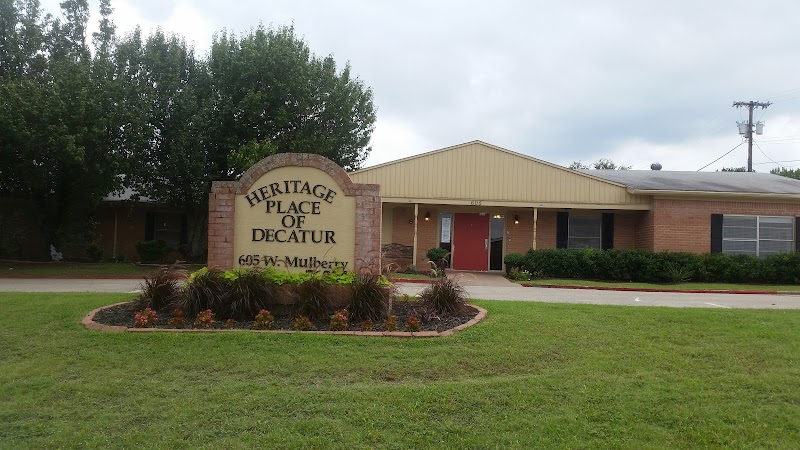
HERITAGE PLACE OF DECATUR
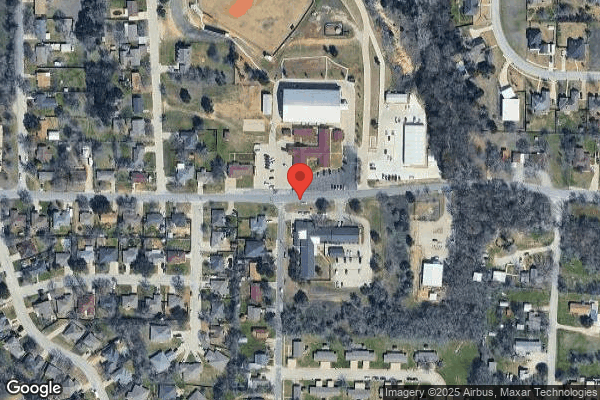

605 W MULBERRY, DECATUR, TX 76234 (940) 627-5444
For profit - Corporation 60 Beds CREATIVE SOLUTIONS IN HEALTHCARE Data: November 2025
Trust Grade
85/100
#67 of 1168 in TX
Last Inspection: August 2024

Within standard 12-15 month inspection cycle. Federal law requires annual inspections.

Overview

Heritage Place of Decatur has a Trust Grade of B+, indicating it is above average and recommended for families considering care options. It ranks #67 out of 1,168 facilities in Texas, placing it in the top half of state options, and is the best choice among four facilities in Wise County. However, the trend is concerning as the number of issues reported has increased from 2 in 2023 to 6 in 2024. Staffing is a weakness with a rating of 2 out of 5 stars and a turnover rate of 56%, which is around the state average, meaning staff may not have long-term familiarity with residents. On a positive note, there have been no fines reported, indicating compliance with regulations. However, some specific incidents include a lack of private space for resident meetings, which may hinder residents from voicing concerns, and a failure to serve eggs at breakfast as promised, suggesting issues with meal accuracy. Additionally, a malfunctioning washing machine has led to complaints about insufficient clean linens for residents. Overall, while the facility has strengths, there are notable areas for improvement.

Trust Score
B+
85/100
In Texas
#67/1168
Top 5%
Safety Record
Low Risk
No red flags
Inspections
Getting Worse
2 → 6 violations
Staff Stability
⚠ Watch
56% turnover. Above average. Higher turnover means staff may not know residents' routines.
Penalties
✓ Good
No fines on record. Clean compliance history, better than most Texas facilities.
Skilled Nurses
⚠ Watch
Each resident gets only 25 minutes of Registered Nurse (RN) attention daily — below average for Texas. Fewer RN minutes means fewer trained eyes watching for problems.
Violations
○ Average
10 deficiencies on record. Average for a facility this size. Mostly minor or procedural issues.
★★★★★
5.0
Overall Rating
★★☆☆☆
2.0
Staff Levels
★★★★★
5.0
Care Quality
★★★★☆
4.0
Inspection Score
Stable
2023: 2 issues
2024: 6 issues

The Good

  • 5-Star Quality Measures · Strong clinical quality outcomes
  • Full Sprinkler Coverage · Fire safety systems throughout facility
  • No fines on record

Facility shows strength in quality measures, fire safety.

The Bad

Staff Turnover: 56%

Near Texas avg (46%)

Frequent staff changes - ask about care continuity

Chain: CREATIVE SOLUTIONS IN HEALTHCARE

Part of a multi-facility chain

Ask about local staffing decisions and management

Staff turnover is elevated (56%)

8 points above Texas average of 48%

The Ugly 10 deficiencies on record

Aug 2024 6 deficiencies
CONCERN (D)

Potential for Harm - no one hurt, but risky conditions existed

Deficiency F0635 (Tag F0635)

Could have caused harm · This affected 1 resident

**NOTE- TERMS IN BRACKETS HAVE BEEN EDITED TO PROTECT CONFIDENTIALITY** Based on observation, interview, and record review, the facility failed to ensure at the time each resident was admitted the fac...

Read full inspector narrative →
**NOTE- TERMS IN BRACKETS HAVE BEEN EDITED TO PROTECT CONFIDENTIALITY** Based on observation, interview, and record review, the facility failed to ensure at the time each resident was admitted the facility had a physician order for the resident's immediate care for 1 of 1 resident (Resident #43) reviewed for residents receiving care and services upon admission. The facility failed to ensure Resident #43 had a current physician's order for use of an indwelling catheter as well as its treatment and maintenance after readmission to the facility. The failure could place residents atresidents at risk for not receiving the necessary care and services. Findings included: Review of Resident #43's admission record dated 08/08/24 reflected the resident was a [AGE] year-old female, admitted to the facility on [DATE] with diagnoses that included unspecified fracture of left femur, unspecified fracture of right wrist and hand, vascular dementia, and retention of urine. Review of Resident #43's admission MDS assessment, dated 07/17/24, reflected a BIMS score was 00 indicating severely impaired cognition. Her functional status indicated she was dependent on staff for toileting. The MDS assessment indicated Resident #43 admitted with an indwelling catheter. Review of Resident #43's care plan, dated 08/08/24, reflected the resident was incontinent. The care plan reflected: Resident has bladder incontinence. Goals: Resident will remain free from skin breakdown due to incontinence and brief use through the review date. Interventions: Incontinent: care at least q2h and apply moisture barrier after each episode. Monitor/document for s/sx UTI: pain, burning, blood-tinged urine, cloudiness, no output, deepening of urine color, increased pulse, increased temp, urinary frequency, foul smelling urine, fever chills, altered mental status, change in behavior, change eating patterns. Monitor/document report to MD PRN possible medical causes of incontinence: bladder infection, constipation, loss of bladder tone, weakening of control muscles, decreased bladder capacity, diabetes, stroke, medication side effects. and report signs of urinary tract infection to physician. Review of Resident #43's undated physician orders reflected no physician orders for a urinary catheter. Observation and interview on 08/07/24 at 2:08 PM, Resident #43 was in her room in her bed r resting. Resident #43 had a catheter line with clear yellow fluid draining into her foley drain bag which was covered by the privacy cover. Resident stated that she had no urinary pain. Interview on 08/07/24 at 02:50 PM, LVN A revealed Resident #43 entered the facility with a catheter. LVN A stated that she did not remember checking to see if there was an order for the catheter, and assumed there was an order. LVN A revealed that there should be an order for all catheters including the gauge of the catheter as well as an order to change it. LVN A also said that it was the admitting nurse's responsibility to input the order for the catheter when a resident comes to the facility with the catheter in place. LVN A revealed it was all oncoming nurses' responsibility to verify that there were orders for Resident #29's catheter. LVN A also stated that without orders to document input/output of urine, there is a risk that the nurse will not know if the catheter is flowing properly. LVN A revealed there is a risk of infection if the resident's catheter is not changed. Interview on 08/07/24 at 03:08 PM, the ADON revealed that Resident #43 did not have physician's orders for a catheter. The ADON stated that all residents who have catheters should have orders. The ADON also stated that it is the admitting nurses' responsibility to input the order for the catheter if the resident comes to facility with the catheter. The ADON said that it is the ADON and the DONs responsibility to ensure the order is input correctly in the EHR. The ADON revealed the oncoming nurses should have a continuum of care and make sure orders are in the chart. The ADON stated if there is no order for the resident's catheter, the risk to the resident is infection and/or injury to the resident. The ADON concluded by stating that nurses are in-serviced on infection prevention and catheter care 1-2 times per month. Interview on 08/07/2024 at 3:45 PM, the DON revealed Resident #43 did not have an order for a catheter. The DON stated the resident entered the facility with a catheter. The DON said it was the admitting nurses' responsibility to input the order and then the oncoming nurses' responsibility to [NAME] the orders are correct. The DON revealed it is the ADON and DONs responsibility to ensure the orders are correct. The DON said that if there are no physician's orders for catheters, that the resident can risk infections, sepsis, and other possible health risks. The DON concluded by stating that she in-services her staff at least one time per month on infection prevention, peri-care, and catheter care. Interview on 08/08/24 at 9:31 AM with corporate nurse revealed the facility did not have a policy addressing the topic of inputting and following physician's order.
CONCERN (D)

Potential for Harm - no one hurt, but risky conditions existed

Deficiency F0657 (Tag F0657)

Could have caused harm · This affected 1 resident

**NOTE- TERMS IN BRACKETS HAVE BEEN EDITED TO PROTECT CONFIDENTIALITY** Based on interview and record review, the facility failed to ensure each resident's person-centered comprehensive care plan was ...

Read full inspector narrative →
**NOTE- TERMS IN BRACKETS HAVE BEEN EDITED TO PROTECT CONFIDENTIALITY** Based on interview and record review, the facility failed to ensure each resident's person-centered comprehensive care plan was reviewed and revised by the interdisciplinary team after each assessment for 1 of 8 residents (Residents #29), reviewed for care plans. The facility failed to revise and update Resident #29's comprehensive care plan with new diet orders. These failures could affect residents of the facility by not addressing their physical, mental, and psychosocial needs for each to attain or maintain their highest practicable physical, mental, and psychosocial outcome. Findings included: Record review of the admission Record dated 8/8/24 revealed Resident #29 was a [AGE] year-old male initially admitted on [DATE] and re-admitted on [DATE] with diagnoses including end stage renal disease, diabetes mellitus, acquired absence of right leg below the knee, congestive heart failure, unspecified protein-calorie malnutrition, and morbid obesity. Record review of the quarterly MDS dated [DATE] revealed Resident #29 had a BIMS of 15 meaning, Resident #29 was cognitively intact. MDS Section K0520 revealed that Resident #29 did not receive a therapeutic diet. Record review of Resident #29's undated care plan revealed Resident #29 has a diet order other than Regular and is at risk for unplanned weight loss or gain. Resident #29's care plan goal revealed Resident will maintain ideal weight and receive proper nutrition daily x 90 days. Resident #29's Intervention revealed The resident has a low concentrated sweets diet. The resident's low concentrated sweets diet was discontinued on 8/11/21 and the care plan did not reflect the current diet order. Record review of the undated physician's diet orders indicated Resident #29's diet order was a regular diet, mechanical soft texture, regular consistency with a start date of 7/10/24 and revision date of 7/20/24. Interview on 08/08/24 at 5:12 PM, the MDS Coordinator revealed care plans should be reviewed quarterly and updated. MDS Coordinator also stated that she does the standard care plans, but she does not do the acute clinical care plan. MDS Coordinator said diets should be updated quarterly. MDS also revealed that it is her responsibility to ensure care plans are accurate. MDS coordinator stated that she was last in-serviced on care plans about a month ago. Interview on 08/08/24 at 5:20 PM with DON revealed care plans should be updated when there is a diet change or order change. DON stated when dietary and speech do evaluations, she has asked that the results be given to her as well as the MDS coordinator to ensure that care plans be updated. DON said that it is her responsibility to make sure the care plans reflect current orders. DON also revealed that she last in-serviced the staff about a month ago on the importance of accurate care plans. Record review of undated policy and procedure titled, Care Planning Policy revealed .The resident's care will be reviewed after each Admission, Quarterly, Annual and/or Significant Change MDS assessment, and revised based on changing goals, preferences and needs of the resident and in response to current interventions .
CONCERN (D)

Potential for Harm - no one hurt, but risky conditions existed

Deficiency F0801 (Tag F0801)

Could have caused harm · This affected 1 resident

Based on interview and record review, the facility failed to designate a person to serve as the director of food and nutrition services who met at a minimum one of the following qualifications: a cert...

Read full inspector narrative →
Based on interview and record review, the facility failed to designate a person to serve as the director of food and nutrition services who met at a minimum one of the following qualifications: a certified dietary manager or certified food service manager, or had a similar national certification for food service management and safety from a national certifying body, or had an associate's or higher degree in food service management or in hospitality, or had 2 or more years of experience in the position of food and nutrition services in a nursing faciltiy and had completed a course of study in food safety management for one of one Dietary Manager reviewed for qualifications. The Dietary Manager did not have the appropriate certification, education, or qualifications to serve as the Director of Food and Nutrition Services. This failure could place residents who consumed food prepared by staff in the kitchen at increased risk of food borne illness and not receiving adequate nutrition. Findings included: Record review of the staff roster provided by the facility, undated, reflected the hire date for the Dietary Manager was 04/22/24. Record review of the Dietary Manager's records reflected she had completed a Food Handler Essentials Course. There was no evidence the Dietary Manager met any of the requirements for a Dietary Manager, which were: a certified dietary manager or certified food service manager, or had a similar national certification for food service management and safety from a national certifying body, or had an associate's or higher degree in food service management or in hospitality, or had 2 or more years of experience in the position of food and nutrition services in a nursing faciltiy and had completed a course of study in food safety management Record review of facility employee files revealed the facility's Registered Dietitian worked eight full time hours during the month of July 2024. During an interview on 08/06/24 at 8:55 AM with the Dietary Manager, it was revealed she had been employed at the facility for approximately three months. She stated she had not started taking any dietary manger classes because she was short-staffed and had to work as a cook on shifts that she was short a cook. She stated she did not have a certificate evidencing she had completed the Certified Food Protection Manager. The Dietary Manager confirmed there was no personnel working in the kitchen that was a trained and certified Food Protection Manager. Record review of the Food Code, U.S. Public Health Service, U.S. FDA, 2022, U.S. Department of H&HS, revealed 2-102.12 Certified Food Protection Manager. (A) The PERSON IN CHARGE shall be a certified FOOD protection manager who has shown proficiency of required information through passing a test that is part of an ACCREDITED PROGRAM. 2-102.20 Food Protection Manager Certification. (B) A FOOD ESTABLISHMENT that has a PERSON IN CHARGE that is certified by a FOOD protection manager certification program that is evaluated and listed by a Conference for FOOD Protection-recognized accrediting agency as conforming to the Conference for FOOD Protection Standard for Accreditation of FOOD Protection Manager Certification Programs is deemed to comply with §2-102.12.
CONCERN (E)

Potential for Harm - no one hurt, but risky conditions existed

Deficiency F0565 (Tag F0565)

Could have caused harm · This affected multiple residents

Based on observation, interview, and record review the facility failed to provide a private meeting space for the residents' monthly group meeting for 12 of 12 confidential residents reviewed for resi...

Read full inspector narrative →
Based on observation, interview, and record review the facility failed to provide a private meeting space for the residents' monthly group meeting for 12 of 12 confidential residents reviewed for resident council. The facility failed to provide a private space for resident group meetings. This failure could place residents, who attended resident group meetings, at risk of not being able to voice concerns due to a lack of privacy. Findings included: Observation and interview on 08/07/24 beginning at 10:05 AM, during a confidential resident group meeting with 12 residents, revealed the meeting was held in the front lobby of the facility near the front door and the Administrator's office door. During this meeting, there were two signs posted. However, multiple staff walked through the space as well as people from the community. One resident stated she did not feel comfortable talking about issues due to staff and administration interrupting the meeting as well as when they have their monthly meetings. Interview on 08/08/24 at 03:54 PM, the Activity Director revealed she became the AD on 08/05/24. She stated she was responsible for organizing the resident council meetings. She stated the resident council meeting should be held in a private area. She said she asked the residents where they would like to hold the meeting on 08/07/24. She stated the Resident Council President told her a vote was taken, and the residents voted to have the meeting in the lobby which was near the front door and the Administrator's door. The Activity Director stated before the meeting began on 08/07/24, she posted two signs that read, Resident Council Meeting in Process and This is Where They Chose to Have It. The Activity Director stated she posted the signs in spots near the residents' group meeting. The Activity Director said the next resident council meeting would be held in an area that allowed for the residents' privacy. The Activity Director revealed the risk to the residents was that the residents were not comfortable or able to voice their concerns in an open area where staff could hear them. Interview on 08/08/24 at 6:19 PM, the Administrator revealed the resident council meeting was supposed to be held in a place of privacy. The Administrator stated it was the Activity Director's responsibility to ensure the meeting was held in a private area. The Administrator said that she had not received complaints about the meeting not being held in a private location. The Administrator stated she would ensure the residents had a private area for next month's resident council meeting. Record review of the resident council minutes revealed no requests for a private area. Record review of Resident Council policy dated 12/13/16 revealed: The facility will provide the resident council with private space .
CONCERN (E)

Potential for Harm - no one hurt, but risky conditions existed

Menu Adequacy (Tag F0803)

Could have caused harm · This affected multiple residents

Based on observation, interview, and record review, the facility failed to ensure that menus were followed for 1 of 5 meals (breakfast [08/07/24]) reviewed for meal accuracy. The facility failed to fo...

Read full inspector narrative →
Based on observation, interview, and record review, the facility failed to ensure that menus were followed for 1 of 5 meals (breakfast [08/07/24]) reviewed for meal accuracy. The facility failed to follow the menu for breakfast on 08/07/24. This failure could place residents at risk for poor intake and weight loss. Findings included: Record review for breakfast menu for 08/07/24 reflected the following: Choice of juice, hot or cold cereal, fresh pasteurized eggs, bacon or sausage, breakfast bread, margarine/jelly, milk, coffee. Interview on 08/07/24 beginning at 10:05 AM, during a confidential resident group meeting with 12 residents, revealed residents were told they could not have eggs for breakfast on 08/07/24 because the kitchen was out of eggs. Observation of the kitchen on 08/07/24 at 11:29 AM revealed the kitchen had no eggs to serve for breakfast on 08/07/24. However, further observation revealed the foodservice company did deliver the eggs on 08/07/24 at 11:45 AM. Interview on 08/07/24 at 11:35 AM with the Dietary Manager revealed she had been employed for three months at the facility. She stated it was her responsibility for ordering food. She stated the kitchen had run out of eggs the previous day and could not provide residents with eggs for breakfast on 08/07/24. Interview on 08/08/24 at 6:23 PM with Administrator revealed that based on the facility's census, the dietary manager knew how much of each item to order per recipe to ensure that enough food is cooked for the residents. Record review of undated dietary services policy and procedure manual 2012 titled, Preparation Of Foods revealed . We will establish safe and nutritional preparation of food. Food is to be prepared in such a manner as to maximize flavor, appearance, and nutritional value.
CONCERN (E)

Potential for Harm - no one hurt, but risky conditions existed

Room Equipment (Tag F0908)

Could have caused harm · This affected multiple residents

Based on observation, interview, and record review, the facility failed to maintain all mechanical, electrical, and patient care equipment in safe operating condition for 1 washing machine (Washer A) ...

Read full inspector narrative →
Based on observation, interview, and record review, the facility failed to maintain all mechanical, electrical, and patient care equipment in safe operating condition for 1 washing machine (Washer A) of 2 reviewed for essential equipment. The facility failed to maintain a laundry washing machine (Washer A) in operating condition. This failure could place residents at risk of not having clean linen for their beds. Findings included: Interview on 08/08/24 at 9:40 AM, Resident #39 stated the facility seemed to have a problem keeping up with linen. He stated a week prior he had to sleep on six bath towels after he had soiled his linen and staff said there were no clean sheets available. Resident #39 stated as President of the Resident Counsel he talked with all the residents, several of whom reported delays in getting their clothing back from laundry and a shortage of linen, especially on the weekends. Interview on 08/08/24 at 10:00 AM. the Laundry Aide stated one washing machine (Washer A) was out of service for a part on order, leaving her with one functioning washer. She stated the washer had been out of service for two months at least. The Laundry Aide stated linen took priority over resident clothing. She stated she has had to take clothes to the laundry mat sometimes in order to keep up. Interview on 08/08/24 at 10:30 AM, the Maintenance Specialist stated the washing machine had been out of service since April 2024. He stated the two inlet valves were coming from overseas and had not been delivered yet. He stated he kept checking in with the supplier for updates. He supplied an email chain detailing his conversations with the supplier. Record review of email chain provided by the Maintenance Specialist reflected: 04/25/24 - Area Maintenance Specialist inquired about the part, requested two parts. 04/26/24 - Supplier acknowledge the order 04/30/24 - Maintenance Specialist asks for update on order. Supplier did not know, part comes from Spain. 05/21/24 - Maintenance Specialist asks for another update. Supplier had no answer, still waiting for manufacturer. 06/10/24 - Maintenance Specialist asks for another update. Interview on 08/08/24 at 5:00 PM, the Administrator stated she was aware of the washing machine being out of service. She stated when the laundry staff get behind, she supplies them with money to go to the local laundry mat to wash resident clothes. The Administrator stated laundry staff seemed to be able to keep up with the linen as she had not had any complaints of being short on linen. She had not spoken to Corporate about possibly replacing the machine due to delays in getting replacement parts.
Feb 2023 1 deficiency
CONCERN (D) 📢 Someone Reported This

A family member, employee, or ombudsman was alarmed enough to file a formal complaint

Potential for Harm - no one hurt, but risky conditions existed

Deficiency F0761 (Tag F0761)

Could have caused harm · This affected 1 resident

**NOTE- TERMS IN BRACKETS HAVE BEEN EDITED TO PROTECT CONFIDENTIALITY** Based on observation, interview, and record review, the facility failed to ensure, in accordance with State and Federal laws, al...

Read full inspector narrative →
**NOTE- TERMS IN BRACKETS HAVE BEEN EDITED TO PROTECT CONFIDENTIALITY** Based on observation, interview, and record review, the facility failed to ensure, in accordance with State and Federal laws, all drugs and biologicals were stored in locked compartments and under proper temperature controls and permitted only authorized personnel to have access to the keys for two of thirteen residents (Resident #1 and #2) reviewed for storage of medication. The facility failed to securely store Residents #1 and #2's medication; Resident #1 had a bottle of Fluticasone nasal spray on the bedside table and Resident #2 had a medication cup containing one pill each of Lisinopril and Carvedilol on the bedside table. This failure could place residents at risk of consuming unsafe medications. Findings include: 1. Record review of Resident #1's face sheet, dated 02/06/2023, revealed a [AGE] year-old male with an initial admission date of 12/10/2021. Resident #1 had diagnoses which included peripheral vascular disease (a blood circulation disorder that causes the blood vessels outside of your heart and brain to narrow, block, or spasm), major depressive disorder, gout (inflammatory arthritis), anemia in chronic kidney disease (a chronic renal disease), and hypertension (high blood pressure. Record review of Resident #1's quarterly MDS (Minimum Data Set) assessment, dated 12/29/2022, revealed the resident had a BIMS (Brief Interview for Mental Status) score of 12, which indicated the resident cognition was moderately impaired. Record review of Resident #1's, undated, care plan reflected, limited assistance and supervision with activities of daily living. Resident #1 had an altered respiratory status and required Fluticasone as ordered. Record review of Resident #1's physician order, dated 12/11/2021, revealed an order for Fluticasone Propionate Suspension 50 MCG twice daily every 12 hours for allergies. Record review of Resident #1's MAR revealed DON A administered Fluticasone Propionate Suspension on 02/06/2023 at 9:32 AM. 2. Record review of Resident #2's face sheet, dated 02/06/2023, revealed a [AGE] year-old male with an initial admission date of 07/22/2022. Resident #2's diagnoses included heart disease, chronic obstructive pulmonary disease (inflammatory lung disease causing obstructed air flow to the lungs), Alzheimer's disease and dementia (memory loss), bipolar disorder II (form of mental illness), atrial fibrillation (an irregular heart rhythm), and chronic systolic heart failure (left ventricle can't pump blood efficiently). Record review of Resident #2's admission MDS (Minimum Data Set) assessment, dated 12/07/2022, revealed the resident had a BIMS (Brief Interview for Mental Status) score of 3, which indicated the resident cognition was severely impaired. Record review of Resident #2's, undated, care plan reflected, extensive assistance and supervision with activities of daily living and was on hospice services. Resident #2 had required Lisinopril and Carvedilol for hypertension as ordered. Record review of Resident #2's physician order, dated 01/13/2023, revealed an order for Carvedilol tablet 6.25 MG two times daily and Lisinopril tablet 2.5 MG one time daily. Record review of Resident #2's MAR revealed DON A administrated both AM doses on 02/06/2023 of Carvedilol and Lisinopril. Observation and interview on 02/06/2023 at 2:34 PM revealed Resident #1 was in the room and in bed. There was a bottle of Fluticasone on the bedside table. In an interview with the resident, he stated he knew he had the Fluticasone in his room and he used the medication whenever he needed for allergies. He said he did not know which nurse gave him the medication. An observation on 02/06/2023 at 2:34 PM revealed Resident #2 in the same room as Resident #1 and in bed sleeping. There was a medication cup which contained two round white pills on the bedside table. In an interview with DON B on 02/6/2023 at 2:40 PM she stated the resident had the medication in the room. She stated she was the DON from another facility and came to the facility to assist today. She stated she was not aware Resident #1 had the medications. She said if the resident wanted to keep the medication in his room there should be an assessment in the medical record and noted in the care plan. She said neither were in the medical record. She stated DON A worked the hall and administered the Fluticasone at 9:32 AM. DON B stated the medication cup on Resident #2's bedside table contained one pill each of Lisinopril and Carvedilol. She said medications should not be left on any resident's bedside table and nurses dispensing medications should observe the administration. She said all medications should be secured in the medication cart at all times to prevent other residents from getting into the medication. An interview on 02/06/2023 at 3:20 PM with the Regional Compliance Nurse revealed Residents #1 and #2 were not supposed to have medications at their bedside because neither had been assessed to self-administer medications. She stated there could be medications interactions with other medications when the primary care provider was not aware of self-administering the medications. She said she expected staff to follow the facility's policy for medication administration. An interview on 02/06/2023 at 4:20 PM with DON A revealed she did sign the MAR for both residents #1 and #2. She stated she did watch Resident #2 take the medications, but he must have spit them back out into the cup. She said she was not aware Resident #1 had Fluticasone in his room. She said medications should never be left unattended and in any resident's room. She said if resident #1 wanted to keep the Fluticasone in his room there would have to be an assessment and the medication would have to be locked up to prevent other residents from having access to it. She said Resident #1 was not assessed for self-administering medication. In an interview on 02/06/2023 at 5:00 PM with the administrator, she said she expected staff to supervise residents while they took any medication. She said that was the facility's policy. She stated if medications were left in any room it placed residents at risk of harm because they could take medications that were not ordered for them or not take them at all. Record review of the facility provided policy titled Medication Administration Procedures, Oral Solid Medication Administration stated under section 3-4.02A Make sure that the resident swallows the mediations. After the medication administration process is completed, the medication cart bust be completely locked .
Jan 2023 1 deficiency
CONCERN (E) 📢 Someone Reported This

A family member, employee, or ombudsman was alarmed enough to file a formal complaint

Potential for Harm - no one hurt, but risky conditions existed

Deficiency F0760 (Tag F0760)

Could have caused harm · This affected multiple residents

**NOTE- TERMS IN BRACKETS HAVE BEEN EDITED TO PROTECT CONFIDENTIALITY** Based on interviews, and record review, the facility failed to provide pharmaceutical services including the accurate acquiring,...

Read full inspector narrative →
**NOTE- TERMS IN BRACKETS HAVE BEEN EDITED TO PROTECT CONFIDENTIALITY** Based on interviews, and record review, the facility failed to provide pharmaceutical services including the accurate acquiring, receiving, dispensing, and administering of all drugs and biologicals to meet the needs of each resident for one (Resident #1) of 5 residents reviewed for pharmacy services. 1. The facility failed to administer Resident #1's Eliquis twice a day for 14 consecutive days due to not ordering the medications timely and reconciling hospital discharge paperwork. These failures could place residents at risk of neglect leading to decreased quality of life, exacerbation of disease processes Findings include: Review of face sheet for Resident #1, dated 1/11/23, revealed she was a [AGE] year-old female who was readmitted to the facility on [DATE] with diagnoses of Atrial Flutter (abnormal heart rhythm); paraplegia (paralysis of lower body); Stage 4 pressure ulcer; Cutaneous (skin) abscess of buttocks; Depressive disorder. Review of hospital discharge paperwork for Resident #1 dated 11/18/22 revealed Resident #1 had been admitted to the hospital on [DATE] with a new diagnosis of Atrial flutter (abnormal heart rhythm) she was started on new medication Eliquis (blood thinning medication). She was discharged from the hospital on [DATE] with discharge summary stating to continue taking Eliquis 5mg by mouth 2 times a day. Review of Resident #1's Medication Administration Record for November 2022 revealed no administration or documentation of an order for Eliquis 5mg PO twice a day. Review of Resident #1's Medication Administration Record for December 1, 2022, revealed order for Eliquis 5 mg 1 tablet twice a day which had first dose administered evening of 12/1/22. Review of Physician's order for Resident #1 dated December 1, 2022 revealed Eliquis 5mg give 1 tablet twice a day. An interview on 1/11/23 at 9:30 AM with the DON revealed Resident #1 had gone to the hospital on [DATE] for new onset A fib. She said that she (Resident #1) had started the Eliquis at the hospital, on her hospital discharge paperwork, the hospital had the medication (Eliquis) listed as an old medication and to continue it at the facility. The DON said that the nurse (unnamed) had reviewed the hospital discharge paperwork when Resident #1 returned from the hospital. She stated that she assumed the nurse just missed the medication thinking Resident #1 had been on the medication, prior to going out to hospital. Nurse reviewed the orders and just missed that med since she was not on it before. The DON stated that the nurse that completed the readmission had entered all the new orders from the discharge paperwork then she (the DON) reviewed the hospital discharge paperwork as well for any new medications and that she (the DON) had missed the Eliquis as well. The DON said that Resident #1 had gone to a hospital follow up appointment on December 1, 2022, with her Cardiologist. When Resident #1 returned to the facility from the appointment she (Resident #1) told the Administrator and the DON that the doctor was mad that she had not been receiving the Eliquis. She then gave the DON the doctors order stating to start the resident on Eliquis 5mg twice a day for 90 days. The DON found the discharge paperwork from the hospital, dated 11/18/22, and reviewed the medications listed on the discharge paperwork revealing Eliquis was listed on there. DON stated that she contacted Resident #1's PCP and alerted him of the medication error. DON said that she thought the reason the medication was missed was because of where the medication was listed on the discharge paperwork. The DON stated that the medication had been missed by the nurse that completed the readmission and by herself. She said that when a resident is admitted or readmitted , the admitting nurse completed a medication review reviewing all medications listed on the hospital discharge paperwork and compared it to what was listed in PCC. Once the nurse completed the medication review, then she gave the paperwork to the DON who also completed a medication review. She stated that the medication was overlooked by both the admitting nurse (RN A) and herself. An interview on 1/11/23 at 10:45 AM with RN A revealed she was the admitting nurse for Resident #1's return from the hospital on [DATE]. RN A said that she had never completed an admission, that was her first one, and she was being assisted by LVN B. RN A said that she had an admission checklist that she had worked from and that she did recall seeing review all medications on the checklist. She did not recall how she missed the Eliquis since it was the first medication listed on the discharge paperwork. RN A complained about the admission checklist being too extensive and was too time consuming. RN A said that she was unsure how both she and the DON had overlooked the Eliquis on the discharge paperwork. RN A said after completing the admission checklist, she would haveinitialed off everything she had completed on the list and then given it to the DON. An interview on 1/11/23 at 12:55 PM with LVN B revealed she recalled the readmission for Resident #1. She said that she was helping RN A with the readmission and that she had told her to make sure and review all the medications for any new or changed medications. LVN A said that she recalled seeing a new medication listed at the top (was not the Eliquis) but had assumed that RN A had completed an entire medication review as told by LVN B. LVN B said that during the readmission the nurse has the admission checklist beside her and either checks off or initials next to the item listed on the checklist. LVN B said that she did not recall reviewing the checklist after RN A completed the admission and had just assumed all the medications had been reviewed and any new medications had been added into PCC. During a phone interview with the Cardiologist on 1/11/23 at 3:03 PM, he recalled Resident #1 coming into his office for a hospital follow up on 12/1/22. He said that Resident #1 had told him that she was mad that she had not been receiving the Eliquis that was started during her previous hospital admission [DATE] - 11/18/22. The Cardiologist said that he completed a thorough assessment on Resident #1 and found no ill effects from not receiving the Eliquis for 14 days (26 doses). He said that he had seen her when she had gotten admitted to the local hospital for Atrial Fibrillation and had started her on Eliquis 5mg PO twice. He said she had her first few doses while she was in the hospital and that he had wrote orders for her to continue the Eliquis on hospital discharge back to the facility. The Cardiologist reviewed the medication list that Resident #1 brought from the facility to her follow up appointment and did not see the Eliquis listed. He said he then wrote an order for her to start the Eliquis that day (12/1/22) on return to the facility. The Cardiologist said that the medication Eliquis was a blood thinner that was being given to Resident #1 to control her Atrial Fibrillation in which she had none during her visit to his office on 12/1/22. He said without the Eliquis Resident #1 could have had a stroke or recurrence of Atrial Fibrillation (abnormal heart rhythm) in which she did not have a stroke or Atrial Fibrillation. Review of an undated blank copy of the facility's admission Process checklist page 1 revealed Pull an admission packet form .check off and initial each step as you complete them. Use your working copy of the checklist, check off meds as verified and entered. Once the checklist is completed place the completed copy in the DON box in which the DON and the ADON will review all medications and ensure that all orders including pharmacy orders are completed and accurate. Page 2 of the admission packet revealed a checklist of items to be completed on admission/readmission. Item number 4 on the checklist under the Nursing admission Checklist was Review medication reconciliation and Enter admission medication orders and fax to pharmacy ASAP. The last sentence on page number 2 revealed '***Complete the Drug Regimen Review Assessment. Review of facility policy on Physician's Orders dated 2015 revealed Purpose: To monitor and ensure the accuracy and completeness of the medication orders, treatment orders, and ADL order for each resident. Written Orders by the Physician or Nurse Practitioner 1. Nurse will review the order . 2. The nurse will enter the order into PCC for resident. 3. The receiving nurse will contact other department or external facilities as required, i.e., pharmacy. Based on interviews, and record review, the facility failed to provide pharmaceutical services including the accurate acquiring, receiving, dispensing, and administering of all drugs and biologicals to meet the needs of each resident for one (Resident #1) of 5 residents reviewed for pharmacy services. 1. The facility failed to administer Resident #1's Eliquis twice a day for 14 consecutive days due to not ordering the medications timely and reconciling hospital discharge paperwork. These failures could place residents at risk of neglect leading to decreased quality of life, exacerbation of disease processes Findings include: Review of face sheet for Resident #1, dated 1/11/23, revealed she was a [AGE] year-old female who was readmitted to the facility on [DATE] with diagnoses of Atrial Flutter (abnormal heart rhythm); paraplegia (paralysis of lower body); Stage 4 pressure ulcer; Cutaneous (skin) abscess of buttocks; Depressive disorder. Review of hospital discharge paperwork for Resident #1 dated 11/18/22 revealed Resident #1 had been admitted to the hospital on [DATE] with a new diagnosis of Atrial flutter (abnormal heart rhythm) she was started on new medication Eliquis (blood thinning medication). She was discharged from the hospital on [DATE] with discharge summary stating to continue taking Eliquis 5mg by mouth 2 times a day. Review of Resident #1's Medication Administration Record for November 2022 revealed no administration or documentation of an order for Eliquis 5mg PO twice a day. Review of Resident #1's Medication Administration Record for December 1, 2022, revealed order for Eliquis 5 mg 1 tablet twice a day which had first dose administered evening of 12/1/22. Review of Physician's order for Resident #1 dated December 1, 2022 revealed Eliquis 5mg give 1 tablet twice a day. An interview on 1/11/23 at 9:30 AM with the DON revealed Resident #1 had gone to the hospital on [DATE] for new onset A fib. She said that she (Resident #1) had started the Eliquis at the hospital, on her hospital discharge paperwork, the hospital had the medication (Eliquis) listed as an old medication and to continue it at the facility. The DON said that the nurse (unnamed) had reviewed the hospital discharge paperwork when Resident #1 returned from the hospital. She stated that she assumed the nurse just missed the medication thinking Resident #1 had been on the medication, prior to going out to hospital. Nurse reviewed the orders and just missed that med since she was not on it before. The DON stated that the nurse that completed the readmission had entered all the new orders from the discharge paperwork then she (the DON) reviewed the hospital discharge paperwork as well for any new medications and that she (the DON) had missed the Eliquis as well. The DON said that Resident #1 had gone to a hospital follow up appointment on December 1, 2022, with her Cardiologist. When Resident #1 returned to the facility from the appointment she (Resident #1) told the Administrator and the DON that the doctor was mad that she had not been receiving the Eliquis. She then gave the DON the doctors order stating to start the resident on Eliquis 5mg twice a day for 90 days. The DON found the discharge paperwork from the hospital, dated 11/18/22, and reviewed the medications listed on the discharge paperwork revealing Eliquis was listed on there. DON stated that she contacted Resident #1's PCP and alerted him of the medication error. DON said that she thought the reason the medication was missed was because of where the medication was listed on the discharge paperwork. The DON stated that the medication had been missed by the nurse that completed the readmission and by herself. She said that when a resident is admitted or readmitted , the admitting nurse completed a medication review reviewing all medications listed on the hospital discharge paperwork and compared it to what was listed in PCC. Once the nurse completed the medication review, then she gave the paperwork to the DON who also completed a medication review. She stated that the medication was overlooked by both the admitting nurse (RN A) and herself. An interview on 1/11/23 at 10:45 AM with RN A revealed she was the admitting nurse for Resident #1's return from the hospital on [DATE]. RN A said that she had never completed an admission, that was her first one, and she was being assisted by LVN B. RN A said that she had an admission checklist that she had worked from and that she did recall seeing review all medications on the checklist. She did not recall how she missed the Eliquis since it was the first medication listed on the discharge paperwork. RN A complained about the admission checklist being too extensive and was too time consuming. RN A said that she was unsure how both she and the DON had overlooked the Eliquis on the discharge paperwork. RN A said after completing the admission checklist, she would have initialed off everything she had completed on the list and then given it to the DON. An interview on 1/11/23 at 12:55 PM with LVN B revealed she recalled the readmission for Resident #1. She said that she was helping RN A with the readmission and that she had told her to make sure and review all the medications for any new or changed medications. LVN A said that she recalled seeing a new medication listed at the top (was not the Eliquis) but had assumed that RN A had completed an entire medication review as told by LVN B. LVN B said that during the readmission the nurse has the admission checklist beside her and either checks off or initials next to the item listed on the checklist. LVN B said that she did not recall reviewing the checklist after RN A completed the admission and had just assumed all the medications had been reviewed and any new medications had been added into PCC. During a phone interview with the Cardiologist on 1/11/23 at 3:03 PM, he recalled Resident #1 coming into his office for a hospital follow up on 12/1/22. He said that Resident #1 had told him that she was mad that she had not been receiving the Eliquis that was started during her previous hospital admission [DATE] - 11/18/22. The Cardiologist said that he completed a thorough assessment on Resident #1 and found no ill effects from not receiving the Eliquis for 14 days (26 doses). He said that he had seen her when she had gotten admitted to the local hospital for Atrial Fibrillation and had started her on Eliquis 5mg PO twice. He said she had her first few doses while she was in the hospital and that he had wrote orders for her to continue the Eliquis on hospital discharge back to the facility. The Cardiologist reviewed the medication list that Resident #1 brought from the facility to her follow up appointment and did not see the Eliquis listed. He said he then wrote an order for her to start the Eliquis that day (12/1/22) on return to the facility. The Cardiologist said that the medication Eliquis was a blood thinner that was being given to Resident #1 to control her Atrial Fibrillation in which she had none during her visit to his office on 12/1/22. He said without the Eliquis Resident #1 could have had a stroke or recurrence of Atrial Fibrillation (abnormal heart rhythm) in which she did not have a stroke or Atrial Fibrillation. Review of an undated blank copy of the facility's admission Process checklist page 1 revealed Pull an admission packet form .check off and initial each step as you complete them. Use your working copy of the checklist, check off meds as verified and entered. Once the checklist is completed place the completed copy in the DON box in which the DON and the ADON will review all medications and ensure that all orders including pharmacy orders are completed and accurate. Page 2 of the admission packet revealed a checklist of items to be completed on admission/readmission. Item number 4 on the checklist under the Nursing admission Checklist was Review medication reconciliation and Enter admission medication orders and fax to pharmacy ASAP. The last sentence on page number 2 revealed '***Complete the Drug Regimen Review Assessment. Review of facility policy on Physician's Orders dated 2015 revealed Purpose: To monitor and ensure the accuracy and completeness of the medication orders, treatment orders, and ADL order for each resident. Written Orders by the Physician or Nurse Practitioner 1. Nurse will review the order . 2. The nurse will enter the order into PCC for resident. 3. The receiving nurse will contact other department or external facilities as required, i.e., pharmacy.
Apr 2022 2 deficiencies
CONCERN (D)

Potential for Harm - no one hurt, but risky conditions existed

Pharmacy Services (Tag F0755)

Could have caused harm · This affected 1 resident

**NOTE- TERMS IN BRACKETS HAVE BEEN EDITED TO PROTECT CONFIDENTIALITY** Based on observation, interview, and record review, the facility failed to provide pharmaceutical services (including procedures...

Read full inspector narrative →
**NOTE- TERMS IN BRACKETS HAVE BEEN EDITED TO PROTECT CONFIDENTIALITY** Based on observation, interview, and record review, the facility failed to provide pharmaceutical services (including procedures that assure the accurate administering of all drugs and biologicals) to meet the needs for 1 of 5 residents observed during medication pass. (Resident #22) LVN A administered Med Pass 2.0 Nutritional Supplement and a Multiple Vitamin that was expired to Resident #22. This deficient practice could place residents at risk of receiving less than therapeutic benefits from medications. Findings include: Review of the Face Sheet, dated 4/29/22, revealed she was a [AGE] year-old woman admitted [DATE] and readmitted to the facility 3/25/22 with diagnoses of Aphasia (a disorder that affects ability to speak and/or understand words), Cerebral Vascular Accident, speech/language deficits, Chronic Obstructive Pulmonary Disease (difficulty breathing caused by smoking, asthma, chemicals and other factors), difficulty in walking, cognitive communication deficit, depression, muscle weakness, personality and behavior disorder and Pseudobulbar Affect (a nervous system disorder that causes inappropriate involuntary laughing or crying). Review of Physician Orders dated 4/29/22 revealed Resident #22 had an order for MedPass 2.0 120 milliliters three times each day for nutrition, and a Multiple Vitamin Tablet Give 1 tablet by mouth one time per day related to Other Symbolic Dysfunctions. During observation of a medication pass on 04/28/22 at 7:07 AM, LVN A administered Med Pass 90 milliliters (ML) with a manufacturer's expiration date of 10/14/21 and Multiple vitamin 1 tablet with manufacturer's expiration date of 03/2022 to Resident #22. During an interview on 4/28/22 at 7:35 AM, LVN A stated she forgot to check expiration dates on Med Pass Nutritional Supplement and Multiple Vitamin prior to administering to Resident #22 . LVN A stated she usually checked expiration dates of medications and discarded anything out of date. LVN A stated giving expired medications could cause nausea/vomiting. During an interview on 4/29/22 at 10:16 AM, Compliance RN stated medication expiration dates should be checked prior to medication administration and stated administering expired medications could prevent the resident from receiving therapeutic dose. During phone interview on 5/03/22 at 10:00 AM with a Registered Pharmacist stated medicines had a certain rate of loss over time and should be used prior to expiration date to ensure patient received a therapeutic dose. Review of current facility's policy, Medication Administration Procedures dated 10/25/17 did not address expired medications.
CONCERN (D)

Potential for Harm - no one hurt, but risky conditions existed

Infection Control (Tag F0880)

Could have caused harm · This affected 1 resident

Based on observation, interview and record review, the facility failed to maintain an Infection Prevention and Control Program designed to provide a safe, sanitary and comfortable environment, and to ...

Read full inspector narrative →
Based on observation, interview and record review, the facility failed to maintain an Infection Prevention and Control Program designed to provide a safe, sanitary and comfortable environment, and to prevent the transmission of communicable diseases and infections for 3 (Residents #14, #29, #23) of 6 residents observed for medication administration. LVN A failed to wash or sanitize hands after return from medication room and prior to preparing and administering medications to Resident #14. LVN A failed to disinfect Pulse Oximeter after obtaining pulse rate of Resident #29 and failed to wash hands or use hand sanitizer after using Pulse Oximeter and prior to administering medications to Resident #29. LVN A failed to use infection control prevention methods after placing Resident #14's medications in 2 dose cups and then stacked cups, one on top of the other, contaminating medications contained in bottom cup and carried stacked cups into Resident #14's room where LVN A administered medications. LVN A failed to disinfect blood pressure wrist cuff after obtaining blood pressure of Resident #14 and prior to obtaining blood pressure of Resident #23. These failures could affect residents who received medications placing them at risk for cross-contamination and infections/diseases. Findings included: An observation on 4/28/22 at 6:52 AM, LVN A entered the room of Resident #29 and removed a Pulse Oximeter from LVN A's pocket, checked Resident #29's pulse rate and returned the Pulse Oximeter to LVN A's pocket without sanitizing oximeter. LVN A return to medication cart, prepared and administered medications without washing hands or using sanitizer. An observation on 4/28/22 at 7:43 AM, LVN A prepared medications for Resident #29 which she placed in two dose cups and stacked one cup of pills on top of the other cup of pills contaminating pills contained in the bottom cup; LVN A then administered both cups of pills to Resident #29. An observation on 4/28/22 at 7:43 AM, LVN A used a wrist blood pressure cuff to Check Resident #14's blood pressure and return to the medication cart and placed the cuff on the top left of the cart without sanitizing it. An observation on 4/28/22 at 8:17 AM, LVN A removed wrist cuff from the medication cart without sanitizing cuff and placed the wrist cuff on Resident #23. Continuous observation from 4/28/22 at 7:43 AM until 4/28/22 at 8:17 AM revealed wrist cuff was never disinfected between the three residents. Interview on 4/28/22 at 8:22 AM, LVN A stated she forgot to clean the blood pressure wrist cuff and pulse oximeter between uses. LVN A stated she must have forgotten to perform hand hygiene. LVN A stated she had received many in-services related to hand hygiene. She stated hand hygiene was required prior to setting up medications, before and after any encounter. LVN A stated she should have cleaned the blood pressure wrist cuff and the pulse oximeter with a disinfectant wipe after each use and placed both on the med cart to dry after cleaning. LVN A stated she was not thinking when she stacked dose cups containing pills; she stated the pills were contaminated by stacking. LVN A stated failure to clean hands or equipment could cause spread of infection. LVN A stated the surveyor made her nervous. Interview on 4/29/22 at 8:34 AM, Compliance RN stated blood pressure cuffs should be cleaned after each use with a disinfectant wipe. The compliance RN stated dry time was 2 minutes. The compliance RN stated pulse oximeters and glucometers should be cleaned after each use. The compliance RN stated hand hygiene should be performed prior to pulling meds and after administering meds. The compliance RN stated hands should be cleaned upon return to med cart. The compliance RN stated she monitored hand hygiene every day . Interview on 4/29/22 at 10:24 AM, the Administrator stated he expected re-useable equipment to be cleaned after each use. The Administrator stated sanitizing wipes were used to clean equipment or as the manufacturer suggested and he expected staff to clean hands after each encounter. Review of the facility's Infection Control Plan dated 2019 revealed: Infection Control The facility will establish and maintain an Infection Control Program designed to provide a safe, sanitary and comfortable environment and to help prevent the development and transmission of disease and infection. Preventing Spread of Infection (3) The facility will require staff to wash their hands after each direct resident contact for which hand washing is indicated by accepted professional practice. Intent Prevent and control outbreaks and cross-contamination using transmission-based precautions in addition to standard precautions. Review of the facility's Hand Hygiene Policy, undated revealed: You may use alcohol based hand cleaner or soap/water for the following: >Upon and after coming in contact with a resident's intact skin, (e.g., when taking a pulse or blood pressure . Review of the facility's policy Cleaning and Disinfection of Resident-Care Items and Equipment Revised October 2018 revealed: Policy Statement Resident-care equipment, including reusable items and durable medical equipment will be cleaned and disinfected according to current CDC recommendations for disinfection and the OSHA Bloodborne Pathogens Standard. Policy Interpretation and Implementation 1. The following categories are used to distinguish the levels of sterilization/disinfection necessary for items used in resident care: d. Reusable items are cleaned and disinfected or sterilized between residents (e.g., stethoscopes, durable medical equipment). Review of (Disinfection and Sterilization Guidelines) accessed on (5/03/22date) at https://www.cdc.gov/infectioncontrol/guidelines/disinfection indicated disinfect noncritical medical devices (e.g., blood pressure cuff) with an EPA-registered hospital disinfectant using the label's safety precautions and use directions . [1] The proper cleaning of these cuffs ensures that dangerous bacteria does not spread between patients.
Understanding Severity Codes (click to expand)
Life-Threatening (Immediate Jeopardy)
J - Isolated K - Pattern L - Widespread
Actual Harm
G - Isolated H - Pattern I - Widespread
Potential for Harm
D - Isolated E - Pattern F - Widespread
No Harm (Minor)
A - Isolated B - Pattern C - Widespread

Questions to Ask on Your Visit

  • "Why is there high staff turnover? How do you retain staff?"
  • "Can I speak with families of current residents?"
  • "What's your RN coverage like on weekends and overnight?"

Our Honest Assessment

Strengths
  • • Grade B+ (85/100). Above average facility, better than most options in Texas.
  • • No major safety red flags. No abuse findings, life-threatening violations, or SFF status.
  • • No fines on record. Clean compliance history, better than most Texas facilities.
Concerns
  • • 56% turnover. Above average. Higher turnover means staff may not know residents' routines.
Bottom line: Generally positive indicators. Standard due diligence and a personal visit recommended.

About This Facility

What is Heritage Place Of Decatur's CMS Rating?

CMS assigns HERITAGE PLACE OF DECATUR an overall rating of 5 out of 5 stars, which is considered much above average nationally. Within Texas, this rating places the facility higher than 99% of the state's 100 nursing homes. This rating reflects solid performance across the metrics CMS uses to evaluate nursing home quality.

How is Heritage Place Of Decatur Staffed?

CMS rates HERITAGE PLACE OF DECATUR's staffing level at 2 out of 5 stars, which is below average compared to other nursing homes. Staff turnover is 56%, which is 10 percentage points above the Texas average of 46%. High turnover can affect care consistency as new staff learn residents' individual needs.

What Have Inspectors Found at Heritage Place Of Decatur?

State health inspectors documented 10 deficiencies at HERITAGE PLACE OF DECATUR during 2022 to 2024. These included: 10 with potential for harm.

Who Owns and Operates Heritage Place Of Decatur?

HERITAGE PLACE OF DECATUR is owned by a for-profit company. For-profit facilities operate as businesses with obligations to shareholders or private owners. The facility is operated by CREATIVE SOLUTIONS IN HEALTHCARE, a chain that manages multiple nursing homes. With 60 certified beds and approximately 41 residents (about 68% occupancy), it is a smaller facility located in DECATUR, Texas.
How Does Heritage Place Of Decatur Compare to Other Texas Nursing Homes?

Compared to the 100 nursing homes in Texas, HERITAGE PLACE OF DECATUR's overall rating (5 stars) is above the state average of 2.8, staff turnover (56%) is near the state average of 46%, and health inspection rating (4 stars) is above the national benchmark.

What Should Families Ask When Visiting Heritage Place Of Decatur?

Based on this facility's data, families visiting should ask: "How do you ensure continuity of care given staff turnover, and what is your staff retention strategy?" "Can you walk me through typical staffing levels on day, evening, and night shifts?" "Can I visit during a mealtime to observe dining assistance and food quality?" "How do you handle medical emergencies, and what is your hospital transfer rate?" These questions are particularly relevant given the facility's high staff turnover rate and the below-average staffing rating.

Is Heritage Place Of Decatur Safe?

Based on CMS inspection data, HERITAGE PLACE OF DECATUR has a clean safety record: no substantiated abuse findings (meaning no confirmed cases of resident harm), no Immediate Jeopardy citations (the most serious violation level indicating risk of serious injury or death), and is not on the Special Focus Facility watch list (a federal program monitoring the lowest-performing 1% of nursing homes). The facility has a 5-star overall rating and ranks #1 of 100 nursing homes in Texas. While no facility is perfect, families should still ask about staff-to-resident ratios and recent inspection results during their visit.

Do Nurses at Heritage Place Of Decatur Stick Around?

Staff turnover at HERITAGE PLACE OF DECATUR is high. At 56%, the facility is 10 percentage points above the Texas average of 46%. High turnover means new staff may not know residents' individual needs, medications, or preferences. It can also be disorienting for residents, especially those with dementia who rely on familiar faces. Families should ask: What is causing the turnover? What retention programs are in place? How do you ensure care continuity during staff transitions?

Was Heritage Place Of Decatur Ever Fined?

HERITAGE PLACE OF DECATUR has no federal fines on record. CMS issues fines when nursing homes fail to meet care standards or don't correct problems found during inspections. The absence of fines suggests the facility has either maintained compliance or corrected any issues before penalties were assessed. This is a positive indicator, though families should still review recent inspection reports for the full picture.

Is Heritage Place Of Decatur on Any Federal Watch List?

HERITAGE PLACE OF DECATUR is not on any federal watch list. The most significant is the Special Focus Facility (SFF) program, which identifies the bottom 1% of nursing homes nationally based on persistent, serious quality problems. Not being on this list means the facility has avoided the pattern of deficiencies that triggers enhanced federal oversight. This is a positive indicator, though families should still review the facility's inspection history directly.