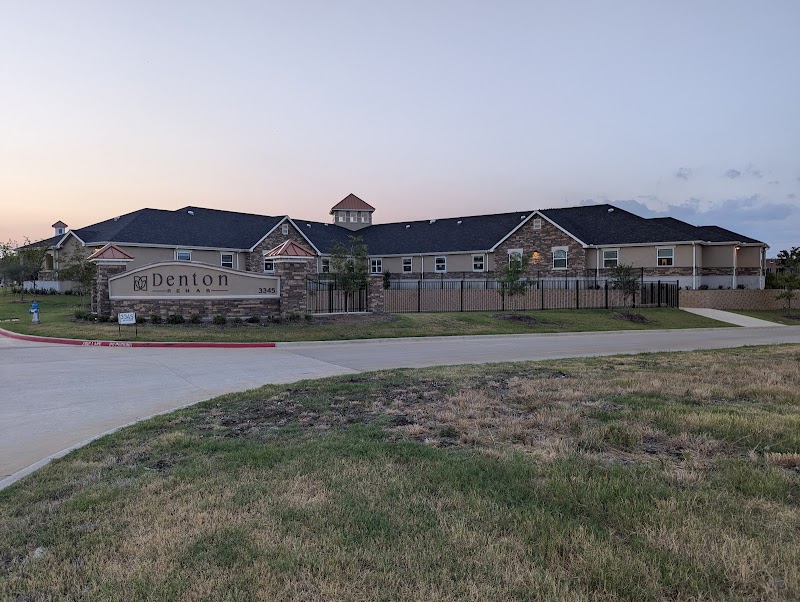
DENTON REHABILITATION AND NURSING CENTER

3345 MEDPARK DR., DENTON, TX 76210 (940) 387-8508
Government - Hospital district 94 Beds Independent Data: November 2025
Trust Grade
60/100
#450 of 1168 in TX
Last Inspection: May 2025

Inspected within the last 6 months. Data reflects current conditions.

Overview

Denton Rehabilitation and Nursing Center has a Trust Grade of C+, indicating it is slightly above average but not outstanding. It ranks #450 out of 1,168 facilities in Texas, placing it in the top half, and #10 out of 18 facilities in Denton County, meaning there are only nine local options that perform better. Unfortunately, the facility is experiencing a worsening trend, with issues increasing from 6 in 2024 to 11 in 2025. Staffing is a relative strength, with a 4/5 star rating and a turnover rate of 41%, which is below the Texas average of 50%. While there have been no fines reported, which is a positive sign, recent inspections revealed concerning incidents, such as a lack of privacy during medical treatments and unclean living conditions in several resident rooms, which could impact residents' quality of life.

Trust Score
C+
60/100
In Texas
#450/1168
Top 38%
Safety Record
Low Risk
No red flags
Inspections
Getting Worse
6 → 11 violations
Staff Stability
○ Average
41% turnover. Near Texas's 48% average. Typical for the industry.
Penalties
✓ Good
No fines on record. Clean compliance history, better than most Texas facilities.
Skilled Nurses
○ Average
Each resident gets 39 minutes of Registered Nurse (RN) attention daily — about average for Texas. RNs are the most trained staff who monitor for health changes.
Violations
⚠ Watch
26 deficiencies on record. Higher than average. Multiple issues found across inspections.
★★★☆☆
3.0
Overall Rating
★★★★☆
4.0
Staff Levels
★★★★☆
4.0
Care Quality
★★★☆☆
3.0
Inspection Score
Stable
2024: 6 issues
2025: 11 issues

The Good

  • 4-Star Staffing Rating · Above-average nurse staffing levels
  • 4-Star Quality Measures · Strong clinical quality outcomes
  • Full Sprinkler Coverage · Fire safety systems throughout facility
  • No fines on record
  • Staff turnover below average (41%)

    7 points below Texas average of 48%

Facility shows strength in staffing levels, quality measures, fire safety.

The Bad

3-Star Overall Rating

Near Texas average (2.8)

Meets federal standards, typical of most facilities

Staff Turnover: 41%

Near Texas avg (46%)

Typical for the industry

The Ugly 26 deficiencies on record

May 2025 11 deficiencies
CONCERN (D)

Potential for Harm - no one hurt, but risky conditions existed

Resident Rights (Tag F0550)

Could have caused harm · This affected 1 resident

**NOTE- TERMS IN BRACKETS HAVE BEEN EDITED TO PROTECT CONFIDENTIALITY** Based on observations, interviews, and record review, the facility failed to treat each resident with respect and dignity and ca...

Read full inspector narrative →
**NOTE- TERMS IN BRACKETS HAVE BEEN EDITED TO PROTECT CONFIDENTIALITY** Based on observations, interviews, and record review, the facility failed to treat each resident with respect and dignity and care for each resident in a manner and in an environment that promoted maintenance or enhancement of his or her quality of life for 2 of 12 residents (Resident #143 and Resident #194) reviewed for dignity. The facility failed to treat Resident #143 and Resident #194 with dignity and promote enhancement of their quality of life when the residents were not provided privacy bags for their catheter bags. This failure placed residents at risk of not having their right to a dignified existence maintained. Findings included: 1. Review of Resident #143's Face Sheet, dated 05/27/25, reflected a [AGE] year-old male admitted on [DATE]. Resident #143 was diagnosed with neuromuscular dysfunction of bladder (the muscles and nerves that control the bladder do not work properly due to illness). Review of Resident #143's Quarterly MDS Assessment, dated 05/09/25, reflected Resident #143 was cognitively intact with a BIMS score of 13. The Quarterly MDS Assessment indicated that the resident had an indwelling catheter. Review of Resident #143's Comprehensive Care Plan, dated 05/21/25, reflected Resident #143 had an indwelling catheter related to neurogenic bladder (the normal bladder function is disrupted due to nerve damage) and one of the interventions was catheter care every shift. Review of Resident #143's Physician Order, dated 05/27/25, reflected Change catheter and drainage bag monthly on the 15th day every 1 month(s) In an observation and interview on 05/27/25 at 9:15 AM, Physical Therapist V was observed walking with Resident #143 down the facility hall providing therapy. The resident was observed with a catheter bag, but it did not have the privacy cover. Physical Therapist V stated the resident had a privacy cover, but it fell off in the therapy room, and she forgot to place it back on. She stated not having the privacy cover over the catheter bag was an infection control and a dignity concern. In an interview on 05/27/25 at 9:58 AM, the ADON stated Resident #143 should have had a privacy cover for his catheter bag in place for the resident's dignity. She was advised of Resident #143 conducting therapy in the facility hall and no privacy bag being observed. She stated staff was responsible to ensure residents with catheter bags also had a privacy bag covering them. In an interview on 05/29/25 at 09:45 AM, the Director of Therapy advised that she was made aware that Resident #143 did not have a privacy bag attached to his catheter bag when he was doing his therapy on 05/27/25 with Physical Therapist V. She stated staff was responsible for ensuring the resident's privacy bag was in place for the dignity of the resident. 2. Record review of Resident #194's Face Sheet, dated 05/27/2025, reflected a [AGE] year-old female admitted to the facility on [DATE]. The resident was diagnosed with stage 4 (localized skin injury extending to the bone) pressure ulcers (damage to the skin usually over a bony prominence) to sacral region (area located at the bottom of the spine). Record review of Resident #194's Comprehensive MDS Assessment, dated 05/09/2025, reflected resident had a moderately impairment in cognition with a BIMS score of 12. The Comprehensive MDS Assessment indicated the resident had a pressure ulcer to sacral region. Record review of Resident #194's Physician Order, dated 05/22/2025, reflected Catheter care Q Shift. Record review of Resident #194's Comprehensive Care Plan, dated 05/09/2025, reflected the resident had stage 4 pressure ulcer to sacral region and one of the interventions was assess and clean the pressure ulcer as ordered. Record review of Resident #194's Progress Notes, dated 05/22/2025, reflected the MD discussed with the resident the benefits of foley catheter to wound healing. After the resident gave the consent, 16 F (French: unit of measurement for Foley catheter) Foley catheter was inserted. Observation and interview on 05/27/2025 at 9:02 AM revealed Resident #194 was in her bed, awake. It was observed that the resident had a catheter bag hanging on the side frame of the bed. The catheter bag, with urine inside, did not have a privacy bag. The resident stated she had a catheter so the wound to her bottom would heal faster. She said she had the catheter for less than a week and had no idea if her catheter bag was inside a privacy bag or not. In an interview on 05/28/2025 at 6:44 AM, LVN B stated the catheter bag should be inside a privacy bag even if the resident was in her room to avoid embarrassment in case a visitor would come. sShe said she did not notice that the catheter bag was exposed when she was attending to the resident. She said they were preparing Resident #194 to be sent out but that was not an excuse to leave the catheter bag without a privacy bag. She said she was responsible in providing dignity to the residents with a catheter and making sure the catheter bag was inside a privacy bag. In an interview on 05/28/2025 at 6:49 AM, CNA E stated she did notice that Resident #194's catheter bag was exposed. She said there was a privacy bag on the other side of the bed but it did not occur to her to put the catheter bag inside. She said she was busy preparing the resident to be sent out and forgot to put the catheter inside the privacy bag. She said it was also her responsibility to put the catheter bag inside the privacy bag especially if the resident would be transported to avoid humiliation. In an interview on 05/28/2025 at 12:08 PM, The ADON stated a catheter bag must have a privacy bag to avoid incidents that could lead to embarrassment. The purpose of the privacy bag was to provide dignity for residents with urinary catheters. The ADON said the expectation was for the staff to make sure the catheter bags had privacy bags when the residents were inside their rooms or outside their room. She said she would continually remind the staff the importance of providing dignity and would start an in-service about dignity. In an interview on 05/29/2025 at 8:30 AM, the Administrator stated a catheter bag without a privacy bag was a dignity issue. He said all the staff were responsible in providing dignity to all residents. He said staff must do their due diligence in ensuring the residents had a dignified existence while in the facility. The Administrator said he would coordinate with the ADON to monitor that the catheter bags were not exposed. Record review of facility's policy, Quality of Life - Dignity & Privacy Operational Policy and Procedure Manual for Long-Term Care revised August 2009 revealed Policy Statement: Each resident shall be cared for in a manner that promotes and enhances quality of life, dignity . Policy Interpretation and Implementation . 11. Demeaning practices and standards of care that compromise dignity are prohibited . a. Helping the resident to keep urinary catheter bags covered
CONCERN (D)

Potential for Harm - no one hurt, but risky conditions existed

Deficiency F0604 (Tag F0604)

Could have caused harm · This affected 1 resident

**NOTE- TERMS IN BRACKETS HAVE BEEN EDITED TO PROTECT CONFIDENTIALITY** Based on observations, interviews, and record reviews, the facility failed to ensure residents were free from physical restraint...

Read full inspector narrative →
**NOTE- TERMS IN BRACKETS HAVE BEEN EDITED TO PROTECT CONFIDENTIALITY** Based on observations, interviews, and record reviews, the facility failed to ensure residents were free from physical restraints imposed for purposes of discipline or convenience and not required to treat the resident's medical symptoms for 1 of 6 residents (Resident #17) reviewed for physical restraints. The facility failed to ensure Residents #17 had physician orders for the bolster pads on the mattress. This failure could prevent the residents from moving freely in and out of their beds and not from being restrained. Findings include: 1. Record review of Resident #17's Face Sheet, dated 05/28/25, reflected he was an [AGE] year-old male admitted on [DATE]. Relevant diagnoses included dementia (cognitive decline), and macular degeneration (loss of sight). Record review of Resident #17's Quarterly MDS assessment, dated 04/15/25, reflected he had a BIMS score of 14 (intact cognitive response). For ADL care, it reflected the resident required total assistance. Record review of Resident #17's physician orders, dated 05/28/25, reflected no physician orders for the bolster pads. In an observation on 05/28/25 at 11:07 AM, Resident #17 was observed to have bolster pads on his bed. The padding was approximately 4 inches in thickness and approximately 8 inches high. The padding was positioned on both sides of the upper portion of the bed and lower portion of the bed, with a slight opening along the middle of the bed. In an interview on 05/28/25 at 12:30 PM, LVN A stated Resident #17 had bolster pads on his bed because he was a fall risk. She stated she had checked the resident's physician orders and he did not have physician orders for the bolster pads. She stated physician orders were needed to ensure the bolster pads were not a restraint for the resident. In an interview on 05/29/25 at 9:30 AM, the ADON stated she was made aware of Resident #17 having the bolster pads on his air mattress and not having physician orders. She stated physician orders were needed for everything that pertained to the resident and it would look like a form of a restraint for the resident. She stated the resident's family had purchased the padding for the resident. She stated the padding had been removed from the air mattress. Record review of the facility's policy RESIDENT RESTRAINT POLICY (undated) reflected The facility does not restrain residents for any reason except for acute behavioral issues that endanger the resident, staff, or other individuals. In such cases, the resident's physician & responsible party will be contacted for an immediate plan of action. The least restrictive device will be used until the behavior subsides or until appropriate alternative placement can be made.
CONCERN (D)

Potential for Harm - no one hurt, but risky conditions existed

Deficiency F0692 (Tag F0692)

Could have caused harm · This affected 1 resident

**NOTE- TERMS IN BRACKETS HAVE BEEN EDITED TO PROTECT CONFIDENTIALITY** Based on interviews and record reviews, the facility failed to ensure the resident maintained acceptable parameters of nutrition...

Read full inspector narrative →
**NOTE- TERMS IN BRACKETS HAVE BEEN EDITED TO PROTECT CONFIDENTIALITY** Based on interviews and record reviews, the facility failed to ensure the resident maintained acceptable parameters of nutritional status, such as usual body weight or desirable body weight range and electrolyte balance for 1 of 3 residents (Residents #1) reviewed for assisted nutrition and hydration. The facility failed to ensure Resident #1 was weighed monthly, according to her physician orders and her personalized care plan. This failure could prevent the facility from detecting if the resident was experiencing excessive weight loss. Findings include: 1. Record review of Resident #1's Face Sheet, dated 05/27/25, reflected she was a [AGE] year-old female admitted on [DATE]. Relevant diagnoses included nutritional and metabolic disease, and muscle weakness. Record review of Resident #1's Quarterly MDS assessment, dated 02/19/25, reflected she had a BIMS score of 15 (intact cognitive response). For ADL care, it reflected the resident required supervision during eating. Record review of Resident #1's Physician orders, dated 05/28/25, reflected weigh monthly and PRN. Record review of Resident #1's Comprehensive care plan, dated 03/24/25, reflected and intervention of weighing per physician orders. Record review of Resident #1's history of weight in the facility's system of records revealed no weight captured for January 2025, February 2025, March 2025, April 2025, and May 2025. Record review of Resident #1's progress notes from 2/08/25 to 5/28/25 did not reveal and notes indicating the resident refusal to be weighed. In an interview and record review on 05/28/25 at 9:30 AM, LVN A, stated she had been at the facility for nearly a month and was the floor nurse for Resident #1. She reviewed Resident #1's physician orders and the resident's care plan, which indicated a monthly weigh-in to monitor for any weight loss. She reviewed the resident's weight records for the past five months and she stated there were no records indicating the resident was weighed monthly. She stated the resident needed to be weighed at least monthly to ensure of no increased weight loss. She stated it was the responsibility of the nurse to ensure the resident was being weighed monthly. In an interview on 05/28/25 at 10:06 AM, Restorative Aide A stated she had been at the facility for 3 years and she was responsible for weighing the residents. She was advised Resident #1 had no records of being weighed for the past 5 months. She stated she had asked the resident to weigh her, but she had refused. She stated she had documented it on a paper and handed it to Medical Records. She stated she had advised the nurses of this, but she could not provide the names of any nurse because the nurses changed often. She stated not weighing the resident monthly could result in her having problems with sudden weight loss and it not being addressed. In an interview on 05/28/25 at 10:24 AM, the ADON stated she had been at the facility for 18 months. She was advised of Resident #1 not having any recorded weight for the past five months and she stated that the resident was routinely weighed at the hospital and her weight was recorded on paperwork received from them, but it was not uploaded in their system of records. She stated the resident refused to be weighed. She stated residents who were bed bound were transferred to a wheelchair, and then weighed, but the resident refused to sit in a wheelchair. She stated not weighing the resident monthly could result in them not capturing weight loss properly. She was advised that there were no notes in the system of records indicating the resident refused to be weighed and she stated Restorative Aide A, should have reported it to the floor nurse and the floor nurse should have documented the refusal. Record review of the facility's policy Weight Assessment and Intervention (September 2008) reflected The multidisciplinary team will strive to prevent, monitor, and intervene for undesirable weight loss for our residents. The nursing staff will measure resident weights within 72 hours of admission and weekly for four weeks thereafter. If no weight concerns are noted at this point, weights will be measured monthly thereafter, unless otherwise directed. 2.Weights will be recorded in each individual's medical record.
CONCERN (D)

Potential for Harm - no one hurt, but risky conditions existed

Deficiency F0761 (Tag F0761)

Could have caused harm · This affected 1 resident

Based on observations, interviews, and record review, the facility failed to ensure that drugs and biologicals were stored properly in locked compartments and under proper temperature for two (Cart #1...

Read full inspector narrative →
Based on observations, interviews, and record review, the facility failed to ensure that drugs and biologicals were stored properly in locked compartments and under proper temperature for two (Cart #1 and Cart #2) of three nurses' carts observed for storage of drugs and biologicals. 1. The facility failed to ensure that LVN D locked Cart #1 before providing wound care to Resident #89 on 05/27/2025. 2. The facility failed to ensure RN A would not store Lorazepam (medication used to treat anxiety disorders) on Cart #2 on 05/28/2025. These failures could place the residents at risk of accessing/opening the cart causing accidental overdose or misuse of medications and not receiving the full benefit of the medication. Findings included: 1. Observation on 05/27/2025 at 12:02 PM revealed LVN D was about to do Resident #89's wound care. She prepared her dressing, gauzes, nasal saline bullets, and Iodoform packing strips. After preparing the things needed for wound care, she went inside the resident's room closed the door, and proceeded with wound care. She did not lock Cart #1 before going inside the resident's room. Cart #1 was not locked because the centralized, metal, round lock, located on the upper right side of the cart, was protruding and the metal lock needed to be pushed to lock the drawers of the cart. The cart was facing the hallway and the drawers could easily be opened. The drawers of the cart contained various over-the-counter medications, blister packs of medication, eyedrops, insulins, wound care ointments and solutions, and sanitizing wipes. In an interview on 05/27/2025 at 12:23 PM, LVN D stated she was not aware that she left her cart unlocked. She said the cart should be locked every time it was left unattended because anybody, residents, staff, and visitors, could open it and could get anything from the cart. She said residents could open it and accidentally ingest medications that they were allergic to or choke on some medication. She said she would be mindful next time to always lock the cart every time she left it unattended. 2. Observation and interview on 05/28/2025 at 11:50 AM revealed that during inspection of Cart #2, it was noted that there was a Lorazepam inside the locked compartment of the nurse's cart. RN A stated she stored the Lorazepam on the locked compartment of the cart because it was a narcotic. She said it was already open and that was why it was on the cart. She said the unopened lorazepam were inside the refrigerator inside the medication room. She then saw the instruction on the box of the Lorazepam saying Store at cold temperature. Refrigerate at 2 to 8 degrees Centigrade (36 to 46 degrees Fahrenheit). She said she did not notice the instructions on the box. She said she administered the Lorazepam every morning and would place it back to the locked compartment after every administration. She said she should put it in the refrigerator after every administration. She said it should be refrigerated and it must have something to do with the effectivity of the medication. She said she needed to read the instructions of the medications she was administering to make sure the resident was receiving the full benefit of the medication. In an interview on 05/28/2025 at 12:08 PM, the ADON stated the carts should not be left unlocked to prevent untoward incidents. She said residents might be able to open it and take some medications and ingest them or hide them. She said, aside from the residents, staff or visitors could open it and get some medications from it. she also said that if the instruction was to store inside the refrigerator, then the Lorazepam should be placed back inside the refrigerator after administration and the staff should just get it in the morning to give the resident. She said proper temperature was required to ensure the effectiveness of the medications. She said the expectation was for the staff to lock the carts before leaving them and to store the medications as instructed. She said she would do an in-service pertaining to locking the cart when left unattended and following the instructions of medication storage. In an interview on 05/29/2025 at 8:30 AM, the Administrator stated the carts should always be locked so residents, other staff, and visitors could not open them and have access to the medications. He said it could result in accidental ingestion and overdose. He said if the instruction said to store in the refrigerator, then the medications should be stored appropriately. Said he was not a clinician so he do not know why it should be stored inside the refrigerator. He said he would collaborate with the ADON about the said issues. Record review of facility policy Storage of Medication Nursing Services Policy and Procedure Manual for Long-Term Care revised April 2019 revealed Policy Statement: The facility stores all drugs and biologicals in a safe, secure, and orderly manner . Policy Interpretation and Implementation . 1. Drugs and biologicals used in the facility are stored in locked compartments under proper temperature, light and humidity controls . 8. Compartments (including, but not limited to, drawers, cabinets, rooms, refrigerators, carts, and boxes) containing drugs and biologicals are locked when not in use . 11. Medications requiring refrigeration are stored in a refrigerator located in the drug room at the nurses' station.
CONCERN (E)

Potential for Harm - no one hurt, but risky conditions existed

Deficiency F0583 (Tag F0583)

Could have caused harm · This affected multiple residents

**NOTE- TERMS IN BRACKETS HAVE BEEN EDITED TO PROTECT CONFIDENTIALITY** Based on observations, interviews, and record review, the facility failed to treat each resident with respect, dignity, and care...

Read full inspector narrative →
**NOTE- TERMS IN BRACKETS HAVE BEEN EDITED TO PROTECT CONFIDENTIALITY** Based on observations, interviews, and record review, the facility failed to treat each resident with respect, dignity, and care in a manner and environment that promoted maintenance or enhancement of his or her quality of life for seven (Resident #195, Resident #200, Resident #193, Resident#202, Resident#65, Resident#16, and Resident #204) of sixteen residents reviewed for Privacy and Confidentiality. 1. The facility failed to ensure LVN C closed the door while flushing Resident #195's IV and disconnecting his IV bag on 05/27/2025. 2. The facility failed to ensure LVN D did not leave Resident #200, Resident #193, Resident #202, Resident #65, Resident #16 and Resident #204, medical information on top of the medication care unattended on 05/27/2025. These failures could place the residents at risk of not having their personal privacy maintained during medical treatment and their medical information exposed to unauthorized individuals. Findings included: 1. Record review of Resident #195's Face Sheet, dated 05/27/2025, reflected a [AGE] year-old male admitted to the facility on [DATE]. The resident was diagnosed with bacteremia (presence of bacteria in the blood stream). Record review of Resident #195's Comprehensive MDS Assessment, dated 05/20/2025, reflected the resident was unable to complete the interview to determine the BIMS score. The Quarterly MDS Assessment indicated the resident had bacteremia. Record review of Resident #195's Care Plan, dated 05/20/2025, reflected the resident required IV medication for bacteremia and one of the approaches was follow regimen when caring for IV site. Record review of Resident #195's Physician Order, dated 05/19/2025, reflected Flush IV line before and after medications and Q shift. Normal Saline Flush (sodium chloride 0.9 %). Observation and interview on 05/27/2025 at 9:34 AM, LVN C stated she would disconnect and flush Resident #195's IV because the medication was already done. She sanitized her hands and prepared normal saline bullet, IV flush syringe, green cap, and alcohol wipes. She went inside the resident's room, disconnected the IV, and flushed the IV line. She did not close the door while disconnecting and flushing the resident's IV line. In an interview on 05/27/2025 at 1:39 PM, LVN C stated doors should be closed when providing care or treatment to the residents to provide them privacy. She said she was not aware that she did not close the door. She said it did not matter if the resident would mind or not, the door should be closed. She said she would be mindful the next time she would provide care or treatment. In an interview on 05/28/2025 at 12:08 PM, The ADON stated all the care and treatment should be done in the privacy of the residents' room. She said every care done by the staff should be behind the door so other staff, other residents, or even the visitors would not see or speculate the medical condition of the residents. She said it did not matter if the residents care or not, the door should still be closed while providing care. She said the expectation was for the staff be mindful when they were providing care. She said she would do an in-service regarding closing the door when providing treatment. In an interview on 05/29/2025 at 8:30 AM, the Administrator stated the staff must make sure that the residents were provided privacy when providing care tor treatment to prevent embarrassment. He said the expectation was for the staff to close the door during all treatment provided. He said he would collaborate with the ADON to do an in-service about closing the door to provide privacy. 2. Observation on 05/27/2025 at 9:40 AM revealed a small piece of paper was on top of medication cart parked in the hallway. On the piece of paper was the following: *Resident #200's blood pressure, *Resident #193's order for Flonase, *Resident #202's blood pressure, *Resident #65' blood pressure, *Resident #16's order for Lasix and potassium, and *Resident #204's blood pressure and order for Norco. It was observed that nobody was attending the cart, and the cart was facing the hallway. During an interview on 05/27/2025 on 10:10 AM, LVN D stated when she left the cart to administer medication. She said she should not leave any information about residents' medical issues on top of the cart unattended because they have information about the resident. LVN D stated she should have flipped the paper when she left the cart. She stated she did not know putting resident room numbers would be a problem. LVN D would be mindful that no type of information about any resident would be left on top of the cart. During an interview on 05/27/25 at 11:30 AM ADON stated that was a HIPAA violation. ADON stated the expectation was for all staff not to leave any personal or medical information about a resident. ADON stated a resident's information is confidential and should not be seen by unauthorized individuals. Record review of facility's policy, Quality of Life - Dignity & Privacy Operational Policy and Procedure Manual for Long-Term Care revised August 2009 revealed Policy Statement: Each resident shall be cared for in a manner that promotes and enhances quality of life, . privacy . Policy Interpretation and Implementation . 9. Staff shall maintain an environment in which confidential clinical information is protected . 10. Staff shall promote, maintain and protect resident privacy, including bodily privacy during assistance with personal care and during nursing treatment procedures.
CONCERN (E)

Potential for Harm - no one hurt, but risky conditions existed

Safe Environment (Tag F0584)

Could have caused harm · This affected multiple residents

**NOTE- TERMS IN BRACKETS HAVE BEEN EDITED TO PROTECT CONFIDENTIALITY** Based on observation, interview and record review the facility failed to ensure residents had the right to a safe, clean, comfor...

Read full inspector narrative →
**NOTE- TERMS IN BRACKETS HAVE BEEN EDITED TO PROTECT CONFIDENTIALITY** Based on observation, interview and record review the facility failed to ensure residents had the right to a safe, clean, comfortable, and homelike environment including but not limited to receiving treatment and supports for daily living safely for 7 of 15 resident rooms on the 100 hall (Resident rooms #1, #2, #3, #4, #5, #6, and #7), and all the hand rails on the 500 hall, reviewed for environment. 1. The facility failed to ensure Resident rooms #1, #2, #3, #4, #5, #6, and #7 were thoroughly cleaned and sanitized. 2. The facility failed to ensure the handrails on the 500 hall were thoroughly cleaned and sanitized. These deficient practices could place residents at risk of living in an unclean and unsanitary environment which could lead to a decreased quality of life. Findings include: An observation on 05/27/25 at 11:00 AM of resident room [ROOM NUMBER] reflected the refrigerator in the resident room had brownish stains on the inside bottom of the refrigerator. The bathroom shower floor had a steel grill, located over the drain, that had a brown rust-like substance on it, and red stains under it. An observation on 05/27/25 at 11:05 AM of resident room [ROOM NUMBER] reflected the bathroom shower floor had a steel grill, located over the drain, that had a brown rust-like substance on it, and red stains under it. The drain hole had dark stains surrounding the drain. Behind the toilet was a dark stain on the floor. An observation on 05/27/25 at 11:10 AM of resident room [ROOM NUMBER] reflected the bathroom shower floor had a steel grill, located over the drain, that had a brown rust-like substance on it, and dark red stains under it. An observation on 05/27/25 at 11:19 AM of resident room [ROOM NUMBER] reflected the bathroom shower floor had a steel grill, located over the drain, that had a brown rust-like substance on it, and dark dirt stains under it. An observation on 05/27/25 at 11:20 AM of all the handrails on the 500-hall revealed dirt particles and dead bugs on the inside of the handrails. An observation on 05/27/25 at 11:28 AM of resident room [ROOM NUMBER] reflected the bathroom shower floor had a steel grill, located over the drain, that had a brown rust-like substance on it, and dark dirt stains under it. An observation on 05/27/25 at 11:31 AM of resident room [ROOM NUMBER] reflected the bathroom shower floor had a steel grill, located over the drain, that had a brown rust-like substance on it, and dark dirt stains under it. A small personal fan in the room had thick dust on the outside of the unit and on the fan blades. The corners of the room floor had dirt particles building up. An observation on 05/27/25 at 11:33 AM of resident room [ROOM NUMBER] reflected the bathroom shower floor had a steel grill, located over the drain, that had a brown rust-like substance on it, and dark dirt stains under it. A large personal fan in the room had thick dust on the outside of the unit and on the fan blades. In an interview on 05/29/25 at 8:40 AM, the Environmental Supervisor was shown pictures of the concerns observed in Resident Rooms #1, #2, #3, #4, #5, #6, and #7, and the handrails on Hall 500. She stated housekeeping was responsible for ensuring these areas were cleaned and she was responsible for checking to see if the areas were cleaned. She stated she would ensure the concerns were addressed. She stated not ensuring the resident rooms were thoroughly cleaned could result in breathing issues and infections. In an interview on 05/29/25 at 10:45 AM, Housekeeping M, stated she normally did not clean Hall 500 and the person assigned to clean Resident rooms #1, #2, #3, #4, #5, #6, and #7, and the handrails in the halls was off today. She stated they were responsible for cleaning all areas of the resident rooms and they were also responsible for cleaning the handrails in the halls. She was shown photos of the concerns observed in the resident rooms and she stated they should have cleaned all of the areas of concerns. She stated the Environmental Supervisor was responsible for cleaning the fans in the resident rooms. She stated not cleaning the areas of concern could result in breathing problems for the residents. In an interview on 05/29/25 at 11:10 AM, the Administrator was advised of the concerns observed in Resident Rooms #1, #2, #3, #4, #5, #6, and #7, and the handrails on Hall 500. He stated he had met with the Environmental Supervisor about the concerns observed and they were working on resolving the issues. He stated they had issues with cleaning the rust from the steel grills in the shower area and he did not think housekeeping was aware that the grills could be removed to clean under them. He stated they had issues cleaning white particles stuck on the floor and they did not know how to remove them. He was advised the white particles appeared to be dirt particles not cleaned in the corners of the room floors and the handrails had dead bugs on them. He stated the concerns observed did not present a homelike environment for the residents. Record review of the facility's policy on Cleaning and Disinfection of Environmental Surfaces (June 2009) reflected Daily cleaning of resident rooms help to provide a sanitary environment, prevent odors, and prolong the useful life of furniture, equipment, paint, and floor finish.
CONCERN (E)

Potential for Harm - no one hurt, but risky conditions existed

Assessment Accuracy (Tag F0641)

Could have caused harm · This affected multiple residents

**NOTE- TERMS IN BRACKETS HAVE BEEN EDITED TO PROTECT CONFIDENTIALITY** Based on interviews, and record review, the facility failed to ensure assessments accurately reflected the resident's status for...

Read full inspector narrative →
**NOTE- TERMS IN BRACKETS HAVE BEEN EDITED TO PROTECT CONFIDENTIALITY** Based on interviews, and record review, the facility failed to ensure assessments accurately reflected the resident's status for three (Residents #196, #197, and #198) of sixteen residents reviewed for Accuracy of Assessments. 1. The facility failed to ensure Resident #196's Comprehensive MDS assessment dated [DATE] accurately reflected that the resident was on CPAP (continuous positive airway pressure: machine used to deliver pressurized air through a mask to keep airways open). 2. The facility failed to ensure Resident #197's Comprehensive MDS assessment dated [DATE] accurately reflected that the resident was on oxygen therapy. 3. The facility failed to ensure Resident #198's Comprehensive MDS assessment dated [DATE] accurately reflected that the resident was on oxygen therapy. These failures could place the resident at risk for not receiving care and services to meet their needs, diminished function of health, and regression in their overall health. Findings included: 1. Record review of Resident #196's Face Sheet, dated 05/27/2025, reflected an [AGE] year-old female admitted to the facility on [DATE]. The resident was diagnosed with obstructive sleep apnea (a sleep disorder where breathing is interrupted repeatedly during sleep). Record review of Resident #196's Comprehensive MDS Assessment, dated 05/29/2025, reflected the resident was unable to complete the interview to determine the BIMS score. The Comprehensive MDS Assessment did not indicate the resident was using a CPAP. Record review of Resident #196's Comprehensive Care Plan, dated 05/26/2025, reflected the resident had sleep apnea and the goal was for the resident to adhere to CPAP therapy. Record review of Resident #196's Physician Order, dated 05/22/2025, reflected CPAP Q HS. Record review of Resident #196's Progress Notes, dated 05/22/2025, reflected THIS [AGE] year old FEMALE ARRIVED VIA PRIVATE TRANSPORT . BROUGHT CPAP . CPAP IS ON. Observation on 05/27/2025 at 9:22 AM revealed Resident #196 was not inside the room. A CPAP mask was observed on top of the resident's side table. In an interview on 05/29/2025 at 8:13 AM, LVN C stated Resident #196 had been using a CPAP ever since she was admitted to the facility. 2. Record review of Resident #197's Face Sheet, dated 05/27/2025, reflected an [AGE] year-old female admitted to the facility on [DATE]. The resident was diagnosed with respiratory failure and shortness of breath. Record review of Resident #197's Comprehensive MDS Assessment, dated 05/16/2025, reflected the resident was cognitively intact with a BIMS score of 15. The Comprehensive MDS Assessment did not indicate the resident was on oxygen therapy. Record review of Resident #197's Comprehensive Care Plan, dated 05/16/2025, reflected the resident had no care plan for oxygen therapy. Record review of Resident #197's Progress Notes on 05/27/2025 reflected the resident was on oxygen since admission and onwards. Record review of Resident #197's Physician Order, dated 05/13/2025, reflected May apply O2 via nasal cannula to maintain SpO2 greater than 90%, if requiring more than 5 LPM notify provider. PRN. Record review of Resident #197's Physician Order on 05/27/2025 reflected no order for continuous oxygen. Observation on 05/27/2025 at 9:11 AM revealed Resident #197 was in her bed, awake. It was observed that the resident was on oxygen therapy at 3 liter per minute via nasal cannula. In an interview on 05/28/2025 at 8:20 AM, LVN B stated Resident #197 was using oxygen during the day and during night time. She said the resident was continuously using oxygen via nasal cannula. 3. Record review of Resident #198's Face Sheet, dated 05/27/2025, reflected an [AGE] year-old female admitted to the facility on [DATE]. The resident was diagnosed with pulmonary edema (abnormal build- up of fluid in the lungs) and bronchitis (inflammation of the airways). Record review of Resident #198's Comprehensive MDS Assessment, dated 05/27/2025, reflected the resident was unable to complete the interview to determine the BIMS score. The Comprehensive MDS Assessment did not indicate that the resident was on oxygen therapy. Record review of Resident #198's Comprehensive Care Plan, dated 05/22/2025, reflected the resident had no care plan for oxygen therapy. Record review of Resident #198's Physician Order, dated 05/21/2025, reflected May apply O2 via nasal cannula to maintain SpO2 greater than 90%, if requiring more than 5 LPM notify provider. PRN. Record review of Resident #198's Progress Notes, dated 05/21/2025, reflected oxygen in use at 2 liters per minute via nasal cannula. Observation on 05/27/2025 at 9:14 AM revealed the Resident #198 was in her wheelchair and was on oxygen therapy via nasal cannula connected to her portable tank behind her wheelchair. In an interview on 05/27/2025 at 2:19 PM, Resident #198 stated she was using oxygen day and night because she was experiencing shortness of breath. In an interview on 05/28/2025 at 6:44 AM, LVN B said if a resident was using oxygen since she was admitted to the facility and she was using it always. In an interview on 05/28/2025 at 10:07 AM, the MDS Coordinator stated the purpose of the MDS was to gather and document significant data about a resident. The data collected were the resident's demographics, cognition, behaviors, functional abilities, diagnosis, and if the resident was using any kind of treatment. She said the MDS was used to do a basic assessment of a resident that could be gathered from the nurses' documentation of the nurses, during her face-to-face evaluation during admission, or from word of mouth. She said since the Residents #196, #197, and #198 were all using oxygen prior to my assessment, their MDS should reflect that. She said it was an oversight on her part and missed that the residents were using oxygen. She said she would audit the MDS of the residents and would make sure that everything was coded appropriately. She said if the residents were not properly assessed, the needs would not be met, and there could be confusion in the provision of care and in doing the care plan. In an interview on 05/28/2025 at 12:08 PM, The ADON stated she was not that familiar with the MDS. She said if the residents were using oxygen, then the residents' MDS should reflect it. She said the MDS Nurse was responsible for doing the MDS and if the assessment in the MDS was not accurate, the care given to the residents might not be accurate. In an interview on 05/29/2025 at 8:30 AM, the Administrator stated the MDS was done to reflect the current condition of the resident through accurate assessment. He said if there was no accurate assessment, there could be a misunderstanding about the care needed by the residents. He said he would coordinate with the ADON and the MDS Nurses to evaluate and resolve the issue. Record review of the facility policy, Comprehensive Assessment and the Care Delivery Process Nursing Services Policy and Procedure Manual for Long-Term Care revised December 2016 revealed Policy Statement: Comprehensive assessments will be conducted to assist in developing person-centered care plans . 2. Assessment and information . a. Assess the individual . (1) Gather relevant information from multiple sources . (a) Observation; (b) Physical assessment; (c) Symptom or condition-related assessments; (d) Resident and family interview . (h) Evaluations from other disciplines.
CONCERN (E)

Potential for Harm - no one hurt, but risky conditions existed

Comprehensive Care Plan (Tag F0656)

Could have caused harm · This affected multiple residents

**NOTE- TERMS IN BRACKETS HAVE BEEN EDITED TO PROTECT CONFIDENTIALITY** Based on observations, interviews, and record review, the facility failed to develop and implement a comprehensive person-center...

Read full inspector narrative →
**NOTE- TERMS IN BRACKETS HAVE BEEN EDITED TO PROTECT CONFIDENTIALITY** Based on observations, interviews, and record review, the facility failed to develop and implement a comprehensive person-centered care plan for each resident, consistent with the resident rights set forth that included measurable objectives and timeframes to meet a resident's medical, nursing, and mental and psychosocial needs that were identified in the comprehensive assessment for a resident for six (Residents #29 #88, #193, #194, #197, and #198) of sixteen residents reviewed for Care Plans. 1. The facility failed to ensure Resident #29 was care planned for the resident's bed being placed in a low position and a fall placed alongside their beds for fall risk. 2. The facility failed to ensure Resident #88 was care planned for oxygen therapy on 05/09/2025. 3. The facility failed to ensure Resident #193 was care planned for CPAP on 05/17/2025. 4. The facility failed to ensure Resident #194 was care planned for catheter (flexible tube that collects urine from the bladder) when the resident was ordered to have a catheter on 05/22/2025. 5. The facility failed to ensure Resident #197 was care planned for oxygen therapy on 05/16/2025. 6. The facility failed to ensure Resident #198 was care planned for oxygen therapy on 05/22/2025. These failures could place the residents at risk of not receiving the necessary care and services needed. Findings included: 1. Record review of Resident #29's Face Sheet, dated 05/27/25, reflected he was an [AGE] year-old male admitted on [DATE]. Relevant diagnoses included history of falling and Alzheimer's (severe memory loss). Record review of Resident #29's Quarterly MDS assessment, dated 04/21/25, reflected he had a BIMS score of 4 (severe cognitive impairment). For ADL care, it reflected the resident required substantial assistance for transfer assistance. Record review of Resident #29's Comprehensive care plan, dated 02/12/25, reflected the resident was a fall risk but it did not include an intervention of the bed being in a low position and fall mats along both sides of the resident's bed. In an observation on 05/27/25 at 10:56 AM, Resident #29 was observed to have his bed in a low position, and he had fall mats placed alongside both sides of the bed. In an interview on 05/28/25 at 11:50 AM, CNA A, stated she was the CNA for Resident #29. She stated the resident was a fall risk and she was required to ensure that the fall mat was placed alongside the resident's bed and his bed was in a low position. She stated this was done for fall prevention. In an interview on 0528/25 at 1:01 PM, MDS nurse D stated she had been at the facility for 20 years. She stated Resident # 144 was a fall risk and his bed was required to be in a low position and fall mats placed alongside both sides of his bed. She stated both interventions should have been on the resident's care plan to prevent the resident the resident from hurting himself if he falls. She stated she was responsible for adding the interventions to the care plan, but it was overlooked. In an interview on 05/29/25 at 9:30 AM, the ADON stated she was made aware of Resident #29's care plan not reflecting the personalized intervention for the resident. She stated the resident's care plan should have included the bed being in a low position and the fall mats being placed alongside the bed. She stated not having the interventions added to the care plan could result in the resident not receiving the appropriate care. 2. Record review of Resident #88's Face Sheet, dated 05/27/2025, reflected a [AGE] year-old female who was admitted to the facility on [DATE]. The resident was diagnosed with pneumonia (inflammation and fluid in the lungs caused by a bacterial, viral, or fungal infection) and shortness of breath. Record review of Resident #88's Quarterly MDS Assessment, dated 05/05/2025, reflected the resident had moderate impairment in cognition with a BIMS score of 10 The Quarterly MDS Assessment indicated the resident was receiving oxygen therapy. Record review of Resident #88's Comprehensive Care Plan, dated 05/09/2025, reflected the resident did not have a care plan for oxygen therapy. Record review of Resident #88's Physician Order, dated 04/29/2025, reflected May apply O2 via nasal cannula to maintain SpO2 greater than 90%, if requiring more than 5 LPM notify provider. No order for continuous oxygen was noted. Record review of Resident #88's Progress Notes, dated 04/29/2025 reflected . resident had arrived . was receiving oxygen via nc @ 2 lpm . NP gave orders to keep O2 via nc continuously. Observation on 05/27/2025 at 9:37 AM revealed Resident #88 was in her wheelchair, awake. It was also observed that the resident was on oxygen via nasal cannula. In an interview on 05/27/2025 at 2:10 PM revealed Resident #88 was in her bed, awake. the resident was on oxygen via nasal cannula at 2 liter per minute. The resident said she was using oxygen since she was admitted . She said she came to the facility with oxygen. 3. Record review of Resident #193's Face Sheet, dated 05/27/2025, reflected a [AGE] year-old female admitted on [DATE]. The resident was diagnosed with chronic obstructive pulmonary disease (a chronic inflammatory lung disease that causes obstructed airflow from the lungs), respiratory failure (condition where there is no enough oxygen in the body or too much carbon dioxide in the body) with hypercapnia (too much carbon dioxide in the blood), and sleep apnea (a sleep disorder where breathing is interrupted repeatedly during sleep). Record review of Resident #193's Comprehensive MDS Assessment, dated 05/19/2025, reflected the resident had moderate impairment in cognition with a BIMS score of 10. The Quarterly MDS Assessment indicated the resident had oxygen therapy. Record review of Resident #193's Comprehensive Care Plan, dated 05/17/2025, reflected the resident was at risk for SOB/wheezing related to COPD and one of the approaches were to provide medications and administer oxygen as ordered. There was no care plan for CPAP. Record review of Resident #193's Physician Order, dated 05/15/2025, reflected May apply O2 via nasal cannula to maintain SpO2 greater than 90%, if requiring more than 5 LPM notify provider. Record review of Resident #193's Physician Order, dated 05/15/2025, reflected ipratropium-albuterol solution for nebulization 0.5 mg-3 mg(2.5 mg base)/3 mL 3 mL inhalation Four Times A Day Chronic obstructive pulmonary disease with (acute) exacerbation. Record review of Resident #193's Physician Order on 05/27/2025 reflected the resident did not have an order for CPAP and continuous oxygen. Record review of Resident #193's Progress Notes, dated 05/15/2025, reflected . on 4 L continuous oxygen via NC. Record review of Resident #193's Progress Notes on 05/27/2025 reflected the resident was on continuous oxygen from 05/15/2025 onwards and was on CPAP since 05/18/2025 onwards. Observation on 05/27/2025 at 9:43 AM revealed Resident #193 was not inside her room. It was noted that the resident had an oxygen concentrator at bedside with a nasal cannula attached to it. It was also noted that the resident had a breathing mask and CPAP mask inside her left side table. In an interview on 05/27/2025 at 2:19 PM, Resident #193 stated she had been on oxygen and using CPAP before she was admitted to the facility. 4. Record review of Resident #194's Face Sheet, dated 05/27/2025, reflected a [AGE] year-old female admitted to the facility on [DATE]. The resident was diagnosed with stage 4 pressure ulcers to sacral region. Record review of Resident #194's Comprehensive MDS Assessment, dated 05/09/2025, reflected resident had a moderately impairment in cognition with a BIMS score of 12. The Comprehensive MDS Assessment indicated the resident had a pressure ulcer to sacral region. Record review of Resident #194's Comprehensive Care Plan, dated 05/09/2025, reflected no care plan for catheter. Record review of Resident #194's Physician Order, dated 05/22/2025, reflected Catheter care Q Shift. Record review of Resident #194's Progress Notes, dated 05/22/2025, reflected MD discussed with the resident the benefits of foley catheter to wound healing. After the resident gave the consent, 16 F Foley catheter was inserted. Observation and interview on 05/27/2025 at 9:02 AM revealed Resident #194 was in her bed, awake. It was observed that the resident had a catheter bag hanging on the side frame of the bed. The catheter bag, with urine inside, did not have a privacy bag. The resident stated she had a catheter so the wound to her bottom would heal faster. She said she had the catheter for less than a week. 5. Record review of Resident #197's Face Sheet, dated 05/27/2025, reflected an [AGE] year-old female admitted to the facility on [DATE]. The resident was diagnosed with respiratory failure and shortness of breath. Record review of Resident #197's Comprehensive MDS Assessment, dated 04/09/2025, reflected the resident was cognitively intact with a BIMS score of 15. The Comprehensive MDS Assessment indicated the resident was not coded for oxygen use. Record review of Resident #197's Comprehensive Care Plan, dated 05/16/2025, reflected the resident had no care plan for oxygen therapy. Record review of Resident #197's Physician Order, dated 05/13/2025, reflected May apply O2 via nasal cannula to maintain SpO2 greater than 90%, if requiring more than 5 LPM notify provider. PRN. Record review of Resident #197's Progress Notes, dated 05/15/2025, reflected . oxygen at 2 l via nc. Record review of Resident #197's Progress Notes on 05/27/2025 reflected the resident was on oxygen since admission and onwards. Observation on 05/27/2025 at 9:11 AM revealed Resident #197 was in his bed with eyes closed. It was observed that the resident was on oxygen therapy at 3 liter per minute via nasal cannula. In an interview on 05/28/2025 at 8:20 AM, LVN B stated Resident #197 was using oxygen during the day and during night time. She said the resident was continuously using oxygen via nasal cannula. In an interview on 05/29/2025 at 10:12 AM, Resident #197 stated she came to the facility with oxygen and had been using it since then. 6. Record review of Resident #198's Face Sheet, dated 05/27/2025, reflected an [AGE] year-old female admitted to the facility on [DATE]. The resident was diagnosed with pulmonary edema (abnormal build- up of fluid in the lungs) and bronchitis (inflammation of the airways). Record review of Resident #198's Comprehensive MDS Assessment, dated 05/27/2025, reflected the resident was unable to complete the interview to determine the BIMS score. The Comprehensive MDS Assessment did not indicate that the resident was on oxygen therapy. Record review of Resident #198's Comprehensive Care Plan, dated 05/22/2025, reflected the resident had no care plan for oxygen therapy. Record review of Resident #198's Physician Order, dated 05/21/2025, reflected May apply O2 via nasal cannula to maintain SpO2 greater than 90%, if requiring more than 5 LPM notify provider. PRN. Observation on 05/27/2025 at 9:14 AM revealed the Resident #198 was in her wheelchair and was on oxygen therapy via nasal cannula connected to her portable tank behind her wheelchair. In an interview on 05/27/2025 at 2:19 PM, Resident #198 stated she was using oxygen day and night because she was experiencing shortness of breath. In an interview on 05/28/2025 at 6:44 AM, LVN B said if a resident was using oxygen since she was admitted to the facility and she was using it always. In an interview on 05/28/2025 at 10:07 AM, the MDS Coordinator stated a care plan is was a reflection of a resident's care and services being provided by the staff. She said care plans were important because they indicate the care and treatment needed by the residents. She said if there were no care plans, the staff might miss something and the residents' needs will not be addressed. She said without the care plans, the staff would not know the latest goals and interventions for the residents. She said if the residents were admitted in the facility with an oxygen and were using oxygen while in the facility, there should be a care plan for oxygen. She said the same was true for the CPAP and catheter. she She said she should have done the care plans after the residents' assessments. She said it was on oversight on her part and she said she would audit the care plans of the residents. In an interview on 05/28/2025 at 12:08 PM, The ADON stated everything done for the residents should be care planned to make sure the residents were being taken care for and were receiving the care needed. She said care plans should be in place so that the staff were in sync with the care being provided to the residents. She said without the care plan, needed interventions might not be provided. She said the expectation was all the issues of the residents were care planned. She said she would coordinate with the MDS Nurse on how to make sure the residents were care planned accordingly. In an interview on 05/29/2025 at 8:30 AM, the Administrator stated all the care, services, and treatment done for the residents should be reflected in their care plans to make sure the staff would not know and understand what kind of care to provide. He said he was not a clinician and would let the ADON take the lead in making sure the residents had their care plans in place. Record review of the facility's policy, Care Plans, Comprehensive Person-Centered Nursing Services Policy and Procedure Manual for Long-Term Care revised March 2022 revealed Policy Statement: A comprehensive, person-centered care plan . is developed and implemented for each resident . 11. Assessments of residents are ongoing and care plans are revised as information about the residents and the residents' change in condition.
CONCERN (E)

Potential for Harm - no one hurt, but risky conditions existed

Respiratory Care (Tag F0695)

Could have caused harm · This affected multiple residents

**NOTE- TERMS IN BRACKETS HAVE BEEN EDITED TO PROTECT CONFIDENTIALITY** Based on observations, interviews, and record review the facility failed to ensure that residents, who needed respiratory care, ...

Read full inspector narrative →
**NOTE- TERMS IN BRACKETS HAVE BEEN EDITED TO PROTECT CONFIDENTIALITY** Based on observations, interviews, and record review the facility failed to ensure that residents, who needed respiratory care, were provided such care consistent with professional standards of practice, the comprehensive person-centered care plan, and the residents' goals and preferences for six (Residents #88, #193, #196, #197, #198, and #244) of twelve residents reviewed for respiratory care. 1. The facility failed to ensure that Resident #88 had an order for continuous oxygen use. 2. The facility failed to ensure Resident #193's nasal cannula (flexible tube used to deliver oxygen to the nose through two prongs), breathing mask (used to receive medications by breathing in mist through nose and mouth), and CPAP (continuous positive airway pressure: machine used to deliver pressurized air through a mask to keep airways open) mask were properly stored when not in use on 05/27/2025 and that the resident had an order for CPAP and continuous oxygen. 3. The facility failed to ensure Resident #196's CPAP mask was properly stored when not in use on 05/27/2025. 4. The facility failed to ensure an Oxygen in Use sign was placed outside Resident #197's room on 05/27/2025 and the resident had an order for continuous oxygen. 5. The facility failed to ensure Resident #198's nasal cannula was properly stored when not in use and an Oxygen in Use sign was placed outside resident's room on 05/27/2025. 6. The facility failed to ensure Resident #244's BiPAP (bilevel positive airway pressure: normalizes breathing by delivering pressurized air into the upper airway leading into the lungs) mask was properly stored when not in use and an Oxygen in Use sign was placed outside resident's room on 05/27/2025. These failures could place residents at risk for respiratory infection and not having their respiratory needs met. Findings included: 1. Record review of Resident #88's Face Sheet, dated 05/27/2025, reflected a [AGE] year-old female who was admitted to the facility on [DATE]. The resident was diagnosed with pneumonia (inflammation and fluid in the lungs caused by a bacterial, viral, or fungal infection) and shortness of breath. Record review of Resident #88's Quarterly MDS Assessment, dated 05/05/2025, reflected the resident had moderate impairment in cognition with a BIMS score of 10. The Quarterly MDS Assessment indicated the resident was receiving oxygen therapy. Record review of Resident #88's Comprehensive Care Plan, dated 05/09/2025, reflected the resident did not have a care plan for oxygen therapy. Record review of Resident #88's Physician Order, dated 04/29/2025, reflected May apply O2 via nasal cannula to maintain SpO2 greater than 90%, if requiring more than 5 LPM notify provider. PRN. No order for continuous oxygen was noted. Record review of Resident #88's Progress Notes, dated 04/29/2025 reflected . resident had arrived . was receiving oxygen via nc @ 2 lpm . NP gave orders to keep O2 via nc continuously. The Progress Notes indicated that the resident was using oxygen since admission and onwards. Observation on 05/27/2025 at 9:37 AM revealed Resident #88 was in her wheelchair, awake. It was also observed that the resident was on oxygen via nasal cannula. In an interview on 05/27/2025 at 2:10 PM revealed Resident #88 was in her bed, awake. The resident was on oxygen via nasal cannula at 2 liter per minute. The resident said she was using oxygen since she came to the facility. She said she came to the facility with oxygen and had been using it continuously then. In an interview on 05/28/2025 at 8:13 AM, LVN C stated if Resident #88 was using the oxygen continuously, there should be an order for continuous oxygen and not just an order for as needed. She checked the resident's profile and saw the resident was on oxygen every day and there was no order for continuous oxygen. She said there should be an order for continuous oxygen. 2. Record review of Resident #193's Face Sheet, dated 05/27/2025, reflected a [AGE] year-old female admitted on [DATE]. The resident was diagnosed with chronic obstructive pulmonary disease (a chronic inflammatory lung disease that causes obstructed airflow from the lungs), respiratory failure (condition where there is not enough oxygen in the body or too much carbon dioxide in the body) with hypercapnia (too much carbon dioxide in the blood), and sleep apnea (a sleep disorder where breathing is interrupted repeatedly during sleep). Record review of Resident #193's Comprehensive MDS Assessment, dated 05/19/2025, reflected the resident had moderate impairment in cognition with a BIMS score of 10. The Quarterly MDS Assessment indicated the resident had oxygen therapy. Record review of Resident #193's Comprehensive Care Plan, dated 01/21/2025, reflected the resident was at risk for SOB/wheezing related to COPD and one of the approaches was to provide medications and administer oxygen as ordered. There was no care plan for CPAP. Record review of Resident #193's Physician Order, dated 05/15/2025, reflected May apply O2 via nasal cannula to maintain SpO2 greater than 90%, if requiring more than 5 LPM notify provider. Record review of Resident #193's Physician Order, dated 05/15/2025, reflected ipratropium-albuterol solution for nebulization 0.5 mg-3 mg(2.5 mg base)/3 mL 3 mL inhalation Four Times A Day Chronic obstructive pulmonary disease with (acute) exacerbation. Record review of Resident #193's Physician Order on 05/27/2025 reflected the resident did not have an order for CPAP and continuous oxygen. Record review of Resident #193's Progress Notes, dated 05/15/2025, reflected Resident . on 4 L continuous oxygen via NC. Record review of Resident #193's Progress Notes on 05/27/2025 reflected the resident was on continuous oxygen from 05/15/2025 onwards and was on CPAP since 05/18/2025 onwards. Observation on 05/27/2025 at 9:43 AM revealed Resident #193 was not inside her room. It was noted that the resident had an oxygen concentrator at bedside with a nasal cannula attached to it. The nasal cannula was on top of the bed and was not bagged. It was also noted that the resident had a breathing mask and CPAP mask inside her left side table. Both the breathing mask and CPAP mask were not bagged. Observation and interview on 05/27/2025 at 9:49 AM, LVN D stated Resident #193 was on oxygen therapy, breathing treatment, and used CPAP at night. She went inside the resident's room and saw the nasal cannula on top of the bed and the breathing mask and CPAP mask that were inside the drawers. She said the nasal cannula, breathing treatment, and CPAP mask should all be bagged when the resident was not using them to prevent transfer of microorganisms that could eventually cause infection. She disconnected the nasal cannula and the breathing mask and said she would get a new one and would place them in a bag. She said she would clean the CPAP mask and then put it inside a plastic bag. Observation and interview on 05/27/2025 at 2:19 PM revealed Resident #193 was in her bed, was on oxygen via nasal cannula. She stated she had been on oxygen and using CPAP before she was admitted to the facility. She said sometimes staff would check on her after a breathing treatment but she did not know where the staff would put the CPAP. She said she would sometimes take off the CPAP mask but nobody told her to put it in a bag. She said it made sense that the nasal cannula, breathing mask, and CPAP mask were in a clean bag when she was not using them so she would not have additional respiratory issues. In an interview on 05/28/2025 at 6:39 AM, LVN D stated if a resident was using the oxygen every day and almost all the time, there should be an order for continuous oxygen because everything being done for the resident should have an order. She said she would check Resident #193's profile and see if she had an order for oxygen and CPAP. 3. Record review of Resident #196's Face Sheet, dated 05/27/2025, reflected an [AGE] year-old female admitted to the facility on [DATE]. The resident was diagnosed with obstructive sleep apnea. Record review of Resident #196's Comprehensive MDS Assessment, dated 05/29/2025, reflected the resident was unable to complete the interview to determine the BIMS score. The Comprehensive MDS Assessment indicated the resident had sleep apnea. Record review of Resident #196's Comprehensive Care Plan, dated 05/26/2025, reflected the resident had sleep apnea and the goal was for the resident to adhere to CPAP therapy. Record review of Resident #196's Physician Order, dated 05/22/2025, reflected CPAP Q HS. Observation on 05/27/2025 at 9:22 AM revealed Resident #196 was not inside the room. It was observed that her CPAP mask was on her side table. The CPAP mask was not bagged. 4. Record review of Resident #197's Face Sheet, dated 05/27/2025, reflected an [AGE] year-old female admitted to the facility on [DATE]. The resident was diagnosed with respiratory failure and shortness of breath. Record review of Resident #197's Comprehensive MDS Assessment, dated 05/16/2025, reflected the resident was cognitively intact with a BIMS score of 15. The Comprehensive MDS Assessment indicated the resident was not on oxygen therapy. Record review of Resident #197's Comprehensive Care Plan, dated 05/16/2025, reflected the resident had no care plan for oxygen therapy. Record review of Resident #197's Physician Order, dated 05/13/2025, reflected May apply O2 via nasal cannula to maintain SpO2 greater than 90%, if requiring more than 5 LPM notify provider. Record review of Resident #197's Physician Order on 05/27/2025 reflected no order for continuous oxygen. Record review of Resident #197's Progress Notes, dated 05/13/2025, reflected . oxygen at 2 l via nc. Record review of Resident #197's Progress Notes on 05/27/2025 reflected that the resident was on oxygen from admission on wards. Observation on 05/27/2025 at 9:11 AM revealed Resident #197 was in her bed with eyes closed. It was observed that the resident was on oxygen therapy at 3 liters per minute via nasal cannula. It was also observed that there was no Oxygen in Use sign outside the resident's room. In an interview on 05/29/2025 at 10:12 AM, Resident #197 stated she was on oxygen since she was admitted to the facility. She said the nasal cannula was always on her nose. 5. Record review of Resident #198's Face Sheet, dated 05/27/2025, reflected an [AGE] year-old female admitted to the facility on [DATE]. The resident was diagnosed with pulmonary edema and bronchitis. Record review of Resident #198's Comprehensive MDS Assessment, dated 05/27/2025, reflected the resident was unable to complete the interview to determine the BIMS score. The Comprehensive MDS Assessment did not indicate that the resident was on oxygen therapy. Record review of Resident #198's Comprehensive Care Plan, dated 05/22/2025, reflected the resident had no care plan for oxygen therapy. Record review of Resident #198's Physician Order, dated 05/21/2025, reflected May apply O2 via nasal cannula to maintain SpO2 greater than 90%, if requiring more than 5 LPM notify provider. PRN. Observation on 05/27/2025 at 9:14 AM revealed Resident #198 was ushered to her room by CNA E. Prior to the resident entering the room, a nasal cannula connected to her bedside oxygen concentrator was observed on top of her bed. The nasal cannula was not bagged. When the resident was ushered to her room, CNA E took the nasal cannula from the bed and put it on top of the oxygen concentrator with the prongs of the nasal cannula touching the side of the oxygen concentrator. It was noted that there was a plastic bag at the side of the oxygen concentrator. Also, there was no Oxygen in Use sign outside the door. In an interview on 05/27/2025 at 9:16 AM, LVN B stated the nasal cannula should be bagged when not in use and not left on top of the bed because the bed might be dirty. She said it should not also be on top of the oxygen concentrator for the same reason. She said it should be bagged to prevent any respiratory infections. She then disconnected the nasal cannula from the oxygen concentrator and said she would get a new one. She said whoever transferred the resident should have called her so she could have placed the nasal cannula in the plastic bag. She said she would talk to CNA E. In an interview on 05/27/2025 at 9:19 AM, CNA E stated she transferred Resident #198 to her wheelchair and left the nasal cannula on the bed. She said she should have called LVN B to put the nasal cannula inside the plastic bag to keep it clean. Observation and interview on 05/28/2025 at 6:44 AM, LVN B said if a resident was using oxygen, there should be an oxygen sign outside the door of the resident's room to inform everybody that oxygen was being used in the facility. She said the sign served as a reminder for potential hazards connected to oxygen use such as fire and explosions. She then saw that Residents #197 and #198 did not have any Oxygen in Use sign outside their door. She said she would get some signs and put them outside the residents' room. In an interview on 05/29/2025 at 10:19 AM, Resident #198 said she used her oxygen once in a while and not every day, just when she needed it. She said when she was transferred to her wheelchair, she did not know where the staff put her nasal cannula. 6. Record review of Resident #244's Face Sheet, dated 05/27/2025, reflected a [AGE] year-old male admitted to the facility on [DATE]. The resident was diagnosed with respiratory failure (condition where there is not enough oxygen in the body or too much carbon dioxide in the body) and chronic obstructive pulmonary disease (a chronic inflammatory lung disease that causes obstructed airflow from the lungs). Record review of Resident #244's Comprehensive MDS Assessment, dated 05/23/2025, reflected the resident was cognitively intact with a BIMS score of 15. The Comprehensive MDS Assessment indicated the resident was on oxygen and used a BiPAP. Record review of Resident #244's Comprehensive Care Plan, dated 05/19/2025, reflected the resident had oxygen therapy and was using a BiPAP. Record review of Resident #244's Physician Order, dated 05/17/2025, reflected O2 @ 4 L/min via nasal cannula every shift. Record review of Resident #244's Physician Order, dated 05/17/2025, reflected apply BiPAP @ HS at bedtime. Observation and interview on 05/27/2025 at 9:26 AM revealed Resident #244 was in his bed, awake. It was observed that the resident was on oxygen therapy via nasal cannula and that there was no sign outside the resident's door indicating that the resident was on oxygen therapy. It was also observed that a BiPAP mask was on top of the resident's side table. The mask was not bagged. The resident said he was using oxygen because of his lung issue. He said he also used his BiPAP mask every night because of his sleep apnea. In an interview on 05/29/2025 at 8:13 AM, LVN C stated the CPAP and BiPAP masks should be in a plastic bag to prevent cross contamination and respiratory infection. She said she did not notice that the CPAP and BiPAP masks were not bagged on 05/27/2025. but already checked if Resident #196's CPAP mask and Resident #244's BiPAP were bagged when she did her morning round. She also said that if a resident was using oxygen, there should be an Oxygen in Use sign outside the resident's door so the staff and the visitors were aware that oxygen was being used in the facility. In an interview on 05/29/2025 at 12:08 PM, The ADON stated the nasal cannulas, breathing masks, CPAP masks, and BiPAP masks should be stored properly inside a plastic bag if the residents were not using them. She said the staff were responsible for ensuring all the breathing paraphernalia mentioned were clean every time the residents used them. She said the expectation was for the staff to be mindful and bag all of them to prevent respiratory issues. She said another expectation was for the staff to check if there was an Oxygen in Use sign outside the door of residents that were using oxygen. She said the sign for oxygen use was to remind the staff and visitors to be careful not to cause any ignition that could cause fire. She said an order should be in place if the residents were using oxygen continuously and if they were using a CPAP or BiPAP. She said she would check the residents mentioned if they needed orders for their oxygen, CPAP, and BiPAP because everything done for the residents should have orders and the orders should be accurate. In an interview on 05/29/2025 at 8:30 AM, the Administrator stated everything that the residents were using should be kept clean to prevent cross contamination and respiratory infection. He said there should be a sign outside the door if a resident was using oxygen. He said he was not a clinician and would let the ADON handle the issues mentioned. Record review of the facility's policy Departmental (Respiratory Therapy) -Prevention of Infection Nursing's Services Policy and Procedure Manual for Long-Term Care revised November 2011 revealed Purpose: The purpose of this procedure is to guide prevention of infection associated with respiratory therapy tasks . Infection Control Considerations Related to Oxygen Administration . 8. Keep the oxygen cannula and tubing . in a plastic bag when not in use. Record review of the facility policy Oxygen Administration 2001 MED-PASS revised October 2010 revealed Purpose: The purpose of this procedure is to provide guidelines for safe oxygen administration . Steps in the Procedure . 2. Place an Oxygen in Use sign on the outside of the room entrance door. Record review of the facility's policy Medication Orders Nursing Services Policy and Procedure Manual for Long-Term Care revised November 2014 revealed Purpose: The purpose of this procedure is to establish uniform guidelines in the receiving and recording of medication orders . Medication Orders - When recording orders for medication, specify the type, route, dosage, frequency and strength of the medication ordered.
CONCERN (E)

Potential for Harm - no one hurt, but risky conditions existed

Food Safety (Tag F0812)

Could have caused harm · This affected multiple residents

Based on observation, interview, and record review the facility failed to store, prepare, distribute, and serve food in accordance with professional standards for food service safety for the facility'...

Read full inspector narrative →
Based on observation, interview, and record review the facility failed to store, prepare, distribute, and serve food in accordance with professional standards for food service safety for the facility's only kitchen, reviewed for food and nutrition services. 1. The facility failed to place a cover on top of the tea dispenser to avoid air borne contaminants. 2. The facility failed to ensure prepared food in the dry storage, refrigerator and freezer was labeled and dated when stored. 3. The facility failed to ensure expired food in the refrigerator and freezer was discarded. 4. The facility failed to ensure all foods stored in the freezer and refrigerator was properly sealed. These failures could place residents at risk for cross contamination and air-borne illnesses. Findings include: Observations on 05/27/25 from 9:01 AM to 9:14 AM in the facility's only kitchen revealed: o Three trays containing small bowls of salads, located in a refrigerator, were not labeled with the date they were stored. Two large containers with small cups of white milk, located in the refrigerator, were not labeled with the date they were stored. One container of sliced onions and sliced tomatoes, located in the refrigerator, was labeled with 5/24 and not labeled with month, day, and year the items were stored. One large box of boiled eggs, located in the refrigerator, was labeled with 5/20 and not labeled with month, day, and year the items were stored. One bag of cooked hamburger patties, located in the refrigerator, was not labeled with the date the item was stored. One large tea dispenser, located in the dining area, had tea in it, but it did not have a lid placed on the top of the dispenser to avoid air-borne contaminants. o Once large container of Italian Salad Dressing, located in the refrigerator, had a sheet of foil laying on top of the container and it was not sealed from air-borne contaminants. One bag of frozen hash browns in a zip locked bag, located in the freezer, was not labeled with the date it was stored. Two large bags of frozen fries, located in the freezer, were not labeled with the date the items were stored. Four two-pound containers of Greek yogurt, located in the refrigerator, had a use by date of 05/15/25 and were not discarded. Four bags of flour tortillas, located in the freezer, had a best by date of 02/24/25, and were not discarded. Four bags of hotdog buns, stored in the dry storage bins, were not labeled with the date the items were stored. In an interview and observation on 05/27/25 at 9:15 AM, the Dietary Manager was shown the concerns observed in the kitchen and he stated the tea was prepared at 7:00 AM and should have been covered once it was done. He stated he was unaware the food stored in the refrigerator and freezer should have included the year and he always just put the month and day. He stated the expired foods should have been discarded once they passed the use by date, but it was overlooked. He stated he would correct the concerns observed. He stated not addressing the concerns could result in food contamination. In an interview on 05/29/25 at 11:30 AM, the Administrator was shown pictures of the concerns observed in the kitchen. He stated he did not know that the food items should have been dated with the month, date, and year, as opposed to just the month and day. He stated he expected these areas to comply and meet all expectations. He stated the concerns not being addressed could result in residents getting sick. Record review of the facility's policy on Food Receiving and Storage (June 2014), revealed Foods shall be received and stored in a manner that complies with safe food handling practices. All foods stored in the refrigerator or freezer will be covered, labeled and dated with the date of use. Record review of the U.S. Food and Drug Administration (FDA) Code (2022) revealed, Food shall be protected from contamination that may result from a factor or source not specified under Subparts 3-301 - 3-306.
CONCERN (E)

Potential for Harm - no one hurt, but risky conditions existed

Infection Control (Tag F0880)

Could have caused harm · This affected multiple residents

**NOTE- TERMS IN BRACKETS HAVE BEEN EDITED TO PROTECT CONFIDENTIALITY** Based observation, interview, and record review the facility failed to establish and maintain an infection prevention and contro...

Read full inspector narrative →
**NOTE- TERMS IN BRACKETS HAVE BEEN EDITED TO PROTECT CONFIDENTIALITY** Based observation, interview, and record review the facility failed to establish and maintain an infection prevention and control program designed to provide a safe, sanitary, and comfortable environment and to help prevent the development and transmission of communicable diseases and infections for three (Resident #10, Resident #41 and Resident #195) of sixteen residents reviewed for Infection Control. 1. The facility failed to ensure CNA F performed hand hygiene and changed gloves while providing incontinent care to Resident #10 on 05/28/2025. 2. The facility failed to ensure CNA G performed hand hygiene and changed gloves while providing incontinent care to Resident #41 on 05/28/2025. 3. The facility failed to ensure LVN C wore a gown while flushing and disconnecting Resident #195's IV on 05/27/2025. These failures could place residents at risk of cross-contamination and development of infections. Findings included: 1. Record review of Resident #10's Face Sheet, dated 05/28/2025, reflected a [AGE] year-old female who was admitted to the facility on [DATE]. The resident was diagnosed with urge incontinence (urgent, uncontrollable need to pee several times) and kidney failure (condition in which one or both kidneys no longer work). Record review of Resident #10's Quarterly MDS Assessment, dated 13/31/2025, reflected that the resident was moderately impaired cognition with a BIMS score of 10. The Quarterly MDS Assessment indicated the resident needed assistance for personal hygiene and toileting. Record review of Resident #10's Comprehensive Care Plan, dated 05/05/2025, reflected the resident had urge incontinence and one of the approaches was to monitor for incontinence and change promptly. Observation on 05/28/2025 at 7:13 AM revealed CNA F was about to do Resident #10's incontinent care. She washed her hands, put on a pair of gloves, pulled some more gloves from a box of gloves and put them inside her pocket, and then took a brief from the resident's drawer. she pulled down the resident's blanket, unfastened the brief, and pushed it between the resident's legs. She cleaned the resident's perineal area (area between the legs), using the front to back technique, five times. She assisted the resident to roll to her left, cleaned the resident's bottom, pulled the soiled brief, and threw it in the trash can. Before she pulled the soiled brief, she placed the new brief under the soiled brief and did not change her gloves before touching the new brief. She assisted the resident to roll back, fastened the brief on both sides, and pulled the blanket up. She then washed her hands. In an interview on 05/28/2025 at 7:27 AM, CNA F stated she should have not placed the new brief under the soiled brief because the germs on the soiled brief would transfer to the new brief. She said she should have also changed her gloves before touching the new brief for the same reason. she said she would be mindful the next time she would do incontinent care that dirty things would not touch clean things. 2. Record review of Resident #41's Face Sheet, dated 05/28/2025, reflected a [AGE] year-old female who was admitted to the facility on [DATE]. The resident was diagnosed with frequency of micturition (need to urinate many times during the day or night). Record review of Resident #41's Quarterly MDS Assessment, dated 04/08/2025, reflected the resident was moderately impaired cognition with a BIMS score of 12. The Quarterly MDS Assessment indicated the resident was totally dependent to staff for personal hygiene and toileting. Record review of Resident #41's Comprehensive Care Plan, dated 02/28/2025, reflected the resident was incontinent of bladder and one of the approaches was to monitor for incontinence every 2 hours and change promptly. Observation and interview on 05/28/2025 at 9:10 AM, CNA G and CNA H were about to transfer Resident #41 to a shower bed via mechanical lift. CNA G said before the transfer, they would clean her first. CNA G put on a pair of gloves without washing or sanitizing her hands and then put some gloves on her pockets. CNA H went to the bathroom and sanitized her hands. CNA G unfastened the resident's brief, pushed it between the resident's legs, took some wipes, and cleaned the resident's perineal area using a front to back technique. Both CNAs then assisted the resident to roll to her left side. CNA G cleaned the resident's bottom and then pulled the heavily soiled brief. She took off her gloves, took a pair of gloves from her pocket, put them on, and continued to clean the resident. She did not sanitize her hands before putting on a new pair of gloves. She then placed the mechanical lift sling and transferred the resident to a shower chair. In an interview on 05/28/2025 at 9:18 AM, CNA G stated hand washing should be done before any care. She said she should have washed her hands before cleaning Resident #41. She said even though she was only to transfer the resident, she still needed to wash or sanitize her hands to avert cross contamination and infection. 3. Review of Resident #195's Face Sheet, dated 05/27/2025, reflected a [AGE] year-old male admitted to the facility on [DATE]. The resident was diagnosed with bacteremia. Review of Resident #195's Comprehensive MDS Assessment, dated 05/20/2025, reflected the resident was unable to complete the interview to determine the BIMS score. The Quarterly MDS Assessment indicated the resident had bacteremia. Review of Resident #195's Care Plan, dated 05/20/2025, reflected the resident required IV medication for bacteremia and one of the approaches was follow regimen when caring for IV site. Review of Resident #195's Physician Order, dated 05/19/2025, reflected Flush IV line before and after medications and Q shift. Normal Saline Flush (sodium chloride 0.9 %). Observation and interview on 05/27/2025 at 9:34 AM, LVN C stated she would disconnect and flush Resident #195's IV because the medication was already done. She sanitized her hands and prepared normal saline bullet, IV flush syringe, green cap, and alcohol wipes. She went inside the resident's room, disconnected the IV, and flushed the IV line. A sign outside the resident's room indicated enhanced barrier precaution was required when caring or the resident but LVN C did not wear a gown when she did the treatment. In an interview on 05/27/2025 at 1:39 PM, LVN C stated the resident was on enhanced barrier precaution and she should have worn a gown when she disconnected the IV and flushed it. She said the purpose of enhanced barrier precaution was to reduce transmission of unwanted organisms. She said she forgot to wear one when she flushed and disconnected Resident #195's IV. In an interview on 05/28/2025 at 12:08 PM, the ADON stated staff must wash their hands before and after incontinent care. She said staff should be mindful that when they touched something dirty, they should change their gloves before touching something clean. She also said that before putting on a new pair of gloves, staff must wash their hands or sanitize their hands depending how soiled the resident was. She said if the resident had a sign outside the door that said enhanced barrier precautions, staff must wear a gown to prevent the spread of any unwanted microorganism. She said washing the hands, changing the gloves, sanitizing in between changing of gloves, wearing a gown were done to prevent cross contamination and probable infection. She said, since the DON was on leave, she was responsible in overseeing if the staff were following the policies and procedure for infection control. She said the expectation was for the staff to follow the protocols for infection control, hand hygiene, and enhanced barrier precaution. She said another expectation was for the staff not to put the gloves on their pockets because their pockets were not always clean. She said she would do an in-service about the mentioned issues and would personally monitor their adherence to the policies. In an interview on 05/29/2025 at 8:30 AM, the Administrator stated that staff must be mindful in preventing the spread and development of infection. He said he was not a clinician and would let the ADON take the lead in educating the staff about infection control, hand washing, and enhanced barrier precaution. Record review of the facility's policy Handwashing/Hand Hygiene Infection Control Policy and Procedure Manual revised August 2019 revealed Policy Statement: This facility considers hand hygiene the primary means to prevent the spread of infections . Policy Interpretation and Implementation . Use an alcohol-based hand rub . b. Before and after direct contact with residents . h. Before moving from a contaminated body site to a clean body site during resident care; i. After contact with a resident's intact skin . j. After contact with blood or bodily fluids; m. After removing gloves . Applying and Removing Gloves . Perf01m hand hygiene before applying non-sterile gloves . 2. When applying, remove one glove from the dispensing box at a time, touching only the top of the cuff. Record review of the facility's policy Enhanced Barrier Precautions Nursing Services Policy and Procedure Manual for Long-Term Care revised August 2022 revealed Policy Statement: Enhanced barrier precautions (EBPs) are utilized to prevent the spread of multi-drug resistant organisms (MDROs) to residents. Policy Interpretation and Implementation . 2. EBPs employ targeted gown and glove use during high contact resident care . a. Gloves and gown are applied prior to performing the high contact resident care activity . 3. Examples of high-contact resident care activities . g. device care or use (central line .).
Apr 2024 6 deficiencies
CONCERN (D) 📢 Someone Reported This

A family member, employee, or ombudsman was alarmed enough to file a formal complaint

Potential for Harm - no one hurt, but risky conditions existed

Deficiency F0558 (Tag F0558)

Could have caused harm · This affected 1 resident

**NOTE- TERMS IN BRACKETS HAVE BEEN EDITED TO PROTECT CONFIDENTIALITY** Based on observations, interviews, and record review, the facility failed to ensure the right to reside and receive services in ...

Read full inspector narrative →
**NOTE- TERMS IN BRACKETS HAVE BEEN EDITED TO PROTECT CONFIDENTIALITY** Based on observations, interviews, and record review, the facility failed to ensure the right to reside and receive services in the facility with reasonable accommodation of resident needs and preferences for two (Resident #45 and Resident #29) of ten residents reviewed for reasonable accommodation of needs. The facility failed to ensure the call light system in Resident #45 and Resident #29's rooms was in a position that was accessible to the resident. This failure could place the residents at risk of being unable to obtain assistance when needed and not to get help in the event of an emergency. Findings included: Resident #45 Review of Resident #45's Face Sheet dated 04/02/2024 reflected that resident was a 53 -year-old male admitted on [DATE]. Relevant diagnoses included muscle weakness, acquired hammer toes (abnormal bending of the toe), and difficulty in walking. Review of Resident #45's Quarterly MDS assessment dated [DATE] reflected Resident #45 was cognitively intact with a BIMS score of 15. Resident #45 required supervision for bed mobility, transfer, eating, and toilet use. Review of Resident #45's Comprehensive Care Plan dated 01/25/2024 reflected Resident #45 was at risk for falls and one of the interventions was to increase staff supervision with intensity based on resident need. No intervention noted to put the call light within reach. Review of Resident #45's Comprehensive Care Plan dated 01/25/2024 indicated Resident #45 was unable to perform ADL Functions independently due to NWB (non-weight bearing) status and the interventions were to assist with transfer, assist with repositioning, and assist with ADLs. No intervention noted to put the call light within reach. Observation and interview with Resident #45 on 04/02/2024 at 9:25 AM revealed resident on his bed, resting. It was noted that the resident's call light was behind the side table of his roommate. When asked where his call light was, the resident searched for it on his side. The resident verbalized he cannot find it. The resident stood up and started to walk towards where the call lights were connected to the wall and started to pull the call light from the back of the table and placed it on the recliner located in front of the roommate's side table. Resident #45 added he did not usually use the call light but in cases of emergencies, he might not be able get up and walk to get to the call light. Observation on 04/02/2024 at 11:17 AM revealed RN E was preparing to give Resident #45's medication. RN E went inside the room to administer the medication. After giving the medication, RN E went out of the room and did not notice the call light was not within reach of Resident #45. Resident #29 Review of Resident #29's Face Sheet dated 04/02/2024 reflected that resident was an [AGE] year-old female admitted on [DATE]. Relevant diagnoses included history of falling, muscle weakness, and difficulty in walking. Review of Resident #29's Quarterly MDS assessment dated [DATE] reflected that Resident #29 had a moderate cognitive impairment with a BIMS score of 10. Resident #29 required supervision for bed mobility, transfer, eating, and toilet use. Review of Resident #29's Comprehensive Care Plan dated 03/14/2024 reflected resident was at risk of injury related to falls and one of the interventions was to ensure call light was in reach and answer promptly. The Comprehensive Care Plan also indicated resident had falls on the 09/06/2023, 10/18/2023, and 03/13/2024. Observation on 04/02/2024 at 9:35 AM revealed Resident #29 was on her bed sleeping. It was noted that the resident's call light was behind the side table of the resident's roommate. Observation and interview with RN E on 04/02/2024 starting at 11:53 AM, RN E stated call lights were important and should be with the residents at all times because these were what the residents used to let the staff know they needed something. RN E said the call lights were used by the residents to call the attention of the staff, if they needed help to go to the restroom, or a refill on their water pitcher. If the call lights were far from the residents, the residents might try to do the activity themselves, and fall in the process. RN E went inside Resident #45's room and took the resident's call light from the recliner and placed it on the resident's bed. RN E then went inside Resident #29's room and tried to pull the resident's call light but was not able to pull it. RN E said the call light was stuck. RN E moved the side table forward to be able to pull the call light and place it on Resident #29's bed. In an interview with CNA A on 04/02/2024 at 1:45 PM, CNA A stated the call light should be with the residents all the time whether the resident was dependent or not. CNA A said they needed the call light to call the staff if they needed something or were in distress. She added, Resident #45 was independent, but in cases of emergencies, it might be difficult for him to stand up and look for his call light. CNA A said the staff still needed to ensure the call light was with resident #45. CNA A then stated Resident #29 was the one making her bed. She said the call light could have fallen while she was making the bed and got stuck behind the side table located at the end of her bed. CNA A continued that if the call light was stuck behind the table on the other side, it would be hard for the resident to get the call light. CNA A said the staff should also ensure the call light was accessible even though Resident #29 was the one fixing her bed. CNA A added the staff should monitor if the call light were with the residents all the times they were inside the room. In an interview with CNA C on 04/03/2024 at 9:40 AM, CNA C stated call lights were particularly important for the residents. CNA C said the resident needed the call light to ask for assistance or help. In addition, CNA C said if the residents could not reach the call light, the resident could not communicate their needs to the staff. CNA C said the residents might get mad, frustrated, or could start yelling to get the attention of the staff. CNA C said she would make a round to check if the call lights were with the residents. In an interview with the DON on 04/04/2024 at 8:42 AM, the DON stated the call lights were significant to the residents. The DON said the call lights were important because this was one way to keep the residents safe. She said the call lights were also provided to be a means of communication between the residents and the staff. She added the resident used the call lights if they needed help or if they needed assistance. The DON further added there should be a conscious effort from the staff to place the call lights where the residents could reach them. She said it was not an excuse to say the resident was independent and not monitor the call light. She explained if the independent resident had an emergency, the resident might not be able to stand up to look for his call light. For other residents, they might fall if they try to stand up because nobody was there to assist them. The DON said the expectation was for the staff to continue their rounds to make sure the call lights were within reach of all the residents. The DON said she would continue to educate the staff through an in-service about the significance of call lights being accessible to the residents. In an interview with the Administrator on 04/04/2024 at 9:40 AM, the Administrator stated call lights must always be with the residents so the residents could alert the staff if they needed something, if they were not feeling well, if they were in pain, or if there was an emergency. If the residents did not have their call lights, the residents would not be able to communicate their needs. The Administrator said the expectation was that the staff were to do more rounds and make sure the call lights were within the reach of the residents. The Administrator said they would continue to remind the staff for proper placement of the call lights. Record review of the facility's policy Answering the Call Light MED-PASS, Inc. revised September 2022 revealed, Purpose: The purpose of this procedure is to ensure timely responses to the resident's request and needs . General Guidelines . 4. Ensure that the call light is accessible to the resident .
CONCERN (D) 📢 Someone Reported This

A family member, employee, or ombudsman was alarmed enough to file a formal complaint

Potential for Harm - no one hurt, but risky conditions existed

Deficiency F0657 (Tag F0657)

Could have caused harm · This affected 1 resident

**NOTE- TERMS IN BRACKETS HAVE BEEN EDITED TO PROTECT CONFIDENTIALITY** Based on observations, interviews, and record review, the facility failed to ensure the timeliness of each resident's person-cen...

Read full inspector narrative →
**NOTE- TERMS IN BRACKETS HAVE BEEN EDITED TO PROTECT CONFIDENTIALITY** Based on observations, interviews, and record review, the facility failed to ensure the timeliness of each resident's person-centered, comprehensive care plan, and to ensure that the comprehensive care plan was reviewed and revised by an interdisciplinary team for one (Resident #77) of six residents reviewed for revised Care Plan. The facility failed to ensure Resident #77's care plan was revised to reflect discontinued use of tube feeding. This failure could place the resident at risk of current needs not being met. Findings included: Review of Resident #77's Face Sheet dated 04/03/2024 reflected that the resident was a [AGE] year-old male admitted on [DATE]. Relevant diagnoses included stomatitis (inflammation of the mouth and lips) and dysphagia (difficulty in swallowing). Review of Resident #77's Comprehensive Care Plan dated 01/03/2024 reflected Resident #77 was still on tube feeding. Review of Resident #77's Comprehensive MDS assessment dated [DATE] reflected the resident was not able to complete the interview to determine the BIMS score. The Comprehensive MDS Assessment also indicated resident was on mechanically altered diet and did not reflect that Resident #77 was on feeding tube. Review of Resident #77's Comprehensive Care Plan dated 01/03/2024 reflected Resident #77 was still on tube feeding. Review of Resident 77's Physician Order on 04/03/2024 reflected no order for enteral (delivery of food and medications through a tube in the stomach) feeding. Review of Resident #77's Progress Note dated 04/28/2023 reflected, . G-tube had been dc (discontinued) by physician . Observation on 04/02/2024 at 9:25 AM revealed Resident #77 was on his bed sleeping. It was also noted that there was no IV pole with feeding formula hanging at bedside. Observation and interview with Resident #77 on 04/03/2024 at 8:06 AM revealed that Resident #77 was sitting at the side of his bed eating breakfast. Resident #77 denied he was on tube feeding. Observation and interview with RN E on 04/03/2024 at starting at 8:16 AM, RN E stated Resident #77 was not on tube feeding. RN E went to the resident's orders and said there were no orders for enteral feeding. RE N then looked over the resident's care plan and said there was still a care plan for tube feeding. RN E said she would verify with her manager and then would resolve the care plan. RN E said if the resident was not on tube feeding anymore, the care plan should had been updated to show the present health condition of the resident. If the care plan was not updated, there could be a confusion on the care of the residents and the residents might not receive the treatment needed. In an interview with MDS Nurse F on 04/04/2024 at 8:07 AM, MDS Nurse F stated the care plan should reflect the plan of care needed by a resident at the present. MDS Nurse F said if the resident was not on tube feeding anymore, it should not be on the care plan anymore. She said this should had been communicated to the MDS Nurse so the care plan was updated. She said the care plan should be updated to assess if the goals were met or not met and then make appropriate changes for the interventions as needed. In an interview with the DON on 04/04/2024 at 8:42 AM, the DON stated if a resident was not on tube feeding anymore, goals and interventions for tube feeding should not be reflected on the care plan of the resident. The DON said the care plan should reflect the current care being given to the resident. The DON said if tube feeding was already discontinued, it should had been communicated to the DON or the MDS Nurse so the care plan would have been updated timely. The DON further said if the care plan of the residents were not updated, there could be confusion about the residents' care or some of the care would be missed. The DON said the expectation was for the residents to be properly assessed and communicate any pertinent changes to update the care plan if needed. The DON concluded she would do an in-service with regards to the revising the care plan. Interview with the Administrator on 04/04/2024 at 9:40 AM, the Administrator stated every resident should have a care plan that was accurate in order to provide care with consistency. The Administrator said the care plan should reflect the current needs of the residents. The Administrator said the expectation was the care plans would be updated as needed. Record review of facility policy, Care Plan, Comprehensive Person-Centered Nursing Services Policy and Procedure Manual for Long-term Care, 2001 MED-PASS revised March 2022 revealed, Policy Statement: A comprehensive, person-centered care plan . implemented for each resident . Policy Interpretation and Implementation . 12. The interdisciplinary team reviews and updates the care plan.
CONCERN (D) 📢 Someone Reported This

A family member, employee, or ombudsman was alarmed enough to file a formal complaint

Potential for Harm - no one hurt, but risky conditions existed

Food Safety (Tag F0812)

Could have caused harm · This affected 1 resident

Based on observations, interviews, and record review, the facility failed to store, prepare, distribute, and serve food in accordance with professional standards for food service safety in (1 of 1) ki...

Read full inspector narrative →
Based on observations, interviews, and record review, the facility failed to store, prepare, distribute, and serve food in accordance with professional standards for food service safety in (1 of 1) kitchen reviewed for dietary services., in that: 1) Dietary staff failed to seal, label, and date refrigerator and freezer food items . 2) Dietary staff failed to remove items which have frost built up inside the container (bag). These failures could place residents at risk for food contamination and foodborne illness. The findings included: Inside the freezer on the left side of the door, had one case of breaded frozen chicken tenders that were open, leaving the patties exposed to contaminants and cold. Inside the freezer on the right of the door, had a stainless-steel bin which contained a gallon size bag of boneless pork chops. The pork chops were heavily freezer-burned, which would indicate a quality issue of the food item(s). During an interview with the Dietary Manager on 04/02/2024, between 9:30 a.m. and 10:05 a.m., a walk-through of the facility kitchen was performed, and the Dietary Manager confirmed the State Surveyor observations. The Dietary Manager confirmed he was responsible for kitchen sanitation and proper storage of food products and that the deficient practices were oversights. The Dietary Manager stated if items in the freezer were not sealed or stored properly, they could get freezer burn which would make it inedible . The Dietary Manager said he has worked at this facility for 4 years, 15 years in the food service industry. He said that all food items stored in the dry storage area and freezer should be secured in airtight packages and labeled with use by date or date opened. The DM stated if items in the freezer were not sealed or stored properly, they could get freezer burn which would make it inedible. He said foods stored incorrectly could be contaminated by pests or cause illness due to spoilage. On 04/10/2024 at 3: 20 PM a copy of the Facility safety policy for Food Storage and Labeling was requested and none was provided prior to survey team exit. Review of the U.S. Food and Drug Administration (FDA) Code (2022) revealed, PACKAGED FOOD shall be labeled as specified in LAW, including 21 CFR 101 FOOD Labeling, 9 CFR 317 Labeling, Marking Devices, and Containers, and 9 CFR 381 Subpart N Labeling and Containers, and as specified under § 3-202.18. FOOD shall be protected from contamination that may result from a factor or source not specified under Subparts 3-301 - 3-306.
CONCERN (D) 📢 Someone Reported This

A family member, employee, or ombudsman was alarmed enough to file a formal complaint

Potential for Harm - no one hurt, but risky conditions existed

Infection Control (Tag F0880)

Could have caused harm · This affected 1 resident

**NOTE- TERMS IN BRACKETS HAVE BEEN EDITED TO PROTECT CONFIDENTIALITY** Based observations, interviews, and record review, the facility failed to maintain an Infection Prevention and Control Program d...

Read full inspector narrative →
**NOTE- TERMS IN BRACKETS HAVE BEEN EDITED TO PROTECT CONFIDENTIALITY** Based observations, interviews, and record review, the facility failed to maintain an Infection Prevention and Control Program designed to provide a safe, sanitary, and comfortable environment and to help prevent the development and transmission of communicable diseases and infections for one (Resident #1) of five residents observed for infection control. The facility failed to ensure that CNA B changed her gloves and performed hand hygiene while providing incontinence care to Resident #1. This failure could place the residents at risk of cross-contamination and development of infection. Findings included: Review of Resident #1's Face Sheet dated 04/03/2024 reflected resident was a [AGE] year-old female admitted on [DATE]. Relevant diagnoses included diarrhea, urinary tract infection, and a rash. Review of Resident #1's Comprehensive MDS assessment dated [DATE] reflected Resident #1 was cognitively intact with a BIMS score of 15. The Comprehensive MDS Assessment indicated Resident #6 was always incontinent for bowel. Review of Resident #1's Care Plan dated 02/07/2024 reflected resident had incontinence of bowel and one of the interventions was change promptly and apply a protective barrier to skin. Observation and interview on 04/03/2024 starting at 9:40 AM revealed Resident #1 was on her bed awake. CNA B told Resident #1 that she would be changing her. CNA B prepared the things needed for incontinent care. CNA B washed her hands and put on gloves. CNA B then unfastened the tape on both sides of the brief, rolled the front half of the brief down, and then pushed it between the resident's thighs. CNA B cleaned the front part of the resident using the front to back technique. CNA B instructed and assisted the resident to turn to the right. When the resident was on the side lying position, the resident begun to have a bowel movement. CNA B waited for the resident to finish. When the resident was done with the bowel movement, CNA B cleaned the resident. After wiping down the resident, CNA B rolled the rest of the brief, pulled it, and threw it in the trash can. CNA B then proceeded to get the new brief, opened it, and placed it at the bottom of the resident. CNA B did not change her gloves nor wash/sanitize her hands. The resident was assisted to the lying position. CNA B fastened the tape on both sides, pulled the blanket up, and gave the call light and cell phone charger to the resident. CNA B took off her gloves and threw them in the trash can. CNA B said she washed her hands before and after doing incontinent care. CNA B acknowledged she did not change her gloves after cleaning the resident and touching the soiled brief. She said she should have taken off her gloves, washed her hands or sanitized her hands, and then put on new gloves after cleaning the resident and before getting the new brief. She added this could result to cross contamination and infection because the microorganisms from the soiled gloves could transfer to the things touched after incontinent care. In an interview with LVN D on 04/03/2024 at 9:57 AM, LVN D stated the right procedure was to wash her hands and change the gloves after cleaning the bottom of the resident and before getting the new brief. She said the purpose of the method was to prevent contamination and infection. She said microorganisms could easily transfer if the gloves were not changed throughout incontinent care. She added microorganisms could transfer from the soiled gloves to everything they would touch while wearing the same gloves used for incontinent care. She said she would educate CNA B on the importance of changing gloves during incontinent care. In an interview with the DON on 04/04/2024 at 8:42 AM, the DON stated she was made aware about the infection control issue during incontinent care. The DON said the gloves should have been changed after cleaning the buttocks of the resident. Not changing the gloves could result in cross contamination and infection. The DON added it was important to wash hands and change gloves during incontinent care because dirty gloves would contaminate the clean briefs. The DON said the expectation was the staff would remember to wash their hands and change their gloves when transitioning from a dirty area to a clean area. The DON said she already did a one-on-one in-service with CNA B but would do an infection control in-service for all the staff. She concluded that she would continually remind the staff to be attentive to the procedures for infection control. Interview with the Administrator on 04/04/2024 at 9:40 AM, the Administrator stated the gloves should be changed when cleaning the residents to prevent infection. He said he would remind the staff during staff meetings to be mindful about the procedures followed pertaining to infection control. The Administrator concluded that the expectation was for the staff to be diligent in whatever they do in order to provide the highest level of care. Record review of facility's policy, Incontinent Care revealed Policy: To provide quality nursing care and provide personal hygiene in incontinent residents requiring perineal care . Procedure . 5 . Take wet wipes . using wipe . only once wipe from font to the back . and then discard wipe and gloves. 6. Reapply fresh non contaminated gloves.
CONCERN (E) 📢 Someone Reported This

A family member, employee, or ombudsman was alarmed enough to file a formal complaint

Potential for Harm - no one hurt, but risky conditions existed

Comprehensive Care Plan (Tag F0656)

Could have caused harm · This affected multiple residents

**NOTE- TERMS IN BRACKETS HAVE BEEN EDITED TO PROTECT CONFIDENTIALITY** Based on observation, interviews, and record reviews, the facility failed to develop and implement a comprehensive person-center...

Read full inspector narrative →
**NOTE- TERMS IN BRACKETS HAVE BEEN EDITED TO PROTECT CONFIDENTIALITY** Based on observation, interviews, and record reviews, the facility failed to develop and implement a comprehensive person-centered care plan for each resident, consistent with the resident rights set forth at §483.10(c)(2) and §483.10(c)(3), that includes measurable objectives and timeframes to meet a resident's medical, nursing, and mental and psychosocial needs that were identified in the comprehensive assessment for a resident for three of (Resident # 14, Resident #48, and Resident #75) of six residents reviewed for Care Plans. The facility failed to ensure Resident #14 and Resident #75 were care planned for oxygen administration. The facility failed to ensure Resident #48 was care planned for CPAP (continuous positive airway pressure: machine used to deliver pressurized air through a mask to keep airways open). These failures could place residents at risk of respiratory needs not being met. Findings included: Resident # 14 Review of Resident #14's Face Sheet dated 04/02/2024 reflected that resident was an [AGE] year-old female admitted on [DATE]. Relevant diagnoses included chronic obstructive pulmonary disease (a chronic inflammatory lung disease that causes obstructed airflow from the lungs) and acute respiratory failure with hypoxia (low level of oxygen in the blood). Review of Resident #14's Quarterly MDS assessment dated [DATE] reflected that Resident #48 had a moderate impairment in cognition with a BIMS score of 11. The Quarterly MDS also indicated that the resident was on oxygen therapy. Review of Resident #14's Comprehensive Care Plan dated 02/05/2024 reflected resident had no plan of care for oxygen supplement. Review of Resident #14's Physician Order dated 03/04/2022 reflected, oxygen @ 2-3 LPM via nasal cannula prn for dyspnea/low O2 sats. Observation on 04/02/2024 at 9:36 AM revealed Resident #14 was on her bed, sleeping. It was noted the resident had an oxygen concentrator at bedside. Interview with Resident #14 on 04/03/2024 at 7:26 AM, Resident #14 revealed she had been on oxygen for a long time but cannot specifically remember the date she started on oxygen. Resident #14 said she did not have it always. Resident #48 Review of Resident #48's Face Sheet dated 04/02/2024 reflected that resident was a [AGE] year-old female admitted on [DATE]. Relevant diagnoses included chronic respiratory failure with hypoxia (low level of oxygen in the blood) and chronic obstructive pulmonary disease (a chronic inflammatory lung disease that causes obstructed airflow from the lungs) . Review of Resident #48's Quarterly MDS assessment dated [DATE] reflected that Resident #39 had a moderate impairment in cognition with a BIMS score of 12. The Quarterly MDS also indicated that the resident was on oxygen therapy. No diagnosis for sleep apnea (a sleep disorder where breathing is interrupted repeatedly during sleep) noted. Review of Resident #48's Physician Order for CPAP dated 01/22/2024 revealed CPAP on Q HS. Review of Resident #48's Comprehensive Care Plan dated 02/05/2024 reflected resident had no plan of care for CPAP. Observation on 04/02/2024 at 9:47 AM revealed Resident #48 was on her bed awake. It was also noted that there was no CPAP machine placed on the resident's side table. Interview with Resident #48 on 04/03/2024 at 7:43 AM, Resident #48 confirmed she was using a CPAP when she was admitted to the facility. Resident #48 added she did not want to use it anymore because it was uncomfortable. Observation and interview with RN E on 04/04/2024 at starting at 7:47 AM, RN E stated she was not aware the resident was on CPAP. RN E checked if there was an order and confirmed there was an order for CPAP. RN E then checked if there was a care plan for CPAP. RN E acknowledged there was no care plan for CPAP. RN E then reviewed Resident #48's progress notes and read that resident was refusing the CPAP. RN E said there should be a care plan for CPAP since she was admitted with a CPAP. RN E added there should also be a care plan if the resident was refusing to use her CPAP. RN E said the care plan should reflect the resident's usage and refusal to CPAP so the staff could provide proper or alternative interventions. RN E said if there was no care plan, the staff would not know the needed interventions and what to assess. Resident #75 Review of Resident #75's Face Sheet dated 04/02/2024 reflected that the resident was an [AGE] year-old female admitted on [DATE]. Relevant diagnoses included acute respiratory failure with hypoxia, pneumonia (inflammation and fluid in the lungs caused by a bacterial, viral, or fungal infection), and emphysema (a lung disease that damages the air sacs in the lung causing shortness of breath). Review of Resident #75's Quarterly MDS assessment dated [DATE] reflected that Resident #27 had a severe impairment in cognition with a BIMS score of 07. The Quarterly MDS also indicated that the primary reason for admission was respiratory failure. Review of Resident #75's Comprehensive Care Plan dated 03/07/2024 reflected no care planned for oxygen administration. Review of Resident #75's Physician Order dated 01/02/2023 reflected, oxygen @ 2 - 3 LPM via nasal cannula for dyspnea/low O2 sats. Observation on 04/02/2024 at 9:59 AM revealed Resident #75 was not inside her room. It was also noted that the resident had an oxygen concentrator at bedside. A nasal cannula was attached to the oxygen concentrator and the prongs of the nasal cannula was on the floor. The nasal cannula was not bagged. Observation on 04/02/2024 at 11:36 AM revealed Resident #75 was rolled out of the room to the nurse station. RN E then put an oxygen tank behind the wheelchair. A nasal cannula was connected to the oxygen tank and the other end was placed to the resident's nostril. In an interview with Resident #75 on 04/03/2024 at 7:36 AM, Resident #75 stated she had been on oxygen since last year. She said when she was inside the room, she would use the oxygen box but when she was outside of her room, she would use the tank situated behind her wheelchair. In an interview with RN E on 04/03/2024 at 7:58 AM, RN E stated the care plan was primarily an overview of the resident's care. RN E said the staff needed the care plan to know the medical issues and they needed interventions for such. RN E added without the care plan, there might be confusion about the care of the resident, and it could cause medication error if medications were involved. She added that without the care plan, the staff would not know the resident's needs at that time resulting in needs not being met. She said if a resident had an active diagnosis regarding any respiratory issues and had an order for oxygen, there should be a care plan for an oxygen supplement. RN E checked Resident #48 and Resident #75's care plan and found no care plan for an oxygen supplement. Interview and observation with MDS Nurse F on 04/04/2024 at 8:07 AM, MDS Nurse stated care plans were important because it directed the plan of care for the residents so the nurses would know what to do. She said the care plan should correspond to the diagnosis and physician orders. MDS Nurse F added the care plan was there to help address the medical needs of the residents. She said without the care plan, the staff would not be able provide the particular needs of the resident. She added the residents would still be cared for but not on their specific needs. MDS Nurse F said nurses should coordinate and communicate when they see any changes on the resident. MDS Nurse F checked Resident #14 and Resident #75' care plan and saw no care plan for oxygen supplement. MDS Nurse then checked Resident #48 care plan and saw no care plan for CPAP nor no care plan for noncompliance. She acknowledged that there was oversight because the care plans were not provided for some of the residents. In an interview with the DON on 04/04/2024 at 8:42 AM, the DON stated the purpose of the care plan was to know the resident's needs and for the staff to know what kind of care and interventions were needed. She said without the care plan, the staff would not know the needed care and assistance the residents required. The DON said MDS nurses do the care plan, but nurses should observe, assess, and coordinate with management if there was an issue that was noted. She added there was an oversight that the care plan for oxygen supplement and CPAP were not done. The DON said she would continue to educate the staff through an in-service about the significance of a care plan. The DON concluded that moving forward, she will monitor staff's observance to the policy care planning to ensure the best possible care. In an interview with the Administrator on 04/04/2024 at 9:40 AM, the Administrator stated the care plan was important to provide care with consistency. He said every medical issue of the residents should be care planned. The Administrator said that without a care plan, the resident would not have the care needed and required. The Administrator concluded that the expectation was that the staff would ensure every resident was care planned. Record review of facility's policy, Care Planning - Interdisciplinary Team 2001 MED - PASS, Inc. revised March 2022 revealed 1. Resident care plans are developed according to the timeframes and criteria . 2. Comprehensive, person-centered care plans are based on resident assessments.
CONCERN (E) 📢 Someone Reported This

A family member, employee, or ombudsman was alarmed enough to file a formal complaint

Potential for Harm - no one hurt, but risky conditions existed

Respiratory Care (Tag F0695)

Could have caused harm · This affected multiple residents

**NOTE- TERMS IN BRACKETS HAVE BEEN EDITED TO PROTECT CONFIDENTIALITY** Based on observations, interviews, and record review, the facility failed to ensure that Residents, who needed respiratory care,...

Read full inspector narrative →
**NOTE- TERMS IN BRACKETS HAVE BEEN EDITED TO PROTECT CONFIDENTIALITY** Based on observations, interviews, and record review, the facility failed to ensure that Residents, who needed respiratory care, was provided such care consistent with professional standards of practice, the comprehensive person-centered care plan, and the residents' goals and preferences for four (Resident #77, Resident #14, Resident #48, and Resident #75) of ten residents reviewed for respiratory care. The facility failed to ensure Resident #77 and 48's nebulizer masks were properly stored. The facility failed to ensure Resident #14 and Resident 75's nasal cannulas were properly stored. These failures could place the residents at risk for respiratory infection and not having their respiratory needs met. Findings included: Resident # 77 Review of Resident #77's Face Sheet dated 04/03/2024 reflected that resident was a [AGE] year-old male admitted on [DATE]. Relevant diagnoses included pneumonia and pneumonitis (inflammation of the lung tissues). Review of Resident #77's Comprehensive MDS assessment dated [DATE] reflected resident was not able to complete the interview to determine the BIMS score. Review of Resident 77's Physician Order on dated 12/31/2022 reflected, ipratropium-albuterol solution for nebulization; 0.5 mg - 3mg (2.5 mg base)/3 mL; amt: 1 vial; inhalation. Every 6 Hours - PRN Observation on 04/02/2024 at 9:25 AM revealed Resident #77 was on his bed sleeping. It was also noted that his nebulizer mask was sitting on the recliner parallel to his bed. The mask used for the nebulizer was not bagged. Resident # 14 Review of Resident #14's Face Sheet dated 04/02/2024 reflected that resident was an [AGE] year-old female admitted on [DATE]. Relevant diagnoses included chronic obstructive pulmonary disease and acute respiratory failure with hypoxia. Review of Resident #14's Quarterly MDS assessment dated [DATE] reflected that Resident #48 had a moderate impairment in cognition with a BIMS score of 11. The Quarterly MDS also indicated that the resident was on oxygen therapy. Review of Resident #14's Comprehensive Care Plan dated 02/05/2024 reflected resident had no plan of care for oxygen supplement. Review of Resident #14's Physician Order dated 03/04/2022 reflected, oxygen @ 2-3 LPM via nasal cannula prn for dyspnea/low O2 sats Observation on 04/02/2024 at 9:36 AM revealed Resident #48 was on her bed, sleeping. It was noted resident had an oxygen concentrator at bedside. A nasal cannula was connected to the oxygen concentrator. The nasal cannula was hanging on top of the concentrator and was not bagged. Resident # 48 Review of Resident #48's Face Sheet dated 04/02/2024 reflected that resident was a [AGE] year-old female admitted on [DATE]. Relevant diagnoses included chronic respiratory failure with hypoxia and chronic obstructive pulmonary disease. Review of Resident #48's Quarterly MDS assessment dated [DATE] reflected that Resident #39 had a moderate impairment in cognition with a BIMS score of 12. The Quarterly MDS also indicated that the resident was on oxygen therapy. Review of Resident #48's Physician Order dated 01/22/2024 revealed oxygen @ 4 LPM via nasal cannula continuous. Review of Resident #48's Comprehensive Care Plan dated 01/14/2024 reflected resident had SOB/wheezing related to COPD and one of the interventions was to provide medications per physician orders. Observation on 04/02/2024 at 9:47 AM reveled the resident was on her bed, awake. It was also noted that her breathing mask used for the nebulizer was on the drawer. The breathing mask was not bagged. Resident # 75 Review of Resident #75's Face Sheet dated 04/02/2024 reflected that the resident was an [AGE] year-old female admitted on [DATE]. Relevant diagnoses included acute respiratory failure with hypoxia, pneumonia, and emphysema. Review of Resident #75's Quarterly MDS assessment dated [DATE] reflected that Resident #27 had a severe impairment in cognition with a BIMS score of 07. The Quarterly MDS also indicated that the primary reason for admission was respiratory failure. Review of Resident #75's Comprehensive Care Plan dated 03/07/2024 reflected no care planned for oxygen administration. Review of Resident #75's Physician Order dated 01/02/2023 reflected, oxygen @ 2 - 3 LPM via nasal cannula for dyspnea/low O2 sats. Observation on 04/02/2024 at 9:59 AM revealed Resident #75 was not inside her room. It was also noted that the resident had an oxygen concentrator at bedside. A nasal cannula was attached to the oxygen concentrator and the prongs of the nasal cannula were on the floor. Observation and interview with RN E on 04/02/2024 at 11:56 AM, RN E stated the breathing mask, and the nasal cannula should not have been exposed nor touching anything because it could cause infections. RN E said the breathing mask and the nasal cannula should have been bagged when not in use. RN E went inside Resident #77's room and saw the breathing mask on the recliner. RN E disconnected the breathing mask and said she would get a new one and would put it in a plastic bag. RN E then went to Resident #14's room and disconnected the nasal cannula attached to the oxygen concentrator. RN E then proceeded to Resident #48' room and disconnected the breathing mask. Lastly, RN E went to Resident #75's room and disconnected the nasal cannula from the oxygen concentrator. She said she would go get some breathing masks and nasal cannulas to replace those that she disconnected. In an interview with the DON on 04/04/2024 at 8:42 AM, the DON stated the breathing mask, and the nasal cannula should be bagged when not in use. The DON said it was the proper way to store the breathing mask and the nasal cannula. She said if those breathing apparatus were not bagged, exposed, or touching surfaces that were not clean, then oxygen administration could be compromised. The DON said the staff, including her, were responsible for monitoring that the apparatus used in oxygen therapy were bagged when not in use. She said the expectation was the breathing mask and the nasal cannula would be stored properly. The DON said she would continually remind the staff to be diligent in making sure the procedures for respiratory care were followed. In an interview with the Administrator on 04/04/2024 at 9:40 AM, the Administrator stated the breathing masks and the nasal cannulas should be stored properly to prevent potential respiratory infections. The Administrator said the expectation was for the staff to be diligent in providing respiratory care in order to provide the highest level of care. Record review of facility's policy, Departmental (Respiratory Therapy) - Prevention of Infection 2001 MED-Pass, Inc. revised November 2011 revealed Purpose: the purpose of this procedure is to guide prevention of infection associated with respiratory therapy tasks and equipment . Steps in the Procedure . 8. Keep the oxygen cannula and tubing used PRN in a plastic bag when not in use.
Jun 2023 2 deficiencies
CONCERN (D) 📢 Someone Reported This

A family member, employee, or ombudsman was alarmed enough to file a formal complaint

Potential for Harm - no one hurt, but risky conditions existed

Abuse Prevention Policies (Tag F0607)

Could have caused harm · This affected 1 resident

Based on interview and record review, the facility failed to implement written policies and procedures that ensure reporting of abuse, neglect, and crimes occurring in federally-funded long term care ...

Read full inspector narrative →
Based on interview and record review, the facility failed to implement written policies and procedures that ensure reporting of abuse, neglect, and crimes occurring in federally-funded long term care facilities for one (05/27/23) of two incidents reviewed for reporting. The facility failed to follow their policy to report to the State Survey Agency when Agency Aide A made a terroristic threat to shoot up the facility and to shoot CNA B following a physical altercation, which resulted in the police arresting her after finding a handgun in her vehicle in the facility's parking lot. This failure could place the residents in the facility at risk of lacking timely reporting of incidents involving terroristic threats. Findings included: Review of the facility's Prohibition of Abuse, Neglect, and Exploitation (ANE) Standard Practice policy and procedure, updated 10/01/17, reflected the following: Standards: This Facility's abuse prohibition program includes standards and practice guidelines that address the essential components of an ANE prohibition program to include screening, prevention, identification, investigation, protection, reporting, and response. .Reporting .4. The Facility will report the allegations and substantiated occurrences of ANE to the state agency and to all other agencies as required by law Interview on 06/16/23 at 9:22 AM with the Administrator and the DON revealed during a weekend, 05/27/23, Agency Aide A and CNA B had been involved in a physical altercation on the facility property. It was reported that Agency Aide A stated her back was hurting and wanted to go home during her shift. CNA B heard the comment Agency Aide A said about going home and so she (CNA B) made a remark back to Agency Aide A. Both aides began to yell at each other around the nurses' station on the 500 hall and then decided to take the argument outside of the facility, leaving through an exit door on the 500 hall. Once Agency Aide A and CNA B were outside, they began to physically fight in the parking lot, and the incident was witnessed by three of the facility's staff members. Eventually the two aides were separated by the staff, and the police was called. Sometime during the time they were waiting for the police, Agency Aide A made the comment she was going to shoot up the place and shoot CNA B. Once the police arrived at the facility, they (Administrator) asked Agency Aide A to be arrested due to making the shooting threat. When the police searched Agency Aide A's vehicle, they located a gun, and the Agency Aide was charged with terroristic threat. Interview on 06/16/23 at 10:59 AM with the ADON revealed she was working as a charge nurse on the 500 hall. Agency Aide A said she wanted to go home because she had hurt her back then she heard yelling between Agency Aide A and CNA B. The ADON said she went to get LVN B and they saw both Agency Aide A and CNA B going outside to the parking lot. The aides first went to their vehicles, and then met each other in the middle and began physically fight. The ADON called the police and while they were waiting for them to show up, Agency Aide A said, I'm gonna come back and shoot up the whole place including that bitch while pointing at CNA B. Once the police arrived, both aides were questioned. Agency Aide A told the police she had a gun, and the police were seen taking the gun from the vehicle. The ADON further stated she did not recall seeing any residents in the hall when the aides began to yell at each other, but they were quickly taken outside. The ADON stated no resident had mentioned anything to her after the incident. Interview on 06/16/23 at 10:41 AM with LVN C revealed he was working the night of the incident, and he had been asked to go to the 500 nurses' station. LVN C could hear yelling as he was approaching the nurses' station, and then he saw Agency Aide A and CNA B exiting outside. Each aide went to their vehicle as they were trying to coordinate where they could go to fight, and then they began to fight. As the other facility staff were trying to separate the two aides, the ADON was calling the police. Once the aides were separated, while they waited on the police, Agency Aide A made the comment she was going to shoot you all and this place. When the police arrived, both the aides were interrogated. LVN C stated the police found a gun in Agency Aide A's vehicle, and she was arrested. LVN C stated he only assumed residents were already in their rooms sleeping or getting ready for bed. He stated they may have overheard the aides yelling, but there were no residents that witnessed the physical altercation outside of the facility. Interview on 06/22/23 at 11:06 AM with LVN D revealed Agency Aide A and CNA B began to have words with each other. LVN D stated she told the aides to keep their voices down. Agency Aide A and CNA B began to say they were going to fight each other, and LVN D continued to tell the aides to stop. The aides then exited out of a door on the 500 hall into the parking lot outside and soon began to physically fight. The ADON called the police, and while they waited for them to show up, Agency Aide A said, Y'all can't keep me here and I'm gonna shoot this place up, y'alll and then pointed to CNA B. LVN D further stated the police had taken a gun from Agency Aide A's car, and she was arrested. LVN D said most all of the residents were sleeping at the time of the incident. LVN D stated she only recalled Resident #1 going to his room door when he heard the yelling, but she told him to go back into his room. She stated the resident never mentioned the incident again. Interview on 06/16/23 at 11:22 AM with Resident #1 revealed he did not recall any incidents where staff members were arguing and fighting. Interview on 06/16/23 from 9:47 AM to 11:56 AM with eight alert and oriented residents revealed they did not recall any incident where the staff were heard arguing or yelling with each other. Agency Aide A could not be contacted because did not have a contact number for her. Review of the police report dated 05/27/23 at 10:28 PM reflected the following: .Offense Code: Terroristic Threat Cause Fear of Imminent SBI (Serious Bodily Injury) Arrestee: (Agency Aide A) Evidence: Caliber: 9mm pistol recovered from glove box of vehicle 9mm bullets recovered in magazine and chamber Interview on 06/16/23 at 11:32 AM with the Administrator revealed this incident was not reported to the State Survey Agency because there were no residents involved, in the hallway, and no resident reported hearing or seeing anything. The staff were only in the building for a short time before they went outside where the physical altercation took place. The Administrator further stated another reason was because the police were very convincing in saying Agency Aide A was being very compliant at the time of the arrest and was very remorseful of what she had done. The police told the Administrator, they felt like there was no real threat because Agency Aide A had volunteered the gun in her vehicle.
CONCERN (D) 📢 Someone Reported This

A family member, employee, or ombudsman was alarmed enough to file a formal complaint

Potential for Harm - no one hurt, but risky conditions existed

Report Alleged Abuse (Tag F0609)

Could have caused harm · This affected 1 resident

Based on interview and record review, the facility failed to ensure all alleged violations involving abuse and neglect were reported immediately or not later than 24 hours if the events that cause the...

Read full inspector narrative →
Based on interview and record review, the facility failed to ensure all alleged violations involving abuse and neglect were reported immediately or not later than 24 hours if the events that cause the allegation did not involve abuse and did not result in serious bodily injury to the State Survey Agency for one of two incidents reviewed for reporting. The facility failed to report to the State Survey Agency when Agency Aide A made a terroristic threat to shoot up the facility and to shoot CNA B following a physical altercation, which resulted in the police arresting Agency Aide A in the facility's parking lot after finding a handgun in her vehicle. This failure could affect residents by resulting in a delay of identification of abuse or neglect and lack of timely follow-up on recommended interventions to prevent harm, or impairment. Findings included: Interview on 06/16/23 at 9:22 AM with the Administrator and the DON revealed during a weekend, 05/27/23, an Agency Aide A and a CNA B had been involved in a physical altercation on the facility property. It was reported that Agency Aide A stated her back was hurting and wanted to go home during her shift. CNA B heard the comment Agency Aide A said about going home and so she (CNA B) made a remark back to Agency Aide A. Both aides began to yell at each other around the nurses' station on the 500 hall and then decided to take the argument outside of the facility, leaving through an exit door on the 500 hall. Once Agency Aide A and CNA B were outside, they began to physically fight in the parking lot, and the incident was witnessed by three of the facility's staff members. Eventually the two aides were separated by the staff, and the police were called. Sometime during the time they were waiting for the police, Agency Aide A made the comment she was going to shoot up the place and shoot CNA B. Once the police arrived at the facility, they (Administrator) asked Agency Aide A to be arrested due to making the shooting threat and when the police searched Agency Aide A's vehicle, they located a gun, and Agency Aide A was charged with terroristic threat. Interview on 06/16/23 at 10:59 AM with the ADON revealed she was working as a charge nurse on the 500 hall. Agency Aide A said she wanted to go home because she had hurt her back then she heard yelling between Agency Aide A and CNA B. The ADON said she went to get LVN B and they saw both Agency Aide A and CNA B going outside to the parking lot. The aides first went to their vehicles, and then met each other in the middle and began physically fight. The ADON called the police and while they were waiting for them to show up, Agency Aide A said, I'm gonna come back and shoot up the whole place including that bitch and was pointing at CNA B. Once the police arrived, both aides were questioned, Agency Aide A told the police she had a gun, and the police were seen taking the gun from the vehicle. The ADON further stated she did not recall seeing any residents in the hall when the aides began to yell at each other, but they were quickly taken outside, and no resident had mentioned anything to her after the incident. Interview on 06/16/23 at 10:41 AM with LVN C revealed he was working the night of the incident, and he had been asked to go to the 500 nurses' station. LVN C could hear yelling as he was approaching the nurses' station, and then he saw Agency Aide A and CNA B exiting outside. Each aide went to their vehicle as they were trying to coordinate where they could go to fight, and then they began to fight. As the other facility staff were trying to separate the two aides the ADON was calling the police. Once the aides were separated, while they waited on the police, Agency Aide A made the comment she was going to shoot you all and this place. When the police arrived both the aides were interrogated, and the police found a gun in Agency Aide A's vehicle, and she was arrested. LVN C stated he only assumed residents were already in their rooms sleeping or getting ready for bed. LVN C stated they may have overheard the aides yelling, but there were no residents that witnessed the physical altercation outside of the facility. Interview on 06/22/23 at 11:06 AM with LVN D revealed Agency Aide A and CNA B began to have words with each other, and LVN D was telling the aides to keep their voices down. Agency Aide A and CNA B began to say they were going to fight each other, and LVN D continued to tell the aides to stop. The aides then exited out of a door on the 500 hall into the parking lot outside and soon began to physically fight. The ADON called the police and while they waited for them to show up Agency Aide A said, Y'all can't keep me here and I'm gonna shoot this place up, y'all and then pointed to CNA B. LVN D further stated the police had taken a gun from Agency Aide A's vehicle, and she was arrested. LVN D said most all of the residents were sleeping at the time of the incident, and she only recalled Resident #1 going to his room door when he heard the yelling, but she (LVN D) told him to go back into his room and the resident never mentioned the incident again. Interview on 06/16/23 at 11:22 AM with Resident #1 revealed he did not recall any incidents where staff members were arguing and fighting. Interview on 06/16/23 from 9:47 AM to 11:56 AM with eight alert and oriented residents revealed they did not recall any incident where the staff were heard arguing or yelling with each other. Agency Aide A could not be contacted because did not have a contact number for her. Review of the police report dated 05/27/23 at 10:28 PM reflected the following: .Offense Code: Terroristic Threat Cause Fear of Imminent SBI (Serious Bodily Injury) Arrestee: (Agency Aide A) Evidence: Caliber: 9mm pistol recovered from glove box of vehicle 9mm bullets recovered in magazine and chamber Interview on 06/16/23 at 11:32 AM with the Administrator revealed this incident was not reported to the State Survey Agency because there were no residents involved, in the hallway, and no resident reported hearing or seeing anything. The staff were only in the building for a short time before they went outside where the physical altercation took place. The Administrator further stated another reason was because the police were very convincing in saying Agency Aide A was being very compliant at the time of the arrest and was very remorseful of what she had done. The police told the Administrator, they felt like there was no real threat because Agency Aide A had volunteered the gun in her vehicle. Review of the facility's Prohibition of Abuse, Neglect, and Exploitation (ANE) Standard Practice policy and procedure, updated 10/01/17, reflected the following: Standards: This Facility's abuse prohibition program includes standards and practice guidelines that address the essential components of an ANE prohibition program to include screening, prevention, identification, investigation, protection, reporting, and response. .Reporting .4. The Facility will report the allegations and substantiated occurrences of ANE to the state agency and to all other agencies as required by law
Feb 2023 7 deficiencies
CONCERN (D)

Potential for Harm - no one hurt, but risky conditions existed

Comprehensive Care Plan (Tag F0656)

Could have caused harm · This affected 1 resident

**NOTE- TERMS IN BRACKETS HAVE BEEN EDITED TO PROTECT CONFIDENTIALITY** Based on observation, interviews, and record reviews, the facility failed to develop a care plan with measurable goals, and inte...

Read full inspector narrative →
**NOTE- TERMS IN BRACKETS HAVE BEEN EDITED TO PROTECT CONFIDENTIALITY** Based on observation, interviews, and record reviews, the facility failed to develop a care plan with measurable goals, and interventions to address the care and treatment for a resident with dementia for 1 of 6 residents (Resident #45) reviewed for Care Plans. The facility failed to ensure Resident #45's Dementia was care planned. This failure could place residents at risk of needs not being met. Findings include: Review of Resident #45's face sheet dated 02/15/2023 revealed she was a [AGE] year-old female admitted to the facility on [DATE]. Her diagnoses included psychotic disturbance (Delusions), Dementia (Memory Impaired), Mood Disturbance (Depression), and Anxiety (Nervousness). Review of Resident #45's Minimum Data Set (MDS) dated [DATE], revealed a Care Area triggered for Resident #45 was Dementia. Review of Resident #45's Care Plan dated 02/15/2023, revealed the resident's last Quarterly Assessment was completed 11/23/2022. Interview on 02/15/23 at 1:35 PM with the DON revealed the resident was receiving care for Dementia. She was asked if this should be care-planned and she said it should be. She stated the MDS coordinator may not have gotten around to updating her care plan. She was shown the date the Care plan was established (February 25, 2022), and she stated the resident's diagnosis of dementia should have been care planned when she was initially admitted to the facility. She stated she was unsure why the resident's dementia care was not initially care planned. She stated the risk to the resident not having an accurate Care plan, could result in the resident missing out on receiving the required individualized care. Interview on 02/15/23 at 1:51 PM with MDS Coordinator B revealed she was the MDS coordinator for Resident #45. MDS Coordinator B said Resident #45 had a medical diagnosis of dementia and said it should be care-planned, but it was overlooked. She said the last time the resident's Care Plan was reviewed was reviewed 02/12/23. She stated the risk to the resident not having an accurate care plan is she may miss out on receiving proper care. Interview on 02/16/23 at 1:25 PM with the Administrator revealed he was made aware the Care Plan for Resident #45 did not address her Dementia. He advised that the resident's medical diagnosis for Dementia should have been care planned. He advised that the risk to Resident #45 not having her Dementia care planned could result in the resident not receiving proper care. Review of the facility's policy on Care Planning/Interdisciplinary Team, dated September 2013, revealed The Care Plan is based on the resident's comprehensive assessment and developed by a Care Planning/Interdisciplinary Team.
CONCERN (D)

Potential for Harm - no one hurt, but risky conditions existed

Deficiency F0694 (Tag F0694)

Could have caused harm · This affected 1 resident

**NOTE- TERMS IN BRACKETS HAVE BEEN EDITED TO PROTECT CONFIDENTIALITY** Based on observation, interview, and record review the facility failed to ensure parenteral fluids were administered consistent ...

Read full inspector narrative →
**NOTE- TERMS IN BRACKETS HAVE BEEN EDITED TO PROTECT CONFIDENTIALITY** Based on observation, interview, and record review the facility failed to ensure parenteral fluids were administered consistent with professional standards of practice and in accordance with physician orders, the comprehensive person-centered care plan, and the resident's goals and preferences for 1 of 2 residents (Resident #119) reviewed for intravenous care. The facility failed to ensure Resident #119 received intravenous dressing changes to the PICC line at any time during his admission between 02/05/2023 and date of observation 02/14/2023. This deficient practice could place residents at risk of serious illness and/or infection. Findings included: Review of Resident #119's Face Sheet, dated 02/15/23, revealed he was a [AGE] year-old male admitted on [DATE]. Relevant diagnoses included stroke resulting in paralysis affecting left side of his body, heart disease, streptococcus infection, and back surgery with disc replacement. Review of Resident #119's admission MDS, dated [DATE] stated he was moderately cognitively impaired with a BIMS score of 10. Functional status was not completed at time of survey. Review of Resident #119's Functional Abilities Assessment completed upon admission, dated 02/05/2023, revealed he required partial/moderate assistance with eating and oral hygiene. Toileting and other ADLs were not documented as not attempted due to environmental limitations. Record review of Resident #119's physician orders revealed Sodium Chloride 0.9% 10 ml flush injections before and after IV admin, Q shift for IV patency, and antibiotic orders of Ceftriaxone 2 gram intravenous twice a day for streptococcus to start 02/05/2023. No physician orders for intravenous line dressing changes were observed. Record review of Resident #119's TAR dated 02/02/2023-02/15/2023 revealed resident received Sodium Chloride 0.9% Ceftriaxone 2 gram intravenously as ordered between 02/06/2023 and 02/15/2023. Record review of Resident #119's Comprehensive Care Plan, dated 02/06/2023 revealed that Resident #119's Problem: Resident is on antibiotics and is at risk for adverse reactions . Infection: strep mitis bacteremia with his goal for infection to be resolved . at the end of antibiotic therapy with no adverse reactions noted' via follow universal precautions to prevent cross contamination and spread of infection, monitor resident for adverse reactions to antibiotic therapy, and give medications per order: IV ceftriaxone. No documentation of maintenance or care of intravenous access dressings was observed. Record review of Resident #119's Health and Physical, dated 02/06/2023, revealed Assessment and Plan . 1. Bacteremia: secondary to Strep Mitis . IV Ceftriaxone for 6 weeks. In an interview and observation with Resident #119 on 02/14/2023 at 11:37 a.m., revealed the resident resting in bed. Resident observed to have a single lumen power PICC intravenous access on the right upper arm. Dressing appeared clean, dry, intact, and the dressing was dated for 11 days ago, 2/3. The resident stated the dressing had not been changed since his admission to the facility. Resident denied any pain at catheter insertion site. In an interview and observation with Resident #119 on 02/15/2023 at 10:24 a.m., revealed the resident resting in bed. Resident observed to have a single lumen intravenous access on the right upper arm. Dressing appeared clean, dry, intact and the dressing was dated 02/14/2023 and initialed EM. Resident #119 stated someone changed the dressing yesterday for the first time since admission. Resident denied any pain at catheter insertion site. In an interview with LVN P on 02/15/2023 at 10:27 a.m., she stated she was the nurse for Resident #119 yesterday, 02/14/2023 and for today, 02/15/2023. She stated that DON changed the intravenous line dressing yesterday. She stated that she was not sure of the date on the dressing prior to 02/14/2023. She stated that it was the nurse's responsibility to ensure dressing changes are performed every 7 days per policy for infection control purposes. She stated it was nursing leadership's responsibility to audit and ensure dressing changes are performed. In an interview with the DON on 02/15/2023 at 12:16 p.m., she stated she changed the intravenous line dressing yesterday [02/14/2023] for Resident #119. She stated the dressing was labeled 02/03 which she stated it must be from the hospital, since he was admitted [DATE]. She stated that the facility policy was for the IV dressing to be changed every 7 days. She stated it was her expectations for the nurses to ensure dressing changes were completed per policy. She stated the intravenous line dressing was not changed, as there was not a physician order. She stated that she did not see any physician orders for IV dressing changes in the computer for Resident #119. She stated that Resident #119 was admitted on a weekend and the weekend supervisor, RN H, was responsible for putting in the physician orders. She stated that her ADON was expected to perform audits to ensure physician orders were properly put in for new admissions. She stated it was important that the facility have a physician order for any care provided. She stated that if intravenous line dressing changes were not performed per policy, infection can occur, which can lead to sepsis. In an interview with RN H on 02/15/2023 at 12:44 p.m. ,revealed she was the weekend supervisor when Resident #119 was admitted . She stated she helped put the physician orders in the EMR but did not recall the date on the dressing nor if the resident had an intravenous line. She stated she did not perform the admission assessment of the resident. She stated that the ADON was responsible for audits for new admits on Monday to ensure physician orders were properly inputted into the EMR. In an interview with ADON C on 02/15/2023 at 1:13 p.m., revealed her expectations were for the resident's bedside nurse to ensure intravenous dressing changes were performed. She stated she was responsible for ensuring the bedside nurses were completing the dressing changes. She also stated she was responsible for auditing the EMR for new admits on Monday to ensure accuracy. She stated there was not an order currently in the EMR for Resident #119 for intravenous line dressing changes and it was an oversight on me. She stated if intravenous dressing changes were not performed every 7 days, it can lead to sepsis and all kinds of things. In an interview with the Administrator on 02/16/2023 at 1:13 p.m., he declined to comment on this as it was clinically related. Review of facility policy, . Dressing Changes, rev. 04/2016, revealed Purpose: The purpose of this procedure is to prevent catheter-related infections . General guidelines: 1. Change . dressing . every 5-7 days after insertion . Review of facility policy, Infection Control Program, undated, revealed Standard: There will be an active, facility-wide Infection Control Program with effective measures to identify, control, and prevent infections acquired or brought into the facility from the community or other health care facilities.
CONCERN (D)

Potential for Harm - no one hurt, but risky conditions existed

Respiratory Care (Tag F0695)

Could have caused harm · This affected 1 resident

**NOTE- TERMS IN BRACKETS HAVE BEEN EDITED TO PROTECT CONFIDENTIALITY** Based on observation, interview, and record review the facility failed to ensure that a resident who needs respiratory care is p...

Read full inspector narrative →
**NOTE- TERMS IN BRACKETS HAVE BEEN EDITED TO PROTECT CONFIDENTIALITY** Based on observation, interview, and record review the facility failed to ensure that a resident who needs respiratory care is provided with such care consistent with professional standards of practice, the comprehensive person-centered care plan, and the residents' goals and preferences for 1 of 2 residents (Resident #8) reviewed for respiratory care. The facility failed to ensure Resident #8 had oxygen concentrator filters free of sediment and debris. These failures could place residents at risk of not receiving proper delivery of oxygen, cross contamination, respiratory compromise and/or infection and residents not having their respiratory needs met. Findings Included: Review of Resident #8's Face Sheet, dated 02/15/23, revealed he was a [AGE] year-old male admitted on [DATE]. Relevant diagnoses included chronic obstructive lung disease, respiratory failure, obstructive sleep apnea, pneumonia, morbid obesity, type 2 diabetes, swelling of extremities, mood disorder, obsessive-compulsive disorder, schizoaffective and anxiety disorder. Review of Resident #8's Quarterly MDS, dated [DATE] stated he was cognitively intact with a BIMS score of 15. He required extensive assistance of two staff with bed mobility, toileting, and extensive assistance of one staff with personal hygiene. Record review of Resident #8's physician orders revealed: oxygen at 2-3 LPM via nasal cannula continuous for dyspnea/low 02 sats with a date to start 11/10/2022. Record review of Resident #8's Comprehensive Care Plan, dated 02/08/2022 revealed that Resident #8 required oxygen therapy R/T low O2 sats with a goal that included resident will not exhibit signs of hypoxia . via express the importance of keeping n/c in place to maintain a satisfactory O2 sat, administer oxygen at 2-3 LPM via N/C . In an observation of Resident #8 on 02/14/2023 at 11:30 a.m., revealed him resting in bed with his oxygen concentrator turned on to 3 LPM. Resident #8's oxygen concentrator filter was observed to have significant brown, black, and grey debris sediment accumulation present. In an observation and interview with the Housekeeping Supervisor on 02/14/2023 at 11:41 a.m., she was observed bent over inspecting Resident #8's oxygen concentrator filters. She removed the filters from the device and stated they were dirty. She stated she was responsible for cleaning resident oxygen concentrator filters once per week but must have missed it the last time. She stated if resident oxygen concentrator filters become dirty, it clogs up [the concentrator] and they won't run, and then dust gets into resident lungs. In an interview with ADON C on 02/16/2023 at 11:08 a.m., she stated that she expected the nurses to take a look at the machine and double check it, but it was housekeeping's responsibility to clean the filters once a week. She stated she was not sure if there was a specific policy on oxygen concentrator filters. She stated that if the oxygen concentrator filters are dirty, it was an infection control issue. In an interview with the DON on 02/16/2023 at 11:13 a.m., she stated she expected the nurses to check the entire concentrator when they check the [oxygen] tubing, when the tubing gets changed out once weekly. She stated it was housekeeping responsibility to ensure the oxygen concentrator filters were clean. She stated she was not sure if there was a specific policy on oxygen concentrator filters. She stated if the oxygen concentrator filters are dirty, a fire can occur and the air the resident is inhaling would not be clean which would be an infection control issue. In an interview with the Administrator on 02/16/2023 at 1:13 p.m., he stated his expectation was for oxygen concentrator filters be cleaned weekly by the housekeeping staff. He expected the filters to be free of sediment and dust. Stated if this was not performed, he stated he assumed it could affect the way the concentrator runs. Review of facility policy, Oxygen Therapy, undated, revealed Policy: 1. To provide quality nursing care by implementing oxygen therapy . per physician's order and implemented by a licensed nurse. Objectives: 1. To administer oxygen under conditions in which insufficient oxygen is carried by the blood to the tissues . Procedure: 10. Discard masks, cannulas, and tubing . when it has become soiled. Change cannulas and humidifier bottles weekly. Review of facility policy, Infection Control Program, undated, , revealed Standard: There will be an active, facility-wide Infection Control Program with effective measures to identify, control, and prevent infections acquired or brought into the facility from the community or other health care facilities.
CONCERN (D)

Potential for Harm - no one hurt, but risky conditions existed

Deficiency F0761 (Tag F0761)

Could have caused harm · This affected 1 resident

**NOTE- TERMS IN BRACKETS HAVE BEEN EDITED TO PROTECT CONFIDENTIALITY** Based on observation, record review, and interviews the facility failed to ensure medications were secure and inaccessible to un...

Read full inspector narrative →
**NOTE- TERMS IN BRACKETS HAVE BEEN EDITED TO PROTECT CONFIDENTIALITY** Based on observation, record review, and interviews the facility failed to ensure medications were secure and inaccessible to unauthorized staff and residents for one (400 Hall medication cart) of two medication carts. The facility failed to ensure medications were secure on the 400 Hall medication cart. These failures placed the residents at risk for drug diversion, drug overdose, and accidental administration of medications to the wrong resident. Findings included: In an observation on 02/14/2023 at 9:18 a.m., an unidentified white and blue capsule was observed in a plastic medication cup on top of the medication cart on the 400 hall. LVN Q was observed placing carbonated beverages in a refrigerator in room [ROOM NUMBER], outside of the view of the 400 Hall medication cart. At 9:19 a.m., LVN Q exited room [ROOM NUMBER] with cardboard boxes in her hands, and then disposed of the boxes. In an interview with LVN Q on 02/14/2023 at 9:40 a.m., she stated that Resident #9's roommate hollered and she left the medication on the cart to go check on her. She stated she did not mean to leave it, and that it was not best practice. She stated that someone could walk by and take the medication. In an interview with ADON C on 02/16/2023 at 9:48 a.m., she stated that medications should never be left out unattended. She stated that anyone could take it and an adverse medication reaction could occur. In an interview with the DON on 02/16/2023 at 11:13 a.m., she stated that medications should never be left out unattended. She stated she does not have a specific policy on that but she re-iterated that it was best practice for medications to never be left unattended. She stated that anyone could take the medication, be consumed, and could have adverse reactions. In an interview with the Administrator on 02/16/2023 at 1:12 p.m., he stated his expectations were for medications to never be left unattended. He stated that if medications were left unattended, someone could take them. He declined to comment any further. The facility was given opportunities to provide additional documentation on medication storage prior to exit on 02/16/2023. No additional information, policies, procedures were provided.
CONCERN (D)

Potential for Harm - no one hurt, but risky conditions existed

Infection Control (Tag F0880)

Could have caused harm · This affected 1 resident

**NOTE- TERMS IN BRACKETS HAVE BEEN EDITED TO PROTECT CONFIDENTIALITY** Based observation, interview, and record review, the facility failed to maintain an Infection Prevention and Control Program des...

Read full inspector narrative →
**NOTE- TERMS IN BRACKETS HAVE BEEN EDITED TO PROTECT CONFIDENTIALITY** Based observation, interview, and record review, the facility failed to maintain an Infection Prevention and Control Program designed to provide a safe, sanitary, and comfortable environment and to help prevent the development and transmission of communicable diseases and infections for one (Resident #9) of five residents observed for infection control. 1. The facility failed to ensure LVN Q performed hand hygiene before and after administration of ophthalmic medications for Resident #9 on 02/14/2023. This failure placed residents at risk of cross-contamination and infections. Findings Included: Review of Resident #9's Quarterly MDS, dated [DATE] stated she was severely cognitively impaired with a BIMS score of 05. Resident #9 was totally dependent on one staff member for bed mobility, toileting, and personal hygiene. Record review of Resident #9's physician orders revealed Macrobid (nitrofurantoin monohyd/m-cryst) 50 mg capsule twice a day for urinary tract infection to start 10/20/2022. Additionally, Resident #119 had an order for Artificial Tears . ophthalmic (eye) . 1 drop in each eye . for dry eye syndrome . to start 10/11/2022. In observation of LVN Q on 02/14/2023 at 9:30 a.m., she was observed on the 400 hallway at her medication cart looking at the computer. LVN Q touched the computer mouse and keyboard with ungloved hands. At 9:32 a.m., LVN Q entered room [ROOM NUMBER] with medications in her ungloved hands and placed the medications on Resident #9's bedside table. LVN Q failed to perform hand hygiene upon entering resident room and prior to providing direct care. LVN Q raised Resident #9's head of bed by touching the control panel attached to the bed. LVN Q then obtained Resident #9's hearing aids and placed them in the resident's ears. LVN Q failed to perform hand hygiene prior to touching the resident's control panel and hearing aids. LVN Q then administered Resident #9's oral medications. At 9:36 a.m., LVN Q obtained Artificial Tears box, opened box, and opened medication. Then, LVN Q raised Resident #9's right eyelid with her left thumb and administered one drop of medication into Resident #9's right eye. LVN Q then raised Resident #9's left eyelid with her left thumb and administered one drop of medication into Resident's left eye. LVN Q failed to perform hand hygiene before administering Resident #9's eye medication. LVN Q then assisted Resident #9 to rotate on her left side and applied a lidocaine patch to her upper right back area. LVN Q failed to perform hand hygiene after administering eye medications and prior to the application of a lidocaine patch. Review of facility policy, Hand Washing, 2001, revealed Policy: 1. All personnel are required to wash their hands before and after each direct contact for which hand washing is indicated by accepted professional practice . 2. Before and after resident contact 3. After contact with a source of microorganisms ( . bodily fluids, mucous membranes .) Review of facility policy, Passing Medications, undated, received 02/16/2023, Eye Medications: When administering eye medication, the hands should always be washed both before and after the medication is applied . Hand Washing During Medication Pass: 3. Hands should be washed before and after giving eye medications. During this process hands are very close to the resident's mucous membranes which may be both a source and recipient of microorganisms as the eye medication is instilled. Review of facility policy, Infection Control Program, undated, received 02/16/2023, revealed Standard: There will be an active, facility-wide Infection Control Program with effective measures to identify, control, and prevent infections acquired or brought into the facility from the community or other health care facilities.
CONCERN (E)

Potential for Harm - no one hurt, but risky conditions existed

Food Safety (Tag F0812)

Could have caused harm · This affected multiple residents

F-812 Based on observation, interview, and record review, the facility failed to store, prepare, and serve food in accordance with professional standards for food safety in 1 of 1 kitchens reviewed. ...

Read full inspector narrative →
F-812 Based on observation, interview, and record review, the facility failed to store, prepare, and serve food in accordance with professional standards for food safety in 1 of 1 kitchens reviewed. 1.The facility failed to ensure food located in the facility only kitchen refrigerator, dry food pantry, and prep areas were labeled and dated. 2.The facility failed to ensure that the dishing machine operating at the appropriate temperature for sanitation of the dishes. 3.The facility failed to ensure that staff covered used head and beard covering while conducting dietary duties. 4. The Faility failed to ensure dietary staff doffed used gloves when leaving the kitchen and donned new gloves when re-entereing the kitchen 5. The facility failed to ensure that the stove burners were clean and free of build up from oil, crumbs, waisted The facility failed to ensure the container for the tea covered and free of air borne substances. These failures could place residents at risk to bacteria, and other infectious illness. Findings include: During the initial tour of the facility's only kitchen revealed the DM wear a hat with the back of his head uncovered exposing short hair. He not wearing a beard covering at the time of entrance. DM later doffed a beard restraint, however it did not cover the full beard. In an observation of the kitchen's refrigerator on 02/14/2023 at 10:00 A M. revealed the following food items undated 2 boxes filled with green leafy lettuce. 1 box of whole pineapples 1 box of cantaloupe (5) 1 box of honey dew melon (5) 3 half-filled pitchers of beverages (lemonade, tea, cranberry juice) stored on a serving tray undated. 2 boxes of margarine Observation of the facility kitchen on 02/14/2023 at 10:05 A M. revealed , Dietary aide left the serving scoop in the bowl of pineapples to conduct another task. Dietary aide observed walking down the hall with disposable gloves on, opening kitchen door and returning to task, left the kitchen with gloves on, walked down the hall touched door handle of and returned to task in kitchen. Kitchen burners were observed with a build up from grime, oil, crumbs, food particles. 5 gallon iced tea dispenser not covered or sealed from environment. An observation of DW/CK on 02/14/2023 at 9:28 AM revealed the task of dishes being cleaned in the dish washer. The DW/CK not wearing a hair net, and the sides of his beards were exposed on the sides. An observation on 02/14/2023 at 9:32 A.M. revealed a dishwasher temperature of 115.1 The dishwasher temperature after the second cycle revealed a temperature of 117.6. The dishwasher temperature after the third cycle revealed a temperature of 122. In an interview with the DM on 02/14/2023 at 9:34 AM revealed that the machine was a low temp sanitation machine that reached 120 sanitation temp for clean sanitized dishes. DM will have the MD to come assess the operations of the machine. DM stated that the machine serviced in January 2023. An observation on 02/15/2023 at 11:37 a.m. of the dry storage room revealed the following items were stored undated: Large Square Clear Containers containing equal, Splenda, mayo, grape jelly, ketchup salt, pepper, crackers, ranch dressing, oatmeal pies, food coloring (egg color) and green Observation of food prep area for seasoning revealed the following were undated. 16 oz. containers of basil leaves, curry powder, ground cinnamon, ground thyme leaves, mild chili powder, paprika, rubbed sage. In an interview with DW/CK 02/14/2023 at 9:25 A M., he was responsible for cleaning dishes, food Prep he does do the cooking. DW/CK stated that normally he will run the dishwashing machine 3 times before the temp registers. He stated that failing to wash the dishes at the appropriate temp could lead to cross contamination, germs and bacteria. He stated that they have received training on beard that they should cover the full beard to prevent hair from getting in the dishes. The dish machine should be on 120 to properly sanitize. He does watch the aide for sanitation. He stated that there a communication gap. Communication for diet changes and they do not receive timely communication. He stated that another DA' cleans daily. He stated that the expectation of his aides were know their job and do their job. Kitchen garbage cans should be covered to prevent cross contamination, but I don't see why? He stated that he does not understand why the seasoning has to be dated. He stated that seasonings doesn't go bad. He stated that the seasoning does not check the expiration date on the seasoning. sanitation for garbage can to keep a top on it. In an interview with DA-B on 02/16/2023 at 8:28AM revealed that all staff should wash hands in the kitchen with the change of every task, and wear hair nets while working in the kitchen to prevent the hair from falling in the food and surfaces. DA-B said gloves should be worn when preparing food. DA stated that practicing good handwashing prevents infection and illness for residents. DA-B stated that when preparing food she checks the dates, to know when they expire and discard when the date expires. In an interview with DA-C on 02/16/23 at 11:22 AM revealed that she trained to h her hands when changing task and before doffing gloves and after doffing gloves to prevent contamination. DA stated that she has left the scoop in the pineapples for a minute. She said that leaving for a long time could cause contamination. DA said that the garbage can should be covered at all times to prevent cross contamination. In an Interview on 02/16/23 at 11:45 AM with DON revealed that she expects dietary staff to practice good food sanitization by washing hands, when changing task. Interview second interview with DM on 02/16/2023 at 1:40 PM, revealed that he expects the staff to wear gloves to prepare the food and handwash and change gloves in between cleaning and preparing. He said it was not appropriate for staff to wear same gloves when leaving and re-entering the kitchen, nor leave food scoops in food as it could cause cross contamination. DM said that he has cleaned the stove and has to be sprayed and stove 3 months ago. He has not had the time with staff shortages to clean. It is important to cover the beard Bread, stove, hair nets, beard restraint. In an interview with [NAME] S. on 2/16/2023 at 3:00 PM, he said the stove cleaned every shift. [NAME] S stated that it difficult to clean with the cooking duties that are required. [NAME] S said the fire (pilot light) on and it too hot to clean. [NAME] S said that no matter when they clean it, it looks the same. [NAME] S said she encourages the staff to h their hands when they change tasks and wear gloves. [NAME] S has not educated the staff on the importance of utensil sanitation and removing bacteria from food. She stated that everything that comes must be dated and discarded in 3 days. [NAME] S. stated that they date the plastic where it can She denies that the food fully warm during her shifts. She stated that some residents have complained of the food being cold from sitting in the hall until the aides serve. Physically and verbally, she stated that it is not appropriate for kitchen staff to wear the gloves when they leave and return to the kitchen. She has dishwashers, and unless there was a problem with the temperature, she does not check. In the event this occur she will contact the DM, and he makes the report. She's been here for six months. The dishwasher should be set to 120 degrees Fahrenheit. In an interview with Administrator 02/16/2023 said he expects the food to be dated upon delivery and expiration dates routinely checked. It is important for dietary staff to date food to prevent food from being used for residents that was old. He stated that the stove has been cleaned. He has contracted outside resources that trained dietary staff and the chef. 1.The Food Services Manager will be responsible for scheduling staff for regular cleaning of kitchen and dining areas. Food service staff will be trained to maintain cleanliness throughout their work areas during all tasks, and to clean after each task before proceeding to the next assignment. 2.Dishwashing machines must be operated using the following specifications: High-Temperature Dishwasher (Heat Sanitization) 1.Wash temperature (150°- 165°F) for at least forty-five (45) seconds; 2.Rinse temperature (165°- 180°F for at least twelve (12) seconds. Low-Temperature Dishwasher (Chemical Sanitization) 1.Wash temperature (120°F); 2.Final rinse with 50 parts per million (ppm) hypochlorite (chlorine) for at least 10 seconds.
MINOR (B) 📢 Someone Reported This

A family member, employee, or ombudsman was alarmed enough to file a formal complaint

Minor Issue - procedural, no safety impact

Deficiency F0912 (Tag F0912)

Minor procedural issue · This affected multiple residents

**NOTE- TERMS IN BRACKETS HAVE BEEN EDITED TO PROTECT CONFIDENTIALITY** Based on interview and record review, the facility failed to ensure resident bedrooms measured at least 80 square feet per resid...

Read full inspector narrative →
**NOTE- TERMS IN BRACKETS HAVE BEEN EDITED TO PROTECT CONFIDENTIALITY** Based on interview and record review, the facility failed to ensure resident bedrooms measured at least 80 square feet per resident in multiple resident bedrooms for 57 (Rooms 101, 103, 104, 111, 112, 113, 114, 115, 201, 202, 205, 206, 207, 208, 209, 210, 302, 303, 304, 305, 306, 307, 309, 310, 311, 312, 313, 314, 601, 602, 604, 605, 606, 607, 609, 610, 611, 612, 701, 703, 704, 706, 707, 708, 709, 710, 801, 803, 804, 806, 807, 809, 811, 812, 813, 814, 815) of 101 resident bedrooms. The facility failed to ensure the following multiple resident bedrooms measured at least 80 square feet per resident: Rooms 101, 103, 104, 111, 112, 113, 114, 115, 201, 202, 204, 205, 206, 207, 208, 209, 210, 302, 303, 304, 305, 306, 307, 309, 310, 311, 312, 313, 314, 601, 602, 604, 605, 606, 607, 609, 610, 611, 612, 701, 703, 704, 706, 707, 708, 709, 710, 801, 803, 804, 806, 807, 809, 811, 812, 813, 814 and 815. This failure could at place residents at risk of not having adequate space for their personal belongings. Findings included: During entrance conference with the Administrator on 02/14/2023 at 9:25 a.m., he was asked to provide a list of multiple resident bedrooms with less square footage than 80 square feet per resident. The Administrator stated there had not been any room size changes since the most recent annual survey. The Administrator provided a list of bedrooms with less square footage than required on 02/15/2023, which reflected the following rooms did not have at least 80 square feet per resident, which would require a room-size waiver: Rooms 101, 103, 104, 111, 112, 113, 114, 115, 201, 202, 204, 205, 206, 207, 208, 209, 210, 302, 303, 304, 305, 306, 307, 309, 310, 311, 312, 313, 314, 601, 602, 604, 605, 606, 607, 609, 610, 611, 612, 701, 703, 704, 706, 707, 708, 709, 710, 801, 803, 804, 806, 807, 809, 811, 812, 813, 814 and 815. Review of the waiver issued to the facility on [DATE] indicated that the following waiver was approved and would remain in effect unless conditions are found to exist that would cause reconsideration or rescission. The waiver is subject to re-evaluation at the time of each subsequent standard survey.
Understanding Severity Codes (click to expand)
Life-Threatening (Immediate Jeopardy)
J - Isolated K - Pattern L - Widespread
Actual Harm
G - Isolated H - Pattern I - Widespread
Potential for Harm
D - Isolated E - Pattern F - Widespread
No Harm (Minor)
A - Isolated B - Pattern C - Widespread

Questions to Ask on Your Visit

  • "Can I speak with families of current residents?"
  • "What's your RN coverage like on weekends and overnight?"

Our Honest Assessment

Strengths
  • • No major safety red flags. No abuse findings, life-threatening violations, or SFF status.
  • • No fines on record. Clean compliance history, better than most Texas facilities.
  • • 41% turnover. Below Texas's 48% average. Good staff retention means consistent care.
Concerns
  • • 26 deficiencies on record. Higher than average. Multiple issues found across inspections.
Bottom line: Mixed indicators with Trust Score of 60/100. Visit in person and ask pointed questions.

About This Facility

What is Denton Rehabilitation And Nursing Center's CMS Rating?

CMS assigns DENTON REHABILITATION AND NURSING CENTER an overall rating of 3 out of 5 stars, which is considered average nationally. Within Texas, this rating places the facility higher than 99% of the state's 100 nursing homes. This mid-range rating indicates the facility meets federal standards but may have areas for improvement.

How is Denton Rehabilitation And Nursing Center Staffed?

CMS rates DENTON REHABILITATION AND NURSING CENTER's staffing level at 4 out of 5 stars, which is above average compared to other nursing homes. Staff turnover is 41%, compared to the Texas average of 46%. This relatively stable workforce can support continuity of care.

What Have Inspectors Found at Denton Rehabilitation And Nursing Center?

State health inspectors documented 26 deficiencies at DENTON REHABILITATION AND NURSING CENTER during 2023 to 2025. These included: 25 with potential for harm and 1 minor or isolated issues.

Who Owns and Operates Denton Rehabilitation And Nursing Center?

DENTON REHABILITATION AND NURSING CENTER is owned by a government entity. Government-operated facilities are typically run by state, county, or municipal agencies. The facility operates independently rather than as part of a larger chain. With 94 certified beds and approximately 76 residents (about 81% occupancy), it is a smaller facility located in DENTON, Texas.

How Does Denton Rehabilitation And Nursing Center Compare to Other Texas Nursing Homes?

Compared to the 100 nursing homes in Texas, DENTON REHABILITATION AND NURSING CENTER's overall rating (3 stars) is above the state average of 2.8, staff turnover (41%) is near the state average of 46%, and health inspection rating (3 stars) is at the national benchmark.

What Should Families Ask When Visiting Denton Rehabilitation And Nursing Center?

Based on this facility's data, families visiting should ask: "Can I visit during a mealtime to observe dining assistance and food quality?" "How do you handle medical emergencies, and what is your hospital transfer rate?" "Can I speak with family members of current residents about their experience?"

Is Denton Rehabilitation And Nursing Center Safe?

Based on CMS inspection data, DENTON REHABILITATION AND NURSING CENTER has a clean safety record: no substantiated abuse findings (meaning no confirmed cases of resident harm), no Immediate Jeopardy citations (the most serious violation level indicating risk of serious injury or death), and is not on the Special Focus Facility watch list (a federal program monitoring the lowest-performing 1% of nursing homes). The facility has a 3-star overall rating and ranks #1 of 100 nursing homes in Texas. While no facility is perfect, families should still ask about staff-to-resident ratios and recent inspection results during their visit.

Do Nurses at Denton Rehabilitation And Nursing Center Stick Around?

DENTON REHABILITATION AND NURSING CENTER has a staff turnover rate of 41%, which is about average for Texas nursing homes (state average: 46%). Moderate turnover is common in nursing homes, but families should still ask about staff tenure and how the facility maintains care continuity when employees leave.

Was Denton Rehabilitation And Nursing Center Ever Fined?

DENTON REHABILITATION AND NURSING CENTER has no federal fines on record. CMS issues fines when nursing homes fail to meet care standards or don't correct problems found during inspections. The absence of fines suggests the facility has either maintained compliance or corrected any issues before penalties were assessed. This is a positive indicator, though families should still review recent inspection reports for the full picture.

Is Denton Rehabilitation And Nursing Center on Any Federal Watch List?

DENTON REHABILITATION AND NURSING CENTER is not on any federal watch list. The most significant is the Special Focus Facility (SFF) program, which identifies the bottom 1% of nursing homes nationally based on persistent, serious quality problems. Not being on this list means the facility has avoided the pattern of deficiencies that triggers enhanced federal oversight. This is a positive indicator, though families should still review the facility's inspection history directly.