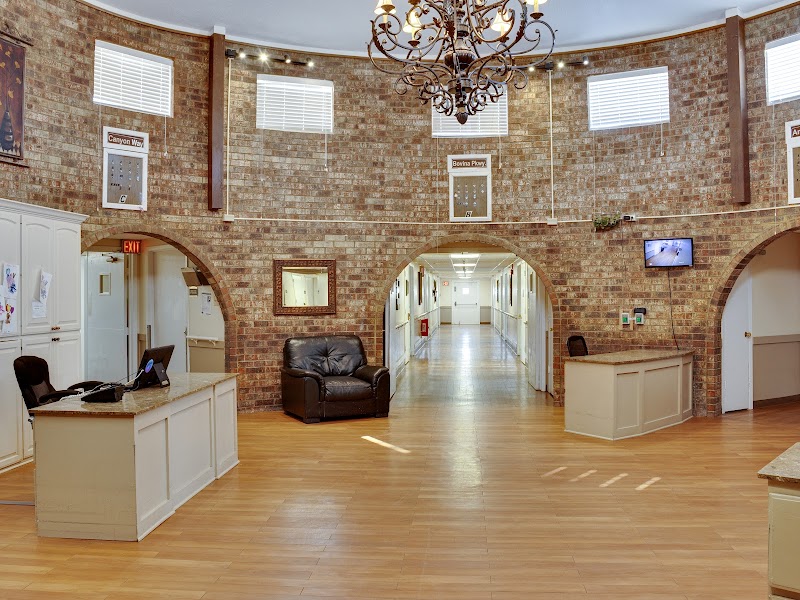
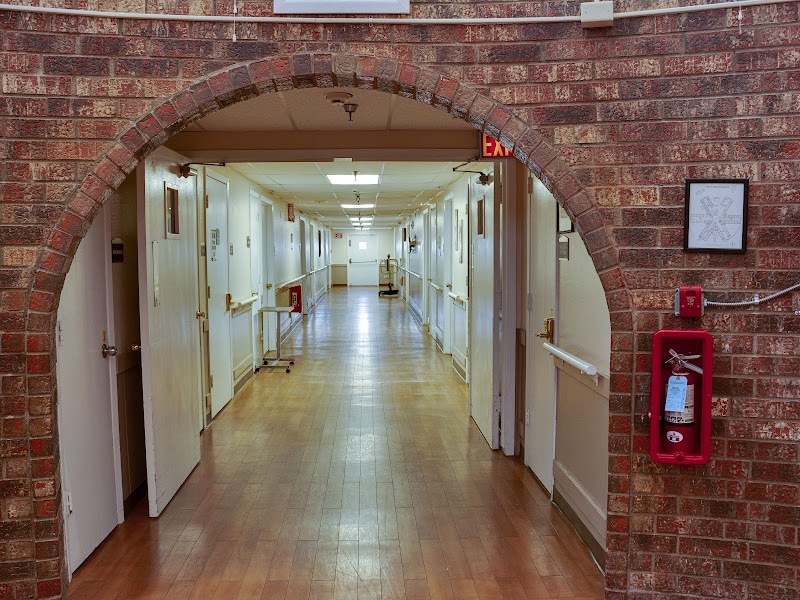
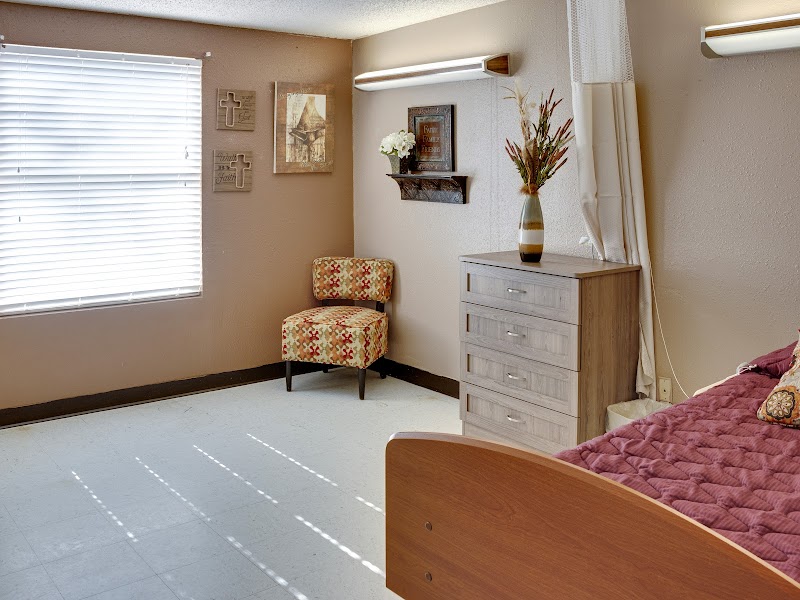
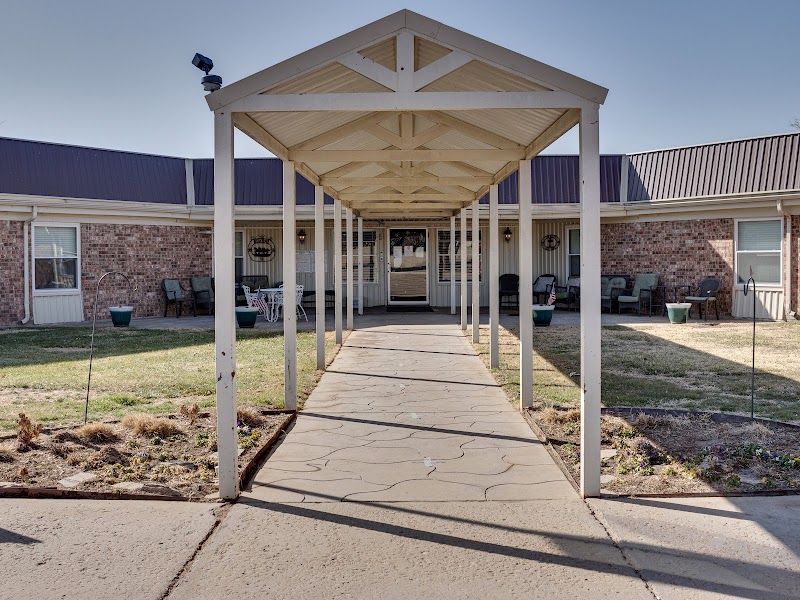
Castro County Nursing & Rehabilitation

1621 BUTLER, DIMMITT, TX 79027 (806) 647-3117
For profit - Limited Liability company 114 Beds GULF COAST LTC PARTNERS Data: November 2025 4 Immediate Jeopardy citations
Trust Grade
0/100
#687 of 1168 in TX
Last Inspection: May 2025

Inspected within the last 6 months. Data reflects current conditions.

Overview

Castro County Nursing & Rehabilitation has received a Trust Grade of F, indicating significant concerns and poor performance overall. It ranks #687 out of 1168 nursing homes in Texas, placing it in the bottom half of facilities, and #2 out of 2 in Castro County, suggesting limited local options for better care. The facility's situation is worsening, increasing from 18 issues in 2024 to 21 in 2025. Staffing is somewhat of a strength, with a turnover rate of 40%, which is better than the state average, but the overall staffing rating is still below average at 2 out of 5 stars. The facility has incurred $73,740 in fines, which is concerning and suggests repeated compliance issues, and while it has average RN coverage, there have been critical incidents such as failing to protect residents from physical abuse, including cases of assault between residents that resulted in serious injuries. Families should weigh these significant concerns against some positives like better-than-average staff retention when considering this facility.

Trust Score
F
0/100
In Texas
#687/1168
Bottom 42%
Safety Record
High Risk
Review needed
Inspections
Getting Worse
18 → 21 violations
Staff Stability
○ Average
40% turnover. Near Texas's 48% average. Typical for the industry.
Penalties
○ Average
$73,740 in fines. Higher than 75% of Texas facilities. Some compliance issues.
Skilled Nurses
⚠ Watch
Each resident gets only 16 minutes of Registered Nurse (RN) attention daily — below average for Texas. Fewer RN minutes means fewer trained eyes watching for problems.
Violations
⚠ Watch
51 deficiencies on record. Higher than average. Multiple issues found across inspections.
★★☆☆☆
2.0
Overall Rating
★★☆☆☆
2.0
Staff Levels
★★★★☆
4.0
Care Quality
★★☆☆☆
2.0
Inspection Score
Stable
2024: 18 issues
2025: 21 issues

The Good

  • 4-Star Quality Measures · Strong clinical quality outcomes
  • Full Sprinkler Coverage · Fire safety systems throughout facility
  • No fines on record
  • Staff turnover below average (40%)

    8 points below Texas average of 48%

Facility shows strength in quality measures, fire safety.

The Bad

2-Star Overall Rating

Below Texas average (2.8)

Below average - review inspection findings carefully

Staff Turnover: 40%

Near Texas avg (46%)

Typical for the industry

Federal Fines: $73,740

Well above median ($33,413)

Moderate penalties - review what triggered them

Chain: GULF COAST LTC PARTNERS

Part of a multi-facility chain

Ask about local staffing decisions and management

The Ugly 51 deficiencies on record

4 life-threatening
May 2025 16 deficiencies 4 IJ (2 facility-wide)
CRITICAL (K) 📢 Someone Reported This

A family member, employee, or ombudsman was alarmed enough to file a formal complaint

Immediate Jeopardy (IJ) - the most serious Medicare violation

Comprehensive Care Plan (Tag F0656)

Someone could have died · This affected multiple residents

**NOTE- TERMS IN BRACKETS HAVE BEEN EDITED TO PROTECT CONFIDENTIALITY** Based on interview and record review, the facility failed to develop and implement a comprehensive person-centered care plan for...

Read full inspector narrative →
**NOTE- TERMS IN BRACKETS HAVE BEEN EDITED TO PROTECT CONFIDENTIALITY** Based on interview and record review, the facility failed to develop and implement a comprehensive person-centered care plan for each resident that describes the services that are to be furnished to attain or maintain the resident's highest practicable physical, mental and psychosocial well-being for 11 (Resident #53, #56, #58, #47,#46, #4, #73, #32, #15, #72 and #70) of 14 residents reviewed for comprehensive care plans. - The facility failed to develop and implement Resident #53's care plans to reflect the resident's aggressive behaviors. - The facility failed to develop and implement Resident #56's care plans to reflect the resident's aggressive behaviors. - The facility failed to develop and implement Resident #58's care plans to reflect the resident's aggressive behaviors. - The facility failed to develop and implement Resident #47's care plans to reflect the resident's aggressive behaviors. - The facility failed to develop and implement Resident #46's care plans to reflect the resident's aggressive behaviors. - The facility failed to develop and implement Resident #4's care plans to reflect the resident's aggressive behaviors. - The facility failed to develop and implement Resident #73's care plans to reflect the resident's aggressive behaviors. - The facility failed to develop and implement Resident #32's care plans to reflect the resident's aggressive behaviors. - The facility failed to develop and implement Resident #15's care plans to reflect the resident's aggressive behaviors. - The facility failed to develop and implement Resident #72's care plans to reflect the resident's aggressive behaviors. - The facility failed to develop and implement Resident #70's care plans to reflect the resident's aggressive behaviors. An Immediate Jeopardy was identified on 5/9/25. The IJ template was provided to the facility on 5/9/25 at 1:05pm. While the IJ was removed on 5/9/25 at 3:00pm, the facility remained out of compliance at a level of actual harm that is not immediate jeopardy and a scope of pattern due to the facility's need to evaluate the effectiveness of their plan of correction to prevent further concerns. The failures could affect residents by placing them at risk of having care plans that are not updated/accurate to their current identified needs. Findings include: Resident #53 Record review of Resident #53's face sheet, dated 04/17/2025, revealed Resident #53 was a [AGE] year-old male resident who was admitted to the facility on [DATE] with the diagnoses of unspecified dementia (a decline in mental ability, specifically in memory, thinking, and reasoning, that significantly impacts daily life), severe, with other behavioral disturbance (a pattern of actions or reactions that deviates significantly from what is considered typical or appropriate behavior, often causing distress or difficulty for the individual or those around them), anxiety disorder (a mental health condition characterized by persistent and excessive worry, fear, and dread that significantly interfere with daily life), bipolar disorder, current episode mixed, severe with psychotic feature (occurs when someone with bipolar disorder experiences symptoms of psychosis, such as hallucinations or delusions, during a manic or depressive episode). Record review of Resident #53's MDS assessment, dated 01/21/2025, revealed that Resident #53 had a BIMS score of 06 which indicated that Resident #53 was severely cognitively impaired. Resident #53's required moderate assistance with bathing; all care areas are supervision or set-up assistance needed only. Section E-Behaviors of the MDS revealed that resident did have verbal behavioral symptoms towards others, coded as a 1, which indicated resident had exhibited these types of behaviors on an occurrence of 1 to 3 days. Record review of Resident #53's care plan, dated 12/31/2024 revealed the following: Focus o Behaviors: [Resident #53] has potential to demonstrate physical and verbal behaviors r/t Dementia. Has shown anger towards certain staff and will become hostile verbally and physically. Date Initiated: 12/31/2024 Revision on: 12/31/2024 Goal o The resident will not harm self or others through the review date Date Initiated: 12/31/2024 Revision on: 12/31/2024 Target Date: 01/06/2025 Interventions/Tasks o Analyze of key times, places, circumstances, triggers, and what de-escalates behavior and document. Date Initiated: 12/31/2024 o Assess and anticipate resident's needs: food, thirst. toileting needs, comfort level, body positioning, pain etc. Date Initiated: 12/31/2024 o Give the resident as many choices as possible about care and activities Date Initiated: 12/31/2024 Revision on: 12/31/2024 o When the resident becomes agitated: Intervene before agitation escalates; Guide away from source of distress; Engage calmly in conversation; If response is aggressive, staff to walk calmly away, and approach later. Record review of Resident #53's progress notes revealed Resident #53 had multiple incidents with other residents. The progress notes revealed the following: 01/23/2025 at 04:54am CNA called this nurse (DON) to the unit and Resident #53 smashed another resident's (Resident #71) finger with metal cup. Resident #53 stated, He was touching and trying to grab my cup. Removed resident from sight. PRN Vistaril given as ordered. Resident calm after and CNA able to Resident room. DON notified. 01/23/2025 at 1:37pm Resident #53 was still being combative with staff and 'was attempting' to hit of another resident. Phone call was placed to [Psychiatric MD], Pending call back. 01/30/2025 at 2:11pm Resident is readmit, returning from [psychiatric hospital] in [local city name]. 03/12/2025 at 7:30pm Resident got his shoe and slapped another resident when another resident was walking by and bumped into the bedside table that was next to Resident #53. Called on-call [Psychiatric services] and got an order to send resident to inpatient psychiatric hospital. Resident #56 Record review of Resident #56's face sheet, dated 04/17/2025, revealed an [AGE] year-old male resident who was admitted to the facility on [DATE] with the diagnoses of unspecified dementia(a decline in mental ability, specifically in memory, thinking, and reasoning, that significantly impacts daily life), unspecified severity, without behavioral disturbance, psychotic disturbance, mood disturbance, and anxiety (a mental health condition characterized by persistent and excessive worry, fear, and dread that significantly interfere with daily life), schizophrenia (a chronic mental illness characterized by disruptions in thinking, perception, emotional expression, and behavior), unspecified, major depressive disorder (a mood disorder characterized by persistent sadness, loss of interest in activities, and other symptoms that significantly affect daily functioning), single episode, unspecified. Record Review of Resident #56's MDS assessment, dated 02/06/2025, revealed that Resident #56 had a BIMS score of 09, which indicated that Resident #56 had moderately impaired cognition. Functionality for ADL's was not determined at time of this assessment. Section E-Behavior did not reveal Resident #56 having any behaviors of aggression. Record review of Resident #56's care plan, dated 02/10/2025, revealed the following: Focus o I have a mood problem Schizophrenia/Schizoaffective Medication: Risperidone Date Initiated: 01/22/2025 Revision on: 01/24/2025 Goal o I will have improved mood state such as: happier, calmer appearance, no s/sx of depression, anxiety or sadness through the review date. Date Initiated: 01/24/2025 Target Date: 02/12/2025 Interventions/Tasks o Administer medications as ordered. Monitor/document for side effects and effectiveness. Date Initiated: 01/22/2025 o Assist me with a program of activities that is meaningful and of interest. Encourage and provide opportunities for exercise and physical activity. Date Initiated: 01/22/2025 o Behavioral health consults as needed (psycho-geriatric team, psychiatrist etc.) Date Initiated: 01/22/2025 o Monitor/document/report PRN any risk for harm to self: suicidal plan, past attempt at suicide, risky actions (stockpiling pills, saying goodbye to family, giving away possessions or writing a note), intentionally harmed or tried to harm self, refusing to eat or drink, refusing med or therapies, sense of hopelessness or helplessness, impaired judgment or safety awareness. Date Initiated: 01/22/2025 o Monitor/record mood to determine if problems seem to be related to external causes, i.e. medications, treatments, concern over diagnosis. Date Initiated: 01/22/2025 o Monitor/record/report to MD prn acute episode feelings or sadness; loss of pleasure and interest in activities; feelings of worthlessness or guilt; change in appetite/ eating habits; change in sleep patterns; diminished ability to concentrate; change in psychomotor skills Date Initiated: 01/22/2025 o Monitor/record/report to MD prn mood patterns s/sx of depression, anxiety, sad mood as per facility behavior monitoring protocols Date Initiated: 01/22/2025 o Monitor/record/report to MD prn risk for harming others: increased anger, labile mood or agitation, feels threatened by others or thoughts of harming someone, possession of weapons or objects that could be used as weapons Date Initiated: 01/22/2025 o Observe for signs and symptoms of mania or hypomania racing thoughts or euphoria; increased irritability; frequent mood changes; pressured speech; flight of ideas; marked change in need for sleep; agitation or hyperactivity Date Initiated: 01/22/2025 Record review of Resident #56's progress notes revealed the following: 02/26/2025 at 6:51pm resident in the unit got in a verbal altercation with another resident and hit another resident, the other resident reacted and hit him back, he has an open area to the left eyebrow. Notified [psychiatric NP], new order sent to [psychiatric hospital #1 and #2]. Resident #58 Record review of Resident #58's face sheet, dated 04/16/2025, revealed that Resident #58 was a [AGE] year-old male resident admitted to the facility on [DATE] with the diagnoses of other psychoactive substance abuse (a disease that affects a person's brain and behavior and leads to an inability to control the use of a legal or illegal drug or medicine), uncomplicated, depression (a subtype of major depressive disorder (MDD) characterized by a milder form of the illness, typically lacking severe symptoms and functional impairment), anxiety disorder(a mental health condition characterized by persistent and excessive worry, fear, and dread that significantly interfere with daily life), unspecified, epilepsy(a diagnosis where a person is known to have epilepsy but the specific type (focal, generalized, etc.) is not known or can't be determined), unspecified, not intractable without status epilepticus(describes a type of epilepsy that is not considered difficult to control (intractable) and does not involve a continuous seizure (status epilepticus)), chronic diastolic (congestive) heart failure (occurs when the heart muscle becomes stiff, hindering its ability to relax and fill with blood during diastole). Record Review of Resident #58's MDS assessment, dated 04/07/2025, revealed that Resident #58 had a BIMS score of 00, which indicated that Resident #58 had severely impaired cognition and was functionally independent. Section E-Behaviors revealed that Resident #58 did have physical behavioral symptoms towards others on an occurrence of 1 to 3 days. Record review of Resident #58's care plan, with no completion date, revealed no mention of inappropriate/aggressive behaviors towards other residents. Record review of Resident #58's progress notes revealed the following: 03/27/2025 at 9:30am this writer (LVN AA) was walking down F hall, this writer (LVN AA) noted Resident #58 leaving wheelchair to stand up and walk; he went walking halfway down the hall and noted there was a female resident (Resident #41) there; he stood up against the side rail and was groping the female resident (Resident #41), he (Resident #58) was touching her (Resident #41) breast and her buttocks, squeezing them; this writer (LVN AA)could not get to female resident (Resident #41) fast enough to prevent this from happening; by the time this writer (LVN AA) reached resident (Resident #58)to sit him in his wheelchair and redirect him , he (Resident #58) had already touched her (Resident #41) multiple times; this writer (LVN AA) informed the nurse in the hallway and notified DON; resident (Resident #58) was assisted back to the memory care unit. 03/29/2025 at 4:53pm [LVN A] Notified by CNA staff that resident was caught in another residents (UR) room. Resident was slapping the other resident (UR) back and forth with both hands. CNA staff assisted the resident out of the residents (UR) room. The resident (Resident #58) glared very manic at staff. Resident caught holding a gait belt. Staff was able to retrieve gait belt from resident. Notified [DON name] DON and [FNP name] FNP. Obtained orders to start resident on risperidone 0.5 MG BID. Resident #47 Record review of Resident #47's face sheet, dated 04/17/2025, revealed that Resident #47 was a [AGE] year-old male resident who was admitted to the facility on [DATE] with the diagnoses of unspecified dementia (a decline in mental ability, specifically in memory, thinking, and reasoning, that significantly impacts daily life), unspecified severity, without behavioral disturbance, psychotic disturbance mood disturbance, anxiety(a mental health condition characterized by persistent and excessive worry, fear, and dread that significantly interfere with daily life), bipolar disorder (a prolonged period of abnormally elevated, expansive, or irritable mood accompanied by increased activity or energy), current episode manic without psychotic features, moderate, mild cognitive impairment of uncertain or unknown etiology (a condition where individuals experience greater memory or thinking problems than expected for their age, but these issues are not severe enough to interfere with daily activities), restlessness and agitation, cognitive communication deficit (occurs when communication problems are caused by difficulties with cognitive processes like attention, memory, or executive function, rather than with language or speech production). Record Review of Resident #47's MDS assessment, dated 03/12/2025, revealed Resident #47 had a BIMS score of 09, which indicated Resident #47 had moderately impaired cognition and a functionality of total dependency and maximal assistance was needed for most care areas with exception to partial assistance to oral hygiene and set-up assistance to eat. Section E-Behaviors did not reveal any behaviors. Record review of Resident #47's care plan, dated 02/10/2025, revealed no mention of inappropriate/aggressive behaviors towards other residents. Record review of Resident #47's progress notes revealed the following: 12/16/2024 at 10:49am (LVN A) Notified by staff (CNA M) that resident (Resident #47) went up to another resident (Resident #32) and punched him on the left side of face on cheek. Resident (Resident #47) stated he punched him because the other resident (Resident #32) told him to move. When told to move, [Resident #47] stated to the other resident (Resident #32) that he was watching tv and went up aggressively to him (Resident #32) and punched him (Resident #32) in the face. Resident was separated by two CNAs [CNA M] and [CNA I]. When trying to separate the residents, [Resident #47] scratched one of the CNAs on her right arm. Began one on one with [Resident #47] until further instruction. Notified [psychiatric MD] of residents behaviors. Obtained orders to send resident to [psychiatric hospital #2]. Notified by [psych hospital #2] that they do have beds available. Notified [DON name] DON and [previous ADM name] administrator. Notified guardian [guardian name]. 12/16/2024 at 3:41pm Notified by [staff] from [psych hospital #2] that resident is not accepted into [psych hospital #2] until EDO received from judge from [county name] county. Resident is not allowed to sign form himself due to have legal guardian. [Psych hospital #2] stated that we must go through [local hospital name] and then through the judge. [Local hospital] doctor [MD name] stated that the resident did not qualify to got to [psych hospital #2] and the judge was not going to sign due to going based of [MD name] decision. Notified [DON name] DON and [psych MD]. Obtained orders to try [psych hospital #1] in [local city name]. Notified that resident does not qualify due to the fact they don't accept Medicaid and he does not have Medicare yet. Obtained orders from [psych MD] to increased Depakote to 5 tabs of 125mg and obtain CBC and VA level in one week from today! 12/29/2024 at 10:22pm (LVN II) writer was called into locked unity by CNA. CNA reported that Resident (Resident #47) had struck male peer (Resident #32) in the face because peer had entered his room. 12/29/2024 at 10:49 pm (LVN GG) Writer talked to [staff] with [psych MD]'s office and received order to put resident on 1-on-1 monitoring until Resident is able to be sent out to behavioral hosp for eval. 02/12/2025 at 3:25pm (LVN GG) CNA (CNA K) reported that resident hit residents (UR) with his elbow three times to patient. CNA K broke it up. Then patient went after another patient [Resident name] (Resident #1) with a knife and CNA C intercepted. Patient did not attack no further and has been monitored wctm. 02/12/2025 at 4:08pm patient went and attack CNA and noted. Patient s attacking patients. Police was called and investigated the situation. Doctor ordered to send to [psych hospital #2] psychiatric facility. Patient guardian was notified, and management was notified a well as doctor wctm. Resident #46 Record review of Resident #46's face sheet, dated, 04/17/2025 revealed a [AGE] year-old male resident who was admitted to the facility on [DATE] with the diagnoses of major depressive disorder (a mood disorder characterized by persistent sadness, loss of interest in activities, and other symptoms that significantly affect daily functioning), recurrent severe without psychotic feature, generalized anxiety disorder (a mental health condition characterized by persistent and excessive worry, fear, and dread that significantly interfere with daily life), disorganized schizophrenia (a subtype of schizophrenia characterized by disorganized speech, behavior, and flat or inappropriate affect), cognitive communication deficit (occurs when communication problems are caused by difficulties with cognitive processes like attention, memory, or executive function, rather than with language or speech production). Record review of Resident #46's MDS assessment, dated 04/07/2025 , revealed Resident #46 had a BIMS score of 10, which indicated that the Resident #46 was moderately impaired cognition, and required touch assistance in all care areas. Section E-Behaviors revealed no behaviors. Record review of Resident #46's care plan, dated 02/10/2025, revealed the following: Focus o The resident has potential to Demonstrate physical behaviors mental Illness (schizophrenia) Date Initiated: 09/01/2024 Revision on: 10/08/2024 Goal o The resident will not harm self or Others through the review date Date Initiated: 09/01/2024 Revision on: 10/08/2024 Target Date: 02/09/2025 Interventions/Tasks o Analyze of key times, places, circumstances, triggers, and what de-escalates Behavior and document Date Initiated: 09/01/2024 o Give the resident as many choices as possible about care activities Date Initiated: 09/01/2024 Revision on: 10/08/2024 o Modify environment: (Adjust room temperature to comfortable level, reduce noise, Dim lights, place familiar objects in room, keep door closed etc.) Date Initiated: 09/01/2024 Revision on: 10/08/2024 o When the resident becomes agitated: Intervene before agitation escalates; Guide away from source of distress' engage calmly in conversation; if response is aggressive, staff to walk calmly away, and approach later Date Initiated: 09/01/2024 Revision on: 10/08/2024 Record review of Resident #46's progress notes revealed the following: 10/27/2024 at 10:26pm This nurse (LVN EE) witnessed resident (Resident #46) to resident (Resident #44) push and this resident going into residents' room and other resident said, Get out of my room and pushed resident (Resident #44) down to the floor. Resident (Resident #46) stated, He doesn't belong in my room and that's why I pushed him out. Resident (Resident #46) sat back down on the bed and no other aggression noted. DON, MD, and [family member] notified. Resident #4 Record review of Resident #4's face sheet dated 04/17/2025 revealed that Resident #4 was a [AGE] year-old female resident who was admitted to the facility on [DATE] with the diagnoses of diffuse traumatic brain injury with loss of consciousness of unspecified duration (a traumatic brain injury where the damage is widespread and the person does not lose consciousness), sequela (a condition which is the consequence of a previous disease or injury), other symptoms of signs involving cognitive functions and awareness, major depressive disorder, recurrent severe without psychotic features (a serious condition where a person experiences both major depressive symptoms and psychotic symptoms like delusions or hallucinations, often related to themes of guilt or worthlessness), schizoaffective disorder (a mental illness characterized by a combination of psychotic symptoms, like hallucinations and delusions, and mood disorder symptoms, such as depression or mania), bipolar type (a mental health condition characterized by significant mood swings, fluctuating between periods of intense happiness and high energy (mania or hypomania) and periods of deep sadness and depression). Record Review of Resident #4's MDS assessment, dated 03/18/2025 , revealed that Resident #4 had a BIMS score of 13 which indicated that Resident #4 did not have any cognitive impairment and required set-up assistance in most care areas with a moderate assist with oral hygiene. Section E-Behaviors of the MDS reveal no behaviors exhibited by Resident #4. Record review of Resident #4's care plan, dated 04/03/2025, revealed the following: Focus o Behaviors: Aggression: [Resident #4 Name] has potential to demonstrate physical and verbal behaviors r/t schizoaffective disorder Calling staff names and yelling Date Initiated: 11/20/2020 Revision on: 10/31/2023 Goal o The resident will not harm self or others through the review date Date Initiated: 11/20/2020 Revision on: 12/05/2024 Target Date: 04/24/2025 o The resident will verbalize understanding of need to control physically aggressive behavior through the review date Date Initiated: 11/20/2020 Revision on: 12/05/2024 Target Date: 04/24/2025 Interventions/Tasks o Analyze of key times, places, circumstances, triggers, and what de-escalates behavior and document. Date Initiated: 11/20/2020 o Give the resident as many choices as possible about care and activities Date Initiated: 11/20/2020 Revision on: 11/20/2020 o When the resident becomes agitated: Intervene before agitation escalates; Guide away from source of distress; Engage calmly in conversation; If response is aggressive, staff to walk calmly away, and approach later Date Initiated: 11/20/2020 Revision on: 11/20/2020 Record review of Resident #4's progress notes revealed the following: 02/20/2025 at 5:14pm Staff reported that resident [Resident #4's name] and her roommate (Resident #49) were arguing loudly, when staff arrived at the room [Resident #4] had pushed her (Resident #49) to the floor, [Resident #4] stated that her roommate (Resident #49) was yelling at her and she did not touch her roommate. Assessment completed Risk assessment, nursing notes and behavior note completed, FNP, DON, and family called moved to another room. Resident #73 Record review of Resident #73's face sheet, dated 04/17/2025, revealed that Resident #73 was an [AGE] year-old male resident who was admitted to the facility on [DATE] with the diagnoses of Alzheimer's disease with late onset (a progressive neurodegenerative disorder that primarily affects the brain, causing a gradual decline in cognitive function, including memory and thinking skills), dementia in other diseases classified elsewhere (a general term for a decline in mental ability that significantly impacts daily life, encompassing various conditions like Alzheimer's disease and vascular dementia), severe, with other behavioral disturbance, schizoaffective disorder (a mental illness characterized by a combination of psychotic symptoms, like hallucinations and delusions, and mood disorder symptoms, such as depression or mania), depressive type. Record review of Resident #73's MDS, dated [DATE], revealed that Resident #73 had a BIMS score of 01, which indicates that Resident #73 had severe cognitive impairment. Resident #73 had a functionality of moderate assistance needed with exception to shower/bathing, which was total assist, and eating required set-up assist only. Section E-Behaviors revealed no noted behaviors for Resident #73. Record review of Resident #73's care plan, dated 02/16/2025, revealed the following: Focus o Behavior: Wandering/Elopement risk: [Resident #73] is an elopement risk/wanderer AEB Impaired safety awareness and Dementia Date Initiated: 01/09/2025 Revision on: 01/09/2025 Goal o The resident's safety will be maintained through the review date Date Initiated: 01/09/2025 Revision on: 01/09/2025 Target Date: 04/01/2025 Interventions/Tasks o Assess for fall risk. Date Initiated: 01/09/2025 o Identify pattern of wandering: Is wandering purposeful, aimless, or escapist? Is resident looking for something? Does it indicate the need for more exercise? Intervene as appropriate. Date Initiated: 01/09/2025 o Monitor for fatigue and weight loss. Date Initiated: 01/09/2025 Focus o Resident has delirium or an acute confusional episode r/t Change in condition, Change in environment Date Initiated: 01/09/2025 Goal o The resident, will be free of s/sx of delirium (changes in behavior, mood, cognitive function, communication, level of consciousness, restlessness) through the review date. Date Initiated: 01/09/2025 Target Date: 04/01/2025 Interventions/Tasks o Monitor for/address environmental factors recent change in environment, environmental noise and commotion. Date Initiated: 01/09/2025 o Monitor/record/report to MD new onset s/sx of delirium: changes in behavior, altered mental status, wide variation in cognitive function through the day, communication decline, disorientation, lethargy, restlessness and agitation. Altered sleep cycle, dehydration, infection, delusions, hallucinations. Date Initiated: 01/09/2025 Record review of Resident #73's progress notes revealed the following: 01/04/2025 at 12:26am [CNA name] was in secured wing in room [room number] at 11:30pm doing patient care when resident [Resident #73's name] pushed her out of his way into a dresser drawer inflicting pain in her lower back. Staff reported this to nurse [LVN Name], LVN. 01/10/2025 at 8:21pm Resident was being combative and aggressive towards staff and other residents. Resident threw a cup of water at this CN and chased CN and CNA down the hallway in the unit. Resident banging on door to unit in attempts of elopement. ADON notified as well as NP. N/O to increase Seroquel to 50mg po @ bedtime and Hydroxyzine 50mg po Q6 PRN 02/24/2025 at 5:16pm Resident [family member] to visit facility. Resident became agitated after [family member] left. When speaking to [family member] she stated he showered and then given a snack. Resident attempted to hit x2 staff members and residents that were in his path. Redirected to outside to secured area to calm down and decrease stimulation. Walked with resident and spoke with him for 20mins. At first resident tried to punch writer x2 with a closed fist. Writer moved out of the way and continues to walk with resident and let him walk alone in secured area. Resident then sat next to writer and said he was ready to go in. x1 assist. At this time sitting in main lobby speaking with fellow residents. Notified [family member] [family member] name] and don [DON name] of situation. [Psych MD] to be in facility today will notify of behaviors and redirection 03/04/2025 at 2:17pm around 1:30pm resident was banging his elbow on the door that leads outside the unit and yelling. When CNA tried to calm him down he tried to hit her. He was banging so hard that the pain chips from the wall came down. ADON and LVN AA were called to help. Writer witnessed resident hitting, punching and kicking both nurses. At one point resident had grabbed a hold of LVN AA's shirt and would not let go, leaving an abrasion on her mid right below neck area. ADON with a small cut to her right hand. Both nurses with several kicks and punches to their arms, mid-section, and legs. Writer called [Psych MD] with orders to send to out for inpatient therapy. Writer had to call 911 due to resident too strong for 4 nurses. Resident kept saying we had his money and he wants to get in his care to leave. We continuously tried to calm him down and let him know we do not have his money. Writher called [family member] put her on speaker he listened for 10 seconds to her and then quickly grabbed my phone, I yanked my hand back and jumped back quickly while he swung at me. I let his [family member] know what had just happened and she said it'll take her an hour to arrive, but she is going to try to send her on up here to calm him down. Resident was like this for over an hour 911 arrived and has since been speaking to resident. We had to get all other residents in their rooms and clear out the day area of any chairs and tables due to he was trying to hit other residents. Resident #32 Record review of Resident #32's face sheet dated 005/04/2025 revealed that Resident #32 was a [AGE] year-old male resident who was admitted to the facility on [DATE] with the diagnoses of unspecified dementia, with severe agitation (a severe form of dementia where the specific cause is not identified, and the individual experiences significant agitation), psychotic disorder with delusions due to known physiological condition (a mental illness where the person experiences delusions (false, fixed beliefs) and other psychotic symptoms (like hallucinations, disorganized thinking, and speech) as a direct result of a physical illness or medical condition affecting the brain), major depressive disorder (a mental disorder characterized by persistent sadness, loss of interest in activities, and other symptoms that significantly affect daily functioning), recurrent severe without psychotic features (persistently low mood, loss of interest in activities, changes in appetite or weight, sleep disturbances, fatigue, feelings of worthlessness, difficulty concentrating, and recurrent thoughts of death or suicide), psychotic disorder with hallucinations due to known physiological condition (a mental health condition where hallucinations and/or delusions are direc[TRUNCATED]
CRITICAL (K) 📢 Someone Reported This

A family member, employee, or ombudsman was alarmed enough to file a formal complaint

Immediate Jeopardy (IJ) - the most serious Medicare violation

Accident Prevention (Tag F0689)

Someone could have died · This affected multiple residents

**NOTE- TERMS IN BRACKETS HAVE BEEN EDITED TO PROTECT CONFIDENTIALITY** Based on observation, interview, and record review the facility failed to ensure the resident environment remained as free of ac...

Read full inspector narrative →
**NOTE- TERMS IN BRACKETS HAVE BEEN EDITED TO PROTECT CONFIDENTIALITY** Based on observation, interview, and record review the facility failed to ensure the resident environment remained as free of accident hazards as possible and failed to ensure each resident received adequate supervision and assistance devices to prevent accidents for 4 of 9 residents (Resident #7, #10, #15 and #41) reviewed for accidents and hazards. The facility staff failed to store hand sanitizer properly on 04/20/25 at 7:00 AM resulting in Resident #7 observing Resident #10 drinking an unknown amount of hand sanitizer which ended in him going to the hospital. The facility failed to provide adequate supervision for Resident #10 on an unknown date (after 4/20/25) in the dining room where he was able to drink the saliva of another resident (Resident #15) out of her (Resident #15) spit cup. The facility failed to provide adequate supervision for Resident #41 on 05/10/25 in the dining room where she was able to drink saliva of another resident (Resident #15) out of her (Resident #15) spit cup. An IJ was identified on 5/14/25 at 3:50 PM. The IJ template was provided to the facility on 5/14/25 at 4:10 PM. While the IJ was removed on 5/14/25 at 2:48 PM, the facility remained out of compliance at a severity of no actual harm and a scope of pattern because all staff had not been trained on 5/14/25. This failure could place residents at risk of injury/death due to unnecessary access to potentially harmful substances/chemicals. Findings included: Record review of Resident #7's face sheet, dated 5/14/25, revealed a [AGE] year-old-male was admitted to the facility on [DATE] with a diagnosis of schizoaffective disorder (mental health disorder). Record review of Resident #7's Comprehensive Minimum Data Set, dated [DATE], revealed: Section C Brief Interview for Mental Status score revealed a score of 15, which indicated the resident's cognition was intact. Record review of Resident #7's progress notes, dated 3/13/25-5/14/25, did not reveal any notes regarding him witnessing Resident #10 ingest hand sanitizer on 4/20/25. During an interview on 05/12/25 at 2:12 PM, Resident #7 stated that he observed Resident #10 drinking hand sanitizer on an unknown date in the dining room. He stated he was unsure of the date and time, but other residents were in the dining room, but he does not remember if staff were present. He stated he observed the resident pick up the bottle of hand sanitizer screw and screw the top off. He stated he observed the resident put the pump straw in his (Resident #10) mouth. He stated he immediately rolled out of the dining room to find help. He stated that he yelled down the hall and saw a nurse. He stated he did not remember her name but could identify her face. He stated the nurse was not in the facility at the time of the interview. He stated that the nurse came immediately and went to the dining room. He stated he did not see anything after that. He stated that he had never observed Resident #10 drink hand sanitizer before but had observed him drink the saliva of another resident (Resident #15) out of her (Resident #15) spit cup about 3 months before the interview. He stated when Resident #10 drank Resident 15's saliva, he told staff but did not remember the staff's name. Record review of Resident #10's face sheet, dated 5/12/25, revealed an [AGE] year-old-male was admitted to the facility on [DATE] with a diagnosis of diabetes (elevated blood glucose/sugar), dementia (memory loss), psychiatric disorder with delusions(a false belief for judgment about external reality), intermittent explosive disorder(a behavioral disorder characterized by explosive outburst of anger and/or violence, often to the point of rage that are disproportionate to the situation at hand),, other amnesia (a partial or total loss of memory). Record review of Resident #10's Comprehensive Minimum Data Set, dated [DATE], revealed: Section C Brief Interview for Mental Status score revealed a score of 2, which indicated the resident's cognition was severely impaired. Section E Behavior revealed Resident #10 had the presence of wandering that occurred 1 to 3 days. Record review of Resident #10's care plan, dated 5/12/25, revealed: Focus: Behavior: eating/Drinking inedible items: Resident #10 had a behavior problem r/t eating/drinking inedible items r/t cognitive impairments due to dementia. 4/20/25 Resident #10 drank hand sanitizer and was sent to ER for evaluation. (Date Initiated 4/20/25) Goal: Resident #10 safety will be maintained through the review date. (Date initiated 4/20/25) Interventions/Tasks: Anticipate and meet the resident's needs including hunger and thirst too help ensure he does not consume inedible items. Minimize potential for resident's behavior (eating inedible items) by increasing monitoring especially in the dining room. Monitor behavior episodes and attempt to determine underlying cause. Consider location, time of day, persons involved, and situations. Document behavior and potential causes. (Date initiated 4/20/25) Record review of Resident #10's progress notes, dated 2/11/25-5/12/25, revealed: The DON documented on 04/07/25 at 12:54 PM: Resident #7 wanders, but his wandering was not goal directed, and did not affect the privacy of others. LVN AA documented on 04/20/25 at 7:07 AM: LVN AA was alerted by another resident (resident was not identified in the progress note) that Resident #10 was drinking hand sanitizer in the dining room, LVN AA ran to the dining room and observed Resident #10 with a small jug of hand sanitizer. Resident #10 had taken the hand pump off and she (LVN AA) observed Resident #10 with the jug tilted towards his mouth and was taking big gulps. LVN AA took the jug away from Resident #10 and immediately called 911 for ER transport. ER transport arrived in 4 minutes. LVN AA attempted to take Resident #10's vitals but he (Resident #10) was combative hindering her (LVN AA) from being able to take Resident #10's vitals. LVN AA notified the DON. LVN AA documented on 04/20/25 at 7:19 AM: Resident #10 was sent to the ER. LVN AA documented on 04/20/25 at 11:26 AM: Resident #10 returned to the facility. LVN AA reviewed hospital paperwork which revealed Resident #10's ethanol level was less than 5% mg. LVN AA documented that ER staff the alcohol consumption level was small, and the hospital staff monitored Resident #10 for the allotted time that poison control suggested (The allotted time not documented in the progress note). LVN AA documented that the ER doctor stated Resident #10 was fine. LVN AA documented on 04/20/25 at 11:33 AM: LVN AA notified the DON of Resident #10's return. Provider X documented on 04/22/25 at 12:00 AM: Provider X conducted a follow up visit after Resident #10 returned from the hospital after drinking hand sanitizer. Provider X documented staff created a care plan and are monitoring Resident #10 closely. Provider X documented that staff determined Resident #10 confused the hand sanitizer with a beverage. Provider X recommended that Resident #10 continue medication regimen and to monitor Resident #10's behavior. Provider X documented that Resident #10 was sleeping during this visit. Provider X documented on 05/06/25 at 9:23 PM: Provider X documented that they discussed with Resident #10 to refrain from drinking hand sanitizer or alcoholic beverages while taking prescribed medications. Provider X documented that Resident #10 verbalized understanding. Record review of the incident accident report, dated from 2/12/25-5/12/25, revealed Resident #10 had a self-inflicted injury/incident on 4/20/25 at 7:07 AM. Record review of Resident #10's hospital record dated 4/20/25 revealed that Resident #10 was seen on 4/20/25 for ingesting a substance, accidental poisoning and unintentional ingestion. The result details revealed ethanol level was less than 5 mg. The result details noted that results ranging from 0-10 mg would be interpreted as negative. During an interview on 05/12/25 at 12:29 PM, Resident #10 initially stated that he did drink hand sanitizer and that he liked the way it tasted. However, he did not remember the day he drank the hand sanitizer or where he got the bottle from. Resident #10 later confirmed that he did not know what hand sanitizer was. Record review of Resident #15's face sheet, dated 05/12/25, revealed a [AGE] year-old-female was admitted to the facility on [DATE] with a diagnosis of end stage renal disease (kidney disease), metabolic encephalopathy(a chemical imbalance in the blood that causes problems in the brain), major depressive disorder (a mental health disorder characterized by persistently depressed mood or loss of interest in activities, causing significant impairment in daily life), and sequel of other cerebrovascular disease (conditions that arise after the acute phase of a cerebrovascular event that include various neurological deficits, cognitive impairments, and other complications). Record review of Resident #15's Comprehensive Minimum Data Set, dated [DATE], revealed: Section C Brief Interview for Mental Status score revealed a score of 15, which indicated the resident's cognition was intact. Section E revealed Resident #15 did not have any other behaviors outside of verbal symptoms. Record review of Resident #15's care plan, dated 04/28/25, revealed: Focus: Behavior: Verbal & Physical Aggression: Resident #15 had potential to demonstrate verbal and physical abusive behavior r/t mental/emotional illness, poor impulse control. Resident will apologize after incidents when acting with aggression. Resident #15 yells, hits, grabs and pushes others. Resident recently fired psychiatric doctor. 1/15/25 Resident #15 grabbed a hoodie of another resident (resident unidentified) and yelled at him. Residents were separated. 4/27/25 Resident #15 pushed another resident causing fracture after a verbal altercation. 15-minute check and referrals will be sent to other facilities for alternative placement. (Initiated 4/28/25) Goal: Resident #15 will demonstrate effective coping skills. (Date initiated 04/28/25) Interventions/Tasks: Analyze key times, places, circumstances, triggers and what deescalates behaviors and document. Give Resident #15 as many choices as possible about care and activities. Check Resident #15 every 15 minutes for behavior and safety. When Resident #15 becomes agitated intervene before agitation escalates. Guide Resident #15 away from the source of distress. Engage Resident #15 calmly in conversation. If Resident #15 responds aggressively then the staff should walk away and approach later. (Date initiated 4/28/25). Record review of Resident #15's progress notes, dated 2/11/25-5/12/25, revealed: LVN Y documented on 04/26/25 at 9:39 PM: Resident #15 displayed aggression toward another resident (resident not identified in the progress note). Resident #15 and the other resident (unidentified) were verbally yelling at each other. The other resident (unidentified) stood up from wheelchair arguing with Resident #15 and the other resident (unidentified) was pushed down to the floor by Resident #15. Resident #15 was separated from the resident (unidentified) and escorted by staff to her (Resident #15) room. Record review of the incident accident report, dated from 2/12/25-5/12/25, revealed Resident #15 was involved in a physical aggression-initiated incident on 4/26/25 at 8:00 PM. During an interview on 05/13/25 at 11:25 AM, Resident #15 stated she spits in cups but disposes of them. She said she had never observed any residents drink her saliva. Record review of Resident #41's face sheet, dated 5/12/24, revealed a [AGE] year-old-female was admitted to the facility on [DATE] with a diagnosis of cerebral palsy (congenital disorder of movement, muscle tone, or posture), intermittent explosive disorder (a behavioral disorder characterized by explosive outburst of anger and/or violence, often to the point of rage that are disproportionate to the situation at hand), non-suicidal self-harm, major depressive disorder (a mental health disorder characterized by persistently depressed mood or loss of interest in activities, causing significant impairment in daily life), and cognitive communication disorder (difficulty with thinking and how someone uses language). Record review of Resident #41's Comprehensive Minimum Data Set, dated [DATE], revealed: Section C Brief Interview for Mental Status score revealed a score of 00, which indicated the resident's cognition was unable to complete the interview. Section E revealed no documented behaviors. Record review of Resident #41's care plan, dated 5/02/25, revealed: Focus: Behaviors: Physical and Verbal Aggression: Resident #41 had potential to demonstrate physical and verbal behaviors r/t yelling out and attempting to kick, scratch and strike others especially during care. If Resident #41 sees someone with drinks (sodas) or snacks Resident #41 will follow them and take the items and becomes aggressive with the other person. Resident #41 will also rip off her (Resident #41's) clothing. 4/19/25 Resident #41 pinched another resident. 4/29/25 Resident #41 squeezed another resident's arm. 15-minute checks to check for behaviors and safety. (initiated on 1/24/25 and revised on 5/2/25) Goal: Resident #41 will not harm self or others. (Initiated 1/26/25 and revised 03/27/25) Interventions/Tasks: Analyze of key times, places, circumstances, triggers, and what deescalates Resident #41's behavior. (Initiated 1/26/24) Assess and address for contributing sensory deficits. (Initiated 1/26/24) Assess and anticipate Resident #41's needs: food, thirst, toilet needs comfort level, body positioning and pain. (Initiated 4/29/25) Give Resident #41 as many choices as possible about care and activities. (Initiated 1/26/24 and revised 1/26/24) Increase staff monitoring for aggressive behavior. (no initiation or revision date) Start 15-minute checks for behavior and safety. (Initiated 4/19/25 and revised 5/02/25) Monitor/document and report danger to self and others to the doctor. (Initiated 1/26/24) Consult psychiatric /psychogeriatric as indicated. (Initiated 4/29/25) When Resident #41 becomes agitated intervene before agitation escalates, guide away from source of distress, engage calmly in conversation. If resident #41 response is aggressive, staff were to walk away calmly and try to approach her again later. (Initiated 1/26/24 and revised 1/26/24) Record review of Resident #41's progress notes, dated 2/11/25-5/12/25, did not reveal any documentation of Resident #41 drinking Resident #15's saliva. Record review of the facility's incident accident report, dated 2/12/25-5/12/25 did not reveal that Resident #41 had an incident of drinking another resident's saliva on 05/10/25. Record review of Resident #41's facility documentation titled 15-minute checks, dated 4/19/25-5/2/25, revealed staff conducted 15-minute checks due to aggressive behaviors. During an interview on 05/12/25 at 2:05 PM, Resident #41 was not cognitively able to engage in an interview regarding the incident between her and Resident #22 on 4/19/25. When asked any questions, she would stare and point out the window that was located in her (Resident #41's) room. During an interview on 5/12/25 at 10:48 AM CNA H stated she had not been trained on what to do if resident consumed inedible items or ingested harmful items. She stated she was an agency staff and only had worked at the facility a few times. She stated she had worked with Resident #10 but did not have any information regarding him drinking hand sanitizer on 04/20/25. During an interview on 5/12/25 at 11:00 AM LVN BB stated she does not remember if she had been trained at the facility regarding what to do if resident consumed inedible items or ingested harmful items. She stated because of her nursing experience she would call 911. She stated hand sanitizer should be in the dispenser or locked in the supply closet. She stated she did not have any additional information regarding Resident #10 drinking hand sanitizer on 04/20/25. During an interview on 5/12/25 at 11:23 AM LVN Z stated she had not been trained regarding what she should do if a resident consumes a harmful substance or ingest chemicals, but she would guess with her nursing experience she would call 911 and she believed there was a book that had a list of all the chemicals that were in the facility. She stated she worked the morning that Resident #10 consumed the hand sanitizer, but she was not in the dining room. She stated LVN AA was the other nurse, but she could not remember which aides were there. She stated Resident #10 was sent out to the ER. She stated she did not know how much he drank. She stated he had never drunk harmful substances before but that when he does drink, he drinks a whole lot. She stated she was unsure where hand sanitizer was kept but was sure that it was kept locked up by housekeeping. During an interview on 5/12/25 at 11:47 AM CNA C stated hand sanitizer should be kept locked up or they keep it in the shower rooms sometimes. She stated she worked the morning (4/20/25) that Resident #10 drank the hand sanitizer. She stated she was rounding and checking on other residents. She stated Resident #7 told the nurse (unidentified) about Resident #10 drinking hand sanitizer. She stated she was not responsible for Resident #10 that day. She stated she could not remember the other staff. She stated Resident #10 was sent out to the hospital. She stated she was not interviewed, nor did she receive additional training about Resident #10 drinking harmful substances. She stated she had been trained in the past on what to do if a resident drinks a harmful substance. She stated she had been trained to take the substance away and report it to the charge nurse. During an interview on 5/12/25 at 12:03 PM CNA CC stated she had not been trained regarding what to do if a resident ingests or consumed a harmful substance or chemicals. She stated she would go to the nurse, and she would know what to do. She stated she did not know where chemicals such as hand sanitizer were stored officially but believed it was stored in the supply rooms. She stated she had observed hand sanitizer in the dispensers on the walls. She stated she did not have any information regarding Resident #10 drinking hand sanitizer, but he had never done anything like that before. An observation was made on 05/12/25 at 12:25 PM Hall D and E of the SDS book (red and yellow located in a yellow tray mounted on the wall). A poster located to the right of the SDS book/sheets titled How to read a Safety Data Sheet. During an interview on 5/12/25 at 12:31 PM CNA DD stated she was responsible for Resident #10 at the time of the interview. She stated she was unaware that he had an incident where he drank hand sanitizer. She stated she was not notified that he had the behavior of drinking harmful substances or chemicals. She stated she had observed since she worked with him that he will remove the napkin from the utensils and attempt to put the napkin in his mouth. She stated she assumed Resident #10 was confused. She stated she did not report this to anyone. She stated she had not received training on what to do if a resident consumes a harmful substance or chemical. During an interview on 5/12/25 at 12:36 PM COTA J stated she was aware that Resident #10 had ingested hand sanitizer but was unsure of the date. She stated she was told by her supervisor (DOR). She said that he mentioned it to her, but no additional instructions were given. She stated she did not have the details of the incident. She stated that she had not received training regarding what the facility expected her to do if a resident consumed a harmful substance or chemical. She stated she was unaware of Resident #10 having the behavior of consuming inedible items, harmful substances, or chemicals. An observation was made on 05/12/25 at 1:54 PM of Hall E shower room (locked with a number keypad). Three bottles of hand sanitizer were observed in the shower room, 2 large bottles with hand pump on the floor and one small bottle of hand sanitizer with hand pump on the sink. During an interview on 5/13/25 at 8:22 AM the DON stated she had been trained and trained staff regarding what to do if a resident ingested a harmful substance or chemicals. She stated the Maintenance Supervisor was responsible for knowing where the chemicals and hand sanitizer was stored. She stated regarding Resident #10 drinking the hand sanitizer it was reported to her by staff (did not identify during the interview) that he had drank hand sanitizer. She stated he did not drink a lot. She stated Resident #10 was sent to the hospital. She stated she was unsure how he obtained the hand sanitizer. She stated the hand sanitizer should not have been accessible to the resident. She stated on 4/20/25 they (management staff) came to the facility and stayed at the facility for a while. She stated they were looking to make sure there was no more hand sanitizer accessible to the residents. During an interview on 5/13/25 at 8:54 AM the ADM stated she had been trained on what to do if a resident consumed harmful substances or chemicals. She stated she had also trained her staff. She stated the staff should refer to the SDS sheets/book, call poison control and call 911 immediately. She said the hand sanitizer should be stored in the supply closet (locked) and in the wall dispensers. She stated regarding Resident #10 she did not know where the hand sanitizer came from. She stated it was not a brand of hand sanitizer that they order for the facility. She stated when she came to the facility on [DATE] she and her management team went through the facility and ensured all hand sanitizer was not accessible to the residents. She stated they looked for anything else that could potentially be dangerous for the residents. She stated Resident #10 had never exhibited the behavior of drinking inedible items or consuming harmful substances before. She stated when he returned from the hospital Resident #10 was placed on 15-minute checks. She stated Resident #10 had become more confused. She stated she had observed him attempt to get his own juice from the juice dispenser after 4/20/25 and Resident #10 allowed the juice to overflow while he watched the juice flow from the dispenser. She stated Resident #10 was confused before 4/20/25. She stated the hand sanitizer in the gallon pump bottle should have been locked in the chemical supply closet inaccessible to Resident #10. She stated residents do have access to the shower rooms. Staff will let them in and out she believed. She stated if the resident were independent, they could shower in the shower room independently if they liked. They would have to let staff know. During an interview on 5/13/25 at 10:07 AM CNA DD stated she had not been trained on what to do regarding what to do if a resident ingested harmful substances or chemicals. She stated she would report it to her chain of command. She stated she believed chemicals such as hand sanitizer were stored in the supply room that was locked. She stated she had not observed any of the hand sanitizers that have the hand pumps around in a while. She stated if they did have them out it was ok for staff to use them. She stated she did not know anything about Resident #10 drinking hand sanitizer on 4/20/25 but only became aware when the investigator mentioned it to her on 04/12/25. She stated if she were unaware, she would not know to watch for the behavior. She stated since he was now on the locked unit, she would watch him closely, but it would be helpful to know if he had the behavior. During an interview on 5/13/25 at 9:58 HK R stated that she was responsible for filling the hand sanitizer dispensers located on the wall at the facility. She stated she had never set out any hand sanitizer jugs with the hand pumps. She stated she had not received any training regarding if a resident consumed harmful substance or chemicals or what they should do if they come across a jug of hand sanitizer that had been left out. She stated she did not have any information regarding Resident #10 drinking hand sanitizer on 4/20/25. During an interview on 5/13/25 at 10:00 AM HK L stated housekeeping was responsible for refilling the hand sanitizer in the dispensers on the walls in the facility. She stated the jugs of sanitizer with the hand pumps were not put out by them. She stated the Maintenance Supervisor was the only person who had access to the gallon jugs with the hand pumps. She stated she was not at the facility when the incident happened on 4/20/25 when Resident #10 drank hand sanitizer but was told by the Maintenance Supervisor if they see them turn them into him. During an interview on 5/13/25 at 10:17 AM HK V stated housekeeping was responsible for ensuring that the hand sanitizer on the walls were filled. HK V stated she had not observed any hand sanitizer jugs with the hand pump since the time of COVID. She stated she had not received training within the past 30 days regarding what to do if a resident consumes a harmful substance or chemical. She stated if she observed the hand sanitizer, she would take it to the Maintenance Supervisor but did not remember if she had been trained to do that. She stated she worked the morning of 4/20/25. She stated it was early around breakfast time. She stated it had to be near 7:00 AM. She stated she was preparing her housekeeping cart to start her day. She said she was asked by a nurse (she did not know her name) if the hand sanitizer was hers. She stated she told the nurse no. Before the nurse asked her about the hand sanitizer, she overheard Resident #10 and the staff arguing over the jug of hand sanitizer. She stated Resident #10 was saying the hand sanitizer was his. She stated she overheard the staff say the ambulance was coming and she (HK V) assumed it was for Resident #10. HK V stated that she did not physically see Resident #10 drink hand sanitizer. She said she had observed Resident #10 in the facility. She had never observed him eat inedible items or consume harmful substances. She stated Resident #10 was always hungry because he would say it all the time in Spanish. During an interview on 5/13/25 at 10:41 AM the Maintenance Supervisor stated he had not been trained on what to do if a resident consumes a harmful substance or chemical. He stated he had not been trained at the facility but had spoken with the vendor which he orders his supplies from. He said he had been trained to go to the SDS sheets/books and the book would tell the staff what steps to take. He stated the vendor encouraged him to read up on the contents of the book. He stated that the management team conducts what was known as angel rounds. He stated they go around daily and check areas and residents around the facility. He stated he was unsure who had the dining room and why the hand sanitizer in the dining room was missed. He stated he was assigned to Hall E and conducted his rounds daily. He stated the hand sanitizer was in his office locked in a closet. He stated on 04/20/25 he was notified by the ADM and DON that Resident #10 had consumed hand sanitizer. He stated he came to the facility immediately. Took a picture of the hand sanitizer gave it to the EMS and then retrieved it from the hospital and kept it locked in the closet for evidence. He stated him and other management staff started walking room to room looking for additional hand sanitizer. He stated they discussed the incident in a morning meeting. Stated he was responsible to ensure that the SDS sheets were up to date. He stated the SDS sheets were located on Hall C and D. He stated he was unsure if training was conducted the day (4/20/25) of the incident. The Maintenance Supervisor stated that he conducted a training with his housekeepers instructing them if they observed unapproved hand sanitizer, they were to bring it to him. He stated he did not have them sign an Inservice but verbally told them. He stated after conducting the sweep on 4/20/25 all hand sanitizer and any other risks were removed. The Maintenance Supervisor stated he did not know how the hand sanitizer was left out. He stated the hand sanitizer should not have been in the facility at all as it was a brand that they did not use. He stated he spoke with the vendor who said they did not bring the hand sanitizer to them. During an interview on 5/13/25 at 11:06 AM the DM stated she was not present the morning of 4/20/25 when Resident #10 when he drank the hand sanitizer. She stated she had never observed the hand sanitizer and could not describe to the investigator how the bottle of sanitizer looked like. She stated she participated in morning meetings and remembered discussing in a morning meeting on an unknown date after the date of 4/20/25 that they would increase management presence in the dining room during mealtimes. She stated Fridays were her day to be monitor mealtimes. She stated she had not seen any other management staff monitor mealtimes to help with supervision. She stated they conduct angel rounds and her hall assignment was Hall B. She stated they go to their assigned areas and see if there were any issues. She stated she was unsure who was assigned to the dining room. She said the angel rounds were not documented. She stated as a result of Resident #10 drinking hand sanitizer on 4/20/25 they did receive training over ANE and on storing hand sanitizer. She stated Resident #10 had never drank hand sanitizer before, but he had consumed the saliva in Resident #15's spit cups before. She stated she reported the saliva incident to the ADM, but it had been a while (at least a week). She stated the ADM did not say anything when she reported the incident. She stated the saliva incident with Resident #10 and #15 occurred after 4/20/25. During an interview on 5/13/25 at 11:10 AM DA Q stated he worked the morning of 4/20/25 when Resident #10 drank the hand sanitizer. He stated he was asked by LVN AA about the hand sanitizer, but he had never observed the hand sanitizer before. He stated he had never observed Resident #10 drink or eat any inedible items. He stated he heard from his DM that he had drank the saliva from Resident #15 and she (DM) allegedly reported the saliva drinking incident to the ADM. He stated he had not observed Resident #10 drink the saliva of Resident #15, but he had observed Resident #41 drink the saliva of Resident #15. He stated it happened on the 05/10/25. He stated he reported the incident to the nurse on duty (did not remember the nurses name), DA U and the DM. He stated he had not observed increased monitoring in the dining room during mealtimes. He stated he was not interviewed about the incident that occurred on 4/10/25 where Resident #10 drank hand sanitizer. He sated he was not interviewed about any resident drinking saliva. During an interview on 5/13/25 at 11:18 AM DA U stated she worked in the kitchen on the morning of 4/20/25 when Resident #10 drank hand sanitizer. She stated the Thursday (4/17/25) or Friday (4/18/25) before the incident she had observed a bottle of hand sanitizer with the hand pump on the table near kitchen door. DA U stated she thought a housekeeper left it there. She stated she asked a housekeeper (name unknown) was the hand sanitizer supposed to be on the table and she was told to leave it there by the housekeeper. She stated that the morning of 4/20/25 she was yelled at by the nurse (LVN AA) asking if she was the person who left the hand sanitizer on the table. She stated she explained that she was not the person who placed the hand sanitizer out. She stated she had not received any training regarding what to do if a resident ingested a harmful substance or chemical. She stated she had not observed increased monitoring in the dining room since 4/20/25. She stated she had not been interviewed regarding the incident on 4/20/25 involving Resident #10. She stated she had heard that Resident #10 had drank the saliva of Resident #15 before but did not observe it. She stated DA Q had told her that Residen
CRITICAL (L) 📢 Someone Reported This

A family member, employee, or ombudsman was alarmed enough to file a formal complaint

Immediate Jeopardy (IJ) - the most serious Medicare violation

Free from Abuse/Neglect (Tag F0600)

Someone could have died · This affected most or all residents

⚠️ Facility-wide issue

**NOTE- TERMS IN BRACKETS HAVE BEEN EDITED TO PROTECT CONFIDENTIALITY** I. Investigation Visit: Based on interview and record review, the facility failed to ensure that residents were free from physi...

Read full inspector narrative →
**NOTE- TERMS IN BRACKETS HAVE BEEN EDITED TO PROTECT CONFIDENTIALITY** I. Investigation Visit: Based on interview and record review, the facility failed to ensure that residents were free from physical or sexual abuse for 19 (Resident #53, #56, #58, #47, #46, #49, #44, #4, #73, #32, #15, #72, #70, #71, #50, #1, #3, #41, and #14) of 19 residents reviewed for abuse/neglect. 1. The facility failed to protect Resident #41 from abuse when Resident #58 groped her on 03/27/2025. 2. The facility failed to protect an unidentified resident from abuse by Resident #58 when Resident #58 slapped the unidentified resident on 03/29/2025. 3. The facility failed to protect Resident #44 from physical abuse when Resident #44 was pushed to the floor by Resident #46 on 10/27/2024. Resident #44 fractured a hip as a result of the fall. 4. The facility failed to protect Resident #71 from physical abuse when Resident #53 smashed Resident #71's fingers with a metal cup on 01/23/2025. 5. The facility failed to protect Resident #3 from physical abuse when Resident #53 took his shoe and slapped this Resident #3 with it on 03/12/2025. 6. The facility failed to protect residents from physical abuse when Resident #56 hit Resident #32 and then Resident #32 hit Resident #56 back on 02/26/2025. 7. The facility failed to protect Resident #32 from physical abuse when Resident #47 punched Resident #32 on 12/16/2024. 8. The facility failed to protect Resident #32 from physical abuse when Resident #47 hit Resident #32 on 12/29/2024. 9. The facility failed to protect an unidentified resident from physical abuse when Resident #47 tried to stab UR with a fork on 02/12/2025. 10. The facility failed to protect Resident #1 from physical abuse when Resident #47 elbowed Resident #1 in the face on 03/05/2025. 11. The facility failed to protect Resident #49 from physical abuse when Resident #4 pushed Resident #49 to the floor on 02/20/2025. 12. The facility failed to protect Resident #44 from physical abuse when Resident #32 grabbed and spit on Resident #44 on 12/18/2024. 13. The facility failed to protect Resident #71 from physical abuse when Resident #72 kicked Resident #71 resulting in Resident #71 falling to the floor on 11/13/2024. 14. The facility failed to protect Resident #50 from verbal abuse when Resident #15 screamed and cursed at Resident #50 on 01/15/2025. 15. The facility failed to protect Resident #41 from physical abuse when Resident #70 punched Resident #41 in the arm on 03/22/2025. 16. The facility failed to protect Resident #14 from verbal and physical abuse when Resident #70 yelled and tried to push Resident #14 off of her own bed. 17. The facility failed to protect multiple residents from Resident #72 when Resident #72 attempted multiple times to kiss other male residents. An Immediate Jeopardy situation was identified on 05/02/2025 at 7:55p.m. While the IJ was removed on 05/05/2025 at 11:25a.m., the facility remained out of compliance due to the facility's need to evaluate the effectiveness of their corrective systems. This deficient practice could place residents at risk of in a delay in care, continuous abuse or neglect, physical or psychosocial harm, including death. Findings include: During a record review of the facility's incident log, dated 04/16/2025, it revealed the following: 5395 Resident #1 had two incidents: 1. 01/23/2025 2. 03/12/2025 Resident #56 had 1 incident: 1. 02/26/2025 Resident #58 had 1 incident: 1. 03/27/2025 Resident #4 and Resident #49 both had 1 incident: (involving each other) 1. 02/20/2025 Resident #53 Record review of Resident #53's face sheet, dated 04/17/2025, revealed Resident #53 was a [AGE] year-old male resident who was admitted to the facility on [DATE] with the diagnoses of unspecified dementia (a decline in mental ability, specifically in memory, thinking, and reasoning, that significantly impacts daily life), severe, with other behavioral disturbance (a pattern of actions or reactions that deviates significantly from what is considered typical or appropriate behavior, often causing distress or difficulty for the individual or those around them), anxiety disorder (a mental health condition characterized by persistent and excessive worry, fear, and dread that significantly interfere with daily life), bipolar disorder, current episode mixed, severe with psychotic feature (occurs when someone with bipolar disorder experiences symptoms of psychosis, such as hallucinations or delusions, during a manic or depressive episode). Record review of Resident #53's MDS assessment, dated 01/21/2025, revealed that Resident #53 had a BIMS score of 06 which indicates that Resident #53 was severely cognitively impaired. Resident #53's required moderate assistance with bathing; all care areas are supervision or set-up assistance needed only. Record review of Resident #53's care plan, dated 12/31/2024 revealed the following: Focus o Behaviors: [Resident #53] has potential to demonstrate physical and verbal behaviors r/t Dementia. Has shown anger towards certain staff and will become hostile verbally and physically. Date Initiated: 12/31/2024 Revision on: 12/31/2024 Goal The resident will not harm self or others through the review date Date Initiated: 12/31/2024 Revision on: 12/31/2024 Target Date: 01/06/2025 Interventions/Tasks Analyze of key times, places, circumstances, triggers, and what de-escalates behavior and document. Date Initiated: 12/31/2024 Assess and anticipate resident's needs: food, thirst. toileting needs, comfort level, body positioning, pain etc. Date Initiated: 12/31/2024 Give the resident as many choices as possible about care and activities Date Initiated: 12/31/2024 Revision on: 12/31/2024 When the resident becomes agitated: Intervene before agitation escalates; Guide away from source of distress; Engage calmly in conversation; If response is aggressive, staff to walk calmly away, and approach later. Record review of Resident #53's progress notes revealed Resident #53 had multiple incidents with other residents. The progress notes revealed the following: 01/23/2025 at 04:54am CNA (CNA M) called this nurse (DON)to the unit and resident (Resident #53) smashed another resident's (Resident # 20) finger with metal cup. Resident (Resident #53) stated, He was touching and trying to grab my cup. Removed resident (Resident #71) from sight. PRN Vistaril given as ordered. Resident (Resident #53) calm after and CNA able to Resident room. DON notified. 01/23/2025 at 1:37pm Resident #53 was still being combative with staff and 'was attempting' to hit of another resident. Phone call was placed to [Psychiatric MD], Pending call back. 01/30/2025 at 2:11pm Resident is readmit, returning from [psychiatric hospital] in [local city name]. 03/12/2025 at 7:30pm Resident (Resident #53) got his shoe and slapped another resident (Resident #3) when another resident was walking by and bumped into the bedside table that was next to Resident #53. Called on-call [Psychiatric services] and got an order to send resident to inpatient psychiatric hospital. 03/13/2025 at 12:36am return call from [staff] at [psychiatric hospital #1], resident was denied due to acuity. 03/13/2025 at 12:36am referral sent to [psychiatric hospital #2], pending call back. 03/17/2025 at 8:15am Depakote oral tablet delayed release 250mg-give 1 tablet by mouth two times a day related to bipolar disorder, current episode mixed, severe, with psychotic features (f31.64) from [psychiatric hospital], [psychiatric MD] notified med on order from pharmacy awaiting arrival. Resident #56 Record review of Resident #56's face sheet, dated 04/17/2025, revealed an [AGE] year-old male resident who was admitted to the facility on [DATE] with the diagnoses of unspecified dementia(a decline in mental ability, specifically in memory, thinking, and reasoning, that significantly impacts daily life), unspecified severity, without behavioral disturbance, psychotic disturbance, mood disturbance, and anxiety (a mental health condition characterized by persistent and excessive worry, fear, and dread that significantly interfere with daily life), schizophrenia (a chronic mental illness characterized by disruptions in thinking, perception, emotional expression, and behavior), unspecified, major depressive disorder (a mood disorder characterized by persistent sadness, loss of interest in activities, and other symptoms that significantly affect daily functioning), single episode, unspecified. Record Review of Resident #56's MDS assessment, dated 02/06/2025, revealed that Resident #56 had a BIMS score of 09, which indicates that Resident #56 had moderately impaired cognition. Functionality for ADLs was not determined at time of this assessment. Record review of Resident #56's care plan, dated 02/10/2025, revealed the following: Focus I have a mood problem Schizophrenia/Schizoaffective Medication: Risperidone Date Initiated: 01/22/2025 Revision on: 01/24/2025 Goal I will have improved mood state such as: happier, calmer appearance, no s/sx of depression, anxiety or sadness through the review date. Date Initiated: 01/24/2025 Target Date: 02/12/2025 Interventions/Tasks Administer medications as ordered. Monitor/document for side effects and effectiveness. Date Initiated: 01/22/2025 Assist me with a program of activities that is meaningful and of interest. Encourage and provide opportunities for exercise and physical activity. Date Initiated: 01/22/2025 Behavioral health consults as needed (psycho-geriatric team, psychiatrist etc.) Date Initiated: 01/22/2025 Monitor/document/report PRN any risk for harm to self: suicidal plan, past attempt at suicide, risky actions (stockpiling pills, saying goodbye to family, giving away possessions or writing a note), intentionally harmed or tried to harm self, refusing to eat or drink, refusing med or therapies, sense of hopelessness or helplessness, impaired judgment or safety awareness. Date Initiated: 01/22/2025 Monitor/record mood to determine if problems seem to be related to external causes, i.e. medications, treatments, concern over diagnosis. Date Initiated: 01/22/2025 Monitor/record/report to MD prn acute episode feelings or sadness; loss of pleasure and interest in activities; feelings of worthlessness or guilt; change in appetite/ eating habits; change in sleep patterns; diminished ability to concentrate; change in psychomotor skills Date Initiated: 01/22/2025 Monitor/record/report to MD prn mood patterns s/sx of depression, anxiety, sad mood as per facility behavior monitoring protocols Date Initiated: 01/22/2025 Monitor/record/report to MD prn risk for harming others: increased anger, labile mood or agitation, feels threatened by others or thoughts of harming someone, possession of weapons or objects that could be used as weapons Date Initiated: 01/22/2025 Observe for signs and symptoms of mania or hypomania racing thoughts or euphoria; increased irritability; frequent mood changes; pressured speech; flight of ideas; marked change in need for sleep; agitation or hyperactivity Date Initiated: 01/22/2025 Record review of Resident #56's progress notes revealed the following: 02/26/2025 at 6:51pm resident (Resident #56) in the unit got in a verbal altercation with another resident (Resident #32) and hit another resident (Resident #32), the other resident (Resident #32) reacted and hit him back, he has an open area to the left eyebrow. Notified [psychiatric NP], new order sent to [psychiatric hospital #1 and #2]. 02/26/2025 at 9:40pm resident exited facility enroute to [psychiatric hospital #2] via transport from [psychiatric hospital #2] at this time d/t initiating physical contact with another resident. 03/07/2025 3:20pm resident returned back to facility via facility transportation at 2:05pm, resident assisted via wheelchair to the unit in room [room number] discharge orders received and entered into EMAR. Resident #58 Record review of Resident #58's face sheet, dated 04/16/2025, revealed that Resident #58 was a [AGE] year-old male resident admitted to the facility on [DATE] with the diagnoses of other psychoactive substance abuse (a disease that affects a person's brain and behavior and leads to an inability to control the use of a legal or illegal drug or medicine), uncomplicated, depression (a subtype of major depressive disorder (MDD) characterized by a milder form of the illness, typically lacking severe symptoms and functional impairment), anxiety disorder(a mental health condition characterized by persistent and excessive worry, fear, and dread that significantly interfere with daily life), unspecified, epilepsy(a diagnosis where a person is known to have epilepsy but the specific type (focal, generalized, etc.) is not known or can't be determined), unspecified, not intractable without status epilepticus(describes a type of epilepsy that is not considered difficult to control (intractable) and does not involve a continuous seizure (status epilepticus)), chronic diastolic (congestive) heart failure (occurs when the heart muscle becomes stiff, hindering its ability to relax and fill with blood during diastole). Record review of Resident #58's MDS assessment, dated 04/07/2025, revealed that Resident #58 had a BIMS score of 00, which indicated that Resident #58 had severely impaired cognition and was functionally independent. Record review of Resident #58's care plan, with no completion date, revealed no mention of inappropriate/aggressive behaviors towards other residents. Record review of Resident #58's progress notes revealed the following: 03/27/2025 at 9:30am this writer (LVN AA) was walking down F hall, this writer (LVN AA) noted resident (Resident #58) leaving wheelchair to stand up and walk; he went walking halfway down the hall and noted there was a female resident (Resident #41) there; he stood up against the side rail and was groping the female resident(Resident #41), he (Resident #58) was touching her (Resident #41) breast and her buttocks, squeezing them; this writer (LVN AA) could not get to female resident (Resident #41) fast enough to prevent this from happening; by the time this writer (LVN AA) reached resident (Resident #58) to sit him in his wheelchair and redirect him (Resident #58), he had already touched her (Resident #41) multiple times; this writer (LVN AA) informed the nurse in the hallway and notified DON; resident was assisted back to the memory care unit. 03/29/2025 at 4:53pm LVN A-Notified by CNA staff that resident was caught in another residents (UR) room. Resident was slapping the other resident (UR) back and forth with both hands. CNA staff assisted the resident out of the residents (UR) room. The resident (Resident #58) glared very manic at staff. Resident (Resident #58) caught holding a gait belt. Staff was able to retrieve gait belt from resident. Notified [DON name] DON and [FNP name] FNP. Obtained orders to start resident on risperidone 0.5 MG BID. Resident #47 Record review of Resident #47's face sheet, dated 04/17/2025, revealed that Resident #47 was a [AGE] year-old male resident who was admitted to the facility on [DATE] with the diagnoses of unspecified dementia (a decline in mental ability, specifically in memory, thinking, and reasoning, that significantly impacts daily life), unspecified severity, without behavioral disturbance, psychotic disturbance mood disturbance, anxiety(a mental health condition characterized by persistent and excessive worry, fear, and dread that significantly interfere with daily life), bipolar disorder (a prolonged period of abnormally elevated, expansive, or irritable mood accompanied by increased activity or energy), current episode manic without psychotic features, moderate, mild cognitive impairment of uncertain or unknown etiology (a condition where individuals experience greater memory or thinking problems than expected for their age, but these issues are not severe enough to interfere with daily activities), restlessness and agitation, cognitive communication deficit (occurs when communication problems are caused by difficulties with cognitive processes like attention, memory, or executive function, rather than with language or speech production). Record review of Resident #47's MDS assessment, dated 03/12/2025, revealed Resident #47 had a BIMS score of 09, which indicated Resident #47 had moderately impaired cognition and a functionality of total dependency and maximal assistance was needed for most care areas with exception to partial assistance to oral hygiene and set-up assistance to eat. Record review of Resident #47's care plan, dated 02/10/2025, revealed no mention of inappropriate/aggressive behaviors towards other residents. Record review of Resident #47's progress notes revealed the following: 12/16/2024 at 10:49am (LVN A) Notified by staff (CNA M) that resident (Resident #47) went up to another resident (Resident #32) and punched him on the left side of face on cheek. Resident (Resident #47) stated he punched him because the other resident (Resident #32) told him to move. When told to move, [Resident #47] stated to the other resident (Resident #32) that he was watching tv and went up aggressively to him (Resident #32) and punched him (Resident #32) in the face. Residents were separated by two CNAs [CNA M] and [CNA I]. When trying to separate the residents, [Resident #47] scratched one of the CNAs on her right arm. Began one on one with [Resident #47] until further instruction. Notified [Psych MD] of residents behaviors. Obtained orders to send resident to [psychiatric hospital #2]. Notified by [psych hospital #2] that they do have beds available. Notified [DON name] DON and [previous ADM name] administrator. Notified guardian [guardian name]. 12/16/2024 at 3:41pm Notified by [staff] from [psych hospital #2] that resident is not accepted into [psych hospital #2] until EDO received from judge from [county name] county. Resident is not allowed to sign form himself due to have legal guardian. [Psych hospital #2] stated that we must go through [local hospital name] and then through the judge. [Local hospital] doctor [MD name] stated that the resident did not qualify to got to [psych hospital #2] and the judge was not going to sign due to going based of [MD name] decision. Notified [DON name] DON and [psych MD]. Obtained orders to try [psych hospital #1] in [local city name]. Notified that resident does not qualify due to the fact they don't accept Medicaid and he does not have Medicare yet. Obtained orders from [psych MD] to increased Depakote to 5 tabs of 125mg and obtain CBC and VA level in one week from today! 12/29/2024 at 10:22pm (LVN II) writer was called into locked unity by CNA. CNA reported that Resident (Resident #47) had struck male peer (Resident #32) in the face because peer (Resident #32) had entered his (Resident #47) room. 12/29/2024 at 10:49 pm (LVN GG) Writer talked to [staff] with [psych MD]'s office and received order to put resident on 1-on-1 monitoring until Resident is able to be sent out to behavioral hosp for eval. 02/12/2025 at 3:25pm (LVN GG) CNA K reported that resident hit residents (UR) with his elbow three times to patient. CNA K broke it up. Then patient went after another patient [Resident name] (Resident #1) with a knife and CNA C intercepted. Patient did not attack no further and has been monitored wctm. 02/12/2025 at 3:46pm [Guardian Name] spoke with and reported incident and she is away of his new ordered and noted wctm. 02/12/2025 at 4:08pm patient went and attack CNA and noted. Patient s attacking patients. Police was called and investigated the situation. Doctor ordered to send to [psych hospital #2] psychiatric facility. Patient guardian was notified, and management was notified a well as doctor wctm. Resident #46 Record review of Resident #46's face sheet, dated, 04/17/2025 revealed a [AGE] year-old male resident who was admitted to the facility on [DATE] with the diagnoses of major depressive disorder (a mood disorder characterized by persistent sadness, loss of interest in activities, and other symptoms that significantly affect daily functioning), recurrent severe without psychotic feature, generalized anxiety disorder (a mental health condition characterized by persistent and excessive worry, fear, and dread that significantly interfere with daily life), disorganized schizophrenia (a subtype of schizophrenia characterized by disorganized speech, behavior, and flat or inappropriate affect), cognitive communication deficit (occurs when communication problems are caused by difficulties with cognitive processes like attention, memory, or executive function, rather than with language or speech production). Record review of Resident #46's MDS assessment, dated 04/07/2025, revealed Resident #46 had a BIMS score of 10, which indicated that the Resident #46 was moderately impaired cognition, and required touch assistance in all care areas. Record review of Resident #46's care plan, dated 02/10/2025, revealed the following: Focus The resident has potential to Demonstrate physical behaviors mental Illness (schizophrenia) Date Initiated: 09/01/2024 Revision on: 10/08/2024 Goal The resident will not harm self or Others through the review date Date Initiated: 09/01/2024 Revision on: 10/08/2024 Target Date: 02/09/2025 Interventions/Tasks Analyze of key times, places, circumstances, triggers, and what de-escalates Behavior and document Date Initiated: 09/01/2024 Give the resident as many choices as possible about care activities Date Initiated: 09/01/2024 Revision on: 10/08/2024 Modify environment: (Adjust room temperature to comfortable level, reduce noise, Dim lights, place familiar objects in room, keep door closed etc.) Date Initiated: 09/01/2024 Revision on: 10/08/2024 When the resident becomes agitated: Intervene before agitation escalates; Guide away from source of distress' engage calmly in conversation; if response is aggressive, staff to walk calmly away, and approach later Date Initiated: 09/01/2024 Revision on: 10/08/2024 Record review of Resident #46's progress notes revealed the following: 10/27/2024 at 10:26pm This nurse (LVN EE) witnessed resident (Resident #46) to resident (Resident #44) push and this resident going into residents' room and other resident said, Get out of my room' and pushed resident (Resident #44) down to the floor. Resident (Resident #46) stated, He doesn't belong in my room and that's why I pushed him out. Resident (Resident #46) sat back down on the bed and no other aggression noted. DON, MD, and [family member] notified. 10/28/20245 at 1:01am New orders given from [psych MD] to send resident to impatient psych. [psych hospital #2] in [city name] accepted and will pick up at 9-10am on today. 11/11/2024 at 1:09pm resident returned via facility van from [psych hospital] . Resident #49 Record review of Resident #49's face sheet revealed that Resident #49 was a [AGE] year-old female who was admitted to the facility on [DATE]-24. Resident #49's diagnoses included, but were not limited to, unspecified dementia, moderate, with mood disturbance; muscle weakness; difficulty in walking; psychotic disturbance; mood disturbance and anxiety; depression; epilepsy. Record review of Resident #49's most recent MDS assessment completed on 3/14/25 revealed Resident #49 had a BIMS of 8 (indicating moderately impaired cognition) and a functionality of set-up assistance in all care areas. Record review of Resident #49's care plan notated that Resident #49 exhibited behaviors. Record review of Resident #49's nurses notes revealed that Resident #49 had an altercation with another female resident on 2/20/25. Resident #44 Record review of Resident #44's face sheet revealed that Resident #44 was an [AGE] year-old male who was admitted to the facility on [DATE] with diagnoses that included unspecified dementia, moderate, with other behavioral disturbance; intermittent explosive disorder; aftercare following joint replacement surgery; major depressive disorder; generalized anxiety disorder; diabetes. Record review of Resident #44's most recent MDS assessment dates 3/2/25 revealed a BIMS of 00 indicating severe cognitive impairment. This MDS assessment indicated that Resident #44 had a functionality of maximal assistance with dressing, personal hygiene, toileting, and putting on/taking off footwear. Touch assistance was needed for oral hygiene and set-up assistance with eating. Record review of Resident #44's care plan indicated it was completed on 4/3/25. Record review of Resident #44's nurse's notes indicated that on October 27, 2024, Resident #44 was pushed by another resident which resulted Resident #44 fracturing his hip and requiring surgery. Resident #4 Record review of Resident #4's face sheet dated 04/17/2025 revealed that Resident #4 was a [AGE] year-old female resident who was admitted to the facility on [DATE] with the diagnoses of diffuse traumatic brain injury with loss of consciousness of unspecified duration (a traumatic brain injury where the damage is widespread and the person does not lose consciousness), sequela (a condition which is the consequence of a previous disease or injury), other symptoms of signs involving cognitive functions and awareness, major depressive disorder, recurrent severe without psychotic features (a serious condition where a person experiences both major depressive symptoms and psychotic symptoms like delusions or hallucinations, often related to themes of guilt or worthlessness), schizoaffective disorder (a mental illness characterized by a combination of psychotic symptoms, like hallucinations and delusions, and mood disorder symptoms, such as depression or mania), bipolar type (a mental health condition characterized by significant mood swings, fluctuating between periods of intense happiness and high energy (mania or hypomania) and periods of deep sadness and depression). Record review of Resident #4's MDS assessment, dated 03/18/2025, revealed that Resident #4 had a BIMS score of 13 which indicated that Resident #4 did not have any cognitive impairment and required set-up assistance in most care areas with a moderate assist with oral hygiene. Record review of Resident #4's care plan, dated 04/03/2025, revealed the following: Focus Behaviors: Aggression: [Resident #4] has potential to demonstrate physical and verbal behaviors r/t schizoaffective disorder Calling staff names and yelling Date Initiated: 11/20/2020 Revision on: 10/31/2023 Goal The resident will not harm self or others through the review date Date Initiated: 11/20/2020 Revision on: 12/05/2024 Target Date: 04/24/2025 The resident will verbalize understanding of need to control physically aggressive behavior through the review date Date Initiated: 11/20/2020 Revision on: 12/05/2024 Target Date: 04/24/2025 Interventions/Tasks Analyze of key times, places, circumstances, triggers, and what de-escalates behavior and document. Date Initiated: 11/20/2020 Give the resident as many choices as possible about care and activities Date Initiated: 11/20/2020 Revision on: 11/20/2020 When the resident becomes agitated: Intervene before agitation escalates; Guide away from source of distress; Engage calmly in conversation; If response is aggressive, staff to walk calmly away, and approach later Date Initiated: 11/20/2020 Revision on: 11/20/2020 Record review of Resident #4's progress notes revealed the following: 02/20/2025 at 5:14pm Staff reported that resident [Resident #4's name] and her roommate (Resident #49) were arguing loudly, when staff arrived at the room [Resident #4] had pushed her (Resident #49) to the floor, [Resident #4] stated that her roommate (Resident #49) was yelling at her, and she (Resident #4)did not touch her roommate (Resident #49). Assessment completed Risk assessment, nursing notes and behavior note completed, FNP, DON, and family called moved to another room. Resident #32 Record review of Resident #32's face sheet dated 005/04/2025 revealed that Resident #32 was a [AGE] year-old male resident who was admitted to the facility on [DATE] with the diagnoses of unspecified dementia, with severe agitation (a severe form of dementia where the specific cause is not identified, and the individual experiences significant agitation), psychotic disorder with delusions due to known physiological condition (a mental illness where the person experiences delusions (false, fixed beliefs) and other psychotic symptoms (like hallucinations, disorganized thinking, and speech) as a direct result of a physical illness or medical condition affecting the brain), major depressive disorder (a mental disorder characterized by persistent sadness, loss of interest in activities, and other symptoms that significantly affect daily functioning), recurrent severe without psychotic features (persistently low mood, loss of interest in activities, changes in appetite or weight, sleep disturbances, fatigue, feelings of worthlessness, difficulty concentrating, and recurrent thoughts of death or suicide), psychotic disorder with hallucinations due to known physiological condition (a mental health condition where hallucinations and/or delusions are directly caused by a known physiological or medical condition, rather than a primary psychiatric illness), anxiety disorder (mental health conditions characterized by excessive fear, anxiety, and worry that is disproportionate to the situation and interferes with daily life), extrapyramidal and movement disorder (Extrapyramidal symptoms are specifically drug-induced movement disorders, often caused by medications like antipsychotics. Movement disorders, on the other hand, are broader neurological conditions that can arise from various causes, including brain damage, genetics, or medication side effects), cerebellar ataxia (a neurological disorder characterized by impaired coordination and balance due to dysfunction of the cerebellum), and anoxic brain damage (brain injury resulting from a complete lack of oxygen supply to the brain). Record review of Resident #32's MDS assessment, dated 04/01/2025, revealed that Resident #32 had a BIMS score of 08 which indicated that Resident #32 had moderate cognitive impairment and required total assistance with putting on/taking off footwear. Maximal assistance was required with showering and toileting hygiene, Moderate assistance was required for dressing upper and lower body, touch assistance was required for oral hygiene, and setup assistance was required for care area of eating. Record review of Resident #32's care plan, dated 04/25/2025, with a revision date of 05/02/2025 revealed the following: Focus Behaviors: Physical & Verbal Aggression: [Resident #32] has potential to demonstrate physical behaviors r/t Poor impulse control. Resident has hx of Schizoaffective disorder, Major Depression with psychotic features, Anxiety and Psychotic disorder w/hallucinations. Will threaten others, yell, and cuss, hit, kick, spit, grab and punch others. 12/9/24 Hit another resident in the face. 12/18/24
CRITICAL (L) 📢 Someone Reported This

A family member, employee, or ombudsman was alarmed enough to file a formal complaint

Immediate Jeopardy (IJ) - the most serious Medicare violation

Abuse Prevention Policies (Tag F0607)

Someone could have died · This affected most or all residents

⚠️ Facility-wide issue

**NOTE- TERMS IN BRACKETS HAVE BEEN EDITED TO PROTECT CONFIDENTIALITY** I. Investigation Visit Based on interview and record review, the facility failed to implement their policies and procedures that...

Read full inspector narrative →
**NOTE- TERMS IN BRACKETS HAVE BEEN EDITED TO PROTECT CONFIDENTIALITY** I. Investigation Visit Based on interview and record review, the facility failed to implement their policies and procedures that prohibited abuse for 19 (Resident #53, #56, #58, #47, #46, #49, #44, #4, #73, #32, #15, #72, #70, #71, #50, #1, #3, #41 and #14) of 19 residents reviewed for abuse/neglect. 1. The facility failed to protect Resident #41 from abuse when Resident #58 groped her on 03/27/2025. 2. The facility failed to protect an unidentified resident from abuse by Resident #58 when Resident #58 slapped the unidentified resident on 03/29/2025. 3. The facility failed to protect Resident #44 from physical abuse when Resident #44 was pushed to the floor by Resident #46 on 10/27/2024. Resident #44 fractured a hip as a result of the fall. 4. The facility failed to protect Resident #71 from physical abuse when Resident #53 smashed Resident #71's fingers with a metal cup on 01/23/2025. 5. The facility failed to protect Resident #3 from physical abuse when Resident #53 took his shoe and slapped this Resident #3 with it on 03/12/2025. 6. The facility failed to protect residents from physical abuse when Resident #56 hit Resident #32 and then Resident #32 hit Resident #56 back on 02/26/2025. 7. The facility failed to protect Resident #32 from physical abuse when Resident #47 punched Resident #32 on 12/16/2024. 8. The facility failed to protect Resident #32 from physical abuse when Resident #47 hit Resident #32 on 12/29/2024. 9. The facility failed to protect an unidentified resident from physical abuse when Resident #47 tried to stab the unidentified resident with a fork on 02/12/2025. 10. The facility failed to protect Resident #1 from physical abuse when Resident #47 elbowed Resident #1 in the face on 03/05/2025. 11. The facility failed to protect Resident #49 from physical abuse when Resident #4 pushed Resident #49 to the floor on 02/20/2025. 12. The facility failed to protect Resident #44 from physical abuse when Resident #32 grabbed and spit on Resident #44 on 12/18/2024. 13. The facility failed to protect Resident #71 from physical abuse when Resident #72 kicked Resident #71 resulting in Resident #71 falling to the floor on 11/13/2024. 14. The facility failed to protect Resident #50 from verbal abuse when Resident #15 screamed and cursed at Resident #50 on 01/15/2025. 15. The facility failed to protect Resident #41 from physical abuse when Resident #70 punched Resident #41 in the arm on 03/22/2025. 16. The facility failed to protect Resident #14 from verbal and physical abuse when Resident #70 yelled and tried to push Resident #14 off of her own bed. 17. The facility failed to protect multiple residents from Resident #72 when Resident #72 attempted multiple times to kiss other male residents. An Immediate Jeopardy situation was identified on 05/24/2025 at 10:13am. While the IJ was removed on 05/25/2025 at 12:00pm, the facility remained out of compliance due to the facility's need to evaluate the effectiveness of their corrective systems. This deficient practice could place residents at risk of in a delay in care, continuous abuse, or neglect, physical or psychosocial harm, including death. Findings include: Record review of the facility's undated policy titled Abuse, Neglect and Exploitation revealed: Policy It is the policy of this facility to provide protections for the health, welfare, and rights of each resident by developing and implementing written policies and procedures that prohibit and prevent abuse, neglect, exploitation and misappropriation of resident property. Definitions: Abuse means the willful infliction of injury, unreasonable confinement, intimidation or punishment with resulting physical harm, pain or mental anguish which can include staff to resident abuse and certain resident to resident altercations. Abuse also included the deprivation by an individual, including a caretaker, of goods or services that are necessary to attain or maintain physical, mental, and psychosocial well-being. Instances of abuse of all residents, irrespective of any mental or physical condition, cause physical harm, pain, or mental anguish. It includes verbal abuse, physical abuse and mental abuse including abuse facilitated or enable through the use of technology. Policy Explanation and Compliance Guidelines The facility will develop and implement written policies and procedures that: a. Prohibit and prevent abuse, neglect, exploitation of residents and misappropriation of resident property. During a record review of the facility's incident log, dated 04/16/2025, it revealed the following: Resident #53 had two incidents: 1. 01/23/2025 2. 03/12/2025 Resident #56 had 1 incident: 1. 02/26/2025 Resident #58 had 1 incident: 1. 03/27/2025 Resident #4 and Resident #49 both had 1 incident: (involving each other) 1. 02/20/2025 Resident #53 Record review of Resident #53's face sheet, dated 04/17/2025, revealed Resident #53 was a [AGE] year-old male resident who was admitted to the facility on [DATE] with the diagnoses of unspecified dementia (a decline in mental ability, specifically in memory, thinking, and reasoning, that significantly impacts daily life), severe, with other behavioral disturbance (a pattern of actions or reactions that deviates significantly from what is considered typical or appropriate behavior, often causing distress or difficulty for the individual or those around them), anxiety disorder (a mental health condition characterized by persistent and excessive worry, fear, and dread that significantly interfere with daily life), bipolar disorder, current episode mixed, severe with psychotic feature (occurs when someone with bipolar disorder experiences symptoms of psychosis, such as hallucinations or delusions, during a manic or depressive episode). Record review of Resident #53's MDS assessment, dated 01/21/2025, revealed that Resident #53 had a BIMS score of 06 which indicates that Resident #53 was severely cognitively impaired. Resident #53's required moderate assistance with bathing; all care areas are supervision or set-up assistance needed only. Record review of Resident #53's care plan, dated 12/31/2024 revealed the following: Focus Behaviors: [Resident #53] has potential to demonstrate physical and verbal behaviors r/t Dementia. Has shown anger towards certain staff and will become hostile verbally and physically. Date Initiated: 12/31/2024 Revision on: 12/31/2024 Goal The resident will not harm self or others through the review date Date Initiated: 12/31/2024 Revision on: 12/31/2024 Target Date: 01/06/2025 Interventions/Tasks Analyze of key times, places, circumstances, triggers, and what de-escalates behavior and document. Date Initiated: 12/31/2024 Assess and anticipate resident's needs: food, thirst. toileting needs, comfort level, body positioning, pain etc. Date Initiated: 12/31/2024 Give the resident as many choices as possible about care and activities Date Initiated: 12/31/2024 Revision on: 12/31/2024 When the resident becomes agitated: Intervene before agitation escalates; Guide away from source of distress; Engage calmly in conversation; If response is aggressive, staff to walk calmly away, and approach later. Record review of Resident #53's progress notes revealed Resident #53 had multiple incidents with other residents. The progress notes revealed the following: 01/23/2025 at 04:54am CNA (CNA M) called this nurse (DON)to the unit and resident (Resident #53) smashed another resident's (Resident # 20) finger with metal cup. Resident (Resident #53) stated, He was touching and trying to grab my cup. Removed resident (Resident #71) from sight. PRN Vistaril given as ordered. Resident (Resident #53) calm after and CNA able to Resident room. DON notified. 01/23/2025 at 1:37pm Resident #53 was still being combative with staff and 'was attempting' to hit of another resident. Phone call was placed to [Psychiatric MD], Pending call back. 01/30/2025 at 2:11pm Resident is readmit, returning from [psychiatric hospital] in [local city name]. 03/12/2025 at 7:30pm Resident (Resident #53) got his shoe and slapped another resident (Resident #3) when another resident was walking by and bumped into the bedside table that was next to Resident #53. Called on-call [Psychiatric services] and got an order to send resident to inpatient psychiatric hospital. 03/13/2025 at 12:36am return call from [staff] at [psychiatric hospital #53], resident was denied due to acuity. 03/13/2025 at 12:36am referral sent to [psychiatric hospital #2], pending call back. 03/17/2025 at 8:15am Depakote oral tablet delayed release 250mg-give 1 tablet by mouth two times a day related to Bipolar disorder, current episode mixed, severe, with psychotic features (f31.64) from [psychiatric hospital], [psychiatric MD] notified med on order from pharmacy awaiting arrival. Resident #56 Record review of Resident #56's face sheet, dated 04/17/2025, revealed an [AGE] year-old male resident who was admitted to the facility on [DATE] with the diagnoses of unspecified dementia(a decline in mental ability, specifically in memory, thinking, and reasoning, that significantly impacts daily life), unspecified severity, without behavioral disturbance, psychotic disturbance, mood disturbance, and anxiety (a mental health condition characterized by persistent and excessive worry, fear, and dread that significantly interfere with daily life), schizophrenia (a chronic mental illness characterized by disruptions in thinking, perception, emotional expression, and behavior), unspecified, major depressive disorder (a mood disorder characterized by persistent sadness, loss of interest in activities, and other symptoms that significantly affect daily functioning), single episode, unspecified. Record Review of Resident #56's MDS assessment, dated 02/06/2025, revealed that Resident #56 had a BIMS score of 09, which indicates that Resident #56 had moderately impaired cognition. Functionality for ADLs was not determined at time of this assessment. Record review of Resident #56's care plan, dated 02/10/2025, revealed the following: Focus o I have a mood problem Schizophrenia/Schizoaffective Medication: Risperidone Date Initiated: 01/22/2025 Revision on: 01/24/2025 Goal I will have improved mood state such as: happier, calmer appearance, no s/sx of depression, anxiety or sadness through the review date. Date Initiated: 01/24/2025 Target Date: 02/12/2025 Interventions/Tasks Administer medications as ordered. Monitor/document for side effects and effectiveness. Date Initiated: 01/22/2025 Assist me with a program of activities that is meaningful and of interest. Encourage and provide opportunities for exercise and physical activity. Date Initiated: 01/22/2025 Behavioral health consults as needed (psycho-geriatric team, psychiatrist etc.) Date Initiated: 01/22/2025 Monitor/document/report PRN any risk for harm to self: suicidal plan, past attempt at suicide, risky actions (stockpiling pills, saying goodbye to family, giving away possessions or writing a note), intentionally harmed or tried to harm self, refusing to eat or drink, refusing med or therapies, sense of hopelessness or helplessness, impaired judgment or safety awareness. Date Initiated: 01/22/2025 Monitor/record mood to determine if problems seem to be related to external causes, i.e. medications, treatments, concern over diagnosis. Date Initiated: 01/22/2025 Monitor/record/report to MD prn acute episode feelings or sadness; loss of pleasure and interest in activities; feelings of worthlessness or guilt; change in appetite/ eating habits; change in sleep patterns; diminished ability to concentrate; change in psychomotor skills Date Initiated: 01/22/2025 Monitor/record/report to MD prn mood patterns s/sx of depression, anxiety, sad mood as per facility behavior monitoring protocols Date Initiated: 01/22/2025 Monitor/record/report to MD prn risk for harming others: increased anger, labile mood or agitation, feels threatened by others or thoughts of harming someone, possession of weapons or objects that could be used as weapons Date Initiated: 01/22/2025 Observe for signs and symptoms of mania or hypomania racing thoughts or euphoria; increased irritability; frequent mood changes; pressured speech; flight of ideas; marked change in need for sleep; agitation or hyperactivity Date Initiated: 01/22/2025 Record review of Resident #56's progress notes revealed the following: 02/26/2025 at 6:51pm resident (Resident #56) in the unit got in a verbal altercation with another resident (Resident #32) and hit another resident (Resident #32), the other resident (Resident #32) reacted and hit him back, he has an open area to the left eyebrow. Notified [psychiatric NP], new order sent to [psychiatric hospital #1 and #2]. 02/26/2025 at 9:40pm resident exited facility enroute to [psychiatric hospital #2] via transport from [psychiatric hospital #2] at this time d/t initiating physical contact with another resident. 03/07/2025 3:20pm resident returned back to facility via facility transportation at 2:05pm, resident assisted via wheelchair to the unit in room [room number] discharge orders received and entered into EMAR. Resident #58 Record review of Resident #58's face sheet, dated 04/16/2025, revealed that Resident #58 was a [AGE] year-old male resident admitted to the facility on [DATE] with the diagnoses of other psychoactive substance abuse (a disease that affects a person's brain and behavior and leads to an inability to control the use of a legal or illegal drug or medicine), uncomplicated, depression (a subtype of major depressive disorder (MDD) characterized by a milder form of the illness, typically lacking severe symptoms and functional impairment), anxiety disorder(a mental health condition characterized by persistent and excessive worry, fear, and dread that significantly interfere with daily life), unspecified, epilepsy(a diagnosis where a person is known to have epilepsy but the specific type (focal, generalized, etc.) is not known or can't be determined), unspecified, not intractable without status epilepticus(describes a type of epilepsy that is not considered difficult to control (intractable) and does not involve a continuous seizure (status epilepticus)), chronic diastolic (congestive) heart failure (occurs when the heart muscle becomes stiff, hindering its ability to relax and fill with blood during diastole). Record Review of Resident #58's MDS assessment, dated 04/07/2025, revealed that Resident #58 had a BIMS score of 00, which indicated that Resident #58 had severely impaired cognition and was functionally independent. Record review of Resident #58's care plan, with no completion date, revealed no mention of inappropriate/aggressive behaviors towards other residents. Record review of Resident #58's progress notes revealed the following: 03/27/2025 at 9:30am this writer (LVN AA) was walking down F hall, this writer (LVN AA) noted resident (Resident #58) leaving wheelchair to stand up and walk; he went walking halfway down the hall and noted there was a female resident (Resident #41) there; he stood up against the side rail and was groping the female resident(Resident #41), he (Resident #58) was touching her (Resident #41) breast and her buttocks, squeezing them; this writer (LVN AA) could not get to female resident (Resident #41) fast enough to prevent this from happening; by the time this writer (LVN AA) reached resident (Resident #58) to sit him in his wheelchair and redirect him (Resident #58), he had already touched her (Resident #41) multiple times; this writer (LVN AA) informed the nurse in the hallway and notified DON; resident was assisted back to the memory care unit. 03/29/2025 at 4:53pm LVN A-Notified by CNA staff that resident was caught in another residents (UR) room. Resident was slapping the other resident (UR) back and forth with both hands. CNA staff assisted the resident out of the residents (UR) room. The resident (Resident #58) glared very manic at staff. Resident (Resident #58) caught holding a gait belt. Staff was able to retrieve gait belt from resident. Notified [DON name] DON and [FNP name] FNP. Obtained orders to start resident on risperidone 0.5 MG BID. Resident #47 Record review of Resident #47's face sheet, dated 04/17/2025, revealed that Resident #47 was a [AGE] year-old male resident who was admitted to the facility on [DATE] with the diagnoses of unspecified dementia (a decline in mental ability, specifically in memory, thinking, and reasoning, that significantly impacts daily life), unspecified severity, without behavioral disturbance, psychotic disturbance mood disturbance, anxiety(a mental health condition characterized by persistent and excessive worry, fear, and dread that significantly interfere with daily life), bipolar disorder (a prolonged period of abnormally elevated, expansive, or irritable mood accompanied by increased activity or energy), current episode manic without psychotic features, moderate, mild cognitive impairment of uncertain or unknown etiology (a condition where individuals experience greater memory or thinking problems than expected for their age, but these issues are not severe enough to interfere with daily activities), restlessness and agitation, cognitive communication deficit (occurs when communication problems are caused by difficulties with cognitive processes like attention, memory, or executive function, rather than with language or speech production). Record Review of Resident #47's MDS assessment, dated 03/12/2025, revealed Resident #47 had a BIMS score of 09, which indicated Resident #47 had moderately impaired cognition and a functionality of total dependency and maximal assistance was needed for most care areas with exception to partial assistance to oral hygiene and set-up assistance to eat. Record review of Resident #47's care plan, dated 02/10/2025, revealed no mention of inappropriate/aggressive behaviors towards other residents. Record review of Resident #47's progress notes revealed the following: 12/16/2024 at 10:49am (LVN A) Notified by staff (CNA M) that resident (Resident #47) went up to another resident (Resident #32) and punched him on the left side of face on cheek. Resident (Resident #47) stated he punched him because the other resident (Resident #32) told him to move. When told to move, [Resident #47] stated to the other resident (Resident #32) that he was watching tv and went up aggressively to him (Resident #32) and punched him (Resident #32) in the face. Resident was separated by two CNAs [CNA M] and [CNA I]. When trying to separate the residents, [Resident #47] scratched one of the CNAs on her right arm. Began one on one with [Resident #47] until further instruction. Notified [Psych MD] of residents behaviors. Obtained orders to send resident to [psychiatric hospital #2]. Notified by [psych hospital #2] that they do have beds available. Notified [DON name] DON and [previous ADM name] administrator. Notified guardian [guardian name]. 12/16/2024 at 3:41pm Notified by [staff] from [psych hospital #2] that resident is not accepted into [psych hospital #2] until EDO received from judge from [county name] county. Resident is not allowed to sign form himself due to have legal guardian. [Psych hospital #2] stated that we must go through [local hospital name] and then through the judge. [Local hospital] doctor [MD name] stated that the resident did not qualify to got to [psych hospital #2] and the judge was not going to sign due to going based of [MD name] decision. Notified [DON name] DON and [psych MD]. Obtained orders to try [psych hospital #1] in [local city name]. Notified that resident does not qualify due to the fact they don't accept Medicaid and he does not have Medicare yet. Obtained orders from [psych MD] to increased Depakote to 5 tabs of 125mg and obtain CBC and VA level in one week from today! 12/29/2024 at 10:22pm (LVN II) writer was called into locked unity by CNA. CNA reported that Resident (Resident #47) had struck male peer (Resident #32) in the face because peer (Resident #32) had entered his (Resident #47) room. 12/29/2024 at 10:49 pm (LVN GG) Writer talked to [staff] with [psych MD]'s office and received order to put resident on 1-on-1 monitoring until Resident is able to be sent out to behavioral hosp for eval. 02/12/2025 at 3:25pm (LVN GG) CNA K reported that resident hit residents (UR) with his elbow three times to patient. CNA K broke it up. Then patient went after another patient [Resident name] (Resident #1) with a knife and CNA C intercepted. Patient did not attack no further and has been monitored wctm. 02/12/2025 at 3:46pm [Guardian Name] spoke with and reported incident and she is aware of his new ordered and noted wctm. 02/12/2025 at 4:08pm patient went and attack CNA and noted. Patient s attacking patients. Police was called and investigated the situation. Doctor ordered to send to [psych hospital #2] psychiatric facility. Patient guardian was notified, and management was notified a well as doctor wctm. Resident #46 Record review of Resident #46's face sheet, dated, 04/17/2025 revealed a [AGE] year-old male resident who was admitted to the facility on [DATE] with the diagnoses of major depressive disorder (a mood disorder characterized by persistent sadness, loss of interest in activities, and other symptoms that significantly affect daily functioning), recurrent severe without psychotic feature, generalized anxiety disorder (a mental health condition characterized by persistent and excessive worry, fear, and dread that significantly interfere with daily life), disorganized schizophrenia (a subtype of schizophrenia characterized by disorganized speech, behavior, and flat or inappropriate affect), cognitive communication deficit (occurs when communication problems are caused by difficulties with cognitive processes like attention, memory, or executive function, rather than with language or speech production). Record review of Resident #46's MDS assessment, dated 04/07/2025, revealed Resident #46 had a BIMS score of 10, which indicated that the Resident #46 was moderately impaired cognition, and required touch assistance in all care areas. Record review of Resident #46's care plan, dated 02/10/2025, revealed the following: Focus The resident has potential to Demonstrate physical behaviors mental Illness (schizophrenia) Date Initiated: 09/01/2024 Revision on: 10/08/2024 Goal The resident will not harm self or Others through the review date Date Initiated: 09/01/2024 Revision on: 10/08/2024 Target Date: 02/09/2025 Interventions/Tasks Analyze of key times, places, circumstances, triggers, and what de-escalates Behavior and document Date Initiated: 09/01/2024 Give the resident as many choices as possible about care activities Date Initiated: 09/01/2024 Revision on: 10/08/2024 Modify environment: (Adjust room temperature to comfortable level, reduce noise, Dim lights, place familiar objects in room, keep door closed etc.) Date Initiated: 09/01/2024 Revision on: 10/08/2024 When the resident becomes agitated: Intervene before agitation escalates; Guide away from source of distress' engage calmly in conversation; if response is aggressive, staff to walk calmly away, and approach later Date Initiated: 09/01/2024 Revision on: 10/08/2024 Record review of Resident #46's progress notes revealed the following: 10/27/2024 at 10:26pm This nurse (LVN EE) witnessed resident (Resident #46) to resident (Resident #44) push and this resident going into residents' room and other resident said, Get out of my room' and pushed resident (Resident #44) down to the floor. Resident (Resident #46) stated, He doesn't belong in my room and that's why I pushed him out. Resident (Resident #46) sat back down on the bed and no other aggression noted. DON, MD, and [family member] notified. 10/28/20245 at 1:01am New orders given from [psych MD] to send resident to impatient psych. [psych hospital #2] in [city name] accepted and will pick up at 9-10am on today. 11/11/2024 at 1:09pm resident returned via facility van from [psych hospital] . Resident #49 Record review of Resident #49's face sheet revealed that Resident #49 was a [AGE] year-old female who was admitted to the facility on [DATE]-24. Resident #49's diagnoses included, but were not limited to, unspecified dementia, moderate, with mood disturbance; muscle weakness; difficulty in walking; psychotic disturbance; mood disturbance and anxiety; depression; epilepsy. Record review of Resident #49's most recent MDS assessment completed on 3/14/25 revealed Resident #49 had a BIMS of 8 (indicating moderately impaired cognition) and a functionality of set-up assistance in all care areas. Record review of Resident #49's care plan notated that Resident #49 exhibited behaviors. Record review of Resident #49's nurses notes revealed that Resident #49 had an altercation with another female resident on 2/20/25. Resident #44 Record review of Resident #44's face sheet revealed that Resident #44 was an [AGE] year-old male who was admitted to the facility on [DATE] with diagnoses that included unspecified dementia, moderate, with other behavioral disturbance; intermittent explosive disorder; aftercare following joint replacement surgery; major depressive disorder; generalized anxiety disorder; diabetes. Record review of Resident #44's most recent MDS assessment dates 3/2/25 revealed a BIMS of 00 indicating severe cognitive impairment. This MDS assessment indicated that Resident #44 had a functionality of maximal assistance with dressing, personal hygiene, toileting, and putting on/taking off footwear. Touch assistance was needed for oral hygiene and set-up assistance with eating. Record review of Resident #44's care plan indicated it was completed on 4/3/25. Record review of Resident #44's nurse's notes indicated that on October 27, 2024, Resident #44 was pushed by another resident which resulted Resident #44 fracturing his hip and requiring surgery. Resident #4 Record review of Resident #4's face sheet dated 04/17/2025 revealed that Resident #4 was a [AGE] year-old female resident who was admitted to the facility on [DATE] with the diagnoses of diffuse traumatic brain injury with loss of consciousness of unspecified duration (a traumatic brain injury where the damage is widespread and the person does not lose consciousness), sequela (a condition which is the consequence of a previous disease or injury), other symptoms of signs involving cognitive functions and awareness, major depressive disorder, recurrent severe without psychotic features (a serious condition where a person experiences both major depressive symptoms and psychotic symptoms like delusions or hallucinations, often related to themes of guilt or worthlessness), schizoaffective disorder (a mental illness characterized by a combination of psychotic symptoms, like hallucinations and delusions, and mood disorder symptoms, such as depression or mania), bipolar type (a mental health condition characterized by significant mood swings, fluctuating between periods of intense happiness and high energy (mania or hypomania) and periods of deep sadness and depression). Record review of Resident #4's MDS assessment, dated 03/18/2025, revealed that Resident #4 had a BIMS score of 13 which indicated that Resident #4 did not have any cognitive impairment and required set-up assistance in most care areas with a moderate assist with oral hygiene. Record review of Resident #4's care plan, dated 04/03/2025, revealed the following: Focus Behaviors: Aggression: [Resident #4] has potential to demonstrate physical and verbal behaviors r/t schizoaffective disorder Calling staff names and yelling Date Initiated: 11/20/2020 Revision on: 10/31/2023 Goal The resident will not harm self or others through the review date Date Initiated: 11/20/2020 Revision on: 12/05/2024 Target Date: 04/24/2025 The resident will verbalize understanding of need to control physically aggressive behavior through the review date Date Initiated: 11/20/2020 Revision on: 12/05/2024 Target Date: 04/24/2025 Interventions/Tasks Analyze of key times, places, circumstances, triggers, and what de-escalates behavior and document. Date Initiated: 11/20/2020 Give the resident as many choices as possible about care and activities Date Initiated: 11/20/2020 Revision on: 11/20/2020 When the resident becomes agitated: Intervene before agitation escalates; Guide away from source of distress; Engage calmly in conversation; If response is aggressive, staff to walk calmly away, and approach later Date Initiated: 11/20/2020 Revision on: 11/20/2020 Record review of Resident #4's progress notes revealed the following: 02/20/2025 at 5:14pm Staff reported that resident [Resident #4's name] and her roommate (Resident #49) were arguing loudly, when staff arrived at the room [Resident #4] had pushed her (Resident #49) to the floor, [Resident #4] stated that her roommate (Resident #49) was yelling at her, and she (Resident #4)did not touch her roommate (Resident #49). Assessment completed Risk assessment, nursing notes and behavior note completed, FNP, DON, and family called moved to another room. Resident #32 Record review of Resident #32's face sheet dated 005/04/2025 revealed that Resident #32 was a [AGE] year-old male resident who was admitted to the facility on [DATE] with the diagnoses of unspecified dementia, with severe agitation (a severe form of dementia where the specific cause is not identified, and the individual experiences significant agitation), psychotic disorder with delusions due to known physiological condition (a mental illness where the person experiences delusions (false, fixed beliefs) and other psychotic symptoms (like hallucinations, disorganized thinking, and speech) as a direct result of a physical illness or medical condition affecting the brain), major depressive disorder (a mental disorder characterized by persistent sadness, loss of interest in activities, and other symptoms that significantly affect daily functioning), recurrent severe without psychotic features (persistently low mood, loss of interest in activities, changes in appetite or weight, sleep disturbances, fatigue, feelings of worthlessness, difficulty concentrating, and recurrent thoughts of death or suicide), psychotic disorder with hallucinations due to known physiological condition (a mental health condition where hallucinations and/or delusions are directly caused by a known physiological or medical condition, rather than a primary psychiatric illness), anxiety disorder (mental health conditions characterized by excessive fear, anxiety, and worry that is disproportionate to the situation and interferes with daily life), extrapyramidal and movement disorder (Extrapyramidal symptoms are specifically drug-induced movement disorders, often caused by medications like antipsychotics. Movement disorders, on the other hand, are broader neurologi[TRUNCATED]
CONCERN (D)

Potential for Harm - no one hurt, but risky conditions existed

Deficiency F0578 (Tag F0578)

Could have caused harm · This affected 1 resident

**NOTE- TERMS IN BRACKETS HAVE BEEN EDITED TO PROTECT CONFIDENTIALITY** Based on interview, and record review, the facility failed to ensure all residents had the right to formulate an advanced direct...

Read full inspector narrative →
**NOTE- TERMS IN BRACKETS HAVE BEEN EDITED TO PROTECT CONFIDENTIALITY** Based on interview, and record review, the facility failed to ensure all residents had the right to formulate an advanced directive for 1 (Resident #7) of 15 residents reviewed for advanced directives. Resident #7 had a DNR in his record that was missing the date when Resident #7 initiated the form. The facility's failure could place residents a risk for not receiving healthcare as per their or their legal representatives wishes. Findings included: Record review of Resident #7's face sheet printed [DATE] revealed he was a [AGE] year-old male resident admitted to the facility originally on [DATE] and readmitted on [DATE] with diagnoses to include malignant neoplasm (a fast-growing cancer that spreads to other areas of the body) of unspecified part of the bronchus (any of the major air passages of the lungs which diverge from the windpipe) or lung and malignant neoplasm of the lobe (upper left bronchus or lung). Section for Advanced Directive revealed Resident #7 was listed as a DNR. Record review of Resident #7's last MDS was an annual assessment completed [DATE] listing him with a BIMS score of 15 indicating he was cognitively intact, and he had a functionality of being independent with most of his activities of daily living. Record review of Record review of Resident #7's care plan with admission date of [DATE] revealed the following: Focus: I have an order for Do Not Resuscitate. Goal: Residents decision for DNR will be honored through the next review date. -Target date [DATE]. Interventions: -in the absence of b/p, pulse, respiration, CPR will not be initiated. Record review of the clinical record for Resident #7 revealed an Order Summary with active orders as of [DATE] with the following order: -Advanced Directive: DNR Verbal Active [DATE]. Record review of the clinical record for Resident #7 revealed a DNR dated [DATE] (signed by the physician) with the following: Section A.-Declaration of the adult person. - Resident #7's signature and printed signature was present but there is no date of when Resident #7 signed the DNR form. During an interview on [DATE] at 03:19 PM LVN D (the nurse responsible for Resident #7 this shift) reported that the facility's current code status protocol was if a CNA reported that a resident was in trouble meaning not breathing or did not have a heart rate LVN D would immediately get the AED, have the CNA call 911, and then get help from other staff to start CPR. If the resident was a DNR then LVN D would not perform CPR but she would notify 911, then the Administrator, DON, ADON, and the Dr. LVN D then reviewed Resident #7's chart and reported that Resident #7 was a DNR which meant that LVN D would not start the CPR process. LVN D was asked to review Resident 7's DNR in his medical record in which LVN D noted that Resident #7 had not dated his signature and stated, that is not good. LVN D reported that Resident #7's DNR was invalid and that if something were to happen now, I would have to go against his wishes. LVN D reported that not having a valid DNR could cause a resident harm by not following their wishes. During an interview on [DATE] at 10:36 AM the DON reported that Resident #7 was missing the date of when Resident #7 signed his DNR form. The DON reported that all staff to include herself were responsible for checking the DNR's for accuracy and that they were supposed to be checked at each care plan meeting but this one was just missed. The DON reported that if the DNR process was not followed and the form was not correct then Resident #7 could have coded and the DNR would not have been valid, and they could not have honored his wishes. The DON reported that this would definitely affect the resident negatively. Record review of the facility provided policy titled Resident Rights Regarding Treatment and Advanced Directives date implemented 9-1-2023, revealed the following: Policy: It is the policy of this facility to support and facilitate a resident right to request, refuse, and/or discontinue medical or surgical treatment and to formulate an advanced directive. Definitions: Advance Directive-is a written instruction .recognized under State Law (whether statutory or as recognized by the courts of the State), relating to the provision of health care when the individual is incapacitated. Record review of the OUT-OF-HOSPITAL DO-NOT-RESUSCITATE (OOH-DNR) ORDER-TEXAS DEPARTMENT OF STATE HEALTH SERVICES, undated revealed the following: -The original or a copy of a fully and properly completed OOH-DNR Order or the presence of an OOH-DNR device on a person is sufficient evidence of the existence of the original OOH-DNR Order and either one shall be honored by responding health care professional
CONCERN (D)

Potential for Harm - no one hurt, but risky conditions existed

Safe Environment (Tag F0584)

Could have caused harm · This affected 1 resident

Based on observation, interview, and record review, the facility failed to provide a comfortable environment for 3 (Room A2, A10, and F5) of 41 resident rooms reviewed for environment. -Room A2 had a...

Read full inspector narrative →
Based on observation, interview, and record review, the facility failed to provide a comfortable environment for 3 (Room A2, A10, and F5) of 41 resident rooms reviewed for environment. -Room A2 had a large hole in the wall between the resident's bedside dressers. -Room A10 had two large holes and one small hole in the wall between the bathroom and closet doors. -Room F5 had a large area of peeling paint at the head of a resident's bed. These failures could place residents at risk for diminished quality of life due to the lack of a well-kept environment. Findings include: During an observation on 05/12/25 at 10:31 AM noted in room A10 (occupied by two male residents from the memory care unit that were not interviewable) were two large holes in the wall between the closet and bathroom door on the wall opposite the resident beds. The first hole was approximately 5 inches by 2 ½ inches and the second hole was approximately 2 ½ by 2 ½ inches. Also noted in the upper area of the wall was a small hole for the TV cable. During an observation on 05/12/25 at 10:46 AM noted in room A2 (occupied by one male resident from the memory care unit that was not interviewable) was a large hole in the wall between the resident bedside dresses at the head of each resident's bed that was approximately 2 ½ inches by 2 ½ inches. During an observation on 5/12/25 2:05 PM of room F5 an approximate 2-foot by 3-foot area of peeling paint was noted at the head of the bed for the resident located by the exterior wall. During an interview on 05/14/25 08:18 AM the MS viewed room A10 and noted the two large holes in the wall between the closet and bathroom door and the small whole in the upper wall between the closet and bathroom door. The MS reported that he was waiting on the patches to come in. That when the patches come in, they will have a plastic cover over the holes to prevent the residents from causing the holes again. The MS reported that a resident especially a resident from the memory care unit could get their fingers in the holes which could result in an issue or injury. The MS reported that he caught the damage to the wall on his rounds that he made on Monday. The MS reported that he makes rounds everyday as part of what they call Angel Rounds. The MS then reported that he had actually already received the patches for the wall and could get the walls fixed immediately. The MS viewed the wall in room F5 and noted that a large area had paint that had peeled. The MS reported that when staff raise and lower the bed for care they will often scrape the wall and the result will be damage to the paint and wall. The MS reported that he did not know how long this had been this way and he had missed this on his rounds. The MS reported that they would get the wall scraped and painted. The MS reported that he did not feel this was an issue for the residents because he did not feel they could see it. The resident occupying the bed in room F5 at the time of this observation was awake but did not respond to questions form the MS or this surveyor. During an observation on 05/14/25 at 08:38 AM this surveyor with the MS present observed that the MS had fixed the large holes in room A10 and A2 with the patches. During an interview on 05/14/25 at 09:01 AM CNA B reported that she had worked in the memory care unit/A Hall for approximately 2 months. CNA B observed the hole (that had already been patched by the MS) in Room A2 and stated that that hole had been open and present for at least 2 weeks and the holes in room A10 have been open and present for at least 2 weeks too. CNA B reported that she did not feel any of the residents would mess with the holes and therefore would not hurt themselves due to the residents being unable to remember much and would not have any issues with the holes. CNA B reported that she did not report the holes because the MS was always in and out of the rooms. During an interview on 05/14/25 at 10:39 AM the DON reported that she expects the facility to be clean, in good condition, and well maintained. That there should be no holes in the walls or peeling paint in resident rooms. The DON reported that if there are holes in the walls rodents or bugs could get in or residents could put their fingers in the holes or something like that. The DON reported that the peeling paint should have been repaired. Record review of the facility provided policy titled, Safe and Homelike Environment date implemented 09/01/23, revealed the following: Policy: In accordance with residents' rights, the facility will provide a safe, clean, comfortable, and homelike environment . Record review of the facility provided policy titled, Safe and Homelike Environment date implemented 09/01/23, revealed the following: Policy: It is the policy of this facility to be designed, constructed, equipped, and maintained to provide a safe, functional, sanitary, and comfortable environment for residents .
CONCERN (D) 📢 Someone Reported This

A family member, employee, or ombudsman was alarmed enough to file a formal complaint

Potential for Harm - no one hurt, but risky conditions existed

Deficiency F0627 (Tag F0627)

Could have caused harm · This affected 1 resident

**NOTE- TERMS IN BRACKETS HAVE BEEN EDITED TO PROTECT CONFIDENTIALITY** Based on interview and record review, the facility failed to establish and follow a written policy on permitting residents to re...

Read full inspector narrative →
**NOTE- TERMS IN BRACKETS HAVE BEEN EDITED TO PROTECT CONFIDENTIALITY** Based on interview and record review, the facility failed to establish and follow a written policy on permitting residents to return to the facility after being hospitalized for 1 resident (Resident #73) of 19 residents reviewed for transfer/discharge. The facility did not allow Resident #73 to return to the facility after evaluation and treatment at a Psych Hospital. This deficient practice could place residents at risk of being discharged and not allowed to return to the facility causing a disruption in their care and services and potential decline in health. Findings included: Record review of Resident #73's face sheet, dated 04/17/2025, revealed that Resident #73 was an [AGE] year-old male resident who was admitted to the facility on [DATE] with the diagnoses of Alzheimer's disease with late onset (a progressive neurodegenerative disorder that primarily affects the brain, causing a gradual decline in cognitive function, including memory and thinking skills), dementia in other diseases classified elsewhere (a general term for a decline in mental ability that significantly impacts daily life, encompassing various conditions like Alzheimer's disease and vascular dementia), severe, with other behavioral disturbance, schizoaffective disorder (a mental illness characterized by a combination of psychotic symptoms, like hallucinations and delusions, and mood disorder symptoms, such as depression or mania), depressive type. Record review of Resident #73's MDS, dated [DATE], revealed that Resident #73 had a BIMS score of 01, which indicates that Resident #73 had severe cognitive impairment. Resident #73 had a functionality of moderate assistance needed with exception to shower/bathing, which was total assist, and eating required set-up assist only. Review of the discharge MDS, dated [DATE], revealed that resident had a return anticipated marked on this MDS. Record review of Resident #73's care plan, dated 02/16/2025, revealed the following: Focus o Behavior: Wandering/Elopement risk: [Resident #73] is an elopement risk/wanderer AEB Impaired safety awareness and Dementia Date Initiated: 01/09/2025 Revision on: 01/09/2025 Goal o The resident's safety will be maintained through the review date Date Initiated: 01/09/2025 Revision on: 01/09/2025 Target Date: 04/01/2025 Interventions/Tasks o Assess for fall risk. Date Initiated: 01/09/2025 o Identify pattern of wandering: Is wandering purposeful, aimless, or escapist? Is resident looking for something? Does it indicate the need for more exercise? Intervene as appropriate. Date Initiated: 01/09/2025 o Monitor for fatigue and weight loss. Date Initiated: 01/09/2025 Focus o Resident has delirium or an acute confusional episode r/t Change in condition, Change in environment Date Initiated: 01/09/2025 Goal o The resident, will be free of s/sx of delirium (changes in behavior, mood, cognitive function, communication, level of consciousness, restlessness) through the review date. Date Initiated: 01/09/2025 Target Date: 04/01/2025 Interventions/Tasks o Monitor for/address environmental factors recent change in environment, environmental noise and commotion. Date Initiated: 01/09/2025 o Monitor/record/report to MD new onset s/sx of delirium: changes in behavior, altered mental status, wide variation in cognitive function through the day, communication decline, disorientation, lethargy, restlessness and agitation. Altered sleep cycle, dehydration, infection, delusions, hallucinations. Date Initiated: 01/09/2025 Record review of Resident #73's progress notes revealed the following: 01/04/2025 at 12:26am [CNA name] (CNA CCC) was in secured wing in room [room number] at 11:30pm doing patient care when resident [Resident #73's name] pushed her out of his way into a dresser drawer inflicting pain in her lower back. Staff reported this to nurse [LVN Name], LVN DDD. 01/10/2025 at 8:21pm (LVN AA) Resident was being combative and aggressive towards staff and other residents. Resident threw a cup of water at this CN and chased CN and CNA down the hallway in the unit. Resident banging on door to unit in attempts of elopement. ADON notified as well as NP. N/O to increase Seroquel to 50mg po @ bedtime and Hydroxyzine 50mg po Q6PRN 02/24/2025 at 5:16pm Resident [family member] to visit facility. Resident became agitated after [family member] left. When speaking to [family member] she stated he showered and then given a snack. Resident attempted to hit x2 staff members and residents that were in his path. Redirected to outside to secured area to calm down and decrease stimulation. Walked with resident and spoke with him for 20mins. At first resident tried to punch writer x2 with a closed fist. Writer moved out of the way and continues to walk with resident and let him walk alone in secured area. Resident then sat next to writer and said he was ready to go in. x1 assist. At this time sitting in main lobby speaking with fellow residents. Notified [family member] [family member] name] and don [DON name] of situation. [Psych MD] to be in facility today will notify of behaviors and redirection 03/04/2025 at 2:17pm (LVN AA) around 1:30pm resident was banging his elbow on the door that leads outside the unit and yelling. When CNA tried to calm him down he tried to hit her. He was banging so hard that the pain chips from the wall came down. ADON and LVN AA were called to help. Writer witnessed resident hitting, punching and kicking both nurses. At one point resident had grabbed a hold of LVN AA's shirt and would not let go, leaving an abrasion on her mid right below neck area. ADON with a small cut to her right hand. Both nurses with several kicks and punches to their arms, mid-section, and legs. Writer called [Psych MD] with orders to send to out for inpatient therapy. Writer had to call 911 due to resident too strong for 4 nurses. Resident kept saying we had his money and he wants to get in his care to leave. We continuously tried to calm him down and let him know we do not have his money. Writher called [family member] put her on speaker he listened for 10 seconds to her and then quickly grabbed my phone, I yanked my hand back and jumped back quickly while he swung at me. I let his [family member] know what had just happened and she said it'll take her an hour to arrive, but she is going to try to send her on up here to calm him down. Resident was like this for over an hour 911 arrived and has since been speaking to resident. We had to get all other residents in their rooms and clear out the day area of any chairs and tables due to he was trying to hit other residents. 03/04/2025 at 3:12pm (DON)sent referral to [Psych hospital #2], [psych hospital #2 staff] stated they would not take resident, states his behaviors were no appropriate for their facility at this time. 03/04/2025 at 5:11pm (LVN D)ADON to get signature for [Psych hospital #1]. Resident signed calmly then got mad and picked up his cup of water and threw it all over ADON face and shirt. 03/04/2025 at 7:12pm (LVN II) [family member name] notified of transfer to [Psych hospital #1] at this time. States understanding of current situation. Record review of an email sent to Ombudsman from PRE-ADM revealed an email sent on 03/17/2025 at 2:07pm revealed the following: . He's (Resident #73) is currently at [Psych hospital] but corporate has told us to not accept him back. So, the conference is to advise the family of this.: Record review of an email sent to PRE-ADM from Ombudsman revealed an email sent on 03/18/2025 at 9:33am revealed the following: I must say this is a bold move by corporate to not accept a transfer to a hospital back into the facility. That's dumping and an automatic tag by state. During a phone interview on 04/16/2025 with Ombudsman she stated on 03/25/2025 Ombudsman received a phone call from the PRE-ADM. She stated the CORP RN stated to her that the facility would not be taking Resident #73 back. PRE-ADM stated to Ombudsman that corporate knew that it was considered dumping, and that they would take the tag (federal deficiency and state violation). Ombudsman stated to PRE-ADM that a complaint would be made to the state and the PRE-ADM stated, Do what you need to do. [Staff] from the [Psych Hospital] called Ombudsman and stated Resident #73 was dumped, and the nursing facility would not take him back. Ombudsman stated she had put in a request for a hearing to have the decision appealed so that the facility would have to take Resident #73 back. During an interview on 04/16/2025 at 10:29am ADON stated Resident #73 was sent to [Psych Hospital #1] and the greater powers that be stated he would not be returning to the facility. ADON stated the incident in questions was not his first incident of outburst displayed by the resident. ADON stated that the higher ups stated that the resident was not safe to be around other residents. During an interview on 04/16/2025 at 10:40am DON stated the IDT decided that Resident #73 was not safe for the facility. There was progress notes from [Psych Hospital #1] stating the resident was tearing pipes off the walls and had slapped a nurse while in the psych hospital. DON stated Resident #73's behaviors were noted to not have improved while in psych hospital. The PRE-ADM let the Ombudsman know what was going on, and Resident #73's family was made aware. The family apologized for his behavior and was upset that the facility couldn't take the resident back. During an attempted interview on 04/18/2025 at 10:02am a phone call was made to PRE-ADM regarding the incident with Resident #73 and not accepting him back into the facility. Had to leave a voice mail. During an interview on 04/18/2025 at 10:08am the family member of Resident #73 stated the facility will not take back Resident #73 back after the last altercation and when I went to go and find out what happened they (the facility) sent Resident #73 to [Psych Hospital] and had already moved his personal property out of his room and when I tried to go down to his room, the staff stated that another resident had already moved into his room. The family member stated Resident #73 was doing just fine in the psych hospital and has not had any aggressive behaviors as of yesterday 04/17/2025. The family member stated, I am not sure if the resident will be coming back to the facility due to our lawyer. Family member stated the facility did not notify her of transferring Resident #73 until after he had already been transferred. The family member stated the facility called her at 2:00pm about transferring Resident #73 and that he was out of control and hit and kicked 4 nurses. family member stated she received a phone call at around 4:30pm stating the Resident had been taken to a [local city]. During a phone interview on 04/18/2025 at 10:57am CORP RN stated Resident #73 has barricaded a nurse in a room and pulled a pipe out of the wall and with that severity there was not a 100% certainty that the facility would be able to accommodate his needs due to his behaviors. The Ombudsman stated the facility would need to take the resident back. CORP RN stated there needed to be a care conference with the family. CORP RN stated, IF, we cannot ensure the safety of the other residents then we will just have to take the dumping tag. Unfortunately, I really feel bad for the guy but for the safety of the staff and the other residents on a corporate level that is tag that we are willing to take. There is a hearing that will be taking place, unsure of date and hearing is regarding taking resident back into the facility. If we do have to take him back we will have the appropriate staff to manage his care. He will have his own 1:1 buddy. Record review of facility provided policy titled Transfer and Discharge (including AMA), undated, revealed the following: . Emergency Transfers to Acute Care . .The resident will be permitted to return to the facility upon discharge from the acute care setting. Not permitting a resident to return following hospitalization constitutes a discharge. In situations where the facility has decided to discharge the resident while the resident is still hospitalized , the facility will send a notice of discharge to the resident and resident representative before the discharge,
CONCERN (D)

Potential for Harm - no one hurt, but risky conditions existed

Respiratory Care (Tag F0695)

Could have caused harm · This affected 1 resident

**NOTE- TERMS IN BRACKETS HAVE BEEN EDITED TO PROTECT CONFIDENTIALITY** Based on observation, interview, and record review, the facility failed to ensure respiratory care, was provided consistent with...

Read full inspector narrative →
**NOTE- TERMS IN BRACKETS HAVE BEEN EDITED TO PROTECT CONFIDENTIALITY** Based on observation, interview, and record review, the facility failed to ensure respiratory care, was provided consistent with professional standards of practice, the comprehensive person-centered care plan, the residents' goals and preferences for 2 (Resident #9, #27) of 15 residents reviewed for respiratory care. The facility failed to ensure Resident #'9's and #27's oxygen setting was per physician orders. This failure could affect residents by placing them at risk for respiratory compromise and associated complications such as shortness of breath, confusion, respiratory failure, infection, and exacerbation of their condition. Findings Included: Record review of Resident #9's face sheet printed 4-8-2024 revealed she was a [AGE] year-old female resident admitted to the facility originally on 10/16/2008 and readmitted on [DATE] with diagnoses to include cerebral infarction (occurs as a result of disrupted blood flow to the brain due to problems with the blood vessels that supply it), weakness, lack of coordination, thrombocythemia (a condition in which the body produces to many platelets in the bone marrow), diabetes (a chronic condition that affects the way the body processes blood sugar (glucose), sleep apnea (a common disorder that causes your breathing to stop or get very shallow), coronary artery disease (damage or disease in the hearts major blood vessels), asthma (a chronic disease in which the bronchial airways in the lungs become narrowed and swollen, making it difficult to breathe), and heart failure (a chronic condition in which the heart does not pump blood as well as it should). Record review of Resident #9's last MDS was a quarterly assessment completed 03/12/2025 listing her with a BIMS score of 14 indicating she was cognitively intact, and she had a functionality of being dependent on staff with most of her activities of daily living. Resident #9 was listed as having oxygen while a resident. Record review of Resident #9's care plan revealed the following: Focus: Resident has oxygen therapy r/t ineffective gas exchange. Interventions: -Oxygen Settings: O2 at 2-3L/min via nasal cannula for SOB while in bed. Record review of the clinical record for Resident #9 revealed an Medication Administration Record for the dates of 05/01/2025 - 05/31/2025 with the following order: Oxygen at 2 LPM per nasal cannula every shift. Record review of Resident #27's face sheet dated 05-13-2025 revealed a [AGE] year-old female was admitted to the facility on [DATE] with diagnoses that included but not limited to unspecified dementia, acute and chronic respiratory failure with hypoxia, chronic ischemic heart disease, unspecified atrial fibrillation, heart failure, chronic obstructive pulmonary disease and dependence on supplemental oxygen . Record review of Resident#27's Quarterly MDS assessment dated [DATE] revealed her BIMS score was 11 out of 15 indicating moderately impaired cognition. Resident #27 was listed as receiving oxygen while resident. Record review of Resident #27's care plan last revised on 04/15/2025 revealed the following: Focus: I require oxygen therapy r/t shortness of breath 3-5 LPM to keep oxygen levels about 90%. Record review of Resident #27's active physician orders revealed the following: Oxygen at 3-5 LPM per nasal cannula continuous to keep oxygen saturations above 90% dated 4/15/2025. During an observation on 05/12/2025 at 10:00 AM, Resident #27 was in her bed, she was wearing O2 at 2.5 L/min via NC. During an observation and interview on 05/12/2025 at 10:07 AM Resident #9 was observed in her bed with the HOB elevated. Resident #9 was wearing O2 at 3L/min via NC. During an observation on 05/12/2025 at 11:59 AM Resident #9 was asleep in her room with her oxygen on via NC and the oxygen was set at 3L/min. During an observation on 05/12/2025 at 02:31 PM Resident #9 was sleeping under her covers with oxygen on at 3L/min via NC. During an observation and interview on 05/13/2025, Resident #27 was in her bed eating breakfast, her oxygen was on via NC at 2L/min. Resident #27 stated she was having problems when staff would transfer her from her bed to her w/c, it would always be a problem with moving the oxygen tubing from her tank to the portable tank, but other than that no issues. Resident #27 stated she was to wear oxygen continuous and was unsure what the oxygen levels were supposed to be on. During an observation on 05/13/2025 at 11:01 AM Resident #9 was in her room with her oxygen on via NC at 3L/min. She reported that she was doing alright at the time. During an observation on 05/13/2025 at 01:05 PM Resident #9 was wearing O2 at 3L/min via NC while in her room in bed. Resident #9 stated that staff had filled her water chamber for the oxygen but nothing else was done as far as she knew . During an interview on 05/14/2025 at 9:20 AM, LVN A stated she works on the hall with Resident #27 and stated her oxygen level she received should be 4lpm. LVN A stated staff should check oxygen each staff or anytime they move/transfer the resident to ensure her oxygen levels were correct. A negative outcome for not having correct oxygen levels would be the resident could have had shortness of breath, pass out and possibly death. During an interview on 05/14/2025 at 9:51 AM, the DON stated she was aware of what Resident #27's oxygen was to be at and stated that all staff were responsible to check oxygen levels on the tank and ensure they are complying with physician orders. The DON stated she was responsible to ensure her staff were following physician orders. A possible negative outcome for having oxygen therapy lower than ordered would cause the resident to have shortness of breath. During an observation and interview on 05/14/25 at 09:58 AM RN E (the nurse responsible for Resident #9 this shift) reviewed Resident #9's chart and verified that Resident #9 should be on 2L/min for her oxygen therapy. RN E then went to Resident #9's room and observed Resident #9's O2 and reported that Resident #9 was on 2.5L/min (per RN E's interpretation of the O2 setting) which RN E stated was higher than Resident #9's order. RN E immediately adjusted Resident #9's O2 to the ordered 2L/min. RN E reported that according to what she learned in school giving medications at a dose higher than what they were ordered (to include oxygen) can affect a resident especially if they have lung disease. RN E reported that they give Resident #9 oxygen for comfort and that even at 2.5L/min it could affect her condition or any resident's condition again especially depending on the residents' diagnoses. RN E reported this was her first shift on after time off and she had not been to Resident #9's room to assess her oxygen for that shift. During an interview on 05/14/25 at 10:38 AM the DON reported that she expects her staff to implement and follow physician orders and that her floor nurses are expected q- shift to check and implement physician orders as they are ordered. The DON reported that if a resident was not receiving his/her medications such as a resident receiving too much oxygen as per orders then that resident was not getting the appropriate dose which will affect the resident negatively depending on the diagnoses and treatment being administered. Record review of Oxygen Administration Policy dated 5/02/25 revealed the following: Oxygen is administered to residents who need it, consistent with professional standards of practice, the comprehensive person-centered care plans, and the resident's goals and preferences. Oxygen is administered under orders of a physician .
CONCERN (D)

Potential for Harm - no one hurt, but risky conditions existed

Deficiency F0699 (Tag F0699)

Could have caused harm · This affected 1 resident

**NOTE- TERMS IN BRACKETS HAVE BEEN EDITED TO PROTECT CONFIDENTIALITY** Based on observations, interviews, and record review, the facility failed to ensure residents who were trauma survivors receive ...

Read full inspector narrative →
**NOTE- TERMS IN BRACKETS HAVE BEEN EDITED TO PROTECT CONFIDENTIALITY** Based on observations, interviews, and record review, the facility failed to ensure residents who were trauma survivors receive culturally competent, trauma-informed care in accordance with professional standards of practice and accounting for residents' experiences and preferences in order to eliminate or mitigate triggers that may cause re-traumatization of the resident for 1 of 15 residents (Resident # 38) reviewed for trauma-informed care. The facility did not ensure Resident #38 had a trauma screening that identified possible triggers when Resident #38 had a history of trauma. This failure could put residents at an increased risk for severe psychological distress due to re-traumatization. The findings included: Record review of the face sheet, dated 05/13/2025, indicated Resident #38 was a [AGE] year-old male, admitted to the facility on [DATE] had diagnoses that included but not limited to schizoaffective disorder, bipolar type, post-traumatic stress disorder (a mental health condition that can develop in people who experience or witness a traumatic event), cannabis dependence, in remission and cocaine dependence, in remission. Record review of the quarterly MDS Assessment, dated 03/21/2025, revealed Resident #38 had a BIMS of 11, which indicated moderately impaired cognition. In Section I Active Diagnoses revealed Resident had Post Traumatic Stress Disorder. Record review of the comprehensive care plan, revised on 04/08/2025, had no documentation of Resident #38's Post-Traumatic Stress Disorder and any interventions related to his PTSD. Record review of Assessments in Resident #38's clinical filed revealed no Trauma Informed Care Assessment. During an interview on 05/13/2025 at 3:14 PM, the ADM stated a Trauma Assessment should be documented in the resident's clinical file on admission and without this information in the file, staff would be unclear on appropriate treatment that was needed for the resident, and this could cause the resident to become withdrawn. The ADM stated the SW was responsible for ensuring this assessment was completed but ultimately, she was responsible because she was the Administrator. During an observation and interview on 05/14/2025 at 8:30 AM, Corp RN looked through Resident #38's clinical file and could not find the Trauma Informed Assessment and stated he should have had one on admission because of his diagnosis of PTSD. The Corp RN stated the SW, DON or ADON would be the staff responsible for ensuring the assessment was completed and if a referral was needed for psychotherapy and services were to be provided. She stated a possible negative outcome for not completing the assessment would be staff would not be aware of triggers to watch for and how to treat the resident. During an observation and interview on 05/14/2025 at 9:02 AM, Resident #38 was sitting in his w/c in his room, he had a ball cap on that said Veteran. Resident #38 stated he had PTSD due to being in the Vietnam War and was a [NAME] for 6 years. Resident #38 stated the facility had not offered him any services related to his PTSD but would be interested in services. Resident #38 stated he did not feel he had any adverse triggers related to his diagnoses but thought services could help him cope with his diagnoses. During an interview on 05/14/2025 at 9:11 AM, the SW stated she had only worked for the facility for three days but voiced understanding of Trauma Informed Care. The SW stated she would be responsible for ensuring the resident would be assessed on admission and a possible negative outcome for failing to complete an assessment could result in staff being unclear about what triggers a resident. During an interview on 05/14/2025 at 10:01 AM, the DON stated the Trauma Informed Care Assessment should have been completed on Resident #38. The DON stated the assessment was a tool to help identify triggers and the needs of the residents. The DON stated the SW would be the one that would do the assessment, but also clinical staff would be also responsible if the SW was unavailable. A negative outcome for not being aware of a resident that had trauma could cause increased behaviors. During an interview on 05/14/2025 at 10:11 AM, the ADON stated the Trauma Informed Care Assessment should have been completed on Resident #38. The ADON stated clinical staff were responsible for ensuring this was completed on admission. A negative outcome for not doing a trauma informed assessment would be staff would not be aware of a resident that had trauma and their needs may not be met . Record review of the facility's policy titled Trauma-Informed Care revised on 05/02/2025, indicated: The facility will use a multi-prolong approach to identifying a resident's history of trauma, as well as his or her cultural preferences. This will include asking the resident about triggers that may be stressors or may prompt recall of a previous traumatic event, as well as screening and assessment tools such as the Resident Assessment Instrument, admission Assessment, the history and physical and social history/assessment and others. The facility will collaborate with resident trauma survivors, and as appropriate, the resident's family, friends, the primary care physician, and any other health care professionals(such as psychologists and mental health professionals) to develop and implement individualized care plan interventions. Trauma specific care plan interventions will recognize the interrelation between trauma and symptoms of trauma such as substance abuse, eating disorders, depression, and anxiety. The interventions will also recognize the survivors' need to be respected, informed, connected, and hopeful regarding their own recovery.
CONCERN (D)

Potential for Harm - no one hurt, but risky conditions existed

Medical Records (Tag F0842)

Could have caused harm · This affected 1 resident

**NOTE- TERMS IN BRACKETS HAVE BEEN EDITED TO PROTECT CONFIDENTIALITY** Based on observations, interviews, and record review the facility failed to maintain medical records in accordance with accepted...

Read full inspector narrative →
**NOTE- TERMS IN BRACKETS HAVE BEEN EDITED TO PROTECT CONFIDENTIALITY** Based on observations, interviews, and record review the facility failed to maintain medical records in accordance with accepted professional standards and practices for each resident that are complete, accurately documented, readily accessible, and systemically organized for 2 (Resident #31, 42) of 15 residents reviewed for medical records. The facility failed to ensure Resident #31's and Resident #42's physician orders and care plans reflected their current status of no longer being in the secured unit. This failure could place residents at risk of having records that do not reflect their current status or needs. Findings Included: Record review of Resident #31's Face Sheet dated 05/13/2025 revealed a [AGE] year-old male admitted to the facility on [DATE] with diagnoses that included, but were not limited to, unspecified dementia(impairment of memory), without behavioral disturbance, psychotic disturbance, mood disturbance and anxiety, major depressive disorder, Parkinson's disease with dyskinesia(neurological disorder with involuntary movement), neurocognitive disorder with Lewy bodies(abnormal deposit of protein in the brain). Record review of Resident #31's Quarterly MDS assessment dated [DATE] revealed a BIMS of 00 out of 15 which indicated cognition was severely impaired. Record review of Resident #31's care plan dated 04/03/2025 revealed Resident has a diagnosis of Dementia and resides in the secured unit due to poor safety awareness and low cognitive function with interventions of staff monitoring and report changes in exit seeking behaviors. Record review of Resident #31's active physician's orders revealed the following: Admit to Secured Unit due to poor safety awareness and or wandering due to low cognitive function dated 8/7/2024. Record review of Resident #42's Face Sheet dated 05/13/2025 revealed a [AGE] year-old male admitted to the facility on [DATE] with diagnoses that included, but were not limited to, Unspecified dementia(memory loss) with other behavioral disturbance, major depressive disorder, anxiety disorder and unsteadiness on feet. Record review of Resident #42's Annual MDS assessment dated [DATE] revealed a BIMS of 01 out of 15 indicated cognition was severely impaired. Record review of Resident #42's care plan dated 04/14/2025 revealed Resident has a diagnosis of Dementia and resides in the secured unit due to poor safety awareness and low cognitive function with interventions of staff monitoring and report changes in exit seeking behaviors. Record review of Resident #42's active physician's orders revealed the following: Admit to Secured Unit due to poor safety awareness and or wandering due to low cognitive function dated 8/7/2024. During on observation on 05/12/2025 at 10:49 AM revealed Resident #31 was in his bed sleeping, his room was on Hall B in the general population, outside the secured unit. During an observation on 05/12/2025 at 2:08 PM revealed Resident #42 was in his bed, he was dressed for the day. Resident #42 would only provide yes answers and could not provide any other responses. Resident #42's room was on Hall B in the general population, outside the secured unit. During an interview on 05/13/2025 at 11:03 AM, Resident #31's family member stated she was happy with the care her husband was getting. She stated her husband was declining in health and had talked to a hospice provider and was deciding on what to do going forward. Resident #31's family member was aware her husband was no longer in the secured unit. During an observation and interview on 5/14/2025 at 8:28 AM, The Corp RN looked through Resident #31 and Resident #42's clinical file and stated the records were inaccurate due to the residents being in the general population and the orders stating they were to be in the secure unit. Corp RN stated both residents were moved out of the secured unit on 05/09/2025 and the orders should have been discontinued on that date. The Corp RN stated inaccurate documentation may lead to misrepresentation of the resident's actual status. During an interview with DON on 05/14/2025 at 9:56 AM, The DON state she was given verbal orders to move the residents out of the secured unit on 05/09/2025 by the Nurse Practitioner but it was not put in their record. The DON stated she was working on getting the written orders in their file as we spoke. The DON stated Resident #31 and Resident #42's behaviors of wandering had declined and therefore the rationale of moving them to a least restrictive area in the facility was decided, but it was not documented. The negative outcome for not having accurate documentation would be staff would not be aware of changed orders. The DON stated she was responsible for ensuring documentation was accurate. Record review of Documentation in Medical Record Policy dated 05/02/2025 revealed the following: Each resident's medical record shall contain an accurate representation of the actual experience of the resident and include enough information to provide a picture of the resident's progress through complete, accurate, and timely documentation.
CONCERN (D)

Potential for Harm - no one hurt, but risky conditions existed

Infection Control (Tag F0880)

Could have caused harm · This affected 1 resident

**NOTE- TERMS IN BRACKETS HAVE BEEN EDITED TO PROTECT CONFIDENTIALITY** Based on observation, interview, and record review, the facility failed to maintain an infection prevention and control program ...

Read full inspector narrative →
**NOTE- TERMS IN BRACKETS HAVE BEEN EDITED TO PROTECT CONFIDENTIALITY** Based on observation, interview, and record review, the facility failed to maintain an infection prevention and control program designed to provide a safe, sanitary, and comfortable environment and to help prevent the development and transmission of communicable diseases and infections for 1 (Resident #27)) of 4 residents observed for infection control. -CNA C did not wash her hands while performing incontinent care for Resident #27. This deficient practice has the potential to affect residents in the facility receiving incontinent care by exposing them to care that could lead to the spread of infections, tissue breakdown, and feelings of isolation related to poor hygiene. Findings include: Record review of Resident #27's face sheet revealed she was an [AGE] year-old female resident admitted to the facility originally on 11/14/23 and readmitted on [DATE] with diagnoses to include dementia (a group of thinking and social symptoms that interferes with daily functioning), schizoaffective disorder (a mental health condition including schizophrenia and mood disorder symptoms),, diabetes (a chronic condition that affects the way the body processes blood sugar (glucose), delusions (a false belief for judgment about external reality), atrial fibrillation (an irregular, often rapid heart rate that commonly causes poor blood flow), COPD (a group of lung diseases that block airflow and make it difficult to breath), and muscle weakness. Record review of Resident #27's last MDS revealed a quarterly assessment completed on 02/12/25 with a BIMS of 14 indicating she was cognitively intact, and she had a functional status of requiring substantial/maximal assistance with her toileting hygiene. Record review of the care plan with admission date of 01/19/24 for Resident #27 revealed the following: Focus: Resident has bladder incontinence related to dementia and impaired mobility. During an observation on 05/13/25 at 01:29 PM of incontinent care completed for Resident #27 CNA C did not wash her hands upon entering the room. CNA C was observed coughing into her left hand. CNA C then put on a pair of gloves she had in her right hand without washing her hands. CNA C then pulled Resident #27's bed out for access. CNA C then pulled 5 wipes, one at a time, from the wipe package to hand to the primary CNA to clean the resident's peri area. CNA C then assisted the primary CNA to roll the resident to her left side with her gloved hands coming into contact with Resident #27's skin. Keeping her left gloved hand on the resident hip/skin to keep Resident #27 in place, CNA C used her right gloved hand to pull 5 more wipes, one at a time, from the wipe package and hand to the primary CNA so the primary CNA could clean the resident rectal area. CNA C then assisted the resident to her back and the primary CNA finished the incontinent care. CNA C removed her gloves and used ABHR for the first time. During an interview on 05/13/25 at 01:41 PM CNA C reported that she did not wash her hands before she entered the resident's room and coughed into her hands before she placed her gloves. When CNA C was asked, she reported that her hands and gloves were contaminated. CNA C reported that when she removed the new wipes for the primary CNA to use, each wipe became contaminated when her gloves touched the wipes. CNA C reported that not performing hand hygiene correctly was going to get germs on the resident. CNA C reported that she had been trained on hand hygiene recently but she could not remember exactly when. During an interview on 05/14/25 at 10:43 AM the DON reported that she expected her staff to completed hand hygiene upon entering the resident's room, when their hands are soiled/contaminated, and before they exit the room. The DON expects them to perform hand hygiene which is changing gloves and washing hands when they move from the dirty to the clean portion of the incontinent care. The DON reported that if a staff member does not use hand hygiene when they enter the room and during the resident care then their hands and gloves are considered contaminated so when they are performing such tasks as pulling clean wipes from the resident's package, they are putting the resident at risk for contamination and infection. The DON verified that she was the one, along with the ADON, who instructed the staff on handwashing and that the staff were due for their yearly training which was scheduled to be completed but State walked in, and training had to be delayed. During employee record review this surveyor noted that CNA C had been trained on Hand Hygiene on 2/12/25, for the following: 1. Hand hygiene should be completed before the following: a. contact with resident b. putting on gloves. c. inserting or manipulating a device. d. all of the above - CNA C answered d. 2. Hand hygiene should be completed after the following: a. Contact with residents' skin, bodily fluids, or excretion, or personal items. b. non-intact resident skin, wound dressing, or contaminated items. c. removing gloves. d. all of the above - CNA C answered d. -No listed trainer was provided. Record review of the facility provided policy titled Hand Hygiene date implemented 09/01/23, revealed the following: Policy: All staff will perform proper hand hygiene procedures to prevent the spread of infection to other personnel, resident, and visitors. Policy: Explanation and Compliance Guidelines: 2. Hand hygiene is indicated and will be performed under the conditions listed in, but not limited to, the attached hand hygiene table. Hand Hygiene Table Conditions: -Before performing resident care procedures. -When, during resident care, moving from a contaminated body site to a clean body site. -After sneezing, coughing, and/or blowing or wiping nose.
CONCERN (D)

Potential for Harm - no one hurt, but risky conditions existed

Deficiency F0924 (Tag F0924)

Could have caused harm · This affected 1 resident

Based on observations and interviews, the facility failed to ensure corridors were equipped with firmly secured handrails on each side for 1 (A Hall) of 6 halls reviewed for handrails. The handrail b...

Read full inspector narrative →
Based on observations and interviews, the facility failed to ensure corridors were equipped with firmly secured handrails on each side for 1 (A Hall) of 6 halls reviewed for handrails. The handrail between room A8 and A10 was loose. This deficient practice has the potential to place residents at risk for injuries related to falls that could result in bruising, skin tears, wounds, fractures, and decreased quality of life. Findings include: During an observation on 05/12/25 at 10:39 AM an approximate 10-foot section of handrail between room A8 and A10 was noted to have the middle section loose and this surveyor was able to move the handrail back and forth approximately ½ inch. The handrail was secured on each end and in the middle by brackets with two screws. Both screws in the middle bracket were loose. During an interview on 05/14/25 at 08:18 AM the MS noted that the handrail between room A8 and A10 was loose and that the screws had loosened. The MS reported that he makes rounds everyday as part of what the facility calls Angel Rounds and that he had missed the loose rail on his Angel Rounds. The MS did not know how long the handrail had been loose. The MS reported that residents have their good days and bad days but he did not believe they would get injured from this loose handrail. The MS reported that it was his responsibility to ensure the facility was well maintained. During an interview on 05/14/25 at 08:54 AM the MS reported that both screws holding the center bracket of the handrails on the wall between the A8 and A10 room were loose and required them to be tightened up. During an interview on 05/14/25 at 09:01 AM CNA B reported that she had worked in the memory unit/Hall A for approximately 2 months. CNA B was unaware of the loose handrail and reported that all the residents in the unit (on A Hall) were in wheelchairs and did not ambulate so she did not feel they could injure themselves on a loose rail. During an observation on 05/14/25 at 09:04 AM 12 residents were noted in the main area of the memory care unit (A Hall) for an activity. One resident was observed using the handrail to pull himself down the hallway in his wheelchair, one resident was present with his walker, and two residents were present with no assistive devises for ambulation. During an interview on 05/14/25 at 10:39 AM the DON reported that she expects the facility to be clean, in good condition, and well maintained. That there should be no loose handrails. The DON reported that she expects the handrails or any equipment to be up-to-date and secure. That if a handrail was loose then a resident could hurt themselves if they grabbed the rail and fell as a result of the rail being loose. The DON reported that it was maintenance's responsibility to make sure all the handrails were secure. Record review of the facility provided policy titled, Handrails date implemented 09/01/23, revealed the following: Policy Explanation and Compliance Guidelines: 1. All handrails will be firmly secured 2. Secured handrails means handrails that are firmly affixed to the fall. 3. Routine maintenance on handrails will be completed by the maintenance department.
CONCERN (E)

Potential for Harm - no one hurt, but risky conditions existed

Deficiency F0558 (Tag F0558)

Could have caused harm · This affected multiple residents

**NOTE- TERMS IN BRACKETS HAVE BEEN EDITED TO PROTECT CONFIDENTIALITY** Based on observations, interviews, and record reviews the facility failed to ensure the reasonable accommodation of resident nee...

Read full inspector narrative →
**NOTE- TERMS IN BRACKETS HAVE BEEN EDITED TO PROTECT CONFIDENTIALITY** Based on observations, interviews, and record reviews the facility failed to ensure the reasonable accommodation of resident needs and preferences for 3 of 15 residents (Resident #17, Resident #19, and Resident #51) reviewed for call light placement. The facility failed to ensure that Resident #17, Resident #19 and Resident #51 had access to their call lights. This failure could place residents at risk of not receiving the necessary assistance they need to maintain their highest level of independence. Findings included: Review of Resident #19's clinical records dated 03/13/2025 revealed Resident #19 was a [AGE] year-old male who was admitted to the facility on [DATE] with diagnoses of Dementia in other Diseases Classified Elsewhere, Unspecified Severity, without Behavioral Disturbance, Psychotic Disturbance, Mood Disturbance, and Anxiety(dementia that is a result of a known physical condition), Chronic Viral Hepatitis C (long-term liver infection caused by the Hepatitis C Virus), Wernicke's Encephalopathy (a neurological disorder caused by a deficiency of vitamin B1, often due to chronic alcoholism), Rhabdomyolysis (a serious condition that occurs when muscle tissue breaks down, releasing harmful substances into the bloodstream), and Adult Failure to Thrive (a condition characterized by a decline in overall health and well-being, marked by weight loss, reduced appetite, and decreased physical activity). Review of Resident #19's quarterly MDS dated [DATE] revealed he had a BIMS score of 12 indicating he was moderately cognitively impaired, and a functional status of two-person physical assist for Bed Mobility, Transfers, and Toilet Use. He was not part of a urinary or bowel toileting program. Review of Resident #19's care plan dated 03/13/2025 revealed a Focus of Fall Risk related to gait and balance problems, weakness, and use of psychotropic drugs with a Goal of the Resident will remain free of complications related to falls through the review date of 06/11/2025, and Interventions of Anticipate and meet my needs and Ensure the resident's call light is within reach and encourage the resident to use it for assistance through the review date of 06/11/2025 An observation of Resident #19 on 05/12/2025 at 10:19AM revealed he was lying on his bed with his call light cord hanging in the middle of the south wall of his room, approximately 6 feet from his reach. An interview with Resident #19 on 05/12/2025 at 10:24AM revealed he could not get out of bed on his own and could not transfer himself or use the bathroom without assistance. Resident #19 stated he had broken his left elbow sometime earlier in his life and his left arm would not fully extend. He stated if the call light was not clipped to his blanket, he would have to stand up to take hold of the cord. Resident #19 asked this investigator to hand him the call light cord because he needed to use the bathroom and was about to pee his pants. Resident #19 stated the call light cord had been out of his reach for at least 2 days and he would call to staff as they passed by his room if he needed help. He stated the staff who helped him had not placed the call light within his reach after providing assistance. Review of Resident #51's clinical records dated 05/08/2025 revealed Resident #51 was a [AGE] year-old female who was admitted to the facility on [DATE] with diagnoses of Type 2 Diabetes without Complications (a chronic condition that happens when you have persistently high blood sugar levels. Insulin resistance is the main cause), Shortness of Breath, Acute and Chronic Combined Congestive Heart Failure (a condition where a patient has a pre-existing chronic heart failure and experiences an acute exacerbation), Repeated Falls, and Hypothyroidism, Unspecified (a condition where the thyroid gland does not produce enough thyroid hormone, but the specific cause if unknown). Review of Resident #51's quarterly MDS dated [DATE] revealed she had a BIMS score of 13 indicating she was cognitively intact, and a functional status of one-person assist for Bed Mobility, Transfers, and Toilet Use. She was not part of a urinary or bowel toileting program. Review of Resident #51's care plan dated 05/08/2025 revealed a Focus of High Fall Risk with a Goal of Not sustaining a fall with major injury through the review date of 08/06/2025 and Interventions of Anticipate and meet my needs and Ensure the resident's call light is within reach and encourage the resident to use it for assistance through the review date of 08/06/2025. An observation of Resident #51 on 05/12/2025 at 10:53AM revealed her lying on her bed with her call light cord hanging behind her nightstand which had a mini refrigerator on its top that kept the cord out of her immediate reach. An interview with Resident #51 on 05/12/2025 at 10:57AM revealed she was not getting out of bed on her own currently, due to a large diabetic ulcer on her left calf which caused pain when she stood up. She stated the call light had been hanging in the same place for a few days. Resident #51 stated when staff came to round on her, they did not clip the call light cord to her blanket or pillow, even while she slept. Resident #51 stated she called to staff as they passed by her room if she needed assistance. Review of Resident #17's clinical records on 04/24/2025 revealed Resident #17 was a [AGE] year-old female who was admitted to the facility on [DATE] with a diagnosis of Unspecified Dementia, Unspecified Severity, without Behavioral Disturbance, Psychotic Disturbance, Mood Disturbance, and Anxiety (thought confusion and disorganization without behavioral disturbances), other Bacterial Infections of Unspecified Site (when a bacterial infection is present, but the specific type or location if unknown), Urinary Tract Infection, Site Not Specified (a UTI is present, but the exact location within the urinary tract is unknown), Difficulty in Walking, Not Elsewhere Classified and Overactive Bladder (a condition characterized by frequent, sudden and uncontrollable urges to urinate, often accompanied by urinary incontinence). Review of Resident #17's quarterly MDS dated [DATE] revealed she had a BIMS score of 15, indicating she was cognitively intact, and a functional status of two-person physical assist for Bed Mobility, Transfers, and Toilet Use. She was not part of a urinary or bowel toileting program. Review of Resident #17's care plan dated 04/24/2025 revealed a Focus of High Fall Risk with a Goal of the Resident will not sustain a fall with major injury through the next review date of 07/14/2025, and Interventions of Anticipate and meet my needs and Ensure the resident's call light is within reach and encourage the resident to use it for assistance through the review date of 07/14/2025. An observation of Resident #17 on 05/12/2025 at 11:41AM revealed her lying in her bed with her call light cord hanging in the middle of the south wall of her room, approximately 6 feet from her reach. An interview with Resident #17 on 05/12/2025 at 11:44AM revealed she could not get out of bed on her own and could not transfer herself to her wheelchair or use the bathroom without assistance. Resident #17 stated was admitted to the facility with a UTI and a pressure ulcer to her coccyx and did not want to have either again, due to wearing a brief for too long. Resident #17 stated the CNAs usually clipped the call light cords to her blanket or pillow so she could easily reach it. Resident #17 was unable to say how long the call light cord had been out of reach. An interview with CNA W on 05/12/2025 at 2:01PM revealed she checked resident's call light placement every 15-30 minutes. She stated she clipped the call light cord to either the resident's blanket or pillow if they were in bed. An interview with CNA C on 05/12/2025 at 2:04PM revealed she checked resident's call light placement every 2-hours when she performed rounds. She stated she clipped the call light cord to either the resident's blanket or pillow if they were in bed. A second observation of Resident #17 on 05/12/2025 at 2:32PM revealed her call light cord continued to be out of her reach. A second observation of Resident #19 on 05/13/2025 at 11:32AM revealed his call light cord was hanging in the middle of the south wall of his room, approximately 6 feet from his bed. A third observation of Resident #17 on 05/13/2025 at 11:35AM revealed her call light cord was hanging in the middle of the south wall of her room, approximately 6 feet from her bed. A second observation of Resident #51 on 05/13/2025 at 11:41AM revealed her call light cord was hanging behind her bedside table which had a mini refrigerator on its top that kept the cord out of her immediate reach. An interview with the ADON on 05/13/2025 at 11:45AM revealed it was everyone's responsibility to ensure resident's call lights were within their reach and working. The ADON stated call light cords were to be clipped to the resident's pillow or blanket if they were in bed or sleeping in a recliner and within reach if they were watching TV from a chair or wheelchair in their room. Review of facility policy for Call Lights: Accessibility and Timely Response dated August 2024 revealed the following: Policy Explanation and Compliance Guidelines: o All staff will be educated on the proper use of the resident call system, including how the system works and ensuring resident access to the call light. o All residents will be educated on how to call for help by using the resident call system. o Each resident will be evaluated for unique needs and preferences to determine any special accommodations that may be needed in order for the resident to utilize the call system. o Special accommodations will be addressed on the resident's person-centered plan of care and provided accordingly. (Examples include touch pads, larger buttons, bright colors, etc.) o Staff will ensure the call light is within reach of resident and secured, as needed. o The call light system will be accessible to residents while in their bed or other sleeping accommodations within the resident's room.
CONCERN (E)

Potential for Harm - no one hurt, but risky conditions existed

Deficiency F0727 (Tag F0727)

Could have caused harm · This affected multiple residents

Based on interview and record review the facility failed to use the services of a registered nurse for at least 8 consecutive hours a day, 7 days a week for 1 of 1 facilities reviewed for RN coverage....

Read full inspector narrative →
Based on interview and record review the facility failed to use the services of a registered nurse for at least 8 consecutive hours a day, 7 days a week for 1 of 1 facilities reviewed for RN coverage. The facility failed to ensure the presence of a register nurse to oversee the care for high acuity residents and the care provided by other staff such as Licensed Vocational Nurses (LVNs) and Certified Nurse's Aides (CNAs) for 30 of 31 days in January 2025, 19 of 28 days in February 2025, 20 of 31 days in March 2025, and 20 of 30 days in April 2025. This failure could place residents with unpredictable health concerns or requiring a higher level of care at risk of serious injury, harm, impairment, or death. Findings included: Review of RN coverage hours for the month of January 2025 revealed there was no RN coverage for 8 consecutive hours on the following dates: January 1-17, and January 19-31. Review of RN coverage hours for the month of February 2025 revealed there was no RN coverage for 8 consecutive hours on the following dates: February 3-13, February 16-18, February 21-23, and February 26-27. Review of RN coverage hours for the month of March 2025 revealed there was no RN coverage for 8 consecutive hours on the following dates: March 2-5, March 7-10, March 12-13, March 16-19, March 21, March 25-28, and March 30-31. Review of RN coverage hours for the month of April 2025 revealed there was no RN coverage for 8 consecutive hours on the following dates: April 1-7, April 9-10, April 13-15, April 18-20, April 23-24, and April 27-29. An interview with the ADON on 05/14/2025 at 11:47AM revealed she was aware there was not a registered nurse in the building on many of the days over the past few months. She stated no residents who were higher acuity than was within her scope of practice resided in the facility and she had not had any kind of emergency that required the presence of a RN. She was unable to say if resident assessments had been completed and/or updated during this timeframe. The ADON stated she was unaware of who had overseen the practice of CNAs during this timeframe. She stated the CNAs she worked with knew what to do for the residents they were assigned to, and had not given much thought to their oversight. An interview with the DON on 05/14/2025 at 2:39PM revealed there was no way to tell if there was coverage on the days that she worked, since she was on salary. She stated she did not use the time punch system that the LVNs and CNAs used, so her hours were never recorded. She was unable to say how staffing hours were reported for the PBJ staffing reports to indicate the hours that she worked. She stated the negative outcome of not having a RN in the facility 8 consecutive hours a day, 7 days per week was resident assessments would not be completed and resident care would not be provided at the level of a RNs scope of practice, along with no one to give guidance to the LVNs and CNAs. She stated she was unaware of any emergencies or residents with a higher level of acuity, who resided in the facility during this timeframe. The DON stated she had overseen the practice of LVNs and CNAs during this timeframe but was unable to provide documentation of this evidence. An interview with the Corporate RN on 05/14/2024 at 2:46PM revealed she had tried to find additional RN coverage hours for January 2025-April 2025, but was unsuccessful. She stated no agency staff was called to fill the dates when core staff was unavailable and was unable to say if any emergencies or residents with a higher level of acuity had resided in the facility during this timeframe. She stated RNs were responsible for resident assessments and levels of care such as IV antibiotics. LVNs would have been practicing outside of their scope of practice if they had performed these duties. The Corporate RN stated she had not been made aware there was no RN coverage for the dates during this timeframe, or she would have engaged the use of agency staff to cover the RN hours. The Corporate RN stated LVNs and/or the DON had overseen the practice of LVNs and CNAs during this timeframe. She was unable to provide any documentation of this evidence. An interview with the Administrator on 05/14/2025 at 2:52PM revealed she was not aware there had not been RN coverage for the dates during this timeframe. She stated she was the third administrator since January 1, 2025, and had only been in her current position since April 1, 2025. The Administrator stated she had not taken note of the fact that there was not a RN in the building during the month of April, as she was getting accustomed to her new position. She stated it would have been tragic if something had happened to a resident in the facility that required the care of a RN. She was unable to say if any LVNs had practiced outside of their scope, or why the use of an agency RN was not utilized from January 2025-April 2025. The Administrator stated LVNs, and the DON had overseen the practice of CNAs during this timeframe. She was unable to provide any documentation of this evidence. Review of facility policy for Nursing Services dated 5/12/2025 revealed the following: Policy: It is the intent of the facility to comply with Registered Nurse staffing requirements as per Social Security Act § 1919 and §1819. Policy Explanation and Compliance Guidelines: 1. The facility will utilize the services of a Registered Nurse for at least 8 consecutive hours per day, 7 days per week. (The requirement of 8 consecutive hours of RN services can be met by any RN or multiples of RNs. The hours worked by the DON would be considered applicable towards the requirement). 2. The facility will designate a Registered Nurse to serve as the Director Nursing on a full-time basis. 3. The Director of Nursing may serve as a charge nurse only when the facility has average daily occupancy of 60 or fewer residents. 4. The facility is responsible for submitting timely and accurate staffing data through the CMS Payroll-Based Journal (PBJ) system. Review of the Texas Board of Nursing Rule 217.11 Standards of Nursing Practice and Scope of Practice Decision-Making Model (DMM) dated 01/2022 revealed the following: 15.27 The Licensed Vocational Nurse Scope of Practice: The legal scope of practice for licensed vocational nurses is a directed scope of practice and requires appropriate supervision. The LVN, with a focus on patient safety, is required to function within the parameters of the legal scope of practice and in accordance with the federal, state, and local laws, rules, and regulations. In addition, the LVN must comply with the policies, procedures and guidelines of the employing health care institution or practice setting. The LVN is responsible for providing safe, compassionate, and focused nursing care to assigned patients with predictable healthcare needs. The LVN is precluded from practicing in a completely independent manner; however, direct, and on-site supervision may not be required in all settings or patient care situations. Determining the proximity of an appropriate clinical supervisor, whether available by phone or physical presence, should be made by the LVN and the LVN's clinical supervisor (RN/DON) by evaluating the specific situation, taking into consideration patient conditions and the level of skill, training, and competence of the LVN. An appropriate clinical supervisor may need to be physically available to assist the LVN should emergent situations arise. The LVN uses a systematic problem-solving process in the care of multiple patients with predictable health care needs to provide individualized, goal-directed nursing care. LVNs may contribute to the plan of care by collaborating with interdisciplinary team members, the patient and the patient's family. The essential components of the nursing process are described in a side-by-side comparison of the different levels of education and licensure. 15.28 The Registered Nurse Scope of Practice: The RN takes responsibility and accepts accountability for practicing within the legal scope of practice, is prepared to work in all health care settings, and may engage in independent nursing practice without supervision by another health care provider. The RN, with a focus on patient safety, is required to function within the parameters of the legal scope of practice and in accordance with the federal, state, and local laws, rules, and regulations. In addition, the RN must comply with policies, procedures and guidelines of the employing health care institution or practice setting. The RN is responsible for providing safe, compassionate, and comprehensive nursing care to patients and their families with complex healthcare needs. The purpose of this position statement is to provide direction and recommendations for nurses and their employers regarding the safe and legal scope of practice for RNs and to promote an understanding of the differences in the RN programs of study and between the RN and LVN levels of licensure. The professional RN serves as an advocate for the patient and the patient's family and promotes safety by practicing within the NPA and the BON Rules and Regulations. The RN provides nursing services that require substantial specialized judgment and skill. The planning and delivery of professional nursing care is based on knowledge and application of the principles of biological, physical, and social science as acquired by a completed course of study in an approved school of professional nursing. Unless licensed as an advanced practice registered nurse, the RN scope of practice does not include acts of medical diagnosis or the prescription of therapeutic or corrective measures. RNs utilize the nursing process to establish the plan of care in which nursing services are delivered to patients. The level and impact of the nursing process differs between the RN and LVN as well as between the different levels of RN education. Assessment The comprehensive assessment is the first step and lays the foundation for the nursing process. The comprehensive assessment is the initial and ongoing, extensive collection, analysis, and interpretation of data. Nursing judgment is based on the assessment findings. The RN uses clinical reasoning and knowledge, evidence- based outcomes, and research as the basis for decision-making and comprehensive care. Based upon the comprehensive assessment the RN determines the physical and mental health status, needs, and preferences of culturally, ethnically, and socially diverse patients and their families using evidence-based health data and a synthesis of knowledge. Surveillance is an essential step in the comprehensive assessment process. The RN must anticipate and recognize changes in patient conditions and determines when reassessments are needed. Patient Diagnosis/Problem Identification/Planning The second step in the nursing process is analyzing data gathered during the assessment and problem identification. The role of the RN is to synthesize comprehensive assessment data to identify problems, formulate goals/outcomes, and develop plans of care for patients, families, populations, and communities using information from evidence-based practice and published research in collaboration with these groups and the interdisciplinary health care team, as appropriate for their educational background and scope. The third step in the nursing process is planning. The RN synthesizes the data collected during the comprehensive assessment to identify problems, participate in the patient diagnoses, and to formulate goals, teaching plans and outcomes. A nursing plan of care for patients is developed by the RN, who has the overall responsibility to coordinate nursing care for patients. Teaching plans address health promotion, maintenance, restoration, and prevention of risk factors. The RN utilizes evidence-based practice, published research, and information from patients and the interdisciplinary health care team during the planning process. Implementation Implementing the plan of care is the fourth step in the nursing process. The RN may begin, deliver, assign, or delegate certain nursing tasks within the plan of care for patients within legal, ethical, and regulatory parameters and in consideration of health restoration, disease prevention, patient independence, wellness, and promotion of healthy lifestyles. The RN's duty to patient safety when making assignments to other nurses or when delegating tasks to unlicensed staff is to consider the education, training, skill, competence, and physical and emotional abilities of those to whom the assignments or delegation is made. The RN is responsible for reasonable and prudent decisions regarding assignments and delegation. The RN scope of practice may include the supervision of LVNs or other RNs. Supervision of LVN staff is defined as the process of directing, guiding, and influencing the outcome of an individual's performance and activity. The RN may have to directly observe and evaluate the nursing care provided depending on the LVN's skills and competence, patient conditions, and level of urgency in emergent situations. The RN may determine when it is appropriate to delegate tasks to unlicensed personnel and maintains accountability for how the unlicensed personnel perform the tasks. The RN is responsible for supervising the unlicensed personnel when tasks are delegated. The proximity of supervision is dependent upon patient conditions and skill level of the unlicensed personnel. In addition, teaching and counseling are interwoven throughout the implementation phase of the nursing process. Evaluation and Re-assessment A critical and final step in the nursing process is evaluation. The RN evaluates and reports patient outcomes and responses to therapeutic interventions in comparison to benchmarks from evidence-based practice and research findings and plans any follow-up care and referrals to appropriate resources that may be needed. The evaluation phase is one of the times when the RN reassesses patient conditions and determines if interventions were effective and if any modifications to the plan of care are necessary.
CONCERN (F) 📢 Someone Reported This

A family member, employee, or ombudsman was alarmed enough to file a formal complaint

Potential for Harm - no one hurt, but risky conditions existed

Report Alleged Abuse (Tag F0609)

Could have caused harm · This affected most or all residents

**NOTE- TERMS IN BRACKETS HAVE BEEN EDITED TO PROTECT CONFIDENTIALITY** Based on interview and record review, the facility failed to report an alleged violation of abuse or neglect immediately, but no...

Read full inspector narrative →
**NOTE- TERMS IN BRACKETS HAVE BEEN EDITED TO PROTECT CONFIDENTIALITY** Based on interview and record review, the facility failed to report an alleged violation of abuse or neglect immediately, but not later than 2 hours after the allegation was made, if the events that cause the allegation involved abuse or result in serious bodily injury, to officials in accordance with State law, including to the State Survey Agency for 19 (Resident #53, #56, #58, #47, #46, #49, #44, #4, #73, #32, #15, #72, #70, #71, #50, #1, #3, #41 and #14) of 19 residents reviewed for abuse/neglect. 1. The facility failed to report Resident #58 groped a Resident #41 on 03/27/2025. 2. The facility failed to report Resident #58 slapped another resident on 03/29/2025. 3. The facility failed to report Resident #44 was pushed to the floor by Resident #46 and sustained a broken hip on 10/27/2024. 4. The facility failed to report Resident #53 had a physical altercation with Resident #71 on 01/23/2025. 5. The facility failed to report Resident #53 took his shoe and slapped Resident #3 with it on 03/12/2025. 6. The facility failed to report Resident #56 hit Resident #32 and then Resident #32 hit Resident #56 back on 02/26/2025. 7. The facility failed to report Resident #47 punched Resident #32 on 12/16/2024. 8. The facility failed to report Resident #47 hit Resident #32 on 12/29/2024 9. The facility failed to report Resident #47 tried to stab Resident #1 with a fork on 02/12/2025. 10. The facility failed to report Resident #47 elbowed Resident #1 in the face on 03/05/2025. 11. The facility failed to report Resident #4 pushed Resident #49 to the floor on 02/20/2025 12. The facility failed to report Resident #32 grabbed and spit on Resident #44 on 12/18/2024. 13. The facility failed to report Resident #72 kicked Resident #71 resulting in Resident #71 falling to the floor on 11/13/2024. 14. The facility failed to report Resident #15 screamed and cursed at Resident #50 on 01/15/2025. 15. The facility failed to report Resident #70 punched Resident #41 in the arm on 03/22/2025. 16. The facility failed to report when Resident #70 yelled and tried to push Resident #14 off of her own bed on 03/23/2025. 17. The facility failed to report when Resident #72 attempted multiple times to kiss other male residents. This failure could place residents at risk of continued and/or unrecognized abuse or neglect. Findings included: During a record review of the facility's incident log, dated 04/16/2025, it revealed the following: Resident #53 had two incidents: 1. 01/23/2025 2. 03/12/2025 Resident #56 had 1 incident: 1. 02/26/2025 Resident #58 had 1 incident: 1. 03/27/2025 Resident #4 and Resident #49 both had 1 incident: (involving each other) 1. 02/20/2025 When cross referenced in the state reporting system these incidents from the facility provided incident/accident log were not found to have been reported. Resident #53 Record review of Resident #53's face sheet, dated 04/17/2025, revealed Resident #53 was a [AGE] year-old male resident who was admitted to the facility on [DATE] with the diagnoses of unspecified dementia (a decline in mental ability, specifically in memory, thinking, and reasoning, that significantly impacts daily life), severe, with other behavioral disturbance (a pattern of actions or reactions that deviates significantly from what is considered typical or appropriate behavior, often causing distress or difficulty for the individual or those around them), anxiety disorder (a mental health condition characterized by persistent and excessive worry, fear, and dread that significantly interfere with daily life), bipolar disorder, current episode mixed, severe with psychotic feature (occurs when someone with bipolar disorder experiences symptoms of psychosis, such as hallucinations or delusions, during a manic or depressive episode). Record review of Resident #53's MDS assessment, dated 01/21/2025, revealed that Resident #53 had a BIMS score of 06 which indicates that Resident #53 was severely cognitively impaired. Resident #53's required moderate assistance with bathing; all care areas are supervision or set-up assistance needed only. Record review of Resident #53's care plan, dated 12/31/2024 revealed the following: Focus o Behaviors: [Resident #53] has potential to demonstrate physical and verbal behaviors r/t Dementia. Has shown anger towards certain staff and will become hostile verbally and physically. Date Initiated: 12/31/2024 Revision on: 12/31/2024 Goal o The resident will not harm self or others through the review date Date Initiated: 12/31/2024 Revision on: 12/31/2024 Target Date: 01/06/2025 Interventions/Tasks o Analyze of key times, places, circumstances, triggers, and what de-escalates behavior and document. Date Initiated: 12/31/2024 o Assess and anticipate resident's needs: food, thirst. toileting needs, comfort level, body positioning, pain etc. Date Initiated: 12/31/2024 o Give the resident as many choices as possible about care and activities Date Initiated: 12/31/2024 Revision on: 12/31/2024 o When the resident becomes agitated: Intervene before agitation escalates; Guide away from source of distress; Engage calmly in conversation; If response is aggressive, staff to walk calmly away, and approach later. Record review of Resident #53's progress notes revealed Resident #53 had multiple incidents with other residents. The progress notes revealed the following: 01/23/2025 at 04:54am CNA called this nurse to the unit and resident smashed another resident's finger with metal cup. Resident stated, He was touching and trying to grab my cup. Removed resident from sight. PRN Vistaril given as ordered. Resident calm after and CNA able to Resident room. DON notified. 01/23/2025 at 1:37pm Resident #53 was still being combative with staff and 'was attempting' to hit of another resident. Phone call was placed to [Psychiatric MD], Pending call back. 01/30/2025 at 2:11pm Resident is readmit, returning from [psychiatric hospital] in [local city name]. 03/12/2025 at 7:30pm Resident got his shoe and slapped another resident when another resident was walking by and bumped into the bedside table that was next to Resident #53. Called on-call [Psychiatric services] and got an order to send resident to inpatient psychiatric hospital. 03/13/2025 at 12:36am return call from [staff] at [psychiatric hospital], resident was denied due to acuity. 03/13/2025 at 12:36am referral sent to [psychiatric hospital #2], pending call back. 03/17/2025 at 8:15am Depakote oral tablet delayed release 250mg-give 1 tablet by mouth two times a day related to Bipolar disorder, current episode mixed, severe, with psychotic features (f31.64) from [psychiatric hospital], [psychiatric MD] notified med on order from pharmacy awaiting arrival. Resident #56 Record review of Resident #56's face sheet, dated 04/17/2025, revealed an [AGE] year-old male resident who was admitted to the facility on [DATE] with the diagnoses of unspecified dementia(a decline in mental ability, specifically in memory, thinking, and reasoning, that significantly impacts daily life), unspecified severity, without behavioral disturbance, psychotic disturbance, mood disturbance, and anxiety (a mental health condition characterized by persistent and excessive worry, fear, and dread that significantly interfere with daily life), schizophrenia (a chronic mental illness characterized by disruptions in thinking, perception, emotional expression, and behavior), unspecified, major depressive disorder (a mood disorder characterized by persistent sadness, loss of interest in activities, and other symptoms that significantly affect daily functioning), single episode, unspecified. Record Review of Resident #56's MDS assessment, dated 02/06/2025, revealed that Resident #56 had a BIMS score of 09, which indicates that Resident #56 had moderately impaired cognition. Functionality for ADLs was not determined at time of this assessment. Record review of Resident #56's care plan, dated 02/10/2025, revealed the following: Focus o I have a mood problem Schizophrenia/Schizoaffective Medication: Risperidone Date Initiated: 01/22/2025 Revision on: 01/24/2025 Goal o I will have improved mood state such as: happier, calmer appearance, no s/sx of depression, anxiety or sadness through the review date. Date Initiated: 01/24/2025 Target Date: 02/12/2025 Interventions/Tasks o Administer medications as ordered. Monitor/document for side effects and effectiveness. Date Initiated: 01/22/2025 o Assist me with a program of activities that is meaningful and of interest. Encourage and provide opportunities for exercise and physical activity. Date Initiated: 01/22/2025 o Behavioral health consults as needed (psycho-geriatric team, psychiatrist etc.) Date Initiated: 01/22/2025 o Monitor/document/report PRN any risk for harm to self: suicidal plan, past attempt at suicide, risky actions (stockpiling pills, saying goodbye to family, giving away possessions or writing a note), intentionally harmed or tried to harm self, refusing to eat or drink, refusing med or therapies, sense of hopelessness or helplessness, impaired judgment or safety awareness. Date Initiated: 01/22/2025 o Monitor/record mood to determine if problems seem to be related to external causes, i.e. medications, treatments, concern over diagnosis. Date Initiated: 01/22/2025 o Monitor/record/report to MD prn acute episode feelings or sadness; loss of pleasure and interest in activities; feelings of worthlessness or guilt; change in appetite/ eating habits; change in sleep patterns; diminished ability to concentrate; change in psychomotor skills Date Initiated: 01/22/2025 o Monitor/record/report to MD prn mood patterns s/sx of depression, anxiety, sad mood as per facility behavior monitoring protocols Date Initiated: 01/22/2025 o Monitor/record/report to MD prn risk for harming others: increased anger, labile mood or agitation, feels threatened by others or thoughts of harming someone, possession of weapons or objects that could be used as weapons Date Initiated: 01/22/2025 o Observe for signs and symptoms of mania or hypomania racing thoughts or euphoria; increased irritability; frequent mood changes; pressured speech; flight of ideas; marked change in need for sleep; agitation or hyperactivity Date Initiated: 01/22/2025 Record review of Resident #56's progress notes revealed the following: 02/26/2025 at 6:51pm resident in the unit got in a verbal altercation with another resident and hit another resident, the other resident reacted and hit him back, he has an open area to the left eyebrow. Notified [psychiatric NP], new order sent to [psychiatric hospital #53 and #2]. 02/26/2025 at 9:40pm resident exited facility en route to [psychiatric hospital #2] via transport from [psychiatric hospital #2] at this time d/t initiating physical contact with another resident. 03/07/2025 3:20pm resident returned back to facility via facility transportation at 2:05pm, resident assisted via wheelchair to the unit in room [room number] discharge orders received and entered into EMAR. Resident #58 Record review of Resident #58's face sheet, dated 04/16/2025, revealed that Resident #58 was a [AGE] year-old male resident admitted to the facility on [DATE] with the diagnoses of other psychoactive substance abuse (a disease that affects a person's brain and behavior and leads to an inability to control the use of a legal or illegal drug or medicine), uncomplicated, depression (a subtype of major depressive disorder (MDD) characterized by a milder form of the illness, typically lacking severe symptoms and functional impairment), anxiety disorder(a mental health condition characterized by persistent and excessive worry, fear, and dread that significantly interfere with daily life), unspecified, epilepsy(a diagnosis where a person is known to have epilepsy but the specific type (focal, generalized, etc.) is not known or can't be determined), unspecified, not intractable without status epilepticus(describes a type of epilepsy that is not considered difficult to control (intractable) and does not involve a continuous seizure (status epilepticus)), chronic diastolic (congestive) heart failure (occurs when the heart muscle becomes stiff, hindering its ability to relax and fill with blood during diastole). Record Review of Resident #58's MDS assessment, dated 04/07/2025, revealed that Resident #58 had a BIMS score of 00, which indicated that Resident #58 had severely impaired cognition and was functionally independent. Record review of Resident #58's care plan, with no completion date, revealed no mention of inappropriate/aggressive behaviors towards other residents. Record review of Resident #58's progress notes revealed the following: 03/27/2025 at 9:30am this writer was walking down F hall, this writer noted resident leaving wheelchair to stand up and walk; he went walking halfway down the hall and noted there was a female resident there; he stood up against the side rail and was groping the female resident, he was touching her breast and her buttocks, squeezing them; this writer could not get to female resident fast enough to prevent this from happening; by the time this writer reached resident to sit him in his wheelchair and redirect him , he had already touched her multiple times; this writer informed the nurse in the hallway and notified DON; resident was assisted back to the memory care unit. 03/29/2025 at 4:53pm Notified by CNA staff that resident was caught in another residents room. Resident was slapping the other resident back and forth with both hands. CNA staff assisted the resident out of the residents room. The resident glared very manic at staff. Resident caught holding a gait belt. Staff was able to retrieve gait belt from resident. Notified [DON name] DON and [FNP name] FNP. Obtained orders to start resident on risperidone 0.5 MG BID. Resident #47 Record review of Resident #47's face sheet, dated 04/17/2025, revealed that Resident #47 was a [AGE] year-old male resident who was admitted to the facility on [DATE] with the diagnoses of unspecified dementia (a decline in mental ability, specifically in memory, thinking, and reasoning, that significantly impacts daily life), unspecified severity, without behavioral disturbance, psychotic disturbance mood disturbance, anxiety(a mental health condition characterized by persistent and excessive worry, fear, and dread that significantly interfere with daily life), bipolar disorder (a prolonged period of abnormally elevated, expansive, or irritable mood accompanied by increased activity or energy), current episode manic without psychotic features, moderate, mild cognitive impairment of uncertain or unknown etiology (a condition where individuals experience greater memory or thinking problems than expected for their age, but these issues are not severe enough to interfere with daily activities), restlessness and agitation, cognitive communication deficit (occurs when communication problems are caused by difficulties with cognitive processes like attention, memory, or executive function, rather than with language or speech production). Record Review of Resident #47's MDS assessment, dated 03/12/2025, revealed Resident #47 had a BIMS score of 09, which indicated Resident #47 had moderately impaired cognition and a functionality of total dependency and maximal assistance was needed for most care areas with exception to partial assistance to oral hygiene and set-up assistance to eat. Record review of Resident #47's care plan, dated 02/10/2025, revealed no mention of inappropriate/aggressive behaviors towards other residents. Record review of Resident #47's progress notes revealed the following: 12/16/2024 at 10:49am Notified by staff that resident went up to another resident and punched him on the left side of face on cheek. Resident stated he punched him because the other resident told him to move. When told to move, [Resident #47] stated to the other resident that he was watching tv and went up aggressively to him and punched him in the face. Resident was separated by two CNAs [CNA #1] and [CNA#2]. When trying to separate the residents, [Resident #47] scratched one of the CNAs on her right arm. Began one on one with [Resident #47] until further instruction. Notified [psychiatric MD] of residents behaviors. Obtained orders to send resident to [psychiatric hospital #2]. Notified by [psych hospital #2] that they do have beds available. Notified [DON name] DON and [previous ADM name] administrator. Notified guardian [guardian name]. 12/16/2024 at 3:41pm Notified by [staff] from [psych hospital #2] that resident is not accepted into [psych hospital #2] until EDO received from judge from [county name] county. Resident is not allowed to sign form himself due to have legal guardian. [Psych hospital #2] stated that we must go through [local hospital name] and then through the judge. [Local hospital] doctor [MD name] stated that the resident did not qualify to got to [psych hospital #2] and the judge was not going to sign due to going based of [MD name] decision. Notified [DON name] DON and [psych MD]. Obtained orders to try [psych hospital #1] in [local city name]. Notified that resident does not qualify due to the fact they don't accept Medicaid and he does not have Medicare yet. Obtained orders from [psych MD] to increased Depakote to 5 tabs of 125mg and obtain CBC and VA level in one week from today! 12/29/2024 at 10:22pm writer was called into locked unity by CNA. CNA reported that Resident had struck male peer in the face because peer had entered his room. 12/29/2024 at 10:49 pm Writer talked to [staff] with [psych MD]'s office and received order to put resident on 1-on-1 monitoring until Resident is able to be sent out to behavioral hosp for eval. 02/12/2025 at 3:25pm CNA reported that resident hit residents with his elbow three times to patient. CNA broke it up. Then patient went after another patient [Resident name] with a knife and CNA intercepted. Patient did not attack no further and has been monitored wctm. 02/12/2025 at 3:46pm [Guardian Name] spoke with and reported incident and she is aware of his new ordered and noted wctm. 02/12/2025 at 4:08pm patient went and attack CNA and noted. Patient s attacking patients. Police was called and investigated the situation. Doctor ordered to send to [psych hospital #2] psychiatric facility. Patient guardian was notified, and management was notified a well as doctor wctm. Resident #46 Record review of Resident #46's face sheet, dated, 04/17/2025 revealed a [AGE] year-old male resident who was admitted to the facility on [DATE] with the diagnoses of major depressive disorder (a mood disorder characterized by persistent sadness, loss of interest in activities, and other symptoms that significantly affect daily functioning), recurrent severe without psychotic feature, generalized anxiety disorder (a mental health condition characterized by persistent and excessive worry, fear, and dread that significantly interfere with daily life), disorganized schizophrenia (a subtype of schizophrenia characterized by disorganized speech, behavior, and flat or inappropriate affect), cognitive communication deficit (occurs when communication problems are caused by difficulties with cognitive processes like attention, memory, or executive function, rather than with language or speech production). Record Review of Resident #46's MDS assessment, dated 04/07/2025, revealed Resident #46 had a BIMS score of 10, which indicated that the Resident #46 was moderately impaired cognition, and required touch assistance in all care areas. Record review of Resident #46's care plan, dated 02/10/2025, revealed the following: Focus o The resident has potential to Demonstrate physical behaviors mental Illness (schizophrenia) Date Initiated: 09/01/2024 Revision on: 10/08/2024 Goal o The resident will not harm self or Others through the review date Date Initiated: 09/01/2024 Revision on: 10/08/2024 Target Date: 02/09/2025 Interventions/Tasks o Analyze of key times, places, circumstances, triggers, and what de-escalates Behavior and document Date Initiated: 09/01/2024 o Give the resident as many choices as possible about care activities Date Initiated: 09/01/2024 Revision on: 10/08/2024 o Modify environment: (Adjust room temperature to comfortable level, reduce noise, Dim lights, place familiar objects in room, keep door closed etc.) Date Initiated: 09/01/2024 Revision on: 10/08/2024 o When the resident becomes agitated: Intervene before agitation escalates; Guide away from source of distress' engage calmly in conversation; if response is aggressive, staff to walk calmly away, and approach later Date Initiated: 09/01/2024 Revision on: 10/08/2024 Record review of Resident #46's progress notes revealed the following: 10/27/2024 at 10:26pm This nurse witnessed resident to resident push and this resident going into residents' room and other resident said, Get out of my room' and pushed resident down to the floor. Resident stated, He doesn't belong in my room and that's why I pushed him out. Resident sat back down on the bed and no other aggression noted. DON, MD, and [family member] notified. 10/28/20245 at 1:01am New orders given from [psych MD] to send resident to impatient psych. [psych hospital #2] in [city name] accepted and will pick up at 9-10am on today. 11/11/2024 at 1:09pm resident returned via facility van from [psych hospital] . Resident #49 Record review of Resident #49's face sheet revealed that Resident #49 was a [AGE] year-old female who was admitted to the facility on [DATE]-24. Resident #49's diagnoses included, but were not limited to, unspecified dementia, moderate, with mood disturbance; muscle weakness; difficulty in walking; psychotic disturbance; mood disturbance and anxiety; depression; epilepsy. Record review of Resident #49's most recent MDS assessment completed on 3/14/25 revealed Resident #49 had a BIMS of 8 (indicating moderately impaired cognition) and a functionality of set-up assistance in all care areas. Record review of Resident #49's care plan notated that Resident #49 exhibited behaviors. Record review of Resident #49's nurses notes revealed that Resident #49 had an altercation with another female resident on 2/20/25. Resident #44 Record review of Resident #44's face sheet revealed that Resident #44 was an [AGE] year-old male who was admitted to the facility on [DATE] with diagnoses that included unspecified dementia, moderate, with other behavioral disturbance; intermittent explosive disorder; aftercare following joint replacement surgery; major depressive disorder; generalized anxiety disorder; diabetes. Record review of Resident #44's most recent MDS assessment dates 3/2/25 revealed a BIMS of 00 indicating severe cognitive impairment. This MDS assessment indicated that Resident #44 had a functionality of maximal assistance with dressing, personal hygiene, toileting, and putting on/taking off footwear. Touch assistance was needed for oral hygiene and set-up assistance with eating. Record review of Resident #44's care plan indicated it was completed on 4/3/25. Record review of Resident #44's nurse's notes indicated that on October 27, 2024, Resident #44 was pushed by another resident which resulted Resident #44 fracturing his hip and requiring surgery. Resident #4 Record review of Resident #4's face sheet dated 04/17/2025 revealed that Resident #4 was a [AGE] year-old female resident who was admitted to the facility on [DATE] with the diagnoses of diffuse traumatic brain injury with loss of consciousness of unspecified duration (a traumatic brain injury where the damage is widespread and the person does not lose consciousness), sequela (a condition which is the consequence of a previous disease or injury), other symptoms of signs involving cognitive functions and awareness, major depressive disorder, recurrent severe without psychotic features (a serious condition where a person experiences both major depressive symptoms and psychotic symptoms like delusions or hallucinations, often related to themes of guilt or worthlessness), schizoaffective disorder (a mental illness characterized by a combination of psychotic symptoms, like hallucinations and delusions, and mood disorder symptoms, such as depression or mania), bipolar type (a mental health condition characterized by significant mood swings, fluctuating between periods of intense happiness and high energy (mania or hypomania) and periods of deep sadness and depression). Record Review of Resident #4's MDS assessment, dated 03/18/2025, revealed that Resident #4 had a BIMS score of 13 which indicated that Resident #4 did not have any cognitive impairment and required set-up assistance in most care areas with a moderate assist with oral hygiene. Record review of Resident #4's care plan, dated 04/03/2025, revealed the following: Focus o Behaviors: Aggression: [Resident #4] has potential to demonstrate physical and verbal behaviors r/t schizoaffective disorder Calling staff names and yelling Date Initiated: 11/20/2020 Revision on: 10/31/2023 Goal o The resident will not harm self or others through the review date Date Initiated: 11/20/2020 Revision on: 12/05/2024 Target Date: 04/24/2025 o The resident will verbalize understanding of need to control physically aggressive behavior through the review date Date Initiated: 11/20/2020 Revision on: 12/05/2024 Target Date: 04/24/2025 Interventions/Tasks o Analyze of key times, places, circumstances, triggers, and what de-escalates behavior and document. Date Initiated: 11/20/2020 o Give the resident as many choices as possible about care and activities Date Initiated: 11/20/2020 Revision on: 11/20/2020 o When the resident becomes agitated: Intervene before agitation escalates; Guide away from source of distress; Engage calmly in conversation; If response is aggressive, staff to walk calmly away, and approach later Date Initiated: 11/20/2020 Revision on: 11/20/2020 Record review of Resident #4's progress notes revealed the following: 02/20/2025 at 5:14pm Staff reported that resident [Resident #4's name] and her roommate (Resident #49) were arguing loudly, when staff arrived at the room [Resident #4] had pushed her to the floor, [Resident #4] stated that her roommate (Resident #49) was yelling at her and she did not touch her roommate (Resident #49). Assessment completed Risk assessment, nursing notes and behavior note completed, FNP, DON, and family called moved to another room. Resident #32 Record review of Resident #32's face sheet dated 005/04/2025 revealed that Resident #32 was a [AGE] year-old male resident who was admitted to the facility on [DATE] with the diagnoses of unspecified dementia, with severe agitation (a severe form of dementia where the specific cause is not identified, and the individual experiences significant agitation), psychotic disorder with delusions due to known physiological condition (a mental illness where the person experiences delusions (false, fixed beliefs) and other psychotic symptoms (like hallucinations, disorganized thinking, and speech) as a direct result of a physical illness or medical condition affecting the brain), major depressive disorder (a mental disorder characterized by persistent sadness, loss of interest in activities, and other symptoms that significantly affect daily functioning), recurrent severe without psychotic features (persistently low mood, loss of interest in activities, changes in appetite or weight, sleep disturbances, fatigue, feelings of worthlessness, difficulty concentrating, and recurrent thoughts of death or suicide), psychotic disorder with hallucinations due to known physiological condition (a mental health condition where hallucinations and/or delusions are directly caused by a known physiological or medical condition, rather than a primary psychiatric illness), anxiety disorder (mental health conditions characterized by excessive fear, anxiety, and worry that is disproportionate to the situation and interferes with daily life), extrapyramidal and movement disorder (Extrapyramidal symptoms are specifically drug-induced movement disorders, often caused by medications like antipsychotics. Movement disorders, on the other hand, are broader neurological conditions that can arise from various causes, including brain damage, genetics, or medication side effects), cerebellar ataxia (a neurological disorder characterized by impaired coordination and balance due to dysfunction of the cerebellum), and anoxic brain damage (brain injury resulting from a complete lack of oxygen supply to the brain). Record Review of Resident #32's MDS assessment, dated 04/01/2025, revealed that Resident #32 had a BIMS score of 08 which indicated that Resident #32 had moderate cognitive impairment and required total assistance with putting on/taking off footwear. Maximal assistance was required with showering and toileting hygiene, Moderate assistance was required for dressing upper and lower body, touch assistance was required for oral hygiene, and setup assistance was required for care area of eating. Record review of Resident #32's care plan, dated 04/25/2025, with a revision date of 05/02/2025 revealed the following: Focus o Behaviors: Physical & Verbal Aggression: [Resident #32] has potential to demonstrate physical behaviors r/t Poor impulse control. Resident has hx of Schizoaffective disorder, Major Depression with psychotic features, Anxiety and Psychotic disorder w/hallucinations. Will threaten others, yell and cuss, hit, kick, spit, grab and punch others. 12/9/24 Hit another resident in the face. 12/18/24 grabbed and spit on another resident, punched a diff resident in the stomach- was put on 1-1 monitoring and referred to psych inpatient 1/1/25 Attempted to hit staff and was threatening others was sent to Ocean's Date Initiated: 01/01/2025 Revision on: 05/02/2025 Goal o The resident will have episodes of aggression through the review date. Date Initiated: 01/01/2025 Revision on: 01/01/2025 Target Date: 06/26/2025 Interventions/Tasks o The resident will not harm self or others through the review date Date Initiated: 01/01/2025 Revision on: 01/01/2025 Target Date: 06/26/2025 o Analyze of key times, places, circumstances, triggers, and what de-escalates behavior and document. Date Initiated: 01/01/2025 o Assess and anticipate resident's needs: food, thirst. toileting needs, comfort level, body positioning, pain etc. Date Initiated: 01/01/2025 o [Psych MD] monitors and manages medications as needed. Date Initiated: 05/02/2025 o Give the resident as many choices as possible about care and activities Date Initiated: 01/01/2025 Revision on: 01/01/2025 o Monitor/document/report to MD of danger to self and others. Date Initiated: 01/01/2025 o Resident on Q15min checks for behaviors/safety Date Initiated: 05/02/2025 o When the resident becomes agitated: Intervene before agitation [TRUNCATED]
CONCERN (F)

Potential for Harm - no one hurt, but risky conditions existed

Food Safety (Tag F0812)

Could have caused harm · This affected most or all residents

**NOTE- TERMS IN BRACKETS HAVE BEEN EDITED TO PROTECT CONFIDENTIALITY** Based on observations, interviews, and record reviews the facility failed to ensure food was stored, prepared, and distributed i...

Read full inspector narrative →
**NOTE- TERMS IN BRACKETS HAVE BEEN EDITED TO PROTECT CONFIDENTIALITY** Based on observations, interviews, and record reviews the facility failed to ensure food was stored, prepared, and distributed in accordance with professional standards for 1 of 1 kitchen reviewed for food safety. The facility failed to ensure foods served to residents were not laying on the kitchen countertops, open to air. The facility failed to ensure refrigerated foods served to residents were covered, labeled, and dated. The facility failed to ensure dry pantry foods served to residents were properly sealed, labeled and dated. The facility failed to ensure frozen foods served to residents were properly sealed, labeled and dated. These failures could cause residents who consumed these foods to become sick due to food-borne illness, and/or a loss a of the food's nutritional value. Findings included: An observation of the kitchen countertops on 05/12/2025 at 9:35AM revealed the following: (1) partial 35oz. bag of frosted flake cereal, open to air, (1) partial 1lb. bag of corn chips, open to air, (4) thawed toaster waffles, laying on the countertop, and (1) partial 16oz. bag of potato chips, open to air. An observation of the refrigerator on 05/12/2025 at 9:39AM revealed the following: (3) 1/2c. servings of fruit cocktail, open to air, (8) individual vanilla protein drinks, with no date, (4) prepared snack sandwiches; one peanut butter and jelly and 3 ham and cheese with no date, (9) 1lb. packages of butter with no date, (5) fresh jalapenos, in a clear bag, with no date, (1) 1lb. package of lunch meat with no label and no date, (1) 1lb. package of cheese slices with no label and no date, (2) 1gal. containers of iced tea, uncovered with no label and no date, 75 fresh eggs with no date received and broken shells in the box, 15lbs. of fresh bacon, with no date received and open to air, (2) 8oz. cans of dough sheets with no date, and (1) 16oz. bag of whipped topping with no date. An observation of the dry pantry on 05/12/2025 at 9:52AM revealed the following: 10lbs. of organic black-eyed peas with no date, (1) partial 30oz. bag of dry refried beans, with no label and no date, (1) partial 21oz. container of taco seasoning with no date, (1) partial 2lb. box of pancake mix with no date and open to air, (1) partial 10lb. bag of seasoned croutons, open to air, (1) partial 25lb. bag of food thickener, open to air, (1) 50lb. box of fresh white potatoes with no date, (1) partial 50lb. box of red potatoes with no date, (1) 16oz. bag of tri-colored rotini, with no date, (8) 18.6oz. boxes of cranberry orange muffin mix with no date and covered in a layer of dust. (150) 4oz. servings of vanilla fortified Mighty Shake with no date, (2) 14oz. cans of cranberry sauce with no date, (21) 12oz. cans of evaporated milk with no date, (2) 42oz. containers of oatmeal with no date, (20) 1lb. boxes of baking soda with no date, (1) 8lb. can of caramel fudge ice cream topping with an expiration date of 07/01/2024, (1) 7lb. can of cherry pie filling with no date, (6) 6oz. bottles of hot sauce with no date, (1) 17oz. can of cooking spray with no date, (2) 10lb. bags of penne pasta with no date, (4) 28oz. bags of cream soup base with no date, (1) partial 200 serving box of mayonnaise packets with no date, (1) partial 200 serving box of mustard packets with no date, (1) partial 1000 serving box of ketchup packets with no date, (6) 112 serving boxes of ice cream cones with no date, and (2) 112 serving boxes of ice cream cones with no date and open to air. An observation of the freezer on 05/12/2025 at 10:42AM revealed the following: (1) partial food service box of [NAME] House rolls with no date and open to air, (1) 5lb. bag of frozen cinnamon rolls with no date, (1) 10lb. bag of frozen ham chunks, open to air, (1) partial 17lb. box of frozen dough sheets, open to air, (1) 29.7lb. box of frozen biscuits, open to air, (1) zip-style bag of frozen tater tots with no label and no date, (1) loaf of frozen white bread with no date, 16lbs. of frozen cookie dough with no date, (6) 20lb. bags of frozen chicken breasts with no date, (1) zip-style bag of frozen potato wedges with a date of 08/16/2024, (2) food service bags of meat pies with no label and no date, (2) food service bags of frozen crab cakes with no label and no date, (3) food service bags of frozen sausage with no label and no date, (1) 30lb. bag of frozen yellow squash, open to air, (12) individual frozen Philly steaks with no label and no date, (1) food service bag of frozen chicken wings with no label and no date, and (1) partial 14lb. box of frozen churros with no date and open to air. An interview with the DM on 05/13/2025 at 3:08PM revealed the negative outcome of serving foods to residents that were expired, not labeled and/or not dated was they could be served something that would make them sick if they were allergic to the food and it was not labeled, or they could become sick if they were served foods that were not dated or expired or had been left open to air. The DM stated the nutritional value of foods left open to air on countertops, in pantries, refrigerators, and freezers could be lost, leading to residents not getting the nutrition they needed. She stated she began in-servicing her on-site staff immediately on food safety and food storage and continued to in-service all staff on food safety and food storage, as they came in for their shifts on 05/12/2025. A copy of the in-service was provided, and all 8 dietary staff members attended. Review of facility policy for Food Storage dated 2012 revealed the following: Dry Storage Rooms: To ensue freshness, opened and bulk items are stored in tightly covered containers. All containers are labeled and dated. Where possible, items are left in the original cartons placed with the date visible. The first-in, first-out (FIFO) rotation method is used. Packages are dated and new items are placed behind existing supplies, so that the older items are used first. The Dry Goods Storage guidelines are used to determine the shelf-life of unopened items. Refrigerators: All refrigerated foods are stored per state and federal guidelines. All refrigerated foods are dated, labeled, and tightly sealed, including leftovers, using clean, non-absorbent covered containers that are approved for storage. Items that are over 48 hours old are discarded. The Refrigerated Foods Storage guidelines are used to determine the shelf-life of unopened items. Freezers: Frozen foods are stored in moisture-proof wrap or containers that are labeled and dated. The Frozen Foods Storage Guidelines are used to determine the shelf-life of unopened items. The Dry Goods Storage Guidelines dated 2012 revealed the following: Dry Beans/Peas should be stored, unopened, for a maximum of 12-months. Dry Seasonings should be stored, unopened, for a maximum of 12-months. Condiments such as ketchup, mustard, and mayonnaise should be stored, unopened, for a maximum of 6-months. Cookies, crackers, pastas, croutons, etc. should be stored, unopened, for a maximum of 6-months. Grains and grain products such as pancake mix, muffin mix, cookie mix, food thickeners, oatmeal, etc. should be stored, unopened, for a maximum of 12-months. Prepared, canned dairy food products should be stored, unopened, for a maximum of 12-months. Canned fruit and fruit fillings should be stored, unopened, for a maximum of 6-months. Fresh potatoes should be used within 30-days if held at room temperature. The Refrigerated Foods Storage Guidelines dated 2012 revealed the following: Butter, cheeses, and prepared protein drinks should be stored, unopened, for a maximum of 3-months or used by the expiration date on the container. Frozen whipped topping, thawed, should be stored, unopened, for a maximum of 2-weeks. Yeast bread, rolls, etc. should be stored, unopened, for a maximum of 3-months. Sandwiches with meat fillings should be stored for a maximum of 2-days. Bacon, thawed, should be stored for a maximum of 1-week. Lunchmeat, thawed, should be stored for a maximum of 5-days. Eggs in the shell should be used by the expiration date. The Frozen Foods Storage Guidelines dated 2012 revealed the following: Frozen cookies, yeast breads, biscuits and bread-based novelty items should be stored, unopened, for a maximum of 3-months. Frozen potato products should be stored, unopened, for a maximum of 6-months. Frozen vegetables, regardless of kind, should be stored, unopened, for a maximum of 6-months. Frozen meats or frozen items containing meat should be stored, unopened, for a maximum of 4-months.
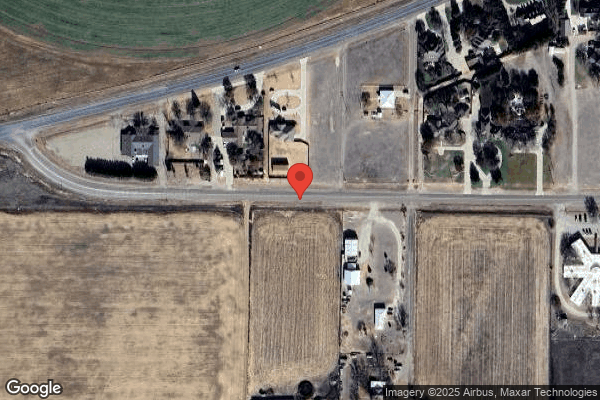
Mar 2025 1 deficiency
CONCERN (D) 📢 Someone Reported This

A family member, employee, or ombudsman was alarmed enough to file a formal complaint

Potential for Harm - no one hurt, but risky conditions existed

Comprehensive Care Plan (Tag F0656)

Could have caused harm · This affected 1 resident

**NOTE- TERMS IN BRACKETS HAVE BEEN EDITED TO PROTECT CONFIDENTIALITY** Based on observation, interview, and record review the facility failed to develop and implement a comprehensive person-centered ...

Read full inspector narrative →
**NOTE- TERMS IN BRACKETS HAVE BEEN EDITED TO PROTECT CONFIDENTIALITY** Based on observation, interview, and record review the facility failed to develop and implement a comprehensive person-centered care plan for each resident, consistent with resident rights that includes measurable objectives and timeframes to meet a resident's medical, nursing, and mental and psychosocial needs that are identified in the comprehensive assessment and describes the services that are to be furnished to attain or maintain the resident's highest practicable physical, mental, and psychosocial well-being for 1 (Resident #1) of 5 residents reviewed for care plans. The facility failed to develop a comprehensive person-centered care plan based on assessed needs to address Resident #1's bipolar disorder, anxiety and depression and their interventions. This failure could place residents at risk of not receiving desired and necessary care and treatment. Findings Included: Record review of Resident #1's admission record dated 03/18/2025 revealed a [AGE] year-old female admitted to the facility on [DATE] with diagnoses that included, but were not limited to, bipolar disorder current episode depressed, moderate, anxiety disorder and major depressive disorder, recurrent. Record review of Resident #1's quarterly MDS completed on 03/07/2025 revealed a BIMS score of 12 out of 15 indicating moderate cognitive impairment. Section I of the MDS indicated Resident #1 had active diagnoses of anxiety disorder, depression, and bipolar disorder. Record review of Resident #1's care plan, revised on 2/24/2025, had no mention of Resident #1's bipolar disorder, depression or anxiety diagnosis with no goals or interventions related to the diagnoses. Record review of Resident #1's active physician orders dated 02/27/2025 revealed the following medication orders: An order dated 02/27/2025 for Xanax Oral Tablet 0.25 MG (Alprazolam)-Give 1 tablet by mouth every 6 hours related to anxiety. disorder. An order dated 02/27/2025 for Aripiprazole Oral Tablet 10 MG -Give 1 tablet by mouth at bedtime related to Bipolar disorder, current episode depressed moderate, and major depressive disorder, recurrent. Record review of Resident #1's medication administration record for February 2025 revealed Resident #1 received Aripiprazole oral tablet 10 mg on 02/27/2025 and 02/28/2025. Resident #1 received Xanax oral tablet .25 mg every six hours on 02/27/2025 and 02/28/2025. Record review of Resident #1's medication administration record for March 2025 revealed Resident #1 received Aripiprazole oral tablet 10 mg on 03/01/2025 through 03/17/2025. Resident #1 received Xanax oral tablet .25 mg on 03/01/2025 through 03/17/2025. During an observation and interview on 03/18/2025 at 5:15 AM, Resident #1 was in her room sitting on her bed watching tv. Resident #1 stated that she receives medication for her anxiety and depression. Resident #1 said she was offered counseling for her anxiety but said she declined it. During an interview on 03/18/2025 at 10:00 AM, the DON stated that Resident #1's bipolar disorder and anxiety diagnosis should have been put in her care plan. The DON stated a possible negative outcome for not having information in the care plan would be that staff would not be aware of what the resident needs. The DON stated that it was the nursing staff and MDS Coordinator's responsibility to ensure the care plans were updated and completed. During an interview on 03/18/2025 at 10:05 AM, the ADON stated it was nursing staff's responsibility to ensure care plans were completed and Resident #1's diagnoses and medication should have been put in the care plan. A possible negative outcome for not having that information in the care plan would be staff would not know the resident's needs. During a telephone interview on 03/18/2025 at 10:11 AM, the MDS LVN stated that it was her responsibility to make sure care plans were up to date. The MDS LVN stated that Resident #1's care plan must have been missed with updating her diagnoses and medication regimen. The MDS LVN stated that a possible negative outcome for not having an updated care plan would be that staff would not be aware of the resident's diagnosis and interventions. Record review of facility policy titled 'Comprehensive Care plans' revealed the following: It is the policy of this facility to develop and implement a comprehensive, person-centered care plan for each resident, consistent with resident rights that includes measurable objectives and timeframes to meet a resident's medical, nursing, mental and psychosocial needs and ALL services that are identified in the resident's comprehensive assessment and meet professional standards of quality. The comprehensive care plan will describe at the minimum, the following: .The services that are to be furnished to attain or maintain the resident's highest physical, mental, and psychosocial well-being .
Mar 2025 1 deficiency
CONCERN (D) 📢 Someone Reported This

A family member, employee, or ombudsman was alarmed enough to file a formal complaint

Potential for Harm - no one hurt, but risky conditions existed

Deficiency F0760 (Tag F0760)

Could have caused harm · This affected 1 resident

**NOTE- TERMS IN BRACKETS HAVE BEEN EDITED TO PROTECT CONFIDENTIALITY** Based on interview and record review, the facility failed to ensure residents were free of any significant medication errors for...

Read full inspector narrative →
**NOTE- TERMS IN BRACKETS HAVE BEEN EDITED TO PROTECT CONFIDENTIALITY** Based on interview and record review, the facility failed to ensure residents were free of any significant medication errors for one of five (Resident #1) residents reviewed for medication administration. -Resident #1 received a dose of 100units of insulin glargine instead of the prescribed 11units on the evening of 02/16/2025 in error. This failure could place residents who receive insulin medications at an increased risk for complications such as decreased blood glucose levels, change in cognition, and an exacerbation of symptoms and disease process. The noncompliance was found to be Past Non-Compliance (PNC). The noncompliance began on 02/16/2025 and ended on 02/17/2025. The facility corrected the noncompliance before the investigation began. Findings include: Record review of Resident #1's most recent face sheet revealed a [AGE] year-old female resident who was admitted to the facility on [DATE] with diagnoses that included, but not limited to, congestive heart failure, hypothyroidism, type 2 diabetes mellitus without complications, hypertensions (high blood pressure). Record review of Resident #1's current MDS, dated [DATE], revealed, in part, that Resident #1 had a BIMS score of 13 out of 15, which indicated her cognition was not impaired. She was dependent upon staff for putting on/taking off footwear, lower body dressing, and toileting hygiene, all other care areas Resident #1 needed setup or clean-up assistance or supervision or touching assistance. Section N-Medications revealed that Resident #1 was on insulin and had received it over the past 7 days. Record review of Resident #1's care plan, dated 01/09/2025, revealed, in part the following: Diabetes: [Resident #1] has Diabetes Mellitus Medication Insulin Lispro (SSI) nsulin Lispro . . Goal: The resident will have no complications related to diabetes through the review date . . Interventions/Tasks Diabetes medication as ordered by doctor. Monitor/document for side effects and effectiveness. Date Initiated: 01/02/2025 o Educate resident/family/caregiver: Diabetes is a chronic disease and that compliance is essential to prevent complications of the disease, Review complications and prevention with the resident/family/caregiver, Elicit a verbal understanding from the resident/family/caregiver, That nails should always be cut straight across, never cut corners. File rough edges with emery board. Date Initiated: 01/02/2025 o Fasting Serum Blood Sugar as ordered by doctor. Date Initiated: 01/02/2025 o Monitor compliance with diet and document any problems. Date Initiated: 12/26/2024 o Monitor/document/report to MD PRN s/sx of hypoglycemia: Sweating, Tremor, Increased heart rate (Tachycardia), Pallor, Nervousness, Confusion, slurred speech, lack of coordination, Staggering gait. Date Initiated: 01/02/2025 o Monitor/document/report to MD PRN for s/sx of hyperglycemia: increased thirst and appetite, frequent urination, weight loss, fatigue, dry skin, poor wound healing, muscle cramps, abd pain, Kussmaul breathing, acetone breath (smells fruity), stupor, coma. Date Initiated: 01/02/2025 . Record review of Resident #1's physician's orders dated 03/04/2025 revealed in part, Insulin Glargine Subcutaneous Solution 100 UNIT/ML (Insulin Glargine), Inject 11 unit subcutaneously at bedtime related to TYPE 2 DIABETES MELLITUS WITHOUT COMPLICATIONS (E11.9). Record review of Resident #1's MAR/TAR dated 03/04/2025 revealed in part, on 02/16/2025 LVN A documented a blood sugar of 134 and checked that she gave Resident #1 her 11 units of Insulin Glargine. Record review of Resident #1's progress note dated 02/17/2025 at 02:41 revealed that res. Returned to facility via facility van [local hospital] called to pick up after valuation. Last glucose at the hospital was 134mg/dl. Resdenies any c/o pain or discomfort at this time. She is alert and oriented x3. V/S within normal baseline. Glucose checks noted q2hrs. on EMAR. Progress note dated 02/17/2025 at 03:09 revealed that glucose check was 129mg/dl. Res. Awake on her phone no complaints verbalized. Progress note dated 02/17/2025 at 04:16 revealed glucose at 98mg/dl-Snack given to resident. She is awake and alert eating pudding and crackers. This writer will cont. to monitor and document glucose checks as scheduled. Progress note dated 02/18/2025 at 04:15 revealed Res has completed hourly glucose checks. No episodes of hypoglycemia noted. Res. Has slept at short intervals throughout the night. Res is offered H2O and snacks when awake. Res. Denies any c/o pain or discomfort. She is alert and oriented x3. Resp areeven and non-labored V/s within baseline noted on EMAR. Record review of Resident #1's glucose log revealed the following: 02/16/2025 19:12 134 mg/dL 02/16/2025 21:21 134 mg/dL 02/17/2025 02:44 135 mg/dL 02/17/2025 04:15 98 mg/dL 02/17/2025 05:02 169 mg/dL 02/17/2025 05:22 149 mg/dL 02/17/2025 06:51 144 mg/dL 02/17/2025 08:03 156 mg/dL 02/17/2025 08:22 148 mg/dL 02/17/2025 10:06 165 mg/dL 02/17/202511:10 156 mg/dL 02/17/202511:51 182 mg/dL 02/17/2025 13:08 165 mg/dL 02/17/2025 14:04 217 mg/dL 02/17/2025 15:10 200 mg/dL 02/17/2025 16:07 217 mg/dl 02/17/2025 17:13 167 mg/dl 02/17/2025 17:35 170 mg/dl 02/17/2025 18:33 110 mg/dl 02/17/2025 20:00 113 mg/dl 02/17/2025 21:04 129 mg/dl 02/17/2025 22:26 122 mg/dl 02/18/2025 04:10 110 mg/dl Record review of facility investigation provided by ADM, untitled, undated revealed that LVN A self-reported that she administered 100units of Lantus insulin to Resident #1. Resident #1 was transported to ER via EMS for further evaluation. LVN A was relieved of duty and instructed to not administer any additional medications to residents and to wait for nursing relief to get to facility. Record review of in-service for medication administration, dated 02/17/2025, staff was educated on medication administration and the 6 Rights of medication administration. During an interview on 03/04/2025 at 10:46am Resident #1 stated that she remembers the incident with the insulin, and she stated, I am not sure why everyone was making such a big deal about it, I felt fine. I never felt bad. The nurse was checking in on me all the time, they put a trash can by the bed, like I was going to throw up or something. I did get a soda and I was kind of excited about it. But everyone was kind of freaking out and they called my brother, and he was really angry, not real sure why. I was told that I was given double the amount of medication that was supposed to be given. To be honest I wasn't really sure what was going on, until I was told about getting to much medicine. But I was fine, I didn't want to go to the ER, but the nurse let me know that I needed to be watched more closely than normal, so I went. During an interview on 03/04/2025 at 10:58am DON stated that the evening of the medication error took place she had received a phone call from LVN A stating that she had made a medication error. LVN A stated that she gave 100units of insulin the Resident #1 and asked the DON if she just want her to monitor her. DON stated to LVN A to hang up the phone and call 911. Resident #1 refused to go to the hospital with EMS. Resident #1 kept saying that she felt fine and was not exhibiting any symptoms of hypoglycemia. The CO-RN for the facility was able to talk Resident #1 into going to the hospital with EMS. DON stated that she called the facility back and told the other nurse that was working that night to go and get the LVN's keys and relieve her of her duties, until another nurse could get to the facility. LVN A was asked if she had given any other residents insulin that night and she had stated that she had not. DON stated that all other insulin dependent residents were observed just in case the LVN A was not telling the truth. DON stated that the CO-RN called the agency and put stipulations into place so that nurses with little to no experience were allowed to work in the facility. During a phone interview on 03/04/2025 at 4:09pm with CO-RN stated that LVN A was no longer too able give any further medication to any other residents and had to wait outside the facility until her replacement got to the facility. The way LVN A spoke to CO-RN was that LVN A was just ok with what she did and there was no importance to what she did. CO-RN stated that she reported LVN A to the Texas BON and was unable to provide the referral # but will email the information to the investigator. CO-RN stated that she spoke with a physician, and it was stated to her that since the insulin was Lantus which is a long-acting insulin the monitoring of Resident #1 in the ER for only a few hours is standard protocol. If the insulin was a short acting insulin the situation would be very different. On 03/04/2025 at 4:21pm Investigator attempted to interview LVN A. Had to leave a voicemail with contact information for LVN A to call back. During a phone interview on 03/06/2025 with MD he was aware of the insulin error that took place at the facility. MD stated that Resident #1 did not have any harmful side effects from this error and was monitored very closely by the hospital and facility staff upon her return. Investigator did ask MD why the resident was only monitored for only a few hours in the hospital ER and if that was normal protocol. MD stated that the ER would monitor the resident and if she started to crash from the large amount of insulin they would give her Dextrose/10 infusion to help stabilize her blood glucose. However, Resident #1 never experienced any drop in her blood sugars. MD stated that a negative outcome would have been Resident #1 could have experienced hypoglycemic coma and would have had to be airlifted to a larger hospital for more intense interventions if it would have been a short-acting insulin. Record review of facility provided policy titled, Medication Administration, undated, revealed in part, the following: .10. Ensure that the six rights of medication administration are followed: a. Right resident b. Right drug c. Right dosage d. Right route e. Right time f. Right documentation 11. Review MAR to identify medication to be administered. Record review of facility provided policy titled, Medication Error undated, revealed in part the following: It is the policy of this facility to provide protections for the health, welfare, and rights of each resident by ensuring residents receive care and services safely in an environment free of significant medication errors. .Definitions: . . Significant medication error means one which causes the resident discomfort or jeopardizes his/her health and safety. . Policy Explanation and Compliance Guidelines: 1. The facility shall ensure medications will be administered as follows: a. According to physician's orders. b. Per manufacturer's specifications regarding the preparation, and administration of the drag or biological. c. In accordance with accepted standards and principles which apply to professionals providing services. Record review of facility provided policy titled, Timely Administration of Insulin, undated revealed in part the following: Policy: It is the policy of this facility to provide timely administration of insulin in order to meet the needs of each resident and lo prevent adverse effects on a resident's condition. . Policy Explanation and Compliance Guidelines: 1. All insulin will be administered in accordance with physician's orders. .5. Procedure: a. Review the insulin order: i. Resident name. ii. Medication name. iii. Medication dosage. iv. Time to be administered. v. Route of administration. . c. Prepare insulin dose. Before administering insulin, perform verification of correct resident, dose calculations, and correct route of administration.
Jan 2025 3 deficiencies
CONCERN (D) 📢 Someone Reported This

A family member, employee, or ombudsman was alarmed enough to file a formal complaint

Potential for Harm - no one hurt, but risky conditions existed

Notification of Changes (Tag F0580)

Could have caused harm · This affected 1 resident

**NOTE- TERMS IN BRACKETS HAVE BEEN EDITED TO PROTECT CONFIDENTIALITY** Based on interview and record review the facility failed to immediately inform the resident; consult with the resident's physici...

Read full inspector narrative →
**NOTE- TERMS IN BRACKETS HAVE BEEN EDITED TO PROTECT CONFIDENTIALITY** Based on interview and record review the facility failed to immediately inform the resident; consult with the resident's physician; and notify, consistent with his or her authority, the resident representative when there was a significant change in the resident's physical, mental, or psychosocial status in either life-threatening conditions or clinical complications and a decision to transfer or discharge the resident from the facility for 1 (Resident #1) of 5 residents reviewed for notification. LVN D failed to notify Resident #1's family and physician when Resident #1 was found unresponsive in his room and sent to the hospital via ambulance. This failure could cause residents to feel alone and/or abandoned by their family members in times of crisis. Findings Included: Record review of Resident #1's admission record dated 01/25/25 revealed a [AGE] year-old male admitted to the facility on [DATE] with diagnoses that included, but were not limited to, unspecified dementia with other behavioral disturbance (breakdown of thought process causing disruptive behavior), psychotic disorder with delusions (severe mental illness including distorted beliefs), generalized anxiety disorder (inability to control constant worrying), Alzheimer's disease with late onset (a progressive disease that destroys memory and other important mental functions), and atherosclerotic heart disease of native coronary artery (fats, cholesterols, and other substances collected on the inner walls of heart arteries). The admission record listed Resident #1's family member A and her phone number. Record review of Resident #1's MDS tab in his EHR revealed no comprehensive assessment was completed. Record review of Resident #1's care plan revealed it was initiated on his admission date, 01/17/25. Record review of Resident #1's progress notes revealed the following notes: A note by LVN D written on 01/24/25 at 05:59 AM which indicated Resident #1 was sent to the hospital via ambulance due to being found unresponsive at 05:58 AM. A note by ADON written on 01/24/25 at 08:25 AM which indicated an ER nurse called and told ADON Resident #1 was being air lifted to a larger hospital and that the ER had notified his family and they would be waiting at the larger hospital for his arrival. During an interview on 01/25/25 at 09:51 AM Resident #1's family member A and family member B stated they were not contacted by the facility when Resident #1 was transferred to the hospital due to being unresponsive. They said the first they heard was at 08:30 AM on 01/24/25 when a nurse from the emergency room called Resident #1's family member A and said Resident #1 was being taken by life flight to the bigger city and hospital because he was unresponsive and on life support. During an interview on 01/25/25 at 01:36 PM LVN E stated when a resident is transferred to the hospital the nurse is to call the family, physician, DON, ADON, and ADM. She stated it was important to call the family so they could meet the resident at the hospital because you never know what is going to happen. During an interview on 01/25/25 at 04:56 PM LVN D stated she did not call Resident #1's family or physician when he was transferred to the hospital via ambulance the morning of 01/24/25. She stated, Honestly .I didn't get a chance to (notify Resident #1's family or physician) because it was a cluster that morning. I immediately called DON and she told me to send him out right away and I was running back and forth to keep an eye on him and get his paperwork printed off. I told the other nurse on shift to call 911 and say we needed them because he was unresponsive. LVN D stated she sent paperwork with Resident #1 to the hospital. During an interview on 01/25/25 at 05:49 PM ADON stated she expected her nurses to notify physician and family members of any resident who was sent to the hospital. She stated she did not know why Resident #1's family was not notified when he was sent to the hospital. She stated on the morning of 01/24/25 she was preparing to sit down at the nurses' desk and call Resident #1's family when the hospital called and told her they had already called the family. ADON stated a possible negative outcome of a resident's family not being notified was, They (family) could get upset and they need to know where their family is at. During an interview on 01/25/25 at 05:51 PM DON stated she expected her nurses to notify physician and family members if a resident was sent to the hospital. She stated she did not know why Resident #1's family was not notified except that the nurse was an agency nurse, and Resident #1 was sent out to the hospital right at shift change. She stated a possible negative outcome to the resident of their family not being notified was they (resident) might feel like, 'My family doesn't care about me.' Record review of facility policy titled Notification of Changes and dated 2024 revealed the following: .The purpose of this policy is to ensure the facility promptly informs the resident consults the resident's physician; and notifies, consistent with his or her authority, the resident's representative when there is a change requiring notification. The facility must inform the resident, consult with the resident's physician and/or notify the resident's family member or legal representative when there is a change requiring such notification. Circumstances requiring notification include: . 2. Significant change in the resident's physical, mental or psychosocial condition such as deterioration in health, mental or psychosocial status. This may include a. Life-threatening conditions, or b. Clinical complications. 4. A transfer or discharge of the resident from the facility.
CONCERN (D) 📢 Someone Reported This

A family member, employee, or ombudsman was alarmed enough to file a formal complaint

Potential for Harm - no one hurt, but risky conditions existed

Abuse Prevention Policies (Tag F0607)

Could have caused harm · This affected 1 resident

**NOTE- TERMS IN BRACKETS HAVE BEEN EDITED TO PROTECT CONFIDENTIALITY** Based on interviews and record reviews the facility failed to develop and implement written policies and procedures that prohibi...

Read full inspector narrative →
**NOTE- TERMS IN BRACKETS HAVE BEEN EDITED TO PROTECT CONFIDENTIALITY** Based on interviews and record reviews the facility failed to develop and implement written policies and procedures that prohibit and prevent abuse, neglect, and exploitation of resident and misappropriation of resident property for 1 (Resident #1) of 5 residents reviewed for abuse. The facility failed to implement their policy titled Abuse, Neglect and Exploitation when CNA A failed to report bruising to Resident #1's ribcage she found on 01/24/25 during a brief change. This failure could place residents at risk of abuse/continued abuse. Findings Included: Record review of Resident #1's admission record dated 01/25/25 revealed a [AGE] year-old male admitted to the facility on [DATE] with diagnoses that included, but were not limited to, unspecified dementia with other behavioral disturbance (breakdown of thought process causing disruptive behavior), psychotic disorder with delusions (severe mental illness including distorted beliefs), generalized anxiety disorder (inability to control constant worrying), Alzheimer's disease with late onset (a progressive disease that destroys memory and other important mental functions), and atherosclerotic heart disease of native coronary artery (fats, cholesterols, and other substances collected on the inner walls of heart arteries). The admission record listed Resident #1's family member A and her phone number. Record review of Resident #1's MDS tab in his EHR revealed no comprehensive assessment was completed. Record review of Resident #1's care plan revealed an initiation date of 01/17/25. Record review of Resident #1's assessments tab in his EHR revealed one skin assessment performed on 01/17/25. Record review of Resident #1's skin assessment dated [DATE] and completed by ADON revealed no bruising to his ribcage. During an interview on 01/25/25 at 09:51 AM Resident #1's family member A stated Resident #1 had a huge bruise on his side when he got to the hospital. Resident #1's family member A stated she sent a picture of the bruise to the person who handled her call-in complaint. During an interview on 01/25/25 at 01:36 PM LVN E stated if a resident had a new bruise CNAs and especially shower aides, were to inform the nurse immediately so the nurse could investigate to see if they could find out how the bruise happened. During an interview on 01/25/25 at 01:46 PM CNA F stated if she noticed a bruise on a resident, she would report it to the nurse. During an interview on 01/25/25 at 01:52 PM CNA G stated if she noticed a bruise on a resident, she would report it to the nurse. During an interview on 01/25/25 at 02:25 PM CNA H stated if she noticed a bruise on a resident, she would report it to the nurse. During an interview on 01/25/25 at 05:05 PM CNA I stated if she noticed a new bruise on a resident, she would report it to the nurse. During an interview on 01/25/25 at 05:27 PM CNA A stated she noticed a bruise on Resident #1's ribcage on 01/24/25 when she and CNA B were changing Resident #1's brief. CNA A stated she pulled Resident #1's shirt up so it would not get closed in his brief and that is when she noticed the bruise. She was not sure which side it was one. CNA A stated the bruise was not too big and was purplish in color. CNA A stated she did not tell anyone about the bruise because we were working with agency nurses and when you tell them things like that they just say, 'Okay.' During an interview on 01/25/25 at 05:49 PM ADON stated CNAs were to report any skin issues observed to include bruising to the nurse on duty. During an interview on 01/25/25 at 05:51 PM DON stated she expected CNAs to report any change of condition to the nurse so an investigation could be completed. During an interview on 01/27/25 at 01:38 PM LVN E stated a possible negative outcome of not reporting an injury of unknown origin was it could lead to resident abuse, neglect, harm. During an interview on 01/27/25 at 01:41 PM DON stated a possible negative outcome of not reporting an injury of unknown origin was it could lead to another thing (injury). Record review of facility policy titled Abuse, Neglect and Exploitation and dated 2024 revealed the following: .It is the policy of this facility to provide protections for the health, welfare and rights of each resident by developing and implementing written policies and procedures that prohibit and prevent abuse, neglect, exploitation and misappropriation of resident property. Possible indicators of abuse include, but are not limited to: . 3. Physical injury of a resident, of unknown source .
CONCERN (D) 📢 Someone Reported This

A family member, employee, or ombudsman was alarmed enough to file a formal complaint

Potential for Harm - no one hurt, but risky conditions existed

Medical Records (Tag F0842)

Could have caused harm · This affected 1 resident

**NOTE- TERMS IN BRACKETS HAVE BEEN EDITED TO PROTECT CONFIDENTIALITY** Based on interviews and record reviews the facility failed, in accordance with accepted professional standards and practices, to...

Read full inspector narrative →
**NOTE- TERMS IN BRACKETS HAVE BEEN EDITED TO PROTECT CONFIDENTIALITY** Based on interviews and record reviews the facility failed, in accordance with accepted professional standards and practices, to maintain medical records on each resident that are complete, accurately documented, readily accessible, and systematically organized for 1 (Resident #1) of 5 residents reviewed for accuracy of medical records. The facility failed to list the correct behavioral hospital on Resident #1s admission Record. The facility failed to perform a skin assessment on Resident #1 for three days (01/18/25, 01/19/25, and 01/20/25) following his admission skin assessment, as per their Skin Assessment policy. The facility's failure to ensure medical records on each resident were complete, accurately documented, and readily accessible, placed all residents requiring care at risk for incorrect or omitted treatment, duplicated treatments, and a failure to ensure continuity of care. Findings Included: Record review of Resident #1's admission record dated 01/25/25 revealed a [AGE] year-old male admitted to the facility on [DATE] with diagnoses that included, but were not limited to, unspecified dementia with other behavioral disturbance (breakdown of thought process causing disruptive behavior), psychotic disorder with delusions (severe mental illness including distorted beliefs), generalized anxiety disorder (inability to control constant worrying), Alzheimer's disease with late onset (a progressive disease that destroys memory and other important mental functions), and atherosclerotic heart disease of native coronary artery (fats, cholesterols, and other substances collected on the inner walls of heart arteries). The admission record noted Resident #1 was admitted from [name of behavioral hospital C]. Record review of Resident #1's MDS tab in his EHR revealed no comprehensive assessment was completed. Record review of Resident #1's care plan revealed it was initiated on his admission date, 01/17/25. Record review of the Miscellaneous tab in Resident #1's EHR revealed paperwork from behavioral hospital D. Record review of the Assessments tab in Resident #1's EHR revealed one skin assessment dated [DATE]. Record review of Resident #1's skin assessment revealed it was completed by ADON at 04:34 PM on 01/17/25. Record review of Resident #1's progress notes revealed no note regarding admission to the facility. In a note written by ADON on 01/17/24 at 04:37 PM she noted, . Notes: transferred from [name of behavioral hospital D] hospital . Record review of Resident #1's paperwork from behavioral hospital D revealed no discharge date . The last exam by a physician was dated 01/13/25. During an interview on 01/25/25 at 09:51 AM Resident #1's family member A and family member B stated Resident #1 was admitted to the facility from behavioral hospital D. During an interview on 01/25/25 at 05:49 PM ADON stated she was unaware the facility policy Skin Assessment stated the facility would do a skin assessment on a new admit for the first 4 days and then weekly. She stated she though skin assessments were to be done weekly. During an interview on 01/27/25 at 01:38 PM LVN E stated a possible negative outcome of inaccurate medical records and/or not following facility policy was, We need to know everything we can about a resident to care for them correctly. During an interview on 01/27/25 at 01:41 PM DON stated miscommunication was a possible negative outcome of inaccurate medical records and/or not following facility policy. Record review of facility policy titled Skin Assessment and dated 2024 revealed the following: . A full body, or head to toe, skin assessment will be conducted by a licensed or registered nurse upon admission/re-admission, daily for three days, and weekly thereafter . Record review of facility policy titled Documentation in Medical Record and dated 2024 revealed the following: . Each resident's medical record shall contain an accurate representation of the actual experiences of the resident and include enough information to provide a picture of the resident's progress through complete, accurate, and timely documentation. 1. Licensed staff and interdisciplinary team members shall document all assessments, observations, and services provided in the resident's medical record in accordance with state law and facility policy. 2. Documentation shall be completed at the time of service, but no later than the shift in which the assessment, observation, or care service occurred. a. Documentation shall be factual, objective, and resident centered. i. False information shall not be documented. b. Documentation shall be accurate, relevant, and complete .
Dec 2024 2 deficiencies
CONCERN (D) 📢 Someone Reported This

A family member, employee, or ombudsman was alarmed enough to file a formal complaint

Potential for Harm - no one hurt, but risky conditions existed

Transfer Notice (Tag F0623)

Could have caused harm · This affected 1 resident

**NOTE- TERMS IN BRACKETS HAVE BEEN EDITED TO PROTECT CONFIDENTIALITY** Based on interview and record review, the facility failed to send a copy of the discharge notice to the Office of the State Long...

Read full inspector narrative →
**NOTE- TERMS IN BRACKETS HAVE BEEN EDITED TO PROTECT CONFIDENTIALITY** Based on interview and record review, the facility failed to send a copy of the discharge notice to the Office of the State Long-Term Care Ombudsman for 1 (Resident #1) of 5residents reviewed for transfer/discharge. The facility failed to provide a notice of discharge to the facility's Ombudsman as soon as practicable when Resident #1 was discharged on 12/11/24 to a locked unit at another facility due to the current facility not being able to meet Resident #1's needs. This failure could place residents at risk of being discharged and not having access to available advocacy services, discharge/transfer options, and appeal processes. Findings included: Review of Resident #1's face sheet dated 12/12/2024 reflected the resident was an [AGE] year-old female, with admission date of 12/26/2023 and then discharged to another facility on 12/11/2024. The resident had diagnoses which included but not limited to: Alzheimer's disease (memory loss), anxiety disorder, muscle weakness, and wandering. Review of Resident #1's quarterly MDS dated [DATE] revealed Resident #1 had a BIMS of a 7 out of 15 which indicated that the resident had severe cognitive impairment. Review of Resident #1's progress notes dated 12/11/2024 revealed the resident was being transferred on 12/11/24 to another facility. During a phone interview on 12/12/2024 at 8:45 AM, the Ombudsman stated that she did not know about Resident #1's discharge on [DATE] and that she was supposed to be notified at the same time the resident was notified of the transfer/discharge . During an interview on 12/12/2024 at 11:44 AM, the ADM supplied a copy of the transfer/discharge summary for Resident #1 that was signed by the resident. The ADM stated that she notified the Ombudsman of Resident #1's discharge on [DATE]. During an interview on 12/12/24 at 11:57 AM, the DON stated that she was not sure whose responsibility it was to send transfer and discharge notices to the Ombudsman, but it was either herself or the ADM. She stated that if the Ombudsman was not notified of a transfer/discharge, they would not know where the resident was residing. During an interview on 12/12/24 at 12:03 PM, the ADM stated that it was her or a designee's responsibility to make sure discharge/transfer notices were sent to the Ombudsman and that if it was not sent, the Ombudsman would not be aware of what was going on with the resident . Record Review of Transfer/Discharge Report for Resident #1 revealed it was, dated and signed by Resident #1 on 12/11/24 at 02:27 PM. Review of the facility's policy, provided by the DON, titled Transfer and Discharge, not dated, reflected in part: It is the policy of this facility to permit each resident to remain in the facility, and not initiate transfer or discharge for the resident from the facility, except in limited circumstances. .Generally, the notice must be provided at least 30 days prior to a facility-initiated transfer or discharge of the resident. Exceptions to the 30-day requirement apply when the transfer or discharge is affected because: - An immediate transfer or discharge is required by the resident's urgent medical needs. In these exceptional cases, the notice must be provided to the resident, resident's representative if appropriate, and the LTC ombudsman as soon as practicable before the transfer or discharge.
CONCERN (F) 📢 Someone Reported This

A family member, employee, or ombudsman was alarmed enough to file a formal complaint

Potential for Harm - no one hurt, but risky conditions existed

Deficiency F0801 (Tag F0801)

Could have caused harm · This affected most or all residents

Based on interview and record review, the facility failed to employ sufficient staff with the appropriate competencies and skills sets to carry out the functions of the food and nutrition service, tak...

Read full inspector narrative →
Based on interview and record review, the facility failed to employ sufficient staff with the appropriate competencies and skills sets to carry out the functions of the food and nutrition service, taking into consideration resident assessments, individual plans of care and the number, acuity and diagnoses of the facility's resident population in accordance with the facility assessment requirement for 1 of 1 kitchen staff (Dietary Manager) reviewed for qualifications. The Dietary Manager failed to have the appropriate license, certification, or qualifications to function as the Director of Food and Nutrition Services. This failure could place residents who consume food prepared from the kitchen at increased risk of food borne illness and not receiving adequate nutrition. Findings included: Record Review of a current facility employee roster including hire date, indicated the DM's date of hire was 04/30/2024. During an interview on 12/12/24 at 7:14 AM, the DM stated she had been employed at the facility since April , 2024 but had been the DM since June , 2024. When asked for her certification for DM, she stated she was not certified or enrolled in a class to become certified at this time. The DM stated that she was waiting for corporate to send her an email so she could get enrolled in the class. During an interview on 12/12/24 at 9:00 AM, the ADM stated the DM was not certified but will be taking classes soon, hopefully the beginning of next year. She stated that they do have a RD who the DM consults with, but she was not full time. In an interview on 12/12/24 at 11:55 AM, the DON stated she was responsible for making sure staff were trained appropriately and that a negative outcome for not having a DM that was trained could be weight loss in residents, wrong orders given to residents in regard to purees, mechanical diets, and portion sizes. In an interview on 12/12/24 at 12:03 PM, the ADM stated that all department heads and herself were responsible for making sure that staff were properly trained and that she was not here when the DM was hired for that position. The ADM stated possible negative outcomes for not having a DM that was certified could be possible weight loss and dietary requirements not being met for residents, for example, making sure diabetic residents were not getting sugary desserts. Record Review of the facility policy titled Dietary Services-Staffing, not dated, included in part: Policy: The facility employs sufficient staff with the appropriate competencies and skill sets to carry out the functions of the Food and Nutrition Services, taking into consideration resident assessments, individual plans of care and the number, acuity and diagnoses of the facility's resident population in accordance with the facility assessment. .3. If a qualified dietitian or other clinically qualified nutrition professional is not employed full-time, the facility will designate a person to serve as the director of food and nutrition services who is: i. A certified dietary manager.
Nov 2024 3 deficiencies
CONCERN (D) 📢 Someone Reported This

A family member, employee, or ombudsman was alarmed enough to file a formal complaint

Potential for Harm - no one hurt, but risky conditions existed

Report Alleged Abuse (Tag F0609)

Could have caused harm · This affected 1 resident

**NOTE- TERMS IN BRACKETS HAVE BEEN EDITED TO PROTECT CONFIDENTIALITY** Based on observation, interview, and record review the facility failed to ensure that all alleged violations involving abuse, ne...

Read full inspector narrative →
**NOTE- TERMS IN BRACKETS HAVE BEEN EDITED TO PROTECT CONFIDENTIALITY** Based on observation, interview, and record review the facility failed to ensure that all alleged violations involving abuse, neglect, exploitation or mistreatment, including injuries of unknown source and misappropriation of resident property, are reported immediately, but not later than 2 hours after the allegation is made, if the events that cause the allegation involve abuse or result in serious bodily injury, or not later than 24 hours if the events that cause the allegation do not involve abuse and do not result in serious bodily injury, to the administrator of the facility and to other officials (including to the State Survey Agency and adult protective services where state law provides for jurisdiction in long-term care facilities) in accordance with State law through established procedures for 1 (Resident #1) of 6 residents reviewed for abuse and neglect. The facility failed to report to the State Survey Agency Resident #1's black eye within 24 hours of discovery of the injury. This failure could place residents at risk of continued and/or unrecognized abuse or neglect. Findings Included: Record review of Resident #1's admission record dated 11/06/24 revealed a [AGE] year-old male admitted to the facility on [DATE] with diagnoses that included, but were not limited to, Alzheimer's disease (a progressive disease that destroys memory and other important mental functions), impulse disorder (lack of ability to control self), prostate cancer, and anxiety disorder (mental disorder characterized by significant and uncontrollable feelings of anxiety and fear). Record review of Resident #1's MDS tab in his EHR revealed his admission MDS was in progress. Record review of Resident #1's in progress admission MDS revealed section C was complete. Resident #1 had a BIMS of 1 which indicated severely impaired cognition. Record review of Resident #1's care plan, initiated on 10/27/24, revealed a focus area initiated on 11/06/24 which noted he had a bruise to his left eye. The care plan revealed, resident hit self with phone to chin area and left eye while on phone. Another focus area initiated on 11/06/24 revealed, I am prone to skin tears and bruising of unknown origin related to fragile skin. The interventions for this focus area did not mention notifying state survey agency. Record review of Resident #1's progress notes revealed the following notes: A note written by LVN G on 10/27/24 at 06:58 PM entered as LATE ENTRY This nurse when entering unit to do medication pass, resident sitting in chair in common area and this nurse noted dark purple bruising to left eye. No s/s of pain or discomfort noted. Resident unable to state what occurred. DON notified . A note written by LVN D on 10/28/24 at 11:19 AM Notified [family members of Resident #1] that resident has a black eye. [first name of DON] DON et [first name of ADON] ADON investigating. [first name of ADM] Administrator . notified. The note continued to address Resident #1's family member being upset, requesting to speak to management, and the call being transferred to management. A note written by LVN G on 10/28/24 at 10:04 PM Notified DON, [first name of ADM], NP and [family member of Resident #1] of received X-ray results. No evidence of acute fracture. No significant soft tissue abnormality. A note written by LVN G on 10/28/24 at 10:56 PM . Continues with black left eye and no pain or discomfort noted. A note written by ADON on 10/29/24 at 02:29 PM received message to have resident call [family member] back. X1 assist with cna from secured unit to phone at nurse's desk. Writer at nurse's desk placed call and phone given to resident. At this time resident grabs phone cord and tries to unravel cord and hits self with receiver part of phone underneath left eye states ouch asked if he was ok while he is still waiting for daughter to answer phone continues to unravel cord and hits self again of receiver part of the phone to left lateral chin area asked resident to give writer the phone. redialed number and held phone until daughter answered and handed resident phone. noted small area with purple discoloration to left lateral chin. bruising underneath left eye has no change. notified daughter after phone callcompleted [sic] with resident of x 2 hits to self with phone. verbalized understanding. called and left message with [first name of receptionist] from [name of hospice] to have nurse call back. call back pending. [first name of ADM] admin notified; [first name of DON] RN DON notified. resident declined he was in pain. no facial grimacing noted or guarding of face. A note written by ADON on 10/29/24 at 04:50 PM received call back from nurse from [name of hospice]. called this am at 1136am call back at 1650 (04:50 PM) stated message just received. explained bruising has increased to left eye and incident that happened this am from resident hitting self with phone to chin area and left eye while on phone. [Name of hospice] nurse concerns of cameras available in lobby. explained to [name of hospice] nurse cameras are only in secured unit and resident was at nurses' desk in front of writer when incident happened. did explainthat [sic] we will monitor bruising r/t dx of prostate cancer may have increase bruising. Record review of Resident #1's Weekly Skin Assessment updated completed on 10/24/24 at 11:28 AM by LVN D revealed Resident #1 had no bruises. Record review of an untitled, three-page document provided by DON and dated 10/27/24 revealed a heading of #2030 Skin Alteration Date 10/27/24 18:35 (06:35 PM) Resident: [first and last name of Resident #1] Incident Location: Hallway Person Preparing Report: [first and last name of LVN G] across the top of all three pages. A section titled Incident Description noted This nurse when entering unit to do mediation pass, resident sitting in chair in common area and this nurse noted dark purple bruising to left eye. No s/s of pain or discomfort noted. Resident unable to state what occurred. Resident unable to give description. A section titled Notes and written by DON revealed, in part: 10/27/24 Received a message at 1847 (06:47 PM) from [first name of LVN G]/LVN of fresh bruise noted to residents left side of face. Unable to return call to nurse until 2120 (09:20 PM). Notified [first name of ADM]/administrator at 2130 (09:30 PM) . Record review of Resident #1's Weekly Skin Assessment updated completed on 10/28/24 at 07:50 AM by ADON revealed a bruise 4cm x1 cm light maroon color underneath left eye. Record review of Resident #1's Weekly Skin Assessment updated completed on 10/29/24 at 11:26 PM by ADON revealed bruising increased underneath left eye from previous injury bruising pea sz (size) to left lateral chin area. During an observation and interview on 11/06/24 at 11:40 AM Resident #1 was seated in a chair in the common area of the locked unit. He had a purple spot the size of a quarter down and to the left of his left eye. He was able to shake hands and introduce himself. When asked how the bruise happened, Resident #1 smiled and said he did not know. During an interview on 11/06/24 at 11:40 AM Resident #1's family member stated the family was concerned about him having a black eye and bruising to his face. During an interview on 11/07/24 at 11:03 AM LVN C stated the protocol when a resident had an injury of unknown origin was to first of all report it to everybody, DON, ADON, doctor, family, and then investigate to figure out what happened. She stated she did not really know anything about Resident #1's black eye except that after he had the original black eye, she witnessed him accidently hit himself in the face with the phone receiver in the lobby area. She stated she and the ADON were present during that incident. LVN C stated an injury of unknown origin was to be reported immediately. During an interview on 11/07/24 at 11:28 AM CNA E and CNA F stated they noticed Resident #1's bruise at the same time LVN G noticed the bruise. They stated an injury of unknown origin was to be reported immediately to the nurse. During an interview on 11/07/24 at 01:02 PM ADON stated injuries of unknown origin are to be reported immediately. She said if an injury of unknown origin was not reported immediately it could get worse. ADON stated she and DON did an investigation into Resident #1's black eye and they were unable to determine how it happened. She stated she saw Resident #1 hit himself in the face with the phone receiver two days after he got the black eye. During an interview on 11/07/24 at 01:08 PM DON stated LVN G notified her about Resident #1's black eye via a voicemail message at 06:47 PM on 10/27/24. DON stated she was taking a nap and did not listen to the message until 09:20 PM the same day and she called ADM at 09:30 PM to notify her of the injury. DON stated staff were to report injuries of unknown origin immediately to administration and administration was to report them to state within 24 hours. When asked why Resident #1's injury of unknown origin was not reported within 24 hours to state, DON stated, Because we were conducting our investigation. She stated she could not think of a possible negative outcome of not reporting to state timely because he was not in any immediate harm. During an interview on 11/07/24 at 01:20 PM ADM stated she was notified by DON via text message on 10/27/24 of Resident #1 black eye. She stated the injury was not reported to state within 24 hours because, When it first happened the working idea was that him picking up that phone with his left hand and they observed him hitting himself in the face. I was investigating and had a working probability but with daughter not feeling comfortable with that I decided to self-report it. She stated she did not think there was a possible negative outcome of not reporting timely because Resident #1 was safe, no falls, no incidents with residents or staff and we had him on neuro (neurological) checks and x-ray. During an interview on 11/07/24 at 03:12 PM LVN G stated she reported Resident #1's black eye to DON right away after I assessed him. She stated injuries of unknown origin were to be reported right away. She stated a resident might be abused or neglected if an injury was not reported timely. Record review of Incidents by Incident Type report for August 2024 to October 2024 revealed Resident #1 under the Skin Alteration Incidents on 10/27/24 at 06:35 PM and under the Self Inflicted Injury Incidents on 10/29/24 at 11:30 AM. Record review of facility staff in-services on abuse, neglect, and exploitation from 08/06/24 to 11/06/24 revealed one training offered to staff over three days from 10/30/24 to 11/01/23. Record review of facility policy titled Incidents and Accidents and dated February 2023 revealed the following: . The purpose of incident reporting can include: Assuring that appropriate and immediate interventions are implemented and corrective actions are taken to prevent recurrences and improve the management of resident care. Meeting regulatory requirements for analysis and reporting of incidents and accidents. Incidents that rise to the level of abuse, misappropriation, or neglect, will be managed and reported according to the facility's abuse prevention policy. The following incidents/accidents require an incident/accident report but are not limited to: . Self-inflicted injuries . Unobserved injuries . Record review of facility policy titled Abuse, Neglect and Exploitation and dated August 2024 revealed the following: . Possible indicators of abuse include, but are not limited to: . Physical marks such as bruises . on a resident's body Physical injury of a resident, of unknown source . The facility will have written procedures that include: Reporting all alleged violations to the Administrator, state agency, adult protective services and to all other required agencies . within specified timeframes: Immediately, but not later than 2 hours after the allegation is made, if the events that cause the allegation involve abuse or result in serious bodily injury or Not later than 24 hours if the events that cause the allegation do not involve abuse and do not result in serious bodily injury.
CONCERN (E) 📢 Someone Reported This

A family member, employee, or ombudsman was alarmed enough to file a formal complaint

Potential for Harm - no one hurt, but risky conditions existed

Resident Rights (Tag F0550)

Could have caused harm · This affected multiple residents

**NOTE- TERMS IN BRACKETS HAVE BEEN EDITED TO PROTECT CONFIDENTIALITY** Based on observation, interview, and record review the facility failed to ensure the resident has the right to exercise his or h...

Read full inspector narrative →
**NOTE- TERMS IN BRACKETS HAVE BEEN EDITED TO PROTECT CONFIDENTIALITY** Based on observation, interview, and record review the facility failed to ensure the resident has the right to exercise his or her rights as a resident of the facility and as a citizen or resident of the United States for 11 (Resident #2, Resident # 3, Resident #5, Resident #6, Resident #7, Resident #8, Resident #9, Resident #10, Resident #11, Resident #12, and Resident #13) of 54 residents reviewed for resident rights. The facility failed to ensure 11 residents (Resident #2, Resident # 3, Resident #5, Resident #6, Resident #7, Resident #8, Resident #9, Resident #10, Resident #11, Resident #12, and Resident #13) were able to vote in the election of 2024. This failure could place residents at risk of feeling unheard and devalued. Findings Included: 1. Record review of Resident #2's admission record dated 11/06/24 revealed a [AGE] year-old male admitted to the facility on [DATE] with diagnoses that included, but were not limited to, hemiplegia (partial paralysis) affecting right dominant side, muscle weakness, and repeated falls. Record review of Resident #2's quarterly MDS completed on 10/03/24 revealed a BIMS of 12 which indicated moderately impaired cognition. Record review of Resident #2's care plan revealed a completion date of 10/23/24 . 2. Record review of Resident #3's admission record dated 11/06/24 revealed a [AGE] year-old male admitted to the facility on [DATE] with diagnoses that included, but were not limited to, neuroleptic induced Parkinsonism (difficulty initiating movements), schizoaffective disorder bi-polar type (mental disorder in which a person experiences a combination of symptoms of schizophrenia and mood disorder), and post-traumatic stress disorder (mental health condition caused by a traumatic event that affects your ability to function normally). Record review of Resident #3's quarterly MDS completed on 09/10/24 revealed a BIMS of 12 which indicated moderately impaired cognition. Record review of Resident #3's care plan revealed a completion date of 10/02/24. The DNR section of the care plan noted, I am capable of making my own healthcare decisions and giving informed consent. 3. Record review of Resident #5's admission record dated 11/06/24 revealed a [AGE] year-old female admitted to the facility on [DATE] with diagnoses that included, but were not limited to, unspecified dementia (a group of thinking and social symptoms that interferes with daily functioning), alcohol dependance, and major depressive disorder (a mental disorder characterized by persistent low mood, low self-esteem, and loss of interest or pleasure in normally enjoyable activities). Record review of Resident #5's quarterly MDS completed on 11/05/24 revealed a BIMS of 15 which indicated intact cognition. Record review of Resident #5's care plan revealed a completion date of 10/27/24. The care plan noted, I am capable of making my own healthcare decisions and giving informed consent. Under the focus area of activities an intervention was, Assist with arranging community activities. Arrange transportation. 4. Record review of Resident #6's admission record dated 11/06/24 revealed a [AGE] year-old male admitted to the facility on [DATE] with diagnoses that included, but were not limited to, alcohol dependence in remission and major depressive disorder (a mental disorder characterized by persistent low mood, low self-esteem, and loss of interest or pleasure in normally enjoyable activities). Record review of Resident #6's quarterly MDS completed on 10/16/24 revealed a BIMS of 12 which indicated moderately impaired cognition. Record review of Resident #6's care plan revealed a completion date of 10/27/24. Under the focus area of activities an intervention was, Assist with arranging community activities. Arrange transportation. 5. Record review of Resident #7's admission record dated 11/25/24 revealed a [AGE] year-old male admitted to the facility on [DATE] with diagnoses that included, but were not limited to, anxiety disorder (mental disorder characterized by significant and uncontrollable feelings of anxiety and fear), major depressive disorder (a mental disorder characterized by persistent low mood, low self-esteem, and loss of interest or pleasure in normally enjoyable activities), bipolar disorder (serious mental illness characterized by extreme mood swings such as extreme excitement or extreme depressive feelings), and Wernicke's encephalopathy (degenerative brain disorder caused by the lack of vitamin B1). Record review of Resident #7's quarterly MDS completed on 10/24/24 revealed a BIMS of 12 which indicated moderately impaired cognition. Record review of Resident #7's care plan revealed a completion date of 10/23/24. 6. Record review of Resident #8's admission record dated 11/25/24 revealed a [AGE] year-old male admitted to the facility on [DATE] with diagnoses that included, but were not limited to, dementia (a group of thinking and social symptoms that interferes with daily functioning), intermittent explosive disorder (repeated sudden outbursts of anger), and Parkinson's disease (chronic and progressive movement disorder that initially causes tremors in one hand and stiffness or slowing of movement). Record review of Resident #8's quarterly MDS completed on 09/11/24 revealed a BIMS of 00 which indicated severely impaired cognition. Record review of Resident #8's care plan revealed a completion date of 10/27/24. 7. Record review of Resident #9's admission record dated 11/25/24 revealed an [AGE] year-old male admitted to the facility on [DATE] with diagnoses that included, but were not limited to, dementia (a group of thinking and social symptoms that interferes with daily functioning), type 2 diabetes (insufficient production of insulin, causing high blood sugar), and epilepsy (disorder that causes abnormal brain function, seizures). Record review of Resident #9's admission MDS completed on 10/02/24 revealed a BIMS of 2 which indicated severely impaired cognition. Record review of Resident #9's care plan revealed a completion date of 10/27/24. 8. Record review of Resident #10's admission record dated 11/25/24 revealed a [AGE] year-old female admitted to the facility on [DATE] with diagnoses that included, but were not limited to, hemiplegia (partial paralysis) affecting left nondominant side, psychotic disorder with hallucinations (severe mental illness including seeing things that are not there), cerebral infarction (occurs as a result of disrupted blood flow to the brain due to problems with the blood vessels that supply it, stroke), and type 2 diabetes (insufficient production of insulin, causing high blood sugar). Record review of Resident #10's quarterly MDS completed on 10/08/24 revealed a BIMS of 14 which indicated intact cognition. Record review of Resident #10's care plan revealed a completion date of 10/27/24. 9. Record review of Resident #11's admission record dated 11/25/24 revealed a [AGE] year-old male admitted to the facility on [DATE] with diagnoses that included, but were not limited to, type 2 diabetes (insufficient production of insulin, causing high blood sugar), cellulitis (common bacterial skin infection that causes redness, swelling, and pain) of trunk, and necrotizing fasciitis (serious bacterial issue affecting tissue under the skin). Record review of Resident #11's annual MDS completed on 09/24/24 revealed a BIMS of 15 which indicated intact cognition. Record review of Resident #11's care plan completed on 10/08/24 revealed the following: . I am capable of making my own healthcare decisions and giving informed consent. 10. Record review of Resident #12's admission record dated 11/25/24 revealed a [AGE] year-old female admitted to the facility on [DATE] with diagnoses that included, but were not limited to, dementia (a group of thinking and social symptoms that interferes with daily functioning), type 2 diabetes (insufficient production of insulin, causing high blood sugar), and paranoid schizophrenia (a mental illness characterized by episodes of psychosis including hallucinations, delusions, and disorganized thinking). Record review of Resident #12's quarterly MDS completed on 09/11/24 revealed a BIMS of 13 which indicated intact cognition. Record review of Resident #12's care plan completed on 09/24/24 revealed the following: . I am capable of making my own healthcare decisions and giving informed consent. 11. Record review of Resident #13's admission record dated 11/25/24 revealed a [AGE] year-old female admitted to the facility on [DATE] with diagnoses that included, but were not limited to, bipolar disorder (serious mental illness characterized by extreme mood swings such as extreme excitement or extreme depressive feelings), major depressive disorder (a mental disorder characterized by persistent low mood, low self-esteem, and loss of interest or pleasure in normally enjoyable activities), and anxiety disorder (serious mental illness characterized by extreme mood swings such as extreme excitement or extreme depressive feelings). Record review of Resident #13's quarterly MDS completed on 11/04/24 revealed a BIMS of 14 which indicated intact cognition. Record review of Resident #13's care plan revealed it was initiated on 10/16/24. During an interview on 11/06/24 at 09:57 AM ADM was asked for copies of any in-services regarding residents' right to vote. During an observation and interview on 11/06/24 at 10:05 AM Resident #13 stated she wanted to vote but did not get to as her ID was missing. She stated she thought her ID was left at her facility. Resident #13 stated no one asked her if she wanted to vote or offered to help her get an ID. During an interview on 11/06/24 at 10:19 AM OMB stated in August of 2024 she began talking with residents about voting in the 2024 election. She stated in September of 2024 she began talking to ADM and AD about getting residents prepared to vote in the 2024 election. OMB stated in October 2024 she sent emails to ADM regarding residents' voting rights and deadlines to register to vote in person and by mail. During an observation and interview on 11/06/24 at 10:33 AM Resident #2 and Resident #3 were in their room. Resident #3 stated no one asked him if he wanted to vote in the 2024 election. He stated he was registered to vote and would have like to vote. Resident #3 stated, They did not take us out to vote. Resident #2 stated no one asked him if he wanted to vote. He stated, It was like we didn't matter. During an observation and interview on 11/06/24 at 11:34 AM Resident #6 stated he had been in the facility for a year. Resident #6 stated he was registered to vote and wanted to vote but no one spoke to him about voting in the 2024 election. During an observation and interview on 11/06/24 at 12:11 PM Resident #5 asked if facility staff assisted her in voting in the 2024 election she stated, No! And I am very upset about that! I was told nobody got a card (to vote by mail). No one in here (facility) voted except the people who work here. When asked if she told staff she wanted to vote she stated, No, I just assumed I would get to because I am registered to vote. During an interview on 11/06/24 at 03:40 PM ADM was asked for copies of any in-services regarding residents' right to vote. She stated she would ask DON and ADON if there were any in-services on that subject. During an interview on 11/07/24 at 10:58 AM SW stated she did not remember OMB speaking to her about residents voting rights. She stated, I am not in charge of voting. SW stated ADM did not speak to her about residents voting rights. She stated she did not know what the facility policy on resident's voting rights contained. SW stated she thought AD oversaw helping residents vote. She stated a possible negative outcome of residents not being assisted to vote was possible because it is a citizen right. It is a duty and right people should have the option to exercise. During an interview on 11/07/24 at 11:03 AM LVN C stated she was not talked to by anyone in administration regarding residents' right to vote. She stated, I think they (residents) should be able to vote if they want to or choose to. During an interview on 11/07/24 at 11:48 AM AD stated OMB did not speak to her about residents' right to vote. She stated ADM spoke to her about getting residents ready to vote. She stated she was not aware the facility had a policy that addressed residents' right to vote. AD stated, I truly believe it is very important for them (residents) to vote if they choose to vote. She stated on 10/07/24 she was told by ADM to talk to residents about voting so we did that as like an activity. AD stated the facility only had one resident who was registered to vote in the facility's county and that resident chose not to go vote when the day came. AD did not have an answer to what she did to assist other interested residents in registering to vote in the facility's county. When asked if residents who were registered to vote in other counties were assisted to register in the facility's county AD stated, They chose not to. When asked if she received an email regarding voter registration deadlines, AD stated, Yes, and they chose not to. She stated zero residents voted in the 2024 election. She stated she could see how not being assisted to vote in the 2024 election could have negatively affected residents. AD stated she spoke to Resident #6, and he told her he wanted to vote but chose not to. She stated she spoke to Resident #5 about voting but Resident #5 did not have any ID as her purse was misplaced at the last nursing home. AD stated she did not attempt to contact the previous nursing home or help Resident #5 apply for a new ID so she could register to vote in the facility's county. She stated she did not speak to Resident #3 about voting in the 2024 election. She did not give a reason for not speaking to Resident #3. AD stated she did not speak to Resident #4 about voting because Resident #4 was not feeling well on 10/07/24 when AD held the activity to talk to residents about voting. During an interview on 11/07/24 at 12:11 PM OMB stated the facility was responsible to assist residents who were not registered in the facility's county to register in that county in time to cast their vote in the 2024 election. During an interview on 11/07/24 at 01:02 PM ADON stated she did not receive any emails, directives, or trainings regarding assisting residents to vote in the 2024 election. She stated a possible negative outcome of residents not exercising their right to vote was, You don't get the president you want. During an interview on 11/07/24 at 1:08 PM DON stated she did not have any training on assisting residents to vote. She stated she did receive an email regarding residents voting rights and deadlines to register to vote. She searched on her computer and stated the email was sent to AD and SW and the business office manager. DON stated she was copied on the email. She stated the email was sent on 10/04/24. DON stated she was not sure if zero or 1 resident from the facility voted in the 2024 election. During an interview on 11/07/24 at 1:20 PM ADM stated she could not remember if OMB spoke to her about residents' voting rights because usually when she calls or comes in, she has a lot to tell me. She stated she did remember receiving an email from OMB about residents' voting rights and deadlines to register to vote. ADM stated OMB sent her the email on 10/03/24. ADM stated the negative outcome of residents not being assisted to vote was, They didn't get to exercise that right. During an observation and interview on 11/25/24 at 09:50 AM Resident #10 stated no one asked her if she wanted to vote. She stated she did want to vote. Resident #10 said of not being assisted to vote, It sorta hurt my feelings. I was hoping to. During an observation and interview on 11/25/24 at 10:01 AM Resident #9 stated he wanted to vote and not one asked him if he needed help voting or registering to vote. During an observation and interview on 11/25/24 at 10:05 AM Resident #3 stated of voting, I wanted to, why didn't I get to? Of not voting, he stated, It felt bad. During an observation and interview on 11/25/24 at 10:11 AM Resident #7 stated he wanted to vote and no one asked him about voting. When asked how he felt about not being assisted to vote, he stated, Just part of the deal I guess. During an observation and interview on 11/25/24 at 10:15 AM Resident #8 stated he was going to (vote), but it didn't happen. He stated, It didn't feel good. I was going to vote for the woman. During an observation and interview on 11/25/24 at 10:22 AM Resident #11 stated he wanted to vote but, I don't live here. He stated staff did not ask him if he wanted to vote or wanted assistance registering to vote in the facility's county. During an interview on 11/25/24 at 11:09 AM ADM stated the only documentation AD had of her meeting with residents regarding voting was the written statement already provided. When asked if there was a list of residents who attended the meeting, ADM stated AD told her it would be in the Resident Council minutes. ADM provided Resident Council minutes dated 09/03/24 and 10/01/24. During an observation and interview on 11/25/24 at 11:53 AM Resident #12 stated she wanted to vote. She stated no one asked her if she wanted to vote or needed help doing so. During an interview on 11/25/24 at 12:45 PM ADM and VPC were on speaker phone with AD. VPC said to AD regarding residents voting, We usually try to start in August or September to at least show that we are trying and documenting the trying. VPC stated every resident must be interviewed about interest in voting regardless of BIMS and their responses must be documented. During an interview on 11/25/24 at 12:50 PM VPC stated AD did not document speaking with residents about voting. She stated AD did not document residents declining to vote. She stated she would begin interview each resident and document their responses today. Record review of Resident Council minutes dated 09/03/24 revealed no mention of voting. Record review of Resident Council minutes dated 10/01/24 revealed no mention of voting. Record review of written statement provided by AD to the State Surveyor revealed the following: On October 7, 2024, I ([first name of AD] Activity Director) asked all residents with a BIMS score of 10 or higher if they would like to vote. Of the residents that I asked only 1 was registered in [facility's county]. However, she was not feeling well and chose to NOT go vote. The others that I asked are not registered in [facility's county] and they all declined to go vote citing a disinterest in voting period. The first week of December we will follow up with those residents to see if they would like to get registered here in [facility's county] in case they want to participate in future elections. Record review of facility policy titled Resident Rights and dated 2024 revealed the following: . The resident has the right to a dignified existence, self-determination, and communication with and access to persons and services inside and outside the facility. 1. Exercise of rights. The resident has the right to exercise his or her rights as a resident of the facility and as a citizen or resident of the United States. a. The resident has the right . to be supported by the facility in the exercise of his or her rights. Record review of facility policy titled Resident Right to Vote and dated 2024 revealed the following: .It is the policy of this facility to support residents in exercising their right to vote, as a resident of the facility and as a citizen or resident of the United States. 2. All residents should have access to timely information about upcoming elections. 4. The social worker, social service designee, or assigned staff member should be familiar with the voting requirements of that district, as it relates to voter registration, absentee ballots, and voting facilities. 6. Prior to an election, the social worker, social service designee or assigned staff member should identify the residents who choose to vote, and identify the residents who need to register. 7. Prior to an election, the social worker, social service designee, or assigned staff member should obtain forms and assist residents with registration, as needed. 8. Prior to an election, the social worker, social service designee, or assigned staff member should obtain absentee ballots for residents unable to go to the voting facility, as provided by the voting district. 13. The social worker, social service designee, or assigned staff member should document the method by which the resident voted, . If the resident refuses to vote, the refusal should be documented.
CONCERN (E) 📢 Someone Reported This

A family member, employee, or ombudsman was alarmed enough to file a formal complaint

Potential for Harm - no one hurt, but risky conditions existed

Safe Environment (Tag F0584)

Could have caused harm · This affected multiple residents

**NOTE- TERMS IN BRACKETS HAVE BEEN EDITED TO PROTECT CONFIDENTIALITY** Based on observation, interview, and record review the facility failed to ensure each resident had the right to a safe, clean, c...

Read full inspector narrative →
**NOTE- TERMS IN BRACKETS HAVE BEEN EDITED TO PROTECT CONFIDENTIALITY** Based on observation, interview, and record review the facility failed to ensure each resident had the right to a safe, clean, comfortable, and homelike environment including but not limited to receiving treatment and supports for daily living safely for 2 (Resident #1 and Resident #4) of 6 residents and 3 (Room A2, Room A7, and Room A9) of 8 rooms on the locked unit reviewed for environment. 1. The facility failed to ensure Resident #1 had a sink in his bathroom for approximately a week. 2. The facility failed to ensure Resident #4 had a sink in her bathroom for an undetermined period of time. 3. The facility failed to ensure the sinks in the bathrooms of Room A2, Room A7, and Room A9 were securely attached to the wall. These failures could place residents at risk of injury, infection, and feeling ill at ease in their living environment. Findings Included: 1. Record review of Resident #1's admission record dated 11/06/24 revealed a [AGE] year-old male admitted to the facility on [DATE] with diagnoses that included, but were not limited to, Alzheimer's disease (a progressive disease that destroys memory and other important mental functions), impulse disorder (lack of ability to control self), prostate cancer, and anxiety disorder (mental disorder characterized by significant and uncontrollable feelings of anxiety and fear). Record review of Resident #1's MDS tab in his EHR revealed his admission MDS was in progress. Record review of Resident #1's in progress admission MDS revealed section C was complete. Resident #1 had a BIMS of 1 which indicated severely impaired cognition. Record review of Resident #1's care plan, initiated on 10/27/24, revealed Resident #1 required staff participation to use the toilet, get dressed, and bathe. Record review of Resident #4's admission record dated 11/06/24 revealed a [AGE] year-old female admitted to the facility on [DATE] with diagnoses that included, but were not limited to, diffuse traumatic brain injury with loss of consciousness of unspecified duration (a severe type of traumatic brain injury that occurs when the brain rapidly shifts inside the skull), epilepsy (disorder that causes abnormal brain function, seizures), and cognitive communication deficit (difficulty with one or more of the following: attention, memory, perception, language, problem-solving, and reasoning). Record review of Resident #4's annual MDS completed on 11/05/24 revealed the following: Section C: Resident #4 had a BIMS score of 13 which indicated intact cognition. Section E: Resident #4 exhibited no behaviors. Section GG: Resident #4 had no impairment of upper or lower extremities and used a w/c for mobility. Resident #4 was independent or required set up or clean up assistance across all ADLs except for oral hygiene, tub/shower/toilet transfer, and walking 10 feet where she required supervision or partial/moderate assistance. Section H: Resident #4 was frequently incontinent of bladder and occasionally incontinent of bowel. Record review of Resident #4's care plan completed 08/31/24 revealed Resident #4 was to be encouraged to do what he/she is capable of doing for (her)self in relation to ADLs. Resident #4 was PASRR positive for intellectual disability and developmental disability. She required staff assistance with personal hygiene. Record review of Resident #4's progress notes from 09/06/24 to 10/07/24 revealed the following note written on 10/06/24 by LVN C: was alerted per staff CNA resident was washing her hands in to actual toilet basin, states her sink is broken and she needs to wash her hands somewhere; staff CNA showed resident where a common bathroom is so that she could wash her hands; . During an observation and interview on 11/06/24 at 10:09 AM MS was unwrapping a new sink from cardboard. He stated he was replacing a resident's sink so the resident would have a sink with a cabinet underneath to make it sturdy. He stated a resident on the locked unit was without a sink for a week. I had to order it (the sink). MS stated the sink the resident on the locked unit had prior to the new one he ordered was pulled off the wall by the resident and broke on the floor. Hs said, We are starting to put these in (sinks with cabinets underneath) because that way when they (residents) pull on it, it has support. During an observation and interview on 11/06/24 at 10:26 AM Resident #4 was asked if staff helped her wash her hands she stated, No, they expect us to do that on our own. When asked if she had always had a sink in her bathroom she stated, No. The sink was weak and I am very strong, and it fell on the floor and broke to pieces. Resident #4 stated she has a new sink with a cabinet underneath it in her bathroom now. Resident #4 stated she was not sure how long she was without a sink and added, They didn't replace it quickly. It took a long time to have a sink in there. I was washing my hands in the commode water, you know, the clean water, after you flush it, and it fills up with clean water? She stated the sink was out of her bathroom for more than a week and possibly more than a month. During an observation and interview on 11/06/24 at 11:45 AM Resident #1's family member stated Resident #1's bathroom did not have a sink for a few days. She stated, Where was he supposed to wash his hands. I mean he has Alzheimer's. It is hard for him to remember on a good day when there is a sink. Resident #1's bathroom, on the locked unit, had a new sink with a cabinet underneath the sink. 2. During an observation on 11/06/24 at 11:51 AM the sink in Room A2 of the locked unit was loosely attached to the wall. There was a line of whitish caulking along the top back edge of the sink. Between this line of caulking and the wall was a space of approximately 1/8th of an inch. When the sink was touched under the front edge it was easily moved up and down. One resident resided in Room A2. During an observation on 11/06/24 at 11:52 AM the sink in Room A7 of the locked unit was loosely attached to the wall with a space between the top back edge of the sink and wall that measured approximately 1/8th of an inch. When the sink was touched under the front edge it was easily moved up and down. One resident resided in Room A7. During an observation on 11/06/24 at 11:52 AM the sink in Room A9 of the locked unit was loosely attached to the wall with a space between the top back edge of the sink and wall that measured approximately 1/8th of an inch. When the sink was touched under the front edge it was easily moved up and down. One resident resided in Room A9. Observations on 11/06/24 from 11:53 AM to 12:03 PM of the other 4 rooms on the locked unit revealed one room with a pedestal sink and three rooms with sinks that were firmly attached to the wall and when touched under the front edge were not moveable up or down. During an interview on 11/06/24 at 12:10 AM DON stated the facility did not have a policy addressing resident's hand hygiene and the role staff played in said. She stated, No facility has that. It is just standard precautions that when they have soiled hands, we wash their hands. During an interview on 11/07/24 at 11:03 AM LVN C stated she could not remember which CNA told her Resident #4 was washing her hands in the toilet bowl. She stated Resident #4 did not have a sink that day because her sink had just fallen off and broken on the floor. LVN C stated a resident not having a sink in their bathroom could be detrimental especially if the resident did not really understand what good hand hygiene was or had Alzheimer's or dementia. She stated Resident #4's sink was replaced the following day. She stated she had no knowledge of any other resident being without a sink in their bathroom. LVN C stated if a resident's sink was not securely fastened to the wall it could fall off the wall. During an interview on 11/07/24 at 11:19 AM MS stated the only resident room that had been without a sink for more than a few hours was A4 on the locked unit. He stated Resident #4 had broken two sinks, at different times, in her bathroom by grabbing them and causing them to fall on the floor. MS stated that was the reason for replacing her sink with one with a cabinet underneath. He stated she was without a sink for one evening before he installed the new sink. MS stated, I don't really see it (a resident not having a sink in their bathroom) being negative. It is just our concern to make sure they get what they need as quick as possible. They (residents) might see if differently depending on the day they were having. MS stated he had not noticed any sinks on the locked unit being loosely attached to the wall. He said he could not think of a negative outcome for residents if sinks were loosely attached to the wall. During an interview on 11/07/24 at 11:25 MS stated he had looked at the sinks in the locked unit. He stated, I see what you are saying (about some of the sinks being loose). He stated the sinks were made to slide into a bracket and would, therefore, always be loose. He stated he would have to put a pedestal under the sinks to keep them from being loose. He stated he was not sure why some sinks were loose, and others were not. During an interview on 11/07/24 at 01:02 PM ADON stated she knew some residents' sinks were loose because the residents used the sinks to pull themselves up to standing. She stated loose sinks could result in residents hurting themselves. She stated when a sink is broken it is a process to order a new sink and get it installed. She stated that process would probably take a couple days. She stated not having a functional sink in their bathrooms could affect residents negatively, Because they need to wash hands after they use the bathroom. During an interview on 11/07/24 at 01:08 PM DON stated she knew of one resident who did not have a sink in their room for a few days. She named Resident #1's roommate. She stated she did not know how long Resident #1's bathroom was without a sink. She stated she could not think of a negative outcome for a resident not having a sink in their bathroom because, There are other sinks available where we can take them to wash their hands. DON stated she had not noticed any residents' sinks being loosely attached to the wall. She stated she could not think of a negative outcome of a sink loosely attached to the wall as long as there is working water. During an interview on 11/07/24 at 01:20 PM ADM stated she did not see a negative outcome for residents not having sinks in their bathrooms because, We have the shower room. She stated since she had been employed with the facility (her hire date was 07/15/24) she knew of 2 sinks that had fallen off the wall. She stated a negative outcome to residents of loosely attached sinks was They (sinks) could fall off. Record review of facility policy titled Resident Rights and dated 2024 revealed the following: . The resident has the right to a dignified existence . The right to reside and receive services in the facility with reasonable accommodation of resident needs and preferences . The resident has the right to a safe, clean, comfortable and homelike environment, including but not limited to receiving treatment and supports for daily living safely. Record review of facility policy titled Safe and Homelike Environment and dated 2024 revealed the following: . In accordance with resident rights, the facility will provide a safe, clean, comfortable and homelike environment . This includes ensuring that the resident can receive care and services safely and that the physical layout of the facility maximizes resident independent and does not pose a safety risk. Environment refers to any environment in the facility that is frequented by residents, including (but not limited to) the residents' rooms, bathrooms . Sanitary includes, but is not limited to, preventing the spread of disease-causing organisms by keeping resident care equipment clean and properly stored. Resident care equipment includes, but is not limited to, equipment used in the completion of the activities of daily living.
Sept 2024 1 deficiency
CONCERN (D) 📢 Someone Reported This

A family member, employee, or ombudsman was alarmed enough to file a formal complaint

Potential for Harm - no one hurt, but risky conditions existed

Medical Records (Tag F0842)

Could have caused harm · This affected 1 resident

**NOTE- TERMS IN BRACKETS HAVE BEEN EDITED TO PROTECT CONFIDENTIALITY** Based on interviews and record review; it was determined the facility failed to ensure that in accordance with accepted professi...

Read full inspector narrative →
**NOTE- TERMS IN BRACKETS HAVE BEEN EDITED TO PROTECT CONFIDENTIALITY** Based on interviews and record review; it was determined the facility failed to ensure that in accordance with accepted professional standards and practices, the facility must maintain medical records on each resident that are complete, accurately documented, and readily accessible for 1 of 6 residents reviewed for clinical records (Resident #1) in that: The facility failed to ensure Resident #1's concerns about the prior administrator were documented and addressed in social services notes. The facility's failure to ensure medical records on each resident were complete, accurately documented, and readily accessible, placed all residents requiring care at risk for incorrect or omitted treatment, duplicated treatments, poor self-esteem and self-worth, and a failure to ensure continuity of care. Findings included: Record review of Resident #1's face sheet dated 09/19/2024 reflected a [AGE] year-old-female admitted to the facility on [DATE]. Resident #1's current diagnoses included but not limited to diffuse traumatic brain injury with loss of consciousness of unspecified duration, schizoaffective disorder (mood disorder), bipolar type (extreme mood swings), anxiety disorder, major depressive disorder, recurrent severe without psychotic features, and cognitive communication deficit (difficulty in communication). Record review of Resident #1's quarterly MDS assessment dated [DATE] reflected Resident #1 had a BIMS score of 15 out of 15 indicating she was cognitively intact. Record review of Resident #1's social services notes dated 09/11/2024 reflected a visit was conducted with Resident #1 by SW concerning Resident #1's boyfriend and their relationship, there was no documentation relating to the concerns Resident #1 stated in the visit about a past employee asking Resident #1 to go to bed with him. During an interview on 09/19/2024 at 10:55 AM, the SW who stated she and Resident #1 were having a conversation about intimacy due to Resident #1 having a relationship with another resident in the facility. During this conversation Resident #1 stated the PADM asked her to go to bed with him and got mad at her when she was holding hands with her boyfriend during dinner. The SW stated the PADM had been gone since December 2024 and Resident #1 could not tell her when this incident happened. The SW stated she immediately informed the current ADM about the allegation but did not document the information in her social services notes. The SW stated she has followed up with Resident #1 and has not seen any behavioral changes since making the outcry. The SW stated a possible negative outcome for not having accurate documentation would be staff would not be aware of the incident. During an interview on 09/19/2024 at 1:00 PM, Resident #1 stated she hated the PADM and she was glad he was gone. When asked about what upset her about the PADM, Resident #1 said he asked her to clean his house, Resident #1 said she liked to clean houses but stated she told the PADM she was not going to clean his house because she had a boyfriend. Resident #1 stated she was happy and felt safe in the facility, she had no other concerns relating to the PADM. During an interview on 09/19/2024 at 3:15 PM, RN A stated that all licensed staff were responsible for documenting in each resident's record. RN A stated that a possible negative outcome for not documenting what a resident's status would be that oncoming staff would not be aware of the actual status of the resident . During an interview on 09/19/2024 at 3:18 PM, the ADON who stated all administrative personnel were responsible to ensure documentation was accurate and complete. The ADON also stated the visit between Resident #1 and the SW should have been documented. The ADON said a possible negative outcome for not having complete records would be no paper trail on the incident and staff would not be aware of the incident. During an interview on 09/19/2024 at 3:20 PM, the DON who stated all licensed personnel were responsible for documenting in each resident's record and all interactions should be documented. The DON stated administrative personnel were responsible in monitoring the documentation and the social service visit between Resident #1 and the SW should have been documented. The DON stated a possible negative outcome for not having correct documentation would be the record would not accurately reflect the resident's situation. Record Review of Documentation in Medical Record Policy dated 09/01/2024 reflected the following: Each resident's medial record shall contain an accurate representation of the actual experiences of the resident and include enough information to provide a picture of the resident's progress through complete, accurate and timely documentation. .Licensed staff and interdisciplinary team members shall document all assessments, observation and services provided in the resident's medical record in accordance with state law and facility policy .
Jul 2024 1 deficiency
CONCERN (D) 📢 Someone Reported This

A family member, employee, or ombudsman was alarmed enough to file a formal complaint

Potential for Harm - no one hurt, but risky conditions existed

PASARR Coordination (Tag F0644)

Could have caused harm · This affected 1 resident

**NOTE- TERMS IN BRACKETS HAVE BEEN EDITED TO PROTECT CONFIDENTIALITY** Based on observation, interview and record review, the facility failed to coordinate assessments with the pre-admission screenin...

Read full inspector narrative →
**NOTE- TERMS IN BRACKETS HAVE BEEN EDITED TO PROTECT CONFIDENTIALITY** Based on observation, interview and record review, the facility failed to coordinate assessments with the pre-admission screening and resident review program (PASRR) to the maximum extent practicable to avoid duplicative testing and effort for 1 of 7 (Resident #1) residents reviewed for PASRR. The facility contacted the HHSC PASRR Unit on 5-7-2024 for Resident #1 and no NFSS (Nursing Facility Specialized Services) form was provided to the HHSC PASRR Unit by the required date of 5-10-2024. This failure could affect residents with mental illnesses and placed them at risk of not being assessed to receive needed services. Findings included: Record review of Resident #1's clinical record face sheet printed 7-17-2024 revealed Resident #1 was a [AGE] year-old female resident admitted to the facility on [DATE] with diagnoses to include cerebral palsy (group of disorders that affect a person's ability to move and maintain balance and posture), major depression (mental illness causing sadness due to lack of chemicals in the brain that cause happiness) or (persistent depressed mood), epilepsy (disorder that causes abnormal brain function, seizures), and cognitive communication deficit (impaired thought processes). Record review of Resident #1's last quarterly MDS assessment was completed on 5-13-2024 revealed she had a BIMS score that required staff to complete due to Resident #1 was not able to complete the assessment due to memory problems, and Resident #1 had a functionality of requiring setup or clean-up assistance with most of her activities of daily living. Record review of Resident #1's PASRR Level 1 Screening with date of assessment 01-04-2024 revealed the following: -C090 Primary Diagnosis of Dementia-No -C0100 Mental Illness-No -C0200 Intellectual Disability-Yes -C0300 Developmental Disability-Yes There was no documentation in the chart of contact with the HHSC PASRR Unit for 5-7-2024 for Resident #1. During an observation on 7-17-2024 at 09:15 AM of Resident #1, she was observed in the front lobby dressed well sitting in a chair. Resident #1 appeared in good condition. Resident #1 did not respond to introduction or questions. Resident #1 just stared at this surveyor. During an interview on 7-16-2024 at 08:07 AM the PSPU coordinator reported that the facility contacted the HHSC PASRR Unit on 5-7-2024. She stated that a NFSS form was required to be provided to the HHSC PASRR Unit by 5-10-2024 and as of 7-16-2024 the form had not been received. During an interview on 7-17-2024 at 02:13 PM the MDS Coordinator verified that she was the person who entered everything into the HHSC PASRR Unit portal and that she did not enter any information for Resident #1 on 5-7-2024. When presented with the information that Administrator A had contacted the HHSC PASRR Unit on 5-7-2024, the MDS Coordinator reported that Administrator A was a former administrator and that Resident #1 had been in the hospital just prior to 5-7-2024. The MDS Coordinator report that Administrator A may have contacted HHSC PASRR Unit by mistake, that she (the MDS Coordinator) was not aware of any contact that was made with the HHSC PASRR Unit for the date of 5-7-2024. The MDS Coordinator was aware that that initial contact on 5-7-2024 did result in the need for a NFSS (Nursing Facility Specialized Services) form to be provided to HHSC PASRR Unit within three days and that due to the former administrator not telling anyone of her contact the form was most likely not provided and we were out of compliance. The MDS Coordinator reported that with the facility having so many recent issues with management changes, Resident #1 having issues with her Medicaid approval, and the changes with the new ownership of the facility, that the coordination just got caught up in all that. The MDS Coordinator reported that if the coordination with the HHSC PASRR Unit was not followed then a resident definitely can have problems if their care is not coordinated. Record review of the facility provided policy titled Resident Assessment - Coordination with PASRR Program) date implemented 9-1-2023 revealed the following: Policy: This facility coordinated assessment with the preadmission screening and resident review (PASRR) program under Medicaid to ensure that individuals with a mental disorder, intellectual disability, or a related condition receives care and services in the most integrated setting appropriate to their needs. Policies Explanation and Compliance Guidelines: -The facility must screen the individual using the State's Level I screening process and refer any resident who has or may have MD, ID, or a related condition to the appropriate state-designated authority for Level II PASRR evaluation and determination.
Apr 2024 8 deficiencies
CONCERN (D)

Potential for Harm - no one hurt, but risky conditions existed

Deficiency F0578 (Tag F0578)

Could have caused harm · This affected 1 resident

**NOTE- TERMS IN BRACKETS HAVE BEEN EDITED TO PROTECT CONFIDENTIALITY** Based on interview, and record review, the facility failed to ensure all residents had the right to formulate an advanced direct...

Read full inspector narrative →
**NOTE- TERMS IN BRACKETS HAVE BEEN EDITED TO PROTECT CONFIDENTIALITY** Based on interview, and record review, the facility failed to ensure all residents had the right to formulate an advanced directive for 1 (Resident #21) of 13 residents reviewed for advanced directives. Resident #21 had a DNR in his record that was missing information in the Two Witness's Section. The facility's failure to ensure the accuracy of a residents advanced directive such as a DNR (Do Not Resuscitate), recognized under State law (whether statutory or as recognized by the courts of the State), relating to the provision of health care could place residents a risk for not receiving healthcare as per their or their legal representatives wishes. Findings included: Record review of Resident #21's face sheet printed 4-8-2024 revealed he was a [AGE] year-old male resident admitted to the facility on [DATE] with diagnoses to include chronic obstructive pulmonary disease (a group of lung diseases that block airflow and make it difficult to breath), intermittent explosive disorder(repeated sudden outbursts of anger), diabetes(a chronic condition that affects the way the body processes blood sugar (glucose), psychoactive substance abuse (a strong desire or sense of compulsion to take the substance), hypertension (a condition in which the force of the blood against the artery walls is too high), and cerebral infarction (occurs as a result of disrupted blood flow to the brain due to problems with the blood vessels that supply it). Resident #21's last MDS was a quarterly assessment completed 3-1-2024 listing him with a BIMS of 6 indicating he was severely cognitively impaired, and he had a functionality of requiring substantial to maximal assistance with most of his activities of daily living. Under the section Advanced Directives Resident #21 was listed as a DNR. Record review of Resident #21's care plan revealed the following: Focus: CODE STATUS: .DNR Date Initiated: [DATE] Revision on: [DATE]. Goal: My Advance Directives are in effect, and they will be carried out in accordance with my wishes on an ongoing basis through next review date. Date Initiated: [DATE] Target Date: [DATE]. Interventions: - Ensure staff aware of DNR status Date Initiated: [DATE] Revision on: [DATE] - Ensure that a copy of my Advance Directive is on my medical record and accessible. Date Initiated: [DATE]. - I understand that an Advance Directive can be revoked or changed if I, or my appointed health care representative, change our mind about the medical care we want delivered. Date Initiated: [DATE]. Record review of the clinical record for Resident #21 revealed an Order Summary with active orders as of 4-8-2024 with the following order: DNR (with an order date of 2-6-2024) Record review of the clinical record for Resident #21 revealed a DNR dated 1-30-2024 (signed by the physician) with the following: Section-Two Witnesses-There was no information or signatures provided. Section-Directive by two physicians-There was a notary stamp with no signature provided on or for the stamp. Section-All persons who have singed above must sign below, acknowledging that this document has been properly completed. -This is the only section that has the notary signature. During an interview on 04-08-2024 at 02:00 PM ADON A verified that she was the nurse responsible for Resident #21 this shift. ADON A verified that Resident #21 was currently a DNR and that if he coded which meant he was discovered without a heartbeat or respirations she would not code him (not start CPR) and she would notify the doctor, the DON, and the family. When asked to review Resident #21's DNR in his electronic record ADON A reported that the DNR form was not correctly filled out and therefore was not valid or current so she (ADON A) would have to start CPR if Resident #21 coded. ADON A reported that due to the invalid DNR Resident #21 was currently considered a full code. ADON A reported that if the DNR process was not completed correctly then the residents wishes, and care would be affected. She stated that a staff member will do a full code on a resident that does not wish to have CPR. ADON A also reported that the family's wishes would not be followed if they had to ignore the DNR. During an interview on 04-09-2024 at 10:13 AM the DON reported that the DON was the ultimate responsible person for ensuring that the DNR was completed and accurate. The DON reported that she was currently the interim DON until a permanent DON can be hired. The DON reported that the DNR process was started upon admission, then goes to the DON to ensure it was correct, that the DON was the final piece. The DON reported that if the DNR process is not completed correctly then they are not following resident wishes, they are violating resident rights. Record review of the facility provided policy titled Resident Rights Regarding Treatment and Advanced Directives date implemented 9-1-2023, revealed the following: Policy: It is the policy of this facility to support and facilitate a resident right to request, refuse, and/or discontinue medical or surgical treatment and to formulate an advanced directive. Definitions: Advance Directive-is a written instruction .recognized under State Law (whether statutory or as recognized by the courts of the State), relating to the provision of health care when the individual is incapacitated. Record review of the OUT-OF-HOSPITAL DO-NOT-RESUSCITATE (OOH-DNR) ORDER-TEXAS DEPARTMENT OF STATE HEALTH SERVICES, undated revealed the following: -The original or a copy of a fully and properly completed OOH-DNR Order or the presence of an OOH-DNR device on a person is sufficient evidence of the existence of the original OOH-DNR Order and either one shall be honored by responding health care professional
CONCERN (D)

Potential for Harm - no one hurt, but risky conditions existed

Comprehensive Assessments (Tag F0636)

Could have caused harm · This affected 1 resident

**NOTE- TERMS IN BRACKETS HAVE BEEN EDITED TO PROTECT CONFIDENTIALITY** Based on interview, and record review the facility failed to conduct a comprehensive and accurate assessment of each resident us...

Read full inspector narrative →
**NOTE- TERMS IN BRACKETS HAVE BEEN EDITED TO PROTECT CONFIDENTIALITY** Based on interview, and record review the facility failed to conduct a comprehensive and accurate assessment of each resident using the resident assessment instrument (RAI) specified by CMS for 1 (Resident #40) of 13 residents whose records were reviewed for assessments. Resident #40 was not listed as using tobacco on his 11-14-2023 admission MDS. This failure to ensure comprehensive and accurate assessments could affect residents by placing them at risk for inaccurate and incomplete MDS assessment which could result in residents not receiving correct care and services. Finding included: Record review of Resident #40's face sheet dated 4-8-2024 revealed a [AGE] year-old male resident admitted to the facility originally on 11-2-2023 and readmitted on [DATE] with diagnoses to include neuroleptic induced parkinsonism (a disorder of the central nervous system that affects movements to include tremors), hypertension (a condition in which the force of the blood against the artery walls is too high), stimulant dependence (the continued use of stimulants despite harm to the user), Schizoaffective disorder (a mental health condition including schizophrenia and mood disorder symptoms), anxiety (a mental health disorder characterized by feeling of worry, anxiety, or fear that are strong enough to interfere with one's daily activities). major depressive disorder (a mental health disorder characterized by persistently depressed mood or loss of interest in activities, causing significant impairment in daily life), cerebral infarction (occurs as a result of disrupted blood flow to the brain due to problems with the blood vessels that supply it), and muscle weakness. Record review of the clinical record for Resident #40 revealed his last MDS completed was a quarterly completed 2-27-2024 listing him with a BIMS of 11 indicating he was moderately cognitively impaired, and he had a functionality of requiring substantial/maximal assistance with activities of daily living. The quarterly assessment does not require tobacco use to be assessed. Record review of the clinical record for Resident #40 revealed an admission MDS completed 11-14-2023 with Section J-Health Conditions with the following: J1300-Current Tobacco Use-Resident #40 is marked 0-No. Record review of Resident #40's Baseline Care Plan completed 11-9-2023 revealed the following: Care Plan Summary: .Resident is a smoker. Showed him the smoking section and explained smoking policy . Record review of Resident #40's clinical record revealed a Safe Smoking Assessment with effective date of 11-2-2023 and signed 11-9-2023 revealing the following: Summary 1. This resident is safe to smoke unsupervised, at this time: 4. All smoking materials will be kept at the nurses? station 5. Care Plan up to date or updated 6. The evaluation has been discussed with the resident. Record review of Resident #40's care plan revealed the following: Focus: Smoker: I smoke cigarettes, vape, and dip per my choice. Date Initiated: 11/09/2023 Revision on: 12/01/2023. Goal: Resident will safely smoke cigarettes without injury. Date Initiated: 11/09/2023 Revision on: 12/02/2023 Target Date: 05/22/2024. During an interview on 04-09-2024 at 09:41 AM the MDS Coordinator verified that Resident #40 did not have tobacco use marked on his 11-14-2023 admission MDS and it should have been according to his admission paperwork. The MDS Coordinated stated, I just missed it, and I will get it corrected right now. The MDS Coordinator reported that since the smoking was care planned, she did not feel the error on the MDS affected the resident in any way, that the error did not affect the reimbursement, and therefore would not affect resident care either. The MDS Coordinator reported that the policy followed to assess residents needs and completed the MDS is the RAI manual. During an interview on 04-09-2024 at 10:11 AM the DON verified that Resident #40 has always been a smoker and has a history of drug addiction. The DON reported that if a residents MDS does not accurately assess the residents needs it can affect the facility's reimbursement but since Resident #40's smoking was care planned his care was not affected. The DON reported that if a resident's care was care planned then the residents care will not be affected by an inaccurate MDS, only the facility's reimbursement. Record review of the Long Term Care Facility Resident Assessment Instrument 3.0 User's Manual Version 1.18.11, dated October 2023 revealed the following: Section J Health Patterns- J1300: Current Tobacco Use Item Rationale Health-related Quality of Life o The negative effects of smoking can shorten life expectancy and create health problems that interfere with daily activities and adversely affect quality of life. Coding Instructions o Code 0, no: if there are no indications that the resident used any form of tobacco. o Code 1, yes: if the resident or any other source indicates that the resident used tobacco in some form during the look-back period.
CONCERN (D)

Potential for Harm - no one hurt, but risky conditions existed

Deficiency F0676 (Tag F0676)

Could have caused harm · This affected 1 resident

**NOTE- TERMS IN BRACKETS HAVE BEEN EDITED TO PROTECT CONFIDENTIALITY** Based on observations, interviews, and record review, the facility failed to provide the necessary care and services to ensure t...

Read full inspector narrative →
**NOTE- TERMS IN BRACKETS HAVE BEEN EDITED TO PROTECT CONFIDENTIALITY** Based on observations, interviews, and record review, the facility failed to provide the necessary care and services to ensure that a resident's abilities in activities of daily living do not diminish based on the comprehensive assessment and consistent with the resident's needs and choices for 1 of 12 residents (Resident # 23) reviewed for activities of daily living. The facility failed to assess Resident # 23's needs for a communication board to assist her to effectively communicate with staff. This failure could place residents at risk of not receiving services/care and decreased quality of life. Findings included: Record review of Resident #23's face sheet printed on 04/8/2024 revealed at [AGE] year-old female admitted to the facility on [DATE] with diagnoses to include Schizoaffective disorder (mental disorder), anxiety disorder, cognitive communication deficit (problems with communication), Dysarthria(difficulty in speech due to weakness of speech muscles), anarthria (inability to produce clear speech), and Pseudobulbar affect (inappropriate involuntary laughing or crying). Record review of Resident #23's quarterly MDS dated [DATE] revealed resident had a BIMS score of 03 which indicated that she had severe impairment. The MDS also revealed that Resident #23 was rarely/never understood but was able to respond adequately to simple, direct communication. Record review of Resident #23's care plan dated 01/19/2024 revealed the following: Focus: Communication: Resident #23 had a communication deficit and had difficulty making self-understood. Goal: Encourage resident to continue stating thoughts even if resident had difficulty. Focus on a word or phrase that mad sense or responded to the feeling resident tried to express. Observation on 04/07/2024 at 12:25 PM Resident #23 was sitting in her wheelchair in the dining room trying to communicate with the DON., The DON was saying words to Resident #23 such as Dr. Pepper, Room, Coke trying to help with Resident #23's needs. -Resident #23 was moving her hands in the air trying to communicate her needs to the DON. Observation of staff taking resident to her room. Staff instructed Resident #23 to put her feet up and Resident #23 put her feet up as they left the dining room., Resident #23 was observed understanding direction and lifted her feet. In an interview on 04/08/2024 at 3:00 PM the SW stated that she had worked for the facility for a few months. The SW stated that Resident #23 had a hard time communicating her needs with staff due to being nonverbal. The SW stated that she was told that the past administration tried using a communication board with Resident #23, but since she has worked in the facility, they have not tried any type of communication board with Resident #23. The SW stated that Resident #23 knew what channel she liked to watch on tv, how to use her cell phone, and that a communication board would be beneficial for Resident #23. In an interview on 04/08/2024 at 3:30 PM the SW stated she printed off a piece a paper with a sad face and a happy face on it along with other pictures. The SW said that she showed the paper to Resident #23 and asked Resident #23 if she was happy or sad and pointed to the pictures. The SW stated that Resident #23 pointed to the sad face. The SW said again she thought a communication device would help with Resident #23's communication deficit. In an observation on 04/09/2024 at 8:30 AM Resident #23 was in the common area with a staff member, she was moving her arms in the air trying to communicate with staff. In an interview on 04/09/2024 at 2:36 PM the DON stated that Resident #23 would absolutely benefit from a communication device. The DON stated that Resident #23 knew what channel she liked to watch on tv, she loved the Dallas Cowboys and Friends, and a communication device would help her communicate her needs and wants. Accommodation of Needs Policy implemented on 09/01/2023 revealed the following: The facility will treat each resident with respect and dignity and will evaluate and make reasonable accommodations for the individual needs and preferences of a resident. Policy explanation and Compliance Guidelines Based on individual needs, the facility will assist the resident in maintaining or/or achieving independent functioning, dignity, and wellbeing to the extent possible.
CONCERN (D)

Potential for Harm - no one hurt, but risky conditions existed

Accident Prevention (Tag F0689)

Could have caused harm · This affected 1 resident

**NOTE- TERMS IN BRACKETS HAVE BEEN EDITED TO PROTECT CONFIDENTIALITY** Based on observations, interviews, and record review, the facility failed to ensure the resident environment remained as free of...

Read full inspector narrative →
**NOTE- TERMS IN BRACKETS HAVE BEEN EDITED TO PROTECT CONFIDENTIALITY** Based on observations, interviews, and record review, the facility failed to ensure the resident environment remained as free of accident hazards and each resident received adequate supervision as is possible for 2 of 12 residents (Resident #33 and Resident #40) reviewed for accidents and hazards. 1. The facility failed to ensure that a space heater was not being utilized in Resident #33's room. 2. The facility failed to ensure that Resident #33 did not have a lighter in his room. 3. The facility failed to ensure that Resident #40 did not have a Vape pen in his room. This failure could affect residents at the facility by placing them at risk for fire related injuries or ingesting unknown liquids from the Vape Pen. The findings were: Record review of Resident #33's face sheet dated 04/07/2024 revealed, a [AGE] year-old male admitted to the facility on [DATE] with diagnoses that included, but were not limited to, heart failure, intermittent explosive disorder, difficulty in walking, muscle weakness, and unsteadiness on feet. Record review of Resident #33's admission MDS assessment dated [DATE] revealed Resident #33 had a BIMS score of 10 which indicated that Resident #33 had moderately impaired cognitive impairment. Record review of Resident #33's care plan dated 03/31/2024 revealed that Resident #33 was a smoker with interventions and tasks that included to instruct resident about the facility policy on smoking: locations, times, safety concern. The care plan also identified Resident #33 as a fall risk that included interventions such as a safe environment, free from clutter. Record review of Resident #40's face sheet printed 04/08/2024 revealed he was a [AGE] year-old male admitted to the facility originally on 11-2-2023 and readmitted on [DATE] with diagnoses to include neuroleptic induced parkinsonism (a disorder of the central nervous system that affects movements to include tremors), hypertension (a condition in which the force of the blood against the artery walls is too high), stimulant dependence (a dependence on stimulant drugs that can be psychological, physical, or both), schizoaffective disorder (a mental health condition including schizophrenia and mood disorder symptoms), anxiety (a mental health disorder characterized by feeling of worry, anxiety, or fear that are strong enough to interfere with one's daily activities), major depressive disorder (a mental health disorder characterized by persistently depressed mood or loss of interest in activities, causing significant impairment in daily life), cerebral infarction (occurs as a result of disrupted blood flow to the brain due to problems with the blood vessels that supply it), and polyneuropathy (malfunction of many peripheral nerves throughout the body). His last quarterly MDS was completed on 2-27-2024 and listed him with a BIMS score of 11 indicating he was moderately cognitively impaired, and he had a functionality of requiring substantial/maximal assistance with most of his activities of daily living. During on observation and interview on 04/07/2024 at 9:36AM revealed a small space heater in Resident #33's room near the television and a cigarette lighter located on the resident's bed. The space heater was on and producing heat. Resident #33 was sitting in his recliner. Resident #33 stated that a family member brought the space heater for his room because he was cold. Resident #33 stated that he was an independent smoker and was allowed to have his lighter with him. During an observation on 04/07/2024 at 10:07 AM Resident #40 was not in his room, the room appeared generally disheveled but clean with no odor. Noted was a Vape machine and a carton of cigarettes (with 10 packs of cigarettes present) on top his bed side dresser within view of the hallway. During an observation and interview on 04/08/2024 at 8:11 AM, Resident #33 yelled at writer stating it was her fault that his space heater was removed from his room. Observation of Resident #33's room revealed no space heater or cigarette lighter in room. During an interview on 04/09/2024 at 8:45 AM, CNA D stated that residents were not allowed to have space heaters or lighters in their room. CNA H stated that if an item like that was in a room it would need to be removed. The negative outcome for having a space heater or lighter in a resident's room would be that it could cause a fire in the facility. During an interview on 04/09/2024 at 08:55 AM the ADM reported that Resident #40's Vape should be handled the same as a resident leaving out a cigarette lighter in his room., The ADM stated that a confused or none confused resident could pick up the Vape and use it, and you never know what is in a Vape that any resident could be using inadvertently . During an interview on 04/09/2024 at 8:58 AM, the ADM stated that a resident should not have a lighter or space heater in their room and that a negative outcome for having those items would be that a resident could cause a fire in the facility, or they could burn themselves or burn another resident. During an interview on 04/09/2024 at 10:11 AM the DON verified that Resident #40 has always been a smoker and has a history of drug addiction. The DON reported that a resident keeping a Vape pen in his room was an issue and that any other resident could have picked the Vape pen up and used it, that it could have resulted in a resident injury. During an interview on 04/09/2024 at 2:36 PM, the DON said that a family member must have brought up the space heater as he was a new admit. The DON also stated that a negative outcome for having a space heater or lighter in a resident's room would be that the resident could possibly catch the facility on fire . Record Review of Accidents and Supervision Policy implement on 09/01/2024 revealed the following: The resident environment will remain as free of accident hazards as is possible. Each resident will receive adequate supervision and assistive devices to prevent accidents. This includes: Identifying hazards and risks. Hazards refers to elements of the resident environment that have the potential to cause injury or illness. Supervision/Adequate Supervision [NAME] to intervention and means of mitigating risk of an accident.
CONCERN (D)

Potential for Harm - no one hurt, but risky conditions existed

Deficiency F0727 (Tag F0727)

Could have caused harm · This affected 1 resident

Based on interviews, and record review, the facility failed to use the services of a registered nurse for at least 8 consecutive hours a day, 7 days a week for 1 (02/11/2024) of the last 90 days revie...

Read full inspector narrative →
Based on interviews, and record review, the facility failed to use the services of a registered nurse for at least 8 consecutive hours a day, 7 days a week for 1 (02/11/2024) of the last 90 days reviewed. The facility did not have an RN working in the facility for 1 (02/11/2024) of the last 90 days reviewed. This deficient practice had the potential to affect residents in the facility by leaving staff without supervisory coverage for coordination of events such as hospice care, emergency care and disasters such as with flooding, power outage, tornado, fire, etc. Findings included: Record review of the facility's last 90 days (11/26/2023-04/07/2024) of RN coverage provided by the Administrator revealed the facility had no RN working in the facility for the following date: 02/11/2024. During an interview on 04/08/2024 at 3:17PM the DON verified that the facility did not have an RN working in the facility for 1 out of the last 90 days. The DON stated that on 02/11/2024 there was bad weather and that was the cause of not having a RN on shift that day as the RN that was supposed to be on duty called in. The DON stated she had no excuse and looked through all staff scheduling, even agency scheduled, and could not find an RN to cover the shift on 02/11/2024. During an interview on 04/09/2024 at 8:45 AM, CNA D stated that a possible negative outcome for not having a registered nursed during working hours would be that something bad could have happened to a resident and a nurse would not be at the facility to help. During an interview on 04/09/2024 at 8:58 AM, the ADM stated that she was aware that there was no RN coverage on 02/11/2024 and stated that a possible negative outcome for not having a registered nurse would be that there would be no facility oversight for the nursing team. Record Review of Nursing Services-Registered Nurse Policy dated implemented 09/01/2023 revealed the following: It is the intent of the facility to comply with Registered Nurse staffing requirements. Policy Explanation and compliance Guidelines: The facility will utilize the services of a Registered Nurse for at least 8 consecutive hours per day 7 days per week.
CONCERN (E)

Potential for Harm - no one hurt, but risky conditions existed

Safe Environment (Tag F0584)

Could have caused harm · This affected multiple residents

**NOTE- TERMS IN BRACKETS HAVE BEEN EDITED TO PROTECT CONFIDENTIALITY** Based on observation, interview, and record review, the facility failed to provide a comfortable environment for 4 of 10 anonymo...

Read full inspector narrative →
**NOTE- TERMS IN BRACKETS HAVE BEEN EDITED TO PROTECT CONFIDENTIALITY** Based on observation, interview, and record review, the facility failed to provide a comfortable environment for 4 of 10 anonymous residents reviewed for environment and a homelike environment for 9 (Resident #2, #4, #21, #22, #27, #34, #36, #41, and #96) of 19 residents reviewed for environment. The facility failed to ensure during dining times that residents had comfortable sound levels that encouraged interactions. The facility failed to provide any furnishings to promote a homelike environment for 9 residents residing in the locked unit. This failure could place residents at risk for increased stress and affecting residents overall wellbeing. This failure could place residents at risk for diminished quality of life due to the lack of a well-kept environment. Findings included for comfortable sound levels: Record review of Resident #23's face sheet printed on 04/8/2024 revealed at [AGE] year-old resident admitted to the facility on [DATE] with diagnoses to include schizoaffective disorder (mental disorder), anxiety disorder, cognitive communication deficit (problems with communication), dysarthria (difficulty in speech due to weakness of speech muscles), anarthria (inability to produce clear speech), and pseudobulbar affect (inappropriate involuntary laughing or crying). Record review of Resident #23's quarterly MDS dated [DATE] revealed the resident had a BIMS score of 03 which indicated that she had severe impairment. The MDS also revealed that Resident #23 was rarely/never understood but related to ability to understand others, responds adequately to simple, direct communication. Record review of Resident #23's care plan dated 01/19/2024 revealed the following: Focus: Communication: Resident #23 had a communication deficit and had difficulty making self-understood. Goal: Encourage resident to continue stating thoughts even if resident had difficulty. Focus on a word or phrase that made sense or responded to the feeling resident tried to express. Record review of Resident #28's face sheet printed on 04/08/2024 revealed a [AGE] year-old resident admitted to the facility on [DATE] with diagnoses to include Cerebral Palsy, schizoaffective disorder(delusions), bipolar type (episodes of mood swings), anxiety disorder, unspecified, intermittent explosive disorder, down syndrome, need for assistance with personal care, cognitive communication deficit, and pseudobulbar affect (uncontrollable crying or laughing). Record review of Resident #28's quarterly MDS dated [DATE] revealed resident had a BIMS score of 04 which indicated that she had severe impairment. Section B0100 revealed that Resident #28 had difficulty communicating some words or finish thoughts but was able if prompted or given time. Record review of Resident #28's care plan dated 01/26/2024 revealed the following: Focus: Communication: Resident #28 had a communication problem related to making self-understood. Goal: Be conscious of resident position when in groups, activities, dining room to promote proper communication with others. During an observation on 04/07/2024 at 12:18 PM Resident #23 was sitting in her wheelchair at a dining room table, during lunch time, trying to communicate with staff in the dining room yelling in frustration. During an observation on 04/07/2024 at 12:25 PM Resident #28 was sitting in her wheelchair at a dining room table waiting for lunch to be served. Resident #28 started yelling in the dining room trying to get staff's attention. Staff attended to Resident #28. Observation of Resident #28 content while staff assisted her. During on observation on 04/08/2024 at 8:00 AM Resident #28 was sitting in her wheelchair at a dining room table waiting for breakfast to be served. Resident #28 was yelling. An anonymous resident put his finger up to his lips telling her to shhh and another anonymous resident told her to be quiet. Staff attended to Resident #28. Observation of Resident #28 content while staff assisted her. During an anonymous interview on 04/08/2024 at 11:00 AM with 10 residents, 4 of those residents stated that they do not like eating in the dining room due to the noise level of some of the residents yelling. During an interview on 04/09/2024 at 03:00 PM the SW stated that when Resident #28 and #23 yell it disrupts other residents in the facility. During an interview on 04-09-2024 at 08:45 AM CNA D stated she has worked at the facility for 19 years and stated that it was a normal occurrence for Resident #28 and #23 to yell in the dining room. During an interview on 04/09/2024 at 8:59 AM the ADM stated that the noise level in the dining room was disruptive to other residents trying to eat. The ADM stated that the past administration had tried interventions such as serving the residents that were disruptive first and stated she would be looking into new interventions for those specific residents. Findings for furnishings included: Resident #2 Record review of Resident #2's face sheet printed 4-8-2024 revealed he was an [AGE] year-old male resident admitted to the facility originally on 1-24-2024 and readmitted on [DATE] with diagnoses to include cardiac arrythmia (a condition in which the heart beats with an irregular or abnormal rhythm), psychotic disorder with hallucination (severe mental illness including seeing things that are not there), major depressive disorder(a mental health disorder characterized by persistently depressed mood or loss of interest in activities, causing significant impairment in daily life), intermittent explosive disorder(repeated sudden outbursts of anger, Alzheimer's (a progressive disease that destroys memory and other important mental functions), and diabetes(a chronic condition that affects the way the body processes blood sugar (glucose). His last MDS was a quarterly completed on 3-6-2024 listing him with a BIMS of 3 indicating he was severely cognitively impaired, and he had a functionality of partial to moderate assistance with most of his activities of daily living. Record review of Resident #2's care plan revealed the following: Focus: Activities: Resident #2 is dependent on staff for activities, cognitive stimulation, social interaction. Residents wish to participate in 1:1 activities at this time. Hand Massages, reading newspaper, watching TV. Date Initiated: 03/01/2024 Revision on: 04/08/2024 Goal: The resident will maintain involvement in cognitive stimulation, social activities as desired through review date: Date Initiated: 03/29/2024 Revision on: 03/29/2024 Target Date: 05/30/2024. During an observation and interview on 04-07-2024 at 09:29 AM Resident #2 was not in his room. There were no furnishings in the room other that Resident #2's bed and a small dresser. No TV, no personal belongings, nothing hanging on the wall other than a March 2024 activity calendar that was hanging on the wall. Resident was observed in the main room in the locked unit sleeping in a recliner. He did not wake to introduction or questions. Resident #4 Record review of Resident #4's face sheet printed 4-8-2024 revealed he was a [AGE] year-old male resident admitted to the facility on [DATE] with diagnoses to include dementia(a group of thinking and social symptoms that interferes with daily functioning), anxiety(a mental health disorder characterized by feeling of worry, anxiety, or fear that are strong enough to interfere with one's daily activities), psychotic disorder with hallucination(severe mental illness including seeing things that are not there), major depressive disorder(a mental health disorder characterized by persistently depressed mood or loss of interest in activities, causing significant impairment in daily life), intermittent explosive disorder(repeated sudden outbursts of anger), diabetes(a chronic condition that affects the way the body processes blood sugar (glucose), and hypertension(a condition in which the force of the blood against the artery walls is too high). His last MDS was a quarterly completed on 2-23-2024 listing him with a BIMS that required staff assessment due to his memory impairment, and he had a functionality of partial to moderate assistance with showering and toileting and touch assistance with most of his other activities of daily living. Record review of Resident #4's care plan revealed the following: Focus: Activities: Resident #4 is dependent on staff for activities, cognitive stimulation, social interaction r/t Cognitive deficits. Date Initiated: 01/26/2024 Revision on: 01/26/2024 Goal: The resident will maintain involvement in cognitive stimulation, social activities as desired through review date. Date Initiated: 01/26/2024 Revision on: 03/14/2024 Target Date: 06/27/2024 During an observation and interview on 04-07-2024 at 09:33 AM Resident #4 was in his room lying on top of his bed with his head under his sheet. He did not respond to knocking or introduction. He did appear to be awake with movement of his head. His room was clean but had no furnishing or personal belongings other that a bed and a small dresser. There was nothing hanging on his walls and no TV present. Resident #21 Record review of Resident #21's face sheet printed 4-8-2024 revealed he was a [AGE] year-old male resident admitted to the facility on [DATE] with diagnoses to include chronic obstructive pulmonary disease (a group of lung diseases that block airflow and make it difficult to breath), intermittent explosive disorder(repeated sudden outbursts of anger), diabetes(a chronic condition that affects the way the body processes blood sugar (glucose), psychoactive substance abuse (a strong desire or sense of compulsion to take the substance), hypertension(a condition in which the force of the blood against the artery walls is too high), and cerebral infarction (occurs as a result of disrupted blood flow to the brain due to problems with the blood vessels that supply it). His last MDS was a quarterly completed 3-1-2024 listing him with a BIMS of 6 indicating he was severely cognitively impaired, and he had a functionality of requiring substantial to maximal assistance with most of his activities of daily living. Record review of Resident #21's care plan revealed the following: Focus: Activities: Resident #21 is dependent on staff for activities, cognitive stimulation, social interaction r/t cognitive impairments. Date Initiated: 03/14/2024 Revision on: 03/27/2024 Goal: The resident will maintain involvement in cognitive stimulation, social activities as desired through review date. Date Initiated: 03/14/2024 Revision on: 03/27/2024 Target Date: 06/19/2024 During an observation and interview on 4-7-2024 at 09:21 AM Resident #21 was in his room, in his bed, under his covers. He appeared in good condition but did not wake to knocking or introduction. Resident #21's room was clean but did not have any furnishings other that his bed and small dresser. He had nothing on his walls, no pictures, calendars, etc. Resident #22 Record review of Resident #22's face sheet printed 4-8-2024 revealed he was a [AGE] year-old male resident admitted to the facility on [DATE] with diagnoses to include dementia (a group of thinking and social symptoms that interferes with daily functioning), psychotic disorder with delusion (severe mental illness including distorted beliefs), diabetes (a chronic condition that affects the way the body processes blood sugar (glucose), major depression, (a mental health disorder characterized by persistently depressed mood or loss of interest in activities, causing significant impairment in daily life), hypertension(a condition in which the force of the blood against the artery walls is too high), atrial fibrillation(an irregular, often rapid heart rate that commonly causes poor blood flow), cerebral infraction(occurs as a result of disrupted blood flow to the brain due to problems with the blood vessels that supply it), and altered mental status. His last MDS was a quarterly completed on 2-13-2024 listing him with a BIMS of 8 indicating he was moderately cognitively impaired, and he had a functionality of substantial to maximal assistance with most of his activities of daily living. Record review of Resident #22's care plan revealed the following: Focus: Secure unit: Resident #22 is at risk for feeling of isolation d/t being on facility secured unit r/t (high risk elopement) r/t exit seeking behaviors and poor safety awareness. Date Initiated: 01/30/2024 Revision on: 01/30/2024 Goal: Resident will not have feelings of isolation and will feel safe and secure in the care received while on the secured unit. Date Initiated: 01/30/2024 Target Date: 05/13/2024 During an observation on 4-7-2024 at 09:18 AM Resident #22 was in his room sleeping in his bed under his covers. Resident #22 did wake to knocking and stated very good but had no other response to questions. The only furnishing present in the room were his bed and small dresser. Resident #22 had a March 2024 activity calendar hanging on his wall and nothing else such as pictures, family photos, or a TV. During an interview on 04-09-2024 at 08:49 AM Resident #22 (with staff member LVN C translating) when questioned if he would like to have personal belonging such as family photos in his room stated, Why, I wouldn't remember anyways and all my family is growing and changing, Resident #27 Record review of Resident #27's face sheet printed 4-8-2024 revealed he was a [AGE] year-old resident admitted to the facility on [DATE] with diagnoses to include dementia (a group of thinking and social symptoms that interferes with daily functioning), cerebral infarction(occurs as a result of disrupted blood flow to the brain due to problems with the blood vessels that supply it), psychotic disorder with delusion(severe mental illness including distorted beliefs), personality change(a personality disorder characterized by sever mood swings, impulsive behavior, and difficulty forming stable personal relationships), bipolar disorder(a disorder associated with episode of mood swings ranging from depressive lows to manic highs), chronic viral hepatitis, (inflammation of the liver) Mood disorder (marked disruptions in emotions), and hypertension (a condition in which the force of the blood against the artery walls is too high). His last MDS was a quarterly completed on 1-5-2024 listing him with a BIMS that required staff assessment due to his memory impairment, and he had a functionality of requiring substantial to maximal assistance with most of his activities of daily living. Record review of Resident #27's care plan revealed the following: Focus: Activities: Resident #27 is dependent on staff for activities, cognitive stimulation, social interaction r/t Cognitive deficits. Date Initiated: 11/11/2020 Revision on: 11/10/2021 Goal: Resident #27 will maintain involvement in cognitive stimulation, social activities as desired through review date. Date Initiated: 11/11/2020 Revision on: 12/02/2023 Target Date: 06/27/2024 During an observation on 04-07-2024 at 09:23 AM Resident #27 was not in his room. There was no furnishing in the room other that Resident #27's bed and a small dresser. There was a March 2024 activity calendar hanging on the wall and no other furnishings, no personal items, no pictures, no decorations, and no TV. During an observation and interview on 04-07-2024 at 09:31 AM Resident #27 was in the main room of the locked unit sitting at a table in his wheelchair. Resident #27 shook his head yes to good care and no issues and then started talking incoherently and randomly concerning different subjects and did not address any further questions. Resident #34 Record review of Resident #34's face sheet printed 4-8-2024 revealed he was a [AGE] year-old male resident admitted to the facility on [DATE] with diagnoses to include Alzheimer's (a progressive disease that destroys memory and other important mental functions), major depressive disorder(a mental health disorder characterized by persistently depressed mood or loss of interest in activities, causing significant impairment in daily life), intermittent explosive disorder(repeated sudden outbursts of anger), anxiety(a mental health disorder characterized by feeling of worry, anxiety, or fear that are strong enough to interfere with one's daily activities), impulse disorder (a disorder characterized by urges and behaviors that are excessive), diabetes(a chronic condition that affects the way the body processes blood sugar (glucose), epilepsy (a disorder in which nerve cell activity in the brain is disturbed, causing seizures), and hypertension(a condition in which the force of the blood against the artery walls is too high). His last MDS was a significant change of condition completed on 2-27-2024 listing him with a BIMS of 6 indicating he was severely cognitively impaired, and he had a functionality of requiring supervision to touch assistance with most of his activities of daily living. Record review of Resident #34's care plan revealed the following: Focus: Activities: Resident #34 is dependent on staff for activities, cognitive stimulation, social interaction r/t Alzheimer's Disease. Date Initiated: 10/24/2023 Revision on: 10/24/2023 Goal: The resident will maintain involvement in cognitive stimulation, social activities as desired through review date. Date Initiated: 10/24/2023 Revision on: 04/07/2024 Target Date: 04/27/2024 During and observation and interview on 4-7-2024 at 09:15 AM Resident #34 was in his room sleeping in his bed under his covers. Resident #34 did not wake to knocking or introduction. Resident #34 was sleeping on his back and snoring softly. The only furnishing present in the room were his bed and small dresser. Resident #34 had a March 2024 event calendar hanging on his wall and nothing else such as pictures, family photos, or calendars. No TV was present in the room. Resident #36 Record review of Resident #36's face sheet printed 4-8-2024 revealed he was a [AGE] year-old male resident admitted to the facility on [DATE] with diagnoses to include psychotic disturbance (a collection of symptoms that affect the mind, where there has been some loss of contact with reality), dementia(a group of thinking and social symptoms that interferes with daily functioning), psychotic disorder with delusions (severe mental illness including distorted beliefs), major depressive disorder(a mental health disorder characterized by persistently depressed mood or loss of interest in activities, causing significant impairment in daily life), anxiety(a mental health disorder characterized by feeling of worry, anxiety, or fear that are strong enough to interfere with one's daily activities), schizoaffective disorder (a mental health condition including schizophrenia and mood disorder symptoms), and hypertension(a condition in which the force of the blood against the artery walls is too high). His last MDS was a quarterly completed on 2-9-2024 listing him with a BIMS that required staff assessment due to his memory impairment, and he had a functionality of being dependent of staff for most of his activities of daily living. Record review of Resident #36's care plan revealed the following: Focus: Activities: Resident #36 is dependent on staff for activities, cognitive stimulation, social interaction r/t Cognitive impairments r/t Dementia. Date Initiated: 12/29/2022 Revision on: 01/12/2023 Goal: The resident will maintain involvement in cognitive stimulation, social activities as desired through review date. Date Initiated: 12/29/2022 Revision on: 12/02/2023 Target Date: 05/08/2024 During an observation and interview 04/07/24 at 09:25 AM Resident #36 was not in his room. Resident #36 had no furnishings in the room other that his bed and a small dresser. Noted was a March 2024 activity calendar hanging on the wall. Resident #36 was observed in the main room in the locked unit sleeping in a recliner. Resident 36 did not wake to knocking or introduction. Resident #41 Record review of Resident #41's face sheet printed 4-8-2024 revealed he was a [AGE] year-old male resident admitted to the facility on [DATE] with diagnoses to include Alzheimer's (a progressive disease that destroys memory and other important mental functions), psychotic disorder with hallucinations (severe mental illness including seeing things that are not there), pain, psychotic disorder with delusion(severe mental illness including distorted beliefs), dementia(a group of thinking and social symptoms that interferes with daily functioning), major depressive disorder(a mental health disorder characterized by persistently depressed mood or loss of interest in activities, causing significant impairment in daily life), and delusional disorder (a type of [NAME] health condition in which a person can't tell what's real from what's imagined). His last MDS was a quarterly completed on 3-18-2024 listing him with a BIMS of 0 due to he was rarely/never understood, and he had a functionality of requiring substantial/maximal assistance with most of his activities of daily living. Record review of Resident #41's care plan revealed the following: Focus: The resident is dependent on staff for activities, cognitive stimulation, social interaction r/t Cognitive deficits. Date Initiated: 12/07/2023 Goals: The resident will maintain involvement in cognitive stimulation, social activities as desired through review period. Date Initiated: 12/07/2023 Revision on: 02/23/2024 Target Date: 06/16/2024 During an observation and interview on 04-07-2024 at 09:24 AM Resident #41 was not in his room. Resident #41 had no furnishings in his room other than his bed, a small dresser, and a March activity calendar. Resident #41was observed in the main room in the locked unit in a wheelchair leaning forward next to the nurse's desk with a staff member present for observation. The staff member was observed helping Resident #41 to position himself. Resident #41 did not respond to introduction or questions, just stared blankly. Resident #96 Record review of Resident #96's face sheet printed 4-8-2024 revealed he was an [AGE] year-old male resident admitted to the facility on [DATE] with diagnoses to include diabetes(a chronic condition that affects the way the body processes blood sugar (glucose), Alzheimer's(a progressive disease that destroys memory and other important mental functions), anxiety(a mental health disorder characterized by feeling of worry, anxiety, or fear that are strong enough to interfere with one's daily activities), osteoarthritis(a type of arthritis that occurs when flexible tissue at the ends of bones wears down)Intermittent explosive disorder(repeated sudden outbursts of anger), delirium (a disturbed state of mind or consciousness), and major depressive disorder(a mental health disorder characterized by persistently depressed mood or loss of interest in activities, causing significant impairment in daily life). His last MDS was an annual completed on 3-8-2024 listing him with a BIMS that required staff assessment due to his memory impairment, and he had a functionality of requiring substantial/maximal assistance with most of his activities of daily living. Record review of Resident #96's care plan revealed the following: Focus: Activities Resident #96 is dependent on staff for activities, cognitive stimulation, social interaction r/t. Date Initiated: 05/25/2023 Revision on: 05/27/2023. Goals: Resident #96 will maintain involvement in cognitive stimulation, social activities as desired through review date. Date Initiated: 05/27/2023 Revision on: 03/26/2024 Target Date: 06/08/2024 During an observation on 04-07-2024 at 09:22 AM Resident #96 was not in his room. There was no furnishing in the room other that Resident #96's bed and a small dresser. No personal belongings, no noted pictures hanging on the walls, and no TV. During an interview on 04-09-2024 08:46 AM LVN C (the nurse for the locked unit this shift) observed Resident #22's room and verified that no personal items were provided for Resident #22. LVN C reported that all the resident rooms in the locked unit were that same as Resident #22's. LVN C reported that residents care and condition would be better if the residents had things provided in their rooms that they were familiar with. During an interview on 04-09-2024 at 08:59 AM the Administrator reported that she was aware that some resident rooms were light on personal furnishings especially the locked unit which made them appears institutionalized, not homelike. The Administrator stated that this created an uncomfortable condition for the residents and that overall, it would affect the resident's condition negatively, that they would need something to stimulated them or they could have an increase in their depression and boredom. The Administrator verified that the Activity Director was responsible for assisting the residents in developing a homelike environment and that the current Activity Director resigned with her last day being 3-6-2024 and a new Activity Director started 4-8-2024 and was currently completing orientation. During an interview on 04-09-2024 at 10:20 AM the DON reported that the residents in the locked unit needed to be educated on what they could put on the walls. That the current situation in the locked unit is not a homelike environment. The DON reported that not having a homelike environment like they currently have in the locked unit can affect the residents and the staff by affecting their lively hood. The DON agreed with the administrator that it can increase a resident's depression and boredom if the resident does not have an environment that is homelike. During and observation and interview on 04-09-2024 at 11:03 AM Resident #96 was observed on the locked unit in the main area sitting in his wheelchair dressed well for the day in a hat, light coat, jeans, socks, and shoes. Resident #96 appeared lethargic and stared at this surveyor for introduction and questions but did not offer any response. Record review of the facility provided policy titled Safe and Homelike Environment date implemented 9-1-2023 revealed the following: Policy: In accordance with residents' rights, the facility will provide a safe, clean, comfortable, and homelike environment, allowing the resident to use his or her personal belongings to the extent possible. Definitions: Environment refers to any environment in the facility that is frequented by resident including (but is not limited to) the residents' rooms . A homelike environment is one that de-emphasizes the institutional character of the setting, to the extent possible, and allows the resident to use those personal belongings that support a homelike environment. Comfortable sound levels means levels that do not interfere with the resident's hearing, levels that enhance privacy when privacy is desired, and levels that encourage interaction when social participation is desired. Policy Explanation and Compliance Guidelines: -The facility will create and maintain, to the extent possible, a homelike environment that de-emphasized the institutional character of the setting. -The facility will allow resident to use their personal belongings, including furnishing and clothing (as space permits) to assist in creating and maintain a homelike environment.
CONCERN (E)

Potential for Harm - no one hurt, but risky conditions existed

Deficiency F0761 (Tag F0761)

Could have caused harm · This affected multiple residents

Based on observation, interview, and record review; the facility failed to ensure medications were stored in accordance with currently accepted professional principles for 1 (the medication room) of 2...

Read full inspector narrative →
Based on observation, interview, and record review; the facility failed to ensure medications were stored in accordance with currently accepted professional principles for 1 (the medication room) of 2 medication storage areas reviewed for medication storage. The medication room refrigerator had medications that had been stored out of recommended storage temperatures. The facility's failure to ensure medications were stored in accordance with currently accepted professional principles could result in a resident receiving the incorrect medication or a medication that would be ineffective for their treatment resulting in exacerbation of the resident's condition and disease processes. Findings included: Record review of the medication room (the facility had one medication storage room) refrigerator log for April 2024 revealed the following documented temperatures: (-per merriam-webster.com: freezing point of water is 32 degrees Fahrenheit.) 4-1-2024-no temperature was noted. 4-2-2024- no temperature was noted. 4-3-2024-32 degrees Fahrenheit 4-4-2024-33 degrees Fahrenheit 4-5-2024-30 degrees Fahrenheit Record review of the medication room refrigerator log for March 2024 revealed the documented temperatures from 3-1-2024 to 3-31-2024 to be between 36 to 39 degrees Fahrenheit. During an observation on 4-7-2024 at 2:24 PM the following was noted in the medication room refrigerator: -3 Novolin R insulins. (Manufacturer instructions: Do not freeze. Do not us if it has been Frozen) -10 Lantus insulins. (Manufacturer instructions: Store unused Lantus Insulin vials in the refrigerator between 36 F to 46 F degrees. Do not freeze.) -3 Novolin N insulins. (Manufacturer instructions: Keep all unopened Novolin Insulin in the refrigerator between 36 F to 46 F degrees. Do not freeze.) -4 Humulin insulins. (Manufacturer instructions: Humulin hat is unopened and not currently being used should be stored in the refrigerator at 36 F to 46 F degrees, but not frozen.) -1 box of Acetaminophen suppositories. Manufacturer instructions to store between 68-77-degree Fahrenheit.) During an interview on 4-7-2024 at 2:36 PM ADON A verified that for a medication temperature to be freezing it had to be at 32 degrees or below. ADON A reviewed the April refrigerator temperatures log for the medication room and reported that the temperature on 4-3-2024 was listed at 32 degrees and on 4-5-2024 was listed at 30 degrees which meant the medications in the refrigerator were freezing on two days. ADON A also reported that the temperature log form gave specific instructions on what to do if the temperature was out of acceptable range for the medications to be stored at. ADON A reported that if a medication was stored outside of what was listed then that medication is not any good anymore. ADON A reported that if a medication was improperly stored then it will not be effective for the resident, and it will not have its intended strength and will not be good to use. The ADON reported that the night shift staff monitor the temperatures in the medication room and would not be available due to working the previous night. The ADON did report that all staff will be educated on proper temperature monitoring to include the night shift when available. During an interview on 04-09-2024 at 10:26 AM the DON reported that if a medication was not stored properly then that medications effectiveness will be affected, if a staff member were to administer the medication that has been improperly stored then the resident's condition will be affected in a negative way. Record review of the instruction printed on the 4-2024 Medication Room Refrigerator log revealed the following: Temperature Between 36 and 46 Degrees Monitored for temperature and appropriate content .If the temperature is not between 36 and 46 degrees readjust temp and recheck in 10-15 minutes. Record review of the instruction printed on the 3-2024 Medication Storage Monthly Temperature Log revealed the following: Refrigerator Temperature-Acceptable Ranged 36F-46F Record review of the facility provided polity titled, Medication Storage/Storage of Medication dated 1-2024, revealed the following: Policy: Medications and biologicals are stored properly, following manufacturer or provider pharmacy recommendations, to keep their integrity and to support safe, effective drug administration. 11. Medications requiring refrigeration: or temperatures between (36F) and (46F) are kept in a refrigerator with at thermometer to allow temperature monitoring .A temperature log or tracking mechanism is maintained to verify that temperature has remained withing accepted limits. 12. Insulin products should be stored in the refrigerator until opened .Do not freeze insulin. If insulin had been frozen, do not use.
CONCERN (F)

Potential for Harm - no one hurt, but risky conditions existed

Food Safety (Tag F0812)

Could have caused harm · This affected most or all residents

Based on observation, interview and record review the facility failed to store, prepare, distribute, and serve food in accordance with professional standards for food service safety in 1 of 1 kitchen ...

Read full inspector narrative →
Based on observation, interview and record review the facility failed to store, prepare, distribute, and serve food in accordance with professional standards for food service safety in 1 of 1 kitchen reviewed for kitchen sanitation. The facility failed to ensure stored food was properly labeled and dated. This failure could put place Residents at risk for foodborne illness. Findings Included: Observation of shelved/refrigerated foods on 4/7/2024 at am revealed the following: 1. Observation of freezer 1 on 4/7/24 at 9:16 am revealed 1 bag of meat with no label or date. 2. Observation of freezer 1 on 4/7/24 at 9:18 am revealed 1 bag of squash in a plastic bag with no label or date. 3. Observation of freezer 1 on 4/7/24 at 9:18 am revealed 1 bag of green beans with no label or date. 4. Observation of refrigerator 1 on 4/7/24 at 9:25 am revealed 1 block of butter in a plastic bag with no label or date. 5. Observation of refrigerator 1 on 4/7/24 at 9:25 am revealed 1 cup of cream with no label or date. 6. Observation of kitchen counter on 4/7/24 at 9:26 am revealed 1open bag of corn flakes on counter with no date. 7. Observation of condiment cart on 4/7/24 at 9:26 am revealed no label or date. 8. Observation of pantry 2 on 4/7/24 at 9:34 am revealed 2 bags of pasta with no date. 9. Observation of refrigerator 1 on 4/7/24 at 9:34 am revealed 1 bag of hoagie bread with no label or date. 10. Observation of pantry 2 on 4/7/24 at 9:41 am revealed 2 bags of sugar frosted flakes with no date. 11. Observation of pantry 2 refrigerator 1 on 4/7/24 at 9:43 am revealed 1 bag of tater tots with no label or date. 12. Observation of refrigerator 1 on 4/7/24 at 9:43 am revealed 5 bags of zucchini with no date. 13. Observation of freezer 1 on 4/7/24 at 9:46 am revealed 1 bag of scrambled eggs with no date. 14. Observation of Freezer 2 on 4/7/24 at 9:47 am revealed of meat patties with no label or date. 15. Observation of freezer 2 on 4/7/24 at 9:50 am revealed 10 Bags of spinach with no date. An interview on 4/8/2024 at 2:30pm with the ADM, she stated that all kitchen staff were responsible for safe food storage per their policy. The ADM stated that the negative outcome for not practicing food storage would be contamination. An interview on 4/9/24 at 9:31 am with cook E, she stated that kitchen staff were to follow facility policy for proper food storage. She said that a negative outcome for Residents would be contamination. An interview with FSA F on 4/9/24 at 9:35 am she said that all kitchen staff were responsible for food storage per their policy. She said a negative outcome would be that residents could get sick. An interview on 4/9/24 at 9:37 am with FSA G he said that all dietary staff are responsible for food storage per facility policy. He said that a negative outcome would be food poisoning. Record review of in-service dated 3/16/23 at 3: 40 PM, training contained proper labeling and storage. Record review of Food and Drug Administration on, dated 1/18/23, stated in section 5-305.11 food storage should be at least 15cm (6 inches) above the floor. Record Review of Policy: Food Storage Revised on 6/1/2019 Procedure: Dry Storage Room To ensure freshness, store opened and bulk items in tightly covered containers. All containers must be labeled and dated. Procedure: Refrigerators Date, label and tightly seal all refrierated foods using clean , nonabsorbent, covered containers that are approved for food storage. Procedure: Freezers Store frozen foods in moisture-proof wrap or containers that are labeled and dated.
Feb 2024 1 deficiency
CONCERN (D) 📢 Someone Reported This

A family member, employee, or ombudsman was alarmed enough to file a formal complaint

Potential for Harm - no one hurt, but risky conditions existed

Abuse Prevention Policies (Tag F0607)

Could have caused harm · This affected 1 resident

Based on interviews and record review, the facility failed to implement written policies and procedures that prohibit and prevent abuse, neglect, and exploitation of residents for 1 of 5 staff (LVN A)...

Read full inspector narrative →
Based on interviews and record review, the facility failed to implement written policies and procedures that prohibit and prevent abuse, neglect, and exploitation of residents for 1 of 5 staff (LVN A) reviewed for abuse policies. The facility failed to implement their own written policy and procedure for screening by not completing a Criminal Background Check for LVN A until 1/11/2024, 8 days after her hire date on 1/3/2024. This failure could place residents in the facility at risk of Abuse, Neglect, or Exploitation. Findings included: Record Review of LVN A's employee file revealed she was hired on 1/3/24 with her last EMR/NAR completed 2/7/24 and Criminal History completed on 1/11/24. During an interview on 02/07/24 at 4:47 PM, the ADON reported that a possible negative outcome for not having an EMR/NAR and Criminal Background check at hire would depend on what is in the employees' background, but that it could cause the residents' harm. During an interview on 2/07/24 at 4:49 PM, the ADM stated that the reason so many things were not where they were supposed to be is because of the new ownership of the facility and that she had only been at the job of ADM for about 3 weeks, and she is trying to get everything in hand and fixed quickly. She stated a possible negative outcome for not having Criminal Background and EMR/NAR checks done on new hires is all negative and that residents could be abused and at harm if they aren't performed. During an interview on 2/07/24 at 4:51 PM, the DON stated that a possible negative outcome for not having Criminal Background and EMR/NAR checks on new employees would be that the facility wouldn't know if they are ok to work and it would be putting everyone in the facility at risk for abuse. During an interview on 2/07/24 at 4:53 PM, the BOM stated that a possible negative outcome for not having done Criminal Background or EMR/NAR checks would be that if could cause an incident with residents, like possible violence to them or not know if employees have violence in their backgrounds could hurt residents. Record Review of the facility provided policy titled Abuse, Neglect and Exploitation date of implementation 9/21/2023, revealed the following: No policy was provided by the facility that addressed when staff should be screened (upon hire and annually) and which specific staff should be screened or which specific staff does the screening for new employees. Policy: It is the policy of this facility to provide protections for health, welfare and rights of each resident by developing and implementing written policies and procedures that prohibit and prevent abuse, neglect, exploitation and misappropriation of resident property. 1. Screening a. Potential employees will be screened for a history of abuse, neglect and exploitation, or misappropriation of resident property.
Jan 2024 2 deficiencies
CONCERN (E) 📢 Someone Reported This

A family member, employee, or ombudsman was alarmed enough to file a formal complaint

Potential for Harm - no one hurt, but risky conditions existed

Deficiency F0940 (Tag F0940)

Could have caused harm · This affected multiple residents

Based on interview and record review the facility failed to develop, implement, and maintain an effective training program for 5 of 5 (CNA D, CNA E, LVN Charge, LVN B and BOM (Business Office Manager)...

Read full inspector narrative →
Based on interview and record review the facility failed to develop, implement, and maintain an effective training program for 5 of 5 (CNA D, CNA E, LVN Charge, LVN B and BOM (Business Office Manager) newly hired staff reviewed for nursing home training. The facility failed to ensure new employees were properly trained in the prevention of Resident Abuse, Neglect and Exploitation, HIV Policy and Procedures, Fall Prevention, Restraints, Emergency Procedures and Dementia. This failure could place residents at risk for a diminished quality of life and diminished psycho-social well-being, due to lack of training in essential Resident Care and Facility Practice. Findings included: Record review of employee records for the last 5 employees hired, revealed no training was conducted in Resident Abuse, Neglect and Exploitation, Blood-borne Pathogen Policy and Procedures, Fall Prevention, Restraints, Emergency Procedures and Dementia, prior to these employees interacting with residents. These employee records reflected the following: CNA D: Date of Hire: 1/17/24 Certificate number and Date of Expiration, verified. Criminal History Background Check: 1/17/24 EMR/NAR Exclusion: 1/17/24 There was no documented evidence of education provided prior to CNA D interacting with residents, beginning on 1/17/24. LVN B Date of Hire: 1/8/24 License number and Date of Expiration, verified. Criminal History Background Check: 1/8/24 EMR/NAR Exclusion: 1/8/24 There was no documented evidence of education provided prior to LVN B interacting with residents, beginning on 1/8/24. LVN Charge Date of Hire 1/11/24 License number and Date of Expiration, verified. Criminal History Background Check: 1/11/24 EMR/NAR Exclusion: 1/11/24 There was no documented evidence of education provided prior to the LVN Charge interacting with residents, beginning on 1/11/24. CNA E Date of Hire: 1/17/24 Certificate number and Date of Expiration, verified. Criminal History Background Check: 1/17/24 EMR/NAR Exclusion: 1/17/24 There was no documented evidence of education provided prior to CNA E interacting with residents, beginning on 1/17/24. BOM Date of Hire 1/15/24 License number and Date of Expiration, Not Applicable. Criminal History Background Check: 1/15/24 EMR/NAR Exclusion: 1/15/24 There was no documented evidence of education provided prior to the BOM interacting with residents, beginning on 1/15/24. An interview on 1/23/24 at 4:12PM with the Administrator and DOO revealed the Administrator had started her position yesterday, on 1/22/24 and was not aware there was no training provided to these 5 individuals, prior to their interaction with residents. The DOO stated that the prior Administrator had kept poor educational records and had not ensured all his employees were properly trained, prior to resident interaction. The Administrator stated the BOM, who also started working at the facility one week prior on 1/15/24, was in the process of assigning all missing trainings to employees, through their computer-based learning site, whether new or established in their positions.
CONCERN (F) 📢 Someone Reported This

A family member, employee, or ombudsman was alarmed enough to file a formal complaint

Potential for Harm - no one hurt, but risky conditions existed

Food Safety (Tag F0812)

Could have caused harm · This affected most or all residents

Based on observation, interview, and record review the facility failed to distribute, and serve food in accordance with professional standards for food service safety in 1 of 1 dining rooms reviewed f...

Read full inspector narrative →
Based on observation, interview, and record review the facility failed to distribute, and serve food in accordance with professional standards for food service safety in 1 of 1 dining rooms reviewed for dining room sanitation. The facility failed to ensure proper hand hygiene was practiced during the distribution and service of resident food trays. These failures could place residents at risk for transmission-based illness. Findings included: Observation of the luncheon dining service on 1/23/24 at 12:02PM revealed the following: LVN A, CNA C, the Maintenance Supervisor and Restorative Aide were delivering food trays to residents without performing hand hygiene before and after each tray. On 1/23/24 at 12:04PM, LVN A was observed with her right hand on the wall of the dining room, while waiting to pick up a resident tray for delivery. She then picked up the resident's food tray, delivered it to the resident and got back into the service line, without performing hand hygiene. The Restorative Aide was also observed delivering resident food trays in the dining room, without performing hand hygiene. On 1/23/24 at 12:07PM CNA C was observed sanitizing hands with ABHR while standing in line to pick up a resident's tray. She then folded her arms with her hands in her armpits, while waiting. Without sanitizing her hands again, CNA C picked up and delivered a resident's food tray. Once the tray was delivered, CNA C got back into the service line, sanitized her hands with ABHR, and then pulled her pants up and adjusted her shirt. She then placed a food tray on the locked unit food cart and began to run her fingers through her hair. Once another room tray was ready, CNA C placed the tray on the cart without practicing hand hygiene. This continued to happen until the cart was full, at which time, she pushed the cart out into the hallway for delivery to the residents on the locked unit. On 1/23/24 at 12:09PM the Maintenance Supervisor was observed standing in the tray service line with his hands in the pockets of his jeans. He then picked up a resident food tray and delivered it to a resident who had requested lunch in his room. When he returned to the dining room, the Maintenance Supervisor got back into the service line, picked up another resident food tray, and delivered it to a resident's room. The Maintenance Supervisor continued to pick up and deliver requested room trays without performing hand hygiene throughout the luncheon service. On 1/23/24 at 12:14PM the Restorative Aide was observed with her hands on her hips and then on an adjacent wall, before picking up and delivering a resident's food tray. The Restorative Aide then opened a butter packet, spread butter onto the resident's dinner roll with the resident's knife and proceeded to cut the resident's food into smaller pieces, using the knife and the resident's fork. The Restorative Aide continued to deliver resident food trays and assist residents with their meal set up, without performing hand hygiene throughout the luncheon service. An interview with the Dietary Manager on 1/23/24 at 2:22PM revealed hand hygiene was to be practiced before the pickup and delivery of all resident food trays, regardless of where the resident was being served. An interview with CNA C on 1/23/24 at 4:27PM revealed she knew the steps of good hand hygiene practices. CNA C stated she forgot she should practice hand hygiene between the delivery of resident trays or after touching potentially contaminated surfaces, such as her pants and hair. CNA C stated a negative outcome of not practicing proper hand hygiene when handling resident food trays, could be the passing of her personal germs to residents or transmission of infections from residents who might not yet know they are sick. Review of Hand Hygiene Policy and Procedures for Dietary Staff dated 9/1/23, revealed the following: Hand hygiene is a general term for cleaning your hands by handwashing with soap and water or the use of an antiseptic hand rub, also known as alcohol-based hand rub (ABHR). 1. Staff will perform hand hygiene when indicated, using proper technique consistent with accepted standards of practice. 2. Hand hygiene is indicated and will be performed under the conditions listed in, but not limited to, the attached hand hygiene table. 3. Alcohol-based hand rub with 60 to 90% alcohol is the preferred method for cleaning hands in most clinical situations. Wash hands with soap and water whenever they are visibly dirty, before eating, and after using the restroom. 4. Hand hygiene technique when using ABHR: a) Apply to palm of one hand the amount of product recommended by the manufacturer. b) Rub hands together, covering all surfaces of hands and fingers until hands feel dry. c) This should take 20 seconds. The attached Hand Hygiene Table indicated either soap and water or ABHR (preferred) will be performed between handling a resident meal tray, between resident contacts and after handling or touching any surface which might be contaminated.
Dec 2023 1 deficiency
CONCERN (D) 📢 Someone Reported This

A family member, employee, or ombudsman was alarmed enough to file a formal complaint

Potential for Harm - no one hurt, but risky conditions existed

Deficiency F0700 (Tag F0700)

Could have caused harm · This affected 1 resident

**NOTE- TERMS IN BRACKETS HAVE BEEN EDITED TO PROTECT CONFIDENTIALITY** Based on observation, interview, and record review the facility failed to assess residents for risk of entrapment from bed rails...

Read full inspector narrative →
**NOTE- TERMS IN BRACKETS HAVE BEEN EDITED TO PROTECT CONFIDENTIALITY** Based on observation, interview, and record review the facility failed to assess residents for risk of entrapment from bed rails prior to installation for 1 of 11 (Resident #1) residents reviewed for bed rails. The facility failed to ensure Resident #1 had (1) one-half bed rail, on the right side of his bed with no documentation of physician orders, consent, or safety assessment prior to installation. This failure could place residents at risk of injury, hinder residents from getting out of bed, and/or cause a decline in resident's ability to engage in activities of daily living. Findings included: Record review of Resident #1's Face Sheet revealed a [AGE] year-old male resident admitted to the facility on [DATE] with diagnoses to include but not limited to, neuroleptic induced parkinsonism (irregular movements caused by use of antipsychotics), schizoaffective disorder (mental health disorder with symptoms of distorted reality), polyneuropathy (malfunction of many peripheral nerves throughout the body). Record review of Resident #1's Quarterly MDS assessment dated [DATE] revealed a BIMS of 15 of 15 which indicated intact cognition. The MDS also indicated that Resident #1 required maximal assistance for chair to bed transfer. Record review of Resident #1's Care plan dated 12/01/2023 revealed that Resident #1 had deficit in ADL self-care performance related to impaired mobility with interventions that included limited assistance for bed mobility. The care plan had no documentation relating to bed rails. Record review of Resident #1's clinical record revealed no physician orders for bed rails. Record review of Resident #1's clinical record under Assessments revealed no documentation of bed rail safety assessment. Record review of Resident #1's clinical record for bed rail consents revealed no documentation of a signed bed rail consent. Observation on 12/14/2023 at 10:40AM of Resident #1's bed revealed (1) one-half bed rail was at the head of the bed on the right side of his bed. During an interview on 12/14/2023 at 3:35 PM, CNA A stated that she thought all residents could have bed rails and stated a negative outcome for residents that were not assessed for bed rails would be that a resident could be restrained. During an interview on 12/14/2023 at 3:40 PM, the ADM stated that he did not think that a resident needed physician orders for bed rails. The ADM stated that a possible negative outcome for not having orders or assessing risk of bed rails for residents would be that a resident that is not alert could be confined. During an observation and interview on 12/14/2023 at 3:45 PM, Resident #1 was lying in his bed, resident stated that he liked having the bed rail because it helped him with sitting up and getting out of bed. During an interview and observation on 12/14/2023 at 4:05 PM, the DON looked up Resident #1's clinical record through the EHR system and stated that she did not see any physician's orders, consents, or bed rail assessments for Resident #1's bed rail. Record Review of facility policy title Proper Use of Bed Rails dated 9/1/2023 revealed the following: .It is the policy of the facility to utilize a person center approach when determining the use of bed rails . .Informed consent from the resident or resident representative must be obtained . .The resident assessment must assess the resident's risk from using bed rails . .The interdisciplinary team will make decision regarding when the bed rail will be used or discontinued, or when to revise the care plan to address any residual effects of the bed rail .
Nov 2023 2 deficiencies
CONCERN (E) 📢 Someone Reported This

A family member, employee, or ombudsman was alarmed enough to file a formal complaint

Potential for Harm - no one hurt, but risky conditions existed

Infection Control (Tag F0880)

Could have caused harm · This affected multiple residents

Based on observation, interview and record review the facility failed to establish and maintain an infection prevention and control program designed to provide a safe, sanitary and comfortable environ...

Read full inspector narrative →
Based on observation, interview and record review the facility failed to establish and maintain an infection prevention and control program designed to provide a safe, sanitary and comfortable environment and to help prevent the development and transmission of communicable diseases and infections for 1 of 1 facility reviewed for infection control. The facility failed to properly dispose of an insulin syringe and maintain a clean environment free of bloodborne pathogens. This failure could place residents at risk of communicable diseases, decline in health and mental status, and cause potential harm that may lead to injury. Findings include: An observation on 11/18/23 at 12:08 PM revealed a bandage on the floor by the emergency exit door on Unit A . An observation on 11/18/2023 at 12:50 PM revealed a dried red substance which appeared to be blood, a brown liquid that had dried, and trash located in Resident #3's room on the floor and in the bathroom. An observation on 11/18/2023 at 12:51 PM revealed a torn alcohol square wrapping, a used alcohol square, and a syringe with clear a cap showing a needle located in Resident #3's room on the dresser . An observation on 11/18/23 at 1:59 PM, revealed Resident #3's room continued to have dried blood, trash, and dried brown substance on the floor as well as a torn alcohol square package, a used alcohol square, and a syringe with clear cap showing a needle on the dresser. An interview on 11/18/23 at 4:02 PM with CNA E and NA F revealed the syringe was found on the dresser and they did not know what it was used for. CNA E and NA F did not identify the substance which appeared to be dried blood on the floor. Once CNA E and NA F observed the substance, CNA E stated they were going to notify housekeeping . CNA E reported she did advise LVN G of the syringe in Resident #3's room. NA F indicated a negative outcome was someone could find it and hurt themselves or another person. CNA E indicated a negative outcome could be germs and not knowing what could be in the blood. An interview on 11/18/23 at 4:06 PM with LVN G revealed CNA E and NA F told her about the syringe on the dresser. LVN G stated she provided Resident #3 an insulin shot before lunch and was then distracted by a request from Resident #3 leaving the used alcohol pad and syringe on the dresser. LVN G stated the syringe belonged in the sharp's container. LVN G stated a negative outcome was hopefully Resident #3 didn't get it (the syringe). An interview on 11/18/23 at 5:20 PM with IDON reported training was done in orientation and annually. In-services were done when needed or if a pattern was identified. Orientation and annual training were completed with an online education program. IDON reported VPRN and another person, unable to provide a name, oversaw initiating training through the online education program for staff training. IDON reported a negative outcome of not disposing of sharps appropriately would be bloodborne pathogens and accidents and hazards. An observation on 11/21/23 at 4:54 AM in the dining room revealed trash, dried substances, and food on the floor. A covering cloth was found wadded up and sitting on the counter where residents had access to tea. Record review of the facility policy, Infection Control, dated 9/1/23, reflected the facility maintains an infection prevention and control program designed to provide a safe, sanitary and comfortable environment to help prevent the development and transmission of communicable diseases and infections. Under heading, standard precautions, licensed staff shall adhere to safe injection and medication administration practices .environmental cleaning and disinfection shall be performed according to facility policy. All staff have responsibilities related to the cleanliness of the facility .
CONCERN (E) 📢 Someone Reported This

A family member, employee, or ombudsman was alarmed enough to file a formal complaint

Potential for Harm - no one hurt, but risky conditions existed

Safe Environment (Tag F0921)

Could have caused harm · This affected multiple residents

Based on observation, interview and record review the facility failed to provide a safe, functional, sanitary and comfortable environment for residents, staff and the public for 1 of 1 facility review...

Read full inspector narrative →
Based on observation, interview and record review the facility failed to provide a safe, functional, sanitary and comfortable environment for residents, staff and the public for 1 of 1 facility reviewed for environment. The facility failed to properly clean resident's rooms, maintain safe structure of the ceiling, provide a clean dining area, and ensure working order of sinks in the facility. This failure could place residents at risk of psychosocial decline, an increased institutional character setting, and spread of infections which could result in a decline in health. Findings include: An observation on 11/18/23 at 11:56 AM revealed a closet which contained trash liners, red and yellow plastic bags that were unidentifiable with approximately 5 empty boxes thrown in on the floor. An observation on 11/18/23 at 12:02 PM revealed a bowing ceiling in Unit A. An item which appeared to be a filter replacement latch was hanging approximate 1 inch from the right side while the left side was intact to the ceiling. A vent was protruding from the ceiling at approximately 1 inch all the way around which appeared to be falling out of the ceiling. There were multiple ceiling tiles that were not cut to size, water damage, and crumbling in the hallway . An observation on 11/18/23 at 12:09 PM revealed two holes in the wall, damaged and missing tile, water damage to the wall, and a sink that did not work in a utility closet on Unit A. An observation on 11/18/23 at 12:11 PM revealed peeling floor trim and cobwebs on Unit A. An observation and interview on 11/18/23 at 12:24 PM revealed Resident #4's room had multiple flies , coals in a bowl in a corner, and dirt as well as food in the corner of the room. Resident #4 indicated the coal was to help with the smell because it was strong. No odor was identified during the interview. An observation on 11/18/23 at 12:30 PM revealed a door labeled Dirty Utility had a sticker above the doorknob which indicated the door was to always be locked. The door was unlocked . An observation on 11/18/23 at 12:53 PM revealed a room located on B hall with an extremely dirty floor. An observation on 11/18/23 at 12:57 PM revealed Resident #5's room had a stained and dirty floor with dirt and food crumbs in the corners of the room . An interview on 11/18/23 at 1:30 PM with HK D revealed rooms were cleaned every day and the maintenance man was not present in the facility. An observation on 11/21/23 at 4:54 AM in the dining room revealed trash, a dried substance and food on the floor. A covering cloth was found wadded up and sitting on the counter where residents had access to tea. An observation on 11/21/23 at 4:56 AM revealed a 15 oz can of Hot Shot Flying Insect killer located Hall B on a cart covered by pink panels. An observation on 11/21/23 at 4:57 AM showed LVN A removed 15 oz can of Hot Shot Flying Insect killer located on cart covered by pink panels located in Hall B. An interview on 11/21/23 at 5:27 AM, LVN A reported the can of Hot Shot had been there since her first day on shift. LVN A stated she did not know if the can belonged there. LVN A stated a negative outcome was a resident can ingest it and have poison in their system. An interview on 11/21/23 at 7:14 AM with HK G revealed rooms were cleaned every day. HK G stated housekeeping dusted, swept, and mopped rooms every day. HK G stated a negative outcome could be the residents could get sick if the rooms were not cleaned . Record review of the facility policy Safe and Homelike Environment, dated 9/1/23, reflected the facility will provide a safe, clean and comfortable homelike environment .sanitary includes but is not limited to, preventing the spread of disease-causing organisms. Under heading Policy Explanation and Compliance Guidelines, bullet point 3, .housekeeping and maintenance services will be provided as necessary to maintain a sanitary, orderly and comfortable environment.
Sept 2023 2 deficiencies
CONCERN (D) 📢 Someone Reported This

A family member, employee, or ombudsman was alarmed enough to file a formal complaint

Potential for Harm - no one hurt, but risky conditions existed

Report Alleged Abuse (Tag F0609)

Could have caused harm · This affected 1 resident

**NOTE- TERMS IN BRACKETS HAVE BEEN EDITED TO PROTECT CONFIDENTIALITY** Based on observation, interview, and record review the facility failed to ensure that all alleged violations involving abuse, ne...

Read full inspector narrative →
**NOTE- TERMS IN BRACKETS HAVE BEEN EDITED TO PROTECT CONFIDENTIALITY** Based on observation, interview, and record review the facility failed to ensure that all alleged violations involving abuse, neglect, exploitation or mistreatment, including injuries of unknown source and misappropriation of resident property, are reported immediately, but not later than 2 hours after the allegation is made, if the events that cause the allegation involve abuse or result in serious bodily injury, or not later than 24 hours if the events that cause the allegation do not involve abuse and do not result in serious bodily injury, to the administrator of the facility and to other officials (including to the State Survey Agency and adult protective services where state law provides for jurisdiction in long-term care facilities) in accordance with State law through established procedures for 1 (Resident #1) of 5 residents reviewed for abuse and neglect. The facility failed to report to the State Survey Agency an injury of unknown origin to Resident #1's brow resulting in a hospital visit and sutures within 24 hours of discovery of the injury. This failure could place residents at risk of unrecognized abuse or neglect. Finding included: Record review of Resident #1's face sheet, dated 09/08/23, revealed a [AGE] year-old male admitted to the facility on [DATE] with diagnoses that included, but were not limited to, Alzheimer's (a progressive disease that destroys memory and other important mental functions), major depressive disorder (a mental disorder characterized by persistent low mood, low self-esteem, and loss of interest or pleasure in normally enjoyable activities), generalized anxiety disorder (inability to control constant worrying), psychotic disorder with delusions and hallucinations (a condition of the mind that results in difficulties determining what is real and what is not real accompanied by an unshakable belief in something that is untrue and sensory experiences that occur within the absence of an actual stimuli), bipolar disorder (serious mental illness characterized by extreme mood swings such as extreme excitement or extreme depressive feelings), and cognitive communication deficit (impaired ability to use language and speech to exchange information, thoughts, or feelings). Record review of Resident #1's Quarterly MDS, with a completion date of 06/30/23, revealed no BIMS as the resident is rarely/never understood. The staff assessment revealed Resident #1's cognition was severely impaired. Record review of Resident #1's care plan, dated 06/14/23, revealed in part, [Resident #1] has a communication problem r/t Alzheimer's Dementia and has difficulty understanding other [sic] and being understood. [Resident #1] has impaired cognitive function/dementia or impaired thought processes r/t Alzheimer's. Record review of Resident #1's Progress Notes revealed the following: A progress note dated 08/23/23 and authored by ADM revealed, Resident noted to have laceration above his right eye as he was exiting the [sic] his room. Unknown [sic] how this occurred. Msg left for provider, call placed to [family member]and notified. call placed to EMS and resident was sent to ER for further eval and treatment. A progress note dated 08/24/23 and authored by LVN B revealed , Resident returned via private transport from hospital has 5 sutures to right eye/eyebrow with bruising to right side of face [sic] . pt is alert to name et unable to answer any questions this is Pt's baseline. During an observation and interview on 09/08/23 at 05:00 PM Resident #1 was sitting in the dining room of the locked unit in a recliner. He had a scab approximately 1.5 inches long and .25 inches wide on the outside of his right eyebrow. When asked how his eyebrow was injured, he said he did not remember. During an interview on 09/08/23 at 05:04 PM the ADM stated he was working the night Resident #1 fell and was injured above his eye. He said Resident #1 fell in his room. The ADM said no one saw Resident #1 fall but Resident #1 told staff what happened. The ADM stated Resident #1 said he fell and hit his forehead against the bed. During an interview on 09/08/23 at 05:37 PM Resident #1's family member stated Resident #1's ability to communicate depends on the day. She stated she was looking into having a doctor sign something to say Resident #1 is not able to think/decide things for himself. During an observation and interview on 09/08/23 at 07:36 PM the ADM was asked about his progress note from 08/23/23 regarding Resident #1's injury. He acknowledged that he wrote the progress note that indicated no one knew how the injury occurred. The ADM stated, regarding injuries of unknown source, If we don't know where it came from, yes, I am going to report, call the family and provider and things like that. On [Resident #1], I was here. I was the charge nurse that night. The ADM stated Resident #1 hit his head on the headboard of his bed. The ADM stated no one saw the fall happen but, when EMS came, we saw the blood here [the ADM gestured to the corner of the headboard of the bed in the CNA training room where Surveyors were set up for this investigation]. The ADM stated a possible negative outcome of not reporting injuries of unknown source as outlined in facility policy was brain injury or something. During an interview on 09/08/23 at 08:14 PM the DON stated a possible negative outcome of not reporting injuries of unknown source was it might put others in harm. During an interview on 09/08/23 at 08:33 PM CNA A stated if she saw an injury to a resident when providing care and did not know where it came from, she would report it to my charge nurse and probably to the Administrator. Record review of facility policy dated 09/13/11 and titled, Freedom from Abuse or Neglect revealed in part: . The facility shall: . 7. Report all alleged violations and all substantiated incidents to the State agency and to all other agencies as required Record review of facility policy dated 09/01/23 and titled, Abuse, Neglect and Exploitation revealed in part: . Identification of Abuse, Neglect and Exploitation . Possible indicators of abuse include, but are not limited to: . Physical injury of a resident, of unknown source . Reporting/Response The facility will have written procedures that include: Reporting of all alleged violations to the Administrator, state agency, adult protective services and all to all other required agencies . within specified timeframes: Immediately, but not later than 2 hours after the allegation is made, if the events that cause the allegation involve abuse or result in serious bodily injury
CONCERN (F) 📢 Someone Reported This

A family member, employee, or ombudsman was alarmed enough to file a formal complaint

Potential for Harm - no one hurt, but risky conditions existed

Deficiency F0925 (Tag F0925)

Could have caused harm · This affected most or all residents

**NOTE- TERMS IN BRACKETS HAVE BEEN EDITED TO PROTECT CONFIDENTIALITY** Based on observation, interview and record review, the facility failed to maintain an effective pest control program for 1 of 1 ...

Read full inspector narrative →
**NOTE- TERMS IN BRACKETS HAVE BEEN EDITED TO PROTECT CONFIDENTIALITY** Based on observation, interview and record review, the facility failed to maintain an effective pest control program for 1 of 1 facility reviewed for pests in that: Flies were observed in multiple areas of the facility. This failure could affect residents by placing them at an increased risk of exposure to pests and vector-borne diseases and infections. Findings included: An observation on 9/8/23 at 3:36 PM revealed a resident had 6 flies on a rolling table located in their room to which the resident swatted them away with her left hand. An observation on 9/8/23 at 3:45 PM revealed a fly attempting to land on a resident's face during an interview. An observation on 9/8/23 at 4:35 PM revealed 5 flies resting on a resident's face located in the lobby area of the facility. An observation on 9/8/23 at 4:50 PM revealed 9 flies on a substance located on the floor. An observation on 9/8/23 at 5:02 PM revealed 5 flies resting on a resident in the lobby. When waved off, 4 flies settled back on resident. An observation and interview on 9/8/23 at 7:10 PM revealed 6 flies resting on residents in face in the lobby. Resident stated They are always bugging me to which the resident started crying and stated they were always on their body. In an interview conducted on 9/8/23 at 7:13 PM, the MS revealed a new pest control company was obtained since change of ownership. Indicated been keeping most of them (flies) at bay but sometimes they can get ridiculous. We can spray inside as long as all the residents stay away for a while and then they can come back in. That's what we've been doing in the dining room, and I have given some of the residents swatters. MS identified a negative outcome of the flies are diseases. In an observation and interview conducted on 9/8/23 at 7:21 PM, revealed the resident in B4 had 2 sticky traps hanging from the ceiling that were covered in flies. Male resident stated that his family member brought them a couple of months ago but the flies were really bad. In an interview conducted on 9/8/23 at 7:52 PM, the resident in room [ROOM NUMBER]A stated the flies were bad and they were always around food because they opened and closed the door and let them in. Observed a fly around the resident's head that was continually swatted away with their left hand. In an observation and interview conducted on 9/8/23 at 7:54 PM, revealed RN C was performing med pass. Three flies landed on the med cart and RN C swatted them away with her right hand. RN C indicated that the flies were a bother. RN C stated that everyone swatted them away, but they had gotten better. Stated a negative outcome could be diseases, loss of appetite, and agitation. In an interview conducted on 9/8/23 at 7:57 PM, CNA D stated that the flies were annoying and that they literally have to carry their own flyswatter. In an observation and interview conducted on 9/8/23 at 8:01 PM, revealed in room A8 there were approximately 3 flies in the room. When asked if the flies bothered the resident, female resident replied with, yes. In an interview on 9/8/23 at 8:17 PM, male resident was sitting outside smoking and indicated the flies were horrible in the facility. Record review of Center for Disease Control Health Housing Reference Manual, Chapter 4: Disease Vectors and Pests, pg. 63, dated 2006, states, most .have encountered a problem with rodents, cockroaches, fleas, flies, termites, or fire ants. These pests destroy property or carry diseases, or both, and can be a problem.
Jul 2023 4 deficiencies
CONCERN (D) 📢 Someone Reported This

A family member, employee, or ombudsman was alarmed enough to file a formal complaint

Potential for Harm - no one hurt, but risky conditions existed

Deficiency F0583 (Tag F0583)

Could have caused harm · This affected 1 resident

**NOTE- TERMS IN BRACKETS HAVE BEEN EDITED TO PROTECT CONFIDENTIALITY** Based on observation, interview, and record review, the facility failed to respect the resident's right to personal privacy for ...

Read full inspector narrative →
**NOTE- TERMS IN BRACKETS HAVE BEEN EDITED TO PROTECT CONFIDENTIALITY** Based on observation, interview, and record review, the facility failed to respect the resident's right to personal privacy for 1 of 12 residents (Resident #8) reviewed for privacy and dignity issues in that: During wound care treatment, Resident #8 was left uncovered while staff were exiting and entering the room. Resident #8's blind to his room was left open during treatment. The window faced the outside to a road that circled the backside of the building. This failure could cause residents to feel uncomfortable, disrespected, and possible exposure to anyone passing by. Findings include: Record review of Resident #8's clinical record revealed Resident #8 was admitted to the facility on [DATE] with diagnoses including non-pressure chronic ulcer of buttock with unspecified severity, sepsis and unspecified severe protein calorie malnutrition. Record review of Resident #8's most recent quarterly MDS completed on 6/23/23 revealed Resident #8 had a BIMS of 3, indicating severe cognitive impairment. The MDS revealed that Resident #8 required extensive 2 person assistance for all ADLs. Observation of wound care for Resident #8 and staff interview with LVN B on 07/01/2023 at 1:01PM revealed: After entering the resident's room and before beginning wound care, LVN B did not close the blinds to Resident #8's room, failing to respect the resident's right to personal privacy. During wound care, the RN knocked on the door to the room and LVN B yelled. Come on in. LVN B did not cover Resident #8's buttocks while RN opened the door and entered the room. It was unknown if anyone was in the hallway and able to see Resident #8's buttocks. After receiving the keys to the treatment cart from LVN B, the RN left the room. Shortly thereafter, the RN re-entered the room with supplies for wound care. When RN re-entered the room, Resident #8's buttocks were not covered. LVN B was asked why the blinds to the resident's room were not closed to provide privacy during care. LVN B stated, I just forgot. Resident #8 was not interviewable. During an interview on 7/1/23 at 4:34pm, DON stated that whomever knocked on a resident's door should wait to enter until acknowledged. DON stated that staff in the room should provide privacy for the resident. DON stated that if staff are in a resident's room providing care, they should respond to the knocking by saying Resident Care so that the person outside the room knew that care was being provided. The DON stated that Resident #8 should have been covered before the door was opened. Record review of the facility's policy Residents Rights-Violations of Basic Human Rights, dated September 2003, states the following: 2. The Right to be Treated with Dignity: a. Leaving a cubical curtain, window curtain, door, etc., open when providing care (i.e., giving a bath, taking resident to the bathroom, etc.). b. People present in the room when personal care is being given without the consent of the resident. c. Unnecessary exposure of the resident's body when care or treatment is being given.
CONCERN (D) 📢 Someone Reported This

A family member, employee, or ombudsman was alarmed enough to file a formal complaint

Potential for Harm - no one hurt, but risky conditions existed

Infection Control (Tag F0880)

Could have caused harm · This affected 1 resident

**NOTE- TERMS IN BRACKETS HAVE BEEN EDITED TO PROTECT CONFIDENTIALITY** Based on observation, interview, and record review, the facility failed to establish and maintain an infection prevention and co...

Read full inspector narrative →
**NOTE- TERMS IN BRACKETS HAVE BEEN EDITED TO PROTECT CONFIDENTIALITY** Based on observation, interview, and record review, the facility failed to establish and maintain an infection prevention and control program designed to provide a safe, sanitary, and comfortable environment and to help prevent the development and transmission of communicable diseases and infections for 1 of 12 residents (Resident #8) reviewed for infection control. The facility failed to ensure that LVN B performed hand hygiene appropriately during wound care to Resident #8. This failure could place the residents at an increased risk for potentially exposing them to viral infections, secondary infections, tissue breakdown, communicable diseases and feelings of isolation related to poor hygiene. The findings include: Record review of Resident #8's clinical record revealed Resident #8 was admitted to the facility on [DATE] with diagnoses including non-pressure chronic ulcer of buttock with unspecified severity, sepsis and unspecified severe protein calorie malnutrition. Record review of Resident #8's most recent quarterly MDS completed on 6/23/23 revealed Resident #8 had a BIMS of 3, indicating severe cognitive impairment. The MDS revealed that Resident #8 required extensive 2 person assistance for all ADLs. During an observation on 7/01/2023 at12:55PM, LVN B was observed taking a pair of scissors out of the right leg cargo pocket of her scrub bottoms. LVN B used failed to clean the scissors before cutting tape for Resident #8's wound dressing. During an observation of wound care for Resident #8 and a concurrent interview with LVN B on 07/01/2023 at 1:01PM, LVN B failed to wash or sanitize her hands before she donned gloves to remove the bandage from Resident #8's wound which was located on his buttocks. LVN B discarded the soiled bandage and packing from the wound. LVN B failed to wash or sanitize her hands before donning a clean pair of gloves. LVN B started prepping the packing that needed to soak into the wound for 15 minutes. During the time that LVN B was prepping the packing, flies were observed landing on Resident #8's buttocks and flying into the open wound. LVN B stated that the flies were terrible. When LVN B started cleaning the wound, a fly flew out of the open wound. LVN B cleaned the wound and placed the soaked packing into the wound. LVN B did not perform hand hygiene after packing the wound. LVN B did not remove her gloves or perform hand hygiene after cleaning the wound and placing the packing in the wound. While wearing the same gloves, LVN B removed Resident #8's sock to clean and place skin prep on a area that is just being watched. During an interview on 07/01/202 at 1:09PM, LVN B was asked why hand hygiene was not being performed and why new gloves were not being utilized. LVN B did not respond. During an interview on 07/01/2023 at 4:34PM, DON stated that hand hygiene should be performed before and after all resident care. Record review of the facility's policy for Handwashing/Hand Hygiene, dated September 2005 states the following: Policy Interpretation and Implementation 1. All personnel shall follow the handwashing/hand hygiene procedures to help prevent the spread of infections to other personnel, residents, and visitors. 2. Employees must wash hands for ten (10) to fifteen (15) seconds using antimicrobial or non-antimicrobial soap and water under the following conditions: a. When hands are visibly dirty or soiled with blood or other body fluids; b. After contact with blood, body fluids, secretions, mucous membranes, or non-intact skin; c. After handling items potentially contaminated with blood, body fluids, or secretions; and d. Before eating and after using a restroom. 3. If hands are not visibly soiled, use an alcohol-based hand rub containing 60-95% ethanol or isopropanol for all the following situations: a. Before direct contact with residents; b. Before donning sterile gloves; c. Before performing and non-surgical invasive procedures; d. Before preparing or handling medications; e. Before handling clean or soiled dressing, gauze pads, ets.; f. Before moving from a contaminated body site to a clean body site during resident care; g. After contact with a resident's intact skin; h. After handling used dressings, contaminated equipment, etc.; i. After contact with objects (e.g., medical equipment) in the immediate vicinity of the resident; and j. After removing gloves. 4. The use of gloves does not replace handwashing/hand hygiene.
CONCERN (E) 📢 Someone Reported This

A family member, employee, or ombudsman was alarmed enough to file a formal complaint

Potential for Harm - no one hurt, but risky conditions existed

Pharmacy Services (Tag F0755)

Could have caused harm · This affected multiple residents

**NOTE- TERMS IN BRACKETS HAVE BEEN EDITED TO PROTECT CONFIDENTIALITY** Based on observation, interview, and record review the facility failed to ensure that residents receive treatment and care in ac...

Read full inspector narrative →
**NOTE- TERMS IN BRACKETS HAVE BEEN EDITED TO PROTECT CONFIDENTIALITY** Based on observation, interview, and record review the facility failed to ensure that residents receive treatment and care in accordance with professional standards of practice for 4 of 12 residents (Residents #2, #3, #4, and #7) reviewed for Quality of Care. The facility failed to follow physician orders for the administration of Permethrin 5% cream, an anti-parasitic, for the treatment of scabies for Residents #2, #3, #4, and #7). This failure could place residents at risk for spreading parasitic infection to other residents, staff, and visitors in the facility. Findings included: Record review indicated that on 6/16/23 an outbreak of scabies was found within the facility. 12 of 35 residents had raised and inflamed skin to their chest, inner thigh, and back regions. All 12 residents were quarantined to their own rooms for 24 hours and their belongings were placed in sealed bags and then sanitized. Records indicated that the rounding provider was notified, and these residents were prescribed Permethrin 5% cream, which was to be applied head-to-toe, left on the body for 8-14 hours and then showered off. If needed, the application could be conducted again, after 7 days. On 7/1/23 at 12:57PM, a comparative record review for residents affected by this outbreak was conducted. It revealed that 4 of 12 residents (residents #2, #3, #4, and #7) reviewed for scabies infection, were prescribed Permethrin 5% cream on 6/16/23. According to their Medication Administration Record (MAR) or Treatment Administration Record (TAR) the medication was not dispensed as ordered. These four residents continued to interact with other residents, staff, and visitors in the facility, which placed all non-infected people at risk. Record review for Resident #2: date of birth : [DATE] Age: [AGE]Date of admission: [DATE] BIMS: 09 MDS/Care Plan: Quarterly 5/1/23 Diagnoses: CEREBRAL PALSY, UNSPECIFIED CONTACT WITH AND (SUSPECTED) EXPOSURE TO OTHER VIRAL 01/06/2023 BLINDNESS, ONE EYE, LOW VISION OTHER EYE, UNSPECIFIED EYES SCHIZOAFFECTIVE DISORDER, BIPOLAR TYPE ANXIETY DISORDER, UNSPECIFIED EDEMA, UNSPECIFIED INTERMITTENT EXPLOSIVE DISORDER UNSPECIFIED INTELLECTUAL DISABILITIES PAIN IN UNSPECIFIED JOINT COVID-19 01/05/2023 CONSTIPATION, UNSPECIFIED MUSCLE WEAKNESS (GENERALIZED) UNSPECIFIED LACK OF COORDINATION Orders: Obtain a CBC, CMP, A1c,TSH,Lipid Panel and Liver Function Panel via lab draw. one time only for LAB related to CEREBRAL PALSY, UNSPECIFIED; CONTACT WITH AND (SUSPECTED) EXPOSURE TO OTHER VIRAL COMMUNICABLE DISEASES; EDEMA, UNSPECIFIED; MUSCLE WEAKNESS (GENERALIZED) for 3 Days OT clarification order: Continue skilled OT 3X week x 30 days for ther. ex, ther. act, NMRE, self-care activities, group treatment, to address treatment dx [NAME], OT one time only until 06/21/2023 PT Clarification Order (6/19/23): Patient to continue to be seen 3x/week for 30 days. May receive Ther Ex, Ther Act, Neuro Re-ed, Gait/WC training and Group Therapies per the PT plan of care and Tx codes: [NAME], PT one time only for30 Days Geodon Oral Capsule 20 MG (Ziprasidone HCl) Give 1 tablet by mouth two times a day related to SCHIZOAFFECTIVE DISORDER, BIPOLAR TYPE Geodon Oral Capsule 20 MG (Ziprasidone HCl) Give 20 mg by mouth two times a day related to SCHIZOAFFECTIVE DISORDER, BIPOLAR TYPE Permethrin External Cream 5 % (Permethrin) Apply to affected area topically at bedtime every Fri for scabies until 06/24/2023 23:59 apply head to toe. leave on for 8-14 hrs, rinse and shower. May reapply every 7 days. Permethrin cream 5% was ordered for Resident #2 but was never dispensed. Record review for Resident #3: date of birth : [DATE] Age: [AGE]Date of admission: [DATE] BIMS: 00 MDS/Care Plan: Quarterly 4/1/23 Diagnoses: EPILEPSY, UNSPECIFIED, NOT INTRACTABLE, WITHOUT STATUS EPILEPTICUS CONTACT WITH AND (SUSPECTED) EXPOSURE TO OTHER VIRAL 01/06/2023 COMMUNICABLE DISEASES PSEUDOBULBAR AFFECT HYPERLIPIDEMIA, UNSPECIFIED ANXIETY DISORDER DUE TO KNOWN PHYSIOLOGICAL CONDITION SECONDARY HYPERTENSION, UNSPECIFIED DIFFICULTY IN WALKING, NOT ELSEWHERE CLASSIFIED MIXED OBSESSIONAL THOUGHTS AND ACTS POST-TRAUMATIC STRESS DISORDER, CHRONIC ATHEROSCLEROTIC HEART DISEASE OF NATIVE CORONARY ARTERY WITHOUT ANGINA PECTORIS MUSCLE WEAKNESS (GENERALIZED) UNSTEADINESS ON FEET HYPO-OSMOLALITY AND HYPONATREMIA UNSPECIFIED DEMENTIA, UNSPECIFIED SEVERITY, WITHOUT BEHAVIORAL DISTURBANCE, PSYCHOTIC DISTURBANCE, MOOD DISTURBANCE, AND ANXIETY SCHIZOAFFECTIVE DISORDER, UNSPECIFIED ANXIETY DISORDER, UNSPECIFIED NONTRAUMATIC SUBARACHNOID HEMORRHAGE, UNSPECIFIED DIVERTICULITIS OF INTESTINE, PART UNSPECIFIED, WITHOUT PERFORATION OR ABSCESS WITHOUT BLEEDING CONSTIPATION, UNSPECIFIED REPEATED FALLS ALTERED MENTAL STATUS, UNSPECIFIED POLYDIPSIA PERSONAL HISTORY OF OTHER SPECIFIED CONDITIONS DYSPHAGIA, UNSPECIFIED COVID-19 01/06/2023 VASCULAR DEMENTIA, UNSPECIFIED SEVERITY, WITH OTHER BEHAVIORAL DISTURBANCE HISTORY OF FALLING ABNORMAL POSTURE PERSONAL HISTORY OF COVID-19 SCHIZOAFFECTIVE DISORDER, BIPOLAR TYPE ESSENTIAL (PRIMARY) HYPERTENSION OTHER ABNORMALITIES OF GAIT AND MOBILITY OTHER LACK OF COORDINATION Orders: Obtain a CBC, CMP, TSH, A1c and Keppra Level via lab draw. one time only for LAB related to EPILEPSY, UNSPECIFIED, NOT INTRACTABLE, WITHOUT STATUS EPILEPTICUS; HYPERLIPIDEMIA, UNSPECIFIED; HYPOOSMOLALITY AND HYPONATREMIA; MUSCLE WEAKNESS (GENERALIZED) for3 Days Obtain a Valproic acid Level one time only for lab related to SCHIZOAFFECTIVE DISORDER, Unspecified for 3 Days Fax results to office at [PHONE NUMBER] Acyclovir Oral Tablet 800 MG (Acyclovir) Give 1 tablet by mouth four times a day for shingles for 10 Days Gabapentin Oral Capsule 100 MG (Gabapentin) Give 1 capsule by mouth two times a day for shingles for 10 Days Permethrin External Cream 5 % (Permethrin) Apply to affected area topically at bedtime every Fri for scabies until 06/24/2023 23:59 apply head to toe. leave on for 8-14 hrs., rinse, shower, reapply every 7 days Permethrin cream 5% was ordered for Resident #3 but was never dispensed. Record review for Resident #4: date of birth : [DATE] Age: [AGE]Date of admission: [DATE] BIMS: 99 MDS/Care Plan: Quarterly 4/27/23 Diagnoses: UNSPECIFIED DEMENTIA, UNSPECIFIED SEVERITY, WITHOUT BEHAVIORAL DISTURBANCE, PSYCHOTIC DISTURBANCE, MOOD DISTURBANCE, AND ANXIETY METABOLIC ENCEPHALOPATHY DEHYDRATION HYPEROSMOLALITY AND HYPERNATREMIA PSYCHOTIC DISORDER WITH DELUSIONS DUE TO KNOWN PHYSIOLOGICAL CONDITION DISORDER OF THYROID, UNSPECIFIED TYPE 2 DIABETES MELLITUS WITHOUT COMPLICATIONS UNSPECIFIED PROTEIN-CALORIE MALNUTRITION SECONDARY HYPERTENSION, UNSPECIFIED UNSPECIFIED ATRIAL FIBRILLATION GASTRO-ESOPHAGEAL REFLUX DISEASE WITHOUT ESOPHAGITIS PAIN IN UNSPECIFIED KNEE MUSCLE WEAKNESS (GENERALIZED) DIFFICULTY IN WALKING, NOT ELSEWHERE CLASSIFIED UNSTEADINESS ON FEET COGNITIVE COMMUNICATION DEFICIT LONG TERM (CURRENT) USE OF INSULIN PERSONAL HISTORY OF (HEALED) TRAUMATIC FRACTURE HISTORY OF FALLING UNSPECIFIED INJURY OF UNSPECIFIED KIDNEY, INITIAL ENCOUNTER DYSPHAGIA, ORAL PHASE OTHER SYMBOLIC DYSFUNCTIONS URINARY TRACT INFECTION, SITE NOT SPECIFIED OTHER LACK OF COORDINATION UNSPECIFIED LACK OF COORDINATION OTHER REDUCED MOBILITY DYSPHAGIA, UNSPECIFIED VITAMIN D DEFICIENCY, UNSPECIFIED HYPERLIPIDEMIA, UNSPECIFIED MAJOR DEPRESSIVE DISORDER, RECURRENT, UNSPECIFIED CONSTIPATION, UNSPECIFIED REPEATED FALLS EDEMA, UNSPECIFIED Orders: Obtain a CBC, CMP, A1c, TSH, PT/PTT via lab draw. one time only for LAB related to TYPE 2 DIABETES MELLITUS WITHOUT COMPLICATIONS DISORDER OF THYROID, UNSPECIFIED; METABOLIC ENCEPHALOPATHY; VITAMIN D DEFICIENCY, UNSPECIFIED; EDEMA, UNSPECIFIED for 3 Days Permethrin External Cream 5 % (Permethrin) Apply to affected area topically at bedtime for scabies until 06/24/2023 23:59 apply from head to toe. leave cream on for 8-14 hrs., rinse, shower. may reapply cream after 7 days Permethrin cream 5% was ordered for Resident #4 but was never dispensed. Record review for Resident #7: date of birth : [DATE] Age: [AGE]Date of admission: [DATE] BIMS: 00 MDS/Care Plan: Quarterly 6/14/23 Diagnoses: HYPERLIPIDEMIA, UNSPECIFIED POLYNEUROPATHY, UNSPECIFIED ESSENTIAL (PRIMARY) HYPERTENSION BENIGN PROSTATIC HYPERPLASIA WITH LOWER URINARY TRACT SYMPTOMS OTHER MALAISE PERSONAL HISTORY OF URINARY (TRACT) INFECTIONS PRESENCE OF UROGENITAL IMPLANTS OBSTRUCTIVE AND REFLUX UROPATHY, UNSPECIFIED URINARY TRACT INFECTION, SITE NOT SPECIFIED INSOMNIA, UNSPECIFIED COVID-19 TYPE 2 DIABETES MELLITUS WITH HYPERGLYCEMIA ATHEROSCLEROTIC HEART DISEASE OF NATIVE CORONARY ARTERY WITHOUT ANGINA PECTORIS MUSCLE WEAKNESS (GENERALIZED) DYSPHAGIA, UNSPECIFIED UNSPECIFIED SYMBOLIC DYSFUNCTIONS DIFFICULTY IN WALKING, NOT ELSEWHERE CLASSIFIED VITAMIN B DEFICIENCY, UNSPECIFIED PSYCHOTIC DISORDER WITH DELUSIONS DUE TO KNOWN PHYSIOLOGICAL CONDITION MOOD DISORDER DUE TO KNOWN PHYSIOLOGICAL CONDITION WITH DEPRESSIVE FEATURES ALZHEIMER'S DISEASE WITH LATE ONSET Orders: OLANZapine Oral Tablet 15 MG (Olanzapine) Give 1tablet by mouth two times a day related to PSYCHOTIC DISORDER WITH DELUSIONS DUETO KNOWN PHYSIOLOGICAL CONDITION Permethrin External Cream 5 % (Permethrin) Apply to whole body topically every night shift every 7 day(s)for possible scabies until 06/24/2023 23:59 Apply to head to toe topically at bedtime every 7 day(s) for Scabies until 06/24/2023 23:59 Apply from head to toe, leave on for 8-14 hr, rinse, may reapply in 7 days if live mites reappear. Leave cream on 12-14 hrs then shower. Repeat the process after 7 days, if needed. Permethrin cream 5% was ordered for resident #7 but was never administered. Interview on 7/1/23 at 3:50PM, Administrator stated that the treatment for scabies could also be located in the resident's WAR. Administrator stated that if a resident was given Permethrin 5% cream, it would be documented in their chart. On 7/1/23 at 4:22PM, the daughter of Resident #4 stated that she was notified of the scabies outbreak by the Administrator, via phone call. The Administrator stated that her mother had been prescribed a cream by the rounding provider and that all her belongings and her room had been disinfected. She stated that she was not aware if the cream had been dispensed to her mother and assumed that it was, because the Administrator had called her. She was not aware that her mother had not received treatment. On 7/1/23 at 4:47PM the daughter of Resident #3 stated that she had received a call from the Administrator, letting her know that there was a scabies outbreak in the facility. Her mother would be receiving treatment, with a cream that had been prescribed by the rounding provider. She was not aware that her mother had not received treatment. On 7/1/23 at 5:02PM, review of Policies and Practices for Infection Control revealed that this facility's infection control policies and practices are intended to facilitate maintaining a safe, sanitary, and comfortable environment to help prevent and manage transmission of diseases and infections. All personnel will be trained on our infection control policies and practices upon hire and periodically thereafter, including where and how to find and use pertinent procedure and equipment related to infection control. The depth of employee training shall be appropriate to the degree of direct resident contact and job responsibilities.
CONCERN (E) 📢 Someone Reported This

A family member, employee, or ombudsman was alarmed enough to file a formal complaint

Potential for Harm - no one hurt, but risky conditions existed

Deficiency F0760 (Tag F0760)

Could have caused harm · This affected multiple residents

Based on observation, interview, and record review the facility failed to ensure that its residents are free from medication error rates are not 5 percent or greater when it failed to administer treat...

Read full inspector narrative →
Based on observation, interview, and record review the facility failed to ensure that its residents are free from medication error rates are not 5 percent or greater when it failed to administer treatment for scabies to 4 of 12 residents (residents #2, #3, #4, and #7) reviewed for Medication Administration. This failure resulted in a 30% Medication Error Rate for residents diagnosed with scabies and could place residents at risk for spreading parasitic infection to other residents, staff, and visitors in the facility. Findings included: On 6/16/23 an outbreak of scabies was found within the facility. It was discovered that 12 of 35 residents had raised and inflamed skin to their chest, inner thigh, and back regions. These residents were immediately quarantined to their rooms for 24 hours, the rounding provider was notified, and these residents were given a verbal order for Permethrin 5% cream, which was to be applied head-to-toe, left on the body for 8-14 hours and then showered off. If needed, the application could be conducted again, after 7 days. In additon to being quarantined to their own rooms for 24 hours, their belongings were placed in sealed bags and then sanitized. On 6/30/23 at 11:03AM, Director of Laundry stated that the day of the scabies outbreak, laundry and housekeeping worked for 16 hours to disinfect resident laundry and clean the facility from ceiling to floorboards. She had been working at the facility 17 years and had never seen a scabies outbreak during her tenure. On 6/30/23 at 2:24PM LVN B stated that she was made aware of the outbreak when she came into the facility, for her shift, on 6/16/23. All residents have private rooms, and all affected residents were quarantined to their rooms for 24 hours. She spoke with the rounding provider and was made aware of the treatment to be given to all affected residents. On 7/1/23 at 12:57PM, a comparative record review for residents affected by this outbreak was conducted. It revealed that 4 of 12 residents (residents #2, #3, #4, and #7) reviewed for scabies infection, were prescribed Permethrin 5% cream on 6/16/23. According to their Medication Administration Record (MAR) or Treatment Administration Record (TAR) the medication was not dispensed as ordered. Upon calculation of this Medication Error Rate, it was revealed that the facility had a 30% Medication Error Rate for these excluded doses of medication. After their initial 24 hour quarantine, these four residents continued to interact with other residents, staff, and visitors in the facility, which placed all non-infected people at risk. On 7/1/23 at 3:50PM, Administrator stated that the treatment for scabies could also be located in the resident's Wound Administration Record (WAR). Administrator stated that if a resident was given Permethrin 5% cream, it would be documented in their chart. The WAR was reviewed for the administration of Permethrin 5% cream, and no administration information was located On 7/1/23 at 4:22PM, the daughter of Resident #4 stated that she was notified of the scabies outbreak by the Administrator, via phone call. The Administrator stated that her mother had been prescribed a cream by the rounding provider and that all her belongings and her room had been disinfected. She stated that she was not aware if the cream had been dispensed to her mother and assumed that it was, because the Administrator had called her. She was not aware that her mother had not received treatment. On 7/1/23 at 4:34PM DON stated that she had been out of the facility on leave at the time of the scabies outbreak and was unsure where the staff would have documented the Permethrin 5% cream administration in the resident's record. On 7/1/23 at 4:47PM the daughter of Resident #3 stated that she had received a call from the Administrator, letting her know that there was a scabies outbreak in the facility. Her mother would be receiving treatment, with a cream that had been prescribed by the rounding provider. She was not aware that her mother had not received treatment.
Feb 2023 3 deficiencies
CONCERN (D)

Potential for Harm - no one hurt, but risky conditions existed

Deficiency F0679 (Tag F0679)

Could have caused harm · This affected 1 resident

Based on observation, interview and record review, the facility failed to provide an ongoing program to support residents in their choice of activities, both facility-sponsored group and individual ac...

Read full inspector narrative →
Based on observation, interview and record review, the facility failed to provide an ongoing program to support residents in their choice of activities, both facility-sponsored group and individual activities and independent activities, designed to meet the interest of and support the physical, mental, and psychosocial well-being of 7 of 13 residents. The facility failed to: 1. Offer engaging activities in the Memory Care, secure unit This failure could affect residents of the facility by not addressing their physical, mental, and psychosocial needs for each to attain or maintain their highest practicable physical, mental, and psychosocial outcome. The findings include: Observation of secure Memory Care Unit on 2/21/2023 at 10:00am five residents were sitting idle in the dining area of the unit staring at the walls. CNA B was sitting on the couch with one resident, there was no conversation with the residents while observation was occurring. Observation of the Memory Care Unit on 2/21/2023 at 11:30am six residents were sitting in the dining room area, the television was on, the volume was very low, residents continue to stare at walls. CNA B remained sitting on the couch not interacting with residents. Observation on 2/21/2023 at 12:40pm there were no activities in the secure, Memory Care Unit. There were five residents in the dining room area, CNA B was aiding a resident in the resident's room. The residents were staring at the walls, T.V. was turned on with no volume. Observation of dining room in secured unit on 2/21/2023 at 1:37pm revealed there were no activities being implemented. Six residents were observed sitting in the dining room with no interaction, the television was on with a low volume. There was one staff member sitting on the couch with one resident, he was on an IPAD. Observation of dining area on the memory care unit on 2/22/2023 at 10:38am revealed the AD was playing Bingo with four residents, two residents were sitting on the couch in the dining area, not playing Bingo. Observation of dining area on the memory care unit on 2/22/2023 at 1:30pm revealed the AD was playing Connect Four with two residents, four residents were sitting in the dining room, not playing Connect Four. Observation of dining area on the memory care unit on 2/22/2023 at 4:00pm revealed there were no activities being implemented for this time; six residents were sitting in the dining room staring at the walls. Observations of dining area on the memory care unit on 2/23/2023 at 10:15am revealed the AD was playing hand toss with a balloon with four residents. Three residents were sitting on the couch in the memory care unit, not playing hand toss. Interview on 2/21/2023 at 2:30pm with the CNA B in the Memory Care Unit; CNA said she has been employed at the facility for one year. CNA B stated there are puzzles, magazines, paper, crayons, and paints in the closet in the Memory Care Unit. CNA B stated staff utilize the materials with residents two to three times a day. CNA B stated there was no activity calendar for the Memory Care Unit, she stated the AD does one activity, maybe every other week, in the Unit. CNA B stated no one takes the residents of the Memory Care Unit to activities outside of the Unit. CNA B stated she will have an activity with residents when she has time; she stated she does not have much free time for activities. Interview on 2/22/2023 at 3:30pm, Admin stated activities occur in the Memory Care Unit two to three times a day. Admin stated there was no activity calendar for the Memory Care Unit. Admin stated supplies can be requested from the AD for resident activities in the Memory Care Unit. Interview on 2/23/2023 at 10:45AM, AD said she has been employed at the facility for 10 years, 2 years as the AD. AD has completed online training and was a licensed AD. The Activity Director stated she has does not have a separate activity calendar for the memory care unit and she stated no residents leave the memory care unit for activities on the general activity calendar. Surveyor inquired about how residents are supposed to attend the scheduled activities posted when they are not allowed to leave the memory care unit; AD stated she had never thought of that. Surveyor inquired if the memory care unit had their own activity calendar; AD stated there was not a calendar, but she does provide paint, paper, and coloring books for the memory care unit if she was asked by the memory care direct care staff for supplies. AD stated the possible negative for the residents in the memory care unit, who had no activities, would be that they may become more depressed or irritable which can potentially cause increased behaviors. Interview on 2/23/2022 at 11:05am with the Admin, he stated his expectation was for the staff in the Memory Care Unit and the AD to have planned activities in the unit two to three times a day; in addition, his expectation was for staff assigned to the Memory Care Unit to interact with the residents. Admin stated he did not want residents in the Memory Care Unit to be sitting idle for hours a day. Admin stated his expectation is for activity supplies to be available at all times for residents in the Memory Care Unit. Administrator stated he thought activities were happening in Memory Unit and activities should be occurring in the Memory Care Unit. AD stated the potential negative outcome of residents not having activities was a decreased in quality of life, increased depression, increased behaviors, and a decrease in ADLS. Record Review of facility activity calendar policy dated 2018 reflected the following: Both large and small group activities are part of the activity program. The calendar will state all activities available for the entire month, which may also include scheduled in-room activities. The activity calendar will be displayed in high-visibility ad high traffic areas; smaller monthly activity calendars will be posted in residents' rooms at a height and location that is accessible to the resident. Individual activities and room visit policy program will be provided for those residents whose situation or condition prevents participation in other types of activities, and for those residents who do not wish to attend group activities. Activities for residents with behavioral or emotional problems who cannot participate in group activities include: Uncomplicated activities that can adapted to the level of the individual's' attention span and function; activities requiring shorter periods of concentration to reduce frustration; and activities tailored to address specific underlying causes of the individual's behavioral or attention limitations.
CONCERN (D)

Potential for Harm - no one hurt, but risky conditions existed

Accident Prevention (Tag F0689)

Could have caused harm · This affected 1 resident

Based on observation, interview and record review the facility failed to provide a safe, functional, sanitary, and comfortable environment for residents, staff, and the public for 1 of 5 resident hall...

Read full inspector narrative →
Based on observation, interview and record review the facility failed to provide a safe, functional, sanitary, and comfortable environment for residents, staff, and the public for 1 of 5 resident halls (Hall F) observed for bathroom sink water temperature in that: 6 resident rooms (F1, F3, F5, F6, F7 and F9) temperatures were not held between the state regulated water temperature of 100-110 Fahrenheit (F) degrees. This failure could place residents at risk for diminished quality of life, injury and burns. The findings included: Observation on 02/22/23 at 02:07 PM in Room F5 revealed the water temperature from the resident-use sink was 125 degrees F checked with surveyor's digital thermometer. Room F5 had no resident. Observation on 02/22/23 at 02:15 PM in Room F6 revealed the water temperature from the resident-use sink was 114 degrees F checked with surveyor's digital thermometer. Room F6 had no resident. Observation on 02/22/23 at 02:23 PM in Room F9 revealed the water temperature from the resident-use sink was 118 degrees F checked with surveyor's digital thermometer. Resident #13 resided in this room, used a wheelchair and had confusion. Resident had access to bathroom hand sink. Resident in not interviewable. Observation and interview with Resident #27 on 02/22/23 at 02:30 PM in Room F3 revealed the water temperature from the resident-use sink was 120 degrees F checked with surveyor's digital thermometer. Resident #27 stated he can use the bathroom on his own. He stated has not been burned by hot water. He stated he had not noticed the water being too hot in his bathroom sink. Observation on 02/22/23 at 02:36 PM in Room F1 revealed the water temperature from the resident-use sink was 117 degrees F checked with surveyor's digital thermometer. Observation resident in wheelchair and confused. Resident had access to the bathroom hand sink. Resident in not interviewable. Observation and interview with Resident #9 on 02/22/23 at 02:45 PM in Room F7 revealed the water temperature from the resident-use sink was 118 degrees F checked with surveyor's digital thermometer. Resident #9 she stated, the water gets very hot very fast at times. She stated she was aware of this and made sure she turned on the cold water. She stated she has not been burned by the water. She stated she has not told anyone about the water. During an interview on 02/22/23 at 03:00 PM the Maintenance Supervisor stated no one had reported to him any hot water issues and he was not aware of any hot water issues at the facility. The Maintenance Supervisor stated he checked water temperatures daily. Record review water temperature logbook for dates 01/03/22 through 02/17/23 revealed no high-water temperatures. Record review grievance report from November 2022 through February 2023 revealed no hot water concerns. Observation on 02/22/23 at 03:10 PM, the Maintenance Supervisor confirmed Room F1 water temperature was 115 degrees F on his work digital thermometer. Observation of room F5 and interview with the Maintenance Supervisor on 02/22/23 at 03:16 PM, the Maintenance Supervisor confirmed Room F5 water temperature was 125 degrees F on his work digital thermometer. He stated, I think it is the circulating value and I am going to check it now. During an interview with the Administrator on 02/22/23 at 03:30 PM, he stated no one has reported hot water temperatures to him. He stated water temperatures are taken daily by maintenance. He stated the water temperatures should be between 100 - 110 degrees F. He stated the potential negative outcome could be someone could get burned. During an interview with the Maintenance Supervisor on 02/23/23 at 09:00 AM, he stated there was a problem with the mixing value. He stated he checked water temperatures this morning and they were in range of 100 - 110 degrees F. He stated he checked water temperatures daily usually in the mornings. He stated no showers are given on Hall F because the staff do not like the small shower room. He stated the potential negative outcome of the water being over 110 degrees F could be the resident getting scalded or second- or third-degree burns. Record review of facility policy titled, Water Temperatures, Safety of, with a revised date December 2009 revealed the following: Policy Statement: Tap water in the facility shall be kept within a temperature range to prevent scalding of residents. Policy Interpretation and Implementation 1. Water heaters that service resident rooms, bathrooms, common areas, and tub slash shower areas shall be set to the temperatures of no more than 110 degrees F (43.3 degrees C) or the maximum allowable temperature per state regulation.
CONCERN (D)

Potential for Harm - no one hurt, but risky conditions existed

Deficiency F0727 (Tag F0727)

Could have caused harm · This affected 1 resident

Based on interview and record review, the facility failed to use the services of a Registered Nurse (RN) for at least eight consecutive hours a day, seven days a week in the facility for 7 (01/07, 01/...

Read full inspector narrative →
Based on interview and record review, the facility failed to use the services of a Registered Nurse (RN) for at least eight consecutive hours a day, seven days a week in the facility for 7 (01/07, 01/08, 01/15, 01/21, 01/22, 02/18, and 02/19/2023) of 53 days reviewed for RN coverage. The facility failed to maintain RN coverage of eight hours a day (01/07, 01/08, 01/15, 01/21, 01/22, 02/18, and 02/19/2023). This failure could place residents at risk of not having their nursing and medical needs met and receiving improper care. Findings included: Record review of the facility's employee roster undated revealed there were two RN's employed at the facility. Record review of Payroll Detail Report undated revealed there was not an RN scheduled to work on (01/07, 01/08, 01/15, 01/21, 01/22, 02/18, and 02/19/2023). Interview with the BOM on 02/23/23 at 09:00 AM he stated the payroll detail report he printed was all the time punch for RN hours. Interview with the Admin on 02/23/23 at 09:10 AM he stated the DON and ADON are responsible for scheduling RN coverage. He stated they currently do not have an ad running for the RN supervisor. He stated they are currently using a sister facility DON at times and if she was not available the DON covered it. He stated he just found out the RN supervisor who was out on medical leave and was not coming back. He stated he applied for an RN waiver through CMS in March 2022 but had no response or approval of the wavier. He stated they do have contracts with agency but that the agency company cannot guarantee the facility an RN especially on weekends. Interview with the DON on 02/23/23 at 10:30 AM she stated she was responsible for scheduling RN coverage. She stated, if we do not have an RN available, we just do not have one. She stated if the facility had a resident that required an RN she would be at the facility. She stated she do not know what the negative potential outcome could be. Record review the policy provided by facility titled Staffing undated revealed the following: Policy Statement - Our facility provides sufficient numbers of staff with the skills and competency necessary to provide care and services for all residents in accordance with resident care plans and the facility assessment. Policy interpretation and implementation an RN is available for coverage 8 hours a day seven days a week
Understanding Severity Codes (click to expand)
Life-Threatening (Immediate Jeopardy)
J - Isolated K - Pattern L - Widespread
Actual Harm
G - Isolated H - Pattern I - Widespread
Potential for Harm
D - Isolated E - Pattern F - Widespread
No Harm (Minor)
A - Isolated B - Pattern C - Widespread

Questions to Ask on Your Visit

  • "What changes have you made since the serious inspection findings?"
  • "Can I speak with families of current residents?"
  • "What's your RN coverage like on weekends and overnight?"

Our Honest Assessment

Strengths
  • • 40% turnover. Below Texas's 48% average. Good staff retention means consistent care.
Concerns
  • • Multiple safety concerns identified: 4 life-threatening violation(s), $73,740 in fines, Payment denial on record. Review inspection reports carefully.
  • • 51 deficiencies on record, including 4 critical (life-threatening) violations. These warrant careful review before choosing this facility.
  • • $73,740 in fines. Extremely high, among the most fined facilities in Texas. Major compliance failures.
  • • Grade F (0/100). Below average facility with significant concerns.
Bottom line: This facility has 4 Immediate Jeopardy findings. Serious concerns require careful evaluation.

About This Facility

What is Castro County Nursing & Rehabilitation's CMS Rating?

CMS assigns Castro County Nursing & Rehabilitation an overall rating of 2 out of 5 stars, which is considered below average nationally. Within Texas, this rating places the facility higher than 0% of the state's 100 nursing homes. A rating at this level reflects concerns identified through health inspections, staffing assessments, or quality measures that families should carefully consider.

How is Castro County Nursing & Rehabilitation Staffed?

CMS rates Castro County Nursing & Rehabilitation's staffing level at 2 out of 5 stars, which is below average compared to other nursing homes. Staff turnover is 40%, compared to the Texas average of 46%. This relatively stable workforce can support continuity of care.

What Have Inspectors Found at Castro County Nursing & Rehabilitation?

State health inspectors documented 51 deficiencies at Castro County Nursing & Rehabilitation during 2023 to 2025. These included: 4 Immediate Jeopardy (the most serious level, indicating potential for serious harm or death) and 47 with potential for harm. Immediate Jeopardy findings are rare and represent the most serious regulatory concerns. They require immediate corrective action.

Who Owns and Operates Castro County Nursing & Rehabilitation?

Castro County Nursing & Rehabilitation is owned by a for-profit company. For-profit facilities operate as businesses with obligations to shareholders or private owners. The facility is operated by GULF COAST LTC PARTNERS, a chain that manages multiple nursing homes. With 114 certified beds and approximately 58 residents (about 51% occupancy), it is a mid-sized facility located in DIMMITT, Texas.

How Does Castro County Nursing & Rehabilitation Compare to Other Texas Nursing Homes?

Compared to the 100 nursing homes in Texas, Castro County Nursing & Rehabilitation's overall rating (2 stars) is below the state average of 2.8, staff turnover (40%) is near the state average of 46%, and health inspection rating (2 stars) is below the national benchmark.

What Should Families Ask When Visiting Castro County Nursing & Rehabilitation?

Based on this facility's data, families visiting should ask: "What changes have been made since the serious inspection findings, and how are you preventing similar issues?" "Can you walk me through typical staffing levels on day, evening, and night shifts?" "Can I visit during a mealtime to observe dining assistance and food quality?" "How do you handle medical emergencies, and what is your hospital transfer rate?" These questions are particularly relevant given the facility's Immediate Jeopardy citations and the below-average staffing rating.

Is Castro County Nursing & Rehabilitation Safe?

Based on CMS inspection data, Castro County Nursing & Rehabilitation has documented safety concerns. Inspectors have issued 4 Immediate Jeopardy citations (the most serious violation level indicating risk of serious injury or death). The facility has a 2-star overall rating and ranks #100 of 100 nursing homes in Texas. Families considering this facility should ask detailed questions about what corrective actions have been taken since these incidents.

Do Nurses at Castro County Nursing & Rehabilitation Stick Around?

Castro County Nursing & Rehabilitation has a staff turnover rate of 40%, which is about average for Texas nursing homes (state average: 46%). Moderate turnover is common in nursing homes, but families should still ask about staff tenure and how the facility maintains care continuity when employees leave.

Was Castro County Nursing & Rehabilitation Ever Fined?

Castro County Nursing & Rehabilitation has been fined $73,740 across 1 penalty action. This is above the Texas average of $33,816. Fines in this range indicate compliance issues significant enough for CMS to impose meaningful financial consequences. Common causes include delayed correction of deficiencies, repeat violations, or care failures affecting resident safety. Families should ask facility leadership what changes have been made since these penalties.

Is Castro County Nursing & Rehabilitation on Any Federal Watch List?

Castro County Nursing & Rehabilitation is not on any federal watch list. The most significant is the Special Focus Facility (SFF) program, which identifies the bottom 1% of nursing homes nationally based on persistent, serious quality problems. Not being on this list means the facility has avoided the pattern of deficiencies that triggers enhanced federal oversight. This is a positive indicator, though families should still review the facility's inspection history directly.