MEMORIAL NURSING AND REHABILITATION CENTER
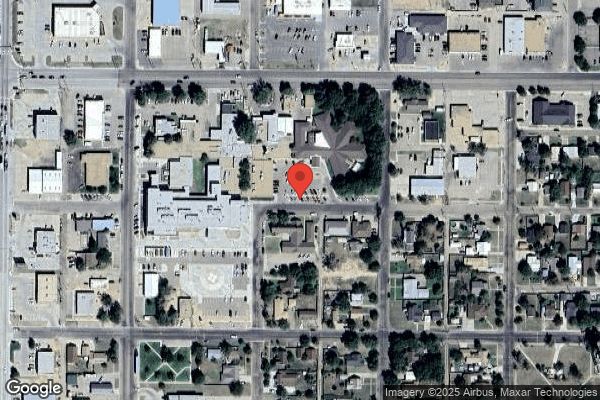
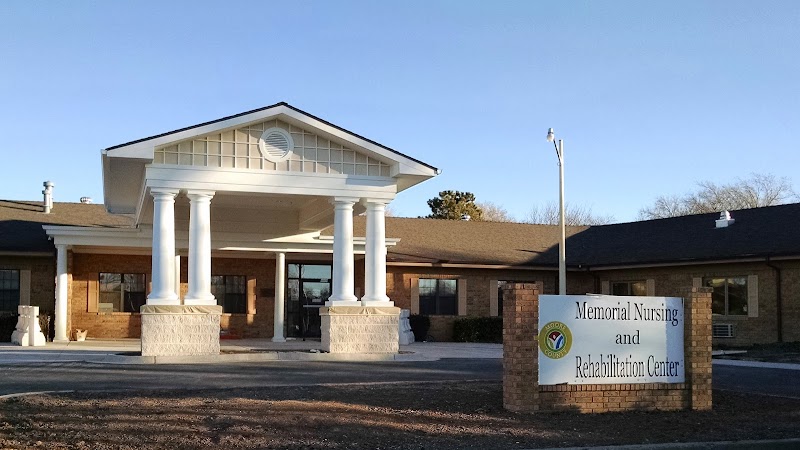
302 E 2ND ST, DUMAS, TX 79029 (806) 935-6500
Government - Hospital district 46 Beds Independent Data: November 2025
Trust Grade
80/100
#287 of 1168 in TX
Last Inspection: May 2024

Within standard 12-15 month inspection cycle. Federal law requires annual inspections.

Overview

Memorial Nursing and Rehabilitation Center in Dumas, Texas, has a Trust Grade of B+, indicating it is above average and generally recommended for care. It ranks #287 out of 1168 facilities in Texas, placing it in the top half, but is the second-best option in Moore County. The facility is improving, with concerns decreasing from two issues in 2023 to one in 2024. Staffing is a significant weakness, rated 1 out of 5 stars, but the turnover rate is impressively low at 0%, suggesting that the staff remains stable. While there have been no fines reported, recent inspections revealed some concerning incidents, such as unlabelled and expired medications found in storage and a failure to maintain proper infection control practices, which could risk resident health. Overall, Memorial Nursing and Rehabilitation Center has both commendable aspects and areas needing attention, making it essential for families to weigh these factors carefully.

Trust Score
B+
80/100
In Texas
#287/1168
Top 24%
Safety Record
Low Risk
No red flags
Inspections
Getting Better
2 → 1 violations
Staff Stability
○ Average
Turnover data not reported for this facility.
Penalties
✓ Good
No fines on record. Clean compliance history, better than most Texas facilities.
Skilled Nurses
○ Average
RN staffing data not reported for this facility.
Violations
✓ Good
Only 4 deficiencies on record. Cleaner than most facilities. Minor issues only.
★★★★☆
4.0
Overall Rating
★☆☆☆☆
1.0
Staff Levels
★★★☆☆
3.0
Care Quality
★★★★★
5.0
Inspection Score
Stable
2023: 2 issues
2024: 1 issues

The Good

  • Full Sprinkler Coverage · Fire safety systems throughout facility
  • No fines on record

Facility shows strength in fire safety.

The Bad

No Significant Concerns Identified

This facility shows no red flags. Among Texas's 100 nursing homes, only 0% achieve this.

The Ugly 4 deficiencies on record

May 2024 1 deficiency
CONCERN (D)

Potential for Harm - no one hurt, but risky conditions existed

Deficiency F0761 (Tag F0761)

Could have caused harm · This affected 1 resident

Based on observations, interviews, and record review, it was determined the facility failed to ensure drugs and biologicals were stored in locked compartments and labeled in accordance with currently ...

Read full inspector narrative →
Based on observations, interviews, and record review, it was determined the facility failed to ensure drugs and biologicals were stored in locked compartments and labeled in accordance with currently accepted professional principles and include the appropriate accessory and cautionary instructions, and the expiration date when applicable for 2 of 2 medication carts (Medication Cart-Hall200/300 and Medication cart 400/500) reviewed for medication storage. The facility failed to ensure that there no lose pills, expired medications, and labels were legible. -2.5 pills found in medication cart for Hall 200/300 -2 bottles of expired medications found in medication cart for Hall 400/500. Findings included: Observation on 05/13/24 at 09:15 AM revealed Medication cart for 200 and 300 Hall. 2.5 pills were found in the bottom of medication cart drawer, 1 pill was identified as Duloxetine and the 2nd was identified as Aspirin, and the 1/2 pill was unidentifiable by MA. Observation on 05/13/24 at 09:39 AM revealed the medication cart for Hall 400 and 500 revealed Resident 86's stool softener with an expiration date of 04/2024 and a bottle of Vitamin D3 had an expiration date of May 2023. MA did confirm that Resident #86 did receive the Vitamin D this morning. During an interview on 05/13/24 at 09:59 AM MA stated that a negative outcome for administering expired medications would be that the medication would not be as effective. MA stated that a negative outcome for having lose pills in the bottom of the medication cart drawers could possibly lead to a missed dose. During an interview on 05/15/24 at 02:09 PM ADON stated that a negative outcome for administering expired medications would be that the medication was not as potent. ADON also stated that lose pills found in the medication cart drawers it could lead to missed doses for residents later. During an interview on 05/15/24 at 02:12 PM LVN stated that a negative outcome for administering expired medication would be that the medication is less effective. LVN stated that the negative outcome for finding lose pills in the medication cart drawers was you don't know who they belong to, and this could cause issues later on. During an interview on 05/15/24 at 02:14 PM DON stated that a negative outcome for administering expired medications was they could have a negative effect on our residents and the medication will not be effective for them. DON stated that a negative outcome for finding lose pills in the medication cart drawers could lead to residents not possibly having the dose that the resident may need and could lead to a missed dose. Record review of facility provided policy titled, Storage of Medications, reviewed 03/2021, revealed the following: Policy Statement: Medications and biological are stored safely, securely, and properly, following manufacturer's recommendations or those of the supplier. .f. Medications labeled for individual residents are stored separately from the floor stock medications when not in the medication cart. Private pay OTC brought in by family will be properly. Labeled for resident and stored in med cart. .l. Outdated, contaminated, or deteriorated medications and those in containers that are cracked, soiled, or without secure closures are immediately removed from stock, disposed of according to procedures for medication disposal (section I.E), and reordered from the pharmacy (Section I.C.2), if a current order exists. Record review of facility provided policy titled, The Medication Labels, dated 09/2014, revealed the following: .8. Medication containers have soiled, damaged, incomplete, illegible, confusing, or makeshift labels are returned to the dispensing pharmacy for relabeling or destroyed in accordance with the medication destruction policy.
Apr 2023 2 deficiencies
CONCERN (D)

Potential for Harm - no one hurt, but risky conditions existed

Deficiency F0578 (Tag F0578)

Could have caused harm · This affected 1 resident

**NOTE- TERMS IN BRACKETS HAVE BEEN EDITED TO PROTECT CONFIDENTIALITY** Based on interview, and record review, the facility failed to ensure all residents had the right to formulate an advanced direct...

Read full inspector narrative →
**NOTE- TERMS IN BRACKETS HAVE BEEN EDITED TO PROTECT CONFIDENTIALITY** Based on interview, and record review, the facility failed to ensure all residents had the right to formulate an advanced directive for 3 (Resident #13, #22, and #23) of 16 residents reviewed for advanced directives. Resident #13 had a DNR in her record that was missing the date, printed signature, and license number for the physician who signed the form. Resident #22 had a DNR is her record that was missing the date for when the physician's signed the form and had no signature in the Two Witness section. Resident #23 had a DNR in her record that was missing the date for when the qualified relative signed the form. The facility's failure to ensure the accuracy of a residents advanced directive such as a DNR (Do Not Resuscitate), recognized under State law (whether statutory or as recognized by the courts of the State), relating to the provision of health care could place residents a risk for not receiving healthcare as per their or their legal representatives wishes. Findings include: Resident #13 Record review of the face sheet dated 3-13-2023 in the clinical record for Resident #13 revealed a [AGE] year-old female resident admitted to the facility originally on 12-26-2022 and readmitted on [DATE] with diagnoses to include congestive heart failure (a chronic condition in which the heart dose not pump blood as well as it should), squamous cell carcinoma of the skin (cancer that occurs in the outermost part of the epidermis-skin), and aneurysm (a ballooning or weakening area of an artery). Under the section Advanced Directives Resident #13 was listed as a DNR. Record review of the clinical record for Resident #13 revealed the last MDS completed was a significant change of condition dated 3-23-2023 with a BIMS of 99 indicating she was unable to complete the interview due to short term memory issues and she had a functionality of requiring one to two-person assistance with all activities. Record review of the clinical record for Resident #13 revealed a care plan with admission date of 12-26-2022 with the following: Code Status: DNR Record review of the clinical record for Resident #13 revealed an Order Summary Physician Order Report 3-1-2023 - 3-31-2023 with the following order: Code Status: Do Not Resuscitate. Start date of 12-26-2022 Record review of the clinical record for Resident #13 revealed a DNR dated 12-26-2022 (by Resident #13) with the following: Section-Physician Statement-there is no date of when the physician signed the document, no printed name for the physician, and no license number for the physician. Resident #22 Record review of the face sheet dated 3-10-2023 in the clinical record for Resident #22 revealed a [AGE] year-old female resident admitted to the facility originally on 7-23-2019 and readmitted on [DATE] with diagnoses to include chronic obstructive pulmonary disease (a group of lung diseases that block airflow and make it difficult to breath), dementia (a group of thinking and social symptoms that interferes with daily functioning), and basil cell carcinoma (cancer that begins in the lower part of the epidermis (the outer layer of the skin). Under the section Advanced Directives Resident #22 was listed as a DNR. Record review of the clinical record for Resident #22 revealed the last MDS completed was a quarterly dated 1-18-2023 with a BIMS of 5 indicating she was severely cognitively impaired and she and had a functionality of requiring one to two-person assistance with all activities. Record review of the clinical record for Resident #22 revealed a care plan that did not address her DNR status. Resident #22 opted to become a DNR 3-11-2023 and her care plan was not due to be updated. Record review of the clinical record for Resident #22 revealed an Order Summary Physician Order Report 4-1-2023 - 4-30-2023 with the following order: Code Status: Do Not Resuscitate. Start date of 3-10-2023 Record review of the clinical record for Resident #22 revealed a DNR dated 3-11-2023 (by Resident #22's POA) with the following: Section-Two Witnesses: There was no witness signatures and there was no notary witness signature. Section-Physician Statement-there was no date of when the physician signed the form. Resident #23 Record review of the face sheet dated 10-27-2022 in the clinical record for Resident #23 revealed a [AGE] year-old female resident admitted to the facility originally on 9-4-2019 and readmitted on [DATE] with diagnoses to include dementia (a group of thinking and social symptoms that interferes with daily functioning), amnesia (a general term to describe memory loss), and congestive heart failure (a chronic condition in which the heart dose not pump blood as well as it should). Under the section Advanced Directives Resident #23 was listed as a DNR. Record review of the clinical record for Resident #23 revealed the last MDS completed was a quarterly dated 1-18-2023 with a BIMS that could not be evaluated due to the resident was rarely/never understood and she and had a functionality of requiring one to two-person assistance with all activities. Record review of the clinical record for Resident #23 revealed a Care Plan Review Form dated 12-22-2022 that listed Resident #23's Code Status as DNR. Record review of the clinical record for Resident #23 revealed an Order Summary Physician Order Report 4-1-2023 - 4-30-2023 with the following order: Code Status: Do Not Resuscitate. Start date of 11-24-2021 Record review of the clinical record for Resident #23 revealed a DNR dated 11-24-2021 (by the physician) with the following: Section-Declaration of the qualified relative of the adult person who is incompetent of otherwise incapable of communication. There was no date of when the qualified relative signed the form. During an interview on 04-05-2023 at 08:39 AM LVN A (the nurse responsible for Resident #23 that shift) reported that if Resident #23 was not breathing and/or did not have a heart rate she was not going to do CPR, that she would verify by stethoscope that the resident was coding, then notify an RN for a second verification, then notify the family and physician. LVN A then reported that each resident had either a red or a green name tag on the door to their room, that if the tag is red then the resident is a DNR and if the name tag is green then the resident is a full code. LVN A verified that Resident #23 had a red name tag on her door that indicated Resident #23 was a DNR. LVN A then reviewed Resident #23's current DNR in Resident #23's chart and reported the DNR form was missing the date of when the responsible party signed the DNR form and therefore the DNR was not valid so Resident #23 was a full code and would require CPR. When asked what the consequences of not having the DNR form completed correctly could be, LVN A reported that resident wishes would not be followed. During an interview on 04-05-2023 at 08:48 AM LVN B (the nurse responsible for Resident #13 and Resident #22 that shift) reported that if either resident was found without a heart rate and/or breathing LVN B would verify with her stethoscope for two minutes that the resident did not have a heart rate or breathing, if they were a DNR LVN B would not start CPR and notify the family and physician, if they were a full code then LVM B would start CPR. LVN B verified that both residents had a red name tag on their doors and were therefore DNR's. LVN B reviewed each residents charts which had DNR stickers on the outside of the chart indicating they were DNR's. LVN B reported that she would not start CPR after verifying that each resident was listed as a DNR. LVN B was asked to review each resident DNR form in their charts and LVN B reported that Resident #13 did not have the correct Physician information to include the date and Resident #22 did not have the correct Physician information to include the date. LVN B reported that neither resident DNR's were valid and therefore both residents would be full codes and require CPR. When asked what the consequences could be if the DNR form was completed correctly, LVN B reported that staff could follow the code status incorrectly. During an interview on 04-05-2023 at 08:55 AM the BOM verified that she was responsible for ensuring the DNR's were completed and in the resident records. The BOM pulled the three original DNR's for Resident #13, #22, and #23 from their records and verified that all three were incomplete. The BOM reported that the DNR status was reviewed with each resident at each care plan conference, but the actual DNR form was not reviewed. The BOM reported that they would start reviewing each DNR form at the care plan conference from this point forward to ensure that they were complete and accurate. During an interview on 04-05-2023 at 09:36 AM the DON verified that Resident #13, #22, and #23's DNR's were not filled out correctly and were not valid DNR's. The DON reported that DNR trainings were completed by herself or a staff preceptor when a staff member was hired. The DON verified that she or the BOM verify that DNR's were complete and accurate and that Resident #13, #22, and #23's DNR's were just missed. The DON reported that all residents are asked at each care plan meeting what they wish their could status to be but that the DNR forms are not reviewed. The DON reported that they will start checking each DNR at the resident's care plan meeting so they can ensure that they are filled out correctly. The DON reported that if a DNR is not filled out correctly then staff will not do CPR when they should, and resident wishes may not be followed. Record review of facility provided policy titled Advanced Care Planning Patient Self-Determination Act, updated 3-11-2022, revealed the following: Documentation: 7. Advanced directives will be reviewed by the admitting person in the business office as well as the admitting nurse in order to ensure the document is complete, singed, and dated by all required parties to include physician. Record review of OUT-OF-HOSPITAL DO-NOT-RESUSCITATE (OOH-DNR) ORDER-TEXAS DEPARTMENT OF STATE HEALTH SERVICES, undated revealed the following: -The original or a copy of a fully and properly completed OOH-DNR Order or the presence of an OOH-DNR device on a person is sufficient evidence of the existence of the original OOH-DNR Order and either one shall be honored by responding health care professional
CONCERN (D)

Potential for Harm - no one hurt, but risky conditions existed

Infection Control (Tag F0880)

Could have caused harm · This affected 1 resident

Based on observation, interview, and record review, the facility failed to maintain an infection prevention and control program designed to provide a safe, sanitary, and comfortable environment and to...

Read full inspector narrative →
Based on observation, interview, and record review, the facility failed to maintain an infection prevention and control program designed to provide a safe, sanitary, and comfortable environment and to help prevent the development and transmission of communicable diseases and infections for 1 (the ICP) of 5 staff observed for resident care. -The ICP (Infection Control Preventionist) failed to clean the glucometer machine (an instrument for measuring the concentration of glucose in the blood) between resident use. This deficient practice has the potential to affect residents in the facility receiving diabetic care by exposing them to care that could lead to the spread of viral infections, secondary infections, tissue breakdown, communicable diseases, and feelings of isolation related to poor hygiene. Findings include: During an observation on 04/03/23 at 11:57 AM the ICP performed a blood sugar test on Resident #10. The ICP did not clean the glucometer machine (an instrument for measuring the concentration of glucose in the blood) prior to testing Resident #10's blood. The ICP then docked the glucometer machine to transmit the result to the pharmacy. The ICP then removed the glucometer machine from the docking station and tested Resident #20's blood sugar, then the ICP redocked the glucometer machine without cleaning it. During an interview on 04/03/23 at 12:02 PM the ICP reported that she did not clean the glucometer machine between testing Resident #10, Resident #20, and before docking the glucometer machine after testing the last resident. The ICP verified that the glucometer machine did need to be cleaned. The ICP reported that if the glucometer machine is not cleaned properly then cross contamination can result between residents. The ICP verified that it is her responsibility to educate all nursing staff on infection control and prevention. During an interview with 04/05/23 at 09:59 AM the DON reported that when staff complete blood sugar testing they should complete hand hygiene and they should clean the glucometer machine between each residents testing. The DON reported that if staff do not clean the glucometer machine between each resident testing, then staff can spread infection from blood or other sources because you do not know what else is in a resident's room. Record review of the facility provided policy titled Infection Control amended 12-28-2021 revealed the following: Rules: 5. All resident equipment will be sanitized by the staff when used with an approved germicidal before and after use, such as but not limited to -Blood Glucose Monitors. Record review of the facility provided training titled Accu-Check Inform II MNRC Training Checklist undated revealed the following: -Clean with Oxivir 1 Wipes daily, between each patient, and after every use.
Feb 2022 1 deficiency
CONCERN (D)

Potential for Harm - no one hurt, but risky conditions existed

Deficiency F0578 (Tag F0578)

Could have caused harm · This affected 1 resident

**NOTE- TERMS IN BRACKETS HAVE BEEN EDITED TO PROTECT CONFIDENTIALITY** Based on observation, interview and record review, the facility failed to ensure all residents had the right to formulate an adv...

Read full inspector narrative →
**NOTE- TERMS IN BRACKETS HAVE BEEN EDITED TO PROTECT CONFIDENTIALITY** Based on observation, interview and record review, the facility failed to ensure all residents had the right to formulate an advance directive for one of 14 (Resident #3) residents reviewed for DNR orders. Resident #3 had an OOH-DNR order that was not completed as it was not signed or dated by a physician. These failures could place residents with DNR orders at risk for receiving, or not receiving, life-saving measures that align with their medical preferences. Findings include: Record review of Resident #3's face sheet, dated [DATE], revealed a [AGE] year-old male admitted to the facility on [DATE] with diagnoses that included, but were not limited to, Alzheimer's disease (progressive disease that destroys memory and other important mental functions), chronic kidney disease (damaged kidneys that are unable to filter blood appropriately), schizophrenia (serious mental disorder in which people abnormally interpret reality), and hypertension (high blood pressure). Record review of Resident #3's quarterly MDS, dated [DATE], revealed a BIMS score of 03 out of 15 which indicated his cognition was severely impaired. He required total dependence with one-person assistance with bed mobility and personal hygiene, total dependence with two-person assistance with transferring and toilet use, extensive one-person assistance with dressing, and supervision with set-up help with eating. Record review of Resident #3's care plan, dated [DATE], revealed, in part: Code Statue DNR .Family desires to continue DNR . Record review of Resident #3's physician's orders revealed, in part: Code Status: DO NOT RESUSCITATE, dated [DATE]. Record review of Resident #3's chart revealed a document titled TEXAS DEPARTMENT OF HEALTH STANDARD OUT-OF-HOSPITAL DO-NOT-RESUSCITATE ORDER, dated [DATE], which revealed in Section 2A Patient's Statement: I, the undersigned, am capable of making an informed decision regarding the withholding or withdrawing of CPR, including the treatments listed below, and I direct that none of the following resuscitation measures be initiated or continued. Cardiopulmonary resuscitation (CPR), Transcutaneous Cardiac Pacing, Defibrillation, Advanced Airway Management, Artificial Ventilation . Section 2A revealed Resident #3's signature. There was no printed or typed name for Resident #3 or date in Section 2A, the lines for these were left blank. Section 4 revealed PHYSICIAN'S STATEMENT: I, the undersigned, am the attending physician of the patient named above. I have noted the existence of this order in the patient's medical records, and I direct out-of-hospital heath care professionals to comply with this order as presented. There was no physician signature, physician printed name, license number or date in this section; the lines were left blank. The last section of the document revealed, ALL PERSONS WHO SIGNED MUST SIGN HERE: This document has been properly completed. There was no physician signature listed on the line that read, Signature of Attending Physician. During an interview on [DATE] at 11:23 AM, SW confirmed she assisted residents with completing DNR orders. She stated that Section 4, Physician's Statement should have been completed for Resident #3's DNR order, and it would have been best for the resident's printed name and date to have been completed as well in Section 2A, Patient's Statement. SW stated if the physician statement section was not completed, the physician may not have been in the loop with what the resident's medical wishes were. SW stated if there was some sort of conflict or question among the resident's family regarding the resident's end-of-life wishes, if the resident did not have his faculties, the physician may not have been able to support the resident's wishes. With the DNR order not being signed by the physician, in an emergent situation, SW stated, depending on who was caring for the resident that day, there could have been question about what the resident's end-of-life wishes were and there could have been the potential for him not having his medical wishes being met (to initiate emergency treatment or not). SW confirmed that she had attended training regarding DNR orders before; she stated that since she was not a lawyer, she was told she could not fill DNR orders out for residents, but she did do the running for them to assist with getting the appropriate signatures. When asked what she would have done if she received an OOH DNR that was not fully completed for a newly admitted resident, she stated she would have had the resident or resident family complete a new one. Record review of facility provided policy titled, Advanced Care Planning Patient Self-Determination Act, dated [DATE], revealed, in part: Policy Statement: [facility name] respects the right of competent individuals or their designated representatives to control decisions related to their medical care in accordance with state law. Competent residents have the right to execute and document advanced directives, such as a Living Will or Health Care Power of Attorney. It is the policy of [facility name] to honor Advanced Directives which are properly executed in accordance with state law. A patient's attending physician has primary responsibility for directing the care of the patient. No request for the rendering, withholding, termination of treatment and cares will be honored by the facility without a physician's order. Rules: .B. State Law [Facility name] social worker or designee will review the resident's advanced directive. This review will not constitute a representation that such advanced directive complies with requirements of state law. The facility will comply with the requirements of state law governing advanced directives. C. Documentation .3. Advanced Directive are written documents that state choices for health care/or names someone to make those choices. These may include: a. Out of Hospital Do Not Resuscitate Order .G. Request by Resident to Execute and [sic] Advanced Directive Social worker will assist the resident or resident representative in obtaining the appropriate forms and referrals. Record review of facility provided document titled, Frequently Asked Questions about Advanced Care Planning, undated, that was provided to residents upon admission, revealed, in part: .Other Questions about Hospitals and Nursing Facilities and Treatment at the End of Life .What is an Out-of-Hospital Do Not Resuscitate Order (OOHDNR)? This form is for use when you are not in the hospital. It lets you tell health care workers, including Emergency Medical Services (EMS) workers, NOT to do some things if you stop breathing or your heart stops. If you don't have one of these forms filled out, EMS workers will ALWAYS give you CPR or advanced life support even if your advance care planning forms say not to. You should complete this form as well as the Directive to Physicians and Family or Surrogates and the Medical Power of Attorney form if you don't want CPR.
Understanding Severity Codes (click to expand)
Life-Threatening (Immediate Jeopardy)
J - Isolated K - Pattern L - Widespread
Actual Harm
G - Isolated H - Pattern I - Widespread
Potential for Harm
D - Isolated E - Pattern F - Widespread
No Harm (Minor)
A - Isolated B - Pattern C - Widespread

Questions to Ask on Your Visit

  • "Can I speak with families of current residents?"
  • "What's your RN coverage like on weekends and overnight?"

Our Honest Assessment

Strengths
  • • Grade B+ (80/100). Above average facility, better than most options in Texas.
  • • No major safety red flags. No abuse findings, life-threatening violations, or SFF status.
  • • No fines on record. Clean compliance history, better than most Texas facilities.
  • • Only 4 deficiencies on record. Cleaner than most facilities. Minor issues only.
Concerns
  • • No significant concerns identified. This facility shows no red flags across CMS ratings, staff turnover, or federal penalties.
Bottom line: Generally positive indicators. Standard due diligence and a personal visit recommended.

About This Facility

What is Memorial's CMS Rating?

CMS assigns MEMORIAL NURSING AND REHABILITATION CENTER an overall rating of 4 out of 5 stars, which is considered above average nationally. Within Texas, this rating places the facility higher than 99% of the state's 100 nursing homes. This rating reflects solid performance across the metrics CMS uses to evaluate nursing home quality.
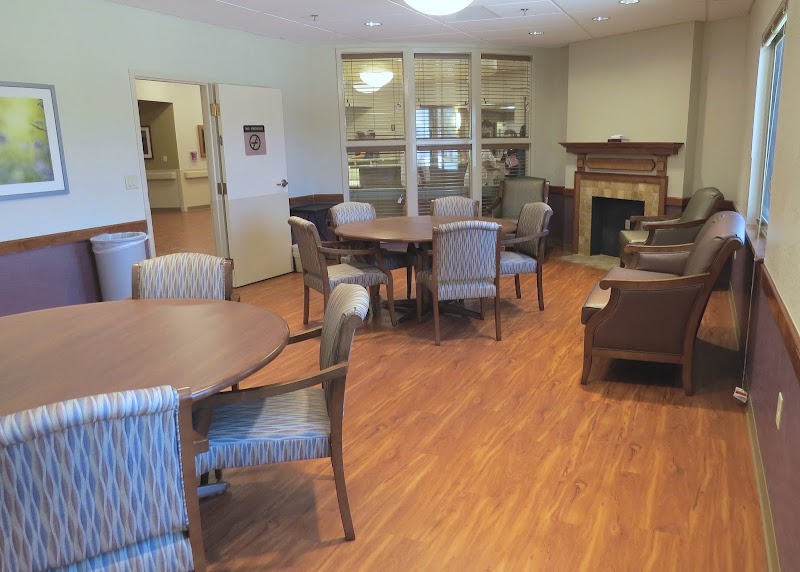
How is Memorial Staffed?

CMS rates MEMORIAL NURSING AND REHABILITATION CENTER's staffing level at 1 out of 5 stars, which is much below average compared to other nursing homes.

What Have Inspectors Found at Memorial?

State health inspectors documented 4 deficiencies at MEMORIAL NURSING AND REHABILITATION CENTER during 2022 to 2024. These included: 4 with potential for harm.

Who Owns and Operates Memorial?

MEMORIAL NURSING AND REHABILITATION CENTER is owned by a government entity. Government-operated facilities are typically run by state, county, or municipal agencies. The facility operates independently rather than as part of a larger chain. With 46 certified beds and approximately 30 residents (about 65% occupancy), it is a smaller facility located in DUMAS, Texas.
How Does Memorial Compare to Other Texas Nursing Homes?

Compared to the 100 nursing homes in Texas, MEMORIAL NURSING AND REHABILITATION CENTER's overall rating (4 stars) is above the state average of 2.8 and health inspection rating (5 stars) is much above the national benchmark.

What Should Families Ask When Visiting Memorial?

Based on this facility's data, families visiting should ask: "Can you walk me through typical staffing levels on day, evening, and night shifts?" "Can I visit during a mealtime to observe dining assistance and food quality?" "How do you handle medical emergencies, and what is your hospital transfer rate?" "Can I speak with family members of current residents about their experience?" These questions are particularly relevant given the below-average staffing rating.

Is Memorial Safe?

Based on CMS inspection data, MEMORIAL NURSING AND REHABILITATION CENTER has a clean safety record: no substantiated abuse findings (meaning no confirmed cases of resident harm), no Immediate Jeopardy citations (the most serious violation level indicating risk of serious injury or death), and is not on the Special Focus Facility watch list (a federal program monitoring the lowest-performing 1% of nursing homes). The facility has a 4-star overall rating and ranks #1 of 100 nursing homes in Texas. While no facility is perfect, families should still ask about staff-to-resident ratios and recent inspection results during their visit.

Do Nurses at Memorial Stick Around?

MEMORIAL NURSING AND REHABILITATION CENTER has not reported staff turnover data to CMS. Staff turnover matters because consistent caregivers learn residents' individual needs, medications, and preferences. When staff frequently change, this institutional knowledge is lost. Families should ask the facility directly about their staff retention rates and average employee tenure.

Was Memorial Ever Fined?

MEMORIAL NURSING AND REHABILITATION CENTER has no federal fines on record. CMS issues fines when nursing homes fail to meet care standards or don't correct problems found during inspections. The absence of fines suggests the facility has either maintained compliance or corrected any issues before penalties were assessed. This is a positive indicator, though families should still review recent inspection reports for the full picture.

Is Memorial on Any Federal Watch List?

MEMORIAL NURSING AND REHABILITATION CENTER is not on any federal watch list. The most significant is the Special Focus Facility (SFF) program, which identifies the bottom 1% of nursing homes nationally based on persistent, serious quality problems. Not being on this list means the facility has avoided the pattern of deficiencies that triggers enhanced federal oversight. This is a positive indicator, though families should still review the facility's inspection history directly.