PRAIRIE MEADOWS REHABILITATION AND HEALTHCARE CENT
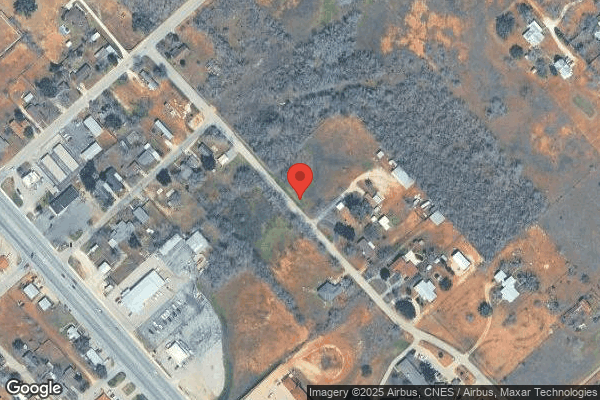
1615 ELEVENTH ST, FLORESVILLE, TX 78114 (830) 216-7090
For profit - Limited Liability company 120 Beds NEXION HEALTH Data: November 2025 1 Immediate Jeopardy citation
Trust Grade
46/100
#808 of 1168 in TX
Last Inspection: August 2025

Inspected within the last 6 months. Data reflects current conditions.

Overview

Prairie Meadows Rehabilitation and Healthcare Center has received a Trust Grade of D, indicating below-average performance with some concerning issues. It ranks #808 out of 1168 facilities in Texas, placing it in the bottom half, and is #3 out of 4 in Wilson County, meaning only one local option is better. However, the facility is showing improvement, as the number of issues reported has decreased from 8 in 2024 to 2 in 2025. Staffing is a relative strength with a 3/5 star rating and a turnover rate of 39%, which is better than the state average, indicating that staff members tend to stay longer. Despite these strengths, there are significant weaknesses, including a critical incident where a resident fell and sustained a serious injury due to inadequate supervision and a lack of assistive devices. Additionally, there were concerns about the cleanliness of the environment, with issues like rusty vents and a malfunctioning toilet. The facility also faced a deficiency related to the qualifications of its Director of Food and Nutrition Services, raising concerns about the quality of food and nutrition for residents. Overall, while there are some positive trends, families should weigh these strengths against the highlighted concerns when considering this nursing home.

Trust Score
D
46/100
In Texas
#808/1168
Bottom 31%
Safety Record
High Risk
Review needed
Inspections
Getting Better
8 → 2 violations
Staff Stability
○ Average
39% turnover. Near Texas's 48% average. Typical for the industry.
Penalties
✓ Good
$13,627 in fines. Lower than most Texas facilities. Relatively clean record.
Skilled Nurses
⚠ Watch
Each resident gets only 17 minutes of Registered Nurse (RN) attention daily — below average for Texas. Fewer RN minutes means fewer trained eyes watching for problems.
Violations
⚠ Watch
12 deficiencies on record. Higher than average. Multiple issues found across inspections.
★★☆☆☆
2.0
Overall Rating
★★★☆☆
3.0
Staff Levels
★★★★☆
4.0
Care Quality
★★☆☆☆
2.0
Inspection Score
Stable
2024: 8 issues
2025: 2 issues

The Good

  • 4-Star Quality Measures · Strong clinical quality outcomes
  • Full Sprinkler Coverage · Fire safety systems throughout facility
  • No fines on record
  • Staff turnover below average (39%)

    9 points below Texas average of 48%

Facility shows strength in quality measures, fire safety.

The Bad

2-Star Overall Rating

Below Texas average (2.8)

Below average - review inspection findings carefully

Staff Turnover: 39%

Near Texas avg (46%)

Typical for the industry

Federal Fines: $13,627

Below median ($33,413)

Minor penalties assessed

Chain: NEXION HEALTH

Part of a multi-facility chain

Ask about local staffing decisions and management

The Ugly 12 deficiencies on record

1 life-threatening
Jun 2025 2 deficiencies
CONCERN (D) 📢 Someone Reported This

A family member, employee, or ombudsman was alarmed enough to file a formal complaint

Potential for Harm - no one hurt, but risky conditions existed

Deficiency F0839 (Tag F0839)

Could have caused harm · This affected 1 resident

**NOTE- TERMS IN BRACKETS HAVE BEEN EDITED TO PROTECT CONFIDENTIALITY** Based on interview and record review, the facility failed to ensure professional staff were licensed, certified, or registered i...

Read full inspector narrative →
**NOTE- TERMS IN BRACKETS HAVE BEEN EDITED TO PROTECT CONFIDENTIALITY** Based on interview and record review, the facility failed to ensure professional staff were licensed, certified, or registered in accordance with applicable state laws for 1 of 4 (LPN A) staff reviewed for staff qualifications. The facility failed to ensure LPN A's nursing license was not expired between [DATE] and [DATE]. This failure could place residents at risk for not receiving nursing services by a licensed nurse. The findings included: Record review of the staff roster for the facility indicated LPN A had been employed at the facility since [DATE]. Record review of the Texas Board of Nursing license verification, dated [DATE], indicated LPN A was originally issued a LVN/LPN license on [DATE] and current expiration date was [DATE]. During an interview on [DATE] at 04:26 p.m., the ADMIN revealed LPN A was notified of LPN A's expired license on [DATE]. LPN A was suspended until her license was renewed. The ADMIN revealed LPN A had only worked one or two shifts between Saturday, [DATE] and Friday, [DATE]. During an interview on [DATE] at 05:16 p.m., LPN A revealed she had just been notified by the facility her license was expired. She revealed she had set an alarm to re-renew on [DATE] but must have just forgotten to re-apply. She revealed she worked two shifts since [DATE], the date her licensed expired. She revealed the facility provided continuing education which ensured her continuing education was sufficient for her re-application. She revealed she re-applied the same day she was notified her license was expired, [DATE]. She revealed she did not believe her expired license impacted her ability to do her job because her education was current. Record review of the facility's policy titled, Guidelines for Credentialing Staff, dated revised 10/2022, reflected License and Certification Verification 1. All candidates extended an offer of employment for a certified or licensed position will be credential based on their credentials for the role. a. Nurses will be verified through the Board of Nursing .i. In addition, all nurses will be verified through Nursys, a national repository database, to check for board orders and out of state licensure status .4. Review all licenses and certifications monthly communicating upcoming expiration dates with the associate. 5. If the certification or license is not active by the expiration date the associate will be suspended without pay for up to 2 weeks, but no longer than 30 days, until the certification or license is reinstated.
CONCERN (D) 📢 Someone Reported This

A family member, employee, or ombudsman was alarmed enough to file a formal complaint

Potential for Harm - no one hurt, but risky conditions existed

Medical Records (Tag F0842)

Could have caused harm · This affected 1 resident

**NOTE- TERMS IN BRACKETS HAVE BEEN EDITED TO PROTECT CONFIDENTIALITY** Based on observation, interviews, and record reviews, the facility failed to ensure, in accordance with accepted professional st...

Read full inspector narrative →
**NOTE- TERMS IN BRACKETS HAVE BEEN EDITED TO PROTECT CONFIDENTIALITY** Based on observation, interviews, and record reviews, the facility failed to ensure, in accordance with accepted professional standards and practices, medical records were maintained on each resident that were complete and accurately documented for 1 of 3 residents (Resident #1) reviewed for clinical records. The facility failed to ensure Resident #1's weights were documented in his medical record for 4 of 5 weeks (weeks of 03/13/2025, 03/20/2025, 03/27/2025, and 04/03/2025) reviewed. This failure could place residents at risk of not receiving the care and services needed. Findings included: Record review of Resident #1's admission Record, dated 06/03/2025, reflected an [AGE] year-old male. He was admitted to the facility on [DATE]. Record review of Resident #1's Diagnosis Report, dated 06/03/2025, reflected a principal diagnosis of cerebral infarction (a disruption in the brain's blood flow) due to embolism (a clot related to foreign material that reduces blood flow) of right anterior cerebral artery (artery that supplies blood to the front part of the brain), an admission diagnosis of muscle wasting and atrophy (shrinking of muscle or nerve tissue), and an admission diagnosis of lack of coordination. Record review of Resident #1's Quarterly MDS, dated [DATE] and signed as completed on 05/21/2025, reflected assessment observation end date of 05/08/2025. Resident #1 had a BIMS score of 14, which indicated he was cognitively intact. He required partial/moderate assistance to roll left and right on the bed and substantial/maximal assistance for transferring from lying to sitting on the side of the bed or sitting to standing. He was documented as not having had or it was unknown if he had weight loss or weight gain in the last month or 10% loss or gain in the last 6 months. Record review of Resident #1's Order Recap Report for Order Date: 03/01/2025- 06/30/2025, dated 06/03/2025, did not reflect an order for weights to be taken. Record review of Resident #1's Weight Summary, accessed 06/06/2025, reflected Resident #1's initial weight (193.8 pounds) was documented as dated 03/06/2025 at 11:03 a.m. Resident #1's second weight (179.0 pounds) was documented as dated 04/24/2025 at 02:44 a.m. Resident #1's third weight (184.0 pounds) was documented as dated 04/24/2025 at 12:50 p.m. Resident #1's fourth weight (177.0 pounds) was documented as dated 04/30/2025 at 01:02 p.m. Record review of [facility name] Weights and Vitals Exceptions, dated 06/03/2025, reflected Resident #1 triggered for a 7.5% weight loss change on 04/24/2025 and on 04/30/2025 when the weights documented on those dates were compared to Resident #1's weight documented on 03/06/2025. Record review of Resident #1's Progress Notes from 03/01/2025 to 04/24/2025 did not reveal notes regarding Resident #1's weights or regarding alternative documentation of Resident #1's weights. Record review of Resident #1's Nutritional Therapy Evaluation, dated 03/17/2025, reflected Resident #1's meal intake varied from 50- 100%, he was at moderate risk for malnutrition, was obese, and was at risk for weight changes due to having edema (swelling caused by excess fluid trapped in the body's tissues) and was taking a diuretic (type of medication that increases urine production to help reduce fluid buildup and lower blood pressure). During an interview with Resident #1 on 06/03/2025 at 03:36 p.m., Resident #1 revealed he did not know if he had lost weight since his admission to the facility. He revealed he believed he could probably use some weight loss. During an interview on 06/06/2025 at 04:12 p.m., the DON revealed resident weights were to be taken when they first admitted , weekly for up to four weeks, and then monthly if the resident's weight was stable. She revealed residents continued to be weighed weekly if their weight was unstable. She revealed Resident #1 was weighed, but she would have to look for the weights documented on paper. She revealed the only reason for his weights to not be in the EMR was if she had forgotten to enter them into the system. She revealed at the time, she was working on her own for this task, since the ADON had not started yet. She revealed she did not believe the resident's care would have been impacted by his weights not having been recorded in the EMR. She revealed the nurses would have still had known Resident #1's weight because they received copies of the weights documented on paper. During an interview on 06/06/2025 at 04:37 p.m., the ADMIN revealed weights not entered into the EMR would impact how the facility determined if a resident had weight loss or weight gain. She revealed the reports the facility ran for weight triggered, weight loss and weight gain, used an algorithm based on the weights entered into the EMR. Record review of the facility's handwritten weight documentation, received 06/06/2025, reflected: - Weekly Weights, dated 03/10/2025, included Resident #1's name and a weight, - documentation listing resident names and weights, dated 03/19/2025, included Resident #1's name and a weight, - March Weights, undated, included Resident #1's name and a weight, and - Weekly Weights, dated April 2025, included Resident #1's name and a weight. Record review of the facility's policy, Weight Management, dated reviewed 12/09/2024, reflected: Procedure .2. New admits will be weighed weekly for the first 4 weeks to establish baseline weights, after which they will be weighed monthly .4. Facility will ensure that weights are recorded in the EMR and use paper documentation if the EMR system is down.
Nov 2024 3 deficiencies 1 IJ
CRITICAL (J) 📢 Someone Reported This

A family member, employee, or ombudsman was alarmed enough to file a formal complaint

Immediate Jeopardy (IJ) - the most serious Medicare violation

Accident Prevention (Tag F0689)

Someone could have died · This affected 1 resident

**NOTE- TERMS IN BRACKETS HAVE BEEN EDITED TO PROTECT CONFIDENTIALITY** Based on observation, interview, and record review the facility failed to ensure that each resident received adequate supervisio...

Read full inspector narrative →
**NOTE- TERMS IN BRACKETS HAVE BEEN EDITED TO PROTECT CONFIDENTIALITY** Based on observation, interview, and record review the facility failed to ensure that each resident received adequate supervision and assistance devices to prevent accidents for 1 (Resident #1) of 6 residents reviewed for accidents and supervision, in that: The facility failed to provide adequate supervision and assistive devices to prevent accidents when Resident #1 was confused and required assistance to ambulate. A fall mat was not in place and the bed was not in a low position, and Resident #1 fell out of bed and sustained a left femoral neck hip fracture. An IJ was identified on 11/26/2024. The IJ template was provided to the facility on [DATE] at 4:50 PM. While the IJ was removed on 11/27/2024, the facility remained out of compliance at a scope of isolated and a severity level of potential for more than minimal harm because the facility needed to monitor the implementation of the plan of removal. These failures placed the resident at risk for accidents and serious injuries. Findings included: Record review of Resident #1's admission Record, dated 11/07/2024, indicated Resident #1 was initially admitted on [DATE] and re-admitted on [DATE]. He was a [AGE] year-old male. He was noted to have discharged on 11/01/2024 to an acute care hospital, Hospital A. His diagnoses included: altered mental status, delirium (a change in mental abilities that results in confused thinking and a lack of awareness of someone's surroundings) due to known physiological condition, unspecified lack of coordination, age-related osteoporosis (brittle and fragile bones), and spina bifida (a birth defect that occurs when the spine and spinal cord do not form properly). Record review of Resident #1's Quarterly MDS assessment, dated 10/07/2024, indicated Resident #1 had a BIMS score of 04 indicating he was severely cognitively impaired. Resident #1 required substantial/maximal assistance with rolling left or right from lying on his back in bed and was dependent on staff assistance for chair/bed-to-chair transfers. He used a wheelchair; however, his ability to use was not attempted due to his medical condition or safety concerns. Record review of Resident #1's Care Plan, accessed 11/07/2024, indicated the following focuses: - The resident has had an actual fall with no injury r/t Poor Balance, Unsteady gait, initiated on 05/24/2023 and revised on 09/18/2023. Interventions/Tasks for the focus included: - 1:1 inservice [sic] with cna [sic] and nurse on fall mat for resident, initiated and created 11/02/2024, and - fall mat, initiated and created on 09/18/2023. - The resident is at risk for falls r/t Deconditioning, Gait/balance problems, Incontinence, Psychoactive drug use, initiated on 10/27/2023 and revised on 10/27/2023. Interventions/Tasks for the focus included: - Follow facility fall protocol., initiated and created 10/27/2023, and - The resident needs a safe environment with: (even floors free from spills and/or clutter; adequate, glare-free light; a working and reachable call light, the bed in low position at night; personal items within reach), initiated, created, and revised 10/27/2023. Record review of Resident #1's Progress Note, dated 11/01/2024 at 10:39 p.m. by LPN B, revealed Note Text: went into room to check on resident. resident lying on floor on left side with legs crossed no internal or external rotation of lower extremities no active bleeding asked resident what happened resident stated I was trying to get in the car and fell to floor .sending to ER due to resident complaint of left side hurting . [sic]. Record review of Resident #1's Progress Note, dated 11/02/2024 at 04:49 a.m. by LPN B, revealed [hospital A] called [hospital A staff member name] stated impacted left femoral neck hip fracture [a fracture due to high-impact force in the neck of the left femur] notified DON and administrator of call from hospital called [facility's contracted physician group] talked with [name of nurse working with facility's contracted physician group] of new diagnosis impacted left femoral hip fracture and [hospital A] is moving resident to another hospital for ortho [orthopedics]. Record review of Resident #1's hospital documentation from Hospital A, dated 11/04/2024 revealed a diagnostic report on a CT scan of Resident #1's left hip without contrast. The report, dated 11/02/2024, revealed FINDINGS: Impacted left femoral neck fracture .IMPRESSION: 1. Impacted left femoral neck fracture. During an interview with CNA C on 11/07/2024 at 05:47 a.m., CNA C stated Resident #1's fall occurred close to 10:00 p.m. She stated that on the night of Resident #1's fall (11/01/2024), it was the first time she had seen Resident #1 that confused. She stated, every time I passed [his room], he was talking to someone that he said was sitting in the chair [chair in his room]. CNA C stated staff repeatedly tried to redirect Resident #1 and explain that he was the only person in his room. CNA C reported that she was the third staff member to respond after Resident #1 had fallen, and when staff asked him why he had gotten out of bed, he would reply that he was getting in his car to leave. CNA C reported Resident #1 was not on a fall mat when she observed him on the floor after his fall. CNA C stated she was not aware of Resident #1 having a fall mat but had heard later that he had fall mats. CNA C stated that due to staff knowing Resident #1 was confused, the staff were walking the hall consistently. During an interview with LPN B on 11/07/2024 at 02:38 p.m., LPN B stated she initially found Resident #1 on 11/01/2024 after his fall. LPN B stated Resident #1 said he was trying to get into the car and lost his footing. LPN B stated when she went into Resident #1's room after his fall, she observed that Resident #1 had moved his bedside table away from his bed. LPN B stated she didn't know if there was a fall mat in Resident #1's room but had observed that Resident #1 had not fallen onto a fall mat. LPN B stated she was unable to say if the fall mat had also been moved by Resident #1 because she was focused on providing care for Resident #1. LPN B stated staff would put Resident #1's bed in the low position; however, he would use his own bed controls and raise the bed back up. LPN B stated Resident #1 had been provided education about his safety, but he preferred to exercise his right to control his bed height. During an interview with the DON on 11/07/2024 at 04:52 p.m., the DON stated LPN B called and let her know Resident #1 had fallen around 09:48 p.m. on 11/01/2024. The DON stated staff did not report that they saw a fall mat in Resident #1's room, but staff had reported that Resident #1 had pushed items away from his bed prior to falling. The DON stated she was not notified that Resident #1 had fallen on a fall mat, but he was expected to have a fall mat in his room. During an interview with Resident #1's family member on 11/07/2024 at 06:22 p.m., the family member revealed Resident #1 was currently intubated at a local hospital following a partial hip replacement that occurred on the morning of 11/07/2024. The family member indicated Resident #1 was not available for interview or visitation at that time. During an interview with the DON on 11/08/2024 at 10:38 a.m., the DON stated she did a re-enactment yesterday, 11/07/2024 with LPN B and CNA C on Resident #1's fall. The DON stated CNA C told her that she had completed rounds with Resident #1 about 15 minutes prior to his fall (on 11/01/2024). The DON stated CNA C recalled that Resident #1 had his fall mat in place with his bed side table over him, as he preferred. The DON stated CNA C reported Resident #1's bed was in a lower position, but Resident #1 moved it back in a higher position himself after care was provided. The DON revealed LPN B recalled going into Resident #1's room to provide a medication and remembered almost tripping over Resident #1's fall mat. LPN B had believed that the fall mat must have moved when Resident #1 had pushed his bedside table away from his bed. LPN B revealed that this occurred at the same time as her finding Resident #1 on the floor and had immediately started providing emergency care. During an interview with CNA C on 11/08/2024 at 01:54 p.m., CNA C revealed she provided Resident #1 care prior to his fall on 11/01/2024. She stated she provided care, lowered his bed, and placed the bedside table and fall mat in place. CNA C revealed that as she was leaving Resident #1's room, he was raising his bed back up. CNA C stated she turned to him and reminded him of safety, to lower it, but said that he replied, I know but I want it up. CNA C stated Resident #1's bedside table and fall mat were in place when she left his room, but fifteen (15) minutes later the nurse found him on the floor and at that time, the bedside table and mat had been moved. Record review of facility policy Fall Prevention Program, dated as last reviewed 06/10/2024, revealed Policy: . specific interventions will be implemented to minimize falls, avoid repeat falls and minimize falls resulting in significant injury. Definition: A fall can be defined as: when a resident is found on the floor; a resident slides to the floor unassisted; a resident rolls off the bed/chair onto the floor, including bedside mat; and a resident falls off any apparatus/equipment used for transfers. A. Procedure .2. Residents identified as being at risk will have interventions identified in their plan of care to minimize falls. 3. The following is a list of commonly used interventions that may be considered to minimize falls and injury. .c. Bed maintained in low position with bedside mat .f. Resident teaching regarding safety .4. The resident's plan of care will be updated to reflect risk for falls, and appropriate interventions . An Immediate Jeopardy was identified on 11/26/2024. The Facility Corporate RN and DON were notified of the Immediate Jeopardy on 11/26/2024 at 4:45 PM and were given a copy of the IJ template and a Plan of Removal (POR) was requested. The facility's Plan of Removal for the Immediate Jeopardy was accepted on 11/27/2024 at 12:04 PM and reflected the following: {Facility} Immediate Jeopardy Plan of Removal 11/26/2024 Quality of Care- F689 DON, in-serviced all nursing and CNA staff on fall prevention protocols, including the proper use and placement of fall mats, maintaining beds in low positions, where and how to check off in POC task that fall interventions were in place, and what to do if residents start having behaviors such as removing fall mats, increased agitation etc. on 11/26/2024 and completed on 11/27/2024. Competency was tested on Fall prevention protocols via quizzes conducted on 11/26/2024 and completed on 11/27/2024. DON/designee will ensure staff will not be able to work the floor until education is provided and competency tested. Staff will not be able to clock in until training is completed. Once resident is identified by staff of exhibiting behaviors, staff will ensure that resident is safe while immediately notifying DON/Designee to ensure fall prevention measures are updated/changed as needed. Concerns brought forward will be addressed immediately. This is included in education completed on 11/27/2024. All training material will be incorporated into new hire orientation by DON on 11/26/2024. Medical Director was notified by DON, 11/26/2024 regarding the Immediate Jeopardy involving Free of Accidents, Hazards, and Supervision. An audit of point of care tasks and care plans was completed by RN, Corporate Clinical Specialist, and DON on 11/26/2024, to ensure fall mitigation techniques were in place. The Director of Nursing/ Designee will perform random observations of fall risk residents 3 times weekly for 90 days and weekly thereafter to ensure proper interventions in place. DON/designee will monitor completion of POC task list 3 times a week for 90 days and weekly thereafter to ensure documentation is compliant. The facility QA Committee will meet weekly for the next 12 weeks to review compliance. If no further concerns are noted, will continue to monitor as per routine facility QA Committee. The facility administrator will be responsible for ensuring that meetings occur weekly. The facility's POR Verification began on 11/27/2024 and was as follows: Interview on 11/27/2024 at 12:10 pm, facility DON stated she notified the facility Medical Director of the IJ on 11/27/2024. Interview on 11/27/2024 at 12:11 pm, facility DON stated she had in-serviced the ADONs and RN, Corporate Clinical Specialist, who assisted with in service training of all the facility nursing staff on fall prevention protocols, including the proper use and placement of fall mats, maintaining beds in low positions, where and how to check off in POC task that fall interventions were in place, and what to do if residents start having behaviors such as removing fall mats, increased agitation etc. on 11/26/2024 and completed on 11/27/2024. During an observation on 11/27/2024 at 9:20 am revealed 17/17 residents i(including Resident #1)(including Resident #1dentified as fall risk, in facility, with fall mats in place. Record review on 11/27/2024 of 17/17 residents (including Resident #1)EMRreflected care plan, POC and TAR have documentation of falls and fall interventions to include fall mats. TAR has nurse sign off to be done on 6a-6p shift and 6p-6a shift each day to indicate fall mat in place. 1. During an interview on 11/27/2024 at 11:23 am RN A stated she works 6a-6p shift and had received in service training on fall prevention protocols, including the proper use and placement of fall mats, maintaining beds in low positions, where and how to check off in POC task that fall interventions were in place, and what to do if residents start having behaviors such as removing fall mats, increased agitation etc. on 11/26/2024. 2. During an interview on 11/27/2024 at 11:24 am LVN CC stated she works 6a-6pm and received in service training on fall prevention protocols, including the proper use and placement of fall mats, maintaining beds in low positions, where and how to check off in POC task that fall interventions were in place, and what to do if residents start having behaviors such as removing fall mats, increased agitation etc. on 11/26/2024. 3. During an interview on 11/27/2024 at 11:25 am CNA DD stated she works 6a-6p and received in service training on fall prevention protocols, including the proper use and placement of fall mats, maintaining beds in low positions, where and how to check off in POC task that fall interventions were in place, and what to do if residents start having behaviors such as removing fall mats, increased agitation etc. on 11/26/2024. 4. During an interview on 11/27/2024 at 11:26 am CNA D stated she works 6a-6p and received in service training on fall prevention protocols, including the proper use and placement of fall mats, maintaining beds in low positions, where and how to check off in POC task that fall interventions were in place, and what to do if residents start having behaviors such as removing fall mats, increased agitation etc. on 11/26/2024. 5. During an interview on 11/27/2024 at 11:27 am CNA E stated she works 6a-6p and received in service training on fall prevention protocols, including the proper use and placement of fall mats, maintaining beds in low positions, where and how to check off in POC task that fall interventions were in place, and what to do if residents start having behaviors such as removing fall mats, increased agitation etc. on 11/26/2024. 6. During an interview on 11/27/2024 at 11:28 am CNA F stated she works 6a-6p and received in service training on fall prevention protocols, including the proper use and placement of fall mats, maintaining beds in low positions, where and how to check off in POC task that fall interventions were in place, and what to do if residents start having behaviors such as removing fall mats, increased agitation etc. on 11/26/2024. 7. During an interview on 11/27/2024 at 11:42 am Medication aide G stated she works 6a-6p and received in service training on fall prevention protocols, including the proper use and placement of fall mats, maintaining beds in low positions, where and how to check off in POC task that fall interventions were in place, and what to do if residents start having behaviors such as removing fall mats, increased agitation etc. on 11/26/2024. 8. During a telephone interview on 11/27/2024 at 12:54 pm LVN H stated she works 6a-6pm and received in service training on fall prevention protocols, including the proper use and placement of fall mats, maintaining beds in low positions, where and how to check off in POC task that fall interventions were in place, and what to do if residents start having behaviors such as removing fall mats, increased agitation etc. on 11/26/2024. 9. During a telephone interview on 11/27/2024 at 11:54 am LVN B stated she works 6pm-6am and received in service training on fall prevention protocols, including the proper use and placement of fall mats, maintaining beds in low positions, where and how to check off in POC task that fall interventions were in place, and what to do if residents start having behaviors such as removing fall mats, increased agitation etc. on 11/26/2024. 10. During a telephone interview on 11/27/2024 at 12:32 pm CNA I stated she works 6a-6p and received in service training on fall prevention protocols, including the proper use and placement of fall mats, maintaining beds in low positions, where and how to check off in POC task that fall interventions were in place, and what to do if residents start having behaviors such as removing fall mats, increased agitation etc. on 11/26/2024. 11. During an interview on 11/27/2024 at 1:52 pm CNA J stated she works 6a-6p and received in service training on fall prevention protocols, including the proper use and placement of fall mats, maintaining beds in low positions, where and how to check off in POC task that fall interventions were in place, and what to do if residents start having behaviors such as removing fall mats, increased agitation etc. on 11/26/2024. 12. During a telephone interview on 11/27/2024 at 1:00 pm MA K stated she works 6a-6pm and received in service training on fall prevention protocols, including the proper use and placement of fall mats, maintaining beds in low positions, where and how to check off in POC task that fall interventions were in place, and what to do if residents start having behaviors such as removing fall mats, increased agitation etc. on 11/26/2024. 13. During a telephone interview on 11/27/2024 at 12:45 pm LVN L stated she works 6a-6p and received in service training on fall prevention protocols, including the proper use and placement of fall mats, maintaining beds in low positions, where and how to check off in POC task that fall interventions were in place, and what to do if residents start having behaviors such as removing fall mats, increased agitation etc. on 11/26/2024. 14. During a telephone interview on 11/27/2024 at 2:00 pm CNA M stated she works 6a-6pm and received in service training on fall prevention protocols, including the proper use and placement of fall mats, maintaining beds in low positions, where and how to check off in POC task that fall interventions were in place, and what to do if residents start having behaviors such as removing fall mats, increased agitation etc. on 11/26/2024. 15. During a telephone interview on 11/27/2024 at 12:54pm CNA N stated he works 6p-6am and received in service training on fall prevention protocols, including the proper use and placement of fall mats, maintaining beds in low positions, where and how to check off in POC task that fall interventions were in place, and what to do if residents start having behaviors such as removing fall mats, increased agitation etc. on 11/26/2024. 16. During a telephone interview on 11/27/2024 at 12:29 pm CNA O stated she works 6p-6am and received in service training on fall prevention protocols, including the proper use and placement of fall mats, maintaining beds in low positions, where and how to check off in POC task that fall interventions were in place, and what to do if residents start having behaviors such as removing fall mats, increased agitation etc. on 11/26/2024. 17. During a telephone interview on 11/27/2024 at 12:31 pm CNA P stated she works 6p-6am and received in service training on fall prevention protocols, including the proper use and placement of fall mats, maintaining beds in low positions, where and how to check off in POC task that fall interventions were in place, and what to do if residents start having behaviors such as removing fall mats, increased agitation etc. on 11/26/2024. 18. During a telephone interview on 11/27/2024 at 12:46 pm RN Q stated she works 6a-6pm and received in service training on fall prevention protocols, including the proper use and placement of fall mats, maintaining beds in low positions, where and how to check off in POC task that fall interventions were in place, and what to do if residents start having behaviors such as removing fall mats, increased agitation etc. on 11/26/2024. 19. During a telephone interview on 11/27/2024 at 12:17 pm CNA R stated she works 6p-6am and received in service training on fall prevention protocols, including the proper use and placement of fall mats, maintaining beds in low positions, where and how to check off in POC task that fall interventions were in place, and what to do if residents start having behaviors such as removing fall mats, increased agitation etc. on 11/26/2024. 20. During a telephone interview on 11/27/2024 at 12:50 pm CNA S stated she works 6p-6am received in service training on fall prevention protocols, including the proper use and placement of fall mats, maintaining beds in low positions, where and how to check off in POC task that fall interventions were in place, and what to do if residents start having behaviors such as removing fall mats, increased agitation etc. on 11/26/2024. 21. During a telephone interview on 11/27/2024 at 1:00 pm CNA T stated he works 6p-6am and received in service training on fall prevention protocols, including the proper use and placement of fall mats, maintaining beds in low positions, where and how to check off in POC task that fall interventions were in place, and what to do if residents start having behaviors such as removing fall mats, increased agitation etc. on 11/26/2024. 22. During a telephone interview on 11/27/2024 at 1:02 pm CNA U stated she works 6am-6pm and received in service training on fall prevention protocols, including the proper use and placement of fall mats, maintaining beds in low positions, where and how to check off in POC task that fall interventions were in place, and what to do if residents start having behaviors such as removing fall mats, increased agitation etc. on 11/26/2024. 23. During a telephone interview on 11/27/2024 at 2:30 pm LVN V stated she works 6am-6pm and received in service training on fall prevention protocols, including the proper use and placement of fall mats, maintaining beds in low positions, where and how to check off in POC task that fall interventions were in place, and what to do if residents start having behaviors such as removing fall mats, increased agitation etc. on 11/26/2024. 24. During a telephone interview on 11/27/2024 at 2:35 pm LVN W stated she works 6am-6pm and received in service training on fall prevention protocols, including the proper use and placement of fall mats, maintaining beds in low positions, where and how to check off in POC task that fall interventions were in place, and what to do if residents start having behaviors such as removing fall mats, increased agitation etc. on 11/26/2024. 25. During a telephone interview on 11/27/2024 at 3:00 pm LVN X stated she works 6am-6pm and received in service training on fall prevention protocols, including the proper use and placement of fall mats, maintaining beds in low positions, where and how to check off in POC task that fall interventions were in place, and what to do if residents start having behaviors such as removing fall mats, increased agitation etc. on 11/26/2024. 26. During a telephone interview on 11/27/2024 at 2:55 pm LVN Y stated she works 6am-6pm and received in service training on fall prevention protocols, including the proper use and placement of fall mats, maintaining beds in low positions, where and how to check off in POC task that fall interventions were in place, and what to do if residents start having behaviors such as removing fall mats, increased agitation etc. on 11/26/2024. 27. During a telephone interview on 11/27/2024 at 3:36pm LVN Z stated she works 6pm-6am and received in service training on fall prevention protocols, including the proper use and placement of fall mats, maintaining beds in low positions, where and how to check off in POC task that fall interventions were in place, and what to do if residents start having behaviors such as removing fall mats, increased agitation etc. on 11/26/2024. 28. During a telephone interview on 11/27/2024 at 3:40pm LVN AA stated she works 6pm-6am and received in service training on fall prevention protocols, including the proper use and placement of fall mats, maintaining beds in low positions, where and how to check off in POC task that fall interventions were in place, and what to do if residents start having behaviors such as removing fall mats, increased agitation etc. on 11/26/2024. 29. During a telephone interview on 11/27/2024 at 3:44pm CNA BB stated she works 6am-6pm and received in service training on fall prevention protocols, including the proper use and placement of fall mats, maintaining beds in low positions, where and how to check off in POC task that fall interventions were in place, and what to do if residents start having behaviors such as removing fall mats, increased agitation etc. on 11/26/2024. Record review on 11/27/2024 of Inservice conducted on 11/26/2024 by DON; 51of 51 in-serviced all nursing and CNA staff on fall prevention protocols, including the proper use and placement of fall mats, maintaining beds in low positions, where and how to check off in POC task that fall interventions were in place, and what to do if residents start having behaviors such as removing fall mats, increased agitation etc. on 11/26/2024 and completed on 11/27/2024. o Competency was tested on Fall prevention protocols via quizzes conducted on 11/26/2024 and completed on 11/27/2024 . Record review on 11/27/2024 of 51 of 51 nursing employees signed testing.all nursing and CNA staff on fall prevention protocols, including the proper use and placement of fall mats, maintaining beds in low positions, where and how to check off in POC task that fall interventions were in place, and what to do if residents start having behaviors such as removing fall mats, increased agitation etc. on 11/26/2024 and completed on 11/27/2024. o DON/designee will ensure staff will not be able to work the floor until education is provided and competency tested. Staff will not be able to clock in until training is completed. Interview on 11/27/2024 at 12:55 pm DON stated the DON/designee will ensure staff will not be able to work the floor until education is provided and competency tested. Staff will not be able to clock in until training is completed. o Once resident is identified by staff of exhibiting behaviors, staff will ensure that resident is safe while immediately notifying DON/Designee to ensure fall prevention measures are updated/changed as needed. Concerns brought forward will be addressed immediately. This is included in education completed on 11/27/2024. Interview on 11/27/2024 at 12:55 pm DON stated once resident is identified by staff of exhibiting behaviors, staff will ensure that resident is safe while immediately notifying DON/Designee to ensure fall prevention measures are updated/changed as needed. Concerns brought forward will be addressed immediately. This is included in education completed on 11/27/2024. o All training material will be incorporated into new hire orientation by DON on 11/26/2024. Interview on 11/27/2024 at 12:55 pm DON stated All training material will be incorporated into new hire orientation by herself DON on 11/26/2024. o Medical Director was notified by, DON, 11/26/2024 regarding the Immediate Jeopardy involving Free of Accidents, Hazards, and Supervision. Record review of statement by DON that Medical Director was notified on 11/26/2024 regarding the Immediate Jeopardy involving Free of Accidents, Hazards, and Supervision. During an interview on 11/27/2024 at 2:45 pm Medical Director voiced that he had been briefed on the IJ and that he would be participating in QAPI as planned. o An audit of point of care tasks and care plans was completed by RN Corporate Clinical Specialist, and DON on 11/26/2024, to ensure fall mitigation techniques were in place. Record review done on 11/27/2024 by investigator of audit of point of care tasks and care plans which was completed by RN, Corporate Clinical Specialist, and DON on 11/26/2024, to ensure fall mitigation techniques were in place. Record review of audit.100% complete. Interview on 11/27/2024 at 12:55 pm with DON and RN, Corporate Clinical Specialist, of audit of point of care tasks and care plans which was completed by Corporate Clinical Specialist, and DON on 11/26/2024, to ensure fall mitigation techniques were in place. They both voiced the audit was 100% accurate with point of care tasks and care plans updated for residents with fall interventions such as fall mats. o The Director of Nursing/ Designee will perform random observations of fall risk residents 3 times weekly for 90 days and weekly thereafter to ensure proper interventions in place. DON/designee will monitor completion of POC task list 3 times a week for 90 days and weekly thereafter to ensure documentation is compliant. Interview on 11/27/2024 at 12:55 pm DON stated she -the Director of Nursing/ Designee will perform random observations of fall risk residents 3 times weekly for 90 days and weekly thereafter to ensure proper interventions in place. DON/designee will monitor completion of POC task list 3 times a week for 90 days and weekly thereafter to ensure documentation is compliant. o The facility QA Committee will meet weekly for the next 12 weeks to review compliance. If no further concerns are noted, will continue to monitor as per routine facility QA Committee. The facility administrator will be responsible for ensuring that meetings occur weekly. Interview on 11/27/2024 at 12:55 pm DON stated the facility QA Committee will meet weekly for the next 12 weeks to review compliance. If no further concerns are noted, will continue to monitor as per routine facility QA Committee. The facility administrator will be responsible for ensuring that meetings occur weekly. On 11/27/2024 at 4:42 PM the DON and RN Corporate Clinical Specialist were notified the IJ was removed. While the IJ was removed on 11/27/2024 at 4:42 PM, the facility remained out of compliance at a scope of isolated and a severity of no actual harm with potential for more than minimal harm that is not immediate jeopardy because of the facility's need to monitor the implementation of the plan of removal.
CONCERN (D) 📢 Someone Reported This

A family member, employee, or ombudsman was alarmed enough to file a formal complaint

Potential for Harm - no one hurt, but risky conditions existed

Report Alleged Abuse (Tag F0609)

Could have caused harm · This affected 1 resident

**NOTE- TERMS IN BRACKETS HAVE BEEN EDITED TO PROTECT CONFIDENTIALITY** Based on interview and record review the facility failed to ensure that all alleged violations involving abuse, neglect, exploit...

Read full inspector narrative →
**NOTE- TERMS IN BRACKETS HAVE BEEN EDITED TO PROTECT CONFIDENTIALITY** Based on interview and record review the facility failed to ensure that all alleged violations involving abuse, neglect, exploitation, or mistreatment, including injuries of unknown source and misappropriation of resident property, are reported immediately, but not later than 2 hours after the allegation was made for 1 (Resident #1) of 6 residents reviewed for reporting of alleged violations, in that: The facility failed to report to the state agency, an incident of neglect regarding Resident #1, after he had an unwitnessed fall in his room with a possible injury to his hip that occurred on 11/01/2024. The unwitnessed fall later revealed through CT scan (a scan to create cross sectional images of organs, bones, and other tissues), Resident #1 had a left femoral hip fracture, and it was not reported to the state as of 11/06/2024. This failure could place facility residents at risk of hard due to delays in reporting allegations of injury of unknown origin, abuse, and neglect. Findings included: Record review of Resident #1's admission Record, dated 11/07/2024, indicated Resident #1 was initially admitted on [DATE] and re-admitted on [DATE]. He was a [AGE] year-old male. He was noted to have discharged on 11/01/2024 to an acute care hospital, Hospital A. His diagnoses included: altered mental status, delirium (a change in mental abilities that results in confused thinking and a lack of awareness of someone's surroundings) due to known physiological condition, unspecified lack of coordination, age-related osteoporosis (brittle and fragile bones), and spina bifida (a birth defect that occurs when the spine and spinal cord do not form properly). Record review of Resident #1's Quarterly MDS assessment, dated 10/07/2024, indicated Resident #1 had a BIMS score of 04, indicating he was severely cognitively impaired. Resident #1 required substantial/maximal assistance with rolling left or right from lying on his back in bed and was dependent on staff assistance for chair/bed-to-chair transfers. He used a wheelchair; however, his ability to use was not attempted due to his medical condition or safety concerns. Record review of Resident #1's Care Plan, accessed 11/07/2024, indicated the following focuses: - The resident has had an actual fall with no injury r/t Poor Balance, Unsteady gait, initiated on 05/24/2023 and revised on 09/18/2023. Interventions/Tasks for the focus included: - 1:1 inservice [sic] with cna [sic] and nurse on fall mat for resident, initiated and created 11/02/2024, and - fall mat, initiated and created on 09/18/2023. - The resident is at risk for falls r/t Deconditioning, Gait/balance problems, Incontinence, Psychoactive drug use, initiated on 10/27/2023 and revised on 10/27/2023. Interventions/Tasks for the focus included: - Follow facility fall protocol., initiated and created 10/27/2023, and - The resident needs a safe environment with: (even floors free from spills and/or clutter; adequate, glare-free light; a working and reachable call light, the bed in low position at night; personal items within reach), initiated, created, and revised 10/27/2023. Record review of Resident #1 Progress Note, dated 11/01/2024 at 10:39 p.m. by LPN B, revealed Note Text: went into room to check on resident. resident lying on floor on left side with legs crossed no internal or external rotation of lower extremities no active bleeding asked resident what happened resident stated I was trying to get in the car and fell to floor .sending to ER due to resident complaint of left side hurting . [sic]. Record review of Resident #1 Progress Note, dated 11/02/2024 at 04:49 a.m. by LPN B, revealed [hospital A] called [hospital A staff member name] stated impacted left femoral neck hip fracture [a fracture due to high-impact force in the neck of the left femur] notified DON and administrator of call from hospital called [facility's contracted physician group] talked with [name of nurse working with facility's contracted physician group] of new diagnosis impacted left femoral hip fracture and [hospital A] is moving resident to another hospital for ortho [orthopedics; branch of medicine concerned with the correction of injuries of the skeleton and associated structures]. Record review of Resident #1 hospital documentation from Hospital A, dated 11/04/2024 revealed a diagnostic report on a CT scan of Resident #1's left hip without contrast. The report, dated 11/02/2024, revealed FINDINGS: Impacted left femoral neck fracture .IMPRESSION: 1. Impacted left femoral neck fracture. Record Review of TULIP (an online platform for long term care licensing and credentialing) on 11/06/2024 for the facility did not indicate a self-report was submitted to report the serious bodily injury of Resident #1. During an interview with CNA C on 11/07/2024 at 05:47 a.m., CNA C stated Resident #1's fall occurred close to 10:00 p.m. She stated that on the night of Resident #1's fall (11/01/2024), it was the first time she had seen Resident #1 that confused. She stated, every time I passed [his room], he was talking to someone that he said was sitting in the chair [chair in his room]. CNA C stated staff repeatedly tried to redirect Resident #1 and explain that he was the only person in his room. She reported that she was the third staff member to respond after Resident #1 had fallen, and when staff asked him why he had gotten out of bed, he would reply that he was getting in his car to leave. CNA C stated that when EMS [Emergency Services personnel] had arrived, Resident #1 was asked where he was, and he replied that he was on the third floor of [local hospital]. During an interview with LPN B on 11/07/2024 at 02:38 p.m., LPN B stated she reported Resident #1's fall to the DON, the administrator, and a physician for [facility's contracted physician group]. LPN B stated Resident #1 was his own resident representative, but she also notified the next contact on his face sheet of his transfer to the hospital. During an interview with the DON on 11/07/2024 at 04:52 p.m., the DON stated LPN B called and let her know Resident #1 had fallen around 09:48 p.m. on 11/01/2024. She then stated that LPN B left her a voice message at around 04:00 a.m. about Resident #1's diagnosed fracture. The DON stated at around 08:00 a.m. on 11/02/2024 she notified the Reg Admin that Resident #1 had a fracture. The DON revealed she was not aware if Resident #1's injury had been reported to the state and does not know why it was not reported. The DON stated the Reg Admin would have been responsible for reporting the incident. She stated that the facility administrator was typically responsible for reporting incidents to the state, but because the administrator was out on leave, she was letting the regional team know of any incidents. During an interview with Resident #1's family member on 11/07/2024 at 06:22 p.m., the family member revealed Resident #1 was currently intubated at a local hospital following a partial hip replacement that occurred on the morning of 11/07/2024. The family member indicated Resident #1 was not available for interview or visitation at that time. During an interview with the DON on 11/08/2024 at 11:00 a.m., the DON stated she did not do a self-report to HHSC (Health and Human Services Commission) because she did not know how. She stated she sent the report to her Reg Admin, who is covering for the current administrator. The facility administrator was on leave and unavailable for interview. During an interview with the Reg Admin on 11/08/2024 at 02:55 p.m., the Reg Admin stated she did not do a self-report because we knew what happened to the resident. He was able to tell us what happened and did not change his story. She further revealed that she had read the guidelines for falls and accidents and determined Resident #1's fall on 11/01/2024 was not a reportable incident. Record review of facility policy Policy for Resident Incident and Visitor Accident Report, dated as last revised 07/23/2018 and last reviewed 06 2024, revealed Incidents/Accidents of Unknown Origin will be reported in accordance with state and federal regulations. Record review of facility policy Abuse Prohibition Policy, dated as last reviewed 01/01/2024, revealed POLICY: . 2. The facility will conduct an investigation of alleged or suspected abuse, neglect, or misappropriation of property, and will provide notification of information to the proper authorities according to state and federal regulations. and under Reporting/Response: . 2.The Abuse Coordinator will report all allegations of abuse, neglect with serious bodily injury, mistreatment with serious bodily injury, exploitation with serious bodily injury, and injuries of unknown source with serious bodily injury immediately or within two hours of the allegation. The Abuse Coordinator will report all other allegations of neglect, mistreatment, exploitation, injuries of unknown source and misappropriation within 24 hours of the allegation.
MINOR (C) 📢 Someone Reported This

A family member, employee, or ombudsman was alarmed enough to file a formal complaint

Minor Issue - procedural, no safety impact

Staffing Information (Tag F0732)

Minor procedural issue · This affected most or all residents

Based on observation, interview, and record review, the facility failed to post daily information that included the facility name, current date, total number and actual hours worked by registered nurs...

Read full inspector narrative →
Based on observation, interview, and record review, the facility failed to post daily information that included the facility name, current date, total number and actual hours worked by registered nurses, licensed practical or licensed vocational nurses, certified nurse aides directly responsible for resident care per shift and the resident census for 2 days (11/05/2024 and 11/06/2024) of 3 days reviewed. The facility did not post the required current nurse staffing information for 11/05/2024 and 11/06/2024. This failure could place all residents, their families, and facility visitors at risk of not having access to information regarding staffing data and the facility census. Findings included: During an observation on 11/06/2024 at 04:25 p.m., a document labeled Daily Nurse Staffing Report dated 11/04/2024, was posted in a plastic sheet protector and taped next to the nurses' station and at the entry to the resident 200-hall. During an observation and interview on 11/06/2024 at 04:40 p.m., the DON stated the night nursing shift was typically responsible for posting the daily census and nurse staffing document. The DON was observed removing the document dated 11/04/2024 and stated, let me see if I can find it [referring to the current, 11/06/2024 posting]. The DON was observed searching through two binders and stated she did not find the current document and that she was going to ask the ADON. The DON confirmed the posted document was dated 11/04/2024 and revealed she did not know why the posting for 11/05/2024 or the current day's posting was posted. The DON revealed she did not see any harm for the posting not being updated because the facility reviewed staffing regularly and the resident families were familiar with the facility staffing schedule. During an observation and interview with the ADON on 11/07/2024 at 09:02 a.m., the ADON was observed to bring in the Daily Nurse Staffing Reports dated 11/05/2024 and 11/06/2024. The ADON stated the documents were in her schedule book because she was putting in the scheduled hours. The ADON stated the Daily Nurse Staffing Report was not posted on 11/06/2024 because it was in her schedule book. The ADON did not state why the Daily Nurse Staffing Reports were not posted for 11/05/2024 or 11/06/2024. Record review of facility policy, Posting Direct Care Daily Staffing Numbers, dated reviewed 3-2023, revealed Our facility will post on a daily basis for each shift, the number of nursing personnel responsible for providing direct care to residents. Policy Interpretation and Implementation 1. Within two (2) hours of the beginning of each shift, the number of licensed nurses (RNs, LPNs, LVNs) and the number of unlicensed nursing personnel (CNAs) directly responsible for resident care will be posted in a prominent location (accessible to residents and visitors) and in a clear and readable format .7. The previous shift's forms shall be maintained with the current shift form for a total of 24 hours of staffing information in a single location. Once a form is removed, it shall be forwarded to the director of nursing services' office and filed as a permanent record.
Jul 2024 5 deficiencies
CONCERN (D) 📢 Someone Reported This

A family member, employee, or ombudsman was alarmed enough to file a formal complaint

Potential for Harm - no one hurt, but risky conditions existed

Respiratory Care (Tag F0695)

Could have caused harm · This affected 1 resident

**NOTE- TERMS IN BRACKETS HAVE BEEN EDITED TO PROTECT CONFIDENTIALITY** Based on observation, interview, and record review, the facility failed to ensure that residents who needed respiratory care wer...

Read full inspector narrative →
**NOTE- TERMS IN BRACKETS HAVE BEEN EDITED TO PROTECT CONFIDENTIALITY** Based on observation, interview, and record review, the facility failed to ensure that residents who needed respiratory care were provided such care, consistent with professional standards of practice, for 2 of 3 the residents (Residents #16 and #37) reviewed for respiratory care, in that: The nebulizer tubing of Residents #16 and #37 was on their bedside tables unbagged and undated. This deficient practice could place residents who received oxygen therapy at risk for an increase in respiratory complications. The findings were: 1. Record review of Resident #16's face sheet, dated 7/23/24, revealed a 74-year male admitted to the facility on [DATE] with the diagnoses that included Spina bifida (a birth defect in which there is incomplete closing of the spine and the membranes around the spinal cord), Asthma (is a chronic lung disease that causes the airways in the lungs to become inflamed and narrowed), and medical condition in which the bones become brittle and fragile from loss of tissue. Record review of Resident #16 Quarterly MDS, dated [DATE], revealed a BIMS of 13, which indicated intact cognition. Record review of Resident #16's Physician monthly orders dated July 2024 revealed an order start date of 10/19/24: Ipratropium-Albuterol Solution for nebulization 0.5 mg -3 mg every 6 hours as needed. Observation on 7/23/24 at 9:35 a.m. revealed that Resident #16's nebulizer tubing was unbagged, undated, and on the bedside table. During an interview with Resident #16 on 7/23/24 at 10:44 a.m., the resident stated they did not bag the nebulizer tubing at the facility. 2. Record review of Resident #37 face sheet, dated 7/23/24, revealed a [AGE] year-old female admitted to the facility on [DATE] with a diagnosis that included Atrial fibrillation (a common type of irregular heartbeat, or arrhythmia, that causes the heart to beat faster and irregularly), Major Depression (a severe mood disorder that can affect how a person feels, thinks, and behaves) and Heart Failure( a severe condition that occurs when the heart can't pump enough blood and oxygen to meet the body's needs). Record review of Resident #37 Quarterly MDS, dated [DATE], revealed a BIMS of 15 which indicated intact cognition. Record review of Resident #37's Physician's monthly orders dated July 2024 revealed an order start date of 4/08/24: Ipratropium-Albuterol Solution for nebulization 0.5 mg -3 mg administer one vial at bedtime. Observation on 7/23/24 at 10:35 a.m. revealed Resident #37's nebulizer tubing was unbagged, undated, and on the bedside table. During an interview with Resident #37 on 7/23/24 11:20 a.m., the resident stated she did not know if they had bagged the nebulizer tubing. During an interview with LVN A on 7/23/24, at 11:33 a.m., LVN A stated she was the assigned LVN to Residents #16 and #37. LVN A stated the night shift changed nebulizer tubing weekly and bagged them, however, she did not know why the nebulizer tubing for Residents #16 and #37 were not being bagged and dated. LVN A stated residents were at risk of possible respiratory infection due to the nebulizer tubing being undated and unbagged. During an interview with the DON on 7/24/24 at 9:05 a.m., the DON stated Residents #16 and #37 should have had their nebulizer tubing bagged and dated by the night shift. The DON stated she did not know why the nebulizer tubing was not bagged and dated for Residents #16 and #37. the DON also stated the ADON oversaw the task and assured that she would be monitoring it for compliance. The DON emphasized that Residents #16 and #37 were at risk of possible respiratory infection due to the nebulizer tubing being undated and unbagged. Record review of the facility's policy titled, Administering Medications Through a Volume Handheld, dated 2001 revised October 2010, revealed, Change equipment every 7 days or according to facility protocol.
CONCERN (D) 📢 Someone Reported This

A family member, employee, or ombudsman was alarmed enough to file a formal complaint

Potential for Harm - no one hurt, but risky conditions existed

Deficiency F0761 (Tag F0761)

Could have caused harm · This affected 1 resident

**NOTE- TERMS IN BRACKETS HAVE BEEN EDITED TO PROTECT CONFIDENTIALITY** Based on observation, interview, and record review, the facility failed to ensure drugs and biologicals were secured properly fo...

Read full inspector narrative →
**NOTE- TERMS IN BRACKETS HAVE BEEN EDITED TO PROTECT CONFIDENTIALITY** Based on observation, interview, and record review, the facility failed to ensure drugs and biologicals were secured properly for 1 of 5 residents (Resident #16) reviewed for medication storage, in that: The facility failed to ensure medications were not left on Resident #16's bedside table. This failure could place residents at risk for not receiving the intended therapeutic benefit of their medications as ordered. The findings were: Record review of Resident #16's face sheet, dated 7/23/24, revealed a 74-year male admitted to the facility on [DATE] with the diagnoses that included Spina bifida (a birth defect in which there is incomplete closing of the spine and the membranes around the spinal cord), Asthma (is a chronic lung disease that causes the airways in the lungs to become inflamed and narrowed), and medical condition in which the bones become brittle and fragile from loss of tissue. Record review of Resident #16's Quarterly MDS, dated [DATE], revealed a BIMS of 13, which indicated intact cognition. Record review of Resident #16's Patient medication summary for July 2024 revealed an order for an albuterol sulfate inhaler, Administer two puffs every four hours as needed for shortness of breath. Further review revealed an order for Resident # 16 to self-administer medication was not found in the monthly order summary for July 2024. Record review of Resident #16's care plan, dated 3/14/24, did not reveal a care plan to address Resident #16 self-administered own medication. Observation on 7/23/24 at 9:10 a.m. revealed an albuterol Sulfate inhaler on Resident #16's bedside table. During an interview with Resident #16 on 7/23/24 at 9:20 a.m., the resident stated he used albuterol sulfate inhaler whenever needed as he did not like to bother his nurses. During an interview with LVN A on 7/23/24 at 10:30 a.m., LVN A stated she was the assigned nurse for Resident #16 and was unaware that an albuterol sulfate inhaler should not be at the resident's bedside table. LVN A stated Resident #16 risked over-using his albuterol sulfate inhaler if it was left at bedside . LVN A stated Resident #16 did not have an order to self administer medications. During an interview with the DON on 07/24/24 at 2:15 p.m., the DON stated Resident #16 should not have any medication at bed side. The DON also stated Resident #16 might self-administer more medication than was ordered by the physician. The DON stated she currently had the ADON monitoring medications at the bedside weekly, and she oversaw the task monthly. Record review of the facility's policy titled, Medication Administration, dated 7/8/24, revealed, Residents may self-administer their own medication only if the attending physician, in conjunction with the interdisciplinary care planning team, has determined that they have the decision-making capacity to do so.
CONCERN (E) 📢 Someone Reported This

A family member, employee, or ombudsman was alarmed enough to file a formal complaint

Potential for Harm - no one hurt, but risky conditions existed

Safe Environment (Tag F0584)

Could have caused harm · This affected multiple residents

Based on observation, interview, and record review, the facility failed to protect the residents' right to reside in a safe, clean, comfortable, and homelike environment for 4 of 23 residents (Residen...

Read full inspector narrative →
Based on observation, interview, and record review, the facility failed to protect the residents' right to reside in a safe, clean, comfortable, and homelike environment for 4 of 23 residents (Residents #43, #48, #45, and #31) reviewed for a safe, clean, and comfortable environment, in that: 1. Resident #43's bathroom floor molding which measured approximately 1.5 feet by 4 inches was removed from the wall. 2. Resident #48's bathroom ceiling vent which measured approximately 6x4 inches was rusty and covered with dirt particles. 3. Resident #45's bathroom ceiling vent which measured approximately 6x4 inches and the bedroom ceiling vent which measured approximately 1.5 feet by 4 inches were covered with dust and dirt particles. 4. Resident #31's toilet was running and would not stop on it's own. These deficient practices could lead to diminished quality of life and psychosocial harm. The findings were: 1. Observation of Resident #43's bathroom on 07/23/24 at 10:15 a.m. revealed that the bathroom floor molding which measured approximately 1.5 feet by 4 inches was detached from the bathroom wall. 2. Observation of Resident #48's bathroom on 7/23/24 at 10:50 a.m. revealed the bathroom ceiling vent which measured approximately 6 x 4 inches had rust and dirt particles on the vents. 3. Observation of Resident #45's bathroom on 7/23/24 at 10:55 a.m. revealed a ceiling vent which measured approximately 6 x 4 inches that contained dust and dirt particles. There was also a ceiling vent in the bedroom area over the closet which measured approximately 1.5 feet by 6 inches that contained dust and dirt particles. 4. Observation of Resident #31's bathroom on 7/26/24 at 10:30 a.m. revealed the bathroom toilet ran continuously and would not shut off. Observation with the Administrator on 7/26/24 at 10:45 a.m., the Administrator observed the bathrooms for Residents' #43, #48, #45, and #31 with the areas needing repair. During an interview with the Administrator on 7/26/24 at 10:50 a.m., the Administrator stated a new facility Maintenance Director had just begun employment several days ago. The Administrator stated the maintenance position had been vacant for over one month. The Administrator confirmed that repairing the bathroom areas for Residents' #43, #48, #45, and #31 would promote a more homelike environment for them. The Administrator stated she was not aware of the problems in the residents' bathroom. Record review of the facility's policy titled, Homelike Environment, dated 2021, revealed, residents are to be provided with a safe, clean, comfortable, and homelike environment.
CONCERN (E) 📢 Someone Reported This

A family member, employee, or ombudsman was alarmed enough to file a formal complaint

Potential for Harm - no one hurt, but risky conditions existed

Deficiency F0801 (Tag F0801)

Could have caused harm · This affected multiple residents

Based on interview and record review, the facility failed to employ staff with the appropriate competencies and skill sets to carry out the functions of the food and nutrition service, taking into con...

Read full inspector narrative →
Based on interview and record review, the facility failed to employ staff with the appropriate competencies and skill sets to carry out the functions of the food and nutrition service, taking into consideration resident assessments, individual plans of care, and the number, acuity and diagnoses of the facility's resident population in accordance with the facility assessment required for 1 of 1 facility reviewed for dietary requirements, in that: The DM did not have the appropriate certification, education, or qualifications to serve as the Director of Food and Nutrition Services. This deficient practice could place the residents who consume food prepared from the kitchen at risk of food borne illness and not receiving adequate nutrition. The findings included: Record review of the employee personnel file provided by the facility revealed the hire date for the DM was 10/20/2023. Further review of the personnel file, which included the DM's resume, revealed no documented evidence the DM was: (A) A certified dietary manager; or (B) A certified food service manager; or (C) Had similar national certification for food service management and safety from a national certifying body; or (D) Had an associate's or higher degree in food service management or in hospitality; or (E) Had 2 or more years of experience in the position of director of food and nutrition services in a nursing facility setting and had completed a course of study in food safety management that included topics integral to managing dietary operations including, but not limited to, foodborne illness, sanitation procedures, and food purchasing/receiving. Record review of facility employee files revealed the facility's RD was contracted and was not a full-time employee of the facility. During an interview on 07/23/2024 at 11:00 AM, the DM stated she was hired by the facility in late 2023, she had previously worked for the school district, she was not a certified dietary manager or certified food service manager and was not presently enrolled in a program to become certified. During an interview on 07/26/2024 at 12:20 PM, the HR Director stated the DM was hired on 10/20/2023, and was not a certified dietary manager and was not enrolled in a course of study at that time. During an interview on 07/26/2024 with the Administrator she stated she understood the DM was not a certified dietary manager or certified food service manager. The Administrator stated she believed the DM had a year from her hire date to complete a program to become certified, and she also thought the DM was enrolled in a program to become certified. Record review of the Food Code, U.S. Public Health Service, U.S. FDA, 2022, U.S. Department of H&HS, revealed 1-201.10.10(B) Accredited Program. (1) Accredited program means a food protection manager certification program that has been evaluated and listed by an accrediting agency as conforming to national standards for organizations that certify individuals. Record review of the Food Code, U.S. Public Health Service, U.S. FDA, 2022, U.S. Department of H&HS, revealed 2-102.12 Certified Food Protection Manager. (A) The PERSON IN CHARGE shall be a certified FOOD protection manager who has shown proficiency of required information through passing a test that is part of an ACCREDITED PROGRAM. 2-102.20 Food Protection Manager Certification. (B) A FOOD ESTABLISHMENT that has a PERSON IN CHARGE that is certified by a FOOD protection manager certification program that is evaluated and listed by a Conference for FOOD Protection-recognized accrediting agency as conforming to the Conference for FOOD Protection Standard for Accreditation of FOOD Protection Manager Certification Programs is deemed to comply with §2-102.12.
CONCERN (E) 📢 Someone Reported This

A family member, employee, or ombudsman was alarmed enough to file a formal complaint

Potential for Harm - no one hurt, but risky conditions existed

Food Safety (Tag F0812)

Could have caused harm · This affected multiple residents

**NOTE- TERMS IN BRACKETS HAVE BEEN EDITED TO PROTECT CONFIDENTIALITY** Based on observation, interview, and record review, the facility failed to store, prepare, distribute, and serve food in accorda...

Read full inspector narrative →
**NOTE- TERMS IN BRACKETS HAVE BEEN EDITED TO PROTECT CONFIDENTIALITY** Based on observation, interview, and record review, the facility failed to store, prepare, distribute, and serve food in accordance with professional standards for food service safety for 1 of 1 kitchen reviewed for kitchen sanitation, in that: 1. There was a bag of strawberries in the reach-in freezer without a label indicating a use-by date. 2. There was a loaf of bread in the dry storage room past its use-by date. 3. There were three packages of tortillas in the dry storage room past their use-by date. These failures could place residents who received meals and/or snacks from the kitchen at risk for food borne illness. The findings included: 1. Observation on 07/23/2024 at 10:17 AM inside the reach-in freezer revealed a gallon-sized zip-locked bag of frozen strawberries. There was no marking on the bag indicating the storage or use-by date. 2. Observation on 07/23/2024 at 10:19 AM in the dry storage room revealed one unopened loaf of wheat bread with a facility date of 7/10 on the wrapper. The best by date on the wrapper was [DATE]. 3. Observation on 07/23/2024 at 10:21 AM in the dry storage area revealed three packages of burrito-sized tortillas. Two bags (10 each) were unopened; one bag had been opened and there were 5 tortillas loosely wrapped with plastic wrap. All three bags had a facility date of 6/28 and were labeled best by [DATE] on the wrappers. During an interview on 07/23/2024 at 11:00 AM, the DM stated the strawberries had recently been used and stored but should have been properly labeled and dated with the use-by date by the cook or dietary aide who returned them to the freezer. The DM stated the loaf of bread and tortillas should have been discarded by the date marked by the facility. The DM routinely checked to ensure proper rotation of the product but missed these items. The DM trained dietary staff monthly on food safety and sanitation procedures. Record review of facility policy Refrigerators and Freezers, October 2022, revealed, This facility will ensure safe refrigerator and freezer maintenance, temperatures, and sanitation, and will observe food expiration guidelines. 7. All food shall be appropriately dated to ensure proper rotation by expiration dates. Received dates (dates of delivery) will be marked on cases and on individual items removed from cases for storage. Use by dates will be completed with expiration dates on all prepared food in refrigerators. Expiration dates on unopened food will be observed and use by dates indicated once food is opened. 8. Supervisors will be responsible for ensuring food items in pantry, refrigerators, and freezers are not expired or past perish dates. Supervisors should contact vendors or manufacturers when expiration dates are in question or to decipher codes. Record review of facility policy, Dry Storage, Reviewed January 2023, revealed, DRY STORAGE. 3. All items must be dated with the date that the food was delivered. 5. All expired foods must be removed from the store room. 7. Food is dated so that the food that the food that is delivered first can be used first. This is called Fl FO-First in first out. Record review of the Food Code, U.S. Public Health Service, U.S. FDA, 2022, U.S. Department of H&HS, revealed 3-501.17 Ready-to-Eat/Time Temperature Control for Safety Food, Date Marking. (B) Except as specified in (E) -(G) of this section, refrigerated, ready-to-eat, time/temperature control for safety food prepared and packaged by a food processing plant shall be clearly marked, at the time the original container is opened in a food establishment and if the food is held for more than 24 hours, to indicate the date or day by which the food shall be consumed on the premises, sold, or discarded, based on the temperature and time combinations specified in (A) of this section and: (1) The day the original container is opened in the food establishment shall be counted as Day 1; and (2) The day or date marked by the food establishment may not exceed a manufacturer's use-by date if the manufacturer determined the use-by date based on food safety. Record review of the Food Code, U.S. Public Health Service, U.S. FDA, 2022, U.S. Department of H&HS, revealed: Annex 4. Management of Food Safety Practices - Achieving Active Managerial Control of Foodborne Illness Risk Factors. Annex 4 - 6 First-In-First-Out (FIFO) procedures. 4. Establish First-In-First-Out (FIFO) Procedures. Product rotation is important for both quality and safety reasons. First-In-First-Out (FIFO) means that the first batch of product prepared and placed in storage should be the first one sold or used.
Jun 2023 2 deficiencies
CONCERN (D)

Potential for Harm - no one hurt, but risky conditions existed

Deficiency F0849 (Tag F0849)

Could have caused harm · This affected 1 resident

**NOTE- TERMS IN BRACKETS HAVE BEEN EDITED TO PROTECT CONFIDENTIALITY** Based on interview and record review the facility failed to arrange for the provision of hospice care under a written agreement ...

Read full inspector narrative →
**NOTE- TERMS IN BRACKETS HAVE BEEN EDITED TO PROTECT CONFIDENTIALITY** Based on interview and record review the facility failed to arrange for the provision of hospice care under a written agreement to coordinate care provided by the LTC facility and hospice staff for 2 of 5 residents (Residents #13 and #55) reviewed for hospice services. 1. The facility failed to obtain Resident #13's most recent hospice Plan of Care, Physician's certification of the terminal illness and interdisciplinary documentation of the hospice staff providing services to the resident. 2. The facility failed to obtain Resident #55's most recent hospice Plan of Care, Physician's certification of the terminal illness and interdisciplinary documentation of the hospice staff providing services to the resident. These failures could place residents who receive hospice services at-risk of receiving inadequate end-of-life care due to a lack of documentation, coordination of care and communication of resident needs. The findings were: 1. Record review of Resident #13's face sheet, dated 06/09/2023, revealed the resident had an initial admission date of 02/07/2023 and readmission of 04/22/2023 with diagnoses that included: cerebral infarction (ischemic stroke, a sudden loss of circulation to an area of the brain that results in an acute loss of cerebral function), dysphagia (difficulty swallowing), and dysarthria (slurred speech). Record review of Resident #13's Quarterly MDS, dated [DATE], revealed the resident had a BIMS score of 10 which indicated moderate cognitive impairment. Further review revealed the resident had a life expectancy of less than 6 months and had received hospice care while a resident at the facility. Record review of Resident #13's Care Plan, revised 03/16/2023, revealed a focus area, I have a terminal prognosis r/t CVA, hemiparesis/hemiparalysis, advanced heart disease. Hospice agency [Hospice A] is a participant in my care. Further review revealed interventions/tasks to include work cooperatively with hospice team to ensure the resident's spiritual, emotional, intellectual, physical and social needs are met. Record review of Resident #13's electronic medical record active orders as of 06/09/2023 revealed an order on 02/08/2023 for: Admit to [Hospice A] [phone number], under the medical care of MD A. Record review of Resident #13's electronic medical record, miscellaneous documents section, category Hospice, revealed the following information was available: - a hospice election form - an OOH-DNR - an initial plan of care dated 01/17/2023 - an uploaded packet that included general patient details, staff assignments, allergies, and medications, and four skilled nursing visit notes dated 01/24/2023, 01/27/2023, 01/31/2023 and 02/06/2023. Record review of Resident #13's hospice binder at the nursing station revealed the hospice name, contact numbers, a medication list, and sign in sheets for visits by interdisciplinary team members. Record review of Resident #13's electronic medical record and hospice binder revealed the following information had not been obtained from the hospice agency: - Most recent hospice Plan of Care - Physician Certification of Terminal Illness - Documentation by specific interdisciplinary hospice staff providing services to the resident Record review of the facility's hospice services agreement with [Hospice A], provided by the Administrator, effective 02/07/2023, revealed, this agreement pertains only to services relating to Resident #13, who is qualified for admission to Hospice pursuant to Hospice's current admission policies. Whereas, the Facility desires to make Hospice Services available to Resident #13, a resident with a medical prognosis of six months or less, so that she/he may obtain Hospice Services covered under the Medicare/Medicaid Hospice Benefit or by third-party payors while residing in the Facility. Section IV. Services to be provided by Facility, 4.4, Patient Chart. Hospice patient medical records shall be in compliance with Federal, State, and local laws and regulations, and with Medicare and Medicaid guidelines. Facility and Hospice shall prepare and maintain complete medical records for Hospice patients receiving Facility services and Hospice services in accordance with the Agreement and shall include all treatments, progress notes, authorizations, physician orders and other pertinent information. Copies of all documents of services provided by Hospice shall be filed and maintained in the Facility chart. 2. Record review of Resident #55's face sheet, dated 06/08/2023, revealed the resident had an admission date of 02/10/2021 with diagnoses that included: senile degeneration, essential hypertension (high blood pressure), and cerebral infarction (ischemic stroke, a sudden loss of circulation to an area of the brain that results in an acute loss of cerebral function). Record review of Resident #55's Quarterly MDS, dated [DATE], revealed the resident had an uncompleted BIMS score and staff had coded Resident #55's cognitive skills as severely impaired. Further review revealed the resident had a life expectancy of less than 6 months and had received hospice care while a resident at the facility. Record review of Resident #55's Care Plan, created on 03/23/2021, revealed a focus area, Hospice: I am receiving Hospice support care including pain management for end of life. [Hospice B] dx: senile dementia of brain. Further review revealed interventions/tasks to include notify [Hospice B] with any changes or death [phone number] and work cooperatively with hospice team to ensure the resident's spiritual, emotional, intellectual, physical and social needs are met. Record review of Resident #55's electronic medical record active orders as of 06/08/2023 revealed orders for: Admit to [Hospice B] under the care of [MD B]. Notify [Hospice B] at [phone number] with any questions, concerns, changes in condition, or death. No X-rays or labs without Hospice approval. No labs or XR's without hospice prior approval. Record review of Resident #55's electronic medical record, miscellaneous documents section, category Hospice, revealed a hospice election form and hospice services agreement with [Hospice B]. Record review of Resident #55's hospice binder at the nursing station revealed the following information was available: - the name of the hospice with contact numbers - medication list - sign in sheets for visits by interdisciplinary team members - a plan of care dated for the period of 04/23/2022-06/21/2022. Record review of Resident #55's electronic medical record and hospice binder revealed the following information had not been obtained from the hospice agency: - Most recent hospice Plan of Care - Physician Certification of Terminal Illness - Documentation by specific interdisciplinary hospice staff providing services to the resident Record review of the facility's hospice services agreement with [Hospice B], effective 02/23/2021, revealed, this agreement pertains only to services relating to Resident #55, who is qualified for admission to Hospice pursuant to Hospice's current admission policies. Whereas, the Facility desires to make Hospice Services available to Resident #55, a resident with a medical prognosis of six months or less, so that she/he may obtain Hospice Services covered under the Medicare/Medicaid Hospice Benefit or by third-party payors while residing in the Facility. Section IV. Services to be provided by Facility, 4.4, Patient Chart. Hospice patient medical records shall be in compliance with Federal, State, and local laws and regulations, and with Medicare and Medicaid guidelines. Facility and Hospice shall prepare and maintain complete medical records for Hospice patients receiving Facility services and Hospice services in accordance with the Agreement and shall include all treatments, progress notes, authorizations, physician orders and other pertinent information. Copies of all documents of services provided by Hospice shall be filed and maintained in the Facility chart. During an interview with the SW on 06/09/2023 at 12:44 p.m., the SW revealed she was the staff responsible to coordinate hospice services. The SW revealed her role to include referrals to hospice agencies, initiate communication with hospice agencies to invite them to care plan conferences and to ensure documentation was received from the hospice agency. The SW revealed there were some hospice agencies the facility was having problems getting documentation from however she was not aware Resident #13 or Resident #55 were missing documents and would check to see if the records had been misfiled or not scanned into the electronic record. In a follow up interview with the SW on 06/09/2023 at 1:57 p.m., the SW revealed all documentation was not available and confirmed a resident's plan of care was important to provide consistent continuity of care between facility and hospice care staff. During an interview with the Administrator on 06/09/2023 at 2:13 p.m., the Administrator confirmed the SW was the one responsible and had done a weekly audit of the hospice charts to ensure all documentation was in place. The Administrator revealed the facility has had difficulties with some of the hospice agencies providing documentation in a timely matter and she will address this again. Record review of the facility's policy titled, Hospice Program, revised July 2017, revealed, 12. Our facility has designated _________ (Name) _____________(Title) to coordinate care provided to the resident by our facility staff and the hospice staff. (Note: this individual is a member of the IDT with clinical and assessment skills who is operating within the state scope of practice act). He or she is responsible for the following: d. Obtaining the following information from the hospice: 1. The most recent hospice plan of care specific to each resident; 2. Hospice election form; 3. Physician certification and recertification of the terminal illness specific to each resident; 4. Names and contact information for hospice personnel involved in hospice care of each resident; 5. Instructions on how to access the hospice's 24-hour on-call system; 6. Hospice medication information specific to each resident; and 7. Hospice physician and attending physician (if any) orders specific to each resident.
CONCERN (E)

Potential for Harm - no one hurt, but risky conditions existed

Food Safety (Tag F0812)

Could have caused harm · This affected multiple residents

Based on observation, interview, and record review the facility failed to store, prepare and distribute food in accordance with professional standards for food service safety in 1 of 1 kitchen. The fa...

Read full inspector narrative →
Based on observation, interview, and record review the facility failed to store, prepare and distribute food in accordance with professional standards for food service safety in 1 of 1 kitchen. The facility failed to ensure the freezer in the main kitchen had a thermometer; the food in the refrigerator was stored properly and not used past 3 days from storing it; the kitchen equipment was clean; the pans were completely dry before stacking them; the food was covered after preparation; there were no flies in the kitchen and that Dietary Staff wore their hair net containing the hair on the back of their head. These deficiencies affected all residents who received food from the kitchen and could contribute to foodborne illness. The findings were: Observation and interview on 06/06/23 at 10:45 AM, during initial tour of the kitchen, revealed the freezer in the main kitchen did not have a thermometer. It contained fortified milk shakes provided to residents. Further observation revealed the DM emptied the contents of the freezer. Interview with the DM revealed there was not a thermometer in the freezer. She stated it was important to ensure all foods were monitored and were within safe temperatures before serving to the residents. Observation and interview on 06/06/23 at 10:48 AM revealed 1 celery stalk stored in the refrigerator. It was not fully covered in a plastic bag. Interview with the DM revealed the celery stalk was sticking out of the plastic bag and should be completely covered. Further observation revealed a container with crushed pineapples that had a storage date of 5/26/23 and a container of ketchup with a storage date of 5/27/23. The containers did not have an end date according to the label on the containers. Interview on 06/06/23 at 10:50 AM with DA D revealed she did not know how long they could safely use the pineapples and ketchup. She asked the DM who told her the food was good for 72 hours and should not be used past the 72 hours due to spoilage. DA D further stated it could make the residents sick if served spoiled food. Observation and interview on 06/06/23 at 10:58 AM in the main kitchen revealed the conveyer toaster had built up seeds/crumbs on the belt itself. Interview with [NAME] C revealed they were supposed to clean it after every use but it did not look clean. The DM interjected and stated the Dietary staff was still learning and further stated she ordered a new wire brush and it had just come in this week. The DM stated she was in charge of the kitchen and training staff. She stated she had not provided staff instructions on how to clean the conveyer belt on the toaster. She stated that was her fault. Observation and interview on 06/06/23 at 11:12 PM revealed the top pan stacked on the bottom shelf of the prep table in front of the stove was wet. Interview with [NAME] C revealed it was wet. She stated all pans should be completely dry before stacking because bacteria could develop related to the moisture and get the resident's sick. Observation and interview on 06/06/23 at 11:25 AM revealed a bowl of sopapillas (fried portions of tortillas) in a container left uncovered on top of the prep table. Interview with the DM revealed she fried them and was supposed to cover them right after she finished frying them. Further observation revealed a fly circling around the kitchen. The DM stated there was a fly. Observation and interview on 06/06/23 at 11:30 AM of [NAME] C and DA D and DA E revealed the hair net did not cover the back of their head. All staff noted had hair coming out of the back of their hair net. Interview with the DM revealed [NAME] C and DA's, D and E had hair coming out of the back of their hair net. She stated the hair net should contain the hair to keep it from falling into the food and contaminating it. Review of a facility policy titled, Sanitation, undated, read in part: The food service area shall be maintained in a clean and sanitary manner. Policy Interpretation and Implementation 1. All kitchens, kitchen areas and dining areas shall be kept clean, free from litter and rubbish and protected from rodents, roaches, flies and other insects. 10. Food preparation equipment and utensils that are manually washed will be allowed to air dry whenever practical. 11. For fixed equipment or utensils that do not fit in the dishwashing machine, washing shall consist of the following steps: a. Equipment will be disassembled as necessary to allow access of the detergent/solution to all parts; b. Removable components will be scraped to remove food particle accumulation and washed according to manual or dishwashing procedures. Review of a facility policy titled, Dietary Employee Dress Code Policy, undated, read in part: PROTOCOL All employees will wear approved attire in order to perform their assigned duties. PROCEDURE 1. All staff will have their hair off the shoulders, confined in a hairnet or cap-facial hair covered properly.
Understanding Severity Codes (click to expand)
Life-Threatening (Immediate Jeopardy)
J - Isolated K - Pattern L - Widespread
Actual Harm
G - Isolated H - Pattern I - Widespread
Potential for Harm
D - Isolated E - Pattern F - Widespread
No Harm (Minor)
A - Isolated B - Pattern C - Widespread

Questions to Ask on Your Visit

  • "What changes have you made since the serious inspection findings?"
  • "Can I speak with families of current residents?"
  • "What's your RN coverage like on weekends and overnight?"

Our Honest Assessment

Strengths
  • • 39% turnover. Below Texas's 48% average. Good staff retention means consistent care.
Concerns
  • • Multiple safety concerns identified: 1 life-threatening violation(s). Review inspection reports carefully.
  • • 12 deficiencies on record, including 1 critical (life-threatening) violation. These warrant careful review before choosing this facility.
  • • $13,627 in fines. Above average for Texas. Some compliance problems on record.
  • • Grade D (46/100). Below average facility with significant concerns.
Bottom line: Trust Score of 46/100 indicates significant concerns. Thoroughly evaluate alternatives.

About This Facility

What is Prairie Meadows Rehabilitation And Healthcare Cent's CMS Rating?

CMS assigns PRAIRIE MEADOWS REHABILITATION AND HEALTHCARE CENT an overall rating of 2 out of 5 stars, which is considered below average nationally. Within Texas, this rating places the facility higher than 0% of the state's 100 nursing homes. A rating at this level reflects concerns identified through health inspections, staffing assessments, or quality measures that families should carefully consider.
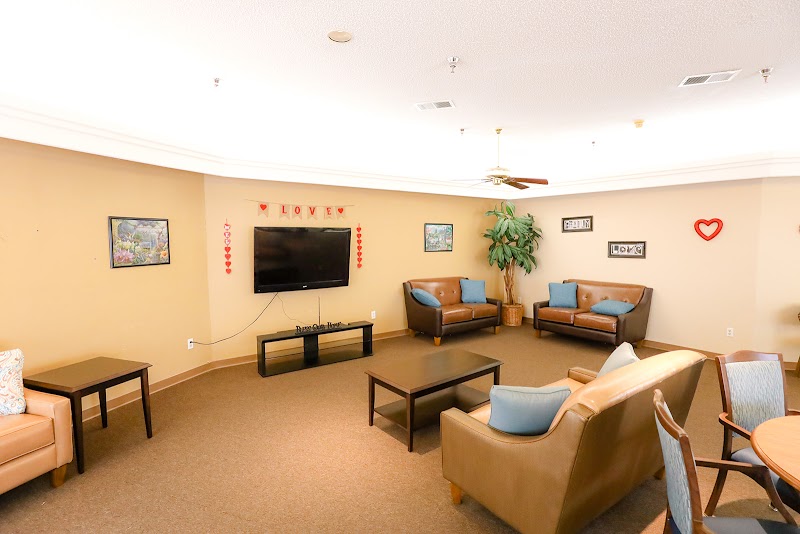
How is Prairie Meadows Rehabilitation And Healthcare Cent Staffed?

CMS rates PRAIRIE MEADOWS REHABILITATION AND HEALTHCARE CENT's staffing level at 3 out of 5 stars, which is average compared to other nursing homes. Staff turnover is 39%, compared to the Texas average of 46%. This relatively stable workforce can support continuity of care.

What Have Inspectors Found at Prairie Meadows Rehabilitation And Healthcare Cent?

State health inspectors documented 12 deficiencies at PRAIRIE MEADOWS REHABILITATION AND HEALTHCARE CENT during 2023 to 2025. These included: 1 Immediate Jeopardy (the most serious level, indicating potential for serious harm or death), 10 with potential for harm, and 1 minor or isolated issues. Immediate Jeopardy findings are rare and represent the most serious regulatory concerns. They require immediate corrective action.
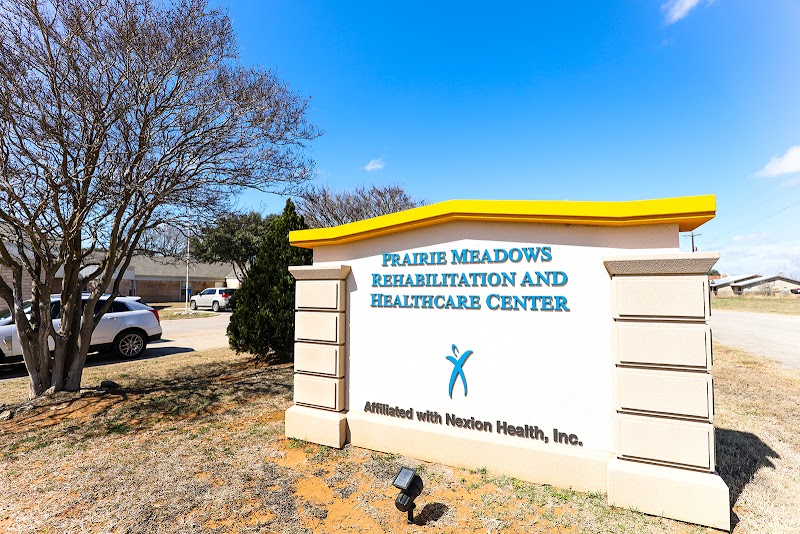
Who Owns and Operates Prairie Meadows Rehabilitation And Healthcare Cent?

PRAIRIE MEADOWS REHABILITATION AND HEALTHCARE CENT is owned by a for-profit company. For-profit facilities operate as businesses with obligations to shareholders or private owners. The facility is operated by NEXION HEALTH, a chain that manages multiple nursing homes. With 120 certified beds and approximately 60 residents (about 50% occupancy), it is a mid-sized facility located in FLORESVILLE, Texas.
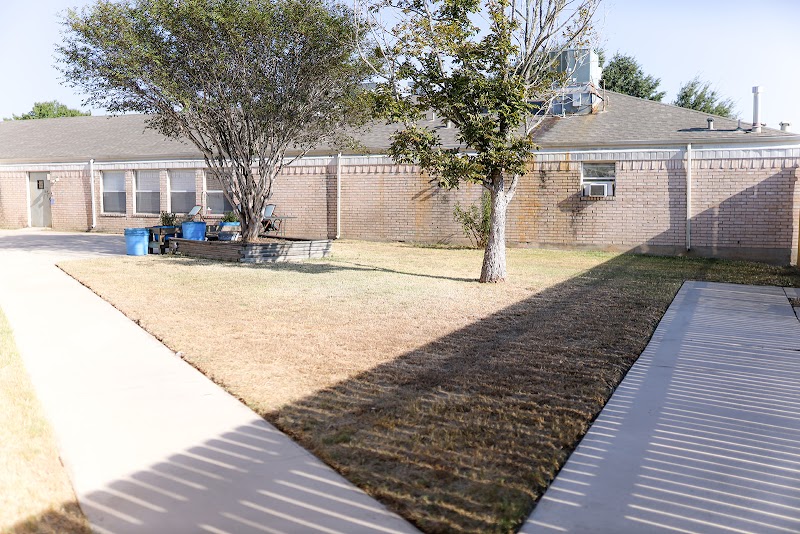
How Does Prairie Meadows Rehabilitation And Healthcare Cent Compare to Other Texas Nursing Homes?

Compared to the 100 nursing homes in Texas, PRAIRIE MEADOWS REHABILITATION AND HEALTHCARE CENT's overall rating (2 stars) is below the state average of 2.8, staff turnover (39%) is near the state average of 46%, and health inspection rating (2 stars) is below the national benchmark.

What Should Families Ask When Visiting Prairie Meadows Rehabilitation And Healthcare Cent?

Based on this facility's data, families visiting should ask: "What changes have been made since the serious inspection findings, and how are you preventing similar issues?" "Can I visit during a mealtime to observe dining assistance and food quality?" "How do you handle medical emergencies, and what is your hospital transfer rate?" "Can I speak with family members of current residents about their experience?" These questions are particularly relevant given the facility's Immediate Jeopardy citations.

Is Prairie Meadows Rehabilitation And Healthcare Cent Safe?

Based on CMS inspection data, PRAIRIE MEADOWS REHABILITATION AND HEALTHCARE CENT has documented safety concerns. Inspectors have issued 1 Immediate Jeopardy citation (the most serious violation level indicating risk of serious injury or death). The facility has a 2-star overall rating and ranks #100 of 100 nursing homes in Texas. Families considering this facility should ask detailed questions about what corrective actions have been taken since these incidents.

Do Nurses at Prairie Meadows Rehabilitation And Healthcare Cent Stick Around?

PRAIRIE MEADOWS REHABILITATION AND HEALTHCARE CENT has a staff turnover rate of 39%, which is about average for Texas nursing homes (state average: 46%). Moderate turnover is common in nursing homes, but families should still ask about staff tenure and how the facility maintains care continuity when employees leave.

Was Prairie Meadows Rehabilitation And Healthcare Cent Ever Fined?

PRAIRIE MEADOWS REHABILITATION AND HEALTHCARE CENT has been fined $13,627 across 1 penalty action. This is below the Texas average of $33,215. While any fine indicates a compliance issue, fines under $50,000 are relatively common and typically reflect isolated problems that were subsequently corrected. Families should ask what specific issues led to these fines and confirm they've been resolved.

Is Prairie Meadows Rehabilitation And Healthcare Cent on Any Federal Watch List?

PRAIRIE MEADOWS REHABILITATION AND HEALTHCARE CENT is not on any federal watch list. The most significant is the Special Focus Facility (SFF) program, which identifies the bottom 1% of nursing homes nationally based on persistent, serious quality problems. Not being on this list means the facility has avoided the pattern of deficiencies that triggers enhanced federal oversight. This is a positive indicator, though families should still review the facility's inspection history directly.