
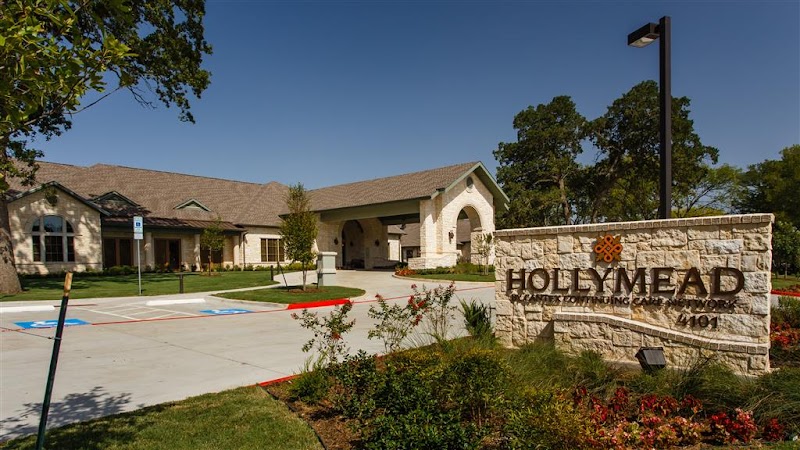

HOLLYMEAD

4101 LONG PRAIRIE ROAD, FLOWER MOUND, TX 75028 (214) 285-3200
For profit - Corporation 112 Beds CANTEX CONTINUING CARE Data: November 2025
Trust Grade
58/100
#257 of 1168 in TX
Last Inspection: April 2025

Within standard 12-15 month inspection cycle. Federal law requires annual inspections.

Overview

Hollymead nursing home in Flower Mound, Texas, has a Trust Grade of C, indicating it is average and falls in the middle of the pack among similar facilities. It ranks #257 out of 1,168 nursing homes in Texas, placing it in the top half, and #2 out of 18 in Denton County, meaning there is only one local option that is better. Unfortunately, the facility's trend is worsening, with issues increasing from 11 in 2024 to 14 in 2025. Staffing is rated average with a turnover of 57%, but it does have good RN coverage, exceeding 75% of Texas facilities, which is beneficial for resident care. However, there are concerning findings, such as a failure to provide adequate pain management for a resident and a lack of proper care plans for several others, which could impact their quality of life. While the facility has strengths in staffing and overall quality ratings, these specific incidents highlight areas needing significant improvement.

Trust Score
C
58/100
In Texas
#257/1168
Top 22%
Safety Record
Moderate
Needs review
Inspections
Getting Worse
11 → 14 violations
Staff Stability
⚠ Watch
57% turnover. Above average. Higher turnover means staff may not know residents' routines.
Penalties
⚠ Watch
$9,110 in fines. Higher than 88% of Texas facilities, suggesting repeated compliance issues.
Skilled Nurses
○ Average
Each resident gets 31 minutes of Registered Nurse (RN) attention daily — about average for Texas. RNs are the most trained staff who monitor for health changes.
Violations
⚠ Watch
32 deficiencies on record. Higher than average. Multiple issues found across inspections.
★★★★☆
4.0
Overall Rating
★★★☆☆
3.0
Staff Levels
★★★★★
5.0
Care Quality
★★★☆☆
3.0
Inspection Score
Stable
2024: 11 issues
2025: 14 issues

The Good

  • 5-Star Quality Measures · Strong clinical quality outcomes
  • Full Sprinkler Coverage · Fire safety systems throughout facility
  • No fines on record

Facility shows strength in quality measures, fire safety.

The Bad

Staff Turnover: 57%

11pts above Texas avg (46%)

Frequent staff changes - ask about care continuity

Federal Fines: $9,110

Below median ($33,413)

Minor penalties assessed

Chain: CANTEX CONTINUING CARE

Part of a multi-facility chain

Ask about local staffing decisions and management

Staff turnover is elevated (57%)

9 points above Texas average of 48%

The Ugly 32 deficiencies on record

1 actual harm
Apr 2025 10 deficiencies
CONCERN (D) 📢 Someone Reported This

A family member, employee, or ombudsman was alarmed enough to file a formal complaint

Potential for Harm - no one hurt, but risky conditions existed

Deficiency F0635 (Tag F0635)

Could have caused harm · This affected 1 resident

**NOTE- TERMS IN BRACKETS HAVE BEEN EDITED TO PROTECT CONFIDENTIALITY** Based on observation, interview, and record review, the facility failed to ensure that residents had physician's orders for the ...

Read full inspector narrative →
**NOTE- TERMS IN BRACKETS HAVE BEEN EDITED TO PROTECT CONFIDENTIALITY** Based on observation, interview, and record review, the facility failed to ensure that residents had physician's orders for the residents' immediate care for 2 (Resident #402 & Resident #67) of 16 residents observed for physician orders for oxygen. 1. The facility failed to provide physician orders for Resident #402 when admitted to the facility with a need for oxygen and while resident was on 4L of oxygen via nasal cannula on 11/8/24. 2. The facility failed to obtain orders for colostomy care for Resident #67 on 3/10/25 These failures could place the residents at risk of not receiving necessary physician ordered care that could result in worsening conditions or decline in health. Findings included: 1-Review of Resident #402's Face Sheet dated 4/23/25 reflected that resident was a [AGE] year-old female admitted on [DATE] and discharged to the hospital on [DATE]. Relevant diagnoses included morbid obesity, heart failure (a chronic condition in which the heart doesn't pump blood), acute and chronic respiratory failure with Hypoxia (a condition in which the body doesn't receive enough oxygen), shortness of breath, and Pneumonia (infection that inflames air sacs in one or both lungs, which may fill with fluid). Review of Resident #402's MDS assessment dated [DATE] reflected that Resident #104 had moderate cognition with a BIMS score of 12. Resident admitted to the facility with intermittent oxygen therapy and oxygen treatment was performed while Resident #402 was at the facility. Review of Resident's #402's Baseline Care Plan dated 10/31/2024 reflected no documentation of Resident #402's oxygen therapy treatment . Review of Resident #402's physician orders dated on 4/23/2025 reflected no physician orders for continuous and/or as needed oxygen supplement. Review revealed no physician order for when to change the cannula and oxygen tubing. Review of Resident #402's Patient Medication Summary on 4/23/2025 reflected no physician orders to keep the oxygen cannula and tubing in a bag when not in use. Review revealed no physician orders for when to change the humidifier. Review of Resident #402's Patient Medication Summary on 4/23/2025 reflected no physician's order to wash filters from oxygen concentrator. Review revealed no physician order for what to assess, like redness to nares (openings of the nose where the prongs of the cannula are inserted). Review of Resident #402's progress note dated 11/8/24 at 12:23pm Resident was assessed per request of nurse as she stated SOB (shortness of breath) and wanted to go to the ER (emergency room). O2 (oxygen) was 91% on 4L (liters) NC (nasal cannula) with RR20(respiration rate 20), resi dent was breathing out of her mouth and stated her nose felt stuffy. Changed to mask and increased O2 to 6L (liters)and O2(oxygen) increased to 93-94%. Pulmonary Nurse Practitioner was contacted and had a telehealth visit with resident with new orders to increase O2 to 5-6L In an interview with LVN I on 4/24/25 at 9:33am revealed if a resident needed oxygen, they had to review the standing orders to determine how many liters to give, if there was no standing order for oxygen they would call the doctor for an order. If a resident came to the facility with oxygen, they would give oxygen based on the hospital discharge order and would enter it in the system. There should always be an order for oxygen if it is being given. The risk to a resident would be hyperoxygenation that can negatively impact their respiratory system. In an interview with LVN H on 4/24/25 at 9:48am revealed when a resident needed oxygen, they needed to make sure orders were in their chart. When a resident was admitted with oxygen, they also needed to make sure there was an order. There should always be an order for oxygen if the resident required it. The risk to the resident not having an order for oxygen and the resident receiving oxygen, it could cause the resident to have respiratory issues. In an interview with ADON G on 4/24/25 at 10:07am revealed when a resident was admitted with oxygen, they would review orders, would take vitals and complete head to toe assessment. They would get a concentrator and items necessary for the order. They would enter the order in the resident's chart, to include number of liters and route. They would administer oxygen according to physician's order. All residents who need oxygen should have an order in the system. Oxygen would usually be included on the care plan. In an interview with RN A on 4/24/25 at 10:44am revealed most residents should have had a standing order for oxygen, typically 2 to 3 liters for emergencies. If a resident came to the facility with oxygen the nurses would ensure that an order was on file. If a resident needs oxygen daily or intermittently there should have been an order in the file. Oxygen should have also been included in the Care Plan. The risk to the resident of not having had an order for oxygen and getting oxygen was that the resident can have severe respiratory issues. In an interview with LVN D on 4/24/25 at 11:02am revealed when a resident was admitted to the facility with oxygen, there must be an order in the system for oxygen. If there is not order, he would notify the doctor at admission that the resident has admitted and has a need for oxygen and would get an order for it. The need for Oxygen would have been in the Care Plan. During observation and interview with MDS on 4/24/25 at 12pm who revealed she was unsure if the need for oxygen should have been on a baseline care plan but the need for oxygen should be on a care plan. If the resident needs oxygen there should have been an order and she proceeded to look for an order for Resident #402 in both their electronic systems. She was unable to find an order for oxygen for Resident #402 . She stated the risk to the resident of not having oxygen on the care plan would be that the resident would not get the right care. The care informed staff on the resident's needs. In an interview with DON on 4/24/25 at 1:35pm revealed the Baseline Care Plan is completed within 24 hours of admission and would have oxygen listed if the resident admitted with oxygen. There should have always been an order for all residents who required oxygen. The risk to the residents of not having had the proper order on record could be Hypoxia. In an interview with Administrator on 4/24/25 at 2:56am revealed the only time oxygen should have been administered to a resident was if the patient was crashing and it was an emergency, otherwise there would have had to be on order on file to administer oxygen. Review of the Facility's Oxygen Administration policy revised October 2010 revealed The purpose of this procedure is to provide guidelines for safe oxygen administration .1. Verify that there is a physician's order for this procedure. Review the physician's order or facility protocol for oxygen administration. 2. Review the resident's care plan to assess for any special needs of the resident . 2-Record review of Resident #67's 03/14/25 Quarterly MDS, reflected he was an [AGE] year-old male admitted to the facility on [DATE] and readmitted on [DATE] with the diagnoses of heart failure, chronic kidney disease, acute respiratory failure (lung failure). He had intact cognition with a BIMS score of 14. Review of Section H- Bladder and Bowel reflected he was not noted to have an ostomy (a surgically created opening on the abdomen to allow waste to exit the body). Record review of Resident #67's 03/03/25 Discharge MDS reflected he had an ostomy appliance. Record review of Resident #67's care plan reflected a focus area of The resident has an alteration in gastrointestinal status r/t (due to) colostomy (a surgically created opening on the abdomen to allow waste to exit the body) with the interventions to give medications as ordered and monitor/document side effects and effectiveness, dated initiated 01/31/25. Record review of Resident #67's active order summary report, dated 04/24/25, reflected there were no orders regarding his colostomy care. Record review of Resident #67's Treatment Administration Record (TAR) for March 2025 revealed an order for colostomy care- change pouch/appliance one time a day with a start date of 02/26/25, discontinue date of 03/10/25 and marked as completed on 03/01/25 and 03/02/25 and not marked as provided on from 03/11/25-03/31/25. Further review revealed an order for Colostomy- Check placement and Empty Contents every shift to ensure it is secured. Empty Contents shift (every shift) and more often as necessary, with a start date of 02/04/25 and discontinue date of 03/10/25. In an interview and observation on 04/22/25 at 11:36 AM with Resident #67 revealed he had a colostomy pouch since around February of 2025 that staff changed daily and he was also able to change it himself. In an interview on 04/24/25 at 9:06 AM with LVN H revealed Resident #67 had a colostomy pouch that was changed by nurses daily and sometimes twice a day. LVN H reviewed Resident #67's orders and stated he did not see an order for Resident #67's colostomy pouch care and he must have missed that it was not in the TAR when Resident #67 readmitted to the facility in 3/10/25. He stated it was routine to change Resident #67's colostomy bag at least once a day and must not have noticed the order was not in the TAR. He stated that nurses were responsible to enter the resident orders when they are admitted to the facility. An interview on 04/24/25 at 4:08 PM with the DON revealed Resident #67 should have a physician order for colostomy care and should have been care planned. She stated she was not sure why it had been missed when Resident #67 readmitted on [DATE] and thought it was due to their electronic medical record's transfer from one system to a new system at the end of February 2025. She stated it was important to have physician orders for colostomy care to ensure a resident received the services they needed. Review of the facility's policy Physician's Orders revised January 2020.Procedure: 1. All physicians' orders shall be recorded on the Patients Medical Record and must be signed electronically by the attending/prescribing physician .3. Physician orders include: a. All medications, b. Treatments, C. Diets, d. Restorative Measures (long-term and short term), e. Special medical procedures required for the safety and well being of the Patient, f. limitations of activities and g. Others as necessary and appropriate .5. Medications, diets, therapy or any treatment may not be administered to the Patient without a written order from the attending physician.
CONCERN (D) 📢 Someone Reported This

A family member, employee, or ombudsman was alarmed enough to file a formal complaint

Potential for Harm - no one hurt, but risky conditions existed

Assessment Accuracy (Tag F0641)

Could have caused harm · This affected 1 resident

**NOTE- TERMS IN BRACKETS HAVE BEEN EDITED TO PROTECT CONFIDENTIALITY** Based on interview, and record review the facility failed to ensure the MDS assessment accurately reflected the resident status ...

Read full inspector narrative →
**NOTE- TERMS IN BRACKETS HAVE BEEN EDITED TO PROTECT CONFIDENTIALITY** Based on interview, and record review the facility failed to ensure the MDS assessment accurately reflected the resident status for 2 (Resident #71 and Resident #67) of 8 residents whose records were reviewed for assessment accuracy. 1. Resident #67's colostomy status was not coded on his 03/14/25 Quarterly MDS after readmission on [DATE]. 2. Resident #71's attention deficit hyperactivity disorder diagnosis was not listed on his 03/05/25 Quarterly MDS. This failure to ensure comprehensive and accurate assessments could affect residents by placing them at risk for inaccurate and incomplete MDS assessment which could result in residents not receiving correct care and services. Findings included: 1-Record review of Resident #67's 03/14/25 Quarterly MDS, reflected he was an [AGE] year-old male admitted to the facility on [DATE] and readmitted on [DATE] with the diagnoses of heart failure, chronic kidney disease, acute respiratory failure (lung failure). He had intact cognition with a BIMS score of 14. Review of Section H- Bladder and Bowel reflected he was not noted to have an ostomy (a surgically created opening on the abdomen to allow waste to exit the body). Record review of Resident #67's 03/03/25 Discharge MDS reflected he had an ostomy appliance. Record review of Resident #67's care plan reflected a focus area of The resident has an alteration in gastrointestinal status r/t (due to) colostomy (a surgically created opening on the abdomen to allow waste to exit the body) with the interventions to give medications as ordered and monitor/document side effects and effectiveness, dated initiated 01/31/25. In an interview on 04/22/25 at 11:36 AM with Resident #67 revealed he had a colostomy pouch since around February of 2025 that staff changed daily and he was also able to change it himself. An interview on 04/24/25 at 11:47 AM with the MDS Coordinator revealed Resident #67's ostomy status should have been selected on his 03/14/25 Quarterly MDS and was not sure why it was not selected. She stated Resident #67's 03/03/25 Discharge MDS indicated he had an ostomy appliance, and it must have been missed when he returned. She stated it was important for MDS assessments to be accurate to ensure a resident received the proper services they needed. 2-Record review of Resident #71's Quarterly MDS, dated [DATE], reflected he was a [AGE] year-old male admitted to the facility on [DATE] with the diagnoses of paraplegia (paralysis of legs), diabetes (high blood sugar), and a BIMS score of 15 (intact cognition). Record review of Resident #71's care plan reflected a focus area, dated initiated 01/31/25, that indicated he used anti-anxiety medication due to an anxiety disorder with the interventions of monitoring for side effects and effectiveness. Further review revealed a focus area of the resident had potential to be verbally aggressive and yelled at staff due to ineffective coping skills, dated initiated 03/23/25, with the interventions of assess resident's coping skills and support system and administer medications as ordered. Record review of Resident #71's psychological subsequent assessments, dated 02/14/25 revealed resident had the diagnoses included generalized anxiety disorder and attention deficit hyperactivity disorder. In an interview on 04/23/25 at 12:17 PM with Resident #71 revealed he had the diagnosis of attention deficit hyperactivity disorder since he was 6 years old and received psychological services at the facility. In an interview on 04/23/25 at 2:07 PM with the Social Services Director revealed Resident #71 had a diagnosis of attention deficit hyperactivity disorder and received psychological services at the facility. She stated that the physician should have added the diagnosis to the resident's electronic health record and was not sure why it was missed. She stated it was important to have residents' diagnoses in the MDS and electronic health record to ensure residents received any needed services. In an interview on 04/24/25 at 9:06 AM with LVN H revealed he was aware that Resident #71 had a diagnosis of attention deficit hyperactivity disorder and was not aware it was not listed as one of his diagnoses on his MDS or on his factsheet . An interview on 04/24/25 at 11:47 AM with the MDS Coordinator revealed Resident #71's diagnosis of attention deficit hyperactive disorder was not in his 03/05/25 Quarterly MDS. She stated that she was not sure why it was not added to the resident's diagnoses, and it was important to have all current diagnoses accurately noted in the resident's MDS because it guides the plan of care and provided insight into each resident's needs. An interview on 04/24/25 at 4:08 PM with the DON revealed Resident #67 should have a physician order for colostomy care and it was care planned. She stated she was not sure why Resident #67's ostomy status had been missed when he readmitted to the facility in March 2025. She stated it was important to have physician orders for colostomy care to ensure a resident received the services they needed. She stated she was aware that Resident #71 had a diagnosis of attention deficit hyperactivity disorder and anxiety disorder and received psychological services. She stated the diagnosis of attention deficit hyperactivity disorder should have been listed as a diagnosis to ensure he received the correct care and services. She stated that the facility had changed its electronic health record system to another documentation programan and may have been missed in the transfer. She stated it was the responsibility of nursing to ensure resident diagnoses were updated during readmission and admission. She stated it was the responsibility of the MDS Coordinator to ensure assessments were complete. Record review of facility's resident assessment policy, titled Resident Assessments, dated March 2022, reflected: A comprehensive assessment of every resident's needs is made at intervals designated by OBRA (Omnibus Budget Reconciliation Act) and PPS (Prospective Payment System) requirements .
CONCERN (D) 📢 Someone Reported This

A family member, employee, or ombudsman was alarmed enough to file a formal complaint

Potential for Harm - no one hurt, but risky conditions existed

Accident Prevention (Tag F0689)

Could have caused harm · This affected 1 resident

Based on observation, interview, and record review the facility failed to ensure residents receive adequate supervision and assistance devices to prevent accidents for one (Resident #5) of two residen...

Read full inspector narrative →
Based on observation, interview, and record review the facility failed to ensure residents receive adequate supervision and assistance devices to prevent accidents for one (Resident #5) of two residents observed during a transfer. The Facility failed to ensure CNA K used a gait belt when transferring Resident #5 from her bed to the wheelchair on 04/22/2025. This failure could affect the residents by placing the residents at risk for falls, discomfort, pain, and/or injury. Findings included: Record review of Resident #5's Quarterly MDS assessment, dated 03/13/25, reflected an admission date of 11/29/23. Resident #5' active diagnoses included weakness and other abnormalities of gait and mobility. Resident #5 had a BIMS score of 06, meaning her cognition was severely impaired. she required maximal assist with transfers from a bed to a wheelchair. Record review of Resident #5's care plan, dated 03/19/25, reflected Focus .The resident has potential risk for injury due to unsafe independent transfers . Goal: The resident will be free from injury . Interventions included .to be transferred with assist of one and use of gait belt . An observation on 04/22/25 at 10:29 AM revealed CNA K provided incontinent care to Resident #5. CNA K assisted Resident #5 onto the side of the bed. CNA K placed the wheelchair next to the bed facing toward the head of the bed and locked the wheels. CNA K placed her feet outside of the resident legs and lifted her by her clothes from the back. She lifted her from the bed toward the wheelchair. CNA K held Resident #5 by the arm pits, and she assisted her to sit on the wheelchair. Resident #5 hollered ouch. Resident stated it hurt under the breasts. In an interview on 04/22/25 at 11:45 AM, CNA K stated she was supposed to use a gait belt when transferring residents. She stated not using a gait belt could lead to a fall, or she could injure herself. She stated she had been in serviced on gait belt transfers when she was hired. In an interview on 04/24/25 at 10:02 AM, the DON stated it was the expectation for staff to use a gait belt when providing transfers to residents to prevent the risk of injury to the resident and the staff. She stated they had issued gait belts to all the CNAs, and she expected them to always have the belts with them to use it. She stated going forward she would do skills check monthly and she would do her rounds for monitoring. Record review of the facility's policy, Using a Transfer Belt revised July 2014, reflected, Belt should be used on any patient who requires any type or level of assistance with transfers or ambulation .
CONCERN (D) 📢 Someone Reported This

A family member, employee, or ombudsman was alarmed enough to file a formal complaint

Potential for Harm - no one hurt, but risky conditions existed

Incontinence Care (Tag F0690)

Could have caused harm · This affected 1 resident

**NOTE- TERMS IN BRACKETS HAVE BEEN EDITED TO PROTECT CONFIDENTIALITY** Based on observation, interview, and record review, the facility failed to ensure a resident who was incontinent of bladder rece...

Read full inspector narrative →
**NOTE- TERMS IN BRACKETS HAVE BEEN EDITED TO PROTECT CONFIDENTIALITY** Based on observation, interview, and record review, the facility failed to ensure a resident who was incontinent of bladder received appropriate treatment and services to prevent urinary tract infections for one of two residents (Resident #1) reviewed for catheter care. 1. The facility failed to ensure CNA B provided catheter care and appropriate perineal care for Resident #1 when she failed to separate the labia and wash downward, failed to clean under the resident's skin folds and failed to clean around the suprapubic catheter (catheter that is inserted through the abdominal wall into the bladder) on 04/23/25. 2. The facility failed to ensure RN A maintained a sterile procedure while re-inserting Resident #1's suprapubic catheter on 04/23/25. This failure could place residents at risk for the development and/or worsening of urinary tract infections and skin breakdown. Findings included: Record review of resident #1s quarterly MDS assessment, dated 02/28/25, reflected a [AGE] year-old female with an admission date of 08/01/24. She had a BIMS score of 15 which indicated she was cognitively intact. She was dependent for toileting care. She had a foley catheter and was frequently incontinent of bowel. Active diagnoses included multiple sclerosis (disease that causes breakdown of the protective covering of nerves) and neurogenic bladder (disruption in the nervous systems connection to the bladder). Record review of Resident #1's Physician Order Summary report dated 04/24/25, reflected, Indwelling catheter care every shift with a start date of 02/04/25 and Suprapubic Catheter 18 F 10 bulb {18 French 10 bulb is the size of the catheter} as needed for occlusion or leakage as needed, with a start date of 04/23/25. Record review of Resident #1's care plan, initiated on 01/09/25, reflected, The resident has indwelling Suprapubic catheter .Goal-the resident will show no signs and symptoms of urinary infection .Interventions .monitor for signs and symptoms of discomfort on urination and frequency . In an interview and observation on 04/23/25 at 9:50 a.m. Resident #1 was lying in bed with a strong urine odor. Resident #1 stated she thinks her catheter is leaking and stated she hated the smell. Staff were called to Resident's room. On 04/23/25 at 10:14 a.m. CNA B and Restorative aide entered Resident #1's room. Both staff washed their hands and put on gown and gloves. CNA B unfasted the resident's brief. Resident was noted to have redness extending out from under her belly folds. Resident had suprapubic catheter but unable to observe insertion site due to skin fold. CNA B wiped down each groin, revealing the Resident had a bowel movement that had pushed up between her legs. CNA B wiped to remove the bowel movement from the resident inner thighs, then wiped across the pubic mound but did not spread her labia and wipe down the middle. CNA B did not clean under the resident's skin folds or around the suprapubic catheter, which was leaking urine. Both staff rolled the resident onto her side, revealing the brief was saturated with urine and a large soft bowel movement. CNA B continued to clean from front to back until all bowel movement was removed. CNA B then removed her gloves, performed hand hygiene, and re-gloved before placing a clean brief under the resident. Restorative aide gathered the trash, removed her gloves and gowns, performed hand hygiene, and left the room. Observed RN A on 04/23/25 at 10:30 a.m. entered Resident #1's room with the catheter kit needed to change the suprapubic catheter. RN A washed her hands and put on utility gloves but did not put on a gown. RN A placed the catheter kit and foley catheter on the bed, put on utility gloves and deflated the balloon on the suprapubic catheter with a 10-cc syringe and then removed the catheter. Urine was noted running down the Residents side. CNA B opened a trash bag and RN A placed the old catheter and catheter bag, which was half full of urine, in the trash bag. RN A removed her gloves and washed her hands. CNA B asked if she was needed and RN A stated no. CNA B removed her gown and gloves, gathered the trash, performed hand hygiene, and left the room. RN A then opened the catheter kit and removed the packet containing sterile gloves. RN A then put on the sterile gloves without first sitting up her sterile field or opening the foley catheter. RN A placed the sterile drape on top of the resident legs and around the resident's lower abdomen. RN A reached into the catheter kit and opened the betadine swabs and lifted the residents belly fold to reveal the insertion site. RN A cleaned around the stoma site with the betadine swabs and then removed her sterile gloves. RN A washed her hands and put on utility gloves and opened the catheter package and opened a package of lubricant. She then picked up the catheter midway down, with approximately 3 inches of the catheter dangling and guided it into the packet of lubricant. RN A then proceeded to raise the resident belly fold and inserted the catheter approximately 3-4 inches until urine return. RN A then attached the syringe to the catheter port and inserted 10 cc of normal saline to inflate the [NAME]. The end of the catheter was left open to air and urine was noted draining onto the resident's side. RN A then connected the catheter to the urinary drainage bag. RN A then removed her gloves, disposed of the trash, and performed hygiene. She stated the aides would have to come back in and clean her up again since the urine had run down her side. In an interview with RN A on 04/23/25 at 10:45 a.m. she stated changing a catheter required sterile procedure to decrease the risk of infection. She stated she thought she had maintained a sterile procedure while changing Resident #1's catheter. In an interview with the DON on 04/23/25 at 02:00 p.m. she stated the CNAs were supposed to perform catheter care anytime they provided incontinence care to reduce the risk of infection. She stated they had to follow the proper procedure for incontinence care which included spreading the labia and wiping down the middle to ensure the residents were clean and help reduce infection risk. She stated RN A should have set up her sterile field up first to perform the catheter change. She stated once she removed her sterile gloves and put on utility gloves and then inserted the catheter with utility gloves, the procedure was no longer considered sterile. She stated she would re-educate her on catheter changes. Record Review of the Facility's policy titled, Suprapubic Catheter-Insertion Of, dated June 2006, reflected, .Equipment-Sterile catheter insertion set, Sterile indwelling catheter, Sterile water for inflation of bulb, Sterile gloves .Procedure .Wash your hands .Peel back wrapper of catheter insertion set. DO NOT CONTAMINATE CONTENTS. Place on working surface. Open catheter if in separate packaging. Open sterile wrap to provide sterile filed. Put on sterile gloves. Place protective pad below opening for catheter. Open lubricating jelly and squeeze onto catheter tip. Use a clean cotton ball/swab stick for each cleansing, clean edges and skin around opening to catheter with antiseptic solution. Begin at edges of opening and cleanse in concentric circles moving outward. Clean directly over opening with last cotton ball/swab stick and antiseptic solution, taking care not to let solution run into opening. Gently without force, insert lubricated catheter into opening about one to one-half inches. Place other end of catheter into specimen container .Inflate balloon to capacity as stated on catheter. Attach catheter to drainage bag .Leave the Patient clean, dry and in comfortable position . Record Review of the Facility's policy titled, Perineal Care, dated October 2010, reflected, The purpose of this procedure are to provide cleanliness and comfort to the resident, to prevent infections and skin irritation, and to observe the resident's skin condition .Wash and dry your hands .put on gloves .For female resident .Wash perineal area, wiping from font to back .Separate labia and wash area downward from front to back. (Note: if resident has an indwelling catheter, gently wash the juncture of the tubing from the urethra down the catheter about 3 inches .). Continue to wash the perineum moving from inside outward to and including thighs, alternating from side to side, and using downward strokes .Wash the rectal area thoroughly, wiping from the base of the labia towards and extending over the buttocks .Remove gloves .Wash and dry your hands .
CONCERN (D) 📢 Someone Reported This

A family member, employee, or ombudsman was alarmed enough to file a formal complaint

Potential for Harm - no one hurt, but risky conditions existed

Infection Control (Tag F0880)

Could have caused harm · This affected 1 resident

**NOTE- TERMS IN BRACKETS HAVE BEEN EDITED TO PROTECT CONFIDENTIALITY** Based on observation, interview, and record review, the facility failed to maintain an Infection Prevention and Control Program ...

Read full inspector narrative →
**NOTE- TERMS IN BRACKETS HAVE BEEN EDITED TO PROTECT CONFIDENTIALITY** Based on observation, interview, and record review, the facility failed to maintain an Infection Prevention and Control Program designed to provide a safe, sanitary, and comfortable environment and to help prevent the development and transmission of communicable diseases and infections for 2 of 21 residents (Resident #1 and Resident #5) observed for infection control. 1. The facility failed to ensure RN A used the required PPE for Resident #1, who was on enhanced barrier precautions due to her indwelling urinary catheter, while changing the indwelling urinary catheter on 04/23/25. 2. The facility failed to ensure CNA K changed her gloves and performed hand hygiene while providing incontinence care to Resident #5 on 04/22/25. These failures could place the residents at risk of cross-contamination and development of infection. Findings included: 1. Record review of resident #1s quarterly MDS assessment, dated 02/28/25, reflected a [AGE] year-old female with an admission date of 08/01/24. She had a BIMS score of 15 which indicated she was cognitively intact. She was dependent for toileting care. She had a foley catheter and was frequently incontinent of bowel. Active diagnoses included multiple sclerosis (disease that causes breakdown of the protective covering of nerves) and neurogenic bladder (disruption in the nervous systems connection to the bladder). Record review of Resident #1's Physician Order Summary report dated 04/24/25, reflected, Enhanced Barrier precautions every shift Follow Facility Policy-**USE for patients with any of the following (when Contact Precautions do not otherwise apply) Wounds or indwelling medical devices regardless of MDRO (multiple drug resistant organism) colonization(the presence of microorganisms like bacteria where the organisms grow and multiply but do not cause visible disease) status infection or colonization with an MDRO**, with a start date of 01/09/25. Record review of Resident #1's care plan, initiated on 03/20/25, reflected, Enhanced Barrier Precautions implemented related to Urinary catheter .Goal-The spread of MDRO will be reduced over the next 90 days .Interventions .Implement Enhanced Barrier precautions .monitor for signs and symptoms of infection . In an interview and observation on 04/23/25 at 9:50 a.m. Resident #1 was lying in bed with a strong urine odor. Resident #1 stated she thought her catheter was leaking and stated she hated the smell. Signage was posted outside of the Resident's door indicating she was on Enhanced Barrier Precautions. Observed container inside Resident #1's room which contained gowns and gloves. In an observation on 04/23/25 at 10:30 a.m. RN A entered Resident #1's room with the catheter kit needed to change the suprapubic catheter (catheter that is inserted through the abdominal wall into the bladder). RN A washed her hands and put on utility gloves but did not put on a gown. RN A placed the catheter kit and foley catheter on the bed, put on utility gloves and removed the old catheter. RN A removed her gloves and washed her hands and proceeded with the replacement of the suprapubic catheter. RN A then removed her gloves, disposed of the trash, and performed hygiene. In an interview with RN A on 04/23/25 at 10:45 a.m. she stated Resident #1 was in Enhanced Barrier Precautions due to her indwelling urinary catheter. She stated she should have worn a gown and just overlooked it when she entered the room. She stated the risk of not following Enhanced Barrier Precautions was the spread of MDRO's. In an interview with the DON on 04/23/25 at 02:00 p.m. she stated any resident who had any type of indwelling medical device was placed on Enhanced Barrier precautions to help reduce the spread of MDRO's. She stated signage was posted outside to the door, which explained what PPE was to be worn and for what task the PPE was to be worn for. She stated any contact with a resident with a urinary catheter required the use of gown and gloves. She stated the staff had received numerous trainings on the use of Enhanced Barrier Precautions. Record review of the Facility's policy titled, Enhanced Barrier Precautions, dated August 2022, reflected, Enhanced Barrier Precautions (EBPs) are utilized to prevent the spread of multi-drug resistant organisms (MDROs) to residents .EBP employ targeted gown and glove use during high contact resident care activities when contact precautions no not otherwise apply .Examples of high-contact resident care activities requiring the use of gown and gloves for EBP's include .device care or use ( .urinary catheter .)EBPs remain in place for the duration of the residents stay or until resolution .or discontinuation of the indwelling medical device that places them at increased risk .Staff are trained prior to caring for resident on EBPs .Signs are posted in the door or wall outside the resident room indicating the type of precautions and PPE required . 2. In an observation on 04/22/25 at 10:29 AM CNA K entered Resident #5's room to provide peri-care. She washed her hands and put on gloves. She uncovered resident and she unfastened the resident brief revealing wet brief. She cleaned the resident's front pubic area with several wipes. CNA K changed her gloves without hand hygiene. She rolled the resident on her side, removed the soiled brief, and wiped the anal area from front to back and then the buttocks, changing to a clean wipe with each swipe. CNA K then pushed the soiled sheet under the resident and with soiled gloves placed a clean brief under the resident. She then rolled the resident over, and she closed the resident brief. Without changing gloves, she assisted resident to sitting position and then to standing position and she transferred her from bed to wheelchair. She changed gloves without hand hygiene and assisted resident to put on clean T-shirt. She removed her gloves, washed her hands, and left the room. In an interview on 04/22/25 at 11:45 AM CNA K stated she was supposed to change her gloves and perform hand hygiene when she went from dirty to clean. CNA K stated she should have sanitized her hand between change of gloves. She stated failing to provide proper care exposed the resident to infections. CNA K stated she did not realize she had soiled gloves on when she put the clean brief under the resident. In an interview on 04/24/25 at 10:02 AM the DON stated they had trained at length on when staff were to change their gloves and sanitize their hands. She stated staff needed to change their gloves when they go from dirty to clean. She stated the risk was increased risk of infections. She stated she and the ADON would be re-training and observing care to ensure staff compliance. Record review of CNA K's competency check off for hand hygiene and infection control revealed she was proficient in care as of 02/28/25. Record Review of the Facility's policy titled, Perineal Care, dated October 2010, reflected, The purpose of this procedure are to provide cleanliness and comfort to the resident, to prevent infections and skin irritation, and to observe the resident's skin condition .Wash and dry your hands .put on gloves .For female resident .Wash perineal area, wiping from font to back .Separate labia and wash area downward from front to back. Continue to wash the perineum moving from inside outward to and including thighs, alternating from side to side, and using downward strokes .Wash the rectal area thoroughly, wiping from the base of the labia towards and extending over the buttocks .Remove gloves .Wash and dry your hands . Record review of the facility's policy titled, Hand Washing, dated August 2012, reflected, .Hand washing is the single most important means of preventing the spread of infection .After Patient contact .Wash hands with soap and running water .May use Hand sanitizing gel in place of soap and water .
CONCERN (E) 📢 Someone Reported This

A family member, employee, or ombudsman was alarmed enough to file a formal complaint

Potential for Harm - no one hurt, but risky conditions existed

Comprehensive Care Plan (Tag F0656)

Could have caused harm · This affected multiple residents

**NOTE- TERMS IN BRACKETS HAVE BEEN EDITED TO PROTECT CONFIDENTIALITY** Based on observation, interview and record review the facility failed to develop and implement a comprehensive person-centered c...

Read full inspector narrative →
**NOTE- TERMS IN BRACKETS HAVE BEEN EDITED TO PROTECT CONFIDENTIALITY** Based on observation, interview and record review the facility failed to develop and implement a comprehensive person-centered care plan for each resident, consistent with the resident rights, that included measurable objectives and timeframes to meet a resident's medical, nursing and mental and psychosocial needs that were identified in the comprehensive assessment and described the services that were to be furnished to attain or maintain the resident's highest practicable physical, mental, and psychosocial well-being for 6 of 16 residents (Residents #67, #71, #36, #97, #401, #66) reviewed for care plans. 1. The facility failed to develop a comprehensive person-centered care plan regarding Resident #71's attention deficit disorder diagnosis. 2. The facility failed to ensure Resident #36's comprehensive care plan included a plan of care for ADL dependence including fingernail care. 3. The facility failed to ensure Resident #97's comprehensive care plan included a plan of care for Diagnosis of diabetes and insulin dependence. 4. The facility failed to develop and implement a care plan that reflected Resident #401 need for fall interventions after his initial falls on 3/14/2025. 5. The facility failed to develop and implement a comprehensive care plan that reflected Resident #66's measurable objectives, interventions, and timeframes for how staff would meet Resident #66's needs . This deficient practice could place residents at risk of not receiving the necessary care or services. Findings included: 1-Resident #71 Record review of Resident #71's Quarterly MDS, dated [DATE], reflected he was a [AGE] year-old male admitted to the facility on [DATE] with the diagnoses of paraplegia (paralysis of legs), diabetes (high blood sugar), and a BIMS score of 15 (intact cognition). Record review of Resident #71's care plan reflected a focus area, dated initiated 01/31/25, that indicated he used anti-anxiety medication due to an anxiety disorder with the interventions of monitoring for side effects and effectiveness. Further review revealed a focus area of the resident had potential to be verbally aggressive and yelled at staff due to ineffective coping skills, dated initiated 03/23/25, with the interventions of assess resident's coping skills and support system and administer medications as ordered. Record review of Resident #71's psychological subsequent assessments, dated 02/14/25 revealed resident had the diagnoses included generalized anxiety disorder and attention deficit hyperactivity disorder. In an interview on 04/23/25 at 12:17 PM with Resident #71 revealed he had the diagnosis of attention deficit hyperactivity disorder since he was 6 years old and received psychological services at the facility. In an interview on 04/23/25 at 2:07 PM with the Social Services Director revealed Resident #71 had a diagnosis of attention deficit hyperactivity disorder and received psychological services at the facility. She reviewed Resident #71's care plan and stated he did not have attention deficit hyperactivity disorder care planned. She stated that nursing and the MDS nurse were responsible for care planning, and it was important to care plan resident diagnosis to ensure their needs are met. In an interview on 04/24/25 at 9:06 AM with LVN H revealed he was aware that Resident #71 had a diagnosis of attention deficit hyperactivity disorder and was not aware it was not care planned. He stated care plans were important because they guided the plan of care for residents. An interview on 04/24/25 at 11:47 AM with the MDS Coordinator revealed Resident #71's diagnosis of attention deficit hyperactive disorder was not care planned. She stated that it looks like the physician did not enter the diagnosis into their electronic system, so it did not trigger a care plan on the facility side and it was not caught during the MDS look back periods. She stated it was important to care plan Resident #71's diagnosis because it provided more information and insight into his needs. She stated the ADON, MDS, and DON were responsible for care planning resident needs . An interview on 04/24/25 at 12:29 PM with the DON she stated she was aware that Resident #71 had a diagnosis of attention deficit hyperactivity disorder and anxiety disorder and received psychological services. She stated the diagnosis of attention deficit hyperactivity disorder should have been care planned. She stated care plans were important to guide the care of the resident. 2-Resident #36 Record Review of Resident #36 Quarterly MDS, dated [DATE], reflected that Resident #36 was a [AGE] year-old male admitted to facility on 02/24/2023 with BIMS Score of 13 that indicates Resident #36 had intact cognition. Resident #36 had diagnoses of Heart failure, Anxiety, Renal insufficiency (condition in which kidneys lose the ability to remove waste and balance fluids), Limitation of activities due to disability. It also indicated Resident #36 was dependent on staff for personal hygiene. Record Review of Resident #36 Comprehensive care plan dated 4/24/25 revealed Resident #36 did not have a care plan for ADL assistance. In an interview and observation with Resident #36 revealed his fingernails on both his hand were at least 0.75 inch - 1 inch long. It also revealed Resident #36 had slight contracture on right middle finger. Resident #36 stated he would like staff to trim his fingernails since he cannot cut his own nails. He stated staff had not approached him lately to cut his nails. 3-Record Review of Resident #97 MDS dated reflected Resident #97 was a [AGE] year-old female admitted to facility on 04/02/2025 with BIMS Score of 3 that indicates Resident #97 had severe cognitive impairment. Resident # 97 had diagnoses of Hypertension (high blood pressure), Diabetes Mellitus (high blood glucose) , Hyperlipidemia (high blood lipids), Non-Alzheimer's Dementia, Acute Pancreatitis without necrosis (a condition where the pancreas becomes inflamed but without death of the pancreatic tissues). It also reflected Resident #97 had Insulin injections during the last 7 days or since admission. Record review of Resident #97 Physician order dated 4/21/25 reflected, Humalog Injection Solution 100 Unit/Milliliters; Inject as per sliding scale subcutaneously (applied under the skin) four times a day for [Diabetes]. Record review of Resident #97 Physician order dated 4/3/25 reflected, Insulin Glargine Solution 100 Unit/Milliliters; Inject 10 unit subcutaneously (applied under the skin) at bedtime for diabetes. Record Review of Resident #97 Comprehensive care plan dated 4/24/25 revealed Resident #97 did not have a care plan for Diagnosis of diabetes or insulin dependence. In an interview on 04/24/2510:11 AM with LVN D revealed Nurses, ADONs and DONs were responsible for care planning. He stated that care planning should be tailored to resident's specific needs, and it was important to care plan accurately so that residents care needs were met. He stated that Resident #36 liked to be independent, however he needed assistance with ADLs specifically with nailcare related to his disability. In an interview on 04/24/25 at 11:20 AM CNA J revealed Care plans were important since they provide information about Residents care needs and the dos and don't's. She stated that CNAs were not involved with care planning, however the risk of not care planning resident care needs may lead to failure to provide care for the resident. In an interview with the DON on 4/24/25 at 09:55 AM revealed Resident # 36 was dependent on staff for ADL and Resident #97 was dependent on insulin related to Diagnosis of Diabetes. The DON stated every resident should have a plan of care that is personalized for their care. She stated the MDS Coordinator, ADONS and DON were responsible for writing the care plans and risk of not care planning could lead to failure to provide personalized care to residents. In an interview on 04/24/25 at 02:09 PM with ADON G stated that Resident #36 should have ADL dependence on staff care planned. She also stated that Resident #97 had diagnosis of diabetes and was receiving insulin injections daily. She stated that MDS Nurses, ADONs and DONs were responsible for completing and updating care plans as needed. She stated the risk of not care planning was failure possibility of residents not getting care or assistance they need, and quality of life could be affected. 4-Resident #401 Review of Resident #401's admission Minimum Data Set (MDS) Assessment, dated 3/17/2025, reflected she was a [AGE] year-old male with an admission date of 3/13/2025. Resident #401 was moderately cognitively impaired, and his BIMS score was 9. He needed some help with self-care and required a walker. Resident had a history of falls with a fall in the last month resulting in injury. He had impairment to one side of his lower extremities. He had the following diagnosis: Hip fracture, other fracture and Alzheimer's Disease (a progressive disease that destroys memory and other important mental functions). Review of Resident #401's care plan revised on 4/7/2025 revealed Risk for Injury: Fall occurred 3/14, Fall occurred 3/16/25, Fall Occurred 3/18/25, Fall occurred 3/25/25 Date Initiated: 03/19/2025 .o Alert provider Date Initiated: 03/19/2025 Revision on: 04/07/2025 Cancelled Date: 04/07/2025 04/07/2025 o CANCELLED: Assess Resident and identify any injuries from fall Review pain management regimen for resident Date Initiated: 03/19/2025 Revision on: 04/07/2025 Cancelled Date: 04/07/2025 o CANCELLED: Consult physical therapy per order Date Initiated: 03/19/2025 Revision on: 04/07/2025 Cancelled Date: 04/07/2025 o CANCELLED: Determine and address causative factors of the fall Low Bed Fall Matts Room close to nurse station Date Initiated: 03/26/2025 Revision on: 04/07/2025 Cancelled Date: 04/07/2025 o CANCELLED: Follow facility post-fall policy Date Initiated: 03/19/2025 Revision on: 04/07/2025 Cancelled Date: 04/07/2025o CANCELLED: Assist Resident with ambulation and transfers, utilizing therapy Recommendations Date Initiated: 03/17/2025 Revision on: 04/07/2025 Cancelled Date: 04/07/2025 RN LPN o CANCELLED: If Resident is a fall risk, initiate fall risk precautions Date Initiated: 03/17/2025 Revision on: 04/07/2025 Cancelled Date: 04/07/2025 . Review of facility Accident/Incident Report for March 2025 revealed Resident #401 had falls on the following dates: 3/14/2025, 3/14/2025, 3/16/2025, 3/18/2025 and 3/25/2025. Interview with LVN H on 4/24/25 at 9:48 am revealed when a resident was a fall risk at admission, the interventions would have been put on the initial care plan and updated after every fall . Interview with RN A on 4/24/25 at 10:44 am revealed residents who were at risk of falling had the fall risk listed on their care plan immediately. The risk of not having fall risk on their care plan would be not staff would know of the fall risk, thus putting the resident at risk to fall. Interview with ADON G on 4/24/25 at 10:07 am revealed after every resident fall, staff would update the care plan. If the resident was a fall risk at admission, they would put fall risk and interventions in the initial care plan. As they got more information on the residents, they would update the interventions and care plan as needed. Initial care plans or Circle of Excellence (COE) were done within 72 hours of admission with each resident. Interview with MDS on 4/24/25 at 12:18 pm revealed that at the Interdisciplinary Teams meetings all falls of resident from the day before or overnight were discussed and then the DON would delegate someone to update the Care Plan of each resident who fell. She was unsure if the care plan was updated after every fall or the time frame they had to update the care plan after a fall. Interview with DON on 4/24/25 at 1:35pm revealed that Resident #401 admitted to the facility with fall precautions. Their protocol was after each fall, they would talk about the fall as a team and discussed appropriate interventions. Resident #401 admitted with the following precautions: low bed, room close to nurses' station and listed as a fall risk by displaying a stamped leaf on the name plaque outside his room. The leaf on the plaque alerts all staff that he was at risk of falling. They added a scoop mattress after one fall, a fall mat at bedside after another fall and then had him in a chair in a common area during waking hours for maximum observation. The care plan for Resident #401 was not updated after every fall because some of the initial falls happened on the weekend when staff who update the care plan are off. His care plan was updated the following week when all staff returned to the facility. They tried to update Care Plans as quick as possible, but interventions discussed are implemented immediately. All staff were aware of the interventions and that Resident #401 was a fall risk because they had shift to shift conversations about Resident #401 after every fall and he had the leaf stamp on his door. There was no risk to the resident that his care plan was not updated timely because all staff knew . Interview with Administrator on 4/24/25 at 2:56pm revealed when a resident admitted into the facility as a fall precaution it would be on the careplan, and they would add other interventions in place that weren't already being used. Staff would put in new falls in the care plan by the next morning. 5-Resident #66 Record Review of Resident #66 MDS dated reflected Resident #66 was a [AGE] year-old male admitted to facility on 01/18/2025 with BIMS Score of 0 that indicates Resident #66 had severe cognitive impairment. Resident # 66 had diagnoses of Congestive heart failure, Diabetes Mellitus (high blood glucose), Atrial Fibrillation (an irregular heart rate), Bell's Palsy (sudden weakness in the muscles on one half of the face), and Hypertensive Heart Disease (high blood pressure damages the heart). Record review of the comprehensive care plan for Resident #66 indicated no comprehensive care plan was initiated. An interview on 4/24/25 at 4:30pm, the DON reviewed Resident #66's record and stated Resident #66 had no comprehensive care plan. Record Review of Facility policy titled, Care plans Comprehensive, dated September 2010, reflected: Policy Statement: An individualized comprehensive care plan that includes measurable objectives and timetables to meet the resident's medical, nursing, mental and psychological needs is developed for each resident
CONCERN (E) 📢 Someone Reported This

A family member, employee, or ombudsman was alarmed enough to file a formal complaint

Potential for Harm - no one hurt, but risky conditions existed

ADL Care (Tag F0677)

Could have caused harm · This affected multiple residents

**NOTE- TERMS IN BRACKETS HAVE BEEN EDITED TO PROTECT CONFIDENTIALITY** Based on observation, interview, and record review the facility failed to provide the necessary services for residents who are u...

Read full inspector narrative →
**NOTE- TERMS IN BRACKETS HAVE BEEN EDITED TO PROTECT CONFIDENTIALITY** Based on observation, interview, and record review the facility failed to provide the necessary services for residents who are unable to carry out activities of daily living to maintain good grooming and personal hygiene for 4 residents (Resident #2, Resident #36, Resident #27, Resident #16) of 15 residents reviewed for ADLs. The facility failed to ensure: 1. Resident #2 had his nails cut and cleaned on 04/22/25. 2. Resident #36 had his nails trimmed on both hands on 04/22/25. 3. Resident #27 had her fingernails cleaned and trimmed on both hands on 4/22/25. 4. Resident #16 had her fingernails cleaned and trimmed on both hands on 4/22/25. This failure could place residents who were dependent on staff for ADL care at risk for loss of dignity, risk for infections and a decreased quality of life. Findings include: 1- Resident #2 Record review of Resident #2's quarterly MDS assessment, dated 02/19/25, reflected a [AGE] year-old female with an admission date of 03/11/20. Resident #2 had BIMS score of 15 which indicated she was cognitively intact. She required substantial to maximum assistance for personal hygiene and had not refused care. She had functional limitation in range of motion both upper and lower extremities on one side. Diagnoses included diabetes, cerebral vascular accident (stroke) and hemiplegia (paralysis on one side of the body). She had not received occupational therapy (therapy that focus on regaining dexterity and strength in fine motor skills) or restorative nursing services in the 7 days look back period. Record review of Resident #2's care plan dated 04/23/25 reflected, Self-care Deficit-Extensive assistance required with bathing, hygiene, dressing, and grooming related to Resident #2's Document Survey report for April 2025 did not list personal hygiene as a task to be provided. In an observation and interview on 04/22/25 at 11:10 AM Resident # 2 was observed lying in bed. Her right hand had nails that were approximately ½ inches in length and had brown/black substance under all her nails. Her left hand was drawn up in a fist and resident was unable to open her left hand. Resident #2 stated she had a stroke and was not able to use her left hand. She stated her nails were long and needed cut and cleaned. She stated no one had offered to trim her nails or clean them. She stated she feeds herself and does not like how dirty her nails are. She stated her sister cut her nails the last time they were cut. In an interview and observation on 04/22/25 at 01:55 PM CNA B was observed in Resident #2's room heating up food the resident's family had brought for her. CNA B stated they were responsible for trimming residents' nails on shower days, or as needed. She stated the resident's shower days were on the 2:00 p.m. shift, but stated nails were to be cleaned and trimmed no matter what shift. She stated she had not noticed Resident #2's nails and stated the nails on her right hand were dirty. CNA B opened resident left hand gently revealing her nails to be 1 1/2 inches long and jagged. Inspection of her palm did not reveal any skin breakdown. CNA B stated they were very long and needed trimming. She stated the risk of not cleaning and keeping nails clean were infection. In an observation and interview on 04/22/25 at 02:01 PM RN A was observed at Resident #2's bedside to look at her nails. RN A stated the CNAs were to trim nails on shower days or as needed. She stated the Restorative Aide was also responsible for trimming nails. She observed Resident #2's nails and stated the nails on her left hand (contracted hand) need to be kept short to prevent skin breakdown. She stated the resident wanted her right-hand nails long, Resident #2 spoke up and stated she did not want them long. She stated when they got this long, she had trouble using her phone and they get dirty. RN A stated the risk of not keeping nails clean and trimmed were infection and skin breakdown with the contracted hand. 2- Resident #36 Record Review of Resident #36 Quarterly MDS dated [DATE] reflected that Resident #36 was a [AGE] year-old male admitted to facility on 02/24/2023 with BIMS Score of 13 that indicates Resident #36 had intact cognition. Resident #36 had diagnoses of Heart failure, Anxiety, Renal insufficiency (condition in which kidneys lose the ability to remove waste and balance fluids), Limitation of activities due to disability. It also indicated Resident #36 was dependent on staff for person hygiene. Record Review of Resident #36 Comprehensive care plan dated 4/24/25 revealed Resident #36 did not have a care plan for ADL assistance. In an Observation and Interview with Resident #36 revealed his fingernails on both his hand were at least 0.75 inch - 1 inch long and jagged. It also revealed Resident #36 had slight contracture on right middle finger. Resident #36 stated he would like staff to trim his fingernails since he cannot cut his own nails. He stated staff had not approached him lately to cut his nails. In an interview on 04/23/25 03:39 PM with CNA F stated that CNAs were responsible for trimming fingernails on shower days and as needed. He stated that the Staffing Coordinator, who is also a CNA, sometimes helps with trimming nails. She added Resident #36 sometimes refused clipping his fingernails, however she had not made the Charge Nurse or DON aware of it. She stated untrimmed and jagged fingernails could cause skin irritation or infection. In an interview on 04/24/25 10:11 AM with LVN D revealed Resident #36 was dependent on staff for ADL care including nail care. He stated that CNAs and restorative aides were responsible for nail care, unless if the resident was diabetic, then LVN should be trimming nails. He stated that Resident #36 did not have diagnosis of diabetes and added Resident #36 liked to be independent, however needed assistance with ADLs specifically with nailcare related to his disability with right hand. He stated risk of long, jagged nails was possibly of infection and loss of quality of life. 3- Resident # 27 Record review of Resident #27's Comprehensive MDS assessment dated [DATE] reflected Resident #27 was an [AGE] year-old female admitted to the facility on [DATE] with diagnoses included stroke (a loss of blood flow to part of the brain, which damaged brain tissue), and dementia (a group of thinking and social symptoms that interferes with daily functioning). Resident #27's BIMS score of 00, which indicated Resident #27's cognition was severely impaired. The MDS assessment indicated Resident #27 required maximal assistance with personal hygiene. Record review of Resident #27's Care Plan dated 03/19/25, reflected the following: Focus: [Resident has an ADL selfcare deficit . Goal: Resident will maintain current level of function . Interventions: . Check nail length and trim and clean . as necessary. Report any changes to the nurse . In an observation and attempted interview on 04/22/25 at 10:59 AM revealed Resident #27 was laying in her bed. The nails on both hands were approximately 0.4cm in length extending from the tip of her fingers. The nails were discolored tan on both hands. Resident #27's answers to questions did not make sense. In an interview on 04/22/25 at 11:09 AM, CNA K stated CNAs and nurses were responsible to clean and cut the residents' nails. CNA K stated did not notice Resident #27's nails. She stated she would do it right then. She stated the risk would be infection control and injury. 4- Resident #16 Record review of Resident #16's Quarterly MDS assessment dated [DATE] reflected Resident #16 was an [AGE] year-old female admitted to the facility on [DATE] with diagnoses included diabetes mellitus, and dementia (a group of thinking and social symptoms that interferes with daily functioning). Resident #16's BIMS score of 04, which indicated Resident #16's cognition was severely impaired. The MDS assessment indicated Resident #16 required moderate assistance with personal hygiene. Record review of Resident #16's Care Plan dated 04/24/24, reflected the following: Focus: [Resident #16]'s ADL function: 1 person assist with ADLs . Goal: . will maintain a sense of dignity by being clean, dry, odor free, and well groomed . Interventions: . Assist as needed . In an observation and interview on 04/22/25 at 11:45 AM revealed Resident #16 was sitting in her bed. The nails on both hands were approximately 0.6cm in length extending from the tip of her fingers. The nails were discolored tan and had yellow greenish colored residue underside and on the nails' bed on the right hand. Resident #16 stated she did not like her fingernails long and dirty. In an interview on 04/22/25 at 11:50 AM, LVN L stated CNAs were responsible for trimming the nails of residents who were not diabetic, and nurses were responsible for trimming nails of residents who were diabetic. LVN L stated did not notice Resident #16's nails. She stated she would do it. She stated the risk would be infection control and skin breakdown. In an interview with the DON on 04/24/25 at 09:06 a.m. she stated nails were to be trimmed and cleaned on shower days. She stated in addition the Restorative aide as well as the Staffing Coordinator were to check residents' nails to ensure they were trimmed and cleaned. She stated she was very disappointed that any resident was found with dirty long nails, since there were assigned individuals responsible for ensuring the nails were kept trimmed and clean. She stated the risk of not cleaning and trimming nails were infection and poor hygiene. In an interview with the Staffing Coordinator on 04/24/25 at 10:00 a.m. she stated she was assigned as back up for the CNAs to trim and clean fingernails for the long-term care residents. She stated she had not trimmed Resident #2's nails because when she had gone in her room in the past, she would be asleep or ask her to come back later. She stated she had not reported to anyone she had not trimmed her nails; she just assumed the CNAs would take care of it. Record review of Facility policy titled, Care of Fingernails/ Toenails revised October 2010, reflected Purpose: The purposes of this procedure are to clean the nail bed, to keep nails trimmed, and to prevent infections Nail care includes daily cleaning and regular trimming .
CONCERN (E) 📢 Someone Reported This

A family member, employee, or ombudsman was alarmed enough to file a formal complaint

Potential for Harm - no one hurt, but risky conditions existed

Deficiency F0688 (Tag F0688)

Could have caused harm · This affected multiple residents

**NOTE- TERMS IN BRACKETS HAVE BEEN EDITED TO PROTECT CONFIDENTIALITY** Based on observation, interview, and record review, the facility failed to ensure residents with limited range of motion receive...

Read full inspector narrative →
**NOTE- TERMS IN BRACKETS HAVE BEEN EDITED TO PROTECT CONFIDENTIALITY** Based on observation, interview, and record review, the facility failed to ensure residents with limited range of motion received appropriate treatment and services to increase range of motion and/or prevent further decrease in range of motion for one of three (Resident #2) reviewed for range of motion. The facility failed to implement interventions to prevent further decline of Resident #2's contracture to her left hand on 04/22/25. This failure could place residents at risk for decline in range of motion, decreased mobility, and worsening of contractures. Findings included: Record review of Resident #2's quarterly MDS assessment, dated 02/19/25, reflected a [AGE] year-old female with an admission date of 03/11/20. Resident #2 had BIMS score of 15 which indicated she was cognitively intact. She required substantial to maximum assistance for personal hygiene and had not refused care. She had functional limitation in range of motion both upper and lower extremities on one side. Diagnoses included diabetes, cerebral vascular accident (stroke) and hemiplegia (paralysis on one side of the body). She had not received occupation therapy (therapy that focus on regaining dexterity and strength in fine motor skills) or restorative nursing services in the 7 days look back period. Record review of Resident #2's care plan with an initiation date 03/30/25 reflected, The Resident has a contracture to left hand. Upper/lower extremities, hand wrist foot and hip .Interventions .Use of supportive devices such as splints, braces, canes, crutches etc., as recommended by OT . Record review of Resident #2's revised care plan dated 04/23/2025, reflected, The resident has a contracture to left hand. She refuses the splint frequently .Intervention .Carrot splint(splint used to position fingers away from the palm of the hand) to be applied to left hand impairment every morning up to four hours on as tolerated .Educate resident on importance of applying splint .Monitor and repot to Nurse any change in skin integrity . Record review of Resident #2's of the CNAs task list dated 04/22/25 did not indicate splint placement or range of motion to be provided to Resident #2's left hand. Record review of Resident #2's Document Survey report for April 2025 reflected, Carrot splint to be applied to left hand impairment every morning up to four hours on as tolerated, with an effective date of 04/15/25 for the day shift. There was no documentation the splint was applied or refused from 04/15/25 through 04/22/25. On 04/23/25 the splint was applied, and the codes indicated the Resident participated and had tolerated it good. In an observation and interview on 04/22/25 at 11:10 AM Resident # 2 was observed lying in bed. Her left hand was drawn up in a fist and resident was unable to her open her left hand. Resident #2 stated she had a stroke and was not able to use her left hand. She stated she used to have a splint for her left hand but had not seen it in a while. A blue hand/forearm splint was observed on her bedside chest of drawers and a carrot splint was hanging on her closet door. Resident stated she would sometimes have the staff put a washcloth in her hand at night. In an interview and observation on 04/22/25 at 01:55 p.m. CNA B gently opened Resident #2's left hand revealing her nails to be 1 1/2 long and jagged. Inspection of her palm did not reveal any skin breakdown. CNA B stated the resident's nails were very long and needed trimming. She stated she thought the Carrot splint was for her right hand to use for exercise. She stated she had only seen the resident use the other splint one time since she had been working here. She stated she had not been instructed on any splint placement or the use of the carrot splint for the resident. She stated she was not sure if the resident was on restorative care or not. She stated it was not on their task list for them to apply any splint or any range of motion exercises. In an interview with the OTR on 04/22/25 at 2:10 p.m. she stated she does not usually work in this building and was just helping today. She stated Resident #2 was on OT services from 01/23/25 through 01/30/25 but stated it does not appear they worked with her left hand. She stated she could screen her today and determine if they needed to put her back on services. In an observation on 04/22/25 at 02:15 p.m. the OTR was observed assessing Resident #2's left hand. During the assessment Resident#2 told the OTR that when she manipulated her thumb it hurt on her inner arm. The OTR stated the tendon was tight. She stated she would complete a new evaluation on her and determine if the resting splint (The blue hand/forearm splint) would still work for her. Record Review of Resident #2's OT assessment completed by the OTR on 04/22/25 reflected, .Initial Assessment .Orthotics- Splint/Orthotic (supportive devices used to correct, support, or protect body parts) Recommendations: comfy wrist/hand/finger orthosis- ordered today. This splint does not stretch the thenar eminence (the fleshy mound at the base of the thumb, formed by three small muscles that control thumb movement) so will trial this splint first . In an interview with the MDS on 04/23/25 at 9:35 a.m. she stated she was the Skilled MDS nurse and was also covering for long-term care resident since the position had been open for a while. She stated they do not have a restorative program, but stated they do have an aide that does some restorative on residents. She stated there was no specific restorative care plan but stated it should be on the comprehensive care plan and on the CNAs task list. She stated therapy would provide them a plan of care when a resident was coming off therapy. She stated Resident #2 was not currently listed on the restorative list. In an interview with the Restorative Aide on 04/23/25 at 09:40 a.m. she stated Resident #2 was not on her list for restorative. She stated she does not get a restorative care plan; she just gets a list from the DON on who she was supposed to work with and what they needed done. She stated she had attempted to put the splint on Resident #2 in the past, but stated the resident told her it hurt, so she did not put it on her. She stated she had not documented anywhere because she did not have access to the new system they have had since February. She stated she just got access this week to the new system. She stated she had not told anyone about the splint hurting the resident. In an interview with the DOR on 04/23/25 at 12:40 p.m. who stated they do not have a contracture program, but stated they had a list of residents in the facility with contractures they screen quarterly. He stated the last time they had addressed Resident #2's left hand contracture was January 26, 2025, and they had provided her a carrot splint for her left hand because it was easier. He stated the facility had recently gone from one electronic record system to a different system in February 2025. He stated he could now add a restorative care plan. He stated Resident #2's care plan had been updated as of today (04/23/25) to reflect the placement of the carrot splint. He stated most of the communication prior was to the DON, ADON or Charge nurse and it was verbal. In an interview with the DON on 04/23/25 at 02:00 p.m. who stated they had all residents screened by therapy upon admission and any time there was a functional decline. She stated they do not have a restorative program, but Range of motion and splinting can be carried out by the nursing staff and the CNAs once therapy determines the need. She stated she had not been informed about Resident #2's refusing her splint or the change to the carrot splint. She stated therapy set ups the plan for what restorative needs the resident will require and communicates with the MDS nurse. She stated those needs would be placed on the task list for the CNAs to carry out. She stated anytime the resident was refusing any service the CNAs had to let the Charge Nurse and herself know. She stated the interventions needed to be care planned. She stated failing to implement interventions for residents with limited Range of motion could lead to worsening of a resident's contractures and decline in function. Review of the facility's policy titled, Restorative Nursing Services, dated July 2017, reflected, Residents will receive restorative nursing care as needed to help promote optimal safety and independence .Restorative nursing care consist of nursing interventions that may or may not be accompanied by formalized rehabilitative services .Resident may be started on a restorative nursing program upon admission, during the course of stay or when discharged from rehabilitative care. Restorative goals and objectives are individualized and resident-centered, and are outline in the resident's plan of care .
CONCERN (E) 📢 Someone Reported This

A family member, employee, or ombudsman was alarmed enough to file a formal complaint

Potential for Harm - no one hurt, but risky conditions existed

Pharmacy Services (Tag F0755)

Could have caused harm · This affected multiple residents

Based on observation, interview, and record review the facility failed to provide pharmaceutical services to ensure the accurate acquiring, receiving, dispensing, administering, and securing of medica...

Read full inspector narrative →
Based on observation, interview, and record review the facility failed to provide pharmaceutical services to ensure the accurate acquiring, receiving, dispensing, administering, and securing of medications for 3 medication carts (med aid cart hall400/500) of 4 medication carts reviewed for pharmacy services in that: The facility failed to ensure: 1- LVN D responsible for Nurses Cart Hall 300, removed medications in unsecure containers from the Nurses Cart. 2- LVN L responsible for Nurses Cart Hall 100, removed medications in unsecure containers from the Nurses Cart. 3- RN A responsible for Nurses Cart Hall 200, removed medications in unsecure containers from the Nurses Cart. These failures placed residents at risk of not receiving full dosage of medication, and place residents at risk of not having the medication available due to possible drug diversion, and place residents at risk of not receiving medications as ordered. Findings Included: 1- Record review and observation on 04/22/25 at 12:15 PM of Nurses Cart Hall 300, with LVN D revealed the blister pack for Resident #83's tramadol 50 mg tablet (controlled medication used for pain) had 2 blister seals broken and the pills still inside the broken blister. Interview on 04/22/25 at 12:23 AM, LVN D stated the count was done at shift change and the count was correct. She stated she did not check the blister packs during the count. She stated she was unaware when the blister pack seals were broken, and she was not aware of who might have damaged the blisters. She stated the risk would be a potential for drug diversion. She stated the nurses were responsible to check the medication blister packs for broken seals during the count of narcotics during the change of the shift. She stated when a broken seal was observed, she would waist the pill with another nurse. 2- Record review and observation on 04/22/25 at 12:29 PM of Nurses Cart Hall 100, with LVN L revealed the blister pack for Resident #51's tramadol 50 mg tablet (controlled medication used for pain) had 1 blister seal broken and the pill still inside the broken blister and taped over. Interview on 04/22/25 at 12:32 AM, LVN L stated the count was done at shift change and the count was correct. She stated she did not see the damaged blister. She stated it was not allowed to tape over the damaged blister. She stated the risk would be a potential for drug diversion and infection control. She stated the nurses were responsible to check the medication blister packs for broken seals during the count of narcotics during the change of the shift. She stated when a broken seal was observed, she would waist the pill with another nurse. 3- Record review and observation on 04/22/25 at 12:45 PM of Nurses Cart Hall 200, with RN A revealed the blister pack for Resident #62's tramadol 50 mg tablet (controlled medication used for pain) had 1 blister seal broken and the pill still inside the broken blister. Interview on 04/22/25 at 12:50 AM, RN A stated the count was done at shift change and the count was correct. She stated she did not check the blister packs during the count. She stated she was unaware when the blister pack seal was broken. She stated the risk would be a potential for drug diversion. She stated the nurses were responsible to check the medication blister packs for broken seals during the count of narcotics during the change of the shift. She stated she would waist the pill with another nurse. Interview on 04/24/25 at 10:02 AM, the DON stated she expected if a blister pack medication seal was broken the pill should be discarded. The DON stated it would not be acceptable to keep a pill in a blister pack that was opened. The DON stated the risk would be potential for drug diversion. She stated nurses were responsible for checking the medication blister packs for broken seals during the count on the change of shifts. The DON stated the ADON, and the DON were supposed to check the carts weekly and the pharmacy consultant to do the audit once a month. Record review of the facility's policy titled Storage of Medications, revised April 2007, revealed in part .The facility shall store all drugs and biologicals in a safe, secure, and orderly manner . 4. The facility shall not use discontinued, outdated, or deteriorated drugs or biologicals. All such drugs shall be returned to the dispensing pharmacy or destroyed .
CONCERN (E) 📢 Someone Reported This

A family member, employee, or ombudsman was alarmed enough to file a formal complaint

Potential for Harm - no one hurt, but risky conditions existed

Food Safety (Tag F0812)

Could have caused harm · This affected multiple residents

Based on observations, interviews, and record review, the facility failed to store, prepare, distribute, and serve food in accordance with professional standards for food service safety for the facili...

Read full inspector narrative →
Based on observations, interviews, and record review, the facility failed to store, prepare, distribute, and serve food in accordance with professional standards for food service safety for the facility's only kitchen. The facility failed to ensure food item in the facility walk-in freezer were covered. These failures could affect residents who received their meals from the facility's only kitchen, by placing them at risk for food-borne illness, and food contamination. Findings included: Observation on 04/22/25 at 09:54 AM of the facility walk-in freezer revealed a packet of Frozen pork and vegetable eggrolls loosely wrapped in a plastic bag which was kept in an open cardboard box. In an interview on 4/23/25 9:56 AM with Corporate Dietitian stated it was her expectation that all food items should be dated, labeled, and covered at all times. She stated the frozen egg rolls were thrown away on 4/22/25 since they were left open in the freezer. She stated if food items are not covered, the risk would be cross contamination of food with possible freezer burn and loss of quality. In an interview on 04/23/25 10:04 AM with the Dietary Manager stated everyone including cooks and herself were responsible for covering, dating, and labeling all food items in the kitchen. She stated her expectation was all food items in the kitchen should be appropriately covered and sealed. She stated the risk of not covering food items was cross could result in freezer burn, contamination resulting in food borne illness. In an interview on 4/24/25 at 11:24 AM with [NAME] E revealed she had been working in the facility for the last 10 months. She stated everyone in the kitchen including cooks, dietary aides, and the dietary manager were responsible for covering food items in the kitchen. She stated not covering food items appropriately could cause food to be spoiled and residents could get sick. Review of facility's policy titled Food Storage undated reflected, .16. Frozen foods . Foods should be covered, labeled, and dated . Review of the Food and Drug Administration Food Code, dated 2022, reflected, .3-302.12 Food Storage Containers, Identified with Common Name of Food. Except for containers holding food that can be readily and unmistakably recognized such as dry pasta, working containers holding food or food ingredients that are removed from their original packages for use in the food establishment, such as cooking oils, flour, herbs, potato flakes, salt, spices, and sugar shall be identified with the common name of the food 3-305.11 Food Storage.(B) .refrigerated, ready-to eat time/temperature control for safety food prepared and packaged by a food processing plant shall be clearly marked, at the time the original container is opened in a food establishment and if the food is held for more than 24 hours, to indicate the date or day by which the food shall be consumed on the premises, sold, or discarded, based on the temperature and time combinations specified in (A) of this section and: (1) The day the original container is opened in the food establishment shall be counted as Day 1; and (2) The day or date marked by the food establishment may not exceed a manufacturer's use-by date if the manufacturer determined the use-by date based on food safety
Feb 2025 2 deficiencies
CONCERN (D) 📢 Someone Reported This

A family member, employee, or ombudsman was alarmed enough to file a formal complaint

Potential for Harm - no one hurt, but risky conditions existed

Tube Feeding (Tag F0693)

Could have caused harm · This affected 1 resident

**NOTE- TERMS IN BRACKETS HAVE BEEN EDITED TO PROTECT CONFIDENTIALITY** Based on observation, interview, and record review, the facility failed to ensure residents fed by enteral means received the ap...

Read full inspector narrative →
**NOTE- TERMS IN BRACKETS HAVE BEEN EDITED TO PROTECT CONFIDENTIALITY** Based on observation, interview, and record review, the facility failed to ensure residents fed by enteral means received the appropriate treatment and services to prevent complications for 1 (Resident #1) of 2 residents reviewed for enteral nutrition. The facility failed to ensure Resident #1's correct G-tube feeding was administered as ordered by the physician on 2/19/25. This deficient practice could affect residents who receive tube feedings by not receiving the appropriate nutrition and hydration. Findings included: Review of Resident #1's Quarterly MDS assessment dated [DATE] revealed that Resident #1 was an [AGE] year-old male admitted to the facility on [DATE]. Relevant diagnoses included Stroke ( interrupted blood flow to the brain) , Hypertension (high blood pressure), Diabetes Mellitus (high blood glucose), Hyperlipidemia (high blood lipids), Anxiety Disorder, Depression, Malnutrition. Resident #1 had a G-tube. Resident #1 had BIMS score of 11 suggesting moderate cognitive impairment. Review of Resident #1's comprehensive care plan revised undated revealed, Focus: [Resident #1] requires Enhanced Barrier Isolation as evidenced by G-tube status. Goal: Will not have any psycho-social concerns and will no longer require isolation within the next 90 days. Intervention: Inform staff and visitors of isolation requirements. Provide protective equipment at entrance to room. Post isolation precautions on the door to the room. Review of Resident #1's Physician order dated 1/21/2025 reflected, Isosource 1.5 Cal Oral Liquid (Nutritional Supplements) Give 250 ml via G-Tube five times a day for supplement. Observation on 2/19/25 at 11:07 AM, revealed LVN A proceeded to feed Resident #1 via G-tube. LVN A performed hand hygiene, wore gloves, opened 1 can of enteral (Enteral nutrition is nutrition delivered into the intestine by a tube is used where nutrition cannot be taken normally by mouth) formula with name Fibersource HN 1.2 She then administered the enteral formula via bolus method (administering formula through a feeding tube in large, rapid doses over a short period) into Resident#1's G-tube. She threw away the empty enteral formula carton in the trash can next to the resident bedside. In an interview on 2/19/25 at 11:18 AM, LVN A revealed Resident#1 gets a formula starting by name Iso. She stated she will need to look through Resident #1's Physician orders to find out the exact name. She reviewed the physician orders in the EHR and stated that the G-tube formula's name was Isosource 1.5. She then added that Resident #1 had complained of heart burn with the Isosource 1.5 G-tube formula, and she was going to talk to the physician about changing it. She stated that all medications and supplements including enteral formula should be administered per physician order. She stated that G-tube formula Fibersource HN 1.2 that was administered to Resident #1 was not ordered by the physician. She stated that Isosource 1.5 was more calorically dense than Fibersource HN 1.2 and the risk of administering incorrect formula was resident receiving inadequate nutrition. In an interview and observation on 2/19/25 at 11:44 AM, ADON B revealed her expectation was that nurses should follow physician orders while administering medications and G-tube feeds. She picked up the empty feed carton from Resident #1's room and read the name as Fibersource HN 1.2 She stated that Resident #1 was NPO and dependent on G-tube feeding for all his nutrition needs. She stated Resident #1 was on Isosource 1.5 G-tube formula for nutrition. She stated that they had Isosource 1.5 in the med storage room. Observation of the med storage room revealed facility had 2 boxes (48 cartons) of Isosource 1.5 formula on stock. She stated that the risk of administering incorrect formula could be weight loss and decreased nutrition. She stated that she will educate the nurse regarding following physician orders all times. In an interview on 2/19/25 at 1:17 PM, the DON revealed her expectation was to follow physician orders each time. She also stated that Nurses should be cross checking the physician order for G-tube feeds against the formula and quantity to be administered to the resident. She stated that the two formulas were calorically different, with Isosource 1.5 being more calorically dense and the risk of not providing correct enteral formula was decreased nutrition and decreased quality of care. In an interview on 2/20/25 at 1:06 PM with Dietitian revealed that her expectation was tube feeding should be admisnitered per physician orders. She stated that failure to proivde the correct tube feeding formula can lead to tube feeding complications such as nausea, vomiting, and potential weight concerns. She stated that LVN A informed her yesterday about Resident #1 not tolerating Isosource 1.5 and she will be assessing Resident #1 after the interview. Record review of facility policy titled, Administration of formula via feeding tube Gravity, Bolus, Pump updated March 2019 reflected, To administer nutrients to Patients who are unable to eat normally, without complications; to assure proper absorption of nutrients by proper administration, without side effects . Bolus Method: Open formula and pour prescribed amount into a graduated container .
CONCERN (D) 📢 Someone Reported This

A family member, employee, or ombudsman was alarmed enough to file a formal complaint

Potential for Harm - no one hurt, but risky conditions existed

Infection Control (Tag F0880)

Could have caused harm · This affected 1 resident

**NOTE- TERMS IN BRACKETS HAVE BEEN EDITED TO PROTECT CONFIDENTIALITY** Based on observation, interview and record review, the facility failed to maintain an infection control program designed to prev...

Read full inspector narrative →
**NOTE- TERMS IN BRACKETS HAVE BEEN EDITED TO PROTECT CONFIDENTIALITY** Based on observation, interview and record review, the facility failed to maintain an infection control program designed to prevent the development and transmission of infection for 1 (Resident #1) of 2 residents observed for infection control. The facility failed to ensure LVN A donned the appropriate PPE (personal protective equipment) required for EBP (enhanced barrier precautions) during administering G-tube (external tube inserted in the stomach to provide nutrition and hydration) for Resident #1 who was on enhanced barriers precautions on 2/19/25. These failures could place residents at risk for infection and cross contamination of pathogens and illness. Findings included: Review of Resident #1's Quarterly MDS assessment dated [DATE] revealed that Resident #1 was an [AGE] year-old male admitted to the facility on [DATE]. Relevant diagnoses included Stroke (interrupted blood flow to the brain), Hypertension (high blood pressure), Diabetes Mellitus (high blood glucose), Hyperlipidemia (high blood lipids), Anxiety Disorder, Depression, Malnutrition. Resident #1 had a G-tube while admitted as a resident in the facility. Resident #1 had BIMS score of 11 suggesting moderate cognitive impairment. Review of Resident #1's comprehensive care plan revised undated revealed, Focus: [Resident #1] requires Enhanced Barrier Isolation as evidenced by G-tube status. Goal: Will not have any psycho-social concerns and will no longer require isolation within the next 90 days. Intervention: Inform staff and visitors of isolation requirements. Provide protective equipment at entrance to room. Post isolation precautions on the door to the room. Record review of physician orders dated 2/20/25 revealed Resident #1 did not have orders for Enhanced Barrier precautions. Observation on 2/19/25 at 11:07 AM, revealed Resident #1 had EBP signage on the door. LVN A entered Resident #1's room, performed hand hygiene, donned gloves, she did not wear a gown or any other PPE that was indicated for EBP. LVN A checked G-tube residuals and administered the water flushes and feeding via G-tube. In an interview on 2/19/25 at 11:18 AM, LVN A revealed she had worked in the facility for about 6 months. She stated that EBP was required for all residents that had wounds or external devices such as catheters. She added PPE for EBP was gowns and gloves and any additional PPE per resident condition. She stated that she forgot to don a gown while administering G-tube feeding to Resident #1. She also stated that PPE for EBP was necessary to prevent infections and failure to do so can cause increase the spread of infection. In an Interview on 2/19/25 at 1:17 PM, the DON revealed her expectation was all direct care staff follow Enhance Barrier precautions (EBP) while providing high contact resident care to resident with who had central line, urinary catheter, or G-tube. She added that gowns and gloves were the minimum level of PPE required for EBP resident care activities. However, as part of Standard Precautions, additional PPE may be required depending on the resident. She stated that failure to follow EBP while providing care can put residents at greater risk for infection. The DON stated that all staff were trained on EBP precautions and PPE to be used. She added she will ensure that all direct care staff was retrained on EBP. Competency skill checks for LVN A for EBP was requested from the facility. The competency skillcheck list for LVN A for EBP was not provided by the date and time of exit. Record review of facility policy titled, Enhanced Barrier Precautions dated August 2020 reflected, Enhanced barrier precautions (EBPs) are utilized to prevent the spread of multi-drug resistant organisms (MDROs) to residents .2.a. Gloves and gown are applied prior to performing the high contact resident care activity (as opposed to before entering the room). Examples of high-contact resident care activities requiring the use of gown and gloves for EBPs include device care or use (central line, urinary catheter, feeding tube, tracheostomy/ventilator, etc.); and wound care (any skin opening requiring a dressing)
Jan 2025 2 deficiencies 1 Harm
SERIOUS (G) 📢 Someone Reported This

A family member, employee, or ombudsman was alarmed enough to file a formal complaint

Actual Harm - a resident was hurt due to facility failures

Deficiency F0697 (Tag F0697)

A resident was harmed · This affected 1 resident

**NOTE- TERMS IN BRACKETS HAVE BEEN EDITED TO PROTECT CONFIDENTIALITY** Based on observation, interview, and record review the facility failed to ensure pain management was provided to residents who r...

Read full inspector narrative →
**NOTE- TERMS IN BRACKETS HAVE BEEN EDITED TO PROTECT CONFIDENTIALITY** Based on observation, interview, and record review the facility failed to ensure pain management was provided to residents who required such services, consistent with professional standards of practice, the comprehensive person-centered care plan, and the residents' goals and preferences for 1 of 2 residents (Resident #1) reviewed for pain management. The facility failed to adequately assess and treat Resident #1's severe breakthrough pain. This failure could place residents at risk for unnecessary pain, discomfort and a decreased quality of life. Findings include: Record review of Resident #1's electronic face sheet, dated 12/31/24 reflected a [AGE] year-old female, who admitted to the facility on [DATE]. Resident #1 had a diagnosis of Metabolic Encephalopathy (brain dysfunction caused by a chemical imbalance), Vascular Dementia (condition that affects memory, thinking, and behavior), Low Back Pain, Anorexia (eating disorder that causes people to obsess about weight and what they eat), Fracture of shaft of Right Humerus (upper arm bone), Fracture of Left Forearm (bone between elbow and wrist), and Anxiety Disorder (mental health condition that causes uncontrollable feelings of fear or anxiety). Record review of Resident #1's Quarterly MDS Assessment, dated 11/05/24, reflected Resident #1 had a BIMS score of 13, meaning Resident #1's cognition was intact. The MDS also reflected Resident #1 received a scheduled pain regimen and noted that pain assessments should be conducted. Nothing else was noted on the MDS regarding pain management. Record review of Resident #1's Care Plan dated, 12/31/24, with an effective date of 05/02/24, reflected Resident #1 had a problem with pain management. Resident #1's care plan noted a goal for staff to actively participate in assessment of pain. An intervention noted on Resident #1's care plan was for staff to observe for behaviors that may indicate pain (rubbing, moaning, crying, guarding, withdraw, or agitation). Record review of a hospital document dated 11/08/24 reflected Resident #1 was treated a week prior for a Left Wrist Fracture, and it noted a splint was in place. Record review of a hospital document dated 11/12/24 reflected Resident #1 was treatment for a Right Humerus Fracture (long bone in upper arm), to be treated with immobilization. Record review of Resident #1's physician orders reflected the following: Tramadol 50 MG tablet, every six hours starting on 11/20/24 Tylenol Extra Strength 500 MG tablet, two times daily, starting on 11/20/24 Acetaminophen Extra Strength 500 MG, 1 tablet rectal two times daily, starting 10/29/24, RP notified PRN fever > 100 and pain A treatment order dated 11/01/24 for Resident #1 to be turned and repositioned every 2 hours by shift A pain assessment order dated 11/01/24 for Resident #1 to be assessed for pain Can Verbalize by shift Monitor for pain level and pain location Observation of a video dated 11/23/24 at 8:55 (unknown if it's AM or PM) reflected Resident #1 as she was turned and repositioned on her left side, in bed by Caregiver B. Resident #1 can be seen and heard yelling out in pain as she was returned. Resident #1 stated, You are trying to kill me. Observation of a video dated 11/24/24 at 9:51 (unknown if it's AM or PM), reflected two staff members turning Resident #1 to her left side. Resident #1 yelled out in pain and appeared to put her hand on her hip area. Record review of the nurse notes on Resident #1's electronic record reflected the following: 11/22/24 at 22:38 (10:38 PM) Patient was assessed for pain when she expressed discomfort after being transferred into the bed. Patient was given PRN acetaminophen. 11/25/24 at 14:20 (2:20 PM) During routine care, resident exhibited signs of discomfort during repositioning, nurse asked resident if she was in pain, resident verbalized pain localized to the right hip. Careful assessment done, no visible swelling, no redness or deformity observed in the right hip area at the time of assessment. Nurse administered scheduled pain medication. (Family Member) requested to transport resident to (hospital name) ER for further evaluation and treatment. Further review revealed there were no nurse notes on 11/23/24 or 11/24/24 on Resident #1's electronic record. Record review of the Resident #1's Pain Assessments for November 2024 reflected the following: dated 11/02/24 noted Resident #1 had a pain face of zero and did not specify how often pain medication was needed dated 11/11/24 noted Resident #1 had a pain face of 4, noting that meant her pain level was between mild and moderate. It noted Resident #1 needed pain mediation multiple times per day. dated 11/12/24 noted Resident #1 had a pain face of 2, noting that meant her pain level was mild and did not specify how often pain medication was needed dated 11/22/24 noted Resident #1 was able to verbalize a pain level of 5, noting pain medication was needed once daily Pain assessment dated [DATE] noted Resident #1 was able to verbalize a pain level of 4, noting pain medication was needed once daily dated 11/24/24 noted Resident #1 was able to verbalize a pain level of 4, and did not specify how often pain medication was needed dated 11/25/24 noted Resident #1 had a pain face of 4, noting that meant her pain level was between mild and moderate and did not specify how often pain medication was needed Record review of the Hospital document dated, 11/25/24, reflected the following: Chief Complaint Hip Pain (non-traumatic) Per EMS patient reports sudden onset of right hip pain. History of Present Illness The patient, (Resident #1's name) presents with a chief complaint of right leg pain, specifically noting tenderness in the right hip area upon palpation. Additionally, the patient exhibits some confusion and difficulty answering basic questions, which is thought to be associated with her history of dementia. Past Medical History Diagnosis Osteoarthritis Vitamin D deficiency Physical Exam Musculoskeletal: Cervical back: Normal range of motion and neck supple. Comments: Left wrist in a Velcro splint. Right arm in a sling. Right hip tender to palpation and pain with range of motion. Neurovasc intact distally. Final Result Impression: Right subcapital hip fracture. Findings: Subcapital fracture of the right hip. Spoke with patient's (family member) regarding test results and she right the bedside. Reviewed images with her. Discussed with Dr. and he consulted in the ER with plan for surgery tomorrow. In an interview on 12/31/24 at 4:22 PM, Resident #1's Family Member stated Resident #1 did not have any hip pain on Friday, 11/22/24. The Family Member stated she was not aware Resident #1 had additional pain from other areas other than her arm injuries. The Family Member stated Resident #1 was already taking pain medications for those injuries. Family Member stated she was notified by facility staff on 11/25/24 that Resident #1 had hip pain. In an interview on 01/02/25 at 11:19 AM, Resident #1's Physician stated she was informed of Resident #1's hip or leg pain on 11/25/24 by facility staff. The Physician stated the resident had recent arm injuries and had pain from that, but the hip pain was new. In an interview on 01/02/25 at 6:03 PM, the DON stated she batched printed all the pain assessments in the electronic record for Resident #1. She stated those are all the pain assessments that were available for Resident #1. The DON stated there was a physician's order for Resident #1 to be assessed three times a day for pain, but when she looked at the electronic record, she could not locate all of the pain assessments. The DON stated staff would look at a resident's face for pain indicators if a resident was not able to verbalize pain. The DON stated if a caregiver tended to a resident, and the resident was yelling out in pain, then the caregiver would have verbally told a nurse, then nurse should have documented she was informed of pain, ensure the resident had taken their scheduled pain medication as ordered. The DON stated then the nurse could give PRN pain medication, and there was an area on the MAR to document that. The DON did not see any PRN medication given for pain for Resident #1. The DON stated that both of Resident #1's arms were fractured at the time, so the staff may have assumed those injuries caused the pain. The DON stated the nurse documentation helped with follow-ups, but she did not feel that not documenting put the resident at a greater risk. The DON stated on 11/23/24, Resident #1 received her scheduled pain medications, Tylenol and Tramadol. She stated she did not receive any PRN medication on 11/23/24. The DON stated no PRN medication was given on 11/24/24 for pain. In an interview on 01/02/25 at 6:29 PM, Caregiver B stated Resident #1 usually screamed anytime staff touched her. Caregiver B stated Resident #1 had been like that a while. Caregiver B stated she tried to be as gentle as possible, but Resident #1 would scream the moment anyone touched her. She stated Resident #1 had injured arms, so she thought that was why she was in pain. Caregiver B stated she did not see or hear Resident #1 complain of hip pain. She stated she did not see her grab her hip. Caregiver B stated she always reported concerns of pain of a resident to the nurse. Caregiver B stated she did not remember which nurse she informed about Resident #1's pain. Caregiver B stated it was her job to tell a nurse, and then it was the responsibility of the nurse to document that concern and to assess the resident. Caregiver B stated sometimes the nurse would say Resident #1 already had pain medication. In an interview on 01/02/25 at 7:00 PM, RN C stated she worked with Resident #1. She stated she would have assessed a resident if a caregiver told her the resident was in pain. She stated she would check a resident's face for grimaces if a resident was non-verbal or didn't communicate a lot. RN C stated she would document the pain level. She stated if the pain was abnormal for the resident, then she would have documented in the nurse notes. RN C stated if the pain was not abnormal, then she probably would not document in the nurse notes. RN C stated in the past, when she assessed Resident #1, she hardly ever said she was in pain, and always would say she was okay. She stated generally, Resident #1 did not like to be moved and would try to do things herself. RN C stated Resident #1 would be stubborn at times. RN C stated maybe the resident would yell in pain when being moved, but if she was not in motion when she was assessed by a nurse, she might not have a higher pain level at the time of the assessment. In an interview on 01/02/25 at 7:30 PM, the Administrator stated if a resident was in pain, a caregiver should have reported it to a nurse. She stated the nurse should have assessed a resident after a caregiver told the nurse. The Administrator stated the pain assessments should be noted in the notes or on a pain assessment form. The Administrator stated she had not reviewed Resident #1's chart and had not seen all of the videos. She stated Resident #1 discharged from the facility after her last hospital visit. The Administrator stated she did not know if yelling out was the norm for Resident #1, so she could not say if there were any risks or concerns of pain management. Record review of the facility's policy titled, Pain Management, dated 03/2016, reflected the following: Pain Management 1. A pain assessment must be completed for a patient upon admission, including re-admission, the onset or an increase in pain, quarterly and with any significant change in the patient's condition. 2. Every patient must be assessed for pain utilizing the pain intensity scale (faces/ 0-10) for the nonverbal, cognitively impaired patient. a. Every shift b. Prior to and one hour following the administration of as needed pain medication. c. Prior to and immediately following any invasive procedure, including dressing changes 3. If a Patient's Pain intensity score is ? 1 or has been assessed with non- verbal/non-cognitive signs of Pain; the Pain must be addressed through pharmacological and/or non-pharmacological Pain interventions and documented. 4. If a Patient is assessed with Pain that limits function, the Patient must be screened by appropriate therapy disciplines. 5. If a Patient is assessed for unrelieved Pain, the nurse must notify the attending physician to obtain an order for appropriate Pain management.
CONCERN (D) 📢 Someone Reported This

A family member, employee, or ombudsman was alarmed enough to file a formal complaint

Potential for Harm - no one hurt, but risky conditions existed

Resident Rights (Tag F0550)

Could have caused harm · This affected 1 resident

**NOTE- TERMS IN BRACKETS HAVE BEEN EDITED TO PROTECT CONFIDENTIALITY** Based on observation, interview, and record review, the facility failed to treat residents with respect and dignity for 1 of 4 (...

Read full inspector narrative →
**NOTE- TERMS IN BRACKETS HAVE BEEN EDITED TO PROTECT CONFIDENTIALITY** Based on observation, interview, and record review, the facility failed to treat residents with respect and dignity for 1 of 4 (Resident #1) residents reviewed for dignity in that: The facility failed to ensure staff did not stand over Resident #1 while assisting the resident with her meal in her room on 11/13/2024. This failure could affect residents who require assistance with activities of daily living and place them at risk for psychosocial harm due to a diminished quality of life. The findings were: Record review of Resident #1's electronic face sheet, dated 12/31/24 reflected a [AGE] year-old female, who admitted to the facility on [DATE]. Resident #1 had a diagnosis of Metabolic Encephalopathy (brain dysfunction caused by a chemical imbalance), Vascular Dementia (condition that affects memory, thinking, and behavior), Low Back Pain, Anorexia (eating disorder that causes people to obsess about weight and what they eat), Fracture of shaft of Right Humerus (upper arm bone), Fracture of Left Forearm (bone between elbow and wrist), and Anxiety Disorder (mental health condition that causes uncontrollable feelings of fear or anxiety). Record review of Resident #1's Quarterly MDS Assessment, dated 11/05/24, reflected Resident #1 had a BIMS score of 13, meaning Resident #1's cognition was intact. Record review of Resident #1's Care Plan dated, 12/31/24, with an effective date of 05/02/24, reflected Resident #1 had a problem with weight loss. The goal noted on the care plan was for staff to supervise/provide cues and encouragement while Resident #1has food/supplement/snack. The care plan also noted to feed Resident #1 if Resident #1 was not able to feed herself. Resident #1's care plan noted Resident #1 had impaired mobility and required assistance with ADL's and mobility. The care plan noted Resident #1 needed extensive assistance at meals. Observation of a video dated 11/13/24 at 9:52 (unknown if it is AM or PM), reflected Caregiver A standing at Resident #1's bedside with one hand on her hip, as she fed the resident. On 01/02/25 at 2:19 AM, a telephone call was attempted to Caregiver A. Caregiver A did not answer and did not return the phone call. In an interview on 01/02/25 at 5:15 PM, the DON stated she was not aware that Caregiver A stood as she fed Resident #1. The DON stated she would re-educate the staff on feeding. The DON stated the resident and staff should be at eye level during the feeding. The DON stated the resident nor the family informed the facility of any concerns regarding feeding, and now Resident #1 is no longer at the facility. She stated Resident #1 was discharged to a different facility. She stated the resident wanted to go to another facility prior to admitting to this facility, so Resident #1 decided to move to the original desired facility when it became available. The DON stated it was a social type of risk associated with standing while feeding residents. The DON stated the facility had an upcoming skills fair, and she would address the proper way to feed a resident. In an interview on 01/02/25 at 7:30 PM, The Administrator stated the facility had no policy on feeding residents. She stated the staff member who fed the resident should not have been standing. The Administrator stated she was unaware of any issue, and she stated Resident #1 had discharged to a different facility. The Administrator stated she had no major concerns with Caregiver A standing when she fed Resident #1. Record review of the facility's policy titled, Resident Rights, dated 2001, with a revision date of 02/2021, reflected the following: Policy Statement Employees shall treat all residents with kindness, respect, and dignity.
Aug 2024 4 deficiencies
CONCERN (D) 📢 Someone Reported This

A family member, employee, or ombudsman was alarmed enough to file a formal complaint

Potential for Harm - no one hurt, but risky conditions existed

ADL Care (Tag F0677)

Could have caused harm · This affected 1 resident

**NOTE- TERMS IN BRACKETS HAVE BEEN EDITED TO PROTECT CONFIDENTIALITY** Based on observation, interview, and record review the facility failed to provide the necessary services for residents who are u...

Read full inspector narrative →
**NOTE- TERMS IN BRACKETS HAVE BEEN EDITED TO PROTECT CONFIDENTIALITY** Based on observation, interview, and record review the facility failed to provide the necessary services for residents who are unable to carry out activities of daily living to maintain good grooming and personal hygiene for 1 (Resident #3) of 8 residents reviewed for ADLs. The facility failed to ensure Resident #3 had his fingernails cleaned and trimmed. This failure could place residents who were dependent on staff for ADL care at risk for loss of dignity, risk for infections and a decreased quality of life. Findings include: A record review of Resident #3's Quarterly MDS assessment dated [DATE] reflected Resident #3 was a [AGE] year-old male admitted to the facility on [DATE] with diagnoses included cerebral infarction (a loss of blood flow to part of the brain, which damages brain tissue), hemiplegia (paralysis of one side of the body), and other lack of coordination. Resident #3 had a BIMS score of 15 which indicated Resident #3's cognition was intact. He required extensive assistance with personal hygiene. A record review of Resident #3's Comprehensive Care Plan, revised 04/18/24, reflected the following: problem: Personal hygiene - [Resident #3] requires extensive assistance. Goals: [Resident#3] will have oral hygiene, hair combed, and other personal hygiene needs met daily. An observation and interview on 08/06/24 at 10:40 AM revealed Resident #3 was laying in his bed. The nails on both hands were approximately 0.6 centimeter in length extending from the tip of his fingers. The nails were discolored tan and the underside had dark brown colored residue. Resident #3 did not answer the question when he was asked about the nail care. Interview on 08/06/24 at 10:50 AM, RN C stated CNAs were allowed to cut the residents' nails if they were not diabetic. RN C stated she would clean and trim Resident #3's nails right then. RN C stated the risk for not performing nailcare was increased risk of infection. In an interview with the DON on 08/07/24 9:30 AM revealed her expectation was that nail care should be provided as needed, especially during shower time. She stated that CNAs were responsible for doing nail care unless the resident had diagnosis of diabetes. She also stated that as the DON, either herself or her designee were responsible to do routine rounds for monitoring. The DON stated it was the resident's right to have clean and trimmed fingernails. Record Review of the facility policy titled Bath-Bed dated March 2013 reflected, . Care of fingernails and toenails is part of the bath. Be certain nails are clean. Fingernails and toenails of diabetic patients are cut by the licensed nurses
CONCERN (D) 📢 Someone Reported This

A family member, employee, or ombudsman was alarmed enough to file a formal complaint

Potential for Harm - no one hurt, but risky conditions existed

Respiratory Care (Tag F0695)

Could have caused harm · This affected 1 resident

**NOTE- TERMS IN BRACKETS HAVE BEEN EDITED TO PROTECT CONFIDENTIALITY** Based on observation, interview, and record review the facility failed to ensure a resident who needed respiratory care was prov...

Read full inspector narrative →
**NOTE- TERMS IN BRACKETS HAVE BEEN EDITED TO PROTECT CONFIDENTIALITY** Based on observation, interview, and record review the facility failed to ensure a resident who needed respiratory care was provided such care, consistent with professional standards of practice, the comprehensive person-centered care plan and the residents' goals and preferences for 1 of 2 Residents (Resident #1) reviewed for respiratory care. The facility failed to ensure Resident #1's nasal cannula tubing was labeled or dated. This failure could place residents at risk of respiratory infections. The finding were: Record review of Resident #1's admission MDS assessment, dated 06/24/2024, reflected Resident #1 was a [AGE] year-old female who was admitted to the facility on [DATE]. Resident #1's relevant diagnoses included Chronic Obstructive pulmonary disease (lung disease that block airflow and make it difficult to breathe), Diabetes mellitus (high blood sugar levels) and Hyperlipidemia (high levels of lipid in blood) and Hypertension (high blood pressure). Resident#1 had BIMS of 9 , which indicated moderate cognitive impairment. Resident #1 did not have Oxygen indicated on her admission MDS dated [DATE]. Record review of Resident #1's comprehensive care plan, dated 06/03/2024, reflected, Problems: [Resident #1] has episodes of shortness of Breath and is at risk for respiratory distress/failure: Disease Processes of COPD. [Resident #1] has Oxygen at 2 liters. Goals: Will decrease episodes of Shortness of Breath and no signs and symptoms of respiratory distress/failure over the next 90 days. Interventions: Apply Oxygen per order, encourage to take slow deep breaths. Record review of Resident #1's Physician order, dated 06/19/2024, reflected Oxygen at 3-5 Liter per minute via nasal cannula. Titrate to keep Oxygen level at 90% or above. Record review of Resident #1's Physician order, dated 06/19/2024, reflected Oxygen tubing change weekly 10-6 shift every Sunday and date accordingly. Review of Resident#1's MAR for 8/5/24 revealed there was no notation that the oxygen tubing was changed on 8/5/24. In an Observation and Interview on 08/06/24 at 12:06 PM with Resident #1 revealed she was on continuous oxygen therapy and the nasal cannula tubing was not labeled or dated. Resident #1 stated that she required continuous oxygen therapy since admit to the facility. She stated that nursing had changed the nasal cannula tubing in the last few days but was unable to tell the writer the exact time frame. In an interview on 8/6/24 at 12:22 PM with LVN A stated she started working at the facility April 2024. She stated that she changed Resident #2 Nasal cannula tubing on the morning of 8/5/24 since it was kinked and was in a hurry to take care of other residents so did not date the tubing. She also stated that nurses were responsible for labeling and dating oxygen tubing every Sunday night shift and as needed basis. She stated that she did not enter the change on the MAR because she was not sure how to do it. She stated that the risk of not having a date on the oxygen tubing was infection control lapses since it was unknown how long the resident was on the same Oxygen tubing. In an interview on 8/7/24 at 9:15 AM with the DON stated that her expectation was that Nurses were responsible for changing and dating nasal cannula oxygen tubing weekly every Sunday on 10-6 shift or as needed basis. She stated that the risk to resident for not dating nasal cannula tubing was unable to assess when the tube was changed and that could potentially lead to infection control if date change was unknown. She stated nurses were aware that they need to notate on the MAR if tubing was changed on as needed basis. She further stated that she would educate LVN A about entering the oxygen tubing date change on the MAR. In an interview on 8/7/24 at 2:17 PM with the Nursing Manager stated she had been working in the facility for the last 3 years. She stated that it was her expectation that nurses were responsible for dating and labeling oxygen tubing every Sunday on 10-6 shift and on as needed basis. She stated there was a risk of infection if there were no date on the tubing since it would be unknown when the tubing was changed, if any. She stated that there was no facility policy for changing and dating nasal cannula tubing, however it was her expectation that they follow standard nursing protocols and physician orders for oxygen equipment.
CONCERN (D) 📢 Someone Reported This

A family member, employee, or ombudsman was alarmed enough to file a formal complaint

Potential for Harm - no one hurt, but risky conditions existed

Deficiency F0810 (Tag F0810)

Could have caused harm · This affected 1 resident

**NOTE- TERMS IN BRACKETS HAVE BEEN EDITED TO PROTECT CONFIDENTIALITY** The facility failed to provide Resident #2 a divided plate to assist her with eating independently. This failure could affect re...

Read full inspector narrative →
**NOTE- TERMS IN BRACKETS HAVE BEEN EDITED TO PROTECT CONFIDENTIALITY** The facility failed to provide Resident #2 a divided plate to assist her with eating independently. This failure could affect residents who depended on assistive devices and infringe on the resident's dignity and feeding independence. Findings included: Record Review of Resident #2 Annual's MDS assessment dated [DATE] revealed Resident #2 was a [AGE] year-old female admitted to the facility on [DATE]. Her relevant diagnoses included: Hypertension (high blood pressure), Hyperlipidemia (high blood lipid levels), Hemiplegia (paralysis of half side of the body related to brain damage), Chronic Obstructive Pulmonary disorder (lung disease that block airflow and make it difficult to breathe), and Respiratory failure. Resident #2 had BIMS score of 12 which reflected Resident #2 had moderately impaired cognition. Resident #2 was independent with use of suitable utensils to bring food and/or liquid to the mouth and swallow food and/or liquid once the meal is placed before the resident. Record review of Resident #2's Physician orders dated 7/24/2023 reflected, Divided plate every day every shift. Record review of Resident #2's meal ticket for Wednesday Lunch 8/7/24 reflected NSOT (No Salt on Tray) , chopped meats, divided plate. In an observation on 8/7/2024 at 12:13 PM in the main dining room revealed Resident #2 was sitting in the main dining room. The food was served on a regular plate. Resident #2 ate about 1/4th of the plate and left the dining room. No assistive devices were observed to be provided to Resident #2 during lunch. In an interview on 8/7/2024 at 12:25 PM with Resident #2 revealed she was not served on a divided plate, although it was her preference to get food on a divided plate. She stated that it was better to scoop the food when served on a divided plate, and the food does not touch each other. She stated that last time she was served on a divided plate was about few days ago. She stated that she started using a divided plate a year ago related to wrist concerns. In an interview on 8/7/24 at 12:38 PM with the Regional Director of Nutrition Services stated that it was her expectation from the kitchen personnel that if there was an assistive device on the meal ticket, the resident should receive it. She stated that she was not aware of the reason Resident #2 was receiving the divided plate and stated that records indicate Resident #2 had stable weights. She stated that she would conduct an in-service with the kitchen staff regarding reading the meal ticket and providing all the items including adaptive devices listed on the ticket. She stated that the risk to the resident for not providing adaptive device could be possible loss of independent feeding and dignity concerns. In an interview on 8/7/24 at 12:46 PM with [NAME] B stated she had worked in the facility for last 4 years. She stated that as a cook, she was responsible for ensuring all the meal tickets were read and residents were served food according to the ticket. She stated that she was aware that Resident #2 was served on a divided dish, however the dish was broken on 8/3/24. She stated that a new divided dish was ordered and delivered on 8/5/24, however she was not aware of it until the time of the interview. She stated that divided dish was an adaptive device, which was on Resident #2 meal ticket and should have been provided. She stated that failure to provide adaptive device could lead to resident's loss of dignity. In an interview on 8/7/24 at 1:19 PM with the Regional Director of Rehabilitation stated that she was not familiar with the Resident #2. She stated that she would have to refer to the electronic health record system for answering questions. She stated that the order for the divided plate was entered by the DON of the facility on 7/24/2023 and resident was on occupational therapy in the past, but not receiving therapy at the time of interview. She stated divided plate was used for residents with difficulty feeding themselves, keeping food on the plate or scooping the food. She added failure to provide adaptive devices such as a divided plate could lead to eating difficulties, decreased independent feeding, and dignity concerns In an interview on 8/7/24 at 2:00 PM with the DON stated that they do not have an in-house occupational therapist at the time of interview. She stated that Resident #2 needed occupational therapy at one point during her stay at the facility but was not receiving therapy currently. She stated that Resident #2 had wrist concerns and the divided plate order was initiated by nursing team. She stated that the order should had been completed. She stated that any resident with need for adaptive device should be provided with one and failure to do so could lead to dignity concerns. Record Review of facility's policy titled, Adaptive equipment dated 11/3/2024 reflected , The facility shall provide adaptive equipment as ordered/recommended by the therapist and/or physician. Purpose: To ensure that all Residents receive the proper utensils/equipment for meals
CONCERN (D) 📢 Someone Reported This

A family member, employee, or ombudsman was alarmed enough to file a formal complaint

Potential for Harm - no one hurt, but risky conditions existed

Infection Control (Tag F0880)

Could have caused harm · This affected 1 resident

**NOTE- TERMS IN BRACKETS HAVE BEEN EDITED TO PROTECT CONFIDENTIALITY** Based on observation, interview and record review, the facility failed to maintain an infection control program designed to prev...

Read full inspector narrative →
**NOTE- TERMS IN BRACKETS HAVE BEEN EDITED TO PROTECT CONFIDENTIALITY** Based on observation, interview and record review, the facility failed to maintain an infection control program designed to prevent the development and transmission of infection for one of one resident (Resident #4) observed for infection control. The facility failed to ensure CNA D and CNA E performed hand hygiene while providing incontinence care to Resident # 4. This failure could place the residents at risk for infection. Findings include: A record review of Resident #4's Quarterly MDS assessment, dated 06/28/2024, reflected Resident #4 was a [AGE] year-old female admitted to the facility on [DATE] with diagnoses included hemiplegia (paralysis of one side of the body) following cerebral infarction (a loss of blood flow to part of the brain, which damages brain tissue) affecting left side. Resident #4 had a BIMS score of 06 which indicated Resident #4's cognition was severely impaired. Resident#4 required extensive assistance of 2-person physical assistance with toileting hygiene and bathing. In an observation on 08/06/24 at 11:10 AM revealed CNA D and CNA E were providing bed bath to Resident #4. Both CNAs had gloves on, CNA E held resident on her right side, CNA D applied skin barrier cream to the resident's buttocks. Without changing gloves CNA D put a clean brief under Resident #4. Both CNAs assisted Resident #4 onto her left side. CNA E removed and discarded the soiled linen, without changing gloves CNA E helped CNA D to fasten the clean brief. Both CNAs assisted Resident #4 with dressing. CNA D applied lotion to the Resident #4's lower extremities. CNA D removed her gloves and re-gloved without performing hand hygiene. Both CNAs repositioned the resident in the bed. CNA E gathered the dirty clothes and trash, removed her gloves, and left the room. CNA D removed and discarded gloves and washed her hands. In an interview on 08/06/24 at 11:40 AM, CNA D stated she was to wash hands before and after care. CNA D also stated she was supposed to complete hand hygiene after removing the dirty gloves and she supposed to change gloves after she applied the skin barrier cream to the resident's buttocks. CNA D stated she did not change her gloves and she did not complete hand hygiene between change of gloves because she was nervous, and she forgot to do it. CNA D stated she was supposed to complete hand hygiene and change gloves to prevent the spread of infection. In an interview on 08/06/24 at 11:45 AM, CNA E stated she was to change gloves when moving from dirty to clean. She stated she was supposed to change gloves after she discarded the soiled linen. CNA E stated she forgot to change gloves. She stated not changing gloves would put resident at risk for infection. In an interview on 08/07/24 at 9:30 AM, the DON stated her expectation was that staff should complete hand hygiene before and after care. The DON also stated in between care CNA was to complete hand hygiene and change gloves. The DON stated the staff were to change gloves and complete hand hygiene between change of gloves to prevent the spread of infection. Record review of the facility policy reviewed August 2015, titled Handwashing/Hand Hygiene reflected, . This facility considers hand hygiene the primary means to prevent the spread of infections . Use an alcohol-based hand rub . for the following situations: . Before moving from a contaminated body site to a clean body site during resident care. After removing gloves .
Apr 2024 1 deficiency
CONCERN (D) 📢 Someone Reported This

A family member, employee, or ombudsman was alarmed enough to file a formal complaint

Potential for Harm - no one hurt, but risky conditions existed

Pharmacy Services (Tag F0755)

Could have caused harm · This affected 1 resident

**NOTE- TERMS IN BRACKETS HAVE BEEN EDITED TO PROTECT CONFIDENTIALITY** Based on interview and record review, the facility failed to provide pharmaceutical services (including procedures that assure t...

Read full inspector narrative →
**NOTE- TERMS IN BRACKETS HAVE BEEN EDITED TO PROTECT CONFIDENTIALITY** Based on interview and record review, the facility failed to provide pharmaceutical services (including procedures that assure the accurate acquiring, receiving, dispensing, and administering of all drugs and biologicals) to meet the needs of each resident for one (Resident #1) of five residents reviewed for medications. -The facility failed to have Resident #1's Hydromorphone (used to manage pain) available for administration, which caused the resident to miss two doses. This failure could place residents at risk of not receiving their medication treatment(s) as ordered by the physician to receive the full therapeutic benefit. Findings included: Record review of Resident #1's face sheet, dated 4/30/24, reflected the resident was a [AGE] year-old female admitted to the facility on [DATE] with diagnoses that included: unspecified pain, schizoaffective disorder (mood disorder), type II diabetes, epilepsy (seizure disorder), kidney failure, hypertension (high blood pressure), edema (swelling caused by trapped fluid in tissue), and heart failure. Record review of Resident #1's quarterly MDS Assessment, dated 4/10/24, reflected the resident was cognitively intact with a BIMs score of 15. Further review reflected Resident #1 required moderate assistance or supervision with most ADLs. Record review of Resident #1's care plan, dated 8/2/23, reflected the resident had a problem with pain management with interventions that included screen/assess for pain on admission and daily, obtain pain management history from resident to target prior experiences, assess resident's knowledge of side effects and safety precautions related to use of pain medication and nonpharmacologic measures, assess the resident's ability to use pain reporting scale, assess for change in bowel habits, resident will participate in making choices regarding pain management, observe for behaviors that indicate pain, and instruct resident in pain medication regimen. Review of Resident #1's active order summary, dated 8/3/23, reflected the resident was ordered the following medications for pain: -Hydromorphone 2mg tablet every 8 hours (12AM, 8AM, 4PM) -OxyContin 10mg tablet every 12 hours. Record review of Resident #1's MAR for April 2024, reflected, the resident's Hydromorphone was not administered on 04/29/24 at 12:00 AM or 8:00 AM. LVN C coded the MAR as not completed at 12:00 AM and LVN A coded the MAR as not completed at 8:00 AM. Record review of Resident #1's controlled drug receipt/record/disposition form reflected Hydromorphone 2mg (90 tablets) was received at the facility on 4/29/24 and the first dose was signed out by RN B on 4/29/24 at 6:30 PM. In an interview on 4/30/24 at 1:23 PM, the DON stated she had not been made aware of any medication issues in about 2 months until Resident #1 recently spoke to her about concerns with the facility running out of her pain medication. The DON stated staff attempted to get Resident #1's Hydromorphone refilled last Thursday (4/25/24) and the pharmacy reported it was too early. The DON stated the MD sent in the prescription on 4/29/24 and the Hydromorphone was received at the facility on the same day. The DON stated Resident #1 did not miss any doses of the medication to her knowledge. In an interview on 4/30/24 at 1:50 PM, LVN A stated she worked at the facility for about a week. LVN A stated she worked with Resident #1 on 4/29/24, 6:00 AM-2:00 PM. LVN A stated at the start of her shift, Resident #1 informed her that she was out of Hydromorphone. LVN A stated she notified the MD immediately and showed Resident #1 the message to reassure her that it was being taken care of. LVN A stated Resident #1 was upset about not having her medication; however, the resident did not report feeling extreme pain or being unwell. LVN A stated Resident #1 had Oxycontin available for pain. LVN A stated the medication had not arrived at the facility by the end of her shift at 2:00 PM. In an interview on 4/30/24 at 2:00 PM, the Regional Nurse stated insurance companies made it difficult to get pain medications, which sometimes caused the facility to run out before the MD could submit a new prescription. The Regional Nurse stated the medication packs had a section marked off for the reorder period and staff knew to notify the MD at that point; however, the insurance company determined when the prescription could be filled. The Regional Nurse stated the expectation was for staff to monitor the medications closely and communicate with the DON and MD when medications were getting low or any issues with reordering to prevent the facility from not having the medication available to administer as ordered. In an interview on 4/30/24 at 2:48 PM, the MD stated he received a message from staff one day last week informing that Resident #1's Hydromorphone needed to be refilled. The MD stated he had written a prescription for a 30-day supply that ended on 4/28/24. The MD stated the insurance company would not allow a new prescription for the Hydromorphone to be written prior to 4/28/24, so he sent in a new prescription on 4/29/24. The MD stated the primary concern for a resident missing doses of a medication like Hydromorphone would be withdrawal symptoms; however, he did not have concerns for Resident #1 missing 2 doses. The MD stated Resident #1 also had an order for Oxycontin that was administered for pain, and although the pain management may not have been as optimal, it was being treated. In an interview on 4/30/24 at 3:02 PM, the VP of Pharmacy Operations stated the FDA was strict on controlled substance to minimize the risk of misuse and diversion. The VP of Pharmacy Operations stated Resident #1's insurance company would reject a prescription for her Hydromorphone if it was submitted more than two days from last dispense day. The VP of Pharmacy Operation stated the prescription's last dispense day was on 4/28/24, so it could have been reordered on 4/26/24. The VP of Pharmacy Operation stated the pharmacy was a 7-day operation and the facility could have reordered the medication even over the weekend, and a STAT request would get the medication to the facility within 4 hours. In an interview on 4/30/24 at 3:37 PM, RN B stated she worked at the facility for about 6 months, 2:00 PM-10:00 PM. RN B stated she worked on 4/29/24 with Resident #1. RN B stated she was the receiving nurse when Resident #1's Hydromorphone arrived at the facility around 6:00 PM. RN B stated she checked the medication to make sure it matched the MD orders and signed off for it. RN B stated she immediately administered Resident #1's evening dose. RN B stated Resident #1 had complained about not having her medication; however, she did not report having diarrhea or exhibit other signs of withdrawal or being in excruciating pain. In an interview on 4/30/24 at 3:45 PM, LVN C stated she worked PRN for the facility and had only worked about 10 shifts. LVN C stated she worked 10:00 PM-6:00 AM. She stated she worked overnight on 4/28/24 with Resident #1. LVN C stated there was no Hydromorphone available in the facility to administer to Resident #1 for her 12AM dose. LVN C stated Resident #1 was asleep when the Hydromorphone was due, and she did not wake up in pain or to ask for the medication. LVN C stated she did not notify anyone that the medication was out because she thought it was the ADON or DON's responsibility to reorder controlled medications. In an interview on 4/30/24 at 4:42 PM, the DON stated the expectation was for her nurses to reorder all meds at least 7 days in advance. The DON stated if the insurance company required a smaller window to reorder meds, she would still expect her nurses to notify the MD and DON 7 days in advance and it would be the responsibility of the MD, ADON, and DON to follow up with the pharmacy. The DON stated the risk of running out of pain medication is that the resident could experience pain. In an interview on 4/30/24 at 4:55 PM, CNA D stated she worked for the facility for a month, first shift. She stated she worked with Resident #1 on 4/29/24 and the resident seemed fine. CNA D stated Resident #1 did not report having diarrhea, being in pain, or feeling ill. She stated Resident #1 was eating and acting like her normal self. A facility policy on medication ordering/refills was requested on 04/30/24 and the Regional Nurse stated the facility did not have one.
Mar 2024 5 deficiencies
CONCERN (D) 📢 Someone Reported This

A family member, employee, or ombudsman was alarmed enough to file a formal complaint

Potential for Harm - no one hurt, but risky conditions existed

Comprehensive Care Plan (Tag F0656)

Could have caused harm · This affected 1 resident

**NOTE- TERMS IN BRACKETS HAVE BEEN EDITED TO PROTECT CONFIDENTIALITY** Based on observation, interview, and record review the facility failed develop and implement a comprehensive person-centered car...

Read full inspector narrative →
**NOTE- TERMS IN BRACKETS HAVE BEEN EDITED TO PROTECT CONFIDENTIALITY** Based on observation, interview, and record review the facility failed develop and implement a comprehensive person-centered care plan for each Resident, consistent with Resident rights, that include measurable objectives and time frames to meet Residents' mental and psychosocial needs for 1 of 4 (Resident #51) residents reviewed for care plans. The facility did not develop and implement a comprehensive person-centered care plan to address Resident # 51's use of dietary preferences and food intolerance. This failure could place resident at risk of not having a plan developed to address care needs. Findings include: Record review of Resident #51 Quarterly MDS dated [DATE] revealed that Resident #51 was a [AGE] year-old female admitted to the facility on [DATE]. Relevant diagnoses included Deep vein thrombosis (occurs when a blood clot forms in one or more deep veins in the body) , cerebrospinal fluid leak ( fluid leaking through a tear or hole surrounding the brain), and depression (common mental disorder). Record review revealed that Resident #51 did not have a care plan for food preferences and food intolerances. Record review of Resident #51 Diet order dated 3/28/2023 revealed Resident #51 was on Regular diet with a note of No pork, no Fish, no eggs, and no Lettuce. In an interview with Resident #51 on 03/19/24 at 11:03 AM revealed she was intolerant to pork, fish, eggs, and lettuce. She stated she has a history of bariatric surgery (timeframe unknown) and hence had limited food choices. She stated that she had to order hamburger for meals at least four times a week. She also stated that she had complained regarding her food choices to the previous dietary manager and Administrator, but her food preferences requests were not honored. She also stated that she had eggs in the past on her tray for breakfast, but she was intolerant to eggs and could not eat it. She stated that the facility has done away with soup, grilled cheeses as menu choices since last 2-3 months. She also stated that she does not remember if her food choices or preferences were discussed during the care plan meetings. In an interview with Dietary manager on 03/20/24 at 1:58 PM revealed that she was new to the facility but was aware of Resident #51's food choices only based on the diet order. She stated that she did not have a chance to participate in resident #51's care plan meeting. She stated that she had met Resident #5 in a group meeting along with the administrator but did not have communication with Resident #51 regarding her food choices one on one yet. In an interview with RN A on 03/21/24 at 10:05 AM revealed Floor Nurses do not actively participate in care plan meetings. RN A stated that Resident #51 had complained about facility food not tasting good; but she was not aware Resident #51 had food intolerances. RN A stated care plans were important as the staff was aware of Resident's care. In an interview with ADON on 03/21/24 at 10:12 AM revealed she had been working in the facility for the last 18 months. She stated that she was not actively involved in care planning meetings. She stated Resident #51 ordered food from local stores frequently that included soups, snacks. She stated care plans were important to determine patient care and risk of not care planning was lack of consistent care. In an interview with the social worker on 03/21/24 at 10:28 AM revealed that Resident #51 had lot of issues and the facility was aware she had several food restrictions. She was not sure why her dietary restrictions were not care planned and stated that the DON was responsible for writing all the care plans. She also stated that care plans are done every 90 days, annually and as needed. She stated risk of not care planning can lead to decreased quality of care to the residents. In an interview with the DON on 3/21/2024 at 11:56 AM revealed she was aware of Resident #51's dietary preferences from other staff but also stated that Resident #51 had never complained to her directly regarding food. She stated care plans were updated quarterly and annually. She also stated that the previous dietary manager held several conversations with resident # 51 and agreed that her food preferences should have been care planned. The DON stated the facility did not have a MDS coordinator in-house for the past one month and the Corporate MDS was filling in. She stated that the corporate MDS and herself were responsible for writing the care plans in the EHR. The DON added Care plans were important because they direct the care for the residents and Resident #51's food choices and intolerances should have been care planned for providing quality care to the residents. The facility policy titled Assessments dated November 2017 revealed that Comprehensive, person-centered plan of care , consistent with resident rights must be completed by 21st day after admission .
CONCERN (D) 📢 Someone Reported This

A family member, employee, or ombudsman was alarmed enough to file a formal complaint

Potential for Harm - no one hurt, but risky conditions existed

Deficiency F0790 (Tag F0790)

Could have caused harm · This affected 1 resident

**NOTE- TERMS IN BRACKETS HAVE BEEN EDITED TO PROTECT CONFIDENTIALITY** Based on observation, interview and record review the facility failed to assist residents in obtaining routine and 24-hour emerg...

Read full inspector narrative →
**NOTE- TERMS IN BRACKETS HAVE BEEN EDITED TO PROTECT CONFIDENTIALITY** Based on observation, interview and record review the facility failed to assist residents in obtaining routine and 24-hour emergency dental care for one of 5 residents (Residents #29) reviewed for dental services. The facility failed to provide a timely dental service referral for Resident #29. This failure could place residents at risk of oral infection, dental pain, and diminished quality of life. Findings include: Record review of Resident #29 MDS dated [DATE] revealed she was an [AGE] year-old female admitted on [DATE] diagnoses of major depressive disorder (mood disorder that causes a persistent feeling of sadness and loss of interest), type-2 diabetes (high blood sugar levels), reduced mobility, lack of coordination, hypertension (high blood pressure), hyperlipidemia (fats in blood) and a BIMS score of 13 (cognition intact). Observation on 03/20/2024 at 2:00 PM of Resident #29 revealed she had multiple missing teeth to both sides of her jaw and on the upper and lower portion of her jaw with dark, black, grey, and yellowed areas on the remaining teeth. Interview on 03/20/2024 at 2:01 PM with Resident #29 revealed the resident asked for dental referral when she first arrived at facility about 2 years ago. She stated there was a different social worker, and she requested the referral when she first transferred to the facility. Resident stated about a year later she asked the new Social Worker about the status of the dental referral and was told she was moving up the wait list. Resident stated she had not been informed about any future dental visits, she experienced discomfort when eating, and the teeth were missing on the top and bottom of her jaw which limited what she ate. Resident stated she had a pressure ulcer and found it difficult to eat enough protein due to not being able to chew well. Resident stated that her teeth shifted due open spaces, and she was concerned about loose teeth. Interview on 03/20/2024 at 3:20 PM with Social Worker revealed she care planned resident needs quarterly and sent referrals as needed based on the assessment. The Social Worker stated that she was not aware that Resident #29 had not been seen by dental services and remembered the resident requested a dental referral because her teeth felt loose. Social Worker stated she had worked at facility for about a year. The Social Worker stated she emailed a dental referral for Resident #29 on 07/24/2023 because she complained of teeth feeling loose and she did not think the resident was seen until a pain assessment on 12/07/2023 and there was no current dental referral. Social Worker stated she failed to follow up with Resident #29 because she was unable to upload any documents into the electronic health record and she did not have a plan to keep track of and follow up with residents who had dental referrals. Social Worker stated she would not know if a resident had not been seen by dental, missed an appointment, or if resident needed dental services unless the resident or family member or representative of the resident informed Social Worker or if the nurses informed Social Worker of dental concerns. Social Worker stated she and nursing services were responsible to ensure residents were provided timely dental referrals. Social Worker stated she was responsible for emailing dental referrals and resident consents. Social Worker stated she depended on nurses to let her know if residents needed dental referrals. Social Worker stated the resident risk for not having timely dental referrals was mouth pain, infection, and difficulty eating. Interview on 03/21/2024 at 8:57 AM with DON revealed the Social Worker was responsible for dental referrals she was not aware that Resident #29 wanted to see a dentist and had not received dental services. DON stated the Social Worker obtained consents from residents and dental services typically came every 90 days unless there were emergency needs. DON stated the risk to residents who didn't receive timely dental referrals or follow up was mouth pain and difficulty eating. Interview on 03/21/2024 at 12:45 PM with Administrator revealed he was unaware Resident #29 was in need of dental services and had not been seen. Administrator stated that the expectation was for residents to receive timely dental referrals and the Social Worker was responsible for referrals and ensured follow up was done. Administrator stated risk to resident was pain or infection from missed dental visits. Record review revealed an email from Social Worker to dental services dated 07/24/2023 and listed Resident #29 with the complaint of loose teeth. Record review of dental schedule dated 12/07/2023 revealed Resident #29 was seen by dental services on 12/07/2023 for a pain assessment. Record review of dental referral policy titled Dental Services revised December 2023 revealed the facility had a contract with dentist that provided dental services monthly, and the facility was maintained the complete record of the resident's dental care including services that were completed and that all dental services provided were recorded in the resident's medical record. The Social Services Director was responsible for referrals to social service and maintained regular progress and follow up notes.
CONCERN (D) 📢 Someone Reported This

A family member, employee, or ombudsman was alarmed enough to file a formal complaint

Potential for Harm - no one hurt, but risky conditions existed

Deficiency F0806 (Tag F0806)

Could have caused harm · This affected 1 resident

**NOTE- TERMS IN BRACKETS HAVE BEEN EDITED TO PROTECT CONFIDENTIALITY** Based on observation, interview and record review, the facility failed to ensure each resident received food that accommodated t...

Read full inspector narrative →
**NOTE- TERMS IN BRACKETS HAVE BEEN EDITED TO PROTECT CONFIDENTIALITY** Based on observation, interview and record review, the facility failed to ensure each resident received food that accommodated their preferences for one (Resident #51) of four residents reviewed for dietary services. The facility failed to honor Resident #1's preferences which stated no pork, no fish, no eggs, and no lettuce. This failure could place residents at risk for not having their choices and food preferences accommodated, and a diminished quality of life. Findings include: Record review of Resident #51 Quarterly MDS dated [DATE] revealed that Resident #51 was a [AGE] year-old female admitted to the facility on [DATE]. Relevant diagnoses included Deep vein thrombosis (occurs when a blood clot forms in one or more deep veins in the body) , cerebrospinal fluid leak ( fluid leaking through a tear or hole surrounding the brain), and depression (common mental disorder). Record review revealed that Resident #51 did not have a care plan for food preferences and food intolerances. Record review of Resident #51 Diet order dated 3/28/2023 revealed Resident #51 was on Regular diet with a note of no pork, no fish, no eggs, and no lettuce. Observation on 3/19/2024 at 11:02 AM revealed that Resident #51 had her Breakfast tray from the morning still in her room. The tray had oatmeal that was untouched, pancake with 2 small bites eaten, one individually wrapped small tub of breakfast syrup, and one individually wrapped small tub of margarine spread. The meal ticket on the tray read Tuesday Breakfast 3/19/2024 - Muffin, oatmeal, Milk, orange juice , no pork, no eggs. In an interview with the Resident #51 on 03/19/24 at 11:03 AM revealed she was intolerant to pork, fish , eggs, and lettuce. She stated she has a history of bariatric surgery (timeframe unknown) and hence had limited food choices. She stated that she had to order hamburger for meals at least four times a week. She stated that she got pancake for breakfast on 3/19/2024 and had 2 small bites of it because the pancake did not taste good but tasted eggy. She stated she had asked for muffins for breakfast. She also stated that she had complained regarding her food choices to the previous dietary manager and Administrator, but her food preferences requests were not honored. She also stated that she had eggs in the past on her tray for breakfast, but she was intolerant to eggs and could not eat it. She stated that the facility had done away with soup, grilled cheeses as menu choices since last 2-3 months. She stated that she does not remember if her food choices or preferences were discussed during the care plan meetings. Resident #51 stated she had not met with the new dietary manager one on one regarding her food preferences. In an interview with the Dietitian on 03/20/24 at 1:42 PM revealed that the Dietitian was at the facility once a week. She stated that she was aware of Resident #51's food preferences based on her meeting with Resident #51 after admission to the facility. The Dietitian stated that she added resident's food preferences to resident's charts upon admission, so the kitchen was aware of them. In an interview with the Dietary manager on 03/20/24 at 1:58 PM revealed that she was new to the facility but was aware of Resident #51's food choices only based on the diet order. She stated that she did not have a chance to participate in resident #51's care plan meeting. She stated that she had met Resident #5 in a group meeting along with the administrator but did not have communication with Resident #51 regarding her food choices one on one yet. She stated she did not check the breakfast trays on 3/19/2024. In an interview with the DON on 3/21/2024 at 11:56 AM revealed she was aware of Resident #51's dietary preferences from other staff but also stated that Resident #51 had never complained to her directly regarding food. She stated that facility address resident's food preference upon admission and on as needed basis. She also stated that the previous dietary manager held several conversations with Resident #51 and agreed that her food preferences should have been care planned. The DON stated the facility did not have a MDS coordinator in-house for the past one month and the Corporate MDS was filling in. She stated that the corporate MDS and herself were responsible for writing the care plans in the EHR ( Electronic Health Record). The DON added Care plans were important because they direct the care for the residents and Resident #51's food choices and intolerances should have been care planned and failure to adhere to Resident # 51's food preference can lead to having their choices not being met and decreased quality of care to the residents. The facility policy for food preference was not available for review.
CONCERN (D) 📢 Someone Reported This

A family member, employee, or ombudsman was alarmed enough to file a formal complaint

Potential for Harm - no one hurt, but risky conditions existed

Infection Control (Tag F0880)

Could have caused harm · This affected 1 resident

**NOTE- TERMS IN BRACKETS HAVE BEEN EDITED TO PROTECT CONFIDENTIALITY** Based on observation, interview and record review the facility failed to maintain an infection prevention and control program de...

Read full inspector narrative →
**NOTE- TERMS IN BRACKETS HAVE BEEN EDITED TO PROTECT CONFIDENTIALITY** Based on observation, interview and record review the facility failed to maintain an infection prevention and control program designed to provide a safe, sanitary, and comfortable environment and to help prevent the development and transmission of communicable diseases and infections for two (Resident #17, and Resident #63) of seven residents reviewed for infection control. - RN A failed to sanitize the blood pressure cuff between uses on Resident # 17 and Resident # 63. Theses failures could place residents at risk for infection and cross contamination. Findings include: -Record review of Resident #17's face sheet, dated 03/21/24, reflected a [AGE] year-old female who was admitted to the facility on [DATE]. Resident #17 had diagnoses which included hypertension, type 2 diabetes mellitus, dementia (dementia (loss of intellectual functioning, especially with impairment of memory and abstract thinking, and often with personality change, resulting from organic disease of the brain). -Record review of Resident #63's face sheet, dated 03/21/24, reflected an [AGE] year-old male who was admitted to the facility on [DATE]. Resident #63 had diagnoses which included hypertension, type 2 diabetes mellitus, dementia. Observation during medication pass on 03/20/24 beginning at 08:07 a.m. revealed RN A entered Resident #17's room to obtain her blood pressure, with the blood pressure cuff around RN A left wrist. After performing the blood pressure reading RN A returned to the medication cart and obtained the resident's morning medications and administered them. NR A returned to the cart put the blood pressure cuff on top of the cart and walked to the next resident's room with the un-sanitized blood pressure cuff. RN A entered Resident #63's room putting the blood pressure cuff around her left wrist and obtained his blood pressure without sanitizing the blood pressure cuff. RN A returned to the medication cart and obtained the resident's morning medications and administered them. RN A performed hand hygiene but did not sanitize the blood pressure cuff. In an interview with RN A on 03/20/24 at 9:08 a.m., she stated she was supposed to clean the blood pressure cuff with a germicidal wipe after each use, and she was not supposed to put the blood pressure cuff around her wrist. She stated she knew that she was supposed to clean all the equipment between residents to prevent the spread of infection, she stated just forget. In an interview with the DON on 03/21/24 at 08:26 a.m., she stated the staff were required to clean the equipment used after each use before using it on another resident. She stated failure to do this could cause cross contamination. Record review of the facility's policy titled, Cleaning multi use Medical equipment dated March 2019, reflected Multi use medical equipment such as glucometers, blood pressure cuffs, stethoscopes, lifts and other medical equipment that goes in and out of Patient's rooms will be disinfected before and after using the equipment with an antiviral wipe or approved disinfectant solution.
CONCERN (E) 📢 Someone Reported This

A family member, employee, or ombudsman was alarmed enough to file a formal complaint

Potential for Harm - no one hurt, but risky conditions existed

Food Safety (Tag F0812)

Could have caused harm · This affected multiple residents

Based on observations, interviews and record review, the facility failed to store, prepare, distribute, and serve food in accordance with professional standards for food service safety for the facilit...

Read full inspector narrative →
Based on observations, interviews and record review, the facility failed to store, prepare, distribute, and serve food in accordance with professional standards for food service safety for the facility's only kitchen. 1. The facility failed to label and date food in the walk-in freezer. 2. The facility failed to date food stored in the walk-in refrigerator that should no longer be consumed. 3. Cook B failed to wear effective hair restraint while serving food. These failures could affect residents who received their meals from the facility's only kitchen, by placing them at risk for food-borne illness if consumed, and food contamination. Findings included: Observations on 03/19/24 at 9:45 AM revealed Pie shells in the walk-in freezer were not labeled or dated. Observations on 03/19/24 at 9:49 AM revealed several sausage patties in the walk-in refrigerator were left opened in a plastic bag. Observations on 03/19/24 at 12:22 PM revealed that [NAME] B was wearing a hat with a bun and hair exposed below the hat line while serving food in the kitchen. He was not wearing a hair net to contain the bun. In an interview with [NAME] B on 03/19/24 at 01:25 PM revealed that he was not wearing a hair net under his hat. He also stated that no one had asked him to wear a hair restraint in the past in the current facility. He also stated that it was important to wear hair restraints to prevent hair falling in food, and prevent food borne illnesses. He also stated that either dietary aides or cooks were responsible or dating, labeling, and covering all food items and not following it can led to getting resident sick and possibility of food borne illness. In an interview with Dietitian on 03/20/24 at 1:42 PM revealed that Dietitian was at the facility once a week. She stated that her expectation was all food items in the kitchen must be labeled , dated, and always covered appropriately. She also stated that her expectation was that all employees in the kitchen area should wear hair restraint in a manner that all hair was contained. She stated the risk to residents for either not covering food or not wearing hair restraint appropriately can lead possibly of serving food that was expired or hair getting in the food , can lead to food borne illness. The Dietitian revealed she does not conduct any scheduled in-services in the facility. In an interview with Dietary manager on 03/20/24 at 1:58 PM revealed that she was working in the facility since the last 2 months. She stated her expectation was all food items in the kitchen were labeled, dated, and covered appropriately at all times. She stated everyone in the kitchen including cooks, dietary aides, and herself were responsible for appropriate food storage. She stated that sausage patties were used for Monday dinner and may have been left out. She stated that she threw away the patties in trash on 3/20/24. She revealed her expectation that everyone in the kitchen wear appropriate hair restraint and stated that [NAME] B had hair net under his hat in the morning but may have forgotten to put it back on after the break. She stated inappropriate food storage and not wearing hair restraints correctly can lead to food borne illness. She stated that she was responsible for providing in-services to the kitchen staff on as needed basis. Record Review of the Facility's Food Storage revised 03/2019 revealed 15 Refrigeration: e. All foods should be covered, labeled, and dated 16. Frozen Foods: c. Foods should be covered, labeled, and dated . Record Review of the Facility's Nutrition Services Department Dress code revised 4/19 revealed .l. Hair must be covered with a hairnet/surgical cap, including bangs. Review of the Food and Drug Administration Food Code, dated 2022, reflected, .3-302.12 Food Storage Containers, Identified with Common Name of Food. Except for containers holding food that can be readily and unmistakably recognized such as dry pasta, working containers holding food, or food ingredients that are removed from their original packages for use in the food establishment, such as cooking oils, flour, herbs, potato flakes, salt, spices, and sugar shall be identified with the common name of the food 3-305.11 Food Storage.(B) .refrigerated, ready-to eat time/temperature control for safety food prepared and packaged by a food processing plant shall be clearly marked, at the time the original container is opened in a food establishment and if the food is held for more than 24 hours, to indicate the date or day by which the food shall be consumed on the premises, sold, or discarded, based on the temperature and time combinations specified in (A) of this section and: (1) The day the original container is opened in the food establishment shall be counted as Day 1; and (2) The day or date marked by the food establishment may not exceed a manufacturer's use-by date if the manufacturer determined the use-by date based on food safety Review of the Food and Drug Administration Food Code, dated 2022, reflected, .Hair restraints 2-402.1. Consumers are particularly sensitive to food contaminated by hair. Hair can be both a direct and indirect vehicle of contamination. Food employees may contaminate their hands when they touch their hair. A hair restraint keeps dislodged hair from ending up in the food and may deter employees from touching their hair.
Feb 2024 1 deficiency
CONCERN (D) 📢 Someone Reported This

A family member, employee, or ombudsman was alarmed enough to file a formal complaint

Potential for Harm - no one hurt, but risky conditions existed

ADL Care (Tag F0677)

Could have caused harm · This affected 1 resident

**NOTE- TERMS IN BRACKETS HAVE BEEN EDITED TO PROTECT CONFIDENTIALITY** Based on observation, interview, and record review the facility failed to provide the necessary services for residents who are u...

Read full inspector narrative →
**NOTE- TERMS IN BRACKETS HAVE BEEN EDITED TO PROTECT CONFIDENTIALITY** Based on observation, interview, and record review the facility failed to provide the necessary services for residents who are unable to carry out activities of daily living to maintain good grooming and personal hygiene for one (Resident #1) of five residents reviewed for ADLs. The facility failed to ensure Resident #1 had his fingernails cleaned and trimmed. This failure could place residents who were dependent on staff for ADL care at risk for infections, and a decreased quality of life. Findings include: Record review of Resident #1's face sheet, printed on 02/27/24, reflected a 89-year-ild male who admitted to the facility on [DATE], with diagnoses of cognitive communication deficit, heart failure, generalized muscle weakness, vascular dementia (decline in thinking skills caused by conditions that block or reduce blood flow to various regions of the brain), age-related physical debility, hypokalemia (low potassium ); dementia(the loss of cognitive functioning), lack of coordination; spondylosis (abnormal wear on the cartilage and bones of the neck). Record review of Resident #1's annual MDS assessment, dated 02/21/24, reflected Resident #1 had a BIMS score of 10, which indicated he had moderate cognitive impairment. Section GG - Functional Abilities and Goals, question GG0130. Self-Care indicated Resident #1 required maximal assistance with ADL's of personal hygiene, dressing, bathing and toileting hygiene. Record review of Resident #1's care plan effective, 09/09/19 to present, reflected Self-care deficit - Extensive assistance required with bathing, hygiene, dressing, and grooming R/T Alzheimer's . Intervention . Assist [Resident #1] with ADL's as needed . Clean and manicure fingernails as needed . In an observation and interview on 02/23/24 at 4:36 p.m., Resident #1 was observed lying in bed. Resident #1's fingernails on both hands were roughly a quarter of an inch or longer, with dried brown and yellow matter under each nail. Resident #1 stated he could not recall when his nails were last trimmed but he needed it done because he had scratched his scalp because they were so long. In an interview on 02/26/24 at 11:25 a.m., RN A stated she was Resident #1's day shift nurse, for roughly one month. RN a stated Resident #1 was dependent on staff for all ADLs, except to feed himself. RN A stated Resident #1's aides were able to cut his fingernails, as he was not diabetic. RN A stated she had visited with Resident #1 prior to her interview with the surveyor and did not notice the length of his nails. RN A stated not properly grooming residents' nails could be an infection control issue and could also allow the resident to scratch themselves or others. RN A stated she would ensure Resident #1's nails were trimmed and monitor all residents assigned to her to ensure all nail care was provided regularly. In an interview on 02/26/24 at 11:48 a.m. CNA B stated she was Resident #1's aide on the day shift for roughly three months, but she had been employed at the facility for about a year. CNA B stated Resident #1 was total care, but he was able to feed himself. CNA B stated she was aware of the length of Resident #1's nails. CNA B stated she had not cut Resident #1's nails or notify his nurse because he had not requested to have them cut. CNA B stated she was unable to cut Resident #1's nails because he was a diabetic and the nurse was responsible for his nail trims. In an interview on 02/26/24 at 4:08 p.m., the DON stated it was her expectation that residents' nails were clean, dry and trimmed to ensure the safety of the resident by nursing staff assigned to the residents. The DON stated she was not aware of the length of Resident #1's nails. The DON stated Resident #1's nails had bled after a trimming before, so his nurse was responsible for the length of his nails. The DON stated residents with ungroomed nails could lead to residents scratching themselves. The DON stated she would check the length of Resident #1's nails to ensure they were trimmed. The DON stated an in-service over ADLs and nail care responsibilities would be started , and she would have nurse managers conduct ADL audits to ensure nail care was provided as needed. In an interview on 02/26/24 at 5:14 p.m., the ED stated it was the expectation that residents' nails should be cleaned and trimmed regularly and as needed. The ED stated it was the responsibility of the residents' aides and their nurses to ensure residents nails were trimmed. The ED stated the facility staff would be in serviced on ADL completion and nurse managers would begin nail care audits. Record review of the facility's policy entitled Activities of Daily Living (ADL), Supporting, revised March 2018, read in part: Policy Statement: Residents will be provided with care, treatment and services as appropriate to maintain or improve their ability to carry out activities of daily living (ADLs). Residents who are unable to carry out activities of daily living independently will receive the services necessary to maintain good nutrition, grooming and personal and oral hygiene. Policy Interpretation and Implementation: . 2. Appropriate care and services will be provided for residents who are unable to carry out ADLs independently, with the consent of the resident and in accordance with the plan of care, including appropriate support and assistance with: a. hygiene (bathing, dressing, grooming, and oral care) .
Mar 2023 2 deficiencies
CONCERN (D) 📢 Someone Reported This

A family member, employee, or ombudsman was alarmed enough to file a formal complaint

Potential for Harm - no one hurt, but risky conditions existed

Tube Feeding (Tag F0693)

Could have caused harm · This affected 1 resident

**NOTE- TERMS IN BRACKETS HAVE BEEN EDITED TO PROTECT CONFIDENTIALITY** Based on observation, interview and record review, the facility failed to ensure residents who are fed by enteral means receive ...

Read full inspector narrative →
**NOTE- TERMS IN BRACKETS HAVE BEEN EDITED TO PROTECT CONFIDENTIALITY** Based on observation, interview and record review, the facility failed to ensure residents who are fed by enteral means receive the appropriate treatment and services to prevent complications of enteral feeding for 1 (Residents #10) of 1 resident reviewed for feeding tubes. 1. The facility failed ensure Resident #10's g-tube enteral feedings piston syringe and water bag for enteral feeding were properly dated and labeled and that the piston syringe was stored separate from the syringe to ensure drying and prevention from bacteria growth/exposure due to wetness. This failure could place residents on enteral feeding at risk for not receiving treatment, poor, unsanitary conditions, infections, decreased nutrition, and other metabolic abnormalities. Findings included: Record review of Resident #10's quarterly MDS assessment, dated 03/16/2023, reflected he was a [AGE] year-old male admitted to the facility on [DATE] The resident was unable to complete the brief interview for mental status and was coded as severely cognitively impaired by staff assessment. Diagnoses included: Hemiplegia following Cerebral infarction ( CVA) (brain attack or stroke) affecting the left side paralysis and stroke, reduced mobility, muscle weakness, dysphagia (swallowing difficulties), cerebrovascular accident, malnutrition. Review of Resident #10's Care Plan dated that was undated revealed he had impaired nutritional status and complications due to enteral feeding. Complications include aspiration (food, liquid, or other material enters a person's airway and eventually the lungs by accident). Interventions included providing enteral feeding as ordered, monitor lab results, report to MD, and Elevate HOB (head of bed) at least 30 degrees during and after feeding. The review of the care plan addressing ADL's and assisted eating dated implemented on 07/26/22 did not address the residents G-tube status or interventions to prevent complications related to the G-Tube. Resident received tube feeding related to dysphasia and CVA (Cerebrovascular Accident-brain attack or stroke). Resident #10's caloric needs/fluid requirements were to be calculated and adjusted based on weight, tolerance and hydration. Resident's g-tube bag and syringe should be changed daily. A review of Resident #10's Physician orders dated 03/16/2023 reflected free wash flushing tubing 4 times a day with 225cc (Cubic Centimeter) of free water . Record formula and water flushes administered each shift . G-tube piston syringe should be changed on 10-6 [shift] nightly. An observation on 03/16/2023 at 1:25 p.m. revealed Resident #10 was lying in bed supine with enteral feeding system to the left side at the head of the bed. The formula bag was dated 03/16/2023. The water and syringe bag were not dated and labeled and the syringe was not separated from plunger prior to placing back in the plastic storage bag. Resident #10 was not interviewable. A review of the TAR on 03/15/23 revealed Resident #10's bag, syringe, and water had last been changed on 03/15/2023. In an interview with the DON on 03/16/2023 at 1:35 p.m. she said the scheduled time for enteral feeding changing for the formula, water bag, and piston syringe on the 10 - 6 [shift] nightly. The DON said feeding water bag, and syringe did not have to be dated as long as the formula was dated and labeled as the feeding system operated as one. The DON said that once the formula bag, water, and syringe had been replaced, the staff documented the completion of the process in the TAR . The DON said that the piston syringe could be stored in the bag with the plunger inserted in the syringe and returned to the bag, because the staff flush the syringe with water after every use. The DON said that the dating and labeling communicated that the medical material had been changed. The DON said it was the nursing managers responsibility to train and monitor the staff for equipment replacement, policy, documentation, and dating. Review of the facility's policy, Via Feeding Tue Gravity, Bolus, pump dated June 2006 reflected Clean syringe, store separate, and place in bag. Pump bags, syringe and tubing are to be changed every 24 hours and properly dated, labeled and initialed.
CONCERN (D) 📢 Someone Reported This

A family member, employee, or ombudsman was alarmed enough to file a formal complaint

Potential for Harm - no one hurt, but risky conditions existed

Room Equipment (Tag F0908)

Could have caused harm · This affected 1 resident

**NOTE- TERMS IN BRACKETS HAVE BEEN EDITED TO PROTECT CONFIDENTIALITY** Based on observation, interview and record review the facility failed to maintain all mechanical, electrical, and patient care e...

Read full inspector narrative →
**NOTE- TERMS IN BRACKETS HAVE BEEN EDITED TO PROTECT CONFIDENTIALITY** Based on observation, interview and record review the facility failed to maintain all mechanical, electrical, and patient care equipment in safe operating condition for 1 (Residents #7) of 7 residents reviewed for safe operating conditions in the facility in that: Resident's #7's bed remote control was wrapped around the bed rail with the gray cover pulled back and red, blue, yellow, and green wires exposed. This failure could place residents at increased risk of beds malfunctioning, failing to operate, electrical shortage, burns, or other injuries. Findings included: Record review of Resident 7's Face Sheet dated 03/16/2023 revealed that she was [AGE] years old female admitted to the facility on [DATE]. Her diagnoses included dementia( memory loss), chronic obstructive pulmonary disease (lung disease, and Cerebral Ischemic attack (stroke lasting a few minutes with lasting effect), chronic Diastolic congestive heart failure (heart disease). Record review of Resident #7's Care Plan dated 03/10/2023 revealed resident has a history of impaired mobility. Resident #7 was at risk of respiratory infections, skin tears due to fragile skin, incontinence, altered nutrition, unsteady gait, and impaired mobility. Interventions for Resident #7 revealed she was dependent on staff for repositioning. Resident #7 has impaired visual functioning and required staff to announce their entrance into her room and communicate task. Resident #7 has a diagnosis of dementia and cognitive impairment. Interventions include assessing sleep, behaviors, medication change, mood change and maintain a consistent routine. Break task in small steps and provide reminders frequently. Observation of Resident #7s bed on 03/16/2023 at 12:30 PM revealed a bed remote control was wrapped around the right side of the bed rail with the grey plastic covering pulled back exposing blue, green, yellow, and red wires. In an interview with Resident #7 on 03/16/2023 at 12:35 PM revealed she did not like seeing the wires and it bothered her that they were not covered. She said the exposed wires made her feel unsafe. Resident #7 said the cord had been wrapped like that and damaged for more than a week. She did not know if the staff had reported the remote damage to maintenance. She had not reported her concerns to staff but would have liked for the remote to be replaced or repaired. In an interview with CNA-T on 03/16/2023 at 1:00 PM revealed that she had not observed resident remote cords wrapped around the rails. She stated that if she saw the cord wrapped, she would unwrap and report it to the charge nurse. She said the leadership nursing had in serviced her to reposition the remote to prevent remote damage. In an interview on 03/16/2023 at 2:25 PM, the ADON said that Resident #7's remote that operated the bed was damaged from wrapping the cord around the bed rail tightly causing the outer plastic covering to tear. The ADON said that this was common, and maintenance frequently replaced the remote when reported . The ADON said she did not know if the damaged bed remote was reported to maintenance or listed in the work order book to be repaired. The ADON said that the residents that were bed bound would wrap the cord to keep the remote in reach off the floor. The ADON said she had not received any complaints from residents about the wires being exposed or fear of injuries due to the damaged wires being exposed. She said since the remote was damaged, she would notify the Maintenance Director immediately to replace. The ADON said she did not have concerns of Resident #7 being injured from the wiring. In an interview on 03/16/2023 at 4:00 PM with the DON revealed CNAs and Nurses were trained to check for environment hazards during their routine rounds and to report to managers, document in the maintenance books located at the nursing stations, or call the front desk. The DON said the tearing of the cover wire exposing the colorful wires were a result of residents wrapping the remote cord around the bed rails, as this was investigated and addressed by staff on a case-by-case basis. The DON said the Maintenance Director ordered the remotes in bulk so the bed remote could be changed when they were damaged. She said she was not aware of the damage to the remote and would notify maintenance immediately. The DON said she did not believe the residents would be harmed by the exposed wires. In an interview with the Maintenance Director (MD) on 03/16/2023 at 4;:15 PM revealed the remote controls were replaced frequently in the building as the residents had been wrapping the cord around the bed rails tightly to keep the remote in reach . MD stated that he had investigated the reports he received of exposed wiring or broken remote controls. He said he had to replaced them frequently. He said the remotes were not built with wires that were high in voltage, therefore the residents would not get shocked or would not have had any electrical surge problems. He said the bed would have stopped working. He said he reported to leadership the constant replacement of bed remotes due to residents wrapping the cord, and the facility implemented the protocol of educating residents and unwrapping the cords when observed during rounds. He said Work orders were submitted in the binders located at each nursing station. He said he checked the nursing station for work orders daily. He said when he received notification from staff of a remote issue he changed the device immediately, as it only took about 10 seconds. He said staff turnover had been high and this limits notification when new staff were not educated on the maintenance reporting system. Record review of facility maintenance log revealed there were no outstanding work orders or reports for this resident's remote. In an interview with the ADM on 03/16/2023 at 3:50 PM he said there are no wires exposed the residents were not at harm. A photo of the exposed red, green, blue, and yellow wires was shown to the to the ADM and he repeated the residents were not at harm and there were no copper wires exposed . The ADM ended the interview and left the room. The policy for physical environment and equipment was requested from Maintenance Director, ADM, and DON on 03/16/2023 at 3:30 PM. The policy was not provided prior to exit on 03/16/2023. Record review of the facility policy Environment dated February of 2020 documented in part that residents had the right to a safe and clean environment.
Feb 2023 5 deficiencies
CONCERN (D) 📢 Someone Reported This

A family member, employee, or ombudsman was alarmed enough to file a formal complaint

Potential for Harm - no one hurt, but risky conditions existed

Comprehensive Care Plan (Tag F0656)

Could have caused harm · This affected 1 resident

**NOTE- TERMS IN BRACKETS HAVE BEEN EDITED TO PROTECT CONFIDENTIALITY** Based on interview and record review the facility failed to develop and implement a comprehensive person-centered care plan for ...

Read full inspector narrative →
**NOTE- TERMS IN BRACKETS HAVE BEEN EDITED TO PROTECT CONFIDENTIALITY** Based on interview and record review the facility failed to develop and implement a comprehensive person-centered care plan for each resident, consistent with the resident right, that included measurable objectives and timeframes to meet a resident's medical, nursing, and mental and psychosocial needs that were identified in the comprehensive assessment for 1 of 1 residents reviewed for care plans. The facility failed to ensure Resident #12's Care Plan was comprehensively developed and implemented to meet the residents needs. This failure could place residents at risk of their needs not being met. Findings include: Record review of Resident #12's face sheet, dated 02/09/23, revealed an [AGE] year-old female admitted to the facility on [DATE]. Resident #12 had diagnoses which included Alzheimer's Disease (progressive disease that destroys memory and mental functions), Dementia (loss of memory, language , or problem solving skills) , Hypotension(low blood pressure), and Stroke(damage to the brain resulting from interruption of blood supply). Record review of Resident #12's Quarterly MDS, dated [DATE], stated she was moderately cognitively impaired with a BIMS score of 12. She required limited assistance of one staff with bed mobility, toileting, and limited assistance of one staff with personal hygiene. Record review of Resident #12's physician orders revealed: Oxygen (O2) at 2 L/min per nasal cannula PRN by Shift . sat under 91% dated to start 02/07/2023. Record review of Resident #12's Comprehensive Care Plan, dated 03/09/2022 revealed no information related to respiratory care. In interview with DON D on 02/09/2023 at 3:28 PM revealed she expected for Resident #12 to have an updated Care Plan, which reflected her oxygen therapy. She stated ADON B's primary responsibility to ensure resident care plans were updated. She stated if resident care plans were not updated, the resident's care may not be carried out, which for Resident #12 could lead to hypoxia. In interview with ADON B on 02/09/2023 at 3:38 PM revealed it was the nurse's responsibility who put a physician order in the computer to properly put the order in the computer and then update the care plan. She stated the other ADON, ADON G, put the oxygen order in the computer. She stated it was important for the care plan to be updated because it guided the care the resident needed. In interview with ADON G on 02/09/2023 at 4:04 PM revealed she did put in the physician order for Resident #12. She stated she did not update the care plan, she stated the MDS Coordinator was responsible for updating it. If it was not updated, care interventions could get missed. In interview with the MDS RN on 02/09/2023 at 4:14 PM revealed he just did the quarterly updates of the care plans. He stated he did not look at the physician orders as they were updated. He further stated he was not responsible for updating the care plan as the physician orders were put in the computer. He stated if the care plan was not updated, it could affect the resident care and the appropriate interventions may not be in plans. In interview with the Administrator on 02/09/2023 at 4:22 PM, he stated his expectations were for ADONs and MDS RN were responsible for updating the comprehensive care plan as the changes to care occur. He stated if the care plans did not get updated, the facility could miss an intervention for the resident. Record review of the facility policy Protocol for Oxygen Administration, rev. 03/2019 revealed Procedure . Oxygen concentrator filters will be assessed for cleanliness .Patients with oxygen therapy will have their Plan of Care updated to reflect their Oxygen use.
CONCERN (D) 📢 Someone Reported This

A family member, employee, or ombudsman was alarmed enough to file a formal complaint

Potential for Harm - no one hurt, but risky conditions existed

Deficiency F0657 (Tag F0657)

Could have caused harm · This affected 1 resident

**NOTE- TERMS IN BRACKETS HAVE BEEN EDITED TO PROTECT CONFIDENTIALITY** Based on interviews and record reviews the facility failed to ensure comprehensive care plans were reviewed and revised by the i...

Read full inspector narrative →
**NOTE- TERMS IN BRACKETS HAVE BEEN EDITED TO PROTECT CONFIDENTIALITY** Based on interviews and record reviews the facility failed to ensure comprehensive care plans were reviewed and revised by the interdisciplinary team after each assessment, which included both the comprehensive and quarterly review assessments for 1 of 6 residents (Resident #49) reviewed for Care Plans. The facility failed to ensure Resident #49's Care Plan was reviewed quarterly. This failure could place residents at risk of their needs not being met. Findings include: Record review of Resident #49's face sheet, dated 02/09/2023, revealed a [AGE] year-old female who was admitted to the facility on [DATE]. Her diagnoses included Chronic Bladder Pain, Shortness of breath, Type 2 Diabetes, and Major Depressive Disorder. Record review of Resident #49's Minimum Data Set (MDS), dated [DATE], revealed she required a two -person physical assist for all Activities of daily Living Assistance (ADL), and the use of a wheelchair. Record review of Resident #49's Care Plan, dated 02/09/2023, revealed the resident's last Quarterly Assessment was completed on 03/16/2022. Interview with the MDS nurse on 02/09/2023 at 2:40 PM revealed he was responsible for updating resident care plans when residents had a change in condition and quarterly. He stated he did not know why the resident's Care plan was not assessed since 03/16/22 but will get it updated. The MDS nurse stated it was important for care plans to be completed quarterly to ensure the resident's care needs were being met and not having the care plan updated could impact the resident from receiving the necessary care. Interview with the Director of Nursing (DON) on 02/09/23 at 3:30 PM revealed Care Plans were to be updated quarterly and it was usually completed by the MDS Nurse. She stated she was not sure why Resident #49's quarterly review was not completed. The DON stated it was the MDS nurse's responsibility to conduct quarterly assessments with residents because their situations may have changed. She stated the risk to residents not having their care plan updated quarterly could result in the resident not receiving the proper care they should be receiving. Interview with the Administrator on 02/09/2023 at 3:40 PM revealed, the Administrator stated it was the MDS nurse's responsibility to ensure care plans were updated quarterly. He stated he was unsure why the resident's care plan was not assessed quarterly, but he would investigate it. The Administrator stated the risk to the resident not having her Care Plan assessed quarterly could prevent the resident from receiving individual care. Record review of the facility's policy on Patient Care Management Systems, dated November 2017, revealed Each care plan must be reviewed and updated by the interdisciplinary Care Plan team quarterly, upon each change in condition and upon re-admission.
CONCERN (D) 📢 Someone Reported This

A family member, employee, or ombudsman was alarmed enough to file a formal complaint

Potential for Harm - no one hurt, but risky conditions existed

Incontinence Care (Tag F0690)

Could have caused harm · This affected 1 resident

**NOTE- TERMS IN BRACKETS HAVE BEEN EDITED TO PROTECT CONFIDENTIALITY** Based observation, interview and record review the facility failed to ensure that a resident who was incontinent of bladder rece...

Read full inspector narrative →
**NOTE- TERMS IN BRACKETS HAVE BEEN EDITED TO PROTECT CONFIDENTIALITY** Based observation, interview and record review the facility failed to ensure that a resident who was incontinent of bladder received appropriate treatment and services to prevent urinary tract infections for one of one residents (Residents #20) reviewed for urinary catheters. The facility failed to ensure Resident #20's urinary catheter bag was off the floor. These failures could place residents at risk of cross-contamination and infections. Finding include: Record review of Resident #20's face sheet, dated 2/9/2023, revealed an [AGE] year-old female who was initially admitted to the facility on [DATE]. Resident #20 had diagnoses which included Pressure ulcer of sacral region, stage 4, Long term current use of antibiotics, dehydration, Record review of Resident #20's quarterly MDS assessment revealed Section H was incomplete and did not address Resident #20's catheter. Record review of Resident #20's Nursing Admission/readmission Assessment, dated 06/24/22, revealed This Section Not Applicable Section for Physician orders documented N/A. Observation on 2/6/23 at 9:07 AM revealed Resident #20 was lying in bed at its lowest position. A urinary catheter drainage bag was on the floor partially under the bed. There was approximately 300 ml of yellow urine in the bag. The catheter bag and the tubing were touching the floor. Interview on 02/09/2023 at 9:20 AM with CNA B revealed Resident #20's catheter bag was in place when she conducted rounds this morning. CNA B stated she would go and check again. CNA B said the tubing and privacy bag should not be touching the floor because it increased the risk for infection and accidents. She said it was all nursing staff's responsibility to monitor the position of the drainage bag and the tubing. 02/09/2023 at 2:36 PM revealed LVN M went to assess Resident #20 s catheter. LVN M identified the resident recently returned from the hospital with a urinary catheter. LVN M said she corrected the position of the catheter and placed a privacy bag over the catheter bag. In an interview with the ADON on 2/9/2023 at 3:47 PM, revealed she was the nurse manager who supervised nurses on the 313 hall. The CNAs and nursing should be monitoring the position of the catheter bags of residents. The ADON said foley catheters should not be on the floor, as this could lead to a resident getting an infections. Record review of the facility policy Infection Control, rev. 11/2017, revealed 1. The facility must establish an infection prevention and control program .
CONCERN (E) 📢 Someone Reported This

A family member, employee, or ombudsman was alarmed enough to file a formal complaint

Potential for Harm - no one hurt, but risky conditions existed

Respiratory Care (Tag F0695)

Could have caused harm · This affected multiple residents

**NOTE- TERMS IN BRACKETS HAVE BEEN EDITED TO PROTECT CONFIDENTIALITY** Based on observation, interview and record review the facility failed to ensure that a resident who needed respiratory care was ...

Read full inspector narrative →
**NOTE- TERMS IN BRACKETS HAVE BEEN EDITED TO PROTECT CONFIDENTIALITY** Based on observation, interview and record review the facility failed to ensure that a resident who needed respiratory care was provided such care consistent with professional standards of practice, the comprehensive person-centered care plan, and the residents' goals and preferences for 4 of 4 residents (Resident #2, Resident #5, Resident #12, and Resident #31) reviewed for respiratory care. The facility failed to ensure Resident #2, Resident #5, Resident #12, and Resident #31 had oxygen concentrator filters free of sediment and debris. This failure could place residents at risk of not receiving proper delivery of oxygen, cross contamination, respiratory compromise and/or infection and residents not having their respiratory needs met. Findings included: 1. Record review of Resident #2's face sheet, dated 02/08/23, revealed an [AGE] year-old female admitted to the facility on [DATE]. Resident #2 had diagnoses which included Lung Disease (disease of the lung which may lead to respiratory failure), Parkinson's Disease (brain disorder that causes unintended or uncontrollable movements), Dementia(loss of memory, language , or problem solving skills), Pain(distressing feeling caused by intense or damaging stimuli), and Bipolar Disorder(mental illness causing unusual shifts in mood energy, activity levels or concentration). Record review of Resident #2's Quarterly MDS, dated [DATE], stated she was severely cognitively impaired with a BIMS score of 03. She required extensive assistance of two staff with bed mobility, extensive assistance of one staff with toileting and personal hygiene. Record review of Resident #2's physician orders revealed: Oxygen (O2) at 2 L/min per nasal cannula continuous . continuous O2 at 2-4 Lpm to maintain SpO2 above 92% with a date to start 04/28/2021. Record review of Resident #2's Comprehensive Care Plan, dated 02/15/2022, revealed Resident #2 had a goal to maintain an oxygen saturation with interventions that included oxygen at 2LPM via nasal cannula continuously .change oxygen tubing every week on 10-6 shift . change tubing . check/record oxygen saturation every 8 hours and PRN when oxygen is in use. 2. Record review of Resident #5's face sheet, dated 02/08/23, revealed an [AGE] year-old female who was admitted to the facility on [DATE]. Resident #5 had diagnoses which included Lung Disease (disease of the lung which may lead to respiratory failure), Respiratory Failure (condition in which the respiratory system fails to maintain its function), and Urinary Tract Infection( Infection of the urinary system). Record review of Resident #5's Quarterly MDS, dated [DATE], stated she was moderately cognitively impaired with a BIMS score of 10. She required supervision of one staff for bed mobility and personal hygiene. Record review of Resident #5's physician orders revealed: Oxygen (O2) at 2 L/min per nasal cannula by shift dated to start 05/25/2022. Record review of Resident #5's Comprehensive Care Plan, dated 03/02/2022, revealed Resident #5 had a goal to have a respiratory rate within normal limits and be free of signs or symptoms of respiratory distress with interventions that included administer . and oxygen as ordered and monitor status . apply oxygen for SOB . assess and monitor oxygen use/safety. In observation on 02/08/2023 at 9:32 AM revealed Resident #5 was resting in bed. The oxygen concentrator was on with nasal cannula tubing connected. The oxygen concentrator filter was observed to have significant brown, black, and grey debris sediment accumulation present. In observation on 02/08/2023 at 10:03 AM revealed Resident #2 was resting in bed. The oxygen concentrator was on with nasal cannula tubing connected. The oxygen concentrator filter was observed to have significant brown, black, and grey debris sediment accumulation present. 3. Record review of Resident #12's face sheet, dated 02/09/23, revealed an [AGE] year-old female admitted to the facility on [DATE]. Resident #12 had diagnoses which included Alzheimer's Disease (progressive disease that destroys memory and mental functions), Dementia (loss of memory, language , or problem solving skills) , Hypotension(low blood pressure), and Stroke(damage to the brain resulting from interruption of blood supply). Record review of Resident #12's Quarterly MDS, dated [DATE], stated she was moderately cognitively impaired with a BIMS score of 12. She required limited assistance of one staff with bed mobility, toileting, and limited assistance of one staff with personal hygiene. Record review of Resident #12's physician orders revealed: Oxygen (O2) at 2 L/min per nasal cannula PRN by Shift . [for] sat under 91% dated to start 02/07/2023. Record review of Resident #12's Comprehensive Care Plan, dated 03/09/2022, revealed no evidence that Resident #12 had respiratory care included. In observation on 02/07/2023 at 11:19 AM and 02/08/2023 at 10:02 AM revealed Resident #12 was resting in bed. The oxygen concentrator was on with nasal cannula tubing connected. The oxygen concentrator filter was observed to have significant brown, black, and grey debris sediment accumulation present. 4. Record review of Resident #31's face sheet, dated 02/09/23, revealed a [AGE] year-old female who was admitted to the facility on [DATE]. Resident #31 had diagnoses which included Lung Dysfunction (disease of the lung which may lead to respiratory failure), Kidney Failure (disease in which one or both kidneys are not functioning properly), and Anxiety (feelings of fear, dread, or uneasiness). Record review of Resident #31's Quarterly MDS, dated [DATE], stated she was cognitively intact with a BIMS score of 15. She required the supervision of one staff with bed mobility, toileting, and personal hygiene. Record review of Resident #31's physician orders revealed: Oxygen (O2) at 4 L/min per nasal cannula by shift dated to start 01/06/2021. Record review of Resident #31's Comprehensive Care Plan, dated 03/13/2022, revealed Resident #31's goal was to maintain oxygen saturation above 92% with interventions which included assess and monitor oxygen use/safety . apply oxygen for SOB . In observation on 02/07/2023 at 11:36 AM and 02/08/2023 at 12:00 PM revealed Resident #31 was resting in bed. The oxygen concentrator was on with the nasal cannula tubing connected. The oxygen concentrator filter was observed to have significant brown, black, and grey debris sediment accumulation present. In interview and observation with ADON B on 02/08/2023 between 12:23 PM and 12:37 PM, she stated the concentrator filters were dirty for Resident #2, Resident #5, and Resident #12. She stated it was the nurses' responsibility to check the filters daily. She stated if the concentrator filter was dirty, it was not good for the residents and it was an infection control issue. In interview with the nurse assigned to Resident #2, Resident #5, and Resident #12, LVN C, on 02/08/2023 at 12:25 PM, she stated it was her first day on the unit as agency. She stated she had not inspected the oxygen concentrator filter and had not been instructed to do so. She stated if the concentrator filter was dirty, it could impede air flow for the resident. In interview and observation with the nurse assigned to Resident #31, RN A, on 02/08/2023 at 12:00 PM, she stated the concentrator filter was dirty. She stated it was the nurses' responsibility to clean the concentration filters. She stated if the concentrator filter was dirty, the concentrator might not work right and Resident #31 might not get the right amount of air she needed. In interview with RDCS E on 02/08/2023 at 12:35 PM revealed his expectations were for the oxygen concentrators to be cleaned by the nursing staff. He stated if the concentrator filters became dirty, it could lead to dust inhalation which could lead to respiratory compromise. In interview with DON D on 02/09/2023 at 10:46 AM revealed her expectations were for the oxygen concentrators to be cleaned by the nursing staff. She stated the concentrator could malfunction if the filter was not clean. She stated the concentrator malfunction could cause the insufficient amount of oxygen to be delivered to the resident, which could lead to hypoxia. She further stated the Staffing Coordinator, SC F, was responsible for performing audits of oxygen concentrators each Monday to ensure the concentrator filters were clean. She stated since the filters were not clean, apparently they [the staff] have not been doing it. In interview with SC F on 02/09/2023 at 11:31 AM revealed her responsibility was to perform audits for the oxygen concentrators on Mondays, but she had been out for a week and a half. She stated she delegated this task to ADOB B in her absence but did not explain specifics on how or what to inspect. She stated there was not a document outlining this task. She stated if the concentrator filter was dirty, dirt could get into the lungs and cause infection. In interview with ADON B on 02/08/2023 at 12:37 PM, she stated she did the last oxygen concentrator audit on Monday (02/06/2023) but did not inspect the filters for debris. She stated there was not an order or protocol for filter inspection. Record review of the facility policy Infection Control, rev. 11/2017, revealed 1. The facility must establish an infection prevention and control program . Record review of facility policy Protocol for Oxygen Administration, rev. 03/2019, revealed Procedure . Oxygen concentrator filters will be assessed for cleanliness . Patients with oxygen therapy will have their Plan of Care updated to reflect their Oxygen use.
CONCERN (E) 📢 Someone Reported This

A family member, employee, or ombudsman was alarmed enough to file a formal complaint

Potential for Harm - no one hurt, but risky conditions existed

Food Safety (Tag F0812)

Could have caused harm · This affected multiple residents

Based on observation, interview and record review the facility failed to ensure food was stored, prepared, distributed and served in accordance with professional standards for food service safety for ...

Read full inspector narrative →
Based on observation, interview and record review the facility failed to ensure food was stored, prepared, distributed and served in accordance with professional standards for food service safety for one of the facility's only kitchen reviewed for kitchen sanitation. 1. The facility failed to ensure foods were dated and labeled in the refrigerator and dry storage rooms. 2. The facility failed to ensure expired foods were discarded. 3. The facility failed to ensure food in the food preparation area was covered. These failures could place residents at risk for cross contamination and other bacteria illnesses. Findings include: An Observation on 2/7/2023 at 10:25 AM of the facility cooler revealed the following: -1 large container of Italian Dressing, dated January 4th. The year was not listed. -1 Large opened container of Mayo, dated January 12, 2022. -1 bottle of half used Teriyaki Sauce, dated January 16. The year was not listed. -1 bottle of, undated, Soy Sauce. -1 Worchester expired November 8, 2021. -2 Gallons of prepared tea, dated expiration date 10/22. -1 cardboard box of tomatoes and 1 white onion were undated -7 loaves of bread on top shelf were undated. An Observation on 2/7/2023 at 10:30 AM of the facility dry storage revealed the following expired items: -Imitation Vanilla was not labeled and dated and missing an expiration date. -4 unopened packs of corn tortillas with an expiration date of 10/03/2022. -1 container of Ground Cloves with an expiration date of 08/06/2021 -1 container of Syrup was undated. Observation on 02/07/23 of the food preparation table revealed chicken thighs on a baking sheet were uncovered, and unattended for approximately 3 minutes lettuce was opened on a food cart uncovered and unattended for approximately 3 minutes and plates were stored in the warmer were observed to not be covered on the line Interview with the Dietary Manager on 02/7/2023 at 10:40 AM, revealed he expected all food to be labeled and dated upon delivery to the facility kitchen. He stated he was responsible for ensuring the proper labeling and storage of food items received into the facility. The Dietary Manager stated the tea inside the cooler was from a staff event last year not for the residents. He stated that he forgot to discard the tea, however this was his intentions. He stated that The Dietary Manager stated the bread was used fast for resident meals, so he did not date it. He stated the condiments that were in containers were recently delivered and had not been dated prior to storing on the shelf. The Dietary Manager stated when the food was not kept according to their policy, it could lead to food contamination, possible illness, and lead to residents getting ill from exposure to food pathogens. In an interview with the contracted Dietician on 02/07/2023 at 9:39 AM, revealed staff were trained on kitchen sanitation, dating and labeling, food preparation guidelines, and causes of food born illness as well as cross contamination. An interview with the ADM on 02/09/2023 at 3:00 PM revealed it was his expectation for the Dietary Manager to supervise the dietary staff to ensure food was dated prior to storing on the shelves. He expected the policies and procedures for safe food handling and sanitation to be conducted and all expired food was discarded. A review of facility policy titled Food Storage dated March 2009; Revised 3/2019. Policy: Sufficient storage facilities are provided to keep foods safe, wholesome, and appetizing. Food is stored, prepared, and transported at an appropriate temperature and by methods designed to prevent contaminations. Procedures: #4 All food items should be dated with the received date, unless the labeled with readable label from the food vendor. #9 All stock must be rotated with each new order received. Rotating stock is essential to ensure the freshness and highest quality of all foods. #16. Frozen Foods, c. Foods should be covered, labeled, and dated.
Understanding Severity Codes (click to expand)
Life-Threatening (Immediate Jeopardy)
J - Isolated K - Pattern L - Widespread
Actual Harm
G - Isolated H - Pattern I - Widespread
Potential for Harm
D - Isolated E - Pattern F - Widespread
No Harm (Minor)
A - Isolated B - Pattern C - Widespread

Questions to Ask on Your Visit

  • "Why is there high staff turnover? How do you retain staff?"
  • "Can I speak with families of current residents?"
  • "What's your RN coverage like on weekends and overnight?"

Our Honest Assessment

Strengths
  • • Licensed and certified facility. Meets minimum state requirements.
Concerns
  • • 32 deficiencies on record, including 1 serious (caused harm) violation. Ask about corrective actions taken.
  • • Grade C (58/100). Below average facility with significant concerns.
  • • 57% turnover. Above average. Higher turnover means staff may not know residents' routines.
Bottom line: Mixed indicators with Trust Score of 58/100. Visit in person and ask pointed questions.

About This Facility

What is Hollymead's CMS Rating?

CMS assigns HOLLYMEAD an overall rating of 4 out of 5 stars, which is considered above average nationally. Within Texas, this rating places the facility higher than 99% of the state's 100 nursing homes. This rating reflects solid performance across the metrics CMS uses to evaluate nursing home quality.

How is Hollymead Staffed?

CMS rates HOLLYMEAD's staffing level at 3 out of 5 stars, which is average compared to other nursing homes. Staff turnover is 57%, which is 11 percentage points above the Texas average of 46%. High turnover can affect care consistency as new staff learn residents' individual needs. RN turnover specifically is 56%, which is notably high. RNs provide skilled clinical oversight, so turnover in this role can affect medical care quality.

What Have Inspectors Found at Hollymead?

State health inspectors documented 32 deficiencies at HOLLYMEAD during 2023 to 2025. These included: 1 that caused actual resident harm and 31 with potential for harm. Deficiencies causing actual harm indicate documented cases where residents experienced negative health consequences.

Who Owns and Operates Hollymead?

HOLLYMEAD is owned by a for-profit company. For-profit facilities operate as businesses with obligations to shareholders or private owners. The facility is operated by CANTEX CONTINUING CARE, a chain that manages multiple nursing homes. With 112 certified beds and approximately 101 residents (about 90% occupancy), it is a mid-sized facility located in FLOWER MOUND, Texas.

How Does Hollymead Compare to Other Texas Nursing Homes?

Compared to the 100 nursing homes in Texas, HOLLYMEAD's overall rating (4 stars) is above the state average of 2.8, staff turnover (57%) is significantly higher than the state average of 46%, and health inspection rating (3 stars) is at the national benchmark.

What Should Families Ask When Visiting Hollymead?

Based on this facility's data, families visiting should ask: "How do you ensure continuity of care given staff turnover, and what is your staff retention strategy?" "Can I visit during a mealtime to observe dining assistance and food quality?" "How do you handle medical emergencies, and what is your hospital transfer rate?" "Can I speak with family members of current residents about their experience?" These questions are particularly relevant given the facility's high staff turnover rate.

Is Hollymead Safe?

Based on CMS inspection data, HOLLYMEAD has a clean safety record: no substantiated abuse findings (meaning no confirmed cases of resident harm), no Immediate Jeopardy citations (the most serious violation level indicating risk of serious injury or death), and is not on the Special Focus Facility watch list (a federal program monitoring the lowest-performing 1% of nursing homes). The facility has a 4-star overall rating and ranks #1 of 100 nursing homes in Texas. While no facility is perfect, families should still ask about staff-to-resident ratios and recent inspection results during their visit.

Do Nurses at Hollymead Stick Around?

Staff turnover at HOLLYMEAD is high. At 57%, the facility is 11 percentage points above the Texas average of 46%. Registered Nurse turnover is particularly concerning at 56%. RNs handle complex medical decisions and coordinate care — frequent RN changes can directly impact care quality. High turnover means new staff may not know residents' individual needs, medications, or preferences. It can also be disorienting for residents, especially those with dementia who rely on familiar faces. Families should ask: What is causing the turnover? What retention programs are in place? How do you ensure care continuity during staff transitions?

Was Hollymead Ever Fined?

HOLLYMEAD has been fined $9,110 across 1 penalty action. This is below the Texas average of $33,170. While any fine indicates a compliance issue, fines under $50,000 are relatively common and typically reflect isolated problems that were subsequently corrected. Families should ask what specific issues led to these fines and confirm they've been resolved.

Is Hollymead on Any Federal Watch List?

HOLLYMEAD is not on any federal watch list. The most significant is the Special Focus Facility (SFF) program, which identifies the bottom 1% of nursing homes nationally based on persistent, serious quality problems. Not being on this list means the facility has avoided the pattern of deficiencies that triggers enhanced federal oversight. This is a positive indicator, though families should still review the facility's inspection history directly.