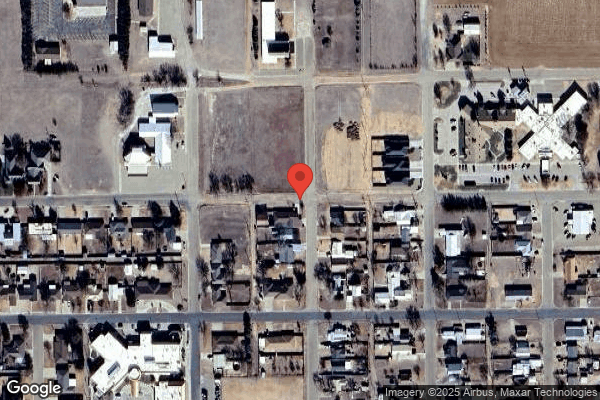
PRAIRIE ACRES

201 E 15TH, FRIONA, TX 79035 (806) 250-3922
Government - Hospital district 83 Beds Independent Data: November 2025
Trust Grade
58/100
#545 of 1168 in TX
Last Inspection: May 2024

Within standard 12-15 month inspection cycle. Federal law requires annual inspections.

Overview

Prairie Acres in Friona, Texas, has a Trust Grade of C, which means it is average and sits in the middle of the pack for nursing homes. It ranks #1 out of 2 facilities in Parmer County and #545 out of 1168 in Texas, indicating it's among the top half of facilities in the state. However, the facility's trend is worsening, with reported issues increasing from 3 in 2023 to 10 in 2024. Staffing is a relative strength, with a 4 out of 5 rating and a turnover rate of 40%, which is below the Texas average of 50%, suggesting that staff members are more stable and familiar with residents. On the downside, the facility has incurred $15,033 in fines, which is concerning as it reflects compliance issues. Additionally, there have been serious incidents, including a resident suffering a broken hip due to inadequate supervision, and multiple failures in food storage and sanitation practices that could lead to foodborne illnesses. Overall, while there are some strengths in staffing, the rising number of issues and specific incidents require careful consideration.

Trust Score
C
58/100
In Texas
#545/1168
Top 46%
Safety Record
Moderate
Needs review
Inspections
Getting Worse
3 → 10 violations
Staff Stability
○ Average
40% turnover. Near Texas's 48% average. Typical for the industry.
Penalties
✓ Good
$15,033 in fines. Lower than most Texas facilities. Relatively clean record.
Skilled Nurses
○ Average
Each resident gets 33 minutes of Registered Nurse (RN) attention daily — about average for Texas. RNs are the most trained staff who monitor for health changes.
Violations
⚠ Watch
20 deficiencies on record. Higher than average. Multiple issues found across inspections.
★★★☆☆
3.0
Overall Rating
★★★★☆
4.0
Staff Levels
★★★☆☆
3.0
Care Quality
★★★☆☆
3.0
Inspection Score
Stable
2023: 3 issues
2024: 10 issues

The Good

  • 4-Star Staffing Rating · Above-average nurse staffing levels
  • Full Sprinkler Coverage · Fire safety systems throughout facility
  • No fines on record
  • Staff turnover below average (40%)

    8 points below Texas average of 48%

Facility shows strength in staffing levels, fire safety.

The Bad

3-Star Overall Rating

Near Texas average (2.8)

Meets federal standards, typical of most facilities

Staff Turnover: 40%

Near Texas avg (46%)

Typical for the industry

Federal Fines: $15,033

Below median ($33,413)

Minor penalties assessed

The Ugly 20 deficiencies on record

1 actual harm
May 2024 10 deficiencies 1 Harm
SERIOUS (G)

Actual Harm - a resident was hurt due to facility failures

Accident Prevention (Tag F0689)

A resident was harmed · This affected 1 resident

**NOTE- TERMS IN BRACKETS HAVE BEEN EDITED TO PROTECT CONFIDENTIALITY** Based on observations, interviews, and record reviews the facility failed to ensure each resident receives adequate supervision ...

Read full inspector narrative →
**NOTE- TERMS IN BRACKETS HAVE BEEN EDITED TO PROTECT CONFIDENTIALITY** Based on observations, interviews, and record reviews the facility failed to ensure each resident receives adequate supervision and assistance devices to prevent accidents for 1 (Resident 35) of 12 residents reviewed for accidents. On 05/20/24 the facility failed to provide adequate supervision and assistance devices for Resident #35 and he had an unwitnessed fall which resulted in a broken left hip. This failure could place residents at risk of injury or harm. Findings Included: Record review of Resident #35's admission record dated 05/30/24 revealed an [AGE] year-old male originally admitted to the facility 03/29/23 with a most recent admission date of 05/29/24. He had diagnoses that included, but were not limited to, infection following a procedure, fracture of neck of right femur (right hip), dementia (a group of thinking and social symptoms that interferes with daily functioning), impulse disorder (lack of ability to control self), wandering, and Alzheimer's (a progressive disease that destroys memory and other important mental functions). Record review of Resident #35's Quarterly MDS completed on 05/17/24 revealed the following: Section C of the MDS revealed a BIMS of 3 which indicated severely impaired cognition. Section GG of the MDS revealed Resident #35 was dependent on staff for walking and needed partial to substantial assistance with other mobility ADLs. Section J of the MDS indicated Resident #35 had had major surgery to repair a fracture as well as another major surgery. Section P of the MDS revealed bed and chair alarms were used daily. Record review of Resident #35's care plan completed on 05/29/24 revealed a focus area of fall risk due to impaired mobility, cognitive deficits and weakness. Interventions were as follows: 03/18/24 used a mobility monitor on his w/c for safety. 03/14/24 have increased assistance, surveillance, activities involvement, a mobility alarm, and be placed near the nurses' station. 03/14/24 1:1 monitoring, and or activities to maintain (his) safety and to divert (his) attention away from attempting to stand/ambulate without supervision/assistance. Record review of Resident #35's active orders dated 05/30/24 revealed the following: An order for admission to skilled service related to (right) hip fracture dated 03/13/24. An order to monitor left hip for s/s of infection twice a day dated 05/29/24. Record review of Resident #35's Fall Risk Assessments front sheet in the EHR revealed he was assessed as a moderate risk for falls prior to his falls on 03/08/24 and 05/20/24. The falls resulted in a broken right hip and a broken left hip respectively. Record review of Resident #35's Progress Notes revealed the following: 03/08/24 written by DON revealed Resident #35 had fallen in his room and was found on the floor on his left side next to his bed. He was sent to the ER via ambulance. 03/13/24 written by LVN H revealed Resident #35 was returning to facility following surgery on 03/09/24 for a right hip fracture. 03/15/24 written by RN L revealed Resident #35 attempted to turn himself in his bed without staff assistance. 03/17/24 written by RN M revealed Resident #35 attempted to get up without staff assistance. 03/18/24 written by RN M revealed Resident #35 attempted to get up without staff assistance. 03/19/24 written by RN L revealed Resident #35 attempted to get up without staff assistance. 03/20/24 written by RN L revealed Resident #35 attempted to get up without staff assistance. 03/25/24 01:11 PM written by RN L revealed Resident #35 got up from his bed without assistance. 03/25/24 10:50 PM written by RN M revealed Resident #35 attempted to get out of bed by himself. 04/30/24 written by LVN H revealed Resident #35 had a mobility alarm on his w/c. 05/03/24 written by RN L revealed Resident #35 attempted to get out of bed by himself. 05/12/24 written by RN M revealed Resident #35 got out of bed by himself. 05/20/24 02:54 PM written by LVN C revealed Resident #35 fell from his w/c and was sent via ambulance to the ER. 05/20/24 05:51 PM written by DON revealed Resident #35 was being sent from the local hospital to a higher level of care due to a broken left hip. Record review of Resident #35's Daily Skilled Nurses Note2 dated 05/20/24 at 10:50 AM and filled out by LVN C revealed services provided for Resident # included Management/Evaluation of Resident Care Plan, Observation/Assessment of Resident's Condition and Therapy (PT, OT, ST). Record review of facility investigation into Resident #35's fall on 05/20/24 revealed Resident #35 had just received a haircut and was wheeling himself in his w/c down the hall from the salon and fell near the chapel door. AD heard him saying help and found him lying on the floor. She asked her assistant to notify nursing staff and LVN C assessed Resident #35 and called an ambulance, his family member, the DON, and his doctor. During an interview on 05/29/24 at 07:19 AM ADM stated Resident #35 had just been transitioned from a geri chair to a w/c before the fall on 05/20/24 when he broke his left hip. During an observation and interview on 05/29/24 at 09:12 AM AD stated she found Resident #35 wheeling himself in his w/c in the lobby on 05/20/24. She said she asked him if he wanted a haircut, and he said yes. At that point she wheeled him back to the salon and cut his hair. She stated he was strolling out (here she made motions with both hands as if she was spinning the wheels of a wheelchair). AD stated Resident #35 was moving along just fine so she started sweeping up in the salon. She said she heard him say help, help and she peeked around the corner of the salon doorway and could not see him, so she walked around the corner into the hallway and saw him on the floor. AD stated she did not see how he fell or what happened just that he was on the floor. She asked her activity aide to get a nurse. During an interview on 05/29/24 at 09:41 AM LVN C stated on 05/20/24 she saw therapy working with Resident #35 on walking and later when he was in his w/c she saw him paddling his feet as if he was walking. LVN C stated when she was sitting at the nurses' station facing the lobby, [Resident #35's fall happened at the end of the hall behind LVN C, if she was facing the lobby] she heard someone make a moaning sound twice. She said she turned to a staff member sitting next to her and they discussed the sound but did not know where it came from. LVN C stated a different staff said, [First name of Resident #35]'s on the floor, [First name of Resident #35]'s on the floor! She then got up from the nurses' station and assessed Resident #35. She stated he was lying on his right side on the incision from his prior hip surgery when she found him, and his w/c was next to him. LVN C said Resident #35 complained of pain in his back at the time she was assessing him. She stated when the ambulance arrived and the EMTs were assessing him, he told them his left arm hurt and they removed his shirt and found a skin tear on his left elbow. During an interview on 05/30/24 at 09:58 AM Resident #35's family member stated she had some concern that he had fallen twice in three months and broken both of his hips. She stated the first fall she could understand as he walked all the time without the aid of a cane or walker, and he had trouble seeing out of his left eye. She stated she could see how his constant walking and trouble seeing combined with his Alzheimer's diagnosis might have contributed to a fall. She stated when the second fall happened the chair alarm that was to be in use to help prevent another fall was not in use. She stated two staff members, LVN C and DON, told her during two different phone conversations that the chair alarm was not in use because they were too busy to put it in (his w/c). Resident #35's family member stated neither staff member elaborated on what they were busy doing. She said LVN C told her Resident #35 had just been working with therapy and staff did not have time to put the alarm in his w/c before he fell. During an interview on 05/30/24 at 10:34 AM DON stated Resident #35 was supposed to have a mobility alarm in his w/c when he fell but therapy had just taken him out of the geri chair to work with him in the w/c and then staff got him for a haircut and were with him. The alarm was in his geri chair and we had not moved it over to the w/c because he was with somebody the whole time. During an interview on 05/30/24 at 10:40 AM AD stated she did not remember if any staff person was with Resident #35 when she found him in the lobby and asked him if he wanted a haircut. She stated she did not know Resident #35 needed to have an alarm in his w/c. During an interview and observation on 05/30/24 AD pointed out the door of the salon, the 20 to 30-foot hallway to the corner, and the spot around the corner where she found Resident #35 on the floor after hearing him moaning. During an interview on 05/30/24 at 02:02 PM ADM and DON stated 1:1 meant a resident would receive individual attention during a specific time from a staff member. DON stated no residents in the facility required 1:1 monitoring all the time and the facility did not have enough staff to provide that type of monitoring. During an interview on 05/30/24 at 03:28 PM MDS RN stated a care plan was instructions on how to care for a resident and if they are not followed that is not gonna be good. MDS RN stated the 1:1 monitoring mentioned in Resident #35's care meant, If he is trying to get up staff will intervene and keep him from getting up and stay with him until he is settled. During an interview on 05/30/24 at 03:31 PM ADM and DON stated the 1:1 monitoring mentioned in Resident #35's care plan meant if he was attempting to ambulate or stand we will give the resident assistance and when he was stable and settled, they would stop the 1:1 monitoring. During an interview on 05/30/24 at 03:37 PM DON stated if a resident's care plan was not followed it would be detrimental for the resident. During an interview on 05/30/24 at 03:39 PM LVN H stated if a resident is care planned for a mobility alarm in their w/c it should be put on immediately. She stated if the alarm was not used the resident could get hurt. During an interview on 05/30/24 at 03:50 PM ADM stated there could be a negative outcome if a resident's care plan is not followed. He stated in the case of Resident #35's chair alarm, I don't think the alarm would have helped him from falling, it would have alerted us to the fall. Record review of undated facility policy titled Care Plans, Comprehensive Person-Centered revealed the following: . A comprehensive, person-centered care plan that includes measurable objectives and timetables to meet the resident's physical, psychosocial and functional needs is developed and implemented for each resident. Record review of undated facility policy titled Fall and Fall Risk, Managing revealed the following: . Based on previous evaluations and current data, the staff will identify interventions related to the resident's specific risks and causes to try to prevent the resident from falling and to try to minimize complications from falling. 8. Position change alarms will not be used as the primary or sole intervention to prevent falls, but rather will be used to assist the staff in identifying patterns and routines of the resident The use of alarms will be monitored for efficacy and staff will respond to alarms in a timely manner.
CONCERN (D)

Potential for Harm - no one hurt, but risky conditions existed

Abuse Prevention Policies (Tag F0607)

Could have caused harm · This affected 1 resident

Based on interviews and record review, the facility failed to implement written policies and procedures that prohibit and prevent abuse, neglect, and exploitation of residents for 1 (CNA I) of 12 staf...

Read full inspector narrative →
Based on interviews and record review, the facility failed to implement written policies and procedures that prohibit and prevent abuse, neglect, and exploitation of residents for 1 (CNA I) of 12 staff reviewed for abuse policies. The facility did not implement the training /orientation of CNA I related to abuse, neglect, and exploitation per facility policy. This failure could place residents in the facility at risk of Abuse, Neglect, or Exploitation. Findings included: Record Review of CNA I's employee file revealed she was hired on 03/01/24 and her Abuse, Neglect, or Exploitation Training took place on 03/28/24. During an interview on 05/30/24 at 3:11 PM, ADM stated he hired this CNA after she had worked for the facility as agency staff. ADM stated he needed CNAs so badly that he allowed her to work and do trainings after she was hired. During an interview on 05/30/24 at 3:37 PM, ADM stated that a possible negative outcome for not having staff trained about Abuse and Neglect would be that they would not be prepared for issues that could arise. He stated he made a judgment call to hire this CNA without proper training, and it was his mistake. Record review of the facility provided New Hire Instructions page included the following: .New Hire MUST complete the following BEFORE floor work: - [Brand name of electronic program] Training And after all training is complete - then they are added to the schedule for orientation. Record Review of the facility provided policy titled Abuse, Neglect and Exploitation Prevention Program not dated, revealed the following: 4. Require staff training/orientation programs that include such topics as abuse prevention, identification, and reporting of abuse, stress management, and handling verbally or physically aggressive resident behavior.
CONCERN (D)

Potential for Harm - no one hurt, but risky conditions existed

Comprehensive Care Plan (Tag F0656)

Could have caused harm · This affected 1 resident

**NOTE- TERMS IN BRACKETS HAVE BEEN EDITED TO PROTECT CONFIDENTIALITY** Based on observations, interviews, and record reviews the facility failed to develop and implement a comprehensive person-center...

Read full inspector narrative →
**NOTE- TERMS IN BRACKETS HAVE BEEN EDITED TO PROTECT CONFIDENTIALITY** Based on observations, interviews, and record reviews the facility failed to develop and implement a comprehensive person-centered care plan for 1 (Resident #35) of 12 residents reviewed for care plans. The facility failed to implement Resident #35's care plan for a chair alarm in his w/c and 1:1 monitoring, and he had an unwitnessed fall which resulted in a broken left hip. This failure could place residents at risk of injury due to falls. Findings Included: Record review of Resident #35's admission record dated 05/30/24 revealed an [AGE] year-old male originally admitted to the facility 03/29/23 with a most recent admission date of 05/29/24. He had diagnoses that included, but were not limited to, infection following a procedure, fracture of neck of right femur (right hip), dementia (a group of thinking and social symptoms that interferes with daily functioning), impulse disorder (lack of ability to control self), wandering, and Alzheimer's (a progressive disease that destroys memory and other important mental functions). Record review of Resident #35's Quarterly MDS completed on 05/17/24 revealed the following: Section C of the MDS revealed a BIMS of 3 which indicated severely impaired cognition. Section GG of the MDS revealed Resident #35 was dependent on staff for walking and needed partial to substantial assistance with other mobility ADLs. Section J of the MDS indicated Resident #35 had had major surgery to repair a fracture as well as another major surgery. Section P of the MDS revealed bed and chair alarms were used daily. Record review of Resident #35's care plan completed on 05/29/24 revealed a focus area of fall risk due to impaired mobility, cognitive deficits and weakness. Interventions were as follows: 03/18/24 used a mobility monitor on his w/c for safety. 03/14/24 have increased assistance, surveillance, activities involvement, a mobility alarm, and be placed near the nurses' station. 03/14/24 1:1 monitoring, and or activities to maintain (his) safety and to divert (his) attention away from attempting to stand/ambulate without supervision/assistance. Record review of Resident #35's active orders dated 05/30/24 revealed the following: An order for admission to skilled service related to hip fracture dated 03/13/24. An order to monitor left hip for s/s of infection twice a day dated 05/29/24. Record review of Resident #35's Fall Risk Assessments front sheet in the EHR revealed he was assessed as a moderate risk for falls prior to his falls on 03/08/24 and 05/20/24 which resulted in a broken right hip and a broken left hip. Record review of Resident #35's Progress Notes revealed the following: 03/08/24 written by DON revealed Resident #35 had fallen in his room and was found on the floor on his left side next to his bed. He was sent to the ER via ambulance. 03/13/24 written by LVN H revealed Resident #35 was returning to facility following surgery on 03/09/24 for a right hip fracture. 03/15/24 written by RN L revealed Resident #35 attempted to turn himself in his bed without staff assistance. 03/17/24 written by RN M revealed Resident #35 attempted to get up without staff assistance. 03/18/24 written by RN M revealed Resident #35 attempted to get up without staff assistance. 03/19/24 written by RN L revealed Resident #35 attempted to get up without staff assistance. 03/20/24 written by RN L revealed Resident #35 attempted to get up without staff assistance. 03/25/24 01:11 PM written by RN L revealed Resident #35 got up from his bed without assistance. 03/25/24 10:50 PM written by RN M revealed Resident #35 attempted to get out of bed by himself. 04/30/24 written by LVN H revealed Resident #35 had a mobility alarm on his w/c. 05/03/24 written by RN L revealed Resident #35 attempted to get out of bed by himself. 05/12/24 written by RN M revealed Resident #35 got out of bed by himself. 05/20/24 02:54 PM written by LVN C revealed Resident #35 fell from his w/c and was sent via ambulance to the ER. 05/20/24 05:51 PM written by DON revealed Resident #35 was being sent from the local hospital to a higher level of care for a broken left hip. Record review of Resident #35's Daily Skilled Nurses Note2 dated 05/20/24 at 10:50 AM and filled out by LVN C revealed services provided for Resident # included Management/Evaluation of Resident Care Plan, Observation/Assessment of Resident's Condition and Therapy (PT, OT, ST). Record review of facility investigation into Resident #35's fall on 05/20/24 revealed Resident #35 had just received a haircut and was wheeling himself in his w/c down the hall from the salon and fell near the chapel door. AD heard him saying help and found him lying on the floor. She asked her assistant to notify nursing staff and LVN C assessed Resident #35 and called an ambulance, his family member, the DON, and his doctor. During an interview on 05/29/24 at 07:19 AM ADM stated Resident #35 had just been transitioned from a geri chair to a w/c before the fall on 05/20/24 when he broke his left hip. During an observation and interview on 05/29/24 at 09:12 AM, AD stated she found Resident #35 wheeling himself in his w/c in the lobby on 05/20/24. She said she asked him if he wanted a haircut, and he said yes. At that point she wheeled him back to the salon and cut his hair. She stated he was strolling out (here she made motions with both hands as if she was spinning the wheels of a wheelchair). AD stated Resident #35 was moving along just fine so she started sweeping up in the salon. She said she heard him say help, help and she peeked around the corner of the salon doorway and could not see him, so she walked around the corner into the hallway and saw him on the floor. AD stated she did not see how he fell or what happened just that he was on the floor. She asked her activity aide to get a nurse. During an interview on 05/29/24 at 09:41 AM, LVN C stated on 05/20/24 she saw therapy working with Resident #35 on walking and later when he was in his w/c she saw him paddling his feet as if he was walking. LVN C stated when she was sitting at the nurses' station facing the lobby, she heard someone make a moaning sound twice. She said she turned to someone sitting next to her and they discussed the sound but did not know where it came from. LVN C stated staff said, [First name of Resident #35]'s on the floor, [First name of Resident #35]'s on the floor! She then got up from the nurses' station and assessed Resident #35. She stated he was lying on his right side on the incision from his prior hip surgery when she found him, and his w/c was next to him. LVN C said Resident #35 complained of pain in his back at the time she was assessing him. She stated when the ambulance arrived and the EMTs were assessing him, he told them his left arm hurt and they removed his shirt and found a skin tear on his left elbow. During an interview on 05/30/24 at 09:58 AM, Resident #35's family member stated she had some concern that he had fallen twice in three months and broken both of his hips. She stated the first fall she could understand as he walked all the time without the aid of a cane or walker, and he had trouble seeing out of his left eye. She stated she could see how his constant walking and trouble seeing combined with his Alzheimer's diagnosis might have contributed to a fall. She stated when the second fall happened the chair alarm that was to be in use to help prevent another fall was not in use. She stated two staff members, LVN C and DON, told her during two different phone conversations that the chair alarm was not in use because they were too busy to put it in (his w/c). Resident #35's family member stated neither staff member elaborated on what they were busy doing. She said LVN C told her Resident #35 had just been working with therapy and staff did not have time to put the alarm in his w/c before he fell. During an interview on 05/30/24 at 10:34 AM, DON stated Resident #35 was supposed to have a mobility alarm in his w/c when he fell but therapy had just taken him out of the geri chair to work with him in the w/c and then staff got him for a haircut and were with him. The alarm was in his geri chair and we had not moved it over to the w/c because he was with somebody the whole time. During an interview on 05/30/24 at 10:40 AM, AD stated she did not remember if any staff person was with Resident #35 when she found him in the lobby and asked him if he wanted a haircut. She stated she did not know Resident #35 needed to have an alarm in his w/c. During an interview and observation on 05/30/24, AD pointed out the door of the salon, the 20 to 30-foot hallway to the corner, and the spot around the corner where she found Resident #35 on the floor after hearing him moaning. During an interview on 05/30/24 at 02:02 PM, ADM and DON stated 1:1 meant a resident would receive individual attention during a specific time from a staff member. DON stated no residents in the facility required 1:1 monitoring all the time and the facility did not have enough staff to provide that type of monitoring. During an interview on 05/30/24 at 03:31 PM, ADM and DON stated the 1:1 monitoring mentioned in Resident #35's care plan meant if he was attempting to ambulate or stand we will give the resident assistance and when he was stable and settled, they would stop the 1:1 monitoring. During an interview on 05/30/24 at 03:28 PM, MDS RN stated she was responsible for writing care plans. She said a care plan was instructions on how to care for a resident and if they are not followed that is not gonna be good. MDS RN stated the 1:1 monitoring mentioned in Resident #35's care meant, If he is trying to get up staff will intervene and keep him from getting up and stay with him until he is settled. During an interview on 05/30/24 at 03:37 PM, DON stated if a resident's care plan was not followed it would be detrimental for the resident. During an interview on 05/30/24 at 03:39 PM, LVN H stated if a resident is care planned for a mobility alarm in their w/c it should be put on immediately. She stated if the alarm was not used the resident could get hurt. During an interview on 05/30/24 at 03:50 PM, ADM stated there could be a negative outcome if a resident's care plan is not followed. He stated in the case of Resident #35's chair alarm, I don't think the alarm would have helped him from falling, it would have alerted us to the fall. Record review of undated facility policy titled Care Plans, Comprehensive Person-Centered revealed the following: . A comprehensive, person-centered care plan that includes measurable objectives and timetables to meet the resident's physical, psychosocial and functional needs is developed and implemented for each resident. Record review of undated facility policy titled Fall and Fall Risk, Managing revealed the following: . Based on previous evaluations and current data, the staff will identify interventions related to the resident's specific risks and causes to try to prevent the resident from falling and to try to minimize complications from falling. 8. Position change alarms will not be used as the primary or sole intervention to prevent falls, but rather will be used to assist the staff in identifying patterns and routines of the resident The use of alarms will be monitored for efficacy and staff will respond to alarms in a timely manner.
CONCERN (D)

Potential for Harm - no one hurt, but risky conditions existed

Tube Feeding (Tag F0693)

Could have caused harm · This affected 1 resident

**NOTE- TERMS IN BRACKETS HAVE BEEN EDITED TO PROTECT CONFIDENTIALITY** Based on observation, interview, and record review the facility failed to ensure a resident who is fed by enteral means receives...

Read full inspector narrative →
**NOTE- TERMS IN BRACKETS HAVE BEEN EDITED TO PROTECT CONFIDENTIALITY** Based on observation, interview, and record review the facility failed to ensure a resident who is fed by enteral means receives the appropriate treatment and services to prevent complications of enteral feeding including but not limited to aspiration pneumonia, diarrhea, vomiting, dehydration, metabolic abnormalities, and nasal-pharyngeal ulcers for 1 (Resident #91) of 1 residents reviewed for tube feeding. The facility failed to check for PEG tube placement before administering medication (Cephalexin) via the tube for Resident #91. This failure could place resident at risk of aspiration, bleeding, or perforation, pneumonia, and even death. Findings Included: Record review of Resident #91's admission record dated 05/30/24 revealed a [AGE] year-old male admitted to the facility on [DATE] with diagnoses that included but were not limited to cerebral infarction due to embolism (stroke due to blood clot), dysphagia following cerebral infarction (difficulty in swallowing following stroke), epilepsy (disorder that causes seizures or unusual sensations and behaviors), pneumonitis due to inhalation of food and vomit (inflammation of lung tissue), aspiration of fluid (breathing fluid into the lungs), and acquired absence of part of stomach. Record review of Resident #91's quarterly MDS completed on 03/26/24 revealed the following: Section C revealed a BIMS of 3 which indicated severely impaired cognition. Section GG noted eating was not attempted due to medical condition or safety concerns. Section K revealed Resident #91 was on a feeding tube while a resident and received 51% or more of his total calories and 500 cc/day or less of fluid through the tube. Record review of Resident #91's care plan completed 05/02/24 revealed a focus area of risk for aspiration r/t feeding tube initiated on 02/27/24. One intervention for this focus area was to ensure proper tube placement prior to beginning feeding. A second focus area initiated on 08/10/24 addressed the requirement for tube feeding r/t dysphagia. One intervention for this focus area was to ensure placement of the tube by marking the length of the tube. A second intervention for this focus area addressed Resident #91's medications being crushed and administered through his PEG tube. A third intervention for this focus area referred the reader to the previous risk for aspiration focus area. Record review of Resident #91's active order summary dated 05/29/24 revealed the following: An order for Cephalexin to be given via PEG tube four times a day related to aspiration of fluid with a start date of 05/24/24. During an observation on 05/28/24 at 11:57 AM LVN C administered Cephalexin to Resident #91 via his PEG tube without first checking the tube for placement. During an interview on 05/29/24 at 12:18 PM DON stated administering medication through a PEG tube without first checking the tube for placement could create issues in the abdomen of the resident and medications/food could go in the wrong place. She stated nurses were responsible to provide proper care to Resident #91's PEG tube. During and interview on 05/29/24 at 12:42 PM LVN C stated she has worked for the facility for several years part time. She stated she did not check the placement of Resident #91's tube before administering his medication on 05/28/24. She said, I know, I know I didn't. I went back and looked at it. I did it wrong and I understand. She explained the proper procedure that she should have done was to fill a syringe with a little air, attach it to the tube and listen with her stethoscope at the base of the tube for a whoosh sound as she pushed the air into the tube. LVN C said not checking for placement of the tube could result in an infection for the resident. Record review of undated facility policy titled Enteral Feedings-Safety Precautions revealed the following: . Preventing aspiration 1. Check enteral tube placement every 4 hours and prior to feeding or administration of medication. Record review of undated facility policy titled Enteral Nutrition revealed the following: . 16. Risk of aspiration is assessed by the nurse and provider and addressed in the individual care plan. [NAME] of aspiration may be affected by: . d. failure to confirm placement of the feeding tube prior to initiating the feeding.
CONCERN (D)

Potential for Harm - no one hurt, but risky conditions existed

Respiratory Care (Tag F0695)

Could have caused harm · This affected 1 resident

**NOTE- TERMS IN BRACKETS HAVE BEEN EDITED TO PROTECT CONFIDENTIALITY** Based on observation, interview, and record review the facility failed to ensure a resident who needs respiratory care, is provi...

Read full inspector narrative →
**NOTE- TERMS IN BRACKETS HAVE BEEN EDITED TO PROTECT CONFIDENTIALITY** Based on observation, interview, and record review the facility failed to ensure a resident who needs respiratory care, is provided such care, consistent with professional standards of practice, the comprehensive person-centered care plan, and the residents' goals and preferences for 1 (Resident #34) of 12 residents reviewed for respiratory care. Resident #34 had physician's orders for oxygen via nasal cannula at 2-3 lpm and was receiving oxygen at 5 lpm. This failure could place residents at risk for hypercapnia (too much carbon dioxide in the blood), pulmonary oxygen toxicity (damage to the lung lining tissues and air sacs), hypoxemia (low levels of oxygen in the blood, decreasing the oxygen supply to vital organs), and shortness of breath. Findings Included: Record review of Resident #34's admission record dated 05/28/24 revealed a [AGE] year-old female admitted to the facility on [DATE] with diagnoses that included, but were not limited to, unspecified dementia (a group of thinking and social symptoms that interferes with daily functioning), lack of coordination, anxiety disorder (mental disorder characterized by significant and uncontrollable feelings of anxiety and fear), muscle weakness, and tremor (Unintentional trembling or shaking movements in one or more parts of the body). Record review of Resident #34's significant change MDS completed on 03/21/24 revealed the following: Section C revealed a BIMS of 2 which indicated severely impaired cognition. Section O of the MDS revealed Resident #34 was receiving O2 therapy while a resident. Record review of Resident #34's care plan completed 05/02/24 revealed I have Oxygen Therapy r/t Ineffective gas exchange. This focus area was initiated on 03/07/2024. One of the interventions listed was Maintain my oxygen settings per physician's orders. Check on liter flow when entering my room. Record review of Resident #34's active orders dated 05/28/24 revealed the following order with a start date of 03/20/24: Oxygen 2-3 L to maintain oxygen levels at or above 90%. Two times a day related to MUSCLE WEAKNESS .CHRONIC PAIN. Record review of Resident #34's O2 saturations for the last 4 months revealed 4 entries for February of 2024 all of which were above 90% and were on room air. Resident #32's O2 saturation was checked 27 times in March of 2024 4 of those times she was on room air, the other 23 times she was receiving O2 via NC. Resident #34's O2 saturation did not drop below 90% during the month of March. Her O2 saturation was checked 62 times in April of 2024, it never dropped below 90% during the month. Resident #34 was on room air for 11 of those times and receiving O2 via nasal cannula the other 51 times. Her O2 saturation was checked 60 times from May 1-28, 2024. It did not fall below 90% for the month and she was on room air 2 of the times and receiving O2 via NC the other 58 times. During an observation on 05/28/24 at 10:38 AM Resident #34 was seated in her w/c near the nurses' station receiving O2 via NC at 5 lpm. During an observation on 05/28/24 at 12:09 PM Resident #34 was seated in her w/c at a table in the dining room receiving O2 via NC at 5 lpm. During an observation on 05/28/24 at 03:23 PM Resident #34 was seated in her w/c near the nurses' station receiving O2 via NC at 5 lpm. During an observation on 05/29/24 at 07:35 AM Resident #34 was seated in her w/c at a table in the dining room receiving O2 via NC at 5 lpm. During an observation on 05/29/24 at 08:50 AM Resident #34 was seated in her w/c near the nurses' station receiving O2 via NC at 5 lpm. During an interview on 05/29/24 at 08:57 AM CNA D stated CNAs do not have anything to do with setting lpm on O2 concentrators. He said he will check the lpm to be sure it was what the nurses tell him it should be. He stated Resident #34's O2 was normally set at 2 lpm unless she gets anxious and then we will turn it up to 3 (lpm). During an interview on 05/29/24 at 11:53 DON stated it was the nurses who were responsible for setting O2 levels for residents. She said they know what lpm to set the O2 by referring to physician orders. She stated she did not know why Resident #34's O2 was set at 5 lpm. She stated a resident receiving O2 at higher levels than ordered could result in the O2 not being effective or could create respiratory issues for the resident. During an interview on 05/29/24 at 12:43 PM LVN C stated she checked lpm for each resident receiving O2 each morning when she documented O2 saturation. She stated receiving O2 at higher concentrations than ordered could be bad for the resident. LVN C said she looked at physician orders to find out what lpm to set the O2. During an interview on 05/30/24 at 03:54 PM LVN H stated a resident could develop issues breathing if they were to receive O2 at a higher lpm than ordered by the physician. She stated she knew what lpm to set O2 concentrators for residents by referring to the physician's orders. Record review of undated facility policy titled Administering Medications revealed the following: . Medications are administered in a safe and timely manner, and as prescribed. 4. Medications are administered in accordance with prescriber orders . Record review of undated facility policy titled Oxygen Administration revealed the following: . 2. Check physician's orders for liter flow and method of administration. 11. Set the flow meter to the rate ordered by the physician. 15. At regular intervals, check liter flow .
CONCERN (D)

Potential for Harm - no one hurt, but risky conditions existed

Deficiency F0760 (Tag F0760)

Could have caused harm · This affected 1 resident

**NOTE- TERMS IN BRACKETS HAVE BEEN EDITED TO PROTECT CONFIDENTIALITY** Based on observation, the interview and record review, the facility failed to ensure residents were free of any significant medi...

Read full inspector narrative →
**NOTE- TERMS IN BRACKETS HAVE BEEN EDITED TO PROTECT CONFIDENTIALITY** Based on observation, the interview and record review, the facility failed to ensure residents were free of any significant medication errors for one of 1 (Resident #20) 12 residents reviewed for medication administration. -LVN C was attempting to administer Resident #20's expired insulin. Resident #20's insulin did not have an open date on the vial; therefore it could not be determined if insulin was expired. This failure could place residents who receive insulin medications at an increased risk for complications such as increased blood glucose levels, change in cognition, and an exacerbation of symptoms and disease process. Findings include: Record review of Resident #20's face sheet, dated [DATE], revealed Resident #20 as a [AGE] year-old female who was admitted into the facility on [DATE]. Resident #20 had the following diagnosis: Cerebral infarction due to unspecified occlusion or stenosis of left middle cerebral artery. Type 2 diabetes mellitus without complication, Essential (Primary)Hypertension, cognitive communication deficit, muscle weakness (Generalized), major depressive disorder, recurrent, unspecified. Record review of Resident #20's current MDS, dated [DATE], revealed Resident #20 had a BIMS of 07, which indicates that Resident 20 is severely impaired when it comes to cognitive function. Resident #20's functional ability revealed that Resident #20 is dependent upon staff for most ADLs except for eating. Record review of Resident #20's care plan dated [DATE] revealed Resident #20 was care planned for her Diabetes mellitus. Interventions read that Diabetes medication as ordered by doctor. Monitor/document side effects and effectiveness. Record review of Resident #20's physician orders, dated [DATE] revealed that Resident #20 has an order for the following insulins: HumaLOG Solution 100 UNIT/ML (Insulin Lispro) Inject as per sliding scale: if 0 - 149 = 0; 150 - 200 = 2; 201 - 250 = 3; 251 - 300 = 4; 301 - 350 = 5; 351 - 400 = 6 If over 400 call MD, subcutaneously before meals and at bedtime related to TYPE 2 DIABETES MELLITUS WITHOUT COMPLICATIONS (E11.9) Lantus Solution 100 UNIT/ML (Insulin Glargine) Inject 30 unit subcutaneously one time a day related to TYPE 2 DIABETES MELLITUS WITHOUT COMPLICATIONS (E11.9) Record review of Resident #20's MARs, dated for the month of [DATE] revealed that Resident #20 received Humalog sliding scale every day for the last 30 days of May except on [DATE], [DATE], and [DATE]. These 3 days Resident #20 did not need her Humalog sliding scale. Record review of Resident #20's blood glucose logs, dated [DATE] revealed that resident did not have any dangerously high blood sugars for the month of May. The highest Resident #20's blood glucose got was 300mg/dL (milligrams/deciliter) on [DATE] and that was covered by 4 units of her Humalog sliding scale. Observation/Interview on [DATE] at 09:46 AM revealed LVN C getting insulin from the facility's treatment cart. Insulin for Resident #20 was drawn up in an insulin syringe by LVN C. LVN C went into the room of Resident #20 proceeded to give 2 units of medication to resident in her right arm. LVN C was stopped by surveyor before medication was administered. LVN C was asked to review the expiration and open date on the insulin. LVN C stated that she could not find the open date on the insulin. LVN C was asked if the medication should be given since the open date is nowhere to be found. LVN C stated she would go and take it to the DON. LVN C was asked if the insulin had been given today, LVN C stated that it had been given. Interview on [DATE] at 11:49 AM with LVN C stated that giving a medication that is expired would not be effective for the resident. Interview on [DATE] at 10:05 AM with DON stated that the negative outcome of giving an expired insulin would be that the medication is not as effective. Record review of facility provided policy titled, Adverse Consequences and Medication Errors, undated, revealed the following: .4. The staff and practitioner shall strive to minimize adverse consequences by: a. Following relevant clinical guidelines and manufacturer's specifications for use, dose, administration, duration, and monitoring of the medication; . .5. A medication error is defined as the preparation or administration of drugs or biological which is not in accordance with physician's orders, manufacturer specifications, or accepted professional standards and principles of the professional(s) providing services. 6. Examples of medication errors include: . .h. Failure to follow manufacturer instructions and/or accepted professional standards . .9. Facility staff monitor the resident for possible medication -related adverse consequences, including mental status and level of consciousness, when the following conditions occur: . .f. Medication error, e.g., wrong or expired medication. Record review of facility provided policy titled, Labeling of Medication Containers, undated, revealed the following: .3. Labels for individual resident medications include all necessary information, such as: . .h. The expiration date when applicable; . Record review of facility provided policy titled, Administering Medications, undated, revealed the following: .12. The expiration/beyond use date on the medication label is checked prior to administering. When opening a multi-dose container, the date opened is recorded on the container. Record review of https://humalog.lilly.com, manufacture website for Humalog, website revised 08/2023 revealed the following: After vials have been opened: Store opened vials in the refrigerator or at room temperature up to 86°F (30°C) for up to 28 days. Keep vials away from heat and out of direct light. Throw away all opened vials after 28 days of use, even if there is insulin left in the vial.
CONCERN (D)

Potential for Harm - no one hurt, but risky conditions existed

Deficiency F0761 (Tag F0761)

Could have caused harm · This affected 1 resident

**NOTE- TERMS IN BRACKETS HAVE BEEN EDITED TO PROTECT CONFIDENTIALITY** Based on observation, interview, and record review, it was determined the facility failed to ensure drugs and biologicals were s...

Read full inspector narrative →
**NOTE- TERMS IN BRACKETS HAVE BEEN EDITED TO PROTECT CONFIDENTIALITY** Based on observation, interview, and record review, it was determined the facility failed to ensure drugs and biologicals were stored in locked compartments and labeled in accordance with currently accepted professional principles and include the appropriate accessory and cautionary instructions, and the expiration date when applicable for 2 of 2 (Halls Emerald and [NAME], and Halls Topaz and Sapphire) medication carts and 1 of 1 medication room, and 1 of 1 treatment cart reviewed for medication storage. -1 insulin medications were found in Hall Emerald and [NAME] medication cart with no date of when medication vial was opened. -Medication refrigerator in medication room was logged at 30 degrees 4 out of the last 28 days. -LVN C left treatment cart unlocked and unattended. The facility's failure to ensure drugs and biologicals were stored at appropriate temperatures, in locked compartments, and labeled in accordance with currently accepted professional principles, and include the appropriate accessory and cautionary instructions, and the expiration date when applicable could place residents at risk. Findings include: Observation on [DATE] at 09:44 AM revealed medication room for facility and the medication refrigerator was out of temperature range 4 ([DATE]th, [DATE]th, [DATE]th, and [DATE]th) out of the last 28 days with a temp of 30 degrees. E-kit in fridge was full of insulins and narcotic box had Lorazepam oral concentrate for Resident #11, Resident #23, and Resident #16. Observation of the treatment cart with LVN C [DATE] at 09:46 AM revealed Resident #20's Humalog insulin did not have an open date on the vial. Observation on [DATE] at 11:07 AM revealed LVN C left treatment cart unattended while letting DON that insulin for Resident #20 did not have an open date on it. The treatment cart was left unattended until 11:11am. An agitated resident was in hallway next to treatment cart being redirected by other staff away from the unlocked cart. Interview on [DATE] at 11:49 AM LVN C stated if she had administered the expired insulin to Resident #20 a negative outcome would be that the medication would not be effective for the resident. Interview on [DATE] at 10:05 AM with DON stated the negative outcome of giving an expired insulin would be that the medication was not as effective. DON stated the negative outcome for leaving an unlocked medication cart unattended would be that another resident could get into it. DON stated the negative outcome for frozen medications would be the effectiveness of the medication could be compromised. Record review of facility provided policy titled, Refrigerators and Freezers, undated, revealed the following: Policy Interpretation and Implementation 1. Acceptable temperature ranges are 35 degrees F to 40 degrees F for refrigerators and less then 0 degrees F for freezers. .3. Monthly tracking sheets will include date, temperature, and initials. If temperatures are not within range, staff must notify supervisor immediately. Record review of facility provided policy titled, Labeling of Medication Containers, undated, revealed the following: .3. Labels for individual resident medications include all necessary information, such as: . .h. The expiration date when applicable; . Record review of facility provided policy titled, Administering Medications, undated, revealed the following: .12. The expiration/beyond use date on the medication label is checked prior to administering. When opening a multi-dose container, the date opened is recorded on the container. Record review of https://humalog.lilly.com, manufacture website for Humalog, website revised 08/2023 revealed the following: After vials have been opened: Store opened vials in the refrigerator or at room temperature up to 86°F (30°C) for up to 28 days. Keep vials away from heat and out of direct light. Throw away all opened vials after 28 days of use, even if there is insulin left in the vial. Record review of Drug label information for Lorazepam concentrate on DailyMed - LORAZEPAM concentrate (nih.gov), updated [DATE] revealed the following: Store at Cold Temperature-Refrigerate 2°-8°C (36°-46°F) Dispense only in the bottle and only with the calibrated dropper provided. Discard opened bottle after 90 days. Record review of facility provided policy titled, Security of Medication Cart, undated revealed the following: 1. The nurse must secure the medication cart during the medication pass to prevent unauthorized entry. .4. Medication carts must be securely locked at all times when out of the nurse's view. 5. When the medication cart is not being used, it must be locked and parked at the nurses' station or inside of the medication room.
CONCERN (D)

Potential for Harm - no one hurt, but risky conditions existed

Deficiency F0943 (Tag F0943)

Could have caused harm · This affected 1 resident

Based on interview and record review the facility failed to provide training to their staff that at a minimum educates staff on activities that constitute abuse, neglect, exploitation, and misappropri...

Read full inspector narrative →
Based on interview and record review the facility failed to provide training to their staff that at a minimum educates staff on activities that constitute abuse, neglect, exploitation, and misappropriation of resident property and procedures for reporting incidents of abuse, neglect, exploitation, or the misappropriation of resident property and dementia management for 2 (CNA I and CNA J) of 12 employees reviewed for staff training. The facility failed to train CNA I on what constitutes abuse, neglect, exploitation, misappropriation of resident property and how to report the above. The facility failed to train CNA I on dementia management. The faciltiy failed to train CNA J on dementia management. These failures could place residents at risk of injury or harm due to being cared for by untrained staff. Findings included: Record review of CNA I's employee file revealed a hire date of 03/01/24. The file did not contain any record of training on abuse, neglect, exploitation, misappropriation of resident property or dementia. Record review of CNA J's employee file revealed a hire date of 08/07/23. The file did not contain any record of dementia training During an interview on 05/30/24 at 3:11 PM, ADM stated a couple of the CNAs were agency staff before they came over to officially work for the facility and he needed CNA's so badly, that he let them work and do trainings after hire. During an interview on 05/30/24 at 3:37 PM, ADM stated a possible negative outcome for not having staff trained about HIV would be that they would not be prepared for issues that arise and that it was a judgment call that he made to hire those 2 employees without proper training, and it was his mistake. Record review of facility provided New Hire Instructions page revealed the following: .New Hire MUST complete the following BEFORE floor work: - [Name of Electronic Program] Training And after all training is complete - then they are added to the schedule for orientation. Record Review of the facility provided policy titled Abuse, Neglect and Exploitation Prevention Program not dated, revealed the following: Policy Statement: Our residents have the right to be free from abuse, neglect, misappropriation of resident property and exploitation. This includes but is not limited to freedom from corporal punishment, involuntary seclusion, verbal, mental, sexual, or physical abuse, and physical or chemical restraint not required to treat the resident's symptoms. 4. Require staff training/orientation programs that include such topics as abuse prevention, identification, and reporting of abuse, stress management, and handling verbally or physically aggressive resident behavior.
CONCERN (E)

Potential for Harm - no one hurt, but risky conditions existed

Infection Control (Tag F0880)

Could have caused harm · This affected multiple residents

Based on observation, interview, and record review, the facility failed to maintain an infection prevention and control program designed to provide a safe, sanitary, and comfortable environment and to...

Read full inspector narrative →
Based on observation, interview, and record review, the facility failed to maintain an infection prevention and control program designed to provide a safe, sanitary, and comfortable environment and to help prevent the development and transmission of communicable diseases and infections for 4 (LVN C, CNA E, NA G, and CNA F) of 5 staff members in that: -LVN C did not don PPE to administer medication via PEG tube to Resident #91 -LVN C did not perform hand hygiene or change gloves in between dirty and clean portions of wound care for Resident #5. -CNA E did not perform hand hygiene before, during, or after incontinent care of Resident #24. -NA G did not perform hand hygiene before, during, or after incontinent care of Resident #24. -CNA F did not perform hand hygiene in between assisting Resident #17 and Resident #21 with eating at lunch time meal. -LVN C did not perform hand hygiene between assisting Resident #24 and Resident #5 with eating at lunch time meal. These deficient practices have the potential to affect all residents in the facility by exposing them to care that could lead to the spread of viral infections, secondary infections, communicable diseases. Findings include: Observation on 05/28/24 at 11:57 AM revealed LVN C did not don PPE for the administration of antibiotic to Resident #91 via his PEG tube. PPE was in the Residents room next to the sink. Observation on 05/28/24 at 12:25 PM revealed LVN C going from table to table touching residents' silverware and then moving on to other residents with no hand hygiene being performed in between residents. Observation on 05/28/24 at 12:28 PM revealed LVN C touched her clothing and then assisted an unidentified resident with the cutting up of her food. No hand hygiene was performed before LVN C assisted resident. Observation on 05/28/24 at 12:29 PM LVN C touched her clothing and then helped Resident # 24. Resident #24 was handed a spoon to better assist with getting food to his mouth. LVN C then went over to assist Resident # 5 with eating. No hand Hygiene was performed in between the 2 different residents. Observation 05/28/24 at 12:32 PM CNA F was assisting Resident # 17 with eating and then turned around to give Resident # 21 a drink from her cup. No hand hygiene was performed in between these two residents. Observation on 05/28/24 at 12:35 PM LVN C assisted Resident #24 with eating, then went to assist Resident #5, no hand hygiene was performed in between these two residents. Observation on 05/28/24 at 02:47 PM revealed CNA E and NA G who performed incontinent care for Resident #24. No HH was performed before the task was started. No HH or glove change was performed in between cleaning BM from Resident #24 and placing a clean brief on Resident #24. CNA E then proceeded to touch resident, residents' blankets, pillow, bed control, and call light with no HH performed and soiled gloves still on that she cleaned BM with. No HH was performed after incontinent care was concluded or before leaving Resident #24's room. Interview on 05/28/24 at 02:59 PM with CNA E revealed that a negative outcome for not performing HH during incontinent care would be there would be a chance of increased risk of cross contamination. Interview on 05/28/24 at AM with CNA F revealed that a negative outcome for not performing HH between assisting residents to eat would be the spread of germs from one resident to another. Observation on 05/29/24 at 9:52 AM revealed LVN C who performed wound care on Resident #5. There was no dressing on the wound when Resident #5 was turned to her right side. LVN C cleaned the wound and the surrounding areas. Once the area was cleaned LVN C proceeded to take the clean foam dressing and placed it on Resident #5's coccyx. LVN C did not perform a glove change or hand hygiene in between the dirty and clean portion of the wound care. Interview on 05/29/24 at 10:02 PM with LVN C revealed that a negative outcome for not performing HH or a glove change during wound care could lead to an increased risk of infection for the resident. Interview on 05/30/24 at 10:03 AM with DON revealed that a negative outcome for not performing HH and glove changes during incontinent care, HH during mealtime assistance, and HH and glove changes during wound care for residents could all lead to the increased risk for the spread of infection. DON revealed that not donning PPE during a PEG tubed medication administration could also lead to the spread of infection. Interview on 05/31/24 at 10:02 AM with LVN C revealed that LVN C was not aware that she needed to don PPE during a PEG tube medication administration. LVN C stated when she was asked what a negative outcome would be for not donning PPE, her response was I was not informed I needed to put PPE on. Record review of facility provided policy titled Handwashing/Hand Hygiene, revised August 2019, revealed the following: .2. All personnel shall follow the handwashing/hand hygiene procedures to help prevent the spread of infection to other personnel, resident, and visitors. .7. Use an alcohol-based hand rub containing at least 62% alcohol; or, alternatively, soap (antimicrobial or non-antimicrobial) and water for the following situations; . .b. Before and after direct contact with residents; . .D. Before performing any non-surgical invasive procedures; . . H. Before moving from a contaminated body site to a clean body site during resident care; I. After contact with a resident intact skin; J. After contact with blood or bodily fluids . . M. After removing gloves; . .P. Before and after assisting a resident with meals; . . 8. Hand hygiene is the final step after removing and disposing of personal protective equipment Record review of facility provided policy titled, Incontinent Care Procedure, undated, revealed the following: . Wash hands Put on gloves, . .Reposition resident for safety Dispose of all soiled wipes, linens protector and gloves, tie off bag for final disposal, Wash hands and put on clean gloves, Place a clean brief on resident, secure catheter if needed (ensure tubing has no kinks, obstructions, or loops. Ensure that the privacy cover is in place for the catheter bag) Remove gloves and wash hands Reposition resident for comfort Place signaling device within reach . .Sanitize immediately after leaving the resident's room. Record review of facility provided policy titled, Wound Care Procedure, undated, revealed the following: .9. Perform hand hygiene and apply nonsterile gloves. .13. Assess the wound: . .16. Cleanse the wound based on orders, using moistened gauze, commercial cleanser, or sterile irrigant. When using moistened gauze, use one moistened 2X2 sterile gauze per stroke. Work in straight lines, moving away from the wound with each stroke. Strokes should move from a clean area to a dirty area and from top to bottom. .18. Remove gloves, perform hand hygiene, and apply new gloves. .20. Apply outer dressing if required, Secure the dressing tape as needed. 21. Remove gloves and perform hand hygiene. .24. Perform hand hygiene. Record review of CMS policy titled, Enhanced Barrier Precautions in Nursing Homes, dated 03/20/2024, revealed the following: .Infection or colonization with a CDC-targeted MDRO when Contact Precautions do not otherwise apply: or Wounds and/or indwelling medical devices even if the resident is not known to be infected or colonized with a MDRO. Wounds generally include chronic wounds, not shorter-lasting wound, such as skin breaks or skin tears covered with an adhesive bandage (e.g., Band-Aid) or similar dressing. Examples of chronic wounds include, but are not limited to pressure ulcers, diabetic foot ulcers, unhealed surgical wounds, and venous stasis ulcers. Indwelling medical devices examples include central lines, urinary catheters, feeding tubes, and tracheostomies. A peripheral intravenous line (not a peripherally inserted central catheter) is not considered an indwelling medical device for the purpose of EBP.
CONCERN (F)

Potential for Harm - no one hurt, but risky conditions existed

Food Safety (Tag F0812)

Could have caused harm · This affected most or all residents

**NOTE- TERMS IN BRACKETS HAVE BEEN EDITED TO PROTECT CONFIDENTIALITY** Based on observation, interview, and record review, the facility failed to store, prepare, distribute, and serve food in accorda...

Read full inspector narrative →
**NOTE- TERMS IN BRACKETS HAVE BEEN EDITED TO PROTECT CONFIDENTIALITY** Based on observation, interview, and record review, the facility failed to store, prepare, distribute, and serve food in accordance with the professional standards for food service safety for 1 of 1 kitchen reviewed for kitchen sanitation. 1. The facility failed to ensure freezer items were properly stored, labeled, and dated. 2. The facility failed to ensure walk-in refrigerator items were stored, labeled, and dated. 3. The facility failed to ensure pantry foods were properly stored, labeled, and dated. These failures could place residents who ate food served by the kitchen at risk of food-borne illness. Findings include: Observation of the walk-in pantry on 05/28/24 at 9:12 AM revealed the following: 1. (1) Package of opened bread, with no label or date. 2. (1) Tray of brownies, labeled and dated, with plastic wrap covering most of it except sides which were open to air. 3. (1) Box of corn starch, labeled and dated, box top open and inner bag open to air. 4. (1) container of garlic salt with no date or label. 5. (1) container of parsley flakes with no date or label. 6. (1) container of chives with no date or label. 7. (1) container of ground sage with no date or label. 8. (1) container of Italian seasoning with no date or label. 9. (1) container of ground nutmeg with no date or label. 10.(7) boxes of peanut butter crackers with individualized packages inside, with no dates or labels. Observation of the walk-in refrigerator on 05/28/24 at 9:18 AM revealed the following: 1. (2) bags of what appeared to be lettuce with no dates or labels. 2. (1) whole watermelon with no date or label. 3. (2) trays of cups with what appeared to be juice and tea in them, covered in saran wrap, with no dates or labels. 4. (6) individualized yogurts, with no dates or labels. 5. (6) individualized puddings, with no dates or labels. Observation of the freezer on 05/28/24 at 9:23 AM revealed the following: 1. (1) open box of what appeared to be frozen bread sticks, with bag inside open to air, with no date or label. 2. (1) large package of what appeared to be ground beef, with no date or label. 3. (1) tray of brownies, with no date or label. In an interview on 05/28/24 at 10:56 AM, [NAME] A stated it was everyone's responsibility to make sure that all food in the kitchen was labeled and dated. [NAME] A stated a possible negative outcome for not having labeled and dated food in walk in refrigerator, pantry, and freezers would be that the food would be that they could be giving outdated food to residents and that it would be bad. In an interview on 05/29/24 at 8:37 AM, DM stated that it was everyone's responsibility to make sure that food in the kitchen was labeled and dated. DM stated that a possible negative outcome for not having everything in the kitchen labeled and dated would be that they would not know what the open date was if it was not dated/labeled and then they would not know when to throw out the food and bacteria could grow and then that could be bad if it was served. In an interview on 05/29/24 at 8:38 AM, [NAME] B stated it was everyone's responsibility to label and date food in the kitchen. [NAME] B stated a possible negative outcome would be that residents could get sick. Record review of the facility-provided policy dated January 2024 titled Food Storage - Dry Storage. .Food must be stored in a properly covered container with a date and label identifying what is in the container. Record review of the facility-provided policy dated January 2024 titled Food Storage - Refrigerated and Frozen Foods. .Food must be stored in a properly covered container with a date and label identifying what is in the container. Foods may remain in the [NAME] box as long as content and date are easily visible on the box. Any foods removed from the [NAME] box must be dated and labeled. Record review of the facility-provided policy undated titled Refrigerators and Freezers .All food shall be appropriately dated to ensure proper rotations by expiration dates. Received dates (dates of delivery) will be marked on cases and on individual items removed from cases for storage. Use by dates will be completed with expiration dates on all prepared food in refrigerators. Expiration dates on unopened food will be observed and use by dates indicated once food is opened.
Mar 2023 3 deficiencies
CONCERN (D)

Potential for Harm - no one hurt, but risky conditions existed

Comprehensive Care Plan (Tag F0656)

Could have caused harm · This affected 1 resident

**NOTE- TERMS IN BRACKETS HAVE BEEN EDITED TO PROTECT CONFIDENTIALITY** Based on observation, interview and record review, the facility failed to implement a comprehensive care plan for each resident ...

Read full inspector narrative →
**NOTE- TERMS IN BRACKETS HAVE BEEN EDITED TO PROTECT CONFIDENTIALITY** Based on observation, interview and record review, the facility failed to implement a comprehensive care plan for each resident that includes measurable objectives and timeframes to meet a resident's medical, nursing, mental, and psychosocial needs that are identified in the comprehensive assessment and describes the services that are to be furnished to attain or maintain the resident's highest practicable physical, mental, and psychosocial well-being for 1 (Resident #27) of 13 Residents reviewed for comprehensive care plans. -The facility failed to include care plans for Resident #27's catheter. This failure could affect all residents in the facility receiving care per comprehensive person-centered care plans resulting in resident not being able to attain or maintain their highest practicable physical, mental, and psychosocial well-being. Finding include: Record review of Resident #27's face sheet printed 3-21-2023 revealed he was a [AGE] year-old male resident admitted to the facility originally on 1-31-2022 and readmitted on [DATE] with diagnoses to include dementia (a group of thinking and social symptoms that interferes with daily functioning), chronic kidney disease (longstanding disease of the kidneys that leads to kidney failure), obstructive and reflux uropathy (when your urine cant flow (either partially or completely) through the ureters, bladder, or urethra due to some type of obstruction), and benign prostate hyperplasia (age associated prostate gland enlargement that can cause urination difficulty. Record review of Resident #27's clinical record revealed his last MDS assessment was a quarterly completed on 3-8-2023 listing him with a BIMS of 5 indicating he was severely cognitively impaired, he had a functionality of requiring one-person physical assistance with all his activities, and Section H-Bowel and Bladder he was listed as having a indwelling catheter (a catheter which is inserted into the bladder, via the urethra and remains in-situ to drain urine). Record review of Resident #27's Order Summary Report with active orders as of 3-22-2023 listed the following orders: -Change foley catheter one time a day starting on the 20th and ending on the 20th every month related to BENIGN PROSTATIC HYPERPLASIA WITHOUT LOWER URINARY TRACT SYMPTOMS (N40.0) (a condition in men in which the prostate gland is enlarged and not cancerous)-order dated 1-20-2023, start date 2-20-2023 -Foley Catheter care two times a day-order dated 1-20-2023, start date 1-20-2023 Record review of Resident #27's care plan with admission date 2-27-2023 revealed no care plans for catheter care. During an interview on 03-22-2023 at 10:42 AM MA B reported that Resident #27 had a catheter and used a leg bag. MA B stated that Resident #27 used to have the large catheter bag but due to Resident #27's dementia he would not leave it alone and that with a leg bag Resident #27 does not see it under his clothing and therefore will not mess with it. During an interview on 03-23-2023 at 08:45 AM the MDS Coordinator reviewed Resident #27's clinical record and reported that Resident #27 did not have a care plan for his urinary catheter, that Resident #27 had a history of having a urinary catheter then having the urinary catheter dc'd due to difficulty with his urinary retention (difficulty urinating or completely emptying the bladder) and that Resident #27 has had this catheter since the first of January 2023 which was addressed on his last MDS. The MDS Coordinator reported that the catheter should have been addressed in his care plan. The MDS Coordinator verified that it is her job to complete the comprehensive care plans. The MDS Coordinator reported that she started the MDS position the first of March 2023 (after the last MDS Coordinator resigned) and is currently reviewing all care plans for accuracy. The MDS Coordinator reported that she will update Resident #27's care plan to include his catheter. The MDS Coordinator reported that if a care plan does not have the resident's current information and needs, that a resident could possibly not receive the care they need but Resident #27 has orders for his catheter and has documentation that addresses the use of his catheter in the nursing notes, so she feels Resident #27 has received his needed care. During an interview on 03-23-2023 at 09:11 AM the DON reported that a catheter needs to be addressed in the care plan because that is how the CNA's and other staff know how to perform their care on a resident. The DON reported that if a resident's needs are not addressed in their care plans, then they may receive incorrect care or not receive the care they need. Record review of facility provided policy titled Care Plans, Comprehensive Person-Centered, undated, revealed the following: Policy Interpretation and Implementation- 8. The comprehensive, person-centered care plan will -b. Describe the services that are to be furnished to attain or maintain the resident's highest practicable physical, mental, and psychosocial well-being. -g. Incorporate identified problem area 9. Areas of concern that are identified during the resident assessment will be evaluated before interventions are added to the care plan.
CONCERN (D)

Potential for Harm - no one hurt, but risky conditions existed

Respiratory Care (Tag F0695)

Could have caused harm · This affected 1 resident

**NOTE- TERMS IN BRACKETS HAVE BEEN EDITED TO PROTECT CONFIDENTIALITY** Based on observation, interview and record review, the facility failed to ensure that residents who needed respiratory care, inc...

Read full inspector narrative →
**NOTE- TERMS IN BRACKETS HAVE BEEN EDITED TO PROTECT CONFIDENTIALITY** Based on observation, interview and record review, the facility failed to ensure that residents who needed respiratory care, including tracheostomy care and tracheal suctioning, were provided such care, consistent with professional standards of practice, the comprehensive person-centered care plan, the residents' goals, and preferences for one (Resident #147) of 13 residents assessed for respiratory care. Resident #147 was wearing/receiving oxygen but did not have an order for oxygen. This failure could place residents requiring oxygen at risk for receiving the wrong amount of oxygen, which could lead to shortness of breath, hypoxemia (below normal levels of oxygen in blood), or oxygen toxicity (condition resulting from the harmful effects of breathing molecular oxygen at increased partial pressures). Findings include Record review of Resident #147's face sheet, dated 03/21/23, revealed a [AGE] year-old male admitted to the facility on [DATE] with diagnoses that included, but were not limited to, chronic obstructive pulmonary disease (inflammation of lung tissue due to non-infectious causes, which results in cough without mucus or phlegm, shortness of breath and fatigue), chronic diastolic congestive heart failure (a condition in which the heart can no longer pump enough blood to the rest of the body), Alzheimer's disease, and a history of falling. Record review of Resident #147's admission MDS, dated [DATE], revealed a BIMS score of 1 out of 15 which indicated his cognition was severely impaired. Section G revealed he required limited one-person assistance with bed mobility, transferring, dressing and toilet use, and personal hygiene and extensive one-person assistance with eating. Section O indicated that Resident #147 required oxygen therapy while not a resident and while a resident. Record review of Resident #147's care plan, dated 03/14/23, revealed, in part, I have oxygen therapy r/t CHF, Ineffective gas exchange Date Initiated: 03/16/2023 . OXYGEN SETTINGS: Maintain my oxygen settings per physician orders. Check on liter flow when entering my room. Date Initiated: 03/16/2023 Record review of Resident #147's physician's orders dated 03/21/23 revealed no orders for oxygen administration. Record review of Resident #147's physician's orders dated 03/22/23 revealed an order for oxygen administration dated 03/22/23 at 04:23 PM. Record review of Resident #147's Weights and Vitals Summary dated 03/22/23 revealed the following oxygen saturation [The percentage of oxygen in the blood; normal oxygen saturation level for healthy adults is between 95% and 100%.] recordings while Resident #147 was receiving oxygen via nasal cannula: 03/09/23 at 10:36 PM 94% 03/10/23 at 02:42 PM 95% 03/10/23 at 10:17 PM 98% 03/13/23 at 01:56 PM 99% 03/13/23 at 09:26 PM 96% 03/14/23 at 08:33 AM 96% 03/14/23 at 11:10 PM 94% 03/15/23 at 10:10 AM 92% 03/15/23 at 10:44 PM 92% 03/16/23 at 11:00 AM 94% 03/16/23 at 11:35 PM 92% 03/17/23 at 02:31 PM 92% 03/18/23 at 03:32 PM 95% 03/18/23 at 10:23 PM 90% 03/19/23 at 03:32 PM 95% 03/19/23 at 10:32 PM 92% 03/20/23 at 11:54 PM 91% 03/21/23 at 02:45 PM 95% 03/22/23 at 10:40 PM 98% During an observation and interview on 03/21/23 at 02:17 PM, Resident #147 was sitting in a recliner in his room receiving oxygen by nasal cannula at 3 liters per minute. Two of Resident #147's family members were in his room with him. They stated he had not been in the facility long and seemed to be doing well. During an observation on 03/22/23 at 08:26 AM Resident #147 was lying in bed on his back asleep receiving oxygen by nasal cannula at 2.5 liters per minute. During an observation on 03/22/23 at 09:03 AM Resident #147 was lying in bed on his back asleep, receiving oxygen by nasal cannula at 2.5 liters per minute. During an observation on 03/22/23 at 09:54 AM Resident #147 was lying in bed on his back asleep, receiving oxygen by nasal cannula at 3 liters per minute. During an observation and interview on 03/22/23 at 11:00 AM Resident #147 was lying in bed on his back asleep, receiving oxygen by nasal cannula at 3 liters per minute. Resident #147's family member was sitting in his room and stated he had been on oxygen for several years now, 24/7. During an observation and interview on 03/23/23 at 08:58 AM Resident #147 was sitting in his recliner receiving oxygen by nasal cannula at 3 liters per minute. Resident #147's family member was sitting in his room with him and stated he was doing well. During an interview on 03/23/23 at 09:17 AM LVN C stated she had worked for the facility for a year. She stated nurses and CNAs were responsible for checking oxygen saturation levels for residents and ensuring those receiving oxygen were receiving it at the correct liters per minute. She said the physician's orders determined what liters per minute a resident's oxygen was set to. She said if the order information was not available a resident could be negatively affected. She stated, They would be hypoxic [low blood oxygen], their O2 [oxygen] would drop and they would be lethargic, confused, pale, sweaty, anxious. During an interview on 03/23/23 at 09:22 AM the DON stated nurses were responsible for setting oxygen levels for residents receiving oxygen. She stated the nurses knew what levels to set the oxygen to for residents because it is in their orders. When asked what could happen if the information was not in the orders she stated, They [nurses] could set it too high or not high enough. She stated the nurses were responsible for ensuring orders are in the chart when a resident is admitted to the facility. She stated she did not know why Resident #147 was receiving oxygen since his admission on [DATE] without physician's orders for oxygen until an order dated 03/22/23. She stated a possible negative outcome of administering oxygen to a resident without physician's orders was the resident could have Chronic Obstructive Pulmonary Disease (a chronic inflammatory lung disease that causes obstructed airflow from the lungs) and not be a candidate to receive O2 on the level they put it on. Record review of an undated facility policy titled Admission revealed the following: . 5. Prior to or at the time of admission, the resident's Attending Physician provides the facility with information needed for the immediate care of the resident, including orders covering at least: . b. Medication orders . Record review of an undated facility policy titled Medication and Treatment Orders revealed the following: 1. Medications shall be administered only upon the written order of a person duly licensed and authorized to prescribe such medications .
CONCERN (D)

Potential for Harm - no one hurt, but risky conditions existed

Infection Control (Tag F0880)

Could have caused harm · This affected 1 resident

Based on observation, interview, and record review, the facility failed to maintain an infection prevention and control program designed to provide a safe, sanitary, and comfortable environment and to...

Read full inspector narrative →
Based on observation, interview, and record review, the facility failed to maintain an infection prevention and control program designed to provide a safe, sanitary, and comfortable environment and to help prevent the development and transmission of communicable diseases and infections for 1 (CNA A) of 4 staff observed for resident care. -CNA A failed to perform hand hygiene or glove changes during incontinent care. This deficient practice has the potential to affect all residents in the facility by exposing them to care that could lead to the spread of viral infections, secondary infections, tissue breakdown, communicable diseases, and feelings of isolation related to poor hygiene. Findings include: During an observation on 03-22-2023 09:44 AM CNA A performed incontinent care for Resident #4, CNA A was noted to wash his hands upon entering the room, CNA A then placed gloves, adjusted the residents curtains, placed a transfer belt on the resident, transferred the resident to bed, pulled the resident pants down, checked the front of the resident brief with his gloved hand to determine if the resident was wet, rolled the resident to his side, opened the new brief and placed it at the foot of the bed, removed multiple wipes from the wipe package and placed them on the opened new brief. CNA A then started to remove the used brief the resident was wearing and rolled it under the resident. CNA A used several wipes from on top of the new brief to clean the resident's rectal area, CNA A then placed the new brief under the resident, rolled the resident to his other side, finished removing the used brief, then removed a wipe from the wipe package to clean the penis and groin area (area in the body where the upper thighs meet the lowest pare of the lowest part of the abdomen). CNA A finished placing the new brief, pulled up the resident's cover, placed the resident in a position of comfort, and used the bed controls to lower the bed. CNA A then removed his gloves and placed them in the trash. CNA A then placed the residents fall mat, removed the used supplies and walked down the hallway to the last room on the right where he placed the used supplies in a trash container, then washed his hands. CNA A did not wash his hands, use ABHR, or change his gloves while providing incontinent care. During an observation on 03-22-2023 at 01:08 PM CNA A performed incontinent care for Resident #11, CNA A was noted to wash his hands upon entering the room,, placed gloves, lowered the residents bed with the electronic control, transferred the resident from her wheelchair with his hands under her armpits to the bed, placed his hands under her back and knees and laid her in the bed, rolled her to her side and lowered her pants, rolled her to her other side and lowered her pants to her knees, then rolled her to her back, placed her new brief next to her right shoulder, removed multiple wipes from the wipe container and placed them on top of the wipe container with several falling off on the bed sheets, CNA A then used several wipes to clean the residents vaginal area, rolled the resident to her left side, cleaned her rectal area, removed her used brief, placed her new brief, rolled her to her right side, finished placing the brief, rolled her to her back, pulled her new brief up and secured the brief, CNA A then pulled the residents pants back up, CNA A then removed and disposed of his gloves, CNA A pulled the residents cover back up, placed the residents call light next to the resident, adjusted the bed with the electric controls, removed the used supplies, exited the room, walked to the last room on the hallway on the right, disposed of the used supplies in a trash container, and washed his hands. CNA A did not wash his hands, use ABHR, or change his gloves while providing incontinent care. During an interview on 03-22-2023 at 01:16 PM CNA A reported that if he notices that a hand becomes soiled with BM or other substance then he will switch to his other hand and if that hand becomes soiled then he will change his gloves and wash his hands, this was how he was taught 17 years ago when he received his CNA license. CNA A verified that he had been trained by this facility and has watched several training videos but stated, I often go back to my original training. CNA A reported that if handwashing and glove changes are not done correctly then resident could be at risk for the spread of yeast or infection. During an interview on 03-23-2023 at 09:22 AM the DON reported that during incontinent care hand hygiene should be performed before the care is started, after care is completed, and after the dirty portion of the care/before starting the clean portion/placing the new brief. The DON reported that this same process should be used with handwashing during incontinent care. The DON reported that if either of these processes are not followed then the resident receiving care can be placed at risk for infection or cross-contamination. The DON reported that a staff members glove can become contaminated at any time when dealing with a resident during incontinent care especially when cleaning the resident or when removing the residents dirty brief. The DON reported that she is the person responsible for training all staff on incontinent care and handwashing and she completed all staff training last October 2022. Record review of the facility provided policy titled Handwashing/Hand Hygiene undated revealed the following: Policy Interpretation and Implementation: 1. All personnel shall be trained and regularly in-serviced on the importance do hand hygiene in preventing the transmission of healthcare-associated infections. 2. All personnel shall follow the handwashing/hand hygiene procedures to help prevent the spread of infection to other personnel, residents, and visitors. 7. Use of alcohol-based hand rub containing at least 62% alcohol, or, alternatively, soap and water for the following situations b. Before and after direct contact with residents. h. Before moving from a contaminated body site to a clean body site during resident care. 9. The use of gloves does not replace hand washing/hand hygiene, integration of glove use along with routine hand hygiene is recognized as the best practice for preventing healthcare-associated infections. Record review of the facility provided training Peri Care Skills Checklist undated revealed the following: -Wash hands -Gather supplies -Set supplies on a clean field or surface -Wash hands, Put on gloves -Remove soiled brief -Using clean wipes, clean the genital area -Dispose of soiled wipes, linen protectors, and gloves -Wash hands and put on clean gloves -Place a clean brief -Remove gloves and wash hands -Reposition the resident in bed for comfort -Place call light -Sanitize immediately after leaving the resident room.
Jan 2022 7 deficiencies
CONCERN (D)

Potential for Harm - no one hurt, but risky conditions existed

Deficiency F0700 (Tag F0700)

Could have caused harm · This affected 1 resident

**NOTE- TERMS IN BRACKETS HAVE BEEN EDITED TO PROTECT CONFIDENTIALITY** Based on observation, interview, and record review the facility failed to assess a resident for the use of bedrails, obtain info...

Read full inspector narrative →
**NOTE- TERMS IN BRACKETS HAVE BEEN EDITED TO PROTECT CONFIDENTIALITY** Based on observation, interview, and record review the facility failed to assess a resident for the use of bedrails, obtain informed consent for a bedrail, and provide ongoing monitoring for the use of bedrails for one resident (Resident #26) of 16 residents reviewed for bedrails. -The facility failed to assess Resident #26 for the use of bed rails, inform Resident #26 or her representative of the use of bed rails, obtain consent for the use of bed rails, and provide ongoing monitoring for the use of the bedrails. This deficient practice could place residents who use bed rails at risk for injuries such as abrasion, fractures, entrapment, and death from suffocation. Finding include: Record review of Resident #26's face sheet, dated 1/5/2022, revealed she was a [AGE] year-old female resident admitted to the facility originally on 2/7/2019 and readmitted on [DATE] with diagnoses that included type 2 diabetes, atrial fibrillation ( a heart condition), major depressive disorder, anxiety, morbid obesity, lymphedema (swelling in the arms or legs), enterocolitis due to clostridium difficile (recurrent) (inflammation of the colon caused by bacteria), pressure ulcer, chronic pain, peripheral neuropathy (weakness, numbness, and pain from nerve damage), urinary tract infection, resistance to vancomycin, acquired absence of right leg above the knee, and arthritis. Record review of Resident #26's admission MDS, dated [DATE], revealed a BIMS of 13 which indicated she was cognitively intact, and she had a functionality of requiring one to two-person assistance with all activities. Section P, Restraints and Alarms, P0100. Physical Restraints, A. Bed Rails-the resident is marked 0. Record review of Resident #26's chart revealed no consent for bedrails, no evaluation for bedrails, and no ongoing monitoring. During an observation on 01/04/22 at 09:57 AM, Resident #26 was in her bed with bilateral ¼ bedrails up and locked in place. Both bed rails were noted to have a solid covering and without openings. Per the residents' daughter, who spoke for the resident who was not feeling well and fell asleep immediately after this surveyor's entry, she verified that her mother continued to have clostridium difficile, was an above the knee amputee, required a catheter, and that her condition had deteriorated. She verified that her mother would often use the bedrails to roll over, but stated that her mother did not know how to work the bedrails. The daughter verified that the facility had not discussed the use of the bedrails with her. She stated, I'm a nurse, I'm just used to seeing them. During an observation on 01/05/22 at 02:21 PM, wound care was performed on Resident #26 by LVN B with LVN C assisting. Resident #26 required repositioning in the bed and a Hoyer lift was used due to the resident not being able to reposition independently and both staff could not complete the repositioning without mechanical assistance. The bilateral ¼ bedrails were up and in place and were not used in the repositioning. During an interview on 01/06/22 at 09:36 AM, when asked for the requested information concerning the use of bedrails (assessment of the resident for the use of the bedrails, consent for the use of the bedrails, and ongoing monitoring for the use of the bedrails), the DON stated, I gave your request to the administrator because he takes care of all of that. During an interview on 01/06/22 at 09:40 AM, ADM stated I do not have any of the bedrail information that you requested (assessment of the resident for the use of the bedrails, consent for the use of the bedrails, and ongoing monitoring for the use of the bedrails). We have all new beds that are 80 inches in length and the new bed rails are six inches, so when I was looking up the F700 deficiency, I thought that they were below the 1/8th bedrail qualification. When asked what could have happened if a resident had a bed rail and had a fall, seizure, or other type of incident with the bedrail present, ADM stated, An injury is always a possibility, but anything could be a hazard. During an interview on 01/06/22 at 10:01 AM, when questioned concerning Resident #26 having a ¼ bedrail, ADM stated, I was not aware we had any bed that had the larger bed rails. After some thought, ADM stated, I do remember we had two bariatric beds that probably have larger rails. I will check all the beds immediately and get all the consents and evaluations done. Record review of the facility provided policy titled Proper Use of Side Rails undated, revealed the following: Purpose: The purpose of these guidelines are to ensure the safe use of side rails . 3. An assessment will be made to determine the resident's symptoms, risk of entrapment and reason for using side [NAME]. 4. The use of side rails as assistive devices will be addressed in the resident are plan. 5. Consent for using restrictive devices will be obtained from the resident or legal representative per facility protocol. 9. Consent for side rails use will be obtained from the resident or legal representative, after presenting potential benefits and risks,
CONCERN (D)

Potential for Harm - no one hurt, but risky conditions existed

Deficiency F0761 (Tag F0761)

Could have caused harm · This affected 1 resident

Based on observation, interview and record review, the facility failed to ensure drugs and biologicals used in the facility were labeled in accordance with currently accepted professional principles a...

Read full inspector narrative →
Based on observation, interview and record review, the facility failed to ensure drugs and biologicals used in the facility were labeled in accordance with currently accepted professional principles and controlled substances were stored in locked, permanently affixed compartments for one of three insulin pens and for one of three controlled substance lock boxes observed for drug labeling and storage. -One insulin pen in the only nurse treatment cart by the main nurse's station contained no resident identifiable information or prescription information. -One controlled substance lock box that contained controlled substances in the only medication room was not permanently affixed. These failures could place residents at risk for receiving the wrong type of insulin which could result in unstable blood glucose levels and could increase a resident's risk of having their prescribed controlled substances misappropriated. Findings include: During an observation and interview on 01/05/22 at 9:34 AM of the only medication room, LVN B took a locked box that was sitting on top of the emergency kit and move it the countertop within the medication room. She then used a key to unlock the box. LVN B stated this was an additional controlled substance locked box due to controlled substance overflow in addition to two previously observed, permanently affixed controlled substance locked boxes in the same medication room. Observation of medications inside the controlled substance lock box revealed: -Two boxes of Fentanyl 25 mcg/hr (Schedule II narcotic for pain) for Resident #1 -21 syringes of lorazepam/diphenhydramine/haloperidol 1mg/50mg:5mg/1mL (Schedule IV anti-anxiety agent, antihistamine, and antipsychotic combination) mixture for Resident #3 -Two patches of Fentanyl 50 mcg/hr for Resident #189 -Two patches of Fentanyl 12 mcg/hr for Resident #24 During an interview on 01/05/22 at 9:38 AM, LVN B stated controlled substance lock boxes needed to be permanently affixed. LVN B stated, someone, could take the whole thing [controlled substance lock box] if they knew what was in it. During an observation and interview on 01/05/22 at 9:39 AM, the only nurse treatment cart by the main nurse's station revealed a Novolog flex prefilled syringe (insulin) 100 units/mL 3 mL that contained no resident name, open date, or administration instructions. During an interview on 01/05/22 at 9:40 AM, LVN B stated she knew who the unmarked Novolog flex prefilled syringe belonged to because that resident was the only resident in the facility who used that insulin. LVN B stated if there was another nurse administering insulin, such as an agency nurse who the facility did occasionally use, they would not know who the insulin belonged to. If insulin pens were not labeled with the appropriate name and identifying information, LVN B stated the insulin could have been given to the wrong resident and their blood sugar could go up or down. During an interview on 01/06/22 at 10:45 AM, DON confirmed one of the controlled substance lock boxes in the medication room was not permanently affixed. She stated she knew that it was a controlled substance lock box, and she knew that controlled substance lock boxes needed to be permanently affixed. DON stated she had never had to move that box before and did not realize it was not permanently affixed, she, never thought about it. DON stated no staff member had brought that to her attention. She stated if this controlled substance lock box was not permanently affixed, someone, could just take it. She stated she did not recall the facility providing any training regarding controlled substance locked boxes needing to be permanently affixed. During an interview on 01/06/22 at 11:17 AM, DON stated she was not sure if there was a facility policy about insulin pens needing to be labeled, but she expected staff to label them with the resident's name. DON stated the insulin pens should at least have had the name of the resident, but she was not sure if there was a policy about needing a pharmacy label. DON stated if she were to administer insulins, she would not have known who the unmarked insulin it belonged to. If insulin pens in the treatment cart were not labeled with the resident's information, DON stated a resident could receive someone else's insulin or not get any at all; someone might not have known that resident had insulin. During an observation on 01/06/22 at 3:00 PM, observed the same insulin pen previously described with LVN B and the insulin pen was half empty. LVN B confirmed this insulin pen had been used. Record review of facility provided policy titled, Storage of Medications, not dated, revealed, in part: .Policy Interpretation and Implementation .13. Schedule II-V controlled medications are stored in separately locked, permanently affixed compartments. Record review of facility provided policy titled, Labeling of Medication Containers, not dated, revealed, in part: Policy Statement All medications maintained in the facility are properly labeled in accordance with current state and federal guidelines and regulations. Policy Interpretation and Implementation .2. Any medication packaging or containers that are inadequately or improperly labeled are returned to the issuing pharmacy. 3. Labels for individual resident medications include all necessary information, such as: a. The resident's name; b. The prescribing physician's name; c. The name, address and telephone number of the issuing pharmacy; d. The name, strength and quantity of the drug; e. The prescription number (if applicable); f. The date that the medication was dispensed; g. Appropriate accessory and cautionary statements; h. The expiration date when applicable; and i. Directions for use. Record review of facility provided policy titled, Administering Medications, not dated, revealed, in part: .Policy Interpretation and Implementation .17. Insulin pends are clearly labeled with the resident's name or other identifying information. Prior to administering insulin with an insulin pen, the Nurse verifies that the correct pen is used for that resident.
CONCERN (D)

Potential for Harm - no one hurt, but risky conditions existed

Medical Records (Tag F0842)

Could have caused harm · This affected 1 resident

**NOTE- TERMS IN BRACKETS HAVE BEEN EDITED TO PROTECT CONFIDENTIALITY** Based on observation, interview, and record review, in accordance with accepted professional standards and practices, the facili...

Read full inspector narrative →
**NOTE- TERMS IN BRACKETS HAVE BEEN EDITED TO PROTECT CONFIDENTIALITY** Based on observation, interview, and record review, in accordance with accepted professional standards and practices, the facility failed to maintain medical records on each resident that were accurately documented for one of 12 residents (Resident #7) who were reviewed for accurate medical records. -Resident #7's morphine (Schedule II narcotic often administered for pain) order in her MAR was not accurate against the morphine verbal order that was provided by the prescriber. This failure could increase a resident's risk of receiving an inaccurate dose of medication. Findings include: Record review of Resident #7's face sheet, dated 01/06/22, revealed an [AGE] year-old female admitted on [DATE], readmitted on [DATE], with diagnoses that included senile degeneration of the brain (gradual deterioration of brain function), Alzheimer's disorder, atherosclerotic heart disease (narrow and hardened arteries of the heart), and chronic obstructive pulmonary disease (respiratory disease). Record review of Resident #7's progress notes revealed a verbal medication order as follows: 6/29/2021 11:47 Nurses Note ,[hospice nurse] with [hospice company name] in house, N.O. D/C Tramadol, Cystex and Flovent, N.O. Morphine 0.2ml(4mg) Q 4hrs scheduled and Morphine 0.1ml(2mg) Q 1hr PRN for Pain and Shortness of breath per [hospice company name and physician]. Record review of Resident #7's physician's orders revealed two separate orders for morphine, as follows: Morphine Sulfate (Concentrate) Solution 20 MG/ML Give 0.1 ml by mouth every 1 hours as needed for pain/SOB .Active 04/21/2021. This would equal a dose of 2 mg. Morphine Sulfate Solution 4 MG/ML Give 0.2 mg/ml by mouth every 4 hours for Pain/shortness of breath Verbal Active 06/29/2021. Unable to determine by this concentration and dose order what the correct dose would be since the morphine solution concentration is transcribed as 4 mg per 1 mL but the dose to be given is 0.2 mg per 1 mL. Record review of Resident #7's MAR revealed, in part: Morphine Sulfate (Concentrate) Solution 20 MG/ML Give 0.1 ml by mouth every 1 hours as needed for pain/SOB -Start Date- 04/21/2021 1600. This medication is not marked as being administered at all for the month of January 2022. Morphine Sulfate Solution 4 MG/ML Give 0.2 mg/ml by mouth every 4 hours for Pain/shortness of breath -Start Date- 06/29/2021 1200. This medication is marked as being administered every 4 hours on January 1, 2022 up to noon on January 5, 2022. During an observation on 01/05/22 at 11:10 AM, LVN B administered 0.2 mL of morphine sulfate oral solution 100 mg/5 mL (20 mg/mL) to Resident #7 (which was consistent with the verbal physician's order to administer 0.2 mL or 4 mg every four hours). The instructions on the bottle of the morphine solution also read, 0.2 mL by mouth every 4 hours scheduled and 0.1 mL every 1 hour as needed for pain, which was consistent with the verbal physician's order. Upon review of the previously discussed MAR for January 2022 showing consistent administration of a morphine solution with a concentration of 4 mg/mL, the dose LVN B administered to Resident #7 was not consistent with either morphine dose transcribed in the MAR but was consistent with the actual verbal physician's order. This showed an inaccurate medical record since the verbal physician's order was not the same as what was documented as being administered in the MAR. During an observation and interview on 01/05/22 at 4:00 PM, LVN B observed morphine label on the box of morphine for Resident #7 versus the order that was transcribed in the MAR versus the verbal physician's order that was written in the progress notes. LVN B stated she was the nurse who received the verbal order for Resident #7's morphine and entered it in the progress notes on 06/29/21 and also wrote the order that transcribes to the MAR. LVN B stated she had been administering Resident #7's morphine based off the verbal order she received, and the orders written on the box of morphine, not what was transcribed on the MAR. Due to the discrepancy in the verbal order and the instructions on the morphine box versus what was written the MAR, LVN B stated if a nurse was not familiar with the physician's orders, such as an agency nurse whom the facility used occasionally, that nurse might have given the wrong dose of morphine and a resident's respirations and heart rate could have been affected. During an interview on 01/06/22 at 10:50 AM, DON stated that she would have expected her staff to verify a medication dosage with what was on the medication label and what the MAR and the physician's orders showed. She stated if there was a discrepancy, she would have expected her staff to call the pharmacy and the ordering physician and verify what the correct dose was and obtain a new label for the medication. She stated that she had not performed any facility training regarding medication administration and the Five Rights (right resident, right drug, right dose, right time, right route) since she had been the DON since April 2021. LVN B stated nurses have told her before they had received training on medication administration but there was no documentation she could find of this. She stated when she had hired a new nurse, which she stated she had done once since being the DON, she had reviewed medication administration rights with them during orientation. This was not for the nurse who was observed administering the morphine to Resident #7. Record review of facility policy titled, Verbal Orders,, not dated, revealed, in part: .Policy Interpretation and Implementation .5. The individual receiving the verbal order will: a. read the order back to the practitioner to ensure that the information is clearly understood and correctly transcribed; .
CONCERN (E)

Potential for Harm - no one hurt, but risky conditions existed

Assessment Accuracy (Tag F0641)

Could have caused harm · This affected multiple residents

**NOTE- TERMS IN BRACKETS HAVE BEEN EDITED TO PROTECT CONFIDENTIALITY** Based on observation, interview and record review, the facility failed to ensure assessments accurately reflected resident's sta...

Read full inspector narrative →
**NOTE- TERMS IN BRACKETS HAVE BEEN EDITED TO PROTECT CONFIDENTIALITY** Based on observation, interview and record review, the facility failed to ensure assessments accurately reflected resident's status for 3 of 16 residents (Resident #9, #13, and #26) reviewed for accuracy of MDS assessments. -The facility mis-marked Resident #9 as having a trunk restraint on his MDS. -The facility did not address the use of an anticoagulants on the MDS for Resident #13 and #26. This failure to ensure accurate assessments could affect residents by placing them at risk for inaccurate and incomplete MDS assessments which could result residents not receiving correct care and services. Finding include: Resident #9 Record review of Resident #9's face sheet, dated 01/06/22, revealed a [AGE] year-old male admitted on [DATE] with diagnoses that included, but were not limited to, Non-Hodgkin lymphoma (cancer of the immune system), malignant neoplasm of the brain (cancerous tumor of the brain), muscular dystrophy (progressive weakness and loss of muscle mass), and paraplegia (paralysis of trunk, legs, and pelvis). Record review of Resident #9's Quarterly MDS, dated [DATE], revealed a BIMS score of 14 out of 15 which indicated his cognition was intact. He required extensive two-person assistance with bed mobility, transferring, dressing and toilet use. Section P of the MDS indicated a trunk restraint was used less than daily during the look-back period. Record review of Resident #9's care plan, dated 12/17/21, revealed no care planning for a trunk restraint or any other type of restraint. Record review of Resident #9's physician's orders revealed no order for a trunk restraint or any other type of restraint. During an observation and interview on 01/04/22 at 10:12 AM, Resident #9 was lying in his bed, on his back. There were no restraints observed on the resident. Resident #9 stated he had never been restrained. During an interview on 01/06/22 at 9:10 AM, DON stated that Resident #9 had not had any history of needing restraints that she was aware of. During a telephone interview on 01/06/22 at 9:30 AM, MDS Coordinator A stated she was not sure why Resident #9's MDS indicated a trunk restraint. She stated, I'm not sure about that, it must be a typing error. There isn't anything in his orders [about restraints]. I don't see anything that would remotely reflect any type of restraint. MDS Coordinator A stated there would be no negative resident outcome related to Resident #9's MDS being documented inaccurately. She stated there would be no restraint being put on Resident #9. MDS Coordinator A stated there was no restraint being reviewed, the MDS was reflecting incorrect information. MDS Coordinator A stated she followed the RAI manual when completing an MDS. She stated the company she used to work for sent her for training when MDS 3.0 came out, but other than that, she was required to keep up with any additional trainings, such as webinars, on her own. Resident #13 Record review of Resident #13's face sheet, dated 1-5-2022, revealed she was a [AGE] year-old female resident admitted to the facility originally on 9-11-2020 and readmitted on [DATE] with diagnoses that included heart failure, dementia (symptoms affecting memory and thinking), type 2 diabetes, asthma, atrial fibrillation (irregular heart beat), hypertension (high blood pressure), major depression, anxiety, coronary artery disease (narrowed blood vessels supplying the heart), muscle weakness, difficulty walking and delusional disorder (disorder where a person has trouble recognizing reality). Record review of Resident #13's annual MDS, dated [DATE], revealed she had a BIMS of 4 which indicated she was severely cognitively impaired, and she had a functionality of requiring set-up assistance with occasional one-person assistance with activities. Section N revealed, Medication-N0410 Medications Received. Indicate the number of days the resident received the following medication by pharmacological classification, not how it is used, during the last 7 days . E. Anticoagulant . the answer was 0. Record review of Resident #13's MAR, dated 11/1/2021 through 11/30/2021, indicated she received Eliquis 5mg po qd 11/1/2021 through 11/5/2021, and record review of Resident #3's MAR dated 10/1/2021 through 10/31/2021 indicated she received Eliquis 5mg po qd 10/29/2021 through 10/31/2021, which indicated she received Eliquis seven out of seven days during the seven day look back period for the 11/5/2021 annual MDS. Resident #26 Record review of Resident #26's face sheet, dated 1/5/2022, revealed she was a [AGE] year-old female resident admitted to the facility originally on 2/7/2019 and readmitted on [DATE], with diagnoses that included type 2 diabetes, atrial fibrillation (an irregular heart beat), major depressive disorder, anxiety, morbid obesity, lymphedema (swelling of the arms or legs), enterocolitis (inflammation of the small intestine and colon) due to clostridium difficile (bacteria causing infection in the large intestine), pressure ulcer, chronic pain, peripheral neuropathy (disease affecting nerves causing weakness, numbness or pain in the feet and hands), urinary tract infection, resistance to vancomycin (antibiotic used to treat infections), acquired absence of right leg above the knee, and arthritis. Record review of Resident #26's admission MDS, dated [DATE], revealed a BIMS of 13 which indicated she was cognitively intact, and she had a functionality of requiring one to two-person assistance with all activities. Section N of the MDS revealed, Medication-N0410 Medications Received. Indicate the number of days the resident received the following medication by pharmacological classification, not how it is used, during the last 7 days . E. Anticoagulant . The answer was 0. Record review of Resident #26's MAR, dated 12/1/2021 through 12/31/2021, indicated she received Eliquis 5mg po qd 12/1/2021 through 12/6/2021 and record review of Resident #26's MAR dated 11/1/2021 - 11/30/2021 indicated she received Eliquis 5mg po qd on 11/31/2021 which indicated she received Eliquis seven out of seven days during the seven day look back period for the 12/6/2021 admission MDS. During an interview on 01/06/22 at 08:57 AM, ADM reported that all MDS information for the residents was currently handled off site by MDS Coordinator A. MDS Coordinator A would periodically make onsite visits. During an interview on 01/06/22 at 09:09 AM, when questioned by phone concerning the residents not having their Eliquis addressed on their last MDS, MDS Coordinator A reviewed the last MDS for both Resident #13 and Resident #26 (specifically their 7 day look back period) and stated, It was marked in error or in essence not marked, both should have had it addressed on their MDS because both did have the medication administered in the look back period. I didn't see the medication and I missed it. I'm going to correct it right now. When questioned as to the consequences of the medication not being address on the MDS's, MDS Coordinator A stated, It was human error, an oversite. There will be no affect because the resident will still receive the medication. The data information is incorrect. It will just be an incorrect MDS data entry. When questioned as to the policy used to ensure the MDS assessment is completed, MDS Coordinator A stated, We follow the RAI manual.
CONCERN (E)

Potential for Harm - no one hurt, but risky conditions existed

Comprehensive Care Plan (Tag F0656)

Could have caused harm · This affected multiple residents

**NOTE- TERMS IN BRACKETS HAVE BEEN EDITED TO PROTECT CONFIDENTIALITY** Based on observation, interview and record review, the facility failed to implement a comprehensive care plan for each resident ...

Read full inspector narrative →
**NOTE- TERMS IN BRACKETS HAVE BEEN EDITED TO PROTECT CONFIDENTIALITY** Based on observation, interview and record review, the facility failed to implement a comprehensive care plan for each resident that included measurable objectives and timeframes to meet a resident's medical, nursing, and mental and psychosocial needs that were identified in the comprehensive assessment and described the services that were to be furnished to attain or maintain the resident's highest practicable physical, mental, and psychosocial well-being for two (Resident #4 and #26) of 16 residents reviewed for comprehensive care plans. -The facility failed to include accurate care planning for Resident #4's DNR status. -The facility failed to include care planning for Resident #26 who had a catheter and clostridium difficile (C-Diff-inflamation of the Colon caused by the bacteria). This failure could affect residents in the facility receiving care per comprehensive person-centered care plans resulting in resident not being able to attain or maintain their highest practicable physical, mental, and psychosocial well-being. Findings include: Resident #4 Record Review of Resident #4's face sheet, dated [DATE], revealed an [AGE] year-old female admitted on [DATE] with diagnoses that included, but were not limited to, Alzheimer's disease, insomnia (difficulty sleeping) and anorexia (eating disorder). The face sheet also indicated Resident #4 was a DNR. Record review of Resident #4's Annual MDS, dated [DATE], revealed a BIMS score of 13 out of 15 which indicated her cognition was intact. She was independent with bed mobility, transferring, and personal hygiene and required supervision with one-person physical assistance with dressing and toilet use. Record review of Resident #4's care plan, dated [DATE], revealed, in part: o I am full code . My Advanced directives will be honored and reviewed quarterly and on change of condition. . Staff will start CPR should cardiac arrest occur and/or breathing independently ceases. Record review of Resident #4's physician orders revealed, in part: DNR Verbal Active .Order date [DATE]. Record review of document in Resident #4's electronic health record titled, Out-Of-Hospital Do-Not-Resuscitate (OOH-DNR) Order, dated [DATE], revealed in Section A, in part: Declaration of the adult person: I am competent and at least [AGE] years of age. I direct that none of the following resuscitation measures be initiated or continued for me: cardiopulmonary resuscitation (CPR), transcutaneous cardiac pacing, defibrillation, advanced airway management, artificial ventilation. Section A was signed by Resident #4. During an interview on [DATE] at 9:33 AM, MDS Coordinator A stated Resident #4's care plan would have been considered inaccurate and it should have been corrected. She stated the physician's order for the DNR was dated [DATE] and the care plan was reviewed starting on [DATE]. MDS Coordinator A stated there was no potential negative resident outcome related to this inaccurate care plan. She stated the DNR status would have appeared on the treatment administration record and medication administration record for Resident #4 for the nurses to have seen and the nurses would have known that the resident was actually a DNR. MDS Coordinator A stated her care plan training coincided with her MDS trainings, which she received from a previous company. She stated she was required to keep up with any additional trainings on her own. During an interview [DATE] at 10:42 AM, DON stated Resident #4 was a DNR and her care plan should also have indicated she was a DNR. DON stated the care plan was what the facility used to direct resident care. She stated not having an accurate care plan could have resulted in staff treating Resident #4 as a full code instead of a DNR. Resident #26 Record review of Resident #26's face sheet, dated [DATE], revealed she was a [AGE] year-old female resident admitted to the facility originally on [DATE] and readmitted on [DATE] with diagnoses that included type 2 diabetes, atrial fibrillation (an irregular heart beat), major depressive disorder, anxiety, morbid obesity, lymphedema (swelling of the arms or legs), enterocolitis (inflammation of the small intestine and colon) due to clostridium difficile (bacteria causing infection in the large intestine), pressure ulcer, chronic pain, peripheral neuropathy (disease affecting nerves causing weakness, numbness or pain in the feet and hands), urinary tract infection, resistance to vancomycin (antibiotic used to treat infections), acquired absence of right leg above the knee, and arthritis. Record review of Resident #26's admission MDS, dated [DATE], revealed a BIMS of 13 indicating she was cognitively intact, and she had a functionality of requiring one to two-person assistance with all activities. Section H of the MDS indicated Bladder and Bowel, H0100 Appliances, A. Indwelling Catheter . The answer was marked yes. Record review of Resident #26's Lab Report with date of printed [DATE] and an order date of [DATE] revealed the following: C-Diff Toxin: Positive Record review of Resident #26's Order Summary Report with orders active as of [DATE] revealed the following: Foley cath. care every 12 hours for indwelling foley Foley cath. change one time a day every 21 days for urinary retention Vancocin HCL cap 125mg giver 125mg by mouth every 72 hours related to enterocolitis due to clostridium difficile, recurrent - end date of [DATE] Record review of Resident #26's care plan with admission date of [DATE] revealed no care plans completed for her catheter or her Clostridium Difficile. Noted in the Diagnosis section is Enterocolitis due to Clostridium Difficile, Recurrent. During an observation an interview on [DATE] at 09:57 AM, Resident #26's door had two postings for contact precautions with listed PPE and required cleaning of hands. Per interview with the residents' daughter, who reported that her mother was tired and did not feel like communicating, the daughter verified that her mother had C-diff. Resident #26 was noted to have a catheter hanging from the foot of the bed in a privacy bag. During an interview on [DATE] at 09:19 AM, when questioned concerning Resident #26 not having care plans for the catheter, MDS Coordinator A stated, They were not reported correctly after her new admission. [Resident #26's] care plans have not been competed yet. When asked if the care plan for the catheter should have been in the resident's record, MDS Coordinator A stated, Yes, they should have been completed in the first 21 days. MDS Coordinator A continued to report that the resident had a previous admission, and the catheter care plan was present, but it had resolved unfortunately. When questioned as to the consequences of not having the resident's conditions addressed in the care plans, MDS Coordinator A stated, There would be no consequences because the resident chart still has her treatments and honestly the only thing is the documentation will not reflect accurately. MDS coordinator A reported that she was going to correct the oversite immediately. When questioned if Resident #26 had been care planned for her C-Diff that she had been diagnosed with on 11-30-2021 and was still being treated for, MDS Coordinator A reviewed Resident #26's care plan and stated, I'm not seeing it. I don't see the C-diff in her current care plan. When asked if the C-diff should be in the care plans, MDS Coordinator A stated, Yeah, it should be there. I'm correcting it now. When asked if there would be any consequences to not having the C-diff addressed in Resident #26's care plan MDS Coordinator A stated, There should not be consequences because the resident is still receiving the needed care. When asked what the care plan was used for, MDS Coordinator A stated, The info from the care plan should go into the tasks for the staff, especially the CNA's, that should be looked at by everyone involved in her care. The care plan should drive the care for the residents. During an interview on [DATE] at 09:37 AM, when question if there were any care plans for the Resident #26's catheter or C-diff, DON stated, The MDS person is responsible for making sure they are updated in the residents records so if they are not in the computer system then we don't have them. When asked what the consequences were of not having the care plan address the resident's conditions, DON stated, Then we don't know how to care for the resident. Record review of the facility provided policy titled, Care Plans, Comprehensive Person-Centered undated, revealed the following: Policy Statement: A comprehensive, person-centered care plan which includes measurable objectives and timetable to meet the resident's physical, psychosocial and function needs is developed and implemented for each resident. 12. The comprehensive, person-centered car plan is developed within seven (7) days of the completion of the required comprehensive assessment (MDS) 13. Assessment of residents are ongoing and care plans are revised as information about the residents and the residents' conditions change.
CONCERN (E)

Potential for Harm - no one hurt, but risky conditions existed

Infection Control (Tag F0880)

Could have caused harm · This affected multiple residents

**NOTE- TERMS IN BRACKETS HAVE BEEN EDITED TO PROTECT CONFIDENTIALITY** Based on observation, interview, and record review, the facility failed to maintain an infection prevention and control program ...

Read full inspector narrative →
**NOTE- TERMS IN BRACKETS HAVE BEEN EDITED TO PROTECT CONFIDENTIALITY** Based on observation, interview, and record review, the facility failed to maintain an infection prevention and control program designed to provide a safe, sanitary, and comfortable environment and to help prevent the development and transmission of communicable diseases and infections for five of 16 Residents (Resident #25, #26, #27, #33, and #34) reviewed for infection control. -LVN B failed to use proper technique when providing blood sugar monitoring for Residents #25, #26, #27, and #34. -LVN B provided care to Resident #33 who was positive for COVID-19 without wearing proper PPE. These failures have the potential to affect all residents receiving care by exposing them to infections resulting in poor healing, exacerbation of conditions, and deterioration in their health often resulting in the need for increased care, therapy, and even hospitalization. Findings include: Resident #25 Record review of Resident #25's face sheet, dated 1/5/2022, revealed a [AGE] year-old female resident admitted to the facility on [DATE] with diagnoses that included cerebral infarct (stroke), type2 diabetes, hypertension, dysphagia (difficulty swallowing food or liquid), morbid obesity, and malnutrition. Record review of Resident #25's quarterly MDS, dated [DATE], revealed she had a BIMS of 6 which indicated she was severely cognitively impaired, and she had a functionality of requiring one to two-person assistance with activities. Resident #26 Record review of Resident #26's face sheet, dated 1/5/2022, revealed she was a [AGE] year-old female resident admitted to the facility originally on 2/7/2019 and readmitted on [DATE] with diagnoses that included type 2 diabetes, atrial fibrillation (an irregular heart beat), major depressive disorder, anxiety, morbid obesity, lymphedema (swelling in the arms or legs), enterocolitis due to clostridium difficile (recurrent) (inflammation of the colon caused by bacteria), pressure ulcer, chronic pain, peripheral neuropathy (weakness, numbness, and pain from nerve damage), urinary tract infection, resistance to vancomycin, acquired absence of right leg above the knee, and arthritis. Record review of Resident #26's admission MDS, dated [DATE], revealed a BIMS of 13 which indicated she was cognitively intact, and she had a functionality of requiring one to two-person assistance with all activities. Section H of the MDS revealed, Bladder and Bowel, H0100 Appliances, A. Indwelling Catheter . The answer was marked yes. Resident #27 Record review of Resident #27's face sheet, dated 1/5/2022, revealed a [AGE] year-old female resident admitted to the facility on [DATE] with diagnoses that included type 2 diabetes, congestive heart failure, lack of coordination, cognitive communication deficit, urinary tract infection, glaucoma (damaged nerve in the eye), and polyosteoarthritis (arthritis in the joints). Record review of Resident #27's annual MDS, dated [DATE], revealed she had a BIMS of 1 which indicated she was severely cognitively impaired, and she had a functionality of requiring one to two-person assistance with activities. Resident #34 Record review of Resident #34's face sheet, dated 1/5/2022, revealed a [AGE] year-old male resident admitted to the facility on [DATE] with diagnoses that included pneumonia, chronic obstructive pulmonary disease (respiratory disease), type 2 diabetes, malnutrition, acute respiratory distress, anxiety, muscle weakness, and lack of coordination. Record review of Resident #34's admission MDS, dated [DATE], revealed he had a BIMS of 5 which indicated he was severely cognitively impaired, and he had a functionality of requiring one-person assistance with activities. During an observation on 01/04/22 at 11:08 AM, LVN B tested the blood sugar of Resident #34 using a glucometer and did not wipe or clean the glucometer upon completion During an observation on 01/04/22 at 11:15 AM, LVN B tested the blood sugar of Resident #26 (currently quarantined for Clostridium Difficile) using the same glucometer she used on Resident #34. LVN B did not wipe or clean the glucometer prior to testing and then wiped the glucometer with Sani-Wipe-Plus (EPA# 9480-6 - not listed on the EPA for treatment of Clostridium Difficile) upon completion. During an observation on 01/04/22 at 11:23 AM, LVN B tested the blood sugar of Resident #27 using the glucometer she used on Resident #34 and #26. LVN B used the glucometer without cleaning it before or after the procedure. During an observation on 01/04/22 at 11:29 AM, LVN B tested the blood sugar of Resident #25 using the glucometer she used on Resident #34, #26, and #27. She did not clean the glucometer before testing resident #25's blood sugar. During an interview on 01/04/22 at 11:33 AM, when asked if the facility had a policy on cleaning blood sugar equipment between resident use, LVN B stated, Yes. I'm supposed to do that. I missed that. I usually do that. Y'all just made me nervous. When questioned what she was supposed to clean the blood sugar equipment with, LVN B pulled a prepackaged Sani-Cloth from the cart and wiped the machine. When asked how often she should have cleaned the blood sugar machine, LVN B stated, After every use. When questioned as to the possible consequences of not cleaning the blood sugar equipment between uses, LVN B stated, It can cause cross-contamination especially since there is blood involved. During an interview and observation on 01/04/22 at 11:54 AM, when in the presence of the PPE station in front of Resident #26's room the administrator verified that Resident #26 currently had Clostridium Difficile, verified that he could not find were the current Sani-Wipes Plus addressed the Clostridium Difficile and reported he would pull the sheet to find out what this product treated. During an interview on 01/04/22 at 12:12 PM, ADM reported that he pulled the SDS sheet and the only thing he found was that the product kills VRE. ADM stated, I don't see anything about it killing Clostridium Difficile. He provided this surveyor with the products SDS sheet which had no information on the disinfection against Clostridium Difficile. During an interview on 01/04/22 at 12:23 PM, when questioned concerning the use of the Sani-Wipes-Plus, DON stated, We don't use those wipes for anything. They are part of a kit we pull for isolation. Residents are supposed to have their own equipment. Nothing comes out of their room, especially when they have Clostridium Difficile. They have their own B/P cuff, pulse ox, thermometer, and anything they need of that nature. Nothing is supposed to come out of the room that could be used on anyone else. When questioned if she had any knowledge if Sani-Wipes Plus killed Clostridium Difficile, DON stated, Nothing kills Clostridium Difficile. That's why nothing is removed from the resident's environment. When asked again, DON stated, No, the wipes do not kill Clostridium Difficile. When presented with the issue of staff removing a glucometer used on a previous resident and then using the same glucometer on two other residents after cleaning with the Sani-Wipes-Plus, DON stated, That resident is supposed to have her own glucometer. When asked as to what the possible consequences were of not cleaning the glucometer with the proper cleaner to kill Clostridium Difficile, DON stated, There could be cross-contamination and we could pass on the Clostridium Difficile. DON went on to report she would make sure that Resident #26 immediately received her own glucometer that would not be removed from the room. DON reported that all employees had been trained on proper infection control with Clostridium Difficile. When questioned as to the facility policy on cleaning glucometer equipment between resident use, DON stated, The machine should be wiped down after each use, When asked what the consequences were if equipment, such as glucometers, were not cleaned between resident uses, DON stated, It could cause cross contamination and residents could develop illnesses. Record review of facility provided policy titled Cleaning and Disinfection of Resident-Care Items and Equipment undated, revealed the following: Policy Interpretation and Imp mentation: d. Reusable items - are cleaned and disinfected or sterilized between residents. (e.g., stethoscopes, durable medical equipment). 3, Durable medical equipment (DME) must be cleaned and disinfected before reuse by another resident. Resident #33 Record review of Resident #33's face sheet, dated 01/06/22, revealed a [AGE] year-old female admitted on [DATE] with diagnoses that included, but were not limited to, multiple sclerosis (disease affecting the nervous system that makes it difficult for the brain to send signals to the body), Wernicke's encephalopathy (disorder affecting the memory system of the brain), and dementia with behavioral disturbance. Record review of Resident #33's admission MDS, dated [DATE], revealed a BIMS score of 3 out of 15 which indicated her cognition was severely impaired. She required extensive one-person assistance with bed mobility, transferring, and toilet use, extensive two-person assistance with dressing and limited one-person assistance with personal hygiene. Record review of Resident #33's progress notes revealed, in part: 1/5/2022 15:24 CNA called for nurse, resident was crawling out of her bedroom, resident at this time is on covid monitoring d/t recent positive results . 1/5/2022 17:04 Late Entry: Note Text: Spoke with husband concerning residents positive covid During an interview on 01/05/22 at 9:30 AM, DON stated Resident #33 tested positive for COVID-19 that morning during outbreak testing of all staff and residents. During an observation on 01/05/22 at 12:05 PM, a sign on Resident #33's room door read: DROPLET PRECAUTIONS To prevent the spread of infection, ANYONE ENTERING THIS ROOM MUST Hand Hygiene Surgical Mask Gloves Gown During an observation on 01/05/22 at 12:08 PM, LVN B was in Resident #33's room wearing an N95 respirator only. Resident #33 was not wearing any type of mask. LVN B was observed handling Resident #33's blanket that was lying across Resident #33 as she was sitting in her wheelchair. LVN B was then observed sitting on Resident #33's bed, talking to Resident #33 face-to-face while Resident #33 was sitting in her wheelchair. Container containing PPE observed outside of Resident #33's room. The only other COVID-19 positive resident was in the room next door to Resident #33 and there was not staff dedicated to caring for the COVID-19 positive residents only. During an interview on 01/05/22 at 12:12 PM, LVN B stated she should have been wearing a gown and gloves, in addition to her mask, every time she was in Resident #33's room. LVN B stated Resident #33 had a history of falls and that was the eighth time her positioning alarm had gone off that day. LVN B stated she just ran into Resident #33's room to make sure she didn't fall. LVN B stated not wearing proper PPE in a COVID-19 positive resident's room could have resulted in the spread of infection. During an interview on 01/06/22 at 11:22 AM, DON, who was also the Infection Control Preventionist, stated she expected staff to wear a gown, gloves, face shield, and mask when in a COVID-19 positive resident's room. DON stated if not wearing the proper PPE, staff could have obtained COVID-19 and could have spread it to the other residents. DON stated staff have been in-serviced and trained and they were aware what PPE to wear in a COVID-19 positive room. Record review of facility policy titled, Isolation-Initiating Transmission-Based Precautions, not dated, revealed, in part: Policy Statement Transmission-Based Precautions are initiated when a resident develops signs and symptoms of a transmissible infection; .or has a laboratory confirmed infection; and is at risk of transmitting the infection to other residents. Transmission-Based Precautions may include Contact Precautions, Droplet Precautions, or Airborne Precautions. .Policy Interpretation and Implementation .3. When Transmission-Based Precautions are implemented, the Infection Preventionist (or designee): .d. Determines the appropriate notification on the room entrance door so that personnel and visitors are aware of the need for and type of precautions: (1) The signage informs the staff of the type of CDC precautions(s), instructions for use of PPE, .
CONCERN (F)

Potential for Harm - no one hurt, but risky conditions existed

Food Safety (Tag F0812)

Could have caused harm · This affected most or all residents

Based on observation, interview, and record review, the facility failed to store, prepare, and serve food under sanitary conditions in one of one kitchen when they failed to: A. Ensure foods were stor...

Read full inspector narrative →
Based on observation, interview, and record review, the facility failed to store, prepare, and serve food under sanitary conditions in one of one kitchen when they failed to: A. Ensure foods were stored, prepared and served under sanitary conditions. B. Failed to ensure expired foods were discarded. These failures may increase the resident's risk for foodborne illness. Findings include: In an observation on 01/04/22 at 09:57 AM, on initial kitchen rounds in the refrigerator, the following: 1.A large container labeled double strength fortified milk dated 1-3-22. In an observation on 01/05/22 at 03:02 PM, the following issues in the large pantry were observed: 1. 2 boxes of pullman wheat bread labeled keep frozen by manufacturer on box was sitting at room temperature 2. 4 bags of classic lays potato chips use by date 12-28-21 3. 7 bags of Tostitos use by date 12-14-21 In an observation on 01/05/22 at 03:02 PM, the following issues in the small pantry were observed: 1. One of two boxes of crackers not sealed shut In an observation on 01/05/22 at 03:16 PM, the following issues in the kitchen were observed: 1. Two of two water filters on ice machine not dated In an observation on 01/05/22 at 03:18 PM, the following issues in the refrigerator were observed and unchanged: 1. A large container labeled fortified double strength milk dated 1/3/21 In an interview and a walk through with the Corporate Dietary Manager on 01/05/22 at 03:24 PM, the CDM stated that the fortified double strength milk had the created date of 01/03/22. CDM stated the discard date would have been 7 days after creation date and affirmed it should have been on the label. The CDM stated that the wheat bread, classic lays potato chips, Tostitos and box of crackers would not be suitable for consumption and said he would deal with discarding the items. He stated the consequences of this action were that unsanitary conditions in the kitchen could cause germs to the food when using preparing foods that were expired or unsanitary which would cause the residents to get sick from food poisoning. He stated he has provided training to the dietary staff on cleanliness in the kitchen. In an interview with the Maintenance Supervisor on 01/05/22 at 03:39 PM, the MS stated he did not have records on changing the water filters for the ice machine. The MS said he did not have a logbook, but it was part of his routine to change the filters every 30 days. The MS stated if he were missing from work, it would not be done until he returned to work. Record review of the USDA Food Code, dated 2017, revealed: 3-501.11 Frozen Food. Stored frozen FOODS shall be maintained frozen. Record review of the USDA Food Code, dated 2017, revealed: 3-501.17 Ready-to-Eat, Time/Temperature Control for Safety Food, Date Marking. (A) Except when PACKAGING FOOD using a REDUCED OXYGEN PACKAGING method as specified under § 3-502.12, and except as specified in (E) and (F) of this section, refrigerated, READY-TOEAT, TIME/TEMPERATURE CONTROL FOR SAFETY FOOD prepared and held in a FOOD ESTABLISHMENT for more than 24 hours shall be clearly marked to indicate the date or day by which the FOOD shall be consumed on the PREMISES, sold, or discarded when held at a temperature of 5ºC (41ºF) or less for a maximum of 7 days. The day of preparation shall be counted as Day 1. Record review of the USDA Food Code, dated 2017, revealed: 3-202.15 Package Integrity. FOOD packages shall be in good condition and protect the integrity of the contents so that the FOOD is not exposed to ADULTERATION or potential contaminants. Record review of the facility policy titled 'Sanitation of Equipment' dated 5/1/19, documented equipment will be cleaned daily.
Understanding Severity Codes (click to expand)
Life-Threatening (Immediate Jeopardy)
J - Isolated K - Pattern L - Widespread
Actual Harm
G - Isolated H - Pattern I - Widespread
Potential for Harm
D - Isolated E - Pattern F - Widespread
No Harm (Minor)
A - Isolated B - Pattern C - Widespread

Questions to Ask on Your Visit

  • "Can I speak with families of current residents?"
  • "What's your RN coverage like on weekends and overnight?"

Our Honest Assessment

Strengths
  • • 40% turnover. Below Texas's 48% average. Good staff retention means consistent care.
Concerns
  • • 20 deficiencies on record, including 1 serious (caused harm) violation. Ask about corrective actions taken.
  • • $15,033 in fines. Above average for Texas. Some compliance problems on record.
  • • Grade C (58/100). Below average facility with significant concerns.
Bottom line: Mixed indicators with Trust Score of 58/100. Visit in person and ask pointed questions.

About This Facility

What is Prairie Acres's CMS Rating?

CMS assigns PRAIRIE ACRES an overall rating of 3 out of 5 stars, which is considered average nationally. Within Texas, this rating places the facility higher than 99% of the state's 100 nursing homes. This mid-range rating indicates the facility meets federal standards but may have areas for improvement.

How is Prairie Acres Staffed?

CMS rates PRAIRIE ACRES's staffing level at 4 out of 5 stars, which is above average compared to other nursing homes. Staff turnover is 40%, compared to the Texas average of 46%. This relatively stable workforce can support continuity of care.

What Have Inspectors Found at Prairie Acres?

State health inspectors documented 20 deficiencies at PRAIRIE ACRES during 2022 to 2024. These included: 1 that caused actual resident harm and 19 with potential for harm. Deficiencies causing actual harm indicate documented cases where residents experienced negative health consequences.

Who Owns and Operates Prairie Acres?

PRAIRIE ACRES is owned by a government entity. Government-operated facilities are typically run by state, county, or municipal agencies. The facility operates independently rather than as part of a larger chain. With 83 certified beds and approximately 39 residents (about 47% occupancy), it is a smaller facility located in FRIONA, Texas.

How Does Prairie Acres Compare to Other Texas Nursing Homes?

Compared to the 100 nursing homes in Texas, PRAIRIE ACRES's overall rating (3 stars) is above the state average of 2.8, staff turnover (40%) is near the state average of 46%, and health inspection rating (3 stars) is at the national benchmark.

What Should Families Ask When Visiting Prairie Acres?

Based on this facility's data, families visiting should ask: "Can I visit during a mealtime to observe dining assistance and food quality?" "How do you handle medical emergencies, and what is your hospital transfer rate?" "Can I speak with family members of current residents about their experience?"

Is Prairie Acres Safe?

Based on CMS inspection data, PRAIRIE ACRES has a clean safety record: no substantiated abuse findings (meaning no confirmed cases of resident harm), no Immediate Jeopardy citations (the most serious violation level indicating risk of serious injury or death), and is not on the Special Focus Facility watch list (a federal program monitoring the lowest-performing 1% of nursing homes). The facility has a 3-star overall rating and ranks #1 of 100 nursing homes in Texas. While no facility is perfect, families should still ask about staff-to-resident ratios and recent inspection results during their visit.

Do Nurses at Prairie Acres Stick Around?

PRAIRIE ACRES has a staff turnover rate of 40%, which is about average for Texas nursing homes (state average: 46%). Moderate turnover is common in nursing homes, but families should still ask about staff tenure and how the facility maintains care continuity when employees leave.

Was Prairie Acres Ever Fined?

PRAIRIE ACRES has been fined $15,033 across 2 penalty actions. This is below the Texas average of $33,229. While any fine indicates a compliance issue, fines under $50,000 are relatively common and typically reflect isolated problems that were subsequently corrected. Families should ask what specific issues led to these fines and confirm they've been resolved.

Is Prairie Acres on Any Federal Watch List?

PRAIRIE ACRES is not on any federal watch list. The most significant is the Special Focus Facility (SFF) program, which identifies the bottom 1% of nursing homes nationally based on persistent, serious quality problems. Not being on this list means the facility has avoided the pattern of deficiencies that triggers enhanced federal oversight. This is a positive indicator, though families should still review the facility's inspection history directly.