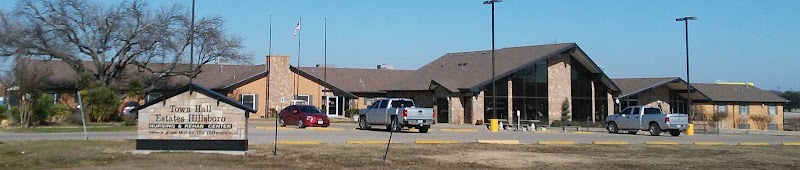
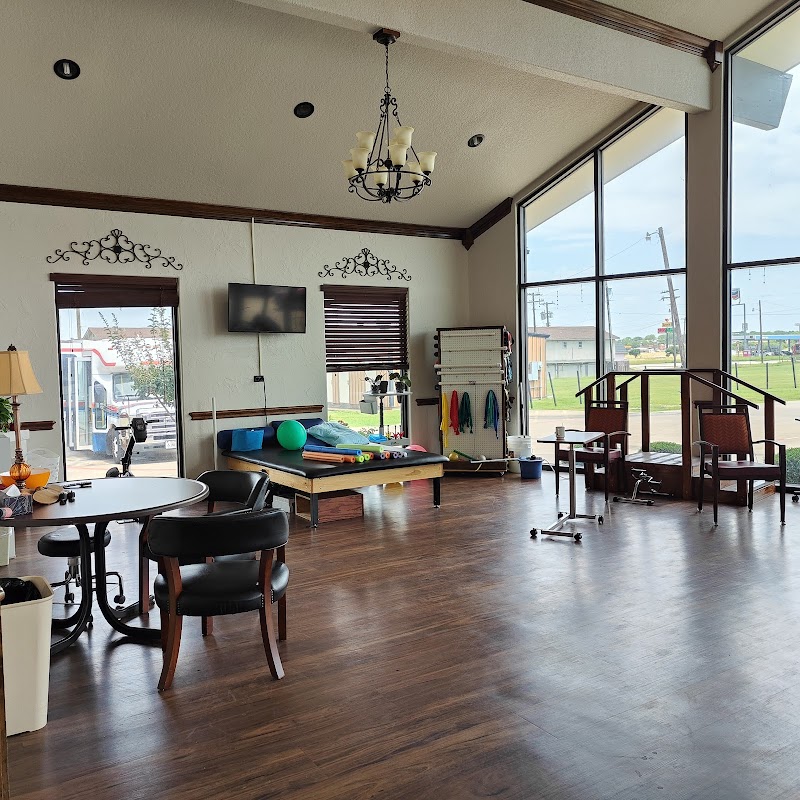
Town Hall Estates

300 Happy Ln, Hillsboro, TX 76645 (254) 582-8482
Non profit - Church related 138 Beds Independent Data: November 2025 4 Immediate Jeopardy citations
Trust Grade
0/100
#1140 of 1168 in TX
Last Inspection: June 2024

Within standard 12-15 month inspection cycle. Federal law requires annual inspections.

Overview

Town Hall Estates in Hillsboro, Texas, has received a Trust Grade of F, which indicates significant concerns regarding the quality of care provided. Ranking #1140 out of 1168 facilities in Texas places it in the bottom half, and #3 out of 4 in Hill County means that only one local option is rated higher. The facility is showing an improving trend, having reduced the number of issues from 9 in 2024 to 5 in 2025. Staffing is average with a 3/5 rating and a 60% turnover rate, which is concerning yet typical for Texas. However, the facility has accumulated $96,974 in fines, suggesting compliance issues that are higher than 77% of Texas facilities. While there is average RN coverage, families should be aware of critical incidents such as a resident falling and not receiving the required two-person assist, which resulted in injuries. Additionally, the facility failed to complete essential fall assessments and care plans for multiple residents, raising concerns about the overall safety and supervision provided. Overall, while there are some signs of improvement, potential residents and their families should weigh these serious issues against the facility's strengths.

Trust Score
F
0/100
In Texas
#1140/1168
Bottom 3%
Safety Record
High Risk
Review needed
Inspections
Getting Better
9 → 5 violations
Staff Stability
⚠ Watch
60% turnover. Above average. Higher turnover means staff may not know residents' routines.
Penalties
○ Average
$96,974 in fines. Higher than 65% of Texas facilities. Some compliance issues.
Skilled Nurses
⚠ Watch
Each resident gets only 19 minutes of Registered Nurse (RN) attention daily — below average for Texas. Fewer RN minutes means fewer trained eyes watching for problems.
Violations
⚠ Watch
22 deficiencies on record. Higher than average. Multiple issues found across inspections.
★☆☆☆☆
1.0
Overall Rating
★★★☆☆
3.0
Staff Levels
★★★★☆
4.0
Care Quality
★☆☆☆☆
1.0
Inspection Score
Stable
2024: 9 issues
2025: 5 issues

The Good

  • 4-Star Quality Measures · Strong clinical quality outcomes
  • Full Sprinkler Coverage · Fire safety systems throughout facility
  • No fines on record

Facility shows strength in quality measures, fire safety.

The Bad

1-Star Overall Rating

Below Texas average (2.8)

Significant quality concerns identified by CMS

Staff Turnover: 60%

14pts above Texas avg (46%)

Frequent staff changes - ask about care continuity

Federal Fines: $96,974

Well above median ($33,413)

Moderate penalties - review what triggered them

Staff turnover is elevated (60%)

12 points above Texas average of 48%

The Ugly 22 deficiencies on record

4 life-threatening 1 actual harm
Sept 2025 2 deficiencies 2 IJ
CRITICAL (J) 📢 Someone Reported This

A family member, employee, or ombudsman was alarmed enough to file a formal complaint

Immediate Jeopardy (IJ) - the most serious Medicare violation

Deficiency F0655 (Tag F0655)

Someone could have died · This affected 1 resident

**NOTE- TERMS IN BRACKETS HAVE BEEN EDITED TO PROTECT CONFIDENTIALITY** Based on interview and record review the facility failed to develop and implement a baseline care plan for each resident that in...

Read full inspector narrative →
**NOTE- TERMS IN BRACKETS HAVE BEEN EDITED TO PROTECT CONFIDENTIALITY** Based on interview and record review the facility failed to develop and implement a baseline care plan for each resident that includes the instructions needed to provide effective and person-centered care of the resident that meets professional standards of quality care for 2 (Resident's #17, #22) of 6 residents reviewed for baseline care plans. The facility failed to ensure Resident #17's and Resident #22's baseline care plans addressed their mobility abilities.The facility failed to complete Resident #27 and Resident #44's baseline care plans.This failure could place residents at risk of getting insufficient care, not having personal needs not met resulting in hospitalizations and injuries related to falls. An IJ was identified on 09/04/25. The IJ template was provided to the facility on [DATE] at 4:53 pm. While the IJ was removed on 09/06/25, the facility remained at a level of no actual harm at a scope of isolated that was not immediate jeopardy due to the facility's need to evaluate the effectiveness of the corrective systems. Resident #17 Record review of facility admission Record dated 08/19/25 reflected Resident #17 was admitted to the facility on [DATE]. Diagnoses included urinary tract infection, Hypoxemia (a condition characterized by a below normal level of oxygen), anxiety (a feeling of worry, nervousness, or unease, typically about an imminent event or something with an uncertain outcome), and heart failure Record review of facility Progress Notes dated 08/04/25 at 4:44PM reflected Resident #17's family member states resident had a fall on 8/3/2025, resident had a bruise near right eye and a large contusion on top of his head near his forehead on the right side, bruising behind both arms, notified Dr and DON, neuro checks initiated, waiting for Dr order. Record review of admission MDS dated [DATE] for Resident #17 reflected section GG: Functional abilities chair/bed-to-chair transfer was marked 04 Supervision or touching assistance-Helper provides verbal cues and/or touching/steadying and/or contact guard assistance as resident completes activity. Assistance may be provided throughout the activity or intermittently. Record Review of Radiology report from The Hospital dated 08/04/25 reflected the fall resulted in minimally displaced acute fractures of the eighth and ninth ribs laterally. Nondisplaced acute intra-articular fracture medial left clavicle extending to the sternoclavicular joint (clavicle fracture). Record review of Resident #17s Medical Records for Baseline Care Plan reflected it was not completed. Resident #22 Record review of facility admission Record dated 08/21/25 reflected Resident #22 was admitted to the facility on [DATE]. Diagnoses included Malignant Neoplasm of Pancreas (cancer of the pancreas), Neoplasm related pain (pain due to cancer), protein calorie malnutrition, and elevated blood pressure. Resident #22 was admitted on Hospice Respite. Record review of Resident #22's progress notes dated 08/04/25 at 7:55PM reflected patient observed laying on the floor of her bathroom. CNA stated patient had requested to go to the restroom with assistance of 1 (one) staff. CNA gave patient some privacy and gave patient instructions to pull emergency call light when done, patient has successfully used emergency light before. Patient had a small but deep laceration above the right eyebrow. Patient was drowsy but responding to questions, could tell us her name and date of birth . 911 called or transport to emergency room. X3 assisted back into bed using (mechanical) lift. Vital signs: 83/56,100,94%. Dressing applied to head laceration. Emergency medical services in building and provided transport, patient hypotensive and believed to have had a syncopal episode (fainting). She is alert at this time, oriented x2-3. POA called and notified of fall and send out to emergency room. Primary Care Physician and hospice called and notified of fall with emergency room visit. Instructions left with this nurse to call hospice when patient is in facility so follow up visit can be completed. Signed by LVN F. Record review of Resident #22's admission MDS dated [DATE] reflected section GG: Functional abilities toilet transfer was marked 03 Partial/Moderate Assistance-Helper does LESS THAN HALF the effort. Helper lifts, holds, or supports trunk or limbs, but provides less than half the effort. Resident #22 was coded as using a walker and a wheelchair for mobility devices. Record review of Resident #22s Medical Records for Baseline Care Plan reflected it was not completed. Findings included: Resident #27 Record review of Resident #27's comprehensive MDS assessment dated [DATE] reflected a [AGE] year-old male who admitted to the facility on [DATE] with the following diagnoses: high blood pressure, diabetes mellitus (a disease in which the body's ability to produce or respond to insulin is impaired), high cholesterol, aphasia (a communication disorder that affects a person ability to speak, write, and understand both spoken and written language), stroke, hemiplegia (paralysis on one side of the body), muscle weakness, and dysarthria (a motor speech disorder that occurs when the muscles used for speech are weak or difficult to control). His BIMS score was a 12, indicating he had moderately impaired cognition. Record review of Resident #27's “Care Plan Conference” dated 11/19/2024 reflected Resident #27 was admitted on [DATE], the reason for conference was “initial”, and it included nursing, social worker, dietary, activity notes, and the members present were documented. Resident #44 Record review of Resident #44's face sheet reflected a [AGE] year-old female who admitted to the facility on [DATE]. Her diagnoses included: congestive heart failure (a chronic condition where the heart cannot pump blood effectively), respiratory failure (inadequate gas exchange by the respiratory system), high blood pressure, severe kidney disease (gradual loss of kidney function), type 2 diabetes mellitus (chronic condition that affects the body's way of metabolizing sugar), iron deficiency, elevated white blood cell count, atrial fibrillation, edema (swelling caused by excess fluid in the body's tissues), tachycardia (when the heart rate exceeds 100 beats per minute), and tachypnea (rapid, shallow breathing). Record review of Resident #44's undated baseline care plan reflected she was admitted on [DATE] and under part “C. Social Services” all needs/goals were left blank. In an interview on 08/21/2025 at 1:16 PM LVN D stated the Nursing assistants never told her that the care plan was never populated for Resident #17 or Resident #22. LVN D stated staff were aware the baseline care plan information was important to prevent falls and assist with rehabilitation to ensure residents needs were met. In an interview on 08/21/2025 at 2:36 PM the DON stated that she and ADON were responsible for filling out the base line care plans. The DON stated the baseline care plans should have been completed within the first 48 hours of admission. The DON stated the baseline care plan for Resident #17 and Resident #22 were overlooked and could not say why those or the others were not fully completed. The DON stated the negative effects for having an incomplete baseline care plan could be increased falls. In an interview on 09/04/25 at 1:30pm LVN E stated that she was not present when Resident #17 admitted (7/31) to the facility. When she took his blood pressure on 08/03/25 at 9:16am she saw a bruise on his head, but she thought the bruise was from when he admitted . She did not see the knot on his head until the family told her about it. She stated that she initiated a neuro check and post fall assessment at 6:13pm on him. She stated it was an agency nurse working the night shift of 08/03/25, and when she got report from that agency nurse, she was not told that Resident #17 had a fall. She stated that he had a wheelchair and very unsteady gait (ability to walk). LVN E stated Resident #22 could not get up and walk to the bathroom on her own. Resident #22 had a lot of edema (swelling) in her legs and could not toilet transfer on her own. She stated Resident #22 needed active assistance during toileting. She stated that moderate assistance means I person assisting, and I person could have assisted Resident #22 because she was so thin. She stated that Resident #22 was not to be left alone on the toilet, she could have privacy (meaning standing in the doorway with your back toward the resident). In an interview on 09/04/25 at 2:28pm The DON stated that an agency nurse was working the night of 08/03/2025 when Resident #17 fell. The DON stated the nurse failed to conduct a neuro check, post fall evaluation, and report to the ongoing nurse that Resident #17 had a fall during her shift. The DON stated that agency nurse was the one who helped Resident #17 up from the fall, even though originally the resident told the DON he did not tell anyone about the fall. The DON stated Resident #22 used a wheelchair and typically was able to be left alone on the toilet due to being cognitively intact and her ability to sit on the toilet without assistance and had previously demonstrated successful ability to use her call light and sit on the toilet without assistance. She stated that at the time of the fall The DON was told the resident was seated on the toilet, the CNA felt the resident was safe, the call light was in reach, and the CNA was no longer present in the bathroom. She stated that she or the ADON are checking fall risk assessments, check charts every 24 hours to ensure assessments are completed fully. The DON stated she opens baseline care plans upon a resident's admission, the BOM contacts families and will set up baseline care plan meeting with RP within 48 hours of admission. Review of the facility policy titled, “Care Plans- Baseline” dated December 2016 reflected, “A baseline plan of care to meet the resident's immediate needs shall be developed for each resident within forty-eight (48) hours of admission. “The Interdisciplinary Team will review the healthcare practitioners' orders and implement a baseline care plan to meet the resident's immediate care needs. The Interdisciplinary Team will review the healthcare practitioner's orders (e.g., dietary needs, medications, routine treatments, etc.) and implement a baseline care plan to meet the resident's immediate care needs including but not limited to: a. Initial goals based on admission orders;b. Physician orders;c. Dietary orders;d. Therapy services;e. Social services; andf. PASARR recommendation, if applicable.” An Immediate Jeopardy was identified on 09/04/25 at 4:53 PM. and an IJ template was provided to the ADM and DON. A plan of removal was requested at that time. The following Plan of Removal, submitted by the facility, was accepted on 09/05/25. Plan of Removal Immediate Threat: On 09/04/2025 an abbreviated survey was initiated at the facility. On 09/04/2025 the surveyor provided an Immediate Jeopardy (IJ) notification that the Regulatory Services has determined that the condition at the facility constitutes an immediate threat to resident health and safety. The notification Immediate Jeopardy (IJ) states as follows: F655 –The facility must develop and implement a baseline care plan for each resident that includes the instructions needed to provide effective and person-centered care of the resident that meet professional standards of quality care. The facility failed to ensure Resident #17's and Resident #22's baseline care plans addressed their mobility abilities. Action: Director of Nursing reviewed all care plans including baseline care plans to ensure resident mobility, transfers, and supervision needs are included. Findings are recorded in an audit log and no negative findings at this time. Start Date: 09/04/2025 Completion Date: 09/05/2025 Responsible: Director of Nursing Action: Revised admission process and policy to require baseline care plan initiation within 48 hours, verified by Director of Nursing/Assistant Director of Nursing. Education will be provided to nurses, direct care staff and agencies on the revised admission process and policy to require baseline care plan initiation within 48 hours. Nurses, direct care staff and agencies staff will be required to read, acknowledge understanding and sign the in-services before the start of their shift. In addition, competency check (test) has been implemented to ensure understanding. The competency check (test) will be verified by DON for comprehension. Start Date: 09/04/2025 Completion Date: 09/05/2025 Responsible: Director of Nursing/Assistant Director of Nursing Action: Implemented admission checklist and new 'admission Quality Check' form to verify care plan and fall risk completion. Changes will be updated on the report sheet located at the nurses' desk. Education will be provided to nurses, direct care staff and agencies staff to look at the report sheet located at the nurses' desk before start of the shift and a signature is required on the report sheet acknowledging that the changes has been reviewed by the staff. Nurses, direct care staff and agencies staff will be required to read, acknowledge understanding and sign the in-services before the start of their shift. In addition, competency check (test) has been implemented to ensure understanding. The competency check (test) will be verified by DON for comprehension. Start Date: 09/05/2025 Completion Date: 09/05/2025 Responsible: Director of Nursing/Assistant Director of Nursing Action: Monitoring tools will be put in place to capture ongoing audits of all new admits' baseline care plans (daily for 30 days, weekly for 60 days, then monthly ongoing), and findings will be reported in Quality Assurance and Performance Improvement (QAPI). Start Date: 09/05/2025 Completion Date: Ongoing Responsible: Director of Nursing/Assistant Director of Nursing On 09/6/2025 the Surveyor confirmed the facility implemented their plan of removal sufficiently to remove the IJ by: Record review of an audit completed on 09/05/25 by The DON reflected that all care plans and baseline care plans were reviewed ensuring residents mobility, transfers and supervision needs were included. The Audit was verified by a checkoff for each resident completed signed and dated for 09/05/25 by the DON. The Surveyor audited 7 Resident medical records including new admission and readmissions within the last 30 days for verification of baseline care plan included residents' mobility and supervision needs. Record review completed on 09/05/25 of Revised reflected the admission process and policy was updated to require baseline care plan initiation within 48 hours. The policy reflected to include assistive devices needed. Record review of education provided to nurses, direct care staff and agencies on the revised admission process and policy to require baseline care plan initiation within 48 hours. Nurses, direct care staff and agencies staff were required to read, acknowledge understanding and sign the in-services before the start of their shift. A competency check (test) had been implemented to ensure understanding. The competency check (test) was completed and signed by 5 LVNs and 2 RNs from both day and night shifts. Record review completed on 09/05/25 of an Implemented admission checklist and new 'admission Quality Check' form was verified to include care plan and fall risk completion. An Inservice given to Nursing staff was completed to include an updated report sheet located at the nurses' desk directing care staff and agencies staff to look at the report sheet located at the nurses' desk before start of the shift requiring a signature acknowledging that the changes had been reviewed by the staff. Education verification and acknowledgement of understanding per the competency check was signed by 5 LVNs and 2 RNs from both day and night shifts. Record review completed on 09/05/25 of new Monitoring tools was conducted to capture ongoing audits of all new admits' baseline care plans (daily for 30 days, weekly for 60 days, then monthly ongoing). The tool included Baseline care plan initiated within 48 hours of admission. Interviews conducted on 09/06/25 between 6:00am and 8:00am with DON, ADON, LVN C, LCN D, LVN I, LVN E, RN F, from both day and night shifts reflected They had been instructed on baseline care plans ensuring residents' mobility, transfers and supervision needs were included. They stated Nurses, direct care staff and agencies staff were required to read, acknowledge understanding and sign the in-services before the start of their shift. The staff stated agencies they were to look at the report sheet located at the nurses' desk before start of the shift and sign it acknowledging that the resident changes had been reviewed by the staff. The staff verified they were given competency test on their education. On 09/06/2025 at 8:18am, the Administrator was notified the IJ was removed. However, the facility remained out of compliance at a level of no actual harm with the potential for more than minimal harm with a scope identified as isolated due to the facility's need to monitor the implementation and effectiveness of its POR.
CRITICAL (J) 📢 Someone Reported This

A family member, employee, or ombudsman was alarmed enough to file a formal complaint

Immediate Jeopardy (IJ) - the most serious Medicare violation

Accident Prevention (Tag F0689)

Someone could have died · This affected 1 resident

**NOTE- TERMS IN BRACKETS HAVE BEEN EDITED TO PROTECT CONFIDENTIALITY** Based on interview, and record review, the facility failed to ensure the resident environment remained as free of accident hazar...

Read full inspector narrative →
**NOTE- TERMS IN BRACKETS HAVE BEEN EDITED TO PROTECT CONFIDENTIALITY** Based on interview, and record review, the facility failed to ensure the resident environment remained as free of accident hazards as was possible and each resident received adequate supervision and assistance devices to prevent accidents for 2 (Resident #17 and Resident #22) of 8 residents reviewed for accidents and hazards. The facility failed to ensure each resident receives adequate supervision and assistance devices to prevent accidents in that The facility failed on 08/04/2025 to ensure appropriate supervision and assistive devices were in place for Resident #17 and Resident #22 to prevent falls. This failure could place residents at risk for injury and hospitalizations related to accidents. An IJ was identified on 09/04/25. The IJ template was provided to the facility on [DATE] at 4:53 pm. While the IJ was removed on 09/06/25, the facility remained at a level of no actual harm at a scope of isolated that was not immediate jeopardy due to the facility's need to evaluate the effectiveness of the corrective systems. Resident #17Record review of facility admission Record dated 08/19/25 reflected Resident #17 was admitted to the facility on [DATE]. Diagnoses included urinary tract infection, Hypoxemia (a condition characterized by a below normal level of oxygen), anxiety (a feeling of worry, nervousness, or unease, typically about an imminent event or something with an uncertain outcome), and heart failure Record review of Fall Risk Assessment for Resident #17 dated 08/01/25 reflected that it was incomplete. Gait / Balance assessment was not observed and left unmarked. Medications and vision were not reviewed on the fall risk assessment. Record review of facility Progress Notes dated 08/04/25 at 4:44PM reflected Resident #17's family member states resident had a fall on 8/3/2025, resident had a bruise near right eye and a large contusion on top of his head near his forehead on the right side, bruising behind both arms, notified Dr and DON, neuro checks initiated, waiting for Dr order. Record review of admission MDS dated [DATE] for Resident #17 reflected section GG: Functional abilities chair/bed-to-chair transfer was marked 04 Supervision or touching assistance-Helper provides verbal cues and/or touching/steadying and/or contact guard assistance as resident completes activity. Assistance may be provided throughout the activity or intermittently. Record Review of Radiology report from The Hospital dated 08/04/25 reflected the fall resulted in minimally displaced acute fractures of the eighth and ninth ribs laterally. Nondisplaced acute intra-articular fracture medial left clavicle extending to the sternoclavicular joint (clavicle fracture). Record review of Resident #17s Medical Records for Baseline Care Plan reflected it was not completed. Resident #22 Record review of facility admission Record dated 08/21/25 reflected Resident #22 was admitted to the facility on [DATE]. Diagnoses included Malignant Neoplasm of Pancreas (cancer of the pancreas), Neoplasm related pain (pain due to cancer), protein calorie malnutrition, and elevated blood pressure. Resident #22 was admitted on Hospice Respite. Review of facility Fall Risk Assessment for Resident #22 dated 07/29/25 reflected that it was incomplete. Medications and vision were not reviewed on the fall risk assessment. Gait / Balance assessment was not observed and left unmarked. Record review of Resident #22's progress notes dated 08/04/25 at 7:55PM reflected patient observed laying on the floor of her bathroom. CNA stated patient had requested to go to the restroom with assistance of 1 (one) staff. CNA gave patient some privacy and gave patient instructions to pull emergency call light when done, patient has successfully used emergency light before. Patient had a small but deep laceration above the right eyebrow. Patient was drowsy but responding to questions, could tell us her name and date of birth . 911 called or transport to emergency room. X3 assisted back into bed using (mechanical) lift. Vital signs: 83/56,100,94%. Dressing applied to head laceration. Emergency medical services in building and provided transport, patient hypotensive and believed to have had a syncopal episode (fainting). She is alert at this time, oriented x2-3. POA called and notified of fall and send out to emergency room. Primary Care Physician and hospice called and notified of fall with emergency room visit. Instructions left with this nurse to call hospice when patient is in facility so follow up visit can be completed. Signed by LVN F. Record review of Resident #22's admission MDS dated [DATE] reflected section GG: Functional abilities toilet transfer was marked 03 Partial/Moderate Assistance-Helper does LESS THAN HALF the effort. Helper lifts, holds, or supports trunk or limbs, but provides less than half the effort. Resident #22 was coded as using a walker and a wheelchair for mobility devices. Record review of Resident #22s Medical Records for Baseline Care Plan reflected it was not completed. In an interview on 08/21/2025 at 1:16 PM LVN D stated Resident #17 did not use a walker or wheelchair. The family had brought in a cane from home, but he got around holding onto furniture. She stated he was very mobile. LVN D stated the CNAs always checked with the nurse to verify assistance needed for residents. LVN D stated the nursing assistants never told her that the Kardex (a section of the medical record showing how much and why type of assistance a resident needs) and care plan were never populated for Resident #17 or Resident #22. LVN D stated staff were aware the baseline care plan and Kardex information were important to prevent falls and assist with rehabilitation to ensure residents needs were met. In an interview on 08/21/2025 at 2:36 PM the DON stated the DON stated she was unsure if Resident #17 used any assistive devices other than a cane from home. She stated he was using the furniture for balance. She stated the facility did provide a walker and encouraged him to use that. The DON stated she was not sure therapy did an evaluation on Resident #17. She stated he was admitted late on a Friday and discharged quickly. In an interview on 08/21/2025 at 2:46pm the ADON stated that resident #22 entered the facility on respite care. She stated that the family decided to leave her at the facility under the care of hospice until she passed. The ADON stated that she did not feel that Resident #22 was a fall risk because there were lot of family members around and the resident was not active. The ADON stated that she did not feel that there was a need to have fall precautions in place. In an interview on 09/04/25 at 1:30pm LVN E stated that she was not present when Resident #17 admitted (7/31) to the facility. When she took his blood pressure on 08/03/25 at 9:16am she saw a bruise on his head, but she thought the bruise was from when he admitted . She did not see the knot on his head until the family told her about it. She stated that she initiated a neuro check and post fall assessment at 6:13pm on him. She stated it was an agency nurse working the night shift of 08/03/25, and when she got report from that agency nurse, she was not told that Resident #17 had a fall. She stated that he had a wheelchair and very unsteady gait (ability to walk). LVN E stated Resident #22 could not get up and walk to the bathroom on her own. Resident #22 had a lot of edema (swelling) in her legs and could not toilet transfer on her own. She stated Resident #22 needed active assistance during toileting. She stated that moderate assistance means I person assisting, and I person could have assisted Resident #22 because she was so thin. She stated that Resident #22 was not to be left alone on the toilet, she could have privacy (meaning standing in the doorway with your back toward the resident). In an interview on 09/04/25 at 2:28pm The DON stated that an agency nurse was working the night of 08/03/2025 when Resident #17 fell. The DON stated the nurse failed to conduct a neuro check, post fall evaluation, and report to the ongoing nurse that Resident #17 had a fall during her shift. The DON stated that agency nurse was the one who helped Resident #17 up from the fall, even though originally the resident told the DON he did not tell anyone about the fall. The DON stated Resident #22 used a wheelchair and typically was able to be left alone on the toilet due to being cognitively intact and her ability to sit on the toilet without assistance and had previously demonstrated successful ability to use her call light and sit on the toilet without assistance. She stated that at the time of the fall The DON was told the resident was seated on the toilet, the CNA felt the resident was safe, the call light was in reach, and the CNA was no longer present in the bathroom. She stated that she or the ADON are checking fall risk assessments, check charts every 24 hours to ensure assessments are completed fully. The DON stated she opens baseline care plans upon a resident's admission, the BOM contacts families and will set up baseline care plan meeting with RP within 48 hours of admission. Record review of the facility policy dated September 2012 titled Falls - Clinical Protocol reflected: As part of the initial assessment, the physician will help identify individuals with a history of falls and risk factors for subsequent falling. Staff will ask the resident and the caregiver or family about a history of falling. The staff will document risk factors for falling in the resident's record and discuss the resident's fall risk. Risk factors for subsequent falling include lightheadedness or dizziness, multiple medications, musculoskeletal abnormalities, peripheral neuropathy, gait and balance disorders, cognitive impairment, weakness, environmental hazards, confusion, An Immediate Jeopardy was identified on 09/04/25 at 4:53 PM. and an IJ template was provided to the ADM and DON. A plan of removal was requested at that time. The following Plan of Removal, submitted by the facility, was accepted on 09/05/25. Plan of Removal Immediate Threat: On 09/04/2025 an abbreviated survey was initiated at the facility. On 09 /04/2025 the surveyor provided an Immediate Jeopardy (IJ) notification that the Regulatory Services has determined that the condition at the facility constitutes an Immediate Jeopardy (IJ) to resident health and safety. The notification of Immediate Jeopardy (IJ) states as follows: F689 - The facility failed to ensure each resident receives adequate supervision and assistance devices to prevent accidents in that: The facility failed to ensure new admissions received timely and completed fall risk assessments to prevent accidents. Action: All residents assessed for safety and injury. Neurological checks and follow-up assessments initiated on residents with new falls . Two residents were identified with falls requiring neurological checks. Neuro checks were initiated immediately. Licensed nursing staff will perform and document all neurological checks per policy. Nursing staff educated on performing neurological check on resident post fall. All nurses, including PRN and agency nurses will be required to read, acknowledge understanding and sign the in-services before the start of their shift. Start Date: 09/04/2025Completion Date: 09/05/2025Responsible: Director of Nursing/ Assistant Director of Nursing Action:100% audit of all residents' fall risk assessments completed to ensure they are fully documented.Start Date: 09/04/2025Completion Date: 09/05/2025Responsible: Director of Nursing/ Assistant Director of Nursing Action:Registered nurses and license nurses including PRN and agency nurses re-educated on completing fall risk assessments within 24 hours of admission and ensuring proper supervision by the Director of Nursing or designee. PRN and agency nurses will be required to read, acknowledge understanding and sign the in-services before the start of their shift. Nurse consultant or designee will re-educate the Director of Nursing and the Assistant director of Nursing on monitoring that the fall risk assessments are being completed by the charge nurses within 24 hours of admission and ensuring proper supervision by the Nurse Consultant.Start Date: 09/04/2025Completion Date: 09/05/2025Responsible: Director of Nursing/Nurse Consultant Action:Monitoring tool will be put in place to capture daily audits of new admissions for 30 days, then weekly for 60 days, then monthly ongoing, findings will be reported in Quality Assurance and Performance Improvement (QAPI).Start Date: 09/05/2025Completion Date: OngoingResponsible: Director of Nursing/ Assistant Director of Nursing On 09/6/2025 the Surveyor confirmed the facility implemented their plan of removal sufficiently to remove the IJ by: Record review of an audit completed on 09/05/25 by The DON reflected that an all-resident review was completed by The DON ensuring Neurological checks and follow-up assessments were initiated on residents with new falls. Neuro checks were initiated immediately for two residents identified with recent falls verified with record review. Nursing staff were educated on performing neurological check on resident post fall as evidenced by an in-service signed and dated for 09/05/25. Record review of an audit completed on 09/05/25 for all residents for admission fall risk assessment and quarterly fall risk assessments was signed completed by the ADON. Residents had current completed fall risk assessments as evidenced by a review of medical records for 7 residents within the facility. Record review completed on 09/05/25 of an Inservice verified that license nurses including PRN and agency nurses were re-educated on completing fall risk assessments within 24 hours of admission and ensuring proper supervision. The Director of Nursing and the Assistant director of Nursing on monitoring that the fall risk assessments are being completed by the charge nurses within 24 hours of admission and ensuring proper supervision by the Nurse Consultant on 09/05/25. Education was verified for 6 of 8 nursing staff Record review completed on 09/05/25 of new admission Monitoring tools was conducted. The tool included resident name, date of admission, verifying the fall risk assessment was completed along with a baseline care plan. The facility did not have any new admission as of time of exit. The [NAME] stated the tool will be reviewed daily in their morning meeting for verification of completion. Interviews conducted on 09/06/25 between 6:00am and 8:00am with DON, ADON, LVN C, LCN D, LVN I, LVN E, RN F, from both day and night shifts reflected They had been instructed on Fall Policy, Fall Risk Assessments, including assessment of neurological status. The staff stated they had been educated on need for assistive devices and fall prevention measures including keeping beds in low positions, more frequent rounding, and call light placement. The staff were able to identify the report sheet located at the nurses' station to be signed each shift verifying resident changes in condition had been reviewed from one shift to the next. On 09/06/2025 at 8:18am, the Administrator was notified the IJ was removed. However, the facility remained out of compliance at a level of no actual harm with the potential for more than minimal harm with a scope identified as isolated due to the facility's need to monitor the implementation and effectiveness of its POR.
Apr 2025 1 deficiency 1 IJ
CRITICAL (J) 📢 Someone Reported This

A family member, employee, or ombudsman was alarmed enough to file a formal complaint

Immediate Jeopardy (IJ) - the most serious Medicare violation

Accident Prevention (Tag F0689)

Someone could have died · This affected 1 resident

**NOTE- TERMS IN BRACKETS HAVE BEEN EDITED TO PROTECT CONFIDENTIALITY** Based on observations, interviews, and record review the facility failed to Identify and eliminate all known and foreseeable acc...

Read full inspector narrative →
**NOTE- TERMS IN BRACKETS HAVE BEEN EDITED TO PROTECT CONFIDENTIALITY** Based on observations, interviews, and record review the facility failed to Identify and eliminate all known and foreseeable accident hazards in the resident's environment, to the extent possible for 1of 4 residents (Resident #1) reviewed for safety. The facility failed to ensure 1 of 4 residents (Resident #1) was free from risk of accidents and injuries when he was allowed to elope from the facility. The facility failed to properly repair a door for years. An IJ was identified on 04/16/2025. The IJ Template was provided to the facility on [DATE] at 05:09 PM. While the IJ was removed on 04/18/2025, the facility remained out of compliance at a scope of isolated and a severity with no actual harm due to the facility's need to complete repairs and evaluate the effectiveness of the corrective systems. These failures could place cognitively impaired residents at risk for accidents, injuries, and possible death. Findings included: Record review of Resident #1's undated face sheet, revealed he was a [AGE] year-old male admitted [DATE] with Alzheimer's, stroke, dysphasia (difficulty speaking), heart failure, pacemaker, and lack of coordination. Record review of Resident #1's Quarterly MDS assessment dated [DATE] revealed a BIMS score of 99, which indicated the resident's cognitive and communication abilities were too impaired for him to complete the assessment. Record review of Resident #1's Care Plan, reflected Focus areas were initiated for the following areas: Communication problems-Resident can make basic needs known was initiated on 7/5/23 with an intervention stating, Monitor any changes in ability to communicate. Risk for elopement was initiated on 7/22/24 with an intervention stating, Make sure that wander guard is working . ADL self-care deficit related to stroke was initiated on 7/5/23 with an intervention stating, The resident requires EXTENSIVE assistance by 1 person with personal hygiene. Incontinence focus related to Dementia was initiated on 7/5/23 with an intervention stating, Ensure the resident has unobstructed path to the bathroom. Impaired cognitive function/dementia related to Alzheimer's was initiated on 7/5/23 with an intervention stating, Administer medications as ordered. Monitor/document for side effects and effectiveness. Risk for falls related to gait/balance problems was initiated on 1/18/24 with an intervention stating, Anticipate and meet the resident's needs. Record review of Resident #1's Orders, reflected an order on 7/20/24 to monitor the wander guard to the right ankle, every shift, every day, and night shift. Observation on 4/16/25 at 11:20 AM of the facility's video surveillance revealed Resident #1 was observed on 4/9/25 going out of the door on basement egress side (Door OHD) with no alarm sounding. The video did not show any staff in the area. The Resident crossed the facility back parking lot and walked along the south side of the neighboring Urgent Care Building. The front of the Urgent Care Building was located along the feeder road of a major interstate. Observation of video surveillance revealed Resident #1 went to the front of the urgent care building corner facing the interstate feeder road; then, he turned back to the facility and crossed the back and the front parking lot. He continued going south and crossed a busy residential street then turned left on another residential street. A white car (later identified as C.N.A.-A) driving by stopped and picked him up. He was brought back to the facility at that point. The video revealed the resident was gone for 10 minutes. Observation on 4/16/25 at 12:24 PM revealed Resident #1 wearing a wander guard on his ankle (device that triggers a special alarm and locked the doors if the resident got near the door). Observation on 4/16/25 at 01:10 PM revealed multiple staff going in and out of the OHD for breaks with the alarm sounding shortly each time. Observed the alarm was loud but very short as the staff shut the door quickly to stop the noise. In an interview on 4/16/25 at 10:15 AM the DM stated a lightning strike knocked 3 doors out a couple of years ago. He stated the repair company came out on 4/11/25 to assess the doors and they were waiting on a quote from them. He stated at this point, 3 doors were not working with the wander guard alarms system, and they all had access to the outside of the building. He identified the non-working doors as WHD, WLD, and the OHD. He stated the resident went out the OHD and no alarm sounded, and the wander guard system did not lock the door. He stated the facility was aware the wander guard system was not working on those doors for years, but he was unsure why they had not been repaired. He had installed a contact alarm system on all 3 doors that would alarm only when anyone held the door open and would stop upon the door closing and making contact. The noise/contact alarm was also broken on OHD door, and it failed to work when the resident eloped. DM was the facility person responsible for checking the doors weekly. In an interview on 4/16/25 at 10:26 AM the DON stated there were 3 doors that did not work on the wander guard system and this was not a new problem. She stated 2 of the 3 doors have contact (noise) alarms but the OHD did not have a contact alarm either. She stated the OHD door was the door the resident exited from, and the facility was unaware he had left. She stated the resident was seen by CNA-A as she returned from lunch, and she stopped and brought him back. She stated he was about 1.5 blocks away and going towards a local store. She stated he crossed a residential street but was not injured. She stated he was very confused and was looking for his family. She stated his antipsychotic medication had been reduced from 50mg to 12.5 mg over a couple of months per the Gradual Dose Reduction policy. She said he had gotten near other doors a few times and his wander guard had set of the alarms, but he wasn't exit seeking until 4/9/25. She stated he could get to the freeway and get hurt. In an interview on 4/16/25 at 10:41 AM the DM stated he had replaced the contact alarm on OHD today and moved it higher to avoid it getting broken off. He stated the contact alarm would activate when the door was open now until closed but the wander guard alarm was still disabled pending repairs by the electronic company. In an interview on 4/16/25 at 11:25 AM the DM stated packages were delivered through the OHD, so they likely damaged the previous contact alarm during delivery. He stated the quote for repairs 2 years ago on the wander guard alarm system went to the previous administrator and there was no record of that quote. The wander guard alarm did sound a different alarm and it locked the doors. In an interview on 4/16/25 at 11:40 AM the ADM stated she thought all the doors were repaired and she was unaware 1 was not working. She said the OHD door did not have the contact noise alarm on it that sounds when the connection was broken (when opened). She did not know why that door was not working. She stated they were working with family to try to discharge that resident, but they were waiting on the family and they would just have to monitor him until he could be discharged . She stated the facility was unaware the resident had eloped until their staff saw him outside. She was unsure if you could walk to the interstate but stated they would be putting something up as a barrier if that was a possibility. She said they did have a couple of other doors with noise alarms that did not have wander guard alarms. The DM was checking the doors. In an interview on 4/16/25 at 03:49 PM the DON stated there was not a policy for the facility cameras to be monitored continuously. She stated the wander guard on Resident #1 was definitely working because when he returned through the other door, it set of the wander guard alarm system. In an interview on 4/16/25 at 03:50 PM the DAJ stated there is not a policy to monitor the cameras continuously. There is no paperwork from the 4/11/25 visit from the electronic company assessing the door problems. She stated she would try to get email confirmation from them to provide to me. She stated that some of the cameras are off from real time, but she provided a log to show real time and which camera (multiple cameras around the facility) the resident was showing on as he traveled around the facility on 4/9/25. In a telephone interview on 4/17/25 at 01:29 PM LVN-A stated during her lunch time she saw the resident was with the activity director on the basement level watching activities. Shortly after that, the DON told LVN-A the resident had eloped. LVN-A stated she saw CNA-A holding the resident by his hand and leading him back to the building. She assessed him and there were no injuries, gave him water, and took his vitals which were stable. The doctor had just reduced his antipsychotic medication. She stated most of the time elopement risks need to have alarms on doors like the wander guard. She stated the wander guard makes a different noise and the other type alarms do become like background noise when people open and close the doors. She stated the negative outcome to a resident wandering could be death. She stated people do not pay attention driving and they hit other cars, and they could hit people. She stated we were very close to the interstate. In a telephone interview on 4/17/25 at 01:34 PM the ENG stated he did not look at the alarm system 2 years prior, but he thinks a lightning strike caused the damage. He thinks a repair proposal was sent in December, but that staff was no longer working for his company, so he was not sure if his company followed-up on that. He stated 3 doors need new product/keypads and those doors did not work with the wander guard system now. In a telephone interview on 4/17/25 at 01:45 PM CNA-A stated as she was returning from lunch, she saw Resident #1 walking and she stopped and asked him where he was going. Resident #1 stated he was leaving but he agreed to get in her car, and he let her take him back to the facility. She stated he could have made it to the freeway. She said there was a lot of traffic and people don't pay attention and he could have been hit. She admitted that alarms were sometimes tuned-out and they may assume a staff opened the door. She stated the main door has a wander guard alarm. She stated if dementia residents elope, they could get away and harm themselves. A record review of email correspondence dated 4/16/25 (copy received) between the facility and the engineering company that maintains the alarm systems revealed: Repair person had been out 4/11/25 and confirmed the keypads for the system were not working on 3 exit doors and the damage was most likely got fried because of the lightning storm. A record review of the facility policy titled, Wandering, Unsafe Resident dated 2001 with a last revision date of August 2014 reflected the following: The facility will strive to prevent unsafe wandering . for residents who are at risk for elopement. A missing resident is considered a facility wide emergency. A record review of the facility policy titled, Hazardous Areas, Devices, and Equipment dated 2001 with a last revision date July 2017 reflected the following: All hazardous areas, devices, and equipment in the facility will be identified and addressed appropriately to ensure resident safety and mitigate accident hazards to the extent possible. Resident vulnerability is based on risk factors including the individual resident's functional status, medical condition, cognitive abilities, mood, and health treatments (e.g., medications). The Safety Committee will recommend measures to ensure that vulnerable residents cannot access hazardous areas in the facility (locks, alarms, supervision, etc.) A hazard is defined as anything in the environment that has the potential to cause injury or illness. Examples of environmental hazards include but are not limited to: Equipment or devices that are malfunctioning. Devices and equipment that are improperly maintained. Disabled locks, latches, or alarms. The POR were accepted: 4/18/2025 at 8:30 AM and included: PLAN OF REMOVAL IMMEDIATE- Jeopardy On 4/16/25 an abbreviated survey was initiated at this Facility. On 4/16/25 the surveyor provided an Immediate Threat (IT) Template notification that the Regulatory Services has determined that the condition at the facility constitutes an immediate threat to resident health and safety The notification of Immediate Threat states as follows: F689 The facility failed to ensure Resident #1 was free from risk of accidents and injuries. l. Immediate Action Taken A. Resident # 1 is currently in the facility. B. On 4/9/25 Resident #1 was returned to the facility via private vehicle by staff and placed on q15 minute monitoring which entails the following: staff visually confirming the resident's location, a log sheet for documenting the resident's location, including space for staff signatures, and timestamp for each observation. C. On 4/16/2025 The DON/ Designee completed a head-to-toe physical assessment on Resident #1 with no negative findings noted D. On 4/16/25 The DON/ Designee updated Resident #1 care plan for wandering/exit seeking E. On 4/16/25 The DON/ Designee completed elopement assessments on all facility residents with no changes noted. F. On 4/16/25 The maintenance director/ Designee completed environmental assessments to include checks on all door alarms. These checks identified 3 nonfunctioning door alarms (100 hall door, west hall door that faces the facility parking lot, and downstairs hallway office door). G. On 4/16/25 The administrator/Designee assigned facility staff to monitor identified nonfunctioning doors and the elevator will be locked during non-business overnight hours to allow no access without facility code to ensure that no resident exits the facility. Upstairs assigned staff will be physically present at the area that accesses the two doors waiting for repair. Department Head staff downstairs will be rotated to ensure visual observation of that door between 8a-5p. After 5p, elevators will be locked and only accessible via key access. Elevators will only be accessible via key access on the weekends. H. On 4/11/25 The Social Worker/Designee checked the wander guard appliances utilized by residents to ensure they were functioning properly with the doors that are currently functioning. No issues were identified with the appliances, and they were identified to be currently functioning properly. I. On 4/16/25 The DON/ Designee completed in-service education with facility direct care staff on the elopement policy. No employee will be allowed to work until they receive this education with drill and posttest. J. On 4/16/25 The DON/ Designee completed a Missing Resident Drill with facility direct care staff to ensure staff know the proper procedure for locating missing residents to include when a staff member hears the alarm sound they will initiate the code silver alert via overhead paging to notify all other staff members of the missing resident and to not turn the alarm sound off until all staff are notified of the missing resident and headcount guidelines which requires visual confirmation and documentation regarding the location of each resident in the center. The designated head count coordinator will be the Administrator or DON during business hours (8a-5p) and the designated charge nurse and/or the Manager on Duty during non-business hours. (5p-8a).On 4/16/25 The facility administrator spoke with alarm company in regard to the nonfunctioning door alarm who stated they would have a tech support person to the facility on 4/17/25 to repair the nonfunctioning door alarms. K. 2. Identification of Residents Affected or Likely to be Affected: A. No other residents identified, on 4/16/25, the DON/Designee completed elopement assessments on all facility residents with no new changes noted. 3. Actions to Prevent Occurrence/Recurrence: A. On 4/16/25, the DON/Designee provided education to facility direct care staff on facility's elopement Policy including missing resident drill. B. On 4/17/25, the DON/Designee provided missing resident posttest to facility direct care staff. These in-services will be accessible via our communications platform (online information system for staff with a required 85% passing score). This will be completed at 6:00 pm on 4/17/2025 and no employee will be allowed to work until they receive this education with drill. Agency staff will be provided these trainings through access from our online communications platform as well. C. Results of facility missing resident drills will be discussed with Facility Administrator/ Designee during the facility recurring daily morning start up meetings. On 4/16/2025 the facility's Administrator notified the Medical Director regarding the Immediate Jeopardy the facility received related to Accidents/Hazards/Supervision and reviewed plan to sustain compliance with no new orders received. Likelihood for Serious Harm No Longer Exists: 4/17/2025. Signature of ADM on 4/17/2025 On 4/17/25 and 4/18/25 the state surveyor confirmed the facility implemented their plan of removal sufficiently to remove the IJ by: 4/17/25 Monitoring: Observation on 4/17/25 at 11:30 the ENG company at the facility working on the 3 broken doors. Office staff were turning staff away from the OHD door to prevent alarms from sounding when there was not a problem and therefore making a problem very noticeable if it occurred. Observation on 4/17/25 at 04:45 PM revealed the OHD hall staff coordinating if they leave the Office Hall to ensure staff were present to hear the alarm on OHD and to monitor the hall for residents. Observed 1 staff member assigned to the unused nurses station located between WHD and LHD with constant visual monitoring of the doors that weren't working. In an interview on 4/17/25 at 12:48 PM, the DON stated the following steps had been completed: QAPI Meeting held on 4/16/25 at 08:30 PM with the ADM, the DON, and the MD. In-services were done on 4/16/25 and 2 in-services were done on 4/17/25. Another in-service and Elopement Drill were planned for 4/17/25 on the night shift. The ENG company just left, and they confirmed doors not working and ordered the parts. They were supposed to return Monday. She further stated it was important to monitor Dementia residents because they were unaware of their own safety needs and the facility had to keep them safe. She stated the negative outcome to residents if they wander could be injury and death. She stated if alarms sound too often it becomes background noise and that was why they were now coordinating staff to not use the OHD at all so the alarm will not sound if there was not a problem. She stated they were also coordinating the office staff to make sure someone was on the hall. During the business hours the hall was accessible. Record review reflected 3 completed in-services on elopements and alarms with staff signatures attached and dated 4/1625 and 4/17/25. Record review reflected an invoice from the ENG showing doors were worked on and parts were ordered and dated 4/17/25. Record review on 4/17/25 reflected the typed minutes of the QAPI meeting held on 4/16/25 listed topics as facility elopement and the follow-up plan to sustain compliance. Attendees shown as the ADM, the DON, and the MD. 4/18/25 Monitoring: Observation on 4/18/25 at 10:50 AM revealed no residents in rooms or halls on WHD and WLD. Staff were posted specifically at these entrance points and intersections to disallow residents from accessing these doorways. Observed a staff member also posted near the nurse's station (unused station) to ensure residents did not enter that area without staff accompanying them. Observation on 4/18/25 at 11:00 AM revealed the Office Hall where the OHD was located, contained offices in which staff members were observed working with the doors open, monitoring traffic in and out. In an interview on 4/18/25 at 10:48 AM the DON stated the Elopement Drill had been completed and she would provide the documentation for that exercise. The DON stated the 3 doors that were out of service were being monitored and they were disallowing resident traffic on those halls. In an interview on 4/18/25 at 10:53 AM AL stated her role to prevent further elopements until doors were fixed was to sit at the intersection of the 2 [NAME] Halls and not allow anyone to access the malfunctioning doors. She stated this was being done for the safety and protection of the residents. In an interview on 4/18/25 at 11:00 AM the DON stated part of the plan was for staff on this hallway to monitor. She stated the staff were to communicate if they were leaving the hallway with each other to ensure someone was always downstairs. She stated the OHD would sound if opened but not for long, so staff were not to use those doors either to avoid monitoring staff from becoming accustomed to the alarm and unknowingly ignoring the alarm. Record review on 4/18/25 reflected 16 staff signatures on an Elopement Drill Sign-in form. The administrator was notified the IJ was removed on 04/18/2025 at 08:30 AM, however the facility remained out of compliance at a scope of isolated and a severity with no actual harm due to the facility's need to complete repairs and evaluate the effectiveness of the corrective systems.
Mar 2025 2 deficiencies
CONCERN (D) 📢 Someone Reported This

A family member, employee, or ombudsman was alarmed enough to file a formal complaint

Potential for Harm - no one hurt, but risky conditions existed

ADL Care (Tag F0677)

Could have caused harm · This affected 1 resident

**NOTE- TERMS IN BRACKETS HAVE BEEN EDITED TO PROTECT CONFIDENTIALITY** Based on observation, interview and record review the facility failed to ensure a resident who was unable to carry out activitie...

Read full inspector narrative →
**NOTE- TERMS IN BRACKETS HAVE BEEN EDITED TO PROTECT CONFIDENTIALITY** Based on observation, interview and record review the facility failed to ensure a resident who was unable to carry out activities of daily living received the necessary services to maintain good nutrition, grooming and personal and oral hygiene for 1 of 8 residents (Resident #4) reviewed for ADL care. The facility failed to ensure toenails for diabetic Resident #4 were smooth and trimmed. This failure could place residents at risk of skin tears and infection. Findings include: Record review of Resident #4's face sheet, dated 03/07/25, reflected a [AGE] year-old male who was originally admitted to the facility on [DATE] and readmitted on [DATE]. Resident #4 had diagnoses which included chronic pain, acute myocardial infarction (heart attack), cerebral infarction (a condition where blood flow to the brain is interrupted, causing brain cells to die) and Type 2 diabetes mellitus (a chronic condition where the body does not use insulin effectively or does not produce enough insulin to regulate blood sugar levels). Record review of Resident #4's care plan record reflected a focus, dated 03/21/24, of Activities of Daily Living self-care performance deficit related to activity intolerance due to COPD (a group of lung diseases that cause airflow obstruction and breathing difficulties), pneumonia , and respiratory failure with a goal dated 03/21/24 to maintain current level of function in Activities of Daily Living. Resident #4 had the following intervention, dated 03/21/24: 1. The resident requires limited assistance by staff with personal hygiene. 2. The resident requires skin inspection Q Day, observe for redness, open areas, scratches, cuts, bruises, and report changes to the nurse Record review of Resident #4's quarterly MDS, dated [DATE], reflected a BIMS score of 11, which indicated moderately impaired cognition. Observation on 03/06/25 at 3:57 PM of Resident #4's nails, revealed Resident #4 lying in his bed with his feet bare. His nails were yellowish in color, thick and overly long with uneven jagged edges. Interview on 03/06/25 at 3:57 PM with Resident #4 revealed the only thing he really needed was someone to look at his toenails because when he put socks on, his toenails made his toes sore, and it bothered and aggravated him. He couldn't cut his toenails himself because he was a diabetic and he couldn't reach his toes to cut them. He said he had not had his toes trimmed in about a year. Resident #4 gave the State Surveyor permission to take a photograph of his toenails. Interview on 03/07/25 at 1:58 PM with LVN D reflected, after showing her the photograph of Resident #4's toenails, Resident #4 needed toenail care . She said the possible negative effects of not getting toenails cared for were infection or an open skin injury. Interview on 03/07/25 at 2:21 PM with LVN C reflected, after showing her the photograph of Resident #4's toenails, Resident #4 needed toenail care. She stated the nurses were supposed to trim the nails for diabetic residents. She said if nails were not trimmed, residents could get scratches and cuts from sharp nails. The jagged edges of the toenails could get filed and he should have been referred to podiatry. She said the charge nurses were responsible for making sure nail care is taken care of . Interview on 03/06/25 at 11:14 AM with the DON reflected Resident #4 was a diabetic and a nurse would need to do his nail care but there was nothing in Resident #4's chart that reflected he was receiving nail care. The possible outcome of a resident not getting their nails clipped were wounds and Resident #4 was a diabetic and there could be wound complications . Record review of the facility's Activities of Daily Living Policy, dated 2018, reflected Resident who are unable to carry out activities of daily living independently will receive the services necessary to maintain grooming, and personal and hygiene. Policy Interpretation and Implementation: Appropriate care and services will be provided for residents who are unable to carry out activities of daily living independently, with the consent of the resident and in accordance with the plain of care, including appropriate support and assistance with: a. Hygiene (grooming )
CONCERN (E) 📢 Someone Reported This

A family member, employee, or ombudsman was alarmed enough to file a formal complaint

Potential for Harm - no one hurt, but risky conditions existed

Quality of Care (Tag F0684)

Could have caused harm · This affected multiple residents

**NOTE- TERMS IN BRACKETS HAVE BEEN EDITED TO PROTECT CONFIDENTIALITY** Based on observation , interview and record review the facility failed to ensure, based on the comprehensive assessment of a res...

Read full inspector narrative →
**NOTE- TERMS IN BRACKETS HAVE BEEN EDITED TO PROTECT CONFIDENTIALITY** Based on observation , interview and record review the facility failed to ensure, based on the comprehensive assessment of a resident, that residents received treatment and care in accordance with professional standards of practice, the comprehensive person-centered care plan, and the residents' choices for three of ten (Resident #1, Resident #2 and Resident #3) residents reviewed for quality of care. 1. The facility failed to ensure skin assessment orders for Resident #1 and Resident #2 were followed. 2. The facility failed to ensure Resident #3 was not left in bedding saturated with urine. 3. The facility failed to ensure Resident #3 received incontinent care for over two hours from 3:12 PM until 5:13 PM on 03/06/25. These failures could place residents at risk of skin breakdown, infection, and injury. Findings include: 1. Record review of Resident #1's face sheet, dated 03/07/25, reflected a [AGE] year-old female who was originally admitted to the facility on [DATE] and readmitted on [DATE]. Resident #1 had diagnoses which included dementia , schizoaffective disorder (a mental health condition that combines schizophrenia and mood disorder, such as depression or bipolar disorder) and anxiety disorder . Record review of Resident #1's care plan, dated 10/02/21, reflected a focus of potential for pressure ulcer development related to immobility with a goal of intact skin, free of redness, blister or discoloration, dated 10/02/21, with interventions which included: 1. Follow facility policies/protocols for the prevention/treatment of skin breakdown, dated 10/02/21. 2. Inform the resident/family/caregivers of any new area of skin breakdown, dated 10/02/21. 3. Monitor/document/report as needed any changes in skin status, appearance, color, wound healing, signs and symptoms of infection, wound size (lengthy X width X depth) stage, dated 10/02/21. 4. Weekly treatment documentation to include measurement of each area of skin breakdown's width, length, depth, type of tissue and exudate (fluid that leaks out of blood vessels into nearby tissues). Record review of Resident #1's quarterly MDS, dated [DATE], reflected a BIMS score of 11, which indicated moderaterly impairted cognitive. Resident #1 was frequently incontinent. A record review of Resident #1's orders reflected an order for weekly skin assessments, dated 12/04/24 . A record review of the facility's, undated, list of residents with skin issues reflected Resident #1 had a facility acquired skin issue on 03/05/25 etiology (causation) trauma. A record review of Resident #1's skin assessments reflected the following 4 (four) skin assessments between 12/04/24 and 03/07/25: 12/25/24 skin check 01/22/25 skin check 01/29/25 skin check 02/5/25 skin check A record review of the facility's, undated, list of residents with skin issues, reflected Resident #1 had a facility acquired skin issue on 03/05/25 etiology (causation) trauma. A record review of Resident #1's Post Fall Evaluation, dated 03/05/25, reflected a small scratch to her left upper back. A record review of the Resident #1's skin assessments reflected no skin assessments after the Post Fall Evaluation, dated 03/05/25 . 2. Record review of Resident #2's face sheet, dated 03/07/25, reflected a [AGE] year-old female who was originally admitted to the facility on [DATE] and readmitted on [DATE]. Resident #2 had diagnoses which included blindness, one eye, intervertebral disc degeneration, lumbosacral region (a common condition characterized by age-related wear and tear of the spinal discs, potentially causing pain, stiffness, and nerve issues) and Type 2 diabetes mellitus (a chronic condition where the body does not use insulin effectively or does not produce enough insulin to regulate blood sugar levels). Record review of Resident #2's care plan record, dated 10/02/23, reflected a focus of potential for pressure ulcer development related to immobility with a goal, dated 08/19/24, of intact skin, free of redness, blister or discoloration with intervention, dated 08/19/24, of follow facility policies/protocols for the prevention/treatment of skin breakdown. A record review of Resident #2's MDS, dated [DATE], reflected a BIMS score of 15, which reflected no cognitive impairment. A record review of the facility's, undated, list of residents with skin issues reflected Resident #2 had a facility acquired skin issue on 03/02/25 etiology (causation) skin tear. A record review of Resident #2's orders reflected an order for weekly skin assessments, dated 02/25/25. A record review of Resident #2's Post Fall Evaluation, dated 03/02/25, reflected an open lesion (a region in an organ or tissue which has suffered damage through injury or disease, such as a wound) location buttocks, a skin tear located right lower arm, and skin tear left outer forearm. A record review of Resident #2's skin assessments reflected one skin assessment, Skin & Wound - Total Body Skin Assessment, dated 02/02/25 . 3. Record review of Resident #3's face sheet, dated 03/0/625, reflected a [AGE] year-old female originally admitted to the facility on [DATE]. Resident #3 had diagnoses which included metabolic encephalopathy (a condition where the brain's function is impaired due to an underlying metabolic disturbance), dementia and muscle wasting. Record review of Resident #3's care plan, dated 08/01/23, reflected a focus of occasional bladder incontinence (involuntary loss of urine) with a goal, dated 08/10/23, that resident will remain free from skin breakdown due to incontinence and brief use through the review date. Resident #3 had the care plan intervention, dated 08/10/23, of Resident #3 used disposable briefs, change Q2 hours and prn. Record review of Resident of #3's care plan focus, dated 08/10/23, reflected Activities of Daily Living self-care performance deficit related to aggressive behavior, confusion, dementia, and impaired balance with a goal, dated 08/10/23, resident was dependent for all Activities of Daily Living, staff to anticipate and meet all needs. Resident #3 had care plan intervention, dated 08/01/23, - personal hygiene: the resident required Extensive assistance by 2 staff with personal hygiene. Record review of Resident #3's care plan, dated 08/10/23, reflected a focus, dated 08/10/23, of communication problem related to dementia, Resident #3 was unable to answer questions appropriately, unable to make needs known, her speech was mostly word salad (a jumble of extremely incoherent speech) with a goal, dated 08/10/23, the resident would have basic needs met by staff on a daily basis. Resident had care plan intervention, dated 08/10/23 - anticipate and meet Resident #3's needs. Observation on 03/06/25 at 3:10 PM revealed Resident #3 in her room. While standing at the open door to the resident's room, the resident was seen laying in her bed with the right side of her bed against the wall. The State Surveyor requested Resident #3's permission to come into the room and Resident #3 turned towards the State Surveyor but did not respond. Resident #3 was fingering an adult sensory book (designed for adults who may experience sensory sensitivities or sensory processing difficulties to aid in self-regulation and comfort, featuring textured pages, varied stimuli, and calming elements) and speaking to unintelligibly to herself. The State Surveyor entered the room and stood at the side of Resident #3's bed and asked how she was doing but resident was not interviewable. The State Surveyor felt the following materials approximately 4 inches away from Resident #3's body from her waist to her thighs: 1. Resident #3's fitted sheet 2. the padding above the fitted sheet and placed under Resident #3 3. the top blanket over Resident #3 All three materials were wet and had a strong odor of urine. The State Surveyor asked Resident #3 if she was wet and needed a brief change. Resident #3 looked at the State Surveyor but did not respond and turned her attention to a dog stuffed animal to her left. Observation on 03/06/25 of Resident #3's room beginning at 3:12 PM revealed the following: Staff (name unknown) walked down hallway at 3:42 PM and did enter any resident rooms, at this time, Resident #3 was wet for approximately 25 minutes after initial observation at 3:10 pm. Observation at 4:31 PM, revealed CNA A entered Resident #3's room and no incontinent care performed. Observation at 4:58 PM CNA A entered Resident #3's room and no incontinent care performed . Observation and interview on 03/06/25 at 5:13 PM with CNA A in Resident #3's room, the State Surveyor asked CNA A to check Resident #3 and see if Resident #3 was wet. CNA A checked the front of Resident #3's brief and replied, she was, a little wet. The State Surveyor asked CNA A to feel the areas the State Surveyor felt at 3:10 PM and tell the State Surveyor if she felt fabric was wet. CNA A stated the fabric was wet. Interview on 03/06/25 at 5:17 PM with CNA A, reflected she had worked at the facility for 19 years. She said the requirement was for CNAs to round on the residents every 2 hours . CNA A stated rounding meant checking on resident needs and changing their briefs if the resident needed a brief change. She revealed Resident #3 had dementia and could not tell you if she needed her brief changed and she could not use the call light. When asked why she did not change Resident #3's brief when she entered Resident #3's room two times she said she did not think Resident #3 was uncomfortable. CNA A said she was not surprised Resident #3 was wet because Resident #3 was a heavy wetter (urinates frequently and/or in larger volumes). When asked if a resident was a heavy wetter, would that mean that the resident needed to be checked more often , and CNA A said, yes. She said residents who could not use the call light should be checked on more frequently. CNA A said she received incontinence care training and was trained in the importance of incontinence care. She said if you did not check on residents and they were left in briefs soaked in urine for an extended period of time residents could have skin breakdown. Interview on 03/07/25 at 2:41 PM, CNA B stated the facility expectations for residents to be checked on or rounded was every 2 hours. The CNAs were to make sure residents were clean and dry and all their needs were meet. CNA B stated Resident #3 was not able to use the call light and if she had the call light in her hand, she was playing with it. She said if a resident was left in a wet brief for an extended period of time, it could cause chaffing, urinary tract infections, skin sores and it could make residents unhappy. She said the CNAs and the charge nurses were responsible for making sure residents were rounded on and checked, every two hours. Interview on 03/07/25 at 2:21 PM with LVN C revealed she had worked at the facility for about six years and the facility requirement was for staff to round on residents every two hours. Rounding consisted of at least laying eyes on the residents. The CNAs were required to check the residents for incontinence every two hours and as needed. LVN C stated Resident #3 had severe dementia and she could not use the call light, and therefore needed to be rounded on more often. She said charge nurses were responsible for making sure the CNAs were doing rounds every two hours and changing resident briefs. She said when incontinent care was not provided residents could get a urinary tract infection and have skin breakdown. If the resident had severe dementia, and were in wet or soiled briefs, residents could have behavior issues. She said Resident #3 was a heavy wetter and she should have been changed at least once in the two-hour period of time she was observed by the State Surveyor. She said not checking on a resident every two hours was not good resident care. She said if a resident had an order for skin assessments, the order needed to be followed. She said skin assessments needed to be conducted weekly. She said if you did not conduct skin assessments, residents who might have skin breakdown might be missed and wounds could develop. She stated if wounds were bad, residents could get sepsis and could die. Interview on 03/07/25 at 1:58 PM with LVN D revealed she had worked at the facility for 2 years and 4 months. She said she was required to check in and round on residents every two hours. Rounding consisted of checking to make sure the resident had their call light and water, make sure they were responsive, confirming they had their fall interventions and check to see if they needed their brief changed. She stated if a resident was left in urine for a period of time the skin could break down and skin breakdown could happen quickly especially if residents were not independently mobile. She stated Resident #3 could not use the call light and needed more frequent checks. She said it was the responsibility of the charge nurse (LVN D said she was a charge nurse) to confirm the CNAs were doing resident rounds and resident incontinent care. She said skin care orders should be followed because the staff wanted to be sure skin was intact to prevent infections. Interview on 03/06/25 at 11:14 AM with the DON stated both Resident #1 and Resident #2 should have received skin assessments in accordance with their orders and skin assessments after their facility acquired skin issues. She said because the staff were not doing resident skin assessments, a skin assessment order was added for all residents in an effort to make sure the staff did the skin assessments. She stated skin assessments were important because if skin was assessed regularly, skin injury and issues could be prevented. She stated it was a problem that skin assessments were not being completed as ordered. She said CNAs were supposed to make rounds on residents every two hours and if a resident was left too long in a wet brief, a resident's skin could breakdown. When State Surveyor told the DON about her observations of CNA A with Resident #3, the DON said that scenario was not acceptable resident care, and the staff should have 100% checked Resident #3 and changed her brief. The DON stated if a resident was a heavy wetter they needed to be checked more frequently and needed more frequent brief changes. She said Resident #3 had severe dementia and was unable to let staff know about her needs and needed to be checked on and her brief changed more frequently. Record review of facility's Nursing Policy: Certified Nursing Assistant (CNA) Rounding Applicable to: Certified Nursing Assistance (CNAs), Licensed Nursing Staff, dated 10/21/14, reflected Purpose: To ensure timely and consistent care for residents by establishing structured rounding for CNAs. The policy aims to enhance residents' safety, comfort, and satisfaction while promoting a proactive approach to meeting resident needs. Policy Statement CNAs shall conduct regular rounds during each 12-hour shift to monitor and assist residents with their activities ADLs, ensure safety, and promptly address their needs. Rounding must be structured, documented, and performed at designated intervals to provide high-quality care. Procedure: Frequency of CNA Rounding Each 12-hour shift shall include routine CNA rounding as follows: Two-hour Rounds: Every two hours, CNAs will provide hands-on care, including by not limited to Assisting with toileting and incontinence care Checking for hygiene needs and providing perineal care as needed CNAs much document completed round in the electronic health record or designated rounding log Missed round must be documented with a reason and report to the supervising nurse Record review of the facility's Incontinent Care Policy, dated 10/21/24, reflected: POLICY: Residents are checked for incontinence every 2 hours and as needed. PURPOSE: It is our goal at [facility name] to keep residents incontinent of bowel and bladder clean and dry throughout the shift [12 hr. shifts]. PROCEDURE: CNAs are trained to check for incontinence of bowel and bladder every 2 hours and as needed. CNAs are to change the resident's adult brief and perform incontinent care when the resident is wet and/or soiled. On the occasion a resident is not wet and/or soiled, it may not be necessary to perform incontinent care. The CNA is to notify the nurse the resident did not void. However, if a resident calls the CNA for incontinent care since the last check, the CNA will perform incontinent care for the resident. CNAs are not to leave their residents wet and/or soiled before leaving their shift. Record review of the facility's Pressure Ulcer Policy, undated, reflected: Purpose: [Facility name] holds paramount the quality of care of residents. Definition: a pressure ulcer (a bed sore or pressure sore) is a dark or red area, a break or a deep, crater like wound in the skin caused by pressure. Pressure ulcers usually develop over bony parts of the body. Factors that may increase the risk of getting pressure ulcers include: Sitting or lying too long in one place Sitting in wet clothing or a wet bed Procedures: Residents' skin is checked: Within 24 hours of admission On a regular schedule At least weekly depending on the situation Whenever their condition changes Any change to the skin or unhealing skin conditions are reported through the change-of-command. Residents at-risk are closely watched by staff especially those that Can't move, don't move or are restrained Are incontinent (not able to control their bladder or bowel) Have active acute medical or psychiatric conditions Any changes to the skin or unhealing skin conditions are reported through the change-of-command .
Oct 2024 1 deficiency
CONCERN (E) 📢 Someone Reported This

A family member, employee, or ombudsman was alarmed enough to file a formal complaint

Potential for Harm - no one hurt, but risky conditions existed

Food Safety (Tag F0812)

Could have caused harm · This affected multiple residents

Based on observations, interviews, and record review the facility failed to store, prepare, distribute, and serve food in accordance with professional standards for food service safely for one (1) of ...

Read full inspector narrative →
Based on observations, interviews, and record review the facility failed to store, prepare, distribute, and serve food in accordance with professional standards for food service safely for one (1) of one kitchen reviewed for food storage and sanitation. The facility failed to ensure food and beverages were labeled and dated in the dry storage, walk-in refrigerator, and freezer. This deficient practice could place all 57 residents at risk of food borne illnesses. The findings included: Kitchen observation on 10/14/2024 at 12:07 pm of a dry storage cabinet, revealed an open bag of brown powder with brown powder on the shelf. The open bag was labeled cumin and there was no date on the bag. Kitchen observation on 10/14/2024 at 12:10 pm in the walk-in fridge, revealed a container labeled applesauce 8/30/24|9-4 and a container labeled prunes 9/29. During an interview on 10/14/2024 at 12:10 pm the DM stated the applesauce with a date of 8/30/24|9-4, should have been thrown out after 9/4/2024 and the prunes should have been discarded after 9/29/24. Kitchen observation on 10/14/2024 at 12:11 pm outside the walk-in fridge, revealed a tray of partially frozen hotdogs sitting outside the walk-in fridge. Inside the walk-in fridge, an observation of a tub of covered drink glasses with a white liquid in them. The tub was not labeled or dated. During an interview on 10/14/2024 at 12:12 pm the DM stated the hotdogs had been taken out of the freezer in preparation for another meal the next day. The DM stated the hotdogs should not be sitting out but should have been put in the fridge. The DM identified the glasses of liquid as milk and noted they should have been labeled and dated. Kitchen observation on 10/14/2024 at 12:12 pm in the walk-in fridge revealed a plastic container of plastic wrapped items not labeled or dated. During an interview on 10/14/2024 at 12:12 pm the DM stated the items were sliced cheeses and lunch meat and should have been labeled and dated before being put away. Kitchen observation on 10/14/2024 at 12:12 pm in the freezer revealed a bag of loosely wrapped frozen potatoes, a zip bag of frozen hash browns, and an opened bag of frozen okra, not labeled or dated. During an interview on 10/14/2024 at 12:13 pm the DM identified the items as potatoes, hash browns, and fried okra and stated they should have been labeled and dated before being put away. During an interview on 10/14/2024 at 12:15 pm [NAME] 1 stated he had been at the facility 2 years and had received training on how to properly store food. He stated it was his responsibility to label and date food items, but he got busy and forgot. He stated it was important to store food correctly because we have to make sure we don't serve spoiled food to the residents; they could get very sick. During an interview on 10/14/2024 at 12:18 pm [NAME] 2 stated she had been at the facility 32 years and had received training on how to store and label food. She stated they needed to make sure we throw it out after 3 days because we can't serve resident's old food. She stated, they could get sick, get a virus, throw up or be real sick. During an interview on 10/14/2024 at 12:34 PM the DM stated she was responsible for the kitchen and to ensure all food was appropriately stored. The DM stated they had their full book survey back in June of 2024 and the kitchen received a dietary citation for not properly storing food. The DM stated she did in-services with all dietary staff about how to properly label and date food for storage. She stated, I guess I'm going to have to in-service again. The DM stated she typically does weekly audits for food storage and if she finds things not correctly labeled, dated, or stored, she will fix it herself and then go talk to her staff. She stated she was pretty sure the applesauce and prunes were used after the dates when they should have been discarded, but no residents have gotten sick that I know of. The DM stated it was important to properly store food because the residents could get really sick, have stomach problems, have to go to the hospital, even death. During an interview on 10/14/2024 at 12:50 am the AD stated it was the DM's responsibility to ensure food was properly stored. The AD stated she had been at the facility since January and was aware of the previous dietary citation from the June 2024 survey. She stated to her knowledge, no one from corporate had done in-services with the DM after the survey citations. She stated it was important to store food correctly to ensure residents do not get sick but no one has gotten sick from the food that I know of. During an interview on 10/14/2024 at 12:55 pm, the DON stated that the facility currently had no residents that were provided nourishment through tube feedings. He stated all residents ate meals out of the facility kitchen. He further stated that all residents could potentially get sick or contract a food borne illness if expired food or improperly stored food was served from the kitchen. Review of the facility's, undated, policy, titled Food Date/Label Policy reflected: PURPOSE: It is the purpose of this facility to ensure time/temperature sensitive food and beverage products are dated and labeled according to the manufacture's requirements and state/federal regulations.
Aug 2024 2 deficiencies 1 IJ (1 affecting multiple)
CRITICAL (K) 📢 Someone Reported This

A family member, employee, or ombudsman was alarmed enough to file a formal complaint

Immediate Jeopardy (IJ) - the most serious Medicare violation

Quality of Care (Tag F0684)

Someone could have died · This affected multiple residents

**NOTE- TERMS IN BRACKETS HAVE BEEN EDITED TO PROTECT CONFIDENTIALITY** Based on observation, interview, and record review, the facility failed to ensure that residents received treatment and care in ...

Read full inspector narrative →
**NOTE- TERMS IN BRACKETS HAVE BEEN EDITED TO PROTECT CONFIDENTIALITY** Based on observation, interview, and record review, the facility failed to ensure that residents received treatment and care in accordance with professional standards of practice, the comprehensive person-centered care plan, and the residents' choices for three (Resident #1, Resident #2, and Resident #4) of five residents reviewed for quality of care. The facility failed to conduct a fall assessment or skin assessment after Resident #1 had a fall on 05/06/24. The facility failed to utilize a two person assist for Resident #1 while providing care, Resident #1 slipped out of bed causing an abrasion to her back and bruising on her face on 05/06/24. The facility failed to document a fall, conduct a fall assessment or a skin assessment after Resident #2 had an unwitnessed fall on 06/23/24 resulting in fractured ribs. The facility failed to document a fall and complete fall and skin assessments after Resident #4 had a fall and was sent to the hospital on [DATE] and was diagnosed with a scapula fracture. These failures resulted in an identification of an Immediate Jeopardy (IJ) on 08/26/24 at 7:03 PM. While the IJ was removed on 08/29/24at 4:45 PM, the facility remained at a level of no actual harm at a scope of pattern that is not immediate jeopardy due to the facility's need to evaluate the effectiveness of the corrective systems. These failures could place residents at risk of not receiving necessary medical care, harm, and death. Findings included: Review of Resident #1's quarterly MDS assessment, dated 04/16/24, Section A (Identification Information) reflected a[AGE] year-old female admitted to the facility on [DATE]. Section I (Active Diagnoses) reflected diagnoses including unspecified dementia, lack of coordination, muscle wasting and atrophy (thinning of muscle tissue due to disuse or nerve problems), and a history of falling. Section C (Cognitive Patterns) reflected no BIMS score as resident was rarely or never understood. She had both long- and short-term memory impairment. Section GG (Functional Abilities) reflected she was dependent for bed mobility and bed to chair transfers. Review of Resident #1's comprehensive care plan, revised 12/17/23, reflected in part, Resident #1 has an ADL self-care performance deficit related to aggressive behavior, confusion, dementia, and impaired balance. The resident will maintain current level of function in ADLs through the review date. Interventions included, Bed mobility: The resident requires EXTENSIVE assistance by 2 staff to turn and reposition . The resident requires EXTENSIVE assistance by 2 staff with personal hygiene . The resident requires EXTENSIVE assistance by 2 staff for toileting . The resident requires SKIN inspection every day. Observe for redness, open areas, scratches, cuts, bruises, and report to the nurse. A second entry reflected, Resident #1 is high risk for falls related to confusion, gait/balance problems, incontinence, poor communication/comprehension, unaware of safety needs. The resident will be free of minor injury through the review date. Interventions included, Anticipate and meet needs, be sure the call light is within reach, follow facility fall protocol. Review of a progress note dated 05/06/24 reflected, Resident noted on floor when writer entered room from hearing scream. Per CNA, during incontinence care resident was turned on side while aide on opposite side providing peri-care when resident sat up and began to slide off of bed onto floor. Red abrasion to mid back noted. No further injuries note at this time. Vitals WNL. Mechanical lift 2-person assist back to bed. MD notified and POA notified. Review of Resident #1's progress notes from 05/07/24 through 05/09/24 reflected no post-fall follow up notes. Review of Resident #1's progress note dated 05/10/24 reflected, Green to yellow bruising noted to left jaw line. Will monitor until resolved. Review of Resident #1's assessment log from 05/06/24 through 05/15/24 reflected no fall assessments. Review of Resident #1's skin observation tool dated 05/10/24, reflected bruising to left jaw line and previous witnessed fall 4 days past. Review of Resident #1's progress note dated 05/12/24 at 1:14 PM, reflected, Family here to visit at lunch. Daughter questioning bruising and swelling to left jaw. Daughter requesting resident go to ER for eval and treatment. Provider notified, okay to send to ER. ADM, DON, ADON notified. Review of Resident #1's radiology reports from the acute hospital, dated 05/12/24 reflected in part, Clinical indication: Injury or trauma, blunt trauma, injury date 05/06/24, injury details: Fall six days ago. The reports reflect a CT of the head, a CT of the cervical spine, and a CT of the face, all without contrast. There were no acute findings on the CT exams. The general instructions reflected the resident was treated for Multiple contusions (bruises) to the nose and left hip. Review of the facility's self-report signed by the ADM, dated 05/14/24, reflected in part, The resident had a recent fall with the result of hitting the nightstand. The Investigation Summary reflected, Resident had a fall previously and resulted in hitting head on nightstand. Review of an undated statement in the self-report folder, written by CNA D, reflected in part, LVN E checked resident and she was a little red on face and scratch on back . Review of a statement dated 05/12/24, written by CNA B, reflected in part, While assisting Resident #1 with her morning meal on 05/06/24, I noticed a slight redness to the left side of her face at the jaw line . On my next shift the following day, I noticed the redness to her jawline was more prominent . During an interview on 08/26/24 at 11:20 AM, LVN A stated she did not work the day Resident #1 fell so she was unaware of injuries. When reminded that she had given Resident #1 medication and written a progress note that day, she stated she did not recall the events of that day. LVN A stated if a resident fell, the nurse was notified and the nurse completed a head-to-toe assessment. She stated the nurse would complete an incident report and a nursing note then document every shift for 72 hours. She stated if it was an unwitnessed fall, they completed neuro checks. She stated she had not had any recent training on falls or the fall policy. During an observation and interview on 08/26/24 at 11:27 AM, CNA B stated Resident #1 fell on the night shift and she worked the day shift. She stated there was a very light bruise on the left side of Resident #1's face from the temple to the chin. She stated it got darker over the next few days. She stated she reported the bruising to LVN A. She stated the furniture in Resident #1's room was in the same position it was in on the day of the fall. Resident #1 was observed lying in bed. The bed was up against the wall on one side and the nightstand was against the wall next to the head of the bed. If resident sat on the edge of the bed, the nightstand would be on her left side. During an interview on 08/26/24 at 12:40 PM, CNA C stated she got report from CNA D the morning after Resident #1 fell. She did not know if anyone was in the room at the time other than CNA D. She stated the resident had a red mark on her back and an area on her face that was blue a couple of days after the fall. She stated she reported the injuries to LVN A. During an interview on 08/26/24 at 1:37 PM, the MDS Nurse stated she updated the care plan after a resident had a fall. She stated she got information from the nursing staff and updated the interventions. She stated she did not keep a fall log or complete a fall assessment. She stated she was not familiar with the facility policy about keeping a fall log. After reviewing Resident #1's comprehensive care plan, the MDS nurse stated no new interventions were implemented after the fall on 05/06/24. During an interview on 08/26/24 at 2:18 PM, the ADON stated it was her expectation that after a fall, the nurse would have assessed the resident, complete a head-to-toe assessment, a post fall assessment, and if the fall was unwitnessed or the resident hit their head, initiated neuro checks. She expected the nurse to write a progress note. The nurse would report to the family and the doctor and initiate an incident report. She stated there was a post-fall assessment form in the electronic medical records but she was not sure if all the staff used that form after a fall. She stated there is a change of condition assessment and some staff may complete that form instead. The ADON stated the electronic medical record system was updated 07/31/24 and since that time, some forms and documents have been renamed. She stated they did not use paper charts for documentation. The ADON stated there was not a fall log instead they used the incident reports to track falls. She stated the MDS Nurse and medical records person were responsible for auditing the incident documentation. Regarding Resident #1's fall on 05/06/24, she stated it was CNA D and LVN E in the room providing care when the resident fell. During an interview on 08/26/24 at 3:03 PM, the ADM stated she did not recall the details from 05/06/24 when Resident #1 fell. She stated she did not initially report the fall because it was witnessed. She stated she reported a few days later after the bruising appeared. She stated she believed it was CNA C who was in the room when the resident fell but she could not recall what other staff member was in the room. She stated the nurse was supposed to assess the resident and notify the doctor after a fall. She stated what they did next varied depending on if the fall was witnessed or not. During a telephone interview on 08/26/24 at 3:17 PM, LVN E stated she worked on 05/06/24 when Resident #1 fell. She stated CNA D was in the room by herself when the resident fell. She stated CNA D was the only CNA assigned to the hall that night and maybe that is why there was not a second person in the room. She stated Resident #1 required 2-person assist for care. She stated she was nearby and heard a thump. When she entered the room, the resident was on the floor. She stated she did a body assessment and saw an abrasion on the resident's back but did not see any other injuries. She stated she documented her findings in the medical record and notified the appropriate parties. She stated she reported the fall to the oncoming nurse in shift report. She stated after a fall the nurse was responsible for documenting in the electronic medical record. She stated the nurse would complete a body assessment, notify the doctor and chart in the electronic medical record. She stated neuro checks should be done if the fall was unwitnessed or if the resident hit their head. She stated not monitoring a resident after a fall could result in missing a change in the resident. During a telephone interview on 08/26/24 at 4:45 PM, the primary MD stated he usually got a text from the nurse if there is a fall with no injury or immediate concerns. She stated if there is something requiring more attention, he usually got a phone call. He stated he did not recall the details of Resident #1's fall on 05/06/24. He stated he expected the nurse to complete a thorough assessment after a fall. He stated he expected the nurse would initiate neuro checks if a resident hit their head during a fall. He stated it was very concerning that neuro checks were not completed for this fall as that was part of the standard routine when a resident hit their head. He stated depending on the level or severity of a head injury, there could be multiple negative outcomes. During an interview on 08/27/24 at 11:20 AM, the DON stated he had worked at the facility for a very short time. He stated he had started to build a timeline regarding Resident #1's fall because he believed the facility did everything they should have done for the resident. He stated the documentation was lacking, we missed the mark but that should not rise to the level of an IJ. He stated he had not looked at the documentation on the other residents. He stated they did not know if Resident #1 hit her face during the fall or if the bruise happened sometime later. He stated, But, bruises don't just show up yellow, that is some time into the healing process. He stated the policies provided yesterday were not the right policies as he talked with the corporate and each facility can revise their policies as needed. He stated he had received new policies from a sister facility that were dated. He stated he was still looking for policies in two large binders. During a telephone interview on 08/27/24 at 12:15 PM with CNA C, she stated she was alone in the room with Resident #1, getting her ready for incontinent care, when suddenly, the resident started to sit up in bed then the resident and the bedding started to slide off the bed. She stated the nurse was right there, she just stepped out to get medication when it happened. She stated she tried to hold the bedding but the resident ended up on the floor. She stated LVN E came in and assessed the resident then they used the lift to get the resident back in bed. She remembered there was a red mark on Resident #1's back but does not remember the resident hitting her head or having a red mark on her face. She stated she was aware the resident required two staff for incontinent care. She stated the next time she worked, the resident had started to bruise but she did not remember what color the bruise was. 2. Review of Resident #2's quarterly MDS assessment, dated 06/10/24, Section A (Identification Information) reflected a [AGE] year-old female admitted to the facility on [DATE]. Section I (Active Diagnoses) reflected diagnoses including unspecified injury of head, unsteadiness on feet, muscle wasting and atrophy (thinning of muscle tissue due to disuse or nerve problems), history of falling, rheumatoid arthritis (a chronic disorder that damages joints and other body systems), and cancer. Section C (Cognitive Patterns) reflected a BIMS score of 2, indicating severely impaired cognition. Section GG (Functional Abilities) reflected the resident required partial/moderate assistance with bed mobility and transfers. Review of Resident #2's comprehensive care plan revised 03/28/24, reflected in part, Focus: The resident is at risk for falls r/t confusion, deconditioning, incontinence. Goal: The resident will be free of falls through the review date. Interventions: Anticipate and meet the resident's needs. Be sure the resident's call light is within reach . Follow facility fall protocol . A second entry revised 06/26/24, reflected I part, Focus: 06/23/24 The resident had an actual fall without injury due to poor balance: fell coming from bathroom without walker. Remind to use walker and get assistance before ambulating. Goal: The resident will resume usual activities without further incident through the review date. Interventions: Continue interventions on the at-risk plan. For no apparent acute injury, determine and address causative factors of the fall. Monitor/document/report PRN for 72 hours to MD for s/sx pain, bruises, change in mental status new onset confusion, sleepiness, inability to maintain posture, agitation. Review of Resident #2's progress notes from 06/21/24 through 06/26/24, reflected in part, a note written 06/24/25 at 2:21 PM, Day 1 post fall: patient is experiencing muscle soreness and is requiring 2 person assist with transfers/ambulating, patient is usually a 1 person assist. A note written 06/25/24 at 8:52 AM Patient this AM was requesting this nurse to send to the ER at this time, reporting, I think I have broken ribs from when I fell . A note written 06/25/24 reflected resident agreed to mobile x-ray coming to the facility. A note written on 06/25/24 at 2:00 PM reflected x-rays were ordered. There was no note describing a fall, a head-to-toe assessment, or any injuries sustained. Review of Resident #2's radiology report dated 06/25/24 at 6:40 PM, reflected in part, Age-indeterminate mildly displaced fracture at anterior ninth rib is noted. Age-indeterminate nondisplaced fracture at anterior sixth to eight ribs are noted. Remaining ribs are without acute findings . Lumbar spine fusion hardware is noted. Review of Resident #2's fall assessment log reflected no fall assessment was completed after the fall on 06/24/24. 3.Review of Resident #4's quarterly MDS assessment dated [DATE], Section A (Identification Information) reflected a [AGE] year-old female admitted to the facility on [DATE]. Section I (Active Diagnoses) reflected diagnoses including muscle wasting and atrophy (a chronic disorder that damages joints and other body systems), abnormalities of gait and mobility, other lack of coordination, and osteoarthritis (a joint disease that causes breakdown of cartilage and bone). Section C (Cognitive Patterns) reflected a BIMS score of 6 indicating severely impaired cognition. Section GG (Functional Abilities) reflected the resident required substantial/maximal assistance with bed mobility and transfers. Review of Resident #4's comprehensive care plan, revised 12/02/24, reflected in part, Focus: Resident is at risk for falls related to gait/balance problems . Goal: The resident will be free of falls through the review date. Interventions: Remind resident to ask for assistance when transferring. Reminders for safety precautions given not to lean, bend, stoop from wheelchair. Anticipate and meet needs. Ensure call light is in reach and remind resident to use it. Follow facility fall protocol. The resident needs a safe environment. A second entry revised 06/25/24, reflected in part, Resident had an actual fall with skin tear to right wrist and back of hand and a red hematoma to right side of head. Goal: The resident's injured area will resolve without complications by review date. Interventions: Continue interventions on the at-risk plan. Monitor injuries for healing and/or complications. Monitor/document/report PRN for 72 hours to MD for s/sx pain, bruises, change in mental status . Review of Resident #4's progress notes from 05/27/24 through 06/18/24, reflected a note dated 06/02/24 at 11:00 PM, Late Entry: F/U to fall on previous shift. This writer with aide assistance transferred resident back to facility. Family waiting in room upon arrival. Patient seen in emergency room due to fall causing injury to head and right shoulder . Shoulder immobilizer in place. Subsequent notes on 6/3/14 and 6/4/24 reflected the immobilizer in place. None of the notes addressed the head injury. Review of Resident #4's Clinical Report from the acute hospital dated 06/02/24, reflected in part, Chief complaint, fall off a chair. Lost balance. Location of injuries - head and right shoulder. CTs of the head and right shoulder were completed. Clinical impression, Closed nondisplaced acromion fracture of the right scapula. Review of Resident #4's assessment log from 08/31/20 through 08/19/24, reflected no fall assessment or skin assessment after the resident fell on [DATE]. During an observation and interview on 08/26/24 at 11:10 AM, Resident #4 was sitting up in her motorized wheelchair in her room. She held a baby doll in her lap. She denied remembering any falls or injuries recently. She stated she came to this hospital after having the baby. She pointed to the doll on her lap. During an interview on 08/27/24 at 10:45 AM, CNA B stated they learned of the resident's physical abilities from the report from the hospital when they come to the facility. From that report, they would have known if the resident required one or two people for assistance. If she did not have that report, she would have asked the aid from the previous shift how the resident transferred or moved in bed. She stated if the resident required two staff for incontinent care, it was not okay to do it alone. She stated she would grab her partner or the nurse to help. She stated if the resident required two and you did it by yourself, the resident could fall or you could hurt your back. During an interview on 08/27/24 at 11:15 AM, the ADON stated it did not meet her expectations that documentation in the records is not accurate. She stated she expected the nurses to follow the policies. She stated she still believed some of the problems were related to the electronic medical record system being changed. During an interview on 08/27/24 at 12:05 PM with CNA F, she stated there were signs in the resident rooms indicating if they required assistance of one or two staff for care and transfers. She stated it was not okay to perform care alone if the resident required 2-person assist. She stated she had to get another aid or even the nurse to help if the resident required two people. She stated doing that by herself could result in skin tears, a fall out of bed, or something else depending on the situation. She stated when a resident fell, she had to notify the nurse and not move the resident until after the nurse had completed an assessment. She stated if she saw a new wound, bruise, or skin issue, she had to notify the nurse immediately. Review of the undated facility policy Falls - Prevention and Risk Reduction reflected in part, The MDS Coordinator will: d. Update interventions on the falls care plan with any new occurrence of falls. Review of the undated facility policy Falls - Risk Assessment and Identification reflected in part, 4. Fall risk assessment must be completed: d. After any fall. Review of the undated facility policy Falls - Post-Fall Protocol reflected in part, 3. The Unit Nurse will: a. Assess the resident from head to toe, and make sure it is safe to assist the resident to a chair before moving him. c. Take a full set of vital signs. e. Interview the resident and any witnesses of the fall to determine the exact circumstances and cause of the fall. f. After the assessment and treatment is done, notify the resident's responsible family member and physician. g. Document the fall in the resident's chart and the 24-hour report. h. [NAME] the spine of the resident's chart for acute charting. i. Fill out and follow through with an Incident Report. 8. The MDS Coordinator will: a. Enter the fall in the Falls Log with its time, date, and location. b. Complete a fall risk assessment which includes a full medication review. c. Add new interventions to the resident's fall risk care plan. Review of the undated facility policy Nursing Documentation reflected in part, 5. Acute Conditions and Incidents: b. A nursing note must be completed every shift each day until the acute condition is resolved. Incidents should be charted every shift for 3 days, and if the incident was a fall, vital signs should be included. The ADM and DON were notified on 08/26/24 at 7:03 PM that an IJ had been identified and an IJ template was provided. The following POR was approved on 08/28/24 at 2:01 PM and indicated the following: The Immediate Jeopardy involves the following concerns: Assessment and documentation to follow up with any incident reports. Root cause of immediate jeopardy: Based on the evidence, documentation has not been completed during after incidents and assessments completed per policy. On 8/26/2024 an abbreviated survey was initiated. On 08/26/2024 the surveyor provided immediate jeopardy (IJ) Template notification that the Regulatory Services has determined that the condition at the facility constitutes immediate threat to resident health and safety. The notification of immediate jeopardy states as follows: F684 The facility failed to ensure that residents received treatment and care in accordance with professional standards of practice, the comprehensive person-centered care plan, and the residents' choices. Actions taken to remove Immediate Jeopardy: 1. update appropriate policies per facility protocol (DON/ADON) 2. in-service nursing staff on the policy for incident assessment. Anyone not available will be notified via texting system here. Agency and new hires in-servicing before shift. (DON/ADON) 3. Auditing incident reporting x 3 prior months (DON) 4. ensure care plans are accurate (audit) (MDS) These actions will take place on 08/27/2024 and complete by 8/29/2024. Training: DON/designee will update policies as needed immediately to include but not limited to incident reports, documentation and care plans. MDS coordinator will audit all care plans for accuracy. In-service direct nursing staff (full time, prn and agency) on incident reporting, documentation, following the care plan. (ADON complete) ADON will be in-serviced by DON from our sister facility. Notification of in-servicing will be notified via the group texting software at the facility. DON/designee will audit all incident reports weekly for accuracy. This is a process that will be indefinite monitoring process. Monitoring: DON/designee will ensure all incident reports are complete with all assessments completed. These will be audited weekly and discrepancies will be addressed immediately and discussed during QAPI monthly for 3 months. MDS will audit care plans weekly for a month and quarterly afterwards. Any discrepancies will be noted during QAPI. DON/designee will ensure that policies are up to date and changed as needed. In-services will be conducted until all direct care staff has been in-serviced and then upon new hire. The facility will keep a check off schedule to ensure accuracy. The Surveyor monitored the POR on 08/29/24 as followed: Review of an in-service conducted on 8/28/24 - 08/29/24 and conducted by the ADON reflected six policies and presentation titled, Untie the Knot Strategies for Unraveling the Complexity of Care Planning in Long Term Care was sent out by text to all staff. 100% of the nursing staff replied via the software program, indicating the material was received and read. Review of the policies updated and reviewed by the DON from 08/27/24 through 08/29/24 and included in the training were as follows: Resident Examination and Assessment Revised April 2007 Neurological Assessment Revised August 2002 Care Plans - Comprehensive Revised October 2009 Accidents and Incidents - Investigating and Reporting Revised July 2017 Charting and Documentation - July 2017 Charting Errors and /or Omissions - December 2006 During interviews and telephone interviews conducted on 08/29/24 from 10:53 AM - 3:50 PM, one RN, four LVNs, and six CNAs from both shifts stated they were in-serviced on falls, assessments, care plans, and 2-person assistance. All staff reported they received the training material via text on 08/28/24 and the staff in the facility reported training at the beginning of their shift. They stated if there was a fall, the nurse would be notified and the resident would be assessed for injuries prior to being moved. The nurse would conduct a head-to toe assessment and note any injuries or skin concerns. All licensed staff stated if the fall was unwitnessed, or the resident hit their head, they would initiate neuro checks. The licensed staff stated they would complete an incident report and document thoroughly in the resident's chart. They stated they would report the fall to the DON, family, and provider immediately after assessing the resident. The licensed staff all stated documentation was imperative because if you did not document, it did not happen. The staff all stated all stated it was important to follow the care plan and have two staff available to provide care when the resident required two staff. Review of an Audit of Incident Reports from 05/02/24 through 07/29/24 and conducted by the DON, reflected all incident reports were reviewed to ensure the provider and responsible party was notified, documentation was initiated, neuro checks were initiated as needed, if injuries were present, and if the resident was sent out for further evaluation. Review of an Audit of care plans completed by the MDS Nurse on 08/29/24, reflected all care plans were reviewed for accuracy and updated as needed. The ADM was notified on 08/29/24 at 4:45 PM that the IJ had been removed. While the IJ was removed on 08/29/24 at 4:45 PM, the facility remained out of compliance at a level of no actual harm at a scope of pattern that is not immediate jeopardy due to the facility's need to evaluate the effectiveness of the corrective systems.
SERIOUS (G) 📢 Someone Reported This

A family member, employee, or ombudsman was alarmed enough to file a formal complaint

Actual Harm - a resident was hurt due to facility failures

Accident Prevention (Tag F0689)

A resident was harmed · This affected 1 resident

**NOTE- TERMS IN BRACKETS HAVE BEEN EDITED TO PROTECT CONFIDENTIALITY** Based on interviews and record reviews the facility failed to ensure each resident receives adequate supervision and assistance ...

Read full inspector narrative →
**NOTE- TERMS IN BRACKETS HAVE BEEN EDITED TO PROTECT CONFIDENTIALITY** Based on interviews and record reviews the facility failed to ensure each resident receives adequate supervision and assistance devices to prevent accidents for 1 (Resident #1) of 5 residents reviewed for accidents. The facility failed to ensure Resident #1 received 2-person assistance, as specified in the care plan, when CNA D provided incontinent care independently resulting in Resident #1 falling out of bed on 05/06/24, causing an abrasion on her back and bruising on her face . This failure could place residents at risk of injuries, falls, and a decline in quality of life. Findings included : Review of Resident #1's quarterly MDS assessment, dated 04/16/24, Section A (Identification Information) reflected a[AGE] year-old female admitted to the facility on [DATE]. Section I (Active Diagnoses) reflected diagnoses including unspecified dementia, lack of coordination, muscle wasting and atrophy, and a history of falling. Section C (Cognitive Patterns) reflected no BIMS score as resident was rarely or never understood. She had both long- and short-term memory impairment. Section GG (Functional Abilities) reflected she was dependent for bed mobility and bed to chair transfers. Review of Resident #1's comprehensive care plan, revised 12/17/23, reflected in part, Resident #1 has an ADL self-care performance deficit related to aggressive behavior, confusion, dementia, and impaired balance. The resident will maintain current level of function in ADLs through the review date. Interventions included, Bed mobility: The resident requires EXTENSIVE assistance by 2 staff to turn and reposition . The resident requires EXTENSIVE assistance by 2 staff with personal hygiene . The resident requires EXTENSIVE assistance by 2 staff for toileting . The resident requires SKIN inspection every day. Observe for redness, open areas, scratches, cuts, bruises, and report to the nurse. A second entry reflected, Resident #1 is high risk for falls related to confusion, gait/balance problems, incontinence, poor communication/comprehension, unaware of safety needs. The resident will be free of minor injury through the review date. Interventions included, Anticipate and meet needs, be sure the call light is within reach, follow facility fall protocol. Review of a progress note dated 05/06/24 reflected, Resident noted on floor when writer entered room from hearing scream. Per CNA, during incontinence care resident was turned on side while aide on opposite side providing peri-care when resident sat up and began to slide off of bed onto floor. Red abrasion to mid back noted. No further injuries note at this time. Vitals WNL. Mechanical lift 2-person assist back to bed. MD notified and POA notified . Review of Resident #1's progress notes from 05/07/24 through 05/09/24 reflected no post-fall follow up notes. Review of Resident #1's progress note dated 05/10/24 reflected, Green to yellow bruising noted to left jaw line. Will monitor until resolved. Review of Resident #1's assessment log from 05/06/24 through 05/15/24 reflected no fall assessments. Review of Resident #1's skin observation tool dated 05/10/24, reflected bruising to left jaw line and previous witnessed fall 4 days past. Review of Resident #1's progress note dated 05/12/24 at 1:14 PM reflected, Family here to visit at lunch. Daughter questioning bruising and swelling to left jaw. Daughter requesting resident go to ER for eval and treatment. Provider notified, okay to send to ER. ADM, DON, ADON notified. Review of Resident #1's radiology reports from the acute hospital, dated 05/12/24 reflected in part, Clinical indication: Injury or trauma, blunt trauma, injury date 05/06/24, injury details: Fall six days ago. The reports reflect a CT of the head, a CT of the cervical spine, and a CT of the face, all without contrast. There were no acute findings on the CT exams. The general instructions reflected the resident was treated for Multiple contusions (bruises) to the nose and left hip. Review of the facility's self-report signed by the ADM, dated 05/14/24, reflected in part, The resident had a recent fall with the result of hitting the nightstand. The Investigation Summary reflected, Resident had a fall previously and resulted in hitting head on nightstand. Review of an undated statement in the self-report folder, written by CNA D, reflected in part, While changing Resident #1 she started sitting up in middle of brief change, she started sliding off bed . LVN E checked resident and she was a little red on face and scratch on back . We set her down sitting next to bed that is when she got scratch. Review of a statement dated 05/12/24, written by CNA B, reflected in part, While assisting Resident #1 with her morning meal on 05/06/24, I noticed a slight redness to the left side of her face at the jaw line . On my next shift the following day, I noticed the redness to her jawline was more prominent . During an interview on 08/26/24 at 11:20 AM, LVN A stated she did not work the day Resident #1 fell so she was unaware of injuries. When reminded that she had given Resident #1 medication and written a progress note that day, she stated she did not recall the events of that day. LVN A stated if a resident fell, the nurse was notified and the nurse completed a head-to-toe assessment. She stated the nurse would complete an incident report and a nursing note then document every shift for 72 hours. She stated if it was an unwitnessed fall, they completed neuro checks. She stated she had not had any recent training on falls or the fall policy. During an observation and interview on 08/26/24 at 11:27 AM, CNA B stated Resident #1 fell on the night shift and she worked the day shift. She stated there was a very light bruise on the left side of Resident #1's face from the temple to the chin. She stated it got darker over the next few days. She stated she reported the bruising to LVN A. She stated the furniture in the Resident #1's room was in the same position it was in on the day of the fall. Resident #1 was observed lying in bed. The bed was up against the wall on one side and the nightstand was against the wall next to the head of the bed. If resident sat on the edge of the bed, the nightstand would be on her left side. During an interview on 08/26/24 at 12:40 PM, CNA C stated she got report from CNA D in the morning after Resident #1 fell. She did not know if anyone was in the room at the time other than CNA D. She stated the resident had a red mark on her back and an area on her face that was blue a couple of days after the fall. She stated she reported the injuries to LVN A. During an interview on 08/26/24 at 1:37 PM, the MDS Nurse stated she updated the care plan after a resident had a fall. She stated she got information from the nursing staff and updated the interventions. She stated she did not keep a fall log or complete a fall assessment. She stated she was not familiar with the facility policy about keeping a fall log. After reviewing Resident #1's comprehensive care plan, the MDS nurse stated no new interventions were implemented after the fall on 05/06/24. During an interview on 08/26/24 at 2:18 PM, the ADON Stated it was her expectation that after a fall, the nurse would have assessed the resident, complete a head-to-toe assessment, a post fall assessment, and if the fall was unwitnessed or the resident hit their head, initiated neuro checks. She expected the nurse to write a progress note. The nurse would report to the family and the doctor and initiate an incident report. She stated there was a post-fall assessment form in the electronic medical records but she was not sure if all the staff used that form after a fall. She stated there is a change of condition assessment and some staff may complete that form instead. The ADON stated the electronic medical record system was updated 07/31/24 and since that time, some forms and documents have been renamed. She stated they did not use paper charts for documentation. The ADON stated there was not a fall log instead they used the incident reports to track falls. She stated the MDS Nurse and medical records person were responsible for auditing the incident documentation. Regarding Resident #1's fall on 05/06/24, she stated it was CNA D and LVN E in the room providing care when the resident fell. During an interview on 08/26/24 at 3:03 PM, the ADM stated she did not recall the details from 05/06/24 when Resident #1 fell. She stated she did not initially report the fall because it was witnessed. She stated she reported a few days later after the bruising appeared. She stated she believed it was CNA C who was in the room when the resident fell but she could not recall what other staff member was in the room. She stated the nurse was supposed to assess the resident and notify the doctor after a fall. She stated what they did next varied depending on if the fall was witnessed or not. During a telephone interview on 08/26/24 at 3:17 PM, LVN E stated she worked on 05/06/24 when Resident #1 fell. She stated CNA D was in the room by herself when the resident fell. She stated CNA D was the only CNA assigned to the hall that night and maybe that is why there was not a second person in the room. She stated Resident #1 required 2-person assist for care. She stated she was nearby and heard a thump. When she entered the room, the resident was on the floor. She stated she did a body assessment and saw an abrasion on the resident's back but did not see any other injuries. She stated she documented her findings in the medical record and notified the appropriate parties. She stated she reported the fall to the oncoming nurse in shift report. She stated after a fall the nurse was responsible for documenting in the electronic medical record. She stated the nurse would complete a body assessment, notify the doctor and chart in the electronic medical record. She stated neuro checks should be done if the fall was unwitnessed or if the resident hit their head. She stated not monitoring a resident after a fall could result in missing a change in the resident. During a telephone interview on 08/26/24 at 4:45 PM, the primary MD stated he usually got a text from the nurse if there is a fall with no injury or immediate concerns. She stated if there is something requiring more attention, he usually got a phone call. He stated he did not recall the details of Resident #1's fall on 05/06/24. He stated he expected the nurse to complete a thorough assessment after a fall. He stated he expected the nurse would initiate neuro checks if a resident hit their head during a fall. He stated it was very concerning that neuro checks were not completed for this fall as that was part of the standard routine when a resident hit their head. He stated depending on the level or severity of a head injury, there could be multiple negative outcomes. During an interview on 08/27/24 at 11:20 AM, the DON stated had worked at the facility for a very short time. He stated they did not know if Resident #1 hit her face during the fall or if the bruise happened sometime later. He stated, But, bruises don't just show up yellow, that is some time into the healing process. During a telephone interview on 08/27/24 at 12:15 PM, with CNA C, she stated she was alone in the room with Resident #1, getting her ready for incontinent care, when suddenly, the resident started to sit up in bed then the resident and the bedding started to slide off the bed. She stated the nurse was right there, she just stepped out to get medication when it happened. She stated she tried to hold the bedding but the resident ended up on the floor. She stated LVN E came in and assessed the resident then they used the lift to get the resident back in bed. She remembered there was a red mark on Resident #1's back but does not remember the resident hitting her head or having a red mark on her face. She stated she was aware the resident required two staff for incontinent care. She stated the next time she worked, the resident had started to bruise but she did not remember what color the bruise was. During an interview on 08/27/24 at 10:04 AM, a policy for ADLs was requested from the ADM. She stated she would look for the policy. During an interview on 08/27/24 at 10:45 AM, CNA B stated they learned of the resident's physical abilities from the report from the hospital when they come to the facility. From that report, they would have known if the resident required one or two people for assistance. If she did not have that report, she would have asked the aid from the previous shift how the resident transferred or moved in bed. She stated if the resident required two staff for incontinent care, it was not okay to do it alone. She stated she would grab her partner or the nurse to help. She stated if the resident required two and you did it by yourself, the resident could fall or you could hurt your back. During an interview on 08/27/24 at 11:20 AM, a policy for ADLs was requested from the DON. He stated he would look in the binders for the policy. During an interview on 08/27/24 at 12:05 PM with CNA F, she stated there were signs in the resident rooms indicating if they required assistance of one or two staff for care and transfers. She stated it was not okay to perform care alone if the resident required 2-person assist. She stated she had to get another aid or even the nurse to help if the resident required two people. She stated doing that by herself could result in skin tears, a fall out of bed, or something else depending on the situation. She stated when a resident fell, she had to notify the nurse and not move the resident until after the nurse had completed an assessment. She stated if she saw a new wound, bruise, or skin issue, she had to notify the nurse immediately. Review of the facility in-service records from May through July 2024, reflected a Falls and Resident Rights in-service was conducted on 05/13/24. Review of the undated facility policy Falls - Risk Assessment and Identification reflected in part, 6. c. The Nursing Assistant Care form must indicate the resident's i. Weight-bearing status ii. Balance problems iii. Method of transfer iv. Transfer aids v. How many staff members are required for transfer and ambulation. No policy on ADLs was received prior to exit.
Jun 2024 6 deficiencies
CONCERN (D)

Potential for Harm - no one hurt, but risky conditions existed

Comprehensive Care Plan (Tag F0656)

Could have caused harm · This affected 1 resident

**NOTE- TERMS IN BRACKETS HAVE BEEN EDITED TO PROTECT CONFIDENTIALITY** Based on observation, interview and record review the facility failed to develop and implement a comprehensive person-centered c...

Read full inspector narrative →
**NOTE- TERMS IN BRACKETS HAVE BEEN EDITED TO PROTECT CONFIDENTIALITY** Based on observation, interview and record review the facility failed to develop and implement a comprehensive person-centered care plan for each resident, consistent with the residents' rights, which included measurable objectives and timeframe's to meet a resident's medical, nursing, and mental, and psychosocial needs that were identified in the comprehensive assessment for 1 of 8 residents (Resident #16) reviewed for care plans. The facility failed to ensure Resident #16's comprehensive care plan, dated 05/02/2024, reflected the resident received routine and as needed pain medication for a diagnosis of low back pain . This deficient practice could place residents at risk of not receiving proper care for pain management and other services due to inaccurate care plans. The findings were: A record review of Resident #16's face sheet reflected an [AGE] year-old female who was admitted to the facility on [DATE] with a readmission on [DATE]. Resident #16 had diagnoses which included Coronary Artery Disease ( Damage or disease in the hearts major blood vessels, the usual cause in the buildup of plague), Heart Failure (A chronic condition in which the heart disease does not pump blood as well as it should), Alzheimer's disease (A progressive disease that destroys memory and other important mental functions) and Low Back Pain (a common, painful condition affecting the lower portion of the back). A record review of Resident #16's Quarterly MDS assessment, dated 6/3/2024, reflected a BIMS score of 14, which indicated cognitively intact cognition. The resident received a scheduled pain medication regiment and non-medication interventions for pain. A record review of Resident #16's Care Plan, revised 1/10/2024 , reflected no focus, goal or interventions for pain management. A record review of Resident #16's Physician Orders, dated 6/27/2024, reflected an order for Acetaminophen (Tylenol) 2 tablets by mouth two times a day for chronic low back pain written 12/2/2022, Acetaminophen Tablet (Tylenol) 2 tablets by mouth every 6 hours as needed for pain, do not exceed 3000 mg in 24 hours written 12/2/2024, Bio freeze external gel 4% apply to affected areas topically every 12 hours as needed for pain, Naproxen Oral Tablet 500 mg 1 tablet by mouth every 12 hours as needed for low back pain, written 4/6/2023, Lidoderm patch 5% (lidocaine) apply to lower back topically one time a day for lower back pain, apply to lower back in the morning and remove 12 hours later written 8/10/2022 Tramadol Hydrochloride ( a muscle relaxer) Tablet 50 mg give 1 tablet by mouth every 6 hours as needed for moderate or severe pain written 8/11/2022, and Tizanidine Hydrochloride ( a pain reliever) tablet 2 mg give 1 tablet by mouth at bedtime for pain written 5/3/2022. Observation of Resident #16 on 06/26 /2024 at 11:05 AM revealed the resident lying in bed with slight grimacing and c/o pain. The resident stated she had just received something for pain and was waiting for it to take effect. Observation on 6/26/2024 at 1:30 PM revealed Resident #16 appeared slightly uncomfortable but no grimacing present. Observation on 6/27/2024 09:00 am revealed the resident was awake and alert with a calm demeanor, the resident denied pain at this time. Interview with Resident #16 on 6/26/2024 at 1:30 PM revealed this morning her pain was an 8 . The nurses were good about giving her medication to control the pain, when she asked for it, some days were better than others. In an interview with the MDS Nurse on 6/27/2024 at 2:00 PM, she stated the IDT were responsible for the care plan and any member could updated the care plan. There was a morning meeting where updates were given. She stated something that triggered on the MDS should be reflected on the care plan. She stated she was not aware Resident # 16's care plan did not address her pain and it should be on the care plan as it was triggered on the MDS. She stated an inaccurate care plan could affect quality of life and care of the resident. In an interview with the DON on 6/27/2024 at 3:30 PM revealed it was her expectation the care plans reflected the care the residents received. Inaccurate care plans put the resident at risk of not receiving what they needed as far as care and support. The IDT was responsible for the care plans and the MDS nurse should verify them and if it needed to be update for accuracy. She stated that a resident on a pain management program with both scheduled and as needed medication should have those and non-pharmaceutical interventions care planned. In an interview with the ADM on 6/27/2024 at 4:00 PM revealed it was her expectations the care plans were updated with the needs of the resident in real time as they occurred. They had daily meetings to discuss the changes and those should be reflected by the IDT and the MDS Nurse. A care plan that did not reflect the actual needs of the resident could be harmful as the resident may not get the care and resources, they needed to function at their best . Record review of the facility's Care Plan, policy:, revised July 2021, reflected Each resident will have a resident-centered care plan developed specifically based on their individual needs and preferences, revised, and reviewed by an interdisciplinary team [IDT] made up of qualified persons. Each resident/resident representative will be afforded the opportunity to participate in the care planning process. *Each resident's care plan will be developed/reviewed by the IDT with a date and each team member will physically sign the care plan review sheet starting with the comprehensive care plan. This sheet will then be placed in the resident's clinical chart. *A registered nurse will be responsible for the formulation and implementation of nursing care plans and other disciplines will be responsible for the formulation and implementation of non-nursing care plans according to their scope. Implementation is upon signing the review sheet. *An LVN [licensed vocational nurse] and other appropriate disciplines may revise an existing care plan under the direction of a registered nurse. The revision is upon revising the care plan date and/or signing the review sheet.
CONCERN (D)

Potential for Harm - no one hurt, but risky conditions existed

Food Safety (Tag F0812)

Could have caused harm · This affected 1 resident

Based on observation, interview and record review the facility failed to store, prepare, distribute, and serve food in accordance with professional standards for food service safely for the only facil...

Read full inspector narrative →
Based on observation, interview and record review the facility failed to store, prepare, distribute, and serve food in accordance with professional standards for food service safely for the only facility kitchen reviewed for food storage and sanitation. The facility failed to ensure food and beverages were labeled and dated in the refrigerator and freezer. This deficient practice could place residents at risk of foodborne illness. The findings include: Observation on 6/25/2024 at 8:59 AM revealed a clear storage bag, knotted at the top which contained square hash brown patties. There was no open-on date. Observation on 6/25/2024 at 8:59 AM revealed a clear storage bag, knotted at the top which contained irregularly shaped meat products (chicken or fish). There was no open-on date. Observation on 6/25/2024 at 9:00 AM revealed an opened gallon container of Whole Milk. There was no open-on and use-by date. Observation on 06/25/2024 at 9:01 AM revealed an opened gallon container of Lactaid Whole Milk. There was no open-on and use-by date. Observation on 6/25/2024 at 9:01 AM revealed a large metal pan with loosely fitting clear wrap across the top, contained an orange substance which resembled a gelatin dessert. There was no label to identify the contents and no use-by date. Interview on 6/27/2024 at 1:30 PM with DC, she stated she had not read the facility's policy for labeling and storage. She said food in the refrigerator and freezer should have been labeled with a received-on and use-by date. She stated the importance of proper labeling and storage was to rotate stock and ensure proper temperature of the storeroom. She stated the adverse outcomes for residents were risk of illness for residents and serving food that was not fresh. Interview on 6/27/2024 at 1:45 PM with the DM , she stated she read the facility's policy for labeling and storage. She stated, foods should be labeled with an opened-on date and an expiration date for three days later. She stated the adverse outcomes for residents were risk of foodborne illness. She stated it was her responsibility to ensure kitchen staff were properly labeling and storing food items . Record review of the facility's, undated, policy, titled Food Date/Label Policy reflected: PURPOSE: It is the purpose of this facility to ensure time/temperature sensitive food and beverage products are dated and labeled according to the manufacture's requirements and state/federal regulations . USDA Definitions: 1. A Best if Used By/Before indicates when a product will be of best flavor or quality. It is not a purchase or safety date. 2. A Sell By date tells the store how long to display the product for sale for inventory management. It is not a safety date. 3. A Use By date is the last date recommended for the use of the product while at peak quality. It is not a safety date except for when used on infant formula as described below. PROCEDURES: 1. Time and temperature sensitive foods and beverages that are opened, removed from the original container, or prepared from scratch will be labeled, dated, and refrigerated at 41 degrees F or less. These foods will be discarded after 4-5 days if not consumed. 2. The manufacture's storage instructions and dates for commercially prepared foods will be followed. Record review of the 2022 FDA Food Code. The facilities policy follows regulation.
CONCERN (E)

Potential for Harm - no one hurt, but risky conditions existed

ADL Care (Tag F0677)

Could have caused harm · This affected multiple residents

**NOTE- TERMS IN BRACKETS HAVE BEEN EDITED TO PROTECT CONFIDENTIALITY** Based on observation, interview and record review the facility failed to ensure a resident who was unable to carry out activitie...

Read full inspector narrative →
**NOTE- TERMS IN BRACKETS HAVE BEEN EDITED TO PROTECT CONFIDENTIALITY** Based on observation, interview and record review the facility failed to ensure a resident who was unable to carry out activities of daily living received the necessary services to maintain good nutrition, grooming, and personal and oral hygiene for 3 of 3 residents (Resident #8, Resident #12 and Resident #13) reviewed for activities of daily living . The facility failed to document Resident #8, Resident #12 and Resident #13 received showers as scheduled. The facility failed to assist Resident #8 with hygiene and Resident #12 with grooming. The facility failed to provide Resident #13 with showers as scheduled. This failure could place residents at risk of embarrassment, injury, skin breakdown and infection. Findings include: 1. Record review of Resident #8's, undated, Care Plan reflected a [AGE] year-old female who was admitted to the facility on [DATE]. Her diagnoses included Chronic Viral Hepatitis C (an infection caused by a virus that attacks the liver and leads to inflammation), Iron Deficiency Anemia (decrease in red blood cells due to low iron), Type 2 Diabetes Mellitus (the pancreas cannot make enough insulin) with Diabetic Neuropathy (type of nerve damage), Hyperlipidemia (high cholesterol), Acquired Absence of Right and Left Fingers, Acquired Absence of Right and Left Legs Below Knee, Atherosclerotic Heart Disease of Native Coronary Artery without Angina Pectoris (accumulation of plaque on the inner walls of blood vessels), Muscle Weakness, Unsteadiness on Feet and Muscle Wasting and Atrophy (shrinking) . Record review of Resident #8's admission MDS Assessment, dated 3/22/2024, reflected a BIMS score of 10, which indicated moderate cognitive impairment. It reflected that she was dependent for oral hygiene, toileting, bathing, dressing and personal hygiene. Record review of Resident #8's, undated, care plan reflected the following: Resident has an ADL self-care performance deficit due to amputation of all fingers and legs below the knees. The resident requires total dependence by one staff with showering three times weekly and as necessary. Shower days are Tuesday, Thursday, and Saturday. Record review of Resident #8's shower log in PCC for Resident #8 reflected between 06/01/2024 and 6/25/2024 the resident received a bath/shower on 6/6, 6/11, 6/20 and 6/25/2024. The shower documentation in PCC did not match the shower documentation on the shower sheets . Record review of Resident #8's shower sheets, dated 5/29/2024 to 6/26/2024, reflected refused showers on 6/1 and 6/13/2024 (bruising on shoulder noted) and she received showers on 6/4, 6/18 and 6/22/2024. The documentation on the shower sheets did not match the shower documentation in PCC . Observation on 6/25/2024 at 10:20 AM, revealed Resident #8 sitting in the living room wearing a navy blue and white striped shirt. The front of the shirt had dried food particles and liquid stains. The resident was unable to answer questions . Observation on 6/26/2024 at 8:30 AM, revealed Resident #8 sitting in living room wearing that same shirt as the previous day, with dried food and liquid stains. The resident had food around her mouth, on the top of her hand, and on her shoulder immobilizer. The resident was unable to answer questions . 2. Record review of Resident #12's, undated Care Plan reflected a [AGE] year-old female who was re-admitted to the facility on [DATE]. Her diagnoses included Cerebral Infarction (stroke), Asthma (lung disease), Hypothyroidism (low thyroid hormone production), Hemiplegia (paralysis on one side) and Hemiparesis (weakness on one side) following Cerebral Infarction (stroke) affecting right dominant side, Diabetes Mellitus due to Underlying Condition (the pancreas cannot make enough insulin), Hypertension (high blood pressure), Depression, Chronic Obstructive Pulmonary Disease (obstructed airflow from lungs), Hyperlipidemia (high cholesterol), Unsteadiness on Feet, Muscle Wasting and Atrophy (muscle degeneration) and Heart Disease (diseased heart ). Record review of Resident #12's quarterly MDS Assessment, dated 5/15/2024, reflected a BIMS score of 12, which indicated moderately impaired cognitive skills. It reflected that she was dependent for showers and transfers. Record review of Resident #12's, undated, care plan reflected the following: The resident requires total dependence by one staff with (Specify bathing/showering) Monday, Wednesday, Friday and as necessary. Record review of Resident #12's shower log in PCC reflected between 5/29/2024 and 6/26/2024 the resident received a bath/shower on 5/29, 5/30, 5/31, 6/1, 6/2, 6/3, 6/5, 6/6, 6/10, 6/11, 6/14, 6/19 (two showers), 6/20, 6/24 and 6/24/2024 . The shower documentation in PCC did not match the shower documentation on the shower sheets. Record review of Resident #12's shower sheets, dated 5/29/2024 to 6/26/2024, reflected refused showers on 5/30, 6/4, 6/8, 6/13, 6/22/2024 and she received showers on 6/1 and 6/18 . The documentation on the shower sheets did not match the shower documentation in PCC. Observation on 06/25/2024 at 10:15 AM revealed Resident #12 was in bed. Her hair was disheveled, and she was wearing a shirt and an adult brief. Her shirt had ridden up to just below her breasts. When interviewed, the resident said she received great care at the facility, and they assisted her with bathing and dressing. Observation and interview on 06/26/2024 at 8:15 AM, revealed Resident #12 was in bed eating breakfast. She was wearing the same shirt as the day before. The resident stated she had not received a shower the evening prior. Observation and interview on 06/27/2024 at 9:43 AM, revealed Resident #12 was in bed. She said the staff helped her with bathing and showers when she wanted one and she sometimes refused . She could not recall when she last received a shower. 3. Record review of Resident #13's, undated, care plan for Resident #3 reflected a [AGE] year-old female who was readmitted to the facility on [DATE]. Her diagnoses included Chronic Pain Syndrome (persistent pain), Pruritis (itching), Major Depressive Disorder (depression), anxiety disorder (feeling anxious), Cystoid Macular Degeneration (swelling of the retina), Hypertension (high blood pressure), Myocardial Infarction (heart attack), Hypertension (low blood pressure), Hyperlipidemia (high cholesterol), Polyneuropathy (damage of the peripheral nerve), Muscle Wasting and Atrophy (muscle degeneration), and Lack of Coordination. Record review of Resident #13's quarterly MDS Assessment, dated 3/28/2024, reflected a BIMS score of 15, which indicated intact cognition. It reflected the resident was dependent for bathing/showering, dressing, and personal hygiene. Record review of Resident #13's, undated, care plan reflected, Bathing/Showering: The resident requires total dependence by two staff with showering three times weekly and as necessary. Personal Hygiene: The resident requires total dependence by one staff with personal hygiene and oral care. Record review of Resident #13's shower log in PCC reflected between 6/14/2024 through 6/25/2024, the resident received showers on Friday 6/14, Tuesday 6/18, and Sunday 6/23/2024. The shower documentation in PCC did not match the shower documentation on the shower sheets. Review of the shower sheets provided by the ADON reflect the resident received showers on 6/18 and 6/23/2024. The documentation on the shower sheets does not match the shower documentation in PCC. Observation and interview on 6/25/2024 at 9:34 AM with Resident #13 revealed she was lying in bed with a sheet over her face and head. She removed the sheet to speak but did not open her eyes. She said she was not getting her bath/showers as scheduled on Tuesday, Thursday, and Sunday evenings. She said she got her bath/showers on Tuesdays consistently. She said staff told her they did not have enough staff to bath/shower her on Tuesdays and Sundays . She said she had not received a bath/shower since last Tuesday (6/18/2024). She said, It's posted all over my room what days I'm supposed to get my showers. Observed multiple 8½ by 11-inch pieces of paper hanging on the walls in multiple places around the resident's room. The papers read, Showers on Tuesday, Thursdays and Sunday . Observation and interview on 6/25/2024 at 1:48 PM with Resident #13, she was lying in bed with a sheet over her face. She said her face was cold. When asked if she got her shower on Tuesday (the day prior), she said, Yes. I only have a problem getting showers on Thursdays and Sundays. Observation on 6/27/2024 at 8:56 AM revealed there were no staff observed at the main nurse's station. Review of the binder labeled Shower Logs. There were no more than 75% of shower sheets within the daily dividers for the month of June. There were multiple shower sheets (two types of shower sheet forms) in the front pocket and additional forms in the back pocket of the binder. Interview on 6/27/2024 at 9:09 AM with CNA A, she stated the CNAs were responsible to complete the shower sheets and documented showers in PCC. She said if the resident refused a bath/shower, they were to report to the nurse and then follow-up with the resident later to see if they changed their mind. Interview on 6/27/2024 at 9:13 AM with the DON, she stated the CNAs were responsible to complete the shower sheets, then they went to the charge nurse to sign off on the form and the nurse was responsible for filing the shower sheets in the appropriate divider in the binder. The ADON left the DONs office and went to the nurse's station to ask staff where the shower sheets were located. She did not return to speak with the State Surveyors. Interview on 6/27/2024 at 2:50 PM with CNA B, she stated the CNAs were responsible to complete the shower sheets and document in PCC. She said the CNAs reported refusals to the nurse and the CNAs followed-up with the resident three times to offer a shower. Interview on 6/27/2024 at 3:45 PM with the ADON, she stated the CNAs were responsible to document on the shower sheets, in PCC, file the shower sheets in the shower log after the nurses sign off on them. She said her expectation was all documentation should match. Interview on 6/27/2024 at 4:10 PM with the DON, she stated the CNAs were responsible to document on the shower sheets and in PCC. She said her expectation was all documentation should match 100%. She said the CNA ADM was responsible for ensuring the shower documentation in PCC done by the CNAs was accurate. Interview on 6/27/2024 at 4:30 PM with the ADM, she stated her expectation was for all documentation to match. She said it was the responsibility of the charge nurse to review the CNA documentation in PCC; however, it was ADON and DON who were ultimately responsible. Record review of the facility's policy titled Personal Care, section Shower/Tub Bath/Bed Bath, revision date October 2009, by MED-PASS, Inc. reflected: Purpose: The purposes of this procedure are to promote cleanliness, provide comfort to the resident and to observe the condition of the resident's skin. Documentation: The following information should be recorded on the resident's ADL record and/or in the resident's medical record. 1. The date and time the shower/tub bath was performed. 2. The name and title of the individual(s) who assisted the resident with the shower/tub bath. 3. All assessment data (e.g., any reddened areas, sores, etc. on the resident's skin) obtained during the shower/tub bath. 4. How the resident tolerates the shower/tub bath. 5. If the resident refused the shower/tub bath, the reason(s) why the intervention taken. 6. The signature and title of the person recording the data. Reporting: 1. Notify the supervisor if the resident refuses the shower/tub bath. 2. Notify the physician of any skin areas that may need to be treated. 3. Report other information in accordance with facility policy and professional standards of practice.
CONCERN (E)

Potential for Harm - no one hurt, but risky conditions existed

Deficiency F0761 (Tag F0761)

Could have caused harm · This affected multiple residents

**NOTE- TERMS IN BRACKETS HAVE BEEN EDITED TO PROTECT CONFIDENTIALITY** Based on observation, interview and record review the facility failed to ensure drugs and biologicals used in the facility were ...

Read full inspector narrative →
**NOTE- TERMS IN BRACKETS HAVE BEEN EDITED TO PROTECT CONFIDENTIALITY** Based on observation, interview and record review the facility failed to ensure drugs and biologicals used in the facility were labeled in accordance with currently accepted professional principles, included the appropriate accessory and cautionary instructions, and the expiration date when applicable and failed to store all drugs and biologicals in locked compartments under proper temperature controls, and permitted only authorized personnel to have access to the keys for 1) of 2 medication carts (East Hall medication cart) and 1 of 1 medication refrigerator (Middle Hall medication refrigerator) reviewed for medication storage. 1. The facility failed to ensure the middle hall medication refrigerator was within an acceptable temperature range by not checking the temperature on [DATE], [DATE], [DATE], [DATE], [DATE], [DATE], [DATE]. [DATE] and [DATE]. 2. The facility failed to ensure there were no loose medications in the East Hall medication cart when 3 loose pills were found on [DATE]. These failures could place residents at risk of not receiving an accurate dose of medication, missing doses of medications, or receiving potentially ineffective medications and thus not receiving the desired therapeutic effect of the ordered medication. Findings include: 1. An observation on [DATE] at 1:00 PM revealed a Daily Temperature Log for Refrigerator in a plastic sleeve on the medication refrigerator. There were no temperatures recorded for [DATE], [DATE], [DATE], [DATE], [DATE], [DATE], [DATE]. [DATE] and [DATE] . There were multiple insulin syringes stored inside the refrigerator. During an interview on [DATE] at 1:02 PM with LVN C, she stated the night shift nurse was responsible for monitoring the refrigerator temperature. She stated by not recording the temperature, you would not know if the medications were maintained at the proper temperature. She stated medications not stored at the proper temperature may not work properly. During an interview on [DATE] at 3:08 PM, the DON stated housekeeping was responsible for monitoring the refrigerator temperature but then clarified housekeeping monitored refrigerators in the resident rooms and the night shift nurses were responsible for monitoring the medication refrigerators. She stated it did not meet her expectations that the temperatures had not been monitored daily. 2. During an observation and interview on [DATE] at 3:10 PM, the East Hall medication cart revealed 3 loose pills in the bottom of a drawer. LVN D, who was responsible for the med cart, stated the nurses were responsible for checking the cart for expired or loose medications and the nurses were responsible for keeping the carts clean. She stated the carts should have been checked at least weekly then added, If you drop a pill, you should pick it up immediately. LVN D stated loose pills in the carts could result in the resident not getting the intended medication or missing a dose of medication. During an interview on [DATE] at 3:09 PM, the ADON stated everything in the medication cart had its place. Expired and loose pill should have been removed. She stated all the nurses, including the ADON and DON, were responsible to ensure the medications were stored properly. The ADON stated loose pills could cause a missed dose or a wrong medication being administered. She stated not monitoring refrigerator temperatures could have resulted in medications being stored at the wrong temperature. She stated storing medications at the wrong temperature could cause the medications to go bad. During an interview on [DATE] at 3:37 PM, the DON stated the medication carts should always be kept clean and organized. She stated it did not meet her expectations that there was loose medication in the medication cart. The DON stated loose medications could fall out of the cart and anyone could ingest it. She stated a resident may miss a dose of medication if the pill was dropped into the cart. During an interview on [DATE] at 3:48 PM, the ADM stated it was best practice to clean out the carts routinely. She stated the nurses were responsible for the cleanliness of the carts and it should be monitored by the ADON or DON. She stated the pharmacist looked at the carts during visits. The ADM stated the medication room refrigerator temperature should be monitored daily. She stated by not monitoring the temperature, they would not know if the medications were stored at the correct temperature. She stated if medications were stored at the wrong temperature, the medications could have gone bad. Record review of the facility's Storage of Medications policy, revised [DATE], reflected in part, 1. Drugs and biologicals shall be stored in the packaging, containers or other dispensing system in which they are received. 2. The nursing staff shall be responsible for maintaining medication storage and preparation areas in a clean, safe, and sanitary manner.
CONCERN (E)

Potential for Harm - no one hurt, but risky conditions existed

Medical Records (Tag F0842)

Could have caused harm · This affected multiple residents

**NOTE- TERMS IN BRACKETS HAVE BEEN EDITED TO PROTECT CONFIDENTIALITY** Based on interview and record review, the facility failed to ensure the medical record contain an accurate representation of the...

Read full inspector narrative →
**NOTE- TERMS IN BRACKETS HAVE BEEN EDITED TO PROTECT CONFIDENTIALITY** Based on interview and record review, the facility failed to ensure the medical record contain an accurate representation of the actual experiences of the resident and include enough information to provide a picture of the resident's progress, including his/her response to treatments and/or services, and changes in his/her condition for 1 (Resident #1) of 4 residents reviewed for resident assessments. This failure could place residents at risk of embarrassment, injury, skin breakdown and infection. Findings include: 1. Record review of Resident #8's, undated, Care Plan reflected a [AGE] year-old female who was admitted to the facility on [DATE]. Her diagnoses included Chronic Viral Hepatitis C (an infection caused by a virus that attacks the liver and leads to inflammation), Iron Deficiency Anemia (decrease in red blood cells due to low iron), Type 2 Diabetes Mellitus (the pancreas cannot make enough insulin) with Diabetic Neuropathy (type of nerve damage), Hyperlipidemia (high cholesterol), Acquired Absence of Right and Left Fingers, Acquired Absence of Right and Left Legs Below Knee, Atherosclerotic Heart Disease of Native Coronary Artery without Angina Pectoris (accumulation of plaque on the inner walls of blood vessels), Muscle Weakness, Unsteadiness on Feet and Muscle Wasting and Atrophy (shrinking). Record review of Resident #8's admission MDS Assessment, dated 3/22/2024, reflected a BIMS score of 10, which indicated moderate cognitive impairment. It reflected that she was dependent for oral hygiene, toileting, bathing, dressing and personal hygiene. Record review of Resident #8's, undated, care plan reflected the following: Resident has an ADL self-care performance deficit due to amputation of all fingers and legs below the knees. The resident requires total dependence by one staff with showering three times weekly and as necessary. Shower days are Tuesday, Thursday, and Saturday. Record review of Resident #8's shower log in PCC for Resident #8 reflected between 06/01/2024 and 6/25/2024 the resident received a bath/shower on 6/6, 6/11, 6/20 and 6/25/2024. The shower documentation in PCC did not match the shower documentation on the shower sheets. Record review of Resident #8's shower sheets, dated 5/29/2024 to 6/26/2024, reflected refused showers on 6/1 and 6/13/2024 (bruising on shoulder noted) and she received showers on 6/4, 6/18 and 6/22/2024. The documentation on the shower sheets did not match the shower documentation in PCC. Observation on 6/25/2024 at 10:20 AM, revealed Resident #8 sitting in the living room wearing a navy blue and white striped shirt. The front of the shirt had dried food particles and liquid stains. The resident was unable to answer questions. Observation on 6/26/2024 at 8:30 AM, revealed Resident #8 sitting in living room wearing that same shirt as the previous day, with dried food and liquid stains. The resident had food around her mouth, on the top of her hand, and on her shoulder immobilizer. The resident was unable to answer questions. 2. Record review of Resident #12's, undated Care Plan reflected a [AGE] year-old female who was re-admitted to the facility on [DATE]. Her diagnoses included Cerebral Infarction (stroke), Asthma (lung disease), Hypothyroidism (low thyroid hormone production), Hemiplegia (paralysis on one side) and Hemiparesis (weakness on one side) following Cerebral Infarction (stroke) affecting right dominant side, Diabetes Mellitus due to Underlying Condition (the pancreas cannot make enough insulin), Hypertension (high blood pressure), Depression, Chronic Obstructive Pulmonary Disease (obstructed airflow from lungs), Hyperlipidemia (high cholesterol), Unsteadiness on Feet, Muscle Wasting and Atrophy (muscle degeneration) and Heart Disease (diseased heart). Record review of Resident #12's quarterly MDS Assessment, dated 5/15/2024, reflected a BIMS score of 12, which indicated moderately impaired cognitive skills. It reflected that she was dependent for showers and transfers. Record review of Resident #12's, undated, care plan reflected the following: The resident requires total dependence by one staff with (Specify bathing/showering) Monday, Wednesday, Friday and as necessary. Record review of Resident #12's shower log in PCC reflected between 5/29/2024 and 6/26/2024 the resident received a bath/shower on 5/29, 5/30, 5/31, 6/1, 6/2, 6/3, 6/5, 6/6, 6/10, 6/11, 6/14, 6/19 (two showers), 6/20, 6/24 and 6/24/2024 . The shower documentation in PCC did not match the shower documentation on the shower sheets. Record review of Resident #12's shower sheets, dated 5/29/2024 to 6/26/2024, reflected refused showers on 5/30, 6/4, 6/8, 6/13, 6/22/2024 and she received showers on 6/1 and 6/18 . The documentation on the shower sheets did not match the shower documentation in PCC. Observation on 06/25/2024 at 10:15 AM revealed Resident #12 was in bed. Her hair was disheveled, and she was wearing a shirt and an adult brief. Her shirt had ridden up to just below her breasts. When interviewed, the resident said she received great care at the facility, and they assisted her with bathing and dressing. Observation and interview on 06/26/2024 at 8:15 AM, revealed Resident #12 was in bed eating breakfast. She was wearing the same shirt as the day before. The resident stated she had not received a shower the evening prior. Observation and interview on 06/27/2024 at 9:43 AM, revealed Resident #12 was in bed. She said the staff helped her with bathing and showers when she wanted one and she sometimes refused . She could not recall when she last received a shower. 3. Record review of Resident #13's, undated, care plan for Resident #3 reflected a [AGE] year-old female who was readmitted to the facility on [DATE]. Her diagnoses included Chronic Pain Syndrome (persistent pain), Pruritis (itching), Major Depressive Disorder (depression), anxiety disorder (feeling anxious), Cystoid Macular Degeneration (swelling of the retina), Hypertension (high blood pressure), Myocardial Infarction (heart attack), Hypertension (low blood pressure), Hyperlipidemia (high cholesterol), Polyneuropathy (damage of the peripheral nerve), Muscle Wasting and Atrophy (muscle degeneration), and Lack of Coordination. Record review of Resident #13's quarterly MDS Assessment, dated 3/28/2024, reflected a BIMS score of 15, which indicated intact cognition. It reflected the resident was dependent for bathing/showering, dressing, and personal hygiene. Record review of Resident #13's, undated, care plan reflected, Bathing/Showering: The resident requires total dependence by two staff with showering three times weekly and as necessary. Personal Hygiene: The resident requires total dependence by one staff with personal hygiene and oral care. Record review of Resident #13's shower log in PCC reflected between 6/14/2024 through 6/25/2024, the resident received showers on Friday 6/14, Tuesday 6/18, and Sunday 6/23/2024. The shower documentation in PCC did not match the shower documentation on the shower sheets. Review of the shower sheets provided by the ADON reflect the resident received showers on 6/18 and 6/23/2024. The documentation on the shower sheets does not match the shower documentation in PCC. Observation and interview on 6/25/2024 at 9:34 AM with Resident #13 revealed she was lying in bed with a sheet over her face and head. She removed the sheet to speak but did not open her eyes. She said she was not getting her bath/showers as scheduled on Tuesday, Thursday, and Sunday evenings. She said she got her bath/showers on Tuesdays consistently. She said staff told her they did not have enough staff to bath/shower her on Tuesdays and Sundays . She said she had not received a bath/shower since last Tuesday (6/18/2024). She said, It's posted all over my room what days I'm supposed to get my showers. Observed multiple 8½ by 11-inch pieces of paper hanging on the walls in multiple places around the resident's room. The papers read, Showers on Tuesday, Thursdays and Sunday . Observation and interview on 6/25/2024 at 1:48 PM with Resident #13, she was lying in bed with a sheet over her face. She said her face was cold. When asked if she got her shower on Tuesday (the day prior), she said, Yes. I only have a problem getting showers on Thursdays and Sundays. Observation on 6/27/2024 at 8:56 AM revealed there were no staff observed at the main nurse's station. Review of the binder labeled Shower Logs. There were no more than 75% of shower sheets within the daily dividers for the month of June. There were multiple shower sheets (two types of shower sheet forms) in the front pocket and additional forms in the back pocket of the binder. Interview on 6/27/2024 at 9:09 AM with CNA A, she stated the CNAs were responsible to complete the shower sheets and documented showers in PCC. She said if the resident refused a bath/shower, they were to report to the nurse and then follow-up with the resident later to see if they changed their mind. Interview on 6/27/2024 at 9:13 AM with the DON, she stated the CNAs were responsible to complete the shower sheets, then they went to the charge nurse to sign off on the form and the nurse was responsible for filing the shower sheets in the appropriate divider in the binder. The ADON left the DONs office and went to the nurse's station to ask staff where the shower sheets were located. She did not return to speak with the State Surveyors. Interview on 6/27/2024 at 2:50 PM with CNA B, she stated the CNAs were responsible to complete the shower sheets and document in PCC. She said the CNAs reported refusals to the nurse and the CNAs followed-up with the resident three times to offer a shower. Interview on 6/27/2024 at 3:45 PM with the ADON, she stated the CNAs were responsible to document on the shower sheets, in PCC, file the shower sheets in the shower log after the nurses sign off on them. She said her expectation was all documentation should match. Interview on 6/27/2024 at 4:10 PM with the DON, she stated the CNAs were responsible to document on the shower sheets and in PCC. She said her expectation was all documentation should match 100%. She said the CNA ADM was responsible for ensuring the shower documentation in PCC done by the CNAs was accurate. Interview on 6/27/2024 at 4:30 PM with the ADM, she stated her expectation was for all documentation to match. She said it was the responsibility of the charge nurse to review the CNA documentation in PCC; however, it was ADON and DON who were ultimately responsible. Record review of the facility's policy titled Personal Care, section Shower/Tub Bath/Bed Bath, revision date October 2009, by MED-PASS, Inc. reflected: Purpose: The purposes of this procedure are to promote cleanliness, provide comfort to the resident and to observe the condition of the resident's skin. Documentation: The following information should be recorded on the resident's ADL record and/or in the resident's medical record. 1. The date and time the shower/tub bath was performed. 2. The name and title of the individual(s) who assisted the resident with the shower/tub bath. 3. All assessment data (e.g., any reddened areas, sores, etc. on the resident's skin) obtained during the shower/tub bath. 4. How the resident tolerates the shower/tub bath. 5. If the resident refused the shower/tub bath, the reason(s) why the intervention taken. 6. The signature and title of the person recording the data. Reporting: 1. Notify the supervisor if the resident refuses the shower/tub bath. 2. Notify the physician of any skin areas that may need to be treated. 3. Report other information in accordance with facility policy and professional standards of practice.
MINOR (C)

Minor Issue - procedural, no safety impact

Staffing Information (Tag F0732)

Minor procedural issue · This affected most or all residents

Based on observation, interview and record review the facility failed to ensure the nurse staffing information was posted on a daily basis and included the total number and the actual hours worked by ...

Read full inspector narrative →
Based on observation, interview and record review the facility failed to ensure the nurse staffing information was posted on a daily basis and included the total number and the actual hours worked by licensed and unlicensed nursing staff for 2 of 3 days (6/25/24 and 6/26/24) reviewed for nurse staffing and the facility failed to maintain the posted daily nurse staffing data for a minimum of 18 months, or as required by State law, whichever is greater, for the last 18 months. 1. The facility failed to ensure the Daily Staffing log contained the total number and actual hours worked of licensed and unlicensed nursing staff directly responsible for resident care per shift for registered nurses, licensed practical or vocational nurses, and certified nurse aides on 6/25/24 and 6/26/24. 2. The facility failed to maintain the nurse staffing data from December 2022 through June 26, 2024. These deficient practices could place residents and visitors at risk of not knowing the current staffing and not being able to request the daily nurse staffing data record for the last 18 months. Findings included: An observation on 06/25/24 at 09:35 AM revealed no staffing information was posted in a prominent place readily accessible to residents and visitors. An observation on 6/25/24 at 10:23 AM revealed no staffing information was posted. An observation on 6/25/24 at 12:33 PM revealed a Daily Staffing Sheet was posted. The sheet did not contain the total number and the actual hours worked by RNs, LPNs, LVNs, or CNAs. An observation on 06/26/24 at 10:15 AM revealed no staffing information was posted. During an interview on 06/25/24 at 9:35 AM, the DON stated she would text the person responsible for posting the numbers to get the information. The DON offered the daily staffing schedule. During an interview on 06/26/24 at 1:05 PM, CNA E stated she was responsible for posting the staffing daily. She stated she made the sheets in advance for the days she would not be at the facility and the charge nurse posted them. She stated she was not aware of any specific requirements for what needed to be on the form. CNA E stated she was not aware of any policy about the form. When asked for the previous 30 days of postings for review, she stated she was not aware of any retention requirements for the forms. She stated she had not saved any of the old forms. During an interview on 06/26/24 at 1:30 PM, with both the ADON and the DON, they both stated they were not aware of information required to be on the posting. Neither was aware of the retention policy for the documents. The DON stated CNA E was responsible for posting the documents daily. The ADON stated it did not meet her expectations that the correct information was not posted to allow residents and visitors to see the census and staffing. During an interview on 06/26/24 at 1:39 PM, the ADM stated CNA E had the information and she was responsible for posting the information daily. She stated she was not aware the current posted form did not contain the required information and stated the form had recently changed. She stated not posting or retaining the information could cause residents, visitors, or the public to not know the direct care staffing numbers. Record review of the facility's, undated, Posting Direct Care Daily Staffing Numbers policy, reflected in part, 1. Within two (2) hours of the beginning of each shift, the number of Licensed Nurses (RNs, LPNs, and LVNs) and the number of unlicensed nursing personnel (CNAs) directly responsible for resident care will be posted in a prominent location (accessible to residents and visitors) an in a clear and readable format. 3. Shift staffing information shall be recorded . the information recorded on the form shall include: a. The name of the facility. b. The date for which the information is posted. C. The resident census at the beginning of the shift . d. Twenty-four (24)-hour shift schedule operated by the facility. f. Type (RN, LPN, LVN, or CNA) and category (licensed or non-licensed) of nursing staff working during that shift. g. the actual time worked during that shift for each category and type of nursing staff. h. Total number of licensed and non-licensed nursing staff working for the posted shift . 8. Records of staffing information for each shift will be kept for a minimum of twenty-four (24) months or as required by state law (whichever is greater). 9. Staffing information during the recorded time period shall be made available to resident, family members and the public within 24 hours of a written or verbal request
Jun 2023 6 deficiencies
CONCERN (D)

Potential for Harm - no one hurt, but risky conditions existed

PASARR Coordination (Tag F0644)

Could have caused harm · This affected 1 resident

**NOTE- TERMS IN BRACKETS HAVE BEEN EDITED TO PROTECT CONFIDENTIALITY** Based on interviews and record reviews the facility failed to coordinate assessments with the PASARR program for 1 (Resident #8)...

Read full inspector narrative →
**NOTE- TERMS IN BRACKETS HAVE BEEN EDITED TO PROTECT CONFIDENTIALITY** Based on interviews and record reviews the facility failed to coordinate assessments with the PASARR program for 1 (Resident #8) of 5 residents reviewed for PASARR. The MDS Coordinator failed to ensure Resident #8 was referred to the local authority for evaluation of a positive PASRR I. This failure placed the residents at risk of not receiving specialized services for their mental illness. Findings included: Review of Resident #8's admission Record revealed she was a [AGE] year-old female admitted to the facility on [DATE] with diagnoses that included major depressive disorder, dementia, and anxiety. On 11/16/22 an additional diagnosis of schizoaffective disorder, bipolar type was added. Review of Resident #8's quarterly MDS, dated [DATE] revealed her BIMS score was not calculated related to her medical conditions. Her Cognitive Skills for Daily Decision Making indicated she was severely impaired. Review of Resident #8's care plan, dated 3/15/23 revealed she was at risk of impaired cognitive function related to dementia, and behavior issues managed by psychotropic medications. She was not planned for mental health issues related to schizophrenia. Review of Resident #8's EHR revealed she had a PASRR Level I that was positive for mental illness on 11/16/22. There was no documentation of a PASRR II from the local authority, nor a form 1012 to indicate the PASRR I was not submitted due to the resident's diagnosis of dementia. Interview on 06/13/23 at 12:08 PM, the MDS Coordinator stated Resident #8 did not have a PASRR I submitted to the local authority because she had dementia. The MDS Coordinator was unaware of the 1012 form that could be completed by the physician and submitted to the local authority with the PASRR I. Interview on 06/14/23 at 10:44 AM the Interim Administrator stated she knew nothing of the PASRR process and relied on the MDS Coordinator to stay on top of time tables for submitting the appropriate documents at the proper times. She stated they did not have a full time MDS Coordinator, the previous coordinator had taken a full time job elsewhere but would help the facility out when she could. The Interim Administrator was unable to locate a policy on PASARR prior to exit.
CONCERN (D)

Potential for Harm - no one hurt, but risky conditions existed

Deficiency F0687 (Tag F0687)

Could have caused harm · This affected 1 resident

**NOTE- TERMS IN BRACKETS HAVE BEEN EDITED TO PROTECT CONFIDENTIALITY** Based in observations, record reviews, and interviews the facility failed to ensure that residents received proper treatment and...

Read full inspector narrative →
**NOTE- TERMS IN BRACKETS HAVE BEEN EDITED TO PROTECT CONFIDENTIALITY** Based in observations, record reviews, and interviews the facility failed to ensure that residents received proper treatment and care to maintain mobility by assisting 1 (Resident #39) of 5 residents reviewed for foot care in making an appointment with the podiatrist. The facility failed to ensure Resident #39 was treated by the podiatrist when he visited the facility. This failure placed residents at risk of developing foot issues that could impede their mobility. Review of Resident #39's admission Record revealed he was a [AGE] year-old male admitted to the facility on [DATE] with diagnoses that included prostate cancer, weight loss, and reflux. Review of Resident #39's quarterly MDS, dated [DATE], revealed his BIMS score was 7, indicating severe cognitive impairment. His Functional Status indicated he required extensive assistance with his personal hygiene. Review of Resident #39's care plan, dated 02/15/23, revealed he was at risk of an ADL self-care deficit related to activity intolerance. Observation on 06/12/23 at 11:15 AM Resident #39's toe nails were long and deformed. Observation on 06/13/23 at 1:28 PM revealed Resident #39's toe nail had not been trimmed. Resident appears to have been recently bathed. Interview on 06/13/23 at 1:33 PM the Social Worker stated the podiatrist comes to the facility every 6 weeks to treat the residents. He stated the nursing staff notify him which residents need to see the podiatrist and he places them on the list. He also obtains any consents that are needed. After the podiatrist visits he sends his notes to the facility to be scanned into their EHR. Review of Resident $39's EHR revealed no treatment notes from the podiatrist. Review of podiatry visits from March 2023 and May 2023 revealed Resident #39 was not on the lists to be seen by the podiatrist. Interview on 06/13/23 at 2:03 PM LVN-C stated a resident's head-to-toe assessment, done weekly, was documented in the Skin Observation Tool. Any bruises, scratches, wounds, etc. would be documented. Review of Resident #39's weekly Skin Observation Tool documentation from 1/24/23 to 5/18/23 revealed no documentation of resident's toe nails being long. Review of the facility's procedure Foot Care, dated 02/15/14, revealed the purpose was to prevent infections of the feet. 4. If the resident has long toe nails, report to the charge nurse for the podiatrist to see.
CONCERN (E)

Potential for Harm - no one hurt, but risky conditions existed

Respiratory Care (Tag F0695)

Could have caused harm · This affected multiple residents

**NOTE- TERMS IN BRACKETS HAVE BEEN EDITED TO PROTECT CONFIDENTIALITY** Based on observation, interview, and record review, the facility failed to ensure that residents who need respiratory care were ...

Read full inspector narrative →
**NOTE- TERMS IN BRACKETS HAVE BEEN EDITED TO PROTECT CONFIDENTIALITY** Based on observation, interview, and record review, the facility failed to ensure that residents who need respiratory care were provided such care consistent with professional standards of practice for 2 out of 14 residents (Residents #28, and #40) reviewed for respiratory care. 1- The facility failed to change and/or label Resident # 28's oxygen equipment and handheld nebulizer equipment in accordance with professional standards of practice and the facility policy and procedure. 2- The facility failed to change and label Resident # 40's oxygen equipment in accordance with professional standards of practice and the facility policy and procedure This failure has the potential to affect residents by placing them at risk for infections and complications associated with respiratory equipment failure due to exposure to equipment that has been used for an amount of time beyond appropriate or intended use limits. Findings included: 1. Record review of Resident # 28's History and Physical revealed a [AGE] year-old male. His diagnoses included morbid obesity, depressive disorder, gastroesophageal reflux disease, coronary arteriosclerosis, non-rheumatic mitral regurgitation, dyspnea, mixed hyperlipidemia, peripheral vascular disease, arteriosclerosis of coronary artery bypass, acute on chronic diastolic heart failure, impaired mobility, cerebrovascular disease, type 2 diabetes mellitus, essential hypertension, hyperlipidemia, congestive heart failure, mitral valve regurgitation, subsequent non-ST and coronary arteriosclerosis. Record review of Resident # 28's quarterly MDS-The Minimum Data Set, a tool for implementing standardized assessment and for facilitating care management in nursing homes. dated [DATE] revealed a BIMS- score of 13 out of 15 indicating no cognitive impairment. The Brief Interview for Mental Status a structured evaluation aimed at evaluating aspects of cognition in elderly patients. Record review of Resident # 28's physician orders revealed the following orders: Apply oxygen at 2 liters per meter via nasal cannula as needed for shortness of breath. Albuterol Sulfate Nebulization Solution (2.5 milligrams/3milliliters) 0.083% 1 application inhale orally via nebulizer every 4 hours as needed for Shortness of Breath. During an observation on [DATE] at 9:04 AM, Resident #28 was lying in his bed watching television. The resident's oxygen concentrator in the room was next to Resident #28's bed. The humidifier bottle on the concentrator was labeled with a last change date of [DATE]. The nebulizer on the resident's side table was labeled last changed date of [DATE]. Record review of Resident #40's history and physical revealed an [AGE] year-old female with an admit date of [DATE]. Her diagnoses included type 2 diabetes mellitus, hypertension, mixed hyperlipidemia, generalized anxiety disorder, insomnia, allergic rhinitis due to pollen, moderate chronic obstructive pulmonary disease and degenerative joint disease involving multiple joints. Record review of Resident #40's MDS- The Minimum Data Set, a tool for implementing standardized assessment and for facilitating care management in nursing homes, dated [DATE] revealed a BIMS- score of 8 out of 15 indicating moderate cognitive impairment. BIMS-The Brief Interview for Mental Status a structured evaluation aimed at evaluating aspects of cognition in elderly patients The MDS- Minimum Data Set, a tool for implementing standardized assessment and for facilitating care management in nursing homes revealed that the resident#40 required extensive assistance from staff with locomotion The MDS also indicated that Resident #40 was receiving oxygen therapy. Record review of Resident #40's physician orders revealed an order for oxygen that read Oxygen at 2 Liters Per Minute via nasal cannula, change oxygen tubing every night shift every Sun, Clean oxygen concentrator every night shift every Sun During an observation on [DATE] at 08:22 AM, Resident #40 was in her room sitting in a side chair. Resident's oxygen concentrator was on at 2 liters per minute being delivered by nasal cannula tubing. Resident's tubing and humidifier labeled with the last change date [DATE]. During an observation on [DATE] at 11am resident was in her room sitting in her side chair. Resident's oxygen concentrator was on at 2 liters per minute being delivered by nasal cannula. The tubing and humidifier remained with the last changed dated [DATE]- one week and 2 days past the doctor's order and the facilities policy. 2. During an interview with the LVN D on [DATE] 10:30 AM who said the facility policy is to change the oxygen and nebulizer tubing weekly on Sunday's. LVN D said if out of stock of oxygen or nebulizer, or tubing/supplies the staff used a confidential texting phone app to notify the staff person that orders supplies. LVN D said she was sure they receive a truck at least 1x per week but not sure exactly when and how often the truck comes. LVN D said if the facility are out (see interview below with LVN E that explains the facility has the supplies in stock) of stock when time to change tubing/hoses on the oxygen or nebulizer machines, the nurse would look to see if the facility had any supplies stashed away LVN D said if unable to change the current past dated tubing it could mean a resident does not receive their oxygen and/or nebulizer treatment that could lead to death. LVN D said if there is not new tubing, and the current tubing was not damaged or corrupted she would continue to use the expired tubing that is outdated to ensure the receives their oxygen and nebulizer treatments. During interview on [DATE] 12:01 PM with LVN E showed surveyor plenty of supply of oxygen and nebulizer tubing/supplies in the supply cabinet. LVN E said if a nurse did not know where oxygen or nebulizer supplies were located, the nurse on duty would ask another nurse on duty if they knew where the supplies were located, then, if necessary, call supervisor to see where supplies may be located, and if no supplies are found then call supplier to see if they can overnight the supplies. LVN E said not changing the tubing could lead to infection. LVN E said it is important to check the concentrator and nebulizer machines to ensure they are in good working order on a regular basis. LVN E said not changing the tubing and checking the machines could lead to respiratory issues that could lead to hospitalization. Record review of facility Policy for maintain oxygen equipment, not titled, or dated, revealed in part: Procedure 4.Change oxygen tubing, cannula/mask with date and initials weekly. 5. Change humidifier bottle with date and time weekly.
CONCERN (E)

Potential for Harm - no one hurt, but risky conditions existed

Food Safety (Tag F0812)

Could have caused harm · This affected multiple residents

Based on observation, interview and record review, the facility failed to store, prepare, distribute, and serve food in accordance with professional standards for food service safety in the facility's...

Read full inspector narrative →
Based on observation, interview and record review, the facility failed to store, prepare, distribute, and serve food in accordance with professional standards for food service safety in the facility's only kitchen. 1. The facility failed to ensure that food was properly stored in the kitchen's dry storage, refrigerator, and freezer. 2. The facility failed to ensure that kitchen's expired foods were discarded. 3. The facility failed to label and date food in the kitchen refrigerator. These failures could place residents at risk for food-borne illness. Findings included: Observation of the facility kitchen's dry storage on 06/12/23 9:50AM revealed: -Several large bins used to store bulk items labeled as to the product but lacked the received and expiration dates. -boxes of Krusteaz Lemon Cake mix, boxes of Krusteaz Pie Crust mix, 2 jars of Maraschino Cherries and cans of diced red peppers were without expiration dates. Observation of the facility's refrigerator on 06/12/23 09:50 AM revealed: - The walk-in/reach-in combo refrigerator had several opened containers of applesauce, and black sliced olives unlabeled and without an expiration date. Interview on 06/14/23 at 10:15 AM with Dietary Supervisor said using expired food could lead to botulism- a food borne illness caused by a toxin produced by clostridium botulinum bacteria, which is p most commonly present in improperly preserved foods. The toxin attacks your nerves and cause difficulty in breathing, muscle paralysis and even death. making the residents sick which at its worse could lead to death. Dietary Supervisor said unlabeled food could lead to a food allergy which could lead to death. Dietary Supervisor said having food without a received date will not allow dietary staff know expiration. The Dietary Manager stated with cooked food there was a certain amount of time to use, for instance 7 days, then throw it out. The dietary supervisor had no explanation as to why there was unlabeled food items other than the staff failed to label and date the items Review of the facility policy titled, Food in Receiving and Safety and Storage, dated September 2012, revealed, Check expiration dates and use-by dates to assure the dates are within acceptable parameters. The Food and Drug Administration Food Code dated 2017 reflected, .3-302.12 Food Storage Containers, Identified with Common Name of Food. Except for containers holding food that can be readily and unmistakably recognized such as dry pasta, working containers holding food or food ingredients that are removed from their original packages for use in the food establishment, such as cooking oils, flour, herbs, potato flakes, salt, spices, and sugar shall be identified with the common name of the food 3-305.11 Food Storage. (A) .food shall be protected from contamination by storing the food: (1) In a clean, dry location; (2) Where it is not exposed to splash, dust, or other contamination .(B) .refrigerated, ready-to eat time/temperature control for safety food prepared and packaged by a food processing plant shall be clearly marked, at the time the original container is opened in a food establishment and if the food is held for more than 24 hours, to indicate the date or day by which the food shall be consumed on the premises, sold, or discarded, based on the temperature and time combinations specified in (A) of this section and: (1) The day the original container is opened in the food establishment shall be counted as Day 1; and (2) The day or date marked by the food establishment may not exceed a manufacturer's use-by date if the manufacturer determined the use-by date based on food safety
CONCERN (E)

Potential for Harm - no one hurt, but risky conditions existed

Infection Control (Tag F0880)

Could have caused harm · This affected multiple residents

**NOTE- TERMS IN BRACKETS HAVE BEEN EDITED TO PROTECT CONFIDENTIALITY** Based on observation, interview, and record review, the facility failed to maintain an infection control program designed to pre...

Read full inspector narrative →
**NOTE- TERMS IN BRACKETS HAVE BEEN EDITED TO PROTECT CONFIDENTIALITY** Based on observation, interview, and record review, the facility failed to maintain an infection control program designed to prevent the development and transmission of infection for 6 of 6 residents observed (Resident #5, Resident# 11, Resident#21, Resident# 28, Resident #30, Resident#41) for infection control. The facility failed to ensure CMA A disinfect the blood pressure cuff in between blood pressure checks for Resident #5, Resident# 11, Resident #30, and Residnet#41 The facility failed to ensure LVN C change glove and perform hand hygiene, after dropping on the floor, then picking up, and putting in the trash a blood sugar lancet (the device used to stick resident finger to get the blood sample); then get a new lancet from the medication cart, and proceed to check Resident#28 blood pressure with the same glove. The facility failed to ensure CNA K completed hand hygiene while performing incontinent care for (Resident #21). These failures could place the residents at risk for infection. Findings include: Review of Resident #41's face sheet, dated 06/14/2023, reflected she was an [AGE] year-old female admitted to the facility on [DATE]. Her diagnosis included hypertension, Chronic obstructive pulmonary disease, dementia, muscle weaken. Review of Resident #41's Comprehensive MDS dated [DATE] revealed the resident's BIMS score of 15 indicating cognitively intact. Review of Resident #41's Care Plan dated 04/18/2023 reflected the following: .Focus: The resident has hypertension. Goal: The resident will remain free of complications related to hypertension through review date. Interventions and task: . Give anti-hypertensive medications as ordered Review of Resident#41 provider orders dated 09/22/2021 reflected the following: AmLODIPine Besylate Tablet 2.5 MG Give 1 tablet by mouth one time a day for hypertension Review of Resident #11's face sheet, dated 06/14/2023, reflected she was a [AGE] year-old female originally admitted to the facility on [DATE], and readmitted to the facility on [DATE]. Her diagnosis included essential hypertension, diabetes mellitus, depression, insomnia, Chronic obstructive pulmonary disease. Record review of Resident #11's Comprehensive MDS dated [DATE] revealed the resident's BIMS (Brief interview for Mental Status) score of 12 indicating moderate cognition. Review of Resident #11's Care Plan dated 03/24/2023 reflected the following: .Focus: The resident has hypertension. Goal: The resident will remain free of complications related to hypertension through review date. Interventions and task: Give anti-hypertensive medications as ordered Review of Resident#11 provider orders dated 11/04/2022 reflected the following: Carvedilol Tablet 3.125 MG Give 1 tablet by mouth two times a day for Acute on chronic diastolic congestive heart failure Observation on 06/13/23 07:51 AM reveled: CMA-A get blood pressure device from her pocked checked Resident#41blood pressure then put the blood pressure device, back in her pocket. CMA A give Resident#41 her medications; exit the room, get the blood pressure cuff from her pocket, and logged the blood pressure numbers in the PC over the medication cart, then put the blood pressure cuff back in her pocket. CMA A prepared Resident#11 medications. At 08:00 am CMA A went to Resident#41 pulled the blood pressure cuff from her pocket and check Resident#41 blood pressure, put the blood pressure cuff in her pocked without sanitization. CMA-A sanitize hands, exit the room then procced to administer medications to the next resident. Review of Resident #28's face sheet, dated 06/14/2023, reflected he was a [AGE] year-old male originally admitted to the facility on [DATE], and readmitted to the facility on [DATE]. His diagnosis included essential hypertension, diabetes mellitus, depression. Review of Resident #28's Comprehensive MDS dated [DATE] revealed the resident's BIMS (Brief interview for Mental Status) score of 13 indicating cognitively intact. Review of Resident #28's Care Plan dated 04/11/2023 reflected the following: .Focus: The resident has chronic generalized pain related to Diabetic Neuropathy. Focus: The resident has impaired visual function related to Diabetes Review of Resident#28 provider orders dated 04/03/2023 reflected the following: . Insulin Regular (Human) Inject as per sliding scale Observation on 06/13/23 beginning at 8:04 AM CMA-A, failed to sanitize the reusable blood pressure cuff between uses on Residents #5, #11, and #30. Interview on 06/13/23 at 2:45 PM CMA-A, stated the blood pressure cuff should have been sanitized between each resident use but the presence of the surveyor made her nervous. She has sanitizing wipes on her cart. She stated the risk to residents if the cuff is not sanitized is spreading an infection from one resident to another. 06/13/23 02:49 PM Interview on 06/13/23 at 2:49 PM the DON stated her expectation was that re-useable equipment was to be sanitized between resident uses in order to prevent spreading infections from one resident to another 06/13/23 02:56 PM Interview on 06/13/23 at 2:56 PM with CMA-B , she stated re-useable medical equipment had to be sanitized before being used on another resident to prevent cross contamination between residents Observation on 06/13/2023 at 08:15 am reveled: LVN-C enter Resident#28 room with supplies on a wax paper to check his blood sugar. LVN C dropped the lancet (device used to stick residents' finger and get a blood sample) on the floor then picked the lancet throw it in the trash, open the medication cart and get a new lancet. LVN C proceeded to check the resident blood sugar without changing glove, and without hand hygiene. Interview at on 06/13/2023 at 02:48 PM LVN-C stated she should remove glove and perform hand hygiene when she picked the lancet from the floor, before getting the new lancet, and checking resident blood sugar. LVN-C stated the lancet supposed to be sterile, and the risk to residents contamination. Review of Resident #21s face sheet, dated 06/13/2023, reflected he was a [AGE] year-old male admitted to facility 05/15/2019. His diagnoses included hemiplegia (a one-sided muscle paralysis or weakness), and hemiparesis (the weakness of one entire side of the body) following cerebrovascular disease affecting right dominant side, lack of coordination, cognitive communication deficit, dementia, hypertension. Review of Resident #21's most recent Quarterly MDS Assessment, dated 03/17/2023, reflected he had a BIMS score of 10 indicating moderate cognition. The review further reflected the resident required assistance with toileting and he was always incontinent of bladder, and bowel. Review of Resident #21's Care Plan dated 02/15/2023 reflected the following: Focus- (Resident #21) has bladder incontinence related to activity Intolerance, Impaired Mobility. Goal (Resident#21) will remain free from skin breakdown due to incontinence and brief use through the review date. Interventions and task: . The resident uses disposable briefs change every 2 hours if soiled and prn. Clean peri-area with each incontinence episode . Observation on 06/13/2023 at 02:18 PM reveled: CNA K, and CMA A both staff enter the room put on gloves. CNA K open the brief, clean resident front area, tack the brief and dirty wipes between the resident legs, turn resident to his left side with the help of CMA A. CNA-K clean the resident buttocks area, fold the brief, and the dirty wipes in the fitting sheet remove all and put them over the trash can, remove glove and put clean glove without any form of hand hygiene. CNA K continue cleaning the resident, get a clean fitting sheet and clean brief and put them under the resident without changing her glove, put cream on the resident perineal area, remove glove and put a clean glove, and finish putting the brief on the resident. CNA K cover resident, and took the dirty linen to the hamper, and the trash to trach hamper. CNA K remove glove and sanitize hands. Interview on 06/13/2023 at 02:55 PM CNA K: she stated that she supposed to change glove when going from dirty to clean, and perform hand hygiene every time she removes glove, and before she put a clean glove. She stated she was rushing because the resident is combative (per observation resident was complying with the care), and she wants to finish cleaning him as soon as possible. She stated the risk to resident is to get bacteria on the resident skin, and if there is a cut in the skin, there will be infection, and to prevent the resident from getting UTI. She stated we know the purpose of hand hygiene, but she was nervous. Interview on 06/14/2023 at 09:49 AM with interim Administrator reveled: she stated the staff are trained to wash hands, the facility has alcohol-based hand sanitizer, and soap and water available for the staff to use. She further stated the staff supposed to wash hands before, and after peri-care, and there is so many times they (staff) supposed to wash hands, after eating, after toilet use. She stated the risk to resident is spreading infection. Interview on 06/14/23 at 12:50 PM: IP (Infection preventionist): stated the staff supposed to do hand hygiene any time they expected it needed, in between care, anytime the hands are soiled, and during incontinent care before and after. IP stated the risk to residents infection. Review of the facility's undated Hand Hygiene Policy reflected: All staff will perform proper hand hygiene procedures to prevent the spread of infection to other personnel, residents, and visitors. 1. staff will perform hand hygiene when indicated, 6.a The use of gloves does not replace hand hygiene. If your task requires gloves, perform hand hygiene prior to donning gloves, and immediately after removing gloves.
CONCERN (E)

Potential for Harm - no one hurt, but risky conditions existed

Deficiency F0919 (Tag F0919)

Could have caused harm · This affected multiple residents

Based on observation and interview, the facility failed to ensure the call system was accessible to the resident at each toilet and bath or shower located in the facility. The call system should be ac...

Read full inspector narrative →
Based on observation and interview, the facility failed to ensure the call system was accessible to the resident at each toilet and bath or shower located in the facility. The call system should be accessible to a resident lying on the floor. The facility failed to ensure the call light system in 2 showers rooms (shower A and Shower B) in the facility are accessible to a resident lying on the floor. This failure could place residents in the shower facility at risk of being unable to obtain assistance in the event of an emergency. Findings included: Observation on 06/13/23 09:11 AM Shower A room next to DON office reveled: call light by the shower area about 3 feet high from the floor, the call light by the toiled set-in shower room higher than 4 inches from the floor. Observation on 06/13/23 09:20 AM Shower room B in hall 300: The call light located behind the wall divider (a 3 feet high wall dividing the shower area into two areas), in the opposite side of the shower. Interview on 06/13/2023 at 03:04 pm with maintenance supervisor: He stated the call light supposed to be waiting reach of a resident on the floor, and if the resident had a fall, he, or she cannot reach the call light the way it's now in the shower rooms. He stated he does not know how far the call light supposed to be from the floor, but he can find out and fix it. He recognized the call light in the shower room Hall 300 was in the opposite side of the shower area wall divider. Interview on 06/13/2023 at 03:15 with the interim Administrator reveled: no resident showered alone, there was always someone with the resident; per the interim administrator: a call light 3 feet high from the floor was waiting reach for the residents. Per the interim administrator the risk for the resident was: anything we do there was a risk to resident, and in the shower room there is no way the resident cannot get to call light system. The interim administrator denied knowing any incident happened related to call light not waiting reach for the residents in the shower rooms use for residents bathing in the facility. Review of the facility's undated policy Call Systems: Accessibility and Timely Response revealed: .7. The call system must be accessible to the resident at each toilet and bath or shower facility 8. Staff will report problems with a call light or the call system immediately to the supervisor and/or maintenance director .
May 2022 2 deficiencies
CONCERN (D)

Potential for Harm - no one hurt, but risky conditions existed

Report Alleged Abuse (Tag F0609)

Could have caused harm · This affected 1 resident

**NOTE- TERMS IN BRACKETS HAVE BEEN EDITED TO PROTECT CONFIDENTIALITY** Based on interview and record review, the facility failed to ensure all alleged violations involving mistreatment, neglect, abus...

Read full inspector narrative →
**NOTE- TERMS IN BRACKETS HAVE BEEN EDITED TO PROTECT CONFIDENTIALITY** Based on interview and record review, the facility failed to ensure all alleged violations involving mistreatment, neglect, abuse, or misappropriation of resident property were reported immediately, but not later than 2 hours if the alleged violation involved abuse or resulted in serious bodily injury, to other officials (including to the State Agency) for one resident (Resident #50) reviewed for abuse. The Administrator failed to report an allegation of abuse made by Resident #50 on 2/14/2022. The failure could affect all residents and result in undetected abuse and/or decline in feelings of safety and well-being. Findings include: Record review of Resident #50's Face Sheet, dated 4/14/2022, revealed she was a [AGE] year-old female admitted to the facility on [DATE] with diagnoses including heart failure, asthma, type II diabetes with diabetic chronic kidney disease, morbid obesity, muscle weakness and depression. Record review of Resident #50's MDS assessment dated [DATE], Section C, revealed a BIMS score of 15, indicating intact cognition. Section G of this assessment revealed resident required extensive assistance with bed mobility, and physical help in part of bathing activity. Record review of Resident #50's care plan, dated 8/1/2021, revealed resident has an ADL self-care performance deficit related to Activity Intolerance. An interview with Resident #50 on 05/09/22 at 11:35 a.m. revealed she reported an incident of alleged abuse that occurred when she was on the covid unit to the DON, and the SW. Resident said the SW she spoke to about this incident was no longer working at the facility. Resident #50 said thought she had been on the covid unit about 5 months ago. She reported that when CNA A came to give her a shower, she did not feel well enough to take a shower. She said CNA A pulled her hair and left black and blue marks on her left forearm when trying to get her into the shower. She said the DON came to talk with her and told her CNA A denied this had happened. Resident #50 said she was told that CNA A would not be providing care to her anymore and said CNA A has not provided care to her since this incident. An interview on 05/10/22 at 11:18 a.m. with the DON revealed Resident #50 had reported to her allegation of abuse during well-checks that were conducted in mid-February 2022 in relation to another incident that had been reported at the facility The DON said CNA A had been interviewed, as well as the ADON, who had also been working in Resident #50's room at the time of the alleged incident. She said CNA A was removed from the hall immediately, and that the incident was reported to the previous Administrator. The DON said she thought the previous Administrator had reported the allegation to the state but was not certain. The DON said there was documentation of this incident in a soft file. Record review of a soft file regarding Resident #50's abuse allegation revealed written statements dated 2/14/2022 from the DON, ADON and CNA A. The statements dated the alleged incident on both 2/1/2022 and 2/2/2022. The statement written by the DON summarized the allegation and the interviews with the ADON, CNA A, and Resident #50. The DON's summarization revealed that CNA A was immediately removed from the floor and called into her office. CNA A stated that Resident #50 was lying in a soiled bed and brief and was refusing a shower. CNA A reported the ADON was in the room with her and assisted the resident to the shower chair, and that the resident mainly transferred herself. CNA A denied pulling hair or grabbing Resident #50's arm. The ADON was interviewed by the DON and stated that Resident #50 was lying in soiled bedsheets and needed to be changed. The ADON said the resident refused at first and then agreed. The ADON said the resident mainly transferred herself to the shower chair, and denied any hair pulling or abuse by CNA A. The DON's summary read that she spoke with Resident #50 and resident said CNA A pulled her hair and arm, and the incident happened 2 weeks prior on the covid unit. The DON noted that resident had several small bruises in various colors to both arms that resident reported were from a hospital stay. The DON noted in her summary that resident takes Plavix (a medication to prevent blood clotting), is prone to bruising, and at the time of the incident had issues with low oxygen levels. The DON's statement read that Abuse and Neglect and Resident Rights in-services were completed. Her statement concluded that the allegation was not found to be substantiated and her findings were reported to the previous Administrator. A phone interview with the previous Administrator on 5/10/2022 at 1:39 p.m. revealed her last day as Administrator at the facility was April 28, 2022. She said that in the course of an investigation on an allegation that she had reported, the SW did safe surveys which revealed Resident #50's allegation. The previous Administrator said they did a soft file on Resident #50's complaint and said she did not report it because she did not think it was abuse from the interviews and investigation that were done. The previous Administrator said she had been the Abuse Coordinator at the facility and reported allegations of abuse. She said the CNA was pulled off the floor away from residents during their investigation, staff were in-serviced on abuse and neglect, safe surveys were done, and a full investigation was done minus the reporting. The previous Administrator said an abuse allegation should be reported immediately, within a 2-hour time window of finding out about it, and in retrospect she could see that she should have reported this allegation. She said a risk of not reporting an allegation of abuse could be that abuse occurred. An interview on 5/11/2022 at 12:22 p.m. with the Interim Administrator revealed her expectation regarding an allegation of abuse is that she be notified immediately to begin an investigation and determine the degree of the allegation. She said she followed the flow sheet with the HHSC guidelines to determine when an incident needed to be reported, and that a risk of not reporting an allegation of abuse could be the facility might not have done a thorough investigation and this might place other residents at risk. The Interim Administrator said she believed Resident #50's allegation of abuse should have been reported, and any allegations needed to be reported to HHSC. Review of the facility Abuse, Neglect and Misappropriation of Property Policy, undated, reads .Component V: Reporting/Response .1. All alleged violations concerning abuse, neglect, or misappropriation of property are reported verbally immediately to the Facility Abuse Coordinator, the Administrator and to other officials in accordance with state law including the State Survey and Certification Agency (nurse aide registry or licensing authorities) .
CONCERN (E)

Potential for Harm - no one hurt, but risky conditions existed

Food Safety (Tag F0812)

Could have caused harm · This affected multiple residents

Based on observation, interview, and record review, the facility failed to properly store, prepare, distribute and serve food in accordance with the professional standards for food service safety in t...

Read full inspector narrative →
Based on observation, interview, and record review, the facility failed to properly store, prepare, distribute and serve food in accordance with the professional standards for food service safety in the facility's only kitchen reviewed for safety requirements. 1. The facility failed to ensure food items in the dry pantry were labeled to clearly clarify the food item; dated based on when the food item was opened; sealed, and free of dirt and sticky substances. 2. The facility failed to ensure food items in the refrigerator were labeled to clearly clarify the food item; dated based on when the food item was opened; and sealed. 3. The facility failed to ensure food items in the freezer were not on the floor. These failures could place residents at risk for food-borne illness and cross contamination. Findings included: 1. Observation of the kitchen's only dry pantry on 05/09/22 at 10:16 AM revealed the following: - 16 fl. oz of red food coloring had dried red substance on the side of the bottle and around the rim of the lid. - On the floor between 2 shelves to the right of entry, in front of a black crate was black and brown sticky substance with black and brown debris - 56 fl. oz of Pure Sesame Oil had a thick beige creamy substance on the front and side of the container. Container was on the second shelf to the left of dry pantry entry way. - Underneath the last shelf against wall, to the left of the entry way of the pantry was a brown gelatin substance and a thick beige creamy substance on the floor. 2. Observation of the kitchen's indoor refrigerator on 05/09/22 at 10:27 AM revealed the following: - 8 containers of 1/2 gallon of milk in black crate on the floor. - 8 containers of 1 gallon of milk in black crate on the floor. - 4 containers of 1 gallon of orange juice in black crate on the floor. - 8 containers of 1 qt apple juice in black crate on the floor. - 1 container of 8 fl. oz of thickened Dairy beverage was damaged and dented at the rim of lid, and was on the floor, underneath a rolling cart. - 6 containers of 1/2 gallon of Welches grape juice in black crate on the floor. - 9 containers of 32 fl. oz of cranberry juice in black crate on the floor. - 1 bag of shredded substance, which appeared to be shredded cheese was sealed but not dated with the expiration date. - 1 clear container of various meat and cheese was not sealed, labeled clearly to clarify the name of the product and/or dated with the date it was opened or expired. - Paper trash and crumb substance were in the corner between the shelf and the door's entry way, against the wall. Interview with [NAME] C on 05/09/22 at 10:35 AM revealed, all food items should be labeled with the name, dated with the date the product was open and sealed. She stated if food is not labeled, dated or sealed, it could cause the food to be contaminated. Interview with the DM on 05/09/22 at 10:45 AM revealed floors should be swept at the end of every shift and mopped at the end of the night shift. She stated no food was supposed to be on the floor. She stated the cook, kitchen aides and herself were responsible for properly storing food and ensuring food was not stored on the floor. She stated everyone working in the kitchen, whether it be the cooks, assistance, dishwasher, kitchen aides or herself was responsible for labeling and dating food items, based on the date it was opened. She stated this would prevent cross contamination and foodborne illness. She stated the potential risk of food being on the floor could result in cross contamination, rodents, and water damaged. She stated she did not know why food items were not labeled to clearly clarify the food item; dated based on when the food item was opened; sealed or stored properly. Review of the facility's kitchen's policy for Proper Food Storage, undated, reflected, All food and supplies will be stored appropriately upon receipt to protect them from contamination. 1. The Dietary Manager or designee is responsible for checking in and properly storing staples, perishables, canned goods and supplies as they arrived. 2. The storage areas should be clean and ready for new deliveries, with old products positioned in a manner that will cause them to be used first. 3. Food is stored off the floor as dictated by state and/or local regulations. Review of the facility's kitchen's Food Date/Label policy, dated June 2018, reflected, It is the policy of this facility to provide food and beverages that are palatable and safe for all residents. Purpose: It is the purpose of this facility to ensure time/temperature sensitive food and beverage products are dated and labeled according to the manufacture's requirements and state/federal regulations .Time and temperature sensitive foods and beverages that are opened, removed from the original container or prepared from scratch will be labeled, dated .These foods will be discarded after 4-5 days if not consumed. Review of the facility's kitchen's Cleaning Reach-in Refrigerator, dated 2012, reflected, Refrigerators will be maintained in clean, sanitary condition free of odors .Daily: 1. Wipe up sills on the exterior and interior of the unit as they occur. 2. Verify that all products are properly labeled and dated .1 to 2 times per week: Interior: 2. Give special attention to the floor of the box, corners, doors, openings, gaskets, hinges and latches. Review of the facility's kitchen's Cleaning Walk-In Refrigerator, dated 2012, reflected, Walk-in refrigerator will be maintained in a clean, sanitary conditions free of odors. Procedures: Daily .2. Verify that all products are properly labeled and dated .4. Sweep refrigerator floor under shelves to the wall . Before food deliveries: 1. Clean shelves with warm water detergent and rinse with clean warm water . Review of the facility's kitchen's Cleaning Storage Racks dated 2012, .Storage racks will be maintained in a clean condition and in good repair. 1. Remove items from shelves. 2. Clean with a scouring pad and a solution of warm water and degreaser product. 3. Rinse with warm, clear water. 4. Allow to air dry. 5. Return items to shelves. Review of the U.S. Public Health Service Food Code, 2017, reflected, 3-501.17 Food Establishment and if the Food is held for more than 24 hours, to indicate the date or day by which the Food shall be consumed on the premises, sold, or discarded, based on the temperature and time combinations specified in (A) of this section and:(1) The day the original container is opened in the Food establishment shall be counted as Day 1; and (2) The day or date marked by the Food establishment may not exceed a manufacturer's use-by date if the manufacturer determined the use-by date based on Food safety. 3) Marking the date or day the original container is opened in a Food establishment, with a procedure to discard the food on or before the last date or day by which the food must be consumed on the premises, sold, or discarded as specified under (B) of this section; or (4) Using calendar dates, days of the week, color-coded marks, or other effective marking methods, provided that the marking system is disclosed to the Regulatory Authority upon request. Review of the U.S. Public Health Service Code, 2017, reflected, Preventing Contamination from the Premises 3-305.11 Food Storage. Food shall be protected from contamination by storing the food: In a clean, dry location. Where it is not exposed to splash, dust, or other contamination; and at least 15 cm (6 inches) above the floor.
Understanding Severity Codes (click to expand)
Life-Threatening (Immediate Jeopardy)
J - Isolated K - Pattern L - Widespread
Actual Harm
G - Isolated H - Pattern I - Widespread
Potential for Harm
D - Isolated E - Pattern F - Widespread
No Harm (Minor)
A - Isolated B - Pattern C - Widespread

Questions to Ask on Your Visit

  • "What changes have you made since the serious inspection findings?"
  • "Why is there high staff turnover? How do you retain staff?"
  • "Can I speak with families of current residents?"
  • "What's your RN coverage like on weekends and overnight?"

Our Honest Assessment

Strengths
  • • Licensed and certified facility. Meets minimum state requirements.
Concerns
  • • Multiple safety concerns identified: 4 life-threatening violation(s), 1 harm violation(s), $96,974 in fines, Payment denial on record. Review inspection reports carefully.
  • • 22 deficiencies on record, including 4 critical (life-threatening) violations. These warrant careful review before choosing this facility.
  • • $96,974 in fines. Extremely high, among the most fined facilities in Texas. Major compliance failures.
  • • Grade F (0/100). Below average facility with significant concerns.
Bottom line: This facility has 4 Immediate Jeopardy findings. Serious concerns require careful evaluation.

About This Facility

What is Town Hall Estates's CMS Rating?

CMS assigns Town Hall Estates an overall rating of 1 out of 5 stars, which is considered much below average nationally. Within Texas, this rating places the facility higher than 0% of the state's 100 nursing homes. A rating at this level reflects concerns identified through health inspections, staffing assessments, or quality measures that families should carefully consider.

How is Town Hall Estates Staffed?

CMS rates Town Hall Estates's staffing level at 3 out of 5 stars, which is average compared to other nursing homes. Staff turnover is 60%, which is 14 percentage points above the Texas average of 46%. High turnover can affect care consistency as new staff learn residents' individual needs.

What Have Inspectors Found at Town Hall Estates?

State health inspectors documented 22 deficiencies at Town Hall Estates during 2022 to 2025. These included: 4 Immediate Jeopardy (the most serious level, indicating potential for serious harm or death), 1 that caused actual resident harm, 16 with potential for harm, and 1 minor or isolated issues. Immediate Jeopardy findings are rare and represent the most serious regulatory concerns. They require immediate corrective action.

Who Owns and Operates Town Hall Estates?

Town Hall Estates is owned by a non-profit organization. Non-profit facilities reinvest revenue into operations rather than distributing to shareholders. The facility operates independently rather than as part of a larger chain. With 138 certified beds and approximately 43 residents (about 31% occupancy), it is a mid-sized facility located in Hillsboro, Texas.

How Does Town Hall Estates Compare to Other Texas Nursing Homes?

Compared to the 100 nursing homes in Texas, Town Hall Estates's overall rating (1 stars) is below the state average of 2.8, staff turnover (60%) is significantly higher than the state average of 46%, and health inspection rating (1 stars) is much below the national benchmark.

What Should Families Ask When Visiting Town Hall Estates?

Based on this facility's data, families visiting should ask: "What changes have been made since the serious inspection findings, and how are you preventing similar issues?" "How do you ensure continuity of care given staff turnover, and what is your staff retention strategy?" "Can I visit during a mealtime to observe dining assistance and food quality?" "How do you handle medical emergencies, and what is your hospital transfer rate?" These questions are particularly relevant given the facility's Immediate Jeopardy citations and the facility's high staff turnover rate.

Is Town Hall Estates Safe?

Based on CMS inspection data, Town Hall Estates has documented safety concerns. Inspectors have issued 4 Immediate Jeopardy citations (the most serious violation level indicating risk of serious injury or death). The facility has a 1-star overall rating and ranks #100 of 100 nursing homes in Texas. Families considering this facility should ask detailed questions about what corrective actions have been taken since these incidents.

Do Nurses at Town Hall Estates Stick Around?

Staff turnover at Town Hall Estates is high. At 60%, the facility is 14 percentage points above the Texas average of 46%. High turnover means new staff may not know residents' individual needs, medications, or preferences. It can also be disorienting for residents, especially those with dementia who rely on familiar faces. Families should ask: What is causing the turnover? What retention programs are in place? How do you ensure care continuity during staff transitions?

Was Town Hall Estates Ever Fined?

Town Hall Estates has been fined $96,974 across 9 penalty actions. This is above the Texas average of $34,049. Fines in this range indicate compliance issues significant enough for CMS to impose meaningful financial consequences. Common causes include delayed correction of deficiencies, repeat violations, or care failures affecting resident safety. Families should ask facility leadership what changes have been made since these penalties.

Is Town Hall Estates on Any Federal Watch List?

Town Hall Estates is not on any federal watch list. The most significant is the Special Focus Facility (SFF) program, which identifies the bottom 1% of nursing homes nationally based on persistent, serious quality problems. Not being on this list means the facility has avoided the pattern of deficiencies that triggers enhanced federal oversight. This is a positive indicator, though families should still review the facility's inspection history directly.