Kingsville Nursing and Rehabilitation Center
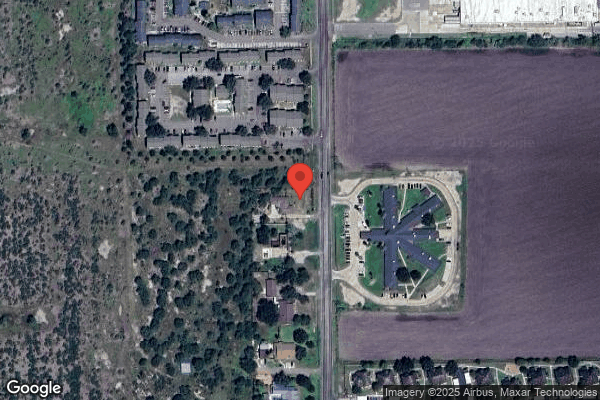
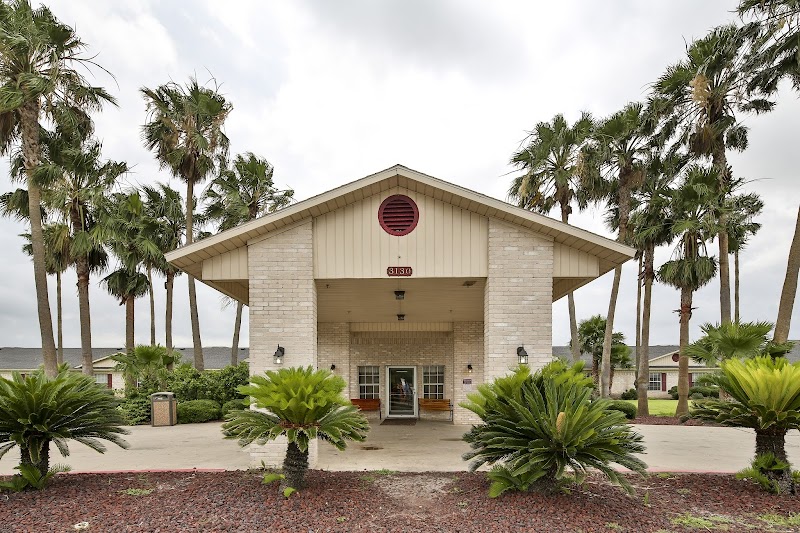
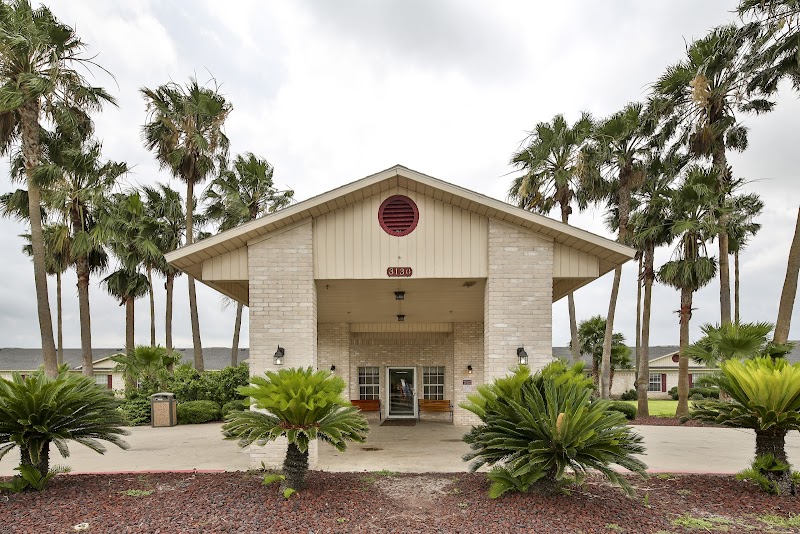
3130 S Brahma Blvd, Kingsville, TX 78363 (361) 592-8700
Non profit - Corporation 120 Beds WELLSENTIAL HEALTH Data: November 2025
Trust Grade
70/100
#501 of 1168 in TX
Last Inspection: July 2025

Inspected within the last 6 months. Data reflects current conditions.

Overview

Kingsville Nursing and Rehabilitation Center has a Trust Grade of B, indicating it is a good choice for families, though there are areas for improvement. It ranks #501 out of 1168 facilities in Texas, placing it in the top half, but it is #2 out of 2 in Kleberg County, meaning only one local option is better. The facility's trend is worsening, with issues increasing from 5 in 2024 to 6 in 2025. Staffing is a major concern, with only 1 out of 5 stars and a high turnover rate of 42%, although this is slightly better than the state average. Positive aspects include no fines on record and generally good health inspection scores, but specific incidents of concern include improper medication storage, which could lead to harm, and the lack of a qualified dietary manager, posing risks to residents' nutrition.
Trust Score
B
70/100
In Texas
#501/1168
Top 42%
Safety Record
Low Risk
No red flags
Inspections
Getting Worse
5 → 6 violations
Staff Stability
○ Average
42% turnover. Near Texas's 48% average. Typical for the industry.
Penalties
✓ Good
No fines on record. Clean compliance history, better than most Texas facilities.
Skilled Nurses
⚠ Watch
Each resident gets only 13 minutes of Registered Nurse (RN) attention daily — below average for Texas. Fewer RN minutes means fewer trained eyes watching for problems.
Violations
⚠ Watch
11 deficiencies on record. Higher than average. Multiple issues found across inspections.
★★★☆☆
3.0
Overall Rating
★☆☆☆☆
1.0
Staff Levels
★★★★☆
4.0
Care Quality
★★★★☆
4.0
Inspection Score
Stable
2024: 5 issues
2025: 6 issues

The Good

  • 4-Star Quality Measures · Strong clinical quality outcomes
  • Full Sprinkler Coverage · Fire safety systems throughout facility
  • No fines on record
  • Staff turnover below average (42%)

    6 points below Texas average of 48%

Facility shows strength in quality measures, fire safety.

The Bad

3-Star Overall Rating

Near Texas average (2.8)

Meets federal standards, typical of most facilities

Staff Turnover: 42%

Near Texas avg (46%)

Typical for the industry

Chain: WELLSENTIAL HEALTH

Part of a multi-facility chain

Ask about local staffing decisions and management

The Ugly 11 deficiencies on record

Jul 2025 4 deficiencies
CONCERN (D)

Potential for Harm - no one hurt, but risky conditions existed

Food Safety (Tag F0812)

Could have caused harm · This affected 1 resident

Based on observations, interviews and record review, the facility failed to store, prepare, distribute, and serve food in accordance with professional standards for food service safety for 1 of 1 kitc...

Read full inspector narrative →
Based on observations, interviews and record review, the facility failed to store, prepare, distribute, and serve food in accordance with professional standards for food service safety for 1 of 1 kitchen reviewed for storage, preparation, and sanitation. The facility failed to ensure the juice gun nozzle was clean. The facility failed to ensure the juice gun nozzles were stored properly. The facility failed to ensure food was stored properly in refrigerator number 2. These failures could place residents who received meals and/or snacks from the kitchen risk for food contamination and food borne illness. Initial tour and observation of the kitchen on 07/01/25 at 8:20 am revealed the following:*The left juice gun nozzle had a thick brownish yellow substance stuck inside and all over the outside of the nozzle as well as a thick white substance in spots on the outside of the nozzle.*Both juice gun nozzles were left hanging down off the shelf and dangling approximately 12 inches above the floor.*A thick red and a thick brown substance streaked and puddled on the front right table leg of the table the juice machine was on.*A one-gallon size zipper bag which contained a sliced meat product in a cloudy, light pinkish liquid with white particles floating in it was dated 6-23-25, partially unsealed and sitting on a wire shelf above a tray that contained 30 uncovered 8-ounce cups of a dark colored liquid substance in reach-in refrigerator number 2. In an interview on 07/01/25 at 9:18am the DM stated the juice nozzle was not acceptable and the white substance stuck to the outside of the juice nozzle might have been paper. He stated the juice nozzles were cleaned by night shift every evening, but it did not get cleaned the night before because it was a new month and he had not put out the cleaning schedule yet. In an interview with the RD, DM, and DA on 07/03/25 at 1:28 pm the DA stated the night shift DA was supposed to clean the juice nozzles and the day shift DA was supposed to check it to make sure it was cleaned before it was used because it could grow bacteria and cause the residents to get sick. The DA stated the juice nozzles were not supposed to be left hanging down because they could become contaminated and cause residents to get sick. The DA stated the food items in the refrigerators were to be labeled, dated, and covered by the DAs every day, every shift to avoid spoiling and contamination and the DM would check daily to ensure it was done. The DA stated left over food was good for one day and if it was left too long it could go bad and cause stomach problems for the residents. The DM stated he checked the refrigerators and freezers daily to ensure that food items were stored, labeled, and dated correctly. The DM also stated the meat in refrigerator number 2 was pre-cooked lunchmeat (ham) that was placed in a zipper bag because it originally came in a large box of lunchmeat that was kept frozen, and he only took out a portion at a time to thaw and use so that it would not go bad. The DM stated pre-cooked lunch meat not stored in the original package was good for 7 days as long as it was kept sealed and refrigerated. Record review of the facility's Coffee Machine and Juice Machine Policy Number 04/010 dated 10/01/18 and revised 06/01/19 reflected in part: Policy: The facility will maintain coffee machines and juice machines in a clean and sanitized condition to minimize the risk of food hazards. Coffee and juice machines will be cleaned once daily.2. Juice machines should be cleaned following the manufacturer's instructions. The nozzle will be cleaned daily. Record review of the facility's Food Storage Policy Number 03.003 dated 10/01/18 and revised 06/01/19 reflected in part: Policy: To ensure that all food served by the facility is of good quality and safe for consumption, all food will be stored according to the state, federal, and US Food Codes and HACCP guidelines.
CONCERN (D)

Potential for Harm - no one hurt, but risky conditions existed

Infection Control (Tag F0880)

Could have caused harm · This affected 1 resident

**NOTE- TERMS IN BRACKETS HAVE BEEN EDITED TO PROTECT CONFIDENTIALITY** Based on observation, interview, and record review, the facility failed to maintain an infection prevention and control program,...

Read full inspector narrative →
**NOTE- TERMS IN BRACKETS HAVE BEEN EDITED TO PROTECT CONFIDENTIALITY** Based on observation, interview, and record review, the facility failed to maintain an infection prevention and control program, including hand hygiene, designed to provide a safe, sanitary, and comfortable environment, and to help prevent the development and transmission of communicable diseases and infections for one (Resident #61) of 4 residents reviewed for infection control practices, in that: The facility failed to ensure the WCN wore proper PPE during wound care for Resident #239 who required enhanced barrier precautions. The facility failed to ensure Resident #239's surgical incision did not come in contact with a potentially contaminated surface during wound care. These failures could place residents that require wound care at risk for healthcare associated cross-contamination and infections. The findings included:Record review of Resident #239's face sheet dated 07/02/25 reflected a [AGE] year-old-female with an original admission date of 06/20/25. Diagnoses included spinal stenosis, lumbar region (narrowing of the spinal canal in the lower back), atherosclerotic heart disease (hardening and narrowing of the arteries caused by cholesterol plaques lining the artery over time), and high blood pressure. During an observation of wound care on 07/02/25 at 09:31 AM, the WCN was observed wearing gloves, but no gown as indicated to do so in the facility's EBP policy for residents with unhealed surgical wounds. The WCN was observed removing Resident #239's previous dry dressing to begin wound care. After the dry dressing was removed, the WCN proceeded to grab supplies to cleanse the surgical incision, allowing Resident #239's pant to come in contact with the wound. Once cleansed, the WCN stopped to grab gauze to pat dry the area, allowing Resident #239's pant to come in contact with the surgical incision again. The WCN then pat dried the area, then stopped to grab the dry dressing, allowing Resident #239's pants to come in contact with the surgical incision again. Record review of Resident 239's orders dated 06/22/25 reflected: Cleanse surgical incision to the back with normal saline, pat dry and apply dry dressing. Monitor for signs and symptoms of infection every day until resolved. In an interview on 07/02/25 at 09:47 AM the WCN stated she was very nervous as she had not been the WCN for very long. The WCN stated Resident #239 was not on enhanced barrier precautions because the wound was considered closed and did not think Resident #239 had to be on EBP. The WCN stated Resident #239's wound should not have come in contact with her pant, a potentially contaminated surface, to prevent the spread of infection. The WCN stated she had just gotten checked off on her wound care skills but could not remember when. In an interview on 07/02/25 at 01:16 PM the DON stated EBP is ordered for residents who meet the criteria such as residents with G-Tubes, open wounds, wounds that are draining, central lines, a tracheostomy, foley catheters, or central lines. The DON stated Resident #239's surgical incision was considered closed and not draining. The DON stated Resident # 239's surgical incision in her opinion, was closed with stitches, was not open or draining and therefore did not require EBP. The DON stated Resident #239's surgical incision should not have come in contact with her pants. The DON stated Resident #239's surgical incision could have been at risk for contamination and infection if a contaminated surface came in contact with the surgical incision. The DON stated the WCN had a skills check off on 07/01/25 and was fairly new to the wound care nurse position. In an interview on 07/02/25 at 03:04 PM the ADON stated residents are placed on EBP depending on the situation of the resident. The ADON stated the Resident #239's surgical incision did have stitches, but the wound was not open and not draining. The ADON stated based off the facility's EBP policy, unhealed surgical wounds should have required EBP to prevent infection. Record review of the facility's Enhanced Barrier Precautions policy dated 04/05/24 reflected: Policy: It is the policy of this facility to implement enhanced barrier precautions for the prevention of transmission of multidrug-resistant organisms/ 2. Initiation of Enhanced Barrier Precautions: b. An order for enhanced barrier precautions will be obtained for residents with any of the following: i. Wounds (e.g., chronic wounds such as pressure ulcers, diabetic foot ulcers, unhealed surgical wounds, and chronic venous stasis ulcers) and/or indwelling medical devises (e.g., central lines, urinary catheters, feeding tubes, tracheostomy/ventilator tubes) even if the resident is not known to be infected or colonized with a MDRO.
CONCERN (E)

Potential for Harm - no one hurt, but risky conditions existed

Free from Abuse/Neglect (Tag F0600)

Could have caused harm · This affected multiple residents

**NOTE- TERMS IN BRACKETS HAVE BEEN EDITED TO PROTECT CONFIDENTIALITY** Based on record reviews and interviews the facility failed to ensure that residents were free from abuse for one of six (Residen...

Read full inspector narrative →
**NOTE- TERMS IN BRACKETS HAVE BEEN EDITED TO PROTECT CONFIDENTIALITY** Based on record reviews and interviews the facility failed to ensure that residents were free from abuse for one of six (Resident #33) residents reviewed for abuse.The facility failed to ensure that the SW did not take Resident #33's DVD player away when he displayed unwanted behavior on 04/11/25.This deficient practice could put residents with unwanted behaviors at risk of not attaining or maintaining their highest practicable levels of mental and psychosocial wellbeing.Findings included:Record review of Resident #33's admission record reflected a [AGE] year-old male admitted to the facility on [DATE]. His diagnoses included moderate intellectual disabilities (developmental delays resulting in an average mental age of 6 to 9 years old), generalized anxiety disorder (mental disorder characterized by excessive and persistent worry, fear, or anxiousness which significantly interferes with daily life), recurrent major depressive disorder (persistent feeling of sadness and loss of interest that occurs in episodes lasting weeks to months), dementia (memory and cognitive decline) in other diseases with mood disturbance, cognitive communication deficit (difficulty with communication), and mixed receptive-expressive language disorder (difficulty understanding spoken language and expressing thoughts through speech).Record review of Resident #33's quarterly MDS dated [DATE] reflected a BIMS score of 12 which indicated Resident #33 had moderate cognitive impairment. Record review of Resident #33's LIDDA Habilitative assessment dated [DATE] reflected in Section IV- Social Development and Relationships, Resident #33's favorite activity was shopping in the community, and he was usually accompanied by the AD. Section V- Independent Decisions and Judgements reflected Resident #33 exercised his right to personal possessions as he had his own TV and DVD player and exercised his right to spend his money on things he wanted. Section VI- Academic and Vocational Development reflected Resident #33 watched movies in his room and expressed that he would like to be able to watch movies all night, eat snacks, and nap all day. Section VII- Person's Preferences for Specialized Supports with Daily Living reflected Resident #33 was able to perform some ADLs independently with some supervision such as shopping, eating, and ambulating. The necessary supports needed to assist Resident #33 in maintaining possessions in his living environment included assistance with house (room) cleaning and laundry. Section VIII- Social Inclusion reflected Resident #33 did not like to be told he could not do something such as eat what he wanted. Section IX- Speech and Language reflected Resident #33's family member, who passed away in June 2024, was the person who understood him best who and was best able to interpret what Resident #33 was trying to communicate.Record review of Resident #33's LIDDA Individual Profile dated 02/20/25 reflected Resident #33 had a history of a brain injury at birth and had behavioral needs, medical needs, and needed assistance with toileting. Section 4- Profile Information reflected Resident #33 felt it was important that he was able to choose his daily routine. He enjoyed staying up late watching movies in his room and sleeping late the next day. Resident #33 did not like to be told what to do. This section also reflected Resident #33 had a history of behavior problems such as he spent an excessive amount of time in the restroom, smeared feces on the toilet, and threw excessive amounts of toilet paper (clean and dirty) on the floor and in the toilet. Resident #33 had a history of verbal aggression (yelling out/screaming) 1 to 3 times a week. This section also reflected Resident #33's care plan interventions and medications appeared to be helping although he was difficult to redirect at times and a behavior support plan was not needed at that time.Record review of Resident #33's care plan dated 03/14/20 reflected he had behavior problems such as spending excessive amount of time in the restroom, smearing feces on the toilet, and throwing excessive amounts of toilet paper on the floor and in the toilet as well as verbal aggression. Interventions for these included intervene as necessary to protect the rights and safety of others, approach/ speak in a calm manner, divert attention, praise any indication of progress/ improvement in behavior, analyze key times, places, triggers, and what de-escalates, and provide positive feedback for good behavior/ emphasize the positive aspects of compliance. Record review of Resident #33's progress notes reflected a progress note dated 04/11/25 by the SW that stated, resident continues to overflood toilet with paper. Guardian was notified and explained that residents DVD player would be taken up until Monday 4/14/25. Guardian agreed. If resident can keep room clean and not cause toilet to overflow DVD would be given back. Resident stated he understood and that he would keep room clean. [sic] There were no progress notes between 04/11/25 and 07/02/25 which indicated Resident #33's DVD player was returned to him.In an interview on 07/02/25 at 2:26 pm Resident #33 stated, They (the SW) took my DVD player away a couple of months ago because I kind of misbehaved. Resident #33 stated he had not gotten it back yet and it made him feel bad because he watched his movies a lot. When asked who bought the DVD player, he stated [name], MRC bought it for him at [store] out of his money that is kept up front for him. When asked if there were any other things that were taken away Resident #33 replied, My radio. When asked when it was taken away, Resident #33 stated, A little time after they took my player. Resident #33 stated the radio was taken because he had it kind of loud. When asked if he was told when he could have it back, Resident #33 replied, When I behave- and I did not have it that loud. Resident #33 stated it made him feel bad and upset that the facility took his radio away and he has not gotten it back yet. In an interview on 07/02/25 at 2:42 pm RN B stated abuse was anything unwanted or neglectful, that could harm any resident and included verbal, physical, and financial abuse. RN B stated harm could be emotional, medical, or physical. RN B stated taking someone's property because they were not behaving was abuse. In an interview on 07/02/25 at 3:14 pm, the ADON named the types of abuse and stated emotional abuse/mental abuse was when a resident felt sad because a staff member made them feel that way due to how they were treated. When asked if there was a resident who had something in their room they really liked and had purchased with their own money and a staff member took it out of their room and put it away somewhere and told the resident they could only have it back if they behaved, would that be abuse, she stated, Yes, that would be abuse- emotional or mental. It could cause psychosocial harm. The ADON stated she did not suspect abuse in the facility but if she suspected abuse, she would report it right away to the Adm. The ADON stated none of the residents complained about any of the staff. In an interview on 07/02/25 at 3:32 pm, the DON named the types of abuse and what to do if abuse was seen or heard. When asked if there was a resident who had something in their room they really liked and had purchased with their own money and a staff member took it out of their room and put it away somewhere and told the resident they could only have it back if they behaved, would that be abuse, the DON stated, I would not consider that abuse. It could cause them distress, but I am not saying that would be abuse. After reading the definition of abuse in the facility's abuse policy, the DON stated she did not feel like it was abuse. The DON stated she was not aware of anyone having something taken away because they misbehaved but if she knew about something like that she would, definitely have to look into it to see what the situation was. In an interview on 07/02/25 at 3:54 pm the SW named the types of abuse and the abuse coordinator. The SW stated abuse was bad because it removed the dignity of the resident and took away their rights which could cause emotional harm or distress to the resident and/or lead to some bad behaviors. The SW stated if abuse was seen or heard she would report it to the administrator, follow up, and refer the resident to psychiatric services. She stated it was abuse if someone took away something a resident liked and told them they could have it back if they behaved. The SW stated it removed the resident's dignity because they were being treated like a child. When asked if she was aware of any situation like that in the facility, the SW stated, There is one resident, but I know he is IDD and to have him keep his room clean and not spread feces around, the Guardian said to take away his sodas. The SW stated she believed he had a radio and a DVD player that were taken away from him, also but did not recall how long ago those were taken away. The SW stated the person appointed as his Guardian had been his Guardian since before 2023 and she gave the facility feedback on how to redirect and encourage Resident #33. When asked how long ago Resident #33's DVD player and radio were taken away, the SW stated, I wouldn't say it has been months that he had his DVD player and radio taken away. I think he has the radio back. The DVD player was taken by myself and the radio- I'm not sure about the radio. When asked why they were taken away, she stated it was to redirect him from walking into offices and stealing stuff or spreading feces in the bathroom. The SW stated it did not make him feel sad. She stated she felt like it had been effective to take away his things. The SW further stated, I have not asked him how it made him feel. The SW stated she would not feel it was appropriate to take Resident #33's things away if the Guardian had not told her to take them. She also stated it should have been care planned that the Guardian said to take his things. When asked where the DVD player and radio were at this time, the SW stated the DVD player was in her office, but she was not sure where the radio was. The SW stated she consulted with the Administrator before taking things away from Resident #33. When asked who purchased the DVD player and the radio, the SW stated, I believe that he paid for the DVD player, but I'm not sure about the radio. He gets his money from the business office and goes to Wal Mart with the AD and MRC (Medical Records Clerk) to buy things. The SW stated, After reading the policy and especially if it makes him sad, I do feel like it is abuse.In an interview on 07/02/25 at 4:26 pm the Adm stated it would be abuse and dignity if someone took something away from a resident due to behaviors because the residents were adults, not children. The Adm stated Resident #33's radio and DVD player were not taken away by staff members. The Adm stated Resident #33's DVD player was taken at the direction of his Guardian as more of an unofficial behavior contract. The Adm stated, We called her and asked her what we could do to help improve his behaviors. She called him and told him, today we are going to work on not flooding the bathroom. She told him if he did not flood the bathroom then they could go to the store and buy some DVDs, but if he kept flooding the bathroom and throwing things, they would have to take away his DVD player. The Adm stated Resident #33 told his Guardian he would not flood the bathroom. The Adm further stated, It was not something we would initiate, it was something [his Guardian] did. Because his behaviors were getting more violent, we were trying to deescalate those behaviors. It was more of not a deprivation, but it was so that he would understand that things can't be thrown. I remember he did have it back; they went on a shopping trip, and he bought a scary DVD. The Adm stated if someone took away Resident #33's things for behaviors it would not be right and when she looked at the SW's documentation of the incident, it looked like abuse. The Adm stated, Had I not been privy to the conversation, I would feel like it would be abuse. I do not feel like that conversation and the way it was done was abusive, but I do feel like the way it is written, it looks bad. The Adm stated she was pretty sure Resident #33 had his DVD player back and, if the SW has the DVD player, that is news to me. I would be interested to know why the SW still has it. The Adm stated the intent was not to deprive Resident #33 of something or to abuse him, but to get him to stop throwing things and his Guardian phrased it that it was a behavior contract. The Adm stated she did not know if the radio being taken was a present issue or a past issue because as far as she knew, he did not have a radio now; however, his family member, who used to be in the same room as him, would often yell at him, tell him his radio was too loud, and take it away from him. When told Resident #33 stated he was sad about not having his DVD player, the Adm stated, I feel horrible because I do not want anyone to feel that way. In a telephone interview on 07/02/25 at 4:56 pm, Resident #33's Guardian stated taking away the DVD player first came up when the Adm contacted her about Resident #33's issues with behaviors like throwing trash all over, spreading feces all over and not wanting to shower. She stated those behaviors got better and then worse after his family member passed away a year ago. The Guardian stated the ILS people were going to the facility to see him, but they stopped because his room was not sanitary. She stated Resident #33 had never been taught appropriate skills such as cleaning up after himself and not breaking things and the staff had been trying positive reinforcement to help him. The Guardian stated the Adm called her and asked, If we (the Adm and the Guardian) explained it to him, could we (the facility) try taking his DVD player away to work on those skills and to keep his room in at least decent condition? I checked and we can do this. The Guardian stated she was not really in favor of it, but she agreed because Resident #33 was involved in the call, and he was willing to work on it. The Guardian was not able to see Resident #33 in April and May 2025 (someone else from her office saw him those months) but when she went to see him in June 2025 and on 07/01/25, he did not have his DVD player. She stated she talked to him about it on 07/01/25 and went to talk to the Adm and SW to tell them that they needed to try something different, but they were not in the facility at that time. The Guardian stated the behaviors they were trying to remedy had continued to the point where the Adm told her she was looking at alternative placement for him. The Guardian stated she now felt it (taking away his DVD player) had become punitive and it was not having a behavioral modification effect. She stated when she went to the facility in June there was a tracking chart on the wall with the days of the week, and staff would mark down if his room and/ or bathroom were clean and she thought to herself, well, that's kind of good, but when she was there on 07/01/25, the chart was not there. The Guardian stated, We really do not like being punitive with our clients. When I went to his room in June, his room smelled really bad because of the feces in the bathroom so I talked with him about why it was important to keep our areas clean. She stated the goal initially was to get Resident #33 into a group home, but she did not think that would be possible because he needed more supervision and assistance than a group home could provide. The Guardian stated she told the facility they needed to consult with a psychiatric provider before trying to find alternate placement for him because they might need to make some medication changes and the facility was supposed to be sending her his psychiatric notes. The Guardian stated MHMR was having trouble with Resident #33 in the day program also, and he would usually only be at the adult day care facility for an hour or two due to his behaviors. She stated for positive reinforcement, they would let him get a fast food meal on the way back to the nursing facility and it seemed to be improving his behavior as he would shower, put on clean clothes, and straighten up his room before he went to the adult daycare location. The Guardian stated she felt like taking things away was not going to have the desired effect with Resident #33, as the behaviors he had were long standing behaviors he has had his whole life. On 07/02/25 at 5:40 pm while the surveyor was on the phone with Resident #33's Guardian, the Adm and DON stated Resident #33 now told them the DVD player got wet and he took it to the SW to get it fixed and they (staff) forgot about it. This was stated to the two other state surveyors who were in the hallway at that time.In a telephone interview on 07/03/25 at 8:10 am, Resident #33's Guardian stated the Adm called her the previous evening to talk about the abuse case and told her Resident #33 got his DVD player back on Monday (04/14/25), and that he had it the whole time since then. Resident #33's Guardian stated the Adm then told her that Resident #33 took the DVD player to the SW one day before he went to the adult day care, told her it was broken, and they (the facility) were going to get maintenance to fix it. The Adm also told Resident #33's Guardian she (the Adm) was not aware the SW had the DVD player back and the SW did not know how long she had the DVD player. Resident #33's Guardian stated the Adm told her she gave the DVD player back to Resident #33 the previous day (07/02/25) and it was working. In an interview on 07/03/25 at 9:26 am Resident #33 stated the SW gave his DVD player back and the MRC gave his radio back yesterday (07/02/25). When asked if the radio had been in his room or in a drawer, Resident #33 stated it had not. Resident #33 stated he felt happy that he got his DVD player back and had already watched some movies.Record review of the facility's Abuse, Neglect and Exploitation policy dated 08/15/22 reflected in part: Policy:It is the policy of this facility to provide protections for the health, welfare and rights of each resident by developing and implementing written policies and procedures that prohibit and prevent abuse, neglect, exploitation, and misappropriation of resident property.Definitions: Abuse means the willful inflictions of injury, unreasonable confinement, intimidation, or punishment with resulting physical harm, pain or mental anguish, which can include staff to resident abuse. Abuse also includes the deprivation by an individual, including a caretaker, of goods or services that are necessary to attain or maintain physical, mental, and psychosocial well-being. Instances of abuse of all residents, irrespective of any mental or physical condition, cause physical harm, pain, or mental anguish. Willful means the individual must have acted deliberately, not that the individual must have intended to inflict injury or harm. Mental abuse includes, but is not limited to, humiliation, harassment, threats of punishment or deprivation. Neglect means failure of the facility, its employees, or service providers to provide goods and services to a resident that are necessary to avoid physical harm, pain, mental anguish, or emotional distress.Policy Explanation and Compliance Guidelines:3. The facility will provide ongoing oversight and supervision of staff in order to assure that its policies are implemented as written.The components of the facility abuse prohibition are discussed herein:III. Prevention of Abuse, Neglect and ExploitationThe facility will implement policies and procedures to prevent and prohibit all types of abuse, neglect, misappropriation of resident property, and exploitation that achieves:D. The identification, ongoing assessment, care planning for appropriate interventions, and monitoring of residents with needs and behaviors which might lead to conflict or neglect.H. Assigning responsibility for the supervision of staff on all shifts for identifying inappropriate staff behaviors.
CONCERN (E)

Potential for Harm - no one hurt, but risky conditions existed

Deficiency F0761 (Tag F0761)

Could have caused harm · This affected multiple residents

**NOTE- TERMS IN BRACKETS HAVE BEEN EDITED TO PROTECT CONFIDENTIALITY** Based on observation, interview, and record review the facility failed to store all drugs and biologicals properly and in locked...

Read full inspector narrative →
**NOTE- TERMS IN BRACKETS HAVE BEEN EDITED TO PROTECT CONFIDENTIALITY** Based on observation, interview, and record review the facility failed to store all drugs and biologicals properly and in locked compartments on 1 of 5 carts reviewed for storage of drugs and 1 (med-room [ROOM NUMBER]) of 2 medication rooms reviewed for storage. 1. The facility failed to ensure the WCN cart located on the 200 hall was locked when not in use. 2. The facility failed to ensure Resident #54's expired medications were disposed of in a timely manner. 3. The facility failed to ensure Resident #81 and Resident #54's medications were stored in the appropriate boxes for the residents. These deficient practices could affect residents who have medications on the wound care cart and in the medication rooms and could result in lost medications, drug diversion, or harm due to accidental ingestion of unprescribed medications. Findings included: 1. During an observation and interview on 07/03/25 09:34 AM revealed the wound care cart was unlocked and unattended in the 200 hall. This surveyor opened the top drawer recognizing the wound care cart being unlocked and unattended while not in use. Multiple wound care medications in bulk bottles and wound care supplies were easily assessable for removal. The WCN was in a resident's room and identified herself as being responsible for the unlocked wound care cart. In an interview on 07/03/25 09:35 AM, the WCN stated she thought she locked the wound care cart with her hip after putting on her PPE and before entering the resident room. The WCN stated the wound cart should be locked when not in use to prevent residents or unauthorized staff from having access to medications and supplies within the wound care cart. The WCN could not recall the last in-service on locking wound/medication carts but stated they were done often. In an interview on 07/03/25 09:42 AM, the DON stated the wound care cart should have been locked when not in use. The DON stated all carts should be locked when not in use for the safety of residents and to prevent unauthorized staff and visitors access to the wound cart supplies and medication. The DON stated in-service on locking the wound and medication carts were done frequently. 2. Record review Resident #54's face sheet, dated 07/02/2025, revealed an [AGE] year-old female with an original admission date of 01/04/2022 and a current admission date of 05/16/2025. Diagnoses included Dementia. Record review of Resident #54's physician orders revealed Divalproex (Depakote) 250 MG started 06/03/2025 and was discontinued 06/10/2025. Record review of Resident #54's progress notes dated 06/10/2025 revealed a new order to discontinue Depakote 250mg and change Resident #54 to Depakote 125 MG for mood stabilization due to behaviors associated with Dementia. Record review of Resident #81's face sheet 07/03/2025 revealed a [AGE] year-old female with an admission date of 01/13/2025. Diagnoses included Anemia. Record review of Resident #81's physician orders revealed a current order for Folic Acid started 01/14/2025. In an observation on 07/01/2025 at 3:45 PM it was revealed med-room [ROOM NUMBER] contained the locked cabinet and box with the medications for destruction, as well as cubbies, or boxes, labeled with residents' names and room numbers to hold their overflow, or extra, medications for the med-carts. In an observation on 07/01/2025 at 3:47 PM it was revealed Resident #54's discontinued Divalproex (Depakote - a medication used to treat seizures, bipolar, and/or migraines) 250 MG tablets were sitting in a box labeled with another resident's name and room number. In an observation on 07/01/2025 at 3:47 PM it was revealed Resident #81's Folic Acid (Vitamin B9 used in the production of red blood cells) 1 MG tablets were sitting in a box labeled with another resident's name and room number. In an interview with the DON on 07/02/25 at 1:08 PM she stated the cubbies labeled with residents' names and room numbers were her idea, and a system to help keep up with the residents' extra or overflow medications. The DON stated Resident #54's medication should have been dropped in the locked cabinet used for med-destruction. After the DON looked back at the orders and progress notes, she stated the medication had been discontinued since 06/10/2025, and she was not sure who placed the medication into another residents' cubby instead of dropping it in the med-destruction cabinet/box. She also stated she wasn't sure why Resident #81's medication was sitting in a cubby labeled for another resident. She stated sometimes the residents' switched rooms, and the medications would end up in the wrong cubby. She stated that could be a hazard, especially if a nurse was not paying attention and grabbed the wrong resident's medication without reading or paying attention. She stated that could have caused a med-error, and a resident could have gotten the wrong medication administered. In an interview with the ADON on 07/02/25 at 3:14 PM she stated Resident #54's medication should have been dropped in the locked cabinet/box labeled for med-destruction since it had been discontinued for almost a month, and she was not sure who placed the medication into a cubby labeled with another resident's name and room number, or why it was placed there. She stated the med-destruction cabinet was right next to the cubbies, and it was just as easy to drop it in there as it was to just set it down in in an area it did not belong. She also stated she was not sure why Resident #81's medication was sitting in a cubby labeled for another resident. She stated sometimes the residents switched rooms and the medications would end up in the wrong cubby. She stated that could be a hazard, especially if a nurse was not paying attention and grabbed the wrong resident's medication without reading or paying attention. She stated this could have caused a med-error, and a resident could have gotten the wrong medication administered. Record review of the facility's Medication Administration policy dated 10/01/19 reflected:Med CARTs: 2. The medication cart is locked at all times when not in use. 3. Do not leave the medication cart unlocked or unattended in the resident care areas. Record review of the facility's Medication Policies: Medication Storage and Disposal: Discontinue Medications, dated 10/01/2019 and revised 03/22/2023, revealed 1. if a physician discontinues a medication, the medication container was placed in a location marked for discontinued medications as soon as possible. 2. Medications awaiting disposal or return were stored in a locked secure area designated for that purpose until disposed of. Record review of the facility's Medication Policies: General Guidelines: Medication Carts and Supplies for Administering Medications, dated 10/01/2019, revealed 7. Label drawer or divider clearly with the resident's name and/or room and bed number.
Jun 2025 2 deficiencies
CONCERN (D) 📢 Someone Reported This

A family member, employee, or ombudsman was alarmed enough to file a formal complaint

Potential for Harm - no one hurt, but risky conditions existed

Accident Prevention (Tag F0689)

Could have caused harm · This affected 1 resident

**NOTE- TERMS IN BRACKETS HAVE BEEN EDITED TO PROTECT CONFIDENTIALITY** Based on observations, interview, and record review, the facility failed to ensure the resident environment remained as free of ...

Read full inspector narrative →
**NOTE- TERMS IN BRACKETS HAVE BEEN EDITED TO PROTECT CONFIDENTIALITY** Based on observations, interview, and record review, the facility failed to ensure the resident environment remained as free of accident hazards as was possible and each resident received adequate supervision and assistance devices to prevent accidents for one of eight residents (Resident #2) reviewed for accidents and hazards. The facility failed to ensure a floor mat was in place beside Resident #2's bed as indicated on her current comprehensive care plan and current physician's orders. This failure could place residents at risk for an injury. The findings include: Record review of Resident #2's face sheet, dated 06/17/25, reflected a [AGE] year-old female who was admitted to the facility on [DATE]. Resident #2 had diagnoses which included unspecified dementia(A group of thinking and social symptoms which interferes with daily functioning), unspecified osteoarthritis (Type of arthritis that occurs when flexible tissue at the ends of bones wears down), age related osteoarthritis(A degenerative joint desease where cartilage, the cushioning tissue in the joints breaks down over time, leading to pain and stiffness), and mild cognitive impairment. Record review of Resident #2's MDS dated [DATE] indicated she had a BIMS (Brief Interview for Mental Status) score of 3 which indicated, severe cognitive impairment. The ma also indicated she was dependent on staff for ADL's (Activities of Daily Living.) Record review of Resident #2's care plan dated 11/26/24 indicated: 08/23/23 unwitnessed fall- no injury 4/3/2024 an unwitnessed fall with no injury 05/20/24 Witness fall without injury 07/31/24 Fall w/o injury Add floor mats X2 for safety precautions 01/04/25 Witness fall with injury laceration to left forehead hematoma to left side of forehead. 01/30/2025 Fall without injury Record review of Resident #2's July 2024 physician orders reflected there was an order for floor mats X2 usage as precaution. Record Review of Resident #2's Fall Risk Assessment/ Morse Fall Scale reflected 30 -a moderate risk or falling. Observation on 06/18/25 at 11:15 AM, revealed Resident #2 was lying in bed with eyes closed. Resident #2 had a floor mat on the floor on the left side of her bed but not on her right side. In an interview on 06/18/25 at 12:03 PM, CNA B and CNA C said all staff was responsible to check to see if mats was in place. They said the CNA's are the front-line staff and should notice if the floor mat is not in right place or missing. Both staff said if mats were missing the resident could sustain an injury which can lead to a major injury or possibly death. Both staff said last fall prevention in-service was just a week ago. In an interview on 06/18/24 at 12:11 PM LVN A said she was responsible for making sure the fall mats were in place. The resident only had one mat and is to have two mats per care plan. Resident is at risk for injury for not having both mats alongside each side of her bed. The supply clerk is responsible for suppling mats and did not know the reason why she did not have other mat on right side of bed. In joint an interview 06/18/2025 at12:15 PM with the Administrator and DON, the Administrator stated the resident was to have two fall mats in place as indicated in her care plan and physician's orders. The Admin and the DON stated not having the fall mats could place the resident at risk for a major injury or death. Both the Admin and DON stated it was all staff's responsibility to ensure the mats are in place for the safety of the resident, but the main responsibility fell on the nurse caring for the resident at the time. Record review of the facility's Fall Prevention Program Policy dated 8/15/22 reflected Each resident will be assessed for fall risk and will receive care and services in accordance with their Individualized level of risk to minimize the likelihood of falls. When a resident who does not have a history of falling experiences a fall, the facility will update the care plan and interventions.
CONCERN (D) 📢 Someone Reported This

A family member, employee, or ombudsman was alarmed enough to file a formal complaint

Potential for Harm - no one hurt, but risky conditions existed

Deficiency F0760 (Tag F0760)

Could have caused harm · This affected 1 resident

**NOTE- TERMS IN BRACKETS HAVE BEEN EDITED TO PROTECT CONFIDENTIALITY** Based on interview and record review, the facility failed to ensure that residents were free of significant medication errors fo...

Read full inspector narrative →
**NOTE- TERMS IN BRACKETS HAVE BEEN EDITED TO PROTECT CONFIDENTIALITY** Based on interview and record review, the facility failed to ensure that residents were free of significant medication errors for 1 of 5 residents (Resident #1) reviewed for pharmacy services. 1. The facility failed to clarify the blood pressure parameters for Resident #1's Hydrochlorothiazide (a diuretic that helps treat high blood pressure and fluid retention) orders for April and May of 2025. 2. The facility failed to administer Resident #1's Hydrochlorothiazide per the recommended and prescribed blood pressure parameters in April and May of 2025. These failures could place resident at risk for complications, as well as jeopardize their health and safety. Findings included: Record review of Resident #1's face sheet, dated 06/17/25, revealed a [AGE] year-old male with an original admission date of 10/17/2023, and a current admission date of 05/22/25. Resident #1's diagnoses included Wernicke's Encephalopathy (an acute neurological condition caused by vitamin B1 deficiency), Dementia with Mood Disorder (decline in cognitive function severe enough to interfere with daily life), and Essential Hypertension (high blood pressure). Record review of Resident #1's Quarterly MDS assessment, dated 05/25/25, revealed Resident #1 rarely or never makes self understood. The Brief Interview for Mental Status was skipped and not conducted. Record review of Resident #1's care plan revealed risk for decreased cardiac tissue perfusion initiated 10/16/23 and revised on 02/16/24. Goals included: the resident would remain free from signs and symptoms of hypertension, and the resident would remain free of complications related to hypertension. Interventions included: administer Hydrochlorothiazide routinely as ordered. Monitor for side effects such as orthostatic hypotension, increased heart rate, and effectiveness. Record review of Resident #1's physician orders, revealed Hydrochlorothiazide 12.5 MG give 1 tablet by mouth one time a day for Hypertension started 10/20/23 and ended 05/12/25 (check blood pressure, may hold if less than 100/60), started 05/23/25 and ended 05/23/25, started 05/24/25 and ended 05/27/25, started 05/28/25 and ended 06/10/25 (check blood pressure, hold if less than 100/60). Record review of Resident #1's April 2025 MAR revealed Resident #1's blood pressure on 04/29/25 was 124/54. Hydrochlorothiazide was still administered. Record review of Resident #1's May 2025 MAR revealed Resident #1's blood pressure on 05/01/25 was 98/62. Hydrochlorothiazide was still administered. No blood pressures were documented for this medication on 05/23/25, 05/24/25, 05/25/25, 05/26/25, and 05/27/25. Record review of Resident #1's progress notes (orders administration notes) dated 06/05/25 and 06/09/25, revealed a medication note for Hydrochlorothiazide 12.5 MG, give 1 tablet by mouth one time a day for Hypertension; Check blood pressure and hold if less than 100/60. In an interview with the DON on 6/17/25 at 2:50 PM she stated Hydrochlorothiazide was a diuretic not a blood pressure medication, but it could affect the blood pressure. She also stated she knew who the initials belonged to, but she was not sure why the nurses gave the medication outside of the recommended parameters. The DON stated the check mark above the nurse's initials on the MAR meant the medication was administered. She was unsure why some of the Hydrochlorothiazide orders had blood pressure parameters, but some did not, and stated this should have been clarified with the provider, and she was going to get with the provider to clarify if he wanted to have parameters on this order or not when the resident returned back to the facility since he was currently away at a psychiatric hospital. The DON stated if Resident #1's blood pressure dropped too low he may have experienced possible dizziness, weakness, and organ failure. In an interview with the ADON on 06/17/25 at 3:00 PM, she stated she did not remember giving the medication outside of parameters and was unsure why she had not looked at or paid attention to the blood pressure parameters. She stated she typically looked at blood pressure parameters prior to administering Hydrochlorothiazide and held it if the blood pressure was too low. She also stated if this medication was given while his blood pressure was already low, his blood pressure could have continued to drop, and he could get dizzy and faint, and there could even be a risk of death. She did not recall receiving any in-services in the past regarding blood pressure medications or blood pressure parameters, but she stated they went over blood pressure medications and parameters on their annual skills checkoff. She stated she did not remember when their most recent annual skills checkoff was, but she thought it was sometime this year. In an interview with LVN-A on 6/17/25 at 3:09 PM, she stated it was just an error, and she should not have administered Resident #1's medication with his blood pressure below the recommended parameters. She also stated she typically looked at the medication and parameters before administering, but she did not remember why she had not look at the parameters that day other than she was probably busy and overlooked it. LVN-A stated if the blood pressure dropped too low Resident #1 could have had dizziness, passed out, or even possibly death. She stated she thought they had been in-serviced recently regarding blood pressures and medications but she could not remember for sure, but she did state they went over it in their annual skills checkoffs that were sometime this year. In a record review of the Medication Administration Policy, implemented 10/24/22, 8. Obtain and record vital signs, when applicable or per physician orders. When applicable, hold medication for those vital signs outside the physician's prescribed parameters. 14. Administer medications as ordered in accordance with manufacturer specification. 17. For those medications requiring vital signs, record the vital signs onto the MAR. 20. Correct any discrepancies and report to nurse manager.
May 2024 4 deficiencies
CONCERN (D)

Potential for Harm - no one hurt, but risky conditions existed

Infection Control (Tag F0880)

Could have caused harm · This affected 1 resident

Based on observation, interview, and record review, the facility failed to establish and maintain an infection prevention and control program designed to provide a safe, sanitary and comfortable envir...

Read full inspector narrative →
Based on observation, interview, and record review, the facility failed to establish and maintain an infection prevention and control program designed to provide a safe, sanitary and comfortable environment and to help prevent the development and transmission of communicable diseases and infection for 1 of 5 residents (Resident #51) reviewed for infection control, in that: 1. CNA A and B failed to wash or sanitize their hands or change their gloves after touching items in close proximity of Resident #51 before starting incontinent care. 2. CNA B did not clean between her fingers with hand sanitizer while providing incontinent care. These deficient practices could place residents at-risk for infection due to improper care practices. The findings included: Record review of Resident #51's face sheet, dated 05/23/2024, revealed an admission date of 09/19/2019, with diagnoses which included: Alzheimer's disease (brain disorder that slowly destroys memory and thinking skills), Dementia(decline in cognitive abilities), Hyperlipidemia (Elevated level of any or all lipids(fat) in the blood), Parkinsonism (Group of neurological conditions that cause difficulty with movement), Major depressive disorder (mental disorder characterized by at least two weeks of pervasive low mood, low self-esteem, and loss of interest or pleasure), Anxiety disorder (A group of mental illnesses that cause constant fear and worry), Delusional disorder (A person has one or more fixed and persistent beliefs that are not based on reality). Record review of Resident #51's quarterly MDS assessment, dated 04/15/2024, revealed Resident #18 had memory problem, and was severely cognitively impaired. Resident #51 required total care and, was frequently incontinent of bowel and bladder. Record review of Resident #51's care plan, dated 09/19/2029, revealed a problem of is at risk for skin breakdown as evidence by bladder incontinence, with a goal of The resident will remain free from skin breakdown due to incontinence and brief use through the review date. 1. Observation on 05/23/24 at 11:30 a.m. revealed while providing incontinent care for Resident #51, CNA A after putting gloves on, touched the bed remote and the call light that were on Resident #51's bed and then without changing her gloves or sanitizing her hands touched the wet wipes that were going to be use on the resident to provide care. CNA A touched the bed remote again to lower the head of the bed. Both CNA A and CNA B touched the pillow under Resident #51's feet to remove it from under his feet. Both CNAs started the incontinent care for the resident without changing their gloves or sanitizing their hands. During an interview on 05/23/2024 at 12:00 p.m. with CNA A and CNA B confirmed the environment around the resident was considered dirty and they should have changed their gloves and sanitized their hands prior to providing care. They confirmed they received infection control training within the year. During an interview with the DON on 05/23/2024 at 3:50 p.m., she confirmed the environment around the resident was considered dirty and the staff should change their gloves and wash. Staff should sanitize their hands after touching anything in the environment, before touching the resident and at the start of care. She confirmed the staff were in-serviced in infection control and incontinent care and skills were checked annually and as needed if there were concerns with infection control. The DON revealed herself and the ADON were in charge of the training and checking of the staff's kills. Record review of the annual skills check for CNA A revealed CNA A passed competency for infection control on 02/16/2024. Record review of the annual skills check for CNA B revealed CNA B passed competency for infection control on 01/29/2024. Record review of the facility policy, titled Infection prevention and control program , dated 05/13/2023, revealed All staff shall assume that all residents are potentially infected or colonized with an organism that could be transmitted during the course of providing resident care services. 2. Observation on 05/23/24 at 11:30 a.m. revealed while providing incontinent care for Resident #51, CNA B used hand sanitizer 3 times between change of gloves. For 2 of the 3 times, CNA B did not rub the sanitizer between her fingers. During an interview on 05/23/2024 at 12:00 p.m. with CNA B confirmed she should have rubbed between her fingers every time she used the hand sanitizer. She confirmed she received training in hand washing within the year. During an interview with the DON on 05/23/2024 at 3:50 p.m., she confirmed the CNA should have rubbed the sanitizer between her fingers to completely sanitize her hands and that it could be a cause for infection to the resident. She confirmed the staff were in-serviced in infection control and hand washing and skills were checked annually and as needed if there were concerns with infection control. The DON revealed herself and the ADON were in charge of the training and checking of the staff's kills. Record review of the annual skills check for CNA B revealed CNA B passed competency hand washing on 01/29/2024. Record review of the facility policy, titled hand Hygiene , dated 10/24/2022, revealed Hand hygiene technique when using an alcohol based hand rub [ .] rub hand together, covering all surfaces of hands and fingers until hands feel dry
CONCERN (E)

Potential for Harm - no one hurt, but risky conditions existed

Deficiency F0801 (Tag F0801)

Could have caused harm · This affected multiple residents

Based on interview and record review, the facility failed to employ staff with the appropriate competencies and skills sets to carry out the functions of the food and nutrition services for 1 of 1 die...

Read full inspector narrative →
Based on interview and record review, the facility failed to employ staff with the appropriate competencies and skills sets to carry out the functions of the food and nutrition services for 1 of 1 dietary manager reviewed for qualified dietary staff. The facility failed to employ a certified dietary manager as required. This failure could place residents who consumed food prepared by staff in the kitchen at increased risk of food borne illness and not receiving adequate nutrition. The findings were: Record Review of the Employee Service List, undated, revealed the Dietary Manager with a hire date of 11/20/2015 and a re-hire date of 12/2/2016 During an interview on 05/23/24 at 1:20 p.m., with the Dietary Director he revealed he had not completed the certified Dietary Manager course which was started in 11/23 but he hoped to have it completed in the next three months. The Dietary Director stated he had been working in the facility's kitchen as a cook prior to becoming the Dietary Manager in 09/23. The Dietary Manager stated he felt completion of the dietary manager course would help him to better manage the kitchen, work with Resident menus, and better understand the recommended resident diets. During an interview on 05/23/24 from 1:45p.m., to 2:00p.m., with the Human Resource Director and the Administrator, the Administrator stated she felt having the Dietary Director enrolled in the certified dietary manager course had met the facility's requirement. The Administrator stated she felt the Dietary Director finishing the certified manager's course would help him to better manage the kitchen. The Human Resource Director stated the facility did not have a policy on employees maintaining their licenses or certifications. The Human Resource Director stated the Dietary Director's completion of the certified manager's course would help him to teach the kitchen manager role to others if there was a need. Record review of the Dietary Food Service Supervisor Job Description dated 8/1/23 revealed the Food Service Supervisor was responsible for the daily operations of the dietary department, according to facility policy and procedures and federal/state regulations. The Job Description revealed an additional discussion section dated 9/1/24 which authorized the payment for the Certified Dietary Manager Course.
CONCERN (E)

Potential for Harm - no one hurt, but risky conditions existed

Food Safety (Tag F0812)

Could have caused harm · This affected multiple residents

Based on observations, interviews, and record review, the facility failed to store, prepare, distribute, and serve food in accordance with professional standards for food service safety for 1 of 1 kit...

Read full inspector narrative →
Based on observations, interviews, and record review, the facility failed to store, prepare, distribute, and serve food in accordance with professional standards for food service safety for 1 of 1 kitchen, in that: 1. The Dietary Manager was observed in the kitchen not wearing a beard hair restraint. 2. There were two 6.5 lb bags of sliced strawberries in the freezer that were not dated. 3. There was a bag of tostada chips in the kitchen store- room that was not labeled or dated. 4. There was an electrical outlet in the kitchen that did not have an attached cover on the outlet. 5. There was a ceiling vent in the dish-room that had rust on the sprinkler head and dirt on the ceiling around the vent. 6. There was a ceiling vent in the dish-room that had dirt particles and grease on the vent slats. These deficient practices could place residents who received meals and snacks from the kitchen at risk for food borne illness from improper infection control, from a lack of food label date monitoring, from a lack of equipment maintenance, and improper sanitation in the kitchen area. The findings included: Observation on 05/21/24 from 9:05 a.m. to 9:50 a.m. during the kitchen tour with the Dietary Manager revealed the following: a. The Dietary Manager was observed in the kitchen not wearing a beard hair restraint. b. There were two 6.5 bags of sliced strawberries in the freezer that were not dated. c. There was a bag of tostada chips in the kitchen store- room that was not labeled or dated. d. There was an electrical outlet in the kitchen that did not have an attached cover on the outlet. e. There was a ceiling vent in the dish-room which measured approximately one foot in diameter that had rust on the attached sprinkler head. There was also dirt on the ceiling surface around the parameter of the ceiling vent. f. There was a ceiling vent in the dish machine room which measured approximately 1x1.5 foot that had dirt particles and grease on the vent slats. During an interview with the Dietary Manager on 05/21/24 at 9:55 a.m., the Dietary Manager stated wearing a hair and beard restraint was important to keep hair from falling onto the floor or food. The Dietary Manager stated it was important for food to be labeled and dated to know when it was out of date. He stated having an attached electrical outlet cover was important for employee safety. The Dietary Manager stated having clean ceiling vents in the dish-room was important to maintain kitchen sanitation. During an interview with the Maintenance Director on 05/21/24 at 1:50 p.m., he stated having the outlet cover on the electrical outlet would be important for employee safety. The Maintenance Director stated having the ceiling vents cleaned in the kitchen was important to maintain kitchen sanitation. During an interview with the Administrator on 05/22/24 at 4:40pm she stated kitchen employees wearing hair restraints would help keep hair from falling onto the floor or into the food. The Administrator stated dating food items in the kitchen helped to establish when the food item should be discarded. The Administrator stated keeping the ceiling vents clean from dirt would have promoted kitchen sanitation. Record review of facility's policy on Employee Sanitation, Policy Number 04.001 dated 2018 stated that hairnets, headbands, caps, beard coverings or other effective hair restraints must be worn to keep hair from food and food contact surfaces. Record review of the facility's policy on Food Storage, Policy Number 03.003, dated 2018 stated that food items in dry storage rooms and refrigerators should be dated and labeled. Record review of the facility's policy on Fire Containment, Policy Number 05.008 dated 2018 stated electrical outlets were to be checked to make sure they were intact. Record review of the Food Code, U.S. Public Health Service, U.S. FDA, 2017, U.S. Department of H&HS, revealed 4-601.11 Equipment, Food-Contact Surfaces, Non-food-Contact Surfaces, and Utensils. (A) EQUIPMENT FOOD-CONTACT SURFACES and UTENSILS shall be clean to sight and touch. (B) The FOOD-CONTACT SURFACES of cooking EQUIPMENT and pans shall be kept free of encrusted grease deposits and other soil accumulations. (C) Non-FOOD-CONTACT SURFACES of EQUIPMENT shall be kept free of an accumulation of dust, dirt, FOOD residue, and other debris.
MINOR (B)

Minor Issue - procedural, no safety impact

MDS Data Transmission (Tag F0640)

Minor procedural issue · This affected multiple residents

Based on interview and record review, the facility failed to transmit encoded, accurate, and complete MDS data to the CMS System for 1 (Resident #42) of 24 residents reviewed for MDS accuracy and comp...

Read full inspector narrative →
Based on interview and record review, the facility failed to transmit encoded, accurate, and complete MDS data to the CMS System for 1 (Resident #42) of 24 residents reviewed for MDS accuracy and completion, in that: Resident #42's Discharge MDS Assessment was not exported within 14 days of completion. This deficient practice could result in MDS inaccuracies. The findings were: Record review of Resident #42's closed record revealed a Discharge MDS Assessment was completed on 12/29/2023 and had not been exported as of 05/23/2024. During an interview with MDS C on 05/23/2024 at 3:07 p.m., MDS C confirmed that Resident #42's Discharge MDS Assessment was completed on 12/29/2023 and had not been exported. MDS C stated the MDS should have been exported, confirmed she was responsible to do so, and stated the failure was an oversight. During an interview with the Administrator on 05/24/2024 at 1:15 p.m., the Administrator stated the facility had no policy regarding the timeliness of MDS transmission.
Feb 2024 1 deficiency
CONCERN (D) 📢 Someone Reported This

A family member, employee, or ombudsman was alarmed enough to file a formal complaint

Potential for Harm - no one hurt, but risky conditions existed

Infection Control (Tag F0880)

Could have caused harm · This affected 1 resident

**NOTE- TERMS IN BRACKETS HAVE BEEN EDITED TO PROTECT CONFIDENTIALITY** Based on observation, interview, and record review, the facility failed to maintain an infection prevention and control program ...

Read full inspector narrative →
**NOTE- TERMS IN BRACKETS HAVE BEEN EDITED TO PROTECT CONFIDENTIALITY** Based on observation, interview, and record review, the facility failed to maintain an infection prevention and control program designed to provide a safe, sanitary, and comfortable environment to help prevent the development and transmission of communicable diseases and infections for 1 of 5 resident (Resident #1) reviewed for infection control, in that: The facility failed to ensure the PTD was wearing the appropriate PPE while in Resident #1's room, who was in isolation. This deficient practice could place residents at risk of infection for transmission of communicable diseases and a decline in health. The findings were: Record review of Resident #1's face sheet dated 02/02/2024 revealed an admission date of 01/12/2024 and diagnoses which included: Clostridium Difficile Colitis(inflammation of the colon caused by bacteria), Chronic Obstructive Pulmonary Disease ( a group of lung diseases that block airflow and make it difficult to breathe), Unspecified Atrial Fibrillation( the heart's upper chambers beat chaotically and irregularly), and Gastro-esophageal reflux ( a digestive disease in which stomach acid or bile irritates the food pipe lining). Record review of Resident #1's Annual MDS assessment, dated 01/17/2024, revealed a BIMS score of 12, which indicated moderate cognitive impairment. Record review of Resident #1's Care Plan, last reviewed 01/18/2024, revealed a Focus: The resident has + C.Difficile results. Date initiated 01/18/2024. Record review of Resident #1's Medical assessment dated [DATE] revealed the resident was on a CONTACT ISOLATION: Wear gowns and masks when changing contaminated linens. Place soiled linens in bags marked biohazard. Bag linens and close bag tightly before taking to laundry. Date Initiated: 01/18/2024 Observation on 02/01/2024 at 1:52 p.m. revealed Resident #1's hallway had Resident #1's room set up with 3-drawer cart outside of door, filled with masks, face shields, gowns, and gloves. Further observation revealed there were trash bins for doffing face masks and shields, hand sanitizer and signs on the wall and doors regarding isolation precautions. Observation on 02/01/2024 at 1:52 p.m. revealed PTD present in Resident #1's room, who was in isolation, wearing only a surgical mask that was pulled down around PTD's chin. Further observation revealed PTD exiting the room and returning to the Physical Therapy room where other residents and staff were present. PTD touched residents call light on bedside table, while he helped her to raise the head part of the bed for Resident #1. In an interview with PTD and the DON on 02/01/2024 at 02:14 p.m., the PTD stated he was only going in their real quick to assist Resident #1 with her bed because she asked him for help. PTD acknowledged he had received infection control training and using PPE. The DON informed PTD that no matter the length of time that he was in an isolation room, any person must follow the orders that are on the wall on what to wear when entering a room with precautions. The DON further revealed all staff were trained on infection control and isolation precautions, knew the procedures and risk of spreading the infection to themselves and other residents. She stated PTD should have been aware of the PPE set up in the hall and would provide PTD with further in-service training immediately. Record review for an in-service training on infection control provided on 02/01/2024 was signed by PTD. Record review of the Infection Prevention and Control Program, updated May 13, 2023, provided by the DON as part of the facility Infection Control Procedures, revealed, a section Personal Protective Equipment; Health Care P rovider who enter the room of a patient with suspected or confirmed Clostridium Difficile Colitis infection should adhere to Standard Precautions). Record review of the facility's policy titled, Infection Control Plan: Overview, updated 05/2023, revealed, Preventing Spread of Infection: The facility will require staff to Donn and Doff PPE before and after contact with resident who needs isolation to prevent the spread of infection to others in the facility.
Understanding Severity Codes (click to expand)
Life-Threatening (Immediate Jeopardy)
J - Isolated K - Pattern L - Widespread
Actual Harm
G - Isolated H - Pattern I - Widespread
Potential for Harm
D - Isolated E - Pattern F - Widespread
No Harm (Minor)
A - Isolated B - Pattern C - Widespread

Questions to Ask on Your Visit

  • "Can I speak with families of current residents?"
  • "What's your RN coverage like on weekends and overnight?"

Our Honest Assessment

Strengths
  • • No major safety red flags. No abuse findings, life-threatening violations, or SFF status.
  • • No fines on record. Clean compliance history, better than most Texas facilities.
  • • 42% turnover. Below Texas's 48% average. Good staff retention means consistent care.
Concerns
  • • 11 deficiencies on record. Higher than average. Multiple issues found across inspections.
Bottom line: Mixed indicators with Trust Score of 70/100. Visit in person and ask pointed questions.

About This Facility

What is Kingsville Nursing And Rehabilitation Center's CMS Rating?

CMS assigns Kingsville Nursing and Rehabilitation Center an overall rating of 3 out of 5 stars, which is considered average nationally. Within Texas, this rating places the facility higher than 99% of the state's 100 nursing homes. This mid-range rating indicates the facility meets federal standards but may have areas for improvement.
How is Kingsville Nursing And Rehabilitation Center Staffed?

CMS rates Kingsville Nursing and Rehabilitation Center's staffing level at 1 out of 5 stars, which is much below average compared to other nursing homes. Staff turnover is 42%, compared to the Texas average of 46%. This relatively stable workforce can support continuity of care.

What Have Inspectors Found at Kingsville Nursing And Rehabilitation Center?

State health inspectors documented 11 deficiencies at Kingsville Nursing and Rehabilitation Center during 2024 to 2025. These included: 10 with potential for harm and 1 minor or isolated issues.
Who Owns and Operates Kingsville Nursing And Rehabilitation Center?

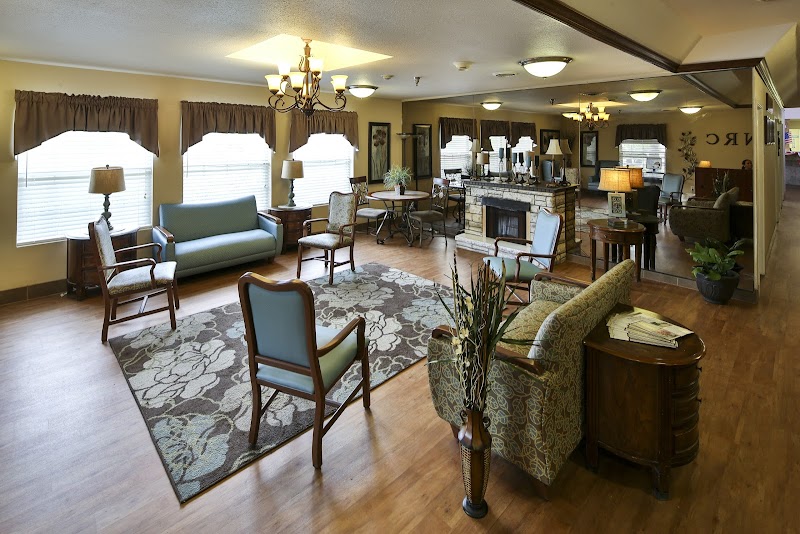
Kingsville Nursing and Rehabilitation Center is owned by a non-profit organization. Non-profit facilities reinvest revenue into operations rather than distributing to shareholders. The facility is operated by WELLSENTIAL HEALTH, a chain that manages multiple nursing homes. With 120 certified beds and approximately 87 residents (about 72% occupancy), it is a mid-sized facility located in Kingsville, Texas.

How Does Kingsville Nursing And Rehabilitation Center Compare to Other Texas Nursing Homes?

Compared to the 100 nursing homes in Texas, Kingsville Nursing and Rehabilitation Center's overall rating (3 stars) is above the state average of 2.8, staff turnover (42%) is near the state average of 46%, and health inspection rating (4 stars) is above the national benchmark.

What Should Families Ask When Visiting Kingsville Nursing And Rehabilitation Center?

Based on this facility's data, families visiting should ask: "Can you walk me through typical staffing levels on day, evening, and night shifts?" "Can I visit during a mealtime to observe dining assistance and food quality?" "How do you handle medical emergencies, and what is your hospital transfer rate?" "Can I speak with family members of current residents about their experience?" These questions are particularly relevant given the below-average staffing rating.

Is Kingsville Nursing And Rehabilitation Center Safe?

Based on CMS inspection data, Kingsville Nursing and Rehabilitation Center has a clean safety record: no substantiated abuse findings (meaning no confirmed cases of resident harm), no Immediate Jeopardy citations (the most serious violation level indicating risk of serious injury or death), and is not on the Special Focus Facility watch list (a federal program monitoring the lowest-performing 1% of nursing homes). The facility has a 3-star overall rating and ranks #1 of 100 nursing homes in Texas. While no facility is perfect, families should still ask about staff-to-resident ratios and recent inspection results during their visit.

Do Nurses at Kingsville Nursing And Rehabilitation Center Stick Around?

Kingsville Nursing and Rehabilitation Center has a staff turnover rate of 42%, which is about average for Texas nursing homes (state average: 46%). Moderate turnover is common in nursing homes, but families should still ask about staff tenure and how the facility maintains care continuity when employees leave.

Was Kingsville Nursing And Rehabilitation Center Ever Fined?

Kingsville Nursing and Rehabilitation Center has no federal fines on record. CMS issues fines when nursing homes fail to meet care standards or don't correct problems found during inspections. The absence of fines suggests the facility has either maintained compliance or corrected any issues before penalties were assessed. This is a positive indicator, though families should still review recent inspection reports for the full picture.

Is Kingsville Nursing And Rehabilitation Center on Any Federal Watch List?

Kingsville Nursing and Rehabilitation Center is not on any federal watch list. The most significant is the Special Focus Facility (SFF) program, which identifies the bottom 1% of nursing homes nationally based on persistent, serious quality problems. Not being on this list means the facility has avoided the pattern of deficiencies that triggers enhanced federal oversight. This is a positive indicator, though families should still review the facility's inspection history directly.