Lily Springs Rehabilitation and Healthcare Center
901 Central Texas Expwy, Lampasas, TX 76550 (512) 556-8827
For profit - Individual 116 Beds NEXION HEALTH Data: November 2025 5 Immediate Jeopardy citations
Trust Grade
0/100
#1034 of 1168 in TX
Last Inspection: May 2025

Inspected within the last 6 months. Data reflects current conditions.

Overview

Lily Springs Rehabilitation and Healthcare Center has received a Trust Grade of F, indicating significant concerns about the quality of care provided. Ranked #1034 out of 1168 facilities in Texas and #3 out of 3 in Lampasas County, it is in the bottom half of nursing homes in the state and has limited local competition. The facility's overall performance is improving, as the number of reported issues decreased from 25 in 2024 to 16 in 2025. Staffing is rated average with a 3 out of 5 stars, but the turnover rate of 62% is concerning, significantly higher than the Texas average of 50%. In terms of quality, the facility has been fined $105,187, which is higher than 81% of Texas facilities and indicates repeated compliance issues. Although RN coverage is average, the facility has faced serious incidents, including failures to provide necessary treatment for residents with pressure ulcers, which led to infections and increased health risks. Additionally, there were critical issues related to care planning and the implementation of care directives, raising concerns about overall resident safety and care quality. Families should weigh these serious deficiencies against the strengths of the facility's improving trend in reported issues.
Trust Score
F
0/100
In Texas
#1034/1168
Bottom 12%
Safety Record
High Risk
Review needed
Inspections
Getting Better
25 → 16 violations
Staff Stability
⚠ Watch
62% turnover. Above average. Higher turnover means staff may not know residents' routines.
Penalties
✓ Good
$105,187 in fines. Lower than most Texas facilities. Relatively clean record.
Skilled Nurses
⚠ Watch
Each resident gets only 26 minutes of Registered Nurse (RN) attention daily — below average for Texas. Fewer RN minutes means fewer trained eyes watching for problems.
Violations
⚠ Watch
53 deficiencies on record. Higher than average. Multiple issues found across inspections.
★☆☆☆☆
1.0
Overall Rating
★★★☆☆
3.0
Staff Levels
★★☆☆☆
2.0
Care Quality
★☆☆☆☆
1.0
Inspection Score
Stable
2024: 25 issues
2025: 16 issues

The Good

  • Full Sprinkler Coverage · Fire safety systems throughout facility
  • No fines on record

Facility shows strength in fire safety.

The Bad

1-Star Overall Rating

Below Texas average (2.8)

Significant quality concerns identified by CMS

Staff Turnover: 62%

15pts above Texas avg (46%)

Frequent staff changes - ask about care continuity

Federal Fines: $105,187

Well above median ($33,413)

Significant penalties indicating serious issues

Chain: NEXION HEALTH

Part of a multi-facility chain

Ask about local staffing decisions and management

Staff turnover is elevated (62%)

14 points above Texas average of 48%

The Ugly 53 deficiencies on record

5 life-threatening 2 actual harm
Aug 2025 1 deficiency
CONCERN (D) 📢 Someone Reported This

A family member, employee, or ombudsman was alarmed enough to file a formal complaint

Potential for Harm - no one hurt, but risky conditions existed

Comprehensive Care Plan (Tag F0656)

Could have caused harm · This affected 1 resident

**NOTE- TERMS IN BRACKETS HAVE BEEN EDITED TO PROTECT CONFIDENTIALITY** Based on interview and record review, the facility failed to develop and implement a comprehensive person-centered care plan for...

Read full inspector narrative →
**NOTE- TERMS IN BRACKETS HAVE BEEN EDITED TO PROTECT CONFIDENTIALITY** Based on interview and record review, the facility failed to develop and implement a comprehensive person-centered care plan for each resident that included measurable objectives and timetables to meet a resident's medical, nursing, and mental and psychosocial needs for one (Resident #1) of five residents reviewed for care plans, in that: The facility failed to care plan Resident #1's history of refusal of Nystatin Powder medication from 06/13/25 to 08/12/25. This failure placed residents at risk of not receiving goals and interventions for the residents' individual needs for person-centered care.Findings included:Review of Resident #1's face sheet dated 08/22/25 reflected a [AGE] year-old female who was admitted to the facility on [DATE] with diagnoses including hemiplegia and hemiparesis following cerebral infarction (paralysis (hemiplegia) or weakness (hemiparesis) of one side of the body, resulting from the damage to the brain by a lack of blood flow), mood disorder due to known physiological condition with depressive features (mood disorder due to a known physiological condition with depressive features), type 2 diabetes mellitus with diabetic neuropathy (a complication where high blood sugar from poorly managed T2DM (type 2 diabetes mellitus) damages nerves.Review of Resident #1's quarterly MDS assessment, dated 08/06/25, reflected a BIMS score of 15, indicating no cognitive impairment.Review of Resident #1's care plan reflected no identified focus, goals, or interventions/tasks for her history of refusal of any medications.Record review of Resident #1's order for Nystatin Powder (a prescription antifungal antibiotic used for topical treatment of fungal skin infections) apply to affected area/breast topically two times a day for skin integrity/fungal order date 05/30/2025 D/C Date 08/10/2025.Record review of Resident #1's order for Nystatin Powder (a prescription antifungal antibiotic used for topical treatment of fungal skin infections) apply to affected area/breast topically two times a day for skin integrity/ fungal order date 08/10/2025 no D/C date.Review of Resident #1's June 2025 eMAR reflected LVN A attempted to administer to Resident #1, on 06/13/25 at 6:00 am and 6:00 pm, and 06/14/25 at 6:00 pm Resident #1's Nystatin Powder. The eMAR reflected Resident #2 refused the medication.Review of Resident #1's July 2025 eMAR reflected LVN A attempted to administer to Resident #1, on 07/15/25, 07/29/25, and 07/30/25 at 6:00 am, Resident #1's Nystatin Powder. The eMAR reflected Resident #2 refused the medication.Review of Resident #1's August 2025 eMAR reflected LVN B attempted to administer to Resident #1, on 08/08/25 and 08/09/25 at 6:00 pm, Resident #1's Nystatin Powder. The eMAR reflected Resident #2 refused the medication. Review of Resident #1's August 2025 eMAR reflected LVN C attempted to administer to Resident #1, on 08/12/25 at 6:00 am, Resident #1's Nystatin Powder. The eMAR reflected Resident #2 refused the medication. Interview on 08/22/25 at 2:13 pm with the ADON reflected Resident #1 was prescribed Nystatin Powder and refused to have it administered to her. The ADON said a care plan tells the facility staff what was needed for the resident how you take care of resident. The said the refusal of Nystatin Power should have been care planned. She said the refusal of medication in a resident's eMAR should correlate to a refusal of the medication in the care plan. The possible negative effect of not care planning for medication refusals was that the resident was not provided the proper care. She said the person ultimately responsible for care plans was the MDS coordinator and the nurse who signed the care plan and approved it. She said she did not have any additional information to add regarding the necessity to care plan resident medication refusal. Interview on 08/22/25 at 2:43 pm with LVN C reflected she was a wound care nurse. She said Resident #1 had redness on her groin area and she had had it for a long time. LVN C said Resident #1 refused the application of Nystatin Power to her groin area a lot. She said Resident #1 would say she knew she had a rash in her groin area, and she was fine, and it did not look bad then later tell staff the redness looked bad. LVN C said it would be important for Resident #1's refusals of the application of her Nystatin Powder to be in Resident #1's care plan. She said if the refusal for the powder was care planned, they might figure out another way to encourage Resident #1 to accept the application of the power. A care plan was in place for the proper care plan of a resident. She said nurses were able to add and subtract and improve care plans but there was an actual MDS nurse who did care plans. LVN C said care plans should be person centered and if resident's refusals to take medication was not care planned it would not be a person centered care plan. She said it was important to care plan refusals to get an overall picture of the resident. LVN C said it would be important that Resident #1's Nystatin Powder refusal be care planned because there was a potential for Resident #1 having a rash and getting redness in her groin area. She said she had told the MDS nurse that Resident #1 had refused her treatments of Nystatin Powder.Interview on 08/22/25 at 3:19 pm with LVN B reflected Resident #1 had a history of refusing her Nystatin Powder. LVN B said if the Nystatin Powder was not applied to Resident #1's groin area, the groin area would get red and painful and Resident #1's groin area was somewhat red. She said she would think that Resident #1's refusal of her Nystatin Powder would be documented in the care plan. She said a care plan was the outlined how the facility was supposed to take care of a resident, from head to toe. She said if there was something that the resident was refusing that would benefit them it should be care planned and it would benefit the new staff because they would know about resident. She said everything should be care planned. She said if Resident #1's refusal of her Nystatin Power was care planned, it would help track any issues with redness in her groin area. She said this facility had never instructed her in care plans. She had read Resident #1's her care plan. LVN B thought it would be beneficial for Resident#1's refusal of her Nystatin Powder to be documented the care plan and to have had a plan of action to address Resident #1's refusal of the powder. She said if you don't have the refusal care planned, the care was not person centered and it would affect patient centered care. Interviewee had no additional information to add about the need for Resident #1's refusal of her Nystatin Powder to be documented in the care plan.Interview on 08/22/25 at 4:04 pm with the NP via phone reflected Resident #1's Nystatin Powder could be applied under her breasts and in the groin area if the groin area was red. She said the Nystatin Powder would kill the yeast in those areas. The NP said that if Resident #1 refused the application of the Nystatin Powder to her groin area it could get irritated. The NP said she knew Resident #1 routinely refused her Nystatin Powder and the refusal should be care planned.Interview on 08/22/25 at 5:41 pm with the MDSC reflected she was aware that Resident #1 declined her Nystatin Powder. She said she attempted to administer Resident #1 her Nystatin Powder and Resident #1 refused the powder. MDSC said she did the care plan but had not been informed by other staff that Resident #1 declined her Nystatin Powder. She said the MDS coordinator was responsible for care plans, and she went through them every three months and she had to rely on the input from floor nurses to update care plans and she did not always get information necessary for resident care plans, particularly on the weekends. She said it was important to care plan when a resident refused medications and to care plan anything that was out of the ordinary. She said a care plan was a road map to the residents' life. She said a possible negative affect of not care planning medication refusals was it could affect their care. She said if a resident was not taking medications, and the refusal was not care planned, it would not be communication to the staff. She said no one would know that the resident was not taking the medication except the person the resident made the refusal to. She said she was responsible for the care plans.Interview on 08/22/25 at 6:15 pm with LVN A reflected she had tried to give Resident #1 her Nystatin powder and Resident #1 had refused. LVN A said a care plan was the plan of how to take care of each resident should be based on the individual needs of each resident. She said if a resident declines to take medication the resident's refusal of the medication should be reported to the DON and ADON and the refusal of the medication should be care planned. She said the nurses contributed to the care plans, but the DON ultimately completed care plans. She said when Resident #1 had refused her Nystatin powder, she reported it to the MD, but she can't remember if she told the DON or ADON. She said possible negative effect of not care planning for medication refusals was that the condition for which the medication was prescribed could get worse. She said she did not know the facility system for care planning, and she did not have any additional information to add regarding not care planning for medication refusals.Attempted interview on 08/22/25 at 5:22 pm with the DON but she had left the facility because she was ill. Surveyor called and left her a voice mail and sent her a text message with no response.Interview on 08/22/25 at 6:03 pm with the Administrator reflected a care plan was a document that gave instructions on how to care for the residents, including resident preferences. She said if a resident was refusing to take a medication that should be care planned. She said a possible negative affect of not care planning for medication refusals would be that it would be more difficult for the team and doctors to figure out how to care for that resident. She said the MDS Coordinator and the ADON are responsible for care plans, but it ultimately falls under the responsibility of the DON. She said if the nurses are attempting to give medications to residents who are refusing medications the nurses needed to inform the DON. When the DON knew about the medication refusal, it should be care planned. She confirmed that she had looked at Resident #1's care plan and, as much as they talked about Resident #1 not taking her medications, Resident #1's refusal of her Nystatin Power should have been care planned. She said her facility's system for care planning was when the nursing staff identified any preferences, significant changes, or anything else that could change the current plan of care they reported it in the 24-hour report or as needed to the DON or ADON. This report was communicated to the IDT team (a collaborative group of professionals from different fields who work together to provide comprehensive, coordinated care for a resident) and the physician and any changes were made to the care plan and orders as indicated to reflect the resident's current status and needs. Review of Facility Care Plans, Comprehensive Person-Centered dated January 2023 reflected policy statement A comprehensive, person-centered care plan that includes measurable objectives and timetables to meet the resident's physical, psychosocial and functional needs is developed and implemented for each resident. The comprehensive person-centered care plan will include measurable objective and time frames, describe the services that are to be furnished to attain or maintain the resident's highest practicable physical, mental, and psychological well-being, describe serviced that would otherwise be provided for the above, but are not provided due to the resident exercising his or her rights, including the right to refuse treatment.
Jul 2025 1 deficiency
CONCERN (E) 📢 Someone Reported This

A family member, employee, or ombudsman was alarmed enough to file a formal complaint

Potential for Harm - no one hurt, but risky conditions existed

Infection Control (Tag F0880)

Could have caused harm · This affected multiple residents

**NOTE- TERMS IN BRACKETS HAVE BEEN EDITED TO PROTECT CONFIDENTIALITY** Based on observation, interview, and record review the facility failed to establish and maintain an infection prevention and con...

Read full inspector narrative →
**NOTE- TERMS IN BRACKETS HAVE BEEN EDITED TO PROTECT CONFIDENTIALITY** Based on observation, interview, and record review the facility failed to establish and maintain an infection prevention and control program designed to provide a safe, sanitary, and comfortable environment and to help prevent the development and transmission of communicable diseases and infections for 1 (Resident # 24) reflected a [AGE] year-old female who was admitted to the facility on [DATE]. Five staff (LVN D, LVN E, CNA, ADON, and ADM) reviewed for infection control. 1. The facility failed to ensure hand hygiene practices were used when passing resident lunch trays to residents in the dining room. These failures could place residents at risk of transmission of disease and infection. Findings include: Observation on 07/10/2025 at 12:15 PM. During lunch service in the dining room, four staff members were getting food trays for the residents. LVN E, LVN D, and CNA were not sanitizing their hands between handing out food trays to residents in the dining area. Not once did LVN E, LVN D, and CNA sanitize their hands during lunch. This could have affected everyone in the dining room at the time. Interview on 07/10/2025 at 12:35 PM with LVN D revealed she had worked at the facility for almost a year. She stated she had been trained on infection control. LVN D stated it was policy to perform hand hygiene, either wash hands or sanitize hands, before picking up a new tray for a resident. LVN D stated she didn't sanitize her hands between each resident while passing trays. She stated she knew she was supposed to, but didn't do it . LVND said she usually does not forget to sanitize her hands. LVN D stated if hands were not sanitized between touching residents, then an infection could be passed from one resident to another. Interview on 07/10/2025 at 12:35 PM with CNA revealed she had been trained on infection control. She stated it was policy to perform hand hygiene every time between residents when passing out meal trays. She stated that not doing so could spread infection between the residents. She stated that she usually sanitizes her hands. She said she was not sure why she forgot to sanitize her hands this time. Interview on 07/10/2025 at 12:43 PM with LVN E gave the steps of giving residents their trays but did not mention that she needed to sanitize her hands. She revealed she had been trained on infection control. She stated that when passing meals trays, it was important to wash hands or sanitize her hands between grabbing each resident's tray. She stated that not cleaning her hands could cause cross-contamination. She said she forgot to sanitize when she was serving resident their food. LVN E stated not performing hand hygiene is the #1 cause of spreading infections . 1. Record review of Resident #24's had diagnoses which included: muscle weakness, difficulty walking, lack of coordination, symbolic disfunctions (difficulty reading), cerebral infarction (stroke), morbid obesity, chronic obstructive pulmonary disease, mood disorder, visual disturbance, type 2 diabetes, alcohol use, heart failure, nicotine dependance, hypothyroidism, vitamin deficiency, failure to thrive, hypertension, type two diabetes, and cognitive communications. Record review of Resident #24's Quarterly MDS, dated [DATE], reflected a BIMS score of 15, which indicated no cognitive impairment. Record review of Resident #24's care plan, dated 10/08/2024 and last revised on 01/23/2025, reflected: Focus: [Resident #24 has an ADL self-care performance deficit r/t showering, fluid deficit, Diabetes Mellitus, hemiplegia/hemiparesis, Diabetic neuropathy, and related to [JM5] cerebral infarct.[JM6] .Interview on 07/10/2025 at 1:08 PM with the DM [JM7] revealed she had she had received training on infection control. She stated when staff pass out trays of food to the residents their hands should be clean each time a tray is grabbed. She said if she sees staff not cleaning their hands then she will correct the staff. Interview on 07/10/2025 at 2:40 PM with the ADON revealed she received training on infection control. She stated she expected staff to sanitize their hands when entering the dining room and between each resident's tray. The ADON stated there was a member of the nursing administration team in each dining room for each meal and they were required to monitor for hand hygiene with tray pass. She stated if hand hygiene wasn't performed between contact with each resident, then germs could be spread between residents. [JM8] ADON said that the DON and the administrator are responsible for training staff on hand hygiene. An interview on 7/10/2025 at 2:52 PM with the ADM revealed that she had received training on infection control. She stated she expected all staff to perform some sort of hand hygiene before handling each resident's tray. The ADM stated if hand hygiene was not performed, it could cause an infection between the residents. Requested policy related to hand hygiene and dining service on 07/10//2025 at 3:00 PM. Received an email with the Infection Prevention and Control Program and Handwashing-Hand Hygiene Policy and Procedures. Record review of facility policy titled, Handwashing-Hand Hygiene Policy and Procedures dated 01/2020 and last revised in 10/2022 reflected the following: Policy . Policy Interpretation and Implementation1. All personnel shall be trained and regularly in-serviced on the importance of hand.hygiene in preventing the transmission of healthcare-associated infections.2. All personnel shall follow the handwashing/hand hygiene procedures to helpprevent the spread of infections to other personnel, residents, and visitors.3. Hand hygiene products and supplies (sinks, soap, towels, alcohol -based handrub, etc.) shall be readily accessible and convenient for staff use to encouragecompliance with hand hygiene policies. Record review of facility policy titled, Infection Prevention and Control Program dated 01/2020 and last revised in 01/2022 reflected the following: Policy . Policy Interpretation and Implementation1. The infection prevention and control program is developed to address the facility -specificinfection control needs and requirements identified in the facility assessment and the infectioncontrol risk assessment. The program is reviewed annually and updated as necessary.2. The program is based on accepted national infection prevention and control standards.3. The infection prevention and control program is a facility-wide effort involving all disciplinesand individuals and is an integral part of the quality assurance and performance improvementprogram.4. The elements of the infection prevention and control program consist of coordination/oversight,policies/procedures, surveillance, data analysis, antibiotic stewardship, outbreak management,prevention of infection, and employee health and safety.
May 2025 7 deficiencies 1 IJ
CRITICAL (J)

Immediate Jeopardy (IJ) - the most serious Medicare violation

Accident Prevention (Tag F0689)

Someone could have died · This affected 1 resident

**NOTE- TERMS IN BRACKETS HAVE BEEN EDITED TO PROTECT CONFIDENTIALITY** Based on observation interview and record review the facility failed to ensure residents had adequate supervision and assistance...

Read full inspector narrative →
**NOTE- TERMS IN BRACKETS HAVE BEEN EDITED TO PROTECT CONFIDENTIALITY** Based on observation interview and record review the facility failed to ensure residents had adequate supervision and assistance devices to prevent accidents for 1 (resident #51) of 10 residents reviewed for accidents and hazards. The facility failed to provide safe transport for Resident #51 on 01/17/25 that resulted in a fall and fracture to the right femur. This has led to anxiety around shower times, and a reduced quality of life. An IJ was identified on 05/02/2025 at 4:30 PM. The initial IJ template was provided to the facility on [DATE] at 4:38 PM. While the IJ was removed on 05/04/25 at 12:21 pm, the facility remained out of compliance at the scope of isolated and a severity of no actual harm due to the injury sustained by Resident #51. Findings Included: Record review of Resident #51's face sheet dated 04/16/25 reflected a [AGE] year-old male admitted to the facility on [DATE] with diagnoses that included unspecified fracture of the right femur, chronic obstructive pulmonary disease(a disease that makes it hard to breath and causes lung deterioration, morbid obesity, fall from non-moving wheelchair, and osteoarthritis (arthritis of the bones which causes widespread generalized pain.) Record review of Resident #51's care plan revised 02/12/25 reflected Resident #51 has impaired visual function related to legal blindness, had a right femur and right tibia fracture related to fall with interventions to initiate PT, OT, and pain treatment as indicated by MD. Record Review of Resident #51's MDS dated [DATE] indicated a BIMS score of 15 indicating intact cognition, a mood interview score of 5, and extensive assistance for bed mobility, transfers, and toilet use. He required two person assist for transfers between surfaces; MDS states this excludes to/from bath and toilet. Resident #51 had received 150 minutes of physical therapy starting on 01/22/25 and ended 02/28/25. Review of Resident #51's incident report dated 01/17/2025 at 11:12 am reflected the following, This nurse seen when resident fell out of the shower chair while shower aid was bringing him back to his room from just receiving a shower. EMS has been called and are here at the facility as the resident states he thinks he broke his right knee. (Family) has been contacted a few times without success will attempt to contact later. MD aware. Incident and vitals initiated at this time. Resident stated, I think I heard a loud pop. I think I broke my right knee. A section within the incident report titled, Other Info, reflected the following, Resident was being transported to a room after a shower. Resident states he adjusted himself in chair and although he was not completely settled, he told CNA he was ready to go back to his room. Resident and staff educated on importance of sitting properly in chair prior to transporting. Review of Resident #51's discharge placement sheet from hospital dated, 01/18/25 reflected, Resident #51 is a [AGE] year old right-hand dominant male with a past medical history reported by the patient to have morbid obesity, CHF, Afib, congenital hydrocephalus (blindness), HTN, OSA who presents with a right distal shaft femur fracture after falling out of the shower chair at the nursing home today. He said that the while sitting on the chair the wheels broke down and he fell to the ground with his knee bent underneath him. Injury occurred at (name) nursing home. He reports experiencing immediate pain, gross deformity, and inability to bear weight about his right distal thigh after the accident. Patient was initially taken to the (name) emergency room where x-rays were obtained and then a decision was made to transfer the patient by ambulance to hospital for further evaluation and care. Preliminary x-rays were obtained revealing the above-mentioned fracture(s)/injury(s) and Orthopedic surgery was consulted. It stated Resident #51's weight was 575 lbs. During an interview on 04/14/25 03:47 PM, Resident #51 stated that he fell out of the shower chair in January of 2025. He stated he was in the hospital for 3 days and came back to receive physical therapy that had been working. The accident occurred after his shower while he was still wet. The wheels were crooked the CNA they rounded a corner and the CNA to pushed him forward, his leg got caught underneath his body. When he fell, and he heard a pow. He stated he was embarrassed because his covering came off, he was naked on the floor. The staff ended up covering him up. He did have a pending litigation with the facility. He believed they are using the same shower chair, and it causes his anxiety around shower time. He stated he only trusts one specific CNA to shower him because the CNA is strong enough to handle him. He did have a pending litigation with the facility. If the facility had been more apologetic to what happened to him, he would not bring legal action against the facility. During an interview with the Corp N. on 04/16/25 10:28 AM revealed they completed an in-house investigation to rule out neglect. She stated they checked the wheelchairs and did an in-service to retrain everyone. She stated the fall was witnessed so they ruled out abuse. They ruled out neglect earlier and major bodily injury was not sign of neglect according to her policies. During an interview with LVN A on 04/16/25 at 12:12 pm, she was a witness to the incident, and she did not suspect abuse or neglect. She stated the wheel of the chair just gave out and he slid forward onto the floor out of the chair. She saw his leg get twisted underneath him and was apart of the team that helped him get situated correctly. She stated she knew the wheelchair was ok for him and normally had one person wheeling him. She stated she thought maybe in that situation he should have been wheeled backwards, but was unsure of anything that could have been done differently to prevent the situation. During an interview with DON on 04/16/25 at 2:30 pm. She stated the event with Resident #51 happened on her second day and she was not involved in the incident. She did not have any further comments about the accident. During an interview with ADM on 04/16/25 at 3:01 pm revealed that she did not report to the stated because she believed the fall was witnessed and the facility had done their due diligence ruling out abuse and neglect within the two-hour period. They had checked that the weight limit was under his weight and verified that the aide had not done anything wrong. They were able to clear it in-house. According to her it was not suspicious. The investigation was reopened on 05/02/25. Observation of the shower chair as identified by the resident on 05/2/25 at 10:15 am revealed it was properly working and had a weight limit of 600 lbs. Interview with CNA at 05/02/25 at 10:21 am revealed that she had showered him three times before. She was sure that the shower chair's weight was certified for him. She stated she was confident the wheelchair was working because she looked at it and pushed it from the shower room to his room to transfer him. She stated when they went around the corner the wheel got stuck and I pushed him at a different angle. When I pushed the chair forward it tipped forward and was unable to catch him. He had fell on his right leg. She waited with him until EMS arrived. Interview with MAINT on 05/02/25 at 11:09 am, stated that he is up to date on most of the maintenance and he had looked at the shower chairs that month and saw nothing unusual. He stated he looked at the chair after the fall and saw no issues with the chair. He stated he didn't know if they had replaced the shower chairs. Interview with RP from the manufacturing company on 05/2/25 at 11:56 am said the shower chairs were able to be used for transportation. Record review on 05/02/2025 at 12:30 pm revealed shower chair maintenance had been completed January 7, 2025. Record review of shower chair's owner's manual states, Always abide by weight capacity. Never allow the user to suddenly shift weight in any way creating a tipping hazard for the user and the equipment. Equipment may not be appropriate for all individuals. Assessment should be conducted by a skilled caregiver for proper suitability for the individual using the equipment. Record review of facility policy titled, Policy for Resident Incident and Visitor Accident Reports dated 07/23/18 stated, The facility will conduct an investigation of all incidents involving residents of the facility. Incidents/Accidents of Unknown Origin will be reported in accordance with state and federal regulations. Any employee witnessing or having knowledge of an incident or accident involving a resident or visitor must immediately report such occurrence to his/her supervisor. The supervisor and/or employee must immediately notify the charge nurse to ensure proper medical attention can be provided. Regardless of how minor an incident/accident appears to be, it must be reported to the Department Supervisor, Administrator, or DON /designee. As soon as possible after becoming aware of an incident/accident, the Witness Form must be completed by any person witnessing the incident or any person thought to have witnessed the incident. An Incident Report must be completed by the person reporting the incident or the supervisor on the shift that the incident occurred. The Investigation must be initiated by the Department Supervisor or Charge Nurse and completed by the Administrator or DON/designee. Record review of facility policy titled, Abuse Prohibition Policy, reviewed May 17, 2024. 2. The facility will report all allegations and substantiated occurrences of abuse, neglect or misappropriation of resident property to the state agency and to all other agencies as required by law and will take all necessary corrective actions depending on the results of the investigation. The Abuse Coordinator will report all allegations of abuse, neglect with serious bodily injury, mistreatment with serious bodily injury, exploitation with serious bodily injury, and injuries of unknown source with serious bodily injury immediately or within two hours of the allegation. The Abuse Coordinator will report all other allegations of neglect, mistreatment, exploitation, injuries. a.Initial Reporting i.Facility must provide sufficient information to describe the alleged violation and indicate how residents are being protected. Information should include, but is not limited to: 1.Basic facility information 2.Allegation type 3.When the facility became aware of the incident 4.Information about the alleged victim and perpetrator 5.Witnesses 6.Details about the allegation, including outcomes to the alleged victim 7.Notifications that were made to law enforcement or other agencies 8.Steps taken immediately to ensure resident(s) are properly protected 9.Who is submitting the report An IJ was identified due to the above findings on 05/02/25 at 4:30 PM The POR was as follows: On 5/2/2025 an abbreviated survey was initiated at Nursing Facility. On 5/2/2025 the surveyor an immediate jeopardy (IJ) Template notification that the regulatory Services has determined that the condition of the facility constitutes an immediate threat to resident health and safety. The notification of Immediate Jeopardy states as follows: The facility failed to provide safe transport for Resident #51 on 01/17/25 that resulted in a fall from his shower chair and fracture to the right femur. Action: Resident #51 was assessed on 5/2/2025 for safety during bathing, including the use of the bariatric shower chair which was confirmed for continue use by DON. Other options were explored to include bed bath per resident preference and caregiver preference per resident preference. If assistance is needed, staff knowledgeable on how to stop and ask for support during transport. As changes arise, care plan and Kardex will continue to be modified and staff will receive education tailored to mobility needs of individual residents. Start Date: 5/2/2025 Completion Date: 5/2/2025 Responsible: DON Action: Audit completed with other residents, no other residents identified to be using the bariatric shower chair. As is standard protocol and nursing procedures, unless a resident is self-ambulatory, a resident is transported in a shower chair or gurney. Resident #51 was noted to be the only resident utilizing the bariatric shower chair. Also, during transport, caregivers will continuously remind resident of safety awareness such as placement of feet, arms, etc. to mitigate accidents during transport. Start Date: 5/2/2025 Completion Date: 5/2/2025 Responsible: DON Action: Corporate Clinical Nurse in-serviced ADM, DON, Maintenance Director, and ADON on accidents and hazards to include safe transport practices (intact, free of debris, functionality) including navigating shower chairs and responding to concerns. Verbal quiz was given to ensure competency. Start Date: 5/2/2025 Completion Date: 5/2/2025 Responsible: Corporate Clinical Nurse Action: All nursing staff in-serviced on accidents and hazards to include safe transport practices, including navigating shower chairs and responding to concerns, process if issue is identified, who to report to, and when to report. Verbal quiz was given to ensure competency. If resident is noted to shift weight or become unstable during transport, then staff is trained to stop transport and request assistance. Start Date: 5/2/2025 Completion Date: 5/2/2025 Responsible: DON/Designee Action: All training material will be incorporated into the new hire orientation. The training material to be included for all current nursing staff, new hires, PRN, and agency to show they were in-serviced on accidents and hazards to include safe transport practices, including navigating shower chairs and responding to concerns, process if issue is identified, who to report to, and when to report. If resident is noted to shift weight or become unstable during transport, then staff is trained to stop transport and request assistance. No employee will be allowed to work without completion of this training. Competency will be validated by verbal quizzing which will be recorded in an in-service and a copy placed in their employee file. Start Date: 5/2/2025 Completion Date: 5/2/2025 Responsible: Administrator Action: Maintenance director in serviced by Regional Nurse on proper navigation and handling of shower chairs, accidents and hazards to include safe transport practices (intact, free of debris, functionality) including navigating shower chairs and responding to concerns. Maintenance Director conducted full audit of all shower chairs on 5/2/25 to ensure safety and integrity. No negative findings noted. Maintenance director will continue to monitor and audit shower chairs through TELS monthly tasks. Any issues to be reported to Administrator and Director of Nursing/designee and shower chair to be taken out of service until issue is resolved. Any issues and their coordinating resolution to be documented in TELS work orders. Start Date: 5/2/2025 Completion Date: 5/2/2025 Responsible: Maintenance Director Action: DON/designee will observe shower completion and transportation 3x a week x 4 weeks to validate compliance and safety. Findings will be documented on audit tool. DON/designee looking to identify appropriate transport device and validate the plan of care per individual resident and staff transports are conducted appropriately. Start Date: 5/2/2025 Completion Date: ongoing Responsible: DON Action: The DON/designee will review incident reports weekly to detect trends, intervene promptly, complete root cause analysis, implement interventions, and present findings to the QA Committee for review and necessary revisions. Start Date: 5/2/2025 Completion Date: ongoing Responsible: DON THE POR WAS MONITORED AS FOLLOWS: Initial facility walk-thru on 05/03/2025 at 11:00 am revealed 7 residents up in wheelchairs to be sitting in common area next to nurse station watching television. All residents appeared neatly groomed. Further observation revealed 2 residents in wheelchairs near medication cart. One resident having vitals taken by RN A second resident receiving medications from MA G . CNA I sitting outside of room [ROOM NUMBER] for resident providing one to one sitting. CNA I stated she has provided one-to-one yesterday and today. Observation of resident coming down 200 hall walking with rolling walker to common area to watch television. Observation of housekeeping staff on 300 hall cleaning rooms. Record review of in-service of Safe Transport Practices-Shower Chair Safety and Response on 05/03/25 revealed 37 staff members have documentation of receiving in-service. In an interview on 5/3/25 at 2:41 PM with CNA J revealed CNA J stated she has received ANE in-service recently. CNA J states ANE is reported to the charge nurse and the ADM. CNA stated any suspicion of ANE is to be reported. CNA J stated if a resident falls either witnessed or unwitnessed then that is also to be reported to the charge nurse and the ADM. CNA J stated she recently received an in-service on safe transporting with the shower chairs. CNA J stated the shower chair needs to be inspected prior to use by the staff member and if the chair does not roll properly or is any form of disrepair then it should not be used and it should be reported to the charge nurse and maintenance. CNA J states if a resident shifts or slides while in shower chair then the staff member should get help from another staff member to readjust resident before continuing transport. In an interview on 5/3/25 at 3:00 PM with CNA I revealed CNA I stated she had recently received an in-service about abuse neglect and exploitation and who to report to. CAN I stated any concerns would be reported to the ADM. CNA I stated all falls are reported to the charge nurse and the ADM. CNA I stated she had received an in-service about safe transport with the shower chairs. CNA I states the shower chairs are to be inspected for safety before using with a resident. CNA I states if the shower chair is unsafe then it is to be reported to the charge nurse and the ADM. CNA I stated she thinks there is a book where it is documented and reported to maintenance, but she is not positive as she has never had to complete a work order or document on any unsafe equipment. CNA I stated if she had a resident in a shower chair and they started to slide out or readjusted and became unstable she would stop and try to secure the resident and call out for assistance from another staff member if needed. Observation on 05/04/25 at 11:13 am revealed no foul smells, the building was clean, residents in were in TV area watching TV, all residents interviewed for safety in showers chairs had call lights close to them. During interviews on 05/04/25 from 11:30 am - 5:15 pm 2 RNs, 8 LPN/LVN, and 20 CNAs from different shifts all stated they were in-serviced before working their shift. Their in-service included assessing shower chairs for safety before they were used, what to do if a resident shifts their weight, reporting unsafe shower chairs, and abuse and neglect. Interview with Corp N. on 05/04/25 at 2:30 pm she stated that she in-serviced the ADM, DON, ADON, MAINT on shower chairs and equipment, reminding residents of their safety, who to report shower chairs to and how to take it out of service and replace it. Interview with MAINT on 05/04/25 at 2:41 pm, he stated he was in-serviced by the Corp. N. about abuse and neglect, auditing the shower chairs, reviewed shower chair safety, and how to remove unworking shower chairs from service. Interview with ADON on 05/04/25 at 2:55 pm, she state that she was in serviced on abuse and neglect, safe transport in the shower chair, how to assess shower chairs for safety and how to assess resident safety in the shower chairs. Interview with DON on 05/04/25 at 3:05 pm revealed she was in-serviced on abuse and neglect, shower chair safety, inspections of shower chairs, reporting broken equipment to ADM and how to take broken shower chairs out of service. Record review of Shower Chair Inspection Audit document on 05/04/25 completed by MAINT revealed Shower chairs were audited on 02/02/25 and passed the audit. Record review of Staff In-service training record on 05/03/25 revealed that ADM, ADON, DON, and MAINT were in serviced by Corp. N on safe transport practices on 05/02/25. Record review of progress notes dated 05/03/25 at 12:55 am stated, Resident transferred to bariatric shower chair via lift and assist of 2 staff for purpose of assessing the resident' seated balance and positioning outside the scheduled shower time. Resident remained seated in chair without difficulty. Resident did not display any signs of leaning, instability, or distress during this assessment. No concerns identified at this time. Finding are consistent with safe use of current equipment and staff assistance. Record review of statement submitted on 05/04/25 stated, this is a written statement verifying that [Resident #51] is the only resident who currently uses the bariatric shower chair at [Facility name] in [City, State] as of this date. Record review of New Hire Orientation paperwork packet on 05/04/25 revealed safe transport practices for shower chairs were a part of the education and orientation. Record review of statement provided on 05/04/25 revealed an AD HOC QAPI plan meeting took place on 05/02/25 that included ADM, DON, ADON, and Medical Director. The ADM was informed the IJ was removed on 05/04/25 at 12:12 PM. The facility remained out of compliance at a scope of isolated and a severity level of no actual harm that was not immediate threat, due to the facility's need to evaluate the effectiveness of the corrective systems.
CONCERN (D)

Potential for Harm - no one hurt, but risky conditions existed

Deficiency F0558 (Tag F0558)

Could have caused harm · This affected 1 resident

**NOTE- TERMS IN BRACKETS HAVE BEEN EDITED TO PROTECT CONFIDENTIALITY** Based on observations, interviews, and record review the facility failed to provide reasonable accommodations to meet the needs ...

Read full inspector narrative →
**NOTE- TERMS IN BRACKETS HAVE BEEN EDITED TO PROTECT CONFIDENTIALITY** Based on observations, interviews, and record review the facility failed to provide reasonable accommodations to meet the needs and preferences for 1 of 6 residents reviewed for accommodations. The facility failed to ensure that Resident #47 had the call light device in reach while lying in bed. The facility failed to accommodate Resident #47 with a call light device that would meet their individual needs. This deficient practice could affect and diminish the resident's quality of life by potentially placing the resident at risk of injury, not receive timely care or receive nursing interventions to meet the resident's needs. Findings include: Record review of Resident #47's Face Sheet dated 04/16/2025 reflected a [AGE] year-old male admitted to the facility on [DATE] with a diagnosis that included Sepsis (condition that occurs when the body's response to an infection causes injury to its own tissues and organs), Kidney Failure (condition where the kidney reaches advanced state of loss of function. This causes changes in urination, fatigue, swelling of feet, high blood pressure, and loss of appetite), Contracture of Muscles; right hand and left wrist (abnormal shortening of muscle tissue that makes the muscle highly resistant to stretching), Dysphagia (difficulty swallowing), Cognitive Communication Deficit (difficulties in communication that arise from impairments in cognitive processes such as attention, memory, perception, and executive function), Delusional Disorder (fixed, false conviction in something that is not real or shared by other people), Depression (mood disorder that causes a persistent feeling of sadness and loss of interest in activities once enjoyed), Anxiety (feeling of worry, nervousness, or unease, typically about an imminent event or something with an uncertain outcome), Psychosis (is a mental health condition characterized by a disconnection from reality), Paroxysmal Atrial Fibrillation (is an irregular heart rhythm that can cause symptoms including fatigue, lightheadedness, and stroke), and Spinal Stenosis (narrowing of spaces in the spine). Record review of Resident #47's quarterly Minimum Data Set, dated [DATE] reflected a Brief Interview for Mental Status Score of 99, which indicated severe cognitive impairment. Record review of Resident #47's Care Plan dated 02/26/2025 reflected Resident #47 required extensive assistance with bed mobility, bathing, hygiene, toileting, dressing, grooming, eating, and all assisted daily living care needs. The goals were for Resident #47 to maintain current level of function with assistance in his daily living care needs. Record review of Resident #47 Care Plan dated 02/26/2025 stated for the facility staff to be sure the resident's call light was within reach and encourage the resident to use it for assistance as needed. Resident #47 needs prompt response to all requests for assistance. In an observation on 04/14/2025 at 9:59 AM of Resident #47 the call light button was out of reach located on the right side of the resident's bed laying on the floor. Resident #47 was observed to have contracted hands. There was no observation of additional call light pad button device for the resident. The resident was not interviewable. In an observation on 04/15/2025 at 12:17 PM of Resident #47, the call light button was clipped on the resident's right side of the bed in which it was out of reach due to resident having contracted hands. During the observation, there was no visual of a call light pad button device on his chest in order to assist and accommodate the resident's needs. In an interview on 04/15/2025 at 12:25 PM with LVN A, stated Resident #47 should have a call light pad button device on his chest. LVN A went and checked on Resident #47 herself stated the resident did not have a call light pad button device. LVN A advised that it will be brought up with facility staff and she would have it taken care of right away. In an interview on 04/16/2025 at 11:43 AM with MA G, she stated Resident #47 had not used the original call light button system set in place and there was not a call light pad button used prior. MA G stated Resident #47 would benefit from a call light pad button device on his chest for easier usage as he has contracted hands and was unable to reach. MA G stated a negative effect on the resident would be that he cannot push the call light button for assistance. In an interview on 04/16/2025 at 11:45 AM with Responsible Party, she stated Resident #47 did have the capability to use the original call light button device. Responsible Party stated a call light pad button device would be easier for Resident #47 to utilize in the events of daily assistance and needing it in the event of an emergency considering he has contracted hands. In an interview on 04/16/2025 at 12:15 PM with LVN A, stated Resident # 47 was able to manage pushing the call light pad button device now set in place since it's located on his chest in easy reach. LVN A stated if there was an issue prior before with the resident, they would have missed it. LVN A stated some effects of not having the appropriate call light button system set in place was the resident not able to push it for assistance and staff are unable to meet the resident's needs in which can pose effects on the resident's quality of life. In an interview on 04/16/2025 at 2:20 PM with Director of Nursing (DON), stated if a resident had the call light button device on the floor and if that resident had contracted hands, the resident would not be able to reach the call light button device nor potentially be able to use it in which the call light pad button device would be easier for the resident to use such as, Resident #47. The DON stated her expectations for call light devices are to be within reasonable reach of residents and assessing residents for call pads or accommodation needs. The DON stated resident's quality of life can be affected, but it would depend on the resident. In an interview on 04/16/2025 at 2:50 PM with Administrator, she stated staff are responsible for having call light devices in appropriate reach for residents. Administrator stated that herself and DON are in charge of making sure that the residents have the appropriate call light device system set in place for their individual needs. Administrator stated, the original call light button device for Resident #47 was not feasible, and the call light pad button device set in place now was more feasible for the resident. Administrator stated her expectations for call light device systems was for all residents to have a functioning call light button device that residents can use to meet their individualized needs. Administrator stated resident's quality of life can be affected if they don't have access to call light button device due to not getting attention or their needs met, or it can make a resident feel neglected affecting their mental health. Record review of Accommodation of Needs Policy stated: the facility's environment and staff behaviors are directed toward assisting the resident in maintaining and/or achieving safe independent functioning, dignity and well-being. Policy Interpretation and Implementation; The resident's individual needs and preferences are accommodated to the extent possible, except when the health and safety of the individual or other residents would be endangered. The resident's individual needs and preferences, including the need for adaptive devices and modifications to the physical environment, are evaluated upon admission and reviewed on an ongoing basis. In order to accommodate individual needs and preferences, adaptations may be made to the physical environment, including the resident's bedroom and bathroom, as well as the common areas in the facility. Examples of such adaptations may include providing access to assistive devices. Record review of Resident Call System Policy stated: residents are provided with a means to call staff for assistance through a communication system that directly calls a staff member or a centralized workstation. Policy Interpretation and Implementation; Each resident is provided with a means to call staff directly for assistance from his/her bed, from toileting/bathing facilities and from the floor. Call system communication may be audible or visual. The system may be wired or wireless. If the resident has a disability that prevents him/her from making use of the call system, an alternative means of communication that is usable for the resident is provided and documented in the care plan.
CONCERN (D)

Potential for Harm - no one hurt, but risky conditions existed

Abuse Prevention Policies (Tag F0607)

Could have caused harm · This affected 1 resident

**NOTE- TERMS IN BRACKETS HAVE BEEN EDITED TO PROTECT CONFIDENTIALITY** Based on interviews and record review, the facility failed to develop and implement abuse reporting policies for one (Resident #...

Read full inspector narrative →
**NOTE- TERMS IN BRACKETS HAVE BEEN EDITED TO PROTECT CONFIDENTIALITY** Based on interviews and record review, the facility failed to develop and implement abuse reporting policies for one (Resident #51) of five residents reviewed for abuse and neglect. The facility failed to implement policies that required reporting of major injury after an incident on 01/17/25 where Resident #51 fell out of the shower chair while transporting back to his room from the shower and sustained a fracture to the right femur. This deficient practice could place residents at risk of continued abuse and neglect if abuse policy is not properly implemented. Findings included: Record review of Resident #51's face sheet dated 04/16/25 reflected a [AGE] year-old male admitted to the facility on [DATE] with diagnoses that included unspecified fracture of the right femur, chronic obstructive pulmonary disease(a disease that makes it hard to breath and causes lung deterioration, morbid obesity, fall from non-moving wheelchair, and osteoarthritis (arthritis of the bones which causes widespread generalized pain.) Record review of Resident #51's care plan revised 02/12/25 reflected Resident #51 has impaired visual function related to legal blindness, had a right femur and right tibia fracture related to fall with interventions to initiate PT, OT, and pain treatment as indicated by MD. Record Review of Resident #51's MDS dated [DATE] indicated a BIMS score of 15 indicating intact cognition, a mood interview score of 5, and extensive assistance for bed mobility, transfers, and toilet use. He required two person assist for transfers between surfaces; MDS states this excludes to/from bath and toilet. Resident #51 had received 150 minutes of physical therapy starting on 01/22/25 and ended 02/28/25. Review of Resident #51's incident report dated 01/17/2025 at 11:12 am reflected the following, This nurse seen when resident fell out of the shower chair while shower aid was bringing him back to his room from just receiving a shower. EMS has been called and are here at the facility as the resident states he thinks he broke his right knee. Daughter has been contacted a few times without success will attempt to contact later. MD aware. Incident and vitals initiated at this time. Resident stated, I think I heard a loud pop. I think I broke my right knee. A section within the incident report titled, Other Info, reflected the following, Resident was being transported to a room after a shower. Resident states he adjusted himself in chair and although he was not completely settled, he told CNA he was ready to go back to his room. Resident and staff educated on importance of sitting properly in chair prior to transporting. Review of Resident #51's discharge placement sheet from hospital dated, 01/18/25 reflected, Resident #51 is a [AGE] year old right-hand dominant male with a past medical history reported by the patient to have morbid obesity, CHF, Afib, congenital hydrocephalus (blindness), HTN, OSA who presents with a right distal shaft femur fracture after falling out of the shower chair at the nursing home today. He said that the while sitting on the chair the wheels broke down and he fell to the ground with his knee bent underneath him. Injury occurred at Lily Spring Nursing home. He reports experiencing immediate pain, gross deformity, and inability to bear weight about his right distal thigh after the accident. Patient was initially taken to the ER where x-rays were obtained and then a decision was made to transfer the patient by ambulance to hospital for further evaluation and care. Preliminary x-rays were obtained revealing the above-mentioned fracture(s)/injury(s) and Orthopedic surgery was consulted. It is also noted, (Resident #51) says fall was mechanical when was accidentally pushed out of wheelchair. Review of facility's record in TULIP reflected the incident was not reported to the State Agency. A complaint was filed by Resident #51 alleging neglect due to his fracture on 03/28/25. During an interview on 04/14/25 03:47 PM Resident #51 stated that he fell out of the shower chair in January of 2025. He stated he was in the hospital for 3 days and came back to receive physical therapy that had been working. He stated that the wheels were not properly functioning, and he tipped forward with his leg underneath him. He did have a pending litigation with the facility. If the facility had been more responsive to what happened to him, he would not bring legal action against the facility. During an interview with the Corp N. on 04/16/25 10:28 AM revealed they did not report the incident to the State Agency. They did an in-house investigation to rule out neglect. She mentioned she investigated the incident in the event that there was pending legal action, which there was none. She stated that the fall was witnessed so they did not say abuse. They ruled out neglect earlier and major bodily injury was not sign of neglect according to her policies. She stated they checked the wheelchairs and did an in-service to retrain everyone. During an interview with MA G on 04/16/25 at 11:33 am she stated that she was down the hall when the incident happened. She stated it was a big deal and seemed like it should have been a reportable incident because he went to the hospital. She stated they were in-serviced, the shower chairs were maintenance. She noted Resident #51 telling her he was filing a lawsuit against the facility, and she had helped him fill out the forms and gather information for his lawyers. During an interview with LVN A on 04/16/25 at 12:45 pm, she stated that she was unaware if there was a pending lawsuit. She was a witness to the incident, and she did not suspect abuse or neglect. She stated the wheel of the chair just gave out. She thought any fracture should be reported to the state. She had received many in-services on abuse and neglect and knew the ADM was the abuse and neglect coordinator. She noted that if she had known it wasn't reported to the State she would have reported it. During an interview with DON on 04/16/25 at 2:30 pm she said that the abuse and neglect coordinator was the ADM. She stated she does not know Texas law for reportable yet. She stated that any event needs to be reported if it's within the law. She stated the event with Resident #51 happened on her second day and she was not involved in the incident. During an interview with ADM on 04/16/25 at 3:01 pm revealed that she did not report to the stated because she believed the fall was witnessed and the facility had done their due diligence ruling out abuse and neglect within the two-hour period. They had checked that the weight limit was under his weight and verified that the aid had not done anything wrong. They were able to clear it in-house. According to her it was not suspicious. They didn't report it within two hours of learning about the injury because they weren't aware it was a major injury until he arrived back at the facility. She stated that it was not up to the state to be the determining factor if an injury was considered neglect. 5/3/25 10:00 AM Initial facility walk-thru revealed 7 residents up in wheelchairs to be sitting in common area next to nurse station watching television. All residents appeared neatly groomed. Further observation revealed 2 residents in wheelchairs near medication cart. One resident having vitals taken by RN A second resident receiving medications from MA G . CNA I sitting outside of room [ROOM NUMBER] for resident providing one to one sitting. CNA I stated she has provided one-to-one yesterday and today. Observation of resident coming down 200 hall walking with rolling walker to common area to watch television. Observation of housekeeping staff on 300 hall cleaning rooms. Record review of in-service of Safe Transport Practices-Shower Chair Safety and Response revealed 37 staff members have documentation of receiving in-service. In an interview on 5/3/25 at 2:41 PM with CNA J revealed CNA J stated she has received ANE in-service recently. CNA J states ANE is reported to the charge nurse and the ADM. CNA stated any suspicion of ANE is to be reported. CNA J stated if a resident falls either witnessed or unwitnessed then that is also to be reported to the charge nurse and the ADM. CNA J stated she recently received an in-service on safe transporting with the shower chairs. CNA J stated the shower chair needs to be inspected prior to use by the staff member and if the chair does not roll properly or is any form of disrepair then it should not be used and it should be reported to the charge nurse and maintenance. CNA J states if a resident shifts or slides while in shower chair then the staff member should get help from another staff member to readjust resident before continuing transport. In an interview on 5/3/25 at 3:00 PM with CNA I revealed CNA I stated she had recently received an in-service about abuse neglect and exploitation and who to report to. CAN I stated any concerns would be reported to the ADM. CNA I stated all falls are reported to the charge nurse and the ADM. CNA I stated she had received an in-service about safe transport with the shower chairs. CNA I states the shower chairs are to be inspected for safety before using with a resident. CNA I states if the shower chair is unsafe then it is to be reported to the charge nurse and the ADM. CNA I stated she thinks there is a book where it is documented and reported to maintenance, but she is not positive as she has never had to complete a work order or document on any unsafe equipment. CNA I stated if she had a resident in a shower chair and they started to slide out or readjusted and became unstable she would stop and try to secure the resident and call out for assistance from another staff member if needed. During interviews on 05/04/25 from 11:30 am - 5:15 pm 3 Housekeeping, 2 maintenance, 2 cooks, 2 RNs, 8 LPN/LVN, and 20 CNAs from different shifts all stated they were in-serviced before working their shift. Their in-service included when to report abuse, the types of abuse, examples of abuse and that covered that employees are free from retaliation if they report abuse. Interview with Corp N. on 05/04/25 at 2:30 pm she stated that she in-serviced the ADM, DON, ADON, MAINT on reporting requirements for abuse and neglect, reviewed the provider reports and facility policy for abuse and neglect reporting. Interview with RDO on 05/04/25 at 2:39 pm, she stated she in-serviced the DON and ADM on reporting and requirements for reporting. She reviewed what consisted a serious injury and reviewed the provider letter and corporate policy with them. Interview with MAINT on 05/04/25 at 2:41 pm, he stated he was in-serviced by the Corp. N. about the facility's abuse and neglect policy. Interview with ADON on 05/04/25 at 2:55 pm, she state that she was in serviced on abuse and neglect, the facility abuse coordinator, and what events are reportable. Interview with DON on 05/04/25 at 3:05 pm revealed she was in serviced on abuse and neglect, reporting timelines, retaliation for reporting, and the facilities abuse and neglect policy. Record review of Staff In-service training record revealed that ADM, ADON, DON, and MAINT were in-service by Corp. N on abuse and neglect on 05/02/25. Record review of New Hire Orientation paperwork packet on 05/04/25 revealed abuse and neglect reporting were apart of the education and orientation. Record review of statement provided on 05/04/25 revealed an AD HOC QAPI plan meeting took place on 05/02/25 that included ADM, DON, ADON, and Medical Director. Review of facility policy titled, Abuse Prohibition Policy, reviewed May 17, 2024. 2. The facility will report all allegations and substantiated occurrences of abuse, neglect or misappropriation of resident property to the state agency and to all other agencies as required by law and will take all necessary corrective actions depending on the results of the investigation. The Abuse Coordinator will report all allegations of abuse, neglect with serious bodily injury, mistreatment with serious bodily injury, exploitation with serious bodily injury, and injuries of unknown source with serious bodily injury immediately or within two hours of the allegation. The Abuse Coordinator will report all other allegations of neglect, mistreatment, exploitation, injuries. a.Initial Reporting i.Facility must provide sufficient information to describe the alleged violation and indicate how residents are being protected. Information should include, but is not limited to: 1.Basic facility information 2.Allegation type 3.When the facility became aware of the incident 4.Information about the alleged victim and perpetrator 5.Witnesses 6.Details about the allegation, including outcomes to the alleged victim 7.Notifications that were made to law enforcement or other agencies 8.Steps taken immediately to ensure resident(s) are properly protected 9.Who is submitting the report
CONCERN (D)

Potential for Harm - no one hurt, but risky conditions existed

Report Alleged Abuse (Tag F0609)

Could have caused harm · This affected 1 resident

**NOTE- TERMS IN BRACKETS HAVE BEEN EDITED TO PROTECT CONFIDENTIALITY** Based on interviews and record review, the facility failed to ensure that all allegations involving abuse, neglect, or serious b...

Read full inspector narrative →
**NOTE- TERMS IN BRACKETS HAVE BEEN EDITED TO PROTECT CONFIDENTIALITY** Based on interviews and record review, the facility failed to ensure that all allegations involving abuse, neglect, or serious bodily injuries were reported immediately but not later than 24 hours after the allegation was made for one (Resident #51) of five residents reviewed for abuse and neglect. The facility failed to report to the State Agency an incident on 01/17/25 where Resident #51 fell out of the shower chair while transporting back to his room and sustained a fracture to the right femur. This deficient practice could place residents at risk of abuse and neglect. Findings included: Review of Resident #51's face sheet dated 04/16/25 reflected a [AGE] year-old male admitted to the facility on [DATE] with diagnoses that included unspecified fracture of the right femur fall from non-moving wheelchair, and osteoarthritis (arthritis of the bones which causes widespread generalized pain.) Review of Resident #51's MDS updated March 2, 2025 indicated he needed extensive assistance for bed mobility, transfers, and toileting. MDS indicated he received physical therapy for 150 minutes a week that began 01/22/25 and ended 02/28/25. Review of Resident #51's care plan revised 02/21/25 reflected Resident #51 has impaired visual function related to legal blindness, had a right femur and right tibia fracture related to fall with interventions to initiate PT, OT, and pain treatment as indicated by MD. Review of Resident #51's incident report dated 01/17/2025 at 11:12 am reflected the following, This nurse seen when resident fell out of the shower chair while shower aid [sic] was bringing him back to his room from just receiving a shower. ISNIP has been informed, EMS has been called and are here at the facility as the resident states he thinks he broke his right knee. [family] has been contacted a few times without success will attempt to contact at a later time. MD aware. Incident and vitals initiated at this time. Resident stated, I think I heard a loud pop. I think I broke my right knee. A section within the incident report titled, Other Info, reflected the following, Resident was being transported to a room after a shower. Resident states he adjusted himself in chair and although he was not completely settled, he told CNA he was ready to go back to his room. Resident and staff educated on importance of sitting properly in chair prior to transporting. Review of Resident #51's discharge placement sheet from hospital dated, 01/18/25 reflected, Resident #51 presents with a right distal shaft femur fracture after falling out of the shower chair at the nursing home today. He said while sitting on the chair the wheels broke down and he fell to the ground with his knee bent underneath him. Injury occurred at [name] Nursing home. He reported experiencing immediate pain, gross deformity, and inability to bear weight about his right distal thigh after the accident. Patient was initially taken to the [name] ER where x-rays were obtained and then a decision was made to transfer the patient by ambulance to the hospital for further evaluation and care. Preliminary x-rays were obtained revealing the above-mentioned fracture(s)/injury(s) and Orthopedic surgery was consulted. It is also noted, (Resident #51) says fall was mechanical when was accidentally pushed out of wheelchair. Review of facility's record in TULIP reflected the incident was not reported to the State Agency. A complaint was filed by Resident #51 alleging neglect due to his fracture on 03/28/25. This complaint was investigated and found to be unsubstantiated. During an interview on 04/14/25 03:47 PM Resident #51 stated that he fell out of the shower chair in January of 2025. He stated he was in the hospital for 3 days and came back to receive physical therapy that had been working. He stated the wheels were not properly functioning, and he tipped forward with his leg underneath him. He did have a pending litigation with the facility. If the facility had been more responsive to what happened to him, he would not bring legal action against the facility. During an interview with the Corp N. on 04/16/25 10:28 AM revealed they did not report the incident to the State Agency. They did an in-house investigation to rule out neglect. She mentioned she investigated the incident in the event that there was pending legal action, which there was none. She stated the fall was witnessed so they did not say abuse. They ruled out neglect earlier and major bodily injury was not sign of neglect according to her policies. She stated they checked the wheelchairs and did an in-service to retrain everyone. During an interview with LVN A on 04/16/25 at 12:45 pm, she was a witness to the incident, and she did not suspect abuse or neglect. She stated the wheel of the chair just gave out. She thought any fracture should be reported to the state. She had received many in-services on abuse and neglect and knew the ADM was the abuse and neglect coordinator. She noted that if she had known it was not reported to the State she would have reported it. During an interview with DON on 04/16/25 at 2:30 pm she said that the abuse and neglect coordinator was the ADM. She stated she does not know Texas law for reportable yet. She stated that any event needs to be reported if it's within the law. She stated the event with Resident #51 happened on her second day and she was not involved in the incident. During an interview with ADM on 04/16/25 at 3:01 pm revealed that she did not report to the stated because she believed the fall was witnessed and the facility had done their due diligence ruling out abuse and neglect within the two-hour period. They had checked that the weight limit was under his weight and verified that the aide had not done anything wrong. They were able to clear it in-house. According to her it was not suspicious. They did not report it within two hours of learning about the injury because they weren't aware it was a major injury until he arrived back at the facility. She stated that it was not up to the state to be the determining factor if an injury was considered neglect. Review of facility policy titled, Abuse Prohibition Policy, reviewed May 17, 2024. 2. The facility will report all allegations and substantiated occurrences of abuse, neglect or misappropriation of resident property to the state agency and to all other agencies as required by law and will take all necessary corrective actions depending on the results of the investigation. The Abuse Coordinator will report all allegations of abuse, neglect with serious bodily injury, mistreatment with serious bodily injury, exploitation with serious bodily injury, and injuries of unknown source with serious bodily injury immediately or within two hours of the allegation. The Abuse Coordinator will report all other allegations of neglect, mistreatment, exploitation, injuries. a.Initial Reporting i.Facility must provide sufficient information to describe the alleged violation and indicate how residents are being protected. Information should include, but is not limited to: 1.Basic facility information 2.Allegation type 3.When the facility became aware of the incident 4.Information about the alleged victim and perpetrator 5.Witnesses 6.Details about the allegation, including outcomes to the alleged victim 7.Notifications that were made to law enforcement or other agencies 8.Steps taken immediately to ensure resident(s) are properly protected 9.Who is submitting the report
CONCERN (E)

Potential for Harm - no one hurt, but risky conditions existed

Deficiency F0679 (Tag F0679)

Could have caused harm · This affected multiple residents

Based on observation, interviews, and record review the facility failed to provide, based on the preferences of each resident, activities designed to meet the interests of and support the physical, me...

Read full inspector narrative →
Based on observation, interviews, and record review the facility failed to provide, based on the preferences of each resident, activities designed to meet the interests of and support the physical, mental, and psychosocial well-being of each resident for 5 of 5 confidential residents reviewed for activities. The facility failed to provide activities to meet the residents' interests on Saturdays and Sundays for 5 confidential residents. The facility failed to provide activities to support the mental and physical wellbeing of the residents in the secured unit. These failures could place residents at risk for decline in quality of life, social and mental psychosocial wellbeing. Findings Include: Observation on 04/14/25 at 10:30 am in the hallways of the secured unit revealed 3 residents in the hallway walking in and out of open rooms. The ACT was conducting an activity with two residents and was walking in and out of the doorway watching the 3 wandering residents. Observation on 04/14/25 at 2:30 pm in the main room of the secured unit revealed the ACT was the only staff member visible for 15 minutes while LVN E and CNA D were attending to residents. Resident's were sitting at the table. 2 residents were holding babies. There was no formal activities being done. Observation on 04/15/25 at 10:30 am the ACT was doing an activity with eggs with 4 resident's at a table. 5 Residents were watching TV. 3 residents were at another table that the ACT had to walk away from her egg activity 3 times in order to deescalate a situation between residents where there was no nursing staff available to intervene. In a confidential interview on 04/14/25 at 11:33 am the person revealed they did not see why people would not be bored. There were very few staff members there and nothing to do that they wanted to do. During a confidential group interview on 04/15/25 at 02:04 p.m., 5 confidential residents, stated there are no weekend activities. They stated it was boring and that all they did was smoke and grab games from the activities director office. Interview with CNA D on 04/15/25 at 2:30 pm, he stated he felt the residents needed more to do because the was only there from 10 am - 4 pm. CNA D stated he turned on the TV for them and would play music they like to fill the hours in between activities so the residents do not become bored and agitated. He states it was hard for ACT to get all the activities done because she's trying to get people to participate who walk away . He stated she can't bring people outside because most of the time there's not enough staff to safely watch the individuals left inside. Interview with LVN E on 04/15/25 at 3:30 pm, she stated she normally worked 2-10 and when activities are over and it was her responsibility to figure out what to do for them. The residents were bored of watching TV or coloring when she arrived for her shift. She wished she had more support for activities later into the day. Interview with PA on 04/15/25 at 7:20 pm she revealed the residents in the memory care are under-stimulated and they need something simple like an educational DVD. She noted, they primarily hang out in the lobby. She knew the residents were bored and looked for something to do when they wander. Interview with LVN F on 04/15/25 at 10:37 am she stated that on the weekends when she worked they did not have activities. She was unable to provide activities for the residents other than grabbing baby dolls or colors because she was busy providing oversight for all the residents. She stated they do not have volunteers come on the weekends and all that was available is colors, puzzles, and baby dolls. She stated it made her sad because she knew the residents want to do more. She stated that when they have an activities person come on the weekends it made a big difference for the residents. Interview with Resident #50's RP 04/15/25 at 1:30 pm she stated Resident # 50 was very social, but was struggling to interact appropriately and it will get her in trouble. She stated that she would have liked someone there to consistently guide Resident #50 in an appropriate way . Interview with ACT H 04/15/25 at 2:45 pm, she stated that her mother is in the locked unit where she works. She stated she has worked at the facility for over a year as an activities assistant. She stated they have a travel club every month and do activities related to the destination of the travel club. She stated it was hard to keep all the residents engaged. She stated they have a new activities aide that worked 9am -4 pm. She planned a few activities, helped the residents prepare for lunch, pass out lunch, and then do a few more activities. She noted it was difficult to get the entire job done between 9 am and 4 pm because there were many interruptions and the residents do not transition well. Interview with ACT 04/16/25 at 9:45 am she stated that she works back there daily, and she did her best to complete the activities, but she was called on frequently to help residents who were wandering or exhibiting inappropriate behaviors. She stated she gets interrupted very often to deal with behavioral issues. She stated it's decreasing their engagement because they are constantly interrupted with residents with behavioral issues. She noted, they needed to be engaged all day until bedtime, but sometimes they just watch TV all evening. Interview with MA G 04/16/25 at 11:33 am she stated that they did mostly coloring activities with the residents. She stated they did not sit on the patio and they did not do any physical activity related activities. Interview with DON 04/16/25 02:30 PM she stated that the ACT was only part time. She expected the ACT to only focus on activities as that was her job title. She was unsure if a part-time roll was adequate for the secured unit. She expected the staff to be creative in finding things to do. She stated that they are working on a different approach to manage behaviors and would start working on non-pharmacological interventions for their dementia patients. Interview with ADM 04/16/25 03:01 PM she stated the activities aide was a supplement to other nursing staff for supervision. The ADM stated the ACT's position was a part of the enrichment. She stated they tried to adjust activities based on the resident's needs. The schedule was supposed to be flexible. She stated she would ideally like the ACT to work full-time, but the budget did not allow it. They had to rely on the aides that are there on the weekend to fulfill her activities roll. She stated they did the best they can given the budget constraints. Record Review of the Activities Calendar for April of 2025 for the 600-hallway secured unit revealed that: Sunday's residents are offered a Word Search Packet, Lifeworks Daily and Refreshment and Coloring and Music in the afternoon. Saturday's residents are offered a crossword packet, Balloon Toss and movie and refreshments and matching games. Activities on April 14th included a bunny dice game at 10 am, egg matching at 10:30 am, a trip outside at 1:30 and matching games at 2 PM. Activities on April 15th included Perfect Pair at 10 am, Balloon Toss at 10:30 am , painting at 1:30, and discussions at 2 PM Activities on April 16th included Bunny Racing at 10 am, making music at 10:30 am, movement at 1:30 and coloring at 2 PM During a review of Facility's policy Activity Programs dated 2001 stated 1. Our activity program is designed to encourage restoration to self-care and maintenance of normal activity which is geared to the individual resident's needs. 3. Our activity program consists of individual, and small and large group activities which are designed to meet the needs and interests of each resident and includes, as a minimum: a. Social activities; b. Indoor and outdoor activities; c. Activities away from the facility; d. Religious programs; e. Creative activities; f. Intellectual and educational activities; g. Exercise activities; h. Individualized activities; i. In-room activities; j. Community activities. 6. Individualized and group activities are provided that- a. Reflect the schedules, choices and rights of the residents; b. Are offered at hours convenient to the residents, including evenings, holidays and weekends; c. Reflect the cultural and religious interests of the residents; and d. Appeal to both men and women as well as all age groups of residents residing in the facility.
CONCERN (E)

Potential for Harm - no one hurt, but risky conditions existed

Deficiency F0741 (Tag F0741)

Could have caused harm · This affected multiple residents

**NOTE- TERMS IN BRACKETS HAVE BEEN EDITED TO PROTECT CONFIDENTIALITY** Based on observation, interviews, and review, the facility failed to have sufficient staff who provide direct services to reside...

Read full inspector narrative →
**NOTE- TERMS IN BRACKETS HAVE BEEN EDITED TO PROTECT CONFIDENTIALITY** Based on observation, interviews, and review, the facility failed to have sufficient staff who provide direct services to residents to provide nursing and related services to assure resident safety and attain or maintain the highest practicable physical, mental and psychosocial well-being of each resident for 14/14 residents that reside in the secured unit. The facility failed to adequately staff the secured memory care unit (600 hallway) which resulted in a disproportionate number of incidents affecting the 600 hallway. This failure could place residents at risk for accidents with major injuries, boredom, depression, and a decreased quality of life. Findings include: Resident #60 Record review of Resident #60's face sheet dated April 15, 2025 reflected a [AGE] year-old female who was admitted to the facility on [DATE]. Her diagnoses included Alzheimer's Disease with late onset (a late onset of brain degeneration that include cognitive and memory functions), Dementia, and unspecified lack of coordination. Record review of Resident #60's Quarterly MDS dated [DATE] indicated a BIMS score of 04 indicting severe cognitive impairment, and supervision for bed mobility, transferring, eating, and toileting. Record review of Resident #60's Care Plan, last revised on 02/21/2025 stated, resident had impaired cognitive function/dementia or impaired thought processes related to Alzheimer's Disease with late onset interventions include cue reorient, and supervise as needed. Resident #50 Record review of Resident #50's face sheet dated April 15, 2025 reflected a [AGE] year-old female who was admitted to the facility on [DATE]. Her diagnoses included Alzheimer's Disease with late onset (a late onset of brain degeneration that include cognitive and memory functions), anxiety disorder, and major depressive disorder. Record review of Resident #50's Quarterly MDS dated [DATE] indicated a BIMS score of 99 indicting severe cognitive impairment. MDS indicated wandering activity happened 1-3 days a week, and resident needed limited assistance for bed mobility, transferring, eating, and toileting. Record review of Resident #50's Care Plan, last revised on 02/21/2025 stated she was evaluated as a wandering risk related to decreased safety awareness, confusion, and wandering behaviors. Interventions included checking location frequently, encouragement to participate in activities, observation for agitation, pacing, restlessness and to report behaviors for increased interventions. Observation on 04/14/25 at 10:30 am in the hallways of the secured unit revealed 3 residents in the hallway walking in and out of open rooms. The ACT was conducting an activity with two residents. CNA D was in the shower room with a resident and the LVN E was not in sight. Observation on 04/14/25 at 2:30 pm in the main room of the secured unit revealed the ACT was the only staff member visible for 15 minutes while LVN E and CNA D were attending to residents. Observation on 04/15/25 at 9:30 am in the secured unit hallway revealed while interviewing LVN E, 2 residents in wheelchairs were being pushed by two ambulatory residents. A moment later the light in the shower room of the secured unit came on and the resident inside started screaming. CNA D stuck his head out to call for help. The nurse walked by the two ambulatory residents while on her way to the shower room and instructed them to stop pushing the wheelchair. She then continued walking. The ambulatory residents did not stop pushing the wheelchairs. The nurse then went into the bathroom and closed the door. There were no other staff members in the unit available for assistance. Observation on 04/15/25 at 10:30 am the ACT was doing an activity with eggs with 4 residents at a table. 5 Residents were watching TV. 3 residents were at another table that the ACT had to walk away from her egg activity 3 times in order to deescalate a situation between residents where there was no nursing staff available to intervene. Observation on 04/16/25 at 3:36 pm, while interviewing LVN E, 10 residents were eating a snack while watching TV. The room was crowded and loud with residual noise of resident's eating, moving around or coughing. A resident walked out of the room crying and began to knock on the locked exit doors for 10 minutes. At the same time, two other residents were fighting over their snack. There was no other staff member in sight to assist with the residents. Interview with Resident #60 was unsuccessful due to her cognitive impairments. In a confidential interview on 04/14/25 the person revealed they did not see why people would not be bored. There were very few staff members there and nothing to do that they wanted to do. Interview with CNA D on 04/15/25 at 2:30 pm, he stated he felt the residents are unsafe in the locked unit because they all have severe memory impairment and need constant supervision. To him, it was impossible to provide them with the necessary supervision while only two people are working back there. He felt like incidents and accidents happened disproportionately to his residents in the secured unit compared to the main community. He had communicated his opinions with the ADON with no response. He stated the resident's wandering tendencies are harder to control and they take things from other people's rooms. He stated that many falls happened when he was busy helping another resident. He stated he felt like he's always tied up caring for other residents and cannot provide them the oversight they need. He has been trained on dementia specific trainings multiple times a year, but it did not help him because they needed more physical presence. Interview with LVN E on 04/15/25 at 3:30 pm, she stated she had been trained on dementia behaviors. She had been working at the facility since January of 2025. She stated there was inadequate support when incidents happen. She would call for help and no one would come. She stated it was impossible for two people to keep an eye on the residents. If the CNA called her into the shower for a skin issue it would be inevitable that when she walked out something would happen. She stated it was a lack of CNA presence that was an issue, but another nurse would be nice. She stated they needed assistance with ADL's and supervision. Interview with PA on 04/15/25 at 7:20 pm she revealed that she has been the Psychiatric Physician's Assistant at the facility for over a year. She said They do not have enough staff to get it done. The staffing is so short handed that if the residents want to fall asleep on the couch they would just leave them. I don't know if and how they are making it happen. She wandered what happened when no one was watching because it happened often. She noted the lack of urgency with some of the nurses because she believed they were burned out. Interview with LVN F on 04/15/25 at 10:37 am she stated it was very hard to get all the work done with only two sets of eyes on the residents. She stated they would absolutely benefit from a second aide being back there. She stated on the overnight shifts there are just two aides and the nurse stayed outside the locked unit. She stated the resident's do not stay asleep throughout the night and it could get dangerous with just two aides in the locked unit. She reported to the bad days and agitated unit makes everyone in a bad day no matter how many people are back there . Interview with RP of Resident #50 on 04/15/25 at 1:30 pm she stated Resident #50 was being cared for in an O.K. manner. Resident #50 was very social, but was struggling to interact appropriately and it will get her in trouble. She stated she would have liked someone there to consistently guide her Resident #50 in an appropriate way. Interview with ACT H/ RP of Resident #60 on 04/15/25 at 2:45 pm, she stated Resident #60 was in the locked unit where she worked. She stated she worked at the facility for over a year. They have recently increased the number of residents to 14 and are full. She stated in October of 2024 they removed the second aide off the hall during the daytime because of low numbers. They had not increased the staff with the capacity increase. She stated there were more unexplainable falls and aggression incidents. The residents were wandering more into other's rooms. She stated the residents look for the bathroom, but no one was there to show them their room. She stated the residents fall often. There was one resident who had fallen 4 times in a week because she thought it was the lack of supervision. She stated the staff were so busy when she arrived in the morning, she would make Resident #60 bed and dress her. Her family member had the same experience on the weekends. She stated she had been trained on dementia specific behaviors. Interview with ACT 04/16/25 at 9:45 am she stated she worked in the secured unit daily, and she did her best to complete the activities, but she was called on frequently to help residents who were wandering or exhibiting inappropriate behaviors. She stated she got interrupted very often to deal with behavioral issues. She stated it was decreasing their engagement because they are constantly interrupted with residents with behavioral issues. She stated she had been trained on dementia specific behaviors. Interview with MA G 04/16/25 at 11:33 am she stated some days are better than others, but she felt like there was an uptick in the number of bad days over the last week. She stated when residents were having a bad day they should have had a floating staff member come back and assist for multiple hours. Floating staff members in the past had only assisted for less than an hour. She was concerned about the resident's wandering habits when staff were engaged in ADL provision. She stated she was nervous that they would have hurt themselves while unattended. Interview with LVN A on 04/16/25 at 12:45 pm, she stated they do not have enough people to staff the locked unit. She would substitute a few times weekly. She stated she would be giving medications to someone in their room and the CNA will be doing ADL's with someone and in that situation there was always someone exhibiting aggressive behaviors. She stated when I am back there, I don't have enough arms. I can not be in 14 places at the same time and the resident's genuinely need it. Interview with AD 04/16/25 at 2:04 pm, she stated her activity assistant had only been there a month, but she had to stop and help with basic care and supervision needs multiple times daily. She stated it concerned her that there were only two people staffed back there. They did not know where the residents were at all times. If they are not around they are wandering in the hallway or were taking things from other resident's rooms. She stated because of their level of impairment they need eyes on them always. It made her worry that bad things are happening because of the lack of supervision. Interview with DON 04/16/25 02:30 PM she stated if the secured unit staff need assistance that they will ask. Yesterday was the first day they had asked for an additional staff member for support. She stated the activities aide should be back there to support them, but should be able to focus on their job. The DON stated she does not want her staff to feel overwhelmed. She stated they make sure the quality of care was not decreased as they meet their minimum scheduling. She stated they make adjustment to staffing with their PRN staff members. Interview with ADM 04/16/25 03:01 PM she stated they have a nurse and a CNA staffed at all times. They should have at least two people at minimum back there. She stated the activities director was there and was available to help out as needed, but should focus on her job. She stated it was hard to say if there was a lack of staffing in the secured unit. She stated at the end of the day they are safe and that she was aware it can look like there was no staff back there. She had heard complaints from the staff that they are overwhelmed regularly, but they do not communicate to her while events get bad. She stated she believes the staffing shared a fair load. Record Review of Incident Logs on 04/14/25 revealed that 60 of 147 or 40% of the total incidents occurring since January 1, 2025 involved the 14 residents (22% of the total facility population) that resided in the secured unit of the 600 hallway. Physical Aggression Received Incidents: 3/4 residents resided in the 600 hallway. Exit Seeking Incidents: 3/4 residents resided in the 600 hallway. Bruise Incidents: 9/14 residents resided in the 600 hallway. Physical Aggression Initiated Incidents: 3/5 residents resided in the 600 hallway. Fall without Injury Incidents: 15/35 residents resided in the 600 hallway. Unwitnessed Fall Incidents 18/45 residents resided in the 600 hallway. Record Review of nursing staff logs indicates from 04/14/25-04/16/25 only one CNA for 14 residents was assigned for the overnight shift. There were only two nurses on staff overnight shift for the whole facility, 61 residents. Review of Policy Entitled Staffing, Sufficient and Competent Nursing dated 10/2022 stated, Licensed nurses and certified nursing assistants are available 24 hours a day, seven (7) days a week to provide competent resident care services including: a. assuring resident safety; b. attaining or maintaining the highest practicable physical, mental, and psychosocial well-being of each resident; c. assessing, evaluating, planning, and implementing resident care plans; and d. responding to resident needs. Staffing numbers and the skill requirements of direct care staff are determined by the needs of the residents based on each resident's plan of care, the resident assessments, and the facility assessment.
CONCERN (E)

Potential for Harm - no one hurt, but risky conditions existed

Infection Control (Tag F0880)

Could have caused harm · This affected multiple residents

**NOTE- TERMS IN BRACKETS HAVE BEEN EDITED TO PROTECT CONFIDENTIALITY** Based on observation, interview, and record review the facility failed to establish and maintain an infection prevention and con...

Read full inspector narrative →
**NOTE- TERMS IN BRACKETS HAVE BEEN EDITED TO PROTECT CONFIDENTIALITY** Based on observation, interview, and record review the facility failed to establish and maintain an infection prevention and control program designed to provide a safe, sanitary and comfortable environment and to help prevent the development and transmission of communicable diseases and infections for 2 of 7 residents (Resident #116 and Resident #55) reviewed for infection control. The facility failed to ensure CNAs were conducting hand hygiene when changing gloves when providing peri-care to Resident #116 The facility failed to ensure CNAs were following Enhanced Barrier Precautions by donning a gown with gloves when providing care to Resident #116 and Resident #55. The facility failed to ensure hand hygiene was being conducted with glove changes during Resident #116's wound care. These failures could place residents at risk of transmission of disease and infection. Findings included: Resident #116 Record review of Resident #116's undated face sheet reflected a [AGE] year-old female who was admitted to the facility on [DATE]. Her diagnoses included a pressure ulcer of sacral region at stage 4, diabetes mellitus type 2, pressure ulcer of the left heel, hypertension, and a history of falling. Record review of Resident #116's Quarterly MDS dated [DATE] reflected she had a BIMS Score of 15, indicating no cognitive impairment. The MDS further reflected Resident #116 needed the assistance of two or more helpers for her activities of daily living and used a mechanical lift with two people assisting for transfers, and a wheelchair for mobility. She had one unstageable deep tissue pressure injury to her sacrum. Record review of Resident #116's Care Plan, last revised on 04/14/25, reflected a focus on impairment to skin integrity described as wound to left superior sacrum. The goals were for Resident #116 to have no complications related to the sacrum through the review date. The interventions included providing incontinent care as needed, pressure ulcer/injury to show signs of healing as evidenced by a decrease in size/measurements, and to remain free from signs and symptoms of complications such as infections. Observation on 04/15/25 at 10:31 AM of Foley catheter care for Resident #116 revealed signage on her door for Enhanced Barrier Precautions. CNA A and the ADON did not put on a gown before providing Foley catheter care for Resident #116. CNA A cleansed her peri-area with wipes and changed gloves without conducting hand hygiene prior to providing Foley catheter care. The ADON assisted in positioning Resident #116 on her side, and CNA A changed his gloves, but did not conduct hand hygiene before cleansing her bottom with wipes. A clear plastic trash bag was observed on and at the foot of bed that contained multiple wipes from cleansing a bowel movement, and a couple of the wipes were observed touching the resident's top sheet that was folded down. When CNA A removed his gloves after cleansing Resident #116's bottom, the ADON squirted some hand sanitizer into CNA A's hands and then CNA A donned clean gloves. Resident #116 was assisted/rolled to her right side to apply a clean brief, and her feet touched the soiled wipes that were in the clear plastic trash bag on the foot of the bed. Resident #116's black wound vac sponge was observed loose on her sacral area, and ADON removed the wound vac dressing so that wound care could be done. CNA A removed the soiled trash bag from the foot of the bed, and then pulled the contaminated sheet up over resident's waist for privacy. Observation on 04/15/25 10:54 AM of wound care for Resident #116 with LVN A and RN A revealed both of them donned a gown with gloves, per Enhanced Barrier Precautions signage on door. LVN A removed her gloves and conducted hand hygiene after cleansing Resident #116's sacral wound. LVN A did not put on gloves and picked up the black foam dressing with bare hands cut the black foam dressing to fit inside the sacral wound. LVN A then placed the black foam dressing on the clean field, sanitized her hands and donned gloves before proceeding with dressing the wound. Resident #55 Review of Resident #55's undated face sheet reflected a [AGE] year-old female who was admitted to the facility on [DATE] with diagnoses including colon cancer and neuromuscular dysfunction of the bladder,. Review of Resident #55's Quarterly MDS assessment, dated 02/08/25, reflected a BIMS Score of 14, which indicated mild cognitive impairment. The MDS further reflected Resident #44 needed the assistance of two or more helpers for her activities of daily living and used a mechanical lift with two people assisting for transfers, and a wheelchair for mobility. Observation on 04/15/25 at 11:32 AM of peri-care for Resident #55 with CNA A, and CNA B assisting. Signage was observed on Resident #55's door for Enhanced Barrier Precautions. Neither CNA A nor CNA B donned a gown before providing care. CNA B was observed providing hand sanitizer to CNA A while he was providing peri-care to Resident #55. CNA A was observed holding a glove in his right hand while haphazardly applying hand sanitizer to his hands, and then he put on the gloves. Interview on 04/15/25 at 11:46 AM with CNA A revealed he had worked as a CNA for 16 years. CNA A stated the facility did provide pocket hand sanitizer to the staff. CNA A further stated the ADON had been squirting hand sanitizer in his hand when he was providing care to Resident #116. CNA A further stated he had forgotten to put on a gown when providing care to Resident #116 and Resident #55, and a consequence could be passing infection on to another resident. Interview on 04/16/25 at 09:55 AM with the ADON revealed she had worked at the facility since January 2025. The ADON started the facility had hand sanitizer available for all the staff members to use when they were providing care. The ADON stated she had been giving CNA A hand sanitizer when this writer was observing Foley catheter care for Resident #116. The ADON stated all staff providing direct care to a resident that was on Enhanced Barrier Precautions should put on a gown with gloves. The ADON further stated a gown should be put on when doing wound care, foley catheter care, and peri-care. The ADON stated CNA A should have put on a gown when he provided care to Resident #116 and Resident #55. Interview on 04/16/25 at 09:55 AM with the DON revealed she had worked at the facility since January 2025. The DON started the facility had hand sanitizer available for all the staff members to use when they were providing care. The DON stated all staff providing direct care to a resident that was on Enhanced Barrier Precautions should put on a gown with gloves. The DON further stated a gown should be put on when doing wound care, foley catheter care, and peri-care. The DON further stated CNA A should have put on a gown when he provided care to Resident #116 and Resident #55. The DON further stated the policy reflected all direct care staff should be washing their hands with soap and water when their hands are visibly soiled. Staff should perform hand hygiene before and after contact with the resident, after contact with blood, body fluids, or visibly contaminated surfaces, after contact with objects and surfaces in the resident's environment, and after removing personal protective equipment. Staff should also perform hand hygiene and put on clean gloves before performing a procedure such as an aseptic task of handling clean wound dressings. Record review of an In-service Record dated 11/01/24 for Infection Control/Enhanced Barrier Precautions/Contact Precautions reflected CNA A had signed the in-service. Record review of an In-service Record dated 01/16/25 for Enhanced Barrier Precautions reflected CNA A had signed the in-service. Review of Policy & Procedure on Handwashing/Hand Hygiene Residents 03/19/25 reflected: Policy Statement This facility considers hand hygiene the primary means to prevent the spread of infections. Policy Interpretation and Implementation 1. Residents, family members and/or visitors will be encouraged to practice hand hygiene. 2. Residents may be trained and encouraged on the importance of hand hygiene in preventing the transmission of infections. 3. Handwashing posters will be displayed in various parts of the facility to serve as a reminder to residents regarding the importance of handwashing 4. Hand hygiene products and supplies (sinks, soap, towels, alcohol -based hand rub, wipes etc.) shall be readily accessible and convenient for resident use to encourage compliance with hand hygiene policies. 5. For residents who are unable to complete handwashing or require reminders, facility staff will provide assistance and encouragement as needed. A review of the CDC Long Term Care Facilities reflected when implementing Contact Precautions or Enhanced Barrier Precautions, it is critical to ensure that staff have awareness of the facility's expectations about hand hygiene and gown/glove use, initial and refresher training, and access to appropriate supplies. To accomplish this: Post clear signage on the door or wall outside of the resident room indicating the type of Precautions and required PPE (e.g. gown and gloves) For Enhanced Barrier Precautions, signage should also clearly indicate the high-contact resident care activities that require the use of gown and gloves. Review of Enhanced Barrier Precautions, signage observed at the facility posted on the doors of other resident rooms, not posted on Residents #460 and #461's doors reflected: Enhanced Barrier Precautions: Providers and staff must: wear gloves and a gown for the following High-Contact Resident Care Activities. Do not wear the same gown and gloves for the care of more than one person. Providers and staff must also: Dressing Bathing/Showering Transferring Changing Linens Providing Hygiene Changing briefs or assisting with toileting Device care or use: central line, urinary catheter, feeding tube, tracheotomy Wound Care: any skin opening requiring a dressing. Review of facility Enhanced Barrier Precautions policy dated 03/19/25 reflected it is the policy of the facility to implement enhanced barrier precautions for the prevention of transmission of multidrug-resistant organisms. Multidrug-resistant organism (MDRO) transmission is common in long term care (LTC) facilities. Many residents in nursing homes are at increased risk of becoming colonized and developing infections with MDROs. Enhanced Barrier Precautions (EBP) refer to an infection control intervention designed to reduce transmission of multidrug-resistant organisms that employ targeted gown and glove use during high contact resident care activities. EBP are used in conjunction with standard precautions and expand the use of PPE to donning of gown and gloves during high-contact resident care activities that provide opportunities for transfer of MDROs to staff hands and clothing. A single set of PPE cannot be used for more than 1 patient. EBP are indicated for residents with any of the following: o Colonization with a CDC-targeted MDRO when Contact Precautions do not otherwise apply (see MDRO list on page 3); or o Wounds and/or indwelling medical devices even if the resident is not known to be infected or colonized with a MDRO. Wounds generally include chronic wounds, not shorter-lasting wounds, such as skin breaks or skin tears covered with an adhesive bandage (e.g., Band-Aid®) or similar dressing. Examples of chronic wounds include, but are not limited to, pressure ulcers, diabetic foot ulcers, unhealed surgical wounds, and venous stasis ulcers. Indwelling medical device examples include central lines, urinary catheters, feeding tubes, and tracheotomies. A peripheral intravenous line (not a peripherally inserted central catheter) is not considered an indwelling medical device for the purpose of EBP. The facility will ensure PPE and alcohol-based hand rub are readily accessible to staff prior to entry to their room. PPE for enhanced barrier precautions is only necessary when performing high-contact care activities and may not need to be donned prior to entering the resident's room. For example, staff entering the resident's room to answer a call light, converse with a resident, or provide medications who do not engage in a high-contact resident care activity would likely not need to employ EBP while interacting with the resident.
Apr 2025 1 deficiency
CONCERN (D) 📢 Someone Reported This

A family member, employee, or ombudsman was alarmed enough to file a formal complaint

Potential for Harm - no one hurt, but risky conditions existed

Notification of Changes (Tag F0580)

Could have caused harm · This affected 1 resident

**NOTE- TERMS IN BRACKETS HAVE BEEN EDITED TO PROTECT CONFIDENTIALITY** Based on interview and record review, the facility failed to immediately notify the resident's RP when there was a need to alter...

Read full inspector narrative →
**NOTE- TERMS IN BRACKETS HAVE BEEN EDITED TO PROTECT CONFIDENTIALITY** Based on interview and record review, the facility failed to immediately notify the resident's RP when there was a need to alter treatment significantly for 1 of 5 (Resident #1) reviewed for change in condition. The facility failed to ensure Resident #1's RP was notified when his medication Ativan (anxiety) was discontinued by the Doctor on 02/24/2025. This failure could place residents at risk of their responsible party not being involved in the communication of medication no longer being taken by the resident. Findings included: A record review of Resident #1's face sheet dated 04/11/2025 reflected a [AGE] year-old male who was admitted to the facility on [DATE]. Resident #1's diagnoses were anxiety disorder (feelings of worry and fear), major depressive disorder (sadness), and primary hypertension (abnormal high blood pressure). A record review of Resident #1's Quarterly MDS assessment, dated 03/11/2025, reflected the resident had a BIMS score of 7, which indicated severe cognitive impairment. A record review of Resident #1's physician order dated 02/24/2025, reflected Ativan was discontinued on 02/24/2025. A record review of Resident #1's progress note dated 02/24/2025 did not reflect documentation of call made to family to notify that Ativan had been discontinued by the Doctor. During an interview with Resident #1's RP on 04/12/2025 at 11:58 am, she stated that she was not contacted by the facility and not made aware that Resident # 1 was no longer taking Ativan as of 02/24/2025. Resident # 1's RP stated that she lived out of state and would like to have known when Resident # 1 was no longer taking Ativan. During an interview with The ADON on 04/12/2025 at 12:30 pm, The ADON stated it was expected for her to have contacted Resident # 1's RP to notify that he was no longer taking Ativan as of 02/24/2025 due to GDR. The ADON stated she had confirmed the Ativan discontinued and made the mistake of not contacting Resident # 1's RP. The ADON stated when she did not contact Resident # 1's RP they did not know the medication was no longer being taken. During an interview with The DON on 04/12/2025 at 12:48 pm, The DON stated when medication orders were discontinued it was expected for The ADON to call Resident # 1's RP to let them know that Ativan was no longer being taken. The DON stated when Resident #1's RP was not notified they were not aware the Ativan was no longer being taken. During an interview with The ADM on 04/12/2025 at 1:10 pm, The ADM stated it was expected for The ADON to contact Resident #1's RP to let them know Resident #1 was no longer taking Ativan. The ADM stated if Resident #1's RP did not get notified, they would not know that Ativan had been discontinued. Review of facility's policy titled Change of Condition and Physician/Family Notification dated March 25, 2021 reflected To ensure that resident's family and/ or legal representative and physician are notified of resident changes that fall under the following categories. A significant change in the resident's physical, mental or psychosocial status. A need to significantly alter treatment.
Mar 2025 6 deficiencies 2 IJ
CRITICAL (J) 📢 Someone Reported This

A family member, employee, or ombudsman was alarmed enough to file a formal complaint

Immediate Jeopardy (IJ) - the most serious Medicare violation

Comprehensive Care Plan (Tag F0656)

Someone could have died · This affected 1 resident

**NOTE- TERMS IN BRACKETS HAVE BEEN EDITED TO PROTECT CONFIDENTIALITY** Based on interview and record review, the facility failed to develop and implement a comprehensive person-centered care plan for...

Read full inspector narrative →
**NOTE- TERMS IN BRACKETS HAVE BEEN EDITED TO PROTECT CONFIDENTIALITY** Based on interview and record review, the facility failed to develop and implement a comprehensive person-centered care plan for each resident, consistent with the resident rights, which included measurable objectives and timeframes that met a resident's medical, nursing, and mental and psychosocial needs that were identified in the comprehensive assessment for 1 of 7 residents (Resident #1) reviewed for care plans. The facility failed to develop a care plan which reflected Resident #1's Advanced Directive was full. Resident # 1 expired at the facility on [DATE] and there was no CPR performed . An Immediate Jeopardy (IJ) situation was identified on [DATE]. While the IJ was removed on [DATE] at 3:11 pm, the facility remained out of compliance at a scope of isolated with a potential for more than minimal harm, due to the facility's need to evaluate the effectiveness of the corrective systems . This failure could place residents at risk of injury, harm, impairment or death to a resident receiving care in this facility. Findings include: Record review of Resident #1's face sheet, dated [DATE], reflected a [AGE] year-old male who was admitted to the facility on [DATE]. Resident #1 had diagnoses which included heart failure (heart does not pump as well as it should), diabetes (body have trouble controlling blood sugar energy) and hypertension (high blood pressure). Record review of Resident #1's quarterly MDS, dated [DATE], reflected a BIMS score of 14, which indicated intact cognition. Resident #1 could make himself understood and was able to understand verbal content. Record review of Resident #1's care plan, dated [DATE], did not reflect an Advance Directive. Record review of Resident #1's care plan meeting notes, dated [DATE], signed by the SW reflected under the Advanced Directive section: Want to change to full code, currently DNR. Record review of Resident #1's progress notes, dated [DATE] at 10:20 AM, written by the SW, reflected SW met with [Resident #1] at bedside to conduct MDS assessment. [Resident #1] appears to be alert and oriented, [Resident #1] hearing is minimal difficulty, but vision is adequate with glasses, impaired without them. [Resident #1] has clear speech and able to voice his needs/wants. [Resident #1] stated that he had been doing okay but he was having a hard time breathing, gaining weight so he may be overeating and feeling depressed because of his heart. [Resident #1] discharge plan is to remain at the facility LTC. [Resident #1] is his own RP. [Resident #1] wishes to change from DNR to full code. Record review of Resident #1's progress notes, dated [DATE] at 10:32 AM, written by the SW, reflected SW met with [Resident #1] at bedside to conduct MDS assessment. [Resident #1] appears to be alert and oriented. [Resident #1] hearing is minimal difficulty, but vision is adequate with glasses, impaired without them. [Resident #1] has clear speech and able to voice his need/wants. [Resident #1] stated that he has been doing okay but still gets depressed because of his health condition. [Resident #1] discharge plan is to remain at the facility LTC. [Resident #1] is his own RP. [Resident # 1] wishes to remain full code. During an interview with the SW on [DATE] at 4:05 PM, the SW stated the MDS Coordinator would have been responsible for making sure Resident #1's code status was updated in the care plan. The SW stated that it was expected for the care plan to be reflected with Resident #1's code status so his wishes would have been followed. During an interview with the MDS Coordinator on [DATE] at 10:25 PM, stated she was not working as MDS Coordinator when Resident #1 changed his code status from DNR to full code at the care plan meeting [DATE]. The Prev MDS Coordinator would have been responsible for making sure Resident #1's code status was updated. The MDS Coordinator stated the MDS Coordinators were responsible for making sure the care plans were updated. The MDS Coordinator stated it was expected for Resident #1's code status to be included on the care plan. The MDS Coordinator stated without the care plan being updated there was no way to know what care to provide and the care would not have been provided . During an interview with the DON on [DATE] at 6:22 PM, she stated she was not working at the facility when Resident #1 changed his code status on [DATE]. The DON stated there was a Prev MDS Coordinator who was no longer at the facility who would have been responsible for developing Resident #1's care plan to show an Advanced Directive of Full Code. The DON stated it was expected for Resident #1's Advanced Directive to be developed in the care plan. Resident #1's wishes were not followed, and his rights were not followed. During an interview with the ADM on [DATE] at 6:48 PM, the ADM stated it was the Prev MDS Coordinator who would have been responsible for implementing and changing the code status on the care plan for Resident #1. The ADM stated it was expected for the code status to be documented in Resident #1's care plan. The ADM stated the Prev DON would have been responsible for making sure the care plans were correct. The ADM stated without the code status being documented in the care plan Resident #1 was not provided CPR and his wishes were not followed. Interview attempted with the Prev MDS Coordinator on [DATE] at 1:28 PM was unsuccessful. Left voice message for the Prev MDS Coordinator to return call. The Prev MDS never returned call . Interview attempted with the Prev DON on [DATE] at 1:30 PM was unsuccessful. Left voice message for the Prev DON to return call. The Prev DON never returned call. Record review of the facility's policy, dated [DATE], reviewed [DATE], titled Care Plans, Comprehensive Person -Centered reflected, A comprehensive, person-centered care plan that includes measurable objectives and timetables to meet the resident's physical, psychosocial and functional need is developed and implemented for each resident. This was determined to be an Immediate Jeopardy (IJ) on [DATE] at 7:42 PM. The ADM was notified. The ADM was provided with the IJ template on [DATE] at 7:42 PM . The following Plan of Removal submitted by the facility was accepted on [DATE] at 7:25 am: [DATE] F657 - The facility failed to ensure Resident #1 code status was care planned. The following actions were immediately put into place: A comprehensive review of all residents was conducted to verify code status and to ensure care plan status reflects resident current choices by DON, ADON, and Corporate Clinical Specialists on [DATE] . An Ad Hoc QAPI was held on [DATE], to include Medical Director, DON, Administrator and Corporate Clinical Specialist. A care plan training session was successfully conducted by Corporate Clinical Specialist with the interdisciplinary team, focusing on the detailed process of updating code status within the care plan, as well as providing clear instructions on how to effectively implement and modify any necessary changes. During the training, the participants demonstrated their ability to competently identify the Interdisciplinary Team (IDT), showcasing their understanding of the collaborative roles involved on [DATE]. DON/Designee will be responsible for oversight of the IDT process for updating code status within care plan . The above information will be included in new hire orientation, by the Administrator effective [DATE]. Monitoring and Audits: The DON/designee will ensure advance directive care plans are updated immediately following a status change and will conduct audits of advance directive care plans to ensure accuracy in electronic medical records (E.M.R.) weekly x 4 weeks. After 4 weeks, the DON/designee will follow the above process twice a month for 8 weeks, then monthly thereafter. The facility QA Committee will meet weekly starting [DATE], for the next eight weeks to review compliance with the plan of action. If no further concerns are noted, will continue to monitor as per routine facility QA Committee. Monitoring of the POR included the following: Record review of the comprehensive audit of all residents to verify care plan reflected residents current Advanced Directive choice was completed on [DATE] . Record review of care plan training in service with facility nursing staff was completed on [DATE] . During an interview with the ADON on [DATE] at 12:30 PM, she stated she was trained on [DATE] with the CCS on care plans. The ADON stated care plans would need to be updated by any nurse. The ADON stated no one person was responsible for updating the care plans. The ADON stated the DON would be responsible for making sure the care plans were correct. During an interview with RN B on [DATE] at 12:57 PM, she stated she received her training on [DATE] with the ADON on care plans. RN B stated changes to care plans would need to be made immediately. RN B stated the DON would be responsible for checking the care plans for accuracy. During an interview with RN C on [DATE] at 1:03 PM, she stated she was trained on [DATE] with the ADON over care plans. RN C stated she trained on making sure care plans were updated immediately when there was a change or change in condition. RN C stated any nurse could update the care plan and the DON would be responsible to make sure the care plans were correct. During an interview with LVN D on [DATE] at 1:20 PM, she stated she was trained on [DATE] on care plans with the DON. LVN D stated care plans could be updated by any nurse and would need to be updated immediately. LVN D stated when a code status changed it would need to be updated immediately. During an interview with LVN E on [DATE] at 1:29 PM, stated the CCS trained her on [DATE] over care plans. LVN E stated care plans were updated immediately, and any nurse could update. LVN E stated the care plans would be checked by the DON. During an interview with the DON on [DATE] at 2:30 PM, she stated she received her care plan training on care plans on [DATE] with the CCS. The DON stated there was not one person responsible for updating care plans and all nursing staff could update or implement. The DON stated care plans would be updated immediately at the change or change in condition. The DON would be checking for accuracy on care plans and it also could be delegated to a nurse. The DON stated all nursing staff completed their care plan training on [DATE] and any new hires would receive their care plan training at new hire orientation. During an interview with the ADM on [DATE] at 2:45 PM, stated she completed her in service on [DATE] with the CCS over care plans. The ADM stated all nursing staff were trained on care plans as of [DATE]. The ADM stated all nursing staff were able up implement and update care plans. The ADM stated the DON or designee would be responsible for making sure the care plans were correct. The ADM was informed the Immediate Jeopardy was removed on [DATE] at 3:11 PM. The facility remained out of compliance at a severity level of no actual harm with the potential for more than minimal harm that is not immediate and a scope of isolated due to the facility's need to evaluate the effectiveness of the corrective systems that were put into place.
CRITICAL (J) 📢 Someone Reported This

A family member, employee, or ombudsman was alarmed enough to file a formal complaint

Immediate Jeopardy (IJ) - the most serious Medicare violation

Deficiency F0678 (Tag F0678)

Someone could have died · This affected 1 resident

**NOTE- TERMS IN BRACKETS HAVE BEEN EDITED TO PROTECT CONFIDENTIALITY** Based on interview and record review the facility failed to provide basic life support, including CPR, to a resident requiring e...

Read full inspector narrative →
**NOTE- TERMS IN BRACKETS HAVE BEEN EDITED TO PROTECT CONFIDENTIALITY** Based on interview and record review the facility failed to provide basic life support, including CPR, to a resident requiring emergency care prior to the arrival of emergency medical personnel and related physician orders and the residents advance directives for one of seven (Resident #1) residents reviewed for CPR . The facility failed to update Resident #1's records to reflect he requested a change in his code status on [DATE] from DNR (do not resuscitate) to Full Code. As a result, basic life support measures, which included CPR (Cardiopulmonary Resuscitation) were not provided to Resident #1 when Resident #1 fell back in his bed while talking to Emergency Medical Services and expired on [DATE]. An Immediate Jeopardy (IJ) situation was identified on [DATE]. While the IJ was removed on [DATE] at 3:11 pm, the facility remained out of compliance at a scope of isolated with a potential for more than minimal harm, due to the facility's need to evaluate the effectiveness of the corrective systems. This failure could place residents at risk of injury, harm, impairment or death. Findings include: Record review of Resident #1's face sheet, dated [DATE], reflected a [AGE] year-old male who was admitted to the facility on [DATE]. Resident #1 had diagnoses which included heart failure (heart does not pump as well as it should), diabetes (body have trouble controlling blood sugar energy), and hypertension (high blood pressure). Record review of Resident #1's quarterly MDS, dated [DATE], reflected a BIMS score of 14, which indicated intact cognition. Resident #1 could make himself understood and was able to understand verbal content. Record review of Resident #1's care plan, dated [DATE], did not reflect an Advance Directive. Record review of Resident #1's care plan meeting notes, dated [DATE] , signed by SW reflected under the Advanced Directive section: Want to change to full code, currently DNR. Record review of Resident #1's progress notes, dated [DATE] at 10:20 AM, written by the SW, reflected SW met with [Resident #1] at bedside to conduct MDS assessment. Resident #1 appears to be alert and oriented, [Resident #1] hearing is minimal difficulty, but vision is adequate with glasses, impaired without them. [Resident #1] has clear speech and able to voice his needs/wants. [Resident #1] stated that he had been doing okay but he was having a hard time breathing, gaining weight so he may be overeating and feeling depressed because of his heart. [Resident #1] discharge plan is to remain at the facility LTC. [Resident #1] is his own RP. Resident #1 wishes to change from DNR to full code. Record review of Resident #1's progress notes, dated [DATE] at 10:32 AM, written by the SW, reflected SW met with [Resident #1] at bedside to conduct MDS assessment. [Resident #1] appears to be alert and oriented. [Resident #1] hearing is minimal difficulty, but vision is adequate with glasses, impaired without them. [Resident #1] has clear speech and able to voice his need/wants. [Resident #1] stated that he has been doing okay but still gets depressed because of his health condition. [Resident #1] discharge plan is to remain at the facility LTC. [Resident #1] is his own RP. [Resident # 1] wishes to remain full code. Record review of Resident #1's progress notes, dated [DATE] at 8:00 PM, written by RN A, reflected [Resident #1] presented to nurse with chest pain and shortness of breath, swearing, anxious. Saturations 84% on room air. Oxygen 2 liters applied. Blood pressure 214/110, heart rate 88. One sl not given. Rated pain 10/10. 8:10 B/P 210/116, hr 89. 2nd sl not given. 8:15 B/P 214/128, hr 76. Aspirin 81 mg po given, EMS, DON, Family. EMS arrived at 8:23 pm. Record review of Resident #1's progress notes, dated [DATE] at 8:30 PM, written by RN A, reflected EMS placed resident on monitor. Talking to resident, all of a sudden resident fell back in bed and became non-responsive. Monitor showed PEA(without pulse). Patient was pronounced at 8:36 PM. No pulse, no respirations, no signs of life. Family arrival pending. Funeral home notified. Record review of Resident #1's DNR form, dated [DATE], reflected a form signed by Resident #1 and two witnesses. During an interview with the SW on [DATE] at 4:05 PM, the SW stated Resident #1 requested at the care plan meeting on [DATE] that Resident #1 requested his code status of DNR to full code. The SW stated the MDS Coordinator was responsible for updating the care plan from DNR to full code. The SW stated after the care plan meeting on [DATE], she removed the DNR from the binder at the nurse's station. The SW stated she met with Resident #1 on [DATE] to conduct his Quarterly MDS and Resident #1 had expressed he wanted to remain full code . During an interview with the MDS Coordinator on [DATE] at 10:25 AM, she stated she started in [DATE] date not recalled as the MDS Coordinator. The MDS Coordinator stated she was not the MDS coordinator when Resident #1 requested his code status be changed from DNR to full code. The MDS Coordinator stated the MDS Coordinator would be responsible for updating the code status to reflect the change of the DNR to full code . During an interview with the NP on [DATE] at 1:00 PM, the NP stated she was not told about Resident #1's code status was an error until after he expired on [DATE]. The NP stated her records reflected Resident #1's code status was DNR. The NP stated it was expected for the directive to have been updated and Resident #1's code status be followed per his wishes. The NP stated with no attempt to provide life saving measures Resident #1's wishes were not followed. During an interview with RN A on [DATE] at 1:29 PM, RN A stated Resident #1 came out of his room to the nurse's station on [DATE] around 8:00 PM and she immediately noticed Resident #1 was in distress. RN A stated Resident #1 was sweating and she started assessing Resident #1 's blood pressure and it was elevated. RN A stated she gave Resident #1 oxygen, a nitro, and called 911. RN A stated when EMS arrived and talked to Resident #1, he fell back in the bed and became nonresponsive. RN A checked in PCC, and it had DNR for Resident #1 and that was followed. RN A stated no CPR was performed because the code status in PCC showed DNR . During an interview with RN B on [DATE] at 2:19 PM, she stated she was finishing up on notes in the evening time not recalled on [DATE] when Resident #1 walked up to the nurse's station to state he did not feel well. RN B stated RN A assessed Resident #1 and called 911. RN B stated the last thing she knew, Resident #1 was DNR. RN B stated it was expected to follow the resident's wishes of the directive. RN B stated PCC showed DNR and that was followed. During an interview with FM #1 on [DATE] at 2:00 PM, FM #1 stated RN A stated to her when Resident #1 expired that he was DNR. The FM stated the last she knew Resident #1 was DNR and he did not tell her he was a full code. The FM stated all along she thought DNR was what Resident #1 had wanted. The FM stated she was blown away that EMS was right there with Resident #1 and could have possibly saved him. The FM stated RN A told her Resident #1 died immediately and there was nothing they could have done for Resident #1 because he was DNR. The FM stated she was so upset the facility had messed up and did not grant Resident # 1 his wishes he had requested. The FM stated the facility dropped the ball with Resident #1. During an interview with the DON on [DATE] at 6:22 PM, she stated she started with the facility on [DATE]. The DON stated she was not at the facility when Resident #1 had expired. The DON stated the current MDS Coordinator was not working in the facility during the time of the incident with Resident #1. The DON stated the MDS Coordinator would have been responsible for making the change of the DNR to full code. It was expected for the MDS Coordinator to make the change to make sure Resident #1's wishes were honored. The DON stated Resident #1's rights were not honored when his code status of DNR to full code were never changed after Resident #1 requested. During an interview with the ADM on [DATE] at 6:48 PM, the ADM stated the Prev MDS Coordinator would have been responsible for changing Resident #1's code status after the care plan meeting on [DATE]. The ADM stated Resident #1's code status was never changed from DNR to full code when Resident #1 had changed it from DNR to full code. The ADM stated it was expected for Resident #1's code status to be changed from DNR to full code when he requested at the care plan meeting. The ADM stated with the code status not being updated Resident #1's wishes were not get granted. Interview attempted with the Prev MDS Coordinator on [DATE] at 1:28 PM was unsuccessful. Left voice message for the Prev MDS Coordinator to return call. The Prev MDS never returned the call. Interview attempted with the Prev DON on [DATE] at 1:30 PM was unsuccessful. Left voice message for the Prev DON to return call. The Prev DON never returned call. Record review of the facility's policy, dated [DATE], revised [DATE], titled Advance Directives reflected. Advanced directives will be respected in accordance with state law and facility policy. This was determined to be an Immediate Jeopardy (IJ) on [DATE] at 7:42 PM. The ADM was notified. The ADM was provided with the IJ template on [DATE] at 7:42 PM . The following Plan of Removal submitted by the facility was accepted on [DATE] at 7:25 am: F678- The facility failed to ensure Resident #1 was provided CPR. [DATE] The following actions were immediately put into place: A comprehensive review of all residents was conducted DON, ADON, and Corporate Clinical Specialists to verify code status, medical orders, care plan, and DNR documentation on [DATE]. Care plans were checked to ensure alignment with advance directive documentation DON, ADON, and Corporate Clinical Specialists on [DATE]. Advance directive binders at the nurses' station were cross-checked, with necessary adjustments made to DNR documentation by DON, ADON, and Corporate Clinical Specialists on [DATE]. DON/Designee will keep binders updated on ongoing basis. All staff were in-serviced on binder's kept at nursing station. An Ad Hoc QAPI was held on [DATE], to include Medical Director, DON, Administrator and Corporate Clinical Specialist. Inservice DON and ADON was completed by Corporate Clinical Specialist on [DATE] on the following: How to document, identify and update code status on residents. CCS/DON/Nursing Administration will in-service licensed staff on the following: How to document, identify and update code status on residents. Competency was validated by verbal quizzes. Any staff that were no in-serviced will not be able to work the floor until training and competency is validated by DON/Designee. Inservice was provided to all staff on how to identify code status by nursing admin on [DATE]. Competency validated by verbal quizzes. The above information will be included in new hire orientation by Administrator effective [DATE]. Monitoring and Audits: The Administrator /designee will conduct audits of advance directive documentation to ensure accuracy in electronic medical records (E.M.R.) weekly x 4 weeks. After 4 weeks, the Adm/Designee will follow the above process twice a month for 8 weeks, then monthly thereafter. Mock Code Drills: DON/designee will perform quarterly mock code drills for 1 year to ensure staff can effectively identify code status and respond correctly to emergencies . The facility QA Committee will meet weekly starting [DATE], for the next eight weeks to review compliance with the plan of action. If no further concerns are noted, will continue to monitor as per routine facility QA Committee. Monitoring of the POR included the following: During an interview with the ADON on [DATE] at 12:30 PM, she stated she had in serviced over advanced directives with CCS on [DATE]. The ADON stated after she received her training, she assisted with training staff. The ADON stated a short quiz was conducted after the training and she passed the quiz. She stated she was trained making sure the Advanced Directive was in place, make sure the code status was entered in PCC under the resident's name, and to make sure the binder at the nurses' station stayed updated. During an interview with RN B on [DATE] at 12:57 PM, she stated she had received her training on [DATE] with the ADON over advanced directives. The ADON stated the Advanced Directives training included making sure code status was entered in PCC and making sure the binder at the nurse's station was updated with the code status. During an interview with RN C on [DATE] at 1:03 PM, she stated she was trained on [DATE] with the ADON over Advanced Directives. RN C stated the training was over code status and where you can find the code status in PCC. RN C stated the code status could also be found in the black binder at the nurse's station. During an interview with LVN D on [DATE] at 1:20 PM, she stated she was trained on [DATE] on advanced directives with the DON. LVN D stated she was trained on the location of finding the code status and making sure the code status was updated. LVN D stated code status would be located in the black binder at the nurse's station and in PCC . During an interview with LVN E on [DATE] at 1:29 PM, she stated the CCS trained her on [DATE] over advanced directives. She was in serviced on knowing the difference between DNR and full code. LVN knew code status was able to be located in PCC and in the black binder at the nurse's station. During an interview with Med Tech F on [DATE] at 1:40 PM, she stated she completed the training on Advanced Directives on [DATE] with the ADON. Med Tech F stated she was trained on finding the code status. Med Tech F stated the code status could be found in PCC and in the black binder at the nurse's station. During an interview with CNA G on [DATE] at 1:55 PM, she stated she completed the code states training on [DATE] with the ADON. CNA G stated the training was on the location of finding the code status. CNA G stated the code status could be located in the black binder at the nurse's station and in PCC. During an interview with CNA H on [DATE] at 2:00 PM, he stated he was trained on the code status on [DATE] with the ADON. CNA H stated he was trained on how to find the code status in PCC. CNA H stated the code status could also be found in the black binder at the nurse's station. During an interview with Med Tech I on [DATE] at 2:05 PM, he stated he was trained on the code status on [DATE] with the DON. Med Tech I stated he learned where to find the code status at the nurse's station in the black binder. Med Tech I stated he also learned where to find the code status in PCC. During an interview with the DON on [DATE] at 2:30 PM, she stated she was trained on Advanced Directives on [DATE] by the CCS. The DON stated all facility staff training was completed on Advanced Directives on [DATE]. The DON stated all staff were trained on the location to find the code status on residents. The DON stated the comprehensive audit of all residents to verify code status, medical orders, and DNR documentation was completed on [DATE]. The DON stated all staff knew every resident had a right to have their wishes followed . During an interview with the ADM on [DATE] at 2:45 PM, she stated she completed her in service on [DATE] with the CCS over code status. The ADM stated all facility staff were trained on code status as of [DATE]. The ADM sated the code status audit were completed on [DATE], on all residents. The ADM stated the DON or a designee would be responsible for the audits and mock trials that will be conducted. The ADM stated any new staff will be trained at the new hire orientation. Record review of the comprehensive audit of all residents to verify code status, medical orders, and DNR documentation was completed on [DATE]. Record review of how to document and verify code status in service with all facility staff was completed on [DATE]. The ADM was informed the Immediate Jeopardy was removed on [DATE] at 3:11 PM. The facility remained out of compliance at a severity level of no actual harm with the potential for more than minimal harm that is not immediate and a scope of isolated due to the facility's need to evaluate the effectiveness of the corrective systems that were put into place.
CONCERN (D) 📢 Someone Reported This

A family member, employee, or ombudsman was alarmed enough to file a formal complaint

Potential for Harm - no one hurt, but risky conditions existed

Report Alleged Abuse (Tag F0609)

Could have caused harm · This affected 1 resident

**NOTE- TERMS IN BRACKETS HAVE BEEN EDITED TO PROTECT CONFIDENTIALITY** Based on interview and record review the facility failed to ensure all alleged violations involving abuse, neglect, exploitation...

Read full inspector narrative →
**NOTE- TERMS IN BRACKETS HAVE BEEN EDITED TO PROTECT CONFIDENTIALITY** Based on interview and record review the facility failed to ensure all alleged violations involving abuse, neglect, exploitation or mistreatment, including injuries of unknown source and misappropriation of resident property, were reported immediately, but not later than 2 hours if the events that caused the allegation did not involve abuse and did not result in serious bodily injury, to the administrator of the facility and to other officials, including to the state Survey Agency and adult protective services where state law provides for jurisdiction in long-term care facilities, in accordance with State law through established procedures for one of seven residents (Resident #1) reviewed for abuse and neglect . The facility failed to report to the State Survey Agency an incident when Resident #1's Advanced Directive was not followed, and CPR was not administered to Resident # 1. Resident #1 expired on [DATE] at the facility. This failure could place residents at risk of abuse or and neglect. Findings include: Record review of Resident #1's face sheet, dated [DATE], reflected a [AGE] year-old male who was admitted to the facility on [DATE]. Resident #1 had diagnoses which included heart failure (heart does not pump as well as it should), diabetes (body have trouble controlling blood sugar energy) and hypertension (high blood pressure ). Record review of Resident #1's quarterly MDS, dated [DATE], reflected a BIMS score of 14, which indicated intact cognition. Resident #1 could make himself understood and was able to understand verbal content. Record review of TULIP did not reflect a facility self-report was made to the state survey agency when the incident occurred with Resident #1 on [DATE] when code status was not honored, and he expired. Record review of Resident #1's progress notes, dated [DATE] at 8:00 PM, written by RN A, reflected [Resident #1] presented to nurse with chest pain and shortness of breath, swearing, anxious. Saturations 84% on room air. Oxygen 2 liters applied. Blood pressure 214/110, heart rate 88. One sl not given. Rated pain 10/10. 8:10 B/P 210/116, hr 89. 2nd sl not given. 8:15 B/P 214/128, hr 76. Aspirin 81 mg po given, EMS, DON, Family. EMS arrived at 8:23 PM. Record review of Resident #1's progress notes, dated [DATE] at 8:30 PM, written by RN A, reflected EMS placed resident on monitor. Talking to resident, all of a sudden resident fell back in bed and became non-responsive. Monitor showed PEA (without pulse). Patient was pronounced at 8:36 PM. No pulse, no respirations, no signs of life. Family arrival pending. Funeral home notified . During an interview with the DON on [DATE] at 6:22 PM, she stated she started with the facility on [DATE]. The DON stated she was not at the facility when Resident #1 expired. It was expected to make state reportable with it was determined Resident #1's code status was not honored. The ADM would have been responsible for reporting the incident to the state agency immediately after the incident on [DATE]. During an interview with the ADM on [DATE] at 6:48 PM, she stated she would have been the one to make the self-report when it was determined Resident #1's code status was not granted. The ADM stated she knew it was expected to make the report and the state reportable was not sent in . The ADM stated not sending in a state reportable would cause further neglect with residents. The ADM would not elaborate any further on the state reportable and she broke down crying and left the room. Record review of the facility's policy, dated [DATE], reviewed [DATE], titled Abuse Prohibition Policy revealed The Abuse Coordinator will report all other allegations of neglect, mistreatment, exploitation, injuries of unknown source and misappropriation within 24 hours of the allegation. Record review of HHSC's PL 2024-14, dated [DATE], reflected emergency situations that pose a threat to resident health and safety should be reported to HHSC immediately, but not later than 24 hours after the incident occurs or is suspected.
CONCERN (D) 📢 Someone Reported This

A family member, employee, or ombudsman was alarmed enough to file a formal complaint

Potential for Harm - no one hurt, but risky conditions existed

Pharmacy Services (Tag F0755)

Could have caused harm · This affected 1 resident

**NOTE- TERMS IN BRACKETS HAVE BEEN EDITED TO PROTECT CONFIDENTIALITY** Based on interview and record review the facility failed to provide pharmaceutical services (including procedures that assure th...

Read full inspector narrative →
**NOTE- TERMS IN BRACKETS HAVE BEEN EDITED TO PROTECT CONFIDENTIALITY** Based on interview and record review the facility failed to provide pharmaceutical services (including procedures that assure the accurate acquiring, receiving, dispensing, and administering of all drugs and biologicals) to meet the needs of each resident for 1 of 7 residents (Residents #2) reviewed for medications and pharmacy services The facility failed to ensure Resident #2 received his hospital ordered medications when it was not documented whether Levofloxacin (a medication used for treating infections) and Metronidazole (a medication to treat various infections) were ordered when Resident # 2 discharged from the hospital to the facility on [DATE]. This failure could place residents at risk of not receiving the intended therapeutic benefit of the medication or care to maintain their highest practicable physical, mental, and psychosocial well-being. Findings include: Record review of Resident #2's face sheet, printed on 02/28/2025, reflected a [AGE] year-old male who was admitted to the facility on [DATE]. Resident # 2 had diagnoses which included chronic respiratory failure (shortness of breath), congestive heart failure (heart does not pump blood as well as it should), chronic obstructive pulmonary disease (lung disease that block airflow making it difficult to breathe, diabetes (too much sugar in the blood), and cirrhosis of the liver (chronic liver damage from a variety of scarring and liver failure). Record review of Resident #2's admission MDS assessment, dated 12/21/2024, reflected no BIMS score was indicated. Record review of Resident #2's comprehensive care plan, dated 12/07/2024, reflected Resident #1 had Emphysema (chronic lung disease that permanently damages the lung air sacs, making it difficult to breathe). Record review of Resident #2's hospital discharge orders, dated 12/07/2024, reflected an order for Levofloxacin give 1 750 MG by mouth every day at noon for 27 days for infection and Metronidazole give 1 500 MG by mouth two times a day for infection. Record review of Resident #2's December 2024 MAR reflected in part, the Levofloxacin and Metronidazole had a x for dates 12/07/2024 through 12/15/2024. Resident #2 received his first dose of Levofloxacin on 12/16/2024 and first dose of Metronidazole on 12/15/2024. Record review of Resident #2's progress notes for 12/07/2024 through 02/14/2024, reflected no notes that indicated Levofloxacin and Metronidazole order from the hospital were placed. Record review of Resident #2's progress notes, dated 12/15/2025, written by LVN K at 3:07 PM, reflected This LVN notified by NP to start Levaquin 750 MG QD (at noon) for 4 wks, Robaxin 500 MG TIB for muscle spasms, flagyl 500 MG BID for 4 wks, initial robaxin 500mg and levaquin 750MG given, Flagyl will start HS, this LVN notified DON or orders given. NP stated that the resident's inhaler and nebulizer treatment dosages and frequencies will be addressed tomorrow with the physician. NP stated she will see resident tomorrow in the facility. Record review of Resident #2's orders, dated 12/07/2024 , did not reflect Levofloxacin and Metronidazole. Record review of Resident # 2's hospital records, dated 12/21/2024, reflected Resident #1 was admitted to hospice and was diagnosed with the end stage COPD. Resident # 2 was his own responsible person. On 12/21/2024 at 6:03 PM, revealed Resident #2 complained of shortness of breath and was sent out to the hospital. Attempted interview with Resident # 2's FM on 03/01/2025 at 12:22 PM , a voice message was requesting a return call. The FM never returned call by exit on 03/03/2025. During an interview with the NP on 03/01/2025 at 1:02 PM, the NP stated Resident # 2 did not receive the Levofloxacin and Metronidazole when he admitted to the facility on [DATE]. Resident # 2 did not get the antibiotics ordered until 12/15/2024. The NP stated the two antibiotics were being used to see if it would clear Resident #2's lung lesion. The NP stated Resident #1 was loaded with antibiotics while in the hospital and she could not make a medical determination of Resident # 2 receiving the antibiotics late or even if received at the start date would have any type of adverse effect. The NP stated the hospital physician was trying to see what antibiotic would help with the lung lesions. The NP stated Resident # 1 was sent out to the hospital for shortness of breath on 12/212024 and not any issues with delay in receiving the antibiotics. During an interview with LVN K on 03/01/2025 at 2:36 PM, she stated she looked at the admitting paperwork for Resident #2 on 12/07/2024 and the order for antibiotics had not been placed. LVN K spoke with the NP, and she stated Resident # 2 was supposed to be on antibiotics when admitted to the facility on [DATE]. LVN K told the NP there was no orders for the antibiotics and the NP told her to go ahead and start the orders for Resident # 2. LVN K stated the orders for antibiotics Levofloxacin and Metronidazole was placed on 12/15/2024 . During an interview with LVN J on 03/01/2025 at 6:00 PM, she stated she admitted Resident # 2 on 12/07/2024 when he transferred from the hospital. LVN J stated she had recalled putting in a bunch of orders but did not recall any antibiotics. LVN J stated she was not a hundred percent she had put all of the orders in. LVN J stated it was expected to make sure all orders from the hospital discharge were entered when Resident #2 admitted to the facility . During an interview with DON on 03/1/2025 at 6:22 PM, she stated she started with the facility on 1/16/2025. The DON stated she was not working at the facility when the incident occurred. The DON stated it was expected for LVN J to make sure all the hospital orders when Resident # 2 was admitted . During an interview with the ADM on 03/01/2025 at 6:48 PM, the ADM stated all orders were placed in the system at admissions. The ADM stated it was expected for LVN J to have made sure all Resident #2's hospital orders were entered at admissions. The ADM stated not having orders placed could cause a delay in recovery. Attempted interview with the Prev DON on 03/02/2025 at 1:30 PM was unsuccessful. Left voice message for Prev DON to return call. The Prev DON never returned call . Record review of the facility's, undated, policy titled Medication Reconciliation for New Admissions and Readmissions reflected To ensure accurate medication management and promote patient safety during the admission and readmission process.
CONCERN (D) 📢 Someone Reported This

A family member, employee, or ombudsman was alarmed enough to file a formal complaint

Potential for Harm - no one hurt, but risky conditions existed

Deficiency F0883 (Tag F0883)

Could have caused harm · This affected 1 resident

**NOTE- TERMS IN BRACKETS HAVE BEEN EDITED TO PROTECT CONFIDENTIALITY** Based on interview and record review, the facility failed to develop policies and procedures to ensure each resident was offered...

Read full inspector narrative →
**NOTE- TERMS IN BRACKETS HAVE BEEN EDITED TO PROTECT CONFIDENTIALITY** Based on interview and record review, the facility failed to develop policies and procedures to ensure each resident was offered an influenza immunization October 1 through March 31 annually, unless the immunization was medically contraindicated or the resident had already been immunized during this time period and before offering the pneumococcal immunization, each resident was offered a pneumococcal immunization, unless the immunization was medically contraindicated or the resident had already been immunized for 2 of 7 residents (Resident #3 Resident #4) reviewed for immunizations . The facility failed to document the flu vaccine for Resident #3 and Resident #4 which resulted in double flu vaccinations. This failure could place residents at risk of not receiving necessary medical care and hospitalization. Findings include: 1. Record review of Resident #3's face sheet, dated 03/01/2025, reflected a [AGE] year-old female who was admitted to the facility on [DATE]. Resident #3 had diagnoses which included hypertension (high blood pressure), diabetes (too much sugar in the blood), and depression (sad). Record review of Resident 3's quarterly MDS, dated [DATE], reflected a BIMS score of 10, which indicated moderate cognitive impairment. Record review of Resident #3's care plan, dated 03/01/2025, reflected Resident #3 was care planned that she received the vaccine Influenza on 11/19/2024. Record review of Resident #3's immunizations reflected the flu shot was given on 11/20/2024. Record review of Resident #3's incident report reflected the flu shot was given on 11/20/2024 at 6:48 AM by RN L. Record review of Resident #3's progress note did not reflect any documentation that a flu shot was given prior to 11/20/2024. Record review of Resident #3's progress note, written by RN L on 11/20/2024 at 7:22 PM, reflected monitoring Resident #3 for adverse reaction from flu vaccine. None noted. Pleasant and at normal baseline for all ADL's Appetite good. 2. Record review of Resident #4's face sheet, dated 03/01/2025, reflected a [AGE] year-old female who was admitted to the facility on [DATE]. Resident #4 had diagnoses which included heart failure (heart does not pump blood well as it should), diabetes (too much sugar in the blood) and COPD (development of right-sided heart failure ). Record review of Resident #4's quarterly MDS, dated [DATE], reflected a BIMS score of 15, which indicated cognitive was intact. Record review of Resident #4's care plan, dated 03/01/2025, did not reflect Resident #4's vaccine Influenza on 11/19/2024. Record review of Resident #4's immunizations reflected the flu shot was given on 11/19/2024. Record review of Resident #4's incident report reflected the flu shot was given on 11/19/2024 at 4:41 PM by RN L. Record review of Resident #4's progress note did not reflect any documentation that a flu shot was given prior to 11/19/2024. Record review of Resident #4's progress note written by RN L on 11/20/2024 at 7:48 PM reflected no adverse reactions from flu vaccine on 11/19/2024. At normal baseline. During an interview with the NP on 03/01/2025 at 1:02 PM, the NP stated there would not be any adverse effect for Resident # 3 and Resident #4 receiving double flu shots. The NP stated it could be some soreness to the arm from receiving the shot. During an interview with Resident #3 on 03/01/2025 at 1:32 PM, the resident stated she received the flu shot but was not able to recall the date it was received. Resident #3 stated she could not recall if she had received two flu shots and she was not sick from receiving the flu shot when she had received it. During an interview with Resident #4 on 03/01/2025 at 1:45 PM, the resident stated she received her flu shot a couple months ago but did not recall getting two shots. Resident #4 stated she was not sick when she received the flu shot. During an interview with RN L on 03/1/2025 at 1:38 PM, she stated she worked weekends on 11/19/2024 and 11/20/2024. RN L stated Resident # 3 and Resident #4 were not documented that they had been given the flu shot. RN L stated if it was not documented it meant it did not get done. The RN administered the flu vaccine to Resident #3 on 11/20/2024 and Resident # 4 on 11/19/2024. The RN stated the Prev MDS coordinator had written paperwork that Resident #3 and Resident #4 had received their flu shot during the clinic back in October. During an interview with the DON on 03/1/2025 at 6:22 PM, she stated she started with the facility on 1/16/2025. The DON stated she was not working at the facility when the incident occurred with the flu shots given twice to Resident #3 and Resident #4. The DON stated it was expected for the flu shot to be updated in PCC. The DON stated by giving a double dose could cause a sore arm or illness depending on the residents' health condition. During an interview with the ADM on 03/01/2025 at 6:48 PM, the ADM stated there was a flu clinic at the end of October 2024, the date not recalled, Resident #3 and Resident #4's flu shot that was given was documented on paper. The Prev DON who assisted with the clinic no longer worked at the facility as of November 2025. The ADM stated Resident #3 and Resident #4's flu shot administered at the end of October did not get uploaded to PCC. The ADM stated Resident # 3 and Resident #4 received double flu vaccines because it was not documented in PCC that it was received. The ADM stated it was expected for the flu vaccines to be documented in PCC to show that it had been given. The ADM stated depending on a resident's medical condition could cause illness from double flu vaccines. Interview attempted with Prev MDS Coordinator on 03/02/2025 at 1:28 PM was unsuccessful. Left voice message for Prev MDS Coordinator to return call. Prev MDS never returned call before exit. Interview attempted with Prev DON on 03/02/2025 at 1:30 PM was unsuccessful. Left voice message for Prev DON to return call. Prev DON never returned call before the exit. Record review of the facility's, policy dated 07/08/2024 and reviewed 04/01/2019, titled Medication Administration reflected If a dosage is believed to be inappropriate or excessive for a resident , or a medication has been identified as having potential adverse consequences for the resident or is suspected of being associated with adverse consequences, the person preparing or administering the medication will contact the prescriber, the resident attending physician or the facility medical director to discuss the concerns.
CONCERN (E) 📢 Someone Reported This

A family member, employee, or ombudsman was alarmed enough to file a formal complaint

Potential for Harm - no one hurt, but risky conditions existed

Deficiency F0839 (Tag F0839)

Could have caused harm · This affected multiple residents

**NOTE- TERMS IN BRACKETS HAVE BEEN EDITED TO PROTECT CONFIDENTIALITY** Based on interview and record review the facility failed to ensure professional staff were licensed, certified, or registered in...

Read full inspector narrative →
**NOTE- TERMS IN BRACKETS HAVE BEEN EDITED TO PROTECT CONFIDENTIALITY** Based on interview and record review the facility failed to ensure professional staff were licensed, certified, or registered in accordance with applicable state laws for 4 of 7 residents (Residents #1, #2, #3, and #4) reviewed for medication administration. The facility failed to ensure Med Tech M had a current and active license. Med Tech M provided medications to Residents #1, #2, #3, and #4 while her Med Tech license was expired from [DATE] through [DATE]. This failure could place residents at risk for inadequate care and/or services. Findings include : 1. Record review of Resident #1's face sheet, dated [DATE], reflected a [AGE] year-old male who was admitted to the facility on [DATE]. Resident #1 had diagnoses which included heart failure (heart does not pump as well as it should), diabetes (body have trouble controlling blood sugar energy) and hypertension (high blood pressure). Record review of Resident #1's quarterly MDS, dated [DATE], reflected a BIMS score of 14, which indicated intact cognition. Resident #1 could make himself understood and was able to understand verbal content. Record review of Resident #1's care plan, dated [DATE], reflected Resident #1 was care planed for CHF. 2. Record review of Resident #2's face sheet, printed on [DATE], reflected a [AGE] year-old male who was admitted to the facility on [DATE]. Resident # 2 had diagnoses which included chronic respiratory failure (shortness of breath), congestive heart failure (heart does not pump blood as well as it should), chronic obstructive pulmonary disease (lung disease that block airflow making it difficult to breathe, diabetes(too much sugar in the blood), and cirrhosis of the liver (chronic liver damage from a variety of scarring and liver failure). Record review of Resident #2's admission MDS assessment, dated [DATE], reflected no BIMS score was indicated. Record review of Resident #2's comprehensive care plan, dated [DATE], reflected Resident #1 had Emphysema (chronic lung disease that permanently damages the lung air sacs, making it difficult to breathe). Record review of Resident #2's care plan, dated [DATE], reflected Resident #2 was care planed for COPD. 3. Record review of Resident #3's face sheet, dated [DATE], reflected a [AGE] year-old female who was admitted to the facility on [DATE]. Resident #3 had diagnoses which included hypertension (high blood pressure), diabetes (too much sugar in the blood), and depression(sad). Record review of Resident 3's quarterly MDS, dated [DATE], reflected a BIMS score of 10, which indicated moderate cognitive impairment. Record review of Resident #3's care plan, dated [DATE], reflected Resident #3 was care planned that she had depression. 4. Record review of Resident #4's face sheet, dated [DATE], reflected a [AGE] year-old female who was admitted to the facility on [DATE]. Resident #4 had diagnoses which included heart failure (heart does not pump blood well as it should), diabetes (too much sugar in the blood) and COPD (development of right-sided heart failure). Record review of Resident #4's quarterly MDS, dated [DATE], reflected a BIMS score of 15, which indicated cognitive intact. Record review of Resident #4's care plan, dated [DATE], reflected Resident #4 was care planned for heart failure. Record review of TULIP, dated [DATE], reflected Med Tech M's license was originally issued on [DATE] , expired on [DATE] and currently issued on [DATE]. Record review of Med Tech M's timecard from [DATE] to [DATE] reflected Med Tech M passed medications with her license expired on [DATE], [DATE], [DATE], [DATE], [DATE], [DATE], [DATE], and [DATE]. Record review of Medication error tracking form, dated [DATE] to [DATE], did not reflect any medications errors for Med Tech M. During an interview with Med Tech M on [DATE] at 2:28 PM, she stated she did not know her license had expired. Med Tech M stated she thought she had until [DATE] to renew her license. Med Tech M stated the HRR told her license had expired in November. Med Tech M stated she could not recall how long the license had been expired or the date she renewed them. Med Tech M stated, she did not know, and she was not able to answer if she felt it was okay to pass medications when her license had expired . Med Tech M was asked what adverse effect could occur giving medications with an expired license, Med Tech M kept repeating she thought she had until April. Med Tech M was asked why she thought she had until April to renew her license and she was not able to give a valid reason. Med Tech M appeared very nervous and kept repeating she thought she had until April when questions were asked. During an interview with the HRR on [DATE] at 10:45 AM, the HRR stated Med Tech M was responsible for keeping up with the license renewal. The HRR stated she was not tracking the licenses prior to the incident with Med Tech H . The HHR stated that she would be responsible for tracking licenses. The HHR stated a spreadsheet was now used for tracking of licenses. The HRR stated the ADM brought it to her attention on [DATE] when she discovered Med Tech M's license was expired. The HHR stated Med Tech M passed medications 8 days when her license was expired. The HHR stated Med Tech M was immediately removed from passing meds until her license was renewed. During an interview with the DON on [DATE] at 6:22 PM, she stated she started with the facility on [DATE]. The DON stated she was not working at the facility when Med Tech M's license had expired. The DON stated she heard about it when she first started working at the facility and a query was ran on if any errors had occurred with Med Tech M. The DON stated there was no errors but even with an expired or active license anything could happen with a med pass. The DON stated it was not proper protocol for Med Tech M to have administered medications when her license expired. The HRR would be responsible for making sure Med Tech M license were up to date . During an interview with the ADM on [DATE] at 6:48 PM, she stated she placed the certification expiration dates on the staff schedules when she noticed Med Tech M license had expired on [DATE]. The ADM stated Med Tech M passed medications a total of 8 days when it was discovered her license had expired. The ADM stated Med Tech M was immediately removed from passing medications on [DATE] until her license was renewed on [DATE]. The ADM stated HRR was immediately contacted about the expired license. Med Tech M was expected to notify the HRR that her license expired and immediately stopped passing meds. The ADM stated the HRR was responsible for making sure licenses had not expired. The ADM stated it was not practice for Med Tech M to have passed meds with an expired license. The ADM stated passing meds whether active or expired license could have possible med errors. Interview attempted with Prev DON on [DATE] at 1:30 PM was unsuccessful. Left voice message for Prev DON to return call. Prev DON never returned call before the exit . Record review of the facility's, undated, policy titled Texas Nursing License/Certification Verification reflected Please ensure that there is system on place for license/certification verification upon hire and tracking of the expiration dates. Once the verification is completed upon hire, it should de documented on the Texas Licensed Verification form. This form can be found on the I drive under Human Resources. Applicant or Pre-Hire, Tx-Additional, and completed document should be placed in a binder by month order, based on the month the license/certification expires. Prior to the month of the expiration, verification must occur.
Oct 2024 2 deficiencies
CONCERN (D) 📢 Someone Reported This

A family member, employee, or ombudsman was alarmed enough to file a formal complaint

Potential for Harm - no one hurt, but risky conditions existed

Deficiency F0761 (Tag F0761)

Could have caused harm · This affected 1 resident

Based on observations, interviews, and record reviews, the facility failed to store all drugs and biologicals in locked compartments under proper temperature controls and permit only authorized person...

Read full inspector narrative →
Based on observations, interviews, and record reviews, the facility failed to store all drugs and biologicals in locked compartments under proper temperature controls and permit only authorized personnel to have access to the keys for one of one medication room reviewed for pharmacy services. The facility failed to ensure the medication room was kept locked or under direct supervision of authorized staff on 10/08/24. This failure could place residents at risk of having unauthorized staff having access to their medications, and accessing and ingesting medications that could cause clinically significant adverse consequences necessitating hospitalization to stabilize residents,. Findings included: An observation of the medication room on 10/08/24 at 11:10 a.m. revealed the medication room door was unlocked. There was no staff directly supervising the unlocked medication room. Residents were rolling their wheelchairs passed the unlocked medication room. During an interview on 10/08/24 at 11:12 a.m., when asked why the medication room was unlocked, the ADON stated there was a nursing staff member who walked out of the medication room to grab something and was coming back to the room. The ADON did not indicate who the staff member was. ADON stated the medication room was usually locked when not in use. The ADON stated authorized staff, such as nurses, medication aides and herself, had access to the medication room. If the medication room was left unlocked and not supervised by authorized staff, residents could be at risk of having their medications taken. An observation on 10/08/24 at 11:26 a.m. revealed the ADON walked out of the medication room. The ADON did not lock the medication room when she left. During an interview on 10/08/24 at 1:31 p.m., RN A stated nurses and medication aides had access to the medication room. RN A stated the medication room should be locked at all times. RN A stated residents' health and safety could be at risk if the medication room was left unlocked because PRN, insulin, and over the counter medications were stored in the medication room and confused residents could ingest them and residents could also miss medication doses. During an interview on 10/08/24 at 1:49 p.m., LVN B stated the DON, the ADON, nurses, and medication aides had access to the medication room. LVN B stated the medication room was supposed to be locked at all times. LVN B stated staff have to be aware that door was locked at all times. LVN B stated if the medication room was left unlocked, medications could potentially go missing. Review of the facility's medication labeling and storage policy, revised February 2023, reflected: 2. The nursing staff is responsible for maintaining medication storage and preparation areas in a clean, safe, and sanitary manner. 4. Compartments (including, but not limited to, drawers, cabinets, rooms, refrigerators, carts, and boxes) containing medications and biologicals are locked when not in use, and trays or carts used to transport such items are not left unattended if open or otherwise potentially available to others.
CONCERN (E) 📢 Someone Reported This

A family member, employee, or ombudsman was alarmed enough to file a formal complaint

Potential for Harm - no one hurt, but risky conditions existed

Deficiency F0620 (Tag F0620)

Could have caused harm · This affected multiple residents

**NOTE- TERMS IN BRACKETS HAVE BEEN EDITED TO PROTECT CONFIDENTIALITY** Based on interview and record review, the facility failed to implement an admissions policy that did not request or require resi...

Read full inspector narrative →
**NOTE- TERMS IN BRACKETS HAVE BEEN EDITED TO PROTECT CONFIDENTIALITY** Based on interview and record review, the facility failed to implement an admissions policy that did not request or require residents to waive potential facility liability for loss of personal property for three (Resident #1, Resident #2, and Resident #3) of five residents reviewed for inventory of personal property. The facility to have a completed inventory of personal property lists for Residents #1, #2, and #3. This failure could place residents at risk of not having personal property replaced in the event of damage or loss. Findings included: Review of the facility's undated admission packet reflected the following: 21. PERSONAL BELONGINGS. Resident/Resident Representative shall complete and sign Facility's written inventory form listing Resident's personal belongings at the time of admission. An original inventory shall be retained by Resident/Resident Representative as a receipt and a copy will be kept with the Resident's records . Review of Resident #1's undated face sheet reflected a [AGE] year-old male who was admitted to the facility on [DATE] and readmitted on [DATE] with diagnoses including cerebral infarction (stroke), type II diabetes, generalized anxiety disorder, and major depressive disorder. Review of a grievance filed by Resident #1's FM A , dated 10/07/24, reflected the following: [FM A] reported to Admin that [Resident #1]'s tablet with cover and watch were missing . Resident #1 was reimbursed by the facility. Review of Resident #1's admission packet, in his EMR, on 10/08/24, reflected there was no completed inventory sheet. Review of Resident #2's undated face sheet reflected a [AGE] year-old male who was admitted to the facility on [DATE] with diagnoses including bipolar disorder, major depressive disorder, personal history of TBI, and dementia. Review of Resident #2's quarterly care plan, dated 08/29/24, reflected a BIMS of 12, indicating a moderate cognitive impairment. Review of Resident #2's admission packet in his EMR, on 10/08/24, reflected there was no completed inventory sheet. Review of Resident #3's undated face sheet reflected a [AGE] year-old male who was admitted to the facility on [DATE] and readmitted on [DATE] with diagnoses including chronic kidney disease, bipolar disorder, and difficulty in walking. Review of Resident #3's quarterly MDS, dated [DATE], reflected a BIMS of 7, indicating a severe cognitive impairment. Review of a self-report admitted to HHSC by the ADM, dated 08/20/24, reflected Resident #3 alleged his property is missing. Review of Resident #3's admission packet in his EMR, on 10/08/24, reflected there was no completed inventory sheet. Yes and During an interview on 10/08/24 at 10:32 AM, Resident #3 stated he had a locked box when he arrived with a cell phone, custom-made silver ring, and a couple of silver necklaces. He stated a few weeks later when he looked in the box, all his belongings were gone. He stated he told management about it but had never gotten his belongings back. During an interview on 10/08/24 at 12:56 PM, the SW stated Resident #3 alleged many times that he was admitted with all these belongings that he actually did not come in with. She stated he was very confused and talked often about his missing jewelry and a cell phone. She stated the facility never presented him with a locked box. The SW was asked if he had an inventory sheet and she stated as far as she knew, they did not complete inventory sheets upon admission. She stated she had recently brought it up to management that it should be done. She stated they were important so they could keep track of what personal belongings the residents had in case they were to go missing. A request was made for a policy on admissions/inventory sheets but was not received prior to exiting. During an interview on 10/08/24 at 2:32 PM, LVN A stated she assumed the admitting nurses or resident family members completed the inventory sheets upon admission. She stated she was new to the facility and had not yet admitted a new resident. She stated she had not seen any inventory sheets for residents. She stated it was important they were completed so the facility could keep track of what the residents owned. She stated the facility was the residents' home and they deserved to have their own personal belongings.
Aug 2024 3 deficiencies
CONCERN (D) 📢 Someone Reported This

A family member, employee, or ombudsman was alarmed enough to file a formal complaint

Potential for Harm - no one hurt, but risky conditions existed

Comprehensive Care Plan (Tag F0656)

Could have caused harm · This affected 1 resident

**NOTE- TERMS IN BRACKETS HAVE BEEN EDITED TO PROTECT CONFIDENTIALITY** Based on interviews and record reviews, the facility failed to develop the comprehensive person-centered care plan for one resid...

Read full inspector narrative →
**NOTE- TERMS IN BRACKETS HAVE BEEN EDITED TO PROTECT CONFIDENTIALITY** Based on interviews and record reviews, the facility failed to develop the comprehensive person-centered care plan for one resident (Resident #1) out of five residents reviewed for the development of the comprehensive care plans. The facility failed to ensure Resident #1 had a comprehensive person-centered care plan. This deficient practice places the resident at risk for not receiving the necessary and appropriate care. Findings included: A record review on 08/21/2024 of Resident #1's face sheet dated 06/12/2024 reflected admission to the facility on [DATE]. She is a [AGE] year-old male. The residents' diagnoses included: Alzheimer's disease (an irreversible brain disease that destroys memory, thinking and the ability to carry out daily activities), polyarthritis (refers to a joint disease that involves at least 5 joints, inflammation, pain, movement restriction, warmth, swelling and redness can occur) and dementia (a group of conditions characterized by impairment of at least two brain functions such as memory loss and judgment). A record review of Resident #1's initial MDS assessment dated [DATE] reflected a BIMS score of 3, which indicated Resident #1's cognition was severely impaired. She was dependent on staff for supervision and touching assistance for her ADLs. Toileting was not addressed on this MDS assessment. A record review of the Residents #1's care plan in PCC reflected no comprehensive care plan. There was a baseline care plan completed on 06/8/2024. In an interview on 08/21/2024 at 04:30 PM with the LVN, she stated there should have been a baseline and comprehensive care plan for every resident. She stated that without a care plan the staff would have had nothing to follow regarding the resident's ambulation, eating, walking, and ADLs. In an interview on 08/21/2024 at 04:50 PM with the DON, she stated the MDS Nurse was responsible for completing the care plans, but the position was vacated two weeks ago. She stated the expectation was for all residents to have a baseline care plan completed within 48 hours and a comprehensive care plan completed within 21 days. She identified potential adverse outcomes for the resident were that staff would have had no direction to provide care to the residents. In an interview on 08/21/2024 at 05:30 PM with the ADM, she stated the MDS Nurse was responsible for completing the care plans, but the position was vacated two weeks ago. She stated the expectation was for all residents to have a baseline and comprehensive care plan documented in PCC. She stated the care plan was the instruction on how to provide care for the residents, and without a care plan, one would not know how the residents needed to be fed, how to transfer them, their code status, and their personal preferences. She stated, without a care plan, staff could not provide care very well or to the extent the resident needed. She stated, There is more to caring for a resident than just physicians' orders. A record review on 08/21/2024 of the facility's policy, titled Care Plan - Baseline, Revised March 2022, reflected in part: Policy Interpretation and Implementation 2. The baseline care plan is used until the staff can conduct the comprehensive assessment and develop an interdisciplinary person-centered care plan (no later than 21 days after admission). The baseline care plan is updated as needed to meet the resident's needs until the comprehensive care plan is developed.
CONCERN (D) 📢 Someone Reported This

A family member, employee, or ombudsman was alarmed enough to file a formal complaint

Potential for Harm - no one hurt, but risky conditions existed

Deficiency F0761 (Tag F0761)

Could have caused harm · This affected 1 resident

Based on observation and interview, the facility failed to ensure all drugs and biological's were in locked compartments and inaccessible to unauthorized staff, visitors, and residents for one (Med Ca...

Read full inspector narrative →
Based on observation and interview, the facility failed to ensure all drugs and biological's were in locked compartments and inaccessible to unauthorized staff, visitors, and residents for one (Med Cart #1) of six medication carts reviewed for medication storage in that: The MA failed to lock and secure Med Cart #1. This failure could allow residents, visitors and unauthorized staff access to prescription and over-the-counter medications. Findings Included: Observation on 08/21/2024 at 9:04 am revealed, Med Cart #1, sitting in the hallway near nurses' station, was unsupervised and unlocked. Review of the cart's contents revealed prescription and over-the counter medications and ointments, glucometer supplies, insulin pens, and insulin syringes. The MA assigned to the cart was not within eyesight. Another staff member shouted the MA's name down the hall and quickly locked the cart. There were numerous staff and residents in the hallway around the nurse's station. In an interview on 8/21/2024 at 4:00 PM with the MA, she stated she had worked at the facility for ten years and the most recent in-service on med-cart safety was within the last two weeks and it was conducted by the DON. She stated the medication cart and computer should have been locked when she stepped away from the cart. She identified resident risks as a resident could have taken medication that was not prescribed and they could have an allergic reaction. In an interview on 08/21/2024 at 04:30 PM with the LVN, she stated, [the medication carts] should have been locked as soon as you are done. She identified resident risks as, They could take medication to which they are allergic. We could kill them. She stated her expectation was for the medication cart to have been locked, unless standing right in front of it. In an interview on 08/21/2024 at 04:50 PM with the DON, she stated her expectation was that medication carts were locked before staff walked away. She identified resident risks as allergic reactions to medications and overdose. In an interview on 08/21/2024 at 05:30 PM with the ADM, she stated her expectation was that anytime staff moved away from the cart, it should have been locked. She identified resident risks as they could have gotten ahold of medications they are not supposed to have, items could have become lost, and mediations could have been stolen and/or misused.
CONCERN (D) 📢 Someone Reported This

A family member, employee, or ombudsman was alarmed enough to file a formal complaint

Potential for Harm - no one hurt, but risky conditions existed

Medical Records (Tag F0842)

Could have caused harm · This affected 1 resident

**NOTE- TERMS IN BRACKETS HAVE BEEN EDITED TO PROTECT CONFIDENTIALITY** Based on interviews and record reviews, the facility failed to develop the comprehensive person-centered care plan for one resid...

Read full inspector narrative →
**NOTE- TERMS IN BRACKETS HAVE BEEN EDITED TO PROTECT CONFIDENTIALITY** Based on interviews and record reviews, the facility failed to develop the comprehensive person-centered care plan for one resident (Resident #1) out of five residents reviewed for the development of the comprehensive care plans. The facility failed to ensure Resident #1 had a comprehensive person-centered care plan. This deficient practice places the resident at risk for not receiving the necessary and appropriate care. Findings included: A record review on 08/21/2024 of Resident #1's face sheet dated 06/12/2024 reflected admission to the facility on [DATE]. She is a [AGE] year-old male. The residents' diagnoses included: Alzheimer's disease (an irreversible brain disease that destroys memory, thinking and the ability to carry out daily activities), polyarthritis (refers to a joint disease that involves at least 5 joints, inflammation, pain, movement restriction, warmth, swelling and redness can occur) and dementia (a group of conditions characterized by impairment of at least two brain functions such as memory loss and judgment). A record review of Resident #1's initial MDS assessment dated [DATE] reflected a BIMS score of 3, which indicated Resident #1's cognition was severely impaired. She was dependent on staff for supervision and touching assistance for her ADLs. Toileting was not addressed on this MDS assessment. A record review of the Residents #1's care plan in PCC reflected no comprehensive care plan. There was a baseline care plan completed on 06/8/2024. In an interview on 08/21/2024 at 04:30 PM with the LVN, she stated there should have been a baseline and comprehensive care plan for every resident. She stated that without a care plan the staff would have had nothing to follow regarding the resident's ambulation, eating, walking, and ADLs. In an interview on 08/21/2024 at 04:50 PM with the DON, she stated the MDS Nurse was responsible for completing the care plans, but the position was vacated two weeks ago. She stated the expectation was for all residents to have a baseline care plan completed within 48 hours and a comprehensive care plan completed within 21 days. She identified potential adverse outcomes for the resident were that staff would have had no direction to provide care to the residents. In an interview on 08/21/2024 at 05:30 PM with the ADM, she stated the MDS Nurse was responsible for completing the care plans, but the position was vacated two weeks ago. She stated the expectation was for all residents to have a baseline and comprehensive care plan documented in PCC. She stated the care plan was the instruction on how to provide care for the residents, and without a care plan, one would not know how the residents needed to be fed, how to transfer them, their code status, and their personal preferences. She stated, without a care plan, staff could not provide care very well or to the extent the resident needed. She stated, There is more to caring for a resident than just physicians' orders. A record review on 08/21/2024 of the facility's policy, titled Care Plan - Baseline, Revised March 2022, reflected in part: Policy Interpretation and Implementation 2. The baseline care plan is used until the staff can conduct the comprehensive assessment and develop an interdisciplinary person-centered care plan (no later than 21 days after admission). The baseline care plan is updated as needed to meet the resident's needs until the comprehensive care plan is developed.
Jul 2024 1 deficiency
CONCERN (D) 📢 Someone Reported This

A family member, employee, or ombudsman was alarmed enough to file a formal complaint

Potential for Harm - no one hurt, but risky conditions existed

Comprehensive Care Plan (Tag F0656)

Could have caused harm · This affected 1 resident

**NOTE- TERMS IN BRACKETS HAVE BEEN EDITED TO PROTECT CONFIDENTIALITY** Based on interviews and record reviews the facility failed to implement a comprehensive person-centered care plan that includes ...

Read full inspector narrative →
**NOTE- TERMS IN BRACKETS HAVE BEEN EDITED TO PROTECT CONFIDENTIALITY** Based on interviews and record reviews the facility failed to implement a comprehensive person-centered care plan that includes measurable objectives and timeframes to meet a resident's medical, nursing, and psychosocial needs for one resident (Resident #1) of three (3) residents reviewed for care plans. The facility failed to ensure Resident #1's care plan was completed upon admission and revised or updated to reflect changes in Resident #1's care needs for falls, medications (antibiotics, anti-hypertensive, anti-depressant), Cognition. This failure placed residents at risk of not having their individualized needs met in a timely manner and communicated to providers and could result in a decline in physical and psychosocial well-being. Findings included: Review of Resident #1's face sheet date 07/19/2024 reflected an [AGE] year-old male admitted to the facility on [DATE] with diagnoses that included Recurrent Major Depressive Disorder (mental health disorder having episodes of psychological depression, Age-related Cognitive Decline, Difficulty in walking, Pain in Unspecified Joints, Insomnia (trouble falling or staying asleep), Urinary Tract Infection, Essential (Primary) Hypertension (high blood pressure that is not caused by a medical condition). Review of Resident #1's care plan initiated 03/16/2024 and revised 03/18/2024 only addressed Resident #1's as wandering risk related to confusion and wandering behavior. There was no other care plan completed for Resident #1 to include other health concerns such as infection upon admission, depression, hypertensions, cognitive impairment, multiple falls. Review of Resident #1's comprehensive MDS assessment dated [DATE] reflected a BIMS score of 06 indicating severe cognitive impairment. Section D-Mood reflected Resident #1 was feeling down, depressed, or hopeless for 12-14 days (nearly every day). Section I- Active Diagnosis included Hypertension, Urinary Tract Infection, Depression, Insomnia, Acute Cystitis without Hematuria (infection in the bladder without blood in the urine), Encephalopathy (a medical term used to describe a disease that affects brain structure or function. It causes altered mental state and confusion), pain in unspecified joint. Section N- Medications reflected Resident #1 took Antibiotics for infection and antidepressant medication. Review of Resident #1's quarterly MDS assessment dated [DATE] reflected a BIMS score of 04 indicating severe cognitive impairment. Section D-Mood reflected Resident #1 was feeling down, depressed, or hopeless 2-6 days (several days). Section I- Active Diagnosis included Hypertension, Recurrent Major Depressive Disorder, Insomnia, Acute Cystitis without Hematuria, Encephalopathy, pain in unspecified joint. Section N- Medications reflected Resident #1 was took an antidepressant medication. Review of Resident #1's clinical assessments from 03/09/2024 through 07/19/2024 reflected the following: PHQ-9 assessment dated [DATE] score of 7.0 indicating Mild Depression. (PHQ-9 is a multiple-choice self-report inventory that is used as a screening and diagnostic tool for mental health disorders of depression, anxiety, alcohol, eating and somatoform disorders) Fall risk assessment dated [DATE] with score of 60.0 indicating high risk for falling. Morse Fall Scale-Post fall assessment dated [DATE] with a score of 95.0 indicating high risk for falling. Morse Fall Scale-Post fall assessment dated [DATE] with a score of 55.0 indicating high risk for falling. PHQ-9 assessment dated [DATE] score of 1.0 indicating Minimal Depression BIMS assessment dated [DATE] with score of 08 indicating moderate cognitive impairment. PHQ-9 assessment dated [DATE] score of 3.0 indicating Minimal Depression BIMS assessment dated [DATE] with score of 04 indicating severe cognitive impairment. Review of facility's incident reports from 04/2024 through 07/19/2024 reflected Resident #1 fell on the following dates: 05/21/2024 and 06/04/2024. Review of Resident #1's progress notes dated 03/12/2024 reflected Resident #1 took antibiotics for UTI. Review of Resident #1's progress notes dated 05/21/2024 reflected Resident #1 had a fall while going to the restroom. Review of Resident #1's progress notes dated 06/04/2024 reflected Resident #1 had a fall from his wheelchair to the floor. Resident #1's physician orders reflected the following orders: Acetaminophen Oral Tablet 325 MG (Acetaminophen) Give 2 tablet by mouth every 4 hours as needed for Pain related to PAIN IN UNSPECIFIED JOINT, not to exceed 300 mg per 24 hours dated 03/09/2024. Sertraline HCl Oral Tablet 100 MG (Sertraline HCl) Give 1 tablet by mouth one time a day related to MAJOR DEPRESSIVE DISORDER, RECURRENT, UNSPECIFIED dated 03/09/2024. Melatonin Oral Tablet 5 MG (Melatonin) Give 1 tablet by mouth every 24 hours as needed for Insomnia related to INSOMNIA, UNSPECIFIED dated 03/09/2024. Carvedilol Oral Tablet 12.5 MG (Carvedilol) Give 1 tablet by mouth two times a day related to ESSENTIAL (PRIMARY) HYPERTENSION Hold Bp medication for systolic less than 100 and diastolic less than 40. Hold for pulse less than 60, dated 05/03/2024. hydrALAZINE HCl Oral Tablet 100 MG (Hydralazine HCl) Give 1 tablet by mouth two times a day related to ESSENTIAL (PRIMARY) HYPERTENSION (I10) Hold Bp medication for systolic less than 100 and diastolic less than 40, dated 5/03/2024. NIFEdipine ER Tablet Extended Release 24 Hour 90 MG Give 1 tablet by mouth one time a day for hypertension related to ESSENTIAL (PRIMARY) HYPERTENSION Hold Bp medication for systolic less than 100 and diastolic less than 40, dated 05/03/2024. During an interview on 07/19/2024 at 1:34 pm, the DON stated Resident #1's initial care plan was not completed because it only addressed the Resident's need for secure unit. The DON stated care plan were supposed to be completed within 48 hours upon admission, quarterly and updated as needed for change of condition. The DON stated the MDS Nurse was responsible to complete care plans and updates as needed. During an interview on 07/19/2024 at 2:35 pm the MDS Nurse stated he had worked at the facility since March of 2024. The MDS Nurse also stated he was still trying to figure out his job duties. The MDS Nurse stated he was responsible to complete care plans and updates as needed upon admission, quarterly and as needed. The MDS Nurse stated he had trouble with Point click Care documenting system and he was under the impression that he did not have to do care plans much. The MDS Nurse stated he was trained on how to do care plan upon hired but he needed more instructions. The MDS Nurse stated it was assumed by management that he knew how to complete a care plan in point click care because he had previously worked as an MDS Nurse. The MDS Nurse stated Resident 1#'s initial care plan was not completed, there were no other care plans completed for Resident #1 since his admission to the facility in March of 2024. The MDS Nurse stated he should have completed care plans for Resident #1 every time an MDS assessment was completed. During another interview on 07/19/2024 at 3:10 pm the DON stated she was responsible to ensure the MDS Nurse was completing care plans as needed. The DON stated she had not been checking to ensure care plan plans were being completed because she had been busy. The DON stated the MDS Nurse was orientated to Point Click Care, and she had personally shown the MDS Nurse on completing care plans. The DON stated she assumed the MDS Nurse knew how to complete care plan in Point Click Care because he was a seasoned MDS Nurse. Review of the MDS nurse's training records reflected the MDS nurse completed the following training on 03/14/2024 in point click care: Assessments, Care Plan Reviews, Care Plan for Skilled Nursing facilities, Documents, MDS 3.0 Care Area Assessments, MDS 3.0 Data Entry, MDS 3.0 monitoring and Managing, MDS 3.0 Submission. Review of the MDS nurse personnel file reflected effective date of hired was 03/11/2024 and was signed by the MDS nurse on 02/26/2024. Review of facility's document titled position description for MDS Coordinator updated 04/2017 reflected: Assist the Resident Care Coordinator to fulfill responsibilities, as directed. Conduct orientation sessions on the MDS process to all associates involved. Maintains documentation of all orientation/training sessions. Serve as a resource person for the Resident Care Planning activities. Complete MMQ and turnaround documents in a timely manner and communicate as needed with appropriate state departments. Ensures that the quality and appropriateness of the resident care meets or exceeds company and industry standards and ensures that all nursing services are in compliance with state and federal legal, regulatory, accreditation and reimbursement guidelines. Review of facility's document titled Nexion Code of Conduct revised 10/2022 reflected: Resident Assessment--To ensure that our residents are cared for in a manner that safeguards their welfare while assuring that each resident maintains the highest level of autonomy, self-esteem, and quality of life, each resident will receive comprehensive assessments. The assessments will identify each resident's medical needs, factors that are unique to the resident and may have the potential for causing harm to the resident or decreasing the resident's autonomy or quality of life. Included in Nexion's comprehensive assessment process are tools to determine residents' risk of falling or wandering away from the facility, nutritional needs and requirements, incontinence problems, and the need for behavior management or physical or chemical restraints. Based upon the results of the assessments, each resident's individual needs will be incorporated into a care plan that will be periodically reevaluated. Each resident's plan of care will be modified as necessary to provide an appropriate balance of quality medical care, protection from harm, and independence. Review of facility's document titled Care Plans, Comprehensive Person-Centered revised January 2023 reflected: Policy Statement A comprehensive, person-centered care plan that includes measurable objectives and timetables to meet the resident's physical, psychosocial and functional needs is developed and implemented for each resident. Policy Interpretation and Implementation --The Interdisciplinary Team (IDT), in conjunction with the resident and his/her family or legal representative, develops and implements a comprehensive, person-centered care plan for each resident. --The care plan interventions are derived from a thorough analysis of the information gathered as part of the comprehensive assessment. --The comprehensive, person-centered care plan will---Include measurable objectives and timeframes, Include the resident's stated preference and potential for future discharge, including his or her desire to return to the community and any referrals made to local agencies or other entities to support such as desire. Incorporate identified problem areas; incorporate risk factors associated with identified problems; Reflect the resident's expressed wishes regarding care and treatment goals; Reflect treatment goals, timetables and objectives in measurable outcomes. -- The comprehensive, person-centered care plan is developed within seven (7) days of the completion of the required comprehensive assessment (MDS). -- Assessments of residents are ongoing and care plans are revised as information about the residents and the residents' conditions change.
Jun 2024 3 deficiencies 1 Harm
SERIOUS (G) 📢 Someone Reported This

A family member, employee, or ombudsman was alarmed enough to file a formal complaint

Actual Harm - a resident was hurt due to facility failures

Resident Rights (Tag F0550)

A resident was harmed · This affected 1 resident

**NOTE- TERMS IN BRACKETS HAVE BEEN EDITED TO PROTECT CONFIDENTIALITY** Based on observation, interview and record review the facility failed to treat each resident with respect and dignity and care f...

Read full inspector narrative →
**NOTE- TERMS IN BRACKETS HAVE BEEN EDITED TO PROTECT CONFIDENTIALITY** Based on observation, interview and record review the facility failed to treat each resident with respect and dignity and care for each resident in a manner and in an environment that promoted maintenance or enhancement of his or her quality of life, recognizing each resident's individuality and failed to protect and promote the rights of the residents for one of four residents (Residents #1) reviewed for resident rights. The facility failed ensure CNA A and CNA B identified themselves and explained or asked permission to perform a mechanical lift transfer and incontinent care for Resident #1 on 06/13/24. This failure led to Resident #1 exhibiting nonverbal signs of fear and/or pain including widened eyes, an open mouth, and facial grimacing during the procedure. This deficient practice could place residents at risk of a decline of their sense of dignity, level of satisfaction with life, and feelings of self-worth. Findings include: Record review of Resident #1's, undated, face sheet reflected a [AGE] year-old female who was admitted to the facility on [DATE]. Resident #1 had diagnoses which included unspecified dementia , generalized muscle weakness, osteoarthritis (a type of generative joint disease), and senile degeneration of the brain (mental deterioration). Record review of Resident #1's quarterly MDS Assessment, dated 03/19/24, reflected a BIMS could not be conducted due to her rarely/never being understood. Section GG (Functional Abilities and Goals) reflected she was dependent for chair/bed-to-chair transfers. Record review of Resident #1's quarterly care plan, dated 02/01/24, reflected she was at low risk for falls related to deconditioning and paralysis with an intervention of following the facility fall protocol. There was no focus area related to ADLs or transferring status. Record review of Resident #1's physician order, dated 01/13/24, reflected using a hoyer lift for transfers every shift. During a telephone interview on 06/13/24 at 11:15 AM, Resident #1's FM D stated they placed a surveillance monitor in her room and one of her biggest frustrations was staff did not announce who they were, did not explain what they were going to do, and often would just socialize with each other and not pay attention to the resident. FM D stated Resident #1 may not be able to communicate verbally, but she did understand when she was spoken to, and she knew she did not want to listen to the staff gossip. She stated there were many instances where Resident #1 was showing signs of fear when they were providing care due to the lack of knowledge as to what was happening . During an observation and interview on 06/13/24 at 11:31 AM revealed CNA A and CNA B getting ready to transfer Resident #1 with the use of a hoyer lift. Upon entering the room, they did not address Resident #1 or state their names or what they were going to do. CNA A attached the front loops of the sling to the lift while CNA B was behind her and attached the back loops to the lift. CNA B adjusted the sling by pulling it up which went over Resident #1's head and her eyes opened wide, opened her mouth and appeared panicked. CNA A stated, Going up and pushed the button to lift her from her wheelchair. Once she was maneuvered to the bed, they let the sling down onto the bed. They began to perform peri care by pulling down her pants and changing her brief. They rolled her from side to side without engaging with her. CNA A was talking to CNA B about how she had been working on another hall and CNA B was expressing how tired he was from working multiple shifts. Due to Resident #1's leg contractions, CNA B had to use slight force to open her knees so CNA A could perform peri care. Resident #1 at that point appeared to be fearful or in pain as her mouth opened and she grimaced. The State Surveyor then asked if either had been trained on explaining to the residents what they were going to do while providing care for residents. They both stated they had and CNA B stated he usually did but he was just tired and forgot. After State Surveyor intervention, they began letting Resident #1 know what was going on, for example, Okay we are going to pull your pants up now . During an interview on 06/13/24 at 3:19 PM, the DON stated her expectations when staff were providing care to residents, they speak to them like you and I are speaking to each other right now. She stated they needed to be professional and anything spoken about needed to be about nothing other than the resident and their care. She stated causing a resident to be scared or causing issues psychologically could be a negative outcome of staff not communicating to the resident . Record review of an in-service, dated 05/29/24, and conducted by the DON, reflected staff were educated on the following: Customer Service: Never have personal conversations with coworkers in front of residents or resident rooms. . AIDES - do this EVERY SINGLE TIME. Residents WILL FORGET YOU. They will get CONFUSED. Family members may mistake you for someone else as well. - Acknowledge - hello, How can I help you? - Introduce - My name is (name) and I am your aide today. - Duration - I just came to check on your water pitcher. - Explanation - and see if you need a refill. - Thank you - Ok you're all set. Thank you. Record review of the facility's Resident Rights Policy, revised February of 2021, reflected the following: Employees shall treat residents with kindness, respect, and dignity. 1. Federal and state laws guarantee certain basic rights to all residents of this facility. These rights include the resident's right to: a. a dignified existence b. be treated with respect, kindness, and dignity
CONCERN (D) 📢 Someone Reported This

A family member, employee, or ombudsman was alarmed enough to file a formal complaint

Potential for Harm - no one hurt, but risky conditions existed

Deficiency F0688 (Tag F0688)

Could have caused harm · This affected 1 resident

**NOTE- TERMS IN BRACKETS HAVE BEEN EDITED TO PROTECT CONFIDENTIALITY** Based on observation, interview and record review the facility failed to ensure a resident with limited range of motion received...

Read full inspector narrative →
**NOTE- TERMS IN BRACKETS HAVE BEEN EDITED TO PROTECT CONFIDENTIALITY** Based on observation, interview and record review the facility failed to ensure a resident with limited range of motion received appropriate treatment and services to increase range of motion and/or prevent further decrease in range of motion for 1 of three residents (Resident #1) reviewed for mobility . The facility failed to apply a hand contracture cushion to Resident #1's contracted hand. This failure could place residents at risk for not receiving the appropriate care and services to maintain their highest practicable well-being. Findings include: Record review of Resident #1's, undated, face sheet reflected a [AGE] year-old female who was admitted to the facility on [DATE]. Resident #1 had diagnoses which included unspecified dementia , generalized muscle weakness, and osteoarthritis (a type of generative joint disease). Record review of Resident #1's quarterly MDS Assessment, dated 03/19/24, reflected a BIMS could not be conducted due to her rarely/never being understood. Record review of Resident #1's quarterly care plan, dated 02/01/24, reflected she had chronic pain related to chronic physical disability to her left wrist/hand contracture with an intervention of anticipating her needs for pain relief. It further reflected she had an alteration in musculoskeletal related to left sided contracture to the hand, wrist, and elbow with an intervention of educating resident/family/caregivers on joint conservation techniques. She had an actual impairment to skin integrity of the left hand related to wound from nail/thumb with an intervention of following facility protocols for treatment of injury. Record review of Resident #1's physicians order, dated 05/17/24, reflected to monitor left hand/index finger for skin breakdown. Remove hand contracture cushion and clean with soap and water. Pat dry and apply cushion to hand every day shift every Monday, Wednesday, and Friday. During an observation and interview on 06/13/24 at 11:31 AM revealed CNA A and CNA B getting ready to transfer Resident #1 to her bed by utilizing a hoyer lift. Resident #1's left hand was contracted and there was not a cushion in her hand. CNA A asked where the cushion was and CNA B stated there should be one in her hand and the nurses were the ones who placed them there. CNA B went to Resident #1's bedside drawers and pulled out a small cushion for her hand . During an interview on 06/13/24 at 11:58 AM, LVN C stated the nurses were responsible for ensuring Resident #1's hand cushion was inserted daily to support her hand contracture. She stated she removed it the day prior, 06/12/24, to cleanse the wounds on her hands and must have forgotten to place it back . During an interview on 06/13/24 at 3:19 PM, the DON stated it was the nurse's responsibility to ensure Resident #1 had her contracture cushion in place in her left hand. She stated it was important to follow physician orders in order to prevent her hand from contracting further or causing irritation or wounds to her palm. Record review of the facility's Physician Orders Policy, revised February of 2021, reflected it did not address the importance of following physician orders .
CONCERN (E) 📢 Someone Reported This

A family member, employee, or ombudsman was alarmed enough to file a formal complaint

Potential for Harm - no one hurt, but risky conditions existed

ADL Care (Tag F0677)

Could have caused harm · This affected multiple residents

**NOTE- TERMS IN BRACKETS HAVE BEEN EDITED TO PROTECT CONFIDENTIALITY** Based on observation, interview and record review the facility failed to ensure a resident who was unable to carry out activitie...

Read full inspector narrative →
**NOTE- TERMS IN BRACKETS HAVE BEEN EDITED TO PROTECT CONFIDENTIALITY** Based on observation, interview and record review the facility failed to ensure a resident who was unable to carry out activities of daily living received necessary services to maintain good nutrition, grooming, and personal and oral hygiene for of five residents three (Resident #2, Resident #3 and Resident #4) of five residents reviewed for ADLs. The facility failed to provide showers to Residents #2, #3 and #4 in compliance with their shower schedules. This deficient practice could place residents at risk of a decline in hygiene, at risk of skin breakdown, level of satisfaction with life, and feelings of self-worth. Findings include: 1. Record review of Resident #2's, undated, face sheet reflected a [AGE] year-old male who was admitted to the facility on [DATE]. Resident #2 had diagnoses which included unspecified intellectual disabilities, muscle weakness, lack of coordination, and difficulty in walking. Record review of Resident #2's quarterly MDS assessment, dated 05/20/24, reflected a BIMS of 14, which indicated he was cognitively intact. Section GG (Functional Abilities and Goals) reflected he required supervision or touching assistance with showering. Record review of Resident #2's quarterly care plan, dated 03/26/24, reflected he had an ADL self-care performance deficit related to fatigue with an intervention of needing minimal assistance with bathing. Record review of Resident #2's showering tasks in his EMR, from 05/13/24 - 06/13/24, reflected he received one shower on 06/04/24 . During an observation and interview on 06/13/24 at 10:04 AM revealed Resident #2 ambulating down the hallway. His hair was disheveled and his face had a good amount of scruff. He stated he rarely ever got a shower and his last one was sometime last week. He stated it made him feel bad and he often had to use the sink in his room to wash up . He stated he was supposed to be showered on Mondays, Wednesdays, and Fridays. 2. Record review of Resident #3's, undated, face sheet reflected a [AGE] year-old female who was admitted to the facility on [DATE]. Resident # 3 had diagnoses which included unspecified lack of coordination, major depressive disorder, hemiplegia (one-sided paralysis) and hemiparesis (weakness of one side of the body) following cerebral infarction (stroke) affecting right dominant side, and edema (swelling). Record review of Resident #3's quarterly MDS assessment, dated 05/22/24, reflected a BIMS of 10, which indicated a moderate cognitive impairment. Section GG (Functional Abilities and Goals) reflected she required supervision or touching assistance with showering. Record review of Resident #3's quarterly care plan, revised 03/06/24, reflected she had an ADL self-care performance deficit related to right hemiparesis, impaired balance, and pain with an intervention of being dependent on one staff to assist with showers. Record review of Resident #3's showering tasks in her EMR, from 05/13/24 - 06/13/24, reflected she received four showers - 05/30/24, 06/04/24, 06/11/24, and 06/13/24. During an observation and interview on 06/13/24 at 10:18 AM revealed Resident #3 ambulating out of her room. Her hair was disheveled. She stated it was impossible to get a shower and could not remember the last time she had one and it made her feel bad and gross . She stated he was supposed to be showered on Mondays, Wednesdays, and Fridays. 3. Record review of Resident #4's, undated, face sheet reflected a [AGE] year-old male who was admitted to the facility on [DATE]. Resident #4 had diagnoses which included hemiplegia (one-sided paralysis) and hemiparesis (weakness of one side of the body) following cerebral infarction (stroke) affecting right dominant side, contractures , muscle weakness, and unspecified lack of coordination. Record review of Resident #4's quarterly MDS assessment, dated 05/20/24, reflected a BIMS of 15, which indicated he was cognitively intact. Section GG (Functional Abilities and Goals) reflected he required supervision or touching assistance with showering. Record review of Resident #4's quarterly care plan, dated 06/01/24, reflected he had limited physical mobility related to stroke and weakness with an intervention of providing supportive care. There was no focus or goals related to ADLs or showering. Record review of Resident #4's showering tasks in his EMR, from 05/13/24 - 06/13/24, reflected he received three showers - 05/29/24, 05/30/24, and 06/11/24. During an observation and interview on 06/13/24 at 10:24 AM revealed Resident #4 in his room. His clothes were covered in stains and his face was unshaven. He became extremely irate stating the staff never helped him with anything. He stated he did get a shower the previous Monday, 06/11/24, but he never received them regularly. He stated it made him feel dirty and left out. He stated he was living at the facility for a reason and he could not understand why he could not get more assistance with his care. He stated he was supposed to be showered on Mondays, Wednesdays, and Fridays. During an interview on 06/13/24 at 1:40 PM, CNA B stated they had shower aides who were responsible for giving resident showers. He stated if they did not show up to work, the other aides would give the showers. He stated sometimes they were not made aware the shower aides were not working so showers would sometimes go undone . During an interview on 06/13/24 at 3:10 PM, the DON stated they had two shower aides who assisted residents with showers. She stated, however, that any nurse or aide could give a shower. She stated it was the responsibly of the nurses to ensure showers were getting done regularly and as needed. She stated infection or hygiene issues could be a negative outcome of not receiving regular showers . Record review of an in-service, conducted on 05/07/24 by the DON, reflected staff were educated on the on their job descriptions: Care and Services: . bathes residents . Record review of the facility's Activities of Daily Living (ADL) Policy, revised March of 2018, reflected the following: 2. Appropriate care and services will be provided for residents who are unable to carry out ADLs independently, with the consent of the resident and in accordance with the plan of care, including appropriate support and assistance with: a. hygiene (bathing, dressing, grooming and oral care)
Apr 2024 4 deficiencies 1 Harm
SERIOUS (G) 📢 Someone Reported This

A family member, employee, or ombudsman was alarmed enough to file a formal complaint

Actual Harm - a resident was hurt due to facility failures

Resident Rights (Tag F0550)

A resident was harmed · This affected 1 resident

**NOTE- TERMS IN BRACKETS HAVE BEEN EDITED TO PROTECT CONFIDENTIALITY** Based on observations, interviews, and record reviews, the facility failed to ensure the residents had the right to be free of d...

Read full inspector narrative →
**NOTE- TERMS IN BRACKETS HAVE BEEN EDITED TO PROTECT CONFIDENTIALITY** Based on observations, interviews, and record reviews, the facility failed to ensure the residents had the right to be free of discrimination from the facility in exercising his or her rights and to be supported by the facility to exercise his or her rights for 1 of 15 residents (Resident #3) reviewed for resident rights. The facility failed to ensure Resident #3 had a place to have private telephone conversations when she did not consent to her roommate having electronic monitoring that included audio monitoring. The facility failed to ensure Resident #3 gave permission before her property was searched by staff. These failures could place residents at risk of loss of privacy and loss of the ability to communicate privately which could result in a decline in their psychosocial well-being and quality of life. Findings included: Review of Resident #3's quarterly MDS assessment dated [DATE], Section A (Identification Information) reflected a [AGE] year-old female originally admitted to the facility on [DATE] and recently readmitted on [DATE]. Section C (Cognitive Patterns) reflected a BIMS score of 14 indicating intact cognition. Section GG (Functional Abilities) reflected she was dependent on staff for all ADL care including bed mobility and transfers. Section I (Active Diagnoses) reflected, hypertension (high blood pressure), renal insufficiency (kidneys not working right), neurogenic bladder (lack of bladder control due to a nerve problem), quadriplegia (paralysis of all four limbs), anxiety disorder (intense and excessive worry and fear), depression (a mood disorder with persistent feeling of sadness and loss of interest), malnutrition, and osteomyelitis of vertebra (infection of the bone in the spine). Review of Resident #3's electronic medical record reflected no CONSENT BY ROOMMATE FOR AUTHORIZED ELECTRONIC MONITORING. Review of Resident #3's census information in the medical record reflected, she moved into the room with Resident #4 on 12/26/23. Review of Resident #4's quarterly MDS assessment dated [DATE], A (Identification Information) reflected a [AGE] year-old female admitted [DATE]. Section C (Cognitive Patterns) reflected the resident was unable to participate in a BIMS assessment. The section reflected impaired long- and short-term memory problems. Section GG (Functional Abilities) reflected the resident required substantial/maximal assistance with all ADL care including bed mobility and transfers. Section I (Active Diagnoses) reflected anemia (lack of red blood cells in the blood), heart failure, hypertension (high blood pressure), neurogenic bladder (lack of bladder control due to a nerve problem), Alzheimer's disease (dementia that damages the brain), anxiety (intense and excessive worry and fear), and depression (a mood disorder with persistent feeling of sadness and loss of interest). Review of Resident#4's electronic medical record reflected an Information Regarding Authorized Electronic Monitoring form and a Request for Electronic Monitoring form dated 02/03/21. There was no CONSENT BY ROOMMATE FOR AUTHORIZED ELECTRONIC MONITORING in the record. Review of Resident #4's census information in the medical record reflected, except for 21 days, the resident had been in the same room since 02/03/21. An observation on 04/03/24 at 9:42 AM revealed a sign outside of the room shared by Resident #3 and Residents #4 that reflected, Security camera in use. During an observation and attempted interview on 04/03/24 at 9:41 AM, Resident #4 was lying in bed with her breakfast tray in front of her. Resident smiled but did not give any verbal response to questions asked. During an observation and interview on 04/03/24 at 9:43 AM, Resident #3 was lying in bed in her room. She stated she woke up the other day to find RN H going through one of the drawers next to her bed. Resident #3 stated RN H said she was looking for the vape pens so she could put them in the medication room. Resident #3 stated she told RN H she had not given her permission to go through her things. Resident #3 stated it made her feel Pissed off and she felt like she had no privacy. Resident #3 then stated the camera that her roommate's family put in the room also picks up audio. She stated she became aware of the audio feature after the roommate's family called the facility and reported something that she had said during what she thought was a private conversation. She stated it made her feel horrible and now she is afraid to talk with anyone because her medical information or other private information may be overheard. She stated she had started asking the staff to unplug the camera when the roommate is out of the room so she can have private phone conversations. She stated she talked with the DON on 04/01/24 about the lack of privacy. She stated she had never given consent nor had she been asked to consent to be in the room with the electronic monitoring and she did not and does not consent to audio monitoring. The resident stated the DON offered to move her to another room but the room change did not happen. Resident #3 stated she told the DON she wanted to move to another facility but in the meantime, the problem needed to be taken care of. During an interview on 04/04/24 at 10:54 AM, the ADON stated she expected there to be proper documentation and consent for Authorized Electronic Monitoring. She stated a sign was supposed to be posted outside of the room so everyone would know the room was monitored. She stated the camera needed to be focused on the resident being monitored. She stated the ADM had the forms but she was not sure who was responsible for completing the forms. The ADON stated a lack of privacy would be a negative outcome for a resident if they had not consented to monitoring. She stated she would not have unplugged a camera to provide privacy but said there could have been a room change made. During an interview on 4/04/24 at 11:21 AM, the DON stated it was her expectation that cameras for electronic monitoring were on or near the wall of the resident being monitored and aimed at the resident being monitored. She stated a sign was to be posted outside the room to notify everyone that monitoring was taking place. She stated the person who obtained the consent for the monitoring was the one responsible to place the sign outside the room. She stated roommates should have been notified and asked to sign a consent. If the roommate did not consent, they would have gone to another room. The DON stated she did have a conversation with Resident #3 on 04/01/24 about not consenting to audio monitoring in the room. She stated she did not move Resident #3 to another room because Resident #3 stated she wanted to move to another facility within 30 days. She stated at some point, she became aware that Resident #3 had asked staff to unplug the camera. The DON stated it was a privacy issue if consent had not been obtained. She stated, They may not have wanted all their business out there. The DON stated Residents had the right to make private phone calls. She stated there could have been HIPAA issues if privacy was not maintained. During an interview on 04/04/24 at 11:50 AM, the ADM stated she encouraged electronic monitoring as it was the resident's right. She stated all the paperwork had to be in place. She stated she would help set it up as needed but the resident or family was responsible for the purchase of the device. She stated staff were not supposed to touch the cameras. She stated the process included a review of the forms with the resident or family. Then they obtained the request from the family and consent from the roommate. Next a sign was posted near the door to the room, then the device was installed. She stated the social worker, nursing or administration could post the sign. The ADM stated roommates had the right to refuse consent or change their mind. She stated both residents had the right to stay in the room, and neither Resident #3 nor Resident #4 wanted to change rooms. She stated when she asked Resident #3 about a room change, Resident #3 stated she did not want to move rooms but wanted to transfer to another facility. The ADM stated Resident #3 wanted privacy for calls and she found out last week that Resident #3 was asking staff to unplug the monitoring device. She stated she did not know if she could restrict the audio on the device. She stated by not having privacy for phone calls, HIPAA information could get out or get compromised. She stated residents could get embarrassed, angry or anxious if their privacy was violated. The ADM stated staff are not allowed to search resident property without consent. She stated if there was something visible that posed a danger, staff could take that item for safekeeping. She stated it would be a violation of the resident's privacy. Review of the policy titled, Resident Rights, revised February 2021, reflected in part, Employees shall treat all residents with kindness, respect, and dignity. 1. Federal and state laws guarantee certain basic rights to all residents of this facility. These rights include the resident's right to: a. a dignified existence; b. be treated with respect, kindness, and dignity; e. self-determination; f. communication with and access to people and services, both inside and outside the facility; g. exercise his or her rights as a resident of the facility and as a resident or citizen of the United States; h. be supported by the facility in exercising his or her rights: t. privacy and confidentiality; cc. access to a telephone, mail, and email; dd. Communicate in person and by mail, email and telephone with privacy . 3. The unauthorized release, access, or disclosure of resident information is prohibited. All release, access, or disclosure of resident information must be in accordance with current laws governing privacy of information issues . Review of the policy titled, Personal Property Policy, reviewed January 2023, reflected in part, Residents are permitted to retain and use personal possessions, including furniture and clothing, as space permits, unless doing so would infringe on the rights or health and safety of other residents. 2. Resident belongings are treated with respect by facility staff, regardless of perceived value. 8. If items or illegal substances that belong to the resident are in plain view, and these pose a risk to the residents' health and safety, the items may be confiscated by facility staff. The circumstances, description of the item(s), and rationale for confiscating are documented in the resident's records. 9 Facility staff does not conduct searches of a resident or their personal belongings, unless the resident or representative agrees to the search and understands the reason for the search. 11. The facility promptly investigates any complaints of misappropriation or mistreatment of resident property. A policy regarding Authorized Electronic Monitoring was requested on 04/03/24 at 1:10 PM and again at 3:54 PM. No policy was provided prior to exit.
CONCERN (D) 📢 Someone Reported This

A family member, employee, or ombudsman was alarmed enough to file a formal complaint

Potential for Harm - no one hurt, but risky conditions existed

ADL Care (Tag F0677)

Could have caused harm · This affected 1 resident

**NOTE- TERMS IN BRACKETS HAVE BEEN EDITED TO PROTECT CONFIDENTIALITY** Based on observation, interview and record review, the facility failed to ensure all residents who were unable to carry out acti...

Read full inspector narrative →
**NOTE- TERMS IN BRACKETS HAVE BEEN EDITED TO PROTECT CONFIDENTIALITY** Based on observation, interview and record review, the facility failed to ensure all residents who were unable to carry out activities of daily living received the necessary services to maintain good grooming and personal and oral hygiene for 1 of 5 (Resident #1) residents reviewed for ADL's. The facility failed to ensure Resident #1 received regular showers. These failures placed resident at risk of poor personal hygiene. Findings included: Record review of the face sheet for Resident #1 dated 4/4/2024 reflected a [AGE] year-old male admitted on [DATE] with diagnoses of Legal Blindness, as defined by USA, Essential (Primary) Hypertension, Unspecified Systolic (Congestive) Heart Failure, Pain in Unspecified Joint, Morbid (Severe) Obesity, Unspecified Osteoarthritis, Unspecified, Obstructive Sleep Apnea, Chronic Obstructive Pulmonary Disease, Mixed Hyperlipidemia, Gastro-Esophageal Reflux Disease, Cardiomyopathy, Unspecified, Paroxysmal Atrial Fibrillation, Weakness, Muscle Weakness Generalized, Unspecified lack of coordination. Record review of Resident #1's MDS assessment dated [DATE] reflected a BIMS score of 10, which indicated moderately impaired cognition. Section GG (Functional Abilities and Goals) reflected Resident #1 requires partial/moderate assistance with personal hygiene. Record review of Resident #1's care plan last revised on 1/9/2024 reflected it does not address activities of daily living, specifically showers. Record review of Resident #1's shower sheet for March 2024, printed from the previous EMR reflects Resident #1 received bath/shower services on the following days: 3/1/2024 one bath or shower, 3/2/2024 one bath or shower, 3/4/2024 two baths or showers, 3/6/2024 one bath or shower, 3/7/2024 one bath or shower, 3/11/2024 one bath or shower, 3/12/2024 two baths or showers,3/13/2024 one bath or shower, 3/15/2024 one bath or shower, 3/17/2024 one bath or shower, 3/22/2024 one bath or shower, and on 3/27/2024 one bath or shower. There were fifteen additional bath/showers recorded on the shower sheet; however, a handwritten line was marked through them. Record review of Resident #1's shower sheet in PCC (electronic medical record) for March 2024, reveals Resident #1 received a bath or shower on 3/23/2024, 3/28/2024 and on 4/2/2024. On 4/2/2024 at 12:15pm during an observation and interview, Resident #1 was observed lying in bed watching television. Resident #1 stated, When I showered this morning, it felt good. Only the 3rd time I've had a shower since I've been here. They think only the guys can get me up, but the women do a better job with showers. On 4/3/2024 at 2:41pm during an observation and interview, Resident #1 was observed lying in bed after physical therapy. Resident #1 stated, I've never had two baths in one day and I've never had a bath two days in a row. I told you; I've only had 3 showers since I've been here and one of those was yesterday. A couple of times they've washed my back and legs, but I had to ask them to do that. On 4/4/2024 at 10:30am during an interview with the ADON, she stated, All residents have a shower schedule. They also have the in-betweens or PRN showers. Sometimes they might refuse though, and it's documented on the shower sheets. The CNAs complete their shower sheets. When asked how she would define a bath or shower, she stated, A bed bath is with a bucket, water, soap and a cloth. A shower is when the water is hitting you. When asked if wiping a residents' back and legs is considered a bath, she replied, No, because there isn't water involved. That's a wipe down. She said, There shouldn't be any barriers unless the water is cut off across town. On 4/4/2024 at 10:45am during an interview with the DON, she stated residents should be bathed and/or showed at least three times each week. She stated the psychological importance of regular baths/showers would be self-esteem, because they know they wouldn't stink, it makes them feel good (especially when shaved), and it prevents infections. She defined a bath/shower as, Shower is when they put them in the shower chair, a bed bath is with a tub of water and soap and the entire body is washed, head to toe. She said, wiping a residents' back and legs is not considered a bath/shower; that's cleaning and freshening them up. A record review of the facility's policy titled Activities of Daily Living (ADL), revised in March 2018 reflected the following: Policy Statement - Residents will be provided with care, treatment and services as appropriate to maintain or improve their ability to carry out activities of daily living (ADLs). Residents who are unable to carry out activities of daily living independently, will receive the services necessary to maintain good nutrition, grooming and personal and oral hygiene. Policy Interpretation and Implementation. 2. Appropriate care and services will e provided for residents who are unable to carry out ADLs independently, with the consent of the resident and in accordance with the plan of care, including appropriate support and assistance with: a. hygiene (bathing, dressing, grooming and oral care) 5. A resident's ability to perform ADLs will be measured using clinical tools, including the MDS. Functional decline or improvement will be evaluated in reference to the assessment reference date (ARD) and the following MDS definitions. c. Limited Assistance - Resident highly involved in activity and received physical help in guided maneuvering of limb(s) or other non-weight bearing assistance 3 or more times during the last 7 days .
CONCERN (D) 📢 Someone Reported This

A family member, employee, or ombudsman was alarmed enough to file a formal complaint

Potential for Harm - no one hurt, but risky conditions existed

Accident Prevention (Tag F0689)

Could have caused harm · This affected 1 resident

Based on observation, interview, and record review the facility failed to ensure that the residents' environment remained as free of accident hazards as was possible in 2 of 6 resident hallways (Hall ...

Read full inspector narrative →
Based on observation, interview, and record review the facility failed to ensure that the residents' environment remained as free of accident hazards as was possible in 2 of 6 resident hallways (Hall 1 and secured hall 6). The facility failed to keep the linen carts free of items that could be dangerous to residents. This failure could result in residents experiencing accidents, injuries, loss of dignity , and diminished quality of life. Findings included: On 4/3/2024 at 10:40am during walk through observation of secured Hall 6, the linen cart contained a non-aerosol MedLine odor eliminator spray, a tube of MedLine Remedy Antifungal Ointment, a tube of Coloplast Hydrophilic Wound Dressing, a bottle of MedLine Remedy Cleansing Foam, a tube of MedLine Soothe and Cool Barrier ointment, and an opened package of disposable razors. On 04/03/2024 at 10:55am, during interview with CNA, she stated the cart should only be stocked with linens and briefs. She said wipes, creams and razors should not be on the linen cart and it is the CNA's responsibility to check the cart when they start their shift. She identified potential harm as residents getting into it and as a huge infection control issue. On 04/03/2024 at 11:01am, during interview with RN, she said the cart should only be stocked with linens, briefs and gloves and the CNAs are responsible for maintaining the linen cart, with the RN being ultimately responsible. She identified potential harm as residents could have been allergic or poisoned, they could cut themselves or others, spray into others' eyes or smear it all over themselves. On 4/3/2024 at 2:30pm, the Sharps and Linen Cart policies were requested. The facility provided a Sharps Disposal Policy , revised in January 2012, which did not address the storage and safety of personal use razors. There was no initiation date for this policy. The facility does not have a Linen Cart policy. On 4/4/2024 at 8:22am during walk through observation of Hall 1, the linen cart contained wipes, a tube of MedLine Remedy Antifungal Ointment, a tube of MedLine Soothe and Cool Barrier ointment, and an opened package of disposable razors. There were no facility staff visible on Hall 1. On 04/04/2024 at 10:30am during interview with ADON, she stated, razors and external use only creams cannot be on the cart. She said the CNA s are responsible for the items on the cart, followed by the charge nurses and then the ADON and DON. She identified resident harm as, someone could get cut. On 04/04/2024 at 10:45am during interview with DON, she stated that her expectation is for the carts to be clean and contain linens only. She said she has done in-services and that razors and external use only creams are not allowed on the cart. She said she, the ADON and the charge nurses are responsible for monitoring the linen carts. She identified resident harm as, A resident could cut themselves.
CONCERN (E) 📢 Someone Reported This

A family member, employee, or ombudsman was alarmed enough to file a formal complaint

Potential for Harm - no one hurt, but risky conditions existed

Deficiency F0761 (Tag F0761)

Could have caused harm · This affected multiple residents

**NOTE- TERMS IN BRACKETS HAVE BEEN EDITED TO PROTECT CONFIDENTIALITY** Based on observations, interviews, and record reviews, the facility failed to store all drugs and biologicals in locked compartm...

Read full inspector narrative →
**NOTE- TERMS IN BRACKETS HAVE BEEN EDITED TO PROTECT CONFIDENTIALITY** Based on observations, interviews, and record reviews, the facility failed to store all drugs and biologicals in locked compartments under proper temperature controls and permit only authorized personnel to have access to the keys for 2 (500 hall cart and 100 hall cart) of 4 medication carts, 1 (500 hall linen cart) of 3 linen carts, and 2 (Resident #5 and Resident #6) of 5 residents reviewed for medication storage. 1) The facility failed to ensure a medication cup, with 3 types of unidentified cream, was not left unattended on a linen cart . 2) The facility failed to ensure a bottle of medicated shampoo and two tubes of a wound care cream were stored in a secure place. 3) The facility failed to ensure a medication cup, with 3 types of unidentified cream, was not left unattended at Resident #5's bedside. 4) The facility failed to ensure eyedrops were not left at Resident # 6's bedside. These failures could place residents at risk for misappropriation of medications, misuse of medications, and potential side effects or adverse reactions. Findings included: 1) An observation on 04/02/24 at 12:12 PM revealed a medication cup with 3 types of cream, unattended, sitting on a clean linen cart on the 500-hall. During an interview on 04/03/24 at 8:23 AM, MA I stated medication carts were to be locked at all times when not in use. She stated it was not okay to leave medications on linen carts. She stated medications were supposed to be kept secure. She stated anyone could have taken unsecured medications and if allergic, they may have a reaction. 2) An observation on 04/03/24 at 8:17 AM revealed a bottle of medicated shampoo sitting on top of the 500-hall medication cart and two tubes of a medicated wound cream on top of the 100-hall medication cart. Both medication carts were parked by the central nursing station. Observations on 04/03/24 from 8:17 AM through 8:51 AM revealed multiple licensed and unlicensed staff walk past the unsecured medications that were sitting on top of the medication carts. Multiple residents passed by the unattended medications. 3) Review of Resident #5's quarterly MDS assessment dated [DATE], Section A (Identification Information) reflected a [AGE] year-old male admitted on [DATE]. Section C (Cognitive Patterns) reflected a BIMS score of 12 indicating moderately impaired cognition. Section GG (Functional Abilities) reflected he required substantial/maximal assistance with most ADLs. Section I (Active Diagnoses) reflected cancer, heart failure, hypertension (high blood pressure), aphasia (difficulty communicating), cerebrovascular accident (stroke), depression, and respiratory failure. Review of Resident #5's physician order dated 09/08/22 reflected, Barrier cream to peri area after every incontinent episode and prn to maintain skin integrity. Every shift. The orders did not reflect that the cream was kept at the bedside. Review of Resident #5's medication administration record for April 2024, reflected the barrier cream had been administered each shift through day shift on 04/04/24. An observation on 04/03/24 at 9:29 AM revealed Resident #5 asleep in bed. A medication cup with 3 types of cream , was observed sitting on the over-the-bed table. One cream was translucent, one cream was white, and one cream had a pink tinge. During an interview on 04/03/24 at 10:50 AM, the Corp RN stated residents were allowed to have creams at the bedside as long as they were in the original container. She stated residents were not allowed to have medicine cups with creams left at the bedside. 4) Review of Resident #6's quarterly MDS assessment dated [DATE], Section A (Identification Information) reflected an [AGE] year-old female admitted on [DATE]. Section C (Cognitive Patterns) reflected a BIMS score of 10 indicating moderately impaired cognition. Section GG (Functional Abilities) reflected she required setup or clean-up assistance for most ADLs. Section I (Active Diagnoses) reflected, hyperlipidemia (high cholesterol), malnutrition, anxiety (intense and excessive worry and fear), depression, heart disease, glaucoma (an eye disease that causes vision loss), and unspecified macular degeneration (an eye disease that affects central vision). Review of Resident #6's Order Summary Report printed 04/03/24 reflected the following orders: Bimatoprost Ophthalmic Solution 0.03% 1 drop in both eyes at bedtime related to unspecified glaucoma ordered 01/05/24; Systane Daytime/Nighttime Ophthalmic Therapy 0.4-0.3% (polyethylene Glycol-Propylene Glycol) instill 1 drop in booth eyes at bedtime Per eyecare clinic ordered 01/05/24; Systane Hydration PF Ophthalmic Solution 0.4-0.3% polyethylene Glycol-Propylene Glycol) Instill 1 drop in both eyes every 4 hours as needed for dry eyes per eyecare clinic every 4 hours while awake (4-6 times daily PRN) ordered 11/29/23. The order summary revealed there was no order to store medications at the bedside. An observation and interview on 04/03/24 at 9:55 AM revealed Resident #6 lying in bed. There was a package of artificial tears and a package of Systane eye drops lying on her nightstand. Resident #6 stated the eyedrops were hers at home and she brought them here when she was admitted . She stated she does not administer her own eye drops, and the staff does that for her. She stated she did not know how long the medication had been on her nightstand. During an interview on 04/03/24 at 10:25 AM with LVN J, she stated no one on her halls (100 and 500) self-administers medications and no one stores medications at the bedside. She stated medications are stored in the medication room or in the medication carts which were locked unless in use. She stated it was not acceptable to store medications at the bedside as a resident could get the medications, have a reaction, and maybe even die. During an interview on 04/03/24 at 10:55 AM, the ADON stated no one in the facility self-administered medications and none of the residents stored medications at the bedside. She stated for self-administration, the resident first had to be assessed then if appropriate, the physician would write the order. The ADON stated if medications were found at the bedside, they would get the medication and notify the doctor. She stated medications were stored in the medication room or in the medication carts but not on top of the medication carts. She stated medications stored at the bedside or on top of medication carts could be taken by anyone. She stated the nurses or medication aides were responsible for properly storing medications. The ADON stated the pharmacist, the DON, and the ADON were responsible for monitoring medication storage and for providing medication education. During an interview on 04/03/24 at 11:21 AM, the DON stated medications needed to be locked in the medication cart or in the medication room. She stated the medication room needed to be locked at all times. She stated the nurses were responsible for medication storage. She stated it was her responsibility to oversee medication storage. She stated the DON and ADON were responsible for educating the staff. She stated it did not meet her expectations that there were eyedrops at the resident's bedside, sitting on top of medication carts, or on a linen cart. She stated someone could have come by and taken the medication, or the medications could have gotten mixed up by the nurse and given to the wrong resident. During an interview on 04/03/24 at 11:50 AM, The ADM stated it was her expectation that medications were stored in the right way, following the manufacturer's instructions, secured and available only to authorized individuals. She stated eye drops and creams should not have been stored at the bedside. She stated the cup of cream was supposed to be used immediately when dispensed then appropriately discarded. Medications were only to be accessed by licensed staff and medication aides. The ADM stated the DON or designee and ADON were responsible for monitoring medication storage and for providing education. She stated staff had online training and annual competencies. She stated improperly stored medications could get into the wrong hands and be misused. Review of the policy titled, Storage of Medication, revised April 2019, reflected in part, The facility stores all drugs and biologicals in a safe, secure, and orderly manner. 2. Drugs and biologicals are stored in the packaging, containers or other dispensing systems in which they are received. Only the issuing pharmacy is authorized to transfer medications between containers. 3. The nursing staff is responsible for maintaining medication storage and preparation areas in a clean, safe, and sanitary manner. The policy did not address medications stored at the bedside. Review of the policy titled, Administering Medications, revised April 2019 reflected in part, 19. No medications are kept on the top of the cart. The policy did not address medications stored at the bedside.
Mar 2024 1 deficiency 1 IJ (1 affecting multiple)
CRITICAL (K) 📢 Someone Reported This

A family member, employee, or ombudsman was alarmed enough to file a formal complaint

Immediate Jeopardy (IJ) - the most serious Medicare violation

Pressure Ulcer Prevention (Tag F0686)

Someone could have died · This affected multiple residents

**NOTE- TERMS IN BRACKETS HAVE BEEN EDITED TO PROTECT CONFIDENTIALITY** Based on observation, inter, and record review, the facility failed to ensure a resident with pressure ulcers received the neces...

Read full inspector narrative →
**NOTE- TERMS IN BRACKETS HAVE BEEN EDITED TO PROTECT CONFIDENTIALITY** Based on observation, inter, and record review, the facility failed to ensure a resident with pressure ulcers received the necessary treatment and services consistent with professional standards of practice to promote healing, prevent infection, and prevent new ulcers from developing for three (Resident #1, Resident #2, and Resident #3) of seven residents reviewed for pressure ulcers. The facility failed to: 1) - Provide treatment and services to heal Resident #2's PUs on the gluteus, sacrum, and left heel and the wounds became larger. - Provide treatment and services to prevent infection to Resident #2's sacral PU and it became infected. An IJ situation was identified on 03/18/24.L The IJ template was provided to the facility on [DATE] at 2:40 PM. While the IJ was removed on 03/19/24 the facility remained out of compliance at a scope of isolated and a severity of potential for more than minimal harm due to the facility's need to evaluate the effectiveness of the corrective actions. 2) - Provide treatment and services to heal Resident #1's three pre-existing stage 2 PU for nine days when he returned from a brief stay at the acute care hospital. - Provide treatment and services to heal Resident #1's stage 2 pressure ulcer acquired on 3/15/24. - Provide treatment as ordered on 03/04/24, 03/06/24, 03/09/24, and 03/12/24 to Resident #3's stage 2 PU These failures could place residents at an increased risk of complications such as pain, acquiring new ulcers, worsening of existing ulcers, and infection. Findings included: 1) Review of Resident #2's quarterly MDS assessment dated [DATE], Section A (Identification Information) reflected resident is a [AGE] year-old female originally admitted to the facility 07/28/23 and readmitted [DATE] after an admission to an acute care hospital. Section C (Cognitive Patterns) reflected a BIMS score of 14 indicating intact cognition. Section GG (Functional Abilities) reflected resident was dependent on staff for all ADL care including, eating, hygiene, dressing, rolling left and right, and transfers. Section I (Active Diagnoses) reflected hypertension (high blood pressure), orthostatic hypotension (blood pressure drops when changing position from sitting to standing), renal insufficiency (poor kidney function), neurogenic bladder (lack of bladder control due to nerve or spinal cord problem), septicemia (blood infection), quadriplegia (paralysis of arms and legs), malnutrition, anxiety disorder (intense and excessive worry and fear), depression (feeling of sadness and loss of interest), osteomyelitis of vertebra sacral and sacrococcygeal region (bone infection of the tailbone), and other lack of coordination. Section M (Skin Conditions) Reflected resident had one Stage 2 PU (a break in the top two layers of skin), one Stage 3 PU (the injury goes through the layers of the skin into the fatty tissue), and one Stage 4 PU (deep injuries that may go into the muscle, tendons, ligaments, and bone) all at the time of admission/entry or reentry. Review of Resident #2's Physician Order dated 01/19/24 reflected, Gluteus Rift Distal Wound (in the crease between the buttocks)- Cleanse the wound with Dakin's Sol 0.25% using gauze sponges. Do not scrub. Allow Dakin's to remain on wound bed for 10 minutes. Then rinse with N/S using gauze sponges. Then apply Triple Helix to the wound bed - fill remaining cavity with xerofoam and the cover with sacral foam dressing (3x week M-W-F. External foam dressing should be changed prn if soiled). Review of Resident #2's Physician Order dated 03/11/24 reflected, Per wound care clinic: calcaneus wound left lateral: Cleanse wound with Dakin's solution 0.25%. Apply iodosorb gel. Apply calmoseptine ointment to peri-wound. Apply Mepilex Heal AG dressing every M, W, F x 30 days. An order dated 03/10/24 reflected, NPWT to Right Distal Gluteus at 150 mm/hg pressure. Prisma to wound bed, black foam. Check Wound vac q shift. Wound Care will apply the wound vac. If wound vac become dysfunctional and is not able to restore to proper functioning within 2 hours, please follow previous dressing orders. ***Check wound vac q shift. An order dated 3/12/24 reflected, Medial Sacral Wound (Wound #1) NPWT to wound continuously at 150 mm/hg Black foam. (NPWT is a therapeutic technique using a suction pump, tubing, and a dressing to remove excess exudate and promote wound healing) Review of Resident #2's care plan initiated 12/12/23 reflected, The resident has a stage 3 to the right buttock wound #2 related to disease process and Resident has a stage 4 to the sacrum/coccyx wound #1 related to disease process. Care plan initiated 03/16/24 reflected, I have a stage 3 pressure injury/ulcer (Left posterior calcaneus wound #5) r/t disease process. An intervention for the calcaneus wound included Turn and reposition when direct care provided and PRN. Review of Resident #2's wound clinic notes from 03/14/24 visit reflected: Wound #8 left calcaneus wound was acquired 02/05/24. Measurements as follows: 02/09/24 1 cm x 1 cm x 0.1 cm 02/23/24 1.5 cm x 1cm x 0.1cm 3/8/24 2.5 cm x 2.5 cm x 0.2 cm 3/14/2024 2.1 cm x 2 cm x 0.2 cm. Wound #4 acquired 07/05/23 Pressure ulcer gluteus, right distal measurements included: 03/01/24 1 cm x 0.9 cm x 1 cm 03/08/24 1.5 cm x 2 cm x 2 cm 3/14/24 2 cm x 2 cm x 3 cm Wound #1 acquired 11/01/22 Pressure ulcer sacrum medial measurements included: 03/04/24 2.5 cm x 2.7 cm x 1.5 cm 3/8/24 3 cm x 3 cm x 3 cm 3/14/24 2.5 cm x 2.7 cm x 2.5 cm. Review of Resident #2's wound care clinic noted dated 02/23/24 reflected, Upon arrival there is, again, no dressing to the left calcaneal decubitus ulcer, she states the staff hasn't been dressing it NPWT was initiated today and wound vac with black foam applied to both sacral and gluteal pressure ulcers Review of Resident #2's wound care clinic noted dated 03/01/24 reflected, Upon arrival there is, again, no dressing to the left calcaneal decubitus ulcer, and even more there was no dressing to ANY of her wounds . the right buttocks seems to have additional depth today. Patient also indicates that the staff are not turning her routinely for off-loading. Orders attached to the note reflected in part, .Calcaneus, left cleanse with Dakin's Solution . peri-wound calmoseptine ointment . Iodosorb gel, primary dressing mepilex heel Ag Dressing . 3 x per week/30 days. Turn and reposition every 2 hours. Review of Resident #2's wound care clinic noted dated 03/08/24 reflected, Upon arrival there is, again, no dressing to the left calcaneal decubitus ulcer, and even more there was no dressing to ANY of her wounds .She reports that she has been asking the staff about her dressing changes and has not gotten anyone to perform the care. Upon exam, the calcaneal heal has more non-viable tissue to the wound bed . The right gluteal ulcer has increased drainage and increased size to the sacral ulcer with some deeper red color to portion of wound bed that is suspicious for deep tissue injury. Culture obtained and will follow up with sensiva report next week. Review of Resident #2's wound care clinic noted dated 03/14/34 reflected, Patient present to her f/u appointment .She is noted to have unfortunately developed a new wound to right hip - skin tear from dressing possibly. Dressing to heel was not as ordered. She has started the antibiotics prescribed per sensiva report after culture last week. Upon exam the calcaneal heal has more non-viable tissue .The right gluteal and sacral ulcers again have increased drainage and increased size . Review of Resident #2's Order Summary Report of active order printed on 03/18/24, reflected and order written 10/11/23, Completely float bilateral heels off the bed with pillows and apply egg crate to bilateral feet. Only remove to do wound care and showers then replace every shift. There were no orders to turn or reposition the resident. Review of Resident #2's Treatment Administration Record for March 2024 reflected no treatment orders for the calcaneal wound from 03/01/24 through 03/10/24. The treatment record reflected the gluteal wound and sacral wound treatments were not completed on 03/04/24 and 03/06/24. Review of Resident #2's evaluations/assessments reflected wound assessments were not completed weekly for each identified wound: 02/02/24 for wounds #1, #2, #4, and #5 02/14/24 for wounds #1, #2, #4, and #5 02/23/24 for wounds #1, #2, and #5 03/01/24 for wound #1 03/14/24 for wounds #1 and #2 03/16/24 for wound #5. During an observation and interview on 03/16/24 at 2:10 PM, with Resident #2, resident was observed lying in bed with the head of the bed elevated. Resident was observed with boots on her feet but no pillow under her legs. Resident stated she had been at the facility since July 2023. She stated she was in a motorcycle accident in 2022. As a result of the accident, she was quadriplegic and had an infection in her tailbone from a piece of asphalt. She stated she had received several rounds of IV antibiotics for the infection. She stated she came to this facility because the wound clinic nearby had a great reputation and success rate and she hoped to get her wounds healed. She stated the staff did not reposition her regularly and she often had to ask for a pillow to float her heals. She stated the facility did not perform wound care daily and had not done the treatments to her feet all week. She stated one day the facility took off all the dressings to assess the wounds but they never put the dressings back on. Resident stated NPWT dressing were on her back side. NPWT machine observed near bedside table, fluid was visible moving through tubing. During an interview on 03/16/24 at 2:00 PM, with LVN C, she stated they did not have a wound care nurse so the nurse assigned to the resident was responsible for performing wound care. She stated RN A often did all the treatments on the weekend. She stated weekly skin assessments are completed by the assigned nurse and weekly wound assessments were done by the RN supervisor, ADON, or DON. During an interview on 03/17/24 at 12:36 with ADON, she stated the RN or DON was responsible for measuring wounds. She assisted by entering the data collected by the RN on to the weekly wound report. She stated she usually entered the data a couple days after it was collected. She stated she did not enter the data as a late entry so the assessment appeared to be done on the day the data was entered. She stated if there had been a new wound or a wound had worsened, the RN would have been responsible for contacting the doctor or NP on the day the wound had been observed. During an interview on 03/17/24 at 3:33 PM, the DON stated the on-duty nurse was responsible for calling the doctor or NP to obtain new orders. She stated it was her expectation that residents were turned/repositioned at least every two hours unless otherwise ordered. During an interview on 03/17/24 at 3:55 PM, the ADM stated the nurse assigned to the hall was responsible to complete wound care. She stated it was her expectation that treatments were completed as ordered. She stated not treating the resident could cause more wounds or make current wounds worse . During a telephone interview on 03/18/24 at 8:07 AM with the clinical nurse manager from the wound care clinic, she stated the team at the clinic is concerned about the care provided at the facility as the resident's wounds have been getting worse. She stated the resident was in her right mind and she was able to speak to the care provided. She stated she would re-send notes from the most recent visits to the facility. During an observation and interview on 03/18/24 at 10:54 AM, Resident #2 was observed lying on her back with the head of the bed elevated. Resident #2 had a pillow under her legs. She stated, They only put the pillow under my legs if I ask them to do it. During an interview on 03/18/24 at 12:53 PM with RN B, she stated Resident #2 has wound care to her left foot daily. She stated she had not done the treatment to the gluteus wound in a long time. After looking at the TAR, she stated she signed for the treatment on 03/08/24 because the NPWT machine was turned off for an undetermined amount of time, so she removed the NPWT dressing and she replaced it with the dressing ordered in case the NPWT dressing came off. She then stated the resident was not receiving NPWT on 03/08/24. During an interview on 03/18/24 at 1:02 PM with CNA G, she stated, Resident #2 was turned every two hours. She stated sometimes they get busy so she may not have been turned every two hours but she tried. She stated the resident is supposed to have a pillow under her legs. She stated she used a pillow under the draw sheet to help position and off-load pressure. She stated by not turning residents, they could get wounds or the wounds could get worse. During an interview on 03/18/24 at 1:13 PM with LVN D, she stated she worked intermittently at the facility but she was somewhat familiar with Resident #2. She stated she did not remember what specific devices the resident used for pressure ulcer prevention but knew the resident had pressure ulcers. She stated she had not performed wound care on Resident #2 in quite a while. When asked why she had signed for the treatment to the gluteus wound on 03/13/24 she stated, We don't do any treatment on her butt because she has the NPWT treatment. During a telephone interview on 03/18/24 at 1:35 PM with the wound clinic nurse manager, she stated the NPWT had been discussed in January 2024 then reordered on 02/16/24. She stated the facility used their own contracted company to provide the machine. The machine was finally provided and the dressing applied to the resident on 03/08/24. The clinic changed the NPWT dressings every Monday, Wednesday, and Friday to both the sacral and gluteus wounds. Review of the facility's in-service records reflected an in-service dated 02/03/24, At any time any skin issues that is seen/arises, report to nurse, report to medical doctor, to obtain orders and give treatment to resident. Ensure to document at all times and follow up with proper documentation. [sic] Review of the Facility Skin Integrity Prevention and Treatment Program, last revised 01/23, reflected in part, Skin Essentials Assessment and Documentation Standards include but no limited to: Braden Skin Risk Assessment Skin Risk Analysis and Interventions Developed Weekly Skin Integrity Checks Weekly Wound assessment a. Each identified skin issue/area is assessed weekly in electronic medical record. b. If treatment or interventions change or wound presentation is reclassified update care plan d. Physician updated. Wound Care Review of the Pressure Injury Prevention Program Procedure last revised 01/23, reflected in part, Standard - All Residents will be assessed for the risk of pressure injury development at the time of admission, on a quarterly basis, and upon significant change in condition thereafter. Each resident will also receive a weekly skin check to identify new areas of concern or the development of new pressure injuries to ensure a timely adjustment to the resident's change in condition/risk level. Based on the results of these assessments, specific interventions will be implemented to prevent the development of avoidable pressure injuries, or, to treat new/existing pressure injuries. Procedure - 1. Braden Skin Risk Assessment 2. Skin Risk Analysis and Interventions Developed 3. The following is a list of commonly used interventions to possibly prevent the development of pressure injuries a. Frequent turning and positioning b. Do not massage over any reddened areas c. Keep residents clean and dry d. Provide incontinent care as appropriate e. Monitor resident's nutritional intake f. Pad between bony prominences g. Keep linens clean and wrinkle free h. Utilize pressure reducing devices as needed (ex. Cushions, Therapeutic Support Surfaces, Positioning Devices) . 4. All residents will have a head-to-toe assessment (shin check) completed on a weekly basis . 5. If a pressure injury/skin breakdown is identified, the following will be done - a. If new area found .complete new wound evaluation/ assessment b. Assessment must include Size Stage Location Drainage amount . c. Notify MD - obtain treatment orders d. Notify RP/ or family . e. Update care plan . This was determined to be an Immediate Jeopardy (IJ) on 03/18/24 at 2:43 PM the Administrator and Director of Nurses were notified. The Administrator was provided with the IJ template on 03/18/24 at 2:43 PM and a Plan of Removal was requested The following Plan of Removal submitted by the facility was accepted on 03/19/24 at 10:37 AM: F686 - The facility failed to provide treatment and services, consistent with professional standards of practice to Resident #2 with pressure ulcers to promote healing, prevent infection and prevent new ulcers from developing. Six Residents with current pressure injuries had potential to be affected by this failure. The following actions were immediately put into place: Resident #2 was evaluated, and wound treatment orders verified and completed per MD orders and plan of care updated by DON on March 18, 2024 An Ad Hoc QAPI was held on March 18, 2024, to include Medical Director, DON, Administrator and Corporate Clinical Specialist. A complete head to toe skin sweep was initiated and completed on all residents on 3/18/2024 and completed by DON, ADON, RN Weekend Supervisor include updated assessments which includes pressure and non-pressure assessments, measurements, staging and description of wound appearance updating/initiating treatment orders if indicated, notification of MD/ family, care plans update. On 3/18/2024 reassessment of residents with pressure and non-pressure wounds was completed by DON/Designee, to include current measurements and staging as well as any required treatment changes. An audit was completed of Braden Scales, for all current residents /current treatment/wound orders, and care plans to ensure accuracy. Audit was completed by CCS/DON/Designee on March 18, 2024. Inservice for nursing administration was completed by CCS on 3/18/2024 on the following: Skin policy and protocol to include reporting protocol of all skin changes, process of assessment and documentation of all skin concerns, how to conduct a skin assessment, notification of MD/family and carrying out physician orders. Competency was validated for DON, ADON and MDS by CCS on March 18, 2024. On March 18, 2024, the DON/Designee completed in servicing of all nurses on the skin policy and protocol to include reporting of all skin changes to nursing administration, process of assessment and documentation of all skin concerns, how to conduct a skin assessment, notification of MD/family, and carrying out of physician orders. All nurses will receive education prior to being allowed to work. Staff will receive a quiz to ensure competency of all education provided. On March 18, 2024, an Inservice for certified nursing assistants was completed by DON/Designee on immediate notification to their licensed nurse of any skin concerns that they observe. Inservice was completed on March 18, 2024. No CNAs will be allowed to work their scheduled shift until they complete the Inservice. Employees will receive education prior to being allowed to work. Staff will receive a quiz to ensure competency of all education provided. The above information will be included in new hire orientation, by Administrator effective March 18, 2024. In order to monitor current residents for potential risk, DON/Designee will conduct a skin sweep weekly x 4 weeks. After 4 weeks, the DON/Designee will follow the above process twice a month for 8 weeks, then monthly thereafter. CCS will monitor DON compliance weekly. The facility QA Committee will meet weekly starting March 18, 2024, for the next eight weeks to review compliance with the plan of action. If no further concerns are noted, will continue to monitor as per routine facility QA Committee. The Surveyor monitored the Plan of Removal on 03/19/24 as followed: During an interview on 03/19/2024 10:37 AM with CNA/MA E, she stated she had worked in the facility for about a year. She stated she had been in-serviced on notifying the charge nurses of any issues with residents' skin on 03/18/2024. She stated they called and in-serviced her on the phone on 03/18/2024 and she signed the in-service today. She stated she observed and checked all of her resident's skin daily during showers and incontinent care when she is working as a CNA. She stated when she is working as a medication aide, she also looks at the resident's visible skin. She stated if a resident had a new skin issue, she would go immediately and report it to the nurse. During an interview on 03/19/2024 at 11:18 AM with RN B, she stated she had worked in the facility for about 2 years. She stated she had been in-serviced on skin policy and protocol, reporting skin changes, process of assessment and documentation of all skin concerns, how to conduct skin assessments, notifying resident's doctor and family, and carrying out physicians' orders when she first began working here and also just this week. She stated they were in-serviced on how to stage wounds and how to do treatments correctly and follow wound care doctors' orders also. She stated all the residents have weekly skin assessments and if there is something found in between that time they would write up a new report. She stated they have a nurse practitioner that is on call 24 hours a day and they would report any new skin concerns to her or the resident primary physician. She stated if a resident had a new skin issue, she would do a basic assessment, full skin assessment, vital signs, and a skin report, call and notify family, DON, and doctor, and follow doctor's orders. During an interview on 03/19/2024 at 12:00 PM with LVN C, she stated she had worked in the facility for about a year and 5 months. She stated she had been in-serviced on skin policy and protocol, reporting skin changes, process of assessment and documentation of all skin concerns, how to conduct skin assessments, notifying resident's doctor and family, and carrying out physicians' orders on 03/17/24. She stated skin assessments are done on a weekly basis on residents scheduled shower days and they check to see if there are any changes to residents' skin. She stated if a resident had a new skin issue, she would notify her DON, ADON, doctor, family and hospice if resident is on hospice services, receive new orders for treatment to area, and follow through with the doctor's orders. During an interview on 03/19/2024 at 12:06 PM with CNA G, she stated she had worked in the facility for about 2 years. She stated she had been in-serviced on notifying the charge nurses of any issues with residents' skin on 03/18/24. She stated she observed and checked all of her resident's skin daily during showers and incontinent care. She stated if a resident had a new skin issue, she would report it to the nurse immediately. During an interview on 03/19/2024 at 12:12 PM Interview with CNA H, she stated she had worked in the facility for about 1 month. She stated she had been in-serviced on notifying the charge nurses of any issues with residents' skin on 03/18/24 and also this morning. She stated she also was in-serviced on the phone 03/17/24 plus a few more times. She stated she observed and checked all of her resident's skin daily during showers and incontinent care. She stated if a resident had a new skin issue, she would immediately write it on the shower sheet and report it to the nurse. During an interview on 03/19/2024 at 12:19 PM with CNA I, she stated she had worked in the facility for about a year. She stated she had been in-serviced on notifying the charge nurses of any issues with residents' skin on 03/19/24. She stated she observed and checked all of her resident's skin daily during showers and incontinent care. She stated if a resident had a new skin issue, she would let the nurse know right away. During an interview on 03/19/2024 at 12:34 PM with CNA/MA F, he stated he had worked in the facility for about a year. He stated he had been in-serviced on notifying the charge nurses of any issues with residents' skin on 03/18/24 and one other time but he cannot remember the date. He stated he observed and checked all of his resident's skin daily during showers and incontinent care. He stated if a resident had a new skin issue, he would report it to the nurse and the DON/ADON. During an interview on 03/19/2024 12:41 PM with the DON, she stated she had worked in the facility for 1 week today. She stated she had been in-serviced by corporate and she had in-serviced nurses on skin policy and protocol, reporting skin changes, process of assessment and documentation of all skin concerns, how to conduct skin assessments, notifying resident's doctor and family, and carrying out physicians' orders on 03/17/24 - 03/19/24. She stated she in-serviced CNA's on notification to nurses about any skin concerns on 03/17/24 - 03/19/24. She stated all staff were in-serviced on pressure ulcer prevention and turning and repositioning on 03/17/24 - 03/19/24. She stated all nursing staff have been in-serviced. She stated education on skin assessments and protocol for new skin issues would be included in new hire orientation from here on out. She stated she would be performing skin sweeps on all residents weekly for 4 weeks and then as planned in the facility plan of correction. She stated if a resident had a new skin issue, the CNA should go immediately to her and the charge nurse. She stated if she found a new skin concern, she would report it to the resident's nurse, call the doctor and family to inform them, and get some type of treatment to prevent further injury to that wound and something to treat the wound as well. She stated they had a QAPI meeting on 03/18/2024 with Medical Director, the Administrator, herself, and a regional nurse, regarding the plan of removal and they went over all wounds in the facility and how to take care of and treat and also to prevent other wounds from occurring. She stated they also discussed the plan of removal with the medical director so he would be aware of the plan. During an interview on 03/19/2024 at 1:51 PM with Resident #2, she stated she was doing fine, and the staff had been taking care of all of her wound care needs and she had received a shower today. She stated she had a concern about her Medicare or Medicaid benefits which was passed on to the DON. Resident was sitting up in wheelchair with blankets covering her up to chest area. Resident was in no sign of pain or distress and her call light was in reach. Reviewed QAPI meeting held on 03/18/2024 which included medical director, Administrator, DON, and Corporate Clinical Specialist and regarded abatement plan for immediate jeopardy citation. Reviewed records on skin sweep performed for all residents on 03/18/2024 with a Skin Monitoring: Comprehensive CNA Shower Review sheet. Reviewed in-servicing for nursing management and nurses completed on 03/18/24 which covered skin policy and protocol to include reporting of all skin changes to nursing administration, process of assessment and documentation of all skin concerns, how to conduct a skin assessment, notification of MD/family, and carrying out of physician orders. Reviewed in-servicing for CNA's completed on 03/18/24 which covered immediate notification to their licensed nurse of any skin concerns or dressing soiled or dislodged that they observe. Reviewed in-servicing for all staff completed on 03/18/24 which covered turning, repositioning, and off-loading. Reviewed nurse and CNA skin quizzes all completed on 03/17/24 and 03/18/24. Record Review of Resident #2 admit date - 07/28/2023 DX - Quadriplegia, Osteomyelitis of Vertebrae (Infection of bone in spine), Dysphagia (difficulty swallowing), Chronic Pain Syndrome Full Code BIMS - 14 Care plan updated - 03/17/24 Braden Scale completed - 02/03/2024 Record Review of Resident #3 admit date - 05/12/2023 DX - COPD, Diabetes, Dementia, Osteoarthritis Full Code BIMS - 07 Care plan updated - 03/17/24 Braden Scale - 02/01/2024 Record Review of Resident #4 admit date - 11/30/2023 DX - Dementia, Osteoarthritis, Hypertension, Muscle Weakness DNR BIMS - 99 Care plan updated - 03/17/24 Braden Scale - 03/17/2024 Record Review of Resident #5 admit date - 06/12/2023 DX - Colon Cancer, Anxiety, Dementia, Rheumatic Tricuspid Valve (a condition that affects a valve in the heart) DNR BIMS - 10 Care plan updated - 03/16/24 Braden Scale - 03/17/2024 Record Review of Resident #1 admit date - 04/21/2018 DX - Lobar Pneumonia (infection that affects a lobe of the lung), Atrial Fibrillation, Dementia, Cerebrovascular Disease DNR BIMS - 08 Care plan updated - 03/17/24 Braden Scale - 03/17/2024 Record Review of Resident #6 admit date - 05/02/2023 DX - Fibrosis, Anxiety, Dementia, Catatonic Disorder (a complex behavioral syndrome characterized by abnormal movements, immobility, abnormal behaviors, and withdrawal) Full Code BIMS - 99 Care plan updated - 12/12/2023 Braden Scale - 02/01/2024 On 03/19/24 at 10:37 AM, the Administrator and Director of Nurses were informed the IJ was removed however the facility remained out of compliance at a severity of potential for more than minimal harm that was not Immediate Jeopardy with a scope of isolated due to the facility's need to evaluate the effectiveness of the corrective systems. 2) Review of the facility pressure injury report dated 03/16/24 reflected Resident #1 had the following pressure injuries: One un-staged pressure injury measuring 2 cm x 0.2 cm x 0.2 cm (wound #2) acquired 03/01/24 located on middle buttock left. One Stage 2 pressure injury measuring 2 cm x 2 cm x 0.1 cm (wound #3) acquired 03/01/24 located on right medial buttock. One Stage 2 pressure injury measuring 0.5 cm x 0.4 cm x 0.1 cm (wound #4) acquired 03/15/24 located on right wound. One Stage 2 pressure injury measuring 1 cm x 0.8 cm x 0.1 cm (wound #1) acquired 03/01/24 located on right buttock lateral. Review of the facility pressure injury report dated 03/16/24 reflected Resident #3 had the following pressure injury: One Stage 2 pressure injury measuring 1.6 cm x 0.5 cm x 0.2 cm (wound #1) acquired 03/10/24 located on the coccyx. Review of Resident #1's 5-day MDS assessment, dated 12/30/23, Section A (Identification Information), reflected an [AGE] year-old male originally admitted to the facility on [DATE]. Section C (Cognitive Patterns) reflected a BIMS score of 8 indicating moderately impaired cognition. Section GG (Functional Abilities) reflected he was independent for most [TRUNCATED]
Jan 2024 11 deficiencies
CONCERN (D)

Potential for Harm - no one hurt, but risky conditions existed

Deficiency F0637 (Tag F0637)

Could have caused harm · This affected 1 resident

**NOTE- TERMS IN BRACKETS HAVE BEEN EDITED TO PROTECT CONFIDENTIALITY** Based on interview and record review the facility failed to complete a significant change of condition assessment within 14 days...

Read full inspector narrative →
**NOTE- TERMS IN BRACKETS HAVE BEEN EDITED TO PROTECT CONFIDENTIALITY** Based on interview and record review the facility failed to complete a significant change of condition assessment within 14 days of determining or should have determined that there had been a significant changed in a resident physical or mental condition for 1 (Resident #55) of 19 residents review for significant changes of condition. The facility failed to complete a significant change of condition MDS assessment when Resident #55 was admitted to hospice. This failure could affect residents by placing them at risk for not receiving correct care and services leading to deterioration in their condition. Finding include: Record review of Resident #55's face sheet dated 01/30/2024 revealed he was a [AGE] year-old male resident admitted to the facility on [DATE] with diagnoses to include: Chronic embolism and thrombosis of unspecified axillary vein, muscle weakness, anxiety disorder due to known physiological condition, malignant neoplasm of sigmoid colon, major depressive disorder, recurrent, unspecified. Record review of Resident #55's Order Summary Report printed 01/30/2024 with Active Orders as of 06/12/2023 revealed the following order: Admit to Hospice-Order Date: 06/16/2023. Record review of Resident #55's 06/16/2023 significant change MDS revealed the following: *Section O-Special Treatment, Procedures, and Programs: *Other-K. Hospice-Resident #55 is not marked for having Hospice. Record review of Resident #55's last MDS was a quarterly completed 7/25/2023 revealed a BIMS was not evaluated due to memory problems, and she had a functionality of requiring one to two-person assistance with all her activities. Record review of Resident #55's 12/14/2023 Quarterly MDS revealed the following: Section O-Special Treatment, Procedures, and Programs: Other-K. Hospice-Resident #55 is marked for having Hospice while a resident. During an interview 01/31/24 at 05:03 PM the MDS LVN stated that he had 9 days to perform a MDS Sig change. The MDS LVN stated a negative outcome of not performing significant changes within a MDS could lead to the resident not receiving the appropriate services or care that they need. During an interview on 01/31/24 at 5:10 PM the DON and ADM did not know that significant changes had not been made to Resident #55's MDS assessments. Record review of the RAI Manual October 2023 revealed the following instructions: Comprehensive Assessments: 03. Significant Change in Status Assessment (SCSA) . .The ARD (Assessment Reference Date) must be less than or equal to 14 days after the IDT's (Interdisciplinary Team) determination that the criteria for an SCSA are met (determination date + 14 calendar days).
CONCERN (D)

Potential for Harm - no one hurt, but risky conditions existed

Assessment Accuracy (Tag F0641)

Could have caused harm · This affected 1 resident

**NOTE- TERMS IN BRACKETS HAVE BEEN EDITED TO PROTECT CONFIDENTIALITY** Based on observation, interview, and record review the facility failed to ensure the assessment accurately reflected the residen...

Read full inspector narrative →
**NOTE- TERMS IN BRACKETS HAVE BEEN EDITED TO PROTECT CONFIDENTIALITY** Based on observation, interview, and record review the facility failed to ensure the assessment accurately reflected the resident's status for 2 (Resident #49 and Resident #59) of 28 residents reviewed for accuracy of assessments. 1. Resident #49's MDS indicated she was rarely/never understood and able to answer a question about pain despite not being an active participant in the MDS process. 2. Resident #59 was discharged from the facility on 09/29/23 but did not have a discharge MDS in her EHR. This failure could place residents at risk of being inaccurately assessed and therefore not receiving necessary care. Findings Included: 1. Record review of Resident #49's admission record revealed a [AGE] year-old female admitted to the facility on [DATE] with diagnoses that included, but were not limited to, unspecified dementia with behavioral disturbance (breakdown of thought process causing disruptive behavior), muscle weakness, senile degeneration of brain (a state of mental, emotional, and social deterioration resulting primarily from degeneration of the brain in old age), and osteoarthritis (degenerative joint disease). Record review of Resident #49's quarterly MDS completed on 12/21/23 revealed no BIMS as resident is rarely/never understood. The staff assessment for mental status indicated Resident #49 was severely cognitively impaired. Section J question J0200 of the MDS was Should Pain Assessment Interview be Conducted? The answer options for this question were No (resident is rarely/never understood) and Yes. Option yes was chosen, and the next question asked of Resident #49 according to the MDS was, Have you had pain or hurting at any time in the last 5 days? According to the MDS Resident #49 answered no to that question. The Staff Assessment for Pain section of the MDS was not completed due to question J0200 being answered affirmatively which indicated Resident #49 could be understood and could answer questions about her pain. However, section Q of the MDS indicated neither Resident #49, her family, significant other, legal guardian, or other legally authorized representative were active participants in the assessment process for this MDS assessment. Record review of Resident #49's care plan completed on 12/20/23 revealed the following focus area: The resident has impaired cognitive function/dementia or impaired thought processes r/t Dementia, Impaired decision making. One of the interventions for this focus area was: Administer medications as ordered. Another of the interventions listed for this focus area was: Ask yes/no questions in order to determine the resident's needs. 2. Record review of Resident #59's admission record dated 01/31/24 revealed a [AGE] year-old female admitted to the facility on [DATE] with diagnoses that included, but were not limited to, cirrhosis of the liver (impaired liver function caused by the formation of scar tissue), type 1 diabetes (an autoimmune disease that originates when cells that make insulin are destroyed by the immune system), and chronic viral hepatitis C (viral infection the body is no longer able to fight off that causes liver swelling and can lead to serious liver damage). The admission record revealed 09/28/23 at 09:46 AM as the date and time of Resident #59's discharge to another nursing home. Record review of Resident #59's MDS tab in the EHR revealed an entry MDS with a date of 09/11/23 and an admission MDS with a date of 09/18/23. The admission MDS would not open for viewing or printing. There were no other MDS' listed for Resident #59. Record review of Resident #59's care plan revealed it was initiated on 09/11/23. Record review of Resident #59's progress notes revealed the following notes: On 09/11/23 at 05:41 AM RN T noted Resident #59 was admitted to facility for respite care, under care of [name of hospice]. On 09/29/23 at 09:49 AM LVN O noted Resident #59 was discharged to home via stretcher . During an observation and interview on 01/29/24 at 10:03 AM Resident #49 was lying on her bed on her back with a scoop mattress and fall mats on both sides of her bed. Her left hand was bandaged, and her left arm appeared to be contracted. She had her eyes open, and her eyes tracked this surveyor, but she did not respond to any yes or no questions. When asked if her left arm was in pain she grimaced and pulled up on her blanket with her right hand and glanced down toward her pelvis and grimaced again. During an interview on 01/29/24 at 08:38 PM Resident #49's family member said of Resident #49's ability to communicate, Every now and then you might get a 'yeah' out of her. The only communication she can do is you ask her if she is hurting, she winces. She does understand what you are saying. She follows directions. Resident #49's family member described a visit to Resident #49 around Christmas of 2023 and said, She was wincing a lot-that is what she does when she is in pain. During an observation and interview on 01/30/24 at 11:20 AM Resident #49 was observed lying in bed on her back with her legs bent toward the right. When asked if she was in pain she winced and curled in on herself almost like she was doing a crunch. During an interview on 01/31/24 at 03:19 PM ADON stated regarding Resident #49's ability to communicate, You can tell that she, that she is hurting. She bites her lip and says 'mmmm,' so I know that is hurting for her and her [family member] comes often and knows her well and has given us those tricks. ADON said when the facility did wound care on Resident #49 they would look for grimacing to see if Resident #49 was in pain. During an interview on 01/31/24 at 03:27 PM MDS LVN stated he was responsible for all MDS assessments. He said the policy he used for completion of MDS assessments was the RAI. He said a possible negative outcome of an inaccurate MDS assessment was, You can lose money off of it and get fined. He stated something might not be addressed with a resident if the MDS was not accurate. During an interview on 01/31/24 at 03:47 PM ADM stated MDS LVN was responsible for all MDS assessments. During an interview on 01/31/24 at 05:11 PM MDS LVN was asked how long he had to complete a discharge MDS after a resident was discharged . He stated, I don't know the exact time. He said he did not know why a discharge MDS had not been completed for Resident #59. He stated a possible negative outcome of not completing a discharge MDS for Resident #59 was, They may think she is still here. Record review of the Long-Term Care Facility RAI 3.0 User's Manual Version 1.18.11 dated October 2023 revealed the following: . Short-term or respite residents: An RAI must be completed for any individual residing more than 14 days on a unit of a facility that is certified as a long-term care facility . the following situations warrant a Discharge assessment, . Resident is discharged from the facility to a private residence . Resident is admitted to a hospital or other care setting . Discharge Assessment refers to an assessment required on resident discharge from the facility . Respite refers to short-term, temporary care provided to a resident . The nursing home is required to complete an OBRA Discharge assessment for all respite residents. Discharge Assessment-Return Not Anticipated Must be completed when the resident is discharged from the facility and the resident is not expected to return to the facility within 30 days. Must be completed within 14 days after the discharge date . Must be submitted within 14 days after the MDS completion date . Section J: Health Conditions Intent: The intent of the items in this section is to document a number of health conditions that impact a resident's functional status and quality of life. The items include an assessment of pain which uses an interview with the resident or staff if the resident is unable to participate.
CONCERN (D)

Potential for Harm - no one hurt, but risky conditions existed

Comprehensive Care Plan (Tag F0656)

Could have caused harm · This affected 1 resident

**NOTE- TERMS IN BRACKETS HAVE BEEN EDITED TO PROTECT CONFIDENTIALITY** Based on observation, interview, and record review the facility failed to develop and implement a comprehensive person-centered ...

Read full inspector narrative →
**NOTE- TERMS IN BRACKETS HAVE BEEN EDITED TO PROTECT CONFIDENTIALITY** Based on observation, interview, and record review the facility failed to develop and implement a comprehensive person-centered care plan for each resident, consistent with resident rights that includes measurable objectives and timeframes to meet a resident's medical, nursing, and mental and psychosocial needs that are identified in the comprehensive assessment and describes the services that are to be furnished to attain or maintain the resident's highest practicable physical, mental, and psychosocial well-being for 2 (Resident #49 and Resident #55) of 19 residents reviewed for care plans. 1. Resident #49's care plan did not address pain or the pain medications she was prescribed. 2. Resident #55's care plan listed him as full code when he was DNR. These failures could place residents at risk of not receiving desired and necessary care and treatment. Findings Included: 1. Record review of Resident #49's admission record revealed a [AGE] year-old female admitted to the facility on [DATE] with diagnoses that included, but were not limited to, unspecified dementia with behavioral disturbance (breakdown of thought process causing disruptive behavior), muscle weakness, senile degeneration of brain (a state of mental, emotional, and social deterioration resulting primarily from degeneration of the brain in old age), and osteoarthritis (degenerative joint disease). Record review of Resident #49's quarterly MDS completed on 12/21/23 revealed no BIMS as resident is rarely/never understood. The staff assessment for mental status indicated Resident #49 was severely cognitively impaired. Section J of the MDS indicated Resident #49 received her scheduled pain medication during the look-back period of 5 days. Record review of Resident #49's care plan completed on 12/20/23 revealed no mention of pain or pain medication. Record review of Resident #49's active orders dated 01/31/24 revealed the following pain medication orders: An order dated 11/30/23 for Acetaminophen Oral Tablet 325 MG Give 2 tablet by mouth every 6 hours as needed for pain Do not exceed 4000mg per day An order dated 11/30/23 for Acetaminophen Oral Tablet 500 MG Give 1 tablet by mouth every 6 hours as needed for pain An order dated 11/30/23 for Acetaminophen Suppository 650 MG Insert 1 suppository rectally every 6 hours as needed for Pain An order dated 11/30/23 for HYDROcodone-Acetaminophen Oral Tablet 10-325 MG (Hydrocodone-Acetaminophen) Give one tablet by mouth every 4 hours as needed for pain An order dated 11/30/23 for HYDROcodone-Acetaminophen Oral Tablet 10-325 MG (Hydrocodone-Acetaminophen) Give one tablet by mouth three times a day for pain An order dated 11/30/23 for Morphine Sulfate (Concentrate) Solution 20 MG/ML Give 1 ml by mouth every 2 hours as needed for Severe Pain or dyspnea [difficulty breathing] Record review of Resident #49's medication administration record for December 2023 revealed she received her regularly scheduled pain medication three times a day as prescribed except for 12/01/23 when she missed two doses and 12/05/23 when she missed one dose. Resident #49 received PRN pain medication three times that month on December 3, 21, and 25. Record review of Resident #49's medication administration record for January 1-30 2024 revealed Resident #49 received her regularly scheduled pain medication three times a day as prescribed. She received PRN pain medication four times that month on January 1, 8, 24, and 26. 2. Record review of Resident #55's admission record dated 01/30/24 revealed a [AGE] year-old male originally admitted to the facility on [DATE] with diagnosis of malignant neoplasm of colon (colon cancer). The admission record indicated dnr under the advance directive section. Record review of Resident #55's quarterly MDS completed on 12/14/23 revealed a BIMS of 10 which indicated moderately impaired cognition. Record review of Resident #55's care plan tab in the EHR revealed the following information: Code Status: dnr Record review of Resident #55's care plan completed on 01/08/24 revealed the following focus area initiated on 06/13/23: I and/or responsible party have been provided the information explaining the Advanced Directive process and following the education have decided that I am a FULL CODE. The corresponding goal for this focus area was initiated on 06/13/23 and read: My FULL CODE will be honored by my family and staff. The interventions for this focus area were initiated on 06/13/23 and were as follows: My family and staff are aware of my FULL CODE status. Obtain a copy of my FULL CODE status physician order. Review my Advance Directive option and Resident Rights quarterly and PRN with me and my family. Send the copy of my FULL CODE status with me on all transfer to physician appointments or hospital. Upon admission my family or I have received a copy of the Advanced Directive and Resident Rights. The care plan contained a second focus area initiated on 06/26/23 of: The resident has a terminal prognosis r/t colon cancer. One of the goals listed for this focus area was initiated on 06/26/23 and read: The resident's dignity and autonomy will be maintained at highest level through the review date. One of the interventions listed for this focus area was initiated on 06/26/23 and read: Assess resident coping strategies and respect resident wishes. Record review of Resident #55's OUT-OF-HOSPITAL-DO-NOT-RESUSCITATE (OOH-DNR) ORDER revealed the resident's family member signed the order on 12/21/23 along with two witnesses and the physician which caused the DNR to be effective on 12/21/23. Record review of Resident #55's order summary dated 01/30/24 revealed an active order for DNR with an order date of 12/21/23. During an observation and interview on 01/29/24 at 10:03 AM Resident #49 was lying on her bed on her back with a scoop mattress and fall mats on both sides of her bed. Her left hand was bandaged, and her left arm appeared to be contracted. She had her eyes open, and her eyes tracked this surveyor, but she did not respond to any yes or no questions. When asked if her left arm was in pain she grimaced and pulled up on her blanket with her right hand and glanced down toward her pelvis and grimaced again. During an interview on 01/29/24 at 08:38 PM Resident #49's family member said of Resident #49's ability to communicate, Every now and then you might get a 'yeah' out of her. The only communication she can do is you ask her if she is hurting, she winces. She does understand what you are saying. She follows directions. Resident #49's family member described a visit to Resident #49 around Christmas of 2023 and said, She was wincing a lot-that is what she does when she is in pain. During an observation and interview on 01/30/24 at 11:20 AM Resident #49 was observed lying in bed on her back with her legs bent toward the right. When asked if she was in pain she winced and curled in on herself almost like she was doing a crunch. During an interview on 01/31/24 at 09:38 AM Resident #55 stated that DNR was his choice for an advance directive. He stated he did not want any broke bones. During an interview on 01/31/24 at 09:40 AM CNA J stated a possible negative outcome of not knowing a resident was DNR was the resident might receive life saving measures and the family would be very upset and possibly sue. During an interview on 01/31/24 at 09:46 AM DON stated a possible negative outcome of not knowing a resident was DNR was, it would be detrimental, and the family could sue. During an interview on 01/31/24 at 03:19 PM ADON stated regarding Resident #49's ability to communicate, You can tell that she, that she is hurting. She bites her lip and says 'mmmm,' so I know that is hurting for her and her [family member] comes often and knows her well and has given us those tricks. ADON said when the facility did wound care on Resident #49, they would look for grimacing to see if Resident #49 was in pain. During an interview on 01/31/24 at 03:27 PM MDS LVN stated he was responsible for developing care plans. When asked if he knew why Resident #49's care plan did not mention pain he stated, I don't. It should be in there. During an interview on 01/31/24 at 03:47 PM ADM stated MDS LVN was responsible for completion of all MDS Assessments. During an interview on 01/31/24 at 05:11 PM MDS LVN said he did not know why Resident #55's care plan listed him as a full code. He asked if Resident #55 had a DNR in his chart. When he was told Resident #55 had an active DNR in his chart MDS LVN stated a possible negative outcome of a resident having an inaccurate care plan was the resident might not get the services they need, and their advance directives might not be honored. When asked a possible negative outcome of not updating Resident #55's care plan since June of 2023 he said there were a lot of things that can change. Record review of facility policy titled Care Plans, Comprehensive Person-Centered and dated January of 2023 revealed the following: A comprehensive, person-centered care plan . is developed and implemented for each resident. 7. The care planning process will: . b. include an assessment of the resident's strengths and needs; and c. Incorporate the resident's personal and cultural preferences in developing the goals of care. 8. The comprehensive person-centered care plan will: . b. Describe the services that are to be furnished to attain or maintain the resident's highest practicable physical, mental, and psychosocial well-being; . e. Include the resident's stated goals upon admission and desired outcomes; . j. Reflect the resident's expressed wishes regarding care and treatment goals; . 13. Assessments of residents are ongoing and care plans are revised as information about the residents and the residents' conditions change.
CONCERN (D)

Potential for Harm - no one hurt, but risky conditions existed

Medication Errors (Tag F0758)

Could have caused harm · This affected 1 resident

**NOTE- TERMS IN BRACKETS HAVE BEEN EDITED TO PROTECT CONFIDENTIALITY** Based on observation, interview, and record review the facility failed to ensure residents do not receive psychotropic drugs pur...

Read full inspector narrative →
**NOTE- TERMS IN BRACKETS HAVE BEEN EDITED TO PROTECT CONFIDENTIALITY** Based on observation, interview, and record review the facility failed to ensure residents do not receive psychotropic drugs pursuant to a PRN order unless that medication is necessary to treat a diagnosed specific condition that is documented in the clinical record and PRN orders for psychotropic drugs are limited to 14 days. Except if the attending physician or prescribing practitioner believes that it is appropriate for the PRN order to be extended beyond 14 days, he or she should document their rationale in the resident's medical record and indicate the duration for the PRN order for one (Resident #22) of 19 residents reviewed for PRN orders for psychotropic drugs. Resident #22 had two active PRN orders for the same anti-anxiety medication (Lorazapam) with order start dates of 12/12/23. Neither order had an end date. Resident #22 did not have a diagnosis of anxiety in her clinical record. These failures could place residents at risk of receiving unnecessary psychotropic medications with possible medication side effects, adverse consequences, decreased quality of life, and dependence on unnecessary medications. Record review of Resident #22's admission record dated 01/31/24 revealed an [AGE] year-old female admitted to the facility on [DATE] with diagnoses that included, but were not limited to, Alzheimer's disease (a progressive disease that destroys memory and other important mental functions), major depressive disorder (a mental disorder characterized by persistent low mood, low self-esteem, and loss of interest or pleasure in normally enjoyable activities, and unspecified dementia with agitation (breakdown of thought process causing disruptive behavior. Resident #22's admission record did not list anxiety as one of her diagnoses. Record review of Resident #22's quarterly MDS completed on 12/14/23 revealed a BIMS of 5 which indicated severely impaired cognition. Section N of the MDS revealed Resident #22 was taking antianxiety medication during the 7-day look back period. Record review of Resident #22's care plan completed on 12/06/23 revealed a focus area of: [Resident #22] is at risk for adverse reaction r/t POLYPHARMACY. One of the goals for this focus area was: The resident will be free of adverse drug reactions through the review date. One of the interventions for this focus area was Review resident's medications with MD/Consulting pharmacist for: duplicate medications or prescriptions, proper dosing, timing and frequency of administration, adverse reactions, supporting diagnosis, Review PRNs in the process. The care plan included the following focus area: The resident uses anti-anxiety medications LORazepam r/t Anxiety disorder. This focus order and accompanying goals and interventions were initiated and revised on 11/08/23. Record review of Resident #22's Active orders As Of: 01/31/2024 revealed the following orders: Start date 11/06/23 LORazepam Oral Tablet 0.5 MG (Lorazepam) Give 0.5 mg by mouth two times a day for Anxiety Start date 12/12/23 [Brand Name] Oral Tablet 0.5 MG (Lorazepam) Give one tablet by mouth every 4 hours as needed for Anxiety Start date 12/12/23 [Brand Name] Oral Tablet 0.5 MG (Lorazepam) Give 2 tablet by mouth every 4 hours as needed for Anxiety Record review of Resident #22's MAR for December 2023 revealed Resident #22 received her LORazepam Oral Tablet 0.5 MG Give 0.5 mg by mouth two times a day for Anxiety as ordered every day in December. The MAR revealed Resident #22 received her PRN Lorazepam 0.5 MG tablet one tablet order once on 12/12/23 and on 12/15/23 and twice on 12/26/23. The MAR indicated she received her PRN Lorazepam 0.5 MG tablet two tablet order once on 12/26/23. Record review of Resident #22's MAR for January 1-30 2024 revealed Resident #22 received her medication LORazepam Oral Tablet 0.5 MG Give 0.5 mg by mouth two times a day for Anxiety as ordered each of the 30 days. The MAR revealed Resident #22 did not receive her PRN Lorazepam 0.5 MG tablet one tablet order during the 30 days. She did receive her PRN Lorazepam 0.5 MG tablet two tablet order once on 01/08/24. Record review of Resident #22's Practitioner Notes under the Progress Notes tab in her EHR revealed no notes from the practitioner after 12/11/23. During an observation and interview on 01/29/24 at 09:54 AM Resident #22 was lying in bed on her back in a darkened room under the blankets. She stated she did not feel well and had not slept well the night before. During an observation and interview on 01/29/24 at 04:10 PM Resident #22 was sitting in her w/c in the communal area near the nurses' station visiting with another resident. She stated she still did not feel well. She said she had no energy and did not want to eat. During an interview with Resident #22's family member on 01/29/24 at 07:48 PM she stated she has had frustration with staff in the facility because they will allow Resident #22 to call her 4-5 times a day when Resident #22 is agitated. Resident #22's family member stated she asks staff during those times if they have given Resident #22 her PRN antianxiety medication and they usually have not done so. She stated, I was told she (Resident #22) can have [Brand Name of antianxiety medication] every 4 hours as needed. That is what they said in her last care plan. Resident #22's family member stated Resident #22 fell several times in October or September (2023). On 01/31/24 at 12:17 PM an attempt was made to contact Resident #22's primary care provider. During an interview on 01/31/24 at 03:19 PM ADON was asked how long a psychotropic drug could be ordered PRN, she stated, 14 days I believe then you discontinue it and ask doctor for validation and they can reinstate it. She said she did not know why Resident #22 had a two PRN orders for antianxiety medication that were 19 days old and still active. During an interview on 01/31/24 at 03:37 PM DON stated PRN orders for psychotropic drugs were limited to 14 days. She stated, After 14th day it will fall off and we have a button to click to reevaluate. We get with the doctor. She stated she did not know why Resident #22 had two active PRN orders for antianxiety medication that were 19 days old. Record review of facility policy titled Administering Medications and dated April 2019 revealed the following: . 28. If a resident used PRN medications frequently, the attending physician and interdisciplinary care team, with support from the consultant pharmacist as needed, shall reevaluate the situation, examine the individual as needed, determine if there is a clinical reason for the frequent PRN use, and consider whether a standing dose of medication is clinically indicated. Record review of facility policy titled Psychotropic/Psychoactive Medication Policy and dated 01/2023 revealed the following: A psychotropic drug is any drug that affects brain activities associated with mental processes and behavior. These drugs include, . Anti-anxiety . 5. Residents will not receive PRN does of psychotropic medications unless that medication is necessary to treat a specific condition that is documented in the clinical record. The need to continue PRN orders for psychotropic medications beyond 14 days requires that the practitioner document rationale for the extended order the duration of the PRN order will be indicated in the order.
CONCERN (D)

Potential for Harm - no one hurt, but risky conditions existed

Deficiency F0761 (Tag F0761)

Could have caused harm · This affected 1 resident

Based on observation, interview, and record review; the facility failed to ensure drugs and biologicals were stored and labeled in accordance with currently accepted professional principles 1. 20 lo...

Read full inspector narrative →
Based on observation, interview, and record review; the facility failed to ensure drugs and biologicals were stored and labeled in accordance with currently accepted professional principles 1. 20 loose pills were found in the Hall 100 medication cart. 2. 1 loose pill was found in the Hall 400 medication cart. These failures could result in residents not receiving doses of medication as well as not being maintained at their best therapeutic level. Findings include: Observation on 01/30/24 at 10:04 AM revealed Hall 100 medication cart had 20 lose pills in the bottom of medication cart drawer. LVN O could not identify pills. LVN O discarded medication into a Drug disposal solution and did not mention who to notify when medications are found lose. Interview on 01/30/24 at 10:16 AM revealed LVN O stated that a negative outcome of having lose pills in the bottom of the medication cart drawers would be that If we don't know who the pills belong to an inaccurate count of medication will be in the system. Then we might not be able to get a medication if we need it, because the pharmacy will think the resident still has enough medication. LVN O stated that the night shift wasis responsible for maintaining the medication carts and their cleanliness. Observation and interview on 01/30/24 at 10:18 AM revealed Hall 400 medication cart had 1 lose pill in the bottom of the medication cart drawer. LVN P could not identify pill and was asked how to discard medication. LVN P stated that it can be discarded in the sharps container since it is not considered a narcotic. LVN P did not state who she would notify if medication would be found in the medication cart. Record review of facility policy, titled Storage of Medication, dated revised November 2020, states the following: Policy Heading The facility stores all drugs and biologicals in a safe, secure, and orderly manner. Policy Interpretation and implementation . 2. Drugs and biologicals are stored in the packaging, containers, or other dispensing systems in which they are received. Only the issuing pharmacy is authorized to transfer medications between containers. 3. The nursing staff is responsible for maintaining medication storage and preparation areas in a clean, safe, and sanitary manner
CONCERN (D)

Potential for Harm - no one hurt, but risky conditions existed

Deficiency F0919 (Tag F0919)

Could have caused harm · This affected 1 resident

**NOTE- TERMS IN BRACKETS HAVE BEEN EDITED TO PROTECT CONFIDENTIALITY** Based on observation, interview, and record review, the facility failed to ensure resident rooms were adequately equipped to all...

Read full inspector narrative →
**NOTE- TERMS IN BRACKETS HAVE BEEN EDITED TO PROTECT CONFIDENTIALITY** Based on observation, interview, and record review, the facility failed to ensure resident rooms were adequately equipped to allow residents to call for staff assistance through a communication system which relays the call directly to a staff member or to a centralized staff work area, for 2 (Resident #116 and Resident #41) of 19 residents reviewed for call system functioning. 1.The facility failed to ensure Resident #116's call light button was functioning and within reach. 2.The facility failed to ensure Resident #41's call light was within reach. This failure could place residents at risk of being unable to call for assistance from staff. The findings included: Record review of Resident #116's clinical record revealed Resident #116 was a [AGE] year-old female, who was admitted to the facility on [DATE] with diagnosis including type 2 diabetes mellitus with diabetic chronic kidney disease, chronic kidney disease, state 5, aftercare following joint replacement surgery, chronic respiratory failure with hypoxia, muscle weakness, difficulty in walking, not elsewhere classified, other lack of coordination. Record review of Resident #116's most recent MDS assessment, dated 12/04/2023, indicated Resident #116 had a BIMS of 11, indicating moderate cognitive impairment and a functionality of partial/moderate assist with bathing and toileting hygiene, while eating functionality is set up or clean-up assist. Observation on 01/29/24 at 09:41 AM revealed Resident #116 was sitting in her wheelchair, she stated that everyone in the facility takes really good care of her except when you use the call light to call someone to help me. The call light for Resident #116 was in between the bed and the wall and was tangled. Resident #116 stated that her call light did not work, and her roommate would need to call for her. Resident #116's roommate was at dialysis and was not in the facility. Resident #116 was not able to transfer alone and could not reach call light. Investigator pushed Resident #116's roommates call light at 09:43am. At 9:53 AM revealed no Answer for call light for Resident #116. At 9:56 AM Staff walked by room and did not stop to assist. At 9:58 AM No Answer for call light for Resident #116. Observation on 01/29/24 at 10:05 AM revealed staff sitting at the nurse's station while multiple call lights were going off, and there was still no answer Resident #116's call light. Observation on 01/29/24 at 10:07 AM, The AD and CNA came to Resident #116's room and asked her what she needed. The AD and CNA R were asked if Resident #116's call light could be handed to her. The AD attempted to pull the call light cord and the AD could not get the cord to release from its entanglement. The AD and CNA R had to move Resident #116's bedside table, nightstand, and residents' bed to get the cord untangled. The AD and CNA R was asked how Resident #116 was supposed to get to her call light if it took both of you to get it untangled, there was no response. The AD and CNA R were then made aware that even if the resident could get the call light untangled, it did not work. AD and CNA R tried to get the call light to work, and it failed. The AD stated that she would get maintenance to fix it. AD and CNA R left the room. Resident #41 Record review of Resident #41's clinical record revealed Resident #41 was a [AGE] year-old male, who was admitted to the facility on [DATE] with diagnosis including cerebral infarction (stroke), unspecified, type 2 diabetes mellitus with hyperglycemia (elevated blood sugar), difficulty in walking, not elsewhere classified, unspecified lack of coordination, muscle weakness(generalized), Paranoid schizophrenia, major depressive disorder, recurrent, unspecified, generalized anxiety disorder, hemiplegia (paralysis)and hemiparesis (one-sided muscle weakness) following cerebral infarction (stroke) affecting left non-dominant side. Record review of Resident #41's most recent MDS assessment, dated 12/20/2023, indicated Resident #41 had a BIMS of 08, indicating moderate cognitive impairment and a functionality of total dependent upon staff with bathing, substantial/maximal assistance is needed for toileting hygiene, while eating functionality is set up or clean-up assist. Record review of Resident #41 most recent Care Plan, dated 12/011/2023, revealed that Resident #41 will not use call light for assistance. The last revision to this area of focus was 11/02/2022. Observation on 01/31/24 at 8:54 AM revealed that Resident #41's call light was stuck in a nightstand drawer. Resident #41 was asked if he knew where his call light was and with his non-paralyzed hand pointed across his bed to the side of the bed. Call light was attempted to be handed to Resident #41 so that he could call for assistance to get up for the day. Cord to call light was stuck behind furniture in room. Investigator pushed call light button for Resident #41 at 8:55 AM. Observation on 01/31/24 at 8:56 revealed OTA came to room and stated, You Rang. OTA was asked to assist with getting the call light untangled from the furniture so that Resident #41 could utilize the call light. OTA had to move bedside table, and nightstand to get cord to call light untangled. Interview on 01/31/24 at 8:57 AM the OTA stated a negative outcome would be that the resident could need help with something and not get it. Record review of facility policy titled, Resident Call System, dated October 2022 states the following: Policy Residents are provided with a means to call staff for assistance through a communication system that directly calls a staff member or centralized workstation. Policy Interpretation and Implementation 1. Each resident is provided with a means to call staff directly for assistance from his/her bed, from toileting/bathing facilities fand from the floor. 2. Call system communication may be audible or visual. The system may be wired or wireless. 3. The resident call system remains functional at all times. If audible communication is used, the volume is maintained an audible level that can be easily heard. If visual communication is used, the lights remain functional. 4. If the resident has a disability that prevents him/her from making use of the call system, an alternative means of communication that is usable for the resident is provided and documented int eh care plan. 5. The resident call system is routinely maintained and tested by the maintenance department. 6. Calls for assistance are answered as soon as possible. Urgent requests for assistance are addressed immediately. Resident #116 FTag Initiation
CONCERN (E)

Potential for Harm - no one hurt, but risky conditions existed

Resident Rights (Tag F0550)

Could have caused harm · This affected multiple residents

**NOTE- TERMS IN BRACKETS HAVE BEEN EDITED TO PROTECT CONFIDENTIALITY** Based on observation, interview, and record review; it was determined the facility failed to ensure each resident was provided t...

Read full inspector narrative →
**NOTE- TERMS IN BRACKETS HAVE BEEN EDITED TO PROTECT CONFIDENTIALITY** Based on observation, interview, and record review; it was determined the facility failed to ensure each resident was provided the right to a dignified existence, self-determination, for 3 of 19 residents reviewed for Resident rights (Resident #167, Resident #10, and Resident #19). Facility failed to provide dignity and respect for Resident #19 by providing privacy while transporting resident down the hall. Facility failed to provide dignity and respect for Resident #10 by providing privacy while incontinent care. Facility failed to respect Resident #167's rights;resident did not receive a bath before leaving facility to attend dialysis. The facility's failure could place residents at risk of not being treated with respect, dignity, and care in a manner that protects and promotes the rights of the residents. Findings include: Resident #19 Record review of Resident #19's clinical record revealed that Resident #19 was a [AGE] year-old man who was admitted to the facility on [DATE], with diagnoses to include memory deficit following unspecified cerebrovascular disease, difficulty in walking, muscle weakness, unspecified lack of coordination, unspecified dementia, unspecified severity, with agitation, major depressive disorder, recurrent severe without psychotic features, intermittent explosive disorder, generalized anxiety disorder, narcissistic personality disorder. Record review of Resident #19's most recent MDS assessment, dated 12/31/2023, revealed Resident #19's BIMS score was an 8 out of 15, indicating moderate cognitive impairment and a functionality of partial/moderate assist, eating functionality was set up or clean up assist only. An observation on 01/29/24 at 10:59 AM revealed Resident #19 being wheeled out of his room on a shower chair with a blanket over his legs, however his bottom was exposed, and visible while being wheeled down the hallway. An observation on 01/29/24 at 11:05 AM revealed Resident #19 being wheeled down the hallway backwards so that his bottom would not be exposed to the nurse's station. Resident #19 was only in a hospital gown. Resident's legs, from the knees down, and feet were exposed. Interview on 01/29/24 at 12:58 PM with CNA L, CNA L stated that he thought Resident #19 was covered while being wheeled down the hallway to the shower. CNA L was asked about CNA L stated the gown was covering him when he was being wheeled back to his room. CNA L stated a negative outcome would the resident's body could be exposed. During an interview on 01/30/2024 at 8:51 AM with Resident #19, resident refused to answer questions. Observation on 01/30/24 at 12:22 PM of Resident #19 was lying in his bed with his lunch tray ready for him to consume. Resident was clean and room was free from pervasive odors. Resident #19 refused to answer any questions. Resident #10 Record review of Resident #10's clinical record revealed Resident #10 was a [AGE] year-old female, who was admitted to the facility on [DATE], with a diagnosis of renal insufficiency, diabetes mellitus, cerebrovascular accident (Stroke), Hemiplegia, unspecified affecting right dominant side, lack of coordination, muscle weakness (Generalized), morbid (severe) Obesity due to excess calories, aphasia (loss of ability to understand or express speech) following cerebral infarction (stroke). Record review of Resident #10's most recent MDS assessment, dated 11/16/2023, indicated Resident #10 had a BIMS of 07 out of 15, indicating moderate cognitive impairment and a functionality of substantial/maximal assistance with toileting hygiene, and a setup or clean-up assistance with eating. Observation on 01/29/24 at 8:36 AM revealed Resident #10 being transferred by using a pole that was suspended in the middle of her room. CNA M and CNA N, CNA M was performing incontinent care for Resident #10. Mini blinds were not closed before incontinent care was started. While incontinent care was being performed a gentleman walked by Resident #10's bedroom window. Interview on 01/29/24 at 11:46 AM with CNA M was asked why the blinds were not closed during Resident #10's incontinent care, CNA M stated, I don't know. CNA M stated a negative outcome would be someone could see the resident. Resident #167 Record review of Resident #167's clinical record revealed Resident #167 was a [AGE] year-old female, who was admitted to the facility on [DATE] with diagnoses including other acute osteomyelitis, left tibia and fibula, Type 2 diabetes mellitus with foot ulcer, cellulitis of left lower limb, dependence on renal dialysis, difficulty in walking, not elsewhere classified, chronic kidney disease, unspecified, muscle weakness, anxiety disorder, unspecified. Record review of Resident #167's most recent MDS assessment, dated 01/26/2024, indicated Resident #167 had a BIMS of 15, indicating no cognitive impairment and a functionality of 1 person assist with transfers and bathing, eating functionality is completely independent. Interview on 01/30/24 at 08:59 AM Resident #167 stated she had been complaining about not getting enough showers and having to go to dialysis dirty. Resident #167 stated that I feel ashamed. At home I would go nice, I would blow-dry my hair. I feel like we all look alike. None of us are getting showered, we look like hobos. I am [AGE] years old, my [family member] said I look awful (when [family member]came to visit). During an interview on 01/30/24 at 01:42 PM with the ADON, stated that training is the responsibility of her and the DON. There are periodic checkoffs. The ADON stated that all staff are trained to provide resident care before they (direct care staff) are put on the floor. Trainings and in-services were requested to ensure privacy and dignity issues were addressed in trainings. Never received trainings or in-services. During an interview on 01/30/24 at 01:51 PM the DON stated she and the ADON are performing training and compliance with staff. The DON stated that staff are trained on how to provide privacy to residents during care. The DON stated she would provide the last training to show what was taught. Never received training/in-service. Record review of policy for Dignity, dated revised February 2021, states: Policy Statement Each resident shall be cared for in a manner that promotes and enhances his or her sense of well-being, level of satisfaction with life, and feelings of self-worth and self-esteem. Policy Interpretation and Implementation 1. Residents are treated with dignity and respect at all times. 2. The facility culture supports dignity and respect for residents by honoring resident goals, choices, preferences, values and beliefs. This begins with the initial admission and continues throughout the resident's facility stay . 11. Staff promote, maintain and protect resident privacy, including bodily privacy during assistance with personal care and during treatment procedures.
CONCERN (E)

Potential for Harm - no one hurt, but risky conditions existed

Safe Environment (Tag F0584)

Could have caused harm · This affected multiple residents

**NOTE- TERMS IN BRACKETS HAVE BEEN EDITED TO PROTECT CONFIDENTIALITY** Based on observation, interviews, and record reviews the facility failed to provide a safe, clean, comfortable, and homelike env...

Read full inspector narrative →
**NOTE- TERMS IN BRACKETS HAVE BEEN EDITED TO PROTECT CONFIDENTIALITY** Based on observation, interviews, and record reviews the facility failed to provide a safe, clean, comfortable, and homelike environment including housekeeping and maintenance services necessary to maintain a sanitary, orderly, and comfortable interior and clean bed and bath linens that are in good condition for 10 of 23 (Resident #3, Resident #20, Resident #22, Resident #25, Resident #26, Resident #30, Resident #50, Resident #62, Resident #116 and Resident #167) residents reviewed for a safe, clean, comfortable, and homelike environment. The facility failed to regularly change the sheets of Residents #20, #22, #30, 50, #116 and #167. The facility failed to put a bottom sheet on Resident #25's bed. The facility failed to keep the floors of the facility clean. The facility failed to keep Resident #62's urinals clean and empty. The facility failed to keep the bathrooms of Residents #3 and #22 clean. The facility failed to provide Resident #26 with unstained towels for his shower. These failures could place residents at risk of injury, discomfort, or contracting infectious diseases. Findings Included: Resident #3 Record review of Resident #3's admission record, dated 01/31/24 revealed a [AGE] year-old female admitted to the facility on [DATE] with diagnoses that included, but were not limited to, Alzheimer's disease (a progressive disease that destroys memory and other important mental functions), muscle weakness, difficulty in walking, and anxiety disorder (mental disorder characterized by significant and uncontrollable feelings of anxiety and fear). Record review of Resident #3's significant change MDS completed on 11/23/23 revealed a BIMS of 00 as Resident #3 was rarely/never understood. The staff assessment for mental status indicated Resident #3 had severely impaired cognitive skills. Section GG of the MDS indicated Resident #3 was dependent [defined as Helper does ALL of the effort. Resident does none of the effort to complete the activity. Or, the assistance of 2 or more helpers is required for the resident to complete the activity.] across all self-care and mobility needs except for eating where she only required setup assistance. Record review of Resident #3's care plan completed on 01/08/24 revealed a focus area of LONG TERM RESIDENT with an intervention of Will have all needs met per staff. During an interview on 01/30/24 at 12:27 PM when Resident #3's family member was asked about cleanliness of the facility she stated, Sometimes I have gone in there and the bathroom will be like a whole mess. I know they come and go (staff) and I know employees are hard to get nowadays and so they slack sometimes. Resident #20 Record review of Resident #20's admission record, dated 01/31/24 revealed an [AGE] year-old female admitted to the facility on [DATE] with diagnoses that included, but were not limited to, heart disease, muscle weakness, difficulty in walking, depression (a mood disorder that causes a persistent feeling of sadness and loss of interest), anxiety disorder (mental disorder characterized by significant and uncontrollable feelings of anxiety and fear), macular degeneration (medical condition resulting in blurred or no vision in the center of the visual field), and serous retinal detachment (fluid buildup in the eye causing vision problems). Record review of Resident #20's quarterly MDS completed on 11/23/23 revealed a BIMS of 9 which indicated moderately impaired cognition. Section GG of the MDS revealed Resident #20 needed setup or clean-up assistance across all self-care and mobility areas. Record review of Resident #20's care plan, completed on 12/06/23 revealed a focus area of, The resident is Moderate risk for falls r/t Gait/balance problems, Unaware of safety needs. One of the interventions listed for this focus area was, Anticipate and meet The resident's needs. During an observation and interview on 01/30/24 at 10:33 AM Resident #20 was seated in her recliner wearing a purple fuzzy bathrobe and watching TV. When asked how often her sheets were changed, she stated, They never changed the sheets unless I ask for it and the only time that happened was when I had a cut or something and it (her sheet) got blood on it. They don't change them unless I ask for it. Resident #22 Record review of Resident #22's admission record dated 01/31/24 revealed an [AGE] year-old female admitted to the facility on [DATE] with diagnoses that included, but were not limited to, Alzheimer's disease (a progressive disease that destroys memory and other important mental functions), major depressive disorder (a mental disorder characterized by persistent low mood, low self-esteem, and loss of interest or pleasure in normally enjoyable activities), muscle weakness, difficulty in walking, lack of coordination, unspecified dementia with agitation (breakdown of thought process causing disruptive behavior), and irritable bowel syndrome (disorder that affects the stomach and intestines, causing cramping, abdominal pain, bloating, gas, and diarrhea or constipation). Record review of Resident #22's quarterly MDS completed on 12/14/23 revealed a BIMS of 5 which indicated severely impaired cognition. Section GG of the MDS revealed Resident #22 was dependent on staff for showers with partial help needed for transfers. Record review of Resident #22's care plan completed on 12/06/23 revealed a focus area of Resident #22 has an ADL self-care performance deficit r/t Alzheimer's. During an interview on 01/29/24 at 07:48 PM Resident #22's family member stated they have a family friend who visits Resident #22 every weekend and cleans Resident #22's room. She stated, The floors are filthy all the time and her bathroom is never clean and that is what my friend says when she (the friend) goes to see her (Resident #22) on the weekend. During an interview on 01/31/24 at 12:18 PM Resident #22's family friend said of the facility, It is not very clean by any means. I go in her room and I clean it myself on Sundays. I go in and I clean everything. The bathroom is usually very unkempt. The floors always have stuff and crumbs all over them. I dusted last Sunday because I couldn't stand it anymore. She continued, They never change her sheets. Never. Sometimes hospice does it but if it is not a hospice day, nope. She has irritable bowel and she leaks and stuff and sometimes she doesn't make it to the bathroom and there is stool all over the floor and the raised toilet seat. I was on my hands and knees scrubbing on Sunday (01/28/24). Resident #25 Record review of Resident #25's diagnosis tab in her EHR revealed an [AGE] year-old female with diagnoses that included, but were not limited to, unspecified dementia (breakdown of thought process), difficulty in walking, lack of coordination, muscle weakness, anxiety disorder (mental disorder characterized by significant and uncontrollable feelings of anxiety and fear), and major depressive disorder (a mental disorder characterized by persistent low mood, low self-esteem, and loss of interest or pleasure in normally enjoyable activities). Record review of Resident #25's quarterly MDS completed on 01/27/24 revealed Resident #25 was admitted to the facility on [DATE]. Section C of the MDS revealed a BIMS of 8 which indicated moderate cognitive impairment. Section GG of the MDS revealed Resident #25 needed partial to moderate assistance across all self-care areas except toileting hygiene with was not applicable and eating where she only needed set up and clean-up assistance. According to section GG of the MDS revealed Resident #25 needed substantial/maximal assistance to supervision or touching assistance with all mobility needs except toilet transfer which was not applicable and walking 10 feet which was not attempted. Section H of the MDS indicated Resident #25 had an indwelling catheter and was always incontinent of bowel. During an observation on 01/30/24 at 02:24 PM Resident #25 was lying on the floor of her room next to her bed wearing a shirt and a brief and calling, Somebody help me, somebody help me. Her bed had no sheets. The bed had a patterned quilt on top of the blue plastic of the mattress. ADON, CNA L, and LVN P entered the room and began to care for Resident #25. ADON knelt by Resident #25 and began to take her vitals and look at her pupils with a flashlight. ADON asked Resident #25 what happened and Resident #25 said, I slid right off my bed. How stupid. CN came into the room and pulled the quilt off the bed to cover Resident #25 as they waited for EMS to come. At that point the blue plastic mattress was totally exposed and no sheet was in sight. Resident #26 Record review of Resident #26's diagnosis tab in his EHR revealed a [AGE] year-old male with diagnoses that included, but were not limited to, unspecified dementia (a group of thinking and social symptoms that interferes with daily functioning), muscle weakness, difficulty walking, lack of coordination, generalized anxiety disorder (mental disorder characterized by significant and uncontrollable feelings of anxiety and fear), and major depressive disorder (a mental disorder characterized by persistent low mood, low self-esteem, and loss of interest or pleasure in normally enjoyable activities). Record review of Resident #26's quarterly MDS completed on 11/23/23 revealed Resident #26 was admitted to the facility on [DATE]. Section C of the MDS revealed a BIMS of 13 which indicated intact cognition. Section GG of the MDS revealed Resident #26 needed setup or clean-up assistance across all self-care and mobility areas except for bathing where he needed supervision or touching assistance. During an interview and observation on 01/30/24 at 09:05 AM Resident #26 was sitting in a chair in the common area near the nurses' station. His walker was next to him and on the seat of the walker were two white towels folded and stacked. He pulled the top towel off the stack and unfolded it to show a yellow-brown stain in an oval shape approximately 10 inches across. He said, This is what I get. I have to hunt someone down to get my shower, imagine what the people who can't get around. Imagine what they go through. What about those who cannot talk? Resident #30 Record review of Resident #30's admission record dated 01/31/24 revealed a [AGE] year-old female admitted to the facility on [DATE] with diagnoses that included, but were not limited to, hemiplegia and hemiparesis following cerebral infarction affecting right dominate side (partial paralysis following stroke), chronic obstructive pulmonary disease (inflammation of lung tissue due to non-infectious causes, which results in cough without mucus or phlegm, shortness of breath, and fatigue), muscle weakness, difficulty in walking, lack of coordination, major depressive disorder (a mental disorder characterized by persistent low mood, low self-esteem, and loss of interest or pleasure in normally enjoyable activities), and anxiety disorder (mental disorder characterized by significant and uncontrollable feelings of anxiety and fear). Record review of Resident #30's quarterly MDS completed on 11/23/23 revealed a BIMS of 9 which indicated moderate cognitive impairment. Section GG of the MDS revealed Resident #30 needed setup or clean-up assistance to supervision or touching assistance across all self-care and mobility areas except for sit to stand mobility where she needed partial to moderate assistance defined as, Helper does LESS THAN HALF the effort. Helper lifts, holds, or supports truck or limbs but provides less than half the effort. Record review of Resident #30's care plan completed on 01/26/24 revealed the following focus areas: I/my family, anticipate that I will REMAIN LONG TERM SO THAT ALL OF MY NEEDS CAN BE MET. [Resident #30] is dependent on staff for meeting .physical .needs r/t HX CVA. The resident has impaired cognitive function/dementia or impaired thought processes r/t Disease process of CVA, Psychotropic drug use. One of the interventions listed for this focus area was, Provide the resident with a homelike environment. [Resident #30] is at risk for falls r/t Gait/balance problems, . R side hemiplegia . One of the interventions listed for this focus area was, Anticipate and meet The resident's needs. Another intervention listed for this focus area was, The resident needs a safe environment with even floors, free from spills and/or clutter . The resident has an alteration in musculoskeletal status r/t rue contracture. One of the interventions listed for this focus area was, Anticipate and meet needs. Be sure call light is within reach and respond promptly to all requests for assistance. [Resident #30] has right side hemiparesis r/t stroke. During an observation and interview on 01/29/24 at 10:34 AM Resident #30 was lying on her bed under a fuzzy blanket. When asked if she had any concerns she said, There's a lot. I don't really want to get into any of it. When this surveyor presented my right hand to shake her hand, she grabbed my hand with her left hand and her right arm jerked upward. Both of Resident #30's hands appeared to shake uncontrollably. During an observation and interview on 01/30/24 at 02:22 PM Resident #30 was lying in her bed. She stated staff did not change her sheet. She said she changed her own sheets. She said she had to ask staff for clean sheets to put on her bed when she wanted them. Resident #50 Record review of Resident #50's admission record dated 01/31/24 revealed an [AGE] year-old male admitted to the facility on [DATE] with diagnoses that included, but were not limited to, unspecified dementia (breakdown of thought process), lack of coordination, and anxiety disorder (mental disorder characterized by significant and uncontrollable feelings of anxiety and fear). Record review of Resident #50's quarterly MDS completed on 11/29/23 revealed a BIMS of 5 which indicated severely impaired cognition. Section GG of the MDS revealed Resident #50 needed partial/moderate assistance to substantial/maximal assistance for all self-care and mobility areas except eating where he only needed setup or clean-up assistance. Record review of Resident #50's care plan completed on 01/25/24 revealed the following focus areas: The resident has limited physical mobility r/t failure to thrive, anxiety, and insomnia. The resident has potential/actual impairment to skin integrity of the buttocks and peri area r/t incontinence. One of the interventions listed for this focus area was, Identify/document potential causative factors and eliminate/resolve where possible. During an observation on 01/29/24 at 09:31 AM Resident #50 was lying in bed with HOB raised to sitting position. He was lying on a bottom sheet with a fuzzy blanket over his legs and feet. The bottom sheet had black crumbs and brown spots in various places. During an observation on 01/30/24 at 08:40 AM Resident #50 was lying in bed on the same stained sheet from 01/29/24 covered with the same fuzzy blanket. The sheet was recognizable as it had a brown spot near his left shoulder that was the size of a quarter and grew darker in shade as it neared the center of the spot. During an observation on 01/31/24 at 09:00 AM Resident #50 was lying on his back in bed on top of the bottom sheet and covered with a fuzzy blanket with his eyes closed. The bottom sheet appeared to be the same dirty bottom sheet with the same quarter-sized brown spot near his left shoulder. During an observation on 01/31/24 at 12:10 PM Resident #50 was not in his room. His bed was neatly made with the top sheet pulled up over the pillow. When the top sheet was pulled back the quarter-size brown stain on the bottom sheet near the top of the bed was revealed. Resident #62 Record review of Resident #62's admission record dated 01/31/24 revealed a [AGE] year-old male admitted to the facility on [DATE] with diagnoses that included, but were not limited to, morbid obesity (complex chronic disease in which a person has a high body mass index and is experiencing health conditions related to obesity), lack of coordination, muscle weakness, difficulty in walking, and legal blindness. Record review of Resident #62's admission MDS completed on 01/03/24 revealed a BIMS of 8 which indicated moderately impaired cognition. Section GG of the MDS revealed Resident #62 needed substantial/maximal assistance-where the helper does more than half the effort-or was dependent-where the helper does all of the effort-across all self-care and mobility areas except eating where he only required setup or clean-up assistance. Section H of the MDS indicated Resident #62 was always incontinent of bowel and often incontinent of bladder. Record review of Resident #62's care plan completed 01/19/24 revealed the following focus area: The resident has MIXED bladder incontinence r/t Physical limitations. During an observation on 01/29/24 at 04:05 PM Resident #62 had two full urinals hanging on the side of his trash can. He stated one of them had been there since the night before. Resident #116 Record review of Resident #116's admission record dated 01/31/24 revealed a [AGE] year-old female originally admitted to the facility on [DATE] with diagnoses that included, but were not limited to, aftercare following joint replacement surgery, pressure ulcer of sacral region (base of the spine) unstageable, muscle weakness, difficulty walking, lack of coordination, major depressive disorder (a mental disorder characterized by persistent low mood, low self-esteem, and loss of interest or pleasure in normally enjoyable activities), and acute respiratory failure (sudden failure of lungs to deliver oxygen to the body). Record review of Resident #116's admission MDS revealed a BIMS of 11 which indicated moderately impaired cognition. Section GG of the MDS revealed Resident #116 required partial/moderate assistance to substantial/maximal assistance with self-care and mobility except for oral hygiene and eating where she required supervision or touching assistance and setup or clean-up assistance respectively. Section H revealed Resident #116 was occasionally incontinent of bladder. Record review of Resident #116's care plan completed on 12/31/23 revealed the following focus areas: The resident has limited physical mobility r/t right hip replacement. The resident has MIXED blader incontinence r/t Impaired Mobility. Resident #167 Record review of Resident #167's admission record dated 01/30/24 revealed a [AGE] year-old female originally admitted to the facility on [DATE] with diagnoses that included, but were not limited to, acute osteomyelitis left tibia and fibula (bone infection of both bones in lower left leg), cellulitis of lower limb (common bacterial skin infection that causes redness, swelling, and pain), type 2 diabetes with chronic kidney disease (insufficient production of insulin, causing high blood sugar accompanied by longstanding disease of the kidneys leading to kidney failure), muscle weakness, difficulty in walking, lack of coordination, dependence on renal dialysis (process of removing excess water, solutes, and toxins from the blood in people whose kidneys can no longer perform these functions naturally), and anxiety disorder (mental disorder characterized by significant and uncontrollable feelings of anxiety and fear). Record review of Resident #167's admission MDS completed on 01/13/24 revealed a BIMS of 15 which indicated intact cognition. Section GG of the MDS revealed Resident #167 required partial/moderate assistance to substantial/maximal assistance across all self-care and mobility areas except eating where she only required setup or clean-up assistance. Record review of Resident #167's care plan with no completion date revealed the following focus area: The resident has an ADL self-care performance deficit r/t Musculoskeletal impairment. The interventions listed for this focus area indicated Resident #167 requires one person moderate assist across all ADLs. During an interview and observation on 01/30/24 at 03:27 PM Resident #167 and Resident #116 were sitting outside in the smoking area. Resident #167 stated staff changed her sheets on 01/29/24 for the first time in 5 days. Resident #116 said staff changed her sheets if they don't come get [me] to go to the bathroom She continued, Then they do change mine and my clothes. Resident #167 stated last night Resident #116 (they were roommates) had an accident in their bathroom and there was feces on the toilet and the floor. She said staff took 2-3 hours to clean the bathroom in spite of her asking repeatedly because she needed to use the bathroom. During an interview on 01/29/24 at 12:58 PM CNA L said of the facility, I am sure some of these resident's rooms could use a deep clean, not just a little mop. He mentioned seeing a brown circle on the bedsheet of a resident that morning when observing incontinent care. During an observation on 01/30/24 at 11:12 AM a trail of sticky spots were observed on the floor in the middle of the resident seating area near the nurses' station around the TV. It looked like a liquid was spilled and splattered. The largest of the spots was approximately 5 inches across. All of the spots were light brown/tan in color and covered an area of approximately 1 foot squared. During an observation on 01/30/24 at 12:18 PM three clear plastic trash bags were observed sitting in the 100 hallway on the floor. One of the bags contained dirty linens, one contained a soiled brief, and one contained trash. During an observation on 01/30/24 at 12:21 PM the trail of sticky spots was still on the floor in the middle of the resident seating area near the nurses' station. During an observation and interview on 01/30/24 at 12:23 PM AD was walking down hall 100, noticed the plastic bags on the floor, donned gloves, and picked them up. When asked about the bags she stated she did not know why they were left on the floor or who left them there. During an interview on 01/30/24 at 02:19 PM HS stated she had worked for the facility for 3 years. She said CNAs change the residents bedding and housekeeping staff clean resident rooms every day. During an observation on 01/30/24 at 03:15 PM the trail of sticky spots was still on the floor in the middle of the resident seating area near the nurses' station. During an interview on 01/30/24 at 08:01 PM CNA G stated she had worked for the facility for a year. When asked who changed resident sheets, she said, We do it. I change mine (sheets) when I see them messed up and when I know it is their shower day. She said she does not have enough time to complete her assignments during a shift and she stated, I just try to do what I can; change, feed, and answer lights. During an interview on 01/30/24 at 08:53 PM CNA A said she has been a CNA for 30 years and worked the night shift for the facility for 9 months. She stated, We change beds, sheets, everything. There are people that are so neglected there. I mean we can only do so much.When we come in there it is just like rings on the sheets and in the chairs. There was one I took a picture and sent it to DON and he was laid on the mattress with no sheets or nothing. I sent it to DON and she didn't say anything until later when I said to her it should not be like this and she only replied WTH and a mad face but did not do anything about it. CNA A could not remember which resident she took the picture of with no sheets. She did say she only took a picture of his body and the mattress not his face. During an observation on 01/31/24 at 09:07 AM the trail of sticky spots was still on the floor in the middle of the resident seating area near the nurses' station. They were no longer a brown/tan color. They were now dark grey/brown. Six residents were sitting in the chairs and in w/cs around the trail. During an interview on 01/31/24 at 03:19 PM ADON stated anybody could change resident sheets. She said, CNAs, me, whoever is available at that time who does direct care. She said sheets were to be changed every time they (residents) get a shower. As needed as well. ADON stated a possible negative outcome of not changing sheets was, Odor, anything that is dirty can infect the skin as well. ADON stated CNAs were responsible for emptying urinals and a possible negative outcome of not emptying them timely was, It can overfill. Resident might need to use it and they can't (because it is too full). You can't just leave pee standing there, it is infection control number one! During an interview on 01/31/24 at 03:37 PM DON said CNAs are responsible for changing resident sheets. She added, But anybody can. DON stated sheets were changed on shower days and if soiled, or if they feel they just want fresh. She said a possible negative outcome of not changing sheets was, Could cause skin infections. DON stated CNAs were responsible for emptying urinals. She added, Anyone can do that, CNA, nurse, anyone like that. She stated a possible negative outcome of not emptying urinals timely was, They can smell, they can spill causing falls, bacteria can grow and they (the resident) might become incontinent (due to not being able to use the full urinal). During an interview on 01/31/24 at 03:47 PM ADM stated all of her staff were able to change resident sheets. She stated resident sheets should be changed on shower days and as needed. During an interview on 01/31/24 at 03:55 PM HM stated she had worked for the facility for 21 years. When asked how often housekeeping staff clean the floors of the facility she replied, We just mop. We have a floor tech that is supposed to do floors and he answers to maintenance. We mop every day. HM said housekeeping staff cleaned resident bathrooms on a daily basis. She said a possible negative outcome of dirty floors and/or dirty resident bathrooms in the facility was, It makes the facility look dirty. During an interview on 01/30/24 at 08:51 AM ADM was asked for an environment policy specifically as pertains to clean and homelike. An environment policy was not provided by facility for record review.
CONCERN (E)

Potential for Harm - no one hurt, but risky conditions existed

ADL Care (Tag F0677)

Could have caused harm · This affected multiple residents

**NOTE- TERMS IN BRACKETS HAVE BEEN EDITED TO PROTECT CONFIDENTIALITY** Based on observation, interview, and record review the facility failed to ensure a resident who is unable to carry out activitie...

Read full inspector narrative →
**NOTE- TERMS IN BRACKETS HAVE BEEN EDITED TO PROTECT CONFIDENTIALITY** Based on observation, interview, and record review the facility failed to ensure a resident who is unable to carry out activities of daily living receives the necessary services to maintain good personal and oral hygiene for 4 (Resident #20, Resident #167, Resident #35, and Resident #116) of 19 residents reviewed for ADLs. 1. The facility failed to ensure Resident #20 received a shower regularly or changed her sheets. 2. The facility failed to ensure Resident #167 received a shower regularly. 3. The facility failed to ensure Resident #34 received a shower regularly. 4. The facility failed to ensure Resident #116 received a shower regularly. These failures could place residents at risk of poor hygiene and grooming and thereby decrease their quality of life. Findings Included: 1. Record review of Resident #20's face sheet, dated 01/30/2024, revealed an [AGE] year-old female admitted to the facility on [DATE] with diagnoses that included, but were not limited to, heart disease, localized edema, muscle weakness, difficulty in walking, not elsewhere classified, unspecified lack of coordination, depression, generalized anxiety disorder, unspecified macular degeneration, dizziness and giddiness, repeated falls. Record review of Resident #20's MDS completed 11/23/23 revealed a BIMS of 08 which indicated moderately impaired cognition. Section G revealed Resident #20 needed only setup or clean-up assistance from staff members for all ADL's. Record review of Resident #20's care plan dated 12/06/2023 revealed a focus area of Keeping the Resident free from falls and anticipate and meet the resident's needs. Record Review of Resident #20's shower sheets revealed that Resident #20 has received only 1 shower on 01/21/2024 since admittance to facility. Interview on 01/30/24 at 10:33 AM with Resident #20 stated Showers are often put off and staff say they are busy so the answer to getting a shower is no. Residents are supposed to get one every three days, I am supposed to get it on Tuesday but no one ever comes and initiates it and if I want to [shower] I have to be able to find someone. They don't allow it by myself. 2. Record review of Resident #167's clinical record revealed Resident #167 was a [AGE] year-old female, who was admitted to the facility on [DATE] with diagnosis including other acute osteomyelitis, left tibia and fibula, Type 2 diabetes mellitus with foot ulcer, cellulitis of left lower limb, dependence on renal dialysis, difficulty in walking, not elsewhere classified, chronic kidney disease, unspecified, muscle weakness, anxiety disorder, unspecified. Record review of Resident #167's most recent MDS assessment, dated 01/26/2024, indicated Resident #167 had a BIMS of 15, indicating no cognitive impairment and a functionality of 1 person assist with transfers and bathing, eating functionality is completely independent. Record review of Resident #167's shower sheets revealed that resident had not received a shower since admittance. During an interview on 01/30/24 at 08:59 AM Resident #167 stated that she had been complaining about not getting enough showers and having to go to dialysis dirty. Resident #167 stated that I feel ashamed. At home I would go nice, I would blow-dry my hair. I feel like we all look alike. None of us are getting showered, we look like hobos. I am [AGE] years old, my mom said I look awful (when mom came to visit). Interview on 01/31/24 at 11:49 AM with the CN stated residents have been receiving showers and the documentation had been reviewed and updated with in the computer system. Resident #167's chart indicated that Resident #167 had received showers on 01/16/2024 and 01/30/2024 since admittance. Interview on 01/31/24 12:25 PM Resident #167 stated she has never refused a shower/bath and did not have a shower on the 16th of January. The only care she has received was incontinent care. No bath or shower was provided to resident. Resident #167 reviewed documentation and stated that it was false. 3. Record review of Resident #35's clinical record revealed Resident #35 was a [AGE] year-old male, who was admitted to the facility on [DATE] with diagnosis including cerebral infarction (stroke), unspecified, other lack of coordination, muscle weakness, difficulty in walking, not elsewhere classified, chronic combined systolic (congestive) and diastolic (congestive heart failure, chronic kidney disease, stage 3 unspecified, edema. Record review of Resident #35's most recent MDS assessment, dated 01/06/2024, indicated Resident #35 had a BIMS of 11, indicating moderate cognitive impairment and a functionality of partial/moderate assist with bathing, substantial/maximal assist with toileting hygiene, while eating functionality is set up or clean-up assist. Record review of Resident #35's shower sheets revealed that resident had not received a shower since admittance. Interview on 01/31/24 at 12:10 PM with Resident #35 stated he would never refuse a shower and has only had 2 since his admission to the facility. Resident stated he did not have a shower last night at almost 9pm and has not had a shower in almost a couple of weeks. 4. Record review of Resident #116's clinical record revealed Resident #116 was a [AGE] year-old female, who was admitted to the facility on [DATE] with diagnosis including type 2 diabetes mellitus with diabetic chronic kidney disease, chronic kidney disease, state 5, aftercare following joint replacement surgery, chronic respiratory failure with hypoxia, muscle weakness, difficulty in walking, not elsewhere classified, other lack of coordination. Record review of Resident #116's most recent MDS assessment, dated 12/04/2023, indicated Resident #116 had a BIMS of 11, indicating moderate cognitive impairment and a functionality of partial/moderate assist with bathing and toileting hygiene, while eating functionality is set up or clean-up assist. Record review of Resident #116's shower sheets revealed that resident had not received a shower since admittance. Interview on 01/29/24 09:41 AM Resident #116 stated since she was non-weight bearing it was harder for staff to assist her with bathing. Resident #116 stated it has been weeks since her last bath and she would like to have one. Interview on 01/29/24 12:30 PM Resident #116 stated that she asked for a shower and was told she was not able to get one today and that it had been almost 2 weeks since her last shower. Resident #116 started to get emotional and very upset regarding not being able to bathe. Interview on 01/29/24 at 4:43 PM Resident #116 stated she did receive a shower and that she felt like a brand-new woman. Resident #116 stated that was due to State being in the building, otherwise she would have gone without. Interview on 01/30/24 07:35 PM with CNA E (facility shower aide) stated she has been working for the facility for about a year. CNA E stated that I can't get everything done it is not possible. You know. I am always the CNA that does showers. It is just on me. I can't really get help. I fill out a shower sheet or a refusal sheet. In the back of the shower binder, I turn them in. I am responsible for everybody on the two halls I am assigned to. I'm gonna be honest with you, management communication is not that well. If I need help, they will listen and try to work around it and try to find someone else to fill in. They don't step in and help like we a team. They do not want to step in. Interview on 01/30/24 at 08:01 PM CNA G stated that she has worked at the facility for a year and is PRN at this time. CNA G stated that she does not assist with showers, the shower aide be on the floor all the time. She can't keep up with it. She can't. CNA G was asked about a negative outcome for not showering residents. CNA G stated Yeah, I mean it is like they want they showers but how can you give a shower when you short? How can you? Where I come from when you short the DON and ADON gotta come in and they had people on call but not there. Interview on 01/30/24 at 08:24 PM with CNA J stated that he has worked in the facility for 7 months on a PRN basis. CNA J stated that he does perform baths for residents that are on the schedule. CNA J stated there was a book at the nurse's station with the names of residents who are supposed to get showered on which days. Record review of facility policy titled, Dignity and dated Revised February 2021 revealed the following: Policy Statement Each resident shall be cared for in a manner that promotes and enhances his or her sense of well-being, level of satisfaction with life and feelings of self-worth and self-esteem. Policy interpretation and Implementation 1. Residents are treated with dignity and respect at all times. 2. The facility culture supports dignity and respect for resident by honoring resident goals, choices, preference, values and beliefs. This begins with the initial admission and continues throughout the resident's facility stay. 3. Individual needs and preferences of the resident are identified through the assessment process. .5. When assisting with care, residents are supported in exercising their rights. For example, residents are: a. Groomed as they wish to be groomed (hair styles, nails, facial hair, etx.): . .d allowed to choose when to sleep, eat and conduct activities of daily living; and
CONCERN (E) 📢 Someone Reported This

A family member, employee, or ombudsman was alarmed enough to file a formal complaint

Potential for Harm - no one hurt, but risky conditions existed

Deficiency F0725 (Tag F0725)

Could have caused harm · This affected multiple residents

**NOTE- TERMS IN BRACKETS HAVE BEEN EDITED TO PROTECT CONFIDENTIALITY** Based on observations, interviews, and record reviews the facility failed to have sufficient nursing staff with the appropriate ...

Read full inspector narrative →
**NOTE- TERMS IN BRACKETS HAVE BEEN EDITED TO PROTECT CONFIDENTIALITY** Based on observations, interviews, and record reviews the facility failed to have sufficient nursing staff with the appropriate competencies and skill sets to provide nursing and related services to assure resident safety and attain or maintain the highest practicable physical, mental, and psychosocial wellbeing of each resident, as determined by resident assessments and individual plans of care and considering the number, acuity and diagnoses of the facility's resident population in accordance with the facility assessment for one of one facility reviewed for sufficient staff. The facility failed to have sufficient staff available to provide resident care. This failure could put residents at risk of not receiving necessary care to maintain their highest practicable physical, mental, and psychosocial wellbeing. Findings Included: Resident #16 Record review of Resident #16's admission record dated 01/31/24 revealed an [AGE] year-old female originally admitted to the facility on [DATE] with diagnoses that included, but were not limited to, chronic obstructive pulmonary disease (inflammation of lung tissue due to non-infectious causes, which results in cough without mucus or phlegm, shortness of breath, and fatigue), type 2 diabetes (insufficient production of insulin, causing high blood sugar), unspecified dementia (breakdown of thought process), peripheral vascular disease (blood circulation disorder), and lack of coordination. Record review of Resident #16's quarterly MDS completed on 11/21/23 revealed a BIMS of 7 which indicated severely impaired cognition. Section GG of the MDS revealed Resident #16 was dependent or needed substantial/maximal assistance across self-care and mobility areas except for eating, oral hygiene, and upper body dressing where she required less assistance from staff. Record review of Resident #16's care plan completed on 12/11/23 revealed the following focus areas: The resident has limited physical mobility r/t Disease Process cellulitis of lower extremity. One of the interventions listed for this focus area was, The resident is NON-WEIGHT BEARING. The resident has potential fluid deficit r/t copd. The goals for this focus area included: The resident will be free of symptoms of dehydration . The resident will drink/take in a minimum of 1200cc's each 24-hour period. The interventions listed for this focus area included: Educate resident/family/caregivers on importance of fluid intake. Offer drinks during one-on-one visits. Resident #16's care plan included a dietary focus area and one of the interventions listed for that focus area was, Encourage fluids with and between meals as ordered. MIXED bladder incontinence and one of the interventions listed for this area was, Encourage fluids during the day to promote prompted voiding responses. During an observation on 01/30/24 at 10:40 AM Resident #16 was lying on her back in her bed and asked LVN P for ice and water. LVN P told Resident #16 she would have to wait because Resident Council was meeting with state in the dining room, and no one was allowed to go in until the meeting was over. During an observation and interview on 01/30/24 at 02:20 PM Resident #16 was lying in her bed on her back. She stated she was still waiting on ice and water. She pushed her call light to ask staff again for ice and water. Resident #22 Record review of Resident #22's admission record dated 01/31/24 revealed an [AGE] year-old female admitted to the facility on [DATE] with diagnoses that included, but were not limited to, Alzheimer's disease (a progressive disease that destroys memory and other important mental functions), major depressive disorder (a mental disorder characterized by persistent low mood, low self-esteem, and loss of interest or pleasure in normally enjoyable activities), muscle weakness, difficulty in walking, lack of coordination, unspecified dementia with agitation (breakdown of thought process causing disruptive behavior), and irritable bowel syndrome (disorder that affects the stomach and intestines, causing cramping, abdominal pain, bloating, gas, and diarrhea or constipation). Record review of Resident #22's quarterly MDS completed on 12/14/23 revealed a BIMS of 5 which indicated severely impaired cognition. Section GG of the MDS revealed Resident #22 needed partial help for transfers. Record review of Resident #22's care plan completed on 12/06/23 revealed a focus area of Resident #22 has an ADL self-care performance deficit r/t Alzheimer's. During an interview on 01/29/24 at 07:47 PM Resident #22's family member stated Resident #22 has been in the facility for 4 years. She said she felt like the staff were spread thin. She said ADM is never in her office and she never calls me back. She stated SW forgets to send her forms when she is supposed to. Resident #22's family member said, I have not been pleased with communication with the staff since she (Resident #22) was there. She stated Resident #22 is continent of bowel and bladder but Resident #22 said she can't always get anyone in there fast enough to help her (to the bathroom). Resident #24 Record review of Resident #24's admission record dated 01/31/24 revealed a [AGE] year-old male admitted to the facility on [DATE] with diagnoses that included, but were not limited to, heart failure (heart muscle fails to pump blood as it should), Alzheimer's disease (a progressive disease that destroys memory and other important mental functions), chronic atrial fibrillation (an irregular, often rapid heart rate that commonly causes poor blood flow), and type 2 diabetes (insufficient production of insulin, causing high blood sugar). Record review of Resident #24's significant change MDS completed 01/22/24 revealed a BIMS of 7 which indicated severely impaired cognition. Record review of Resident #24's care plan completed on 01/25/24 revealed [Resident #24's name] has an ADL self-care performance deficit and requires staff assist for all ADLs. During an interview on 01/29/24 at 10:08 AM Resident #24's family member stated Resident #24 had been in the facility for 5 years and she had noticed the facility was short staffed. Resident #26 Record review of Resident #26's diagnosis tab in his EHR revealed a [AGE] year-old male with diagnoses that included, but were not limited to, unspecified dementia (a group of thinking and social symptoms that interferes with daily functioning), muscle weakness, difficulty walking, lack of coordination, generalized anxiety disorder (mental disorder characterized by significant and uncontrollable feelings of anxiety and fear), and major depressive disorder (a mental disorder characterized by persistent low mood, low self-esteem, and loss of interest or pleasure in normally enjoyable activities). Record review of Resident #26's quarterly MDS completed on 11/23/23 revealed Resident #26 was admitted to the facility on [DATE]. Section C of the MDS revealed a BIMS of 13 which indicated intact cognition. Section GG of the MDS revealed Resident #26 needed supervision or touching assistance for bathing. During an interview on 01/30/24 at 09:05 AM Resident #26 said of staffing in the facility, They can't get no help, always shorthanded. Affects me to get my shower. Imagine what the people who can't get around, imagine what they go through. I have to hunt someone down to get my shower. What about those who cannot talk? Resident #116 Record review of Resident #116's admission record dated 01/31/24 revealed a [AGE] year-old female originally admitted to the facility on [DATE] with diagnoses that included, but were not limited to, aftercare following joint replacement surgery, pressure ulcer of sacral region (base of the spine) unstageable, muscle weakness, difficulty walking, and lack of coordination. Record review of Resident #116's admission MDS revealed a BIMS of 11 which indicated moderately impaired cognition. Section GG of the MDS revealed Resident #116 required partial/moderate assistance to substantial/maximal assistance with self-care and mobility except for oral hygiene and eating where she required supervision or touching assistance and setup or clean-up assistance respectively. Record review of Resident #116's care plan completed on 12/31/23 revealed the following focus area: The resident has limited physical mobility r/t right hip replacement. A second focus area was: The resident has MIXED blader incontinence r/t Impaired Mobility. Resident #167 Record review of Resident #167's admission record dated 01/30/24 revealed a [AGE] year-old female originally admitted to the facility on [DATE] with diagnoses that included, but were not limited to, acute osteomyelitis left tibia and fibula (bone infection of both bones in lower left leg), cellulitis of lower limb (common bacterial skin infection that causes redness, swelling, and pain), type 2 diabetes with chronic kidney disease (insufficient production of insulin, causing high blood sugar accompanied by longstanding disease of the kidneys leading to kidney failure), muscle weakness, difficulty in walking, lack of coordination, and dependence on renal dialysis (process of removing excess water, solutes, and toxins from the blood in people whose kidneys can no longer perform these functions naturally). Record review of Resident #167's admission MDS completed on 01/13/24 revealed a BIMS of 15 which indicated intact cognition. Section GG of the MDS revealed Resident #167 required partial/moderate assistance to substantial/maximal assistance across all self-care and mobility areas except eating where she only required setup or clean-up assistance. Record review of Resident #167's care plan with no completion date revealed the following focus area: The resident has an ADL self-care performance deficit r/t Musculoskeletal impairment. The interventions listed for this focus area indicated Resident #167 requires one person moderate assist across all ADLs. During an interview on 01/30/24 at 08:59 AM Resident #167 said of staffing concerns in the facility, I have had to holler 'Help! Help!' and I'm [AGE] years old. Staff take breaks at night repeatedly. Nobody wants to do the job. They are passing the buck to another person. The DONs don't even do anything about it. Resident #167 stated she had had trouble getting staff to shower her and had to go to dialysis dirty which made her feel ashamed. During an observation and interview on 01/30/24 at 03:27 PM Resident #167 and Resident #116 were sitting outside in the smoking area. Resident #167 stated last night her roommate, Resident #116, was stuck on the toilet for 40 minutes. She said Resident #116 was yelling for help so loudly that Resident #167 could hear her from outside in the smoking area. Resident #167 stated she went to the nurses' desk to ask for help for Resident #116 and a resident from across the hall did the same and the call light was still not answered for 40 minutes. Resident #116 said, It hurts my legs to sit there that long. During an interview on 01/29/24 at 08:07 AM ADM and DON stated they had no idea why the facility triggered for one star staffing rating for the last quarter of 2023. Incontinent care observations on 01/29/24 at 08:36 AM and 09:06 AM revealed no skin breakdown in either resident whose incontinent care was observed. During an observation on 01/29/24 at 09:31 AM Resident #50 was lying in bed with HOB raised to sitting position. He was lying on a bottom sheet with a fuzzy blanket over his legs and feet. The bottom sheet had black crumbs and brown spots in various places. During medication pass observations on 01/29/24 at 10:20 AM, 10:42 AM, and 11:49 AM revealed no medication errors. During an observation on 01/29/24 at 12:22 PM MS was delivering lunch trays to residents in their rooms. When he knocked on the doors of the residents he called out Maintenance. Nursing staff delivering trays on the same hallway laughed at him and said, You're supposed to say, 'lunch delivery.' During an interview on 01/29/24 at 12:45 PM OM stated the facility is very very short staffed. She said she was visiting the facility on 01/25/24 and CNA U was the only CNA scheduled for the entire facility. She stated, Once I got into the building the med nurse was put on the floor too. OM stated the med nurse who was put on the floor as a CNA was MA Q. OM said MA Q said she was very burnt out. OM said she was about to file a complaint for Resident #62 because he told her he had been in the facility for 3 weeks and had only had one shower. During an interview on 01/29/24 at 12:58 PM CNA L stated it was his first day working in the facility. When asked if he had noticed anything that was not okay in his book he replied, There was this one resident who had not been changed all night. He had poop everywhere. [NAME] circle on the bedsheet. Poop was not stuck to him, but you could tell it had been there for a while. The CNA (CNA M) who changed him said she had complained about that before, but they keep saying he is care planned for refusing care. CNA L stated CNA M told him she had complained about this resident not getting changed at night to administration and she felt like administration just brushed her off. During an interview on 01/30/24 at 08:41 AM CNA U said he had been the only CNA in the facility once, but it was only for a little while until ADON came to help him. During an interview on 01/30/24 at 08:42 AM LVN O stated she had been in the facility when there was only one CNA for the whole facility, but ADON came, and a medication aide was moved to work the floor as a CNA. When asked if she felt the facility had enough staff to meet resident needs, she stated, It is hit or miss. August when I just started here, we had a lot of staff and then started losing staff. It's been rough for a few months. During an interview on 01/30/24 at 11:40 AM OM stated she has many concerns about the facility. She said ADM has told her three times she will not speak to her. OM said she is not sure ADM knows what an ombudsman's job entails. She stated ADM and SW are good friends and neither one ever does what they tell her they will do. During an interview on 01/30/24 at 01:45 PM ADON said she and ADM doing the scheduling for CNAs. She said, We used to have a scheduler, but we had to bring her to the floor (to work as a CNA) so she is on the actual rotation. We try to schedule a week in advance. ADON said a shower aide and four CNAs are scheduled for the day shift and four CNAs are scheduled for the night shift. She said both shifts have two nurses scheduled. During an interview on 01/30/24 at 02:37 PM AD stated she has had to work the floor (as a CNA) when she is already in the facility as AD. She stated, Here lately we have been helping out more on the floor. She stated DM helps too. AD stated she is a CNA but DM is not so they are told DM is not to help change residents. During an interview on 01/30/24 at 04:18 PM DM stated she had to work the floor 3-4 days a week for a while, probably a couple of months. She said, I just do what I have to do, the staff mumble a lot about hiring more staff. When asked how she felt about doing the job of DM and nurse aide she stated, It is a lot. During an interview on 01/30/24 at 06:30 PM LVN B stated she has worked for the facility since April 2023. She was asked if she had enough time to complete her assignments when she worked at the facility. She replied, I do. If I don't stop. No break. They said you need to, but I couldn't there is no way I could take a break. There are 6 halls and there were 3 CNAs, and one was locked in the memory care unit and so that clearly is not enough for all the people there, so they pulled the lady doing medications and had her help out as a CNA which meant nurses had to do our jobs plus the meds. I was told some nurses quit and I am assuming some CNAs quit. When asked how many residents she was responsible for per shift she said, About 30. When asked if management seemed to care about staffing levels LVN B said, No. They were real good before when I first started I got a text message once every two weeks to see how I was doing. It was coming rom corporate but that has stopped. When asked if there was a possible negative outcome to being understaffed, LVN B said, Oh absolutely, absolutely, if we don't have enough staff to take care of patients somebody is not getting taken care of. During an interview on 01/30/24 at 06:41 PM LVN C stated she had worked for the facility for 2-3 months. She said she was regularly responsible for 30ish residents. When asked if she has enough time to complete her assignments she stated, They make the nurses pass meds as well and do their own treatment so no unless somebody is helping it is really hard. It is a lot! I have only picked up 4-6 shifts and every time I go there it is terrible. It is a lot for two nurses to do when you have all of the cares, meds, and charting and then if someone falls you have an incident report. It is terrible to not have enough staff because the patients are not getting the care that they deserve. Of CNA staffing LVN C said, I think the CNA staffing is pretty bad. The other day when I worked, we had one CNA and then the med aide got pulled from being the med aide so I had to pass for two halls. Total there were 2 aides for 62 people. There was one CNA in the memory care unit too. ADON came in she and CNA U were aides and med aide went back to the cart. During an interview on 01/30/24 at 06:59 PM LVN K stated she had worked for the facility since November of 2023. When asked how often she is asked to work overtime, come in early, or stay late she replied, Um, almost all the time. LVN K stated she worked one time when there was only one CNA for the building. She said of that incident, They called somebody in but she came in later so it was just three [one CNA and 2 nurses]. On 01/30/24 at 07:24 PM an attempt was made to contact MA Q. On 01/30/24 at 07:26 PM an attempt was made to contact CNA M. During an interview on 01/30/24 at 07:35 PM CNA E stated she was the shower aide for the facility and had worked there for about a year. She said two times since she started working for the facility, she was scheduled with one other CNA for the building. When asked if she could get her work done when it was only her and one other CNA in the building she replied, I can't get everything done. It is not possible. She stated of the number of CNAs typically on the floor, I would say 4 before the locked unit opened up and now one goes back there. I am always the CNA that does showers. It is just me. I can't really get help. She stated she filled out a shower sheet or a refusal form every time a resident was showered and filed the forms in the back of the shower binder. When asked how often she was asked to come in early, stay late, or work overtime, CNA E stated, Oh man! Every day. When asked if management listened to her concerns regarding staffing, she said, I'm gonna be honest with you. Management communication is not that well. They don't step in and help like we a team. They do not want to step in. During an interview on 01/30/24 at 07:56 PM CNA F said she had worked for the facility for about a year. She said she had been scheduled as the only CNA for the facility in the past. During an interview on 01/30/24 at 08:01 PM CNA G stated she had worked for the facility for a year. She said she was full time but then went PRN. She said staffing was always short. CNA G added, With three people for the whole building. She said when staffing was short she did not have time to complete her assignments. CNA G stated, I just try to do what I can, change, feed, and answer lights. When asked if she was involved in showering residents, she said, Not a lot. The shower aide be on the floor all the time. She can't keep up with it. She can't. When asked how often she had been asked to work late, come in early, or work overtime, CNA G said, Every day. For real. Every day. When asked if management seemed to listen to her concerns regarding staffing CNA G said, I'm gonna keep it all the way real with you; you only got one manager in that building that works on the floor as a CNA and that is [ADON]. You got [ADM] she up there playing with SW all hanging out and they do not care. My thing is if we short why ya'll sitting up in the office chilling. I have worked when there are even less than 4 CNAs on the floor. They need more staff. They need more CNAs. I was in locked unit by myself. How you sposed to do that? You shower one and you don't know if the others are fighting with each other. When asked if there was a negative outcome to being short staffed, CNA G stated, Yeah, I mean it is like they want they showers but how can you give a shower when you short? How can you? Where I come from when you short . they had people on call but not there. During an interview on 01/30/24 at 08:24 PM CNA J stated he had worked for the facility for 7 months. He said he started out full time but went to PRN. He said he had been the only CNA for the building only for like maybe an hour. During an interview on 01/30/24 at 08:37 PM CNA H stated she had worked for the facility for 2 years and a couple of months on the night shift. When asked if she had time to complete her assignments on a normal shift she said, Oh definitely not, no, definitely not I also feel like they [residents] are not getting adequate care they should be receiving. It's pretty stressful. Have to do what is most important. Not being able to go back to them when they need because we only have a limited time to spend with them because we are so understaffed. It's bad sometimes we are left working with two people for 5 halls. When asked if management listened to her concerns regarding staffing she said, Never and if you do ask them anything it is like you are committing a crime. I have actually spoke to Abuse Neglect Coordinator (ADM) because I feel like residents are not getting care needed. And I try to talk to her and it's like she doesn't care. It was 2 CNAs on the floor at the time I called her, and she said, 'That is up to your DON or ADON to have other people on the floor.' She acted like I was bothering her and that was that. CNA H stated she has worked a couple of times when there were only 2 CNAs for the building. She said, And Residents get mad at us because we are not catering to their needs as we should, and I understand where they are coming from, but it is mentally stressful, and we get the brunt of it. DON and ADON don't even answer their phones. I called out on Sunday because mentally I was exhausted. When I did try to call out, they told me I was going to get written up for it. And I have text messages from DON saying she is going to write me up next time I come in. Feels like they are just using us up while they sit in the office doing nothing. A lot of morning staff went PRN because they use their staff up to the breaking point. During an interview on 01/30/24 at 08:53 PM CNA A said she had worked for the facility since April of 2023 and had been a CNA for 30 years. When asked how many residents she is typically responsible she replied, Too many because we don't have enough staff. She stated, It is just not enough time to do proper care, it is just ridiculous, that place. I mean we are always shorthanded. This place is just terrible. I am surprised it has not been shut down. When asked what a possible negative outcome of being short staffed, CNA A stated, I mean people on the morning crew will have just one or two aides on the floor and when we (night shift) come in people sitting up for 12 hours soaking wet stink like ammonia. When we come in there it is just like rings on the sheets and in the chairs. There was one I took a picture and sent it to DON, and he was laid on the mattress with no sheets or nothing. I sent it to DON, and she didn't say anything until later when I said to her, 'It should not be like this', and she only replied WTH and a mad face. But did not do anything about it. During an interview on 01/31/24 at 11:27 AM MA stated when she had concerns about staffing levels and getting her medications passed timely, she spoke to DON, ADON, and another medication aide and they all told her to talk to ADM about the issue. She said when she spoke to ADM she was just straight, 'We're not changing it, this is how it is.' MA said a possible negative outcome of not having sufficient staff was medications not getting administered timely. She stated, It is a lot, I am still dealing with meds from morning. When asked if she ever had to give medications outside of the hour range of an hour before or an hour after the ordered time, she said, Oh yeah, that happens all the time. Sometimes I have to put it is too early or too late (to give the medication at all). MA stated she was asked to work overtime, come in early, or stay late frequently. When asked if she feels like administration listens to her concerns regarding staffing she replied, They don't listen. It's like whatever they say, it sticks. MA stated a possible negative outcome of being short staffed was residents might not be treated as they should. She said it happens frequently that just one CNA is working the entire facility. During an interview on 01/31/24 at 04:44 PM DON stated three CNAs for the building was not sufficient. She said a possible negative outcome of only having 3 CNAs working the building was, Bad things could happen, fall and stuff like that. During an interview on 01/31/24 at 04:46 PM ADON stated three CNAs for the building was not enough. She said, It is not about number of residents but also acuity. She said a possible negative outcome of having insufficient staff was, Residents not getting proper care. Record review of facility incident reports for the past 3 months revealed no increase in incidents. Record review of facility policy titled Staffing and dated 2001 revealed the following: . Our facility provides sufficient numbers of staff with the skills and competency necessary to provide care and services for all residents in accordance with resident care plans and the facility assessment. 2. Staffing numbers and the skill requirements of direct care staff are determined by the needs of the residents based on each resident's plan of care. 3. Other support services (e.g. dietary, activities/recreational, social, therapy, environmental, etc.) are also staffed to ensure that resident needs are met. Record review of the facility's Payroll Based Journaling for the 4th quarter of the fiscal year 2023 revealed the facility triggered for One Star Staffing Rating.
CONCERN (E)

Potential for Harm - no one hurt, but risky conditions existed

Infection Control (Tag F0880)

Could have caused harm · This affected multiple residents

**NOTE- TERMS IN BRACKETS HAVE BEEN EDITED TO PROTECT CONFIDENTIALITY** Based on observation, interview, and record review, the facility failed to maintain an infection prevention and control program ...

Read full inspector narrative →
**NOTE- TERMS IN BRACKETS HAVE BEEN EDITED TO PROTECT CONFIDENTIALITY** Based on observation, interview, and record review, the facility failed to maintain an infection prevention and control program designed to provide a safe, sanitary, and comfortable environment to help prevent the development and transmission of communication diseases and infections for 4 (Resident #10, Resident #5, Resident #1, and Resident #35) of 19 Residents in that: 1. CNA M did not perform hand hygiene before, after, or during incontinent care of Resident #10. 2. CNA N did not perform hand hygiene before, during, or after incontinent care of Resident # 5. 3. MA Q did not perform hand hygiene before or after administering ear drops to Resident #1. 4. MDS LVN did not perform hand hygiene before or after administering insulin injection to Resident #35. 5. Medication room did not have paper towels available to perform hand hygiene. These failures had the potential to affect residents in the facility by placing them at risk of contracting, spreading, and/or exposing them to bacterial or viral infections that could lead to the spread of communicable diseases. Findings included: Observation on 01/29/24 at 8:36 AM Revealed Resident #10 being transferred by using a pole that was suspended in the middle of her room. CNA M and CNA N were assisting with incontinent care. No hand hygiene was performed before resident care was performed by either CNA. Resident #10's shoes were removed with CNA M wearing a pair of gloves. CNA M did not change gloves or perform hand hygiene before starting incontinent care of Resident #10. CNA M did not perform hand hygiene or perform a glove change in between cleaning Resident #10's perineal area. CNA M obtained a clean brief for the resident. CNA M did not remove gloves after performing incontinent care on Resident #10. CNA M then touched residents' shirt to pull it down, bedside table, and call light. CNA M did remove gloves and placed them in the trash but did not perform hand hygiene and picked up a cup on Resident 10's bedside table to hand it to CNA N to have it filled with ice. Interview on 01/29/24 at 11:46 AM CNA M stated that I didn't know that I was supposed to change gloves. CNA M was asked what a negative outcome would be for not changing gloves and performing hand hygiene, she stated it would spread germs. Observation on 01/29/24 at 09:06 AM revealed Resident #5 was receiving incontinent care by CNA N. CNA N did not perform hand hygiene before starting incontinent care with Resident #5. CNA N did not perform hand hygiene or a glove change when finished with the cleaning of Resident #5's perineal area. No glove change or hand hygiene was performed by CNA N when beginning to place a clean brief on Resident #5. Dirty gloves were used to place clean brief on Resident #5, put clothes back in place, replace blankets back onto resident, placed Oxygen Nasal Cannula back on to residents face with the same dirty gloves. CNA N touched call light, bedside table, and bed control with the same soiled gloves that perineal care was performed with. No hand hygiene was performed after care and the removal of gloves. CNA N proceeded to leave the room with no hand hygiene performed and went to throw trash away. No hand hygiene was performed after the discarding the trash. Interview on 01/29/24 at 11:31 AM CNA N stated that she did not perform hand hygiene during resident care earlier in the morning was that Today is my first day, and I am just trying to figure out where the gloves even are, and there is no particular reason. CNA N was asked what a negative outcome would be for not performing hand hygiene and changing gloves, and she stated, I don't know, I didn't have another pair of gloves on me. Observation on 01/29/24 at 10:20 AM revealed that MA Q failed to wash hands before donning gloves to administer ear drops to Resident #1. MA Q discarded gloves after medication administration and did not perform hand hygiene at that time either. Interview on 01/29/24 at 10:24 AM MA Q stated she just did not and forgot to perform hand hygiene. MA Q stated the negative outcome was contamination could take place. Observation on 01/29/2024 at 11:49 AM revealed MDS LVN failed to perform hand hygiene before or after administering insulin injection to Resident #35. Interview on 01/30/24 at 11:41 AM the MDS LVN stated he would not give a reason why he did not perform hand hygiene before or after administering a medication to Resident #35, and when asked what a negative outcome would be MDS LVN stated cross contamination. Observation on 01/30/24 at 10:32 AM of Medication room there was hot water, soap, and no paper towels available to perform hand hygiene in medication room. Observation on 01/30/24 at12:17 PM revealed a dirty protective bed covering lying on the floor down 100 Hall. There was a bag that had a soiled brief in it and a back that had soiled laundry of a resident. No staff present in 100 Hall. Observation on 01/30/24 at 12:19 PM revealed the Activity Director bringing a friend or family member down the hall to visit a resident. When the AD visualized the dirty linen and brief on the floor, she went to get gloves and removed the items from the floor. Interview on 01/30/24 at 12:21 PM with the Activity Director regarding who the laundry belonged to, she stated that she did not know. The Activity Director walked away. Interview on 01/30/24 at 01:42 PM the ADON, stated training was the responsibility of her and the DON. There are periodic checkoffs. The ADON stated there was no reason for there not to be HH performed during incontinent care and or medication administration. The ADON stated that a negative outcome would be contamination. Interview on 01/30/24 at 01:51 PM with the. DON stated there was no reason staff were not washing hands before, during, and or after incontinent care or medication administration. She stated everyone should know how to perform this type of hygiene. The DON increased risk for infection was the risk of not using proper hand hygiene. Last training/in-service on hand hygiene was requested along with the signature sheet, the DON stated understanding, document was never received. Record review of facility policy, titled Perineal Care, dated Revised 02/2023 includes the following: Steps in the Procedure 4. Wash hands and apply gloves . .10. Remove gloves and discard into designated container. 11. Wash and dry your hands thoroughly. 12. Reposition the bed covers. Make the resident comfortable. 13. Place the call light within easy reach of the resident . .16. Wash and dry your hands thoroughly. Record review of facility policy, titled Administering Medications, dated revised April 2019, includes the following: .25. Staff follows established facility infection control procedures (e.g., hand washing, antiseptic technique, gloves, isolation precautions, etc.) for the administration of medication, as applicable Record review of facility policy, titled Employee Training on Infection Control, Dated reviewed [DATE], includes the following: Policy Interpretation and Implementation .3. Infection control training topics will include at least: a. Standard Precautions, including hand hygiene; b. Transmission-Based Precautions (airborne, droplet, contact); c. OSHA's bloodborne pathogens standard and needlestick prevention; d. Use of personal protective measures; e. Prevention, transmission and symptoms of communicable diseases . Record Review of facility policy, titled Handwashing-hand hygiene Policy and Procedures, dated rev.10-2020 includes the following: Policy Interpretation and Implementation 1. All personnel shall be trained and regularly in-serviced on the importance of hand hygiene in preventing the transmission of healthcare-associated infections. 2. All personnel shall follow the hand washing/hand hygiene procedures to help prevent the spread of infections to other personnel, resident, and visitors. 3. Hand hygiene products and supplies (sinks, soap, towels, alcohol-based hand rub, etc.) shall be readily accessible and convenient for staff use to encourage compliance with hand hygiene policies . . 7. Use an alcohol-based hand rub containing at least 62% alcohol; or, alternatively, soap (antimicrobial or non-antimicrobial) and water for the following situations: b. Before and after direct contact with resident; c. Before preparing or handling medications; h. Before moving from a contaminated body site to a clean body site during resident care: i. After contact with a resident's intact skin; j. After contact with blood or bodily fluids; m. After removing gloves; 8. Hand hygiene is the final step after removing and disposing of personal protective equipment. 9. The use of gloves does not replace hand washing/hand hygiene. Integration of glove use along with routine. 10. Hand hygiene is recognized as the best practice for preventing healthcare-associated infections .
Jul 2023 1 deficiency
CONCERN (D) 📢 Someone Reported This

A family member, employee, or ombudsman was alarmed enough to file a formal complaint

Potential for Harm - no one hurt, but risky conditions existed

Transfer Notice (Tag F0623)

Could have caused harm · This affected 1 resident

**NOTE- TERMS IN BRACKETS HAVE BEEN EDITED TO PROTECT CONFIDENTIALITY** Based on interview and record review, the facility failed to notify the resident, the resident's representative(s), and the Long...

Read full inspector narrative →
**NOTE- TERMS IN BRACKETS HAVE BEEN EDITED TO PROTECT CONFIDENTIALITY** Based on interview and record review, the facility failed to notify the resident, the resident's representative(s), and the Long-Term Care Ombudsman of the transfer or discharge and the reasons for the move in writing and in a language and manner they understand, and the facility failed to ensure the content of the notice included the effective date of transfer or discharge and the location to which the resident was transferred or discharged for one (Resident #1) of six residents reviewed for residents returning to the facility. The facility failed to provide a 30-day discharge notice as soon as practicable to Resident #1's RP and the ombudsman. This failure could place residents at risk for not receiving care and services to meet their needs upon discharge, a disruption of care, and being discharged without alternate placement. Findings Included: Review of Resident #1's undated face sheet reflected a [AGE] year-old male was admitted to the facility on [DATE] with a diagnosis of Huntington's Disease (breakdown of nerve cells in the brain), major depressive disorder (sadness), anxiety disorder (feeling of worry), and bipolar disorder (mood swings). Review of Resident #1's MDS assessment dated [DATE] revealed Resident #1's BIMS Summary score was incomplete and indicated unable to determine cognitive impairment. Review of Resident #1's care plan dated 04-27-2023 revealed Resident #1 will remain long-term following skilled service/respite needs being met. Have been evaluated as a wandering high-risk. Decreased safety awareness, confusion, wandering behavior, Huntington's disease, and bipolar disorder; Has medical conditions that require medication treatment. Resident # 1 makes poor safety choices and has a history of attempted suicide and is dependent on staff for meeting emotional, intellectual, physical, and social needs. Resident # 1 has an ADL self-care performance and is at risk for loss of range of motion with Huntington's disease. Resident #1 has impaired cognitive functions/dementia or impaired thought process regarding Huntington's disease and has a behavior problem regarding Huntington's disease and bipolar disorder Review of Resident # 1's progress notes dated 04-22-2023 at 4:10 PM entered by RN A revealed Resident was standing at the nurse's station and he was talking to his [family member]. He was wanting her to buy him a new phone. After he hand up the phone he picked up the phone and began beating the nurses station counter with the phone, There are multiple marks on the counter. I told him that the behavior was unacceptable. He walked back to his room and went to bed. The residents in the TV area were terrified. This nurse called 911. Officer called and will have to speak to supervising officer before they can enforce any kind of action against Resident #1 due to his disease process. Resident #1's progress notes dated 04-22-2023 at 4:16 PM entered by the DON revealed officer arrived and spoke to Resident #1 in his room. Officer arrived resident was throwing furniture in his room. He threw the mattress off his bed and turned his bed over. He threw the recliner upside down. The officer offered to take him outside and watch him smoke. I asked the resident if he would take his Haldol while the office was here. He took Haldol crushed mixed in a vanilla shake. Resident #1's progress note dated 04-24-2023 at 10:59 AM entered by LPN A revealed resident assaulted this nurse. I was attempting to give resident his medication when the incident occurred during med pass, I mixed the resident's medication with strawberry jello since he receives his medication crushed. I had informed the resident that we didn't have any pudding since that is usually what he prefers mixed with his medicine. Resident then said applesauce, applesauce. I then asked the resident you want me to mix it in applesauce?' he then said yes so I pulled his meds once again and mixed them with applesauce at that time. When going in the resident's room I stated Resident # 1 I have your medicine Hun he then sat up in bed and opened his mouth. When I gave him, the crushed medicine mixed with applesauce, he then spit it back at me. His spit had splattered over my entire uniform and also hit my chin and bottom lip. I then walked out the room and informed the DON of what had happened. I then contacted the police to inform them of what happened. A report was taken by the police, and they stated they would call me with an update. Resident #1's progress notes dated 04-24-2023 entered by the DON revealed This writer was notified at 9:45 P that the resident was sent to emergency room for evaluation due to cut to arm. Self-inflicted laceration noted and bleeding present. Emergency Medical Services called and transported resident for psychiatric evaluation of laceration. Upon arrival, resident told emergency medical services that he attempted suicide and failed. Resident was sent to [local] Hospital and discharged from the facility. Resident # 1's progress note did not indicate where Resident # 1 was transfereered to after the evaluation at the hospital. Resident # 1's chart was reviewed and did not contain a discharge notice. Attempted an interview on 07-28-2023 ar 12:55 PM with ombudsman was unsuccessful; left voice message for a return call. During an interview on 07-29-2023 at 2:05 PM with the Administrator stated the facility did not provide a 30-day notice to Resident # 1, Resident #1's RP, or the local ombudsman when the decision was made by corporate on Resident # 1 not returning to the facility due to the safety of the other residents. Resident # 1 was sent to the hospital for evaluation on 4-24-2023 for a self-inflicted cut to the arm and when it was determined by corporate it was not safe for Resident # 1 to return back to the facility. Attempted an interview on 07-29-2023 at 2:30 PM with Resident #1's RP was unsuccessful; the phone just rang and rang and unable to leave a voice mail message. During an interview on 07-29-2023 at 3:00 PM with the SW stated she had been in contact with other facilities dates and times were not documented to get placement for Resident #1 and SW stated it had been hard to find placement due to Resident #1's Huntington's disease diagnosis. During an interview on 07-29-2023 at 3:03 PM with the Administrator stated she had spoken with corporate, and corporate agreed they would not take the resident back due to Resident # 1's behaviors. The administrator understood the deficiency of not allowing the resident to return to the facility and stated the decision was made for the safety of the other residents at the facility. Review of facility transfer of discharge notice dated [DATE] reviewed [DATE] policy statement stated residents and/ or representatives are notified in writing, and in a language and format they understand, at least thirty (30) days prior to a transfer or discharge. Policy Interpretation and Implementation 1. Transfer and discharge includes movement of a resident from a certified bed in the facility to a non-certified bed in another part of the facility, or to a non-certified bed outside the facility Specifically: b. discharge refers to the movement of a resident from a bed in one certified facility to a bed in another certified facility or another location in the community, when return to the original facility is not expected. 2. Residents are permitted to stay in the facility and not be transferred or discharged unless a. the transfer is necessary for the resident's welfare and the resident's needs cannot be met in the facility 3. Expect as specified below, the resident and his or her representative are given a thirty (30)-day advance written notice of an impending transfer or discharge from this facility. 4. Under the following circumstances the notice is given as soon as it is practicable but before the transfer or discharge: a. The safety of individuals in the facility would be endangered b. The health of individuals in the facility would be endangered. d. An immediate transfer or discharge is required by the resident's urgent medical needs 5. The resident and representative are notified in writing of the following information: a. The specific reason for the transfer or discharge; b. The effective date of the transfer or discharge; c. The location to which the resident is being transferred or discharged 6. A copy of the notice is sent to the Office of the State Long-Term Care Ombudsman at the same time the notice of transfer or discharge is provided to the resident and representative.
May 2023 1 deficiency 1 IJ
CRITICAL (J) 📢 Someone Reported This

A family member, employee, or ombudsman was alarmed enough to file a formal complaint

Immediate Jeopardy (IJ) - the most serious Medicare violation

Accident Prevention (Tag F0689)

Someone could have died · This affected 1 resident

**NOTE- TERMS IN BRACKETS HAVE BEEN EDITED TO PROTECT CONFIDENTIALITY** Based on observation, interview, and record review the facility failed to ensure adequate supervision and assistive devices to p...

Read full inspector narrative →
**NOTE- TERMS IN BRACKETS HAVE BEEN EDITED TO PROTECT CONFIDENTIALITY** Based on observation, interview, and record review the facility failed to ensure adequate supervision and assistive devices to prevent accidents for (Resident #1) of 5 residents reviewed for accidents and supervision. Resident # 1 eloped from facility on 2/5/2023 and fractured her left rib. An (IJ) Immediate Jeopardy was identified on 4/12/2023 at 4:45PM. While the (IJ) Immediate Jeopardy was removed on 4/13/2023 at 6:00PM, the facility remained out of compliance at a level of actual harm that was not immediate Jeopardy and a scope of isolated because the facility was still monitoring the effectiveness of their corrective systems. This failure could place all residents at risk for accidents and harm. Findings included: Observation on 4/11/2023 at 3:00PM, reflected the facility is located on a main highway that had high traffic. The highway was approximately 50feet from the facility. The facility had a fence around one side of the building where Resident # 1's room was located. The fence was observed with no lock it was able to be pushed open with no resistance, no alarm noted on the fence, the fence lead to the west side of the parking lot and then to the main highway. The police station where Resident # 1 eloped to was approximately 1.1 miles from the facility driving and located on a busy street. Observation on 4/12/2023 at 3:15PM of Resident # 1 room window room [ROOM NUMBER], the window was observed to be low about 2feet from the floor. The window had 2 hinges that lock the window, both hinges must be pressed at the same time to open the window. All the windows in the facility have the 2 hinge lock. During a phone interview on 4/11/2023 at 11:45AM with LVN A, stated she was one of the nurses on duty the night Resident # 1 eloped from the facility. She stated she gave Resident # 1 her night medication about 9:30pm. She stated Resident # 1 was observed walking around the facility and in the common area watching television with others the night of the incident. LVN A stated she last saw Resident # 1, around 1:00AM walking down 600 Hall. She stated then around 4:30A, she was in the process of admitting another resident back into the facility when the local law enforcement showed up at the facility asking if they had a resident and gave Resident # 1 name. LVN A stated when she spoke with the police, she was advised that Resident # 1 had walked to the police station and that she had been held captive by some men in an apartment. She stated the police reported that Resident # 1 complained of pain and fell in their lobby floor, she stated she was then transported to the hospital for further treatment and examination. LVN A stated when they went and checked Resident # 1 room, they found the window up and screen pushed out, she stated she was not aware that the resident was missing. LVN A stated they usually make rounds every two hours or when the residents turn on their call light. During a phone interview with LVN B at 12:07PM, revealed she worked the night Resident # 1 eloped from the facility, she stated she worked from 6:00PM to 6:00AM. LVN B stated she remembered seeing Resident # 1 walking around the facility throughout the night. She stated Resident # 1 asked her a few times that night for the number to the police department. LVN B stated the last time she saw Resident # 1 was around 12midnight and 1:00AM. She stated when she took her break outside is when the police showed up around 4:30AM asking if they had a resident and gave Resident # 1 name. LVN B stated, she and LVN A went down to Resident # 1 room and noticed that her window was wide open, and the screen was off. She stated the police reported that Resident # 1 complained of pain and was transported to the local hospital. LVN A stated she was not aware that Resident # 1 was missing from the facility. She stated they make rounds every two hours and reported that she tried to coordinate her rounds with the aides, so checks are completed ever hour. LVN B stated she had never seen Resident # 1 try to elope before but stated she would often get her to dial the police for her. She stated Resident # 1 would walk all the time around the building. In an interview on 4/11/2023 with CNA A, stated she worked another hall when Resident # 1 eloped from the facility. She stated they usually make their rounds every two hours and reported they make their last rounds about 3:30AM. CNA A stated around 4:00AM the police showed up at the facility asking if they were missing a resident and gave Resident # 1 name. She stated they immediately went down to Resident # 1 room and observed Resident # 1 was gone. CNA A stated earlier that day Resident # 1 was walking around asking for different phone numbers for different people. CNA A stated they were not aware that Resident # 1 was gone from the facility. She stated she had been in-serviced on elopement process and procedures, abuse and neglect, she stated the ADM was the abuse/neglect coordinator. In an interview on 4/11/2023 at 4:30pm with DON, stated she received the call about 4:30am from LVN A, who was on duty. She stated the police were still at the facility when she called and advised her that Resident # 1 had eloped from the facility and walked to the police station. DON stated the resident was able to elope from the facility by raising her window and pushing the screen out. She stated Resident # 1 had never tried to elope before, she stated Resident # 1 would often check doors, and go out the dining room door and pull on that gate, but that gate has a lock. DON stated she just thought Resident # 1 likes the security of checking doors but had never seen her actually try to elope from the facility. The DON stated the fences around that side of the building did not have any locks. DON stated after Resident # 1 elopement she was placed on one-on-one supervision until she was able to be placed in another facility on a secure unit. The DON stated once Resident # 1 arrived at the new facility she continued to complain about pain in her back a side, stated the facility completed more x-rays and saw that Resident # 1 had a fractured left rib, from her recent fall when she eloped. Record review of facility incident report dated 2/5/2023 reflected, on 2/5/2023 at approximately 4:30am the facility was notified by the local police department that Resident # 1 had eloped and walked to the police station. The facility was advised that Resident #1 reported she fell and hurt her back/left rib area Resident # 1 was transported to the local hospital. Record review of police report dated 2/5/2023, reflected Resident # 1 entered the police lobby at around 3:38AM. The report reflected at 3:44AM, EMS was contacted due to Resident # 1 complaining of pain on left side. The report stated Resident # 1 fell in the lobby and had labored breathing. The report reflected Resident # 1 claimed that she had been held against her will for several days and escaped. The report reflected law enforcement made contact with the facility at 4:26AM and learned that Resident # 1 had been a current resident. Record review of hospital records dated 2/5/2023, reflected Resident # 1 was admitted to on 2/5/2023 for rib/trunk pain- swelling. The report reflected Resident # 1 stated she was drugged with a cloth over her mouth and tripped while escaping hitting her left flank on a curb. The report reflected CT (computerized tomography) scan of the head/brain reflected no intercranial abnormalities, X-Ray of chest -No acute cardiac or pulmonary abnormalities, vitals HB (heart- beat)-78 bpm (beats per minute), Oxygen saturation -96%, respiratory rate-18 br (breathes/ per minute), temp.- 97.8 BP (blood pressure) 133/82. Discharge disposition: Good, stable oriented x 2 (to place and time), to return resident to ER (emergency room) if any new or worsening symptoms. Review of Resident #1 face sheet dated 4/12/2023, reflected Resident # 1 was a 94- year- old woman, admitted to the facility on [DATE]. Resident # 1 was diagnosed with Unspecified Dementia without behavioral disturbance (a mental disorder in which a person loses the ability to think, remember, learn, make decisions and to solve problems), psychotic disturbance (severe mental disorder that causes abnormal thinking and perceptions), Mood disturbance (feelings or distress, sadness or symptoms of depression and anxiety) and anxiety (intense, excessive, and persistent worry and fear about everyday situations). Review of Resident #1 quarterly MDS dated [DATE] reflected a BIMS score of 03 which indicated severe impairment. Section E of MDS (behavior) reflected, Resident # 1had a behavior of wandering. Review of Resident # 1 care plan dated 10/17/2022, reflected the following: Problem: Resident is unaware of safety needs, Gait/balance problems, cognitive deficits with Dementia. Interventions: Bed in low position, floors free from clutter, glare free light, call light within reach personal items within reach. The care plan did not reflect any interventions regarding elopement or wandering. Record Review of quarterly Wander assessments dated10/25/2022 reflected, Resident # 1 was at a high risk for wandering with a score of 14. assessment dated , 1/25/2023 reflected, Resident # 1 was a moderate risk for wandering with a score of 8. Wander assessment dated [DATE] reflected, Resident # 1 was at a high risk for wandering with a score of 21. Record Review of progress notes dated 9/2022- 1/2023 reflected since admittance to the facility Resident #1 often spoke of leaving the facility. Resident#1 often talked about family members and friends coming to get her to take her home to live in Dallas or Mexico. Record Review of facility one on one monitoring for Resident # 1 dated 2/5/2023 -2/7/2023 reflected, the facility provided 30min. monitoring starting when Resident # 1 initially returned to the facility. 2/6/2023- 2/7/2023 monitoring reflected 24-hour monitoring of Resident # 1 until she discharged on 2/7/2023 to another facility with a secure unit. Record Review of facility Wander Management, Monitoring System & Resident Elopement Protocol policy dated: 1/2023 reflected: It is the policy of this facility that all residents are afforded adequate supervision to provide the safest environment possible. To provide a system to alert staff that a resident may be attempting to leave the facility All staff is responsible to ensure resident safety Record Review of facility Abuse/Neglect policy 12/12/2019 reflected: Neglect is the failure of the facility, to provide goods and services necessary to avoid physical harm, mental anguish, or mental illness. Record Review of facility in-services dated 2/5/2023, reflected all staff have been in-serviced on Elopement, abuse/neglect, how to supervise, monitor, and redirect residents, Notifications to responsible parties and emergency contacts for incidents/accidents Record Review of QAPI - (Quality Assurance and Performance Improvement) held quarterly dated-September 2022- February 2023 to address elopement. An (IJ) Immediate Jeopardy was identified on 4/12/2023 at 4:45PM. The ADM was notified on 4/12/2023. The ADM was provided with the (IJ) Immediate Jeopardy template on 4/12/2023 at 4:45PM. A Plan of Removal was first submitted by the ADM on 4/13/2023 at 11:31am. The Plan of removal accepted on 5/3/2023 at 4:00pm Plan of Removal April 12, 2023 Immediately on Regional Director of Operations conducted a post incident huddle with, prior Administrator, DON/RN to conduct a root cause analysis and to develop a list of actions. During the post investigation huddle and Administrator were in-serviced on Elopement Policy to include Identification & Prevention of elopement, interventions, and documentation, at risk for elopement; monitoring, interdisciplinary interventions, procedure for missing residents/elopement, what to do when resident is found, and actions post elopement. Upon review of the IJ template written on 4/12/2023, it was noted that Resident #1 would often check doors and pull on doorknobs. Immediately we spoke to DON regarding this notation. DON explained that the conversation she had with the surveyor was regarding behaviors of the resident prior to the elopement on 2/5/2023. When the elopement occurred on 2/5/2023, DON was trained on the elopement policy along with how to identify exit seeking behaviors as notated above by, RDO. On 4/12, Regional Director of Operations, Regional [NAME] President and Chief Operating Officer re-in-serviced the Interim Admin and DON on the elopement policy with a focus on identification of elopement risk to include exit seeking behaviors, verbalizations of a plan to exit the facility as well as how to intervene when these behaviors are noted to include 1:1 supervision and discharge to an appropriate setting. Resident #1 remained on 1:1 supervision from time of elopement until she was discharged [DATE] to a secure unit in Copperas Cove. Resident #2 was place on 1:1 supervision as a result of a suicidal ideation on March 9, 2023 until discharged for further psychiatric evaluation and treatment to Oceans Behavioral hospital on 4/24/2023. On 4/12/2023 Maintenance Director rechecked all exit doors for functionality and closure/locking. The facility put a precautionary lock on the fence on 4/12/2023. Maintenance Director checked all windows to ensure the locks were functional 4/12/2023 Wander /elopement risk assessments were updated by Nursing admin on 4/12/2023, for all residents to ascertain risk for wandering, and appropriate interventions implemented. Elopement binder was checked and up to date on 4/12/2023. On 4/12/2023, The DON/designee initiated in-servicing of department heads and staff on the policy and procedures of elopement which included but does not limit to: Identification & Prevention of elopement, interventions, and documentation, at risk for elopement; monitoring, interdisciplinary interventions, procedure for missing residents/elopement, what to do when resident is found, and actions post elopement. Additional in-servicing done 4/12/2023 on policy and procedures of elopement which included but does not limit to: Identification & Prevention of elopement, interventions, and documentation, at risk for elopement; monitoring, interdisciplinary interventions, procedure for missing residents/elopement, what to do when resident is found, and actions post elopement. On 4/12/2023, Administrator/Designee initiated training with department managers on the roles of the nursing department and non nursing departments when a resident is exit seeking and when a resident elopes, and our elopement policy. The department managers trained staff on the roles of the nursing department and non nursing departments when a resident is exit seeking and when a resident elopes, and our elopement policy. Each role was discussed in the scenario of an active elopement occurrence. In addition, the Administrator, Maintenance Director, and DON verbally conducted an elopement drill where each role was discussed in different active elopement occurrence scenarios. Staff was able to verbalize understanding. Additional elopement drills were completed 4/12/2023 The elopement mitigation policy is part of new hire orientation. In order to monitor current residents for potential risk, IDT team will review and discuss all wander risk residents daily for 30 days to identify any potential behavior changes. After 30 days, the IDT will follow the above process monthly. Thereafter, QA will monitor quarterly up to a year for. The facility QA Committee will meet weekly for the next eight weeks to review compliance with the plan of action. If no further concerns noted, will continue to monitor as per routine facility QA Committee. Monitoring of Plan or Removal on 4/13/2023 is as follows: Observation on 4/13/2023 at 3:00pm walk around with Maintenance director, checked locks on the outside fence, observed nails placed in the windows 6inches up. Observation on 4/13/2023 at 3:30PM, random check on rooms on 600 hall this hall is still under construction rooms observed screw in window 6inch up, maintenance man measured to ensure placement. Observation on 4/13/2023 at 3:45PM random check on rooms 306, 605, 406 observed screws in each window. In an interview on 4/13/2023 at 5:00PM with interim ADM, stated on 4/12/2023 she verbally advised the MD of the IJ (Immediate Jeopardy) concerns identified. In an interview on 4/13/2023 at 3:33PM with Maintenance director, stated he would put a nail in all the windows at facility. He stated he would continue to check the locks and alarms of the doors and use the Tels system (maintenance system that electronically tracks checks on the facility alarm system). to document these checks and any irregularity. He stated he would develop a form to document the checks made on the fence and all the windows. In an interview on 4/13/2023 at 4:45PM with CNA D, stated they had a resident on one- to- one supervision for behavioral issues. Observed on 4/13/2023 aide sitting at door, resident observed in room asleep. CNA D stated she was trained on the elopement process and procedure. She stated she was trained on abuse/ neglect and reported that abuse neglect coordinator was the ADM. In an interview on 4/13/2023 at 5:00PM with LVN C, stated she completed the elopement drill and was in-serviced of on the policy, procedures and steps to take when there was a missing resident. LVN C, stated she was in -serviced on abuse/ neglect, elopement, and documentation. She reported the ADM was the abuse/neglect coordinator. LVN C was able to identify elopement behavior as attempting to go out doors, sitting close to doors. In an interview on 4/13/2023 at 5:10PM with LVN D, stated she participated in the elopement drill today. She stated she was in-serviced on abuse/neglect, elopement, and resident documentation. She stated she understood the process when they have a resident missing, she stated she contacted the ADM immediately if she suspected abuse/ neglect, and that she understood the importance of charting on residents. LVN D was able to identify elopement behavior as attempting to go out doors, sitting close to doors. In an interview on 4/13/2023 at 5:20PMwith CNA C, stated she participated in the elopement drill. CNA C stated She stated she was trained on the elopement process and procedure. She stated they made rounds every two hours or when the resident turned on their call light. She stated she was trained on abuse/ neglect and documentation, she stated the ADM was the abuse/neglect coordinator and they needed to report immediately if they saw or suspected abuse/neglect. CNA C was able to identify elopement behavior as attempting to go out doors, sitting close to doors. In an interview on 4/13/2023 at 5:30PM with CNA D, stated she was agency staff, she stated she had not yet completed the elopement drill yet. She stated she was trained on the elopement process and procedure. She stated they made rounds every two hours or when the resident turned on their light. She stated she was trained on abuse/ neglect and documentation, she stated the ADM was the abuse/neglect coordinator and they needed to report immediately if they saw or suspected abuse/neglect. In an interview on 4/13/2023 at 5:40PM with CNA E, stated she participated in the elopement drill. CNA C stated she was trained on the elopement process and procedure. She stated they make rounds every two hours or when the resident turned on their call light. She stated she was trained on abuse/ neglect and documentation, she stated the ADM was the abuse/neglect coordinator and they needed to report immediately if they had seen or suspect abuse/neglect. In an interview on 4/13/2023 at 6:00PM with DON, stated she and most of the staff were trained on the elopement drill and what to do when they have a missing resident. She stated any staff that have not been trained had been contacted and advised of the required training. DON stated the rest of the staff even agency staff when they came to work were trained over the elopement process, abuse/neglect, and documentation. In an interview on 4/13/2023 at 5:30PM with ADM, stated 55 of 80 staff were trained on the elopement process. She stated the day staff participated in the elopement drill skills test on what to do if they had a missing resident. She stated evening and night staff were contacted to advise them of the required training. She stated the elopement mitigation policy would be a part of the onboarding for new hires packet. The ADM advised agency staff would be trained as they use them. She stated was their responsibility to ensure that all the residents in the facility were safe. The ADM stated The IDT would review and discuss all wander risk residents daily in the morning meeting starting 4/14/2023. Records review on 4/13/2023 of Root cause analysis dated 2/5/2023 reflected, the facility completed a Root cause analysis regarding missing resident and interventions. Intervention identified was to add a screw to the window for further protection. Record review on 4/13/2023 of POR binder, reflected all residents had wander elopement assessment completed on 4/12/2023. All assessments reflected no wander or elopement risk residents in facility. Record review on 4/13/2023 of wander assessment, reflected the resident who was at a high risk of elopement and still at facility was re-assessed on 4/12/2023 for wander elopement risk and determined to be a moderate risk at this time, no longer high risk for elopement. Record review 4/13/2023, at elopement binder checked all resident wander elopement assessments in the binder had been updated to reflect current elopement status. Record review on 4/132023 of in-services completed by 60% of staff for the following: Identification & Prevention of elopement, interventions, and documentation, at risk for elopement; monitoring, interdisciplinary interventions, procedure for missing residents/elopement, what to do when resident is found, and actions post elopement Record review of Elopement drills completed with staff by ADM and department managers. Dates of drills noted were 4/13/2023, 2/5/2023, 2/18/2023. The ADM was informed the (IJ)immediate Jeopardy was removed on 4/13/2023. The facility remained out of compliance at a severity level of actual harm that is not immediate jeopardy and a scope of isolated due to the facility's need to evaluate the effectiveness of the corrective systems that were put in place.
Feb 2023 1 deficiency
CONCERN (D) 📢 Someone Reported This

A family member, employee, or ombudsman was alarmed enough to file a formal complaint

Potential for Harm - no one hurt, but risky conditions existed

Pharmacy Services (Tag F0755)

Could have caused harm · This affected 1 resident

**NOTE- TERMS IN BRACKETS HAVE BEEN EDITED TO PROTECT CONFIDENTIALITY** Based on interview and record review, the facility failed to provide pharmaceutical services, (including procedures that assure ...

Read full inspector narrative →
**NOTE- TERMS IN BRACKETS HAVE BEEN EDITED TO PROTECT CONFIDENTIALITY** Based on interview and record review, the facility failed to provide pharmaceutical services, (including procedures that assure the accurate acquiring, receiving, dispensing, and administering of all drugs and biologicals) to meet the needs of each resident for 1 of 1 residents (Resident #1) reviewed for pharmacy services. The facility failed to reconcile the controlled substances they had on hand to the number of controlled substances the pharmacy delivered leading to untimley identification of 30 of R#1's Tramadol. This failure could place residents at risk for not receiving medications as ordered. Findings include: Record review of R#1's face sheet dated 01/26/2023 revealed a [AGE] year-old female admitted to the facility on [DATE] with diagnoses including dementia, without behavioral disturbance, psychotic disturbance, mood disturbance, and anxiety, protein calorie malnutrition, atrial fibrillation (an irregular and often very rapid heart rhythm (arrhythmia) that can lead to blood clots in the heart), other seizures, malignant neoplasm (a cancerous tumor) of unspecified part of unspecified bronchus or lung, secondary malignant neoplasm of unspecified adrenal gland (small, triangular-shaped glands located on top of both kidneys), metabolic encephalopathy (an acute condition of global cerebral dysfunction in the absence of primary structural brain disease), hypokalemia (a lower than normal potassium level in your bloodstream). Record review of R#1's care plan, dated 11/30/2021, revealed resident had terminal prognosis related to Alzheimer's dementia and had elected hospice. The resident was at risk for terminal decline and pain. Record review of R#1's MAR revealed that she was prescribed Tramadol 50 mg, start date 01/18/2022 and end date 12/21/2022. Interview on 02/13/2023 at 10:22 with the DON revealed R#1 never received any of the Tramadol 50mg that were prescribed to her. They were PRN. Record review of Pharmacy #2 Delivery Log reveled that 50mg of Tramadol was delivered to the facility at the request of a prescriber on 10/03/2022 for R#1. RN#1 signed that she received the Tramadol on the same date it was delivered, 10/02/2022. In an interview on 1/26/2023 at 4:47 PM Resident #1's hospice nurse stated on 12/14/2022 she checked her notes regarding R#1's remaining Tramadol pain medications. She stated she kept notes recording how many controlled substances, pain medications, were left for each of her hospice residents. She stated she asked RN #1 to check the MAR and tell her know how many Tramadol R#1 had been given. She stated the MAR revealed that R#1 had not been given any Tramadol. The hospice nurse stated she asked RN#1 to check the medication cart for the Tramadol and it was revealed there were no Tramadol for R#1 in the medication cart and no Individual Resident's Controlled Substance Record (this is a paper record, not recorded in the MAR) for R#1 recording Tramadol. The hospice nurse stated RN#1 told her that she would notify the Administrator and the DON and see if the Tramadol had been destroyed. The hospice nurse stated on 12/22/2022 she returned to the facility and asked RN#1 what happened to the Tramadol and was told that it had not been destroyed. The hospice nurse stated that if the facility lost track of the paper Individual Resident's Controlled Substance Record, then the facility lost track of the count. She said, you can see how this happens, it is just a sheet of paper. She said the possible outcome of the medication not being there would be that the patient would be in pain, but hospice would do their best to get it filled quickly, within the hour. Record review of statement signed on 12/20/2022 by LVN#1 revealed that she remembered speaking with the hospice nurse sometime in October of 2022 about R#1's Tramadol and counting R#1's Tramadol card. Her statement revealed she counted 30 Tramadol. Record review of statement signed by RN#1 revealed that on 01/28/2022 and 01/29/2022 all six of the medication carts were counted and the Tramadol for R#1 was not located. In an interview on 01/26/23 at 10:11 AM, the DON stated that on 12/21/2022 RN#1 told the DON that R#1's entire card of Tramadol and her narcotics sheet were missing. The DON called Pharmacy #1 and was told that the Tramadol was not sent to the facility. In an interview on 02/13/2023 at 10:10 AM the DON revealed she did not think about calling another pharmacy to see if another pharmacy filled the order. She revealed she was new to the facility and did not know about the different pharmacies used by the facility. In an interview on 01/26/2023 the DON revealed that she spoke to R#1's doctor on 12/21/2022 and the doctor discharged the Tramadol on 12/21/2022 for nonuse. The DON, because of the report from Pharmacy #1 that they did not send the medication to the facility, assumed that the facility never received the medication. The DON revealed that the hospice nurse returned to the facility on [DATE] (the hospice nurse reported that she returned and asked about R#1's Tramadol on 12/22/2022). The DON reported that the hospice nurse called Pharmacy #2 and confirmed that 30 Tramadol were sent to the facility on [DATE] and RN#1 signed that she received the Tramadol for R#1 on 10/03/2022. The DON revealed that all medication carts were reviewed for the Tramadol and the medication drug destruction narcotic log did not indicate that R#1's Tramadol was destroyed. The DON revealed that the facility policy does not require the regular coordination with a licensed pharmacist to provide for a system of medication records that enable periodic accurate reconciliation and accounting for all controlled medications. Interview on 02/13/2023 at 10:00 AM revealed that the DON did not know the last time the missing Tramadol was counted because R#1's Tramadol narcotic count sheet was the only record that kept track of R#1's Tramadol count. When the Tramadol narcotic count sheet went missing, there was no other way to determine when the Tramadol was counted or how many pills were counted. Review of statement of LVN#1 dated 12/20/2022 reflected she remembered counting 30 Tramadol pills ordered for R#1 prior to November of 2022 but stated she moved to another medication cart and was not responsible for R#1's pill count after November of 2022. In an interview on 01/26/2023 the DON revealed that controlled substances are counted at the end of each shift, but they are not reconciled against an inventory received from either Pharmacy #1 or Pharmacy #2, or any pharmacy. The DON revealed that occasionally they received medications from other pharmacies. The DON reported that medications received directly by nurses are not required to be entered into the MAR and the medication carts and the MAR are not guaranteed to match. This would cause the facility to not know how many controlled substances were in the facility. If controlled substance medications were missing, the residents could suffer with pain, and they might not have enough pain pills for the weekend. Interview on 02/13/2023 at 12:28 PM with the DON revealed that once a month the pharmacy consultant does a complete reconciliation from the MAR, against the orders in the computer, against the drugs in the carts, against the narcotic count sheets, against the number of pills, and against the destruction of the pills. The DON explained the count is a match of the paper, the orders, and the computers. In an interview on 01/26/3023 at 1:42 PM Pharmacy RP revealed that she was employed by Pharmacy #1. She completed spot checks to make sure that the controlled substance sign-out book that contained the Individual Resident's Controlled Substance Record matched the medication bubble packet card. She revealed she does not reconcile the number or amount of controlled substance narcotics that were sent to the facility from the pharmacy against what had been dispensed to the residents and what had been destroyed. She went to the facility once a month. She revealed that if both the Resident's Controlled Substance Record paper and the medication bubble packet card were removed from the locked medication cart it would be hard to discover that the controlled substance medication was gone. In an interview on 02/13/2023 at 1:34 am - the pharmacy RP revealed she is a licensed pharmacist, and she does not do a reconciliation of the number of pills that are recorded in MAR against orders from medical doctors, against the number of medications in the carts, or against what different pharmacies have delivered to the facility. She came into the facility on a monthly basis and reviewed patient charts and made recommendations on gradual dose reduction, medication recommendation requests, needed lab work, and conducted cart audits doing spot checks of controlled medication records matching the number of narcotics reflected on the resident narcotics paper record with the number of actual narcotics in the medicine carts. She revealed that the facility does not keep an inventory in the MAR to reconcile the count of pills. The pills are recorded on a narcotics paper record, the Resident's Controlled Substance Record, and this is used to balance the number of pills used against the number of pills in the medication count. R#1's Tramadol was missed because both the Resident's Controlled Substance record and the card containing the actual medications went missing from the medication cart. The pharmacy RP revealed she did not review what different pharmacies send to the nursing home. At times there is a log showing the receipt of medications sent to nursing home from the pharmacy but there is not an official invoice, and this is not tracked. She also revealed she does drug destruction reviewing the medication carts and the medication count room for expired medications, medications discontinued by the medical doctor and medications no long needed because of a resident death. Revealed she can run a report of the resident medication orders against what should be in the medication cart, but this will not give an exact inventory because it was not reconciled with the paper Resident Controlled Substance Record. She revealed that medication inventory at the facility is kept on pieces of paper and not in the computer stating that medication counts are not sophisticated or tightly controlled that it is all on paper. In an interview on 01/26/2023 at 5:10 PM the Administrator stated that when controlled substances came into the facility from a pharmacy, a narcotic count sheet was created for each medication for each resident and the narcotic count sheet and the card with the controlled medication were locked in a medication cart. He stated that if the narcotic sheet and card that contained the controlled medication were missing, he should be notified, and an investigation would be conducted. He revealed that if the medication narcotic sheet that records the medication count and the medication card were both missing, it could indicate that there was a drug diversion and currently the facility does not have a plan in place if this happens. He stated the controlled medications that were received from the pharmacies are not reconciled with number of controlled substances on hand at the facility. If it is discovered that a resident does not have the prescribed pain medication the facility would ensure that the resident received their pain medication as soon as possible and the facility would use the pain medication from an e-kit if necessary. Record review of facility Controlled Substances Policy, undated, revealed that the nurse who is receiving the medication and the individual delivering the medication verify the name, dose and quantity of each controlled substance being delivered. Both individuals sign the controlled substance record of the receipt. An individual resident-controlled substance record is made for each resident who is receiving a controlled substance. The record contains; name of the resident, name and strength of the medication, quantity received, number on hand, name of physician, prescription number, name of issuing pharmacy, and date and time receipt. The policy additionally revealed, at the end of each shift, controlled medications are counted. The nurse coming on duty and the nurse going off duty determine the count together. Any discrepancies in the controlled substance count are documented and reported to the director of nurse services immediately. The director of nurse services investigates all discrepancies and controlled medication reconciliation to determine the cause and identify any responsible parties and reports the findings to the administrator. Master consulting agreement between the facility consultation pharmacy and the facility signed by the facility June 8, 2022. The consultant will perform general supervision of the facility pharmacy procedures with control and accountability of all drugs, intravenous solutions, biologicals and supplies throughout facility and ensure that the pharmacy policies and procedures are in compliance with the applicable local, state and federal laws and regulations. Review the records for receipt and disposition of controlled drugs and the maintenance of such records in sufficient detail so as to allow an accurate reconciliation. Review the drug regime of each resident monthly in the facility and report in writing any irregularity to the administrator, medical director, or residence physician and the director of nursing services. Provide upon request assistance to the facility with the implementation of management's policies and procedures work with the facility staff to ensure that inspections are done of each nursing station, it's related drug storage area, and resident health records and that findings are documented in the consultant report. Assist in the development of, and or conduct, when requested by the administrator, director of nursing services as mutually agreed to by the facility programs for in service education on subjects related to the pharmaceutical services rendered such an in service education conducted by the consult of his or her designee.
Nov 2022 9 deficiencies
CONCERN (D)

Potential for Harm - no one hurt, but risky conditions existed

PASARR Coordination (Tag F0644)

Could have caused harm · This affected 1 resident

**NOTE- TERMS IN BRACKETS HAVE BEEN EDITED TO PROTECT CONFIDENTIALITY** Based on interviews and record review, the facility failed to refer all residents with newly evident or possible serious mental ...

Read full inspector narrative →
**NOTE- TERMS IN BRACKETS HAVE BEEN EDITED TO PROTECT CONFIDENTIALITY** Based on interviews and record review, the facility failed to refer all residents with newly evident or possible serious mental disorder, intellectual disability, or a related condition for level II resident review upon a significant change in status assessment for 1 (Resident #47) of 2 residents reviewed for PASSAR in that: -Resident #47 was diagnosed with Schizophrenia after PASSAR Level I was completed and was not further evaluated for Level II. This failure could cause a decline in mental health by not receiving available services for residents not evaluated accurately. Findings included: Review of Resident #47's face sheet showed a [AGE] year-old female that was admitted to the facility on [DATE]. She had diagnoses of bipolar disorder (extreme mood swings) and depression. It also showed she was diagnosed with schizoaffective disorder on 02/18/22. Review of History and Physical dated 02/09/22 confirmed Resident #47's diagnoses of depression and bipolar disorder. Review of Psychiatric note dated 11/11/22 showed Resident #47 was diagnosed with schizoaffective disorder and continued to have diagnoses of bipolar disorder and depression. She was being treated with medications. Review of a Quarterly MDS dated [DATE] showed a BIMS score of 9 which indicated Resident #47 was moderately impaired meaning there could be a delay in memory or cognition. It also confirmed that Resident #47 had a diagnosis of bipolar disorder. Review of a PASRR Level I Screening dated 01/11/22 showed Resident #47 was not flagged for mental illness when assessment had been completed. Review of Form 1012 showed Resident #47 was flagged for Mental Illness and was completed on 11/29/22, 10 months after admission to the facility. In an interview on 11/30/22 at 11:42 AM, the MDS Nurse said she was responsible for sending new PASARR positive residents to the Local Authority for them to assess the resident . She said if there was a new diagnosis for any residents, the 1012 form would be completed. She said she did not know there was a delay in the PASSAR form for Resident #47 since she had just started her position. She said she found out on 11/29/22 that Resident #47 had a new diagnosis and that is when the form was completed. She said risks for not referring the resident for a new PASARR Level I screening could be that the resident would not be receiving the help they needed and the behavior of that resident could increase and affect other residents. In an interview on 11/30/22 at 04:32 PM, the DON said the referral should have been done as soon as the facility found Resident #47 had a diagnosis of mental illness. She said if a negative PASARR was diagnosed with a mental illness after assessment, it should had been done right away. She said, I don't know the time frame of how soon it needs to be completed but it should be done right away. She said risks could be that the resident could hurt somebody else if they had a mental illness. She said there could also be a delay in medication and help they need. Review of facility policy titled PASRR Policy and Procedure dated 07/18/18 read Nexion uses the most current version of PASRR Rules, TAC Title 40, Part 1 Chapter 19, Sub-chapter BB as they pertain to PASRR Level 1, Level 2 .
CONCERN (D)

Potential for Harm - no one hurt, but risky conditions existed

Deficiency F0761 (Tag F0761)

Could have caused harm · This affected 1 resident

Based on observation, interview, and record review the facility failed to ensure drugs and biologicals used in the facility were labeled in accordance with currently accepted professional principles a...

Read full inspector narrative →
Based on observation, interview, and record review the facility failed to ensure drugs and biologicals used in the facility were labeled in accordance with currently accepted professional principles and included the appropriate accessory and cautionary instructions and expiration date when applicable for 1 of 3 (500 hall) medication carts reviewed for expired medications in that: The facility failed to ensure the 500 hall medication cart did not contain expired medications, Centrum Adult Vitamin bottle had no open date and an expiration date of 2/22. This deficient practice could place residents at risk of decline in health if medication was to be administered to them. Findings included: Observations of the 500 hall medication cart on 11/29/22 at 10:35 AM, with RN A, revealed a bottle of Centrum Adult Vitamins opened with an expiration date of 2/22. In an interview on 11/29/22 at 10:42 AM, RN A said we are all mindful of our own medication carts and supplies. The staff checks their own cart. She said the medication should not have been in the cart because it was expired and did not have a date of when the bottle had been opened. She said the risk to the resident could be that it could be unsafe for the resident and the potency of the medication could be ineffective and would not help as it should. In an interview on 11/30/22 at 04:24 PM, the DON said the nursing staff was responsible for ensuring medications were not expired in their medication carts and are expected to check expiration dates and make sure that they look at their medications and supplies. She said the bottle of vitamins should not had been there because it was expired and was not dated. She said the staff should have been checking the supply and taking it off the cart if expired . Review of facility policy titled Storage of Medications dated April 2019, read in part .The nursing staff is responsible for maintaining medication storage .discontinued, outdated, or deteriorated drugs and biologicals are returned to the dispensing pharmacy or destroyed .
CONCERN (D)

Potential for Harm - no one hurt, but risky conditions existed

Medical Records (Tag F0842)

Could have caused harm · This affected 1 resident

**NOTE- TERMS IN BRACKETS HAVE BEEN EDITED TO PROTECT CONFIDENTIALITY** Based on observation, interview, and record review the facility failed to maintain medical records on each resident that are acc...

Read full inspector narrative →
**NOTE- TERMS IN BRACKETS HAVE BEEN EDITED TO PROTECT CONFIDENTIALITY** Based on observation, interview, and record review the facility failed to maintain medical records on each resident that are accurately documented for 1 (Resident #2) of 6 residents reviewed for physician's orders. A. Resident #2 had active physicians' orders for full code and do not resuscitate. This failure could place residents at risk for delayed treatment due to inaccurate documents that could result in harm or actual death. Findings included: Review of Resident #2's face sheet dated 11/30/22 revealed a [AGE] year-old female admitted on [DATE] and readmitted on [DATE]. Review of Resident #2's history and physical dated 10/12/22 revealed a diagnosis of benign brain tumor status post-surgical removal. Review of Resident #2's out of hospital do not resuscitate order dated 1/24/17 revealed Resident #2 and physician both signed on 1/24/17. Review of Resident #2's nursing facility to hospital transfer form dated 5/25/22 revealed code status- do not resuscitate. Review of Resident #2's care plan summary dated 11/2/22 revealed advance directives- do not resuscitate, no change signed by MDS Nurse, social worker, and Resident #2. Review of Resident #2's order summary report, active orders as of 11/30/22 revealed order summary for full code, order status active, order date 5/27/22 with no start or end date; order summary for do not resuscitate, order status active, order date 7/14/21 with no start date or end date. Interview on 11/30/22 at 4:25 PM, the DON stated nursing staff had been trained to check for do not resuscitate orders for residents upon admission. The DON stated physician orders were required to reflect the do not resuscitate orders if one is available. The DON stated the admitting nurse was the one in charge of inputting all new orders in the system after reviewing with the medical director. The DON stated she was not aware about Resident #2 having 2 active orders for full code and do not resuscitate. The DON stated there were other supporting documents reflecting she was had signed a do not resuscitate order. The DON stated she did not have reason for full code and do not resuscitate orders being active for Resident #2. The DON stated by having these two conflicting orders active could potentially delay treatment and possible carry out the wrong treatment. Interview on 11/30/22 at 4:30 PM, the Administrator stated all nurses were trained regarding following and writing physicians orders on electronic files upon hire. Administrator stated he was not aware of Resident #2's active orders for full code and do not resuscitate. The Administrator stated he did not have an answer for both orders being active for any resident. The Administrator stated by having both full code and do not resuscitate orders active could potentially result in confusion and delay in treatment that could potentially result in harm. Review of a Do Not Resuscitate Order Policy undated revealed 3. In addition to the advance directive and do not resuscitate order form, state-specific forms may be used to specify whether to administer cardiopulmonary resuscitation in case of a medical emergency. State-specific forms include physician orders for life sustaining treatment.
CONCERN (E)

Potential for Harm - no one hurt, but risky conditions existed

Deficiency F0804 (Tag F0804)

Could have caused harm · This affected multiple residents

Based on observation, interview and record review, the facility failed to provide food that was palatable, attractive and at a safe and appetizing temperature for 1 of 1 meal . The facility failed to...

Read full inspector narrative →
Based on observation, interview and record review, the facility failed to provide food that was palatable, attractive and at a safe and appetizing temperature for 1 of 1 meal . The facility failed to ensure the resident trays were not served cold. This failure placed residents at risk for of decreased food intake, hunger, and unwanted weight loss. Findings include: An interview was conducted on 11/28/2022 at 10:20 AM with Resident #49. She had a complaint that the food was always served cold, and the eggs are rubbery when they get to her. An observation conducted on 11/28/2022 at 11:51 AM of the kitchen serving lunch trays. The regular lunch tray included a piece of fried chicken, okra, roasted potatoes, cornbread and a coffee cake and drinks included coffee, tea, or water. The [NAME] started to plate trays for residents who eat in their bedrooms. Serving container was not a heated container where the trays were being placed. Completed with trays at 12:10 PM and placed in dining room. They were left in the dining room area until 12:15 PM then the tray cart was taken out into the hallway by a CNA C. At 12:21 PM they asked a Nurse to check the chart trays. Meals started to be served at that time. The last tray was delivered at 12:40 PM. An interview was conducted on 11/29/2022 at 10:30 AM with Resident #36. He said that the food was bland and did not have flavor. He would eat it, but it did not taste good. He said that the food was not warm. He said that he had talk to the cook about the cold food and that nothing has changed. He said if he wants the food kind of warm he has to eat in the dining room and he does not like to eat in the dinning room. An interview was conducted on 11/29/2022 at 10:35 AM with Resident #3. She said that the food was usually cold and always the same and the substitutions are always the same thing, soup. An observation conducted on 11/30/2022 at 07:58 AM of a breakfast food tray. The Dietary Manager took the food temperatures on the tray. The results were as followed: Burrito was 120.5 degrees Fahrenheit, sausage was 104.6 degrees Fahrenheit, oatmeal was 151.7 degrees Fahrenheit, coffee was 131.6 degrees Fahrenheit and juice was 31.1 degrees Fahrenheit from the test tray. Burrito was mild in heat temperature; sausage was cold and lacked food lacked flavor. An interview was conducted on 11/30/2022 at 10:11 AM with the Cook. She did not check the food temperatures prior to serving. The cook forgot to check the temperature of the food on 11/28/2022 for lunch. She said not checking the temperature of the food prior to serving could impact a resident by serving food that was raw and could cause food poisoning. The surveyor asked how long it took from the time the trays are prepared to the time they reached the resident. The cook was aware that the residents had some complaints about the food being cold. She said she had asked for heated carts to help with the warming process. The cook had talked to her manager and The Administrator about the issues and recommendations. She said that the food left the kitchen hot, but the residents complain that it was cold. An interview was conducted on 11/30/2022 at 10:21 AM with the Dietary Manager, she said she was aware that the trays are not as hot as resident's would like them to be. She said that they have implemented department heads to assist in the process of helping to have the trays leave the kitchen faster and felt that had improved the process. She said they are still looking for ways to improve the time. She said the cold food may cause the residents to eat less of the food. An interview was conducted on 11/30/2022 at 4:40 PM with the DON and Administrator on the meals. They both said that they were aware of the issue. They have Managers pick a time to help with meal passes. They said they are still working on getting better. They are looking at heated carts and other items to have the food get to the residents warm. They know it was still a process they are working on. Record review of facility's policy Revised April 2001 titled Dietary/Food Handling read in part . 3. All potentially hazardous food must be maintained at 40 or less or at 140 or above .
CONCERN (E)

Potential for Harm - no one hurt, but risky conditions existed

Deficiency F0806 (Tag F0806)

Could have caused harm · This affected multiple residents

**NOTE- TERMS IN BRACKETS HAVE BEEN EDITED TO PROTECT CONFIDENTIALITY** Based on observation, interview and record review, the facility failed to ensure each resident received food that accommodates r...

Read full inspector narrative →
**NOTE- TERMS IN BRACKETS HAVE BEEN EDITED TO PROTECT CONFIDENTIALITY** Based on observation, interview and record review, the facility failed to ensure each resident received food that accommodates resident preferences for 2 of 2 (Resident #49 and #36) reviewed for food preferences. The facility failed to ensure Resident #49's likes and dislikes were honored when serving her lunch tray on 11/28/22. This failure could place residents at risk of not having their choices and food preferences accommodated, possible weight loss, and a diminished quality of life. Findings include: Review of Resident #49's face sheet showed a [AGE] year-old female admitted to the facility on [DATE]. She had diagnoses of wedge compression fracture, chronic obstructive pulmonary disease, and protein-calorie malnutrition. Her last weight was 92.6 pounds taken on 11/09/2022. An observation and interview conducted at 11/28/2022 at 3:18 PM, Resident #49 was sitting in bedroom and requested to talk with surveyor about lunch tray. Resident #49 informed surveyor with her lunch tray ticket which provided her meal and special notes (meal preferences). Her special notes (meal preferences) read in part . Breakfast: Fruit Loops w/meal. Dislike: Okra, Cornbread, BBQ Sauce, Pancake, Waffle, Sweet potatoes, Oatmeal, Grits, all fruit juice. For lunch her ticket read . fried chicken, au gratin potatoes, fried okra, cornbread, lemonade mousse bar, condiments, water, and choice of beverage. She said she was provided with a regular tray. No substitutions provided based on dislikes. For breakfast she said she does not receive the cereal request and sometimes does not receive coffee. An interview conducted on 11/28/2022 at 11:35 PM, the cook was asked about food preferences. She showed this surveyor the tray ticket and said she followed what it said. The cook stated they provided as a substitute of either other vegetables, spaghetti, or soup. An observation was conducted on 11/28/2022 at 11:40 PM, of Resident #49's lunch tray. Resident #49 was provided a regular tray with fried chicken, roasted potatoes, okra and cornbread, no substitutions provided. An interview conducted on 11/29/2022 at 10:30 AM, Resident #36 said food preferences are never followed. He said when he asked for something else, he was given a cheese sandwich. He said a cheese sandwich was a slice of cheese and two pieces of bread, no condiments, not heated up . He has asked for a grilled cheese, and it was not heated up. He had asked on various occasions for his tray to be heated up and it does take a while to get help to have his tray warmed. Now he does not ask. He has brought up in Resident Counsel and to the cook that the food is cold. He says nothing is being done to change this. Record review of facility's policy dated October 2022 titled Substitutions read in part . 3. Residents' likes and dislikes will be considered when making substitutions.
CONCERN (E)

Potential for Harm - no one hurt, but risky conditions existed

Food Safety (Tag F0812)

Could have caused harm · This affected multiple residents

Based on observation, interview and record review, the facility failed to store and prepare food in accordance with professional standards for food service safety for 1 of 1 kitchen reviewed for food ...

Read full inspector narrative →
Based on observation, interview and record review, the facility failed to store and prepare food in accordance with professional standards for food service safety for 1 of 1 kitchen reviewed for food service safety. The facility failed to ensure: - Raw chicken was not left out in kitchen. - Items not dated when opened. - Dented cans of food in regular pantry area. These failures could place residents at risk of food-borne illness and food that is contaminated or expired. Findings include: An observation conducted on 11/28/2022 at 09:35 AM, of the kitchen revealed, Raw chicken in a container open to air in the middle of the kitchen not covered. Hand wash station with cold water only and no paper towels. Dirty dishes laying on counter with cooling food and personal food items. Dented cans noted in the pantry area. Eggs wrapped with foil with no date on item. An observation conducted on 11/28/2022 at 11:35 AM, revealed a Milk container open with no open date on container. Personal drinking items located on puree counter area. An interview conducted on 11/28/2022 at 09:40 AM, the Dietary Aide said she was aware that the chicken should not be uncovered in the middle of the kitchen. She said the cook just left and will be right back. She was asked how she dries her hands and she said they use napkins and then asked housekeeping for paper towels. She was asked about where the dented cans are placed, and she said that the Dietary Manager takes them to her office. Was asked about the cereal containers and she said they are to be closed; it was just a busy morning . There is no harm they are usually closed. An interview conducted on 11/28/2022 at 09:48 AM, the [NAME] was asked about the chicken, she said that she was aware that it needed to be covered and placed in the refrigerator. An interview conducted on 11/28/2022 at 11:35 AM, the [NAME] was asked to see where the milk was labeled, she said we just opened it this morning. It will be gone by the end of the day. I did not know we needed to label it, but we will. An interview conducted on 11/30/2022 at 10:21 AM, the Dietary Manager was asked about the food procedure for chicken. She said that she was aware that it was left out and has provided a verbal re-training with the cook on food storage The Dietary Manager had separated the dented cans to another section away from the pantry. Milk was labelled with date after discovery. The Dietary Manager said she started one month ago and will be working on improving many areas in the kitchen. Record review of facility's policy no date on policy provided, titled Food Receiving and Storage read in part . 2. When food is delivered to the facility it will be inspected for safe transport and quality before being accepted. 8. All foods stored in the refrigerator or freezer will be covered, labeled and dated . 14. d. Beverages must be dated when opened and discarded after twenty-four hours. e. Other opened containers must be dated and sealed or covered during storage.
CONCERN (E)

Potential for Harm - no one hurt, but risky conditions existed

Garbage Disposal (Tag F0814)

Could have caused harm · This affected multiple residents

Based on observation and interview the facility failed to dispose of garbage properly for 2 of 2 (Dumpster #1 and #2) garbage dumpsters reviewed. The facility failed to ensure: Side door of Dumpster ...

Read full inspector narrative →
Based on observation and interview the facility failed to dispose of garbage properly for 2 of 2 (Dumpster #1 and #2) garbage dumpsters reviewed. The facility failed to ensure: Side door of Dumpster #1 was not left opened. 3 garbage bags were left on the floor next to the dumpster. These failures could result in providing harborage and breeding areas for insects, rodents and other pests which could infest the facility. Findings included: Observation on 11/28/22 at 4:18 PM, Dumpster #1's side door was left opened. 1 black garbage bag was left on the floor in the middle of both dumpsters and 2 white garbage bags were left on the floor on right side of Dumpster #2. During an interview on 11/30/2022 at 10:21 AM, the Dietary Manager said the process for trash disposal is the staff are aware the trash was to go inside the trash bin located outside. The DM said dietary was not the only department that throws out trash. She said that she would remind the dietary staff to throw trash inside the bin located outside. Interview on 11/30/22 at 04:25 PM, the DON stated nurses sometimes do throw trash outside in the back garbage dumpsters. The DON stated they do not throw any biohazard trash back there. The DON stated she was not sure if nursing staff had received training regarding proper way to dispose of garbage in the dumpsters. The DON stated in the past she had seen garbage dumpsters overflowing and, in those incidents, had called local dumpster company to pick up garbage sooner than scheduled. The DON stated she had not seen the garbage dumpsters the day before or today. Interview on 11/30/22 at 4:30 PM, the Administrator stated all trash bags were required to be disposed of inside the dumpster and lid always closed. The Administrator stated he had not seen the garbage dumpsters today or the day before. The Administrator stated by not disposing of trash bags properly could potentially have an impact on attracting pests and was not sanitary.
CONCERN (E)

Potential for Harm - no one hurt, but risky conditions existed

Infection Control (Tag F0880)

Could have caused harm · This affected multiple residents

Based on observation, interview and record review the facility failed to maintain an infection prevention and control program designed to provide a safe, sanitary and comfortable environment and to he...

Read full inspector narrative →
Based on observation, interview and record review the facility failed to maintain an infection prevention and control program designed to provide a safe, sanitary and comfortable environment and to help prevent the development and transmission of communicable diseases and infections for 11 of 11 employees reviewed for infection control. A. The facility failed to ensure wash hands and dispose of dirty gloves while handling food. B. The facility could not provide flu consents for employees: CNA B, CNA C, LVN D,LVN E, CNA F, LVN G, CNA H, RN I, Med Aide J, Med Aide K, and Social worker. These failures could have placed residents at risk for food borne illness and influenza. Findings include: During an observation on 11/28/2022 at 11:38 AM, cook and dietary aide in kitchen area preparing for lunch services. [NAME] preparing and cooking raw chicken, no gloves worn while handing chicken. [NAME] washed hands after placing chicken in frying pot. Went to handle the items for the pureed tray. Placed items in the puree machine, food handled with no gloves. At 11:54 AM, the cook with gloves serving lunch trays. A piece of food fell on the serving line and was picked up and taken to red trash can for disposal. The cook touched the lid of the red trash can to open with her gloved hands. Then she returned to the serving line and continued to serve the resident trays. At 12:00 PM, the cook with gloves on serving line went to red trash can and lifted lid with gloved hand and disposed of item. Returned to line with same soiled gloved hands and continued to serve resident trays. At 12:10 PM, the cook placed additional gloves over the soiled gloves that she had already had on and continued to serve trays. An interview on 11/30/2022 at 10:05 AM, the Dietary Aide said you should wash your hands all the time. She said when you touch on section and prior to moving to next section. When you change your gloves. An interview on 11/30/2022 at 10:11 AM, the [NAME] Said you should wash your hands when you are done with what you are doing. She said not washing your hands we can make the residents sick. Asked if she was aware if she washed her hands while preparing the lunch trays. She said she did. She said the water in the sink where they washed their hands was cold. She said that she had told anyone who would listen that the water was not hot. An interview on 11/30/2022 at 10:21 AM, the Dietary Manager said she felt that her staff washed their hands according to the policy. She said they were re-educated on 11/29/2022 in the evening. She was asked about the hot water in the sink where they wash their hands and if she was aware that it was cold. She said it was fine when they did their training. Maintenance was contacted to take the temperature of the sink water and it did register at 64 degrees Fahrenheit. He adjusted a valve that was off, and the water was retested at 100 degrees Fahrenheit. Asked Dietary Manager how not having hot water in hand washing sink in the kitchen may impact the residents. She said it may have happened with they mopped under the sink. Interview and record review on 11/30/22 at 3:00 PM HR revealed no influenza vaccine consents were on record for selected employees. HR stated the facility offers influenza vaccinations upon hire and will be given the choice to accept of refuse. HR stated those consents should had been kept on file for all employees. HR stated the DON was in charge of keeping those records and stated there had been a lot of turn over with nursing administration. Interview on 11/30/22 at 4:40 PM, the Corporate Nurse stated she had contacted the previous DON to get information on the influenza consents for the employees and looked in the DONs office for records and could not find the records anywhere. Interview on 11/30/22 at 5:30 PM, the Administrator stated the influenza vaccination was offered to all staff upon hire and during flu season. Administrator stated influenza vaccination had been offered in October 2022, and the previous DON had been in charge of keeping records in place. The Administrator stated with the turnover of nursing administration the consents could have been misplaced. The Administrator stated by not having influenza consents for employees on their files could potentially show that it had not been offered. Record review of facility's policy titled Food Preparation and Service read in part . Food Service/Distribution . 4. Food and nutrition services staff, including nursing services personnel, wash their hands before serving food to residents. Employees also wash their hands after collecting soiled plates and food waste prior to handling food trays . 6. Bare hand contact with food is prohibited. Gloves are worn when handling food directly and changed between tasks. Disposable gloves are single-use items and are discarded after each use. Review of Immunization: Influenza and Pneumococcal Vaccine policy dated October 2020 revealed All residents and employees who have no medical contraindications to the vaccine will be offered the influenza vaccine annually to encourage and promote the benefits associated with vaccinations against influenza. For those who receive the vaccine, the date of vaccination, lot number, expiration date, person administering, and the site of vaccination will be documented in the residents/ employee's medical record. If an employee refuses the vaccine for reasons other than medical contraindication this shall be documented in the employee record.
CONCERN (E)

Potential for Harm - no one hurt, but risky conditions existed

Deficiency F0947 (Tag F0947)

Could have caused harm · This affected multiple residents

Based on, interview and record review the facility failed to Include dementia management training for 6 of 7 nursing staff reviewed for dementia training. A. The facility could not provide dementia ...

Read full inspector narrative →
Based on, interview and record review the facility failed to Include dementia management training for 6 of 7 nursing staff reviewed for dementia training. A. The facility could not provide dementia training for 6 of 7 nursing staff. This failure could have placed residents with dementia diagnosis at risk of not receiving proper dementia care. Findings included: Review of DON's Dementia training revealed completion date 11/30/22 and date of hire was 10/17/22. Review of CNA B Dementia training revealed completion date 11/30/22 and date of hire was 12/08/2020. Review of CNA C Dementia training revealed completion date 11/30/22 and date of hire was 9/2/22. Review of LVN D Dementia training revealed completion date 11/30/22 and date of hire was 11/16/22. Review of LVN E Dementia training revealed completion date 11/30/22 and date of hire was 8/5/22. Review of CNA F Dementia training revealed completion date 11/30/22 and date of hire was 11/25/22. Interview and record review on 11/30/22 at 3:00 PM, HR stated the facility was in the process of switching all files to electronic files. HR stated while pulling all the requested employees files, she noticed several nursing staff did not have a dementia training completed on their online training courses. HR stated she reached out to several nursing staff, and a few had stated they did not have access to the online training and others did not have an answer for not completing it. HR stated she had instructed them to complete the training which is why the date on dementia training reflected 11/29/22 or 11/30/22. HR stated all nursing staff receive dementia training upon hire and are required to complete annual training through the online training program now. Interview on 11/30/22 at 4:25 PM, the DON stated all nursing staff receive training upon hire. The DON stated there was online training available for staff as well and should be completed before working the floor as a direct care staff. The DON stated she did not have access to online training to verify training completion on nursing staff. The DON stated by not completing dementia training could potentially affect quality of care residents with dementia received. Interview on 11/30/22 at 5:15 PM, the Administrator stated all nursing staff received dementia training upon hire. The Administrator stated all nursing staff were required to complete dementia training before working the floor. The Administrator did not have an answer for why there was no documentation to support staff had received dementia training. The Administrator stated by not completing dementia training could potentially affect the care provided to residents with dementia. Review of In-service training policy dated September 2022 revealed 4. Annual in-services: include training in dementia management and resident abuse prevention. 9. Required training topics for all staff include behavioral health. 11. Nurse aid participation in training is documented by the staff development coordinator, or his or her designee and includes: the date and time of the training, the topic of training, the method used for training, a summary of competency assessment; and the hours of training completed.
Understanding Severity Codes (click to expand)
Life-Threatening (Immediate Jeopardy)
J - Isolated K - Pattern L - Widespread
Actual Harm
G - Isolated H - Pattern I - Widespread
Potential for Harm
D - Isolated E - Pattern F - Widespread
No Harm (Minor)
A - Isolated B - Pattern C - Widespread

Questions to Ask on Your Visit

  • "What changes have you made since the serious inspection findings?"
  • "Why is there high staff turnover? How do you retain staff?"
  • "Can I speak with families of current residents?"
  • "What's your RN coverage like on weekends and overnight?"

Our Honest Assessment

Strengths
  • • Licensed and certified facility. Meets minimum state requirements.
Concerns
  • • Multiple safety concerns identified: 5 life-threatening violation(s), 2 harm violation(s), $105,187 in fines. Review inspection reports carefully.
  • • 53 deficiencies on record, including 5 critical (life-threatening) violations. These warrant careful review before choosing this facility.
  • • $105,187 in fines. Extremely high, among the most fined facilities in Texas. Major compliance failures.
  • • Grade F (0/100). Below average facility with significant concerns.
Bottom line: This facility has 5 Immediate Jeopardy findings. Serious concerns require careful evaluation.

About This Facility

What is Lily Springs Rehabilitation And Healthcare Center's CMS Rating?

CMS assigns Lily Springs Rehabilitation and Healthcare Center an overall rating of 1 out of 5 stars, which is considered much below average nationally. Within Texas, this rating places the facility higher than 0% of the state's 100 nursing homes. A rating at this level reflects concerns identified through health inspections, staffing assessments, or quality measures that families should carefully consider.
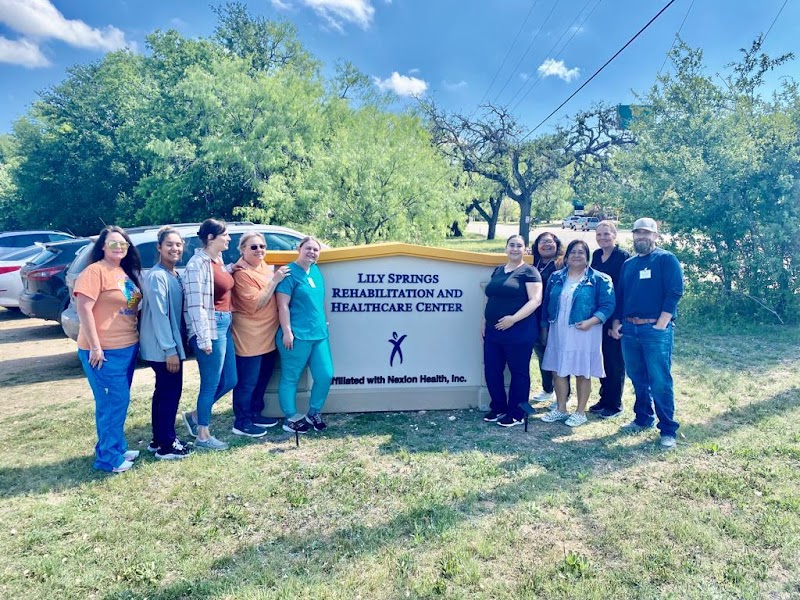
How is Lily Springs Rehabilitation And Healthcare Center Staffed?

CMS rates Lily Springs Rehabilitation and Healthcare Center's staffing level at 3 out of 5 stars, which is average compared to other nursing homes. Staff turnover is 62%, which is 15 percentage points above the Texas average of 46%. High turnover can affect care consistency as new staff learn residents' individual needs. RN turnover specifically is 57%, which is notably high. RNs provide skilled clinical oversight, so turnover in this role can affect medical care quality.

What Have Inspectors Found at Lily Springs Rehabilitation And Healthcare Center?

State health inspectors documented 53 deficiencies at Lily Springs Rehabilitation and Healthcare Center during 2022 to 2025. These included: 5 Immediate Jeopardy (the most serious level, indicating potential for serious harm or death), 2 that caused actual resident harm, and 46 with potential for harm. Immediate Jeopardy findings are rare and represent the most serious regulatory concerns. They require immediate corrective action.
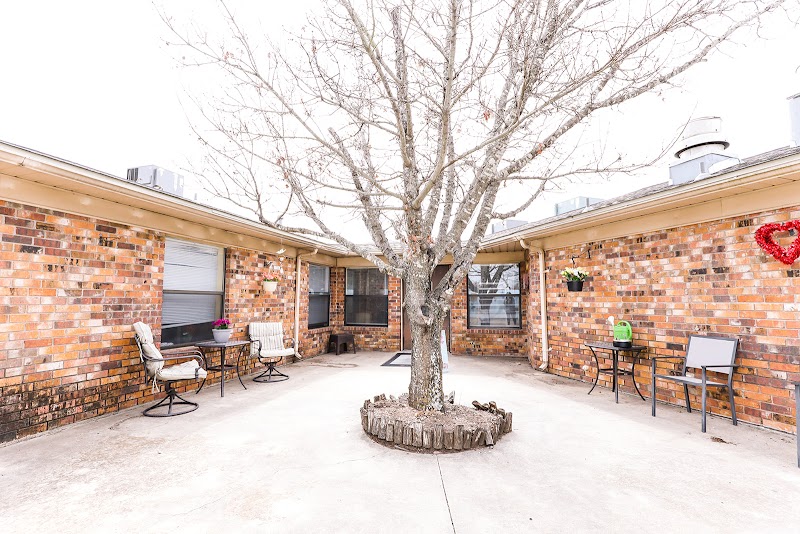
Who Owns and Operates Lily Springs Rehabilitation And Healthcare Center?

Lily Springs Rehabilitation and Healthcare Center is owned by a for-profit company. For-profit facilities operate as businesses with obligations to shareholders or private owners. The facility is operated by NEXION HEALTH, a chain that manages multiple nursing homes. With 116 certified beds and approximately 61 residents (about 53% occupancy), it is a mid-sized facility located in Lampasas, Texas.

How Does Lily Springs Rehabilitation And Healthcare Center Compare to Other Texas Nursing Homes?

Compared to the 100 nursing homes in Texas, Lily Springs Rehabilitation and Healthcare Center's overall rating (1 stars) is below the state average of 2.8, staff turnover (62%) is significantly higher than the state average of 46%, and health inspection rating (1 stars) is much below the national benchmark.

What Should Families Ask When Visiting Lily Springs Rehabilitation And Healthcare Center?

Based on this facility's data, families visiting should ask: "What changes have been made since the serious inspection findings, and how are you preventing similar issues?" "How do you ensure continuity of care given staff turnover, and what is your staff retention strategy?" "Can I visit during a mealtime to observe dining assistance and food quality?" "How do you handle medical emergencies, and what is your hospital transfer rate?" These questions are particularly relevant given the facility's Immediate Jeopardy citations and the facility's high staff turnover rate.

Is Lily Springs Rehabilitation And Healthcare Center Safe?

Based on CMS inspection data, Lily Springs Rehabilitation and Healthcare Center has documented safety concerns. Inspectors have issued 5 Immediate Jeopardy citations (the most serious violation level indicating risk of serious injury or death). The facility has a 1-star overall rating and ranks #100 of 100 nursing homes in Texas. Families considering this facility should ask detailed questions about what corrective actions have been taken since these incidents.

Do Nurses at Lily Springs Rehabilitation And Healthcare Center Stick Around?

Staff turnover at Lily Springs Rehabilitation and Healthcare Center is high. At 62%, the facility is 15 percentage points above the Texas average of 46%. Registered Nurse turnover is particularly concerning at 57%. RNs handle complex medical decisions and coordinate care — frequent RN changes can directly impact care quality. High turnover means new staff may not know residents' individual needs, medications, or preferences. It can also be disorienting for residents, especially those with dementia who rely on familiar faces. Families should ask: What is causing the turnover? What retention programs are in place? How do you ensure care continuity during staff transitions?

Was Lily Springs Rehabilitation And Healthcare Center Ever Fined?

Lily Springs Rehabilitation and Healthcare Center has been fined $105,187 across 4 penalty actions. This is 3.1x the Texas average of $34,131. Fines at this level are uncommon and typically indicate a pattern of serious deficiencies, repeated violations, or failure to correct problems promptly. CMS reserves penalties of this magnitude for facilities that pose significant, documented risk to resident health or safety. Families should request specific documentation of what issues led to these fines and what systemic changes have been implemented.

Is Lily Springs Rehabilitation And Healthcare Center on Any Federal Watch List?

Lily Springs Rehabilitation and Healthcare Center is not on any federal watch list. The most significant is the Special Focus Facility (SFF) program, which identifies the bottom 1% of nursing homes nationally based on persistent, serious quality problems. Not being on this list means the facility has avoided the pattern of deficiencies that triggers enhanced federal oversight. This is a positive indicator, though families should still review the facility's inspection history directly.