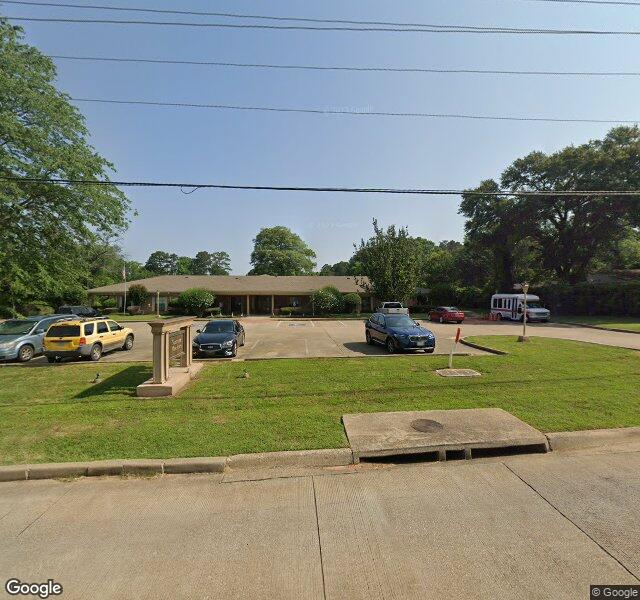
SUMMER MEADOWS

301 HOLLYBROOK DR, LONGVIEW, TX 75605 (903) 758-7764
Government - Hospital district 115 Beds Independent Data: November 2025 5 Immediate Jeopardy citations
Trust Grade
0/100
#1103 of 1168 in TX
Last Inspection: May 2025

Inspected within the last 6 months. Data reflects current conditions.

Overview

Summer Meadows in Longview, Texas has received a Trust Grade of F, indicating poor performance with significant concerns. Ranking #1103 out of 1168 facilities in Texas places it in the bottom half of nursing homes, and #11 out of 13 in Gregg County suggests limited better options nearby. Although the facility's trend is improving, with the number of issues decreasing from 21 in 2024 to 9 in 2025, it still reported serious problems. Staffing is rated poorly with a turnover rate of 60%, and the facility has been fined $291,483, which is higher than 96% of Texas facilities, indicating ongoing compliance issues. Specific incidents include a resident being left unsupervised in a hazardous environment and failing to provide necessary mental health care for another resident, highlighting both critical safety and care deficiencies.

Trust Score
F
0/100
In Texas
#1103/1168
Bottom 6%
Safety Record
High Risk
Review needed
Inspections
Getting Better
21 → 9 violations
Staff Stability
⚠ Watch
60% turnover. Above average. Higher turnover means staff may not know residents' routines.
Penalties
✓ Good
$291,483 in fines. Lower than most Texas facilities. Relatively clean record.
Skilled Nurses
⚠ Watch
Each resident gets only 22 minutes of Registered Nurse (RN) attention daily — below average for Texas. Fewer RN minutes means fewer trained eyes watching for problems.
Violations
⚠ Watch
50 deficiencies on record. Higher than average. Multiple issues found across inspections.
★☆☆☆☆
1.0
Overall Rating
★☆☆☆☆
1.0
Staff Levels
★★★★☆
4.0
Care Quality
★☆☆☆☆
1.0
Inspection Score
Stable
2024: 21 issues
2025: 9 issues

The Good

  • 4-Star Quality Measures · Strong clinical quality outcomes
  • Full Sprinkler Coverage · Fire safety systems throughout facility
  • No fines on record

Facility shows strength in quality measures, fire safety.

The Bad

1-Star Overall Rating

Below Texas average (2.8)

Significant quality concerns identified by CMS

Staff Turnover: 60%

14pts above Texas avg (46%)

Frequent staff changes - ask about care continuity

Federal Fines: $291,483

Well above median ($33,413)

Significant penalties indicating serious issues

Staff turnover is elevated (60%)

12 points above Texas average of 48%

The Ugly 50 deficiencies on record

5 life-threatening 3 actual harm
Jul 2025 1 deficiency
CONCERN (D) 📢 Someone Reported This

A family member, employee, or ombudsman was alarmed enough to file a formal complaint

Potential for Harm - no one hurt, but risky conditions existed

Comprehensive Care Plan (Tag F0656)

Could have caused harm · This affected 1 resident

**NOTE- TERMS IN BRACKETS HAVE BEEN EDITED TO PROTECT CONFIDENTIALITY** Based on record review and interview, the facility failed to develop and implement a comprehensive person-centered care plan for...

Read full inspector narrative →
**NOTE- TERMS IN BRACKETS HAVE BEEN EDITED TO PROTECT CONFIDENTIALITY** Based on record review and interview, the facility failed to develop and implement a comprehensive person-centered care plan for each resident that included measurable objectives and timetables to meet residents highest practicable physical, mental, and psychosocial needs for 1 of 5 residents reviewed for care plans, (Resident #1). Resident #1 did not have a fall mat in place when he was found on the floor on 6/30/25. His care plan dated 5/9/25 indicated he was to have a fall mat. This failure could place residents at risk of not receiving the care required to meet their physical, mental, and psychosocial needs for each to attain or maintain their highest practicable physical, mental, and psychosocial outcome. Findings included: Record review of Resident #1's undated face sheet indicated he was a [AGE] year-old male that admitted [DATE] with diagnoses that included: Cerebral infarction (a stroke, death of brain tissue caused by a blockage of blood flow to the brain leading to lack of oxygen to the brain), mild cognitive impairment due to unknown etiology (subtle but measurable decline in memory and thinking), metabolic encephalopathy (a brain disorder caused by an underlying systemic illness affecting the body's metabolism characterized by changes in mental status, including confusion, memory problems, and altered behavior), and hemiplegia and hemiparesis affecting left dominant side (mild or partial weakness to complete paralysis of one side of the body). Record review of the significant change MDS dated [DATE] indicated Resident #1 had a BIMS score of 0, indicating severe cognitive impairment. The MDS indicated he had behavioral symptoms daily that was not directed toward others. He was totally dependent on staff for transfer. Record review of the care plan dated 5/9/25 indicated Resident #1 was a risk for falls and the interventions were: place bed in lowest position, fall mat, therapy screen, resident to be up in common areas. Record review of an Unwitnessed Fall Report dated 6/30/25 indicated Resident #1 was found lying in the floor at bedside on his left side. Fall mat was not at bedside. CNA (unknown) moved the fall mat while feeding lunch and did not return it afterwards. No visible injuries noted, but resident reported left knee pain. Fall mat placed at bedside. Bed left in lowest position. Neurological checks were initiated. MD, DON, ADM, and family notified. During an interview on 7/28/25 at 1:12 PM, LVN A said she assessed Resident #1 after he was found in the floor on 6/30/25. She said the bed was low, but the fall mat was not there. The bed was against one wall and the fall mat was propped up against the other wall. Someone had moved it and not put it back. She said she assessed him and saw no skin tears or injuries; however, he said his left knee hurt. He refused any medication for pain. She said when she left her shift that day (6/30/25) the X-ray technician was there to get the X-ray of Resident #1's knee. During an interview on 7/28/25 at 3:35 PM, LVN C said she saw Resident #1 on 6/30/25 and assisted LVN A to assess him after he was found in the floor. He had no skin tears or visible injuries. He said his left knee was hurting. She said she did not notice where the fall mat was, but it was not where Resident #1 was found or on the floor near him. She said the fall mat should have been by his bed because that was one of the preventions for an injury if he fell. She said she had no idea who moved the fall mat. During an interview on 7/29/25 at 8:58 AM, CNA D said sometimes she would move a resident's fall mat when she fed them, but it was important to move the fall mat back to prevent an injury to the resident if they fell. She said she knew the importance of a fall mat. She said the fall mat at bedside was part of the resident's care plan. During an interview on 7/29/25 at 9:03 AM, CNA B said a fall mat was placed at a resident's bedside to help to prevent an injury if they fell and it was important for resident safety. He said he always put a resident's fall mat back if he had moved it. During an interview on 7/29/25 at 9:48 AM, ADON E said Resident #1 was found in the floor on 6/30/25. He had a knee X-ray because he said his knee was hurting. His knee X-ray was negative for fracture. ADON E said his fall mat was not in place to the best of her knowledge on 6/30/25. She said the notes she read indicated the fall mat was not where it should have been. It was important that Resident #1's fall mat be there to keep fall preventions in place. She said a fall mat could cushion a fall and possibly prevent a fracture or injury. During an interview on 7/29/25 at 10:06 AM, RNC said Resident #1 was found in the floor 6/30/25. She said his fall mat was not on the floor near his bed, and he was not on the fall mat. She said a CNA had moved the fall mat, but she did not know who. She said fall mats can sometimes prevent a fracture. Fall mats are there as an extra precaution. She said Resident #1 was care planned for a fall mat, but staff [BH1] were not following their care plan. RNC said a risk of a fall mat not being where it should, was fracture and a risk of any other kind of injury. During an interview on 7/29/25 at 10:41 AM, the ADM said Resident #1 was found in the floor on 6/30/25 and was assessed by LVN A. She said his knee was hurting and they got an x-ray of his knee which showed no fracture. The fall mat was not in place on 6/30/25 when Resident #1 was found in the floor. She said since the fall mat was not in place, he did not have anything soft to land on. The risk of not having his fall mat placed properly was injury. The ADM said Resident #1 was care planned for the fall mat and staff [BH2] did not follow the care plan. They did not know who moved the fall mat and did not return it to the floor beside Resident #1's bed. Record review of an X-ray report for Resident #1 dated 6/30/25 indicated he did not have a fracture of his knee. He had moderate osteoarthritic (arthritis) changes in his left knee. Record review of a Care Plans, Comprehensive Person-Centered Policy dated March 2022 indicated: Policy StatementA comprehensive, person-centered care plan that includes measurable objectives and timetables to meet the resident's physical, psychosocial and functional needs is developed and implemented for each resident. 7.The comprehensive, person-centered care plan: b.describes the services that are to be furnished to attain or maintain the resident's highest practicable physical, mental, and psychosocial well-being. 8. Services provided for or arranged by the facility and outlined in the comprehensive care plan are:a.provided by qualified persons.
May 2025 5 deficiencies
CONCERN (D)

Potential for Harm - no one hurt, but risky conditions existed

Assessment Accuracy (Tag F0641)

Could have caused harm · This affected 1 resident

**NOTE- TERMS IN BRACKETS HAVE BEEN EDITED TO PROTECT CONFIDENTIALITY** Based on interview and record review, the facility failed to ensure assessments accurately reflected the resident status for 2 o...

Read full inspector narrative →
**NOTE- TERMS IN BRACKETS HAVE BEEN EDITED TO PROTECT CONFIDENTIALITY** Based on interview and record review, the facility failed to ensure assessments accurately reflected the resident status for 2 of 18 residents (Residents #30 and #65) reviewed for MDS assessment accuracy. 1. Resident #30's significant change MDS dated [DATE], identified the resident was receiving an anticoagulant. However, Resident #30 was not receiving an anticoagulant. 2. Resident #65's admission MDS, dated [DATE], identified the resident was receiving an anticoagulant. However, Resident #65 was not receiving an anticoagulant. These failures could place residents at risk of not receiving adequate care and services to meet their needs. Findings included: 1.Record review of the undated face sheet indicated Resident #30 was a [AGE] year-old female that admitted [DATE] and readmitted [DATE]. Record review of the physician's orders dated 5/6/25 indicated Resident #30 had diagnoses that included: hemiplegia and hemiparesis following cerebral infarction affecting her right dominant side (weakness or paralysis on one side of the body following a stroke/brain injury), Type 2 Diabetes (the body has trouble controlling blood sugar), and hypertension (the force of blood against the artery walls is too high). The physician's orders did not indicate Resident #30 was ordered or taking an anticoagulant. Record review of the significant change MDS dated [DATE] indicated Resident #30 had unclear speech, understood others, and was usually understood by others. She had a BIMS score of 8, indicating moderate cognitive impairment. The MDS indicated she was taking an anticoagulant (e.g., warfarin, heparin, or low-molecular weight heparin). Record review of the care plan dated 4/16/25 indicated Resident #30 had a self-care deficit related to hemiplegia and hemiparesis following cerebral infarction affecting right dominant side. The care plan indicated she was at risk for bruising and bleeding due to aspirin therapy. 2.Record review of the undated face sheet indicated Resident #65 was a [AGE] year-old male that admitted [DATE]. Record review of the physician's orders dated 5/6/25 indicated Resident #65 had diagnoses that included: cerebral infarction due to embolism of right middle cerebral artery (a stroke caused by a blood clot that traveled through the bloodstream and blocked a blood vessel in the brain resulting in tissue death), Type 2 Diabetes (the body has trouble controlling blood sugar), and a coagulation deficit (the blood has difficulty clotting, leading to prolonged bleeding). ). The physician's orders did not indicate Resident #30 was ordered or taking an anticoagulant. Record review of the admission MDS dated [DATE] indicated Resident #65 had clear speech, understood others, and was understood by others. The MDS indicated he had a BIMS score of 8, indicating moderate cognitive impairment. The MDS indicated he was taking an anticoagulant (e.g., warfarin, heparin, or low-molecular weight heparin). Record review of the care plan dated 4/21/25 indicated Resident #65 required the use of Aspirin 81 mg related to cerebral infarction/embolism of right middle cerebral artery. During an interview on 5/06/25 at 9:47 AM, the MDS nurse said she worked under the Regional MDS nurse. She said the only reason Resident #30 and Resident #65 were marked for an anticoagulant on their MDS was because they were both taking low dose aspirin. She said she was new and did not know if that was correct or not. During an interview on 5/06/25 at 9:52 AM, the Regional MDS nurse said Resident #30 and Resident #65 were marked for an anticoagulant on their MDS's because they were getting low dose, 81 mg aspirin. She said Resident #30 and Resident #65 should not have been marked for an anticoagulant. She said those MDS's were coded incorrectly. During an interview on 5/7/25 at 2:38 PM, the ADON said Resident #30 and Resident #65 should not have been marked for an anticoagulant. She said neither resident was on an anticoagulant. She said the risk of the MDS's being marked wrong was that the resident might not be assessed in the correct way and the nurse would not know what was correct regarding anticoagulant. She said the Regional MDS nurse was responsible for making sure the MDS's were coded correctly. The DON was not available for interview. During an interview on 5/7/25 at 2:49 PM, the ADM said MDS's should be accurate, and a resident should not be marked for an anticoagulant if they were not on that type of medication. She said the MDS determined the plan of care. She said the risk was claiming something that was not correct. She said the Regional MDS nurse, and the DON were responsible for the MDS being coded correctly. The ADM provided a Resident Assessment policy and said that was all she had regarding accurately coding MDS assessments. During an interview on 5/7/25 at 3:01 PM, the Regional DON said the MDS should be correct regarding anticoagulant medication. She said the DON and Regional MDS nurse were responsible for making sure the MDS's were correct. The ADM should review the MDS for accuracy. She said miscoding was no risk to a resident . Record review of a Resident Assessments Policy with a revised date of March 2022 indicated: Policy Statement A comprehensive assessment of every resident's needs is made at intervals designated by OBRA (Omnibus Budget Reconciliation Act) and PPS (Prospective Payment System) requirements . .1.The resident assessment coordinator is responsible for ensuring that the interdisciplinary team conducts timely and appropriate resident assessments and reviews .
CONCERN (D)

Potential for Harm - no one hurt, but risky conditions existed

Comprehensive Care Plan (Tag F0656)

Could have caused harm · This affected 1 resident

**NOTE- TERMS IN BRACKETS HAVE BEEN EDITED TO PROTECT CONFIDENTIALITY** Based on observation, interview, and record review, the facility failed to develop and implement a comprehensive person-centered...

Read full inspector narrative →
**NOTE- TERMS IN BRACKETS HAVE BEEN EDITED TO PROTECT CONFIDENTIALITY** Based on observation, interview, and record review, the facility failed to develop and implement a comprehensive person-centered care plan to meet each resident's medical, nursing, mental and psychosocial needs for 2 of 19 residents reviewed for care plans. (Resident #34 and Resident #55) 1. The facility failed to resolve and update a care plan for Resident #34's removed PICC line (a long, thin, flexible tube inserted into a vein in the arm and threaded up to a large vein above the heart for easy access for administering intravenous medications, fluids, and nutrition) and incision care to right femur on 5/5/2025. 2. The facility failed to update a care plan for Resident #55's dietary orders from pureed to mechanical soft on 1/3/2025. These failures could place residents at risk of not having individual needs met and cause residents not to receive needed services. Findings included: 1. Record review of a face sheet printed 5/5/2025 indicated Resident #34 was a [AGE] year-old, female and admitted on [DATE] with diagnoses including sepsis (a serious condition in which the body responds improperly to infection), diabetes (a group of diseases that result in too much sugar in the blood), hypertension (a condition in which the force of the blood against the artery walls is too high) and cerebral infarction (a condition where the brain tissues dies due to a lack of blood flow). Record review of an admission MDS assessment dated [DATE] indicated Resident #34 was usually understood and understood others. The MDS indicated Resident #34 had adequate hearing, clear speech, and adequate vision. The MDS indicated Resident #34 had a BIMS score of 12 which indicated moderate cognitive impairment. The MDS indicated Resident #34 required substantial assistance for toilet hygiene, shower/bathe self, dressing, and personal hygiene, and moderate assistance with oral hygiene. The MDS indicated Resident #34 was dependent for rolling left and right and sitting to lying, and moderate assistance for lying to sitting on side of bed. Record review of a care plan initiated on 3/31/2025 indicated Resident #34 indicated she had a PICC/Midline (a long, thin, flexible tube inserted into a vein in the arm and threaded up to a large vein above the heart for easy access for administering intravenous medications, fluids, and nutrition) to right upper extremity for short-term antibiotic therapy. The care plan included intervention to close clamp when not accessing the line or change infusion bags/tubing, dressing changes performed weekly basis or when dressing was soiled, wet or loose. Resident #34 had a care plan indicating a surgical wound to right hip and right femur (the bone located in the thigh) with interventions to apply appropriate wound dressings as ordered. The care plan indicated on 4/12/2025 Resident #34 had 6 sutures to right hip and 4 sutures to right femur and wound care to be performed to right hip and right femur as follows: paint with betadine and cover with a dry dressing daily. Record review of treatment administration record dated 5/1/2025-5/31/2025 indicated Resident #34's wound care to her right hip and right femur was discontinued to 5/5/2025. During an observation and interview on 5/5/2025 at 10:03 AM, Resident #34 said she had a wound to her bottom and was observed to be on a low air loss mattress. During an interview on 5/6/2025 at 9:23 AM, the Treatment Nurse said Resident #34 had a pressure ulcer when she admitted in March and agreed to observation of wound care provided today. During an observation on 5/6/2025 at 1:23 PM, Resident #34 was seen by the Treatment Nurse with CNA assisting with positioning for wound care to her pressure ulcer to her sacrum. Resident #34 was not observed to have a dressing or bandage to her right hip or right femur. During an interview on 5/7/2025 at 11:12 AM, LVN C said she did not perform wound care on residents unless the treatment nurse was not here. LVN C said she reviewed the care plans intermittently but mainly looked at the orders. She said the orders and the care plans should match. LVN C said she was aware Resident #34's incision to her right hip and right femur had dehisced (occurs when the edges of a surgical incision or wound separate, exposing underlying tissue) but was not sure if she still had the incision wound. LVN C said she changed her brief and Resident #34 did not have an open incision during her care. LVN C said it could be confusing if wound care was still on the care plan and not the orders. LVN C said the Treatment nurse was responsible for updating the wound care on the care plans. LVN C said it would not change the care provided to the resident. During an interview on 5/7/2025 at 11:26 AM, the Treatment Nurse said the MDS nurse was responsible for the care plans, but it was a team effort. The Treatment Nurse said she updated the care plan along with the DON. She felt that 3 days to a week was a reasonable time to update the care plans. The Treatment nurse said the care plans were a guideline on the care the residents receive. She said the care plan and the orders should match. She said if a care plan was not updated, it could impact a resident because the resident could receive the wrong diet or treatment. The Treatment Nurse said she notifies the MDS nurse and lets her know of changes and the DON and MDS nurse update the care plans. She said the care plan should be updated. The Treatment Nurse said she was not sure if the MDS Nurse was behind on care plans. The Treatment Nurse said if the care plan was not updated, it could cause confusion. The Treatment Nurse said Resident #34's care plan was not updated, and she verified Resident #34 no longer had a PICC line and was not receiving treatment to an incision line. 2. Record review of a face sheet printed on 5/7/2025 indicated Resident #55 was a [AGE] year-old, female and readmitted on [DATE] with diagnoses including aneurysm of the ascending aorta, without rupture (a bulge in the aorta, the body's main artery, specifically in the section that rises upwards from the heart), acute respiratory failure with hypercapnia (occurs when the body's ability to remove carbon dioxide (CO2) from the blood, dementia (a group of thinking and social symptoms that interferes with daily functioning), dysphagia (difficulty swallowing foods or liquids) and cerebral infarction (a condition where brain tissue dies due to a lack of blood flow). Record review of an order summary dated 5/7/2025 indicated Resident # 55 had an enteral feeding order for flushes every day and night shift with 60 cc of water each shift and for the head of bed to be at least 30 degrees during feeding and for 1 hour after feeding. The order summary did not indicate a specific diet order for Resident #55. Resident #55 had an order for the Dietician to evaluate and treat. Record review of Dietician progress note dated 5/6/2025 indicated Resident #55 was on a regular, mechanically soft diet. Record review of a care plan dated 4/12/2025 indicated Resident #55 had impaired swallowing related to cerebral infarction with interventions for pureed diet and thin liquids and the need to monitor to advance diet consistency. There was not a specific care plan for diet. During an observation on 5/5/2025 at 9:28 AM, Resident #55 was sitting upright in the bed with water pitcher on bedside table. RP for Resident #55 said the food was good, but he had noticed she had not been eating over the last week. RP said she was not sure if Resident #55 was receiving protein shakes or vitamins. He said she had a feeding tube in the past for feedings but was currently taking food by mouth. During an interview and observation on 5/7/2025 at 10:42 AM , LVN B said Resident #55 ate this morning scrambled eggs and finely grounded sausage. LVN B said she assisted Resident #55 this morning with eating and stated she ate half her eggs. LVN B said she did not consider the meal consistency to be pureed but mechanical soft. LVN B said Resident #55 was upgraded to mechanical soft. LVN B said the orders indicated Resident #55 was on mechanical soft with thin liquids. During an observation on 5/7/2025 at 1:31 PM, Resident #55 was lying on bed with eyes closed and lunch tray at bedside. The RP said Resident #55 was waking up to eat. Resident #55's meal sheet indicated she was on a mechanical soft diet. Resident #55 was assessed by LVN B and transferred to the hospital due to coughing and not opening her eyes. During an interview on 5/7/2025 at 1:35 PM , LVN B provided a copy of a communication form dated 1/3/2025 from Speech Therapist indicating Resident #55's diet was advanced on 1/3/2025 for mechanical soft diet and thin liquids. During an interview on 5/7/2025 at 2:56 PM, the MDS nurse said she was responsible for entering the care plans in the system, but it was a team effort. The MDS nurse said the care plan orders for Resident #55 should match the diet on the orders. The MDS Nurse said it could be a discrepancy. The MDS Nurse said the diet not on the care plan could negatively impact Resident #55 because she could receive the wrong diet or treatment. During an interview on 5/7/2025 at 3:42 PM, the ADON said Resident #55 the MDS nurse was responsible for care plans and every new order. She said the MDS Nurse would receive new orders and add to the care plan after the care meeting in the mornings. The ADON said the DON, ADON and Treatment Nurse had also been assisting with updating the care plans. The ADON said the care plans were important so the nurses would know how to provide care and the nurses were to review the care plans daily. The ADON said if a problem area were resolved, the care plan would indicate resolved. The ADON said the nursing staff could miss providing care on a problem area or provide wrong care if not resolved which she said could harm the resident. The ADON said the PICC line on Resident #34 should have been resolved and the diet on Resident #55's care plan had been updated. During an interview on 5/7/2025 at 3:54 PM, the Regional Nurse said the staff should be using the new EMR (electronic medical record) and the care plans should be updated from the old EMR (electronic medical record) program. The Regional Nurse said the Regional MDS Nurse was responsible for ensuring the care plans were updated. The Regional Nurse said the MDS Nurse currently at the facility was new and still learning. The Regional Nurse said the DON should be updating the care plan on any acute concerns, infections or falls. The Regional Nurse said the care plans were used to provide individualized quality of care for each resident. She said she expected the orders and care plan to match the care provided. The Regional Nurse said if the care plans were not updated, it could cause a resident to have a poor outcome if not followed or care was implemented incorrectly. She said care could be missed or provided incorrectly. During an interview on 5/7/2025 at 4:01 PM, the ADM said the EMR was in effect as of 4/11/2025 and she expected the staff to be using the new EMR for care plans. The ADM said the MDS nurse was responsible for the care plans. The ADM said the care plans were a guide to the resident's care and were a snapshot of the resident's behaviors, diets, etc. The ADM said she expected the care plans and orders to match. The ADM said it was important to update the care plans because if a resident were ordered a special diet consistency, the resident could aspirate or have dignity issues if the meal was pureed . Record review of a facility Care Plans, Comprehensive Person-Centered policy revised March 2022 indicated .a comprehensive, person-centered care plan .meet the resident's physical, psychosocial and functional needs is developed and implemented .the Interdisciplinary Team (IDT), in conjunction with the resident and his/her family or legal representative, develops and implements a comprehensive .includes measurable objectives and timeframes . reflects currently recognized standards of practice for problem areas and conditions .assessments of residents are ongoing and care plans revised as information about the residents and residents' condition change . the IDT must review and update the care plan .
CONCERN (D)

Potential for Harm - no one hurt, but risky conditions existed

Accident Prevention (Tag F0689)

Could have caused harm · This affected 1 resident

**NOTE- TERMS IN BRACKETS HAVE BEEN EDITED TO PROTECT CONFIDENTIALITY** Based on observation, interview, and record review the facility failed to ensure each resident's environment remained free of ac...

Read full inspector narrative →
**NOTE- TERMS IN BRACKETS HAVE BEEN EDITED TO PROTECT CONFIDENTIALITY** Based on observation, interview, and record review the facility failed to ensure each resident's environment remained free of accident hazards for 1 of 22 residents (Resident #33) reviewed for accident hazards. The facility failed to keep prohibited items, hydrogen peroxide topical solution, out of Resident #33's room. This failure could place residents at risk for injury, harm, and impairment or death. Findings included: Record review of Resident #33's Face Sheet indicated she was an [AGE] year-old female admitted to the facility on [DATE]. Her diagnoses included Heart Failure (a condition where the heart cannot pump enough blood to meet the body's needs), Urinary Tract Infection (an infection in any part of the urinary system, including the kidneys, bladder, urethra, or ureters), Pneumonia (a lung infection that inflames the air sacs and can fill them with fluid or pus). Record review of Resident #33's MDS dated [DATE] revealed that the resident's BIMS score was a 13 indicating no cognitive impairment. The MDS also revealed, Resident #33, required minimal assistance for all ADLs . During an observation and interview on 5/5/25 at 10:18 a.m., Resident #33 had a bottle of hydrogen peroxide topical solution in her room. She said that she did not know where the item came from and did not know if she should have it or not. There were many general hygiene items in the bathroom with the hydrogen peroxide topical solution but were mostly perfumes and lotions. During an interview on 5/5/25 at 10:28 a.m., LVN A said that Resident #33 can self-transfer and ambulate with her wheelchair. She said that residents should not have hydrogen peroxide topical solution in their rooms as it could be dangerous if Resident #33 used it improperly or another resident entered her room and drank it. During an interview on 5/7/25 at 3:38 p.m., the Assistant Director of Nurses L said that residents were not allowed to keep hydrogen peroxide topical solution in their rooms as it could be dangerous if used in the wrong way. She said that all staff should remove prohibited items from resident's rooms. During an interview on 5/7/25 at 3:09 p.m., the Administrator said that all staff are responsible for removing prohibited items from resident's rooms. She said that hydrogen peroxide topical solution is a prohibited items and it could harm a resident if it wasn't used properly. Requested a policy on 5/7/25 at 1:00 p.m. regarding accidents, hazards, and prohibited items in resident's rooms. Administrator was unable to produce a policy regarding this concern.
CONCERN (D)

Potential for Harm - no one hurt, but risky conditions existed

Respiratory Care (Tag F0695)

Could have caused harm · This affected 1 resident

**NOTE- TERMS IN BRACKETS HAVE BEEN EDITED TO PROTECT CONFIDENTIALITY** Based on observation, interview, and record review the facility failed to ensure that residents who need respiratory care are pr...

Read full inspector narrative →
**NOTE- TERMS IN BRACKETS HAVE BEEN EDITED TO PROTECT CONFIDENTIALITY** Based on observation, interview, and record review the facility failed to ensure that residents who need respiratory care are provided with such care, consistent with professional standards of practices for 1 of 22 residents (Resident #4) reviewed for respiratory care. 1. The facility failed to change the oxygen tubing for Resident #4. 2. The facility failed to ensure that Resident #4's oxygen concentrator reservoir was filled with water. These failures could place residents who receive respiratory care at risk of developing respiratory complications and a decreased quality of care. Findings included: Record review of Resident #4's face sheet, dated 3/16/24 revealed a [AGE] year-old female admitted on [DATE] with diagnoses that included Chronic Obtrusive Pulmonary Disease (a progressive lung disease that makes it hard to breathe), Pneumonia (a lung infection that inflames the air sacs and can fill them with fluid or pus), Hypokalemia (a condition where the amount of potassium in the blood is lower than normal). Record review of Resident #4's quarterly MDS assessment, dated 04/18/25, revealed Resident #4 had a BIMS of 04, which indicated she had severe cognitive decline. Shows that resident #4 requires oxygen therapy. Record review of an order for Resident #4, dated 1/24/24, shows that staff were to provide, Oxygen continuously via Nasal Cannula. May titrate between 2-5 liters per minute for shortness of breath or pulse oximetry < 90% every day and night shift for shortness of breath and to maintain pulse ox > 90%. Record review of Resident #4's care plan revealed a problem initiated on 4/21/25, Resident #3 requires oxygen therapy due to COPD (Chronic Obtrusive Pulmonary Disease) and CHF (Congestive Heart Failure.) During an interview and observation on 5/5/25 at 9:09 a.m. Resident #4's oxygen concentrator was dated 4/28/25 and the oxygen concentrator water reservoir was empty. Resident #4 was asked if she had any issued with her oxygen concentrator but was unable to answer the question. During an observation 5/6/25 at 8:18 a.m. Resident #4's oxygen concentrator tubing was dated 4/28/25 and there was no water in the oxygen concentrator water reservoir. During an observation 5/7/25 at 8:33 a.m. Resident #4's oxygen concentrator tubing was dated 4/28/25 and there was no water in the oxygen concentrator water reservoir. Resident was laying in bed using the oxygen concentrator . During an interview on 5/7/25 at 3:38 p.m., the Assistant Director of Nurses L said the night nurses are responsible to ensure that residents with oxygen concentrators have their tubing changed on schedule and their water reservoirs filled. She said that there was a risk that residents could have a respiratory infection and that their nasal passage could be dried out . During an interview on 5/7/25 at 3:07 p.m., the Administrator said nursing staff was responsible to ensure that oxygen tubing was changed per policy and schedule. She said that the tubing could break down and the residents could be more susceptible to respiratory infections. She said that the water reservoir should also be kept filled. Record review of facility policy titled Oxygen Administration revised in October of 2010 revealed that, The purpose of this procedure is to provide guidelines for safe oxygen administration Oxygen/nebulizer tubing/masks to be changed by nursing department, weekly, and documented in the electronic health record.
CONCERN (F)

Potential for Harm - no one hurt, but risky conditions existed

Food Safety (Tag F0812)

Could have caused harm · This affected most or all residents

Based on observation and record reviews, and interviews, the facility failed to store, prepare, distribute, and serve food in accordance with professional standards for food service safety in the faci...

Read full inspector narrative →
Based on observation and record reviews, and interviews, the facility failed to store, prepare, distribute, and serve food in accordance with professional standards for food service safety in the facility's only kitchen reviewed for food safety requirements. 1.The facility failed to ensure the handwashing sink had been cleaned. 2.The facility failed to ensure the floor of the kitchen had been cleaned. These failures could place residents at risk of foodborne illness and food contamination. Findings included: During an observation on 5/5/25 at 8:30 AM, an initial tour of the kitchen was conducted. The following was observed: 1)The handwashing sink had a brown substance on the sides of the sink and in the bowl. 2) The floor was sticky and had debris, (wrappers and crumbs) in numerous locations of the kitchen. During an interview on 5/5/25 at 8:30 AM, DA E said the handwashing sink was dirty and should have been cleaned by the last shift but apparently it was not. [NAME] D said the kitchen was not clean when she got to work this morning at 5:00 AM, and the night shift should have cleaned it. During an observation and interview on 5/5/25 at 8:34 AM, this surveyor's shoes were sticking to the floor in front of the milk box. DA E said the floor was really sticky and her shoes were sticking to the floor. She said The floor should not be this sticky. During an interview on 5/5/25 at 8:36 AM, DA E said there were food crumbs in numerous areas of the kitchen on the floor. She said she would sweep and mop because the prior shift obviously had not done it and the floor was dirty and sticky. [NAME] D said she had to clean the steam table before she started cooking and had not had time to clean the handwashing sink yet. During an interview on 5/05/25 at 3:07 PM, the ADM said she went into the kitchen this morning about 8:45 AM and it was dirty. She said her feet were sticking to the floor and the sink was dirty when she went to wash her hands. She said there were no paper towels to dry her hands and the kitchen staff had to get some for her. She said it was everyone's job in the kitchen to keep it clean. She said it was an infection control issue because the kitchen was not sanitary. She said she told the staff to clean all areas of the kitchen before preparing lunch. She said she did not know how dirty the kitchen was when staff prepared breakfast. She said the DM was out and would not be available. During a telephone interview on 5/06/25 at 11:03 AM, [NAME] F said she worked Sunday (5/4/25) and left about 2:00 PM. She said the kitchen was clean when she left. She said she cleaned all day as she went and always mopped the floors. She said the kitchen should always be clean when you leave your shift. During a telephone interview on 5/06/25 at 11:05 AM, DA J said she worked Saturday (5/3/25), was in training that day and left at 2:30 PM. She said she did not do any cleaning but someone was mopping and she did not know her name. She said she did not work on Sunday (5/4/25). During an interview on 5/06/25 at 11:56 AM, the dietician said she expected the floors to be swept and mopped, clean, and not sticky. She said she expected the handwashing sink to be clean. Overall, the kitchen should be clean. She said if the kitchen was not clean it could be an infection control issue and could cause poor outcomes for residents. She said if the cleaning schedule was being falsely reported she did not know what else was not being cleaned so it could be a cross-contamination issue for residents. During a telephone interview on 5/06/25 at 5:16 PM, DA G said she worked Sunday (5/4/25) morning and got off just after 2:00 PM. She said the kitchen was not dirty when she left. She said the floor was not sticky and the sink was not dirty. She said there was a bag of juice that busted in front of the milk box and that was sticky, but DA H cleaned it up. She said she did not know if it was still sticky when she left because she did not go out that way. She said the cook, [NAME] F usually cleaned the floor. She said [NAME] F was constantly cleaning and washing her hands. She said she was not responsible for the entire kitchen floor. She said the cook was responsible for mopping the floor where the cooking took place. She said she did not really understand the cleaning schedule, she just cleaned what she knew she was supposed to clean. She said the kitchen should always be clean. On 5/6/25 at 5:33 PM, attempted a telephone interview with DA K. Her phone was not working. During a telephone interview on 5/07/25 at 10:29 AM, DA H said the kitchen absolutely was clean when she left Sunday (5/4/25) about 9:00 PM. She said a bag of juice had spilled by the milk box and she had mopped it more than 2 times. She said she mopped it normally, then with hot water, then mopped it again. She said she had mopped all the floors, and they were clean when she left. She said the handwashing sink was clean when she left. She said they would initial on the schedule what they had cleaned when they left for the shift. She said the kitchen must be clean when they leave for the day. She said if the kitchen was not clean it could be an infection control issue for the residents. During an interview on 5/7/25 at 2:38 PM, the ADON said she expected all areas of the kitchen to be clean before and after meal preparation. She said the floors should not be sticky, the sinks and cooking areas should be clean. She said the risk to residents was infection control which could cause food born illness. During an interview on 5/7/25 at 2:49 PM, the ADM said the kitchen should always be clean before and after meal preparation to prevent an infection control issue/food born illnesses. She said if the floors were sticky, it could be a slipping hazard. During an interview on 5/7/25 at 3:01 PM, the Regional DON said the kitchen should be clean before and after cooking. She said infection control and sanitation was important for resident's health. She said a dirty kitchen caused a risk of cross contamination. She said the DM was responsible for the kitchen being clean and should be overseen by the ADM. Record review of the Daily Cleaning Schedule dated 5/4/25 indicated all areas of the kitchen had been cleaned. Sweeping and mopping of the kitchen floor, and sinks, faucets and handwashing sinks had been initialed by DA K and DA H. A Sanitization Policy with a revised date of November 2022 indicated: Policy Statement The food service area is maintained in a clean and sanitary manner. Policy Interpretation and Implementation 1.All kitchens, kitchen areas and dining areas are kept clean, free from garbage and debris, and protected from rodents and insects. 2.All untensils, counters, shelves and equipment are kept clean, maintained in good repair and are free from breaks, corrosions, open seams, cracks and chipped areas that may affect their use or proper cleaning. Seals, hinges and fasteners are kept in good repair. 3. all equipment, food contact surfaces and utensils are cleaned and sanitized using heat or chemical sanitizing solutions
Apr 2025 1 deficiency
CONCERN (E) 📢 Someone Reported This

A family member, employee, or ombudsman was alarmed enough to file a formal complaint

Potential for Harm - no one hurt, but risky conditions existed

Safe Environment (Tag F0584)

Could have caused harm · This affected multiple residents

**NOTE- TERMS IN BRACKETS HAVE BEEN EDITED TO PROTECT CONFIDENTIALITY** Based on interview, and record review the facility failed to ensure residents had the right to a safe, clean, comfortable, and h...

Read full inspector narrative →
**NOTE- TERMS IN BRACKETS HAVE BEEN EDITED TO PROTECT CONFIDENTIALITY** Based on interview, and record review the facility failed to ensure residents had the right to a safe, clean, comfortable, and homelike environment, including but not limited to receiving treatment and supports for daily living safely for 1 of 8 (Resident #8) residents reviewed for environment. 1. The facility failed to ensure Resident #8's bathroom floor and toilet was free of brown substances from 2/28/2025-3/18/2025. 2. The facility failed to ensure soiled briefs were removed from Resident #8's trash can on 2/28/2025. 3. The facility failed to ensure the bathroom floor was free from debris of toilet paper scattered on the floor from 2/28/2025-3/18/2025. These failures could place residents at risk of an unsafe or uncomfortable environment and a decrease in quality of life and self-worth. Findings include: Record review of Resident #8's, face sheet dated 4/9/2025 reflected a [AGE] year-old female who was admitted to the facility on [DATE]. Resident #8 had diagnoses which included Alzheimer's disease (progressive disease that destroys memory and other important mental functions), hypertension (high blood pressure), urinary tract infection (an infection that occurs when a bacteria enters the urinary tract system) and insomnia (difficulty falling asleep or staying asleep). Record review Resident #8's quarterly MDS assessment, dated 3/7/2025, reflected Resident #8 had a BIMS of 09, which indicated moderate cognitive impairment. Resident #8 had no behaviors, was occasionally incontinent of bladder and was continent of bowel. Resident #8 required supervision with toileting. Record review of Resident #8's care plan dated 3/5/2024 indicated she had memory/recall problems related to Alzheimer's. The Care plan dated 9/23/2024 indicated Resident #8 had experienced bladder incontinence related to overactive bladder placing her at risk for urinary tract infections and skin impairment. During a phone interview on 04/8/2025 at 10:23 A.M., the RP said Resident #8 was having issues with the resident in the adjoining room leaving a mess in the connecting bathroom. She said the bathroom would be dirty with feces, towels, and trash everywhere on the floor and toilet. The RP said she was concerned Resident #8 would slip on the urine and feces on the floor while for attempting to use the bathroom. The RP said the Administrator was notified and adjoining resident was provided with a bedside commode to use. During an interview on 4/8/2025 11:20 AM, Resident #8 said she shared a restroom with Resident #9 in the adjoining room. Resident #8 said the resident in the adjoining room would make a mess in the bathroom and she had to clean up the mess. Resident #8 said the nurses and aides would try to help and the housekeeper would come in every other day to clean. Resident # 8 said she observed feces, urine, dirty clothing, and toilet paper on the floor. Resident # 8 provided collaborating pictures of the bathroom. She said she did not feel heard when she reported her issues to the Administrator. She was not able to provide the date reported. Resident #8 8 said she was a clean person and it made her feel she did not matter. She said the staff were cleaning her bathroom now. She said the dirty bathroom caused her stress and felt short of breath and felt like she was going to have a heart attack. During a review of photos presented by Resident #8 dated 2/28/2025 at 7:00 PM, revealed a bathroom with a white brief located in the trash can in the bathroom with white debris on the floor. During a review of a photo presented by Resident #8 dated 3/1/2025, revealed a bathroom with a liquid substance on both sides of the toilet with white toilet paper debris soaking up the liquid substance. During a review of a photo presented by Resident #8 dated 3/1/2025 at 7:37 PM, revealed a toilet with brown substance at the bottom of the toilet. During a review of a photo presented by Resident #8 dated 3/3/2025 at 7:54 PM, revealed a brown substance on the toilet handle and toilet paper scattered in front of the toilet soaking up a liquid. During a review of a photo presented by Resident #8 dated 3/4/2025 revealed a pile of toilet paper scattered on the floor and a partially used roll of toilet paper intact. During a review of a photo presented by Resident #8 dated 3/5/2025 at 8:46 PM, revealed a brown substance smeared across the lower part of the toilet bowl with toilet paper in the toilet and in front of the toilet on the floor. During a review of a photo presented by Resident #8 dated 3/6/2025 at 7:18 AM, revealed a brown substance smeared on the lower part of toilet and white toilet paper debris on the floor with a brown liquid on the seat of the toilet seat. During a review of a photo present by Resident #8 dated 3/7/2025 at 8:48 AM, revealed a liquid on the floor in the bathroom with toilet paper soaking up liquid. During a review of a photo presented by Resident #8 on 3/8/2025 at 8:42PM, revealed a bathroom with white toilet paper around the perimeter of the toilet. During a review of a photo presented by Resident #8 dated 3/10/2025 at 5:07 AM, revealed a white brief located next to the toilet. During a review of a photo presented by Resident #8 dated 3/14/2025 at 12:24 PM, revealed a pair of gray pants with a wet appearance hanging on the bathroom grab bar next to the toilet. During a review of a photo presented by Resident #8 dated 3/15/2025 at 2:44 PM, revealed white toilet paper soaking up a substance in front of the toilet. During a review of a photo presented by Resident #8 dated 3/18/2025 at 4:57 PM, revealed a brown substance on the rim of the toilet. During a record review of a grievance log , revealed no grievances or concern with Resident #8 in February 2025 or March 2025. During an interview on 4/9/2025 at 9:30 AM, Housekeeper D said she had not observed any resident rooms with feces, urine, toilet paper on the floor. She said housekeeping was not at the facility at night and the housekeepers left at 4 pm. Housekeeper D said she did not know who responsible for cleaning rooms after the housekeepers left. She said if she was told about a room, she would go clean it. During an interview on 4/9/2025 9:43 AM, Housekeeper E said she worked the hall Resident #8 resided on. She said Resident #9 resided in the adjoining room to Resident #8. She said Resident #9 just moved to another room. She said Resident #9 was moved to another room due to having poop everywhere on the floor and handrails of the bathroom shared with Resident #8. Housekeeper E said there was no housekeepers available after 4 pm and nobody would clean until the next day. She said the aides could clean up the mess. During an interview on 4/9/2025 at 12:36 PM, LVN F said she had not observed any feces or urine on the floor. She said housekeepers were responsible for keeping the rooms clean. LVN F said the staff did not have access to cleaning supplies and toilet paper. During an interview on 4/9/2025 at 12: 56 PM, the DON said the aides were responsible for ensuring the residents' rooms were clean after the housekeeper left at 4 pm. She said the staff did not have access to the chemicals but did have access to towels, sanitizing wipes and water. She said not keeping a resident's room clean could be an infection control issue. She said that was the resident's home and the staff should always keep it clean. During an interview on 4/9/2025 at 3:22 PM, the Administrator said she was made aware of the bathroom situation with Resident #8 on 3/18/2025 or 3/19/2025 after staff was complaining to the DON. She said the facility started Resident #9 with a bedside commode and had therapy go assist. She said the facility had a care plan meeting and made the decision to move Resident #9 from the adjoining room to a private room. She said the staff had been trying to keep her bathroom clean. The Administrator presented a grievance form that was not previously located in the grievance log. During a review of a grievance log presented dated 3/20/2025 indicated Resident #9 was unsanitary and tended to wipe her feces on the walls, floors, and fixtures, unintentionally creating an unsanitary environment. The grievance indicated an action plan to make room arrangements to move Resident #9 to a private room with a private bathroom. The resolution was dated 3/21/2025. The grievance was not signed or dated by the employee who reviewed with family, administrator, or grievance coordinator. During an interview on 4/10/2025 at 9:32 AM, Resident #8 said a couple of nurses would go in and clean her bathroom. Resident # 8 voiced she was upset because she could not use the bathroom when she wanted because it was dirty. She said she would tell the CNAs's and they would not do anything, but the nurses would help her clean the bathroom. She said she did not always tell the staff each time, she would clean it herself. During an interview on 4/10/2025 at 9:15 AM, CNA B said she been at the facility for 4 months. CNA B said she provided care for residents and ensured they were comfortable and safe. The CNA B said they were responsible for cleaning after housekeeping left for the day. CNA B said they used towels, wipes, and paper towels. She said if the toilet was clogged up, they would call maintenance. She said the housekeepers were mainly responsible for ensuring the bathrooms were clean. During an interview on 4/10/2025 at 11:12 AM, ADON A said she expected the resident bathrooms to be cleaned timely and expected the CNAs to keep bathrooms clean after hours. She said housekeeping was responsible for ensuring the bathrooms were clean. The ADON A said having unclean floors with feces, urine on the floor could be an infection control hazard or a fall hazard. The ADON said she expected the staff to report any ongoing situation to the Administrator or DON. During an interview on 4/10/2025 at 11:25 AM, the ADM said she expected the staff to keep the bathrooms clean day and night. She said she expected staff to report any issues on a regular basis. She said if there was feces on the floor or urine, it could cause the resident to contract an infection. She said the resident could have incontinent issues themselves due to not wanting to use the dirty bathroom. She said a resident could slip and injury themselves if there was urine or feces on the floor. She said it could affect them negatively emotionally and start having issues with the other resident causing confrontations and arguments. She said housekeeping and charge nurse were responsible for ensuring the rooms were cleaned. Record review of the facility's policy revised February 2021 titled Homelike Environment indicated, Residents are provided with a safe, clean, comfortable, and homelike environment .2 facility staff and management maximize, to the extent possible, the characteristics of the facility .a. clean, sanitary, and orderly environment . Record review of the facility's policy revised September 2022 titled Standard Precautions indicated, Standard precautions are used in the care of all residents regardless of their diagnoses, or suspected or confirmed infection status. Standard precautions presume that all blood, body fluids, secretion and excretions, non-intact skin and mucous membranes contain transmissible infectious agents. 5. Resident-care equipment .soiled with blood, body fluids, secretions, and excretions are handleds in a manner that prevents skin and mucous membrane exposure, contamination of clothing and transfer of microorganisms to other residents and environments .Environment surfaces, beds, bedrails, bedside equipment, and other frequently touched surfaces are appropriately cleaned.
Feb 2025 2 deficiencies
CONCERN (D) 📢 Someone Reported This

A family member, employee, or ombudsman was alarmed enough to file a formal complaint

Potential for Harm - no one hurt, but risky conditions existed

Respiratory Care (Tag F0695)

Could have caused harm · This affected 1 resident

**NOTE- TERMS IN BRACKETS HAVE BEEN EDITED TO PROTECT CONFIDENTIALITY** Based on observation, interview, and record review the facility failed to ensure that residents who need respiratory care are pr...

Read full inspector narrative →
**NOTE- TERMS IN BRACKETS HAVE BEEN EDITED TO PROTECT CONFIDENTIALITY** Based on observation, interview, and record review the facility failed to ensure that residents who need respiratory care are provided with such care, consistent with professional standards of practices for 1 of 10 residents (Resident #1) reviewed for respiratory care . The facility failed to ensure that Resident #1 had a supply of oxygen in her portable oxygen tank. These failures could place residents who receive respiratory care at risk of developing respiratory complications and a decreased quality of care. Findings included: Record review of Resident #1's face sheet, dated 10/27/24 revealed a [AGE] year-old female admitted on [DATE] with diagnoses that included Displaced fracture of base of neck of left femur (a break in a bone that can be partial or complete), Cognitive impairment (problems with thinking, learning, memory, or judgment), Urinary tract infection (an infection of the urinary tract, which includes the kidneys, ureters, bladder, and urethra). Record review of Resident #1's quarterly MDS assessment, dated 02/1/25, revealed Resident #1 had a BIMS of 14, which indicated she was cognitively intact. The MDS reflected that resident #1 required assistance with ADL's. The MDS reflected that Resident #1 was on oxygen therapy. Record review of an order for Resident #1 dated 10/27/24, revealed, O2 2-5l Via nasal cannula to Maintain Oxygen stats above 92%. During an interview and observation on 2/24/25 at 9:05 a.m. revealed Resident #1 was with a Family Member. She said that the oxygen tank attached to her wheelchair was empty of oxygen and the staff that just left said it was full. It was observed that ADON A was working with Resident #1's oxygen equipment while the surveyor was in the room. Upon observation of Resident #1's oxygen tank the needle on the dial was pointing to empty. Resident # 1 said the oxygen tank that was used when in the wheelchair was often times empty and she felt out of breath. During an interview on 2/24/25 at 9:34 a.m., with ADON A, she said she changed the tubing to Resident #1's oxygen but did not replace the empty oxygen tank. She said that Resident #1 was on continuous oxygen. During an interview on 2/26/25 at 10:56 a.m. with the Director of Nurses she said that it was the responsibility of facility nurses to ensure that residents' oxygen tanks were full. She said that residents could be placed at risk of respiratory failure or altered mental status if not oxygenated properly. She stated that when an oxygen tank was empty it should be switched out to a full tank. During an interview on 2/26/25 at 11:00 a.m. with the Administrator, she said that it was the responsibility of nursing staff to ensure that residents' oxygen tanks are replaced when they no longer have oxygen. She said that residents could be placed at risk of distress if their oxygen levels got low. Record review of facility policy titled Oxygen Administration dated 9/2017 revealed that, The purpose of this procedure is to provide guidelines for safe oxygen administration Verify that there is a physician's order for this procedure. Review the physician's orders or facility protocol for oxygen administration Review the resident's care plan to assess for any special needs of the resident.
CONCERN (D) 📢 Someone Reported This

A family member, employee, or ombudsman was alarmed enough to file a formal complaint

Potential for Harm - no one hurt, but risky conditions existed

Infection Control (Tag F0880)

Could have caused harm · This affected 1 resident

**NOTE- TERMS IN BRACKETS HAVE BEEN EDITED TO PROTECT CONFIDENTIALITY** Based on observation, interview, and record review the facility failed to establish and maintain an infection prevention and con...

Read full inspector narrative →
**NOTE- TERMS IN BRACKETS HAVE BEEN EDITED TO PROTECT CONFIDENTIALITY** Based on observation, interview, and record review the facility failed to establish and maintain an infection prevention and control program designed to provide a safe, sanitary, and comfortable environment and to help prevent the development and transmission of communicable diseases and infections for 2 of 5 residents (Resident #2 and Resident #3) reviewed for infection control practices. 1. The facility failed to ensure the ADON applied enhanced barrier precautions when she assisted the nurse with positioning and holding Resident #2 during wound care treatment on 2/20/2025 at 1:24 PM. 2. The facility failed to ensure CNA B applied enhanced barrier precautions when she assisted the nurse with positioning and holding Resident #3 during wound care treatment on 2/26/2025 at 11:55 AM. 3. The facility failed to ensure Resident #3 was clean and dry after wound care was performed by CNA B and Treatment nurse on 2/26/2025 at 11:55 AM. These failures could place residents at risk of cross-contamination and infections leading to illness. Findings included: 1. Record review of Resident #2's Face sheet dated 2/24/2025 indicated the resident was a 90-year- old female who admitted to the facility on [DATE] with diagnoses of gastrostomy (a feeding tube inserted into the stomach through the abdomen) , volvulus (a condition where part of the intestine twists around itself and cuts off blood supply) pressure ulcer of left buttock, Stage II (a sore that has broken through the top layer of the skin and part of the layer below resulting in a shallow, open wound) , malignant neoplasm of colon ( a type of cancer that develops in the tissues of the colon), cognitive communication deficit (a problem with one or more cognitive processes involved in communication such as attention, memory, and reasoning), and vascular dementia (a type of dementia caused by brain damage from impaired blood flow). Record review of Resident #2's MDS assessment, dated 1/3/2025, indicated the resident had a BIMS score of 7 which indicated the resident had severe cognitive impairment. The MDS also indicated Resident #2 required substantial/maximal assistance with bathing and dependent with dressing lower body. Record review of Resident #2's Care Plan created on 02/07/2025 indicated the resident had enhanced barrier precautions related to wounds. The care plan initiated on 2/10/2025 indicated Resident #2 had a Stage III pressure ulcer to the sacrum (a deep wound that extends through the skin into the fatty tissue of a triangular bone in the lower back formed from fused vertebra and situated between the two hipbones of the pelvis). During an observation on 2/20/2025 at 1:24 PM, revealed the ADON was observed assisting the Treatment Nurse with wound care for Resident #2 Stage III sacrum wound. The ADON was observed not wearing PPE (Personal Protective Equipment), a gown, while holding Resident #2 for her wound care treatment. 2. Record review of Resident #3's face sheet dated 2/26/2025 indicated the resident was a [AGE] year-old female resident who was readmitted to the facility on [DATE] with diagnoses of metabolic encephalopathy (a change in how brain works due to underlying condition), sepsis (a serious condition in which the body responds improperly to an infection, causing organ damage and sometimes death), hypertension (when the pressure in your blood vessels are too high (greater than 140/90), neuralgia and neuritis (An inflammation of the peripheral nervous system which can cause pain, weakness, numbness, and changes in sensation), and stage IV pressure ulcer (a sore that extends into the muscle, tendon, ligament cartilage or bone). Record review of Resident #3's quarterly MDS assessment, dated 1/17/2025, indicated Resident #3 had a BIMS score of 12 which indicated resident had moderate cognitive impairment. The MDS also indicated Resident #3 was dependent with dressing, toileting, and bathing. Record review of Resident #3's Care Plan created on 02/06/2025 indicated that resident had Stage IV pressure ulcer to Sacrum requiring wound care as follows: Cleanse with normal saline, pat dry, apply collagen, calcium alginate and cover with a foam silicone dressing daily. The care plan interventions included Resident #3 would be kept clean, dry, and free of irritates and provide incontinence care after each episode. During an observation on 2/26/025 at 11:55 AM, revealed CNA B did not wear PPE while assisting the Treatment Nurse with wound care. CNA B stated Resident #3 was wet and was looking for a new brief. The Treatment Nurse looked for a new brief while CNA B continued to hold Resident #3 on her right side. CNA B and the Treatment Nurse could not locate a new brief and rolled Resident #2 on her soiled brief to retrieve a clean brief. During an interview on 2/26/2025 at 12:12 PM, the Treatment Nurse said the resident was currently lying on the new dressing on a soiled brief. The Treatment Nurse said she was not wet prior to care. The Treatment Nurse said she should have held Resident #3 while CNA B went to get a new brief. During an interview on 2/26/2025 at 1:30 PM, CNA B said she did not have to wear PPE while assisting Resident #3 while assisting the Treatment Nurse with positioning for care. CNA B said she could not recall what EBP stood for. CNA B said she had been in-serviced on enhanced barrier precautions. CNA B said PPE should be worn by the nurse providing the care or if a resident had Covid or something contagious. CNA B said Resident #3 was not on the wet part of the brief and was on the sheet. CNA B said she had tucked the soiled brief under the resident. During an interview on 2/26/2025 at 1:38 PM, the Treatment Nurse said she saw the CNA lay Resident # 3 back down on the soiled brief. The Treatment Nurse said she redressed the wound. The Treatment Nurse said the dressing or wound could get soiled, or the dressing could become dislodged and cause an infection. The Treatment Nurse said the dressing must be kept clean, dry, and intact. The Treatment Nurse said Enhanced Barrier Precautions were used to prevent infection. The Treatment nurse said Enhanced Barrier Precautions protected the staff and cross contamination to other residents. She said she had been in-serviced on EBP. During an interview on 2/26/2025 at 1:44 PM, ADON A said any resident with an open wound, Foley , drains, tubing, IV or a weakened immune system were to be on EBP. She said PPE should be worn when direct care was provided. ADON A said PPE should be worn while in the room. ADON A said it protected the staff and resident. ADON A said she was supposed to wear PPE while assisting Resident #2 with wound care. She said the facility had plenty of PPE and was in-serviced on EBP. ADON A said not wearing proper PPE could cause infection if not worn properly and could cause infection to a resident or if a staff had dirtiness, it could be harmful. During an interview on 2/26/2025 at 1:50 PM, the DON said she expected the nurses to wear proper PPE while performing wound care. The DON said the facility had plenty of PPE and the staff had been in-serviced on EBP. The DON said if staff were not to wear proper PPE, it could cause cross contamination to staff, or the resident could get sick. The DON said everyone was responsible for ensuring the proper PPE was being worn. During an interview on 2/26/2025 at 2:06 PM, the ADM said the assisting staff should be wearing PPE if a resident had EBP. The ADM said EBP kept our germs to ourselves and their germs to their self. She said the resident could get sick, or the staff could get sick. The ADM said cross contamination could occur. She said she expected the staff to wear PPE and follow EBP precautions. The ADM said everyone was responsible for ensuring proper PPE was used. The ADM said the staff had been in-serviced. During an interview on 2/26/2025 at 2:44 PM, the ADM said she expected the staff to make sure the residents were clean and dry after wound care was performed, and a resident should not lay back in a soiled brief. The ADM said the CNA and Treatment Nurse were responsible at the time of care and the charge nurse, ADON, and DON were responsible for ensuring care was provided. During an interview on 2/26/2025 at 2:45 PM, the DON said she expected the residents to be clean and dry after wound care and the resident to have a clean brief on. She said it could result in infection if a resident was placed back in a soiled brief. She said she expected one staff to hold resident while a new brief was retrieved. The DON said the Treatment Nurse and CNA were responsible. Record review of an enhanced barrier precautions policy undated and titled Enhanced Barrier Precautions Policy revealed: Purpose: .policy aims to mitigate the risk of transmission of Multidrug-Resistant Organisms (MDROs) within Live Oak Healthcare facilities by implementing Enhanced Barrier Precautions. This policy seeks to prevent the spread of MDROs among residents and staff members by expanding the use of personal protective equipment (PPE) during high-contact resident care activities for certain residents. Background .Residents in skilled nursing facilities are particularly vulnerable to colonization and infection with MDROs .Definition .EBP are an infection control intervention designed to reduce transmission of MDROs in nursing homes. High-Contact resident care activities are activities that have been demonstrated to result in the transfer of MDROs to hands or clothing of healthcare personnel, even if blood and body fluid exposure is not anticipated. Examples of high contact resident care activities .Dressing, bathing, showering, transferring, providing hygiene, changing linens, changing briefs, or assisting with toileting (including ostomy (surgery to create an opening (stoma) from an area inside the body to the outside) care), device care or use: central line, urinary catheter, feeding tube, tracheostomy (a surgical procedure that creates an opening in the neck to provide airway into the windpipe)/ventilator, wound care: any skin opening requiring a dressing. Training and implementation .Staff awareness and training .All staff members will receive initial training on EBP upon hire and refresher training annually thereafter Infection control policy was requested from the Regional Nurse and Administrator on 2/26/2025 at 2:06 PM but was not received at time of departure.
Apr 2024 1 deficiency
CONCERN (E) 📢 Someone Reported This

A family member, employee, or ombudsman was alarmed enough to file a formal complaint

Potential for Harm - no one hurt, but risky conditions existed

Pharmacy Services (Tag F0755)

Could have caused harm · This affected multiple residents

**NOTE- TERMS IN BRACKETS HAVE BEEN EDITED TO PROTECT CONFIDENTIALITY** Based on interview and record review the facility failed to provide pharmaceutical services, including the accurate acquiring, a...

Read full inspector narrative →
**NOTE- TERMS IN BRACKETS HAVE BEEN EDITED TO PROTECT CONFIDENTIALITY** Based on interview and record review the facility failed to provide pharmaceutical services, including the accurate acquiring, administering and receipt of all drugs and biologicals, to meet the needs of 1 of 4 residents reviewed for pharmacy services. (Resident #1) The facility failed to ensure Resident #1 was administered her diltiazem (medication used to treat high blood pressure) and lisinopril (medication used to treat high blood pressure) 7 days in the month of March 2024. This failure could place residents who receive medications at risk of not receiving the intended therapeutic benefit of the medications. Findings Include: 1. Record review of an undated face sheet indicated Resident #1 was a [AGE] year-old female admitted to the facility on [DATE] with diagnoses including hypertension (high blood pressure), aphasia (language disorder that affects a person's ability to understand and express language, reading, and writing), cognitive communication deficit, heart disease, and atrial fibrillation (irregular, often rapid heart rate that commonly causes poor blood flow). Record review of the physician orders dated 3/25/24 through 4/25/24 indicated Resident #1 had an order for diltiazem 240mg daily starting 1/31/23 with special instructions to hold for systolic blood pressure (the first number in a blood pressure reading and it measures the pressure in the arteries) less than 100 and heart rate less than 55. The progress notes indicated Resident #1 had an order for lisinopril 5mg daily starting 1/15/23 with special instructions to hold for systolic blood pressure less than 100 and heart rate less than 55. Record review of the MAR dated 3/1/24 through 3/31/24 indicated Resident #1 did not receive he diltiazem 240mg on 3/1/24, 3/3/24, 3/7/24, 3/24/24 and 3/26/24 due to condition. The MAR indicated Resident #1 did not receive her diltiazem 240mg on 3/20/24 and 3/25/24 due to drug/item unavailable. The MAR indicated Resident #1 did not receive her lisinopril 5mg on 3/1/24, 3/3/24, 3/7/24, 3/24/24, and 3/26/24 due to condition. The MAR indicated Resident #1 did not receive her lisinopril on 3/6/24 and 3/11/24 due to drug/item unavailable. Record review of Resident #1's vital table dated 3/1/24 through 3/31/24 indicated her blood pressures and heart rates for 3/1/24, 3/3/24, 3/6/24, 3/7/24, 3/11/24, 3/20/24, 3/24/24, 3/25/24, and 3/26/24 were as follows: 3/1/24 - no blood pressure recorded; no heart rate recorded. 3/3/24 - no blood pressure recorded; no heart rate recorded. 3/6/24 - blood pressure 167/99; heart rate 62. 3/7/24 - no blood pressure recorded; no heart rate recorded. 3/11/24 - no blood pressure recorded near time medication administration scheduled for; no heart rate recorded near time medication administration scheduled for. 3/20/24 - blood pressure 142/89; heart rate 78. 3/24/24 - no blood pressure recorded; no heart rate recorded. 3/25/24 - blood pressure 132/71; heart rate 69. 3/36/24 - no blood pressure recorded; no heart rate recorded. 3/27/24 - blood pressure 124/60; heart rate 72. Record review of the pharmacy packing slip dated 3/18/24 indicated Resident #1's diltiazem 240mg was delivered with a quantity of 30 to the facility. Record review of an undated emergency kit medication inventory indicated the facility had lisinopril 10mg tablets and lisinopril 2.5mg tablets available in their emergency kit. Record review of the MDS dated [DATE] indicated Resident #1 was rarely/never understood by others and rarely/never understood others. The MDS did not indicate Resident #1's BIMS score. Record review of the care plan last revised on 4/18/24 indicated Resident #1 experienced labile hypertension (when the blood pressure suddenly rises and then returns to normal, often due to emotional stress) with interventions including administer medications as ordered. During an interview on 4/25/24 at 12:48 p.m. MA A said if a MAR indicated a medication was not administered: due to condition it was because a blood pressure was too low. MA A said if a blood pressure was too low, she did not document what the blood pressure was just not administered: due to condition. MA A said without a note or documentation there was no way to see what the condition was that caused the medication not to be administered. MA A said if it was recorded on the MAR not administered: drug/item not available it meant they did not have the drug in the facility. MA A said nurses were the only ones who could access the emergency kit. During an interview on 4/25/24 at 12:50 p.m. LVN B said if a blood pressure or blood sugar was out of parameters when she put in the MAR not administered: due to condition it gave an option for other and a place to add notes about what the condition was. LVN B said the medication aides usually reported to the nurses when a medication was not given, and the nurse documented it not being given and why in the progress notes. During an interview on 4/25/24 at 2:38 p.m. the DON said when administering a blood pressure medication, she expected staff to ensure there are parameters for blood pressure medication, check the resident's blood pressure, and report to the nurse if the blood pressure was outside of the parameters. The DON said she expected all blood pressures taken prior to administration of medication to be documented somewhere so if a medication had to be held several times there was a way to know why it was being held. The DON said MAs should report blood pressures outside of parameters to the nurse so the nurse can follow up on the resident. The DON said if it was not documented why a medication was held there was no way to go back and find out why it was held. The DON said the importance of documenting why medications were held was to be able to recognize acute changes in a resident. During an interview on 4/25/24 at 3:01 p.m. the DON said there were no progress notes for Resident #1 for the month of March except for one regarding COVID testing. Record review of the facility's Administering Medications policy dated 4/22/22 indicated, Medications shall be administered in a safe and timely manner as described .Medication must be administered in accordance with the orders, including any required time frame .If a drug is withheld, refused, or given at a time other than the scheduled time, the individual administering the medication shall initial and circle the MAR in the space provided for that drug dose .
Mar 2024 16 deficiencies 2 IJ (2 affecting multiple)
CRITICAL (K)

Immediate Jeopardy (IJ) - the most serious Medicare violation

Accident Prevention (Tag F0689)

Someone could have died · This affected multiple residents

**NOTE- TERMS IN BRACKETS HAVE BEEN EDITED TO PROTECT CONFIDENTIALITY** Based on observation, interview and record review the facility failed to ensure residents environment remained as free of accide...

Read full inspector narrative →
**NOTE- TERMS IN BRACKETS HAVE BEEN EDITED TO PROTECT CONFIDENTIALITY** Based on observation, interview and record review the facility failed to ensure residents environment remained as free of accident hazards as possible and each resident received adequate supervision and assistance devices to prevent accidents for 4 of 8 residents (Resident #38, Resident #17, Resident #110, and Resident #35) reviewed for accidents and supervision. 1.The facility failed to put interventions in place to keep Resident #38 from all harmful items. *On 02/18/24, LVN E documented Resident #38 was on the floor, face down with the call light cord wrapped around her neck x4. No harmful items were removed after the incident, from Resident #38's room to ensure her safety. *On 03/09/24, CNA S reported Resident #38 was stabbing herself in the abdomen with scissors. CNA S removed the scissors from Resident #38 put no other actions were initiated until later. The facility failed to put interventions in place to keep Resident #38 from harming herself after reported self-harming behaviors. *The facility did not immediately initiate 1:1 monitoring after self-harming incident on 03/09/24. The facility classified Resident #38's incident on 02/18/24 as a fall and shortened her call light and placed a fall mat bedside her bed. *The facility did not ensure Resident #38 was seen after a counseling evaluation and treatment ordered was placed on 02/15/24 and a psych evaluation referral was signed by Resident #38 on 03/04/24. The facility failed to follow their Suicide Threat policy after incidents on 02/18/24 and 03/09/24. Resident #38 was left alone after self-harmful behaviors was witnessed and reported. The facility failed to in-service staff of Suicide Prevention after Resident #38's reported self-harming behavior on 03/09/24. LVN R was the only staff member documented on in-service roster. 2. The facility failed to transfer Resident #17 in safe manner by her care planned needs. Resident #17 was transferred by CNA A without a gait belt which resulted in fall causing back pain requiring x-rays. 3. CNA A transferred Resident #110 without a gait belt resulting in laceration to the back of his head. 4. CNA B transferred Resident #35 with a Hoyer lift by herself resulting in a bruise to her left forearm. An Immediate Jeopardy (IJ) situation was identified on 03/28/24 at 3:45 p.m. While the IJ was removed on 3/29/24 at 12:41 p.m. p.m., the facility remained out of compliance at a scope of a pattern with a potential for with a potential for more than minimal harm, due to the facility's need to evaluate the effectiveness of the corrective systems. These deficient practices could place residents at risk to physical harm and could lead to additional pain and suffering. Findings include: Record review of Resident #38's face sheet printed 03/25/24 indicated Resident #38 was a [AGE] year-old, female and admitted on [DATE] with diagnoses including transient cerebral ischemic attack (is a temporary blockage of blood flow to the brain), hemiplegia (paralysis of one side of the body) and hemiparesis (is a mild or partial weakness or loss of strength on one side of the body) following cerebral infarction (also known as an ischemic stroke, is the pathologic process that results in an area of necrotic tissue in the brain) affecting left non-dominant side, anxiety disorder (a mental health disorder characterized by feelings of worry, anxiety, or fear that are strong enough to interfere with one's daily activities), and depression (is a mood disorder that causes a persistent feeling of sadness and loss of interest). Record review of Resident #38's quarterly MDS assessment dated [DATE] indicated Resident #38 was understood and understood others. The MDS indicated Resident #38 had adequate hearing, clear speech, and adequate vision. The MDS indicated Resident #38 had a BIMS score of 13 which indicated intact cognition. The MDS indicated Resident #38 did not have behaviors such as psychosis or physical or verbal behavioral symptoms. The MDS indicated Resident #38 rated going outside to get fresh air when the weather was good as not very important. The MDS indicated Resident #38 upper extremity limitation in range of motion on one side of the body. The MDS indicated Resident #38 admission performance requirement was maximal assistance for putting on footwear, lower body dressing, and toilet hygiene and moderate assistance for oral hygiene, shower/bathe self, upper body dressing, and personal hygiene. The MDS indicated Resident #38 received antianxiety and antidepressant medication during the last 7 days of the assessment period. Record review of Resident #38's care plan dated 03/09/24, edited on 03/11/24 indicated CNA stated that Resident #38 expressed thoughts of harming self: Resident #38 was in her room with a pair of scissors, and it appears that she was trying to stab herself. Resident #38 stated that she had never thought of anything like that. And she was upset that the CNA even thought that. Interventions created on 03/11/24 included: *Nurse assessed residents' abdomen, and there are no signs of resident trying to stab herself such as redness, discoloration, and marks. *Telemed visit conducted with NP GG- Local Counseling Provider and recommendation made to discontinue 1:1 supervision and suicide precaution on 03/11/24. *Notify MD/RP of suicidal ideations. *Nurse to assess mood and behaviors every shift and document findings. *Provide 1:1 supervision to resident, document every 15 minutes checks during 1:1, Resident to remain on 1:1 until psych provider clears suicidal ideations, discontinued 3/11/24 post psych consult with Local Counseling Provider *Remove all sharp items from room, call light cord, curtains, blinds, phone charger, etc. Provide bell/alternate call light system to resident. Hang sheet over window for privacy. *Resident engages in audiobooks and enjoys listening to Bible app. She enjoys playing on her cell phone and enjoys television. Denies need for activity supplies in room. States she has plenty to do. *Resident #38 was interviewed by the nurse and Resident stated that she would never harm herself that she does not know why the CNA would even say anything like that. Resident #38 was Ax3-4 with a BIMS 15. *Social services to assess mood and behavior and document findings. Record Review of Resident #38's care plan dated 02/14/24, edited on 03/18/24 indicated Resident #38 was at risk for falls due to Hemiplegia and hemiparesis following cerebral infarction affecting left non-dominant side. Falls: 02/17/24: Resident #38 had an unwitnessed fall from her bed with no injury. Intervention edited on 03/18/24 included therapy screen, maintenance to shorten call light string, staff to ensure call light is untangled and within reach. Monitor for delayed injuries, may have fall mat at beside while in bed. Record review of Resident #38's progress notes by LVN L dated 02/15/24 at 1:45 p.m., indicated .received psych orders to eval and treat from NP HH . Record review of Resident #38's progress notes by LVN E dated 02/18/24 at 6:29 a.m., indicated .sn [LVN E] noted resident in floor face down in right side of bed with call light wrapped around neck 4 times .sn [LVN E] asked resident what happened resident stated she trying to get call light undone and kept wrapping it around and somehow fell .no injuries noted .no abnormalities/deformities noted .sn [LVN E] and cna assisted resident back to bed via Hoyer lift .prn pain pill administered po .residents son notified .don notified .NP notified by fax .neuros initiated .edited by: LVN E on 02/19/24 10:04 AM Reason: Incorrect data . Record review of Resident #38's progress notes by LVN E dated 02/18/24 at 6:29 a.m., indicated .sn [LVN E] noted resident in floor face down in right side of bed tangled in call light .sn [LVN E] asked resident what happened resident stated she trying to get call light undone and kept wrapping it around and somehow fell .no injuries noted .no abnormalities/deformities noted .sn [LVN E] and cna assisted resident back to bed via Hoyer lift .prn pain pill administered po .residents son notified .don notified .NP notified by fax .neuros initiated . Record review of Resident #38's progress notes by SW dated 03/04/24 at 12:07 p.m., .Resident #38 stated she is having a hard time with her new discharge plan of long-term care but has not desire to leave the facility .SW discussed a referral to local counseling provider .Resident #38 agreed to the referral . Record review of Resident #38's progress notes by DOCR dated 03/09/24 at 9:20 a.m., indicated .this nurse was told by CNA [CNA S] that she caught this resident with a pair of scissors, and that she wanted to commit suicide .this nurse went right away to ask the resident about the scissors .resident stated I [Resident #38] found them in the drawer, and the aide walked in and said you will not commit suicide in this room! .And I [Resident #38] told her why would I ever do something like that, I wouldn't even think about killing myself .I [Resident #38] found these in the drawer and I don't know where they came from .they could have been here before they moved me in this room .the aide took them but I don't what she did with them . Record review of Resident #38's progress notes by Interim DON dated 03/09/24 at 3:20 p.m., indicated .during rounds visited with resident, resident pleasant and no complaints .mentioned she had an issue this morning .she reported that CNA [CNA S] took her scissors and she didn't know why .CNA [CNA S] told resident [Resident #38] that she had a recent suicide in her family and that is why her awareness is heightened .resident reported that she is going to go to the long term care side of the building soon and its going to be an adjustment for her . Record review of Resident #38's progress notes by LVN R dated 03/09/24 at 11:38 a.m., indicated .8:30 am .CNA [CNA S] reported to this nurse [LVN R] that found Resident [Resident #38] in her room with a pair of scissors and it appeared that she was trying to stab herself .CNA [CNA S] stated that she grabbed the scissors from the Resident and asked what are you doing? .and Resident [#38] stated I [Resident #38] was trying to kill myself .CNA [CNA S] gave the pair of scissors to this nurse [LVN R] .the nurse went into Residents [#38] room to interview her to get her side of the story .resident [#38] stated she did not try to stab herself, and that she would never try to kill herself and that she does not have the guts to do that .DOCR went in to get a statement from resident and resident told her the same thing, that she would not ever try to kill herself . Record review of Resident #38's progress notes by LVN R dated 03/10/24 at 9:12 a.m., indicated .no suicidal remarks or attempts made or reported this shift .Resident [Resident #38] appears to be in pleasant mood this shift . Record review of Resident #38's progress notes by LVN JJ dated 03/10/24 at 10:30 p.m., indicated .resident [Resident #38] placed on 1:1 per Interim DON due to self-harm behaviors on 03/10/24 .sitter has been present to ensure resident safety .at this time patient denies any current thoughts or urges to self-harm . Record review of CNA S written statement dated 03/09/24 at 7:56 a.m., indicated .I went in room [ROOM NUMBER] to pick up her [Resident #38] breakfast tray and the resident was stabbing at her stomach with some scissors .I called her name and she threw them in the drawer and put her foot up to it so I couldn't get them, I told her I had to take them because we can't have them up here .she [Resident #38] stated well if it was a knife I could have cut my throat .I said I have to let the nurse know you're talking like this . she stated well if you tell on me I'm going to say you are mean to me .I told her I can't let her hurt herself and I got the scissors out the drawer .took them to the nurse and let her know what happened . Record review of an undated and untimed statement by the Interim DON (provided after entry on 03/27/24) indicated, .On 03/09/24 during rounds visited with resident [Resident #38], resident pleasant and no complaints .mentioned she had an issue this morning .she reported CNA [CNA S] took scissors and she [Resident #38] did not know why . on Sunday 03/10/24 afternoon, I [Interim DON] read in Matrix nurse notes that agency nurse [LVN R] documented that resident attempted suicide with scissors . Record review of Resident #38's local counseling service provider prepared by SW, dated 03/04/24 indicated .reason for referral: depressive symptoms and anxiety .referral/treatment consent form and doctor's order need to be completed PRIOR TO provision of services and COPY OF EACH FAXED to .Corporate Office .along with a current face sheet .please assure there is an order reads similar to: Please refer to .Evaluation and Treatment . During an interview and observation on 03/25/24 at 10:55 a.m. Resident #38's room was dark and quiet. Resident #38 said she had no complaints about the facility, and nothing had happened in her bathroom recently. No fall mat at bedside. During an interview and observation on 03/26/24 at 11:04 a.m., Resident #38's room was dark and quiet. Fall mat noted on left side of the bed. Resident #38 said the facility added it yesterday because she had a little incident and fell out of the bed. She said the fall mat was something soft in case she fell out of the bed again. She said it had been a bad morning that day. She said CNA S had found her in the wheelchair headed out the room not properly dressed. She said she did not attempt suicide with scissors. She said she was reaching for her hairbrush in the nightstand drawer and picked up the scissors instead. She said CNA S asked why she had the scissors and she told her she found them in the drawer. She said she did suffer depression and anxiety but was on medication for it. She said she really missed her dog. She said her dog was a certified support dog and wanted to have at the facility full time. During an interview on 03/26/24 at 4:45 p.m., CNA S said she was picking up lunch trays and looked in Resident #38's room and saw her stabbing at her stomach with scissors. She said she asked her what she was doing, and she threw the scissors in the drawer. She said Resident #38 said If it was a knife, I would have been able to cut my throat with it! She said Resident #38 put her foot up against the drawer so she could not get the scissors. She said she told Resident #38 she had to get the scissors and had to let the nurse know what was going on. She said Resident #38 said If you tell on me, I will say you hurt me! She said Resident #38's foot slipped from the drawer enough for her to get the scissors. She said she took the scissors to LVN R. She said LVN R said she would take care of it. She said she went to finish picking up trays and heard Resident #38 with probably her son telling him I rammed her knee in the bathroom. She said she went back to the nurse's station to ask LVN R to go to Resident 338's room and talk to her. She said LVN R said she would. She said she took the trays to the dining room and wrote her statement about the incident. She said she saw the DOCR and told her about Resident #38 having the scissors. She said the DOCR asked her if someone was sitting 1:1 with Resident #38 and I told her, No. She said the DOCR went to LVN R and asked her why Resident #38 was alone. She said LVN R told the DOCR, she had spoken with Resident #38 and denied trying to stab herself with scissors. She said Resident #38 was probably left alone for 20-30 minutes because she gave a bath and got linen before she saw the DOCR and told her about the scissors. She said Resident #38 had made other comments about hurting herself before. She said on 03/09/24, Resident #38 did not have 1:1 supervision but staff members were going in and checking on her. She said Resident #38 probably should not have been left alone in case she really tried to harm herself. She said she told LVN R so she felt like she should have start everything like 1:1 monitoring immediately. During an interview on 03/27/24 at 10:04 a.m., a family member of Resident #38 said he had been informed of his family members voiced suicide attempts. He said when Resident #38 got out the back door on 03/03/24 without permission, she later texted him saying she wanted to walk into traffic. He said he thought he told the case worker Resident #38 made that statement. He said Resident #38 did not have a history of suicidal ideations. He said his family member wanted to come home, but he could not care for her anymore. During an interview on 03/27/24 at 11:27 a.m., the DOCR said CNA S saw her in the hallway and told her after breakfast, Resident #38 had scissors and would be mad she reported to her what happened. She said she went into Resident #38's room and she denied allegation of harming herself and having scissors. She said LVN R was at the LVN R was at the nurse's station when she got on the hall to talk to Resident #38. She said when she headed towards Resident #38's room, LVN R followed her. She said Resident #38 was alone when she went into her room to talk to her. She said after she finished talking to Resident #38 about the incident with CNA S, she left for the day, called the Interim DON and she showed. She said she did not know the exact time the Interim DON arrived at the facility. She said the Interim DON lived about 3 hours away from the facility. During an interview on 03/27/24 at 11:39 a.m., the SW said Resident #38 was anxious and depressed when she first admitted to the facility. She said she was initial supposed to go back home but changed plan and she was staying for long term care. She said Resident #38 had some adjustment issues but was on medication and psych services. She said Resident #38's family member never reported to her about her texting him she wanted to walk into traffic. She said Resident #38's family had reported attention seeking behaviors like constantly calling and how she had ruined relationships with her behavior. She said Resident #38 family member said Resident #38 would not harm herself, it was just attention seeking and she would not do it. She said she was not notified of the incident on 03/09/24 until Monday, 03/11/24, when she returned for work. She said she assessed Resident #38 on 03/11/24 and she did not make any comments of self-harm. During an interview on 03/27/24 at 12:00 p.m., the Interim DON said she did not know where the 1:1 monitoring documentation paperwork was. During an interview on 03/27/24 at 12:59 p.m., LVN R said she was agency staff but had worked with Resident #38 often. She said Resident #38 had never told her she was depressed. LVN R said she went to speak to Resident #38 after CNA S brought her the scissors and told her Resident #38 tried to harm herself with them. She said CNA S told her she took the scissors from Resident #38 and asked her what she was doing. She said the first time, CNA S said Resident #38 said I don't know or I'm not doing anything. She said she went to speak with Resident #38, and she said CNA S was mad at her because she did not want to assist her to the restroom. She said Resident #38 said she would never harm herself or have the guts to do it. She said she assessed Resident #38's stomach and there were no marks or anything. She said Resident #38 tried to call her family member. She said she tried to call Resident #38's family member also. She said later, her and DOCR went to talk to Resident #38. She said Resident #38 said CNA S may have been frustrated when she took her to the bathroom and did not ram her knees on purpose. She said the Interim DOB showed up and spoke with Resident #38. She said the Interim DON told CNA S to apologize to Resident #38. She said Resident #38 was left alone after the incident, but she was checked on frequently. She said she worked until 6pm on 03/09/24. She said 1:1 monitoring for Resident #38 was started on 03/10/24. During an interview on 03/27/24 at 1:34 p.m., the Interim DON said she went to Resident #38's room on 03/09/24 and she said CNA S took her scissors and accidently bumped her knee. She said she did speak with LVN R, but LVN R never mentioned to her Resident #38's self-harming incident. She said the DOCR did not call her on 03/09/24. During an interview on 03/28/24 at 8:40 a.m., LVN E said on 02/18/24, Resident #38 fell out of her bed. She said Resident #38 said she was trying to get the call light cord and rolled out of the bed. She said Resident #38 did have the cord wrapped around her neck four times when she found her. She said there were no marks on Resident #38 neck after the fall. She said she did not modify her nursing note to state tangled instead of wrapped around neck. She said she believed what Resident #38 said because she was confused, and her room was dark when she arrived. She said she did not think Resident #38 was trying to harm herself. She said she did not know what interventions were put in place after that incident on 02/18/24 because she was agency staff then. She said it was ruled a fall so nothing was taken from her room or 1:1 monitoring done. During an observation on 03/28/24 at 9:00 a.m., Resident #38 was lying down in a dark room asleep. During an interview on 03/28/24 at 4:30 p.m., the SW said the psych treat and evaluation order placed on 02/15/24 was done without a discussion between the morning meeting. She said normally referrals were discussed between her and NP HH. She said then the referral was sent by fax or email to the local counseling provider. She said she preferred doing it by email. She said on 03/04/24, she did a well check and got consent for an evaluation. She said the local counseling provider normally took less than 3 weeks to see residents for services. She said telehealth could be used if needed for some residents. She said medication management was normally done by NP GG. And a Psychologist normally did the evaluations. She said the facility had a licensed counselor that served the facility. She said she did not believe the delay in psych service contributed to Resident #38's self-harming incidents. She said Resident #38 just wants to go home. On 03/29/24 at 9:46 a.m., attempted to contact NP HH by phone and text message. No response before or after exit. During an interview on 03/29/24 at 12:19 p.m., the interim DON said she was not aware of Resident #38's incident on 02/18/24. She said it looked like they tried to cover it up. She said she was also not aware of Resident #38 telling her son she wanted to walk into traffic. She said the Suicide policies should have been followed for Resident #38's incidents. She said the Suicide policies were not new and staff had been re in serviced. She said harmful items should have been removed from Resident #38's room until she was assessed. She said she expected nurses to document every 4 hours and CNAs every 15 mins when the resident is being monitored. She said Resident #38 was able to be seen on Telemed by NP GG who determined she could come off 1:1 monitoring. She said the psych referral process had always been the same and the SW was terminated for not completing them social service duties. She said it was important to take all reports of threats seriously and addressed right way to prevent something from happening. During an interview on 03/29/24 at 12:21 p.m., the Interim ADM said all suicide threats should be taken seriously. He said he expected staff to address the suicide threat or attempt immediately and follow the facility's policies. He said harmful items should be removed from the resident's room and monitoring done. He said it was to keep the resident safe. Record review of an undated facility's in-service Suicide Prevention Program revealed LVN R signature. Record review of a facility's Suicide Threats policy revised 12/07 indicated .resident suicide threats shall be taken seriously and addressed appropriately .staff shall report any resident threats of suicide immediately to the nurse supervisor/charge nurse .the nurse supervisor/charge nurse shall immediately assess the situation and shall notify the Charge nurse/Supervisor and/or Director of Nursing Services of such threats .all staff member shall remain with the resident until the nurse supervisor/charge nurse arrives to evaluate the resident . Record review of a facility's Mandatory Notifications policy revised 02/25/23 indicated .employees must immediately notify the facility Administrator and DON if any of the following events occur .resident with suicidal ideations, suicide attempts . Record review of an undated facility's Suicidal Precaution Management policy indicated .if a resident, who is voicing suicidal thoughts or attempts suicide, is a danger to self or others .physician, psychiatrist/counselor/psychologist, and family are notified immediately .referral is made at this time .suicide precautions are implemented immediately if resident is deemed to be threat to themselves or others .suicide precautions will be implemented immediately for any resident that presents with a significant level of depression or suicidal preoccupation and will be used to address the risk factors .suicide precautions include .one on one supervision .call light removed .if available, a wander device is placed on the patient's wrist or ankle .a licensed nurse will assess the resident at least every four hours and document the assessment .record that the resident as checked every fifteen minutes . Record review of an undated facility's Processing Psych Referrals policy indicated .nurse receives order for psych referral and enters matrix order .nursing to notify social services of needed referral and discuss in daily C.A.R.E meeting to ensure need for referral is communicated .social services will complete referral form/consents as required for psych referral and submit to psych provider in a timely manner .social services to follow up on resident until psych provider visit is made . 2. Record review of Resident #17's face sheet printed 03/25/24 indicated Resident #17 was [AGE] year-old, female and admitted on [DATE] with diagnosis including wedge compression fracture of first lumbar vertebra (this fracture usually occurs in the front of the vertebra, collapsing the bone in the front of the spine and leaving the back of the same bone unchanged, which results in the vertebra taking on a wedge shape). Record review of Resident #17's admission MDS assessment dated [DATE] indicated Resident #17 was understood and understood others. The MDS indicated Resident #17 had a BIMS score of 12 indicated moderate cognitive impairment. The MDS indicated Resident #17 was dependent for putting on footwear, lower body dressing, and toilet hygiene, maximal assistance for shower/bathe self, moderate assistance for oral hygiene and upper body dressing, and supervision for personal hygiene. The MDS indicated Resident #17 was dependent for toilet transfer, chair/bed-to-chair transfer, and sit to stand. Record review of Resident #17's care plan dated 01/31/24, edited on 03/19/24 indicated ADLs Functional Status/Rehabilitation Potential: About Me, My name is [Resident #17], I speak only Spanish and I can understand some English. I require two people to help me transfer. Intervention included Resident #17 needed assist with all transfers related to my diagnosis. Record review of Resident #17's care plan dated 07/28/23, edited on 03/18/24 indicated Falls: 03/11/24: Resident #17 had a fall during transfer. Intervention included in-service CNA [CNA A] to always use a gait belt during transfer and lock the wheelchair prior to transferring the resident. Record review of Resident #17's progress notes by LVN J on 03/11/24 at 8:36 a.m., indicated .patient [Resident #17] fell during transfer from bed to chair with assistance of one when wheelchair moved and patient fell .CNA [CNA A] called this SN to assess patient .on SN arrival patient lying on back on the floor trying to get up .this SN assessed patient, no injury noted .patient motioned that she had hit the back of her head, no bumps or bruising noted .patient also c/o moderate pain to lumbar region .no increased pain on palpation .spoke with admin .and instructed me to have x-rays done here .call to x-ray and paperwork sent for thoracic and lumbar x-ray to be done . Record review of Resident #17's progress notes by LVN J on 03/11/24 at 10:45 a.m., indicated .left shoulder x-ray ordered as well due to pian since fall . Record review of Resident #17's progress notes by LVN J on 03/11/24 at 3:42 p.m., indicated .all x-rays WNL, doctor notified as well as NP . Record review of Resident #17's Safety Event-Fall by LVN J, dated 03/11/24 indicated .fall location was in the resident room .transferring with assistance of 1 .witnessed fall .lumbar back pain .no injury noted .x-rays ordered to rule out back injury . During an interview on 03/29/24 at 11:01 a.m., CNA A said she started at the facility in mid-January 2024. She said CNAs did not receive gait belts until 3 weeks ago. She said the last week the ADON went to PT to figure out if Resident #17 was a 1- or 2-person transfer. She said the charge nurses were never on the same page about the amount of assistance Resident #17 required for transfer. She said the week before last was the first time a gait belt was used on Resident #17. She said when she originally hired on it was somewhere else. She said she was transferred to the floor with 1 week of shadowing another CNA. She said she felt like there was no training on how to properly do things. She said she did not know what resident needed what type of assistance for cares. She said the facility did provide in-services and trainings on transfers and things, but it was verbal and never demonstrated. She said it was important to use a gait belt to transfer for the safety of the resident. She said the resident could fall if transfers were done without gait or right amount of assistance. During an interview on 03/29/24 at 11:45 a.m., LVN J said she assessed Resident #17 after the fall on 03/11/24. She said CNA S transferred Resident #17 alone and with no gait belt. She said after the fall Resident #17 complained of pain and x-ray was done which was all fine. She said Resident #17 was a 2 person transfer assist. She said gait belts were needed to stabilize the resident and a secured hold in case she started to fall. During an interview on 03/29/24 at 12:19 p.m., the Interim DON said she expected staff to use gait belts for one and two person transfers. She said she expected the right amount of assistance to be provided to the resident according to their care plan. She said the gait belt was used for the safety of the resident. 3.Record review of the undated face sheet revealed Resident #110 was a [AGE] year-old male, admitted on [DATE] and discharged [DATE]. Resident #110 had diagnoses that included: wedge compression fracture of the fourth lumbar vertebra with routine healing (the spine weakens and crumbles, loss of bone mass), depression (loss of interest in activities causing significant impairment in daily life), atrial fibrillation (irregular impulses in the heart), and congestive heart failure (accumulation of fluids in the body). Record review of the admission MDS dated [DATE] revealed Resident #110 had a BIMS score of 11 indicating moderate cognitive impairment. The MDS indicated he had no impairment for his upper[TRUNCATED]
CRITICAL (K)

Immediate Jeopardy (IJ) - the most serious Medicare violation

Deficiency F0740 (Tag F0740)

Someone could have died · This affected multiple residents

**NOTE- TERMS IN BRACKETS HAVE BEEN EDITED TO PROTECT CONFIDENTIALITY** Based on observation, interview, and record review the facility failed to ensure each resident received necessary behavioral hea...

Read full inspector narrative →
**NOTE- TERMS IN BRACKETS HAVE BEEN EDITED TO PROTECT CONFIDENTIALITY** Based on observation, interview, and record review the facility failed to ensure each resident received necessary behavioral health care services to maintain the highest practicable mental and psychosocial wellbeing for 1 of 3 residents (Resident #38) reviewed for behavioral services. The facility did not ensure Resident #38 was seen after a counseling evaluation and treatment order was placed on 02/15/24 and a psych evaluation referral was signed by Resident #38 on 03/04/24. The facility failed to comprehensively address Resident #38's behaviors and mental distress. The facility failed to update Resident #38's care plan to reflect her increased anxiety medication needs and behaviors. An IJ was identified on 03/28/2024 at 3:45 p.m. While the IJ was removed on 03/29/2024 at 12:41 p.m., the facility remained out of compliance at a scope of a pattern with a potential for with a potential for more than minimal harm, due to the facility's need to evaluate the effectiveness of the corrective systems. These failures could place residents at risk for the lack of behavioral health services with the potential for emotion trauma, mental distress, and adjustment issues. Findings include: Record review of Resident #38's face sheet printed 03/25/24 indicated Resident #38 was a [AGE] year-old, female and admitted on [DATE] with diagnoses including transient cerebral ischemic attack (is a temporary blockage of blood flow to the brain), hemiplegia (paralysis of one side of the body) and hemiparesis (is a mild or partial weakness or loss of strength on one side of the body) following cerebral infarction (also known as an ischemic stroke, is the pathologic process that results in an area of necrotic tissue in the brain) affecting left non-dominant side, anxiety disorder (a mental health disorder characterized by feelings of worry, anxiety, or fear that are strong enough to interfere with one's daily activities), and depression (is a mood disorder that causes a persistent feeling of sadness and loss of interest). Record review of Resident #38's quarterly MDS assessment dated [DATE] indicated Resident #38 was understood and understood others. The MDS indicated Resident #38 had adequate hearing, clear speech, and adequate vision. The MDS indicated Resident #38 had a BIMS score of 13 which indicated intact cognition. The MDS indicated Resident #38 did not have behaviors such as psychosis or physical or verbal behavioral symptoms. The MDS indicated Resident #38 rated going outside to get fresh air when the weather was good as not very important. The MDS indicated Resident #38 upper extremity limitation in range of motion on one side of the body. The MDS indicated Resident #38 admission performance requirement was maximal assistance for putting on footwear, lower body dressing, and toilet hygiene and moderate assistance for oral hygiene, shower/bathe self, upper body dressing, and personal hygiene. The MDS indicated Resident #38 received antianxiety and antidepressant medication during the last 7 days of the assessment period. Record review of Resident #38's care plan dated 03/09/24, edited on 03/11/24 indicated CNA stated that Resident #38 expressed thoughts of harming self: Resident #38 was in her room with a pair of scissors, and it appears that she was trying to stab herself. Resident #38 stated that she had never thought of anything like that. And she was upset that the CNA even thought that. Interventions created on 03/11/24 included: *Nurse to assess mood and behaviors every shift and document findings. *Social services to assess mood and behavior and document findings. Record review of Resident #38's care plan dated 03/03/24, edited on 03/05/24 indicated Resident #38 had the potential for elopement. Intervention included: *Move room closer to nurse's station redirect resident to courtyard area if wanting to go outside. *Attempt to make resident feel secure/safe within facility. Record review of Resident #38's care plan dated 02/14/24, edited on 03/18/24 indicated: *Resident #38 received antidepressant medication for depression. Resident expresses feeling of depression due to long term care transition. Intervention included SW met with resident and referred to Carousel counseling (03/04/24). *Resident #38 received Ativan (antianxiety) for anxiety. On 02/21/24, Resident #38 received Buspirone (antianxiety) tablet for anxiety. The care plan did not indicate several dose changes to the Buspar due to increased anxiety. The care plan did not mention Resident #38's call to 911 due to anxiety. Record review of Resident #38's progress notes by LVN L dated 02/15/24 at 1:45 p.m., indicated .received psych orders to eval and treat from NP HH .increased Buspar (Buspirone) 10 MG BID . Record review of Resident #38's progress notes by LVN L dated 02/15/24 at 2:54 p.m., indicated .Resident #38 called 911 for herself and stated she wanted to go to the ER .Resident #38 has severe anxiety and has complaints of UTI .Notified NP HH and stated patient can go at her request .EMS arrive at 1500 . Record review of Resident #38's progress notes by LVN E dated 02/18/24 at 6:29 a.m., indicated .sn [LVN E] noted resident in floor face down in right side of bed with call light wrapped around neck 4 times .sn[LVN E] asked resident what happened resident stated she trying to get call light undone and kept wrapping it around and somehow fell .no injuries noted .no abnormalities/deformities noted .sn [LVN E] and cna assisted resident back to bed via Hoyer lift .prn pain pill administered po .residents family member notified .DON notified .NP notified by fax .neuros initiated .edited by: LVN E on 02/19/24 10:04 AM Reason: Incorrect data . Record review of Resident #38's progress notes by LVN E dated 02/18/24 at 6:29 a.m., indicated .sn [LVN E] noted resident in floor face down in right side of bed tangled in call light .sn [LVN E] asked resident what happened resident stated she trying to get call light undone and kept wrapping it around and somehow fell .no injuries noted .no abnormalities/deformities noted .sn[LVN E] and cna assisted resident back to bed via Hoyer lift .prn pain pill administered po .residents son notified .don notified .NP notified by fax .neuros initiated . Record review of Resident #38's progress notes by LVN L dated 02/19/24 at 12:02 p.m., .received new orders to increase Buspar to 10 mg 1 PO TID related to increased depression, RP notified, and orders updated . Record review of Resident #38 progress notes by LVN L dated 02/21/24 at 12:03 p.m., .Resident #38 complained of increased anxiety .notified NP HH .received new order for 1 x dose Ativan 0.5mg now for agitation . Record review of Resident #38's progress notes by LVN KK dated 02/23/24 at 3:35 p.m., indicated .Resident #38 had a crying episode and stated it was because she had an upsetting phone call with her son being mean to her . Record review of Resident #38 progress notes by LVN U dated 03/03/24 at 7:25 p.m., indicated .Resident #38 up in wheelchair, sitting inside building at the back door on the long hall .This nurse [LVN U] encouraged resident to stay inside and to notify staff if she wanted to go out .Resident #38 verbalized understanding .Approx 20 mins later, CNAs notified this nurse that they opened the door for a group of family members and noticed Resident #38 sitting outside in the driveway .Resident #38 questioned why she went outside, she stated, well, I just wanted to get a little fresh air. I wasn't going anywhere . Record review of Resident #38's progress notes by SW dated 03/04/24 at 12:07 p.m., .Resident #38 stated she is having a hard time with her new discharge plan of long-term care but has not desire to leave the facility .SW discussed a referral to local counseling provider .Resident #38 agreed to the referral . Record review of Resident #38's progress notes by LVN R dated 03/09/24 at 11:38 a.m., indicated .8:30 am .CNA [CNA S] reported to this nurse [LVN R] that found Resident [Resident #38] in her room with a pair of scissors and it appeared that she was trying to stab herself .CNA[CNA S] stated that she grabbed the scissors from the Resident and asked what are you doing? .and Resident [#38] stated I was trying to kill myself .CNA [CNA S] gave the pair of scissors to this nurse [LVN R] .the nurse went into Residents [#38] room to interview her to get her side of the story .resident [#38] stated she did not try to stab herself, and that she would never try to kill herself and that she does not have the guts to do that .DOCR went in to get a statement from resident and resident told her the same thing, that she would not ever try to kill herself . Record review of Resident #38's progress notes by the SW dated 03/19/24 at 4:55 p.m., indicated .Resident #38 discussed her difficulty with transitioning to long term care .stated she [Resident #38] didn't have anything to live for now that she is here in the facility .stated that she [Resident #38] had no plan to harm herself .she expressed her sadness about being away from her home and dog .she[Resident #38] said that the only thing she has to look forward to is the food . Record review of Resident #38's local counseling service provider prepared by SW, dated 03/04/24 indicated .reason for referral: depressive symptoms and anxiety .referral/treatment consent form and doctor's order need to be completed PRIOR TO provision of services and COPY OF EACH FAXED to .Corporate Office .along with a current face sheet .please assure there is an order reads similar to: Please refer to .Evaluation and Treatment . Record review of Resident #38's General Order dated 03/11/24 at 7:45 p.m., by the Interim DON indicated .Refer to local counseling service provider for evaluation and treatment . Record review of a local counseling service provider NP medication review for Resident #38 dated 03/11/24 at 8:00 p.m., indicated .staff requesting patient [Resident #38] to be seen for services due scissors and statement about death .telemed .anxiety level 5 (1-low 10-high) .mood level (1-poor 10-good) .thought process: other .motor activity: other .affect: other .suicidality: none .insights: fair .impulse control: fair .judgement: fair .discontinue one on one .patient [Resident #38] not suicidal .will monitor any changes . No recommendation chosen (medication change or therapy). Record review of Resident #38's local counseling psychological evaluation dated 03/13/24 indicated .the resident was referred for mental health services due to depressive symptoms and anxiety .mood: depressed mood/apathy, anxiety, loss of interest/withdrawal, helplessness, loss of energy/motivation, hopelessness .affect: restricted .recommend therapy (16-60 min 1x per/wk) . During an interview and observation on 03/25/24 at 10:55 a.m. Resident #38's room was dark and quiet. Resident #38 said she had no complaints about the facility, and nothing had happened in her bathroom recently. No fall mat was at her bedside. During an interview and observation on 03/26/24 at 11:04 a.m., Resident #38's room was dark and quiet. Fall mat noted on left side of the bed. Resident #38 said the facility added it yesterday because she had a little incident and fell out of the bed. She said the fall mat was something soft in case she fell out of the bed again. She said it had been a bad morning that day. She said CNA S had found her the wheelchair headed out the room not properly dressed. She said she did not attempt suicide with scissors. She said she was reaching for her hairbrush in the nightstand drawer and picked up the scissors instead. She said CNA S asked why she had the scissors and she told her she found them in the drawer. She said she did suffer depression and anxiety but was on medication for it. She said she really missed her dog. She said her was a certified support dog and wanted to have at the facility full time. During an interview on 03/26/24 at 4:45 p.m., CNA S said she was picking up lunch trays and looked in Resident #38's room and saw her stabbing at her stomach with scissors. She said she asked her what she was doing, and she threw the scissors in the drawer. She said Resident #38 said If it was a knife, I would have been able to cut my throat with it! She said Resident #38 put her foot up against the drawer so she could not get the scissors. She said she told Resident #38 she had to get the scissors and had to let the nurse know what was going on. She said Resident #38 said If you tell on me, I will say you hurt me! She said Resident #38's foot slipped from the drawer enough for her to get the scissors. She said she took the scissors to LVN R. She said LVN R said she would take care of it. She said Resident #38 had made other comments about hurting herself before. During an interview on 03/27/24 at 10:04 a.m., a family member of Resident #38 said he had been informed of his family members voiced suicide attempts. He said when Resident #38 got out the back door on 03/03/24 without permission, she later texted him saying she wanted to walk into traffic. He said he thought he told the case worker Resident #38 made that statement. He said Resident #38 did not have a history of suicidal ideations. He said his family member wanted to come home, but he could not care for her anymore. During an interview on 03/27/24 at 11:39 a.m., the SW said Resident #38 was anxious and depressed when she first admitted to the facility. She said she was initial supposed to go back home but changed plan and she was staying for long term care. She said Resident #38 had some adjustment issues but was on medication and psych services. She said Resident #38's family member never reported to her about her texting him she wanted to walk into traffic. She said Resident #38's family had reported attention seeking behaviors like constantly calling and how she had ruined relationships with her behavior. She said Resident #38 family member said Resident #38 would not harm herself, it was just attention seeking and she would not do it. She said she was not notified of the incident on 03/09/24 until Monday, 03/11/24, when she returned for work. She said she assessed Resident #38 on 03/11/24 and she did not make any comments of self-harm. During an interview on 03/27/24 at 12:59 p.m., LVN R said she was agency staff but had worked with Resident #38 often. She said Resident #38 had never told her she was depressed. LVN R said she went to speak to Resident #38 after CNA S brought her the scissors and told her Resident #38 tried to harm herself with them. She said CNA S told her she took the scissors from Resident #38 and asked her what she was doing. She said the first time, CNA S said Resident #38 said I don't know or I'm not doing anything. She said she went to speak with Resident #38, and she said CNA S was mad at her because she did not want to assist her to the restroom. She said Resident #38 said she would never harm herself or have the guts to do it. She said she assessed Resident #38's stomach and there were no marks or anything. During an interview on 03/28/24 at 8:40 a.m., LVN E said on 02/18/24, Resident #38 fell out of her bed. She said Resident #38 said she was trying to get the call light cord and rolled out of the bed. She said Resident #38 did have the cord wrapped around her neck four times when she found her. She said there were no marks on Resident #38 neck after the fall. She said she did not modify her nursing note to state tangled instead of wrapped around neck. She said she believed what Resident #38 said because she was confused, and her room was dark when she arrived. She said she did not think Resident #38 was trying to harm herself. She said she did not know what interventions were put in place after that incident on 02/18/24 because she was agency staff then. During an observation on 03/28/24 at 9:00 a.m., Resident #38 was lying down in a dark room asleep. During an interview on 03/28/24 at 9:15 a.m., LVN L said she had taken care of Resident #38. She said when Resident #38 was first admitted , her anxiety and depression seemed to progressively get worse every time she worked. She said she had to contact NP HH several time about Resident #38 anxiety. She said Resident #38 wanted to go to the hospital because her anxiety was so bad. She said Resident #38 was having a hard transition from being at home with her son to now in a nursing home. She said she did stay in her room a lot but was normally in pleasant mood. She said she tried to assess Resident #38 mood and address what may be causing the issue. She said Resident #38's care plan should mention her recent medication changes and behavioral issues. She said the care plan would show what had worked and if Resident #38 was improving or not. During an interview on 03/28/24 at 4:30 p.m., the SW said the psych treat and evaluation order placed on 02/15/24 was done without a discussion between the morning meeting. She said normally referrals were discussed between her and NP HH. She said then the referral was sent by fax or email to the local counseling provider. She said she preferred doing it by email. She said on 03/04/24, she did a well check and got consent for an evaluation. She said the local counseling provider normally took less than 3 weeks to see residents for services. She said telehealth could be used if needed for some residents. She said medication management was normally done by NP GG. And a Psychologist normally did the evaluations. She said the facility had a licensed counselor that served the facility. She said she did not believe the delay in psych service contributed to Resident #38's self-harming incidents. She said Resident #38 just wants to go home. On 03/29/24 at 9:46 a.m., attempted to contact NP HH by phone and text message. No response before or after exit. During an interview on 03/29/24 at 12:19 p.m., the interim DON said she was not aware of Resident #38's incident on 02/18/24. She said it looked like they tried to cover it up. She said she was also not aware of Resident #38 telling her son she wanted to walk into traffic. She said the Suicide policies should have been followed for Resident #38's incidents. She said the Suicide policies were not new and staff had been re in serviced. She said Resident #38 was able to be seen on Telemed by NP GG who determined she could come off 1:1 monitoring. She said the psych referral process had always been the same and the SW was terminated for not completing them social service duties. She said it was important to take all reports of threats seriously and addressed right way to prevent something from happening. Record review of an undated facility's Behavioral Assessment, Intervention and Monitoring policy indicated .behavioral symptoms will be identified using facility-approved behavioral screening tools and the comprehensive assessment .the nurse staff will identify, document, and inform the physician about specifics details .new onset or change in behavior will be documented regardless of the degree of risk to the resident .cause identification .emotional. Psychiatric and/or psychological stressors .functional, social or environmental factors .management .the care plan will incorporate findings from the comprehensive assessment .monitoring . Record review of an undated facility's Processing Psych Referrals policy indicated .nurse receives order for psych referral and enters matrix order .nursing to notify social services of needed referral and discuss in daily C.A.R.E meeting to ensure need for referral is communicated .social services will complete referral form/consents as required for psych referral and submit to psych provider in a timely manner .social services to follow up on resident until psych provider visit is made . The Interim ADM and Interim DON was notified this was determined to be an Immediate Jeopardy (IJ) on 03/28/24 at 3:45 p.m The Interim ADM was provided with the IJ template on 03/28/24 at 3:45 p.m. The POR was accepted on 03/29/24 at 11:07 a.m., and indicated the following: Plan of Removal F740 Immediate Actions: The Medical Director was notified of the immediate jeopardy on 3/28/2024. The resident #38 was seen on 3/09/2024 by Carousal Counseling. An emotional support visit was completed on 3/28/2024 with resident #38 and the resident was assessed for continuing thoughts of self-harm. This visit was completed by the corporate social worker. Abuse Coordinator contact information and Mandatory Notification requirements were confirmed posted at each nursing station for staff use on 3/28/2024. Resident #38's record was reviewed. The care plan was updated for the events on 2/18/24 and 3/3/24. The resident continues on weekly psychotherapy with a licensed psychologist. The provider was notified of these two events by the corporate social worker. Residents, including resident #38, were assessed to ensure no other residents were having suicidal ideations/mental distress on 3/28/2024 and 3/29/2024 by members of the corporate team, including regional nurse consultant, acting administrator and regional reimbursement director. An audit was completed to ensure all orders for psych referrals were completed. Orders for the past 60 days were reviewed. This audit was completed on 3/28/2024 by the corporate social worker. The social worker was terminated on 3/28/2024. The administrator was terminated on 3/26/2024. The previous DON was terminated on 3/08/2024 related to issues leading up to the survey. Education Provided: Direct care staff were educated on Mandatory Notifications to the facility abuse coordinator. Mandatory Notifications include Resident, Environmental and Other extraordinary events that pose a risk to resident safety, among other things. Suicidal Ideations / Attempts are included in this in-service. Direct care staff were educated on Suicide Prevention Management Policy and Procedure, which includes an overview of the steps the facility should enact in the event of suicidal ideations / attempts. These include required notifications, immediate protections and other actions required. Nursing management and social services were in-serviced on the process for managing, communicating, and completing psych referrals timely, including during the daily CARE Meeting. The social worker is responsible for ensuring psych evals are completed timely. The CARE meeting is performed by nurse management and is a review of the previous day(s) activity, including a review of nurse's notes, new orders, any events and the 24-hour report during the period reviewed. Items that require follow-up are noted and tracked until completion, including any ordered psych referrals. The ADONs, with oversight from the corporate social worker, will oversee this process in absence of a social worker. These in-services will be given by the Director of Nursing or designee starting on 3/28/2024 at 5:00PM and completed on 3/29/2024 by 12:00PM. Any staff who haven't been educated by that time will not be allowed to work until education is completed. The DON was educated by the acting administrator and corporate social worker on 3/28/2024. Policies reviewed include the Suicide Management Precaution Policy and Procedure and Abuse Prevention Program. The Psych Referral Process was updated on 3/28/2024. On 03/29/24, Five surveyors confirmed the facility implemented their plan of removal sufficiently to remove the IJ by: Record review of Resident #38's Carousel Counseling note. Resident #38 was seen on 03/11/24, 03/13/24, 03/19/24, and 03/26/24 (Resident #38 cancelled her session due to pain). Record review of Resident #38's Corporate SW note dated 03/28/24. Resident #38 denied feelings of depression or anxiety at the time. Corporate SW spoke with NP GG this evening to request a follow up visit with resident. Record review of Resident #38 care plan dated 03/09/24, edited on 03/29/24 indicated added information of incidents on 02/15/24 (call 911 wanting to go for anxiety), 02/18/24 (Resident noted in floor with call light around neck), and 03/03/24 (found outside in parking lot). Interventions also updated to reflect Carousel Counseling visit and increase Buspar on 02/15/24. Record review of an audit of 60 residents Mood Assessments. Six resident expressed mental distress or depression. Facility has follow up in place for residents. Record review of an audit of 60 resident assessing Carousel Services in place. No issues noted. Record review of the previous SW termination letter dated 03/28/24. Termination of employment due to failed to perform social services duties by failure to complete psych reports as required. Record review of the previous ADM termination letter dated 03/27/24. discharged due to failure to perform Administrator duties. Record review of the previous DON termination letter dated 03/08/24. discharged due to failure to perform Director of Nursing duties. Record review of an In-Service Form indicated for direct care staff dated 03/28/24-03/29/24. The in-service was presented by the [NAME] President of Clinical Operation. The Topics was Abuse Prevention Program. The policy included the seven components: prevention, screening, identification, training, protection, reporting/responding, and investigation. Record review of an In-Service Form indicated for direct care staff dated 03/28/24-03/29/24. The in-service was presented by the [NAME] President of Clinical Operation. The Topics was Suicide Precaution Policy and Procedure. The policy included intervention to start, who to contact, and what to chart. Record review of an In-Service Form indicated for direct care staff dated 03/28/24-03/29/24. The in-service was presented by the [NAME] President of Clinical Operation. The Topics was Mandatory Notifications. The policy included when to notify the facility administrator and DON and what events to report. Record review of an In-Service Form indicated for direct care staff dated 03/28/24-03/29/24. The in-service was presented by the [NAME] President of Clinical Operation. The Topics was Psych Referral Process. This policy included how to initiate a psych referral, step by step process, who was responsible, and the provider the facility used with phone number. During an observation 03/29/24 at 11:22 a.m., posted Abuse Coordinator signs at nurse's station. Abuse Coordinator was the Interim ADM. During interviews conducted on 02/29/24 beginning at 11:20 a.m. through 12:25 p.m., 40 of 69 direct care in-serviced (including staff across all shifts that were upper management, AD, Treatment Nurse, MDS Coordinator, and Maintenance) were interviewed. All staff said they received education on the Abuse Prevention Program, Mandatory Notifications, Suicide Precaution Policy and Procedure, and Psych Referrals (Nurses). All staff said they received education on resident environmental and other extraordinary events that pose a risk to residents' safety, among other things, suicidal ideations/attempts, steps the facility should enact in the event of suicidal ideations/attempts, required notifications, immediate protections and other actions required, processing for managing, communicating, and completing psych referrals timely. All staff reported they would report all reports of suicidal ideation to the charge nurse, DON, and ADM. All staff reported they would not leave the resident alone until another staff member arrived. All staff reported they would remove all harmful items from the resident's room. Nursing staff reported they would document every 4 hours while the resident was on 1:1 monitoring, and the CNA staff said they documented every 15 mins. Nursing staff said when a counseling service order was placed, they would follow the psych referral process. During an interview on 03/29/24 at 12:21 p.m., the Interim DON said she was in-serviced by the Interim ADM on the Abuse Prevention Program. She said the facility was required to report to the State within 2 hours for abuse allegation. She said the facility's policy should be followed to protect the residents. She said suicide policy and procedure should be followed. She said mandatory events should be reported to the facility ADM and DON such as abuse allegation and suicide attempts. She said psych referrals will be followed through and discussed in the C.A.R.E. meetings. She said the facility performed mood assessments on all the residents and would address any signs of mental distress. The Interim ADM, DOCR, Corporate SW, and Regional Nurse were informed the Immediate Jeopardy was removed on 03/29/24 at 12:41 p.m., the facility remained out of compliance at a scope of a pattern with a potential for with a potential for more than minimal harm, due to the facility's need to evaluate the effectiveness of the corrective systems.
SERIOUS (G)

Actual Harm - a resident was hurt due to facility failures

Deficiency F0552 (Tag F0552)

A resident was harmed · This affected 1 resident

**NOTE- TERMS IN BRACKETS HAVE BEEN EDITED TO PROTECT CONFIDENTIALITY** Based on observation, interview and record review the facility failed to ensure the resident had the right to be informed of, an...

Read full inspector narrative →
**NOTE- TERMS IN BRACKETS HAVE BEEN EDITED TO PROTECT CONFIDENTIALITY** Based on observation, interview and record review the facility failed to ensure the resident had the right to be informed of, and participate in, his or her treatment including the right to be fully informed in a language that he or she could understand of his or her total health status, including but not limited to, his or her medical condition for 1 of 12 resident (Resident #17) reviewed for resident rights. The facility failed to ensure Resident #17 was provided care and services in her primary language, which was Spanish. This failure could place residents at risk for not being informed of health status. Findings included: Record review of Resident #17's face sheet, printed 03/25/24, indicated Resident #17 was [AGE] year-old female who was admitted to the facility on [DATE]. Resident #17 had diagnoses which included wedge compression fracture of first lumbar vertebra (this fracture usually occurs in the front of the vertebra, collapsing the bone in the front of the spine and leaving the back of the same bone unchanged, which results in the vertebra taking on a wedge shape), major depressive disorder (is a mood disorder that causes a persistent feeling of sadness and loss of interest), cognitive communication deficit (the person does not recognize everyday social cues, both verbal and non-verbal), vascular dementia (is caused by a range of conditions that disrupt blood flow to the brain and affect memory, thinking, and behavior), mild, with agitation, and generalized anxiety disorder (excessive, ongoing anxiety and worry can interfere with your daily activities). Resident #17's preferred language was Spanish; Castilian and religion was Catholic. Record review of Resident #17's admission MDS assessment, dated 02/06/24, indicated Resident #17's preferred language was Spanish and needed or wanted an interpreter to communicate with a doctor or health care staff. Resident #17 was understood and understood others. Resident #17 had a BIMS score of 12, which indicated moderate cognitive impairment. Resident #17 had a Mood score of 15 (moderately severe depression) out of 27 related to being bothered by certain problems and the frequency of the being bothered. Resident #17 activity preference was somewhat important regarding keeping up with news and participating in religious services or practices. Resident #17 was dependent for putting on footwear, lower body dressing, and toilet hygiene, maximal assistance for shower/bathe self, moderate assistance for oral hygiene and upper body dressing, and supervision for personal hygiene. Resident #17 was dependent for toilet transfer, chair/bed-to-chair transfer, and sit to stand. Record review of Resident #17's care plan, dated 01/31/24, edited 02/16/24, indicated Resident #17 did not speak in the dominant language of the facility. Language Spanish. Interventions included if a family member or friend is present that speaks/understands language, get permission to call them when needed, provide education for safety awareness, provide visual cueing with communication board, interpreter to enhance communication, and redirect resident as needed and reiterate safety awareness using communication board and interpreter. Record review of Resident #17's care plan, dated 01/31/24, edited on 03/19/24, indicated ADLs Functional Status/Rehabilitation Potential: About Me, My name is [Resident #17], I speak only Spanish and I can understand some English. I [Resident #17] do use a communication board to communicate with the staff. But I'm confused due to Dementia and at times and have trouble using the communication board, so I will use an I-Pad for google translate. Record review of Resident #17's progress notes, printed 03/25/24, indicated: On 02/05/24 at 11:44 p.m. by LVN CC, .Resident [#17] sitting up in bed this shift .language barrier continues to inhibit communication this shift .Resident [#17] able to verbalize some needs On 02/09/24 at 10:37 p.m. by LVN CC, .Resident [#17] lying in bed this shift .language barrier continues to disrupt communication between resident and staff On 02/10/24 at 10:21 p.m. by LVN CC, .Resident [#17] lying in bed this shift .language barrier continues to disrupt communication between resident and staff On 02/17/24 at 9:40 p.m. by LVN U, .Resident [#17] is usually very anxious in the evenings .this evening, resident was at the nurses station asking about getting on the bus .communication deficit due to resident [Resident #17] knowing only little English .Unable to understand exactly what resident [Resident #17] is asking .all attempts to calm and redirect unsuccessful until resident's anti-anxiety meds start to work. On 02/19/24 at 1:28 a.m. by LVN U, .all attempts to collect UA have been unsuccessful thus far .resident [Resident #17] refusing in and out cath due to language barrier On 02/19/24 at 10:41 p.m. by LVN CC, .Resident [#17] continues to engage in attention seeking behaviors .continues to self-transfer down onto floor for attention .communication continues to be strained this shift due to resident speaks fluent Spanish only On 02/20/24 at 10:43 p.m. by LVN CC, .Resident [#17] continues to engage in attention seeking behaviors .continues to self-transfer down onto floor for attention .communication continues to be strained this shift due to resident speaks fluent Spanish only On 02/21/24 at 9:50 p.m. by LVN U, .Resident [#17] has been more confused, anxious, and agitated thus far this shift .call placed to resident's daughter so that she could speak Spanish .Resident [#17] is starting to settle down at this time On 03/02/24 at 1:38 p.m. by LVN J, .patient [Resident #17] found lying on stomach on floor next to bed .very difficult to communicate with patient due to her speaking only Spanish On 03/18/24 at 7:41 a.m. by LVN E, .resident [#17] noted with bruising/ swelling to left knee and x2 abrasion .resident unable to tell staff what happened related to language barrier During an interview on 03/26/24 at 8:58 a.m., LVN E said they communicated with Resident #17 with google translator on their phone or the iPad tablet and tried to understand what she tried to say. During an interview and observation on 03/26/24 at 9:00 a.m., the facility's iPad was used to interview Resident #17 When Resident #17 was asked questions that required more than a yes or no response, she could not be understood. The google translator app did not have the capability for Resident #17 to speak Spanish into the microphone and translate to English Resident #17 could not be interviewed without an interpreter. During an observation on 03/27/24 at 11:34 a.m., Resident #17's room had a sign posted that read Call Before You Fall on the wall in English. Attempted an interview on 03/27/24 at 5:01 p.m. and 5:03 p.m., with LVN U by phone, were unsuccessful. Calls were cancelled and messages were left. There was no returned call before or after exit. During an interview on 03/27/24 at 9:59 p.m., Resident #17's family member said this was Resident #17's second time at the facility. She said Resident #17 was currently admitted at a local hospital because she felt like something was not right. She said about a week after Resident #17 was admitted to the facility, the facility provided her with an iPad with google translator. She said she saw some staff using it but there was the problem with staff understanding what Resident #17 said back to them. She said she did not feel like the facility cared to use the communication tools or get to know Resident #17. She said this admission was the worst experience with staff trying to understand Resident #17. She said she never saw the staff use the communication board with Resident #17. She said yesterday (03/26/24) she saw the communication board on Resident #17's closet floor. She said the facility needed a translator machine for the residents whose primarily language was not English. She said there was one staff member in therapy who spoke Spanish, but she had not seen him in a while. She said she expected the same care for her family member even if Resident #17 was a different race. During an interview on 03/28/24 at 8:40 a.m., LVN E said she used the Google translator or whoever spoke Spanish in the building to help her understand Resident #17. She said she did not know about a communication board to use to with Resident #17. During an interview on 03/28/24 at 9:13 a.m., CNA K said most staff spoke to Resident #17 in English. He said Resident #17 replied appropriately to yes and no questions. He said anything else besides yes or no answers, staff had to decipher what she tried to say. He said he had not seen staff use the iPad or communication board to talk to Resident #17. He said it was important to have communication tools to help understand Resident #17's want and needs. He said he never saw Resident #17 watch television or do activities. He said it would be important for the activities to be in Resident #17's preferred language. He said there used to be another resident who spoke Spanish, Resident #17 hung out with, but she was discharged recently. He said Resident #17 normally sat at the table alone with her cell phone. During an interview on 03/28/24 at 9:15 a.m., the Interim DON said staff should be using goggle translator, staff who spoke Spanish, or contacted Resident #17's family members to translate. She said at nighttime when there was less staff available to translate, Resident #17's family did visit at night a lot. She said Resident #17 should have a communication board and staff using it. She said she did not expect the communication board to be in the floor in the closet partially under clothes. She said Resident #17's fall sign should be in Spanish. Attempted interview on 03/29/24 at 9:31 a.m., with LVN CC by phone was unsuccessful. A message was left. During an observation on 03/29/24 at 9:34 a.m., revealed in Resident #17's room was a posted activity calendar and Call Before You Fall sign on the wall in English. In Resident #17's closet floor, partially concealed by a bag of briefs and clothes, was an 8x10 laminate sheet with pictures and words in English was noted (communication board). During an interview on 03/29/24 at 11:01 a.m., CNA A said she worked with Resident #17 often. She said it was hard to communicate with Resident #17 because of the language barrier and mumbling. She said she never saw staff use the iPad or communication board to communicate with Resident #17. During an interview on 03/29/24 at 11:45 a.m., LVN J said communicating with Resident #17 was frustrating for her and the resident. She said Resident #17 answered simple questions that only required yes or no responses. She said Resident #17 had to gesture with her hands where she had pain, when asked. She said she tried to use a translator or got staff to help her talk to Resident #17. During an interview on 03/29/24 at 12:19 p.m., the Interim DON said she expected staff to use the communication tools the facility provided for Resident #17 which were the communication board, iPad with Google translator, or Spanish speaking staff members. She said she expected staff to let her know if the communication tools were not working for Resident #17. She said she expected signs and activities to be in the resident's preferred language. She said she had given the AD an in-service on providing activities in the resident's preferred language. She said it was the facility's responsibility to find ways to effectively communicate with Resident #17. She said Resident #17's needs needed to be met. During an interview on 03/29/24 at 12:21 p.m., the Interim ADM said staff should use the communication tools provided to communicate with Resident #17. He said staff should notify management if the communication tools were not working. He said it was the facility's responsibility to improve or maintain a resident's ADLs. Record review of the facility's Translation and/or Interpretation of Facility Services policy, revised 06/2020, indicated .this facility's language access program will ensure that individuals with limited English proficiency shall have meaningful access to information and services provided by the facility .the types of language access services provided by this facility shall be determined by the following factors .the size of the eligible LEP population served by the facility .the frequency .the nature and/or importance of the information or service .the resources available .all LEP person shall receive a written notice in their primary language of their rights to obtain competent oral translation services free of charge .competent oral translation of vital information that is not available in written translation, and non-vital information shall be provided in a timely manner .a staff member who is trained and competent in the skill of interpreting .a staff interpreter who is trained and competent in the skill of interpreting .contracted interpreter service .voluntary community interpreters who are trained and competent in the skill of interpreting .telephone interpretation service .interpreters and translators must be appropriately trained in medical terminology .family members and friends shall not be relied upon to provide interpretation services for the resident unless explicitly requested by the resident .it is understood that in order to provide meaningful access to services provided by this facility, translation and/or interpretation must be provided in a way that is culturally relevant and appropriate to the LEP individual
SERIOUS (G)

Actual Harm - a resident was hurt due to facility failures

Free from Abuse/Neglect (Tag F0600)

A resident was harmed · This affected 1 resident

**NOTE- TERMS IN BRACKETS HAVE BEEN EDITED TO PROTECT CONFIDENTIALITY** Based on observation, interview and record review, the facility failed to ensure the right to be free from abuse was provided fo...

Read full inspector narrative →
**NOTE- TERMS IN BRACKETS HAVE BEEN EDITED TO PROTECT CONFIDENTIALITY** Based on observation, interview and record review, the facility failed to ensure the right to be free from abuse was provided for 1 of 12 residents reviewed for abuse. (Resident #19) 3/23/24 Facility failed to prevent LVN BB from verbally abusing Resident #19. LVN BB told Resident #19 that no one liked her causing the resident emotional and mental anguish. This failure could place residents at risk of a diminished quality of life and psychosocial harm. Finding Include: Record review of Resident #19's face sheet indicated she was an [AGE] year-old female initially admitted to the facility on [DATE], with diagnoses that included: Vascular Dementia (brain damage caused by multiple strokes), Senile degeneration of brain (a decrease in cognitive abilities or mental decline) and Depression (a common mental disorder). Record review of the Quarterly MDS assessment dated [DATE] indicated Resident #19 usually understood and usually understood others. The MDS assessment indicated Resident #19 had a BIMS score of 5 which indicated her cognition was severely impaired. The MDS assessment indicated Resident #19 required total assistance with ADL's. Record review of the most recent care plan dated 3/20/2024 indicated Resident #19 did not use her call light at night, but instead she would bang on her bedside table, and it kept her roommate up at night. Staff encouraged Resident #19 to use her call light when she needed assistance. Staff reminded Resident #19 that she disturbed her roommate and others when she banged on the bedside table. During an interview on 03/25/2024 at 10:08 AM Resident #19 said there was a lady staff member that was mean to her 03/23/2024 night about 11:00 PM. Resident #19 said the staff member told her No one likes you. She said she cried all night because of what the staff member had said to her. Resident #19 said she asked the staff member if she could get her a Twinkie out of her drawer because she was hungry. Resident #19 said the staff member told her All you want to do is sit up in bed all night and eat. Resident #19 said after the staff member gave her the Twinkie the staff member said there was nothing else she could do for her. Resident #19 said she did not know the staff member's name that was mean to her. Resident #19 said the staff member worked the night shift and she worked 03/24/2024. Resident #19 said she reported the incident to a family member (Family Member #2 ). During an interview on 03/25/24 at 3:27 PM Resident #19's family member, Family Member #1, said Resident #19 told her today a lady staff member that worked nights was rude to her. Family Member #1 said Resident #19 said the lady staff told her nobody in the facility liked her and when she asked for a Twinkie the lady smashed it before she handed it to her. Family Member #1 said Resident #19 described the lady had mid length loose curled blond hair with a nice built body. Family Member #1 said she really did not know if the incident was real or was a dream, but Resident #19 was very upset about the incident. Family Member said she notified the facility today before she left. During an interview on 03/25/24 at 3:39 PM the ADM was notified of the incident about Resident #19 from the state surveyor. The ADM said she was made aware of the incident earlier that day and was working on the investigation. During an interview and observation on 03/27/24 at 8:50 AM revealed Resident #27 (Resident #19's roommate) was lying in bed. Resident #27 said she remembered that around 11:00 PM or 12:00 AM on 03/23/2024 there was an incident with Resident #19 and an unknown staff. Resident #27 said Resident #19 and the unknown staff were both yelling, and she did not hear anything about a Twinkie. Resident #27 said she heard the unknown staff tell Resident #19 nobody likes you. Resident #27 said she tried to tune Resident #19 and the unknown staff out when they were yelling. Resident #27 said she was not sure what the unknown staff member's name was that said that to Resident #19, but she was a night staff member. Resident #27 said she thought the lady was a nurse because she gave medicine, and she was over the staff at night. During an interview on 03/27/24 at 9:25 AM LVN BB said she answered Resident #19's call light. LVN BB said Resident #19 wanted to be changed and wanted her Twinkie out of her drawer. LVN BB said she asked Resident #19 which one she wanted her to do first. LVN BB said Resident #19 said she wanted the Twinkie first because she had not eaten supper. LVN BB said she told Resident #19 there was no reason for her to be hateful to her. LVN BB said she was just trying to help her. LVN BB said she gave Resident #19 a Twinkie in her hand after she unwrapped it for her. LVN BB said I did not smash the Twinkie. If it was smashed it was because it was smashed in her drawer. LVN BB said she never told Resident #19 she was the most unliked Resident in the facility. LVN BB said a CNA had already given Resident #19 a Twinkie from her drawer earlier. LVN BB said a CNA came in and changed Resident #19 immediately after she left Resident #19 room. LVN BB said she did not know the CNA's name who worked with her Saturday night. During an interview on 03/28/24 at 7:41 AM Resident #19's family member, Family Member #2, said when she got to the facility on [DATE] around 11:30 AM, Resident #19 was crying and very upset. Family Member #2 said Resident #19 said someone told her she was the most unliked resident in the building. Family Member #2 said Resident #19 started crying uncontrollably again. Family Member #2 said Resident #19 said she was hungry, and she could not sleep so she got the nurse to get a Twinkie out of her drawer and smashed it, then handed it to her. Family Member #2 said Resident #19 was so upset and crying uncontrollably. Family Member #2 said Resident #19 said the woman that hurt her feelings usually came in her room at night. Family Member #2 said Resident #19 said after she asked the lady for Twinkie the lady told her all she did was sit up and eat. Family Member #2 said Resident #19 said after the lady had given her the Twinkie, she said there was not much more she could do for her . Family Member #2 did not notify the facility of the incident. During an interview on 03/29/24 at 9:27 AM the Interim DON said the surveyor notified the facility of the incident on Monday 3/25/2024 with Resident #19 by LVN BB. The Interim DON said after she was notified of the incident, a head-to-toe assessment was performed by the treatment nurse. The Interim DON said there were no issues with LVN BB prior to the incident. The Interim DON said the facility terminated LVN BB on 3/27/24 because she felt the nurse was rude during her interview with her. The Interim DON said Social Services met with Resident #19 to assess her. The Interim DON said the facility performed safe rounds with residents that were cared for by LVN BB. The Interim DON said Resident #19 had not reported any issues with LVN BB prior to the incident. The Interim DON said LVN BB was a blunt and to the point type of nurse. The Interim DON said Resident #27 was Resident #19's roommate and she verified the allegations, when interviewed, said she heard the staff member statement, of LVN BB saying nobody liked Resident #19 in the facility. During an interview on 03/29/24 at 10:17 AM the Interim ADM said the following actions were taken after the incident with Resident #19 and LVN BB: LVN BB was suspended during the investigation, then the facility terminated her Wednesday 3/27/2024. The Interim ADM said the facility performed safe rounds with residents to ensure no other residents were affected and terminated LVN BB for verbal abuse. Record review of the Abuse Policy dated 3/26/2024 indicated the following: Verbal abuse includes: Any use of talking inappropriately about a resident when she can hear, such as making jokes about her or calling her names.
SERIOUS (G)

Actual Harm - a resident was hurt due to facility failures

Deficiency F0676 (Tag F0676)

A resident was harmed · This affected 1 resident

**NOTE- TERMS IN BRACKETS HAVE BEEN EDITED TO PROTECT CONFIDENTIALITY** Based on observation, interview and record review the facility failed to provide, based on the comprehensive assessment of a res...

Read full inspector narrative →
**NOTE- TERMS IN BRACKETS HAVE BEEN EDITED TO PROTECT CONFIDENTIALITY** Based on observation, interview and record review the facility failed to provide, based on the comprehensive assessment of a resident and consistent with the resident's needs and choices, the necessary care and services to ensure that a resident's abilities in activities of daily living do not diminish unless circumstances of the individual's clinical condition demonstrate that such diminution was unavoidable for 1 of 12 resident (Resident # 17) reviewed for activities of daily living. The facility failed to ensure Resident #17 was provided care and services in her primary language, which was Spanish. This failure could place residents at risk for a decline and diminished quality of life. Findings include: Record review of Resident #17's face sheet, printed 03/25/24, indicated Resident #17 was [AGE] year-old female who was admitted to the facility on [DATE]. Resident #17 had diagnoses which included wedge compression fracture of first lumbar vertebra (this fracture usually occurs in the front of the vertebra, collapsing the bone in the front of the spine and leaving the back of the same bone unchanged, which results in the vertebra taking on a wedge shape), major depressive disorder (is a mood disorder that causes a persistent feeling of sadness and loss of interest), cognitive communication deficit (the person does not recognize everyday social cues, both verbal and non-verbal), vascular dementia (is caused by a range of conditions that disrupt blood flow to the brain and affect memory, thinking, and behavior), mild, with agitation, and generalized anxiety disorder (excessive, ongoing anxiety and worry can interfere with your daily activities). Resident #17's preferred language was Spanish; Castilian and religion was Catholic. Record review of Resident #17's admission MDS assessment, dated 02/06/24, indicated Resident #17's preferred language was Spanish and needed or wanted an interpreter to communicate with a doctor or health care staff. Resident #17 was understood and understood others. Resident #17 had a BIMS score of 12, which indicated moderate cognitive impairment. Resident #17 had a Mood score of 15 (moderately severe depression) out of 27 related to being bothered by certain problems and the frequency of the being bothered. Resident #17 activity preference was somewhat important regarding keeping up with news and participating in religious services or practices. Resident #17 was dependent for putting on footwear, lower body dressing, and toilet hygiene, maximal assistance for shower/bathe self, moderate assistance for oral hygiene and upper body dressing, and supervision for personal hygiene. Resident #17 was dependent for toilet transfer, chair/bed-to-chair transfer, and sit to stand. Record review of Resident #17's care plan, dated 01/31/24, edited 02/16/24, indicated Resident #17 did not speak in the dominant language of the facility. Language Spanish. Interventions included if a family member or friend is present that speaks/understands language, get permission to call them when needed, provide education for safety awareness, provide visual cueing with communication board, interpreter to enhance communication, and redirect resident as needed and reiterate safety awareness using communication board and interpreter. Record review of Resident #17's care plan, dated 01/31/24, edited on 03/19/24, indicated ADLs Functional Status/Rehabilitation Potential: About Me, My name is [Resident #17], I speak only Spanish and I can understand some English. I [Resident #17] do use a communication board to communicate with the staff. But I'm confused due to Dementia and at times and have trouble using the communication board, so I will use an I-Pad for google translate. I do have impaired vision and wear prescription glasses. Sometimes I will crawl out of my bed and sit on the floor to pray. I do require assist with ADLs due to the Dementia and require two people to help me transfer. Interventions included I need assist at times getting up out of the floor when I'm praying or sitting. Record review of Resident #17's care plan, dated 03/01/24, edited on 03/06/24, indicated Behavioral Symptoms: Resident #17 became very combative in the ER and the van, refusing to put seatbelt on, hitting and kicking, grabbing him [Van driver] by the belt. Yelling at ER staff and the van driver. Possible contribution could be the language barrier. Intervention included provided resident with iPad google translator. Record review of Resident #17's progress notes, printed 03/25/24, indicated: On 02/05/24 at 11:44 p.m. by LVN CC, .Resident [#17] sitting up in bed this shift .language barrier continues to inhibit communication this shift .Resident [#17] able to verbalize some needs On 02/09/24 at 10:37 p.m. by LVN CC, .Resident [#17] lying in bed this shift .language barrier continues to disrupt communication between resident and staff On 02/10/24 at 10:21 p.m. by LVN CC, .Resident [#17] lying in bed this shift .language barrier continues to disrupt communication between resident and staff On 02/17/24 at 9:40 p.m. by LVN U, .Resident [#17] is usually very anxious in the evenings .this evening, resident was at the nurses station asking about getting on the bus .communication deficit due to resident [Resident #17] knowing only little English .Unable to understand exactly what resident [Resident #17] is asking .all attempts to calm and redirect unsuccessful until resident's anti-anxiety meds start to work. On 02/19/24 at 1:28 a.m. by LVN U, .all attempts to collect UA have been unsuccessful thus far .resident [Resident #17] refusing in and out cath due to language barrier On 02/19/24 at 10:41 p.m. by LVN CC, .Resident [#17] continues to engage in attention seeking behaviors .continues to self-transfer down onto floor for attention .communication continues to be strained this shift due to resident speaks fluent Spanish only On 02/20/24 at 10:43 p.m. by LVN CC, .Resident [#17] continues to engage in attention seeking behaviors .continues to self-transfer down onto floor for attention .communication continues to be strained this shift due to resident speaks fluent Spanish only On 02/21/24 at 9:50 p.m. by LVN U, .Resident [#17] has been more confused, anxious, and agitated thus far this shift .call placed to resident's daughter so that she could speak Spanish .Resident [#17] is starting to settle down at this time On 03/02/24 at 1:38 p.m. by LVN J, .patient [Resident #17] found lying on stomach on floor next to bed .very difficult to communicate with patient due to her speaking only Spanish On 03/18/24 at 7:41 a.m. by LVN E, .resident [#17] noted with bruising/ swelling to left knee and x2 abrasion .resident unable to tell staff what happened related to language barrier During an observation on 03/25/24 at 10:52 a.m., Resident #17 was sitting in the 400-hall common area at a table alone. During an observation on 03/26/24 at 8:57 a.m., Resident #17 was sitting in the 400-hall common area at a table alone. In Resident #17's room was an iPad tablet on the nightstand and no other forms of communication tools noted in the room. During an interview on 03/26/24 at 8:58 a.m., LVN E said they communicated with Resident #17 with google translator on their phone or the iPad tablet and tried to understand what she tried to say. During an interview and observation on 03/26/24 at 9:00 a.m., the facility's iPad was used to interview Resident #17 When Resident #17 was asked questions that required more than a yes or no response, she could not be understood. The google translator app did not have the capability for Resident #17 to speak Spanish into the microphone and translate to English Resident #17 could not be interviewed without an interpreter. During an observation on 03/27/24 at 11:34 a.m., Resident #17's room had a sign posted that read Call Before You Fall on the wall in English. Attempted an interview on 03/27/24 at 5:01 p.m. and 5:03 p.m., with LVN U by phone, were unsuccessful. Calls were cancelled and messages were left. There was no returned call before or after exit. During an interview on 03/27/24 at 9:59 p.m., Resident #17's family member said this was Resident #17's second time at the facility. She said Resident #17 was currently admitted at a local hospital because she felt like something was not right. She said about a week after Resident #17 was admitted to the facility, the facility provided her with an iPad with google translator. She said she saw some staff using it but there was the problem with staff understanding what Resident #17 said back to them. She said she did not feel like the facility cared to use the communication tools or get to know Resident #17. She said this admission was the worst experience with staff trying to understand Resident #17. She said she never saw the staff use the communication board with Resident #17. She said yesterday (03/26/24) she saw the communication board on Resident #17's closet floor. She said the facility needed a translator machine for the residents whose primarily language was not English. She said there was one staff member in therapy who spoke Spanish, but she had not seen him in a while. She said she expected the same care for her family member even if Resident #17 was a different race. During an interview on 03/28/24 at 8:40 a.m., LVN E said she used the Google translator or whoever spoke Spanish in the building to help her understand Resident #17. She said she did not know about a communication board to use to with Resident #17. She said Resident #17 was offered snacks and crossword puzzles, but they were not in Spanish. During an interview on 03/28/24 at 9:00 a.m., the Regional Nurse said she was making Resident #17 a communication book/binder with basic communication phrases and faces. She said she was also printing out crossword puzzles in Spanish and spiritual based coloring pages. She said she was not aware Resident #17's Call Before You Fall sign posted was in English. She said she would take care of that also. During an interview on 03/28/24 at 9:13 a.m., CNA K said most staff spoke to Resident #17 in English. He said Resident #17 replied appropriately to yes and no questions. He said anything else besides yes or no answers, staff had to decipher what she tried to say. He said he had not seen staff use the iPad or communication board to talk to Resident #17. He said it was important to have communication tools to help understand Resident #17's want and needs. He said he never saw Resident #17 watch television or do activities. He said it would be important for the activities to be in Resident #17's preferred language. He said there used to be another resident who spoke Spanish, Resident #17 hung out with, but she was discharged recently. He said Resident #17 normally sat at the table alone with her cell phone. During an interview on 03/28/24 at 9:15 a.m., the Interim DON said staff should be using goggle translator, staff who spoke Spanish, or contacted Resident #17's family members to translate. She said at nighttime when there was less staff available to translate, Resident #17's family did visit at night a lot. She said Resident #17 should have a communication board and staff using it. She said she did not expect the communication board to be in the floor in the closet partially under clothes. She said Resident #17's fall sign should be in Spanish. Attempted interview on 03/29/24 at 9:31 a.m., with LVN CC by phone was unsuccessful. A message was left. During an observation on 03/29/24 at 9:34 a.m., revealed in Resident #17's room was a posted activity calendar and Call Before You Fall sign on the wall in English. In Resident #17's closet floor, partially concealed by a bag of briefs and clothes, was an 8x10 laminate sheet with pictures and words in English was noted (communication board). During an interview on 03/29/24 at 1:23 p.m., the AD said she had been at the facility for 11 years. She said Resident #17 went to activities sometimes but did not stay for long. She said she did bring activities to Resident #17, but they were not in Spanish. She said she mostly brought Resident #17 pictures to color. She said she asked a Deacon from a local Catholic church to come visit with Resident #17. She said she communicated with the Deacon last on 03/06/24, but no one visited with Resident #17 yet. She said Resident #17 also had dementia but had not tried activities like sorting socks with her. She said activities should be in Resident #17's preferred language so she did not feel left out and frustrated. During an interview on 03/29/24 at 11:01 a.m., CNA A said she worked with Resident #17 often. She said it was hard to communicate with Resident #17 because of the language barrier and mumbling. She said she never saw staff use the iPad or communication board to communicate with Resident #17. She said the facility use to have another resident who sat with Resident #17, and they did activities together, but she discharged . She said since the other residents left, Resident #17 had not cared to do activities. During an interview on 03/29/24 at 11:45 a.m., LVN J said communicating with Resident #17 was frustrating for her and the resident. She said Resident #17 answered simple questions that only required yes or no responses. She said Resident #17 had to gesture with her hands where she had pain, when asked. She said she tried to use a translator or got staff to help her talk to Resident #17. During an interview on 03/29/24 at 12:19 p.m., the Interim DON said she expected staff to use the communication tools the facility provided for Resident #17 which were the communication board, iPad with Google translator, or Spanish speaking staff members. She said she expected staff to let her know if the communication tools were not working for Resident #17. She said she expected signs and activities to be in the resident's preferred language. She said she had given the AD an in-service on providing activities in the resident's preferred language. She said it was the facility's responsibility to find ways to effectively communicate with Resident #17. She said Resident #17's needs needed to be met. During an interview on 03/29/24 at 12:21 p.m., the Interim ADM said staff should use the communication tools provided to communicate with Resident #17. He said staff should notify management if the communication tools were not working. He said it was the facility's responsibility to improve or maintain a resident's ADLs. Record review of the facility's Translation and/or Interpretation of Facility Services policy, revised 06/2020, indicated .this facility's language access program will ensure that individuals with limited English proficiency shall have meaningful access to information and services provided by the facility .the types of language access services provided by this facility shall be determined by the following factors .the size of the eligible LEP population served by the facility .the frequency .the nature and/or importance of the information or service .the resources available .all LEP person shall receive a written notice in their primary language of their rights to obtain competent oral translation services free of charge .competent oral translation of vital information that is not available in written translation, and non-vital information shall be provided in a timely manner .a staff member who is trained and competent in the skill of interpreting .a staff interpreter who is trained and competent in the skill of interpreting .contracted interpreter service .voluntary community interpreters who are trained and competent in the skill of interpreting .telephone interpretation service .interpreters and translators must be appropriately trained in medical terminology .family members and friends shall not be relied upon to provide interpretation services for the resident unless explicitly requested by the resident .it is understood that in order to provide meaningful access to services provided by this facility, translation and/or interpretation must be provided in a way that is culturally relevant and appropriate to the LEP individual
CONCERN (D)

Potential for Harm - no one hurt, but risky conditions existed

Abuse Prevention Policies (Tag F0607)

Could have caused harm · This affected 1 resident

**NOTE- TERMS IN BRACKETS HAVE BEEN EDITED TO PROTECT CONFIDENTIALITY** 2. Record review of Resident #38's face sheet printed 03/25/24 indicated Resident #38 was a [AGE] year-old, female and admitted ...

Read full inspector narrative →
**NOTE- TERMS IN BRACKETS HAVE BEEN EDITED TO PROTECT CONFIDENTIALITY** 2. Record review of Resident #38's face sheet printed 03/25/24 indicated Resident #38 was a [AGE] year-old, female and admitted on [DATE] with diagnoses including transient cerebral ischemic attack (is a temporary blockage of blood flow to the brain), hemiplegia (paralysis of one side of the body) and hemiparesis (is a mild or partial weakness or loss of strength on one side of the body) following cerebral infarction (also known as an ischemic stroke, is the pathologic process that results in an area of necrotic tissue in the brain) affecting left non-dominant side, and muscle wasting and atrophy (shortening). Record review of Resident #38's quarterly MDS assessment dated [DATE] indicated Resident #38 was understood and understood others. The MDS indicated Resident #38 had a BIMS score of 13 which indicated intact cognition. Record review of Resident #38's care plan dated 02/14/24 indicated ADLs Functional Status/Rehabilitation Potential. Intervention included Resident #38 needed assist with transfers to and from the bed to the toilet and to the shower related to hemiplegia and hemiparesis to left side. Record review of Resident #38's progress notes by LVN R dated 03/09/24 at 11:38 a.m., indicated .Resident [#38] also stated that when asked for assistance to restroom CNA [CNA S] rammed her knees into the bathroom wall while transferring Resident [#38] to the toilet .Resident [#38] states that she feel as though the CNA [CNA S] was trying to hurt her because she did not want to help her to restroom .this nurse [LVN R] spoke with CNA [CNA S] and CNA denied the statement that Resident [#38] gave .this nurse suggested either CNA [CNA S] swap Resident [#38] with the other CNA on the hall or that 2 people go into Residents [#38] room for the remainder of this shift to keep confusion down .this nurse will be making frequent checks on Resident [#38] and CNA [CNA S] interaction the remainder of this shift .Corporate in house notified .Administrator notified .statement written by both CNA [CNA S] and the Nurse [LVN R] . Record review of the facility's Provider self-reporting of LTC incidents dated 03/11/24 at 2:34 p.m., indicated .incident dated: 03/09/2024 .Time: 9:30 AM .Date Time Facility first learned of the Incident: March 10, 2024 .Time: 3:00 PM .Incident Category: Abuse . [Resident #38] reported to [LVN R] that CNA rammed her knees into the wall of the restroom while transferring . Record review of an undated and untimed investigation note by the ADM indicated .this writer was informed by [LVN R] that Resident #38 informed her that her CNA [CNA S] rammed her knees into restroom wall while transferring her to the toilet .Resident #38 informed the nurse that she felt like the CNA [CNA S] was upset and did not want to assist her to the restroom .the nurse aide [CNA S] stated she did assist the Resident [#38] to the restroom, but she denied ramming her knees into the wall .she [CNA S] informed the Nurse [LVN R] of her findings, but she had no idea that the Resident [#38] had made the allegation of abuse . Record review of an undated and untimed statement by the Interim DON (provided after entry on 03/27/24)indicated , .On 03/09/24 during rounds visited with resident [Resident #38], resident pleasant and no complaints .mentioned she had an issue this morning .she reported CNA [CNA S] took scissors and she [Resident #38] did not know why .also that the CNA [CNA S] while assisting her to the bathroom accidentally bumped knees into wall .she does not feel it was on purpose .assessed both knees no redness, bruising, or complaint of pain .asked resident [#38] if she wanted CNA [CNA S] to continue caring for her and she reported that she had been good this afternoon .on Sunday 03/10/24 afternoon, I [Interim DON] read in[electronic charting system] nurse notes that agency nurse [LVN R] documented that resident attempted suicide with scissors and CNA [CNA S] rammed knees into wall while assisting to bathroom .notified Administrator .Investigation started regarding CNA [CNA S] ramming knees . Record review of CNA S's written statement dated 03/09/24 at 7:56 a.m., indicated .I [CNA S] have to let the nurse [LVN R] know you're talking like this . she [Resident #38] stated well if you tell on me I'm going to say you are mean to me . Record review of LVN R's written statement dated 03/11/24 indicated .Resident [#38] stated that CNA [CNA S] rammed knees into restroom wall while transferring to toilet .Resident [#38] stated that she felt like CNA [CNA S] was upset and did not want to assist her to the restroom .this nurse assessed both knees, no pain voiced and no redness, skin tears or bruise noted at that time .this nurse [LVN R] interviewed CNA and CNA [CNA S] denied incident .CNA [CNA S] stated she did assist Resident [#38] to restroom but did not ram her knees into the wall .corporate nurse in house was notified .corporate nurse assessed Resident [#38] knees with no findings . Record review of an undated and untimed in-service Abuse Prevention Program indicated signature of LVN R. Record review of an in-service Abuse/Neglect facilitated by the ADM, dated 03/09/24 indicated 50 staff members signatures including LVN R and CNA S. On 03/26/24 at 2:05 p.m., The surveyors were informed by the Owner and the DON, the ADM was released from her duties and would not be returning. Unable to interview the ADM about incident. During an interview on 03/26/24 at 11:04 a.m., Resident #38 said she had been to the restroom several times already and needed to go again that day. She said it had been a bad morning that day. She said CNA S had found her in the wheelchair headed out the room not properly dressed. She said CNA S was in a hurry to get her back to bed but she had told her she needed to go to the restroom again. She said CNA S took her to the bathroom and her knee hit the wall, but it was not on purpose. She said the wheelchair got away from CNA S. She said she did not remember telling anyone CNA S hit her knee to the wall on purpose. She said CNA S had been sweet ever since and she was not afraid of her. During an interview on 03/26/24 at 4:45 p.m., CNA S said Resident #38 was upset with her because she was going to report to LVN R that Resident #38 had scissors and was stabbing her stomach with them. She said when she told Resident #38, she was going to report her she said, If you tell on me, I will say you hurt me! She said she reported Resident #38 having scissors to LVN R and later heard her on the phone with probably her family member telling him she (CNA S) rammed her knee in the bathroom. During an interview on 03/27/24 at 10:04 a.m., CNA S said she never took Resident #38 to bathroom during the time she reported her knees were rammed. During an interview on 03/27/24 at 11:27 a.m., the DOCR said CNA S saw her in the hallway and told her after breakfast, Resident #38 had scissors and would be mad she reported to her what happened. She said CNA S told her that Resident #38 would say she rammed her knee. She said Resident #38 told her CNA S took her to the restroom and bumped her knees, but it was an accident. She said she assessed her knees and did not see anything. She said she and LVN R assisted Resident #38 to the restroom after she finished talking to her. She said she left for day but called the Interim DON and told her about the incident. During an interview on 03/27/24 at 12:59 p.m., LVN R said she went to speak to Resident #38 after CNA S brought her the scissors. She said Resident #38 said CNA S was mad at her because she did not want to assist her to the bathroom. She said Resident #38 told her CNA S rammed her knees into the bathroom wall on purpose. She said she assessed Resident #38 knees and did not see any bruises. She said Resident #38 tried to call her family member and she did too, but he did not answer. She said later, her and the DOCR went to talk to Resident #38. She said Resident #38 said CNA S may have been frustrated when she took her to the bathroom and did not ram her knees on purpose. She said Resident #38 was on the light a lot that morning. She said 30 minutes prior to the incident, CNA S had gotten Resident #38 for breakfast. She said her and the DOCR took Resident #38 to the bathroom after they finished talking to her. During an interview on 03/27/24 at 1:34 p.m., the Interim DON said she went to Resident #38's room on 03/09/24 and Resident #38 said CNA S took her scissors and accidently bumped her knee. She said LVN R did not tell the ADM, Resident #38 reported to her, CNA S purposely rammed her knees into the wall. During an interview on 03/29/24 at 12:19 p.m., the Interim DON said she expected allegations of abuse to be reported to the ADM immediately. She said the ADM was responsible for reporting allegations of abuse to HHSC within 2 hours of the event. She said when she notified the previous ADM on 03/10/24, that LVN R documented in a progress note that CNA S rammed Resident #38 knees with the intent to hurt her, she should have reported it. She said an investigation of the incident was started on 03/10/24, even though it was not reported to the HHSC until 03/11/24. She said not reporting to the State went against the facility's Abuse policy. She said on 03/09/24, she and CNA S went to Resident #38's room together. She said CNA S apologized to Resident #38 for any misunderstandings and Resident #38 wanted to hug CNA S. She said LVN R did not communicate to the ADM on 03/09/24 that CNA S alleged rammed Resident #38's knees on purpose. She said when the facility was aware of the allegation of abuse on 03/10/24 from LVN R's progress note, CNA S was not allowed to return until the investigation was completed. She said safe surveys were done on 03/09/24 with no complaints of CNA S. During an interview on 03/29/24 at 12:21 p.m., the Interim ADM said he expected the staff the report abuse allegations and other mandatory events to the ADM immediately per the facility's policies. He said reporting of abuse allegations was required within 2 hours of the incident to the State. He said the ADM or abuse coordinator was responsible for reporting to HHSC. He said not reporting risked the incident not being investigated by the facility and the State. He said alleged perpetrators were supposed to be removed to protect the resident and suspended until the investigation was completed. He said staff were aware of the facility's abuse policy upon hire, annually, and after certain incidents. He said he could not comment on Resident #38's incident because he was not the ADM at that time. Based on interview and record review, the facility failed to develop and implement written policies and procedures that prohibit mistreatment, neglect, and abuse of residents, and misappropriation of resident property and establish policies and procedures to report and investigate such allegations, for 2 of 17 residents (Resident #38, Resident #50), reviewed for abuse/neglect. The facility failed to ensure the ADM/Abuse Preventionist, followed the facility's policy to report an allegation of neglect for Resident #50 within 2 hours when she was found on the floor on 2/28/24 resulting in an elbow and pelvic fracture. The allegation of neglect was not reported to HHSC until 3/25/24. The facility failed to ensure the ADM/Abuse Preventionist, followed the facility's policy to report an allegation of abuse on 03/09/24, toward Resident #38 by CNA S within 2 hours of the allegations. The allegation of abuse was not reported to HHSC until 03/11/24. The facility failed to immediately remove the alleged perpetrator, CNA S from caring for Resident #38 until an investigation was completed on 03/09/24, per the facility's Abuse policy. These failures could place residents at risk of abuse, neglect, and decrease quality of life. Findings included: Record review of the facility's Abuse Prevention Program policy dated 4/8/21 indicated: Policy: The objective of the Abuse policy is to comply with the seven-step approach to abuse, neglect and exploitation detection and prevention. The Abuse policy will be reviewed on an annual basis or more frequently and will be integrated into the facility Quality Assurance and Performance Improvement program . Overview of the Seven Components: Prevention Screening Identification Training Protection Reporting/Responding Investigation . 5. Protection Component: Abuse Policy Requirement: It is the policy of this facility that the rights will be protected of alleged victims of abuse, neglect, misappropriation or mistreatment, as well as the rights of staff who are accused of abuse, neglect misappropriation, or mistreatment - as well as those who report it. Procedures: The alleged perpetrator will immediately be removed from the resident and the resident will be protected. The resident will be assessed, examined (if necessary) and interviewed to determine any injury and clinical interventions needed, and MD and family will be notified. A medical, evidentiary or sexual assault exam will be completed if necessary. Follow-up counseling will be made available if needed . 6. Reporting/Responding component: Abuse policy requirement: It is the policy of the facility to respond to all abuse, neglect, misappropriation of property of residents, and mistreatment of residents immediately. Care and attention will be given utmost priority to the resident involved in the incident. It is also the policy of the facility to report all reportable incidents as identified by State and Federal guidelines. Upon receiving an allegation of abuse committed against a resident, the staff member receiving the allegation must ensure the safety of the resident and immediately notify the supervisor on duty. The supervisor on duty will immediately notify the Abuse Prevention Coordinator or Designee. The Alleged perpetrator will be asked to leave the facility, if onsite and if an employee will be suspended pending a full investigation. The alleged perpetrator may not return to the facility or on property until notified by the Administrator. Record review of the facility's Mandatory Notifications policy dated 2/25/23 indicated: As a requirement of the Abuse Prevention Program, employees must immediately notify the Facility Administrator and DON if any of the following events occur. This list is not all inclusive - when in doubt, make the call. Resident: Injuries of unknown origin (including skin tears, bruises, fractures) Resident altercation with or without physical injury Fracture with or without hospitalization Misappropriation/theft of resident property Drug diversions/theft of drugs/missing narcotics Stage 2, 3, or 4 acquired pressure areas Elopement with or without injury Equipment related injury (injured using Hoyer, for example) Resident with Suicidal ideations, suicide attempt Medication/lab errors requiring hospitalization A death under unusual circumstances (choking, homicide, overdose, suicide, drowning, exposure to weather, fire, etc) Abuse/sexual assault allegation. 1.Record review of the undated face sheet revealed Resident #50 was an [AGE] year-old female that admitted [DATE] with diagnoses that included: Vascular dementia (changes to memory, thinking and behavior resulting from conditions that affect the blood vessels in the brain), senile degeneration of the brain (severe cortical atrophy and cell loss with a high index of dementia), Type 2 Diabetes (a problem in the way the body regulates and uses sugar), pain, dementia, severe with anxiety (loss of cognitive functioning with anxiety from the confusion and disorientation). Record review of the significant change MDS dated [DATE] indicated Resident #50 had clear speech, was sometimes understood, and sometimes understood others. She had short-term and long-term memory problems. The MDS indicated she had impairment on one side of her upper extremities and required partial to moderate assistance for a sit to stand, chair to bed transfer, or toilet transfer. She had one fall since admission with a major injury. Record review of the undated care plan revealed Resident #50 had poor safety awareness and forgot limitations increasing the risk of falls related to impaired cognition, received antipsychotic medication once daily and was at risk for motor and sensory instability, postural hypotension, leading to falls, fractures, or other injuries. She had difficulty understanding others related to impaired cognition related to dementia. 2/28/24 indicated she had an unwitnessed fall in the dining area and was sent to ER. 2/29/24 indicated Resident #50 was at risk for pain and a decline in ROM with a sling on her left upper extremity related to an elbow fracture and a simple left pelvic fracture. Record review of a PIR dated 2/28/24 for Resident #50 indicated she had a fall with a fracture on 2/28/24. The date reported to HHSC was 3/25/24. The description of injury and assessment was her to back and left leg pain; left leg shorter than right leg. The report indicated she was transferred to the ER on [DATE]. The investigation summary indicated: On 2/28/24 around 8:45 AM, [LVN P] returned from rounds and saw resident sitting on the floor in the day room beside her wheelchair with her back leaning against the wall, legs straight out in front of her. [Resident #50] complained of pain to her back and left leg. LVN P notified NP and received order to send her to the ER . [Resident #50] returned around 5:00 PM from the hospital with diagnoses: left olecranon fracture (elbow fracture) and simple pelvic fracture. Follow up with MD and Tylenol #3 for pain control. Prior to fall had recent change in condition. NP ordered labs and recent medication changes. Investigation findings: Hospice to order a specialty wheelchair, drop seat and tilt. In-services: abuse/neglect, fall prevention specific for resident to keep in common area while awake. Follow up with orthopedic surgeon. Pain management for fractures. Record review of an Event Report dated 2/28/24 indicated Resident #50 was sitting in her wheelchair then fell in the day room. The report indicated Resident #50 had complained of back and left leg pain with abnormal alignment/left leg shorter than the right leg. Notified supervisor. Notified NP and received new order to send her to the ER. During an interview on 03/25/24 at 3:53 PM, the ADM and the DON said regarding Resident #50's fall and fracture on 2/28/24 they both said the prior DON did not report the fall to the ADM, and both agreed it was a failure to report per the abuse policy. The DON said the prior DON did not call the ADM and tell her about the fall. The ADM said she was going to report it today (3/25/24) even though it was almost a month later. The DON said an investigation was done immediately after the incident. During an interview on 3/26/24 at 7:39 AM, the ADM said she did not know about Resident #50's fall (that occurred 2/28/24) until yesterday (3/25/24) when the current DON told her. She said she was working at the facility at the time of Resident #50's fall and had worked at the facility since late November of 2023. She said normally the DON would give her the information then did all the investigations, and they would discuss it. She said that did not happen with Resident #50's fall on 2/28/24 because the prior DON did not tell her about it. She said the previous DON left 3/8/24. She said the current DON had the investigation. She said the incident should have been reported to the state right after it happened. She said it was not reported to the state within 2 hours or 24 hours because she did not report it until yesterday. She said the process regarding falls was she was supposed to be notified immediately by the DON. She said their process failed with the prior DON not informing her. She said the process was the same, but they had a different DON. She said she believed the fault was with the prior DON. She said not reporting the incident to the state could have affected all the residents. She said she looked at all incidents/events and did not see any other falls or injuries that she was not aware of or had not reported, and there were none. During an interview on 3/26/24 at 8:09 AM, the (current) DON said she knew on 2/28/24 that Resident #50 fell because the prior DON called and told her. The prior DON told her Resident #50 was in the day room and kept trying to stand up. The nurse was watching her and turned her back for a moment, and Resident #50 was in the floor. She said she told the prior DON what to do regarding investigation, in-services, etc. She said the prior DON had done in-services and an investigation. She said the ADM was in the TEAMS chat that she posted in. She said the ADM said she did not know about Resident #50's fall, but several were in the TEAMS chat (an online chat where numerous people can communicate) and the ADM was also in the TEAMS chat. She said she believed not reporting to the state was an oversite on the part of the ADM. She said We all know a fall with fracture is a reportable. She said the ADM reported Resident #50's fall yesterday (3/25/24). During an interview on 3/26/24 at 8:22 AM, the Owner of the facility said their intent was to report everything to the state that was required. He said all staff were trained to know that. He said the prior DON was terminated (2/29/24) the day after Resident #50 fell. He said that could have contributed to it not being reported. He said the ADM should have been made aware of the issue because she would have been a part of the communication process on TEAMS. He said it was an oversight on the part of the ADM that it was not reported timely. During an interview on 3/26/24 at 2:33 PM, ADON C said on 2/28/24 Resident #50 was found in the floor at the nurse's station. She said LVN P was near her or watching her. She said LVN P had stepped away for just a second to get something and when she stepped back Resident #50 was on the floor. She said LVN P was watching her because she kept trying to get up. She said Resident #50 was overly anxious that day. She said LVN P was only away from her for 3-4 minutes. She said there were other residents in the area of the nurse's station at that time but all were in their chairs. She said she did not suspect abuse. She said Resident #50 had dementia, was a frequent check resident, and she thought she may have had a UTI at the time. She said the prior DON investigated the fall. She said she did abuse in-services and things like that. She said she helped LVN P assess Resident #50 after she was found in the floor. She said they did not move her because one limb was shorter than the other, and EMS moved her. She said when a resident fell and had an injury it had to be reported to the state in 2 hours. She said the ADM usually reported to the state and the DON would help get information. She said she assumed Resident #50's fall had already been reported and she did not know it was not until yesterday. She said she did not know where the ball dropped and was surprised it did not get reported when it should have been. During an interview on 3/28/24 at 7:31 AM, LVN D said any fall with injury to the resident had to be reported to the state immediately. She said the ADM did all the reporting and they always let her know as soon as possible so she could report timely. During an interview on 3/28/24 at 7:57 AM, ADON F said all incidents of resident falls or injuries should be reported to the DON and ADM as soon as possible and they would report it to the state authority. During an interview on 3/28/24 at 7:56 AM, the DON said she believed the ADM had reported Resident #50's fall and fractures to the state because she said she talked with the ADM about it and made it clear she needed to report it to the state. She said it should have been reported in 2 hours to the state. She said the risk of not reporting it to the state was that it was possible it would not be investigated, but in this case it was. She said not reporting this incident went against the process. During an interview on 3/28/24 at 8:06 AM, the Interim ADM said Resident #50's fall with fractures should have been reported to the state within 2 hours. He said the risk of not reporting it was maybe an investigation was not done. He said he did not discuss it with the prior ADM so he was not aware if she knew about it.
CONCERN (D)

Potential for Harm - no one hurt, but risky conditions existed

Report Alleged Abuse (Tag F0609)

Could have caused harm · This affected 1 resident

**NOTE- TERMS IN BRACKETS HAVE BEEN EDITED TO PROTECT CONFIDENTIALITY** 2. Record review of Resident #38's face sheet printed 03/25/24 indicated Resident #38 was a [AGE] year-old, female and admitted ...

Read full inspector narrative →
**NOTE- TERMS IN BRACKETS HAVE BEEN EDITED TO PROTECT CONFIDENTIALITY** 2. Record review of Resident #38's face sheet printed 03/25/24 indicated Resident #38 was a [AGE] year-old, female and admitted on [DATE] with diagnoses including transient cerebral ischemic attack (is a temporary blockage of blood flow to the brain), hemiplegia (paralysis of one side of the body) and hemiparesis (is a mild or partial weakness or loss of strength on one side of the body) following cerebral infarction (also known as an ischemic stroke, is the pathologic process that results in an area of necrotic tissue in the brain) affecting left non-dominant side, and muscle wasting and atrophy (shortening). Record review of Resident #38's quarterly MDS assessment dated [DATE] indicated Resident #38 was understood and understood others. The MDS indicated Resident #38 had a BIMS score of 13 which indicated intact cognition. The MDS indicated Resident #38 used a wheelchair for a mobility device and had upper extremity limitation in range of motion to one side of the body. The MDS indicated Resident #38 admission performance requirement was maximal assistance for putting on footwear, lower body dressing, and toilet hygiene and moderate assistance for oral hygiene, shower/bathe self, upper body dressing, and personal hygiene. The MDS indicated Resident #38 was always incontinent for urine and bowel. Record review of Resident #38's care plan dated 02/14/24 indicated ADLs Functional Status/Rehabilitation Potential. Intervention included Resident #38 needed assist with transfer to and from the bed to the toilet and to the shower related to hemiplegia and hemiparesis to left side. Record review of Resident #38's progress notes by LVN R dated 03/09/24 at 11:38 a.m., indicated .Resident [#38] also stated that when asked for assistance to restroom CNA [CNA S] rammed her knees into the bathroom wall while transferring Resident [#38] to the toilet .Resident [#38] states that she feel as though the CNA [CNA S] was trying to hurt her because she did not want to help her to restroom .this nurse [LVN R] spoke with CNA [CNA S] and CNA denied the statement that Resident [#38] gave .this nurse suggested either CNA [CNA S] swap Resident [#38] with the other CNA on the hall or that 2 people go into Residents [#38] room for the remainder of this shift to keep confusion down .this nurse will be making frequent checks on Resident [#38] and CNA [CNA S] interaction the remainder of this shift .Corporate in house notified .Administrator notified .statement written by both CNA [CNA S] and the Nurse [LVN R] . Record review of CNA S's written statement dated 03/09/24 at 7:56 a.m., indicated .I [CNA S] have to let the nurse [LVN R] know you're talking like this . she [Resident #38] stated well if you tell on me I'm going to say you are mean to me . Record review of LVN R's written statement dated 03/11/24 indicated .Resident [#38] stated that CNA [CNA S] rammed knees into restroom wall while transferring to toilet .Resident [#38] stated that she felt like CNA [CNA S] was upset and did not want to assist her to the restroom .this nurse assessed both knees, no pain voiced and no redness, skin tears or bruise noted at that time .this nurse [LVN R] interviewed CNA and CNA [CNA S] denied incident .CNA [CNA S] stated she did assist Resident [#38] to restroom but did not ram her knees into the wall .corporate nurse in house was notified .corporate nurse assessed Resident [#38] knees with no findings . Record review of the facility's Provider self-reporting of LTC incidents dated 03/11/24 at 2:34 p.m., indicated .incident dated: 03/09/2024 .Time: 9:30 AM .Date Time Facility first learned of the Incident: March 10, 2024 .Time: 3:00 PM .Incident Category: Abuse . [Resident #38] reported to LVN R that CNA rammed her knees into the wall of the restroom while transferring . Record review of an undated and untimed investigation note by the ADM indicated .this writer was informed by LVN R that Resident #38 informed her that her CNA rammed her knees into restroom wall while transferring her to the toilet .Resident #38 informed the nurse that she felt like the CNA was upset and did not want to assist her to the restroom .the nurse aide [CNA S] stated she did assist the Resident [#38] to the restroom, but she denied ramming her knees into the wall .she [CNA S] informed the Nurse [LVN R] of her findings, but she had no idea that the Resident [#38] had made the allegation of abuse . Record review of an undated and untimed statement by the Interim DON (provided after entry on 03/27/24)indicated , .On 03/09/24 during rounds visited with resident [Resident #38], resident pleasant and no complaints .mentioned she had an issue this morning .she reported CNA [CNA S] took scissors and she [Resident #38] did not know why .also that the CNA [CNA S] while assisting her to the bathroom accidentally bumped knees into wall .she does not feel it was on purpose .assessed both knees no redness, bruising, or complaint of pain .asked resident [#38] if she wanted CNA [CNA S] to continue caring for her and she reported that she had been good this afternoon .on Sunday 03/10/24 afternoon, I [Interim DON] read in Matrix nurse notes that agency nurse [LVN R] documented that resident attempted suicide with scissors and CNA [CNA S] rammed knees into wall while assisting to bathroom .notified Administrator .Investigation started regarding CNA ramming knees . Record review of an undated and untimed in-service Abuse Prevention Program indicated signature of LVN R. Record review of an in-service Abuse/Neglect facilitated by the ADM, dated 03/09/24 indicated 50 staff members signatures including LVN R and CNA S. On 03/26/24 at 2:05 p.m., The surveyors were informed by the Owner and the DON, the ADM was released from her duties and would not be returning. Unable to interview the ADM about incident. During an interview on 03/26/24 at 11:04 a.m., Resident #38 she had been to the restroom several times already and needed to go again that day. She said it had been a bad morning that day. She said CNA S had found her in the wheelchair headed out the room not properly dressed. She said CNA S was in a hurry to get her back to bed but she had told her, she needed to go to the restroom again. She said CNA S took her to the bathroom and her knee hit the wall, but it was not on purpose. She said the wheelchair got away from CNA S. She said she did not remember telling anyone CNA S hit her knee to the wall on purpose. She said CNA S had been sweet ever since and she was not afraid of her. During an interview on 03/26/24 at 4:45 p.m., CNA S said Resident #38 was upset with her because she was going to report to LVN R, Resident #38 had scissors and stabbing her stomach with them. She said when she told Resident #38, she was going to report her she [Resident #38] said, If you tell on me, I will say you hurt me! She said she reported Resident #38 having scissors to LVN R and later heard her on the phone with probably her son telling him I rammed her knee in the bathroom. During an interview on 03/27/24 at 10:04 a.m., CNA S said she never took Resident #38 to bathroom during the time she reported her knees were rammed. During an interview on 03/27/24 at 11:27 a.m., the DOCR said CNA S saw her in the hallway and told her after breakfast, Resident #38 had scissors and would be mad she reported to her what happened. She said CNA S told her; Resident #38 will say she rammed her knee. She said Resident #38 told her CNA S took her to the restroom and bumped her knees, but it was an accident. She said she assessed her knees and did not see anything. She said she and LVN R assisted Resident #38 to the restroom after she finished talking to her. She said she left for day but called the Interim DON and told her about the incident. During an interview on 03/27/24 at 12:59 p.m., LVN R said she went to speak to Resident #38 after CNA S brought her the scissors. She said Resident #38 said CNA S was mad at her because she did not want to assist her to the bathroom. She said Resident #38 told her CNA S rammed her knees in the bathroom wall on purpose. She said she assessed Resident #38 knees and did not see any bruises. She said Resident #38 tried to call her son and she did too, but he did not answer. She said later, her and DOCR went to talk to Resident #38. She said Resident #38 said CNA S may have been frustrated when she took her to the bathroom and did not ram her knees on purpose. She said Resident #38 was on the light a lot that morning. She said 30 minutes prior to the incident, CNA S had gotten Resident #38 for breakfast. She said her and DOCR took Resident #38 to the bathroom after they finished talking to her. During an interview on 03/27/24 at 1:34 p.m., the Interim DON said she went to Resident #38's room on 03/09/24 and she said CNA S took her scissors and accidently bumped her knee. She said LVN R did not tell the ADM, Resident #38 reported to her, CNA S purposely rammed her knees into the wall. During an interview on 03/29/24 at 12:19 p.m., the Interim DON said she expected allegation of abuse to be reported to the ADM immediately. She said the ADM was responsible for reporting allegation of abuse to HHSC, within 2 hours. She said when she notified the previous ADM on 03/10/24, that LVN R documented in a progress note, CNA S rammed Resident #38 knees with the intent to hurt her, she should have reported it. She said an investigation of the incident was started on 03/10/24, even though it was not reported to the HHSC until 03/11/24. She said not reporting to the State went against the facility's Abuse policy. During an interview on 03/29/24 at 12:21 p.m., the Interim ADM said he expected the staff the report abuse allegation and other mandatory events to the ADM immediately per the facility's policies. He said reporting of abuse allegation was required within 2 hours of the incident to the State. He said the ADM or abuse coordinator was responsible for reporting to HHSC. He said not report risked the incident not being investigated by the facility and the State. He said he could not comment on Resident #38 incident because he was not the ADM at that time. Record review of the facility's Abuse Prevention Program policy dated 4/8/21 indicated: Policy: The objective of the Abuse policy is to comply with the seven-step approach to abuse, neglect and exploitation detection and prevention. The Abuse policy will be reviewed on an annual basis or more frequently and will be integrated into the facility Quality Assurance and Performance Improvement program . 6. Reporting/Responding component: Abuse policy requirement: It is the policy of the facility to respond to all abuse, neglect, misappropriation of property of residents, and mistreatment of residents immediately. Care and attention will be given utmost priority to the resident involved in the incident. It is also the policy of the facility to report all reportable incidents as identified by State and Federal guidelines. Upon receiving an allegation of abuse committed against a resident, the staff member receiving the allegation must ensure the safety of the resident and immediately notify the supervisor on duty. The supervisor on duty will immediately notify the Abuse Prevention Coordinator or Designee. The Alleged perpetrator will be asked to leave the facility, if onsite and if an employee will be suspended pending a full investigation. The alleged perpetrator may not return to the facility or on property until notified by the Administrator. Record review of the facility's Mandatory Notifications policy dated 2/25/23 indicated: As a requirement of the Abuse Prevention Program, employees must immediately notify the Facility Administrator and DON if any of the following events occur. This list is not all inclusive - when in doubt, make the call. Resident: Injuries of unknown origin (including skin tears, bruises, fractures) Resident altercation with or without physical injury Fracture with or without hospitalization Misappropriation/theft of resident property Drug diversions/theft of drugs/missing narcotics Stage 2, 3, or 4 acquired pressure areas Elopement with or without injury Equipment related injury (injured using Hoyer, for example) Resident with Suicidal ideations, suicide attempt Medication/lab errors requiring hospitalization A death under unusual circumstances (choking, homicide, overdose, suicide, drowning, exposure to weather, fire, etc) Abuse/sexual assault allegation. Based on observation, interviews and record reviews the facility failed to ensure all alleged violations involving abuse, neglect, exploitation or mistreatment, including injuries of unknown source and misappropriation of resident property, are reported immediately, but not later than 2 hours after the allegation is made, if the events that cause the allegation involve abuse or result in serious bodily injury, or not later than 24 hours if the events that cause the allegation do not involve abuse and do not result in serious bodily injury, to the administrator of the facility and to other officials, including to the State Survey Agency for 2 of 17 residents (Resident #50 and Resident #38) reviewed for allegations of abuse, neglect, exploitation, and mistreatment. The facility failed to ensure the ADM/Abuse Preventionist reported the neglect allegation on 2/28/24 for Resident #50 within 2 hours when she was found in the floor resulting in an elbow and pelvic fracture. The allegation of neglect was not reported to HHSC until 3/25/24. The facility failed to ensure the ADM/Abuse Preventionist report allegation of abuse on 03/09/24, toward Resident #38 by CNA S within 2 hours of the allegations. The allegation of abuse was not reported to HHSC until 03/11/24. These failures could place all residents at increased risk for potential abuse to unreported allegations of abuse and neglect, diminished quality of life, and harm. Findings included: 1.Record review of the undated face sheet revealed Resident #50 was an [AGE] year-old female that admitted [DATE] with diagnoses that included: Vascular dementia (changes to memory, thinking and behavior resulting from conditions that affect the blood vessels in the brain), senile degeneration of the brain (severe cortical atrophy and cell loss with a high index of dementia), Type 2 Diabetes (a problem in the way the body regulates and uses sugar), pain, dementia, severe with anxiety (loss of cognitive functioning with anxiety from the confusion and disorientation). Record review of the significant change MDS dated [DATE] indicated Resident #50 had clear speech, was sometimes understood, and sometimes understood others. She had short-term and long-term memory problems. The MDS indicated she had impairment on one side of her upper extremities and required partial to moderate assistance for a sit to stand, chair to bed transfer, or toilet transfer. She had one fall since admission with a major injury. Record review of the undated care plan revealed Resident #50 had poor safety awareness and forgot limitations increasing the risk of falls related to impaired cognition, received antipsychotic medication once daily and was at risk for motor and sensory instability, postural hypotension, leading to falls, fractures, or other injuries. She had difficulty understanding others related to impaired cognition related to dementia. 2/29/24 indicated Resident #50 was at risk for pain and a decline in ROM with a sling on her left upper extremity related to an elbow fracture and a simple left pelvic fracture. 2/28/24 indicated she had an unwitnessed fall in the dining area and was sent to ER. Record review of a PIR dated 2/28/24 for Resident #50 indicated she had a fall with a fracture on 2/28/24. The date reported to HHSC was 3/25/24. The description of injury and assessment was back and left leg pain, left leg shorter than right leg. The report indicated she was transferred to the ER 2/28/24. The investigation summary indicated: On 2/28/24 around 8:45 AM, LVN P returned from rounds and saw resident sitting on the floor in the day room beside her wheelchair with her back leaning against the wall, legs straight out in front of her. Resident #50 complained of pain to her back and left leg. LVN P notified NP and received order to send her to the ER . Resident #50 returned around 5:00 PM from the hospital with diagnoses: left olecranon fracture (elbow fracture) and simple pelvic fracture. Follow up with MD and Tylenol #3 for pain control. Prior to fall had recent change in condition. NP ordered labs and recent medication changes. Investigation findings: Hospice to order a specialty wheelchair, drop seat and tilt. In-services: abuse/neglect, fall prevention specific for resident to keep in common area while awake. Follow up with orthopedic surgeon. Pain management for fractures. Record review of an Event Report dated 2/28/24 indicated Resident #50 had was sitting in her wheelchair then fell in the day room. The report indicated Resident #50 had complained of back and left leg pain with abnormal alignment/left leg shorter than right leg. Notified supervisor. Notified NP and received new order to send her to the ER. During an observation and interview on 3/25/24 at 10:49 AM, Resident #50 was sitting in her bed. She had a sling on her left arm. She said she did not know why she had the sling on her arm. She was not interviewable. During an interview on 03/25/24 at 3:53 PM, the ADM and the DON said regarding Resident #50's fall and fracture on 2/28/24 they both said the prior DON did not report the fall to the ADM, and both agreed it was a failure to report per the abuse policy. The DON said the prior DON did not call the ADM and tell her about the fall. The ADM said she was going to report it today (3/25/24) even though it was almost a month later. The DON said an investigation was done. During an interview on 3/26/24 at 7:39 AM, the ADM said she did not know about Resident #50's fall (that occurred 2/28/24) until yesterday (3/25/24) when the current DON told her. She said she was working at the facility at the time of Resident #50's fall and had worked at the facility since late November of 2023. She said normally the DON would give her the information then did all the investigations, and they would discuss it. She said that did not happen with Resident #50's fall on 2/28/24 because the prior DON did not tell her about it. She said the previous DON left 3/8/24. She said the current DON had the investigation. She said this incident should have been reported to the state right after it happened. She said it was not reported to the state within 2 hours or 24 hours because she did not report it until yesterday. She said the process regarding falls was she was supposed to be notified immediately by the DON. She said their process failed with the prior DON not informing her. She said the process was the same, but they had a different DON. She said she believed the fault was with the prior DON. She said not reporting this to the state could have affected all the residents. She said she looked at all incidents/events and did not see any other falls or injuries that she was not aware of or had not reported, and there were none. During an interview on 3/26/24 at 8:09 AM, the (current) DON said she knew on 2/28/24 that Resident #50 fell because the prior DON called and told her. The prior DON told her Resident #50 was in the day room and kept trying to stand up. The nurse was watching her and turned her back for a moment, and Resident #50 was in the floor. She said she told the prior DON what to do regarding investigation, in-services, etc. She said the prior DON had done in-services and an investigation. She said the ADM was in the TEAMS chat that she posted in. She said the ADM said she did not know about Resident #50's fall, but several were in the TEAMS chat (an online chat where numerous people can communicate) and ADM was also in the TEAMS chat. She said she believed not reporting to the state was an oversite on the part of the ADM. She said We all know a fall with fracture is a reportable. She said the ADM reported Resident #50's fall yesterday (3/25/24). During an interview on 3/26/24 at 8:22 AM, the owner of the facility said their intent was to report everything to the state that was required. He said all staff were trained to know that. He said the prior DON was terminated (2/29/24) the day after Resident #50 fell. He said that could have contributed to it not being reported. He said the ADM should have been made aware of the issue because she would have been a part of the communication process on TEAMS. He said it was an oversight on the part of the ADM that it was not reported timely. During a phone interview on 3/26/24 at 1:51 PM, Resident #50's family member said he did not believe Resident #50 had been abused. He said he believed she fell from having a UTI. During an interview on 3/26/24 at 2:33 PM, ADON C said on 2/28/24 Resident #50 was found in the floor at the nurses station. She said LVN P was near her or watching her. She said LVN P had stepped away for just a second to get something and when she stepped back Resident #50 was on the floor. She said LVN P was watching her because she kept trying to get up. She said Resident #50 was overly anxious that day. She said LVN P was only away from her for 3-4 minutes. She said there were other residents in the area of the nurse's station at that time but all were in their chairs. She said she did not suspect abuse. She said Resident #50 had dementia, was a frequent check resident, and she thought she may have had a UTI at the time. She said the prior DON investigated the fall. She said she did abuse in-services and things like that. She said she helped LVN P assess Resident #50 after she was found in the floor. She said they did not move her because one limb was shorter than the other, and EMS moved her. She said when a resident fell and had an injury it had to be reported to the state in 2 hours. She said the ADM usually reported to the state and the DON would help get information. She said she assumed Resident #50's fall had already been reported and she did not know it was not until yesterday. She said she did not know where the ball dropped and was surprised it did not get reported when it should have been. During an interview on 3/28/24 at 7:31 AM, LVN D said any fall with injury to the resident had to be reported to the state immediately. She said the ADM did all the reporting and they always let her know as soon as possible so she could report timely. During an interview on 3/28/24 at 7:57 AM, ADON F said all incidents of resident falls or injuries should be reported to the DON and ADM as soon as possible and they would report it to the state authority. During an interview on 3/28/24 at 7:56 AM, the DON said she believed the ADM had reported Resident #50's fall and fractures to the state because she said she talked with the ADM about it and made it clear she needed to report it to the state. She said it should have been reported in 2 hours to the state. She said the risk of not reporting it to the state was that it was possible it would not be investigated, but in this case it was. She said not reporting this incident went against the process. During an interview on 3/28/24 at 8:06 AM, the Interim ADM said Resident #50's fall with fractures should have been reported to the state within 2 hours. He said the risk of not reporting it was maybe an investigation was not done. He said he did not discuss it with the prior ADM so he was not aware if she knew about it.
CONCERN (D)

Potential for Harm - no one hurt, but risky conditions existed

Assessment Accuracy (Tag F0641)

Could have caused harm · This affected 1 resident

**NOTE- TERMS IN BRACKETS HAVE BEEN EDITED TO PROTECT CONFIDENTIALITY** Based on interviews and record review the facility failed to ensure assessments accurately reflected the resident's status for 1...

Read full inspector narrative →
**NOTE- TERMS IN BRACKETS HAVE BEEN EDITED TO PROTECT CONFIDENTIALITY** Based on interviews and record review the facility failed to ensure assessments accurately reflected the resident's status for 1 of 17 residents (Resident #56) reviewed for MDS assessment accuracy. The facility failed to code Resident #56's diagnosis of Schizophrenia on her MDS. These failures could place residents at risk for not receiving care and services to meet their needs. Findings included: Record review of Resident #56's face sheet dated 3/27/2024 revealed she was a [AGE] year-old female, who admitted to the facility on [DATE]. Resident #56 had diagnoses of Charcot's joint, right ankle, and foot (a disease that attacks the bones, joints, and soft tissue of feet), Acute osteomyelitis, right ankle, and foot (an infection in a bone), Diabetes Mellitus (group of diseases that affect how the body uses blood sugar) and anxiety disorder due to known physiological condition (frequent intense, excessive, and persistent worry or fear about everyday situations). Record review of Resident #56's Comprehensive MDS dated [DATE] indicated Resident #56 had a BIM's score of 13 indicating she was cognitively intact. Resident #56 understood others and was able to be understood by others. The MDS indicated Resident #56 had a diagnosis of non-Alzheimer's Dementia and anxiety. Record Review of Resident #56's care plan dated 3/18/2024 indicated the resident had potential for dehydration related to diagnosis of dementia and diuretic use. During an interview on 3/27/2024 at 11:35 a.m., Resident #56 said she did not have a diagnosis of dementia. Resident #56 said the psychiatric out-patient clinic in the community started her on Seroquel and she did not know the diagnosis. During an interview on 3/27/2024 at 1:04 p.m., the MDS Coordinator said she was a new MDS nurse. The MDS Nurse said the diagnosis on the Seroquel use was for dementia. The MDS Nurse said the diagnosis was coded incorrectly and was identified on 4/3/2024 after the MDS was completed. She said it should have been corrected when identified and was not done. During an interview on 3/27/2024 at 1:04 p.m., the Regional MDS Nurse was reviewing Resident #56's the chart and identified that the MDS nurse removed the diagnosis of vascular dementia on the chart but failed to correct it on the MDS. During an interview on 3/27/2024 at 1:19 p.m., LVN L said Resident #56 was on Seroquel for vascular dementia with moderate anxiety. LVN L said there was no documentation supporting the order. LVN L said an order for Seroquel was written on 2/23/2024 by another nurse. During a record review of Resident #56's progress note dated 3/27/2024 at 5:02 p.m., the Regional MDS Nurse indicated she spoke with the resident and RP regarding questions about Resident #56's out-patient psychiatric clinic care. The RP revealed Resident #56 had been receiving psychiatric services on an out-patient basis and was in a psychiatric hospital prior to her admission to facility. The Regional MDS Coordinator was able to speak with a provider and verified Resident #56 had a diagnosis of Schizophrenia. The Regional MDS Coordinator indicated the facility would be completing a 1012 form to correct previous PASRR status and Resident #56 may qualify for PASRR services. During an interview on 3/28/2024 at 10:40 a.m., ADON F said vascular dementia was not an appropriate diagnosis for the use of Seroquel. He said the MDS or admitting nurse was responsible for completing the assessment and the MDS nurse completed the assessment based on the community records and history and physical. During an interview on 3/27/2024 at 10:55 a.m., the DON said it was the MDS Coordinator who was responsible for completing the MDS. The DON said she expected the charge nurse and nurses to verify proper diagnosis for psychotropic medications. During an interview on 3/28/2024 at 10:57 a.m., the [NAME] President of Operations said the charge nurse and MDS Coordinator completed the admission assessment, and the diagnosis should be verified. Record Review of the facility's policy titled Electronic Transmission of the MDS dated 4/14/2022 revealed MDS assessments (admission, annual, significant change, quarterly review, etc ) and discharge and reentry records will be completed and electronically encoded into our facility's MDS information system and transmitted .Staff members responsible for completion of the MDS receive training on the assessment, data entry and transmission processes .The MDS Coordinator is responsible for ensuring that appropriate edits are made prior to transmitting MDS data . Record review of the Resident Assessment Instrument indicated A significant error is a comprehensive assessment for an existing resident that must be completed when the Interdisciplinary team determines that a resident's prior comprehensive assessment contains significant error . Nursing homes should document the initial identification of a significant error in an assessment in the clinical record .A significant correction to prior comprehensive assessment is appropriate when .the erroneous comprehensive assessment has been completed and transmitted and submitted into the MDS system .
CONCERN (D) 📢 Someone Reported This

A family member, employee, or ombudsman was alarmed enough to file a formal complaint

Potential for Harm - no one hurt, but risky conditions existed

Quality of Care (Tag F0684)

Could have caused harm · This affected 1 resident

**NOTE- TERMS IN BRACKETS HAVE BEEN EDITED TO PROTECT CONFIDENTIALITY** Based on interview and record review, the facility failed to ensure residents receive treatment and care in accordance with prof...

Read full inspector narrative →
**NOTE- TERMS IN BRACKETS HAVE BEEN EDITED TO PROTECT CONFIDENTIALITY** Based on interview and record review, the facility failed to ensure residents receive treatment and care in accordance with professional standards of practice and the comprehensive person-centered care plan for 1 of 17 (Resident #52) residents reviewed for quality of care. The facility failed to ensure Resident #52 received daily wound care per her care plan. A complaint was filed by a local hospital that Resident #52 arrived in the ER on [DATE] with dressings dated 02/29/24. This failure could place residents of risk for not receiving appropriate care and treatment, a decreased quality of life, and pressure ulcers. Findings included: Record review of Resident #52's face sheet printed 03/25/24 indicated Resident #52 was a [AGE] year-old, female and admitted on [DATE] and 03/15/24 with diagnoses including congestive heart failure (is a serious condition in which the heart doesn't pump blood as efficiently as it should), cellulitis (is a deep infection of the skin caused by bacteria.), Type 1 diabetes (is a lifelong (chronic) disease in which there is a high level of sugar (glucose) in the blood), rash and skin eruption (is an area of swollen, irritated skin). Record review of Resident #52's admission MDS assessment dated [DATE] indicated Resident #52 was understood and understood others. The MDS indicated Resident #52 had a BIMS of 15 which indicated intact cognition. The MDS indicated Resident #52 required moderate assistance for lower body dressing, shower/bathe self, and toilet hygiene, supervision for upper body dressing and putting on footwear, set up for personal and oral hygiene. The MDS indicated Resident #52 was occasionally incontinent of urine but always of bowel. The MDS indicated Resident #52 did not have any unhealed pressure ulcers/injures, wounds, or skin problems. The MDS indicated Resident #52 received skin and ulcer/injury treatments of application of nonsurgical dressings, applications of ointments/medications other than to feet, and application of dressings to feet. Record review of Resident #52's care plan dated 02/09/24, edited on 03/15/24 indicated Resident #52 had post-surgical wound to right foot following wound closure attempt on 11/3 status post amputation of fourth and fifth toe. Intervention included right lateral foot (the outer edge of the foot) incision, cleanse with normal saline (is regarded as the most appropriate and preferred cleansing solution), apply calcium alginate (absorb wound fluid while creating a moist environment), then cover with dry dressing every day. Record review of Resident #52's Consolidated Physician Order dated 02/01/24-03/31/24 indicated: *02/08/24-03/15/24 (DC Date): Left foot 3rd toe, cleanse with wound cleanser, pat dry, apply Opticell AG (conformable, gelling fiber dressings) to affected area, cover with Band-Aid. Change daily. DX: Cellulitis, unspecified. Once a day; 6:00 AM-6:00 PM. *02/08/24-open ended: Right lateral foot (the outer edge of the foot) incision, cleanse with wound cleanser, pat dry with gauze, place Opticell AG in open wound, and cover with gauze. Secure with rolled gauze. DX: Cellulitis, unspecified. Once a day; 6:00 AM-6:00 PM. Record review of Resident #52's Treatment Administration Record dated 03/01/24-03/27/24 indicated: *Left foot 3rd toe, cleanse with wound cleanser, pat dry, apply Opticell AG to affected area, cover with Band-Aid. Change daily. DX: Cellulitis, unspecified. Once a day; 6:00 AM-6:00 PM. Administration documented: 03/01/24 (LVN L), 03/03/24 (LVN T). Administration documented, not administered: Other on 03/02/24 (LVN R). No documentation noted on 03/04/24. *Right lateral foot incision, cleanse with wound cleanser, pat dry with gauze, place Opticell AG in open wound, and cover with gauze. Secure with rolled gauze. DX: Cellulitis, unspecified. Once a day; 6:00 AM-6:00 PM. Administration documented: 03/01/24 (LVN L), 03/03/24 (LVN T). Administration documented, not administered: Other on 03/02/24 (LVN R). No documentation noted on 03/04/24. Record review of an Intake Report on Resident #52 dated 03/05/24 at 11:59 a.m., indicated .Patient [Resident #52] came to ER with dressing to both ankles .dressings had not been changed since 02/29/24 .when this nurse called the nursing home to get a history, the nurse stated (LVN L) stated that the order read to be changed daily .patient's dressing stunk and had moderate amount of drainage .patient [Resident #52] is diabetic and has a slower healing rate and is at higher risk for infection . Record review of the facility's resident roster dated 03/25/24 indicated Resident #52 was discharged to the hospital. During an interview on 03/26/24 at 8:44 p.m., the ER nurse said Resident #52 came to the ER about 3 weeks ago (03/04/24) for vaginal and nasal bleeding. She said her nursing notes stated Resident #52 had bilateral ankle dressings. She said she noticed the dressing was dated for 02/29/24 in the ER. She said she called the facility about the dressings change orders and spoke with LVN L. She said LVN L told her Resident #52's dressings were due to be changed daily. She said LVN L said she guess Resident #52's dressings had not gotten changed over the weekend. During an interview and observation at the local hospital, on 03/27/24 at 8:25 a.m., Resident #52 was in the hospital bed drowsy but awake. Resident #52 said she was in the hospital because of her heart. She said she could not remember her visit to the hospital before this admission. She said she had a lot of dressings on legs and feet and did not think the facility changed it every day. During an interview on 03/28/24 at 9:15 a.m., LVN L said when she did dressing changes, she dated and initialed the dressing. She said she did change Resident #52's dressings when she worked except the day, she sent her to the hospital on [DATE]. She said Resident #52 was sent to the ER before she had the chance to change the dressings. She said she did not remember the date on Resident #52's dressing when she sent her to the hospital on [DATE]. She said she got a phone call from the ER on [DATE]. She said the ER nurse asked her about Resident #52's medications, dressings orders, how often the dressing changes were scheduled to be done, and what here initial were. She said the ER nurse told it was her initials on the dressing. She said the facility had a treatment nurse then she left, and the bedside nurses were doing the dressings changes. She said the facility recently got a treatment nurse in the last 2-3 weeks. On 03/28/24 at 9:40 a.m., attempted to interview LVN T by phone. Unable to leave message. During an interview on 03/28/24 at 5:40 p.m., LVN R said she may not had done Resident #52's dressing changes on 03/02/24. She said Resident #52's physician orders and care plan stated Resident #52's dressings changes were to be done daily. She said it was hard to follow the care plan or physician orders to do Resident #52 dressings changes because half the time the facility did not have the right dressings ordered, enough of the ordered wound care supplies, or the supply room was so unorganized, supplies could not be found. She said not doing Resident #52's daily scheduled dressing changes placed resident at risk for infections. During an interview on 03/29/24 at 12:19 p.m., the Interim DON said she expected nursing staff to perform wound care as scheduled. She said if the treatment nurse did not do the dressings changes then the bedside nurse was responsible. She said she expected the nursing staff to notify the DON or ADON about wound care supplies issues. She said she was made aware by the nursing staff when the company took over there were issues with wound care supplies. She said the wound care supplies had been organized and someone was solely responsible for ordering and stocking. She said the facility also had a treatment nurse now responsible for wound care. She said she had just learned today (03/29/24) about Resident #52's dressings change not being done due to wound care supply issues. She said Resident #52's care plan interventions should have been followed for daily wound care. She said not doing scheduled wound care placed resident at risk for infection. During an interview on 03/29/24 at 12:21 p.m., the Interim ADM said care plan intervention should be followed by staff. He said wound care orders should done as ordered. He said if supplies were needed to do the ordered dressing change then he expected staff to notify the DON. Record Review of a facility's Care Plans-Comprehensive Person Centered policy dated 4/19/2021 indicated A comprehensive, person-centered care plan that includes measurable objectives and timetables to meet the resident's physical, psychosocial and functional needs is developed and implemented for each resident .procedure .receive the services and/or items included in the plan of care .See the care plan and sign it after significant changes are made .incorporate identified problem areas .reflect currently recognized standards of practice for problem areas and conditions . Record review of a facility's Wound Care policy revised 06/2022 indicated .preparation .review the resident's care plan to assess for any special needs of the resident .dress wound .mark tape with initials, time, and date and apply dressing .the following information should be recorded in the resident's medical record .the type of wound care given .the date and time the wound care was given .the name and title of the individual performing the wound care .all assessment data .how the resident tolerated the procedure .the signature and title of the person recording the data .
CONCERN (D)

Potential for Harm - no one hurt, but risky conditions existed

Incontinence Care (Tag F0690)

Could have caused harm · This affected 1 resident

**NOTE- TERMS IN BRACKETS HAVE BEEN EDITED TO PROTECT CONFIDENTIALITY** Based on observation, interview, and record review, the facility failed to ensure residents who had urinary incontinence, receiv...

Read full inspector narrative →
**NOTE- TERMS IN BRACKETS HAVE BEEN EDITED TO PROTECT CONFIDENTIALITY** Based on observation, interview, and record review, the facility failed to ensure residents who had urinary incontinence, received appropriate treatment and services to prevent urinary tract infections to the extent possible for 1 of 8 residents reviewed for urinary incontinence. (Resident #22) 1. The facility failed to provide routine incontinent care for Resident #22, resulting in a urinary tract infection. This failure could place residents at risk for urinary tract infections, pain, confusion, and sepsis (infections that spread to the blood). Findings included: Record review of an undated face sheet revealed Resident #22 was a [AGE] year-old, admitted on [DATE] with the diagnoses of Alzheimer's disease (progressive disease beginning with mild memory loss and possibly leading to loss of the ability to carry on a conversation and respond to the environment), depression, and anemia (a condition in which the body does not produce enough red blood cells). Record review of an admission MDS assessment dated [DATE] revealed Resident #22 had a BIMS of 07 which indicated a moderate memory impairment. Resident #22 required extensive assistance with bed mobility and extensive assistance with transfer and toileting. The MDS indicated Resident #22 was incontinent of bowel and bladder. During an observation and interview on 03/25/2024 at 9:45 a.m., Resident #22 was noted to be lying in bed and a strong smell of ammonia (indication of concentrated urine) was noted. Resident #22 stated she had not been changed since before day shift came on at 6 a.m. Resident #22 stated it had happened a few times in the past but not often. During an interview on 03/25/2024 at 10:00 a.m., LVN D stated on 03/24/2024 at 11:30 a.m., she received a call from the 911 dispatcher stating Resident #22 had called 911 and stated she was sitting in urine and it was burning her skin. She stated the 911 dispatcher said Resident #22 stated she had not been changed since the night before. LVN D stated she went to the room of Resident #22 and the smell of ammonia was so strong it made her eyes water. She stated Resident #22 was saturated in brown urine stains on her diaper, on her sheets and someone had tucked 2 towels between her legs and under her and they were also brown with urine. She stated she cleaned Resident #22 herself and applied moisture barrier cream. She stated there was no noted skin damage from sitting in urine for so long. LVN D stated she located the CNA assigned to Resident #22. LVN D stated CNA E was on her lunch break and stated that she had not had time to get to Resident #22 yet. CNA E stated she had not put the towels between Resident #22's legs that it must have been the night shift CNA. LVN D stated she wrote CNA E up and notified the DON. LVN D stated she called the night shift CNA and nurse and they both denied putting towels between Resident #22's legs and stated she was last cleaned up around 5:15 a.m. LVN D stated she noted increased confusion with Resident #22 while doing incontinent care and she was concerned because there was fecal matter on the towels tucked between her legs too, so she contacted the hospice nurse to come and evaluate Resident #22. During an interview on 03/26/2024 at 1:00 p.m., CNA E stated she had not gotten to do incontinent care on Resident #22 prior to going to lunch. She stated she would have normally cleaned her up before she went on break, but the facility had been preaching everyone must take their lunch break, so she felt obligated to go. CNA E stated she was terminated related to the incident with Resident #22 and she now understood she needed to make her residents the priority when she was working. During an interview on 03/27/2024 at 10:00 a.m., Hospice RN F stated she was notified of the incident with Resident #22 around 2:00 p.m. on 03/24/2024. Hospice RN F stated LVN D was concerned that a possible UTI could be starting for Resident #22 because she noted increased confusion and she had sat in urine and feces-soaked cloth for an undermined amount of time. Hospice RN F stated she assessed Resident #22 around 3:30 p.m. on 03/24/2024 and noted the increased confusion and the foul odor to Resident #22's urine. Hospice RN F stated she called the MD and he ordered for Hospice RN F to collect a urine sample for a urinalysis with culture and to start Resident #22 on an antibiotic after the sample was collected. Hospice RN F stated it was standard practice for hospice residents to be started on an antibiotic prior to the culture if they were symptomatic. During an interview on 03/28/2024 at 11:00 a.m., the DON stated it was her expectation that all incontinent residents have incontinent care provided to them no longer than every two hours and more frequently than that if time allowed. The DON stated it was not acceptable to use towels to soak up the urine that diaper could not hold between changes. The DON stated frequent incontinent care was important for skin protection and to decrease urinary tract infections. During an interview on 03/29/2024 at 11:00 a.m., the ADM stated he expected all incontinent rounds to be done in a timely manner. The ADM stated he expected the CNA notify the DON or ADM if they were unable to get incontinent care done on all residents assigned to them prior to their lunch break. The ADM stated proper incontinent care was good for skin integrity, psychosocial well-being and to decrease the chance of urinary tract infections. Review of a facility Urinary Infection/Bacteriuria-Clinical Protocol policy revised June 2014 indicated, keeping skin clean and comfortable is a crucial part of incontinence management. Doing so prevents common infections, such as urinary tract infections. While these infections are relatively common, those with incontinence have a higher susceptibility to infections, which can lead to further complications if left untreated.
CONCERN (D)

Potential for Harm - no one hurt, but risky conditions existed

Pharmacy Services (Tag F0755)

Could have caused harm · This affected 1 resident

**NOTE- TERMS IN BRACKETS HAVE BEEN EDITED TO PROTECT CONFIDENTIALITY** Based on observation, interview and record review, the facility failed to provide pharmaceutical services, including procedures ...

Read full inspector narrative →
**NOTE- TERMS IN BRACKETS HAVE BEEN EDITED TO PROTECT CONFIDENTIALITY** Based on observation, interview and record review, the facility failed to provide pharmaceutical services, including procedures that assure the accurate acquiring, receiving, dispensing, and administering of all drugs and biologicals, to meet the needs of each resident for 2 of 13 residents (Residents #46 and Resident #23) reviewed for pharmacy services. The facility failed to ensure medications were administered timely for Resident #46 and Resident #23. This failure could place residents at risk for inaccurate drug administration and overdosing of medications. Findings include: 1. Record review of Resident #46's face sheet, dated [DATE], reflected a [AGE] year-old female who was originally admitted to the facility on [DATE]. Resident #46 had diagnoses which included COPD (is a group of long-term lung conditions, including emphysema and chronic bronchitis), pneumonia (infection of the air sacs in one or both the lungs) and neoplasm of the lung (tumors that form either from lung tissue, also known as a primary neoplasm, or from the distant spread of cancer from another part of the body). Record review of Resident #46's quarterly MDS assessment, dated [DATE], reflected Resident #46 required extensive assist of one staff for transfer and toileting. Resident #46 had a BIMS of 15, which indicated no cognitive impairment. Record review of Resident #46's care plan, dated [DATE], titled Other reflected Resident #46 had chronic bronchitis and was at risk for wheezing, cough, and shortness of breath. The intervention listed was to administer inhalers as ordered. Record review of Resident #46'sMD orders, dated February 2024, reflected Resident #46 was to receive Symbicort inhaler twice daily ordered on [DATE]. On [DATE] the order for Symbicort was discontinued and an order for Brenya inhaler was ordered twice daily at 8:00 a.m. and 8:00 p.m. Record review of the MAR, dated February of 2024, reflected Resident #46 missed doses of Symbicort on [DATE], [DATE], [DATE], [DATE] and [DATE]. Record review of the MAR, dated March of 2024, reflected Resident #46 missed doses of Brenya on [DATE], [DATE], [DATE] and [DATE]. Record review of a grievance, dated [DATE], reflected Resident #46 voiced a concern that she could not get her inhaler on time. The grievance was completed with a resolution of in-servicing the nurses to administer the inhaler on time. During an observation and interview on [DATE] at 10:00 a.m., Resident #46 stated she had not received her inhaler all weekend or this morning. Resident #46 stated she needed her inhaler because her chest got tight and it was hard to breath if she missed more than a dose. At 10:02 a.m. ADON G, brought Resident #46's inhaler and assisted Resident #46 with administration of the inhaler. During an interview on [DATE] at 11:00 a.m., the MD stated not having Symbicort or Brenya for a few days was not going to cause any significant damage to the resident. He stated these meds act best if used continuously, but no harm will come to the resident for a few missed doses. 2. Record review of Resident #23's face sheet, dated [DATE], reflected an [AGE] year-old female who was admitted to the facility on [DATE]. Resident #23 had diagnoses which included hemiplegia ( a symptom that involves one-sided paralysis), congestive heart failure (a long-term condition when your heart can not pump enough blood to keep up with your body's demand) and pain. Record review of Resident #23's quarterly MDS assessment, dated [DATE], reflected Resident #23 had a BIMS of 10, which indicated a moderate cognitive impairment. Resident #23 required limited assistance of one staff member for ADLs such as toileting and transfer. Record review of Resident #23's care plan, last updated [DATE], titled pain indicated Resident #23 received routine hydrocodone every 4 hours. Resident #23 will voice that she does not receive the medication in a timely manner. The intervention is to administer the hydrocodone in a timely manner. Record review of the MD orders, dated [DATE], reflected Resident #23 had an order for hydrocodone/acetaminophen 10/325 mg every four hours to be administered for pain. Record review of Resident #23's progress notes, on [DATE], indicated no notification of late administration of medication was made to the MD. During an observation and interview on [DATE] at 9:40 a.m., Resident #23 stated she had not received her hydrocodone due at 7:00 a.m. this morning. She stated the nurses did not wake her to give her the one due at 3:00 a.m. because she was asleep at that time. Resident #23 stated the last hydrocodone she received was on [DATE] at around 11:00 p.m. Resident #23 stated she was in pain, but it was not a great deal of pain. At 9:45 a.m., MA G entered the room and administered all of Resident #23's medication which included the 7:00 a.m. scheduled hydrocodone. MA G stated she did the best she could to get all the medications passed in a timely manner but it was not always possible to keep in the time frame. During an interview on [DATE] at 10:45 a.m., the DON stated it was the responsibility of the charge nurse to ensure all medications were available to the residents. The DON stated if the facility did not have a medication, the nurse was to contact the ADON or DON and they would follow up to ensure the medication was received. The DON stated as far as the times the medications were administered, she and the ADM had a plan in place to change medication times to ensure the medication aides were able to deliver all medications in a timely manner. The DON stated getting routine medications on time was important to ensure the medication had a therapeutic effect and drug levels were maintained in the blood stream. The DON stated not having therapeutic drug levels could lead to pain in the case of Resident # 23 and shortness of breath in the case of Resident #46 if the resident continued to not receive the medication. The DON stated with Resident #46's Symbicort it was an insurance issue that has been remedied. During an interview on [DATE] at 11:00 a.m., the ADM said he expected the nurses to communicate with the DON and himself any problems they had getting anything they needed for the residents from clothing to medications and equipment. The ADM stated the facility was working on a plan to ensure mediations were administered on time. The ADM stated the facility would have paid for Resident #46's Symbicort if he had known about it. Record review of the facility policy, dated [DATE], titled Administering Medications reflected, Medications must be administered in accordance with the orders, including any required time frame. Mediations must be administered within one (1) hour of their prescribed time, unless otherwise specified.
CONCERN (D)

Potential for Harm - no one hurt, but risky conditions existed

Unnecessary Medications (Tag F0759)

Could have caused harm · This affected 1 resident

**NOTE- TERMS IN BRACKETS HAVE BEEN EDITED TO PROTECT CONFIDENTIALITY** Based on observation, interview and record review the facility failed to ensure that the medication error rate was not 5 percent...

Read full inspector narrative →
**NOTE- TERMS IN BRACKETS HAVE BEEN EDITED TO PROTECT CONFIDENTIALITY** Based on observation, interview and record review the facility failed to ensure that the medication error rate was not 5 percent or greater. The facility had a medication error rate of 6.06%, based on 2 errors out of 33 opportunities, which involved 2 of 7 residents (Residents #2 and #53) reviewed for medication errors . 1. The facility failed to ensure MA Z administered Resident #2's Artificial saliva (mimics natural saliva and helps provide relief for dry mouth) and failed to ensure the medication was in the facility and available for the resident. 2. The facility failed to ensure LVN P did not crush Guaifenesin 600mg tab (help clear mucus or phlegm from the chest when you have congestion from cold or flu) for Resident #53. These failures could place residents at risk of not receiving the intended therapeutic benefit of their medication or receiving them as prescribed, per physician orders. The findings include: 1. Record review of Resident #2's face sheet, printed 3/28/24, reflected a [AGE] year-old female who was admitted to the facility on [DATE]. Resident #2 had diagnoses which included Acute on Chronic systolic (congestive) heart failure (a chronic condition in which the heart doesn't pump blood as well as it should), Constipation (is a problem passing stool) and Essential hypertension (high blood pressure that is not due to another medical condition). Record review of Resident #2's quarterly MDS, dated [DATE], reflected Resident #2 was understood and understood others. Resident #2 had a BIMS score of 3, which indicated her cognition was severely impaired. Resident #2 needed moderate assistance with ADL's. Record review of Resident #2 care plan, dated 2/9/24, reflected Resident #2 has potential for dehydration related to diuretic use and Dementia. Record review of Resident #2's physician orders, dated March 2024, reflected Artificial saliva 60ml 1 application orally twice daily. During an observation of the medication pass on 3/26/24 at 8:22 AM revealed MA Z checked the medication cart for Resident #2's artificial saliva. The medication was not on the cart MA Z notified ADON F and he checked the med storage room, but the facility did not have the medication on hand. ADON F said he had to order the medication. During an interview on 3/26/24 at 8:25 AM, MA Z stated the medication should have been given per Physician orders and she did not administer the medication . During interview on 03/28/24 at 10:42 AM, the Interim ADM said he expected all med carts and nurse carts to be stocked and locked with the correct medications for each resident. The Interim ADM said, if staff got low in medications, staff should inform management to put an order in or go buy the OTC. 2. Record review of Resident #53's face sheet, printed 3/28/24, reflected an [AGE] year-old male who was admitted to the facility on [DATE]. Resident #53 had diagnoses which included Pneumonia (infection that inflames air sacs in one or both lungs, which may fill with fluid), Covid-19 (is a contagious disease caused by the SARS-CoV-2 virus) and Gastrostomy status (is a tube inserted through the belly that brings nutrition directly to the stomach). Record review of Resident #53's quarterly MDS, dated [DATE], reflected Resident #53 was understood and understood others. Resident #53 had a BIMS score of 4, which indicated her cognition was impaired. Resident #53 needed total assistance with ADL's. Record review of Resident #53 care plan, dated 2/9/24, reflected Resident #53 had potential exposure to Covid which the resident was in warm unit for contact precautions He required enteral feeding and was at risk for aspiration pneumonia, constipation and dehydration. During an observation of the medication pass on 03/27/24 at 7:15 AM revealed LVN P crushed a guaifenesin 600mg tab and tried to administer medication per gastric tube on Resident #53. The medication was not administered due to the medication clogged at the gastric tube port. During interview on 03/27/24 at 2:51 PM, LVN P said extended-release medications should not be crushed. LVN P said she notified NP AA, the on-call NP, for an order for Resident #53 Mucinex 400mg twice a day per gastric tube. LVN P said Resident #53 was transferred from another unit to her and he already had the order in place . During interview on 03/28/24 at 10:30 AM, the Interim DON said she expected the nurses and MA's to have the correct medications on the cart prior to med pass. The Interim DON said LVN P was educated not to crush an extended-release medication. The Interim DON said she hired a CNA for central supply and she was responsible medications ordered and to stock the med rooms. During interview on 03/28/24 at 10:50 AM, MA G said the nurses were responsible for ordering the medications on the carts, but if she saw a medication was low in quantity she would order it. MA G said she called the pharmacy herself and ordered meds. MA G said she could not order narcotics just regular meds, because the nurse had to order the narcotics. MA G said she informed the nurse when medications got low. MA G said that happened frequently with medications not on hand when she returned to work from her off days. MA G said she guessed that happened because the facility had a lot of Agency who worked. During interview on 03/28/24 at 10:58 AM, ADON C said if a medication was not on hand the MA should notify the nurse as soon as possible. ADON C said the nurse should contact the pharmacy or get the medication from the med room. ADON C said an extended release should never be crushed . ADON C said the nurse should have notified the Nurse Practitioner or Physician and got the order changed to something that could go down the peg.
CONCERN (D)

Potential for Harm - no one hurt, but risky conditions existed

Smoking Policies (Tag F0926)

Could have caused harm · This affected 1 resident

**NOTE- TERMS IN BRACKETS HAVE BEEN EDITED TO PROTECT CONFIDENTIALITY** Based on observation, interview and record review, the facility failed to follow their established smoking policy regarding smok...

Read full inspector narrative →
**NOTE- TERMS IN BRACKETS HAVE BEEN EDITED TO PROTECT CONFIDENTIALITY** Based on observation, interview and record review, the facility failed to follow their established smoking policy regarding smoking safety for 1 of 1 resident reviewed for safe smoking. (Resident #56) The facility failed to implement Resident #56's care plan intervention to keep her electronic vape secured at the nurse's station per the facilities policy. The facility failed to implement Resident #56's care plan intervention to be supervised while smoking. The facility failed to implement Resident #56's care plan intervention to charge her electronic device with a designated staff member in non-resident areas for safety during charging per the facility's policy. These failures could place residents at risk for not receiving necessary care and services or having important care needs identified. Findings included: 1. Record review of Resident #56's face sheet dated 3/27/2024 revealed she was a [AGE] year-old female, who admitted to the facility on [DATE]. Resident #56 had diagnoses of Charcot's joint, right ankle, and foot (a disease that attacks the bones, joints, and soft tissue of feet), Acute osteomyelitis, right ankle and foot (an infection in a bone), and Diabetes Mellitus (group of diseases that affect how the body uses blood sugar). Record review of Resident #56's quarterly MDS dated [DATE] indicated Resident #56 had a BIMS score of 13 indicating cognitively intact. Resident #56 understands and was able to be understood by others. Record review of Resident #56's comprehensive care plan with a last review date of 3/18/2024 revealed Resident #56's vape was to be kept at nurse's station. During an observation and interview on 3/27/2024 at 11:35 AM, Resident #56 said she was a smoker and kept the electronic vape on her. Resident #56 had a yellow electronic vape charging on her bed. Resident #56 said she must return her vape before dark to the nurse's station. Resident #56 said she could go outside when she wanted to go out to vape. During an interview on 3/27/2024 at 12:21 PM, CNA H said residents are not supposed to have vapes in their room and employees are to take Resident #56 out for a smoke break and said she has observed Resident #56 outside by herself vaping. During an interview on 3/27/2024 at 12:20 PM, LVN L said electronic vapes should not be kept in room and should be kept at the nurse's station after each smoke break. LVN L said residents should be monitored by staff when outside smoking. During an interview on 3/28/2024 at 10:35 AM, ADON F said he expected the nursing staff to implement the care plan. ADON F said vaping was not allowed inside the facility. ADON F said vapes should be stored on the medication cart or in the medication storage room. ADON F said vapes could overheat and become a fire hazard. During an interview on 3/28/2024 at 10:50 AM, the DON said the facility had smoke times and Resident #56 went outside with a CNA. The DON said vapes are to be stored on the medication carts and an aide would get them for the residents. The DON said the charger should be in the med cart with the vape. During an interview on 3/28/2024 at 10:57 AM, the [NAME] President of Operations said vapes should be kept on the medication cart with the charger and said electronic vapes were low risk as far as he was aware. Record review of the facility's undated smoking policy titled, Smoking Policy-Residents, indicated This facility shall establish and maintain safe resident smoking practices .to maintain a safe environment for all of their residents .smoking regulations are necessary to ensure that this is implemented and achieved in the facility .facility conducts an assessment upon admission of resident's who use vape pens .staff should monitor vape device from time-to-time, including removing from and returning to storage, for visible damage, modifications or other safety issues that may be present . charging of re-useable vape devices is not allowed in resident areas .vape pens and other vape paraphernalia are not permitted to be kept or stored in a resident's room or in their possession, all vape paraphernalia will be turned into designated staff to keep them . Limited exceptions: When ordered by a Physician and determined by resident condition and with approval of the administrator, a resident may utilize a vape pen in their room, so long as it is a private room, and the resident meets the other requirements specified above .
CONCERN (E)

Potential for Harm - no one hurt, but risky conditions existed

Medication Errors (Tag F0758)

Could have caused harm · This affected multiple residents

**NOTE- TERMS IN BRACKETS HAVE BEEN EDITED TO PROTECT CONFIDENTIALITY** 3. Record review of Resident #56's face sheet, dated 3/27/2024, reflected a [AGE] year-old female who was admitted to the facili...

Read full inspector narrative →
**NOTE- TERMS IN BRACKETS HAVE BEEN EDITED TO PROTECT CONFIDENTIALITY** 3. Record review of Resident #56's face sheet, dated 3/27/2024, reflected a [AGE] year-old female who was admitted to the facility on [DATE]. Resident #56 had diagnoses which included Charcot's joint, right ankle, and foot (a disease that attacks the bones, joints, and soft tissue of feet), Acute osteomyelitis, right ankle, and foot (an infection in a bone), Diabetes Mellitus (group of diseases that affect how the body uses blood sugar) and anxiety disorder due to known physiological condition (frequent intense, excessive, and persistent worry or fear about everyday situations). Record review of Resident #56's quarterly MDS, dated [DATE], reflected Resident #56 had a BIM's score of 13, which indicated cognitively intact cognition. Resident #56 was understood and understood others. Record review of Resident #56's active orders, dated 2/23/2024, reflected Seroquel 400 mg give 1 tablet at bedtime. Record review of Resident #56's prescription order, dated 2/23/2024, reflected Seroquel 400 mg 1 tablet at bedtime for diagnosis of Vascular dementia (brain damage caused by multiple strokes), moderate, with anxiety (frequent intense, excessive, and persistent worry or fear about everyday situations). Record review of Resident #56's care plan, dated 3/18/2024, reflected Resident #56 received antipsychotic medication Seroquel per MD orders without diagnosis for use. Resident #56 was to be monitored for behaviors and response to medication. Record review of Resident #56's progress note, dated 3/27/2024, reflected the regional MDS nurse contacted Resident #56's RP for additional information and history of out-patient care received. The Regional MDS nurse contacted the out-patient community clinic and verified a diagnosis of Schizophrenia. During an interview on 3/27/2024 at 11:35 a.m., Resident #56 said she did not have a diagnosis of vascular dementia. Resident #56 said she was seen prior at an out-patient community psychiatric service and was put on Seroquel. During an interview on 3/27/2024 at 1:04 PM, the MDS nurse said she was a new MDS nurse and she coded vascular dementia from Resident #56's community records. The MDS nurse could not locate the documentation of vascular dementia and said it was not the correct diagnosis. The MDS nurse said she identified the error on the MDS on 4/3/2024. The MDS nurse said the diagnosis should be corrected when identified and did not have a reason why it was not corrected. During an interview on 3/28/2024 at 10:40 a.m., ADON F said vascular dementia was not an appropriate diagnosis for the use of Seroquel. ADON F said the MDS or admitting nurse was the one who completed the assessment based on the community records and history and physical. During an interview on 3/28/2024 at 10:50 a.m., the DON said the MDS nurse coordinator was responsible for completing the MDS and she expected the MDS nurse to complete an accurate assessment. The DON said she expected the charge nurses and staff nurses to verify proper diagnosis for psychotropic medications. During an interview on 3/28/2024 at 10:57 a.m., the [NAME] President of Operations said the charge nurse or MDS nurse completed the admission assessment and nursing staff should verify the diagnosis. The [NAME] President of Operations said he expected the nurses to question inaccurate diagnosis. Record review of the facility policy titled Medication Therapy, revised 11/13/2018, reflected Each resident's medication regimen shall include only those medications necessary to treat existing conditions and address significant risks .Medication use shall be consistent with the individual's condition, prognosis .Medication orders will be supported by appropriate care processes and practices .3. Psychoactive drug monitoring .Residents who receive antidepressant, hypnotic, antianxiety or antipsychotic medications are monitored to evaluate the effectiveness of the medication .Residents receive a psychoactive medication only if designated medically necessary by the prescriber .is documented in the residents medical record and in the care plan process .a medical or psychiatric consultation or evaluation supporting confirming physician's conclusion .physician, nurse, or other health professional documentation that the resident is being monitored for adverse consequences or complications of therapy .The consultant pharmacist compiles, analyzes and presents data related to psychoactive drug uses in the facility as a component of the CQI process . Psychoactive drug monitoring guidelines include but may not be limited to .the resident has been diagnosed with one of the following indications, as defines by the Diagnostic and Statistical Manual of Mental Disorders Fourth Edition . General anxiety disorder, organic mental syndrome (delirium, dementia and amnestic and other cognitive disorders) with associated agitated behaviors Based on interview and record review, the facility failed to ensure, based on the comprehensive assessment of a resident, residents who had not used psychotropic drugs were not given these drugs unless the medication was necessary to treat a specific condition as diagnosed and documented in the clinical record and residents who use psychotropic drugs received gradual dose reductions, and behavioral interventions, unless clinically contraindicated, in and effort to discontinue these drugs for 3 of 17 residents, (Residents #56, #28, and #50) reviewed for unnecessary medications. 1.The facility failed to ensure Resident #50 received a gradual dose reduction for her Ziprasidone (antipsychotic). 2.The facility failed to ensure Resident #28 received a gradual dose reduction for his Risperdal (antipsychotic). 3.The facility failed to have an appropriate diagnosis or indication of use for Resident #56's Seroquel (antipsychotic). These failures could place residents at risk of receiving unnecessary psychotropic medications, risk of dependence on psychotropic medications, complications of prolonged use, and decreased quality of life. Findings included: 1.Record review of Resident #50's undated face sheet reflected Resident #50 was an [AGE] year-old female who was admitted to the facility on [DATE]. Resident #50 had diagnoses that included: Vascular dementia (changes to memory, thinking and behavior resulting from conditions that affect the blood vessels in the brain), senile degeneration of the brain (severe cortical atrophy and cell loss with a high index of dementia), Type 2 Diabetes (a problem in the way the body regulates and uses sugar), pain, dementia, severe with anxiety (loss of cognitive functioning with anxiety from the confusion and disorientation). Record review of Resident #50's significant change MDS, dated [DATE], indicated Resident #50 had clear speech, was sometimes understood, and sometimes understood others. She had short-term and long-term memory problems. Resident #50 was taking an antipsychotic. Record review of Resident #50's undated care plan reflected Resident #50 had poor safety awareness and forgot limitations increasing the risk of falls related to impaired cognition, received antipsychotic medication once daily and was at risk for motor and sensory instability, postural hypotension, leading to falls, fractures, or other injuries. One of the approaches on the care plan dated 2/6/24, was to Attempt a GDR in 2 separate quarters the first year medication is received, unless clinically contraindicated. Attempt yearly GDR there after unless clinically contraindicated. Another approach was to monitor the resident's behavior and response to medication and a pharmacy consultant review. Resident #50 was at risk for adverse consequences related to receiving antipsychotic medication for treatment of psychosis. She had difficulty understanding others related to impaired cognition related to dementia. Record review of Resident #50's undated physician's orders reflected the following: -7/12/23 Ziprasidone (Brand name, Geodon) HCL capsule, 20 mg, 1 tablet, oral for unspecified psychosis. -8/11/23 Antipsychotic medication use - observe resident closely for significant side effects: Common-Sedation, drowsiness, dry mouth, constipation, blurred vision, extra pyramidal reaction, weight gain, edema, postural hypotension, sweating, loss of appetite, urinary retention. -8/11/23 Target behavior: (Dementia symptoms with severe anxiety). At the end of each shift mark frequency-how often behavior occurred and intensity-how resident responded to redirection. (New orders, completed after surveyor intervention.) -3/27/24 D/C Ziprasidone. -3/27/24 Depakote ER (divalproex) tablet extended release 24- hour, 250 mg, 1 tab twice a day. -3/27/24 Venlafaxine tablet 37.5 mg twice a day. -4/12/24 Depakote level (in 2 weeks). -7/12/24 Depakote level (every 3 months). Record review of Resident #50's MAR for January 2024, February 2024 and March of 2024 indicated Resident #50 had Ziprasidone HCL capsule, 20 mg, 1 tablet daily for unspecified psychosis. She was being monitored for antipsychotic use. Record review of Resident #50's pharmacy recommendation dated 9/29/23 indicated : Current order: Geodon 20 mg, PO, once daily for dementia with anxiety. Proposed order: D/C Geodon. Geodon PO once every other day for 2 weeks, then D/C to determine continued need for antipsychotic use. Record review of Resident #50's pharmacy recommendations for 8/2023 through present 3/2024 did not indicate a recommendation to reduce or D/C Geodon (Ziprasidone). Record review of a Clinical Services note for Resident #50, dated 3/11/24 indicated an order to D/C Geodon and start Venlafaxine 37.5 mg PO twice a day, and Depakote 250 mg PO twice a day . 2.Record review of Resident #28's undated face sheet reflected a [AGE] year-old male who was admitted to the facility 1/14/21 and readmitted [DATE]. Resident #28 had diagnoses that included: Vascular dementia (changes to memory, thinking and behavior resulting from conditions that affect the blood vessels in the brain), altered mental status (acute change in arousal and content), seizures (sudden uncontrolled body movements that occur because of abnormal electrical activity in the brain), and Bipolar Disorder (serious mental illness that causes shifts in mood). Record review of Resident #28's annual MDS dated [DATE], reflected Resident #28 had clear speech, was sometimes understood by others, and sometimes understood others. He had a BIMS score of 4, which indicated severe cognitive impairment. Resident #28 was taking an antipsychotic medication. Record review of Resident #28's undated care plan reflected Resident #28 had vascular dementia and used psychotropic drug use for depressive bipolar disease. The care plan was not noted to indicate a GDR was part of the goals or approaches. The care plan indicated he had cognitive loss and dementia. Record review of Resident #28's undated physician's orders indicated the following: 1/26/23 Risperdal (risperidone), 1 mg, 1 tablet twice a day, oral. Record review of Resident #28's pharmacy recommendations indicated the following: -2/26/23 Risperidone, failed dose reduction 7/21. -4/27/23 Risperidone, failed dose reduction 7/21. -9/29/23 Please evaluate resident for trial dose reduction. A Consultant Pharmacist/Physician communication, dated 9/29/23, with the proposed order to decrease Risperdal to 0.5 mg PO bid was blank, and was not signed by the MD. -11/30/23 Risperidone, failed dose reduction 7/21. Record review of Resident #28's Clinical Services dated 3/11/24, indicated the following: -Decrease Risperdal 1 mg PO at bedtime for 1 week then D/C. -D/C Lexapro -Venlafaxine 37.5 mg PO twice daily -Depakote 250 mg PO twice daily -Depakote level in 2 weeks, then every 3 months. During an interview on 03/27/24 at 1:11 PM, the Consultant Pharmacist said CMS had 5 diagnoses that were approved for long term psychotic use : Bipolar Disorder (mood swings with manic highs and lows), Schizophrenia (breakdown in thought, emotion, and behavior), Huntington's Disease (neurons in the brain breakdown and die), Delusional Disorder (unable to tell what is real and what is imagined), and Refractory Depression (does not respond to traditional and first-line therapeutic medications). She said GDR's were excluded by CMS and to request a GDR would be irresponsible on her part. She said antipsychotic's were not appropriate for the diagnosis of dementia. She said Resident #50 and Resident #28 were not appropriate for a GDR due to their diagnoses. She said overmedicating residents was a terrible problem but to reduce medications that were working for those diagnoses could cause many problems. During an interview on 3/27/24 at 3:30 PM, the DON said they were going to d/c Geodon for Resident #28. She said she did not see a GDR for Resident #28 or Resident #50. She said for Resident #50 the pharmacy consultant book only indicated when the medication (Ziprasidone) was ordered. She said there was not a GDR requested for Resident #50 or Resident #28. During an interview on 3/27/24 at 4:19 PM, the DON said ADON C had Resident #28's Clinical Services order, called the family and they disagreed with the recommendation from Clinical Services so they did not do anything else with it. She said she just now (3/27/24) saw the Clinical Services order for Resident #50 and had acted on the order. During an interview on 3/28/24 at 7:31 AM, LVN D said antipsychotics, antidepressants, antianxiety , and hypnotic medications should be the smallest effective dose for the least amount of time to treat the resident. She said a dose reduction should be done when possible because you did not want residents to get side effects and wanted the resident to get better. During an interview on 3/28/24 at 7:41 AM, LVN E said the goal with antipsychotics, antidepressants, antianxiety, and hypnotic medications was to use the least amount of medications for the shortest time . During an interview on 3/28/24 at 7:57 AM, ADON F said any antipsychotics, antidepressants, antianxiety, and hypnotic medications should be used for the least amount of time with the least possible dose to prevent oversedation, falls, or psychosis. He said GDR's should be done safely, if not contradicted and typically should have been done quarterly. During an interview on 3/28/24 at 7:56 AM, the DON said a prior GDR for Resident #28's Risperdal had been refused by his MD a little over a year ago. She said a GDR should have been requested by the pharmacist. She said Clinical Services had given an order for a GDR but the family refused the new orders when ADON C called so they did not request it from the MD because the family would not have signed the consent. She said the GDR for Resident #50 from Clinical Services was missed. She said the new orders were followed now . During an interview on 3/28/24 at 8:06 AM, the Interim ADM said a GDR should have been requested for Resident #28 even though the family refused, but said he did not know the situation. He said all antipsychotics, antidepressants, antianxiety, and hypnotic medications should be used for the shortest time possible with the lowest dose. He said the Counseling Services order should have been followed for Resident #50 and it was not. He said residents should have a GDR every 6 months. During an interview on 3/28/24 at 8:16 AM, ADON C said she received the GDR from the Clinical Service on 3/12/24 for Resident #28. She said she called the resident's family member and she refused the GDR, actually wanting the medication increased. She said Resident 28's family member refused any new medication. ADON C said she missed the order from the Clinical Services to discontinue Resident #50's Geodon. She said the purpose of a GDR was to get the resident off any said antipsychotics, antidepressants, antianxiety, and hypnotic medications due to side effects. She said the goal was to use the least amount of medication for the shortest amount of time. She said the risk of not getting a GDR was falls, side effects, Tardive Dyskinesia (a condition affecting the nervous system causing involuntary, repetitive movements), and Extrapyramidal symptoms (continuous spasms and muscle contractions).
CONCERN (F)

Potential for Harm - no one hurt, but risky conditions existed

Deficiency F0727 (Tag F0727)

Could have caused harm · This affected most or all residents

Based on interview, and record review, the facility failed to use the services of a registered nurse for at least 8 consecutive hours a day, 7 days a week for 1 of 1 facility reviewed for RN coverage....

Read full inspector narrative →
Based on interview, and record review, the facility failed to use the services of a registered nurse for at least 8 consecutive hours a day, 7 days a week for 1 of 1 facility reviewed for RN coverage. The facility failed to provide RN coverage for 8 consecutive hours daily on 10/07/2023, 10/08/2023, 10/21/2023, and 10/22/2023. The deficient practice had the potential to affect residents in the facility by leaving staff without supervisory coverage for RN specific nursing activities and for coordination of events such as emergency care and disasters. Findings include: Record review of nursing staff information sheets dated 10/07/2023, 10/08/2023, 10/21/2023, and 10/22/2023 indicated that the facility did not have an RN in the facility that worked 8 consecutive hours. During an interview on 03/26/2024 at 10:50 a.m., the DON said the facility had a hard time getting RN coverage at that time but she had been working the weekends since she began in March 2024 to ensure they had coverage. The DON said not having RN coverage left the facility with no supervisory nurse on those days. During an interview on 03/29/2024 at 11:00 a.m., the Administrator said he was unaware the facility had no RN coverage in October 2023. The Administrator said he was not employed by the facility until recently and had no issues with RN coverage had occurred since he began. The Administrator said he was aware having an RN was a requirement. Review of an undated policy titled Nurse Requirements in Nursing Facilities revealed The requirements for long-term care facilities require that nursing facilities provide 24-hour licensed nursing, provide a Registered Nurse (RN) for eight (8) consecutive hours a day, seven (7) days a week, and that there be a RN designated as Director of Nursing on a full-time basis. Record review of Appropriate Nurse Staffing Levels for U.S. Nursing Homes (10/10/2023), www.ncbi.nlm.nih.gov/pmc/srticles/PMC7328494 was assessed on 10/11/2023 indicated US nursing homes are required to have sufficient nursing staff with the appropriate competencies to assure resident safety and attain or maintain the highest practicable level of physical, mental, and psychosocial well-being of each resident .nursing homes must take into account the resident acuity to assure they have adequate staff levels to meet the needs of residents .the impact of registered nurses (RN) is particularly positive .higher RN staff levels are associated with better resident quality in terms of fewer pressure ulcers; lower restraint use; decreased infection; lower pain; improved activities of daily living independence; less weight loss; dehydration .higher nurse staffing levels in nursing homes and reduced emergency room use and rehospitalization .
CONCERN (F)

Potential for Harm - no one hurt, but risky conditions existed

Food Safety (Tag F0812)

Could have caused harm · This affected most or all residents

Based on observation, interview and record review the facility failed to store, prepare, distribute and serve food in accordance with professional standards for food service safety in the facility's o...

Read full inspector narrative →
Based on observation, interview and record review the facility failed to store, prepare, distribute and serve food in accordance with professional standards for food service safety in the facility's only kitchen reviewed for food safety requirements and kitchen sanitation. 1. The facility failed to ensure food was properly sealed and not exposed to air in the storeroom and refrigerator. 2. The facility failed to ensure food and drink items were labeled and dated in the refrigerator, freezer, and drink dispenser. 3. The facility failed to ensure raw chicken was thawing in the appropriate sink under constant flow of cool, running water. 4. The facility failed to ensure items were not stored on the floor in the storeroom and back area near refrigerators. 5. The facility failed to ensure the kitchen did not have a splattered brown substance on the walls near industrial mixer. 6. The facility failed to ensure food preparation equipment and drink dispensers were cleaned after use. 7. The facility failed to ensure a black metal shelve holding cookware was 6 inches from the ground. 8. The facility failed to ensure a freezer had a posted March 2024 temperature log. 9. The facility failed to ensure staff consistently completed March 2024 temperature logs for refrigerators and freezers. 10. The facility failed to ensure the dishwasher and compartment sink had the correct amount of chemical solutions. 11. The facility failed to ensure staff consistently completed chlorine strip test results for the dishwasher on the March 2024 log. 12. The facility failed to ensure staff kept a log for the March 2024 temperature of the dishwasher machine. 13. The facility failed to ensure [NAME] DD did not poke thru clear wrap to check the internal temperature of the food during the lunch meal service on 03/26/24. These failures could place residents at risk of foodborne illness and food contamination. Findings include: During an initial tour observation in the kitchen on 03/25/24 between 9:09 a.m. and 9:30 a.m., revealed there was a large rectangle container with floating pieces of chicken in approximately 6-8 inches of cool water in the wash sink of the three-compartment sink. During an initial tour observation in the kitchen on 03/25/24 at 9:09 a.m., revealed the solution (Sanitizing Solution QA; high active quaternary sanitizer kills bacteria on contact) connected to the was compartment of the three-compartment sink was empty. During an initial tour observation in the kitchen on 03/25/24 at 9:10 a.m., revealed in the back area the following: *Four black, plastic crates were on the floor. * One cardboard box with another empty cardboard box inside of it, was on the floor. *One empty cardboard box was on the floor near the milk cooler. *Cooler with milk items with no internal thermometer visualized. *Freezer with magic cups and health shakes had no temperature log posted. *Approximately 50 vanilla flavored shakes were not dated in the door of the freezer. *Approximately 50 vanilla flavored ice cream cups were not dated. *Approximately 25 multicolored ice cream cups were not dated. *Approximately 25 chocolate flavored ice cream cups were not dated. *Approximately 50 Magic cups were not dated. *Black, metal rack holding metal cookware such as cookie sheet and pot lids was not at least 6 inches from the ground *Nine bags of buns with no received date. *Eighteen bags of loaves of bread with no received date. *The Refrigerator and Freezer Temperature March 2024 Log labeled Drink left over cooler was missing dates for AM shift (03/15, 03/24) and PM shift (03/06, 03/07, 03/08, 03/09, 03/10, 03/11, 03/12, 03/13, 03/14, 03/15, 03/16, 03/17, 03/18/ 03/19, 03/20, 03/21, 03/22, 03/23, 03/24). *The Refrigerator and Freezer Temperature March 2024 Log labeled Walk in was missing dates for AM shift (03/15, 03/24) and PM shift (03/24). *The Refrigerator and Freezer Temperature March 2024 Log labeled Milk Cooler was missing dates for AM shift (03/15, 03/24) and PM shift (03/24). During the initial tour in the kitchen on 03/25/24 at 9:22 a.m., revealed the refrigerator labeled walk in had the following items: *Two large bags of shredded yellow and white food item were not labeled and dated. *One bottle of little brown liquid was not dated. *One box of bananas with no received date. *One box (15 dozen) of eggs with no date. *Six heads of a green leafy vegetable were not labeled and dated. *One large container of cottage cheese was not dated. *One opened box of bacon was not dated. *One clear container with 7 blocks of margarine with a label use by 03/20/24. During the initial tour observation in the kitchen on 03/25/24 at 9:30 a.m., revealed the refrigerator labeled Drink left over cooler had the following items: *One bag of sliced meat was not sealed, labeled and dated. *One container of shredded yellow and white food item was not labeled. *One large container of relish was not dated. *Two containers of thick and easy with use by dates of 03/13/24 and 03/18/24. *One clear container of yellow, crushed food item was not labeled. During the initial tour observation of the kitchen on 03/25/24 at 9:40 a.m., the dry storage pantry had the following items: *One empty tall box was on the floor. *One box of oil was on the floor. *Two boxes of was apple juice (for the juice dispenser) on the floor. *One box of chips was on the floor. *One box of plastic coffee mugs was on the floor. *One box of foam lid container was on the floor. *Three boxes of dried beans were opened and exposed to air. During the initial tour observation of the kitchen on 03/25/24 at 9:41 a.m., revealed the main area had the following items: *One box of thickened water, connected to the drink dispenser machine was not dated. *One box of apple juice, connected to the drink dispenser machine was not dated. *One box of orange juice blend, connected to the drink dispenser machine was not dated. *One box of pink lemonade, connected to the drink dispenser machine was not dated. *One of two juice dispenser nozzles had a yellow and red stain ring around the spout. *Splattered brown substance was noted to the wall above the sink (near AC unit) and behind the industrial mixer and microwave. *The microwave clear turn table had a moderate sized dried brown stain. *The industrial sized stand mixer had a moderate amount of dried brown substance on the base. During the initial tour observation and interview of the kitchen on 03/25/24 at 9:50 a.m. revealed [NAME] DD was the only kitchen staff in the kitchen. She said the DM had texted earlier she was not coming into work today. She said she did not know where the other workers were. Several food carts with dirty breakfast trays were observed in the doorway of the dishwasher area. The dishwasher was running a load. Two chemical solutions were empty connected to the dishwasher. [NAME] DD said she knew how to run a chlorine pH test strip (is a strip of litmus paper with which you can measure the pH value of a liquid) on the dishwasher. [NAME] DD waited for the final rinse cycle and placed a pH strip in the water. The pH strip was 10 ppm (One ppm is equal to 1 pound of chlorine in 1 million pounds of water). [NAME] DD got another pH strip, placed it in the water and it read 10 ppm. [NAME] DD noticed one of the solutions was empty (Mechanical Warewashing Detergent) and changed the solution to a new bottle. [NAME] DD ran another cycle, tested another pH strip, which read 10 ppm. The State Surveyor showed [NAME] DD the other solution (Sanitizing Solutions Chlorine) connected to the dishwasher was also empty. [NAME] DD went to look for another container in the back and found one. [NAME] DD changed the solution and ran the dishwasher again, she tested another pH strip, which read 10 ppm. She said she did not know why it was not working. She said the night shift dishwasher was the last person to wash dishes. She said she had not looked at the solution levels before she started the machine earlier. She said the dishwasher kept a log of the pH strip results for the dishwasher and the three-compartment sink. She said he would find someone to figure out the dishwasher before lunch. During the initial tour observation of the kitchen on 03/25/24 at 9:58 a.m., revealed the March 2024 Dish Machine -PPM and TEMP Record log was missing PPM for AM and PM shift (03/01, 03/02, 03/04, 03/05, 03/06, 03/07, 03/08, 03/09, 03/10, 03/13, 03/14, 03/15, 03/20, 03/21, 03/22, 03/23, 03/24, 03/25). There was no temperature logged for 03/01/24-03/25/24. During the initial tour observation of the kitchen on 03/25/24 at 9:58 a.m., revealed the March 2024 Test Strip Log for Three Compartment Sink was missing PPM when used on 03/12, 03/16, 03/17, 03/18 and 03/19. During an interview and observation on 03/25/24 at 11:30 a.m., [NAME] DD said the dishwasher was working again. [NAME] DD ran a rinse cycle on the dishwasher machine, waited for the rinse cycle, placed a pH strip in the water and it read 50 ppm. During an observation on 03/26/24 at 10:53 a.m., revealed [NAME] DD started internal temperatures for the noon meal. [NAME] DD cleaned the thermometer poked a foiled wrapped sweet potato thru the foil, cleaned the thermometer then poked thru the clear wrapping of the gravy, chopped pork, puree vegetables, pureed pork and pureed sweet potato. [NAME] DD cleaned the thermometer in between each testing of food items. During an interview on 03/26/24 at 11:00 a.m., the previous ADM said she expected the DM to ensure the dietary staff completed their assigned tasks. She said the DM should be monitoring and inspecting the kitchen and logs to ensure the staff completed their tasks. She said the dishwasher should never run out of solution and it risked making the residents ill. She said the facility recently worked to make improvements in the kitchen. During an interview on 03/27/24 at 10:03 a.m., the [NAME] President of Operations said he had done an in-service with dietary on the sanitizing levels on the dishwasher. During an interview on 03/27/24 at 2:00 p.m., [NAME] DD said she had been at the facility for almost 8 years. She said she cooked food for breakfast, lunch and sometimes dinner if staff did not show up to work. She said if staff did not come to work, she washed dishes sometimes too. She said when she worked on Fridays, she put stuff up from the delivery truck. She said food was supposed to be labeled, dated and sealed. She said food had to be labeled when opened so you knew when it expired. She said the food was not good if it was not labeled and people used expired food. She said the date let people know not to use it. She said it was very important because it could make the resident sick. She said on Monday (03/25/24), she was washing the chicken in the container, in the sink. She said she normally put frozen chicken in cold water for 30 minutes. She said she did not run the water when she thawed meat. She said stuff could not be on the floor because it could get contaminated. She said she cleaned the microwave, oven and walls but other staff made a mess and did not clean up. She said she liked a clean kitchen. She said if the dishes were dirty, they were contaminated, and resident could get sick. She said sometimes she worked alone in the kitchen, and she could not do everything. She said the [NAME] was responsible for the refrigerator and freezer temperature logs. She said they needed to be done every day because the food could get hot which was not good, and vegetables could get frozen which was also not good. She said she liked to poke holes in the clear wrap, so the food did not get cold. She said she did not know she could not do that. She said she did not regularly wash dishes, but solutions were needed to wash the dishes correctly. She said not having enough solution risked residents getting an infection. During an interview on 03/27/24 at 2:29 p.m., Dietary Aide EE said he had been at the facility for 5 months. He said he worked 1pm-7:30pm. He said he also was the dishwasher. He said he did not work this weekend. He said the last day he worked was 03/20/24. He said when he worked last, there was solution in the red bottle. He said he never changed the Chlorine solution before. He said he knew he was responsible for the red and blue solutions but did not know he was for the Chlorine solution. He said when he was hired on, [NAME] DD showed him how to operate the dishwasher. He said [NAME] DD only showed him to look at the red and blue solutions. He said he was supposed to do the PM pH strips log every day he worked. He said the dishwasher temperature should reach 120 and pH strip 50 ppm. He said no one instructed him to write the temperatures down on the log. He said he forgot to do the dishwasher log on the 20th. He said it was important to clean the dishes to take out the bacteria, so the resident did not get sick. During an interview on 03/27/24 at 2:45 p.m., the DM said she had been at the facility since May 2023. She said she was responsible for making sure staff followed guidelines, mealtime schedules, diets, staff completed their duties and Cooks followed recipes. She said Cooks were responsible for labeling and dating what they opened and Dietary Aides were responsible for salads, hams and basic stuff. She said labeling, dating and sealing was important because residents could get food poison, make them sick, food given to the wrong person, or a person could get the wrong diet type or texture of food. She said on Tuesdays and Thursdays she did inventory. She said she looked through items for expiration dates, threw things away that were not labeled and dated. She said she expected raw meat to be thawed in the correct sink, container and with cold water. She said water should be running at medium speed when meat was being thawed. She said if water was not running when thawing meat, the ice would not give space for the meat to thaw. She said normally when she knew staff had chicken or beef for a meal, she tried to remind the Cooks to take it out early so it did not have to be thawed in the sink. She said if the Cooks were thawing with cold water, she temped the water and made sure it was running. She said boxes were not allowed on the floor. She said it was a trip hazard and because of cross contamination. She said she normally tried to help put things up to make sure things were not left on the floor. She said the Dietary Aide had designated area around the dishwasher to clean. The [NAME] was responsible for prep area. She said they took turns with other areas of the kitchen. She said the Dietary Aide was responsible for the microwave, mixer and walls. She said the Cooks were not supposed to poke holes through the clear wrap to temp the food. She said it was unsanitary to poke holes in the clear wrap. She said she never noticed [NAME] DD poking holes through clear wrap or foil. She said anything in the air could contaminate the food and make the food cold. She said the black metal rack was already in the kitchen when she started. She did not know if the bottom rack was 6 inches from the ground and it needed to be 6 inches from the ground so if things were wet, what was clean did not touch it. She said the morning Dietary Aides did the cooler and the Cooks did the freezer, walk-in and ice cream box. She said the temps should be done daily. She said the temps needed to be done daily because if the temps were off, food could be off or the fridge broke overnight, they would not know and the food could go bad. She said residents could get stomach bugs or GI issues. She said the Dishwasher or Dietary Aide was responsible for the dishwasher. She said she told everyone to look at the solution, check temps, and run a pH strip before using the dishwasher. She said the solution was important to clean and kill bacteria and the temperature needed to get hot enough to clean the dishes. She said dishes needed to be cleaned properly to prevent GI issues which could cause dehydration or hospitalization. She said she normally checked the dishwasher log every day. She said she did not realize the Dietary Aide was not writing down the temperatures on the log with the PPMs. During an interview on 03/27/24 at 3:15 p.m., the DM said Maintenance measured the black shelf and it was 5.5 inches from the ground Record review of an in-service Dietary Meeting, dated 01/02/24, reflected .Topic to talk to during the meeting .Labels .Cleaning list .Schedules .Deep Cleaning .Job Duties .End of Shift Duties/Sign Off Signatures noted 4 Cooks, 3 Dietary Aides and 2 Dishwashers. Record review of an in-service Label, dating, rotating, storing food correctly, dated February 2024, reflected Signatures noted for 4 Cooks and 1 Dietary Aide. Record review of an in-service Checking the Sanitizing level in the Dishwasher, dated 03/27/24, reflected .check the level at least once per shift using the manufacturer instructions posted on the machine . Signatured noted of DM, [NAME] DD and Dietary Aide FF. Record review of the facility's General Kitchen Sanitation policy, dated 10/01/18, reflected .will maintain clean, sanitary kitchen facilities in accordance with state and US Food Codes in order to minimize the risk of infection and food borne illness .clean food contact surface .at least once a day Record review of the facility's Cleaning Schedules policy, dated 10/01/18, reflected .the facility will maintain a cleaning schedule .followed by employees as assigned in order to endure that the kitchen is clean and free of hazards Record review of the facility's Mechanical Cleaning and Sanitizing of Utensils and Portable Equipment policy, dated 10/01/18, indicated .the facility will follow the cleaning and sanitizing requirements of the state .for mechanical cleaning in order to ensure that all utensils and equipment are thoroughly cleaned and sanitized to minimize the risk of food hazards .chemicals added for sanitization purposes must be automatically dispensed .a test kit or other devices that accurately measures the parts per million concentration of the solution must be available and used .store all cleaned and sanitized utensils and equipment and all single-service articles at least 6 inches above the floor in a clean, dry location that protects them from contamination by splash, dust and other means. Record review of the facility's Food Storage policy, revised 06/01/19, reflected .to ensure that all food served by the facility is of good quality and safe for consumption, all food will be stored according to the state, federal and US Food Codes .dry storage rooms .to ensure freshness, store opened and bulk items in tightly covered containers .Refrigerators .date, label and tightly seal all refrigerated foods .check the temperature of all refrigerators using the internal thermometer .temperatures should be checked each morning and again on the PM shift .record the temperature on a log that is kept near the refrigerator .Freezers .store frozen foods in moisture proof wrap or containers that are labeled and dated . temperatures should be checked each morning and again on the PM shift .record the temperature on a log that is kept near the refrigerator Record review of the facility's Food Preparation and Handling policy, revised 06/01/19, reflected .to ensure that all food served by the facility is of good quality and safe for consumption, all food will be prepared and handled according to the state .thawing foods .foods may also be thawed using the following procedures .completely submerged under running water at a temperature of 70 degrees or below with sufficient water velocity to agitate and float off loosened particles Record review of the facility's Food Safety in Receiving and Storage policy, dated 04/18/22, reflected .food will be received and stored by methods to minimize contamination and bacterial growth .when adding newly delivered food into current inventory, use the First in, First Out method so that old stock is rotated to the front and utilized first
Feb 2024 1 deficiency
CONCERN (E) 📢 Someone Reported This

A family member, employee, or ombudsman was alarmed enough to file a formal complaint

Potential for Harm - no one hurt, but risky conditions existed

Deficiency F0725 (Tag F0725)

Could have caused harm · This affected multiple residents

**NOTE- TERMS IN BRACKETS HAVE BEEN EDITED TO PROTECT CONFIDENTIALITY** Based on observations, interviews, and record reviews, the facility failed to have sufficient nursing staff with the appropriate...

Read full inspector narrative →
**NOTE- TERMS IN BRACKETS HAVE BEEN EDITED TO PROTECT CONFIDENTIALITY** Based on observations, interviews, and record reviews, the facility failed to have sufficient nursing staff with the appropriate competencies and skill sets to provide nursing and related services to assure resident safety and attain or maintain the highest practicable physical, mental, and psychosocial wellbeing of each resident, as determined by resident assessments and individual plans of care and considering the number, acuity and diagnoses of the facility's resident population in accordance with the facility assessment for one of one facility reviewed for sufficient staff. The facility failed to have sufficient staff available to provide resident care on 2/12/2024. The facility failed to have sufficient staff available to provide resident care from 10:00pm to 6:00am according to the facility assessment tool on 2/13/24, 2/14/24, 2/15/24, 2/16/24, 2/17/24, 2/18/24, 2/19/24, 2/20/24, 2/21/24, 2/22/24, 2/23/24, 2/25/24, 2/26/24, and 2/27/24. This failure could put residents at risk of not receiving necessary care to maintain their highest practicable physical, mental, and psychosocial wellbeing. Findings Included: 1.Record review of Resident #1's admission record undated revealed an [AGE] year-old female originally admitted to the facility on [DATE] with diagnoses that included, but were not limited to, unspecified fracture of upper end of left tibia (knee fracture), chronic obstructive pulmonary disease (inflammation of lung tissue due to non-infectious causes, which results in cough without mucus or phlegm, shortness of breath, vascular dementia (breakdown of thought process), and lack of coordination. Record review of Resident #1's quarterly MDS completed on 01/30/24 revealed a BIMS of 4 which indicated severely impaired cognition. Resident #1 required assistance with ADLs Record review of Resident #1's care plan completed on 01/24/2024 revealed the following focus areas: The resident had a recent fracture and is status post repair of left tibia/fibula with splint to left lower extremity. One of the interventions listed for this focus area was, Assess distal-to-fracture appendages every 2 hours, observe for edema, cool extremities, pale or bluish color. The resident had tested positive for COVID19 and will be isolated/quarantined for 10 days per the CDC/HHSC guidelines. The goals for this focus area included: Resident will be free of acute deterioration in condition and staff will respond appropriately to any changes in condition. The interventions listed for this focus area included: Observe for and report decreasing urinary output and report to physician. 2.Record review of Resident #2's admission record undated revealed an [AGE] year-old female originally admitted to the facility on [DATE] with diagnoses that included, but were not limited to, vascular dementia (breakdown of thought process), repeated falls, hypertensive heart disease with heart failure (heart disease with high blood pressure), and lack of coordination. Record review of Resident #2's quarterly MDS completed on 12/12/2023 revealed a BIMS of 11 which indicated moderately impaired cognition. Resident #2 required assistance with ADL's. Record review of Resident #2's care plan completed on 02/09/2024 revealed the following focus areas: The resident had a skin tear to left forearm-skin tear to left forearm-Cleanse with normal saline apply padded tegaderm change every 3 days and as needed soilage or dislodgement. One of the interventions listed for this focus area was, monitor for signs and symptoms of infection: inflammation, drainage, odor, and pain; report to physician. During an interview on 02/27/2024 at 9:33 AM Resident #2 said sometimes when she had pushed the call light it takes an hour or two for staff to answer the call light and it was worse at night. Resident #2 said she did not think the facility had very many staff. During an observation on 2/27/2024 at 4:15am there were 4 CNA's and 2 LVN's providing care at that time in the facility at that time. Observation revealed call lights were answered within 5 minutes. During an interview on 02/27/2024 at 4:22 AM CNA A said she did not work for the facility, and she was there through agency. CNA A said she could not remember the date, but the last time she worked at the facility on night shift there was only one CNA on East Hall which had about 39 residents on the hall. During an interview on 02/27/2024 at 4:40 AM LVN B said she had worked at the facility for about 1 year. LVN B said there was a day last week that a CNA called in. She said she notified the on-call person RN C, and RN C came in and covered half of the shift. LVN B said staffing had got better, and they only work shorthanded about once every other month. During an interview on 02/27/2024 at 5:21 AM CNA D said she worked through agency and had been coming to the facility for about a year. She said that normally there were 2 CNAs scheduled for East Hall and 1 CNA on North Hall. She said that last night was the first time there had been 2 CNAs that worked on North Hall. She said there was 22 residents on North Hall. CNA D said that if staff called in for the shift, they just had to work short, and the on-call person did not come in to help that she had ever seen. During an interview on 02/27/2024 at 6:03 AM CNA E said she had worked at the facility since 2015 and had been coming to the facility through agency for 2 years. She said that sometimes she had worked there may only be 1 CNA working on East Hall or North Hall but could not remember a specific date. CNA E said the last couple of weeks there had only been 1 CNA working on North Hall. CNA E said the on-call person would sometimes not answer the phone and even if they had they still would not come into the facility. During an interview on 02/27/2024 at 6:16 AM LVN F said she had worked at the facility since March of 2023. LVN F said she was the nurse for the North Hall. She said they had 1 CNA scheduled for North Hall but over this past weekend they had started scheduling 2 CNAs for North Hall. She said about a week ago there were 2 CNAs that left the facility at 11:15 PM which only left 1 CNA for the entire building. She said she notified the on-call person which was the DON. She said the DON tried to find staff to come in but was not able to and did not come to the facility to help. LVN F said normally there was 2 CNAs that worked East Hall, but they had worked with only 1 CNA several times. She said call ins happened a lot and the on-person does not come in. During an interview on 02/27/2024 at 9:27 AM LVN G said she had worked at the facility for about 3 years. She said she had worked the night shift and had just moved to the day shift. She said there were 3 CNAs that worked the night shift, 2 CNAs on East Hall and 1 CNA on North Hall. She said there was a day that it had showed that she had to work with only 1 CNA due to call ins. She said the on-call person had been notified but could not remember if the on-call person had come in to work. LVN G said that during the day shift the facility scheduled 2 nurses on East and North Halls but on the night shift the facility scheduled 1 nurse for East and North Halls. During an interview on 02/27/2024 at 10:09 AM LVN H said she had worked at the facility for about a year. She said about 3 weeks the facility started scheduling 2 nurses and 2 CNAs for the North Hall. She said before that 1 nurse and 1 CNA was scheduled for the North Hall. She said if a CNA called in and the on-call person could not find replacement then they had to work with 1 CNA. LVN H said the on-call person did not come in and work. During an interview on 02/27/2024 at 11:50 AM RN C said when she was on call and an employee called in, she would try to find staff to come into the building by calling other staff and posting it on the agency platform. She said if she was not able to find replacement staff, she would check to see how many staff were in the building. She said if there was at least 2 nurses and 3 CNAs they would have to work short. She said if there was only 1 CNA in the building then she would come into the building to help. She said on 2/12/2024 the DON was on call even though she was not working because she had tested positive for covid. She said she was not made aware that there was only 1 CNA in the building for the 10pm to 6am shift until she got to work the next day. She said she feels like 2 nurses and 1 CNA was enough staff to sufficiently care for 56 residents. During an interview on 2/27/2024 at 11:59 AM the MDS nurse said the DON was on call the week of 2/12/2024. She said she knew the DON was out with covid but did not know if the DON's call had been delegated to anyone else, but it was not delegated to her. She said when she was on call and staff calls in, she tries to find a replacement by calling other staff members and posting it on the agency platform. She said at times she had pulled a CNA from East Hall to put on North Hall. She said she feels like 2 nurses and 3 CNAs was sufficient staff but if it was any less than that she would come in and help. She said she was not aware that on 2/12/2024 there was 2 nurses and 1 CNA for the 10pm to 6am shift. The MDS nurse said she did not feel like 2 nurses and 1 CNA was sufficient to provide care for 56 residents. During an interview on 2/27/2024 at 12:35 PM the ADON said he had worked at the facility for about 4 weeks. He said the staffing should be 2 CNAs and 1 nurse for the East Hall and 1 CNA and 1 nurse for the North Hall for the 10pm to 6am shift. He said the week of 2/12/2024 the DON was on call, he said he knew the DON was out due to testing positive for covid. The ADON said he was not aware there was 2 nurses and 1 CNA on 2/12/2024 during the 10pm to 6am shift until he returned to work the next day. He said he felt like 2 nurses and 1 CNA was sufficient to provide care to 60 residents. During an interview on 2/27/2024 at 12:52 PM the DON said she had been the DON at the facility for about a year. She said that she was responsible for staffing the facility. She said there are 4 administrative nurses that rotate being on call, 2 ADONs 1 MDS nurse and her the DON. She said the administrative nurses take call for 1 week at a time. She said if staff called in, she would post the opening on the agency platform to try to get it covered. She said if she was not able to get staff to cover the shift then she would come in and help. She said on 2/12/2024 she was out sick with covid but continued to take call. She said on 2/12/2024 on the 10pm to 6am shift they had started the shift with 3 CNAs and 2 nurses, she said at around midnight 2 CNAs left the building. She said from about midnight to 6am there was 1 CNA and 2 nurses to care for about 56 residents. The DON said she felt like the residents potentially did not receive adequate care from midnight to 6am that night. She said it was never discussed if one of the other administrative nurses would take her call that week since she was out with covid. She said she continued to take call that week because she was able to handle staffing and call agency to get the building staffed. She said she did send a text message to the ADON and RN C on 2/12/24 letting them know the building was short staffed but did not ask them to cover the shift. She said she did not notify the Administrator that the building was staffed with 2 nurses and 1 CNA for the 10pm to 6am shift on 2/12/2024. The DON said she expects the on-call nurses to make sure the building is staffed appropriately or for them to come in and cover the shift. During an interview on 2/27/2024 at 1:15 PM the Administrator said there are 4 administrative nurses that take call, 2 ADONs, 1 MDS nurse, and the DON. She said she expects for the on-call nurse to make sure the building was staffed, or she expected that person to come in and cover the shift. She said she expected the on-call nurses to notify her and the DON of any issues in the facility. She said she was not notified until the next day in the morning meeting that on 2/12/2024 on the 10pm to 6am shift there was 1 CNA and 2 nurses. She said she knew the DON was on call and out with covid, but the DON was making calls from home. The Administrator said if an administrative nurse is not able to take their call rotation, they should notify her so she can call corporate and make a backup plan to ensure the building is covered. The Administrator said she could not say if the 56 residents received sufficient care on 2/12/2024 due to not knowing the acuity level. The Administrator said that based on the census of 56 residents she could not say if they had received sufficient care. She said that on 2/12/2024 the building was not staffed according to the facility assessment. The Administrator said that according to the facility assessment the CNA to resident ratio should be 1 CNA to 11 residents. She said according to the facility assessment the nurse to resident ration should be 1 nurse to 15 residents. The Administrator said not staffing the building according to the facility assessment could have a potential negative outcome for the resident and they may not get the services they need in a reasonable time. Record review of the facility on call calendar dated 2024 revealed the DON was on call 2/09/2024 through 2/15/2024. Record review of time punch detail dated 2/12/2024 revealed LVN F clocked into the facility at 6:07pm and clocked out of the facility at 6:14am. Record review of time punch detail dated 2/12/2024 revealed LVN B clocked into the facility at 6:05pm and clocked out of the facility at 6:41am. Record review of time punch detail dated 2/12/2024 revealed CNA I clocked into the facility at 9:55pm and clocked out of the facility at 5:59am. Record review of all staff time punch detail dated 2/12/2024 revealed 1 CNA and 2 nurses worked from 9:55pm to 6:00am. Record review of the facility census dated 2/12/2024 revealed the facility had a census of 56 residents in the facility. Record review of the facility census dated 2/13/2024 revealed the facility had a census of 56 residents in the facility. Record review of the facility census dated 2/14/2024 revealed the facility had a census of 58 residents in the facility. Record review of the facility census dated 2/15/2024 revealed the facility had a census of 57 residents in the facility. Record review of the facility census dated 2/16/2024 revealed the facility had a census of 56 residents in the facility. Record review of the facility census dated 2/17/2024 revealed the facility had a census of 54 residents in the facility. Record review of the facility census dated 2/18/2024 revealed the facility had a census of 54 residents in the facility. Record review of the facility census dated 2/19/2024 revealed the facility had a census of 54 residents in the facility. Record review of the facility census dated 2/20/2024 revealed the facility had a census of 54 residents in the facility. Record review of the facility census dated 2/21/2024 revealed the facility had a census of 56 residents in the facility. Record review of the facility census dated 2/22/2024 revealed the facility had a census of 58 residents in the facility. Record review of the facility census dated 2/23/2024 revealed the facility had a census of 59 residents in the facility. Record review of the facility census dated 2/24/2024 revealed the facility had a census of 60 residents in the facility. Record review of the facility census dated 2/25/2024 revealed the facility had a census of 60 residents in the facility. Record review of the facility census dated 2/26/2024 revealed the facility had a census of 60 residents in the facility. Record review of the facility census dated 2/27/2024 revealed the facility had a census of 60 residents in the facility. Record review of daily staffing sheets dated 2/13/24 revealed the facility scheduled 2 nurses and 3 CNA's from 10pm to 6am. Record review of daily staffing sheets dated 2/14/24 revealed the facility scheduled 2 nurses and 3 CNA's from 10pm to 6am. Record review of daily staffing sheets dated 2/15/24 revealed the facility scheduled 2 nurses and 3 CNA's from 10pm to 6am. Record review of daily staffing sheets dated 2/16/24 revealed the facility scheduled 2 nurses and 3 CNA's from 10pm to 6am. Record review of daily staffing sheets dated 2/17/24 revealed the facility scheduled 2 nurses and 3 CNA's from 10pm to 6am. Record review of daily staffing sheets dated 2/18/24 revealed the facility scheduled 2 nurses and 3 CNA's from 10pm to 6am. Record review of daily staffing sheets dated 2/19/24 revealed the facility scheduled 2 nurses and 3 CNA's from 10pm to 6am. Record review of daily staffing sheets dated 2/20/24 revealed the facility scheduled 2 nurses and 3 CNA's from 10pm to 6am. Record review of daily staffing sheets dated 2/21/24 revealed the facility scheduled 2 nurses and 3 CNA's from 10pm to 6am. Record review of daily staffing sheets dated 2/22/24 revealed the facility scheduled 2 nurses and 3 CNA's from 10pm to 6am. Record review of daily staffing sheets dated 2/23/24 revealed the facility scheduled 2 nurses and 2 CNA's from 10pm to 6am. Record review of daily staffing sheets dated 2/24/24 revealed the facility scheduled 2 nurses and 3 CNA's from 10pm to 6am. Record review of daily staffing sheets dated 2/25/24 revealed the facility scheduled 2 nurses and 3 CNA's from 10pm to 6am. Record review of daily staffing sheets dated 2/26/24 revealed the facility scheduled 2 nurses and 3 CNA's from 10pm to 6am. Record review of daily staffing sheets dated 2/27/24 revealed the facility scheduled 2 nurses and 4 CNA's from 10pm to 6am. Record review of the facility assessment tool dated 1/26/2024 page 8 section 3.2 Staffing plan: Based on our resident population and their needs for care and support, a description of our general approach to staffing to ensure that we have sufficient staff to meet the needs of the residents at any given time. Licensed nurses providing direct care-1:15 staff: patient ratio. Nurse aides-1:11 staff: patient ratio. Plan: Licensed Nurses (LN): RN, LPN, LVN providing direct care- RN or LPN charge nurse: 5-4 for each shift. Direct care staff- 1:17-12 hour day shift, 1:22-12 hour night shift. Record review of Appropriate Nurse Staffing Levels for U.S. Nursing Homes (06/29/2020), www.ncbi.nlm.nih.gov/pmc/srticles/PMC7328494 was assessed on 07/12/2023 indicated US nursing homes are required to have sufficient nursing staff with the appropriate competencies to assure resident safety and attain or maintain the highest practicable level of physical, mental, and psychosocial well-being of each resident .nursing homes must take into account the resident acuity to assure they have adequate staff levels to meet the needs of residents .
Feb 2024 3 deficiencies 2 IJ (2 affecting multiple)
CRITICAL (K) 📢 Someone Reported This

A family member, employee, or ombudsman was alarmed enough to file a formal complaint

Immediate Jeopardy (IJ) - the most serious Medicare violation

Free from Abuse/Neglect (Tag F0600)

Someone could have died · This affected multiple residents

**NOTE- TERMS IN BRACKETS HAVE BEEN EDITED TO PROTECT CONFIDENTIALITY** Based on observation, interview and record review the facility failed to ensure residents were free from abuse, neglect, misappr...

Read full inspector narrative →
**NOTE- TERMS IN BRACKETS HAVE BEEN EDITED TO PROTECT CONFIDENTIALITY** Based on observation, interview and record review the facility failed to ensure residents were free from abuse, neglect, misappropriation of resident property, and exploitation for 3 of 7 residents (Resident #2, Resident #5, and Resident #6) reviewed for abuse and neglect. The facility neglected to oversee the implementation of resident care policies and staff responsibilities. Resident #6 was transferred using a bearhug method by a sitter on 12/2/23 and an RN heard a pop during the transfer. Resident #6 had a left hip fracture. Sitters were providing care to residents that had not been trained, facility staff were aware the sitters were providing care and allowed the practice to continue. The facility failed to have a policy and procedure in place for private sitters outlining the care they could provide. The facility failed to ensure sitters were aware of what their duties were and did not perform care to residents to prevent harm. The facility failed to ensure staff did not allow sitters to preform ADL care for their residents. Resident #2 was transferred by a sitter on 2/8/24 and had a fall during the transfer. There were no interventions put into place at that time. Resident #2 had a sitter and on 2/13/24 the sitter said she performed all of Resident #2's care to include, transfers, incontinent care, and assistance with eating. Resident #2 was a 2 person transfer and the resident and the sitter said the sitter transferred her to the chair or bed unassisted. Facility staff were aware sitters were providing care to Resident #2 and Resident #5 and neglected to intervene to prevent possible harm. An Immediate Jeopardy (IJ) situation was identified on 2/14/24 at 4:40 p.m. While the IJ was removed on 2/15/24 at 5:49 p.m., the facility remained out of compliance at a scope of a pattern with the potential for with a potential for more than minimal harm, due to the facility's need to evaluate the effectiveness of the corrective systems. These deficient practices could place residents at risk of physical harm and could lead to additional pain and suffering. Findings include: 1. Record review of Resident # 6's, undated, face sheet reflected a [AGE] year-old female who was admitted to the facility on [DATE]. Resident #6 had diagnoses which included high blood pressure, anxiety disorder, rheumatoid arthritis, and cognitive communication deficit. Record review of Resident #6's hospice visit note, dated 11/26/23, reflected Resident #6 required a total lift or Hoyer for transfer. Record review of Resident #6's significant change MDS, dated [DATE], reflected the resident had moderate cognitive impairment. She required substantial to maximal assist with sit to stand, to move from chair to bed and toilet transfer. She used a manual wheelchair for ambulation. Record review of Resident #6 nursing note dated 12/2/23 at 1:33 p.m. indicated she was transferred from the recliner to the bed using the bear hug transfer technique by Sitter ZZ. As Resident #6 was turned to be repositioned on the bed. A loud noise was heard by the nurse and the sitter. Sitter ZZ carefully seated, the patient on the bed, and Resident #6 was assessed for pain. Resident #6's left knee had no redness, swelling or bruising. The patient expressed that her left knee was hurting, and Tylenol was given for pain. Record review of a provider investigation report dated 12/3/23 indicated on 12/2/23. The weekend RN documented she observed Sitter ZZ transfer Resident #6 from the bed to the recliner using a bear hug transfer technique. As the resident was turned the weekend RN stated she and the sitter heard a noise. Sitter ZZ carefully seated the Resident #6 on the bed. The weekend RN assessed the resident. There was no pain noted. On 12/3/23 at 8:08 p.m. the resident complained of pain in her left knee and hip. The nurse assessed the pain level at a 7 the physician was notified and ordered stat x-ray. The x-ray results indicated left femur fracture. Record review of the Provider Report with an attachment of an in serviced dated 12/3/23 that indicated nursing staff who have sitters are only allowed to sit with the residents. Ensure that our staff ( CNA, Nurses, Therapy) only provide the care and transfers to any resident who has a sitter. Another in service titled transferring indicated Resident #6 was to be transferred via to persons with a Hoyer. If a family refused the Hoyer lift the resident was to be left in bed. Resident #6 had a sitter for companionship and would not provide any care. Another in service indicated Mandatory Notifications that indicated employees must immediately notify the Administrator or DON of events that occur with the Resident or environment that could possibly be abuse, to include injury of unknown origin, fractures, and bruises. Record review of the Provider Report with an attachment dated 12/2/23 attached to the Provider Report indicated on 12/2/23 Resident #6 was transferred by the Sitter ZZ using a bear hug transfer technique to move Resident #6 from the recliner to the bed. The Sitter said she did not require assistance, as she transferred Resident #6 regularly. During the transfer an audible sound was heard. Following this the sitter carefully sat Resident #6 on the bed. Resident #6 said her left knee was hurting and requested a Tylenol. 2. Record review of Resident #2's face sheet with no date indicated she was a [AGE] year-old female admitted to the facility on [DATE]. Some of her diagnoses were high blood pressure, vascular dementia, mood disturbance, anxiety, and Parkinson's. Record review of Resident #2's admission MDS assessment dated [DATE] indicated she had severe cognitive impairment. Resident #2 required substantial to maximum assistance from lying to sit on the side of the bed. She was totally dependent for sit to stand, chair to bed mobility, and transfer to the toilet. Record review of Resident #2's care plan dated 1/18/24 indicated an acute care plan with the resident experiencing self-care deficit related to requiring assist with feeding, bathing, toileting, and self-care. Some of the approaches were staff would assist or supervise with eating at each meal. Staff would assist with transfers, sitting up, transferring to chair, and location in the room and hallways. The resident had a problem of at risk for falls due to weakness to the bilateral lower extremities and safety awareness due to a diagnosis of dementia. Record review of an event report dated 2/8/24 at 8: 00 a.m. indicated Resident #2 had a witness fall. There were no injuries noted. The event indicated, assisted sitter with transfer of resident, advised sitter not to transfer alone, and instructed sitter on proper use of the gate belt. Record review of resident #2 Nurses notes dated 2/8/24 indicated the nurse was called to the room. Upon entrance to the room the resident was noticed sitting on the floor in front of her recliner with a sitter standing at the side. The sitter stated she witnessed the resident slide to the floor. The resident denied pain and discomfort. No injuries were noted at this time. Once level of safety was determined, this nurse and the residence sitter assisted the resident back in the chair. During an observation and interview on 2/13/24 Resident #2 was sitting up in the recliner with covers pulled up to her neck. There were so heel protector boots on the nightstand. She appeared some what confused at that time. During an interview on 2/13/24 at 9:57 a.m. CNA B an agency aide said she worked yesterday. She said Resident#2 was very confused. She said Resident #2 had a sitter from 8:00 a.m. to 5:00 p.m. CNA B said she did not know anything about the boots on the nightstand. She said the sitter was the one that got the resident up and she did not know what the boots were for. CNA B said the sitter was the one that took care of the resident. She said that the sitter got Resident #2 up to the wheelchair for therapy. During an interview on 2/13/24 at 10:05 a.m. LVN G said she was the nurse for Resident # 2. She said Resident #2 had a sitter in the morning and the sitter did everything for the Resident #2. LVN B said sometimes they have different sitters, and some would ask for help when they needed help. During an interview on 2/13/24 at 10:05 a.m. CNA D said she was a full-time staff and did not have any residents with sitter. She said knew some of the sitters provided more care to residents and some did not. During an interview and observation on 2/13/24 at 1:25 p.m. Resident #2 was noted with Sitter BB assisting the resident with eating her lunch. The resident was accepting spoons filled with food when they were presented to her mouth. Sitter BB said she was in the facility it was her job to change, feed, and transfer the resident. She said Resident #2 was her responsibility. Sitter BB said this was her third day working with the resident. She said it was in her job description from the company that she worked for that she was supposed to bath, dress, transfer, feed, and provide incontinent care. She said the resident had been sitting in the chair all day and likely needed to be changed. Sitter BB said she was going to transfer the resident from the recliner to the bed and change her. Resident #2 said she could not bear any weight. The Investigator asked Sitter BB if she got assistance from the staff and she said no, they were too slow. She said by the time they got there she could have the resident changed. She said it was not right for the resident to be left wet so long and the staff did not provide care. Sitter BB was determined about transferring the resident unassisted and the Investigator suggested she wait until staff could be located to assist her. During an interview and observation on 2/13/24 at 1:29 p.m. Corporate RN came to Resident #2's room. She told Sitter BB that Resident #2 was a two person transfer and required two people to safely transfer. The Corporate RN told Sitter BB she should not be transferring Resident #2 alone. The Corporate RN told the sitter the aide and a PTA were coming to transfer Resident #2. During interview and observation on 2/13/24 at 1:31 p.m. CNA B said Resident #2 was a two-person transfer. She said she had used the sit to stand lift to get the resident up and change her about 11:30 a.m. to 11:45 a.m. The CNA said she and CNA D had gotten the resident up. CNA B said and then she brought the food tray to Resident #2. When asked how the regular sitter for Resident #2 changed Resident #2. CNA B said she did not know how she changed her all she knew was that she put the dirty things outside the door to be picked up. During an observation and interview on 2/13/24 at 1:40 p.m. the sitter said she was upset because it was taking the staff so long to come and transfer the resident. She was making comments about transferring Resident #2 herself. The investigator asked her to please wait for the safety of the resident. CNA B brought a sit to sand lift into the room. The sitter said she had not seen one of those in the room and did not know how to use it. She said she was not a CNA, and no one had instructed her on how to transfer or care for Resident #2 Observation at 1:45 p.m. PTA and the CNA B using the sit to stand lift to raise the resident out of her chair. The pulled down her pants and dropped the brief which was saturated and heavy. Her pants and the chair appeared dry. The resident said, y'all are going to stand me up and change me. As if that was new to her. During an interview on 2/13/24 at 1:47 p.m. the PTA said usually when she arrived in the room the morning sitter already had Resident #2 sitting in the wheelchair. She said it should be two people to transfer Resident #2 the resident did bear any weight. During an interview on 2/13/24 at 1:50 p.m. CNA D said she did see the CNA B with the lift but she did not assist her with changing Resident #2 She said she had not been Resident #2's room today. The CNA B confronted CNA D about helping her change Resident #2. CNA D still Resident #2 room and she did not assist with a transfer or her care. During an interview on 2/13/24 at 2:30 p.m. Corporate RN said they did not have a sitter policy and they had two residents with sitters. Resident #2 and Resident #5. During an interview on 2/13/24 at 5:20 p.m. Administrator said they had not taken the sitter issue to QA with the sitter transferring the resident and her falling in December 2023. She said they let the sitters know they were not supposed to be providing care and did an in service with the sitter at that time. Resident #6 had since transferred. The Administrator said she did not know Resident #2 had fallen while a sitter was trying to transfer her. She said they had met with the families in December 2023 when the incident occurred with Resident #6. She said had met with all the families at that time and told them no ADL care was allowed by sitters. The Administrator said she was not aware the sitters had continued to provide care to the Residents. During interview on 2/13/24 at 5:24 p.m. the Corporate RN said staff are supposed to notify the DON and they were [NAME] serviced on today that sitters are for companionship only they are not to provide care. She said the Visitation policy they have said the sitters were for companionship only. The Corporate RN said , they have called the family to let them know the sitters are only for companionship. During interview on 2/14 /24 at 3:31 p.m. DON said no one had notified her that sitters were providing care. She said she had told families before sitters were for companionship only. She said they had conducted an Inservice in December 2023 about sitters. During an interview on 2/14/24 at 3:40 p.m. LVN J said the sitter had been providing care to Resident #2. She said she was very pleasant and appeared to think that it was her job to provide care because the family wanted Resident #2 back at the assisted living. She said on today the sitter had a hard time understanding why she could no longer provide care. During an interview on 2/14/24 at 3:45 p.m. PTA said the sitter was the one that transferred Resident #2 and she knew that she did it by herself because she had told her so. PTA said all the staff knew she was transferring the resident unassisted. She said she had glanced in the room once and saw her transferring the resident. The resident was sitting on the side of the bed and had the gait belt around her. There was no one else in the room the sitter kind of hugged her and placed her in the chair. She said the family said that one person could transfer her safety. She said she told the staff at the assisted living that was not how they transfer, and they required two people for a safe transfer. During an interview on 2/15/24 at 3:00 p.m. Sitter CC said prior to yesterday, she did everything for Resident #5. She said Resident #5 no longer got out of bed, but she felt Resident #5 was her total responsibility. She said now she had been told not to touch her at all. She was to pull the call light if the resident required assistance. She said she got her this morning at 8:30 a.m. and the resident was wet. She pulled the call light at 9:43 a.m. the girl came in and told her she had a shower, and the resident was not changed until 10:48 a.m. She said she had read the policy and signed the form, but it was hard to not do anything for the resident. During an interview on 2/15/24 at 3:31 p.m. DON said she was not aware the sitters were providing care to residents. She said had a conversation with Resident #2 family member. He appeared to encourage the sitters to provide care to Resident #2 he wanted her to go back to the assisted living facility. She had talked to him in the past and talked to him again on yesterday and he agreed the sitter was companionship only. She said they had in service staff, any new staff that comes on that sitters are only here for companionship and not to do any ADL care. The sitters have a siter agreement that they must sign in agreement, and they all work for same company. The company said they are not supposed to provide care, but Resident #2's family had a problem they wanted them to provide care. She said she told the staff that that was a form of neglect, if they did not provide the care the residents required . During an interview on 2/15/24 at 3:59 p.m. CNA E said on yesterday Sitter CC was upset because she said she normally did everything for Resident #5 and she was not allowed to provide care. During an interview on 2/15/24 at 4:30 p.m. LVN J said- said she had two residents with sitters on her hall Resident #2 and Resident #5. She said Resident# 5 was relatively new and was admitted this week. She said Resident #5 had sitters 24 hours a day per the family. She said Resident #2's sitters wanted to take care of her and tried their best to do so. She said one of the sitters had let Resident #2 fall during a transfer about a week ago. Apparently, she put a gait belt on the resident not tight enough and Resident#2 slid out to the floor. Record review of the facility Visitation police dated 4/22/22 indicated the facility permits, residents to receive visitors subject to the residents wishes and the protections of the rights of other residents in the facility. Sitters (no care duties allowed) approved by resident and or family. Record Review of a Safe Lifting and Movement of Residents policy dated 8/17/23 indicated protect the safety and wellbeing of staff and residents and to promote quality of care, this policy is to identify appropriate techniques and devices to live and move residents. Resident safety, dignity, comfort, and medical condition will be incorporated into the goals and decisions regarding the safe lifting and moving of residents. Manual lifting of resident's shell be eliminated when feasible. Staff responsible for direct resident care will be trained in the use of manual (gait/transfers belts, lateral boards) and mechanical lifting devices. Mechanical lifting devices shall be used for heavy lifting, including lifting, and moving residents when necessary. Staff will be observed for competency in using mechanical lifts, and observed periodically for adherence to polices, and procedures regarding the use of equipment and safe lifting techniques. Record review of the Abuse and Neglect Clinical Protocol, dated 4/8/21, reflected Neglect is defined as the failure of the facility, its employees or service providers to provide goods and services to a resident that are necessary to avoid physical harm, pain, mental anguish, or emotional distress. The Administrator or designee and staff will help identify potential or actual abuse or neglect with the facility for example, problematic family issues, problems related to staff knowledge, skill or performance that might affect how the residents are being cared for. Recurrent failure to provide incontinent care. Upon receiving an allegation of abuse committed against a resident staff must ensure the safety of the resident immediately and notify the supervisor. This was determined to be an Immediate Jeopardy (IJ) on 2/14/24 at 4:40 p.m. The Administrator, Regional Nurse Consultant, VP of Clinical Services and Regional Director of Marketing were notified. The Administrator was provided with the IJ template on 2/14/24 at 4:40 p.m The following Plan of Removal submitted by the facility was accepted on 02/15/24 at 3:29 p.m. Plan of Removal F600 Neglect Failures: o Provide oversight to prevent untrained private sitters from providing ADL care to facility residents. o Oversee the implementation of resident care policies and staff responsibilities. Plan of Removal 1. Immediate actions o Instructed existing sitters (2) on 2/13/24 at 1:30 PM that they are not allowed to provide ADL care. o May not administer Direct Care to the resident. Direct Care includes, but is not limited to, transferring the resident, providing incontinent care, providing assistance with feeding, repositioning, toileting, bathing and dressing, wound care and administering medications, (including over-the-counter medications and supplements). o May monitor patient needs, report issues, ensure patient comfort (e.g., changing bedding, filling water jugs and positioning items within reach) and provide companionship. o Will assist facility to maintain, create and provide a safe environment for the patient. o Must report to the Nurse Supervisor/Charge Nurse when coming on and going off duty. o Must report changes in a resident's condition to the Nurse Supervisor/Charge Nurse immediately. o All residents with sitters (2) were assessed head to toe for any injuries on 2/13/24 at 1:30pm o Notified RP of residents with sitters in place of Facility Sitter Policy. o Family responsible to notify facility of private duty sitter. o Residents/responsible party desiring the use of private duty sitters must first obtain written approval Facility by reviewing and signing the Facility Sitter Agreement. o Private Duty Sitters are required to sign in at nurses station prior to start of shift. Binder at nurses station with sign in sheet for private duty sitters. Charge nurses in-serviced on process of private duty sitters' requirement to sign in and provided Private Duty Sitter Acknowledgement forms to be completed. o Facility staff to monitor private duty sitters as they are rounding to ensure no private duty sitters are providing ADL care. o The Medical Director was notified by the Director of Nursing on 02/14/2024 at 5:00 PM. 2. Education (Administrator/Regional Nurse) o Personal and private sitters in-serviced on Facility Sitter Policy on 2/13/24. Education provided on following: o May not administer Direct Care to the resident. Direct Care includes, but is not limited to, transferring the resident, providing incontinent care, providing assistance with feeding, repositioning, toileting, bathing and dressing, wound care and administering medications, (including over-the-counter medications and supplements). o May monitor patient needs, report issues, ensure patient comfort (e.g., changing bedding, filling water jugs and positioning items within reach) and provide companionship. o Will assist facility to maintain, create and provide a safe environment for the patient. o Must report to the Nurse Supervisor/Charge Nurse when coming on and going off duty. o Must report changes in a resident's condition to the Nurse Supervisor/Charge Nurse immediately. o Nurse Administrative Staff/Direct Care Staff educated on Facility Sitter Policy on 2/13/24. Agency Provider Companies to be notified on 2/14/24 of need for all agency staff to review Private Duty Sitter Policy prior to start of shift at Summer Meadows. To be completed by 2/14/24 at 5:00 PM. All future facility staff will be in-serviced upon hire. o Private Duty Sitter Acknowledgement to be signed for residents with current sitters by 2/14/24 and reviewed with future sitters as they are assigned to residents. o Facility Administrative Staff/Nurses/CNA/Agency staff were in-serviced on 2/13/24 by ADON and Regional Nurse on their job duties related to residents with private duty sitters present on providing all ADL care by (facility) staff only, private duty sitter policy and agreement o All facility staff in-serviced by Administrator/DON/ADON's on Abuse and Neglect, covering prevention, screening, identification, training, protection, reporting/responding and investigation, including all ADL care to be provided by (facility) staff regardless of sitter on 2/14/24 at 5:00 PM. Staff who are out on vacation, FMLA, or PRN will be in-serviced prior to next scheduled work shift. 3. Medical Director - The Medical Director has been notified of the Immediate Jeopardy. 4. QAPI Committee Review - An interim QAPI committee meeting was completed on 02/14/2024. 5. Plan of removal date: 02/14/2024] Monitoring of the POR on 02/15/24 included the following: Record review of the Private Duty Sitter Agreement with no date indicated: by signing below we agree to the following. The sitter is an employee of the family, failure to meet the guidelines or interference in the care of other patients could result I the sitter not being allowed to work in the facility. The sitter will be required to adhere to the responsibilities listed below. Th sitter May Not administer direct care to the resident. Direct care includes, transferring, providing incontinent care, assistance with eating, reposition, toileting, bathing and dressing, wound care administering medications including over the counter. They must report when coming on and going off duty, monitor the patient needs and report issues. Record review of Resident #5's nursing notes dated 2/13/24 at 2;50 p.m. p.m. indicated the RN spoke with the POA. He as reminded sitters for Resident #2 need to always call for assistance when performing any care for the resident. He was informed he needed to alert the sitters that sit with her daily. Record review of Resident #2's nursing notes dated 2/13/24 at 6:31 p.m. indicated the RN spoke with the POA. He as reminded sitters for Resident #2 need to always call for assistance when performing any care for the resident. He was informed he needed to alert the sitters that sit with her daily. Interviews with facility staff: At 3:35 p.m. LVN A- agency work all shifts At 3:59 p.m. CNA E said she worked all shifts At 4:10 p.m. CNA F worked 2p to 10 p At 4:15 p.m. CNA H worked 6a to 6p and sometimes 6p to 10 p. At 4:22 LVN I worked 6a to 6p At 4:30 p.m. LVN J worked 6a to 6p At 4:40 p.m. CNA K worked 2p to 10 p At 4:49 p.m. CNA L agency worked 6a to 6p and all shifts At 4:45 p.m. CNA M worked 6a to 6p At 5:01 p.m. MA worked 6:30 a.m. to 6:30 p.m. Interviews with staff indicated they were knowledgeable about the in-services provided. They were able to voice their knowledge of the sitter policy, the sitter books located at the nurse's station. They voiced if they saw a sitter providing ADL care to a resident, they would intervene to ensure the resident safety. Then they would inform the charge nurse, and or DON. They also indicated staff not providing care to residents could be a form of neglect, and allowing sitter to perform care they were not trained to provide could be neglect. During an interview on 2/15/24 at 5:05 p.m. the family member of Resident #5 said they were informed that sitters were no longer to provide personal care to the residents. The family member said she understood but was concerned Resident #6 would not receive timely care. During an interview on 2/15/24 at 5:10 p.m. Sitter DD the evening sitter f for Resident #5 said she was made aware today that she could no longer provide care to the resident. She said this was her first day back this week. The sitter said in the past she had provided ADL care to Resident #5 but would comply with the new rules. During an interview on 2/15/24 at 5:15 p.m. the DON said she had been out sick and not aware they had a new resident, Resident #6. She said she had just gotten back from sick leave yesterday and was not aware the new admissions. The census indicated the resident was admitted on Monday. The DON said she was not aware there was an incident on 2/8/24 when the sitter was transferring Resident #2 fall and she fell. She said they had the sitter books at the nurse's station and sitters were to sign in and out so they knew who was in the building. The DON said if the sitter was new the Charge nurse would have them read and sign the sitter policy. If there were any problems the staff were aware they could contact her for assistance. The aides and nurses were also aware if they saw any sitter breaking the policy by providing care they were to intervene and let the charge nurse, and DON know. During an interview on 2/15/24 at 5:20 p.m. Sitter EE said she was providing care to Resident #2 before and did not understand why she could not continue. She said had been a CNA for 5 years. She had provided all care, assistance with eating, transfers, and incontinent care the staff were aware and just left them alone. She said on yesterday, LVN J and the DON explained to her she was not supposed to provide any care and she signed the form stating she understood. During an interview on 2/15/24 at 5:25 p.m. the two sitters with Resident #6 Sitter GG said she was going home, and Sitter HH said she was coming on. They said they were aware they were not to provide any care Resident #6 they were there for companionship only. They said they understood their duties and had not proved care to the resident while she was at the facility. They were informed by the facility staff and had signed the form. During an observation on 2/15/24 at 5:30 p.m. of the north wing nurses' station had a sitter book with the sitter policy, and the signatures of the sitters and a sign in and out sheet. During an observation on 2/15/24 at 5:32 p.m. of the East wing nurses' station had a sitter book with the sitter policy, and the signatures of the sitters and a sign in and out sheet. During an interview on 2/15/24 at 5:35 p.m. the Administrator said they had met with the Director of the company all the sitters worked for today and told them they did not want the sitters providing ADL care to the residents. The Director of the sitter company had agreed. They had spoken to the families via telephone and one family in person and they said they understood. She said they had taken the concerns with sitters and neglect to the QA meeting. The Medical Director was involved via phone. The administrator said they had placed the sitter books at the nurse's station and all sitters were to sign in and out. if it was a new sitter the charge nurse would go over the policy with them and have them to sign. The Administrator said that staff were aware they were to notify the DON or Administrator if they noticed any sitter breaking the policy. She said staff were aware that not providing care to residents could be a form of neglect. The Administrator, DON, Regional Nurse Consultant and VP of Clinical Services were informed the Immediate Jeopardy was removed on 2/15/24 at 5:49 p.m. The facility remained out of compliance at a severity level of potential harm with a scope of a pattern due to the facility's need to evaluate the effectiveness of the corrective systems that were put into place.
CRITICAL (K) 📢 Someone Reported This

A family member, employee, or ombudsman was alarmed enough to file a formal complaint

Immediate Jeopardy (IJ) - the most serious Medicare violation

Accident Prevention (Tag F0689)

Someone could have died · This affected multiple residents

**NOTE- TERMS IN BRACKETS HAVE BEEN EDITED TO PROTECT CONFIDENTIALITY** Based on observation, interview and record review the facility failed to ensure residents environment remained as free of accide...

Read full inspector narrative →
**NOTE- TERMS IN BRACKETS HAVE BEEN EDITED TO PROTECT CONFIDENTIALITY** Based on observation, interview and record review the facility failed to ensure residents environment remained as free of accident hazards as possible and each resident received adequate supervision and assistance devices to prevent accidents for 3 of 7 residents ( Resident #2, Resident #5 and Resident #6) and 5 of 7 sitters (Sitters BB, CC, EE, DD and ZZ ) reviewed for accidents and supervision. 1. The facility failed to ensure Resident #6 was appropriately transferred. The resident was transferred using a bearhug method by Sitter ZZ on 12/2/23 and an RN heard a pop during the transfer. Resident #6 had a left hip fracture. 2. The facility failed to have a policy and procedure in place for private sitters outlining the care they could provide. 3. The facility failed to ensure sitters were aware of what their duties were and did not perform care to residents to prevent harm. 4. The facility failed to ensure staff did not allow sitters (Sitters, BB, CC, EE, DD, and ZZ) to preform ADL care for their residents. 5. The facility failed to ensure interventions were put into place after Resident #2 was transferred by a sitter (unknown) on 2/8/24 and had a fall during the transfer. 6. The facility failed to ensure Sitter BB did not perform care to include, transfers, incontinent care, and assistance with eating for Resident #2. 7. The facility failed to ensure Resident #2 was appropriately transferred by a two person transfer. Resident #2 was transferred by the sitter to the chair or bed unassisted. An Immediate Jeopardy (IJ) situation was identified on 2/13/24 at 5:26 p.m. While the IJ was removed on 2/15/24 at 5:49 p.m. p.m., the facility remained out of compliance at a scope of a pattern with a potential for with a potential for more than minimal harm, due to the facility's need to evaluate the effectiveness of the corrective systems. These deficient practices could place residents at risk to physical harm and could lead to additional pain and suffering. Findings include: 1. Record review of Resident # 6's, undated, face sheet reflected a [AGE] year-old female who was admitted to the facility on [DATE]. Resident #6 had diagnoses which included high blood pressure, anxiety disorder, rheumatoid arthritis and cognitive communication deficit. Record review of Resident #6's hospice visit note, dated 11/26/23, reflected Resident #6 required total lift or Hoyer for transfer. Record review of Resident #6's significant change MDS, dated [DATE], indicated the resident had moderate cognitive impairment. She required substantial to maximal assist with sit to stand, to move from chair to bed and toilet transfer. She used a manual wheelchair for ambulation. Record review of Resident #6's nursing note, dated 12/2/23 at 1:33 p.m., reflected she was transferred from the recliner to the bed using the bear hug transfer technique by Sitter ZZ. As Resident #6 was turned to be repositioned on the bed. A loud noise was heard by the nurse and the sitter. Sitter ZZ carefully seated, the patient on the bed, and Resident #6 was assessed for pain. Resident #6's left knee had no redness, swelling or bruising. The patient expressed that her left knee was hurting, and Tylenol was given for pain. Record review of a provider investigation report, dated 12/3/23, reflected on 12/2/23 the weekend RN documented she observed Sitter ZZ transfer Resident #6 from the bed to the recliner using a bear hug transfer technique. As the resident was turned the weekend RN stated she and the sitter heard a noise. Sitter ZZ carefully seated Resident #6 on the bed. The weekend RN assessed the resident. There was no pain noted. On 12/3/23 at 8:08 p.m. the resident complained of pain in her left knee and hip. The nurse assessed the pain level at a 7 the physician was notified and ordered stat x-ray. The x-ray results indicated a left femur fracture. Record review of the Provider Report with an attachment of an in-serviced, dated 12/3/23, reflected nursing staff who have sitters are only allowed to sit with the residents. Ensure that our staff (CNA, Nurses, Therapy) only provide the care and transfers to any resident who has a sitter. Another in-service titled transferring indicated Resident #6 was to be transferred via two persons with a Hoyer. If a family refused the Hoyer lift the resident was to be left in bed. Resident #6 had a sitter for companionship and would not provide any care. Another in-service indicated Mandatory Notifications which indicated employees must immediately notify the Administrator or DON of events that occur with the resident or environment that could possibly be abuse, to include injury of unknown origin, fractures, and bruises. Record review of the Provider Report, with an attachment of a statement, written by RN Supervisor, dated 12/2/23, reflected on 12/2/23 Resident #6 was transferred by Sitter ZZ using a bear hug transfer technique to move Resident #6 from the recliner to the bed. The Sitter said she did not require assistance, as she transferred Resident #6 regularly. During the transfer an audible sound was heard. Following this the sitter carefully sat Resident #6 on the bed. Resident #6 said her left knee was hurting and requested a Tylenol. 2. Record review of Resident #2's, undated, face sheet reflected a [AGE] year-old female who was admitted to the facility on [DATE]. Resident #2 had diagnoses which included high blood pressure, vascular dementia, mood disturbance, anxiety and Parkinson's. Record review of Resident #2's admission MDS assessment, dated 1/23/24, reflected she had severe cognitive impairment. Resident #2 required substantial to maximum assistance from lying to sit on the side of the bed. She was totally dependent for sit to stand, chair to bed mobility and transfer to the toilet. Record review of Resident #2's care plan, dated 1/18/24, indicated an acute care plan with the resident experiencing self-care deficit related to requiring assist with feeding, bathing, toileting, and self-care. Some of the approaches included staff would assist or supervise with eating at each meal. Staff would assist with transfers, sitting up, transferring to chair, and location in the room and hallways. The resident had a problem of at risk for falls due to weakness to the bilateral lower extremities and safety awareness due to a diagnosis of dementia. Record review of an event report, dated 2/8/24 at 8: 00 a.m., reflected Resident #2 had a witnessed fall. There were no injuries noted. The event indicated, assisted sitter with transfer of resident, advised sitter not to transfer alone, and instructed sitter on proper use of the gait belt. Record review of Resident #2 Nurses notes, dated 2/8/24, reflected the nurse was called to the room. Upon entrance to the room the resident was noticed sitting on the floor in front of her recliner with a sitter standing at the side. The sitter stated she witnessed the resident slide to the floor. The resident denied pain and discomfort. No injuries were noted at this time. Once level of safety was determined, this nurse and the residence sitter assisted the resident back in the chair. During an observation on 2/13/24 revealed Resident #2 was sitting up in the recliner with covers pulled up to her neck. She appeared somewhat confused at that time. During an interview on 2/13/24 at 9:57 a.m., CNA B, an agency aide, said she worked yesterday. She said Resident #2 was very confused. She said Resident #2 had a sitter from 8:00 a.m. to 5:00 p.m. CNA B said she did not know anything about the boots on the nightstand. She said the sitter was the one who got the resident up and she did not know what the boots were for. CNA B said the sitter was the one that took care of the resident. She said the sitter got Resident #2 up to the wheelchair for therapy. During an interview on 2/13/24 at 10:05 a.m., LVN G said she was the nurse for Resident # 2. She said Resident #2 had a sitter in the morning and the sitter did everything for the Resident #2. LVN B said sometimes they had different sitters, and some would ask for help when they needed help. During an interview on 2/13/24 at 10:05 a.m., CNA D said she was a full-time staff and did not have any residents with sitters. She said she knew some of the sitters provided more care to residents and some did not. During an interview and observation on 2/13/24 at 1:25 p.m., Resident #2 was noted with Sitter BB assisting the resident with eating her lunch. The resident was accepting spoons filled with food when they were presented to her mouth. Sitter BB said she was in the facility it was her job to change, feed and transfer the resident. She said Resident #2 was her responsibility. Sitter BB said this was her third day working with the resident. She said it was in her job description from the company that she worked for that she was supposed to bath, dress, transfer, feed and provide incontinent care. She said the resident had been sitting in the chair all day and likely needed to be changed. Sitter BB said she was going to transfer the resident from the recliner to the bed and change her. Resident #2 said she could not bear any weight. Sitter BB stated she didn't receive assistance from the staff and stated they were too slow. She said by the time they got there she could have the resident changed. She said it was not right for the resident to be left wet so long and the staff did not provide care. Sitter BB was determined about transferring the resident unassisted and the State Surveyor suggested she wait until staff could be located to assist her. During an observation on 2/13/24 at 1:29 p.m., the Corporate RN came to Resident #2's room. She told Sitter BB Resident #2 was a two person transfer and required two people to safely transfer. The Corporate RN told Sitter BB she should not be transferring Resident #2 alone. The Corporate RN told the sitter the aide and a PTA were coming to transfer Resident #2. During interview and observation on 2/13/24 at 1:31 p.m., CNA B said Resident #2 was a two-person transfer. She said she used the sit to stand lift to get the resident up and change her about 11:30 a.m. to 11:45 a.m. The CNA said she and CNA D had gotten the resident up. CNA B said then she brought the food tray to Resident #2. When asked how the regular sitter for Resident #2 changed the resident, CNA B said she did not know how she changed her all she knew was she put the dirty things outside the door to be picked up. During an observation and interview on 2/13/24 at 1:40 p.m., the Sitter said she was upset because it was taking the staff too long to come and transfer the resident. She made comments about transferring Resident #2 herself. The State Surveyor asked her to please wait for the safety of the resident. CNA B brought a sit to sand lift into the room. The sitter said she had not seen one of those in the room and did not know how to use it. She said she was not a CNA, and no one had instructed her on how to transfer or care for Resident #2. Observation at 1:45 p.m. revealed the PTA and CNA B used the sit to stand lift to raise the resident out of her chair. They pulled down her pants and dropped the brief which was saturated and heavy. Her pants and the chair appeared dry. The resident said, y'all are going to stand me up and change me? As if that was new to her. During an interview on 2/13/24 at 1:47 p.m., the PTA said usually when she arrived in the room the morning sitter already had Resident #2 sitting in the wheelchair. She said it should be two people transferring Resident #2, the resident did bear any weight. During an interview on 2/13/24 at 1:50 p.m., CNA D said she saw CNA B with the lift, but she did not assist her with changing Resident #2. She said she had not been in Resident #2's room today. CNA B confronted CNA D about helping her change Resident #2. CNA D still Resident #2 room and she did not assist with a transfer or her care. During an interview on 2/13/24 at 2:30 p.m., Corporate RN said they did not have a sitter policy and they had two residents with sitters, Resident #2 and Resident #5. During an interview on 2/13/24 at 5:20 p.m., the Administrator said they had not taken the sitter issue to QA with the sitter transferring the resident and her falling in December 2023. She said they let the sitters know they were not supposed to be providing care and did an in service with the sitter at that time. Resident #6 had since transferred. The Administrator said she did not know Resident #2 had fallen while a sitter was trying to transfer her. She said they had met with the families in December 2023 when the incident occurred with Resident #6. She said she met with all the families at that time and told them no ADL care was allowed by sitters. The Administrator said she was not aware the sitters continued to provide care to the residents. During an interview on 2/13/24 at 5:24 p.m., the Corporate RN said staff were supposed to notify the DON and they were [NAME]-serviced today (02/13/24) that sitters were for companionship only and they were not to provide care. She said the Visitation policy they had said the sitters were for companionship only. The Corporate RN said they called the families to let them know the sitters were only for companionship. During interview on 2/14/24 at 3:31 p.m., the DON said no one notified her that sitters were providing care. She said she told families before sitters were for companionship only. She said they conducted an In-service in December 2023 about sitters. During an interview on 2/14/24 at 3:40 p.m., LVN J said the sitter was providing care to Resident #2. She said she was very pleasant and appeared to think that it was her job to provide care because the family wanted Resident #2 back at the assisted living. She said today the sitter had a hard time understanding why she could no longer provide care. During an interview on 2/14/24 at 3:45 p.m., PTA said the sitter was the one who transferred Resident #2 and she knew she did it by herself because she had told her. PTA said all the staff knew she was transferring the resident unassisted. She said she had glanced in the room once and saw her transferring the resident. The resident was sitting on the side of the bed and had the gait belt around her. There was no one else in the room the sitter kind of hugged her and placed her in the chair. She said the family said one person could transfer her safety. She said she told the staff at the assisted living that was not how they transferred, and they required two people for a safe transfer. During an interview on 2/15/24 at 3:00 p.m. Sitter CC said prior to yesterday, she did everything for Resident #5. She said Resident #5 no longer got out of bed, but she felt Resident #5 was her total responsibility. She said now she was told not to touch her at all. She was to pull the call light if the resident required assistance. She said she got her this morning at 8:30 a.m. and the resident was wet. She pulled the call light at 9:43 a.m. the girl came in and told her she had a shower, and the resident was not changed until 10:48 a.m. She said she read the policy and signed the form, but it was hard to not do anything for the resident. During an interview on 2/15/24 at 3:31 p.m., the DON said she was not aware the sitters were providing care to residents. She said she had a conversation with Resident #2's family member. He appeared to encourage the sitters to provide care to Resident #2 he wanted her to go back to the assisted living facility. She talked to him in the past and talked to him again on yesterday and he agreed the sitter was companionship only. She said they had in-serviced staff, any new staff that came on, that sitters were only there for companionship and not to do any ADL care. The sitters had a sitter agreement that they must sign in agreement, and they all worked for same company. The company said they were not supposed to provide care, but Resident #2's family had a problem they wanted them to provide care. She said she told the staff that was a form of neglect, if they did not provide the care the residents required. During an interview on 2/15/24 at 3:59 p.m., CNA E said yesterday Sitter CC was upset because she said she normally did everything for Resident #5, and she was not allowed to provide care. During an interview on 2/15/24 at 4:30 p.m., LVN J said she had two residents with sitters on her hall Resident #2 and Resident #5. She said Resident #5 was relatively new and was admitted this week. She said Resident #5 had sitters 24 hours a day per the family. She said Resident #2's sitters wanted to take care of her and tried their best to do so. She said one of the sitters had let Resident #2 fall during a transfer about a week ago. LVN J stated the sitter put a gait belt on the resident not tight enough and Resident #2 slid out to the floor. Record review of the facility Visitation policy, dated 4/22/22, reflected the facility permits, residents to receive visitors subject to the residents wishes and the protections of the rights of other residents in the facility. Sitters (no care duties allowed) approved by resident and or family. Record review of a Safe Lifting and Movement of Residents policy, dated 8/17/23, reflected protect the safety and well-being of staff and residents and to promote quality of care, this policy is to identify appropriate techniques and devices to live and move residents. Resident safety, dignity, comfort, and medical condition will be incorporated into the goals and decisions regarding the safe lifting and moving of residents. Manual lifting of resident's shall be eliminated when feasible. Staff responsible for direct resident care will be trained in the use of manual (gait/transfers belts, lateral boards) and mechanical lifting devices. Mechanical lifting devices shall be used for heavy lifting, including lifting, and moving residents when necessary. Staff will be observed for competency in using mechanical lifts, and observed periodically for adherence to polices, and procedures regarding the use of equipment and safe lifting techniques. This was determined to be an Immediate Jeopardy (IJ) on 2/13/24 at 5:26 p.m. The Administrator, Regional Nurse Consultant, VP of Clinical Services and Regional Director of Marketing were notified. The Administrator was provided with the IJ template on 2/13/24 at 5:26 p.m. The following Plan of Removal submitted by the facility was accepted on 02/14/24 at 2:45 p.m.: Plan of Removal F689 Supervision to Prevent Accidents Failures: o Ensure Resident #6 received ADL care and was transferred in the correct way by facility staff. o Ensure Resident #2 received ADL care from facility staff. o Ensure the facility had policy and procedures in place for private sitters outlining the care they can provide. o Ensure personal/private sitters were aware of what their duties were and did not perform care to residents to prevent harm. o Ensure facility staff were aware they were to provide care to Resident #2 when the sitters were at the facility. Plan of Removal 1. Immediate actions o Instructed existing sitters (2) on 2/13/24 at 1:30 PM that they are not allowed to provide ADL care. o May not administer Direct Care to the resident. Direct Care includes, but is not limited to, transferring the resident, providing incontinent care, providing assistance with feeding, repositioning, toileting, bathing and dressing, wound care and administering medications, (including over-the-counter medications and supplements). o May monitor patient needs, report issues, ensure patient comfort (e.g., changing bedding, filling water jugs and positioning items within reach) and provide companionship. o Will assist facility to maintain, create and provide a safe environment for the patient. o Must report to the Nurse Supervisor/Charge Nurse when coming on and going off duty. o Must report changes in a resident's condition to the Nurse Supervisor/Charge Nurse immediately. o Notified RP of residents with sitters in place of Facility Sitter Policy. o Family responsible to notify facility of private duty sitter. o Residents/responsible party desiring the use of private duty sitters must first obtain written approval Facility by reviewing and signing the Facility Sitter Agreement. o Private Duty Sitters required to sign in at nurses station prior to start of shift. Binder at nurses station with sign in sheet for private duty sitters. Charge nurses in-serviced on process of private duty sitters requirement to sign in and provided Private Duty Sitter Acknowledgement forms to be completed. o Facility staff to monitor private duty sitters as they are rounding to ensure no private duty sitters are providing ADL care. o The Medical Director was notified by the Director of Nursing on 02/13/2024 at 6:05 PM. o Resident #2 was assessed with head-to-toe assessment on 2/13/24 at 1:30 PM by facility ADON. 2. Education (Administrator/Regional Nurse) o Personal and private sitters in-serviced on Facility Sitter Policy on 2/13/24. Education provided on following: o May not administer Direct Care to the resident. Direct Care includes, but is not limited to, transferring the resident, providing incontinent care, providing assistance with feeding, repositioning, toileting, bathing and dressing, wound care and administering medications, (including over-the-counter medications and supplements). o May monitor patient needs, report issues, ensure patient comfort (e.g., changing bedding, filling water jugs and positioning items within reach) and provide companionship. o Will assist facility to maintain, create and provide a safe environment for the patient. o Must report to the Nurse Supervisor/Charge Nurse when coming on and going off duty. o Must report changes in a resident's condition to the Nurse Supervisor/Charge Nurse immediately. o Nurse Administrative Staff/Direct Care Staff educated on Facility Sitter Policy on 2/13/24. Agency Provider Companies to be notified on 2/14/24 of need for all agency staff to review Private Duty Sitter Policy prior to start of shift at [the facility]. To be completed by 2/14/24 at 5:00 PM. All future facility staff will be in-serviced upon hire. o Private Duty Sitter Acknowledgement to be signed for residents with current sitters by 2/14/24 and reviewed with future sitters as they are assigned to residents. o Facility Nurses/CNA/Agency staff were in-serviced on 2/13/24 by ADON and Regional Nurse on their job duties related to residents with private duty sitters present. 3. Medical Director - The Medical Director has been notified of the Immediate Jeopardy. 4. QAPI Committee Review - An interim QAPI committee meeting was completed on 02/13/2024. 5. Plan of removal date: 02/13/2024 Monitoring of the POR on 02/15/24 included the following: During an observation on 2/15/24 at 5:30 p.m. of the north wing nurses' station revealed a sitter book with the sitter policy, and the signatures of the sitters and a sign in and out sheet. During an observation on 2/15/24 at 5:32 p.m. of the East wing nurses' station revealed a sitter book with the sitter policy, and the signatures of the sitters and a sign in and out sheet. At 3:35 p.m. LVN A- agency work all shifts At 3:59 p.m. CNA E said she worked all shifts At 4:10 p.m. CNA F worked 2p to 10 p At 4:15 p.m. CNA H worked 6a to 6p and sometimes 6p to 10 p. At 4:22 LVN I worked 6a to 6p At 4:30 p.m. LVN J worked 6a to 6p At 4:40 p.m. CNA K worked 2p to 10 p At 4:49 p.m. CNA L agency worked 6a to 6p and all shifts At 4:45 p.m. CNA M worked 6a to 6p At 5:01 p.m. MA worked 6:30 a.m. to 6:30 p.m. Interviews with staff indicated they were knowledgeable about the in-services provided. They were able to voice their knowledge of the sitter policy and the sitter books located at the nurse's station. They voiced if they saw a sitter providing ADL care to a resident, they would intervene to ensure the resident's safety. They would inform the charge nurse and/or the DON. They also indicated staff not providing care to residents could be a form of neglect, and allowing sitters to perform care they were not trained to provide could be neglect. During an interview on 2/15/24 at 5:05 p.m. the family member of Resident #5 said they were informed sitters were no longer to provide personal care to the residents. The family member said she understood but was concerned Resident #6 would not receive timely care. During an interview on 2/15/24 at 5:10 p.m., Sitter DD the evening sitter for Resident #5, said she was made aware today that she could no longer provide care to the resident. She said this was her first day back this week. The sitter said in the past she had provided ADL care to Resident #5 but would comply with the new rules. During an interview on 2/15/24 at 5:15 p.m., the DON said she was out sick and not aware they had a new resident, Resident #6. She said she had just gotten back from sick leave yesterday and was not aware of the new admissions. The census indicated the resident was admitted on Monday. The DON said she was not aware there was an incident on 2/8/24 when the sitter was transferring Resident #2 and she fell. She said they had the sitter books at the nurse's station and sitters were to sign in and out so they knew who was in the building. The DON said if they were new the Charge nurse would have them read and sign the sitter policy. If there were any problems the staff were aware they could contact her for assistance. The aides and nurses were also aware if they saw any sitter breaking the policy by providing care they were to intervene and let the charge nurse and the DON know. During an interview on 2/15/24 at 5:20 p.m., Sitter EE said she was providing care to Resident #2 before and did not understand why she could not continue. She said was a CNA for 5 years. She provided all care, assistance with eating, transfers, and incontinent care the staff were aware and just left them alone. She said yesterday, LVN J and the DON explained to her she was not supposed to provide any care and she signed the form stating she understood. During an interview on 2/15/24 at 5:25 p.m. the two sitters with Resident #6, Sitter GG said she was going home, and Sitter HH said she was coming on. They said they were aware they were not to provide any care for Resident #6 they were there for companionship only. They said they understood their duties and had not provided care to the resident while she was at the facility. They were informed by the facility staff and had signed the form. During an interview on 2/15/24 at 5:35 p.m., the Administrator said they met with the Director of the company and all the sitters worked for today and told them they did not want the sitters providing ADL care to the residents. The Director of the sitter company agreed. They spoke to the families via telephone and one family in person and they said they understood. She said they took the concerns with sitters and neglect to the QA meeting. The Medical Director was involved via phone. The Administrator said they placed the sitter books at the nurse's station and all sitters were to sign in and out. If it was a new sitter, the charge nurse would go over the policy with them and have them sign. The Administrator said staff were aware they were to notify the DON or Administrator if they noticed any sitter breaking the policy. Record review of the, undated, Private Duty Sitter Agreement with reflected: by signing below we agree to the following. The sitter is an employee of the family, failure to meet the guidelines or interference in the care of other patients could result I the sitter not being allowed to work in the facility. The sitter will be required to adhere to the responsibilities listed below. The sitter May Not administer direct care to the resident. Direct care includes, transferring, providing incontinent care, assistance with eating, reposition, toileting, bathing and dressing, wound care administering medications including over the counter. They must report when coming on and going off duty, monitor the patient needs and report issues. Record review of Resident #5's nursing notes, dated 2/13/24 at 2:50 p.m., reflected the RN spoke with the POA. He was reminded sitters for Resident #5 need to always call for assistance when performing any care for the resident. He was informed he needed to alert the sitters that sit with her daily. Record review of Resident #2's nursing notes, dated 2/13/24 at 6:31 p.m., indicated the RN spoke with the POA. He as reminded sitters for Resident #2 need to always call for assistance when performing any care for the resident. He was informed he needed to alert the sitters that sit with her daily. The Administrator, DON, Regional Nurse Consultant and VP of Clinical Services were informed the Immediate Jeopardy was removed on 2/15/24 at 5:49 p.m. The facility remained out of compliance at a severity level of no actual harm with the potential for more than minimal harm that is not immediate jeopardy with a scope of a pattern due to the facility's need to evaluate the effectiveness of the corrective systems that were put into place.
CONCERN (E) 📢 Someone Reported This

A family member, employee, or ombudsman was alarmed enough to file a formal complaint

Potential for Harm - no one hurt, but risky conditions existed

ADL Care (Tag F0677)

Could have caused harm · This affected multiple residents

**NOTE- TERMS IN BRACKETS HAVE BEEN EDITED TO PROTECT CONFIDENTIALITY** Based on observation, interview and record review the facility failed to ensure residents who were unable to carry out activitie...

Read full inspector narrative →
**NOTE- TERMS IN BRACKETS HAVE BEEN EDITED TO PROTECT CONFIDENTIALITY** Based on observation, interview and record review the facility failed to ensure residents who were unable to carry out activities of daily living received the necessary services to maintain good nutrition, grooming, and personal and oral hygiene for 3 of 7 residents (Resident#1, # 3 and #4) reviewed for ADL care. 1. The facility failed to ensure Residents #1, #3 and #4 were checked prior to breakfast to determine if they needed care. 2. The facility failed to ensure residents were provided care for at least 3 hours and resident briefs were saturated with urine. These deficient practices could place residents at risk of being uncomfortable and could cause skin breakdown. Findings include: 1. Record review of Resident #1's, undated, face sheet reflected a [AGE] year-old female who was admitted to the facility 6/2/23. Resident #1 had diagnoses which included neuro muscular dysfunction of the bladder, high blood pressure, fracture of the lumbar vertebra and difficulty walking. Record review of Resident #1's quarterly MDS assessment, dated 12/8/23, reflected she was cognitively intact. She required partial to moderate assist with toileting and she required partial to moderate assist to stand, transfer form chair to bed and toilet transfer. Record review of Resident #1's care plan, dated 12/15/23, reflected the resident had a problem with urinary incontinence. She was occasionally incontinent of bowel and bladder and needed assistance with toileting and hygiene. Some of the approaches included to provide care after each incontinent episode. Provide max assistance for toileting until she regains prior level of function. During an interview and observation on 2/13/24 at 8:50 a.m., Resident #1 said she did not get changed this morning, and she said she was wet. She said she had to eat her breakfast in a wet brief, and it was uncomfortable. During an observation on 2/13/24 at 9:05 a.m. with LVN A, revealed Resident #1's brief was saturated with urine and the blanket under her was wet. 2. Record review of Resident #3's face sheet reflected an [AGE] year-old female who was admitted to the facility on [DATE]. Resident #3 had diagnoses which included hip fracture, anxiety, high blood pressure, dementia with anxiety and history of falling. Record review of Resident #3's quarterly MDS, dated [DATE], did not indicate the resident's cognitive status. The resident required partial to moderate assistance with lying to sitting on the side of the bed, sitting to standing, chair to bed transfer, and toilet transfer. The resident required a manual wheelchair for mobility. Record review of Resident #3 care plan, dated 1/10/24, indicated a problem of urinary incontinence. The resident experienced bowel and bladder incontinence related to poor muscle control and impaired functional ability related to none- weight bearing status of the lower left extremity. Some of the approaches were to provide extensive assistance for toileting throughout the day and provide incontinence care after each incontinent episode. During an observation and interview on 2/13/24 at 9:10 a.m. revealed Resident #3 was in bed and had just had breakfast. Resident #3 said she did not know if she was changed this morning or not. Observation of the resident with the facility ADON revealed the resident's brief was saturated with urine. 3. Record review of Resident #4's, undated, face sheet reflected an [AGE] year-old female who was admitted to the facility on [DATE]. Resident #4 had diagnoses which included dislocation of the left him, muscle weakness, abnormalities of gait and mobility, bipolar disorder, major depression, dementia, and anxiety. Record review of Resident #4's admission MDS assessment, dated 1/22/24, reflected the resident had moderate cognitive impairment. Her toileting use was substantial to moderate assistance needed. During an observation and interview on 2/13/24 at 9:20 a.m. revealed Resident #4 was in bed. Resident #4 said she was not cleaned this morning. She would stay wet until they decided to change her. She said this was a normal morning. Observation, with the ADON, of Resident #4's brief revealed her brief was saturated with urine. During an interview on 2/13/24 at 9:09 a.m., CNA C said she had not changed Resident #1 this morning. Her routine was she got to work at 6:00 a.m. and waited on breakfast to be served. Once the breakfast trays were taken up then she started on showers. She said after she completed her showers then she started doing her rounds and cleaning up residents. She stated she had not changed the residents on this end (which indicated Rooms to include Residents #1, # 3 and #4) of the hall this morning, she usually started on the other end of the hall.
Oct 2023 2 deficiencies
CONCERN (D) 📢 Someone Reported This

A family member, employee, or ombudsman was alarmed enough to file a formal complaint

Potential for Harm - no one hurt, but risky conditions existed

Infection Control (Tag F0880)

Could have caused harm · This affected 1 resident

**NOTE- TERMS IN BRACKETS HAVE BEEN EDITED TO PROTECT CONFIDENTIALITY** Based on observation, interview and record review the facility failed to maintain an infection prevention and control program de...

Read full inspector narrative →
**NOTE- TERMS IN BRACKETS HAVE BEEN EDITED TO PROTECT CONFIDENTIALITY** Based on observation, interview and record review the facility failed to maintain an infection prevention and control program designed to provide a safe, sanitary, and comfortable environment and to help prevent the development and transmission of communicable diseases and infections for 1 of 2 residents (Residents #2) reviewed for infection control practices. CNA B did not dispose of the dirty brief, remove her dirty gloves, perform hand hygiene (wash her hands or use hand sanitizer) and place clean gloves on before she placed a clean brief on Resident #2 and pulled up her pants. These failures could place residents at risk for cross contamination and infections. Findings included: 1. Record review of the face sheet dated 10/24/23 indicated Resident #2 was [AGE] years old, readmitted to the facility on [DATE] with diagnoses including, Dementia, fibromyalgia (chronic disorder characterized by widespread pain and other symptoms such as fatigue, muscle stiffness) history of urinary tract infection, and heart failure. Record review of the MDS dated [DATE] indicated #2 understood others and made herself understood. The MDS indicated Resident #2 had intact cognitive function (BIMS of 15). The MDS indicated Resident #2 had no behavior of rejecting care. The MDS indicated she was independent with bed mobility, eating and locomotion off the unit in her wheelchair. The MDS indicated during the 7-day look back period transfers, locomotion in her wheelchair on the unit, dressing, toilet use, and personal hygiene had only occurred once or twice. The MDS indicated she was totally dependent on staff for bathing. The MDS indicated Resident #2 was always incontinent of bowel and bladder. Record review of the care plan edited on 8/8/23 indicated Resident #2 had urinary incontinence. The care plan interventions included provide incontinence care after each incontinent episode. During an observation on 10/19/23 at 9:40 a.m., CNA B provided incontinent care to Resident #2 after an episode of bladder incontinence. CNA B wiped Resident #2 clean and removed the dirty brief. CNA B did not remove her dirty gloves or perform hand hygiene. CNA B held the dirty brief in her right gloved hand. With the same dirty gloves, and while holding the dirty brief in her right gloved hand, CNA B placed a clean brief under Resident #2, and secured the brief. CNA B did not remove her dirty gloves or perform hand hygiene before pulling up Resident #2's pants. During an interview on 10/19/23 at 9:44 a.m., CNA B said she should have removed her dirty gloves, used hand sanitizer and put new gloves on before she placed the clean brief on Resident #2. CNA B said she should not have held the soiled brief in her hand. CNA B said she should have had plastic bag ready to place the soiled brief into. CNA B said she did not remove her dirty gloves/dispose of the soiled brief before touching clean items because she forgot. CNA B said it did not matter that Resident #2 had only been incontinent of urine. CNA B said there was still a risk for cross contamination. During an interview on 10/24/23 at 12:03 p.m., CNA D said CNAs should immediately dispose of soiled brief and should not hold onto it while placing a clean brief on a resident. CNA D said nurse aides should change their gloves and wash their hands after cleaning a resident that was incontinent. She said nurse aides should put clean gloves on before placing a clean brief on a resident or touching any other items (such as the resident's clothing). CNA D said CNAs could unintentionally spread germs by not removing dirty gloves and touching clean items. CNA D said it did not matter if the resident had only been incontinent of bladder, germs could still be spread. During an interview on 10/24/23 at 12:16 p.m., CNA E said it did not matter if a resident was incontinent of only urine when it came to cross-contamination. He said CNAs should perform hand hygiene (wash hands or use hand sanitizer) and put clean gloves on before placing a clean brief on a resident or touching any other items (such as the resident's clothing). CNA E said CNAs should immediately dispose of soiled brief and should not hold onto it while placing a clean brief on a resident because again it could cause cross-contamination. During an interview on 10/24/23 at 12:26 p.m., LVN E said she expected nurse aides to change their gloves/perform hand hygiene after cleaning a resident/removing the soiled brief and before touching any clean items in the room. LVN E said CNAs not changing their gloves or performing hand hygiene while providing incontinent care to residents could lead to spread of bacteria and ultimately infection. During an interview on 10/24/23 at 1:04 p.m., LVN F said CNAs should dispose of a soiled brief and should not hold onto it while placing a clean brief on a resident because again it could cause cross-contamination. LVN F said for the same reason CNAs should remove their dirty gloves and perform hand hygiene (wash their hands or use hand sanitizer) and put clean gloves on before placing a clean brief on a resident. During an interview o 10/24/23 at 1:20 p.m., the DON said she expected nurse aides to ensure cross contamination did not occur during incontinent care. The DON said she expected CNAs to remove their gloves after cleaning the urine from a resident, remove the soiled brief and dispose of it, then perform hand hygiene and put on clean gloves before they touched the clean items (such as the new brief and the resident's clothes). The DON said CNAs had annual skills check off which reviewed proper incontinent care. The DON said she also tried to spot check once a week and observe CNAs performing incontinent care to ensure the care was being performed correctly. The facility policy and procedure titled Perineal care, dated 8/16/23 stated POLICY: The purpose of this procedure is to provide cleanliness and comfort to the resident to prevent infections and skin irritation . The policy and procedure did not specifically address the need to remove dirty gloves/ perform hand hygiene and place clean gloves on before placing a clean brief on the resident. The policy and procedure did address glove change/hand hygiene after incontinent care and stated (11) discard disposable items into designated containers (12) Remove gloves and discard them into the designated containers. Wash and dry your hand thoroughly. (13) Reposition bed covers
CONCERN (E) 📢 Someone Reported This

A family member, employee, or ombudsman was alarmed enough to file a formal complaint

Potential for Harm - no one hurt, but risky conditions existed

Incontinence Care (Tag F0690)

Could have caused harm · This affected multiple residents

**NOTE- TERMS IN BRACKETS HAVE BEEN EDITED TO PROTECT CONFIDENTIALITY** Based on observation, interview, and record review the facility failed to ensure a resident who was incontinent of bladder recei...

Read full inspector narrative →
**NOTE- TERMS IN BRACKETS HAVE BEEN EDITED TO PROTECT CONFIDENTIALITY** Based on observation, interview, and record review the facility failed to ensure a resident who was incontinent of bladder received appropriate treatment and services to prevent urinary tract infections for 2 of 5 residents (Resident #1, and Resident #3) reviewed for appropriate treatment and services to prevent urinary tract infections. The facility failed to ensure Resident #1's catheter bag was placed below the level of the bladder and remained free of dependent loops (a configuration of catheter tubing where the drainage tubing dips below the entry point into the catheter bag). The facility failed to ensure Resident #3's catheter tubing remained free of dependent loops. These failures could place residents at risk for urinary tract infections. Findings include: 1.Record review of the face sheet dated 10/24/23 for Resident #1 indicated she was re-admitted to the facility on [DATE] with diagnoses including high blood pressure, COPD (chronic obstructive pulmonary disease is a group of lung diseases that block airflow and make it difficult to breathe), heart failure, type 2 diabetes, and peripheral vascular disease (circulatory condition in which narrowed blood vessels reduce blood flow to the limbs). Record review of the MDS dated [DATE] indicated Resident #1 usually understood others and made herself understood. The MDS indicated Resident #1 had severe cognitive deficit (BIMS of 4). The MDS indicated Resident #1 had no behavior of rejecting care. The MDS indicated Resident #1 was totally dependent on staff for bathing. The MDS indicated that during the 7-day look back period bed mobility, transfers, locomotion in her wheelchair, dressing, eating, toilet use, and personal hygiene only occurred once or twice. The MDS indicated she did not have an indwelling catheter. The MDS indicated she always incontinent of bowel and bladder. Record review of the care plan dated 10/11/23 indicated Resident #1 was readmitted to the facility from the hospital with a Foley catheter (a Foley catheter is a semi-flexible plastic tube. One end is inserted into the bladder and the other end is attached to a bag that collects urine) in place. The care plan interventions included avoid obstructions in the drainage (of urine), and position bag below the level of the bladder. Record review of the physician's order with a start date of 10/12/23 indicated Resident #1 had a 16 French (French gauge or Charrière system is commonly used to measure the size of a catheter) 10 cc (Foley indwelling catheter comes with 5cc, 10cc and 30cc balloons- cc stands for cubic centimeters). During an observation on 10/17/23 at 4:00 p.m., Resident #1 was lying in her bed. The catheter bag hung on the assist handrail attached to the bed (above the level of Resident #1's bladder). The catheter tubing hung below the level of the base of the catheter bag (by approximately 4-5 inches) forming a dependent loop (a configuration of catheter tubing where the drainage tubing dips below the entry point into the catheter bag). During an interview and observation on 10/17/23 at 4:10 p.m., LVN A viewed Resident #1 in her bed with the surveyor. The catheter bag remained hung on the assist handrail attached to the bed (above the level of Resident #1's bladder). The catheter tubing was still in a dependent loop. LVN A said Resident #1's catheter bag should not have been hung on the assist rail and should not have dependent loops. LVN A said it was important for catheter tubing to remain free of dependent loops and the catheter bag to remain below the level of the bladder so that the urine could flow into the reservoir bag. LVN A said the incorrect position of the catheter bag and tubing could not only promote bacterial growth but could also cause bladder discomfort because urine could backup/not drain from the bladder. LVN A said she would correct the positioning of the catheter bag and tubing. During an observation on 10/19/23 at 9:45 a.m., Resident #1 sat in her wheelchair in the sitting area adjacent to the nursing station. Her catheter bag was hung under the wheelchair, and the catheter tubing hung below the level of the base of the catheter bag (by approximately 5-6 inches) forming a dependent loop. During an interview on 10/19/23 at 9:57 a.m., CNA C said she was the nurse aide taking care of Resident #1 today. CNA C said catheter tubing should not be dependent of the catheter bag and the catheter reservoir bag should remain below the level of the bladder because the urine would not drain properly. CNA C said the urine not draining properly could lead to urine back up. CNA C said she was careful to ensure Resident #1's catheter bag was below the level of the bladder when she got her (Resident #1) up today but did not realize the tubing had formed a dependent loop. During an observation on 10/19/23 at 11:30 A.m., revealed Resident #1 was in dining room area for an activity. Her catheter bag was hung under the wheelchair, and the catheter tubing hung below the level of the base of the catheter bag (by approximately 5-6 inches) forming a dependent loop. 2. Record review of the face sheet for Resident #3 dated 10/26/23, indicated she [AGE] years old re-admitted to the facility on [DATE] with diagnoses including history of sepsis (a serious condition resulting from the presence of harmful microorganisms in the blood or other tissues and the body's response to their presence), unspecified bladder disorder, heart failure, ESBL resistance (Extended-spectrum beta-lactamases are enzymes that confer resistance to most beta-lactam antibiotics, including penicillins, cephalosporins, and the monobactam aztreonam), history of urinary tract infection, spinal stenosis (spinal stenosis can put pressure on the spinal cord and the nerves within the spine. It commonly occurs in the neck and lower back. The condition is often caused by age-related wear and tear), COPD (A group of lung diseases that block airflow and make it difficult to breathe), Type 2 diabetes and high blood pressure. Record review of the MDS dated [DATE] indicated #3 understood others and made herself understood. The MDS indicated Resident #3 had intact cognitive function (BIMS of 15). The MDS indicated Resident #3 had no behavior of rejecting care. The MDS indicated Resident #3 required limited assistance with bed mobility, dressing, and personal hygiene. The MDS indicated she required extensive assistance with toilet use and bathing. The MDS indicated she was totally dependent on staff for transfers. The MDS indicated locomotion in her wheelchair had not occurred during the 7-day look back period. The MDS indicated Resident #1 had an indwelling catheter and was frequently incontinent of bowel. Record review of the care plan dated 8/17/23 indicated Resident #3 had an indwelling urinary catheter. The care plan interventions included avoid obstructions in the drainage (of urine), and do not allow tubing or any part of the drainage system to touch the floor. During an observation on 10/19/23 at 11:35 a.m., revealed Resident #3 was in the dining room area for an activity. Her catheter bag was hung at the back of her wheelchair, and the catheter tubing hung below the level of the base of the catheter bag (by approximately 7 inches) forming a large single dependent loop. During an interview on 10/24/23 at 12:03 p.m., CNA D said a resident's catheter tubing should not have loops that hang below the catheter bag and the catheter bag should be below the level of the bladder at all times because the urine could not flow. During an interview on 10/24/23 at 12:16 p.m., CNA E said it was important for catheter tubing to remain free of dependent loops so that the urine could flow into the reservoir bag and not back up or become stagnant. CNA E said for the same reason, catheter bags should be kept below the level of the bladder. During an interview on 10/24/23 at 12:26 p.m., LVN E said a resident's catheter should remain below the level of the bladder and free of dependent loops to prevent the backflow or stagnation of urine. LVN E said backflow or stagnation of urine could contribute to the development of urinary tract infections. During an interview on 10/24/23 at 1:04 p.m., LVN F said she expected CNAs to ensure a resident's catheter remained below the level of the bladder and free of dependent loops. LVN F said the catheter bag above the level bladder and/or the presence of dependent loops could predispose to urinary tract infections and cause painful bladder spasms. During an interview o 10/24/23 at 1:20 p.m., The DON said she expected staff to ensure catheter tubing did not have dependent loops and catheter bags remained below the level of the bladder at all times. The DON said those failures could lead to an increased risk of urinary tract infections. The facility policy and procedure titled Catheter Care, Urinary revised on 7/1/20 reflected, Purpose: The purpose of this procedure is to prevent catheter-associated urinary tract infections . Maintaining Unobstructed Urine Flow (1)Check the resident frequently to be sure he or she is not lying on the catheter and to keep the catheter and tubing free of kinks . (3)The urinary drainage bag must be held or positioned lower than the bladder at all times to prevent the urine in the tubing and drainage bag from flowing back into the urinary bladder .Steps in the Procedure .(19) Check the drainage tubing and bag to insure that the catheter is draining properly . The article from the Journal of wound Ostomy Continence Nursing May/June 2015 titled Prevalence of Dependent Loops in Urine Drainage Systems accessed at the National Library of Medicine website on 10/27/23 https://www.ncbi.nlm.nih.gov/pmc/articles/PMC4423413/ stated, . A dependent loop is formed by excess drainage tubing in a urine drainage system where urine or liquid can accumulate. Dependent loops trap drained urine and are suspected of impeding bladder drainage and increasing the residual volume of retained urine in the bladder. Dependent loops have been associated with an odds ratio of 2.1 for developing catheter-associated urinary tract infection (CAUTI) .
Feb 2023 15 deficiencies 1 IJ
CRITICAL (J)

Immediate Jeopardy (IJ) - the most serious Medicare violation

Deficiency F0740 (Tag F0740)

Someone could have died · This affected 1 resident

**NOTE- TERMS IN BRACKETS HAVE BEEN EDITED TO PROTECT CONFIDENTIALITY** Based on observation, interview, and record review, the facility failed to provide the necessary behavioral health care and serv...

Read full inspector narrative →
**NOTE- TERMS IN BRACKETS HAVE BEEN EDITED TO PROTECT CONFIDENTIALITY** Based on observation, interview, and record review, the facility failed to provide the necessary behavioral health care and services to attain or maintain the highest practicable physical, mental, and psychosocial well-being 1 of 1 residents (Resident #170) reviewed for behavioral health. 1.The facility failed to assess, provide safety intervention and immediate psychological services, per their policy, for Resident #170 who made a verbalization of suicidal ideation to the facilities on 02/09/23. 2. The facility failed to in-service staff on behavioral healthcare and services as a part of the person-centered environment. 3. The facility failed to train on and implement suicidal precautions per policy, (for example: assigned a one-to-one staff member who will remain within 6 feet of resident and maintain visual contact and document the observation every 15 minutes) for Resident #170. 4. The facility failed to have the Nurses document every 4 hours the assessment of the resident in the medical records per policy for Resident #170. 5. The facility failed to revise Resident #170's mood state care plan with interventions for suicidal ideations. 6. The facility failed to inform staff of Resident #170 suicidal ideation. These failures resulted in an Immediate Jeopardy (IJ) situation. The Administrator was notified on 02/13/23 at 3:40 PM. While the IJ was removed on 02/14/23 at 3:49 PM and the Administrator was notified, the facility remained out of compliance at a severity level of no actual harm at a scope of isolated due to the need to complete in-service training and evaluate the effectiveness of the corrective systems. These failures placed residents at risk for a decline in quality of life related to suicidal ideations. Findings include: Record review of Resident #170's electronic face sheet, dated 02/14/23, revealed an [AGE] year-old female who was admitted to the facility on [DATE] with diagnoses which included depression, PVD (a systemic disorder that involves the narrowing of peripheral blood vessels), anxiety (Feelings of being worried, tense, or afraid that are triggered by certain traumatic situations), and high blood pressure. Record review of Resident #170's admission MDS assessment, with an ARD of 02/02/23, revealed under Section B, Hearing, Speech, and Vision, under sections B0300 was coded a 0 indication her speech was clear, under section B0700 was coded as a 0 indicating she understands and was usually understood by others. Section C, Cognitive Patterns, under section C0500 Brief Interview for Mental Status, was scored a 15 indicating she had cognitive intact cognition. Section D, Mood, under section D0200 was coded a15 indicating she was moderately severely depressed. Section E, Behavior, under section E0200 was coded a 0 indicating she had no behaviors. Section G, Function Status, under section G0110 indicated he needed extensive assistance with bathing, personal hygiene, toileting limited assist with dressing, bed mobility, and supervision with eating. Record review of Resident #170's comprehensive person-centered care plan, dated 02/02/23, indicated, Problem: mood state, Resident #170 had signs and symptoms of mood distress as evidence by feeling down and depressed and hopeless. Approach: Administer medication as ordered, encourage resident to verbalize feelings, observe for signs and symptoms of depression, obtain a psychologist consult and work with resident to identify effective coping skills. The care plan was not revised to indicate anything about suicidal ideations. Record review for Resident #170's progress note dated 02/02/23 at 4:23 p.m., revealed, the social worker was in room visiting with Resident #170, when she expressed some feelings of depression. SW sent a referral to Carousel clinical services for counseling. Record review for Resident #170's counseling clinical nurse practitioner (NP) medication review note dated 02/06/23 at 11:27 a.m., revealed, facility requested service. Resident #170's mood was coded a 4. The NP wrote order for Remeron 15mg by mouth every night for mood and to increase appetite. Record review for Resident #170's progress note dated 02/07/23 at 3:00 p.m., revealed, the facility received a new order for Remeron 15 mg, give 1 tablet by mouth every night for mood and to increase appetite. Review of Resident #170's physician's orders dated 02/08/23 indicated: Remeron 15 mg, give 1 by mouth every night for mood and appetite. Record review for Resident #170's MAR (medication administration records) dated 02/01/23 until 02/14/23 revealed Remeron 15 mg was initially given on 02/08/23 at 8:00pm. Record review for Resident #170's progress note dated 02/09/23 at 1:13 p.m., revealed hospice nurse in facility with new orders for Citalopram (Celexa) 10 mg, give 1 tablet by mouth every day for depression. Review of Resident #170's physician's orders dated 02/09/23 indicated: Celexa 10mg, give 1 tablet by mouth daily for depression. Record review for Resident #170's MAR revealed Celexa10mg was initially given on 02/10/23 at 8:00am. Record review for Resident #170's progress note dated 02/09/23 at 2:36 p.m., revealed facility called the resident's family member to talk about new medication when he said a family friend called him and said Resident #170 told the friend she wanted to die, and if she could, she would kill herself. The son said Resident #170 said if she could get ahold of some razors, this was how she would do it. Record review for Resident #170's hospice progress note dated 02/09/23, revealed blood pressure at 174/68, pulse at 101, heart rate at 18, temperature at 98.8 and oxygen saturation at 90%. Resident #170 was tearful with no eye contact, soft spoken voice. No complaints of pain or distress. Resident #170 was moved to room [ROOM NUMBER] and placed on suicidal watch. Record review for Resident #170's progress noted written on 02/10/23 by a licensed psychologist revealed diagnosis of major depression, generalized anxiety, and unspecified neurocognitive disorder. His treatment plan indicated: medication and counseling are the most common treatment for depression. It was recommended that the client see a physician and a counselor for treatment. He indicated the physician often prescribed an antidepressant, and the counselor could monitor for efficiency and compliance. The counselor can also help the client learn effective coping mechanism for this disorder. Resident #170 was unlikely to follow through with suicide attempt. However, counseling and medication were recommended immediately to relieve symptoms. Note: It can take weeks or a month for many of the antidepressants to have a significant effect. Resident #170 had started medications already, but he indicated counseling could provide quicker symptoms relief. Counseling can help her adjust to the nursing home as well. Record review for Resident #170's 24-hour report dated 02/09/23 indicated she wanted to kill herself, moved to room [ROOM NUMBER], all sharp objects removed from room and dietary aware to send plastic ware with meals. Record review for Resident #170's 24-hour report dated 02/10/23 did not indicate anything about suicide or ideations. Record review for Resident #170's 15-minute surveillance log dated 02/09/23 indicated facility started monitoring at 2:30pm. Record review for Resident #170's 15-minute surveillance log dated 02/10/23 indicated facility started monitoring at 6:00pm. Record review for Resident #170's 15-minute surveillance log dated 02/11/23 indicated facility started monitoring at 10:15pm. Record review for Resident #170's 15-minute surveillance log dated 02/12/23 indicated facility started monitoring at 6:15 am and completed at 11:45 am. Re-started at 4:30 pm and completed at 6:00 am on 2/13/23. Record review for Resident #170's 15-minute surveillance log dated 02/13/23 indicated facility started monitoring at 6:15 am and completed at 12:00 noon. Record review for Resident #170's MAR (medication administration records) indicated no depressed mood documented under target behavior from 02/02/23 thru 02/13/23. Record review for Resident #170's progress noted written on 02/13/23 by a psychologist indicated mood was a 3. His comment stated: Some previous ideals and verbalization, dealt with in therapy. Resident #170 said she will try to let go of the thought. During an observation and interview on 02/12/23 at 9:59 a.m., Resident #170 was in her bed alert with eyes open. Resident #170 said she was moved to room [ROOM NUMBER] about a week ago because of suicide statement. Resident #170 said she wanted to kill herself because she was depressed. Resident # 170 said she did not feel like harming herself at that time but it was still present in her mind. Resident # 170 became tearful when talking about her suicidal thoughts. Resident # 170 said she felt like she was dumped in the nursing home, had no independence, no friends and did not see the need to live. Resident #170 said she did not have a plan at that time. Resident #170 had her call light attached to her sheets, remote control to her bed and blinds still in room during interview. During an interview on 02/13/23 at 11:32 a.m., the SW said she went to do an assessment on Resident #170 and felt she was depressed based off the PHQ (Quick Depression Assessment) scale score of 15 indicating moderately severely depressed and the way she was answering the questions to her. The SW said she referred Resident #170 to counseling clinical services. During an interview on 02/12/23 at 12:00 p.m., LVN N said Resident #170 was moved to room [ROOM NUMBER] because she said she wanted to kill herself with a razor. LVN N said on Friday (02/10/23) a psychologist doctor came to visit Resident #170 and he let someone in management know upfront she was not a threat to herself or anyone else. LVN N said management staff wanted us to keep her on every 15-minute suicided watch for the next 72 hours. LVN N presented the 15-minute monitoring sheets for Resident #170, but they were incomplete on days for 2/10/23, and 2/11/23. LVN N said she should have filled out the forms on 2/10/23, and 2/11/23 but did not. LVN N said she had not started the 15-minute monitoring sheets for that day but had seen Resident #170 every 15-minutes and would fill out the sheet. During an interview on 02/12/23 at 12:21 p.m., the SW said during a visit and assessment on 02/02/23, Resident #170 made a statement she was ready to die but it was not a suicidal statement. The SW said she talked with a family member about the statement and they both agreed to have counseling to see her. The SW said she made the referral to counseling. The SW said Resident #170 was currently on every 15-minute checks because on 02/09/23, she had a plan to cut her throat, if she was able. The SW said Carousel counseling talked to Resident #170 on Friday 02/10/23 and felt she was not suicidal but gave her a diagnosis of major depression. The SW said she had not typed up her note from Friday's (02/10/23) visit with the psychologist but would. During an interview on 02/12/23 at 1:04 p.m., CNA E said she was the aide providing care to Resident # 170. CNA E said she was not aware of any suicidal threats on Resident #170. CNA E said LVN N gave her report on Resident #170 but failed to mention anything about suicidal thoughts. During an interview on 02/12/23 at 2:28 p.m., LVN O said she had worked since Friday (02/10/23) in the facility but was not aware of any resident with suicidal thought until 02/12/23 when they did an in-service. During an interview on 02/12/23 at 2:31 p.m., LVN Y said she worked Friday (02/10/22), Saturday (02/11/23), and 02/12/23 and was aware a resident said something but was not quite sure what was said or who the resident was. LVN Y said LVN N and LVN G sat at the front nurse's station during the 6am-6pm shift for the last three days but neither voiced anything about suicidal thoughts to her. LVN Y said she sometimes reliefs LVN N for breaks. LVN Y said prior to 02/12/23 they had not had an in-service on suicide. During an interview on 02/12/23 at 2:38 p.m., CNA W said she was the primary aide for Resident #170 since Friday (02/10/23) but was not aware of any residents with suicidal thoughts. CNA W said she thought Resident #170 moved rooms because she was complaining about her mattress. During an interview on 02/12/23 at 2:43 p.m., LVN G said she worked since Friday (02/10/23), but was not aware they had a resident with suicidal ideation and she often walks hall 100 where Resident #170 resides and reliefs LVN N for breaks at times. During an interview on 02/12/23 at 2:51 p.m., LVN N said she was Resident #170 day nurse. LVN N said Resident #170 kept her call light and remote control to her bed during suicidal watch. LVN N said no staff member sat with Resident #170 during her shift. LVN N said they just walked by Resident #170's room and checked on her every 15 minutes. LVN N said Resident #170 required assist x 1 with ADL's and usually sat up in her wheel chair throughout the day. During an interview on 02/13/23 at 8:21 a.m., LVN A said she was Resident #170 primary day nurse. LVN A said she was the nurse who called the family member on 02/09/23 to get consent for Celexa and during the call the family member informed her a friend had stopped by and told him his mother was having suicidal thoughts of killing herself and if she had a razor, she would end it now. The family member stated he called hospice and informed them. LVN A said when she hung up, the hospice nurse called her. LVN A said she informed the ADON, and they searched Resident #170's room and removed some scissors and a fork. LVN A said they moved Resident #170 to room [ROOM NUMBER] and did every 15 minutes checks. This nurse stated the resident kept her call light and bed control. During an interview on 02/13/23 at 9:49 a.m., CNA B said on Thursday (02/09/23) Resident #170 told the hospice nurse she wanted some medicine for depression and the nurse told her she would see what she could do. CNA B said when she came back to work on Saturday (02/11/23) they had moved Resident #170 to room [ROOM NUMBER]. CNA B said she was not aware why Resident #170 was moved and she thought she could not sleep in the other room because her roommate was loud at times. CNA B said she was Resident #170 primary day aide since Saturday and still not aware why she moved rooms. During an interview on 02/12/23 at 12:37 p.m., the DON said on Thursday (02/09/23) Resident # 170 told an unidentified nurse she wanted to kill herself and had a plan. The DON said she was not in the building at the time but was aware they swept Resident #170's room, moved her to another room, notified the family member and was on every 15-minute checks. During an interview on 02/12/23 at 1:12 p.m., the ADON said she was in charge Thursday (02/09/23) when LVN A reported Resident #170's family member called and said Resident #170 was having suicidal thoughts with a plan. The ADON said she notified the SW and they went down to talk to Resident #170. The ADON said they did a sweep of Resident #170's room and moved her to room [ROOM NUMBER]. The ADON said they initiated every 15-minute monitoring of Resident #170. Record review of Suicidal Precautions policy given by DON on 02/13/23 indicated, Management policy: #1. Resident suicide threats shall be taken seriously and addressed appropriately, #2 the facility will provide and or arrange for transfer to the safest, practical living environment for all patients slash residents who voice suicidal thoughts, attempt suicide, or cause self the injury. Procedures: #1 if a resident who was voicing suicidal thoughts or attempts suicide was a danger to self or others. A. additional interventions will be initiated including physician, psychiatrist, counselor, and family are notified immediately. If the patient doesn't have a psychiatrist, then a referral was made at this time, B. suicidal precautions are implemented immediately if a resident was deemed to be a threat to themselves or others to preserve the well-being of patient resident. The physician should be notified immediately of suicide ideations and for further orders, C. if it was determined that the facility cannot provide a safe environment due to suicide ideations of the resident the resident will be transported to an acute care setting for evaluation and treatment. #2 suicide precautions will be implemented immediately for any resident that presents with a significant level of depression or suicidal preoccupation and will be used to address the risk factors presented by the resident. #3 suicidal precautions include the following: A. one-on-one supervision be the resident will eat on the unit without sharp utensils sing until evaluation or transfer current can occur third item such as belts, drawstring pants, shoes with laces, sheets etc. May be prohibited if they present a potential danger for the resident. D. call light cord was removed from residence room. If available a bell or other signal device was given to replace the call light E. medication nurses observe resident swallowing all medications and checks or cavity to ensure resident has swallowed, I. a licensed nurse will assess the resident at least every four hours and document the assessment in the medical record. #4 family member or responsible party will be notified of suicide precautions. # 5 a physician order was required to discontinue suicide precaution. # 7 documentation guidelines: A. when a position order suicide precaution documentation was completed at least every 15 minutes and more often if needed, B. Documentation includes date, time, one-on-one continue, the reason the patient was placed on suicide precautions, resident responses and behaviors, additional safeguard and supervision of resident, the search for and removal of items that may be used in suicide attempts and time family was contacted, C. date, time and reason suicidal precautions were discontinued and signature. #8 record the resident was checked every 15 minutes or suicide precaution. Staff documents this by signing their initials in the column for their shift. This was determined to be an Immediate Jeopardy (IJ) situation on 02/13/23 at 3:43 p.m. The Administrator was notified of the IJ and he needed to send us his plan of removal. The Administrator was provided with the IJ template on 02/13/23 at 3:49 p.m. The following Plan of Removal submitted by the facility was accepted on 02/14/23 at 3:49 p.m. and included the following: Plan of Removal 1. Immediate actions o The Medical Director was notified by the Director of Nursing on 02/13/2023 at 4:25 PM. o Resident #170 care plan was updated immediately on 02/13/2023 at 5:00 PM to include interventions related to suicidal ideation which include Carousel Counseling discontinuing suicidal precautions and continuing psychology services, nurse to monitor for 72 hours after suicide precautions discontinued, social services available as needed, and notification to hospice to provide spiritual and social services. o Resident #170 will continue Psychiatric visits from 02/13/2023 ongoing. The QAPI Team will monitor continued care based on the results of the consult to include potential placing resident in a behavioral health setting. Resident #170 will continue Psychiatric Services to monitor any recurrence of suicidal ideation. 2. Education (provided by DON or ADON) o All staff were in-serviced on behavioral healthcare and services available to include Carousel Counseling should a resident's mood and behavior warrant them. In-patient facilities are available, such as Oceans Behavioral, etc. This in-service will be completed by 02/14/2023 at 10:00 PM. Staff will not be allowed to return to shift without this in-service. This in-service was completed by the Director of Nursing and the Social Services Consultant. o SW/DON/Activity Director/MDS/ADON were in-serviced on implementing person-centered care plans to include interventions for behavioral healthcare and the importance of updating care plan to reflect current interventions related to suicidal ideations, current behaviors, and mood. Care plan to be updated as situation changes, and suicide precautions are discontinued. This in-service will be completed by 2/14/23 at 10:00 PM. Staff will not be allowed to return to work without this in-service. o In-service Social Worker/DON/All Charge Nurses on 2/13/23 at 5:00 PM on need to visit with resident after resident expresses feelings of depression to build coping skills until Carousel Counseling/psychology service arrives. This in-service will be completed on 2/14/23 at 10:00 PM. Staff will not be allowed to return to shift without this in-service. o In-service Social Worker/DON/Charge Nurse on need to notify hospice when resident was experiencing depression/mood changes to have hospice agency send chaplain/social worker for resident visit. This in-service will be completed on 2/14/23 at 10:00 PM. Social Service Consultant to complete in-service, staff will not be allowed to return to shift without this in-service. o All staff were in-serviced on implementing suicidal precautions per current facility policy, resident will be assigned a one-to-one staff member who will remain within 6 feet of resident and maintain visual contact and document the observation every 15 minutes on 02/13/2023. Each staff member will be in-serviced prior to returning to shift. This will be completed by 02/14/2023 at 10:00 PM. Staff will not return to shift without the in-service. This in-service includes the removal of potentially harmful objects. Staff will follow the current policy. In-service completed by Director of Clinical Services and DON. o All staff were informed of [Resident #170's] suicidal ideation on 02/12/2023 at 5:00 PM by the Director of Nursing. o All nurses were in-serviced on documenting every 4 hours the assessment of the resident's mood and behavior in the medical record on 02/12/2023. This in-service will be completed by 02/12/2023 at 10:00 PM. This in-service was completed by the Director of Nursing and the Regional Nurse Consultant. The Director of Nursing will review the 24-hour report as well as the documentation to ensure all staff are documenting appropriately and monitoring for further suicidal ideation during the morning meeting. 3. Medical Director - The Medical Director has been notified of the Immediate Jeopardy. 4. QAPI Committee Review - An interim QAPI committee meeting was completed on 02/13/2023. 5. Plan of removal date: 02/13/2023 Monitoring included: Interviews on 02/14/2022 from 1:30 p.m. until 4:00 p.m., the surveyors confirmed the facility implemented their plan of removal sufficiently to remove the IJ by: Interviews with 4 (6am-6pm) nurses LVN A, LVN G, LVN F, and LVN N,1 (6pm-6am) nurses LVN K who indicated they had received a written in-service regarding suicidal precautions and things they needed to do such as put them on 1 on 1, chart every 15 minutes on form provided, and assess on condition and document in chart every 4 hours. They also indicated they learned how to notify outside services such as carousel counseling or hospice for spiritual services if needed. SW or designee are supposed to chart every day until resident seen by carousel counseling. Interviews with 4 CNAs (6am-2pm) CNA B, CNA C, CNA M, and CNA T, 4 CNAs (2pm-10am) CNA H, CNA W, CNA Z and CNA X and 1 CNA (10-6) CNA R who all indicated they were in-serviced on suicidal precautions and if they heard a resident voice any concerns over killing themselves or even if they are feeling down, they were to stay with the resident and notify the nurse, so they could assess them. Interviews with the MDS nurse, the social worker, the dietary manager, the activity director, the ADON, the DON and the ADM who all indicated they were in serviced on behavior health support, person centered care plans, depression, coordinating spiritual services with hospice, care plans for suicidal residents and residents with mood changes or depression and suicide precautions. They said they all played a part in the residents' overall care. The Administrator was informed the Immediate Jeopardy was removed on 02/14/2023 at 3:49 p.m. The facility remained out of compliance at a severity level of no actual harm that was not immediate jeopardy and a scope of isolated due to the facility's need to evaluate the effectiveness of the corrective systems that were put into place.
CONCERN (D)

Potential for Harm - no one hurt, but risky conditions existed

Resident Rights (Tag F0550)

Could have caused harm · This affected 1 resident

**NOTE- TERMS IN BRACKETS HAVE BEEN EDITED TO PROTECT CONFIDENTIALITY** Based on observation, interview, and record review, the facility failed to ensure residents had the right to a dignified existen...

Read full inspector narrative →
**NOTE- TERMS IN BRACKETS HAVE BEEN EDITED TO PROTECT CONFIDENTIALITY** Based on observation, interview, and record review, the facility failed to ensure residents had the right to a dignified existence, self-determination, and communication with access to persons and services inside and outside the facility for 2 of 2 residents (Resident #44 and Resident #170) reviewed for resident rights. The facility failed to ensure Resident #44's and Resident #170's catheter bags had privacy covers. This deficient practice could place residents at risk of loss of dignity. Findings include: 1. Record review of Resident #44's face sheet, dated 02/14/23, indicated an [AGE] year-old female who was admitted to the facility on [DATE] and readmitted on [DATE]. Her diagnoses included flaccid hemiplegia affecting left nondominant side (left sided paralysis), cerebrovascular disease (condition that affect blood flow to the brain), depression (persistent feeling of sadness), and rheumatoid arthritis (inflammatory disorder affecting joints). Record review of the annual MDS, dated [DATE], indicated Resident #44 was understood and usually understood others. The MDS revealed Resident #44 had a BIMS score of 13, which indicated she had intact cognition. Resident #44 required extensive assistance with dressing and personal hygiene. Resident #44 was totally dependent on staff with bed mobility and bathing. Section H0100, appliances, had indwelling catheter checked. Record review of Resident #44's comprehensive care plan, dated 12/01/22, indicated she had an indwelling foley with interventions to place foley bag in bag cover for privacy. Record review of Resident #44's physician order report, dated 01/14/23-02/14/23, indicated she had the following orders: -Foley catheter care every shift and as needed with a start date of 01/31/23. -Change foley catheter and foley catheter bag with 18 French, 10 milliliter bulb using sterile technique for displacement or patency every 28th of the month with a start date of 02/07/23. During an observation on 02/13/23 at 09:45 a.m., Resident #44 was lying in bed with the foley catheter bag uncovered attached to right side of the bed. Her catheter bag was visible, and urine could be seen. During an observation and interview on 02/14/23 at 08:53 a.m., Resident #44 was lying in bed with the foley catheter bag uncovered and attached to right side of the bed. Resident #44 said it bothered her that the catheter bag was not covered, and it made her feel as if she was peeing in public . The catheter bag could not be seen from the hall. During an interview on 02/14/23 at 09:18 a.m., CNA T said Resident #44 should have a privacy cover on her catheter bag. CNA T said by not having one, Resident #44 was at risk for feeling embarrassed. CNA T said the nurses and aides were responsible of ensuring the catheter bags were covered. During an interview on 02/14/23 at 09:23 a.m., LVN P said the catheter bags should be covered for privacy and dignity. LVN P said the nurses and aides were responsible of ensuring the catheter bags were covered. LVN P said Resident #44 had a privacy bag on before but unsure of why it was not there. During an interview on 02/14/23 at 10:07 a.m., the ADON said she expected the catheter bag to be covered to maintain the resident's dignity. The ADON said the CNAs and nurses were responsible in ensuring the catheter bags were covered during their daily rounds. During an interview on 02/15/23 at 1:53 p.m., the DON said she expected the catheter bags to have a privacy covering. The DON said by not having the catheter bag covered could cause a dignity issue. The DON said the nurse and ADON were responsible of ensuring they were covered during their daily rounds. During an interview on 02/15/23 at 3:23 p.m., the Administrator said he expected the catheter bags to have a privacy covering on them. The Administrator said by not having the catheter bag covered could cause a dignity issue. The Administrator said the charge nurse was responsible for ensuring the catheter bags were covered. 2. Record review of Resident #170's electronic face sheet, dated 02/14/23, revealed an [AGE] year-old female who was admitted to the facility on [DATE] with diagnoses which included depression (sadness), PVD [peripheral vascular disease] (a systemic disorder that involves the narrowing of peripheral blood vessels), anxiety (what we feel when we are worried, tense, or afraid), and high blood pressure. Record review of Resident #170's admission MDS assessment, with an ARD of 02/02/23, revealed under Section B, Hearing, Speech, and Vision, under sections B0700 was coded as a 0 which indicated she understands and was usually understood by others. Section C, Cognitive Patterns, under section C0500 Brief Interview for Mental Status, which indicated a score of 15 for cognitive intact cognition. Section G, Function Status, under section G0110 indicated he needed extensive assistance with bathing, personal hygiene, toileting limited assist with dressing, bed mobility, and supervision with eating. Section H Bladder and Bowel, under section H0100 indicated she had an indwelling catheter and under section H022 was coded a 0 which indicated she was not on a toileting program. Record review of Resident #170's comprehensive person-centered care plan, initially dated 01/20/23 and revised 02/12/23, indicated Problem: Resident #170 was admitted with a foley catheter for comfort measures. Approach: Change catheter every per doctor order, position bag below level of bladder, provide catheter care every shift as needed, and report any signs or symptoms of urinary tract infection. Record review of Resident #170's physicians orders, dated 1/20/23, indicated may have foley catheter for comfort. During an interview and observation on 02/12/23 at 9:59 a.m., Resident #170 was in her bed alert with no privacy bag covering her Foley catheter. Resident #170 said she did not know why the foley was still in but would like it removed. Resident #170 said she did not like the fact others could see she has a catheter from the hallway. During an interview on 02/14/23 at 8:23 a.m., LVN L said Resident #170 did not have a privacy bag on her foley. LVN L said she was not sure why Resident #170 did not have a privacy bag over her Foley. LVN L said Resident #170 should always have a privacy bag over her foley and failure could cause a dignity issue. During an interview on 02/15/23 at 3:38 p.m., the DON said all residents with foley catheters should have a privacy bag and proper diagnosis that justify a foley catheter. The DON said Resident #170 did not have the proper diagnosis to have a foley, so they discontinued it on yesterday. The DON said the nurses were responsible to ensure residents with foley catheters had a privacy bag and the correct diagnosis. The DON said since Resident #170 did not have a privacy bag it could lead to dignity issues. During an interview on 02/15/23 at 3:59 p.m., the ADON said the nurses were responsible to ensure privacy bags were on all foley catheters. The ADON said she and the DON were the overseer of the nurses. The ADON said failure to provide privacy bags could lead to embarrassment, withdrawal from activities or dignity issues. During an interview on 02/15/23 at 4:27 p.m., the ADM said the nurses were responsible to provide privacy bags for residents with foley catheters and nurse management were the overseers. The ADM said failure to keep foleys covered could lead to dignity issues. Record review of the facility's policy, Quality of Life-Dignity, dated June 2020, indicated .each resident shall be cared for in a manner that promotes and enhances quality of life, dignity, respect, and individuality .11. Demeaning practices and standards of care that compromise dignity was prohibited. Staff shall promote dignity and assist residents as needed by: a. helping the resident to keep urinary catheter bags covered
CONCERN (D)

Potential for Harm - no one hurt, but risky conditions existed

Deficiency F0582 (Tag F0582)

Could have caused harm · This affected 1 resident

**NOTE- TERMS IN BRACKETS HAVE BEEN EDITED TO PROTECT CONFIDENTIALITY** Based on interview and record review the facility failed to ensure each resident was informed before, or at the time of admissio...

Read full inspector narrative →
**NOTE- TERMS IN BRACKETS HAVE BEEN EDITED TO PROTECT CONFIDENTIALITY** Based on interview and record review the facility failed to ensure each resident was informed before, or at the time of admission, and periodically during the residents stay, of services available in the facility and of changes for those services, which included changes for services not covered under Medicare/Medicaid or by the facility's per diem rate for 1 of 3 residents (Resident #66) reviewed for Medicare/Medicaid coverage. The facility failed to ensure Resident #66 was given a Skilled Nursing Facility Advance Beneficiary Notice (SNFABN) when discharged from skilled services at the facility prior to covered days being exhausted. This failure could place residents at risk for not being aware of changes to provided services. The findings were: Record review of Resident #66's face sheet, dated 02/15/2023, revealed the resident was admitted to the facility on [DATE], and readmitted on [DATE] and discharged on 11/23/2022. Record review of the physician's orders, dated October 2022, indicated Resident #66 had the diagnoses of which included high blood pressure, high cholesterol, diabetes, and difficulty swallowing. Record review of the admission MDS, dated [DATE] , indicated Resident #66's BIMS score was 11, indicating which indicated moderately impaired cognition. Record review of a telephone order, dated 11/22/2022, indicated Resident #66 was discharging on 11/23/2022 with their choice of home health for the evaluation of physical and occupational therapy, continuation of medications and orders, and follow up with the primary care provider in 1-2 weeks. Record review of the SNF Beneficiary Protection Notification Review indicated Resident #66 was receiving Medicare Part A services starting on 10/26/2022 and the last covered day of Part A services was 11/22/2022. The form indicated the CMS #10123 was unable to be found. During an interview on 02/15/2023 at 2:30 p.m., the MDS nurse said she was unable to find the CMS #10123 form for Resident #66. The MDS nurse said Resident #66 should have been issued the form to plan for her discharge and not be charged if the discharged was not arranged . The MDS nurse said she was unsure who was responsible resident notification and the completion of the CMS #10123. During an interview on 02/15/2023 at 3:00 p.m., the DON said the MDS Regional Consultant was responsible for ensuring the CMS #10123 was provided timely to the resident. The DON said not receiving the form could put the resident at risk for not filing an appeal if desired and a loss of time to prepare their home for discharge. During an interview on 02/15/2023 at 3:23 p.m., the Administrator said he was unsure who was responsible for issuing the CMS#10123 form with the change of ownership. Record review of FFS & MA NOMNC/DENC | CMS , accessed on 02/21/2023, revealed: Home Healthcare Agency, Skilled Nursing Facilities, and Hospices are required to provide a Notice of Medicare Non-Coverage (NOMNC) to beneficiaries when their Medicare covered service(s) are ending. The NOMNC informs beneficiaries on how to request an expedited determination from their Beneficiary and Family Centered Care Quality Improvement Organization and gives beneficiaries the opportunity to request an expedited determination from a Beneficiary and Family Centered Care Quality Improvement Organization. A Detailed Explanation of Non-Coverage is given only if a beneficiary requests an expedited determination. The Detailed explanation of non-coverage explains the specific reasons for the end of covered services.
CONCERN (D)

Potential for Harm - no one hurt, but risky conditions existed

Deficiency F0635 (Tag F0635)

Could have caused harm · This affected 1 resident

**NOTE- TERMS IN BRACKETS HAVE BEEN EDITED TO PROTECT CONFIDENTIALITY** Based on observation, interview and record review the facility failed to ensure, at the time each resident was admitted , there ...

Read full inspector narrative →
**NOTE- TERMS IN BRACKETS HAVE BEEN EDITED TO PROTECT CONFIDENTIALITY** Based on observation, interview and record review the facility failed to ensure, at the time each resident was admitted , there were physician orders for the resident's immediate care for 1 of 12 residents (Resident #268) reviewed for admission physician orders. The facility failed to ensure Resident #268 had a physician order for dressing change to his left lower leg/foot, PICC line care, and IV antibiotics, Cefazolin 2GM IV every 8 hours. This failure could place residents at risk for not receiving appropriate care, treatment services, and at risk for infection. Findings include: Record review of Resident #268's face sheet, dated 02/14/23, indicated a [AGE] year-old male, who was admitted to the facility on [DATE] with a diagnosis which included cellulitis of the foot (infection). Record review of Resident #268's medical record revealed the resident did not have an MDSs in his medical record. Record review of Resident #268's physician order report dated, 01/14/23-02/14/23, indicated the resident had an order dated 02/13/23 which revealed the following: 1. Start date 02/13/23, Clean left lower leg with NS (normal saline) and apply dry dressing until surgeon orders obtained Once a day; 06:00 AM-06:00 PM. 2. Start date 02/13/23, Cefazolin intravenous liquid; 2GM (grams); amount 2GM; intravenous Special Instruction:100 milliliter/hour until 3/8/23 Every 8 hours; 05:00 PM, 01:00 AM, 09:00AM 3. Start date 02/13/23, Flush right PICC line every shift and after medication with 5-10 milliliters of saline 0.9% Every shift Record review of Resident #268's care plan, dated 02/13/23, indicated the resident was admitted with cellulitis of the left foot and Resident #268 had an incision site with 7 sutures to his left ankle area. The goal was for the surgical wound to heal without complications (infection, hemorrhage, dehiscence, evisceration, etc.). The care plan approaches included administering antibiotics per order and to assess and monitor the left foot. Record review of Resident #268's prescription sent to the facility by the hospital, dated 02/08/23, indicated Cefazolin 2GM IV q 8 hours until 03/08/23. Record review of the facility admission Checklist indicated the admission orders should have been placed in the matrix and ordered from the pharmacy. During an observation and interview on 02/12/23 at 10:08 a.m., Resident #268 said he was admitted to the facility on [DATE] at about 6 in the evening and was told he would have around the clock antibiotics at the facility, therapy, and all medications and services he had while he was at the hospital. Resident #268 had a PICC line to his inner right arm that had a dressing that was dated 2/9/23. During an interview on 02/13/23 at 11:20 a.m., RN K said she noted the orders that morning (02/13/23). She said 02/13/23 was her first day back in the facility since Resident #268 had admitted on [DATE]. RN K said she had already input the orders for the IV medication as well as Resident #268's PICC line care and faxed the order for the IV medication Cefazolin to the pharmacy. RN K said it was important Resident #268 received the medication related to his cellulitis. RN K said she had also called the infectious disease doctor to see if he wanted to extend the IV medication since he had just started it. During a telephone interview on 02/13/23 at 05:32 p.m., LVN U stated she worked 06:00 a.m. to 06:00 p.m. on 02/11/23 and admitted Resident #268. She said she completed Resident #268's admission assessment and other assessments. LVN U said she did not see any orders for the IV antibiotic Cefazolin on the discharge orders. LVN U said if she had seen the orders, she would have faxed the orders and a face sheet to the pharmacy to get the medications started. During a telephone interview on 02/15/23 at 09:35 a.m., LVN V said she worked on 02/11/23 on the 06:00 p.m. to 06:00 a.m. shift when Resident #268 was admitted . LVN V said she was aware of Resident # 268 having a PICC line, wound, and the orders for IV antibiotics. LVN V said she faxed the order for Cefazolin to the pharmacy on 02/11/23 when he admitted . She said she was responsible, but with the new system in pace she did not know how to input the orders in the computer, should have called the DON or ADON, and did not want to call the DON or ADON. LVN V said she thought the DON or ADON would have seen the orders on the following Monday to follow up on them. She said the DON and ADON were supposed to review the new resident orders on a daily basis and they would have ensured the orders were in place. LVN V said the risk to the resident not having his antibiotics and treatments would have been infection, worsening or the wound, or possible sepsis. During an interview on 02/15/23 at 03:23 p.m., the DON said the floor nurses were responsible for inputting orders when residents admitted to the facility, as well as ordering the medications from the pharmacy. She said all the staff were trained on the matrix system and they were capable of inputting orders. The DON said she expected the nurses to call her if they had any issues in the facility or needed help with things they were unsure of. The DON said she was responsible for checking the new admissions daily to ensure all orders were in place Monday through Friday and she expected the weekend RN to check admissions on Saturday and Sunday. She said the risk for Resident #268 not getting his antibiotics and treatments could have caused his wound to worsen or the PICC line to have a defect or infection. During an interview on 02/15/23 at 03:46 p.m., the Administrator said the admitting nurse was responsible for inputting any orders on admission and following through with the orders. He said he expected the DON to review all new admissions in the morning meeting to cover orders from the prior day. That would ensure no orders were missed. He said the risk to Resident #268 not getting his orders in place was worsening infection and more issues could come about.
CONCERN (D)

Potential for Harm - no one hurt, but risky conditions existed

Deficiency F0655 (Tag F0655)

Could have caused harm · This affected 1 resident

**NOTE- TERMS IN BRACKETS HAVE BEEN EDITED TO PROTECT CONFIDENTIALITY** 2. Record review of Resident #119's undated facesheet indicated Resident #119 was an [AGE] year-old female who was admitted to t...

Read full inspector narrative →
**NOTE- TERMS IN BRACKETS HAVE BEEN EDITED TO PROTECT CONFIDENTIALITY** 2. Record review of Resident #119's undated facesheet indicated Resident #119 was an [AGE] year-old female who was admitted to the facility on [DATE]. She had diagnoses which included cough, type 2 diabetes mellitus (a chronic condition that affects the way the body processes blood sugar), Parkinson's disease (a disorder of the central nervous system that affects movement, often including tremors), essential hypertension (abnormally high blood pressure that is not the result of a medical condition), heart disease (damage or disease in the heart's major blood vessels), muscle weakness (lack of strength in the muscles), dysphagia (difficulty swallowing), and difficulty in walking. Record review of Resident #119's admission MDS, dated [DATE], indicated Resident #119 had a BIMS score of 15, which indicated Resident #119 was cognitively intact. The MDS indicated Resident #119 did not exhibit behaviors. Resident #119 required extensive assistance with bed mobility, transfers, and dressing. Resident #119 required limited assistance with walking in her room, locomotion on unit, and toileting. She was independent in eating and personal hygiene. The MDS indicated Resident #119 had diagnoses which included heart failure (a chronic condition in which the heart does not pump blood as well as it should). Resident #119 had oxygen therapy both while not a resident of the facility and while a resident of the facility. Record review of Resident #119's baseline care plan, created on 12/07/22 and last edited on 02/10/23, indicated Resident #119 did not have a baseline care plan for respiratory care or oxygen. Record review of Resident #119's physician orders, dated 02/14/23, reflected an order for O2 (oxygen) at 2L/min (liters per minute) via NC (nasal cannula). The order start date was 02/01/23. During an interview on 02/15/23 at 08:51 AM the ADON said Resident #119 did not have a paper chart. She said if Resident #119 had a care plan for oxygen then it would be in the electronic record. She said she was going to talk to the MDS nurse about that. During an interview on 02/15/23 at 09:18 AM the MDS coordinator said nurses and the MDS coordinator were responsible for checking and adding care plans. She said she did not think there was a risk to Resident #119 as a result of the missing care plan. She said the order was there so the nurses should not miss it. During an interview on 02/15/23 at 09:21 AM LVN O said she was the nurse for Resident #119 today. She said Resident #119 should have a careplan for her oxygen. She said the nurses and MDS coordinator were responsible for adding and updating care plans. She said the risk to the resident could be that the resident could stop breathing, become cyanotic (a bluish discoloration of the skin resulting from poor circulation or inadequate oxygenation of the blood), have increased anxiety, and/or exacerbate her parkinson's disease. During an interview on 02/15/23 at 09:39 AM the MDS Coordinator said there was not a baseline careplan for oxygen for Resident #119. She said she was responsible for making sure it was added. She said Regional Reimbursement did audits into care plans. During an interview on 02/15/23 at 01:07 PM the ADON said a resident who came in on oxygen should have a baseline careplan for oxygen. She said the risk to residents could be that it the staff may not be informed on her plan of care for oxygen. This way they would know what to do if the resident's oxygen dropped. During an interview on 02/15/23 at 01:49 PM, the DON said the corporate MDS consultant and DON were responsible for checking baseline care plans. Resident #119 should have a baseline care plan for oxygen. She said the risk to residents could be staff could miss that she needs oxygen. During an interview on 02/15/23 at 02:36 PM, the Administrator said he would expect Resident #119 to have a baseline careplan for oxygen if needed. He said the nurses and the DON were responsible for checking on baseline care plans. He said the risk to residents could be that staff could miss the oxygen order and it not be given. Record review of the facility policy titled Baseline Plan of Care, dated 4/19/21 indicated, A baseline plan of care to meet the resident's immediate needs shall be developed for each resident within forty-eight (48) hours of admission. 1. To assure that the resident's immediate care needs are met and maintained, a baseline care plan will be developed within forty-eight (48) hours of the resident's admission. 2. The Interdisciplinary Team will review the healthcare practitioner's orders (e.g., dietary needs, medications, routine treatments, etc.) and implement a baseline care plan to meet the resident's immediate care needs including but not limited to: a. Initial goals based on admission orders b. Physician orders . .g. The baseline care plan must include the instructions needed to provide effective and person-centered care of the resident that meet professional standards of quality care and the minimum healthcare information necessary to properly care for each resident immediately upon their admission, which would address resident-specific health and safety concerns to prevent decline or injury, such as elopement or fall risk, and would identify needs for supervision, behavioral interventions, and assistance with activities of daily living, as necessary . Based on observation, interview and record review the facility failed to develop and implement a baseline care plan for each resident that included the instructions needed to provide effective and person-centered care of the resident that met professional standards of quality care for 2 of 2 residents (Residents #119 and #268) reviewed for baseline care plans. 1. The facility failed to address Resident #268's PICC line, IV antibiotics and Wound care on his baseline care plan. 2. The facility failed to ensure Resident #119 had a baseline care plan for respiratory care. These deficient practices could place residents at risk of missed care. The findings were: 1. Record review of Resident #268's face sheet, dated 02/14/23, indicated Resident #268 was a [AGE] year-old male who was admitted to the facility on [DATE] with a diagnosis which included cellulitis of the foot (infection). Record review of Resident 268's medical record revealed the resident did not have an MDS in his medical record. Record review of Resident #268's physician order report, dated 01/14/23-02/14/23, indicated the resident had an order dated 02/13/23: -Start date 02/13/23, Clean left lower leg with NS (normal saline) and apply dry dressing until surgeon orders obtained Once a day; 06:00AM-06:00 PM. -Start date 02/13/23, Cefazolin intravenous liquid; 2GM (grams); amount 2GM; intravenous Special Instruction:100 milliliter/hour until 3/8/23 Every 8 hours; 05:00 PM, 01:00 AM, 09:00AM -Start date 02/13/23, Flush right PICC line every shift and after medication with 5-10milliliters of saline 0.9% Every shift Record review Resident #268's care plan, dated 02/11/23, indicated Resident #268 did not have a baseline care plan for his wound, antibiotics, or PICC line. Record review of Resident #268's care plan, dated 02/11/23 and edited on 02/13/23, indicated the resident was admitted with cellulitis of the left foot and Resident #268 had an incision site with 7 sutures to his left ankle area. The goal was for the surgical wound to heal without complications (infection, hemorrhage, dehiscence, evisceration, etc.). The care plan approaches included administering antibiotics per order and to assess and monitor the left foot. During an interview on 02/13/23 at 12:15 p.m., the Regional MDS Nurse said she completed the baseline care plan for Resident #268 remotely and did not have information for a PICC line, wound, or IV antibiotics. She said information would normally be inputted into the baseline care plan, but the information was not available. During an interview on 02/13/23 at 12:19 p.m., the MDS Nurse said she was responsible for completing the baseline care plans, but she was not scheduled to work on 02/11/23. She said she would have placed the information for the PICC line, wound, and IV antibiotics on the base line care plan if she had known. She said it was important for the floor nurses to have that information on the care plan to know what to observe the resident for. She said the error could have put Resident #268 at risk for bleeding, placement, or infection. During an interview on 02/15/23 at 03:34 p.m., the DON said the MDS Nurse was responsible for completing the base line care plans. She said she expected PICC lines, foley catheters, wounds, and any treatments to be included in a resident's base line care plan. The DON said missing the PICC line, wound, and IV antibiotics could place Resident #268 at risk for not being properly cared for and nurses not knowing his needs. During an interview on 02/15/23 at 03:48 p.m., the Administrator said he expected the baseline care plans to include PICC line and wounds. He said he thought the base line generated from the orders that were input in the matrix. The Administrator said the DON was responsible for overseeing the base line care plans. He said it put Resident #268 at risk for the nurses not knowing what to look for and monitor for the resident.
CONCERN (D) 📢 Someone Reported This

A family member, employee, or ombudsman was alarmed enough to file a formal complaint

Potential for Harm - no one hurt, but risky conditions existed

Deficiency F0657 (Tag F0657)

Could have caused harm · This affected 1 resident

**NOTE- TERMS IN BRACKETS HAVE BEEN EDITED TO PROTECT CONFIDENTIALITY** Based on observation, interview and record review, the facility failed to review and revise the person-centered care plan to ref...

Read full inspector narrative →
**NOTE- TERMS IN BRACKETS HAVE BEEN EDITED TO PROTECT CONFIDENTIALITY** Based on observation, interview and record review, the facility failed to review and revise the person-centered care plan to reflect the current condition for 1 (Resident #170) of 6 resident reviewed for care plan revisions. The facility failed to update Resident 170's care plan to reflect interventions of suicidal ideations on mood state. This deficient practice could place residents at risk of not receiving appropriate interventions to meet their current needs. Findings include: Record review of Resident #170's electronic face sheet, dated 02/14/23, revealed an [AGE] year-old female who was admitted to the facility on [DATE] with diagnoses which included depression (sadness), PVD [ Peripheral vascular disease] (a systemic disorder that involves the narrowing of peripheral blood vessels), anxiety (what we feel when we are worried, tense, or afraid), and high blood pressure. Record review of Resident #170's admission MDS assessment, with an ARD of 02/02/23, revealed under Section B, Hearing, Speech, and Vision, under sections B0700 was coded as a 0 which indicated she understands and was usually understood by others. Section C, Cognitive Patterns, under section C0500 Brief Interview for Mental Status, which indicated a score of 15, which indicated cognitive intact cognition. Section D, Mood, under section D0300 coded a 15, which indicated severely moderately depressed. Section G, Function Status, under section G0110 indicated she needed extensive assistance with bathing, personal hygiene, toileting limited assist with dressing, bed mobility, and supervision with eating. Record review of Resident #170's comprehensive person-centered care plan, dated 01/26/23, did not indicate a revision on mood state or include anything about suicidal ideations. Record review of Resident #170's physician's orders, dated 02/08/23, indicated: Remeron 15 mg, give 1 by mouth every night for mood and appetite. Record review of Resident #170's physician's orders, dated 02/09/23, indicated: Celexa 10mg, give 1 tablet by mouth daily for depression. Record review for Resident #170's progress note, dated 02/07/23 at 3:00 p.m., revealed the facility received a new order for Remeron 15 mg, give 1 tablet by mouth every night for mood and to increase appetite. Record review for Resident #170's progress note, dated 02/08/23 at 1:13 p.m., revealed the facility received a new order for Celexa 10 mg 1 by mouth every day for depression. Record review for Resident #170's progress note, dated 02/09/23 at 2:36 p.m., created by LVN L revealed the facility called the residents family member and he said a family friend called him today, after the friend visited with Resident #170. Resident #170 told the friend she wanted to die, and if she could, she would kill herself. The family member said Resident #170 said if she could get ahold of some razors, this was how she would do it. During an interview on 02/12/23 at 9:59 a.m., Resident #170 was in her bed alert with eyes open. Resident #170 said she was moved to room [ROOM NUMBER] about a week ago because of a suicide statement Resident #170 said she wanted to kill herself because she was depressed. During an interview on 02/15/23 at 3:38 p.m., the DON said the MDS Nurse was responsible to update Resident #170's care plan. The DON said the MDS Nurse attended the morning meetings and received all information needed to update a care plan. The DON said Resident #170's care plan should have been update when she made the suicidal ideation statement. The DON said the Cooperate MDS Nurse was the overseer of all care plans. The DON said failure to update a care plan could cause a resident not to receive the care they needed. During an interview on 02/15/23 at 3:59 p.m., the ADON said the MDS Nurse was responsible to update all care plans. The ADON said the DON and/or cooperate person were the overseer of care plans. The ADON said any new orders or any changes in a resident's care were discussed in the morning meetings, this was where the MDS nurse should hear and update care plan as needed. The ADON said Resident #170's new medication and suicidal thoughts were discussed in the meeting on Friday 02/10/23. The ADON said failure to update a care plan may cause staff to miss something important they needed to know about the resident's care. During an interview on 02/15/23 at 4:17 p.m., the MDS Nurse said she did not remember talking about Resident #170 in the morning meeting last Friday (02/10/23), so therefore she did not know to update the care plan about resident #170's depression medication or suicidal ideations with a plan. The MDS Nurse said she was responsible to update the care plan on Resident #170 and failure to do so could cause an interruption in her care. During an interview on 02/15/23 at 4:27 p.m., the ADM said the MDS Nurse was responsible for all care plans and nurse management was the overseer. The ADM said the care plan showed the whole picture of an individual resident and he expected the care plans for Resident #170 to be done to reflect her care. The ADM said failure to do the care plan could cause staff to miss care that was needed. Record review of the policy Goals and Objectives, dated 05/07/21, indicated Care plans shall incorporate goals and objectives that lead to the residence highest obtainable level of independent. Care plan goals and objectives are defined as the desired outcome specific to a resident's problem. When goals and objectives are not achieved . new goals and objectives will be established . and modified accordingly. Goals and objectives or reviewed and or revised when there has been a significant change in the resident's condition, desired outcomes have not been met, or when the resident has been readmitted to the facility from a hospital.
CONCERN (D)

Potential for Harm - no one hurt, but risky conditions existed

Deficiency F0757 (Tag F0757)

Could have caused harm · This affected 1 resident

**NOTE- TERMS IN BRACKETS HAVE BEEN EDITED TO PROTECT CONFIDENTIALITY** Based on interview and record review, the facility failed to ensure the drug regimen was free from unnecessary drugs for 1 of 22...

Read full inspector narrative →
**NOTE- TERMS IN BRACKETS HAVE BEEN EDITED TO PROTECT CONFIDENTIALITY** Based on interview and record review, the facility failed to ensure the drug regimen was free from unnecessary drugs for 1 of 22 residents reviewed for medications. (Resident #4) The facility did not provide Resident #4 a drug regime free from unnecessary medication. The residents did not have a diagnosis or adequate indication for Seroquel (An antipsychotic medication used to treat certain mental/mood disorders such as schizophrenia, and bipolar disorder). This failure could place residents who received antipsychotic medications at risk of receiving unnecessary medication. Findings include: Record review of Resident #4's electronic face sheet, dated 02/14/23, revealed a [AGE] year-old female who was admitted to the facility on [DATE] with diagnoses which included dementia, depression (feeling sad), anxiety (what we feel when we are worried, tense, or afraid), and high blood pressure. Record review of Resident #4's admission MDS assessment, with an ARD of 11/30/22, revealed under Section B, Hearing, Speech, and Vision, under sections B0700 was coded as a 0 indicating she understands and was usually understood by others. Section C, Cognitive Patterns, under section C0500 Brief Interview for Mental Status, which indicated a score of 5 for cognitive severely impaired cognition. Section D, Mood, under section D0300 was coded a 13 indicated moderately depressed. Section G, Function Status, under section G0110 indicated she needed extensive assistance with bathing, personal hygiene, toileting, dressing, bed mobility, and supervision with eating. Section N, Medications, under section N0410 coded a 6 indication she received an antipsychotic medication over the last 7 days look back period. Review of Resident #4's comprehensive person-centered care plan dated 12/05/22 indicated Problem: Resident #4 used psychotropic medication. Approaches: Evaluate effectiveness/side effects of medication, give Seroquel as ordered. Review of Resident #4's physician's orders dated 02/01/23 indicated: Seroquel 25 mg, give 1 by mouth every day for generalized anxiety. During an interview on 02/15/23 at 3:08 p.m., LVN N said Seroquel was not usual given for anxiety and was an antipsychotic medication. LVN N said Resident #4 did exhibit anxiety and needs medication. LVN N said she was giving Resident #4 the wrong classification of medication and she would notify the doctor. LVN N said we could be giving Resident #4 unnecessary medications because she really needs something more for anxiety. During an interview 02/15/23 at 3:59 p.m., the ADON said Seroquel was not a medication given for anxiety. The ADON said the facility had the wrong indication of Seroquel for Resident #4. The ADON said when charge nurses received an order, they should obtain the proper diagnosis. The ADON said she and the DON were responsible to ensure residents had proper diagnosis for medications. The ADON said failure to have proper diagnosis could lead to residents receiving unnecessary medication. During an interview on 02/15/23 at 3:38 p.m., the DON said she was unaware Resident # 4 had the wrong diagnosis for her Seroquel medication. The DON said the charge nurses should have received the correct diagnosis when they obtain orders. The DON said since Seroquel was not indicated for psychosis and not anxiety, she could see the potential failure for Resident #4 receiving unnecessary medication. During an interview on 02/15/23 at 4:27 p.m., the ADM said he did not know much about medication but does not believe Seroquel should be given for anxiety. The ADM said he expected the charge nurses and the ADON/DON to follow up on orders to ensure they had correct diagnosis. The ADM said failure to have proper diagnosis could lead to residents receiving unnecessary medication. During a phone interview on 02/21/23 at 4:00 p.m., the DON said she was not able to find a policy on unnecessary medication, but she gave a policy on medication and treatment orders and antipsychotic medication use. Record review of policy Medication and Treatment orders dated September 20, 2022 indicated, It was the policy of orders for medication and treatment to be consistent with principles of safe and effective order writing. #9. orders for medication must be include name and strength, number of doses, dosage and frequency, route of administration, clinical condition for medication prescribe. Record review of policy Antipsychotic Medication Use dated June 2020 indicated, Antipsychotic medication may be considered for residents with dementia but only after medical, physical, functional, psychological, emotional psychiatric, social and environment causes of behavioral symptoms have been identified and addressed. Antipsychotic medication will be prescribed at the lowest possible dosage for the shortest period and are subject to gradual dose reductions and review. Residents will only receive antipsychotic medications when necessary to treat specific conditions for which they are indicated and effective. Antipsychotic medication shall generally be used only for the following conditions/diagnosis was documented in the record consistent with the definition in the diagnostic and statistical manual of mental disorders A. schizophrenia, B. schizoaffective disorder, C. schizophrenia form disorder, D. delusional disorder, E. mood disorders such as bipolar or depression with psychotic features, F. psychosis in the absence of dementia, G. medical illness with psychotic symptoms, H. Tourette's disease, and J. Huntington disease.
CONCERN (D) 📢 Someone Reported This

A family member, employee, or ombudsman was alarmed enough to file a formal complaint

Potential for Harm - no one hurt, but risky conditions existed

Medical Records (Tag F0842)

Could have caused harm · This affected 1 resident

**NOTE- TERMS IN BRACKETS HAVE BEEN EDITED TO PROTECT CONFIDENTIALITY** Based on interview and record review the facility failed to maintain medical records on each resident that were complete and acc...

Read full inspector narrative →
**NOTE- TERMS IN BRACKETS HAVE BEEN EDITED TO PROTECT CONFIDENTIALITY** Based on interview and record review the facility failed to maintain medical records on each resident that were complete and accurately documented, in accordance with accepted professional standards and practices, for 1 (Resident #170) of 1 resident whose records were reviewed for accuracy and completeness. The facility failed to have the Nurses document every 4 hours the assessment of the resident in the medical records per policy for Resident #170. This deficient practice could place residents at risk of having incomplete or inaccurate records and inadequate care. Findings: Record review of Resident #170's electronic face sheet, dated 02/14/23, revealed an [AGE] year-old female who was admitted to the facility on [DATE] with diagnoses which included depression, PVD (a systemic disorder that involves the narrowing of peripheral blood vessels), anxiety (Feelings of being worried, tense, or afraid that are triggered by certain traumatic situations), and high blood pressure. Record review of Resident #170's admission MDS assessment, with an ARD of 02/02/23, revealed under Section B, Hearing, Speech, and Vision, under sections B0300 was coded a 0 indication her speech was clear, under section B0700 was coded as a 0 indicating she understands and was usually understood by others. Section C, Cognitive Patterns, under section C0500 Brief Interview for Mental Status, was scored a 15 indicating she had cognitive intact cognition. Section D, Mood, under section D0200 was coded a15 indicating she was moderately severely depressed. Section E, Behavior, under section E0200 was coded a 0 indicating she had no behaviors. Section G, Function Status, under section G0110 indicated he needed extensive assistance with bathing, personal hygiene, toileting limited assist with dressing, bed mobility, and supervision with eating. Record review of Resident #170's comprehensive person-centered care plan, dated 02/02/23, indicated, Problem: mood state, Resident #170 had signs and symptoms of mood distress as evidence by feeling down and depressed and hopeless. Approach: Administer medication as ordered, encourage resident to verbalize feelings, observe for signs and symptoms of depression, obtain a psychologist consult and work with resident to identify effective coping skills. Record review of Resident #170's nurses note dated 02/10/23 did not indicate staff charted every four hours per facility policy during suicidal precautions. Record review of Resident #170's nurses note dated 02/11/23 did not indicate staff charted every four hours per facility policy during suicidal precautions. Record review of Resident #170's nurses note dated 02/12/23 did not indicate staff charted every four hours per facility policy during suicidal precautions. During an interview on 02/12/23 at 12:00 p.m., LVN N said she was not aware she needed to document in Resident #170's chart every 4 hours while on suicidal precautions. During an interview on 02/12/23 at 12:37 p.m., the DON said she was not aware staff had not charted in the nurses notes during the suicidal precautions. The DON said she was not aware documenting in the nurses notes every four hours were a part of the suicidal precautions as she had only been at the facility for about one month. During an interview on 02/13/23 at 8:21 a.m., LVN A said she was not aware she needed to document in Resident #170's chart every 4 hours while on suicidal precautions until after in-service given on 02/12/23. Record review of Suicidal Precautions policy given by DON on 02/13/23 indicated, Management policy: #1. Resident suicide threats shall be taken seriously and addressed appropriately . I. a licensed nurse will assess the resident at least every four hours and document the assessment in the medical record.
CONCERN (E)

Potential for Harm - no one hurt, but risky conditions existed

ADL Care (Tag F0677)

Could have caused harm · This affected multiple residents

**NOTE- TERMS IN BRACKETS HAVE BEEN EDITED TO PROTECT CONFIDENTIALITY** 2.) Record review of Resident #44's face sheet, dated 02/14/23, indicated an [AGE] year-old female who was admitted to the facil...

Read full inspector narrative →
**NOTE- TERMS IN BRACKETS HAVE BEEN EDITED TO PROTECT CONFIDENTIALITY** 2.) Record review of Resident #44's face sheet, dated 02/14/23, indicated an [AGE] year-old female who was admitted to the facility on [DATE] and readmitted on [DATE]. Her diagnoses included flaccid hemiplegia affecting left nondominant side (left sided paralysis), cerebrovascular disease (condition that affect blood flow and the blood vessels to the brain), depression (persistent feeling of sadness), and rheumatoid arthritis (inflammatory disorder affecting joints). Record review of the annual MDS, dated [DATE], indicated Resident #44 was understood and usually understood others. Resident #44 had a BIMS score of 13, which indicated she had intact cognition. Resident #44 required extensive assistance with dressing and personal hygiene. Resident #44 was totally dependent on staff with bed mobility and bathing. Record review of Resident #44's comprehensive care plan, dated 01/23/23, indicated she experienced a self-care deficit related to the diagnoses of left sided hemiplegia (paralysis). The care plan goal indicated Resident #44 would be clean, odor free, appropriately dressed, and well-groomed on a daily basis for the next 90 days. The care plan intervention included staff would offer level of assistance required by the resident to shampoo hair, shower, and apply lotion at least 2 times per week. Record review of the facility's bed bath list indicated Resident #44 was to receive a bath on Monday, Wednesday, and Friday during the 6-2 shift. During an observation and interview on 02/13/23 at 09:53 a.m., revealed Resident #44 had 1- inch- long chin and lip hair. Resident #44 said she did not like them. Resident #44 indicated stated she only received her baths once a week but would like to receive them at least twice. Resident #44 said she was okay even receiving them three times a week. Resident #44 said by not receiving a bath often made her feel unclean in certain areas. Record review of Resident's #44's point of care history, dated 02/01/23-02/14/23, indicated activity did not occur on how Resident #44 bathed for the following dates: 02/06/23, 02/07/23, 02/08/23, 02/09/23, 02/10/23, 02/13/23. During an interview on 02/13/23 at 4:24 p.m., LVN P said bed baths and showers should be given according to the shower schedule. LVN P said the nurses were responsible of ensuring the baths were provided. During an interview on 02/15/23 at 1:53 p.m., the DON stated bathing should be done as scheduled on Monday, Wednesday, Friday or Tuesday, Thursday, Saturday. The DON said by not receiving baths as scheduled the resident was at risk for infection and skin breakdown. The DON said the shower aides were responsible for providing the showers and the aides were responsible for providing the bed baths. The DON said the charge nurse was supposed to oversee the baths were getting done as well as the ADON . During an interview on 02/15/23 at 3:23 p.m., the Administrator said he expected the residents to receive their baths as requested and expected the staff to document if received or not. The Administrator said the charge nurse was responsible for ensuring the baths and showers were completed as scheduled. Record review of the facility's, undated policy, Bath, Shower, indicated . the purpose was to cleanse and refresh the resident, observe the skin, and provide increase circulation .Documentation may include amount of assistance required, reports of unusual observations to the charge nurse, signature, and title. Based on observation, interview, and record review the facility failed to ensure a resident who was unable to carry out activities of daily living received the necessary services to maintain good nutrition, grooming, and personal and oral hygiene were provided for 2 of 3 residents (Residents #44 and #48) reviewed for ADLs care. 1. The facility failed to ensure Resident #48 was routinely showered/bathed . 2. The facility failed to ensure Resident #48's fingernails were free from a brown materialsubstance. 3. The facility failed to ensure Resident #44 was showered on 02/06/2023, 02/07/2023, 02/08/2023, 02/09/2023, 02/10/2023 and 02/13/2023. These failures could place residents at risk of not receiving care/services, decreased quality life impacting their loss of dignity. Findings included: 1.) Record review of a Resident #48's face sheet, dated 02/14/2023, indicated an [AGE] year-old female who was admitted to the facility on [DATE] with diagnoses which included Parkinson's (disease causing tremors), vascular dementia (loss memory), muscle weakness, difficulty swallowing, and major depressive disorder (persistently depressed mood). Record review of Resident #48's annual MDS, dated [DATE], indicated Resident #48 was sometimes understood and usually understands. Resident #48 had difficulty with recall and her BIMs was 6, which indicated severe cognitive impairment. Under section E0800 Rejection of Care indicated this behavior was not exhibited. Section G indicated Resident #48 required extensive assistance with personal hygiene and total assistance for bathing of one staff. Resident #48 was always incontinent of bowel and bladder. Record review of the comprehensive care plan, dated 02/03/2022, revealed there were no care plans which addressed Resident #48's need for ADL assistance. Record review of a Point of Care history from 02/01/2023 to 02/14/2023, indicated Resident #48 received a complete bed bath on 02/08/2023 . During an observation on 02/12/2023 at 9:38 a.m., Resident #48 was lying in bed. She had ½ inch jagged fingernails with a brown substance underneath the nails . Resident #48 was unable to say how the long, jagged, and dirty fingernails made her feel. During an observation on 02/13/2023 at 10:04 a.m., Resident #48 continued to have long, jagged fingernails with a brown substance underneath the nails. During an observation and interview on 02/14/2023 at 8:15 a.m., Resident #48 had long fingernails with a brown substance underneath the fingernails. Resident #48 stated she would like her fingernails cleaned and the jagged edges fixed. During an interview on 02/15/2023 at 10:16 a.m., CNA B said she was the usual CNA for Resident #48. CNA B said at times the lack staff prevented her from having the time to provide the showers to Resident #48. CNA B said Resident #48 often placed her hands in her brief. CNA B said it was everyone's responsibility to ensure showers and nailcare were provided . CNA B said the CNAs were responsible for bathing/showers. CNA B said the residents could feel embarrassed when not bathed. During an interview on 2/15/2023 at 10:16 a.m., the ADON said with the old company the treatment nurse helped trim the fingernails when she completed wound care. The ADON said she was unsure how the new company wanted to handle fingernail care. The ADON said dirty fingernails could cause a fungus or infections. During an interview on 02/15/2023 at 11:10 a.m., LVN N said nursing staff and CNA staff were responsible for bathing and nailcare. LVN N said the brown material underneath Resident #48's fingernails could be fecal material. LVN N said she expected Resident #48's nails to be trimmed and clean during her bath days of Monday, Wednesday, and Friday on day shift. LVN N said there was not a monitoring tool in place for ADLs. During an interview on 02/15/2023 at 3:00 p.m., the DON said nail care was a part of bathing. Showers were according to the shower schedule. The DON said there were no shower sheets because they were discarded . During an interview on 02/15/2023 at 3:23 p.m., the Administrator said he expected fingernails to be clean and free from brown matter and he expected baths to be completed. The Administrator said not having ADLs affected a person's dignity.
CONCERN (E)

Potential for Harm - no one hurt, but risky conditions existed

Respiratory Care (Tag F0695)

Could have caused harm · This affected multiple residents

**NOTE- TERMS IN BRACKETS HAVE BEEN EDITED TO PROTECT CONFIDENTIALITY** Based on observation, interview, and record review the facility failed to ensure a resident who needed respiratory care was prov...

Read full inspector narrative →
**NOTE- TERMS IN BRACKETS HAVE BEEN EDITED TO PROTECT CONFIDENTIALITY** Based on observation, interview, and record review the facility failed to ensure a resident who needed respiratory care was provided such care, consistent with professional standards of practice, the comprehensive person-centered care plan, the residents' goals and preferences for 5 of 7 residents (Resident #118, #19, #119, #6, #26) reviewed for respiratory care and services. The facility failed to administer oxygen at 2 liters per minute via nasal cannula as prescribed by the physician for Residents #118, #19, #119, #6, and #26. This failure could place residents at risk for developing respiratory complications. Findings included: 1. Record review of Resident #118's, undated, face sheet indicated Resident #118 was an [AGE] year-old female who was admitted to the facility on [DATE]. She had diagnoses which included pulmonary hypertension (a type of high blood pressure that affects arteries in the lungs and in the heart), weakness, and heart failure (a chronic condition in which the heart does not pump blood as well as it should). Record review of Resident #118's admission MDS dated [DATE] indicated resident #118 had a BIMS score of 12 which indicated moderate cognitive impairment. Resident #118 did not exhibit behaviors. Resident #118 required extensive assistance with bed mobility, transfers, toileting, and personal hygiene. Resident #118 required limited assistance with dressing. Resident #118 had oxygen therapy both while not a resident of the facility and while a resident of the facility Record review of Resident #118's care plan for oxygen, dated 02/26/23 and revised 02/12/23, indicated resident #118 required oxygen therapy related to heart failure. The goal was the resident would not experience respiratory distress for the next 90 days. The interventions included administer oxygen as ordered, assess for capillary refill, Changes in skin color, or temperature, report significant changes to physician, and remind resident to not over exert during activities of daily living. Record review of Resident #118's physician orders reflected an order for for O2 (oxygen) at 2L/min (liters per minute) via NC (nasal cannula). The order start date was 02/01/23. Record review of Resident #118's MAR for the month of February 2023 indicated Resident #118 received oxygen 02/01/23 through 02/15/23. During an observation on 02/13/23 at 8:04 AM revealed Resident #118 had oxygen in place. Her oxygen concentrator was set at 3 liters. During an observation on 02/13/23 at 4:00PM revealed Resident #118's oxygen concentrator was set at 3 liters. 2. Record review of Resident #19's, undated, face sheet indicated Resident #19 was a [AGE] year old female who was admitted to the facility on [DATE]. Her diagnoses included blindness, heart disease (damage or disease in the heart's major blood vessels), weakness, pulmonary hypertension (a type of high blood pressure that affects arteries in the lungs and in the heart), and dementia (a group of thinking and social symptoms that interferes with daily functioning). Record review of Resident #19's significant change MDS, dated [DATE], indicated Resident #19 had a BIMS score of 11, which indicated moderate cognitive impairment. Resident #19 did not exhibit behaviors. Resident #19 required extensive assistance with bed mobility, transfers, locomotion on and off unit, dressing, toileting, and personal hygiene. Record review of Resident #19's care plan reflected a care plan for oxygen dated 03/23/21 with a goal of the resident will be comfortable with no episodes of severe dyspnea (shortness of breath) reported. Interventions included report immediately to nurse if resident is very short of breath, evaluate for condition related to dyspnea exertion, raise head of bed, and oxygen as ordered. Record review of Resident #19's physician orders reflected an order for O2 (oxygen) at 2L/min (liters per minute) via NC (nasal cannula). The start date for the order was 02/02/23. Record review of Resident #19's MAR for February 2023 indicated Resident #19 received oxygen 02/02/23 through 02/15/23. During an observation on 02/12/23 at 09:51 AM Resident #19 revealed had oxygen in place. The concentrator was set at 3 liters. During an observation on 02/12/23 at 04:26 PM revealed Resident #19's oxygen concentrator was set at 3 liters. During an observation on 02/13/23 at 8:03 AM revealed Resident #19's oxygen concentrator was set at 3 liters. During an observation on 02/13/23 at 3:59PM revealed Resident #19's oxygen concentrator was set at 3 liters. 3. Record review of Resident #119's, undated, face sheet indicated Resident #119 was an [AGE] year-old female who was admitted to the facility on [DATE]. She had diagnoses which included cough, type 2 diabetes mellitus (a chronic condition that affects the way the body processes blood sugar), Parkinson's disease (a disorder of the central nervous system that affects movement, often including tremors), essential hypertension (abnormally high blood pressure that is not the result of a medical condition), heart disease (damage or disease in the heart's major blood vessels), muscle weakness (lack of strength in the muscles), dysphagia (difficulty swallowing), and difficulty in walking. Record review of Resident #119's admission MDS, dated [DATE], indicated Resident #119 had a BIMS score of 15, which indicated Resident #119 was cognitively intact. Resident #119 did not exhibit behaviors. Resident #119 required extensive assistance with bed mobility, transfers, and dressing. Resident #119 required limited assistance with walking in her room, locomotion on unit, and toileting. She was independent in eating and personal hygiene. The MDS indicated Resident #119 had diagnoses which included heart failure (a chronic condition in which the heart does not pump blood as well as it should). Resident #119 had oxygen therapy both while not a resident of the facility and while a resident of the facility. Record review of Resident #119's physician orders, dated 02/14/23, reflected an order for O2 (oxygen) at 2L/min (liters per minute) via NC (nasal cannula). The order start date was 02/01/23. Record review of Resident #119's MAR for February 2023 indicated Resident #119 received oxygen 02/01/23 through 02/05/23 and 02/09/23 through 02/15/23. During an observation on 02/12/23 at 11:01 AM revealed Resident #119 was wearing oxygen. The concentrator was set at 4.5 liters. During an observation on 02/12/23 at 04:30 PM revealed Resident #119's oxygen concentrator was set at 3 liters. During an observation on 02/13/23 at 8:08 AM revealed Resident #119's oxygen concentrator was set at 3 liters. During an observation on 02/13/23 at 4:02PM revealed Resident #119's oxygen concentrator was set at 2.5 liters. During an interview on 02/13/23 at 04:27 PM LVN L said Resident #118 had 2 liters of oxygen ordered by the physician. She said the concentrator should be set at 2 liters. The nurse was responsible for checking the O2 and ensuring the oxygen concentrator was set correctly. Resident #119 had an order for oxygen at 2 liters. During an interview on 02/13/23 at 04:35 PM LVN P said Resident #19 had an order for 2 liters of oxygen. She said the concentrator should be set at 2 liters. She said the nurse was responsible for checking oxygen concentrators. During an interview on 02/15/23 at 01:07 PM, the ADON said the bedside nurse was responsible for checking the oxygen concentrator settings on their rounds. She said nursing management was responsible for checking the oxygen settings as well. She said the risk to residents could be that it could lower their respiratory drive and it could make them sick and need to go to the hospital. During an interview on 02/15/23 at 01:49 PM, the DON said the oxygen concentrator was supposed to be set at the ordered level. She said the nurses were supposed to check the oxygen concentrators and the ADON and DON were responsible for checking the oxygen concentrators. She said the risk to a resident could be too much oxygen could lower their respiratory drive and could make them sick. During an interview on 02/15/23 at 02:36 PM, the Administrator said the oxygen concentrators should be set to match the physician orders. He said the charge nurses and DON were responsible for checking the oxygen concentrators. He said the risk could range from no harm up to and including possible death. Record review of the facility policy titled Oxygen Administration dated 09/2017 stated: . The purpose of this procedure is to provide guidelines for safe oxygen administration . .Preparation 1. Verify that there is a physician's order for this procedure. Review the physician's orders or facility protocol for oxygen administration . .Steps in the procedure . . 8. Turn on the oxygen. Unless otherwise ordered, start the flow of oxygen at the rate of 2 to 3 liters per minute 4. Record review of Resident #6's face sheet, dated 02/13/23, indicated an [AGE] year-old female who admitted to the facility on [DATE] and readmitted on [DATE]. Her diagnoses included chronic obstructive pulmonary disease (lung disease that block air flow and make it difficult to breathe), heart failure (condition in which the heart does not pump blood as well as it should), pneumonitis (inflammation of lung tissue) due to inhalation of food and vomit, and cerebral infarction (stroke). Record review of Resident #6's annual MDS, dated [DATE], indicated she was understood and usually understood others. Resident #6 had a BIMS score of 15, which indicated she had intact cognition. Resident #6 required extensive assistance with bed mobility, transfers, dressing, toileting, and personal hygiene. Section O0100 (special treatments, procedures, and programs) had oxygen therapy checked. Record review of Resident #6's comprehensive care plan, dated 01/27/22 with a revision date of 11/02/22, indicated she had a diagnosis of chronic obstructive pulmonary disease and was easily fatigued. The care plan intervention included staff to administer oxygen continuously as ordered. Record review of Resident #6's physician order report, dated 01/13/23- 02/13/23, indicated she had an order for oxygen at 2 liters per minute via nasal cannula with a start date of 02/02/23. Record review of Resident #6's medication administration record, dated 02/01/23-02/15/23, indicated she received oxygen at 2 liters per minute via nasal cannula daily since 02/02/23. During an observation on 02/12/23 at 10:04 a.m., Resident #6 was lying in bed and received oxygen at 3.5 liters per minute via nasal cannula. During an observation on 02/12/23 at 4:36 p.m., Resident #6 was lying in bed and received oxygen at 3.5 liters per minute via nasal cannula. During an observation on 02/13/23 at 12:01 p.m., Resident #6 was lying in bed and received oxygen at 3.5 liters per minute via nasal cannula. 5. Record review of Resident #26's face sheet, dated 02/13/23, indicated an [AGE] year-old female who was admitted to the facility on [DATE] and readmitted on [DATE]. Her diagnoses included dementia (memory loss), depression (persistent feeling of sadness), essential hypertension (condition in which the force of the blood against the artery wall is too high), and cerebral vascular disease (condition that affect blood flow and the blood vessels to the brain). Record review of Resident #26's annual MDS, dated [DATE], indicated she was understood and understood others. Resident #26's BIMS score of 9, which indicated she had moderately impaired cognition. Resident #26 required extensive assistance with bed mobility, dressing and personal hygiene. Resident #26 was totally dependent on transfers, toileting, and bathing. Section O0100 (special treatments, procedures, and programs) had oxygen therapy checked. Record review of Resident #26's comprehensive care plan, dated 1/23/22 and revised on 11/14/22, indicated continual oxygen at 2 liters per minute due to dyspnea (difficulty breathing) related to pneumonia (lung infection). The care plan intervention included staff would administer oxygen as ordered to keep oxygen saturation greater than 92 percent. Record review of Resident #26's physician order report, dated 01/13/23- 02/13/23, indicated she had an order for oxygen at 2 liters per minute via nasal cannula with a start date of 02/02/23. During an observation and interview on 02/12/23 at 09:29 a.m., Resident #26 was lying in bed and received oxygen at 1.5 liters per minute via nasal cannula . Resident #26 said she was unaware of the setting on her oxygen concentrator. During an observation on 02/13/23 at 08:19 a.m., Resident #26 was lying in bed and received oxygen at 1.5 liters per minute via nasal cannula. During an observation on 02/13/23 at 12:31 p.m., Resident #26 was lying in bed and received oxygen at 1.5 liters per minute via nasal cannula. During an observation on 02/13/23 at 04:02 p.m., Resident #26 was lying in bed and received oxygen at 1.5 liters per minute via nasal cannula. Record review of Resident #26's medication administration record, dated 02/01/23-02/15/23, indicated she received oxygen at 2 liters per minute via nasal cannula daily since 02/02/23 . During an interview on 02/13/23 at 4:24 p.m., LVN P said the oxygen should be set as per physician's orders. LVN P was unaware of Resident #26's and Resident #6's oxygen concentrators were not set at the prescribed settings. LVN P said by not setting the oxygen at the prescribed rate the residents were at risk for shortness of breath or being over oxygenated. LVN P said the nurses were responsible for ensuring the oxygen was set at the prescribed amount during their daily rounds. During an interview on 02/14/23 at 10:07 a.m., the ADON said she expected the oxygen to be set at the prescribed amount per physician's orders. The ADON said the residents were at risk for their oxygen saturation dropping if the oxygen was not set at the correct rate. The ADON said the nurses were responsible for ensuring the residents received oxygen as per physician orders. During an interview on 02/15/23 at 01:53 p.m., the DON said the nurses were responsible of ensuring the oxygen was set at the prescribed rate during their rounds. The DON said the ADON was responsible of ensuring the nurses had the oxygen set at the prescribed rate. The DON said by not having the oxygen set at the prescribed rate could cause the resident to become sick by not receiving the correct amount of oxygen, decreased oxygen saturation and decreased tissue perfusion. During an interview on 02/15/23 at 3:23 p.m., the Administrator said oxygen should be administered as per physician orders. The Administrator said by not setting the oxygen at the prescribed rate could cause residents to experience issues such as shortness of breath. The Administrator said the nurses were responsible for ensuring the oxygen was being administered as per physician orders. Record review of the facility policy titled Oxygen Administration, dated 09/2017, stated: . The purpose of this procedure is to provide guidelines for safe oxygen administration . .Preparation 1. Verify that there is a physician's order for this procedure. Review the physician's orders or facility protocol for oxygen administration . .Steps in the procedure . . 8. Turn on the oxygen. Unless otherwise ordered, start the flow of oxygen at the rate of 2 to 3 liters per minute
CONCERN (E)

Potential for Harm - no one hurt, but risky conditions existed

Deficiency F0727 (Tag F0727)

Could have caused harm · This affected multiple residents

Based on interview and record review, the facility failed to use the services of a registered nurse for at least 8 consecutive hours a day, 7 days a week for 62 days reviewed for RN coverage. The faci...

Read full inspector narrative →
Based on interview and record review, the facility failed to use the services of a registered nurse for at least 8 consecutive hours a day, 7 days a week for 62 days reviewed for RN coverage. The facility failed to provide RN coverage for 8 consecutive hours daily on 12/04/2022, 12/31/2022, 01/14/2023, 01/15/2023, 01/28/2023 and 01/29/2023. The deficient practice had the potential to place residents at risk by leaving staff without supervisory coverage for RN specific nursing activities and for coordination of events such as an emergency care and disasters. Findings included: Record review of the facility's last 2 months (December 2022 and January 2023) of time sheets for RN coverage revealed that the facility did not have an RN in the facility for at least 8 hours on 12/04/2022, 12/31/2022, 01/14/2023, 01/15/2023, 01/28/2023 and 01/29/2023. During an interview on 02/15/2023 at 1:47 p.m., the ADON said there had been times when there was no registered nurse scheduled on the weekends. The ADON said she had made the DON aware when a registered nurse would not be in the facility. The ADON said the DON was the only person who could approve an agency registered nurse. During an interview on 02/15/2023 at 3:00 p.m., the DON said she does have an ad for a weekend registered nurse supervisor. The DON said even though she was a call away she would need to schedule a registered nurse for weekends. The DON said the charge nurses need ed a registered nurse to report to and to monitor care so resident's needs were not missed. During an interview on 02/15/2023 at 3:23 p.m., the Administrator said the DON was responsible for ensuring a registered nurse was in the building 8 hours every day. During an interview on 02/15/2023 at 3:23 p.m. a policy related to RN staffing was requested but not provided before exit.
CONCERN (E)

Potential for Harm - no one hurt, but risky conditions existed

Pharmacy Services (Tag F0755)

Could have caused harm · This affected multiple residents

Based on observations, interviews, and record review, the facility failed to ensure drugs and biologicals used in the facility were labeled in accordance with currently accepted professional principle...

Read full inspector narrative →
Based on observations, interviews, and record review, the facility failed to ensure drugs and biologicals used in the facility were labeled in accordance with currently accepted professional principles, included the appropriate accessory and cautionary instructions, and the expiration date when applicable for 3 of the 3 medication carts reviewed for medications storage (rooms 101-112 medication cart, rooms 417-428 medication cart, and rooms 114-121 medication cart). 1. The facility failed to remove expired over the counter medications from rooms 101-112 medication cart. 2. The facility failed to remove expired over the counter medications from rooms 417-428 medication cart. 3. The facility failed to remove expired over the counter medications from rooms 114-121 medication cart. These failures could place residents at risk for not receiving the therapeutic benefit of medications or adverse reactions to medications. Findings included: During an observation on 02/13/23 at 2:38PM rooms 101-112 medication cart revealed an over-the-counter calcium with vitamin D3 that expired April 2022, an over-the-counter Sunmark true plus glucose tablets with no expiration date, an over-the-counter vitamin D 10mg that expired July 2022, an over-the-counter vitamin B12 500 mcg that expired November 2022, an over-the-counter melatonin 3mg that expired November 2022, an over-the-counter Major dairy aid lactase enzyme that expired January 2023, and an over-the-counter fish oil 1000mg that expired January 2023. During an observation on 2/13/23 at 02:59PM rooms 417-428 medication cart revealed an over-the-counter Sunmark true plus glucose tablets with no expiration date, an over-the-counter sodium bicarbonate 10gr/650mg that expired October 2022, and an over-the-counter one-daily multivitamin that expired January 2023. During an observation on 02/13/23 at 03:10 PM rooms 114-121 medication cart revealed an over-the-counter stool softener docusate sodium 100mg that expired December 2022, an over-the-counter one-daily multivitamin that expired January 2023, and an over-the-counter sterile eye-wash that expired April 2022. During an interview on 02/13/23 at 04:19PM LVN A said she was the nurse responsible for rooms 101-112 medication cart that day. She said medication aides and nurses were responsible for checking for expired medications. She said the risk to the resident could be bad side-effects, upset stomach, or medications not being effective. During an interview on 02/13/23 at 04:23 PM LVN F said she was the nurse responsible for rooms 114-121 medication cart that day. She said nurses were responsible for checking for expired medications. She said the risk of the expired meds being given to a resident could be the medication not being as effective. During an interview on 02/13/23 at 04:25 PM RN K said she was the nurse responsible for rooms 417-428 medication cart that day. She said nurses and medication aides were responsible for checking the carts for expired meds. She said the risk could be a resident getting sick, adverse reactions, or the medication not being as effective. During an interview on 02/15/23 at 01:07 PM the ADON said the nurses were supposed to check the medication carts for expired medications. She said the med aide was also responsible for checking the carts for expired medications. The ADON said she was supposed to check and make sure the nurses are checking the carts as well. She said if a resident took an expired medication they would contact the family and doctor. She said the risk to the resident could be that the medication could be ineffective or the resident could get sick. During an interview on 02/15/23 at 01:49 PM the DON said the pharmacy consultant was supposed to come check the medication carts monthly. She said the nurses, ADON, and DON were responsible for ensuring medication carts are checked for expired medications. She said the risk to the residents could be that the medication could be ineffective if it is expired or out of date, or it could possibly make the resident sick. During an interview on 02/15/23 at 02:36 PM the Administrator said the DON was responsible for checking the carts for expired meds, and the charge nurses. He said the risk could depend on the medication, it could range from nothing up to and including death. Record review of facility policy titled Storing Medication dated 08/26/22 indicated .The facility shall store drugs and biologicals in a safe, secure, and orderly manner. Procedure: .4. The facility shall not use discontinued, outdated, or deteriorated drugs or biologicals. Such drugs shall be returned to the dispensing pharmacy or destroyed .
CONCERN (E)

Potential for Harm - no one hurt, but risky conditions existed

Deficiency F0761 (Tag F0761)

Could have caused harm · This affected multiple residents

**NOTE- TERMS IN BRACKETS HAVE BEEN EDITED TO PROTECT CONFIDENTIALITY** Based on observations, interviews, and record review, the facility failed to ensure in accordance with state and federal laws, a...

Read full inspector narrative →
**NOTE- TERMS IN BRACKETS HAVE BEEN EDITED TO PROTECT CONFIDENTIALITY** Based on observations, interviews, and record review, the facility failed to ensure in accordance with state and federal laws, all drugs and biologicals were stored in locked compartments for 1 of 22 residents (Resident #118) reviewed for storage of medication. The facility failed to securely store Resident #118's [NAME] 2 Cyclo 2 Diclo 5 Lido 5 (Pain relief) cream and Afrin nose spray. These failures could place residents at risk for adverse reactions to medications or overdose. Findings included: Record review of Resident #118's undated face sheet indicated Resident #118 was an [AGE] year old female, admitted to the facility on [DATE]. She had diagnoses that included pulmonary hypertension (a type of high blood pressure that affects arteries in the lungs and in the heart), weakness, and heart failure (a chronic condition in which the heart does not pump blood as well as it should). Record review of Resident #118's admission MDS assessment dated [DATE] indicated resident #118 had a BIMS score of 12 which indicated moderate cognitive impairment. The MDS indicated Resident #118 did not exhibit behaviors. Resident #118 required extensive assistance with bed mobility, transfers, toileting, and personal hygiene. Resident #118 required limited assistance with dressing. Record review of Resident #118's physician order report dated 01/14/23-02/14/23 indicated she did not have orders for the Afrin nose spray or pain relief cream. During an observation and interview on 02/12/23 at 10:13 AM Resident #118 she was sitting upright in her chair in her room. She had a bottle of medicated pharmacy compounded cream in her hand that she was applying to her legs. She said it helps the pain in her knees. During an observation on 02/12/23 at 01:17 PM Resident #118 had 1 bottle of pharmacy compounded cream for pain relief at her bedside. During an observation on 02/13/23 at 8:04 AM Resident #118's cream medication was on her bedside table. She also had Afrin nose spray on her bedside table. During an observation on 02/13/23 at 4:00PM Resident #118's cream medication and Afrin nose spray was on her bedside table. During an observation on 02/12/23 at 04:32 PM Resident #118 had the pain relief cream on her bedside table. The name of the medication was [NAME] 2 Cyclo 2 Diclo 5 Lido 5. During an interview on 02/13/23 at 04:27 PM LVN L said Resident #118's prescription pain cream and Afrin nose spray at her bedside should not be there. She said she would remove it from the room. She said the nurse was responsible for ensuring the correct storage of medications. During an interview on 02/15/23 at 01:07 PM the ADON said the aides and nurses were responsible for ensuring there are no unsecured meds at bedside. She said the facility does not allow residents to keep medications at bedside. She said normally the nurses will take the medication and keep it in the med cart and make sure there is an order for it. She said the risk to the resident could be that the resident could overdose, or they could go to the hospital. During an interview on 02/15/23 at 01:49 PM the DON said Resident #118 was not supposed to have medications at bedside. They did have a process in place to allow some residents to self-administer medications but Resident #118 did not have a self-administration form. She said the risk to the resident could be overdose of the medication. During an interview on 02/15/23 at 02:36 PM the Administrator said typically the facility did not allow residents to keep medications at bedside. He said the charge nurses and the DON were responsible for monitoring that medications are not left at bedside. He said the risk of medications at bedside could depend on the medication, it could range from nothing up to and including death. Record review of facility policy titled Storing Medication dated 08/26/22 indicated .The facility shall store drugs and biologicals in a safe, secure, and orderly manner. Procedure: .8. Drugs shall be stored in an orderly manner in cabinets, drawers, carts, or automatic dispensing systems. Each resident's medications shall be assigned to an individual cubicle, drawer, or other holding area to prevent the possibility of mixing medications of several residents . Record review of facility policy titled Self-Administration of Medications dated 08/26/22 indicated Procedure: .9. Staff shall identify and give to the Charge Nurse any medications found at the bedside that are not authorized for self-administration, for return to the family or responsible party .
CONCERN (E)

Potential for Harm - no one hurt, but risky conditions existed

Infection Control (Tag F0880)

Could have caused harm · This affected multiple residents

**NOTE- TERMS IN BRACKETS HAVE BEEN EDITED TO PROTECT CONFIDENTIALITY** 2. Record review of Resident #14's face sheet dated 02/14/23 indicated that resident was a [AGE] year-old female who originally ...

Read full inspector narrative →
**NOTE- TERMS IN BRACKETS HAVE BEEN EDITED TO PROTECT CONFIDENTIALITY** 2. Record review of Resident #14's face sheet dated 02/14/23 indicated that resident was a [AGE] year-old female who originally admitted to the facility on [DATE] and re-admitted on [DATE] with the diagnosis of right knee fracture, heart failure, diabetes, and high blood pressure. Record review of Resident #14's admission MDS assessment dated [DATE] indicated under Section C, Cognitive Patterns, under section C0500 Brief Interview for Mental Status, which indicated a score of 15 for no cognitive impairment. Section G, Function Status, under section G0110 indicated she needed extensive assistance with bed mobility, transfers, and bathing. Record review of #14's care plan last revised on 02/14/23 indicated that Resident #14 is at risk for infection, pain, and/or discomfort related to a skin tear to right forearm since 1/20/23, with a goal of the area will heal without complications. Record review of Resident #14's physician order report dated 01/14/23-01/14/23 indicated that resident had an order dated 02/13/23 to clean s/t (skin tear) to RFA (right forearm) with WC (wound cleanser), pat dry, apply TAO (triple antibiotic ointment), cover with tegaderm +pad Q3 days until resolved once a day every 3 days; 6:00AM-6:00PM. During an observation on 02/13/23 at 02:43 p.m., LVN Q provided wound treatment for Resident #14. LVN Q washed her hands, applied gloves, and removed old dressing from Resident #14's right forearm. She then removed the gloves, sanitized her hands, and applied new gloves. LVN Q cleaned the area of the skin tear from the center to the outside, patted wound dry, applied TAO, and did not change gloves. LVN Q then placed the clean dressing on the wound and secured it. LVN Q removed gloves and sanitized hands. 3. Record review of Resident #268's face sheet dated 02/14/23 indicated that Resident #268 was a [AGE] year-old male who admitted to the facility on [DATE] with the diagnosis of cellulitis of the foot (infection). Record review of Resident #268's care plan, dated 02/11/23 and edited on 02/13/23, indicated the resident was admitted with cellulitis of the left foot and Resident #268 had an incision site with 7 sutures to his left ankle area. The goal was for the surgical wound to heal without complications (infection, hemorrhage, dehiscence, evisceration, etc.). The care plan approaches included administering antibiotics per order and to assess and monitor the left foot. Record review of Resident 268's medical record revealed the resident did not have an MDS in his medical record. Record review of Resident #268's physician order report dated 01/14/23-02/14/23 indicated that resident had an order dated 02/13/23 to clean left lower leg with NS (normal saline) and apply dry dressing until surgeon orders obtained Once a day; 06:00AM-06:00 PM. During an observation on 02/13/23 at 03:00 p.m., LVN Q provided wound treatment for Resident #268. LVN Q washed her hands, applied gloves, and removed old dressing to Resident #268's left lower leg/foot. She then removed the gloves, sanitized her hands, and applied new gloves. LVN Q cleaned the area of the left foot, patted wound dry, and did not change gloves. LVN Q then placed the clean dressing on the wound and secured it with an ace bandage. LVN Q removed gloves and sanitized hands. During an interview on 02/13/23 at 03:20 p.m. with LVN Q, she said she realized she did not change her gloves after cleaning the wounds for Resident #268 or Resident #14. LVN Q said the gloves were dirty after the wound was cleaned. She stated the gloves should have been changed and hands should have been sanitized. LVN Q said she was responsible for wound care for all resident on Monday through Friday and the weekend nurses performed wound care over the weekend. LVN Q if a nurse did not change gloves and sanitize hands during wound care, the risk to the resident was that it could cause infection to the resident. During an interview on 02/15/23 at 3:23 p.m. with the DON, she indicated that the treatment nurse was responsible for resident's treatments, and she expected her to take off dirty gloves, sanitize hands, and don new gloves during the wound care provided. The DON said nurses had a proficiency checkoff upon hire and quarterly to ensure skills and infection control. The DON said the infection preventionist was responsible for ensuring the training for nurses are completed, but they did not have one in the position, so she was responsible. The DON said LVN Q providing wound care without properly changing her gloves or sanitizing hands had placed residents at risk for infection. During an interview on 02/15/23 at 03:44 p.m., the Administrator said that he expected the nurses and all other staff to use proper hand sanitizing techniques between dirty and clean areas with all care. The administrator said the DON was responsible for ensuring staff are trained on wound care and infection control. He said that improper hand hygiene could have placed the resident at risk for infection, worsen infection, or even spread infection to others. Record review of a Perineal Care policy dated 06/2020 indicated the purposes of the procedures were to provide cleanliness and comfort to the resident, to prevent infections and skin irritation, and to observe the resident's skin condition. Steps in the Procedure: 2. Wash and dry your hands thoroughly. 12. Remove gloves and discard into designated container. Wash and dry your hands thoroughly. 17. Wash and dry your hands thoroughly. Record review of the policy Handwashing/Hand Hygiene dated 3/2020 indicated Policy Statement This facility considers hand hygiene the primary means to prevent spread of infections. Policy Interpretation and Implementation 1. All personnel shall be trained and regularly in-serviced on the importance of hand hygiene in preventing the transmission of healthcare-associated infections. 2. All personnel shall follow the handwashing/hand hygiene procedures to help prevent the spread of infections to other personnel, residents, and visitors . 5. Employees must wash their hands for at least fifteen (15) seconds using antimicrobial or non-antimicrobial soap and water under the following conditions or complete hand hygiene with an alcohol-based hand rub.: a. When coming on duty .k. Before and after changing a dressing . 6. In most situations, the preferred method of hand hygiene is with an alcohol-based hand rub. If hands are no visibly soiled, use alcohol-based rub containing 60-95% ethanol or isopropanol for all the following situations: a. Before and after direct contact with residents .e. handling clean or soiled dressings, gauze pads, etc. f. Before moving from a contaminated body site to a clean body site during resident care . Based on observation, interview, and record review, the facility failed to establish and maintain an infection prevention and control program designed to provide a safe, sanitary, and comfortable environment and to help prevent the development and transmission of communicable diseases and infections for 3 of 3 reviewed (Resident #'s 14, 35, and 268) for wound care infection control practices. 1. LVN Q failed to change gloves and sanitize hands after cleaning wound and touching the clean dressing during wound care for Resident #14 and Resident #268. 2. CNA S failed to wash her hands or use hand sanitizer before and after providing care to Resident #35. 3. CNA S failed to remove the soiled gloves prior to touching the clean brief, bed linen, Resident #35's gown, and the sit to stand machine. This failure could place any resident at the facility requiring incontinent care and wound care at risk for infections including but not limited to urinary tract infections and any residents at the facility requiring wound care at risk for wound infections. Findings included: 1)Record review of a face sheet dated 02/14/2023 indicated Resident #35 was admitted on [DATE] and readmitted on [DATE] with the diagnoses of urinary tract infections, advanced kidney disease, and heart disease. Record review of an Annual MDS assessment dated [DATE] indicated Resident #35 was understood and usually understood others. Resident #35's BIMs score was 13 indicating she was cognitively intact. The MDS indicated Resident #35 required extensive assistance with bed mobility, transfer, dressing, toilet use, personal hygiene, and total assistance with bathing. Resident #35 was always in continent of bladder and H0400 indicated she was always incontinent of bowel. The MDS indicated during the 7 days prior to this MDS Resident #35 was receiving antibiotic therapy. Record review of the comprehensive care plan dated 01/16/2023 indicated Resident #35 had two new diagnosis of urinary tract infection with antibiotic treatment. The goal of the care plan indicated Resident #35 would be free of signs and symptoms of urinary tract infections after receiving antibiotic therapy. The care plan also indicated Resident #35 required assistance with dressing transfers, bed mobility, and toileting. The interventions of the care plan for ADLs were to assist Resident #35 with her morning and evening care as needed. During an observation and interview on 02/12/2023 at 10:01 a.m., CNA S came to Resident #35's room to assist her with incontinent care. CNA S applied her gloves without using hand sanitizer or washing her hands. CNA S pulled back the bed linen, opened the brief. CNA S obtained three wipes from the bag and wiped Resident #35's perineal area. Resident #35 rolled to the left and CNA S removed more wipes from the package with the same gloves to clean Resident #35's buttocks. CNA S removed the feces soiled gloves and obtained a clean pair of gloves. CNA S obtained the clean brief and prepared to place the brief underneath Resident #35's buttocks. Although Resident #35's bed was wet with urine and feces, CNA S laid the clean brief over the wet mattress and applied the brief. CNA S assisted Resident #35 to the sitting position on the edge of her bed and adjusted her gown with the same gloves. CNA S placed the dirty linen that was lying half in the bag and half directly on the carpet. CNA S indicated she did not change her gloves often enough. CNA S said not changing your gloves could cause Resident #35 to have a urinary tract infection. CNA S said she was an agency employee and the facility had not provided a check off for incontinent care. During an interview on 02/15/2023 at 3:00 p.m., the DON said she expected the CNAs to change gloves between clean and dirty and to use hand sanitizer between glove changes. The DON said failure to do appropriate incontinent care, could cause infections. The DON said the agency competencies were in a computer system from the agency. During this interview, a copy of CNA S's competency check offs, were requested but not provided prior to exit During an interview on 02/15/2023 at 3:23 p.m., the Administrator said he expected the CNAs to use proper hand hygiene with incontinent care. The Administrator said the ADON, who recently left the facility, was the person responsible for the competency check offs. The Administrator said the lack of appropriate incontinent care could cause infections.
MINOR (B)

Minor Issue - procedural, no safety impact

Staffing Information (Tag F0732)

Minor procedural issue · This affected multiple residents

Based on observation, interview, and record review, the facility failed to post the nurse staffing data daily at the beginning of each shift for the 4 of the 4 days reviewed for staffing. The facility...

Read full inspector narrative →
Based on observation, interview, and record review, the facility failed to post the nurse staffing data daily at the beginning of each shift for the 4 of the 4 days reviewed for staffing. The facility failed to post the total number of hours worked for licensed nurses, and certified nurse aides or the daily census for February 12,2023, February 13,2023, February 14,2023, and February 15,2023. This failure could place residents at risk of being unaware of the facility's daily staffing requirements. Findings included: During an observation on 02/12/2023 at 3:30 p.m., there was a dry erase board near the nurse's station. The dry erase board had the number 11 with a blank space, and the census of 52 as listed. During an observation and interview on 02/15/2023 at 2:24 p.m., the ADON said the staffing sheet would be posted by the nurses daily. The ADON walked to a dry erase board near the nurses station. The board was noted to have date: 11___, and census 52. The ADON said there was not a formal form for posting the daily staffing. During an interview of 02/15/2023 at 3:00 p.m., the DON said she was unsure of the posting of staffing hours . A policy was requested but not provided before exit. During an interview of 02/15/2023 at 3:23 p.m., the Administrator said each charge nurse was responsible for posting of the staffing needs. The administrator said staff, residents, and family should know the staffing needs.
Dec 2022 3 deficiencies
CONCERN (D) 📢 Someone Reported This

A family member, employee, or ombudsman was alarmed enough to file a formal complaint

Potential for Harm - no one hurt, but risky conditions existed

Abuse Prevention Policies (Tag F0607)

Could have caused harm · This affected 1 resident

**NOTE- TERMS IN BRACKETS HAVE BEEN EDITED TO PROTECT CONFIDENTIALITY** Based on interview, and record review, the facility failed to implement their written policies and procedures that prohibit and ...

Read full inspector narrative →
**NOTE- TERMS IN BRACKETS HAVE BEEN EDITED TO PROTECT CONFIDENTIALITY** Based on interview, and record review, the facility failed to implement their written policies and procedures that prohibit and prevent abuse, neglect, and exploitation of residents and misappropriation of resident's property of 1 of 8 residents reviewed for abuse, neglect, and exploitation. (Resident #1) The facility did not implement their policy to protect Resident #1 after the reporting of an allegation of abuse. This failure could place the residents at risk for further potential abuse, neglect, and injuries of unknown origin. Findings included: Record review of an Abuse Prevention Program policy dated 04/08/2021 (current company's policy as of 12/01/2022) revealed the objective of the abuse policy was to comply with the seven-step approach to abuse, neglect, and exploitation. The abuse policy would be reviewed on an annual basis or more frequently and will be integrated into the facility Quality Assurance and Performance Improvement program. 6. Reporting/Responding Component: Abuse Policy Requirement: It is the policy of the facility to respond to all abuse, neglect, misappropriation of property of residents, and mistreatment of residents immediately. Care and attention will be given utmost priority to the resident involved in the incident. It is also the policy of the facility to report all reportable incidents as identified by State and Federal guidelines. Upon receiving an allegation of abuse committed against a resident, the staff member receiving the allegation must ensure the safety of the residents and immediately notify the supervisor on duty. The supervisor on duty will immediately notify the Abuse Prevention Coordinator or Designee. The alleged perpetrator will be asked to the leave the facility, if onsite and if an employee-will be suspended pending a full investigation. The alleged perpetrator may not return to the facility or on property until notified by the Administrator. Record review of Resident #1's face sheet dated 12/29/2022 indicated Resident #1 was a [AGE] year-old female who admitted to the facility on [DATE] and readmitted on [DATE] with the diagnoses of stroke, heart disease, and Parkinson's disease (disorder affecting movement and often causes shaking). Record review of the most recent Significant Change MDS dated [DATE] indicated Resident #1 was understood by others and was able to understand other. The MDS indicated her BIMS score was 14 indicating she was cognitively intact. Section G of the MDS indicated Resident #1 required extensive assistance with bed mobility, transfers, locomotion, dressing, bathing, and toileting. The MDS indicated Resident #1 was frequently incontinent of bowel and bladder. Record review of an ADL care plan dated 9/26/2022 indicated Resident #1 required moderate to maximum assistance with her ADLs. The goal of the care plan was Resident #1 would have her needs met with staff assistance. The interventions included encourage the resident to participate in their care and cooperate with staff providing the assistance. The care plan also indicated Resident #1 would be given step-by-step instructions when performing a task and reassure the resident. The care plan did not indicate a mechanical lift would be used for transfers. The care plan indicated Resident #1 would be transferred by 1-2 staff members. Record review of Resident #1's skin assessment dated [DATE] indicated Resident #1 had supple skin, normal coloring, and smooth. The skin assessment indicated Resident #1 had normal skin to the right and left lower legs. Record review of Resident #1's as needed hospice visit note dated 11/29/2022 indicated Resident #1's hospice nurse was called by Resident #1's family member indicating Resident #1's legs were covered in bruises. The hospice note indicated the family member and the nurse were both shocked over Resident #1's skin condition. The hospice note indicated the following bruises: A 2.5 cm x 2.5 cm dark purple bruise to the back of the mid upper arm A 3.5 cm x 1.5 cm bluish bruise to the front mid left arm A 6 cm x 2 cm dark and light purple bruise to the front mid upper left arm. Scattered bruises varying in size from the left outer hip and left top and outer thigh A 5 cm x 2 cm dark and light purple bruising to Resident #1's left lateral (side) of her thigh A 3 cm x 2.5 cm round bruise located 4 inches above the 5 cm x 2 cm bruise A conglomeration of 3 large purple bruises measuring 5 inches x 3.5 inches to the top of Resident #1's left shin A 4 cm x 2.5 cm blue and light purple bruising was on Resident #1's right shin. The hospice nurses' note also indicated the hospice nurse informed the facility DON on 11/29/2022 of the bruising. The hospice note indicated the DON would speak to Resident #1 when she was awake. The nurse's note also indicated Resident #1's personal sitter reported to the family on 11/28/2022 that Resident #1 needed assistance to the bathroom, so the call light was pushed. Resident #1's sitter indicated to the family CNA B responded to the call light by asking why do you always do this to me?. The note indicated CNA B indicated she was passing the dinner trays and now she had to assist Resident #1 to the pot. The note indicated then CNA B hastily manhandled Resident #1 from the recliner into a wheelchair. The note indicated CNA B abruptly stopped pushing Resident #1 to the restroom due to her oxygen tubing become caught on her throat. The note indicated Resident #1's sitter reported CNA B stopped and pulled the oxygen tubing off Resident #1 and threw the tubing onto Resident #1's bed. The note indicated Resident #1 had been in the restroom only a few minutes when she began screaming for her sitter's assistance. Record review of the Form 3613 A (providers investigation) dated 11/30/2022 at 2:45 p.m. revealed an incident occurred with Resident #1 on 11/28/22 at 4:55 p.m. The form revealed the DON self-reported to the State Agency on 11/30/2022 at 2:45 p.m. The alleged perpetrator was CNA B, any hospice aides, and everybody. The report also indicated Resident #1 named the perpetrator by name. The report named the sitter for Resident #1 as the witness. The allegation revealed Resident #1 stated CNA B was rough with her and failed to remove her oxygen tubing causing a pink discoloration to her neck, and discoloration to both shins from hitting the waste basket in the restroom. The assessment description revealed Resident #1 had bruising to her left shoulder the size of a computer mouse, and it was flat and blue. The right forearm front had quarter sized purple flat bruises and the left forearm on all surfaces had dime and quarter sized bruises purple and red in color according to the report. The report also indicated the left thigh had large flat bruises blue and purple in color and the right thigh had quarter size purple blue colored bruises . The injuries according to the report was skin discoloration to shoulder, arms, and legs of unknown origin. The provider report revealed CNA B was removed from the care of Resident #1. The report indicated the investigative findings were inconclusive. The report indicated the providers action was to remove CNA B from the care of Resident #1 and re-educate on abuse and neglect. Record review of an incident report dated 11/30/2022 at 3:00 p.m., documented by the DON revealed Resident #1 named the perpetrator by name as CNA B. The report revealed the family notified the DON of bruising and skin discoloration to her lower limbs, left arm, and upper shoulder. The report revealed CNA B forgot to take off the oxygen tubing and caused a red area on Resident #1's neck. The incident report indicated a Hoyer lift, or a standing lift may have contributed to the bruising. The report revealed Resident #1's family expressed CNA B was rough with Resident #1. The incident form indicated an in-service on safe transfers and lifts, skin care and prevention of abuse was provided. Record review of a weekly skin assessment occurring on 12/02/2022 7:30 p.m., revealed on 12/05/2022 and completed by the treatment nurse on 12/06/2022 at 5:42 p.m., revealed Resident #1 had no perineal (genital area) skin breakdown or redness. The skin assessment indicated Resident #1 had a bruise to the left shoulder the size of a computer mouse, flat and blue in color. The right forearm anterior surface had a quarter sized purple flat bruise, posteriorly there was a purple flat bruise the size of a nickel. The assessment also revealed the left forearm had multiple dimes to quarter sized flat bruises purple and red in color. The assessment also revealed the left thigh had large flat bruises purple in color and the right thigh had smaller quarter sized blue bruises. Record review of CNA B's time record indicated she worked 11/21/2022 thru 11/28/2022 on the 2:00 p.m. - 10:00 p.m. shift. The time record for Resident #1 indicated she had no time for 11/29/2022 -11/30/2022. The report indicated CNA B's time started on 12/01/2022 - 12/04/2022, there was not time for 12/05/2022. The report indicated CNA B worked on 12/06/2022 -12/08/2022, there was no time documented for 12/09/2022 - 12/11/2022. CNA B had time documented for 12/12/2022 - 12/14/2022 with no time documented on 12/15/2022. CNA B's time report indicated she then worked 12/16/2022, 12/18/2022, 12/19/2022, and there was no time for 12/17/2022/20, 12/20/22, or 12/21/2022. CNA B's time sheet indicated she then worked from 12/22/2022 -12/27/2022. During an interview on 12/28/2022 at 11:52 a.m., CNA B stated she had provided care to Resident #1 in the past and she validated she provided care to Resident #1 on 11/28/2022. CNA B stated the DON had called her while she was on her day off regarding Resident #1, but she was not advised she was suspended. CNA B denied abusing Resident #1. CNA B stated she did forget to remove the oxygen tubing from Resident #1's. During an interview on 12/28/2022 at 12:05 p.m., Resident #1's family member said the incident occurred on Monday 11/28/2022 when Resident #1 pushed her call light to be assisted to the restroom. The family member said Resident #1 had told her CNA B was very agitated when she entered the room. The family member said CNA B took off with Resident #1 oxygen cannula still on and the tubing started choking Resident #1. The family member said CNA B then removed the tubing and threw it on the bed. The family member said their sitter did see this, but the restroom door was closed, and she did not see what happened prior to Resident #1 screaming for her to come. The family member said she informed the DON on Tuesday 11/29/2022 of the abuse and bruising. The family indicated CNA B still works and was on Resident #1's hallway many times. During an interview on 12/28/22 12:30 p.m., Resident #1 said during the incident in the bathroom with CNA B, she was pretty rough with me. She said they were at the entrance to the bathroom and the nasal cannula scrapped my neck. She said CNA B was running the show, she did not let me show her what I could do. She helped me up and I was going down and she kept bumping me with the commode. Resident #1 indicated CNA B had continued to provide care with her on the day of the incident. During an interview with Resident #1's sitter on 12/28/2022 at 2:05 p.m., she stated the incident involving Resident #1 and CNA B occurred on 11/28/2022. The sitter stated Resident #1 needed to go to the restroom, so they pushed the call light button. The sitter stated CNA B came in the room and appeared to have an attitude with Resident #1. Resident #1's sister stated CNA B said she was busy, and Resident #1 said I did not know. The sitter stated CNA B grabbed Resident #1's wheelchair and hastily began pushing her in the wheelchair to the restroom. The sitter stated CNA B did not remove Resident #1's oxygen tubing and it pulled her and left red marks on Resident #1's neck. The sitter stated once CNA B had Resident #1 in the restroom, she heard Resident #1 screaming for her to come. The sitter stated Resident #1 was sitting on the toilet but was frozen. The sitter stated Resident #1 was having a panic attack. The sitter stated CNA B assisted Resident #1 off the toilet and never cleaned her bottom of the feces. The sitter stated Resident #1's toilet had visible feces on the it. The sitter stated Resident #1 and CNA B were the only two people who could really attest to what happened in the restroom. The sitter stated she had been Resident #1's family sitter for over 26 years and she still would not talk about the incident. The sitter stated she had taken pictures of the bruises on her legs and feces and provided them to the family after the incident. The sitter stated CNA B did not provide care any longer to Resident #1 but stated when CNA B passed ice, she herself took the water pitcher out to CNA B so that Resident #1 was not subjected into seeing CNA B which prevented her from becoming upset. During an interview on 12/28/2022 at 2:18 p.m., the Staffing Coordinator stated she was not ever informed by the DON to remove CNA B from the schedule related to an allegation of abuse. Record review of CNA B's personnel record revealed no evidence of a corrective action form regarding suspension during the investigation of the allegation involving Resident #1. During an interview on 12/28/2022 at 2:50 p.m., the hospice aide stated she had bathed Resident #1 around 8:00 a.m. on 11/28/2022. The hospice aide stated Resident #1 had no bruising during her visit. The hospice aide stated when she returned on Wednesday 11/30/2022 she had bruises on her back, on her thighs and down her leg. The hospice aide stated she asked Resident #1 what happened. The hospice aide stated Resident #1 seemed scared and would not say what happened. During an interview on 12/28/2022 at 3:02 p.m., the hospice nurse stated she had made a visit to Resident #1 after receiving a call from her family on 11/29/2022. The hospice nurse stated Resident #1 was littered with newly appearing dark purple bruises on her arms, hip, thighs, and shins. The hospice nurse stated she went right then and reported the bruising to the DON of the facility. The hospice nurse stated the DON said she was unaware of the bruising. Record review of an undated in-service on Safe Transfers and Lifts revealed CNA B was not in-serviced on this material. Record review of an undated in-service on Skin Care revealed CNA B was not in-serviced on this material. Record review of an undated in-service sign in sheet on Preventing Resident Abuse revealed it was not signed by CNA B but was signed by the DON. The policy portion of the in-service indicated under the section of physical abuse signs may include unexplained injuries, such as open wounds, cuts, bruises, or welts. During an interview on 12/28/2022 at 3:30 p.m., the Corporate Nurse and the ADON stated the DON was no longer employed by the facility at this time. The ADON stated she could not answer any of the questions regarding the incident with Resident #1 and CNA B because the DON handled the reportable allegations. During an interview on 12/28/2022 at 4:25 p.m., the Corporate Nurse stated CNA B was suspend at this time after surveyor intervention. The Corporate Nurse stated the Social Worker was conducting safe surveys at this time regarding any abuse, neglect, or exploitation. During an interview on 12/29/2022 at 8:15 a.m., the Corporate Nurse stated CNA B was terminated due to the results of the safe surveys. The Corporate Nurse stated the safe surveys indicated 2 other residents had customer service issues with CNA B. During an interview on 12/29/2022 at 11:35 a.m., the Administrator stated he was the abuse coordinator for the facility and responsible for the investigations. The Administrator stated he was aware of Resident #1's allegation of abuse . The Administrator stated at times staff were not suspended pending investigation, but the suspension would depend on the situation, or if the person (resident) was lying. The Administrator stated he could not recall why the allegation was not reported promptly within 2 hours or if the perpetrator was suspended.
CONCERN (D) 📢 Someone Reported This

A family member, employee, or ombudsman was alarmed enough to file a formal complaint

Potential for Harm - no one hurt, but risky conditions existed

Report Alleged Abuse (Tag F0609)

Could have caused harm · This affected 1 resident

**NOTE- TERMS IN BRACKETS HAVE BEEN EDITED TO PROTECT CONFIDENTIALITY** Based on interview and record review, the facility failed to ensure that all alleged violations involving abuse, neglect, exploi...

Read full inspector narrative →
**NOTE- TERMS IN BRACKETS HAVE BEEN EDITED TO PROTECT CONFIDENTIALITY** Based on interview and record review, the facility failed to ensure that all alleged violations involving abuse, neglect, exploitation or mistreatment, including injuries of unknown source and misappropriation of resident property, were reported immediately, but not later than 2 hours after the allegation was made, if the events that caused the allegation involved abuse or resulted in serious bodily injury, to the administrator of the facility and to other officials (which included to the State Survey Agency and adult protective services where state law provides for jurisdiction in long-term care facilities) in accordance with State law through established procedures for 1 of 8 residents (Resident #1) reviewed for abuse and neglect. The facility failed to report Resident #1's allegation of physical abuse with bruising immediately but no later than 2 hours after the allegation was made to the State Agency. This failure could place residents at risk of further potential abuse. Findings included: Record review of a face sheet dated 12/29/2022 indicated Resident #1 a [AGE] year-old female who admitted on [DATE] and readmitted on [DATE] with the diagnoses of stroke, heart disease, and Parkinson's disease (disorder affecting movement and often causes shaking). Record review of the most recent Significant Change MDS dated [DATE] indicated Resident #1 was understood and understands. The MDS indicated her BIMS score was 14 indicating she was cognitively intact. Section G of the MDS indicated Resident #1 required extensive assistance with bed mobility, transfers, locomotion, dressing, bathing, and toileting. The MDS indicated Resident #1 was frequently incontinent of bowel and bladder. Record review of an ADL care plan dated 9/26/2022 indicated Resident #1 required moderate to maximum assistance with her ADLs. The goal of the care plan was Resident #1 would have her needs met with staff assistance. The interventions included encourage the resident to participate in their care and cooperate with staff providing the assistance. The care plan also indicated Resident #1 would be given step-by-step instructions when performing a task and reassure the resident. Record review of an as needed hospice visit note dated 11/29/2022 indicated Resident #1's hospice nurse was called by Resident #1's family member indicated Resident #1's legs were covered in bruises. The hospice note indicated the family member and the nurse were both shocked over Resident #1's skin condition. The hospice note indicated the following bruises: A 2.5 cm x 2.5 cm dark purple bruise to the back of the mid upper arm A 3.5 cm x 1.5 cm bluish bruise to the front mid left arm A 6 cm x 2 cm dark and light purple bruise to the front mid upper left arm. Scattered bruises varying in size from the left outer hip and left top and outer thigh A 5 cm x 2 cm dark and light purple bruising to Resident #1's left lateral (side) of her thigh A 3 cm x 2.5 cm round bruise located 4 inches above the 5 cm x 2 cm bruise A conglomeration of 3 large purple bruises measuring 5 inches x 3.5 inches to the top of Resident #1's left shin A 4 cm x 2.5 cm blue and light purple bruising was on Resident #1's right shin. The hospice nurses' note also indicated the hospice nurse informed the facility DON on 11/29/2022 of the bruising. The hospice note indicated the DON would go and speak to Resident #1 when she was awake. The nurses' note also indicated Resident #1's personal sitter reported to the family on 11/28/2022 Resident # 1 needed assistance to the bathroom so the call light was pushed. Resident #1's sitter indicated to the family CNA B responded to the call light by asking why do you always do this to me? The note indicated the CNA B indicated she was passing the dinner trays and now she had to assist Resident #1 to the pot. The note indicated then CNA B hastily manhandled Resident #1 from the recliner into a wheelchair. The note indicated CNA B abruptly stopped pushing Resident #1 to the restroom due to her oxygen tubing become caught on her throat. The note indicated Resident #1's sitter reported CNA B stopped and pulled the oxygen tubing off Resident #1 and threw the tubing on Resident #1's bed. The note indicated Resident #1 had been in the restroom only a few minutes when she began screaming for her sitter's assistance. Record review of the Form 3613 A (providers investigation) dated 11/30/2022 at 2:45 p.m. revealed an incident occurred with Resident #1 on 11/28/22 at 4:55 p.m. The form revealed the DON self-reported to the State Agency on 11/30/2022 at 2:45 p.m. The alleged perpetrator was CNA B, any hospice aides, and everybody. The report also indicated Resident #1 named the perpetrator by name. The report named the sitter for Resident #1 as the witness. The allegation revealed Resident #1 stated CNA B was rough with her and failed to remove her oxygen tubing causing a pink discoloration to her neck, and discoloration to both shins from hitting the waste basket in the restroom. The assessment description revealed Resident #1 had bruising to her left shoulder the size of a computer mouse, and it was flat and blue. The right forearm front had quarter sized purple flat bruises and the left forearm on all surfaces had dime and quarter sized bruises purple and red in color according to the report. The report also indicated the left thigh had large flat bruises blue and purple in color and the right thigh had quarter size purple blue colored bruises . The injuries according to the report was skin discoloration to shoulder, arms, and legs of unknown origin. The provider report revealed CNA B was removed from the care of Resident #1. The report indicated the investigative findings were inconclusive. The report indicated the providers action was to remove CNA B from the care of Resident #1 and re-educate on abuse and neglect. Record review of an incident report dated 11/30/2022 at 3:00 p.m., documented by the DON revealed Resident #1 named the perpetrator by name as CNA B. The report revealed the family notified the DON of bruising and skin discoloration to her lower limbs, left arm, and upper shoulder. The report revealed CNA B forgot to take off the oxygen tubing and caused a red area on Resident #1's neck. The incident report indicated a Hoyer lift, or a standing lift may have contributed to the bruising. The report revealed Resident #1's family expressed CNA B was rough with Resident #1. The incident form indicated an in-service on safe transfers and lifts, skin care and prevention of abuse was provided. During an interview on 12/28/2022 at 4:25 p.m., the Corporate Nurse stated CNA B was suspend at this time after surveyor intervention. The Corporate Nurse stated the Social Worker was conducting safe surveys at this time regarding any abuse, neglect, or exploitation. The Corporate Nurse did validate the allegation was reported late. During an interview on 12/29/2022 at 11:35 a.m., the Administrator stated he was the abuse coordinator for the facility and responsible for the investigations. The Administrator stated he was aware of Resident #1's allegation of abuse . The Administrator stated at times staff were not suspended pending investigation, but the suspension would depend on the situation, or if the person (resident) was lying. The Administrator stated he could not recall why the allegation was not reported promptly within 2 hours or if the perpetrator was suspended. Record review of an Abuse Prevention Program policy dated 04/08/2021 (current company's policy as of 12/01/2022) revealed the objective of the abuse policy was to comply with the seven-step approach to abuse, neglect, and exploitation. The abuse policy would be reviewed on an annual basis or more frequently and will be integrated into the facility Quality Assurance and Performance Improvement program. 6. Reporting/Responding Component: Abuse Policy Requirement: It is the policy of the facility to respond to all abuse, neglect, misappropriation of property of residents, and mistreatment of residents immediately. Care and attention will be given utmost priority to the resident involved in the incident. It is also the policy of the facility to report all reportable incidents as identified by State and Federal guidelines. Upon receiving an allegation of abuse committed against a resident, the staff member receiving the allegation must ensure the safety of the residents and immediately notify the supervisor on duty. The supervisor on duty will immediately notify the Abuse Prevention Coordinator or Designee. The alleged perpetrator will be asked to the leave the facility, if onsite and if an employee-will be suspended pending a full investigation. The alleged perpetrator may not return to the facility or on property until notified by the Administrator.
CONCERN (D) 📢 Someone Reported This

A family member, employee, or ombudsman was alarmed enough to file a formal complaint

Potential for Harm - no one hurt, but risky conditions existed

Investigate Abuse (Tag F0610)

Could have caused harm · This affected 1 resident

**NOTE- TERMS IN BRACKETS HAVE BEEN EDITED TO PROTECT CONFIDENTIALITY** Based on interview and record review the facility failed to ensure all allegations of abuse, neglect, exploitation, or mistreatm...

Read full inspector narrative →
**NOTE- TERMS IN BRACKETS HAVE BEEN EDITED TO PROTECT CONFIDENTIALITY** Based on interview and record review the facility failed to ensure all allegations of abuse, neglect, exploitation, or mistreatment had evidence that all alleged violations were thoroughly investigated for 1 of 8 residents (Resident #1) reviewed for abuse and neglect. The facility did not thoroughly investigate Resident #1's allegation of physical abuse by CNA B to protect other residents. This failure could place residents at risk for continued alleged violations, diminished quality of life and harm. Findings included: Record review of Resident #1's face sheet dated 12/29/2022 indicated Resident #1 was a [AGE] year-old female who admitted to the facility on [DATE] and readmitted on [DATE] with the diagnoses of stroke, heart disease, and Parkinson's disease (disorder affecting movement and often causes shaking). Record review of the most recent Significant Change MDS dated [DATE] indicated Resident #1 was understood by others and was able to understand other. The MDS indicated her BIMS score was 14 indicating she was cognitively intact. Section G of the MDS indicated Resident #1 required extensive assistance with bed mobility, transfers, locomotion, dressing, bathing, and toileting. The MDS indicated Resident #1 was frequently incontinent of bowel and bladder. Record review of an ADL care plan dated 9/26/2022 indicated Resident #1 required moderate to maximum assistance with her ADLs. The goal of the care plan was Resident #1 would have her needs met with staff assistance. The interventions included encourage the resident to participate in their care and cooperate with staff providing the assistance. The care plan also indicated Resident #1 would be given step-by-step instructions when performing a task and reassure the resident. The care plan did not indicate a mechanical lift would be used for transfers. The care plan indicated Resident #1 would be transferred by 1-2 staff members. Record review of Resident #1's as needed hospice visit note dated 11/29/2022 indicated Resident #1's hospice nurse was called by Resident #1's family member indicating Resident #1's legs were covered in bruises. The hospice note indicated the family member and the nurse were both shocked over Resident #1's skin condition. The hospice note indicated the following bruises: A 2.5 cm x 2.5 cm dark purple bruise to the back of the mid upper arm A 3.5 cm x 1.5 cm bluish bruise to the front mid left arm A 6 cm x 2 cm dark and light purple bruise to the front mid upper left arm. Scattered bruises varying in size from the left outer hip and left top and outer thigh A 5 cm x 2 cm dark and light purple bruising to Resident #1's left lateral (side) of her thigh A 3 cm x 2.5 cm round bruise located 4 inches above the 5 cm x 2 cm bruise A conglomeration of 3 large purple bruises measuring 5 inches x 3.5 inches to the top of Resident #1's left shin A 4 cm x 2.5 cm blue and light purple bruising was on Resident #1's right shin. The hospice nurses' note also indicated the hospice nurse informed the facility DON on 11/29/2022 of the bruising. The hospice note indicated the DON would speak to Resident #1 when she was awake. The nurse's note also indicated Resident #1's personal sitter reported to the family on 11/28/2022 that Resident #1 needed assistance to the bathroom, so the call light was pushed. Resident #1's sitter indicated to the family CNA B responded to the call light by asking why do you always do this to me?. The note indicated CNA B indicated she was passing the dinner trays and now she had to assist Resident #1 to the pot. The note indicated then CNA B hastily manhandled Resident #1 from the recliner into a wheelchair. The note indicated CNA B abruptly stopped pushing Resident #1 to the restroom due to her oxygen tubing become caught on her throat. The note indicated Resident #1's sitter reported CNA B stopped and pulled the oxygen tubing off Resident #1 and threw the tubing onto Resident #1's bed. The note indicated Resident #1 had been in the restroom only a few minutes when she began screaming for her sitter's assistance. Record review of the Form 3613 A (provider's investigation) dated 11/30/2022 at 2:45 p.m. revealed an incident occurred with Resident #1 on 11/28/22 at 4:55 p.m. The form revealed the DON self-reported to the State Agency on 11/30/2022 at 2:45 p.m. The alleged perpetrator was CNA B, any hospice aides, and everybody. The report also indicated Resident #1 named the perpetrator by name. The report named the sitter for Resident #1 as the witness. The allegation revealed Resident #1 stated CNA B was rough with her and failed to remove her oxygen tubing causing a pink discoloration to her neck, and discoloration to both shins from hitting the waste basket in the restroom. The assessment description revealed Resident #1 had bruising to her left shoulder the size of a computer mouse, and it was flat and blue. The right forearm front had quarter sized purple flat bruises and the left forearm on all surfaces had dime and quarter sized bruises purple and red in color according to the report. The report also indicated the left thigh had large flat bruises blue and purple in color and the right thigh had quarter size purple blue colored bruises. The injuries according to the report was skin discoloration to shoulder, arms, and legs of unknown origin. The provider report revealed CNA B was removed from the care of Resident #1. The report indicated the investigative findings were inconclusive. The report indicated the provider's action was to remove CNA B from the care of Resident #1 and re-educate on abuse and neglect. Record review of the Provider's Investigative Report dated 11/30/22 included documents: A statement from the CNA B the alleged perpetrator dated 12/01/2022 Resident #1's nurse notes from 11/30/22 - 12/04/2022 did not contain any mention of Resident #1's bruising. Resident #1's skin report dated 12/02/2022 when occurred, recorded on 12/05/2022, and completed on 12/06/2022. Resident #1's skin assessments dated 12/04/2022 indicating scattered bruising to both legs. A statement from Resident #1's sitter dated 12/01/2022 An undated statement from the family of Resident #1 A statement dated 12/04/22 from the DON An undated in-service on safe transfers. The in-service did not include CNA B the alleged perpetrator and only 14 employees signatures. An undated in-service on safe transfers and lifts. The in-service did not include CNA B and only had 9 staff signatures An undated in-service on Skin Care with 22 staff signatures. The in-service was not signed by CNA B An undated in-service on Preventing Resident Abuse. The in-service had 12 staff signatures. The in-service was not signed by CNA B. The report did not include any safe surveys from other residents cared for by CNA B. Record review of an incident report dated 11/30/2022 at 3:00 p.m., documented by the DON revealed Resident #1 named the perpetrator by name as CNA B. The report revealed the family notified the DON of bruising and skin discoloration to her lower limbs, left arm, and upper shoulder. The report revealed CNA B forgot to take off the oxygen tubing and caused a red area on Resident #1's neck. The incident report indicated a Hoyer lift, or a standing lift may have contributed to the bruising. The report revealed Resident #1's family expressed CNA B was rough with Resident #1. The incident form indicated an in-service on safe transfers and lifts, skin care and prevention of abuse was provided. Record review of a weekly skin assessment occurring on 12/02/2022 7:30 p.m., revealed on 12/05/2022 and completed by the Ttreatment Nnurse on 12/06/2022 at 5:42 p.m., revealed Resident #1 had no perineal (genital area) skin breakdown or redness. The skin assessment indicated Resident #1 had a bruise to the left shoulder the size of a computer mouse, flat and blue in color. The right forearm anterior surface had a quarter sized purple flat bruise, posteriorly there was a purple flat bruise the size of a nickel. The assessment also revealed the left forearm had multiple dimes to quarter sized flat bruises purple and red in color. The assessment also revealed the left thigh had large flat bruises purple in color and the right thigh had smaller quarter sized blue bruises. During an interview on 12/28/2022 at 2:50 p.m., the hospice aide stated she had bathed Resident #1 around 8:00 a.m. on 11/28/2022. The hospice aide stated Resident #1 had no bruising during her visit. The hospice aide stated when she returned on Wednesday 11/30/2022 she had bruises on her back, on her thighs and down her leg. The hospice aide stated she asked Resident #1 what happened. The hospice aide stated Resident #1 seemed scared and would not say what happened. During an interview on 12/28/2022 at 3:02 p.m., the hospice nurse stated she had made a visit to Resident #1 after receiving a call from her family on 11/29/2022. The hospice nurse stated Resident #1 was littered with newly appearing dark purple bruises on her arms, hip, thighs, and shins. The hospice nurse stated she went right then and reported the bruising to the DON of the facility. The hospice nurse stated the DON said she was unaware of the bruising. During an interview on 12/28/2022 at 3:30 p.m., the Corporate Nurse and the ADON stated the DON was no longer employed by the facility at this time. The ADON stated she could not answer any of the questions regarding the incident with Resident #1 and CNA B because the DON handled the reportable allegations. During an interview on 12/28/2022 at 4:25 p.m., the Corporate Nurse stated CNA B was suspended at this time (after surveyor intervention ). The Corporate Nurse stated the Social Worker was conducting safe surveys at this time regarding any abuse, neglect, or exploitation. During an interview on 12/29/2022 at 8:15 a.m., the Corporate Nurse stated CNA B was terminated due to the results of the safe surveys. The Corporate Nurse stated the safe surveys indicated 2 other residents had customer service issues with CNA B. During an interview on 12/29/2022 at 11:35 a.m., the Administrator stated he was the abuse coordinator for the facility and responsible for the investigations. The Administrator stated he was aware of Resident #1's allegation of abuse by the previous DON. Record review of an Abuse Prevention Program policy dated 04/08/2021 (current company's policy as of 12/01/2022) revealed the objective of the abuse policy was to comply with the seven-step approach to abuse, neglect, and exploitation. The abuse policy would be reviewed on an annual basis or more frequently and will be integrated into the facility Quality Assurance and Performance Improvement program. 7. Investigation Component: Abuse Policy Requirement: The facility's immediate response is to protect the alleged victim. To protect the victim, the facility has clear delineated roles of those responsible for investigating and will respond to ensure protection of the victim and integrity of the investigation. Procedures: The components of an internal investigation will be initiated immediately and may include: 1. An initial evaluation and interview, 2. A clinical history (if needed), 3. A physical examination 9if needed), 4. A psychosocial evaluation (if needed), and interviews with potential witnesses. Collection of evidence and documentation will be ongoing until determination completed. All involved persons will be identified including the victim, alleged perpetrator, witness (es) and others with any information about the incident.
Understanding Severity Codes (click to expand)
Life-Threatening (Immediate Jeopardy)
J - Isolated K - Pattern L - Widespread
Actual Harm
G - Isolated H - Pattern I - Widespread
Potential for Harm
D - Isolated E - Pattern F - Widespread
No Harm (Minor)
A - Isolated B - Pattern C - Widespread

Questions to Ask on Your Visit

  • "What changes have you made since the serious inspection findings?"
  • "Why is there high staff turnover? How do you retain staff?"
  • "Can I speak with families of current residents?"
  • "What's your RN coverage like on weekends and overnight?"

Our Honest Assessment

Strengths
  • • Licensed and certified facility. Meets minimum state requirements.
Concerns
  • • Multiple safety concerns identified: 5 life-threatening violation(s), 3 harm violation(s), $291,483 in fines. Review inspection reports carefully.
  • • 50 deficiencies on record, including 5 critical (life-threatening) violations. These warrant careful review before choosing this facility.
  • • $291,483 in fines. Extremely high, among the most fined facilities in Texas. Major compliance failures.
  • • Grade F (0/100). Below average facility with significant concerns.
Bottom line: This facility has 5 Immediate Jeopardy findings. Serious concerns require careful evaluation.

About This Facility

What is Summer Meadows's CMS Rating?

CMS assigns SUMMER MEADOWS an overall rating of 1 out of 5 stars, which is considered much below average nationally. Within Texas, this rating places the facility higher than 0% of the state's 100 nursing homes. A rating at this level reflects concerns identified through health inspections, staffing assessments, or quality measures that families should carefully consider.

How is Summer Meadows Staffed?

CMS rates SUMMER MEADOWS's staffing level at 1 out of 5 stars, which is much below average compared to other nursing homes. Staff turnover is 60%, which is 14 percentage points above the Texas average of 46%. High turnover can affect care consistency as new staff learn residents' individual needs. RN turnover specifically is 60%, which is notably high. RNs provide skilled clinical oversight, so turnover in this role can affect medical care quality.

What Have Inspectors Found at Summer Meadows?

State health inspectors documented 50 deficiencies at SUMMER MEADOWS during 2022 to 2025. These included: 5 Immediate Jeopardy (the most serious level, indicating potential for serious harm or death), 3 that caused actual resident harm, 41 with potential for harm, and 1 minor or isolated issues. Immediate Jeopardy findings are rare and represent the most serious regulatory concerns. They require immediate corrective action.

Who Owns and Operates Summer Meadows?

SUMMER MEADOWS is owned by a government entity. Government-operated facilities are typically run by state, county, or municipal agencies. The facility operates independently rather than as part of a larger chain. With 115 certified beds and approximately 73 residents (about 63% occupancy), it is a mid-sized facility located in LONGVIEW, Texas.

How Does Summer Meadows Compare to Other Texas Nursing Homes?

Compared to the 100 nursing homes in Texas, SUMMER MEADOWS's overall rating (1 stars) is below the state average of 2.8, staff turnover (60%) is significantly higher than the state average of 46%, and health inspection rating (1 stars) is much below the national benchmark.

What Should Families Ask When Visiting Summer Meadows?

Based on this facility's data, families visiting should ask: "What changes have been made since the serious inspection findings, and how are you preventing similar issues?" "How do you ensure continuity of care given staff turnover, and what is your staff retention strategy?" "Can you walk me through typical staffing levels on day, evening, and night shifts?" "Can I visit during a mealtime to observe dining assistance and food quality?" These questions are particularly relevant given the facility's Immediate Jeopardy citations, the facility's high staff turnover rate, and the below-average staffing rating.

Is Summer Meadows Safe?

Based on CMS inspection data, SUMMER MEADOWS has documented safety concerns. Inspectors have issued 5 Immediate Jeopardy citations (the most serious violation level indicating risk of serious injury or death). The facility has a 1-star overall rating and ranks #100 of 100 nursing homes in Texas. Families considering this facility should ask detailed questions about what corrective actions have been taken since these incidents.

Do Nurses at Summer Meadows Stick Around?

Staff turnover at SUMMER MEADOWS is high. At 60%, the facility is 14 percentage points above the Texas average of 46%. Registered Nurse turnover is particularly concerning at 60%. RNs handle complex medical decisions and coordinate care — frequent RN changes can directly impact care quality. High turnover means new staff may not know residents' individual needs, medications, or preferences. It can also be disorienting for residents, especially those with dementia who rely on familiar faces. Families should ask: What is causing the turnover? What retention programs are in place? How do you ensure care continuity during staff transitions?

Was Summer Meadows Ever Fined?

SUMMER MEADOWS has been fined $291,483 across 5 penalty actions. This is 8.1x the Texas average of $35,994. Fines at this level are uncommon and typically indicate a pattern of serious deficiencies, repeated violations, or failure to correct problems promptly. CMS reserves penalties of this magnitude for facilities that pose significant, documented risk to resident health or safety. Families should request specific documentation of what issues led to these fines and what systemic changes have been implemented.

Is Summer Meadows on Any Federal Watch List?

SUMMER MEADOWS is not on any federal watch list. The most significant is the Special Focus Facility (SFF) program, which identifies the bottom 1% of nursing homes nationally based on persistent, serious quality problems. Not being on this list means the facility has avoided the pattern of deficiencies that triggers enhanced federal oversight. This is a positive indicator, though families should still review the facility's inspection history directly.