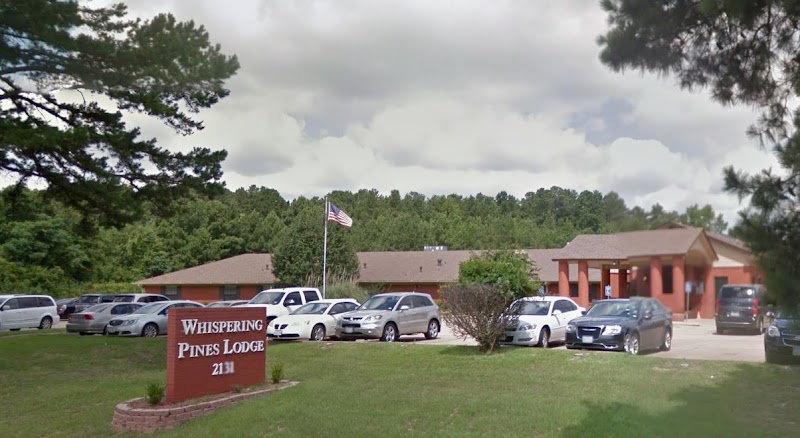
Whispering Pines Lodge

2131 Alpine Rd, Longview, TX 75601 (903) 757-8786
For profit - Corporation 116 Beds CREATIVE SOLUTIONS IN HEALTHCARE Data: November 2025 11 Immediate Jeopardy citations
Trust Grade
0/100
#1165 of 1168 in TX
Last Inspection: October 2024

Within standard 12-15 month inspection cycle. Federal law requires annual inspections.

Overview

Whispering Pines Lodge has a Trust Grade of F, indicating a poor rating with significant concerns about resident care and safety. It ranks #1165 out of 1168 facilities in Texas, placing it in the bottom tier, and #13 out of 13 in Gregg County, meaning there are no better local options available. The facility is worsening, with issues increasing from 14 in 2024 to 17 in 2025. Staffing is below average at 2 out of 5 stars, with a turnover rate of 59%, which is concerning as high turnover can impact continuity of care. Additionally, the facility has incurred fines totaling $493,013, which is higher than 99% of Texas facilities, suggesting ongoing compliance problems. Specific incidents reported include a staff member physically abusing a resident by throwing her onto a mattress, which resulted in bruising, and another staff member verbally abusing a resident when she requested pain medication. Other critical findings noted inadequate supervision that led to multiple residents suffering injuries from falls and altercations with each other. While the facility does have average RN coverage, the troubling incidents and high fines indicate that families should carefully consider these serious issues when researching care options.

Trust Score
F
0/100
In Texas
#1165/1168
Bottom 1%
Safety Record
High Risk
Review needed
Inspections
Getting Worse
14 → 17 violations
Staff Stability
⚠ Watch
59% turnover. Above average. Higher turnover means staff may not know residents' routines.
Penalties
✓ Good
$493,013 in fines. Lower than most Texas facilities. Relatively clean record.
Skilled Nurses
⚠ Watch
Each resident gets only 22 minutes of Registered Nurse (RN) attention daily — below average for Texas. Fewer RN minutes means fewer trained eyes watching for problems.
Violations
⚠ Watch
52 deficiencies on record. Higher than average. Multiple issues found across inspections.
★☆☆☆☆
1.0
Overall Rating
★★☆☆☆
2.0
Staff Levels
★★★☆☆
3.0
Care Quality
★☆☆☆☆
1.0
Inspection Score
Stable
2024: 14 issues
2025: 17 issues

The Good

  • Full Sprinkler Coverage · Fire safety systems throughout facility
  • No fines on record

Facility shows strength in fire safety.

The Bad

1-Star Overall Rating

Below Texas average (2.8)

Significant quality concerns identified by CMS

Staff Turnover: 59%

13pts above Texas avg (46%)

Frequent staff changes - ask about care continuity

Federal Fines: $493,013

Well above median ($33,413)

Significant penalties indicating serious issues

Chain: CREATIVE SOLUTIONS IN HEALTHCARE

Part of a multi-facility chain

Ask about local staffing decisions and management

Staff turnover is elevated (59%)

11 points above Texas average of 48%

The Ugly 52 deficiencies on record

11 life-threatening 1 actual harm
Sept 2025 10 deficiencies 6 IJ (3 affecting multiple)
CRITICAL (J) 📢 Someone Reported This

A family member, employee, or ombudsman was alarmed enough to file a formal complaint

Immediate Jeopardy (IJ) - the most serious Medicare violation

Notification of Changes (Tag F0580)

Someone could have died · This affected 1 resident

**NOTE- TERMS IN BRACKETS HAVE BEEN EDITED TO PROTECT CONFIDENTIALITY** Based on interview and record review, the facility failed to consult with the resident's physician when there was a significant ...

Read full inspector narrative →
**NOTE- TERMS IN BRACKETS HAVE BEEN EDITED TO PROTECT CONFIDENTIALITY** Based on interview and record review, the facility failed to consult with the resident's physician when there was a significant change in the resident's physical, mental, or psychosocial status (that is, a deterioration in health, mental, or psychosocial status in either life-threatening conditions or clinical complications) for 1 of 25 residents (Resident #6) reviewed for quality of care.The facility failed to notify the physician when Resident #6 experienced low blood pressure, low heart rate and/or low blood pressure with an increased heart rate on 7/16/25, 7/18/25, 7/20/25, 7/21/25, 7/23/25, 7/25/25, 7/26/25, 7/27/25, 7/28/25,7/29/25, 7/30/25, and 8/1/25. On 8/1/25, Resident #6 had low hemoglobin 5.8 and low hematocrit 21.6. Resident #6 was sent to the ER due to critical lab values. Resident #6 was admitted and diagnosed with gastrointestinal hemorrhage. Resident #6 received a blood transfusion at the hospital. An Immediate Jeopardy (IJ) was identified on 9/11/25. The IJ Template was provided to the facility on 9/11/25 at 2:01 p.m. While the IJ was removed on 9/12/25 at 4:40 p.m., the facility remained out of compliance at a scope of isolated and a severity level of no actual harm with potential for more than minimal harm that was not immediate jeopardy due to the facility's need to complete training in-services with all staff and evaluate the effectiveness of the corrective systems. This failure could place residents at risk of a decline in condition, delay in life-saving treatments, hospitalization, serious harm, and death. Findings included: Record review of Resident #6's face sheet dated 9/8/25 indicated Resident #6 was an [AGE] year-old male admitted to the facility on [DATE] and readmitted on [DATE]. Resident #6 had diagnoses including Dementia (is a general term describing a group of conditions that cause a progressive decline in cognitive abilities, including memory, thinking, reasoning, and judgment, which interfere with daily life), gastrointestinal hemorrhage (is when there is blood loss from any of the several organs included in your digestive system), iron deficiency anemia (is a common blood disorder that affects your red blood cells) secondary to blood loss (chronic), hypertension (is when the pressure in your blood vessels is too high (140/90 mmHg or higher)), and acute embolism and thrombosis of deep veins of right lower extremity (is a condition where a blood clot forms in a deep vein, often in the leg). Resident #6's most recent hospital stay was 8/1/25-8/5/25. Record review of Resident #6's quarterly MDS assessment dated [DATE] indicated Resident #6 was sometimes understood and sometimes had the ability to understand others. Resident #6 had a BIMS score of 2 which indicated severe cognitive impairment. Resident #6 required supervision for eating, substantial assistance for oral and personal hygiene, and dependent for toileting hygiene, shower/bathe self and dressing. Resident #6 was on an anticoagulant (is a medical treatment that prevents blood clots from forming). Record review of Resident #6's care plan dated 3/5/25 indicated: *Resident #6 was on an anticoagulant therapy. Intervention included monitor/document/report to MD signs/symptoms of anticoagulant complications such as lethargy, loss of appetite, sudden change in mental status, and significant or sudden changes in vital signs. *Resident #6 had a diagnosis of hypertension. Intervention included give anti-hypertensive medications as ordered. Monitor for side effects such as orthostatic hypotension (is a condition where blood pressure drops significantly upon standing up from a sitting or lying position) and increased heart rate and effectiveness. Record review of Resident #6's order summary dated 8/1/25 indicated: *Eliquis (anticoagulant) Oral Tablet 5 MG, give 1 tablet by mouth two times a day related to acute embolism and thrombosis of deep veins of right lower extremity. Start date 3/4/25. *Lisinopril (antihypertensive; treats high blood pressure) Oral Tablet 5 MG, give 1 tablet by mouth one time a day related to hypertension. Hold for systolic blood pressure (is the pressure when your heart beats to pump blood around your body) below 100, diastolic blood pressure (measures the pressure on blood vessel walls when your heart is relaxed between contractions) below 55 or heart rate less than 50. Start date 3/5/25. *Metoprolol Tartrate (antihypertensive; treats high blood pressure) Oral Tablet 50 MG, give 1 tablet by mouth two times a day related to hypertension. Hold for systolic blood pressure below 100, diastolic blood pressure below 55 or heart rate less than 50. Start date 3/5/25. Record review of Resident #6's medication administration record dated 7/1/25-7/31/25 indicated: *Eliquis (anticoagulant) Oral Tablet 5 MG, give 1 tablet by mouth two times a day related to acute embolism and thrombosis of deep veins of right lower extremity. Resident #6 received 61 out of 62 doses. *Lisinopril (antihypertensive; treats high blood pressure) Oral Tablet 5 MG, give 1 tablet by mouth one time a day related to hypertension. Hold for systolic blood pressure below 100, diastolic blood pressure below 55 or heart rate less than 50. Resident #6's MAR indicated (AM) 7/16/25 (BP: 118/63, HR: 98) MA B, 7/18/25 (BP: 90/65, HR: 88) MA X; Vitals Outside of Parameters, 7/20/25 (BP: 96/56, HR: 56) MA Y, 7/21/25 (BP: 110/66, HR: 105) MA B, 7/23/25 (Hold see nurse notes) MA B, 7/25/25 (BP: 108/74, HR: 108) MA B, 7/26/25-7/28/25 (Hold see nurse notes) MA B, 7/29/25 (BP: 119/60, HR: 98) MA Z, and 7/30/25 (BP: 110/67, HR: 88) MA Z. *Metoprolol Tartrate (antihypertensive; treats high blood pressure) Oral Tablet 50 MG, give 1 tablet by mouth two times a day related to hypertension. Hold for systolic blood pressure below 100, diastolic blood pressure below 55 or heart rate less than 50. Resident #6's MAR indicated (AM) 7/16/25 (BP: 118/63, HR: 98) MA B, 7/18/25 (BP: 90/65, HR: 88) MA X; Vitals Outside of Parameters, 7/20/25 (BP: 96/56, HR: 56) MA Y, 7/21/25 (BP: 110/66, HR: 105) MA B, 7/23/25 (Hold see nurse notes) MA B, 7/25/25 (BP: 108/74, HR: 108) MA B, 7/26/25-7/28/25 (Hold see nurse notes) MA B, 7/29/25 (BP: 119/60, HR: 98) MA Z, and 7/30/25 (BP: 110/67, HR: 88) MA Z. Resident #6's MAR indicated PM 7/18/25 (BP: 110/62, HR: 84) MA AA, 7/20/25 (BP: 115/76, HR: 60) MA AA, 7/21/25 (BP: 98/63, HR 79) MA X, 7/25/25 (BP: 90/70, HR: 100) MA X, 7/27/25 (BP: 90/41, HR: 116); Vitals Outside of Parameters, 7/29/25 (BP: 100/55, HR: 95) MA BB, 7/30/25 (Vitals Outside of Parameters) *Amlodipine Besylate Tablet 5 MG, give 1 tablet by mouth one time a day related to hypertension. Hold for systolic blood pressure below 110, diastolic blood pressure below 60 or heart rate less than 55. Discontinued on 7/30/25. Resident #6's MAR indicated 7/16/25 (BP: 118/63, HR: 98) MA B, 7/18/25 (BP: 90/65, HR: 88) MA X; Vitals Outside of Parameters, 7/20/25 (BP: 96/56, HR: 56) MA Y, 7/21/25 (BP: 110/66, HR: 105) MA B, 7/23/25 (Hold see nurse notes) MA B, 7/25/25 (BP: 108/74, HR: 108) MA B, 7/26/25-7/28/25 (Hold see nurse notes) MA B, 7/29/25 (BP: 119/60, HR: 98) MA Z, and 7/30/25 (BP: 110/67, HR: 88) MA Z. Record review of Resident #6's MAR dated 8/1/25-8/31/25 indicated: *Lisinopril Oral Tablet 5 MG, give 1 tablet by mouth one time a day related to hypertension. Hold for systolic blood pressure below 100, diastolic blood pressure below 55 or heart rate less than 50. Resident #6's MAR indicated (AM) 8/1/25 (BP: 115/85, HR: 123) MA AA. *Metoprolol Tartrate Oral Tablet 50 MG, give 1 tablet by mouth two times a day related to hypertension. Hold for systolic blood pressure below 100, diastolic blood pressure below 55 or heart rate less than 50. Resident #6's MAR indicated (AM) 8/1/25 (BP: 115/85, HR: 123) MA AA. Record review of Resident #6's progress notes dated 7/1/25-9/8/25 indicated: *7/23/25 at 12:44 p.m. by MA B: Amlodipine Besylate Tablet 5 MG, give 1 tablet by mouth one time a day related to hypertension. Hold for systolic blood pressure below 110, diastolic blood pressure below 60 or heart rate less than 55. Resident #6 BP low 127/51. *7/23/25 at 12:45 p.m. by MA B: Metoprolol Tartrate Oral Tablet 50 MG, give 1 tablet by mouth two times a day related to hypertension. Hold for systolic blood pressure below 100, diastolic blood pressure below 55 or heart rate less than 50. Resident #6 BP low. *7/26/25 at 1:15 p.m. by MA B: Lisinopril Oral Tablet 5 MG, give 1 tablet by mouth one time a day related to hypertension. Hold for systolic blood pressure below 100, diastolic blood pressure below 55 or heart rate less than 50. Resident #6 BP low. *7/26/25 at 1:15 p.m. by MA B: Amlodipine Besylate Tablet 5 MG, give 1 tablet by mouth one time a day related to hypertension. Hold for systolic blood pressure below 110, diastolic blood pressure below 60 or heart rate less than 55. Resident #6 BP low 96/53 HR 101. *7/26/25 at 1:16 p.m. by MA B: Metoprolol Tartrate Oral Tablet 50 MG, give 1 tablet by mouth two times a day related to hypertension. Hold for systolic blood pressure below 100, diastolic blood pressure below 55 or heart rate less than 50. Resident #6 BP low. *7/27/25 at 12:55 p.m. by MA B: Amlodipine Besylate Tablet 5 MG, give 1 tablet by mouth one time a day related to hypertension. Hold for systolic blood pressure below 110, diastolic blood pressure below 60 or heart rate less than 55. Resident #6 BP low 95/72 HR 58. *7/27/25 at 12:55 p.m. by MA B: Lisinopril Oral Tablet 5 MG, give 1 tablet by mouth one time a day related to hypertension. Hold for systolic blood pressure below 100, diastolic blood pressure below 55 or heart rate less than 50. Resident #6 BP low. *7/27/25 at 12:56 p.m. by MA B: Metoprolol Tartrate Oral Tablet 50 MG, give 1 tablet by mouth two times a day related to hypertension. Hold for systolic blood pressure below 100, diastolic blood pressure below 55 or heart rate less than 50. Resident #6 BP low. *7/28/25 at 12:48 p.m. by MA B: Amlodipine Besylate Tablet 5 MG, give 1 tablet by mouth one time a day related to hypertension. Hold for systolic blood pressure below 110, diastolic blood pressure below 60 or heart rate less than 55. Resident #6 diastolic BP low 115/52 HR 101. *7/28/25 at 12:49 p.m. by MA B: Lisinopril Oral Tablet 5 MG, give 1 tablet by mouth one time a day related to hypertension. Hold for systolic blood pressure below 100, diastolic blood pressure below 55 or heart rate less than 50. Resident #6 diastolic BP low 115/52 HR 101. *7/28/25 at 12:50 p.m. by MA B: Metoprolol Tartrate Oral Tablet 50 MG, give 1 tablet by mouth two times a day related to hypertension. Hold for systolic blood pressure below 100, diastolic blood pressure below 55 or heart rate less than 50. Resident #6 diastolic BP low. *7/30/25 at 6:00 a.m. by LVN O: Neuro assessment BP 98/48, Pulse 93. Resident #6 had an unwitnessed fall in his room. *7/30/25 at 6:30 a.m. by LVN O: [NAME] assessment BP 87/45, Pulse 80. *7/30/25 at 6:45 a.m. by LVN O: [NAME] assessment BP 110/67, Pulse 88. *7/30/25 at 7:15 a.m. by LVN O: [NAME] assessment BP 100/56, Pulse 60. *7/30/25 at 7:45 a.m. by LVN O: [NAME] assessment BP 98/52, Pulse 87. *7/30/25 at 8:45 a.m. by LVN O: [NAME] assessment BP 92/59, Pulse 95. *7/30/25 at 9:45 a.m. by LVN O: [NAME] assessment BP 114/62, Pulse 82. *7/30/25 at 10:24 a.m. by LVN O: Notified MD K of family's concerns about the resident [Resident #6] being drowsy so much of the time. *7/30/25 at 11:45 a.m. by LVN O: [NAME] assessment BP 98/58, Pulse 82. *7/30/25 at 1:11 p.m. by LVN O: New order received from MD K to stop Amlodipine, Mirtazapine and Marinol. To get CBC (is a blood test that measures the number and types of various cells in the blood, including red blood cells (RBCs), white blood cells (WBCs), and platelets), CMP (is a blood test that measures multiple substances in the body to assess overall health and identify potential medical conditions), and ammonia (measures the amount of ammonia in the blood) in AM. *7/30/25 at 1:45 p.m. by LVN O: Neuro assessment BP 94/54, Pulse 79. *7/30/25 at 9:45 p.m. by RN T: Neuro assessment BP 88/65, Pulse 71. *7/31/25 at 5:44 a.m. by RN T: Neuro assessment BP 108/64, Pulse 69. *7/31/25 at 1:08 p.m. by LVN L: When resident [Resident #6] was gotten up this morning his BP dropped to 75/62 and HR was 100. Resident #6 was laid back down and his BP and HR returned to normal. MD K notified and said to monitor. *7/31/25 at 7:20 p.m. by RN T: Neuro assessment BP 96/64, Pulse 76. *8/1/25 at 3:31 a.m. by RN T: Neuro assessment BP 93/56, Pulse 76. *8/1/25 at 11:18 a.m. by LVN L: Dr. lab called with critical labs. WBC 15.33 (The normal white blood cell count ranges between 4,000 and 11,000 cells per microliter), Hemoglobin (is the protein contained in red blood cells that is responsible for delivery of oxygen to the tissues; The normal Hb level for males is 14 to 18 g/dl (grams per deciliter)) 5.8, Hematocrit (is a blood test that measures the amount (percent) of your blood that is made up of red blood cells; The normal hematocrit for men is 40 to 54%) 21.6. *8/1/25 at 11:21 a.m. by LVN L: MD K notified about labs, no new orders. *8/1/25 at 5:08 p.m. by LVN L: Notified MD K of critical labs and he [MD K] recommended that we send him out to the hospital.Resident #6's progress note did not reflect any documented SBARs. Record review of Resident #6's hospital records dated 8/1/25 indicated, .brought in from nursing home after found to have some abnormal labs. he [Resident #6] does appear to be severely anemic with hemoglobin of 5.8.due to his anemia, a stool occult blood was checked in the ER which was positive though he [Resident #6] has not had an actual visible GI bleeding.impression.gastrointestinal hemorrhage. plan. transfuse PRBCs (packed red blood cells). Record review of Resident #6's hospital Discharge summary dated [DATE] indicated, .chief complaint.severe anemia. final diagnoses. iron deficiency anemia due to blood loss. gastrointestinal hemorrhage.hospital course.he [Resident #6] has been noted to be more fatigued recently, and blood work revealed severe anemia.he was found to be profoundly anemic initially with a hemoglobin of 5.8, and elevated creatinine 2.5.he received IV fluids and blood transfusion.he [Resident #6] was guaiac positive (a test result indicating the presence of occult (hidden) blood in the stool), and Gastroenterology (is the medical specialty that studies and treats diseases of the digestive system) was consulted.the plan was for the patient to undergo EGD (is a medical procedure used to examine the lining of the esophagus, stomach, and upper part of the small intestine (duodenum)) and colonoscopy (is an examination of the inside of your large intestine (colon)) yesterday, but he had episode of severe epistaxis (nosebleed), and it was felt the patient will not be able to tolerate an NG (nasogastric) tube.for the pre-op medication. On 9/9/25 at 9:40 a.m., attempted to contact MA Y by phone. Contact was unsuccessful. Unable to leave a message because the subscriber was not accepting calls. During an interview on 9/9/25 at 9:46 a.m., MA B said that she got the residents' vital signs for blood pressure medication. She said if the residents' vital signs were out of the parameters, she documented in the facility's charting system and held the medication. She said when she documented the medication was held due to the vital signs being out of range, it notified the charge nurse. She said the charge nurse received a notification in the facility's charting system. She said the held documentation, on the residents' MAR, flowed over to the progress notes. She said she also verbally notified the charge nurse when she held a blood pressure medication due to the vital signs being out of range. She said if she held a blood pressure medication on Resident #6, she probably reported to the charge nurse. She said if a resident had a low blood pressure (It is typically defined as a systolic pressure (the top number) below 90 mmHg and/or a diastolic pressure (the bottom number) below 60 mmHg) and high heart rate, it could mean the resident was in atrial fibrillation (is an irregular and often very rapid heart rhythm) or distress. She said it was important to notify the MDs if a blood pressure medication was held due to vital signs being out of range so they could make medication adjustments. On 9/9/25 at 10:27 a.m., attempted to contact LVN O by phone. Contact was unsuccessful and a message was left with callback phone number. During an interview on 9/9/25 at 11:37 a.m., the DON said the MAs were responsible for notifying the charge nurses when a blood pressure medication was held due to vital signs being outside of the parameters. She said the charges nurses were responsible for notifying the MD. She said the MD should be notified every time the blood pressure medication was held. She said the charges nurses documented in the residents' progress notes when they contacted the MD. She said if a resident had a low blood pressure and increased heart rate, it could indicate sepsis, dehydration, infection, and volume loss. She said the signs and symptoms of a GI bleed were low blood pressure, nosebleed, vomiting of blood, and tarry stools. She said when a resident's hemoglobin was low, they could experience low blood pressure, drowsiness, and fatigue. She said the ADON and DON should monitor this process by following up on vital sign alerts from the facility's charting system. She said she was not aware Resident #6 had several days of missed blood pressure medication and vital signs out of the parameters. During an interview on 9/9/25 at 2:52 p.m., RN P said the MAs were supposed to report to the charge nurses when a residents' vital signs were out of the parameters. She said the charge nurse should recheck the residents' vital signs. She said if the residents' vital signs were still out of range, then the charge nurse should notify the MD and family and do a SBAR. She said the facility's charting system did not notify the charge nurses when a medication was held due to vital signs being out of the parameters. She said if a resident had lower blood pressures it could indicate cardiac arrest and shock. She said the resident could need the emergency room. She said the charge nurses documented in a progress note when the physician was notified. She said it was important for the physician to be notified to receive orders. During an interview on 9/9/25 at 3:16 p.m., MD K said he could not recall what was reported to him on 7/31/25 in relation to Resident #6. He said he did not know if he would have changed his orders to only monitor Resident #6 if he knew about the other blood pressure and heart rate issues. He said he would have needed more information. He said he would have wanted to be notified of Resident #6's low blood pressures with lower (is a condition where the heart beats at a rate below 60 beats per minute (bpm) while resting) and higher heart rates (is a condition where the heart beats faster than normal, typically at a rate of over 100 beats per minute (bpm) at rest). He said he would have wanted to be notified when Resident #6's blood pressure medications were held due to vital signs being out of the parameters. He said a sign or symptom of a GI bleed was low blood pressure. During an interview on 9/9/25 at 3:38 p.m., LVN O said she did not remember being notified about Resident #6's low blood pressure readings and blood pressure medications being held. She said the MAs verbally notified the charge nurses about out-of-range vital signs and documented on the MAR. She said the charge nurses were responsible for notifying the physician. She said she did not recall doing a neuro assessment on Resident #6 after a fall in July 2025. She said if Resident #6's had a trend of low blood pressure readings then the MD should have been notified. She said signs or symptoms of a GI bleed were low blood pressure, tarry stool, and passing of blood. She said it was important to notify the physician because the resident could not need the prescribed blood pressure medication and so they could address the issue. During an interview on 9/10/25 at 9:45 a.m., LVN L said she was not aware Resident #6 had several days of low blood pressure readings with low and high heart rates prior to the incident on 7/31/25. She said when she called MD K about Resident #6 incident on 7/31/25, she did not report his previous low blood pressure readings with low and high heart rates. She said the MAs usually verbally told the charge nurses when the residents' vital signs were out of range and the medication was held. She said then the charge nurse could notify the MD. She said if the residents' blood pressure continued to be low, then the MD needed to be contacted for a medication adjustment. She said if the residents' blood pressure was low but the heart rate was high, then it could indicate anemia. She said if MD K had been given more information on 7/31/25, related to Resident #6's vital signs being out of normal range prior to the incident on 7/31/25, he may have done a different intervention. She said she wished she had known about Resident #6's previous vital signs so she could have reported it. She said the charge nurses documented on a progress note when the MD was notified and responded back. She said she did not know why there were two different notification entries on 8/1/25 to MD K about Resident #6 critical labs. During an interview on 9/11/25 at 1:03 p.m., the ADM said the charge nurses were responsible for notifying the physician when a resident had a change in condition. She said the charge nurses should also notify the ADON and DON. She said it was important to notify the physician in case the resident needed to be sent out to the ER or medication changed. She said the charge nurses documented the physician notification in a progress note. She said if the physician was not contacted, it could be detrimental to the resident. She said the nursing management should ensure the charge nurses responded to the residents' change of condition. She said the nursing management should ensure this process by doing in-services. Record review of an undated facility's Abuse/Neglect policy indicated, . Abuse also includes the deprivation by an individual, including a caretaker, of goods or services that are necessary to attain or maintain physical, mental, and psychosocial well-being. Instances of abuse of all residents, irrespective of any mental or physical condition, cause physical harm, pain or mental anguish. Neglect is the failure of the facility, its employees or service providers to provide goods and services to a resident that are necessary to avoid physical harm, pain, mental anguish, or emotional distress. Record review of a facility's Notifying the Physician of Change in Status policy revised 3/11/2013 indicated, .The nurse should not hesitate to contact the physician at any time when an assessment and their professional judgment deem it necessary for immediate medical attention. This facility utilizes the INTERACT tool, Change in Condition - When to Notify the MD/NP/PA to review resident conditions and guide the nurse when to notify the physician. This tool informs the nurse if the resident condition requires immediate notification of the physician or non-immediate/Report on Next Work day notification of the physician. The nurse will notify the physician immediately with significant change in status. The nurse will document signs and symptoms of significant change, time/date of call to physician, and interventions that were implemented in the resident's clinical record. Before the physician is contacted, the nurse will gather and organize resident information. Applicable information will include current medications, vital signs, signs and symptoms initiating call, current laboratory information, and interventions that have currently been implemented. The nurse is responsible, however, for responding to a change of condition in a timely and effective manner. The nurse will document the time of the call to the physician in the clinical record. Record review of a facility's Medication Administration and General Guidelines policy revised 3/2025 indicated, . Medications are administered as prescribed, in accordance with State Regulations using good nursing principles and practices. If a dose of regularly scheduled medication is withheld, refused, or given at other than the scheduled time. The physician must be notified when a dose of medication has not been given. If an electronic medical record is being utilized then the caregiver administering the medication will enter the correct documentation that will then be electronically date/time stamped with their initials. The ADM and the Regional Compliance Nurse were notified of an IJ on 9/11/25 at 1:59 p.m. and a Plan of Removal (POR) was requested. The IJ template was emailed to the ADM on 9/11/25 at 2:01 p.m. The following plan of removal was submitted by the facility and accepted on 09/12/25 at 4:40 p.m. and included the following: Interventions: 1. Resident #6 no longer resides in the facility as of 9/11/25. 2. All residents in the facility had their blood pressures and heart rates reviewed for any abnormal readings. No additional changes in condition were noted that required notification to the MD. Completed 9/11/25. 3. The DON/ADON/Designee will review the 24hr report and PCC dashboard (is a customized, centralized view within the PointClickCare healthcare management platform that provides real-time, at-a-glance information relevant to a user's role, displaying clinical, financial, or administrative data to improve efficiency, decision-making, and patient care) daily for abnormal vital signs or changes in condition that need to be communicated to the MD. Completed 9/11/25 and will continue indefinitely. 4. The Administrator and DON were in-serviced 1:1 by the Regional Compliance Nurse and Area Director. Completed 9/11/25. a. Abuse and Neglect: Examples include failure to provide assistance with showers, changing clothes, meal trays, eating, positioning with enteral feeding, providing treatments, following MD orders, treating pain, administer medication, notifying MD of change in condition, provide adequate supervision to prevent falls or resident to resident altercations. b. Notification of Change in Condition: notify a MD and RP of all changes in conditions such as abnormal vital signs, new onset or worsening pain or injuries from incidents. Med aides will report all abnormal vital signs during medication administration to charge nurse immediately. c. PCC Dashboard/24hr Report: Charge nurses will monitor the PCC Dashboard/24hr report throughout their shift and at change of shift for any abnormal vital signs that need to be reported to the physician. 5. The medical director was notified of the immediate jeopardy citation by the administrator on 9/11/25. 6. An ADHOC QAPI meeting was held with interdisciplinary team including the medical director to discuss the immediate jeopardy and plan of removal. Completed on 9/11/25. In-services: 1. The following in-services were initiated by Administrator, Regional Compliance Nurse, DON, ADON for all staff. Any staff member not present or in-serviced as of 9/11/25 will not be allowed to assume their duties until in-serviced. All new hires will be in-serviced during orientation. All PRN, agency staff, or staff on leave will in serviced prior to assuming their next assignment. Completion date 9/11/25. a. Abuse and Neglect: Examples include failure to provide assistance with showers, changing clothes, meal trays, eating, positioning with enteral feeding, providing treatments, following MD orders, treating pain, administer medication, notifying MD of change in condition, provide adequate supervision to prevent falls or resident to resident altercations. b. Notification of Change in Condition: notify a MD and RP of all changes in conditions such as abnormal vital signs, new onset or worsening pain or injuries from incidents. c. PCC Dashboard/24hr Report: Charge nurses will monitor the PCC Dashboard/24hr report throughout their shift and at change of shift for any abnormal vital signs that need to be reported to the physician The surveyor verification of the Plan of Removal from 9/12/25 was as follows: *Record review of a resident roster provided on 9/8/25 indicated Resident #6 was not in the facility. *Record review of Resident #6's progress note dated 8/27/25 at 1:45 a.m., reflected Resident #6 was pronounced at 12:25 a.m. *Record review of the facility's Weights and Vitals Summary dated 9/8/25-9/30/25 indicated all residents, unit, and floors had been reviewed. The vital signs of blood pressure and pulse were targeted. Twenty-six residents had blood pressure and/or pulse that triggered a warning. RCN DD reviewed and signed the report on 9/12/25. *Record review of an email sent by RCN EE to MD K dated 9/11/25 at 7:09 p.m., indicated an attached list of residents with low pulse (5 residents), high pulse (3 residents), low blood pressure readings (7 residents), and high blood pressure readings (20 residents). *Record review of an email sent back from MD K to RCN EE dated 9/12/25 at 1:39 a.m., indicated MD K made medication adjustments for 2 residents. MD K acknowledged other vital signs and no new orders. *Record review of the facility's Daily Quality Assurance Meeting dated 9/11/25 at 9:00 a.m., indicated the 24-hour report, medication administration, and the facility's charting system dashboard had been reviewed by the DON. The clinical alerts had been reviewed. *Record review of the facility's 24-hour Summary report dated 9/11/25-9/12/25 indicated residents' vital signs and progress notes. Five residents had reported changes of conditions or new findings. The report indicated notifications to the MD, family, and hospice. *Record review of a provided document from the ADO on 9/12/25 indicated the Medical Director, MD K, was notified by the ADM on 9/11/25 at 3:55 p.m. of the immediate jeopardy citations. *Record review of a facility's AD Hoc QAPI Meeting dated 9/11/25 indicated the following members were in attendance: ADM, DON, ADON, Medical Director (via phone), Social Service, Dietary, RNC EE, Administrator in Training, MDS Coordinator RR and MDS Coordinator QQ. *Record review of the in-service training report, dated 09/11/25, reflected the DON and Administrator signed and received in-service training on abuse and neglect which included the following: examples such as failure to provide assistance with shower, changing clothes, meal trays, eating, positioning with enteral feeding, providing treatments, following physician orders, treating pain, administering medications, notify the physician of changes in condition, and providing adequate supervision to prevent falls or resident to resident altercations. It also included the abuse/neglect policy and procedure. *Record review of the in-service training report, dated 09/11/25, reflected the DON and Administrator signed and received in-service education on notifying physician of change in status which included the following: notifying the physician and responsible party of all changes in conditions such as abnormal vital signs, pain or injuries from accidents. It also included the Notifying the Physician of Change in Status policy. *Record review of the in-service training report dated 9/12/25, reflected the DON and Administrator signed and received in-service training on PCC Dashboard/ 24 Hour Report which included the following: the Charge nurses will monitor the PCC Dashboard/24hr report throughout their shift and at change of shift for any abnormal vital signs that need to be reported to the physician. *During an interview on 09/12/25 at 3:08 PM, the Medical Director stated he was notified of the immediate jeopardy situations at the facility. He said he was notified by the Regional Compliance Nurse on 09/11/25 and it was discussed with plans being implemented. *During an interview on 09/12/25 at 4:05 PM, the DON stated she was provided 1:1 in-service education as follows: Abuse and neglect to include the types of abuse and examples of each. The DON stated that failure to provide care and services such as notifying the physician of change of condition, following physician orders,
CRITICAL (J) 📢 Someone Reported This

A family member, employee, or ombudsman was alarmed enough to file a formal complaint

Immediate Jeopardy (IJ) - the most serious Medicare violation

Tube Feeding (Tag F0693)

Someone could have died · This affected 1 resident

**NOTE- TERMS IN BRACKETS HAVE BEEN EDITED TO PROTECT CONFIDENTIALITY** Based on observation, interview, and record review, the facility failed to ensure residents who were fed by enteral means receiv...

Read full inspector narrative →
**NOTE- TERMS IN BRACKETS HAVE BEEN EDITED TO PROTECT CONFIDENTIALITY** Based on observation, interview, and record review, the facility failed to ensure residents who were fed by enteral means received the appropriate treatment and services to prevent complications of enteral feeding for 1 of 3 residents (Resident #5) reviewed for enteral nutrition. During a tube feeding on 08/20/25, Resident #5's head and torso were leaning over the left armrest of his Geri-chair for approximately 1 hour and 30 minutes, which resulted in aspiration pneumonia. An immediate jeopardy (IJ) was identified on 09/11/25 at 12:59 PM. The IJ template was provided to the facility on [DATE] at 2:01 PM. While the IJ was removed on 09/12/25 at 4:40 PM, the facility remained out of compliance at a scope of isolated and a severity level of no actual harm that is not immediate jeopardy with the potential for more than minimal harm because all staff had not been provided education on abuse and neglect, notification of changes in condition, and enteral feeding tube management. This failure could place residents with gastrostomy tube at risk for complications from feeding tube administration such as aspiration and pneumonia, serious injury, harm, impairment, and death. The findings included: Record review of the face sheet, dated 09/11/25, reflected Resident #5 was a [AGE] year-old male who admitted to the facility on [DATE] with diagnoses of Alzheimer's disease (a brain disorder that slowly destroys a person's memory and thinking skills), severe protein-calorie malnutrition (not getting enough protein or calories to meet the body's demands), gastrostomy status (an opening into the stomach from the abdominal wall, made surgically for the introduction of food), anorexia (loss of appetite), and dysphagia (difficulty swallowing). Record review of the quarterly MDS assessment, dated 07/30/25, reflected Resident #5 had unclear speech, was rarely/never understood, and was rarely/never able to understand others. Resident #5 had short-term and long-term memory problems. Resident #5 had no memory or recall ability and had severely impaired decision making skills. The MDS reflected Resident #5 had upper and lower extremity impairments to both sides which interfered with daily functions. The MDS reflected Resident #5 was dependent on staff for all his ADLs. Resident #5 used a feeding tube while a resident and also received a mechanically altered diet. The MDS reflected Resident #5 received 51% of more of his total calories through tube feeding. Record review of the comprehensive care plan, last reviewed 06/17/25, reflected Resident #5 required tube feeding related to anorexia and Alzheimer's disease. The interventions included: .the resident needs the head of bed elevated 30 degrees during and thirty minutes after tube feeding. The care plan further reflected Resident #5 had an ADL self-care deficit and required staff assistance x 1 with eating. Record review of the order summary report, dated 09/11/25, reflected Resident #5 had an order for regular diet and pureed texture with pudding consistency fluids, family member or nurse to assist with feeding. The order started on 08/26/25. During an observation of a video date and time stamped, 08/20/25 3:13 PM, revealed Resident #5 leaning over the left armrest of his Geri-chair. He was moaning and grunting, unable to lift his torso or head. At 3:16 PM, CNA G walks into the room, pulls his arm and ask him to sit up, and then walked out of the room. The interaction last approximately 45 seconds. Resident #5 returned to the same position within approximately 30 seconds after CNA G left the room. Resident #5 remained in the same position, where his head and torso were leaning over the left armrest for approximately 1 hour and 30 minutes. Resident #5 constantly moans and grunts during the video until LVN L sets up him with pillows and positioned him comfortably at 4:26 PM Record review of the progress notes reflected the following: On 08/21/25 at 4:03 AM, the note reflected Resident #5's family member requested a chest x-ray due to possible aspiration . due to positioning of resident in chair on previous shift.No signs or symptoms of aspiration [entry of solid or liquid material such as secretions, food, drink, or stomach contents from the mouth or stomach into the lungs] noted . head of bed elevated to 30 degrees. On 08/21/25 at 7:47 AM, the note reflected a response was received from the physician for a chest x-ray. On 08/22/25 at 3:29 AM, the note reflected Resident #5 was transferred to the hospital related to chest x-ray results findings indicated aspiration. Record review of Resident #5's diagnostic chest x-ray report, dated 08/21/25, reflected .reported gastrostomy tube [opening from the abdomen directly into the stomach] is not definitely visualized.air distended stomach.left basilar airspace disease [condition in which the lower lungs of the left lung collapse, preventing air exchange], likely atelectasis [collapse of lung or part of lung from lack of air in the air sacs] given elevation of the hemidiaphragm. Record review of the inpatient hospital record, dated 08/22/25, reflected Resident #5 arrived at the hospital at 4:04 AM via ambulance and was discharged back to the facility at 5:46 AM. The problems addressed was aspiration into airway, initial encounter. During an interview on 09/09/25 beginning at 2:38 PM, Resident #5's family member stated on 08/20/25 she had gone out to eat and did not watch the camera as she normally did. Resident #5's family member stated when she got home, she noticed a neck pillow was blocking the view of the camera, so she called the facility. Resident #5's family member stated she went back to review the video prior to the pillow blocking camera and noticed he had been leaning over his chair for about 2 hours. Resident #5's family member was concerned he may have aspirated so she requested a chest x-ray be performed. Resident #5's family member stated the chest x-ray showed aspiration pneumonia, and he was sent to the hospital. Resident #5's family member stated he was returned to the facility on antibiotics. Resident #5's family member stated the facility staff did not have enough help. Resident #5's family member stated she believed the incident would not have occurred if the facility had sufficient staffing because they would have been able to check on him more frequently. During an interview on 09/09/25 beginning at 10:55 AM, LVN M stated Resident #5's family member had requested that he go to the hospital because she was concerned about something that had occurred on the camera, and she believed he could have possibly aspirated. LVN M stated she notified the physician, and he was agreeable, so she sent Resident #5 to the hospital per the family member's request. LVN M stated Resident #5 had no signs or symptoms of aspiration, such as nasal drainage, shortness of breath, or wheezing. LVN M stated the facility had obtained the order for a chest x-ray, but it had not been completed before he was sent to the hospital, if she remembered correctly. LVN M stated Resident #5 did not return back from the hospital on her shift, so she was unaware of what he was treated for at the hospital. During an interview on 09/09/25 beginning at 11:50 AM, CNA G stated on 08/20/25 she was on the way to answer another resident's call light when she walked by Resident #5's room and noticed he was leaning over. CNA G stated she grabbed Resident #5 under the arm and elbow to sit him up. CNA G stated she sat Resident #5 up the best she could then proceeded to answer the call light. CNA G stated she was the only staff member assigned to her hallway and stated she never thought to check on him again because she had so much going through her mind. CNA G stated she was called later on to provide a statement of the incident. CNA G said she had just graduated CNA school about 4 months ago and was still learning things. CNA G stated grabbing someone by the arm was not the proper way to position them. CNA G stated the facility did provide her one-on-one education on proper positioning. CNA G stated looking back now she should have checked on Resident #5 sooner, but it was hard to recognize in the moment because of the staffing concerns. CNA G stated Resident #5 should have been positioned in a Fowler's position (upright) during a tube feeding. CNA G stated improperly positioning a resident during a tube feeding could result in aspiration. CNA G stated there were staffing concerns at the facility because no one wanted to work. CNA G stated the facility staff did not like the management staff. CNA G stated she had only worked at the facility since June 2025. CNA G stated at times she was the only CNA who was assigned to two halls, which was approximately 25 residents. CNA G stated she was unable to provide the care and services each resident required when she was scheduled alone. CNA G stated she felt rushed with the residents. CNA G stated management staff were aware of the staffing concerns but felt like nothing was addressed. CNA G stated management did not consistently help out on the floor. CNA G stated the DON would provide assistance to one resident because of the camera in the room, but most of the time when she asked for help the DON would say Let me find someone to help you. CNA G stated she normally works C-Hall (the secured unit) and is the only staff member scheduled. During an interview on 09/10/25 beginning at 9:22 AM, LVN L stated on 08/20/25 she was acting as charge nurse. LVN L stated she was on the secured unit completing the medication pass and providing care as there was no CNA assigned to the secured unit. LVN L stated a little while later, she had someone relieve her on the secured unit and she was walking down B Hall when she noticed Resident #5 was slumped over. LVN L stated Resident #5 was repositioned and placed in the bed. LVN L stated CNA G had not reported he had been improperly positioned or slumped over. LVN L stated Resident #5 had a runny nose and snot was coming out of his nose. LVN L stated Resident #5's shirt was changed because the snot had made his shirt wet. LVN L stated Resident #5 had a slight runny nose after the incident but was not acting abnormal. LVN L stated Resident #5 had no signs or symptoms of respiratory distress. LVN L stated being improperly positioned during a tube feeding could have caused aspiration pneumonia. LVN L stated she expected the CNAs to notify her if they needed help. LVN L stated she believed if the facility was adequately staffed, this incident would not have occurred. During an interview on 09/11/25 beginning at 1:02 PM, The Administrator stated the charge nurse was responsible for monitoring to ensure residents who required a tube feeding were positioned properly. The Administrator stated the ADON was responsible for educating and overseeing the nurses and CNAs. The Administrator stated she was at a training on 08/20/25 when Resident #5 was left improperly positioned during a tube feeding. The Administrator stated the DON called her and explained what happened. The Administrator stated she was able to review the incident and the video that was obtained the next day. The Administrator stated in the video Resident #5 laid slumped over in his chair for approximately an hour and half. The Administrator stated she completed the self-report to HHSC and started 30 minute monitoring for Resident #5. The Administrator stated if any issues with positioning were observed, he was repositioned. The Administrator stated the DON provided 1:1 education with CNA G regarding proper positioning. The Administrator stated it was important to ensure residents were properly positioned during tube feedings to prevent aspiration. Record review of the Enteral Nutrition policy, undated, reflected .problems with the administration of the tube feeding are monitored and corrected by nursing. The policy did not address positioning. The Administrator was notified on 09/11/25 at 1:59 PM that an Immediate Jeopardy situation was identified due to the above failure. The Administrator was provided the Immediate Jeopardy template on 09/11/25 at 2:01 PM. The following plan of removal was submitted by the facility and accepted on 09/12/25 at 12:05 PM and included the following: Interventions:1. Resident #5 was assessed for proper positioning and signs of aspiration. No signs of a change in condition noted to any residents. Completed 9/11/25. 2. All residents on enteral feeds in the facility were assessed for proper positioning and signs of aspiration. All enteral feedings are in place according to orders. No additional changes in condition were noted that required notification to the MD. Charge Nurses, CNAs, and Med Aides will be responsible for monitoring the positioning of residents on enteral feedings throughout the shift at a minimum of every two hours. Clinical leadership will verify proper positioning of residents on enteral feedings during clinical rounds daily throughout the day. Clinical rounds will be documented on a monitoring tool. Completed 9/11/25. 3. The Administrator and DON were in-serviced 1:1 by the Regional Compliance Nurse and Area Director. Completed 9/11/25. a. Abuse and Neglect: Examples include failure to provide assistance with showers, changing clothes, meal trays, eating, positioning with enteral feeding, providing treatments, following MD orders, treating pain, administer medication, notifying MD of change in condition, provide adequate supervision to prevent falls or resident to resident altercations.b. Notification of Change in Condition: notify a MD and RP of all changes in conditions such as abnormal vital signs, new onset or worsening pain or injuries from incidents.c. Enteral Feeding Policy to include adequate positioning- HOB elevated to prevent the risk of aspiration. If a resident is not positioned with the HOB elevated during enteral feedings, the charge nurse will be notified immediately. This in-service includes the signs and symptoms of aspiration such as coughing, drooling, choking, fever, noisy breathing, shortness of breath or wheezing. 4. The medical director was notified of the immediate jeopardy citation by the administrator on 9/11/25. 5. An ADHOC QAPI meeting was held with interdisciplinary team including the medical director to discuss the immediate jeopardy and plan of removal. Completed on 9/11/25. In-services:1. The following in-services were initiated by Administrator, Regional Compliance Nurse, DON, ADON for all staff. Any staff member not present or in-serviced as of 9/11/25 will not be allowed to assume their duties until in-serviced. All new hires will be in-serviced during orientation. All PRN, agency staff, or staff on leave will in serviced prior to assuming their next assignment. Completion date 9/11/25.a. Abuse and Neglect: Examples include failure to provide assistance with showers, changing clothes, meal trays, eating, positioning with enteral feeding, providing treatments, following MD orders, treating pain, administer medication, notifying MD of change in condition, provide adequate supervision to prevent falls or resident to resident altercations.b. Notification of Change in Condition: notify a MD and RP of all changes in conditions such as abnormal vital signs, new onset or worsening pain or injuries from incidents.c. Enteral Feeding Policy to include adequate positioning- HOB elevated to prevent the risk of aspiration. If a resident is not positioned with the HOB elevated during enteral feedings, the charge nurse will be notified immediately. This in-service includes the signs and symptoms of aspiration such as coughing, drooling, choking, fever, noisy breathing, shortness of breath or wheezing. On 09/12/25 the surveyor confirmed the facility implemented their plan of removal sufficiently to remove the immediate jeopardy (IJ) by: 1. Record review of the inpatient hospital record, dated 08/22/25, reflected Resident #5 arrived at the hospital at 4:04 AM via ambulance and was discharged back to the facility at 5:46 AM. The problems addressed was aspiration into airway, initial encounter. 2. Record review of Resident #5 Resident #16, Resident #20's progress notes, reflected an assessment was completed on 09/11/25 of the feeding tubes and no issues or concerns were identified. 3. During an observation on 09/12/25 at 12:33 PM, Resident #5 was positioned in semi-Fowlers (30 - 45-degree angle) position. No issues or concerns with feeding. No signs or symptoms of aspiration were observed. 4. During an observation on 09/12/25 at 12:34 PM, Resident #16 was positioned in semi-Fowlers position with sitter at bedside. No issues or concerns with feeding. No signs or symptoms of aspiration were observed. 5. During an observation on 09/12/25 at 12:35 PM, Resident #20 was positioned in semi-Fowlers position. No issues or concerns with feeding. No signs or symptoms of aspiration was observed. 6. Record review of the in-service training report, dated 09/11/25, reflected the DON and Administrator signed and received in-service training on abuse and neglect which included the following: examples such as failure to provide assistance with shower, changing clothes, meal trays, eating, positioning with enteral feeding, providing treatments, following physician orders, treating pain, administering medications, notify the physician of changes in condition, and providing adequate supervision to prevent falls or resident to resident altercations. It also included the abuse policy and procedure. 7. Record review of the in-service training report, dated 09/11/25, reflected the DON and Administrator signed and received in-service education on notifying physician of change in status which included the following: notifying the physician and responsible party of all changes in conditions such as pain or injuries from accidents. It also included the Notifying the Physician of Change in Status policy. 8. Record review of the in-service training report, dated 09/11/25, reflected the DON and Administrator signed and received in-service education on the enteral nutrition policy and procedure, which included: adequate positioning with the head of the bed elevated to prevent the risk of aspiration, notification of the charge nurse if a resident was improperly positioned, and signs or symptoms of aspiration such as coughing, drooling, choking, fever, noisy breathing, shortness of breath or wheezing. 9. During an interview on 09/12/25 at 3:08 PM, the Medical Director stated he was notified of the immediate jeopardy situations at the facility. He said he was notified by the Regional Compliance Nurse on 09/11/25 and it was discussed with plans being implemented. 10. During an interview on 09/12/25 at 4:05 PM, the DON stated she was provided 1:1 in-service education as follows: Abuse and neglect to include the types of abuse and examples of each. The DON stated that failure to provide care and services such as showers, wound treatments, adequate supervision, changing clothing, providing assistance with eating, and improper positioning with enteral feeding was considered neglect. Notification of changes in condition to include examples of resident change in condition such as new skin issues or increased or new pain. The DON stated a change in condition should be reported immediately. The DON stated the physician should be notified and an assessment completed. Enteral feeding policy to include adequate positioning. The DON stated residents would be checked for positioning at least every 2 hours by the CNAs, MAs, and nurses. The DON stated residents who received enteral nutrition should have the head of the bed elevated at least 30 degrees. The DON stated signs or symptoms of aspiration included: coughing, drooling, or wheezing. 11. During an interview on 09/12/25 at 4:14 PM, the Administrator stated she was provided 1:1 in-service education as follows: Abuse and neglect to include the types of abuse and examples of each. The Administrator stated that failure to provide care and services such as showers, wound treatments, adequate supervision, changing clothing, providing assistance with eating, and improper positioning with enteral feeding was considered neglect. Notification of changes in condition to include examples of resident change in condition such as new skin issues or increased or new pain. The Administrator stated a change in condition should be reported immediately. The Administrator stated the physician should be notified and an assessment completed. Enteral feeding policy to include adequate positioning. The Administrator stated residents would be checked for positioning at least every 2 hours by the CNAs, MAs, and nurses. The Administrator stated residents who received enteral nutrition should have the head of the bed elevated at least 30 degrees. The Administrator stated signs or symptoms of aspiration included: coughing, drooling, or wheezing. 12. During an interview on 09/12/25 at 4:26 PM, the Regional Compliance Nurse stated she provided all the 1:1 in-service education for the DON and Administrator. 13. Record review of the AD HOC QAPI meeting dated 09/11/25, reflected 12 members were in attendance. 14. Record review of the in-service training report, dated 09/11/25, reflected in-service education was provided to all staff on the abuse and neglect policy and procedure to include the following: examples such as failure to provide assistance with shower, changing clothes, meal trays, eating, positioning with enteral feeding, providing treatments, following physician orders, treating pain, administering medications, notify the physician of changes in condition, and providing adequate supervision to prevent falls or resident to resident altercations. There were 36 staff signatures. 15. Record review of the in-service training report, dated 09/11/25, reflected in-service education was provided to all staff on notifying physician of change in status which included the following: notifying the physician and responsible party of all changes in conditions such as pain or injuries from accidents. It also included the Notifying the Physician of Change in Status policy. There were 36 staff signatures. 16. Record review of the in-service training report, dated 09/11/25, reflected in-service education was provided to direct care staff on the enteral nutrition policy and procedure, which included: adequate positioning with the head of the bed elevated to prevent the risk of aspiration, notification of the charge nurse if a resident was improperly positioned, and signs or symptoms of aspiration such as coughing, drooling, choking, fever, noisy breathing, shortness of breath or wheezing. There were 22 staff signatures. 17. During interviews between 09/12/25 and 09/13/25, staff from all departments and all shifts to include: the AD, Medical Records, MDS Coordinator QQ, MDS Coordinator RR, [NAME] HH, [NAME] KK, [NAME] MM, Dietary LL, Dietary NN, DM, Housekeeper OO, Housekeeping Supervisor PP, RN P, RN T, LVN A, LVN M, LVN Q, MA B, MA Z, MA UU, CNA C, CNA G, CNA V, CNA SS, CNA TT, Speech Therapist VV, Director of Rehabilitation WW, COTA XX, COTA ZZ, and PTA YY were provided in-service education and were able to verbalize the following: Abuse and Neglect to include the types of abuse and examples of each. The staff were able to give examples of neglect which included: failure to provide assistance with shower, changing clothes, meal trays, eating, positioning with enteral feeding, providing treatments, following physician orders, treating pain, administering medications, notify the physician of changes in condition, and providing adequate supervision to prevent falls or resident to resident altercations. The staff reported the Administrator was the abuse coordinator and any type of abuse should be reported immediately. Notification of changes in condition to include examples of resident change in condition such as new skin issues or increased or new pain. The staff were able to verbalize a change of condition should be reported to the charge nurse immediately. The charge nurses were able to verbalize the appropriate assessments and notifications of the physician and family during a change of condition. Enteral feeding policy to include adequate positioning. The facility staff reported residents would be checked for positioning at least every 2 hours by the CNAs, MAs, and nurses. The staff were able to verbalize residents who received enteral nutrition should have the head of the bed elevated at least 30 degrees. Staff reported if they noticed any residents were positioned improperly the charge nurse would be notified. The staff were able to verbalize the signs or symptoms of aspiration, which included: coughing, drooling, or wheezing. The Administrator was informed the IJ was removed on 09/12/25 at 4:40 PM. The facility remained out of compliance at a scope of isolated and a severity level of no actual harm that is not immediate jeopardy due to the facility's need to evaluate the effectiveness of the corrective systems that were put into place.
CRITICAL (J) 📢 Someone Reported This

A family member, employee, or ombudsman was alarmed enough to file a formal complaint

Immediate Jeopardy (IJ) - the most serious Medicare violation

Deficiency F0697 (Tag F0697)

Someone could have died · This affected 1 resident

**NOTE- TERMS IN BRACKETS HAVE BEEN EDITED TO PROTECT CONFIDENTIALITY** Based on interview, and record review the facility failed to ensure that pain management was provided to that require such servi...

Read full inspector narrative →
**NOTE- TERMS IN BRACKETS HAVE BEEN EDITED TO PROTECT CONFIDENTIALITY** Based on interview, and record review the facility failed to ensure that pain management was provided to that require such services, consistent with professional standards of practice, the comprehensive person-centered care plan, and the residents' choices of 2 of 11 residents reviewed for pain management. (Resident #6 and Resident #15) 1. The facility failed to ensure Resident #15 received her scheduled Oxycodone as ordered on [DATE], [DATE], and [DATE]. The facility failed to ensure Resident #15 received her scheduled Gabapentin as ordered on [DATE]. The facility failed to notify Resident #15's physician when doses of the Oxycodone and Gabapentin, scheduled for 3pm and 4pm, were not administered on [DATE]. The facility failed to offer Resident #15 alternative prn pain medication options on [DATE] per the facility's policy. The facility failed to offer Resident #15 non-pharmacological interventions on [DATE] per the facility's policy. The facility failed to follow the Pain Management policy. 2. The facility failed to ensure Resident #6, who received scheduled opioid medications, had pain assessments at least every shift. The facility failed to ensure Resident #6, who displayed nonverbal signs of pain such as grimacing, hollering out and pushing staff away during ADL care, was administered prn medication. An Immediate Jeopardy (IJ) was identified on [DATE]. The IJ Template was provided to the facility on [DATE] at 2:01 p.m. While the IJ was removed on [DATE] at 12:49 p.m., the facility remained out of compliance at a scope of isolated and a severity level of no actual harm with potential for more than minimal harm that was not immediate jeopardy due to the facility's need to complete training in-services with all staff and evaluate the effectiveness of the corrective systems. These failures could place residents at risk for unrealized pain, serious harm, decrease quality of life and decline in condition.Findings included: 1. Record review of Resident #15's face sheet dated [DATE] indicated Resident #15 was a [AGE] year-old female admitted to the facility on [DATE] and readmitted on [DATE]. Resident #15 had diagnoses including fibromyalgia (is a long-term condition that involves widespread body pain), low back pain, major depressive disorder (a persistently low or depressed mood and a loss of interest in activities that you used to enjoy), and anxiety (intense, excessive, and persistent worry and fear about everyday situations). Record review of Resident #15's quarterly MDS assessment dated [DATE] indicated Resident #15 had clear speech, adequate hearing and vision. Resident #15 was understood and had the ability to understand others. Resident #15 had a BIMS score of 15 which indicated intact cognition. Resident #15 was independent for eating, oral hygiene, and toilet hygiene, partial assistance for shower/bathe self and personal hygiene. Resident #15 received scheduled pain medication regimen. Resident #15 received opioids. Record review of Resident #15's care plan dated [DATE] indicated Resident #15 was on pain medication therapy related to fibromyalgia and wound. Intervention included administer medications as ordered. Record review of Resident #15's order summary report dated [DATE] indicated: *Tylenol Capsule 325 MG, give 2 capsules by mouth every 6 hours as needed for mild pain. Start date [DATE]. *Instant hot pack apply to affected area every hour as needed for pain, every 1 hour as needed for pain. Start date [DATE]. *Assess for pain each shift, every shift. Start date [DATE]. *Oxycodone Oral Tablet 10 MG (is used to relieve pain severe enough to require opioid treatment and when other pain medicines did not work well enough or cannot be tolerated), give 1 tablet by mouth five times a day for pain. Start date [DATE]. *Gabapentin Oral Capsule 300 MG (is an anticonvulsant medication used to treat nerve pain), give 1 capsule by mouth three times a day for pain for 5 days. Start dated [DATE]. Record review of Resident #15's Medication Administration Record dated [DATE]-[DATE] indicated: *Tylenol Capsule 325 MG, give 2 capsules by mouth every 6 hours as needed for mild pain. The MAR did not reflect an administration on [DATE]. This alternate prn pain medication was not administered on [DATE]. *Instant hot pack apply to affected area every hour as needed for pain, every 1 hour as needed for pain. The MAR did not reflect an administration on [DATE]. This non-pharmacological option was not administered on [DATE]. *Assess for pain each shift, every shift. The MAR did not reflect assessments on [DATE] (Nights), [DATE] (Nights), and [DATE] (Nights). *Oxycodone Oral Tablet 10 MG, give 1 tablet by mouth five times a day for pain. Times: 1am, 6am, 11am, 4pm, and 9pm. The MAR indicated on [DATE] at 1am administration was not given due to sleeping. The MAR did not reflect administration on [DATE] at 4pm. The MAR indicated on [DATE] administration at 9pm. The MAR indicated on [DATE] administration at 6am. *Gabapentin Oral Capsule 300 MG, give 1 capsule by mouth three times a day for pain for 5 days. The MAR did not reflect administration on [DATE] at 3pm. Record review of Resident #15's Individual Control Drug Record for Oxycodone 10 MG dated [DATE] indicated: *[DATE] at 6am, 1 pill given by RN S. *[DATE] at 11am, 1 pill given by MA B. *[DATE] at 9pm, 1 pill given by LVN M. *[DATE] at 11:55 p.m., 1 pill given by RN T. *[DATE] at 8am, 1 pill given by the DON. The Individual Control Drug Record did not reflect entries for [DATE] at 1am and 4pm. The Individual Control Drug Record did not reflect entries for [DATE] at 9pm. The Individual Control Drug Record did not reflect entries for [DATE] at 6am. Resident #15 scheduled doses are 1am, 6am, 11am, 4pm, and 9pm. Record review of Resident #15's e-MAR report dated [DATE] provided by RCN EE indicated: *[DATE] at 1am, code: 7 (sleeping), RN S. *[DATE] at 6am, 1 tablet, RN S. *[DATE] at 11am, 1 tablet, MA B. *[DATE] at 9pm, 1 tablet, LVN M. *[DATE] at 11:55pm (9pm), 1 tablet, RN T. *[DATE] at 8am (6am), 1 tablet, DON. The e-MAR did not reflect an entry for [DATE] at 4pm. Record review of Resident #15's progress notes dated [DATE]-[DATE] indicated: *[DATE] at 9:37 a.m. by LVN M, . CNA to this nurse that resident [Resident #15] was upset because she didn't get her 3pm Oxycodone. I [LVN M] entered the resident room with PM medications in hand. Resident #15 stated, ‘I want to know why I didn't get my 3 o'clock pain medication'. I [LVN M] was not the nurse on duty at that time, apologized to her for her not receiving her 3 pm pain medication. I [LVN M] assured resident [Resident #15] am of what's going however at this time my hands are tied and the only thing I could do was give the medications that are due now. *[DATE] at 1:39 p.m., by the ADON, . Oxycodone Oral 10 MG.first oxycodone given late, so resident [Resident #15] refused this dose. *[DATE] at 8:00 a.m., by the DON, . Oxycodone Oral 10 MG.Resident #15 stated that she did not receive her medication at 6am. Resident state that she is in pain.This nurse [DON] administered medication and contacted NP. Record review of a PIR, Witness Statement by LVN M dated [DATE] indicated, . upon start of shift report is received off going nurse voiced she [RN P] can count with me [LVN M] but she didn't know what was going on either hall because she been all over the place and the ADON kept getting pulled off the floor so its gone be some stuff red cause I couldn't get to it. we [RN P & LVN M] then proceeded to count the nursing cart for A and D and the med aide cart for D. after counting the nurse [RN P] asked well do you want me to go ahead and catch up. I [LVN M] responded letting her know to do what she feels like she needed to do. Then she [RN P] asked for the keys to the cart back. Approx 15 min or so later she brought back the keys saying she has to go.This nurse [LVN M] to continue with only the scheduled medications for my shift. Record review of undated Customer Service Assessment submitted by a family member of Resident #15 indicated, .she [Resident #15] states that she received her 9:00 p.m. medications at 10:00 p.m., which technically not late. she [Resident #15] states that I called the desk at 5:00 about her 4:00 p.m. medications that did not come. she [Resident #15] saw no one until her nurse [LVN M] arrived at 10:00 p.m. Resident #15 states that she went 11 hours without pain medications. Resident #15 states that her medications have been more than two hours late many times, and no one addressed this.Resident #15 understands the window time frame of distributing medications however this window time frame is very extensive from the prior dose. Record review of Resident #15's grievance dated [DATE] indicated Resident #15 reported to Social Service regarding a grievance related to medications. Resident #15 stated that she did not receive her 6am oxycodone. The DON and ADM were assigned to take action. Resident #15 was provided with her oxycodone at 8am. The grievance was confirmed. During an interview on [DATE] at 5:04 p.m., Resident #15 said she did not get her Gabapentin and Oxycodone at 4 p.m. on [DATE]. She said she woke up around 5:30 p.m. in pain. She said her pain level was a 6 on scale from 1-10. She said she had called the front desk at 6:15 p.m. and 6:40 p.m., asking for her 4 p.m. medications. She said LVN M did not show up until almost 10:00 p.m. She said when LVN M finally showed up, her pain level was 7-8. She said LVN M did not offer to give a prn medication or non-pharmacological option to help with the pain. She said she had not had pain medication since 11am. She said she was so upset. She said her pain medications were given late a lot and they also missed doses. During an interview on [DATE] at 10:42 a.m., LVN M said she had been employed at the facility for about 30 days. She said she worked 6pm-6am shift. LVN M said Resident #15 was upset about not receiving her 4 p.m. pain medications. She said she arrived around 10 p.m. to give Resident #15 the evening medications. She said Resident #15 said she was in pain but did not tell her a specific number. She said Resident #15 said she was always in pain. She said CNA TT reported to her around 9:30 p.m. that Resident #15 was looking for her pain medications. She said she thought Resident #15 was looking for her pm medications, not her missed afternoon pain meds. She said when a resident did not receive their scheduled pain medication, it could affect their mood, sleep, and participation in therapy. She said the MAs and CNs were responsible for administering the residents' pain medication on schedule. She said the MAs and CNs documented pain medication administration in the facility's charting system and narcotic count sheet. She said the residents' pain assessment should be documented in the facility's charting system. She said the residents' pain should be assessed before and after administering pain medication and with complaints of pain. She said she did not go back and check on Resident #15's pain level until 1am. She said Resident #15 did not want her in her room after their disagreement. She said she received report from RN P on [DATE]. She said RN P, said she did not know if she gotten to everything due for the shift. She said RN P, said there were residents' medications left in red. She said she did not remember, if RN P specified, that Resident #15 did not get her scheduled medications. During an interview on [DATE] at 2:52 p.m., RN P said she started back at the facility recently and started orientation around [DATE]. RN P said on [DATE], she and the ADON were working the same medication cart. She said she did not know which residents got their medications or not. She said Resident #15 may have been one of the residents who did not get their medications on [DATE]. She said Resident #15 was in her right mind. She said if Resident #15 said she did not get her pain medications, then she did not. She said the facility was short staffed that day ([DATE]). She said the residents' needed their pain medications because they could become agitated and be in pain. She said the residents should get their scheduled medications because it was ordered that way. She said the residents could not be able to sleep, eat, or be bothered when in pain. She said the MAs and CNs documented pain medication administration in the facility's charting system on the MAR. She said they also charted on the residents' narcotic count sheet. During an interview on [DATE] at 12:42 p.m., Resident #15 said she would have wanted to be woken up on [DATE] at 1am for her pain medication. She said after she called the front desk several time for her pain medication on [DATE] and no one came; she was mad. She said she got changed before she received her 9pm pain medication on [DATE]. She said she was in a lot of pain during the changing. She said her pain ramped up her agitation. She said which did not help the situation with LVN M. She said LVN M did not offer to call the doctor, give her Tylenol, or a heating pad. She said LVN M, said it was not her responsibility to fix what another shift did not do. She said she was just screwed. She said when she got her pain medications late or missed doses, she was chasing her pain. She said her pain level was not going to get back level for a few days. On [DATE] at 5:31 p.m., attempted to contact LVN M by phone and sent text message. During an interview on [DATE] at 6:08 p.m., LVN M said she did not call the MD or NP when Resident #15 had a missed oxycodone dose on [DATE]. She said when she was counseled by the ADM and DON, they said she should have. She said she just did not think the MD or NP would let her have two doses of oxycodone. She said she did not offer Resident #15 any prn pain medication. She said when she previously offered Resident #15 the prn Tylenol for a headache, she said it did not work. She said she did not know Resident #15 had non-pharmacological options ordered. She said it was important to offer other option for pain to help with breakthrough pain. She said it helped keep the residents' pain under control. During an interview on [DATE] at 9:05 a.m., MA U said that scheduled medications were supposed to be given one hour before or after the scheduled time. She said that was the facility's policy. She said Resident #15's 6am oxycodone was administered late because of shift change. She said Resident #15 complained about her medications being late. She said when Resident #15's scheduled pain medications were given late or missed, it messed up the administration times for the next doses. She said Resident #15 could be in pain because of late or missed pain medications. During an interview on [DATE] at 5:03 p.m., CNA TT said Resident #15 called twice about her missed pain medications on [DATE]. She said she reported to LVN M, Resident #15 wanted her pain medications. She said Resident #15 was grimacing and red faced after the incident with LVN M. During an interview on [DATE] at 8:38 a.m., RN T said Resident #15 was not on her assigned hall. She said she had to administer Resident #15's medications because LVN M could not do it anymore. She said she may have given Resident #15's oxycodone late one night. She said she may have forgotten to pass medications to Resident #15 because she was not on her assigned hall. She said Resident #15 should get her scheduled medication on time so she did not hurt. She said it was also important because that was what Resident #15's body was used to. She said the residents' pain assessment were done each shift. She said it was important to do a pain assessment to make sure the pain medication was adequate for relief. During an interview on [DATE] at 10:45 a.m., the DON said she expected the nursing staff to wake the residents up to give medications. She said on [DATE], Resident #15's 6am oxycodone dose was not given. She said she notified the NP and administered the missed dose at 8am. She said she expected the nursing staff to assess the residents' pain every shift. She said it was important to do a pain assessment to address the residents' pain. She said if the residents' pain was not assessed and addressed, they could not be able to do ADLs and be uncomfortable. She said nursing staff should document medication administration when administered, not later. She said it was important to document the medications when administered so it would tell the actual time. She said the nursing staff should be following the 5 rights of medication administration. She said the ADON and DON oversaw the nursing staff to ensure pain assessments were done and timely medication administration. She said they should monitor this process by doing chart audits, reviewing the residents' MARs and TARs. She said she had not had a lot of time to do chart audits. She said morning meetings had not been happening to discuss the residents due to working the floor. 2. Record review of Resident #6's face sheet dated [DATE] indicated Resident #6 was an [AGE] year-old male admitted to the facility on [DATE] and readmitted on [DATE]. Resident #6 had diagnoses including Dementia (is a general term describing a group of conditions that cause a progressive decline in cognitive abilities, including memory, thinking, reasoning, and judgment, which interfere with daily life), gastrointestinal hemorrhage (is when there is blood loss from any of the several organs included in your digestive system), and chronic pain. Record review of Resident #6's quarterly MDS assessment dated [DATE] indicated Resident #6 was sometimes understood and sometimes had the ability to understand others. Resident #6 had a BIMS score of 2 which indicated severe cognitive impairment. Resident #6 required supervision for eating, substantial assistance for oral and personal hygiene, and dependent for toileting hygiene, shower/bathe self and dressing. Resident #6 was always incontinent of urine and bowel continence was not rated. Resident #6 received scheduled pain medication. Resident #6 had not received prn pain medications or was offered and declined. Resident #6 had not received non-medication intervention for pain. Resident #6's occasionally experienced pain in last 5 days, made it hard to sleep at night, limited participation in rehabilitation therapy sessions, and limited day-to-day activities. Resident #6 rated his worst pain as a 3 over the last 5 days. Resident #6 received opioid medications. Record review of Resident #6's care plan dated [DATE] indicated: *Resident #6 had impaired cognitive function/dementia or impaired thought process related to diagnosis of dementia. Intervention included monitor/document/report to MD any change in cognitive function. *Resident #6 had ADL self-care performance deficit. Intervention included monitor/document/report to MD PRN any changes and declined in function. Record review of Resident #6's care plan dated [DATE] indicated Resident #6 was on routine pain medication therapy. Intervention included administer medication as ordered Record review of Resident #6's care plan dated [DATE] indicated: *Resident #6 had terminal prognosis and/or was receiving hospice services. Intervention included observe closely for signs of pain, administer pain medication as ordered, and notify physician immediately if there was breakthrough pain. Work with nursing staff to provide maximum comfort for the resident. *Resident #6 required hospice as evidence by terminal illness. Intervention included monitor for signs and symptoms of increased pain and discomfort. Give meds and treatments and monitor for relief. Assists with ADLs and provide comfort measures as needed. Record review of Resident #6's order summary dated [DATE]-[DATE] indicated: *Tramadol Oral Tablet 50 MG, give 2 tablets by mouth two times a day related to chronic pain. Start dated [DATE]. *Tylenol Oral Capsule 325 MG, give 2 capsules by mouth every 4 hours as needed for mild pain or fever. Start date [DATE]. *Tylenol with codeine #3 Tablet 300-30 MG (is a prescription combination pain medication containing acetaminophen and the opioid codeine), give 1 tablet by mouth every 8 hours as needed for pain. Start date [DATE]. *Lorazepam Tablet 0.5 MG (is used to treat anxiety disorders), give 1 tablet by mouth every 4 hours as needed for agitation. Start dated [DATE]. *Morphine Sulfate 10MG/5ML (is a powerful opioid analgesic used to treat moderate to severe pain), give 10 milligrams by mouth every 3 hours as needed for pain. Start date [DATE]. The order summary did not reflect a pain assessment every shift. Record review of Resident #6's MAR dated [DATE]-[DATE] indicated: *Tramadol Oral Tablet 50 MG, give 2 tablets by mouth two times a day related to chronic pain. Start dated [DATE]. The MAR indicated Resident #6 received 35 of 44 doses. *Tylenol Oral Capsule 325 MG, give 2 capsules by mouth every 4 hours as needed for mild pain or fever. The MAR indicated administration on [DATE] for pain level of 4. *Tylenol with codeine #3 Tablet 300-30 MG (is a prescription combination pain medication containing acetaminophen and the opioid codeine), give 1 tablet by mouth every 8 hours as needed for pain. The MAR did not reflect any administrations. *Lorazepam Tablet 0.5 MG (is used to treat anxiety disorders), give 1 tablet by mouth every 4 hours as needed for agitation. The MAR did not reflect any administrations. *Morphine Sulfate 10MG/5ML (is a powerful opioid analgesic used to treat moderate to severe pain), give 10 milligrams by mouth every 3 hours as needed for pain. The MAR did not reflect any administrations. Record review of Resident #6's Individual Control Drug Record for Morphine indicated the starting balance of 30 ML and destroyed quantity of 30 ML. The record did not reflect any administrations. Record review of Resident #6's progress notes dated [DATE]-[DATE] indicated: *[DATE] at 3:36 p.m. by LVN A, .Resident #6 has new order for Tylenol #3 for every 8 hours PRN for pain. Order to give before baths and wound care. *[DATE] at 9:08 p.m. by MD K, . Progress note.contractures, right knee.contracture, left knee. Stage 2 ulcers. administer Tylenol with codeine #3 as needed for pain.provide comfort care measures. he [Resident #6] exhibits signs of pain, particularly with movement. when attempting to place between his knees, even minimal movement of his left leg caused him to grimace and attempt to push the examiner's [MD K] hand away. *[DATE] at 11:48 a.m. by the DON, . family also informed that the resident [Resident #6] is being repositioned from side to side due to his knees being contracted upwards. Resident #6 moans and groans when turned and repositioned, and during incontinent care. Resident #6 continues to pull the pillow from between knees and pulls the wound care dressing off his knees and hip. Hospice Nurse spoke to the family about increasing routine pain medications. *[DATE] at 6:45 p.m. by the DON, . this nurse [DON] repositioned the resident [Resident #6] onto back, put pillow between his legs, and under his right side. Resident #6 moaning and groaning during repositioning. On [DATE] at 10:27 a.m., attempted to contact LVN O by phone. Contact was unsuccessful and a message was left with callback phone number. During an interview on [DATE] at 11:37 a.m., the DON said Resident #6 was in pain when he was admitted to hospice service. She said Resident #6 could not talk but vocalized pain by moaning. She said Resident #6 would moan when he was messed with. She said the residents' prn pain medications should be administered when the resident was in pain. She said if Resident #6 had prn pain medications ordered, she would have expected them to be used. She said it was important to administer prn pain medications to control pain, especially breakthrough pain. She said if a resident was in pain, it affected their ability to do ADLs or sleep more. She said a pain assessment should be documented in the facility's charting system. She said the nursing staff should document the pain assessment every shift and before prn pain medication was administered. During an interview on [DATE] at 1:20 p.m., the ADON said Resident #6 moaned when he was turned. She said Resident #6 screamed out in pain and grabbed at staff. She said Resident #6 was in pain and anxious when he pulled off his brief and clothes. She said she did not know if the CNs administered Resident #6 prn pain medication when he displayed signs of pain. She said she would have expected the CNs to administer Resident #6's ordered prn pain and anxiety medications when he was in pain. During an interview on [DATE] at 3:16 p.m., MD K said Resident #6 was severely contracted. He said Resident #6 was contracted into a fetal position. He said when he visited Resident #6, he moaned when moved. He said the staff would place a pillow between Resident #6's knees and he would start hollering out in pain. He said he would want the nursing staff to give prn pain medications if there were signs of distress. During an interview on [DATE] at 4:11 p.m., the hospice nurse said Resident #6 was admitted to the company on [DATE]. She said prn comfort medications were ordered for Resident #6. She said she saw Resident #6, two or three times before he expired on [DATE]. She said when the CNAs rolled Resident #6 for incontinence care or repositioning, he would say, stop or put his hand up. She said after Resident #6's care plan meeting on [DATE], she increased his scheduled pain medication. She said she increased Resident #6 scheduled pain medication because she knew he was guaranteed get it. She said Resident #6 was the most contracted man she had ever seen. She said she thought Resident #6 could not participant in therapy anymore because his contractures caused him so much pain. She said Resident #6 would have benefited from receiving prn pain medications. During an interview on [DATE] at 9:45 a.m., LVN L said she used to be the facility's treatment nurse. She said Resident #6 would wince when rolled over for wound care treatments. She said Resident #6 had 3 or 4 pressure ulcers. She said she wanted to say the nursing staff administered Resident #6 pain medication when he needed it. She said she could not remember though. She said if Resident #6 received prn pain medications, it would be documented on the MAR. She said the residents' pain level was assessed before and after administration. During an interview on [DATE] at 10:38 a.m., the Social Service said the facility had a care plan meeting with a family member of Resident #15. She said the family member of Resident #15 had reported, Resident #15 had been in pain on [DATE]. She said the family member of Resident #15 reported Resident #15 had waited an extended period for pain medication on [DATE]. She said the facility had a care plan meeting for Resident #6 on [DATE]. She said in the meeting, the DON and Hospice Nurse mentioned Resident #6 was in pain when touched or moved. She said they addressed the increased pain by scheduling Resident #6 pain medication. During an interview on [DATE] at 9:28 a.m., CNA AAA said Resident #6 pushed, grabbed, and held on to you when he was messed with. She said Resident #6 hollered out in pain when they would put a pillow between his knees, turned, and changed him. She said Resident #6 needed constant attention because he took off his gown and played in his feces. She said she reported it to the nurses and they gave Resident #6 pain medication. She said Resident #6 got pain medication before his bed baths, if it lined up with his scheduled dose times. She said when Resident #6 hollered out in pain, he was probably due for his scheduled pain medication. She said there may have been times she provided care to Resident #6 and he was in pain. She said the residents should receive pain medication to make them comfortable and easier to take care of. During an interview on [DATE] at 10:10 a.m., LVN O said Resident #6 moaned and groaned when he was turned and changed. She said Resident #6 stopped when they were done. She said she never gave prn pain medication before Resident #6's cares were done. She said she should have since it caused him so much pain. She said she did not premedicate him before wound care treatments. She said Resident #6 would holler out when his knees had to be separated for wound care. She said pain medications should be given to prevent or reduce pain. She said not providing pain medications when a resident displayed signs and symptoms could negatively affect them. During an interview on [DATE] at 1:03 p.m., the ADM said the CNs then the DON was responsible for the residents' pain management. She said the facility had a care plan meeting to address Resident #15's concerns. She said Resident #15 was given the ADON's phone number to contacted if she did not get her scheduled pain medications. She said LVN M should have notified Resident #15's physician when she found out she had missed doses of pain medications. She said LVN M was in-serviced on notifying the physician for missed doses of pain medications. She said LVN M should have offered Resident #15 prn pain medication and non-pharmacological options. She said she expected the nursing staff to follow the pain management policy. She said the staff were in-serviced on the pain management policy after the incident on [DATE] and probably before. She said it was important for the policy to be followed to take care of the residents and not to be in pain. She said Resident #6 was contracted. She said the few times she saw Resident #6; he was asleep. She said Resident #6 experienced pain when his contractures had to be pulled apart. She said she expected the nursing staff to give prn pain medication when needed. She said she expected the nursing staff to perform pain assessments. She said the CNs were responsible for administering prn pain medications. She said prn pain medication should be used when needed for comfort and pain management. She said when prn pain medication was not used, the residents could be uncomfortable, in pain, and decreased quality of life. She said the nursing management and hospice were responsible for Resident #6's pain management. She said they should review the residents' documentation to ensure prn medication were being used when needed. During an interview on [DATE] at 4:39 p.m., Resident #6's family member said Resident #6 moaned and groaned when he was touched. The family member of Resident #6 said they expressed this concern to the facility. During an interview on [DATE] at 12:18 p.m., CNA R said when she was assigned the hall Resident #6 was on, she was a Hospitality Aide. She said she could not provide ADL care on him. She said she never touched Resident #6 but noticed when other staff did, he would be in pain. She said Resident #6 would scream out in pain, push staff away, or say leave me alone. She said when he was in pain, she saw the CNAs tell the nurses. She said she never saw a nurse give Resident #6 pain medication before turning or changing him. She said Resident #6 would have benefited from prn pain medications if he got cares done before the next scheduled dose. Record review of an undated facility's Abuse/Neglect policy indicated, . Abuse also includes the deprivation by an individual, including a caretaker, of goods or services that are necessary to attain or maintain physical, mental, and psychosocial well-being. Instances of abuse of all residents, irrespective of any mental or physical condition, cause physical harm, pain or mental anguish. Neglect is the failure of the facility, its employees or service providers to provide goods and services to a resident that are necessary to avoid physical harm, pain, mental anguish, or emotional distress. Record review of an undated facility's Pain Management, Assessment Scale policy indicated, . Pain is a subjective sensation of discomfort derived from multiple sensory nerve interactions generated by physical, chemical, biological. or psychological stimuli. Complaints of pain will be assessed accordingly by the nurse and effectively managed through prescribed medications, and comfort measures, and all available resources of the facility. PRN-if the resident comp
CRITICAL (K) 📢 Someone Reported This

A family member, employee, or ombudsman was alarmed enough to file a formal complaint

Immediate Jeopardy (IJ) - the most serious Medicare violation

Free from Abuse/Neglect (Tag F0600)

Someone could have died · This affected multiple residents

**NOTE- TERMS IN BRACKETS HAVE BEEN EDITED TO PROTECT CONFIDENTIALITY** Based on observation, interview and record review the facility failed to ensure residents had the right to be free from abuse, n...

Read full inspector narrative →
**NOTE- TERMS IN BRACKETS HAVE BEEN EDITED TO PROTECT CONFIDENTIALITY** Based on observation, interview and record review the facility failed to ensure residents had the right to be free from abuse, neglect, misappropriation of resident property, and exploitation for 20 of 25 (Resident's #2, #4, #5, #6, #8, #9, #10, #12, #13, #14, #16, #17, #18, #19, #20, #21, #22, #23, #24) reviewed for abuse and neglect. 1. The facility failed to ensure LVN D did not physically abuse Resident #4 when she picked her up from her wheelchair and threw her on to the mattress on the floor on 07/17/25. Resident #4 sustained a bruise to her right elbow and redness to the mid abdomen. 2. The facility failed to ensure LVN E did not verbally abuse Resident #9 when LVN E yelled and cursed at Resident #9 when she asked for pain medication on 08/17/25. 3. The facility failed to ensure Resident #12 did not physically abuse Resident #13 when he shoved her on 08/07/25 and on 08/23/25. On 08/23/25, Resident #13 sustained scratches to her face. 4. The facility failed to ensure Resident #5 was properly positioned during a tube feeding on 08/20/25. Resident #5's head and torso were leaning over the left armrest of his Geri-chair for approximately 1 hour and 30 minutes, which resulted in aspiration pneumonia. 5. The facility failed to ensure sufficient staff were available to provide wound care treatment and documentation for Resident's #2, #16, #17, #18, #19, #20, #23 and #24 during August 2025 and September 2025. 6. The facility failed to ensure Resident's #4, #6, and #19 were provided feeding assistance during mealtimes. 7. The facility failed to ensure the secured unit was adequately staffed to prevent accidents for Resident's #8, #10, #12, #13, #14, #19, and #21. 8. The facility failed to ensure Resident #7, Resident #8, Resident #14 Resident #21, and Resident #22 were provided supervision during the lunch meal on 09/08/25. An immediate jeopardy (IJ) was identified on 09/11/25 at 12:59 PM. The IJ template was provided to the facility on [DATE] at 2:01 PM. While the IJ was removed on 09/13/25 at 12:49 PM, the facility remained out of compliance at a scope of a pattern and a severity level of no actual harm with potential for more than minimal harm that is not immediate jeopardy because all staff had not been provided education on abuse and neglect, notification of changes in condition, documentation policy, pain management policy, fall prevention policy, pressure prevention policy, medication administration policy, enteral feeding policy, and the bathing and showers policy. These failures could place residents at risk of abuse, humiliation, intimidation, fear, shame, agitation, decreased quality of life, serious harm, injury, impairment, and death.Findings included:1. Record review of a face sheet dated 09/17/25 indicated Resident #4 was a [AGE] year-old female admitted to the facility on [DATE] with diagnoses including Huntington's disease (an inherited condition in which nerve cells in the brain break down over time), schizoaffective disorder (a mental health condition including schizophrenia and mood disorder), anxiety disorder, abnormal weight loss, dysphagia (difficulty swallowing foods or liquids). Record review of the Quarterly MDS assessment dated [DATE] indicated Resident #4 understood others and was never/rarely understood by others. The MDS indicated Resident #4 had a BIMS score of 0 which indicated Resident #4 was severely impaired and unable to complete the interview. The MDS indicated Resident #4 required supervision and touching assistance with eating, and dependent for showering, toileting, hygiene and transfers. Record review of Resident #4's care plan with a revised date of 09/08/25 indicated Resident #4 had a history of falls due to Huntington's disease and required staff times two for transfers. Record review of Resident #4's Order Summary Report dated 09/17/25 indicated an order for mattresses on floor with walls and floor surrounding mattresses padded every shift dated 07/12/25. Record review of a Provider Investigation Report dated 07/17/25 at 07:09 PM, indicated Resident #4's family member come to the facility and reported that she saw on the camera that a staff member had brought Resident #4 to her room in her wheelchair and threw her down on the mattress. The facility completed skin and pain assessment and order x-rays. Documented facility follow-up action was to in-service staff members with 1:1 education and physical therapy in-service regarding transfer of residents, police department notified, safe surveys conducted, trauma assessments for all residents. Record review of skin assessment completed on 07/17/25 by LVN CC indicated Resident #4 had bruising on right elbow and redness to lower abdomen. Record review of written statement by LVN D dated 07/17/25, indicated after Resident #4 had finished eating, she was slipping out of her chair. LVN D returned Resident #4 to her room in the wheelchair. LVN D stated when she stood up Resident #4 and she pulled against her, and she let her go before she knew it and had tried to grab her. LVN D stated she did not want to fall on her. LVN D wrote she saw Resident #4 was ok and left to clean up the wheelchair. During an observation on 09/09/25 at 09:32 AM, Resident # 4 was laying on the mattress in room. Resident #4 was non- interviewable. During an interview on 09/09/25 at 10:05 AM, Resident #4's family member stated she was very upset upon viewing the camera video of how LVN D threw Resident #4 on to the mattress during the transfer. Resident's 4's family member stated she immediately contacted the Administrator regarding the unnecessary roughness and lack of care used when providing care to Resident #4 on 07/17/2025. Resident #4's family member said she provided the Administrator with the video of the transfer. Resident #4's family member stated to her knowledge LVN D had not been back into Resident #4's room and was terminated. Resident #4's family member was tearful. Resident #4 ‘s family member stated Resident #4 had a bruise to her right elbow and redness on her abdomen. During an observation on 09/09/25 at 1:27 PM of a video, date stamped 07/17/25 at 01:08 PM, LVN D wheeled Resident #4 into her room. Resident #4's bed mattress was located directly on the floor. LVN D lifted Resident #4 from the wheelchair and threw her onto the mattress. Resident #4 could be heard moaning and was rolling from side to side. LVN D turned and walked out of the room. Attempted telephone call to LVN D on 09/09/25 at 02:15 PM; left a voice message and requested a call back. During an interview on 09/09/25 at 04:30 PM, the Administrator stated she was the abuse coordinator for the facility and responsible to investigate and report any and all abuse allegations. The Administrator stated the importance of reporting and investigation timely was to prevent any further harm or harm to residents. The Administrator stated she had seen the video provided by Resident #4's family member on 07/17/25. The Administrator said the police were notified immediately. The Administrator said she did not report LVN D to the board of nursing because the police stated they could not get a good view to decide if LVN D had pushed or just lost her balance when Resident #4 was transferred. The Administrator stated LVN D was terminated on 07/18/25 and had not provided care to any residence after 07/17/25. The Administrator become tearful during the interview and said the care provided by LVN D during the video was abuse. Attempted telephone call to LVN D on 09/09/25 at 09:01 PM; left a voice message and requested a call back. Record review of the personnel chart of LVN D reflected she was terminated on 07/18/25. Record review of the personnel chart of LVN D reflected completion of Abuse and Neglect training upon hire date of 10/03/18 and yearly thereafter. The following Employee Disciplinary Memorandums for LVN D: 10/18/24 regarding failure to properly perform skin assessments. 2. Record review of a face sheet dated 09/11/25 indicated Resident #9 was a [AGE] year-old female admitted to the facility on [DATE] with diagnoses including acute kidney failure, metabolic encephalopathy (imbalance in body's chemical processes leading to abnormal brain function), chronic obstructive pulmonary disease (progressive lung disease causing shortness of breath, cough, and airflow limitations), type 2 diabetes mellitus (excessive sugar in the blood). Record review of the Quarterly MDS assessment dated [DATE] indicated Resident #9 understood others and was understood by others. The MDS indicated Resident #9 had a BIMS score of 11 and was moderately cognitively impaired. The MDS indicated Resident #9 was independent with eating, required moderate assistance with showering and dressing, and dependent with toileting hygiene. Record review of Resident #9's care plan dated 08/06/25 indicated Resident #9 had a history of trauma related to being choked that may have a negative impact. The interventions included monitor for escalating anxiety, depression and sleep disturbances, perform de-escalation techniques as needed. Record review of Resident #9's Order Summary Report dated 09/11/25 indicated Acetaminophen-Codeine Tablet 300-30mg, give one tablet by mouth every 6 hours as needed for pain related to kidney failure dated 007/29/25 Record review of a Provider Investigation Report dated 08/18/25 at 08:17 AM, indicated Resident #9 alleged, [LVN E] refused to give her pain medications and hit the side of her mattress with her fist and told her she didn't need the pain medication. [Resident #9] alleged LVN E stormed out of the room cussing and yelling up and down the hall. LVN E was suspended pending investigation and safe surveys conducted, staff in services and trauma assessment completed on Resident #9. Record review of trauma assessment completed on 08/18/25 by the SW indicated Resident #9 had no trauma. Record review of written statement by LVN E dated 08/20/25 stated, whenever, Resident #9, asks for her medicine (pain meds) I always check the time, assess her pain and let her know whether it's time or not. Sometimes she agrees and sometimes she doesn't. She often states that she doesn't know why she turns her light on (forgets) or she just shrugs her shoulders. Most times she is easily redirected. Sunday, August 17th, 2025, I had the opportunity to meet and greet Resident #9's . I kneeled down in front of Resident #9 because she was in her wheelchair, took her left hand held it and greeted her and introduced myself to her family and thanked them for allowing me to be a part of her care. I stated it was my pride and privilege to take care of their loved one. The smiled, nodded and said, that is enough. It startled me just a bit, I stood up and apologized for interrupting their visit. He smiled and that was it. I empathically deny any allegations of cussing up and down the hall. First, profanity is verbal abuse. Second, there were CNA's present most of the night. I was the only one there at 02:30 AM. Third, I respect these elders home period. Attempted telephone call to LVN E on 09/09/25 at 11:40 AM left a voice message and requested a call back. During an interview on 09/09/25 at 12:25 PM, Resident #9's family member stated, he had received a call at approximately 03:00 AM on 08/17/25 from Resident #9. Resident #9's family member stated that Resident #9 complained that LVN E would not give her pain medications and was cussing and yelling at her. Resident #9 stated LVN E snatched up the blanket and slammed it back down on to her feet. Resident #9 family member stated he contacted the facility by phone and spoke with a nurse but could not recall the name and requested Resident #9's was checked on and pain medication administered appropriately. Resident #9's family member stated he did not hear anything more from Resident #9 or the facility the remainder of the night. Resident #9's family member stated that on 08/17/25 while visiting Resident #9, he had encountered LVN E. Resident #9's family member stated LVN E was talking to Resident #9 like she was a child and in a condescending manner. Resident #9's family member stated he told LVN E that was enough. Resident #9's family member stated, LVN E acted very peculiar as if she was on drugs. Resident #9's family member stated he received a call from the Administrator on 08/18/25 regarding Resident #9's previous allegations regarding LVN E. Resident #9's family member confirmed he had received the call from Resident #9. Resident #9's family member stated he also reported the incident wherein he had told LVN E to stop talking to Resident #9 in the childlike, condescending manner on 07/17/25 during a visit. Resident #9's family member stated he had requested LVN E not take care of Resident #9 due to her behaviors. Resident #9's family member stated that later perhaps the next day or so, he had received a call from the Administrator wherein she stated the allegations had been confirmed and LVN E was terminated from the facility. During an interview on 09/09/25 at 12:45 PM, Resident #9 stated she had used the call light button and waited on LVN E for a long time the night the incident occurred. Resident #9 stated upon LVN E entering her room she asked for her pain medication. Resident #9 stated LVN E began cussing and hitting the side of her bed and said she was not getting her pain medication, and she could not have it. Resident #9 said LVN E picked up her covers and slammed it back down over her feet. Resident #9 said LVN E then left her room yelling and cussing that she was not going to get the pain medication for her. Resident #9 stated she called her family member. Resident #9 stated she did not see LVN E for the remainder of the shift. Resident #9 said it was not very long before the day shift arrived, and she received her medication. Resident #9 said LVN E was always talking and moving around fast and rushed. Resident #9 stated she reported the incident to the one of the night shifts nurses the following evening. Resident #9 stated that later that evening after she told the nurse about the incident with LVN E, the Administrator spoke with her regarding the incident. During an interview on 09/09/25 at 12:55 PM, the Administrator stated Resident #9 had reported to RN T on 08/18/25 at approximately 07:00 PM that LVN E had grabbed her and thrown her into a chair and cursed her. The Administrator stated upon interviewing Resident #9, she stated she had used her call light and requested pain medication after waiting a long time. Resident #9 stated when LVN E walked into the room, she told Resident #9 she was not getting pain medication and begin hitting the side of the bed and slung the covers off her. The Administrator stated Resident #9 said she was not physically touched by LVN E. The Administrator stated Resident #9 left the room and was cussing and yelling in the halls. The Administrator stated when she contacted Resident #9's family member, she was told that LVN E had talked to Resident E in a condescending manner. The Administrator stated Resident #9's family member expressed concern and requested LVN E be kept away from Resident #9. The Administrator stated she had interviewed staff and confirmed LVN E had erratic behaviors such has yelling and cussing in front of the residents. The Administrator stated LVN E had only worked at the facility for about 2 weeks. The Administrator stated LVN E was terminated on 08/20/25. Attempted telephone call to LVN E on 09/09/25 at 01:15 PM; left a voice message and requested a call back. Attempted telephone call to RN T on 09/09/25 at 04:17 PM; sent a text message requesting call back per the voice mail message instructions. Attempted telephone call to RN T on 09/09/25 at 07:30 PM; sent a text message requesting call back per the voice mail message instructions Attempted telephone call to LVN E on 09/09/25 at 07:49 PM; left a voice message and requested a call back. During an interview on 09/09/25 at 07:50 PM, CNA F stated she had worked at the facility for 14 years. CNA F stated she currently worked the B hall. CNA F stated she had heard LVN E hollering before in the hallways. CNA F stated she did not know the situation of why LVN E was cussing and hollering but she had heard it. CNA F stated she had been reassigned to work B hall over the last month and had been working in the locked unit before. Attempted telephone call to LVN E on 09/10/25 at 02:30 PM; left a voice message and requested a call back. During an interview on 09/12/25 at 10:57 AM, the DON stated she had witnessed, on the night shift, LVN E holler and using profanity in the hallway while residents were present. The DON stated it was around the time of the incident with Resident #9. The DON stated she immediately addressed the issue with LVN E and had written up LVN E for those actions. The DON stated she expected the staff to treat the residents with respect and dignity. The DON stated all staff were responsible to report any suspicion or allegations of abuse to the abuse coordinator immediately. The DON stated the facility was the resident's home and no one appreciated being talked to or listening to that type of language in their own homes. The DON said using profanity to the residents was considered verbal abuse and could result in the residents feeling frightened, scared, degraded, or even humiliated. During an interview on 09/12/25 at 12:30 PM, the Administrator said she was the abuse coordinator. The Administrator said she expected all staff to report any type of abuse to her immediately. The Administrator said it was her responsibility to report and investigate allegations of abuse. The Administrator said the purpose of reporting timely and investigating properly was to prevent further abuse from occurring. The Administrator said LVN E was terminated following the investigation that involved Resident #9. Record review of the personnel chart of LVN E reflected she was terminated on 08/21/25. Record review of the personnel chart of LVN E reflected completion of Abuse and Neglect training upon hire date of 08/06/25 and yearly thereafter. The following Employee Disciplinary Memorandums for LVN E: 08/15/25 regarding hollering and using profanity in the hallways with residents present. 3. Record review of the face sheet, dated 09/11/25, reflected Resident #12 was a [AGE] year-old male who initially admitted to the facility on [DATE] with diagnoses of dementia (memory loss) psychosis (state of impaired reality), and major depressive disorder (a mood disorder that causes a persistent feeling of sadness and loss of interest). Record review of the admission MDS assessment, dated 08/11/25, reflected Resident #12 had clear speech, was usually understood, and was usually able to understand others. Resident #12 had a BIMS score of 9, which indicated moderately impaired cognition. The MDS reflected Resident #12 had physical behaviors directed toward others 1-3 days and wandering behaviors 4 to 6 days during the look-back period. Record review of Resident #12's comprehensive care plan, initiated on 08/06/25, reflected no care plan had been developed for behaviors. Record review of the order summary report, dated 09/11/25, reflected Resident #12 had an order, which started on 07/31/25, that indicated he may reside on the secured unit related to exit seeking behaviors. Record review of the behavior incident report, dated 08/07/25 at 7:25 AM, reflected CNA N reported that Resident #13 was in Resident #12's room looking at pictures on his nightstand when Resident #12 pushed Resident #13. There were no injuries. The report reflected Residents #12 and #13 were separated and the Administrator was notified. Record review of the behavior incident report, dated 08/23/25 at 6:20 AM, reflected Resident #12 pushed Resident #13 to the floor. Resident #12 reported Resident #13 tried to come into his room, so he stopped her. The incident was unwitnessed by staff. Record review of Resident #12's progress notes, reflected the following: On 09/06/25 at 12:41 PM, Resident #12 was transferred to another facility. Record review of the face sheet, dated 09/11/25, reflected Resident #13 was a [AGE] year-old female who admitted to the facility on [DATE] with diagnoses of dementia (memory loss) and anxiety disorder. Record review of the quarterly MDS assessment, dated 05/29/25, reflected Resident #13 had clear speech, was usually understood, and was sometimes able to understand others. Resident #13 had a BIMS score of 3, which indicated severe cognitive impairment. The MDS reflected Resident #13 had no behaviors or refusal of care. Record review of the comprehensive care plan, last reviewed 06/05/25, reflected Resident #13 had the potential to demonstrate verbally and physically abusive behaviors. The care plan further revealed Resident #13 was at risk for elopement and resided on the secured unit. The interventions included: supervise closely and make regular compliance rounds whenever resident is in room. Record review of the order summary report, dated 08/23/25, reflected Resident #13 had an order, which started on 02/26/25, that she may reside on the secured unit related to exit seeking behaviors. Record review of Resident #13's progress notes, reflected the following: On 08/07/25 at 4:25 PM a trauma assessment was completed and was negative. On 08/08/25 at 9:02 PM, it was documented Resident #13 had no injury or adverse reaction from being pushed. On 08/23/25 at 6:20 AM, an event note was completed that reflected Resident #13 had 2 scratches on the right side of face and redness to side of left arm below the elbow. She reported that Resident #12 pushed her. X-rays were ordered of hips and elbows. On 08/23/25 at 9:11 AM, the Social Worker documented that she was notified Resident #13 was pushed by another male resident, which resulted in a fall to the floor. Resident #13 did not appear to be in distress, she was smiling and in a pleasant mood. On 08/26/25 at 12:04, Resident #13 was discharged to another facility. 4. Record review of the face sheet, dated 09/11/25, reflected Resident #5 was a [AGE] year-old male who admitted to the facility on [DATE] with diagnoses of Alzheimer's disease (a brain disorder that slowly destroys a person's memory and thinking skills), severe protein-calorie malnutrition (not getting enough protein or calories to meet the bodies demands), gastrostomy status (an opening into the stomach from the abdominal wall, made surgically for the introduction of food), anorexia (loss of appetite), and dysphagia (difficulty swallowing). Record review of the quarterly MDS assessment, dated 07/30/25, reflected Resident #5 had unclear speech, was rarely/never understood, and was rarely/never able to understand others. Resident #5 had short-term and long-term memory problems. Resident #5 had no memory or recall ability and had severely impaired decision- making skills. The MDS reflected Resident #5 had upper and lower extremity impairments to both sides which interfered with daily functions. The MDS reflected Resident #5 was dependent on staff for all his ADLs. Resident #5 used a feeding tube while a resident and also received a mechanically altered diet. The MDS reflected Resident #5 received 51% of more of his total calories through tube feeding. Record review of the comprehensive care plan, last reviewed 06/17/25, reflected Resident #5 required tube feeing related to anorexia and Alzheimer's disease. The interventions included: .the resident needs the head of bed elevated 30 degrees during and thirty minutes after tube feeding. The care plan further reflected Resident #5 had an ADL self-care deficit and required staff assistance x 1 with eating. Record review of the order summary report, dated 09/11/25, reflected Resident #5 had an order for regular diet and pureed texture with pudding consistency fluids, [Family member] or nurse to assist with feeding. The order started on 08/26/25. Record review of the progress notes reflected the following: On 08/21/25 at 4:03 AM, the note reflected [Resident #5]'s family member requested a chest x-ray due to possible aspiration . due to positioning of resident in chair on previous shift.No signs or symptoms of aspiration noted . head of bed elevated to 30 degrees. On 08/21/25 at 7:47 AM, the note reflected a response was received from the physician for a chest x-ray. On 08/22/25 at 3:29 AM, the note reflected Resident #5 was transferred to the hospital related to chest x-ray results findings indicated aspiration. Record review of Resident #5's diagnostic chest x-ray report, dated 08/21/25, reflected .reported gastrostomy tube is not definitely visualized.air distended stomach.left basilar airspace disease (condition in which the lower lungs of the left lung collapse, preventing air exchange), likely atelectasis (collapse of lung or part of lung from lack of air in the air sacs) given elevation of the hemidiaphragm. Record review of the inpatient hospital record, dated 08/22/25, reflected Resident #5 arrived at the hospital at 4:04 AM via ambulance and was discharged back to the facility at 5:46 AM. The problems addressed was aspiration into airway, initial encounter. During an observation on 09/08/25 beginning at 1:25 PM of a video date and time stamped, 08/20/25 3:13 PM, revealed Resident #5 leaning over the left armrest of his Geri-chair. He was moaning and grunting, unable to lift his torso or head. At 3:16 PM, CNA G walked into the room, pulls his arm and ask him to sit up, and then walked out of the room. The interaction lasted approximately 45 seconds. Resident #5 returned to the same position within approximately 30 seconds after CNA G left the room. Resident #5 remained in the same position, where his head and torso were leaning over the left armrest for approximately 1 hour and 30 minutes. Resident #5 constantly moaned and grunted during the video until LVN L sets up him with pillows and positioned him comfortably at 4:26 PM. During an interview on 09/09/25 beginning at 2:38 PM, Resident #5's family member stated on 08/20/25 she had gone out to eat and did not watch the camera as she normally did. Resident #5's family member stated when she got home, she noticed a neck pillow was blocking the view of the camera, so she called the facility. Resident #5's family member stated she went back to review the video prior to the pillow blocking camera and noticed he had been leaning over his chair for about 2 hours. Resident #5's family member was concerned he may have aspirated so she requested a chest x-ray be performed. Resident #5's family member stated the chest x-ray showed aspiration pneumonia, and he was sent to the hospital. Resident #5's family member stated he was returned to the facility on antibiotics. Resident #5's family member stated the facility staff did not have enough help. Resident #5's family member stated she believed the incident would not have occurred if the facility had sufficient staffing because they would have been able to check on him more frequently. During an interview on 09/09/25 beginning at 10:55 AM, LVN M stated Resident #5's family member had requested that he go to the hospital because she was concerned about something that had occurred on the camera, and she believed he could have possibly aspirated. LVN M stated she notified the physician, and he was agreeable, so she sent Resident #5 to the hospital per the family member's request. LVN M stated Resident #5 had no signs or symptoms of aspiration, such as nasal drainage, shortness of breath, or wheezing. LVN M stated the facility had obtained the order for a chest x-ray, but it had not been completed before he was sent to the hospital, if she remembered correctly. LVN M stated Resident #5 did not return back from the hospital on her shift, so she was unaware of what he was treated for at the hospital. During an interview on 09/09/25 beginning at 11:50 AM, CNA G stated on 08/20/25 she was on the way to answer another resident's call light when she walked by Resident #5's room and noticed he was leaning over. CNA G stated she grabbed Resident #5 under the arm and elbow to sit him up. CNA G stated she sat Resident #5 up the best she could then proceeded to answer the call light. CNA G stated she was the only staff member assigned to her hallway and stated she never thought to check on him again because she had so much going through her mind. CNA G stated she was called later on to provide a statement of the incident. CNA G said she had just graduated CNA school about 4 months ago and was still learning things. CNA G stated grabbing someone by the arm was not the proper way to position them. CNA G stated the facility did provide her one-on-one education on proper positioning. CNA G stated looking back she should have checked on Resident #5 sooner, but it was hard to recognize in the moment because of the staffing concerns. CNA G stated Resident #5 should have been positioned in a Fowler's position (upright) during a tube feeding. CNA G stated improperly positioning a resident during a tube feeding could result in aspiration. CNA G stated she did help the nurse with wound care for Resident #2 because there was no one else to help. CNA G stated there were staffing concerns at the facility because no one wanted to work. CNA G stated the facility staff did not like the management staff. CNA G stated she had only worked at the facility since June 2025. CNA G stated at times she was the only CNA who was assigned to two halls, which was approximately 25 residents. CNA G stated she was unable to provide the care and services each resident required when she was scheduled alone. CNA G stated she felt rushed with the residents. CNA G stated management staff were aware of the staffing concerns, but felt like nothing was addressed. CNA G stated management did not consistently help out on the floor. CNA G stated the DON would provide assistance to one resident because of the camera in the room, but most of the time when she asked for help the DON would say Let me find someone to help you. CNA G stated she normally worked the C-Hall (the secured unit) and was the only staff member scheduled. Record review of Resident #2's face sheet dated 9/11/25 indicated Resident #2 was an [AGE] year-old female admitted to the facility on [DATE] and readmitted on [DATE]. Resident #2 had diagnosis including acute posthemorrhagic anemia (is a condition that develops when you lose a large amount of blood quickly), heart failure (is a condition where the heart muscle cannot pump blood effectively enough to meet the body's needs), type 2 diabetes (is a chronic condition that happens when you have persistently high blood sugar levels), dementia (is a general term for loss of memory, language, problem-solving and other thinking abilities that are severe enough to interfere with daily life), and pressure ulcer of left heel, stage 3 (injuries extend through the skin into deeper tissue and fat but do not reach muscle, tendon, or bone). Record review of Resident #2's quarterly MDS assessment dated [DATE] indicated Resident #2 was understood and usually had the ability to understand others. Resident #2's had a BIMS score of 7 which indicated moderate cognitive impairment. Resident #2 required setup assistance for eating, supervision for oral hygiene, partial assistance for upper body dressing and personal hygiene, and dependent for toileting hygiene, shower/bathe self, and lower body dressing. Resident #2 was always incontinent for urine and occasionally incontinent for bowel. Resident #2 had one, stage 3 unhealed pressure ulcers/injuries. Resident #2 had pressure reducing device for bed and pressure ulcer/injury care. Record review of Resident #2's care plan, revised on 9/11/25, indicated Resident #2 had a pressure ulcer due to decreased mobility. Resident #2 had stage 3 pressure injury to left heel. Interventions included follow facility policies/protocols for the prevention/treatment of skin breakdown and administer medications as ordered. Record review of Resident #2's order summary report dated 9/11/25 indicated: Stage 3 pressure injury, cleanse left heel with normal saline, apply collagen powder, and cover with gauze island with border every day and as needed, one time a day for wound healing. Start date 8/25/25. Record review of Resident #2's wound administration record dated 8/1/25-8/31/25 indicated: Cleanse left heel with normal saline, apply collagen powder, and cover with gauze island with border ev
CRITICAL (K) 📢 Someone Reported This

A family member, employee, or ombudsman was alarmed enough to file a formal complaint

Immediate Jeopardy (IJ) - the most serious Medicare violation

Accident Prevention (Tag F0689)

Someone could have died · This affected multiple residents

**NOTE- TERMS IN BRACKETS HAVE BEEN EDITED TO PROTECT CONFIDENTIALITY** Based on interview and record review, the facility failed to ensure adequate supervision and assistance devices to prevent accid...

Read full inspector narrative →
**NOTE- TERMS IN BRACKETS HAVE BEEN EDITED TO PROTECT CONFIDENTIALITY** Based on interview and record review, the facility failed to ensure adequate supervision and assistance devices to prevent accidents for 11 out of 25 (Resident's #4, #7, #8, #10, #11, #12, #13, #14, #19, #21, and #22) residents reviewed for accidents. 1. The facility failed to ensure adequate supervision on the secured unit to prevent two resident-to-resident physical altercations between Resident #12 and Resident #13 on 08/07/25, and 08/23/25, which resulted in scratches to Resident #13's face. 2. The facility failed to ensure the secured unit was adequately supervised to prevent unwitnessed fall accidents for Resident's #8, #10, #12, #13, #14, #19, and #21. Resident #14 sustained a radius fracture and required 6 sutures to her left eye on 07/01/25. Resident #21 was sent to the ER after she hit her head and complained of pain on 07/03/25. Resident #10 sustained an abrasion to his left knee on 08/08/25. 3. The facility failed to ensure CNA H provided Resident #11 the correct level of assistance during toileting hygiene. On 07/14/25, CNA H provided incontinence care without assistance to Resident #11 which resulted in Resident #11 falling to the floor and hitting her head. Resident #11's fall mat had been moved for care, and she sustained a skin tear and facial bruising. An immediate jeopardy (IJ) was identified on 09/11/25 at 12:59 PM. The IJ template was provided to the facility on [DATE] at 2:01 PM. While the IJ was removed on 09/13/25 at 12:49 PM, the facility remained out of compliance at a scope of a patterned and a severity level of no actual harm with potential for more than minimal harm that is not immediate jeopardy because all staff had not been provided education on abuse and neglect, notification of change in condition, fall prevention policy, and the Kardex. This failure could place residents at risk of serious injuries, harm, impairment, and death.The findings included: 1. Record review of the face sheet, dated 09/11/25, reflected Resident #12 was a [AGE] year-old male who initially admitted to the facility on [DATE] with diagnoses of dementia (memory loss) psychosis (state of impaired reality), and major depressive disorder (a mood disorder that causes a persistent feeling of sadness and loss of interest). Record review of the admission MDS assessment, dated 08/11/25, reflected Resident #12 had clear speech, was usually understood, and was usually able to understand others. Resident #12 had a BIMS score of 9, which indicated moderately impaired cognition. The MDS reflected Resident #12 had physical behaviors directed toward others 1-3 days and wandering behaviors 4 to 6 days during the look-back period. Record review of Resident #12's comprehensive care plan, initiated on 08/06/25, reflected no care plan had been developed for behaviors. Record review of the order summary report, dated 09/11/25, reflected Resident #12 had an order, which started on 07/31/25, that indicated he may reside on the secured unit related to exit seeking behaviors. Record review of the behavior incident report, dated 08/07/25 at 7:25 AM, reflected CNA N reported that Resident #13 was in Resident #12's room looking at pictures on his nightstand when Resident #12 pushed Resident #13. There were no injuries. The report reflected Resident #12 and #13 were separated and the Administrator was notified. Record review of the behavior incident report, dated 08/23/25 at 6:20 AM, reflected Resident #12 pushed Resident #13 to the floor. Resident #12 reported Resident #13 tried to come into his room, so he stopped her. The incident was unwitnessed by staff. Record review of Resident #12's progress notes, reflected the following: On 09/06/25 at 12:41 PM, Resident #12 was transferred to another facility. 2. Record review of the face sheet, dated 09/11/25, reflected Resident #13 was a [AGE] year-old female who admitted to the facility on [DATE] with diagnoses of dementia (memory loss) and anxiety disorder. Record review of the quarterly MDS assessment, dated 05/29/25, reflected Resident #13 had clear speech, was usually understood, and was sometimes able to understand others. Resident #13 had a BIMS score of 3, which indicated severe cognitive impairment. The MDS reflected Resident #13 had no behaviors or refusal of care. Record review of the comprehensive care plan, last reviewed 06/05/25, reflected Resident #13 had the potential to demonstrate verbally and physically abusive behaviors. The care plan further revealed Resident #13 was at risk for elopement and resided on the secured unit. The interventions included: supervise closely and make regular compliance rounds whenever resident is in room. Record review of the order summary report, dated 08/23/25, reflected Resident #13 had an order, which started on 02/26/25, that she may reside on the secured unit related to exit seeking behaviors. Record review of Resident #13's progress notes, reflected the following: On 08/07/25 at 4:25 PM a trauma assessment was completed and was negative. On 08/08/25 at 9:02 PM, it was documented Resident #13 had no injury or adverse reaction from being pushed. On 08/23/25 at 6:20 AM, an event note was completed that reflected Resident #13 had 2 scratches on the right side of face and redness to side of left arm below the elbow. She reported that Resident #12 pushed her. X-rays were ordered of hips and elbows. On 08/23/25 at 9:11 AM, the Social Worker documented that she was notified Resident #13 was pushed by another male resident, which resulted in a fall to the floor. Resident #13 did not appear to be in distress, she was smiling and in a pleasant mood. On 08/26/25 at 12:04, Resident #13 was discharged to another facility. 3. Record review of Resident #8's face sheet dated 9/11/25 indicated Resident #8 was a [AGE] year-old female admitted to the facility on [DATE]. Resident #8 had diagnoses including dementia with anxiety (a group of thinking disorders that interferes with activities of daily living with intense, excessive, and persistent worry and fear about everyday situations), chronic obstructive pulmonary disease (decrease airflow of the lungs), protein calorie malnutrition (when not enough protein calories are consumed to meet the body's needs), hypertension (high blood pressure). Record review of Resident #8's admission MDS assessment, dated 08/16/25, reflected Resident #8 was able to understand others and was understood by others. Resident #8 had a BIMS score of 4, which indicated her cognition was severely impaired. Resident #8 required setup and cleanup assistance with eating, and partial to moderate assistance with shower, toileting, and lower body dressing and personal hygiene. Record review of Resident #8's care plan, dated 09/11/2025, reflected Resident #8 had a significant unplanned weight loss. The care plan interventions were labs as ordered, monitor and record food intake, monitor and report any changes in residents eating habits, notify dietician, physician and family of any weight loss, Red Glass on meal tray to identify the resident and staff as possibly needing assistance, encouragement, and substitutes, weight the resident weekly for at least 4 weeks or until weight is stabilized. The care plan did not address risk of falls. Record review of Resident #8's Order Summary Report indicated Resident #8 had an order for regular diet dated 08/16/2025. Resident #8 had an order dated 09/10/2025 for Mirtazapine Tablet 7.5. mg give one tablet at bedtime for weight loss. Record review of the fall incident report, dated 09/06/25 at 3:05 PM, Resident #8 was found sitting on the floor in another resident's room without any bottoms on by the CNA. Resident #8 stated she was going to the bathroom and fell down when the other resident yelled at her for being in her room. The incident was unwitnessed and there were no injuries. 4. Record review of a face sheet dated 09/11/25 indicated Resident #10 was a [AGE] year-old male re-admitted to the facility on [DATE] with diagnoses including dementia (a group of thinking and social symptoms that interferes with daily functioning), chronic obstructive pulmonary disease (progressive lung disease causing shortness of breath, cough, and airflow limitations), wandering, adult failure to thrive, and anxiety. Record review of the Quarterly MDS assessment dated [DATE] indicated Resident #10 usually understood others and was sometimes understood by others. The MDS indicated Resident #10 had a BIMS of 3 and was severely cognitively impaired. The MDS indicated Resident #10 had a history of falls. Record review of Resident #10's care plan dated 04/15/24 indicated a risk for falls related to dementia with generalized weakness. The interventions included anticipate and meet the resident's needs, be sure the resident's call light is within reach and encourage the resident to use it for assistance as needed, fall mat at bedside, educate the resident/family/caregivers about safety reminders and what to do if a fall occurs. Record review of Resident #10's Order Summary Report dated 09/11/25 indicated the following: An order dated 04/12/24 to admit to the secure unit for exit seeking behaviors. An order dated 02/25/25 for bevel fall mat at bedside. Record review of the fall incident report, dated 08/08/25 at 7:05 AM, reflected Resident #10 had an unwitnessed fall. The report indicated Resident #10 was found in his room, beside the bed, sitting on the fall mat. Resident #10 reported he just sat down. There were no injuries. Record review of the fall incident report, dated 08/28/25at 5 PM, reflected Resident #10 was discovered in his room, sitting on the floor mat with legs stretched out and back leaning against the bed, smiling. The reported indicated the incident was unwitnessed and there were no identified injuries. Record review of the fall incident report, dated 09/04/25 at 8 AM, reflected Resident #10 was found on his knees, in a praying position, on the side of his bed. Resident #10 reported he got on his knees himself and did not fall. The incident was unwitnessed and there were no injuries identified. 5. Record review of the face sheet, dated 09/11/25, reflected Resident #14 was a [AGE] year-old female who admitted to the facility on [DATE] with diagnoses of Alzheimer's disease (a brain disorder that slowly destroys a person's memory and thinking skills) and Parkinson's disease (a progressive movement disorder of the nervous system). Record review of the quarterly MDS assessment, dated 09/01/25, reflected Resident #14 had clear speech, was usually understood, and was usually able to understand others. Resident #14 had a BIMS score of 4, which indicated severely impaired cognition. Resident #14 had no behaviors or refusal of care. The MDS reflected Resident #14 was usually independent with eating, required partial/moderate assistance with shower/bathing, and independent with transfers and bed mobility. The MDS reflected Resident #14 had no recent falls. Resident #14 received a therapeutic diet while a resident. Record review of the comprehensive care plan, last reviewed on 05/21/25, reflected Resident #14 had an ADL self-care performance deficit and required supervision with bed mobility and walking. The care plan did not address assistance with meals. The care plan reflected Resident #14 was at risk for falls related to parkinsonism. Record review of the order summary report, dated 09/11/25, reflected Resident #14 had an order for no salt on tray diet with regular texture and regular consistency fluids. Lids on cups with hot liquids. The order started on 05/24/22. Record review of the fall incident report, dated 07/01/25 at 7:51 AM, reflected Resident #14 was found in the hallway sitting on the floor. Resident #14 was bleeding from a laceration over her left eye and glasses were lying beside her. Resident #14 stated she did not know what happened, she just fell. The fall was unwitnessed. Resident #14 was sent to the hospital with 8 out of 10 pain on the 0 - 10 pain scale and the deep laceration on her face. Record review of Resident #14's progress notes, reflected the following: On 07/01/25 at 12:56 PM, it was documented Resident #14 returned to the facility with a radius fracture, colitis, and the laceration she received from the fall. On 07/01/25 at 1:03 PM, it was documented Resident #14 returned with 6 sutures above her left eye and a splint to left arm. Record review of the fall incident report, dated 07/30/25 at 4:20 PM, reflected Resident #14 was found in the dining room on the ground. The incident was unwitnessed. Resident #14 stated she fell trying to pick up a pencil. There were no injuries. 6. Record review of the face sheet, dated 09/12/25, reflected Resident #19 was a [AGE] year-old female who initially admitted to the facility on [DATE] with diagnoses of senile degeneration of brain (encompasses a range of neurological disorders characterized by a progressive decline in cognitive function, impacting memory, reasoning, and the ability to perform everyday activities). Record review of the significant change MDS assessment, dated 08/06/25, reflected Resident #19 had unclear speech, was sometimes understood, and was sometimes able to understand others. Resident #19 had a BIMS score of 4, which indicated severe cognitive impairment. The MDS reflected Resident #19 had a lower extremity impairment to both sides which interfered with daily function. Resident #19 was totally dependent on staff for ADLs, which included eating. The MDS reflected Resident #19 had a fall within the last month prior to admission. Resident #19 was checked for signs and symptoms of a swallowing disorder: holding food in mouth/cheeks or residual food in mouth after meals. Resident #19 required a mechanically altered diet while a resident of the facility. Record review of Resident #19's comprehensive care plan, last reviewed 09/09/25, reflected the following: Resident #19 had an ADL self-care performance deficit and required staff assistance x 1 with eating and was resistive to eating at times. Resident #19 had a history of falls and the interventions included: fall mat beside bed, appropriate footwear, call light in reach, anticipate needs, and staff assistance x 2 with transfers. Record review of Resident #19's order summary report, dated 09/12/25, reflected an order, which started on 09/01/25 for a regular diet with pureed texture, and regular consistency liquids. Record review of Resident #19's fall incident report, dated 07/03/25, reflected LVN O was called to Resident #18's room by a CNA and found Resident #19 laying on the floor on her right side with wheelchair about 2 feet away. Resident #19 stated she was trying to walk around. The CNA reported to LVN O that Resident #19 had just returned from therapy where she was up walking with assistance. The incident was unwitnessed. No injuries were obtained. 7. Record review of Resident #21's face sheet dated 9/21/25 indicated Resident #21 was an [AGE] year-old female admitted to the facility on [DATE]. Resident #21 had diagnoses including dementia (a group of thinking disorders that interferes with activities of daily living), chronic obstructive pulmonary disease (decrease airflow of the lungs), protein calorie malnutrition (when not enough protein calories are consumed to meet the body's needs), hypertension (high blood pressure). Record review of Resident #21's Quarterly MDS assessment, dated 06/20/25, reflected Resident #21 was able to usually understand others and was sometimes understood by others. Resident #21 had a BIMS score of 3, which indicated her cognition was severely impaired. Resident #21 required setup and cleanup with eating, supervision and touching with shower, toileting, upper and lower body dressing and personal hygiene. Record review of Resident 21's care plan, with a revised date 09/05/25, reflected Resident #21 had a diet order for fortified/enhanced mechanical soft texture with risk for unplanned weight loss. The care plan interventions for Resident #21 were determine food preferences and provide within dietary limitations, divided plate, broth with all meals, finger foods offered when available, add sandwich with meals, may have whole bacon with breakfast. Resident #21's care plan also addressed potential for malnutrition dated 05/24/23 with interventions that included monitor and document meal intake, monitor weights, labs, notify physician. The care plan indicated Resident #21 was also at risk for significant unplanned/unexpected weight loss dated 02/15/24 with 2 calorie/cc supplement with medication pass. The care plan indicated Resident #21 was at risk for falls. The interventions included: anticipate and meet the resident's needs, resident needs a safe environment with even floors free from spills, clutter, and proper footwear while ambulating or in wheelchair. Record review of Resident #21's Order Summary Report indicated Resident #21 had an order for Fortified/Enhanced Diet Mechanical Soft texture, regular consistency, Fortified/Enhanced Diet Mechanical Soft texture, preferences and provide within dietary limitations, divided plate, broth with all meals, finger foods offered when available, add sandwich with meals, may have whole bacon with breakfast dated 08/07/24, Health Shake two times a day, offer house shake two times a day with lunch and dinner dated and Readycare 2.0 four times a day to promote weight gain (60 ML four times daily) dated 05/20/24. Record review of the fall incident report, dated 07/03/25 at 9:45 AM, Resident #21 had an unwitnessed fall in the dining room. LVN O found Resident #21 in the dining room lying flat on her ack next to the table. Resident #21 reported she tried to sit in the chair and missed it. No injuries were indicated. Record review of the fall incident report, dated 08/20/25 at 2:20 PM, LVN L found Resident #21 on the floor in another resident's room. The fall was unwitnessed and there were no injuries noted. During an observation on 09/08/25 at 11:23 AM, Resident #21 walked out of the dining room to the secured unit doors. There was wet floor signs posted, and the floor was wet. There was no staff supervision. 8. Record review of the face sheet, dated 09/11/25, reflected Resident #7 was an [AGE] year-old female who admitted to the facility on [DATE] with a diagnosis of Alzheimer's disease (a brain disorder that slowly destroys a person's memory and thinking skills). Record review of the admission MDS assessment, dated 08/19/25, reflected Resident #7 had clear speech, was usually understood, and was usually able to understand other. Resident #7 had a BIMS score of 2, which indicated severe cognitive impairment. The MDS reflected Resident #7 wandered daily but had no refusal of care. The MDS reflected Resident #7 was independent with eating. Resident #7 required a mechanically altered diet while a resident and had no natural teeth or tooth fragments. Record review of the comprehensive care plan, revised on 09/09/25, reflected Resident #7 had an ADL self-care deficit the goal was to maintain her current level of functioning. There were no interventions. The care plan further reflected Resident #7 was at risk for malnutrition and the interventions included: monitor and document meal intake. Record review of the order summary report, dated 09/11/25, reflected Resident #7 had an order for regular diet with mechanical soft texture, regular consistency liquids, milk on all trays, which started on 08/24/25. During an observation on 09/08/25 at 10:48 AM, Resident #7 was wheeling herself around the facility. She was repeatedly asking for the time and when lunch would be served. 9. Record review of Resident #22's face sheet dated 09/12/25 indicated Resident #22 was a [AGE] year-old female admitted to the facility on [DATE]. Resident #22 had diagnoses including dementia with anxiety a (a group of thinking disorders that interferes with activities of daily living), protein calorie malnutrition (when not enough protein calories are consumed to meet the body's needs), hypertension (high blood pressure), tremors, and weakness. Record review of Resident #22's Quarterly MDS assessment, dated 06/20/25, reflected Resident #22 was able to sometimes understand others and was sometimes understood by others. Resident #22 had a BIMS score of 7, which indicated her cognition was severely impaired. Resident #22 required supervision and touching with eating, moderate assistance with shower, and maximal assistance with toileting, upper and lower body dressing and personal hygiene. Record review of Resident 22's care plan, dated 09/19/25, reflected Resident #22 had a significant unplanned weight loss. The care plan interventions for Resident #22 were labs as ordered, monitor and record food intake, monitor and report any changes in residents eating habits, notify dietician, physician and family of any weight loss, Red Glass on meal tray to identify the resident and staff as possibly needing assistance, encouragement, and substitutes, weight the resident weekly for at least 4 weeks or until weight is stabilized, and praise resident for eating well. Record review of Resident #22's Order Summary Report indicated Resident #22 had an order for regular diet dated 04/24/25. During an interview on 09/08/25 at 10:25 AM, LVN A was on the secured unit. She stated she was the only one scheduled for the secured unit today. LVN A stated there were 11 residents on the secured unit and one person was not enough. LVN A stated she had to all the residents up and dressed, showered, and ready for breakfast. LVN A stated she was expected to pass all the trays and provide feeding assistance to the residents in their rooms. LVN A stated she was overwhelmed with the care needed for the residents most days and did not even get a bathroom break. LVN A stated she was unable to complete all her assigned duties regularly because of the insufficient staffing. LVN A stated she was unable to provide the residents with adequate supervision because she was unable to supervise the residents when she was providing care in other resident's room. During an observation on 09/08/25 at 10:45 AM, LVN A entered a resident room down the hallway on the secured unit. There were 3 resident's left in the dining room unsupervised. During an observation on 09/08/25 at 11:38 AM, Multiple residents were sitting in the dining room, unsupervised. LVN A was sitting outside the dining room in the hallway, unable to visualize the residents. A resident sitting in the dining room told another resident loudly to LEAVE IT ALONE. LVN A immediate stood up and walked to the dining room entrance to investigate and redirected the residents. During an observation on 09/08/25 at 12:12 PM, The Dietician left the dining room and secured unit. Resident #7, Resident #8, Resident #14 Resident #21, and Resident #22 were left in the dining room, unsupervised, for approximately 15 minutes. During an interview on 09/08/25 at 3:54 PM, the Regional Nurse Consultant stated the facility staff tried to schedule 2 staff members on the secured unit, but they were okay with only staff member on the secured unit. The Regional Nurse consultant stated the staffing needs were based on the census. During an interview on 09/08/25 at 4:22 PM, the ADON stated she had only worked at the facility for about 3 weeks. She stated it had been crazy with staffing. The ADON stated she had to work the floor this weekend and most days since she started at the facility. The ADON stated the facility just got approval to offer sign-on bonus for new applicants and shift-bonus for staff who pick up extra shifts. During an observation on 09/08/25 at 8:50 AM, Resident #21 was sitting in a chair in the hallway. Resident #21 was unsteadily bending over while sitting in the chair trying to put her drink on the ground. LVN A and Medical Records were down the hallway in a resident room. During an interview on 09/09/25 at 3:31 PM, LVN O stated she normally worked Hall C (secured unit) and Hall B. LVN O stated only one person, usually the CNA, was assigned to work the secured unit all shift. LVN O stated the nurse did not remain on the secured unit at all times. LVN O stated one person on the secured unit was not enough to provide adequate supervision. LVN O stated there should have been at least 2 staff members on the secured unit at all times. LVN O stated the residents on the secured unit required a lot of care and redirection. LVN O stated she was aware that CNAs assigned to the secured unit were unable to complete all their assigned tasks, such as showers. LVN O stated did not remember the exact details of every incident that happened on the secured unit. LVN O stated she was the nurse on duty for 6 of the 9 unwitnessed fall incidents. LVN O stated she believed the lack of supervision and insufficient staffing heavily contributed to the unwitnessed fall incidents and resident to resident altercations. LVN O stated lack of supervision and insufficient staffing could lead to injury from unwitnessed incidents and abuse or neglect. During an interview on 09/10/25 at 9:05 AM, CNA N stated she remembered the incident between Resident #12 and Resident #13. CNA N stated she was working on C-Hall and Resident #13 was doing her normal wandering and walking around. Resident #12 had a picture on the table in the dining room and Resident #13 stopped, picked up the photo, and started walking away. CNA N said No, put it back to Resident #13. Resident #13 started to put the photo back on the table, when Resident #12 got up and pushed her. CNA N stated she immediately separated the residents. CNA N stated Resident #13 was not hurt physically but she started crying. CNA N stated she explained to Resident #12 that he could not push other residents. CNA N stated Resident #12 then got up from his seat, started pacing the room, and talked about getting shot in the head. CNA N stated she tried to keep an eye of both of them the best she was able, and she reported the incident to the charge nurse. CNA G stated she was asked to write a statement. CNA N stated that was Resident #12's first or second day at the facility and he was scary. CNA N stated he was more aggressive than any other resident on the secured unit. CNA N said Resident #12 was particular about his space and did not want anyone touching his things. CNA N stated Resident #12 would become angry and upset when he would try to get off the hallway and it was locked. CNA N stated Resident #13 wandered up and down the hallways and would stare out the back windows. CNA N stated Resident #13 did not like to be told to put things back but would just stare at you and eventually say Okay, fine. CNA N stated she would be sassy at times, but she was not aggressive. CNA N stated she was the only staff member on the hallway during the incident. CNA N stated it was normal for her to be the only staff member assigned to the secured unit. CNA N stated it was impossible to complete all her assigned tasks, provide adequate supervision, and complete her documentation. CNA N stated she was unable to be at two places at one time and was unable to see what happening in the dining room or hallway when she was in a resident room. CNA N stated she had to prioritize eating and feeding, so she was unable to complete showers and provide adequate supervision most of the time. CNA N stated she had rush through rounds and was unable to provide the adequate care and services. During an interview on 09/10/25 beginning at 9:22 AM, LVN L stated she was the treatment nurse while employed at the facility, but she also worked as the charge nurse. LVN L stated she was the nurse assigned to C hall (secured unit) during several incidents on the secured unit. LVN L stated the resident to resident altercation on 08/07/25 between Resident #12 and Resident #13 was reported to her by CNA N. LVN L stated she completed the incident report on both residents and there were no injuries. LVN L stated Resident #12's medications were adjusted after the incident as he was new to the facility. LVN L stated she was unaware of any history of aggressive behaviors. LVN L stated Resident #13 was known to wander around the facility and pick up items. LVN L stated there were no further issues after that incident to her knowledge. LVN L stated she was unable to remember the details of the incidents that occurred on the secured unit, but she believed the inadequate supervision and insufficient staffing contributed to the unwitnessed incidents on the secure unit and could have possibly been prevented. LVN L stated usually one staff member was assigned the secured unit and then the nurse floated between the halls. LVN L stated the secured unit was not her only assignment, so she did not stay on the secured unit full time. LVN L stated management staff was aware of the staffing issues and would help occasionally but not most of the time. LVN L stated she felt like she was left without the resources needed to complete her job duties and that was why she was no longer working at the facility. During an interview on 09/10/25 at 10:27 AM, The Social Worker stated she was aware of two resident-to-resident altercations between Resident #12 and Resident #13. The Social Worker stated from her understanding Resident #13 was in Resident #12's personal space. The Social Worker stated if her memories were correct, the first incident had to do with photos. The Social Worker looking back on his stay at the facility, his brother was a trigger for him. The Social Worker stated Resident #12 kept brining up being shot in the head and Resident #13 kept going into his personal space. The Social Worker stated Resident #12 did not have any issues with any other resident on the secured unit. The Social Worker stated on the second incident Resident #12 shoved Resident #13 a little harder and she had some injuries. The Social Worker stated after the second incident he was placed on monitoring and sent to the behavioral hospital. The Social Worker stated once Resident #12 returned from the behavioral hospital, he was sent to a sister facility to be closer with his family. The Social Worker stated Resident #12 had no history of aggression. She said Resident #12 had been living with his father in another facility and when his father passed, he attempted to elope, which was why he needed the secured unit. The Social Worker stated after the first incident his medications were adjusted, he was provided a working television, and snacks. The Social Worker stated that kept Resident #12 happy. The Social Worker stated Resident #13 just liked to wander and ended up in Resident #12's room. During an interview on 09/11/25 at 11:15 AM, The DON stated she had been completing the staffing schedule the last few weeks. The DON stated she tried to schedule 2 nurses, 2 MAs, and 5 CNAs on the day shift. The DON stated she tried to schedule 2 MAs, 2 nurses, and 4 - 5 CNAs. The DON stated MAs worked 8 hour shifts, but the nurses and CNAs worked 12 hour shifts. The DON stated the facility has been unable to schedule what she needs since April 2025, when she started. The DON stated any time someone calls off and she was unable to get it covered, she has to work the floor. The DON stated she has tried to ask sister facilities for help, but she does not always get the help she requested. The DON stated she has received numerous complaints from residents, staff, and families about the care the residents receive and the inability to complete their assigned duties. The DON stated she has spoken with the Administrator, ADO, and Regional Compliance Nurse to let them know she needed help with staffing with no success. The DON stated the corporation has approved sign-on bonuses and extra shift bonuses for existing staff picking up extra shifts. The DON stated it was important to ensure the facility was sufficiently staffed so residents received good quality of care. The DON stated not receiving good quality of care could cause a decline the residents health and well-being. During an interview on 09/11/25 at 1:02 PM, The Administrator stated it was important to ensure the building was sufficiently staffed to ensure the residents were receiving the care they need. The Administrator stated if the residents were not receiving the care they needed it could have been harmful to them. The Administrator stated she had not received any complaints about one staff member being scheduled to the secured unit. The Administrator stated she was having complaints about the night shift on the secured unit and started havi
CRITICAL (K) 📢 Someone Reported This

A family member, employee, or ombudsman was alarmed enough to file a formal complaint

Immediate Jeopardy (IJ) - the most serious Medicare violation

Deficiency F0725 (Tag F0725)

Someone could have died · This affected multiple residents

**NOTE- TERMS IN BRACKETS HAVE BEEN EDITED TO PROTECT CONFIDENTIALITY** Based on observations, interview, and record review the facility failed to have sufficient nursing staff with the appropriate co...

Read full inspector narrative →
**NOTE- TERMS IN BRACKETS HAVE BEEN EDITED TO PROTECT CONFIDENTIALITY** Based on observations, interview, and record review the facility failed to have sufficient nursing staff with the appropriate competencies and skills set to provide nursing and related services to assure resident safety and attain or maintain the highest practicable, physical, mental, and psychosocial well-being of each resident, as determined by resident assessments and individual plans of care and considering the number, acuity, and diagnoses of the facility's resident population in accordance with the facility assessment for 19 of 25 resident's (Resident's #2, #4, #5, #6, #7, #8, #10, #12, #13, #14, #16, #17, #18, #19, #20, #21, #22, #23, #24) reviewed for sufficient staffing. 1. The facility failed to ensure sufficient facility staff were available to assist Resident #5 with positioning during a tube feeding on 08/20/25. Resident #5's head and torso were leaning over the left armrest of his Geri-chair for approximately 1 hour and 30 minutes, which resulted in aspiration pneumonia. 2. The facility failed to ensure sufficient staff were available to provide wound care treatment and documentation for Resident's #2, #16, #17, #18, #19, #20, #23 and #24 during August 2025 and September 2025. 3. The facility failed to ensure the secured unit was adequately staffed to prevent accidents for Resident's #8, #10, #12, #13, #14, #19, and #21. 4. The facility failed to ensure the secured unit was adequately staffed to provide supervision during mealtime for Resident's #7, #8, #14, #21, and #22 on 09/08/25. 5. The facility failed to follow the facility assessment for sufficient nurse staffing. An immediate jeopardy (IJ) was identified on 09/11/25 at 12:59 PM. The IJ template was provided to the facility on [DATE] at 2:01 PM. While the IJ was removed on 09/13/25 at 12:49 PM, the facility remained out of compliance at a scope of patterned and a severity level of no actual harm with potential for more than minimal harm that is not immediate jeopardy because all staff had not been provided education on abuse and neglect, notification of changes in condition, documentation policy, pain management policy, fall prevention policy, pressure prevention policy, medication administration policy, enteral feeding policy, and the bathing and showers policy. These failures placed residents at risk of inadequate supervision, an unsafe environment, decreased quality of care, increased risk of pressure ulcers, unwitnessed falls, risk for impaired nutrition, serious harm, injury, abuse, and death.The finding included: 1. Record review of the face sheet, dated 09/11/25, reflected Resident #5 was a [AGE] year-old male who admitted to the facility on [DATE] with diagnoses of Alzheimer's disease (a brain disorder that slowly destroys a person's memory and thinking skills), severe protein-calorie malnutrition (not getting enough protein or calories to meet the bodies demands), gastrostomy status (an opening into the stomach from the abdominal wall, made surgically for the introduction of food), anorexia (loss of appetite), and dysphagia (difficulty swallowing). Record review of the quarterly MDS assessment, dated 07/30/25, reflected Resident #5 had unclear speech, was rarely/never understood, and was rarely/never able to understand others. Resident #5 had short-term and long-term memory problems. Resident #5 had no memory or recall ability and had severely impaired decision making skills. The MDS reflected Resident #5 had upper and lower extremity impairments to both sides which interfered with daily functions. The MDS reflected Resident #5 was dependent on staff for all his ADLs. Resident #5 used a feeding tube while a resident and also received a mechanically altered diet. The MDS reflected Resident #5 received 51% of more of his total calories through tube feeding. Record review of the comprehensive care plan, last reviewed 06/17/25, reflected Resident #5 required tube feeing related to anorexia and Alzheimer's disease. The interventions included: .the resident needs the head of bed elevated 30 degrees during and thirty minutes after tube feeding. The care plan further reflected Resident #5 had an ADL self-care deficit and required staff assistance x 1 with eating. Record review of the order summary report, dated 09/11/25, reflected Resident #5 had an order for regular diet and pureed texture with pudding consistency fluids, [family member] or nurse to assist with feeding. The order started on 08/26/25. Record review of the progress notes reflected the following: On 08/21/25 at 4:03 AM, the note reflected Resident #5's family member requested a chest x-ray due to possible aspiration . due to positioning of resident in chair on previous shift.No signs or symptoms of aspiration noted . head of bed elevated to 30 degrees. On 08/21/25 at 7:47 AM, the note reflected a response was received from the physician for a chest x-ray. On 08/22/25 at 3:29 AM, the note reflected Resident #5 was transferred to the hospital related to chest x-ray results findings indicated aspiration. Record review of Resident #5's diagnostic chest x-ray report, dated 08/21/25, reflected .reported gastrostomy tube [opening from the abdomen directly into the stomach] is not definitely visualized.air distended stomach.left basilar airspace disease [condition in which the lower lungs of the left lung collapse, preventing air exchange], likely atelectasis [collapse of lung or part of lung from lack of air in the air sacs] given elevation of the hemidiaphragm. Record review of the inpatient hospital record, dated 08/22/25, reflected Resident #5 arrived at the hospital at 4:04 AM via ambulance and was discharged back to the facility at 5:46 AM. The problems addressed was aspiration into airway, initial encounter. 2. Record review of Resident #2's face sheet dated 9/11/25 indicated Resident #2 was an [AGE] year-old female admitted to the facility on [DATE] and readmitted on [DATE]. Resident #2 had diagnosis including acute posthemorrhagic anemia (is a condition that develops when you lose a large amount of blood quickly), heart failure (is a condition where the heart muscle cannot pump blood effectively enough to meet the body's needs), type 2 diabetes (is a chronic condition that happens when you have persistently high blood sugar levels), dementia (is a general term for loss of memory, language, problem-solving and other thinking abilities that are severe enough to interfere with daily life), and pressure ulcer of left heel, stage 3 (injuries extend through the skin into deeper tissue and fat but do not reach muscle, tendon, or bone). Record review of Resident #2's quarterly MDS assessment dated [DATE] indicated Resident #2 was understood and usually had the ability to understand others. Resident #2's had a BIMS score of 7 which indicated moderate cognitive impairment. Resident #2 required setup assistance for eating, supervision for oral hygiene, partial assistance for upper body dressing and personal hygiene, and dependent for toileting hygiene, shower/bathe self, and lower body dressing. Resident #2 was always incontinent for urine and occasionally incontinent for bowel. Resident #2 had one, stage 3 unhealed pressure ulcers/injuries. Resident #2 had pressure reducing device for bed and pressure ulcer/injury care. Record review of Resident #2's care plan, revised on 9/11/25, indicated Resident #2 had a pressure ulcer due to decreased mobility. Resident #2 had stage 3 pressure injury to left heel. Interventions included follow facility policies/protocols for the prevention/treatment of skin breakdown and administer medications as ordered. Record review of Resident #2's order summary report dated 9/11/25 indicated: Stage 3 pressure injury, cleanse left heel with normal saline, apply collagen powder, and cover with gauze island with border every day and as needed, one time a day for wound healing. Start date 8/25/25. Record review of Resident #2's wound administration record dated 8/1/25-8/31/25 indicated: Cleanse left heel with normal saline, apply collagen powder, and cover with gauze island with border every day and as needed, one time a day for wound healing. Discontinued 8/24/25. Resident #2 did not have documentation for administration on 8/20/25, 8/21/25, 8/23/25, and 8/24/25. Resident #2 was in the hospital 8/3/25-8/13/25. Record review of Resident #2's wound administration record dated 9/1/25-9/30/25 indicated: Stage 3 pressure injury: Cleanse left heel with normal saline, apply collagen powder, and cover with gauze island with border every day and as needed, one time a day for wound healing. Resident #2 did not have documentation for administration on 9/2/25, 9/5/25, 9/6/25, and 9/8/25. 3. Record review of the face sheet, dated 09/11/25, reflected Resident #16 was a [AGE] year-old female who initially admitted to the facility on [DATE] had diagnoses of Alzheimer's disease (a brain disorder that slowly destroys a person's memory and thinking skills), pressure ulcer of sacral region, stage 4 (wound created from pressure that is characterized by full-thickness skin loss that extends to muscle, tendon, and/or bone), and chronic osteomyelitis (bone infection). Record review of the significant change MDS assessment, dated 08/04/25, reflected Resident #16 had unclear speech, was rarely/never understood, and was rarely/never able to understand others. Resident #16 had short-term and long-term memory problems, no memory recall ability, and severely impaired decision making skills. The MDS reflected Resident #16 had upper and lower extremity impairment to both sides that interfered with daily functions. Resident #16 was normally dependent on staff for all ADLs. Resident #16 had two stage 3 pressure ulcers and eight arterial wounds. The MDS reflected Resident #16 had a pressure reducing device for bed, nutrition or hydration interventions, pressure ulcer/injury care, application of non-surgical dressing, and application of dressings to feet. Record review of the comprehensive care plan, last reviewed 09/03/25, reflected the following: Resident #16 had an arterial wound to the right lateral ankle. The interventions included: position and treat the wound per facility protocol. Resident #16 had an arterial wound to the right heel. The interventions included: position and treat the wound per facility protocol. Resident #16 had an arterial wound of the left dorsal foot. The interventions included: position and treat the wound per facility protocol. Resident #16 had an arterial wound of the left heel. The interventions included: position and treat the wound per facility protocol. Resident #16 had an arterial wound of the right first toe. The interventions included: position and treat the wound per facility protocol. Resident #16 had a stage 3 pressure injury to her right upper back. The interventions included: follow facility protocol for treatment of injury, assist with turning and repositioning every 2 hours and as needed; low air loss mattress. Resident #16 had a stage 3 pressure ulcer to right upper back. The interventions included: Administer treatment and monitor for effectiveness, avoid positioning on injury, float heels, follow facility policies/protocols for prevention and treatment of skin issues, turn and reposition every 2 hours, cushion to wheelchair, bed as flat as possible, and use lifting devices, draw sheet, etc. to reduce friction. Resident #16 had a stage 3 pressure injury to sacrum. The interventions included: follow facility protocol for treatment of injury, assist with turning and repositioning every 2 hours and as needed; low air loss mattress. Resident #16 had an arterial wound to left shin. The interventions included: position and treat the wound per facility protocol. Resident #16 had an arterial wound to right shin. The interventions included: position and treat the wound per facility protocol. Resident #16 had a non-pressure wound to right chest. The interventions included: treat the wound per facility protocol. Record review of Resident #16's order summary report, dated 09/11/25, reflected the following: Arterial wound left heel. Apply skin prep three times a week and as needed until healed, every Monday, Wednesday, and Friday. Start date 08/11/25. Arterial wound of the left calf. Cleanse with normal saline, pat dry, apply xeroform to wound bed, wrap with kerlix every day and as needed if saturated, soiled, or dislodged. Start date 09/05/25. Arterial wound of the left dorsal foot. Cleanse with normal saline, pat dry, apply xeroform to wound bed, wrap with kerlix, every day and as needed if saturated, soiled, or dislodged. Start date 09/05/25. Arterial wound of the left shin. Cleanse with normal saline, pat dry, apply xeroform to wound bed, wrap with kerlix, every day and as needed if saturated, soiled, or dislodged. Start date 09/05/25. Arterial wound of the right first toe. Apply skin prep 3 times a week on Monday, Wednesday, and Friday. Start date 09/08/25. Arterial wound of the right foot. Cleanse with normal saline, pat dry, apply skin prep, wrap with kerlix every day and as needed if saturated, soiled, or dislodged. Start date 09/06/25. Arterial wound of the right heel. Cleanse with normal saline, pat dry, apply skin prep, wrap with kerlix 3 times a week and as needed if saturated, soiled, or dislodged. Start date 08/06/25. Arterial wound of the right lateral ankle. Cleanse with normal saline, pat dry, apply Medi honey to wound bed, apply alginate calcium, wrap with kerlix every day and as needed if saturated, soiled, or dislodged. Start date 09/05/25. Arterial wound of the right shin. Cleanse with normal saline, pat dry, apply xeroform gauze, cover with dry border dressing three times per week and as needed if saturated, soiled, or dislodged every Monday, Wednesday, and Friday. Start date 08/06/25. Non-pressure injury of the right chest. Cleanse with normal saline, pat dry, apply alginate calcium, cover with dry dressing every day and as needed if saturated, soiled, or dislodged. Start date 08/05/25. Stage 3 pressure injury to upper back. Cleanse with normal saline, pat dry, apply calcium alginate, and cover with bordered dressing one time a day. Start date 08/25/25. Record review of Resident #16's wound administration record dated 8/1/25-8/31/25 indicated: Arterial wound left heel. Apply skin prep three times a week and as needed until healed, every Monday, Wednesday, and Friday. Resident #16 did not have documentation of administration on 08/11/25, 08/18/25, 08/20/25, and 08/29/25. Arterial wound of the left dorsal foot. Cleanse with normal saline, pat dry, apply alginate calcium, wrap with kerlix every day and as needed if saturated, soiled, or dislodged one time a day for wound healing. The order was stopped on 08/04/25 and was missing documentation of administration for 08/02/25. Arterial wound of the left dorsal foot. Cleanse with normal saline, pat dry, apply skin prep, wrap with kerlix every day and as needed if saturated, soiled, or dislodged one time a day for wound healing. The order was stopped on 09/05/25. Resident #16 was missing documentation of administration on 08/05/25, 08/06/25, 08/09/25, 08/10/25, 08/11/25, 08/14/25, 08/16/25, 08/17/25, 08/18/25, 08/19/25, 08/20/25, 08/21/25, and 08/29/25. Arterial wound of the left shin. Cleanse with normal saline, pat dry, apply Medi honey to wound bed, apply alginate calcium, wrap with kerlix every day and as needed if saturated, soiled, or dislodged one time a day for wound healing. The order was stopped on 08/04/25 and was missing documentation of administration for 08/02/25. Arterial wound of the left shin. Cleanse with normal saline, pat dry, apply Medi honey to wound bed, apply alginate calcium, wrap with kerlix every day and as needed if saturated, soiled, or dislodged one time a day for wound healing. The order was stopped on 09/05/25. Resident #16 was missing documentation of administration on 08/05/25, 08/06/25, 08/09/25, 08/10/25, 08/11/25, 08/14/25, 08/16/25, 08/17/25, 08/18/25, 08/19/25, 08/20/25, 08/21/25, and 08/29/25. Arterial wound of the right foot. Cleanse with normal saline, pat dry, apply skin prep, wrap with kerlix once daily and as needed if saturated, soiled, or dislodged one time a day for wound healing. The order was stopped on 08/04/25 and was missing documentation of administration for 08/02/25. Arterial wound of the right foot. Cleanse with normal saline, pat dry, apply skin prep, wrap with kerlix once daily and as needed if saturated, soiled, or dislodged one time a day for wound healing. The order was stopped on 08/06/25 and was missing documentation of administration for 08/05/25 and 08/06/25. Arterial wound of the right lateral ankle. Cleanse wound with normal saline, pat dry, apply alginate calcium, wrap with kerlix every day and as needed if saturated, soiled, or dislodged one time a day for wound healing. The order was stopped on 09/05/25. Resident #16 was missing documentation of administration on 08/09/25, 08/10/25, 08/11/25, 08/14/25, 08/16/25, 08/17/25, 08/18/25, 08/19/25, 08/20/25, 08/21/25, and 08/29/25. Arterial wound of the right lateral ankle. Cleanse wound with normal saline, pat dry, apply Medi honey to wound bed, apply alginate calcium, wrap with kerlix every day and as needed if saturated, soiled, or dislodged one time a day for wound healing. The order was stopped on 08/04/25 and was missing documentation of administration for 08/02/25. Arterial wound of the right lateral ankle. Cleanse wound with normal saline, pat dry, apply Medi honey to wound bed, apply calcium alginate, wrap with kerlix every day and as needed if soiled or dislodged one time a day for wound healing. The order was stopped on 08/06/25 and was missing documentation of administration for 08/06/25. Arterial wound of the right shin. Cleanse with normal saline, pat dry, apply xeroform gauze, cover with dry border dressing tree times per week and as needed if saturated, soiled, or dislodged one time a day every Monday, Wednesday, and Friday for wound healing. Resident #16 was missing documentation for 08/06/25, 08/11/25, 08/18/25, 08/20/25, and 08/29/25. Non-pressure injury of the right chest. Cleanse with normal saline, pat dry, apply alginate calcium, cover with dry dressing every day and as needed if dressing is saturated, soiled, or dislodged one time a day for wound healing. Resident #16 was missing documentation of administration for 08/02/25, 08/05/25, 08/06/25, 08/09/25, 08/10/25, 08/11/25, 08/14/25, 08/16/25, 08/17/25, 08/18/25, 08/19/25, 08/20/25, 08/21/25, and 08/29/25. Pressure wound to upper back. Apply calcium alginate to wound bed and dry dressing one time a day for promote wound healing. The order was stopped on 08/24/25 and was missing documentation of administration for 08/09/25, 08/10/25, 08/11/25, 08/14/15, 8/16/25, 08/17/25, 08/18/25, 08/19/25, 08/20/25, 08/21/25, 08/24/25, and 08/29/25. Stage 3 pressure injury to right upper back. Cleanse with normal saline, pat dry, apply Medi honey, cover with dry dressing every day and as needed if dressing is saturated, soiled, or dislodged, one time a day for wound healing. The order was stopped on 08/12/25 and was missing documentation of administration for 08/02/25, 08/05/25, 08/06/25, 08/09/25, 08/10/25, and 08/11/25. Stage 3 pressure injury to sacrum. Cleanse with normal saline, pat dry, apply xeroform gauze, cover with dry dressing every day and as needed if dressing is saturated, soiled or dislodged, one time a day for wound healing. The order was stopped on 08/28/25. Resident #16 was missing documentation of administration for 08/02/25, 08/05/25, 08/06/25, 08/09/25, 08/10/25, 08/11/25, 8/14/15, 8/16/25, 08/17/25, 08/18/25, 08/19/25, 08/20/25, and 08/21/25. Record review of Resident #16's wound administration record dated 9/1/25-9/30/25 indicated: Arterial wound of the left heel. Apply skin prep 3 times a week and as needed until healed one time a day every Monday, Wednesday, and Friday for promote wound healing. Resident #16 had missing documentation of administration for 09/03/25, 09/05/25, and 09/08/25. Arterial wound of the left calf. Cleanse with normal saline, pat dry, apply xeroform to wound bed, wrap with kerlix every day and as needed if saturated, soiled, or dislodged. Resident #16 had missing documentation of administration for 09/08/25 and 09/09/25. Arterial wound of the left dorsal foot. Cleanse with normal saline, pat dry, apply skin prep, wrap with kerlix every day and as needed if saturated, soiled, or dislodged for wound healing. The order was stopped on 09/05/25 and was missing documentation of administration for 09/02/25, 09/03/25, and 09/05/25. Arterial wound of the left dorsal foot. Cleanse with normal saline, pat dry, apply xeroform to wound bed, wrap with kerlix every day and as needed if saturated, soiled or dislodged for wound healing. Resident #16 was missing documentation of administration for 09/08/25 and 09/09/25. Arterial wound of the left shin. Cleanse with normal saline, pat dry, apply Medi honey to wound bed, apply alginate calcium, wrap with kerlix every day and as needed if saturated, soiled, or dislodged. The order was stopped on 09/05/25 and was missing documentation of administration for 09/02/25, 09/03/25, and 09/05/25. Arterial wound of the left shin. Cleanse with normal saline, pat dry, apply xeroform to wound bed, wrap with kerlix every day and as needed if saturated, soiled, or dislodged. Resident #16 was missing documentation of administration for 09/08/25 and 09/09/25. Arterial wound of the right first toe. Apply skin prep three times a week on day shift on Monday, Wednesday, and Friday. Resident #16 was missing documentation of administration for 09/08/25. Arterial wound of the right foot. Cleanse with normal saline, pat dry, apply skin prep, wrap with kerlix every day and as needed if saturated, soiled, or dislodged. There was missing documentation of administration on 09/08/25 and 09/09/25. Arterial wound of the right heel. Cleanse with normal saline, pat dry, apply skin prep, wrap with kerlix three times a week and as needed is saturated, soiled, or dislodged one time a day every Monday, Wednesday, and Friday for wound healing. There was missing documentation of administration for 09/03/25 and 09/08/25. Arterial wound of the right lateral ankle. Cleanse wound with normal saline, pat dry, apply alginate calcium, wrap with kerlix every day and as needed if saturated, soiled, or dislodged. The order was stopped on 09/05/25 and there was missing documentation of administration for 09/02/25, 09/03/25, and 09/05/25. Arterial wound of the right lateral ankle. Cleanse wound with normal saline, pat dry, apply Medi honey to wound bed, apply alginate calcium, wrap with kerlix every day and as needed if saturated, soiled, or dislodged. There was missing documentation for 09/08/25 and 09/09/25. Arterial wound of the right shin. Cleanse with normal saline, pat dry, apply xeroform gauze, cover with dry border dressing three times per week and as needed if saturated, soiled, or dislodged. There was missing documentation of administration for 09/03/25 and 09/08/25. Non-pressure injury of the right chest. Cleanse with normal saline, pat dry, apply alginate calcium, cover with dry dressing every day and as needed if dressing is saturated, soiled, or dislodged for wound healing. There was missing documentation of administration for 09/02/25, 09/03/25, 09/08/25, and 09/09/25. Stage 3 pressure injury to upper back. Cleanse with normal saline, pat dry, apply alginate calcium, cover with bordered dressing one time a day for promote wound healing. There was missing documentation of administration for 09/02/25, 09/03/25, 09/08/25, and 09/09/25. 4. Record review of the face sheet, dated 09/11/25, reflected Resident #17 was an [AGE] year-old female who initially admitted to the facility on [DATE] with diagnoses of Alzheimer's disease (a brain disorder that slowly destroys a person's memory and thinking skills) and pressure ulcer of the sacral region, stage 4 (wound created from pressure that is characterized by full-thickness skin loss that extends to muscle, tendon, and/or bone). Record review of the significant change MDS assessment, dated 08/22/25, reflected Resident #17 had clear speech, was usually understood, and was usually able to understand others. Resident #17 had short-term and long-term memory problems, no recall ability, and severely impaired decision making skills. The MDS reflected Resident #17 had upper and lower extremity impairment to both sides that interfered with daily function. Resident #17 required total dependence with most ADLs. The MDS reflected Resident #17 had a stage 4 pressure ulcer. Resident #17 had a pressure reducing device for the bed and applications of nonsurgical dressings. Record review of the comprehensive care plan, last reviewed on 09/04/25, reflected Resident #17 had a stage 4 pressure injury to her sacrum. The interventions included: treatment as ordered and monitor effectiveness, turn and reposition every 2 hours, and air mattress. Record review of Resident #17's order summary report, dated 09/11/25, reflected the following: Stage 4 pressure injury to sacrum. Cleanse with normal saline, pat dry, apply collagen powder, apply calcium alginate, cover with dry border dressing daily and as needed if soiled or dislodged. Start date of 07/25/25. Record review of Resident #17's wound administration record dated 8/1/25-8/31/25 indicated: Stage 4 pressure injury to sacrum. Cleanse with normal saline, pat dry, apply collagen powder, apply calcium alginate, cover with dry border dressing daily and as needed if soiled or dislodged. There was missing documentation of administration for 08/06/25, 08/07/25, 08/12/25, 08/15/25, 08/16,25, 08/17/25, 08/20/25, 08/21/25, and 08/24/25. Record review of Resident #17's wound administration record dated 9/1/25-9/30/25 indicated: Stage 4 pressure injury to sacrum. Cleanse with normal saline, pat dry, apply collagen powder, apply calcium alginate, cover with dry border dressing daily and as needed if soiled or dislodged. There was missing documentation of administration for 09/02/25, 09/05/25, 09/06/25, and 09/08/25. 5. Record review of the face sheet, dated 09/12/25, reflected Resident #18 was an [AGE] year-old male who initially admitted to the facility on [DATE] with diagnoses of brain bleed, peripheral vascular disease (refers to any disease or disorder of the circulatory system outside of the brain and heart), stroke, and a history of colon, lung, and testicular cancer. Record review of the significant change MDS assessment, dated 07/16/25, reflected Resident #18 had clear speech, was understood, and was able to understand others. Resident #18 had a BIMS score of 15, which indicated no cognitive impairment. The MDS reflected Resident #18 had an upper extremity impairment to one side and a lower extremity impairment to both sides that interfered with daily function. The MDS reflected Resident #18 required total dependence with showers, toileting, and personal hygiene. Resident #18 required set-up help with eating and oral hygiene. Resident #18 required substantial/maximum assistance with dressing, bed mobility, and transfers. The MDS assessment reflected Resident #18 had a stage 4 pressure ulcer. Resident #18 had a pressure reducing device for bed and received pressure ulcer/injury care. Record review of the comprehensive care plan, last reviewed 07/14/25, reflected Resident #18 had a stage 4 pressure injury to right heel. The interventions included: treatment per orders and monitor for effectiveness, turn and reposition every 2 hours, and encourage the use of podus boot. Record review of Resident #18's order summary report, dated 09/12/25, reflected the following: Stage 4 pressure ulcer to right heel. Cleanse with normal saline, pat dry, apply collagen to wound bed, apply calcium alginate, and cover with dry dressing and wrap with kerlix daily and as needed related to soiling/dislodgement to promote wound healing. Start date of 06/18/25. Record review of Resident #18's wound administration record dated 8/1/25-8/31/25 indicated: Apply collagen powder to wound bed, cover with calcium alginate and dry dressing one time a day for promote wound healing. The order was stopped on 09/07/25. There was missing documentation of administration for 08/12/25, 08/14/25, 08/16/25, 08/20/25, 08/21/25, 08/23/25, and 08/25/25. Dakin's (1/4 strength) external solution 0.125% (sodium hypochlorite) - apply to right heel topically once time a day for apply Dakin's soaked gauze to wound bed. The order was stopped on 09/07/25. There was missing documentation of administration for 08/06/25, 08/07/25, 08/12/25, 08/16/25, 08/20/25, 08/21/25, and 08/24/25. Lymphedemic wound to left heel. Apply skin prep daily one time a day for promote wound healing. There was missing documentation of administration for 08/06/25, 08/07/25, 08/12/25, 08/16/25, 08/20/25, 08/21/25, and 08/24/25. Stage 4 pressure ulcer to right heel. Cleanse with normal saline, pat dry, apply collagen to wound bed, apply calcium alginate, and cover with dry dressing and wrap with kerlix daily and as needed related to soiling/dislodgment. There was missing documentation of administration for 08/06/25, 08/07/25, 08/12/25, 08/16/25, 08/20/25, 08/21/25, and 08/24/25. Record review of Resident #18's wound administration record dated 9/1/25-9/30/25 indicated: Apply collagen powder to wound bed, cover with calcium alginate and dry dressing one time a day for promote wound healing. The order was stopped on 09/07/25. There was missing documentation of administration for 09/02/25, 09/05/25, and 09/06/25. Dakin's (1/4 strength) external solution 0.125% (sodium hypochlorite) - apply to right heel topically one time a day for apply Daikin's soaked gauze to wound bed. The order was stopped on 09/07/25. There was missing documentation of administration for 09/02/25, 09/05/25, and 09/06/25. Lymphedemic wound to left heel. Apply skin prep daily one time a day for promote wound healing. There was missing documentation of administration for 09/02/25, 09/05/25, and 09/06/25. Stage 4 pressure ulcer to right heel. Cleanse with normal saline, pat dry, apply collagen to wound bed, apply calcium alginate, and cover with dry dressing and wrap with kerlix daily and as needed related to soiling/dislodgement. There was missing documentation of administration for 09/02/25, 09/05/25, and 09/06/25. 6. Record review of the face sheet, dated 09/12/25, reflected Resident #19 was a [AGE] year-old female who initially admitted to the facility on [DATE] with diagnoses of senile degeneration of brain (encompasses a range of neurological disorders characterized by a progressive decline in cognitive function, impacting memory, reasoning, and the ability to perform everyday activities). Record review of the significant change MDS assessment, dated 08/06/25, reflected Resident #19 had unclear speech, was sometimes understood, and was sometimes able to understand others. Resident #19 had a BIMS score of 4, which indicated severe cognitive impairment. The MDS reflected Resident #19 had a lower extremity impairment to both sides which interfered with daily function. Resident #19 was totally dependent on staff for ADLs, which included eating. The MDS reflected Resident #19 had a fall within the last month prior to admission. Resident #19 was checked for signs and symptoms of a swallowing disorder: holding food in mouth/cheeks or residual food in mouth after meals. Resident #19 required a mechanically altered diet while a resident of the facility. The MDS reflected Resident #19 was at risk for developing pressure ulcers/injuries. Resident #19 had a pressure reducing device for the bed. Record review of Resident #19's comprehensive care plan, last reviewed 09/09/25, reflected the following: Resident #19 had an ADL self-care performance deficit and required staff assistance x 1 with eating and was resistive to eating at times. Resident #19 had a history of falls and the interventions included: fall mat beside bed, appropriate footwear, call light in reach, anticipate needs, and staff assistance x 2 with transfers. Resident #19 had a stage 2 pressure ulcer to her right buttocks. The interventions included: treatments as ordered and monitor for effectiveness and follow facility policies/protocols for the prevention/treatment of pressure injuries. Record review of Resident #19's order summary report, dated 09/12/25, reflected the following: Regular diet with pureed texture, and regular c
CONCERN (D) 📢 Someone Reported This

A family member, employee, or ombudsman was alarmed enough to file a formal complaint

Potential for Harm - no one hurt, but risky conditions existed

Resident Rights (Tag F0550)

Could have caused harm · This affected 1 resident

**NOTE- TERMS IN BRACKETS HAVE BEEN EDITED TO PROTECT CONFIDENTIALITY** Based on interview and record review, the facility failed to treat each resident with respect and dignity and care for each resi...

Read full inspector narrative →
**NOTE- TERMS IN BRACKETS HAVE BEEN EDITED TO PROTECT CONFIDENTIALITY** Based on interview and record review, the facility failed to treat each resident with respect and dignity and care for each resident in a manner that promotes maintenance or enhancement of her quality of life for 1 of 25 residents (Resident #15) reviewed for resident rights. The facility failed to ensure LVN M spoke to Resident #15 in a respectful and dignified manner on 8/21/25. This failure could place residents at risk for decreased quality of life, quality of care, and self-esteem. Findings included: Record review of Resident #15's face sheet dated 9/8/25 indicated Resident #15 was a [AGE] year-old female admitted to the facility on [DATE] and readmitted on [DATE]. Resident #15 had diagnoses including fibromyalgia (is a long-term condition that involves widespread body pain), low back pain, major depressive disorder (a persistently low or depressed mood and a loss of interest in activities that you used to enjoy), and anxiety (intense, excessive, and persistent worry and fear about everyday situations). Record review of Resident #15's quarterly MDS assessment dated [DATE] indicated Resident #15 had clear speech, adequate hearing and vision. Resident #15 was understood and had the ability to understand others. Resident #15 had a BIMS score of 15 which indicated intact cognition. Resident #15 was independent for eating, oral hygiene, and toilet hygiene, partial assistance for shower/bathe self and personal hygiene. Resident #15 received scheduled pain medication regimen. Record review of Resident #15's care plan dated 5/25/22, revised on 9/13/24 indicated Resident #15 had the potential for psychosocial well-being concerns. Intervention included increase communication between resident/family/caregivers about care and living environment. Explain all procedures and treatments, medications, results of lab/test, condition, all changes, rules, and options. Record review of Resident #15's event nurses' note-behavior dated 8/22/25 indicated, .resident room. verbal, resident to staff, alleged behavior. oriented/no problem, agitated. No documentation noted to determine writer. Record review of Resident #15's Other note by the DON, dated 8/22/25 at 1:50 a.m. indicated, . Charge nurse [LVN M] state that she attempted to explain and educate the resident on why she could not administer her missed evening medications at the same time of her night medications, but the resident [Resident #15] started yelling at her. Resident #15 state that the charge nurse was verbally abusive to her when she was requesting for the charge nurse to give her missed evening medications at the same time of her night medications. Record review of Resident #15's progress note dated 8/22/25 by LVN M at 9:37 a.m. indicated, . CNA to this nurse that resident [Resident #15] was upset because she didn't get her 3pm Oxycodone.Informed CNA I[LVN M] would go down to speak with her[Resident #15].I [LVN M] entered the resident [Resident #15] room with PM medications in hand.Greeted resident asked how I could assist her. the resident [Resident #15] immediately began yelling.this nurse [LVN M] to resident [Resident #15] I understand your anger and frustration however I cannot administer any medication that was due prior to my shift.I [LVN M] voiced understanding then informed resident [Resident #15] that I have explained to her several times and at this time I will not continue to go back and forth. Record review of Resident #15's PIR dated 8/27/25 indicated, .8/22/25 at 5:00 a.m.resident room.interviewable. alleged perpetrator.LVN M. denied. Resident #15 stated she did not receive 4:00 pm medications, and LVN M would not administer the 4:00 pm in addition to the 6:00 am medication. Resident #15's behavior was upset about missing the medications. Record review of an undated facility's investigation summary by the ADM indicated, .on the morning of August 22, 2025, this writer [ADM] was informed that Resident #15 informed the AIT that she was verbally abused by LVN M because she refused to administer her 4:00 a.m. pain medications in addition to the 6:00 a.m. pain medication at the same time. Resident #15 reported that LVN M was screaming and clapping her hands at her as she was speaking and still refused to administer the pain medication. the writer interviewed LVN M. LVN M stated that she was not screaming at the Resident [Resident #15]. She [LVN M] stated that she was trying to explain to the Resident [Resident #15] that her 4:00 medications should have been on the previous shift. She [LVN M] explained that she cannot legally administer pain medications that were due on the previous shift. She [LVN M] stated that she offered to administer the 6:00 medication, but the Resident [Resident #15] refused. During an interview on 9/8/25 at 5:04 p.m., Resident #15 said she did not get her Gabapentin and Oxycodone at 4 p.m. on 8/21/25. She said she woke up around 5:30 p.m. in pain. She said she had called the front desk at 6:15 p.m. and 6:40 p.m., asking for her 4 p.m. medications. She said LVN M did not show up until almost 10:00 p.m. She said she was so upset. She said she and LVN M both raised their voices at each other. She said LVN M was clapping her hands at her. She said she did not like how LVN M was condescending and superior acting. She said LVN M could be stern and superior acting sometimes even before this incident. During an interview on 9/9/25 at 10:42 a.m., LVN M said she had been employed at the facility for about 30 days. She said she worked 6pm-6am shift. LVN M said Resident #15 was upset about not receiving her 4 p.m. oxycodone. She said she arrived around 10 p.m. to give Resident #15 the evening medications. She said Resident #15 started yelling at her. She said she never yelled back at Resident #15. She said she did not clap her hands at Resident #15. During an interview on 9/11/25 at 5:03 p.m., CNA TT said she witnessed the incident between Resident #15 and LVN M. She said LVN M was talking forcefully and had an attitude with Resident #15. She said LVN M tone was not helping the tense situation with Resident #15. She said she did not agree with the way LVN M spoke to Resident #15. She said it was disrespectful. She said LVN M spoke to Resident #15 like they were on the streets. She said she had never seen Resident #15 so upset. She said that was the first time she had heard LVN M speak to a resident like that. She said LVN M spoke to other staff members with an attitude but not the residents. During an interview on 9/12/25 at 9:15 a.m., Resident #15 said the incident with LVN M made her angry and upset. She said it made her feel like none of her issues or concerns would be resolved. She said LVN M thought she was accusing her of being late with the evening medications. She said which was not the case at all. She said it was like I was a child, and she just wanted me to be quiet. During an interview on 9/12/25 at 10:45 a.m., the DON said she expected the staff to be polite and speak to the residents with dignity. She said if an issue could not be resolved civilly, then the staff should leave and come back later. She said the staff could also send someone else to speak to the resident. She said she did not expect the staff to speak to the resident in a disrespectful manner. She said if a resident was spoken to in a disrespectful manner, then their resident rights were not being honored. She said it could make the resident feel upset, unheard, and disrespected. She said the staff were educated on the residents' rights upon hire and through training and in-services. She said LVN M spoke with her hands and had a loud personality. She said LVN M mannerism could be perceived in the wrong way. She said LVN M had received customer service training after the incident. During an interview on 9/12/25 at 12:51 p.m., the ADM said either LVN M or the DON reported the incident with Resident #15 to her. She said LVN M said she was stern with Resident #15. She said Resident #15 reported, LVN M used her hands when they were talking. She said if a staff member spoke to the resident in a disrespectful manner, then it was a dignity and resident rights issue. She said the resident could feel disrespected. She said everyone was responsible for ensuring the residents were treated with dignity and respect. Record review of an undated facility's Resident Rights policy indicated, .the resident has a right to a dignified existence.a facility must treat each resident with respect and dignity.
CONCERN (D) 📢 Someone Reported This

A family member, employee, or ombudsman was alarmed enough to file a formal complaint

Potential for Harm - no one hurt, but risky conditions existed

Deficiency F0602 (Tag F0602)

Could have caused harm · This affected 1 resident

**NOTE- TERMS IN BRACKETS HAVE BEEN EDITED TO PROTECT CONFIDENTIALITY** Based on interview and record review, the facility failed to ensure the resident had the right to be free from misappropriation ...

Read full inspector narrative →
**NOTE- TERMS IN BRACKETS HAVE BEEN EDITED TO PROTECT CONFIDENTIALITY** Based on interview and record review, the facility failed to ensure the resident had the right to be free from misappropriation of property for 1 of 2 residents reviewed for misappropriation of property. (Resident #15) The facility failed to prevent a drug diversion (misappropriation) of Resident #15's Oxycodone 10 MG on 8/15/25. This failure could place residents at risk for decreased quality of life, unrelieved pain, misappropriation of property, and dignity.Findings included:Record review of Resident #15's face sheet dated 9/8/25 indicated Resident #15 was a [AGE] year-old female admitted to the facility on [DATE] and readmitted on [DATE]. Resident #15 had diagnoses including fibromyalgia (is a long-term condition that involves widespread body pain), and low back pain.Record review of Resident #15's quarterly MDS assessment dated [DATE] indicated Resident #15 had clear speech, adequate hearing and vision. Resident #15 was understood and had the ability to understand others. Resident #15 had a BIMS score of 15 which indicated intact cognition. Resident #15 was independent for eating, oral hygiene, and toilet hygiene, partial assistance for shower/bathe self and personal hygiene. Resident #15 received scheduled pain medication regimen. Resident #15 received opioids. Record review of Resident #15's care plan dated 3/23/22 indicated Resident #15 was on pain medication therapy related to fibromyalgia and wound. Intervention included administer medications as ordered. Record review of Resident #15's order summary report dated 8/1/25 indicated: Oxycodone Oral Tablet 10 MG (is used to relieve pain severe enough to require opioid treatment and when other pain medicines did not work well enough or cannot be tolerated), give 1 tablet by mouth five times a day for pain. Start date 8/8/25. Record review of Resident #15's MAR dated 8/1/25-8/31/25 indicated Oxycodone Oral Tablet 10 MG, give 1 tablet by mouth five times a day for pain. Times: 6am, 11am, 4pm, 9pm, and 1am. The MAR indicated on 8/15/25, Resident #15 received doses at 1am, 6am, 11am, 4pm, and 9pm. Record review of Resident #15's Individual Control Drug Record for Oxycodone 10 MG dated 8/8/25 indicated:*8/15/25 at 1am or 9am (notation of time is unclear), 1 pill given, 55 pills left, LVN E.*8/15/25 at (notation of time is unclear), 1 pill given, 54 pills left, LVN E.*8/15/25 at 6am, 1 pill given, 53 pills left, LVN E.*8/15/25 at 11am, 1 pill given, 52 pills left, MA B.*8/15/25 at 4pm, 1 pill given, 51 pills left, LVN Q*Unknown date at 8:26 pm, 1 pill given, 50 pills left, LVN LResident #15's Individual Control Drug Record reflected 6 administrations of oxycodone on 8/15/25. Resident #15 is scheduled for 5 oxycodone doses each shift (1am, 6am, 11am, 4pm, and 9pm). Record review of Resident #15's e-MAR report dated 9/9/25 provided by RCN EE indicated:*8/15/25: Scheduled for 1am, 1 tablet, given at 12:25 am by LVN E.*8/15/25: Scheduled for 6am, 1 tablet, given at 5:58 am by LVN E.*8/15/25: Scheduled for 11am, 1 tablet, given at 11:04 am by MA B.*8/15/25: Scheduled for 4pm, 1 tablet, given at 4:25 pm by LVN Q.*8/15/25: Scheduled for 9pm, 1 tablet, given at 8:25 pm by DON.Resident #15's e-MAR report did not reflect 6 administration times on 8/15/25 to correlate with the Individual Control Drug Record. Record review of a witness statement by the DON dated 8/15/25 indicated, .issue related to: medication administration error. on Friday, August 15th this nurse was notified around 2 pm by the CMA [MA B] and Treatment Nurse [LVN L] that LVN E had signed out too many Oxycodone for Resident #15 on the morning of August 15th. This nurse [DON] assessed the resident and asked her about this. Resident #15 state that [LVN E] administers her medications but not always at the right time. No adverse side effects or harm was done to the resident. Signature of witness: DON. Signature of Management Employee Obtaining Statement: ADM. During an interview on 9/9/25 at 9:46 a.m., MA B said she had been working at the facility for 2 years. She said she worked Hall C and D. She said on 8/15/25, she started the shift and counted Resident #15's oxycodone pills. She said she noticed an extra entry on the narcotic count sheet for Resident #15. She said when she asked LVN E about the extra entry, LVN E said she must have given Resident #15 too many pills. MA B said that did not seem right because Resident #15 counted her pills before she took them. She said she asked Resident #15 if LVN E gave her an extra oxycodone pill. She said Resident #15 said, no. She said she reported the issue to the ADM and DON. She said 8/15/25 was the first time she had noticed a medication administration issue from LVN E. She said LVN E had strange behaviors. She said LVN E moved around really fast all time. She said LVN E continued to work Hall D with Resident #15. She said she eventually was fired for another incident. Attempted telephone call to LVN E on 9/9/25 at 01:15 PM left a voice message and requested a call back. Attempted telephone call to LVN E on 9/9/25 at 07:49 PM left a voice message and requested a call back. During an interview on 9/10/25 at 9:45 a.m., LVN L said on 8/15/25, MA B reported to her that she did a shift-to-shift narcotic count with LVN E. She said MA E said the count with LVN E was not right. She said MA B reported there were too many entries for LVN E's shift. She said she could not quite remember LVN E exact words on what caused the discrepancy. She said LVN E reported to the effect, that she thought she gave Resident #15 her oxycodone but could not remember. She said one of Resident #15's oxycodone pills was missing and could not be accounted for. She said LVN E did not say she wasted or discarded one of Resident #15's oxycodone pills. She said she reported the incident to the ADM and DON. She said the DON went to Resident #15 to see if she had received pain medication. She said she did not know what Resident #15 had reported to the DON. She said Resident #15 counted and inspected her pills during medication pass. She said the incident with LVN E could have been a drug diversion. She said that was why she reported the incident to the ADM and DON. She said LVN E was an abnormally strange person. She said LVN E was eventually let go, but not for the incident on 8/15/25. During an interview on 9/10/25 at 12:42 p.m., Resident #15 said she did not recall the incident on 8/15/25. She said sadly, she got asked about her pain medication all the time. She said she inspected and counted her pills before she took them. She said she would not have taken an extra oxycodone on 8/15/25. Attempted telephone call to LVN E on 09/10/2025 at 02:30 PM left a voice message and requested a call back. During an interview on 9/12/25 at 10:45 a.m., the DON said the incident on 8/15/25 with LVN E was reported by MA B. She said when she questioned LVN E about the documented extra oxycodone dose on Resident #15; LVN E said she administered it at the right time but wrote down the wrong time. She said the MA B did not report what LVN E said when asked about the extra entries on the narcotic count sheet. She said she did not get a written statement from LVN E about the incident on 8/15/25. She said the incident on 8/15/25 could have possibly been a drug diversion. She said she did not ask Resident #15 if LVN E gave her an extra oxycodone dose on 8/15/25. She said when a resident medication was misappropriated, they could miss a dose or get too many. She said when a resident medication was misappropriated, it was considered abuse and neglect. She said the MAs and CNs should initially ensure a resident did not experience misappropriation. She said then it was the responsibility of the ADON and DON. During an interview on 9/12/25 at 12:51 p.m., the ADM said she was aware of the incident on 8/15/25 regarding LVN E. She said if Resident #15's oxycodone was missing then it would be considered a drug diversion. She said the staff did not report LVN E had any suspicious behavior on 8/15/25. She said when a residents' medication was misappropriated, it could cause harm. She said the DON was responsible for ensuring the residents' medications were not appropriated. During an interview on 9/12/25 at 4:37 p.m., RCN EE said the DON asked her for help with a medication error. She said the DON texted her and reported that LVN E had administered Resident #15's oxycodone too close together. She said the DON reported when she looked at Resident #15's narcotic count sheet, it looked like LVN E signed the oxycodone out too close together. She said the DON may have not known how to run an eMAR report on Resident #15's oxycodone to see the actual times of administration. She said the DON was new to the facility and role as a DON. She said she asked the DON if Resident #15 had experienced any adverse effects from the medication error. She said the DON reported Resident #15 had not experienced adverse effects. She said the DON reported LVN E said she gave Resident #15's oxycodone too close together also. She said she instructed the DON to notify the MD of the incident and do a medication error report. She said if a drug diversion was suspected, then the facility suspended the MA or CN involved in the incident. She said the facility also drug tested the staff members if suspicious behavior was noted. She said it was important to prevent misappropriation because the resident needed their medications, and it affected their quality of life. She said the MAs and CNs were responsible for ensuring the residents' medications were not misappropriated. She said the shift-to-shift count should ensure misappropriation did not occur. Record review of LVN E's Employee Disciplinary Report dated 8/15/25 indicated, .LVN E. date of Infraction: 8/15/25. written counseling. LVN E failed to adhere to the Corporate Code of Conduct by failing to meet their job duty/responsibility expectations. On 8/15/25, LVN E failed to administer medication correctly, resulting in a medication error. Record review of an undated facility's Abuse/Neglect policy indicated, . The resident has the right to be free from abuse, neglect, misappropriation of resident property. Residents should not be subjected to abuse by anyone, including, but not limited to, facility staff. misappropriation of resident property means the deliberate misplacement, exploitation, or wrongful, temporary, or permanent use of a resident's belongings or money without the resident's consent.
CONCERN (D) 📢 Someone Reported This

A family member, employee, or ombudsman was alarmed enough to file a formal complaint

Potential for Harm - no one hurt, but risky conditions existed

Investigate Abuse (Tag F0610)

Could have caused harm · This affected 1 resident

**NOTE- TERMS IN BRACKETS HAVE BEEN EDITED TO PROTECT CONFIDENTIALITY** Based on interview and record review, the facility failed to ensure all allegations of abuse and neglect had evidence that all a...

Read full inspector narrative →
**NOTE- TERMS IN BRACKETS HAVE BEEN EDITED TO PROTECT CONFIDENTIALITY** Based on interview and record review, the facility failed to ensure all allegations of abuse and neglect had evidence that all alleged violations were thoroughly investigated and prevent further potential for 2 of 20 residents (Resident #15 and Residents #9) reviewed abuse, neglect and misappropriation. 1. The ADM and DON, failed to thoroughly investigate allegation of misappropriation of property, when LVN E documented an extra administration of Resident #15's oxycodone on 8/15/25. Resident #15 denied receiving an extra dose on 8/15/25. The ADM and DON, failed to provide evidence that Resident #15's incident on 8/15/25, with allegation of misappropriation of property, Oxycodone 10 MG, was thoroughly investigated. The facility failed to protect Resident #15 from potential further misappropriation of property after the allegation. LVN E continued to work from the date of the incident until suspension on 8/18/25. 2. The facility failed to protect Resident #9, after not thoroughly investigating Resident #15 incident on 8/15/25, from experiencing allegation of neglect from LVN E. LVN E failed to administer Resident #9 her pain medication as requested on 08/17/2025. The facility failed to investigate Resident #9's allegation of neglect when LVN E failed to administer Resident #9 her pain medication as requested on 08/17/2025. These failures could place residents at risk increased pain, decreased quality of life, and further abuse and neglect.Findings include: 1. Record review of a witness statement by the DON dated 8/15/25 indicated, “…issue related to: medication administration error… on Friday, August 15th this nurse was notified around 2 pm by the CMA [MA B] and Treatment Nurse [LVN L] that LVN E had signed out too many Oxycodone for Resident #15 on the morning of August 15th… This nurse [DON] assessed the resident and asked her about this… Resident #15 state that [LVN E] administers her medications but not always at the right time… No adverse side effects or harm was done to the resident… Signature of witness: DON… Signature of Management Employee Obtaining Statement: ADM…” Record review of LVN E's “Employee Disciplinary Report” dated 8/15/25 indicated, “…LVN E… date of Infraction: 8/15/25… written counseling… LVN E failed to adhere to the Corporate Code of Conduct by failing to meet their job duty/responsibility expectations… On 8/15/25, LVN E failed to administer medication correctly, resulting in a medication error…” Record review of Resident #15's face sheet dated 9/8/25 indicated Resident #15 was a [AGE] year-old female admitted to the facility on [DATE] and readmitted on [DATE]. Resident #15 had diagnoses including fibromyalgia (is a long-term condition that involves widespread body pain), low back pain, major depressive disorder (a persistently low or depressed mood and a loss of interest in activities that you used to enjoy), and anxiety (intense, excessive, and persistent worry and fear about everyday situations). Record review of Resident #15's quarterly MDS assessment dated [DATE] indicated Resident #15 had clear speech, adequate hearing and vision. Resident #15 was understood and had the ability to understand others. Resident #15 had a BIMS score of 15 which indicated intact cognition. Resident #15 was independent for eating, oral hygiene, and toilet hygiene, partial assistance for shower/bathe self and personal hygiene. Resident #15 received scheduled pain medication regimen. Resident #15 received opioids. Record review of Resident #15's care plan dated 3/23/22 indicated Resident #15 was on pain medication therapy related to fibromyalgia and wound. Intervention included administer medications as ordered. Record review of Resident #15's “Individual Control Drug Record” Oxycodone 10 MG dated 8/8/25 indicated LVN E signed out administrations on 8/15/25, 8/16/25, 8/17/25, and 8/18/25. During an interview on 9/9/25 at 9:46 a.m., MA E said she had been working at the facility for 2 years. She said she worked Hall C and D. She said on 8/15/25, she started the shift and counted Resident #15's oxycodone pills. She said she noticed an extra entry on the narcotic count sheet for Resident #15. She said when she asked LVN E about the extra entry, LVN E said she must have given Resident #15 too many pills. MA E said that did not seem right because Resident #15 counted her pills before she took them. She said she asked Resident #15 if LVN E gave her an extra oxycodone pill. She said Resident #15 said, “no”. She said she reported the issue to the ADM and DON. She said 8/15/25 was the first time she had noticed a medication administration issue from LVN E. She said LVN E had strange behaviors. She said LVN E moved around really fast all time. She said LVN E continued to work Hall D with Resident #15. She said she eventually was fired for another incident. She said she did not recall receiving an in-service related to the incident on 8/15/25. Attempted telephone call to LVN E on 9/9/25 at 01:15 PM left a voice message and requested a call back. Attempted telephone call to LVN E on 9/9/25 at 07:49 PM left a voice message and requested a call back. During an interview on 9/10/25 at 9:45 a.m., LVN L said on 8/15/25, MA B reported to her that she did a shift-to-shift narcotic count with LVN E. She said MA B said the count with LVN E was not right. She said MA B reported there were too many entries for LVN E's shift. She said she could not quite remember LVN E exact words on what caused the discrepancy. She said LVN E reported to the effect, that she thought she gave Resident #15 her oxycodone but could not remember. She said one of Resident #15's oxycodone pills was missing and could not be accounted for. She said LVN E did not say she wasted or discarded one of Resident #15's oxycodone pills. She said she reported the incident to the ADM and DON. She said the DON went to Resident #15 to see if she had received pain medication. She said she did not know what Resident #15 had reported to the DON. She said Resident #15 counted and inspected her pills during medication pass. She said the incident with LVN E could have been a drug diversion. She said that was why she reported the incident to the ADM and DON. She said LVN E was an “abnormally strange” person. She said LVN E was eventually let go, but not for the incident on 8/15/25. She said she may have received abuse and neglect training after the incident. She said she did not recall training about medication administration and narcotic counts sheets. During an interview on 9/10/25 at 12:42 p.m., Resident #15 said she did not recall the incident on 8/15/25. She said sadly, she got asked about her pain medication all the time. She said she inspected and counted her pills before she took them. She said she would not have taken an extra oxycodone on 8/15/25. Attempted telephone call to LVN E on 09/10/2025 at 02:30 PM left a voice message and requested a call back. On 9/11/25 at 8:57 a.m., requested a copy of Resident #15's investigation by email. The email was sent to the ADM and RCN EE. On 9/11/25 at 1:00 p.m., requested a copy of Resident #15's investigation from ADM. During an interview on 9/12/25 at 10:45 a.m., the DON said the incident on 8/15/25 with LVN E was reported by MA B. She said she told the ADM about the incident. She said the ADM was the Abuse Coordinator. She said the ADM told her to investigate the incident. She said she got a statement from MA B, spoke to Resident #15 and called LVN E. She said she did not get a written statement from LVN E about the incident on 8/15/25. She said when she questioned LVN E about the documented extra oxycodone dose on Resident #15; LVN E said she administered it at the right time but wrote down the wrong time. She said the incident on 8/15/25 could have possibly been a drug diversion. She said the staff did not report LVN E having any suspicious behaviors. She said she did not ask Resident #15 if LVN E gave her an extra oxycodone dose on 8/15/25. She said LVN E continued to pass medication to Resident #15. She said it was important to do a thorough investigation to make sure the abuse did not go any further and stop it from happening. She said when it was not done the resident could experience continued abuse. She said after the incident on 8/15/25, LVN E yelled at the staff and a resident. She said similar allegation were reported on LVN E related to pain medication. Requested a copy of Resident #15's investigation. Did not receive a copy prior or after exit. During an interview on 9/12/25 at 12:51 p.m., the ADM said she was aware of the incident on 8/15/25 regarding LVN E. She said if Resident #15's oxycodone pill was missing then it would be considered a drug diversion. She said the staff did not report LVN E had any suspicious behavior on 8/15/25. She said the DON investigated the incident because it was nursing related. She said the DON told her it was a medication error. She said she also thought RCN EE was a part of investigation and agreed it was a medication error. She said it important to do a thorough investigation because it affected the residents' quality of life. She said if the incident was thorough investigated, the drug diversion process would have been followed. She said whoever the investigation was assigned to, was responsible its thoroughness. She said she was the abuse coordinator for the facility. During an interview on 9/12/25 at 4:37 p.m., RCN EE said the DON asked her for help with a medication error. She said the DON texted her and reported that LVN E had administered Resident #15's oxycodone too close together. She said the DON reported when she looked at Resident #15's narcotic count sheet, it looked like LVN E signed the oxycodone out too close together. She said the DON may have not known how to run an eMAR report on Resident #15's oxycodone to see the actual times of administration. She said the DON was new to the facility and role as a DON. She said the DON reported LVN E said she gave Resident #15's oxycodone too close together also. She said if the DON did not ask Resident #15 if she received two pills at an administration time, then it was not thorough investigated. She said when an investigation was not thoroughly investigated, it put the resident at risk for continued misappropriation of property. She said the ADM and DON were responsible for investigating allegation of abuse and neglect. She said if a drug diversion was suspected, then the facility suspended the MA or CN involved in the incident. She said the facility also drug tested the staff members if suspicious behavior was noted. 2. Record review of a face sheet dated 09/11/2025 indicated Resident #9 was a [AGE] year-old female admitted to the facility on [DATE] with diagnoses including acute kidney failure (condition in which the kidneys cannot filter waste from blood), metabolic encephalopathy (imbalance in body's chemical processes leading to abnormal brain function), chronic obstructive pulmonary disease (progressive lung disease causing shortness of breath, cough, and airflow limitations), and type 2 diabetes mellitus (excessive sugar in the blood). Record review of the Quarterly MDS assessment dated [DATE] indicated Resident #9 understood others and was understood by others. The MDS indicated Resident #9 had a BIMS of 11 and was moderately cognitively impaired. The MDS indicated Resident #9 was independent with eating, required moderate assistance with showering and dressing, and was dependent with toileting hygiene. Record review of Resident #9's care plan dated 08/06/2025 indicated Resident #9 had a history of trauma related to being choked that may have a negative impact. The interventions included to monitor for escalating anxiety, depression and sleep disturbances, perform de-escalation techniques as needed. Record review of Resident #9's Order Summary Report dated 09/11/2025 indicated Resident #9 had an order for Hydrocodone/Acetaminophen (a narcotic pain reliever) 5-325 tablet, give one tablet by mouth every four hours as needed for pain with a start date of 08/10/2025. Record review of a Provider Investigation Report dated 08/18/2025 at 08:17 AM, indicated Resident #9 alleged, “LVN E refused to give her pain medications and hit the side of her mattress with her fist and told her she didn't need the pain medication. Resident #9 alleged LVN D stormed out of the room cussing and yelling up and down the hall. LVN E was suspended pending investigation and safe surveys conducted, staff in services and trauma assessment completed on Resident #9”. Record review of A The Provider Investigation indicated there was no documentation to reflect a pain assessment was completed for Resident #9. Additionally, there was no documentation that reflected Resident #9's medication administration record had been reviewed to verify whether the medication was charted as given or omitted, and there were no documented attempts to determine the reason for the alleged omission. Record review of trauma assessment completed on 08/18/2025 by the SW indicated Resident #9 had no trauma. Record review of a written statement by LVN E dated 08/20/2025 stated, “whenever, Resident #9, asks for her medicine (pain meds) I always check the time, assess her pain and let her know whether it's time or not. Sometimes she agrees and sometimes she doesn't. She often states that she doesn't know why she turns her light on (forgets) or she just shrugs her shoulders. Most times she is easily redirected. Sunday, August 17th, 2025, I had the opportunity to meet and greet Resident #9's son and his wife. I kneeled down in front of Resident #9 because she was in her wheelchair, took her left hand held it and greeted her and introduced myself to her family and thanked them for allowing me to be a part of her care. I stated it was my pride and privilege to take care of their loved one. The son smiled, nodded and said, “that is enough”. It startled me just a bit, I stood up and apologized for interrupting their visit. His wife smiled and that was it. I empathically deny any allegations of cussing up and down the hall. First, profanity is verbal abuse. Second, there were CNA's present most of the night. I was the only one there at 02:30 AM. Third, I respect these elders home period.” Record review of Resident #9's Individual Control Drug Record for Hydrocodone/Acetaminophen (a narcotic pain reliever) 5-325 tablet, give one tablet by mouth every four hours as needed for pain was not signed on for 08/17/2025. During an interview on 09/09/2025 at 12:25 PM, Resident #9's family member stated, he had received a call at approximately 03:00 AM on 08/17/2025 from Resident #9. Resident #9's family member stated that Resident #9 complained she was in pain and that LVN E would not give her pain medications and was cussing and yelling at her. Resident #9 stated LVN E snatched up the blanket and slammed it back down on to her feet. Resident #9's family member stated he contacted the facility by phone and spoke with a nurse (unsure of name) and requested Resident #9 to be checked on and pain medication to be administered appropriately. Resident #9's family member stated he did not hear anything more from Resident #9 or the facility the remainder of the night. Resident #9's family member stated that on 08/17/2025 while visiting Resident #9, he had encountered LVN E. Resident #9's family member stated LVN E was talking to Resident #9 like she was a child and in a condescending manner. Resident #9's family member stated he told LVN E that was enough. Resident #9's family member stated, “LVN E acted very peculiar as if she was on drugs.” Resident #9's family member stated he received a call from the Administrator on 08/18/2025 regarding Resident #9's previous allegations regarding LVN E. Resident #9's family member confirmed he had received the call from Resident #9. Resident #9's family member stated he also reported the incident where he had told LVN E to stop talking to Resident #9 in the childlike, condescending manner on 08/17/2025 during a visit. Resident #9's family member stated he had requested LVN E not take care of Resident #9 due to her behaviors. Resident #9's family member stated that later perhaps the next day or so, he had received a call from the Administrator where she stated the allegations had been confirmed and LVN E was terminated from the facility. During an interview on 09/09/2025 at 12:45 PM, Resident #9 stated on the day of the incident (08/17/25) she had used the call light button because she was in pain and needed pain medication. She said she waited on LVN E for a long time that night. Resident #9 stated upon LVN E entering her room she asked for her pain medication. Resident #9 stated LVN E “began cussing and hitting the side of her bed and said she was not getting my pain medication, and I could not have it”. Resident #9 said LVN E picked up her covers and slammed it back down over her feet. Resident #9 said LVN E “then left her room yelling and cussing that she was not going to get the pain medication for me”. Resident #9 stated she called her family member and reported the incident to them. Resident #9 stated she did not see LVN E for the remainder of the shift. Resident #9 stated she drifted off to sleep. Resident #9 said it was not very long before the day shift arrived, and she received her pain medication at that time. Resident #9 said LVN E was always talking and moving around fast and rushed. Resident #9 stated she reported the incident to one of the night shift nurses the following evening. Resident #9 stated that later that evening after she told the nurse about the incident with LVN E, the Administrator spoke with her regarding the incident. Resident #9 stated the Administrator did not ask her anything more about her pain medication. Resident #9 stated the day nurse assessed her pain around 7 the next AM. Resident #9 stated that was approximately 3 to 4 hours later after she had requested the pain medication from LVN E. During an interview on 09/09/2025 at 12:55 PM, the Administrator stated upon interviewing Resident #9, she stated she had used her call light and requested pain medication after waiting a long time. Resident #9 stated when LVN E walked into the room, she told Resident #9 she was not getting pain medication and begin hitting the side of the bed and slung the covers off her. The Administrator stated Resident #9 said she was not physically touched by LVN E. The Administrator stated LVN E left the room and was cussing and yelling in the halls. The Administrator stated when she contacted Resident #9's family member, she was told that LVN E had talked to Resident #9 in a condescending manner. The Administrator stated Resident #9's family member expressed concern and requested LVN E be kept away from Resident #9. The Administrator stated she had interviewed staff and confirmed LVN E had erratic behaviors such has yelling and cussing in front of the residents. The Administrator stated LVN E had only worked at the facility for about 2 weeks. The Administrator stated LVN E was terminated on 08/21/2025. The administrator stated she had not inquired any further regarding the pain medication because she was not clinical and had told the DON. The Administrator stated she was not responsible to follow -up on clinical side. The Administrator said neglect and misappropriation was considered abuse. The Administrator said she was the abuse coordinator for the facility. The Administrator said the lack of appropriate investigations of alleged allegations could result in a resident experiencing an increase in pain as well as a decreased quality of life. Attempted telephone call to LVN E on 09/09/2025 at 01:15 PM left a voice message and requested a call back. Attempted telephone call to LVN E on 09/09/2025 at 07:49 PM left a voice message and requested a call back. Attempted telephone call to LVN E on 09/10/2025 at 02:30 PM left a voice message and requested a call back. During an interview on 09/12/2025 at 10:57 AM, the DON stated she had not investigated the allegations of Resident # 9 not receiving pain medications. The DON stated that was the responsibility of the Administrator because she was the Abuse Coordinator. The DON stated when she had heard of the allegations it was days later and the resident was no longer complaining of pain. The DON said misappropriation was considered abuse. The DON said when allegations not investigated could leave the resident at risk of decreased quality of life if they had experience untreated pain. Record review of the facility's undated “Abuse/Neglect Policy”, indicated, “The resident has the right to be free from abuse, neglect, misappropriation of resident property, and exploitation as defined in this subpart … Comprehensive investigations will be the responsibility of the administrator and/or Abuse Preventionist… All allegations of abuse, neglect, exploitation, mistreatment of residents, misappropriation of resident property and injuries of unknown source will be investigated… The administrator in consultation with the Risk Management Department will be responsible for investigating and reporting cases to the HHSC… The Abuse Preventionist and/or administrator will conduct a thorough investigation of the incident(s)…”
CONCERN (E) 📢 Someone Reported This

A family member, employee, or ombudsman was alarmed enough to file a formal complaint

Potential for Harm - no one hurt, but risky conditions existed

Infection Control (Tag F0880)

Could have caused harm · This affected multiple residents

**NOTE- TERMS IN BRACKETS HAVE BEEN EDITED TO PROTECT CONFIDENTIALITY** Based on observations, interview, and record review the facility failed to establish and maintain an infection prevention and co...

Read full inspector narrative →
**NOTE- TERMS IN BRACKETS HAVE BEEN EDITED TO PROTECT CONFIDENTIALITY** Based on observations, interview, and record review the facility failed to establish and maintain an infection prevention and control program designed to provide a safe, sanitary, and comfortable environment and to help prevent the development and transmission of communicable diseases and infections for 5 of 25 residents (Resident's #1, #2, #3, #7, and #8) reviewed for infection control practices. 1. The facility failed to ensure facility staff followed infection control protocol during a COVID-19 outbreak at the facility. 2. The facility failed to ensure Residents #1, #2, and #3 had airborne isolation precaution signage outside their room door on 09/08/25. 3. The facility failed to ensure the staff had access to face shields or goggles on the PPE isolation carts on 09/08/25 and 09/09/25. 4. The facility failed to ensure LVN A, MA B, and CNA C wore the appropriate PPE (face shield or goggles and N-95 mask) into a COVID-19 positive room, when providing care and services on 09/08/25. LVN A and MA B continued to provide care to residents on the secured unit and outside the secured unit who were not COVID-19 positive, wearing the same masks worn in the COVID-19 positive rooms. 5. The facility failed to ensure LVN A and MA B had access to hand sanitizer and performed hand hygiene after exiting a COVID-19 positive room and removing their PPE. 6. The facility failed to ensure Resident #7, and Resident #8 were tested for COVID-19 when they developed signs and symptoms. These failures could place residents and staff at risk for cross contamination and the spread of COVID-19, an infectious disease. The findings included: Record review of the COVID response plan, revised 05/08/23, reflected .implement source control measures. source control refers to use of respirators or well-fitting facemasks or cloth masks to cover a person's mouth and nose to prevent spread of respiratory secretions when they are breathing, talking, sneezing, or coughing. source control measures are recommended for people with suspected infection, had close contact with someone with COVID or those working in an area that is experiencing an outbreak.anyone with even mild symptoms of COVID-19.should receive a test as soon as possible.suspected or confirmed COVID-19 infection health care personnel should adhere to standard precautions and use an N-95 or higher mask, gown, gloves, and eye protection (face shield or goggles) . Record review of the Fundamentals of Infection Control Precautions policy, undated, reflected .hand hygiene continues to be the primary means of preventing the transmission of infection. The following is a list of some situations that require hand hygiene.before and after enter isolation precaution settings.before and after assisting a resident with meals.the wearing of masks, eye protection, and face shields in specified circumstances is mandatory. 1. Record review of the face sheet, dated 09/11/25, reflected Resident #1 was a [AGE] year-old male who initially admitted to the facility on [DATE] with a diagnosis of cerebral ischemia (disrupted blood flow to the brain). Record review of the quarterly MDS assessment, dated 08/12/25, reflected Resident #1 had clear speech, was understood by others, and was able to understand others. Resident #1 had a BIMS score of 4, which indicated severe cognitive impairment. Resident #1 had no behaviors or refusal of care. Record review of the comprehensive care plan, revised 09/13/20, reflected Resident #1 was at risk for signs and symptoms of COVID-19. The interventions included follow facility protocol for COVID-19 screening and precautions. Record review of the order summary report, dated 09/11/25, reflected Resident #1 had an order, which started on 09/07/25, for contact droplet isolation precautions x 10 days. 2. Record review of Resident #2's face sheet dated 09/11/25 indicated Resident #2 was an [AGE] year-old female admitted to the facility on [DATE] and readmitted on [DATE]. Resident #2 had diagnosis including acute posthemorrhagic anemia (is a condition that develops when you lose a large amount of blood quickly), heart failure (is a condition where the heart muscle cannot pump blood effectively enough to meet the body's needs), type 2 diabetes (is a chronic condition that happens when you have persistently high blood sugar levels), dementia (is a general term for loss of memory, language, problem-solving and other thinking abilities that are severe enough to interfere with daily life), and pressure ulcer of left heel, stage 3 (injuries extend through the skin into deeper tissue and fat but do not reach muscle, tendon, or bone). Record review of Resident #2's quarterly MDS assessment dated [DATE] indicated Resident #2 was understood and usually had the ability to understand others. Resident #2's had a BIMS score of 7 which indicated severe cognitive impairment. Resident #2 required setup assistance for eating, supervision for oral hygiene, partial assistance for upper body dressing and personal hygiene, and dependent for toileting hygiene, shower/bathe self, and lower body dressing. Resident #2 was always incontinent for urine and occasionally incontinent for bowel. Resident #2 had one, stage 3 unhealed pressure ulcers/injuries. Resident #2 had pressure reducing device for bed and pressure ulcer/injury care. Record review of Resident #2's care plan dated 09/06/25 indicated Resident #2 required care and isolation precautions specifically related to active COVID-19 infection. Intervention included ensure that good infection control measures and personal protective equipment is used when working with me. Record review of Resident #2's order summary report dated 09/11/25 indicated: Contact Droplet Isolation every shift for positive COVID-19 for 10 days. Start date 09/06/25. Record review of Resident #2's progress notes dated 8/12/25-9/12/25 indicated:*9/6/25 at 10:30 a.m., .Resident #2 was being tested for COVID. non-productive cough. currently on contact precautions. the resident should not leave their room, and all care and services must be performed in the room.MD notified 9/6/25 at 10:50 a.m. RP notified 9/6/25 at 10:50 a.m.LVN W*9/6/25 at 10:39 a.m., .Covid test positive.LVN W 3. Record review of Resident #3's face sheet dated 09/11/25 indicated Resident #3 was a [AGE] year-old female admitted to the facility on [DATE]. Resident #3 had diagnoses including chronic kidney disease (is a condition in which the kidneys gradually lose their ability to filter waste products from the blood), stage 3, type 2 diabetes (is a chronic condition that happens when you have persistently high blood sugar levels), and age-related cognitive decline. Record review of Resident #3' quarterly MDS assessment dated [DATE] indicated Resident #3 was understood and had the ability to understand others. Resident #3 had a BIMS score of 13 which indicated intact cognition. Resident #3 was independent for eating and required setup for oral hygiene, substantial assistance for shower/bath self and personal hygiene, and dependent for toileting hygiene. Resident #3 was always incontinent for urine and bowel. Record review of Resident #3's care plan dated 09/07/25 indicated Resident #3 required care and isolation precautions specifically related to active COVID-19 infection. Intervention included ensure that good infection control measures and personal protective equipment is used when working with me. Record review of Resident #3's order summary dated 9/11/25 indicated Contact Droplet Isolation every shift for positive COVID-19 for 10 days. Start date 9/6/25. Record review of Resident #3's progress notes dated 8/12/25-9/12/25 indicated:*9/5/25 at 9:51 p.m., .wet cough and congestion noted.MD K notified. new order for Mucinex. LVN M.*9/6/25 at 10:30 a.m., . [Resident #3] is being treated for COVID. nasal congestion and non-productive cough.MD K notified.RP notified. currently on contact precautions. LVN W.*9/6/25 at 10:35 a.m., .Covid test positive.LVN W 4. Record review of the face sheet, dated 09/11/25, reflected Resident #7 was an [AGE] year-old female who admitted to the facility on [DATE] with a diagnosis of Alzheimer's disease (a brain disorder that slowly destroys a person's memory and thinking skills). Record review of the admission MDS assessment, dated 08/19/25, reflected Resident #7 had clear speech, was usually understood, and was usually able to understand other. Resident #7 had a BIMS score of 2, which indicated severe cognitive impairment. The MDS reflected Resident #7 wandered daily but had no refusal of care. The MDS reflected Resident #7 required partial/moderate assistance with showers/bathing and was independent with eating. Record review of the comprehensive care plan, revised on 09/10/25, reflected Resident #7 was at risk for signs or symptoms of COVID-19 due to wandering on the secured unit. The interventions included: follow facility protocol for COVID-19 screening/precautions, observe for signs or symptoms of COVID-19 document and promptly report. 5. Record review of Resident #8's face sheet dated 09/11/25 indicated Resident #8 was a [AGE] year-old female admitted to the facility on [DATE]. Resident #8 had diagnoses including dementia with anxiety (a group of thinking disorders that interferes with activities of daily living with intense, excessive, and persistent worry and fear about everyday situations), chronic obstructive pulmonary disease (decrease airflow of the lungs), protein calorie malnutrition (when not enough protein calories are consumed to meet the body's needs), hypertension (high blood pressure). Record review of Resident #8's admission MDS assessment, dated 08/16/25, reflected Resident #8 was able to understand others and was understood by others. Resident #8 had a BIMS score of 4, which indicated her cognition was severely impaired. Resident #8 required setup and cleanup assistance with eating, and partial to moderate assistance with shower, toileting, and lower body dressing and personal hygiene. Record review of Resident #8's care plan, dated 09/09/2025, reflected Resident #8 had an acute COVID-19 infection. The interventions included: stay in room as much as possible, monitor labs, x-rays, vital signs, effectiveness of medication. Record review of Resident #8's Order Summary Report indicated an order, which started on 09/10/25, for Contact/Droplet isolation for COVID-19 x 10 days. During an observation on 09/08/25 at 8:45 AM, the front doors had no signage to indicate the presence of a COVID-19 outbreak. The facility staff were not wearing any masks upon entrance of the facility. During an interview on 09/08/25 at 9 AM, during entrance conference the Administrator reported there were 6 residents who were positive for COVID-19 and required airborne isolation precautions, upon entrance into their rooms. The Administrator stated the facility staff were required to wear source control while in the facility. During an observation and interview on 09/08/25 at 10:25 AM, LVN A stated Resident #7 had multiple episodes of diarrhea and Resident #8 had developed a congested cough. LVN A stated it was her first day back, so she was unsure when the symptoms developed. Resident #8 was sitting up in the dining room during the interview and a wet, congested cough was observed. Resident #7 was self-propelling her wheelchair down the hallway. LVN A stated she requested for testing supplies to the secured unit so she could test them for COVID-19. LVN A stated the nursing management told her they did not need to be retested as they were all tested on [DATE]. LVN A stated 3 residents had tested positive for COVID-19 and were on isolation precautions. LVN A stated Resident #1 had no isolation precautions signage outside his door. LVN A stated facility staff were required to wear an N-95 mask, isolation gown, gloves, and a face shield or goggles. LVN A stated she did not have access to face shield or goggles, so they had not been wearing it. During an observation on 09/08/25 at 10:47 AM, Resident #1 entered the hallway wearing a white t-shirt and brief. He immediately turned back into his room. During an observation on 09/08/25 at 11:44 AM, there were no face shields or goggles on the isolation carts on the secured unit. Resident #1 had no airborne isolation precautions signage outside his room door. There was no signage to indicate type of PPE required. During an observation on 09/08/25 at 12:08 PM, MA B arrived to secured unit, stated she would help pass out trays. MA B left the secured unit to get a surgical mask. MA B was not wearing a mask. During an observation on 09/08/25 at 12:14 PM, MA B prepared to go into Resident #24's room, who was COVID-19 positive. She applied an isolation gown and gloves. MA B did not apply an N-95 mask or a face shield or goggles. During an observation on 09/08/25 at 12:15 PM, LVN A prepared to go into Resident #10's room, who was COVID-19 positive. She applied an isolation gown and gloves. LVN A did not apply an N-95 mask or a face shield or goggles. During an observation and interview on 09/08/25 at 12:17 PM, MA B and LVN A came out of the resident's rooms. MA B did not change her surgical mask and LVN A did not change her KN-95 mask. They were unable to perform hand hygiene because there was no sanitizer available. LVN A stated the hand sanitizer dispensers were taken off the wall because the residents were pulling them off the wall. During an observation on 09/08/25 at 12:18 PM, MA B prepared to go into Resident #24's room to assist him with eating. MA B wore the same mask, applied a new isolation gown, and gloves. MA B did not apply a face shield or goggles, or an N-95 mask. LVN A prepared to go into Resident #1's room, who was COVID-19 positive. She applied a new isolation gown, and gloves. She did not change her KN-95 mask or apply an N-95 mask. She did not wear a face shield or goggles. During an observation on 09/08/25 at 12:20 PM, LVN A came out of Resident #1's room. She continued to wear the KN-95 mask. During an observation on 09/08/25 at 12:21 PM, LVN A popped her head through the doorway of the dining room. LVN A then walked into Resident #19's room to assist her with eating. She was wearing the same KN-95 mask she wore into the COVID-19 positive rooms. Resident #19 was not positive for COVID-19. During an observation on 09/08/25 at 12:28 PM, MA B exited Resident #24's room. She continued to wear the same surgical mask out of Resident #24's room, who was COVID-19 positive. MA B did not perform hand hygiene. During an observation on 09/08/25 at 12:38 PM, MA B exited the secured unit wearing the same surgical mask that was worn into COVID-19 positive rooms. MA B started passing ice down D Hall. During an observation on 09/08/25 at 12:43 PM, the DON and CNA C were passing lunch trays on Hall D. CNA C entered Resident #2 and Resident #3's room with a surgical mask, not a N95 mask, and gown. CNA C did not have on a face shield or goggles. CNA C had a meal tray in her arms, unable to visualize if gloves were worn. The DON knocked on Resident #2 and #3's door and handed CNA C another meal tray. On the residents' door was a sign with instruction on what order to put on PPE. There was no signage to indicate the resident was on airborne precaution. In a clear storage bin, at Resident #2 and Resident #3's door, were N95 masks and gowns. The clear storage bin did not have face shields and/or goggles, and gloves. During an interview on 09/08/25 at 3:54 PM, the Regional Nurse Consultant stated the ADON was responsible for the infection control, but she was new to the facility and had only started 3 weeks ago. During an interview on 09/08/25 at 4:22 PM, the ADON said she had only been the ADON for 3 weeks. The ADON stated she was supposed to be taking over the infection control program but was new to the facility and had not quite taken over yet. The ADON stated the facility protocol for a COVID-19 outbreak included: notifying the family and physician on the residents who tested positive, notifying the health department and state if 5 or more residents were positive, placing isolation precautions signs outside the doors, placing biohazard boxes for clothing and trash, and placing PPE supplies outside the doors. The ADON stated the facility staff should have used isolation gowns, N-95 disposable mask, goggles or face shield, and gloves when entering a COVID-19 positive room. The ADON stated if the facility staff did not have access to the appropriate PPE, the ADON or DON should have been notified. The ADON stated she was unaware the PPE isolations carts had no face shields or goggles. The ADON was unaware Resident #1, Resident #2, and Resident #3's room had no signage to indicate isolation precautions. The ADON stated the nurse assigned to the hall was responsible for monitoring to ensure the appropriate PPE was available and the type of isolation signage was on the door. The ADON stated facility staff should have been changing their PPE between each resident room, which included masks. The ADON stated hand hygiene should have been performed between each resident's room, before taking off PPE, and before putting on PPE. The ADON stated Resident #1 was the first resident to test positive for COVID-19 on 09/05/25. The ADON said all the residents and staff were tested with the following residents testing positive: Resident #2, #3, #10, #24, and #25. The ADON stated no staff members had tested positive or were symptomatic. The ADON stated COVID-19 testing was completed on 09/05/25 and was not scheduled to be completed again until 09/12/25. The ADON stated signs and symptoms of COVID-19 included: runny nose, cough, fever, and nausea or vomiting. The ADON stated residents who developed signs and symptoms of COVID-19 should have been tested. The ADON stated she was unaware Resident #7 and Resident #8 had signs or symptoms of COVID-19. The ADON stated she should have been notified immediately and testing performed. The ADON stated it was important to follow the infection control procedures related to the COVID-19 outbreak protocol to prevent the spread of COVID-19. During an interview on 09/08/25 at 4:42 PM, the DON said she had worked at the facility since April 2025. The DON stated she was unsure what the COVID-19 full facility protocol was. The DON stated if residents were showing signs or symptoms of COVID-19 they would have been tested. The DON said if the residents tested positive, they would go into a room by themselves or with another COVID-19 positive resident. The DON stated COVID-19 test results should have been entered into the progress notes section of the electronic charting system. The DON stated she was unsure how many times residents were required to be tested. The DON stated the facility used a symptom based testing. The DON stated Resident #1 tested positive for COVID-19 on 09/05/25 and then all the residents on C-Hall were tested. The DON stated it was the same for D hall. The DON stated if a resident had signs or symptoms of COVID-19 they should have been tested. The DON was unaware Resident #7 or Resident #8 had developed signs or symptoms of COVID-19. The DON stated signage should have been placed outside the resident's door to indicate the type of isolation required. The DON was unaware Resident #1, Resident #2, and Resident #3 had no signage outside the door to indicate the type of isolation precautions required. The DON stated an PPE isolation kit was then placed outside each room. The DON stated the required PPE for a resident who was COVID-19 positive included: N-95 face mask, face shield, gown, and gloves. The DON stated she expected the nursing staff to use the appropriate PPE each time they entered the resident's room. The DON stated she was unaware the facility staff did not have access to face shield or goggles. The DON stated she observed CNA C go into a COVID-19 positive room. The DON stated she had a surgical mask on and should have been wearing an N-95 mask. The DON stated she was not wearing a face shield or goggles. The DON stated did not think to stop or correct her. The DON stated for COVID-19 positive residents, the nursing staff reached out to the physician for any new orders and notified the families, and Administrator. The DON stated all staff should have been tested as soon as possible for staff at work and then before their next shift. The DON stated the ADON was new to the facility and was normally responsible for monitoring to ensure infection control procedures were followed. The DON stated she had been helping to monitor since the ADON was not fully trained. The DON stated it was important to ensure infection control protocols were followed during an outbreak to prevent the spread of COVID-19 and protect the residents, staff, and community. The DON stated signs and symptoms of COVID-19 included: cough, fever, body aches, nausea, vomiting, and shortness of breath. During an interview on 09/08/25 at 5:00 PM, the Administrator stated she was unsure what the COVID-19 outbreak protocol was. She stated she was fairly new and started in March 2025. The Administrator said when Resident #1 developed signs and symptoms of COVID-19, he was tested. The Administrator stated all the residents on the secured unit were tested, along with the facility staff. The Administrator stated approximately 2 - 3 days later someone on D hall tested positive for COVID-19, so the facility staff tested the residents on D-Hall. The Administrator stated it was her understanding, that COVID-19 was only reported after 10% of the building was positive. The Administrator stated after residents tested positive for COVID-19, the nursing staff should have notified the physician and the family. The Administrator stated signage should have been placed outside of each resident's door who was positive for COVID-19. The Administrator said signage should have been placed outside the front door of the building to alert the community of the outbreak status. The Administrator stated she was unaware isolation precautions signage was not on all the doors, or the nursing staff had no access to the PPE supplies. The Administrator said the ADON was responsible for ensuring nursing staff had access to the appropriate PPE supplies. The Administrator stated she expected nursing staff to communicate their needs with the DON and ADON. The Administrator stated it was important to ensure infection control protocols were followed to protect the residents, staff, and community from the spread of COVID-19. During an interview on 09/09/25 at 8 AM, the Administrator stated an N-95 mask was required for entrance onto the secured unit. The Administrator stated an N-95 mask should have been worn down D Hall as well. During an observation on 09/09/25 at 8:30 AM, signage was noted outside the secured unit doors that stated, Warm Zone. The surveyor entered the secured unit and observed MA U was wearing two surgical masks, she was passing medications. LVN A was wearing a KN-95 mask. During an observation on 09/09/25 at 8:37 AM, MA U left the secured unit. LVN A took over medication administration. Medical Records entered the secured unit with no mask on her face. Medical Records obtained a surgical mask and put it on her face below her chin. During an observation on 09/09/25 at 8:43 AM, Medical Records went into a resident's room with the surgical mask on her chin. During an observation on 09/09/25 at 8:48 AM, there were no face shield or goggles on the isolation carts in the secured unit. Resident #1 had signage for the required PPE but no signage to indicate type of isolation precautions required. During an observation and interview on 09/09/25 at 9:22 AM, Medical Records stated she was not aware an N-95 mask was required to enter the secured unit. Medical Records was wearing her surgical mask on her chin. When the surveyor asked her if that was the appropriate way to wear her mask, she stated Oh my god. Medical Records stated she was unable to breathe in the surgical mask and understood it was a risk for her. Medical Records stated the good Lord would protect her from any harm. On 09/09/25 at 2:30 PM, attempted to contact CNA C by phone. Unable to leave a message. During an interview on 09/12/25 at 1:28 PM, MA B stated she should have worn the appropriate mask, which was an N-95 with gown, gloves, and a face shield or goggles, when going into a COVID-19 positive room. She stated she should have performed hand hygiene before putting on and taking off her PPE. She stated she did not use a face shield or goggles or perform hand hygiene on 09/08/25 because she did not have access. MA B stated it was important to follow infection control protocols especially during an outbreak to prevent the spread of COVID-19.
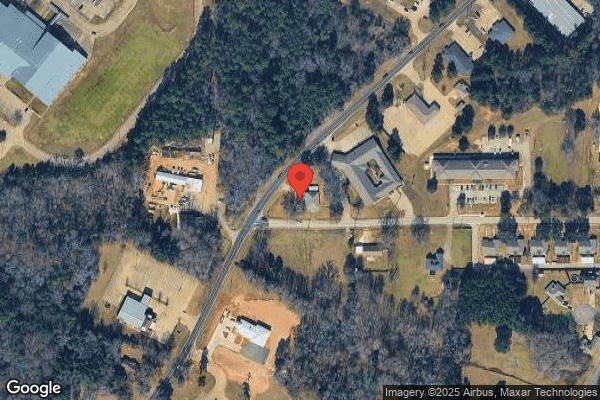
Jul 2025 1 deficiency 1 IJ
CRITICAL (J) 📢 Someone Reported This

A family member, employee, or ombudsman was alarmed enough to file a formal complaint

Immediate Jeopardy (IJ) - the most serious Medicare violation

Accident Prevention (Tag F0689)

Someone could have died · This affected 1 resident

**NOTE- TERMS IN BRACKETS HAVE BEEN EDITED TO PROTECT CONFIDENTIALITY** Based on observation, interview, and record review the facility failed to ensure each resident received adequate supervision to ...

Read full inspector narrative →
**NOTE- TERMS IN BRACKETS HAVE BEEN EDITED TO PROTECT CONFIDENTIALITY** Based on observation, interview, and record review the facility failed to ensure each resident received adequate supervision to prevent accidents for 1 of 8 residents (Resident #1) reviewed for adequate supervision.The facility failed to prevent Resident #1 from causing a burn proximal red area 5CM x 9CM, distal red area with blister 3CM X 8CM herself with coffee on 4/23/25 while she was in bed and not providing a lid for her cup.The facility failed to keep coffee available to residents or served to residents at a safe temperature.These failures resulted in the identification of an Immediate Jeopardy (IJ) on 07/15/25 at 12:09 PM. While the IJ was removed on 07/16/25 at 08:47 AM, the facility remained out of compliance at a scope of isolated and a severity level of potential for more than minimal harm that is not immediate jeopardy due to the facility's need to evaluate the effectiveness of the corrective systems.This failure could place residents at risk for injury, harm, and impairment or death.Findings included: Record review of Resident #1's face sheet, dated 08/12/24, indicated she was an [AGE] year-old female, admitted to the facility on [DATE]. Her diagnoses included Dementia (an umbrella term for a decline in mental abilities severe enough to interfere with daily life), Polyneuropathy (a condition where multiple peripheral nerves are damaged, causing a range of symptoms due to impaired nerve function), Muscle Weakness (a reduced ability to generate force). Record review of Resident #1's Annual MDS assessment, dated 04/11/25, indicated she had a BIMS score of 14, which indicated Resident #1 was cognitively intact. She was able to make herself understood and she was able to understand others. Resident #1's MDS reflected that she was independent on eating and drinking. Record review of Resident #1's care plan dated 6/6/2025 indicated that there was a focus area for Resident #1, risk of burns due to hot liquids and generalized weakness created on 11/1/2024. Furthermore, the care plan reflected the goal indicated that Resident #1 would not suffer any injury related to hot liquids, created on 11/1/2024. The care plan interventions were as follows: -Coffee and other hot liquids should not be served if over 140 degrees Fahrenheit Date Initiated: 11/01/2024Revision on: 11/04/2024.-DietIf hot liquid is spilled on self, staff should pour room temperature or lower templiquid on the affected area of the residentDate Initiated: 04/23/2025 -CNAResident to use a cup with a lid for hot liquids/coffeeDate Initiated: 11/01/2024Revision on: 11/06/2024 -CNAResident to use the dominant hand for drinkingDate Initiated: 04/23/2025Should be seated in upright position with table or overbed table when hot liquids arebeing consumedDate Initiated: 04/23/2025Record review of Resident #1's post incident assessment dated [DATE] revealed that Resident #1 had a burn proximal red area 5CM x 9 CM, distal red area with blister 3CM X 8CM. Shows that a new order was received to treat Resident #1's burn, Cleanse with normal saline, pat dry. Apply Silvadene ointment and cover with dry dressing. Change daily until resolved. Record review of Resident #1's progress note dated 4/23/25 revealed that Resident #1 told the Social Worker that she spilled coffee onto her abdomen and burned herself. Shows that the facility notified the resident's physician and the residents representative. Showed that the facility received new orders and updated Resident#1's care plan. Record review of facility provider investigation report dated 4/23/25 shows that the facility self-reported the incident, notified the resident's physician and received new orders, notified the resident representative, notified the incident to the Texas Health and Human Services Commission and the incident was investigated. The provider investigation report shows that Resident #1 was able to give a statement saying that she accidently burned herself when she spilled coffee into her stomach. Provider investigation report shows that the facility completed in-services regarding hot-liquids and residents at risk for burning themselves. Shows that the residents in the facility who were at risk were specifically named. Shows that staff across all disciplines were in-serviced. Record review of an undated written statement provided to the Administrator from the Social Worker, who first noticed the burn: On the morning of 4/23/25, I entered [Resident #1's] room to gather a box of hospice supplies that were left in her room. Upon entering her room, I noticed her glass of milk had been dropped on the floor and the milk was under her bed. I mentioned it to [Resident #1], and she told me she had spilled her milk and coffee when she tried to pull her overbed table closer to her. She was using her blanket to wipe the coffee off of her. I noticed that she was wiping her stomach with her blanket. I observed some redness to her stomach where the coffee had spilled. I immediately found her nurse and reported it to her, then went back to get some dry blankets on her. Record review of a written statement dated 4/23/25 provided to the Administrator from LVN B, who delivered the breakfast tray to Resident #1 On 4/23/25 at breakfast I [LVN B] TX Nurse delivered [Resident #1's] breakfast tray. [Resident #1] requested coffee. This nurse checked resident's meal tickets and noted no interventions regarding the coffee drinking on meal ticket. Signed by LVN B 4/23/25.During an interview and observation on 7/14/25 at 9:00 a.m., revealed the coffee available for residents to drink was temped using the surveyor's digital probe thermometer. The temperature of the coffee was 116F. The Dietary Manager said that he had brewed coffee that was in the kitchen. The temperature of the coffee inside the kitchen was measured by the investigator at 158F . He said the coffee was inside the kitchen which residents did not have access to but was to be served to residents in the hallways.During an interview on 7/14/25 at 9:33 a.m., Resident #1 was attempted to be interviewed. She was asked about the incident regarding her coffee burn that occurred on the morning 4/23/25. Resident #1 looked at the surveyor but did not respond with an appropriate answer to the question asked. Resident #1 was unintelligible during her interview and did not provide any relevant information. During an observation on 7/14/25 while touring the facility from 9:50 a.m., to 10:10 a.m., multiple residents were observed with lids on their coffee cups. During an observation on 7/14/25 at 12:15 p.m. it was observed that the coffee readily available for resident use in the dining room was measured at approximately 130F using the Dietary Manager's thermometer. The thermometer used by the Dietary Manager was an analog probe thermometer with hashmarks that read at 5-degree intervals. During an observation on 7/14/25 at 1:50 p.m. it was observed that the temperature of the coffee available to residents was 141.9F During an observation on 7/14/25 at 1:28 p.m. with an RN, revealed Resident #1's abdomen was observed. Her abdomen had healed, there was no open wounds, and her skin was clear and intact. Record review in Resident #1's meal ticket for 7/14/25 revealed that the ticked reflected, SPECIAL CUP FOR HER COFFEE WITH A LID During an observation on 7/15/25 at 7:55 a.m. while taking a temperature reading of a cup of coffee made available to residents in the dining room, the temperature of the coffee was 155.3F using a digital probe thermometer. During an interview on 7/15/25 at 9:40 a.m., with the Patient Care Coordinator, she said that Resident #1 ate her meals in her room. She said that a hall cart brought her food and coffee at the same time. She said that Resident #1 should have a lid on her cup of coffee since she was at risk of burning herself. She said that her coffee, since it had a lid, would be poured by the kitchen staff. She said that residents who were not at risk would have a regular open mug, and the coffee would be poured from a thermos that came with the hall cart provided by the kitchen. She said that CNAs and staff passing trays did not take the temperature of the coffee since it was the responsibility of kitchen staff to ensure that the coffee did not exceed the maximum of 140F. She said that no one should take the lid off Resident #1's coffee. During an interview on 7/15/25 at 10:17 a.m., the Director of Nurses said that CNAs or staff passing hall trays do not take the temperature of the coffee as it is passed out. She said that it is the responsibility of dietary staff to ensure the temperature does not exceed 140F. She said that meal tickets included hot liquid restrictions was added after the incident occurred. During an interview on 7/15/25 at 10:23 a.m., Dietary Aide A said that when coffee was served to the halls it would have been served in two different ways. She said that if the resident had a hot liquid risk it would be poured into a cup with a lid on the cup, then placed on the resident's tray . Or it would be poured into a regular coffee mug with no lid directly from a thermos that would be sent out with the hall cart. She said that only the kitchen staff took temperature readings of the coffee. She said that she knew who received a lid or not as they kept an updated list of residents at risk for hot liquids in the kitchen. During an interview on 7/15/25 at 11:00 a.m., the Social Worker said that she was the person who first noticed the burn on Resident #1's stomach. She said that Resident #1 told her that she tried to pull her bedside table closer to herself and when she did, she spilled coffee on the table, the floor, and herself. She said that Resident #1 had a regular coffee mug that came from the kitchen, and it did not have a lid on it. During an interview on 7/16/25 at 9:20 a.m., the Dietary Manager said he expects that his dietary staff follow facility policy regarding hot liquids and coffee. He said that he expected that hot liquids/coffee would not be served at a temperature that exceeds 140F and they are to log what the temperature was. He said that if the temperature exceeded 140F it would not be served until it had cooled down to 140F or below. He said that he expected that residents who require lids for their cups to be in place as it protected those who were at risk of burning themselves. He said that residents could be placed at risk for burning themselves if facility policy was not followed. He said that it was the responsibility of all dietary staff to ensure that residents that require a lid had one in place before the coffee left the kitchen. He said that they have a list of residents who are at risk for spilling hot liquids in the kitchen that is updated regularly. He said that after the incident that occurred on 4/23/25 he was in-serviced on all facility policies regarding residents handling hot liquids, who was at risk, abuse, and neglect. During an interview on 7/16/25 at 9:29 a.m., the Director of Nurses said she expected that staff follow facility policy for hot liquids which would include coffee. She said that staff were to ensure that coffee was served only once it had cooled to 140F or below, staff were taking the accurate temperature of the coffee or hot liquid, residents that required lids have a lid, and that all staff were responsible to ensure that facility policy was followed. She said that residents could be placed at risk for burning themselves if facility policy was not followed. She said that they knew who was at risk because they complete risk assessments for all residents, their care plan was updated if they were at risk, and the individuals at risk were also on their Kardex system. During an interview on 7/16/25 at 9:37 a.m., the Administrator said, she expected that all her staff follow facility policy regarding hot liquids or hot coffee. She said that staff were to take temperature readings of the coffee before it could be served, and it should not exceed 140F. She said that residents should be assessed for risk of handling hot liquids and those at risk of potentially burning themselves should have a lid. She said that all staff were ultimately responsible for ensuring the policies were followed. She said that residents had the potential to burn themselves if the facility policy was not followed. She said that every resident in the facility is assessed for various risks which included hot liquid assessments. Record review of a facility policy titled, Hot Liquid/Food Spills dated 2003 indicated that, Residents are at risk of having any hot liquid/food spilled on their person causing bums. Examples of hot liquids/food are: coffee, tea, hot soup, oatmeal, or any other hot food or liquid substance.If any staff member observes a resident spill hot liquid or food on themselves or another resident, the staff member will attempt to dissipate the heat of the item spilled with at least a liquid that is at a temperature of room temperature or below, by pouring the room temperature or cooler liquid directly on the area affected. The charge nurse is to be immediately notified so that an assessment of the resident can be completed. The charge nurse will report any injury to the attending physician and responsible patty and follow any further physician orders. Staff will assist with changing of clothes as needed an incident report and investigation will then be completed and determine if the resident needs further interventions to prevent future occurrences. The Administrator was notified of an IJ on 07/15/25 at 12:09PM and was given a copy of the IJ template and a Plan of Removal (POR) was requested. The Plan of Removal was accepted on 07/15/25 at 5:04 PM and included the following: Whispering Pines Lodge 07/15/25 Plan of Removal Problem : F689 Accidents and Hazards. All residents in the facility that consume coffee were assessed by DON/ADON/Charge Nurse for any signs of injuries from a burn. No coffee burns were assessed. The completion date will be 7/15/25. [Resident #1's] hot liquid assessment was completed as of 7/15/25 by the DON. [Resident #1] was provided with a coffee cup with a lid by the DON as of 7/15/25. [Resident #1's] care plan was updated with the coffee cup as of 7/15/25 by DON.The resident will be provided with her own personal coffee cup with a lid on 7/15/25. Hot liquid Assessments were updated on all residents that consume coffee in the facility by the DON on 7/15/25. Residents at high risk for coffee burns were assessed for the need for assistive devices if consuming hot liquids by the DON/ADON/Regional Compliance Nurse on 7/15/25. Care plans were updated as of 7/15/25 by the DON/ADON/Regional Compliance Nurse. Dietary slips were updated with specialized interventions such as lids, or specialized cups needed for hot liquids 7/15/25 All thermometers in the facility used for coffee temps were replaced with new digital thermometers by the administrator to ensure accuracy. Completed on 7/15/25. The administrator, dietary manager, or designee will be responsible daily for ensuring the coffee temperature will be checked and reading within 135-140 degrees [Fahrenheit] and logged prior to serving to residents. Coffee will not be served until the temperature is between 135- 140 degrees. The coffee temps will be logged by dietary staff prior to serving. The dietary manager and administrator will be responsible for ensuring temps are checked and logged daily prior to serving. This process and monitoring will be initiated by the administrator and start 7/15/25 The medical director was notified of the immediate jeopardy on 7/15/25 by the administrator. Residents will have access to coffee after it has been verified that the temperature is between 135-140 degrees. The coffee will be placed in the dining room for serving. The Dietary department and Administrator will be responsible for ensuring the temperatures are in range prior to serving. Start date 7/15/25 In-services: The ADO will in-service the Administrator and Dietary Manager 1:1 on the following topics on 7/15/25. Completion date will be 7/15/25. Abuse and Neglect- serving coffee above 140 degrees could result in neglect and cause injury to a resident. All brewed coffee will have cups of ice added until the internal temp reaches 135-140 degrees. Coffee will not be served at over 140 degrees. All brewed coffee will have the temperature logged before serving by dietary staff or designee. Hot liquid Spills Policy- Residents are at high risk for hot liquid spills. This policy explains the procedure following a hot liquid spill on a resident. Guidelines on serving coffee in a nursing facility policy- coffee will be served at temperature between 135- 140 degrees. Safety precautions may include but are not limited to additional supervision when consuming coffee, insulated or non-insulated coffee mugs with sippy lids, coffee service at lower temperatures, or restricted coffee availability. Following care plans/interventions for residents requiring hot liquid interventions. The following in-services were initiated by Administrator, DON, ADON, on 7/15/25 for all staff. Any staff who are not present or in-serviced on 7/15/25, will not be allowed to assume their duties until in-serviced. All new hires will be in-serviced in orientation. All PRN and agency staff will be in-serviced prior to assuming shift. Completion date will be 7/15/25. Abuse and Neglect- serving coffee above 140 degree could result in neglect and cause injury to a resident. All brewed coffee will have cups of ice added until the internal temp reaches 135-140 degrees. Coffee will not be served at over 140 degrees. All brewed coffee will have the temperature logged before serving by dietary staff or designee. Hot liquid Spills Policy- Residents are at high risk for hot liquid spills. This policy explains the procedure following a hot liquid spill on a resident Guidelines on serving coffee in a nursing facility policy- coffee will be served at temperature between 135- 140 degrees. Safety precautions may include but are not limited to additional supervision when consuming coffee, insulated or non-insulated coffee mugs with sippy lids, coffee service at lower temperatures, or restricted coffee availability. Following care plans/interventions for residents requiring hot liquid interventions. The surveyor verification of the Plan of Removal from 07/15/25 was as follows:During an observation on 7/16/25 at 7:57 a.m., it was observed that the Dietary Manager was temping the coffee in the kitchen. The dietary manager added ice until the coffee reached 116 Fahrenheit using a digital thermometer. He stated that they were not going to leave coffee out for anyone to get and that residents would need to ask for the coffee to be poured for them by the kitchen staff to ensure that no one received coffee that was too hot to be served. During an observation on 7/16/25 at 8:10 a.m., a walkthrough of the facility was completed and residents who were considered at risk had lids on their coffee cups. Resident #1 was observed with her own cup that had a tight fitting lid that she could drink her coffee from.During an observation on 7/16/25 at 8:15 a.m. Resident #1 was observed using her special cup for coffee with a lid on.Record review of five facility meal tickets with residents who were at risk for handling hot liquids on 7/15/25 at 11:23 a.m., revealed that residents who were at risk for handling hot liquids were notated on their meal ticket and it instructs dietary staff to place a lid on their coffee. During an interview on 7/16/25 at 9:00 a.m. the Dietary Manager stated that they had new digital thermometers so they could have more accurate readings rather than using the analog thermometers with the 5-degree hashmarks. He said that coffee would be given to residents when they asked kitchen staff, and a cup would be poured for them to ensure that no one received a cup of coffee that was over 140F.Record review of an undated AD Hoc (Spontaneous) QAPI Contributors sign in sheet revealed the Administrator, Director of Nurses, Medical Director, Dietary Supervisor, Activity Director. Record review of the facility's assessments of all residents revealed which residents were at risk of spilling hot liquids. Assessments were completed on 7/15/2025 by the DON and care plans were updated to reflect their risk for hot liquids.Record review of Resident #1's meal ticket dated 7/14/25 revealed that her ticket stated, SPECIAL CUP FOR COFFEE!!!! SPECIAL CUP FOR HER COFFEE REQUIRES LIDDuring interviews from 7/14/25 at 12:38 p.m. to 7/16/25 8:29 a.m. the following staff were interviewed: the Social Worker, Director of Nurses, Administrator, Assistant Director of Nurses, Dietary Manager, MDS Coordinator, Patient Care Coordinator, Activity Director, Dietary Aide A, LVN B, CNA C, LVN D, CMA E, Dietary Aide F, Dietary Aide G, CMA H, CNA I, Dietary Aide J, CMA K, LVN L, LVN M, LVN N, CNA O, RN P, CNA Q, LVN R, Dietary Aide S, Dietary Aide T, Certified Occupational Therapist U, Dietary Aide V The staff interviewed worked across various shifts including days, evenings, and nights. All staff said they were in-serviced on the Hot liquid Spills Policy, Guidelines on serving coffee in a nursing facility policy, and Abuse and Neglect. The dietary staff were able to articulate that coffee should not exceed 140F, to cool coffee down by using ice until it was below the 140F threshold. The dietary staff were in-serviced that dietary slips would notate if a resident was at risk for spilling hot liquids, abuse and neglect, and to log the temperature of coffee when it was made available to be given to residents. All other staff were able to articulate their in-service training on abuse and neglect and who to report to if they found that a resident had a burn, that 140F was the maximum temperature coffee could be served at, at risk residents needed a lid on their coffee, where to find which resident was at risk, and that each residents meal ticket would indicate if they had a special intervention for hot liquids. On 07/16/25 at 08:47AM, the Administrator was notified the IJ was removed. However, the facility remained out of compliance at a scope of isolated and a severity level of potential for more than minimal harm that is not immediate jeopardy due to the facility's need to evaluate the effectiveness of the corrective systems.
Apr 2025 3 deficiencies
CONCERN (D) 📢 Someone Reported This

A family member, employee, or ombudsman was alarmed enough to file a formal complaint

Potential for Harm - no one hurt, but risky conditions existed

Deficiency F0558 (Tag F0558)

Could have caused harm · This affected 1 resident

**NOTE- TERMS IN BRACKETS HAVE BEEN EDITED TO PROTECT CONFIDENTIALITY** Based on interview and record review, the facility failed to ensure each resident had the right to reside and receive services i...

Read full inspector narrative →
**NOTE- TERMS IN BRACKETS HAVE BEEN EDITED TO PROTECT CONFIDENTIALITY** Based on interview and record review, the facility failed to ensure each resident had the right to reside and receive services in the facility with reasonable accommodation of resident needs and preferences for 1 of 10 residents (Resident #1) reviewed for reasonable accommodations. The facility failed to ensure Resident #1 was allowed to use his personal motorized wheelchair during his stay at the facility. This failure could place residents at risk for a loss of independence, decreased quality of life, self-worth, and dignity. Findings included: Record review of Resident #1's face sheet, dated 04/15/25, indicated he was a [AGE] year-old male, admitted to the facility on [DATE], and discharged on 02/24/25. His diagnoses included spastic quadriplegic cerebral palsy (a severe form of cerebral palsy that affects all four limbs, leading to paralysis and muscle stiffness), and chronic kidney disease (a long-term condition where the kidneys are damaged and can't filter blood as effectively, leading to a buildup of waste and fluids in the body). Record review of Resident #1's MDS assessment, dated 02/21/25, indicated he had a BIMS score of 15, which indicated intact cognition. The assessment indicated he used a motorized wheelchair prior to his admission. He had impairment of one of his upper extremities, and both of his lower extremities. During an interview on 04/15/25 at 1:05 PM, the ADON said the facility did not allow the residents to use motorized wheelchairs in the facility. She said this had been in effect since before the current corporate entity took over. She said it has always been this way. During an interview on 04/15/25 at 1:18 PM, the ADON said Resident #1 had Cerebral Palsy. She said when he admitted to the facility, he used a wheelchair for mobility. She said he had poor trunk control. She said she did not think he was able to move the wheelchair on his own and had to be propelled when he wanted to be moved. She said he required substantial to maximal assistance with mobility. She said a previous administrator disallowed the motorized wheelchairs because of a previous resident that was unsafe with the motorized wheelchair. She said from then on they would allow the residents to use a motorized wheelchair, provided that they were assessed to be safe to use the motorized wheelchair. During an interview on 04/15/25 at 2:00 PM, Resident #1 said the facility did not let him use his motorized wheelchair. He said when he arrived, he told the facility that his motorized wheelchair was on the way, and the facility staff did not allow him to use his motorized wheelchair. He said he did not have the strength to move his facility provided wheelchair. He said he did not like having to wait on staff to help him. He said he was used to being independent. He said it felt like they were taking away his independence. He said he was in the facility for about a week. He said he was frustrated about it while he was in the facility. He did not recall who specifically did not allow him to use his motorized wheelchair. During an interview on 04/16/25 at 9:43 AM, the ADON said the risk to not allowing residents to use motorized wheelchairs was that residents would have to depend on staff for care and could lose their sense of independence During an interview on 04/16/25 at 9:56 AM, RNC A said she expected the facility to allow the resident to use his motorized wheelchair. She said they required a safety assessment with therapy, and the motorized wheelchair should be in working condition. She said the facility was under the impression they did not allow wheelchairs from an administrator about 4 administrators ago. She said not allowing a resident to use their motorized wheelchair could affect their dignity and diminish their sense of independence. During an interview on 04/16/25 at 10:14 AM, the Administrator said she was not working in the facility during Resident #1's stay. She said she expected the staff to allow the motorized wheelchair as long as they are assessed by the therapy department, and were found to be safe. She said the risk was that it was possible the resident could feel isolated from the building, socialization, and activities if they were not allowed to use their motorized wheelchair. Record review of the facility's undated policy, Resident Rights, stated: The resident has a right to a dignified existence, self-determination, and communication with and access to persons and services inside and outside the facility, including those specified in this policy. A facility must treat each resident with respect and dignity and care for each resident in a manner and in an environment that promotes maintenance or enhancement of his or her quality of life, recognizing each resident's individuality. The facility must protect and promote the rights of the resident . .Respect and dignity - The resident has a right to be treated with respect and dignity, including: . .2. The right to retain and use personal possessions, including furnishings, and clothing, as space permits, unless to do so would infringe upon the rights or health and safety of other residents. 3. The right to reside and receive services in the facility with reasonable accommodation of resident needs and preferences except when to do so would endanger the health or safety of the resident or other residents . Record review of the facility's policy, Electric or Motorized Wheelchair, last revised 02/27/15, stated: .A Medicaid and Medicare certified [Nursing Facility] must not discriminate on the basis of disability. A nursing facility that denies access and service to a potential resident may be found in noncompliance with state rules and federal regulations. It is out policy to ensure, to the best of our ability, the safety of residents who own and use an electric wheelchair, as well as the safety of all other resident's, staff and visitors in the facility. Therefore, resident's owning/using an electric wheelchair will be assessed on admission, quarterly and upon a significant change of condition for their ability to guide/drive the wheelchair . .The facility should allow a resident to store the power mobility device in the resident's room if there are no Life Safety Codes concerns, such as blocking or limiting egress .
CONCERN (D) 📢 Someone Reported This

A family member, employee, or ombudsman was alarmed enough to file a formal complaint

Potential for Harm - no one hurt, but risky conditions existed

Accident Prevention (Tag F0689)

Could have caused harm · This affected 1 resident

**NOTE- TERMS IN BRACKETS HAVE BEEN EDITED TO PROTECT CONFIDENTIALITY** Based on observation, interview, and record review, the facility failed to ensure that the resident environment remains as free ...

Read full inspector narrative →
**NOTE- TERMS IN BRACKETS HAVE BEEN EDITED TO PROTECT CONFIDENTIALITY** Based on observation, interview, and record review, the facility failed to ensure that the resident environment remains as free of accident hazards as is possible and each resident receives adequate supervision and assistance devices to prevent accidents for 1 of 10 residents (Resident #2) reviewed for accidents and supervision. The facility failed to ensure an oxygen cylinder found in Resident #2's room was properly stored. This deficient practice could place residents at risk of injury. Findings included: Record review of Resident #2's face sheet, dated 04/14/25, indicated he was an [AGE] year-old male, admitted to the facility on [DATE]. His diagnoses included pleural effusion (a condition where excessive fluid builds up in the space between the lungs and chest wall), heart failure (occurs when the heart can't pump enough blood to meet the body's needs), and end stage renal disease (the most severe stage of chronic kidney disease where the kidneys can no longer adequately filter waste from the blood). Record review of Resident #2's admission MDS assessment, dated 04/11/25, indicated he had a BIMS score of 13, which indicated intact cognition. During an observation and interview on 04/14/25 at 2:25 PM, Resident #2 was lying in bed in his room. There was an oxygen tank upright on the floor in this room. The oxygen tank was not in a caddy. Resident #2 said he was not sure how long the tank had been in his room on the floor. During an observation on 04/14/25 at 3:10PM, the oxygen tank was still in Resident #2's room on the floor. It was not in a caddy. During an observation and interview on 04/14/25 at 3:26 PM, this surveyor observed LVN B carry the oxygen tank out of Resident #2's room. She said the oxygen tank should have been stored in a caddy while it was in the resident's room. She said it should have been in a caddy while she moved it down the hallway. She said the tank could hurt someone if it fell down or was knocked over. During an interview on 04/16/25 at 8:37 AM, the Maintenance Supervisor said the oxygen tanks should be stored in a carrier or in the storage room. He said they should never be stored directly on the floor. He said the risk was a potential explosion. During an interview on 04/16/25 at 9:43 AM, the ADON said she expected the oxygen tanks to be stored in the oxygen room or in a caddy. She said the tank could hurt someone or cause damage if it was knocked over. During an interview on 04/16/25 at 9:56 AM, RNC A said she expected the storage tanks to be secured so they do not fall over. She said the risk was that the tank could potentially hurt someone. During an interview on 04/16/25 at 10:14 AM, the Administrator said the oxygen tanks should be stored properly and kept on a cart. She stated they should never be out on the floor. The Administrator stated they could also be stored in a caddy. She said the tank could be knocked over and a resident could potentially get hurt. Record review of the Facility's policy, Safe Handling Of Compressed Gases, last revised 12/10/15, stated: .11 . When tanks are stored, all tanks and cylinders should be stored in a cylinder cart or securely chained in a secure storage area. Never leave cylinders free-standing. All cylinders must be individually secured .
CONCERN (D) 📢 Someone Reported This

A family member, employee, or ombudsman was alarmed enough to file a formal complaint

Potential for Harm - no one hurt, but risky conditions existed

Deficiency F0919 (Tag F0919)

Could have caused harm · This affected 1 resident

**NOTE- TERMS IN BRACKETS HAVE BEEN EDITED TO PROTECT CONFIDENTIALITY** Based on observation, interview, and record review, the facility failed to ensure residents could call for staff assistance thro...

Read full inspector narrative →
**NOTE- TERMS IN BRACKETS HAVE BEEN EDITED TO PROTECT CONFIDENTIALITY** Based on observation, interview, and record review, the facility failed to ensure residents could call for staff assistance through a communication system which relays the call directly to a staff member or to a centralized staff work area from each resident's bedside for 1 of 10 residents (Resident #4) reviewed for the ability to call for staff assistance. The facility failed to ensure Resident #4 had a call light that was functional. Resident #4's call light did not turn on when the button was pressed. This failure could place residents at risk for a delay in assistance and decreased quality of life, self-worth, and dignity. Findings included: Record review of Resident #3's face sheet, dated 04/15/25, indicated she was a [AGE] year-old female, admitted to the facility on [DATE]. Her diagnoses included chronic obstructive pulmonary disease (a condition caused by damage to the airways or other parts of the lung). Record review of Resident #3's admission MDS assessment, dated 04/11/25, indicated she had a BIMS score of 15, which indicated intact cognition. Record review of Resident #4's face sheet, dated 04/15/25, indicated she was a [AGE] year-old female, admitted to the facility on [DATE]. Her diagnoses included dementia (loss of brain function, including memory, thinking, language, judgment, or behavior, that interferes with daily life), heart failure (occurs when the heart can't pump enough blood to meet the body's needs), and major depressive disorder (a serious mental illness that involves persistent feelings of sadness and loss of interest in activities). Record review of Resident #4's quarterly MDS assessment, dated 03/05/25, indicated she had a BIMS score of 7, which indicated severe cognitive impairment. She had impairment of all four extremities. She was completely dependent on staff for toileting, bathing, lower body dressing, personal hygiene, and bed-to-chair transfers. She required maximal assistance with upper body dressing, roll left and right, sit to lying, and lying to sitting on side of bed. She was always incontinent of both bowel and bladder. Record review of Resident #4's care plan, dated 04/01/25, indicated a focus of the resident was dependent on staff for activities, cognitive stimulation, social interaction related to cognitive deficits, disease process, and physical limitations. Interventions included ensure that adaptive equipment that the resident needs is provided and is present and functional. During an interview 04/15/25 at 10:17AM, Resident #3 was sitting up in bed watching TV. She said her roommate Resident #4's call light had not been working for around 2 weeks. She said while she was in the room, if Resident #4 needed anything, then she would press her own call light for Resident #4. During an observation and interview on 04/15/25 at 10:22AM, Resident #4 was lying in bed resting. She asked this surveyor if she could be changed. This surveyor pressed her call light to call for a staff member. The light did not turn on. This surveyor asked her roommate Resident #3 to press her light and it then came on. During an observation and interview on 04/15/25 at 10:27AM, CNA C came into Resident #3 and Resident #4's room and answered the call light. She attempted to press the call light on Resident #4's side and it did not come on. She said she would notify the maintenance department. She said the risk to the resident was that she would be unable to call for help if she needed something or if she fell and needed help. During an interview on 04/16/25 at 8:37AM, the Maintenance Supervisor said he checked the call lights in at least 5 rooms each week. He said he checks the call light panel at the nurse's station daily. He said if he notices an issue, then he checks on the lights right away. He said he was not aware of the light not working in Resident #4's room before this surveyor noticed it was not working. He said he replaced the call light cord in Resident #4's room and it was functional at that time. He said the risk to the resident was they could fall and get hurt and be unable to call for help. He said someone could have a nursing related issue and be unable to call for help. He said he had worked in the facility since the end of February. He said he was unaware of the last time the call light was checked because it would have been before he started working there. He said they use a maintenance request program to request the maintenance director to check things. He said he had not received a request for the call light in Resident #4's room. During an interview on 04/16/25 at 9:43AM, the ADON said she was not aware of the call light in Resident #4's room not working before this surveyor pointed it out. She said it was replaced and was working. She said the cable was bad and not working. She said the risk was that the resident could miss care she wanted due to not being able to turn on the light. She said it was possible the resident could fall and not be able to call for help. During an interview on 04/16/25 at 9:56AM, RNC A said she expected the call light to be functional. She said she expected the call light, if it was not working, to be communicated to the maintenance director to be addressed immediately. She said the risk was that the resident's needs could not be met timely. She said it was possible the resident could fall and not be able to call for help. During an interview on 04/16/25 at 10:14AM, the Administrator said she expected the call lights to be functional at all times. She said if it was not working, then staff should notify maintenance immediately. She said the risk was that the resident could need assistance and the staff would not know to come help her. She said it was possible the resident could fall and be unable to get help. Record review of the facility's undated Life Safety Binder stated: .Call Lights - Check 2 rooms a hall weekly and 100% before full book . Record review of a sheet titled Call Lights Check, dated 03/03/25 through 04/15/25, indicated Resident #3 and Resident #4's room call lights were checked on 04/15/25. There were no other dates for Resident #3 and Resident #4's room.
Mar 2025 1 deficiency 1 IJ
CRITICAL (J) 📢 Someone Reported This

A family member, employee, or ombudsman was alarmed enough to file a formal complaint

Immediate Jeopardy (IJ) - the most serious Medicare violation

Accident Prevention (Tag F0689)

Someone could have died · This affected 1 resident

**NOTE- TERMS IN BRACKETS HAVE BEEN EDITED TO PROTECT CONFIDENTIALITY** Based on observations, interviews, and record review, the facility failed to ensure residents received adequate supervision to p...

Read full inspector narrative →
**NOTE- TERMS IN BRACKETS HAVE BEEN EDITED TO PROTECT CONFIDENTIALITY** Based on observations, interviews, and record review, the facility failed to ensure residents received adequate supervision to prevent accidents for 1 of 7 residents reviewed for accidents. (Resident #1). The facility did not prevent Resident #1, who resided on the secured unit, from leaving the facility unsupervised on 03/13/2025. Resident #1 was found at a local hospital emergency room where he had been taken by local police. The facility was not aware the resident was missing for approximately 4 hours until staff went to get him for his evening meal. The noncompliance was identified as PNC (past noncompliance). The IJ began on 03/13/2025 and ended on 03/14/2025. The facility had corrected the noncompliance before the survey began. This failure could place residents at risk of potential accidents, injuries, harm, or death. Findings included: Record review of a face sheet on 03/28/2025 indicated Resident #1 was a [AGE] year-old male who admitted on [DATE] with diagnoses including: stroke, dysphagia (difficulty swallowing), alcohol abuse, cocaine use, and impaired cognitive function. Record review of a quarterly MDS dated [DATE] indicated Resident #1 had clear speech, usually understood others and was usually understood, he had a BIMS score of 06 indicating severe cognitive impairment. He had a behavior of wandering daily. He required partial assistance with ADLs and could feed himself. He was incontinent of bladder and frequently incontinent of bowel. He was independent with mobility and walking unassisted. He had a feeding tube and also ate a mechanically altered diet. Record review of care plans for Resident #1 indicated he had a care plan initiated on 12/23/2024 and revised on 01/22/2025 indicating he was at risk for wandering. Goals included: The resident will not leave facility unattended and the resident's safety will be maintained through the next review period. He had another care plan initiated on 12/23/2024 and revised on 01/22/2025 which indicated he was at risk for elopement and required a secured unit. Care plan goals included: Will remain safe within the facility unless accompanied by staff or other authorized person through the next review date. Interventions included: Supervise closely and make regular compliance rounds whenever resident is in room. This care plan was updated on 03/14/2025 and indicated he had eloped from a window in an empty room on the secure unit and a new intervention initiated on 03/13/2025 indicated 1:1 monitoring was in use. Review of Resident #1's Progress Notes in the electronic record indicated the following: Notes dated 12/22/2024 at 1:20 PM indicated resident goes from room to room rummaging attempting to find something to eat. He takes other resident's clothing and packs and goes to the doors and attempts to leave.; Notes dated 12/30/2024 at 4:44 PM Resident continues to pace up and down the halls. He goes in and out of rooms taking food and other items. Resident must be monitored closely. Packs up his belongings and attempts to exit.; Notes dated 01/18/2025 at 11:50 AM Resident is extremely restless this shift. He is pacing the hallway and going in and out of other resident's rooms. Demanding to go home. Says he will walk if he has to. Not accepting direction well Interventions: Talked with him and explained his need for care at this point in his life. Talked about it being the winter season and bad weather expected.; Notes dated 1/19/2025 at 11:07 AM Resident continues the same behavior pattern as last shift. He is pacing up and down the hall and going in and out of other resident's rooms. Does not accept direction well. Is insistent that he is going home. Has packed his belongings and carried them with him in the hall. He has called his niece several times over the past two shifts. He does not get an answer. This nurse has left a message with the niece the last two shifts letting her know the resident wishes to speak with her if she has the time to call him. At this point, no return call. This nurse has advised the resident that he may speak with the social worker and/or administrator on Monday when they are in the facility regarding his wish to leave the facility. Resident is calm and accepting of that information at this time.; Progress notes continued with entries on 01/21/25 at 10:45 AM, 02/01/25 at 1:49 PM, 02/13/25 2:46 PM, and 02/21/25 9:51 AM regarding pacing and packing of clothes and wanting to go home; Progress Notes dated 2/28/2025 at 2:16 PM It was reported to this nurse just now that resident took the window alarm apart in room [ROOM NUMBER] yesterday (2-27-25). As I was just made aware I immediately reported it to the facility administrator. Resident was just in the room across the hall from his (room [ROOM NUMBER]) taking clothing that belongs to another resident from the closet. He also pulled the call light cord out of the wall and put it in his bag that he packs and carries around. Resident was directed into his own room and educated about taking other resident's belongings. He will not accept the direction. During an interview on 03/28/2025 at 9:25 AM, the DON said she was on vacation the week Resident #1 eloped from the facility and her ADON was the person the staff reported the incident to. She said Resident #1 had been transferred on the morning of 03/14/2025 to an inpatient psychiatric facility out of state. She said he had returned to the facility on the evening of 03/27/2025. She said he was on 1:1 monitoring before he transferred and was placed on 1:1 monitoring when he returned. During an interview on 03/28/2025 at 10:10 AM CNA A said she worked the memory care unit from 6AM-6 PM. She said she checked residents every hour to see if residents were in their rooms they are assigned to. She said residents wander in and out of each others rooms sometimes. She said they have to make sure every resident was present on the secure unit. She said she was working the day Resident #1 eloped. She said she saw him at lunch. She said lunch was over a little before 1:00 PM and she was going to start her showers assigned. She said Resident #1 was in front of the linen closet and she had to ask him to move so she could get towels for the showers. She said there was an LVN assigned to the unit but did not know if she was on the unit at the time of the elopement. She said the charge nurse came on and off the unit. She said she finished her showers about 2:00 PM. She said while in the shower area she could not hear anything happening on the unit. She said after the showers she was sitting at the dining room door where she could see the dining room residents and the hallway. She said there were 4 residents in the dining room that were almost 1:1 because they tended to stand and fall. She said she assumed Resident #1 was in his room taking a nap because that was what he usually did after lunch. She said Resident #1 did go in and out of other rooms and rummaged in the closets and drawers of other residents at times. She said it was about 4:30 PM and close to supper time and she went down to his room to bring him to the dining room. She said Resident #1 lived in room [ROOM NUMBER] and was not in his room. She said she opened the closed door on unoccupied room [ROOM NUMBER] and found the window broken. She said she immediately reported the broken window to the ADON. She said staff began an immediate sweep of the secure unit and Resident #1 was not found. She said Resident #1 was on 1:1 monitoring before he was transferred to the inpatient psychiatric facility. She said he had returned to the facility on [DATE] and had a staff member assigned to sit in the room with him 1:1 and document where he was and what he was doing every 15 minutes. She said he had been asleep most of the morning except he did get up and eat breakfast. During an interview and observation on 03/28/2025 at 10:45 AM, CNA B was sitting in room [ROOM NUMBER] at the foot of Resident #1's bed. Resident #1 was observed covered with a sheet and sleeping. She had a clipboard with log sheets with a check list for every 15 minute checks. She said they started the checks immediately upon Resident #1's return to the facility. She said she started her tour at 8:00 AM. She said the observation and documentation was to continue until they were told to stop. She said he had been sleeping except for getting up to eat breakfast. The toilet tank lid in the bathroom was secured with 2 zip-ties (0.25 wide) to keep the lid from being removed. The thumb locks and window alarms were present and intact on the window. During an observation on 03/28/2025 at 11:05 AM room [ROOM NUMBER] window secured with alarm and thumb locks. room [ROOM NUMBER], across the hall, window had been replaced and was secured with alarm and thumb locks. During an observation on 03/28/2025 at 11:06 AM the glass exit door at the end of the hall (adjacent to rooms [ROOM NUMBERS]) was observed to be a fenced in patio area for the secure unit's use. A construction site for homes being built was observed across the street with workmen present along with their personal vehicles. During an interview on 03/28/2025 at 11:10 AM CNA C said she had worked on the secure unit as well as other halls in the facility. She said she worked mostly the day shift (6AM-6PM). She said she was not working the day Resident #1 eloped. She said he had tried to leave through the doors on occasion but was always re-directed by staff. She said she had never seen him take any object and try to break the glass door or windows. She said when 2 aides are on the unit, while one is doing her showers the other one aide was on the hall and then they switch so the other aide can do her showers. She said when they had a nurse on the unit instead of an aide the nurse stayed on the hall while the aide did her showers. She said between breakfast and lunch she usually checked where residents were twice and then after lunch until supper she checked for residents 2-3 times. During an interview on 03/28/2025 at 11:20 AM the ADON said she had been the ADON for almost 3 years. She said she did not remember exact times but on 03/13/2025 CNA A told her Resident #1 was gone. She said it was about supper time. She told her the window had been broken out in room [ROOM NUMBER] on the secure unit. She said the toilet tank lid in room [ROOM NUMBER] had been placed neatly on the floor under the window and was not broken. She said they did an immediate head count in the general population areas of the facility and in the secure unit. Resident #1 was the only resident missing. She said she had staff start searching the grounds on foot and in cars while she notified the administrator, the medical director and the police. She said no one found the resident and when talking with persons living in the area no one had seen anyone fitting his description. She said there were no people or vehicles at the construction site at the time of the search. She said the first officer that responded made a tour in his vehicle around the immediate area. She said the second officer that responded recognized the resident from the picture provided. He said he was at one of the local hospitals. She said the medical director had called both hospitals to see if Resident #1 had been admitted and he had not been admitted . She said the police department had taken him to one of the hospitals and he was not admitted but still in the emergency room. She said the facility picked the resident up from the hospital and returned him to the facility. She said he was placed on 1:1 monitoring until he was transferred to inpatient psychiatric hospital the next day. She said the resident was assessed upon his return and he had no injuries other than 2 small scratches on his fingers. She said she had scheduled staff for 24-hour coverage to monitor Resident #1 through the weekend and would begin searching for coverage for Monday if it was needed. She said she was directed to schedule 1:1 monitoring and continue until she was told to stop. She said the facility was trying to secure alternate placement at the time. She said the usual rounding pattern was every 2 hours to account for residents. She said the expectation now was to make rounds and head count every 1 hour. She said all staff have been inserviced on elopement risk, elopement prevention and elopement drills have been conducted. She said she was told after the elopement Resident #1 knew how to remove the thumb locks and disable the window alarms. She did not say who told her this information. During an interview on 03/28/2025 at 12:25 PM the RN Compliance Nurse came to the facility when Resident #1 was reported missing on 03/13/2025. She said the ADON notified her at 5:09 PM. She said an administrator at another facility called and said Resident #1 was at the hospital. She said to her knowledge she did not know Resident #1 could disable the window alarms and remove the thumb locks on the windows. She said she saw the broken window and the toilet tank lid was placed under the window and was unbroken. During an interview on 03/28/2025 at 12:40 PM CNA A said she told the office (DON, ADON, Administrator) Resident #1 knew how to disable the alarms and knew how to undo the window thumb locks. She said she had seen him peel off the window alarms in one room and put it in his sock. She said she did not remember exactly when she told them but it had been a while ago. She said maintenance came every so often and checked the windows for the alarms and thumb locks. During an interview on 03/28/2025 at 12:45 PM the DON said she had never been told Resident #1 could disable the alarms and thumb locks on the windows. During an interview on 03/28/2025 at 12:50 PM the former administrator said she was informed Resident #1 was missing from the facility at 5:02 PM on 03/13/2025. She said at the time no one knew how long he had been gone from the facility. She said no one told her the resident knew how to disable the alarms on the windows and remove the thumb locks. She said the resident was found at the hospital where he had been taken by the police department at around 1:10 PM. She said the resident had got inside a pickup truck at a nearby construction site and the owner had called the police. She said she had put in her 30-day notice on 02/12/2025 and her last day had been 03/14/2025. She said before she left she made sure staff were inserviced on elopement and the toilet lids were secured. She said her expectation was to follow the facility policy on making rounds to check on residents but said the secure unit hall was short and took little time to round the hall. During an interview on 03/28/2025 at 1:15 PM LVN D said she was charge nurse for the secure unit and another hall the day Resident #1 eloped. She said she saw Resident #1 walking down the hall after lunch. She remembered he was wearing a gray shirt and gray pants. She said at that time he did not appear to be exit seeking, just going toward his room after eating lunch. She said she had just been on the unit for 2 days so did not know all the residents really well. She said around supper time she was notified the resident was missing. She said the facility was immediately searched. She said she was off duty but still at the facility when the resident returned, and he was placed on 1:1 monitoring. During an interview on 03/28/2025 at 3:05 PM the RN Compliance Nurse said the facility did not have a specific policy on making rounds on residents at the facility. She said after the elopement the expectation was to monitor every hour. She said initially there was a head count every 15 minutes from the evening of 03/13/2025 until the morning of 03/14/2025 when Resident #1 was transferred to the inpatient psychiatric facility. She said then the checks were to be made every hour on all residents. She said window checks were also done every hour to make sure they were intact. She said that has continued while he was gone and when he returned on 03/27/2025. She said the every hour rounding would continue until Resident #1 discharged . She said at the time of the elopement all residents in the facility were assessed for elopement risk and any resident that was high risk had their care plans updated with new interventions is needed. During interviews on 03/29/2025 at 10:30 AM CNAs A and C said they had been trained to check on residents every hour until they are told to stop. They said they had been trained on elopement risk and elopement protocol. CNA A said Resident #1 had been discharged from the facility around 6:00 PM on 03/28/2025. During observations on 03/29/2025 beginning at 10:40 AM the secure unit windows were all intact with alarms and thumb locks. All toilet tank lids were secured with 2 zip-ties. Residents asleep in bed were noted to have fall mats on the floor at bedside and beds were in the lowest position. A review of the facility investigation report indicated the incident occurred on 03/13/2025 and was reported to the state agency on 03/13/2025. Resident #1 was last seen at 12:54 PM on 03/13/2025 after lunch. He was reported missing at 5:02 PM. Resident had used toilet tank lid to break window in room [ROOM NUMBER]. Resident was seen getting into a pickup by construction worker and police was called. Police picked up resident around 1:11 PM and taken to a local hospital emergency room. Resident returned to facility at 6:20 PM with no injuries noted. Resident placed on 1:1 monitoring until transferred to inpatient psychiatric facility for further evaluation on 03/14/2025 at 10:45 AM. Review of typewritten note of previous administrator dated 03/13/2025 indicated she was notified of Resident #1's elopement by the ADON. She indicated the window had been broken with the toilet tank lid. Immediate search of the facility and grounds began and police were notified at 5:06 PM. Resident returned to facility at 6:20 PM. Resident on 1:1 monitoring, elopement risk assessments done, skin assessment done, all toilet lids were secured on secure unit, broken window was secured and hourly checks on residents and windows begun. Local police department informed former administrator Resident #1 was picked up at 1:11 PM. Former administrator went to construction site and found [NAME] who confirmed a black man had gotten into his pickup and he had called the police. Review of a handwritten statement dated 03/13/2025 the speech therapist had completed lunch observations and therapy with Resident #1 around 12:20 PM. The therapist continued therapy swallowing precautions training with the resident. Resident #1 was left in dining room after therapy session. Review of a handwritten statement dated 03/13/2025 indicated LVN D saw Resident #1 at approximately 12:54 PM Review of a handwritten statement dated 03/13/2025 indicated the occupational therapist returned Resident #3 (roommate) to his room about 3:30 PM and Resident #1 was not in his room. Review of handwritten statement dated 03/13/2025 CNA A indicated after picking up lunch trays around 12:50 PM she saw Resident #1 in front of the linen closet and asked him to step away so she could get some towels for showers. She thought she saw him later in the afternoon with a group of residents by the glass exit door. She said when searching rooms looking for him she found the broken window and reported him missing. Review of facility Elopement Prevention Policy dated 10/27/2010 indicated Every effort will be made to prevent elopement episodes while maintaining the least restrictive environment for residents who are at risk for elopement.Physical Plant 1. All facility exits that residents have access to will have a device in place to alert staff of possible elopement attempts.keypad exit magnetic locks, secured unit, .3.All exit devices will be maintained by the manufacturer's recommendations and function of each door device will be verified weekly and a log maintained. Staff Training: Staff will receive training during their orientation process and then annually regarding: elopement prevention, operation of all exit devices, and actions to take if elopement occurs. Review of facility Elopement Response Policy dated 10/27/2010 indicated Nursing personnel must report and investigate all reports of missing residents. When an elopement has occurred or is suspected, our elopement response plan will be immediately implemented.4. Should an employee discover a resident is missing from the facility, he/she should: A. report to the charge nurse .C. make a thorough search of the building and premises. If not located: D. notify Administrator and Director of Nursing; E. notify responsible party; F. notify attending physician; G. notify . Area Director of Operations . Facility took the following actions to correct the noncompliance prior to surveyor entrance: Review of documentation of training of all staff conducted beginning 03/13/2025 after the elopement for Elopement Prevention, Elopement Response, Abuse and Neglect. Review of electronic records indicated all residents were assessed for elopement risk on 03/13/2025. Elopement risks were identified and updated if necessary due to increased need for observation. Care plans were updated as necessary with additional interventions. Review of documentation beginning 03/13/2025 and ongoing for head count on residents every hour. Resident #1 and other secure unit residents on every 15 minute checks beginning 03/13/2025 at 6:30 PM and continuing until 03/14/2025 at 10:45 AM when Resident #1 discharged to inpatient psychiatric facility. Elopement drills to be conducted monthly on different shifts and random hours of the day. Review of elopement drill documentation indicated drills had been done. Surveyor verified the facility had corrected the noncompliance prior to survey entry through observations, record reviews and interviews.
Mar 2025 1 deficiency 1 IJ
CRITICAL (J) 📢 Someone Reported This

A family member, employee, or ombudsman was alarmed enough to file a formal complaint

Immediate Jeopardy (IJ) - the most serious Medicare violation

Deficiency F0604 (Tag F0604)

Someone could have died · This affected 1 resident

**NOTE- TERMS IN BRACKETS HAVE BEEN EDITED TO PROTECT CONFIDENTIALITY** Based on observation, interview, and record review the facility failed to ensure a resident had the right to be treated with dig...

Read full inspector narrative →
**NOTE- TERMS IN BRACKETS HAVE BEEN EDITED TO PROTECT CONFIDENTIALITY** Based on observation, interview, and record review the facility failed to ensure a resident had the right to be treated with dignity and respect and free from physical restraints for 1 of 3 residents (Resident #1) reviewed for resident rights. CNA D said she restrained Resident #1 on three occasions during the last month or so. She said about a month ago she had swaddled Resident #1 with a blanket by folding a blanket around Resident #1 to restrict her movements. CNA D said she had swaddled Resident #1 on the night of [DATE] to calm her down. On the morning of [DATE] CNA D said around 3:15 a.m. she had used a pair of leggings and tied Resident #1's legs to the bed to keep her from getting out of bed. Resident #1 was tied to the bed from 3:15 a.m. until around 8:00 a.m. on the morning of [DATE]. An IJ was identified on [DATE]. The IJ began on [DATE] and was removed on [DATE]. The facility took action to remove the IJ before the survey began. While the IJ was removed on [DATE], the facility remained out of compliance at a scope of isolated and a severity level of no actual harm with potential for more than minimal harm because all staff had not been trained on physical restraints, behaviors, fall prevention, and resident rights. This failure placed residents at risk of entrapment with serious injury or death. Findings included: The surveyor entered the facility on [DATE] at 1:15p.m. Record review of Resident #1's face sheet dated [DATE] indicated a [AGE] year-old female admitted to the facility on [DATE]. Some of her diagnoses were Huntington's Disease (disease that caused nerve cells in the brain to gradually break down-causing cognitive, psychiatric, thinking, and movement disorders), schizoaffective disorder ( mental health condition with mixed symptoms of hallucinations, delusions, mood disorders such as depression, or mania), anxiety disorder, and history of falling. Record review of Resident #1's significant change MDS dated [DATE] indicated she had long and short-term memory loss. She was not coded for any behaviors. She required supervision for eating and was dependent on staff for all other ADLs. Record review of Resident #1's care plan last revised on [DATE] indicated a Focused area of at risk for falls due to Huntington's Disease secondary to movement disorder. Some of the interventions were the resident was to be on a low bed with mattress on the floor beside her bed. The resident was able to and did crawl out of bed onto the mattress by herself. The resident needed activities that minimize the potential for falls while providing diversion and distraction. A Focused area of communication barrier secondary to Huntington's Disease. A Focused area of potential to demonstrate physical behaviors due to her poor impulse control such as crawling on the floor. Throwing her legs over the side of the bed, spastic movements caused her to come out of her bed or hit herself unintentionally. Some of the interventions were when the resident became agitated to intervene before the agitation escalated. Record review of Resident #1's active orders as of [DATE] indicated an order for a fall mat to floor at bedside dated [DATE]. An order that indicated she may have a scoop mattress to help establish bed boundaries dated [DATE]. An order dated [DATE] that indicated to admit to hospice. Record review of Resident #1's nursing notes dated [DATE] at 8:15 a.m. indicated Resident #1 was noted with legs tied together with a pair of leggings and tied to the bed. There was no signs and symptoms of distress noted. Investigation in progress. Signed by the ADON. Record review of Resident #1's Weekly skin check dated [DATE] indicated the resident had discoloration on her left and right arms. She had multiple scabs on her legs. Signed by treatment nurse. Record review Resident #1's Trauma Informed assessment dated [DATE] indicated the resident had a mental disorder and the questions were asked of the resident or responsible party. The assessment indicated they recently felt angry. Record review of CNA D's Proficiency Audit dated [DATE] indicated she had knowledge of the Abuse and Neglect Protocol. Record review of CNA D's personnel file indicated she began working at the facility on [DATE]. Her transcript details indicated she had a training on [DATE] regarding Creating a Restraint Free Environment, Fall Prevention, Preventing, Recognizing, and Reporting Abuse, and Essentials of Resident Rights. Record review of an in-service dated [DATE] regarding abuse and neglect indicated CNA D signed the training roster indicating she had received abuse training. Record review of a statement written and signed by CNA D indicated she said on the night of [DATE] she was taking care of Resident #1 and she took her leggings she was wearing off. She then tied one leg to the strap of the bed and put the other one through her legs. She stated she tied it to her gown to keep her from jumping out of the bed and hurting herself at about 3:15 a.m. She dated the statement [DATE]. She wrote another statement dated [DATE] that indicated in the past Resident #1 had two beds placed together and she kicked the mattress of the second bed and jumped on the metal frame. She put her back in the bed and she did it again. The aide wrote, So I swaddled her with blankets and she calmed down and went to sleep. During an interview on [DATE] at 2:06 p.m. RN A said she was on the unit working with a resident on the morning of [DATE]. She said CNA C came to her and said Resident #1 was tied up with a blanket or something to the bed frame. She said she told CNA C to get the ADON, because she was busy at that time. RN A said she did not actually see Resident #1 tied to the bed. She said Resident #1 had Huntington's with involuntary jerking movements of the arms and legs, and limited communication. RN A said Resident #1 communicated with gestures, was easily frustrated, and she could not walk. She said she did not know a lot about the incident as she was not really involved. During an interview on [DATE] at 2:10 a.m. CNA B said she heard Resident #1 was tied to the bed, but she did not see anything. She said she had written a statement saying she had not seen Resident #1 or any other resident restrained. During an observation and interview on [DATE] at 2:18 p.m. the ADON/LVN said CNA C called her to Resident #1's room. The ADON said when she arrived in the room Resident #1 had a pair of leggings (stretch pants) wrapped around her legs. She said Resident #1 had abnormal movements and it was hard to tell what was going on. The ADON said she first thought the pants were just pulled down until she looked closer. She said the leg part was wrapped around her leg and other leg was tied to the bed. She said the bed had straps that were used to keep the low air loss mattress in place. The pants were tied to the one of the bed straps at the foot of the bed. She said she had spoken with CNA D later and she said she did not want Resident #1 coming out of the bed. The ADON said the facility Administrator called the police, reported the incident, and suspended the aide. The ADON had a picture of Resident #1's legs tied to the bed. Review of the picture showed a black pair of pants wrapped around and through Resident #1's legs. The left leg looked like it may have still been in the appropriate pant leg. The other pant leg looked to be wrapped around the right leg and then tied to a strap on the side of the bed. The left side of the pants were below the knee, and the right side was at the knee joint. During an interview on [DATE] at 2:32 p.m. CNA C said on the morning of [DATE], she clocked in at 7:00 a.m. She said she had just finished passing trays, and she made Resident #1 her last resident because she required assistance with eating. CNA C said she was trying to assist Resident #1 to get up for her breakfast about 8:00 a.m. to 8:15 a.m. When she tried to get Resident #1 out of bed she could not. CNA C said Resident #1 ate her meals in her chair. She said Resident #1 could feed herself but must have staff to watch her. She said she could not get the resident out of bed and looked to see what was going on. CNA C said it looked like some pants wrapped around Resident #1's leg, connected to her leg somehow and tied to the bed. CNA C said she tried to untie the pants and she started to panic because she could not untie them. She said she had gotten the Housekeeper to come in and witness what was going on. She said she had gone and reported to RN A. She said RN A told her to report it immediately to the ADON. CNA C said the ADON came in and it took her a while to get Resident #1 untied. She said she did not know if Resident #1 was agitated or just having involuntary movements but she would not be still so she could be untied. CNA C said she came on shift and worked behind CNA D who was on the hall the night before. She said that was the first time she had seen any resident tied or restrained. She said Resident #1 would get agitated, she would crawl out of the bed, and she would jerk and move about. She said Resident #1 was mad and panicking because she could not get her up that morning. During an interview on [DATE] at 2:40 p.m. the Administrator, said she was notified by the ADON about 8:15 a.m. today, [DATE] of the incident. The Administrator said when she was notified Resident #1 was already untied. She said she was told CNA C found Resident #1's legs wrapped in a pair of pants or leggings and tied to the mattress. She said they had investigated and determined CNA D was the perpetrator. She said she called CNA D back to the facility and she had written statements. The Administrator said CNA D's justification for tying Resident #1 to the bed was, she had worked with a Huntington patent before, and they had fallen and died. The Administrator said CNA D said she was only trying to protect Resident #1 from hurting herself. The Administrator said they did a skin assessment, a pain assessment, the SW did a trauma informed assessment on Resident #1. She said they called the police and the family member. The Administrator said she had called the incident into the State this morning and they had started to conduct skin assessments on all the residents in the building and were in the process of interviewing all staff to determine if they had ever seen any type of restraint. She said they were doing safe surveys with all interview able residents to determine if any abuse was identified. She said they had also started in services. During an interview on [DATE] at 3:08 p.m. the DON said she was informed Resident #1 had been tied to the bed. She said she did not see the restraint, it had been removed when she arrived at the facility on today, [DATE]. She said she was present for the interview with CNA D who said she had tied Resident #1 to the bed because she was scared for Resident #1's safety. The DON said the aide told them Resident #1 was getting out bed, and her behaviors appeared worse on the night of [DATE] going into the morning of [DATE]. During a telephone interview on [DATE] at 3:14 p.m. CNA D said when she arrived at work on of [DATE] at 6:00 p.m. Resident #1 was agitated, she was hollering out, and could be heard at the nursing station. She said she had asked the nurse to give her something because she was so agitated. She said LVN E refused and said it would be a chemical restraint. CNA D said about a month ago she had swaddled Resident #1. She said swaddling was like when you swaddle a baby. She said she took her blanket tucked it under Resident #1 on one side, and then wrapped her in the blanket and tucked it under her on the other side. She said she did that about a month ago when there was an issue with her being in a bed that was too high. She said at that time Resident #1 calmed down and went to sleep. CNA D said Resident #1 was fighting with her demons last night. She said on the night of [DATE] Resident #1 would not calm down. CNA D said at first, she had swaddle Resident #1. She said Resident #1 kept fighting and squirming around trying to get out of the bed. She said around 3:15 a.m. she had tied Resident #1 to the bed. She said she had gotten busy with another resident and had left the facility without checking on her. CNA D said she tied Resident #1 to the bed because she did not want her to hurt herself. She said she tied her loosely she could still move but not jump out of the bed. CNA D said she thought Resident #1's disease had gotten worse, she felt she had a bond with Resident #1 and could calm her down. She said on that day Resident #1 would not calm down and kept trying to jump out of bed. During an interview on [DATE] at 3:25 p.m. with the ADON she said that she had difficult time getting the pants untied from around Resident #1's legs. She said she would not cooperate. She had spastic movements, or she may have been struggling it was hard to tell. She said once she got one leg straightened out the other one was bent. She said it did not take her too long, but it was not easy. She said when she had gone in the room the bed was in the lowest position and there was a mattress on the floor. During an observation on [DATE] at 3:50 p.m. showed Resident #1's room had a bed in the lowest position. There were two mattresses on the floor lying next to the bed and at the foot of the bed was a fall matt. Observation of the bed showed all corners, and any surface of the bed was wrapped with tape and a pool noodle. Resident #1 was laying on two mattresses. Her head was on the bed, and she was stretched parallel across the mattress. She was drinking from a cup and was making gestures with the cup. She made noises but she did not communicate except for gestures. During an interview on [DATE] at 9:00 a.m. the Administrator said she had not gotten a statement from the LVN E, but LVN E said Resident #1 was not agitated on the evening on [DATE] going into the night of [DATE]. The Administrator said when she talked to the Responsible Party on the phone, they were upset about the situation. During an interview and observation on [DATE] at 9:30 a.m. CNA B (who was more familiar with Resident #1) tried to ask her questions. Resident #1 was observed on a mattress on the floor. Observation showed there was a mattress on both sides of the low bed. When CNA B asked Resident #1 if anyone had hurt her, she shook her head no. Observation showed Resident #1's left eye was dark and discolored. CNA B asked Resident #1 about being tied up but Resident #1's responses were grunts and noises. Resident #1 would hide her face in the mattress and not respond. During an interview on [DATE] at 10:07 a.m. the SW said Resident #1's Responsible Party was mad in the beginning at the individual. She said the Responsible Party was given the option of pressing charges if he wanted to. The SW said Resident #1 liked to interact, but not too much social stimulation. She said she went to talk to Resident #1 but was unable to have a conversation about the incident. During an interview on [DATE] at 10:23 a.m. the Housekeeper said on the morning of [DATE] around 8:00 a.m. she was asked by CNA C to look at Resident #1. She said she observed Resident #1 with legging tied around her legs and to the bed. She said the pants were tied to a rail strap on the side of the bed. She said Resident #1 was making noises, grunting, and struggling to get united, it appeared. The Housekeeper said CNA C could not get Resident #1 untied and had gotten the ADON to assist. She said she had been in serviced on restraints, abuse, neglect, and if residents have behaviors, report immediately. She said she had not seen any residents restrained prior to this incident. During an interview on [DATE] at 11:25 a.m. RN A said Resident #1 could not stand up unassisted. She said she had a hip fracture that did not heal properly prior admission. There were several falls documented and RN A said Resident #1 would throw herself on the floor. She said she was very impatient if no one was there when she wanted something she would crawl to get across the room to what she wanted. RN A said it appeared sometimes Resident #1 just preferred to be on the floor. She said they would put her in the bed, and she would immediately roll back out on purpose. She said Resident #1 should not have been tied up. She said Resident #1 had jerking movements and could have hurt herself with spastic movements and getting tangled up more. She said Resident #1 would throw her body and, got easily frustrated when she could not have her way. She said, she picture Resident #1 behaving like an animal stuck in a fence struggling to get free. She said she could have hurt herself in the struggle to get free. RN A said Resident #1 crawled out of her broad chair this morning, she was found with her feet on the chair and her body on the floor. During an interview on [DATE] at 11:39 a.m. CNA B said Resident #1 would try to stand on her own, and could do so by pulling up on something, but she was not steady. She said Resident #1 could stand while in her chair but not from the bed. CNA B said she would get out of her chair, by leaning forward and rolling out of the chair. She said if Resident #1 wanted to get across the room she would figure out a way to get to her drawer to get a snack. CNA B said Resident #1 was easily frustrated when things did not go her way. She said if she were tied to the bed and could not move like she wanted Resident #1 could become frustrated quickly. CNA B said they could not leave Resident #1 in chair unattended, but she often wanted to sit in the chair. She said she was in serviced on abuse, restraints, Huntington's, and resident rights. CNA B said she was not aware of any staff tying residents to the bed and she knew not to do such a thing. During a telephone interview on [DATE] at 1:05 p.m. a family member said they had known Resident #1 all their life and if she was in her right mind or able to voice her frustrations, she would have been very upset to be treated like an animal. The family member said Resident #1 would have been cursing and likely trying to fight. The family member said there was no way Resident #1 would have stood for that kind of treatment, she would have been very upset. The family member said they were upset when they heard about the incident. They were trying to give the perpetrator the benefit of the doubt but had concerns about how many other residents had she done that to. They also had concerns that may not have been the first time she had tied Resident #1 to the bed because the staff was too busy. The family member said Resident #1 could not say how she felt but if she could not be happy. During a telephone interview on [DATE] at 3:36 a.m. LVN E said at the beginning of the shift on [DATE] at 6:00 p.m. Resident #1 was in her bed. She said when she passed the room her face was toward the door, and she appeared to be fine. LVN E said there was one mattress on the floor and the bed was in the lowest position. She said Resident #1 was not hollering or screaming. LVN E said CNA D did not come to her at any time during the night. She said Resident #1 was on hospice and she had as needed medications for anxiety. LVN E said if the resident had exhibited anxiety symptoms she would have given her medications as ordered. LVN E said she never saw Resident #1 swaddled, and she had no idea Resident #1 was tied to the bed. LVN E said the idea of her being tied up broke her heart. She said Resident #1 hurt herself all the time, by swinging her arms and legs around. She said sometimes she would hit herself in the face. LVN E said Resident #1, or anyone could hurt themselves worse by being tied up. She said she worked from 6p to 6 am and had a whole stack of in services on abuse and reporting, Huntington's disease, resident rights. She said she knew no one was to be tied to the bed. During an interview on [DATE] at 10:10 a.m. Resident #1's Responsible Party said the Administrator told him staff responsible for tying Resident #1 up was going to be fired. The Responsible Party said it was saddening and upsetting that someone would do that to a disabled person. The Responsible Party said Resident #1 had a cracked hip from 4-years ago, and it was not fixed, and she could not stand. The Responsible Party said if the staff did not want to be bothered, they did not have to tie Resident #1 up. He said the staff should consider their self-lucky that Resident #1 could not get up and untie herself. He said several years ago before her disease progressed, she would have wanted to fight that person for tying her up. The Responsible Party said it was hard to tell if Resident #1 had any reaction to the incident. They said they felt Resident #1 kind of clung to them more on that day. The Responsible Party said Resident #1 still had her mind but was unable to communicate. They said the most Resident #1 could do was roll out of bed and crawl all over the floor. The Responsible Party said she could pull herself up with the assistance of the chair. The Responsible Party said they tried to be sympathetic towards the person that treated Resident #1 that way, but that person did not take into consideration how his felt being tied down like she was not a human. The Responsible Party said for someone to tie Resident #1 up it took time, they would have had to tie the good leg first if not she would have kicked them. The Responsible Party said they were having a hard time dealing with the issue because they could only think that was not the first time the alleged perpetrator had tied Resident #1 up. The Responsible Party said that person should never be allowed to work in the healthcare field again because they may treat other residents the same way. The Responsible Party said staff should not tie someone up because they did not want to be bothered. Record review of the facility policy on Restraints revised [DATE] indicated it was the policy to ensure that residents are free from physical or chemical restraints imposed for purposes of discipline or convenience and are not required to treat the residents' medical symptoms. Physical restrains are defined as any manual method or physical/mechanical device, material, or equipment attached or adjacent to the resident's body that the resident cannot remove easily, which restrict freedom of movement or normal access to one's body. Physical restrains include, but are not limited to leg restraints, arm restraints, that the resident cannot remove. Physical restraints for behavior control shall only be used in an emergency which threatens to bring immediate injury to the resident or others. Practices that are not to be used bed rails to keep a resident from voluntarily getting out of bed as opposed to enhancing mobility while in bed. Tucking sheets so tightly that a bed bound resident cannot move. The facility had suspended CNA D and started putting corrective actions in place on [DATE] when the surveyor entered the building. They conducted skin assessments on Resident #1 and all residents in the facility. They conducted safe surveys on all interview able residents. They interviewed all staff to determine if any had noted any abuse or restraints in the facility. The facility in-serviced staff on Resident Rights, Restraints, Trauma Informed Care, Behaviors, Fall Prevention, and Abuse and Neglect During an interview on [DATE] 4:15 p.m. the Administrator said they had put corrective measures in place to ensure this type of thing does not occur again. She said they were a restraint free facility and had no idea why the staff member would tie Resident #1 to the bed. The Administrator said that she was infomed of the incident at 8:15 a.m. and immediately began to investigate. She called CNA D back to the facility and called the police. She said she suspended CNA D before she called the incident into the state agency into the State Agency around 10:00 a.m. on [DATE]. She said they had initiated skin assessments on all residents, safe surveys on interview able residents, initiated interviews with staff on restraints. She said they had in serviced on falls, behaviors, restraints, trauma informed care, abuse, and resident rights. The Administrator said they had suspended CNA D, and they were going to terminate her because the investigation was almost complete. She said the police had talked to CNA D, and said it was up to the family if they wanted to press charges. She said the family had not decided on what they wanted to do at the current time, but they did request a police report. Record review of CNA D's Employee Disciplinary Report dated [DATE] indicated she was placed on investigator suspension due to allegations of resident mistreatment. Record review of the facility Provider Self Reporting of Incidents indicated the Administrator was informed of the incident on [DATE] at 8:15 a.m. The State reporting system indicated they were notified at 10:04 a.m. on [DATE]. Record review of a payroll input /personnel action form for CNA D indicated she was terminated effective [DATE]. Record review of an in-service training dated [DATE] indicated training was provided to facility staff on the facility restraint policy. Record review of an in-service training dated [DATE] indicated staff were trained on Huntington's Disease with an attachment from the Mayo Clinic which indicated Huntington's Disease usually caused movement disorders. Movement disorders that cannot be controlled called Chorea. Chorea are involuntary movements affecting all muscles of the body, specifically the arms, legs, face, and tongue. Symptoms include involuntary jerking or writhing movements, muscle rigidity or contracture, slow eye movement, trouble walking or keeping posture and balance and trouble with speech or swallowing. Record review indicated an in-service conducted on [DATE] indicated staff were educated on Behavior management. Review of the attached Behavior Management Policy dated [DATE] indicated Behavior management included the management of anger, confusion and other behaviors that be attributed to dementia disorders or psychological conflicts resulting from a loss of control over body, environment, or unmet needs. The utilization of physical restraints by a physician order only. Record review indicated facility staff were in-service was conducted on [DATE] on Fall Prevention Strategies, Trauma Informed Care and Abuse and neglect. Record review indicated facility staff were in-service dated [DATE] on Resident Rights dated [DATE] indicated the resident has the right to exercise their rights in the facility. the resident has a right to be treated with respect and dignity including: the right to be free from any physical or chemical restraints imposed for purpose of discipline or convenience and not required to treat the residents' medical symptoms. Record review witness statements indicated 41 staff had not seen any residents restrained all dated [DATE]. Record review of 22 resident safe surveys dated [DATE] revealed there were no concerns regarding restraints. Record review of Weekly Nursing Skin Checks dated [DATE] indicated all residents had skin assessments completed with no suspicious areas noted. Interviews were conducted with 4 CNAs and 3 LVNs, from [DATE] at 10:45 a.m. to [DATE] at 3:36 p.m., who were knowledgeable about the facility abuse policy and the restraints policy. They said they were in serviced on resident rights and when a resident said no that means do not force the resident to do something they did not want to do. They were in-service on the facility policy on restraints, behaviors, Huntington's, fall prevention, and resident rights. Those interviews are as follows. During an interview on [DATE] at 10:45 a.m. LVN F said he had received in services on Huntington's, restrains, abuse, trauma, behaviors, and resident rights. He said they were informed how residents may react, what are appropriate things to do, do not tie up a resident, give medications or speak with the doctors. During an interview on [DATE] at 2:20 p.m. CNA G said she worked from 7:30 a.m. to 3:30 p.m. as a restorative aide. She said she had in- services on abuse and neglect, restraints, Huntington's, behaviors, falls, and resident rights. She said she had not seen anyone tied up and that she knew better than to tie someone up. During an interview on [DATE] at 2:23 p.m. CNA K said she worked 6a to 2p. She said she had in- services on abuse and neglect, restraints, Huntington's, behaviors, falls, and resident rights. She said she had not seen anyone tied up and she knew better than to tie someone up. During an interview on [DATE] at 2:24 p.m. LVN H said she was she had in services on [DATE] but it was not over anything she did not already know. They had in-services on behaviors, falls, do not tie anyone up, and abuse. During an interview on [DATE] at 2:27 p.m. MA/CNA I said she worked from 6 a to 2p and on occasion would work 2p to 10 p. She said she had not seen anyone restrained and she would report it if she did. She said they had been in serviced on [DATE] about abuse, neglect, falls, behaviors, restraints, and Huntington's. During an interview on [DATE] at 2:30 p.m. CNA J said she worked from 6a to 6p. She said she was in-service on resident rights, and abuse. She said she knew you could not hit residents or tie them up. She said she had never seen anyone restrained. She was also in served on falls, restraints, Huntington's disease, and behaviors. During a telephone interview on [DATE] at 3:36 p.m. LVN E she worked from 6p to 6a and had a whole stack of in services on abuse and reporting, Huntington's disease, resident rights. She said she knew no one was to be tied to the bed. During an interview on [DATE] at 3:53 p.m. the facility Corporate Nurse said they were not going to allow CNA D to return to work, she had been terminated. She did not know how long it took the corporate HR to have the information in the system, but CNA D no longer worked for the facility. The immediate Jeopardy was determined after exit on [DATE] at 4:14 p.m. The facility Corporate Nurse was informed via phone. An IJ was identified on [DATE]. The IJ began on [DATE] and was removed on [DATE]. The facility took action to remove the IJ before the survey began. While the IJ was removed on [DATE], the facility remained out of compliance at a scope of isolated and a severity level of no actual harm with potential for more than minimal harm because all staff had not been trained on physical restraints, behaviors, fall prevention, and resident rights.
Feb 2025 1 deficiency 1 IJ
CRITICAL (J) 📢 Someone Reported This

A family member, employee, or ombudsman was alarmed enough to file a formal complaint

Immediate Jeopardy (IJ) - the most serious Medicare violation

Accident Prevention (Tag F0689)

Someone could have died · This affected 1 resident

**NOTE- TERMS IN BRACKETS HAVE BEEN EDITED TO PROTECT CONFIDENTIALITY** Based on interview and record review, the facility failed to ensure the resident environment remained as free of accident hazard...

Read full inspector narrative →
**NOTE- TERMS IN BRACKETS HAVE BEEN EDITED TO PROTECT CONFIDENTIALITY** Based on interview and record review, the facility failed to ensure the resident environment remained as free of accident hazards as possible and failed to ensure each resident received adequate supervision and assistance devices to prevent accidents for 2 of 5 residents (Resident #1 and Resident #2) reviewed for quality of care. 1. The facility failed to ensure, on 1/16/25, HA B did not leave a spray bottle of cleaner, unattended in the dining room on the secured unit. a. The facility failed to ensure Resident #2 did not possibly ingest an unattended spray of bottle of cleaner on 1/16/25. b. The facility failed to follow their cleaning policy, on 1/16/25, and safely store chemicals in a locked area on the secured unit. 2. The facility failed to secure Resident #1's wheelchair with the floor straps which resulted in Resident #1 falling back in his wheelchair during transportation and sustaining two abrasions to the scalp on 1/23/25. a. The facility failed to train Transport CNA A on how to properly secure and transport residents in the facility's van before transporting Resident #1 to dialysis on 1/23/25. b. The facility failed to ensure Transport CNA A did not move Resident #1, after he fell back in his wheelchair, and sustained two abrasions to the scalp on 1/23/25. The noncompliance was identified as PNC. The IJ began on 01/23/25 and ended on 01/30/25. The facility had corrected the noncompliance before the survey began. These failures could place residents at risk of potential accidents, injuries, harm, or death. Findings included: 1. Record review of Resident #2's face sheet dated 2/26/25 indicated Resident #2 was an [AGE] year-old, female admitted on [DATE] and readmitted on [DATE]. Resident #2 had diagnoses including dementia (loss of memory, language, problem-solving and other thinking abilities that are severe enough to interfere with daily life), chronic obstructive pulmonary disease (is a condition caused by damage to the airways or other parts of the lung), and other symptoms and signs concerning food and fluid intake. Record review of Resident #2's significant change in status MDS assessment, dated 1/1/25 indicated Resident #2 was sometimes understood and sometimes had the ability to understand others. Resident #2 had impaired vision and no corrective lenses. Resident #2 had a BIMS score of 02 which indicated severe cognitive impairment. Resident #2 wandered daily. Resident #2 did not use a mobility device. Resident #2 required setup or clean up assistance for eating. Record review of Resident #2's care plan dated 7/25/22 indicated Resident #2 had impaired cognitive function and impaired thought processes due to Alzheimer's/dementia. Intervention included the resident needs supervision assistance with all decision making. Record review of Resident #2's progress notes dated 1/7/25-2/26/25 indicated the following: *1/16/25 at 1:00 p.m., by the DON, indicated, .location of event: dining room .cognition/behavior at time of event: cognitive impairment and wanders . [Resident #2] was found with bottle of spray cleaner .sprayer lid removed and in her left hand and bottle in her right hand sitting on the table in front of her by RD D (dietary consultant) who removed it from [Resident #2] and called for this nurse [DON] .bottle and lid given to me at this time .I [DON] went over to check on resident and I asked her if she was ok, she nodded she was .I [DON] leaned in and smelled her mouth and could smell lemon scent which was the scent of the cleaning solution .immediately retrieved the ADM and ADON E .ADON E confirmed that she could smell the lemon smell in her [Resident #2] mouth as well .mouth rinsed and water given per Safety Data Sheet (is a document that contains information about the health and safety of a chemical) instructions .poison control number called as well for further instructions .sent to ER for evaluation .resident [Resident #2] gave no verbal response when questioned what happened .family representative called .any cleaning supplies not on facility approved list removed .verified that there was no other cleaning supplies located where residents could get them . *1/16/25 at 1:04 p.m., by the DON indicated, .call placed to MD V to make aware of possible ingestion of cleaner . *1/16/25 at 1:08 p.m., by the DON indicated, .call placed to emergency number/poison control number on back of cleaner bottle .located Safety Data sheet for the cleaner and began following instructions for ingestion .if resident had taken 2 swallows or equivalent of 60ml .60ml being the cut off .if had ingested more than 60mls send to ER due to being unaware of exact amount [Resident #2] to be sent to ER for evaluation . Record review of witness statement by RD D, dated 1/16/25, indicated .I [RD D] found an open bottle of cleaner during my noon rounds with Resident #2 .she [Resident #2] had the nozzle in her left hand and the bottle sitting on table in front of her with her right hand holding bottle .I [RD D] called for the DON speaking with the charge nurse .the DON arrived and took the cleaner bottle I [RD D] had retrieved from resident [Resident #2] . Record review of witness statement by HA B, dated 1/16/25, indicated .I [HA B] was serving lunch trays with LVN C .I [HA B] noticed .vomit up and spilled milk on the table and floor and I [HA B] went into the nurses room to grab a mop to clean it up because I did not want anyone to slip .I [HA B] grabbed the cleaner spray and mop and went back into the dining room .once I [HA B] was done I felt the spray bottle with cleaner was empty and at that time .I [HA B] sat the spray bottle on the table and helped .I [HA B] forgot to put the almost empty cleaner bottle away . Record review of a handwritten statement by LVN C, dated 1/16/25, indicated .an almost empty bottle of cleaner spray was left on dining room table after it was used to clean up a spill .a resident sitting at the table picked up and opened the bottle .it is unknown if the cleaner was ingested . During an interview on 2/26/25 at 10:00 a.m., LVN C said an almost empty bottle of cleaner was left on the dining room table. She said she was sitting at the nurse desk outside the dining room area. She said she had not witnessed the incident on 1/16/25. She said she had heard the nozzle on the bottle cleaner was unscrewed. She said she did not smell the cleaner on Resident #2 breath. She said the bottle of cleaner was an outside cleaner not provided by the facility. She said the bottle of cleaner and mop were in the nurse's room. She said it was a commonly known rule not to bring outside cleaners to the facility. She said she did not think the facility figured out who brought in the outside cleaner. She said she had not seen a staff use the outside cleaner before the incident on 1/16/25. She said outside cleaners were not allowed because they could not be compatible to patient care and the facility environment. She said outside cleaners should not be left unattended due to possible ingestion. She said ingesting cleaners could cause poisoning, vomiting, seizures and death. She said the hospital did not think Resident #2 ingested the outside cleaner. She said after the incident on 1/16/25, the facility in-serviced staff on not bringing outside cleaner to the facility, not to leave cleaners/chemicals unattended, and only use cleaners on the housekeeping cart, and where the SDS binders were located. She said she was also coached about the incident on 1/16/25. During an interview on 2/26/25 at 10:14 a.m., CNA K said she did not work on 1/16/25. She said she had not seen the outside bottle of cleaner or seen any staff using the bottle of cleaner before the incident. She said outside cleaners should not be brought to the facility and left unattended because the residents could drink or spray it their faces. She said the residents could get a chemical burn, sick, blindness, or death. She said before the incident, she had been told not to bring outside cleaner into the facility. She said after the incident on 1/16/25, she had been in-serviced on not to bring outside chemicals, where the SDS binders were located, and only use approved chemicals. She said the housekeeping carts, at that time, had a list of the approved cleaner stored in the carts and their use. On 2/26/25 at 1:37 p.m., called HA B and left a message. A phone call was not received before or after exit. During an interview on 2/26/25 at 2:02 p.m., ADON E said HA B called and told her about the incident involving Resident #2, on 1/16/25. She said HA B had poured some cleaner on the floor to clean up a mess. She said Resident #2 was found with the bottle of cleaner in her hands. She said she had smelled Resident #2's breath and it smelled like the lemon scented cleaner. She said it did not appear Resident #2 had ingested the cleaner. She said Resident #2 was sent to the ER for evaluation. She said HA B had gotten the outside cleaner from the storeroom near the nurse's desk. She said HA B had previously seen the outside cleaner in the storeroom and knew to find it in the storeroom. She said prior to the incident on 1/16/25, staff had not been in-serviced on not bringing outside cleaner into the facility. She said on admission, the residents and family were instructed not to bring the outside cleaners, into the facility. She said outside cleaners should not be used because the facility did not have the SDS listing. She said the facility also did not have the information on what to do if the cleaner/chemical was ingested. She said it was not a good thing for a cleaner/chemical to be ingested. During an interview on 2/27/25 at 8:36 a.m., RD D said she was making her lunch rounds on the secured unit when the incident on 1/16/25 happened. She said Resident #2 was sitting at a dining room table with the spray nozzle in one hand and the bottle in the other hand. She said she could not remember if there was any cleaner left in the bottle when she arrived. She said some of the nursing staff were at the nurse's desk. She said she could not remember if there were any CNAs in the dining room when she arrived. She said when saw Resident #2 with the bottle of cleaner, she immediately tried taking it away and called for help. She said she did not know what happened after the DON arrived and took over the situation. During an interview on 2/27/25 at 10:22 a.m., the DON said she was on the secured unit when Resident #2's incident happened. She said RD D called her into the dining room. She said Resident #2 had the sprayer in one hand and the bottle in her other hand. She said she and ADON E smelled the lemon scent on Resident #2's breath. She said the lemon scent bottle of cleaner did not have much left in it. She said HA B reported to her that the bottle of cleaner did not enough in it to use on the floor. She said she called poison control and looked the outside cleaner up in the SDS for what to do if ingested. She said MD V was notified. She said they could not determine how much Resident #2 ingested. She said they sent Resident #2 to the ER. She said the hospital did not believe Resident #2 had ingested any of the cleaner because she did not vomit, have redness in her throat, and tolerated water. She said before the incident on 1/16/25, she did not know if staff had been told not to bring outside cleaners into the facility. She said staff had required on-line training on handling chemicals which probably covered not leaving then unattended. She said it was important not to bring outside chemicals because the facility did not know how to treat exposure to them. She said the facility also did not have a readily available copy of the outside chemical/cleaner SDS sheet. She said when a chemical/cleaner was left unattended, there was a possibility of ingestion, skin burns, and getting in the resident's eyes. She said after the incident, the facility did a sweep for any other unapproved chemicals/cleaners in the building. During an interview on 2/27/25 at 11:13 a.m., the ADM said she started at the facility on 12/9/24. She said on 1/16/25, the DON and ADON E came and got her from the office. She said she was told RD D found a resident with a bottle of cleaner. She said the facility did not know if Resident #2 had ingested the cleaner or how much. She said poison control told them if Resident #2 had swallowed 60 mls or more, to send the ER. She said to be safe, the facility sent Resident #2 to the ER for evaluation. She said the hospital observed Resident #2 and sent her back to the facility. She said Resident #2 returned the same day (1/16/25). She said the hospital did not do any lab works while she was in the hospital. She said the facility drew labs the next day (1/17/25) on Resident #2. She said outside chemical/cleaners were not allowed because the facility did not have a SDS listing on them. She said the MD reviewed the labs and no new orders were received. She said if chemicals/cleaners were ingested, the resident could experience nausea, vomiting, and burning of the esophagus. She said she did not know if staff were aware outside cleaners were not allowed before 1/16/25. She said after the incident on 1/16/25, staff were in-serviced on outside cleaners and new hires were told upon hire. Record review of a facility conducted in-service, Cleaning Supplies/Chemicals dated 1/16/25 reflected training to all staff were provided education on the topic. Record review of a facility conducted in-service, MSDS Binders dated 1/16/25 reflected training to all staff were provided education on the topic. Record review of a facility conducted in-service, Personal Care Items/Chemicals on the Secured Unit dated 1/16/25 reflected training to all staff were provided education on the topic. Record review of a facility conducted in-service, Abuse/Neglect dated 1/16/25 reflected training to all staff were provided education on the topic. Record review of a facility conducted in-service, Chemicals dated 1/16/25 reflected training housekeeping and laundry staff were provided education on the topic. Record review of a facility conducted in-service, Hydration dated 1/16/25 reflected all nursing staff were provided education on the topic. Record review of HA B's Coaching Form dated 1/16/25, indicated . problem: outside chemicals/cleaning solutions being brought into facility and not being in a secured location .education: no outside cleaning chemicals can be brought into facility, we must use the chemicals housekeeping provides .all chemical/cleaning supplies must be locked up at all times .do not leave chemicals unattended at any time .Educator: DON .Student: HA B . Record review of LVN C's Coaching Form dated 1/16/25, indicated . problem: outside chemicals/cleaning solutions being brought into facility and not being in a secured location .education: no outside cleaning chemicals can be brought into facility, we must use the chemicals housekeeping provides .all chemical/cleaning supplies must be locked up at all times .do not leave chemicals unattended at any time .Educator: DON .Student: LVN C . Record review of HA B's Employee Disciplinary Report dated 1/16/25 indicated .Type of Disciplinary Action: Investigatory Suspension .TCNA A will be placed on an investigatory suspension pending an investigation into allegations of safety and security of the residents .ADON E .ADM . Record review of HA B's Employee Disciplinary Report Action Request dated 1/16/25 indicated .investigatory suspension .HA B left a non-approved cleaning agent within reach of a resident resulting in resident drinking the cleaning agent .ADON E .ADM .HR Coordinator . Record review the facility's letter to residents and family members indicated .we wanted to send a gentle reminder to everyone to please refrain from bringing any type of cleaning supply to the building .thank you . Record review of an undated facility's Daily Common Area Cleaning indicated .the goal is to keep facilities clean and odor free, while providing the resident .the safest environment possible .housekeeping carts/chemicals must be locked when not within eyesight of a staff member .use only approved pre-mixed chemicals provided by the supplier . 2. Record review of Resident #1's face sheet dated 2/25/25 indicated Resident #1 was a [AGE] year-old, male admitted on [DATE] and discharged from the facility on 2/1/25. Resident #1 had diagnoses including acquired absence of right leg above knee, end stage renal disease (is a medical condition in which a person's kidneys cease functioning on a permanent basis leading to the need for a regular course of long-term dialysis or a kidney transplant to maintain life), and dependence on renal dialysis. Record review of Resident #1's admission MDS assessment dated [DATE] indicated Resident #1 was understood and understood others. Resident #1 had moderate difficult hearing, clear speech, and adequate vision. Resident #1 had a BIMS score of 14 which indicated intact cognition. The MDS indicated Resident #1 had functional limitation range of motion to the lower extremity on one side. Resident #1 used a cane/crutch and wheelchair for mobility. Resident #1 received dialysis within the last 14 days. Record review of Resident #1's care plan dated 02/13/25 indicated the following: *Resident #1 was at risk for falls. Intervention included the resident needed a safe environment. *Resident #1 needed dialysis. Intervention included encourage resident to go for the scheduled dialysis appointments. Resident #1 received dialysis. Record review of Resident #1 progress notes dated 01/22/25-02/26/25 indicated the following: *1/23/25 at 6:24 a.m., by LVN F indicated .at dialysis . *1/23/25 at 10:00 a.m., by LVN F indicated .[Resident #1] was transferred to a hospital on [DATE] at 10:15 a.m. related to had a fall in his wheelchair on the transportation van .sent out to ER for treatment and assessment due to receiving a head injury . *1/23/25 at 10:23 a.m., by LVN F indicated .resident had a fall .while on leave .unwitnessed, hit head, discovered on floor .oriented/no problem .the fall caused an abrasion to back of the head .size of abrasion 2 areas 1cmx1cm .scant bleeding to area .this nurse [LVN F] was called to facility van in the breezeway .upon arrival noted ADON [ADON E] and transportation staff [Transport CNA A] with resident [Resident #1] assisting resident .resident [Resident #1] noted seated up in wheelchair in the van with secured strap devices noted in place .resident [Resident #1] assessed for injuries .noted 2 abraised areas to back of head from hitting the lowering ramp to the van that was upright in the back of the van .Resident #1 states that all of a sudden the wheelchair went backwards .staff training . Record review of a fall incident report by LVN F, dated 01/23/25 at 9:55 a.m., indicated .[Resident #1] .out of facility/during transport .called to facility van per ADON E upon approaching the van was informed that [Resident #1] was in his wheelchair and the wheelchair had tipped backwards during transfer .[Resident #1] seated up in wheelchair at the current time .noted [Resident #1] to be safely secured in place with secured strap devices to flooring of the van . [Resident #1] stated that the wheelchair went backwards while he was riding in it and that his head hit the ramp flooring that was in position for transfer to the back of the van . [Resident #1] assessed for injuries .noted 2 small abrasions to top of head .to sent out to ER for evaluation . Record review of a staff member's statement by Transport CNA A dated 1/23/25 indicated .on January 23, 2025 after dropping a patient off for his 9:15 am appointment, I [Transport CNA A] left the wound care clinic to go to the dialysis center .I [Transport CNA A] arrived at the dialysis center around 9:25 am, patient [Resident #1] was sitting inside the center .I [Transport CNA A] rolled Resident #1 outside and proceeded to load him onto the transport van .once I got Resident #1 onto the van, I [Transport CNA A] proceeded to strap his wheelchair down .the front two wheels were strapped to the frame .the second or 1st back wheel (right side) was also strapped to the frame, the 2nd back wheel I [Transport CNA A] had trouble strapping to the frame, so I hooked it onto the wheel .I secured or tightened the straps of each wheel .I also secured the patient with the seat belts .I got back on the transport van and proceeded back to the facility .as soon as we crossed [a local road], Resident #1 said 'oww' .I looked back and his chair had flipped backwards .I pulled to the side of the road and grabbed the front arms of the patient's [Resident #1] wheelchair, and sat the patient back up .I asked Resident #1 was he hurt, he said his head kind of hurt .I restrapped the patient back down and proceeded to the facility . Record review of a staff member's statement by Transport CNA A dated 1/23/25 indicated .on January 23, 2025, I [Transport CNA A] was transporting Resident #1 back to the facility .we stopped at the red light on [a local road] and [a local road]. When the light changed, I proceeded through the light when Resident #1 said, 'oww' .I looked back and his wheelchair had flipped backwards .I immediately pulled over to the side of the road and went to see what had happened .he [Resident #1] said he just went back, I sat the wheelchair back up into its position and re-strapped the chair down, brought him back to the facility and immediately went inside and go the ADON [ADON E] to do a full assessment of the patient .he [Resident #1] only said he might have hit his head .my ADON [ADON E] and his nurse [LVN F] checked him out before I removed him from the van . On 2/25/25 at 11:00 a.m., called Resident #1, and his phone was no longer in service. During an interview on 2/25/25 at 11:07 a.m., LVN F said ADON E called him to come assess Resident #1 on 1/23/25. He said when Resident #1 arrived at the facility, his wheelchair was sitting up. He said all the hooks were attached to the wheelchair. He said Transport CNA A reported she looked back in the transport van and Resident #1 was gone. He said when he assessed Resident #1, there were two abrasions without bleeding to his scalp. He said Resident #1 hit his head on the bottom part of the lift in the back of the van. He said Resident #1 was a tall man with a standard size wheelchair. He said Resident #1 told him the incident scared the shit out of him. He said Resident #1 was sent to the ER for evaluation. He said Transport CNA A was the medical records staff but did transports. He said the Housekeeping Supervisor G used to do transports until Transport CNA A took over. He said he believed Transport CNA A started doing transports in December 2024 or January 2025. He said if a resident had a bad incident during transport, staff were supposed to call 911. He said Transport CNA A brought Resident #1 back to the facility after the fall incident on 1/23/25. He said as a nurse, if a resident had an incident during transport and was alert and oriented, he would transport the resident back to the facility. He said an MA or CNA could not properly assess a resident after an incident. He said if a resident had a fall incident during transport, they should not be moved before an assessment in case there was an injury or head injury. He said if a resident was moved, and had an injury or head injury, they could require emergent attention. During an interview on 2/25/25 at 11:25 a.m., ADON E said Transport CNA A came and got her when she arrived back at the facility on 1/23/25. She said Transport CNA A reported Resident #1 had fallen in the van. She said she went outside and Resident #1 was in an upright position. She said when she arrived to assess Resident #1, she did not look at the hooks and straps. She said she looked Resident #1 over, then LVN F arrived. She said Resident #1 was then removed from the van. She said Transport CNA A was the facility's designated van driver. She said Transport CNA A had not been the van driver for a long time. She said Transport CNA A said when they came across two local road, she heard something from the back of the van. She said Transport CNA A reported she looked in the rearview mirror and did not see Resident #1. She said Transport CNA A reported she turned around and saw Resident #1 had fallen. She said Transport CNA A reported Resident #1 had flipped backwards, but was still in the wheelchair. She said Transport CNA A reported she pulled over and got him in the upright position. She said Transport CNA A should have called an EMS, left Resident #1 on the floor of the van, and notified the facility of the incident. She said a resident with a fall should not be moved before an assessment because they potential could have an injury. She said the resident should also be assessed by a nurse. She said moving a resident with an injury could intensify the injury or make it worse. She said the corporate maintenance supervisor assessed the van after the incident. She said all the van drivers were retrained of van transportation. During an interview on 2/25/25 at 11:39 a.m., TCNA A said she was the medical record staff and van driver. She said she started being the van driver in November 2024. She said that was the first time she had been a van driver for the facility. She said the facility had not trained her on being the van driver. She said as a CNA, she used to ride with the residents on transports and sort of knew what to do. She said the facility had not trained her on how to properly secure straps or load the residents, until after the incident on 1/23/25. She said Resident #1's wheelchair brakes worked. She said Resident #1 was a tall man and his wheelchair back could have been a little taller. She said on 1/23/25, she put Resident #1 on the lift, locked the brakes, and put him in the van. She said Resident #1 was toward the back on the van near the ramp. She said she was not able to hook to the frame of Resident #1's wheelchair toward the 2nd back wheel. She said she placed the hook on the wheel of the wheelchair instead of the frame. She said she could not hook onto Resident #2's wheelchair frame toward the 2nd back wheel because there was a box in the way. She said she could not get her hand underneath the wheel to strap the frame. She said she attached and tightened the lap and arm band. She said after Resident #1 had fallen, the lap and arm band were still tight around him. She said she did not know what she was supposed to look for after she tightened and secured the straps and hooks. She said she was at a local streetlight, accelerated when the light changed colors. She said she heard oww and looked back towards Resident #1. She said when she looked back, Resident #1 was not there. She said she immediately pulled over. She said Resident #1 said he was not hurt so she pulled the wheelchair upright by pushing down on the front arm rests. She said after she pulled Resident #1 upright, she noticed one of the straps looked loose. She said she placed the strap on the frame instead of the wheel and retightened the loose wheel strap. She said Resident #1 answered her questions appropriately, so she felt it was okay to move him. She said she did not notice the abrasions on back of Resident #1's head. She said Resident #1 did not report the back of his head hurting until they arrived at the facility. She said if a resident was not properly secured during transport, an accident could happen. She said after the incident on 1/23/25, she was in-serviced to not move resident after a fall and to call EMS. She said she was trained on van transportation and then suspended. During an interview on 2/25/25 at 12:04 p.m., the Corporate Maintenance Supervisor said after the incident on 1/23/25, he inspected the van's tie downs, belt straps, locking system, wheelchair lift, safety switch, and hand pump. He said there were no rip or tears in the straps and tie downs. He said the belt straps and tie downs also locked in place. He said he could only assume Resident #1's incident was caused from the tie down being placed on the wheel not the wheelchair frame. During an interview on 2/25/25 at 1:30 p.m., the ADM said ADON E told her about Resident #1's incident on 1/23/25. She said during the facility's investigation, they put a corporate staff member, with a similar build as Resident #1, in a wheelchair and tried to simulate different scenarios of what could have caused the incident. She said the corporate staff member did not flip backwards in the wheelchair. She said Resident #1 was interviewed about the incident. She said Resident #1 denied TCNA A driving badly. She said Resident #1 reported all the straps were on his wheelchair. She said the facility pulled the driving report from the van's system and it did not show any erratic driving. She said the DOR assessed Resident #1's wheelchair and recommend a high back wheelchair. She said the facility changed Resident #1's wheelchair to prevent a reoccurrence. She said TCNA A was a CNA at the facility then promoted to the medical record staff and van driver. She said she did not know if TCNA A had been trained on van driver before she started. She said she did not know how often van drivers had to be trained but she would find out. She said TCNA A should have been trained on van driving so she knew what to do. During an interview on 2/25/25 at 2:41 p.m., the MS L said he was responsible for the van weekly inspections. He said the facility's van did not have an issue before or after the incident on 1/23/25. He said a resident needed to be properly secured for the safety of the resident. He said if a resident was not properly secured, it could cause the resident to flip over. He said if the resident flipped over, they could get bruises, or have falls and injuries. During an interview on 2/25/25 at 3:20 p.m., the DOR said Resident #1 was already on therapy service when his fall occurred in the transport van. He said the facility provided Resident #1 a standard size wheelchair after admission. He said the standard wheelchair was appropriate for him because he had good core strength and balance. He said he recommended changing Resident #1 to a high back wheelchair with anti-tippers as an intervention after the incident on 1/23/25. He said Resident #1 reported to him the wheelchair just tipped back on him unexpectedly during transport on 1/23/25. During an interview on 2/27/25 at 11:13 a.m., the ADM said TCNA A was already the van driver when she started on December 9th, 2024. She said she thought TCNA A was trained on being the facility's van driver. She said the van drivers were trained upon hire and after incidents involving the transport van. She said it was important for staff to be trained so they knew how to properly work the lift and strap residents in correctly. She said an incident could happen if the resident was not properly strapped on the transport van. She said TCNA A should have pulled over to a safe area and called an EMS when Resident #1 tipped over in the transport van. She said moving a resident after a fall without an assessment by a medical staff could cause an injury. She said she had received an in-service by corporate staff on No one is to drive the van unless they were checked off. Record review of a facility conducted in-service, No one is to drive the van unless they are checked off dated 1/23/25 reflected upper management were provided education on the topic. Record review of a facility conducted in-service, Wheelchair locks dated 1/23/25 reflected all nursing staff and therapy[TRUNCATED]
Oct 2024 13 deficiencies 1 IJ
CRITICAL (J)

Immediate Jeopardy (IJ) - the most serious Medicare violation

Medication Errors (Tag F0758)

Someone could have died · This affected 1 resident

**NOTE- TERMS IN BRACKETS HAVE BEEN EDITED TO PROTECT CONFIDENTIALITY** 4. Record review of Resident #22's face sheet dated 10/02/24 indicated she was [AGE] years old and admitted to the facility init...

Read full inspector narrative →
**NOTE- TERMS IN BRACKETS HAVE BEEN EDITED TO PROTECT CONFIDENTIALITY** 4. Record review of Resident #22's face sheet dated 10/02/24 indicated she was [AGE] years old and admitted to the facility initially on 03/29/18 with diagnoses including unspecified dementia (a clinical syndrome that describes dementia without a specific diagnosis), generalized anxiety disorder (severe, ongoing anxiety that interferes with daily activities) and muscle weakness. Record review of Resident #22's quarterly MDS assessment dated [DATE] indicated she was understood and usually understood others. Resident #22 had a BIMS score of 4 which indicated she had severe cognitive impairment. The MDS indicated Resident #22 had disorganized thinking. The MDS indicated Resident #22 had diagnoses including dementia without other behavioral disturbances. The MDS indicated Resident #22 was receiving antipsychotic medications. Record review of Resident #22's care plan last updated 1/21/19 revealed she had impaired cognitive function, dementia or impaired thought processes. Administer medications as ordered. Communicate with the resident/family/caregivers) regarding resident's capabilities and needs. Use the resident's preferred name. Identify yourself at each interaction. Face the resident when speaking and make eye contact. Reduce any distractions- turn off TV, radio, close door etc. The resident understands consistent, simple, directive sentences. Provide the resident with necessary cues, stop and return if agitated. Engage the resident in simple, structured activities that avoid overly demanding tasks. Keep the resident's, routine consistent and try to provide consistent care givers as much as possible in order to decrease confusion. Monitor, document and report to MD any changes in cognitive function, specifically changes in: decision making ability, memory, recall and general awareness, difficulty expressing self, difficulty understanding others, level of consciousness, mental status. Provide a program of activities that accommodates the resident's abilities. Provide the resident with a homelike environment: the resident prefers. Record review of Resident #22's Physician Order Report dated 8/12/24-2/08/25 revealed an order for Lorazepam oral, 0.5 mg tablet. Give 0.75 mg by mouth every 4 hours as needed for terminal restlessness anxiety related to unspecified dementia, unspecified severity, without behavioral disturbance, psychotic disturbance, mood disturbance and anxiety. Further review revealed the order was made for 180 days and PRN psychotropic medications should be reevaluated every 14 days . There was also monitoring in the orders the resident Lorazepam. During an interview on 10/02/24 at 11:22 a.m., with DON she said she did not know that hospice residents could not have PRN psychotropic medications for 180 days and they had to be evaluated every 14 days. 3. Record review of Resident #62's face sheet, dated 09/30/24, indicated she was a [AGE] year-old female, admitted to the facility on [DATE]. Her diagnoses included dementia (the loss of cognitive functioning to such an extent that it interferes with a person's daily life and activities), Alzheimer's disease (a brain disorder that slowly destroys memory and thinking skills), and anxiety disorder (a mental health disorder characterized by feelings of worry, anxiety, or fear that are strong enough to interfere with one's daily activities). Record review of Resident #62's quarterly MDS assessment, dated 07/05/24, indicated she was sometimes able to make herself understood, and sometimes was able to understand others. She had a BIMS score of 4, which indicated severe cognitive impairment. Record review of Resident #62's order summary report, dated 09/30/24, indicated this order: *Lorazepam oral tablet 0.5mg, give 1 tablet by mouth one time a day related to dementia and anxiety for 180 days. The start date was 08/02/24. The end date was 01/29/25. Record review of Resident #62's MAR for the month of August 2024, printed on 10/01/24, indicated she was not administered the lorazepam medication during the month of August 2024. Record review of Resident #62's MAR for the month of September 2024, printed on 10/01/24, indicated she was administered the lorazepam medication on 09/11/24, 09/12/24, 09/16/24, 09/17/25, and 09/22/24. Record review of Resident #62's care plan, last revised on 08/15/24, did not contain a care plan for psychotropic medications. During an interview on 10/02/24 at 11:10 AM, the ADON said when a resident is placed on hospice the hospice companies typically orders a comfort kit which includes lorazepam PRN. During an interview on 10/02/24 at 11:16AM, the DON said she expected Resident #62's PRN lorazepam to only be ordered for 14 days. She said the risk to the resident was that she could receive unnecessary medication. During an interview on 10/02/24 at 11:22AM, the Administrator said PRN psychotropics should have an end date at 2 weeks. She said that the facility should have monitored that better. She said the risk to Resident #62 was that she could receive unnecessary medications. During an interview on 10/02/24 at 11:35AM, the ADON said she was unable to find a documented rationale from the doctor for the 180-day end date for Resident #62's PRN Lorazepam. She said she expected the staff to follow the doctor's orders for any medication. She said the physician should be notified if a change of condition indicates that the resident needs the PRN lorazepam routinely. Based on observation, interview, and record review, the facility failed to ensure, based on the comprehensive assessment of a resident, the resident who used psychotropic drugs received gradual dose reduction and behavioral interventions, the medication was necessary to treat a specific condition as diagnosed and documented in the clinical records, and/or that PRN orders for psychotropic drugs were limited to 14 days unless the prescribing practitioner documented their rationale in the resident's medical records for 4 of 5 residents (Resident #34, Resident #53, Resident #22, and Resident #62) reviewed for unnecessary medications. 1. The facility failed to recognize the side effects of the medications Lorazepam (Ativan) and Risperidone (Risperdal) which caused Resident #34 to become lethargic, experience increased falls, had increased episodes of incontinence, behavioral symptoms not usual to the person, and weight loss. 2. The facility failed to notify Resident #34's physician of a weight loss of 9.8% or 15 lbs. in less than 30 days. 3. The facility failed to relay the correct behaviors to Resident #34's physician for increase dosage of Risperidone. Staff indicated Resident #34 was aggressive with staff and or other resident, instead of exhibiting wandering behaviors. 4. The facility failed to ensure Resident #34 had an appropriate diagnosis related to use of Trazadone. 5. The facility failed to ensure Resident #34 had an appropriate diagnosis related to use of Lorazepam. An IJ was identified on 10/02/04. The IJ template was provided to the facility on [DATE] at 12:03 p.m. While the IJ was removed on 10/03/24, the facility remained out of compliance at a scope of pattern and severity level of no actual harm with potential for more than minimal harm that is not immediate jeopardy because all staff had not been trained on abuse, neglect, and exploitation prevention, resident weight, preventative strategies to reduce fall risk, notifying the physician of change in status, and psychotropic drugs. 6. The facility failed to ensure Resident #53's prescribed prn Lorazepam was limited to 14 days and the prescribing practitioner provided rationale for extended use. 7. The facility failed to ensure Resident #62 did not have a PRN order for lorazepam 0.5 mg (a prescription medication used to treat anxiety disorders-feelings of fear, dread, and uneasiness) after 14 days without an evaluation by the physician for continued treatment with a rationale in the resident's medical record and a duration for the PRN order. 8. The facility failed to ensure Resident #22 had effective monitoring for her prescribed Lorazepam. The Lorazepam order was made for 180 days, and PRN psychotropic medications should be reevaluated every 14 days. These failures could place residents at risk for possible psychotropic medication side effects, adverse consequences, decreased quality of life and dependence on unnecessary medications. Findings included: 1. Record review of Resident #34's face sheet dated 09/30/24 indicated Resident #34 was a [AGE] year-old female admitted to the facility on [DATE] with diagnosis including dementia (a group of thinking and social symptoms that interferes with daily functioning) with psychotic disturbance (severe mental disorders that cause abnormal thinking and perceptions), paranoid schizophrenia (is a mental disorder characterized by disruptions in thought processes, perceptions, emotional responsiveness, and social interactions), and acute embolism (is an obstruction or blockage in a blood vessel) and thrombosis (is a blood clot within blood vessels that limits the flow of blood). Record review of Resident #34's quarterly MDS assessment dated [DATE] indicated Resident #34 was usually understood and understood others. Resident #34 had adequate hearing, clear speech, and adequate vision. Resident #34 had a BIMS score of 03 which indicated severe cognition impairment. Resident #34 did not exhibit behaviors of hallucinations or delusions. Resident #34 experienced other behavioral symptoms not direct toward others (e.g., physical symptoms such as hitting or scratching self, pacing, rummaging, public sexual acts, disrobing in public, throwing, or smearing food or bodily wastes, of verbal/vocal symptoms like screaming, disruptive sounds). Resident #34 experienced wandering that occurred daily. Resident #34 required setup for dressing, eating, and putting on footwear, supervision assistance for oral hygiene, partial assistance for shower/bathing self and personal hygiene, and dependent for toilet hygiene. Resident #34 required supervision for rolling left and right, sitting to lying, lying to sitting on side of bed, sitting to stand, chair/bed-to-chair transfer, toilet transfer, tub/shower transfer, and walking 10 feet. Resident #34 did not have functional limitation in range of motion/impairments. Resident #34 used a wheelchair for mobility. Resident #34 was always incontinent of urine and frequently incontinent of bowel. Resident #34 had one fall with no injury since admission/entry or reentry or the prior assessment. Resident #34 had not experienced weight loss 5% or more in the last month or 10% or more in the last 6 months. The MDS indicated Resident #34 received an antianxiety, antipsychotic, and antidepressant during the last 7 days of the assessment period. Record review of Resident #34's care plan last review completed on 08/27/24 indicated: *Resident #34 required anti-psychotic medications due to her diagnosis of paranoid schizophrenia. Interventions included administer medication as ordered, monitor/record occurrence of target behavior symptoms, and monitor/record/report to MD prn side effects and adverse reactions of psychoactive medications: unsteady gait, EPS (shuffling gait, rigid muscles, shaking), frequent falls, refusal to eat, difficulty swallowing, fatigue, loss of appetite, weight loss, behavioral symptoms not usual to the person. Resident #34's care plan did not address antianxiety medication use. *Resident #34 resided in the secure care unit, related to diagnosis of dementia and risk of elopement. Intervention included notify MD of any changes. Resident #34's care plan did not reflect other behavioral symptoms coded on the MDS or behavior charted on the progress notes such as urinating on her and other resident's property. *Resident #34 was at risk for falls due to unsteady gait, generalized weakness to bilateral lower extremities, and use of psychotropic medications. Interventions included anticipate and meet the resident's needs, the resident needs activities that minimize the potential for falls while providing diversion and distraction, and review information on past falls and attempt to determine cause of falls. *Resident #34 had ADL self-care performance deficit. Intervention included bathing: requires staff x1 for assistance, bed mobility: requires staff x1 for assistance, dressing: requires staff x1 for assistance, eating: supervision as needed, resident uses a wheelchair, toileting: supervision as needed, encourage meal consumption and document amount consumed, and offer substitute. Record review of Resident #34's order summary report dated 08/01/24-08/31/24 indicated: *Lorazepam Oral Tablet 1mg (Lorazepam), give 1 tablet by mouth two times a day for anxiety/agitation related to unspecified dementia, moderate, with psychotic disturbance. Start date 08/15/24. Discontinued. *Lorazepam Oral Tablet 1 mg (Lorazepam), give 1 tablet by mouth three times a day for anxiety/agitation related to unspecified dementia, moderate, with psychotic disturbance. Start date 08/18/24. *Risperidone Oral Solution 1mg/ml (Risperidone), give 1.5ml by mouth two times a day related to paranoid schizophrenia. Start date 08/02/24. Discontinued. *Risperidone Oral Solution 1mg/ml (Risperidone), give 1.5ml by mouth three times a day related to paranoid schizophrenia. Start date 08/15/24. Discontinued. *Risperidone Oral Solution 1mg/ml (Risperidone), give 2ml by mouth three times a day related to paranoid schizophrenia. Start date 08/18/24. Discontinued. Record review of Resident #34's order summary report dated 08/31/24 indicated: *Lorazepam Oral Tablet 1 mg (Lorazepam), give 1 tablet by mouth three times a day for anxiety/agitation related to unspecified dementia, moderate, with psychotic disturbance. Start date 08/18/24. *Risperidone Oral Solution 1mg/ml (Risperidone), give 2ml by mouth three times a day related to paranoid schizophrenia. Start date 08/18/24. *Trazodone HCL Oral Tablet 50mg, give 1 tablet by mouth one time a day related to paranoid schizophrenia. Start date 05/10/24. *Behavior Monitoring, enter the code- 0. None, 1. Panic, 2. Agitated, 3. Angry, 4. Anxiety, 5. Biting, 6. Compulsive, 7. Crying, 8. Pacing, 9. Screaming, 10. Pull IV line/tubes, 11. Poor eye contact, 12. Depressed, 13. Extreme fear, 14. False belief, 15. Fighting, 16. Finger painting feces, 17. Hallucinations/paranoia/delusion, 18. Head banging, 19. Insomnia, 20. Jittery, 21. Kicking, 22. Noisy, 23. Pinching, 24. Restless, 25. Scratching, 26. Slapping, 27. Suspiciousness, 28. Throwing objects, 29. Wandering, 30. Other see progress notes every day and night for Risperdal, Trazodone. If any behaviors are noted, document details in a progress note. Start date 05/11/24. *Side Effects- Enter the code- 0. None, 1. Dystonia (is a movement disorder that causes the muscles to contract), 2. Dry mouth, 3. Constipation/urinary retention, 4. Hypotension (low blood pressure), 5. Downiness, 6. Dizziness, 7. Arrythmias (irregular heart rhythm), 8. Tardive dyskinesia (are involuntary movements of the tongue, lips, face, trunk, and extremities), 9. Rash, 10. Headache, 11. Urine retention, 12. Weak, 13. Cogwheel (a type of rigidity that typically affects the limbs, causing them to move in small increments, similar to how gears move), 14. Tremors, 15. Appetite Changes, 16. Insomnia, 17. Confusion, 18. Sore throat, 19. Seizure, 20. Photosensitivity (a condition in which the skin becomes very sensitive to sunlight or other forms of ultraviolet light and may burn easily), 21. Suicidal ideations, 22. GI disturbance, 23. Ataxia (poor muscle control that causes clumsy movements) every day and night shift for Risperdal, Trazodone. If any side effects are noted, document details in a progress note. Start date 05/11/24. Record review of Resident #34's order summary report dated 09/30/24 indicated: *Lorazepam Oral Tablet 1 mg (Lorazepam), give 1 tablet by mouth three times a day for anxiety/agitation related to unspecified dementia, moderate, with psychotic disturbance. Start date 08/18/24. *Risperidone Oral Solution 1mg/ml (Risperidone), give 2ml by mouth three times a day related to paranoid schizophrenia. Start date 08/18/24. *Trazodone HCL Oral Tablet 50mg, give 1 tablet by mouth one time a day related to paranoid schizophrenia. Start date 05/10/24. *Behavior Monitoring, enter the code- 0. None, 1. Panic, 2. Agitated, 3. Angry, 4. Anxiety, 5. Biting, 6. Compulsive, 7. Crying, 8. Pacing, 9. Screaming, 10. Pull IV line/tubes, 11. Poor eye contact, 12. Depressed, 13. Extreme fear, 14. False belief, 15. Fighting, 16. Finger painting feces, 17. Hallucinations/paranoia/delusion, 18. Head banging, 19. Insomnia, 20. Jittery, 21. Kicking, 22. Noisy, 23. Pinching, 24. Restless, 25. Scratching, 26. Slapping, 27. Suspiciousness, 28. Throwing objects, 29. Wandering, 30. Other see progress notes every day and night for Risperdal, Trazodone, Lorazepam. If any behaviors are noted, document details in a progress note. Start date 09/18/24. *Side Effects- Enter the code- 0. None, 1. Dystonia, 2. Dry mouth, 3. Constipation/urinary retention, 4. Hypotension, 5. Downiness, 6. Dizziness, 7. Arrythmias, 8. Tardive dyskinesia, 9. Rash, 10. Headache, 11. Urine retention, 12. Weak, 13. Cogwheel, 14. Tremors, 15. Appetite Changes, 16. Insomnia, 17. Confusion, 18. Sore throat, 19. Seizure, 20. Photosensitivity, 21. Suicidal ideations, 22. GI disturbance, 23. Ataxia every day and night shift for Risperdal, Trazodone, Lorazepam. If any side effects are noted, document details in a progress note. Start date 09/18/24. Record review of Resident #34's MAR dated 08/01/24-08/31/24, printed 10/08/24 indicated: * Lorazepam Oral Tablet 1 mg (Lorazepam), give 1 tablet by mouth one times a day for anxiety/agitation related to unspecified dementia, moderate, with psychotic disturbance. The MAR indicated Resident #34 was administered 15/15 doses. Discontinued 08/15/24 at 12:56 p.m. *Lorazepam Oral Tablet 1mg (Lorazepam), give 1 tablet by mouth two times a day for anxiety/agitation related to unspecified dementia, moderate, with psychotic disturbance. The MAR indicated Resident #34 was administered 6/6 doses. Discontinued 08/18/24 at 3:11 p.m. *Lorazepam Oral Tablet 1 mg (Lorazepam), give 1 tablet by mouth three times a day for anxiety/agitation related to unspecified dementia, moderate, with psychotic disturbance. The MAR indicated Resident #34 was administered 35/40 doses. *Risperdal Oral Tablet 1mg (Risperidone), give 1 tablet by mouth two times a day related to paranoid schizophrenia. The MAR indicated Resident #34 was administered 3/3 doses. Discontinued 08/02/24 at 5:22 p.m. *Risperidone Oral Solution 1mg/ml (Risperidone), give 1.5ml by mouth two times a day related to paranoid schizophrenia. The MAR indicated Resident #34 was administered 26/26 doses. Discontinued 08/15/24 at 12:58 p.m. *Risperidone Oral Solution 1mg/ml (Risperidone), give 1.5ml by mouth three times a day related to paranoid schizophrenia. The MAR indicated Resident #34 was administered 9/10 doses. Discontinued 08/18/24 at 3:09 p.m. *Risperidone Oral Solution 1mg/ml (Risperidone), give 2ml by mouth three times a day related to paranoid schizophrenia. The MAR indicated Resident #34 was administered 38/40 doses. Discontinued 10/02/24 at 5:31 p.m. *Trazodone HCL Oral Tablet 50mg, give 1 tablet by mouth one time a day related to paranoid schizophrenia. The MAR indicated Resident #34 was administered 31/31 doses. Discontinued 10/03/24 at 12:38 p.m. *Behavior Monitoring, enter the code- 0. None, 1. Panic, 2. Agitated, 3. Angry, 4. Anxiety, 5. Biting, 6. Compulsive, 7. Crying, 8. Pacing, 9. Screaming, 10. Pull IV line/tubes, 11. Poor eye contact, 12. Depressed, 13. Extreme fear, 14. False belief, 15. Fighting, 16. Finger painting feces, 17. Hallucinations/paranoia/delusion, 18. Head banging, 19. Insomnia, 20. Jittery, 21. Kicking, 22. Noisy, 23. Pinching, 24. Restless, 25. Scratching, 26. Slapping, 27. Suspiciousness, 28. Throwing objects, 29. Wandering, 30. Other see progress notes every day and night for Risperdal, Trazodone. If any behaviors are noted, document details in a progress note. Start date 05/11/24. Discontinued 09/18/24. The MAR indicated Resident #34 displayed behaviors of compulsive, anxiety, agitated, screaming/yelling, pacing, panic, wandering, and restlessness. The MAR did not indicate aggressive behaviors. Resident #34 did not display behaviors 21/62 shifts. *Side Effects- Enter the code- 0. None, 1. Dystonia, 2. Dry mouth, 3. Constipation/urinary retention, 4. Hypotension, 5. Downiness, 6. Dizziness, 7. Arrythmias, 8. Tardive dyskinesia, 9. Rash, 10. Headache, 11. Urine retention, 12. Weak, 13. Cogwheel, 14. Tremors, 15. Appetite Changes, 16. Insomnia, 17. Confusion, 18. Sore throat, 19. Seizure, 20. Photosensitivity, 21. Suicidal ideations, 22. GI disturbance, 23. Ataxia every day and night shift for Risperdal, Trazodone. If any side effects are noted, document details in a progress note. Start date 05/11/24. The MAR indicated Resident #34 did not experience side effects except for 08/03/24 (dry mouth). Record review of Resident #34's MAR dated 09/01/24-09/30/24 indicated: *Lorazepam Oral Tablet 1 mg (Lorazepam), give 1 tablet by mouth three times a day for anxiety/agitation related to unspecified dementia, moderate, with psychotic disturbance. The MAR indicated Resident #34 was administered 88/89 doses. *Risperidone Oral Solution 1mg/ml (Risperidone), give 2ml by mouth three times a day related to paranoid schizophrenia. The MAR indicated Resident #34 was administered 88/89 doses. *Trazodone HCL Oral Tablet 50mg, give 1 tablet by mouth one time a day related to paranoid schizophrenia. The MAR indicated Resident #34 was administered 29/29 doses. *Behavior Monitoring, enter the code- 0. None, 1. Panic, 2. Agitated, 3. Angry, 4. Anxiety, 5. Biting, 6. Compulsive, 7. Crying, 8. Pacing, 9. Screaming, 10. Pull IV line/tubes, 11. Poor eye contact, 12. Depressed, 13. Extreme fear, 14. False belief, 15. Fighting, 16. Finger painting feces, 17. Hallucinations/paranoia/delusion, 18. Head banging, 19. Insomnia, 20. Jittery, 21. Kicking, 22. Noisy, 23. Pinching, 24. Restless, 25. Scratching, 26. Slapping, 27. Suspiciousness, 28. Throwing objects, 29. Wandering, 30. Other see progress notes every day and night for Risperdal, Trazodone, Lorazepam. If any behaviors are noted, document details in a progress note. The MAR indicated Resident #34 displayed behaviors of compulsive, anxiety, agitated, screaming/yelling, pacing, panic, wandering, restlessness, and other see progress note. The MAR did not indicate aggressive behaviors. Resident #34 did not display behaviors 16/59 shifts. *Side Effects- Enter the code- 0. None, 1. Dystonia, 2. Dry mouth, 3. Constipation/urinary retention, 4. Hypotension, 5. Downiness, 6. Dizziness, 7. Arrythmias, 8. Tardive dyskinesia, 9. Rash, 10. Headache, 11. Urine retention, 12. Weak, 13. Cogwheel, 14. Tremors, 15. Appetite Changes, 16. Insomnia, 17. Confusion, 18. Sore throat, 19. Seizure, 20. Photosensitivity, 21. Suicidal ideations, 22. GI disturbance, 23. Ataxia every day and night shift for Risperdal, Trazodone, Lorazepam. If any side effects are noted, document details in a progress note. The MAR indicated Resident #34 did not experience side effects. Record review of Resident #34's progress notes dated 05/29/24-09/30/24 indicated: *06/17/24 at 12:39 p.m. by LVN E, .day 6 follow room change from B hall to the C hall secure unit .resident has adjusted well . *07/07/24 at 9:09 a.m., by LVN E, .resident continues behaviors from previous shift .she will not accept redirection from staff .received order from MD T for Lorazepam 1mg every morning for anxiety . *07/08/24 at 8:58 a.m. by LVN R, .Day 2 Ativan 1mg every morning with no adverse reaction noted .less intrusive now than before Ativan was given . *07/16/24 at 8:44 a.m. by LVN E, .day 10/14 Lorazepam 1 mg every morning .Resident #34 cannot be redirected .attempts to walk .her gait is very unsteady a fall risk .resident is redirected many times during the shift . *07/19/24 at 10:51 a.m. by LVN E, .Day 13/14 Lorazepam 1 mg every morning .Resident #34 continues to be extremely difficult to redirect .she wanders in and out of rooms taking clothing that is not hers and urinating on other resident's beds and putting clothing between her legs for pads after takes her brief off . *07/24/24 at 1:35 p.m. by RN V, .Patient [Resident #34] having urinary frequency .MD T notified .new orders for urinalysis . *07/25/24 at 7:45 p.m. by LVN HH, .talked to MD T .reviewed the lab results . MD T recommended to start Cipro . *07/29/24 at 1:18 p.m. by LVN E, .Resident #34 continues to wander and pilfer thru other resident's things and their rooms . she will not accept any direction at all .goes into rooms and urinates on the floors and beds and clothing if she is allowed to wander alone . *08/02/24 at 6:01 p.m. by LVN E, .received order to increase Risperdal 1mg/ml to 1.5mg.ml .Resident #34 has been closely monitored by staff today to prevent behaviors .resident continues to repeat questions and behaviors with no regard for redirection . *08/05/24 at 10:40 p.m. by RN U, .resident cont. on Risperdal Elixir without s/s of adverse reactions noted .once resident in bed usually stays in bed without wandering . *08/07/24 at 4:23 p.m. by LVN E, .Day 5/14 Risperdal elixir .Resident #34 has rested some today but continues to be extremely difficult to redirect .continues to wander in and out of other rooms pulling out their clothing . *08/12/24 at 3:09 p.m., by LVN E, .Resident #34 has been extremely hard to redirect . she will not accept direction .she has had no adverse reaction related to the Risperdal Elixir but it does not seem to keep her calm and control the anxiety for very long periods of time . *08/13/24 at 5:07 p.m., by LVN E, .Day 10/14 Risperdal Elix [sic] .the medication is only effective for short periods of time .Resident #34 cannot be redirected and cannot be left without monitoring related to her unruly and destructive nature in the unit . *08/14/24 at 11:02 a.m. by LVN R, .Day 11/14 Risperdal Elixir .it is difficult to determine if medication is working as there is not a notable change in behavior . *08/15/24 at 2:45 p.m. by LVN E, .MD T in the facility today and gave the following new orders .1. Increase Risperidone Elixir 1.5ml from BID to TID .2. Increase Ativan 1mg every day to 1 mg BID . *08/18/24 at 3:19 p.m. by LVN E, .Resident #34 has been awake and have different behaviors during this shift .she will not be redirected and continues to attempt to go into other resident's rooms .MD T gave new order as follow 1. Increase Risperdal Elixir from 1.5 ml TID to 2ml TID . 2. Increase Ativan 1mg from BID to Ativan 1mg TID . *08/22/24 at 4:16 p.m. by LVN E, .Resident #34 is day 4/14 Risperdal elix [sic] increased to 2ml TID and Ativan increased to 1mg TID .she has been calm and quiet most of this shift . *08/22/24 at 4:21 p.m. by LVN E, .Resident #34 is day 3 post fall with injury to face and bridge of nose . *08/24/24 at 3:30 p.m. by LVN R, .Day 6/14 increase Risperdal 2ml TID and Ativan 1mg TID no benefit noticed from increase in medication .patient [Resident #34] is extremely difficult to redirect, is constantly trying to get up from her wheelchair and unlocks the chair, rolls and stands up .patient must be 1:1 at all times . *08/27/24 at 5:11 p.m. by LVN E, .Resident #34 was given 30ml milk of magnesium (is used for a short time to treat occasional constipation) per MD T's standing orders . *08/28/24 at 9:40 p.m. by LVN R, .Day 10/14 increase in Risperdal to 2ml TID and Ativan to 1 mg TID .Resident is very drowsy today, laying her head on dining room table and sleeping . *08/29/24 at 3:17 p.m. by LVN R, .Day 11/14 increase in Risperdal to 2ml TID and Ativan to 1 mg TID .Resident #34 moves slowly and when she does get up from wheelchair (against staff instruction) her gait is very unsteady and she stumbles around almost falling several times today . *08/30/24 at 2:19 p.m. by LVN E, .Resident #34 given 30 ml milk of magnesium .Resident #34 noted to be passing hard stool today with some straining noted . *08/30/24 at 6:19 p.m. by LVN E, .Resident #34 is day 12/14 increase .resident continues to be difficult to redirect and gets out of wheelchair and attempts to walk .she is unsteady on her feet .resident will ask same questions over and over and laugh .must be monitored at meal times to prevent her from taking food out of other trays . *09/01/24 at 4:45 p.m., by LVN E, .Resident #34 had urinated on the bed from pillow to foot .she had taken her pants and brief off and urinated on them on the floor . *09/04/24 at 3:37 p.m., by LVN E, .Resident #34 continues to have an extremely unsteady gait and leans forward when she walks .she cannot be redirected and must be monitored very closely .she continues to urinate on bedding and clothing when not monitored . *09/10/24 at 2:45 p.m. by LVN E, .Resident #34 continued to walk as I [LVN E] was trying to get to her .Resident #34 fell before I [LVN E] reached her .she fell on her side and did not hit her head . *09/10/24 at 4:41 p.m. by LVN E, .Resident #34 continues to be belligerent and impossible to redirect .Resident #34 gets out of chair and stumbles and wavers when she walks and has to be assisted back into the chair to keep her from falling . *09/15/24 at 7:45 a.m. by LVN E, .CNA called this nurse [LVN E] into resident's room .upon entering resident was laying on the floor on her left side .assessment revealed no injuries related to this fall . *09/15/24 at 10:09 a.m. by LVN E, .as Resident #34 turned and started to the other table she was bent forward and started falling into the table .the nurse [LVN E] attempted to keep her from falling unsuccessfully .I [LVN E] was able to break her fall but not prevent it . *09/16/24 at 10:03 a.m. by LVN R, .Day 1 post fall x2, Resident #34 seems to lean to the left when sitting in her wheelchair . no complaints pain or discomfort and no further post fall injuries noted at this time . *09/18/24 at 2:30 p.m. by LVN E, .Resident #34 is Day 3 post falls with no injuries noted at this time .the resident has been very restless this shift continuing to attempt to stand from a sitting position in her wheelchair .as she attempts this she leans forward with her face down causing her to stumble as she gets up .to prevent this the resident has been walking in the hallway holding to the handrail . *09/19/24 at 4:52 p.m. by LVN E, .Resident #34 is day 4 post fall with no injuries .Resident #34 has been restless this shift with numerous unsuccessful attempts to redirect her .she is extremely unsteady and is a fall risk when she rises from the chair bent over toward the floor . *09/20/24 at 8:25 a.m. by LVN R, .Resident #34 is day 5 post fall with no injuries .she is restless and getting up and down from wheelchair .very unsteady gait .nurse [LVN R] continues to try to redirect . *09/23/24 at 2:13 p.m. by LVN E, .Resident #34 is Day 1 follow up fall in resident room .resident has been alert and has been in dining room watching TV with other residents . *09/24/24 at 7:30 a.m. by LVN E, .Resident #34 was assessed this m[TRUNCATED]
CONCERN (D)

Potential for Harm - no one hurt, but risky conditions existed

Deficiency F0655 (Tag F0655)

Could have caused harm · This affected 1 resident

**NOTE- TERMS IN BRACKETS HAVE BEEN EDITED TO PROTECT CONFIDENTIALITY** Based on interview and record review, the facility failed to ensure the baseline care plan that included the instructions for re...

Read full inspector narrative →
**NOTE- TERMS IN BRACKETS HAVE BEEN EDITED TO PROTECT CONFIDENTIALITY** Based on interview and record review, the facility failed to ensure the baseline care plan that included the instructions for resident care needed to provide effective and person-centered care was completed and provided to the resident and/or their representative for 1 of 5 residents reviewed for new admissions (Resident #34). The facility failed to provide Resident #34's RP a copy of the summary of the baseline care plan. This failure could place residents at risk of not receiving care and services to meet their needs. Findings included: Record review of Resident #34's face sheet dated 09/30/24 indicated Resident #34 was a [AGE] year-old female admitted to the facility on [DATE] with diagnosis including dementia (a group of thinking and social symptoms that interferes with daily functioning) with psychotic disturbance (severe mental disorders that cause abnormal thinking and perceptions), paranoid schizophrenia (is a mental disorder characterized by disruptions in thought processes, perceptions, emotional responsiveness, and social interactions), and acute embolism (is an obstruction or blockage in a blood vessel) and thrombosis (is a blood clot within blood vessels that limits the flow of blood). The face sheet indicated a family member was Resident #34's responsible party. Record review of Resident #34's quarterly MDS assessment dated [DATE] indicated Resident #34 was usually understood and understood others. Resident #34 had a BIMS score of 03 which indicated severe cognition impairment. Resident #34 required setup for dressing, eating, and putting on footwear, supervision assistance for oral hygiene, partial assistance for shower/bath self and personal hygiene, and dependent for toilet hygiene. Record review of Resident #34 baseline care plan acknowledgement sheet indicated a copy of the baseline care plan was provided to the resident on 05/12/24. During an interview on 09/30/24 at 4:15 p.m., the responsible party of Resident #34 said he did not get a copy of Resident #34's baseline care plan. He said it would have been nice to have a copy of it. During an interview on 10/02/24 at 2:20 p.m., LVN E said LVNs completed certain parts on the baseline care plan and the MDS Coordinator finished it. She said the ADON printed a copy of the resident's baseline care plan then gave it to the nurses to give to the family. She said Resident #34 had a responsible party. She said Resident #34's RP should have also gotten a copy if Resident #34 received a copy. She said it was important for the RP to receive a copy of the baseline care plan, so they knew how the facility was going to care for their family member. She said if family members or RPs did not receive a copy of the baseline care plan, they would not know what was going on with the resident. During an interview on 10/02/24 at 3:21 p.m., MDS Nurse M said the charge nurse and ADON were responsible for baseline care plans. She said the charge nurse gave the baseline care plan acknowledgement form to the resident and/or RPs. She said she did not feel like Resident #34 would have understood her baseline care plan. She said Resident #34's RP should have received a copy. She said it was important for RPs to receive a copy of the resident's baseline care plan, so they understood the treatment and care being provided. She said not giving the resident's RP a copy, could make the family member feel out of the loop. During an interview on 10/03/24 at 10:21 a.m., the DON said the admission nurse was responsible for completing the baseline care plan and giving a copy to the resident and/or RP. She said the RP should get a copy of the baseline care plan and the resident if they wanted a copy. She said the facility provided a copy of the baseline care plan to the resident and/or RP 48 hours after admission. She said it was important to provide the RP with a copy, so they were informed on the resident's care being provided and how the facility was going to deliver the care. She said when a copy of the baseline care plan was not provided, RPs would not know what care was being provided. She said when a copy was not provided to the RPs, the facility could miss getting information like preferences and things that worked better for the resident. She said she did not know why Resident #34 only received a copy of the baseline care plan and not her RP. During an interview on 10/03/24 at 11:00 a.m., the ADM said the charge nurses were responsible for giving a copy of the baseline care plan to the RP and/or resident. She said the nursing administrative staff should ensure a copy of the resident's baseline care plan was given to the RP and/or resident if they were cognitive enough. She said a copy of the baseline care should be provided to the RP and/or resident within 72 hours of admission. She said it was important to provide a copy to the RP to ensure the information was correct, to add any missed information, and get information that could help better care for the resident. Record review of an undated facility's Base Line Care Plans policy indicated .the facility will provide the resident and their representative with a summary of the baseline care plan .
CONCERN (D)

Potential for Harm - no one hurt, but risky conditions existed

Comprehensive Care Plan (Tag F0656)

Could have caused harm · This affected 1 resident

**NOTE- TERMS IN BRACKETS HAVE BEEN EDITED TO PROTECT CONFIDENTIALITY** Based on observation, interview and record review, the facility failed to develop and implement a comprehensive person-centered ...

Read full inspector narrative →
**NOTE- TERMS IN BRACKETS HAVE BEEN EDITED TO PROTECT CONFIDENTIALITY** Based on observation, interview and record review, the facility failed to develop and implement a comprehensive person-centered care plan to meet resident's medical, nursing, mental and psychosocial needs identified in the comprehensive assessment for 3 of 19 residents reviewed for care plans. (Resident #62, Resident #53, and Resident #34) 1. The facility failed to ensure that Resident #62's care plan dated 08/15/24 addressed her psychotropic medications that she was prescribed by the physician on 08/02/2024. 2. The facility failed to ensure Resident #34's CAA of behavioral symptoms were on the 08/27/24 care plan. 3. The facility failed to ensure Resident #34's behaviors of incontinence on her and other resident's property was on the 08/27/24 care plan. 4. The facility failed to ensure Resident #53's CAA of limited range of motion of her upper and lower extremities were on the 07/11/24 care plan. 5. The facility failed to ensure Resident #53 activity preference of listening to music and type of preferred music was on the 07/11/24 care plan. These failures could place residents at risk for not receiving the necessary care or having important care needs identified. Findings included: 1. Record review of Resident #62's face sheet, dated 09/30/24, indicated she was a [AGE] year-old female, admitted to the facility on [DATE]. Her diagnoses included dementia (the loss of cognitive functioning to such an extent that it interferes with a person's daily life and activities), Alzheimer's disease (a brain disorder that slowly destroys memory and thinking skills), and anxiety disorder (a mental health disorder characterized by feelings of worry, anxiety, or fear that are strong enough to interfere with one's daily activities). Record review of Resident #62's quarterly MDS assessment, dated 07/05/24, indicated she was sometimes able to make herself understood, and sometimes was able to understand others. She had a BIMS score of 4, which indicated severe cognitive impairment. Record review of Resident #62's order summary report, dated 09/30/24, indicated this order: *Lorazepam oral tablet 0.5mg, Give 1 tablet by mouth one time a day related to dementia and anxiety for 180 days. The start date was 08/02/24. The end date was 01/29/25. Record review of Resident #62's MAR for the month of August 2024, printed on 10/01/24, indicated she was not administered the lorazepam medication during the month of August 2024. Record review of Resident #62's MAR for the month of September 2024, printed on 10/01/24, indicated she was administered the lorazepam medication on 09/11/24, 09/12/24, 09/16/24, 09/17/24, and 09/22/24. Record review of Resident #62's care plan, last revised on 08/15/24, did not contain a care plan for psychotropic medications. During an interview on 10/02/24 at 11:10 AM, the ADON said she expected Resident #62 to have a care plan for psychotropic medications. she said the risk to Resident #62 was that an unfamiliar staff may miss an intervention related to her psychotropic medication. During an interview on 10/02/24 at 11:16AM, the DON said she expected Resident #62 to have a care plan for psychotropic medications. She said the risk was that it was possible a staff unfamiliar with Resident #62's care could miss an intervention. During an interview on 10/02/24 at 11:22AM, the Administrator said she expected Resident #62 to have a care plan for psychotropics. She said the risk to Resident #62 was that her needs were not addressed. She said a staff member that was unfamiliar with her care may miss an intervention. 2. Record review of Resident #34's face sheet dated 09/30/24 indicated Resident #34 was a [AGE] year-old female admitted to the facility on [DATE] with diagnosis including dementia (a group of thinking and social symptoms that interferes with daily functioning) with psychotic disturbance (severe mental disorders that cause abnormal thinking and perceptions), paranoid schizophrenia (is a mental disorder characterized by disruptions in thought processes, perceptions, emotional responsiveness, and social interactions), and acute embolism (is an obstruction or blockage in a blood vessel) and thrombosis (is a blood clot within blood vessels that limits the flow of blood). Record review of Resident #34's quarterly MDS assessment dated [DATE] indicated Resident #34 was usually understood and understood others. Resident #34 had a BIMS score of 03 which indicated severe cognition impairment. Resident #34 required setup for dressing, eating, and putting on footwear, supervision assistance for oral hygiene, partial assistance for shower/bath self and personal hygiene, and dependent for toilet hygiene. Resident #34 experience other behavioral symptoms not direct toward others (e.g., physical symptoms such as hitting or scratching self, pacing, rummaging, public sexual acts, disrobing in public, throwing, or smearing food or bodily wastes, of verbal/vocal symptoms like screaming, disruptive sounds). Resident #34 experienced wandering that occurred daily. Resident #34's MDS assessment indicated SW A and MDS Nurse M completed the sections. Record review of Resident #34's care plan last reviewed completed on 08/27/24 indicated Resident #34 resided in the secure care unit, related to diagnosis of dementia and risk of elopement. Resident #34's care planned did reflect other behavioral symptoms coded on the MDS or behavior charted on the progress notes such as urinating on her and other resident's property. Record review of Resident #34's progress note dated 07/19/24 at 10:51 a.m. by LVN E indicated .Resident #34 wanders in and out of room taking clothing that is not hers and urinating on other resident's beds and putting clothing between her legs for pads after she takes her brief off . Record review of Resident #34's progress note dated 07/20/24 at 3:31 p.m. by LVN E indicated .Resident #34 goes in and out of other resident's rooms urinating on beds and on clothing that is not hers . Record review of Resident #34's progress note dated 09/01/24 at 4:45 p.m. by LVN E indicated .I [LVN E] found resident [Resident #34] in bed on her back .she [Resident #34] had urinated on the bed from pillow to foot .she [Resident #34] had taken her pants and brief off and urinated on them on the floor .she [Resident #34] opened night chest drawers and took clothing out getting them soiled . Record review of Resident #34's progress note dated 09/04/24 at 3:37 p.m., by LVN E indicated .she [Resident #34] continues to urinate on bedding and clothing when not monitored . 3. Record review of Resident #53 face sheet dated 09/30/24 indicated Resident #53 was a [AGE] year-old female admitted on [DATE] with diagnoses including Alzheimer's disease (s a brain disorder that slowly destroys memory and thinking skills, and eventually, the ability to carry out the simplest tasks), cerebral infarction (stroke), major depressive disorder (a persistently low or depressed mood and a loss of interest in activities that you used to enjoy), anxiety (is a feeling of fear, dread, and uneasiness.), and aphasia following cerebral infarction (loss of ability to understand or express speech, caused by brain damage). Record review of Resident #53's quarterly MDS assessment dated [DATE] indicated Resident #53 had unclear speech, was rarely/never understood, and rarely/never understood others. Resident #53 was unable to complete the BIMS assessment. Resident #53 had short-and-long term memory loss and severely impaired cognitive skills for daily decision making. Resident #53 had upper and lower extremities functional limitation in range of motion. Resident #53 was dependent for eating, oral, toilet, and personal hygiene, dressing and shower/bathe self. Resident #53's MDS assessment indicated MDS Nurse J completed all sections. Record review of Resident #53's care plan last review completed on 07/11/24 did not reflect upper and lower extremities functional limitation in range of motion. Resident #53's activity preference of listening to music and type of preferred music. During an observation on 09/30/24 at 9:58 a.m., Resident #53 was lying in bed asleep. Resident #53 had a radio on her dresser playing music. Resident #53 was covered and unable to clear visualize extremities. Resident #53 lower extremities appeared to be bent at the knees without voluntary movement. During an observation and interview on 10/01/24 at 11:10 a.m., Resident #53 was lying in bed asleep. Resident #53 had a radio on her dresser playing loud, pop/ hip hop music. Resident #53 was covered and unable to clear visualize extremities. Resident #53's lower extremities appeared to be bent at the knees without voluntary movement. Resident #53 had unclear speech and non interviewable. During an interview on 10/02/24 at 2:20 p.m., LVN E said the MDS coordinator, ADON and DON were responsible for care plans. She said the nurses reported information to them to be placed on the care plans. She said care plans and interventions could be made for anything. She said Resident #53's music preference could be care planned. She said Resident #53's was in her 60's and probably preferred music from her era. She said she knew she liked country and gospel music. She said Resident #34's behavior issues should also be care planned. She said care plans were important because interventions will not get done if it is not care planned. During an interview on 10/02/24 at 3:03 p.m., CNA D said the facility had a binder in the linen cabinet that let staff know about each resident. She said she did not have access to resident's care plans only what information was in the binder. She said she thought it would be important to care plan Resident #53's limited range of motion limitations and music preference and Resident #34's behavioral symptoms. She said the care plan and interventions would help her know how to take care of the resident. She said when important things were not care planned, they risked doing something the resident did not like or not providing care they needed. During an interview on 10/02/24 at 3:21 p.m., MDS Nurse M said she was responsible for care plan during the admission and OBRA assessment. She said she reviewed the MDS assessment and let each department know which areas they were required to complete. She said each department were then responsible for developing care plan problems and interventions. She said Resident #53's limited range of motion should have been care planned because it triggered a CAA. She said the AD would be responsible for the resident's activity preference if triggered on the MDS assessment. She said the nurses and social service would be responsible for care planning Resident #34's behavioral symptoms. During an interview on 10/02/24 at 4:27 p.m., SW A said she was responsible for implementing new social service issues and updates. She said she was responsible for care planning behavioral symptoms. She said nurses could also implement care plans regarding behavior and interventions. She said she had only heard about Resident #34 urinating on things one time. She said she had not seen Resident #34's behaviors documented in her chart. She said Resident #34's behavioral symptoms should have been care planned to ensure proper interventions and goals were in place. During an interview on 10/03/24 at 10:21 a.m., the DON said she expected resident's triggered CAAs to be care planned. She said she expected Resident #53's limited range of motion and behavioral symptoms to be care planned. She said Resident #53's limited range of motion should have been care planned by the MDS Coordinator or the nurses. She said Resident #34's behavioral symptoms should have been care planned by the MDS Coordinator, nurses, or social worker. She said the AD, nurses, or social services should have done Resident #53's activity preference. She said care plan were important to know what care to provide and let staff and family know how the facility will provide the resident's care. She said when things were not care planned, it risked the resident not getting the care they needed, not knowing their preference and likes, and not knowing what intervention worked best. During an interview on 10/03/24 at 11:00 a.m., the ADM said she expected MDS triggered areas and activity preferences to be care planned. She said the MDS nurses were primarily responsible for care plans. She said when care plans were not implemented, staff did not know what worked and risked them not knowing how to care for the resident. She said nursing administration was responsible for monitoring the completion of care plans by the appropriate departments. Record review of the facility's undated Comprehensive Care Planning policy stated: The facility will develop and implement a comprehensive person-centered care plan for each resident, consistent with the resident rights that includes measurable objectives and timeframes to meet a resident's medical, nursing, and mental and psychosocial needs that are identified in the comprehensive assessment. The comprehensive care plan will describe the following - * The services that are to be furnished to attain or maintain the resident's highest practicable physical, mental, and psychosocial well-being . . Each resident will have a person-centered comprehensive care plan developed and implemented to meet his other preferences and goals, and address the resident's medical, physical, mental and psychosocial needs .
CONCERN (D)

Potential for Harm - no one hurt, but risky conditions existed

ADL Care (Tag F0677)

Could have caused harm · This affected 1 resident

**NOTE- TERMS IN BRACKETS HAVE BEEN EDITED TO PROTECT CONFIDENTIALITY** Based on observations, interviews, and record review, the facility failed to provide the necessary services to maintain personal...

Read full inspector narrative →
**NOTE- TERMS IN BRACKETS HAVE BEEN EDITED TO PROTECT CONFIDENTIALITY** Based on observations, interviews, and record review, the facility failed to provide the necessary services to maintain personal hygiene for 3 of 5 residents reviewed for ADLs (Residents #25, #42, and #61). The facility failed to provide baths as scheduled for Resident #25, #42, and #61. This failure could place residents who required assistance from staff for ADLs at risk of not receiving care and services to meet their needs which could result in poor care, risk for skin breakdown, feelings of poor self-esteem, lack of dignity, and health. Findings included: 1. Record review of Resident #25's face sheet, dated 10/01/24, indicated he was a [AGE] year-old male, admitted to the facility on [DATE]. His diagnoses included cerebral palsy (a group of conditions that affect movement and posture), and heart failure (occurs when the heart muscle does not pump blood as well as it should). Record review of Resident #25's quarterly MDS assessment, dated 08/06/24, indicated he was able to make himself understood and he was able to understand others. He had a BIMS score of 15 which indicated intact cognition. He did not exhibit behaviors of rejection of care. He required substantial assistance (helper does more than half the effort) with bathing. Record review of Resident #25's care plan, last revised on 08/22/24, indicated a focus of the resident has an ADL self-care performance deficit due to his chronic condition of cerebral palsy. Interventions included: *Assist with personal hygiene as required: hair, shaving, oral care as needed *Bathing: requires staff x2 for assistance *Bathing: the resident is totally dependent on staff to provide a bath how often and as necessary *Personal Hygiene: the resident requires total assistance with personal hygiene care. Record review of a shower sheet, dated 08/24/24, indicated Resident #25 had a bed bath on 08/24/24. It further indicated his shower day was on the Tuesday, Thursday, Saturday schedule. Record review of a shower sheet, dated 09/07/24, indicated Resident #25 had a bed bath on 09/07/24. Record review of Resident #25's bathing documentation report for the month of August 2024, printed on 10/01/24, indicated he received a bed bath on 08/01/24 and 08/10/24. The other scheduled days of the month did not have any documentation marked for whether or not Resident #25 had received a bath. Record review of Resident #25's bathing documentation report for the month of September 2024, printed on 10/01/24, indicated he received a bed bath on 09/10/24, 09/14/24, and 09/19/24. The other scheduled days of the month did not have any documentation marked for whether or not Resident #25 had received a bath. During an interview on 09/30/24 at 09:37 AM, Resident #25 said the facility does not give him baths as he would like. He said he last had a bath about 1 and a half weeks ago. During an interview on 10/01/24 at 03:19 PM, the ADON said if the showers were not documented then it was likely they were not done. She said if she did not have proof than she cannot say they were done. During an interview on 10/02/24 at 11:10 AM, the ADON said Resident #25 was scheduled to have a shower on Tuesdays, Thursdays, and Saturdays. She said the baths were likely missed because the facility had a lot of staff turnover. She said it was also possible that the staff missed some documentation. She said however if the staff did not document it, it was not done. She said the risk to Resident #25 was possible skin breakdown. During an interview on 10/02/24 at 11:16AM, the DON said she expected the staff to bathe Resident #25 as scheduled. She said she also expected the staff to document in the medical record if they were unable to complete the bath. She said the risk was possible infection or skin breakdown. During an interview on 10/02/24 at 11:22AM, the Administrator said she expected Resident #25 to get a bath as scheduled. She said the risk was skin breakdown, body odor, infection, and feeling yucky. 2. Record review of Resident #42 's face sheet, dated 9/30/2024, reflected he was a [AGE] year-old male, admitted to the facility on [DATE]. His diagnoses included cerebral infarction (occurs when the blood supply to part of the brain was blocked or reduced preventing brain tissue from getting oxygen and nutrients causing brain cells begin to die), peripheral vascular disease (a condition where blood vessels outside the heart become narrowed, blocked, or spasm, leading to reduced blood flow to the arms, legs, or other body parts. It can cause pain, cramping, and increases the risk of heart attack or stroke), Type II Diabetes with hyperglycemia (high blood sugar is when there's too much glucose (sugar) in your bloodstream, typically because your body isn't making or using insulin), depression (a mood disorder that causes a persistent feeling of sadness and loss of interest) and vascular dementia A condition caused by the lack of blood that carries oxygen and nutrient to a part of the brain. It causes problems with reasoning, planning, judgment, and memory). Record review of Resident #42's quarterly MDS assessment, dated 9/23/2024, reflected he was able to make himself understood and he was able to understand others. He had a BIMS score of 7 which indicated severe cognitive impairment. He required supervision or touching assistance (helper provides verbal cues and/or touching/steadying and/or contact guard assistance as resident completes activity) with bathing. Record review of Resident #42's care plan, initiated on 5/16/2024, reflected a focus of the resident has an ADL self-care performance deficit due to his left BKA Interventions included: *Assist with personal hygiene as required: hair, shaving, oral care as needed *Bathing: requires staff x 1 for assistance *Bed Mobility: Supervision as needed. *Discuss with resident/family/POA (Power of Attorney) care concerns related to loss of independence, decline in function. *Dressing requires staff x1 for assistance. During an interview on 10/1/2024 at 8:21 AM, Resident # 42 said he had not received a bath on 2 weeks. He said he cleans himself off at the sink. Resident # 42 was not sure when the last time he received a shower. During record review of bathing schedule dated August 2024, reflected Resident # 42 was scheduled for his baths on evening shift from 2:00 PM-10:00 PM and last documented bath was initialed and dated on 8/13/2024. The documentation did not reflect refusal for the month of August 2024.The bath schedule for September 2024 did not indicate Resident #42 received a bath or refused. During record review of bath sheets dated 8/22/2024, 8/24/2024, 8/31/2024, 9/7/2024, did not reflect Resident # 42 received a bath or shower. Resident # 42 had a bath sheet that reflected he did have a shower on 9/24/2024 but was not documented on the bath flowsheet. 3. Record review of Resident #61 's face sheet, dated 10/1/2024, reflected he was an [AGE] year-old male, admitted to the facility on [DATE]. His diagnoses included Alzheimer's disease (a brain disorder that is the most common cause of dementia with gradual decline in memory, thinking, behavior and social skills that affect a person's ability to function), Chronic atrial fibrillation (A disease of the heart characterized by irregular and often faster heartbeat.), traumatic subdural hemorrhage (a type of bleeding near your brain that can happen after a head injury. Symptoms like a headache and slurred speech can develop right after the injury or days to months later), Type II Diabetes (a group of diseases that affect how the body uses blood sugar (glucose) and depression (a mood disorder that causes a persistent feeling of sadness and loss of interest). Record review of Resident #61's quarterly MDS assessment, dated 7/23/2024, reflected he was able to make himself understood and he was able to understand others. He had a BIMS score of 4 which indicated severe cognitive impairment. He required set-up or clean up assistance (helper sets up or cleans up; resident completes activity. Helper assists only prior to or following the activity) with bathing. Record review of Resident #61's care plan, revised on 8/7/2024, reflected a focus of the resident has an ADL self-care performance deficit. Interventions included: *Assist with personal hygiene as required: hair, shaving, oral care as needed *Bathing: requires staff x 1 for assistance *Bathing: check nails and clean on bath day and as necessary. Report any changes to the nurse. If diabetic, the nurse will provide toenail care. *Discuss with resident/family/POA care concerns related to loss of independence, decline in function. *Dressing: The resident requires (x1) staff participation to dress. *Monitor/document/report to MD PRN any changes, any potential for improvement reasons for self-care deficit, expected course, declines in function. During an interview and on 10/2/2024 at 9:42 AM, Resident # 61's RP said she did not know Resident #61 was receiving showers or baths. RP said she was concerned about her spouse being in the shower by himself and wanted to make sure someone was with him during his baths. She said the aides told her Resident #61 was receiving his showers. The RP said she felt of her spouse's hair, and it felt dirty. She said he had dementia and always told her he had bathed. The RP said she would want to know if Resident #61 was not showered or bathed or refusing care. During record review of bath sheets dated August 2024, Resident #61 had documented he was scheduled for baths on 6:00 AM - 2:00 PM. The documentation reflected Resident # 61 had 3 baths in the month of August 2024 and received 1 bath in the month of September 2024. During record review of bath sheets dated 9/24/2024, Resident # 61 had a shower documented but, on the flowsheet, reflected Resident #61's shower did not occur. During record review of bath sheets dated 8/22/2024, 8/24/2024, 8/31/2024, 9/7/2024, did not reflect Resident # 42 received a bath or shower. Resident # 42 had a bath sheet reflected he did have a shower on 9/24/2024 but was not documented on the bath flowsheet. During an interview on 10/2/2024 at 11:11 AM, CNA K said she assisted with bathing residents and works on all the halls. CNA K said residents on the right side of the hall receive their baths on Monday, Wednesday, Friday, and those on the left side of the hall receive their baths on Tuesday, Thursday, Saturday. She said residents in Bed A were scheduled in the morning and B beds were scheduled on the evening shift. CNA K said a resident could refuse 3 times before notifying the nurse. CNA K said she would ask a resident several times and if they continued to refuse after the 3rd time, she would get the nurse and the nurse would notify the family. CNA K said the facility had a few residents who would refuse care. CNA K said would be on their care plan if they refuse care. CNA K said Resident # 61 was very willing and was a positive person and never refused for her. CNA K said he was bathed on the day shift. CNA K said the CNAs were to document on the kiosk if a resident refused or if they received a bath or shower. CNA K said the staff also document on a shower sheet. CNA K said if a resident was not being properly showered or bath, they could develop odors, skin breakdown, and would be a dignity issue. She said having a scheduled shower or bath would make them feel better. During an interview on 10/2/2024 at 11:35 AM, RN H said residents on right side of the hall received their baths on Monday, Wednesday, Friday with A beds in the morning and B beds in the evening. RN H said on Tuesday, Thursday, Saturday the left side of the hall received their baths with A bed scheduled for the morning and B beds scheduled for the evening. RN H said Resident #42 does what he wants to and sometimes he refused baths. RN H said the aides have reported refusal and the nurse would go back in and assist him with a shower. RN H said the aides document in the baths in the kiosk if the resident received or refused a bath. RN H said she notifies the family only if the resident was of sound mind. She said the facility did not require them to notify the family if a resident made their own decisions. RN H said Resident #61 had intermittent confusion and she would notify his Resident #42's RP. RN H said no one had brought up any concerns from the family regarding any concerns. RN H said a resident not receiving a bath could develop dry skin, yeast infection, urinary infection, and cause overall health and comfort related issues. At 4:05 PM, RN H said the charge nurse was responsible for ensuring care plan were followed. During an interview on 10/2/2024 at 2:15 PM, MDS nurse J said everyone assist with the development of the care plan. She said the nurse was responsible for ensuring the plan of care was being followed for residents bathing schedule. MDS J said if a resident were not receiving a bath, it could negatively affect them by causing emotional issues, skin issues or infection. During an interview on 10/3/2024 at 10:17 AM, the ADON said residents were scheduled a bath 3 days a week. She said residents on the right side of the hall would receive their baths on Monday, Wednesday, and Friday with A beds in the morning and B beds on the evening shift. The ADON said on the left side of the hall, residents received their bath on Tuesday, Thursday, and Saturday with A beds in the morning and B beds in the evening. The ADON said the CNAs should be documenting if a resident refused a bath. The ADON said the family should be notified of refusal after a couple of attempts and the facility would try to get the SW involved. The ADON said the CNAs were responsible for giving the baths, the charge nurse was responsible for reporting to the administrative staff and then the ADM staff or SW were responsible for making sure the care plans are being followed. The ADON said the charge nurse was responsible for making sure the care plans are being followed. The ADON said a resident not receiving a bath could negatively affect a resident by causing skin issues, Urinary tract infections and dignity issues if they had body odor. During an interview on 10/3/2024 at 11:11 AM, the DON said she expected the CNAs to notify the charge nurse if a resident was refusing showers and expected them to document. The DON said she would expect the staff to offer several times before notifying the charge nurse. The DON said notifying the family depended on if it was a routine issue. She said the facility would contact the family if a resident continued to refuse baths and became an issue. The DON said a resident not receiving bath could cause skin issues, irritation, odors, and dignity issues. The DON said she expected the CNAs to document the showers and baths. The DON said the CNAs are responsible for the baths being performed, then nursing management was responsible for ensuring the bath are being performed. The DON said she does not look at the percentages daily, but the facility tries to look at them weekly. During an interview on 10/3/2024 at 10:45 AM, the ADM said she expected the CNAs to be documenting the ADL's and the providing the residents with their scheduled baths. The ADM said she looks at the percentages of the residents receiving baths weekly. She said she was not sure how often the ADON and DON reviewed the percentages of baths performed. The ADM said the MDS nurse were starting to look at the bathing schedules. The DON said the facility was going to do education and give opportunity to the staff to improve. The ADM said a resident could negatively be affected if not receiving scheduled baths causing skin issues, infection, body odor and dignity issues. Record review of the facility's undated policy, bath, tub/shower, reflected: Bathing by tub bath or shower is done to remove soil, dead epithelial cells, microorganisms from the skin, and body odor to promote comfort, cleanliness, circulation, and relaxation. A medicated tub bath can also be provided to treat skin conditions. The aging skin becomes dry, wrinkled, thinner and blemished with various aging spots over time and is easily affected by environmental temperature and humidity, sun exposure, soaps, and clothing fabrics. The frequency and type of bathing depends on resident preference, skin condition, tolerance, and energy level. Although a daily bath or shower is preferred and necessary for some, the aging skin can be maintained by bathing every two days or with partial bathing as needed.
CONCERN (D)

Potential for Harm - no one hurt, but risky conditions existed

Respiratory Care (Tag F0695)

Could have caused harm · This affected 1 resident

**NOTE- TERMS IN BRACKETS HAVE BEEN EDITED TO PROTECT CONFIDENTIALITY** Based on observation, interview, and record review the facility failed to ensure that residents who need respiratory care are pr...

Read full inspector narrative →
**NOTE- TERMS IN BRACKETS HAVE BEEN EDITED TO PROTECT CONFIDENTIALITY** Based on observation, interview, and record review the facility failed to ensure that residents who need respiratory care are provided with such care, consistent with professional standards of practices for 1 of 22 residents (Resident #49) reviewed for respiratory care. The facility failed to replace the oxygen filter that was damaged for Resident #49. This failure could place residents at risk for of respiratory infections. Findings included: Record review of Resident #49's face sheet, dated 11/16/23 revealed a [AGE] year old female admitted on [DATE] with diagnoses that included Chronic Obstructive Pulmonary Disease (COPD - a common lung disease that causes breathing problems and restricted airflow), Chronic Systolic Heart Failure (a condition where the left ventricle of the heart is unable to contract properly, resulting in less blood circulating throughout the body), Hyperlipidemia (a condition where there are abnormally high levels of lipids or fats in the blood.) Record review of Resident #49's quarterly MDS assessment, dated 07/31/24, revealed Resident #49 had a BIMS of 10, which indicated moderate cognitive impairment. The MDS showed that Resident #49 received oxygen therapy during the assessment period. Record review of Resident #49's care plan revealed a problem initiated on 8/3/21, The resident has Emphysema/COPD Give oxygen therapy as ordered by the physician. During an observation and interview on 9/30/24 at 9:52 a.m. Resident #49's oxygen concentrator had an oxygen filter that was 90% missing. An oxygen filter was present but appeared to have been torn off. Approximately 90% of the oxygen concentrator intake did not have a filter in place. During an interview on 10/2/24 at 11:09 a.m., the DON said that residents' oxygen concentrators require a filter on the machine per policy. She said that it was the responsibility of nurses to ensure that residents who use an oxygen concentrator have a clean and functioning filter. She said that not having a filter on the oxygen concentrator puts the residents at risk for the machine to stop functioning properly. During an interview on 10/2/24 at 11:33 a.m., the ADM said they have a system in place to prevent residents from having dirty or missing filters for the oxygen concentrators. She said the maintenance supervisor is supposed to check these daily. She said that residents could be placed at risk of breathing in dust and bacteria if their oxygen concentrator was missing its filter. Record review of facility policy titled Oxygen Administration revised in March of 2023 revealed that, The resident will maintain oxygenation with safe and effective delivery of prescribed oxygen The resident will maintain an effective breathing pattern with administration of oxygen The resident will be free from infection 16. Change or clean oxygen concentrator filters according to manufactures' recommendations.
CONCERN (D)

Potential for Harm - no one hurt, but risky conditions existed

Deficiency F0813 (Tag F0813)

Could have caused harm · This affected 1 resident

**NOTE- TERMS IN BRACKETS HAVE BEEN EDITED TO PROTECT CONFIDENTIALITY** Based on observation, interview, and record review, the facility failed to ensure safe and sanitary storage of residents' food i...

Read full inspector narrative →
**NOTE- TERMS IN BRACKETS HAVE BEEN EDITED TO PROTECT CONFIDENTIALITY** Based on observation, interview, and record review, the facility failed to ensure safe and sanitary storage of residents' food items for 2 of 12 resident personal refrigerators reviewed for food safety (Resident #37 and Resident #38). 1. The facility failed to ensure the refrigerator for Resident #37 did not have expired protein drinks. 2. The facility failed to ensure the refrigerator for Resident #38 was cleaned and free from a brown and black substance with black dead gnats. This failure could place resident at risk for food borne illnesses. Findings include: 1. Record review of Resident #37's face sheet, dated 3/2/21 revealed an [AGE] year old male admitted on [DATE]. He was most recently re-admitted on [DATE]. The face sheet revealed diagnoses that included Cerebral Infarction (occurs as a result of disrupted blood flow to the brain due to problems with the blood vessels that supply it), Essential Hypertension (abnormally high blood pressure that's not the result of a medical condition), Insomnia (a sleep disorder that makes it hard to fall asleep, stay asleep, or get quality sleep). Record review of Resident #37's Quarterly MDS assessment, dated 09/5/24, revealed Resident #37 had a BIMS of 02, which indicated severe cognitive impairment. The MDS showed that Resident #37 required substantial assistance with their ADLs. Record review of a care plan for Resident #37 dated 10/2/2024 revealed a problem initiated on 3/3/21: The resident has an ADL Self Care Performance Deficit . Resident may require more or less assistance throughout the day/shift due to generalized weakness or disease processes. During an interview and observation on 10/01/2024 at 8:19 a.m., Resident #37 was sitting in a wheelchair looking outside his window. Resident #37 had a personal refrigerator on his side of the room. Upon surveyor looking inside the refrigerator two bottles of protein drink with an expiration date of 2023 were discovered. Resident #37 said he both ate and drank from his refrigerator. Resident #37 said he did not know if anyone cleaned out his refrigerator. Resident #37 said he did not look at expiration dates on the items in his refrigerator. During an interview on 10/2/24 at 11:09 a.m., the DON said that housekeeping and CNAs are responsible to ensure that resident's personal refrigerators were clean and did not have expired food in them. She said Resident #37 could have been placed at risk of harm from drinking a protein drink that expired in 2023. She said that staff are responsible for the safety of residents. During an interview on 10/2/24 at 11:36 a.m. with the ADM she said that housekeeping was responsible for removing expired food from a resident's personal refrigerator. She said that housekeeping is also responsible to ensure that residents' refrigerators are clean if their family or responsible party was not cleaning it out. She said that resident's family or responsible party may not be at the facility enough to ensure their personal refrigerators were clean. 2. Record review of a face sheet dated 10/3/2024 indicated Resident #38 was a [AGE] year-old male, admitted to the facility on [DATE] with diagnoses including schizoaffective disorder, bipolar type (a rare mental health condition that involves both schizophrenia and a mood disorder, with manic episodes), abnormal weight loss (when you lose weight without trying and it's not due to normal circumstances like dieting or exercising) and unspecified protein-calorie malnutrition (a condition that occurs when a person doesn't get enough calories or the right amount of nutrients, such as proteins carbohydrates, fats, vitamins, and minerals). Record review of a quarterly MDS assessment dated [DATE] indicated Resident #38 usually understood others and usually made himself understood. The MDS indicated Resident #38 had intact cognition with a BIMS score of 13. The MDS indicated Resident #38 needed supervision with ADL's. Record review of a care plan for Resident #38 dated 08/19/2024 revealed Resident #38 had impaired cognitive function or impaired thought processes bi-polar disorder: use the residents preferred name, identify yourself at each interaction. Face the resident when speaking, make eye contact. Reduce any distractions turn off TV, radio, close door etc. The resident understands consistent, simple, directive sentences. Provide the resident with necessary cues-stop and return if agitated. Monitor/document/report to MD any changes in cognitive function, specifically. During an observation on 9/30/24 at 10:45 a.m., in Resident #38's personal refrigerator it was observed not clean and had a brown and black substance with dead gnats in bottom of it with 2 glass containers of chip dips . During an observation on 10/01/24 at 8:22 a.m., Resident #38's personal refrigerator had a brown and black substance with dead gnats. During an observation on 10/01/24 at 9:22 a.m., Resident #38's personal refrigerator had a brown and black substance with dead gnats. During an observation on 10/01/24 at 3:04 p.m., Resident #38's personal refrigerator had a brown and black substance with dead gnats. During an interview on 10/02/24 at 9:31 a.m., with CNA B she said housekeeping was responsible for keeping the resident's refrigerators clean. She said Resident #38's refrigerator looked nasty. She said the refrigerator could be a hazard to Resident #38's health if he were to eat out of it and she would not want to eat out of it. During an interview on 10/02/24 at 10:19 a.m., with Housekeeper F she said no one told her she needed to clean out the refrigerators in resident's rooms. She said she did know housekeeping was responsible to ensure the resident's refrigerators were cleaned. Housekeeper F said she cleaned Resident #38's refrigerator on 10/02/2024. During an interview on 10/2/2024 at 10:22 a.m., with Resident #38 he said he did not know staff was supposed to clean out his refrigerator. He said he ate his chip dip in the refrigerator when he got hungry. He said he knew the refrigerator was nasty. During an interview on 10/02/24 at 10:27 a.m., CNA G said housekeeping should ensure the residents' refrigerators are clean. CNA G thought the refrigerator would be a hazard to the resident, because if he were to accidently rub the bottom of the refrigerator before he ate, he could get sick. During an interview on 10/02/24 at 11:12 a.m., RN H said she was not sure who was responsible for cleaning the resident's refrigerators. She said she thought his Resident #38's refrigerator could be a hazard to him, because if he ate something out of the refrigerator it could make him sick. RN H said Resident #38's refrigerator looked like it had not been cleaned in more than a couple of days. During an interview on 10/02/24 at 11:22 a.m., with the DON, she said their policy said family members were responsible to ensure the residents' refrigerators were clean, but if they did not have family the facility staff was responsible. DON said housekeeping staff and CNAs were responsible to clean out the resident's refrigerators. She said Resident #38 could get sick if he ate from the refrigerator. During an interview on 10/03/24 at 10:18 a.m., with the Administrator she said it is the responsibility of all staff to clean out the resident's refrigerators. She said there was no excuse for the resident's refrigerator to look like that. She said the staff on that hall should do a better job and she would work on that. Record review of facility policy titled Personal Refrigerator's Policy dated 2012 revealed that, Residents of the facility may place a personal or dormitory size refrigerator in their room if space permits and under Life Safety Code regulations, that the resident room has an adequate electrical system, such as proper outlets, to allow the connection of a refrigerator without overloading the electrical system The care and maintenance of any refrigerator is the responsibility of the resident and/or responsible party. It is also the responsibility of the resident and/or resident representative to properly store non-facility supplied foods that require refrigeration in their personal refrigerator. If food is expired or appears spoiled or moldy, the facility reserves the right to discard it. Housekeeping can assist the resident and/or family member by inspecting the refrigerators at least weekly and assist with removal of outdated food items and cleanliness. Food should be stored in the refrigerator/freezer as determined by the food item. Commonly Used Dates Sell by date - indicates that a product should not be sold after that date if the buyer is to have it at its best quality Best by or Use by date -the maker's estimate of how long a product will keep at its best quality. They are quality dates only, not safety dates. If stored properly, a food product should be safe, wholesome and of good quality after its Use by or Best by date. Expired date - the food items should not be consumed and should be discarded if not eaten by the expiration date
CONCERN (D)

Potential for Harm - no one hurt, but risky conditions existed

Infection Control (Tag F0880)

Could have caused harm · This affected 1 resident

**NOTE- TERMS IN BRACKETS HAVE BEEN EDITED TO PROTECT CONFIDENTIALITY** Based on observations, interviews, and record review, the facility failed to establish and maintain an infection prevention and ...

Read full inspector narrative →
**NOTE- TERMS IN BRACKETS HAVE BEEN EDITED TO PROTECT CONFIDENTIALITY** Based on observations, interviews, and record review, the facility failed to establish and maintain an infection prevention and control program designed to provide a safe, sanitary, and comfortable environment, and to help prevent the development and transmission of communicable diseases and infections for 1 of 4 residents (Resident #40) reviewed for Covid-19 infection control practices. 1. The facility failed to ensure MA S wore an N95 mask when entering a Covid positive resident room. 2. The facility failed to ensure MA S changed her mask after leaving a Covid positive resident room. 3. The facility failed to ensure MA S wore proper PPE (Personal Protective Equipment) in Resident #40's room on 10/2/2024. Resident #40 was COVID-19 positive. MA S wore surgical mask only when entering and exiting Resident #40's Covid-19 positive room. These failures could place residents at risk of exposure to communicable diseases, cross-contamination, and infections. Findings included: 1. Record review of Resident #40's face sheet, dated 10/2/2024, indicated she was an [AGE] year-old female, readmitted to the facility on [DATE]. Her diagnoses included dementia (A group of symptoms that affects memory, thinking and interferes with daily life), paroxysmal atrial fibrillation (is an irregular heart rhythm), type II diabetes (a condition results from insufficient production of insulin, causing high blood sugar) and Covid-19 (illness caused by a virus). Record review of Resident #40's care plan dated 8/1/2024 indicated focus of care on Resident #40's enhanced barrier precautions due to MDRO (Multidrug-resistant organisms) and surgical incision with interventions as follows: Gloves and gown should be donned if any of the following activities are to occur; linen change, resident hygiene, transfer, dressing, toileting/incontinent care, bed mobility, wound care, enteral feeding care, catheter care, trach care, bathing, or high contact activity. Perform hand sanitation before entering the room and prior to leaving the room. Posting at the resident's room entrance indicating the resident was on enhanced barrier precautions. Therapy should use gown and gloves, when transfer training, mobility training or other high contact activity. Record review of Resident #40's care plan revised on 9/23/2024 did not indicate a plan of care for Covid-19 and precautions related to infection control. Record review of Resident #40's's progress note, dated 9/24/2024, indicated that Resident #40 tested positive for covid-19 on 9/24/2024. Record review of Resident #40's progress note, dated 9/24/2024, indicated she was placed on isolation precautions and moved to a different room related to a positive covid-19 test. During an observation on 10/2/2024 at 10:36 AM, MA S entered Resident #40's room and closed the door behind her. Resident #40 had a PPE (Personal Protective Equipment) container and a sign posted on the door indicating she was in droplet precautions and the sign indicated PPE was required to enter. MA S was observed wearing a surgical mask entering Resident # 40's room and closing the door behind her. MA S then came out of Resident #40's room and did not remove the surgical mask. MA S was interviewed , and she said she was only standing in the door. She said she was going into Resident #40's room to check on her. MA S said she was supposed to have on full PPE (N95, gown, gloves, face shield) prior to entering the room and did not provide a reason she did not don PPE. MA S said she could get Covid-19 if she was not wearing appropriate PPE. During an interview on 10/2/2024 at 11:11 AM, CNA K said the staff should be wearing appropriate PPE before entering a warm zone (Covid exposure) or hot zone (Covid positive) room. She said prior to exiting a warm or hot zone, the PPE should be removed and placed in a proper box in the resident room and hand care should be performed after leaving a resident room. CNA K said a resident in a warm room requires mask and full PPE only if providing care. She said full PPE should be worn in a hot zone room and follow protocols. She said she has been in-serviced on infection control. During an interview on 10/2/2024 at 11:35 AM, RN H said she could wear a surgical mask unless she was providing care. She said full PPE should be worn in the hot zone and not a surgical mask. RN H said PPE should be disposed in the resident's room and then hand care should be performed after leaving the room. During an interview on 10/2/2024 at 2:15 PM, MDS nurse J said residents in isolation or on enhanced barrier precautions require staff to be wearing PPE and signs posted on the resident's door. During an interview on 10/3/2024 at 10:17 AM, the ADON said if a staff member was entering a warm zone room, the staff should be wearing full PPE (N95, gown, gloves, face shield). The ADON said facility staff should be wearing full PPE when entering a hot zone room and should not be wearing a surgical mask. The ADON said staff should be disposing the PPE in the room and washing their hands after exiting the room. The ADON said the Infection Preventionist was the DON. The ADON said the staff was in-serviced on infection control. The ADON said not wearing appropriate PPE could negatively affect residents by potentially spreading infection. The ADON said the facility was made aware of the staff member and sent her home immediately. The ADON said MA S was educated prior to the incident. During an interview on 10/3/2024 at 11:11 AM, the DON said she had in-serviced staff on warm and hot zones. She said the staff were all supposed to adhere to the precautions on the door and wear full PPE (N95, gown, gloves, face shield) for Covid. The DON said the staff should dispose PPE in the resident's room. The DON said the staff should not be wearing just a surgical mask inside a hot zone room. She said the staff member who was not wearing appropriate PPE could spread infection. She said they did a one on one and sent the nurse home. During an interview on 10/3/2024 at 10:45 AM, the ADM said she expected the nurse and staff to wear appropriate PPE (full PPE) while entering the warm/hot zone resident rooms. She said the staff should not wear just a surgical mask while entering a resident room. The ADM said the staff should dispose of PPE prior to leaving the room and perform proper hand care by using hand sanitizer or washing hands. The ADM said residents could negatively be affected if the staff member carried an infection to someone who was not infected. Record review of the facility's undated signage titled Sequence for putting on personal protective equipment (PPE) indicated the type of PPE used will vary based on the level of precautions required, such as standard and contact, droplet, or airborne infection isolation precautions. The procedure for putting on and removing PPE should be tailored to the specific type of PPE. 1. Gown: fully cover torso from neck to knees, arms to the end of wrist and wrap around back. Fasten behind neck and waist. 2. Mask or respirator: secure ties or elastic bands at the head and neck, fit flexible band to nose bridge, fit snug to face and below the chin, fit-check respirator. 3. Goggles or face shield: place over face and eyes and adjust to fit. 4. Gloves: extend to cover wrist of isolation gown. The sign posted indicated for staff to use safe work practices to protect yourself and limit the spread of contamination such as: Keep hands away from face, Limit surfaces touched. Change gloves when torn or heavily contaminated. Perform hand hygiene. The sign posted provided information on how to safely remove personal protective equipment (PPE). 1. Gown and Gloves . 2. Goggles or face shield .3. Mask or Respirator .4. Wash hands or use an alcohol-based hand sanitizer immediately after removing PPE. Record review of the facility's Interim Infection Prevention and control recommendations for healthcare personnel during the Coronavirus Disease 2019 Pandemic policy dated 5/8/2023 stated: .1. Recommended routine infection prevention and control practices during the Covid- 19 pandemic . Establish a process to identify and manage individuals with suspected or confirmed SARS-Covid infection .Ensure everyone was aware of recommended infection prevention and control (IPC) practices in the facility. Post visual alerts (signs, posters) at the entrance and in strategic places (e.g., waiting areas, elevators, cafeterias) .Implementing source control measures .refers to use of respirators or well-fitting facemask or cloth mask to cover a person's mouth and nose to prevent the spread of respiratory secretions . .In the event of a suspected or confirmed COVID-19 infection, staff will promptly implement appropriate interventions and a management plan based on the Center for Disease Control's (CDC) guidelines, state, and federal regulations, and/or guidance from the local health authority to prevent the spread of infection . .3. Implement Source Control (masks) Measures * Source control options for HCP (Healthcare personnel) include: * A NIOSH Approved particulate respirator with N95 filters or higher. * A respirator approved under standards used in other counties that are similar to NIOSH (National Institute for occupational safety and health) Approved N95 filtering facepiece respirators . .*A barrier face covering that meets ASTM( America Society for testing and materials) F3502-21 requirements including Workplace Performance and Workplace Performance Masks; or *A well-fitting facemask * Any of the above options used solely for source control can be used for an entire shift unless they become soiled, damaged, or hard to breathe through. * If using a NIOSH Approved Particulate respirator with N95 filter or higher during the care of a patient with COVID-19 infection, it should be removed and discarded after the patient care encounter and a new one should be donned .
CONCERN (E)

Potential for Harm - no one hurt, but risky conditions existed

Deficiency F0645 (Tag F0645)

Could have caused harm · This affected multiple residents

**NOTE- TERMS IN BRACKETS HAVE BEEN EDITED TO PROTECT CONFIDENTIALITY** Based on interview and record review, the facility failed to ensure the Pre-admission Screening and Resident Review (PASRR) Leve...

Read full inspector narrative →
**NOTE- TERMS IN BRACKETS HAVE BEEN EDITED TO PROTECT CONFIDENTIALITY** Based on interview and record review, the facility failed to ensure the Pre-admission Screening and Resident Review (PASRR) Level I assessment accurately reflected the resident's status for 4 of 8 residents (Resident #15 #16, #49, and #52) reviewed for PASRR Level I screenings. 1. The facility failed to ensure the accuracy of the PASRR Level 1 screening for Resident #49. The PASRR Level 1 screening did not indicate a diagnosis of mental illness, although the diagnosis (Post Traumatic Stress Disorder, a mental health condition that can develop after a person experiences or witnesses a traumatic event with an onset date of 08/01/21) was present upon Resident #49's re-admission date on 11/16/23. 2. The facility failed to ensure the accuracy of the PASRR Level 1 screening for Resident #15. The PASRR Level 1 screening did not indicate a diagnosis of mental illness, although the diagnosis (Major depressive disorder with an onset date of 06/28/22) was present upon Resident #15's admission date on 06/28/22. 3. The facility failed to ensure the accuracy of the PASRR Level 1 screening for Resident #52. The PASRR Level 1 screening did not indicate a diagnosis of mental illness, although the diagnosis (Major depressive disorder with an onset date of 04/07/22) was present upon Resident #52's re-admission date on 09/12/24. 4. The facility failed to ensure the accuracy of the PASRR Level 1 screening for Resident #16. The PASRR Level 1 screening did not indicate a diagnosis of mental illness, although the diagnosis (Major depressive disorder with an onset date of 12/15/2020 was present upon Resident #16's re-admission date on 2/11/2021. This failure could place residents who had a mental illness at risk of not receiving a needed assessment (PASRR Evaluation), individualized care, or specialized services to meet their needs. Findings included: 1. Record review of Resident #49's face sheet, dated 08/01/21 reflected a [AGE] year-old female admitted on [DATE]. She was most recently re-admitted on [DATE]. The reflected diagnoses that included PTSD (a m ental health condition that can develop after a person experiences or witnesses a traumatic event) with an onset date of 08/01/2021, Chronic Systolic Heart Failure (a condition where the left ventricle of the heart is unable to contract properly, resulting in less blood circulating throughout the body), Hyperlipidemia (a condition where there are abnormally high levels of lipids or fats in the blood.) Record review of Resident #49's quarterly MDS assessment, dated 07/31/24, reflected Resident #49 had a BIMS of 10, which indicated moderate cognitive impairment. Shows that Resident #49 received an antianxiety medication during the assessment period. Record review of Resident #49's PASRR Level 1 Screening, dated 08/01/21, reflected in Section C Mental Illness was marked as no, which indicated Resident #49 did not have a mental illness. During an interview on 10/02/24 at 11:21 a.m., MDS Nurse J said she had worked at the facility for two years. She said that when a new resident comes into the facility their PASRR level one needs to be completed or if a level one was completed it needs to be checked for accuracy. She said that PTSD, Schizophrenia, and Major Depressive Disorder all qualify for a mental illness. She said that if one of these diagnoses were present then the resident's PASRR would be marked, Yes to indicate the presence of mental illness. She said that residents #15 and #49 both had mental illnesses that should have been marked as, Yes. 2. Record review of Resident #15's face sheet, dated 06/28/22 reflected a [AGE] year-old female admitted on [DATE]. She was most recently re-admitted on [DATE]. Revealed diagnoses that included schizoaffective disorder (a chronic mental illness that combines symptoms of schizophrenia and a mood disorder, such as bipolar disorder or depression) onset date of 6/28/2022, Major Depressive Disorder (a serious mental disorder that can affect how someone feels, thinks, and acts) onset date of 6/28/2022, and Hyperthyroidism (occurs when the thyroid gland produces too much thyroid hormone). Record review of Resident #15's significant change MDS assessment, dated 07/14/24, reflected Resident #15 had a BIMS of 10, which indicated moderate cognitive impairment. Resident #15's MDS reflected there was no serious mental illness. Record review of Resident #15's PASRR Level 1 Screening, dated 06/28/22, reflected that in Section C Mental Illness was marked as no, which indicated Resident #15 did not have a mental illness. During an interview on 10/02/24 at 11:21 a.m., MDS Nurse J said she had worked at the facility for two years. She said that when a new resident comes into the facility their PASRR level one needs to be completed or if a level one was completed it needs to be checked for accuracy. She said that PTSD, Schizophrenia, and Major Depressive Disorder all qualify for a mental illness. She said that if one of these diagnoses was present with a resident then their PASRR would be marked, Yes to indicate the presence of mental illness. She said that residents #15 and #49 both had mental illnesses that should have been marked as, Yes. 3. Record review of Resident #52's face sheet, dated 09/30/24, reflected she was a [AGE] year-old female, admitted to the facility initially on 02/15/22, and readmitted to the facility on [DATE]. Her diagnoses included major depressive disorder (a mood disorder that causes a persistent feeling of sadness and loss of interest) with an onset date of 04/07/22. Record review of Resident #52's quarterly MDS assessment, dated 09/16/24, reflected she had a BIMS score of 15, which indicated intact cognition. She also took an antidepressant medication during the assessment window. Record review of Resident #52's PASRR Level 1 Screening, dated 02/15/22, reflected that in Section C, Mental Illness was marked as no, which indicated Resident #52 did not have a mental illness. During an interview on 10/02/24 at 11:37 AM, the SW A said she had started working in the facility in January 2022. She said Resident #52 should have had a positive PASRR Level 1 screening for mental illness. She said there was a possibility that Resident #52 could have received PASRR services if her PASRR Level 1 had been marked positive for mental illness. 4. Review of Resident #16's face sheet dated 10/1/2024 reflected [AGE] year-old female re-admitted to the facility on [DATE] diagnosis included Heart Failure (occurs when the heart muscle doesn't pump blood as well as it should causing blood often backs up and fluid can build up in the lungs, causing shortness of breath), Atrial Fibrillation (an irregular and often very rapid heart rhythm and can lead to blood clots in the heart), Major Depressive disorder (a common but serious mood disorder that causes severe symptoms that affect how a person feels, thinks, and handles daily activities, such as sleeping, eating, or working), Pseudobulbar Affect (a condition that's characterized by episodes of sudden uncontrollable and inappropriate laughing or crying), and Anxiety disorder (usually involves a persistent feeling of anxiety or dread, which can interfere with daily life. usually involves a persistent feeling of anxiety or dread, which can interfere with daily life). Review of Resident # 16's MDS Assessment, dated 2/17/2021, reflected a [AGE] year-old female re-admitted to the facility on [DATE] diagnoses included anxiety disorder (usually involves a persistent feeling of anxiety or dread, which can interfere with daily life, depression (a common but serious mood disorder that causes severe symptoms that affect how a person feels, thinks, and handles daily activities, such as sleeping, eating, or working) and psychotic disorder (psychosis refers to a collection of symptoms that affect the mind, where there has been some loss of contact with reality). Review of Resident # 16's PASRR Level 1 Screening, dated 12/11/2020, reflected a negative screening for mental illness. During an interview on 10/2/2024 at 11:24 AM, Social Worker A said admissions ensured the PASARR was completed before a resident was admitted to the facility. Social Worker A said she would refer the resident's if they qualified for services and refer them to the local mental health authority if the PASARR was positive. During an interview on 10/2/2024 at 11:30 AM, Social Worker L said Resident # 16 went to the hospital and then returned. He said there was a diagnosis on the readmit from the hospital for depression. Social Worker L said he was not sure if another PASARR should had been completed in February. He said Resident #16 was readmitted with an antidepressant which required the facility to give her a diagnosis of depression. Social Worker L said he did not realize the facility would need to obtain a new PASARR. He said Resident #16 could have been available to receive services. Social Worker L said Resident #16 already had services in place upon return to the facility. During an interview on 10/2/2024 at 2:15 PM, MDS nurse J said all residents should have a PASARR. She said she is currently working on fixing issues from a previous employee. The MDS nurse J said the facility should have completed a form 1012 to send to the physician following the updated diagnosis of major depression on 1/18/2021. She said it was not completed. The MDS nurse said the PASARR update would not have changed Resident #16's care because Resident #16 was already receiving psychiatric services by a visiting psychiatric service that comes to the facility. She said the services started on 3/30/2024 which she admitted was a delay in care of a couple of months. During an interview on 10/2/2024 at 2:20 PM, MDS nurse M said she was currently working on resolving issues identified from a previous employee. She said if a resident were positive for mental illness, the local mental health authority would call the resident on 30/60/90 days and check on them and would offer psychiatric services. During an interview on 10/2/24 at 11:09 a.m. with the DON she said that the MDS nurse was responsible to ensure the accuracy of PASRR level one screenings. She said that PTSD, Major Depressive Disorder, and Schizophrenia would trigger a Yes response on the PASRR level one. Residents could be placed at risk for not receiving the services they require if they are not accurately assessed on their PASRR level one. During an interview on 10/2/24 at 11:09 a.m. the ADM said that the MDS nurse was responsible for completing PASRR for newly admitted residents as well as ensuring that already completed PASRR's from the community are accurate. She said that residents would be placed at risk for not receiving services if they did not have an accurate PASRR. Record review of the facility's policy, PASRR Evaluation PE Policy and Procedure, dated 10/30/2017, reflected: 1. Policy: It is the policy of Creative Solutions in Healthcare facilities to ensure the LIDDA and/or LMHA complete a PE within the appropriate time periods (14 days). Note: this may vary depending on the type of admission and length of stay . The PE is to be printed and closely reviewed to determine if the resident was PASRR POSITIVE and notification to IDT Team is completed if indeed PASRR POSITIVE. The PE is placed in the medical record under the PASRR Tab . Positive PL1 will alert the LA to complete the Pasrr Evaluation. The PE (Pasrr Evaluation) is an evaluation to confirm or deny the suspicion of ID, DD, or MI recorded on the PL1. The evaluation also determines the need for specialized services that may be beneficial to the individual if they are confirmed positive for ID, DD, or MI. The PE is critical because it is the first identification of services an individual's needs.
CONCERN (E)

Potential for Harm - no one hurt, but risky conditions existed

Deficiency F0679 (Tag F0679)

Could have caused harm · This affected multiple residents

**NOTE- TERMS IN BRACKETS HAVE BEEN EDITED TO PROTECT CONFIDENTIALITY** Based on observation, interview, and record review, the facility failed to provide an ongoing program of activities in accordanc...

Read full inspector narrative →
**NOTE- TERMS IN BRACKETS HAVE BEEN EDITED TO PROTECT CONFIDENTIALITY** Based on observation, interview, and record review, the facility failed to provide an ongoing program of activities in accordance with the comprehensive assessment to meet the interests and the physical, mental, and psychosocial well-being for 1 of 1 memory care unit reviewed for activities. The facility failed to provide meaningful activities for dementia (impaired ability to remember, think, or make decisions that interferes with doing everyday activities) residents on the memory care unit on 9/30/24-10/1/ 24. This failure could place residents at risk for not having activities to meet their interests or needs and a decline in their physical, mental, and psychosocial well-being. Findings included: During an observation on 09/30/24 at 9:32 a.m., the dining area had a large television playing a television show in the dining area of the memory care unit. Approximately 20 residents were in the dining area. During an observation on 09/30/24 at 10:50 a.m.-11:55 a.m., the dining and sitting area nor hallways had any memory care/dementia focused activities. Television on in dining area, but residents did not show interest. During observation on 10/01/24 at 2:22 p.m. residents on memory care unit sitting in Dining area with Television on, but residents did not show interest. Record review of the October 2024 Activity schedule reflected: *10/01/24: 9am- Coffee and Friends, 10am- Daily Chronicle, 10:30am- Appetizer 2pm- Bingo with, 3pm- Music Hour. *10/02/24: 9am- Coffee and News, 10am- Daily Chronicle, 10:30am- Appetizer, 2pm- Arts and Crafts, 3pm- [NAME] & River. *10/03/24: 9am- Coffee and Friends, 10am- Daily Chronicle, 10:30am- Appetizer, 2pm- Bingo, 3pm- Movie & Snack. *10/04/24: 9am- Coffee and News, 10am- Daily Chronicle, 10:30am- Appetizer, 2pm- Bingo, 3pm- Snack Pass With A Smile. During an interview on 10/02/24 at 9:37 a.m., CNA C said the activity director was responsible for doing activities with the residents on the memory care unit. CNA C said some residents loved to play BINGO. She said she was not sure what Resident #67 liked to do. CNA C said she was not sure if the incident and falls were due to the lack in activities for the residents. She said easy activities would be good for dementia residents. During an interview on 10/02/24 at 9:49 a.m., CNA D said the activity director was supposed to do activities with the residents on the memory care unit, but the aides normally do them. CNA D said the activity director came to the memory care unit once or twice a day to deliver snacks, then she leaves right back out. CNA D said some residents did not have a specific activity she liked to do, but they tried to keep them occupied all day. CNA D said the lack of activities on the memory care unit could be a reason why the residents had falls and incidents. She said she felt like if the residents had things to do it would not be as much aggression back here. She said dementia residents should be do different activities. She said some of the residents could do flower arrangements, puzzles and memory card games for activities. During an interview on 10/02/24 at 9:59 a.m., with LVN E she said activity director was the one that tried to put the activity calendars in the resident's rooms on the memory care unit. She said she was not sure if the October activity calendar were up yet, because she had just returned to work. She said the facility had an activity director in the building that was responsible for the activities on the memory care unit, but her and the CNA's tried to do things with the residents: like give snacks, let them watch television and the CNA's paint the resident finger nails. She said some residents loved to watch western shows. She said she thought the falls and incidents occurred due to the resident's disease process. She said she thought activities are good when the activity director stayed with the resident while they worked on activities, because they were easily distracted. She said one of residents on the unit loved to play the piano. During an interview on 10/02/24 at 10:15 a.m., CNA D said the activity director had not brought an updated activity calendar to the memory care unit since July 2024. During an interview on 10/02/24 at 11:22 a.m., DON said the activity director was responsible for the activities on the memory care unit. She said was sure the more activities back there would be better, because the more activities back there would help with the falls and incidents. The DON said coloring, activity boards, music, dancing and crafts were good for dementia residents to do. She said she felt anything was safe that would be good for the residents on the memory care unit to do. During an interview on 10/03/24 at 10:18 a.m., the Administrator stated they had an activity plan for the resident to do more. She said when the activity director was there, and she did activities with the residents. The Administered said the activity director mother had a fall and she had not been there the last 3 days. She said there was an activity closet with games and crafts for the resident to have activities if the activity director was not here, so the aides should be utilizing it. She said the resident's need to have activities. The Administrator said the negative effects of no activities on the memory care unit, the residents do get bored, and the staff should make more of an effort to keep the residents occupied. The Administrator said here was only one main calendar and there was not a specific calendar for the memory care unit. During an observation on 09/30/24 at 4:04 p.m., 15-20 residents in sitting area and dining area on the secured unit with no meaningful activities offered to residents. During an observation on 10/01/24 at 11:04 a.m., 15-18 residents in sitting area and dining area on the secured unit with television on, but residents did not show interest. During an observation on 10/01/24 at 3:34 p.m., 11-15 residents in sitting area and dining area on the secured unit with no meaningful activities offered to residents. Record review of a facility's Activity Policy & Procedure Manual policy dated 2011 reflected . the Activity Director and staff will provide individual programming to meet individual needs and interests.
CONCERN (E)

Potential for Harm - no one hurt, but risky conditions existed

Deficiency F0692 (Tag F0692)

Could have caused harm · This affected multiple residents

**NOTE- TERMS IN BRACKETS HAVE BEEN EDITED TO PROTECT CONFIDENTIALITY** Based on observation, interview, and record review, the facility failed to ensure an acceptable parameter of nutritional status ...

Read full inspector narrative →
**NOTE- TERMS IN BRACKETS HAVE BEEN EDITED TO PROTECT CONFIDENTIALITY** Based on observation, interview, and record review, the facility failed to ensure an acceptable parameter of nutritional status was maintained for 3 of 3 residents (Resident # 36, #42 and #61) who was reviewed for nutritional status, in that: 1. The facility failed to ensure Resident #36, #42 and # 61 had sufficient fluid intake to maintain proper hydration and health as evidence by Resident #36 said on 10/1/2024 he had dry mouth, on 9/30/2024 Resident #42's said he had to ask for water and ice and on 10/1/2024 Resident #61 did not have any ice and water in his cup . This failure could place residents at risk for dehydration and decline in health due to insufficient fluid intake. Finding included: 1. Record review of Resident #36's face sheet dated 10/2/2024, indicated he was a [AGE] year-old male who was admitted on [DATE]. His diagnosis included multiple sclerosis (A disease that affects central nervous system. The immune system attacks the myelin, the protective layer around nerve fibers and causes Inflammation and lesions. This makes it difficult for the brain to send signals to rest of the body), depression ((a mood disorder that causes a persistent feeling of sadness and loss of interest), and essential hypertension (a mood disorder that causes a persistent feeling of sadness and loss of interest). Record review of Resident # 36's annual MDS dated [DATE] indicated he was able to make himself understood and he was able to understand others. He had a BIMS score of 10 which indicated moderate cognitive impairment. The annual MDS did not indicate any issues with swallowing disorder. Record review of Resident #36's care plan revised on 8/22/2024 indicated resident had potential for nutritional problems due to his history of adult failure to thrive. Interventions included following: Monitor/document/report to MD PRN for signs and symptoms of dysphagia; pocketing, choking, coughing, drooling, holding food in mouth, several attempts at swallowing, refusing to eat, appears concerned during meals. Obtain and monitor lab/diagnostic work. Report results to MD and follow-up as indicated. During an observation and interview on 10/1/2024 at 3:26 PM, Resident # 36 observed to have water on his bedside table and Resident #36 said his water was from the evening before. Resident #36 said his mouth gets dry from not having fluids and he enjoyed ice in his water. 2. Record review of Resident #42 's face sheet, dated 9/30/2024, indicated he was a [AGE] year-old male, admitted to the facility on [DATE]. His diagnoses included cerebral infarction (occurs when the blood supply to part of the brain is blocked or reduced preventing brain tissue from getting oxygen and nutrients causing brain cells begin to die), peripheral vascular disease (a condition where blood vessels outside the heart become narrowed, blocked, or spasm, leading to reduced blood flow to the arms, legs, or other body parts. It can cause pain, cramping, and increases the risk of heart attack or stroke), Type II Diabetes with hyperglycemia (high blood sugar is when there's too much glucose (sugar) in your bloodstream, typically because your body isn't making or using insulin), depression (a mood disorder that causes a persistent feeling of sadness and loss of interest) and vascular dementia A condition caused by the lack of blood that carries oxygen and nutrient to a part of the brain. It causes problems with reasoning, planning, judgment, and memory). Record review of Resident #42's quarterly MDS assessment, dated 9/23/2024, indicated he was able to make himself understood and he was able to understand others. He had a BIMS score of 7 which indicated severe cognitive impairment. During an interview and observation on 9/30/2024, Resident # 42 said he had to ask for ice and water. Observed Resident #42 had a cup located on his nightstand with water with no ice and the cup was out of resident's reach. During an observation on 10/1/2024 at 8:16 AM, observed Resident #42's cup on nightstand with water and no ice. During an observation on 10/2/2024 at 10:31 AM, observed no ice in Resident #42's cup sitting on nightstand. The cup appeared to have water remaining but cup sitting in the same spot from previous day. 3. Record review of Resident #61 's face sheet, dated 10/1/2024, indicated he was an [AGE] year-old male, admitted to the facility on [DATE]. His diagnoses included Alzheimer's disease (a brain disorder that is the most common cause of dementia with gradual decline in memory, thinking, behavior and social skills that affect a person's ability to function), Chronic atrial fibrillation (A disease of the heart characterized by irregular and often faster heartbeat.), traumatic subdural hemorrhage (a type of bleeding near your brain that can happen after a head injury. Symptoms like a headache and slurred speech can develop right after the injury or days to months later), Type II Diabetes (a group of diseases that affect how the body uses blood sugar (glucose) and depression (a mood disorder that causes a persistent feeling of sadness and loss of interest). Record review of Resident #61's quarterly MDS assessment, dated 7/23/2024, indicated he was able to make himself understood and he was able to understand others. He had a BIMS score of 4 which indicated severe cognitive impairment. During review of Resident #61's care plan revised 4/24/2023 indicated Resident had a diet order other than regular and was at risk for unplanned weight loss or gain, RCS/LCS (Reduced concentrated sweets, low-calorie sweetener) regular texture. Resident had interventions for following: Determine food preferences and provide within dietary limitations. Encourage the resident to drink fluids of choice. Ensure the resident has fluids within reach. Inform the nurse if the resident was refusing to drink fluids. Monitor vital signs as ordered/per protocol and record. Notify MD of significant abnormalities. Monitor/document/report to MD PRN for signs and symptoms of dehydration: decreased or no urine output, concentrated urine, strong odor, tenting skin, cracked lips, furrowed tongue, new onset of confusion, dizziness, fever, thirst, recent/sudden weight loss, dry sunken eyes. Obtain and monitor labs/diagnostic work as ordered. Report results to MD and follow-up as indicated. During record review of Resident # 61's labs dated 4/24/2024 indicated BUN (Blood urea nitrogen) was elevated at 22.0 with normal ranges between 6-20 mg/dl. An elevated BUN could be caused by dehydration (too little fluid in your body) or other reasons. During an observation on 10/1/2024 at 3:20 PM, Resident # 61 was observed to have no ice or water in his cup that was sitting out of reach on his nightstand. During an interview on 10/2/2024 at 9:42 AM, RP said she had not noticed if Resident # 61 had water or ice in his room. The RP said she placed cokes in Resident #61's refrigerator. During an interview on 10/2/2024 at 10:36 AM, MA S said she will get the residents cups and take it down to the nurse's station to get the residents ice and water every 4 hours. MA S said some residents do not want ice. During an interview on 10/2/2024 at 11:11 AM, CNA K said we pull the ice cart and fill up each resident ice and water whenever we have time during the day. CNA K said we just look during the morning rounds to see if the resident need water and ice. CNA K said the residents could get dehydrated, get an UTI, or have other health problems. CNA K said she was taught that everyone should have ice and water on their bedside table. During an interview on 10/2/2024 at 11:35 AM, RN H said she did not like the current system. RN H said residents come up to the nurse' station for ice and water. RN H said the carts do not roll well. RN H said the CNAs should be passing the ice and water. She said the CNA's do not do it like they should. RN H said she will check on residents once a shift and pass ice and water. RN H said she believed the policy was for the staff to pass ice and water once per shift. RN H said residents could get dehydrated, have low blood pressure, or get an UTI from not having proper fluids. During an interview on 10/3/2024 at 10:17 AM, the ADON said the CNAs are supposed to pass ice and water every shift. She said dietary staff brings out a hydration cart with lemonade and water and the CNAs should be passing the ice. The resident can ask for additional ice if they need ice or water. The ADON said she had no previous reports of ice water pitchers not filled. She said the CNAs are responsible for ensuring every resident has ice and water. The ADON said not having proper fluids throughout the day could affect a resident and potentially cause dehydration or cardiac issues. During an interview on 10/3/2024 at 10:45 AM, the ADM said she expected the nurses and CNAs to provide the residents with fresh ice and water. She said the CNAs are responsible to make sure the residents have water, and they should be checking every 2 hours. The ADM said the residents could get an UTI, become dehydrated and affect their oral health. During an interview on 10/3/2024 at 11:11 AM, the DON said she expected the staff / CNAs to be filling resident water with ice and fresh water. She said it could cause dehydration, UTI. Record review of facility policy dated October 5, 2016, titled Hydration reflected the facility provides each resident with sufficient fluid intake to maintain proper hydration and health. The resident will receive sufficient amounts of fluid based on assessed need to prevent dehydration and promote optimum physiological functions daily. Goals: .1. The resident will maintain adequate hydration. 2. The resident will not experience skin breakdown .3. Vital signs will remain within normal parameters. 4. Fluid intake monitored routinely. 4. The resident will not demonstrate signs or symptoms of dehydration. Procedure: 1. Upon admission, annually and as needed, the resident will be assessed by the registered dietician to calculate minimum fluid needs .2. Staff should offer hydration, unless contraindicated, at the following intervals. 1. Direct care interaction with the resident in the resident room. 2. Prior to, during and following meals. 3. During medication pass. 4. During activities.3. The facility may utilize fine dining programs to encourage fluids .4. Residents who demonstrate a risk for dehydration will be care planned and treated accordingly. 5. Goals and interventions should be directed in a proactive fashion .6. Residents will also be frequently monitored for indications of dehydration. 7. A dehydration screen should be completed upon admission . 8. The MDS comprehensive assessment will assist in identifying residents who are potentially at risk for dehydration. 9. The dietary staff will assess resident fluid preferences. Additional juices and fluids will be encouraged. 10. Resident who are restricted to thickened liquids will be provided with thickened liquids to ordered consistency .
CONCERN (E)

Potential for Harm - no one hurt, but risky conditions existed

Pharmacy Services (Tag F0755)

Could have caused harm · This affected multiple residents

**NOTE- TERMS IN BRACKETS HAVE BEEN EDITED TO PROTECT CONFIDENTIALITY** Based on observation, interview and record review, the facility failed to provide pharmaceutical services including procedures t...

Read full inspector narrative →
**NOTE- TERMS IN BRACKETS HAVE BEEN EDITED TO PROTECT CONFIDENTIALITY** Based on observation, interview and record review, the facility failed to provide pharmaceutical services including procedures that assure the accurate administering of all drugs and biologicals, to meet the needs of 4 of 19 residents reviewed for pharmacy services. (Residents #18, Resident #23, Resident #34, and Resident #68) The facility failed to ensure Resident #18's Niacin-50 (is one of the water-soluble B vitamins), Ativan (is used to treat anxiety) 1 mg, and Nicotine Patch (helps you quit smoking by reducing cravings for nicotine. Nicotine is an addictive substance in tobacco) were available for administration on 08/20/24, 08/21/24, 08/22/24, 08/23/24, 08/24/24, and 08/25/24. The facility failed to ensure Resident #23's Aspirin EC (is used to reduce fever and relieve mild to moderate pain from conditions such as muscle aches, toothaches, common cold, and headaches) 81 mg Delayed Release was not crushed. The facility failed to ensure Resident #34's Lorazepam Oral Tablet 1 MG (treats anxiety) was available for administration on 08/20/24, 08/21/24 and 08/22/24. The facility failed to ensure Resident #68's Lomotil Oral Tablet 2.5-0.025mg (treats diarrhea) was available for administration on 09/05/24 and 09/06/24. These failures could place residents at risk for inaccurate drug administration. Findings included: 1. Record review of Resident #18's face sheet dated 09/30/24 indicated Resident #18 was a [AGE] year-old female admitted on [DATE] with diagnoses including Alzheimer's disease (a progressive disease that destroys memory and other important mental functions), anxiety disorder (involve repeated episodes of sudden feelings of intense anxiety and fear or terror that reach a peak within minutes (panic attacks)), depression (is a common mental health condition that causes a persistent feeling of sadness and changes in how you think, sleep, eat and act), and bariatric surgery status (is an operation that makes changes to the digestive system and causes weight loss). Record review of Resident #18's admission MDS assessment dated [DATE] indicated Resident #18 was usually understood and usually understood others. Resident #18 had a BIMS score of 05 which indicated severe cognitive impairment. The MDS indicated Resident #18 received an antianxiety during the last 7 days of the assessment period. Record review of Resident #18's care plan last review completed on 09/27/24 indicated Resident #18 used anti-anxiety medications due to anxiety disorder. Intervention included give anti-anxiety medications ordered by physician. Record review of Resident #18's order summary report dated 08/01/24-08/31/24 indicated: *Ativan Tablet 1 mg (Lorazepam), give 1 tablet by mouth at bedtime for anxiety. Start date 08/19/24. *Niacin-50 Oral Tablet (Niacin), give 1 tablet by mouth one time a day for supplement give with breakfast. Start date 08/21/24. *Nicotine Patch 24-hour 21 mg/24 hour, apply 1 patch transdermally one time a day for smoking cessation for 4 weeks. Start date 08/20/24. End date 09/17/24. Record review of Resident #18's MAR dated 08/01/24-08/31/24 indicated: *Ativan Tablet 1 mg (Lorazepam), give 1 tablet by mouth at bedtime for anxiety. Discontinued 09/23/24 at 11:17 a.m. The MAR indicated other/see nurse notes on 08/21/24 (MA AA) and 08/22/24 (MA AA). *Niacin-50 Oral Tablet (Niacin), give 1 tablet by mouth one time a day for supplement give with breakfast. The MAR indicated other/see nurse notes on 08/21/24 (MA O) and 08/23/24 (MA O). The MAR indicated unavailable on 08/22/24 (MA P) and 08/25/24 (MA O). *Nicotine Patch 24-hour 21 mg/24 hour, apply 1 patch transdermally one time a day for smoking cessation for 4 weeks. End date 09/17/24. The MAR indicated not documentation of administration on 08/20/24. The MAR indicated other/see nurse notes on 08/21/24 (MA O). The MAR indicated unavailable on 08/22/24 (MA P). Record review of Resident #18's progress notes dated 05/29/24-09/30/24 indicated: *On 08/21/24 at 12:02 p.m. by MA O. Nicotine Patch 24-hour 21 mg/24 hour, apply 1 patch transdermally one time a day for smoking cessation for 4 weeks. Unavailable. *On 08/21/24 at 12:06 p.m. by MA O. Niacin-50 Oral Tablet (Niacin), give 1 tablet by mouth one time a day for supplement give with breakfast. Unavailable. *On 08/21/24 at 10:12 p.m. by MA AA. Ativan Tablet 1 mg (Lorazepam), give 1 tablet by mouth at bedtime for anxiety. Med on order. *On 08/22/24 at 10:55 a.m. by MA P. Nicotine Patch 24-hour 21 mg/24 hour, apply 1 patch transdermally one time a day for smoking cessation for 4 weeks. Not available. *On 08/22/24 at 10:55 a.m. by MA P. Niacin-50 Oral Tablet (Niacin), give 1 tablet by mouth one time a day for supplement give with breakfast. Not available. *On 08/22/24 at 7:29 p.m. by MA S. Ativan Tablet 1 mg (Lorazepam), give 1 tablet by mouth at bedtime for anxiety. On order. *On 08/23/24 at 11:42 a.m. by MA O. Niacin-50 Oral Tablet (Niacin), give 1 tablet by mouth one time a day for supplement give with breakfast. Med unavailable. *08/24/24 at 5:51 p.m. by MA O. Ativan Tablet 1 mg (Lorazepam), give 1 tablet by mouth at bedtime for anxiety. Med not in emergency box, awaiting delivery. Record review of Resident #18's Ordering Record dated 10/04/24 indicated: *Ativan Tablet 1 mg was ordered on 08/19/24 at 7:43 p.m. The ordering record indicated an error message of message not support: Unsigned new order for Narcotics 2-5 not supported. *Ativan Tablet 1 mg was delivered to facility on 08/24/24 at 6:44 p.m. During an interview and observation on 09/30/24 at 10:09 a.m., Resident #18 was lying in her bed. Resident #18 was confused and rabbled about random things. Resident #18 was not interviewable. 2. Record review of Resident #23's face sheet dated 09/30/24 indicated Resident #23 was a [AGE] year-old female admitted on [DATE] and 08/16/24 with diagnoses including anemia (is a problem of not having enough healthy red blood cells or hemoglobin to carry oxygen to the body's tissues), hypertension (is when the pressure in your blood vessels is too high (140/90 mmHg or higher)), and long term (current) use of anticoagulants (commonly known as a blood thinner, is a chemical substance that prevents or reduces the coagulation of blood, prolonging the clotting time). Record review of Resident #23's significant change MDS assessment dated [DATE] indicated Resident #23 was rarely/never understood and sometimes understood others. Resident #23 was unable to complete the BIMS assessment. Resident #23 had short-and-long term memory problems with severely impaired cognitive skills for daily decision making. The MDS indicated Resident #23 received an antiplatelet the last 7 days during the assessment period. Record review of Resident #23's care plan last review completed on 09/13/24 indicated Resident #23 received an antiplatelet medication. Intervention included monitor/document/report to MD as needed signs and symptoms of anticoagulant complications. Record review of Resident #23's order summary report dated 09/30/24 indicated Aspirin EC Tablet Delayed Release 81mg (Aspirin), give 1 tablet by mouth one time a day related to long term (current) use of anticoagulants. DO NOT CRUSH. Start date 08/02/22. Record review of Resident #23's MAR dated 09/01/24-09/30/24 indicated Aspirin EC Tablet Delayed Release 81mg (Aspirin), give 1 tablet by mouth one time a day related to long term (current) use of anticoagulants. DO NOT CRUSH. Due in AM. Resident #23 received scheduled doses. During an observation and interview on 09/30/24 at 10:05 a.m., Resident #23 did not respond to surveyor during attempted interview. Resident #23 not interviewable. During an observation on 09/30/24 at 10:28 a.m., Resident #23 was sitting at a dining room table. MA O administered crushed medications with a yellow custard substance. 3. Record review of Resident #34's face sheet dated 09/30/24 indicated Resident #34 was a [AGE] year-old female admitted to the facility on [DATE] with diagnoses including dementia (a group of thinking and social symptoms that interferes with daily functioning) with psychotic disturbance (severe mental disorders that cause abnormal thinking and perceptions), paranoid schizophrenia (is a mental disorder characterized by disruptions in thought processes, perceptions, emotional responsiveness, and social interactions), and acute embolism (is an obstruction or blockage in a blood vessel) and thrombosis (is a blood clot within blood vessels that limits the flow of blood). Record review of Resident #34's quarterly MDS assessment dated [DATE] indicated Resident #34 was usually understood and understood others. Resident #34 had a BIMS score of 03 which indicated severe cognitive impairment. The MDS indicated Resident #34 received an antianxiety during the last 7 days of the assessment period. Record review of Resident #34's care plan last review completed on 08/27/24 indicated Resident #34 required anti-psychotic medications due to her diagnosis of paranoid schizophrenia. Interventions included administer medication as ordered, monitor/record occurrence of target behavior symptoms, and monitor/record/report to MD prn side effects and adverse reactions of psychoactive medications: unsteady gait, EPS (shuffling gait, rigid muscles, shaking), frequent falls, refusal to eat, difficult swallowing, fatigue, loss of appetite, weight loss, behavioral symptoms not usual to the person. Resident #34's care plan did not address antianxiety medication use. Record review of Resident #34's order summary report dated 08/01/24-08/31/24 indicated Lorazepam Oral Tablet 1 mg (Lorazepam), give 1 tablet by mouth three times a day for anxiety/agitation related to unspecified dementia, moderate, with psychotic disturbance. Start date 08/18/24. Record review of Resident #34's MAR dated 08/01/24-08/31/24 indicated Lorazepam Oral Tablet 1 mg (Lorazepam), give 1 tablet by mouth three times a day for anxiety/agitation related to unspecified dementia, moderate, with psychotic disturbance. The MAR indicated other/see nurse notes on 08/20/24 8 p.m. (MA AA) and 08/21/24 8 p.m. (MA S). The MAR indicated unavailable on 08/22/24 2 p.m. (MA P). Record review of Resident #34's progress noted dated 05/29/24-09/30/24 indicated: *On 08/21/24 at 10:18 p.m. by MA AA. Lorazepam Oral Tablet 1 mg (Lorazepam), give 1 tablet by mouth three times a day for anxiety/agitation related to unspecified dementia, moderate, with psychotic disturbance. Med on order. *On 08/22/24 at 1:49 p.m. by MA P. Lorazepam Oral Tablet 1 mg (Lorazepam), give 1 tablet by mouth three times a day for anxiety/agitation related to unspecified dementia, moderate, with psychotic disturbance. Emergency kit empty. *08/22/24 at 9:26 p.m. by MA S. Lorazepam Oral Tablet 1 mg (Lorazepam), give 1 tablet by mouth three times a day for anxiety/agitation related to unspecified dementia, moderate, with psychotic disturbance. On order. Record review of Resident #34's ordering record dated on 10/04/24 indicated: *Lorazepam Oral Tablet 1mg was ordered on 08/18/24 at 3:12 p.m. The ordering record indicated an error message of .Unsigned new order for Narcotics 2-5 not supported . *Lorazepam Oral Tablet 1 mg was reordered on 08/20/24 at 6:34 p.m. *Lorazepam Oral Tablet 1 mg was delivered to the facility on [DATE] at 7:13 p.m. During an observation and interview on 09/30/24 at 10:30 a.m., Resident #34 was in the dining room in a wheelchair. Resident #34 was leaning to the left in her wheelchair and appeared sleepy. Resident #34 smiled but did not respond when addressed by surveyor. Resident #34 was non interviewable. 4. Record review of Resident #68's face sheet dated 09/30/24 indicated Resident #68 was a 64-years-old female admitted to the facility on [DATE] with diagnoses including metabolic encephalopathy (is a short- or long-term change in how your brain functions), aphasia (loss of ability to understand or express speech, caused by brain damage) following cerebral infarction (stroke), and gastric ulcer (are open sores on the inner lining of the stomach and the upper part of the small intestine). Record review of Resident #68's quarterly MDS assessment dated [DATE] indicated Resident #68 was usually understood and usually understood others. Resident #68 had a BIMS score of 01 which indicated severe cognitive impairment. Record review of Resident #68's care plan last review completed on 09/25/24 indicated Resident #68 had potential for fluid deficits related to her history of viral hepatitis (is an infection that causes liver inflammation and damage). Intervention included administer medications as ordered. Record review of Resident #68's order summary dated 09/30/24 indicated Lomotil Oral Tablet 2.5-0.025mg (Diphenoxylate with atropine), give 1 tablet by mouth every 12 hours as needed for diarrhea. Start date 09/10/24. Record review of Resident #68's MAR dated 09/01/24-09/30/24 indicated Lomotil Oral Tablet 2.5-0.025 mg (Diphenoxylate with atropine), give 1 tablet by mouth every 24 hours as needed for diarrhea. Started 09/05/24. End date 09/10/24 at 4:04 p.m. Resident #68 did not receive doses on 09/04/24, 09/05/24 and 09/06/24. Record review of Resident #68's progress notes dated 05/29/24-09/30/24 indicated: *On 09/04/24 at 3:34 p.m. by LVN E indicated .she [Resident #68] continues to have diarrhea daily .new order received for Lomotil every day as need . *On 09/05/24 at 5:49 p.m. by LVN E indicated .Resident #68 had 1 episode of diarrhea this shift .Lomotil not delivered as yet . *On 09/06/24 at 10:17 a.m. by LVN R indicated .Day 2 new order Lomotil 1 tab daily pending pharmacy delivery . Record review of Resident #68's ordering record dated on 10/04/24 indicated: *Lomotil Oral Tablet 2.5-0.025 mg was ordered on 09/10/24. The ordering record indicated an error message of .Unsigned new order for Narcotics 2-5 not supported . *Lomotil Oral Tablet 2.5-0.025 mg was delivered to the facility on [DATE] at 6:16 p.m. During an interview on 10/02/24 at 1:55 p.m., MA O said he had been working at the facility off and on since 2006. He said he normally passed medications on C and D hall. He said MAs reordered the medications they administered under the nurse's supervision. He said nurses ordered new admission and PRN medications. He said he typically kept a 5-day supply of medication on hand. He said when medications were ordered, they arrived the same night. He said sometimes they experienced issues with the pharmacy company. He said the pharmacy company did not let the facility know there was going to be a delay until the medications did not show up. He said Resident #18's Niacin was a different mg than the facility had in stock. He said the pharmacy did not have it in stock and the facility had to order the medication online. He said normally the facility had doses of Lorazepam in the Emergency box but there were not any when he needed it for Resident #18. He said the pharmacy was responsible for filling the Emergency kit box. He said the timeframe for Nicotine patches varied because it was OTC. He said the nurses and DON were aware of the missed doses due to the medication not being available. He said he reported to the nurses, and they were supposed to report it to the DON. He said he did not have anything to do with Resident #68's missed medication doses because it was PRN. He said it was important for resident's medication to be ordered timely because if the doctor ordered it then there was a reason for the medication. He said if a resident did not have a nicotine patch or Lorazepam, they could experience anxiety and restlessness. He said he did not know about Niacin. He said he crushed all of Resident #23's medications. He said the facility had chewable and enteric coated Aspirin. He said he crushed Resident #23's Aspirin EC Tablet Delayed Release. He said he did not know Resident #23's order said, Do Not Crush. He said when extended or delayed release medication was crushed, the resident could get the dose all at once. During an interview on 10/02/24 at 2:20 p.m., LVN E said MAs and LVNs ordered medications. She said LVNs ordered PRN medications. She said the MAs normally informed them when doses were missed because medications were unavailable. She said it depended on when the medication was ordered when it arrived at the facility. She said the type of medication determined how soon a refill was reordered. She said LVNs and RNs ordered new admit medications. She said when the nurse inputted the medication order in the EMR, there was an option to send the order to the pharmacy. She said it depended on why the resident was taking Niacin and Lorazepam what symptoms they experienced if they missed doses. She said she did not know what symptoms a resident would experience if they did not have nicotine patches. She said enteric coated, extended, or delayed release medication could not be crushed. She said when medications were crushed and it should not be, the medication could not work right or treat what it was prescribed for. During an interview on 10/03/24 at 10:21 a.m., the DON said LVNs ordered admission resident's medications. She said LVNs and MAs reordered medications. She said medications normally arrived the same or next day. She said if a medication could not be given the day it was ordered to start, an order needed to be obtained to administer when available. She said the facility had STAT medication on stock in the E-Kit machine. She said if a medication was out in the E-kit machine, the staff needed to notify the DON to get it refilled. She said she expected medications to be available the next day when ordered or refilled. She said if the medication was not going to be available the next day, staff should take appropriate steps like reordering or ordering from a different source. She said when a resident missed a dose of Lorazepam, they could experience anxiety. She said it depended on why a resident was taking Niacin what they could experience if they missed doses. She said when a resident did not have nicotine patches, they could experience withdrawal symptoms or want a cigarette. She said when Lomotil was not available, the resident could experience diarrhea or loose stools. She said the nurses should make sure the DON was aware of delayed medication delivery or ordering issues. She said if she was aware the E-kit did not have Lorazepam stocked, she would have called them or ordered it STAT. She said delayed or extended-release medication were not crushable. She said also, a medication should not be crushed if the order said not to. She said if a non-crushable medication was crushed, it placed the resident at risk for getting too much at one time or it not being effective. During an interview on 10/03/24 at 11:00 a.m., the ADM said MAs and charge nurses were responsible for ordering medications and ensuring an adequate supply of OTC medication was in stock. She said it depended on the medication what symptoms the resident could experience when doses were missed. She said when resident missed Lorazepam doses, they could experience anxiety, pacing, and crying. She said missed doses of nicotine patches, the resident could experience withdrawal symptoms and discomfort. She said missed doses of an antidiarrhea medication, the resident could experience diarrhea resulting in skin breakdown and weight loss. She said the nursing management should ensure LVNs and MAs ordered medications timely. She said she expected nursing staff to not crush non crushable medications. She said she expected nursing staff to follow the administration instruction to not crush the medication. Review of National Library of Medicine: Crushed Tablet Administration for Patients with Dysphagia and Enteral Feeding: Challenges and Considerations (September 14, 2023) by [NAME], [NAME], [NAME], [NAME] Tuders, [NAME], and [NAME] G. Stefanacci, https://www.ncbi.nlm.nih.gov/pmc/articles/PMC10511598/ was accessed on 10/08/24 indicated .although medication crushing is common, prescribing information may not include details on acceptability of crushing medications or how to administer once crushed, and inappropriate medication crushing can have unintended or adverse effects .for example, some medications such as those with extended-release formulations or enteric coating cannot be crushed without substantial alterations to their pharmacokinetic properties . Record review of an undated facility's Ordering Medications policy indicated .medications and related products are received from the pharmacy supplier on a timely basis .reorder medication three to four days in advance of need to assure an adequate supply is on hand .new medication .if needed before the next regular delivery, phone the medication order to the pharmacy immediately upon receipt .inform pharmacy of the need for prompt delivery and request delivery .use the emergency kit when the resident needs a medication prior to pharmacy delivery .if not in the emergency kit, contact the pharmacy for possible local pharmacy to fill enough of the medication until the next scheduled delivery . Record review of a facility's Medication Administration Procedures revised on 10/25/2017 indicated .any deviation from specified and recommended procedures in dispensing or administering medications to the resident requires documented approval .and shall be in concurrence with current statutes and regulations .
CONCERN (E)

Potential for Harm - no one hurt, but risky conditions existed

Unnecessary Medications (Tag F0759)

Could have caused harm · This affected multiple residents

**NOTE- TERMS IN BRACKETS HAVE BEEN EDITED TO PROTECT CONFIDENTIALITY** Based on observation, interview and record review, the facility failed to ensure that it was free of medication error rate of 5 ...

Read full inspector narrative →
**NOTE- TERMS IN BRACKETS HAVE BEEN EDITED TO PROTECT CONFIDENTIALITY** Based on observation, interview and record review, the facility failed to ensure that it was free of medication error rate of 5 percent or greater. The facility had a medication error rate of 61.76%, based on 21 errors out of 34 opportunities, which involved 4 of 4 residents (Resident #15, Resident #20, Resident #53, and Resident #73) reviewed for medication administration. 1. MA O administered Buspirone 10mg (is commonly used to treat anxiety disorders), Lorazepam 1mg (treats anxiety), and Tramadol 50mg (a pain relief medication, specifically indicated for moderate-to-severe pain) at 10:49 a.m.-11:21 a.m. instead of 8:00 a.m. as ordered on 09/30/24 for Resident #53. 2. MA O administered Divalproex 250mg (is used to treat certain types of seizures (epilepsy)), Senna-Plus (is used to treat constipation), Levetiracetam 500mg (is a medicine used to treat epilepsy), and Sertraline 100mg (used to treat depression, obsessive-compulsive disorder, panic disorder, anxiety and more) at 10:49 a.m.-11:21 a.m. instead of liberalized policy time of 6:30 a.m.-10:30 a.m. on 09/30/24 for Resident #53. 3. MA O administered Acetaminophen 500 mg (is used to treat many conditions such as headache, muscle aches, arthritis, backache, toothaches, colds and fevers) at 11:24 a.m. instead of 8:00 a.m. as ordered on 09/30/24 for Resident #20. 4. MA O administered Arginaid 4.5g (is an arginine-based powder designed to support the unique nutritional needs of people with chronic wounds (e.g pressure injury)), Vitamin C 500mg, Chewable Aspirin 81mg (is a type of nonsteroidal anti-inflammatory drug (NSAID) that can treat mild to moderate pain, inflammation or arthritis), Benztropine 1mg (is used with other medicines to treat Parkinson's disease), Haloperidol 5mg (is used to treat nervous, emotional, and mental conditions (eg, schizophrenia)), Levetiracetam 500mg (is a medicine used to treat epilepsy), Lithium Carbonate 150mg (is used to treat manic-depressive disorder (bipolar disorder)), Multi Vitamin with minerals, Pro-Mod 15g 30ml (ready-to-drink medical food providing 15 grams of enzyme-hydrolyzed complete protein and 100 calories), and Vitamin D3 1000mg at 11:24 a.m. instead of liberalized policy time of 6:30 a.m.-10:30 a.m. on 09/30/24 for Resident# 20. 5. LVN N administered Resident #73's Cefazolin (is used to treat bacterial infections in many different parts of the body (eg, lungs, bladder, skin, bone and joints, and more)) 2gm/100ml IV over 30 minutes (200ml/hr) instead of 1 hour (100ml/hr) as directed by the physician's order on 10/01/24 at 7:57 a.m. 6. GVN Q administered Ferrous Sulfate 325mg (is a type of iron that's used as a medicine to treat and prevent iron deficiency anemia) at 08:27 a.m. instead of 6:30 as ordered on 10/01/24 for Resident #15. 7. GVN Q did not administer Resident #15's Lidocaine Patch (is a topical anesthetic that numbs pain by blocking the nerve signals in your skin) due at 8:00 a.m. on 10/01/24. These failures could place residents at risk for not receiving the intended therapeutic benefit of their medications or receiving them as prescribed, per physician orders. Findings included: 1. Record review of Resident #53 face sheet dated 09/30/24 indicated Resident #53 was a [AGE] year-old female admitted on [DATE] with diagnoses including Alzheimer's disease (a brain disorder that slowly destroys memory and thinking skills, and eventually, the ability to carry out the simplest tasks), cerebral infarction (stroke), major depressive disorder (a persistently low or depressed mood and a loss of interest in activities that you used to enjoy), anxiety (is a feeling of fear, dread, and uneasiness.), and aphasia following cerebral infarction (loss of ability to understand or express speech, caused by brain damage). Record review of Resident #53's quarterly MDS assessment dated [DATE] indicated Resident #53 had unclear speech, was rarely/never understood, and rarely/never understood others. Resident #53 was unable to complete the BIMS assessment. Resident #53 had short-and-long term memory loss and severely impaired cognitive skills for daily decision making. Resident #53 had upper and lower extremities functional limitation in range of motion. Resident #53 was dependent for eating, oral, toilet, and personal hygiene, dressing and shower/bathe self. Resident #53 received scheduled pain medication regimen. Resident #53 received an antianxiety, antidepressant, and opioid during the last 7 days of the assessment period. Record review of Resident #53's care plan last review completed on 07/11/24 indicated: *Resident #53 required antidepressant medication. Intervention included give antidepressant medications ordered by physician. *Resident #53 used anti-anxiety medications. Intervention included give anti-anxiety medications ordered by physician. *Resident #53 required psychotropic medications. Intervention included administer medications as ordered. *Resident #53 had chronic condition of multiple sclerosis (a chronic disease of the central nervous system). Intervention included give medications as ordered. *Resident #53 had a chronic condition of seizure disorder (is abnormal electrical activity in your brain that temporarily affects your consciousness, muscle control and behavior). Intervention included give seizure medication as ordered by doctor. Record review of Resident #53's order summary dated 09/30/24 indicated: *Buspirone HCL Oral Tablet 10mg, give 1 tablet by mouth three times a day related to anxiety. Start date 04/03/23. *Depakote Sprinkles Oral Capsule Delayed Release 125 mg (Divalproex Sodium), give 2 capsules by mouth two times a day related to dementia with agitation. Start date 05/16/23. *Keppra Tablet 500mg (Levetiracetam), give 1 tablet by mouth two times a day related to convulsions (is a medical condition where the body muscles contract and relax rapidly and repeatedly, resulting in uncontrolled shaking). Start date 11/20/23. *Lorazepam Oral Tablet 1mg, give 1 tablet by mouth three times a day related to anxiety disorder. Start date 05/16/23. *Senna-Plus Oral Tablet 8.6-50mg, give 1 tablet by mouth one time a day related to constipation. Start date 06/19/24. *Sertraline HCL Oral tablet 100mg, give 1 tablet by mouth one time a day related to major depressive disorder. Start date 04/01/23. *Tramadol HCL Oral Tablet 50mg, give 1 tablet by mouth three times a day related to multiple sclerosis. Start date 08/08/24. Record review of Resident #53's MAR dated 09/01/24-09/30/24 indicated: *Buspirone HCL Oral Tablet 10mg, give 1 tablet by mouth three times a day related to anxiety. Due at 8:00 a.m. The medication was administered on 09/30/24. *Depakote Sprinkles Oral Capsule Delayed Release 125 mg (Divalproex Sodium), give 2 capsules by mouth two times a day related to dementia with agitation. Due in the AM and PM. The medication was administered on 09/30/24. *Keppra Tablet 500mg (Levetiracetam), give 1 tablet by mouth two times a day related to convulsions (is a medical condition where the body muscles contract and relax rapidly and repeatedly, resulting in uncontrolled shaking). Due in the AM and PM. The medication was administered on 09/30/24. *Lorazepam Oral Tablet 1mg, give 1 tablet by mouth three times a day related to anxiety disorder. Due at 8:00 a.m. The medication was administered on 09/30/24. *Senna-Plus Oral Tablet 8.6-50mg, give 1 tablet by mouth one time a day related to constipation. Due in the AM. The medication was administered on 09/30/24. *Sertraline HCL Oral tablet 100mg, give 1 tablet by mouth one time a day related to major depressive disorder. Due in the AM. The medication was administered on 09/30/24. *Tramadol HCL Oral Tablet 50mg, give 1 tablet by mouth three times a day related to multiple sclerosis. Due at 8:00 a.m. The medication was administered on 09/30/24. During an observation on 09/30/24 from 10:49 a.m.-11:21 a.m., MA O prepared and administered Resident #53's, 6 tablets (Tramadol, Sertraline, Senna-Plus, Lorazepam, Buspirone, and Keppra and 2 capsules. MA O crushed 6 tablets and added the medications in individual medicine cups with a yellow custard substance. MA O separated 2 capsules (Depakote Sprinkles) and placed the sprinkles in a medicine cup with a yellow custard substance. 2. Record review of Resident #20's face sheet dated 10/08/2024 indicated Resident #20 was a 68-years-old male admitted to the facility on [DATE] with diagnoses including cerebral ischemia (is a common mechanism of acute brain injury that results from impaired blood flow to the brain), low back pain, extrapyramidal and movement disorders (also called drug-induced movement disorders, describe the side effects caused by certain antipsychotic and other drugs), convulsions (a condition in which muscles contract and relax quickly and cause uncontrolled shaking of the body), Vitamin D deficiency (means you don't have enough of this vitamin in your body), mood disorder (is a mental health condition that primarily affects your emotional state), schizophrenia (is a serious mental health condition that affects how people think, feel and behave), bipolar disorder (is a mental illness that causes unusual shifts in a person's mood, energy, activity levels, and concentration), and vascular dementia (changes to memory, thinking, and behavior resulting from conditions that affect the blood vessels in the brain). Record review of Resident #20's quarterly MDS assessment dated [DATE] indicated Resident #20 was usually understood and usually understood others. Resident #20 had a BIMS score of 02 which indicated severe cognitive impairment. Resident #20 received an antipsychotic and antiplatelet during the last 7 days of the assessment period. Record review of Resident #20's care plan last review completed on 07/15/24 indicated: *Resident #20 required psychotropic medications: antipsychotic/antimanic at risk for complications. Intervention included administer medications as ordered. *Resident #20 had seizure disorder. Intervention included give medication as ordered. *Resident #20 had history of transient ischemic attack (is a brief period of stroke-like symptoms caused by a temporary lack of blood flow to the brain). Intervention included give medications as ordered by physician. Record review of Resident #20's order summary dated 10/01/24 indicated: *Arginaid packet, two times a day for wound care. Start date 02/07/24. *Ascorbic Acid (Vitamin C) Tablet 500mg, give 1 tablet by mouth two times a day for wound care. Start date 02/07/24. *Aspirin Tablet Chewable 81mg, give 1 tablet by mouth one time a day related to transient cerebral ischemic attack. Start date 01/22/19. *Benztropine Mesylate Tablet 1mg, give 1 tablet by mouth two times a day related to extrapyramidal and movement disorders. Start date 01/10/19. *Haloperidol Tablet 5mg, give 1 tablet by mouth two times a day related to schizophrenia. Start date 08/02/22. *Levetiracetam Tablet 500mg, give 1 tablet by mouth two times a day related to convulsions. Start date 01/10/19. *Lithium Carbonate Capsule 150mg, give 1 capsule by mouth two times a day related to schizophrenia, bipolar disorder. Start date 08/02/22. *Multivitamin Adult (Minerals) Oral Tablet (Multi Vitamins with Minerals), give 1 tablet by mouth one time a day for wound healing. Start date 02/07/24. *ProMod Oral Liquid (Nutritional Supplements), give 30ml by mouth one time a day for wound care. Start date 02/07/24. *Tylenol Extra Strength Tablet 500mg (Acetaminophen), give 1 tablet by mouth three times a day for back pain. Start date 07/12/22. *Vitamin D3 Capsule 1000 Unit (Cholecalciferol), give 2 capsules by mouth one time a day for supplement (2 capsule=2000 Units). Start date 01/11/19. Record review of Resident #20's MAR dated 09/01/24-09/30/24 indicated: *Arginaid packet, two times a day for wound care. Due in the AM and PM. The medication was administered on 09/30/24. *Ascorbic Acid Tablet (Vitamin C) 500mg, give 1 tablet by mouth two times a day for wound care. Due in the AM and PM. The medication was administered on 09/30/24. *Aspirin Tablet Chewable 81mg, give 1 tablet by mouth one time a day related to transient cerebral ischemic attack. Due in the AM. The medication was administered on 09/30/24. *Benztropine Mesylate Tablet 1mg, give 1 tablet by mouth two times a day related to extrapyramidal and movement disorders. Due in the AM and PM. The medication was administered on 09/30/24. *Haloperidol Tablet 5mg, give 1 tablet by mouth two times a day related to schizophrenia. Due in the AM and PM. The medication was administered on 09/30/24. *Levetiracetam Tablet 500mg, give 1 tablet by mouth two times a day related to convulsions. Due in the AM and PM. The medication was administered on 09/30/24. *Lithium Carbonate Capsule 150mg, give 1 capsule by mouth two times a day related to schizophrenia, bipolar disorder. Due in the AM and PM. The medication was administered on 09/30/24. *Multivitamin Adult (Minerals) Oral Tablet (Multi Vitamins with Minerals), give 1 tablet by mouth one time a day for wound healing. Due in the AM. The medication was administered on 09/30/24. *ProMod Oral Liquid (Nutritional Supplements), give 30ml by mouth one time a day for wound care. Due in the AM. The medication was administered on 09/30/24. *Tylenol Extra Strength Tablet 500mg (Acetaminophen), give 1 tablet by mouth three times a day for back pain. Due at 8:00 a.m., 2:00 p.m., and 8:00 p.m. The medication was administered on 09/30/24. *Vitamin D3 Capsule 1000 Unit (Cholecalciferol), give 2 capsules by mouth one time a day for supplement (2 capsule=2000 Units). Due in the AM. The medication was administered on 09/30/24. During an observation on 09/30/24 at 11:24 a.m., MA O prepared and administered Resident #20's 7 tablets (Aspirin, Benztropine, Haloperidol, Levetiracetam, Multivitamin, Tylenol, and Vitamin C) 2 capsule (Lithium and Vitamin D (2)), and 2 liquid medications (Arginaid in water and Pro-Mod). 3. Record review of Resident #73's face sheet dated 10/03/24 indicated Resident #73 was a 50-years-old male admitted to the facility on [DATE] with diagnoses including bacteremia (is the presence of viable bacteria in the circulating blood), sepsis (is your body's extreme reaction to an infection), and acute hematogenous osteomyelitis, right ankle, and foot (is an infection caused by bacterial seeding from the blood). Record review of Resident #73's admission MDS assessment dated [DATE] indicated Resident #73 was understood and understood others. Resident #73 had a BIMS score of 14 which indicated intact cognition. Resident #73 received an antibiotic in the last 7 days during the assessment period. Resident #73 received IV medication and had IV access while a resident in the facility, within the last 14 days. Record review of Resident #73's care plan dated 09/11/24 indicated: *Resident #73 had osteomyelitis. Intervention included give antibiotics as ordered. *Resident #73 had intravenous (IV) access. Intervention included administer IV medications as ordered. Record review of Resident #73's order summary dated 10/01/24 indicated Cefazolin Sodium Injection Solution Reconstituted 2gm, use 2 grams intravenously every 8 hours related to acute hematogenous osteomyelitis, right ankle, and foot until 10/16/24 11:59 p.m., Administer 100ml/hr. Start date 09/20/24. Record review of Resident #73's MAR dated 10/01/24-10/31/24 indicated Cefazolin Sodium Injection Solution Reconstituted 2gm, use 2 grams intravenously every 8 hours related to acute hematogenous osteomyelitis, right ankle, and foot until 10/16/24 11:59 p.m., Administer 100ml/hr. Due at 12:00 a.m., 8:00 a.m., and 4:00 p.m. The medication was administered on 10/01/24. During an observation and interview on 10/01/24 at 7:57 a.m., LVN N reconstituted and administered Resident #73's IV medication. LVN N placed the dial on the tubing on 200ml/hr. LVN N said the medication would run for 30 mins. 4. Record review of Resident #15's face sheet dated 10/03/24 indicated Resident #15 was a 64-years-old female admitted to the facility on [DATE] and 07/01/24 with diagnoses including Huntington's disease (is an inherited disorder that causes nerve cells (neurons) in parts of the brain to gradually break down and die) and iron deficiency anemia (a condition in which blood lacks adequate healthy red blood cells). Record review of Resident #15's significant change MDS assessment dated [DATE] indicated Resident #15 was understood and understood others. Resident #15 had a BIMS score of 10 which indicated moderate cognitive impairment. Resident #15 received scheduled pain medication regimen. Record review of Resident #15's care plan dated 10/08/2024 indicated Resident #15 had a nutritional problem or potential nutritional problem. Intervention included administer medications as ordered. Record review of Resident #15's order summary dated 10/01/24 indicated: *Ferrous Sulfate oral Tablet 325 (65 Fe), give 1 tablet enterally one time a day related to anemia. Start date 07/17/24. *Lidocaine Pain Relief Patch 4%, apply to lower back topically one time a day for pain, remove after 12 hours and remove per schedule. Start date 03/13/24. Record review of Resident #15's MAR dated 10/01/24-10/31/24 indicated: *Ferrous Sulfate oral Tablet 325 (65 Fe), give 1 tablet enterally one time a day related to anemia. Due at 6:30 a.m. The medication was administered on 10/01/24. *Lidocaine Pain Relief Patch 4%, apply to lower back topically one time a day for pain, remove after 12 hours and remove per schedule. Due remove 7:59 a.m. and apply 8:00 a.m. The MAR did not indicate administration on 10/01/24. During an observation on 10/01/24 at 8:27 a.m., GVN Q administered one tablet of Ferrous Sulfate 325 mg to Resident #15. GVN Q did not apply Resident #15's Lidocaine Pain Relief Patch 4%. During an interview on 10/02/24 at 1:55 p.m., MA O said if a medication was due at 8am, it had to be administered by 9am. He said if it was administered after 9am, it was considered late. He said if a medication was scheduled for AM, if was due by 11:30 a.m. He said after 11:30 a.m., the medication was considered late. He said on 09/30/24, he had gotten behind which caused him to administer several medications late. He said when he got behind, LVNs did not assist him to catch up. He said it was important to administer medications as ordered so the effects worked better. During an interview on 10/02/24 at 3:44 p.m., LVN N said Resident #73 was admitted on antibiotics. She said the medication order from the hospital did not specify the rate of administration. She said the medication order was sent to the pharmacy and they sent the appropriate fluid to reconstitute the antibiotic with. She said the nurse was supposed to call the MD to confirm the correct medication was ordered and what rate to run it over. She said the pharmacy returned Resident #73's medication with an administration rate of 30 minutes. She said the nurse who ordered the medication received an order for 30 minutes. She said a nurse put special direction on the order for 100ml/hr. She said before administering a medication, she was responsible to verify the medication label matched the physician's order. She said she did not notice the physician order rate was 100ml/hr. She said when a medication was administered too fast, the resident could experience fluid overload and adverse reaction to the medication. On 10/02/24 at 4:15 p.m., call GVN Q but was unable to leave a message. During an interview on 10/03/24 at 10:21 a.m., the DON said if a medication was due at 8am, staff had an hour before and after to administer it. She said if a medication was scheduled for AM, it was due between 6:30 a.m.-10:30 a.m. She said after those time ranges, those medications were considered late. She said MAs were responsible for administering medications on schedule. She said LVNs and the nursing administration should be ensuring MAs were giving medication on schedule. She said when medications were given late, it placed residents at risk for getting doses too close together. She said staff had to document when a medication was administered. She said if a medication administration was not documented, it could imply it was not given. She said if IV medications were administered too long, the medication could become ineffective. She said if an IV medication was run too fast, it could cause unwanted effects. During an interview on 10/03/24 at 11:00 a.m., the ADM said MAs and charge nurse were responsible for administering medication on time. She said charge nurse should use the 5 rights and ensure the medication label and physician order match. She said it depended on the type of medication how it would affect the resident if administered late. She said when medications were administered late, it affected the next scheduled doses. She said the resident could experience a negative outcome if a medication was administered too fast. She said the nurse managers should be ensuring nursing staff administered medications as ordered. Record review of an undated facility's Liberalized Medication policy indicated .AM time code=maybe given from 5:30 am until 10:30 am .medications that require a certain amount of time, i.e. 12 hours in between doses will continue to have scheduled times .if a physician's order specifically states the time of day a medication is to be given, then the facility must administer it at the times specified .
CONCERN (E)

Potential for Harm - no one hurt, but risky conditions existed

Deficiency F0760 (Tag F0760)

Could have caused harm · This affected multiple residents

**NOTE- TERMS IN BRACKETS HAVE BEEN EDITED TO PROTECT CONFIDENTIALITY** Based on interview, and record review, the facility failed to ensure that residents were free of significant medication errors f...

Read full inspector narrative →
**NOTE- TERMS IN BRACKETS HAVE BEEN EDITED TO PROTECT CONFIDENTIALITY** Based on interview, and record review, the facility failed to ensure that residents were free of significant medication errors for 2 of 5 residents (Resident #23 and Resident #34) reviewed for pharmacy services. The facility failed to ensure Resident #23's losartan (blood pressure medication) was not administered when her blood pressure (is a measure of how forcefully your blood goes through your arteries) and heart rate (is how many times your heart beats in 60 seconds) was outside of the ordered parameters on 09/01/24, 09/02/24, 09/09/24, 09/17/24, and 09/26/24. The facility failed to ensure Resident #34's losartan (blood pressure medication) was not administered when her blood pressure was outside of the ordered parameters on 9/08/24, 9/09/24, 910/24, 9/17/24, 9/26/24, and 9/30/24. These failures could place residents at risk of medical complications and not receiving the therapeutic effects of their medications. Findings included: 1. Record review of Resident #23's face sheet dated 09/30/24 indicated Resident #23 was a [AGE] year-old female admitted on [DATE] and 08/16/24 with diagnoses including anemia (is a problem of not having enough healthy red blood cells or hemoglobin to carry oxygen to the body's tissues), hypertension (is when the pressure in your blood vessels is too high (140/90 mmHg or higher)), and long term (current) use of anticoagulants (commonly known as a blood thinner, is a chemical substance that prevents or reduces the coagulation of blood, prolonging the clotting time). Record review of Resident #23's significant change MDS assessment dated [DATE] indicated Resident #23 was rarely/never understood and sometimes understood others. Resident #23 was unable to complete the BIMS assessment. Resident #23 had short-and-long term memory problems with severely impaired cognitive skills for daily decision making. Record review of Resident #23's care plan last review completed on 09/13/24 indicated Resident #23 had hypertension. Intervention included give anti-hypertensive medications (blood pressure medications) as ordered. Record review of Resident #23's order summary report dated 09/30/24 indicated Losartan Potassium Tablet 50mg, give 1 tablet by mouth one time a day related to essential (primary) hypertension. Hold for SBP (is the first number. It measures the pressure your blood is pushing against your artery walls when the heart beats) below 110, DBP (is the second number. It measures the pressure your blood is pushing against your artery walls while the heart muscle rests between beats) below 60 or Heart Rate less than 60. Start date 08/17/24. Record review of Resident #23's MAR dated 09/01/24-09/30/24 indicated Losartan Potassium Tablet 50mg, give 1 tablet by mouth one time a day related to essential (primary) hypertension. Hold for SBP below 110, DBP below 60 or Heart Rate less than 60. The MAR indicated administration on 09/01/24 Hear Rated 54 (MA O), 09/02/24 Heart Rate 57 (MA O), 09/09/24 BP 106/70 (MA P), 09/17/24 HR 59 (MA P), and 09/26/24 HR 58 (MA O). 2. Record review of Resident #34's face sheet dated 09/30/24 indicated Resident #34 was a [AGE] year-old female admitted to the facility on [DATE] with diagnoses including dementia (a group of thinking and social symptoms that interferes with daily functioning) with psychotic disturbance (severe mental disorders that cause abnormal thinking and perceptions), acute embolism (is an obstruction or blockage in a blood vessel) and thrombosis (is a blood clot within blood vessels that limits the flow of blood), and hypertension (high blood pressure). Record review of Resident #34's quarterly MDS assessment dated [DATE] indicated Resident #34 was usually understood and understood others. Resident #34 had a BIMS score of 03 which indicated severe cognitive impairment. Record review of Resident #34's care plan last review completed on 08/27/24 indicated Resident #34 had a chronic condition of hypertension. Intervention included give anti-hypertensive medications as ordered. Record review of Resident #34's order summary report dated active as of 08/31/24 indicated Losartan Potassium Oral Tablet 50mg, give 1 tablet by mouth one time a day related to hypertensive urgency (is an acute, severe elevation in blood pressure without signs or symptoms of end-organ damage). Hold for SBP less than 110, DBP less than 60, HR less than 55. Start date 05/11/24. Record review of Resident #34's MAR dated 09/01/24-09/30/24 indicated Losartan Potassium Oral Tablet 50mg, give 1 tablet by mouth one time a day related to hypertensive urgency. Hold for SBP less than 110, DBP less than 60, HR less than 55. The MAR indicated administration on 09/08/24 BP 104/84 (MA P), 09/09/24 BP 109/75 (MA O), 09/10/24 BP 109/75 (MA O), 09/17/24 BP 108/67 (MA P), 09/26/24 BP 104/63 (MA O), and 09/30/24 BP 108/67 (MA O). During an interview on 10/02/24 at 1:55 p.m., MA O said blood pressure medication parameters were on the medication order. He said if the blood pressure or heart rate were out of range, he notified the nurse. He said he normally did what the nurse told him after he notified them of the low vital signs. He said if the blood pressure or heart rate was less than the parameters, the medication should be held. He said when he held a medication, he notified the nurse and documented held on the MAR. He said if the hold parameters said and then all parameters had to be low to hold the medication. He said if the hold parameters said or, then only one parameter had to be low to hold the medication. He said on the C hall, the nurses got the resident's blood pressure and heart rate. He said the nurses charted those vital signs in the eMAR. He said normally the nurse would tell him if the resident's vital signs were too low to administer the blood pressure medication. He said giving a resident a blood pressure medication when their blood pressure or heart rate was already low, could cause it to drop more. He said residents could experience drowsiness. He said he had not realized he had given Resident # 23 and Resident #34 blood pressure medication when their vital signs met the hold parameters. During an interview on 10/02/24 at 2:20 p.m., LVN E said the nurses did the blood pressure and heart rate on the secured unit (C hall). She said some MAs did their own vital signs. She said if the blood pressure hold parameter said or then only one parameter had to be low to hold the medication. She said if a resident's blood pressure got too low, they could get dizzy, weak, or sick. She said the facility had not instructed the nurse to monitor the MAs to ensure they did not give blood pressure medications when the resident's vital signs were too low. During an interview on 10/03/24 at 10:21 a.m., the DON said she expected MAs to hold blood pressure medications when the resident's vital signs met the hold parameters. She said the MAs should notify the nurses when the vital signs were low, and the medication was held. She said if a blood pressure medication was held, staff should document held and parameters not within range on the MAR. She said the nurse should assess the resident, recheck the blood pressure and notify the physician if the vital signs are still out of range. She said the charge nurse should ensure blood pressure medications were not given when they should not be. She said a resident's blood pressure could drop too low. She said when the blood pressure and heart rate were too low, residents could fall or pass out. During an interview on 10/03/24 at 11:00 a.m., the ADM said she expected the nursing staff to hold medications when they were supposed to. She said that was why the parameters were placed on the order. She said she was not a nurse but knew it was not good for the resident to have a low blood pressure or heart rate. Record review of a facility's Medication Administration Procedures policy revised 10/25/2017 indicated .the 10 rights of medication should always be adhered to .1. Right patient .2. Right medication .3. Right dose .4. Right route .5. Right time .6. Right patient education .7. Right documentation .8. Right to refuse .9. Right assessment .10. Right evaluation .
Sept 2024 1 deficiency
CONCERN (D) 📢 Someone Reported This

A family member, employee, or ombudsman was alarmed enough to file a formal complaint

Potential for Harm - no one hurt, but risky conditions existed

Report Alleged Abuse (Tag F0609)

Could have caused harm · This affected 1 resident

**NOTE- TERMS IN BRACKETS HAVE BEEN EDITED TO PROTECT CONFIDENTIALITY** Based on interview and record review, the facility failed to report the results of all investigations to the administrator or hi...

Read full inspector narrative →
**NOTE- TERMS IN BRACKETS HAVE BEEN EDITED TO PROTECT CONFIDENTIALITY** Based on interview and record review, the facility failed to report the results of all investigations to the administrator or his or her designated representative and to other officials in accordance with State law, including to the State Survey Agency, within 5 working days of the incident, and if the alleged violation is verified appropriate corrective action must be taken for 2 of 11 residents (Resident #1 and Resident #2) reviewed for abuse and neglect. The facility failed to ensure the provider investigation report was turned into the state survey agency (HHSC) within 5 working days of the reported incident between Resident #1 and Resident #2. This failure could place residents at risk for abuse and neglect. Findings included: 1. Record review of Resident #1's face sheet, dated 09/04/24, indicated she was a [AGE] year-old female, admitted to the facility on [DATE]. Her diagnoses included dementia (a decline in cognitive abilities that can affect a person's ability to perform everyday activities), generalized anxiety disorder (a mental health condition characterized by excessive, uncontrollable worry about various aspects of daily life), and chronic obstructive pulmonary disease (a group of progressive lung diseases that cause obstructed airflow from the lungs and make breathing difficult). Record review of Resident #1's quarterly MDS assessment, dated 06/07/24, indicated she was able to make herself understood and understand others. She had a BIMS score of 10, indicating moderate cognitive impairment. 2. Record review of Resident #2's face sheet, dated 09/04/24, indicated she was an [AGE] year-old female, admitted to the facility on [DATE]. Her diagnoses included Alzheimer's disease (a progressive neurological disorder that leads to the degeneration and death of brain cells), generalized anxiety disorder (a mental health condition characterized by excessive, uncontrollable worry about various aspects of daily life), and paranoid personality disorder (a mental health condition characterized by pervasive and irrational distrust and suspicion of others). Record review of Resident #2's quarterly MDS assessment, dated 06/17/24, indicated she was usually able to make herself understood and usually understood others. She had a BIMS score of 5, indicating severe cognitive impairment. Record review of the facility's provider investigation report for the reported incident between Resident #1 and Resident #2, dated 07/11/24, indicated that Resident #1 had reported being slapped by Resident #2. The residents were separated and placed on 15-minute checks. There were no witnesses to the incident, and assessments of both residents showed no marks or injuries. Ultimately, the facility's investigation concluded that the allegation of abuse was unfounded. In-services were conducted with facility staff on the prevention of abuse, neglect, and exploitation. The allegation was reported to the state survey agency on 07/05/24. During an interview on 09/03/24 at 10:32 AM, the Administrator said she did not send the provider investigation report for the incident between Resident #1 and Resident #2 to the state. She explained that she was unable to find the email and must have forgotten to send it. During an interview on 09/04/24 at 12:20 PM, the Administrator said that she did not send the provider investigation report for the incident between Resident #1 and Resident #2 to HHSC within 5 days of the investigation. She said she was solely responsible for submitting the report and mentioned that she was going to send it on that day. Additionally, she noted that the abuse policy would address this deficiency. Record review of the facility's undated policy, Abuse/Neglect, stated: .F. Investigation . .3. A report to the appropriate agency will include the following: . .The written report must be sent to HHSC no later than the fifth working day after the initial report. The facility will use the designated state reporting form .
Oct 2023 1 deficiency
CONCERN (D) 📢 Someone Reported This

A family member, employee, or ombudsman was alarmed enough to file a formal complaint

Potential for Harm - no one hurt, but risky conditions existed

Infection Control (Tag F0880)

Could have caused harm · This affected 1 resident

**NOTE- TERMS IN BRACKETS HAVE BEEN EDITED TO PROTECT CONFIDENTIALITY** Based on observation, interview, and record review the facility failed to ensure an infection prevention and control program des...

Read full inspector narrative →
**NOTE- TERMS IN BRACKETS HAVE BEEN EDITED TO PROTECT CONFIDENTIALITY** Based on observation, interview, and record review the facility failed to ensure an infection prevention and control program designed to provide a safe, sanitary and comfortable environment and to help prevent the development and transmission of communicable diseases and infections for 3 of 23 residents (Resident # 53, Resident #25, Resident # 26) reviewed for infection control. 1. The facility failed to ensure LVN A used proper infection control measures when performing wound care for Resident #53. 2. The facility failed to ensure that personal protection equipment storage boxes at Resident # 25 and Resident # 26's rooms were free from cross contamination. These failures could place residents at risk for cross-contamination and the spread of infection. Findings included: 1. Record review of Resident #53's face sheet, dated 5/30/23, revealed he was an [AGE] year-old female, who was admitted to the facility on [DATE] with the diagnoses which included non-pressure chronic ulcer of buttock with necrosis of muscle (Non-pressure chronic ulcers commonly occur in patients with arterial (ischemic) disease, venous disease, neuropathy, or a combination of these diseases), Type 2 Diabetes ( a condition that happens because of a problem in the way the body regulates and uses sugar as a fuel), Fibromyalgia (a chronic, long-lasting) disorder that causes pain and tenderness throughout the body, as well as fatigue and trouble sleeping). Record review of Resident #53's annual MDS, dated [DATE], indicated she had a BIMS of 15, which indicated she was cognitively intact. Resident #53's MDS triggered for a non-pressure chronic ulcer of the buttocks. Record review of Resident #53's care plan, dated 6/8/23 revealed the resident had a non-pressure stage 4 chronic ulcer to left glutes. Wound care to treat weekly. During an observation on 10/01/2023 at 3:20 p.m., LVN A performed wound care on Resident #53. LVN A had wound care items on top of the bedside tray which include a clear plastic cup. LVN A moved the bedside tray closer to himself and the clear, plastic cup fell on the floor. LVN A picked up the cup from the floor with a gloved hand and placed it back on the bedside tray. LVN A did not change gloves before he proceeded to remove the old dressing from Resident #53's sacral area. LVN A cleaned the wound with gauze and a saline bullet (is a term used to describe a small vial of sterile saline). LVN A placed the saline bullet on the inside portion on Resident # 53's used brief while cleaning the wound. LVN A removed his gloves and put on a new pair without using hand sanitizing gel or washing his hands. LVN A placed some gauze in the cup that was on the floor and poured a solution in it. LVN A placed the gauze directly into the cup for approximately 3 minutes then removed. LVN A opened two packages with his gloved hands then placed calcium alginate 4x4 (is a primary wound dressing made from the calcium salt of alginic acid rich in mannuronic acid) to the wound bed without changing gloves. LVN A then placed barrier cream around to the peri wound and gluteal cleft (It separates the two glutes (and the buttocks) from each other and extends downwards). LVN A removed one glove then placed the foam dressing over the site. During an interview on 10/3/2023 at 1:40 p.m., ADON C stated staff shouldn't have used a cup if it had been on the floor, they should have thrown the cup away, took their gloves off, washed their hands. She stated the staff should have gone back to the cart and retrieved a fresh cup and supplies. She stated in between duties the staff should have washed their hands and sanitized their hands. She stated they should have had a bag at the end of the bed for the trash. ADON C stated staff should not have utilized a dirty brief for trash. She stated after the staff placed the calcium alginate (a primary wound dressing made from the calcium salt of alginic acid rich in mannuronic acid), he should have sanitized his hands, put on gloves, then placed the dressing. ADON C stated the resident was placed at risk for an infection due to the improper wound care treatment. 2. Record review of Resident #25's face sheet, dated 10/07/20, revealed [AGE] year-old female, who was admitted to the facility on [DATE] with the diagnoses which included Dementia (the loss of cognitive functioning - thinking, remembering, and reasoning - to such an extent that it interferes with a person's daily life and activities), Hemiplegia (partial paralysis on one side of the body that can affect the arms, legs, and facial muscles), and Essential Hypertension (occurs when you have abnormally high blood pressure that's not the result of a medical condition). Record review of Resident #25's annual MDS, dated [DATE], indicated she had a BIMS of 06, which indicated severe cognition impairment. Resident #25 required limited assistance and a one person assist with her activities of daily living. Record review of Resident #25's care plan, dated 10/15/21, revealed Resident #25 had Hemiplegia and needed assistance with ADLs and mobility. 3. Record review of Resident #26's face sheet, dated 4/07/22, revealed a [AGE] year-old female, who was admitted to the facility on [DATE] with the diagnoses which Cerebral Infarction (occurs as a result of disrupted blood flow to the brain due to problems with the blood vessels that supply it), Paroxysmal Atrial Fibrillation (occurs when a rapid, erratic heart rate begins suddenly and then stops on its own within 7 days), Chronic Obtrusive Pulmonary Disease (a group of diseases that cause airflow blockage and breathing-related problems). Record review of Resident #26's annual MDS, dated [DATE], indicated she had a BIMS of 06, which indicated severe cognition impairment. Indicates Resident #26 had an ADL self-performance deficit and required extensive assistance with most ADLs. Record review of Resident #26's care plan, dated 7/18/22, revealed Resident #26 had Hemiplegia and needed assistance with ADLs and mobility. During an observation on 10/2/2023 at 1:24 p.m. it was observed that a residents food tray was left on top of the personal protection equipment hallway box. Food was on the personal protection equipment box outside resident # 25's room which had a green placard showing that the room was a warm room (Hot hall is Covid-19 positive, Warm hall is to be exposed to Covid-19). During an observation on 10/3/2023 at 1:30 p.m. revealed a to go food box was left on top of a personal protection equipment hallway box. Food was on the personal protection equipment box outside the room for Resident # 25 which had a green placard showing that the room was a warm room. During an interview on 10/3/2023 at 1:43 p.m., CNA B Stated that CNAs cleaned used food trays inside the resident's room and disposed of them as well. She stated CNAs took trays and anything that was not disposable back to the kitchen. She stated if the resident was in isolation their trash was thrown away in the bathroom in a special trash bag that was for COVID residents. She stated food and all disposables were thrown away in the bathroom because they needed to isolate the used utensils. She stated they took the non-disposable trays back to the kitchen. She stated staff were not to place the disposables and non-disposable food products on the personal protection equipment box that sat outside each room of a isolated resident as it could spread disease. During an interview on 10/3/2023 at 1:53 p.m., the Director of Nurses stated she expected staff followed proper wound care treatments and policies. She stated that if staff did not follow proper wound care and infection control policies then they would place residents at risk for an infection, illness, or hospitalization. She stated that they attempted to keep the doors closed on the hot and warm halls (Hot hall is Covid-19 positive, Warm hall is to be exposed to Covid-19) but residents kept opening them on their own. She stated they encouraged residents to keep their doors shut. She stated the reason to keep the doors closed was to attempt to prevent the spread of COVID-19 in the air. The Director of Nurses stated staff should not allow used food trays, utensils, to go boxes, or trays on top of the clean PPE storage boxes. She stated this could spread germs onto the clean PPE storage boxes. During an interview on 10/3/2023 at 2:46 p.m., the Administrator stated she expected her staff follow infection control policies set by the facility. She stated she expected staff would follow proper wound care protocol. The Administrator stated staff who did not follow proper protocol placed residents at risk for an illness and hospitalization. Record review of the facility's policy, dated 2016, and titled, Fundamentals of Infection Control Precautions revealed that, A variety of infection control measures are used for decreasing the risk of transmission of microorganisms in the facility. These measures make up the fundamentals of infection control precautions.and hygiene continues to be the primary means of preventing the transmission of infection. The following is a list of situations that require hand hygiene: Before and after performing any invasive procedure. Before and after changing a dressing. After handling soiled or used linens, dressings, bedpans, catheters, and urinals. After handling soiled equipment or utensils. After removing gloves or aprons.
Sept 2023 12 deficiencies
CONCERN (D) 📢 Someone Reported This

A family member, employee, or ombudsman was alarmed enough to file a formal complaint

Potential for Harm - no one hurt, but risky conditions existed

Deficiency F0582 (Tag F0582)

Could have caused harm · This affected 1 resident

**NOTE- TERMS IN BRACKETS HAVE BEEN EDITED TO PROTECT CONFIDENTIALITY** Based on interview and record review the facility failed to ensure each resident was informed before, or at the time of admissio...

Read full inspector narrative →
**NOTE- TERMS IN BRACKETS HAVE BEEN EDITED TO PROTECT CONFIDENTIALITY** Based on interview and record review the facility failed to ensure each resident was informed before, or at the time of admission, and periodically during the residents stay, of services available in the facility and of changes for those services, which included changes for services not covered under Medicare/Medicaid or by the facility's per diem rate for 2 of 3 residents (Residents #23 and #33) reviewed for Medicare/Medicaid coverage. The facility failed to ensure Resident #23 and #33 was given a SNF ABN (is a notice given to beneficiaries in Original Medicare to convey that Medicare is not likely to provide coverage in a specific case) when discharged from skilled services at the facility at least 2 days prior covered days being exhausted. The facility failed to ensure Resident #23 and #33 was given a NOMNC (is a notice that indicates when your care is set to end from a home health agency (HHA), skilled nursing facility (SNF), comprehensive outpatient rehabilitation facility (CORF), or hospice) when discharged from skilled services at the facility at least 2 days prior covered days being exhausted. These failures could place residents at risk for not being aware of changes to provided services. Findings included: 1. Record review of a face sheet, dated 09/13/23, indicated Resident #23 was a [AGE] year-old female and admitted on [DATE], with a readmission on [DATE], with diagnoses including heart failure (is a condition that develops when your heart doesn't pump enough blood for your body's needs), type 2 diabetes (is a disease in which your blood glucose, or blood sugar, levels are too high), anemia (a condition in which the blood doesn't have enough healthy red blood cells), and acute respiratory failure (occurs when the lungs can't release enough oxygen into your blood) with hypoxia (is low levels of oxygen in your body tissues). Record review of a quarterly MDS assessment, dated 08/24/23, indicated Resident #23 was understood and understood others. The MDS indicated Resident #23 had a BIMS score of 12, which indicated moderately impaired cognition and required limited assistance for bed mobility, transfer, and dressing, extensive assistance for toilet use, personal hygiene, and total dependence for bathing. Record review of the SNF Beneficiary Protection Notification Review indicated Resident #23 received Medicare Part A Skilled Services on 06/10/23 and last covered day of Part A service was 08/11/23. The SNF Beneficiary Protection Notification Review indicated the facility/provider initiated the discharge from Medicare Part A Services when days were not exhausted on 08/10/23. Record review of Resident #23's NOMNC, indicated the effective date coverage of the current skilled nursing services ended on 08/11/23. The NOMNC indicated Resident #23 signed the form on 08/10/23 and verbal notification was provided to a family member. The NOMNC was not delivered at least two calendar days before Medicare covered services ended. Record review of Resident #23's SNF ABN, indicated beginning of 08/12/23, Resident #23 may have to pay out of pocket for care if she did not have other insurance that may cover these costs. The SNF ABN indicated the care, reason Medicare may not pay, and estimated cost was not applicable. The SNF ABN did not indicated which option Resident #23 chose. The SNF ABN indicated Resident #23 signed the form on 08/10/23. Record review of the resident roster provided on 09/13/23 indicated Resident #23 was discharged and unable to be interviewed regarding the ABN and NOMNC forms. 2. Record review of a face sheet, dated 09/13/23, indicated Resident #33 was a [AGE] year-old female and admitted [DATE], with a readmission on [DATE], with diagnoses including Alzheimer's disease (a progressive disease that destroys memory and other important mental functions), hydronephrosis (is swelling of one or both kidneys), and acute kidney failure (A condition in which the kidneys suddenly can't filter waste from the blood). Record review of a Medicare Part A 5 day MDS assessment, dated 08/17/23, indicated Resident #33 was sometimes understood and sometimes understood others. The MDS indicated Resident #33 had a BIMS score of 02, which indicated severe cognitive impairment and required limited assistance for dressing, extensive assistance for bed mobility, transfer, toilet use, personal hygiene, and bathing. Record review of the SNF Beneficiary Protection Notification Review indicated Resident #33 received Medicare Part A Skilled Services on 07/21/23 and last covered day of Part A service was 08/30/23. The SNF Beneficiary Protection Notification Review indicated the facility/provider initiated the discharge from Medicare Part A Services when days were not exhausted on 08/30/23. Record review of Resident #33's NOMNC, indicated the effective date coverage of the current skilled nursing services ended on 08/30/23. The NOMNC indicated Resident #33's family member was verbal notified on 08/30/23. The NOMNC was not delivered at least two calendar days before Medicare covered services ended. Record review of Resident #33's SNF ABN, indicated beginning of 08/31/23, Resident #33 may have to pay out of pocket for care if she did not have other insurance that may cover these costs. The SNF ABN indicated the care, reason Medicare may not pay, and estimated cost was not applicable. The SNF ABN did not indicated which option Resident #33 or resident representative chose. The SNF ABN indicated Resident #33's family member was verbally notified on 08/30/23. During an interview on 09/13/23 at 3:15 p.m., the MDS Coordinator H said she had worked at the facility for almost 2 years. She said she had been doing MDS assessments for about 6 years. The MDS Coordinator H said NOMNC's, and ABNs are issued because if they had remaining benefit days, then they notify, because the patient was no longer medically necessary to remain on Medicare benefits. She said she was supposed to give 72 hours' notice and said Resident #33 was not given 72 hours' notice. She said it was her fault as to why it was not issued within the 72 hours timeframe. She said on Resident #23, she just did not call them when she initially planned to call them. She said the process was typically discussed with the Interdisciplinary Team and then she called the family and issued the NOMNC but said on those 2 residents she should have called sooner. She said the ADM, BOM and DON oversaw the process to ensure timely notification. She said she had a corporate consultant that in serviced her often. She said ABNs and NOMNCs should be issued 72 hours before benefits ended, to give the resident time to apply for an appeal. She said the residents could have a change in condition that they would need those skilled days for. The MDS Coordinator H said it could also cost the resident financially if the ABN notice was not given timely. During an interview on 09/13/23 at 5:00 p.m., the ADM said MDS coordinator H was responsible for issuing NOMNC's and ABNs to Resident #23 and Resident #33. She said the residents should be issued NOMNC's and ABNs within 72 hours of skilled services ending. The ADM said the forms should have been issued if the resident had skilled benefit days remaining and was being discharged from Part A services and would continue living in the facility. The ADM said it was important for the residents to receive the completed forms so they could make an informed decision, in case they wanted to appeal, and they would know if they had days remaining on their benefit. The ADM said she was responsible to oversee the process, but MDS Coordinator H was normally good about completing the process correctly. She said not following the process correctly could cost the resident and facility financially. Record review a facility Healthcare Policy and Procedure SNF ABN dated 04/30/18, indicated facilities will follow the instructions per CMS .a SNF ABN is evidence of beneficiary knowledge about the likelihood of a Medicare denial, for the purpose of determining financial liability for expenses incurred for extended care items or services furnished to a beneficiary and for which Medicare does not pay .a SNF ABN must be given to the beneficiary in order to transfer financial liability for the item or services . Record review of CMS guidelines Beneficiary Notice Guidelines, approved by CMS-10124-DENC December 31, 2011, indicated Scenario Part A stay will end because: SNF (Skilled Nursing Facility) determines the beneficiary no longer requires daily skilled services. Resident has days remaining in the benefit period. Resident will remain in the facility (custodial care) Skilled Nursing Facility Advance Beneficiary Notice (SNF ABN) CMS-10055 (2018) and Notice of Medicare Non-Coverage (NOMNC) CMS-10123 (12/31/11)) to be completed .delivered to the resident with at least 2 days' notice even if he/she agrees with the notice/decision.
CONCERN (D) 📢 Someone Reported This

A family member, employee, or ombudsman was alarmed enough to file a formal complaint

Potential for Harm - no one hurt, but risky conditions existed

Quality of Care (Tag F0684)

Could have caused harm · This affected 1 resident

**NOTE- TERMS IN BRACKETS HAVE BEEN EDITED TO PROTECT CONFIDENTIALITY** Based on interview and record review the facility failed to ensure that residents receive treatment and care in accordance with ...

Read full inspector narrative →
**NOTE- TERMS IN BRACKETS HAVE BEEN EDITED TO PROTECT CONFIDENTIALITY** Based on interview and record review the facility failed to ensure that residents receive treatment and care in accordance with professional standards of practice for 1 of 2 (Resident #54) residents reviewed for non-pressure wounds. The facility failed to treat Resident #54's non-pressure wound (is characterized by inflammation of the skin, occurring with or without erosion or secondary cutaneous infection) of the left buttock after readmission for 2 days. This failure could place residents of risk for not receiving appropriate care and treatment. Findings included: Record review of a face sheet dated 09/12/23 indicated Resident #54 was a [AGE] year-old male and admitted on [DATE], with a readmission on [DATE], with diagnoses including Alzheimer's disease (a progressive disease that destroys memory and other important mental functions), chronic obstructive pulmonary disease (a group of lung diseases that block airflow and make it difficult to breathe), and Type 2 diabetes (a chronic condition that affects the way the body processes blood sugar (glucose). Record review of a significant change MDS assessment, dated 08/31/23, indicated Resident #54 was understood and understood others. The MDS indicated Resident #54 had a BIMS score of 02 which indicated severe cognitive impairment and required extensive assistance for bed mobility, dressing, eating, toilet use, personal hygiene, and total dependence for transfer and bathing. The MDS indicated Resident #54 had two, stage 2 unhealed pressure ulcers/injuries (there is partial-thickness skin loss involving the epidermis (is the thin, outer layer of the skin that is visible to the eye and works to provide protection for the body) and dermis (is the layer of skin that lies beneath the epidermis and above the subcutaneous layer)), 1 unstageable, and Moisture Associated Skin Damage (is characterized by inflammation of the skin, occurring with or without erosion or secondary cutaneous infection). The MDS indicated Resident #54 received pressure reducing device in bed, pressure ulcer/injury care, and applications of ointments/medications for skin and ulcer/injury treatments. Record review of a care plan dated 04/11/23, with revision date on 08/29/23, indicated Resident #54 had a non-pressure wound of the left buttock and unstageable wound of the right buttock. Interventions included administer treatments as ordered and monitor effectiveness, follow facility policies/protocols for the prevention/treatment of skin breakdown, monitor nutritional status, serve diet as ordered, monitor intake and record. Record review of Resident #54 's admission notes, completed by RN K, dated 08/26/23 indicated Resident #54 recent admission was 08/26/23 at 8:10 p.m. from the hospital. Record review of the initial skin assessment dated [DATE], signed by RN K on 08/28/23, indicated Resident #54 had scattered bruising to right arm related to lab draws, no MASD, and wound to bottom. The initial skin assessment did not reveal wound measurement or staging. Record review of Resident #54's progress note, dated 08/28/23 at 6:29 p.m., completed by ADON J indicated .this nurse summoned to room, incontinent care provided, upon assessment . MASD to left buttock: cleanse with normal saline, pat to dry and apply zinc every day and night shift to promote wound healing . Record review of Resident #54's progress note, dated 08/28/23 at 6:38 p.m., completed by ADON J indicated .MASD to the left buttock measuring 3cm x 2.5cm area is blanchable (is a term used to describe skin that remains white or pale for longer than normal when pressed. This indicates that normal blood flow to a given area does not return promptly) . Record review of Resident #54's consolidated physician order dated 08/29/23 indicated non-pressure wound of the left buttock: cleanse with normal saline, pat to dry and apply zinc every day and night shift to promote wound healing. Record review of Resident #54's WAR dated 08/1/23-08/31/23 indicated MASD to left buttock: cleanse with normal saline, pat to dry and apply zinc every day and night shift to promote wound healing was started 08/28/23 by ADON J. During an attempted to contact RN J on 09/13/23 at 3:45 p.m., unable to leave voicemail due to mailbox being full. During an interview on 09/13/23 at 3:53 p.m., LVN F said the admission nurse was responsible for doing the first dressing change and getting measurements. She said residents in A bed with wounds were changed on day shift and B bed were night shift. LVN F said the facility had standing wound care orders to initiate. She said the wound care orders had to be placed in the facility's electronic charting system. LVN F said dressing changes and wound care should be documented in the electronic charting system to show it has been done and how the resident tolerated the procedure. She said not immediately providing wound care could cause the pressure ulcer to get worse. LVN F said it could cause the resident to get an infection, decrease their appetite, or death. During an interview on 09/13/23 at 4:40 p.m., the DON said she had been at the facility for 2 years. The DON said the admission nurse should provide the wound care to the resident on admission or readmission. She said the admission nurse should follow the hospital wound care orders, if they had any or call the resident's doctor to get new orders. The DON said weekend admission followed the same process for wound care. She said the facility did not have designated Treatment nurse and LVNs were responsible for their resident's wounds and dressing changes. She said not doing wound care placed resident at risk for infection or deterioration of the pressure ulcer or wound. The DON said this could lead to rehospitalization or decline in health. During an interview on 09/13/23 at 5:01 p.m., The ADM said the charge nurses were responsible for wound care dressings changes. She said ADON J was responsible for ensuring the wound care orders were accurate. The ADM said ADON J was unable to be interviewed due to being on vacation. She said not doing timely wound care could cause the wound to deteriorate or get infected. Record review of a facility Pressure Injury: Prevention, Assessment and Treatment policy, revised 08/12/16, indicated .early prevention and/or treatment is essential upon initial nursing assessment of the condition of the skin on admission .the nurse will determine if prevention and/or treatment of pressure sore(s) is indicated and notify the treatment nursing/ designee of any potential problems .upon assessment and identification of a pressure sore the staff nurse will notify the treatment nurse/designee .the treatment nurse/designee will .notify the physician of pressure sore and obtain and follow any orders as directed by the physician .pressure sore identification: Director of nursing or treatment nurse/designee will classify the pressure injury .assessment of the pressure injury should also include the site, size, and W x L x D, of the injury .
CONCERN (D) 📢 Someone Reported This

A family member, employee, or ombudsman was alarmed enough to file a formal complaint

Potential for Harm - no one hurt, but risky conditions existed

Pressure Ulcer Prevention (Tag F0686)

Could have caused harm · This affected 1 resident

**NOTE- TERMS IN BRACKETS HAVE BEEN EDITED TO PROTECT CONFIDENTIALITY** Based on interview and record review the facility failed to ensure residents with pressure ulcers received the necessary treatme...

Read full inspector narrative →
**NOTE- TERMS IN BRACKETS HAVE BEEN EDITED TO PROTECT CONFIDENTIALITY** Based on interview and record review the facility failed to ensure residents with pressure ulcers received the necessary treatment and services, consistent with professional standards of practice, to promote healing, prevent infection, and prevent new ulcers from developing for 1 of 4 residents (Resident #54) reviewed for pressure injury. The facility failed to treat Resident #54's unstageable sacrum pressure ulcer (is a term that refers to an ulcer that has full thickness tissue loss but is either covered by extensive necrotic tissue or by an eschar) after readmission for 2 days. This failure could place residents at risk for deterioration of wound. Findings included: Record review of a face sheet dated 09/12/23 indicated Resident #54 was a [AGE] year-old male and admitted on [DATE], with a readmission on [DATE], with diagnoses including Alzheimer's disease (a progressive disease that destroys memory and other important mental functions), chronic obstructive pulmonary disease (a group of lung diseases that block airflow and make it difficult to breathe), and Type 2 diabetes (a chronic condition that affects the way the body processes blood sugar (glucose). Record review of a significant change MDS assessment, dated 08/31/23, indicated Resident #54 was understood and understood others. The MDS indicated Resident #54 had a BIMS score of 02 which indicated severe cognitive impairment and required extensive assistance for bed mobility, dressing, eating, toilet use, personal hygiene, and total dependence for transfer and bathing. The MDS indicated Resident #54 had two, stage 2 unhealed pressure ulcers/injuries (there is partial-thickness skin loss involving the epidermis (is the thin, outer layer of the skin that is visible to the eye and works to provide protection for the body) and dermis (is the layer of skin that lies beneath the epidermis and above the subcutaneous layer)), 1 unstageable, and Moisture Associated Skin Damage (is characterized by inflammation of the skin, occurring with or without erosion or secondary cutaneous infection). The MDS indicated Resident #54 received pressure reducing device in bed, pressure ulcer/injury care, and applications of ointments/medications for skin and ulcer/injury treatments. Record review of a care plan dated 04/11/23, with revision date on 08/29/23, indicated Resident #54 had a non-pressure wound of the left buttock and unstageable wound of the right buttock. Interventions included administer treatments as ordered and monitor effectiveness, follow facility policies/protocols for the prevention/treatment of skin breakdown, monitor nutritional status, serve diet as ordered, monitor intake and record. Record review of Resident #54 's admission notes, completed by RN K, dated 08/26/23 indicated Resident #54 recent admission was 08/26/23 at 8:10 p.m. from the hospital. Record review of the initial skin assessment dated [DATE], signed by RN K on 08/28/23, indicated Resident #54 had scattered bruising to right arm related to lab draws, no MASD, and wound to bottom. The initial skin assessment did not reveal wound measurement or staging. Record review of Resident #54's progress note, dated 08/28/23 at 6:29 p.m., completed by ADON J indicated .this nurse summoned to room, incontinent care provided, upon assessment, black eschar (is a type of necrotic tissue that can develop on severe wounds), necrotic (death of cells or tissue through disease or injury) tissue noted . measuring 2.5 cm (Length) x 2.4 cm (Width) .Dr notified .new orders obtained: unstageable wound of the right buttock: cleanse with normal saline, pat to dry, apply Leptospermum honey, cover with dry dressing every shift to promote wound healing . MASD to left buttock: cleanse with normal saline, pat to dry and apply zinc every day and night shift to promote wound healing . Record review of Resident #54's consolidated physician order dated 08/29/23, start date 08/30/23 indicated unstageable wound of the right buttock: cleanse with normal saline, pat to dry, apply Leptospermum honey, cover with dry dressing every shift to promote wound healing. No order to indicate treatment was started on admission date 08/26/23. Record review of Resident #54's WAR dated 08/1/23-08/31/23 indicated Unstageable wound of the right buttock: cleanse with normal saline, pat to dry, apply Leptospermum honey, cover with dry dressing every shift to promote wound healing was performed on 08/28/23 by ADON J and 08/29/23 by ADON J. Record review of Resident #54's weekly ulcer assessment dated [DATE], completed by ADON J indicated .right buttock .pressure .unstageable .3cm x 1cmx 0.1cm .76-100% necrotic tissue .pressure injury was present on admission . During an attempted to contact RN J on 09/13/23 at 3:45 p.m., unable to leave voicemail due to mailbox being full. During an interview on 09/13/23 at 3:53 p.m., LVN F said the admission nurse was responsible for doing the first dressing change and getting measurements. She said residents in A bed with wounds were changed on day shift and B bed were night shift. LVN F said the facility had standing wound care orders to initiate. She said the wound care orders had to be placed in the facility's electronic charting system. LVN F said dressing changes and wound care should be documented in the electronic charting system to show it has been done and how the resident tolerated the procedure. She said not immediately providing wound care could cause the pressure ulcer to get worse. LVN F said it could cause the resident to get an infection, decrease their appetite, or death. During an interview on 09/13/23 at 4:40 p.m., the DON said the admission nurse should provide the wound care to the resident on admission or readmission. She said the admission nurse should follow the hospital wound care orders, if they had any or call the resident's doctor to get new orders. The DON said weekend admission followed the same process for wound care. She said the facility did not have designated Treatment nurse and LVNs were responsible for their resident's wounds and dressing changes. She said not doing wound care placed resident at risk for infection or deterioration of the pressure ulcer or wound. The DON said this could lead to rehospitalization or decline in health. During an interview on 09/13/23 at 5:01 p.m., the ADM said the charge nurses were responsible for wound care dressings changes. She said ADON J was responsible for ensuring the wound care orders were accurate. The ADM said ADON J was unable to be interviewed due to being on vacation. She said not doing timely wound care could cause the wound to deteriorate or get infected. Record review of a facility Pressure Injury: Prevention, Assessment and Treatment policy, revised 08/12/16, indicated .early prevention and/or treatment is essential upon initial nursing assessment of the condition of the skin on admission .the nurse will determine if prevention and/or treatment of pressure sore(s) is indicated and notify the treatment nursing/ designee of any potential problems .upon assessment and identification of a pressure sore the staff nurse will notify the treatment nurse/designee .the treatment nurse/designee will .notify the physician of pressure sore and obtain and follow any orders as directed by the physician .pressure sore identification: Director of nursing or treatment nurse/designee will classify the pressure injury .assessment of the pressure injury should also include the site, size, and W x L x D, of the injury .
CONCERN (D) 📢 Someone Reported This

A family member, employee, or ombudsman was alarmed enough to file a formal complaint

Potential for Harm - no one hurt, but risky conditions existed

Deficiency F0692 (Tag F0692)

Could have caused harm · This affected 1 resident

**NOTE- TERMS IN BRACKETS HAVE BEEN EDITED TO PROTECT CONFIDENTIALITY** Based on interview and record review, the facility failed to ensure residents maintained acceptable parameters of nutritional st...

Read full inspector narrative →
**NOTE- TERMS IN BRACKETS HAVE BEEN EDITED TO PROTECT CONFIDENTIALITY** Based on interview and record review, the facility failed to ensure residents maintained acceptable parameters of nutritional status for 1 of 4 residents (Resident #54) reviewed for nutrition/weight loss. The facility failed to obtain a readmission weight after Resident #54 readmitted from the hospital on [DATE] per the facility policy. The facility failed to consistently document Resident #54's meal intakes. These failures could place residents at risk for decreased nutritional and weight status and decline in health. Findings included: Record review of a face sheet dated 09/12/23 indicated Resident #54 was a [AGE] year-old male and admitted on [DATE], with a readmission on [DATE], with diagnoses including Alzheimer's disease (a progressive disease that destroys memory and other important mental functions), chronic obstructive pulmonary disease (a group of lung diseases that block airflow and make it difficult to breathe), and Type 2 diabetes (a chronic condition that affects the way the body processes blood sugar (glucose). Record review of a significant change MDS assessment, dated 08/31/23, indicated Resident #54 was understood and understood others. The MDS indicated Resident #54 had a BIMS score of 02 which indicated severe cognitive impairment and required extensive assistance for bed mobility, dressing, eating, toilet use, personal hygiene, and total dependence for transfer and bathing. The MDS assessment indicated Resident #54 had loss of liquids/solids from mouth when eating or drinking, no significant weight loss, and mechanically altered, therapeutic diet. Record review of a care plan dated 04/11/23, with revision date on 09/01/23, indicated Resident #54 had potential risk for malnutrition due to impaired cognition and poor eating habits. Intervention: monitor and document meal intake. Record review of Resident #54's discharge summary from a local hospital dated 08/26/23 indicated Resident #54 weighed 186lbs on 08/22/23. Record review of Resident #54 's admission notes, completed by RN K, dated 08/26/23 indicated Resident #54 recent admission was 08/26/23 at 8:10 p.m. from the hospital. Record review of Resident #54's weight summary dated 09/13/23, indicated on 08/10/2023, the resident weighed 180.5 lbs. On 09/12/2023, the resident weighed 167.5 pounds which is a -7.20 % Loss. Record review of Resident #54's progress note dated 09/05/23 at 8:17 p.m., completed by the Dietitian indicated .weights (#): [DATE].5, July 185.2, June 185.5 .staff report usual by mouth intake: 75-100% .nursing stated Resident #54 with good by mouth intake and accepts what is offered .recommendation: continue current plan of care at this time . The Dietitian had Resident #54's pre-hospital weight and did not have a readmission weight or weekly weight x 4 after readmission. Record review of Resident #54's amount eaten task report ran on 09/13/23 for the last 20 days indicated no meal percentage documented for: *08/29/23: dinner *08/30/23: dinner *09/04/23: dinner *09/05/23: breakfast, lunch, dinner *09/06/23: breakfast, lunch, dinner *09/07/23: dinner *09/08/23: dinner *09/09/23: dinner *09/10/23: dinner *09/11/23: breakfast, lunch, dinner During an attempted to contact RN J on 09/13/23 at 3:45 p.m., unable to leave voicemail due to mailbox being full. During an interview on 09/13/23 at 3:53 p.m., LVN F said residents had to be weighed on readmission. She said she did not know who was responsible for admission or readmission weights. LVN F went into the DON's office and came back to finish the interview. She said she was informed by the DON the admission nurse had 24-hours after admission to obtain a weight. LVN F said she did not know if the admission nurse had 24-hours to weigh the residents or 24-hours to weigh and document the weight in the chart. LVN F left the interview to verify with DON. LVN F said the admission nurse had 24-hours to weigh and document the weight in the chart per the DON. She said the readmission weight was important to know if the resident lost weight in the hospital. LVN F said Resident #54 did not have a readmission weight. She said without a readmission weight you do not know if there has been a significant change and the dietary recommendations could not be correct and dietary needs could not be addressed. She said the CNAs were responsible for documenting the amount the residents consumed. LVN F said all nursing staff had access to a resident's care plan. She said LVNs should ensure the CNAs documented the intake amounts. LVN F said LVNs should check the resident intake record before the end of the shift to ensure CNAs documented. She said CNAs should document 3 meals a day in the electronic charting system. LVN F said it was important to document meal intake amounts to monitor residents with poor intake or appetite as indicated by the care plan intervention. She said it could negatively affect the resident due to unknown significant weight loss or not presenting an adequate information for the nutritionist or doctor. During an interview on 09/13/23 at 4:35 p.m., SCNA G said she had worked at the facility in different departments but had been a SCNA for a couple of months. She said she occasionally worked the hall Resident #54 was on. SCNA G said she charted resident's amount eaten in the electronic charting system. She said CNAs were supposed to chart after every meal the percentage the resident ate. SCNA G said the LVNs were supposed to make sure CNAs documented intake amounts on residents. She said it was important to chart the resident's intake amounts to know if they were not eating, tell if something was wrong, and know why the resident lost weight. SCNA G said not documenting meal intakes did not let the dietician know the resident's real intake amounts. During an interview on 09/13/23 at 4:40 p.m., the DON said she had been at the facility for 2 years. The DON said residents were supposed to have readmission weights done. She said Resident #54 had been gone for 8 days so he should have had one done. The DON said the admission nurse had 24-hours to weigh and document the weight in the resident's chart. She said nursing administration was responsible for ensuring the facility's weight policy was followed. The DON said readmission weights were important to monitor for weight loss. She said not obtaining readmission weights risked residents not being put on the right dietary supplements, or not being put on a dietary supplement at all, and continued weight loss. The DON said weights were monitored weekly or monthly dependent on the resident orders and condition. She said the CNAs were responsible for documenting the amount the residents consumed. The DON said LVNs should ensure the CNAs documented the intake amounts after every meal which was three times a day. She said following the care plan intervention to document meal intake amounts was important to know how much a resident ate, could indicate a change of condition, and it help monitor for weight loss. The DON said missed meal intake amounts would not paint a complete picture of the resident and the dietician would not have correct information to make accurate dietary recommendations. She said nursing administration should be doing random chart audits to ensure CNAs and LVNs were doing their responsibilities. The DON said the facility did not have a policy related to nutrition. During an interview on 09/13/23 at 5:01 p.m., the ADM said CNAs or LVNs, whoever fed the resident was responsible for documenting meal intakes. She said the charge nurse at the end of the shift should review the chart to ensure charting was completed. The ADM said documentation of meal consumption should happen after every meal. She said if the intervention of documenting meal consumption was important because you would not know why the resident was lost weight, needed to obtain, or update resident's dislikes, likes, or preferences. The ADM said corporate ran reports on the percentage of electronic charting system entry. She said ADON L oversaw the process. The ADM said she expected the nursing staff to follow the weight policy. She said not getting readmission weights placed resident at risk for the dietitian not to know about the weight loss and not order correct dietary interventions. Record review of a facility Resident Weight policy revised on 02/13/07, indicated .all residents will be weighed by the 10th of the month and their weights documented correctly .weights shall be obtained and documented at admission, readmission, and monthly unless ordered by the physician, or unless dictated more frequently by the resident's condition .all new admission and readmission will have a height and weight obtained within 24 hours of admission then weighed at least weekly x4 .
CONCERN (D) 📢 Someone Reported This

A family member, employee, or ombudsman was alarmed enough to file a formal complaint

Potential for Harm - no one hurt, but risky conditions existed

Medication Errors (Tag F0758)

Could have caused harm · This affected 1 resident

**NOTE- TERMS IN BRACKETS HAVE BEEN EDITED TO PROTECT CONFIDENTIALITY** Based on interview and record review, the facility failed to ensure, based on the comprehensive assessment of a resident, reside...

Read full inspector narrative →
**NOTE- TERMS IN BRACKETS HAVE BEEN EDITED TO PROTECT CONFIDENTIALITY** Based on interview and record review, the facility failed to ensure, based on the comprehensive assessment of a resident, residents who had not used psychotropic drugs were not given these drugs unless the medication was necessary to treat a specific condition as diagnosed and documented in the clinical record for 1 of 5 residents (Resident #54) reviewed for unnecessary psychotropic medications. The facility failed to ensure Resident #54's Lorazepam (anti-anxiety) had an appropriate diagnosis for use. The facility failed to limit Resident #54's Lorazepam prn medications to 14 days and the prescribing practitioner did not provide a rationale for extended use. These failures could put residents at risk of receiving unnecessary psychotropic medications. Findings included: Record review of a face sheet dated 09/12/23 indicated Resident #54 was an [AGE] year-old male and admitted on [DATE], with a readmission on [DATE], with diagnoses including Alzheimer's disease with late onset (a progressive disease that destroys memory and other important mental functions), insomnia (persistent problems falling and staying asleep), and depression. Record review of a significant change MDS assessment, dated 08/31/23, indicated Resident #54 was understood and understood others. The MDS indicated Resident #54 had a BIMS score of 02 which indicated severe cognitive impairment and required extensive assistance for bed mobility, dressing, eating, toilet use, personal hygiene, and total dependence for transfer and bathing. The MDS indicated Resident #54 had not received an antianxiety during the last 7 days of the MDS assessment period. Record review of the care plan dated 06/14/23 indicated Resident #54 used anti-anxiety medications for anxiety disorder. Intervention included give anti-anxiety medications ordered by physician. Record review of Resident #54's consolidated physician order dated 05/04/03 indicated Lorazepam 1MG, give 1MG by mouth every 4 hours as needed for agitation. No end date noted on orders. Record review of Resident #54's MAR dated 08/1/23-08/31/23 indicated Resident #54 had not received Lorazepam 1MG since 08/18/23. Record review of Resident #54's MAR dated 09/1/23-09/30/23 indicated Resident #54 had not received Lorazepam 1MG. During an interview on 09/13/23 at 3:53 p.m., LVN F said Resident #54 had an order for a psychotropic medication. She said Resident #54 had an order for Lorazepam as needed. LVN F said the Lorazepam order did not have an end date. She said psychotropic medication could only be prescribed for 14 days. LVN F said Resident #54 used to be on hospice services but when he readmitted on [DATE], he was not placed back on hospice. She prn psychotropic medication needed to be ordered for 14 days at a time to see if the resident needed the medication scheduled instead or prn and to be reviewed for correct dose, frequency, and usage. LVN F said the DON reviewed medication orders to ensure they were accurate. She said anti-anxiety medication should be order for anxiety not only agitation. LVN F said Resident #54's Lorazepam was ordered for agitation not anxiety/agitation. She said Resident #54 did not have a diagnosis listed for anxiety or depression. During an interview on 09/13/23 at 4:40 p.m. the DON said Resident #54's Lorazepam prn order should be for 14 days only. She said the nurse who received the prn order should make sure it is only for 14 days. The DON said the Lorazepam should have had at least a stop date of 180 days since it was ordered when he was on hospice. She said prn medication ordered for only 14-day periods was important to ensure psychotropic medications were not abused and see if it needed to be scheduled. The DON said ADON J, who was currently on vacation, was responsible for medication order reviews. She said the Lorazepam indication for use should be anxiety not agitation. During an interview on 09/13/23 at 5:01 p.m., the ADM said prn psychotropic medication should only be ordered for 14 days. She said prn psychotropic medication should not have an indefinite end date and not intended for long term use. The ADM said anti-anxiety medication should be prescribed to treat anxiety not agitation. Record review of a facility Psychotropic Drugs policy, revised on 10/25/17 indicated .an prn orders for psychotropic medications are only used when the medication is necessary and prn use is limited .a psychotropic drug is .anti-anxiety .residents do not receive psychotropic drugs pursuant to a prn order unless that medication is necessary to treat a diagnosed specific condition that is documented in the clinical records .prn orders for psychotropic drugs are limited to 14 days .he or she should document their rationale in the resident's medical record and indicate the duration for the prn order .
CONCERN (D) 📢 Someone Reported This

A family member, employee, or ombudsman was alarmed enough to file a formal complaint

Potential for Harm - no one hurt, but risky conditions existed

Deficiency F0761 (Tag F0761)

Could have caused harm · This affected 1 resident

Based on observation, interview, and record review, the facility failed to ensure all drugs and biological were stored in locked compartments for 1 medication cart of 4 (Medication Aide Cart #1) revie...

Read full inspector narrative →
Based on observation, interview, and record review, the facility failed to ensure all drugs and biological were stored in locked compartments for 1 medication cart of 4 (Medication Aide Cart #1) reviewed for medication storage: The facility failed to ensure Medication Aide Cart #1 was locked when unattended. This failure could place residents at risk of having access to unauthorized medications and/or lead to possible harm or drug diversions. Findings included: An observation on 09/11/23 beginning at 3:40 p.m. revealed, Medication Aide Cart #1 was unlocked and unattended with no staff within eyesight of the nurse cart for 17 minutes. The keys were in the cart and the narcotic drawer was open. All other drawers could be opened, and medication and supplies could be easily accessed. The cart was observed to have prescribed medication blister packs, over counter medications, as well as a narcotic lock box. During an interview with Medication Aide AA on 9/11/2023 at 4:20 p.m., Medication Aide A stated, Oops, I left it unlocked while I went to help a CNA pull someone up in bed. Medication Aide AA stated she had been trained to keep the cart locked and knew the importance of keeping it secured so residents did not access the medications. She stated she knew she should have kept it locked because she had been reminded in the past to lock the cart. During an interview with the Administrator on 09/13/2023 at 2:45 p.m., the Administrator said medication carts should be always locked when not in use or unattended. The Administrator stated that Medication Aide AA had been previously in-serviced about keeping the medication cart locked at all times. During an interview with the DON on 09/13/2023 at 3:19 p.m. the DON stated that medication carts should be locked so no one was able to get into it, including residents, family, nurses, or anyone else in the building. The DON stated that by leaving the medication cart unlocked there was a risk of medication errors, overdoses, residents taking something that was not prescribed to them and drug diversions. The DON stated that Medication Aide AA had been trained to keep the medication cart locked and it was the facility policy to keep it locked. The DON stated Medication Aides were trained in school to keep the carts always locked and keys with them. The DON stated no recent in-services were done about keeping medications locked up or medication storage. Review of the facility's policy titled Security of Medication Cart last revised 04/2017 reflected the following: . Policy statement The medication cart shall be secured during medication passes Policy interpretation and Implementation 1. The nurse must secure the medication cart during the medication pass to prevent unauthorized entry. 2. The medication cart should be parked in the doorway of the resident's room during the medication pass 3. When medication cart is not being used, it must be locked and parked at the nurses' station or inside the medication room.
CONCERN (D) 📢 Someone Reported This

A family member, employee, or ombudsman was alarmed enough to file a formal complaint

Potential for Harm - no one hurt, but risky conditions existed

Infection Control (Tag F0880)

Could have caused harm · This affected 1 resident

**NOTE- TERMS IN BRACKETS HAVE BEEN EDITED TO PROTECT CONFIDENTIALITY** Based observation, interview, and record review, the facility failed to maintain an Infection Prevention and Control Program des...

Read full inspector narrative →
**NOTE- TERMS IN BRACKETS HAVE BEEN EDITED TO PROTECT CONFIDENTIALITY** Based observation, interview, and record review, the facility failed to maintain an Infection Prevention and Control Program designed to provide a safe, sanitary, and comfortable environment and to help prevent the development and transmission of communicable diseases and infections for 1 (Residents #65) of 5 residents observed for infection control. Housekeeper DD failed to doff (take off) PPE while exiting isolation room and entered Resident #65's room wearing contaminated PPE. Housekeeper DD wore soiled gloves in the hallway. These failures could place residents at risk of cross-contamination and infections leading to illness. Findings included: Record review of Resident #65's admission Record dated 09/14/2023 indicated that resident was an 63-year- old female who admitted to the facility on [DATE] with diagnosis of non-pressure chronic ulcer of buttock with necrosis of the muscle (commonly occur in patients with arterial (ischemic) disease, venous disease, neuropathy, or a combination of these diseases), type 2 diabetes ( a condition that happens because of a problem in the way the body regulates and uses sugar as a fuel) fibromyalgia (a chronic (long-lasting) disorder that causes pain and tenderness throughout the body, as well as fatigue and trouble sleeping), and urinary tract infection (common infections that happen when bacteria, often from the skin or rectum, enter the urethra, and infect the urinary tract). Record review of Resident #65's MDS assessment, dated 07/03/2023, indicated that resident had a BIMS score of 15 which indicated resident had no cognition issues. The MDS also indicated that Resident #65 required extensive assistance of for bathing and personal hygiene. Record review of Resident #65's Care Plan created on 09/07/2023 indicated that resident had a urinary tract infection with the goal of having the urinary tract infection resolved by 10/09/2023. Record review of an in-service titled Prevention of Infection: Donning and Doffing PPE was signed by Housekeeper DD on 07/24/2023. Review revealed doffing (taking off) PPE was to be done within the isolation room and disposed of in a labeled biohazard container. PPE included gloves, mask, gown, hair covers, and shoe covers. During an interview and observation on 09/11/2023 at 9:15 a.m., Resident #65 said she had concerns about the man that was placed in the room across the hall from her room. Resident #65 said she knew he was on isolation for something that was air borne and the staff kept his door open all the time and kept her door open despite Resident #65 having asked for it to be closed every time they left for privacy. During this conversation Resident #65's door was pushed open without a knock and Housekeeper DD entered the room with a mask, gloves, and isolation gown on. When Housekeeper DD saw the surveyor, she said, oh no and exited the room. Resident #65 became upset and said see what I mean, she spread his infection to my room! Now we (roommate and Resident #65) are going to get his disease! The room across the hall was noted to have an isolation set up outside of it and an air borne isolation poster on the door. During an interview on 09/11/2023 at 9:25 p.m., Housekeeper DD said it was an accident that she walked into Resident #65's room. Housekeeper DD said she was taking out the biohazard material from the isolation room across the hall and forgot to take off her PPE before exiting the room. She opened Resident #65's door to clean her room but then saw the surveyor and realized her mistake of not taking her PPE off. Housekeeper DD was not aware of any potential adverse effects of not taking PPE off in the isolation room and washing her hands. During an observation on 09/12/2023 at 8:50 a.m., Housekeeper DD exited a room on D hall with gloves on, walked down hallway pushing housekeeping cart and entered the next room with the same gloves on. During an observation on 09/12/2023 at 10:20 a.m., Housekeeper D walked from D hall to the kitchen to return dirty dishes wearing gloves, then walked back to the housekeeping cart on D hall, pushed it to next room on the hall, and entered the room still wearing the same gloves. During an interview on 09/12/2023 at 10:25 a.m., Housekeeper DD said she forgot to change gloves before entering the next room and was not aware she was not allowed to wear the gloves in the hallway. During an interview on 09/13/2023 at 2:15 p.m., the DON said she had multiple in services on isolation, infection control prevention, and donning and doffing PPE and presented them to all staff including nursing, kitchen staff, housekeeping staff, and department heads. The DON said she would continue to educate the staff on infection prevention and control. The DON said not following isolation precautions could result in the spread of infections and she expected the staff to follow all isolation precautions and standard precautions to aid in the prevention of spreading infections. During an interview on 09/13/2023 at 3:00 p.m., the Administrator said she expected the staff to follow the facilities policy for infection control. The Administrator said that the policies were in place to prevent the spread of infection throughout the building and protect the vulnerable residents that lived in the facility. Record review of an infection control policy dated 07/2021 titled 'Infection Control' revealed: Begin removing PPE at patient's doorway or in anteroom. Eye protection and mask/respirator to be removed outside the room. Outside surfaces of PPE are considered to be contaminated.
CONCERN (E) 📢 Someone Reported This

A family member, employee, or ombudsman was alarmed enough to file a formal complaint

Potential for Harm - no one hurt, but risky conditions existed

Resident Rights (Tag F0550)

Could have caused harm · This affected multiple residents

**NOTE- TERMS IN BRACKETS HAVE BEEN EDITED TO PROTECT CONFIDENTIALITY** Based on observations, record reviews, and interviews, the facility failed to protect and promote the rights of the resident in ...

Read full inspector narrative →
**NOTE- TERMS IN BRACKETS HAVE BEEN EDITED TO PROTECT CONFIDENTIALITY** Based on observations, record reviews, and interviews, the facility failed to protect and promote the rights of the resident in an environment that promoted maintenance or enhancement of his or her quality of life for 4 of 18 residents (Resident #69, Resident # 52, Resident # 78 and Resident # 54) reviewed for resident rights. The facility failed to protect and value Resident #69, Resident # 52 and Resident #78's quality of life and provide a peaceful atmosphere when facility staff engaged in unprofessional and obscene behavior with family members of residents. The facility failed to ensure staff knocked prior to entering Resident #54's room. This failure could place residents at risk for decreased quality of life, increased anxiety, and increased stress. Findings included: 1. Record review of Resident #69's admission Record indicated she was a [AGE] year-old female admitted to the facility on [DATE]. Her diagnoses included Alcohol Induced Dementia (a type of alcohol-related brain damage), Tremors (causes involuntary and rhythmic shaking), Muscle Wasting and Atrophy (Muscular atrophy is the decrease in size and wasting of muscle tissue), Muscle Weakness (Muscle weakness happens when full effort doesn't produce a normal muscle contraction or movement), Communication Deficiency (an impairment in the ability to receive, send, process, and comprehend concepts or verbal, nonverbal and graphic symbol systems.) Record review of Resident #69's MDS dated [DATE] revealed that Resident #69 was understood and understood others. The MDS indicated a BIMS of 9 indicating moderate cognitive impairment for Resident #69. The MDS also revealed, Resident #69, required a two person assist for transfers. The activity of walking in the room and on the unit did not occur. During an interview on 9/12/23 at 9:45 a.m., Resident # 69 stated that she remembers the incident that occurred between the Family Member A and staff. She said she remembered an incident happening at the nurse's station. She stated she remembers them all being very loud and yelling at each other. She stated that it was the Family Member A and some aides. She stated that she did not hear any cusswords being yelled at anyone. She stated that it bothered her with all the yelling because how is she to have a normal life with all the drama these aides cause. 2. Record review of Resident #52's face sheet dated 1/10/23 indicated she was [AGE] years old and admitted to the facility on [DATE] with diagnoses including heart failure (a condition that develops when your heart doesn't pump enough blood for your body's needs), hyperlipidemia (an elevated level of lipids - like cholesterol and triglycerides - in your blood), paresthesia of skin (tingling or prickling, pins-and-needles sensation; usually temporary, often occurs in the arms, hands, legs, or feet.) Record review of Resident #52's MDS dated [DATE] indicated she was understood and understood others. The MDS indicated a BIMS score of 13 which indicated Resident #52 had intact cognitive. The MDS indicated Resident #52 did not have behavioral symptoms. The MDS indicated Resident #52 required supervision from staff for most activities of daily living and used a wheelchair device for mobility when out of the bed. During an interview on 9/12/23 at 4:44 p.m., Resident# 52 stated that she remembers the incident that occurred last weekend. She stated that she heard lots of screaming and yelling at the nurse's station. She stated that she did not know who the people that were yelling were but some were staff. She said that she was waiting to go out to meet her son who was picking her up. She stated that it bothered her with all the yelling because she doesn't want to live with all that commotion and also the police showed up to an old folk's home. 3. Record review of Resident #78's admission Record indicated he was a [AGE] year-old male admitted to the facility on [DATE]. His diagnoses included cerebral infarction (occurs as a result of disrupted blood flow to the brain due to problems with the blood vessels that supply it), dysphagia (swallowing difficulties), general anxiety disorder (a condition of excessive worry about everyday issues and situations.) Record review of Resident #78's MDS dated [DATE] revealed that Resident #78 had a BIMS score of 13 indicating he was cognitively intact. MDS revealed that Resident # 78 he was understood and understood others. During an attempted interview on 9/11/23 at 2:02 p.m., Resident # 78 was unintelligible and not forming words when answering questions asked. Resident # 78 was mumbling and would not look at the surveyor when he spoke of Family Member A or the incident that occurred the previous Saturday. 4. Record review of Resident #54's admission Record dated 09/14/2023 indicated that resident was an 63-year- old female who admitted to the facility on [DATE] with diagnosis of non-pressure chronic ulcer of buttock with necrosis of the muscle (commonly occur in patients with arterial (ischemic) disease, venous disease, neuropathy, or a combination of these diseases), type 2 diabetes ( a condition that happens because of a problem in the way the body regulates and uses sugar as a fuel) fibromyalgia (a chronic (long-lasting) disorder that causes pain and tenderness throughout the body, as well as fatigue and trouble sleeping), and urinary tract infection (common infections that happen when bacteria, often from the skin or rectum, enter the urethra, and infect the urinary tract). Record review of Resident #54's MDS assessment, dated 07/03/2023, indicated that resident had a BIMS score of 15 which indicated resident had no cognition issues. Resident #54 is understood and understands others. The MDS also indicated that Resident #54 required extensive assistance of for bathing and personal hygiene. During an interview and observation on 09/11/2023 at 9:15 a.m., Resident #54 said her only concerns about the facility were lack of privacy and that she did not feel the employees understood infection control. During the conversation with Resident #54, Housekeeper D walked into the room without knocking. Resident #54 became upset and said this is exactly what I am talking about! No one has respect for us. They treat this place like it is their house and not ours. Housekeeper D exited the room without addressing Resident #54. Resident #54 said, what did she want? Why bust in my door and not tell me the purpose of the rudeness? During an interview on 09/11/2023 at 9:25 a.m., Housekeeper D said she was entering to empty trash, sweep and mop. Housekeeper D said she forgot to knock. She said she was not aware that Resident #54 would make such a big deal out of her walking in her room. Housekeeper D said she walked into her room everyday and she never freaked out like that before. Housekeeper D said knocking on the door before entering showed respect and she was supposed to knock on everyone's doors before entering. During an interview and Record Review on 9/11/23 at 2:41 p.m., A video was observed with CNA C. Video shows the incident between CNA C and Family Member B. The video was taken from a cellphone. The video was grainy in appearance and not high definition. Faces of individuals were not clear. CNA C was identified due to her unique (artificial red) hair color. She stated that it was her with the red hair in the video. CNC C was observed in a verbal altercation with Family Member B. CNA C can be hear arguing and yelling, Lets be professional to Family Member B. An unidentified resident is observed in a wheelchair. Other staff are observed in the video watching CNA C and Family Member B's verbal altercation. The video is 25 seconds long and ends abruptly. During an interview on 9/11/23 at 2:50 p.m., LVN B stated that she has worked for the facility almost 5 years. She stated that she worked this weekend Friday through Sunday. She stated that she worked the 6A to 6P shift. She stated that last Saturday she was near the dining room and she heard Family Member A speaking with another staff. She stated that the family member of Resident # 78 was looking for the CNA that she had a verbal altercation with over the phone. She stated that she did not know the CNAs name. She stated that she intervened because Family Member A was being aggressive. She stated that she asked her if she could help, and she told her about the altercation over the phone with the unknown CNA. She stated that Family Member A said that a CNA told her to, pull up. She stated that she told her that she could come back on Monday, and she could speak to the DON or ADM. She stated that she wanted her to go get the CNA that she had the altercation with, and she told Family Member A she would not do that. She stated that she then became verbally aggressive with her. She stated that Family Member A started waving her hands and pointing her fingers at her. She stated that Family Member A continued to insist that she got the CNA she had an altercation with. She stated that Family Member A was yelling at this point. She stated that she did not think that there were any residents around when this occurred. She stated that the residents were in the dining room, and she was outside of the dining room near a hallway entrance. She stated that the verbal aggression continued so she asked her to leave. She stated that she refused to leave the facility after two verbal requests. She stated that she told her since she would not leave, she would call the police. She stated that the police arrived, and Family Member A was now outside waiting for the cops. She stated that no one got physical with each other and the entire confrontation was verbal. She stated that she knew of the other separate incident that occurred over the weekend on Sunday with Resident # 235's family but was on her break getting lunch. During an interview on 9/12/23 at 2:04 p.m. CNA C stated that on Sunday, 9/10/23, she was working and there was an incident. She stated that she was getting ready to eat her lunch when an aide came and got her. She stated that the aide from D hall was upset because of the way Family Member B was behaving. She stated that Family Member B was angry about Resident #235's clothes. She stated that she went to the nurse's station and Family Member B was there. She stated that she introduced herself to Family Member B and she yelled at her that she did not want to hear all that and she wanted Resident #235's fucking clothes. She stated that she asked the girlfriend to talk to her professionally. She stated that she told her that she would help her but she needed to stop yelling. She stated that she was calling her ignorant. She stated that she had raised her voice at Family Member B because she was yelling and she was trying to match her sound level so she could hear what she was saying. She stated that the police came and escorted Family Member B out. She stated that she was told that Resident # 52 may have been in the vicinity when this occurred. She stated that she never cussed at the girlfriend she just said lets be professional lets be professional but she was saying that to her with a raised voice. During an interview on 9/12/23 at 2:21 p.m., CNA D stated that she has worked at the facility for two years. She stated that she was working last weekend. She stated that she worked on Saturday 9/9/2023. She stated that she was outside with Resident # 78 when he was smoking. She stated that resident # 78 had Family Member A on speaker phone and Family Member A said, I will get you some grease for your feet because them [NAME] is not doing their job. She stated that she then made the comment to Family Member A that there was no [NAME] here I am a bitch. She stated that this made Family Member A angry. She stated that Family Member A was still going off and yelling on the phone and she was laughing at Family Member A because it was funny. She stated that at one point Family Member A said, I will come up there and drag that bitch in the river. She stated that she told Family Member A I was at 2131 Alpine RD. She stated that she may have told Family Member A to, pull up. She stated that she went back to work because she hung up the phone with Resident # 78. She said that another staff came to get her because Family Member A that she was talking to had come to the building with three other women. She stated that she never went face to face with Family Member A, but she could hear and see Family Member A yelling from behind the door of the locked unit. She stated that she was watching all this happen as Family Member A talked to the other staff at the nurse's station. She stated that it was LVN B that was dealing with Family Member A She stated that she heard LVN B say you are upsetting my residents. She stated that she doesn't know which residents that were there. She stated that it was all funny to her and it still is funny to her. An attempted contact on 9/12/23 at 4:55 p.m. with Resident # 235. Resident # 235 was unable to answer any questions by the surveyor. Resident # 235 resides on the locked memory care unit. Resident # 235 did not witness the incident as the family member of Resident # 235 did not enter the locked unit. An attempted contact on 9/12/23 at 4:58 p.m., with Family Member B. A voicemail was left requesting an interview. An attempted contact on 9/12/23 at 5:02 p.m., with Family Member A. A voicemail was left requesting an interview. An attempted contact on 9/12/23 at 5:04 p.m., with the Wife of Resident # 78. A voicemail could not be left as the voicemail box was full. During an interview on 9/12/23 at 5:13 p.m., the Administrator stated that she was aware of the incidents that took place over the weekend and her opinion of the staff's behavior was as follows: CNA D's behavior could be considered obscene as she instigated the confrontation. She stated that CNA C did not say anything that could be considered offensive but the way she carried her self could be considered offensive or obscene. She stated that CNA D made the situation with Family Member A worse with her behavior. She stated that she should not have engaged with the family member and instead walked away from the situation. She stated that she cannot say whether or not CNA C's behavior made the situation worse as she did not say anything offensive but did yell at Family Member A. She stated that the residents were at risk for a reduced quality of life due to the yelling and screaming. She stated that they try and keep a peaceful atmosphere in the facility. She stated that both CNA C and CNA D's behavior was inappropriate for the workplace. She stated that behavior of these two staff was unbecoming as an employee of the company. During an interview on 9/13/23 at 2:10 p.m., the DON stated that she has seen the video with CNA C and she would agree that her behavior was unprofessional. She stated that she would not condone the behavior of CNA C as she aggravated the situation with her tone of voice. She stated that she did not see or hear the incident between CNA D and Family Member A, but she heard some of the language that was used over the phone as she was told by other staff what was said. She stated that CNA D instigated the incident and did not help calm the situation. She stated that CNA D's behavior was unprofessional. During an interview on 09/13/2023 at 2:15 p.m., the DON stated she expected all employees regardless of department to treat the facility like the resident's home. The DON said it was best practice to knock on all resident's doors and wait for permission to enter. The DON said knocking showed respect for the resident's privacy. During an interview on 09/13/2023 at 3:00 p.m., the Administrator stated all resident rooms should not be entered without permission, especially a closed door. Resident care could have been occurring and Resident #54 could have been exposed to staff or residents in the hallway. The Administrator stated even if the resident did not seem to understand what was going on, it was best to knock and make the resident aware you would like to enter. The Administrator said it was the right of the residents to have privacy. Review of the facility 's policy titled Resident Rights with a revised date of November of 2016 indicated, . Exercise of Rights - The resident has the right to exercise his or her rights as a resident of the facility and as a citizen or resident of the United States. Respect and dignity- The resident has a right to be treated with respect and dignity, including: The right to reside and receive services in the facility with reasonable accommodation of resident needs and preferences except when to do so would endanger the health or safety of the resident or other residents. Self-determination - The resident has the right to and the facility must promote and facilitate resident self-determination through support of resident choice. The resident has the right to make choices about aspects of his or her life in the facility that are significant to the resident. Record review of facility Employee Handbook section entitled Corporate Code of Conduct, revised 09/20/2023. Types of behavior and conduct that this facility considers inappropriate include, but are not limited to, the following: Fighting or using obscene, abusive, or threatening language or gestures; Violation of resident's rights; Horseplay, practical jokes and other kinds of behavior inappropriate in the workplace; Conduct unbecoming of an employee of the company.
CONCERN (E) 📢 Someone Reported This

A family member, employee, or ombudsman was alarmed enough to file a formal complaint

Potential for Harm - no one hurt, but risky conditions existed

Deficiency F0558 (Tag F0558)

Could have caused harm · This affected multiple residents

**NOTE- TERMS IN BRACKETS HAVE BEEN EDITED TO PROTECT CONFIDENTIALITY** Based on observation, interview, and record review, the facility failed to ensure residents had the right to reside and receive ...

Read full inspector narrative →
**NOTE- TERMS IN BRACKETS HAVE BEEN EDITED TO PROTECT CONFIDENTIALITY** Based on observation, interview, and record review, the facility failed to ensure residents had the right to reside and receive services in the facility with reasonable accommodation of resident needs and preferences for 6 of 10 residents (Resident # 6, Resident # 23, Resident #20, Resident #25, Resident #59, and Resident #63) reviewed for reasonable accommodations. The facility failed to ensure Resident # 6, and Resident # 23 could choose between taking a bath and having a sponge bath. The facility failed to ensure Resident #20's call light was in reach while in bed. The call light cord for Resident #20 was lying on the over the bed light and not within reach of Resident #20. The facility failed to ensure Resident #25's call light was in reach while in bed. The call light cord for Resident #25 was lying on the floor behind the dresser and not within reach of Resident #25. The facility failed to ensure Resident #59's call light was in reach while in bed. The call light cord for Resident #59 was lying on the floor behind her recliner and dresser and not within reach of Resident #59. The facility failed to ensure Resident #63's call light was in reach while in bed. The call light cord for Resident #63 was lying on the floor behind the bed and not within reach of Resident #63. These failures could place residents at risk for unmet needs, injury, pain, hospitalization, and a diminished quality of life. Findings included: 1. Record review of a face sheet dated 06/10/23 indicated Resident # 23 was an [AGE] year-old female and admitted on [DATE] with diagnoses including heart failure (a condition that develops when your heart doesn't pump enough blood for your body's needs), atrial fibrillation (a type of arrhythmia, or abnormal heartbeat), hyperlipidemia (an elevated level of lipids - like cholesterol and triglycerides - in your blood.) Record review of a MDS assessment dated [DATE] indicated Resident # 23 was usually understood and usually understood others. The MDS indicated Resident # 23 had BIMS of 12 which indicated moderate cognition impairment. The MDS indicated Resident # 23 required extensive assistance with personally hygiene including bathing. Shows that Resident # 23 and required a one-person physical assist with personal hygiene. The MDS indicated that it was somewhat important for Resident # 23 to choose between a bath, shower, bed bath, or sponge bath. Record review of a care plan dated 01/26/23 indicated Resident # 23 has an ADL Self Care Performance Deficit. Shows that Resident #23 requires one staff for bathing. Goal was that Resident # 23 would maintain/improve her current level of function in bed mobility, transfers, eating, dressing, and toilet use over the next 90 days. During a telephone interview on 09/13/23 at 8:55 a.m., Resident # 23 stated that she was a former resident of the facility. She stated that she has returned home. She stated that during her stay she only had a shower one or two times. She stated that she was supposed to get a shower three times a week. She stated that the aide did not want to give her showers. She stated that she would get a sponge bath several times a week. She stated that she told them she wanted a shower, and they would tell her I could get a sponge bath 2. Record review of a face sheet dated 08/21/23 indicated Resident # 6 was a [AGE] year-old female and admitted on [DATE] with diagnoses including nonrheumatic aortic stenosis (a thickening and narrowing of the valve between the heart's main pumping chamber), heart failure (a condition that develops when your heart doesn't pump enough blood for your body's needs), hypothyroidism (a condition where there isn't enough thyroid hormone in your bloodstream and your metabolism slows down.) Record review of a MDS assessment dated [DATE] indicated Resident # 6 was usually understood and usually understood others. The MDS indicated Resident # 6 had BIMS of 11 which indicated moderate cognition impairment. The MDS indicated Resident #6 required extensive assistance with personally hygiene including bathing. Shows that Resident # 6 and required a one-person physical assist with personal hygiene. The MDS indicated that it was very important for Resident # 6 to choose between a bath, shower, bed bath, or sponge bath. Record review of a care plan dated 08/25/23 indicated Resident # 6 has an ADL Self Care Performance Deficit. Shows that Resident #6 and requires one staff for bathing. The goal was that Resident # 6 would maintain/improve her current level of function in bed mobility, transfers, eating, dressing, and toilet use over the next 90 days. During an interview on 09/13/23 at 10:37 a.m., Resident # 6 said she takes sponge baths every day. She stated that she wants showers, but no one asks her if she wants to take one or offers to give her one. She stated that it is important that staff know that she can take a shower instead of bath because she feels cleaner after taking a shower. During an interview on 9/13/23 at 9:00 a.m., CNA A stated that residents are allowed to take a shower whenever they want. She stated that residents are offered showers on their scheduled days to shower. She stated that there are three scheduled days a week. She stated that she has not heard of any staff not giving residents showers or choices on what type of bathe they can receive. She stated that she always makes sure that a resident knows they can have a shower or a bed bath. During an interview on 9/13/23 at 9:04 a.m., the Administrator she stated that residents are able to take showers Monday through Saturday and have schedules for what days they take a shower. She stated that Sundays are available to shower on request. She stated that staff are, if possible, to stick to these shower schedules. She stated that if a staff was unable to give a shower due to time constraints, then the staff should report to the next shift the resident requested to take a shower. She stated that residents are able to decide whether they want a shower or sponge bath. She stated that at times a shower is not preferable due to the resident's condition or if they do not want one. During an interview on 9/13/23 at 2:10 p.m., the Director of Nursing stated that residents have the right to take a shower whenever they please if it is possible to give a shower at the time of their request. She stated that if a resident asks for a shower staff are to accommodate the resident to the best of their ability. She stated that if a resident had an episode of diarrhea, then they most likely would have needed a shower rather than a sponge bath to clean their body. She stated that residents have the right to choose whether they want a shower or a sponge bath. She stated that staff should accommodate the needs of the resident to the best of their ability. 3. Record review of a face sheet dated 9/13/23 indicated that Resident #25 was a [AGE] year-old female admitted to the facility on [DATE] with diagnoses including: dementia without behavioral disturbance (memory problem), type 2 diabetes mellitus (high blood sugar), and acquired absence of right leg below the knee. Record review of a comprehensive MDS assessment dated [DATE] for Resident #25 indicated that she had a BIMS score of 5, indicating that she had severe cognitive impairment. MDS Section G, question G0110 1I indicated that resident required extensive assist of one person for toilet use. During an observation on 9/11/23 at 09:54 a.m., the call light in Resident #25's room was observed lying on the floor behind the dresser that was out of reach of Resident #25. 4.Record review of a face sheet dated 9/13/23 indicated that Resident #20 was a [AGE] year-old female admitted to the facility on [DATE] with diagnoses including: dementia without behavioral disturbance (memory problem), major depressive disorder, and hypertension (high blood pressure). Record review of a quarterly MDS assessment dated [DATE] for Resident #20 indicated that she had a BIMS score of 5, indicating that she had severe cognitive impairment. MDS Section G, question G0110 1I indicated that resident required extensive assist of one person for toilet use. During an observation on 9/11/23 at 10:03 a.m., the call light in Resident #20's room was observed lying on top of the over the bed light that was out of reach of Resident #20. 5.Record review of a face sheet dated 9/13/23 indicated that Resident #63 was an [AGE] year-old female admitted to the facility on [DATE] with diagnoses including: dementia without behavioral disturbance (memory problem), chronic obstructive pulmonary disorder (breathing problem), and asthma (breathing problem). Record review of a quarterly MDS assessment dated [DATE] for Resident #63 indicated that she had a BIMS score of 4, indicating that she had severe cognitive impairment. MDS Section G, question G0110 1I indicated that resident required supervision and assist of one staff member for toilet use. During an observation on 9/11/23 at 10:15 a.m., the call light in Resident #63's room was observed lying on the floor behind the bed that was out of reach of Resident #63. 6.Record review of a face sheet dated 9/13/23 indicated that Resident #59 was an [AGE] year-old female admitted to the facility on [DATE] with diagnoses including: Alzheimer's disease (memory problem), major depressive disorder, and hypertension (high blood pressure). Record review of a quarterly MDS assessment dated [DATE] for Resident #59 indicated that she had a BIMS score of 3, indicating that she had severe cognitive impairment. MDS Section G, question G0110 1I indicated that resident required supervision and set up help for toilet use. During an observation on 9/11/23 at 10:19 a.m., the call light in Resident #59's room was observed lying on the floor behind the recliner and dresser that was out of reach of Resident #59. During an interview on 9/11/23 at 10:30 am, LVN E said the call lights should be within all residents reach while residents are in their rooms. She said the residents on the secured unit did not typically use their call lights that they would just yell out when they needed help. She said some of the residents on the secured unit would push their call light if they were within reach. She said she would have the CNA's fix them immediately. During an interview on 9/13/23 at 1:49 pm, the DON said call lights are to be in place at all times for resident use. She said call lights should not be over the lights or behind dressers and should always be within resident reach. She said a lot of the secured unit residents don't use them, but they should still be in resident reach just in case. She said her expectation is call lights are to be in reach of resident and not on lights and behind dressers. During an interview on 9/13/23 at 1:58 pm, the Administrator said that call lights needed to be accessible always in case the resident needed assistance or if there were an emergency. Said there is not a facility call light policy. She said call lights will be kept in place on the secured unit but does not think that residents know how to use call lights, but they still need to be in place. She said going forward she will go every morning to make sure they are in place. Record review of facility Resident's Rights document revised 11/28/16 indicated Respect and Dignity - The right to reside and receive services in the facility with reasonable accommodation of resident needs and preferences except when to do so would endanger the health or safety of the resident or other residents. Self Determination - The resident has the right to make choices about aspects of his or her life in the facility that are significant to the resident.
CONCERN (E) 📢 Someone Reported This

A family member, employee, or ombudsman was alarmed enough to file a formal complaint

Potential for Harm - no one hurt, but risky conditions existed

Comprehensive Care Plan (Tag F0656)

Could have caused harm · This affected multiple residents

**NOTE- TERMS IN BRACKETS HAVE BEEN EDITED TO PROTECT CONFIDENTIALITY** Based on observations, interview, and record review, the facility failed to develop and implement a comprehensive person-centere...

Read full inspector narrative →
**NOTE- TERMS IN BRACKETS HAVE BEEN EDITED TO PROTECT CONFIDENTIALITY** Based on observations, interview, and record review, the facility failed to develop and implement a comprehensive person-centered care plan for each resident, consistent with the resident rights, that includes measurable objectives and timeframes to meet a resident's medical, nursing, mental and psychosocial needs that are identified in the comprehensive assessment for 3 of 12 residents (Resident # 64, Resident #6, and Resident #54) reviewed for comprehensive person-centered care plans. 1.The facility failed to develop a care plan for Resident # 64's diagnosis of post-traumatic stress disorder (PTSD). 2.The facility failed to implement the care plan intervention to document Resident #6 meal intake. 3.The facility failed to update Resident #54's from at risk for falls to actual fall on his care plan. 4.The facility failed to update Resident #54's fall care plan interventions. Findings included: 1.Record review of a face sheet dated 09/12/2023, indicated Resident #64 was a [AGE] year-old female admitted on [DATE] with the diagnoses of cerebral infarction (occurs as a result of disrupted blood flow to the brain due to problems with the blood vessels that supply it), PTSD (a real disorder that develops when a person has experienced or witnessed a scary, shocking, terrifying, or dangerous event), and congestive heart failure ( a long-term condition in which your heart can't pump blood well enough to meet your body's needs). Record review of the quarterly MDS dated [DATE] indicated, Resident #64 had a BIMS of 14, which indicated little to no memory impairment. Resident #64 was coded as being understood and understanding others, Resident #64 was coded for feeling down, depressed/hopeless daily, trouble falling or staying asleep for 7 to 11 days, and feeling tired for 7-11 days. Resident #64 had a diagnosis of PTSD. Record review of the care plan dated 08/20/2023 revealed no care plan for PTSD. During an interview on 09/13/2023 at 1:15 p.m., the social service director (SSD) stated she was aware Resident #64 had a diagnosis of PTSD. The SSD stated Resident #64 was seen by the counseling services that visited the facility for her PTSD. The SSD stated Resident #64 should have a care plan for PTSD with the services provided by the facility as interventions. The SSD stated it was the responsibility of the MDS Coordinators to develop and implement the care plans related to diagnosis and MDS triggers. During an interview on 09/13/2023 at 2:00 p.m., MDS Coordinator BB stated there was no care plan created for PTSD for Resident #64. MDS Coordinator BB stated all Care Area Assessments, diagnoses, and medications were care planned by the MDS Coordinators assigned to them. MDS Coordinator BB stated she was unsure how Resident #64's PTSD diagnosis was missed. MDS Coordinator BB was assigned to Resident #64. During an interview on 09/13/2023 at 2:30 p.m., the DON stated she expected the MDS Coordinator's to address all diagnosis in the care plan. The DON stated Resident #64 had the diagnosis of PTSD since she was admitted in 2021 and it should not have been missed for that long. The DON stated the care plan was used to guide the care for each resident and not care planning a diagnosis can affect the type of care the resident received. During an interview on 09/13/2023 at 3:00 p.m., the Administrator stated that the MDS Coordinator or the SSD should have care planned Resident #64's diagnosis of PTSD to show the facility was aware and was treating the resident for her PTSD. 2. Record review of a face sheet, dated 09/12/23, indicated Resident #6 was [AGE] year-old female and admitted on [DATE] with diagnoses including Type 2 diabetes (is a disease in which your blood glucose, or blood sugar, levels are too high), chronic kidney disease, stage 4 (the kidneys are moderately or severely damaged and are not working as well as they should to filter waste from your blood), cerebrovascular disease (refers to a group of disorders that affect the blood vessels and blood supply to the brain), and hypothyroidism (the thyroid gland can't make enough thyroid hormone to keep the body running normally). Record review of an admission MDS assessment, dated 08/25/23, indicated Resident #6 was understood and understood others. The MDS indicated Resident #6 had a BIMS score of 11 which indicated moderately cognitive impairment and was independent for eating. The MDS assessment did not indicated Resident #6 had weight loss. Record review of the care plan dated 08/23/23, with revision on 09/01/23, indicated Resident #6 had a diet order other than regular and is at risk for unplanned weight loss or gain. Intervention included encourage meal completion and document amount consumed, offer sub, if resident eats less than 50% or dislikes meal and offer supplement if residents continue to eat less than 50%. Record review of Resident #6's Amount Eaten report ran on 09/13/23 for the last 20 days indicated no meal intake amount for: *08/25/23: 9:00 am, 1:00 pm *08/26/23: 9:00 am, 1:00 pm *08/27/23: 9:00 am, 1:00 pm *08/28/23: 9:00 am, 1:00 pm, 6:00 pm *08/29/23: 9:00 am, 1:00 pm, 6:00 pm *08/30/23: 9:00 am, 1:00 pm, 6:00 pm *08/31/23: 9:00 am, 1:00 pm, 6:00 pm *09/01/23: 9:00 am, 1:00 pm, 6:00 pm *09/02/23: 9:00 am, 1:00 pm, 6:00 pm *09/03/23: 9:00 am, 1:00 pm, 6:00 pm *09/04/23: 9:00 am, 1:00 pm *09/05/23: 9:00 am, 1:00 pm *09/06/23: 9:00 am, 1:00 pm, 6:00 pm *09/07/23: 6:00 pm *09/08/23: 9:00 am, 1:00 pm *09/09/23: 9:00 am, 1:00 pm *09/10/23: 9:00 am, 1:00 pm *09/11/23: 9:00 am, 1:00 pm, 6:00 pm *09/12/23: 9:00 am, 1:00 pm, 6:00 pm Record review of Resident #6's weight record indicated: *09/13/23 134 lbs. *08/22/23 143.5 lbs. During an interview and observation on 09/11/23 at 1:59 p.m., Resident #6 said she was admitted into the nursing home due to heart valve issues. She said she was trying to gain her strength so she could have heart surgery. Resident #6 said she did not care for the food, but she was a picky eater. She said occasionally a family brought her breakfast. On Resident #6's bedside table was an uneaten peanut butter and honey sandwich. Resident #6 said she did not eat much of lunch and gets sandwiches as a substitute. During an interview and observation on 09/12/23 at 5:15 p.m., Resident #6 said she did not eat a lot today. She said her family had not brought her breakfast today. Resident #6 had 2 peanut butter and honey sandwiches on her bedside table. During an interview and observation on 09/13/23 at 8:00 a.m., Resident #6 breakfast tray had 0-25% eaten. On Resident #6's breakfast tray was an unopen house supplement. She said she the house supplement tasted too sweet but if it had protein, she would start drinking them. She said she did not care for what was served for breakfast, but a family member was bringing her some food. During an interview on 09/13/21 at 3:53 p.m., LVN F said she was assigned to Resident #6. She said the CNAs were responsible for documenting the amount the residents consumed. LVN F said all nursing staff had access to a resident's care plan. She said LVNs should ensure the CNAs documented the intake amounts. LVN F said LVNs should check the resident intake record before the end of the shift to ensure CNAs documented. She said CNAs should document 3 meals a day in the electronic charting system. LVN F said it was important to document meal intake amounts to monitor residents with poor intake or appetite as indicated by the care plan intervention. She said it could negatively affect the resident due to unknown significant weight loss or not presenting an adequate information for the nutritionist or doctor. LVN F said Resident #6 had a care plan problem for being at risk for weight loss and following the interventions were important. During an interview on 09/13/23 at 4:35 p.m., SCNA G said she had worked at the facility in different departments but had been a SCNA for a couple of months. She said she worked the hall Resident #6 was on. SCNA G said she charted resident's amount eaten in the electronic charting system. She said CNAs were supposed to chart after every meal the percentage the resident ate. SCNA G said the LVNs were supposed to make sure CNAs documented intake amounts on residents. She said CNAs had access to the care plan problem and interventions. SCNA G said she could not recall Resident #6's intervention for her being at risk for unplanned weight loss. She said reviewing the interventions was important to know what the resident was supposed to have. She said it was important to chart the resident's intake amounts to know if they were not eating, tell if something was wrong, and know why the resident lost weight. SCNA G said not documenting meal intakes did not let the dietician know the resident's real intake amounts. She said if you did not know or follow the care plan interventions then residents could not get want, they needed. During an interview on 09/13/23 at 4:40 p.m., the DON said she had been at the facility for 2 years. She said all nursing staff had access to view a resident's care plan. She said the CNAs were responsible for documenting the amount the residents consumed. The DON said LVNs should ensure the CNAs documented the intake amounts after every meal which was three times a day. She said following the care plan intervention to document meal intake amounts was important to know how much a resident ate, could indicate a change of condition, and it help monitor for weight loss. The DON said missed meal intake amounts would not paint a complete picture of the resident and the dietician would not have correct information to make accurate dietary recommendations. She said nursing administration should be doing random chart audits to ensure CNAs and LVNs were doing their responsibilities. The DON said the facility did not have a policy related to nutrition. the DON said she was responsible for the fall care plans. She said the fall care plans were normally updated 24-48 hours after an event or with assessments. The DON said it was important to have an updated or revised care plan because it was the resident's plan of care and to know what needed to be done to keep the resident safe. She said not updating a fall care plan placed residents at risk for falls and possible injury. During an interview on 09/13/23 at 5:01 p.m., the ADM said CNAs or LVNs, whoever fed the resident was responsible for documenting meal intakes. She said the charge nurse at the end of the shift should review the chart to ensure charting was completed. The ADM said documentation of meal consumption should happen after every meal. She said the care plan interventions should be followed by all staff. The ADM said nursing staff had access to the care plan, but only certain staff members could update and revise it. She said if the intervention of documenting meal consumption was important because you would not know why the resident was lost weight, needed to obtain, or update resident's dislikes, likes, or preferences. The ADM said corporate ran reports on the percentage of electronic charting system entry. She said ADON L oversaw the process. 3. Record review of a face sheet dated 09/12/23 indicated Resident #54 was an [AGE] year-old male and admitted on [DATE], with a readmission on [DATE], with diagnoses including Alzheimer's disease with late onset (a progressive disease that destroys memory and other important mental functions), Type 2 diabetes (a chronic condition that affects the way the body processes blood sugar (glucose)), insomnia (persistent problems falling and staying asleep), and pain. Record review of a significant change MDS assessment, dated 08/31/23, indicated Resident #54 was understood and understood others. The MDS indicated Resident #54 had a BIMS score of 02 which indicated severe cognitive impairment and required extensive assistance for bed mobility, dressing, eating, toilet use, personal hygiene, and total dependence for transfer and bathing. The MDS indicated Resident #54 was not steady, only able to stabilize with staff assistance for surface-to-surface transfer (transfer between bed and chair or wheelchair). The MDS indicated Resident #54 used a wheelchair for a mobility device. The MDS indicated Resident #54 had a one fall since admission/entry or reentry or prior assessment with no injury. Record review of Resident #54's fall event note, completed by RN K, dated 08/31/23 indicated an unwitnessed fall in the resident's room. Resident #54 was found lying on the floor at bedside. No injuries observed, Resident #54 denied pain. The fall event note indicated low bed was an intervention placed prior to this fall. The fall event note indicated additional interventions initiated in response to fall were floor mat and low bed. Record review of a care plan dated 04/11/23, with revision date 06/11/23, indicated Resident #54 was at risk for falls due to confusion with gait and balance problems, and poor safety awareness. Intervention included anticipate and meet needs, be sure call light within reach and encourage to use it for assistance as needed, ensure resident wearing appropriate footwear when ambulating or mobilizing in wheelchair, and staff x2 assist with transfers (09/09/23). The care plan did not indicate added intervention of low bed and floor mat. The care plan did not indicate actual fall instead of at risk of falls. During an observation on 09/11/23 at 2:06 p.m., Resident #54 was lying in bed with a hospital gown and 2 liters nasal cannula around his ears but not in his nose. Resident #54 had a fall mat beside his bed. During an observation on 09/12/23 at 3:10 p.m., Resident #54 was lying in bed dressed in personal clothing and 2 liters nasal cannula in place. Resident #54 had a fall mat and low bed. During an interview on 09/13/23 at 3:53 p.m., LVN F said Resident #54 had a fall on 08/31/23. She said she did not know for sure what Resident #54's fall interventions were without looking at the care plan. LVN F said Resident #54 did have fall mat and low bed. She said those intervention should be added to the care plan. LVN F said the DON updated care plans. She said care plan should be updated to reflect the current care the resident required. LVN F said a fall care plan that was not updated placed residents at risk for falls or not knowing when an intervention started to know if it worked. During an interview on 09/13/23 at 4:35 p.m., SCNA G said CNAs had access to the care plan problem and interventions. She said Resident #54 had a fall mat and low bed. SCNA G said she did not know if those interventions were on the care plan. She said reviewing the interventions was important to know what the resident was supposed to have. SCNA G said if staff did not know the new interventions, residents could not get what they needed. She said not knowing the new intervention placed the resident at risk for falls and injuries. During an interview on 09/13/23 at 4:40 p.m., the DON said she was responsible for the fall care plans. She said the fall care plans were normally updated 24-48 hours after an event or with assessments. The DON said it was important to have an updated or revised care plan because it was the resident's plan of care and to know what needed to be done to keep the resident safe. She said not updating a fall care plan placed residents at risk for falls and possible injury. During an interview on 09/13/23 at 5:01 p.m. the ADM said she and the DON updated and revised care plans. She said updated or revised care plan interventions were important to ensure all current interventions were in place, determine if current interventions were working, and know if interventions needed to be added. The ADM said it could affect a resident's quality of care and new staff would not know how to care for the resident. She said the residents were at risk for getting hurt. Record review of an undated facility's Comprehensive Care Planning policy indicated .they will develop and implement a comprehensive person-centered care plan for each resident .the services that are to be furnished to attain or maintain the resident's highest practicable physical, mental, and psychosocial well-being .
CONCERN (E) 📢 Someone Reported This

A family member, employee, or ombudsman was alarmed enough to file a formal complaint

Potential for Harm - no one hurt, but risky conditions existed

ADL Care (Tag F0677)

Could have caused harm · This affected multiple residents

**NOTE- TERMS IN BRACKETS HAVE BEEN EDITED TO PROTECT CONFIDENTIALITY** Based on observation, interview, and record review, the facility failed to ensure residents who were unable to carry out activit...

Read full inspector narrative →
**NOTE- TERMS IN BRACKETS HAVE BEEN EDITED TO PROTECT CONFIDENTIALITY** Based on observation, interview, and record review, the facility failed to ensure residents who were unable to carry out activities of daily living received the necessary services to maintain bathing were provided for 2 of 12 residents reviewed for ADLs (Residents # 64 and Resident # 48). The facility did not provide 10 of 16 scheduled showers for Resident #64 in August of 2023 and 6 of 6 scheduled showers from September 1st to Septermber 13th 2023. The facility did not provide 8 of 13 scheduled showers for Resident #48 in August of 2023 and 3 of 5 scheduled showers from September 1st to September 13th 2023. These failures could place residents at risk of not receiving services/care and decreased quality of life. Findings Include: 1.Record review of a face sheet dated 09/12/2023, indicated Resident #64 was a [AGE] year-old female admitted on [DATE] with the diagnoses of cerebral infarction (occurs as a result of disrupted blood flow to the brain due to problems with the blood vessels that supply it), PTSD (a real disorder that develops when a person has experienced or witnessed a scary, shocking, terrifying, or dangerous event), and congestive heart failure ( a long-term condition in which your heart can't pump blood well enough to meet your body's needs). Record review of the quarterly MDS assessment dated [DATE] revealed Resident #64 had a BIMS of 14, which indicated the resident was cognitively intact. Resident #64 was coded as being understood and understanding others. Resident #64 required extensive assist with transfer and bathing. Record review of the comprehensive care plan dated 08/24/2023 for Resident #64 indicated no behavioral care plans for refusal or rejection of care. Record review of the Completed ADL Report for August 2023 indicated Resident #64 was scheduled to have a bath 08/02/2023, 08/04/2023, 08/07/2023, 08/09/2023, 08/11/2023, 08/14/2023, 08/16/2023, 08/18/2023, 08/21/2023, 08/23/2023, 08/25/2023, 08/28/2023, and 08/30/2023. Resident #64 received a bath on 08/04/2023, 08/07/2023, and 08/14/2023. Record review of the Completed ADL Report for September 2023 indicated Resident #64 was scheduled to have a bath 09/01/2023,09/04/2023, 09/06/2023, 09/08/2023, 09/11/2023, and 09/13/2023. Resident #64 had no bathes recorded for September 2023. During an observation and interview on 09/11/2023 at 10:00 a.m., Resident #64 said she had not gotten a shower in several weeks. Resident #64 said it was embarrassing to smell like urine and have dirty hair, but she still got out of bed and went to the dining room. Resident #64 said she used to get a bath or shower at least once a week and she was concerned her skin might start breaking down. Resident #64 was observed to have greasy hair and a strong urine odor. 2. Record review of a face sheet dated 09/12/2023, indicated Resident #48 was a [AGE] year-old male admitted on [DATE] with the diagnoses of dementia (he loss of cognitive functioning - thinking, remembering, and reasoning - to such an extent that it interferes with a person's daily life and activities), type 2 diabetes (a condition that happens because of a problem in the way the body regulates and uses sugar as a fuel) and congestive heart failure ( a long-term condition in which your heart can't pump blood well enough to meet your body's needs). Record review of the quarterly MDS dated [DATE] indicated, Resident #48 had a BIMS of 10, which indicated moderate cogntive impairment. Resident #48 was coded as being understood and understanding others. Resident #48 required extensive assist with transfer and bathing. No refusal or rejection of care was noted on the MDS assessment. Record review of the comprehensive care plan dated 08/04/2023 for Resident #48 indicated no refusal or rejection of care. Record review Completed ADL Documentation from August 2023 for Resident #48 was scheduled to have baths on 08/01/2023, 08/03/2023, 08/05/2023, 08/08/2023, 08/10/2023, 08/12/2023, 08/15/2023, 08/17/2023, 08/19/2023, 08/22/2023, 08/24/2023, 08/26/2023, and 08/29/2023. Resident #48 had recorded baths on 08/01/2023, 08/05/2023, 08/10/2023, 08/12/2023 and 08/15/2023. Record review of Completed ADL Documentation from September 2023 for Resident #48 was scheduled to have baths on 09/02/2023, 09/05/2023, 09/07/2023, 09/09/2023, and 09/12/2023. Resident #48 had recoded baths on 09/07/2023 and 09/12/2023. During an observation and interview on 09/11/2023 at 9:20 a.m., Resident #48's hair appeared greasy and matted to the back of his head and unkept facial hair was noted to his face. Resident #48 had whiskers that were 0.5 to 1 inch in length scattered over his chin and cheeks, and said he liked to be clean shaven. Resident #48 said he had a bath last week but none since then. Resident #48 said he liked to have two warm showers a week. He said it was important to him to not have a foul odor and to be shaven clean when he was bathed. During an interview on 09/12/2023 at 1:10 p.m., CNA CC stated Resident #64 was supposed to get a shower every Monday, Wednesday, and Friday. CNA CC said Resident #48 was to get a shower every Tuesday, Thursday, and Saturday on the 2-10 shift. CNA CC stated the facility had trouble with the hot water on D hall for about a month and baths were not given according to schedule on the days the hot water was not working. CNA CC stated she attempted to give wash downs with a wipe when the facility was without hot water. During an interview on 09/13/2023 at 2:30 p.m., the DON stated the CNAs performed showers on the residents, but any of the nursing staff could and should perform showers when needed. The DON stated she expected the CNAs to provide baths to the residents three days per week at minimum. The DON stated she was aware the facility had a few days when the hot water was not working and a bath or two may had been missed on those days. During an interview on 09/13/2023, the Administrator stated it was the job of the nursing department to ensure all residents were bathed and personal hygiene was maintained. The administrator stated she was aware of several residents that missed baths in August and September 2023 related to the hot water heater malfunctioning on D hall. She stated it was off and on for 2-3 weeks, but if the resident allowed, they bathed the residents on other halls. The Administrator stated hygiene was important for health and self-esteem. ADL policy was requested from Regional RN on 09/13/2023 at 10:00 a.m. and 1:30 p.m. and was not received prior to exit.
CONCERN (E) 📢 Someone Reported This

A family member, employee, or ombudsman was alarmed enough to file a formal complaint

Potential for Harm - no one hurt, but risky conditions existed

Deficiency F0680 (Tag F0680)

Could have caused harm · This affected multiple residents

Based on interview and record review, the facility failed to ensure the activities program was directed by a qualified professional who was a qualified therapeutic recreation specialist or an activiti...

Read full inspector narrative →
Based on interview and record review, the facility failed to ensure the activities program was directed by a qualified professional who was a qualified therapeutic recreation specialist or an activities professional who completed a training course approved by the State for 1 of 1 facility reviewed for Activity Director qualifications. The facility failed to ensure a certified Activity Directory was employed for the facility. This failure could place residents at risk of not receiving a program of activities that met their assessed activity needs. Findings included: Record review of the undated Personnel File Review of Staff Members indicated no information for the Activity Director. Record review of a hiring website, reviewed on 09/13/23, did not reveal a job posting for certified AD for this facility. During an interview on 09/12/23 at 09:30 a.m., the ADM said the facility had an assistant activity director and she was about to start her training. The ADM said she was in nursing school in the mornings and then came to the facility for afternoon activities. She said she did not know how long the facility had been without a certified AD. The ADM said she would have to get with the BOM to get definite dates. She said she held the resident council meetings and did the activity assessments for the Assistant AD. During an interview on 09/12/23 at 11:00 a.m., the BOM said she could only verify it had been more than 90 days since the facility had a certified AD. During an interview on 09/13/23 at 5:01 p.m., the ADM said the facility had gone through several ADs and spent money training them, then they did not last long. She said corporate had decided to implement a 90-day probation period for potential ADs before they paid for training and certification. The ADM said the assistant AD was in nursing school and did a good job but was not sure paying for her to start AD training was good idea with her eventually becoming a nurse. She said she still could not confirm when the facility last had a certified AD. The ADM said ADs had to be certified because they needed to meet certain requirement and training. She said the training was important so the AD could learn different activities to provide for different types of population. The ADM said not having a certified AD could cause residents to be bored and lead to depression. She it was important to provide appropriate activities to meet the needs of the residents. Record review of an undated Job Description Activity Director sheet, indicated will be responsible for the planning, developing, organizing, implementing, evaluating, and directing of Activity Programs in accordance with current existing federal, state, and local standards, as well as our established policies and procedures, to ensure that the spiritual development, emotional, recreational and social needs of the patient/resident are maintained on an individual basis . Certificates, Licenses, Registrations: Activity Professional Certification required . Record of an undated facility Activity Programming policy indicated .the Activity Director and staff will provide for ongoing Activity programs .
Aug 2023 1 deficiency
CONCERN (D) 📢 Someone Reported This

A family member, employee, or ombudsman was alarmed enough to file a formal complaint

Potential for Harm - no one hurt, but risky conditions existed

Accident Prevention (Tag F0689)

Could have caused harm · This affected 1 resident

**NOTE- TERMS IN BRACKETS HAVE BEEN EDITED TO PROTECT CONFIDENTIALITY** Based on interview and record review, the facility failed to ensure each resident received adequate supervision and assistance d...

Read full inspector narrative →
**NOTE- TERMS IN BRACKETS HAVE BEEN EDITED TO PROTECT CONFIDENTIALITY** Based on interview and record review, the facility failed to ensure each resident received adequate supervision and assistance devices to prevent accidents for 1 of 8 residents (Resident #1) reviewed for adequate supervision. The facility failed to properly transfer Resident # 1 in a wheelchair when they fell due to unlocked chair wheels. This failure could place residents at risk for injury, harm, and impairment or death. Findings included: 1. Record review of Resident #1's admission Record indicated she was a [AGE] year-old female admitted to the facility on [DATE]. Her diagnoses included Alcohol Induced Dementia (a type of alcohol-related brain damage), Tremors (causes involuntary and rhythmic shaking), Muscle Wasting and Atrophy (the decrease in size and wasting of muscle tissue), Muscle Weakness (full effort doesn't produce a normal muscle contraction or movement), Communication Deficiency (an impairment in the ability to receive, send, process, and comprehend concepts or verbal, nonverbal and graphic symbol systems.) Record review of Resident #1's MDS assessment dated [DATE] revealed that Resident #1 was understood and understood others. The MDS indicated a BIMS of 9 indicating moderate cognitive impairment for Resident #1. The MDS also revealed Resident #1 required a two-person assistance for transfers. The activity of walking in the room and on the unit did not occur. Record review of Resident #1's Care Plan dated 8/23/23, revealed a problem initiation on 11/16/2021 and revised on 8/21/2023 for an ADL self-care deficit. Staff were to continue to use two-person transfers. Resident #1 was care planned as a one person transfer prior to the incident on 8/19/2023. During an interview on 08/22/23 at 1:45p.m., Resident #1 stated that CNA A had let her fall when she tried to move her from the bed to her wheelchair on 8/19/2023. She stated that she must not have locked the chair because when she tried to place her into the chair, and it moved and she went to the floor with CNA A. She stated that CNA A fell on top of her. She said she was not hurt or injured. She stated that she had not had her wheelchair changed since the incident as it was the same wheelchair that she had on the day of the incident 8/19/2023. During an interview on 08/22/23 at 2:35 p.m., CNA A stated that there was an incident with Resident #1 before she quit working at the facility. She stated that she had fallen during a transfer. She stated that she did not know what happened because her wheelchair was locked but when she tried to transfer Resident #1 from her bed to her chair the chair moved. She stated that she had no choice but to lay her on the floor, put the chair back into place, then move her into the chair. She stated she did not know why the wheelcahir moved because she thought she had locked the wheels. During interview on 08/22/23 at 2:52 p.m., the Director of Nursing stated that if Resident #1's wheelchair had been locked, then her chair would not have moved and Resident #1 could have been transferred properly. She stated that Resident #1's family and physician were notified. She stated that they have not changed out the wheelchair of Resident #1 and it is the same chair from when the incident occurred. She stated that at the time of the incident, Resident #1 was a one-person transfer. She stated that CNA A was the staff that did the improper transfer that occurred on 8/11/2023. Prior to the incident Resident #1 was a 1 person transfer. She stated that due to this incident the resident's care plan was changed to a two person assist to prevent any future accidents. During an interview on 08/23/23 at 12:37 p.m., The Administrator stated that it is not proper transfer procedure to transfer a resident without first locking the wheels to the chair. She stated that if a staff transferred a resident without first locking the chair it could place the resident at risk for falling during transfer if the chair moved. She stated that CNA A did not follow facility's policy when transferring Resident #1. She stated that Resident #1 was a one person transfer prior to the incident. During an interview on 08/23/23 at 12:46 p.m., the Director of Nursing stated that staff will not transfer a resident without first locking the wheels to their chair. She stated that if a staff transferred a resident without first locking the wheels, they place the resident at risk for falling or them being lowered to the floor. She stated that CNA A must not have locked the chair if it rolled back. She stated that if CNA A did not lock the chair then the chair would not have rolled back while the staff was transferring the resident. Record review of the facility's policy revised on December 2005 entitled Safe Patient Handling revealed, The facility has a program to promote and assure safe patient handling for both the resident and the employee. The policy includes identification, assessment, and interventions to provide a comfortable, safe transfer, repositioning, and resident movement. Nurses will identify residents in need of transfer, repositioning, or movement assistance. Nurses will assess the risks associated with lifting, transferring, repositioning or movement assistance. Nurses will be educated in the identification, assessment, and control of risks of injury to resident and nurses during patient handling.
Feb 2023 1 deficiency 1 Harm
SERIOUS (G) 📢 Someone Reported This

A family member, employee, or ombudsman was alarmed enough to file a formal complaint

Actual Harm - a resident was hurt due to facility failures

Accident Prevention (Tag F0689)

A resident was harmed · This affected 1 resident

**NOTE- TERMS IN BRACKETS HAVE BEEN EDITED TO PROTECT CONFIDENTIALITY** Based on observation, interview and record review the facility failed to ensure residents environment remained as free of accide...

Read full inspector narrative →
**NOTE- TERMS IN BRACKETS HAVE BEEN EDITED TO PROTECT CONFIDENTIALITY** Based on observation, interview and record review the facility failed to ensure residents environment remained as free of accident hazards as possible for 1 of 7 residents (Resident #1) reviewed for accidents and hazards. The facility failed to ensure staff checked straps for damage prior to transferring Resident #1 which resulted in a laceration to Resident #1's forehead. This failure could place residents at risk for injury. Findings include: Record review of Resident #1's face sheet, dated 02/10/23, revealed a [AGE] year-old male who was admitted to the facility on [DATE] with diagnoses which included Hemiplegia and Hemiparesis (weakness on one side of your body) following cerebral infarction (Stroke) affecting the left dominant side. Record review of Resident #1''s MDS, dated [DATE], revealed Resident #1 required two-person assistance for transfers and had a BIMS score of 15, which indicated Resident #1 was cognitively intact, alert to person, place, and time. Resident #1 used a wheelchair to ambulate. Resident #1 required extensive assistance with most activities of daily living. Record review of Resident #1's care plan, dated 12/27/22, revealed Resident #1 required two-person assistance for transfers and required a mechanical lift due to a self-care performance deficit. Record review of Resident #1's nurse's note, dated 02/05/23 at 9:23 PM, by LVN B, revealed Resident #1 was kicking and yelling at staff. LVN B asked LVN A to assist in transferring Resident #1 from his wheelchair to his bed using a Mechanical lift. When LVN A and LVN B arrived in the room three of four straps were already attached to the lift. LVN A attached the last strap and proceeded with the transfer. During the transfer LVN B reported hearing a snap, and Resident #1 fell from the lift to the floor hitting his head causing a laceration. LVN B called 911 and Resident #1 was transferred to the hospital for evaluation and treatment. Record review of Resident #1's hospital records, dated 02/05/23, revealed Resident #1 arrived at the hospital with a facial laceration. The fall involved a lift chair assistance as the cause of accidental injury. The injury was repaired with stiches. CT scan (scans take a fast series of X-ray pictures, which are put together to create images of the area that was scanned.), showed no acute intercranial abnormalities, laceration to the soft tissue, swelling to the left frontal scalp and preorbital (around the eye) soft skin. There was mild soft tissue swelling to the left cheek. Resident #1 was released back to the facility after treatment. Observation of a video surveillance tape, date stamped on 02/05/22 at 8:48 PM, showed Resident #1 was being transferred from a wheelchair to a bed by LVN A and LVN B using a mechanical lift. The front left strap on the lift appeared to be frayed or damaged. During the transfer, the front left strap holding Resident #1, snapped and Resident #1 fell from the lift and hit his head on the floor. During an observation and interview on 02/10/23 at 1:20 PM revealed Resident #1 was in his bed. There was a bandage on his forehead, above his left eye with a date of 02/10/23. There was a Hoyer lift Sling under him. The sling appeared to be in good condition with no frayed edges. Resident #1 said he was doing okay. He said he fell while staff attempted to transfer him from his wheelchair to his bed. Resident #1 said he did not remember much about what happened. He said all he remembered was the strap broke and he hit the floor. He said the next thing he remembered was being at the hospital. He said he did not feel he had been abused or neglected and what happened was an accident. Resident #1 said he was not afraid to be transferred with the Hoyer Lift. During an interview on 01/17/23 at 1:20 PM, LVN A said he assisted LVN B with transferring Resident #1 with a Hoyer Lift on 02/05/23 around 8:30 PM. LVN A said while transferring Resident #1, a strap on the front left side of the lift snapped and Resident #1 fell to the floor and hit his head. LVN A said LVN B left the room and called 911 for assistance. LVN A said when he looked at Resident #1, there was blood on the floor coming from Resident #1's head. LVN A said she went and got a towel and applied pressure to the wound until EMS arrived and transported Resident #1 to the hospital for evaluation and treatment. LVN A said he did not realize the strip was damaged. LVN A said the cause of the accident was due to the defective strap. LVN A said he should have inspected the straps before he attempted to transfer Resident #1. LVN A said he was notified on 02/10/23 that he was suspended pending an investigation due to the incident. LVN A said he was scheduled to complete Mechanical Lift skills training before returning to work, but he had not yet received the training. During an interview on 01/17/23 at 1:45 PM, LVN B said she and LVN A was asked to assist in transferring Resident #1 from his wheelchair to his bed because staff reported Resident #1 was being verbally and physically aggressive toward staff who attempted to transfer him to his bed. LVN B said she asked LVN A to assist in the transfer. LVN B said when she arrived in the room, there were three straps already attached to the lift and LVN A attached the fourth strap to transfer Resident #1. LVN B said she was operating the lift and LVN A lowered the bed to the lowest position. LVN B said the bed caught on the edge of a trash can at the foot of the bed when the bed was lowered. LVN B said she raised Resident #1 out of the wheelchair and LVN A was moving the wheelchair out of the way when she heard a snap. LVN B said the strap on the front left side of the sling holding Resident #1 broke and Resident #1 fell to the floor hitting his head. LVN B said she went to the door and yelled for help. LVN B said she called 911 on her cell phone and LVN A went and got a towel to stop the bleeding. LVN B said she did not notice the strap was damaged and if so, she would have not used the defective sling to transfer Resident #1. LVN B said she was notified on 02/10/23 by the DON she was suspended pending an investigation into the incident. LVN B said she should have assessed the condition of the straps before she attempted to transfer Resident #1. LVN B said since the incident she had received skills training on transferring using a Mechanical lift on 02/15/23. During an interview on 02/10/23 at 12:12 PM, the DON said the first time she viewed the video was with the surveyor. DON said she had not reviewed the video of the incident with Resident #1 before this time. The DON said LVN A and LVN B failed to use proper technique when transferring Resident #1 with the Mechanical lift. The DON said staff should always assess the condition of the lift sling to ensure it was safe prior to use. The DON said it was obvious by viewing the video that the strap on the front left side was damaged and the sling should not have been used. The DON said after the incident she completed an assessment of all other lift slings in the building and found there were some that needed to be retired and new slings were ordered to replace the damaged slings. The DON said all staff received training to inspect the slings prior to use and if a sling showed signs of being defective or damaged the sling should not be used to transfer residents. The damaged sling should be reported to the charge nurse and the DON. The DON said the sling should be taken out of service and replaced with a new sling. The DON said all nursing staff would receive skills training with a check-off for each one on how to transfer a resident using a Mechanical lift. The DON said the skills training would be conducted by the DON and the Director of Rehabilitation. During an interview on 02/10/23 at 12:08 PM, the Administrator said she was notified Resident #1 had a fall from a Mechanical lift on 02/05/23 around 8:30 PM. The Administrator said the cause was a damaged strap that broke which caused injury to Resident #1. The Administrator said she reported the incident to the state on 02/05/23 at around 9:45 PM. The Administrator said all the slings and straps in the facility were assessed by the DON for possible damage and those found to be damaged were removed from service immediately. The Administrator said new slings were ordered to replace the damaged slings. The Administrator said on 02/06/23 an intervention plan was developed by QAPI regarding the Hoyer Lift issue. The Administrator said all staff were in-serviced on inspecting the straps and slings before use. The Administrator said the DON would monitor and inspect slings and straps weekly to ensure they were in good condition. The Administrator said any slings found to be damaged would be removed from service and replaced. The Administrator said all nursing staff would receive skills training on how to properly operate the Mechanical Lift. The Administrator said the skills training would be conducted by the DON and Director of Rehabilitation. An observation and interview on 02/10/23 at 1:45 PM revealed NA-A, NA-B and NA-C using a Hoyer lift to transfer Resident #1 from his bed to his wheelchair. NA A and NA B used proper technique in transporting the resident. Transfer was successfully completed with no concerns for Resident #1's safety. The equipment and sling were in good working order with no concerns. NA-A, NA-B and NA-C said they had recently received in-service training on safely using the Hoyer lift. They said they were to assess the condition of the sling and straps before using to transfer a resident. They said if the sling or straps were damaged, they were not to use them and report to the charge nurse and/or the DON. Interview on 02/10/23 at 1:30 PM, the Laundry Aide said she washed two to three Hoyer Lift slings daily. She said she followed the manufacturer's suggested care instructions. She said the slings were washed in cold to warm water, but never hot water. She said all slings were hung to air dry and slings were never dried in the dryer. She said heat could cause the material to stretch or become weak. Record review of Sling Laundry Instructions revealed .While the materials comply with applicable standards for strength, shrinkage and flammability, slings are subject to wear and tear, which increases with usage. Before each use check for fraying or cuts/tears in the straps and body of the sling. Slings that show wear or damage should be taken out of service . LAUNDRY INSTRUCTIONS: . Machine wash normal setting and at 140F/60C. Depending on the washing machine, this usually means on a medium temperature setting. Record review of in-service records from 02/06/23 through 02/17/23 revealed documentation that nursing staff received training on 10/17/22. Staff received in-service training on laundry instructions of Hoyer Lift Slings. The in-service was conducted by the Housekeeping Supervisor. After washing the Hoyer Lift sling, you cannot put heat on it. The sling needs to air dry or put in the dryer with no heat. The fabric when heated can stretch and snap! This will cause an injury. This will be an automatic [NAME]! Record review of in-service records revealed on 02/06/23 nursing staff received in-service training on Hoyer Lift transfer. o Must have 2 nursing staff (CNA, Nurse, Medication Aide) to use a Hoyer lift on a resident. o Always check sling and sling straps to verify they do not appear compromised. o If there is any question, have nurse verify it is okay to use. o DO NOT USE A DAMAGED SLING Under any circumstances. Record review of Mechanical lift Competency Evaluations dated 02/10/23 - 02/17/23, showed staff using a Hoyer life to transfer residents received a skills assessment on using a Mechanical Life to transfer residents safely. Record review of the facility's, undated, policy on Hydraulic lift revealed: . The resident will achieve safe transfer to bed or chair via mechanical lift device . The caregiver will demonstrate safe and correct transfer of the resident to the bed or chair via the hydraulic lift .23. Immediately remove any malfunctioning equipment from direct care use.
Jul 2022 6 deficiencies
CONCERN (D)

Potential for Harm - no one hurt, but risky conditions existed

Accident Prevention (Tag F0689)

Could have caused harm · This affected 1 resident

**NOTE- TERMS IN BRACKETS HAVE BEEN EDITED TO PROTECT CONFIDENTIALITY** Based on observation, interview, and record review the facility failed to ensure the environment was free of accidents and hazar...

Read full inspector narrative →
**NOTE- TERMS IN BRACKETS HAVE BEEN EDITED TO PROTECT CONFIDENTIALITY** Based on observation, interview, and record review the facility failed to ensure the environment was free of accidents and hazards for 1 of 1 resident reviewed for transfers. (Resident #69) The facility failed to ensure Resident #69 was transferred using a gait belt. This failure could place residents at risk for injuries and falls. Findings Included: Record review of a face sheet dated 7/27/2022 indicated Resident #69 was an [AGE] year-old admitted on [DATE] and readmitted on [DATE] with the diagnoses of dementia without behaviors, muscle wasting, lack of coordination, muscle weakness, and displaced right femur fracture. Record review of a Quarterly MDS dated [DATE] indicated Resident #69 was understood and sometimes understands. Resident #69's BIMS score was 4 indicating severe cognitive impairment. The MDS indicated Resident #69 required extensive assistance of one person for transfers. Record review of the comprehensive care plan dated 7/04/2022 indicated Resident #69 had an ADL self-care deficit with a goal of maintaining current level of function and required assistance throughout the day shift due to generalized weakness. The care plan indicated Resident #69 had actual falls due to poor balance and required 2 staff to assist with transfers. During an observation and interview on 7/25/2022 at 10:13 a.m., CNA H placed Resident #69's arms around her waist and CNA H reached around Resident #69's torso and transferred Resident #69 from her wheelchair to her bed without using a gait belt. CNA H had a gait belt fitted around her own waist at the time of the transfer. CNA H said she did not use a gait belt because Resident #69 can help some. CNA H indicated she should have used a gait belt to prevent injuries to Resident #69. Resident #69 could not stand bear her full weight and balance herself. Record review of a CNA Proficiency Audit dated 2/17/2022 indicated CNA H was reviewed for the skill wears and uses gait belt with transfers. During an interview on 7/27/2022 3:39 p.m., the Corporate DON indicated she expected nursing to use gait belts with transferring a resident. The Corporate DON indicated transferring without the use a gait belt could cause injury to the resident or the staff member. The Corporate DON indicated all nursing staff were checked off on transfers annually and randomly. The Corporate DON indicated the DON monitored transfers during rounds. During an interview on 7/27/2022 at 4:03 p.m., the Administrator indicated the nursing staff should review the care plan for knowledge on how the resident should be transferred and she expect the nursing staff to use a gait belt with transfers. The Administrator indicated transferring without a gait belt could cause injury to the resident. Record review of a Moving a Resident Bed to Chair/Chair to Bed policy dated 2003 indicated, the purpose of this procedure was to allow the resident to be out of his or her bed as much as possible to provide for safe transferring of the resident. 9.h. Position a gait belt around the resident's waist and clasp it. Make sure the gait belt was tight enough that only a slight hand movement would guide the patient, but not so tight that you cannot firmly grasp the blet without making the patient uncomfortable. K. Support the resident by placing a gait belt around the resident's waist for you to hold and steady the resident.
CONCERN (D)

Potential for Harm - no one hurt, but risky conditions existed

Deficiency F0726 (Tag F0726)

Could have caused harm · This affected 1 resident

**NOTE- TERMS IN BRACKETS HAVE BEEN EDITED TO PROTECT CONFIDENTIALITY** Based on observation, interview and record review, the facility failed to ensure that licensed nurses have the specific competen...

Read full inspector narrative →
**NOTE- TERMS IN BRACKETS HAVE BEEN EDITED TO PROTECT CONFIDENTIALITY** Based on observation, interview and record review, the facility failed to ensure that licensed nurses have the specific competencies and skill sets necessary to care for residents' needs, as identified through resident assessments, and described in the plan of care for 1 of 2 residents reviewed (resident #58) for care and maintenance of a central line. The facility failed to ensure nursing staff was competent in providing care and maintenance of IV's, central lines, or PICC lines. This failure could place residents with IVs, central lines, or PICC lines at risk of complications and further decline in health and could result in the resident developing CLABSI (central line associated blood stream infection) or CRBS I (catheter related blood stream infection), which could lead to serious illness of the resident. Findings included: Record review of a face sheet dated 7/26/2022 indicated Resident #58 was a [AGE] year-old female admitted on [DATE] and readmitted on [DATE] with the diagnoses of leukemia, heart failure, and high blood pressure. Record review of a Significant Change MDS dated [DATE] indicated Resident #58 understands and was understood. The MDS indicated Resident #58's BIMS score was 14 indicating her memory cognition was intact. The MDS did not reflect at the time of completion Resident #58 was receiving IV antibiotics. Record review of the consolidated physician orders dated 7/26/2022 indicated Resident #58 had an order for Vancomycin solution reconstituted give 500 milligrams one time every other day for an osteomyelitis (bone infection). Record review of the comprehensive care plan dated 7/25/2022 indicated Resident #58 had a bone infection with a goal of the infection resolved without any complications. The care plan intervention indicated to give antibiotics as ordered, and monitor laboratory work as ordered. Record review on 7/26/2022 of the Vancomycin medication label indicated Vancomycin 500 milligrams/100 milliliters via IV over 60 minutes every other day. During an observation and interview on 7/26/2022 at 8:44 a.m., Resident #58's Vancomycin IV was infusing at 200 milliliters an hour. LVN A was asked to come and review the Vancomycin administration. LVN A indicated the label indicated to administer 100 milliliters over 1 hour. LVN A said administering the medication at 200 milliliters would make the IV administer over more than 1 hour. LVN A indicated she initiated the IV at the 200 milliliter over 1 hour rate. LVN A indicated she was responsible for the care and medication administration of Resident #58. During an interview on 7/27/2022 at 3:39 p.m., the Corporate DON indicated LVN A understood the medication error. The Corporate DON said the nurses should be IV certified prior to administering IV medications. The Corporate DON indicated LVN A did not have an IV certification, and the DON was responsible for ensuring the LVNs had an IV certification course. The Corporate DON indicated she could not find any IV certifications for the nurses. The Corporate DON indicated the medication errors could affect a resident's health. During an interview on 7/27/2022 at 4:03 p.m., the Administrator indicated a resident's health could be affected by not receiving the correct medication, correct route, and correct rate. The Administrator was unaware whose responsibility it was to monitor whether the DON or Human Resource manager. The Administrator said she thought Human resources had the certifications but after checking no certifications were located on any nurses. Review of the facility policy titled Central Venous Catheters in the Pharmacy Policy & Procedure Manual dated 2003, under procedures, indicated 1. See policies .3. The facility will require that the nurse(s) accessing or utilizing the CVC site to be qualified to do so .4. LVN may access/use the site when documented IV certification and competency specific to the CVC have been demonstrated. The RN may verify competency for the CVC procedures. 5. When a nurse is not qualified to perform routine procedures to the CVC, it is his/her responsibility to notify the DON and/or appropriate supervisor in order to receive appropriate training to perform the procedure .Nurses should never perform a procedure that they are not qualified to perform regardless of instruction to do so by physician or employer.
CONCERN (D)

Potential for Harm - no one hurt, but risky conditions existed

Deficiency F0760 (Tag F0760)

Could have caused harm · This affected 1 resident

**NOTE- TERMS IN BRACKETS HAVE BEEN EDITED TO PROTECT CONFIDENTIALITY** Based on observation, interview, and record review the facility failed to ensure that residents were free of significant medicat...

Read full inspector narrative →
**NOTE- TERMS IN BRACKETS HAVE BEEN EDITED TO PROTECT CONFIDENTIALITY** Based on observation, interview, and record review the facility failed to ensure that residents were free of significant medication errors for 1 of 7 residents reviewed for medication errors. (Resident #58) The facility failed to ensure Resident #58 received her IV antibiotic therapy as ordered by the physician. This failure could place the resident at risk of medical complications including an abnormal level of the medication in the blood stream. Findings included: Record review of a face sheet dated 7/26/2022 indicated Resident #58 was a [AGE] year-old female admitted on [DATE] and readmitted on [DATE] with the diagnoses of leukemia, heart failure, and high blood pressure. Record review of a Significant Change MDS dated [DATE] indicated Resident #58 understands and was understood. The MDS indicated Resident #58 BIMS score was 14 indicating her memory cognition was intact. The MDS did not reflect at the time of completion Resident #58 was receiving IV antibiotics. Record review of the consolidated physician orders dated 7/26/2022 indicated Resident #58 had an order for Vancomycin solution reconstituted give 500 milligrams one time every other day for an osteomyelitis (bone infection). Record review of the comprehensive care plan dated 7/25/2022 indicated Resident #58 had a bone infection with a goal of the infection resolved without any complications. The care plan intervention indicated to give antibiotics as ordered, and monitor laboratory work as ordered. Record review on 7/26/2022 of the Vancomycin medication label indicated Vancomycin 500 milligrams/100 milliliters via IV over 60 minutes every other day. During an observation and interview on 7/26/2022 at 8:44 a.m., Resident #58's Vancomycin IV was infusing at 200 milliliters an hour. LVN A was asked to come and review the Vancomycin administration with the surveyor. LVN A indicated the label indicated to administer 100 milliliters over 1 hour. LVN A indicated she had initiated the IV medication. LVN A said administering the medication at 200 milliliters would make the IV administer over more than 1 hour. LVN A indicated she had been trained on IV medication administration, but a training record was not provided. Record review of a Vancomycin Trough drawn on 7/26/2022 at 12:12 p.m., indicated the level was high at 24.8 with the normal range of 10.0 to 20.0. The result was noted to be faxed to her physician without any new orders. During an interview on 7/27/2022 at 3:39 p.m., the Corporate DON indicated LVN A understood the medication error. The Corporate DON stated the nurses should be IV certified prior to administering IV medications. The Corporate DON indicated LVN A did not have an IV certification, and the DON was responsible for ensuring the LVNs had an IV certification course. The Corporate DON indicated the medication errors could affect a resident's health. During an interview on 7/27/2022 at 4:03 p.m., the Administrator indicated a resident's health could be affected by not receiving the correct medication, correct route, and correct rate. The Administrator was unaware whose responsibility it was to monitor whether the DON or Human Resource manager. Record review of a medication Administration Procedure policy dated 2003 indicated 20. The five rights of medication should always be adhered to 1. Right drug 2. Right dose 3. Right resident 4. Right time and 5. Right route. Record review of the website accessed on 8/1/22: http://www.accessdata.fda.gov/drugsatfda-doc/label2017/050671s024lbl.pdf accessed on 8/01/2022 Warnings . Infusion Reactions Rapid bolus administration (e.g., over several minutes) may be associated with exaggerated hypotension, including shock and rarely, cardiac arrest. Vancomycin should be administered over a period of not less than 60 minutes to avoid rapid-infusion-related reactions. Stopping the infusion usually results in prompt cessation of these reactions Precautions Vancomycin is irritating to tissue and must be given by a secure intravenous route of administration. Pain, tenderness, and necrosis occur with inadvertent extravasation. Thrombophlebitis may occur, the frequency and severity of which can be minimized by slow infusion of the drug and by rotation of venous access sites.
CONCERN (D)

Potential for Harm - no one hurt, but risky conditions existed

Deficiency F0808 (Tag F0808)

Could have caused harm · This affected 1 resident

**NOTE- TERMS IN BRACKETS HAVE BEEN EDITED TO PROTECT CONFIDENTIALITY** Based on observation, interview, and record review, the facility failed to ensure that residents received and consumed foods wit...

Read full inspector narrative →
**NOTE- TERMS IN BRACKETS HAVE BEEN EDITED TO PROTECT CONFIDENTIALITY** Based on observation, interview, and record review, the facility failed to ensure that residents received and consumed foods with the appropriate form as prescribed by the physician for 1 of 13 residents (Resident #35) reviewed for 1 of 1 lunch meal observed in that: Resident #35 was served regular apple pie on 7/25/2022 when her physician's order indicated she was to be on puree diet. This failure could place residents who consume pureed foods at risk for choking. Findings included: Record review of a face sheet dated 7/26/2022 indicated Resident #35 was a [AGE] year-old female admitted on [DATE] with the diagnoses dementia without behaviors, oropharyngeal phase dysphagia (swallowing problems occurring in the mouth or throat). Record review of a Quarterly MDS dated [DATE] indicated Resident #35 was usually understood and usually understands. Resident #35's BIMS score was an 11 indicating moderately impaired cognitive impairment. The MDS indicated Resident #35 required extensive assistance of 1 staff for eating. The MDS under the section of Nutritional Approaches revealed Resident #35 was marked for having a mechanically altered diet. Record review of the comprehensive care plan dated 6/09/2022 indicated Resident #35 had a diet order for a Pureed diet with a goal of having appropriate nutrition with the intervention of to serve the diet as ordered. Record review of the consolidated physician orders dated 7/26/2022 indicated Resident #35 was to receive a pureed diet with regular liquids. During an observation on 7/25/2022 at 12:40 p.m., Resident #35's lunch tray was served by CNA B. Resident #35 was served pureed bar-b-q pork, pureed tater tots, pureed carrots and regular textured apple pie. Resident #35's meal card indicated she should have a pureed diet. After surveyor intervention the Treatment Nurse removed Resident #35's lunch tray and returned with a tray of all pureed items including the dessert. The Treatment Nurse indicated Resident #35 should have not been served a regular pie on a pureed diet. During an interview on 7/25/2022 at 1:50 p.m., LVN A indicated Resident #35 was ordered a pureed diet. She indicated the nurses were responsible for checking the tray cards for accurate diets. During an interview on 7/27/2022 at 3:39 p.m., the Corporate DON indicated the nurses were responsible for checking the tray for the accurate diets. The Corporate DON indicated an audit of resident diet orders and the dining tray card data was completed in June. The Corporate DON indicated a resident could choke receiving the wrong diet consistency. During an interview on 7/27/2022 at 4:03 p.m., the Administrator indicated the nurse should check the trays prior to a resident receiving the tray. She indicated a resident could choke receiving the wrong diet texture. Record review of the Diet Manual dated 2014 indicated the pureed diet was a texture modification of regular or therapeutic diets, designed to provide adequate nutrition for those persons with choking tendencies or difficulty with swallowing due to facial paralysis or other illness. Pureed foods should be the consistency of applesauce or mashed potato consistency.
CONCERN (E)

Potential for Harm - no one hurt, but risky conditions existed

ADL Care (Tag F0677)

Could have caused harm · This affected multiple residents

**NOTE- TERMS IN BRACKETS HAVE BEEN EDITED TO PROTECT CONFIDENTIALITY** Based on observation, interview, and record review, the facility failed to provide the necessary services to maintain grooming a...

Read full inspector narrative →
**NOTE- TERMS IN BRACKETS HAVE BEEN EDITED TO PROTECT CONFIDENTIALITY** Based on observation, interview, and record review, the facility failed to provide the necessary services to maintain grooming and personal hygiene for 3 of 19 residents reviewed for ADLs. (Resident #'s 7, 17, and 34) The facility failed to provide assistance with facial hair removal for Resident #'s 7 and 34. The facility failed to ensure Resident #17 was routinely showered. The facility failed to ensure Resident #7's fingernails were cleaned and trimmed. The facility failed to ensure Resident #7's teeth were brushed. The facilty did not provide Resident #34 timely incontinent care. Resident #34 was found heavily saturated in urine with three brown colored rings on the linen. These failures could place residents who were dependent of staff to perform personal hygiene at risk for embarrassment, decreased self-esteem, or decreased quality of life. Findings included: 1. Record review of a face sheet dated 7/26/2022 indicated Resident #7 was a [AGE] year-old female admitted on [DATE] with the diagnoses of Parkinson's disease (disease causing tremors), muscle weakness, and chronic pain. Record review of a Quarterly MDS dated [DATE] indicated Resident #7 was understood and understands others. The MDS indicated Resident #7's BIMS score was 15 indicating no cognitive deficit. The MDS indicated Resident #7 required extensive assistance of one staff for her personal hygiene (Personal hygiene according to the MDS was combing hair, brushing teeth, shaving, apply makeup, washing/drying face and hands). . Record review of a comprehensive care plan with review date of 5/12/2022 indicated Resident #7 had an ADL self-care performance deficit. The goal was Resident #7 would maintain or improve her current level of function in personal hygiene. The approach included assisting with personal hygiene as required: hair, shaving, and oral care as needed. During bathing, to check nail length and clean on bath day and as necessary. If the resident was a diabetic, the nurse will provide toenail care. Record review of a bath sheet indicated Resident #7 received a bed bath on 7/1/2022, 7/4/2022, 7/6/2022, 7//8/2022, 7/11/2022, 7/15/2022, 7/18/2022, 7/20/2022, and 7/25/2022. Resident #7 did not receive her bath on 7/13/2022 and 7/22/2022. Resident #7's shower days were Monday, Wednesday and Friday on 2:00 p.m. to 10:00 p.m. shift. During an observation on 7/25/2022 at 10:16 a.m., Resident #7 had white facial hair to the left side of her chin ½ inch in length. Resident #7's fingernails were a half inch long with a brown colored material underneath them. During an observation and interview on 7/26/2022 at 8:31 a.m., Resident #7 continued to have white facial hair to the left side to her chin measuring ½ inch in length. Resident #7's fingernails continued to be long with a brown colored material underneath them. Resident #7 said her teeth have not been brushed and she did not have a bath yesterday. Resident #7 said she felt dirty. Resident #7 said she had not had a shower in a month. During an interview on 7/26/2022 at 10:17 a.m., CNA B indicated the nurse aides were responsible for ADLs. CNA B indicated ADLs included bathing, brushing teeth, shaving, and cleaning fingernails. 2. Record review of a face sheet dated 7/26/2022 indicated Resident #17 was an [AGE] year-old female admitted on [DATE] with the diagnoses of Alzheimer's dementia (a memory disease), depression and Bipolar disorder (a mood mental illness). Record review of a Quarterly MDS dated [DATE] indicated Resident #17's BIMS Score was a 14 indicating intact cognition. The MDS indicated Resident #17 required physical of one staff member to assist with the transfer only for bathing. Record review of a comprehensive care plan last reviewed/revised on 7/26/2022 indicated Resident #17 had an ADL self-care performance deficit. The care plan indicated the goal was to maintain or improve Resident #17's current function with the assistance of one staff with bathing. Record review of the undated shower schedule indicated the right side of a hall was Monday-Wednesday-Friday and the left side of the hall was Tuesday-Thursday-Saturday. The shower schedule also indicated (A) bed received their shower on 6:00 a.m.- 2:00 p.m. shift and (B) bed received their showers on 2:00 p.m. to 6:00 a.m. Resident #17's room was on the right side of the hall in the A bed. Record review of the computerized bathing tasks sheet dated 7/26/2022 indicated from July 1, 2022 through July 25, 2022 Resident #17 had 11 opportunities for bathing and it was documented she received 6 showers. Resident #17's shower days were Monday, Wednesday and Friday on 6:00 a.m. to 2:00 p.m. The coded reason for no shower was the activity did not occur. During an interview on 7/25/2022 at 10:29 a.m., Resident #17 voiced it had been almost a week since she had a shower. She indicated today was her shower day. During an interview on 7/26/2022 at 8:20 a.m., Resident #17 said she did not receive a bath yesterday. Resident #17 said no one even offered. Resident #17 indicated not receiving her bathes hurts her self-esteem and she feels neglected. Resident #17 said she did not have an issue with African American females providing care for her. During an interview on 7/26/2022 at 8:25 a.m., CNA B indicated Resident #17 does not prefer African American CNAs to provide care this is why she does not provide Resident #17 a shower. CNA B said CNA D bathes Resident #17. During an interview on 7/26/2022 at 11:17 a.m., CNA D indicated the last time she bathed Resident #17 was the previous Wednesday July 20, 2022. During an interview on 7/26/2022 at 3:00 p.m., Resident #17 said she did not have a preference on African American CNAs bathing her. During an interview on 7/27/2022 at 8:14 a.m., Resident #17 indicated she had not had a shower. During an interview on 7/27/2022 at 12:50 p.m., Resident #17 indicated she had not had a bath yet today. During an interview on 7/27/2022 at 1:35 p.m., the Corporate nurse indicated she would ensure Resident #17 was showered. 3Record review of a face sheet dated 7/27/2022 indicated Resident #34 was a [AGE] year-old female admitted on [DATE] and readmitted [DATE] with the diagnoses of heart failure, depressive disorder, and anxiety. Record review of an admission MDS dated [DATE] indicated Resident #34 understands and was understood. The MDS indicated she required no cueing with recall and her BIMS score was 13 indicating intact cognition. The MDS indicated nearly every day she felt down, depressed, and hopeless. The MDS indicated Resident #34 was always incontinent of urine and required limited assistance of one staff with toileting. Record review of a comprehensive care plan dated 7/25/2022 indicated Resident #34 had an ADL self-care deficit with a goal of maintaining or improvement in the current level of function. The interventions were to assist with toileting use. The interventions were to assist with personal hygiene as required including hair, shaving, and oral care. Record review of a computerized bath task sheet dated July,2022, Resident #34 received 9 out of the 11 baths scheduled. Resident #34 was marked as activity did not occur on 7/13/2022 and 7/22/2022. Resident #34's shower days were Monday, Wednesday, and Friday on the 2:00 p.m. to 10:00 p.m. shift. During an observation and interview on 7/25/2022 at 10:03 a.m., Resident #34 had short white facial hairs ¼ inches long covering her entire chin. Resident #34 said she did not like having facial hair. During an observation on 7/26/2022 at 8:13 a.m., Resident #34 pulled back her top linen and exposed she was lying on urine that had started drying and left behind a brown colored ring. During an interview on 7/26/2022 at 11:29 a.m., CNA C indicated she provided Resident #'s 7 and #34 a bed bath the night before. CNA C indicated she did not clean Resident #7's fingernails nor did she remove her facial hair. CNA C indicated she did not remove Resident #34's facial hair. CNA C indicated she should have provided this care. CNA C indicated dirty fingernails and facial hair on a woman could affect their self-esteem. CNA C indicated she should have provided the nail care and provide shaving. During an observation and interview on 7/26/2022 at 11:40 a.m., Resident #34 pulled back the linen on the left side of her bed. She revealed she was lying on a draw sheet with a visible brown ring. As Resident #34 turned over in her bed, the bottom sheet had two distinct brown rings of various stages of dried urine. Resident #34 indicated she had not been changed since early this morning. During an observation and interview on 7/26/2022 at 11:50 a.m., Resident #34 revealed to LVN A the saturation of urine she was lying in. LVN A said she expected the CNAs to change the residents at frequent intervals. LVN A indicated she was in charge of Resident #34's care. LVN A said Resident #34 could have skin problems and dignity issues from being left in urine. LVN A indicated the CNAs were responsible for ADLs. LVN A indicated the nurse was responsible for ensuring ADLs were completed. LVN A said she expected the CNAs to complete the ADLs as scheduled. LVN A indicated not being bathed, shaved, and nail clean could lead to skin issues and dignity issues. During an interview on 7/26/2022 at 2:15 p.m., CNAs B and E indicated they have been working short staffed today. CNAs B and E indicated they had been assigned to assist on other halls today including B-Hall. CNAs B and E indicated they had not had the time to change everyone on B-Hall including Resident #34. CNA B and E indicated Resident #34 should be assisted with incontinent care every two hours. CNA E indicated the residents should be shaved, nails cleaned, and teeth brushed every day. CNA E indicated she tried every day she works to complete the tasks but due to staff shortages the workload was too much to complete all the tasks. During an interview on 7/27/2022 at 3:39 p.m., the Corporate DON indicated ideally the brown rings of urine should not happen. The Corporate DON indicated Resident #34 should have been changed timelier to prevent the brown rings. The Corporate DON indicated all nursing was responsible for ensuring a resident had timely incontinent care even she could change a resident. The Corporate DON indicated incontinent care was monitored with random rounds and failure to complete incontinent care timely could lead to dignity, health, and skin issues. The Corporate nurse indicated she expected the showers to be completed as scheduled. The Corporate nurse indicated she expected shaving to occur during bath days or as needed. She indicated she expected the resident's teeth to be brushed at least morning and night. The Corporate nurse indicated the lack of ADLs affects the resident's quality of life and dignity. The Corporate nurse indicated the nursing management was responsible for ensuring ADL compliance. The Corporate nurse indicated anyone could provide ADLs to these residents including herself. During an interview on 7/27/2022 at 4:03 p.m., the Administrator indicated her expectation was that incontinent care was provided every 2 hours or as needed. The Administrator indicated the charge nurses were responsible to ensure incontinent care was provided timely. The Administrator indicated provision of incontinent care was monitored with every two-hour round, Champion rounds (rounds made by assigned management), and ADL documentation. The Administrator indicated the resident could have issues with dignity, skin break down and infections related to untimely incontinent care. An incontinent care policy was requested but not provided. The Administrator indicated she expected the residents to be bathed and shaved at least three times weekly. She indicated she expected oral care at least two times daily. The Administrator indicated due to the staffing challenges with numerous positions open she asked the residents to be flexible with bathing on the day shift when the facility was better staffed. The Administrator indicated the second shift after 5:00 p.m. were limited on staffing. Record review of a Bath, Tub/Shower policy dated 2003 indicated bathing by tub bath or shower was done to remove soil, dead epithelial cells, microorganisms from the skin and body odor to promote comfort cleanliness, circulation, and relation. The goals were the resident would experience improved comfort and cleanliness by bathing. Record review of a Shaving Policy dated 2003 indicated shaving of the male resident could be performed with an electric or safety razor. It is usually done as a part of daily personal hygiene, although every other day is sufficient for some based on the beard growth. Shaving is done to promote cleanliness and positive body image. Record review of Teeth care/Oral hygiene policy dated 2003 oral and teeth care was the removal of soft plaque and food particles, bacteria, and odors to promote physical and psychological comfort. The resident will receive mouth care at least daily. Record review of a Nail Care policy dated 2003 indicated nail management was the regular care of the toenails and fingernails to promote cleanliness and skin integrity of tissues, to prevent infection, and injury from scratching by fingernails or pressure of shoes on toenails.
CONCERN (E)

Potential for Harm - no one hurt, but risky conditions existed

Pharmacy Services (Tag F0755)

Could have caused harm · This affected multiple residents

**NOTE- TERMS IN BRACKETS HAVE BEEN EDITED TO PROTECT CONFIDENTIALITY** Based on interview and record review the facility failed to provide pharmaceutical services that assure acquiring, receiving, di...

Read full inspector narrative →
**NOTE- TERMS IN BRACKETS HAVE BEEN EDITED TO PROTECT CONFIDENTIALITY** Based on interview and record review the facility failed to provide pharmaceutical services that assure acquiring, receiving, dispensing, and administering of all drugs and biologicals to meet the needs of 4 residents (#36, #59, #85, #238) of 11 residents whose medications were reviewed for administration. The facility failed to administer Residents #36, #59, #85, and #238's morning medication within the recommended time frames. These failures could place residents at risk of adverse medical outcomes as a result of not receiving physician ordered medications in a timely manner, and at risk of not receiving the intended therapeutic benefit of their medications. The findings included: 1. Record review of Resident #36's Order Summary Report dated 07/27/22 indicated that resident was an [AGE] year-old male who admitted to the facility, in the secure unit, on 05/02/2022 with the diagnosis of Alzheimer's, Dementia, Muscle wasting and atrophy, hypertension (high blood pressure), cerebral infarction (disruption in blood flow causing a stroke), Congestive heart failure, and restless and agitation. The Order Summary report also indicated that Resident #36 was prescribed, Aspirin 325mg tablet 1 tablet one time a day related to Cerebral infarction on 05/02/2022, Carvedilol 3.125mg tablet 1 tablet two times a day for hypertension on 05/02/2022, Divalproex Sodium Capsule delayed release sprinkle 125mgcapsule 2 capsules two times a day 07/08/2022, Finasteride 5mg tablet 1 tablet one time a day for benign prostatic hyperplasia on 05/02/2022, Furosemide 80mg tablet 1 tablet one time a day for edema (swelling) on 05/02/2022, and Namenda 10mg tab two times a day for Alzheimer's on 05/02/2022. Record review of Resident #36's Quarterly MDS dated [DATE] indicated that resident had a BIMS score of 00, which indicated resident had severe cognitive impairment. Record review of Resident #36's undated current Care Plan indicated The resident has a diagnosis of hypertension with interventions to educate resident/family/caregiver .give anti-hypertensive medications as ordered . The resident has potential to demonstrate verbally abusive behaviors with interventions assess and anticipates resident's needs .The resident is on diuretic therapy r/t CHF (congestive heart failure) with interventions to give medication as ordered . Record review of the Medication Admin Audit Report dated 07/26/2022 indicated that Divalproex Sodium capsule delayed release sprinkle 125mg 2 caps were scheduled on 07/26/2022 at 0630 and administered on 07/26/2022 at 11:28 AM by LVN K, Aspirin tablet 325mg 1 tablet was scheduled on 07/26/2022 at 0630 and administered on 07/26/2022 at 11:28 AM by LVN K, Furosemide tablet 80mg 1 tablet was scheduled on 07/26/2022 at 0630 and administered on 07/26/2022 at 11:28 AM by LVN K, Finasteride tablet 5mg 1 tablet was scheduled on 07/26/2022 at 0630 and administered on 07/26/2022 at 11:28 AM by LVN K, Carvedilol tablet 3.125mg tablet 1 tablet was scheduled on 07/26/2022 at 0800 and administered on 07/26/2022 at 11:28 AM by LVN K, and Namenda tablet 10mg tablet 1 was scheduled on 07/26/2022 at 0800 and administered on 07/26/2022 at 11:28 AM by LVN K. 2. Record review of Resident #59's Order Summary Report dated 07/27/2022 indicated that resident was an [AGE] year-old female who admitted to the facility on [DATE] with the diagnosis of persistent mood disorder, pain, hypertension (high blood pressure), anxiety disorder, and pseudobulbar affect (nervous system disorder). The Order Summary Report also indicated that Resident #59 was prescribed Aspirin 81mg tablet 1 tablet one time a day for preventative on 12/20/2021, Cholecalciferol 1000 unit tablet 2 tablets one time a day for preventative on 12/20/2021, Depakote Sprinkles capsule 125mg 2 capsules four times a day for persistent mood disorder on 04/29/2022, Escitalopram Oxalate 20mg tablet 1 tablet one time a day for persistent mood disorder on 03/24/2022, Fluticasone propionate suspension 50mcg/act 1 spray each nostril two times a day for allergies on 12/30/2021, Gabapentin 300mg capsule 1 capsule one time a day for nerve pain on 12/30/2021, GNP Vitamin C 500mg tablet 2 tablets one time a day for supplement on 12/30/2021, Lisinopril 5mg tablet 1 tablet one time a day for hypertension on 12/30/2021, Lorazepam 0.5mg tablet 1 tablet two times a day for anxiety on 07/16/2022, Metoprolol Tartrate 12.5mg tablet 1 tablet two times a day for hypertension on 12/30/2021, Nuedexta 20-10mg capsule 1 capsule two times a day for pseudobulbar affect on 02/23/2022, and Tylenol Extra strength 500mg tablet 1 tablet two times a day for pain on 07/12/2022. Record review of Resident #59's Annual MDS dated [DATE] indicated that resident sometimes made herself understood and sometimes understood others. Resident #59 could not complete a BIMS assessment related to moderately impaired cognition. Record review of Resident #59's Care Plan last reviewed 07/25/2022 indicated The resident requires psychotropic medication: Receives antipsychotic, antidepressant, and antianxiety .Interventions include administer medications as ordered. Monitor for side effects and effectiveness .The resident has potential for demonstrate physical behaviors r/t dementia .The resident has a psychosocial well-being problem r/t anxiety . The resident is on pain medication r/t nerve pain with interventions to administer medications as ordered . The resident has impaired cognitive function/dementia with interventions to administer meds as ordered .The resident has hypertension with interventions to give anti-hypertensive medications as ordered .The resident has edema with a goal that the resident's fluid balance will improve or not worsen through the next review date. Interventions included administer medications as ordered . Record review of Resident #59's Medication Admin Audit Report indicated that Aspirin 81mg tab 1 tablet was scheduled for 0630 and administered at 11:16AM by LVN K, Gabapentin 300mg tab 1 capsule was scheduled for 0630 and administered at 11:15AM by LVN K, Cholecalciferol 1000 unit tablet 2 tablets were scheduled for 0630 and administered at 11:15AM by LVN K, Fluticasone Propionate suspension 50mcg/act 1 spray to each nostril was scheduled for 0630 and administered at 11:15AM by LVN K, Lisinopril 5mg tab 1 was scheduled for 0630 and administered at 11:16AM by LVN K, Metoprolol tartate 12.5mg tablet 1 tablet was scheduled for 0630 and administered at 11:15AM by LVN K, Escitalopram oxalate 20mg tablet 1 tablet was scheduled for 0630 and administered at 11:15AM by LVN K, Nuedexta 20-10mg capsule was scheduled for 0630 and administered at 11:16AM by LVN K, Tylenol extra strength 500mg tablet 1 tablet was scheduled for 0800 and administered at 11:16AM by LVN K, Lorazepam 0.5mg tablet 1 tablet was scheduled for 0800 and administered at 11:16AM by LVN K, Depakote sprinkles 125mg capsule 2 capsules were scheduled for 0800 and administered at 11:16AM by LVN K, Depakote sprinkles 125mg capsule 2 capsules were scheduled for 12:00PM and administered at 11:16AM by LVN K. 3. Record review of #85's Order Summary Report dated 07/27/2022 indicated that resident was an [AGE] year-old female who admitted to the facility on [DATE] and on to the secure unit on 04/10/2019 with the diagnosis of Hypertension (high blood pressure), dementia with behavior disturbances, myocardial infarction (heat attack), diabetes, depression, and pain. The Order Summary Report also indicated that Resident # 85 was prescribed Amlodipine 5mg tablet 1 tablet one time a day for hypertension on 05/07/2021, Aspirin EC 81mg delayed release 1 tablet one time a day for myocardial infarction on 01/11/2019, Cranberry 450mg tablet 2 tablets two times a day for a supplement on 01/11/2019, Cyanocobalabine 100mcg tablet 1 tablet one time a day for a supplement on 01/11/2019, Depakote ER 250mg tablet 1 tablet two times a day for dementia on 01/24/2022, Docusate Sodium 100mg tablet 1 tablet one time a day for constipation on 01/11/2019, Fenofibrate 145mg tablet 1 tablet one time a day for myocardial infarction on 01/11/2019, Lorazepam 0.5mg tablet 1 tablet one time a day for anxiety on 01/24/2022, Losartan 50mg tablet 1 tablet two times a day for hypertension on 01/14/2020, Meloxicam 15mg tablet 1 tablet one time a day for pain on 04/04/2022, Metformin 500mg tablet 1 tablet one time a day for diabetes on 04/04/2022, Metoprolol tartate 25mg tablet 1/2 tablet two times a day for hypertension on 05/07/2021, Miralax powder 17GM in water one time a day for constipation on 01/11/2019, Vesicare 5mg tablet 1 tablet one time a day for overactive bladder on 01/11/2019. Record review of Resident #85's annual MDS dated [DATE] indicated that Resident #85 Had a BIMS score of 3 that indicated the resident had severely impaired cognition. Record review of Resident #85's Care Plan last reviewed on 07/25/2022 indicated that The resident is on anticoagulant therapy for the disease process of myocardial infarction .The resident has a psychosocial well-being problem r/t anxiety .The resident has constipation at risk for complications with interventions to administer medications as ordered .The resident has diagnosis of depression with interventions to administer medications as ordered .The resident has diabetes mellitus with interventions to give diabetes medications as ordered by doctor .The resident requires psychotropic medications for depression and anxiety with interventions to administer medications as ordered .The resident has hypertension/hyperlipidemia at risk for complications with interventions to give anti-hypertensive medications as ordered . Record review of Resident #85's Medication Admin Audit Report indicated that Lorazepam 0.5mg tablet 1 tablet was scheduled for 06:30 AM and administered at 11:42 AM by LVN K, Metformin 500mg tablet 1 tablet was scheduled for 0630 and administered at 11:43AM by LVN K, Meloxicam 15mg tablet 1 tablet was scheduled for 0630 and administered at 11:43AM by LVN K, Omeprazole 20mg tablet 1 tablet scheduled for 0630 and administered at 11:43AM by LVN K, Losartan 25mg tablet 1 tablet was scheduled for 0630 and administered at 11:42AM by LVN K, Metoprolol tartate 25mg tablet ½ tablet was scheduled for 0630 and administered at 11:43AM by LVN K, Cyanocobalamine 100mcg tablet 1 tablet was scheduled for 0800 and administered at 11:30AM by LVN K, Aspirin 81mg EC tablet 1 tablet was scheduled for 0800 and administered at 11:30AM by LVN K, Cranberry 450mg tablet 1 tablet was scheduled for 0800 and administered at 11:30AM by LVN K, Docusate sodium 100mg tablet 1 tablet scheduled for 0800 and administered at 11:30AM by LVN K, Fenofibrate 145mg tablet 1 tablet was scheduled for 0800 and administered at 11:42AM by LVN K, Vesicare 5mg tablet 1 tablet was scheduled for 0800 and administered at 11:43AM by LVN K, Miralax powder 17GM in water was scheduled for 0800 and administered at 11:43AM by LVN K, Depakote ER 250mg tablet 1 tablet was scheduled for 0800 and administered at 11:42AM by LVN K. 4. Record review of Resident #238's Order Summary Report dated 07/27/2022 indicated that resident was a [AGE] year-old male who admitted to the facility on [DATE] with the diagnosis of Parkinson's, Alzheimer's, Heart disease, high blood pressure readings, and pain. The Order Summary Report also indicated that Resident #238 was prescribed Amlodipine 10mg tablet 1 tablet one time a day for Hypertension on 05/19/2022, Aspirin EC 81mg delayed release tablet 1 tablet one time every other day for heart disease on 05/19/2022, Docusate sodium tablet 1 tablet one time a day for constipation on 05/19/2022, Hydralazine HCl 50mg tablet 1 tablet two times a day for elevated blood pressure readings on 05/19/2022, Losartan Potassium HCTZ 100-25mg tablet 1 tablet one time a day for elevated blood pressure readings on 05/19/2022, and Potassium Chloride ER 20MEQ tablet 2 tablets one time a day for hypokalemia (low potassium labs) on 05/19/2022. Resident #238 was admitted for respite care and did not have a care plan nor an MDS. Record review of Resident #238's Medication Admin Audit Report dated 07/27/2022 indicated that Amlodipine 10mg tablet 1 tablet was scheduled for 0630 and administered at 11:35AM by LVN K, Docusate sodium tablet 1 tablet was scheduled for 0630 and administered at 11:35AM by LVN K, Potassium Chloride 20 MEQ tablet 2 tablets were scheduled for 0630 and administered at 11:35AM by LVN K, Losartan Potassium 100-25mg tablet 1 tablet was scheduled for 0630 and administered at 11:35AM by LVN K, and Hydralazine HCL 50mg tablet 1 tablet was scheduled for 0630 and administered at 11:35AM by LVN K. During observation and interview on 07/25/2022 10:10AM with the ADON, she said the facility had a liberalized medication pass for all medications. The ADON provided a form that read the morning medication pass was from 6:30 A-10:30 A, the evening medication pass was from 6:30 P-10:30 P, BID (twice a day medications) are 09:00A, 09:00P, TID (three times a day medications) are 09:00A, 03:00P, 09:00P, and QID (four times a day medications) are 09:00A, 01:00P, 05:00P, 09:00P. During an interview on 07/26/2022 at 10:13 AM, LVN K said the medication aide was late that morning of 07/26/2022 and she did not find out until 9AM that she had to pass her own pills. She said she knew this could cause problems with the residents getting medications late, but she had to pass them correctly as she was going down the hall. LVN K said if she had known the medication aide was not going to be at work, she would have started passing her medications earlier on the morning of 07/26/2022. LVN K said the facility used a Liberalized medication administration. Medication should be given Mornings between 0630AM-1030AM and Nights between 0630PM-1030PM. During an interview on 07/27/2022 at 02:45 PM, the Administrator said that no one had been notified of the medication aide being late for work or not being in the facility. She said LVN K should have notified management that there was no medication aide in the secure unit. She said she expected the medications to be passed in a timely manner to prevent complications. The Administrator said she usually would have checked the schedules to see who was in the building for that day, but she was too busy and never got around to it on that day. The Administrator said the nurse was responsible for making sure all staff working under her was there. Record review of the Policy for Medication Administration Procedures revised 10/25/2017 indicated 1. All medications are administered by licensed medical or nursing personnel .9. Defining schedules for administering medications to: Maximize effectiveness (optimal therapeutic effect) of medication, Prevent potential significant medication interactions .20. The five rights of medication should be adhered to 1. Right drug 2. Right dose 3. Right resident 4. Right time 5. Right route
Understanding Severity Codes (click to expand)
Life-Threatening (Immediate Jeopardy)
J - Isolated K - Pattern L - Widespread
Actual Harm
G - Isolated H - Pattern I - Widespread
Potential for Harm
D - Isolated E - Pattern F - Widespread
No Harm (Minor)
A - Isolated B - Pattern C - Widespread

Questions to Ask on Your Visit

  • "What changes have you made since the serious inspection findings?"
  • "What safeguards are in place to prevent abuse and neglect?"
  • "Why is there high staff turnover? How do you retain staff?"
  • "Can I speak with families of current residents?"
  • "What's your RN coverage like on weekends and overnight?"

Our Honest Assessment

Strengths
  • • Licensed and certified facility. Meets minimum state requirements.
Concerns
  • • Multiple safety concerns identified: Federal abuse finding, 11 life-threatening violation(s), Special Focus Facility, 1 harm violation(s), $493,013 in fines. Review inspection reports carefully.
  • • 52 deficiencies on record, including 11 critical (life-threatening) violations. These warrant careful review before choosing this facility.
  • • $493,013 in fines. Extremely high, among the most fined facilities in Texas. Major compliance failures.
  • • Grade F (0/100). Below average facility with significant concerns.
Bottom line: This facility has a substantiated abuse finding. Extreme caution advised. Explore alternatives.

About This Facility

What is Whispering Pines Lodge's CMS Rating?

CMS assigns Whispering Pines Lodge an overall rating of 1 out of 5 stars, which is considered much below average nationally. Within Texas, this rating places the facility higher than 0% of the state's 100 nursing homes. A rating at this level reflects concerns identified through health inspections, staffing assessments, or quality measures that families should carefully consider.

How is Whispering Pines Lodge Staffed?

CMS rates Whispering Pines Lodge's staffing level at 2 out of 5 stars, which is below average compared to other nursing homes. Staff turnover is 59%, which is 13 percentage points above the Texas average of 46%. High turnover can affect care consistency as new staff learn residents' individual needs.

What Have Inspectors Found at Whispering Pines Lodge?

State health inspectors documented 52 deficiencies at Whispering Pines Lodge during 2022 to 2025. These included: 11 Immediate Jeopardy (the most serious level, indicating potential for serious harm or death), 1 that caused actual resident harm, and 40 with potential for harm. Immediate Jeopardy findings are rare and represent the most serious regulatory concerns. They require immediate corrective action.

Who Owns and Operates Whispering Pines Lodge?

Whispering Pines Lodge is owned by a for-profit company. For-profit facilities operate as businesses with obligations to shareholders or private owners. The facility is operated by CREATIVE SOLUTIONS IN HEALTHCARE, a chain that manages multiple nursing homes. With 116 certified beds and approximately 65 residents (about 56% occupancy), it is a mid-sized facility located in Longview, Texas.

How Does Whispering Pines Lodge Compare to Other Texas Nursing Homes?

Compared to the 100 nursing homes in Texas, Whispering Pines Lodge's overall rating (1 stars) is below the state average of 2.8, staff turnover (59%) is significantly higher than the state average of 46%, and health inspection rating (1 stars) is much below the national benchmark.

What Should Families Ask When Visiting Whispering Pines Lodge?

Based on this facility's data, families visiting should ask: "What changes have been made since the serious inspection findings, and how are you preventing similar issues?" "What safeguards and monitoring systems are in place to protect residents from abuse or neglect?" "How do you ensure continuity of care given staff turnover, and what is your staff retention strategy?" "Can you walk me through typical staffing levels on day, evening, and night shifts?" These questions are particularly relevant given the facility's Immediate Jeopardy citations, the substantiated abuse finding on record, the facility's high staff turnover rate, and the below-average staffing rating.

Is Whispering Pines Lodge Safe?

Based on CMS inspection data, Whispering Pines Lodge has documented safety concerns. The facility has 1 substantiated abuse finding (meaning confirmed case of resident harm by staff or other residents). Inspectors have issued 11 Immediate Jeopardy citations (the most serious violation level indicating risk of serious injury or death). The facility is currently on the Special Focus Facility watch list (a federal program monitoring the lowest-performing 1% of nursing homes nationwide). The facility has a 1-star overall rating and ranks #100 of 100 nursing homes in Texas. Families considering this facility should ask detailed questions about what corrective actions have been taken since these incidents.

Do Nurses at Whispering Pines Lodge Stick Around?

Staff turnover at Whispering Pines Lodge is high. At 59%, the facility is 13 percentage points above the Texas average of 46%. High turnover means new staff may not know residents' individual needs, medications, or preferences. It can also be disorienting for residents, especially those with dementia who rely on familiar faces. Families should ask: What is causing the turnover? What retention programs are in place? How do you ensure care continuity during staff transitions?

Was Whispering Pines Lodge Ever Fined?

Whispering Pines Lodge has been fined $493,013 across 6 penalty actions. This is 13.0x the Texas average of $38,009. Fines at this level are uncommon and typically indicate a pattern of serious deficiencies, repeated violations, or failure to correct problems promptly. CMS reserves penalties of this magnitude for facilities that pose significant, documented risk to resident health or safety. Families should request specific documentation of what issues led to these fines and what systemic changes have been implemented.

Is Whispering Pines Lodge on Any Federal Watch List?

Whispering Pines Lodge is currently an SFF Candidate, meaning CMS has identified it as potentially qualifying for the Special Focus Facility watch list. SFF Candidates have a history of serious deficiencies but haven't yet reached the threshold for full SFF designation. The facility is being monitored more closely — if problems continue, it may be added to the official watch list. Families should ask what the facility is doing to address the issues that led to this status.