CONCERN
(D)
Potential for Harm - no one hurt, but risky conditions existed
Resident Rights
(Tag F0550)
Could have caused harm · This affected 1 resident
Based on observations, interviews and record review, the facility failed to treat each resident with respect and dignity and provide care in a manner that promoted maintenance or enhancement of his or...
Read full inspector narrative →
Based on observations, interviews and record review, the facility failed to treat each resident with respect and dignity and provide care in a manner that promoted maintenance or enhancement of his or her quality of life for 1 of 1 dining room reviewed for resident rights.
The facility did not ensure LVN A treated residents with dignity and respect by referring to them as feeders.
This failure could place residents at an increased risk of embarrassment, isolation, and diminished quality of life.
Findings included:
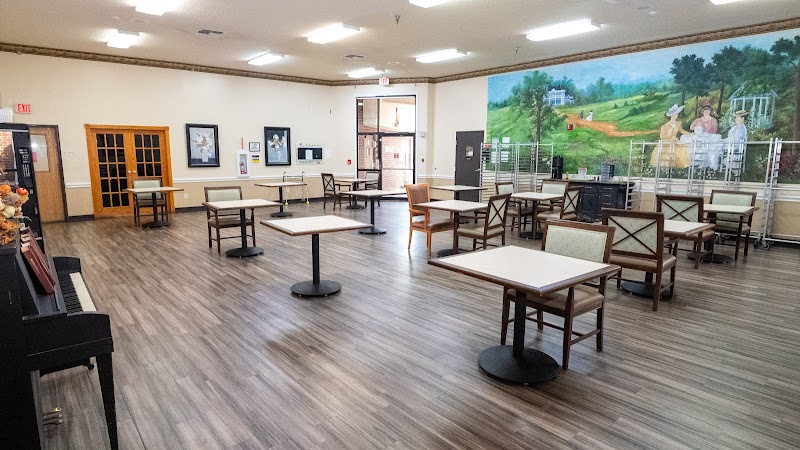
During a dining observation on 10/09/2023 at 12:08 p.m., LVN A stated to CNA C, how many feeders were on Hall 200. LVN A was approximately 5 feet from dining room tables where residents were sitting.
During a dining observation on 10/09/2023 at 12:12 p.m., LVN A stated to CNA D, MDS Coordinator and a sister facility DON, somebody need to come feed the feeders. LVN A was approximately 5 feet from dining room tables where residents were sitting.
During an interview on 10/09/2023 at 1:45 p.m., LVN A stated the word assistance should be used instead of the word feeder. LVN A stated it was a habit, but she was working on trying not to say the word. LVN A stated she was anxious in the dining room because surveyors were present. LVN A stated referring to residents as a feeder was a dignity issue.
During an interview on 10/12/2023 at 8:10 p.m., the DON stated she expected staff to say, assistance diners instead of the word feeder. The DON stated she monitored dining room and hallway randomly throughout the week as well as the department heads. The DON stated she had noticed issues with LVN A saying the word feeder. The DON stated LVN A had been educated verbally multiple of times. The DON stated this failure was a dignity issue.
During an interview on 10/12/2023 at 8:42 p.m., the Administrator stated he expected staff to say, someone who needs assistance instead of the word feeder. The Administrator stated it was important to say someone who needs assistance so staff did not accidently do any psychological damage.
Record review of the facility's policy titled Dignity and Respect revised on 10/2015, indicated, It is the policy of this facility that all resident's be treated with kindness, dignity, and respect . 1.The staff shall display respect for Resident's when speaking with, caring for, or talking about them, as constant affirmation of their individuality and dignity as human beings
CONCERN
(D)
Potential for Harm - no one hurt, but risky conditions existed
Deficiency F0561
(Tag F0561)
Could have caused harm · This affected 1 resident
**NOTE- TERMS IN BRACKETS HAVE BEEN EDITED TO PROTECT CONFIDENTIALITY** Based on observation, interview, and record review, the facility failed to ensure each resident had the right to make choices ab...
Read full inspector narrative →
**NOTE- TERMS IN BRACKETS HAVE BEEN EDITED TO PROTECT CONFIDENTIALITY** Based on observation, interview, and record review, the facility failed to ensure each resident had the right to make choices about aspects of his or her life in the facility that were significant to the resident for 1 of 22 residents (Resident #12) reviewed for self-determination.
The facility failed to ensure Resident #12 was assisted out of bed.
This failure could place residents at risk for being denied the opportunity to exercise his or her autonomy regarding things that are import in their life and decrease their quality of life.
Findings included:
Record review of a face sheet dated 10/12/2023, indicated Resident #12 was a [AGE] year-old female initially admitted to the facility on [DATE] and readmitted on [DATE], with diagnoses which included chronic diastolic congestive heart failure (condition where the left ventricle of the heart becomes stiffer than normal and can't relax or fill up with blood), type 2 diabetes mellitus with hyperglycemia (chronic condition that affects the way the body processes blood sugar resulting in high blood sugars), and vascular dementia, unspecified severity, with other behavioral disturbance (loss of memory, language, problem solving and other thinking abilities that were severe enough to interfere with daily life).
Record review of the Comprehensive MDS assessment dated [DATE] indicated, Resident #12 was able to make herself understood and understood others. The MDS assessment indicated Resident #12 had a BIMS score of 15, which indicated her cognition was intact. The MDS assessment indicated Resident #12 required extensive assistance with bed mobility, transfers, dressing, toilet use, and personal hygiene.
Record review of the care plan last revised 09/26/2023 indicated, Resident #12 had an ADL self-care deficit related to impaired mobility, a right below the knee amputation, and generalized weakness. The care plan indicated Resident #2 required 1-person assistance for transferring with sliding board as needed or a Hoyer lift could be used with 2-person assistance as needed when Resident #12 could not transfer with the sliding board.
During an observation and interview on 10/09/2023 at 3:52 PM, Resident #12 was lying in bed. Resident #12 said earlier she had asked one of the CNAs (Resident #12 was unable to provide a name for the CNA) to get her up, and the CNA told her NA O would get her out of bed. Resident #12 said NA O still had not gotten her up.
During an observation on 10/09/2023 at 6:04 PM, Resident #12 was lying in bed.
During an interview on 10/12/2023 at 12:46 PM, CNA C said she provided care to Resident #12 on Monday, 10/09/2023, on the 6 AM to 2 PM shift. CNA C said Resident #12 did not ask her to get her out of bed. CNA C said if a resident requested to get out of bed, she would assist them. CNA C said it was important so assist the residents when they requested it because it was their right and they should meet the residents' needs.
During an attempted phone interview on 10/12/2023 at 1:04 PM NA O did not answer the phone.
During an interview on 10/12/2023 at 4:39 PM, ADON M said it was the CNAs responsibility to get the residents out of bed when the residents requested it. ADON M said all the staff should ensure the residents rights be respected. ADON M said if a resident requested to get out of bed it should be done because it was their right and the staff were at the facility to assist the residents with their needs.
During an interview on 10/12/2023 at 7:51 PM, the DON said if a resident requested to get out of bed it was the responsibility of the person the resident asked to get them out of bed. The DON said she expected the CNAs to assist the residents with their needs when they requested it. The DON said it was important to assist the residents because it was their right.
During an interview on 10/12/2023 at 8:59 PM, the Administrator said the CNAs were responsible for assisting the residents to get out of bed. The Administrator said if a resident requested to get out of bed, he expected the CNAs to do this. The Administrator said it was important to assist the residents with their needs because it was their right.
Record review of the facility's policy dated, October 4, 2016, titled, Resident Rights, indicated, .Self-Determination. You have the right to self-determination through support of your choice, including the right to: choose activities, schedules . make choices about aspects of your life in the facility that are significant to you .
CONCERN
(D)
Potential for Harm - no one hurt, but risky conditions existed
Safe Environment
(Tag F0584)
Could have caused harm · This affected 1 resident
**NOTE- TERMS IN BRACKETS HAVE BEEN EDITED TO PROTECT CONFIDENTIALITY** Based on observations, interviews, and record reviews the facility failed to provide a safe, clean, comfortable, and homelike en...
Read full inspector narrative →
**NOTE- TERMS IN BRACKETS HAVE BEEN EDITED TO PROTECT CONFIDENTIALITY** Based on observations, interviews, and record reviews the facility failed to provide a safe, clean, comfortable, and homelike environment in 1 of 62 Rooms (room [ROOM NUMBER]) reviewed for a clean and homelike environment.
The facility failed to ensure room [ROOM NUMBER] was cleaned daily, and in accordance with the facility's Housekeeping Checklist.
This deficient practice could place residents at risk of infections and living in an uncomfortable environment leading to a decreased quality of life.
Findings include:
Record review of Resident #40 face sheet, dated 10/10/2023, indicated Resident #40 was an [AGE] year-old female, admitted to the facility on [DATE] with diagnoses which included obstructive and reflux uropathy (a condition of the urinary tract), anxiety disorder, hemorrhoids, cognitive communication deficit, history of falling, difficulty in walking, altered mental status unspecified, Hypothyroidism (thyroid gland does not produce enough thyroid hormone) and essential hypertension (high blood pressure).
Record review of the admission MDS assessment, dated 07/31/2023, indicated Resident #40 rarely understood other others, and rarely made herself understood. The assessment did not address the BIMS score. The assessment indicated Resident #40 ADL for bed mobility, transfer, dressing, eating, toilet use, and personal hygiene required Resident #40 required extensive assistance with one person assistance.
Record Review of the comprehensive care plan dated on 7/27/22 indicated Resident #40, was at risk for falls. The care plan interventions included, Be sure the call light is within reach and encourage to use it to call for assistance as needed; fall mat; keep needed items, water, etc., in reach and maintain a clear pathway, free of obstacles.
Record review of the comprehensive care plan, dated on 8/30/2022, indicated Resident #40 indwelling catheter: obstructive uropathy (a condition in which the flow of urine is blocked). The Care plan interventions included, Secure catheter with a leg strap/leg ban to minimize catheter related injury and accidental removal or obstruction of urine; monitor, record, report to MD for any s/s of UTI: pain, discomforts, burning, blood, tinged urine, cloudiness, scanty or no urinary output, dark urine color, high temp, chills, altered mental status, changes in behavior, changes in eating pattern, foul smelling urine.
During observation on 10/9/23 at 2:50 p.m., room [ROOM NUMBER] had a urine odor.
During observation on room on 10/10/23 at 9:31 a.m., room [ROOM NUMBER] had a urine odor.
During an interview on 10/12/23 at 8:00 a.m., RN P stated he normally worked Monday through Friday between the hours of 6 a.m. to 2 p.m. and sometimes weekends on call. RN P stated Housekeeper cleaned the residents rooms once per day. RN P stated Housekeeping had normally cleaned the residents room between 9 a.m. and 10 a.m., and when housekeeping did not finish cleaning the residents rooms on hall 500 in the mornings that after lunch, housekeeping would come back afterward to finish cleaning the residents rooms. RN P did not know when housekeeping last deep cleaned room [ROOM NUMBER], but said when residents changed rooms, housekeeping would deep clean empty rooms or isolation rooms. RN P stated he when he came to work Monday 10/9/23 that room [ROOM NUMBER] had a urine odor. RN W stated room [ROOM NUMBER] had never been that strong before. RN W stated Resident #40 catheter leaked. RN P stated he did not know how Resident #40 catheter had been leaking. RN P stated Resident #40 mattress was changed on Tuesday 10/10/23. RN W stated Housekeeping had replaced Resident #40's bed mattress, cleaned under and above Resident #40's bedside fall, and cleaned the floors. RN P stated he was aware of the urine odor on Monday 10/9/23 and housekeeping had been working on cleaning the room. RN P stated it was important to ensure the residents rooms were clean and sanitized for homelike environment and because it was part of taking care of the resident's.
During in an interview on 10/12/23 at 9:14 a.m., the Housekeeping supervisor stated housekeeping aides were to follow the housekeeping checklist daily when cleaning the residents rooms. The Housekeeping supervisor stated the housekeeping aide were to fill out a housekeeping check list sheet every day for each room indicating that they cleaned the residents rooms. The Housekeeping supervisor stated he periodically checked the residents' rooms and addressed certain issues if needed. The Housekeeping supervisor stated he did have complaints from residents regarding their rooms smelling of urine. The Housekeeping supervisor stated housekeeping did address the urine smell complaints from the residents. The Housekeeping supervisor stated nursing was responsible for cleaning up urine on the floors and then housekeeping would clean and sanitize the residents rooms. The Housekeeping supervisor stated the residents linen were not changed by housekeeping. The Housekeeping supervisor stated the CNA's were responsible for changing the linens on the residents bed. The Housekeeping supervisor stated the laundry aides were responsible for changing the linens in resident rooms that required a deep clean which was usually when the resident had left a room or the facility. The Housekeeping supervisor stated he was not aware of the urine smell in room [ROOM NUMBER] room on 10/9/23 and 10/10/23. The Housekeeping supervisor stated room [ROOM NUMBER] did not smell like urine to him on 10/9/23 and 10/10/23.
During an interview on 10/12/23 at 11:36 a.m., Housekeeping aide V stated she had been employed here for 2 years. Housekeeping aide V stated she was responsible for cleaning the resident rooms. Housekeeping aide V she regular cleaned the residents rooms on hall five-hundred and hall three hundred. Housekeeping aide V stated she cleaned the room once a day unless the resident rooms was really messy than she would clean the room twice a day. Housekeeping aide V stated she would usually clean room [ROOM NUMBER] usually twice day. Housekeeping aide V stated she had changed Resident #40 mattress pad on 10/12/23 in room [ROOM NUMBER]. Housekeeping aide V stated she Resident #40 mattress had a urine smell because Resident #40 mattress protector leaked urine on Resident #40 mattress. Housekeeping aide V stated she was off on this past Monday on 10/9/23 and did not know who cleaned the rooms on the five-hundred hall on 10/9/23. Housekeeping aide V stated she on Tuesday 10/10/23 she noticed the smell of urine in room [ROOM NUMBER]. Housekeeping aide V stated when the rooms smelled of urine that would change linens. Housekeeping aide V stated housekeeping was not supposed to change the linens in the residents that resident resided in, but she did so anyway to help the CNA's on the five hundred hall. Housekeeping aide V stated the Housekeeping supervisor oversaw the rooms that she cleaned. Housekeeping aide V stated the Housekeeping supervisor did conduct spot checks, but she was not sure how often the spot checks were completed. Housekeeping aide V stated she did not know when the housekeeping supervisor last spot checked that the room had been cleaned by the housekeeping aides. Housekeeping aide V stated she was aware of the urine smell in the room [ROOM NUMBER], and she notified the Housekeeping supervisor on 10/10/23. Housekeeping aide V stated she used some cleaning spray to get rid of the smell. Housekeeping aide V stated the cleaning spray had a disinfectant smell to it and she cleaned underneath the fall mats, over the fall mats and under the beds in room [ROOM NUMBER]. Housekeeping aide V stated it was important to ensure the resident room were cleaned and sanitized to ensure the residents room smelled good and the residents would not get covid.
During an interview on 10/12/23 at 12:15 p.m., Housekeeping aide U stated she been employed at the facility since 2009. Housekeeping aide U stated she was responsible for cleaning the resident rooms. Housekeeping aide U stated she cleaned the residents room once per day per week. Housekeeping aide U stated she cleaned the five-hundred hall on Monday 10/9/23. Housekeeping aide U stated she used a housekeeping checklist daily. Housekeeping aide U stated her job at the facility was to ensure the residents floors were cleaned. Housekeeping aide U stated the nursing department was responsible to cleaning urine on the floor and housekeeping will clean after the urine had been cleaned by nursing staff. Housekeeping aide U stated she was unsure how often she was to deep clean the residents rooms a month. Housekeeping aide U stated housekeeping was responsible for deep cleaning rooms immediately after residents had permanently left the facility or room. Housekeeping aide U stated room [ROOM NUMBER] had a urine smell that she could not get out the room on 10/9/23. Housekeeping aide U stated she mopped under the mat but could not get the urine smell out of room [ROOM NUMBER] on 10/9/23. Housekeeping aide U stated she did inform housekeeper aide V about the urine smell in room [ROOM NUMBER]. Housekeeping aide U stated she did not inform the housekeeping supervisor. Housekeeping aide U stated she was supposed to inform the housekeeping supervisor, but she did not tell her supervisor on 10/9/23 about the urine smell in room [ROOM NUMBER]. Housekeeping aide U stated she knew her job well. Housekeeping aide U stated in-services were completed but she could not remember when she had completed the training on cleaning. Housekeeping aide U stated the housekeeping supervisor usually did random spot checks after the rooms had been signed off on the checklist as cleaned. Housekeeping aide U stated the housekeeping supervisor had not told her anything about rooms she cleaned on 10/9/23. Housekeeping aide U stated it was important to ensure the residents rooms were cleaned and sanitized so the residents were comfortable.
During an interview on 10/12/23 at 9:40 p.m., the Administrator stated Housekeeping was responsible for ensuring the residents rooms were cleaned. The Administrator stated he was not aware of the urine smell in room [ROOM NUMBER]. The Administrator stated Housekeeping had completed in-services on cleaning the residents room. The Administrator stated he was not sure if the housekeeping staff had been following the housekeeping checklist daily. The Administrator stated he did expect the housekeeping staff to ensure the resident rooms were cleaned and sanitized for the residents. The Administrator stated it was important for housekeeping to clean and sanitize the residents' rooms to ensure a homelike environment for the residents.
Review of the facility's Housekeeping cleaning policy dated 5/2007, revealed It is the policy of this facility to implement the following procedure: (1) Wet mop floors with a detergent/disinfectant daily, (b) Thoroughly clean resident treatment areas, bathroom fixtures, hand washing facilities and service sink with a detergent. (4) Cleaning routines: (a) Routine schedules must be established for the cleaning of walls, AC units on the wall(if applicable), floors, window frames, fixtures, furniture and trash cans; (b) waste receptacles mush have disposable liners which ca be thrown away along with the waste collection inside. After disposal, clean containers thoroughly; (c) In certain areas, housekeeping will not be responsible for the care of specific fixtures and furnishings. These items may be the responsibility of the either nursing services, personnel, dietary staff or therapy.
CONCERN
(D)
Potential for Harm - no one hurt, but risky conditions existed
Comprehensive Care Plan
(Tag F0656)
Could have caused harm · This affected 1 resident
**NOTE- TERMS IN BRACKETS HAVE BEEN EDITED TO PROTECT CONFIDENTIALITY** Based on interview, and record review, the facility failed to implement a comprehensive person-centered care plan to meet reside...
Read full inspector narrative →
**NOTE- TERMS IN BRACKETS HAVE BEEN EDITED TO PROTECT CONFIDENTIALITY** Based on interview, and record review, the facility failed to implement a comprehensive person-centered care plan to meet resident's medical, nursing, and mental and psychosocial needs identified in the comprehensive assessment for 1 of 22 residents (Resident #124) reviewed for care plans.
The facility did not develop Resident #124's care plan related code status.
This failure could place residents at risk for inaccurate care plans not receiving care and services to meet their needs.
Findings include:
Record review of Resident #124's face sheet, dated 10/12/2023, indicated Resident #124 was a [AGE] year-old female, admitted to the facility on [DATE] with diagnoses which included fracture of second lumbar (lower part of the back) vertebra.
Record review of Resident #124's physician order summary report, dated 10/12/2023, indicated an active physician's order for code status: DNR with an order date 09/29/2023 and full code with an order date 09/18/2023.
Record review of the admission MDS dated [DATE], indicated Resident #124 understood others and made herself understood. The assessment indicated Resident #124 had a BIMS score of 14, which indicated her cognition was intact.
Record review of Resident #124's care plan, revised on 10/05/2023 did not address the code status.
Record review of Resident #124's OOH-DNR form dated 09/29/2023 revealed a completed DNR that was signed by all responsible parties.
During an interview on 10/12/2023 at 11:10 a.m., the Social Worker stated the social services were responsible for ensuring the care plan reflected that Residents #124 was a DNR. The Social Worker stated she was responsible for monitoring to ensure that the resident wishes were documented in the care plan record and ensure wishes were carried out. The Social Worker stated during admission and quarterly, the care plan was reviewed, and audits were completed. The Social Worker stated audits were done every three months on the quarterly care plan. The Social Worker stated she did not put in the code status for Resident #124 care plan because I literally forgot. The Social Worker stated it was important to ensure the care plan reflected the resident wishes and also make sure everyone was aware of her wishes.
During an interview on 10/12/2023 at 7:30 p.m., the DON stated there was not a policy and procedure regarding care plans.
During an interview on 10/12/2023 at 8:42 p.m., the Administrator stated Resident #124 code status should have been on the care plan. The Administrator stated the Social Worker was responsible for overseeing and monitoring to ensure the care plan addressed the code status.
Record review of the facility's policy titled, Advance Directives and Associated Documentation dated 01/2022 indicated, 8 c. The care plan team, including the physician, will be informed of such changes and/or revocations so that appropriate changes can be made in the resident assessment instrument (MOS), care plan, or elsewhere in the clinical record
CONCERN
(D)
Potential for Harm - no one hurt, but risky conditions existed
Deficiency F0657
(Tag F0657)
Could have caused harm · This affected 1 resident
**NOTE- TERMS IN BRACKETS HAVE BEEN EDITED TO PROTECT CONFIDENTIALITY** Based on observations, interviews and record reviews, the facility failed to review and revise the comprehensive person-centered...
Read full inspector narrative →
**NOTE- TERMS IN BRACKETS HAVE BEEN EDITED TO PROTECT CONFIDENTIALITY** Based on observations, interviews and record reviews, the facility failed to review and revise the comprehensive person-centered care plan for 2 of 22 residents (Resident #32 and Resident #44) reviewed for comprehensive care plans.
The facility failed to ensure Resident #32's care plan was updated to indicate she no longer smoked.
The facility failed to ensure Resident #44's care plan was updated to indicate weight loss.
These failures could place residents at increased risk of not having their individual needs met and a decreased quality of life.
Findings included:
1. Record review of a face sheet dated 10/12/2023 indicated Resident #32 was a [AGE] year old female initially admitted to the facility 11/10/2020 and readmitted on [DATE] with diagnoses which included type 2 diabetes mellitus with hyperglycemia (chronic condition that affects the way the body processes blood sugar resulting in high blood sugars), vascular dementia, unspecified severity, without behavioral disturbance, psychotic disturbance, mood disturbance, and anxiety (loss of memory, language, problem solving and other thinking abilities that were severe enough to interfere with daily life), and essential primary hypertension (high blood pressure).
Record review of the Comprehensive MDS assessment dated [DATE] indicated Resident #32 was able to make self-understood and understood others. The MDS assessment indicated Resident #32 had a BIMS score of 13, which indicated her cognition was intact. The MDS assessment indicated Resident #32 required supervision with bed mobility, transfers, walking, toilet use and personal hygiene. The MDS assessment indicated the resident did not use tobacco.
Record review of the care plan last revised 10/09/2023 indicated Resident #32 had a potential for injury related to smoking.
During an interview on 10/10/2023 8:35 AM, Resident #32 said when she first admitted to the facility she smoked, but she had not smoked for a year now.
During an interview on 10/12/2023 at 3:07 PM, the MDS Coordinator said Resident #32 did not smoke. The MDS Coordinator said she should have removed that Resident #32 had a potential for injury related to smoking from her care plan. The MDS Coordinator said the care plans were updated by the IDT quarterly and annually. The MDS Coordinator said Resident #32's care plan was not updated because it was overlooked. The MDS Coordinator said the care plans were audited randomly by the resource people. The MDS Coordinator said it was important for the care plans to be updated to promote an adequate plan of care for each resident.
During an interview on 10/12/2023 at 3:18 PM, the MDS Resource said the care plans should be updated with each MDS assessment that was completed and as needed. The MDS Resource said she performed weekly audits on the care plans to ensure they were updated. The MDS Resource said when she audited the care plans there were times, she had to update the care plans or add to them. The MDS Resource said it was important for the care plans to be updated so the staff could have the correct plan of care in place for the residents.
During an interview on 10/12/2023 at 7:54 PM, the DON said the MDS Coordinator was responsible for updating the care plans. The DON said Resident #32 was no longer smoking, and she was not aware smoking was still in her care plan. The DON said it was important for the residents' care plans to be updated to ensure the staff was aware of the residents' needs and how to properly care for them.
2. Record review of Resident #44 face sheet, dated 10/12/2023, indicated Resident #44 was an [AGE] year-old female, readmitted to the facility on [DATE] with diagnoses which included moderate protein-calorie malnutrition, dehydration, cognitive communication deficit, vitamin D deficiency, osteoarthritis (degeneration of joint cartilage and the underlying bone), anxiety disorder, and essential hypertension (high blood pressure).
Record review of the admission MDS assessment, dated 09/18/2023, indicated Resident #44 rarely made herself-understood, and rarely understood others. The assessment did not address the BIMS score. The assessment indicated Resident #44 functional status indicated Resident #44 required extensive assistance with a two-person physical assist with bed mobility, transfer, dressing, and toilet use. The assessment indicated Resident #44 required extensive assistance with one-person physical assist. The assessment indicated Resident #44 and personal hygiene required supervision with setup help only with eating. The MDS assessment did not indicate Resident #44 had weight loss.
Record review of the comprehensive care plan dated on revised on 06/20/23 indicated Resident #44 had a nutritional problem. The care plan interventions included, Monitor and report to MD as needed for any s/s of decreased appetite, Monitor/record/report to MD PRN s/sx of malnutrition and Administer medications as ordered. Monitor/Document for side effects and effectiveness.
Record review of the facility weight report dated 10/11/23, indicated on 04/11/2023, Resident #44 weighed 165.5 pounds and on 10/10/2023, Resident #44 weighed 151.6 pounds which was a -8.40 % Loss in 6 months. The weight report from the last 6 months did not indicate a weight gain for Resident #44.
During an interview on 10/12/2023 at 2:41 p.m., the MDS Coordinator stated she was responsible for coding Resident #44's MDS. The MDS Coordinator stated she had been in the MDS position since November of 2021. The MDS Coordinator stated the care plan for Resident #44 should had indicated weight loss instead of weight gain. The MDS Coordinator stated Resident #44 care plan was overlooked. The MDS Coordinator stated the care plan could have been updated by any clinical staff. The MDS Coordinator stated Resident #44 MDS should had been coded to reflect weight loss. The MDS Coordinator stated she that there was not another person who supervised MDS coding. The MDS Coordinator stated she stated she was human, and we all make mistakes. The MDS Coordinator stated the risks of not coding Resident #44's weight loss included the facility not being able to provide Resident #44 supplementation to promote weight gain. The MDS Coordinator stated it was important to ensure the MDS was coded correctly to provide the resident with adequate nutrition.
During an interview on 10/12/2023 at 7:30 PM, the DON stated there was not a policy and procedure regarding updating the care plans.
During an interview on 10/12/2023 at 9:02 PM, the Administrator said the care plans should be updated by the clinical staff. The Administrator said he expected for the residents' care plans to be updated as required. The Administrator said it was important to update the care plans because that was how they determined the level of care the residents required.
CONCERN
(D)
Potential for Harm - no one hurt, but risky conditions existed
ADL Care
(Tag F0677)
Could have caused harm · This affected 1 resident
**NOTE- TERMS IN BRACKETS HAVE BEEN EDITED TO PROTECT CONFIDENTIALITY** Based on observation, interview, and record review, the facility failed to ensure a resident who was unable to carry out activit...
Read full inspector narrative →
**NOTE- TERMS IN BRACKETS HAVE BEEN EDITED TO PROTECT CONFIDENTIALITY** Based on observation, interview, and record review, the facility failed to ensure a resident who was unable to carry out activities of daily living received services to maintain personal hygiene for 1 of 65 (Resident #46) residents reviewed for ADLs.
The facility failed to ensure Resident #46's fingernails were trimmed, clean and free from a black colored material.
These failures could place residents at risk of not receiving services or care, decreased quality of life, and decreased self-esteem.
The findings included:
Record review of the face sheet, dated on 10/12/23, indicated that Resident #46 was a [AGE] year-old male who admitted to the facility on initial admission dated 8/14/20, with a diagnosis of Cerebrovascular disease (a group of conditions that affect the blood flow and the blood vessels in the brain, Atherosclerotic heart disease of native coronary artery without angina pectoris (buildup of cholesterol plaque in the walls of arteries causing obstruction of blood flow), Vascular dementia (reduce blood flow to the brain), Epilepsy (uncontrolled electrical disturbance in the brain), and lack of coordination.
Record Review of Resident #46 MDS assessment, dated 8/30/23 indicated that Resident #46 had no speech, rarely made self-understood and rarely understood others. The MDS did not code Resident #46 BIMS Summary Score. The MDS revealed Resident #46 had no behaviors or refusal of ADL care. The MDS revealed Resident #46 required extensive assistance with one-person physical assist for personal hygiene.
Record Review of the most recent comprehensive care plan dated 7/18/2023 indicated Resident #46 had a diagnosis of Cerebral Vascular Accident. The care plan interventions for Resident #46 ADL care included, Monitor and document residents abilities for ADLs and assist resident as needed, and Encourage resident to do what he/she is capable of doing for self.
During observation on 10/09/23 at 10:55 a.m., Resident # 46 had long uneven fingernails with black substance under fingernails.
During observation on 10/10/23 at 02:00 p.m., Resident # 46 had long uneven fingernails with a black substance underneath fingernails.
During observation on 10/12/23 at 04:23 p.m., Resident # 46 had long uneven fingernails with a black substance underneath fingernails.
Record review of the CNA shower sheet on Resident #46 indicated Resident #46's bathing activity was:
*On 10/12/2023at an unknown time, the CNA E and RN B noted Resident #46 fingernails cleaned and trimmed.
*On 10/10/23 at an unknown time, the CNA E and RN B noted, fingernails were cleaned, and fingernails were not trimmed.
During an interview on 10/12/23 at 4:29 p.m., CNA E stated she was responsible for nail care on Resident #46. CNA E stated resident #46 did not tell her that he wanted his fingernails trimmed. CNA E stated she checked Resident #46 fingernails every day. CNA E stated she worked Wednesday and Thursday on hall 400, where Resident #46 resided. CNA E stated she did not know who worked hall 400 on Monday and Tuesday. CNA E stated she did not have a chance to see Resident #46 fingernails on 10/12/23. CNA E stated she would trim and clean Resident #46's fingernails as she was giving Resident #46 his shower on 10/12/23. CNA E stated she could not remember the last time Resident #46 fingernails were trimmed and cleaned. CNA stated she believed she had completed in-services on fingernail care but was not sure of the date. CNA E stated the charge nurse oversaw the CNA's care to the residents. CNA E stated Resident #46 had shower sheets signed by the CNA's and Charge nurse that would indicate when Resident #46 fingernail was last completed. CNA E stated it was crucial to ensure the residents received ADL care because their hands touch everything, and germs spread easily.
During an interview on 10/12/23 at 4:40 p.m., RN B stated the CNA's were responsible to ensure Resident #46 fingernails were cleaned and trimmed on shower days. RN B stated all residents with a diagnosis of diabetes would be cut by the charge nurse on duty. RN B stated she was not aware of Resident #46 long and uneven fingernails with a black substance underneath. RN B stated Resident #46 shower times were between 6 a.m. to 2 p.m. unless Resident #46 requested other shower times. RN stated sometimes Resident #46 requested showers twice a day. RN B stated on Tuesday, Thursday, and Saturday shower days, the CNAs would trim Resident #46's fingernails if Resident #46 fingernails were long and uneven. RN B stated it was important to ensure the residents fingernails were cleaned and trimmed so the residents can feel good about themselves.
During an interview on 10/12/23 at 8:40 p.m., the DON stated the CNA's were responsible for ensuring Resident #46 fingernails was cleaned and trimmed. The DON stated she was not made aware of Resident #46's long, uneven fingernails with a black substance underneath his fingernails. The DON stated she was not sure if Resident #46 had ever refused fingernail. The DON stated on the residents showers days, the CNA's were to check the residents for fingernail care. The DON stated the CNA's had not completed in-services on fingernail care. The DON stated it was important to ensure the residents received fingernail care to prevent infections.
During an interview on 10/12/23 at 9:35 p.m., The Administrator stated the CNA's were responsible for fingernail care for the resident's on the resident's shower days. The Administrator stated he did not know if Resident #46 had ever refused fingernail care. The Administrator stated he was not aware of Resident #46 not receiving fingernail care. The Administrator stated he did expect staff to provide fingernail care to the residents. The Administrator stated it was important to ensure the residents received fingernail care for hygiene reasons.
Record Review of the facility ADL policy on nail care revised on 5/2007 indicated, It is the policy of the facility to promote cleanliness, safety, and neat appearances of our residents.
CONCERN
(D)
Potential for Harm - no one hurt, but risky conditions existed
Respiratory Care
(Tag F0695)
Could have caused harm · This affected 1 resident
**NOTE- TERMS IN BRACKETS HAVE BEEN EDITED TO PROTECT CONFIDENTIALITY** Based on observation, interview, and record review the facility failed to ensure that residents requiring respiratory care were ...
Read full inspector narrative →
**NOTE- TERMS IN BRACKETS HAVE BEEN EDITED TO PROTECT CONFIDENTIALITY** Based on observation, interview, and record review the facility failed to ensure that residents requiring respiratory care were provided such care, consistent with professional standards of practices for 2 of 9 residents (Residents #27 and #60) reviewed for respiratory care.
1. The facility failed to ensure Resident #27's oxygen was set between 3-4 LPM as ordered by the physician.
2. The facility failed to ensure Resident #60 had a physician's order for oxygen.
These failures could place residents who receive respiratory care at risk for developing respiratory complications and a decreased quality of care.
Findings included:
1. Record review of Resident #27's face sheet, dated 10/12/2023, indicated Resident #27 was an [AGE] year-old female, readmitted to the facility on [DATE] with a diagnosis which included COPD (chronic inflammatory lung disease that causes obstructed airflow from the lungs) and emphysema (a condition in which the air sacs of the lungs are damaged and enlarged).
Record review of the order summary report dated 10/12/2023 indicated #27 had an order for oxygen at 3-4 liters per minute continuous per nasal cannula with a start date 08/19/2023.
Record review of Resident #27's admission MDS, dated [DATE], indicated Resident #27 understood others, and made herself understood. The assessment indicated Resident #27 had a BIMS score of 9, which indicated her cognition was moderately impaired. The assessment indicated Resident #27 was receiving oxygen therapy.
Record review of Resident #27's undated care plan indicated Resident #27 emphysema and COPD related to physiological atrophy. The care plan interventions included, give oxygen therapy as ordered by the physician and monitor for s/sx of acute respiratory insufficiency. The care plan indicated Resident #27 had oxygen therapy related to emphysema, COPD, and asthma. The care plan interventions included oxygen settings at 3-4 liters per minute.
During an observation on 10/10/2023 at 8:21 a.m., Resident #27 was lying in bed wearing oxygen via nasal cannula at 1 liter per minute.
During an observation and interview on 10/11/2023 at 8:24 a.m., Resident #27 was lying in bed wearing oxygen via nasal cannula at 1 liter per minute. Resident #27 stated she wore oxygen all the time due to COPD. Resident #27 stated she did not know what liters the oxygen should be set on.
During an observation, record review and interview on 10/12/2023 at 9:43 a.m., LVN Q stated the charge nurses were responsible for ensuring oxygen settings were set at the correct LPM. LVN Q observed with the surveyor Resident #27's oxygen liters set at 1 liter per minute. After reviewing Resident #27 electronic medical records, LVN Q stated the rate should be between 3-4 liters per minute. LVN Q stated she had not looked at Resident #27's oxygen setting during her rounds this am. LVN Q stated it was important to ensure the oxygen settings were correct so Resident #27 could be well oxygenated. LVN Q stated the risk associated with the oxygen settings being incorrect was decrease oxygen saturation which could cause SOB.
During an interview on 10/12/2023 at 2:41 p.m., the MDS Coordinator stated during angel rounds she did not look at Resident #27's oxygen settings, she just looked to ensure the tubing was changed/dated, humidifier was dated, and the filter was cleaned.
During an interview on 10/12/2023 at 8:10 p.m., the DON stated the charge nurses was responsible for ensuring oxygen settings were set at the correct LPM. The DON stated she expected the physician orders to be followed. The DON stated it was monitored by the MDS Coordinator through daily angel rounds. The DON stated she relied on the nurses to ensure the physician order was followed but angel rounds were her second line of defense. The DON stated it was important to ensure the physician orders were followed and oxygen was set at the correct LPM to ensure proper oxygenation. The DON stated the risk associated with the oxygen settings being incorrect was poor tissue perfusion.
During an interview on 10/12/2023 at 8:42 p.m., the Administrator stated he expected staff to ensure oxygen was set at the prescribed LPM. The Administrator stated it was important to ensure the physician orders were followed and oxygen was given at the prescribed rate to prevent a change in condition.
2. Record review of a face sheet dated 10/12/2023 indicated Resident #60 was a [AGE] year-old female admitted to the facility on [DATE] with diagnoses which included Alzheimer's disease with early onset (progressive disease that destroys memory and other important mental functions), chronic obstructive pulmonary disease (chronic inflammatory lung disease that causes obstructed airflow from the lungs), and end stage renal disease (kidneys cease functioning on a permanent basis).
Record review of the Comprehensive MDS assessment dated [DATE] indicated Resident #60 able to make herself understood and understood others. The MDS assessment indicated Resident #60 had a BIMS score of 15, which indicated her cognition was intact. The MDS assessment indicated Resident #60 required extensive assistance with bed mobility, transfers, dressing, toilet use and personal hygiene. The MDS assessment indicated Resident #60 used oxygen while a resident at the facility.
Record review of the care plan last revised 09/26/2023 indicated Resident #60 had chronic obstructive pulmonary disease and to give oxygen therapy as ordered by the physician.
Record review of the Order Summary Report dated 10/09/2023 indicated Resident #60 did not have an order for oxygen.
Record review of a progress note for Resident #60 entered by LVN A on 09/18/2023 at 1:14 PM indicated she had received an order from the Medical Director for oxygen as needed at 2 liters per minute for shortness of breath.
During an observation and interview on 10/09/2023 at 11:12 AM, Resident #60's oxygen was set at 3 liters per minute via nasal cannula, and Resident #60 said she used the oxygen as needed.
During an observation on 10/09/2023 at 5:20 PM, Resident #60's oxygen was set at 3 liters per minute via nasal cannula.
During an interview on 10/12/2023 at 4:45 PM, ADON M said if a resident used oxygen as needed, they should have an order for it in the electronic health record. ADON M said the nurse that received the order was responsible for putting it in the electronic health record. ADON M said the nurses were responsible for ensuring oxygen was administered per the physician's orders. ADON M said she was responsible for reviewing the residents' orders. ADON M said Resident #60 should have an order for oxygen. ADON M said she might have missed that Resident #60 did not have an order for oxygen. ADON M said it was important for residents to have an order for oxygen and for the order to be followed so that everyone knew that they used oxygen, and they knew the appropriate settings for the oxygen.
During an interview on 10/12/2023 at 7:01 PM, RN B said Resident #60 was supposed to be using oxygen at 2 liters per minute via nasal canula continuously. RN B said to her knowledge, Resident #60 had an order for continuous oxygen at 2 liters per minute via nasal canula because she had always had oxygen. RN B said the admitting nurse or the nurse who received the order for oxygen was responsible for putting it in the orders. RN B said she did not know why Resident #60's oxygen was set at 3 liters per minute on Monday (10/09/2023). RN B said it was important to have an order for oxygen and to follow the order for oxygen so that everyone knew the resident needed oxygen.
During an attempted phone interview on 10/12/2023 at 7:12 PM, LVN A did not answer the phone.
During an interview on 10/12/2023 at 7:57 PM, the DON said an order for oxygen should be put in the electronic health record by the admitting nurse or the nurse that received the order. The DON said the ADON and herself did random audits to review the physician's orders. The DON said if the nurses noticed a resident using oxygen, they should review the orders to ensure there was an order for oxygen. The DON said she was aware Resident #60 used oxygen, but she was not aware Resident #60 did not have a physician's order for oxygen. The DON said the nurses should be checking the orders to ensure oxygen was being administered per the physician's orders. The DON said it was important for there to be an order for oxygen and for oxygen to be set per the physician's order to ensure the resident received the oxygen they needed.
During an interview on 10/12/2023 at 9:04 PM, the Administrator said the nurses were responsible for ensuring residents that used oxygen had an order for oxygen, and for ensuring the physicians orders were followed. The Administrator said if the nurses received an order for oxygen, he expected them to put it in the electronic health record, and he expected the nurses to follow the physician's orders. The Administrator said it was important for the residents to have an order for oxygen and for the order to be followed to ensure the residents received the oxygen they required.
Record review of the facility's policy revised 05/2007, titled, Oxygen Administration (Mask, Cannula, Catheter), indicated, It is the policy of this facility that oxygen therapy is administered, as ordered by the physician or as an emergency measure until the order can be obtained . Procedure: 1. Obtain appropriate physician's order . 13. Reassess oxygen flowmeter for correct liter flow .
CONCERN
(D)
Potential for Harm - no one hurt, but risky conditions existed
Deficiency F0712
(Tag F0712)
Could have caused harm · This affected 1 resident
**NOTE- TERMS IN BRACKETS HAVE BEEN EDITED TO PROTECT CONFIDENTIALITY** Based on interview and record review, the facility failed to ensure residents were seen by a physician at least once every 30 da...
Read full inspector narrative →
**NOTE- TERMS IN BRACKETS HAVE BEEN EDITED TO PROTECT CONFIDENTIALITY** Based on interview and record review, the facility failed to ensure residents were seen by a physician at least once every 30 days for the first 90 days after admission, and at least once every 60 days thereafter or alternate between personal visits by the physician and visits by a physician assistant, nurse practitioner or clinical nurse specialist for 1 of 22 residents (Resident #16) reviewed for physician services.
The facility failed to ensure Resident #16 was seen by the facility's attending physician and/or the physician's extender at least once every 60 days from October 2022 through February 2023.
This failure could place the residents at risk for medical conditions not being identified, care needs not being met, and a decline in health status.
Findings included:
Record review of a face sheet dated 10/12/2023 indicated Resident #16 was an [AGE] year old female admitted to the facility on [DATE] with diagnoses which included major depressive disorder, recurrent, moderate (a serious mood disorder involving one or more episodes of intense psychological depression or loss of interest or pleasure that lasts two or more weeks), vascular dementia, unspecified severity, without behavioral disturbance, psychotic disturbance, mood disturbance, and anxiety (condition caused by the lack of blood that carries oxygen and nutrient to a part of the brain which causes problems with reasoning, planning, judgment, and memory), essential primary hypertension (high blood pressure), and sensorineural hearing loss bilateral (hearing loss in both ears).
Record review of the Quarterly MDS assessment dated [DATE] indicated Resident #16 was rarely able to make self-understood and rarely understood others. The MDS assessment indicated Resident #16 was unable to complete the BIMS interview. The MDS assessment indicated the staff assessment for mental status was not completed. The MDS assessment indicated Resident #16 required total dependence with bed mobility, transfers and extensive assistance with dressing, toilet use, and personal hygiene.
Record review of Resident #16's care plan last revised 08/31/2023 did not address physician visits.
During an interview on 10/10/2023 at 8:50 AM, Resident #16 used sign language to express that she had not seen the doctor in a long time (surveyor able to understand sign language).
Record review of Resident #16's documents in the electronic health record on 10/11/2023 indicated there was a visit from NP X on 10/18/2022 and 02/28/2023. There were no other documented physician visits between these dates.
During an interview on 10/11/2023 at 3:42 PM, Physician W said he was Resident #16's physician, and he saw her on a regular basis. Physician W said he saw Resident #16 quarterly and NP X did the visits every 2 months. Physician W said to his knowledge there had been no missed visits.
During an interview on 10/11/2023 at 3:55 PM, NP X said she did visits on Resident #16 every 2 months. NP X said she was not aware that there had been any missed visits.
During an interview on 10/12/2023 8:06 PM, the DON said she had no idea how often the physician or physician alternative should be seeing the residents. The DON said the visits should be in the electronic health record, and she had provided copies of Resident #16's visits. The DON said she had no idea who scheduled for the physician or physician alternative to visit the residents. The DON said she had no idea who was responsible for ensuring the physician visits were done. The DON said she assumed Physician W and NP X were making the visits as required. The DON said it was important for the physician to visit the residents for continued care.
During an interview on 10/12/2023 at 9:07 PM, the Administrator said he did not know who in the clinical team was responsible for ensuring the physician or physician alternative made visits. The Administrator said he expected for the physician to make visits as required. The Administrator said it was important for the residents to receive physician visits for them to be assessed by the doctor and to keep the doctor updated.
During an interview on 10/12/2023 at 7:30 PM, the DON said there was no policy regarding the frequency of physician visits.
CONCERN
(D)
Potential for Harm - no one hurt, but risky conditions existed
Smoking Policies
(Tag F0926)
Could have caused harm · This affected 1 resident
**NOTE- TERMS IN BRACKETS HAVE BEEN EDITED TO PROTECT CONFIDENTIALITY** Based on observation, interview and record review, the facility failed to follow their established smoking policy for 1 of 1 smo...
Read full inspector narrative →
**NOTE- TERMS IN BRACKETS HAVE BEEN EDITED TO PROTECT CONFIDENTIALITY** Based on observation, interview and record review, the facility failed to follow their established smoking policy for 1 of 1 smoking area and 1 of 6 (Resident #27) residents reviewed for smoking.
1. The facility did not ensure Resident #27 had a smoking evaluation completed.
2. The facility did not ensure smoked cigarettes were extinguished in a fire-retardant receptacle.
These failures could place residents at risk for smoking-related injuries and fires in the facility.
Findings included:
1. Record review of Resident #27's face sheet, dated 10/12/2023, indicated Resident #27 was an [AGE] year-old female, readmitted to the facility on [DATE] with a diagnosis which included hypotension (low blood pressure).
Record review of Resident #27's admission MDS, dated [DATE], indicated Resident #27 understood others, and made herself understood. The assessment indicated Resident #27 had a BIMS score of 9, which indicated her cognition was moderately impaired. The assessment indicated Resident #27 did not use tobacco.
Record review of Resident #27's undated care plan indicated Resident #27 had a potential for injury related to smoking. The care plan interventions included, complete smoking assessment, explain smoking policy and monitor to assess compliance with facility smoking policy/individual plan.
Record review of an undated sheet titled Smoking List provided by the DON indicated Resident #27 was a smoker.
Record review of the facility's electronic charting system on 10/11/2023 did not reveal a smoking evaluation was completed for Resident #27 until surveyor intervention on 10/11/2023.
During an interview on 10/09/2023 at 10:18 a.m., Resident #27 stated she smoked every Sunday evening after dinner.
During an interview on 10/12/2023 at 9:43 a.m., LVN Q stated she admitted Resident #27 on 08/19/2023. LVN Q stated a smoking evaluation should have been completed on admission. LVN Q stated she was unaware that Resident #27 was a smoker. LVN Q stated there was nothing in PCC or on the admit checklist to prompt to ask the resident if they smoke. LVN Q stated it was important to complete a smoking evaluation to ensure the resident was a safe smoker. LVN Q stated the risk associated with not completing a smoking evaluation was the resident could burn herself.
During an interview on 10/12/2023 at 8:10 p.m., the DON stated she expected Resident #27 to have a smoking evaluation when the staff first found out Resident #27 smokes. The DON stated there was no system in place to monitor to ensure new admissions smoking evaluation were completed. The DON stated it was important to ensure a smoking evaluation was completed to ensure safety.
2. During an observation on 10/11/2023 at 10:57 a.m., the designated smoking area had numerous cigarette butts laying on the ground.
During an observation on 10/12/2023 at 2:25 p.m., the designated smoking area had numerous cigarette butts laying on the ground.
During an interview on 10/12/2023 at 6:43 p.m., the Maintenance Supervisor stated he was responsible for monitoring the smoking area. The Maintenance Supervisor stated he does a routine check every morning and throughout the day. The Maintenance Supervisor stated he had noticed cigarette butts on the ground. The Maintenance Supervisor stated the cigarette butts should be disposed in the metal container. The Maintenance Supervisor stated the failure put the facility at risk for a fire.
During an interview on 10/12/2023 at 8:42 p.m., the Administrator stated he expected a smoking evaluation to be completed when the staff was notified, Resident #27 was a smoker. The Administrator stated the Maintenance Supervisor was responsible for monitoring and overseeing. The Administrator stated he also monitored the designated smoking area by walking around the facility at least one a week. The Administrator stated there had not been a consistent issue with cigarette butts being on the ground. The Administrator stated it was important to complete a smoking evaluation on all residents who smoke and to dispose cigarette butts in the metal container to ensure safety.
Record review of the facility's policy titled Smoking and Safety Measures revised on 10/2022, indicated, It is the policy of this facility to provide a smoke-free environment for residents and staff. While our policy is to accommodate smoking opportunities, including the use of e-cigarettes, safety is of our utmost concern. Therefore, smoking will be permitted only when the safety measures identified below are in place and followed 2.Residents who desire to smoke will be assessed for safety with smoking materials upon admission, or initial request to smoke, as well as on a quarterly basis and with any changes in condition. The assessment may include but is not limited to: A) Physical ability to handle smoking materials, including e-cigarette devices and any associated equipment B) The need for protective smoking gear and/or .C) loss of sensation of feeling in extremities 10. Safety code approved ashtrays are provided and are the only approved receptacle for disposing of smoking materials
CONCERN
(E)
Potential for Harm - no one hurt, but risky conditions existed
Deficiency F0578
(Tag F0578)
Could have caused harm · This affected multiple residents
**NOTE- TERMS IN BRACKETS HAVE BEEN EDITED TO PROTECT CONFIDENTIALITY** Based on interview, and record review, the facility failed to ensure the right to formulate an advance directive was provided fo...
Read full inspector narrative →
**NOTE- TERMS IN BRACKETS HAVE BEEN EDITED TO PROTECT CONFIDENTIALITY** Based on interview, and record review, the facility failed to ensure the right to formulate an advance directive was provided for 3 of 22 residents (Residents #124, #5 and #33) reviewed for advanced directives.
1. The facility did not ensure Resident #124's full code status was discontinued after Resident #124 signed a DNR.
2. The facility did not ensure Resident #5's OOH-DNR was signed by the responsible party.
3. The facility failed to obtain a signature from the attending physician and resident representative on Resident #33's DNR form.
These failures could place residents at risk of not receiving care and services to meet their needs.
Findings included:
1. Record review of Resident #124's face sheet, dated 10/12/2023, indicated Resident #124 was a [AGE] year-old female, admitted to the facility on [DATE] with diagnoses which included fracture of second lumbar (lower part of the back) vertebra.
Record review of Resident #124's physician order summary report, dated 10/12/2023, indicated an active physician's order for code status: DNR with an order date 09/29/2023 and full code with an order date 09/18/2023.
Record review of the admission MDS dated [DATE], indicated Resident #124 understood others and made herself understood. The assessment indicated Resident #124 had a BIMS score of 14, which indicated her cognition was intact.
Record review of Resident #124's care plan did not address the code status.
Record review of Resident #124's OOH-DNR form dated 09/29/2023 revealed a completed DNR that was signed by all responsible parties.
During an interview on 10/9/2023 at 11:18 a.m., Resident #124 stated she had elected to be a DNR.
During an interview and record review on 10/12/2023 at 11:10 a.m., the Social Worker stated she was responsible for completing DNRs. After reviewing Resident #124's electronic medical records, the Social Worker stated once Resident #124 completed the DNR the full code should have been discontinued. The Social Worker stated she asked RN B to discontinue the full code. The Social Worker stated it was her responsibility to ensure the full code was discontinued but she trusted RN B to complete the task. The Social Worker stated it was important to carry out the resident wishes. The Social Worker stated she typically did an audit every Friday on all residents to ensure the code status in PCC matched the code book. The Social Worker stated she did not catch the full code order in her audit on 10/06/2023. The Social Worker stated the risk associated with not discontinuing the full code would be the nurse could run the code which means her wishes were not carried out.
During a telephone interview on 10/12/2023 at 11:49 a.m., RN B stated she was told by the social worker to discontinue the full code. RN B stated the social worker had the DNR paperwork in her hand when she told me. RN B stated to be honest I failed to discontinue the full code. RN B stated, it was an accident. RN B stated it was important to ensure the correct code status was on Resident #124's electronic medical records because the facility did not want to provide services the resident did not want. RN B stated the risk associated with not discontinuing the full code would be that her choice would have possibly not been granted.
2. Record review of Resident #5's face sheet, dated 10/12/2023, indicated Resident #5 was a [AGE] year-old male, readmitted to the facility on [DATE] with diagnoses which included Type 2 diabetes mellitus without complications (chronic condition that affects the way the body processes blood sugar).
Record review of Resident #5's physician order summary report, dated 10/12/2023, indicated an active physician's order for code status: DNR with an order date 05/01/2020.
Record review of the quarterly MDS dated [DATE], indicated Resident #5 rarely/never understood others and rarely/never made himself understood. The assessment did not address Resident #5 BIMS score.
Record review of Resident #5's care plan, revised on 07/25/2023, indicated Resident #5 had elected DNR status. The care plan interventions included do not resuscitate in the event of cardiac arrest.
Record review of Resident #5's OOH-DNR form dated 04/25/2020 revealed a missing signature by the responsible party.
During an interview and record review on 10/12/2023 at 11:10 a.m., After reviewing Resident #5's electronic medical record, the Social Worker stated Resident #5 OOH-DNR was missing a signature from the family representative. The Social Worker stated the DNR was completed prior to her assuming the position. The Social Worker stated she typically did an audit on all residents to ensure the code status in PCC matches the code book on Fridays. The Social Worker stated her last audit was on 10/06/23. The Social Worker stated she also looked to ensure all signatures are documented but stated I clearly miss where the proxy/agent (family member) had not signed. The Social Worker stated the risk associated with a DNR not completed was Resident #5 wishes not being carried out.
3. Record review of Resident #33 face sheet, dated 10/12/2023, indicated Resident #33 was an [AGE] year-old male, readmitted to the facility on [DATE] with diagnoses which included Alzheimer's Disease (progressive disease that destroys memory and other important mental functions), Acute kidney failure (condition in which the kidneys suddenly cannot filter waste from the blood), and Heart failure (chronic, progressive condition in which the heart muscle is unable to pump enough blood to meet the body's needs for blood and oxygen).
Record review of the admission MDS assessment, dated 09/26/2023, indicated Resident #33 usually understood other others, and usually made himself understood. The assessment did not address the BIMS score. The assessment indicated Resident #33 had a life expectancy of less than 6 months and received hospice services.
Record review of the comprehensive care plan, revised on 6/15/2023, indicated Resident #33 had a DNR status. The Care plan interventions included do not resuscitate in the event of cardiac arrest. The Care plan did not indicate Resident #33 hospice services. The Care plan did not include Resident #33 inventions for hospice services.
Record review of Resident #33 DNR form dated 2/21/2012 indicated Resident #33 DNR form did not have a signature from the attending physician and the signature from the resident or Resident #33 representative was missing.
During an interview on 10/12/23 at 11:24 a.m., the Social Worker stated Resident #33 DNR was missing a signature from the family representative and the physician. The Social Worker stated Resident #33 DNR was completed prior to her assuming the Social Worker position at the facility. The Social Worker stated she typically did an audit on all residents to ensure the code status in the resident's medical record matched the code book on Fridays. The Social Worker stated the last DNR audit was completed on 10/6/23. The Social Worker stated she also checked to ensure all signatures were documented during the audit. The Social Worker stated, I clearly missed where the proxy/agent (family member) and physician had not signed The Social Worker stated the risks of not having a completed DNR for Resident #33 was that Resident #33 wishes would have not been carried out.
During an interview on 10/12/2023 at 8:42 p.m., the Administrator stated he expected DNRs to be completely filled out, including signatures. The Administrator stated he expected Resident #124 full code to be discontinued after she completed a DNR. The Administrator stated the Social Worker was responsible for overseeing and monitoring the DNR. The Administrator stated it was important to ensure residents code status was up to date and DNRs completed to respect their wishes.
Record review of the facility's policy titled, Advance Directives and Associated Documentation dated 01/2022 indicated, It is the policy of this facility that a resident's choice about advance directives will be recognized and respected the facility recognizes and respects the resident's right to choose his/her treatment and make decisions about care to be received at the end of his/her life 5. When an Advance Directive is completed: a. Review the Advance Directive to validate the document reflects the resident choices and that the document is signed and dated by the resident or responsible agent
CONCERN
(E)
Potential for Harm - no one hurt, but risky conditions existed
Assessment Accuracy
(Tag F0641)
Could have caused harm · This affected multiple residents
**NOTE- TERMS IN BRACKETS HAVE BEEN EDITED TO PROTECT CONFIDENTIALITY** Based on interview, and record review the facility failed to ensure assessments accurately reflected the resident status for 4 o...
Read full inspector narrative →
**NOTE- TERMS IN BRACKETS HAVE BEEN EDITED TO PROTECT CONFIDENTIALITY** Based on interview, and record review the facility failed to ensure assessments accurately reflected the resident status for 4 of 22 residents (Resident # 3, Resident #27, Resident #44, and Resident #60) reviewed for MDS assessment accuracy.
The facility failed to accurately reflect Resident #60's need for dialysis on the MDS assessment.
The facility failed to accurately document smoking for Residents #27 and #3 on the MDS assessment.
The facility failed to accurately reflect Resident #44's weight loss on the MDS assessment.
This failure could place residents at risk for not receiving care and services to meet their needs.
Findings included:
1. Record review of a face sheet dated 10/12/2023 indicated Resident #60 was a [AGE] year-old female admitted to the facility on [DATE] with diagnoses which included Alzheimer's disease with early onset (progressive disease that destroys memory and other important mental functions), chronic obstructive pulmonary disease (chronic inflammatory lung disease that causes obstructed airflow from the lungs), and end stage renal disease (kidneys cease functioning on a permanent basis).
Record review of the Comprehensive MDS assessment dated [DATE] indicated Resident #60 able to make herself understood and understood others. The MDS assessment indicated Resident #60 had a BIMS score of 15, which indicated her cognition was intact. The MDS assessment did not indicate Resident #60 received dialysis.
Record review of the Order Summary Report indicated Resident #60 had an order for hemodialysis (treatment used to clean the blood when kidneys no longer function) 3 times a week every Tuesday, Thursday, and Saturday with a start date of 09/16/2023.
Record review of a progress note for Resident #60 entered by LVN A on 09/16/2023 at 11:00 AM indicated Resident #60 was out of the facility to dialysis transported by the facility.
Record review of the care plan last revised 09/26/2023 indicated Resident #60 needed dialysis due to end stage renal disease and received it on Tuesday, Thursday, and Saturday.
During an interview on 10/12/2023 at 3:05 PM, the MDS Coordinator said she was responsible for completing the MDS assessments. The MDS Coordinator said she was aware Resident #60 required dialysis, and it should be included on her MDS assessment. The MDS assessment said she was not aware Resident #60's MDS assessment did not reflect she was on dialysis. The MDS Coordinator said, I am human, and we all make mistakes. The MDS coordinator said the MDS Resource performed random audits on the MDS assessments to check them for accuracy. The MDS Coordinator said it was important for the MDS assessments to be accurate to promote adequate care for the residents.
During an interview on 10/12/2023 at 3:15 PM, the MDS Resource said the MDS Coordinator was responsible for completing the MDS assessments. The MDS Resource said if a resident was on dialysis, it should be included on the MDS assessment. The MDS Resource said she performed weekly random audits on the MDS assessments to check for accuracy. The MDS Resource said on occasion she caught errors, and when she did, she provided teaching and asked why it was missed and how could they prevent missing things again. The MDS Resource said the last time she had done teaching on accuracy of assessments with the MDS Coordinator was last week. The MDS Resource said it was important to accurately complete the MDS assessments to ensure they had an accurate representation of the patient, and to ensure they had the correct plan of care to meet the residents needs.
During an interview on 10/12/2023 at 9:05 PM, the Administrator said the MDS Coordinator was responsible for the MDS assessments. The Administrator said he expected for the MDS Coordinator to complete the MDS assessments accurately. The Administrator said it was important for the MDS assessments to be completed accurately for billing and to know what the residents required.
2. Record review of Resident #27's face sheet, dated 10/12/2023, indicated Resident #27 was an [AGE] year-old female, readmitted to the facility on [DATE] with a diagnosis which included hypotension (low blood pressure).
Record review of Resident #27's admission MDS, dated [DATE], indicated Resident #27 understood others, and made herself understood. The assessment indicated Resident #27 had a BIMS score of 9, which indicated her cognition was moderately impaired. The assessment indicated Resident #27 did not use tobacco.
Record review of Resident #27's undated care plan indicated Resident #27 had a potential for injury related to smoking. The care plan interventions included, complete smoking assessment, explain smoking policy and monitor to assess compliance with facility smoking policy/individual plan.
Record review of an undated sheet titled Smoking List provided by the DON indicated Resident #27 was a smoker.
During an interview on 10/09/2023 at 10:18 a.m., Resident #27 stated she smoke every Sunday evening after dinner.
During an interview on 10/12/2023 at 2:40 p.m., the MDS Coordinator stated she was responsible for ensuring MDS accuracy. The MDS Coordinator stated she used the admission documentation which stated no for smoking. The MDS Coordinator stated she was not aware that Resident #27 preferred to smoke. The MDS Coordinator stated it was important to ensure Resident #27's tobacco use was coded to provide accurate care for the resident and promote safety.
3. Record review of Resident #3's face sheet, dated 10/12/2023, indicated Resident #3 was [AGE] year-old female, readmitted to the facility on [DATE] with a diagnosis which included hemiplegia (paralysis of one side of the body) and hemiparesis (muscle weakness on one side of the body).
Record review of Resident #3's annual MDS, dated [DATE], indicated Resident #3 rarely/never understood others, and rarely/never made herself understood. The assessment did not address Resident #3 BIMS score. The assessment indicated Resident #3 did not use tobacco.
Record review of Resident #3's undated care plan indicated Resident #3 had a potential for injury related to smoking. The care plan interventions included, complete smoking assessment, explain smoking policy and monitor to assess compliance with facility smoking policy/individual plan.
Record review of an undated sheet titled Smoking List provided by the DON indicated Resident #3 was a smoker.
During an observation on 10/11/2023 at 10:52 a.m., Resident #3 was observed smoking a cigarette.
During an interview on 10/12/2023 at 3:21 p.m., the MDS Resource stated she was responsible for ensuring Resident #3 MDS was coded accurately. The MDS Resource stated, I just missed it. The MDS Resource stated she knew Resident #3 smokes. The MDS Resource stated, she was responsible for monitoring MDSs for accuracy by random audits. The MDS Resource stated her last audit was completed in September. The MDS Resource stated Resident #27 and #3 was not included in the sample that was audited. The MDS Resource stated it was important to complete the MDS assessment accurately to have the correct picture of the resident coded on the MDS.
During an interview on 10/12/2023 at 7:30 p.m., the DON stated there was not a policy and procedure regarding MDS assessment accuracy.
During an interview on 10/12/2023 at 8:42 p.m., the Administrator stated he expected the clinical staff to ensure the MDS was coded accurately. The Administrator stated the MDS Coordinator was responsible for the MDS assessments. The Administrator stated it was important to code the MDS accurately for billing and the staff will know what the resident required.
4. Record review of Resident #44 face sheet, dated 10/12/2023, indicated Resident #44 was an [AGE] year-old female, readmitted to the facility on [DATE] with diagnoses which included moderate protein-calorie malnutrition, dehydration, cognitive communication deficit, vitamin D deficiency, osteoarthritis (degeneration of joint cartilage and the underlying bone), anxiety disorder, and essential hypertension (high blood pressure).
Record review of the admission MDS assessment, dated 09/18/2023, indicated Resident #44 rarely made herself-understood, and rarely understood others. The assessment did not address the BIMS score. The assessment indicated Resident #44 functional status indicated Resident #44 required extensive assistance with a two-person physical assist with bed mobility, transfer, dressing, and toilet use. The assessment indicated Resident #44 required extensive assistance with one-person physical assist. The assessment indicated Resident #44 and personal hygiene required supervision with setup help only with eating. The MDS assessment did not indicate Resident #44 had weight loss.
Record Review of the comprehensive care plan dated on revised on 06/20/23 indicated Resident #44 had a nutritional problem. The care plan interventions included, Monitor and report to MD as needed for any s/s of decreased appetite, Monitor/record/report to MD PRN s/sx of malnutrition and Administer medications as ordered. Monitor/Document for side effects and effectiveness.
Record Review of the facility weight report dated 10/11/23, indicated on 04/11/2023, Resident #44 weighed 165.6 pounds and on 10/10/2023, Resident #44 weighed 151.6 pounds which was a -8.40 % Loss in 6 months. The weight report from the last 6 months did not indicate a weight gain for Resident #44.
During an interview on 10/12/2023 at 2:41 p.m., the MDS Coordinator stated she was responsible for coding Resident #44's MDS. The MDS Coordinator stated she had been in the MDS position since November of 2021. The MDS Coordinator stated the care plan for Resident #44 should had indicated weight loss instead of weight gain. The MDS Coordinator stated Resident #44 care plan was overlooked. The MDS Coordinator stated the care plan could have been updated by any clinical staff. The MDS Coordinator stated Resident #44 MDS should had been coded to reflect weight loss. The MDS Coordinator stated she that there was not another person who supervised MDS coding. The MDS Coordinator stated she stated she was human, and we all make mistakes. The MDS Coordinator stated the risks of not coding Resident #44's weight loss included the facility not being able to provide Resident #44 supplementation to promote weight gain. The MDS Coordinator stated it was important to ensure the MDS was coded correctly to provide the resident with adequate nutrition.
Record review of the Resident Assessment Instrument 3.0 User's Manual, last revised October 2019, indicated .O0100J, Dialysis Code peritoneal or renal dialysis which occurs at the nursing home or at another facility . Code 1, yes: if the resident or any other source indicates that the resident used tobacco in some form during the look-back period .
CONCERN
(E)
Potential for Harm - no one hurt, but risky conditions existed
Incontinence Care
(Tag F0690)
Could have caused harm · This affected multiple residents
**NOTE- TERMS IN BRACKETS HAVE BEEN EDITED TO PROTECT CONFIDENTIALITY** Based on observations, interviews, and record reviews, the facility failed to ensure a resident who is incontinent of bladder re...
Read full inspector narrative →
**NOTE- TERMS IN BRACKETS HAVE BEEN EDITED TO PROTECT CONFIDENTIALITY** Based on observations, interviews, and record reviews, the facility failed to ensure a resident who is incontinent of bladder received appropriate treatment and services to prevent urinary tract infections for 1 of 1 residents (Resident #32) reviewed for treatment of urinary tract infections and 3 of 4 residents (Resident #12, #64, and #51) reviewed for incontinent care and 1 of 2 residents (Resident #36) reviewed for treatment and services related to indwelling catheters.
The facility failed to ensure CNA C used a clean wipe after each stroke while providing catheter care to Resident #12.
The facility did not ensure NA Y cleaned Resident #64 peri-anal area before placing a clean brief underneath her and applying barrier cream.
The facility did not ensure NA O cleaned Resident #51 front peri area prior to cleaning the peri anal.
The facility failed to ensure Resident #32 received teaching regarding proper perineal care to prevent future UTIs.
The facility did not ensure Resident #36 foley catheter (connection between the urinary bladder and the urethra to drain urine from the bladder) was secured to facilitate urine flow and prevent kinking.
These failures could place residents at risk for urinary tract infections and a decreased quality of life.
Findings included:
1. Record review of a face sheet dated 10/12/2023, indicated Resident #12 was a [AGE] year-old female initially admitted to the facility on [DATE] and readmitted on [DATE], with diagnoses which included chronic diastolic congestive heart failure (condition where the left ventricle of the heart becomes stiffer than normal and can't relax or fill up with blood), type 2 diabetes mellitus with hyperglycemia (chronic condition that affects the way the body processes blood sugar resulting in high blood sugars), and vascular dementia, unspecified severity, with other behavioral disturbance (loss of memory, language, problem solving and other thinking abilities that were severe enough to interfere with daily life).
Record review of the Comprehensive MDS assessment dated [DATE] indicated, Resident #12 was able to make herself understood and understood others. The MDS assessment indicated Resident #12 had a BIMS score of 15, which indicated her cognition was intact. The MDS assessment indicated Resident #12 required extensive assistance with bed mobility, transfers, dressing, toilet use, and personal hygiene. The MDS assessment indicated Resident #12 had an indwelling catheter. The MDS assessment indicated Resident #12 was always incontinent of bowel.
Record review of the care plan last revised 09/26/2023 indicated Resident #12 had an indwelling catheter related to urinary retention and obstructive uropathy (obstruction that does not allow the urine to flow) and interventions included catheter care every shift, to monitor for signs and symptoms of discomfort and urinary tract infection.
Record review of a vaginal culture collected on 09/12/2023, indicated Resident #12's vaginal culture was positive for KL. Pneumoniae SPP pneumoniae (bacteria normally found in the intestines and feces) and enterococcus faecalis (bacteria found in the intestines).
During an observation on 10/09/2023 at 9:19 AM, CNA C provided incontinent care to Resident #12. CNA C put on gloves and unfastened Resident #12's brief. CNA C wiped Resident #12's front perineal area, removed her gloves and put on a new pair of gloves. CNA C did not perform hand hygiene prior to putting on a new pair of gloves. CNA C tucked the dirty brief and pad under Resident #12 and turned Resident #12 onto her back and wiped her buttocks. CNA C removed her gloves because she had stool on them and put on a new pair of gloves. CNA C did not perform hand hygiene after glove removal. CNA C wiped Resident #12's back peri area, removed dirty brief, removed gloves, and applied new gloves. CNA C did not perform hand hygiene prior to applying new gloves. CNA C then turned Resident #12 back on her back and performed foley catheter care. CNA C used one wipe and wiped Resident #12's front perineal area from top to bottom three times with the same wipe, then using the same wipe cleaned the foley catheter tubing. CNA C then removed her gloves. CNA C did not perform hand hygiene after removing her gloves. CNA C turned Resident #12 on her side and removed the dirty bed pad from underneath Resident #12 using her bare hands. CNA C did not perform hand hygiene and applied Resident #12's clean brief with her bare hands. CNA C then covered Resident #12 and repositioned her in the bed. CNA C gathered all the trash and then used alcohol-based hand rub to perform hand hygiene.
During an interview on 10/12/2023 at 12:48 PM, CNA C said hand hygiene should be performed prior to the start of care and at the end. CNA C said hand hygiene should be performed after glove removal. CNA C said she must have went too fast and forgot to perform hand hygiene after removing her gloves. CNA C said she should have put gloves on to remove the dirty bed pad, then remove her gloves, perform hand hygiene, and apply clean gloves to touch the clean brief, linens and reposition Resident #12. CNA C said she should not have wiped Resident #12's front perineal area with the same wipe multiple times. CNA C said she did this because she did not want Resident #12 to get irritated from the use of wipes. CNA C said it was important to provide proper incontinent care, so the residents did not get a bad infection. CNA C said it was important to perform hand hygiene appropriately and wear gloves when appropriate for infection control and to not spread germs.
2. Record review of a face sheet dated 10/12/2023, indicated Resident #64 was an [AGE] year old female admitted to the facility on [DATE] with diagnoses which included unspecified dementia, unspecified severity, without behavioral disturbance, psychotic disturbance, mood disturbance, and anxiety (deterioration of memory, language, and other thinking abilities without behaviors), fracture of unspecified part of neck of right femur, subsequent encounter for closed fracture with routine healing (right hip fracture), unspecified atrial fibrillation (rapid, irregular heart rate).
Record review of the Comprehensive MDS assessment dated [DATE], indicated Resident #64 was understood by others and understood others. The MDS assessment indicated Resident #64 had a BIMS score of 13, which indicated her cognition was intact. The MDS assessment indicated Resident #64 required extensive assistance for bed mobility, transfers, dressing, toilet use, and personal hygiene. The MDS assessment indicated Resident #64 was frequently incontinent of urine and bowel.
Record review of the care plan initiated on 09/01/2023, indicated Resident #64 had bowel and bladder incontinence related to impaired mobility with interventions that included change every 2 hours and as needed, check as required for incontinence wash, rinse, and dry perineum, and to monitor and document for signs and symptoms of a UTI.
During an observation on 10/10/2023 at 4:30 p.m., NA Y and CNA D provided incontinent care to Resident #64. NA Y and CNA D performed hand hygiene and put on gloves. NA Y unfasted Resident #64's briefs. NA Y cleaned Resident #64's front peri area. NA Y removed her gloves, performed hand hygiene, and put on new gloves. NA Y rolled Resident #64 to her right side and removed the soiled brief and placed a clean brief under her. NA Y removed her gloves, performed hand hygiene, and put on new gloves. NA Y applied barrier cream to her buttocks using her right hand. NA Y removed her right-hand glove, and on a new glove without performing hand hygiene. NA Y did not change gloves prior to assisting Resident #64 to a comfortable position.
During an interview on 10/10/2023 at 4:58 p.m., NA Y stated she should have wiped Resident #64's peri-anal area prior to placing a clean brief under her and applying the barrier cream. NA Y stated she should have sanitized her hands between glove changes. NA Y stated she should have changed gloves prior to assisting Resident #64 to a comfortable position. NA Y stated she had been checked off for incontinent care. NA Y stated she was nervous because the surveyor was present. NA Y stated it was important to perform hand hygiene while providing incontinent care, cleaning the peri-area first before placing a new brief and applying barrier cream to Resident #64 buttocks and to change gloves prior to assisting Resident #64 to a comfortable position to prevent cross contamination and UTI.
During an interview on 10/10/2023 at 5:11 p.m., CNA D stated NA Y should have wiped Resident #64's peri-anal area prior to placing a clean brief under her and applying the barrier cream. CNA D stated NA Y should have sanitized her hands between glove changes. CNA D stated NA Y should have changed gloves prior to assisting Resident #64 to a comfortable position. CNA D stated this failure could potentially put Resident #64 at risk for UTI or cross contamination.
3. Record review of a face sheet dated 10/12/2023, indicated Resident #51 was an [AGE] year-old female admitted to the facility on [DATE] with diagnoses which included acute on chronic congestive heart failure (heart is unable to pump enough force to push enough blood into circulation), Alzheimer's disease (progressive disease that destroys memory and other important mental functions), and personal history of urinary tract infections.
Record review of the Quarterly MDS assessment dated [DATE] indicated Resident #51 understood others and was able to make herself understood. The MDS assessment indicated Resident #51 had a BIMS score of 15 which indicated her cognition was intact. The MDS assessment indicated Resident #51 required extensive assistance with bed mobility, transfers, dressing, personal hygiene, and was totally dependent for toilet use. The MDS assessment indicated Resident #51 was always incontinent of urine and bowel.
Record review of an undated care plan indicated Resident #51 had bowel and bladder incontinence related to impaired mobility with interventions that included change every 2 hours and as needed, check as required for incontinence wash, rinse, and dry perineum, and to monitor and document for signs and symptoms of a UTI.
During an observation on 10/10/2023 at 5:44 p.m., NA O and CNA D provided incontinent care to Resident #51. NA O and CNA D performed hand hygiene and put on gloves. NA O unfastened Resident #51's brief. NA O cleaned Resident #51's front peri area. The surveyor noted a brown substance on the last wipe prior to NA O rolling Resident #51 to her left side. When asked by the surveyor was, she done with the front peri-area, NA O stated, yes. The surveyor asked NA O to wipe Resident #51 front peri-area again, NA O grabbed a wipe from the wipe container using the soiled gloves. NA O continued to wipe Resident #51 front peri-area several times, each time there was a brown substance noted to the wipes. NA O rolled Resident #51 to her left side, removed the soiled brief, and cleaned Resident #51 peri-anal area. NA O did not change her gloves prior to cleaning Resident #51 peri-anal area. NA O and CNA D finished incontinent care. NA O did not change gloves prior to assisting Resident #51 to a comfortable position.
During an interview on 10/10/2023 at 6:01 p.m., NA O stated she should have wiped Resident #51 front peri-area more until she noticed the wipes was clean. NA O stated she should have changed gloves prior to getting more wipes out of the wipe container. NA O stated she should have changed gloves prior to cleaning Resident #51 peri anal. NA O stated she should have changed gloves prior to repositioning Resident #51. NA O stated she had been checked off for incontinent care. NA O stated she was nervous due to the surveyor being present. NA O stated these failures put residents at risk for a UTI.
During an interview on 10/10/2023 at 6:07 p.m., CNA D stated NA O should have wiped Resident #51 front peri-area more until she noticed the wipes was clean. CNA D stated NA O should have changed gloves prior to getting more wipes out of the wipe container. CNA D stated NA O should have changed gloves prior to cleaning Resident #51 peri anal. CNA D stated NA O should have changed gloves prior to repositioning Resident #51. CNA D stated these failures put residents at risk for a UTI.
4. Record review of a face sheet dated 10/12/2023 indicated Resident #32 was a [AGE] year old female initially admitted to the facility 11/10/2020 and readmitted on [DATE] with diagnoses which included type 2 diabetes mellitus with hyperglycemia (chronic condition that affects the way the body processes blood sugar resulting in high blood sugars), vascular dementia, unspecified severity, without behavioral disturbance, psychotic disturbance, mood disturbance, and anxiety (loss of memory, language, problem solving and other thinking abilities that were severe enough to interfere with daily life), and essential primary hypertension (high blood pressure).
Record review of the Quarterly MDS assessment dated [DATE] indicated Resident #32 was able to make self-understood and understood others. The MDS assessment indicated Resident #32 had a BIMS score of 9, which indicated her cognition was moderately impaired. The MDS assessment indicated Resident #32 required supervision with bed mobility, transfers, walking, personal hygiene, and limited assistance with dressing and was independent for toilet use. The MDS assessment indicated Resident #32 was occasionally incontinent of urine and always continent of bowel.
Record review of the care plan last revised 10/09/2023 indicated Resident #32 had a urinary tract infection to check resident for incontinence, give antibiotic therapy as ordered, monitor for signs and symptoms of UTI, and obtain and monitor lab/diagnostic work as ordered and report to the doctor. The care plan indicated Resident #32 was on antibiotic therapy related to a UTI to administer medications as ordered and observe for possible side effects.
Record review of the Order Summary Report dated 10/12/2023 indicated Resident #32 had an order for Keflex (also known as Cephalexin an antibiotic) 500 mg give 1 capsule by mouth three times a day for UTI for 5 days with a start date of 10/10/2023 and an end date of 10/15/2023.
Record review of Resident #32's undated hospital records indicated Resident #32 was admitted on [DATE] with the reason for visit altered mental status and urinary tract infection.
During an interview on 10/10/2023 at 3:53 PM, Resident #32 said she took herself to the bathroom. Resident #32 said she had not been provided teaching on prevention of UTIs or to make sure she was cleaning herself appropriately, or on how to wipe properly.
During an interview on 10/12/2023 at 4:42 PM, ADON M, also the Infection Control Preventionist, said she was responsible for ensuring the CNAs provided proper incontinent care. ADON M said this was monitored by yearly check offs and random pop ins to observe the CNAs provide incontinent care. ADON M said in the past when observing CNA C, she had to prompt her to change her gloves or perform hand hygiene. ADON said she provided teaching verbally to CNA C, and the last several times she watched her she had no issues. ADON M said when providing incontinent are the CNAs were supposed to perform hand hygiene in between glove changes and gloves should be worn to remove the dirty linens. ADON M said the same wipe should not be used to wipe the perineal area multiple times. ADON M said it was important to provide proper incontinent care so the residents would not get an infection. ADON M said Resident #12's vaginal infection could have been caused stool in the vagina from improper incontinent care. ADON M said for Resident #32 she had noticed she had several UTIs in the past several months, but she did not put any interventions in place for her. ADON M said it was important to make sure the residents did not get recurrent UTIs so that they would not become septic (severe infection that can cause death).
During an interview on 10/12/2023 at 7:55 PM, the DON said the infection control preventionist (ADON M) was responsible for ensuring the CNAs were providing proper incontinent care. The DON said hand hygiene should be performed after glove removal and gloves should be worn when touching dirty linens. The DON said the same wipe should not be used to wipe multiple times that one wipe should only be used to wipe once to prevent contamination. The DON said it was important to provide proper incontinent care to prevent urinary tract infections. The DON said it was important to perform proper hand hygiene for prevention of infections. The DON said she monitored for proper incontinent care by randomly watching the CNAs perform incontinent care. The DON said during her monitoring she had not had any issues.
During an interview on 10/12/2023 at 8:56 PM, the Administrator said each person providing incontinent care was responsible for ensuring it was done correctly. The Administrator said he expected the staff to provide proper incontinent care to the residents. The Administrator said it was important to provide proper incontinent care for cleanliness and to not spread infection.
Record review of the In-Services for the past 6 months did not indicate any in services were provided on incontinent care.
Record review of the facility's policy revised 05/2007, titled, Incontinent Care, indicated, It is the policy of this facility to: 1. Remove urine or feces from skin. 2. Cleanse and lubricate skin. 3. Provide dry, odor free perennial care system . Assist resident to tum on side with back toward you. Expose buttocks area. Wash, using front-to-back strokes, rinses, and dry exposed skin surfaces. Apply lotion. Remove soiled linen and replace clothing/linen as necessary . Cleanse perennial/rectal area and apply a new brief. E. Wash hands .
Record review of the facility's policy revised 01/2022, titled, Indwelling Urinary Catheter Care, indicated, Purpose to promote hygiene, comfort, and decrease the risk of infection for a resident with an indwelling urinary catheter . 7. Perform hand hygiene, using soap and water. 8. [NAME] gloves. 9. Moisten the washcloth and apply soap to the washcloth or using moistened disposable wipes, clean the catheter in a downward motion (front to back) beginning at the urinary meatus (insertion point) and at least 4 inches down (from resident toward the collection bag). Use a clean portion of the washcloth or fresh disposable wipe for one cleansing motion . 15. Remove gloves and perform hand hygiene with soap and water. 16. Make resident comfortable .
5. Record review of Resident #36's face sheet, dated 10/12/2023, indicated Resident #8 was a [AGE] year-old female, readmitted to the facility on [DATE] with a diagnosis which included retention (difficulty urinating and completely emptying the bladder)
Record review of the order summary report, dated 10/12/2023, indicated to complete catheter care every shift, monitor urethral site for s/sx of breakdown, pain /discomfort, unusual odor, urine characteristics or secretions, catheter pulling causing tension every shift with a start date 08/03/2023.
Record review of the significant change in status MDS, dated [DATE], indicated Resident #36 understood others and made herself understood. The assessment did not address Resident #36 BIMS score. The assessment indicated Resident #36 had an indwelling catheter/external catheter for bladder elimination.
Record review of Resident #36 undated care plan indicated Resident had an indwelling catheter. The care plan interventions included position catheter bag and tubing below the level of the bladder and away from entrance room door, change catheter bag and tubing as ordered and monitor/record/report to MD for s/sx UTI: pain, burning, blood tinged urine, cloudiness, no output, deepening of urine color, increased pulse ,increased temp, urinary frequency, foul smelling urine, fever, chills, altered mental status, change in behavior, change in eating patterns.
During an observation on 10/09/2023 at 10:35 a.m., the hospice aide showed the surveyor Resident #36 foley catheter. Resident #36 catheter tubing was not secured.
During an observation on 10/10/2023 at 9:15 a.m., CNA H showed the surveyor Resident #36 foley catheter. Resident #36 catheter tubing was not secured.
During an observation, and interview on 10/12/2023 at 9:43 a.m., LVN Q stated the charge nurses were responsible for ensuring Resident #36 catheter was secured. LVN Q observed with the surveyor Resident #36's catheter. LVN Q stated Resident #36 catheter should have been secured. LVN Q stated during her morning rounds she should have checked to see if the catheter was secured. LVN Q stated, I didn't notice when I looked at the catheter it wasn't secured. LVN Q stated the aides were responsible for reporting to her the catheter was no secured when they observed the catheter themselves. LVN Q stated it was important to ensure the catheter was secured to keep it from getting pulled. LVN Q stated the risk associated with the catheter not secured was trauma.
During an interview on 10/12/2023 at 8:10 p.m., the DON stated she expected the catheter to be secured at all times to prevent dislodgment. The DON stated she was responsible for monitoring to ensure proper securement for catheter by doing random rounds throughout the week. The DON stated Resident #36 catheter was secured during her round last week. The DON stated she think the securement got soiled and not replaced.
During an interview on 10/12/2023 at 8:42 p.m., the Administrator stated he expected Resident #36 catheter to be secured at times. The Administrator stated it was important to ensure the catheter was secured to prevent any accidents or further damage.
Record review of the facility's policy titled Indwelling Urinary Catheter Care, revised on 01/2022 indicated, It is the policy of this facility that each resident with an indwelling catheter will receive catheter care daily and as needed (PRN) for soiling 12. May secure the tubing with a securement device, as needed (PRN) to prevent migration, friction, or tension of the catheter
CONCERN
(E)
Potential for Harm - no one hurt, but risky conditions existed
Pharmacy Services
(Tag F0755)
Could have caused harm · This affected multiple residents
**NOTE- TERMS IN BRACKETS HAVE BEEN EDITED TO PROTECT CONFIDENTIALITY** Based on interview and record review, the facility failed to provide pharmaceutical services, including procedures that assure t...
Read full inspector narrative →
**NOTE- TERMS IN BRACKETS HAVE BEEN EDITED TO PROTECT CONFIDENTIALITY** Based on interview and record review, the facility failed to provide pharmaceutical services, including procedures that assure the accurate dispensing and administering of all drugs and biologicals to meet the needs of each resident for 5 of 22 residents (Residents #2, Resident #33, Resident #47, Resident #52, and Resident #55) reviewed for pharmacy services.
The facility failed to keep a record of receipt of controlled medications awaiting disposition to allow accurate and periodic reconciliation.
The facility failed to ensure the witnesses signed with the Pharmacy Consultant when drugs were destructed.
These failures could place the residents at risk of not having medications available for use and drug diversion.
Findings included:
1. Record review of a face sheet dated 10/12/2023 indicated Resident #2 was a [AGE] year-old female initially admitted to the facility on [DATE] and readmitted on [DATE] with diagnoses which included acute and chronic respiratory failure with hypoxia (condition where there's not enough oxygen or too much carbon dioxide in your body), generalized anxiety disorder (mental illness defined by feelings of uneasiness, worry and fear), and chronic pain.
Record review of Resident #2's Order Summary Report dated 10/12/2023 indicated an order for:
Ativan 0.5 mg (also known as Lorazepam a controlled medication used for anxiety) give 1 tablet by mouth every morning and at bedtime with a start date 08/16/2023.
Record review of Resident #2's Order Summary Report dated 10/12/2023 indicated no order for Hydrocodone/APAP 10-325 mg (also known as Norco a controlled medication used for pain) give 1 tablet by mouth every 4 hours.
Record review of Resident #2's Individual Patient's Antibiotic/Narcotic Records indicated:
Ativan 0.5 mg Rx500933551
Hydrocodone/APAP 10-325 mg Rx500942571.
2. Record review of a face sheet dated 10/12/2023 indicated Resident #33 was an [AGE] year old male initially admitted to the facility on [DATE] and re-admitted to the facility on [DATE] with diagnoses which included heart failure (chronic, progressive condition in which the heart muscle is unable to pump enough blood to meet the body's needs for blood and oxygen), anxiety, and Alzheimer's disease (progressive disease that destroys memory and other important mental functions).
Record review of Resident #33's Order Summary Report dated 10/12/2023 indicated an order for:
Lorazepam oral Concentrate 2 mg/ml give 1 mg by mouth every 4 hours as needed for anxiety under the tongue with a start date of 03/16/2023.
Record review of Resident #33's Order Summary Report dated 10/12/2023 indicated no order for Lorazepam 0.5 mg give 1 tablet by mouth every 6 hours as needed.
Record review of Resident #33's Individual Patient's Antibiotic/Narcotic Records indicated:
Lorazepam 2 mg/ml RxC0240684
Lorazepam 0.5 mg Rx500946434.
3. Record review of a face sheet dated 10/12/2023 indicated Resident #47 was a [AGE] year-old female originally admitted to the facility on [DATE] and readmitted on [DATE], with diagnoses which included fracture of unspecified parts of lumbosacral spine and pelvis, subsequent encounter for fracture with routine healing (fracture of the lower back and pelvis), end stage renal disease (kidney failure), and essential primary hypertension (high blood pressure).
Record review of Resident #47's Order Summary Report dated 10/12/2023 indicated an order for:
Klonopin (also known as Clonazepam a controlled medication used for anxiety) 1 mg give 1 mg by mouth at bedtime for anxiety with a start date of 08/06/2023.
Record review of Resident #47's Order Summary Report dated 10/12/2023 indicated no order for Tramadol (controlled medication used for pain) 50 mg give 1 tablet by mouth every 4 hours as needed for pain.
Record review of Resident #47's Individual Patient's Antibiotic/Narcotic Records indicated:
Tramadol 50 mg Rx500925805
Clonazepam 1 mg Rx500896673.
4. Record review of a face sheet dated 10/12/2023 indicated Resident #52 was an [AGE] year-old female admitted on [DATE] with diagnoses which included pathological fracture in neoplastic disease, right humerus, subsequent encounter for fracture with routine healing (fracture of right upper arm), pathological fracture, right femur, subsequent encounter for fracture with routine healing (fracture of the right leg), and pain.
Record review of Resident #52's Order Summary Report dated 10/12/2023 indicated an order for:
Ativan (also known as Lorazepam a controlled medication used to treat anxiety) tablet 0.5 mg give 0.25 mg by mouth every 6 hours as needed for anxiety for 14 Days with a start date of 09/15/2023 and an end date of 09/29/2023.
Record review of Resident #52's Order Summary Report dated 10/12/2023 indicated no order for Tramadol (controlled medication used for pain) 50 mg give 1 tablet by mouth every 8 hours as needed.
Record review of Resident #52's Individual Patient's Antibiotic/Narcotic Records indicated:
Tramadol 50 mg Rx500958724
Lorazepam 0.5 mg Rx500934480.
5. Record review of a face sheet dated 10/12/2023 indicated Resident #55 was an [AGE] year-old male initially admitted to the facility on [DATE] and readmitted on [DATE] with diagnoses which included Alzheimer's disease with late onset (progressive disease that destroys memory and other important mental functions), chronic obstructive pulmonary disease (chronic inflammatory lung disease that causes obstructed airflow from the lungs), and essential primary hypertension (high blood pressure).
Record review of Resident #55's Order Summary Report dated 10/12/2023 indicated no order for Lorazepam 0.5 mg give 1 tablet by mouth every 6 hours as needed.
Record review of Resident #55's Individual Patient's Antibiotic/Narcotic Records indicated:
Lorazepam 0.5 mg Rx500972736.
During an observation and interview on 10/12/2023 starting at 3:43 PM, the DON showed this surveyor where she stored the controlled medications awaiting disposal, and inside a box were controlled medications which included:
Resident #2's Hydroco/APAP 10-325 mg 26 tablets
Resident #2's Lorazepam 0.5 mg tablets 15 tablets
Resident #33's Lorazepam 2 mg/ml 10.5 mls
Resident #47's Clonazepam 1 mg 2 tablets
Resident #47's Tramadol 50 mg 17 tablets
Resident #52's Tramadol 50 mg 18 tablets
Resident #52's Lorazepam 0.5 mg 37, ½ tablets
Resident #55's Lorazepam 0.5 mg 2 tablets
Resident # 55's Lorazepam 0.5 mg 28 tablets.
When asked how she reconciled medications awaiting to be disposed the DON said she did not keep a log of controlled medications awaiting drug destruction.
6. Record review of the facility's Drug Destruction binder indicated controlled substances and dangerous drugs were destructed on 04/13/2023. The Prescription Destruction Forms pages 1-6 all dated 04/13/2023 were signed by the Pharmacy Consultant, but there were no witness signatures to indicate the drug destruction was performed.
During an interview on 10/12/2023 at 5:00 PM, the DON said drug destruction was performed monthly with the Pharmacy Consultant and 2 witnesses. The DON said she was responsible for the drug destruction. The DON said she must have forgot to sign the book. The DON said it was important for there to be witnesses when the drugs were destroyed to ensure all the medications were properly destructed. The DON said she had not been logging the controlled medications awaiting to be disposed because she was the only one with a key. The DON said it was important to reconciliate controlled medications to ensure there were no discrepancies in the count, and to ensure the controlled medications were accounted for.
During an interview on 10/12/2023 5:52 PM, the Pharmacy Consultant said she usually performed drug destruction with the DON and ADON M as witnesses. The Pharmacy Consultant said when she performed the drug destruction there were always witnesses present. The Pharmacy Consultant said she was not aware that there were no witnesses for the drug destruction in April 2023 because there were always witnesses present when she performed the drug destruction. The Pharmacy Consultant said it was important for witnesses to be present for drug destruction to prevent theft.
During an interview on 10/12/2023 at 8:54 PM, the Administrator said the DON was responsible for logging controlled medications awaiting drug destruction. The Administrator said the DON was responsible for ensuring there were witnesses, and the forms were signed properly when controlled medications were destructed by the Pharmacy Consultant. The Administrator said he expected for this to be done per the requirements. The Administrator said it was important for controlled medications to be logged and destructed properly to ensure all the controlled medications were accounted for.
Record review of the facility's policy titled, Controlled Medications-Storage and Reconciliation, dated, 01/2022, indicated, . This facility will maintain a process for monitoring, administration, documentation, reconciliation and' destruction of controlled substances . The Director of Nursing Services (DNS) and the consultant pharmacist maintain the facility's compliance with federal and state laws and regulations in the handling of controlled medications .
CONCERN
(E)
Potential for Harm - no one hurt, but risky conditions existed
Deficiency F0761
(Tag F0761)
Could have caused harm · This affected multiple residents
**NOTE- TERMS IN BRACKETS HAVE BEEN EDITED TO PROTECT CONFIDENTIALITY** Based on observations, interviews, and record review the facility failed to ensure that all drugs and biologicals used in the fa...
Read full inspector narrative →
**NOTE- TERMS IN BRACKETS HAVE BEEN EDITED TO PROTECT CONFIDENTIALITY** Based on observations, interviews, and record review the facility failed to ensure that all drugs and biologicals used in the facility were labeled and stored in accordance with professional standards for 3 of 4 medication carts (MA 100 hall, Nurse 200 and even rooms on 300 hall, and Nurse 500 hall), 1 of 2 medication storage rooms (Medication room at the beginning of 200 hall) reviewed for drugs and biologicals and for 3 of 22 residents (Residents #59, #14, and #67 ) reviewed for storage of medications.
1. The facility failed to ensure bisacodyl (medication used for constipation) and hydrocortisone acetate (medication used for hemorrhoids) suppositories in the refrigerator in the medication storage room at the beginning of the 200 hall were discarded when they expired.
The facility failed to ensure multi-dose bottles of over-the-counter medications on the MA 100 hall medication cart were dated when opened.
2. The facility failed to ensure inhalers (devices used to administer inhaled medications to treat shortness of breath) on the 200 hall and even rooms on the 300 hall nurse cart were dated when opened.
3. The facility failed to ensure an opened bottle of Lorazepam 2mg/ml on the 500 hall medication cart was dated when opened and stored properly.
4. The facility did not ensure Resident #59's CBD gummies (managed anxiety, pain, and improved sleep) was properly safe and secured.
5. The facility did not ensure Resident #14's refresh tears eye drops and Systane lubricant eye drops was properly safe and secured.
6. The facility did not ensure Resident #57's Desenex Antifungal power (treat fungal infections) was properly safe and secured.
These failures could place residents at risk of not receiving the therapeutic benefits of medications.
Findings included:
1. During an observation and interview of the medication room at the beginning of the 200 hall and the MA 100 hall medication cart with MA R on 10/10/2023 starting at 7:53 AM indicated the following:
In the refrigerator in the medication room at the beginning of the 200 hall:
1 box of bisacodyl suppositories 10 mg each box exp 03/23
1 box of hydrocortisone acetate suppositories 25 mg box exp 07/23.
In the MA 100 medication cart:
Sodium Bicarbonate 10 gr (650 mg) tablets bottle, no open date
Prostat Concentrated Liquid Protein 887 ml, no open date (recommendation on bottle reads discard 3 months after opening record date opened on bottom of container)
Docusate Sodium liquid 50 mg /ml 16 fl oz expired 01/22.
MA R said the DON and ADON M were responsible for checking the medication carts and the medication rooms for expired medications and discarding them. MA R said over the counter medications should be dated when opened. MA R said the person who opened the medication should place a date on the medication when they opened it. MA R said it was important for medications to be labeled and dated when opened so they knew when the medications expired. MA R said it was important to discard expired medications so the residents would not receive expired medications because this could make the residents sick.
2. During an observation and interview of the 200 hall and even rooms on 300 hall nurse cart with LVN Q starting on 10/10/2023 at 8:19 AM indicated the following:
Breyna 160 mcg/4.5 mcg inhaler (medication used for shortness of breath) no open date
Albuterol inhaler (medication used to treat shortness of breath) no open date
LVN Q said the inhalers should be dated when opened. LVN Q said the person who opened them was responsible for placing the open date on the medication. LVN Q said it was important to open date the inhalers because they were only good for a certain number of days. LVN Q said not dating the inhalers could result in the residents receiving expired medication and this could cause an adverse reaction.
3. During an observation and interview of the 500 hall medication cart with RN P on 10/11/2023 starting at 10:35 AM indicated the following:
An opened bottle of Lorazepam 2mg/ml with no open date with instructions to store at cold temperature and discard opened bottle after 90 days.
RN P said the instructions to refrigerate a medication and open date should be followed. RN P said he did not open the bottle of Lorazepam. RN P said the nurse that opened the bottle of Lorazepam should have put the open date on it. RN P said all the nurses were responsible for properly storing and labeling medications. RN P said it was important to properly store and label medications so they were as effective as they could be.
During an interview on 10/12/2023 at 4:49 PM, ADON M said the over-the-counter medications and inhalers should be dated when opened. ADON M said the person that opened the medication was responsible for dating it. ADON M said she performed random audits on the medication carts to ensure the medications were properly labeled and stored. ADON M said if a medication indicated refrigeration was required, she expected for the nurses to refrigerate the medication. ADON M said the nurses were responsible for ensuring all medications were stored properly. ADON M said it was important to date medications when opened so they did not go past the timeframe for usage of the medication. ADON M said if expired medications were administered to the residents they might not be as effective because the strength of the medication could be decreased. ADON M said she checked the medication refrigerators randomly to discard expired medications. ADON M said it was important to discard expired medications, so the residents did not receive something that was not effective.
During an interview on 10/12/2023 at 8:01 PM, the DON said over the counter medications and inhalers should be dated when opened. The DON said whoever opened the medication should put the date on it. The DON said the nurses should be checking their medications carts to ensure everything was dated properly. The DON said she performed random checks on the medication carts to ensure the medications were dated. The DON said expired medication on the medication carts and medication storage rooms should be discarded. The DON said the ADONs and herself performed random audits to discard expired medications. The DON said it was important for medications to be stored and dated properly so they knew when the medication was expired and so the residents would not receive expired medications. The DON said if the residents received expired medications, it could decrease the efficacy of the medications. The DON said the nurses were responsible for ensuring all medications were stored properly. The DON said the Ativan 2mg/ml should have been dated and refrigerated. The DON said it was important to properly store medications to maintain the efficacy and potency of the medications.
During an interview on 10/12/2023 at 8:55 PM, the Administrator said the nurses were responsible for properly dating and storing medications and the disposing of expired medications. The Administrator said he expected for the nurses to do this. The Administrator said it was important to properly date, store, and discard of expired medications to ensure the residents did not receive expired medications.
4. Record review of Resident #59's face sheet, dated 10/11/2023, indicated Resident #59 was a [AGE] year-old male, readmitted to the facility on [DATE] with a diagnosis which included Dementia (loss of memory, language, problem-solving and other thinking abilities), and cognitive communication deficit.
Record review of the order summary report dated 10/11/2023 did not indicate Resident #59 had an order for CBD gummies.
Record review of Resident #59's quarterly MDS, dated [DATE], indicated Resident #59 understood others and made himself understood. The assessment indicated Resident #59 had a BIMS score of 12, which indicated her cognition was moderately impaired. The MDS indicated Resident #59 did not reject care necessary to achieve the resident's goals for health or well-being.
Record review of Resident #59's undated care plan indicated Resident #59 was at risk for impaired cognitive, function/dementia or impaired thought processes r/t ageing. The care plan intervention included, Social Services to provide psychosocial support as needed.
During an observation and interview at 10/09/2023 at 2:58 p.m., Resident #59 was sitting in his wheelchair on the side of the bed. There was a bottle labeled CBD gummies observed on Resident #59 nightstand. Resident #59 stated he purchased the gummies online himself. Resident #59 stated he took 2 gummies 2-3 times a week to help me sleep.
During an observation on 10/10/2023 at 9:10 a.m., Resident #59 was sitting in his wheelchair on the side of the bed. There was a bottle labeled CBD gummies observed on Resident #59 nightstand.
During an observation and interview on 10/12/2023 at 10:12 a.m., Resident #59 was sitting in his wheelchair on the side of the bed. There was a bottle labeled CBD gummies observed with the DON on Resident #59 nightstand. The DON asked Resident #59, where did he get the gummies. Resident #59 stated, I purchased them online. The DON removed the gummies from the nightstand.
During an interview on 10/12/2023 at 11:58 a.m., the Activity Director stated she had certain residents that she did angel rounds with. The Activity Director stated during rounds she checked to see if the o2 tubing was updated, equipment was bagged, and look to see if there was anything that should not be in the resident room such as razors, OTC medications etc. The Activity Director stated usually when she arrived at work, she clocked in and did her rounds. The Activity Director stated rounds were done daily. The Activity Director stated she made rounds this week and she did not see the CBD gummies. The Activity Director stated it was important that medications were not at bedside to ensure the residents were getting medications that was ordered by the physician and other residents could get ahold of the medications. The Activity Director stated this risk could potentially cause respiratory distress.
5. Record review of Resident #14's face sheet, dated 10/11/2023, indicated Resident #14 was a [AGE] year-old female, admitted to the facility on [DATE] with a diagnosis which included Alzheimer's (progressive disease that destroys memory and other important mental functions).
Record review of the order summary report dated 10/11/2023 did not indicate Resident #14 had an order for Refresh Tears lubricant eye drops and Systane lubricant eye drops.
Record review of Resident #14 quarterly MDS, dated [DATE], indicated Resident #14 understood others and made herself understood. The assessment did not address the BIMS score. The MDS indicated Resident #14 did not reject care necessary to achieve the resident's goals for health or well-being.
Record review of Resident #14's undated care plan indicated Resident #14 was at risk for impaired cognitive, function/dementia or impaired thought processes r/generalized aging and old CVA. The care plan intervention included, Social Services to provide psychosocial support as needed.
During an observation and interview on 10/09/2023 at 2:51 p.m., Resident #14 was sitting in her recliner. There was 1-0.5 FL oz green bottle labeled Refresh Tears and 1-1/3 FL oz white with green lettering bottle labeled Systane lubricant eye drops noted on Resident #14 nightstand. Resident #14 stated a family member bought these to her because I have dry eyes.
During an observation on 10/10/2023 at 10:15 a.m., Resident #14 was sitting in her recliner. There was 1-0.5 FL oz green bottle labeled Refresh Tears and 1-1/3 FL oz white with green lettering bottle labeled Systane lubricant eye drops noted on Resident #14 nightstand.
During an observation and interview on 10/11/2023 at 11:01 a.m., Resident #14 was sitting in her recliner. Resident #14 stated she moved her eye drops to the nightstand drawer because people mess with my stuff. When asked if the surveyor could look in her nightstand drawer she replied yes. There was 1-0.5 FL oz green bottle labeled Refresh Tears and 1-1/3 FL oz white with green lettering bottle labeled Systane lubricant eye drops noted.
During an observation and interview on 10/11/2023 at 3:01 p.m., Resident #14 was sitting in her recliner. The DON asked Resident #14 if she could look in her nightstand drawer, Resident #14 replied yes. The DON removed the eye drops from the drawer and instructed Resident #14 that the facility need to store the medication for safety.
During an interview on 10/12/2023 at 10/12/2023 at 12:25 p.m., the Medical Records staff stated she had certain residents she completed angel rounds with. The Medical Records staff stated during angel rounds she checked for OTC medications, make sure the bathroom was picked up and cleaned, and to see if the resident needed anything. The Medical Records staff stated she conducted rounds this week around 7 a.m. and she did not notice the eye drops on Resident #14 nightstand. The Medical Records staff stated she was not allowed to look in Resident #14 nightstand because it was considered their privacy. The Medical Records staff stated it was important that medications were not at bedside because Resident #14 could have used the medication too much and other residents could get the medication. The Medical Records staff stated the risk of having medications at bedside without a physician order was not knowing what the medication was actually used for.
6. Record review of Resident #67's face sheet, dated 10/11/2023, indicated Resident #67 was [AGE] year-old female, readmitted to the facility on [DATE] with a diagnosis which included essential hypertension (high blood pressure).
Record review of the order summary report dated 10/11/2023 did not indicate Resident #67 had an order for Desenex-Miconazole Nitrate foot powder.
Record review of Resident #67's quarterly MDS, dated [DATE] indicated she understood others and made herself understood. The assessment indicated Resident #67 had a BIMS score of 10, which indicated her cognition was moderately impaired. The MDS indicated Resident #67 did not reject care necessary to achieve the resident's goals for health or well-being.
Record review of Resident #67's undated care plan indicated Resident #67 was at risk for impaired cognitive, function/dementia or impaired thought processes r/t impaired respiratory function. The care plan intervention included, Social Services to provide psychosocial support as needed and identify yourself at each interaction. Face when speaking and make eye contact. Reduce any distractions- turn off TV, radio, close door etc. Use simple, directive sentences. Provide with necessary cues- stop and return if agitated.
During an observation and interview on 10/09/2023 at 2:31 p.m., Resident #67 was lying in bed watching tv. Resident #67 stated she asked CNA H if she could ask the nurse if she could use the foot powder between her toes because they itch. Resident #67 stated she never heard back if she could use the powder. When asked what powder, Resident #67 told the surveyor to look in her nightstand drawer. There was a yellow 3 oz. bottle labeled Desenex-Miconazole Nitrate foot powder noted in the drawer.
During an observation and interview on 10/11/2023 at 11:46 a.m., Resident #67 was lying in bed. The DON asked Resident #67 about the foot powder that was noted in the dresser. Resident #67 told the DON her family member had bought the powder up to the facility. The DON removed the bottle and told her she would notify the doctor to obtain an order.
An attempted telephone interview on 10/12/2023 at 5:30 p.m. with CNA H, was unsuccessful.
During an interview on 10/12/2023 at 8:10 p.m., the DON stated over the counter medications were not allowed to be kept at bedside. The DON stated over the counter medications were kept in the medication cart. The DON stated she expected the residents to voice concerns to nursing in order for nursing to address the concerns. The DON stated if the residents had of voice their concerns regarding insomnia, and dry eyes, the MD would have been notified an order would have been obtained. The DON stated if CNA H saw the foot powder in Resident #67's room, she should have bought the medication to the nurse. The DON stated families were educated to bring medications to the charge nurse so an order could be obtained and kept in the medication cart. The DON stated she monitored by daily angel rounds that was conducted by the department heads during the week and for nurses to oversee any OTC at the bedside. The DON stated it was important that medications were not left at bedside so the facility would know what the residents were taking and prevent an adverse reaction.
During an interview on 08/12/2023 at 8:42 p.m., the Administrator stated over the counter medications were not allowed to be kept at bedside. The Administrator stated he expected all medications to be delivered and administered by staff if there was an order for it. The Administrator stated it was important to that medications were not left at bedside, so the staff was aware of what medications were taking and prevent overdose or a reaction.
Record review of the facility's policy Medication Access and Storage revised in November 2020, indicated .It is the policy of this facility to store all drugs and biological in locked compartments under proper temperature controls. The medication supply is accessible only to licensed nursing personnel, pharmacy personnel, or staff members lawfully authorized to administer medications 2. Only licensed nurses, the consultant pharmacist and those lawfully authorized to administer medications (e.g., medication aides) are allowed access to medications. Medication rooms, carts, and medication supplies are locked or attended by persons with authorized access 11. Medications requiring refrigeration or temperatures between 2° C (36° F) and 8° C (46° F) are kept in a refrigerator with a thermometer to allow temperature monitoring. Medications requiring storage in a cool place are refrigerated unless otherwise directed on the label . 13.Outdated, contaminated, or deteriorated medications and those in containers that are cracked, soiled, or without secure closures are immediately removed from stock, disposed of according to procedures for medication destruction and reordered from the pharmacy if a current order exists .
CONCERN
(E)
Potential for Harm - no one hurt, but risky conditions existed
Deficiency F0804
(Tag F0804)
Could have caused harm · This affected multiple residents
Based on observation, interview and record review, the facility failed to provide food that was palatable, attractive and at a safe and appetizing temperature for 2 of 6 meals (10/10/23 lunch meal and...
Read full inspector narrative →
Based on observation, interview and record review, the facility failed to provide food that was palatable, attractive and at a safe and appetizing temperature for 2 of 6 meals (10/10/23 lunch meal and 10/11/23 lunch meal) reviewed for palatability and temperature.
The facility failed to provide food that was palatable for 1 of 3 meal observed on 10/10/23 (lunch) meal.
The facility failed to provide food that was palatable and appetizing temperature for 1 of 3 meal observed on 10/11/23 (lunch) meal.
These failures could place residents at risk of decreased food intake, hunger, and unwanted weight loss.
The findings included:
During observation on 10/09/23 at 12:40 p.m., the dietary staff served the residents lunch meal trays with only the top plate food warmer only.
During observation on 10/10/23 at 7:40 a.m., the dietary staff served the residents breakfast meal trays with only the top plate food warmer only.
During a resident council interview on 10/10/23 at 3:33 p.m., Resident # 1, Resident #12, Resident #32, Resident #58 and Resident #61 stated the food was served cold sometimes.
1. Record Review of the facility's week 1 menu dated on 4/15/23, indicated the lunch meal (A) items included Braised country style ribs, roasted new potatoes, sliced carrots, corn bread, chocolate brownie, Margarine and choice of beverage (B) corn dogs, pea salad and tater tots; (Substitute) Chicken soup.
During an observation on 10/10/2023 at 11:32 a.m., observation of food temperatures were made on the steam table by [NAME] F. The results were as followed (A) the braised country style ribs were 188°F, roasted new potatoes were 187°F, sliced carrots were 189°F, (B) corn dogs were 200°F, pea salad was 40°F and tater tots were 150°F; (Substitute) Chicken soup was not check for temperature.
During observation on 10/10/23 at 11:35 a.m., the cornbread and the chocolate brownie was on the counter at the service line at room temperature and not on any source of heating or cooling. No temperature was taken.
During an observation and interview with the Dietary Manager on 10/10/23 beginning at 12:35 p.m., the regular foods were sampled. The results of the test were as followed, (A) the barbeque ribs with barbecue sauce were warm; the regular mashed potatoes were bland and need more seasoning; the regular carrots were warm; the regular chocolate brownie had a good tasting consistency flavor and was room temperature. The Dietary Manager stated the mashed potatoes were bland and needed more seasoning.
2. Record Review of the facility's week 1 menu dated on 4/15/2023, indicated the lunch meal (lunch) items included beef burrito with queso, rice, cold diced tomatoes, frosted cherry cake, margarine, salt/pepper, choice of beverage and water.
During an observation and interview with the Dietary Manager on 10/11/23 beginning at 1:05 p.m., the regular foods were sampled. The results of the test were as followed, (A) beef burrito with queso were warm on the edges of the burrito but cold in the middle; the Mexican corn was warm; the Pico salad was bland, and the regular frosted cherry cake had a good tasting consistency flavor. The Dietary Manager stated the Pico salad was bland and the burrito could have been warmer in the middle.
During an interview on 10/12/2023 at 08:31 a.m., [NAME] F stated she had been a dietary cook at the facility for 15 years. [NAME] F stated she and the dietary manager was responsible for ensuring the food was palatable, attractive and at the right temperature for the residents. [NAME] F stated she was aware of the residents complaining of cold foods. [NAME] F stated the food was hot when it leaves the kitchen. [NAME] F stated when the dietary staff called for the nursing staff to pick up the meal trays that the food sometimes sat on the food trays for too long waiting to be picked up by a CNA's. [NAME] F stated food waiting to be picked up by the CNA's had led to the food being delivered cold to the residents. [NAME] A stated the dietary staff needed to use the hot plates with both tops and bottoms cover so that the residents' food would be served hotter. [NAME] F stated the dietary staff had started on 10/11/23 with using the top and bottom hot plates. [NAME] F stated she did taste the foods that she cooked. [NAME] F stated she thought the food tasted pretty good. [NAME] F stated the food items were bland, but she did not want to over season the foods because some of the residents had a low salt intake. [NAME] F stated it was important that food was palatable, attractive and at a safe and appetizing temperature so the residents would eat the foods.
During an interview on 10/12/23 at 4:00 p.m., the Dietary Manager stated she was responsible for ensuring the food was palatable, attractive and at a safe and appetizing temperature for the residents. The Dietary Manager stated she was aware of the residents complaining of receiving cold food. The Dietary Manager stated the residents were complaining about the CNA staff taking too long to deliver the meal trays to them. The Dietary Manager stated to fix those issues she started back using the hot plates top and bottom food warmer. The Dietary Manager stated she did not use the bottom hot plate covers during an COVID outbreak in the facility. The Dietary Manager stated during COVID exposure last month that the dietary staff were serving food items on paper plates. The Dietary Manager stated it had been about 32 days since the dietary staff last used the top and bottom hot plates. The Dietary Manager stated she and the cooks, taste the foods served every day at every meal. The Dietary Manager stated it was important to ensure the food the food was palatable, attractive and at a safe and appetizing temperature so the residents would eat it. The Dietary Manager stated the facility did not have a policy on menus and nutrition prior to exit on 10/12/23.
During an interview on 10/12/23 at 9:45 p.m., the Administrator stated he did expect the food to be palatable, attractive and the right temperature for the residents. The Administrator stated he was not aware of the resident complaining of receiving cold food. The Administrator stated he did not ask the dietary staff for test trays. The Administrator stated it was important that the food was palatable, attractive and at the right temperature so the residents would eat it.
CONCERN
(E)
Potential for Harm - no one hurt, but risky conditions existed
Deficiency F0849
(Tag F0849)
Could have caused harm · This affected multiple residents
**NOTE- TERMS IN BRACKETS HAVE BEEN EDITED TO PROTECT CONFIDENTIALITY** Based on interview and record review, the facility failed to collaborate with hospice representatives and coordinate the hospice...
Read full inspector narrative →
**NOTE- TERMS IN BRACKETS HAVE BEEN EDITED TO PROTECT CONFIDENTIALITY** Based on interview and record review, the facility failed to collaborate with hospice representatives and coordinate the hospice care planning process for each resident receiving hospice services, to ensure quality of care for the resident, ensuring communication with the hospice medical director, the resident's attending physician, and others participating in the provision of care for 3 of 3 residents (Resident #33, Resident #36, and Resident #43) reviewed for hospice services.
The facility did not ensure Resident #33's hospice records were a part of their records in the facility.
The facility did not ensure Resident #36's hospice records were a part of their records in the facility.
The facility did not ensure Resident #43's hospice records were a part of their records in the facility.
This failure could place residents who receive hospice services at-risk of receiving inadequate end-of-life care due to a lack of documentation, coordination of care, and communication of resident needs.
Findings included:
1. Record review of Resident #33's face sheet, dated 10/12/2023, indicated Resident #33 was an [AGE] year-old male, readmitted to the facility on [DATE] with diagnoses which included Alzheimer's Disease (progressive disease that destroys memory and other important mental functions), Acute kidney failure (condition in which the kidneys suddenly cannot filter waste from the blood), and Heart failure (chronic, progressive condition in which the heart muscle is unable to pump enough blood to meet the body's needs for blood and oxygen).
Record review of the physician order report dated 03/19/2023 indicated Resident #33 had an order to admit to hospice with a diagnosis of congestive heart failure.
Record review of the admission MDS assessment, dated 09/26/2023, indicated Resident #33 usually understood other others, and usually made himself understood. The assessment did not address the BIMS score. The assessment indicated Resident #33 had a life expectancy of less than 6 months and received hospice services.
Record review of the comprehensive care plan, revised on 6/15/2023, indicated Resident #33 had a DNR status. The Care plan interventions included do not resuscitate in the event of cardiac arrest. The Care plan did not indicate Resident #33 hospice services. The Care plan did not include Resident #33 interventions for hospice services.
Record review of Resident #33's hospice clinical notes, accessed on 10/10/2023 at 8:30 a.m., revealed no updated nurses' notes, or aides visit notes from the certification period 10/06/2023 and 10/09/2023.
2. Record Review of Resident #36's face sheet, dated 10/12/2023, indicated Resident #36 was an [AGE] year-old female, readmitted to the facility on [DATE] with diagnoses which included cerebrovascular disease (a group of conditions that affect the blood flow and the blood vessels in the brain), vascular dementia (reduce blood flow to the brain) without behavioral disturbance, hemiplegia (part of the brain controlling movement is damaged) affecting right dominant side), hemiparesis (a condition that causes weakness or paralysis on one side of the body, affecting daily activities and mobility)and essential hypertension (high blood pressure).
Record review of the physician order report dated 10/06/2023 indicated Resident #36 had an order to admit to hospice with a diagnosis of cerebrovascular disease and metabolic encephalopathy (brain chemical imbalance in the blood).
Record review of the admission MDS assessment, dated 08/07/2023, indicated Resident #36 usually understood other others, and usually made herself understood. The assessment did not address the BIMS score. The assessment indicated Resident #36 had a life expectancy of less than 6 months and received hospice services.
Record review of the comprehensive care plan dated 08/22/2023, indicated Resident #36 had a had a terminal prognosis CVA and Metabolic. The Care plan interventions included hospice CNA to visit three times per week, hospice nurse to visit two times per week and PRN, work cooperatively with hospice team to ensure the resident's spiritual and emotional needs were met, and work with nursing staff to provide maximum comfort for the resident.
Record review of Resident #36's hospice clinical notes, accessed on 10/10/2023 at 8:40 a.m., revealed no updated nurses' notes, or aides visit notes from the certification period 10/10/2023.
3. Record Review of Resident #43's face sheet, dated 10/12/2023, indicated Resident #43 was an [AGE] year-old male, readmitted to the facility on [DATE] with diagnoses which included atherosclerotic heart disease of native coronary artery without angina pectoris (buildup of cholesterol plaque in the walls of arteries causing obstruction of blood flow), unspecified systolic congestive heart failure (heart is unable to pump enough force to push enough blood into circulation and hypertension (high blood pressure).
Record review of the physician order report dated 10/18/2022 indicated Resident #43 had an order to admit to hospice with a diagnosis of heart failure.
Record review of the admission MDS assessment, dated 09/08/2023, indicated Resident #43 usually understood other others, and usually made herself understood. The assessment indicated Resident #43 had a BIMS score of 12, which indicated moderate impairment. The assessment indicated Resident #43 had a life expectancy of less than 6 months and received hospice services.
Record review of the comprehensive care plan dated 10/09/2023, indicated Resident #43 had a had a terminal prognosis CAD (coronary artery disease), CHF (Congestive heart failure). The Care plan interventions included hospice CNA to visit three times per week on Monday, Wednesday and Friday, hospice Nurse to see resident every week on Tuesdays, work cooperatively with hospice team to ensure the resident's spiritual, emotional, intellectual, physical and social needs were met, and Work with nursing staff to provide maximum comfort for the resident.
Record review of Resident #43's hospice clinical notes, accessed on 10/10/2023 at 9:00 a.m., revealed no updated nurses' notes, or CNA's visit notes from the certification period 10/09/2023.
During an interview on 10/11/2023 at 2:40 p.m., the hospice Executive Director for Resident #33 stated, the hospice nurses were to visit with Resident #33 twice per week and the CNA's were to visit Resident #33 three times a week. The Hospice Executive Director stated she was not aware that the hospice visitation nursing notes and the hospice CNA visitation notes from 10/6/2023 and 10/09/2023 were not updated in Resident #33's medical record at the facility. The Hospice Executive Director stated the process for collaborating with the facility was completed verbally with the nurses at the facility on 10/11/23.
During an interview on 10/11/2023 at 4:03 p.m., the hospice RN for the Resident #43, stated the last visit for Resident #43 was on 10/10/2023. The RN stated the hospice CNA was to visit Resident #43 three times per week on Mondays, Wednesdays and Fridays and the Hospice Nurse was to visit Resident #43 week on Tuesdays and Thursday's. The RN stated she was not aware of the hospice binder missing nursing and CNA notes from 10/09/2023. The RN stated Clinical notes as noted on the hospice agreement referred nurses notes and CNA notes. The RN stated the process for collaborating with the facility was completed verbally with the nurses at the facility on 10/11/23.
During an interview on 10/11/2023 at 4:15 p.m., the Hospice DON for Resident #36 stated, the hospice nurses were required to see Resident #36 two times per week and the hospice CNA's were required to see Resident #36 three times a week. The hospice DON stated that the hospice staff clinical notes include the nursing notes and aide notes from the previous weekly clinical visitation with Resident #36. The hospice DON stated she was not aware that the nursing notes and hospice CNA notes on 10/10/2023 were not updated in Resident #36 medical record. The hospice DON stated the process for collaborating with the facility was completed verbally with the nurses at the facility on 10/11/23.
During an interview on 10/12/2023 at 9:00 p.m., the facility DON stated the hospice providers were responsible for ensuring the hospice clinical notes were up to date according to the hospice service agreement contract. The DON stated she did expect the hospice providers to follow their policies and procedures by providing updated clinical notes according to the hospice service agreement contract with the facility. The DON stated she was not aware the facility hospice binders had missing visitation notes from the hospice nurses and hospice aids for Residents #33, Resident #36, and Resident #43. The DON stated the risk to the residents was plan of care. The DON stated it was important that the hospice binder were updated for the resident to ensure that the care plan was updated.
During an interview on 10/12/2023 at 9:30 p.m., the facility Administrator stated the hospice providers were responsible for ensuring the hospice clinical notes were up to date according to the hospice agreement contract. The Administrator stated he did expect the hospice providers to provide the facility with updated the clinical notes according to their hospice agreement with the facility. The Administrator stated he was not aware that the Hospice providers had not provided the facility with the most recent visitation clinical notes. The Administrator stated it was important to ensure the Hospice binders were updated to ensure the residents' care coordination.
Record review of the hospice Agreement for Resident #33, dated 07/19/2022, indicated, 1.2. Clinical Record: Provide facility with the following hospice documentation for the clinical record: complete documentation of all services and events including but not limited to, evaluation, treatments and progress notes .
Record review of the hospice Agreement for Resident #36, dated 09/24/2023, indicated, 1.03. Information/Documentation: Provide facility with the following hospice documentation for the clinical record: copies of clinical notes after each visit .
Record review of the hospice Agreement for Resident #43, dated 07/19/2022, indicated, 1.2. Clinical Record: Provide facility with the following hospice documentation for the clinical record: complete documentation of all services and events including but not limited to, evaluation, treatments and progress notes .
Record Review of the facility's Wellness Services policy titled Residents with Hospice Services, dated 7/2018 indicated, Policy: It is the policy of this facility to assist residents in need of hospice services to obtain those services while remaining here in their home. The Resident with Hospice services procedures indicated, Procedures: The facility will work closely with Hospice personnel to ensure: (1) A copy of the Hospice Plan of Care is obtained and kept in the resident's file, (2) Coordinate services provided to the resident with the Hospice personnel and (3), Report any deviation from the established plan of care to the resident's physician within 24 hours after the deviation occurs.
CONCERN
(E)
Potential for Harm - no one hurt, but risky conditions existed
Infection Control
(Tag F0880)
Could have caused harm · This affected multiple residents
Based on observation, interview, and record review, the facility failed to maintain an infection prevention and control program designed to provide a safe, sanitary, and comfortable environment and to...
Read full inspector narrative →
Based on observation, interview, and record review, the facility failed to maintain an infection prevention and control program designed to provide a safe, sanitary, and comfortable environment and to help prevent the development and transmission of communicable diseases and infections for 4 of 6 staff (CNA C, MA S, NA Y, and NA O) reviewed for infection control.
The facility failed to ensure CNA C performed hand hygiene in between glove changes.
The facility failed to ensure CNA C used a clean wipe after each stroke while providing catheter care.
The facility did not ensure NA Y cleaned Resident #64's peri-anal area before placing a clean brief underneath her and applying barrier cream.
The facility did not ensure NA Y performed hand hygiene and changed gloves while providing incontinent care to Resident #64.
The facility did not ensure NA O changed gloves while providing incontinent care to Resident #51.
The facility failed to ensure MA S performed hand hygiene after glove removal and during medication administration.
These failures could place residents and staff at risk for cross-contamination and the spread of infection.
Findings included:
1. During an observation on 10/09/2023 at 9:19 AM, CNA C provided incontinent care to Resident #12. CNA C put on gloves and unfastened Resident #12's brief. CNA C wiped Resident #12's front perineal area, removed her gloves and put on a new pair of gloves. CNA C did not perform hand hygiene prior to putting on a new pair of gloves. CNA C tucked the dirty brief and pad under Resident #12 and turned Resident #12 onto her back and wiped her buttocks. CNA C removed her gloves because she had stool on them and put on a new pair of gloves. CNA C did not perform hand hygiene after glove removal. CNA C wiped Resident #12's back peri area, removed dirty brief, removed gloves, and applied new gloves. CNA C did not perform hand hygiene prior to applying new gloves. CNA C then turned Resident #12 back on her back and performed foley catheter care. CNA C used one wipe and wiped Resident #12's front perineal area from top to bottom three times with the same wipe, then using the same wipe cleaned the foley catheter tubing. CNA C then removed her gloves. CNA C did not perform hand hygiene after removing her gloves. CNA C turned Resident #12 on her side and removed the dirty bed pad from underneath Resident #12 using her bare hands. CNA C did not perform hand hygiene and applied Resident #12's clean brief with her bare hands. CNA C then covered Resident #12 and repositioned her in the bed. CNA C gathered all the trash and then used alcohol-based hand rub to perform hand hygiene.
During an interview on 10/12/2023 at 12:48 PM, CNA C said hand hygiene should be performed prior to the start of care and at the end. CNA C said hand hygiene should be performed after glove removal. CNA C said she must have went too fast and forgot to perform hand hygiene after removing her gloves. CNA C said she should have put gloves on to remove the dirty bed pad, then remove her gloves, perform hand hygiene, and apply clean gloves to touch the clean brief, linens and reposition Resident #12. CNA C said she should not have wiped Resident #12's front perineal area with the same wipe multiple times. CNA C said she did this because she did not want Resident #12 to get irritated from the use of wipes. CNA C said it was important to provide proper incontinent care, so the residents did not get a bad infection. CNA C said it was important to perform hand hygiene appropriately and wear gloves when appropriate for infection control and to not spread germs.
2. During an observation on 10/10/2023 at 4:30 p.m., NA Y and CNA D provided incontinent care to Resident #64. NA Y and CNA D performed hand hygiene and put on gloves. NA Y unfasted Resident #64's briefs. NA Y cleaned Resident #64's front peri area. NA Y removed her gloves, performed hand hygiene, and put on new gloves. NA Y rolled Resident #64 to her right side and removed the soiled brief and placed a clean brief under her. NA Y removed her gloves, performed hand hygiene, and put on new gloves. NA Y applied barrier cream to her buttocks using her right hand. NA Y removed her right-hand glove, and on a new glove without performing hand hygiene. NA Y did not change gloves prior to assisting Resident #64 to a comfortable position.
During an interview on 10/10/2023 at 4:58 p.m., NA Y stated she should have wiped Resident #64's peri-anal area prior to placing a clean brief under her and applying the barrier cream. NA Y stated she should have sanitized her hands between glove changes. NA Y stated she should have changed gloves prior to assisting Resident #64 to a comfortable position. NA Y stated she had been checked off for incontinent care. NA Y stated she was nervous because the surveyor was present. NA Y stated it was important to perform hand hygiene while providing incontinent care, cleaning the peri-area first before placing a new brief and applying barrier cream to Resident #64 buttocks and to change gloves prior to assisting Resident #64 to a comfortable position to prevent cross contamination and UTI.
During an interview on 10/10/2023 at 5:11 p.m., CNA D stated NA Y should have wiped Resident #64's peri-anal area prior to placing a clean brief under her and applying the barrier cream. CNA D stated NA Y should have sanitized her hands between glove changes. CNA D stated NA Y should have changed gloves prior to assisting Resident #64 to a comfortable position. CNA D stated this failure could potentially put Resident #64 at risk for UTI or cross contamination.
3. During an observation and interview on 10/10/2023 at 5:44 p.m., NA O and CNA D provided incontinent care to Resident #51. NA O and CNA D performed hand hygiene and put on gloves. NA O unfastened Resident #51's brief. NA O cleaned Resident #51's front peri area. The surveyor noted a brown substance on the last wipe prior to NA O rolling Resident #51 to her left side. When surveyor asked, was she done with the front peri-area, NA O stated, yes. The surveyor asked NA O to wipe Resident #51's front peri-area again, NA O grabbed a wipe from the wipe container using the soiled gloves. NA O continued to wipe Resident #51 front peri-area several times, each time there was a brown substance noted to the wipes. NA O rolled Resident #51 to her left side, removed the soiled brief, and cleaned Resident #51 peri-anal area. NA O did not change her gloves prior to cleaning Resident #51 peri-anal area. NA O and CNA D finished incontinent care. NA O did not change gloves prior to assisting Resident #51 to a comfortable position.
During an interview on 10/10/2023 at 6:01 p.m., NA O stated she should have wiped Resident #51 front peri-area more until she noticed the wipes was clean. NA O stated she should have changed gloves prior to getting more wipes out of the wipe container. NA O stated she should have changed gloves prior to cleaning Resident #51 peri anal. NA O stated she should have changed gloves prior to repositioning Resident #51. NA O stated she had been checked off for incontinent care. NA O stated she was nervous due to the surveyor being present. NA O stated these failures put residents at risk for a UTI.
During an interview on 10/10/2023 at 6:07 p.m., CNA D stated NA O should have wiped Resident #51 front peri-area more until she noticed the wipes was clean. CNA D stated NA O should have changed gloves prior to getting more wipes out of the wipe container. CNA D stated NA O should have changed gloves prior to cleaning Resident #51 peri anal. CNA D stated NA O should have changed gloves prior to repositioning Resident #51. CNA D stated these failures put residents at risk for a UTI.
4. During an observation of medication administration on 10/10/2023 starting at 7:29 AM, MA S administered eye drops to Resident #1. After administering the eye drops, MA S removed her gloves, returned to her medication cart, and went across the hall and administered medications to the residents in that room. MA S did not perform hand hygiene after her glove removal or prior to preparing medications for the other residents.
During an interview on 10/11/23 at 8:22 AM, MA S said hand hygiene should be performed after gloves were removed. MA S said hand hygiene should be performed prior to and after administering medications and in between residents. MA S said she did not know what happened that she did not perform hand hygiene after removing her gloves or after administering medications to Resident #1 and moving on to the other residents. MA S said it was important to perform hand hygiene, so they did not spread infection to the next resident.
During an interview on 10/12/2023 at 4:42 PM, ADON M, also the Infection Control Preventionist, said she was responsible for ensuring the CNAs provided proper incontinent care. ADON M said this was monitored by yearly check offs and random pop ins to observe the CNAs provide incontinent care. ADON M said in the past when observing CNA C, she had to prompt her to change her gloves or perform hand hygiene. ADON M said she provided teaching verbally to CNA C, and the last several times she watched her she had no issues. ADON M said when providing incontinent care the CNAs were supposed to perform hand hygiene in between glove changes and gloves should be worn to remove the dirty linens. ADON M said the same wipe should not be used to wipe the perineal area multiple times. ADON M said it was important to provide proper incontinent care so the residents would not get an infection. ADON M said hand hygiene should be performed prior to and after administration of medications. ADON M said hand hygiene should be performed in between glove changes. ADON M said she was responsible for ensuring the staff performed proper hand hygiene. ADON M said she monitored this by the yearly check offs and random visual checks. ADON M said she had not noticed any issues with the hand hygiene. ADON M said it was important to perform hand hygiene for infection control.
During an interview on 10/12/2023 at 7:55 PM, the DON said the infection control preventionist (ADON M) was responsible for ensuring the CNAs were providing proper incontinent care. The DON said hand hygiene should be performed after glove removal and gloves should be worn when touching dirty linens. The DON said the same wipe should not be used to wipe multiple times that one wipe should only be used to wipe once to prevent contamination. The DON said the Infection Control Preventionist was responsible for ensuring the CNAs and nurses were performing proper hand hygiene. The DON said hand hygiene should be performed prior to and at the end of passing medications and between residents. The DON said it was important to provide proper incontinent care to prevent urinary tract infections. The DON said it was important to perform proper hand hygiene for prevention of infections. The DON said she monitored for proper incontinent care by randomly watching the CNAs perform incontinent care. The DON said during her monitoring she had not had any issues. The DON said she monitored for hand hygiene by doing random audits on the floor, and she had not noticed any issues with hand hygiene.
During an interview on 10/12/2023 at 8:56 PM, the Administrator said each person was responsible for performing proper hand hygiene when providing care to the residents. The Administrator said he expected the staff to perform hand hygiene as required. The Administrator said it was important to perform hand hygiene properly to prevent the spread of infection. The Administrator said each person providing incontinent care was responsible for ensuring it was done correctly. The Administrator said he expected the staff to provide proper incontinent care to the residents. The Administrator said it was important to provide proper incontinent care for cleanliness and to not spread infection.
Record review of the facility's policy revised 05/2007, titled, Incontinent Care, indicated, It is the policy of this facility to: 1. Remove urine or feces from skin. 2. Cleanse and lubricate skin. 3. Provide dry, odor free perennial care system . Assist resident to tum on side with back toward you. Expose buttocks area. Wash, using front-to-back strokes, rinses, and dry exposed skin surfaces. Apply lotion. Remove soiled linen and replace clothing/linen as necessary . Cleanse perennial/rectal area and apply a new brief. E. Wash hands .
Record review of the facility's policy revised 01/2022, titled, Indwelling Urinary Catheter Care, indicated, Purpose to promote hygiene, comfort, and decrease the risk of infection for a resident with an indwelling urinary catheter . 7. Perform hand hygiene, using soap and water. 8. [NAME] gloves. 9. Moisten the washcloth and apply soap to the washcloth or using moistened disposable wipes, clean the catheter in a downward motion (front to back) beginning at the urinary meatus (insertion point) and at least 4 inches down (from resident toward the collection bag). Use a clean portion of the washcloth or fresh disposable wipe for one cleansing motion . 15. Remove gloves and perform hand hygiene with soap and water. 16. Make resident comfortable .
Record review of the facility's undated policy titled, Infection Control Prevention and Control Program-Hand Hygiene, indicated, The facility considers hand hygiene the primary means to prevent the spread of infections . 4. Use an alcohol-based hand rub containing at least 62% alcohol; or, alternatively, soap (antimicrobial or non-antimicrobial) and water for the following situations: a. Before and after coming on duty; b. Before and after direct contact with residents; c. Before preparing or handling medications . h. Before moving from a contaminated body site to a clean body site during resident care . m. After removing gloves . 6. The use of gloves does not replace hand washing/hand hygiene. Integration of glove use along with routine hand hygiene is recognized as the best practice for preventing healthcare-associated infections .
CONCERN
(E)
Potential for Harm - no one hurt, but risky conditions existed
Antibiotic Stewardship
(Tag F0881)
Could have caused harm · This affected multiple residents
**NOTE- TERMS IN BRACKETS HAVE BEEN EDITED TO PROTECT CONFIDENTIALITY** Based on interview and record review, the facility failed to promote antibiotic stewardship by ensuring the appropriate use of a...
Read full inspector narrative →
**NOTE- TERMS IN BRACKETS HAVE BEEN EDITED TO PROTECT CONFIDENTIALITY** Based on interview and record review, the facility failed to promote antibiotic stewardship by ensuring the appropriate use of antibiotic therapy and providing written rationale, by the provider, when an antibiotic was used despite criteria, to determine the appropriate the use of an antibiotic for 3 of 3 residents (Residents #8, 33, and #125) reviewed for antibiotic use.
The facility failed to ensure Residents #8, #33, and #125 had documented signs and symptoms, appropriate lab work, and diagnoses to support the use of prescribed antibiotics.
This failure could place residents receiving antibiotics at risk for unnecessary antibiotic use, inappropriate antibiotic use, and increased antibiotic-resistant infections.
Findings included:
1. Record review of Resident #8's face sheet, dated 10/12/2023, indicated Resident #8 was a [AGE] year-old female, readmitted to the facility on [DATE] with a diagnosis which included acute respiratory failure with hypoxia (low level oxygen in the body tissues). There was no diagnosis to support antibiotic therapy.
Record review of Resident #8's quarterly MDS, dated [DATE], indicated Resident #8 sometimes understood others, and sometimes made herself understood. The assessment indicated Resident #8 had a BIMS score of 6, which indicated her cognition was severely impaired. The MDS assessment did not address Resident #8's current antibiotic use.
Record review of Resident #8's care plan, initiated on 08/25/2023, indicated Resident #8 had a urinary tract infection. The care plan interventions included, give antibiotic therapy as ordered, monitor/document for side effects and effectiveness, obtain and monitor lab/diagnostic work as ordered.
Record review of a progress note dated 06/23/2023 completed by LVN A indicated a new order was received from a physician office for Cipro (antibiotic) 250 mg po: one time a day for 7 days for UTI with a start date 06/23/2023 and last dose 06/29/2023.
Record review of the MAR dated 06/10/2023-06/30/2023, revealed Resident #8 received ciproflaxin on 06/23/2023, 06/24/2023, 06/25/2023, 06/26/2023, 06/27/2023, 06/28/2023 and 06/29/2023.
Record review of the Revised McGreer Criteria (retrospectively counting true infections and to meet the criteria for definitive infection, more diagnostic information (e.g., positive laboratory tests) is often necessary) for Infection Surveillance Checklist, dated 06/23/2023, indicated Resident #8 did not meet the criteria for antibiotic use. There was no culture obtained to confirm the presence of an infection.
Record review of the Antibiotic Stewardship Surveillance Log, dated July 2023, revealed Resident #8's infection did not meet the definition guidelines. The log further revealed no cultures were obtained to confirm the presence of an infection.
2. Record review of Resident #33's face sheet, dated 10/12/2023, indicated Resident #33 was an [AGE] year-old male, readmitted to the facility on [DATE] with a diagnosis which included essential hypertension (high blood pressure), and Alzheimer's (progressive disease that destroys memory and other important mental functions). There was no diagnosis to support antibiotic therapy.
Record review of Resident #33's quarterly MDS, dated [DATE], indicated Resident #33 understood others, and made himself understood. The assessment did not address the BIMS score. The MDS assessment did not address Resident #33's current antibiotic use.
Record review of Resident #33's care plan, revised on 04/11/2023, indicated Resident #33 had bowel/bladder incontinence related to cognition. The care plan interventions included monitor/document for s/sx of UTI.
Record review of a progress note dated 05/06/2023 completed by LVN G indicated a new order was received from a contracted hospice services for Rocephin (antibiotic)1 gram IM daily x 7 days.
Record review of the MAR dated 05/01/2023-05/31/2023, revealed Resident #33 received Rocephin 1 gram IM on 05/06/2023, 05/08/2023 and 05/09/2023.
Record review of the Revised McGreer Criteria for Infection Surveillance Checklist, dated 05/06/2023, indicated Resident #33 did not meet the criteria for antibiotic use. The checklist indicated ADON M notified the FNP due to no culture was done per hospice and resident without any symptoms, a new order was obtained to discontinue after the third dose.
Record review of the Antibiotic Stewardship Surveillance Log, dated May 2023, revealed Resident #33's infection did not meet the definition guidelines. The log further revealed no cultures were obtained to confirm the presence of an infection.
3. Record review of Resident #125's face sheet, dated 10/12/2023, indicated Resident #125 was a [AGE] year-old female, admitted to the facility on [DATE] with a diagnosis which included COPD (chronic inflammatory lung disease that causes obstructed airflow from the lungs) and essential hypertension (high blood pressure). There was no diagnosis to support antibiotic therapy.
Record review of Resident #125's admission MDS, dated [DATE], indicated Resident #125 understood others and made herself understood. The assessment indicated Resident #125 had a BIMS score of 10, which indicated her cognition was moderately impaired. The MDS assessment did not address Resident #125's current antibiotic use.
Record review of Resident #125's undated care plan, indicated Resident #125 was on antibiotic therapy related to UTI. The care plan interventions included administer medication as ordered, antibiotics are non-selective and may result in the eradication of beneficial microorganisms and the emergence of undesired ones, causing secondary infections such as oral thrush, colitis, and vaginitis and report pertinent lab results to MD.
Record review of the progress noted dated 01/23/2023 completed by LVN Z indicated the hospice NP was contacted and an order was obtained for UA/C&S. Record review of the progress noted dated 01/24/2023 indicated the UA lab results was sent to the hospice NP and received a new order for Rocephin 1 gram IM daily x 3 days until C&S results arrived.
Record review of the MAR dated 01/01/2023-01/31/2023 revealed Resident #125 received Rocephin 1 gram IM on 01/25/2023 and 01/26/2023.
Record review of the Revised McGreer Criteria for Infection Surveillance Checklist, dated 01/24/2023, indicated Resident #125 did not meet the criteria for antibiotic use. There was no culture obtained to confirm the presence of an infection.
During an interview on 10/12/2023 at 3:57 p.m., ADON M stated she was the Infection Control Preventionist for the facility. ADON M stated she was responsible for tracking and trending infections. ADON M stated the process for antibiotic stewardship process included reviewing antibiotic orders, ensuring appropriate diagnoses and lab work to support usage was present and completed a facility map and color coordinating infection categories. ADON M stated she used a McGreer criteria (retrospectively counting true infections and to meet the criteria for definitive infection, more diagnostic information (e.g., positive laboratory tests) is often necessary) form for each resident who was prescribed an antibiotic. ADON M stated Resident #8 went to see a urologist and was sent back to the facility with an order to start an antibiotic. ADON M stated a urine specimen was not collected for as she knows. ADON M stated she should have notified the urologist to either get a copy of the UA or find out what test was done at the office. ADON M stated based off the McGeer it was not a true infection because Resident #8 did not have any symptoms and no labs was completed. ADON M stated Resident #33 was started on an antibiotic over the weekend by the hospice. ADON M stated when she came back to work on Monday, she reviewed the orders and saw that Resident #33 was started on an antibiotic without a UA or culture. ADON M stated she notified the NP and requested the medication to be discontinued. ADON M stated Resident #125 was started on an antibiotic before the culture was returned by hospice. ADON M stated based off the McGreer the antibiotic should have been started after the culture results were received. ADON M stated she monitored the antibiotic stewardship by printing off the orders from the day before and going through and reviewing symptoms, UA, and culture to ensure it was a true infection or not. ADON M stated she would be doing more education with the doctors, NP, and hospice. ADON M stated it was important to ensure residents meet the criteria so the resident would not get resistant to antibiotics. ADON M stated this failure put residents at risk for a multi drug resistant organism.
During an interview on 10/12/2023 at 8:10 p.m., the DON stated the Infection Control Preventionist was responsible for monitoring and overseeing the infection control program. The DON stated it was important to ensure residents meet the criteria to prevent multi drug resistant organism.
During an interview on 10/12/2023 at 8:42 p.m., the Administrator stated the Infection Control Preventionist was responsible for monitoring and overseeing the infection control program.
Record review of the facility's policy titled Antibiotic Stewardship, last revised 01/2022, indicated, It is the policy of this facility to implement an Antibiotic Stewardship Program (ASP) that is incorporated in the overall Infection Prevention and Control Program which will promote appropriate use of antibiotics while optimizing the treatment of infections, at the same time reducing the possible adverse events associated with antibiotic use Assess residents for any infection using McGeer's criteria
CONCERN
(F)
Potential for Harm - no one hurt, but risky conditions existed
Food Safety
(Tag F0812)
Could have caused harm · This affected most or all residents
**NOTE- TERMS IN BRACKETS HAVE BEEN EDITED TO PROTECT CONFIDENTIALITY** Based on observation, interview, and record review, the facility failed to store, prepare, distribute, and serve food in accorda...
Read full inspector narrative →
**NOTE- TERMS IN BRACKETS HAVE BEEN EDITED TO PROTECT CONFIDENTIALITY** Based on observation, interview, and record review, the facility failed to store, prepare, distribute, and serve food in accordance with professional standards for food service safety in (1 of 1) kitchen reviewed for dietary services.
1) The facility failed to label and date all food items.
2) Dietary staff failed to dispose of expired foods items.
3) Dietary Staff failed to store (1) dented can in a separate area.
4) Dietary Staff failed to effectively reseal, label and date frozen food items.
These failures could place residents at risk for food contamination and foodborne illness.
The findings include:
During observations on 10/09/23 at 9:05 am, the following observations were made in the kitchen walk-in Refrigerator (1 of 1):
-(1) bag of lettuce had an open date of 10/2/23 had no expiration, and no receive date.
-(2) 1/5 pound of unopened bag lettuce had no receive date and no expiration date.
-(1) 4 pound of deli ham placed in a clear zip lock bag had an open date of 10/1/23, no expiration date and no receive date.
-(2) cups of tea had no expiration date and no preparation date.
-(2) cups of orange juice had no preparation date and (expired on 10/5/23).
-(2) 4 ounces of thickened Cranberry juice cups had no receive date and (expired on 10/5/23).
-(3) 4 ounces of Ready care clear choice thickened unflavored water had no receive date and (expired on 10/5/23).
-(1) 4 ounces of bottle of French dressing had an open and receive date of 10/3/23 and no expiration date.
-(1) 4 ounces of bottle of ketchup had a receive and open date of 8/11/23 and no expiration date.
-(1) pan of puree chicken and dumpling had a prep date of 10/7/23 and no expiration date.
-(1) clear zip lock bag of [NAME] steak not labeled with a prep date of 10/8/23, had no expiration date.
-(1) clear zip lock bag of breakfast waffles had an open date of 10/8/23, had no expiration date and was not labeled.
-(1) clear zip lock bag of breakfast sausages mechanical soft had a prep date of 10/9/23, no expiration date and was not labeled.
-(1) clear zip lock bag of breakfast eggs prep dated 10/9/23, had no expiration date and was not labeled.
-(1) 24 pack of flour tortilla in a clear zip lock bag had an open date of 9/6/23, no expiration date, and the bag was not sealed.
-(1) 24 pack of flour tortilla in a clear zip lock bag had an open date of 10/1/23 and had no expiration date.
-(1) 2 ounces can corn placed in container had a prep date of 10/8/23 and no expiration date.
-(1) clear zip lock bag of slice cheese had an open date of 10/8/23 and no expiration date.
-(1) clear zip lock bag of slice cheese had an open date of 10/1/23, no expiration date and bag was not sealed.
-(1) Gallon of yellow mustard had a receive date of 11/17/22, no open date and no expiration date.
-(1) Gallon of teriyaki sauce had an open date of 6/1/22, no receive date and (expired on 06/10/23).
-(1) Gallon of mayonnaise had a receive date of 9/11/23, open date of 10/3/23 and no expiration date.
-(1) Gallon of [NAME] Golden Italian dressing had an open date of 9/25/23, no receive date and (expired on 08/16/23).
-(1) Gallon of Barbeque sauce had a receive date of 9/11/23, no expiration and no open date.
-(1) Gallon of [NAME] Catalina dressing had no receive date, no open date and no expiration date.
(1) Gallon of [NAME] Slaw had a receive date of 5/8/23, no open date and no expiration date.
During an observation and interview on 10/09/23 at 9:24 a.m., [NAME] F stated the lettuce was brown and should have been thrown away in the refrigerator.
During observations on 10/09/23 at 9:53 am, the following observations were made in the kitchen walk in freezer (1 of 1)
-(1) frozen bag of Rolls had a receive date of 9/30/23, open date of 9/30/23 and no expiration date.
-(1) frozen bag of 30 sugar cookies had a receive date of 8/27/23, no open date and no expiration date.
-(1) frozen bag of French fries had an open date of 9/29/23, no receive date and no expiration date.
-(1) frozen bag of tamales opened on 9/25/23 had no receive date and was not labeled.
During observations on 10/09/23 at 10:02 a.m., the following observations were made in the kitchen dry storage (1 of 1):
-(1) 16 ounces of powdered sugar in a box opened not sealed, had a receive date of 10/8/23 and no open date.
-(1) 2 quarts of cereal frosted flakes labeled fruit loop, had an open date of 9/7/23 and (expired on 10/8/23).
-(1) bag of egg noodles had an open date of 5/3/23 and no expiration date.
-(1) 28 ounce can of rotel tomatoes dented.
-(1) 12 ounce container of ground thyme seasoning had an open date of 12/2/23 and no expiration date.
-(1) 15 ounce container of ground cinnamon had no open date, no receive date and no expiration date.
-(1) 6 ounce container of sage had an open date of 4/22/23, no expiration date and no receive date.
-(1) 18 ounce container of chili powder had an open on date of 5/18/23, no receive date and no expiration date.
-(1) 18 ounce container of garlic and herb seasoning had an open date of 9/9/23 and no expiration date.
-(1) 10 ounce container of poultry seasoning had an open date of 11/7/22, no expiration date and no receive date.
-(1) 18 ounce container of paprika had an open date of 5/18/23, receive date of 5/18/23 and no expiration date.
(1) 25 ounce container of rotisserie seasoning had no open date, no receive date and no expiration date.
During an observation and interview on 10/09/23 at 10:02 a.m., the dietary manager stated the dented can were to be stored in her office.
During an interview on 10/12/2023 at 8:31 a.m., [NAME] F stated she had been a dietary cook at the facility for 15 years. [NAME] F stated the dietary manager was responsible for ensuring the food in the freezer was properly sealed in freezer bags. [NAME] F stated leftover food should be discarded with 3 days from the refrigerator. [NAME] F stated the dietary staff was too busy and did not pay attention the old food found in the refrigerator. [NAME] F stated she was not aware of the expired food items found in the refrigerator. [NAME] F stated all staff members helped put food up after the food truck dropped off supplies. [NAME] F stated the evening cook aides and dish washer were responsible for storing the new supplies in the dry storage area. [NAME] F stated the dietary day shift staff were responsible for storing the new foods items for the refrigerator and the freezer. [NAME] F stated the dietary manager was responsible for ensuring the expired food items discarded, and food items were labelled and dated. [NAME] F stated the dietary staff overcooks and sometimes old food sits in the refrigerator and gets forgotten about in the refrigerator. [NAME] F stated usually there were too many leftovers from meals on a daily basis. [NAME] F stated she had completed in-services on labeling, dating, and discarding expired foods in September of 2023. [NAME] F stated, the administrator comes in on day shifts and did random walk through in the kitchen. [NAME] F stated the administrator would walk through the kitchen and ask the dietary staff how everything was going. [NAME] F stated it was important that the dietary staff labeled, dated, and discarded expired food to ensure the residents' health.
During an interview on 10/12/23 at 4:00 p.m., the dietary manager stated the dietary staff was responsible for labeling, dating, and discarding expired foods. The Dietary manger stated the dietary cooks, and the dietary cook aides were responsible for ensuring the food items in the refrigerator and the freezer bags were properly closed and sealed. The Dietary Manager stated the facility did not have a policy on labeling, dating, and discarding expired foods. The Dietary Manager stated the food items found in the kitchen should had included an open date if opened, a receive date and an expiration date. The Dietary Manager stated she was not aware of the expired food items found in the refrigerator. The Dietary Manager stated in-services on labeling, dating, and discarding expired food items were completed this year. The Dietary manager stated she was working on creating a facility policy on labeling, dating, and discarding expired foods. The Dietary Manager stated that food items received at the facility usually had a receive date from the manufacturer. The Dietary Manager stated if a food item received did not have a receive date, then the dietary staff was responsible for ensuring a receive date was written on the food item. The Dietary manager stated she inspected every food item received at the facility to ensure the food item had a receive date, and if the food item did not have a receive date then, she would label the food item herself. The Dietary manager stated she did random inspections in the kitchen every two weeks on Friday's. The Dietary Manger stated it was important to ensure the dietary staff labeled, dated, and discarded expired food to ensure the resident's food was not served spoiled and contaminated food.
During an interview on 10/12/23 at 9:45 p.m., the Administrator stated the dietary manager was responsible for ensuring the food items in the kitchen were labeled, dated, and expired food items were discarded. The Administrator stated he was not aware of the expired food in the refrigerator, unsealed refrigerated food items, dented cans found in dry storage, and food items in the refrigerator that were not labeled and dated. The Administrator stated he was unaware if the dietary staff had completed in-services. The administrator stated he did conduct random walk throughs in the kitchen, but he did not inspect dates on food items. The Administrator stated it was important to ensure the dietary staff labeled, dated, and discarded expired food items to prevent the residents from getting sick.
The Dietary Manager did not provide a policy on Dry Food and Supplies Storage prior to exit on 10/12/23.