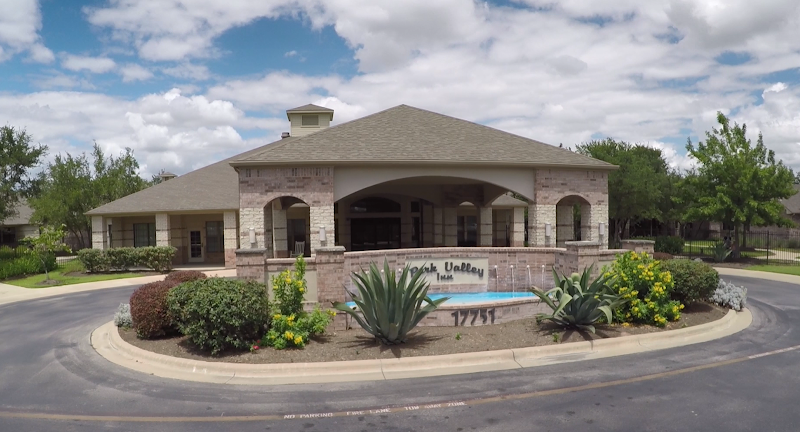
PARK VALLEY INN HEALTH CENTER

17751 PARK VALLEY DRIVE, ROUND ROCK, TX 78681 (512) 218-6000
For profit - Limited Liability company 128 Beds CANTEX CONTINUING CARE Data: November 2025 3 Immediate Jeopardy citations
Trust Grade
4/100
#799 of 1168 in TX
Last Inspection: January 2025

Within standard 12-15 month inspection cycle. Federal law requires annual inspections.

Overview

Park Valley Inn Health Center has received a Trust Grade of F, indicating significant concerns about the facility's quality and care. Ranked #799 out of 1168 in Texas, this places it in the bottom half of nursing homes in the state, and at #10 out of 15 in Williamson County, it is among the least favorable local options. Unfortunately, the facility's trend is worsening, with issues doubling from 6 in 2024 to 12 in 2025. Staffing is a weak point, rated 2 out of 5 stars, with a 47% turnover rate, slightly below the Texas average. Additionally, the facility has incurred $97,032 in fines, which is concerning as it is higher than 78% of Texas facilities, suggesting ongoing compliance issues. There have been critical incidents, including a failure to provide a sanitary environment for infection control, which affected multiple residents, and a serious accident where a mechanical lift malfunctioned, resulting in a resident sustaining a lumbar fracture. Another critical finding involved inadequate documentation following a resident's fall, leading to a delay in necessary medical treatment. While the facility does have some strengths, such as a 5-star rating for quality measures, these significant weaknesses and incidents raise serious concerns for families considering care for their loved ones.

Trust Score
F
4/100
In Texas
#799/1168
Bottom 32%
Safety Record
High Risk
Review needed
Inspections
Getting Worse
6 → 12 violations
Staff Stability
⚠ Watch
47% turnover. Above average. Higher turnover means staff may not know residents' routines.
Penalties
⚠ Watch
$97,032 in fines. Higher than 96% of Texas facilities. Major compliance failures.
Skilled Nurses
⚠ Watch
Each resident gets only 16 minutes of Registered Nurse (RN) attention daily — below average for Texas. Fewer RN minutes means fewer trained eyes watching for problems.
Violations
⚠ Watch
29 deficiencies on record. Higher than average. Multiple issues found across inspections.
★★☆☆☆
2.0
Overall Rating
★★☆☆☆
2.0
Staff Levels
★★★★★
5.0
Care Quality
★☆☆☆☆
1.0
Inspection Score
Stable
2024: 6 issues
2025: 12 issues

The Good

  • 5-Star Quality Measures · Strong clinical quality outcomes
  • Full Sprinkler Coverage · Fire safety systems throughout facility
  • No fines on record

Facility shows strength in quality measures, fire safety.

The Bad

2-Star Overall Rating

Below Texas average (2.8)

Below average - review inspection findings carefully

Staff Turnover: 47%

Near Texas avg (46%)

Higher turnover may affect care consistency

Federal Fines: $97,032

Well above median ($33,413)

Moderate penalties - review what triggered them

Chain: CANTEX CONTINUING CARE

Part of a multi-facility chain

Ask about local staffing decisions and management

The Ugly 29 deficiencies on record

3 life-threatening
Aug 2025 1 deficiency
CONCERN (D) 📢 Someone Reported This

A family member, employee, or ombudsman was alarmed enough to file a formal complaint

Potential for Harm - no one hurt, but risky conditions existed

Comprehensive Care Plan (Tag F0656)

Could have caused harm · This affected 1 resident

**NOTE- TERMS IN BRACKETS HAVE BEEN EDITED TO PROTECT CONFIDENTIALITY** Based on interview and record review, the facility failed to develop and implement a comprehensives person-centered care plan fo...

Read full inspector narrative →
**NOTE- TERMS IN BRACKETS HAVE BEEN EDITED TO PROTECT CONFIDENTIALITY** Based on interview and record review, the facility failed to develop and implement a comprehensives person-centered care plan for each resident, which included measurable objectives and timeframes to meet a resident's medical, nursing, and mental and psychosocial needs for one (Resident #1) of four residents reviewed for care plans. The facility failed to ensure Resident #1's care plan intervention for needing assistance with eating was implemented on 08/06/25. This failure could place residents at risk of not receiving the appropriate care to meet their needs. Findings included: Review of Resident #1's undated face sheet reflected an [AGE] year-old male who was admitted to the facility from 08/05/25 - 08/06/25 with a diagnosis including fractures of nasal bone and his vertebra (spine). Review of Resident #1's EMR, on 08/09/25, reflected an admission MDS assessment had not been completed. Review of Resident #1's initial care plan, dated 08/05/25, reflected he had an ADL self-care performance deficit with an intervention of requiring one staff member's assistance to eat. During a telephone interview on 08/08/25 at 7:54 PM, Resident #1's RP stated he needed assistance with feeding and was not able to feed himself. She stated when she went to visit him around 6:38 PM on 08/06/25, his dinner tray was on his bedside table untouched. During a telephone interview on 08/09/25 at 12:55 PM, CNA A stated he worked the 6:00 PM - 6:00 AM shift on 08/06/25 and worked the hall that Resident #1 was on. He stated he remembered delivering him his dinner tray. He stated he did not assist him with dinner because he was able to feed himself. He stated he knew how to look up how much assistance residents needed with care in Kardex (documentation system), but he did not believe he did for Resident #1 that night. During an interview on 08/09/25 at 2:46 PM, the DON stated the admitting nurses were responsible for the initial comprehensive care plan. She stated they would review hospital paperwork or obtain information from the family to enter the assistance the resident needed required for care. She stated the care plan was the plan of care for each resident. She stated the care plans were always changing based on the residents' needs and it was like a guide. A potential outcome of not following the residents' care plan could be harm. She stated if a resident needed assistance with feeding, her expectations were that the aides followed that requirement. She stated a resident could get sick, health could decline, or they could become malnourished. Review of the facility's undated Comprehensive Care Plans Policy reflected the following: A comprehensive, person-centered care plan that includes measurable objectives and timetables to meet the resident's physical, psychosocial and functional needs is developed and implemented for each resident.
Jun 2025 1 deficiency
CONCERN (E) 📢 Someone Reported This

A family member, employee, or ombudsman was alarmed enough to file a formal complaint

Potential for Harm - no one hurt, but risky conditions existed

Comprehensive Care Plan (Tag F0656)

Could have caused harm · This affected multiple residents

**NOTE- TERMS IN BRACKETS HAVE BEEN EDITED TO PROTECT CONFIDENTIALITY** Based on observations, interviews and record reviews, the facility failed to develop and implement a comprehensive person-center...

Read full inspector narrative →
**NOTE- TERMS IN BRACKETS HAVE BEEN EDITED TO PROTECT CONFIDENTIALITY** Based on observations, interviews and record reviews, the facility failed to develop and implement a comprehensive person-centered care plan for each resident, which included measurable objectives and timeframes to meet a resident's medical, nursing, and mental and psychosocial needs for 5 of 7 residents (Resident's #2, #3, #4, #5, and #6) reviewed for care plans. 1. The facility failed to ensure that Resident #2's care plan was revised, updated, and individualized to address Resident #2's risk for dehydration. 2. The facility failed to ensure care plan interventions (1:1 and/or in room activities) were implemented and documented for Resident #2, Resident #3, Resident #4, Resident #5, and Resident #6. These failures placed residents at risk of not receiving the appropriate care to meet their current needs. Findings included: 1. Review of Resident #2's face sheet, printed on 06/04/25, reflected a [AGE] year-old female admitted on [DATE]. Her diagnoses included unspecified dementia (decline impacting memory, thinking and social abilities), cognitive communication deficit (difficulty with communication), anxiety, depression, and generalized muscle weakness. Review of Resident #2's annual MDS assessment, dated 03/03/25, reflected a BIMS score of 3 which indicated severe cognitive impairment. Review of Resident #2's undated care plan reflected Resident #2 was at risk for dehydration related to (blank). The goal reflected the resident would not exhibit any signs and symptoms of dehydration but did not specify a time frame. Interventions included offer additional fluids with meals and consults as needed. An observation and attempted interview on 06/03/25 at 12:07 PM, revealed Resident #2 sitting at a table in the common area as she prepared to feed herself lunch. Resident #2 smiled and nodded but did not engage in conversation. 2. Review of Resident #2's undated care plan reflected Resident #2 had risk for diversional activity deficit with a goal to participate in group and/or individual activities 2-3 times per week as tolerated. Interventions included to provide 1 on 1 visits to meet activity goal and provide room visits 2-3 times per week. Review of Resident #3's face sheet, printed on 06/04/25, reflected an [AGE] year-old female admitted on [DATE]. Her diagnoses included unspecified dementia, anxiety, depression, and other abnormalities of gait and mobility. Review of Resident #3's significant change in status MDS assessment, dated 05/22/25, reflected a BIMS score of 4 which indicated severe cognitive impairment. Review of Resident #3's undated care plan reflected Resident #3 was at risk for diversional activity deficits with a goal to participate in group and/or individual activities 2-3 times per week as tolerated. Interventions included to provide 1 on 1 visits to meet activity goal. During an observation and interview on 06/03/25 at 12:04 PM, Resident #3 was sitting in the common area at a table getting ready for lunch. Resident #3 stated the lunch looked good. Review of face sheet for Resident #4 reflected an [AGE] year-old female admitted on [DATE] with diagnoses of Alzheimer's disease (progressive neurodegenerative disorder that affects the brain's ability to function), unspecified dementia (decline impacting memory, thinking and social abilities), cognitive communication deficit (difficulty with communication), difficulty walking, and major depressive disorder (serious mental illness characterized by persistent sadness, loss of interested and other symptoms affecting mood or thoughts). Review of Resident #4's quarterly MDS dated [DATE] reflected a BIMS score of 2 which indicated severe cognitive impairment. Review of Resident #4's undated care plan reflected Resident #4 was at risk for diversional activity deficits with a goal to participate in group and/or individual activities 2-3 times per week as tolerated. Interventions included to provide 1 on 1 visits to meet activity goal and provide room visits 2-3 times per week. Observation of Resident #4 on 06/03/2025 at 9:26 AM revealed Resident #4 sat in common area and was group with other residents. Review of Resident #5's face sheet reflected an [AGE] year-old female admitted on [DATE] with diagnosis of unspecified dementia decline impacting memory, thinking and social abilities), other lack of coordination (difficulties with movement, balance and coordination), depression (persistent feeling of sadness or loss of interest in activities), and chronic systolic (congestive) heart failure (long-term condition where the heart's ability to contract and pump blood is impaired). Review of Resident #5's quarterly MDS dated [DATE]/2025 reflected Resident #5 was unable to complete BIMS and is rarely or never understood. Further review reflected Resident #5 had a memory problem unable to recall after 5 minutes and appeared to recall long past. Review of Resident #5's undated care plan reflected Resident #5 had a risk for diversional activity deficit with a goal to participate in group and or individual activities 2-3 times per week. Interventions included provide 1 on 1 visits to meet activity goal and provide room visits 2-3 times per week. During an attempted interview on 06/03/2025 at 1:53 PM with Resident #5 revealed Resident #5 was confused and did not respond to simple questions. Review of Resident #6's face sheet reflected a [AGE] year-old-female admitted on [DATE] with diagnoses of Alzheimer's disease (progressive neurodegenerative disorder that affects the brain's ability to function), depression (persistent feeling of sadness or loss of interest in activities), anxiety disorder (group of mental health conditions characterized by excessive fear or worry), dementia (persistent feeling of sadness or loss of interest in activities) , and cognitive communication deficit (difficulty with communication). Review of Resident #6's quarterly MDS dated [DATE] reflected a BIMS score of 3 which reflected a severe cognitive impairment. Review of Resident #6's undated care plan reflected Resident #6 had a risk for diversional activity deficit with a goal to participate in group and or individual activities 2-3 times per week. Interventions included provide 1 on 1 visits to meet activity goal and provide room visits 2-3 times per week. During an interview on 06/03/2025 at 9:24 AM revealed Resident #6 was confused and not oriented to time or place. Review of activity logs dated 04/01/2025 and 04/02/2025 reflected Resident #2, Resident #3, Resident #4, and Resident #6 were not provided in-room visits or 1 to 1 activities. Review of activity logs dated 04/03/2025 reflected Resident #2, Resident #3, and Resident #4 were not provided in-room visits or 1 to 1 activities. Review of activity logs dated 04/04/2025 reflected Resident #4 and Resident #6 were not provided in-room visits or 1 to 1 activities. Review of activity logs dated 04/14/2025 reflected Resident #2, Resident #4, and Resident #6 were not provided in-room visits or 1 to 1 activities. Review of activity logs dated 04/21/2025 reflected Resident #3, Resident #4, and Resident #6 were not provided in-room visits or 1 to 1 activities. Review of activity logs dated 04/22/2025 reflected Resident #2, Resident #3, Resident #4, and Resident #6 were not provided in-room visits or 1 to 1 activities Review of activity logs dated 04/23/2025 reflected Resident #2, Resident #3, Resident #4, Resident #5, and Resident #6 were not provided in-room visits or 1 to 1 activities. Review of activity logs dated 04/24/2025 reflected Resident #2, Resident #3, Resident #4, Resident #5, and Resident #6 were not provided in-room visits or 1 to 1 activities. Review of activity logs dated 04/25/2025 reflected Resident #2, Resident #3, Resident #4, Resident #5, and Resident #6 were not provided in-room visits or 1 to 1 activities. Review of activity logs dated 04/29/2025 reflected Resident #2, Resident #3, Resident #4, Resident #5, and Resident #6 were not provided in-room visits or 1 to 1 activities. Review of activity logs dated 04/30/2025 reflected Resident #2, Resident #3, Resident #4, Resident #5, and Resident #6 were not provided in-room visits or 1 to 1 activities. Review of activity logs dated 05/01/2025 reflected Resident #2, Resident #3, Resident #4, Resident #5, and Resident #6 were not provided in-room visits or 1 to 1 activities. Review of activity logs dated 05/02/2025 reflected Resident #2, Resident #3, Resident #4, Resident #5, and Resident #6 were not provided in-room visits or 1 to 1 activities. Review of activity logs dated 05/05/2025 reflected Resident #2, Resident #3, Resident #4, Resident #5, and Resident #6 were not provided in-room visits or 1 to 1 activities. Review of activity logs dated 05/06/2025 reflected Resident #2, Resident #3, Resident #4, Resident #5, and Resident #6 were not provided in-room visits or 1 to 1 activities. Review of activity logs dated 05/07/2025 reflected Resident #2, Resident #3, Resident #4, Resident #5, and Resident #6 were not provided in-room visits or 1 to 1 activities. Review of activity logs dated 05/16/2025 reflected Resident #2, Resident #3, Resident #4, Resident #5, and Resident #6 were not provided in-room visits or 1 to 1 activities. Review of activity logs dated 05/19/2025 reflected Resident #2, Resident #3, Resident #4, and Resident #6 were not provided in-room visits or 1 to 1 activities. Review of activity logs dated 05/20/2025 reflected Resident #2, Resident #3, Resident #4, Resident #5, and Resident #6 were not provided in-room visits or 1 to 1 activities. During an interview on 06/04/2025 at 12:54 PM, the AD stated that she had an assistant (AA) that worked in memory care and provided activities. The AD stated that she visited memory care to ensure the activities were implemented and checked in with the AA daily. The AD stated that the AA was responsible to provide 1:1 activities. The AD did not list Resident #4, Resident #5 or Resident #6 as residents who were provided 1:1 activities. The AD stated that residents in memory care will usually do group activities and if they do not participate for the day then the AA will do 1:1 activities. The AD said 1:1 activities were documented in a binder. The AD stated she was responsible to update the activity part of the care plan. The AD stated a resident who did not come out of their room is what determined that they got a 1:1 activity. During an interview on 06/04/2025 at 1:20 PM, AA stated that she was responsible for activities in memory care Monday through Friday. The AA stated she tried to keep a routine for the residents in memory care. She stated that in room visits or 1:1 activities occurred daily, Monday to Friday, from 1:30 - 2:00 PM. The AA did not include Resident #4, Resident #5 or Resident #6 as residents who received 1:1 activities. The AA stated she reviewed residents' care activity care plans and if the care plan specified the residents to have a 1:1 activity then they should have been having a 1:1 activity. The AA stated that activities were documented in a binder and stated not all of May 2025 activities had been documented. During an interview on 06/04/25 at 2:27 PM, the ADM stated that he expected the plans were completed timely. He stated he expected the care plans to be resident-centered and accurate . He stated the IDT was responsible for the care plans. During an interview on 06/04/25 at 2:40 PM, the DON stated each individual resident required different elements of care which were reflected on the care plan. She stated she expected interventions to be implemented and then monitored and revised if needed. She stated everyone was responsible for assisting with care plans and they were monitored in the morning meeting with the IDT. During an interview on 06/04/2025 at 2:55 PM, SW stated that interventions were added to the care plan by the MDS nurse or nursing. SW stated she provided her input at care plan meetings or to the IDT for interventions. During an interview on 06/04/2025 at 4:29 PM, the DON stated that the charge nurse and unit manager were responsible to ensure activities were being conducted and implemented in memory care. The DON stated that the AD or a CNA could provide 1:1 activities. The DON stated that the unit manager role was created to help alleviate or decrease resident to resident behaviors the unit manager was responsible to round frequently and ensure activities were implemented frequently as non-pharmacological interventions. During an interview on 06/04/2025 at 4:41 PM, the ADM stated that 1:1 activities should be documented in the activities binder and he expected them to be documented and implemented. Review of the facility policy titled, Care Plans, Comprehensive Person-Centered revised March 2022, reflected in part, A comprehensive, person-centered care plan that includes measurable objectives and timetables to meet the resident's physical, psychosocial and functional needs is developed and implemented for each resident . 3. The care plan interventions are derived from a thorough analysis of the information gathered as part of the comprehensive assessment . 7. The comprehensive, person-centered care plan: a. includes measurable objectives and timeframes; e. reflects currently recognized standards of practice for problem areas and conditions . 11. Assessments of residents are ongoing and care plans are revised as information about the residents and the residents' conditions change. 12. The interdisciplinary team reviews and updates the care plan: a. when there has been a significant change in the resident's condition; b. when the desired outcome is not met; c. when the resident has been readmitted to the facility from a hospital stay; and d. at least quarterly, in conjunction with the required quarterly MDS assessment.
Jan 2025 10 deficiencies 2 IJ (1 affecting multiple)
CRITICAL (J)

Immediate Jeopardy (IJ) - the most serious Medicare violation

Accident Prevention (Tag F0689)

Someone could have died · This affected 1 resident

**NOTE- TERMS IN BRACKETS HAVE BEEN EDITED TO PROTECT CONFIDENTIALITY** Based on observation, interview, and record review the facility failed to ensure residents environment remained free of accident...

Read full inspector narrative →
**NOTE- TERMS IN BRACKETS HAVE BEEN EDITED TO PROTECT CONFIDENTIALITY** Based on observation, interview, and record review the facility failed to ensure residents environment remained free of accident and hazards to prevent avoidable accidents for 1 (Resident #28) of 1 resident reviewed for safe transfers. The facility failed to ensure mechanical lift #1 was removed from the floor after it was deemed out of order on 01/03/2025. The facility failed to ensure mechanical lift #2 was in working order prior to Resident #28's transfer. The mechanical lift fell on top of Resident #28 and Resident #28 fell to the floor from the lift which resulted in Resident #28 being transferred to the ER to be treated for a lumbar fracture and hemorrhage on 01/03/2025. These failures resulted in an identification of an Immediate Jeopardy (IJ) on 01/15/2025 at 6:15 PM. While the IJ was removed on 01/18/2025 at 6:15 PM, the facility remained at a level of no actual harm at a scope of isolated that is was not immediate jeopardy due to the facility's need to evaluate the effectiveness of the corrective systems. These failures could place residents who require a mechanical lift for transfers at risk for falls and/or serious injury or death. Findings included: Review of Resident #28 face sheet revealed a [AGE] year-old female admitted on [DATE] with diagnoses of wedge compression fracture of second lumbar vertebra (break in the front of the vertebra that causes it to collapse into a wedge shape), memory deficit following cerebral infarction (common cognitive impairment that can affect memory, attention, concentration, and language), Traumatic subarachnoid hemorrhage without loss of consciousness (type of brain injury that occurs when there's bleeding between the brain and skull) and multiple sclerosis (a chronic disease that damages the central nervous system). Review of Resident #28 significant change MDS dated [DATE] revealed, Resident #28 had a fracture and major injury. Further review revealed Resident #28 was dependent on staff for chair to bed and bed to chair transfers. Review of Resident #28 undated care plan revealed Resident #28 was dependent on staff for transfers and required a mechanical lift. Further review revealed Resident #28 fell from mechanical lift on 01/03/2025 with interventions to keep area free of obstructions to reduce the risk of falls or injury. Review of Resident #28 nursing progress note dated 01/03/2025 revealed LVN D was called to Resident #28's room and Resident #28 was on the floor. Progress note revealed CNA N and CNA O tried to transfer Resident #28 from bed to her wheelchair and stated that she fell from lift and laid on the floor. Resident #28 stated she bit her tongue and small amount of blood was noted. Resident #28 stated she hit her head. NP was notified and provided order to send to ER. Review of Resident #28 nursing progress note dated 01/04/2025 revealed Resident arrived back to facility with diagnosis of lumbar spine fracture and subarachnoid hemorrhage. During an interview on 1/15/2024 at 12:02PM Resident # 28 started she remembered falling to the floor after staff tried to get her to her bed with the lift. Resident #28 stated she was scared, screamed and bit her tongue. She stated when she hit the floor, she thought she had broken her back. Resident #28 stated she did not remember going to the hospital or if she had any injuries. During an interview on 1/15/2024 at 1:40pm LVN D she stated she was working on 1/03/2025 and was called to the Resident #28's room. LVN D stated upon arrival Resident #28 was on the floor and he two aides (CNA N and CNA O) told her they tried to transfer Resident #28 from bed to her wheelchair and that Resident #28 fell from the mechanical lift and laid on the floor. She stated Resident #28 was alert and the resident told LVN D that she bit her tongue. LVN D stated she did notice a small amount of blood that stopped bleeding by itself, and that Resident #28 told LVN D she hit her head. LVN D stated she completed vitals and called the NP, which gave the order to send out Resident #28 to the ER for further evaluation. LVN D stated she also called and informed Resident #28's son. During an interview 1/15/2024 at 1:54PM CNA N stated, she worked 6:00 am to 2:00 pm on 01/03/2024 and at 10:00 am she and CNA N went to Resident #28's room to get her out of bed for activities. CNA N stated they had already used the mechanical lift at 6:00 am on Resident #28 and with two other residents without problems and did not have any knowledge of the mechanical lift being out of order. CNA N stated when they moved the mechanical lift from the bed, the top of the mechanical lift fell on top of Resident #28. CNA N stated, Resident #28 screamed out loud when she fell to the floor and fell on her back. CNA N stated that Resident #28 stated she bit her tongue and saw it was bleeding. CNA N stated she ran to contact the charge nurse LVN N and stated LVN N came to the room and completed vitals and Resident #28 was sent to the ER because she hit her head. During an interview on 1/15/2025 at 2:05PM CNA O she stated as they pulled the mechanical lift away from the bed the top of the lift fell on top of Resident #28, and she fell on her back to the floor. CNA O stated Resident #28 screamed out due to the impact. CNA O stated she stayed with the resident while CNA O when to get the nurse. She stated LVN D came immediately. During an interview on 01/15/2025 at 3:05 PM MD stated that the company who serviced mechanical lifts came out earlier in the day on 1/03/2025. He stated that the technician stated he left an out of order sign on a mechanical lift. MD stated he did not confirm there was a sign on the mechanical lift and that later he heard a resident fell. MD stated that the service provider does not inspect the mechanical lift he only calibrates the scale. MD stated that upon his inspection after the fall he saw that a washer separated from the bolt which caused it to come out and what caused the mechanical lift to fall onto the resident. MD stated that he removed the mechanical lift from the floor after the incident. MD stated that he inspected each mechanical lift weekly and the service provide calibrates mechanical lifts monthly. MD stated he does not document his weekly inspections. MD stated that there used to be an app the staff could report issues, but it did not work out and there are maintenance binders that staff write down issues in. During an interview on 01/15/2025 at 3:20 PM DON stated she was not working when the fall happened with Resident #28. DON stated she returned to work on 1/06/2025. DON stated mechanical lift training was completed on 12/24/2024 with staff, but not again after the incident with Resident #28. DON stated no additional training was done regarding safe transfers and it was her intention to do it, but it did not happen. During an interview on 01/15/2025 at 3:57 PM ADM stated that staff said they were transferring Resident #28 and the central arm came loose and she fell off the bed and onto the floor and was between the legs of the lift. ADM stated Resident #28 was sent to the hospital. ADM stated that when the service provider come to service the mechanical lift, they calibrate the lift and do not inspect it. He stated there was not routine maintenance done unless something is was wrong with the lift. He stated that the MD inspected lifts routinely but not in a formalized process. He stated that the service provider was out earlier in the day on 1/03/2025. He stated he had not heard that they marked a mechanical lift out of order. ADM stated they used it for Resident #28's shower earlier in the day and two other residents before her fall. ADM stated that the only thing that was not working was the battery in the scale but that was for weighing purposes. ADM stated if someone stated that there was something wrong with mechanical lift, he would have expected it to be taken it off the floor. ADM stated if the mechanical lift was out of order and used it would risk of someone getting hurt and stated that someone did get hurt, but depended on if something was truly wrong with it. ADM stated he was not sure if he had a policy on servicing mechanical lift. ADM stated he expected service providers to notify management of any issues with equipment so it could be pulled off the floor. In a subsequent interview on 01/15/2025, ADM stated that the service report for the mechanical lift serviced on 01/03/2025 was different than the lift that fell on Resident #28. During an interview on 01/15/2025 at 05:30 PM DON stated all staff should report mechanical lift issues to MD and if it was after his working hours, the staff should inform the immediate nurse and they should contact MD. DON stated all staff were responsible for removing a non-working mechanical lifts from resident care areas. During an interview on 01/15/2025 at 5:30 pm CNA P stated that if the equipment was not working, he would have been able to tell when he felt it not working like it used to. CNA P stated he did not know what the policy was for reporting broken equipment, but stated he would report it to his chain of command. CNA stated he would not know a mechanical lift was broken from the look of it. CNA P stated if it was broken someone could get hurt. Observation and interview on 01/15/2025 at 5:35 PM revealed a second mechanical lift with an orange sign on it wheeled into MD's office that had do not use on it. MD stated that this lift was on the floor and that ADM would have to be asked about if it was being used. MD stated it apparently already had the sign on it not to use but he was unsure where it was and to ask ADM. During an interview 01/15/25 at 5:35 PM, MA Q stated she would not know if equipment were broken unless they put a sign on it. She would not be able to identify something was broken until it was not working properly. MA Q stated if she needed to report it, she would have reported it to her charge nurse. MA Q stated if they used broken equipment, they could hurt themselves or others. During an interview on 01/15/2025 at 5:43 PM, CNA R stated if equipment was not working properly, she would let the nurse know and would write a sign and remove it. CNA R stated she would move the equipment outside the area. CNA R stated if she used a piece of equipment that was broken, it could hurt herself or another resident. During an interview on 01/15/2025 at 5:44 PM, service provider supervisor stated that the company only calibrates the scales on the mechanical lifts. He stated that if there was an issue with the lift, they would notify management. He stated that they would normally not tag the lift that it was out of order and if it was not functioning, they would notify management. During an interview on 01/15/2025 at 5:50 PM, LVN S stated she was a charge nurse. LVN S stated if a piece of equipment was broken a CNA would let her know. LVN S stated she normally worked 10:00 PM - 6:00 AM and they did not use a lot of equipment. She stated they would scan the QR Code that was implemented in May 2024 to notify the MD. LVN S stated CNAs would let us know and then they would go through the steps of reporting. LVN S stated they would remove the equipment, put a sign on it and push it to the back on in a closet if it was not working. During an interview on 01/23/2025 at 11:54 AM, representative from mechanical lift manufacturer stated that it was advised to do at least a monthly inspection of the mechanical lifts to look around for normal wear and tear. Representative recommended that a day be set aside once a month to inspect the lift. Review of service report dated 01/03/2025 revealed mechanical lift #1's serial number matched the service report, and it was serviced on 01/03/2025. Further review revealed service reported noted motor that spreads wheels does not work but scale is accurate left out of tag order on lift. Further review revealed service provider emailed MD a copy of the service report on 01/06/2025. Review of technician kiosk sign in and out information revealed service provider technical checked in at 01/03/2025 at 9:05 am and check out of the facility at 9:58 AM. Resident #28 was reported to have incident at 10:00 AM. Review of undated facility investigation pictures of mechanical lift #2 revealed differing serial number than serial number of mechanical lift #1. Observation on 01/16/2025 at 3:30 PM revealed mechanical lift #2 revealed differing serial number than lift that was serviced on 01/03/2025. Review of facility accident/incident report dated 01/03/2025 revealed equipment as fall contributing factors. Review of manufacture owner's manual titled Battery Operated Patient Lift dated 03/01/2022 revealed the operator of the lift is to inspect the mechanical before each use and included to check all bolts and nuts are tight. Further review revealed at least once a month, the lift should be thoroughly inspected to recognize any signs of wear, and/or looseness of bolts or parts and to replace any worn parts immediately. Review of facility policy dated July 2017 titled Lifting Machine, using a Mechanical revealed make sure that all necessary equipment (slings, hooks, chains, straps, and supports) is on hand and in good condition. Further review revealed to test control and ensure emergency release feature works. ADM and DON were notified on 01/15/2025 at 7:17 PM that an Immediate Jeopardy (IJ) had been identified due to the above failures and an IJ template was provided. The following POR was accepted on 01/17/2025 at 4:52 PM: F689 This is to confirm the submission of our Plan of Removal provided by this facility. For F689 IJ. The submission of this POR does not constitute an admission on the part of the facility as to accuracy of the surveyor's findings, the conclusion drawn from there, nor is the scope and or severity regarding any deficiency cited applied correctly. How corrective action will be accomplished for those residents found to have been affected by the deficient practice. The resident went sent to the ER for further evaluation and treatment on 1/3/2025. The resident was treated for L2 transverse fracture and monitored for brain bleed and resolved. On 1/4/2025 Resident returned to the facility at her previous level of care with no changes and remains a two-person mechanical lift assist for transfers. How the facility will identify other residents having the potential to be affected by the same deficient practice; Residents who require a two person assistance with mechanical lifts have the potential to be affected. On 1/16/2025 Administrator reviewed last twelve months of incident reports with no instances mechanical lift malfunction with residents. There have been no other incidents with mechanical lift malfunctions. The mechanical lift used in the incident with this resident (serial number ending 50) was removed from service on 1/3/2025, secured and made inoperable for further use. The mechanical lift noted by the service technician as motor that spreads the wheels does not work (serial number ending 26) has been removed from service and secured from use on 1/15/25. As of 1/16/24 Administrator validated there are three Mechanical lifts in use; lift with serial number ending 35, lift with number ending 79, lift with number ending 500. On 1/16/25 Area Lead Maintenance Director completed a re-inspection of all mechanical lifts on site, all lifts in use are functioning properly. 1/16/25 Administrator and Area Lead Maintenance Director confirmed Director confirmed the two other lifts remain removed from service and secured. On 1/15/24 Maintenance director has been relieved of duty by Administrator pending investigation, retraining, and demonstrated skills competency by VP of Plant Operations. Measures to be put into place or systemic changes made to ensure that the deficient practice will not recur; On and beginning 1/15/25 the Director of Nursing and Administrator will conduct re-education including post test with direct care staff on safe transfer and lift operation, and reporting any operational concerns to management. On 01/15/2025 the Director of Regulatory Compliance in-serviced the Administrator and Director of Nursing on Abuse, Neglect, and Resident Rights. Administrator or designees initiated in-servicing all staff on Abuse, Neglect, and Resident Rights on 1/16/2025. Any staff who are not present to complete the in-servicing by 1/18/25 or new staff after that date will be required to complete the in-servicing at the start of their next shift before beginning work. Revised Lift Maintenance and Inspection policies and practices including documentation, and revised lock-out tag-out procedures will be implemented on 1/16/2025 to ensure continued safe operation of lift equipment. Any staff -including maintenance director who are not present to complete the in-servicing by 1/18/25 or new staff after that date will be required to complete the in-servicing at the start of their next shift before beginning work. Administrator and DON in-serviced by Lead Area Maintenance Director 1/17/25. Service provider will be notified of new requirement to personally review all lift inspections with the Administrator or Director of Nursing while on-site completion date 1/17/25. How the facility plans to monitor its performance to make sure that solutions are sustained. Administrator will directly review all mechanical lift inspections weekly for four weeks. Then bi-weekly for two months. Beginning 1/16/25 and ongoing. Beginning 1/16/25 and ongoing Area Lead Maintenance Director will conduct maintenance and safety inspections on all mechanical lifts monthly for three months then monthly thereafter by facility maintenance director . These inspections will be reviewed with Administrator while on-site. Beginning 1/17/25 Nurse Managers will observe five direct care staff a week for four weeks, during care, of residents who require mechanical lifts, to ensure that staff demonstrate competencies with re-education as needed. Then bi-weekly for two months. The Maintenance and Inspection logs, and results of observations will be reviewed at the monthly QAPI meetings for 3 months beginning with 1/17/25 and ongoing. The Administrator is was responsible for implementing the acceptable plan of correction. The POR was monitored from 01/16/2025 to 01/18/2025 as follows: During an interview on 01/16/2025 at 3:32 PM, ADM stated that the lift serviced on 01/03/2025 was identified as mechanical lift #1 and the serial number on the service report was different that mechanical lift #2 which is the lift that was used during the transfer with Resident #28. ADM stated that the lift in the service report was supposedly marked out of order but he was unsure who the technician check out with and notified of this. ADM stated that the lift in the report (mechanical lift #1) was pulled off the floor on 01/15/2025 and marked out of order. ADM stated he had not been made aware that there was an issue with mechanical lift #1 until then. ADM stated that the lift involved in Resident #28's fall was a different lift and had last been serviced on 11/05/2024. ADM stated that normally the MD would be responsible for repairing and ordering parts to service the lift outside of scale calibration. Observation on 01/16/2025 revealed mechanical lift #1 and mechanical lift #2 marks identified as out of order and zip tie through battery compartment to prevent use. Observation on 01/18/2025 of a locked maintenance closet revealed mechanical lift #1 and mechanical lift #2 were stored and tagged as inoperable with a zip tie through the battery compartment and no batteries attached. During an interview with the ADM on 1/18/2025 at 12:15pm he stated that any staff not completing the in-servicing by 1/18/2024 would not be permitted to work until they are in-serviced over the topics related to the IJ. He stated for new hires, nurses would get the change in condition, PHC trainings, and aides would receive the mechanical lift, and flu trainings. During interviews on 01/18/2025 from 12:55pm-3:00pm, the DON, two RN's and four CNA's from both shifts stated they were in-serviced on infection control, the order of donning: sanitize hands, apply gown, apply mask, apply shield, then gloves and once done with their task they must do everything in reverse order, dispose of the PPE, sanitize their hands and put on new mask. They were in-serviced on reporting of ANE, including the ANE coordinator being the Administrator. They were taught that all mechanical lifts are to be used by 2 people at a time, how to identify a resident needing mechanical lift transfers by the electronic record, and how to properly ensure working order and then use of the mechanical lift. They also revealed knowledge of using Proactive Health check in the residents' EMR. During an interview with the DON on 1/18/2025 at 3:45pm she stated she received training from the DCS regarding influenza and infection control, what signs and symptoms need to be reported, change in condition must be reported to the MD, RP, and clinical staff working with the resident. Mechanical lift in-servicing, how to properly don/doff PPE, and that the ADM is the abuse coordinator. The DON, ADM, and DCS had been taking turns providing the mechanical lift, proactive health check, proper PPE application and removal, and outbreak in-services to direct care staff. The DON revealed she will be responsible for providing in-servicing for new hires and any PRN staff must complete the training before working the floor. Review of a inspection log labeled [Mechanical] Lift Preventative Maintenance Inspection Log, reflected 5 lifts were documented as inspected on 1/16/2025. Review of a policy titled Mechanical Lift Maintenance and Inspection Policies dated revised 1/16/2025 reflected maintenance director will complete a visual and function inspection of all lifts weekly. If any area does not pass inspection, the lift with be removed from the service area, and a lock out/tag-out indicator affixed so as to prevent unauthorized use. Review of an email from the ADM to a scale inspector dated 1/17/2025 revealed that the inspector must notify the ADM and be accompanied by the ADM throughout a service technician's inspection of lifts at the facility. Review of document title Mechanical Lift Audit by Nurse Manager 5 per week for 4 weeks revealed an audit conducted on 1/17/2025 by the DCS. Review of in-service titled Abuse/Neglect & Resident Rights reflected it was presented by DCS dated 1/17/2025 was provided to the ADM and the DON. While the IJ was removed on 01/18/2025 at 6:16 PM, the facility remained at a level of no actual harm with the potential for more than minimal harm that is was not immediate due to the facility's need to evaluate the effectiveness of the corrective systems.
CRITICAL (K)

Immediate Jeopardy (IJ) - the most serious Medicare violation

Infection Control (Tag F0880)

Someone could have died · This affected multiple residents

**NOTE- TERMS IN BRACKETS HAVE BEEN EDITED TO PROTECT CONFIDENTIALITY** Intake #557738 Based on observations, interviews, and record review, the facility failed to provide a safe and sanitary environm...

Read full inspector narrative →
**NOTE- TERMS IN BRACKETS HAVE BEEN EDITED TO PROTECT CONFIDENTIALITY** Intake #557738 Based on observations, interviews, and record review, the facility failed to provide a safe and sanitary environment to prevent the development and transmission of communicable diseases and infections for 7 of 29 residents (Resident #1, Resident #17, Resident #68, Resident #39, Resident #80, Resident #159, Resident #21) reviewed for infection control. 1.The facility failed to test all residents who had flu like symptoms. 2. The facility failed to put place residents on quarantine or droplet precautions when indicated. An IJ was identified on 01/15/25 at 4:45 pm. The IJ template was provided to the facility on [DATE] at 7:15 pm. The plan of removal was accepted on 01/17/25 4:52 pm. While the IJ was removed on 01/17/25 at 5:30 pm the facility remained out of compliance at a scope of pattern and a severity of no actual harm identified as patterned due to the facility's need to complete in-service training and evaluate the effectiveness of the corrective systems. 4. LVN E did not follow Enhanced Barrier Precautions by not putting on a gown when conducting medication administration via gastrostomy tube for Resident #17. 5. The SC did not follow Enhanced Barrier Precautions by not putting on a gown before providing peri-care and assistance during wound care for Resident #1. These failures placed the residents at risk of infection transmission, respiratory distress, hospitalization, and even death. Findings included: Resident #68 Record review of Resident #68's face sheet reflected a [AGE] year-old female who was admitted to the facility on [DATE]. Her diagnoses included an acute upper respiratory infection, chronic pain syndrome, heart failure, hyperlipidemia, depression, seasonal allergic rhinitis, arthritis, shortness of breath, dementia, Vitamin D deficiency, and Vitamin B deficiency. Record review of Resident #68's Quarterly MDS assessment, dated 01/09/25 reflected a BIMS score of 15, indicating her cognition was mildly affected. Further review of the MDS revealed Resident #68 required set-up or clean up assistance for meals and oral hygiene, and partial/moderate assistance for her activities of daily living. Further review of the MDS reflected Resident #68 used a manual wheelchair for mobility. Record review of Resident #68's Care Plan dated 01/17/25 reflected she has episodes of shortness of breath and was at risk for respiratory distress. The goal indicated decreased episodes of shortness of breath, and no signs or symptoms of respiratory distress/failure over the next 90 days. Interventions included use of oxygen and take slow deep breaths, nursing to monitor for signs of relief from shortness of breath and provide respiratory treatments per orders, administer medications as ordered, and assess respiratory status by checking breath sounds, respiratory rate, skin color and notify physician of abnormal findings. Record review of Resident #68's Clinical Notes reflected: o 01/13/25 at 02:01 PM - Resident #68 refused to take geri-tussin 10 mL. o 01/13/25 at 04:25 PM - X-ray result came back and notified Nurse Practitioner, who ordered Tamiflu 75mg PO BID x 5 days. Carried out order and faxed to pharmacy. Called her RP and left a message. o 01/13/25 at 05:53 PRM - Nurse Practitioner ordered Influenza testing. Scheduled with [Company Name] to come onsite to get the test, in-house Influenza testing kit is out. Scheduled 01/14/25. No Test Results were available. Observation of resident's room on 01/14/25 at 4:50 pm revealed no airborne precautions or PPE signage outside the door. Observation on 01/14/25 at 12:45 pm revealed CNA N passing out trays to resident #68 room without donning proper PPE. Resident #39 Record review of Resident #39's face sheet reflected a [AGE] year-old female who was admitted to the facility on [DATE]. Her diagnoses included chronic pain due to trauma, a contusion of head, wedge compression fracture 3rd lumbar vertebrae, rheumatoid arthritis, fracture of left femur and nasal bones, repeated falls, severe protein-calorie malnutrition, hypotension, nausea, Record review of Resident #39's Quarterly MDS dated [DATE] reflected a BIMS score of 15, indicating her cognition was intact. Further review of the MDS revealed Resident #39 required moderate to substantial assistance for her activities of daily living, and she used a wheelchair. Record review of Resident #39's Care Plan dated 12/10/24 reflected she was at risk for allergic reaction related to allergies to codeine and gluten. The goal was for Resident #39 to not have an allergic reaction for the next 90 days. Interventions included a review of listed allergies prior to giving new medications, review of diet for food allergies, notify physician if Resident #39 has an allergic reaction to new medications or foods, and document signs and symptoms of allergic reaction. Record review of a Clinical Note for Resident #39 dated 01/12/25 at 12:54 AM reflected Resident #39 felt as if she was getting sick or it may be allergies. Resident #39 denied any pain after the nurse offered her pain meds. Resident #39 stated she was going to continue without any medication and if it becomes worse she would ask for something. Record review of a Clinical Note for Resident #39 dated 01/16/25 at 03:13 PM reflected a Rapid Flu Test Procedure Card showed a negative test result and NP would be notified about negative test . Observation of resident #39's door on 01/14/25 revealed no PPE or airborne precaution signage Observation on 01/14/25 at 12:45 pm revealed CNA N passing out trays to resident #39 without donning proper PPE. Resident #80 Record review of Resident #80's face sheet reflected a [AGE] year-old female who was admitted to the facility on [DATE]. Her diagnoses included syncope and collapse, urinary tract infection, diabetes mellitus type 2, seizures, encephalopathy, altered mental status, legal blindness, hyperlipidemia, hypertensive heart disease, cerebrovascular disease, and personal history of malignant neoplasm of organs and systems. Record review of Resident #80's 5-day MDS assessment, dated 12/22/24 reflected a BIMS score of 10, indicating her cognition mildly to moderately affected. Further review of the MDS revealed Resident #80 required partial/moderate assistance for her activities of daily living, and she used a walker and a wheelchair. Record review of Resident #80's Care Plan dated 01/16/25 reflected Resident #80 required extensive assistance with bed mobility, bathing, hygiene, dressing and grooming. The goals were for Resident #80 to be odor free, dressed and out of bed daily over the next 90 days, and Resident #80 would assist with her activities of daily living to the highest degree possible. The interventions included transfer status with gait belt with one staff assist and set up assist with her meals . Record review of resident's progress notes revealed no notification between the staff and doctor. Observation of Resident #80's room revealed no signage of PPE outside the room. Observation in resident #80's room on 01/14/25 at 07:25 am revealed RN U entering room to provide a head to toe assessment for resident 80. Observation on 01/14/25 at 12:45 pm revealed CNA N passing out trays to resident #80 room without donning proper PPE. Observation in resident #80's room on 01/15/25 at 12:15 pm revealed CNA N entered room with only a surgical mask on. Interview with Resident #80 on 01/15/25 at 12:15 revealed the resident had been feeling ill over the weekend. She reported symptoms of diarrhea, cough and congestion and body aches. She was not offered a flu shot or flu test. Resident #159 - Record review of Resident #159's face sheet reflected an [AGE] year-old female who was admitted to the facility on [DATE]. Her diagnoses included a fracture of right femur and orthopedic aftercare, hypertension, congestive heart failure, mild intermittent asthma, vascular dementia, repeated falls, presence of an implantable cardiac defibrillator, non-Hodgkin lymphoma, coronary atherosclerosis due to calcified coronary lesion, pneumonia, urinary tract infection, depression, and anxiety. Record review of Resident #159's MDS revealed a BIMS of 0 indicating severe cognitive impairment. Record review of Resident #159's Care Plan dated 12/10/24 reflected: o A diagnosis of asthma and she was at risk for shortness of breath and respiratory failure. The goal was for asthma to be relieved by medication within 30 minutes of administration over the next 90 days, and interventions included monitoring for shortness of breath, notify physician of shortness of breath that is not relieved by medication, and administer oxygen for unrelieved shortness of breath. o A potential for fluid volume overload related to Congestive heart failure, with a goal stating she would be free from signs and symptoms of fluid volume overload. Interventions included administering diuretics and monitor for side effects, assess for breath sounds and observe for labored breathing, encourage adequate fluid intake within restrictions as ordered, keep head of bed elevated, monitor for signs and symptoms of fluid overload such as edema, shortness of breath, and report to physician. and turn and reposition every 2 hours and as needed. Record review of Resident #159's Physician Orders reflected: o 12/10/24 - Take vital signs by shift, o 01/14/25 - Regular Ground Continuous diet, o 01/15/25 - Pulse Oximetry every shift, and o 01/17/25 - Droplet Isolation Precautions every shift for 6 days, and a Proactive Health Check (Covid/RTA Prevention) every shift. Observation on 01/14/25 at 12:45 pm revealed CNA N passing out trays to resident #159 room without donning proper PPE. Observation on 01/15/25 at 11:30 am revealed no signage on the door for PPE Precautions. Observation on 01/16/25 at 3:30 pm revealed airborne precaution signage on the resident's door. Interview with Resident #159 on 01/14/25 at 7:30 am stated that they felt very poorly. Resident was moaning in between words and could not answer any further questions. Interview with RN U on 01/17/25 at 4:00 pm revealed that he notified the doctor that day. Resident #159 had been tested for the flu and was positive . Resident #21 Review of Residents admission sheet showed an [AGE] year-old female admitted to the facility on [DATE]. Pertinent diagnoses included coronary artery disease (heart disease), Type 2 diabetes, Dementia, and Heart Failure. Record review of Resident #21's MDS revealed resident had a BIMS score of 06 which indicated severe cognitive impairment and partial to moderate assistance with ADL's Record review on 01/15/24 nursing notes revealed that family had called into the facility and reported that the resident was experiencing flu like symptoms and went to the ER. Observation on 01/15/24 at 12:30 pm of Resident#21 revealed no signage of PPE outside the door . Observation on 01/14/25 at 12:45 pm revealed CNA N passing out trays to all residents on the 700 and 800 halls without donning proper PPE for residents suspected of having the flu. Interview with CNA N on 01/16/25 at 4:45 pm stated that she noticed Sunday evening the residents were not feeling good. She stated that she had talked to the nurse about it and the nurse had given the residents fever and pain reducing medications. Interview with RN U on 01/14/24 at 8:35 am, he stated that when he arrived at work on 01/13/25 he saw multiple people with a decline in condition. He notified the DON and called the NP to get orders for the residents. He began administering PRN fever reducers, cough, and congestion medicine. He did not focus on putting proper PPE signage on the door because he assumed that was the job of the DON or ADON. He stated he retrieved masks and began to wear a mask while providing care to the residents. He stated that if he did not wear proper PPE the residents could get more sick. Record review of the facility's Performance Improvement Plan dated 1/13/25 reflected the problem area was Resident #21 had tested positive for the flu at the hospital, which initiated an outbreak. Changes implemented to reach baseline: 1. Monitor all residents for signs and symptoms of flu initially and daily. 2. Tested symptomatic patients. 3. Notified Medical Director- plan to treat patients prophylactically and standing orders giving based on lab results. 4. Inservice staff on hand hygiene and flu 5. Deep clean all resident rooms to include side rails and overbed tables. 6. Place all positive patients on droplet precautions 7. Encourage all staff to wear mask, mandatory for unvaccinated staff during flu season. 8. Monitor all positive patients for serious complications - notify Medical Director and /or providers if found. Interview with the DON Interview on 01/15/25 at 09:55 AM with IP/ADON who revealed she had worked a double shift on the east unit, which included the 600 and 700 halls. The IP/ADON stated the first case of Influenza in the facility was on Sunday, 01/13/25. She stated around 10:00 AM many of the residents on the 700/800 halls were sleeping in, and during breakfast she started hearing some of the residents coughing and having congestion. Around noon, the diarrhea and vomiting started. She stated very few residents ate dinner on Sunday. Many had very low appetites. She stated she knew something was going on with the residents, but it was hard to tell because it was a variety of symptoms. Guidance from the DON was to write down resident symptoms as the day went on. She stated she did not contact the doctor and they only tested people who were very sick for the flu because the facility ran out of flu shots . Interview with NP on 12/15/25 at 1:42 pm revealed that he or his doctor had not been contacted by the facility on Sunday, 01/12/2025, when the symptoms had begun. They contacted him Monday morning 01/13/2025 with the symptoms and I directed them to do testing and start treatment. If they were running a fever with cough and congestion, he started them on Tamiflu. Without a fever he wanted to look at them and see what's going on. He expected them to report the symptoms immediately. He reported that they sent two to the hospital with respiratory distress but couldn't recall directly which residents . Interview on 01/15/25 at 04:24 PM with ADM revealed Resident #21 had been out on pass with her family, and they took her to the hospital for flu-like symptoms. The ADM stated Resident #43 had developed upper respiratory symptoms and went to the hospital. He further stated on Monday 01/14/25 the committee had a quick QA meeting and consulted with the physician for parameters for monitoring residents for flu-like symptoms. The ADM stated that he was notified of an Influenza outbreak on Sunday night, 01/13/25. The ADM stated his expectations were for all residents testing positive for influenza and flu-like symptoms to be placed on isolation precautions or cohorted with other residents with similar flu-like symptoms . Interview with LVN V on 01/17/25 at 4:40 pm revealed that she had been in-serviced on outbreak standards, PPE usage, and reportable incidences on 01/16/25. Interview with CNA R 01/17/25 at 4:45 pm revealed that she had been in-serviced on outbreak standards, PPE, and reportable incidences on 01/16/25. Record review of Infection Control Policy of Type and Duration of Precautions recommended for Selected Infections Appendix A stated Human Seasonal Influenza stated single patient room when available cohort mask patient when transported out of the room and give vaccine to control outbreaks. Use gown and gloves according to standard precautions. Duration of precautions for immunocompromised patients cannot be defined. Isolation duration of five days. Review of facility policy titled quick reference for isolation precautions states, in addition to Standard Precautions, use Droplet Precautions for Patients known or suspected to have serious illnesses transmitted by large particle droplets. Examples of such illnesses include: o Adenovirus o Influenza o Mumps o Parvovirus B 19 o Rubella Record review of an in-service report dated 1/13/25 covered the topics of the flu with droplet and contact precautions washing hands with soap and water and wearing masks. Record review of an in service on 01/06/25 with the topic of cross contamination prevention that covered: -Hand hygiene as a part of standard and transmission-based precautions. -Sanitize or wash hands with soap and water before and after resident care serving meals applied gloves restroom renews eating etcetera . Plan of Removal This is to confirm the submission of our Plan of Removal provided by this facility. For F880 IJ. The submission of this POR does not constitute an admission on the part of the facility as to accuracy of the surveyor's findings, the conclusion drawn from there, nor is the scope and or severity regarding any deficiency cited applied correctly. How corrective action will be accomplished for those residents found to have been affected by the deficient practice. The Director of Nursing and Administrator will be inserviced on 1/16/25 by the Regional Director of Clinical Services on Influenza Outbreak Management in Long Term Care. On 1/16/25 at 1238 PM the Medical Director and patients assigned providers were updated on all patients with flu symptoms and on all patients that were positive by the DON. All licensed staff to be inserviced on notifying providers of changes in condition to include a pre/post test by the Regional Director of Clinical Services and/or Director of Nursing Services beginning 1/16/25 with a completion date of 1/17/2025. All staff to be educated on Influenza and Outbreak Management in long term care to include a pre/posttest by the Regional Director of Clinical Services and/or Director of Nursing beginning 1/16/25 with a completion date of 1/17/2025. Inservice will include signs and symptoms, precautions to take, prevention measures, isolation and outbreak management. All licensed staff will be inserviced on Proactive Healthcheck orders by the Regional Director of Clinical Services and/or Director of Nursing beginning 1/16/25 with a completion date of 1/17/2025 . The licensed nurse will enter this order for all patients to capture any flu signs and symptoms. The Proactive Healthcheck will be utilized through the remaining of the flu season. How the facility will identify other residents having the potential to be affected by the same deficient practice: On 1/16/25-The Regional Director of Clinical Services completed a 100% chart audit, identifying all residents with flu symptoms to ensure the providers were notified. This was completed on 1/16/2025. All providers were notified by the Director of Nursing Services of all patients with symptoms. On 1/16/25-An audit was conducted by the Regional Director of Clinical Services identifying all patients with active flu and flu symptoms to ensure they were isolated according to the CDC guidelines. Completed 1/16/2025- all patients verified to have the correct precautions in place. Measures to be put into place or systemic changes made to ensure that the deficient practice will not recur; On 1/16/2025-Facility is utilizing the PHC Proactive Health Check daily -EHR tool which monitors for abnormal symptoms that may indicate a condition change and other possible illnesses in the residents. The symptoms monitored include-abdominal pain, chills or repeated shaking with chills, diarrhea or other GI upset, headache, loss of smell, loss of taste, muscle pain, nausea, Oxygen saturation, red shadowed eyes or pink eyes, shortness of breath, sore throat, and tingling sensation in face or hands. The PHC dashboard will be reviewed daily during stand up by the DON and/or ED. DON and ED were in serviced on 1/16/2025. This will monitoring will be on going. How the facility plans to monitor its performance to make sure that solutions are sustained. Beginning 1/16/2025. The Director of Nursing Services and/or designee (ADON, UM, ED) will review the 24 hour report (nursing documentation) daily during the clinical stand up meeting with staff monitoring for patient change of conditions and ensuring notification to providers was done. This process will be ongoing. The Sr. Regional Director of Clinical Services will review the 24 hour report (nursing documentation) weekly for four weeks beginning 1/20/2025 to monitor for patient change of conditions and ensure notification to providers was done. The DON and/or designee (ADON and/or IP) will perform a minimum audit of 3 random audits on different hallways daily for 1 week, the bi - weekly for 4 weeks beginning 1/17/2025 to monitor for PPE compliance. Compliance concerns to be addressed immediately by the DON and/or designee. Results of audits and reviews will be reported to and reviewed by QAPI committee monthly for three months. The state surveyor monitored the POR on 01/18/2025 as followed: Observation of exterior of the 11 resident's rooms' who tested positive for influenza reveal donning/doffing PPE outside the doors with signs that instruct how to properly don and doff PPE as well as signs that read, STOP droplet Precautions, everyone must clean their hands, including before entering and when leaving the room. Make sure their eyes, nose, and mouth are fully covered before room entry. Remove face protection before room exit-CDC. During an observation and interview on 01/18/2025 at 1:45pm revealed CNA A and CNA B donning PPE before entering a resident's room. CNA A said she was in-serviced on how to properly don/doff PPE, and how to notice a change in condition and report it to their charge nurse. Interview with the ADM on 1/18/2025 at 12:15pm revealed that any staff not completing the in-servicing by 1/18/2024 will not be permitted to work until they are in-serviced over the topics related to the IJ. For new hires, nurses would get the change in condition, PHC trainings, and aides would receive the mechanical lift, and flu trainings. During interviews on 01/18/2025 from 12:55pm-3:00pm, the DON, two RN's and four CNA's from both shifts stated they were in-serviced on infection control, the order of donning: sanitize hands, apply gown, apply mask, apply shield, then gloves and once done with their task they must do everything in reverse order, dispose of the PPE, sanitize their hands and put on new mask. They were in-serviced on reporting of ANE, including the ANE coordinator being the Administrator. They also revealed knowledge of using Proactive Health check in the residents' EMR . Interview with the DON on 1/18/2025 at 3:45pm revealed that she received training from the DCS regarding influenza and infection control, what signs and symptoms need to be reported, change in condition must be reported to the MD, RP, and clinical staff working with the resident. How to properly don/doff PPE, and that the ADM is the abuse coordinator. The DON, ADM, and DCS had been taking turns providing proactive health check, proper PPE application and removal, and outbreak in-services to direct care staff. The DON revealed she will be responsible for providing in-servicing for new hires and any PRN staff must complete the training before working the floor. Review of in-service titled Abuse/Neglect & Resident Rights reflected it was presented by DCS dated 1/17/2025 was provided to the ADM and the DON Review of in-service titled PHC checks should be done once a shift during outbreak. Notify MD/NP of any abnormal findings. Ensure all new admissions have orders for PHC checks once daily while in outbreak. Presented by the DCS dated 1/16/2025 reflected it was provided to nursing staff. Review of in-service titled Donning/doffing. Influenza symptoms, management, preventing spread of. Droplet precautions. When you exit a room with droplet precautions, you must sanitize your hands, dispose of old mask, sanitize hands, put on clean mask. reflected it was presented by the DCS dated 1/16/2025- ongoing. Review of PHC dashboard dated 1/16/2025 and 1/17/2025 reflected audits conducted by the ADM. Review of in-service titled, Proactive Health Check Monitoring, Clinical notes review, auditing PPE compliance reflected it was presented by the DCS to the ADM and the DON dated 1/16/2025. Review of PPE Observation Audit log dated 1/17/2025 reflected no issues. The ADMIN and the DON were informed the Immediate Jeopardy (IJ) was removed on 01/17/24 at 5:30 pm. The facility remained out of compliance at a severity of no actual harm that was not an immediate jeopardy and a scope of pattern due to the facility's need to evaluate the effectiveness of the corrective systems that were put into place. Resident #1 Record review of Resident #1's face sheet reflected a [AGE] year-old female who was admitted to the facility on [DATE]. Her diagnoses included cerebral infarction (pathologic process that results in an area of necrotic tissue in the brain), vascular dementia (a type of dementia cause by brain damage from impaired blood flow), hemiplegia affecting right dominant side (occurs when parts of the brain that control movement become damaged, affecting muscles on right side of the body), aphasia (a communication disorder caused by brain damage that affects verbal and written language), dysarthria (a motor speech disorder that makes it difficult to form and pronounce words due to nervous system damage), anemia, diabetes mellitus type 2, reduced mobility, and expressive language disorder( a communication disorder in which there are difficulties with verbal and written expression). Record review of Resident #1's Quarterly MDS assessment, dated 12/12/24 reflected a BIMS Score of 9, indicating her cognition was moderately impaired. Further review of the MDS revealed Resident #1 required substantial/maximal assistance for her activities of daily living, and she used a wheelchair. Record review of Resident #1's Care Plan dated 01/16/25 reflected Resident #1 was transferred to and from her bed, chair and wheelchair and was totally dependent on staff. Her goal was to be out of bed daily as tolerated, and interventions included transfer with mechanical lift, and quarter rails as enabler to assist with bed mobility and transfer. Observation on 01/16/25 at 12:40 PM revealed the SC did not follow Enhanced Barrier Precautions by not putting on a gown before providing peri-care and assistance during wound care for Resident #1 . There was no signage on the resident's door for PPE. An interview on 01/16/25 at 1:05 PM revealed the SC had forgotten to put on a gown before providing care to Resident #1. The SC stated the importance of following Enhanced Barrier Precautions was to reduce the spread of infection to the residents. Resident #17 Record review of Resident #17's face sheet reflected a [AGE] year-old female who was admitted to the facility on [DATE]. Her diagnoses included spastic quadriplegic cerebral palsy (neurological disorder characterized by the permanent stiffness of all four limbs, which can lead to a loss of motor function and mobility), microcephaly (neurological condition where a child has a smaller head and brain than normal), anemia, muscle weakness, dysphagia (difficulty swallowing), epilepsy (seizure disorder), aphasia (a communication disorder caused by brain damage that affects verbal and written language), gastroparesis (a condition that affects the normal muscle movements of the stomach), and gastrostomy status (creation of an artificial external opening into the stomach for nutritional support or gastric decompression). Record review of Resident #17's Annual MDS assessment, dated 11/15/24 did not have a BIMS Score, indicating her cognition was moderately impaired. The MDS indicated Resident #17 had a diagnosis of cerebral palsy and received nutrition and medication via a gastrostomy tube. Further review of the MDS revealed Resident #17 required substantial/maximal assistance for her activities of daily living, and she used a modified wheelchair. Record review of Resident #17's Care Plan dated 01/17/25 reflected Resident #17 was transferred to and from her bed, chair and wheelchair, and was totally dependent on staff. Her care plan further stated she was at risk for impaired nutritional status due to being dependent for enteral feeding, with goal that Resident #17 will not exhibit signs and symptoms of formula intolerance over the next 90 days. Intervention included implementation of Enhance Barrier Precautions. Record review of Resident #17's Physician Orders dated 01/14/25 reflected infection or colonization with an MDRO and requirements included: 1. Gowns and gloves are recommended when performing high-contact resident care activities. 2. Residents are not restricted to their rooms and do not require placement in a private room. 3. Enhanced Barrier Precautions do not impose the same activity and room placement restrictions as Contact Precautions, they are intended to be a longer-term approach. Observation on 01/16/25 at 12:59 PM with LVN E revealed he did not put on a gown prior to administering medication via gastrostomy tube for Resident #17. Observation on 01/16/25 at 12:59 pm revealed no PPE signage on the door to the resident' room. Interview on 01/16/25 at 01:16 PM with LVN E revealed he should have put on a gown before administering medication to Resident #17. LVN E further stated it was important to follow Enhanced Barrier Precautions when providing care, and following Infection Control protocols was to help stop the spread of infection to the residents.
CONCERN (D)

Potential for Harm - no one hurt, but risky conditions existed

Resident Rights (Tag F0550)

Could have caused harm · This affected 1 resident

**NOTE- TERMS IN BRACKETS HAVE BEEN EDITED TO PROTECT CONFIDENTIALITY** Based on observations, interviews, and record review, the facility failed to ensure each resident was treated with respect and d...

Read full inspector narrative →
**NOTE- TERMS IN BRACKETS HAVE BEEN EDITED TO PROTECT CONFIDENTIALITY** Based on observations, interviews, and record review, the facility failed to ensure each resident was treated with respect and dignity in an environment that promotes maintenance or enhancement of his or her quality of life for 4 of 31 residents (Resident #3, Resident #59, Resident #97, and Resident #15) reviewed for resident rights. 1. The facility failed to ensure Resident #3, Resident #59 and Resident #97 clothing were changed daily on (01/14/2025 through 01/17/2025). 2. The facility failed to ensure Resident #15's room was free of odors and cleaned daily or as needed on 01/14/2025. This failure placed all residents at risk for not receiving adequate care and diminished quality of life and embarrassment. Findings included: 1. Review of Resident #3 face sheet revealed an [AGE] year-old female admitted on [DATE] with diagnoses of Alzheimer's disease (a progressive brain disorder that causes memory loss and a decline in thinking skills), unspecified dementia (a general term for dementia that doesn't have a specific diagnosis), other lack of coordination (a condition that causes uncoordinated movement), and need for assistance with personal care. Review of Resident #3 quarterly MDS dated [DATE] revealed Resident #3 required supervision or touching assistance (verbal cutes and/or touching/steadying) as the resident completed the activity for upper body and lower body dressing and putting on and taking off footwear. Observation on 01/14/2025 at 8:00 AM revealed Resident #3 ambulating around secured unit. Observation on 01/15/2025 at 2:01 PM revealed Resident #3 ambulated in secured unit in same clothing as on 01/14/2025. Review of Resident #3's progress notes dated 01/14/2025 through 01/17/2025 revealed no information regarding attempts to assist Resident #3 with changing clothing. Review of Resident #3's medical chart revealed had no care plan in place. Review of Resident #59 face sheet revealed a [AGE] year-old female admitted on [DATE] with diagnosis of Alzheimer's disease (a progressive brain disorder that causes memory loss and a decline in thinking skills), dementia (a decline in mental abilities that affects a person's ability to perform everyday activities), other lack of coordination (a condition that causes uncoordinated movement), and depression (a mental health condition that involves a long period of feeling sad or hopeless, and a loss of interest in activities). Review of Resident #59 quarterly MDS dated [DATE] revealed resident required set up assistance (staff help set up and resident completed the activity) for upper and lower body dressing and putting on and taking off footwear. Review of undated care plan for Resident #59 revealed Resident was short-term memory impaired and unable to recall after 5 minutes. Goals included that Resident #59 will participate in ADLs and facility routines. Interventions included maintain a consistent routine and to provide direct guidance when Resident #59 was unable to follow through with instructions. Further review revealed Resident #59's ADL functions were supervision and set up with all ADLs. Goal included that Resident would maintain a sense of dignity by being clean, dry, odor free, and well groomed. Review of Resident #59's care plan also revealed Resident rejects or resists care and had a history of refusal of hygiene care, and showers. Review of shower sheets for Resident #59 revealed she refused her shower on 01/14/2025 with a note will try again. Review of Resident #59 progress notes dated 01/14/2025 through 01/17/2025 revealed no information regarding attempts to assist Resident #59 with changing clothing. Observation of Resident #59 on 01/15/2025 at 9:50 AM revealed resident sat in common are with pajamas on. Observation of Resident #59 on 01/15/2025 at 2:42 PM revealed Resident sat in common are and had same pajamas on. Observation of Resident #59 on 01/16/2025 at 9:48 AM revealed Resident ambulated up and down hall with same pajamas as 01/15/2025. Observation of Resident #59 on 01/16/2025 at 3:37 PM revealed Resident had same pajamas on from 01/15/2025. Observation of Resident #59 on 01/17/2025 at 9:51 AM revealed Resident #59 had same pajamas on from 01/15/2025. Review of Resident #97 face sheet revealed an [AGE] year-old woman admitted on [DATE] with diagnoses of cerebral infarction, unspecified dementia (a general term for dementia that doesn't have a specific diagnosis), bipolar disorder (a mental illness that causes extreme shifts in mood, energy, and activity levels), other lack of coordination (a condition that causes uncoordinated movement), and cognitive communication deficit (a difficulty with communication caused by a cognitive impairment). Review of Resident #97 quarterly MDS dated [DATE] required supervision or touching assistance and required verbal cues or steading as Resident completed the activity for upper and lower body dressing. Resident required set up assistance for putting on and taking off footwear. Review of Resident #97's undated care plan revealed no interventions for ADL assistance. Review of Resident #97's progress notes dated 01/14/2025 to 01/17/2025 revealed no information regarding attempts to assist Resident #97 with changing clothing. Observation on 01/14/2025 at 8:47 AM revealed Resident #97 sitting in dining room eating breakfast. Observation on 01/15/2025 at 9:36 AM revealed resident standing in her room. Resident was observed in same clothing as 01/14/2025. Observation on 01/16/2025 at 9:44 Am revealed Resident in hallway and wearing same clothing as 01/14/2025. Observation on 01/16/2025 at 3:36 PM, revealed Resident wearing different pants but same top as 01/14/2025. During an interview on 01/17/25 at 09:59 AM CNA A stated that when she assisted residents in the morning to get up, she started by greeting them and bringing a warm washcloth to wipe their face. She stated that she then assisted the resident to the bathroom and assisted with oral hygiene. CNA A stated she then typically assisted the resident with getting dressed so they could feel ready for the day. She stated Resident #59 does have a history of refusing to get dressed and may hit while getting dressed. She stated she will offer Resident #59 to help her get up. CNA A stated that if a resident refused to get dressed or refused oral care, she would allow them to refuse and try again later. CNA A stated she would also ask other aides working so they could try. CNA A stated if the resident continued to refuse, she would tell the nurse. She stated usually when the nurse intervenes the resident would get dressed or shower. CNA A stated Resident #97 has no issues getting dressed daily but she does usually take her clothes off. During an interview on 01/17/2025 at 10:48 AM, CNA B stated that when she assisted residents to get up and ready for the day, she usually brought them a washcloth with warm water to wipe their face, combed their hair and brushed their teeth. She stated she would then help the resident get dressed so they could eat breakfast. CNA B stated that Resident #59 does refuse to get changed to get dressed and it may take a few staff to get her changed or showered. CNA B stated Resident #97 does not have issues with getting dressed if you explained what you are doing. She stated Resident #3 also does not have any issues getting dressed and will assist in the process. CNA B stated she does not know why Resident #3 and Resident #97 would be wearing the same clothing more than one day. She stated it Resident #59 refused they could redirect her and call her daughter so her daughter may assist with her getting showered or changed. She stated she would let the nurse know so the nurse could call Resident #59's family. During an interview on 01/17/2025 at 11:06 AM, LVN C stated that residents should get dressed every day. She stated that if a resident refused with a CNA they should tell the nurse, so the nurse could try and document if they refuse. She stated that with Resident #59 you had to try a few times, but she would usually get dressed. LVN C stated Resident #97 would get dressed but often does not keep her clothes on. LVN C stated that no staff has reported that Resident #97 refused to get dressed today. LVN C stated staff should try and help Resident #97 change their clothes and get Resident #97's family involved. She stated that if her clothes were not changed, she may have issues with her skin that staff do not see. During an interview on 01/17/2025 at 3:11 PM, LVN D stated that the CNA was supposed to report any refusals of care and then the nurse would try to encourage them and may even try a third time. LVN D stated she would document if the resident continued to refuse. LVN D stated that it was important to document so that it could show the care was offered. She stated she would also ask other staff to assist and may care plan it and come up with a plan to help. LVN D stated that residents should have their clothing changed every day. She stated staff should try other ways to encourage residents to change their clothes or any refused care. During an interview on 01/17/25 at 05:02 PM, DON stated that she expected residents clothing to be changed daily or asked needed if their clothing was soiled. She stated that if residents have behaviors for refusing care, she expected it to be care planned. DON stated she expected that staff document any attempt to offer a resident to change clothing. DON stated in the secured unit they have to approach the resident three times before it is considered a refusal. DON stated if a resident went for days without clothing being change, they could become uncomfortable, have skin break down and not have good hygiene. During an interview on 01/17/25 at 05:36 PM SW stated that she promoted residents' dignity by ensuring they are treated with respect. SW stated she ensured resident gets clean clothing every day. SW stated it was her responsibility to ensure residents' rights are not violated and that she advocated for the residents. SW stated if residents clothing was not changed daily, it could make them feel dirty, unkept, and have their rights violated. SW stated she had not received any complaints from family residents clothing not being changed. SW stated if residents have behaviors of refusing care it should be on their care plan. SW stated nursing would be responsible for care planning those behaviors. During an interview on 01/17/2025 at 5:57 PM, ADM stated that he expected residents' clothing to be changed daily unless they had a different preference. ADM stated he expected behaviors of refusing showers or clothing changes to be care planned or documented. ADM stated if a resident went for days without clothing being changed, they could be in dirty clothing, or it could affect their dignity if it was not their preference or choice or previous habit. ADM stated that if it was documented previously that a resident had a habit of refusing it may not necessarily need to be care planned but it could be updated in the care plan. 2. Review of Resident #15's chart reflected that a [AGE] year-old female was admitted to the facility on [DATE] with a diagnosis of vascular dementia. During an observation on 1/14/2025 at 7:22 am revealed that when the door was opened to Resident #1's room Resident #1 was standing in her room pacing. The room had a strong odor of urine in the room. Resident #1 was not able to answer questions at the time. During an observation and interview on 01/14/25 at 11:17 AM DA was coming to Resident #1's room and the room still smelled like urine. DA said that yesterday Resident #1 was different than she is acting today. DA said that she has never came to the facility and the room smelled like urine. DA told the nurse, and someone came to clean the room. During an interview with CNA A on 01/17/25 10:30 AM, she said that residents are check on in their rooms every 2 hours or even more depending on their need. CNA A said that if they check on a resident and there is a urine smell in the room, then they change the resident immediately. CNA A said that if the room and resident are not cleaned then resident could get bed sores, or a UTI if left soiled. During an interview with Nurse A on 01/17/25 10:29 AM, she said that residents at the facility are checked on every two hours sometimes more. Nurse A said that she will find out where why there is a smell and taken care of it. Nurse A said that a resident could get a UTI bedsores or skin break down if they are left in a soil clothes or briefs. During an interview with CNA 3 on 01/17/25 10:50 AM, CNA B, she said that residents are checked on every 2 hours or more often. CNA B said that if there is a smell in the room then she reports it to the Nurse and the nurse will tell housekeeping. CNA B said that if a resident is left in that situation, then resident could get a UTI and bed sores. CNA B said that when there is a smell in the room, then she will report this to the nurse then they tell housekeeping. During an interview with DON on 01/17/25 11:01 AM, DON said that residents are checked on every two hours or more often. If a room smells like urine, then the resident's room and resident are checked. DON said that sometimes residents will put soiled clothes in the closet, and that is why they check the whole room. DON said that if resident is not cleaned then they can have skin beak down. During an interview with ADM on 01/17/25 05:49 PM, ADM said that residents should be checked on every two hours. If there is was a urine smell in the room, then staff are expected to find the source of the smell and get it cleaned. ADM said that the smell would be unpleasant for the resident. ADM said that the strong urine smell could mean that the resident is was incontinent. Review of facility in-service dated 01/06/2025 with topic Hygiene- ADLs revealed, assist residents with hygiene care, comb or brush hair, and wipe face. Review of facility policy dated February 2021 titled Resident Rights revealed residents shall be treated with respect and dignity. Residents have the right to a dignified existence.
CONCERN (D)

Potential for Harm - no one hurt, but risky conditions existed

Deficiency F0604 (Tag F0604)

Could have caused harm · This affected 1 resident

**NOTE- TERMS IN BRACKETS HAVE BEEN EDITED TO PROTECT CONFIDENTIALITY** Based on observations, interviews, and record review, the facility failed to ensure that the resident had a right to be treated ...

Read full inspector narrative →
**NOTE- TERMS IN BRACKETS HAVE BEEN EDITED TO PROTECT CONFIDENTIALITY** Based on observations, interviews, and record review, the facility failed to ensure that the resident had a right to be treated with respect and dignity, including the right to be free from any physical restraints imposed for purposes of discipline or convenience, and not required to treat the resident's medical symptoms and to use the least restrictive alternative for the least amount of time and document ongoing re-evaluation of the need for restraints for Resident #2 whose care was reviewed. in that: Resident #2 was in a wheelchair against the nurse's desk and a table in the dining room with the wheels locked prevented her from getting out of the wheelchair. These deficient practices affected 1 resident and had the potential to affect other residents who may be placed in restraints by contributing to restricted movement, a decline in ADL's function, and psychological distress. The findings include: A Record review of Resident #2's face sheet, care plan, and MDS was completed. Resident #2 revealed a [AGE] year-old female admitted on [DATE]. Resident #2's diagnoses include: Alzheimer's , and resident had a BIM score of 3. Resident has a history of wondering, Observation on 01/15/25 at 11:15 AM Resident #2 was in her wheelchair with the wheels locked at the nurse's station against the desk eating a snack. Resident #2 was trying to get out of the wheelchair at the nurse's station and almost fell. A facility staff was told that Resident #2 was falling, and staff came to assist Resident #2. Observation on 01/16/25 at 3:45 PM Resident #2 was alone in the dining room at a table in her wheelchair with the wheels locked. Resident #2's wheelchair was between the wall and the table in the dining room. Resident #2 was trying to stand up from the wheelchair and almost fell. Facility staff came to get Resident #2 before she fell. Interview on 01/17/25 at 10:30 AM CNA C has been at the facility for 3 Weeks. CNA C said residents should not be restrained at any time. CNA C said that if residents were being restrained, they could fall and injure themselves. CNA C said if she sees a resident being restrained, she will put them into a regular chair. CNS C said that she had not seen Resident #2 being restrained in the wheelchair, and if she had seen this then she would have moved Resident #2 from being restrained. CNA C said that she had been trained on restraints . Interview on 01/17/25 at 10:49 AM Nurse B has been at the facility for a week. Nurse B said there was no reason for a resident to be restrained in a wheelchair. Nurse B said that if a resident were restrained then they could injure themselves. Nurse B said that residents are not to be restrained at the facility. Nurse B stated that she did not know that. Resident #2 was being restrained in the wheelchair. Nurse B said that if someone is locked in the wheelchair that would be a restraint. Nurse B had been trained on restraints Observation on 01/17/25 at 10:59 a.m.: Resident #2 was in her wheelchair against the table in the dining room with other residents, the wheels locked. The other residents sitting at the table were not restrained. Interview on 01/17/25 at 11:20 AM. DON is aware that Resident #2 was in the wheelchair with the wheels locked. DON said Resident #2 was not being restrained but was a reminder for Resident #2 not to stand. DON was informed that while this was going on Resident#2 almost fell two other times. DON said that if residents were to fall, they could injure themselves. DON said that they did activities on busy boards. DON stated that they have not had any training on restraints because they did not use restraints. I01-17-25 at 05:49 PM interview with the ADM. ADM states that there should not be a reason for a resident to be restrained in a wheelchair. ADM stated that a resident being locked in a wheelchair against a desk, or a table would be a restraint. Residents would not be able to move if they were restrained. ADM said that there is no restraint policy in the facility so there has not been any training .
CONCERN (D)

Potential for Harm - no one hurt, but risky conditions existed

Abuse Prevention Policies (Tag F0607)

Could have caused harm · This affected 1 resident

**NOTE- TERMS IN BRACKETS HAVE BEEN EDITED TO PROTECT CONFIDENTIALITY** Based on observation, interview and record review, the facility failed to ensure their written policies and procedures were impl...

Read full inspector narrative →
**NOTE- TERMS IN BRACKETS HAVE BEEN EDITED TO PROTECT CONFIDENTIALITY** Based on observation, interview and record review, the facility failed to ensure their written policies and procedures were implemented regarding prohibiting and preventing abuse and neglect for 1 (Resident #95) of 6 residents reviewed for developing and implemented abuse and neglect policies. LVN T failed to report that Resident #95 was slapped on the shoulder by Resident #97 and failed follow incident procedures after she received report of incident on 01/14/2025. This deficient practice could place residents at risk of continued abuse, injury, trauma, and psychosocial harm. Findings included: Review of Resident #95 face sheet revealed a [AGE] year-old man admitted on [DATE] with diagnoses of peripheral vascular dementia (a type of dementia that's caused by reduced blood flow to the brain), restlessness and agitation (feelings of inner tension and severe restlessness that can manifest in a variety of ways) and cerebral infarction (a serious condition that occurs when blood flow to the brain is blocked). Review of Resident #95 initial MDS assessment dated [DATE] revealed BIMS of 04 which indicated severe cognitive impairment. Further reviewed revealed resident presented mild symptoms of depression indicated by score of 06 on PHQ-9. Review of undated care plan for Resident #95 revealed resident had ineffective coping related to inability to manage internal and external stressors secondary to anxiety. Interventions included to protect from injury to self and others, redirect from source of increased stimuli. Review of nursing progress notes dated 01/12/2025 revealed Resident #95 had another resident coming into his room frequently and Resident #95 was upsent and requested resident to stay out of his room. Resident #95 was provided safety device to prevent other residents from entering room. Other resident made several attempts to enter door but was not successful. Resident #95 reminded to request assistance if other another resident is was irritating him. Review of Resident #97 face sheet revealed an [AGE] year-old woman admitted on [DATE] with diagnoses of cerebral infarction, unspecified dementia (a general term for dementia that doesn't have a specific diagnosis), bipolar disorder (a mental illness that causes extreme shifts in mood, energy, and activity levels), other lack of coordination (a condition that causes uncoordinated movement), and cognitive communication deficit (a difficulty with communication caused by a cognitive impairment). Review of Resident #97 quarterly MDS dated [DATE] revealed Resident #97 had a BIMS of 12 at time of assessment which indicated mild cognitive impairment. Review of Resident #97 care plan revealed resident was taking psychotropic medication as evidence by anxiety, cognitive impairment, insomnia and bipolar disorder with interventions to protect Resident #97 from self and others. Review of Resident #97 nursing progress notes dated 01/12/2025 revealed Resident #97 had been irritable all day with manic behavior. Resident #97 continuously went to another resident's door and attempted to enter. Review of nursing note dated 01/15/2025 revealed reported to nursing that resident went into another resident's room and he told her to leave, Resident #97 hit him on the back and left. Nursing questioned the resident that was hit, and he said he was fine, and Resident #97 didn't hurt him. During an interview on 01/14/2025 at 7:28 AM, CNA U stated Resident #95 doorknob cover because another resident was going into his room. Observation on 01/14/25 at 01:03 PM revealed Resident #97 entered Resident #95's room. Resident #95 pulled resident on shirt near her shoulder and told her to get out and stated she takes and steals things. Resident #97 was observed slapping Resident #95 on his left shoulder and then exited the room. Surveyor notified LVN T of observation on 01/14/2025 at 1:05 PM. LVN T left common area and walked to Resident #95's room. During an interview on 01/17/2025 at 10:07 AM CNA A stated if she got a report that a resident slapped another resident she would report to the nurse and if the nurse didn't do anything she would tell DON and ADM. She stated she would report it right away. She stated that Resident #97 does not usually hit other residents. CNA A stated she usually got training on abuse and neglect when there is was an incident. She stated she knew she is was supposed to report it right away. She stated she is was new and she received abuse and neglect training when she got hired and stated the facility kept reminding her of what to do when there is was an incident. During an interview on 01/17/2025 at 10:48 AM CNA B stated she had received training on abuse and neglect but was not sure how often. CNA B stated she started back at the facility about two weeks ago and received the training. CNA B stated if she received a report of a resident slapping another resident, she would separate the residents and report to nurse, chart about it and report it to ADM. She stated she would report it immediately. CNA B stated if she didn't report that she could lose her license. She stated Resident #97 typically just undressed and wandered around and she did not know of her hitting other residents. During an interview 01/17/2025 on 11:06 AM LVN C she stated she got training frequently on abuse and neglect and they review who the abuse coordinator was. LVN C stated she is required to report anything that is unsafe for residents. She stated for resident to resident incidents she would do an incident report, let family know, NP and, DON. LVN C stated she would do an head to toe assessment and begin monitoring protocol. She stated she would report it as soon as it happened after she separated the residents. LVN C stated if she did not see it but someone told her she would still report it. LVN C stated if it was not reported sometimes there could have been an injury or the abuse may continue. LVN C stated to her knowledge Resident #97 does not have any issues with getting physical altercations with other residents. During an interview on 01/17/25 at 03:11 PM LVN D stated that if there is was an incident, they get updated training on abuse an neglect but she is unsure how often training is received. LVN D stated if she observed or received a report of a resident-to-resident incident then she would notify ADM, complete an incident report, and notify family and DON. LVN D stated incident report included a head-to-toe assessment. LVN D stated if it was not reported it could be considered neglect and you may not know what could happen to the residents. She stated she is supposed to report it right away. LVN D she stated even if she checked on resident she would still report it to the ADM. During an incident on 01/17/2025 at 4:55 PM, DON stated abuse and neglect training is provided periodically through staff online training and in-servicing on abuse and neglect is done whenever the is something to report. DON stated she expected staff to report resident-to-resident altercations. DON stated the process for altercation between two residents depended on how hard the slap was. DON stated it would be investigated and determine if was done to cause harm and if so facility would self-report. If nurses or CNAs got a report a resident slapped another resident, she would want them to report it to the ADM. DON stated ADM and DON involve their regional support to determine if it should be investigated and reported to HHSC . DON stated it altercation is wa considered abuse and neglect it should be reported within two hours of being notified. She stated if it was not reported, the resident could be hurt and may not know it because there was no follow-up. During an interview on 01/17/2025 at 5:50 PM, ADM stated training on abuse and neglect is was provided at least annually and as needed, but it was usually done frequently. He stated he expected staff to report resident-to-resident altercations to him. ADM stated the process for when altercations happen is to complete and incident report, investigate to determine what happened and compare it to provider letter to determine if it would be reportable to HHSC. ADM stated that altercations should be reported immediately. ADM stated if he was not made aware he could not investigation the situation to see if it was reportable or not. Review of facility policy titled Accidents/Incidents dated May 2016 revealed an accident/incident report must be completed immediately upon facility staff becoming aware of occurrence involved a patient and if necessary to update a care plan. A psychosocial well-being care area assessment must be completed on all patients with potential for psychosocial changes resulting from an incident. The administrator serves as the abuse coordinator and when an allegation of abuse or actual abuse is identified, the abuse protocol must be implemented. Review of facility in-service dated 01/02/2024 revealed topic of abuse protocol was reviewed.
CONCERN (D)

Potential for Harm - no one hurt, but risky conditions existed

Deficiency F0692 (Tag F0692)

Could have caused harm · This affected 1 resident

**NOTE- TERMS IN BRACKETS HAVE BEEN EDITED TO PROTECT CONFIDENTIALITY** Based on observations, interviews, and record review, the facility failed to maintain acceptable parameters of nutritional statu...

Read full inspector narrative →
**NOTE- TERMS IN BRACKETS HAVE BEEN EDITED TO PROTECT CONFIDENTIALITY** Based on observations, interviews, and record review, the facility failed to maintain acceptable parameters of nutritional status, such as usual body weight or desirable body weight range unless the resident clinical condition demonstrated that this was not possible or resident preferences indicated otherwise for one (Resident #159) of eight residents reviewed for nutrition status maintenance. The facility failed to obtain consistent weights of Resident #159. The facility failed to update the care plan to reflect the needs of Resident #159 The facility failed to keep accurate record of Resident #159's food intake. This failure could place residents at risk of further weight loss, malnutrition, and decreased quality of life. Findings included: Record review of Resident #159's face sheet reflected an [AGE] year-old female who was admitted to the facility on [DATE]. Her diagnoses included a fracture of right femur and orthopedic aftercare, hypertension, congestive heart failure, mild intermittent asthma, vascular dementia, repeated falls, presence of an implantable cardiac defibrillator (a pacemaker , non-Hodgkin lymphoma (lymph cancer) , coronary atherosclerosis due to calcified coronary lesion (heart disease with plaque buildup), pneumonia, urinary tract infection, depression, and anxiety. Record review of Resident #159's MDS reflected a BIMS score of 3, indicating severe cognitive impairment, and a complete dependence for ADL's. Record review of Resident #159's Care Plan dated 12/10/24 reflected: o A potential for fluid volume overload related to Congestive heart failure, with a goal stating she would be free from signs and symptoms of fluid volume overload. Interventions included administering diuretics and monitor for side effects, assess for breath sounds and observe for labored breathing, encourage adequate fluid intake within restrictions as ordered, keep head of bed elevated, monitor for signs and symptoms of fluid overload such as edema, shortness of breath, and report to physician and turn and reposition every 2 hours and as needed. Has a history of anemia and is at risk for weakness, encourage diet as ordered . There was no care plan for weight loss. Record review of Resident #159's Physician Orders reflected: o 01/14/25 - Regular Ground Continuous diet There were no orders for weights in the care plan. Record review of Resident #159's Weights reflected: 85.8 pounds 01/17/2025 100.4 pounds on 01/04/2025 100.6 pounds on 12/31/2024 101 pounds on 12/25/2024 103.6 pounds on 12/10/2024 Record review of Resident #159's food logs dated 01/17/25 reflected: 01/07/25 at 12:42 pm: Resident at 100% of Breakfast and Lunch 01/07/25 at 8:36 pm resident ate 75% of dinner 01/08/25 at 9:46 am resident ate 50% of both breakfast and lunch. -no dinner was logged 01/09/25 at 10:57 am resident ate less than 25% of breakfast and lunch. -No dinner was logged 01/10/25 at 10:57 am resident ate 50% of breakfast and 25% of lunch. 01/10/25 at 9:04 pm resident ate 100% of dinner 01/11/25 No Food Intakes were logged 01/12/25 at 8 am resident ate 25% of lunch. 01/12/25 at 10:17 am resident ate 75% of breakfast. 01/12/25 at 9:12 pm resident ate less than 25% of her dinner 01/13/25 at 8:15 am resident ate 100% of both breakfast and lunch -No dinner was logged 01/14/25 at 10:26 am resident at 0% of breakfast 01/14/25 at 12:44 pm resident ate less than 25% of lunch 01/14/25 at 4:45 pm resident ate 75% of dinner 01/15/25 at 9:31 am resident ate 100% of breakfast and 25% of Lunch 01/15/25 at 8:43 pm resident ate 50% of dinner No further food intake was noted. Record Review of facilities mealtimes revealed: Breakfast at 7:30 am Lunch at 11:30 am Dinner at 4:30 pm Observation of resident #159 on 01/14/25 at 9:35 am revealed the resident groaning in her bed and stated she did not feel well. Resident's eyes were severely sunken, resident's color was pale, and the muscles on her temples had severely atrophied. Observation of resident #159 on 01/15/25 at 11:35 am revealed the resident alone in her room, sitting up in wheelchair, with her food set up to eat. The resident seemed unable to bring the fork to her mouth and was picking at her food. Observation of resident #159 on 01/15/25 at 12:35 pm revealed the resident's plate on the cart outside her room with less than 10% of meal eaten. Observation of resident #159 on 01/17/25 at 2:45 pm revealed resident's RP was feeding her a protein smoothie that he had brought to the facility. In an interview with CMA Y on 01/16/25 at 4:45 pm she stated she was familiar with Resident #159 and knew she needed help eating. She stated sometimes she would feed her or sometimes she would pass off to another aid. She stated it was expected to log into the healthcare record and log food intake. She stated she didn't realize the resident was eating less and losing weight. She stated a restorative aid was responsible for weighing the residents. If someone did not want to eat, she would come back later to try again. She would ask them if they wanted a substitute and would bring them more food that they liked . She stated the residents could lose their quality of life if they lost a lot of weight. In an interview with SLP 01/17/25 at 10:35 am she revealed that Resident #159 had had poor meal intake since her return from the hospital in December. She had evaluated the resident for dysphagia (lack of swallowing ability) and had recently downgraded her diet to a ground diet. She stated that the restorative aids are supposed to weigh the resident and report any weight loss. She realized the resident had lost some weight but did not know how much or if it was significant. She did not speak with any members of her team about it or notify the doctor or dietitian. She knew that the dietitian had placed her on some supplement but did not know which one. She did speak to the family about her dysphagia screening at the care plan meeting, but it was not put on her care plan. She believed someone should have been sitting with the resident to feed her but had not seen anyone do it recently . Interview with RDN on 01/17/25 at 2:30 pm revealed that she had completed her nutrition consultation on 12/23/24 virtually and had not seen the resident or contacted the family while conducting her consultation. She stated she had been at the facility for the last 3 weeks but had not gone to visit the resident or see her in person. She stated the resident had been referred for being underweight but not for weight loss. Although, at the time of her assessment she had a 3.6% weight loss in less than a week, according to her record. She stated that she put the resident on a small dose oral nutrition supplement to help boost her calorie intake. If the resident has unintended weight loss at a severe level, she would monitor their weights and intake weekly and add nutrition supplements with meals as indicated. She believed it was nursing standard that people with CHF and weight loss or gain should be monitored . Interview with the DON on 01/17/25 at 5:00 pm revealed that she was aware that Resident #159 was having a decline in her food intake, and they were tracking her as a potential hospice resident. She was unaware that they had not been weighing the resident in the last two weeks or that she had lost 14.8 pounds in 13 days. She stated that people with congestive heart failure should have been weighed daily and if they were flagged for losing weight the resident should have been weighed weekly. She was unsure about why there was no order for weights in her record. She believed if they had weighed her weekly, they could have made a difference in her weight loss. The DON stated that if a resident's food intake trends downwards the healthcare record system will send them an alert. She stated that the nursing aids should sit with the residents to feed them. She expected to be notified of any change of condition or a significant deterioration of a resident's condition . Interview with the NP on 01/24/25 at 10:03 am revealed that the facility had notified him of the resident's weight loss on 01/07/25. He ordered a 120 ml high calorie drink to be given at med pass and placed her on an appetite stimulant. He did not place an order to weigh the resident because he expected the facility to weigh the resident once a week. He used those weights to monitor his interventions. He stated doing weekly weights would have helped monitor her treatments more effectively. He stated he was notified again on 01/22/25 of her further weight loss but the resident had been discharged by that point. He stated that adding in an additional high calorie shake with meals could have helped the resident and prevent weight loss. He expected the facility to notify him if a resident has a weight loss of more than 5 pounds in a week or for people with congestive heart failure a weight loss of more than 3 pounds in a day. He stated the facility should have been updating care plans for people with unintended weight loss or were underweight that need intervention . Call with the RP for resident #159 on 01/24/25 at 10:38 am revealed the RP saw the resident on 01/17/25 and her condition had rapidly deteriorated since he saw her last on 01/10/25. He stated that when he came to visit the nurses were putting a tray in front of the resident and not assisting the resident with meals. He went to the facility on [DATE] and the resident's meal tray was not the ordered diet. He had to request a new tray. He believed that the facility was not providing the oversite necessary to ensure she maintained her weight . The RP stated he moved his mother to an assisted living where the facility was helping her eat daily. Review of Evidence Based Practice Guidelines of Unintended Weight Loss in Older Adults from the Academy of Nutrition and Dietetics dated 01/04/16 states, Strong Imperative for Monitoring and Evaluating Anthropometric Measurements. The Registered Dietitian should monitor and evaluate weekly body weights of older adults with unintended weight loss until the body weight has been stabilized to determine effectiveness of medical nutrition therapy. Studies support an associate between unintended weight loss and increased mortality.
CONCERN (D)

Potential for Harm - no one hurt, but risky conditions existed

Pharmacy Services (Tag F0755)

Could have caused harm · This affected 1 resident

**NOTE- TERMS IN BRACKETS HAVE BEEN EDITED TO PROTECT CONFIDENTIALITY** Based on observations, interviews, and record review the facility failed to provide pharmaceutical services (including procedure...

Read full inspector narrative →
**NOTE- TERMS IN BRACKETS HAVE BEEN EDITED TO PROTECT CONFIDENTIALITY** Based on observations, interviews, and record review the facility failed to provide pharmaceutical services (including procedures that assure the accurate acquiring, receiving, dispensing, and administering of all drugs and biologicals) to meet the needs of 2 of 5 residents (Resident #31 and Resident #35) reviewed for pharmaceutical services. The facility failed to remove discontinued controlled medications from the medication cart for Resident #31 and Resident #35. The facility failed to ensure proper reconciliation for drugs and investigate errors. This failure leaves residents vulnerable to medication errors. Resident #31 Record review of Resident #31's face sheet reflected an [AGE] year-old male who was admitted to the facility on [DATE]. His diagnoses included end-stage Alzheimer's disease and receiving hospice services, dementia, metabolic encephalopathy (a brain disease that causes altered mental status), repeated falls, anxiety disorder, muscle weakness, pain, abnormality of gait and mobility, dyspnea (the inability to coordinate breathing), gastro-esophageal reflux, feeding difficulties, and need for assistance with personal care. Record review of Resident #31's Quarterly MDS assessment, dated 10/06/23 reflected a BIMS score of 2, indicating his cognition was moderately to severely affected. Further review of the MDS revealed Resident #31 required total assistance for activities of daily living, and he used a wheelchair. Record review of Resident #31's Care Plan dated 01/17/25 reflected he required hospice as evidenced by terminal illness of end-stage Alzheimer's disease. The goal was dignity would be maintained and Resident #31 would be kept comfortable and pain free within one hour of intervention over the next 90 days. Intervention included nursing to monitor for signs and symptoms of increased pain, discomfort, and give medication and treatments for relief. Record review of a Clinical Note entry dated 08/15/24 for Resident #31 reflected a new order from hospice to discontinue Klonopin (clonazepam) due to recent fall. Record review of a Medication Administration Record for Resident #31 reflected: o Start date of 07/25/24 for Tramadol 5mg/mL oral solution (10mL ) every 6 hours had been discontinued, and o Start date of 07/29/24 for Lorazepam 0.5mg tablet PRN every 4 hours for 14 days had been completed, and o Start date of 07/30/24 for Klonopin (clonazepam) 0.5mg 1 tablet twice daily had been discontinued. Record review of controlled medication administration log dated 03/11/24 revealed the last medication count of the bottle was on 08/18/24 and had 22 pills left in the bottle. Observation of medication cart on 01/17/25 at 12:00 pm revealed a bottle of Clonazepam dated 08/12/24 with 21 pills left in the bottle. Observation of the medication cart on 01/17/25 at 12:10 pm revealed the DON counted the pill bottle and viewed the missing medications from the medication punch card in front of the state surveyor. Resident #35 Record review of Resident #35's face sheet reflected an [AGE] year-old female who was admitted to the facility on [DATE]. Her diagnoses included hypertension, fracture of left femur with encounter for orthopedic aftercare, muscle weakness, dementia, cognitive communication deficit, hypothyroidism, depression, and urinary tract infection. Record review of Resident #35 's MDS assessment, dated 02/09/25 reflected a BIMS score of 0, indicating her cognition was moderately to severely affected. Further review of the MDS revealed Resident #35 required total assistance for her activities of daily living, and she used a wheelchair. Record review of Resident #35's Care Plan dated 01/17/25 reflected Resident #35 was not able to complete a Brief Interview for Mental Status. Further review of the MDS revealed Resident #35 required moderate assistance for her activities of daily living, and she used a manual wheelchair. Record review of Resident #35's Physician Orders reflected an order date of 01/15/25 for Tramadol 50mg 1 tablet every 6 hours as needed, and a discontinued date of 05/06/24 for Tramadol 50mg 1 tablet every 6 hours as needed. Record review of Controlled Drug Receipt and Record revealed the last administration of Tramadol 50 mg was on 09/16/24 with a final count of 30 pills. Observation on 01/17/25 at 12:00 pm of medication cart reconciliation revealed 26 pills of Tramadol 50 mg left in the container. In an interview with Nurse LVN Z on 01/17/25 at 12:10 pm she stated that she did not administer the medication because it was not the specific one prescribed for the residents. She stated that she did not know why it wasn't disposed of. She stated she should have notified the DON and waited for an investigation to take place before leaving the facility . She did not count the medicine on that shift. She did not dispose of the medicine because it was another LVN's cart. In an interview on 01/17/25 at 12:10 pm the DON stated she was unaware of the situation for the missing medications and confirmed that the medication was missing for both residents. She stated the bottle had been discontinued and resided in the RN's controlled drug box . She stated she expected to be notified immediately of any issues with counting the controlled medication. She expected the medication to be disposed of immediately after the medication was discontinued by the doctor. In an interview with LVN W on 01/17/25 at 4:22 pm she stated she was working that shift but did not remember any discrepancies. She remembered that Resident #31's went down to PRN and later in the month they discontinued it because they thought it was contributing to her falls. She stated that she hadn't given Resident #35's PRN Tramadol since earlier in the summer. She stated she had reduced the frequency after she was healed from her surgery. She did not remember administering any doses to her in August. She stated that if she found a discrepancy she would ask the nurse, then notify the DON, and they would notify the doctor. In an interview with the DON on 01/17/25 at 5:00 pm she stated that the results of their investigation were inconclusive, and she did not have any idea what happened to the medications. She expected to be notified of any significant medication error or discrepancy. She allowed for late entries after shift if she was notified, but that was not the case in this situation. She stated she has conducted in-services on how to complete late documentation. Review of the facility policy titled Management of Controlled Medications stated that the DON would log discontinued controlled medications on the Destruction log. If a discrepancy was found and the cause could not be located, it must be reported immediately to the DON. The staff member must stay in the facility during the investigation.
CONCERN (E)

Potential for Harm - no one hurt, but risky conditions existed

Deficiency F0558 (Tag F0558)

Could have caused harm · This affected multiple residents

**NOTE- TERMS IN BRACKETS HAVE BEEN EDITED TO PROTECT CONFIDENTIALITY** Based on observations, interviews, and record review the facility failed to accommodate the needs and preferences for 5 of 10 re...

Read full inspector narrative →
**NOTE- TERMS IN BRACKETS HAVE BEEN EDITED TO PROTECT CONFIDENTIALITY** Based on observations, interviews, and record review the facility failed to accommodate the needs and preferences for 5 of 10 residents reviewed for accommodations. The facility failed to ensure that Residents #17, #39, #159, #80, and #94 had call lights in reach while lying in bed. This deficient practice could place residents at risk of injury, for not receiving timely care, and for not receiving nursing interventions. Findings Included: Resident #39 Record review of Resident #39's face sheet reflected a [AGE] year-old female who was admitted to the facility on [DATE]. Her diagnoses included chronic pain due to trauma, a contusion of head, wedge compression fracture 3rd lumbar vertebrae, rheumatoid arthritis, fracture of left femur and nasal bones, repeated falls, severe protein-calorie malnutrition, hypotension, and nausea. Record review of Resident #39's Quarterly MDS dated [DATE] reflected a BIMS score of 15, indicating her cognition was intact. Further review of the MDS revealed Resident #39 required moderate to substantial assistance for her activities of daily living. Record review of Resident #39's Care Plan dated 12/10/24 reflected she had a fractured hip and had limited ambulation. The care plan stated the resident was non weight bearing status and changed status as healing progressed. Assist with ADL's and repositioning every two hours. Observed Resident #39 on 01/14/2025 at 9:15 am lying in bed talking with family, the call light was on the floor. In an interview with Resident #39 on 01/17/2025 at 3:35 pm she stated that her call light was falling out of reach often. She said it was hard to get care even with her call light in reach. She said she was sick on Sunday morning and her call light was out of reach. She was not able to put weight on her legs and waited 2 hours for someone to come in and check on her. It made her feel less than human because she had to wait so long. Resident #159 Record review of Resident #159's face sheet reflected an [AGE] year-old female who was admitted to the facility on [DATE]. Her diagnoses included a fracture of right femur and orthopedic aftercare, hypertension, congestive heart failure, mild intermittent asthma, vascular dementia, repeated falls, presence of an implantable cardiac defibrillator, non-Hodgkin lymphoma, coronary atherosclerosis due to calcified coronary lesion, pneumonia, urinary tract infection, depression, and anxiety. Record review of Resident #159's MDS dated [DATE] reflected a BIMS score of 3, indicating severe cognitive impairment, and a complete dependence for ADL's. Record review of Resident #159's Care Plan dated 12/10/24 reflected: o At risk for fall related to a history of frequent falls. Interventions include place call bell within easy reach. o At risk for falls related to a history of syncope with interventions including placing call light within reach. Observed Resident #159 on 01/14/2025 at 7:20 am lying in bed sleeping with the call light hanging down out of reach. Observed Resident #159 on 01/14/2025 at 9:35 am sitting in wheelchair eating breakfast. Her call light was sitting in the middle of the bed. Interview with RP on 01/17/2025 at 3:45 pm revealed he had concerns about her condition in general and that no one was coming to feed her. He stated that with her condition even if she had a call light, he was unsure if she would call for help. Resident #80 Record review of Resident #80's face sheet reflected a [AGE] year-old female who was admitted to the facility on [DATE]. Her diagnoses included syncope and collapse, urinary tract infection, diabetes mellitus type 2, seizures, encephalopathy (brain disease that affects mental alertness) , altered mental status, legal blindness, hyperlipidemia, hypertensive heart disease, cerebrovascular disease, and personal history of malignant neoplasm of organs and systems (widespread cancer). Record review of Resident #80's 5-day MDS assessment, dated 12/22/24 reflected a BIMS score of 10, indicating her cognition mildly to moderately affected. Further review of the MDS revealed Resident #80 required partial/moderate assistance for her activities of daily living, and she used a walker and a wheelchair. Record review of Resident #80's Care Plan dated 01/16/25 reflected Resident #80 required extensive assistance with bed mobility, bathing, hygiene, dressing, and grooming. The goals were for Resident #80 to be odor free, dressed and out of bed daily over the next 90 days, and Resident #80 would assist with her activities of daily living to the highest degree possible. The interventions included transfer status with gait belt with one staff assist and set up assist with her meals. Observed Resident #80 on 01/14/2025 at 7:15 am lying in bed crying without the call light in reach. Observed Resident #80 on 01/16/2025 12:36 PM lying in bed while the call light was on the ground. In an interview with Resident #80 on 01/14/2025 at 7:15 am she stated she had a fall in the middle of the night and had pulled herself back into bed. She stated she didn't know where her call light was and just went back to sleep after the fall. She stated she had just woken up and was in pain. She wanted to find her call light to call for the nurse. In an interview with the RP on 01/16/2025 at 1:15 pm she stated that she didn't think Resident #80 knew to call for help at times. She stated sometimes she got confused. Although she would like for the call light to be always available. Resident #94 Record review of Resident #94's face sheet reflected a [AGE] year-old female who was admitted to the facility on [DATE]. Her diagnoses included status post left hip fracture, hypertension (high blood pressure), diabetes mellitus type 2, dementia, dysphagia ( a condition that impacts the ability to swallow), muscle wasting and atrophy, pneumonia, and a cognitive communication deficit. Record review of Resident #94 's Quarterly MDS assessment, dated 01/14/25 reflected a BIMS score of 0, indicating her cognition was moderately to severely affected. Further review of the MDS revealed Resident #94 required total assistance for her activities of daily living, and she used a wheelchair. Resident #94's MDS also reflected she had a Foley catheter and two stage one pressure ulcers. Record review of Resident #94 's Care Plan dated 01/17/25 reflected Resident #94 had a left non-displaced hip fracture and was at risk for increased pain and limited ambulation. Further review of Resident #94's Care Plan reflected she was at risk for unintended weight loss related to malnutrition, with a goal of eating 50% of her meal three times per day over the next 90 days. Interventions included a weekly weight and for nursing to notify the physician of significant weight variances, lab work as ordered and notify physician of all findings, a liberalized diet and record meal intake, and a hospice evaluation. Observed Resident #94 on 01/14/2025 at 7:20 am lying in bed sleeping with the call light on the floor. Observed Resident #94 on 01/14/2025 at 9:36 am asleep in bed with the call light hanging over the bottom bedrail and the button near the ground. An interview was attempted with the resident on 01/14/2025 at 9:35 am, but the resident was unresponsive. Resident #17 Record review of Resident #17's face sheet reflected a [AGE] year-old female who was admitted to the facility on [DATE]. Her diagnoses included spastic quadriplegic cerebral palsy (neurological disorder characterized by the permanent stiffness of all four limbs, which can lead to a loss of motor function and mobility), microcephaly (neurological condition where a child has a smaller head and brain than normal), anemia, muscle weakness, dysphagia (difficulty swallowing), epilepsy (seizure disorder), aphasia (a communication disorder caused by brain damage that affects verbal and written language), gastroparesis (a condition that affects the normal muscle movements of the stomach), and gastrostomy status (creation of an artificial external opening into the stomach for nutritional support or gastric decompression). Record review of Resident #17's Annual MDS assessment, dated 11/15/24 did not have a BIMS Score, indicating her cognition was moderately impaired. The MDS indicated Resident #17 had a diagnosis of cerebral palsy and received nutrition and medication via a gastrostomy tube. Further review of the MDS revealed Resident #17 required substantial/maximal assistance for her activities of daily living, and she used a modified wheelchair. Record review of Resident #17's Care Plan dated 01/17/25 reflected Resident #17 was transferred to and from her bed, chair, and wheelchair and was totally dependent on staff. Observed resident #17 on 01/14/2025 at 7:21 am lying in bed with the door open and the call light was tucked up behind the resident's mattress. Observed Resident #17 on 01/17/2025 at 2:45 pm lying in bed watching TV. No call light was visible when the state surveyor approached the bed. Observed Resident #17 on 01/17/2025 at 2:55 pm lying in bed watching TV. The call light was in the same place as 10 minutes ago. In an interview with CMA R on 01/16/25 at 5:27 pm she stated that residents were supposed to always have call lights. If she did not see a resident's call lights, she would pin the light to them . In an interview with RN U on 01/17/25 at 3:55 pm, he stated that residents should have had call lights available always. He stated there's no reason for them to be without access to help. He stated that they could have a serious issue and not be able to get help if the staff did not place the call lights correctly . In an interview with LVN W on 01/17/25 at 4:22 pm she stated that she knew she was supposed to always put call lights within reach. She stated it was expected that if they didn't see it, they needed to find it and place it within reach. She stated if the resident did not have a call light they could have a possible fall, choke on food, or even die from an incident. In an interview with the DON on 01/17/25 at 5:30 pm she stated that call lights should have been available always. There were no acceptable times for a call light to be out of reach. She expected the nurses and aids to place the call lights within reach while they were performing care or when leaving the room. IF they did not have access to the call lights they could get hurt or they could have missed an important incident. In an interview with the Administrator on 01/17/25 at 6:05 pm he stated the call lights should have been always available. He expected the direct care staff to put them within reach and should have looked for them before they left a room. He stated the call lights were a part of their rights as a reasonable accommodation and if they weren't able to get them, they would not have been able to get their needs met. Review of facility policy titles Call Lights dated 2001 stated: The purpose of this procedure is to respond to resident's requests and needs . 5. When the resident is in bed or confined to a chair be sure the call light is within easy reach of the resident.
CONCERN (E)

Potential for Harm - no one hurt, but risky conditions existed

Deficiency F0657 (Tag F0657)

Could have caused harm · This affected multiple residents

**NOTE- TERMS IN BRACKETS HAVE BEEN EDITED TO PROTECT CONFIDENTIALITY** Based on observation, interviews and record review , the facility failed to develop and implement a comprehensive person-centere...

Read full inspector narrative →
**NOTE- TERMS IN BRACKETS HAVE BEEN EDITED TO PROTECT CONFIDENTIALITY** Based on observation, interviews and record review , the facility failed to develop and implement a comprehensive person-centered care plan with resident rights, which included measurable objectives and time frames to meet the resident's mental and psychosocial need for three (Resident #3, Resident #73, and Resident #97) of six residents reviewed for care plans. The facility failed to update Resident #97's activity preferences were not updated after the quarterly assessment. The facility failed to update Resident #73's dental status and activity preferences were not updated after the quarterly assessment. The facility failed to implement a comprehensive care plan for Resident #3 within 21 days of admission on [DATE]. This failure could place residents at risk for not receiving necessary care and services or having important care needs identified and met. Findings included: Review of Resident #73 face sheet revealed an [AGE] year-old female admitted on [DATE] with diagnosis of Alzheimer's disease (a progressive brain disorder that causes memory loss and a decline in thinking skills), generalized anxiety disorder (a condition that causes people to feel excessive and uncontrollable worry about everyday things), restlessness and agitation (feelings of inner tension and severe restlessness that can manifest in a variety of ways) and cognitive communication deficit (a difficulty with communication caused by a cognitive impairment). Review of Resident #73 quarterly MDS dated [DATE] revealed Resident #73 denied having littler interest or pleasure in doing things or feeling down, depressed, or hopeless. Further review revealed none of the above were present for oral/dental status which included loosely fitting dentures. Review of Resident #73 undated care plan revealed there were no preferences for activities for Resident #73 and no information regarding her dental status. During observation an interview on 01/14/2025 at 12:51 PM, Resident #73 stated her bottom teeth were permanent dentures and did not fit well. Observation of Resident #73 revealed her dentures were loose. Resident #73 stated she did not wear her top denture. During an interview on 01/15/2025 at 10:31 AM, Resident #73's FM stated that the facility had replaced her top denture previously as it was lost, but Resident #73 does not like to wear it. FM stated that Resident's bottom dentures are permanent and that they were loose. FM stated that Resident #73 does not have interest in doing anything. During an interview of 01/17/2025 at 10:48 AM, CNA B stated she has seen Resident #73 with dentures once and her bottom dentures she believes were permanent. During an interview on 01/17/2025 at 11:06 AM, LVN C stated Resident #73 will do some activities, but she gets confused easily. LVN C stated that Resident #73 had permanent dentures on the bottom. Review of Resident #97 face sheet revealed an [AGE] year-old woman admitted on [DATE] with diagnoses of cerebral infarction, unspecified dementia (a general term for dementia that doesn't have a specific diagnosis), bipolar disorder (a mental illness that causes extreme shifts in mood, energy, and activity levels), other lack of coordination (a condition that causes uncoordinated movement), and cognitive communication deficit (a difficulty with communication caused by a cognitive impairment). Review of Resident #97 quarterly MDS dated [DATE] required supervision or touching assistance and required verbal cues or steading as Resident completed the activity for upper and lower body dressing. Resident required set up assistance for putting on and taking off footwear. Review of Resident #97's undated care plan revealed no activity preferences. During an interview on 01/17/25 at 10:12 AM, CNA A stated Resident #97 does not stay in one area and her attention span is was very short. She stated she may participate in activity for a short bit but then she will leave. CNA A stated Resident #97 enjoys to walking around. CNA A stated Resident #97 had no issues getting dressed daily but she does usually take her clothes off and staff often had to redirect her because she will remove her clothing in the hallway. During an interview on 01/17/25 at 10:48 AM CNA B on days they have coloring activity Resident #97 would color. CNA B stated some days she would try to do cross word puzzles. CNA B stated when they had group activities, she would do balloon toss with someone sitting next to her providing cues. CNA B stated Resident #97 had to maintain that focus, or she will leave the activity. CNA B stated sometimes Resident #97 does better when she is help but most of the days she is wandering around. During an interview on 01/17/25 at 11:06 AM, LVN C stated Resident #97 liked to dance for activities, music and coloring. During an interview on 01/17/25 at 03:11 PM LVN D stated it was important for a resident to participate in activities for well-being and improve their mood and keeps them moving. LVN D stated if they had behaviors, it may distract them as well. During an interview on 01/17/25 at 03:26 PM LD stated Resident #97 liked to do matching games, folding activities, get fresh air, listen to oldies music and rock and roll. LD stated that Resident #73 loved to play with a baby doll, participate in manicures, get hand massages, listen to music, and play darts. LD stated that nursing was responsible to update the activities section of care plans for residents. Review of Resident #3 face sheet revealed an [AGE] year-old female admitted on [DATE] with diagnoses of Alzheimer's disease (a progressive brain disorder that causes memory loss and a decline in thinking skills), unspecified dementia (a general term for dementia that doesn't have a specific diagnosis), other lack of coordination (a condition that causes uncoordinated movement), and need for assistance with personal care. Review of Resident #3 health record revealed Resident #3 had no care plan in place. During an interview on 01/17/2025 at 4:13 PM MDS H stated she stated she does the skilled side, and her partner does the long-term side of care plans. MDS H she stated she would think that activities would complete the activities portion of the care plan. MDS H stated she does not enter that information into the care plan. MDS H stated she was not sure how activity preferences make it into the care plan. MDS H stated she was responsible for care planning, and she got the information from the MDS care area assessment. She stated she is responsible for nursing part of the care plans and activities would be responsible for activities care plan. MDS H stated if anyone is responsible to go behind other staff and ensure their part is on the care plan, it would be MDS coordinators. MDS H stated a care plan is a working document and it should be updated as needed with any changes. MDS H stated information for care plan comes from the resident, family, IDT team, and dietary nurse manager. MDS H stated Resident #3 did not have a comprehensive care plan in place and it should essentially get a care plan when they walk through the door. During an interview on 01/17/25 at 04:59 PM DON stated the responsibility of who was responsible for updating care plans depends on what it was. DON stated activities should be updated by the LD. DON stated activities should be on the care plan. DON stated if a resident had dentures or missing teeth that would be found on the care plan. DON stated it should be on the care plan so staff could know how to care for the resident or brush their teeth. DON stated behaviors should be on the care plan. She stated it was important for a care plan to ensure it accurately reflected a resident's status so staff could get a full picture of what and how to care for a resident. DON stated a comprehensive care plan should be completed within 14 to 21 days but if they are short term, it should be done sooner. She stated it was important for a resident to have a care plan in place because it gave staff the picture of what the residents needs were. DON stated if it was not completed within that timeframe staff may not be aware of interventions that help a resident. During an interview on 01/17/25 at 05:53 PM, ADM stated care plans are a multi-person responsibility and the IDT was also responsible for updating the care plan. ADM stated activity trends should be updated by the LD or MDS nurse and something they can do together. ADM stated dental status should also be included on the care plan. ADM stated it was important to ensure the care plan accurately reflected a resident's status to know what their needs and wants were and to coordinate care. ADM stated that a comprehensive care plan should be completed within 14 days. ADM stated it was important for a resident to have a care plan in place so staff could know what their needs were and care for them properly. ADM stated if it was not completed timely staff could miss and issues that needed to be addressed. Review of facility policy titled Care Plans, Comprehensive Person-Centered dated March 2022 revealed a comprehensive, person-centered care plan that includes measurable objectives and timetables to meet the resident's physical, psychosocial and functional needs is developed and implemented for each resident. The comprehensive, person-centered care plan is developed within seven days of the completion of the required MDS assessment and no more than 21 days after admission. Further review revealed the care plan should describe services to attain to maintain the resident's highest practicable physical, mental, and psychosocial well-being and also describes services that would otherwise not be provided due to a resident exercising his rights including the right to refuse treatment.
CONCERN (F)

Potential for Harm - no one hurt, but risky conditions existed

Food Safety (Tag F0812)

Could have caused harm · This affected most or all residents

Based on observation, interview and record review, the facility failed to prepare, distribute, and serve food in accordance with professional standards for food service safety in one of one kitchen ob...

Read full inspector narrative →
Based on observation, interview and record review, the facility failed to prepare, distribute, and serve food in accordance with professional standards for food service safety in one of one kitchen observed for food storage, preparation, and distribution. 1. The facility failed to ensure [NAME] I wore a hair restraint that full covered her hair on 01/14/2025 while preparing food. 2. The facility failed to ensure [NAME] I performed hand hygiene when preparing food on 01/14/2025. These failures could place residents at risk for health complications, foodborne illnesses and decreased a quality of life. Findings included: Observation on 01/14/2025 at 7:06 AM revealed [NAME] I wore surgical mask around neck and hair fell out from hair net. Further review revealed DA K not wearing mask. Observation on 01/14/2025 at 7:18 AM revealed NSS L in kitchen with no mask on. Observation on 01/14/2025 at 10:09 AM revealed [NAME] I wore glove with hole on left hand. [NAME] L had hair sticking out of restraint and continued to wear mask around neck while she prepped food. Observation on 01/14/2025 at 10:11 AM revealed [NAME] I removed gloves and mixed puree bread without performing hand hygiene. Observation on 01/14/2025 at 10:12 AM revealed [NAME] I put new gloves on without performing hand hygiene. Observation on 01/14/2025 at 10:13 AM revealed [NAME] I removed gloves and put in new gloves without performing hand hygiene. Observation on 01/14/2025 at 10:19 AM revealed [NAME] I pushed washed trays out of dishwasher with gloves on. Observation on 01/14/2025 at 10:22 AM revealed [NAME] I donned new gloves without performing hand hygiene. Observation on 01/14/2025 at 10:24 AM revealed [NAME] I removed gloves and donned new gloves without hand hygiene. Observation on 01/14/2025 at 10:26 AM revealed [NAME] I removed gloves and put on new gloves without performing hand hygiene. Observation on 01/14/2025 at 10:33 AM revealed [NAME] I left stove after prepping water for macaroni and grabbed chicken from warmer and put chicken in blender with same gloves on. Observation on 01/14/2025 at 10:35 AM revealed [NAME] I removed gloves and put new gloves without performing hand hygiene. Observation on 01/14/2025 at 10:36 AM revealed [NAME] I wiped gloves on apron and kept gloves on and did not perform hand hygiene. Observation on 01/14/2025 at 10:43 AM revealed [NAME] I donned new gloves without hand hygiene. Further observation revealed glove torn with [NAME] I's nail. [NAME] I kept gloves and proceeded to prepare macaroni. Observation on 01/14/2025 at 11:14 AM revealed [NAME] I's left glove was torn on palm while stirring macaroni. [NAME] I kept torn glove on. During an interview on 01/17/2025 at 2:38 PM DA K stared that hair restraints should be covering all of the hair. She stated if it wasn't hair could fall into the food. DA K stated hand hygiene should be performed when you entered the kitchen, move to a new area and before putting on gloves and before handling food. During an interview on 01/17/2025 at 2:41 PM NSS L stated hair restraints should be worn to ensure hair is all the way in hair net with no hair sticking out. NSS L stated if hair restraints were not on all the way, hair could get in food and contaminate food. NSS L stated hand hygiene should be performed when changing stations, taking off gloves. NSS L stated staff should wash hands before going back to preparing food. NSS L stated if there was a hole in glove staff should remove those, dispose gloves, wash hands and put on new one gloves. He stated if food is prepared with a hole in gloves or hand hygiene was not performed it could cause cross contamination. During an interview on 01/17/2025 at 2:44 PM NSS M stated staff should wash hands when they first hit door, and should constantly wash their hands. NSS M stated if stated touched something or move something they should wash hands. NSS M stated when you change gloves, before putting on new gloves you should wash your hands. NSS stated residents could get sick, cause outbreak spread bacteria if hands are not washed. NSS stated hair restraints should be worn in the kitchen and hair should be all under the hair net with no hair hanging out as it could contaminate and fall into food and make residents sick. If there is a hole in gloves, staff should remove, wash hands and replace gloves. During an interview on 01/17/2025 at 2:46 PM, [NAME] J stated hand hygiene should be performed when she started work and as soon as she walked into the kitchen, she washed her hands immediately. [NAME] J stated you should wash hands before and after changing gloves, so you do not cross contaminate. [NAME] J stated staff were supposed to wash hands when you leave your food preparation area and when you started a new task. [NAME] J stated hair nets should be work covering all of the hair. [NAME] J stated if she had a tear in gloves, she would remove gloves and wash her hands and stated prepped food may need to be thrown away as food could be contaminated depending on how the glove tore. [NAME] J stated if you do not wash your hands, you could cause issues with food and have food contaminated. She stated if hair was sticking out of the hair restraint, it could get food and she would notify her supervisor if she saw this. During an interview on 01/17/25 at 06:01 PM ADM stated he expected hand hygiene in kitchen to be performed numerous times. He stated hand hygiene should be performed after touching anything unclean or anything off the line. ADM Stated if gloves were ripped and hygiene should be performed, and new gloves should be put on. ADM stated hand hygiene should been performed before changing gloves. ADM stated that hair restraints should be worn with all of the hair inside. He stated if not, hair could get into the food. Review of facility policy titled Use of Plastic Golves dated November 3, 2004, revealed hands are to be washed when entering the kitchen and before putting on the gloves. Further review revealed anytime a contaminated surface is touch, the gloves must be changed. Review of facility policy titled Hand Washing dated November 3, 2004, revealed before starting work, after removing gloves and other times hand have been soiled. Review of facility in-service dated 01/06/2025 revealed topic covered was cross contamination prevention. Summary of training included hand hygiene is part of standard and transmission-based precautions. Sanitize or wash hands before applying gloves.
Dec 2024 1 deficiency 1 IJ
CRITICAL (J) 📢 Someone Reported This

A family member, employee, or ombudsman was alarmed enough to file a formal complaint

Immediate Jeopardy (IJ) - the most serious Medicare violation

Quality of Care (Tag F0684)

Someone could have died · This affected 1 resident

**NOTE- TERMS IN BRACKETS HAVE BEEN EDITED TO PROTECT CONFIDENTIALITY** Based on interview and record review, the facility failed to ensure based on the comprehensive assessment of a resident, that re...

Read full inspector narrative →
**NOTE- TERMS IN BRACKETS HAVE BEEN EDITED TO PROTECT CONFIDENTIALITY** Based on interview and record review, the facility failed to ensure based on the comprehensive assessment of a resident, that residents received treatment and care in accordance with professional standards of practice, the comprehensive person-centered care plan, and the residents' choices for one (Resident #1) of five residents reviewed for quality of care. The facility failed to ensure LVN A documented Resident #1's unwitnessed fall, conducted neuros, and informed the oncoming nurse on 11/28/24. The aides continued to notify the nurses of Resident #1's pain and was not sent to the ER until the late evening on 11/29/24, where she was diagnosed with a hip fracture. The noncompliance was identified as PNC. The IJ began on 11/28/24 and ended on 12/05/24. The facility had corrected the noncompliance before the survey began. These failures could place residents at risk of not receiving necessary medical care, increased pain, injury, and hospitalization. Findings included: Review of Resident #1's undated face sheet reflected a [AGE] year-old female who was admitted to the facility on [DATE] with diagnoses including unspecified dementia, pain, muscle weakness, and generalized anxiety disorder. Review of Resident #1's quarterly MDS assessment, dated 10/09/24, reflected a BIMS could not be conducted due to rarely/never being understood. Section E (Behavior) reflected she wandered daily. Section J (Health Conditions) reflected she had falls since the prior MDS assessment with one resulting in injury. Review of Resident #1's quarterly care plan, dated 11/28/24, reflected she was at risk of falls related to dementia, fatigue related to constant pacing, and quick movement with an intervention of supervising her ambulation to prevent falls or other injuries when she was unsteady. It further reflected She had the potential risk for injury due to quick pacing with an intervention of educating patient/responsible party on the risks. Review of Resident #1's incident report, dated 11/28/24 at 5:20 PM (completed on 12/05/24 at 1:16 PM) and documented by LVN A, reflected the following: Fall - Unwitnessed [Resident #1] was noted sitting on the floor in the hallway playing with a box . [Resident #1] was assessed on suspicion of fall. [Resident #1] displayed no signs of pain/discomforts. No changes to skin. Review of Resident #1's progress note, dated 11/28/24 at 5:30 PM (documented on 12/05/24 at 12:23 PM) and documented by LVN A, reflected the following: [Resident #1] noted sitting on the floor. [Resident #1] taken to room for evaluation. Active nosebleed noted. Nostril cleaned and skin is intact with no discoloration. Nose care provided and bleeding subsided. Review of Resident #1's progress note, dated 11/29/24 at 11:25 PM and documented by LVN B, reflected the following: AM an PM CNAs reported that [Resident #1] has been in bed all day and is unable to stand up or walk. I assessed [Resident #1] and she has no bruising, swelling, no abrasions, or other visual signs of fall or injury. I attempted to sit [Resident #1] up to assist with standing. [Resident #1] grabbed her right hip area and yelled. She is shaking and appears to be in discomfort when I assessed her and when I checked her v/s. Her b/p is 160/90, pulse 100. Resp 22 . [Resident #1] left to (hospital ER) at 10:18 PM. Review of Resident #1's hospital paperwork, dated 11/29/24, reflected the following: .presents to ED for right hip pain from nursing home. Unsure if she fell but has been unwilling to stand today and has an abrasion to her cheek and dried blood in bilateral nares. Work up showed: right intertrochanteric femur fracture. .[Resident #1]'s RP stated she was not sure if she would want [Resident #1] to have hip surgery. Review of witness statements obtained by the ADM, on 12/10/24, reflected the following: [CNA D] Worked Thursday (11/28/24) & Friday (11/29/24) with [Resident #1]. Thursday [Resident #1] was up as usual ambulating on the unit. Mid morning she saw [Resident #1] sit on the floor near the windows at the end of the 300 hallway, she spoke to [Resident #1] and [Resident #1] got up on her own and walked back to the common area. Later in the day she also noted that [Resident #1] was sitting on the floor apparently in the living room area by the large armchair and sofa. [CNA D] assisted [Resident #1] to get up without incident. Did not report these instances of [Resident #1] on the floor. Thursday approaching 6:00 PM [CNA D] states she went to assist charge nurse [LVN A] with [Resident #1] who was on the floor just outside the door to her room. [CNA D] says that she and [LVN A] helped [Resident #1] get off the floor and brought her into her room and bed. [CNA D] states it appeared [Resident #1] had difficulty bearing weight on her right side. They noticed blood on her pants so they checked [Resident #1] while changing her brief and noted no source of blood on her body. However [Resident #1] had dried blood on her nostrils from an apparent nose bleed. She noticed a healing abrasion on [Resident #1]'s right cheek. [CNA D] states she finished changing [Resident #1] then stayed in the room and continued to make [Resident #1] 's bed and clean up and that [Resident #1] left the room walking on her own when [LVN A] did. On Friday, [CNA D] again worked with [Resident #1] and that [Resident #1] stayed in bed for breakfast but that was not unusual for [Resident #1]. She fed [Resident #1] and she ate well. She got [Resident #1] dressed but [Resident #1] did not want to get up and leave the room. [CNA D] reported to ADON that [Resident #1] was not getting out of bed. When nearing lunch time [CNA D] again tried to get [Resident #1] up for lunch but she refused and did not want to be repositioned in bed. [CNA D] brought [Resident #1] her lunch which she ate well. On Friday around dinner time [CNA D] again went to check and change [Resident #1] who still did not want to get out of bed and appeared tired. [CNA D] reported to oncoming [CNA E] that [Resident #1] had not been up that day and was sleeping at dinner time and did not yet eat dinner. [LVN A] On Thursday she noted [Resident #1] was up and active and ate well through the day. In the afternoon [Resident #1] was sitting on the floor near her room and had a cardboard box left by another resident's family, it appeared to [LVN A] this was purposefully sitting on the floor. [LVN A] reports that [Resident #1] didn't want to get up off the floor and let the box be taken to be discarded and verbally objected in her native language. [LVN A] noted that [Resident #1] enjoyed playing with the box and considered it safe and let her continue. Around 5:30 PM [LVN A] came to assist [CNA D] who was walking with [Resident #1] to her room. [Resident #1] was agitated and [LVN A] assisted her to bring [Resident #1] to get her cleaned and changed. At this time she noticed dried blood in her nostrils, and what appeared to be blood spots on her pants. She did a head to toe body check and noted no blood, scratches, bruising or discoloration. [LVN A] saw the healing abrasion on cheek. [LVN A] states that [CNA D] cleaned, changed and got [Resident #1] dressed at this time. [LVN A] then left [Resident #1]'s room. Subsequently [LVN A] and on-coming nurse [RN F] went to [Resident #1]'s room. [LVN A] informed [RN F] that [Resident #1] had a nosebleed earlier in the day but had resolved . [CNA E] Worked Thursday evening with [Resident #1]. [Resident #1] was already in bed when she started her shift. She noted [Resident #1] was laying in bed diagonally, provided peri-care to [Resident #1] around 1:30 AM and [Resident #1] indicated pain to her right hip. She informed charge nurse [LVN C]. In the morning around 4:30 AM [CNA E] says she checked and provided peri-care to [Resident #1] who indicated pain to her hip and reported that to oncoming charge nurse [ADON]. Friday evening [CNA E] noted [Resident #1] in bed and changed her brief with charge nurse [LVN B]. [Resident #1] indicated pain to her right hip to [CNA E] and [LVN B]. [LVN B] [LVN B] states that she came in to work around 6:10 PM on Thursday. She says [CNA E] reported to her that [Resident #1] had not been out of bed overnight Thursday into Friday, and [CNA D] told her that she not gotten out of bed on Friday. [LVN B] assessed [Resident #1] and though she had no bruising or swelling to indicate a fall, that [Resident #1] complained of pain to right hip, and was unwilling/ unable to stand . [ADON] On Friday November 29th this nurse worked as a charge nurse on hall 100/200, taking care of [Resident #1]. At 6am I received report from 10-6am nurse coming off shift with no reports of change in report of said patient. I did my own rounds checking on patients starting around 6:10 am and when I went into patient [Resident #1]'s room she was sitting on the side of her bed, AOx1-2 at baseline, talking in her language with no apparent distress noted at that time. I then returned to [Resident #1]'s room to give her medication between 7am-8am and taking her vitals, which were WNL. [CNA D] came up to me around about 8-9am telling me that the pt was not walking around as her usual baseline, and that it had been going on. I stated to her that I noticed pt wasn't walking around as well and that I had assessed her and noted no bruising of any sort and that the pt was sitting up for me and no c/o pain, so I then monitored her throughout my shift. I also checked her chart and noticed there was no documentation regarding any falls or change in her condition. At 10:18 am the DON called my phone and being that she usually covers the MC I asked her about any changes to said patient, and I let her know that since no one else made any documented notes, that I would. My note is in the patient's chart for 11/29/2024. [LVN C] [LVN C] states that [Resident #1] was in bed during her shift and that [CNA E] reported to her that [Resident #1] had difficulty standing when she cleaned and changed her brief. [LVN C] states she went to check on [Resident #1] after that and that she was sleeping, and she decided not to wake her as [Resident #1] usually sleeps through the time. She says she had no other interaction with [Resident #1] during the remainder of her shift. During an interview on 12/10/24 at 10:12 AM, the ADON stated she worked the floor on the MCU (where Resident #1 resided) on 11/29/24. She stated she relieved the night nurse at 6:00 AM (LVN C) and she did not relay any changes regarding Resident #1. She stated she did her initial rounds and Resident #1 did not appear to be in pain. She stated she ate breakfast in bed that morning and she typically walked around throughout the day, but thought she just needed the rest. She stated because her vitals were stable and she noted no abnormal changes, she had no reason to think anything was wrong with her wanting to rest. She stated around 9:00 AM, CNA D came to her and told her Resident #1 still did not want to get out of bed. She stated there were no notes in her chart that anything had happened the day before so she figured she would continue to monitor her since nothing was out-of-whack. She stated around 10:18 AM, she called the DON because she knew she had worked the day prior (11/28/24) and asked her if she knew if anything had happened with Resident #1 because she was not walking around that day. The DON told her she had not been aware of anything. She stated Resident #1 had a history of sitting down on the floor. She stated if an aide found her sitting on the floor, they should get a nurse so an assessment could be done as it should be seen as an unwitnessed fall. She stated if LVN C was notified by the aide during the night of 11/28/24 that Resident #1 was in pain, she should have assessed her no matter what, even if she was sleeping. She stated LVN C should have also documented that. She stated she did notice some dry blood to Resident #1's nose as if she had a nosebleed. She stated because nothing from the day before had been documented, she did not know anything about it (the fall). She stated it would have been important for this to have been documented so that she could have followed up. During an interview on 12/10/24 at 10:40 AM, LVN B stated she came in on 11/29/24 just to assist with medication pass from 6:00 PM - 10:00 PM. She stated CNAs D and E approached her and asked her to go check on Resident #1 as something was very wrong. She stated CNA D told her she had been in bed all day, had not been out of bed since the day before, did not think she could walk, and insinuated she could not get out of bed due to pain. She stated CNA D told her she had told the nurse about her pain and felt like something needed to be done. She stated she immediately went and assessed Resident #1 and she was shaking in excruciating pain while her vitals were elevated. She stated she gave her Tylenol until she could get ahold of the doctor, but it did not seem to alleviate her pain. She stated she still could not get ahold of the doctor, so she called the DON and notified her she was sending her out to the ER because she had been in bed since the day before and that was not normal for her. She stated Resident #1 did not have a history of sitting on the ground but did have a history of squatting to poop on the floor. She stated an aide should never pick her up if she was found on the ground before getting a nurse for an assessment. She stated she had recently been in-serviced on change in condition, reporting incidents, abuse and neglect, and unwitnessed falls by the DON. She stated everything regarding the resident (incidents, falls, changes in condition) should always be documented in residents' progress notes to ensure all staff knew what was going on with the resident. During a telephone interview on 12/10/24 at 11:01 AM, CNA D stated Resident #1 was found three times on the ground on 11/28/24. She stated she helped her up each time because she was her resident. She stated she normally walked around the unit really fast, almost like she was running. She stated she was slow on 11/28/24 and she thought something had happened. She stated the first time she was on the floor she picked her up and Resident #1 ran away. She stated the second time she found her on the floor in the living room around 2:00 PM. She stated the third time she was in the activity room on the ground, so she picked her up and put her in a chair. She stated after her break, she heard Resident #1 screaming in pain. She stated she went to her room where LVN A was and told the nurse she was not normal. She stated between the both of them, they tried to help her stand, but she could not because of weakness and pain to her right side . She stated the next day, 11/29/24, she ate breakfast in bed, which was not abnormal for her. She stated she did not want to get up after breakfast or for lunch. She stated that was when she told the ADON she normally got up for lunch, but she refused. She stated she told her Resident #1 was shaking and had pain to her right side. She stated she left her in bed the whole day because she was in pain, and she felt bad. She stated she told the ADON several times throughout the day. She stated when the night CNA (CNA E) arrived that evening, they talked about how something was wrong with Resident #1 as she was shaking and in pain. She stated they notified LVN B who assessed her. She stated she had recently been in-serviced by the DON on notifying a nurse when a resident was on the ground, falls, pain management, and abuse and neglect . She stated she should never pick up a resident off the floor without notifying a nurse first to ensure they were not injured. During an interview on 12/10/24 at 12:10 PM, the DON stated she went to the MCU on 11/28/24 between 3:00 - 3:15 PM and physically saw Resident #1 sit herself down on the floor. She stated if an aide ever found a resident on the ground, they needed to treat it as an unwitnessed fall. She stated the nurses would need to complete an assessment and start neuro checks prior to getting the resident off the floor. She stated after interviewing staff, she was informed of two other instances where she was found sitting on the ground that day. She stated LVN A told her she found her sitting on the ground, she assessed her, and cleaned her bloody nose from having dry nostril membranes. She stated the reason LVN A documented in Resident #1's EMR seven days later was because she asked her to. She stated LVN A verbally told her she assessed the resident but did not document it, so she verbally asked her to put it in later. She stated that did not meet her expectations as it needed to be documented the same day . She stated she did not hear about anything abnormal with Resident #1 until 11/29/24 at 10:30 AM when the ADON called to ask her if anything had happened. She stated nobody informed her of any falls, being in pain, or not being able to be repositioned. She stated she did not find out about the pain she was in or her not being able to stand until later that night (11/29/24) by LVN B. She stated her expectations were that she be notified of any change of condition . She stated neuro checks should have been completed by LVN A. She stated the nursing team really dropped the ball. She stated she immediately began in-servicing all nursing staff and they did not work their next shift until they were in-serviced. She stated they were just notified that morning (12/10/24) that Resident #1 was discharged to another facility and would not be returning. During an interview on 12/10/24 at 12:51 PM, CNA G stated she had recently been in-serviced on abuse and neglect, change of condition, notifying a nurse when a resident was on the ground, and pain management. During a telephone interview on 12/10/24 at 12:57 PM, LVN A stated on 11/28/24 Resident #1 was very active throughout the day. She stated closer to the evening time she saw her sitting on the floor playing with a box. She stated a little bit later, she saw a CNA walking her to her room and she was fighting her. She stated she noticed blood coming out of her nose, so she went and did a full skin assessment and took her vitals. She stated she had just forgotten to document anything from that shift. She stated she could not remember if she told the on-coming nurse about her sitting on the floor as she did not think it was a big deal. She stated she saw Resident #1 at the end of her shift (around 10:00 PM) and she was sleeping peacefully. During a telephone interview on 12/10/24 at 1:10 PM, LVN C stated she worked overnight on 11/28/24. She told her CNA E did not tell her Resident #1 was in pain, but that she had trouble standing up. She said she went to assess her, but she was sleeping. She stated in the morning she told LVN A she was not able to walk. She stated when she came back that evening (11/29/24), LVN B told her she was still not getting out of bed. She stated she told LVN B she told LVN A that morning that something was wrong, and it had to have been from a fall or something. She stated if she would have known Resident #1 had a fall when CNA E told her she was having trouble standing, she would have notified the NP immediately, tried to get her up, and sent her to the hospital. She stated she had recently been in-serviced by the DON on change in condition, pain management, abuse and neglect and documentation. She stated it was important to document all incidents and resident change of condition to ensure all staff were aware of what was going on with the resident. She stated neuros were important after an unwitnessed fall to ensure the resident did not have a change in their mental status. During a telephone interview on 12/10/24 at 1:20 PM, CNA F stated during the night shift on 11/28/24, Resident #1 was in a lot of pain. She stated when she tried to change her brief and turned her on her right side she started moaning in pain. She stated she immediately notified LVN C and asked her if anything had happened to her. She stated when she changed her before the end of her shift (at 6:00 AM on 11/29/24), she reacted the same way. She stated she told LVN C and the ADON of the pain she was experiencing. She stated she had recently been in-serviced by the DON on pain management, change in condition, and abuse and neglect . She stated she should never get a resident off the floor before notifying a nurse so they could assess for injury. Review of a PIP created by the DON, dated 12/05/24, reflected the following: Problem Area Identified: Inconsistency documenting and following the Accident/Incident process Changes Implemented to reach baseline: 1. Identify all patients with accident/incident reports 2. After morning report, ensure accident/incident process is opened and if not have, have nurse open before returning to the floor. 3. Accidents and incidents discussed daily at stand up and stand down - ongoing. 4. Ensure accident/incident process is opened, reports are completed, treatments are documented, process for unwitnessed falls have neuro checks initiated, and investigations are completed accordingly - ongoing 5. Audit accident/incident reports for completion daily. - ongoing 6. In-services: Accidents/Incidents, Change of Condition, Pain, and MD notification - 12/2/24 7. Education: Pre/Post test on Accidents/Incidents, Pain, and Change of Condition. 12/5/24. Review of an In-service entitled Change in Condition, Pain Management, and MD Notification, dated 12/02/24 and ongoing and conducted by the DON, reflected nursing staff were educated on patient care model systems, pain, change of condition, and physician notification. Review of an In-service entitled Charting and Documentation, dated 12/02/24 and ongoing and conducted by the DON, reflected nursing staff were educated on the importance of documentation and their Charting and Documentation Policy. Review of an In-service entitled Accidents/Incidents, dated 12/02/24 and ongoing and conducted by the DON, reflected nursing staff were educated on their Accident/Incident Report Policy. Review of an In-service entitled Abuse Protocol, dated 12/02/24 and ongoing and conducted by the DON, reflected nursing staff were educated on their Abuse and Neglect Policy. Review of the facility's undated Pain Management Policy, reflected the following: 1. A pain Assessment must be completed for a patient upon admission, including re-admission, the onset or an increase in pain, quarterly, and with any significant change in the patient's condition. Review of the facility's Change in Condition Policy, revised January of 2024, reflected the following: A significant change in Resident's status is any sign or symptom that is: - Acute or sudden onset - A marked change (i.e., more severe) in relation to usual signs and symptoms - New or worsening symptoms Review of the facility's Physician Notification Policy, revised January of 2024, reflected the following: The nurse will: - Recognize the condition change. - Monitor the patient and continue to assess the condition and changes. - Notify the physician, patient and representative of any changes in condition. Review of the facility's Charting and Documentation Policy, revised July of 2017, reflected the following: All services provided to the resident, progress toward the care plan goals, or any changes in the resident's medical, physical, functional, or psychosocial condition, shall be documented in the resident's medical record. Review of the facility's Accidents/Incidents Policy, dated May of 2016, reflected the following: 1. An Accident/Incident Report must be completed immediately upon facility staff becoming aware of the occurrence an accident/incident . Review of the facility's Abuse and Neglect Policy, dated April of 2019, reflected the following: 1. The patient has the right to be free from abuse, neglect, mistreatment of resident property, and exploitation . The noncompliance was identified as PNC. The IJ began on 11/28/24 and ended on 12/05/24. The facility had corrected the noncompliance before the survey began.
Nov 2024 2 deficiencies
CONCERN (D) 📢 Someone Reported This

A family member, employee, or ombudsman was alarmed enough to file a formal complaint

Potential for Harm - no one hurt, but risky conditions existed

Free from Abuse/Neglect (Tag F0600)

Could have caused harm · This affected 1 resident

**NOTE- TERMS IN BRACKETS HAVE BEEN EDITED TO PROTECT CONFIDENTIALITY** Based on observations, interviews, and record review, the facility failed to ensure residents were free from abuse for one (Resi...

Read full inspector narrative →
**NOTE- TERMS IN BRACKETS HAVE BEEN EDITED TO PROTECT CONFIDENTIALITY** Based on observations, interviews, and record review, the facility failed to ensure residents were free from abuse for one (Resident #1) of four residents reviewed for abuse. The facility failed on 11/04/24 during breakfast time to protect Resident #1 from physical and emotional abuse by CNA B, who threw a cup on him with agitation. This failure could place residents at risk of serious injury and harm. Findings included: Record review of Resident #1's face sheet on 11/06/24 revealed an [AGE] year-old male who was admitted to the facility on [DATE]. His diagnoses were hypertension, abnormal weight loss, dementia, cognitive communication deficit, lack of coordination, age-related physical debility, muscle weakness, abnormalities of gait and mobility, anxiety disorder, schizophrenia, anemia, and pain. Record review on 10/16/24 of Resident #1's quarterly MDS assessment, dated 10/28/24 revealed a BIMS score of 05 indicating his cognition was severely impaired. Record review on 10/16/24 of Resident #1's care plan dated 01/06/24 reflected the resident was at the risk of dehydration and the relevant intervention was offering additional fluids with meals. Record review of the facility's incident report to HHSC dated 11/05/24 stated, on 11/4/2024 at 8:15am CNA A reported to the DON that CNA B threw an empty juice cup on Resident #1's lap. During an observation and interview on 11/06/24 at 1:05pm the resident was in bed preparing for an afternoon nap. He stated he remembered someone threw a white glass on him. He stated he did not remember the day and the exact time the incident had occurred. He said he also was not remembering if it hit his shoulder or hand, however, he was sure it was painful for a while at that time. He stated one of the staff members rubbed the area with alcohol and the pain was relieved after some time. He stated there was no pain or issues at the time of the interview. Observation of his right and left hands revealed no marks, discoloration, or swelling. During a phone interview on 11/06/24 at 11:03am CNA B stated she had experience as a CNA for about 23 years and started working at the facility about 6 months ago. She stated she did throw an empty plastic cup on 11/04/24 during the breakfast time in the dining area of the memory care unit in the facility, aiming towards the floor however it ended up on Resident #1's lap. CNA B explained, on 11/04/24 at about 8:00am the breakfast was served in the dining room, and she was passing breakfast to residents. She said she served breakfast and two glasses of orange juice to the Resident #1, however he went and grabbed another resident's juice, drank it entirely, and then placed the empty glass in the tray of that resident. CNA B stated she was concerned about the cross contamination and with that frustration threw the glass on the floor. However, it fell on the resident's lap instead, who was sitting on his wheelchair. CNA B said she had no intention to throw it on Resident #1 and harm him. She said she felt very bad after the incident and sorry for her action. CNA B stated a PO called her twice on 11/05/24 and asked her about the incident and later told her there were no charges pressed against her for the incident. During an interview on 11/06/24 at 11:55am CNA A stated she started working at the facility since May 2024 and witnessed an incident of CNA B throwing a plastic cup to Resident #1. She said, on 11/04/26 at about 8:10am while passing the breakfast trays to residents, she saw Resident #1 grabbing a glass of orange juice from another resident's tray, drank the entire juice, and put back the glass into that resident's tray. She said CNA B got annoyed seeing it, took the glass, and threw it to Resident #1. The plastic cup hit the resident on his right hand and then ended up on Resident #1's lap. She said the resident screamed Ouch out of pain and stated it was painful. CNA A stated she rubbed the area of the hand where the glass hit, to relieve the pain. She said the skin at that area was reddish in color at that time. CNA A stated she then went and reported it to the DON and the DON escorted CNA B to her office. CNA A said the AD also was present and witnessed the incident. She said she encouraged the AD to report to the DON about what she had seen at the time of the incident. During an interview on 11/06/24 at 12:10pm the AD stated she was present in the dining room when the incident between Resident #1 and CNA B occurred. She said the resident had the habit of taking food from other resident's plates and at that time he took a glass of orange juice from another resident's tray though he was already served with 2 glasses by CNA B. He then drank all of it and kept the empty glass on the other resident's plate. CNA B got frustrated after seeing this incident, threw the glass most likely aimlessly, however the glass ended up on the resident's lap. She stated she was not sure if the glass hit any part of the resident's body. The AD stated she did not believe the resident was hurt from the incident. Observation on 11/06/24 at 11:30am of the reusable juice glass used at the facility revealed it was a transparent acrylic glass weighed approx. 2 oz. During a telephone interview on 11/06/24 at 1:25pm the PC stated she was the psychology consultant and visit the facility weekly. She stated she visited the resident the next day after the incident. The PC stated during that time Resident #1 stated that everything was going well with him without any stress factors. She said nothing bothered him at that time and did not make any reference of the incident that occurred on 11/04/24 in the dining room. During a telephone interview on 11/06/24 at 1:20pm RN C stated she had not witnessed the incident however she was the RN who did the head-to-toe assessment on Resident #1, about one hour after the incident, as requested by the DON. RN C stated she had observed no bruises, swelling, or redness on him or any part of his body at that time. During an interview on 11/06/24 at 9:40am the DON stated on 11/04/24 in the morning at about 8:20am CNA A reported to her that at about 8:10am, during the breakfast in the memory care unit, CNA B threw a glass on Resident #1 because Resident #1 was taking juice from another resident's plate. The DON stated CNA B was taken into her office at 8:18am for an interview. The DON reported, during the interview can B appeared remorseful, stated she threw the glass out of frustration from resident's behavior, and stated what she did was wrong. The DON stated as CNA B's behavior was not acceptable at the facility and against the facility's abuse policy, she was reported to the police and sent home on suspension with immediate effect. Record review of the facility's Abuse, Neglect, Exploitation, and Misappropriation prevention Program revised in April 2021, reflected, Policy statement: Residents have the right to be free from abuse, neglect, misappropriation of resident property and exploitation. This includes but is not limited to freedom from corporal punishment, involuntary seclusion, verbal, mental, sexual, or physical abuse, and physical or chemical restraint not required to treat the resident's symptoms. Policy Interpretation and Implementation: The resident abuse, neglect and exploitation prevention program consists of a facility-wide commitment and resource allocation to support the following objectives: l. Protect residents from abuse, neglect, exploitation, or misappropriation of property by anyone including, but not necessarily limited to: a. facility staff
CONCERN (D) 📢 Someone Reported This

A family member, employee, or ombudsman was alarmed enough to file a formal complaint

Potential for Harm - no one hurt, but risky conditions existed

Respiratory Care (Tag F0695)

Could have caused harm · This affected 1 resident

**NOTE- TERMS IN BRACKETS HAVE BEEN EDITED TO PROTECT CONFIDENTIALITY** Based on observations, interviews, and record review, the facility failed to ensure that residents who needed respiratory care w...

Read full inspector narrative →
**NOTE- TERMS IN BRACKETS HAVE BEEN EDITED TO PROTECT CONFIDENTIALITY** Based on observations, interviews, and record review, the facility failed to ensure that residents who needed respiratory care were provided such care, consistent with professional standards of practice, for 2 of 4 residents (Residents #2 and Resident # 3) reviewed for quality of care. The facility failed to ensure Resident #2 and Resident #3's nebulizing mask and tubing, that were observed on 11/06/24, were not bagged for sanitation when not in use per the facility's policy. This failure could affect residents who received nebulizing treatment and place them at risk for respiratory infections. The findings included: Record review of Resident #2's face sheet on 11/06/24 revealed an [AGE] year-old male who was admitted to the facility on [DATE]. His diagnoses were hypertension, dementia, cognitive communication deficit, muscle weakness, heart failure, type 2 diabetes, cough, and seasonal allergic rhinitis (allergy). Record review on 10/16/24 of Resident #2's quarterly MDS assessment, dated 10/13/24 revealed a BIMS score of 06 indicating his cognition was severely impaired. Record review on 10/16/24 of Resident #2's care plan dated 09/19/24 had not indicated any respiratory issues and the need for medication using a nebulizer for Resident #1. Record review of Resident #2's November 2024 MAR revealed he received: Albuterol sulfate 2.5 mg/3 ml (0.083 %) solution for nebulization (1) vial, nebulizer (ml) inhalation as needed every four hours starting 09/19/2023. Record review of Resident #3's face sheet on 11/06/24 revealed a [AGE] year-old male who was admitted to the facility on [DATE]. His diagnoses were chronic respiratory failure, insomnia, COPD (difficulty to breath), pneumonitis (inflammation in the lungs) due to inhalation of food and vomit, UTI, pulmonary embolism (blood clot in the blood vessels in lungs), restlessness, and agitation. Record review on 10/16/24 of Resident #3's quarterly MDS assessment, dated 10/13/24 revealed a BIMS score of 06 indicating his cognition was severely impaired. Record review on 10/16/24 of Resident #3's care plan dated 10/11/24 revealed the resident was on oxygen therapy and relevant interventions were checking and filling the humidifier and changing the tubing. There was no care plan for the use of the nebulizer. Record review of Resident #3's November 2024 MAR revealed he received: 1. Budesonide 0.5 mgl2 ml suspension for nebulization (1 vial) ampul for nebulization (ml) inhalation two times daily starting 10/10/2024 for chronic respiratory failure with hypoxia. 2. AR formoterol 15 mcg/2 ml solution for nebulization (1 vial) vial, nebulizer (ml) inhalation two times daily starting 10/17/2024 for chronic obstructive pulmonary disease with (acute) exacerbation. Observation and interview on 11/06/24 at 10:45am of Resident #2 and Resident #3's room revealed there were nebulizers on the side table. The mask and tubing of the nebulizers were exposed to the environment as they were not stored in a protective bag. A closer observation of the mask revealed it was 'foggy' and dirty. LVN D who witnessed the nebulizer masks stated they were supposed to be sanitized before and after use and should have been stored in a protective bag whenever not in use. She stated this was necessary to avoid infections. During an interview on 11/06/24 at 2:00pm the DON stated all staff were supposed to be compliant with the facility policy for using the oxygen cannula and nebulizers. She stated the nebulizer masks were to be cleaned and safely stored in the protective bags provided. She stated there was a potential for respiratory infectious diseases due to this deficiency. Record review of the facility's policy, titled Protocol for Oxygen administration revised on March,2019 reflected: Oxygen tubing, cannulas, nebulizer tubing, and face masks will be changed weekly and as needed. When not in use, oxygen cannulas and facemasks will be stored in plastic bags attached to oxygen concentrator or tank .
Jun 2024 2 deficiencies
CONCERN (D) 📢 Someone Reported This

A family member, employee, or ombudsman was alarmed enough to file a formal complaint

Potential for Harm - no one hurt, but risky conditions existed

Deficiency F0553 (Tag F0553)

Could have caused harm · This affected 1 resident

**NOTE- TERMS IN BRACKETS HAVE BEEN EDITED TO PROTECT CONFIDENTIALITY** Based on interview and record review, the facility failed to ensure residents had the right to participate in the planning proce...

Read full inspector narrative →
**NOTE- TERMS IN BRACKETS HAVE BEEN EDITED TO PROTECT CONFIDENTIALITY** Based on interview and record review, the facility failed to ensure residents had the right to participate in the planning process, including the right to identify individuals or roles to be included in the planning process, for 1 (Resident #1) of 4 residents reviewed for resident rights, in that: The facility failed to include Resident #1's HSP (Hospice) services in Resident #1's care planning process . The facility held an IDT meeting between 03/22/24 and 06/24/24 to discuss Resident #1's behaviors and alternative placement and did not invite and include Resident #1's HSP in the meeting. This failure could place residents at risk of not receiving appropriate interventions, treatments, and care. Findings included: Record review of Resident #1's undated Patient Information revealed he was an [AGE] year-old male. Resident #1 also had a POA (FAM) and Hospice services. Record review of Resident #1's undated admission Information revealed he was admitted to the facility on [DATE], discharged on 05/13/24, and had diagnoses including senile degeneration of the brain (a decrease in the ability to think, concentrate, or remember.) and unspecified Dementia (impaired ability to remember, think, or make decisions that interferes with doing everyday activities). Record review of Resident #1's undated Discharge MDS Assessment revealed he had a BIMS of 3, which indicated he had severe cognitive impairment. Record review of Resident #1's Care Plan Report, dated 03/07/24, revealed he required HSP as evidenced by his terminal illness of senile Dementia of the brain and elected to use a hospice agency. Staff were required to report to Resident #1's HSP whenever he had a decline in condition. Record review of Resident #1's Clinical Notes Report, from 03/22/24 through 06/24/24, revealed there were no notes related to Resident #1's HSP's involvement in Resident #1's care planning process. There were also no notes related to Resident #1's HSP being notified, invited, nor attending Resident #1's IDT meeting to discuss Resident #1's increase in aggressive behaviors and interfering or not allowing staff to provide care to some female residents at the facility. During an interview on 06/24/24 at 9:01 a.m., FAM revealed HSP SW told her that the facility was supposed to invite and notify HSP about Resident #1's care plan meetings. During an interview on 06/24/24 at 9:21 a.m., ADM revealed the facility had their own care plan meetings they invited HSP too. When asked who and how HSP was notified and invited to residents' care plan meetings, ADM stated he would have to ask the SW if she invited HSP to care plan meetings by phone or email. ADM also stated the facility had a care plan meeting with Resident #1's family. During an interview on 06/24/24 at 9:51 a.m., SW revealed she could not remember when Resident #1's last care plan meeting was held, but she believed it might have been the end of April 2024. SW explained Resident #1's meeting held at the end of April 2024 was actually an IDT meeting to discuss Resident #1's issues and a plan with Resident #1's family. SW stated the ADON documented Resident #1's IDT meeting in Resident #1's care plan. SW also stated Resident #1's HSP SW or HSP visited Resident #1 once a week. SW stated Resident #1's HSP SW was not invited to Resident #1's IDT meeting because she did not believe it was necessary and did not feel Resident #1's HSP SW needed to be at Resident #1's IDT meeting. SW explained HSP was responsible for residents' care, medications, and services. During an interview on 06/24/24 at 10:23 a.m., HSP Nurse B revealed Resident #1 was receiving HSP services, nurse visits, and medication management, changes and refills from HSP. During an interview on 06/24/24 at 10:23 a.m., HSP Nurse C revealed the facility normally worked with HSP when it came to residents' medication mediations and behaviors. HSP Nurse C stated the facility did not work with HSP when it came to Resident #1. HSP Nurse C explained the facility did not notify or invite Resident #1's HSP to Resident #1's care plan meetings. During an interview on 06/24/24 at 10:40 a.m., HSP SW revealed the facility held an IDT meeting for Resident #1 without her and HSP knowledge. HSP SW stated there was little communication between herself and the facility's SW. HSP SW also stated the facility's ADM admitted to her that Resident #1's HSP should have been included in Resident #1's IDT meeting. HSP SW stated Resident #1's family had a right to attend Resident #1's IDT meeting and have HSP attend Resident #1's IDT meeting. During an interview on 06/24/24 at 10:52 a.m., HSP Nurse D revealed he visited Resident #1 at the facility twice a week. HSP Nurse D stated he and HSP SW were not notified about Resident #1's care plan meeting. During an interview on 06/24/24 at 1:36 p.m., ADM revealed he would see if the facility had a policy on notifying HSP. ADM stated residents' health and well-being could be affected if their HSP was not invited or a part of residents' IDT and care plan meetings. ADM also stated the facility's SW arranged the IDT and care plan meetings. ADM stated the SW arranged Resident #1's IDT meeting. ADM also stated he was not sure if Resident #1's HSP was invited or notified of Resident #1's IDT meeting or care plan meeting. ADM stated HSP was not always involved with conversations between the facility and residents' families. During an interview on 06/24/24 at 2:22 p.m., SW revealed she arranged Resident #1's IDT meeting. SW stated residents' health and well-being could not be affected if HSP was not notified or invited to IDT or care plan meetings because HSP did not deal with psychosocial issues. SW explained HSP managed residents' pain, medications, and gave residents showers. SW stated HSP did not need to be invited to residents' IDT meeting because it was not necessary. Record review of the facility's Respite/General Inpatient Hospice Agreement, dated 09/13/22, revealed the following, Now therefore in consideration of the Agreement set forth herein, the parties do agree to the following terms and conditions: Notify Hospice for changes in patient condition, patient or family needs, requests for additional tests or services, need for changes in physician orders or pain/symptom management, or requests for Hospice staff visits. The Administrator or designee is the party responsible for the implementation of the provisions of this contract. Record review of the facility's Resident Rights policy and procedure, revised February 2021, revealed the following, Policy Statement: Employees shall treat all residents with kindness, respect, and dignity. Policy Interpretation and Implementation: Federal and state laws guarantee certain basic rights to all residents of this facility. These rights include the resident's right to .be informed of, and participate in, his or her care planning and treatment. Record review of the facility's Care Plans, Comprehensive Person-Centered, policy and procedure, revised March 2022, revealed the following, Policy Statement: A comprehensive, person-centered care plan that includes measurable objectives and timetables to meet the resident's physical, psychosocial and functional needs is developed and implemented for each resident. Policy Interpretation and Implementation: 1. The IDT, in conjunction with the resident and his/her family or legal representative, develops and implements a comprehensive, person-centered care plan for each resident. 4. Each resident's comprehensive person-centered care plan is consistent with the resident's rights to participate in the development and implementation of his or her plan of care, including the right to: a. participate in the planning process and b. identify individuals or roles to be included. 5. The resident is informed of his or her right to participate in his or her treatment and provided advance notice of care planning conferences. Record review of the facility's Hospice Services policy and procedure, dated November 2016, revealed the following, 4. The facility immediately notifies the hospice about the following: a. A significant change in the resident's physical, mental, social, or emotional status. b. Clinical complications that suggest a need to alter the plan of care. c. A need to transfer the Patient/Resident from the facility for any condition. 11. The facility must arrange for the provision of hospice care with the interdisciplinary team who is responsible for working with hospice representatives. 12. The designated interdisciplinary team member is responsible for the following: a. Collaborate with hospice representatives and coordinate facility staff participation in the hospice care planning process for those residents receiving these services. b. Communicate with hospice representatives and other healthcare providers participating in the provision of care for the terminal illness, related conditions, and other conditions, to ensure quality of care for the patient and family. c. The facility communicates with the hospice medical director, the patient's/resident's attending physician, and other practitioners participating in the provision of care to the patient/resident as needed to coordinate the hospice care with the medical care provided by other physicians.
CONCERN (D) 📢 Someone Reported This

A family member, employee, or ombudsman was alarmed enough to file a formal complaint

Potential for Harm - no one hurt, but risky conditions existed

Deficiency F0849 (Tag F0849)

Could have caused harm · This affected 1 resident

**NOTE- TERMS IN BRACKETS HAVE BEEN EDITED TO PROTECT CONFIDENTIALITY** Based on interviews and record reviews, the facility failed to collaborate with hospice representatives and coordinate the hospi...

Read full inspector narrative →
**NOTE- TERMS IN BRACKETS HAVE BEEN EDITED TO PROTECT CONFIDENTIALITY** Based on interviews and record reviews, the facility failed to collaborate with hospice representatives and coordinate the hospice care planning process for each resident receiving hospice services, to ensure quality of care for the resident, ensuring communication with the hospice medical director, the resident's attending physician, and others participating in the provision of care for 1 (Resident #1) of 4 residents reviewed for hospice services, in that: The facility failed to immediately notify Resident #1's HSP about Resident #1's increase in aggressive behaviors and interfering or not allowing staff to provide care to some female residents behaviors and a need to transfer Resident #1 from the facility to due his behaviors from 03/22/24 through 06/24/24. This failure could place residents at risk of not receiving appropriate interventions, treatments, and care. Findings included: Record review of Resident #1's undated Patient Information revealed he was an [AGE] year-old male. Resident #1 also had a POA (FAM) and Hospice services. Record review of Resident #1's undated admission Information revealed he was admitted to the facility on [DATE], discharged on 05/13/24 to home health, and had diagnoses including senile degeneration of the brain (a decrease in the ability to think, concentrate, or remember.) and unspecified Dementia (impaired ability to remember, think, or make decisions that interferes with doing everyday activities). Record review of Resident #1's undated Discharge MDS Assessment revealed he had a BIMS of 3, which indicated he had severe cognitive impairment. Resident #1 had a planned discharge on [DATE] to another nursing home, active discharge planning was already occurring for Resident #1 to return to the community and return to the facility was not anticipated. Record review of Resident #1's Care Plan Report, dated 03/07/24, revealed he required HSP as evidenced by his terminal illness of senile Dementia of the brain and elected to use a hospice agency. Staff were required to report to Resident #1's HSP whenever he had a change or decline in condition. Resident #1 was also noted to have physical behavioral symptoms directed at others and would become physically aggressive with staff at times. Resident #1 was also noted to have verbal behavioral symptoms directed at others and usually walked alongside female residents closely, attempted to hold their hand or arm redirection needed. Resident #1 was also noted to have affectionate, non-sexual touching and interaction behaviors. No interventions for any of the previously mentioned behavior notes indicated to notify HSP. Record review of Resident #1's Clinical Notes Report, from 03/22/24 through 06/24/24, revealed the following notes: A note created by LVN E on 04/12/24 at 5:10 a.m., Resident was constantly going into the room with a female resident at the female resident request saying they lived together. Staff was able to separate the residents X 3 times. Resident then took his medication on the 3rd separation of him and the female resident and went into his own room and went to bed. Monitored throughout the night without further issues. A note created by LVN A on 04/14/24 at 7:00 p.m., Resident have increased confusion and aggressively trying to fight staff. Pacing down the hallways and exit seeking. At 3:00 p.m. resident is kissing another resident. Aggressively yelling at staff & will not let go of resident wheelchair. Separate both residents. Administer PRN Ativan. Redirect to bedroom. Call light at reach. At 6:20 p.m. PER Hospice nurse [NAME]. New lab order: UA Notified RP Aware. A note created by LVN F on 04/18/24 at 6:16 a.m., Patient started Antibiotics yesterday for UTI . Incontinent of urine. No adverse reactions noted to antibiotic therapy. Patient was anxious early evening. He was observed approaching female patients trying to hold their hands. He was observed putting his arms around a female and trying to lift her off her feet. Staff redirection not effective. PRN Ativan was given and was effective to calm residents anxiety. He is in bed at this time resting with eyes closed. Wass observed in bed resting during routine checks. A note created by LVN A on 04/24/24 at 8:19 p.m., Resident is aggressively controlling another resident. Grab resident and would not let her go. Difficult to redirect. Skilled nurse told resident that his wife was at door. Let other resident hand go. Administer PRN Ativan. At 4:30 p.m., resident exit seeking and setting door alarms off. Cussing resident. Resident states, 'That she is my wife.' Difficult to redirect. He continues to follow the other resident. Skilled nurse took other resident to bedroom and sat with her for about 20 minutes. Resident continues pacing hallways and exit seeking. A note created by LVN F on 04/25/24 at 2:25 p.m., Patient up pacing most of morning. Was given Ativan at 9:30 a.m. this morning for signs of anxiety. He was walking with female patient and would not allow staff to approach her for care. Ativan was effective. Patient walking with a different female patient at this time, no signs of aggression or possessiveness toward staff or resident. Calm and compliant with ADL care. A note created by LVN F on 05/08/24 at 3:13 p.m., No adverse reaction noted to increased Depakote dose. Ambulates with no gait changes noted, steady gait. Intrusiveness behavior noted with other female residents. Holding hands and attempting to kiss them. Unable to redirect his behaviors. PRN Ativan given. Effective to direct patient away from female residents. A note created by SW on 05/13/24 at 10:45 a.m., [SW] spoke with [FAM] of [Resident #1], who requested resident's clinicals, citing she needed to have a copy of the progress notes that documented resident's behaviors as well as medication given and times. [SW] noted the [FAM] appeared agitated as today is the day of [Resident #1's] move to another facility due to his behaviors. This was previously discussed during [Resident #1's] IDT meeting which was agreed by the [FAM]. It was stated and made clear to [FAM] that this was not a 30-day discharge notice and only a recommendation that [Resident #1] be placed into another facility as the facility did not feel he was a good fit due to his negative behaviors. It was explained that [Resident #1] would remain at current facility until the [FAM] agreed with a facility with the assistance of [SW]. [FAM] acknowledged and verbalized understanding. [SW] located a facility and informed the [FAM], who went to the facility for a walk-through. Days later, the [FAM] telephoned [SW] to advise of the acceptance by the facility, citing [FAM] satisfaction, and informed [SW] the date/time the [FAM] would be picking [Resident #1] up to take to new facility, as well as an email citing instructions of expectation for pick-up. There were no notes related to Resident #1's HSP's involvement in Resident #1's care planning process. There were also no notes related to Resident #1's HSP being notified, invited, nor attending Resident #1's IDT meeting to discuss Resident #1's behaviors at the facility. During an interview on 06/24/24 at 9:21 a.m., ADM revealed the facility notified Resident #1's HSP and providers about Resident #1's behaviors, incidents, and accidents. ADM stated if a resident were not a good fit for the facility, the facility would have a care plan meeting to discuss alternative placement. ADM also stated HSP had their own meetings with residents' families. ADM stated the facility also had their own meetings with residents' families and invited residents' HSP to the meetings. When asked how residents' HSP were invited to meetings, ADM stated he did not know and would have to ask the SW if communications were by phone or email. ADM also stated Resident #1 had behaviors that were not a good fit at the facility. ADM stated the facility offered to help Resident #1's family with alternative placement for Resident #1 during a meeting. During an interview on 06/24/24 at 9:51 a.m., SW revealed Resident #1 was aggressive at times, would claim women as objects, and would not allow nursing staff to care for other residents. SW stated on one occasion she witnessed Resident #1 swat away a medication cup from a nurse who was trying to administer medication to a female resident. SW explained Resident #1 was aggressive and protective over female residents. SW stated she could not remember when the facility and Resident #1's family had a care plan meeting and believed it might have been at the end of April 2024. SW clarified that the meeting was an IDT meeting with Resident #1's family to discuss Resident #1's issues and plan. SW stated the ADON documented the meeting in Resident #1's care plan. SW also stated Resident #1's HSP was notified of all incidents involving Resident #1. SW stated Resident #1's HSP SW or nurse visited Resident #1 once a week. SW also stated the facility notified Resident #1's HSP SW of Resident #1's incident. SW stated Resident #1's HSP was responsible for Resident #1's care, medications, and services. During an interview on 06/24/24 at 10:23 a.m., HSP Nurse B revealed Resident #1 was receiving hospice services, nurse visits, medication management, and medication changes and refills. HSP Nurse B revealed she was not notified of Resident #1's incidents and behaviors. HSP Nurse B stated the facility notified her that Resident #1 would get frustrated, but not hurt anyone. During an interview on 06/24/24 at 10:23 a.m., HSP Nurse C revealed she was not notified of any incidents or behaviors involving Resident #1. HSP Nurse C stated Resident #1 came off her HSP services and was assigned to another nurse who was his case manager, which was when facility reports about his aggression started. HSP Nurse C also stated Resident #1 never been known to be an aggressive person and was redirectable. HSP Nurse C explained Resident #1 only became agitated when he hyperventilated. HSP Nurse C stated she heard about alternative placement from the facility SW. HSP Nurse C also stated the facility normally worked with HSP for medication mediation and behaviors. HSP Nurse C stated the facility did not work with HSP. HSP Nurse C stated HSP Nurse D attempted to make adjustments for Resident #1's medications. HSP Nurse C also stated the facility did not include Resident #1's HSP in monthly care plan meetings and did not notify or invite Resident #1's HSP to care plan meetings. HSP Nurse C stated the HSP was supposed to be given a notice of transfer because HSP provided services to Resident #1. HSP Nurse C stated she knew Resident #1's transfer or discharge was facility initiated because they inquired with FAM about Resident #1's alternative placement. During an interview on 06/24/24 at 10:40 a.m., HSP SW revealed she was not notified of Resident #1's incidents. HSP SW stated the facility held IDT team meetings without her and HSP's knowledge about Resident #1's behaviors. HSP SW stated Resident #1's HSP reviewed inappropriate behaviors reported by the facility SW. HSP SW also stated inappropriate behaviors were due to Resident #1's protectiveness over female residents. HSP SW stated the facility did not contact HSP Nurse D about Resident #1's behaviors. HSP SW also stated they learned from FAM that they were informed about facility seeking out alternative placement for Resident #1. HSP SW stated there was little communication between the facility SW and her. HSP SW also stated she spoke with the facility SW, who told her that the facility was discharging Resident #1. HSP SW stated she asked the facility SW about Resident #1's 30-day notice, to which the facility SW said there was none because the facility was avoiding a 30-day notice . HSP SW stated the facility's ADM admitted HSP should have been included in Resident #1's IDT team meeting. HSP SW also stated FAM had a right to be attendance and have Resident #1's HSP in attendance at Resident #1's IDT meeting. During an interview on 06/24/24 at 10:52 a.m., HSP Nurse D revealed he was not notified of Resident #1's behaviors. HSP Nurse D stated he spoke with the facility and staff anytime he visited the facility and they never mentioned anything about Resident #1 being aggressive. HSP Nurse D also stated he was shocked that Resident #1 was being transferred because of his behaviors. HSP Nurse D stated the facility wanted Resident #1 out quickly. HSP Nurse D also stated he visited Resident #1 at the facility two times a week. HSP Nurse D stated he was not notified nor was HSP SW notified of Resident #1's care plan meeting. During an interview on 06/24/24 at 11:42 a.m., CNA G revealed she worked with Resident #1. CNA G stated Resident #1 was aggressive with not wanting to put on clothes, tried to let people out of doors, pressed on exit doors, and staff could not redirect him. CNA G also stated she tried to redirect Resident #1 despite him often trying to get out and press on exit doors. CNA G stated she thought FAM notified of Resident #1's behaviors during Resident #1's care plan meeting. CNA G also stated Resident #1's HSP would immediately be notified whenever incidents and behaviors happened with Resident #1. CNA G stated Resident #1's HSP was aware of Resident #1's behaviors and incidents because they would come and give him showers and he would refuse care. CNA G also stated Resident #1's HSP was aware that Resident #1 was pressing against exit doors. CNA G stated Resident #1's HSP would try to redirect Resident #1. CNA G also stated nurses notified HSP of any incidents involving Resident #1. During an interview on 06/24/24 at 12:11 p.m., RN H revealed she worked with Resident #1. RN H stated Resident #1 helped a lot with residents and was calm. RN H also stated on one occasion, she observed Resident #1 was walking with a female resident and another male resident took him. RN H stated Resident #1 tried to pick a fight, but the staff separated and redirected him. RN H also stated nurses notified Resident #1's HSP of incidents and documented communications. RN H stated staff must inform family, NP, HSP, and the ADM of incidents. During an interview on 06/24/24 at 12:19 p.m., LVN I revealed she worked with Resident #1. LVN I described Resident #1 was nice. LVN I stated she was told Resident #1 was aggressive and fought a lot by other staff. LVN I also stated on her shift, Resident #1 walked a lot. LVN I also stated the ADON told her to observe, assess, and give PRN if Resident #1 became aggressive. LVN I stated Resident #1's HSP was notified of behaviors or incidents. LVN I also stated Resident #1's HSP used to come often to the facility. LVN I stated nurses notified HSP of any behaviors or incidents. During an interview on 06/24/24 at 1:36 p.m., ADM revealed he would see if there was a policy on notifying HSP. ADM stated residents' health and wellbeing could be affected if HSP was not notified and did not participate in care, but it depended on a resident's condition. ADM also stated the facility's SW arranged residents' IDT and care plan meetings. ADM stated the SW arranged Resident #1's IDT meeting. ADM also stated he was not sure if Resident #1's HSP was notified or invited to Resident #1's care plan/IDT team meeting. ADM stated HSP would not always be involved with the facility's conversations with residents' families. ADM also stated residents' health and wellbeing could be affected if HSP was not invited or a part of residents' IDT and care plan meetings. Interview attempt to contact LVN F was made on 06/24/24 at 1:52 p.m. An attempt to leave a voicemail and call back number was made, but the wireless customer was unavailable. During an interview on 06/24/24 at 1:56 p.m., ADM revealed not every IDT meeting the facility held would follow the facility's care plan policy. During an interview on 06/24/24 at 2:22 p.m., SW revealed she arranged Resident #1's IDT team meeting. SW stated residents' health and wellbeing could not be affected if HSP was not notified of behaviors because HSP does not deal with residents' psychosocial issues. SW explained HSP managed residents' pain, medications, and showers. SW stated she did not know if Resident #1's HSP was notified to adjust Resident #1's medications. SW also stated Resident #1's HSP did not need to be invited to Resident #1's IDT team meeting because it not necessary. Record review of the facility's incidents and accidents log, 03/24/24-06/24/24, revealed Resident #1 was not listed. Record review of the facility's Care Plans, Comprehensive Person-Centered, policy and procedure, revised March 2022, revealed the following, Policy Statement: A comprehensive, person-centered care plan that includes measurable objectives and timetables to meet the resident's physical, psychosocial and functional needs is developed and implemented for each resident. Policy Interpretation and Implementation: 1. The IDT, in conjunction with the resident and his/her family or legal representative, develops and implements a comprehensive, person-centered care plan for each resident. 4. Each resident's comprehensive person-centered care plan is consistent with the resident's rights to participate in the development and implementation of his or her plan of care, including the right to: a. participate in the planning process and b. identify individuals or roles to be included. 5. The resident is informed of his or her right to participate in his or her treatment and provided advance notice of care planning conferences. Record review of the facility's Hospice Services policy and procedure, dated November 2016, revealed the following, 4. The facility immediately notifies the hospice about the following: a. A significant change in the resident's physical, mental, social, or emotional status. b. Clinical complications that suggest a need to alter the plan of care. c. A need to transfer the Patient/Resident from the facility for any condition. 11. The facility must arrange for the provision of hospice care with the interdisciplinary team who is responsible for working with hospice representatives. 12. The designated interdisciplinary team member is responsible for the following: a. Collaborate with hospice representatives and coordinate facility staff participation in the hospice care planning process for those residents receiving these services. b. Communicate with hospice representatives and other healthcare providers participating in the provision of care for the terminal illness, related conditions, and other conditions, to ensure quality of care for the patient and family. c. The facility communicates with the hospice medical director, the patient's/resident's attending physician, and other practitioners participating in the provision of care to the patient/resident as needed to coordinate the hospice care with the medical care provided by other physicians.
Feb 2024 1 deficiency
CONCERN (F) 📢 Someone Reported This

A family member, employee, or ombudsman was alarmed enough to file a formal complaint

Potential for Harm - no one hurt, but risky conditions existed

Deficiency F0882 (Tag F0882)

Could have caused harm · This affected most or all residents

Based on interviews and record reviews, the facility failed to ensure a person designated as the infection preventionist worked at least part-time at the facility for one (LVN A) of two infection prev...

Read full inspector narrative →
Based on interviews and record reviews, the facility failed to ensure a person designated as the infection preventionist worked at least part-time at the facility for one (LVN A) of two infection preventionists reviewed. The facility did not have and infection preventionist who worked at least part-time at the facility from 01/01/24 through 01/21/24. This deficient practice could place residents at risk of cross contamination and infection. Findings included: Record review of LVN A's time sheet from 01/01/24 through 02/07/24 reflected she did not work any hours as the IP from 01/01/24 through 01/21/24. During an interview on 02/06/24 at 9:00 AM, the DON stated LVN A was the Infection Preventionist for the facility. She stated LVN A was working on the floor but was available for questions. During an interview on 02/06/24 at 10:06 AM, LVN A stated she started working at the facility on 09/01/23 and was hired as the staffing coordinator and IP. She stated she was supposed to work 20 hours per week as the IP. During an interview on 02/07/24 at 1:05 PM, LVN A stated that she was responsible for stocking the isolation carts used for residents on TBP. She stated the facility had several residents on isolation recently due to COVID in the building. She stated sometimes she cannot get to all of her IP duties because she was working on the floor. She stated she worked on the floor the first half of January and had not worked as the IP during that time. During an interview on 02/07/24 at 2:45 PM, the DON stated LVN A was the IP and per corporate, LVN A was supposed to work as the IP 20 hours per week. The DON stated she was new at the facility and had been training at a sister facility during the beginning of January. She stated the ADON may have worked as the IP during the beginning of January because he also had the IP certificate. During an interview on 02/07/24 at 3:00 PM, the ADON stated he had not performed duties as the IP during the past two months other than observing hand washing techniques and donning/doffing PPE. During an interview on 02/07/24 at 3:05 PM, the DON stated it did not meet her expectations that no one was performing the IP duties from 01/01/24 through 01/21/24. She stated monitoring and other infection control duties could have been missed. During an interview on 02/07/24 at 3:48 PM, the ADM stated he would rather have devoted more of LVN A's time to the IP role. He stated an adverse outcome of not having an IP in place was the ability to effectively track and trend could have been hampered. Record review of the job description titled Infection Preventionist, revised 11/20, reflected in part, Monitor/Review the following for accuracy, completion, required documentation and appropriate intervention daily: Telephone orders for antibiotics, pre-assessment for suspected infection, Lead Antibiotic Stewardship Daily Meeting and document minutes .Observe infection control practices for staff daily and conduct on the spot education as necessary .Lead all Covid-19 facility interventions as described in the Covid-19 manual, Coordinate and conduct testing for staff and patients, Educate staff, patients and others about isolation and care of the Covid-19 patient .
Dec 2023 7 deficiencies
CONCERN (D)

Potential for Harm - no one hurt, but risky conditions existed

Deficiency F0558 (Tag F0558)

Could have caused harm · This affected 1 resident

**NOTE- TERMS IN BRACKETS HAVE BEEN EDITED TO PROTECT CONFIDENTIALITY** Based on interview, observation and record review, the facility failed to ensure call lights were in reach for 2 of 8 residents ...

Read full inspector narrative →
**NOTE- TERMS IN BRACKETS HAVE BEEN EDITED TO PROTECT CONFIDENTIALITY** Based on interview, observation and record review, the facility failed to ensure call lights were in reach for 2 of 8 residents (Residents #25 and #29) for resident rights. The facility failed to ensure Resident #25 and Resident #29 had access to their call lights. This failure placed residents at risk for unmet needs. Findings included: Review of Resident #25's face sheet, undated, reflected a [AGE] year-old male, who was admitted to the facility on [DATE] with diagnoses that included Acute Respiratory Failure with Hypoxia (below normal level oxygen), Pain, Diplegia (paralysis) of Upper Limbs, Need for Assistance with Personal Care and Repeated Falls. Review of Resident #25's MDS assessment, undated, reflected he had a BIMS of 11, which indicated moderate cognitive impairment . Section GG - Functional Limitation in Range of Motion indicated Impairment on both sides. Review of Resident #25's comprehensive care plan, undated, reflected he required total assistance from staff for eating, hygiene, toileting and bathing due to BUE paralysis and he required extensive assistance with bed mobility, transfers, walking, locomotion and dressing. The care plan also reflected the following specific interventions: Problems: At risk for falls Interventions: Patient educated to use call light for assistance Interventions: 6/12/22 No use of hands .Change call light to soft pad call light Interventions: Respond promptly to calls for assist to toilet Review of Resident #25's progress notes reflected the following: 12/12/23: .call light within reach. 12/7/23: .call light kept near feet while in bed, patient able to call when needed. 11/30/23: .uses call light by using his feet to push call pad. During an observation and interview on 12/11/23 at 11:34 AM, Resident #25's call device was observed wrapped around his quarter rails, which were lowered. Resident #25 stated since he could not use his arms, he required a lot of help from staff. He stated sometimes, staff responded quickly to his call device, but at other times, they had not. He stated that sometimes, his call device has been out of reach, and on the floor and he has had to yell out for help. He motioned with chin towards his left shoulder and stated that when his call device was next to him, he could press it and call for help. During an observation on 12/12/23 at 12:29 PM, Resident #25's call device was observed in the same position as previously mentioned. During an observation and interview on 12/13/23 at 10:35 AM, Resident #25 was observed with a flat, circular device on his chest. He stated there was never a call device placed near his feet. He stated if there were one there, he could accidentally kick it off the bed. Review of Resident #29's face sheet, undated reflected an [AGE] year-old female who was admitted to the facility on [DATE] with diagnosis' including Alzheimer's, Type II Diabetes, Hypertension (high blood pressure), Need for Assistance with Personal Care, Muscle Weakness, and Cerebral Infarction (stroke) Affecting Right Side Dominant. Review of Resident #29's MDS assessment, undated, reflected that she had a BIMS of 9, indicating moderate cognitive impairment. Section G - Functional Limitation in Range of Motion reflected Impairment on one side for Upper extremity and Lower extremity. Review of Resident #29's comprehensive care plan, undated, reflected she required extensive assistance for tasks including locomotion off the unit, dressing, personal hygiene, and bathing. The care plan further reflected that Resident #29 was totally dependent on staff for tasks including turning in bed, transfers (to/from bed chair wheelchair), and toileting. Her care plan also reflected the following specific interventions: Problems: G01100I1.3 Toileting - Resident #29 Is dependent on staff Interventions: Remind Resident #29 to call for assistance before using the toilet. Problems: H0300.2 Urinary Incontinence - Resident #29 is frequently incontinent. Interventions: Implement safety measures (keep path to bathroom clear and well lit, select clothing that is easily removed for toileting, answer call bell quickly). During an observation and interview on 12/11/23 at 11:03 AM, Resident #29's call device was observed wrapped around quarter rails which were lowered. Resident #29 was repeating help and stated she had been calling for help since 4 AM. A staff member entered the room. During an observation and interview on 12/11/23 at 3:03 PM, Resident #29's call device was observed wrapped around quarter rails, which were still lowered. Resident #29 stated her call device was often not in reach. She stated she would prefer to have it near her so that she can call for help. Resident #29 was told that the investigators would return to check on her throughout the course of the survey, and she responded stating, Well good. If y'all are checking on me, I may get more help today. During an observation on 12/12/23, at approximately 3:45 PM, Resident #29 was observed with her call device in the same spot - wrapped around her quarter rails, which were lowered. During an interview on 12/13/23 at 10:14, the MA I stated she worked at the facility for almost 6 years and was familiar with Resident #25 and Resident #29; adding that both residents had the capability to use their call devices. She stated she was trained to conduct rounds on the residents every (2) hours or more frequently, as needed. She stated when conducting rounds, they checked for call device placement, which should be placed per the residents' preferences (EX. - on their chest, in their hand, on their bed, etc.). She received this training upon hire and all staff were trained to ensure call devices were in reach. She stated she was not aware of any residents who utilized a special (not the traditional vertical call device with a red button on top for activation) call button. During an interview on 12/13/23 at 10:36 AM, LVN F stated during resident rounds, the call light should be put on the side of the bed or on top of the resident, clipped. He stated some call lights may be wrapped if the cord is too long. He stated when the bed rails went up, the call device cord could get stuck down there. He stated Resident #25 could not use his arms, so he had a different call light. LVN F motioned towards his shoulder with his chin and stated Resident #25 put the pressure on the button in this manner when he needed help. He stated Resident #29 could use her call button, but also yelled out to staff for assistance. He stated it was important to have call devices in reach in case of an emergency, and a need is a need and needs should be met. LVN F stated residents also may need to communicate pain, etc; small and big things. During an interview on 12/13/23 at 2:46 PM, the ADON stated that call devices should be in reach of the resident. He stated Resident #25 could not use his limbs. ADON was asked if Resident #25 had a special call button that he could press using the side of his face, but did not recall such device, and stated that he wasn't sure if Resident #25 would even be able to use that type of call device as he cannot use his upper extremities. He stated Resident #25 could make his needs known by yelling out to get staff's attention. The ADON stated Resident #29 could use her call device and had done so in the past and that she was able to make her needs known . The ADON stated call lights should be in reach to help notify staff of needing help if they are in distress. During an interview on 12/13/23 at 3:54 PM, the Administrator stated his expectations for call devices were that they were in reach. He stated all staff were essentially responsible for ensuring they were in reach as anyone could reposition them, and this was important to ensure residents were able to communicate their needs. Review of facility policy, titled Answering Call Lights, dated last revised October 2010, reflected the following: General Guidelines . 5. When the resident is in bed or confined to a chair be sure the call light is within easy reach of the resident. 6. Some residents may not be able to use their call light. Be sure you check these residents frequently.
CONCERN (D)

Potential for Harm - no one hurt, but risky conditions existed

Report Alleged Abuse (Tag F0609)

Could have caused harm · This affected 1 resident

**NOTE- TERMS IN BRACKETS HAVE BEEN EDITED TO PROTECT CONFIDENTIALITY** Based on observation, interview, and record review, the facility failed to report an allegation of abuse to the administrator of...

Read full inspector narrative →
**NOTE- TERMS IN BRACKETS HAVE BEEN EDITED TO PROTECT CONFIDENTIALITY** Based on observation, interview, and record review, the facility failed to report an allegation of abuse to the administrator of the facility and to the State Survey Agency for 2 of 2 (Resident #69 and Resident #203) residents reviewed for resident abuse. The facility failed to report an allegation of abuse to the State Survey Agency, received by LVN E on 10/13/2023, that Resident #203 hit Resident #69. This failure placed residents at risk for unidentified abuse. Findings included: A record review of Resident #69's face sheet dated 12/13/2023 reflected an [AGE] year-old female admitted on [DATE] with diagnoses of Alzheimer's disease (type of dementia), major depressive disorder (depression), generalized anxiety disorder, hypertension (high blood pressure), insomnia (sleep disorder), and muscle weakness. A record review of Resident #69's MDS assessment dated [DATE] reflected a BIMS score of 3, which indicated severely impaired cognition. A record review of Resident #69's care plan dated 7/17/2023 reflected she had Alzheimer's disease (type of dementia) and resided in the facility's memory care unit. A record review of Resident #69's progress note dated 10/13/2023 authored by LVN E reflected the following: Resident was very anxious after another resident entered her room and tried to get into her bed. She asked him to leave and the other resident became aggressive swing his arms and striking her on her right shoulder. After assessing, resident does not appear to have any physical injuries. RP aware. A record review of Resident #203's face sheet dated 12/13/2023 reflected a [AGE] year-old male admitted on [DATE] with diagnoses of severe unspecified dementia with other behavioral disturbances, alcohol-induced persisting dementia (form of dementia caused by long-term alcohol misuse), hypertension (high blood pressure), hyperlipidemia (high cholesterol), anxiety disorder, and delusional disorders. A record review of Resident #203's MDS assessment dated [DATE] reflected he was not assessed for a BIMS score. Section C reflected he had short-term and long-term memory problems, severely impaired cognitive skills for daily decision making, inattention, disorganized thinking, and evidence of an acute change in mental status. A record review of Resident #203's care plan last revised on 11/13/2023 reflected he exhibited wandering behaviors, would wander in other residents' rooms, and resided in the memory care unit. This care plan also reflected Resident #203 had physical behavior symptoms directed towards others and had attempted to hit others. A record review of Resident #203's progress note dated 10/14/2023 authored by LVN G reflected the following: During shift change it was reported by the nurse [LVN E] that he walked into a resident room and unprovoked put his hands around the resident neck. Nurse [LVN E] stated that the other resident was not injured and stated that he was fine. This nurse noted that he was in another resident bedroom lying in bed. Nurse was able to redirect him to his room without any incident. He rested in his bed throughout the night. A record review of TULIP on 12/13/2023 reflected no facility-reported incidents for the allegation made on 10/13/2023. During an interview on 12/11/2023 at 12:50 p.m., Resident #69's family member stated sometimes men wandered into Resident #69's room and said a male resident struck Resident #69 about a month prior Resident #69's family member stated this happened after the male resident entered Resident #69's room, sat on Resident #69's bed, and Resident #69 attempted to get the male resident out. Resident #69's family member stated she did not know the name of the male resident. Resident #69's family stated Resident #56's family observed this incident. Resident #69's family member stated she had reported it to the administrator. During an interview on 12/13/2023 at 10:04 a.m., LVN E stated she started working in the facility in September. LVN E stated she recalled the incident between Resident #69 and Resident #203. LVN E stated she did not witness the incident, otherwise she would have separated the residents. LVN E stated Resident #69 had made the allegation to her. LVN E stated when she first started, she did not know the facility's policies and procedures, so she just documented the incident. LVN E stated she knew then there were other steps she needed to do and that she needed to report it. LVN E stated she was supposed to have reported it to the ADON and to the Administrator because they needed to report a resident-to-resident altercation to the State Survey Agency. LVN E stated Resident #203 had a history of physical violence and he passed away two weeks ago. During an interview on 12/13/2023 at 10:52 a.m., Resident #56's family member stated about two months ago, she was in Resident #56's and Resident #69's room getting ready to go to the cafeteria when another resident walked in and tried to lay down on Resident #69's bed. Resident #56's family member stated the male resident looked confused and mad, and as she attempted to get him out of the room, the male resident slapped Resident #69. Resident #56's family member stated a CNA came to remove the male resident, the nurse there knew about it, and she told everyone about it. Resident #56's family stated she thought she had sent an email to the previous administrator about the incident. During an observation and interview on 12/13/2023 at 12:35 p.m., Resident #69 was observed sitting on her bed in the room with her roommate, Resident #56. Resident #69 stated no men had come into her and sat on her bed, she felt safe, and no male residents had tried to physically harm her. Resident #56 was present on the far end of the room, was ambulating, and did not speak. During an observation and interview on 12/13/2023 at 1:42 p.m., the ADON stated he had worked there since August of 2023. The ADON stated allegations of abuse were immediately reported to the Administrator, who was the abuse prohibition coordinator. The ADON stated allegations of abuse needed to be reported to HHSC through TULIP within 24 hours and staff needed to report allegations to the Administrator. The ADON stated Resident #203 had a history of physical aggression and no the incident on 10/13/2023 was not reported to him at that time. The ADON stated he was not sure why LVN E had not reported it. When asked how staff were monitored to ensure they reported allegations of resident-to-resident abuse, the ADON stated anything they do in the system I can see and pointed to his computer. The ADON stated usually we don't' allow things like that to slip through the cracks. The ADON stated he thought he might have been out with COVID during that time. The ADON stated staff were trained upon hire and as needed on identifying and reporting allegations of abuse. The ADON stated the previous administrator was on top of it as far as reporting incidents to the State Survey Agency. The ADON stated obviously yes that the process was not done for the incident on 10/13/2023. The ADON stated if allegations of abuse were not reported and investigated, that's not good business. The ADON stated we want residents to feel safe, want families to relax and know their families are taken care of at all times. The ADON stated we do our best to keep everyone safe. During an interview on 12/13/2023 at 2:40 p.m., the Administrator stated he started working at the facility on 11/13/2023. The Administrator stated the facility's policy on reporting allegations of abuse was to follow the PL 19-17 State policy and decision tree. The Administrator stated HHSC was made aware of such allegations through TULIP. The Administrator stated his name, email, and phone number were posted in the facility and staff or visitors could report abuse allegations to him. The Administrator stated the facility monitored for allegations of abuse through reviewing progress notes, rounding on residents and talking with staff. The Administrator stated he did not know why LVN E had not reported the allegation to the administrator at the time. The Administrator stated staff were trained and the DON in identifying and reporting abuse through official government training and computer-based training upon hire and annually. The Administrator stated if allegations of abuse were not reported and investigated, it makes risk for someone being harmed. A record review of the facility's in-service training titled Understanding Abuse and Neglect dated Sept/[DATE] reflected LVN E was trained on identifying and reporting allegations of abuse. This training reflected the following: What Is Abuse? The Centers for Medicare & Medicaid Services defines abuse as the willful infliction of injury, unreasonable confinement. Intimidation, or punishment with resulting physical harm, pain, or mental anguish. Willful, es used In this definition, means the Individual must have acted deliberately, not that the individual Intended to cause Injury or harm. Abuse Includes: o Physical abuse Physical abuse is the use of or threat of physical force to cause Injury, pain, or Impairment. Examples of physical abuse include pinching, slapping, pushing, pulling, shoving, burning, shaking, or hitting. Remember, if you suspect that abuse has occurred, you must immediately report it to your supervisor. Do not wait until the end of your shift. If your supervisor is not immediately available, you can make your report to another person of authority. The Elder Justice Act Reporting your suspicions of abuse may not end with your report to your supervisor. The Elder Justice Act requires covered individuals of long-term care facilities to report any reasonable suspicion of a crime that occurs against a resident of the facility. To determine the timeframe in which you have to report your suspicions. you must first determine whether the event resulted in serious bodily injury. If it did, you only have 2 hours to make your report. If it did not, then you have 24 hours. A record review of the facility's document Acknowledgement of Abuse Policy and Reporting Requirements dated March 2012 reflected on 9/14/2023, LVN E signed in acknowledgment of understanding of the facility's abuse policy and reporting requirements. This document reflected The Abuse Policy is located in the Patient Care Management System (PCMS) under PCMS 3 Accidents/Incidents. A record review of the facility's policy titled Accidents/Incidents dated May 2016 reflected the following: 17.Accidents/lncidents must be reported both internally and externally in accordance with the Reportable Incident Protocol (see Protocol 3-C).
CONCERN (D)

Potential for Harm - no one hurt, but risky conditions existed

Investigate Abuse (Tag F0610)

Could have caused harm · This affected 1 resident

**NOTE- TERMS IN BRACKETS HAVE BEEN EDITED TO PROTECT CONFIDENTIALITY** Based on observation, interview and record review, the facility failed to have evidence that all alleged violations were thoroug...

Read full inspector narrative →
**NOTE- TERMS IN BRACKETS HAVE BEEN EDITED TO PROTECT CONFIDENTIALITY** Based on observation, interview and record review, the facility failed to have evidence that all alleged violations were thoroughly investigated for one of one allegations reviewed for resident abuse. The facility failed to ensure an allegation of abuse between Resident #69 and Resident #203 was thoroughly investigated. This failure placed residents at risk of unidentified abuse. Findings included: A record review of Resident #69's face sheet dated 12/13/2023 reflected an [AGE] year-old female admitted on [DATE] with diagnoses of Alzheimer's disease (type of dementia), major depressive disorder (depression), generalized anxiety disorder, hypertension (high blood pressure), insomnia (sleep disorder), and muscle weakness. A record review of Resident #69's MDS assessment dated [DATE] reflected a BIMS score of 3, which indicated severely impaired cognition. A record review of Resident #69's care plan dated 7/17/2023 reflected she had Alzheimer's disease (type of dementia) and resided in the facility's memory care unit. A record review of Resident #69's progress note dated 10/13/2023 authored by LVN E reflected the following: Resident was very anxious after another resident entered her room and tried to get into her bed. She asked him to leave and the other resident became aggressive swing his arms and striking her on her right shoulder. After assessing, resident does not appear to have any physical injuries. RP aware. A record review of Resident #69's assessments reflected no assessments were completed on 10/13/2023. A record review of Resident #203's face sheet dated 12/13/2023 reflected a [AGE] year-old male admitted on [DATE] with diagnoses of severe unspecified dementia with other behavioral disturbances, alcohol-induced persisting dementia (form of dementia caused by long-term alcohol misuse), hypertension (high blood pressure), hyperlipidemia (high cholesterol), anxiety disorder, and delusional disorders. A record review of Resident #203's MDS assessment dated [DATE] reflected he was not assessed for a BIMS score. Section C reflected he had short-term and long-term memory problems, severely impaired cognitive skills for daily decision making, inattention, disorganized thinking, and evidence of an acute change in mental status. A record review of Resident #203's care plan last revised on 11/13/2023 reflected he exhibited wandering behaviors, would wander in other residents' rooms, and resided in the memory care unit. This care plan also reflected Resident #203 had physical behavior symptoms directed towards others and had attempted to hit others. A record review of Resident #203's progress note dated 10/14/2023 authored by LVN G reflected the following: During shift change it was reported by the nurse [LVN E] that he walked into a resident room and unprovoked put his hands around the resident neck. Nurse [LVN E] stated that the other resident was not injured and stated that he was fine. This nurse noted that he was in another resident bedroom lying in bed. Nurse was able to redirect him to his room without any incident. He rested in his bed throughout the night. A record review of Resident #203's assessments reflected no assessments were completed on 10/13/2023. A record review of the facility's incident and accident report titled Accident/Incident Report dated 12/11/2022-12/11/2023 reflected no incidents involving Resident #69 or Resident #203 on 10/13/2023. A record review of TULIP on 12/13/2023 reflected no facility-reported incidents for the allegation made on 10/13/2023. During an interview on 12/11/2023 at 12:50 p.m., Resident #69's family member stated sometimes men wandered into Resident #69's room and said a male resident struck Resident #69 about a month prior Resident #69's family member stated this happened after the male resident entered Resident #69's room, sat on Resident #69's bed, and Resident #69 attempted to get the male resident out. Resident #69's family member stated she did not know the name of the male resident. Resident #69's family stated Resident #56's family observed this incident. Resident #69's family member stated she had reported it to the administrator. During an interview on 12/13/2023 at 10:04 a.m., LVN E stated she started working in the facility in September. LVN E stated she recalled the incident between Resident #69 and Resident #203. LVN E stated she did not witness the incident, otherwise she would have separated the residents LVN E stated Resident #69 had made the allegation to her. LVN E stated when she first started, she did not know the facility's policies and procedures, so she just documented the incident. LVN E stated she knew then there were other steps she needed to do and that she needed to report it. LVN E stated she was supposed to have reported it to the ADON and to the Administrator because they needed to report a resident-resident altercation to the State Survey Agency. LVN E stated Resident #203 had a history of physical violence and he passed away two weeks ago. When asked what the facility did to investigate the incident, LVN E stated, I don't think they really knew about it so I don't think they did anything about it. During an interview on 12/13/2023 at 10:52 a.m., Resident #56's family member stated about two months ago she was in Resident #56's and Resident #69's room getting ready to go to the cafeteria when another resident walked in and tried to lay down on Resident #69's bed. Resident #56's family member stated the male resident looked confused and mad, and as she attempted to get him out of the room, the male resident slapped Resident #69. Resident #56's family member stated a CNA came to remove the male resident, the nurse there knew about it, and she told everyone about it. Resident #56's family stated she thought she had sent an email to the previous administrator about the incident. Resident #56's family member stated she was not told anything, and she did not know what the facility did about the incident. During an observation and interview on 12/13/2023 at 12:35 p.m., Resident #69 was observed sitting on her bed in the room with her roommate, Resident #56. Resident #69 stated no men had come into her and sat on her bed, she felt safe, and no male residents had tried to physically harm her. Resident #56 was present on the far end of the room, was ambulating, and did not speak. During an observation and interview on 12/13/2023 at 1:42 p.m., the ADON stated he had worked there since August of 2023. The ADON stated allegations of abuse were immediately reported to the Administrator, who was the abuse prohibition coordinator. The ADON stated we would make sure residents are safe and go from there. The ADON stated in most cases, they would get witness statements and things of that nature. The ADON stated the next steps came from the abuse prohibition coordinator. The ADON stated allegations of abuse needed to be reported to HHSC through TULIP within 24 hours and staff needed to report allegations to the Administrator. The ADON stated once allegations of abuse were reported to the Administrator, the took the lead on investigating and we get directions from there. The ADON stated the abuse prohibition coordinator was responsible for investigating allegations of abuse. When asked how residents were kept safe while the facility was investigating alleged resident-resident altercations, the ADON stated the big thing is to separate them, assess them to find any injuries, [and] find out the cause of the situation so it can be diffused. The ADON stated the charge nurse would be responsible for making phone calls to let family know what happened. The ADON stated if an assessment form were not completed, he would expect the results of the assessment to be in a progress note. The ADON stated he would like a little more detail than what LVN E wrote in the progress note for Resident #69. The ADON stated Resident #203 had a history of physical aggression and no the incident on 10/13/2023 was not reported to him at that time. The ADON stated he was not sure why LVN E had not reported it. The ADON stated no an incident report was not completed for the allegation of the resident-to-resident altercation between Resident #69 and Resident #203 on 10/13/2023 and yes he would like to see an incident report for resident-to-resident allegations. The ADON stated no an assessment was not completed for each resident after the incident on 10/13/2023. When asked how staff were monitored to ensure they reported allegations of resident-to-resident abuse, the ADON stated anything they do in the system I can see and pointed to his computer. The ADON stated usually we don't' allow things like that to slip through the cracks. The ADON stated he thought he might have been out with COVID during that time. The ADON stated staff were trained upon hire and as needed on identifying and reporting allegations of abuse. The ADON stated the previous administrator was on top of it as far as reporting incidents to the State Survey Agency. The ADON stated obviously yes that the process was not done for the incident on 101/13/2023. The ADON stated if allegations of abuse were not reported and investigated, that's not good business. The ADON stated we want residents to feel safe, want families to relax and know their families are taken care of at all times. The ADON stated we do our best to keep everyone safe. During an interview on 12/13/2023 at 2:40 p.m., the Administrator stated he started working at the facility on 11/13/2023. The Administrator stated the facility's policy on reporting allegations of abuse was to follow the PL 19-17 State policy and decision tree. The Administrator stated HHSC was made aware of such allegations through TULIP. The Administrator stated his name, email and phone number were posted in the facility and staff or visitors could report abuse allegations to him. The Administrator stated the facility's policy on investigating allegations of abuse was that we perform an investigation that meets criteria of the regulations. The Administrator stated he did not know how the alleged incident between Resident #69 and Resident #203 was handled but he knew there were progress notes and the resident was assessed with no injury. The Administrator stated that as the abuse prohibition coordinator, he ensured investigations for allegations of abuse were done. The Administrator stated he ensured each element of the investigation was completed such as staff interviews with anyone who had knowledge of the situation, interviews with residents, and clinically checking on residents to find out to the best of their ability what the situation was. The Administrator stated he did not know whether an incident report was completed for the alleged incident on 10/13/2023 and was not sure whether Resident #69 was seen by social services after the alleged incident. The Administrator stated the facility monitored for allegations of abuse through reviewing progress notes, rounding on residents and talking with staff. The Administrator stated he did not know why LVN E had not reported the allegation to the administrator at the time. The Administrator stated staff were trained don identifying and reporting abuse through official government training and computer-based training upon hire and annually. The Administrator stated if allegations of abuse were not reported and investigated, it makes risk for someone being harmed. A record review of the facility's in-service training titled Understanding Abuse and Neglect dated Sept/[DATE] reflected LVN E was trained on identifying and reporting allegations of abuse. A record review of the facility's document Acknowledgement of Abuse Policy and Reporting Requirements dated March 2012 reflected on 9/14/2023, LVN E signed in acknowledgment of understanding of the facility's abuse policy and reporting requirements. This documented reflected The Abuse Policy is located in the Patient Care Management System (PCMS) under PCMS 3 Accidents/Incidents. A record review of the facility's policy titled Accidents/Incidents dated May 2016 reflected the following: 1. An Accident/Incident Report must be completed immediately upon Facility staff becoming aware of the occurrence of an accident/incident (to include medication errors) involving a Patient and, if necessary, the Patient's Care Plan must be updated. Each Accident/Incident Report must be reviewed at the Facility's daily stand-up meeting until all sections of the report are complete. Each Accident/Incident Report for an accident/incident occurring during a month must be signed by the Executive Director and Director of Nursing with in 48 hours of the occurrence. 2. A Witness Statement must be completed at the time of the accident/incident. 3. A Head to Toe Assessment must be performed at the time of the accident/incident and documented every shift for 72 hours. 4. A Psychosocial Well-Being Care Area Assessment must be completed on all Patients with the potential for psychosocial changes resulting from an accident or incident of serious nature or allegation of abuse or neglect to determine any negative psychosocial outcomes. 8. An Accident/Incident Log must be maintained each month in which all accidents/incidents are logged. 14. The Executive Director serves as the Abuse Prevention Coordinator. In the absence of the Executive Director, the Director of Nursing or designee will fulfill the duties of the Abuse Prevention Coordinator. When an allegation of abuse or actual abuse is identified, the Abuse Protocol (see Protocol 3-8) must be implemented. The Abuse Prevention Coordinator must complete a Patient Abuse Investigation (see Form 3-5) and conduct a thorough investigation of all Patients involved. In addition, a plan of action must be implemented to prevent recurrence. 15.A Patient Abuse Investigation Questionnaire (see Form 3-6) must be completed on a sampling of Patients and or family members during an investigation of an abuse allegation to determine their awareness of abuse that may have occurred inside the Facility. 16.An Employee Abuse Investigation Questionnaire (see Form 3-7) must be completed on a sampling of employees during an investigation of an abuse allegation to determine their awareness of abuse that may have occurred inside the Facility. 17.Accidents/lncidents must be reported both internally and externally in accordance with the Reportable Incident Protocol (see Protocol 3-C).
CONCERN (D)

Potential for Harm - no one hurt, but risky conditions existed

Accident Prevention (Tag F0689)

Could have caused harm · This affected 1 resident

**NOTE- TERMS IN BRACKETS HAVE BEEN EDITED TO PROTECT CONFIDENTIALITY** Based on observation, interview, and record review, the facility failed to ensure residents' environment remained as free of acc...

Read full inspector narrative →
**NOTE- TERMS IN BRACKETS HAVE BEEN EDITED TO PROTECT CONFIDENTIALITY** Based on observation, interview, and record review, the facility failed to ensure residents' environment remained as free of accident hazards as possible for 1 of 8 (Resident #65) residents reviewed for quality of care. The facility failed to ensure Resident #65's did not possess an unsecured razor blade. This failure placed residents in the memory care unit at risk of injuries. Findings included: A record review of Resident #65's face sheet dated 12/13/2023 reflected an [AGE] year-old male admitted on [DATE] with diagnoses of heart failure, unspecified dementia, cerebral infarction (stroke), hyperlipidemia (high cholesterol), hypertension (high blood pressure), and depression. A record review of Resident #65's admission MDS assessment dated [DATE] reflected a BIMS score of 11, which indicated moderately impaired cognition. A record review of Resident #65's care plan dated 9/19//2023 reflected he had short-term memory impairment and was unable to recall after five minutes. During an observation and interview on 12/11/2023 at 1:13 p.m., Resident #65 was observed lying in bed. A razor was observed on Resident #65's bedside table-it was uncovered and the blade facing upwards. Resident #65 stated he kept his razor in his room and shaved himself. An observation on 12/12/2023 at 9:24 a.m. revealed Resident #65 was sitting on the edge of his bed. Resident #65 still had the uncovered razor blade on his bedside table. During an interview and observation on 12/12/2023 at 9:35 a.m., LVN D stated CNAs shaved residents and no there were not any residents in the memory care unit who shaved themselves. LVN D stated residents' personal razors should be stored in a container in the medication room or the supply room. LVN D stated she had worked there for a month and they've always stored them in the med room. When asked how an unsecured razor in that setting could have the potential to affect residents, LVN D stated they could cut themselves and they could hurt themselves. Observed LVN D walk into Resident #65's room-she wrapped the razor in a paper towel and removed it from the room. LVN D stated yesterday (12/11/2023) was her first day coming back, she had been off work since last week, and she had not noticed it there. LVN D stated yes CNAs should have noticed the razor was there and no she did not know why it was there. During an interview on 12/12/2023 at 9:50 a.m., CNA H stated she had worked with Resident #65 the day prior (12/11/2023) until 6:00 p.m., she gave him a shower that day, and she would have noticed the razor. CNA H stated Resident #65 probably got the razor on the overnight shift. During an interview on 12/12/2023 at 3:58 p.m., the ADON stated nobody in the building should have their own razor. The ADON stated razors should be in the shower room behind a locked door and the one in Resident #65's room was not one of the facility's razors. The ADON stated Resident #65 went out with family from time to time, and he might have gotten it from them. When asked who was responsible for supervising residents to ensure they did no possess potentially hazardous items, the ADON stated that should be everyone that's on that side. The ADON stated right, that he would expect CNAs to notice a razor in Resident #65's room as they were going in and out of the room. The ADON stated he did not have an exact number on how often resident were supervised but we like to keep them in the activity area. The ADON stated identifying potential threats to resident safety was a common sense one. The ADON stated no one should have anything they could hurt themselves with, especially over there in the secure unit. The ADON stated yes they were at higher risk of becoming injured. The ADON stated it was hard for him to say what could happen if razors were not secured-he said anything could happen or nothing could happen, but there was potential for injury. During an interview on 12/13/2023 at 3:46 p.m., the Administrator stated he would not want a razor stored with the resident unless they had a system to ensure they were safe or a way for them to secure it. The Administrator stated direct care staff were responsible for supervising residents to ensure they did not possess items that could be hazardous to others. The Administrator stated residents were supervised ongoing. The Administrator stated he assumed staff would have training on resident safety upon hire and annually. The Administrator stated if the resident knew how to uncover the razor, there would be a chance someone could get injured. A record review of the facility's policy titled Safety and Supervision of Residents dated July 2017 reflected the following: Our facility strives to make the environment as free from accident hazards as possible. Resident safety and supervision and assistance to prevent accidents are facility-wide priorities. Policy Interpretation and Implementation Facility-Oriented Approach to Safety 2. Safety risks and environmental hazards are identified on an ongoing basis through a combination of employee training, employee monitoring, and reporting processes; QAPI reviews of safety and incident/accident data; and a facility-wide commitment to safety at 4. Employees shall be trained on potential accident hazards and demonstrate competency on how to identify and report accident hazards, and try to prevent avoidable accidents. Individualized, Resident-Centered Approach to Safety I . Our individualized, resident-centered approach to safety addresses safety and accident hazards for individual residents. Systems Approach to Safety 2. Resident supervision is a core component of the systems approach to safety. The type and frequency of resident supervision is determined by the individual resident's assessed needs and identified hazards in the environment.
CONCERN (D)

Potential for Harm - no one hurt, but risky conditions existed

Deficiency F0806 (Tag F0806)

Could have caused harm · This affected 1 resident

**NOTE- TERMS IN BRACKETS HAVE BEEN EDITED TO PROTECT CONFIDENTIALITY** Based on interview and record review, the facility failed to provide food that accommodates residents' preferences for one (Resi...

Read full inspector narrative →
**NOTE- TERMS IN BRACKETS HAVE BEEN EDITED TO PROTECT CONFIDENTIALITY** Based on interview and record review, the facility failed to provide food that accommodates residents' preferences for one (Resident #29) of 8 residents reviewed for food and nutrition services. The facility failed to re-assess Resident #29's preferences after severe weight loss (16.123%) over the course of 6 months. This failure could place all residents at risk for severe weight loss and frustration from not enjoying meals. Findings include: Review of Resident #29's face sheet, undated, reflected an 81- year-old female who was admitted to the facility on [DATE] with diagnoses including Adult Failure to Thrive, Abnormal Weight Loss, Nutritional Deficiency, Document Nutritional Status And Trouble Swallowing. Review of Resident #29's MDS assessment, undated, reflected she had a BIMS of 9 , which indicated moderate cognitive impairment. Section K - Weight Loss reflected Resident #29 was coded as a [2] for Loss of 5% more in the last month or loss of 10% or more in last 6 months. This indicated (per coding as described in previous sentence) that Resident #29 was not on a physician-prescribed weight-loss regimen. Review of Resident #29's comprehensive care plan, undated, reflected that she was at risk of unintended weight loss due to diagnoses of Diabetes, CVA (cerebrovascular accident) and Dysphagia (difficulty swallowing). The care plan also reflected the following: Problems: 10/10/22 SIGNIFICANT WEIGHT LOSS 10.60lbs/-5.82% over 30 days 7/10/2023-WEIGHT VARIANCE WT LOSS 18LB WT LOSS OVER 180 DAYS SUPP (supplement) PASS AND HEALTHSHAKE Interventions: DM (dietary manager) to monitor/discuss preferences. Review of Resident #29's consolidated physician orders, undated, reflected the following: 6/11/2023 Healthshake 1 carton (1 carton) 3 Times Daily Amount to Administer: 1 carton Route: Oral Related Diagnosis: E63.9 - NUTRITIONAL DEFICIENCY, UNSPECIFIED 8/9/2023 Active (Current) Supplement Pass (120 cc) 3 Times Daily Amount to Administer: 120 cc Route: Oral Related Diagnosis: E63.9 - NUTRITIONAL DEFICIENCY, UNSPECIFIED Review of Resident #29's diet order, undated: 10/5/2023 Diet: Regular Diet Review of Resident #29's Progress Notes reflected the following: [LVN F] - 6/01/2023 18:34 (CDT): resident as noted seems to now be not very hungry at times, not wanting to eat a full meals seems to be snacking on junk food cookie , animal crackers , and soda and then having complaints of upset stomach will continue to monitor . [LVN F] - 7/02/2023 11:37 (CDT): The resident as noted remains with follow up having food intact monitored as noted today not able to convince resident to eat her breakfast will try to convince to at least eat lunch or take her health shakes and also drink extra fluids to hydrate as possible as noted will continue to monitor and pass on in report. [RN A] - 8/09/2023 22:40 (CDT): Increased supplement pass to 120mL PO TID d/t weight loss. [RN A] - 9/15/2023 12:09 (CDT) MD/RP aware of significant 180 weight loss. Continue with same plan of care due to resident gaining 1lb since last month. [RN A] - 10/05/2023 17:01 (CDT) Diet order liberalized from Regular LCS to Regular per dietician recommendation due to weight loss. Review of the facility Weight Variance Report, dated 12/11/23, reflected that Resident #29's weighed 155 pounds in June 2023. In December of 2023, she weighed 130 pounds. This reflects a 16.13 % Loss. During an interview on 12/11/23 at 11:03 AM, Resident #29 stated the food was not good and was sometimes cold. A staff member entered the room to provide care and investigator exited the room before asking additional questions. During an interview on 12/13/23 at 10:14 AM MA I recalled that Resident #29 had lost weight. She stated no matter how much coaching Resident #29 was provided by staff or how her meals are set-up, she did not like the food. MA I stated interventions for Resident #29's weight loss included nutritional shakes. MA added that Resident #29 ate outside food quicker than the facility food. During an interview on 12/13/23 at 1:58 PM, MA I stated if a resident did not like the food they served, they could request and receive substitutes and meals could change what they are served up to an hour before the scheduled mealtime. MA I stated all residents were provided a menu monthly. She stated she felt like Resident #29 was capable of grabbing and reading her menu independently. She stated they did not use communication forms to communicate resident preferences to the kitchen and were not aware of Resident #29's specific preferences. During an interview on 12/13/23 at 10:36 AM, LVN F stated Resident #29 did not like to eat the facility food and preferred junk food and [sodas]. He stated she would eat some facility foods but preferred fast food and snacks. He stated she was provided interventions including a health shake 3x per day and a supplemental pass. He stated her weight had consistently fluctuated. During an interview on 12/13/23 at 1:59 PM, LVN F stated if a resident disliked their food, they could request and receive substitutes. He stated Resident #29 did not eat in the dining room, but this was where an Always Available menu was posted; residents who eat in their rooms were visited by kitchen staff and offered a menu of what will be served. He added that food dislikes were communicated verbally to the kitchen. During an interview on 12/13/23 at 1:04 PM, RP stated she was informed of Resident 29's weight loss and stated she had lost weight due to not eating as she did not like the facility food and had mentioned that since admission . She stated she was aware that the facility provided her supplements as well as shakes 2x per day. She stated she wished Resident #29 would eat more. During an interview on 12/13/23 at 1:09 PM, RDN stated she had been working with the facility for only 12 days. She stated due to Resident #29's weight loss, [RDN] has increased [Resident #29's] supplemental pass to 3x per day to ensure she ingested more calories or protein. RDN also stated Resident #29's diet was changed from a low concentrated sweets diet to a liberated diet, meaning she was free to eat whatever she wanted. During an interview on 12/13/23 at 1:53 PM, Resident #29 stated that there were some foods the facility served that she liked including green beans, greens, hamburgers, chicken wings, and potatoes. She stated she recalled someone coming into her room and ask about her preferences but couldn't recall when this occurred or who conducted that interview. During an interview on 12/13/23 at 1:55 PM, the Dietary Manager (DM) stated the only preferences Resident #29 had on file were beverages. He stated burgers and other items were always available. He stated a lot of residents communicated their preferences to the kitchen staff in the hallways, or would otherwise, a CNA communicated a resident's likes and dislikes for them. During an interview on 12/13/23 at 2:55 PM, the ADON stated he had been at the facility since August 2023. He stated weights were reviewed in a weekly meeting which consisted of dietary, the ADM, ADON, and others. He stated if a resident suffered from severe weight loss, they consulted with a corporate nurse or DON to explore interventions in conjunction with dietary. The ADON stated Resident #29 preferred junk food, which they did not serve, but since he worked at the facility, he had not personally asked about her food preferences. The ADON stated he felt preferences were important to a resident. During an interview on 12/13/23 at 3:10 PM, the DM stated he was a traveling NSD. He stated upon admission, resident preferences were documented, and should be updated quarterly if the resident was at the facility for over a year. He stated Resident #29's preferences were last assessed a month ago, but her preferences only reflected drinks and breakfast items. He stated when the facility has a Dietician, the Dietician sat in on weekly meetings and conducted evaluations when weight loss was identified. Additionally, he stated they had incorporated bedtime snacks, weight gain stimulants and snacks that were accessible in the nutrition rooms. During an interview on 12/13/23 at 3:54 PM, the Administrator stated when a resident had severe weight loss, dietary should reassess their preferences because there may be other food items the resident enjoyed that could promote weight gain. He stated this was important as residents want to be happy with their environment and what they were being served. Review of Resident #29's updated meal ticket, dated 12/13/23, provided by the DM, reflected LIKES CABBAGE, COLLARDS, TURNIPS, MUSTARD GREENS AND ALL KINDS OF CHICKEN. Review of facility protocol titled [Company Name] 2023 Patient Choice Protocol, dated September 2023, reflected the following: NSD Responsibilities: Patient/Family/Nursing Responsibilities: Patient should either a) inform Nurse/Nurse Aide of food changed requested NS will review to ensure changes are allowed on Patient's diet NS staff will change meal ticket if changes approved
CONCERN (F)

Potential for Harm - no one hurt, but risky conditions existed

Deficiency F0727 (Tag F0727)

Could have caused harm · This affected most or all residents

Based on interview and record review, the facility failed to designate a registered nurse to serve as the director of nursing on a full-time basis for one of one facilities reviewed for nursing servic...

Read full inspector narrative →
Based on interview and record review, the facility failed to designate a registered nurse to serve as the director of nursing on a full-time basis for one of one facilities reviewed for nursing services. The facility failed to designate a DON from August 2023 to December 2023. This failure placed all resident at risk of decreased supervision and oversight of nursing related services. Findings included: During an interview on 12/11/2023 at 9:18 a.m., the Administrator stated he started about a month ago and the previous DON left before he started working at the facility. The Administrator stated the new DON would start in about two and a half weeks. During an interview on 12/11/2023 at 4:17 p.m., RN A stated she was not the facility's interim DON. RN A stated the facility's last DON quit in August of 2023 and since then, she had been coming in to help one to two days a week. RN A stated the new DON started on 1/02/2023. During an interview on 12/12/2023 at 11:36 a.m., the RDCS stated between herself, RN A, and RN B, they provided management oversight. The RDCS stated RN C was the ADON at another facility and she came to the facility twice a week. During an interview on 12/12/2023 at 11:39 a.m., the RDCS stated it had been a few months since the facility was without a DON, but she would need to get with HR on an exact date. The RDCS stated the DON they hired, started in January of 2023. The RDCS stated herself, RN C, RN A and RN B provided oversight. The RDCS stated they had interviewed a couple of candidates for the position, and they did not have any experience or did not meet the qualifications. The RDCS stated the market was challenging, they would have hired an interim DON if there was one, but people did not want to work. The RDCS stated they ran ads, had calls every week, brainstormed ideas, and increased the sign-on bonus to try to designate a DON. The RDCS stated their corporation did not have any interim DONs. The RDCS stated residents would not really be affected by not having one full-time DON. The RDCS stated the oversight was there, there was no breakdown, and all staff had her contact info as well as RN A's. During an interview on 12/12/2023 at 3:58 p.m., the ADON stated the facility had been without a full-time DON since August or September of 2023. The ADON stated he had tons of support from the company itself as far as having someone a phone call away or someone physically in the building. The ADON stated, you have to find someone who's really qualified and said it was not a position where the candidate could be brand new. The ADON stated the company had been highly selective. The ADON stated I don't think so that there would be a consequence to not having a DON because we've had good support. The ADON stated if they did have a DON, they could take on more complex patients. During an interview on 12/13/2023 at 2:52 p.m., the Administrator stated RN A was the DON at another facility, and he just had listed her as DON on the staff roster for a person to contact. The Administrator stated regarding the facility's policy on employing a full-time DON, he had not familiarized himself with all of the policies yet. The Administrator stated he started on 11/13/2023 and when he began at the facility, he found the final candidate and hired them. The Administrator stated the process had been started before he began working at the facility, and he had just completed the process. The Administrator stated it was between himself and his governing body to ensure the facility had a full-time DON. The Administrator stated he did not know why the RDCS had not stepped in to temporarily fill the role. The Administrator stated he did not see a risk of not having a DON for a short amount of time, which he stated he considered about six weeks to two months. The Administrator stated longer than that, systems to ensure resident care may not be kept up. A record review of the facility's policy titled Departmental Supervision, Nursing dated August 2022 reflected the following: The nursing services department shall be under the direct supervision of a registered or licensed practical/vocational nurse at all times. Policy Interpretation and Implementation 4. A registered nurse (RN) is employed as the director of nursing services (DNS). The DNS is on duty a minimum of 40 hours per week.
CONCERN (F)

Potential for Harm - no one hurt, but risky conditions existed

Food Safety (Tag F0812)

Could have caused harm · This affected most or all residents

Based on observation, interview, and record review, the facility failed to store food in accordance with professional standards for food service safety for one of one kitchens reviewed for food and nu...

Read full inspector narrative →
Based on observation, interview, and record review, the facility failed to store food in accordance with professional standards for food service safety for one of one kitchens reviewed for food and nutrition services. The facility failed to ensure all foods were stored off the floor, labeled, dated and discarded prior to their use-by date. These failures placed residents at risk of foodborne illness. Findings included: Observations of the kitchen's walk-in refrigerator on 12/11/2023 from 9:41 a.m. - 9:50 a.m. revealed the following: At 9:41 a.m., an opened jug of lemon juice without an opened date. At 9:42 a.m., an opened container or creamy Caesar dressing without a received date or an opened date. At 9:42 a.m., an opened container of buttermilk ranch without a received date or an opened date. At 9:43 a.m., an opened container of barbecue sauce without a received date or an opened date. At 9:44 a.m., an opened container of sweet pickle relish without a received date or an opened date. At 9:45 a.m., an opened package of honey ham inside a sealable bag without an opened date. At 9:46 a.m., a sealable bag of yellow, square-shaped bread without a label or date. At 9:46 a.m., an opened package of sliced turkey deli meat inside a sealable bag without an opened date. At 9:47 a.m., a sealable bag of hotdogs, covered with a white congealed substance, dated 9-24. At 9:48 a.m., a sign on the interior wall which reflected Everything must be dated!!!!!! EVERYTHING!!!! At 9:49 a.m., a sealable bag of unidentifiable ground meat without a label or date. At 9:49 a.m., a sealable bag of cooked carrots without a label or date. At 9:49 a.m., two sealable bags of white, unidentifiable substances without a label or date. At 9:50 a.m., a steam pan filled with five different food items-rice, chicken and three unidentifiable substances-all of which were not labeled or dated. An observation of the kitchen's walk-in freezer on 12/11/2023 at 9:52 a.m. revealed a bag of opened okra without an opened date and two containers of frozen strawberries dated 12/04/2023 sitting on the floor of the freezer. During an interview on 12/11/2023 at 9:54 a.m., the Dietary Manager stated the facility kept leftovers for three days. The Dietary Manager stated staff put the date on items when they were prepared and when they were to be discarded. The Dietary Manager stated, most of the time they write what's on it. The Dietary Manager stated staff were supposed to put an opened date on items after they were opened. The Dietary Manager stated he was a traveling food service director and had been at the facility for about four months. The Dietary Manager stated he monitored the kitchen for food storage every day, he had just gotten started as surveyors walked into the kitchen, and said he arrived for work around 8:00 a.m. that day (12/11/2023). An observation of the kitchen's dry storage room on 12/11/2023 at 10:39 a.m. revealed a bulk container labeled thickener without a date. During an interview on 12/11/2023 at 10:40 a.m., the Dietary Manager stated he assumed the unlabeled, yellow, square-shaped substance was cornbread. The Dietary Manager stated he assumed the bagged, white liquid substances were gravy. The Dietary Manager stated as far as the unlabeled meats, I couldn't tell you what it was. The Dietary Manager stated, when we come here on Mondays, we throw everything out. The Dietary Manager stated yes he had not done that yet on that morning (12/11/2023). During an interview on 12/11/2023 at 10:42 a.m., the Dietary Manager stated when he was not there, the cook went through to get rid of old food-the Dietary Manager stated he had not worked the previous weekend (12/09/2023-12/10/2023). During an interview on 12/11/2023 at 11:40 a.m., the RD stated she worked as an independent consultant and had only done one kitchen audit at that facility. During an interview on 12/12/2023 at 2:20 p.m., the RDN stated she took over as the dietitian at the facility on 12/01/2023. The RDN stated she was a contract person and did not have access to the facility's policies and procedures. The RDN stated she had not had time to read through it. The RDN stated her expectation was that everything should be labeled when it came in and when it was opened. The RDN stated leftovers should have a prepared date, and expiration date, and be discarded within two to three days. The RDN stated yes that food should be stored off the ground. The RDN stated she was not a part of the company and could not speak to how dietary staff were trained on food storage. The RDN stated if there was a problem, she could come in and do in-services with dietary staff-she stated she had not done it yet. The RDN stated the Dietary Manager worked as a floating nutrition services director and was an interim dietary director. The RDN stated everyone who worked in the kitchen monitored for food storage and she monitored herself through monthly audits. The RDN stated the Dietary Manager usually came in and completed a daily walk through. The RDN stated if food was not stored properly, it could lead to food poisoning. During an interview on 12/13/2023 at 3:15 p.m., the Administrator stated food should be labeled and dated when it was opened, and that prepared foods should be labeled and dated. The Administrator stated the Dietary Manager monitored for food storage by rounding every day. The Administrator stated all staff were trained through obtaining their food handlers certification. The Administrator stated if food wasere not stored properly, it could be contaminated or old. A record review of the RDN's sanitation audit dated 11/13/2023 reflected items in the storerooms and refrigerators were not all covered, labeled and dated. A record review of the facility's policy titled Food Storage dated March 2019 reflected the following: POLICY: Sufficient storage facilities are provided to keep foods safe, wholesome, and appetizing. Food is stored, prepared, and transported at an appropriate temperature and by methods designed to prevent contamination. PROCEDURE 4. All food items should be dated with the received date, unless labeled with a readable label from the food vendor. 5. Plastic containers with tight-fitting covers must be used for storing cereals, cereal products, flour, sugar, dried vegetables, and broken lots of bulk foods. All containers must legible and accurately labeled, including the date the package was opened. 11. Food is stored a minimum of 8 inches above the floor and 18 inches from the ceiling on clean racks or other clean surfaces, and is protected from splash, overhead pipes, or other contamination. 13. Leftover food is stored in covered containers or wrapped carefully and securely. Each item is clearly labeled and dated before being refrigerated. Leftover food is used within 2-3 days or discarded. 15. Refrigeration: e. All foods should be covered, labeled and dated. 16. Frozen Foods: c. Foods should be covered, labeled and dated. A record review of the 2017 Food Code reflected the following: 3-501.17 Ready-to-Eat, Time/Temperature Control for Safety Food, Date Marking. (A) Except when PACKAGING FOOD using a REDUCED OXYGEN PACKAGING method as specified under § 3-502.12, and except as specified in (E) and (F) of this section, refrigerated, READY-TOEAT, TIME/TEMPERATURE CONTROL FOR SAFETY FOOD prepared and held in a FOOD ESTABLISHMENT for more than 24 hours shall be clearly marked to indicate the date or day by which the FOOD shall be consumed on the PREMISES, sold, or discarded when held at a temperature of 5ºC (41ºF) or less for a maximum of 7 days. The day of preparation shall be counted as Day 1. (B) Except as specified in (E) -(G) of this section, refrigerated, READY-TO-EAT TIME/TEMPERATURE CONTROL FOR SAFETY FOOD prepared and PACKAGED by a FOOD PROCESSING PLANT shall be clearly marked, at the time the original container is opened in a FOOD ESTABLISHMENT and if the FOOD is held for more than 24 hours, to indicate the date or day by which the FOOD shall be consumed on the PREMISES, sold, or discarded, based on the temperature and time combinations specified in (A) of this section and: (1) The day the original container is opened in the FOOD ESTABLISHMENT shall be counted as Day 1; and (2) The day or date marked by the FOOD ESTABLISHMENT may not exceed a manufacturer's use-by date if the manufacturer determined the use-by date based on FOOD safety. 3-305.11 Food Storage. (A) Except as specified in (B) and (C) of this section, FOOD shall be protected from contamination by storing the FOOD: (1) In a clean, dry location; (2) Where it is not exposed to splash, dust, or other contamination; and (3) At least 15 cm (6 inches) above the floor.
Sept 2023 1 deficiency
CONCERN (D) 📢 Someone Reported This

A family member, employee, or ombudsman was alarmed enough to file a formal complaint

Potential for Harm - no one hurt, but risky conditions existed

Deficiency F0660 (Tag F0660)

Could have caused harm · This affected 1 resident

**NOTE- TERMS IN BRACKETS HAVE BEEN EDITED TO PROTECT CONFIDENTIALITY** Based on interview and record review the facility failed to ensure to implement an effective discharge plan by not following the...

Read full inspector narrative →
**NOTE- TERMS IN BRACKETS HAVE BEEN EDITED TO PROTECT CONFIDENTIALITY** Based on interview and record review the facility failed to ensure to implement an effective discharge plan by not following their discharge planning policy and procedure for 1 of 2 residents reviewed (Resident #1) for discharge planning. The facility did not get the resident or representative a against medical advice form prior to the resident leaving the building per facility policy. This failure could place residents at risk of not receiving care and services to meet their needs. Findings include: Record review of Resident #1's face sheet, dated 9/23/2023, revealed a [AGE] year-old male who was admitted to the facility on [DATE] and discharged on 9/20/2023. Resident #1 had medical diagnoses which included Parkinson's disease, ( a neurological disorder affecting movement) muscle weakness, adult failure to thrive, limitations of activities due to disability, functional urinary incontinence ( inability to get to the toilet in time due to disability ) and prediabetes ( high blood sugar. But not high enough for type 2 diabetes). Record review of Resident #1's medical records revealed no MDS Data was available. Record review of Resident #1's progress notes revealed the resident was admitted to the facility on [DATE] from the acute care hospital. The resident representative called the ambulance on 9/20/2023 at 8:00 PM wishing to take the resident home AMA. No AMA form was located in the medical record. In a phone interview on 9/24/20 at 2:00 PM with LVN A stated she was the nurse for Resident #1 on 9/20/2023. LVN stated the residents responsible party was upset about medication timing, and the responsible party called the ambulance and requested a discharge. The LVN stated she did provide an AMA form and the responsible party refused to sign it. The LVN stated she did not document the attempt to give the AMA form or the responsible party refusal to sign the form . Interview with the ADON on 9/24/2023 at 10:00 AM, he stated he was aware the residents responsible party was upset and attempted to offer solutions to resolve the issue. He stated when he left the facility the responsible party seemed to calm down and was happy with resolution . In a phone interview on 9/24/2023 at 2:15 PM with RN, A she stated she worked on 9/20/2023 on the other unit and was aware Resident #1's responsible party called an ambulance to take the resident out of the facility AMA. She was not able to say if LVN A attempted to give the AMA notice or if the responsible party signed the form. In a phone interview with ADM on 9/24/23 at 10:30 AM, she stated her expectation was when a resident was discharged the policy and procedure for discharge of a resident be followed . She was not aware the AMA form was not completed. She stated following the discharge policy could potentially put other residents at risk for not having the services they needed to be successful in the next level of care. Record review of the facility policy Discharging A Resident Without A Physician's Approval, dated October 2022, reflected if the resident or representative(sponsor) request discharge without the approval of the attending physician, the resident and/or representative(sponsor) will be asked to sign a release of responsibility form. Should either party refuse to sign the release, such refusal must be documented in the resident's medical record and witnessed by two staff members.
Oct 2022 3 deficiencies
CONCERN (E)

Potential for Harm - no one hurt, but risky conditions existed

Deficiency F0761 (Tag F0761)

Could have caused harm · This affected multiple residents

Based on observation, interview and record review the facility failed to ensure all drugs and biological medications were safely secured and not past their expiration dates for 2 of 2 Medication Stora...

Read full inspector narrative →
Based on observation, interview and record review the facility failed to ensure all drugs and biological medications were safely secured and not past their expiration dates for 2 of 2 Medication Storage Rooms, 1 of 1 medication storage refridgerator, and 1 of 2 Nurse's Medication Carts reviewed. The facility failed to ensure medications were stored safely and securely in the medication storage refridgerator and expired medications were removed from the Medication Storage Room and Nurse's Medication Cart and discarded safely. This failure could place residents at risk of cross contamination and infections and of not receiving the intended therapeutic benefits of their medications or of receiving medications not prescribed for them. Findings include: Observations and interview of the medication refrigerator in the medication storage room on 10/04/2022 at 11:00 am revealed that a red pasty substance in a Styrofoam cup was stored in the refrigerator with temperature-controlled medications. There was no name or date on the cup to recognize the item and how long it was stored in the refrigerator. LVN 1 who was in the medication storage room at that time immediately removed the food item from and refrigerator. She stated it looked like tomato soup and should not be stored with medications. During the interview on 10/04/2022 at 11:00 am LVN 1 stated storing food items in a refrigerator with medication could cause cross contamination. She said she had no idea who stored it in the refrigerator and would report to the DON. Observation on 10/04/2022 at 11.30 am of the facility's East Medication Storage Room revealed 3 bottles containing 60 enteric coated tablets of 'Magnesium Chloride with Calcium' has best by 06/2022 printed on it. LVN 1 who was present in the East Medication Storage room on 10/04/2022 at 11:30 am stated the medications that passed the 'best by' date was considered as expired and should be discarded safely. She removed those three bottles immediately and placed them in the medication destruction box . Observation on 10/4/2022 at 12:00 pm at the [NAME] Medication Storage Room revealed 1 bottle containing 60 enteric coated tablets of 'Magnesium Chloride with Calcium' has best by 08/2022 printed on it. LVN 2 who was present in the [NAME] Medication Storage room on 10/04/2022 at 12:00 pm stated the expired medication bottle should not be stored with other medications. She removed the bottle immediately and placed it in the medication destruction box. Observation on 10/5/2022 at 8:00 am in the Hall 100/500 Nurse's Medication Cart revealed one bottle containing 3 capsules of 'Comp Bactrim/ITRA/BUDE' with Use By 08/15/2022 printed on it. LVN 2 who was dispensing the medications from the cart stated expired medication should not be there in the cart and had no idea how it was still there in the cart. She immediately removed it from the cart. During an interview on 10/05/22 at 8:30 am, LVN 2 stated the nurses and med aides were responsible for identifying and removing the expired medications daily. The discontinued medications were stored in the medication for destruction box and destroy them later. LVN 2 said it was important to remove expired medications so that the medication would not be administered to residents as administering expired medication could possibly cause reaction to the residents. During an interview on 10/06/2022 at 2.30 pm, the DON stated the expired medications should be removed from the stock in the Medication Storage Room as well the Medication Cart and destroyed safely. She stated medications that past 'best before' date considered as unsafe and needs to be discarded. She said the use of expired medications will affect the efficacy of the medication and should not be administered. The medication storage was checked daily to identify expired, damaged, or unusable medications. Either the nurse or medication aide were responsible to remove the discontinued medication from the cart. The nurses were responsible to remove expired medications from the medication storage room and they are trained by DON. DON stated that food items should not be stored in the medication refrigerator as this could cause spreading infectious diseases through cross contamination. She said she would do in service for the nursing staff to reeducate them in this regard as they are responsible to keep the medication storage room clean and safe. The DON stated the medication storage rooms are used exclusively for storing medications and this was ensured by daily inspection. During an interview on 10/06/2022 at 3:00 pm, the ADM stated it was important to remove the discontinued medication from the cart to prevent medication error or to prevent from being administered to residents. The ADM stated storing food items with medication is against the policy. She said the DON is responsible to educate the nursing staff and would instruct her to conduct an in-service sooner than later Record review of facility's policy Storage of Medications revised on November,2020, reflected: The facility stores all drugs and biologicals in a safe, secure, and orderly manner .3. The nursing staff is responsible for maintaining medication storage and preparation area in a clean, safe, and sanitary manner. . 4. Drug containers that have missing, incomplete, improper, or incorrect labels are returned to the pharmacy for proper labelling before storing. Discontinued, outdated, or deteriorated drugs or biologicals are returned to the dispensing pharmacy or destroyed. . 5. Hazardous drugs are clearly marked and stores separately from other medications. . 7. Medications are stored separately from food and are labelled accordingly.
MINOR (B)

Minor Issue - procedural, no safety impact

Deficiency F0583 (Tag F0583)

Minor procedural issue · This affected multiple residents

Based on interview and record review, the facility failed to ensure that each resident had a right to secure and confidential personal and medical records for two residents out of two residents review...

Read full inspector narrative →
Based on interview and record review, the facility failed to ensure that each resident had a right to secure and confidential personal and medical records for two residents out of two residents reviewed for medical record confidentiality in that: Facility failed to ensure confidential information were kept private for two residents listed on the facility past survey result binder. This deficient practice could place residents at-risk of loss of dignity due to lack of privacy and confidentiality. Findings included: During an interview on 10/06/22 at 2:27 PM, ADM confirmed the binder that was provided was the past state surveyor result for anyone to reference. The ADM stated, This should not be there because it's a HIPAA violation, when referring to the form 4060 (form used to identify residents) paper that was included in the past state surveyor binder. The ADM stated she, herself is responsible to make sure the binder is in place. The ADM stated she makes sure after each state visit to make a copy and place it inside the binder herself. The ADM stated she last reviewed the binder fourteen days go. The ADM stated she does not recall seeing the 4060 forms with resident's name on it. The ADM stated she will remove the forms with resident's name on it from the binder. Record review of binder given by the ADM revealed cover page reflected 2021 Full Book Survey entrance date: 08/02/2021 exit date: 08/05/2021. Form 4060 dated 08/05/2021 with two residents identified was observed inside the binder. Record review of resident roster undated and provided by the facility on 10/04/2022 revealed one of two residents identified on form 4060 was out of the facility at the time of survey. Review of the facility's policy for General uses and disclosure of PHI reads: The facility will use disclose PHI consistent with the HIPAA privacy rule.
MINOR (C)

Minor Issue - procedural, no safety impact

Deficiency F0577 (Tag F0577)

Minor procedural issue · This affected most or all residents

Based on observation, and interview, the facility failed to have the results of the most recent survey of the facility posted in a place readily available to residents, family members and legal repres...

Read full inspector narrative →
Based on observation, and interview, the facility failed to have the results of the most recent survey of the facility posted in a place readily available to residents, family members and legal representatives, in that: The facility failed to post the results of the past surveys by the State Agency. This failure could affect residents, potential residents, and family members by denying them information about the practices and level of regulatory compliance demonstrated by the facility. The findings included: An observation and interview on 10/06/22 at 12:25 PM, revealed there was no signs/postings indicating where survey results are located, nor was there a binder with past State surveys visible. ADM was asked where the past survey result for residents and visitors were located. ADM first walked over to the table by the front door entrance where COVID-19 screening was located and opened the cabinet underneath the table and was found to be empty. ADM then walked over to the lobby with bookshelves and opened the cabinet below the bookshelves and was found to be empty. An employee walked out from the ADM's office and handed the binder to the ADM. ADM handed over the binder to the surveyor and stated the binder is kept in the lobby but was taken out from the lobby on the first day of survey entrance. During a resident council meeting on 10/05/22 at 11:00 AM, revealed residents who attended were unsure where to find the survey results. During an interview on 10/06/22 at 2:11 PM, the DON was informed and shown the binder the ADM had given to the surveyor of the past survey results for residents and visitors reference. When asked where that binder is kept, the DON stated, By the reception, behind the receptionist on the counter. When asked if residents or visitors can referrer to that without requesting for it, the DON stated, They would not be able to grab it by themselves but have to ask the receptionist. The DON stated, If we leave it out, we have some confused residents that may tear it up. When asked where the posting of the past survey result would be located at, the DON said, I'm not sure, I will have to find that out. During an observation and interview on 10/06/22 at 2:27 PM, the ADM confirmed the binder that was given to the surveyor by ADM was the past state surveyor result for anyone to reference. The ADM stated the past surveyor result is kept in the lobby inside the cabinet on the bookshelf. The ADM stated she, herself is responsible to make sure the binder is in place. The ADM stated she makes sure after each state visit to make a copy and place it inside the binder herself. The ADM stated anyone who wants to reference does not need to ask any staff. When asked where the posting was located, ADM showed a small label on the bookshelf written current survey result on the frame of the bookshelf. The ADM was shown by the surveyor a small post in the hallway inside a glass display information box stating, copy of facility's survey result for the previous 12 months is in the front lobby for review. The post was kept along with other information and was not readily seen. Review of the facility's policy for Survey Results, Examination of dated revised April 2007 read: Copies of survey results are maintained in the administrative office.
Understanding Severity Codes (click to expand)
Life-Threatening (Immediate Jeopardy)
J - Isolated K - Pattern L - Widespread
Actual Harm
G - Isolated H - Pattern I - Widespread
Potential for Harm
D - Isolated E - Pattern F - Widespread
No Harm (Minor)
A - Isolated B - Pattern C - Widespread

Questions to Ask on Your Visit

  • "What changes have you made since the serious inspection findings?"
  • "Can I speak with families of current residents?"
  • "What's your RN coverage like on weekends and overnight?"

Our Honest Assessment

Strengths
  • • Licensed and certified facility. Meets minimum state requirements.
Concerns
  • • Multiple safety concerns identified: 3 life-threatening violation(s), $97,032 in fines. Review inspection reports carefully.
  • • 29 deficiencies on record, including 3 critical (life-threatening) violations. These warrant careful review before choosing this facility.
  • • $97,032 in fines. Extremely high, among the most fined facilities in Texas. Major compliance failures.
  • • Grade F (4/100). Below average facility with significant concerns.
Bottom line: This facility has 3 Immediate Jeopardy findings. Serious concerns require careful evaluation.

About This Facility

What is Park Valley Inn's CMS Rating?

CMS assigns PARK VALLEY INN HEALTH CENTER an overall rating of 2 out of 5 stars, which is considered below average nationally. Within Texas, this rating places the facility higher than 0% of the state's 100 nursing homes. A rating at this level reflects concerns identified through health inspections, staffing assessments, or quality measures that families should carefully consider.

How is Park Valley Inn Staffed?

CMS rates PARK VALLEY INN HEALTH CENTER's staffing level at 2 out of 5 stars, which is below average compared to other nursing homes. Staff turnover is 47%, compared to the Texas average of 46%. RN turnover specifically is 85%, which is notably high. RNs provide skilled clinical oversight, so turnover in this role can affect medical care quality.

What Have Inspectors Found at Park Valley Inn?

State health inspectors documented 29 deficiencies at PARK VALLEY INN HEALTH CENTER during 2022 to 2025. These included: 3 Immediate Jeopardy (the most serious level, indicating potential for serious harm or death), 24 with potential for harm, and 2 minor or isolated issues. Immediate Jeopardy findings are rare and represent the most serious regulatory concerns. They require immediate corrective action.

Who Owns and Operates Park Valley Inn?

PARK VALLEY INN HEALTH CENTER is owned by a for-profit company. For-profit facilities operate as businesses with obligations to shareholders or private owners. The facility is operated by CANTEX CONTINUING CARE, a chain that manages multiple nursing homes. With 128 certified beds and approximately 103 residents (about 80% occupancy), it is a mid-sized facility located in ROUND ROCK, Texas.

How Does Park Valley Inn Compare to Other Texas Nursing Homes?

Compared to the 100 nursing homes in Texas, PARK VALLEY INN HEALTH CENTER's overall rating (2 stars) is below the state average of 2.8, staff turnover (47%) is near the state average of 46%, and health inspection rating (1 stars) is much below the national benchmark.

What Should Families Ask When Visiting Park Valley Inn?

Based on this facility's data, families visiting should ask: "What changes have been made since the serious inspection findings, and how are you preventing similar issues?" "Can you walk me through typical staffing levels on day, evening, and night shifts?" "Can I visit during a mealtime to observe dining assistance and food quality?" "How do you handle medical emergencies, and what is your hospital transfer rate?" These questions are particularly relevant given the facility's Immediate Jeopardy citations and the below-average staffing rating.

Is Park Valley Inn Safe?

Based on CMS inspection data, PARK VALLEY INN HEALTH CENTER has documented safety concerns. Inspectors have issued 3 Immediate Jeopardy citations (the most serious violation level indicating risk of serious injury or death). The facility has a 2-star overall rating and ranks #100 of 100 nursing homes in Texas. Families considering this facility should ask detailed questions about what corrective actions have been taken since these incidents.

Do Nurses at Park Valley Inn Stick Around?

PARK VALLEY INN HEALTH CENTER has a staff turnover rate of 47%, which is about average for Texas nursing homes (state average: 46%). Moderate turnover is common in nursing homes, but families should still ask about staff tenure and how the facility maintains care continuity when employees leave.

Was Park Valley Inn Ever Fined?

PARK VALLEY INN HEALTH CENTER has been fined $97,032 across 2 penalty actions. This is above the Texas average of $34,049. Fines in this range indicate compliance issues significant enough for CMS to impose meaningful financial consequences. Common causes include delayed correction of deficiencies, repeat violations, or care failures affecting resident safety. Families should ask facility leadership what changes have been made since these penalties.

Is Park Valley Inn on Any Federal Watch List?

PARK VALLEY INN HEALTH CENTER is not on any federal watch list. The most significant is the Special Focus Facility (SFF) program, which identifies the bottom 1% of nursing homes nationally based on persistent, serious quality problems. Not being on this list means the facility has avoided the pattern of deficiencies that triggers enhanced federal oversight. This is a positive indicator, though families should still review the facility's inspection history directly.