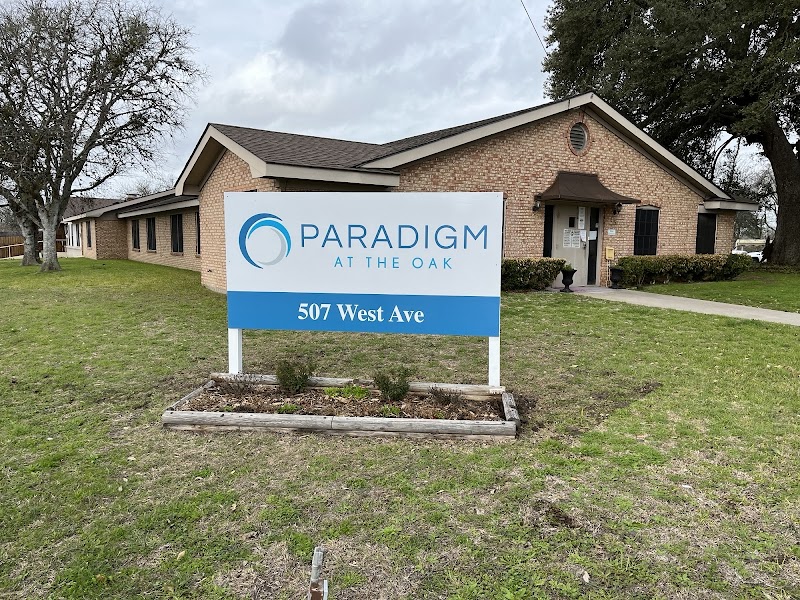
Paradigm at the Oak

507 West Ave, Schulenburg, TX 78956 (979) 743-4150
For profit - Limited Liability company 90 Beds PARADIGM HEALTHCARE Data: November 2025 5 Immediate Jeopardy citations
Trust Grade
0/100
#813 of 1168 in TX
Last Inspection: January 2025

Within standard 12-15 month inspection cycle. Federal law requires annual inspections.

Overview

Paradigm at the Oak in Schulenburg, Texas has a Trust Grade of F, indicating significant concerns and poor overall quality of care. The facility ranks #813 out of 1168 in Texas, placing it in the bottom half of nursing homes statewide, and #4 out of 5 in Fayette County, meaning only one local option is better. Unfortunately, the facility's performance is worsening, with issues increasing from 8 in 2024 to 20 in 2025. Staffing is a weakness, rated at only 1 out of 5 stars, with a 49% turnover rate, which is above the state average, suggesting instability among caregivers. Additionally, the facility has incurred $220,482 in fines, higher than 96% of Texas facilities, indicating ongoing compliance problems. There have been serious incidents reported, including a failure to supervise a resident, allowing them to exit the facility undetected, and a critical case of sexual assault between residents that was not effectively managed by staff. Although the facility does have excellent quality measures rated 5 out of 5, the overall health inspection and staffing ratings are concerning, indicating that families should approach Paradigm at the Oak with caution.

Trust Score
F
0/100
In Texas
#813/1168
Bottom 31%
Safety Record
High Risk
Review needed
Inspections
Getting Worse
8 → 20 violations
Staff Stability
⚠ Watch
49% turnover. Above average. Higher turnover means staff may not know residents' routines.
Penalties
○ Average
$220,482 in fines. Higher than 61% of Texas facilities. Some compliance issues.
Skilled Nurses
⚠ Watch
Each resident gets only 15 minutes of Registered Nurse (RN) attention daily — below average for Texas. Fewer RN minutes means fewer trained eyes watching for problems.
Violations
⚠ Watch
45 deficiencies on record. Higher than average. Multiple issues found across inspections.
★★☆☆☆
2.0
Overall Rating
★☆☆☆☆
1.0
Staff Levels
★★★★★
5.0
Care Quality
★☆☆☆☆
1.0
Inspection Score
Stable
2024: 8 issues
2025: 20 issues

The Good

  • 5-Star Quality Measures · Strong clinical quality outcomes
  • Full Sprinkler Coverage · Fire safety systems throughout facility
  • No fines on record

Facility shows strength in quality measures, fire safety.

The Bad

2-Star Overall Rating

Below Texas average (2.8)

Below average - review inspection findings carefully

Staff Turnover: 49%

Near Texas avg (46%)

Higher turnover may affect care consistency

Federal Fines: $220,482

Well above median ($33,413)

Significant penalties indicating serious issues

Chain: PARADIGM HEALTHCARE

Part of a multi-facility chain

Ask about local staffing decisions and management

The Ugly 45 deficiencies on record

5 life-threatening 1 actual harm
Jun 2025 1 deficiency
CONCERN (E) 📢 Someone Reported This

A family member, employee, or ombudsman was alarmed enough to file a formal complaint

Potential for Harm - no one hurt, but risky conditions existed

Free from Abuse/Neglect (Tag F0600)

Could have caused harm · This affected multiple residents

**NOTE- TERMS IN BRACKETS HAVE BEEN EDITED TO PROTECT CONFIDENTIALITY** Based on observation, interview and record review, the facility failed to ensure residents were free from abuse for 4 of 8 resid...

Read full inspector narrative →
**NOTE- TERMS IN BRACKETS HAVE BEEN EDITED TO PROTECT CONFIDENTIALITY** Based on observation, interview and record review, the facility failed to ensure residents were free from abuse for 4 of 8 residents reviewed for abuse. Resident #1 and Resident # 2 had an altercation on 5/2/25 due to Resident # 1 was moving too slowly per Resident # 5. Resident #3 and Resident #4 had an altercation on 5/1/25 regarding possession of sunglasses. These failures could place residents at risk of physical harm, mental anguish, and/or emotional distress. Findings included: Resident #1 and Resident #2: Record review of Resident #1's chart revealed Resident #1 was admitted to the facility on [DATE] and was a [AGE] year-old male with diagnoses which include: Atherosclerotic Heart Disease (Atherosclerosis is the buildup of plaque in the arteries, which can reduce blood flow and cause heart disease, stroke, or other conditions), Type 2 Diabetes Mellitus (a disease in which the body's ability to produce or respond to the hormone insulin is impaired, resulting in abnormal metabolism of carbohydrates and elevated levels of glucose in the blood and urine), Vascular Dementia without behavioral disturbance ( Vascular dementia is a common type of dementia that happens when there's decreased blood flow to areas of your brain). Record review of Resident #1's MDS assessment dated [DATE] revealed his BIMS scored is 1 (indicating severe cognitive impairment). Resident # 1 used a wheelchair for mobility, and he required substantial/ maximal assistance score 2 regarding Functional Abilities. There are no documented behaviors on the MDS. Record review of Resident #1's care plan Date 3/13/25 revealed Resident #1 reflected: Resident is sexually inappropriate with staff physically and verbally. Resident #1 has verbal altercations monthly, bimonthly with other residents. revisions on 03/31/2025 revealed, Resident #1 will have less of these episodes monthly. Interventions included: Staff will redirect resident as needed. Record review of Resident #2's chart revealed Resident #1 admitted to the facility on [DATE] and was a [AGE] year-old male with diagnoses of Unspecified Cirrhosis of Liver( Liver Scaring that is triggered by chronic inflammation), Generalized Anxiety Disorder (is a mental health condition that causes fear, a constant feeling of being overwhelmed and excessive worry about everyday things), and Depression, unspecified (is used when someone displays depressive symptoms, but there isn't enough information for a specific diagnosis.). Record review of Resident #2's MDS dated [DATE] revealed Resident #2 Resident's BIMS score was 9 which suggested he had moderate cognitive impairment. MDS did not indicate the resident had behaviors toward others. Record review of Resident #2's care plan dated 4/3/25 revealed Resident #2 had episodes of behaviors and was at risk for further increased episodes and injury. The resident often cursed and made false allegations against staff. An interview on 06/04/2025 at 10:24 AM with Resident # 1 revealed Resident # 1 was seated in his wheelchair facing the wall. Resident #1 was asked if he had been injured in the altercation with Resident # 2. He smiled, turned his head away and he was not able to respond verbally to any questions. Interview on 06/04/2025 at 10:29 with the AD C revealed Resident # 5 reported the incident on 05/02/2025 to DON stating Resident #5 reported to AD C that on 5/1/25 at 4pm he saw Resident #2 pushing Resident #1's wheelchair and Resident #2 hit Resident #1 on his back because he moved too slowly. AD C immediately contacted DON and ADMIN. AD C stated DON did X-Rays on Resident #1's upper body, and they did not see any injuries to Resident #1. AD C stated, she thought the resident would feel not good at all if they were abused. AD C said not much could be done to prevent this type of incident from occurring because it happened so quickly all staff could do was respond. AD C was not aware of Resident # 2 having a history of aggressive behaviors. Interview on 6/4/20205 at 10:31 AM with Resident # 5 revealed that Resident # 2 pushed and hit Resident # 1 on the back because Resident # 2 was frustrated that Resident # 1 was moving so slowly. denied ever seeing abuse in the facility before this incident. Interview 06/04/2025 at 10:10 AM the DON stated he did not find any injuries to Resident #1. The DON stated he called resident # 2's Parole Officer to report the incident. The DON was asked how he thought it made a resident feel if they were abused and he stated they may become fearful. The DON stated the facility could keep monitoring the residents who were prone to outbursts. Interview on 06/04/2025at 10:15 AM the ADMIN was asked what they did after the incident occurred and they stated they provided in- service training after the incident on 5/3/2025. ADMIN stated Resident #2 was no longer a concern because he was discharged from the facility. In an interview on 6/4/25 at 12:10pm with Family of Resident #2 revealed he had been discharged from the facility and moved to a halfway house in Fort Worth. Resident #3 and Resident #4: Record review of Resident #3's chart revealed Resident #1 admitted on [DATE] was a [AGE] year-old male with diagnoses of: Cerebral Infarction, Aphasia, Generalized Anxiety Disorder. Record review of Resident #3's care plan dated 04/18/2025 revealed Resident #3 revealed he gets agitated with staff; Resident #3 is verbally aggressive; he called another resident nigger and became loud and unruly. Intervention tasks included: Resident #3 to increase of meds. Care Plan stated to arrange for psych consult, follow up as indicated. Record review of Resident #3's MDS revealed Resident #3 Resident's BIMS score was 2 which suggests he has a severe cognitive impairment. Record review of Resident #4's chart revealed Resident #4 admitted to the facility on [DATE] and was a [AGE] year-old male with diagnoses of Dementia (Dementia is the loss of cognitive functioning that interferes with daily life and activities) and Alzheimer's Disease with late onset ( is the most common form of dementia, a brain disorder that destroys memory and thinking skills), Cognitive Communication Deficit (is a consequence of brain injuries that affects communication skills. and Heart Failure (condition where the heart muscle doesn't pump blood as well as it should, causing fluid buildup and shortness of breath). Record review of Resident #4's MDS dated [DATE] revealed Resident #4 has a BIMSs score of 11 which suggested moderate cognitive impairment The MDS did not report that the resident had any behaviors. Record review of Resident #4's care plan dated 4/30/25 revealed Resident #4 solicited another resident for sexual favors. Interventions included for staff to redirect and intervene as needed. Resident #4 was caught standing over another resident very angry. Psychiatrist to review medications. Interview/Observation of Resident # 4 on 06/04/2025 at 2PM revealed Resident #4 stated Resident # 3 came into the dining room wearing his (Resident # 4) glasses on top of his head. Resident #4 stated he confronted Resident # 3 about having his glasses. Resident #4 said, Resident # 3 then took his glasses off his head and did like this (the resident demonstrated glasses being hit on a table). Resident #4 stated he hit Resident #3, because Resident #3 wouldn't give him (Resident #4) the glasses back and Resident #3 broke the glasses. Resident #4 indicated it was ok for him to hit Resident #3 because Resident #4 took his glasses and broke them. Resident #4 said if someone took his possessions in the future, he should tell someone. Interview on 06/04/2025 at 1:30 PM with MA A revealed MA A was a witness to the altercation between Resident # 3 and Resident # 4. The MA A described her observation of the events leading up to the altercation. MA A stated Resident # 3 entered the dining room from the patio using his wheelchair to mobilize. MA A observed Resident # 3 was wearing a pair of sunglasses. Resident # 3 approached a dining table where Resident # 4 was seated in his wheelchair. MA A stated she heard raised voices and observed Resident # 3 smash the sunglasses on the dining table. MA A stated she saw Resident # 4 rise from his wheelchair and take 3 paces toward Resident #3. MA A left the medication cart, and she entered the dining room and went over to Resident # 3 to move his wheelchair out of range of Resident #4. At that time, another staff member, LVN B, arrived and she assisted Resident # 4 in getting back to his wheelchair. MA A stated that Resident #3 got very angry, aggressive and he acted out a lot. MA A did not know whose sunglasses they were. MA A said she did not know what could have been done differently to avoid this altercation. Interview on 06/04/2025 at 2:35PM with LVN B revealed she was called by another staff member (unknown) to come into the dining room to assist the fighting residents. LVN B stated she witnessed Resident # 4 swinging his hands toward Resident # 3 and Resident #3 raising his hands in defense. LVN B stated, she was told that Resident # 3 had smashed Resident # 4's sunglasses on the dining table. LVN B stated the staff should keep a better eye on the residents to prevent altercations in the future. Interview by phone with Resident #4's Parole Officer 06/04/2025 at 2:18 PM revealed Parole Officer indicated he received a call from the facility staff regarding Resident # 4's altercation with another resident. The Parole Officer stated no charges were filed against Resident # 4 regarding this incident. The Parole Office stated it was reported to him that Resident # 4 was not aggressive. An interview on 06/04/2025 at 3:45pm CNA D stated, she had been working here 5 years stated she was trained on abuse and neglect If they see any abuse such as physical, verbal abuse to report it to the abuse coordinator ADMIN. CNA D stated, she had not seen any abuse. CNA D stated, she had the abuse training last week. An interview on 06/04/2025 at 3:56pm MA F stated she had been here 3 years she was trained on abuse and neglect and the training covered recognizing abuse who to report it and what to do if you suspect abuse, she said it is reported to the ADMIN. Interview on 06/04/2025at 3:59 PM the DON stated he was called by MA A, and he was told about the incident. The DON stated he spoke with the LVN B, and he told her to call the doctor, inform the Psychiatrist of the escalation of the behaviors for possible adjustment of medications, to call the responsible party, and do an assessment. The DON stated to prevent altercation escalations Resident # 3 was a target behavior and nursing staff monitor him for behaviors then report to psychiatrist if any behaviors occurred. DON stated the Medical Practitioner was made aware of the situation, and the responsible party for Resident # 3 was contacted. Record review of in-service Abuse, Neglect & Exploitation Prohibition dated 4/28/25 and 05/29/2025, revealed facility had provided this training to staff. Record review of abuse policy dated 05/29/2025, revealed, 7 key components: screening, Training, Prevention, Identification, Investigation, Protection and Reporting / Response.
Mar 2025 2 deficiencies
CONCERN (E) 📢 Someone Reported This

A family member, employee, or ombudsman was alarmed enough to file a formal complaint

Potential for Harm - no one hurt, but risky conditions existed

Pharmacy Services (Tag F0755)

Could have caused harm · This affected multiple residents

**NOTE- TERMS IN BRACKETS HAVE BEEN EDITED TO PROTECT CONFIDENTIALITY** Based on interview and record review, the facility did not provide pharmaceutical services to meet the needs of each resident fo...

Read full inspector narrative →
**NOTE- TERMS IN BRACKETS HAVE BEEN EDITED TO PROTECT CONFIDENTIALITY** Based on interview and record review, the facility did not provide pharmaceutical services to meet the needs of each resident for one (Resident #1) of six residents reviewed for pharmaceutical services. The facility repeatedly failed to administer scheduled time-sensitive medications to Residents #1 from 02/05/25 through 02/24/25. This deficient practice could place residents at risk of not receiving the intended therapeutic benefit of the medications and supplements or could result in worsening or exacerbation of chronic medical conditions. Findings included: Review of Resident #1's 03/27/25 face sheet reflected a [AGE] year-old female who was admitted to the facility on [DATE] and readmitted on [DATE] with diagnoses including schizoaffective disorder (a mental health condition that combines symptoms of schizophrenia and a mood disorder, such as depression or bipolar), dementia, cognitive communication, presence of cerebrospinal fluid drainage device (a hollow tube surgically placed in the brain to help drain cerebrospinal fluid and redirect it to another location in the body where it can be reabsorbed) and unspecified psychosis (a state where an individual experiences a loss of contact with reality, often involving hallucinations, delusions, and disorganized thinking). Review of Resident #1's admission care plan reflected: A focus revised on 11/14/23 reflected resident had a diagnosis of dementia and was at risk for increased confusion and decline in ADLs as the disease progress and a goal revised on 11/14/23 of Resident #1's needs will be anticipated and met by staff and intervention dated 11/08/23 of administer medications as ordered by MD and reorient resident daily as needed. A focus dated 11/20/23 reflected resident had a behavior problem related to schizophrenia (a serious mental illness that affects how a person thinks, feels, and behaves, often leading to a disconnection from reality, and characterized by symptoms like hallucinations, delusions, and disorganized thinking), resident accused staff of certain behavior like rape, abuse, etc. with a focus revised on 12/26/23 of resident will have no evidence of behavior problems and intervention dated 11/20/23 of administer medications as ordered and monitor/document side effects and effectiveness. A focus revised on 01/26/23 of resident had peripheral vascular disease (a condition that affected the blood vessels outside of the heart and brain) with a goal initiated 12/26/23 of resident's extremities will be free from pain, pallor (skin paleness), rubor (term for redness, sign of inflammation), coldness, edema (excess fluid in the body's tissues, causing swelling), and skin lesions with interventions initiated 11/20/23 of give medications for improved blood flow or anticoagulants (medications that prevent blood clots from forming) as ordered. A focus revised on 09/10/24 of resident uses psychotropic medications (drugs that affect the mind, emotions, and behavior) Seroquel, Haldol and lithium related to behavior management, disease process (schizophrenia) with a goal initiated 11/14/2023 of resident will be/remain free of psychotropic drug related complications, including movement disorder and discomfort, hypotension, gait disturbance, constipation/impaction or cognitive/behavioral impairment and interventions and the resident will reduce the use of psychotropic medications with interventions dated 11/14/23 of administer psychotropic medications as ordered by physician, monitor for side effects and effectiveness and monitor/document/report PRN any adverse reactions of psychotropic medications: unsteady gait, tardive dyskinesia (a movement disorder), EPS (shuffling gait, rigid muscles, shaking), frequent falls, refusal to eat, difficulty swallowing, dry mouth, depression, suicidal ideations, social isolation, blurred vision, diarrhea, fatigue, insomnia, loss of appetite, weight loss, muscle cramps nausea, vomiting, behavioral symptoms not usual to the person. A focus revised on 12/26/23 of resident was on diuretic therapy (medications that increase urine output by promoting the excretion of sodium, water, and other electrolytes through the kidneys (Lasix medication) related to hypertension with a goal initiated on 12/26/23 of resident will be free of any discomfort or adverse side effects of diuretic therapy with interventions initiated 12/26/23 of administer diuretic medications as ordered physician, monitor for side effects and effectiveness, many other medications may interact with antihypertensives (drugs used to treat high blood pressure) to potentiate their effect, monitor for interactions/adverse consequences, monitor dose, may require modification in order to achieve desired effects while minimizing adverse consequences, especially when multiple antihypertensives are prescribed simultaneously. When discontinuing, gradual tapering may be required to avoid adverse consequences caused by abrupt cessation. A focus dated 03/10/24 of resident used antidepressant medication trazadone related to depression and a goal initiated on 03/10/24 of resident will be free from discomfort or adverse reactions related to antidepressant therapy and interventions dated 03/10/24 of administer antidepressant medications as ordered by physician monitor/document side effects and effectiveness. A focus revised on 12/26/23 of resident had a mood problem with a goal revised on 12/26/23 of resident will have improved mood state happier, calmer appearance, no signs and symptoms of depression, anxiety or sadness and interventions initiated 12/26/23 of administer medications as ordered and monitor/document for side effects and effectiveness and behavioral health consults as needed. A focused revised on 03/10/24 of Resident #1 has episodes of refusal to take medications and is at risk for complication and injury/side effects with a goal revised on 03/10/24 of resident will have minimum/no further episodes of medication refusal and will be free from injury/side effects over the next 90 days and interventions dated 01/01/24 of offer medications at scheduled times and re-offer at a later time if refused. A review of Resident #1's quarterly MDS reflected a brief interview for mental status was not conducted because resident was rarely/never understood. Section N Medications reflected high-risk classes used and indicated resident was taking antipsychotic, antianxiety, antidepressant, and diuretic. Review of Resident #1's MAR reflected the following Chart Codes: 3 = hold due to condition 8 = other/see progress notes 11 = sleeping 12 = split out medication Review of Resident #1's orders reflected an order for Atorvastatin Calcium Oral Tablet 20 MG, give 1 tablet by mouth one time a day related to hyperlipidemia (a condition characterized by high levels of lipids (fats) in the blood) start date 10/09/14 D/C 03/27/25 A review of the MAR reflected Resident #1 was not administered Atorvastatin Calcium Oral Tablet 20 MG on 02/15/25 (chart code 8), 02/16/25 (chart code 3), 02/17/25 (chart code 8), 02/19/25 (chart code 11), 02/20/25 (chart code 8), 02/21/25 (chart code 8), 02/22/25 (chart code 11), 02/23/25 (chart code 11) Review of Resident #1's orders reflected an order for Lasix Oral tablet 40 MG (Furosemide (a type of medicine called a diuretic used to treat high blood pressure (hypertension), heart failure and a build up of fluid in the body) give 1 tablet by mouth one time a day related to edema (a condition where excess fluid accumulates in the body's tissues, causing swelling) start date 10/09/24 D/C 03/27/25 A review of Resident #1's 02/2024 MAR reflected Resident #1 was not administered Lasix Oral tablet 40 MG on 02/15/25 (chart code 8), 02/16/25 (chart code 3), 02/17/25 (chart code 8), 02/19/25 (chart code 11), 02/20/25 (chart code 8), 02/21/25 (chart code 8), 02/22/25 (chart code 11), 02/23/25 (chart code 11) Review of Resident #1's orders reflected an order for Lithium Carbonate (to treat manic-depressive disorder (bipolar disorder)) oral tablet extended release 450 MG give 1 tablet by mouth in the morning related to schizoaffective disorder, bipolar type. A review Resident #1's 02/2024 MAR reflected Resident #1 was not administered Lithium Carbonate oral tablet extended release 450 MG medication on 02/16/25 (chart code 8), 02/17/25 (chart code 3), 02/20/25 (chart code 3), 02/21/25 (chart code 8), 02/23/25 (chart code 11) Review of Resident #1's orders reflected an order for Melatonin Tablet 3 MG give 2 tablets by mouth at bedtime related to insomnia, give 2 tabs to equal 6 MG. A review of Resident #1's 02/2024 MAR reflected Resident #1 was not administered Melatonin Tablet 3 MG give 2 to equal 6 MG on 02/09/2025 (no chart code entered, reflected no medication administered), 02/15/25 (chart code 8), 02/16/25 (chart code 3), 02/17/25 (chart code 8), 02/18/25 (no chart code entered, no medication administered) Review of Resident #1's orders reflected an order for methimazole (used to treat hyperthyroidism, a condition that occurs when the thyroid gland produces too much thyroid hormone) give 1 tablet by mouth one time a day related to thyrotoxicosis (a condition characterized by excessive thyroid hormone levels in the bloodstream) start date 11/08/23 D/C 03/27/25. A review of Resident #1's 02/2024 MAR reflected Resident #1 was not administered methimazole 1 tablet by mouth one time a day 02/15/25 (chart code 8), 02/16/25 (chart code 3), 02/17/25 (chart code 8), 02/19/25 (chart code 11), 02/20/25 (chart code 8), 02/21/25 (chart code 8), 02/22/25 (chart code 11) and 02/23/25 (chart code 11). Review of Resident #1's orders reflected an order for Seroquel (an antipsychotic medication that treats several kinds of mental health conditions including schizophrenia and bipolar disorder) oral tablet 100 MG give 2.5 tablets to equal 250 mg start date 10/09/24 D/C date 03/27/25. A review of Resident #1's 02/2024 MAR reflected Resident #1 was not administered Seroquel oral tablet 100 MG give 2.5 tablets to equal 250 mg 02/09/25 (no chart code entered, reflected no medication administered), 02/15/25 (chart code 8), 02/16/25 (chart code 3), 02/17/25 (chart code 8), 02/18/25 (no chart code entered, reflected no medication administered), 02/20/25 (chart code 8), 02/21/25 (chart code 8), and 02/23/25 (chart code 8). Review of Resident #1's orders reflected an order for trazodone (used to treat depression, anxiety, or a combination of depression and anxiety) give 1.5 tablet by mouth in the evening related to major depressive disorder, recurrent start date 12/09/24 D/C 03/27/26. A review of Resident #1's 02/2024 MAR reflected Resident #1 was not administered trazodone 1.5 tablet on 02/15/25 (chart code 8), 02/16/25 (code 3), 02/17/25 (code 8), 02/20/25 (code 8), 02/21/25 (code 8), 02/22/25 (code 11) and 02/23/25 (code 11). A review of Resident #1's 02/2024 MAR reflected Resident #1 was not administered Vitamin D-3 oral capsule 24 MCG (1000 UT) give 2 capsules by mouth 1 time a day related to vitamin D deficiency start date 11/08/23 and D/C date 03/27/25. A review of Resident #1's 02/2024 MAR reflected Resident #1 was not administered Vitamin D-3 oral capsule 24 MCG (1000 UT) 2 capsule by mouth 1 time a day on 02/15/25 (chart code 8), 02/16/25 (chart code 3), 02/17/25 (chart code 8), 02/19/25 (chart code 11), 02/20/25 (chart code 8), 02/21/25 (chart code 8), 02/22/25 (chart code 11), 02/23/25 (chart code 11). Review of Resident #1's orders reflected an order for Seroquel oral tabled 50 MG quetiapine fumarate (antipsychotic used to treat schizophrenia, bipolar disorder and depression) give 1 tablet by mouth 2 times a day (8:00 am and 4:00 pm) related to schizoaffective disorder bipolar type start date 01/13/25 D/C 03/27/25. A review of Resident #1's 02/2024 MAR reflected Resident #1 was not administered Seroquel oral tabled 50 MG on 02/15/25 at 4:00 pm (chart code 8), on 02/16/25 at 8:00 am (chart code 8) or 4:00 pm (chart code 3), 02/17/25 at 8:00 am (chart code 8) or 4:00 pm (chart code 3), 02/19/25 at 4:00 pm (chart code 11), 02/20/25 at 8:00 am (chart code 3) or 4:00 pm (chart code 8), 02/21/25 at 8:00 am (chart code 8) or 4:00 pm (chart code 8), 02/22/25 at 4:00 pm (chart code 11), 02/23/25 at 8:00 am (chart code 11) or 4:00 pm (chart code 11). Review of Resident #1's orders reflected an order for buspirone HCI (treats anxiety) tablet 10 MG Buspirone HCI give 1 tablet by mouth 3 times a day (8:00 am, 12:00 pm and 4:00 pm) related to anxiety disorder start date 01/27/25 D/C. A review of Resident #1's 02/2024 MAR reflected Resident #1 was not administered buspirone HCI tablet 10 MG 3 times a day on 02/05/25 at 12:00 pm (no chart code entered, reflected no medication administered), 02/10/25 at 12:00 pm (no chart code entered, reflected no medication administered), 02/15/25 at 12:00 pm (chart code 3) or 4:00 pm (chart code 8), 02/16/25 at 8:00 am (chart code 8) or 12:00 pm (chart code 8) or 4:00 pm (chart code 3), 02/17/25 at 8:00 am (chart code 3) or 12:00 pm (chart code 3) or 4:00 pm (chart code 8), 02/18/25 at 12:00 pm (chart code 12:00 pm), 02/19/25 4:00 pm (chart code 11), 02/20/25 8:00 am (chart code 3) or 12:00 pm (chart code 3) or 4:00 pm (chart code 8), 02/21/25 8:00 am (chart code 8) or 12:00 pm (chart code 8) or 4:00 pm (chart code 8), 02/22/25 12:00 pm (chart code 12) or 4:00 pm (chart code 11), and 02/23/25 8:00 am (chart code 11) or 12:00 pm (chart code 11) or 4:00 pm (chart code 11). Review of Resident #1's orders reflected an order for Lorazepam Oral Tablet 1 MG Lorazepam (to treat anxiety and sleeping problems that are related to anxiety) give 1 mg by mouth three times a day (9:00 am, 1:00 pm, and 9:00 pm) related to anxiety disorder start date 02/05/2025 D/C 03/27/2025. A review of Resident #1's 02/2024 MAR reflected Resident #1 was not administered Lorazepam Oral Tablet 1 mg by mouth three times a day on 02/09/25 at 9:00 pm (no chart code entered, reflected no medication administered), 02/10/25 at 1:00 pm (no chart code entered, reflected no medication administered), 02/15/25 at 1:00 pm (chart code 3) or 9:00 pm (chart code 8), 02/16/25 9:00 am (chart code 8), 1:00 pm (chart code 8) or 9:00 pm (chart code 3), 02/17/25 9:00 am (chart code 3) or 1:00 pm (chart code 3), or 9:00 pm (chart code 8), 02/18/25 1:00 pm (chart code 11) or 9:00 pm (no chart code entered, reflected no medication administered), 02/20/25 9:00 am (chart code 3) or 1:00 pm (chart code 3) or 9:00 pm (chart code 8), 02/21/25 9:00 am (code 8) or 1:00 pm (chart code 8) or 9:00 pm (chart code 8), 02/22/25 1:00 pm (chart code 12), 02/23/25 9:00 am (chart code 11) or 1:00 pm (chart code 11) or 9:00 pm (chart code 11). Review of Resident #1's progress note dated 02/15/2025 at 12:45 am reflected Administration Note entered by CMA B HOLD PER NURSE. No information recorded on what medication or treatment, or resident care was being held. Review of Resident #1's progress note dated 02/15/2025 5:12 pm reflected Administration Note entered by CMA B [resident] WAS SLEEPING. NO MEDS GIVING. Review of Resident #1's progress note dated 02/16/2025 9:27 am reflected Administration Note by CMA B [resident] WAS ASLEEP. NURSE WAS NOTIFIED. Review of Resident #1's progress note dated 02/16/2025 5:32 pm reflected Administration Note (no staff listed) [resident] HAS BEEN SLEEPING. NURSE INFORMED. MEDS NOT GIVEN. Review of Resident #1's progress note dated 02/17/2025 8:54 am reflected Administration Note entered by CMA B [resident] WAS SLEEPING. NURSE NOTIFIED. Review of Resident #1's progress note dated 02/17/2025 4:41 pm reflected Administration Note by CMA B [resident] WAS ASLEEP UNABLE TO GIVE MEDS NURSE WAS NOTIFIED. Review of Resident #1's progress note dated 02/20/2025 8:29 am reflected Administration Note by CMA B WAS NOTIFIED TO HOLD MEDS. [resident] IS SLEEPING. Review of Resident #1's progress note dated 02/20/2025 5:52 pm reflected Administration Note by CMA B [resident] WAS SLEEPING. MEDS NOT GIVEN. NURSE WAS NOTIIFED. Review of Resident #1's progress note dated 02/21/2025 8:34 am Administration Note by CMA B [resident] RES WAS SLEEPING. NURSE NOTIIFED. Review of Resident #1's progress note dated 02/21/2025 5:52 pm Administration Note by CMA B MEDS NOT GIVEN. [resident] IS SLEEPING NURSE NOTIFIED. A review of Resident #1's progress notes revealed no additional information documenting why Resident #1 was not administered medication. Interview on 04/03/2025 with CMA B at 12:15 pm reflected if a resident was sleeping, she generally would not wake them. She stated she would go to the next resident then come back later. She stated if the resident did not get up then she would need to go tell her charge nurse. She stated after the nurse checked on the resident, she was supposed to do what the nurse told her. She stated, sometimes they just do not want to get up so the nurse would document the resident refused the meds. Interview on 03/28/25 at with RN C at 12:18 pm revealed she knew that the Psych NP was adjusting Resident #1's medications and the Psych NP should have been informed that Resident #1 had not had her medications. The negative consequences of a resident not receiving medications would be that the resident would not receive the effectiveness of the medications, especially if they missed numerous medication doses. Interview on 03/27/24 with LVN A at 3:44 pm revealed she had worked at the facility since December of 2004 and assisted with Resident #1 and was not aware that Resident #1 was not getting her medications. She revealed if a resident did not get their medications, then they would follow up with the NP who would advise them what to do. The negative effect of someone not getting their medications would be that they might have a chance in condition. Interview on 03/27/25 with the Psych NP at 1:43 p.m. revealed, when was asked if she knew that Resident #1 did not receive her mental health medications for several days, she said she did not know. She said that would be a problem because Resident #1 had interesting and complicated mental health issues and she had been working on adjusting her medications and a change of medication could make her decompensate pretty quickly. Interview on 03/27/25 with the NP at 1:58 pm revealed she did not know that Resident #1 did not receive her medications. If she had known Resident #1 was sleeping through her medication, she might have sent her to the ER because the hospital will process labs faster and the facility might be able to have information to treat the resident faster. If a resident is not receiving medication, it could be a change in for that resident. Interview on 03/31/25 with the DON at 1:50 pm revealed when a resident does not receive ordered medication, an adjustment might need to be made to their medication, but this would depend on how many doses of medication the resident missed. Missed medication may also require labs. If a resident is asleep, and the medication is important, the resident should be woken up for them to take the medication. If they continue to be asleep during medication administration times, an adjustment might need to be made to the resident's medication administration times. If the resident missed medication doses, the resident might have a change in condition. Review of facility Nursing Policies and Procedures Subject: Medication Administration and Management Policy dated June 2019 reflected: It is the policy of this facility that the facility will implement a Medication Management Program that incorporates systems with established goals to meet each resident's needs as well as regulatory requirements. Administering the Medication Pass: The authorized licensed or certified/permitted medication aide or by state regulatory guidelines staff member documents that the medication is given in the correct slot of MAR, before going to the next patient/resident. If the patient/resident is unable to take the medication or refuses it, the authorized licensed/certified staff member circles his/her initials on the MAR, and documents the reason refused or not given on the designated area of the MAR (physician is notified as necessary).
CONCERN (E) 📢 Someone Reported This

A family member, employee, or ombudsman was alarmed enough to file a formal complaint

Potential for Harm - no one hurt, but risky conditions existed

Deficiency F0760 (Tag F0760)

Could have caused harm · This affected multiple residents

**NOTE- TERMS IN BRACKETS HAVE BEEN EDITED TO PROTECT CONFIDENTIALITY** Based on interview and record review, the facility failed to ensure residents were free of any significant medication errors for...

Read full inspector narrative →
**NOTE- TERMS IN BRACKETS HAVE BEEN EDITED TO PROTECT CONFIDENTIALITY** Based on interview and record review, the facility failed to ensure residents were free of any significant medication errors for 1 resident (Resident #1) of six residents reviewed for pharmacy services. The facility repeatedly failed to administer scheduled time-sensitive medications to Residents #1 from 02/05/25 through 02/24/25. This deficient practice could place residents at risk of not receiving the intended therapeutic benefit of the medications and supplements, worsening or exacerbation of chronic medical conditions, and hospitalization. Findings included: Review of Resident #1's 03/27/25 face sheet reflected a [AGE] year-old female who was admitted to the facility on [DATE] and readmitted on [DATE] with diagnoses including schizoaffective disorder (a mental health condition that combines symptoms of schizophrenia and a mood disorder, such as depression or bipolar), dementia, cognitive communication, presence of cerebrospinal fluid drainage device (a hollow tube surgically placed in the brain to help drain cerebrospinal fluid and redirect it to another location in the body where it can be reabsorbed) and unspecified psychosis (a state where an individual experiences a loss of contact with reality, often involving hallucinations, delusions, and disorganized thinking). Review of Resident #1's admission care plan reflected: A focus revised on 11/14/23 reflected resident had a diagnosis of dementia and was at risk for increased confusion and decline in ADLs as the disease progress and a goal revised on 11/14/23 of Resident #1's needs will be anticipated and met by staff and intervention dated 11/08/23 of administer medications as ordered by MD and reorient resident daily as needed. A focus dated 11/20/23 reflected resident had a behavior problem related to schizophrenia (a serious mental illness that affects how a person thinks, feels, and behaves, often leading to a disconnection from reality, and characterized by symptoms like hallucinations, delusions, and disorganized thinking), resident accused staff of certain behavior like rape, abuse, etc. with a focus revised on 12/26/23 of resident will have no evidence of behavior problems and intervention dated 11/20/23 of administer medications as ordered and monitor/document side effects and effectiveness. A focus revised on 01/26/23 of resident had peripheral vascular disease (a condition that affected the blood vessels outside of the heart and brain) with a goal initiated 12/26/23 of resident's extremities will be free from pain, pallor (skin paleness), rubor (term for redness, sign of inflammation), coldness, edema (excess fluid in the body's tissues, causing swelling), and skin lesions with interventions initiated 11/20/23 of give medications for improved blood flow or anticoagulants (medications that prevent blood clots from forming) as ordered. A focus revised on 09/10/24 of resident uses psychotropic medications (drugs that affect the mind, emotions, and behavior) Seroquel, Haldol and lithium related to behavior management, disease process (schizophrenia) with a goal initiated 11/14/2023 of resident will be/remain free of psychotropic drug related complications, including movement disorder and discomfort, hypotension, gait disturbance, constipation/impaction or cognitive/behavioral impairment and interventions and the resident will reduce the use of psychotropic medications with interventions dated 11/14/23 of administer psychotropic medications as ordered by physician, monitor for side effects and effectiveness and monitor/document/report PRN any adverse reactions of psychotropic medications: unsteady gait, tardive dyskinesia (a movement disorder), EPS (shuffling gait, rigid muscles, shaking), frequent falls, refusal to eat, difficulty swallowing, dry mouth, depression, suicidal ideations, social isolation, blurred vision, diarrhea, fatigue, insomnia, loss of appetite, weight loss, muscle cramps nausea, vomiting, behavioral symptoms not usual to the person. A focus revised on 12/26/23 of resident was on diuretic therapy (medications that increase urine output by promoting the excretion of sodium, water, and other electrolytes through the kidneys (Lasix medication) related to hypertension with a goal initiated on 12/26/23 of resident will be free of any discomfort or adverse side effects of diuretic therapy with interventions initiated 12/26/23 of administer diuretic medications as ordered physician, monitor for side effects and effectiveness, many other medications may interact with antihypertensives (drugs used to treat high blood pressure) to potentiate their effect, monitor for interactions/adverse consequences, monitor dose, may require modification in order to achieve desired effects while minimizing adverse consequences, especially when multiple antihypertensives are prescribed simultaneously. When discontinuing, gradual tapering may be required to avoid adverse consequences caused by abrupt cessation. A focus dated 03/10/24 of resident used antidepressant medication trazadone related to depression and a goal initiated on 03/10/24 of resident will be free from discomfort or adverse reactions related to antidepressant therapy and interventions dated 03/10/24 of administer antidepressant medications as ordered by physician monitor/document side effects and effectiveness. A focus revised on 12/26/23 of resident had a mood problem with a goal revised on 12/26/23 of resident will have improved mood state happier, calmer appearance, no signs and symptoms of depression, anxiety or sadness and interventions initiated 12/26/23 of administer medications as ordered and monitor/document for side effects and effectiveness and behavioral health consults as needed. A focused revised on 03/10/24 of Resident #1 has episodes of refusal to take medications and is at risk for complication and injury/side effects with a goal revised on 03/10/24 of resident will have minimum/no further episodes of medication refusal and will be free from injury/side effects over the next 90 days and interventions dated 01/01/24 of offer medications at scheduled times and re-offer at a later time if refused. A review of Resident #1's quarterly MDS reflected a brief interview for mental status was not conducted because resident was rarely/never understood. Section N Medications reflected high-risk classes used and indicated resident was taking antipsychotic, antianxiety, antidepressant, and diuretic. Review of Resident #1's MAR reflected the following Chart Codes: 3 = hold due to condition 8 = other/see progress notes 11 = sleeping 12 = split out medication Review of Resident #1's orders reflected an order for Lasix Oral tablet 40 MG (Furosemide (a type of medicine called a diuretic used to treat high blood pressure (hypertension), heart failure and a build up of fluid in the body) give 1 tablet by mouth one time a day related to edema (a condition where excess fluid accumulates in the body's tissues, causing swelling) start date 10/09/24 D/C 03/27/25 A review of Resident #1's 02/2024 MAR reflected Resident #1 was not administered Lasix Oral tablet 40 MG on 02/15/25 (chart code 8), 02/16/25 (chart code 3), 02/17/25 (chart code 8), 02/19/25 (chart code 11), 02/20/25 (chart code 8), 02/21/25 (chart code 8), 02/22/25 (chart code 11), 02/23/25 (chart code 11) Review of Resident #1's orders reflected an order for Lithium Carbonate (to treat manic-depressive disorder (bipolar disorder)) oral tablet extended release 450 MG give 1 tablet by mouth in the morning related to schizoaffective disorder, bipolar type. A review Resident #1's 02/2024 MAR reflected Resident #1 was not administered Lithium Carbonate oral tablet extended release 450 MG medication on 02/16/25 (chart code 8), 02/17/25 (chart code 3), 02/20/25 (chart code 3), 02/21/25 (chart code 8), 02/23/25 (chart code 11) Review of Resident #1's orders reflected an order for Seroquel (an antipsychotic medication that treats several kinds of mental health conditions including schizophrenia and bipolar disorder) oral tablet 100 MG give 2.5 tablets to equal 250 mg start date 10/09/24 D/C date 03/27/25. A review of Resident #1's 02/2024 MAR reflected Resident #1 was not administered Seroquel oral tablet 100 MG give 2.5 tablets to equal 250 mg 02/09/25 (no chart code entered, reflected no medication administered), 02/15/25 (chart code 8), 02/16/25 (chart code 3), 02/17/25 (chart code 8), 02/18/25 (no chart code entered, reflected no medication administered), 02/20/25 (chart code 8), 02/21/25 (chart code 8), and 02/23/25 (chart code 8). Review of Resident #1's orders reflected an order for trazodone (used to treat depression, anxiety, or a combination of depression and anxiety) give 1.5 tablet by mouth in the evening related to major depressive disorder, recurrent start date 12/09/24 D/C 03/27/26. A review of Resident #1's 02/2024 MAR reflected Resident #1 was not administered trazodone 1.5 tablet on 02/15/25 (chart code 8), 02/16/25 (code 3), 02/17/25 (code 8), 02/20/25 (code 8), 02/21/25 (code 8), 02/22/25 (code 11) and 02/23/25 (code 11). A review of Resident #1's 02/2024 MAR reflected Resident #1 was not administered Vitamin D-3 oral capsule 24 MCG (1000 UT) 2 capsule by mouth 1 time a day on 02/15/25 (chart code 8), 02/16/25 (chart code 3), 02/17/25 (chart code 8), 02/19/25 (chart code 11), 02/20/25 (chart code 8), 02/21/25 (chart code 8), 02/22/25 (chart code 11), 02/23/25 (chart code 11). Review of Resident #1's orders reflected an order for Seroquel oral tabled 50 MG quetiapine fumarate (antipsychotic used to treat schizophrenia, bipolar disorder and depression) give 1 tablet by mouth 2 times a day (8:00 am and 4:00 pm) related to schizoaffective disorder bipolar type start date 01/13/25 D/C 03/27/25. A review of Resident #1's 02/2024 MAR reflected Resident #1 was not administered Seroquel oral tabled 50 MG on 02/15/25 at 4:00 pm (chart code 8), on 02/16/25 at 8:00 am (chart code 8) or 4:00 pm (chart code 3), 02/17/25 at 8:00 am (chart code 8) or 4:00 pm (chart code 3), 02/19/25 at 4:00 pm (chart code 11), 02/20/25 at 8:00 am (chart code 3) or 4:00 pm (chart code 8), 02/21/25 at 8:00 am (chart code 8) or 4:00 pm (chart code 8), 02/22/25 at 4:00 pm (chart code 11), 02/23/25 at 8:00 am (chart code 11) or 4:00 pm (chart code 11). Review of Resident #1's orders reflected an order for buspirone HCI (treats anxiety) tablet 10 MG Buspirone HCI give 1 tablet by mouth 3 times a day (8:00 am, 12:00 pm and 4:00 pm) related to anxiety disorder start date 01/27/25 D/C. A review of Resident #1's 02/2024 MAR reflected Resident #1 was not administered buspirone HCI tablet 10 MG 3 times a day on 02/05/25 at 12:00 pm (no chart code entered, reflected no medication administered), 02/10/25 at 12:00 pm (no chart code entered, reflected no medication administered), 02/15/25 at 12:00 pm (chart code 3) or 4:00 pm (chart code 8), 02/16/25 at 8:00 am (chart code 8) or 12:00 pm (chart code 8) or 4:00 pm (chart code 3), 02/17/25 at 8:00 am (chart code 3) or 12:00 pm (chart code 3) or 4:00 pm (chart code 8), 02/18/25 at 12:00 pm (chart code 12:00 pm), 02/19/25 4:00 pm (chart code 11), 02/20/25 8:00 am (chart code 3) or 12:00 pm (chart code 3) or 4:00 pm (chart code 8), 02/21/25 8:00 am (chart code 8) or 12:00 pm (chart code 8) or 4:00 pm (chart code 8), 02/22/25 12:00 pm (chart code 12) or 4:00 pm (chart code 11), and 02/23/25 8:00 am (chart code 11) or 12:00 pm (chart code 11) or 4:00 pm (chart code 11). Review of Resident #1's orders reflected an order for Lorazepam Oral Tablet 1 MG Lorazepam (to treat anxiety and sleeping problems that are related to anxiety) give 1 mg by mouth three times a day (9:00 am, 1:00 pm, and 9:00 pm) related to anxiety disorder start date 02/05/2025 D/C 03/27/2025. A review of Resident #1's 02/2024 MAR reflected Resident #1 was not administered Lorazepam Oral Tablet 1 mg by mouth three times a day on 02/09/25 at 9:00 pm (no chart code entered, reflected no medication administered), 02/10/25 at 1:00 pm (no chart code entered, reflected no medication administered), 02/15/25 at 1:00 pm (chart code 3) or 9:00 pm (chart code 8), 02/16/25 9:00 am (chart code 8), 1:00 pm (chart code 8) or 9:00 pm (chart code 3), 02/17/25 9:00 am (chart code 3) or 1:00 pm (chart code 3), or 9:00 pm (chart code 8), 02/18/25 1:00 pm (chart code 11) or 9:00 pm (no chart code entered, reflected no medication administered), 02/20/25 9:00 am (chart code 3) or 1:00 pm (chart code 3) or 9:00 pm (chart code 8), 02/21/25 9:00 am (code 8) or 1:00 pm (chart code 8) or 9:00 pm (chart code 8), 02/22/25 1:00 pm (chart code 12), 02/23/25 9:00 am (chart code 11) or 1:00 pm (chart code 11) or 9:00 pm (chart code 11). Review of Resident #1's progress note dated 02/15/2025 at 12:45 am reflected Administration Note entered by CMA B HOLD PER NURSE. No information recorded on what medication or treatment, or resident care was being held. Review of Resident #1's progress note dated 02/15/2025 5:12 pm reflected Administration Note entered by CMA B [resident] WAS SLEEPING. NO MEDS GIVING. Review of Resident #1's progress note dated 02/16/2025 9:27 am reflected Administration Note by CMA B [resident] WAS ASLEEP. NURSE WAS NOTIFIED. Review of Resident #1's progress note dated 02/16/2025 5:32 pm reflected Administration Note (no staff listed) [resident] HAS BEEN SLEEPING. NURSE INFORMED. MEDS NOT GIVEN. Review of Resident #1's progress note dated 02/17/2025 8:54 am reflected Administration Note entered by CMA B [resident] WAS SLEEPING. NURSE NOTIFIED. Review of Resident #1's progress note dated 02/17/2025 4:41 pm reflected Administration Note by CMA B [resident] WAS ASLEEP UNABLE TO GIVE MEDS NURSE WAS NOTIFIED. Review of Resident #1's progress note dated 02/20/2025 8:29 am reflected Administration Note by CMA B WAS NOTIFIED TO HOLD MEDS. [resident] IS SLEEPING. Review of Resident #1's progress note dated 02/20/2025 5:52 pm reflected Administration Note by CMA B [resident] WAS SLEEPING. MEDS NOT GIVEN. NURSE WAS NOTIIFED. Review of Resident #1's progress note dated 02/21/2025 8:34 am Administration Note by CMA B [resident] RES WAS SLEEPING. NURSE NOTIIFED. Review of Resident #1's progress note dated 02/21/2025 5:52 pm Administration Note by CMA B MEDS NOT GIVEN. [resident] IS SLEEPING NURSE NOTIFIED. A review of Resident #1's progress notes revealed no additional information documenting why Resident #1 was not administered medication. Interview on 04/03/2025 with CMA B at 12:15 pm reflected if a resident was sleeping, she generally would not wake them. She stated she would go to the next resident then come back later. She stated if the resident did not get up then she would need to go tell her charge nurse. She stated after the nurse checked on the resident, she was supposed to do what the nurse told her. She stated, sometimes they just do not want to get up so the nurse would document the resident refused the meds. Interview on 03/28/25 at with RN C at 12:18 pm revealed she knew that the Psych NP was adjusting Resident #1's medications and the Psych NP should have been informed that Resident #1 had not had her medications. The negative consequences of a resident not receiving medications would be that the resident would not receive the effectiveness of the medications, especially if they missed numerous medication doses. Interview on 03/27/24 with LVN A at 3:44 pm revealed she had worked at the facility since December of 2004 and assisted with Resident #1 and was not aware that Resident #1 was not getting her medications. She revealed if a resident did not get their medications, then they would follow up with the NP who would advise them what to do. The negative effect of someone not getting their medications would be that they might have a chance in condition. Interview on 03/27/25 with the Psych NP at 1:43 p.m. revealed, when was asked if she knew that Resident #1 did not receive her mental health medications for several days, she said she did not know. She said that would be a problem because Resident #1 had interesting and complicated mental health issues and she had been working on adjusting her medications and a change of medication could make her decompensate pretty quickly. Interview on 03/27/25 with the NP at 1:58 pm revealed she did not know that Resident #1 did not receive her medications. If she had known Resident #1 was sleeping through her medication, she might have sent her to the ER because the hospital will process labs faster and the facility might be able to have information to treat the resident faster. If a resident is not receiving medication, it could be a change in for that resident. Interview on 03/31/25 with the DON at 1:50 pm revealed when a resident does not receive ordered medication, an adjustment might need to be made to their medication, but this would depend on how many doses of medication the resident missed. Missed medication may also require labs. If a resident is asleep, and the medication is important, the resident should be woken up for them to take the medication. If they continue to be asleep during medication administration times, an adjustment might need to be made to the resident's medication administration times. If the resident missed medication doses, the resident might have a change in condition. Review of facility Nursing Policies and Procedures Subject: Medication Administration and Management Policy dated June 2019 reflected: It is the policy of this facility that the facility will implement a Medication Management Program that incorporates systems with established goals to meet each resident's needs as well as regulatory requirements. Administering the Medication Pass: The authorized licensed or certified/permitted medication aide or by state regulatory guidelines staff member documents that the medication is given in the correct slot of MAR, before going to the next patient/resident. If the patient/resident is unable to take the medication or refuses it, the authorized licensed/certified staff member circles his/her initials on the MAR, and documents the reason refused or not given on the designated area of the MAR (physician is notified as necessary).
Jan 2025 16 deficiencies
CONCERN (D)

Potential for Harm - no one hurt, but risky conditions existed

Comprehensive Care Plan (Tag F0656)

Could have caused harm · This affected 1 resident

**NOTE- TERMS IN BRACKETS HAVE BEEN EDITED TO PROTECT CONFIDENTIALITY** Based on observations, interviews, and record reviews, the facility failed to develop and implement a comprehensive care plan th...

Read full inspector narrative →
**NOTE- TERMS IN BRACKETS HAVE BEEN EDITED TO PROTECT CONFIDENTIALITY** Based on observations, interviews, and record reviews, the facility failed to develop and implement a comprehensive care plan that describes the services that are to be furnished to maintain the resident's highest practicable physical, mental, and psychosocial well-being for one resident (Resident #18) of 18 reviewed, in that: The facility failed to ensure Resident #18's Comprehensive Care Plan reflected a plan of care for her right-hand contracture (A permanent tightening of the muscles, tendons, skin, and surrounding tissues that causes the joints to shorten and stiffen and a decrease in ROM). This failure could place residents with contractures at risk for decrease in mobility, range of motion, and contribute to worsening of contractures. Findings included: Review of Resident #18's face sheet dated 01/28/2025 reflected a [AGE] year-old female admitted to the facility on [DATE] with the following diagnoses: Alzheimer's disease (A type of brain disorder that causes problems with memory, thinking and behavior.), Parkinsonism (A progressive disorder that affects the nervous system and the parts of the body controlled by the nerves.) and muscle weakness. Review of Resident #18's quarterly MDS dated [DATE] reflected Resident #18 was assessed to not have a BIMS score, indicating she had severe cognitive impairment. Resident #18 was assessed to require dependent assists for all ADLs. Resident #18 was further assessed to have functional limitations in range of motion for bilateral upper and lower extremities. Review of Resident #18's comprehensive care plan reflected an entry dated 08/03/2023: Resident has an ADL self-care deficits and is at risk for further decline in ADL functioning and injury. Interventions included anticipate needs, provide extensive assist . Further review of Resident #18's comprehensive care plan reflected no care plan for ROM deficits or contractures. Observation and interview on 01/26/2025 at 9:45 AM revealed Resident #18 in bed. Resident #18 was not interviewable. Resident #18 was holding her arms across her chest with her right hand under her chin. Resident #18 was observed to have a right-hand contracture. Resident #18's fingers were bent toward her palm with her fingers pushing into the palm of her hand. Her right thumb nail was visible, and the nail was long. No splints or palm guards were observed on or near Resident #18. In an observation on 01/28/2025 at 09:10 AM, Resident #18 was in her wheelchair in the dining room holding her right arm across her chest. Her right hand was observed to be held in a fixed position with fingers curled to the palm with thumb held straight. The thumb nail was long and jagged. In an interview on 01/28/2025 at 09:30 AM The MDS coordinator stated after reviewing Resident #18's care plan that the resident's contractures were not on her care plan. She stated resident was assessed on the MDS to have limited ROM. The MDS coordinator stated that she had not received anything from therapy to indicate she was receiving services. The MDS coordinator stated she would put it in Resident #18's care plan. In an interview on 01/28/2025 at 10:30 AM The Administrator stated she expected any time there was a change with the resident whether it was physical, mental, or social she expected the care plan to be revised to reflect the residents' current needs. The Administrator stated there was a potential a resident may not receive the physical, mental, or social care the resident needs. She stated if the resident did not receive the treatment to help their physical care, cognitive care and social needs, there was a possibility a resident may have a decline in all these areas. She stated what is documented on the MDS Assessment was expected to be documented on the comprehensive care plan. The Administrator stated the MDS nurse was to revise the care plan or create a new care plan to reflect all needs and preferences of resident. In an interview on 01/28/2025 at 2:25 PM the DON stated range of motion limitations and residents' contractures should be identified and a plan of care with interventions developed to prevent worsening of contractures or complications such as pressure ulcers.
CONCERN (D)

Potential for Harm - no one hurt, but risky conditions existed

ADL Care (Tag F0677)

Could have caused harm · This affected 1 resident

**NOTE- TERMS IN BRACKETS HAVE BEEN EDITED TO PROTECT CONFIDENTIALITY** Based on observations, interviews, and record review the facility failed to ensure a resident who was unable to carry out activi...

Read full inspector narrative →
**NOTE- TERMS IN BRACKETS HAVE BEEN EDITED TO PROTECT CONFIDENTIALITY** Based on observations, interviews, and record review the facility failed to ensure a resident who was unable to carry out activities of daily living receives the necessary services to maintain grooming and personal hygiene for 1 of 13 residents (Resident #58) reviewed for ADLs. The facility failed to ensure Resident #58's fingernails were cleaned 01/26/2025 through 01/28/2025. This failure could place residents at risk of not receiving services or care, decreased quality of life, and decreased self-esteem. The findings included: Review of Resident #58's Face Sheet dated 01/28/2025 reflected a [AGE] year-old male admitted to the facility on [DATE] with diagnoses that included type 2 diabetes mellitus (metabolic disorder in which the body has high sugar levels for prolonged periods of time) with diabetic chronic kidney disease, methicillin resistant staphylococcus aureus (infections caused by specific bacteria that are resistant to commonly used antibiotics) infection as the cause of diseases classified elsewhere, chronic gout (type of arthritis that causes inflammation of joints due to excess uric acid) due to renal impairment-multiple sites-with tophus (refers to kidney failure), morbid (severe) obesity due to excessive calories, and major depressive disorder (mood disorder that causes persistent feelings of sadness and loss of interest)-recurrent. Review of Resident #58's Significant Change MDS assessment dated [DATE] reflected a BIMS score of 12 indicating moderate cognitive impairment. Section GG Functional abilities reflected toileting and shower/bathing to be Dependent-Helper does ALL of the effort. Oral hygiene, upper and lower body dressing, footwear, and personal hygiene (which includes combing hair, shaving, and washing/drying face and hands) was marked as Substantial/ maximal assistance- Helper does MORE THAN HALF the effort. Review of Resident #58's Care Plan last revised 01/14/2025 reflected a focus on Resident #58 had a cerebral vascular accident (stroke) with intervention monitor/document residents' abilities for ADLs and assist resident as needed. In an observation and interview on 01/26/2025 at 10:17 AM in Resident #58's room, an observation was made of his hands which revealed long (approximately half a centimeter) fingernails and dirty with a dark black substance underneath each nail. Resident #58 stated he has asked staff to trim them before but stated they say they are too busy or don't have time. Resident #58 stated it would usually be either hospice services or the facility's own nursing staff that would trim and clean his nails after his bed baths. In an observation and interview on 01/27/2025 at 10:50 AM in Resident #58's room, an observation of his hands and nails revealed trimmed nails, however, the dark black substance underneath his nails was still there. Resident #58 stated that he received a bed bath earlier that morning from Hospice Aide, but said he was still waiting on staff to clean under his nails. In an observation on 01/28/2025 at 9:00 AM in Resident #58's room, resident was asleep, but nails were observed and showed they were still not clean. In an interview on 01/28/2025 at 9:29 AM with Hospice Aide she stated she was at the facility on 01/27/2025 and provided Resident #58 with a bed bath. She stated she noticed his nails were long and trimmed them, but after cleaning up forgot to return to clean underneath them. Hospice Aide stated that hospice services does provide ADL care but stated that it is also the expectation that the facility provide ADL care to include trimming and cleaning Resident #58's nails routinely or as requested by the resident since hospice is not in the facility on a daily basis. In an interview on 01/28/2025 at 9:59 PM with CNA H she stated nail care is done when they (staff) have down time. CNA H stated a negative outcome to not performing ADL/ nail care for residents would be they would feel yucky and stated, I would want to be showered and groomed. CNA H stated she was assigned to Resident #58 but had not noticed that his nails had been long and dirty. CNA H stated that he was compliant to care and allowed all grooming to be performed and she did not know why he had not had them trimmed for so long or cleaned. In an interview on 01/28/2025 at 1:16 PM with the DON, he stated it was his expectation that nursing care staff provide ADL/ nail care to the residents. He stated when hospice is not in the facility nursing staff should be able to help and stated they also have treatment nurses that can assist with nail care. The DON stated a negative outcome of not providing nail care would be 'they could have injuries or infections which could lead to wounds or other complications especially if they are dependent on staff for care. In an interview on 01/28/2025 at 1:43 PM with the Administrator, she stated it was her expectation that if hospice is not in the facility or did not get to ADL care it falls back on us. She stated she expected her staff to be showering and providing other ADL care as needed. She stated a negative outcome of not providing ADL care to residents would be it could lead to skin and dignity issues. She stated, they deserve a shower, they deserve to be clean, and if we do not provide care we are not doing our due diligence and it could also lead to skin breakdown. Review of the undated facility Nursing Policies and Procedures-Nail Care reflected: It is the policy of this facility that the facility staff will assist the residents with nail care as needed. Residents who are unable to care for their own finger or toe-nails require staff assistance in keeping nails clean and trimmed. - Clean under nails with orange stick. - [NAME] nails with nail scissors, clippers, or file. - Finish with nails smooth and free of rough edges.
CONCERN (D)

Potential for Harm - no one hurt, but risky conditions existed

Pressure Ulcer Prevention (Tag F0686)

Could have caused harm · This affected 1 resident

**NOTE- TERMS IN BRACKETS HAVE BEEN EDITED TO PROTECT CONFIDENTIALITY** Based on observation, interview and record review, the facility failed to ensure that residents received care, consistent with p...

Read full inspector narrative →
**NOTE- TERMS IN BRACKETS HAVE BEEN EDITED TO PROTECT CONFIDENTIALITY** Based on observation, interview and record review, the facility failed to ensure that residents received care, consistent with professional standards of care to prevent development or worsening of pressure ulcers for one of five residents (Resident #54) reviewed for pressure ulcers. The facility failed to ensure RN A followed standard precautions during wound care on 01/27/2025 for Resident #54's right and left heels, right and left ischial and coccyx Stage IV pressure ulcers, when she failed to perform hand hygiene between glove changes, use a cleaning technique on the pressure ulcer that did not cross contaminate the pressure ulcer or prevent the pressure ulcer once cleaned from becoming re-contaminated. This failure could place residents at risk for worsening pressure ulcers leading to discomfort, pain, and potential infections. Findings included: Review of Resident #54's face sheet dated 01/28/2025 reflected a [AGE] year-old male admitted to the facility on [DATE] with the following diagnoses paraplegia (is an impairment in motor or sensory function of the lower extremities.), respiratory failure (happens when something keeps your body from getting oxygen into your blood or getting carbon dioxide out of your blood.), and anoxic brain damage (is damage to the brain due to a lack of oxygen supply). Review of Resident #54's quarterly MDS assessment dated [DATE] reflected no BIMS score was conducted. Resident #54 was assessed to be in a persistent vegetative state (may be some level of wakefulness without meaningful awareness or responsiveness.) Resident #54 was assessed to be at risk for pressure ulcers to and to have four stage four pressure ulcers. Review of Resident #54's comprehensive care plan reflected a focus area dated 08/09/2024 Resident has pressure injuries and is at risk for further skin breakdown and infection . Observation on 01/27/2025 at 11:28 AM revealed RN A in Resident #54's room to provide wound care. RN A removed dressings from both the right and left foot changed gloves, no hand hygiene, cleaned left heel pressure ulcer by swiping across the area then going around and dabbing over the already cleaned wound. She repeated the same cleaning technique on the right heel. RN A performed no hand hygiene between glove changes and did not wash hands between pressure ulcer sites. RN A removed dressings to the coccyx and right and left ischial pressure ulcers. After removing the dressings, she placed them in the biohazard bag on the floor. She changed her gloves without hand hygiene. RN A while performing the dressing change to Resident #54's right ischial wound she placed the clean dressing on the bed. While RN A cleaned the pressure ulcer, the dressing got stuck to her shirt and drug the clean side across the bed. RN A reached and grabbed the dressing and placed it on Resident #54's right ischial pressure ulcer. In an interview on 01/27/2025 at 2:00 PM, RN A stated it was the facility's policy to sanitize your hands between gloves changes she stated she did miss sometimes. She further stated she was supposed to wash her hands between procedures and every third time you changed gloves and sanitized, you should wash your hands. She stated since there was no sink or bathroom in the room that was hard to do. RN A stated she should not have placed the dressing on the bed because it could cause cross contamination and infection. She stated when cleaning a wound, you should go from the inside of the wound outward. She stated she should not have gone back and padded the wound when she was done cleaning since the gauze was contaminated. In an interview on 01/28/2024 at 2:25 PM, the DON stated nurses needed to follow protocol to prevent cross contamination, clean surfaces, clean wounds inside out, not cross or go back over the open wound. The DON stated he expected the nurse to sanitize their hands between glove changes and to wash their hands between different procedures or wound sites. He stated there was a bathroom across the hall RN A could have doffed and went to wash her hands. The DON stated dressings should remain on the clean field until ready to apply to the resident. Record review of the facility's policy Dressing Change Wound, dated 06/2019, reflected It is the policy of this facility that dressing changes will follow specific manufacture's guidelines and general infection control principles. (Wash hands before and after donning gloves) Record review of the facility's policy Hand hygiene, dated 06/2019, reflected It is the policy of this facility that proper hand hygiene/hand washing technique will be accomplished at all times that handwashing is indicated. Hand Hygiene/Hand washing is the most important component for preventing the spread of infection . Hand hygiene/hand washing is done: Before: A. Before patient/resident contact . After contact with soiled or contaminated articles, such as articles that are contaminated with body fluids. After patient/resident contact. After contact with a contaminated object or source where there is a concentration of microorganisms, such as, mucous membranes, non-intact skin, body fluids or wounds . Wash hands at end of procedures where glove changes are not required. For procedures in which change of gloves ., clean gloves to sterile gloves, is indicated follow the specific standard of practice. However, hand washing may not be necessary until completion of the procedure. If glove hands become contaminated as gloves are changed hands can be washed. Contact with a patient's/resident's intact skin (e.g. taking a pulse or blood pressure, performing physical examinations, lifting the patient/resident in bed
CONCERN (D)

Potential for Harm - no one hurt, but risky conditions existed

Deficiency F0688 (Tag F0688)

Could have caused harm · This affected 1 resident

**NOTE- TERMS IN BRACKETS HAVE BEEN EDITED TO PROTECT CONFIDENTIALITY** Based on observation, interview, and record review the facility failed to ensure 1of 2 residents reviewed with limited range of ...

Read full inspector narrative →
**NOTE- TERMS IN BRACKETS HAVE BEEN EDITED TO PROTECT CONFIDENTIALITY** Based on observation, interview, and record review the facility failed to ensure 1of 2 residents reviewed with limited range of motion (Resident #18), received appropriate treatment and services to prevent a decrease in range of motion. The facility failed to ensure Resident #18 had interventions in place for her right- hand contracture (A permanent tightening of the muscles, tendons, skin, and surrounding tissues that causes the joints to shorten and stiffen and a decrease in ROM) to prevent further decline of the range of motion in her right hand. This deficient practice placed residents with contractures at risk for decrease in mobility, range of motion, and could contribute to worsening of contractures. Findings Include: Review of Resident #18's face sheet dated 01/28/2025 reflected a [AGE] year-old female admitted to the facility on [DATE] with the following diagnoses: Alzheimer's disease (A type of brain disorder that causes problems with memory, thinking and behavior.), Parkinsonism (A progressive disorder that affects the nervous system and the parts of the body controlled by the nerves.) and muscle weakness. Review of Resident #18's quarterly MDS dated [DATE] reflected Resident #18 was assessed to not have a BIMS score, indicating she had severe cognitive impairment. Resident #18 was assessed to require dependent assists for all ADLs. Resident #18 was further assessed to have functional limitations in range of motion for bilateral upper and lower extremities. Review of Resident #18's comprehensive care plan reflected an entry dated 08/03/2023: Resident has an ADL self-care deficits and is at risk for further decline in ADL functioning and injury. Interventions included anticipate needs, provide extensive assist . Further review of Resident #18's comprehensive care plan reflected no care plan for ROM deficits or contractures. Review of Resident #18's physician orders dated 01/28/2025 reflected no entries related to Resident #18's bilateral hand contractures or current therapy orders. Observation and interview on 01/26/2025 at 9:45 AM revealed Resident #18 was in bed. Resident #18 was not interviewable. Resident #18 was holding her arms across her chest with her right hand under her chin. Resident #18 was observed to have a right-hand contracture. Resident #18's fingers were bent toward her palm with her fingers pushing into the palm of her hand. Her right thumb nail was visible, and the nail was long. No splints or palm guards were observed on or near Resident #18. In an observation on 01/28/2025 at 09:10 AM, Resident #18 was in her wheelchair in the dining room holding her right arm across her chest. Her right hand was observed to be held in a fixed position with fingers curled to her palm with thumb held straight. Her thumb nail was long and jagged. In an observation and interview on 01/28/2025 at 09:16 AM the DON observed Resident #18. He stated Resident #18's right hand was contracted. Observation revealed he was able to pull her arm away from her chest and open her right hand slightly to reveal long fingernails and observed indentions in her hand from her nails. The DON stated her nails were long and needed to be trimmed. The DON further stated Resident #18 needed a device in her hand. He stated without it, it could cause skin injury, and increased contracture. The DON stated he would check with therapy on whether or not she had been seen for therapy. In an interview on 01/28/2025 at 09:30 AM The MDS coordinator stated after reviewing Resident #18's care plan that the resident's contractures were not on her care plan. She stated resident was assessed on the MDS to have limited ROM. The MDS coordinator stated that she had not received anything from therapy to indicate she was receiving services. The MDS coordinator stated she would put the contracture and contracture plan on Resident #18's care plan. In an observation and interview on 01/28/2025 at 09:55 AM, the COTA DOR was in the room with Resident #18 and stated Resident #18's hand was contracted and needed therapy. The COTA DOR stated she would put Resident #18 on therapy. Observation revealed the COTA DOR placed a therapy carrot (contracture device) in resident's hand. Observation of Resident #18's palm revealed a dry scaley area on the palm with no open areas. In an interview on 01/28/2025 at 2:15 PM the Administrator stated she expected resident contractures to be identified and treated by therapy. She stated if not identified by therapy they should be referred to therapy by nursing. She stated failure of the staff to do this could cause the resident sores in their hands from the nails digging into them and could cause the contracture to get worse. In an interview on 01/28/2025 at 2:25 PM the DON stated range of motion limitations and residents' contractures should be identified and a plan of care with interventions developed to prevent worsening of contractures or complications such as pressure ulcers. A policy for contracture management was requested from DON on 01/28/2025. No policy for contracture management was provided prior to exit.
CONCERN (D)

Potential for Harm - no one hurt, but risky conditions existed

Incontinence Care (Tag F0690)

Could have caused harm · This affected 1 resident

**NOTE- TERMS IN BRACKETS HAVE BEEN EDITED TO PROTECT CONFIDENTIALITY** Based on observation, interview, and record review the facility failed to ensure residents who are incontinent of bladder receiv...

Read full inspector narrative →
**NOTE- TERMS IN BRACKETS HAVE BEEN EDITED TO PROTECT CONFIDENTIALITY** Based on observation, interview, and record review the facility failed to ensure residents who are incontinent of bladder receive appropriate treatment and services to prevent urinary tract infections for one of one residents reviewed for catheters (Resident #54). The facility failed to ensure Resident #54 received care to prevent urinary tract infections when RN A placed his catheter bag on the bed with him during wound care. These failures could place residents with external catheters at risk for urinary tract infections and change of condition. Findings included: Review of Resident #54's face sheet dated 01/28/2025 reflected a [AGE] year-old male admitted to the facility on [DATE] with the following diagnoses: paraplegia (is an impairment in motor or sensory function of the lower extremities.), respiratory failure (happens when something keeps your body from getting oxygen into your blood or getting carbon dioxide out of your blood.), and anoxic brain damage (is damage to the brain due to a lack of oxygen supply). Review of Resident #54's quarterly MDS assessment dated [DATE] reflected no BIMS was conducted. Resident #54 was assessed to be in a persistent vegetative state (may be some level of wakefulness without meaningful awareness or responsiveness.) Resident #54 was assessed to have indwelling and external catheters. Review of Resident #54's comprehensive care plan reflected a focus area dated 11/27/2023 and revised on 6/12/2024 which reflected Has foley catheter and is at risk for increased UTI's and skin break down . Interventions included .Keep tubing/ bag below the bladder level - do not kink tubing . Review of Resident #54's consolidated physician orders reflected an order dated 04/26/2024: Condom Catheter may be used to assist in keeping urine out of wounds. Observation on 01/27/2025 at 10:30 AM revealed RN A in Resident #54's room to provide wound care. Resident #54 was observed to be in bed with his catheter bag hanging from the side of the bed. A pool of liquid was observed on the floor under the catheter bag. RN A removed Resident #54's covers to reveal he had a condom catheter (external urinary catheters that are worn like a condom. They collect urine as it drains out of the bladder to a collection bag.) RN A changed the collection bag and placed it on his bed with him next to his right hip. RN A and RN B turned Resident #54 onto his right side and onto his catheter bag where it remained throughout his wound care. RN A and RN B turned Resident #54 back onto his back. Observation of the condom catheter revealed the condom was full of urine and not draining into the collection bag. In an interview on 01/27/2025 at 2:00 PM RN A stated Resident #54's catheter bag should not have been placed on the bed; it should have remained below the bladder level to allow it to drain. RN A stated she did not realize the catheter bag ended up underneath him until they turned him back over. RN A stated by the catheter not being below the bladder it was not allowed to flow by gravity which could cause the urine to back flow or cause skin break down were the urine was setting. In an interview on 01/28/2025 at 2:15 PM the Administrator stated that catheter bags should always be kept below the bladder to ensure drainage and to prevent infections. In an interview on 01/28/2025 at 2:25 PM the DON stated he expected nurses to keep catheter bags below the bladder level to maintain gravity drainage and urine should absolutely not be allowed to back flow into the condom catheter which could cause skin breakdown or urinary infections. Review of the facility's policy Catheter/urinary catheter, use of dated 06/2019 reflected Indwelling or intermittent urinary catheterization will be used for those patients/residents whose medical condition requires intervention for urinary elimination, or for those patients/residents whose condition requires intervention for urinary elimination techniques to protect skin surfaces . Condom catheters are used to manage in continence in men only when the benefits to the patient or resident are greater than the potential risk . Bacterial growth is common where the urinary catheter enters the urethral meatus in both men and women .
CONCERN (D)

Potential for Harm - no one hurt, but risky conditions existed

Respiratory Care (Tag F0695)

Could have caused harm · This affected 1 resident

**NOTE- TERMS IN BRACKETS HAVE BEEN EDITED TO PROTECT CONFIDENTIALITY** Based on observation, interview, and record review the facility failed to ensure a resident who needed respiratory care, includi...

Read full inspector narrative →
**NOTE- TERMS IN BRACKETS HAVE BEEN EDITED TO PROTECT CONFIDENTIALITY** Based on observation, interview, and record review the facility failed to ensure a resident who needed respiratory care, including tracheostomy care and tracheal suctioning, was provided such care, consistent with professional standards of practice, the comprehensive person-centered care plan and the residents goals and preferences for 1 of 1 resident (Resident #54) reviewed for tracheostomy care. The facility failed to ensure RN A used aseptic technique (a procedure that healthcare providers use to prevent the spread of germs that cause infection.) during tracheostomy care and tracheal suctioning for Resident #54 by not performing hand hygiene, placing barriers, or using sterile equipment. This failure could place residents at risk for respiratory infections and respiratory distress. Findings include: Record review of Resident #54's face sheet, dated 01/28/2025, reflected a [AGE] year-old male who was admitted to the facility on [DATE]. Resident #54 had diagnoses which included paraplegia (is an impairment in motor or sensory function of the lower extremities.), respiratory failure (happens when something keeps your body from getting oxygen into your blood or getting carbon dioxide out of your blood.), and anoxic brain damage (is damage to the brain due to a lack of oxygen supply). Record review of Resident #54's quarterly MDS assessment, dated 11/07/2024, reflected no BIMS score was conducted. Resident #54 was assessed to be in a persistent vegetative state (may be some level of wakefulness without meaningful awareness or responsiveness.) Resident #54 was assessed to have a tracheostomy and require suctioning and tracheostomy care. Record review of Resident #54's comprehensive care plan reflected a focus area, dated 11/21/2023, Resident has a tracheostomy. Interventions included Trach care and suctioning every shift. Record review of Resident #54's consolidated physician orders reflected an order, dated 01/27/2024, reflected an order dated 11/16/2023, Trach care, site observation every shift. Trach care suctioning every shift suction tracheostomy tube as needed to clear airway. Observation on 01/27/2025 at 10:30 AM revealed RN A in Resident #54's room to preform tracheostomy care. RN A placed her trach care supplies on Resident #54's overbed table without cleaning and only cleared half the table. The other half of the table contained his TV remote, mail, juice bottle and a box of tissue. RN A donned gloves without hand hygiene she opened the kit and removed the sterile drape (used to place on the resident) and placed it on the table without hand hygiene she then donned her sterile gloves and placed an unclean bottle of sterile water on her field. RN A then used the sterile gloves to remove the old inner cannula and dressing (contaminating her sterile gloves) without changing gloves she placed a new inner cannula into his trach. (RN A performed no suctioning) RN A then poured the sterile water onto 4x4's that were on the drape using the same gloves she cleaned around the trach and change the tie without changing gloves. RN A then placed all the used dressing supplies into the biohazard bag which was on the floor. Resident #54 was coughing so RN A retrieved a suction kit. Without hand hygiene she donned the sterile gloves from the suction kit. With the sterile gloves she touched the suction machine and suction tubing with both her hands, contaminating her gloves. RN A touched the container for the sterile water (which was not included in the trach care kit and was not sterile) and poured the sterile water into the suction kit container. RN A then suctioned Resident #54. In an interview on 01/27/2025 at 2:00 PM, RN A stated it was the facility's policy to sanitize your hands between gloves changes. She stated she might have missed sanitizing her hands a few times during the procedure. RN A further stated she was supposed to wash her hands between procedures. She stated since there was not a sink or bathroom in the room it was hard to do. She stated she should have maintained the sterile field and not used her sterile gloves to remove the old inner cannula or trach sponge to prevent the spread of infection. RN A stated the overbed table should have been cleared off and the whole table sanitized. She further stated during suctioning she should not have touched the suction tubing with contaminated unsterile gloves. In an interview on 01/28/2025 at 2:25 PM, the DON stated he expected nurses to keep sterile technique during tracheostomy care and suctioning. He stated the nurses should clean the whole table, sanitize between glove changes and wash hands between sites and area trach, catheter, wounds etc. He stated failure to do so could lead to respiratory infections. Record review of the facility's policy Tracheostomy Care, dated 06/2019, reflected It is the policy of this facility that Tracheostomy care is performed aseptically for cleaning of the tracheostomy tube and stoma site, to prevent plugging of the tracheostomy tube, to prevent airway obstruction, to prevent infection of trach site, and to maintain a patent airway for suctioning . 7) Wash hands prior to setting up equipment. 8) Suction the tracheostomy tube as necessary. 9)Wash hands after suction. 10) Prepare the following solutions: a. Aseptically open sterile containers. b. Aseptically open the sterile water bottle and fill the first sterile container. c. Aseptically open the sterile hydrogen peroxide bottle and fill the second sterile container. d. Recap the water bottle. Label the bottle with the date/time of opening. 11) Aseptically put on sterile gloves, goggles, and gown The facility policy did not address suctioning.
CONCERN (D)

Potential for Harm - no one hurt, but risky conditions existed

Deficiency F0757 (Tag F0757)

Could have caused harm · This affected 1 resident

**NOTE- TERMS IN BRACKETS HAVE BEEN EDITED TO PROTECT CONFIDENTIALITY** Based on interview and record review the facility failed to ensure each resident's drug regimen was free from unnecessary drugs ...

Read full inspector narrative →
**NOTE- TERMS IN BRACKETS HAVE BEEN EDITED TO PROTECT CONFIDENTIALITY** Based on interview and record review the facility failed to ensure each resident's drug regimen was free from unnecessary drugs for 1 of 7 residents (Resident #6) reviewed for unnecessary drugs. The facility failed to monitor Resident #6 for adverse effects of prophylactic antibiotic use. This failure could place residents at risk of nausea, diarrhea, and secondary infection. Findings include: Record review of Resident #6's admission record, dated 01/26/2025, reflected a [AGE] year-old male who was admitted to the facility on [DATE] and readmitted on [DATE]. His diagnoses included, but not limited to, cerebral infarction (a stroke occurs when blood vessels in the brain are blocked or reduced), paranoid schizophrenia (a mental health condition that affects thinking, memories, and senses, and often involves paranoia and delusions), encephalopathy (a group of disorders that affect the brain and cause altered mental state), and retention of urine. Record review of Resident #6's admission MDS, dated [DATE], reflected a BIMS score of 15, which indicated no cognitive impairment. The resident was always incontinent of bowel and bladder. Record review of Resident #6's comprehensive care plan reflected the resident was on antibiotic therapy related to Urinary Tract Infection prophylactically, initiated 07/15/2024 and revised 08/08/2024. Interventions included Give medicine per order - monitor labs, cultures - report results to M.D.; Infection Control Precautions according to facility policy; monitor intake and output per order; monitor resident for adverse reactions specific to the antibiotic medication. Record review of Resident #6's antibiotic clinical review form titled Revised Criteria for Infection Surveillance Checklist, dated 07/03/2024, under the section UTI without indwelling catheter reflected UTI criteria met. Record review of Resident #6's physician order summary dated 07/11/2024, reflected an order for Macrobid Oral Capsule 100 MG, give 1 tablet by mouth one time a day for chronic urinary tract infections with a start date of 07/12/2024 and an end date of indefinite. The order reflected an indication for use as UTI prophylaxis. There were no orders for tracking side effects of an antibiotic. Record review of Resident #6's Medication Administration Record for the months of July, August, September, October, November, and December of 2024 and January 2025, reflected he received Macrobid oral capsule 100 MG daily at 0900 (9:00AM) starting on 07/12/2024. No monitoring for antibiotics was listed. Record review of the facility's monthly infection surveillance, which listed all residents taking antibiotics, the months of August, September, October, November, and December 2024 reflected Resident #6 was not listed. Record review of the facility's list of antibiotics dispensed between 10/30/2024 - 01/28/2025, dated 01/28/2025 reflected Resident #6 was not listed. In an interview on 01/28/2025 at 09:40 AM and 12:30 PM, the DON stated he, the infection control preventionist, the pharmacist, and the medical director all reviewed the antibiotic stewardship. The infection control preventionist had the responsibility for completing the antibiotic clinical review form and any resident on antibiotics was reviewed daily during the morning meetings to monitor for use. The DON stated he was not aware Resident #6 was on prophylactic antibiotics until 01/28/2025 when the state surveyor requested information. The DON stated Resident #6 was not on the list of residents taking antibiotics and therefore, was not reviewed or monitored during clinical review meetings. The DON stated the risk of being on antibiotics long term if not needed was increased risk of C-diff (clostridium difficile is a highly contagious bacterium that often occurred after taking antibiotics) and other antibiotic resisted infections. In an interview on 01/28/2025 at 01:20 PM, the ADON stated that she and the DON oversaw the infection control program. The ADON stated she reviewed orders and completed the forms. She was aware the nurse practitioner put Resident #6 on prophylactic antibiotics. The ADON did not know why the provider choose to put the resident on prophylactic antibiotics for such a long time and stated she, the DON, the pharmacist consultant, and the nurse practitioner should have questioned why Resident #6 was still on prophylactic antibiotics after several months. The ADON stated no residents should have been on prophylactic antibiotics indefinitely as the usual course 5, 7, or 14 days, with an end date, but not indefinitely. She stated they should have investigated sources of possible causes and implemented other interventions, which included checking resident's hydration, repeating laboratory blood work, reviewing his diet, and consulting with the medical director and other staff. The ADON stated prolonged antibiotic use could suppress the immune system or cause an infection to become resistant to other antibiotics. The ADON stated Resident #6 did not have an order for monitoring for side effects in the file and that was needed to capture any adverse side effects, and this did not meet her expectations. Attempted to interview nurse practitioner on 01/28/2025 at 02:14 PM. Called and left a message with receptionist. In an interview on 01/28/2025 at 02:34 PM, the ADM stated she expected nurses were monitoring for antibiotic stewardship. In a telephone interview on 01/28/2025 at 02:45 PM, the Pharmacist Consultant stated she was not aware Resident #6 was on prophylactic antibiotics. She stated if a resident was on antibiotics, such as Macrobid Oral Capsule 100 MG daily for UTIs, for several months, she would have made a referral/recommendation to the provider to review the medication for potential discontinuation. Record review of the facility's Infection Control policies and procedures titled Antibiotic Stewardship Program, revised 06/2019, reflected: Policy: The facility has a formal Antibiotic Stewardship Program (ASP) to optimize the treatment of infections, reduce the risk of adverse events, including the development of antibiotic-resistant organisms and employs a facility-wide system to monitor the appropriate use of antibiotics. ANTIBIOTIC STEWARDSHIP PROGRAM (ASP) CORE ELEMENTS: 5. Tracking: The Facility monitors at least one process measure of antibiotic use and at least one outcome from antibiotic use a. Process Measure: Medical records are reviewed when a new antibiotic is started to determine whether the clinical assessment, prescription documentation and antibiotic selection were in accordance with facility antibiotic use policies and practices b. Outcome Measure: The Facility will measure at least one outcome-related indicator to demonstrate ASP is successful in improving patient/resident outcomes iii. Adverse drug events related to antibiotics (allergic rash, anaphylaxis, drug interaction, death) . ANTIBIOTIC STEWARDSHIP PROGRAM PROTOCOLS 2. The Facility reviews and revises the Antibiotic Stewardship Program at least annually and revises as necessary. 3. The Facility employs a system of reports and data to monitor antibiotic use and resistance data to report to Quality Assurance & Performance Improvement (QAPI) monthly, which may include: a. Summarizing antibiotic use i. Data regarding starts of antibiotic therapy ii. Days of antibiotic treatment per 1000 resident days iii. Types of antibiotics used. b. Summarizing antibiotic resistance i. Begin tracking and recording antibiotic resistance based on laboratory data to develop antibiogram. c. Tracking measures of outcome surveillance related to antibiotic use. i. Outcome Measure: The Facility will measure at least one outcome related indicator to demonstrate ASP is successful in improving patient/resident outcomes. 5. Unnecessary Testing and Antibiotics
CONCERN (D)

Potential for Harm - no one hurt, but risky conditions existed

Antibiotic Stewardship (Tag F0881)

Could have caused harm · This affected 1 resident

**NOTE- TERMS IN BRACKETS HAVE BEEN EDITED TO PROTECT CONFIDENTIALITY** Based on interview and record review the facility failed to establish an infection prevention and control program (IPCP) that in...

Read full inspector narrative →
**NOTE- TERMS IN BRACKETS HAVE BEEN EDITED TO PROTECT CONFIDENTIALITY** Based on interview and record review the facility failed to establish an infection prevention and control program (IPCP) that included, at a minimum, an antibiotic stewardship program that included antibiotic use protocols and a system to monitor antibiotic use for 1 of 5 residents (Resident #6) reviewed for antibiotic stewardship program. The facility failed to follow antibiotic stewardship policy for Resident #6 by not ensuring a duration for medication. This deficient practice could place residents at risk for unnecessary antibiotic use, inappropriate antibiotic use and increased multi drug resistant organisms. Findings include: Record review of Resident #6's admission record, dated 01/26/2025, reflected a [AGE] year-old male who was admitted to the facility on [DATE] and readmitted on [DATE]. His diagnoses included, but not limited to, cerebral infarction (a stroke occurs when blood vessels in the brain are blocked or reduced), paranoid schizophrenia (a mental health condition that affects thinking, memories, and senses, and often involves paranoia and delusions), encephalopathy (a group of disorders that affect the brain and cause altered mental state), and retention of urine. Record review of Resident #6's admission MDS, dated [DATE], reflected a BIMS score of 15, which indicated no cognitive impairment. Resident was always incontinent of bowel and bladder. Record review of Resident #6's comprehensive care plan reflected the resident was on antibiotic therapy related to Urinary Tract Infection prophylactically, initiated 07/15/2024 and revised 08/08/2024. Interventions included Give medicine per order - monitor labs, cultures - report results to M.D.; Infection Control Precautions according to facility policy; monitor intake and output per order; monitor resident for adverse reactions specific to the antibiotic medication. Record review of Resident #6's antibiotic clinical review form, titled Revised Criteria for Infection Surveillance Checklist, dated 07/03/2024, under the section UTI without indwelling catheter reflected UTI criteria met. Record review of Resident #6's physician order summary dated 07/11/2024, reflected an order for Macrobid Oral Capsule 100 MG, give 1 tablet by mouth one time a day for chronic urinary tract infections with a start date of 07/12/2024 and an end date of indefinite. The order reflected an indication for use as UTI prophylaxis. There were no orders for tracking side effects of an antibiotic. Record review of Resident #6's Medication Administration Record for the months of July, August, September, October, November and December of 2024 and January 2025, reflected he received Macrobid oral capsule 100 MG daily at 0900 (9:00AM) starting on 07/12/2024. No monitoring for antibiotics was listed. Record review of the Consultant Pharmacist's Medication Regimen Review for Resident #6, dated 08/27/2024, 09/23/2024, 10/26/2024, 11/19/2024 and 12/18/2024, reflected no recommendations by the consultant pharmacist to amend the resident's antibiotic order. Record review of the facility's monthly infection surveillance, which listed all residents taking antibiotics, the months of August, September, October, November, and December 2024 reflected Resident #6's name was not on the list. Record review of the facility's list of antibiotics dispensed between 10/30/2024 - 01/28/2025, dated 01/28/2025 reflected Resident #6 was not on the list. In an interview on 01/28/2025 at 09:40 AM and 12:30 PM, the DON stated he, the infection control preventionist, the pharmacist, and the medical director all reviewed the antibiotic stewardship. The ADON had the responsibility for completing the antibiotic clinical review form and any resident on antibiotics was reviewed daily during the morning meetings to monitor for use. The DON stated he was not aware Resident #6 was on prophylactic antibiotics until 01/28/2025 when the state surveyor requested information. The DON stated Resident #6 was not on the list of residents taking antibiotics and therefore, was not reviewed for efficiency or caught on clinical review meetings. The DON stated all antibiotic orders should list an actual end date and it would not meet his expectation that Resident #6 had an order for antibiotic with an end date of indefinite. It would be his expectation the pharmacist and the infection control prevention nurse would have caught this. The DON stated the risk of being on antibiotics long term if not needed was increased risk of C-diff (clostridium difficile is a highly contagious bacterium that often occurred after taking antibiotics) and other antibiotic resisted infections. In an interview on 01/28/2025 at 01:20 PM, the ADON stated she and the DON oversaw the infection control program. The ADON stated she reviewed orders and completed the forms. She was aware the nurse practitioner put Resident #6 on prophylactic antibiotics. The ADON could not say what the facility's policy was since Resident #6 was on the only resident on prophylactic antibiotics, which was unusual. The ADON stated usually, the facility would contact the family to discuss the risks and benefits, which was not done for Resident #6. The ADON did not know why the provider choose to put the resident on prophylactic antibiotics for such a long time and stated she, the DON, the pharmacist consultant, and the nurse practitioner should have questioned why Resident #6 was still on prophylactic antibiotics after several months. The ADON stated prolonged antibiotic use could suppress the immune system or cause an infection to become resistant to other antibiotics. The ADON was aware residents were not supposed to take antibiotic prophylactically per the CDC guidelines and Resident #6 being on prophylactic antibiotics for so long was unusual. The ADON stated no residents should have been on prophylactic antibiotics indefinitely as the usual course was 5, 7 or 14 days, with an end date, but not indefinitely. The ADON stated she should have investigated sources of possible causes and implemented other interventions. The ADON stated Resident #6 did not have an order for monitoring for side effect in the file and that was needed to capture any adverse side effects, and this did not meet her expectations. Attempted to interview the nurse practitioner on 01/28/2025 at 02:14 PM. Called and left a message with receptionist. In an interview on 01/28/2025 at 02:34 PM, the ADM stated she expected the DON and ADON were monitoring for antibiotic stewardship. In a telephone interview on 01/28/2025 at 02:45 PM, the pharmacist consultant stated she could not recall if Resident #6 was on antibiotics, but she was at the facility on 01/27/2025 and she reviewed orders for antibiotics and any other daily/routine medications. Her recommendations would be reflected in the MRR. She was not aware Resident #6 was on prophylactic antibiotics. She stated if a resident was on antibiotics, such as Macrobid Oral Capsule 100 MG daily for UTIs, for several months, she would have made a referral/recommendation to the provider to review the medication for potential discontinuation. Record review of the facility's Infection Control policies and procedures titled Antibiotic Stewardship Program, revised 06/2019, reflected: Policy: The facility has a formal Antibiotic Stewardship Program (ASP) to optimize the treatment of infections, reduce the risk of adverse events, including the development of antibiotic-resistant organisms and employs a facility-wide system to monitor the appropriate use of antibiotics . ANTIBIOTIC STEWARDSHIP PROGRAM (ASP) CORE ELEMENTS: 5. Tracking: The Facility monitors at least one process measure of antibiotic use and at least one outcome from antibiotic use a. Process Measure: Medical records are reviewed when a new antibiotic is started to determine whether the clinical assessment, prescription documentation and antibiotic selection were in accordance with facility antibiotic use policies and practices b. Outcome Measure: The Facility will measure at least one outcome-related indicator to demonstrate ASP is successful in improving patient/resident outcomes iii. Adverse drug events related to antibiotics (allergic rash, anaphylaxis, drug interaction, death) 7. Reporting: The Facility Infection Prevention and Control Program Committee provides regular feedback on antibiotic use and resistance to prescribing clinicians, nursing and other pertinent staff, as trends are identified through data monitoring and tracking. 7. Resources and education are provided to clinicians, nursing staff, residents and families about antibiotic resistance and opportunities for improving antibiotic use a. Residents and family members are provided with written education materials appropriate and understandable to lay-persons regarding antibiotic use and stewardship upon admission and as necessary ANTIBIOTIC STEWARDSHIP TEAM: The Facility has an Antibiotic Stewardship Team to implement and direct the Core Elements of the ASP . ANTIBIOTIC STEWARDSHIP PROGRAM PROTOCOLS 2. The Facility reviews and revises the Antibiotic Stewardship Program at least annually and revises as necessary. 3. The Facility employs a system of reports and data to monitor antibiotic use and resistance data to report to Quality Assurance & Performance Improvement (QAPI) monthly, which may include: a. Summarizing antibiotic use i. Data regarding starts of antibiotic therapy ii. Days of antibiotic treatment per 1000 resident days iii. Types of antibiotics used b. Summarizing antibiotic resistance i. Begin tracking and recording antibiotic resistance based on laboratory data to develop antibiogram c. Tracking measures of outcome surveillance related to antibiotic use i. Outcome Measure: The Facility will measure at least one outcome related indicator to demonstrate ASP is successful in improving patient/resident outcomes 5. Unnecessary Testing and Antibiotics d. Facility provides education to residents and family regarding appropriate use of antibiotics and methodologies employed to eliminate unnecessary urine testing and inappropriate antibiotic use e. Facility provides education to nursing staff on the use of the Suspected Infection SBARs and methodologies employed to eliminate testing and inappropriate antibiotic use f. Facility provides education to providers on the use of the SBAR and methodologies employed to eliminate unnecessary testing and inappropriate antibiotic use 6. Antibiotic Protocols: The Facility uses an evidence-based approach to antibiotic protocols for recommendations to licensed independent practitioners a. Minimum criteria for three (3) common infections (Agency for Healthcare Research & Quality -AHRQ) i. Urinary tract infections
CONCERN (D)

Potential for Harm - no one hurt, but risky conditions existed

Deficiency F0919 (Tag F0919)

Could have caused harm · This affected 1 resident

**NOTE- TERMS IN BRACKETS HAVE BEEN EDITED TO PROTECT CONFIDENTIALITY** Based on observation, interview and record review the facility failed to ensure each resident bedside and toilet and bathing fac...

Read full inspector narrative →
**NOTE- TERMS IN BRACKETS HAVE BEEN EDITED TO PROTECT CONFIDENTIALITY** Based on observation, interview and record review the facility failed to ensure each resident bedside and toilet and bathing facilities were adequately equipped to allow all residents to call for staff assistance through a communication system that would relay the call directly to a staff member or a centralized staff work area for 1 of 13 residents (Resident #58) reviewed for resident call system . The facility failed to provide a working communication system, that was easily at reach, that would allow Resident #58 the ability to safely call for staff for assistance. This failure could place residents at risk of not having a means of directly contacting caregivers in an emergency or when they needed support for daily living. The findings include: Record review of Resident #58's Face Sheet, dated 01/28/2025, reflected a [AGE] year-old male who was admitted to the facility on [DATE]. Resident #58 had diagnoses which included type 2 diabetes mellitus (metabolic disorder in which the body has high sugar levels for prolonged periods of time) with diabetic chronic kidney disease, methicillin resistant staphylococcus aureus (infections caused by specific bacteria that are resistant to commonly used antibiotics) infection as the cause of diseases classified elsewhere, chronic gout (type of arthritis that causes inflammation of joints due to excess uric acid) due to renal impairment-multiple sites-with tophus, morbid (severe) obesity due to excessive calories, and major depressive disorder (mood disorder that causes persistent feelings of sadness and loss of interest)-recurrent. Record review of Resident #58's Significant Change MDS Assessment, dated 12/13/2024 , reflected a BIMS score of 12, which indicated moderate cognitive impairment. Section GG Functional abilities reflected toileting and shower/bathing to be Dependent-Helper does all of the effort. Oral hygiene, upper and lower body dressing, footwear, and personal hygiene (which includes combing hair, shaving, and washing/drying face and hands) was marked as Substantial/ maximal assistance- Helper does more than half the effort. Record review of Resident #58's Care Plan, last revised 01/14/2025, reflected a focus on bowel incontinence with intervention check resident every two hours and assist with toileting as needed as well as a focus on resident has acute pain r/t wounds with intervention the resident is able to call for assistance when in pain. An observation and interview on 01/26/2025 at 10:17 AM revealed Resident #58 was observed in his room, the call light which was a yellow string attached to a small pull lever directly behind the head of the bed was observed not in reach of the resident. Resident #58 stated that if he needed any assistance, he would have to use the call light to call for help. Resident #58 stated he could not reach his call light . An observation and interview on 01/27/2025 at 10:50 AM in Resident #58's room revealed the call light was observed not in reach of the resident. The call light which was a yellow string attached to a pull lever on the wall directly behind the head of the bed was observed dangling against the wall. Resident #58 was asked if he could reach the call light and was observed attempting to stretch his arm behind and over him but was unable to reach the call light string. Resident #58 then stated no he could not reach it. Resident #58 stated if he needed help with something he would have to wait for staff to check on him. An observation and interview on 01/28/2025 at 9:59 AM with CNA H in the hall near Resident #58's room, CNA H stated call lights were supposed to be within reach of all residents. CNA H stated the expectation was for call lights to be in reach because that was how they called for assistance. CNA H stated Resident #58 depended on staff for assistance and was unable to get himself out of bed due to his condition and weight/size. CNA H stated if Resident #58 needed to get out of bed he would require a mechanical lift lift with 2-person assistance, and required assistance with grooming, bathing, and other ADLs. CNA H then stated she would have to go back and make sure his call light was in reach due to recently providing care to Resident #58. CNA H was then observed checking on Resident #58 and putting his call light in reach by clipping it to the resident's bed sheets which was not in reach prior to her entering the room. In an interview on 01/28/2025 at 1:16 PM with the DON, he stated it was his expectation the call lights were always in reach of the residents and in functioning order for residents to be able to call for help. The DON stated when the call light string was pulled it transmitted a signal to both the nurses' station and the alarm system and it was his expectation not just nursing staff, but anyone who heard or saw a call light going off answered it and assisted the resident. The DON stated a negative outcome of not having a call light in reach could result in delay in care, an immediate need, or life-threatening situation not addressed. In an interview on 01/28/2025 at 1:43 PM with the Administrator, she stated it was her expectation call lights were in reach and staff answered it as soon as possible. The Administrator stated anyone could answer a call light and if the resident needed something that person could not assist with, they should call someone else immediately. The Administrator stated it was her expectation call lights were placed in reach of the residents with the strings either clipped to the pillow or blanket when the resident was in bed. She stated a negative outcome of not having a call light in reach was the resident could fall or there could be something else going on and the resident would not be able to call for help. Record review of the facility's Call Lights policy, last revised 12/2023, reflected: Policy: The facility will provide a call light system that is accessible, functional, and responsive to meet the needs of the residents. Accessibility: Call lights will be placed within reach of the residents' bed or sitting area in the residents' room.
CONCERN (E)

Potential for Harm - no one hurt, but risky conditions existed

Safe Environment (Tag F0584)

Could have caused harm · This affected multiple residents

**NOTE- TERMS IN BRACKETS HAVE BEEN EDITED TO PROTECT CONFIDENTIALITY** Based on observation, interview, and record review, the facility failed to provide a safe, clean, comfortable, and homelike envi...

Read full inspector narrative →
**NOTE- TERMS IN BRACKETS HAVE BEEN EDITED TO PROTECT CONFIDENTIALITY** Based on observation, interview, and record review, the facility failed to provide a safe, clean, comfortable, and homelike environment for 4 of 27 residents (Resident #26, Resident #54, Resident #58, and Resident #365) and 1 of 1 facility reviewed for a clean and homelike environment. A) The facility failed to ensure Resident #54, Resident #58, and Resident #365 had hot water to use for comfortable bathing/showers and ADL care. B) The facility failed to ensure Resident #26's wheelchair was maintained. C) The facility failed to: a. ensure the baseboard in the downstairs dining room next to the soda machine was attached to the wall and the damage to the sheetrock along the wall was repaired. b. ensure the flooring tiles around the soda machine and the ice machine in the dining room were securely attached to the floor and the missing floor tiles were replaced. c. ensure the floor in the downstairs dining room was cleaned and free of dirt, debris, sticky residue, and water. These failures could place residents at risk of living in an uncomfortable and unsafe environment, decreased feelings of self-worth, and a diminished quality of life. Findings included: A) Review of Resident #58's Face Sheet dated 01/28/2025 reflected a [AGE] year-old male admitted to the facility on [DATE] with diagnoses that included type 2 diabetes mellitus (metabolic disorder in which the body has high sugar levels for prolonged periods of time) with diabetic chronic kidney disease, methicillin resistant staphylococcus aureus (infections caused by specific bacteria that are resistant to commonly used antibiotics) infection as the cause of diseases classified elsewhere, chronic gout (type of arthritis that causes inflammation of joints due to excess uric acid) due to renal impairment-multiple sites-with tophus (kidney failure), morbid (severe) obesity due to excessive calories, and major depressive disorder (mood disorder that causes persistent feelings of sadness and loss of interest)-recurrent. Review of Resident #58's Significant Change MDS assessment dated [DATE] reflected a BIMS score of 12 indicating moderate cognitive impairment. Section GG Functional abilities reflected toileting and shower/bathing to be Dependent-Helper does ALL of the effort. Oral hygiene, upper and lower body dressing, footwear, and personal hygiene (which includes combing hair, shaving, and washing/drying face and hands) was marked as Substantial/ maximal assistance- Helper does MORE THAN HALF the effort. Review of Resident #58's Care Plan last revised 01/14/2025 reflected a focus on Resident #58 had a cerebral vascular accident (stroke) with intervention monitor/document residents' abilities for ADLs and assist resident as needed. Review of Resident #365's Face Sheet dated 01/28/2025 reflected a [AGE] year-old male admitted to the facility on [DATE] with diagnoses that includes paraplegia (form of paralysis that mostly affects the movement of the lower body), type 2 diabetes (metabolic disorder in which the body has high sugar levels for prolonged periods of time), COPD- chronic obstructive pulmonary disease (progressive lung disease characterized by chronic respiratory symptoms and airflow limitations), and hyperlipidemia (abnormally high levels of any or all lipids or fat such as cholesterol in the blood). Review of Resident #365's Quarterly MDS assessment dated [DATE] reflected a BIMS score of 12 indicating moderate cognitive impairment. Section GG Functional Abilities of the MDS reflected Resident #365 required supervision or touching assistance with showers/ bathing, dressing, toileting, and personal hygiene. Review of Resident #365's care plan last revised 01/16/2024 reflected Resident #365 has a diagnosis of dementia and is at risk for increased confusion and decline in ADL's as the disease progresses with intervention assist with ADLs as needed. Review of Resident #54's Face Sheet dated 01/27/2025 reflected a [AGE] year old male admitted to the facility on [DATE] with diagnoses of osteomyelitis (infection of the bone caused by bacteria or fungi), chronic obstructive pulmonary disease (COPD) (progressive lung disease characterized by chronic respiratory symptoms and airflow limitations), type 2 diabetes (metabolic disorder in which the body has high sugar levels for prolonged periods of time) with diabetic nephropathy (refers to nerve damage), anoxic brain damage (injury resulting from lack of oxygen to the brain), tracheostomy (surgical hole in the windpipe that helps with breathing) status, muscle wasting and atrophy (partial or complete wasting away of the part of the body), parkinsonism (a chronic and progressive movement disorder characterized by tremors, slowed movements, rigidity and postural instability), severe sepsis with septic shock (widespread infection causing organ failure and dangerously low blood pressure), and paraplegia (form of paralysis that mostly affects the movement of the lower body). Review of Resident #54's Quarterly MDS assessment dated [DATE] reflected a BIMS assessment was not completed. Section GG- Functional Abilities reflected the resident required substantial/ maximal assistance with showers/ bathing, personal hygiene, toileting, and dressing. Review of Resident #54's Care Plan last revised 04/02/2024 reflected focus on Resident #54 requires hospice services as evidence by terminal diagnosis with interventions that include assist with ADLs and provide comfort measures as indicated. The care plan also indicated a focus on Resident #54 has diabetes mellitus with an intervention of avoid exposure to extreme heat or cold. In an interview on 01/26/2025 at 10:17 AM with Resident #58, he stated that due to being unable to get out of bed he is usually provided sponge baths in bed which the resident stated is primarily done by hospice services. Resident #58 stated that the water that is used is usually cold and uncomfortable. Resident #58 stated that when he complains about the water temperature that staff will apologize and say, it does not warm up well here. In an interview on 01/26/2025 at 10:34 AM with Resident #365, he stated he had concerns with the water temperature in the facility saying it was cold and uncomfortable. Resident #365 stated that it will eventually warm up but said, you have to wait over half an hour. Resident #365 stated he received assistance from hospice services with showers. Resident #365 stated he uses the bathroom sink in the mornings to wash his face, brush his mouth and dentures, and will sometimes wash his upper body at the sink with a cloth in between showers; he stated he has waited for 30 minutes for it to warm up and said, the water was never hot, it never is and not in that short of time. Resident #365 stated that he has arthritis and when the cold water hits him it is so painful that he tries to avoid it if he can. In an interview on 01/26/2025 at 11:42 AM with Resident #54 he stated he is provided bed baths by hospice services. Resident #54 stated the water is always cold and stated hospice usually apologizes to him for the water not warming up well. In an interview and observation on 01/26/2025 at 12:35 PM with the Maintenance Dir . he stated the facility uses tankless water heaters and that in order for the water to heat up staff have to run the bathroom sink and the shower at the same time for a period of time. He stated this was due to the tankless water heaters having to have a minimum of 2 gallons of water running through it prior to it activating to heat the water up. The Maintenance Dir. was asked to check the water temperatures which he did with his thermometer beginning in shower room [ROOM NUMBER]. The Maintenance Dir. was observed turning on the hot water only on both the sink and shower for shower room [ROOM NUMBER] and at 12:41 PM, the water registered between 68-69 degrees Fahrenheit as we waited for the water to warm up. By 12:46 PM the water was not warming up and we left both the sink and the shower in shower room [ROOM NUMBER] running and moved to shower room [ROOM NUMBER]. The sink and shower for shower room [ROOM NUMBER] were turned on for hot water only, the temperature initially registering between 69-70 degrees Fahrenheit. We returned to shower room [ROOM NUMBER] and it was still not warming up. An observation was made of the Maintenance Dir. adjusting the shower knob and at 12:50 PM the water registered at 102 degrees Fahrenheit on hot water only. We moved to shower #2 and by 12:52 PM the shower temperature registered at 116 degrees Fahrenheit, on hot water only. This revealed that it took approximately 20 minutes for the water to warm up while having both the sink and shower running in both shower room [ROOM NUMBER] and shower room [ROOM NUMBER]. The Maintenance Dir. stated that if a resident or staff member were to only use the sink or the shower alone, it would take a long time for the water to heat up. When asked if care staff have been trained on the steps necessary to take to allow the shower water to heat up to a comfortable temperature given how often he had to adjust the knob and how much water had to run through the tankless water heater before it would activate, the Maintenance Dir. stated there was no formal in-service but that staff have been told how to do it. In an interview on 01/28/2025 at 9:29 AM with Hospice Aide, she stated she was at the facility on 01/27/2025 to assist residents with their showers. Hospice Aide stated that she provides bed baths to Resident #54 and #58 and will assist with a shower in the shower room for Resident #365. Hospice Aide stated that she is having to often apologize to the residents after they complain about the water being too cold and said, it's a major issue here. She stated it will take over half an hour for water to warm up and that the temperature will cool back down quickly. Hospice aide also stated that hand washing was an issue because of the lack of hot water, or it is taking too long to heat up. In an interview on 01/28/2025 at 9:59 AM with CNA H, she stated that the hot water takes 30 to 45 minutes to heat up so they will have to leave it on for a while before they bring residents in to shower. CNA H stated some residents have complained about the cold water. In an interview on 01/28/2025 at 1:16 PM with the DON he stated they were aware of water flow and temperature issues. He stated, the water will warm up but it takes a while. The DON stated that it was the residents' right to have a warm comfortable shower if that is what they prefer. He stated a negative outcome of cold or uncomfortable showers is if they cannot tolerate the water it will lead to shortened showers, or they will not want to complete it and they will run the risk for skin breakdown and other skin related issues. In an interview on 01/28/2025 at 1:43 PM with the Administrator, she stated she was aware and has received complaints about the water taking too long to get hot and that it has always been an issue due to the age of the building. She stated that residents should be getting a warm/hot shower if that is what they prefer. She stated she has received concerns from hospice about water temperatures and that hospice has requested to pull hot water from other floors for bed baths but were denied because they believed transporting the water would have other infection control concerns. The Administrator stated that a negative outcome to residents not having a comfortable bath/shower was that it could lead to a resident getting sick, or being too cold to where they don't want to shower anymore, and it snowballs into skin issues and other negative effects. B) Review of Resident #26's face sheet, dated 01/27/2025, reflected a [AGE] year-old male who was admitted to the facility on [DATE] and readmitted on [DATE]. Resident #26 had diagnoses which included type 2 diabetes mellitus with unspecified complications (chronic condition where the body does not use insulin effectively, causing blood sugar levels to become too high because the cells cannot absorb glucose properly, leading to a buildup of sugar in the blood stream), unspecified lack of coordination (difficulty performing physical movements smoothly, accurately, and efficiently), muscle weakness- generalized ( a condition that occurs when your muscles are unable to contract properly, resulting in a loss of strength), and parkinsonism, unspecified (brain conditions that cause slowed movements, rigidity - stiffness, and tremors). Review of Resident #26's Quarterly MDS Assessment, dated 11/08/2024, reflected Resident #26 had a BIMS score of 2, which indicated his cognition was severely impaired. Resident #26 required partial/moderate assistance (helper does less than half the effort) with the following: toileting hygiene, oral hygiene, upper and lower body dressing, personal hygiene, and showers. Resident #26 required substantial/maximal assistance (helper does more than half the effort) with bed mobility and transfers. He required use of a wheelchair. Review of Resident #26's Comprehensive Care Plan, completion date of 12/13/2024 reflected Resident #26 had Parkinson's disease and is at risk for injury from increased tremors and involuntary muscle movements. Interventions: Assist with ADLs. Monitor for increased tremors and report to Medical Doctor. Resident #26 was at risk for falls. Review of the Maintenance Logs from January 2024 thru January 2025 reflected there was not a working order for Resident #26's wheelchair to be repaired or replaced. Observation and interview on 01/26/2025 at 10:07 AM revealed the arm rest on the right side of Resident #26's wheelchair was worn and the screws were exposed. Resident #26's left arm rest was torn and there was no padding on half of the arm rest. Resident #26 was not interviewable. Observation on 01/26/2025 at 10:12 AM there was a maintenance binder to document any repairs required from the maintenance supervisor. There was not any maintenance request for Resident #26's wheelchair in the binder. In an interview on 01/26/2025 at 10:15 AM RN L stated there was a possibility Resident #26 may sustain a skin tear from the arm rests of his wheelchair. She stated the arm rests were torn and there was a screw exposed on the arm rests. RN L stated she did not know if the repairs needed for Resident #26 had been reported to maintenance. She stated there was a maintenance book and staff recorded all issues for maintenance supervisor to repair or replace. She stated the arm rest needed to be repaired. In an interview on 01/28/2025 at 9:25 AM Maintenance Supervisor stated anytime a resident's wheelchair needed to be repaired or replaced the staff would document it in the maintenance binder at the nurse's station or therapy will make recommendations when they have residents in the therapy department. He stated therapy department would document their suggestions in the maintenance log for repairs. Maintenance Supervisor did not respond when asked if anyone reported to him about Resident #26's wheelchair needed to be repaired. In an interview on 01/28/2025 at 9:40 AM CNA G stated Resident #26's arm rests were torn and there was a screw exposed. He stated anytime staff observed any type of needed repairs or replacement of resident's equipment the staff was expected to write it on the maintenance log binder located at the nurse's station. CNA G stated there was a possibility Resident #26 may get a skin tear on his arm and may develop into an infection. He stated he had been in-serviced to document anything needing to be repaired or replaced in the maintenance binder. CNA G stated he did not recall the time or date of the in-service. He did not reply when asked if he knew the arm rest needed to be repaired. In an interview on 01/28/2025 at 10:50 AM Director of Therapy COTA stated anytime the therapist observed any resident needing a new wheelchair they would discuss it in morning meeting and would follow protocol of obtaining a new wheelchair for the resident. She stated they observe this when residents were in therapy. She stated if a resident was not in therapy the staff will document in the maintenance log of any repairs needed for a wheelchair and would discuss with therapy department of any resident needing a new wheelchair. She stated this would be discussed in morning meetings if any resident needed a new wheelchair. C) Observation on 01/26/2025 at 12:12 PM of the downstairs dining room in the secured unit revealed the floor had a sticky/tacky residue and a squeaking sound was heard from the floor as residents and staff walked around the dining room. The State surveyor's shoes stuck to the floor. A pool of liquid was observed on the dining room floor near the ice machine. Staff walked through the liquid and tracked the liquid around the room, until another State surveyor pointed it out to staff and a staff member was observed to wipe the floor with a towel at 12:21 PM. The liquid was clear and slippery, and an unidentified staff member stated it might have been grease. The general appearance of the floor was dirty with white and black stains, pieces of saran wrap, and other debris on the floor, and water on the floor near the ice machine prior to lunch being served. The wall next to the soda machine revealed missing pieces of baseboard about one foot along on the side wall and completely missing baseboard along the back side of the hall, appropriately five feet. The paint was peeling and there were missing pieces of sheet rock around the base of the wall on the back side of the soda machine and a hole in the wall. Observation on 01/26/2025 at 12:28 PM revealed there was an ice machine in the dining room. The floor had several missing floor tiles around and under the ice machine and soda machine. The floor under the missing tiles had thick black stains and black residue around the edges. Some of the floor tiles were loose and not attached to the floor. An unidentified resident picked up one loose floor tile to demonstrate to the surveyor that it was not attached to the floor. Water was observed under the loose tile. Due to safety concerns, another State surveyor told staff about the loose floor tiles and at 12:32 PM, the Maintenance Dir. was observed picking up the loose tiles and putting a caution wet floor sign on the floor. Observation on 01/27/2025 at 08:57 AM of the dining room in the secured unit revealed missing floor tiles by the ice machine and loose and missing tiles by the soda machine. In an interview on 01/27/2025 at 09:01 AM Dietary Aide N stated she had worked at the facility since October 2024, and the dining room floor had had missing and loose tiles since she started work. Dietary Aide N stated that residents used the ice machine, and the uneven floor could be a tripping hazard for residents walking by the ice machine. Dietary Aide N stated she was not responsible for repairs and did not know what was being done about the floor. She stated that housekeeping was responsible for cleaning the dining room floor daily. In an interview on 01/27/2025 at 09:04 AM MA S stated she had worked at the facility for 10 years and had not noticed the missing or loose floor tiles around the ice machine and soda machine. MA A stated she filled the water pitcher at the ice machine and should have noticed the floor. MA S stated housekeeping staff were responsible for cleaning the dining room floor and should have noticed. Any staff could put in a maintenance request for repairs. MA S stated she did not know if it would be considered a safety hazard but stated it would not be considered clean or homelike and the floor should be repaired and cleaned. In an interview on 01/27/2025 at 09:12 AM Resident #47 stated he had noticed the missing floor tiles by the ice machine, and it was ugly and a tripping hazard. He stated it was a maintenance item that the facility should have taken care of. Resident #47 was unable to say how long it had been that way, but stated it bothered him and he did not consider it homelike. In an interview on 01/27/2025 at 09:17 AM MA G stated that she had worked at the facility for five years. She stated all the dining room floor tiles were there until 01/26/2025 when she saw the Maintenance Dir. come look at the floor and pick up some loose floor tiles. MA G had not noticed missing floor tiles previously. MA G stated it would be a tripping hazard, not considered homelike, and it would not be clean. In an interview and record review on 01/27/2025 at 02:19 PM and 03:02 PM, the Maintenance Dir. stated he had worked at the facility since 11/25/2024 and was responsible for scheduling and completing all repairs around the facility. The Maintenance Dir. stated he did environmental rounds once a week for items that need repair. He was not aware of any maintenance or repair policy. The Maintenance Dir. stated he did not have a work order for missing or loose tiles in the dining room, but stated all staff can complete a work order request for repairs for him to review and track. The Maintenance Dir. stated he had previously noticed the loose tile and glued it back to the floor last week. He learned on 01/26/2025 during the survey that one of the floor tiles was unglued and he replaced it on 01/27/2025. The other missing floor tiles around and underneath the ice machine occurred when pulling the ice machine to service. The floor had been that way for 5-6 months. The Maintenance Dir. stated he would be ordering some floor panels to put back down on the floor to replace the missing tiles. It's an eye sore and a tripping hazard and a potential risk for further damage or for some one to trip and fall. The Maintenance Dir. stated he had a work order for missing baseboard and sheetrock around the soda machine, but it's old and it had not been repaired yet due to needing the correct materials and supplies. He stated the concern with the wall was possible mold and it was not homelike. He provided a copy of the work order for the area around the soda machine dated 12/04/2024 that reflected, Floor/wall cover in bad shape needs to be replaced. Requested priority Low-When you get a chance. Reviewed on 12/11/2024 Need to order material, dry wall will be replaced. The Maintenance Dir. stated the materials have not been ordered. In an interview on 01/28/2025 at 08:18 AM HSK P stated she cleaned the dining room floor in the secured unit sometimes and had not noticed the missing floor tiles around the ice machine or soda machine, but when she did notice a repair that needed to be done, she told the maintenance director verbally. HSK P could not say how often the dining room floors were cleaned because she normally worked in another part of the building, but cleaning the floors was part of her duties. In an interview on 01/28/2025 at 08:23 AM the Maintenance tech. stated that he had two roles at the facility. He was the maintenance technician and was a housekeeper. He stated that he cleaned the dining room floor in the secured unit and the missing floor tiles around the ice machine had been that way for 3-4 months. The missing baseboards and sheetrock damage around the soda machine had also been like that for several months. He stated that he didn't believe there was any safety concerns and if there were, he would have repaired it immediately. He stated it would not be considered homelike environment and the repairs taking several months to complete would not meet his expectations. He stated other repairs in the facility had taken priority, but the floors will eventually get repaired. He stated they were waiting for the supplies. In an interview on 01/28/2025 at 12:33 PM the DON stated that he had a grievance about the flooring in the dining room around the ice machine and soda machine. The DON stated that maintenance should have reviewed and repaired the floor as it was discussed in December 2024. The DON stated that missing and loose floor tiles were a safety concern, such as tripping or falling, and the water could be a health hazard. The DON stated it would not be homelike. The DON's expectation was that the repair would be completed immediately due to the safety concern and the fact that residents were aware of the problem. In an interview on 01/28/2025 at 01:20 PM the ADON stated that she was aware of the missing floor tiles around the ice machine. It was an ongoing maintenance issue that the floor tiles must be replaced due to the water. The ADON was not aware of the damage around the soda machine but stated it must be due to water. The ADON was not sure where the water was coming from but stated that the repairs should occur immediately or within 24 hours due to the safety hazards for residents and staff. Residents and staff could slip or fall, or a resident's wheelchair could get stuck on the uneven floor and the resident might fall out of the wheelchair. The ADON stated the dining room floor and wall was not homelike and did not meet her expectations. In an interview on 01/28/2025 at 02:37 PM the Administrator stated she had seen the downstairs dining room floor and was aware that there was an issue. Surveyor showed the Administrator photos of the floor around the ice machine and the floor and wall around the soda machine. The Administrator stated she was not aware of the extent of the damage. The Administrator stated that it was a tripping hazard/fall hazard. The damage to the wall could allow rodents or insects to come inside the building. The Administrator stated she would expect the repairs to be completed as soon as possible or within 30 days. The condition of the dining room did not meet her expectations. The Administrator stated that she in-serviced her staff in January 2025 regarding completing maintenance repair work orders. Review of the maintenance work orders dated 10/26/2024 to 01/26/2025, reflected no work orders for the downstairs dining room floor. Review of the facility policy titled Facility Maintenance Protocol undated, reflected, All Employees are required to follow process to address any Maintenance Request as follows: Process: 1. Fill out a work order form in the binders at the nurse's station 2. List what room or area needs repair and give a brief description of the problem 3. Maintenance Director or Designee will review and complete the work order as quickly and efficiently as possible 4. Completed work order will be left in binder for some time in case the problem happens again. 5. It will be documented what the repair was done and equipment used . Review of the facility policy and procedure titled Resident Rights revised April 2024 reflected, The facility protects and promotes the rights of each resident. The facility staff will uphold the resident's dignity and individuality, providing care that fosters their quality of life in a respectful environment. The facility provides a clean, safe, comfortable, and home-like environment. Review of the facility operations policies and procedures titled Resident's Right for Dignity revised June 2019 reflected, It is the policy of this facility that the Facility staff will provide the resident with the right to an environment that preserves dignity and contributes to a positive self-image. Procedures: (7) Create a home-like environment for the resident that includes: c. Clean, orderly, comfortable, safe environment . Review of the facility policies and procedures titled General Environmental Cleaning Techniques revised February 2022 reflected, The primary objective of this policy is to establish and maintain a standardized approach to environmental cleaning, minimizing the risk of infections and promoting a clean and sanitary living and working environment. Procedure: Conduct a Visual Preliminary Site Assessment Proceed only after a visual preliminary site assessment to determine if: There is any obstacle (clutter) or issues that could pose a challenge to safe cleaning. There is any damage or broken furniture or surfaces to be reported to supervisor/management. Review of the facility policies and procedures titled General Resident Area Cleaning/Disinfecting revised February 2022 reflected, Resident Floors: Floors generally have patient exposure and pose a low risk for pathogen transmission. Under normal conditions, they should be cleaned daily, but the use of disinfectant is not necessary.
CONCERN (E)

Potential for Harm - no one hurt, but risky conditions existed

Deficiency F0657 (Tag F0657)

Could have caused harm · This affected multiple residents

**NOTE- TERMS IN BRACKETS HAVE BEEN EDITED TO PROTECT CONFIDENTIALITY** Based on interviews and record reviews, the facility failed to develop a comprehensive care plan within seven days after complet...

Read full inspector narrative →
**NOTE- TERMS IN BRACKETS HAVE BEEN EDITED TO PROTECT CONFIDENTIALITY** Based on interviews and record reviews, the facility failed to develop a comprehensive care plan within seven days after completion of the comprehensive assessment for three ( Resident #4, Resident #21, and Resident #31) of six residents reviewed for care plans. The facility failed to ensure Resident #4, Resident #21, and Resident #31 comprehensive care plans were completed within seven after of their comprehensive assessments. This failure placed residents at risk of not receiving appropriate care and services to maintain the highest practical well-being. Findings included: Review of Resident # 4's face sheet, dated 01/22/2025, reflected a [AGE] year-old male who was admitted to the facility on [DATE] and readmitted on [DATE]. Resident # 4 had diagnoses which included seizures ( a sudden burst of abnormal activity in the brain that causes temporary changes in behavior, movement, and awareness), neuroleptic induced parkinsonism (medication caused parkinsonism antipsychotic -included one of the three criteria: rigidity, rest tremor or postural instability), contracture, unspecified joint ( a medical condition where a joint in the body has become contracted and stiff, but the specific joint affected not specified), dementia in other diseases classified elsewhere, with anxiety (a diagnosis where a person is experiencing memory loss but is occurring as a secondary symptom of another medical condition, and is accompanied by significant anxiety- persistent worry- as a prominent feature), schizoaffective disorder bipolar type (features mania - elevated mood-, and sometimes depression - persistent feelings of sadness), and feeding difficulties (has trouble eating, chewing, and swallowing). Review of Resident #4's Significant Change MDS Assessment, dated 01/07/2025, reflected Resident # 4's BIMS was unable to be completed by Resident #4 related to he is rarely/never understood. He had poor short- and long-term memory recall. Resident #4 was moderately impaired with decision making ability (decisions are poor; cues were required). Resident #4's behavior had improved. He had impairment on both sides of his lower extremity of functional limitation in range of motion. Resident #4 required substantial/maximal assistance (helper does more than half the effort) with the following: personal hygiene, showers, upper and lower body dressing, toileting hygiene, transfers, bed mobility and oral hygiene. He was always incontinent of bowel and bladder. Review of Nurses notes on 01/18/2025 reflected Resident #4 had a change of condition identified: Resident #4 had a seizure and he had twitching of all limbs. Resident #4 had a fall with no injury since prior assessment. He had swallowing complications such as coughing or choking during meals or when swallowing medications. He is on a mechanically altered diet (change in texture of food or liquids). Review of Resident #4's last completed comprehensive care plan reflected it was completed on 11/09/2024. Review of Nurses notes on 01/20/2025 reflected Resident #4 had chest x-ray (a type of machine that produces images of the inside of the body), likely pneumonia (an infection of the lungs that causes inflammation of the air sacs- a lung compartment- this inflammation leads to the accumulation of fluid in the lungs, making it difficult to breathe). Review of Nurses notes on 01/22/2025 reflected Resident #4 had new order for antibiotics (a medication that prevents the growth of or destroys microorganisms- bacteria) for pneumonia. Review of Resident #21's face sheet, dated 01/27/2025, reflected a [AGE] year-old male who was admitted to the facility on [DATE] and readmitted on [DATE]. Resident #21 had diagnoses which included type 2 diabetes mellitus with unspecified diabetic retinopathy without macular edema (chronic condition where the body does not use insulin effectively, causing blood sugar levels to become too high because the cells cannot absorb glucose properly, leading to a buildup of sugar in the blood stream - diabetic retinopathy is a complication of diabetes that affects the blood vessels in the retina, the light sensitive tissue at the back of the eye), Guillain-Barre syndrome (a rare neurological disorder where the body's immune system mistakenly attacks the peripheral nerves- causing muscle weakness, numbness, tingling sensations, and sometimes paralysis, often starting in the legs and spreading upwards), and Alzheimer's disease with early onset ( onset with people younger than 65 and difficulties with memory are the most well-known first signs). Review of Resident #21's Quarterly MDS Assessment, dated 01/05/2025, reflected Resident #21 had a BIMS score of 5, which indicated his cognition was severely impaired. Resident #21 had delusions. He was impaired on both sides of lower extremity such as hip, knee, ankle, and foot. Resident #21 required substantial/maximal assistance ( helper does more than half the effort) with oral hygiene, toileting hygiene, showers, upper and lower dressing, transfers, bed mobility, and personal hygiene. Review of Resident #21's last completed comprehensive care plan reflected it was completed on 10/10/2024. Review of Resident #21's Weekly Wound Observation Record, dated 01/17/2025, reflected Resident #21 did receive skip prep and apply xeroform, this changed on 01/17/2025 to cleanse wound daily with normal saline, primary dressing, xeroform, secondary dressing, bordered gauze on his right planter foot. Resident #21 acquired abrasion an right planter foot on 01/14/2025. Resident #21 was to wear prevalon boots (heel protector boots to prevent increase of wounds or new wounds). Review of Resident #21's Weekly Wound Observation Record, dated 01/17/2025, reflected Resident #21, Right lateral heel had diabetic/ischemic (a skin issue where a person with diabetes experiences reduced blood flow to the skin, leading to potential complications like ulcers, sores, and tissue damage, usually occurring on the feet and lower legs, due to the impaired circulation caused by diabetes) acquired on 01/14/2025. Skin prep discontinued. Apply calcium alginate and dressing ( a sterile, absorbent dressing that contains silver to fight bacteria and promote wound healing). Resident #1 was to wear prevalon boots. Review of Resident #31's face sheet, dated 01/27/2025, reflected a [AGE] year-old male who was admitted to the facility on [DATE] and readmitted on [DATE]. Resident #31 had diagnoses which included unspecified lack of coordination (difficulty performing physical movements smoothly, accurately, and efficiently), repeated falls (experiencing multiple falls within a certain period of time), epilepsy, unspecified, intractable, without status epilepticus (a condition where a person has epilepsy- a condition involving the brain that makes people more susceptible to having recurrent unprovoked seizures- uncontrolled body movements and changes in behavior that occur because of abnormal electrical activity in the brain- that is difficult to control with medication, but they are not experiencing a seizure that lasts more than five minutes), vascular dementia, moderate, with other behavioral disturbance ( changes to memory , thinking and behavior resulting from conditions that affect the blood vessels in the brain). Review of Resident #31's Annual MDS Assessment, dated 01/15/2025, reflected Resident #31 had a BIMS score of 3, which indicated his cognition was severely impaired. Resident #31 had upper and lower extremity limitation in range of motion. Resident #31 used a wheelchair for mobility. He required partial/moderate assistance (helper does less than half the effort) with the following: oral hygiene, toileting hygiene, showers, upper and lower dressing, transfers, bed mobility and personal hygiene. He is frequently incontinent of bladder and always incontinent of bowels. Resident #31 had a fall since prior assessment with injury. Resident has swallowing disorder such as: coughing or choking during meals or when swallowing medications. Resident #31 required mechanically altered diet (require change in texture of food or liquids). Review of Resident #31's last completed comprehensive care plan reflected it was completed on 12/13/2024. Review of Resident #31's nurses notes dated 01/20/2025 at 5:05 PM reflected Resident #31 had a change of condition identified: redness and complaint of itching to the right eye. Physician Notified and stated possibility of ophthalmic infection (an infection of the eye caused by bacteria, virus, or fungi (can cause infections in humans). Signed by LVN C Review of Resident #31's nurses notes dated 1/21/2025 at 10:49 PM reflected follow-up to right eye with green/yellowish drainage- cleansed with eye lid cleansing pad. Signed by LVN D Review of Resident #31's nurses note dated 01/22/2025 at 10:06 PM reflected follow-up to right eye with green/yellowish drainage. Resident #31 had new order for antibiotic ointment to right lower lid eye two times a day for redness and itching per five days. Resident #31 did not complain of pain or discomfort. Signed by LVN D In an interview and record review on 01/28/2025 at 8:30 AM MDS Coordinator stated it was her responsibility to ensure the comprehensive care plan has been completed on a timely basis and revised as needed. She reviewed the care plans and MDS for Resident # 4, Resident #21, and Resident #31 in the electronic medical records and stated these three residents did not have a comprehensive care plan after their MDS had been completed. MDS Coordinator stated if there were changes in these residents during the MDS assessment or after the MDS assessment this was to be included in a comprehensive care plan with the other information for staff to follow to give medical, cognitive, and social needs. She stated it would be difficult for the nursing staff to know what type of care to give a resident if there was any change and if the care plan was not updated to reflect the most current MDS assessment. MDS Coordinator stated if there was a change in transfers or any type of ADL care and the staff did not have access to these changes there was a possibility a resident may become injured if resident transfers had been changed from a one person assist to a 2 person assist. She stated a resident may not receive the social and psych needs if their mood and behavior had changed and needed more activities or needed psychiatric services. In an interview on 01/28/2025 at 9:00 AM The Director of Nurses stated all resident's comprehensive care plan was to be completed seven days after the MDS completion date. He stated if the comprehensive care plan was not completed and there was any type of changes in the care plan, the nursing staff or any staff would not know the care a resident needed. The Director of Nurses stated if a resident had a change in behavior the care plan would need to be updated to reflect new behaviors and increased behaviors and discuss if psychiatric services needed to be involved with the treatment plan. He stated if a resident was beginning to isolate themselves in their room and family had decreased visiting the resident this situation needed to be care planned and they would discuss a new plan. The Director of Nurses stated a resident may not receive the physical care, mental care, or socialization they needed since the last care plan was reviewed. He stated there was a possibility a resident may have an injury if there was a change in how a resident was transferred or needed assistance with eating. The Director of Nurses stated he expected the care plan to be completed seven days after the MDS Assessment completion date and revised as needed to meet the resident's current physical and mental condition. In an interview on 01/28/2025 at 9:18 AM LVN C stated the nursing staff follows the care plan to know what type of care a resident required. She stated if a care plan was not updated and their care had changed it would be difficult to know the new changes of care for the resident. In an interview on 01/28/2025 at 10:30 AM The Administrator stated she expected the comprehensive care plan to be completed seven days after the MDS Assessment. She stated any time there was a change with the resident whether it was physical, mental, or social she expected the care plan to be revised to reflect the residents' current needs. The Administrator stated there was a potential a resident may not receive the physical, mental, or social care the resident needs. She stated if the resident did not receive the services to help their physical care, cognitive care and social needs, there was a possibility a resident may have a decline in all these areas. She stated what is documented on the MDS Assessment was expected to be documented on the comprehensive care plan. The Administrator stated the MDS nurse was to revise the care plan or create a new care plan to reflect all needs and preferences of a resident. Review of the Facility's Policy on Care Planning, revised on 06/2019, reflected It is the policy of this facility that the interdisciplinary team shall develop a comprehensive care plan for each resident. A comprehensive care plan is developed within seven (7) days of completion of the comprehensive assessment. Review of the Facility's Policy on Care plan revisions, dated 05/2022, reflected The purpose of this procedure is to provide a consistent process for reviewing and revising the care plan for those residents within the facility. The comprehensive care plan will be reviewed and revised every quarter, when a resident experiences a status change and as deemed necessary.
CONCERN (E)

Potential for Harm - no one hurt, but risky conditions existed

Deficiency F0679 (Tag F0679)

Could have caused harm · This affected multiple residents

Based on interview and record review, the facility failed, to provide an ongoing activities program to support residents in their choice of activities, both facility-sponsored group and individual act...

Read full inspector narrative →
Based on interview and record review, the facility failed, to provide an ongoing activities program to support residents in their choice of activities, both facility-sponsored group and individual activities and independent activities, designed to meet the interest of and support the physical, mental, and psychosocial well-being of each resident, encouraging both independence and interaction on the secure unit. The facility failed to provide activities on the secure unit as scheduled for the month of January 2025. This failure placed residents at risk for boredom, depression, increased behaviors, and diminished quality of life. Findings include: Review of the January 2025 Activity Calendar for the secure unit reflected it was the same calendar for residents not residing on the secure unit. Review on 01/26/2025 of the large print activity calendar located on the wall in the secure unit reflected on 01/26/2025 Church was to be provided at 9:00 AM. Observation on 01/26/2025 at 9:05 AM there was not church services on the secure unit. Review of the in-room activity participation binder reflected in room activities did not occur for the month of January 2025. Review of the secure unit group activity participation binder on 01/26/2025 reflected activities did not occur on the secure unit for the month of January 2025. Interview on 01/26/2025 at 10:15 AM RN L stated church did not occur on the secure unit on 01/26/2025. She stated when she did work on the secure unit she did not observe any activities provided by the activity staff on the secure unit. RN L stated she was not aware of any residents on the secure unit received any in room activities. Interview on 01/28/2025 at 9:11 AM CNA G stated he did not observe any in room activities occurring with residents on the secure unit. He stated the activity calendar for the secure unit was the same as the one for the other residents not living on the secure unit. CNA G stated the church group does not come on the secure unit and the singing programs, parties, exercise , and special events very seldom occur on the secure unit. He stated they have pictures for the residents to color but not all residents prefer to do this activity and the only activity they have for them to do is watch television and not all residents will watch television. Interview on 01/28/2025 at 9:18 AM LVN C stated she did not observe any residents on the secure unit receive in room activities and did not observe the same activities written on the calendar provided for the residents on the secure unit. She stated these activities occurred on the main unit but not all the residents on the secure unit are capable of going to the main unit for the activities. She stated the staff will try to provide something to color, however, the majority of the residents did not prefer to color. She stated the staff turns on the television but this is basically the only activity the residents on the secure unit received. Interview on 01/28/2025 at 9:35 AM the Activity Director stated there was not any group or in room participation records for the month of January 2025. She stated it is her fault for not following up on the activity assistant to ensure the activity assistant was documenting on the participation records. The Activity Director stated the same calendar was for everyone in the facility including the residents on the secure unit. She stated not all the activities on the calendar would be appropriate for the residents residing on the secure unit. The Activity Director stated the secure unit needed their own calendar to meet the needs and preference of the residents. She stated it would be difficult for church to be in two places at the same time. The Activity Director stated she did have a full-time activity assistant but she was in class to get her CNA certification. She stated the residents on the secure unit did not receive in room activities for the month of January 2025. The Activity Director stated she failed to follow up with the activity assistant and she was focused on the main unit and allowed the activity assistant to focus on the secure unit and the main unit. She stated if any resident was not receiving in room activities or involved in group activities a resident may become depressed, feel lonely, isolate themselves, or have behaviors. She stated it was her responsibility to ensure all residents were receiving activities based on their current or past interest or preferences. The Activity Director stated if a resident was not able to relate their activity interest or preference the family needed to be contacted to gather this information about their interests. The Activity Director stated the activity staff does not document the daily participation in the residents' medical records. In an interview on 01/28/2025 at 10:30 AM The Administrator stated it was the Activity Director's responsibility to know all resident's activity preferences and interests. She stated if a resident required in room activities, the activities were expected to be based on the resident's current or past interest. The Administrator stated all activities were expected to be documented on the participation record located in a binder. She stated this included all groups and in room activities. The Administrator stated she had been at the facility approximately a month and she was focused on nursing and was going to be looking at each department. She stated she would immediately focus on the activity programs especially on the secure unit and the entire facility. The Administrator stated she would ensure all residents in the facility were receiving the activities to meet their needs such as : cognition, social, spiritual, and physical. The Administrator stated if there is not any documentation for activities on the secure unit the activity staff was unable to prove they did any activities. She stated all activities were expected to be documented to show the activities occurred with the residents. Review of the facility's policy , Activity, dated 05/2024 reflected The facility's activity program shall provide meaningful, person-centered activities to meet each resident's physical, mental, and psychosocial well-being. 1. Offer a variety of activities that promote engagement and meet the diverse needs of the resident population, including: a. Group and individual activities b. Physical, intellectual, spiritual, emotional, and social activities. c. Activities that are age-appropriate and culturally sensitive. d. Ensure activities are adaptable for residents with physical and cognitive limitations. 2. Participation documentation: a. Document participation in activities in the resident's medical record. b. Identify barriers to participation and adjust activities or approaches as needed.
CONCERN (E)

Potential for Harm - no one hurt, but risky conditions existed

Unnecessary Medications (Tag F0759)

Could have caused harm · This affected multiple residents

**NOTE- TERMS IN BRACKETS HAVE BEEN EDITED TO PROTECT CONFIDENTIALITY** Based on observation, interview, and record review the facility failed to ensure that the medication error rate was not five per...

Read full inspector narrative →
**NOTE- TERMS IN BRACKETS HAVE BEEN EDITED TO PROTECT CONFIDENTIALITY** Based on observation, interview, and record review the facility failed to ensure that the medication error rate was not five percent or greater. The facility had a medication error rate of 9.68% based on 3 out of 31 opportunities, which involved 2 of 4 residents (Resident #17 and Resident #29) and 2 of 2 MA's (MA F and MA G) observed during medication administration reviewed for medication error. 1. The facility failed to ensure Resident #17's blood pressure medication Lisinopril and Losartan had blood pressure parameters for administration. On 01/27/2025 at 8:18 AM, MA F held the medications without physician orders. 2. The facility failed to ensure Resident #29's physician orders were followed for vitamin D tablet 50 mcg. On 01/27/2025 at 9:23 AM, MA G administered Resident #29 Vitamin D 25 mcg. These deficient practices could place residents at risk of not receiving therapeutic dosage of medications and symptomatic changes in vital signs. Findings include: 1. Record review of Resident #17 face sheet, dated 01/27/2025, reflected a [AGE] year-old female who was admitted to the facility on [DATE]. Resident #17 had a diagnosis which included Hypertensive heart disease with heart failure (a condition resulting from chronic high blood pressure causing heart complications.) Record review of Resident #17's quarterly MDS assessment, dated 01/11/2025, reflected Resident #17 was assessed to have a BIMS score of 15, which indicated she was cognitively intact. Record review of Resident #17's comprehensive care plan reflected a focus area, dated 08/10/2022, Resident has hypertension. Interventions included Give anti-hypertensive medications as ordered. Monitor for side effects such as orthostatic hypotension (low blood pressure upon standing) and increased heart rate. Record review of Resident #17's consolidated physician orders reflected an order, dated 08/25/2023, Lisinopril 40 mg give one tablet by mouth in the morning related to essential hypertension. Further review reflected an order for Losartan Potassium 50 mg give one tablet by mouth one time a day related to hypertension. No blood pressure parameters were noted for medication administration. Record review of Resident #17's MAR for January 2025 reflected entries for Lisinopril 40 mg give one tablet by mouth in the morning and Losartan Potassium 50 mg give one tablet by mouth one time a day. The MAR was documented on 01/27/2025 reflected held. Observation and interview on 01/27/2025 at 8:18 AM revealed MA F prepared Resident #17's medication for administration. MA F took Resident #17's blood pressure which was 80/61. MA F gave Resident #17 her medication and stated she held Resident #17's Lisinopril or Losartan because her blood pressure was low. In an interview on 01/27/2025 at 2:45 PM the ADON stated Resident #17's blood pressure medications Lisinopril and Losartan should have blood pressure parameters as part of the order so staff would know when the physician wanted the medications held. In an interview on 01/27/2025 at 2:50 PM, MA F stated she held Resident #17's Lisinopril and Losartan because her blood pressure was low. MA F stated she did not know each medication needed parameters to hold them. In an interview on 01/27/2025 at 2:57 PM, the DON stated it was his expectation that all blood pressure medications had parameters and expected the pharmacy consultant to check all the medications monthly to ensure all medication had parameters for administration. The DON stated the MA should not have held Resident #17's medications without a physician order or without consulting her nurse. In an interview on 01/27/2025 at 3:45 PM, the Pharmacy consultant stated all blood pressure medications should have parameters. She stated she checked all the resident's medication monthly and was not sure why Resident #17's blood pressure medications did not, but she would check on it. 2. Record review of Resident #29's face sheet, dated 01/27/2025, reflected a [AGE] year-old male who was admitted to the facility on [DATE]. Resident #29 had diagnoses which included schizophrenia (a chronic mental disorder characterized by symptoms such as hallucinations, delusions, and cognitive challenges.) and vitamin D deficiency. Record review of Resident #29's quarterly MDS, dated [DATE], reflected Resident #29 was assessed to have a BIMS score of 5, which indicated moderate cognitive impairment. Resident #29 was assessed to require set up to supervision with ADLs. Record review of Resident #29's consolidated physician orders reflected an order, dated 10/24/2024, vitamin D oral tablet 50 mcg give one tablet by mouth one time daily. Observation on 01/27/2025 at 9:23 AM revealed MA G prepared Resident #29's medication she pulled out a bottle of vitamin D3 25 mcg and placed one tab in the medication cup. MA G after gathering all of Resident #29's medications administered the medications to Resident #29. In an interview on 01/27/2025 at 3:14 PM, MA G pulled the vitamin D bottle out of her cart and showed it to the State Surveyor it was vitamin D3 25 mcg. MA G stated she only gave one tablet. She stated she thought it was the same as the order, then stated she should have given two to equal 50 mcg. In an interview on 01/28/2025 at 2:25 PM, the DON stated it was his expectation that staff gave residents their medications per MD orders and they followed medication parameters. He stated the failure of staff to do so could cause negative outcomes in residents such as blood pressure drops, or heart rate changes. Record review of the facility's policy Medication administration and management, dated 06/2019, reflected It is the policy of this facility that the facility will implement a Medication Management Program that incorporates systems with established goals to meet each resident's needs as well as regulatory requirements . M. Authorized licensed or certified/permitted medication aide or by state regulatory guidelines staff must understand: A. Indications/Reasons for therapy. B. Effectiveness of the therapeutic goal. C. Drug actions. D. The '8 Rights' for administering medication: 1) The Right Patient/Resident 2) The Right Drug 3) The Right Dose 4) The Right Time 5) The Right Route 6) The Right Charting 7)The Right Results 8) The Right Reason . The contract pharmacy is responsible for providing additional drug therapy information
CONCERN (E)

Potential for Harm - no one hurt, but risky conditions existed

Food Safety (Tag F0812)

Could have caused harm · This affected multiple residents

Based on observation, interview, and record review, the facility failed to store, prepare, distribute food in accordance with professional standards for food service safety for one of one kitchen revi...

Read full inspector narrative →
Based on observation, interview, and record review, the facility failed to store, prepare, distribute food in accordance with professional standards for food service safety for one of one kitchen reviewed for kitchen sanitation. 1. The facility failed to ensure Dietary Aide M wore a beard guard and Dietary Aide O wore a hair net when standing over the food prep table, clean dishes, and plates of food. 2. The facility failed to ensure Dietary Aide M used proper hand sanitation during food preparation for the lunch meal. These failures could place residents at risk for foodborne illness. Findings include: 1. Observation on 01/26/2025 at 9:15 AM revealed Dietary Aide O stood over the food prep table and clean dishes and did not wear a hair net . Observation on 01/26/2025 at 12:15 PM revealed Dietary Aide M was not wearing a beard guard and was standing over the plates of food being placed on the meal trays. He had approximately 8 inches of hair growth on the area of his chin and partial both jaws Interview on 01/26/2025 at 9:20 AM, Dietary Aide O stated she was expected to wear a hair net when she was in the kitchen. She stated there was a possibility hair may fall onto the clean dishes and the food prep table. Dietary Aide O stated if a hair was on a clean plate and food was placed on the plate for a resident's meal, there was a possibility a resident may swallow the hair and become ill with stomach issues such as vomiting. She stated hair was considered contaminated with bacteria. Dietary Aide O stated she was in serviced on wearing hair nets. She stated she did not remember the date of the in-service. Interview on 01/26/2025 at 12:20 PM, Dietary Aide M stated he was not wearing a beard guard. Dietary Aide M stated he did not know if there were beard guards in the kitchen. He stated there was a potential hair may fall from his face onto the food he was placing on the meal trays. Dietary Aide M stated if there was hair on the food a resident may become physically ill with stomach issues. He stated hair was considered contaminated. Dietary Aide M stated he was trained to wear beard guards and hair nets when in the kitchen. He did not recall the date or time of the in-service. Dietary Manager stated there were beard nets in the kitchen. Record review of the facility's policy of Employee Sanitation, dated 12/01/2011, reflected hair restraints, such as hats, hair coverings or nets, caps and beard/moustache restraints or other effective hair restraints are worn to keep hair from contacting food and food -contact surfaces . 2. Observation on 01/26/2025 at 12:10 PM, Dietary Aide O wore gloves when he opened the kitchen door using the doorknob. He walked over to the meal trays and began to pick up silverware wrapped in a napkin. Dietary Aide O touched the outside of the napkins and touched inside the plates of food. Dietary Aide O removed the gloves and donned new gloves on without washing his hands. Dietary Aide O exited from this area and entered the area where the kitchen door was located and opened the kitchen door using the doorknob. He exited from the area of the kitchen where the door was located and entered another area of the kitchen where the lids for the plates of food were located. He touched his shirt and the inside of three lids. He began placing plates of food on the meal tray and did not change his gloves. Interview on 01/26/2025 at 12:25 PM, Dietary Aide O stated he did not change his gloves and he did open the door with the doorknob, touched the napkins, touched inside the covers, and touched his gloves. He stated he was expected to remove the gloves from his hands immediately, wash his hands before placing new gloves on his hands . Interview on 01/28/2025 at 1:00 PM, Dietary Manager stated all staff were expected to wear hair nets and beard guards in the kitchen. She stated there was a possibility hair may fall on the food, the food preparation table, and clean dishes. She stated if hair was on the food or plate and a resident ingested the hair, there was a potential a resident may become ill with some type of stomach illness. She stated there was bacteria on people's hair and hair was considered contaminated. The Dietary Manager stated all staff were required to change gloves between tasks and whenever they touched their clothes or the doorknob on the kitchen door. She stated the doorknob was considered contaminated. She stated when staff removed gloves the staff were expected to wash their hands with soap and water prior to placing new gloves on their hands. The Dietary Manager stated food may become cross contaminated if there was bacteria on the gloves and the staff touched plates, food , plate covers and/or napkins. She stated it was a possibility a resident may become ill with stomach issues such as vomiting if they ingested bacteria transferred from staff's contaminated gloves onto their food or napkins. Interview on 01/28/2025, the Administrator stated anyone who entered the kitchen, which included visitors, were expected to wear a hair net. She stated if the visitor was a male and had a beard, he was expected to wear a beard net. She stated hair was considered contaminated. The Administrator also stated if a resident ingested the hair the resident may become sick with some type of stomach issue. She stated the Dietary Manager was responsible to monitor the kitchen and she was over the Dietary Manager. The Administrator also stated she expected the dietary staff to change their gloves in between tasks or when they touched any contaminated item. She. stated the staff was expected to wash hands prior to placing gloves on their hands. The Administrator stated if the staff were not changing their gloves after touching contaminated items there was a potential the food, silverware, or dishes may become cross contaminated with bacteria on the gloves. She stated a resident had a potential of becoming ill. The Administrator stated without knowing the type of bacteria it would be difficult to determine what type of illness. Record review of the facility's policy on Hand Washing, dated 06/2019, reflected hand hygiene was the most important component for preventing the spread of infection. Proper hand washing technique will be used when hand washing was indicated. Employees keep their hands and exposed portions of arms clean. Before putting on gloves, when changing into a fresh pair of gloves, and immediately after removing gloves .
CONCERN (E)

Potential for Harm - no one hurt, but risky conditions existed

Infection Control (Tag F0880)

Could have caused harm · This affected multiple residents

**NOTE- TERMS IN BRACKETS HAVE BEEN EDITED TO PROTECT CONFIDENTIALITY** Based on observation, interview, and record review the facility failed to establish and maintain an infection prevention and con...

Read full inspector narrative →
**NOTE- TERMS IN BRACKETS HAVE BEEN EDITED TO PROTECT CONFIDENTIALITY** Based on observation, interview, and record review the facility failed to establish and maintain an infection prevention and control program designed to provide a safe, sanitary, and comfortable environment and to help prevent the development and transmission of communicable diseases and infections for three of 16 residents reviewed for infection control practices. 1. The facility failed to ensure RN A used aseptic technique during tracheotomy suctioning and tracheotomy care for Resident #54 on 01/27/2025. 2. The facility failed to ensure RN A performed hand hygiene between glove changes during wound care for Resident #54. 3. The facility failed to ensure RN A performed wound care for Resident #54 using a sterile technique. 4. MA G failed to sanitize the blood pressure cuff during medication pass after using it on Resident #29. These failures could place residents at risk for developing wounds, upper respiratory infections and risk for healthcare associated cross-contamination and infections. Findings include: 1. Record review of Resident #54's face sheet, dated 01/28/2025, reflected a [AGE] year-old male who was admitted to the facility on [DATE]. Resident #54 had diagnoses which included paraplegia (is an impairment in motor or sensory function of the lower extremities.), respiratory failure (happens when something keeps your body from getting oxygen into your blood or getting carbon dioxide out of your blood.) and anoxic brain damage (is damage to the brain due to a lack of oxygen supply). Record review of Resident #54's quarterly MDS assessment, dated 11/07/2024, reflected no BIMS score was conducted. Resident #54 was assessed to be in a persistent vegetative state (may be some level of wakefulness without meaningful awareness or responsiveness.) Resident #54 was assessed to have a tracheostomy and required suctioning and tracheostomy care. Resident #54 was assessed to be at risk for pressure ulcers to and to have four stage four pressure ulcers. Record review of Resident #54's comprehensive care plan reflected a focus area, dated 11/21/2023, Resident has a tracheostomy. Interventions included Trach care and suctioning every shift. Further review of Resident #54's comprehensive care plan reflected a focus area, dated 08/09/2024, Resident has pressure injuries and is at risk for further skin breakdown and infection Observation on 01/27/2025 at 10:30 AM revealed RN A in Resident #54's room to preform tracheostomy care. RN A placed her trach care supplies on Resident #54's overbed table without cleaning and only cleared half the table. The other half of the table contained his TV remote, mail, juice bottle and a box of tissue. RN A donned gloves without hand hygiene she opened the kit and removed the sterile drape (used to place on resident) and placed it on the table without hand hygiene she then donned her sterile gloves and placed an unclean bottle of sterile water on her field. RN A then used the sterile gloves to remove the old inner cannula and dressing (contaminating her sterile gloves) without changing gloves she placed a new inner cannula into his trach. (RN A performed no suctioning) RN A then poured the sterile water onto 4x4's that were on the drape using the same gloves she cleaned around the trach and change the tie without changing gloves. RN A then placed all the used dressing supplies into the biohazard bag which was on the floor. Resident #54 was coughing so RN A retrieved a suction kit. Without hand hygiene she donned the sterile gloves from the suction kit. With the sterile gloves she touched the suction machine and suction tubing with both her hands contaminating her gloves. RN A touched the container for the sterile water (which was unsterile) and poured the sterile water into the suction kit container. RN A then suctioned Resident #54. In an interview on 01/27/2025 at 2:00 PM RN A stated it was the facility's policy to sanitize your hands between gloves changes. She stated she might have missed sanitizing her hands a few times during the procedure. RN A further stated she was supposed to wash her hands between procedures. She stated since there was not a sink or bathroom in room it was hard to do. She stated she should have maintained the sterile field and not used her sterile gloves to remove the old inner cannula or trach sponge to prevent the spread of infection. She further stated during suctioning she should not have touch the suction tubing with contaminated unsterile gloves. In an interview on 01/28/2025 at 2:25 PM the DON stated he expected nurses to keep sterile technique during tracheostomy care and suctioning. He stated the nurse should clean the whole table, sanitize between glove changes and wash hands between sites and areas trach, catheter, wounds etc. He stated failure to do so could lead to respiratory infections. Review of the facility's policy Tracheostomy Care dated 06/2019 reflected It is the policy of this facility that Tracheostomy care is performed aseptically for cleaning of the tracheostomy tube and stoma site, to prevent plugging of the tracheostomy tube, to prevent airway obstruction, to prevent infection of trach site, and to maintain a patent airway for suctioning . 7) Wash hands prior to setting up equipment. 8) Suction the tracheostomy tube as necessary. 9)Wash hands after suction. 10) Prepare the following solutions: a. Aseptically open sterile containers. b. Aseptically open the sterile water bottle and fill the first sterile container. c. Aseptically open the sterile hydrogen peroxide bottle and fill the second sterile container. d. Recap the water bottle. Label the bottle with the date/time of opening. 11) Aseptically put on sterile gloves, goggles, and gown Review of the facility policy reflected it did not address suctioning. 2. Observation on 01/27/2025 at 11:28 AM revealed RN A in Resident #54's room to provide wound care. RN A removed dressings from both the right and left foot changed gloves, no hand hygiene, cleaned left heel pressure ulcer by swiping across the area then going around and dabbing over the already cleaned wound. She repeated the same cleaning technique on the right heel. RN A performed no hand hygiene between glove changes and did not wash hands between pressure ulcer sites. RN A removed dressings to the coccyx and right and left ischial pressure ulcers. After removing the dressings, she placed them in the biohazard bag on the floor. She changed her gloves without hand hygiene. RN A while performing the dressing change to Resident #54's right ischial wound she placed the clean dressing on the bed. While RN A cleaned the pressure ulcer, the dressing got stuck to her shirt and drug the clean side across the bed. RN A reached and grabbed the dressing and placed it on Resident #54's right ischial pressure ulcer. In an interview on 01/27/2025 at 2:00 PM, RN A stated it was the facility's policy to sanitize your hands between gloves changes she stated she did miss sometimes. She further stated she was supposed to wash her hands between procedures and every third time you changed gloves and sanitized, you should wash your hands. She stated since there was no sink or bathroom in the room that was hard to do. RN A stated she should not have placed the dressing on the bed because it could cause cross contamination and infection. She stated when cleaning a wound, you should go from the inside of the wound outward. She stated she should not have gone back and padded the wound when she was done cleaning since the gauze was contaminated. In an interview on 01/28/2024 at 2:25 PM, the DON stated nurses needed to follow protocol to prevent cross contamination, clean surfaces, clean wounds inside out, not cross or go back over the open wound. The DON stated he expected the nurse to sanitize their hands between glove changes and to wash their hands between different procedures or wound sites. He stated there was a bathroom across the hall RN A could have doffed and went to wash her hands. The DON stated dressings should remain on the clean field until ready to apply to the resident. Record review of the facility's policy Dressing Change Wound, dated 06/2019, reflected It is the policy of this facility that dressing changes will follow specific manufacture's guidelines and general infection control principles. (Wash hands before and after donning gloves) Record review of the facility's policy Hand hygiene, dated 06/2019, reflected It is the policy of this facility that proper hand hygiene/hand washing technique will be accomplished at all times that handwashing is indicated. Hand Hygiene/Hand washing is the most important component for preventing the spread of infection . Hand hygiene/hand washing is done: Before: A. Before patient/resident contact . After contact with soiled or contaminated articles, such as articles that are contaminated with body fluids. After patient/resident contact. After contact with a contaminated object or source where there is a concentration of microorganisms, such as, mucous membranes, non-intact skin, body fluids or wounds . Wash hands at end of procedures where glove changes are not required. For procedures in which change of gloves ., clean gloves to sterile gloves, is indicated follow the specific standard of practice. However, hand washing may not be necessary until completion of the procedure. If glove hands become contaminated as gloves are changed hands can be washed. Contact with a patient's/resident's intact skin (e.g. taking a pulse or blood pressure, performing physical examinations, lifting the patient/resident in bed 3. Record review of Resident #29's face sheet, dated 01/27/2025, reflected a [AGE] year-old male who was admitted to the facility on [DATE]. Resident #29 had diagnoses which included schizophrenia (a chronic mental disorder characterized by symptoms such as hallucinations, delusions, and cognitive challenges.) and vitamin D deficiency. Record review of Resident #16's face sheet, dated 01/27/2025, reflected a [AGE] year-old female who was admitted to the facility on [DATE]. Resident #16 had diagnoses which included bipolar disorder (A serious mental illness characterized by extreme mood swings. They can include extreme excitement episodes or extreme depressive feelings.) and schizophrenia (a chronic mental disorder characterized by symptoms such as hallucinations, delusions, and cognitive challenges.) Observation on 01/27/2025 at 8:40 AM revealed MA G prepared medications for Resident #29, she took Resident #29's blood pressure and placed the cuff on her medication cart without cleaning it. MA G then went to Resident #16 to prepare her medication. MA G took Resident #16's blood pressure without cleaning the blood pressure cuff. MA G after taking the blood pressure set the blood pressure cuff on her medication cart. In an interview on 01/27/2025 at 8:45, MA G stated she did not clean the blood pressure cuff after she used it. She stated by not cleaning the cuff it could cause germs to pass from one resident to another. MA G stated she was supposed to use a santi cloth wipe to clean the cuff between residents. In an interview on 01/28/2025 at 2:25 PM, the DON stated all resident equipment should be sanitized between residents to prevent cross contamination and the spread of infection. Record review of the facility's infection control program policy, dated 06/2019, reflected To provide a healthy living environment with respect for the health and well-being of each resident, staff member and visitor. It is also the objective of this policy to develop and maintain a written plan for infection prevention and control. The plan will be implemented and enforced through the Infection Control Program.
MINOR (B)

Minor Issue - procedural, no safety impact

Deficiency F0912 (Tag F0912)

Minor procedural issue · This affected multiple residents

**NOTE- TERMS IN BRACKETS HAVE BEEN EDITED TO PROTECT CONFIDENTIALITY** Based on observation and interview and record review the facility failed to provide bedrooms that measured at least 80 square fe...

Read full inspector narrative →
**NOTE- TERMS IN BRACKETS HAVE BEEN EDITED TO PROTECT CONFIDENTIALITY** Based on observation and interview and record review the facility failed to provide bedrooms that measured at least 80 square feet per resident in multiple resident bedrooms and at least 100 square feet in single resident rooms for 7 of 50 resident rooms (Rooms 21, 23, 24, 25, 26, 27 and 35) reviewed for room size variance. The facility failed to ensure resident bedrooms rooms 21, 23, 24, 25, 26, 27 and 35 measured at least 80 square feet per resident. This failure could place residents at risk of having the restricted amount of resident care equipment and residents' personal effects that could be accommodated in these resident rooms, limit the ability of the residents to move about the room, and decrease the residents' quality of life. The findings include: Observation on 01/27/2025 at 9:30 AM revealed the following measurements of resident room dimensions for the room size waiver: 1. room [ROOM NUMBER] (2-person room - 1 residents in room) - 145.69 sq ft. / 2 res = 72.84 sq ft./res. 2. room [ROOM NUMBER] (2-person room -2 residents in room) - 146.79 sq ft. / 2 res = 73.35 sq ft./res. 3. room [ROOM NUMBER] (2-person room - 2 residents in room) - 150.86 sq ft. / 2 res = 75.43 sq ft./res. 4. room [ROOM NUMBER] (2-person room -2 residents in room) - 150.50 sq ft. / 2 res = 75.25 sq ft./res. 5. room [ROOM NUMBER] (2-person room - 1 residents in room) - 149.78 sq ft. / 2 res = 74.89 sq ft./res. 6. room [ROOM NUMBER] (2-person room - 2 residents in room) - 150.80 sq ft. / 2 res = 75.40 sq ft./res. 7. room [ROOM NUMBER] (3-person room - 2 residents in room) - 219.18 sq ft. / 3 res = 73.06 sq ft./res. During an interview with the Administrator on 01/27/2025 at 4:00 PM, the Administrator stated the dimensions for Rooms 21, 23, 24, 25, 26, 27 and 35 had less than the 80 square feet per resident in the rooms. The Administrator further stated the facility would like to continue with the room size waiver for the aforementioned resident rooms and would provide the state surveyor with the waiver. Record review of the room roster provided by the facility on 01/27/2025 revealed 10 residents lived in Rooms 21, 23, 24, 25, 26, 27, and 35.
Jan 2025 1 deficiency 1 IJ (1 affecting multiple)
CRITICAL (K) 📢 Someone Reported This

A family member, employee, or ombudsman was alarmed enough to file a formal complaint

Immediate Jeopardy (IJ) - the most serious Medicare violation

Accident Prevention (Tag F0689)

Someone could have died · This affected multiple residents

**NOTE- TERMS IN BRACKETS HAVE BEEN EDITED TO PROTECT CONFIDENTIALITY** Based on observation, interview, and record review, the facility failed to ensure the resident environment remained as free of a...

Read full inspector narrative →
**NOTE- TERMS IN BRACKETS HAVE BEEN EDITED TO PROTECT CONFIDENTIALITY** Based on observation, interview, and record review, the facility failed to ensure the resident environment remained as free of accident hazards as possible and each resident received adequate supervision to prevent accidents for 1 of 3 residents (Resident #1) reviewed for accidents and supervision, in that: The facility failed to ensure Resident #1 received adequate supervision to prevent him from exiting the facility undetected on 12/09/24 and 12/31/24. The non-compliance was identified as Past Non-Compliance. The Immediate Jeopardy (IJ) began on 12/09/24 and ended on 01/01/25. The facility corrected the non-compliance before the investigation began on 01/08/25. The Past Non-Compliance form (a document used to report a past violation that has been rectified, at the time of the current investigation) sent to Administrator on 01/17/25 at 3:20pm. This failure could place the residents with exit seeking behaviors at risk for injury or death. The findings included: Record review of Resident #1's admission record dated 01/08/25 reflected a [AGE] year-old male initially admitted to the facility on [DATE] and re admitted on [DATE]. His diagnoses including Parkinson, Dementia, Abnormalities of gait and mobility, Lack of coordination, Muscle wasting and atrophy, Cognitive communication deficit, Pain, Tremor and Schizophrenia. Record review of Resident #1's quarterly MDS assessment dated [DATE] reflected a BIMS score of 11, indicating Resident #1' s cognition was moderately impaired. The MDS stated he had hallucinations and delusions however there was no wandering behavior exhibited. Record review of Resident #1's care plan dated 01/01/25 reflected: Resident #1 was deemed at risk for wandering. On 12/09/24 and 12/31/24 he eloped from the facility. The relevant interventions were: 1. Reeducated staff on elopement. 2. Q 15 min monitoring, 3. Look for alternative placement. 4. Maintain resident safety during increased episodes of wandering. 5. Observe and document resident's location frequently throughout shift. Record review of Resident #1's quarterly Elopement risk evaluation dated 11/15/22 reflected Resident #1 had a score of 17 indicating he was at moderate risk for elopement. Record review of Resident #1's Elopement risk evaluation dated 01/01/25 reflected Resident #1 had a score of 33 indicating he was at high risk for elopement. Record review of FRI dated 12/09/24 and Inservice records reflected , on 12/09/24 at 2:30 pm, Resident #1 eloped through a malfunctioning gate and the facility completed the following interventions : In serviced the staff on elopement risks on 12/09/24. 1. Q 15 min monitoring commenced immediately after the elopement episode on 12/09/24 and continued till the resident discharged from the facility on 01/09/25. 2. Psychiatric Subsequent Assessment conducted on Resident #1 on 12/09/24. 3. Maintain resident safety during increased episodes of wandering. 4. Observed and documented resident's location frequently throughout shift 5. All the interventions were monitored and audited by DON on daily basis. Record review of FRI dated 01/01/25 and Inservice records reflected, on 12/31/24, Resident #1 was up during the night and entered into the kitchen through a door to the kitchen from memory care unit and then eloped down the street through the door at the back of the kitchen. The facility completed the following interventions : 1. Completed Inservice on 'kitchen Door Check on 01/01/25. 2. Looked for alternative placement. Resident #1 was discharged to another facility on 01/09/25. During an interview on 01/08/25 at 11:30 am , RN A stated she was the charge nurse on 01/08/25. She stated she was not on duty on 12/09/24 as well as on 12/31/24 when Resident #1 eloped. She stated she was informed by the DON that on 12/09/24 at about 2:00 pm, memory care residents were smoking in the yard. After the smoking session over, all the residents were returned to the memory care unit, however, the door to the yard from the memory care was not closed properly by the staff . She stated it was reported that one of the residents from the memory care reported to the staff that he saw Resident #1 getting out of the facility in his wheelchair by kicking the fence gate. RN A stated she also was informed, on 12/31/24 at night, Resident #1 entered the kitchen through the unlocked kitchen door that opened to the memory care, and from there, went to the street through the exit door at the back of the kitchen. She stated as the staff was not giving proper attention to ensure the doors were closed properly , Resident #1 had the opportunity to elope. RN A said the resident was on 15 minutes checks since the first incident that happened on 12/09/24 and that helped the staff who worked in the night on 12/31/24 to notice Resident #1's absence in the facility sooner than later at that time . During an interview on 01/08/24 at 2:00pm, CNA C stated she was working at the facility on 12/09/24. She stated on 12/09/24 at about 2:30 pm, one of the residents who resided in memory care reported to the staff that he saw Resident #1 leaving the facility in his wheelchair by opening the fence gate. CNA C stated she immediately went out with CNA D in search of Resident #1 and found him two blocks away on the street. She stated Resident #1 was not very happy to come back, however, he was compliant with nursing directions and returned to the facility with her and CNA D. She stated every staff who worked at the facility should ensure residents' safety by making sure all the exit doors remained locked properly. CNA C stated she received an in-service on elopement process on 12/09/24 and learnt the importance of securing the safety of the residents by ensuring the external doors and gates were closed and locked properly. CNA C stated she also learnt the process that to be followed step by step, after an incident of elopement occurred. During an interview on 01/08/25 at 2:30 pm, CNA D stated on 12/09/24, he worked at the memory care unit in the day shift. He said, on that day at about 2:00 pm, the residents were having q smoking session in the courtyard. He stated at about 2:30 pm, one resident from memory care reported to him that he noticed Resident #1 exiting the facility through the gate that opens from the yard to the street. CNA D said he and CNA C went out immediately in search of Resident #1 and found him in a church compound about 50 yards away from facility. CNA D stated Resident #1 was humorous and playful at that time and made numerous jokes about his elopement attempt. CNA C stated he received an in-service on elopement process on 12/09/24 and learnt the importance of securing the safety of the residents by ensuring the external doors and gates were closed and locked properly. CNA C stated she also learnt the process that to be followed step by step, after an incident of elopement occurred. During a telephone interview on 01/08/25 at 3:13 pm, LVN G stated she was the nurse who assessed Resident #1 after the incident of elopement on 12/09/24. She said the head-to-toe assessment revealed Resident #1 had no issues with skin integrity or any discoloration or inflammation. There were no deformities noticed. His vitals were within normal parameters. She said Resident #1 presented as jovial and funny, and did not show any signs of any injury, trauma, or pain. During an interview on 01/08/25 at 12.35 pm, MM B stated he started working at the facility as MM on 11/24/24 . He stated he was informed that on 12/09/24, in the afternoon, Resident #1 escaped from the memory care unit to the street through the door that opened to the yard, and from the yard through the gate on the fence. He said the incident of elopement occurred as the staff had not ensured that the door and gate were closed properly. He stated the staff should have pushed the door and gate after closing, to ensure they were locked properly. He stated the facility replaced the gate's digital lock with a more powerful magnet by a professional company. He said prior to 12/09/24, he used to check the gate twice a week. However, after the incident, it was increased to daily to make sure it was working properly. He said the second incident of elopement also occurred as the staff had not locked the kitchen door properly. During a telephone interview on 01/08/25 at 3:40 pm, RN H stated on 12/31/24, she worked in the night shift . RN H stated she was checking on Resident #1 every 15 minutes and noticed he was in his room until 11:00 pm . She said, at 11:00 pm, he approached her at the nursing station for snacks. She said he was at the nursing station area eating the snack until about 11:15pm. RN H stated, when she went to check on him at 11:30pm, he was not in his room, and she started searching other areas in the unit. She said since he was not seen anywhere, she requested the help from the staff who worked at the other side of the facility (non-secured area). She said , as the search was not fruitful, she called 911 and police arrived to help. In the meantime, one of the staff members noticed the kitchen door was to remain opened , made to assume he might have eloped through that door. RN H stated the police located Resident #1 four blocks away and brought him back to the facility. RN H stated she made a head-to-toe assessment and there were no injuries or issues noticed. RN H stated , when she asked Resident #1 how he managed to escape , Resident #1 replied that he went into the kitchen and from there to the street through the exit door at the back of the kitchen. She stated she asked him why he attempted to go away and in response he giggled and stated he was naughty to make that decision. She stated the facility amended the care plan to include the elopement risk and interventions. During an interview on 01/08/25 at 2:45 pm, DA E stated she worked at the facility as the DA for about 6 years. She said she started her shift every day at 11:00am and finished at 6:00pm, after the dinner being served. She stated after her shift finished, she made sure the exit door at the back of the kitchen and the passage door to the dining area of the memory care unit were locked properly . She added, she exited the facility through the secured door between the memory care unit and the non-secured area and left the facility through the main entrance. She said on 12/31/24, she worked the evening shift with DA F. She stated DA F was the last person who left the kitchen on 12/31/24 and she was sure that he secured all the kitchen doors before he left the facility. She stated she received an Inservice on Kitchen Door Check on 01/01/25 and learnt the importance of securing the safety of the residents by ensuring the kitchen doors were closed and locked properly. During an interview on 01/08/25 at 2:50 pm, DA F stated he started to work at the facility 4 days ago, on 12/27/24. He stated on 12/31/24, he worked with DA E and left the kitchen with her in the evening at approximately 6:30pm . DA F stated he was the one who exited the kitchen last, and clearly remembered that he closed the door. However, he was not sure if he made a point to check if it was locked . DA F stated he heard one resident escaped through the kitchen door on 12/31/24 , indicating he might not have locked the door properly . He said the incident was a lesson and thereafter made it sure that the kitchen doors were locked properly any time before leaving the kitchen . He said he received an Inservice on Kitchen Door Check on 01/01/25 and learnt the importance of securing the safety of the residents by ensuring the kitchen doors were closed and locked properly. During an observation on 01/08/25 at 11:30 am of the memory care unit, it was revealed the facility's kitchen was situated in the memory care unit. There were two doors that opened from the kitchen to the memory care, and they had keypad on it. There was an exit door at the back of the kitchen that opened to an open yard and a street. The street was not busy with traffic. The exit door at the back of the kitchen was locked from the inside with a latch. The entrance to the secured unit (memory care unit) from the general area of the facility was through a door ,controlled with keypad and required passcode. There was another door with a number lock and passcode and that opens to a fenced yard. The smoking area was in this yard. There was a gate on the fence that opened to a main street. It was a busy street with traffic. This gate also was protected with a digital pad and required passcode to open it. All the doors and gate were closed and locked during the observation. During an observation and interview on 01/08/25 at 1:45 pm, Resident #1 was in the hallway in his wheelchair interacting with staff and other residents. There was a carry-on bag beside his wheelchair and he stated he was ready to go to the new facility. He was pleasant, jovial, and humorous on interaction. When asked about the elopement attempts that he made on 12/09/24 and 12/31/24, he changed the subject and made some jokes on other issues. When re-directed to the subject of elopement, after some time, he stated he was being stupid . He again changed the subject and showed his disinterest in discussing it anymore. He stated he was moving out of the facility on that day and waiting for someone from the new facility to pick him up. He stated he had no issue or concern about going to another facility. During an interview on 01/08/25 at 4:10 pm, the DON stated he started working at the facility about 6 weeks ago; he transferred from a sister facility. He said when the resident was admitted initially about a year ago, he was at low risk of elopement . However after the elopement incident happened on 12/09/24, on further investigation, it was revealed that he had long history of elopement at the previous facility, and they had not communicated about it during his discharge from the old facility. He stated after the incident on 12/09/24, he was under 15-minute observations . He added, the facility did an in-service with all staff members regarding the importance of ensuring all the exit doors and the gate on the fence remained closed. He said the next day, the lock on the gate had been changed by a professional company. The DON stated the new kitchen staff, who started 4 days prior to the incident, did not follow through the practice of ensuring the doors were locked, and that led to another elopement. DON stated on further assessment, it was revealed the layout of the facility and the location of the memory care unit was not suitable for Resident #1. He stated , for that reason the facility was looking out for an appropriate placement and managed to find a safer facility for Resident #1. DON said Resident #1 would be discharged to that facility on 01/08/25. DON said Resident #1 did not have any family and his legal guardian agreed with this arrangement. During an interview on 01/17/25 at 12:20pm ADM stated she joined the facility about 6 weeks ago. She stated the elopement on 12/09/24 happened before she joined however was aware of the incident and the interventions that were in place for monitoring Resident #1 from elopement. She stated the second incident of elopement that happened on 12/31/24 was due to a lapse that was totally unexpected. She stated the new dietary staff had not ensured if the kitchen door was locked. ADM stated the kitchen staff were in serviced immediately about the importance of keeping the kitchen door locked all the time. She stated Resident #1 was transferred on 01/09/24 to a facility that was more appropriate to his needs and safety. Record review on 01/08/25 of the 15-minute checks on the MAR revealed the checks were completed starting from 12/09/24 and record review of the Inservice revealed all the staff worked in the memory care unit were in serviced on elopement process and all kitchen staff were in serviced on the expectation of before checking all the doors to ensure its closed before leaving the kitchen specially on last Shift for the day. Record review of the facility's policy Elopement revised in 08/2019 reflected: It is the policy of this facility to safely and timely redirect residents to a safe environment. A prompt investigation and search will be conducted if a resident is considered missing. It is the policy of this facility to safely and timely redirect residents to a safe environment. A prompt investigation and search will be conducted if a resident is considered missing. 3)The DON or designee organizes and institutes an immediate and thorough search of the facility and surrounding grounds. including but not limited to a search of the area outside the nearest exit to the resident's room or the exit where he/she was last seen, and the entire unit where the resident resides or was last seen, the remainder of the facility (all rooms, closets - including storage facilities - and bathrooms) and grounds, extending beyond the fence line. 4)The entire search process of the facility and grounds, from the time the resident is missing, will be completed within (30) thirty minutes. .7) When the resident is located, the Charge Nurse completes a head-to-toe assessment. The Social Service Designee assesses the resident for emotional distress. The Charge Nurse reports any findings to the Director of Nursing or designee. The Director of Nursing or designee notifies the Administrator/designee and notifies the appropriate community agencies, attending physician and resident's legal representative. Record review and verification of the corrective action implemented by the facility beginning on 12/09/24. 1. In serviced the staff on elopement risks on 12/09/24. 2. Q 15 min monitoring commenced immediately after the elopement episode on 12/09/24 and continued till the resident discharged from the facility on 01/09/25. 3. Psychiatric Subsequent Assessment conducted on 12/09/24. 4. Maintained resident safety during increased episodes of wandering. 5. Observed and documented resident's location frequently throughout shift. 6. All the interventions were monitored and audited by DON on daily basis. 7. The gate lock was fixed on 12/11/24. 8. Completed Inservice on 'kitchen Door check on 01/01/25. 9. Looked for alternative placement. Resident #1 was discharged to new facility on 01/09/25. 10. Elopement risk assessment conducted on 12/10/24 on all the 26 residents in the secured unit revealed there were no residents with high risk of elopement except Resident #1. The non-compliance was identified as Past Non-Compliance. The Immediate Jeopardy (IJ) began on 12/09/24 and ended on 01/01/25. The facility corrected the non-compliance before the investigation began on 01/08/25. Past Non-Compliance form sent to Administrator on 01/17/25 at 3:20pm.
Nov 2024 7 deficiencies 3 IJ
CRITICAL (J) 📢 Someone Reported This

A family member, employee, or ombudsman was alarmed enough to file a formal complaint

Immediate Jeopardy (IJ) - the most serious Medicare violation

Free from Abuse/Neglect (Tag F0600)

Someone could have died · This affected 1 resident

**NOTE- TERMS IN BRACKETS HAVE BEEN EDITED TO PROTECT CONFIDENTIALITY** Based on interview and record review, the facility failed to protect Resident #1's right to be free of sexual abuse by Resident ...

Read full inspector narrative →
**NOTE- TERMS IN BRACKETS HAVE BEEN EDITED TO PROTECT CONFIDENTIALITY** Based on interview and record review, the facility failed to protect Resident #1's right to be free of sexual abuse by Resident #2. The facility failed to keep Resident #1 from being sexual assaulted by Resident #2 on 11/02/24. This failure resulted in an identification of an Immediate Jeopardy (IJ) on 11/05/24 at 3:47 PM and an IJ template was given. While the IJ was removed on 11/07/24 at 3:21 PM, the facility remained out of compliance at a level 2 of no actual harm at a scope of isolated that was not immediate jeopardy due to the facility's need to evaluate the effectiveness of the corrective systems. This deficient practice could place residents at risk of abuse, injury, and psychosocial harm. Findings included: Resident #1 Review of Resident #1's undated care plan reflected a [AGE] year-old female that was admitted to the facility on [DATE] with diagnoses including dementia, cognitive communication deficit, depressive episodes, anxiety disorder, and muscle weakness and atrophy (wasting away). Review of Resident #1's quarterly care plan assessment, dated 09/03/24, reflected a BIMS score of 0, indicating she had a severe cognitive impairment. Section E (Behaviors) reflected she had not exhibited any physical or verbal behaviors. Review of Resident #1's quarterly care plan, revised 09/04/24, reflected she had impaired cognitive cognition and was at risk for further decline and injury with an intervention of explaining all procedures using terms and gestures the resident can understand. It further reflected she had a diagnosis of dementia and was at risk for increased confusion and decline in ADLs as the disease progresses with an intervention of re-assuring her when confusion has increased. Resident #2 Review of Resident #2's undated care plan reflected a [AGE] year-old male who was admitted to the facility on [DATE] with diagnoses including history of stroke and muscle wasting and atrophy. Review of Resident #2's quarterly MDS assessment, dated 09/12/24, reflected a BIMS score of 13, indicating he had no cognitive impairment. Section E (Behaviors) reflected he had not exhibited any physical or verbal behaviors. Review of Resident #2's quarterly care plan, revised 06/28/24, reflected he was a registered sex offender with an intervention of staff redirecting as needed. Review of a witness statement, dated 11/04/24 and hand-written by CNA B, reflected the following: We laid [Resident #1] down after lunch (fully clothed). After I finished up on my hall I assisted a coworker with a hoyer lift. After we finished, I went back to my hall. A resident stated, He had her clothes off. [Resident #1] was in [Resident #2]'s room. Clothes off. Chair locked, hands in her private area, her clothes in a pile where she couldn't reach. (The nurse was notified.) We removed [Resident #1] from his room. She stated, she was afraid for her life. She cried. We removed him from the hall. During a telephone interview on 11/05/24 at 1:33 PM, CNA B was read the statement the ADM provided the Surveyor. She stated that was not the statement she wrote, and she would send her hand-written statement. She stated she saw Resident #2's hand penetrating Resident #1's private area. She stated she believed all the woman residents were in danger of him. During a telephone interview on 11/05/24 at 10:14 AM, MA C stated she was working on 11/02/24. She stated sometime after lunch she observed Resident #1 in her wheelchair sitting in front of the door to her room. She saw Resident #2 cross the hall and got in front of Resident #1 and she told him to back up because he was too close to her face. She stated she then went and tended to another resident and when she went back into the hall, she didn't see either Resident #1 or #2 and she just thought they had gone to their rooms. She stated a few minutes passed when she saw CR D trying to flag her down, using his hand in a come here motion like something was wrong. She stated as she approached CR D, CNA B, CNA E and LVN A showed up due to the commotion. She stated she then noticed there was another resident in Resident #2's room where CR D was pointing. She stated as they approached the room, they saw Resident #2 with his hand between Resident #1's legs penetrating her private area. She stated she was completely naked including her brief which had BM in it. She stated Resident #2 had BM on one of his hands. She stated Resident #1 was shaking as if she was scared. She stated she and CNA E were in shock and removed Resident #1 from the area. She stated she had never known Resident #2 to do anything of that nature but did know he watched porn on his cell phone a lot which made her uncomfortable. She stated LVN A did contact the ADM right away and was told not to do or say anything about the incident. She stated when she worked the next day (11/03/24), Resident #1 was not herself - she was agitated, could not sit still, and kept trying to leave the building. She stated she still could not believe the ADM did not acknowledge something so serious. She stated she and other staff members were outraged. She stated in her opinion, every resident in the facility was at risk of being harmed by Resident #2. She began crying and stated she knew Resident #1 was psychologically harmed as that was a very traumatic event. During an interview on 11/05/24 at 10:32 AM, CR D stated he remembered calling for the CNAs when he saw Resident #1 in Resident #2's room (on 11/02/24). He stated he did not see much but he did see Resident #2 touching her inappropriately. During an interview on 11/05/24 at 10:38 AM, the SW stated she was notified of an incident between Residents #1 and #2 on Monday, 11/04/24. She stated she was told Resident #1 was in Resident #2's room and disrobed somehow and that Resident #2 had some of her BM on his hand somehow. She stated she had spoken to Resident #2 directly and he had told her he was helping her get dressed and must have gotten BM on his hand. She stated two staff members (MA C and CNA E) reported to her that they saw Resident #2's hands between Resident #1's legs. She stated when she spoke to the ADM the on 11/04/24, they decided to keep other residents safe, they would move him to the locked unit. She stated she knew Resident #1 had a history of disrobing and a history of wandering into other resident's rooms, but since they did not have all of the facts yet, that was probably why the ADM had not made a report to HHSC. She stated if it had been her, she would have wanted Resident #1 to have been sent to the hospital for evaluation as she could have suffered trauma. She stated that to her knowledge, the nurse (LVN A) was 'blocked' from sending her out to the hospital but was not sure by who. During a telephone interview on 11/05/24 at 11:11 AM, the ST stated she worked all day on 11/02/24. She stated LVN A sought her out after the incident between Residents #1 and #2. She was told Resident #1 was found in her wheelchair, wheelchair locked (which is was not able to do), she was shaking, all of her clothes were off and Resident #2's hands were between her legs. She stated when they took his hands, he had BM on his fingers. LVN A stated she contacted the ADM and told her not to do anything. She stated in the morning meeting on 11/04/24, the ADM stated it was Resident #1's fault because she should not have been in his room in the first place. She stated everyone was disgusted and it brought her to tears. She stated the police should have been called and Resident #1 should have been sent to the hospital. She stated the ADM was the Abuse and Neglect Coordinator and should have done something. She stated she had turned in her resignation due to this situation. During a telephone interview on 11/05/24 at 11:22 AM, LVN A stated she was the charge nurse on Saturday, 11/02/24. She stated she heard a loud commotion sometime after lunch. She stated she went down the hall towards the commotion and got to Resident #2's room at the same time as CNA B, MA C, and CNA E. She stated CR D was in the hall screaming that Resident #2 was messing with Resident #1 and was pointing in the room. When she got there, she saw Resident #1 in her wheelchair which was locked. She stated her wheelchair was never locked because she did not have the mental capacity to know to lock it. She stated she was completely nude, and her clothes and brief were beside her wheelchair and Resident #2's hands were between her legs. She stated when she raised her voice Resident #2 raised his hands and stated, I'm not doing anything! She stated Resident #1 rarely talked but when she went into the room, she put her arms around her chest, was shaking, and kept stating, I'm scared. She stated she did conduct an assessment on her but put it on paper because the ADM told her not to document anything in her chart. She stated while on the phone with her, she kept cutting her off and telling her to do nothing. She then told her to not call her anymore after threatening her license. She stated she wanted to send Resident #1 to the hospital, but the ADM told her not to. She stated one of Resident #2's hands had feces on it. She stated she worked the following day, 11/03/24, and Resident #1 was not the same person. She stated she was more withdrawn and anxious. She stated she contacted the ADON on 11/02/24 after she spoke with the ADM, and she told her to follow the ADM's instructions. She stated she also contacted the SW who did not do anything. She stated if it had been up to her, she would have called 911 and sent Resident #1 to the hospital. She stated in the morning meeting on 11/04/24, the ADM stated that they were not going to do anything because it was absolutely Resident #1's fault and everyone was outraged by the comment. During a telephone interview on 11/05/24 at 11:38 AM, Resident #1's NP stated she had no knowledge of an incident between Residents #1 and #2. She stated Resident #1 did not have the ability to consent to any kind of sexual interactions. She stated it would have been a wise thing to do when asked if her expectation would be for Resident #1 to have been sent to the hospital after the incident. During a telephone interview on 11/05/24 at 1:15 PM, Resident #1's RP stated he had not been notified by the facility of anything regarding an incident from 11/02/24. He stated as far as he was aware, she did not have a history of wandering into other resident rooms or disrobing herself. He stated she would not have the ability to consent to a sexual relationship and would have loved to have been notified. He stated she would have a hard time taking off her own clothes due to her dexterity and she would not even think to lock her wheelchair. During a telephone interview on 11/05/24 at 1:55 PM, the ADON stated she did receive a call from LVN A on 11/02/24. She stated she was informed that Resident #1 was naked in Resident #2's room and his room was on her leg or something of that nature. She stated she never mentioned any kind of fondling. She stated the ADM told her she was going to do the investigation and get written statements. During an interview on 11/05/24 at 2:00 PM, the ADM stated she received a call sometime Saturday (11/02/24) night and was informed that Resident #1 was in Resident #2's room and she did not have any clothes on. She stated she asked LVN A where the CNAs were because if they had been around, she would not have been able to get in his room. She stated she contacted CNA B the following day (11/03/24) and she told her that Resident #1 had been found naked in Resident #2's room. She stated she asked her to write a statement. She stated nobody was in the room, nobody could have witnessed him touching her. She stated on 11/04/24, she interviewed Resident #2 who told her that Resident #1 had come into his room, and she had tried to hold his hand. She stated he told her he was looking at the TV and when he turned around, she had no clothes on. She stated he then told her he tried to help her put her clothes back on and did not have any sexual contact with her. She stated she did move Resident #2 into the locked unit to keep him safe from Resident #1 wandering in/out of his room because he was a sex offender and did not want him to be put in a situation like he was in today. She stated she only interviewed CNA B and no other staff because that was her hall she was working on, not MA C or CNA E. She stated she did not interview CR D because he was not competent enough to tell her what happened. She stated no staff members told her there had been any kind of penetration. She stated if they would have, she would have reported it at that time. When asked what the time frame was to report abuse, she stated it would have to be considered abuse. She stated there were no witnesses and Resident #2 told her he did not touch Resident #1, and he would not lie to her. She stated a possibility/suspicion of abuse did not mean it needed to be reported. When asked if she was always contacted when a resident was found naked and for no other purpose (such as abuse), she stated not always but sometimes. During a telephone interview on 11/05/24 at 2:28 PM, LVN A stated the ADM was not telling the truth. She stated she contacted her on 11/02/24 around 2:30 - 3:00 PM right after the incident between Residents #1 and #2 happened. She stated if she had just found Resident #1 naked without the witnessed abuse, she would not have had a reason to contact the ADM. She stated she did tell her about the explicit abuse, and she told her to do absolutely nothing and to not call her back. During an interview on 11/05/24 at 2:53 PM, Resident #2 stated the lady (Resident #1) went to his room, took off her clothes, and now they brought him down (to the locked unit). He stated she had a dirty diaper and when he was trying to help her, he may have stuck his hands in that. He stated he did not touch her, that he did 35 years (in prison) for that and I know better. During an interview on 11/06/24 at 10:23 AM, the MDSC stated Resident #1 having a history of disrobing had not been care planned was because that was the first time she had heard of her doing that - she did not have a history of it. She stated her care plan does mention her wandering, but she had never heard of her wandering into other residents' rooms. She stated she could not care plan what the nurses did not document. She stated, as a nurse, if she walked in and saw the incident between Residents #1 and #2, she would have definitely called the ADM who was was the Abuse and Neglect Coordinator, and that was why LVN A called the ADM. She said Resident #1 was forgetful and never locked her wheelchair. She stated obviously Resident #2 was doing something inappropriate for her to make that phone call. The MDSC then stated to the Surveyors that she wanted to be honest about something. She stated that on 11/04/24, she, the ADM, the DON, and the SW interviewed Resident #2 and he admitted that he touched her. She stated he was then asked about the BM on his hand was told you had to have touched her butt and he replied with, well . her diaper was off . She stated he kept trying to back-track after that, but he definitely admitted to touching her. She stated the ADM was aware of what he had done. Review of in-services, dated 08/16/24 and 10/28/24, reflected staff were in-serviced on Abuse and Neglect. Review of the facility's Abuse and Neglect Policy, revised 06/2019, reflected the following: . Types of Abuse and Examples: Sexual: Sexual abuse includes but is not limited to harassment, coercion, disparaging remarks or sexual assault. If an allegation of sexual abuse towards a resident is reported by any of the following persons, a family member, employee, volunteer and/or visitor, the facility will send the resident to the emergency room to be evaluated . A report will be made to the local police department the same day the allegation is made. Review of an in-service, dated 09/07/24, reflected staff were in-serviced on Sexual Allegations. Review of the facility's Abuse - Sexual Allegations Policy, revised 03/2019, reflected the following: Resident (victim) will remain with a same gender staff person until transferred to the hospital. The person accused will remain 1:1 with a staff person until police arrive for questioning. . Notify the appropriate State Agencies within two (2) hours. . If the person accused of the sexual abuse is a resident, they will be sent to the hospital for a further psych evaluation. The ADM was notified on 11/05/24 at 3:47 PM that an IJ had been identified and an IJ template was provided. The following POR was approved on 11/07/24 at 11:44 AM and indicated: F 600 According to the IJ template, the facility failed to keep the residents free from abuse. According to the IJ template, the facility failed to ensure Resident #1 was not sexually assaulted by Resident #2. According to the IJ template, the facility failed to appropriately assess Resident #1 after the incident, nor did they send her to the hospital or call Law Enforcement. Resident # 1 was assessed by the Interim DON on 11/5/24 with no adverse findings. The Interim DON was hired on 11/18/2022 before the incident occurred and promoted effective 11/01/2024. The Interim DON received training on 10/28/2024 and 11/05/2024, prior to and after the IJ, by the administrator. Resident # 1's POA was notified by the Administrator and Regional Director of Operations on 11/5/24 and refused transfer to the emergency room for Evaluation. Resident # 2 was placed on 1:1 observation by the social worker until the resident was transferred out. The social worker was instructed by the administrator on 11/05/2024 to not leave the resident unattended. On 11/5/24, the sheriff's Department was notified by the administrator and regional director of operations, and they came to the facility to investigate the incident and left without police intervention. Resident # 2 was admitted to inpatient psych on 11/5/24. Resident #2 Parole Officer was contacted by the social worker on 11/05/2024 & 11/06/2024 to issue a warrant for his arrest, awaiting a return call. The Regional Director of Operations contacted the admission department on 11/06/2024 to inform them that the resident would not return to this facility. On 11/5/24 the Regional Director of Operations suspended the Administrator pending investigation of failure to report and investigate the incident from 11/2/24. The Regional Director of Operations reported the allegation of sexual abuse to HHSC and initiated an investigation on 11/5/24. On 11/06/2024, safe surveys were conducted by the social worker with no adverse findings of sexual abuse. The Regional Director of Operations reviewed the Abuse, Neglect, and Exploitation Prohibition Policies and Procedures on 11/05/2024 with no changes required. The Regional Administrator educated the Interim DON on 11/05/2024, and the Interim DON initiated education on Abuse, Neglect, and Exploitation Prohibition with current, new and PRN staff on 11/5/24. The Regional Nurse Consultant educated the Interim DON on 11/05/2024 and the Interim DON began training Charge Nurses on completing SBARs and Incident Reports for any resident-to-resident incidents, including those involving sexual allegations, and emphasized the importance of notifying the Administrator as of 11/5/2024. The Regional Director of Operations initiated education with current, new and PRN staff on the Compliance Hotline and how to utilize the Compliance Hotline for any incidents that may require further investigation by the Corporate Team: including incidents where Abuse, Neglect, or Exploitation may not be reported or investigated properly on 11/05/24. Education will be completed by 11/6/24. The Regional Administrator/Designee will ensure staff members receive the education before starting their next shift. QAPI meeting was conducted on 11/05/2024 with the Medical Director, Administrator and Interim DON over Abuse, Neglect, and Exploitation Prohibition Policies and Procedures. The Surveyor monitored the POR on 11/07/24 as followed: During an interview on 11/07/24 at 2:29 PM, the DO stated she was the direct Supervisor for the Administrator. She stated the ADM was suspended on 11/05/24 pending their investigation. She stated she would be the Abuse and Neglect Coordinator for the time being. She stated she if she had known about the incident between Residents #1 and #2, she would have told the ADM to report it and to send Resident #2, not allow him to stay in the facility. She stated he had since been sent out and would not be coming back. She stated she spoke to the RP of Resident #1, and he did not want to send her out to the hospital, stating it would be more traumatic. She stated all staff had been trained on abuse and neglect - went through the entire provider letter and policy, compliance training, reporting, incident reports, and SBAR. During interviews on 11/07/24 from 12:42 PM - 2:40 PM, staff (four CNAs, one LVN, one RN, and the SW) from multiple shifts stated they were in-serviced before working their shift. They stated they were in-serviced on abuse and neglect and to notify the IADM (the DO) immediately if there was every any abuse or neglect suspected. They all gave examples of abuse such as mental, physical, sexual, and emotional. They all stated if they did not like the way it was being handled, they were to call the compliance hotline which was posted in the hallways. The RN and LVN stated that an SBAR was to be completed whenever a resident had a change in condition. They stated this was to ensure all nursing staff were aware of any changes or issues that needed monitoring. Review of the facility's QAPI attendance sheet, dated 11/05/24, reflected the MD, the ADM , the DON, the ADON, the MAINTD, and the DOR were in attendance. Review of Resident #2's progress note, dated 11/05/24 and documented by the SW, reflected the following: On Saturday, November 5 [sic], 2024, a naked female resident (Resident #1) was found in [Resident #2]'s room. [Resident #1] had an incontinent episide and [Resident #2] was observed with BM on his hand . it was determined that [Resident #2] should be admitted to (psychatric hospital). Review of Resident #1's SBAR, dated 11/05/24, reflected a Change of Condition assessment had been completed. Review of Resident #2's SBAR, dated 11/05/24, reflected a Change of Condition assessment had been completed. Review of an Incident Intake, dated 11/05/24, reflected the incident between Residents #1 and #2 on 11/02/24 was reported to HHSC by the DO. Review of an in-service, dated 11/05/24 and conducted by the RLNFA, reflected the DON and LVN A were in-serviced on their abuse and neglect policies and procedures. Review of an in-service, dated from 11/05/24 -11/07/24 and conducted by the DON, reflected staff from all shifts were in-serviced on their abuse and neglect policies and procedures. Review of an in-service entitled Compliance Hotline, dated 11/05/24 and conducted by the DO, reflected the DON was in-serviced on utilizing the compliance hotline for any incidents that may require further investigation by the corporate team: including incidents where abuse, neglect, or exploitation may not be reported or investigated properly. Review of an in-service entitled Compliance and Ethics, dated from 11/05/24 - 11/07/24 and conducted by the DON, reflected staff from all shifts on the Compliance Hotline. Review of an in-service entitled SBAR/Notification of Abuse to Coordinator/Administrator, dated 11/05/24 and conducted by the RNC, reflected the DON was in-serviced on the following: Charge Nurses/Licensed Nurses are required to complete an SBAR and incident report for any type of resident-to-resident incident, including those including sexual allegations and are required to notify the Administrator. Review of an in-service entitled SBAR/Notification of Abuse to Coordinator/Administrator, dated 11/05/24 - 11/07/24 and conducted by the DON, reflected staff from all shifts were in-serviced on the following: Charge Nurses/Licensed Nurses are required to complete an SBAR and incident report for any type of resident-to-resident incident, including those including sexual allegations and are required to notify the Administrator. Review of resident safe surveys, dated 11/06/24 and conducted by the SW, reflected no concerns from the residents. The DO was notified on 11/07/24 at 3:21 PM that the IJ had been removed. While the IJ was removed, the facility remained at a level of no actual harm at a scope of isolated that is not immediate jeopardy due to the facility's need to evaluate the effectiveness of the corrective systems.
CRITICAL (J) 📢 Someone Reported This

A family member, employee, or ombudsman was alarmed enough to file a formal complaint

Immediate Jeopardy (IJ) - the most serious Medicare violation

Abuse Prevention Policies (Tag F0607)

Someone could have died · This affected 1 resident

**NOTE- TERMS IN BRACKETS HAVE BEEN EDITED TO PROTECT CONFIDENTIALITY** Based on interview and record review, the facility failed to implement their written policies and procedures regarding prohibiti...

Read full inspector narrative →
**NOTE- TERMS IN BRACKETS HAVE BEEN EDITED TO PROTECT CONFIDENTIALITY** Based on interview and record review, the facility failed to implement their written policies and procedures regarding prohibiting and preventing abuse for two (Resident #1 and Resident #2) of eight residents reviewed for developing and implementing abuse and neglect policies. The facility failed to implement the facility abuse and neglect policy when they failed to protect Resident #1 from being sexually assaulted by Resident #2. The ADM was notified, and she failed to action to keep Resident #1 from further abuse or psychosocial harm. She did not thoroughly investigate the incident or report it to HHSC. This failure resulted in an identification of an Immediate Jeopardy (IJ) on 11/05/24 at 3:47 PM and an IJ template was given. While the IJ was removed on 11/07/24 at 3:21 PM, the facility remained out of compliance at a level of no actual harm at a scope of isolated that was not immediate jeopardy due to the facility's need to evaluate the effectiveness of the corrective systems. This deficient practice could place residents at risk of continued abuse, injury, trauma, and psychosocial harm. Findings included: Review of Resident #1's undated care plan reflected a [AGE] year-old female that was admitted to the facility on [DATE] with diagnoses including dementia, cognitive communication deficit, depressive episodes, anxiety disorder, and muscle weakness and atrophy (wasting away). Review of Resident #1's quarterly care plan assessment, dated 09/03/24, reflected a BIMS score of 0, indicating she had a severe cognitive impairment. Review of Resident #1's quarterly care plan, revised 09/04/24, reflected she had impaired cognitive cognition and was at risk for further decline and injury with an intervention of explaining all procedures using terms and gestures the resident can understand. It further reflected she had a diagnosis of dementia and was at risk for increased confusion and decline in ADLs as the disease progresses with an intervention of re-assuring her when confusion has increased. Review of Resident #2's undated care plan reflected a [AGE] year-old male who was admitted to the facility on [DATE] with diagnoses including history of stroke and muscle wasting and atrophy. Review of Resident #2's quarterly MDS assessment, dated 09/12/24, reflected a BIMS score of 13, indicating he had no cognitive impairment. Review of Resident #2's quarterly care plan, revised 06/28/24, reflected he was a registered sex offender with an intervention of staff redirecting as needed. Review of a witness statement, dated 11/04/24 and hand-written by CNA B, reflected the following: We laid [Resident #1] down after lunch (fully clothed). After I finished up on my hall I assisted a coworker with a hoyer lift. After we finished, I went back to my hall. A resident stated, He had her clothes off. [Resident #1] was in [Resident #2]'s room. Clothes off. Chair locked, hands in her private area, her clothes in a pile where she couldn't reach. (The nurse was notified.) We removed [Resident #1] from his room. She stated, she was afraid for her life. She cried. We removed him from the hall. During a telephone interview on 11/05/24 at 10:14 AM, MA C stated she was working on 11/02/24. She stated sometime after lunch she observed Resident #1 in her wheelchair sitting in front of the door to her room. She saw Resident #2 cross the hall and got in front of Resident #1 and she told him to back up because he was too close to her face. She stated she then went and tended to another resident and when she went back into the hall, she didn't see either Resident #1 or #2 and she just thought they had gone to their rooms. She stated a few minutes passed when she saw CR D trying to flag her down, using his hand in a come here motion like something was wrong. She stated as she approached CR D, CNA B, CNA E and LVN A showed up due to the commotion. She stated she then noticed there was another resident in Resident #2's room where CR D was pointing. She stated as they approached the room, they saw Resident #2 with his hand between Resident #1's legs penetrating her private area. She stated she was completely naked including her brief which had BM in it. She stated Resident #2 had BM on one of his hands. She stated Resident #1 was shaking as if she was scared. She stated she and CNA E were in shock and removed Resident #1 from the area. She stated she had never known Resident #2 to do anything of that nature but did know he watched porn on his cell phone a lot which made her uncomfortable. She stated LVN A did contact the ADM right away and was told not to do or say anything about the incident. She stated when she worked the next day (11/03/24), Resident #1 was not herself - she was agitated, could not sit still, and kept trying to leave the building. She stated she still could not believe the ADM did not acknowledge something so serious. She stated she and other staff members were outraged. She stated in her opinion, every resident in the facility was at risk of being harmed by Resident #2. She began crying and stated she knew Resident #1 was psychologically harmed as that was a very traumatic event. During an interview on 11/05/24 at 10:32 AM, CR D stated he remembered calling for the CNAs when he saw Resident #1 in Resident #2's room (on 11/02/24). He stated he did not see much but he did see Resident #2 touching her inappropriately. During an interview on 11/05/24 at 10:38 AM, the SW stated she was notified of an incident between Residents #1 and #2 on Monday, 11/04/24. She stated she was told Resident #1 was in Resident #2's room and disrobed somehow and that Resident #2 had some of her BM on his hand somehow. She stated she had spoken to Resident #2 directly and he had told her he was helping her get dressed and must have gotten BM on his hand. She stated two staff members (MA C and CNA E) reported to her that they saw Resident #2's hands between Resident #1's legs. She stated when she spoke to the ADM the on 11/04/24, they decided to keep other residents safe, they would move him to the locked unit. She stated she knew Resident #1 had a history of disrobing and a history of wandering into other resident's rooms, but since they did not have all of the facts yet, that was probably why the ADM had not made a report to HHSC. She stated if it had been her, she would have wanted Resident #1 to have been sent to the hospital for evaluation as she could have suffered trauma. She stated that to her knowledge, the nurse (LVN A) was 'blocked' from sending her out to the hospital but was not sure by who. During a telephone interview on 11/05/24 at 11:11 AM, the ST stated she worked all day on 11/02/24. She stated LVN A sought her out after the incident between Residents #1 and #2. She was told Resident #1 was found in her wheelchair, wheelchair locked (which is was not able to do), she was shaking, all of her clothes were off and Resident #2's hands were between her legs. She stated when they took his hands, he had BM on his fingers. LVN A stated she contacted the ADM and told her not to do anything. She stated in the morning meeting on 11/04/24, the ADM stated it was Resident #1's fault because she should not have been in his room in the first place. She stated everyone was disgusted and it brought her to tears. She stated the police should have been called and Resident #1 should have been sent to the hospital. She stated the ADM was the Abuse and Neglect Coordinator and should have done something. She stated she had turned in her resignation due to this situation. During a telephone interview on 11/05/24 at 11:22 AM, LVN A stated she was the charge nurse on Saturday, 11/02/24. She stated she heard a loud commotion sometime after lunch. She stated she went down the hall towards the commotion and got to Resident #2's room at the same time as CNA B, MA C, and CNA E. She stated CR D was in the hall screaming that Resident #2 was messing with Resident #1 and was pointing in the room. When she got there, she saw Resident #1 in her wheelchair which was locked. She stated her wheelchair was never locked because she did not have the mental capacity to know to lock it. She stated she was completely nude, and her clothes and brief were beside her wheelchair and Resident #2's hands were between her legs. She stated when she raised her voice Resident #2 raised his hands and stated, I'm not doing anything! She stated Resident #1 rarely talked but when she went into the room, she put her arms around her chest, was shaking, and kept stating, I'm scared. She stated she did conduct an assessment on her but put it on paper because the ADM told her not to document anything in her chart. She stated while on the phone with her, she kept cutting her off and telling her to do nothing. She then told her to not call her anymore after threatening her license. She stated she wanted to send Resident #1 to the hospital, but the ADM told her not to. She stated one of Resident #2's hands had feces on it. She stated she worked the following day, 11/03/24, and Resident #1 was not the same person. She stated she was more withdrawn and anxious. She stated she contacted the ADON on 11/02/24 after she spoke with the ADM, and she told her to follow the ADM's instructions. She stated she also contacted the SW who did not do anything. She stated if it had been up to her, she would have called 911 and sent Resident #1 to the hospital. She stated in the morning meeting on 11/04/24, the ADM stated that they were not going to do anything because it was absolutely Resident #1's fault and everyone was outraged by the comment. During a telephone interview on 11/05/24 at 11:38 AM, Resident #1's NP stated she had no knowledge of an incident between Residents #1 and #2. She stated Resident #1 did not have the ability to consent to any kind of sexual interactions. She stated it would have been a wise thing to do when asked if her expectation would be for Resident #1 to have been sent to the hospital after the incident. During a telephone interview on 11/05/24 at 1:15 PM, Resident #1's RP stated he had not been notified by the facility of anything regarding an incident from 11/02/24. He stated as far as he was aware, she did not have a history of wandering into other resident rooms or disrobing herself. He stated she would not have the ability to consent to a sexual relationship and would have loved to have been notified. He stated she would have a hard time taking off her own clothes due to her dexterity and she would not even think to lock her wheelchair. During a telephone interview on 11/05/24 at 1:33 PM, CNA B was read the statement the ADM provided the Surveyor. She stated that was not the statement she wrote, and she would send her hand-written statement. She stated she saw Resident #2's hand penetrating Resident #1's private area. She stated she believed all of the woman residents were in danger of him. During a telephone interview on 11/05/24 at 1:55 PM, the ADON stated she did receive a call from LVN A on 11/02/24. She stated she was informed that Resident #1 was naked in Resident #2's room and his room was on her leg or something of that nature. She stated she never mentioned any kind of fondling. She stated the ADM told her she was going to do the investigation and get written statements. During an interview on 11/05/24 at 2:00 PM, the ADM stated she received a call sometime Saturday (11/02/24) night and was informed that Resident #1 was in Resident #2's room and she did not have any clothes on. She stated she asked LVN A where the CNAs were because if they had been around, she would not have been able to get in his room. She stated she contacted CNA B the following day (11/03/24) and she told her that Resident #1 had been found naked in Resident #2's room. She stated she asked her to write a statement. She stated nobody was in the room, nobody could have witnessed him touching her. She stated on 11/04/24, she interviewed Resident #2 who told her that Resident #1 had come into his room, and she had tried to hold his hand. She stated he told her he was looking at the TV and when he turned around, she had no clothes on. She stated he then told her he tried to help her put her clothes back on and did not have any sexual contact with her. She stated she did move Resident #2 into the locked unit to keep him safe from Resident #1 wandering in/out of his room because he is a sex offender and did not want him to be put in a situation like he was in today. She stated she only interviewed CNA B and no other staff because that was her hall she was working on, not MA C or CNA E. She stated she did not interview CR D because he was not competent enough to tell her what happened. She stated no staff members told her there had been any kind of penetration. She stated if they would have, she would have reported it at that time. When asked what the time frame was to report abuse, she stated it would have to be considered abuse. She stated there were no witnesses and Resident #2 told her he did not touch Resident #1, and he would not lie to her. She stated a possibility/suspicion of abuse did not mean it needed to be reported. When asked if she was always contacted when a resident was found naked and for no other purpose (such as abuse), she stated not always but sometimes. During a telephone interview on 11/05/24 at 2:28 PM, LVN A stated the ADM was not telling the truth. She stated she contacted her on 11/02/24 around 2:30 - 3:00 PM right after the incident between Residents #1 and #2 happened. She stated if she had just found Resident #1 naked without the witnessed abuse, she would not have had a reason to contact the ADM. She stated she did tell her about the explicit abuse, and she told her to do absolutely nothing and to not call her back. During an interview on 11/05/24 at 2:53 PM, Resident #2 stated the lady (Resident #1) went to his room, took off her clothes, and now they brought him down (to the locked unit). He stated she had a dirty diaper and when he was trying to help her, he may have stuck his hands in that. He stated he did not touch her, that he did 35 years (in prison) for that and I know better. During an interview on 11/06/24 at 10:23 AM, the MDSC stated Resident #1 having a history of disrobing had not been care planned was because that was the first time she had heard of her doing that - she did not have a history of it. She stated her care plan does mention her wandering, but she had never heard of her wandering into other residents' rooms. She stated she could not care plan what the nurses did not document. She stated, as a nurse, if she walked in and saw the incident between Residents #1 and #2, she would have definitely called the ADM who is the Abuse and Neglect Coordinator, and that was why LVN A called the ADM. She said Resident #1 was forgetful and never locked her wheelchair. She stated obviously Resident #2 was doing something inappropriate for her to make that phone call. The MDSC then stated to the Surveyors that she wanted to be honest about something. She stated that on 11/04/24, she, the ADM, the DON, and the SW interviewed Resident #2 and he admitted that he touched her. She stated he was then asked about the BM on his hand was told you had to have touched her butt and he replied with, well . her diaper was off . She stated he kept trying to back-track after that, but he definitely admitted to touching her. She stated the ADM was aware of what he had done. Review of in-services, dated 08/16/24 and 10/28/24, reflected staff were in-serviced on Abuse and Neglect. Review of an in-service, dated 09/07/24, reflected staff were in-serviced on Sexual Allegations. Review of the facility's Abuse and Neglect Policy, revised 06/2019, reflected the following: . Types of Abuse and Examples: Sexual: Sexual abuse includes but is not limited to harassment, coercion, disparaging remarks or sexual assault. If an allegation of sexual abuse towards a resident is reported by any of the following persons, a family member, employee, volunteer and/or visitor, the facility will send the resident to the emergency room to be evaluated . A report will be made to the local police department the same day the allegation is made . . If abuse/neglect is suspected, the facility will: 1. Take immediate steps to assure the protection of the resident(s). This may involve separation from the abuser and/or provision of medical care. 2. The facility shall report immediately, but not later than 2 hours after the allegation is made, if the events that cause the allegation involve abuse or result in serious bodily injury, or not later than 24 hours if the events that cause the allegation do not result in serious bodily injury to the administrator of the facility and to other officials (including to the State Survey Agency) in accordance with State law through established procedures. 3. The facility's Leadership will conduct a careful and deliberate investigation, centering on facts, observations and statements from the alleged victim and witnesses, of any allegation received of suspected abuse, neglect, or exploitation or mistreatment and will implement immediate action to safeguard resident. 4. The facility's Leadership will provide notification to the proper authorities, and, when required, the release of information to those agencies, pursuant to applicable federal and/or state law. 5. Report the investigation findings to the appropriate State Agencies, as required by law. Review of the facility's Abuse - Sexual Allegations Policy, revised 03/2019, reflected the following: Resident (victim) will remain with a same gender staff person until transferred to the hospital. The person accused will remain 1:1 with a staff person until police arrive for questioning. . Notify the appropriate State Agencies within two (2) hours. . If the person accused of the sexual abuse is a resident, they will be sent to the hospital for a further psych evaluation. The ADM was notified on 11/05/24 at 3:47 PM that an IJ had been identified and an IJ template was provided. The following POR was approved on 11/07/24 at 11:44 AM indicated: F 607 According to the IJ template, the facility must develop and implement written policies and procedures that prohibit and prevent abuse and neglect. According to the IJ template, the facility failed to follow their abuse and neglect policy after Resident #1 was sexually assaulted by Resident #2. According to the IJ template, the facility failed to investigate or report the abuse allegation per the policy. On 11/5/24 the Regional Director of Operations suspended the Administrator pending investigation of failure to report and investigate the incident from 11/2/24. The Regional Director of Operations reported the allegation of sexual abuse to HHSC on 11/5/24 and initiated an investigation. On 11/5/24, the sheriff's Department was notified by administrator and regional director of operations, and they came to the facility to investigate the incident and left without police intervention. Resident # 2 was admitted to inpatient psych on 11/5/24. Resident #2 Parole Officer was contacted by the social worker on 11/05/2024 & 11/06/2024 to issue a warrant for his arrest, awaiting a return call. Resident # 1's POA was notified by the Administrator and Regional Director of Operations on 11/5/24 and refused transfer to the emergency room for Evaluation. The Regional Director of Operations will act as the Abuse, Neglect, and Exploitation Prohibition Coordinator effective 11/5/24 until an Interim Administrator is identified, this information is relayed with the ANE education related to this incident. The Regional Director of Operations reviewed the Abuse, Neglect, and Exploitation Prohibition Policies and Procedures on 11/05/2024 with no changes required. The Surveyor monitored the POR on 11/07/24 as followed: During interviews on 11/07/24 from 12:42 PM - 2:40 PM, staff (four CNAs, one LVN, one RN, and the SW) from multiple shifts stated they were in-serviced before working their shift. They stated they were in-serviced on abuse and neglect and to notify the IADM (the DO) immediately if there was every any abuse or neglect suspected. They all gave examples of abuse such as mental, physical, sexual, and emotional. They all stated if they did not like the way it was being handled, they were to call the compliance hotline which was posted in the hallways. Review of the facility's QAPI attendance sheet, dated 11/05/24, reflected the MD, the ADM , the DON, the ADON, the MAINTD, and the DOR were in attendance. Review of an Incident Intake, dated 11/05/24, reflected the incident between Residents #1 and #2 on 11/02/24 was reported to HHSC by the DO. Review of Resident #1's incident report, dated 11/05/24 and documented by the DON, reflected the following: [Resident #1] was assessed on 11/05/24 with no adverse findings. POA refused any type of hospital transfer, and no new order was received from the physician. Review of Resident #2's progress note, dated 11/05/24 and documented by the SW, reflected the following: On Saturday, November 5 [sic], 2024, a naked female resident (Resident #1) was found in [Resident #2]'s room. [Resident #1] had an incontinent episode and [Resident #2] was observed with BM on his hand . it was determined that [Resident #2] should be admitted to (psychatric hospital). During an interview on 11/07/24 at 2:29 PM, the DO stated she was the direct Supervisor for the Administrator. She stated the ADM was suspended on 11/05/24 pending their investigation. She stated she would be the Abuse and Neglect Coordinator for the time being. She stated she if she had known about the incident between Residents #1 and #2, she would have told the ADM to report it and to send Resident #2, not allow him to stay in the facility. She stated he had since been sent out and would not be coming back. She stated she spoke to the RP of Resident #1, and he did not want to send her out to the hospital, stating it would be more traumatic. She stated all staff had been trained on abuse and neglect - went through the entire provider letter and policy, compliance training, reporting, incident reports, and SBAR. The DO was notified on 11/07/24 at 3:21 PM that the IJ had been removed. While the IJ was removed, the facility remained at a level of no actual harm at a scope of isolated that is not immediate jeopardy due to the facility's need to evaluate the effectiveness of the corrective systems.
CRITICAL (J) 📢 Someone Reported This

A family member, employee, or ombudsman was alarmed enough to file a formal complaint

Immediate Jeopardy (IJ) - the most serious Medicare violation

Administration (Tag F0835)

Someone could have died · This affected 1 resident

**NOTE- TERMS IN BRACKETS HAVE BEEN EDITED TO PROTECT CONFIDENTIALITY** Based on interview and record review, the facility failed to be administered in a manner that enabled it to use its resources ef...

Read full inspector narrative →
**NOTE- TERMS IN BRACKETS HAVE BEEN EDITED TO PROTECT CONFIDENTIALITY** Based on interview and record review, the facility failed to be administered in a manner that enabled it to use its resources effectively and efficiently to maintain the highest practicable well-being of each resident for two (Resident #1 and Resident #2) of eight residents reviewed for administration. The facility Administrator failed to: - Investigate or report to HHSC an incident where Resident #2 was observed sexually assaulting Resident #1. - Allow LVN A to document the incident between Residents #1 and #2, notify law enforcement, or send Resident #1 to the hospital for evaluation. - Accurately document CNA B's witness statement without altering what she wrote regarding the incident between Residents #1 and #2. This failure resulted in an identification of an Immediate Jeopardy (IJ) on 11/05/24 at 3:47 PM and an IJ template was given. While the IJ was removed on 11/07/24 at 3:21 PM, the facility remained out of compliance at a level of no actual harm at a scope of isolated that was not immediate jeopardy due to the facility's need to evaluate the effectiveness of the corrective systems. These deficient practices could place residents at risk for abuse, serious injury, serious harm, serious impairment, and death. Findings included: Review of Resident #1's undated care plan reflected a [AGE] year-old female that was admitted to the facility on [DATE] with diagnoses including dementia, cognitive communication deficit, depressive episodes, anxiety disorder, and muscle weakness and atrophy (wasting away). Review of Resident #1's quarterly care plan assessment, dated 09/03/24, reflected a BIMS score of 0, indicating she had a severe cognitive impairment. Review of Resident #1's quarterly care plan, revised 09/04/24, reflected she had impaired cognitive cognition and was at risk for further decline and injury with an intervention of explaining all procedures using terms and gestures the resident can understand. It further reflected she had a diagnosis of dementia and was at risk for increased confusion and decline in ADLs as the disease progresses with an intervention of re-assuring her when confusion has increased. Review of Resident #2's undated care plan reflected a [AGE] year-old male who was admitted to the facility on [DATE] with diagnoses including history of stroke and muscle wasting and atrophy. Review of Resident #2's quarterly MDS assessment, dated 09/12/24, reflected a BIMS score of 13, indicating he had no cognitive impairment. Review of Resident #2's quarterly care plan, revised 06/28/24, reflected he was a registered sex offender with an intervention of staff redirecting as needed. Review of a witness statement, dated 11/04/24 and typed by the ADM, reflected a statement made by CNA B: We laid [Resident #1] down after lunch, fully clothed. After I finished up on my hall I assisted another CNA with a hoyer lift. After we finished, I went back to my hall and [CR C] stated [Resident #1] had her clothes off. [Resident #1] was in [Resident #2]'s room. Clothes off, chair looked dirty and hands were shitty as if he had his hands in her private area. Her clothes were in a pile where she could reach. The nurse was notified. We removed [Resident #1] from the room and she stated she was afraid of him and we removed him from that hall. Review of a witness statement, dated 11/04/24 and hand-written by CNA B, reflected the following: We laid [Resident #1] down after lunch (fully clothed). After I finished up on my hall I assisted a coworker with a hoyer lift. After we finished, I went back to my hall. A resident stated, He had her clothes off. [Resident #1] was in [Resident #2]'s room. Clothes off. Chair locked, hands in her private area, her clothes in a pile where she couldn't reach. (The nurse was notified.) We removed [Resident #1] from his room. She stated, she was afraid for her life. She cried. We removed him from the hall. During a telephone interview on 11/05/24 at 10:14 AM, MA C stated she was working on 11/02/24. She stated sometime after lunch she observed Resident #1 in her wheelchair sitting in front of the door to her room. She saw Resident #2 cross the hall and got in front of Resident #1 and she told him to back up because he was too close to her face. She stated she then went and tended to another resident and when she went back into the hall, she didn't see either Resident #1 or #2 and she just thought they had gone to their rooms. She stated a few minutes passed when she saw CR D trying to flag her down, using his hand in a come here motion like something was wrong. She stated as she approached CR D, CNA B, CNA E and LVN A showed up due to the commotion. She stated she then noticed there was another resident in Resident #2's room where CR D was pointing. She stated as they approached the room, they saw Resident #2 with his hand between Resident #1's legs penetrating her private area. She stated she was completely naked including her brief which had BM in it. She stated Resident #2 had BM on one of his hands. She stated Resident #1 was shaking as if she was scared. She stated she and CNA E were in shock and removed Resident #1 from the area. She stated she had never known Resident #2 to do anything of that nature but did know he watched porn on his cell phone a lot which made her uncomfortable. She stated LVN A did contact the ADM right away and was told not to do or say anything about the incident. She stated when she worked the next day (11/03/24), Resident #1 was not herself - she was agitated, could not sit still, and kept trying to leave the building. She stated she still could not believe the ADM did not acknowledge something so serious. She stated she and other staff members were outraged. She stated in her opinion, every resident in the facility was at risk of being harmed by Resident #2. She began crying and stated she knew Resident #1 was psychologically harmed as that was a very traumatic event. During an interview on 11/05/24 at 10:32 AM, CR D stated he remembered calling for the CNAs when he saw Resident #1 in Resident #2's room (on 11/02/24). He stated he did not see much but he did see Resident #2 touching her inappropriately. During an interview on 11/05/24 at 10:38 AM, the SW stated she was notified of an incident between Residents #1 and #2 on Monday, 11/04/24. She stated she was told Resident #1 was in Resident #2's room and disrobed somehow and that Resident #2 had some of her BM on his hand somehow. She stated she had spoken to Resident #2 directly and he had told her he was helping her get dressed and must have gotten BM on his hand. She stated two staff members (MA C and CNA E) reported to her that they saw Resident #2's hands between Resident #1's legs. She stated when she spoke to the ADM the on 11/04/24, they decided to keep other residents safe, they would move him to the locked unit. She stated she knew Resident #1 had a history of disrobing and a history of wandering into other resident's rooms, but since they did not have all of the facts yet, that was probably why the ADM had not made a report to HHSC. She stated if it had been her, she would have wanted Resident #1 to have been sent to the hospital for evaluation as she could have suffered trauma. She stated that to her knowledge, the nurse (LVN A) was 'blocked' from sending her out to the hospital but was not sure by who. During a telephone interview on 11/05/24 at 11:11 AM, the ST stated she worked all day on 11/02/24. She stated LVN A sought her out after the incident between Residents #1 and #2. She was told Resident #1 was found in her wheelchair, wheelchair locked (which is was not able to do), she was shaking, all of her clothes were off and Resident #2's hands were between her legs. She stated when they took his hands, he had BM on his fingers. LVN A stated she contacted the ADM and told her not to do anything. She stated in the morning meeting on 11/04/24, the ADM stated it was Resident #1's fault because she should not have been in his room in the first place. She stated everyone was disgusted and it brought her to tears. She stated the police should have been called and Resident #1 should have been sent to the hospital. She stated the ADM was the Abuse and Neglect Coordinator and should have done something. She stated she had turned in her resignation due to this situation. During a telephone interview on 11/05/24 at 11:22 AM, LVN A stated she was the charge nurse on Saturday, 11/02/24. She stated she heard a loud commotion sometime after lunch. She stated she went down the hall towards the commotion and got to Resident #2's room at the same time as CNA B, MA C, and CNA E. She stated CR D was in the hall screaming that Resident #2 was messing with Resident #1 and was pointing in the room. When she got there, she saw Resident #1 in her wheelchair which was locked. She stated her wheelchair was never locked because she did not have the mental capacity to know to lock it. She stated she was completely nude, and her clothes and brief were beside her wheelchair and Resident #2's hands were between her legs. She stated when she raised her voice Resident #2 raised his hands and stated, I'm not doing anything! She stated Resident #1 rarely talked but when she went into the room, she put her arms around her chest, was shaking, and kept stating, I'm scared. She stated she did conduct an assessment on her but put it on paper because the ADM told her not to document anything in her chart. She stated while on the phone with her, she kept cutting her off and telling her to do nothing. She then told her to not call her anymore after threatening her license. She stated she wanted to send Resident #1 to the hospital, but the ADM told her not to. She stated one of Resident #2's hands had feces on it. She stated she worked the following day, 11/03/24, and Resident #1 was not the same person. She stated she was more withdrawn and anxious. She stated she contacted the ADON on 11/02/24 after she spoke with the ADM, and she told her to follow the ADM's instructions. She stated she also contacted the SW who did not do anything. She stated if it had been up to her, she would have called 911 and sent Resident #1 to the hospital. She stated in the morning meeting on 11/04/24, the ADM stated that they were not going to do anything because it was absolutely Resident #1's fault and everyone was outraged by the comment. During a telephone interview on 11/05/24 at 11:38 AM, Resident #1's NP stated she had no knowledge of an incident between Residents #1 and #2. She stated Resident #1 did not have the ability to consent to any kind of sexual interactions. She stated it would have been a wise thing to do when asked if her expectation would be for Resident #1 to have been sent to the hospital after the incident. During a telephone interview on 11/05/24 at 1:15 PM, Resident #1's RP stated he had not been notified by the facility of anything regarding an incident from 11/02/24. He stated as far as he was aware, she did not have a history of wandering into other resident rooms or disrobing herself. He stated she would not have the ability to consent to a sexual relationship and would have loved to have been notified. He stated she would have a hard time taking off her own clothes due to her dexterity and she would not even think to lock her wheelchair. During a telephone interview on 11/05/24 at 1:33 PM, CNA B was read the statement the ADM provided the Surveyor. She stated that was not the statement she wrote, and she would send her hand-written statement. She stated she saw Resident #2's hand penetrating Resident #1's private area. She stated she believed all of the woman residents were in danger of him. During a telephone interview on 11/05/24 at 1:55 PM, the ADON stated she did receive a call from LVN A on 11/02/24. She stated she was informed that Resident #1 was naked in Resident #2's room and his room was on her leg or something of that nature. She stated she never mentioned any kind of fondling. She stated the ADM told her she was going to do the investigation and get written statements. During an interview on 11/05/24 at 2:00 PM, the ADM stated she received a call sometime Saturday (11/02/24) night and was informed that Resident #1 was in Resident #2's room and she did not have any clothes on. She stated she asked LVN A where the CNAs were because if they had been around, she would not have been able to get in his room. She stated she contacted CNA B the following day (11/03/24) and she told her that Resident #1 had been found naked in Resident #2's room. She stated she asked her to write a statement. She stated nobody was in the room, nobody could have witnessed him touching her. She stated on 11/04/24, she interviewed Resident #2 who told her that Resident #1 had come into his room, and she had tried to hold his hand. She stated he told her he was looking at the TV and when he turned around, she had no clothes on. She stated he then told her he tried to help her put her clothes back on and did not have any sexual contact with her. She stated she did move Resident #2 into the locked unit to keep him safe from Resident #1 wandering in/out of his room because he is a sex offender and did not want him to be put in a situation like he was in today. She stated she only interviewed CNA B and no other staff because that was her hall she was working on, not MA C or CNA E. She stated she did not interview CR D because he was not competent enough to tell her what happened. She stated no staff members told her there had been any kind of penetration. She stated if they would have, she would have reported it at that time. When asked what the time frame was to report abuse, she stated it would have to be considered abuse. She stated there were no witnesses and Resident #2 told her he did not touch Resident #1, and he would not lie to her. She stated a possibility/suspicion of abuse did not mean it needed to be reported. When asked if she was always contacted when a resident was found naked and for no other purpose (such as abuse), she stated not always but sometimes. During a telephone interview on 11/05/24 at 2:28 PM, LVN A stated the ADM was not telling the truth. She stated she contacted her on 11/02/24 around 2:30 - 3:00 PM right after the incident between Residents #1 and #2 happened. She stated if she had just found Resident #1 naked without the witnessed abuse, she would not have had a reason to contact the ADM. She stated she did tell her about the explicit abuse, and she told her to do absolutely nothing and to not call her back. During an interview on 11/05/24 at 2:53 PM, Resident #2 stated the lady (Resident #1) went to his room, took off her clothes, and now they brought him down (to the locked unit). He stated she had a dirty diaper and when he was trying to help her, he may have stuck his hands in that. He stated he did not touch her, that he did 35 years (in prison) for that and I know better. During an interview on 11/06/24 at 10:23 AM, the MDSC stated Resident #1 having a history of disrobing had not been care planned was because that was the first time she had heard of her doing that - she did not have a history of it. She stated her care plan does mention her wandering, but she had never heard of her wandering into other residents' rooms. She stated she could not care plan what the nurses did not document. She stated, as a nurse, if she walked in and saw the incident between Residents #1 and #2, she would have definitely called the ADM who is the Abuse and Neglect Coordinator, and that was why LVN A called the ADM. She said Resident #1 was forgetful and never locked her wheelchair. She stated obviously Resident #2 was doing something inappropriate for her to make that phone call. The MDSC then stated to the Surveyors that she wanted to be honest about something. She stated that on 11/04/24, she, the ADM, the DON, and the SW interviewed Resident #2 and he admitted that he touched her. She stated he was then asked about the BM on his hand was told you had to have touched her butt and he replied with, well . her diaper was off . She stated he kept trying to back-track after that, but he definitely admitted to touching her. She stated the ADM was aware of what he had done. Review of the facility's undated Governing Body Policy reflected the following: The Governing Body is ultimately responsible for the operation of the Facility. The Governing Body must act in good faith in the exercise of its oversight responsibility for its organization, including making inquiries to ensure: (1) a data gathering, risk analysis and reporting systems exists and (2) the reporting system is adequate to assure the Governing Body that appropriate information relating to compliance with applicable laws will come to its attention timely and as a matter of course. Review of the facility's Abuse and Neglect Policy, revised 06/2019, reflected the following: . If abuse/neglect is suspected, the facility will: 1. Take immediate steps to assure the protection of the resident(s). This may involve separation from the abuser and/or provision of medical care. 2. The facility shall report immediately, but not later than 2 hours after the allegation is made, if the events that cause the allegation involve abuse or result in serious bodily injury, or not later than 24 hours if the events that cause the allegation do not result in serious bodily injury to the administrator of the facility and to other officials (including to the State Survey Agency) in accordance with State law through established procedures. 3. The facility's Leadership will conduct a careful and deliberate investigation, centering on facts, observations and statements from the alleged victim and witnesses, of any allegation received of suspected abuse, neglect, or exploitation or mistreatment and will implement immediate action to safeguard resident. 4. The facility's Leadership will provide notification to the proper authorities, and, when required, the release of information to those agencies, pursuant to applicable federal and/or state law. 5. Report the investigation findings to the appropriate State Agencies, as required by law. The ADM was notified on 11/05/24 at 3:47 PM that an IJ had been identified and an IJ template was provided. The following POR was approved on 11/07/24 at 11:44 AM: F 835 According to the IJ template, the facility failed to ensure the Administrator acted in a professional manner. According to the IJ template, the administrator failed to allow a nurse to document an incident of sexual abuse between Residents #1 and #2. On 11/5/24 the Regional Director of Operations suspended the Administrator pending investigation of failure to report and investigate the incident from 11/2/24. The Regional Director of Operations reported the allegation of sexual abuse to HHSC on 11/5/24 and initiated an investigation. The Regional Director of Operations will act as the Abuse, Neglect, and Exploitation Prohibition Coordinator effective 11/5/24 until an Interim Administrator is identified. On 11/5/24 the Regional Director of Operations reviewed the Abuse, Neglect, and Exploitation Prohibition Policies and Procedures with no changes required. The Interim DON educated the Charge Nurse, and she completed an SBAR and Incident Report on Resident # 1 and Resident # 2 on 11/5/24 detailing the events of the incident from 11/2/24. The Charge Nurse notified the Physician and Responsible Party of Resident # 1 and # 2 on 11/5/24 of the event from 11/2/24. The Regional Nurse Consultant educated the Interim DON on 11/05/2024, and the Interim DON began training Charge Nurses on completing SBARs and Incident Reports for any resident-to-resident incidents, including those involving sexual allegations, and emphasized the importance of notifying the Administrator as of 11/5/24. QAPI meeting was conducted on 11/05/2024 with the Medical Director, Administrator and Interim DON over Abuse, Neglect, and Exploitation Prohibition Policies and Procedures. The Surveyor monitored the POR on 11/07/24 as followed: During an interview on 11/07/24 at 2:29 PM, the DO stated she was the direct Supervisor for the Administrator. She stated the ADM was suspended on 11/05/24 pending their investigation. She stated she would be the Abuse and Neglect Coordinator for the time being. She stated she if she had known about the incident between Residents #1 and #2, she would have told the ADM to report it and to send Resident #2, not allow him to stay in the facility. She stated he had since been sent out and would not be coming back. She stated she spoke to the RP of Resident #1, and he did not want to send her out to the hospital, stating it would be more traumatic. She stated all staff had been trained on abuse and neglect - went through the entire provider letter and policy, compliance training, reporting, incident reports, and SBAR. During interviews on 11/07/24 from 12:42 PM - 2:40 PM, staff (four CNAs, one LVN, one RN, and the SW) from multiple shifts stated they were in-serviced before working their shift. They stated they were in-serviced on abuse and neglect and to notify the IADM (the DO) immediately if there was every any abuse or neglect suspected. They all gave examples of abuse such as mental, physical, sexual, and emotional. They all stated if they did not like the way it was being handled, they were to call the compliance hotline which was posted in the hallways. The RN and LVN stated that an SBAR was to be completed whenever a resident had a change in condition. They stated this was to ensure all nursing staff were aware of any changes or issues that needed monitoring. Review of the facility's QAPI attendance sheet, dated 11/05/24, reflected the MD, the ADM, the DON, the ADON, the MAINTD, and the DOR were in attendance. Review of Resident #1's SBAR, dated 11/05/24, reflected a Change of Condition assessment had been completed. Review of Resident #2's SBAR, dated 11/05/24, reflected a Change of Condition assessment had been completed. Review of an Incident Intake, dated 11/05/24, reflected the incident between Residents #1 and #2 on 11/02/24 was reported to HHSC by the DO. Review of an in-service, dated 11/05/24 and conducted by the RLNFA, reflected the DON and LVN A were in-serviced on their abuse and neglect policies and procedures. Review of an in-service, dated from 11/05/24 -11/07/24 and conducted by the DON, reflected staff from all shifts were in-serviced on their abuse and neglect policies and procedures. Review of an in-service entitled Compliance Hotline, dated 11/05/24 and conducted by the DO, reflected the DON was in-serviced on utilizing the compliance hotline for any incidents that may require further investigation by the corporate team: including incidents where abuse, neglect, or exploitation may not be reported or investigated properly. Review of an in-service entitled Compliance and Ethics, dated from 11/05/24 - 11/07/24 and conducted by the DON, reflected staff from all shifts on the Compliance Hotline. Review of an in-service entitled SBAR/Notification of Abuse to Coordinator/Administrator, dated 11/05/24 and conducted by the RNC, reflected the DON was in-serviced on the following: Charge Nurses/Licensed Nurses are required to complete an SBAR and incident report for any type of resident-to-resident incident, including those including sexual allegations and are required to notify the Administrator. Review of an in-service entitled SBAR/Notification of Abuse to Coordinator/Administrator, dated 11/05/24 - 11/07/24 and conducted by the DON, reflected staff from all shifts were in-serviced on the following: Charge Nurses/Licensed Nurses are required to complete an SBAR and incident report for any type of resident-to-resident incident, including those including sexual allegations and are required to notify the Administrator. The DO was notified on 11/07/24 at 3:21 PM that the IJ had been removed. While the IJ was removed, the facility remained at a level of no actual harm at a scope of isolated that is not immediate jeopardy due to the facility's need to evaluate the effectiveness of the corrective systems.
SERIOUS (G) 📢 Someone Reported This

A family member, employee, or ombudsman was alarmed enough to file a formal complaint

Actual Harm - a resident was hurt due to facility failures

Safe Environment (Tag F0584)

A resident was harmed · This affected 1 resident

**NOTE- TERMS IN BRACKETS HAVE BEEN EDITED TO PROTECT CONFIDENTIALITY** Based on observation, interview, and record review, the facility failed to provide a safe, clean, comfortable, and homelike envi...

Read full inspector narrative →
**NOTE- TERMS IN BRACKETS HAVE BEEN EDITED TO PROTECT CONFIDENTIALITY** Based on observation, interview, and record review, the facility failed to provide a safe, clean, comfortable, and homelike environment for one (Resident #3) of five residents reviewed for a homelike environment. The facility failed to fix a plumbing issue in Resident #3's closet for approximately six months which caused his closet to secrete a musty/moldy odor causing him to be embarrassed and humiliated to wear his clothes which embodied the odor. This failure could affect residents by placing them at risk for diminished quality of life and being in an unsafe environment. Findings included: Review of Resident #3's undated care plan reflected a [AGE] year-old male who was admitted to the facility on [DATE] with diagnoses including multiple sclerosis (a disabling disease of the brain and spinal cord), depression, and muscle wasting and atrophy (wasting away). Review of Resident #3's quarterly MDS assessment, dated [DATE], reflected a BIMS score of 15, indicating he had no cognitive impairment. Review of Resident #3's quarterly care plan, revised [DATE], reflected he had a mood problem with an intervention of assisting the resident, family, caregivers to identify strengths, positive coping skills, and reinforcing these. Review of a Maintenance Request form, dated [DATE] and requested by the nursing department, reflected the following: Work Location - Closet in (room) Description of work/repair - Closet is flooded with water. Requested Priority - Low - When you get a chance. Date Work Completed: [DATE] and [DATE] During an observation and interview on [DATE] at 9:54 AM revealed Resident #3 requesting to speak and show something to the Surveyor. He asked the Surveyor to look at his closet. His room had a musty/moldy odor that intensified at the location of his closet. His closet floor was warped from moisture and there were dirty soaked towels lining the floor of the closet. He stated he felt like it had been that way since he moved in, but it had only progressively gotten worse. He stated the odor made his clothes smell bad and it made him feel humiliated to wear them. He stated, I am not a dirty person, but I bet that is what people think of me. He stated he had been asking for it to be fixed forever as it embarrassed him to live like that. During an observation and interview on [DATE] at 10:01 AM revealed the MAINTD walking into Resident #3's room with a mop bucket and dry towels. He stated Resident #3's closet had been like that since he started working at the facility six months ago. He stated he had been told it had to do with an AC unit located above/behind the closet that was leaking condensation. He stated he had been told it was going to be fixed by an outside party. He stated he only worked at the facility three days a week but on those days, he removed the wet dirty towels, mopped up the excess water, and put new towels down. During an interview on [DATE] at 10:23 AM, the MDSC stated Resident #3's closet had been that way for awhile, but at least six months. She stated she had not really noticed an odor due to her persistent allergies. She stated from a nursing perspective, being in that environment could cause Resident #3 to be exposed to mold or fungus which could lead to breathing issues. During an interview on [DATE] at 2:29 PM, the DO stated she was covering as the IADM. She observed Resident #3's closet and stated there had been a dry wall problem and thought it had been fixed. She acknowledged the floor was all wet and stated they would have to get a plumber. She stated it should not be leaking like that and once any of the staff found out, they should have moved the resident to another room until it had been repaired. She stated the state of his closet was not good and would contact a company that day. She stated it was important for the residents to have a safe, clean, and homelike environment because this was their home, and it promoted their overall well-being. She stated the residents could get an infection or have an accident with the floor being wet. Review of the facility's Resident Rights/Dignity Policy, revised 06/2019, reflected the following: . 7.) Create a home-like environment for the resident that includes: . c. Clean, orderly, comfortable, safe environment .
CONCERN (D) 📢 Someone Reported This

A family member, employee, or ombudsman was alarmed enough to file a formal complaint

Potential for Harm - no one hurt, but risky conditions existed

Report Alleged Abuse (Tag F0609)

Could have caused harm · This affected 1 resident

**NOTE- TERMS IN BRACKETS HAVE BEEN EDITED TO PROTECT CONFIDENTIALITY** Based on interview and record review, the facility failed to ensure that all alleged violations involving abuse, neglect, exploi...

Read full inspector narrative →
**NOTE- TERMS IN BRACKETS HAVE BEEN EDITED TO PROTECT CONFIDENTIALITY** Based on interview and record review, the facility failed to ensure that all alleged violations involving abuse, neglect, exploitation or mistreatment, including injuries of unknown source and misappropriation of resident property, are reported immediately, but not later than 2 hours if the alleged violation involved abuse or neglect resulted in bodily injury, to other officials (including the State Agency) for one (Resident #1) of five residents reviewed for abuse. The facility failed report an incident of sexual abuse to HHSC after Resident #2 was observed sexually assaulting Resident #1. This deficient practice could place residents at risk of abuse and neglect. Findings included: Review of Resident #1's undated care plan reflected a [AGE] year-old female that was admitted to the facility on [DATE] with diagnoses including dementia, cognitive communication deficit, depressive episodes, anxiety disorder, and muscle weakness and atrophy (wasting away). Review of Resident #1's quarterly care plan assessment, dated 09/03/24, reflected a BIMS score of 0, indicating she had a severe cognitive impairment. Review of Resident #1's quarterly care plan, revised 09/04/24, reflected she had impaired cognitive cognition and was at risk for further decline and injury with an intervention of explaining all procedures using terms and gestures the resident can understand. It further reflected she had a diagnosis of dementia and was at risk for increased confusion and decline in ADLs as the disease progresses with an intervention of re-assuring her when confusion has increased. Review of Resident #2's undated care plan reflected a [AGE] year-old male who was admitted to the facility on [DATE] with diagnoses including history of stroke and muscle wasting and atrophy. Review of Resident #2's quarterly MDS assessment, dated 09/12/24, reflected a BIMS score of 13, indicating he had no cognitive impairment. Review of Resident #2's quarterly care plan, revised 06/28/24, reflected he was a registered sex offender with an intervention of staff redirecting as needed. Review of a witness statement, dated 11/04/24 and hand-written by CNA B, reflected the following: We laid [Resident #1] down after lunch (fully clothed). After I finished up on my hall I assisted a coworker with a hoyer lift. After we finished, I went back to my hall. A resident stated, He had her clothes off. [Resident #1] was in [Resident #2]'s room. Clothes off. Chair locked, hands in her private area, her clothes in a pile where she couldn't reach. (The nurse was notified.) We removed [Resident #1] from his room. She stated, she was afraid for her life. She cried. We removed him from the hall. During a telephone interview on 11/05/24 at 10:14 AM, MA C stated she was working on 11/02/24. She stated sometime after lunch she observed Resident #1 in her wheelchair sitting in front of the door to her room. She saw Resident #2 cross the hall and got in front of Resident #1 and she told him to back up because he was too close to her face. She stated she then went and tended to another resident and when she went back into the hall, she didn't see either Resident #1 or #2 and she just thought they had gone to their rooms. She stated a few minutes passed when she saw CR D trying to flag her down, using his hand in a come here motion like something was wrong. She stated as she approached CR D, CNA B, CNA E and LVN A showed up due to the commotion. She stated she then noticed there was another resident in Resident #2's room where CR D was pointing. She stated as they approached the room, they saw Resident #2 with his hand between Resident #1's legs penetrating her private area. She stated she was completely naked including her brief which had BM in it. She stated Resident #2 had BM on one of his hands. She stated Resident #1 was shaking as if she was scared. She stated she and CNA E were in shock and removed Resident #1 from the area. She stated she had never known Resident #2 to do anything of that nature but did know he watched porn on his cell phone a lot which made her uncomfortable. She stated LVN A did contact the ADM right away and was told not to do or say anything about the incident. She stated when she worked the next day (11/03/24), Resident #1 was not herself - she was agitated, could not sit still, and kept trying to leave the building. She stated she still could not believe the ADM did not acknowledge something so serious. She stated she and other staff members were outraged. She stated in her opinion, every resident in the facility was at risk of being harmed by Resident #2. She began crying and stated she knew Resident #1 was psychologically harmed as that was a very traumatic event. During an interview on 11/05/24 at 10:32 AM, CR D stated he remembered calling for the CNAs when he saw Resident #1 in Resident #2's room (on 11/02/24). He stated he did not see much but he did see Resident #2 touching her inappropriately. During an interview on 11/05/24 at 10:38 AM, the SW stated she was notified of an incident between Residents #1 and #2 on Monday, 11/04/24. She stated she was told Resident #1 was in Resident #2's room and disrobed somehow and that Resident #2 had some of her BM on his hand somehow. She stated she had spoken to Resident #2 directly and he had told her he was helping her get dressed and must have gotten BM on his hand. She stated two staff members (MA C and CNA E) reported to her that they saw Resident #2's hands between Resident #1's legs. She stated when she spoke to the ADM the on 11/04/24, they decided to keep other residents safe, they would move him to the locked unit. She stated she knew Resident #1 had a history of disrobing and a history of wandering into other resident's rooms, but since they did not have all of the facts yet, that was probably why the ADM had not made a report to HHSC. She stated if it had been her, she would have wanted Resident #1 to have been sent to the hospital for evaluation as she could have suffered trauma. She stated that to her knowledge, the nurse (LVN A) was 'blocked' from sending her out to the hospital but was not sure by who. During a telephone interview on 11/05/24 at 11:11 AM, the ST stated she worked all day on 11/02/24. She stated LVN A sought her out after the incident between Residents #1 and #2. She was told Resident #1 was found in her wheelchair, wheelchair locked (which is was not able to do), she was shaking, all of her clothes were off and Resident #2's hands were between her legs. She stated when they took his hands, he had BM on his fingers. LVN A stated she contacted the ADM and told her not to do anything. She stated in the morning meeting on 11/04/24, the ADM stated it was Resident #1's fault because she should not have been in his room in the first place. She stated everyone was disgusted and it brought her to tears. She stated the police should have been called and Resident #1 should have been sent to the hospital. She stated the ADM was the Abuse and Neglect Coordinator and should have done something. She stated she had turned in her resignation due to this situation. During a telephone interview on 11/05/24 at 11:22 AM, LVN A stated she was the charge nurse on Saturday, 11/02/24. She stated she heard a loud commotion sometime after lunch. She stated she went down the hall towards the commotion and got to Resident #2's room at the same time as CNA B, MA C, and CNA E. She stated CR D was in the hall screaming that Resident #2 was messing with Resident #1 and was pointing in the room. When she got there, she saw Resident #1 in her wheelchair which was locked. She stated her wheelchair was never locked because she did not have the mental capacity to know to lock it. She stated she was completely nude, and her clothes and brief were beside her wheelchair and Resident #2's hands were between her legs. She stated when she raised her voice Resident #2 raised his hands and stated, I'm not doing anything! She stated Resident #1 rarely talked but when she went into the room, she put her arms around her chest, was shaking, and kept stating, I'm scared. She stated she did conduct an assessment on her but put it on paper because the ADM told her not to document anything in her chart. She stated while on the phone with her, she kept cutting her off and telling her to do nothing. She then told her to not call her anymore after threatening her license. She stated she wanted to send Resident #1 to the hospital, but the ADM told her not to. She stated one of Resident #2's hands had feces on it. She stated she worked the following day, 11/03/24, and Resident #1 was not the same person. She stated she was more withdrawn and anxious. She stated she contacted the ADON on 11/02/24 after she spoke with the ADM, and she told her to follow the ADM's instructions. She stated she also contacted the SW who did not do anything. She stated if it had been up to her, she would have called 911 and sent Resident #1 to the hospital. She stated in the morning meeting on 11/04/24, the ADM stated that they were not going to do anything because it was absolutely Resident #1's fault and everyone was outraged by the comment. During a telephone interview on 11/05/24 at 11:38 AM, Resident #1's NP stated she had no knowledge of an incident between Residents #1 and #2. She stated Resident #1 did not have the ability to consent to any kind of sexual interactions. She stated it would have been a wise thing to do when asked if her expectation would be for Resident #1 to have been sent to the hospital after the incident. During a telephone interview on 11/05/24 at 1:15 PM, Resident #1's RP stated he had not been notified by the facility of anything regarding an incident from 11/02/24. He stated as far as he was aware, she did not have a history of wandering into other resident rooms or disrobing herself. He stated she would not have the ability to consent to a sexual relationship and would have loved to have been notified. He stated she would have a hard time taking off her own clothes due to her dexterity and she would not even think to lock her wheelchair. During a telephone interview on 11/05/24 at 1:33 PM, CNA B was read the statement the ADM provided the Surveyor. She stated that was not the statement she wrote, and she would send her hand-written statement. She stated she saw Resident #2's hand penetrating Resident #1's private area. She stated she believed all of the woman residents were in danger of him. During a telephone interview on 11/05/24 at 1:55 PM, the ADON stated she did receive a call from LVN A on 11/02/24. She stated she was informed that Resident #1 was naked in Resident #2's room and his room was on her leg or something of that nature. She stated she never mentioned any kind of fondling. She stated the ADM told her she was going to do the investigation and get written statements. During an interview on 11/05/24 at 2:00 PM, the ADM stated she received a call sometime Saturday (11/02/24) night and was informed that Resident #1 was in Resident #2's room and she did not have any clothes on. She stated she asked LVN A where the CNAs were because if they had been around, she would not have been able to get in his room. She stated she contacted CNA B the following day (11/03/24) and she told her that Resident #1 had been found naked in Resident #2's room. She stated she asked her to write a statement. She stated nobody was in the room, nobody could have witnessed him touching her. She stated on 11/04/24, she interviewed Resident #2 who told her that Resident #1 had come into his room, and she had tried to hold his hand. She stated he told her he was looking at the TV and when he turned around, she had no clothes on. She stated he then told her he tried to help her put her clothes back on and did not have any sexual contact with her. She stated she did move Resident #2 into the locked unit to keep him safe from Resident #1 wandering in/out of his room because he is a sex offender and did not want him to be put in a situation like he was in today. She stated she only interviewed CNA B and no other staff because that was her hall she was working on, not MA C or CNA E. She stated she did not interview CR D because he was not competent enough to tell her what happened. She stated no staff members told her there had been any kind of penetration. She stated if they would have, she would have reported it at that time. When asked what the time frame was to report abuse, she stated it would have to be considered abuse. She stated there were no witnesses and Resident #2 told her he did not touch Resident #1, and he would not lie to her. She stated a possibility/suspicion of abuse did not mean it needed to be reported. When asked if she was always contacted when a resident was found naked and for no other purpose (such as abuse), she stated not always but sometimes. During a telephone interview on 11/05/24 at 2:28 PM, LVN A stated the ADM was not telling the truth. She stated she contacted her on 11/02/24 around 2:30 - 3:00 PM right after the incident between Residents #1 and #2 happened. She stated if she had just found Resident #1 naked without the witnessed abuse, she would not have had a reason to contact the ADM. She stated she did tell her about the explicit abuse, and she told her to do absolutely nothing and to not call her back. During an interview on 11/05/24 at 2:53 PM, Resident #2 stated the lady (Resident #1) went to his room, took off her clothes, and now they brought him down (to the locked unit). He stated she had a dirty diaper and when he was trying to help her, he may have stuck his hands in that. He stated he did not touch her, that he did 35 years (in prison) for that and I know better. During an interview on 11/06/24 at 10:23 AM, the MDSC stated Resident #1 having a history of disrobing had not been care planned was because that was the first time she had heard of her doing that - she did not have a history of it. She stated her care plan does mention her wandering, but she had never heard of her wandering into other residents' rooms. She stated she could not care plan what the nurses did not document. She stated, as a nurse, if she walked in and saw the incident between Residents #1 and #2, she would have definitely called the ADM who is the Abuse and Neglect Coordinator, and that was why LVN A called the ADM. She said Resident #1 was forgetful and never locked her wheelchair. She stated obviously Resident #2 was doing something inappropriate for her to make that phone call. The MDSC then stated to the Surveyors that she wanted to be honest about something. She stated that on 11/04/24, she, the ADM, the DON, and the SW interviewed Resident #2 and he admitted that he touched her. She stated he was then asked about the BM on his hand was told you had to have touched her butt and he replied with, well . her diaper was off . She stated he kept trying to back-track after that, but he definitely admitted to touching her. She stated the ADM was aware of what he had done. Review of in-services, dated 08/16/24 and 10/28/24, reflected staff were in-serviced on Abuse and Neglect. Review of an in-service, dated 09/07/24, reflected staff were in-serviced on Sexual Allegations. Review of the facility's Abuse and Neglect Policy, revised 06/2019, reflected the following: . Types of Abuse and Examples: Sexual: Sexual abuse includes but is not limited to harassment, coercion, disparaging remarks or sexual assault. If an allegation of sexual abuse towards a resident is reported by any of the following persons, a family member, employee, volunteer and/or visitor, the facility will send the resident to the emergency room to be evaluated . A report will be made to the local police department the same day the allegation is made . . If abuse/neglect is suspected, the facility will: 1. Take immediate steps to assure the protection of the resident(s). This may involve separation from the abuser and/or provision of medical care. 2. The facility shall report immediately, but not later than 2 hours after the allegation is made, if the events that cause the allegation involve abuse or result in serious bodily injury, or not later than 24 hours if the events that cause the allegation do not result in serious bodily injury to the administrator of the facility and to other officials (including to the State Survey Agency) in accordance with State law through established procedures. 3. The facility's Leadership will conduct a careful and deliberate investigation, centering on facts, observations and statements from the alleged victim and witnesses, of any allegation received of suspected abuse, neglect, or exploitation or mistreatment and will implement immediate action to safeguard resident. 4. The facility's Leadership will provide notification to the proper authorities, and, when required, the release of information to those agencies, pursuant to applicable federal and/or state law. 5. Report the investigation findings to the appropriate State Agencies, as required by law. Review of the facility's Abuse - Sexual Allegations Policy, revised 03/2019, reflected the following: Resident (victim) will remain with a same gender staff person until transferred to the hospital. The person accused will remain 1:1 with a staff person until police arrive for questioning. . Notify the appropriate State Agencies within two (2) hours. . If the person accused of the sexual abuse is a resident, they will be sent to the hospital for a further psych evaluation.
CONCERN (E) 📢 Someone Reported This

A family member, employee, or ombudsman was alarmed enough to file a formal complaint

Potential for Harm - no one hurt, but risky conditions existed

Resident Rights (Tag F0550)

Could have caused harm · This affected multiple residents

**NOTE- TERMS IN BRACKETS HAVE BEEN EDITED TO PROTECT CONFIDENTIALITY** Based on observation, interview and record review the facility failed to treat each resident with respect and dignity and care f...

Read full inspector narrative →
**NOTE- TERMS IN BRACKETS HAVE BEEN EDITED TO PROTECT CONFIDENTIALITY** Based on observation, interview and record review the facility failed to treat each resident with respect and dignity and care for each resident in a manner and in an environment that promoted maintenance or enhancement of his or her quality of life, recognizing each resident's individuality and failed to protect and promote the rights of the residents for three (Resident #4, Resident #5, and Resident #6) of eight residents reviewed for resident rights. The facility failed to purchase cigarettes for approximately five days for Residents #4, #5, and #6. This failure placed residents at risk for a decreased quality of life, loss of enjoyment, and loss of freedom. Findings included: Resident #4 Review of Resident #4's undated face sheet reflected a [AGE] year-old male who was admitted to the facility on [DATE] with diagnoses including legal blindness, history of stroke, and type II diabetes. Review of Resident #4's quarterly MDS assessment, dated 08/10/24, reflected a BIMS score of 6, indicating he had a severe cognitive impairment. Review of Resident #4's quarterly care plan, dated 08/27/24, reflected he had a potential for injury related to him being a smoker with an intervention of informing him of the facility's smoking policy and potential consequences of noncompliance. Resident #5 Review of Resident #5's undated face sheet reflected a [AGE] year-old male who was admitted to the facility on [DATE] with diagnoses including depression, generalized anxiety disorder, bipolar disorder, and history of stroke. Review f Resident #5's quarterly MDS assessment, dated 09/14/24, reflected a BIMS score of 10, indicating he had a moderate cognitive impairment. Review of Resident #5's quarterly care plan, dated 09/10/24, reflected he had a potential for injury related to him being a smoker with an intervention of his smoking material to be maintained by staff if indicated. Resident #6 Review of Resident #6's undated face sheet reflected a [AGE] year-old female who was admitted to the facility on [DATE] with diagnoses including schizophrenia (a mental disorder characterized variously by hallucinations, delusions, disorganized thinking and behavior, and flat or inappropriate affect), unspecified psychosis, and muscle wasting and atrophy (wasting away). Review of Resident #6's quarterly MDS assessment, dated 09/06/24, reflected a BIMS of 15, indicating she was cognitively intact. Review of Resident #6's quarterly care plan, dated 03/06/24, reflected she had a potential for injury related to her being a smoker with an intervention of informing her of the facility's smoking policy and potential consequences of noncompliance. During an observation and interview on 11/06/24 at 9:14 AM revealed Residents #4, #5, and #6 in the smoking area but were not smoking. All three residents were verbally upset. Resident #5 stated the staff use their (residents') money to buy the cigarettes but they always run out before they go and buy more. Resident #6 stated they were not having a smoke break that day because something happened to the check. Resident #4 stated they had not been able to smoke for days, and it was not fair. During an observation and interview on 11/06/24 at 9:50 AM revealed Residents #4, #5, and #6 in the smoking area and visibly agitated. Resident #4 stated it was ridiculous and it was his right to be able to smoke. Resident #5 stated he felt terrible and sick and it made him extremely mad that they were treated like that. During an interview on 11/06/24 at 10:23 AM, the MDSC stated the ADM or DON had to sign a check and get it cashed so the BOM could go and buy the residents cigarettes. She stated the smoking times were at 9:00 AM, 1:00 PM, 5:00 PM, and 9:00 PM. She stated she knew the residents had been without cigarettes since the Friday prior, 11/01/24. She stated smoking was one of the only things the residents who smoke found pleasure in. She stated not being able to smoke could cause behaviors. She stated she believed it was a resident rights issue and this was not the first time it had happened where the residents went several days without being able to smoke. During an interview on 11/06/24 at 1:10PM, the BOM stated the ADM (who was no longer there) would have to sign and cash a check to give her the funds to purchase cigarettes for the residents. She stated she did not know why the ADM had not done that, but their Regional Nurse had just given her cash to go purchase some. She stated she was in the process of logging the packs of cigarettes in and writing the residents' name on them and they would be able to smoke soon. She stated she was not sure if they did have any cigarettes over the weekend but did know they had not had any that week (11/04/24 - 11/06/24). During an interview on 11/07/24 at 2:29 PM, the DO stated she was not sure what the smoking times were, but her expectation was that the staff followed the designated times. She stated the BOM was responsible for purchasing the cigarettes. She stated the ADM was the one responsible for giving her the money, but she was not there yesterday (11/06/24). She stated she was not aware the residents had gone without cigarettes since last week and that did not meet her expectations. She stated it could have a negative effect on the residents, especially those that had been smoking since they were teenagers. She stated cigarettes were important due to the resident population and the behaviors they exhibited when they were not able to smoke. Review of in-services, dated 08/15/24, reflected staff were in-serviced on the Smoking Policy and Resident Rights. Review of the facility's Safe Smoking Policy, revised 03/2024, reflected the following: We are committed to providing a safe, healthy, and comfortable environment for all residents, staff, and visitors. Our policy is designed to ensure residents are aware of their privilege when it comes to smoking, but also following guidelines in which smoking may occur in our setting. 1.The facility may permit smoking for certain individuals at designated times in designated areas .
CONCERN (E) 📢 Someone Reported This

A family member, employee, or ombudsman was alarmed enough to file a formal complaint

Potential for Harm - no one hurt, but risky conditions existed

Deficiency F0804 (Tag F0804)

Could have caused harm · This affected multiple residents

**NOTE- TERMS IN BRACKETS HAVE BEEN EDITED TO PROTECT CONFIDENTIALITY** Based on observation, interview, and record review, the facility failed to provide food prepared by methods that conserve nutrit...

Read full inspector narrative →
**NOTE- TERMS IN BRACKETS HAVE BEEN EDITED TO PROTECT CONFIDENTIALITY** Based on observation, interview, and record review, the facility failed to provide food prepared by methods that conserve nutritive value, flavor, and appearance for three (Resident #5, Resident #7, and CR #8) of eight residents reviewed for meal palatability. The facility failed to serve food that was palatable and aesthetically appetizing for Resident #5, Resident #7, and CR #8 . This failure could place residents at risk for altered nutritional status, weight loss, and a decline in quality of life. Findings included: Resident #5 Review of Resident #5's undated face sheet reflected a [AGE] year-old male who was admitted to the facility on [DATE] with diagnoses including depression, generalized anxiety disorder, bipolar disorder, and history of stroke. Review of Resident #5's quarterly MDS assessment, dated 09/14/24, reflected a BIMS score of 10, indicating he had a moderate cognitive impairment. Review of Resident #5's quarterly care plan, dated 09/10/24, reflected he had a nutritional problem or potential nutritional problem with an intervention of assisting him with developing a support system to aid in weight loss efforts. During an interview on 11/06/24 at 9:21 AM, Resident #5 stated the food was terrible, it was not cooked right, had no flavor, and it was always the same old crap. Resident #7 Review of Resident #7's undated face sheet reflected a [AGE] year-old male who was admitted to the facility on [DATE] with diagnoses including depression, hypertension (high blood pressure), and pain. Review of Resident #7's quarterly MDS assessment, dated 08/07/24, reflected a BIMS score of 5, indicating he had a severe cognitive impairment. Review of Resident #7's quarterly care plan, dated 08/12/24, reflected he had a nutritional problem or potential nutritional problem with an intervention of assisting him with developing a support system to aid in weight loss efforts. During an interview on 11/06/24 at 9:14 AM, Resident #7 stated the food was terrible and the staff do not care because they do not have to eat the same stuff we do. He stated the staff get to go buy food, but the residents could not. He stated it was not right the way they were treated when it was supposed to be their home. During a confidential interview, CR #8 stated the food was terrible, non-appetizing, bland, and no had no flavor. He stated for lunch yesterday (11/05/24), it was some kind of pasta and meat dish, and he could not even tell what it was supposed to be. He stated it had no flavor but he ate it so he would not go hungry. Observation on 11/05/24 at 12:59 PM revealed a test tray that was delivered the Surveyor. The lunch items were beef stroganoff and steamed broccoli. The beef stroganoff was a scoop of a mush-like substance. The broccoli was mushy and over-cooked. Neither the main dish or the broccoli had any taste or flavor. On 11/07/24 at 2:00 PM, an interview with the Dietary Manager was attempted but he was not available. During an interview on 11/07/24 at 2:29 PM, the DO stated it was extremely important for the food served to the residents to be palatable and to look appetizing because if it did not look good, they would not eat it. She stated negative outcomes could be weight loss, lack of nutrition, lack of wound healing, and depression. Review of the facility's Food Palatability, dated 12/31/19, reflected the following: 1. Facility menus should be prepared by a food vendor or other source using a menu-planning system that provides a nutrient-dense, flavorful, colorful, aromatic, and culturally appropriate foods that meets the standards of care and nutrient analysis requirements. 2. Food is prepared by methods that conserve nutritive value, flavor, and appearance.
Jun 2024 1 deficiency
CONCERN (D) 📢 Someone Reported This

A family member, employee, or ombudsman was alarmed enough to file a formal complaint

Potential for Harm - no one hurt, but risky conditions existed

Pharmacy Services (Tag F0755)

Could have caused harm · This affected 1 resident

**NOTE- TERMS IN BRACKETS HAVE BEEN EDITED TO PROTECT CONFIDENTIALITY** Based on interview and record review the facility failed to provide pharmaceutical services (including procedures that assure th...

Read full inspector narrative →
**NOTE- TERMS IN BRACKETS HAVE BEEN EDITED TO PROTECT CONFIDENTIALITY** Based on interview and record review the facility failed to provide pharmaceutical services (including procedures that assure the accurate acquiring, receiving, dispensing, and administering of all drugs and biologicals) to meet the needs of each resident for one (Resident #1) of four residents reviewed for medications. The facility failed to ensure LVN A did not administer Resident #1 an injection of diphenhydramine HCl solution (an antihistamine) used for agitation without a physician's order. This deficient practice could place residents at risk of consuming unprescribed medications, harm, and hospitalization. Findings include: Record review of Resident #1's, undated face sheet reflected a [AGE] year-old male who was admitted to the facility on [DATE]. Resident #1 had diagnoses which included epilepsy (seizures), bipolar disorder, major depressive disorder, and anxiety disorder. Record review of Resident #1's quarterly MDS assessment, dated 02/08/24, reflected he had a BIMS of 15, which indicated he had no cognitive impairment. Section E (Behavior) reflected he had not exhibited any physical or verbal behavioral symptoms directed at others. Record review of Resident #1's quarterly care plan, revised 02/08/24, reflected he had the potential to be physically aggressive related to anger with an intervention of administering medications as ordered. Record review of Resident #1's progress note, dated 03/29/24 and documented by LVN A, reflected the following: [Resident #1] was outside caught with cigarettes and light outside of smoking time. Nurse educated [Resident #1] regarding smoking policy. [Resident #1] became angry and was trying to physically come at nurse and CNA. [Resident #1] was yelling 'I am fixing to tear this place up' . Nurse administered Benadryl Infection to calm [Resident #1] down Record review of Resident #1's physician order, dated 03/30/24, reflected diphenhydramine HCl injection solution 50 MG/ML - Inject 1 ml intramuscularly every 6 hours as needed for outbursts or increased aggression related to anxiety disorder. During an interview on 06/12/24 at 12:09 PM, the DON stated she was notified LVN A had to administer a Benadryl shot to Resident #1 on 03/29/24. She stated the staff were able to get verbal orders for Benadryl and LVN A stated she got it out of their emergency kit. She stated LVN A may have failed to document her contacting the NP in her progress note but did believe she contacted the NP before administering the Benadryl . During a telephone interview on 06/12/24 at 12:28 PM, Resident #1's NP stated she did remember the incident with Resident #1 on 03/29/24. She stated, I would say yes, LVN A probably did call me because the staff called me for orders nine out of ten times. Multiple telephone attempts were made on 06/12/24 to interview LVN A. A returned call was not received prior to exit. Record review of the facility's, undated, Medication Administration Policy, reflected the following: .2. Review and confirm medication orders for each individual resident on the Medication Administration Record prior to administering medications to each resident.
Nov 2023 8 deficiencies
CONCERN (D)

Potential for Harm - no one hurt, but risky conditions existed

Resident Rights (Tag F0550)

Could have caused harm · This affected 1 resident

**NOTE- TERMS IN BRACKETS HAVE BEEN EDITED TO PROTECT CONFIDENTIALITY** Based on observation, interviews, and record review the facility failed to treat each resident with respect and dignity and prov...

Read full inspector narrative →
**NOTE- TERMS IN BRACKETS HAVE BEEN EDITED TO PROTECT CONFIDENTIALITY** Based on observation, interviews, and record review the facility failed to treat each resident with respect and dignity and provide care in a manner that promoted maintenance or enhancement of his quality of life for one (Resident #4) of one resident reviewed for rights. The facility failed to provide Resident #4 with dignity during breakfast and lunch service when they served his meals to him on a rolling tray table that faced a wall, while all other residents sat at dining tables in view of each other. The facility failed to ensure that Resident #4 was provided assistance when needed during meal times, which resulted in him eating food with his hands, off the tray table, off his wheelchair seat, and the floor. This failure placed the resident at risk of a decline of their sense of dignity, level of satisfaction with life, and feelings of self-worth. Findings included: Review of Resident #4's Face Sheet ([DATE]) revealed that he was a [AGE] years of age male, who was admitted to the facility on [DATE]. Resident #4 is diagnosed Neuroleptic Induced Parkinsonism (antipsychotic medication induced motor syndrome that manifests as rigidity, tremors, and slowness of movement), Schizoaffective Disorder (mental illness that can affect thoughts, mood, and behavior), Severe Dementia with Psychotic Disturbance (decline in thinking and problem-solving skills as well as delusions or hallucinations of psychosis), Anemia (blood produces a lower-than-normal amount of healthy red blood cells), and Chronic Obstructive Pulmonary Disease (group of diseases that cause airflow blockage and breathing-related problems). Review of Resident 4's Quarterly Minimum Data Set (MDS) dated Sep 15, 2023, revealed that he has a BIMS score of 00 (severe impairment). Section G. Functional Status for H. Eating indicates that his ADL (Activities of Daily Living) self-performance is limited assistance and his ADL support provided is one-person physical assist. Review of Resident 4's Care Plan dated 10/05/2023 revealed that he requires ADL Self Care - Provide (Supervision) assistance of (#1 of support person) for eating, revised 8/8/23. Review of Resident #4's order started 1/23/2022 with a revision date of 10/26/2023 revealed the following: Order - Regular diet, Mechanical Soft texture, Regular / Thin consistency; Directions - Double Portions with Breakfast. Ice cream with lunch and supper. Add fortified foods to all melas. Divided plate with meals. Revision date showed to have been completed by the DON. In an observation on 11/07/2023 at approximately 12:10 PM, Resident #4 was seated facing the wall, eating off a rolling tray table (commonly used for residents eating in bed) that was pushed against the wall. Resident #4 had his back to every other resident in the dining area who were all seated at tables. Resident #4 was facing away from facility staff members that were assisting in the dining area. Resident #4 was observed eating food off a standard plate with a spoon and was pulled food off the plate and onto himself as well as the tray table. Resident #4 was observed eating his food at times with both hands from the plate and tray top. In an observation on 11/08/2023 at 7:45 AM, Resident #4 was seated at a tray table, against the wall, not facing any of the other residents or facility staff. Resident #4 was eating scrambled eggs and toast off a flat plate as well as oatmeal from a bowl. At 7:50 AM, Resident #4 pulled eggs off his plate and onto his lap and wheelchair. Resident #4 used his spoon and hand to gather up the food from both locations and ate it. Resident #4 was observed using his hands to retrieve food from the tray table that he ate. Resident #4 was observed pushing food onto his spoon with this off hand. In an interview on 11/08/2023 at 8:18 AM, LVN B was asked why Resident #4 was facing the wall and eating by himself. LVN B stated that Resident #4 should not be and when asked why stated because it was a form of seclusion. In an observation on 11/08/2023 at 12:01 PM, Resident #4 was facing the wall eating off a tray table with his back to the residents and facility staff. Resident #4 was seen eating off a flat plate and struggling at times to get food onto his spoon. At 12:04 PM, Resident #4 was seen to lose control of a larger portion of the chicken broccoli casserole he was eating, and it fell to the floor on the right side of his wheelchair. Resident #4 repositioned himself in his chair and bent over to retrieve the food from the floor. Resident #4 was able to retrieve the food and placed the food from the floor in his mouth and ate it. In a follow up interview on 11/08/2023 at 3:13 PM, LVN B stated that she has been in the facility for approximately fourteen years. LVN B stated that they did try to move Resident #4 and positioned him with his back to the wall at the tray table, but he turned it around into the observed position. LVN B was advised of Resident #4 eating with his hands, off the tray table, and off the floor and stated that all put him at risk for illness and was not sanitary. In an interview on 11/08/2023 at 3:35 PM, the ADON stated that she is over the secure unit of the facility and had been in the facility for nineteen years. The ADON stated that they have tried Resident #4 at other tables and locations, but it did not work. The ADON stated that Resident #4 would not focus on his eating and would also bother other residents while they attempted to eat. The ADON advised as LVN B had that they tried to move him this date and he repositioned himself. The ADON was advised of observations from the three meals for Resident #4. The ADON stated that she believed Resident #4 was supposed to have a divided plate for his needs. The ADON reviewed orders and stated that Resident #4 was to have a divided plate as of 10/26/23 and that orders had not been followed. The ADON stated that failure to provide the divided plate could have a negative effect and lead to weight loss as well as infection from him eating spilled food off the table, wheelchair, and floor. In an observation on 11/09/2023 at 7:49 AM, Resident #4 was seated at a table with two other residents and in full view of facility staff. At 7:54 AM, Resident #4 was provided with his breakfast, which was a bowl of oatmeal and a flat plate with scrambled eggs and toast. In an interview on 11/09/2023 at 7:56 AM, ADON stated that Resident #4 ate at a table last night and was doing so again this morning. The ADON was questioned why Resident #4 did not have a divided plate again this morning. The ADON stated that it was not correct and that she spoke yesterday with the DM to ensure he is served on a divided plate. In an observation on 11/09/2023 at 8:00 AM, Resident #4 dropped his bowl of oatmeal on the floor and before he was able to try to retrieve it a staff member picked it up and provided him with a new bowl. Resident #4 ate his entire meal and displayed no issues with the two residents he was seated with. Review of the facility's Operations Policies and Procedures, Subject: Dignity: Resident's Rights for with a revision date of 6/2019 revealed the following: Policy: It is the policy of this facility that the facility staff will provide the resident with the right to an environment that preserves dignity and contributes to a positive self-image.
CONCERN (D)

Potential for Harm - no one hurt, but risky conditions existed

Assessment Accuracy (Tag F0641)

Could have caused harm · This affected 1 resident

**NOTE- TERMS IN BRACKETS HAVE BEEN EDITED TO PROTECT CONFIDENTIALITY** Based on observation, interview and record review, the facility filed to ensure assessments accurately reflected the status of 1...

Read full inspector narrative →
**NOTE- TERMS IN BRACKETS HAVE BEEN EDITED TO PROTECT CONFIDENTIALITY** Based on observation, interview and record review, the facility filed to ensure assessments accurately reflected the status of 1 of 15 residents reviewed for assessments (Resident #40) Resident #40's quarterly MDS assessment dated [DATE] incorrectly documented active diagnoses of pneumonia and septicemia. This failure could place residents at risk of not having individual needs met. Findings included: Review of Resident #40's face sheet printed 11/09/2023 reflected Resident #40 was admitted on [DATE] with diagnoses including Essential Hypertension (high blood pressure), Cerebral Infarction (a blockage that cuts off the blood supply to part of the brain killing brain cells), Acute Respiratory Failure with Hypoxia (a condition where the lungs cannot supply oxygen to the blood and organs), Sepsis Unspecified Organism (an infection in the blood stream), Pneumonia (an infection of the air sacks in the lungs often with cough, fever, and difficulty breathing), Hemiplegia (decreased or no movement on one side of the body), and Acute Pulmonary Edema (fluid accumulating in the lung tissues). Review of Resident #40's Comprehensive Care Plan initiated on 02/21/2023 and last revised on 09/27/2023 reflected focus areas for behaviors, seizures, psychotropic medications, weight loss, IV hydration, activities, and ADLs. Further review of the care plan revealed no focus, goals or interventions regarding sepsis or pneumonia. Review of Resident #40's Quarterly MDS assessment dated [DATE] reflected Resident #40 was assessed to have a BIMS score of 2 indicating severe cognitive impairment. He was assessed to have no shortness of breath and no fever. He was assessed to not have received any antibiotic medication. The assessment reflected current diagnoses of pneumonia and septicemia. Observation and interview on 11/07/2023 at 2:30 PM revealed Resident #40 sitting up in a wheelchair. His respirations were unlabored. No shortness of breath or coughing was noted. He stated he was sick when he first got to the facility but had gotten better. He did not remember taking antibiotics in the past couple of months. During an interview on 11/09/2023 at 9:45 AM the MDS nurse stated after reviewing Resident #40s documentation, I probably forgot to uncheck it referring to the active diagnosis boxes for septicemia and pneumonia. During an interview on 11/09/2023 at 10:26 AM, the DON stated, Sepsis is a hospital diagnosis, it isn't something that we use. If a resident has an elevated white blood count, we would call it leukocytosis. She checked her computer and verified that Resident #40 had not recently been sent out to the hospital and stated the diagnosis was from his admission. She stated assessments should be accurate to ensure proper care. Review of the facility's policy Minimum Data Set, dated 6/2019 reflected in part, An MDS, which is a comprehensive, accurate, standardized reproducible assessment will be completed for each resident, using the RAI process .Each assessment must represent an accurate picture of the resident's status during the observation period of the MDS. When the MDS is completed, only those occurrences during the observation period will be captured on the assessment. If it did not occur during the observation period, it is not coded on the MDS.
CONCERN (D)

Potential for Harm - no one hurt, but risky conditions existed

Deficiency F0645 (Tag F0645)

Could have caused harm · This affected 1 resident

**NOTE- TERMS IN BRACKETS HAVE BEEN EDITED TO PROTECT CONFIDENTIALITY** Based on interview and record review, the facility failed to ensure all Pre-admission Screening and Resident Review (PASARR) Lev...

Read full inspector narrative →
**NOTE- TERMS IN BRACKETS HAVE BEEN EDITED TO PROTECT CONFIDENTIALITY** Based on interview and record review, the facility failed to ensure all Pre-admission Screening and Resident Review (PASARR) Level I residents with a mental illness was completed correctly and were provided with a PASARR Level II assessment for two (Resident #44 and Resident #52) of seven residents reviewed for PASARR assessments. Resident #44's PASARR Level l did not indicate a diagnosis of mental illness, although diagnosis was present upon admission. Resident #52's PASARR Level l did not indicate a diagnosis of mental illness, although diagnosis was present upon admission. These failures could place all residents who had a mental illness at risk for not receiving needed assessment, care, and services to meet their needs. Findings included: Review of Resident #44's face sheet printed on 11/09/2023 reflected Resident #44 was admitted [DATE] and readmitted on [DATE] with diagnoses including schizoaffective disorder (a mental disorder in which people interpret reality abnormally combined with a impaired mood) and Major Depressive Disorder Recurrent (persistent symptoms of sadness and a loss of interest in daily activities). Review of Resident #44's PASRR level 1 screening dated 02/05/2020 reflected Resident #44 was assessed to not have evidence or an indicator of mental illness. Review of Resident #44's comprehensive care plan last reviewed on 10/18/23 did not reveal a care plan for his PASARR status or any services. Review of Resident #44's quarterly MDS, dated [DATE], reflected a BIMS score of 11 indicating moderate cognitive impairment. Resident was assessed to have delusions (misconceptions or beliefs that are firmly held contrary to reality). Resident #44 was assessed as taking antipsychotic and antidepressant medication with an indication for the medication. Resident #44 was assessed to have psychiatric/mood disorders of depression and schizophrenia. Review of Resident #52's face sheet printed 11/09/2023 reflected Resident #52 was admitted [DATE]. His diagnoses include and Paranoid Schizophrenia. Review of Resident #52's PASRR level 1 screening dated 05/31/2022 reflected Resident #52 was assessed to not have evidence or an indicator of mental illness. Review of Resident #52's comprehensive care plan last reviewed on 10/05/23 did not reveal a care plan for his PASARR status or any services. Review of Resident #52's quarterly MDS, dated [DATE], reflected a BIMS score of 9 indicating moderate cognitive impairment. Resident was assessed as feeling down, depressed, or hopeless for 2-6 days during the two-week assessment period. He was assessed as having physical and verbal behavioral symptoms directed towards others and he rejected care. Resident #52 was assessed to have the psychiatric/mood disorder schizophrenia. Observation and interview on 11/07/2023 at11:20 AM revealed Resident #44 in his room. He stated the food tasted okay but the portions were not enough. Stated he goes out to smoke. He denied any concerns. Observation and interview on 11/07/2023 at2:06 PM revealed Resident #52 lying in bed. He stated the food is good and the water is hot for showers. He stated, Everything is good. During an interview on 11/9/2023 at 2:07 PM the MDS nurse stated she entered the PASARR information the way she received them and added, I have to put in what they do, I can't change their form, and besides, we have psych see everybody. During an interview on 11/09/2023 at 2:09 PM with the DON, when asked about inaccurate PASARRs, she stated, The MDS nurse does the PASARRs. During an interview on 11/09/2023 at 2:12 PM with the MDS nurse, she stated she was told, If I know the for is inaccurate, I can enter the correct information in the portal then it is up to the local authority. She stated it was important to have an accurate PASARR screening so residents may get the necessary services. Review of the facility's undated policy PASARR Documentation reflected in part, PASARR requires that: All applicants to a Medicaid-certified facility are evaluated for mental illness and or intellectual disability, prior to admission and; Offered the most appropriate setting for their needs which may be in the community, a nursing facility or an acute care setting, and; Receive necessary services in those settings to address any specific need related to the diagnosis of mental illness or intellectual disability .
CONCERN (D)

Potential for Harm - no one hurt, but risky conditions existed

Deficiency F0699 (Tag F0699)

Could have caused harm · This affected 1 resident

**NOTE- TERMS IN BRACKETS HAVE BEEN EDITED TO PROTECT CONFIDENTIALITY** Based on observation, interview, and record review, the facility failed to ensure that residents who are trauma survivors receiv...

Read full inspector narrative →
**NOTE- TERMS IN BRACKETS HAVE BEEN EDITED TO PROTECT CONFIDENTIALITY** Based on observation, interview, and record review, the facility failed to ensure that residents who are trauma survivors receive culturally competent, trauma-informed care in accordance with professional standards of practice and accounting for residents' experiences and preferences in order to eliminate or mitigate triggers that may cause re-traumatization of the resident for 1 (Resident #36) of 1 resident reviewed for trauma-informed care. The facility failed to accurately identify possible triggers for Resident #36 who had a diagnosis of Post-Traumatic Stress Disorder. This failure could place residents at increased risk for psychological distress due to re-traumatization. Findings included: Review of Resident #36's face sheet printed on 11/09/2023 reflected Resident #36 was admitted [DATE] and readmitted on [DATE] with diagnoses including Post-Traumatic Stress Disorder Chronic (mental health condition that develops following a traumatic event characterized by intrusive thoughts about the incident, recurrent distress/anxiety, flashback, and avoidance of similar situations), Anxiety Disorder (an abnormal and overwhelming sense of apprehension and fear), Bipolar Disorder Current Episode Depressed (mental illness characterized by extreme mood swings), Chronic Obstructive Pulmonary Disease (a lung disease that causes obstructed airflow from the lungs), Difficulty in Walking, and Essential Hypertension (high blood pressure). Review of Resident #36's quarterly MDS, dated [DATE], reflected a BIMS score of 15 indicating intact cognition. The MDS reflected Resident #40 had no behaviors of refusal of care. The MDS reflected an active diagnosis of PTSD during the 7-day look back period. Review of Resident #36's comprehensive care plan, initiated 12/20/2022 and revised on 02/22/2023 reflected a focus, has a history that affects her negatively (describe trauma). Triggers that have the potential to re-traumatize me include (describe etiologies if applicable). A goal reflected, Staff will assist me in avoiding my triggers through next review period. One intervention/task reflected, Staff will assist with recovery and avoid re-traumatization by: ensuring my safety, knowing what triggers me, keeping informed about changes in my care, life in the community, etc. Review of Resident #36's quarterly Social Services assessment dated [DATE] reflected the following Trauma Informed Care Triggers - Military Veteran, Survivor of Abuse, and History of imprisonment. Review of Resident #36's Psychological Services progress note dated 11/03/2022 reflected the diagnosis of PTSD. The note reflected paranoia, social isolation and withdrawal as stressors and challenges. Observation and interview on 11/07/2023 at 11:30 AM revealed Resident #36 in his room sitting on the edge of the bed. Resident #36 pointed out the college degrees hung on the wall and stated, They don't like me here because I am smart and able to use my brain. He stated he did not trust the staff at the facility due to a situation that happened when his wife was at the facility. He stated he would not leave his room until the current shift was out of the building, They just don't know how to treat people. Resident #36 stated he would not make any complaints because nothing ever changes. Resident became tearful twice during the conversation. He stated he would rather be incarcerated than stay in the facility. During an interview on 11/09/2023 at 11:00 AM with the MDS nurse, she stated she was responsible for care plans. She stated she does not include the triggers for residents with a diagnosis of PTSD adding, I don't really know the triggers. When asked how nursing staff would know what care to provide or how to prevent triggering the resident she stated, They have worked here a long time, they all know what to do. When asked if triggers should be listed on the care plan, she stated, Yes, I should list them on the care plan. During an interview on 11/09/2023 at 2:09 PM with the DON, when asked about triggers for residents with a diagnosis of PTSD, she stated, You already talked to the MDS nurse about that. During an interview on 11/09/2023 at 2:12 PM with the MDS nurse, she stated, The social worker does an assessment on residents and admission she gets a list of triggers. She stated they planned to discuss the topic in their morning meetings. During an interview on 11/09/2023 at 2:30 PM with the SW, she stated she completed initial assessments on each resident and then again no less than quarterly. She stated there was a section on her assessment that addressed trauma informed care where she marked triggers. She stated the triggers she identified did not get put on the care plan. She stated it was important to put the triggers on the care plan to ensure staff, especially new staff could provide competent care. On 11/09/2023 at3:02 PM, a policy for Trauma Informed Care was requested from the ADM. On 11/09/2023 at 3:18 PM a policy for residents with PTSD was requested electronically from the ADM. On 11/09/2023 at 3:25 PM, the ADM responded electronically, We, the company, does not have a policy for residents with PTSD. A policy for Trauma Informed Care was not provided prior to exit.
CONCERN (D)

Potential for Harm - no one hurt, but risky conditions existed

Deficiency F0810 (Tag F0810)

Could have caused harm · This affected 1 resident

**NOTE- TERMS IN BRACKETS HAVE BEEN EDITED TO PROTECT CONFIDENTIALITY** Based on observation, interview, and record review, the facility failed to provide special eating equipment and utensils for res...

Read full inspector narrative →
**NOTE- TERMS IN BRACKETS HAVE BEEN EDITED TO PROTECT CONFIDENTIALITY** Based on observation, interview, and record review, the facility failed to provide special eating equipment and utensils for residents who need them for one (Resident #4) of one resident reviewed for feeding assistance. The facility failed to provide Resident #4 with a divided plate to assist him with eating independently. This failure could place residents at risk for loss of self-worth and empowerment for independent eating, which could lead to unplanned weight loss. Findings included: Review of Resident #4's Face Sheet ([DATE]) revealed that he was a [AGE] years of age male, who was admitted to the facility on [DATE]. Resident #4 is diagnosed Neuroleptic Induced Parkinsonism (antipsychotic medication induced motor syndrome that manifests as rigidity, tremors, and slowness of movement), Schizoaffective Disorder (mental illness that can affect thoughts, mood, and behavior), Severe Dementia with Psychotic Disturbance (decline in thinking and problem-solving skills as well as delusions or hallucinations of psychosis), Anemia (blood produces a lower-than-normal amount of healthy red blood cells), and Chronic Obstructive Pulmonary Disease (group of diseases that cause airflow blockage and breathing-related problems). Review of Resident 4's Quarterly MDS dated Sep 15, 2023, revealed that he has a BIMS score of 00 (severe impairment). BIMS Section G. Functional Status for H. Eating indicates that his ADL (Activities of Daily Living) self-performance is limited assistance and his ADL support provided is one-person physical assist. Review of Resident 4's Care Plan dated 10/05/2023 revealed that he requires ADL Self Care - Provide (Supervision) assistance of (#1 of support person) for eating, revised 8/8/23. Review of Resident #4's order started 1/23/2022 with a revision date of 10/26/2023 revealed the following: Order - Regular diet, Mechanical Soft texture, Regular / Thin consistency; Directions - Double Portions with Breakfast. Ice cream with lunch and supper. Add fortified foods to all melas. Divided plate with meals. Revision date showed to have been completed by the DON. In an observation on 11/07/2023 at approximately 12:10 PM, Resident #4 was seated facing the wall, eating off a rolling tray table (commonly used for residents eating in bed) that was pushed against the wall. Resident #4 was observed eating food off a standard flat plate with a spoon and was pulling food off the plate and onto himself as well as the tray table. Resident #4 was observed eating his food with his hands at times from the plate and tray top. In an observation on 11/08/2023 at 7:45 AM, Resident #4 was eating scrambled eggs and toast off a flat plate as well as oatmeal from a bowl. At 7:50 AM, Resident #4 pulled eggs off his plate and onto his lap and wheelchair. Resident #4 used his spoon and hands to gather up the food from both locations and ate it. Resident #4 was observed using his hands to retrieve food from the tray table that he then ate. Resident #4 was observed pushing food onto his spoon with his off hand. In an observation on 11/08/2023 at 12:01 PM, Resident #4 was again seen eating off a flat plate and struggling at times to get food onto his spoon. At 12:04 PM, Resident #4 was seen to lose control of a larger portion of the chicken broccoli casserole he was eating, which fell to the floor on the right side of his wheelchair. Resident #4 repositioned himself in his chair and bent over to retrieve the food from the floor. Resident #4 was able to retrieve the food and placed the food from the floor in his mouth and ate it. In an interview on 11/08/2023 at 3:13 PM, LVN B stated that she has been in the facility for approximately fourteen years. LVN B stated that she did not believe a flat plate was proper for Resident #4's needs and believed he would do better with a divided or barrier plate. LVN B stated that difficulty in eating meals could lead to weight loss. LVN B was advised of Resident #4 eating with his hands, off the tabletop, and off the floor and stated that all put him at risk for illness. In an interview on 11/08/2023 at 3:35 PM, the ADON stated that she is over the secure unit of the facility and had been in the facility for nineteen years. The ADON was advised of observations from the three meals for Resident #4. The ADON stated that she believed Resident #4 was supposed to have a divided plate for his needs. The ADON reviewed orders and stated that Resident #4 was to have a divided plate as of 10/26/23 and that orders had not been followed. The ADON stated that failure to provide the divided plate could have a negative effect and lead to weight loss as well as illness from him eating spilled food off the table, wheelchair, and floor. In an observation on 11/09/2023 at 7:54 AM, Resident #4 was provided with his breakfast, which was a bowl of oatmeal and a flat plate with scrambled eggs and toast. In an interview on 11/09/2023 at 7:56 AM, ADON was questioned why Resident #4 did not have a divided plate again this morning. The ADON stated that he was supposed to and had spoken yesterday with the DM to ensure he is served on a divided plate. In an interview on 11/09/2023 at 8:21 AM, the DM was asked why Resident #4 was not served on a divided plate this date. DM stated that they receive a Communication Form, which notifies them of adaptive plates and food requirements. DM stated that they were provided with Resident #4's Communication Form yesterday, but that her dietary aide missed it this morning. In an interview on 11/09/2023 at 8:42 AM, the Dietary Aide stated that she has been trained to look at the Communication Form as well as the resident's ticket when plating. The Dietary Aide stated that she did see on Resident #4's ticket and communication form that he was to have a divided plate but lost track of what she was doing and placed his breakfast on the wrong plate. In an interview on 11/09/2023 at 8:57 AM, the DON was asked if she observed that Resident #4 was served his breakfast on a flat plate. The DON advised that she did see it when he was eating and was not happy because the kitchen was told yesterday about the error and his order for a divided plate. Review of electronic records for Resident #4's weights revealed that he had not recently had a significant weight loss. Review of Communication Form for Resident #4 dated 11/8/23 and signed by ADON, indicated a Diet Order for Divided Plate. Review of undated lunch ticket for Resident #4 indicated Regular Mech Soft *Adaptive Equipment* Other: Large Portion Breakfast Only, Fortified Food, Divided Plate. Review of facility's Nutrition Services Policies and Procedures with varied revision dates, revealed no information in reference to adaptive plates.
CONCERN (E)

Potential for Harm - no one hurt, but risky conditions existed

Safe Environment (Tag F0584)

Could have caused harm · This affected multiple residents

**NOTE- TERMS IN BRACKETS HAVE BEEN EDITED TO PROTECT CONFIDENTIALITY** Based on observation, interview, and record review the facility failed to ensure maintenance services necessary to maintain a sa...

Read full inspector narrative →
**NOTE- TERMS IN BRACKETS HAVE BEEN EDITED TO PROTECT CONFIDENTIALITY** Based on observation, interview, and record review the facility failed to ensure maintenance services necessary to maintain a sanitary, orderly, and comfortable interior environment for residents in the secured unit for ten (room [ROOM NUMBER], 5, 6, 7, 9, 11, 12, 13, 15, and 16) of sixteen occupied rooms. The facility failed to ensure that resident rooms had adequate pressure and hot water. The facility failed to ensure that the faucets in resident rooms had both hot and cold-water knobs. The facility failed to ensure that resident rooms faucets were free of leaks and operational. The facility failed to make repairs to a damaged metal door frame placing residents at risk for injury. These failures could place the residents at risk of not receiving a safe, clean, comfortable, and homelike environment to attain and maintain their highest practicable physical, mental, and psychosocial well-being. Findings included: In an observation on 11/07/2023 at 11:03 AM, the faucet in room [ROOM NUMBER] had no cold-water knob, water that did not get hot, a crack with leaking water in the faucet, and a sink that was not adequately draining to prevent overflow. In an observation and interview on 11/7/2023 at 11:12 AM, the faucet in room [ROOM NUMBER] had no cold-water knob and water that did not get hot. Resident #53 stated that the water does not get hot and that he wanted it to be warmer. In an observation and interview on 11/07/2023 at 11:21 AM, Resident #19 stated that she was worried about a problem with her bathroom in room [ROOM NUMBER]. Resident #19 pointed out a piece of jagged and rusted metal that was exposed on the bottom of her bathroom door frame. Resident #19 stated she was afraid she was going to cut herself on the exposed metal. The faucet in room [ROOM NUMBER] did not get hot and Resident #19 stated that she wanted it to be warmer. In an observation and interview on 11/07/2023 at 11:27 AM, the faucet in room [ROOM NUMBER] did not get hot and Resident #20 stated that it has never been hot and that she wanted it to be. In an observation and interview on 11/07/2023 at 11:35 AM, Resident #56 was asked if his faucet in room [ROOM NUMBER] could be checked, and he stated that it did not work. Resident #56 went under the faucet and turned on the cold water at the valve, which began to leak into a plastic bin that had been placed under it. The faucet was missing a hot water knob and Resident #56 stated the faucet has been in the current condition for a while. In an observation on 11/08/2023 at 9:35 AM, the faucet in room [ROOM NUMBER] was found to not have hot water. In an observation and interview on 11/08/2023 at 9:47 AM, Resident #59 allowed this surveyor to check the faucet in his room, which had inadequate water pressure for the cold water and no water from the hot water side. Resident #59 stated that it would be nice to have hot water to clean his hands in the room. In an observation and interview on 11/08/2023 at 3:59 PM, MS stated that he had been with the facility for eighteen months. MS stated that they have had an issue with maintaining hot water and replaced two hot water heaters in January or February of 2023. MS stated that they do weekly checks of the water temperature, which is supposed to be between 100- and 110-degrees Fahrenheit. MS stated that they check two locations in the facility per week. MS stated that the temperatures are important to allow residents to wash their hands for sanitary reasons. MS stated that he was not aware of any broken fixtures in the secure unit. MS retrieved a digital thermometer to check some water temperatures in the secure unit. In room [ROOM NUMBER] MS was shown the missing hot water knob and was advised that the water was turned off. MS stated that they have behavioral issues in the unit and that Residents will flood the rooms. MS was shown the leak from the water shut off value and stated it was a problem. MS checked the water in room [ROOM NUMBER] and stated that the water pressure was not adequate for washing of hands and obtained a hot water temperature of 96. MS was shown the jagged, rusty metal on the bathroom doorframe of Room # 11 and he stated that it was a hazard because a Resident could cut themselves. MS checked the hot water in room [ROOM NUMBER] and obtained a temperature of 83.5. MS checked the hot water in room [ROOM NUMBER] and obtained a temperature of 99.6. MS checked the hot water in room [ROOM NUMBER] and obtained a temperature of 96.0. MS provided me with his maintenance book and water test records. In an interview on 11/09/2023 at 8:57 AM, the DON stated that hot water in the building is an ongoing issue they are working on due to the age of the building. The DON stated that they have behavioral issues in the secure unit and that Residents flood the area by stopping up their sinks. The DON stated that the shower area and community bathroom do have hot water. In an observation on 11/09/2023, Surveyor recorded the following temperatures for rooms checked with a digital thermometer: room [ROOM NUMBER], 96.7 at 11:29 AM; room [ROOM NUMBER], 80.1 at 11:34 AM, room [ROOM NUMBER], 80.2 at 11:57 AM. In an interview and observation on 11/09/2023 at 11:40 AM, LVN A was going to perform wound care on Resident #26 in room [ROOM NUMBER]. LVN A stated that she washed her hands prior because there is no water in room [ROOM NUMBER]. The faucet in room [ROOM NUMBER] was checked again and was now on with no leak at the shut off value under the sink but had a steady drip coming from the faucet. The hot water knob on the faucet just spun and did not activate the hot water. In an interview on 11/09/2023 at 3:15 PM, the ED was questioned about the lack of hot water for the residents in the secure unit. The ED would only state that they would like to have hot water throughout the facility but that it is an old building, and they are working on it. The ED advised that the shower area and common bathroom in the secure unit does have hot water. Review of provided maintenance book from [DATE], on page 4 reflected a Maintenance Checklist, Daily Tasks, 4. Test water temperatures on a different resident room each day and update log. On page 6 reflected, Daily Tasks, Morning Walk-Through * Test water temperatures (refer to the below for additional detail). Test Water Temperatures * Test (4) different rooms each day. * Ensure patient room water temperatures are between 100 to 110 degrees Fahrenheit. * Check resident rooms at the end of each wing on a rotating basis. Record Results in the Water Temperature Log * Note any discrepancies * Adjust water heater settings as required * Retest as necessary. Review of provided Water Temperature Log for Facility: Paradigm at the Oak, with an indicated form date of [DATE]. Recorded water temperature dates range from 1/2 through 11/5 with 91 total checks with none reflected as a temperature check of a resident's room. All documented temperature checks are for the kitchen, janitor, NS bath, HR bath, and linen unit. Review of the facility's Operations Policies and Procedures, Subject: Dignity: Resident's Rights for with a revision date of 6/2019 revealed the following: Policy: It is the policy of this facility that the facility staff will provide the resident with the right to an environment that preserves dignity and contributes to a positive self-image. 7) Create a home-like environment for the resident that includes Clean, orderly, comfortable, safe environment with clean bed and bath linen in good condition, and personal closet. Review of Concern / Grievance Form dated 8/1/23 communicated through Resident Council indicated a leak in the sink for Resident #56 (room [ROOM NUMBER]). Findings of investigation indicated that the leak was found, and connections were tightened by MS.
CONCERN (F)

Potential for Harm - no one hurt, but risky conditions existed

Food Safety (Tag F0812)

Could have caused harm · This affected most or all residents

**NOTE- TERMS IN BRACKETS HAVE BEEN EDITED TO PROTECT CONFIDENTIALITY** Based on observation, interview, and record review, the facility failed to store, prepare, distribute, and serve food under sani...

Read full inspector narrative →
**NOTE- TERMS IN BRACKETS HAVE BEEN EDITED TO PROTECT CONFIDENTIALITY** Based on observation, interview, and record review, the facility failed to store, prepare, distribute, and serve food under sanitary conditions in the facility's only kitchen. The facility failed to date food and beverages found within the facility's freezers and refrigerator. The facility failed to date and properly seal food products in facility freezers. The facility failed to remove dented cans from the dry storage area to prevent service to residents. The facility failed to clean the juice machine nozzle and industrial can opener. These failures could place the residents who ate food from the kitchen at risk of cross contamination, loss of nutritional value, weight loss, and foodborne illness. Findings included: In an observation on 11/07/2023 at 9:39 AM, the facility's three door refrigerator (no name or number) was found to contain two plastic bins that held plastic glasses with juice in them. Both bins had aluminum foil across the top of the glasses with one stacked on top of the other, with no date present. The refrigerator did not have a thermometer inside it. In an observation on 11/07/2023 at 9:47 AM, the facility's three door freezer (no name or number) was found to contain an open dated (10/17/2023) box of chicken nuggets with a partially opened bag of nuggets that were exposed to air. The freezer also contained an open dated (10/03/2023) box of fish filets with a partially opened bag of fish filets that were exposed to air. In an observation on 11/07/2023 at 9:47 AM, the facility's single door upright freezer (no name or number) was found to contain a plastic bag labeled Pancakes 9-23-23, which had what appeared to be two pancakes in it. The freezer contained an open plastic bag dated 10/22/2023 with hot dog [NAME] that were open and exposed to air. The freezer contained an open undated bag of chicken and open undated bag of sausage that were both exposed to air. In an observation on 11/07/2023 at 9:58 AM, the facility's chilled juice beverage machine was checked for cleanliness. The nozzle had a dried substance on it as well as a brown substance on the inside of it. The rubber lined cradle which held the nozzle was found to have a buildup of juice products from insufficient cleaning. In an observation on 11/07/2023 at 9:59 AM, the facility's size #1 can opener was found to have dried and moist substances around and behind the cutting blade. In an observation on 11/07/2023 at 10:06 AM, the facility's dry storage area contained an undated and dented 7 pound can of refried beans. On the same shelf was a dated (10/31/2023) and dented 106 ounce can of tomato sauce. An undated / unlabeled plastic bag containing what appeared to be corn tortillas were located inside an open box with salt containers. In an interview on 11/07/2023 at 10:13 AM, the DM stated that she worked in the facility for three years. The DM stated that their policy is to label and date items placed in the refrigerator for use within three days from opening. The DM stated the two bins containing the glasses with juice were placed into the refrigerator just prior to inspection and were dated after observation. The DM was questioned if there was a thermometer in the three-door refrigerator and she stated there should be one. The DM checked the refrigerator herself and confirmed that there was not one present. The DM stated that the two dented cans should not have been placed on the shelf and that both should have been dated. The DM stated that she knew there was something chemical that could happen, which is why food from dented cans should not be served. The DM stated that the plastic bag containing the corn tortillas should have been dated and labeled. The DM stated that failure to properly seal bags containing food in the freezers could lead to freezer burn. The DM stated that this could result in loss of taste and nutritional value. The DM stated that she did not know what the facility's policy was in reference to cooked items placed in the freeze when questioned about the bag of pancakes. The DM stated that the unclean state of the juice machine nozzle and holder could result in cross contamination. The DM stated that that they are to clean the industrial can opener daily by running it through the dish water. The DM acknowledged that they had failed to wash the can opener regularly and that the failure could lead to cross contamination. In an interview on 11/09/2023 at 3:15 PM, the ED stated that she was made aware of issues found during inspection but not offer any negative outcomes from findings. Review of Nutrition Services Policies and Procedures dated 2/2022, Subject: Safe Food Handling, General Statements: 6. Follow all local, State, and Federal Regulations when handling food. 7. There are thermometers in all refrigerators and freezers. These are monitored daily. Temperatures are maintained at 34-40* in the refrigerator section and 0 - 10 * in the freezer to maintain solidly frozen foods (or per state regulations). Food / Beverage Prepared and Served by Facility Staff for Patients / Residents: 5. Refrigerated Time / Temperature Control for Safety (TCS) leftover foods are properly covered, labeled and dated and marked with a use by date. Foods are placed in shallow containers and immediately put in refrigerator or freezer for rapid cooling. TCS leftovers are discarded after 3 days unless otherwise indicated. Items that cannot be used within 3 days may be placed in the freezer. Leftover pureed food is discarded. Food / Beverage Prepared with Patients / Residents Individually or Groups: 3. All foods removed from the original packaging are stored in a closed container or tightly wrapped package and labeled with the common name of the item and the date it was opened. Subject: Food Safety in Receiving and Storage revised 08/12/2019, Procedures: Receiving Guidelines, 6. Inspect food when it is delivered to the facility and prior to storage for signs of contamination. Food packages shall be in good condition to protect the integrity of the contents so that the food is not exposed to adulteration or potential contaminants. Examples of signs of contamination include: * Cans with badly swollen sides or ends, flawed seals or seams, rust, dents, or leaks. Review of Nursing Policies and Procedures, Subject: Infection Control Program with a revised date of 2/2022 did not reveal any documentation that directly related to food borne illnesses.
MINOR (B)

Minor Issue - procedural, no safety impact

Deficiency F0912 (Tag F0912)

Minor procedural issue · This affected multiple residents

**NOTE- TERMS IN BRACKETS HAVE BEEN EDITED TO PROTECT CONFIDENTIALITY** Based on observation and interview, the facility failed to provide a minimum of 80 square feet for 7 of 50 resident rooms (Rooms...

Read full inspector narrative →
**NOTE- TERMS IN BRACKETS HAVE BEEN EDITED TO PROTECT CONFIDENTIALITY** Based on observation and interview, the facility failed to provide a minimum of 80 square feet for 7 of 50 resident rooms (Rooms 21, 23, 24, 25, 26, 27, and 35), reviewed for room size variance. The facility failed to ensure resident bedrooms measured at least 80 square feet per resident. This deficient practice could place residents at risk for a decreased quality of life. The findings included: Observation on 11/08/2023 at 9:30 AM revealed the following measurements of resident room dimensions for the room size waiver: 1. room [ROOM NUMBER] (2-person room - 1 residents in room) - 145.69 sq ft. / 2 res = 72.84 sq ft./res. 2. room [ROOM NUMBER] (2-person room [ROOM NUMBER] residents in room) 146.79 sq ft. / 2 res = 73.35 sq ft./res. 3. room [ROOM NUMBER] (2-person room - 2 residents in room) - 150.86 sq ft. / 2 res = 75.43 sq ft./res. 4. room [ROOM NUMBER] (2-person room [ROOM NUMBER] residents in room) -- 150.50 sq ft. / 2 res = 75.25 sq ft./res. 5. room [ROOM NUMBER] (2-person room - 1 residents in room) - 149.78 sq ft. / 2 res = 74.89 sq ft./res. 6. room [ROOM NUMBER] (2-person room - 2 residents in room) - 150.80 sq ft. / 2 res = 75.40 sq ft./res. 7. room [ROOM NUMBER] (3-person room - 2 residents in room) - 219.18 sq ft. / 3 res = 73.06 sq ft./res. During an interview with the Administrator on 11/08/2023 at 1:00 PM, the Administrator stated the dimensions for Rooms 21, 23, 24, 25, 26, 27, and 35 had less than the 80 square feet per resident in the rooms. The Administrator further confirmed that the facility would like to continue with the room size waiver for the aforementioned resident rooms. Information provided by the facility on 11/08/2023 revealed 12 residents lived in Rooms 21, 23, 24, 25, 26, 27, and 35.
May 2023 2 deficiencies 1 IJ
CRITICAL (J) 📢 Someone Reported This

A family member, employee, or ombudsman was alarmed enough to file a formal complaint

Immediate Jeopardy (IJ) - the most serious Medicare violation

Free from Abuse/Neglect (Tag F0600)

Someone could have died · This affected 1 resident

**NOTE- TERMS IN BRACKETS HAVE BEEN EDITED TO PROTECT CONFIDENTIALITY** Based on interviews, and record reviews the facility failed to protect residents' rights to be free from physical abuse for 1 (R...

Read full inspector narrative →
**NOTE- TERMS IN BRACKETS HAVE BEEN EDITED TO PROTECT CONFIDENTIALITY** Based on interviews, and record reviews the facility failed to protect residents' rights to be free from physical abuse for 1 (Resident #1) of 6 residents reviewed for abuse. The facility failed to identify aggressive patters to ensure Resident #1 was free from physical abuse. Resident #2 had a history of aggressive behaviors and actions towards other residents. Resident #1 has a history of wandering in the unit and has known wandering behavior. Resident #1 wandered into Resident #2's room and staff failed to intervene. Resident #1 was abused by Resident #2 and sustained fractures. Resident #2 did not have the proper interventions in place. An IJ (Immediate Jeopardy) was identified on 05/11/2023 and removed on 05/13/2023.While the IJ was removed on 05/13/2023 the facility remained out of compliance at actual harm that is not immediate jeopardy at a scope of isolated due to the facility's need to complete in-service training and evaluate the effectiveness of the corrective systems. Findings Included: Resident #1 Review of Resident #1's face sheet, dated 05/11/2023, reflected a [AGE] year-old male admitted to the facility on [DATE] with diagnoses of dementia (impaired ability to remember, think, or make decisions), metabolic encephalopathy (condition in which brain function is disturbed either temporarily or permanently due to different diseases or toxins in the body), failure to thrive, abnormalities in gait and mobility, and depression. Review of Resident #1's quarterly MDS, dated , 03/07/2023, reflected a BIMS of 03, indicating a severe cognitive impairment. Further review of Resident #1's quarterly MDS revealed wandering behavior of this type occurred 4 to 6 days, but less than daily, walk in room as supervision with set-up only, walk in corridor as supervision with set-up only, locomotion on unit as supervision with set-up only, and locomotion off unit as supervision with set-up only. Review of Resident #1's care plan, undated, revealed a focus of being at risk for wandering with a goal of to wander in a safe environment without the occurrence of injury and dignity will be maintained and will not wander outside the facility, with interventions of resident safety during increased episodes of wandering observe and documents Resident #1's location frequently throughout shift, and offer fluids and snacks during increased episodes of wandering-encourage frequent breaks. Observation on 05/11/2023, Resident #1 appeared in room, laying in bed, covered in blanket, and did not appear to be in physical or emotional distress. further observations revealed no bruising in area of injuries, and no scratches. Resident #1 did not respond to interview questions. Review of the facility's provider investigation report, dated 04/24/2023, revealed the date of incident was 04/24/2023 at 4:00 a.m., The description of the incident indicated Resident #2 was hitting Resident #1 in the head with his fists. The description of injury revealed a closed fracture to facial bone, concussion for Resident #1. Resident #2 was sent out to a psychiatric hospital for assessment. Review of Resident #1's hospital record, date 04/25/2023, revealed a note of abrasions to forehead with CT (Computed Tomography) of head revealed mild right temporal scalp swelling, and a CT of face revealed left nasal bone and lateral orbital wall and zygomatic arch (cheek bone) fractures. Resident #2 Review of Resident #2's face sheet, dated 05/11/2023, reflected a [AGE] year-old male admitted to the facility on [DATE] with diagnoses of diffuse traumatic brain injury (head injury causing damage to the brain by external force or mechanism), dementia (impaired ability to remember, think, or make decisions), delusional disorders, anxiety, and schizoaffective disorder (A mental disorder in which a person experiences a combination of symptoms of schizophrenia and mood disorder). Review of Resident #2's quarterly MDS, dated [DATE], revealed a BIMS of 4, indicating a severe cognitive impairment. Further review of Resident #2's quarterly MDS revealed Physical behavioral symptoms directed towards others (e.g., hitting, kicking, pushing, scratching, grabbing, abusing others sexually) as not exhibited, verbal behavioral symptoms directed towards others (e.g., threatening others, screaming at others, cursing at others) as occurring 1 to 3 days, other behavioral symptoms not directed towards others (e.g., physical symptoms such as hitting or scratching self, pacing, rummaging, public sexual acts, disrobing in public, throwing or smearing food or bodily waste, or verbal/vocal symptoms like screaming, disruptive sounds) as occurring 1 to 3 days, locomotion on unit as supervision with set-up only, locomotion off unit as supervision with set-up only, and mobility devices-wheelchair. Review of the facility's incident/accident cumulative tracking and trending log, undated, revealed Resident #2 has physical altercations on 03/04/2023 and 04/24/2023. Review of Resident #2's care plan, undated, revealed the following care area: -Resident #2 had a focus physical altercation with another resident, initiated 02/25/2023. A goal was for Resident #2 to not have any more physical altercations through the review year. The interventions were for staff to redirect resident when he was becoming aggressive. -Resident #2 had a focus physical altercation with another resident 02/19/2023. A goal was for Resident #2 not to have further altercations. The intervention was for staff to remove resident from other residents. -Resident #2 slapped a fellow resident without provocation, initiated 03/06/2023. A goal was for Resident #2 to attend/participate in activities of choice by next review date. The interventions were for the staff to assist with arraigning community activities, arrange transportation, introduce Resident #2 to resident with similar background, interests, and encourage/facilitate interactions, invite Resident #2 to scheduled activities, and provide a program of activities that was of interest and empowered Resident #2 by encouraging/allowing choices self-expression and responsibility. Review of the Resident #2's change of condition forms indicated the following: -dated 02/25/2023 revealed Resident #2 had an identified change of condition-altercation with another resident, -dated 03/07/2023 revealed Resident #2 had an identified change of condition-initiated physical altercation with another resident, and -dated 04/24/2023 Resident #2 had an identified change of condition-altercation with another resident. Review of Resident #2's progress notes revealed the following: -dated 02/19/2023, revealed Resident #2 had an altercation with another resident. Further review of Resident #2's progress note, -dated 03/04/2023, revealed initiated physical altercation with another resident. Additional review of Resident #2's progress note, -dated 04/23/2024, reported a physical altercation, Resident #1 was laying in floor in fetal position unconscious with Resident #2 hitting him in the head with his fists. Interview on 05/11/2023 at 2:37 p.m., LVN A revealed Resident #2 displayed both physical and verbal aggressive behavior, LVN A gave an example if people come into Resident #2's space or if you are close to him, Resident #2 can become aggressive. LVN A revealed Resident #2 had altercations with other residents on 02/19/2023, 03/04/2023 in that he slapped another resident, and the incident on 04/23/2023. LVN A further stated Resident #1 is known to wander in the unit and in residents' room, staff would attempt to redirect him when needed. Interview on 05/11/2023 at 2:47 p.m., CNA A revealed Resident #2 liked a certain distance around him, if staff went go into his space he may react aggressively stated Resident #2 is nice to her, and is all smiles with her, staff keep an eye out for him staff notice that Resident#2 t likes a certain distance around him, in that if you go into Resident #2's space he may react. CNA A stated, Resident #1 wanders, and staff are supposed to keep an eye on him. Interview on 05/11/2023 at 2:54 p.m., CNA B revealed Resident #2 had his moments of aggression. She stated the resident gets angry, but staff talk to him calmly, staff avoid triggers, try not to get him angry. CNA B added that staff separate other residents from Resident #2, to create space. Interview on 05/11/2023 at 3:43 p.m., DON stated that the facility has attempted in the past to transfer the resident, although other facilities did not accept him. DON further stated in the two incidents on 02/19/2023 and 3/4/2023 Resident #2 was not sent to a psychiatric behavioral hospital. Interventions were in pace for his behaviors, changes would be made if needed, medication adjustments if needed, and we have in house psychiatric services if needed. Interview on 05/11/2023 at 3:54 p.m., SW stated that Resident #2 has alcohol induced dementia, and cognition wise he is severely impaired with a BIMS score around 3 or 4, Resident #2 is a poor historian with poor short and long-term memory. Resident #2 has triggers such as brushing up against him. Resident #2 does need constant redirecting. SW further added due to his payor, they are limited in services such as psychotherapy and talk therapy, and in-house psychiatric services is available. Interview on 05/11/2023 at 3:54 p.m., ADM stated Resident #2 came back from the behavioral hospital after the incident on 04/23/2023. ADM stated the facility cannot medically restrain Resident #2, the facility must provide Resident #2 with rights and dignity, the facility must respect Resident #2. ADM stated staff redirect Resident #2 as often as they can. Review of the facility's nursing policies and procedures, subject Abuse/neglect, Revised 06/2019, revealed policy to provide professional care and services in an environment that is free from any type of abuse. examples of physical abuse: hitting, slapping, kicking, squeezing, punching, Procedure for if ANE is suspected take immediate steps, this may involve separation from the alleged abuser, report immediately, but no later than 2 hours after allegation. Further review revealed details for prevention such as identifying, correcting, and intervening in situation in which abuse is more than likely to occur. This failure resulted in an identification of an Immediate Jeopardy (IJ) situation on 05/11/2023 at 08:16 p.m. An IJ (Immediate Jeopardy) was identified on 05/11/2023. The ADM was notified on 05/11/2023 at 08:22 p.m. an IJ situation was identified to the above failures, and an IJ Template was provided to the facility on [DATE] at 08:37 p.m. to ADM and a Plan of Removal was requested. The plan of Removal was accepted on 05/13/2023 at 1:45 p.m., and included: Plan of Removal On 05/11/2023 an abbreviated survey was initiated at [facility] on 5/11/2023 the surveyor provided an Immediate Jeopardy (IJ) Template notification that the Regulatory Services has determined that the condition at the facility constitutes an immediate threat to resident health and safety. The notification of Immediate Jeopardy states as follow (state the issue you will find the info on the template you were provided): The facility failed to that a Resident #1 was free from physical abuse, as Resident #2 has a history of aggressive behavior. A facility self-report revealed resident to resident abuse, as Resident #2 was the alleged perpetrator. Resident #1 wandered into Resident #2 room, an observing resident notified staff, and staff intervened. Staff observed Resident #1 unconscious, and Resident #2 punching him in the face. Staff intervened, separated the residents. Resident #1 was assessed, found unable to arouse, unlabored breathing. All parties were called, DON notified, and EMS called. Resident #1 was sent to the hospital for further tests, Resident #1 was found to have a closed fracture to facial bones, and a concussion. Resident #2 was admitted to an in-patient psych hospital for further tests and treatments. Record review revealed that Resident #2 had other aggressive incidents with residents. The Resident #1 cursed at another resident and swung at a staff member inadvertently scratched another resident's face. The resident was treated with no serious injury. Another progress note revealed no details, but a resident had a physical altercation with a different resident. Action: ADON initiated the one on one at the request of the DON with Resident #2. However, due to staffing challenges another employee took over one on one with Resident #2 and completed the one on one on 5/11/2023 at which time Resident #2 was transferred to a geriatric behavioral facility. Start Date: 05/11/2023 Completion Date: 5/11/2023 Responsible: ADON/ CNA Action: Resident #2 was transferred to a geriatric behavioral facility. A discharge was made after transferring due to the return would endanger the health or safety of the resident(s) or other individuals in the facility. The Nurse Practitioner ordered, and the DON completed. The facility DON conducted an audit to ensure all other residents were free from injury or harm. There were no negative findings, and no further interventions were needed. Documentation and a letter of discharge and all other requirements was made and added in Resident #2 file as Resident #2 is own responsible party. Also the discharge letter was sent to the Ombudsman. All parties were notified. Additionally, if an appeal is filed by Resident #2 and should Resident #2 return, prior to returning, the facility will conduct a comprehensive assessment to establish appropriate interventions. This will consist of mood or behavior needs, how to manage the behaviors, and identify any new needs or behaviors. The facility will eliminate any physiological concerns and considerations, pain, infections, medication side effects, sleep deprivation by speaking with the psychiatric mental health nurse practitioner. This information will be documented, and the Director of Nursing (DON) and the MDS Coordinator will be responsible to track mood and behaviors and document non-pharmacological attempts to intervene with mood or behavior issues. All medications will be monitored by nursing each shift. If necessary, the DON will then refer Resident #2 to geriatric behavior clinic for support to have a review of medications. Behavior documentation and interventions will be reviewed monthly for any patterns. Time of day, week or monthly behaviors occurs, and what task will be performed. This information will be reviewed and discussed with the IDT team weekly and the MDS Coordinator, will document in Resident #2's care plans. The DON will also review Resident #2's diagnosis with similar diagnosis to determine the possible root causes of mood and behavior issues. The MDS Coordinator is responsible to determine if Resident #2 qualifies for specialized services under PASARR, to ensure the services are present to meet Resident #2's needs in relationship to diagnosis and a PASARR care plan is developed. Resident has already had a PASARR evaluation. The proceeding process will be added to the already IDT team weekly meeting task and followed for new and current residents with similar behaviors, moods, and conditions indefinitely. Start Date: 5/11/2023 Completion Date: 5/12/2023 Responsible: Administrator Action: Have 100% audit no residents have any injuries Start Date: 5/11/2023 Completion Date: 5/11/2023 Responsible: DON Resident #2 was sent to inpatient psych and returned with new orders to be given trazadone 50 MG, 3 tablets at bedtime, Seroquel 100 MG 1 tablet 3x day. Clonazepam/Klonopin 0.5 MG 1 tablet by mouth daily. Resident # 1 was sent to ER and returned with no new orders., . Resident # 2 will be transferred to a geriatric behavioral facility to evaluate and treat on 5/11/23. However, Resident #2 was discharged after transfer due to the return would endanger the health or safety of the resident or other individuals in the facility. Other residents were given and survey is completed and they felt safe Medical Director was notified of the IJ 5/11/23. AD-HOC QAPI was held 5/11/23 to review IJ template and Plan of Removal with the Medical Director, Administrator, and DON. Regional Director of Operations in-serviced Administrator and DON 5/11/23 on Abuse / Neglect policies, timely reporting, and ensuring appropriateness of resident placement. 100% of resident vs resident incidents were reviewed from beginning of the year up to the current date 5/11/23 by DON. Incidents were reviewed for the result of significant injury and action taken. There were No negative findings and no further interventions needed. Administrator initiated education/in-servicing with facility staff on 5/11/23 on abuse/neglect, resident vs resident incidents to include interventions such as behavioral interventions; redirection, supervised smoke breaks, increased supervision, removing resident from triggering events, as well as activities, reporting incidents to Administrator and DON, and resident appropriateness for facility. Education will be completed on 5/12/23. Staff will receive training prior to the initiation of their shift. Any staff and future staff who do not receive the training by 5/12/23 will either be trained prior to their shift or removed from the schedule until training is completed. The facility does not use agency staff. Incidents/Accidents will be reviewed by the DON, the Administrator and All Administrative Staff in the morning meeting. This will be a process that will be added and performed daily in the morning meetings indefinitely. This will ensure appropriate interventions are in place and residents remain appropriate for the facility. DON, Administrator, and all other administrative staff will review and discuss incidents / accidents in the morning meeting beginning on 5/12/23 which, as stated above, will be a part of the daily morning process indefinitely. This process will include ensuring interventions are in place for resident vs resident incidents, and that residents remain appropriate for the facility. On 05/13/2023 the surveyor confirmed the facility implemented their plan of removal sufficiently to remove the IJ by: Observation on 05/12/2023 at 09:10 a.m., revealed Resident #2 was not in the facility. Observation on 05/12/2023 09:28 a.m., staff receiving in-services. Record review on 05/12/2023, revealed letter to Resident #2, dated 05/12/2023, stating the facility, loves to care for all the patients, unfortunately, the facility is no longer able to meet the needs of Resident #2. Please consider this a 30-day notice to get Resident #2 moved expeditiously, to get him proper care he requires. If you should have ay questions or concerns, please feel free to reach out to ADM or DON. They can be reached at the facility. Record review on 05/12/2023, undated, revealed wellness and safety check on residents. Record review on 05/12/2023, dated 05/11/2023, monitoring sheet Quarterly 15 min from 06:00 p.m. to 10:30 p.m. Record review on 05/12/2023, revealed in-service meetings: Dated 05/11/23 to 05/12/2023, time 09:00 p.m., specific details: how to manage a residents' behavior. Dated 05/11/23 to 05/12/2023, time 09:00 p.m., specific details: reporting abuse, neglect, and misappropriation to the state. Dated 05/11/23 to 05/12/2023, time 09:00 p.m., specific details: facility policies regarding abuse, neglect. Record review on 05/12/2023 revealed Resident #2 orders: send to psychiatric behavioral hospital to evaluate and treat for aggression and medication review, ordered 05/11/2023, created by DON. Observations on 05/13/2023 at 12:40 p.m., revealed a clean, home-like appearance in the facility. Resident were up, and out of rooms, appeared dressed and groomed appropriately for the weather. No foul odors present or soiled resident. observation of staff assisting residents in common area, answering call lights in a timely manner, and staff to resident interaction appropriate. Further observations revealed adequate staff members to meet residents' needs. No residents appeared distress, anxious, or agitated. Interview on 05/13/2023 at 12:51 p.m., CNA C stated she was in-serviced on interaction between residents, if there is an altercation or incident staff must report it to the charge nurse immediately after separating the residents. Interview on 05/13/2023 at 01:02 p.m., LVN B stated she was in-serviced on interaction between residents, resident to resident altercations, and recognizing signs and symptoms of agitation. Incidents are reported immediately to DON, and residents are separated. Interview on 05/13/2023 at 01:08 p.m., CNA B stated for signs and symptoms of agitation, behaviors become significantly different, pacing, resident do not respond to questions asked, staff re-direct the resident. CNA B added if there is witness aggression between residents, separate the residents, get an inform charge nurse immediate, and inform the ADM. Interview on 05/13/2023 at 01:13 p.m., LVN A stated Resident #2 is out of the physical and is an inpatient at psychiatric behavioral hospital. LVN A stated signs and symptoms are demeanors such as how a resident is talking if they are pacing. LVN A added, interventions for resident-to-resident abuse, or aggression id to immediate separate them, take resident to their rooms to remain calm, offer a snack and try and work the resident's behavior, LVN A stated to report findings immediately to ADM. Record review on 05/13/2023, revealed in-services being conducted. An IJ (Immediate Jeopardy) was removed on 05/13/2023.While the IJ was removed on 05/13/2023 the facility remained out of compliance at actual harm that is not immediate jeopardy at a scope of isolated due to the facility's need to complete in-service training and evaluate the effectiveness of the corrective systems.
CONCERN (D) 📢 Someone Reported This

A family member, employee, or ombudsman was alarmed enough to file a formal complaint

Potential for Harm - no one hurt, but risky conditions existed

Abuse Prevention Policies (Tag F0607)

Could have caused harm · This affected 1 resident

**NOTE- TERMS IN BRACKETS HAVE BEEN EDITED TO PROTECT CONFIDENTIALITY** Based on interview and record review; the facility failed to ensure all alleged violations involving abuse, neglect, exploitatio...

Read full inspector narrative →
**NOTE- TERMS IN BRACKETS HAVE BEEN EDITED TO PROTECT CONFIDENTIALITY** Based on interview and record review; the facility failed to ensure all alleged violations involving abuse, neglect, exploitation, or mistreatment were reported immediately but not later than 2 hours after the allegation was made if the events that cause the allegation involved abuse or resulted in serious bodily injury, to other officials (Including the State Agency) for 1 of 6 residents (Resident #1) reviewed for abuse reporting. The facility failed to report an alleged violation of abuse that involved a resident-to-resident altercation, immediately but not later than 2 hours, which resulted in serious bodily injury for Resident #1. The deficient practice could affect residents by resulting in a delay of identification of abuse or neglect and lack of timely follow-up on recommended interventions to prevent serious bodily harm, or lasting physical impairment. The findings included: Resident #1 Review of Resident #1's face sheet, dated 05/11/2023, reflected a [AGE] year-old male admitted to the facility on [DATE] with diagnoses of dementia (impaired ability to remember, think, or make decisions), metabolic encephalopathy (condition in which brain function is disturbed either temporarily or permanently due to different diseases or toxins in the body), failure to thrive, abnormalities in gait and mobility, and depression. Review of Resident #1's quarterly MDS, dated , 03/07/2023, reflected a BIMS of 03, indicating a severe cognitive impairment. Further review of Resident #1's quarterly MDS revealed wandering behavior of this type occurred 4 to 6 days, but less than daily, walk in room as supervision with set-up only, walk in corridor as supervision with set-up only, locomotion on unit as supervision with set-up only, and locomotion off unit as supervision with set-up only. Review of Resident #1's care plan, undated, revealed a focus of being at risk for wandering with a goal of to wander in a safe environment without the occurrence of injury and dignity will be maintained and will not wander outside the facility, with interventions of resident safety during increased episodes of wandering observe and documents Resident #1's location frequently throughout shift, and offer fluids and snacks during increased episodes of wandering-encourage frequent breaks. Observation on 05/11/2023, Resident #1 appeared in room, lying in bed, covered in blanket, and did not appear to be in physical or emotional distress. further observations revealed no bruising in area of injuries, and no scratches. Resident #1 did not respond to interview questions. Review of the facility's provider investigation report, dated 04/24/2023, revealed the date of incident was 04/24/2023 at 4:00 a.m., The description of the incident indicated Resident #2 was hitting Resident #1 in the head with his fists. The description of injury revealed a closed fracture to facial bone, concussion for Resident #1. Resident #2 was sent out to a psychiatric hospital for assessment. Review of Resident #1's hospital record, date 04/25/2023, revealed a note of abrasions to forehead with CT (Computed Tomography) of head revealed mild right temporal scalp swelling, and a CT of face revealed left nasal bone and lateral orbital wall and zygomatic arch (cheek bone) fractures. Resident #2 Review of Resident #2's face sheet, dated 05/11/2023, reflected a [AGE] year-old male admitted to the facility on [DATE] with diagnoses of diffuse traumatic brain injury (head injury causing damage to the brain by external force or mechanism), dementia (impaired ability to remember, think, or make decisions), delusional disorders, anxiety, and schizoaffective disorder (A mental disorder in which a person experiences a combination of symptoms of schizophrenia and mood disorder). Review of Resident #2's quarterly MDS, dated [DATE], revealed a BIMS of 4, indicating a severe cognitive impairment. Further review of Resident #2's quarterly MDS revealed Physical behavioral symptoms directed towards others (e.g., hitting, kicking, pushing, scratching, grabbing, abusing others sexually) as not exhibited, verbal behavioral symptoms directed towards others (e.g., threatening others, screaming at others, cursing at others) as occurring 1 to 3 days, other behavioral symptoms not directed towards others (e.g., physical symptoms such as hitting or scratching self, pacing, rummaging, public sexual acts, disrobing in public, throwing or smearing food or bodily waste, or verbal/vocal symptoms like screaming, disruptive sounds) as occurring 1 to 3 days, locomotion on unit as supervision with set-up only, locomotion off unit as supervision with set-up only, and mobility devices-wheelchair. Review of the facility's provider investigation report, dated 04/24/2023, that involved Resident #1, and Resident #2 revealed the following: Incident Date: 04/24/2023 4:00 a.m., at Resident's room Date Reported to HHSC: 04/24/2023 at 12:34 p.m. Incident Category: Other, Resident to Resident abuse Alleged Victim: Resident #1 Alleged Perpetrator: Resident #2 Description of Allegation: Resident #2 was hitting Resident #1 in the head with his fists. Description of Injury: Closed fracture to facial bone, concussion. Description of Assessment: Date 04/24/2023 at 23:41(11:41 p.m.). revealed lethargic, ambulatory with assistance. Treatment or Transfer Date: 04/24/2023 at 12:00 p.m. Off-site Location: Hospital Investigation Summary: blank Investigation findings: Resident #2 hit Resident #1 Review of Resident #1's hospital record, date 04/25/2023, revealed a note of abrasions to forehead with CT (Computed Tomography) of head revealed mild right temporal scalp swelling, and a CT (Computed Tomography) of face revealed left nasal bone and lateral orbital wall and zygomatic arch (cheek bone) fractures. Interview on 05/11/2023 at 2:47 p.m., the ADM stated the resident-to-resident abuse involving Resident #1 and Resident #2 occurred on 04/24/2023 at 4:00 a.m., the incident was unwitnessed, when all the information was gathered and the hospital called to give information that Resident #1 has a serious injury, at approximately 04/24/2023 on 11:30 a.m., a report was made to HHSC. The ADM confirmed that it was procedure to report allegations 2 hours after incident. Interview on 05/12/2023 at 11:34 a.m., the DON stated staff informed her of the resident-to-resident abuse involving Resident #1 and Resident #2. The DON stated she does not recall the exact time staff called her, she was not sure. The DON stated if staff do not report abuse it was a bad thing for residents, it placed residents at risk because potential abuse will continue. DON stated staff must report allegations or incidents immediately after discovery. Review of Resident #2's progress note, dated 04/23/2024 at 23:45 (11:45 p.m.) Type: Incident Note Note: Resident from 5A came to nurses' station to report a physical altercation in room [ROOM NUMBER]A (Resident #2's room). Nurse and CNA ran to room [ROOM NUMBER]A. Resident #1 was laying on floor in fetal position unconscious with Resident #2 hitting him in the head with his fists. Pulled resident back of the resident laying in fetal position. Resident was placed in wheelchair until medical care was given to resident. The resident was assessed, and no injuries found. DON notified. Review of the facility's nursing policies and procedures, subject Abuse/neglect, Revised 06/2019, revealed if abuse/neglect is suspected the facility will: 1.Take immediate steps to assure the protection of the resident(s). this may involve separation from the alleged abuser and/or provision of medical care. 2. The Facility shall report immediately, but not later than 2 hours after the allegation is made, if the events that cause the allegation involve abuse or result in serious bodily injury, or not later than 24 hours if the events that cause the allegation do not result in serious bodily injury to the administrator of the facility and other officials (including to the State Survey Agency) in accordance with State law through established procedures. 3.The facility's Leadership will conduct a careful and deliberate investigation, centering on facts, observations and statements from the alleged victim and witnesses, of any allegation received of suspected abuse, neglect or exploitation or mistreatment and will implement immediate action to safeguard resident. 4.The facility's Leadership will provide notification to the proper authorities, and, wen required, the release of information to those agencies, pursuant to applicable federal and/or state lae. 5.Report the investigation findings to the appropriate State Agencies, as required by law. 6.Take legal action to prosecute persons who have been found to mistreat residents to the extent allowed by law. 7.Review abuse/neglect prevention policies and systems. Identify, as appropriate, ways to minimize the likelihood of future resident mistreatment (i.e., hiring/background check systems, staff training needs, resident assessment policies, supervision, and monitoring policies). 8.In situation in which resident to resident misconduct is being evaluated the facility will follow the steps delineated at #3(above). An internal investigation will be conducted along with a report to the appropriate State Agencies as part of the facility quality improvement/quality assurance program. Situations that appear to be behavioral alterations which sometimes result from disagreements and living in an environment in close quarters with other individuals will be addressed and resolve. 9.The facility's Leadership will designate a staff member to oversee the abuse prohibition policy (Facility Abuse Coordinator). 10. The abuse coordinator along with the interdisciplinary team will assess the next appropriate steps to assure resident safety and regulatory compliance. 11. Abuse, Neglect, Exploitation, or Mistreatment will e reviewed and incorporated into Quality Assurance and Performance Improvement. Review of facility's long-term care regulatory provider letter, date issued 07/10/2019, 2.0 policy details and provider responsibilities, 2.1 incidents that NF must report to HHSC and the time frames for reporting- A NF must report to HHSC the following types if incidents, in accordance with applicable state and federal requirements: abuse, neglect, exploitation, death due to unusual circumstances, a missing resident, misappropriation, drug theft, suspicious injuries of unknown source, fire, emergency situations that pose a threat to resident health and safety. Types of incident: abuse (with or without serious bodily injury); or neglect, exploitation or mistreatment including injuries of unknown source and misappropriation of resident property, that result in serious bodily injury; When to report: immediate, but not later than two hours after the incident occurs or is suspected.
Sept 2022 7 deficiencies
CONCERN (D)

Potential for Harm - no one hurt, but risky conditions existed

Comprehensive Care Plan (Tag F0656)

Could have caused harm · This affected 1 resident

**NOTE- TERMS IN BRACKETS HAVE BEEN EDITED TO PROTECT CONFIDENTIALITY** Based on Observation, interview and record review the facility failed to develop a care plan which met the medical and psychosoc...

Read full inspector narrative →
**NOTE- TERMS IN BRACKETS HAVE BEEN EDITED TO PROTECT CONFIDENTIALITY** Based on Observation, interview and record review the facility failed to develop a care plan which met the medical and psychosocial needs of a Resident (Resident #31) in the secure unit. The facility failed to include Resident #31's behavior of smearing feces in his plan of care. This failure could place residents at risk of not having their needs identified and addressed by staff Findings included: Review of the Face sheet for Resident #31 reflected he was admitted on [DATE] with diagnosis of: Type 2 diabetes, CHF, Morbid obesity, Major Depressive disorder, Paranoid Schizophrenia, Dysphagia, Edema , Chronic pain, Cognitive Communication deficit. Review of the MDS readmission assessment for Resident #31 dated 8/26/22 reflected a BIMS score of 9 indicating moderate cognitive impairment. His assessment was marked for Delusions and behaviors not directed towards others. His functional assessment reflected he required supervision for most ADLs and supervision for personal hygiene. He was assessed as always continent of Bowel and Bladder. Review of the Care Plan for Resident #31 reflected interventions were in place for: Schizophrenia, Psychoactive Medications, Refusal to wear a mask, Residing in the Secure Unit, Excessive weight gain, Violent outbursts, Elopement risk, Diabetes and Depression. Episodes of behavior were listed in interventions, but did not mention smearing BM in bathroom. Interventions reflected the sink in Resident #31's room was non functional since 6/06/22 Observation of Resident #31's bathroom on 9/25/22 at 9:39 am revealed feces was smeared over the toilet seat, hand rails and walls of the shared bathroom between rooms [ROOM NUMBERS]. The floor had cracked floor tile, brown stains and a build up of brown material along the corners of walls and the floor. Observation of Resident #31's room revealed paint was scrapped off the walls, built in drawers and the paper towel dispenser had been broken off the wall. The sink had no running water. Observation on 9/25/22 at 8:40 am of room [ROOM NUMBER]a housing Resident #31 revealed a large area of BM visible on bedding. When the surveyor asked if Resident #31 required any help, he replied no. Resident #31 got up to BR on his own. Bathroom had BM smeared all over seat and was seen on walls and floor was extremely dirty with brown stains. Broken tiles and a layer of filth was observed. Observation on 9/25/22 at 3:10 pm revealed Resident #31's bedding was smeared with feces. A brown smear was seen on the bed pad approximately 8 inches long by 3 inches wide. In an interview on 9/25/22 at 3:14 pm LVN J charge nurse for the secure unit stated Resident #31 had behavior of smearing BM in bathroom, she stated the bathroom was cleaned several times a day. She stated Resident #31 did not accept assistance in bathroom or pericare all the time, only some time. LVN J stated she was unsure why other bathrooms were unclean. LVN J stated staff were to monitor rooms every 2 hours routinely. Review of Progress notes from 9/06/22 to9/25/22 reflected Resident #31 was wearing briefs and was continent of bowel and bladder. In an interview on 9/26/22 at 3:39 pm Med Aide T stated Resident #31 had a behavior of making a mess in the bathroom (smearing feces) at least a couple of times a day. She stated the behavior could occur more frequently when Resident #31 was in one of his manic phases. She stated making a mess (feces in his bedding) in his bed was also part of the same behavior. She stated staff were frequently encouraging him to wash his hands and taking him to wash his hands. MA T stated she was not aware the sink in Resident #31's room was broken. She stated he had been observed washing his hands in the public restroom by the nurse's station. In an interview on 9/26/22 at 3:43 pm CNA W stated Resident #31 had a behavior of making a mess in the bathroom. She stated the staff tried to keep up with him but other Residents also made a mess in their bathrooms. CNA W stated she understood the danger of the Residents who shared the bathroom being exposed to feces, but so far none of the 3 Residents #31 shared a bathroom with had become sick. In an interview on 9/27/22 at 8:30 am the DON stated some Residents (example Resident #31) have behaviors such as smearing BM and staff try to keep up. She stated Resident #31's behaviors should be documented in his care Plan. She stated the secure unit had enough staff with 2 CNAs, a Med aide, the ADON on days and the charge nurse. She stated a housekeeper was usually on the secure unit as well. The DON stated she did not feel the bathrooms were adequate for 4 Residents. The DON stated with Residents who had incontinence and smearing feces in bathrooms there was an infection risk. The DON stated the only solution at this time would be to remodel the facility . The DON stated these failures were specific to the facility. In an interview on 9/27/22 at 8:38 am the Housekeeping Supervisor stated she was aware Resident #31 had a behavior of smearing feces in the bathroom. She stated she had asked CNAs to call when Resident #31 messed up his bathroom. She stated on the morning of 9/27/22 at 0600 she cleaned the bathroom for Resident #31 and one hour later it needed cleaning again . In an interview on 9/27/22 at 11:07 am the MDS Coordinator stated Resident #31's Care Plan should include his behavior of smearing feces in the bathroom. She stated she was not aware Resident #31 had been making a mess in the bathroom. She stated the facility had moved to a new system of updating care plans and all Resident plans were being updated. She stated she could update a care plan quickly when an issue was made aware of a problem. The MDS coordinator stated she was notified of changes in Residents in daily morning meetings. In an interview on 9/27/22 at 11:10 am the Administrator stated she expected staff to keep care plans updated to resident needs. In an interview on 9/27/22 at 11:15 am the Administrator stated Resident #31's Care Plan should be updated to reflect his behaviors of smearing BM in the bathroom. She stated each Resident's care plan should be specific to their needs. Review of the Care Planning Policy dated 6/2019 reflected the interdisciplinary team will develop a revisions for care.
CONCERN (D)

Potential for Harm - no one hurt, but risky conditions existed

Incontinence Care (Tag F0690)

Could have caused harm · This affected 1 resident

**NOTE- TERMS IN BRACKETS HAVE BEEN EDITED TO PROTECT CONFIDENTIALITY** Based on observation, interview and record review, the facility failed to ensure residents who are incontinent of bladder receiv...

Read full inspector narrative →
**NOTE- TERMS IN BRACKETS HAVE BEEN EDITED TO PROTECT CONFIDENTIALITY** Based on observation, interview and record review, the facility failed to ensure residents who are incontinent of bladder receive appropriate treatment and services to prevent urinary tract infections for one (Resident #57) of eight residents reviewed for urinary incontinence. The facility failed to ensure Resident #57 received catheter care from 8/09/2022 - 8/17/2022. This failure placed Resident #57 at risk of developing a UTI or other bladder related issues. Findings included: A record review of Resident #57's face sheet reflected a [AGE] year-old male admitted on [DATE] with diagnoses of hypertension (high blood pressure), hyperlipidemia (high cholesterol), benign prostatic hyperplasia without lower urinary tract symptoms (condition in which the flow of urine is blocked due to the enlargement of prostate gland), type 2 diabetes, chronic obstructive pulmonary disorder (difficulty breathing), retention of urine, and schizoaffective disorder (mood disorder). A record review of Section C (Cognitive Patterns) of Resident #57's admission MDS assessment (with a seven-day lookback period) dated 8/15/2022 reflected a BIMS score of 12, which indicated moderately impaired cognition. A review of Section H (Bladder and Bowel) reflected Resident #57 had an indwelling catheter. A review of Section I (Active Diagnoses) reflected Resident #57 had not had a UTI in the last 30 days. A record review of Resident #57's TAR and MAR for August 2022 reflected no documented catheter care or monitoring from 8/09/2022 through 8/17/2022. Resident #57's TAR/MAR indicated catheter monitoring and care began on 8/18/2022. A record review of Resident #57's physician orders reflected an order with a start date of 8/18/2022 for staff to change his catheter every 28 days and as needed. Also reflected were two orders with start dates of 8/18/2022-one for staff to monitor Resident #57's catheter for potential complications of infection each shift and another to provide catheter cleansing and perineal hygiene each shift and as needed. A record review of Resident #57's care plan last revised on 9/07/2022 reflected he had a foley catheter and was at risk for increased UTIs. Resident #57's interventions reflected staff were to change Resident #57's foley catheter, tubing and bag per order and provided foley catheter care as ordered. A record review of Resident #57's progress note dated 9/02/2022 authored by an unknown licensed nurse reflected he was having altered mental status, abnormal glucose levels, abnormal breathing, and body tremors-for these reasons, he was sent out to the hospital. A record review of Resident #57's progress note dated 9/07/2022 reflected he was transferred back to the facility from the hospital where he was treated for acute kidney injury and UTI. A review of Resident #57's progress notes from 8/09/2022 through 9/19/2022 reflected no documented catheter care. A record review of the facility's infection control log dated September 2022 reflected Resident #57's UTI started on 9/02/2022 and he was to be treated with an oral antibiotic for three days starting on 9/07/2022. The nurse practitioner was notified on 9/07/2022. During an observation and interview on 9/25/2022 at 11:31 a.m., Resident #57 was observed lying in bed with a catheter bag concealed and hanging from his bed. Resident #57 stated he was admitted with a catheter and sometimes it burned and itched. Resident #57 stated he had reported these symptoms to staff but they would tell him they would take care of it in little bit but then would never return to his room to clean his catheter. Resident #57 stated he sometimes tried to clean his catheter himself. Resident #57 stated the facility did not change his catheter when they were supposed to. Resident #57 stated it was supposed to be changed every month but it was there for a month and a half. Resident #57 stated he told staff to change his catheter because it was itching and burning but they did not change it. Resident #57 stated he told his nurse but she did not change it. Resident #57 stated as a result, he got a kidney infection, was hospitalized , and had to be on antibiotics. Resident #57 stated this was in August of 2022. During an interview on 9/27/2022 at 10:21 a.m., LVN L stated catheter care was to be completed every shift or more often if needed. LVN L stated when a resident is admitted with a catheter, an order for catheter care should be submitted right away. LVN L stated Resident #57 was admitted with a catheter. When asked how it could be confirmed whether catheter care was completed if it were not documented, LVN L stated technically there would be no way to know whether it was done. LVN L stated she was Resident #57's charge nurse and Resident #57 had asked her in the past for catheter care. LVN L was unable to verify whether catheter care was completed each day during the timeframe of 8/09/2022 through 8/17/2022, stating she remembered doing it when she worked during that timeframe but could not speak for other staff members. LVN L stated she was not sure whether she documented catheter care during that timeframe in Resident #57's nurses notes. LVN L stated if Resident #57 had gaps in receiving catheter care, it may have contributed to him developing a UTI. During an interview on 9/27/2022 at 1:49 p.m., the DON stated catheter care was to be completed every shift or upon an episode of bowel incontinence. The ODN stated catheter care was documented in residents' TAR or MAR. The DON clarified that the facility's policy was to provide routine perineal care every shift or upon soiling. The DON stated CNAs and nurses were responsible for completing catheter. The DON stated nurses should verify whether it was being done and document in the TAR each shift when it was completed. The DON stated charge nurses were responsible for ensuring catheter care was being completed. The DON stated the ADON trained staff upon hire on how to complete catheter care. The DON stated orders for catheter care were entered in by the DON, ADON or charge nurse and should be entered in upon admission when a resident is admitted with a catheter. The DON stated Resident #57 was admitted with a catheter and was not admitted with a UTI. The DON stated if Resident #57's catheter care were not documented from 8/09/2022 - 8/17/2022, there would be no way to know whether it was completed unless staff charted it in his progress notes. The DON stated if catheter care were not completed, it could result in infection and UTIs. During an interview on 9/27/2022 at 3:00 p.m., the Administrator stated she had not read the facility's policy on catheter care but she thought catheters needed to be cleansed and changed every two to three days. The Administrator stated both CNAs and nurses were responsible for ensuring catheter care was done. The Administrators stated CNAs completed the care and nurses should monitor daily to ensure it were being done. The Administrator stated staff were trained on providing catheter care via in-services given by the DON. The Administrator stated when a resident is admitted with a catheter, orders for catheter care should be entered in by the charge nurse right away. The Administrator stated the charge nurse who admitted the resident was responsible for entering in orders for catheter care. When asked if she believed a lack of catheter care could lead to UTIs and infection, the Administrator stated yes, I believe so. I believe it was done but it was not documented in the correct place. A record review of the facility's policy titled Catheter Care revised June 2019 reflected the following: Policy: It is the policy of this facility that indwelling urinary catheters will be cleaned and maintained to reduce risk of urinary tract infections or other urinary complications. 11. Provide routine perineal care, per Perineal Care policy.
CONCERN (D)

Potential for Harm - no one hurt, but risky conditions existed

Deficiency F0761 (Tag F0761)

Could have caused harm · This affected 1 resident

Based on observation, interview and record review, the facility failed to ensure expired medications were removed and destroyed for 1 of 1 medication storage rooms reviewed for medications. The facili...

Read full inspector narrative →
Based on observation, interview and record review, the facility failed to ensure expired medications were removed and destroyed for 1 of 1 medication storage rooms reviewed for medications. The facility failed to ensure two bottles of Naproxen Sodium 220 mg. with expiration date 07/2022 were removed from the medication storage room. This failure could place all 38 residents in the Upstairs Unit at increased risk of receiving expired medications resulting in adverse health consequences. Findings include: Observation on 09/26/2022 at 8:55 AM in the upstairs medication storage room revealed two bottles of Naproxen Sodium 220 mg. with the expiration date of 07/2022 (bottle were unopened). Interview on 09/26/2022 at 8:56 AM with the DON who agreed the medications were expired and stated, the medications would usually not be the same potency as medications that are not expired. Interview on 09/27/2022 at 8:45 AM with the facility Housekeeping/Laundry/Central Supply Supervisor who stated, I picked up those expired drugs off the shelf at (a local dollar store) last week. I've been in this position one year. I check the dates on the drugs. That day I didn't check the date on the drugs. Expired drugs could make the resident sick and wouldn't work as well. Interview on 09/27/2022 at 1:06 PM with the Administrator who stated, It is not acceptable for expired meds to be in the storage room. She agreed the potential risk could be loss of potency. Review of the facility Nursing Policies and Procedures, Medication Administration and Management revised on 06/2019 reflected Outdated medication is destroyed or returned to the pharmacy according to applicable state rules and regulations and a new supply obtained when necessary.
CONCERN (E)

Potential for Harm - no one hurt, but risky conditions existed

Safe Environment (Tag F0584)

Could have caused harm · This affected multiple residents

**NOTE- TERMS IN BRACKETS HAVE BEEN EDITED TO PROTECT CONFIDENTIALITY** Based on observations, interviews and record reviews the facility failed to provide a clean, comfortable and homelike environmen...

Read full inspector narrative →
**NOTE- TERMS IN BRACKETS HAVE BEEN EDITED TO PROTECT CONFIDENTIALITY** Based on observations, interviews and record reviews the facility failed to provide a clean, comfortable and homelike environment for 7 of 14 (Resident #2, #6, #9, #40, #31, #10 and #28) Residents reviewed for environment A. The facility failed to clean bathrooms on the secure unit. The facility failed to repair paint damage and broken fixtures on the secure unit. B. The facility failed to repair broken curtain rods, missing/broken floor tiles, cracks in the ceiling and broken window blinds. This failure put Residents at risk of increased anxiety, fear their surroundings were dirty and unsafe. Findings included: A. Review of the Face Sheet for Resident #28 reflected she was admitted on [DATE] with diagnosis of: Schizoaffective disorder Bipolar type (episodes of mania and sometimes depression), Anemia, Extrapyramidal and movement disorder (involuntary or uncontrollable movements, tremors, muscle contractions), Cognitive communication Deficit, Abnormal Gait, Anxiety disorder, Unspecified convulsions. Review of the Quarterly MDS assessment for Resident #28 dated 8/10/22 reflected a BIMS score of 11 indicating moderate cognitive dysfunction. Her functional assessment reflected she required only supervision for her ADLs. Her assessment reflected she was occasionally incontinent of bowel and bladder. Review of the Care Plan dated 9/07/22 for Resident #28 reflected interventions were in place for: refusal to wear a mask, history of depression, unplanned weight loss, smoker, Extrapyramidal Symptoms, refusal to take medications, Schizophrenia with disturbed thought process, Delusions, Schitzoaffective disorder Bipolar. Review of the Face sheet for Resident #31 reflected he was admitted on [DATE] with diagnosis of: Type 2 diabetes, CHF, Morbid obesity, Major Depressive disorder, Paranoid Schizophrenia (characterized by predominantly positive symptoms of schizophrenia, including delusions and hallucinations), Dysphagia (difficulty swallowing), Edema, Chronic pain, Cognitive Communication deficit. Review of the MDS readmission assessment for Resident #31 dated 8/26/22 reflected a BIMS score of 9 indicating moderate cognitive impairment. His assessment was marked for Delusions and behaviors not directed towards others. His functional assessment reflected he required supervision for most ADLs and supervision for personal hygiene. He was assessed as always continent of Bowel and Bladder. Review of the Care Plan dated 8/28/22 for Resident #31 reflected interventions were in place for: Schizophrenia, Psychoactive Medications, Refusal to wear a mask, Residing in the Secure Unit, Excessive weight gain, Violent outbursts, Elopement risk, Diabetes and Depression. Episodes of behavior were listed in intervention but did not mention smearing BM in bathroom. Interventions reflected the sink in Resident #31's room was nonfunctional since 6/06/22. Review of the Face Sheet for Resident #10 reflected he was admitted on [DATE] with diagnosis of: Paranoid Schizophrenia, COVID-19, Morbid Obesity, Unspecified Intellectual disability, Extrapyramidal and movement disorder . Review of the quarterly MDS assessment for Resident #10 dated 9/12/22 reflected a BIMS score of 5 indicating severe cognitive impairment. His functional assessment reflected he required only supervision for all his ADLs. He was assessed as continent of bowel and bladder. Review of the Care Plan dated 9/01/22 for Resident #10 reflected interventions were in place for: Schizophrenia, housing in secure unit, Psychotropic Medication, smoking, Refusal to wear a mask, Pacing behavior, Full Code, ADL self-performance deficit, behaviors, Elopement risk. An observation on 9/25/22 at 8:35 am in room [ROOM NUMBER] revealed the bathroom had broken tiles, the floor was dirty, and there was brown material all over floor. An observation and interview on 9/25/22 at 8:40 am in room [ROOM NUMBER]a with Resident #31 revealed a large area of what appeared to be BM (a dark brown substance) visible on bedding. Resident #31 was asked if he required any help and replied no. Resident #31 got up to bathroom on his own. Bathroom had what appeared to be bowel movement smeared all over seat and was seen on walls and the floor was extremely dirty with brown stains. Broken tiles and a layer of filth was observed. An observation on 9/25/22 at 8:55 am in room [ROOM NUMBER]a revealed the room had a lot of paint stripped off cabinets and along floor, tiles dirty, floor appeared dirty, a layer of dust or dirt along the floor's edge and cabinets. In an interview on 9/25/22 at 3:14 pm LVN J charge nurse for the secure unit stated Resident #31 had behavior of smearing BM in bathroom, she stated the bathroom was cleaned several times a day. She stated Resident #31 did not accept assistance in bathroom or pericare all the time, only some time. LVN J stated she was unsure why other bathrooms were unclean . Observation of the Secure Unit on 9/26/22 at 8:21 am revealed cleaning staff was mopping and cleaning the hall and rooms. In an interview on 9/26/22 at 8:21 AM Housekeeper S stated the rooms were cleaned daily and the bathrooms were cleaned two to three times a day. She stated she normally did not work in the secure unit and she had no idea why bathrooms were dirty yesterday . In an interview on 9/26/22 at 8:25 am Resident #31 stated he felt the cleaning at the facility was good. He stated he felt the bathroom in room [ROOM NUMBER] was dirty because 4 men were using it. The bathroom was shared between two men in room [ROOM NUMBER] and two in room [ROOM NUMBER]. He stated he did not know how the paint got so scraped on the cabinets and walls in his room. Observation of the bathroom for room [ROOM NUMBER] on 9/26/22 at 8:28 am revealed there was a large amount of brown BM like material on the floor, walls were dirty and BM was smeared on the toilet seat. In an interview on 9/26/22 at 8:31 am Resident #10 stated the facility cleaned the bathroom once in a while. He stated the bathroom was dirty all the time. He stated one Resident had the behavior of washing his hands in toilet. Resident #10 stated he was able to get up to bathroom on his own and did not use his wheelchair. Observation of the bathroom in room [ROOM NUMBER] on 9/26/22 at 8:33 am revealed a large amount of toilet paper was on floor, the corners of the bathroom had dirt of brown material collected in them and the walls were not cleaned with yellow stains evident. In an interview on 9/26/22 at 8:35 AM Resident #28 (who resided in room [ROOM NUMBER]) stated she wished there was a larger trash can in the room because there were three women were using it and she and her roommate wore pull ups. She stated the bathroom was cleaned everyday, but it needed to be cleaned more often. Observation of room [ROOM NUMBER]'s bathroom on 9/26/22 at 8:37 am revealed BM was seen smeared on the toilet seat, brown dirty material was collected in the corners, rust was seen on pipes, no toilet paper holder was available and yellow stains were seen on the floor. In an interview on 9/26/22 at 3:39 pm Med Aide T stated Resident #31 had a behavior of making a mess in the bathroom (smearing feces) at least a couple of times a day. She stated the behavior could occur more frequently when Resident #31 was in one of his manic phases. She stated making a mess (feces in his bedding) in his bed was also part of the same behavior. She stated staff were frequently encouraging him to wash his hands and taking him to wash his hands. MA T stated she was not aware the sink in Resident #31's room was broken. She stated he had been observed washing his hands in the public restroom by the nurse's station. In an interview on 9/26/22 at 3:43 pm CNA W stated Resident #31 had a behavior of making a mess in the bathroom. She stated the staff tried to keep up with him but other Residents also made a mess in their bathrooms. CNA W stated she understood the danger of the Residents who shared the bathroom being exposed to feces, but so far none of the 3 residents that Residents #31 shared a bathroom with had become sick. In an interview on 9/27/22 at 8:30 am the DON stated the cleanliness of the secure unit was being addressed. She stated Aides and Housekeeping are cleaning the bathrooms and rooms as often as they can. The DON stated staff are expected to do regular rounds and report issues with cleanliness. The DON stated some Residents (example Resident #31) have behaviors such as smearing BM and staff try to keep up. She stated the secure unit had enough staff with 2 CNAs, a Med aide, the ADON on days and the charge nurse. She stated a housekeeper was usually on the secure unit as well. The DON stated she did not feel the bathrooms were adequate for 4 Residents. The DON stated with Residents who had incontinence and smearing feces in bathrooms there was an infection risk. The DON stated the only solution at this time would be to remodel the facility. In an interview on 9/27/22 at 8:38 am the Housekeeping Supervisor stated she had enough staff but the behaviors of Residents on the secure unit made it hard to keep up. She stated bathrooms were cleaned many times a day or as often as the staff would let housekeeping know, but Residents haven't changed their behaviors and smearing feces and urinating on the floor continued. She stated some Residents did not want housekeeping to enter their rooms. She stated she had asked CNAs to call when Resident #31 messed up his bathroom. She stated on the morning of 9/27/22 at 0600 she cleaned the bathroom for Resident #31 and one hour later it needed cleaning again. She stated in her opinion the bathroom was not big enough for 4 Residents to share. In an interview on 9/27/22 at 8:48 am the Maintenance Supervisor stated he was working slowly but steadily to repair fixtures in the facility. He stated the only real solution to the broken fixtures and tile on the secure unit would be to remodel the facility. He stated the management had talked about remodeling but no date for a remodel had been set. He stated a number of bathrooms on the secure unit needed to be gutted and redone. He stated there was no way to repair the broken tile without replacing the flooring. He stated repairs were completed as approved. He stated a maintenance log of breakdowns and needed repairs was located at each nursing station (two total). He stated all staff were aware to make repair needs known they needed to write a report in the maintenance log. In an interview on 9/27/22 at 10:00 am LVN K stated if repairs were needed in a resident room she would write the problem in the maintenance log at the nurses' station. She stated if the need was urgent she would call maintenance directly. LVN K stated she could not recall any recent issues she had reported to maintenance. In an interview on 9/27/22 at 10:08 am Housekeeper R stated if he noted any broken fixtures or problems in Resident rooms he would report it to the maintenance department. He stated the maintenance office also had slips to be filled out for repair requests. Housekeeper R stated no knowledge of Maintenance Logs. In an interview on 9/27/22 at 10:22 CNA U stated she would report any needed repairs by writing it in the Maintenance Log. She stated if something was really urgent she would call the maintenance department directly. She stated no significant repairs had been made on the secure unit. Review of the Maintenance Log for the Secure Nurses' Station reflected no mention of any broken tiles, rusted pipes, stained flooring, paint scrapped off walls or other problems noted on the secure unit. The Log was reviewed was dated from 2/23/22 to 9/27/22. In an interview on 9/27/22 at 11:10 am the Administrator stated she expected staff to keep bathrooms clean and sanitary. The Administrator stated the repairs needed for Resident bathrooms on the secure unit had already been identified by the Regional Director and herself. The administrator stated she was concerned with infection control r/t to Resident #31's smearing of feces behavior. She stated her expectation was housekeeping and aides would clean the bathroom and keep them clean for Resident use. She stated she expected the bathrooms to be cleaned consistently. B. Review of Resident #2's face sheet reflected she was a [AGE] year-old female re-admitted to the facility on [DATE] with diagnoses of Cerebrovascular Disease (group of conditions that affect blood flow and blood vessels in the brain), Morbid (severe) Obesity (weight 80-100 lbs. above ideal body weight), unspecified Dementia (impairment of at least two brain functions such as memory loss and judgment), Bi-polar Disorder (disorder associated with episodes of mood swings ranging from depressive lows to manic highs), Psychotic Disorder with delusions (mental disorder characterized by a disconnection from reality) due to known physiological condition, Major Depressive Disorder, recurrent, severe with psychotic symptoms (persistently depressed mood or loss of interest in activities causing significant impairment in daily life), Anxiety Disorder and Chronic Pain Disorder. Observation on 09/26/2022 at 9:00 AM in Resident #2's room revealed a broken curtain rod, a floor with missing tiles, and broken blinds with pieces of the blind on the floor. Review of Resident #6's face sheet reflected she was a [AGE] year-old female re-admitted to the facility on [DATE] with diagnoses of Alzheimer's Disease (progressive disease that destroys memory and other important mental functions), Secondary Parkinsonism (movement disorder caused by certain medications, nervous system disorder), Unspecified Severe Protein Calorie Malnutrition (muscle wasting, loss of fat, intake of less than 50% for two weeks or more), Schizophrenia (disorder that affects a person's ability to think, feel and behave clearly), and Bipolar 2 Disorder (characterized by depressive and manic episodes). Observation on 09/27/2022 at 8:03 AM in Resident #6's room revealed her window blinds were broken and hanging loose at the bottom 1/8th portion of the approximately 6-foot-wide blinds. Review of Resident #9's face sheet reflected he was a [AGE] year-old male admitted to the facility on [DATE] with diagnoses of Paraplegia (paralysis of the legs and lower body) complete, Multiple Myeloma, not having achieved remission (cancer of white blood cells in bone marrow) ,Chronic Obstructive Pulmonary Disease (lung disease that blocks airflow and make it difficult to breathe), Major Depressive Disorder (depressed mood or loss of interest in activities causing significant impairment in daily life), and Antisocial Personality Disorder (mental health disorder characterized by disregard for other people). Observation on 09/27/2022 at 8:12 AM in Resident #9's room revealed a crack in the ceiling above his bed approximately 5 feet long. Window blinds were missing on the left side of the window. There were two loose tiles not attached to the floor behind the commode in his bathroom. Interview on 09/27/2022 at 8:13 AM with Resident #9 who stated, I'm always worried the ceiling is going to fall down. It would be nice to have a window blind in the winter when it gets cold. Review of Resident #40's face sheet reflected he was a [AGE] year-old male re-admitted to the facility on [DATE] with diagnoses of Unspecified Dementia with Behavioral Disturbance (impairment of at least two brain functions such as memory loss and judgment), Cerebrovascular Disease (group of conditions that affect blood flow and blood vessels in the brain), Unspecified Protein Calorie Malnutrition (muscle wasting, loss of fat, intake of less than 50% for two weeks or more), Spastic Hemiplegia affecting left (vertical) non-dominant side (type of Cerebral Palsy where the part of the brain controlling movement is damaged). Observation on 09/27/2022 at 8:15 AM in Resident #40's room revealed broken blinds on the lower right side of the window closest to the head of the bed. Interview on 09/27/22 at 9:46 am with LVN L who stated she is aware of a maintenance book. She state she knew Resident #6's blinds were broken but did not put it in the book. She stated the blinds has been replaced before. She stated she had not paid attention to broken blinds on this hall. (front hall closest to building entrance). Interview on 09/27/2022 at 8:52 AM with the Maintenance Supervisor who stated he started working at the facility the end of June 2022 and he was aware of broken and missing blinds in the facility. He stated he had seen the crack in the ceiling a time or two in Resident #9's room. He stated the system for reporting issues was a maintenance log with requests. He stated everyone had access to the log and were aware of it. He stated he would replace blinds as needed. He stated many had been replaced but it was definitely something they could improve on. Record review of the upstairs maintenance log did not reflect any maintenance requests regarding the issues noted in Resident #2, #6, #9 and #40's rooms. Review of the Environmental Policy dated 6/2019 reflected the facility must provide residents with an environment that preserves dignity and privacy. The environment must contribute to a positive self-image. The facility must provide a safe, functional and sanitary environment for residents. Review of the Infection Control Guidelines Policy dated 2005 reflected universal infection control guidelines must be followed. Residents and staff must not be exposed to bodily fluids, wastes or other sources of infectious material.
CONCERN (E)

Potential for Harm - no one hurt, but risky conditions existed

ADL Care (Tag F0677)

Could have caused harm · This affected multiple residents

**NOTE- TERMS IN BRACKETS HAVE BEEN EDITED TO PROTECT CONFIDENTIALITY** Based on observation, interview and record review, the facility failed to ensure a resident who is unable to carry out actives o...

Read full inspector narrative →
**NOTE- TERMS IN BRACKETS HAVE BEEN EDITED TO PROTECT CONFIDENTIALITY** Based on observation, interview and record review, the facility failed to ensure a resident who is unable to carry out actives of daily living received the necessary services to maintain personal hygiene for 1 (Resident #13) of 8 residents reviewed activities of daily living. The facility failed to ensure Resident #13 had his call light in reach, was checked on at least every two hours, and received timely assistance with incontinent care. This failure could place residents at risk for a decreased quality of life. Findings included: A record review of Resident #13's face sheet reflected an [AGE] year-old male admitted on [DATE] with diagnoses of cerebral ischemic attacks and related syndromes (stroke), hypertension (high blood pressure), malnutrition, muscle wasting, abnormalities of gait and mobility, osteoarthritis (degenerative joint disease), anemia, and atrial flutter. A record review of Section C (Cognitive Patterns) of Resident #13's MDS assessment dated [DATE] reflected a BIMS score of 12, which indicated moderately impaired cognition. A review of Section G (Functional Status) reflected Resident #13 used a wheelchair as a mobility device. The assessment reflected Resident #13 required extensive assistance and a one-person physical assist with transferring from bed to wheelchair. The assessment reflected Resident #13 was not steady and only able to stabilize with staff assistance when transferring between bed and wheelchair. The assessment reflected Resident #13 required extensive assistance and a one-person physical assist with toilet use including transferring on/off toilet, cleansing self after elimination, and changing pad. A review of Section H (Bladder and Bowel) reflected Resident #13 was occasionally incontinent of bladder and frequently incontinent of bowel. A record review of Resident #13's care plan last revised on 9/26/2022 reflected he was at risk for falls and injuries. Resident #13's interventions reflected staff were to anticipate his needs and provide prompt assistance. Resident #13's care plan reflected he had a history of anemia and was at risk for increased weakness/fatigue. Resident #13's interventions reflected he required assistance with ADLs. During an observation and interview on 9/25/2022 at 10:26 a.m., Resident #13 was observed lying in bed. Resident #13's call light was not in reach, he had two half-filled urinals near his bedside, and the room smelled strongly of urine and feces. Resident #13 stated he could not reach his call light, stating I don't know why they can't fix that. Resident #13 stated his call light was like that every day and stated if he needed something, he could not reach the light to ask for help. Resident #13 stated staff changed his brief twice a day and once a day on weekends. Observed Resident #13's wheelchair to contain a white sheet on top which had several brown streak marks. Resident #13 started crying and communicated through tears how he felt sad when he remembered what he used to be able to do prior to a debilitating accident he had which caused his physical decline. During an observation and interview on 9/25/2022 at 11:00 a.m., Resident #13 confirmed his brief was indeed soiled. Resident #13 stated he had not let anyone know because he could not reach his call light. Observed the room to smell of foul odors. During an observation and interview on 9/25/2022 at 3:30 p.m., Resident #13's wheelchair still contained a white sheet on top with several brown streak marks. Observed the room to smell of feces and urine. During an observation and interview on 9/25/2022 at 3:39 p.m., Resident #13 stated that staff needed to check on him twice a day but they did not do that. When asked if Resident #13 had been changed since the morning, he said no. Resident #13 stated he had a bowel movement and needed to be changed. Observed Resident #13's call light to be out of reach. When asked if he told anyone he needed to be changed, Resident #13 stated no because no one had come by to check on him. Resident #13 stated the last time someone had checked on him was before lunch. During an observation and interview on 9/27/2022 at 8:44 a.m., Resident #13 stated his brief had not been changed since 7 p.m. the night before. Resident #13 stated he would have known if staff came in to check his brief, because he would have woken up. Resident #13 stated he was not sure whether he needed to be changed. When asked when the last time staff had came in to check on him, Resident #13 stated he was not sure. During an interview on 9/27/2022 at 10:04 a.m., CNA A stated residents should be checked on every two hours. When asked if this was being done, CNA A stated it depended on who was working. CNA A stated residents were not checked on that often on the wing of the facility where Resident #13 resided because the CNA that worked over there gets overwhelmed. During an interview on 9/27/2022 at 10:17 a.m., LVN L stated residents should be checked on and changed every two hours but some required it more often. LVN L stated for residents who were dependent on staff for ADLs, staff should be checking their brief every two hours to ensure it was not soiled. When asked if five hours was too long for a resident to sit in their soiled brief, LVN L stated yes. When asked what a potential negative resident outcome could be of failing to check and change residents frequently, LVN L stated skin breakdown and infection . During an interview on 9/27/2022 at 1:45 pm., the DON stated CNAs should be checking residents every two hours to see if incontinent care was needed. The DON stated charge nurses were responsible for monitoring CNAs to ensure this was being done. The DON stated staff were trained on how to check residents and provide incontinent care via competency checklists upon hire. The DON stated herself and the ADON were responsible for training CNAs. When asked if she believed five hours was too long for a resident to be sitting in their soiled brief, the DON stated yes and stated any amount of time was too long. The DON stated that if a resident were not changed for five hours, a potential negative resident outcome could include breakdown of skin or infection of the urinary tract. During an interview on 9/27/2022 at 2:35 p.m., the Administrator stated the standard procedure was for CNAs to check on residents every two hours. The Administrator stated charge nurses monitored staff to ensure they were checking on residents when needed and the DON should be making sure charge nurses were monitoring CNAs. The Administrator stated CNAs received floor training when they were hired and received an in-service training every other Wednesday on abuse and neglect. The Administrator the DON would place new hires with a seasoned employee for training. When asked if she believed five hours was too long for a resident to be sitting in their soiled brief, the Administrator stated, of course and stated two hours was the minimum. The Administrator stated that if resident were not changed for five hours, a potential negative resident outcome included skin breakdown and a propensity for wounds.
CONCERN (E)

Potential for Harm - no one hurt, but risky conditions existed

Accident Prevention (Tag F0689)

Could have caused harm · This affected multiple residents

**NOTE- TERMS IN BRACKETS HAVE BEEN EDITED TO PROTECT CONFIDENTIALITY** Based on observation, interview and record review, the facility failed to ensure each resident received adequate supervision and...

Read full inspector narrative →
**NOTE- TERMS IN BRACKETS HAVE BEEN EDITED TO PROTECT CONFIDENTIALITY** Based on observation, interview and record review, the facility failed to ensure each resident received adequate supervision and assistance devices to prevent accidents for four (Resident #8, Resident #9, Resident #13, and Resident #18) of sixteen residents reviewed for assistance devises. The facility failed to ensure Resident #8, Resident #9, Resident #13, and Resident #18 had call lights that were within reach. This failure placed residents at risk of accidents or injuries. Findings included: A record review of Resident #8's face sheet reflected a [AGE] year-old male admitted on [DATE] with diagnoses of cerebral infarction (stroke), hypertension (high blood pressure), hemiplegia (paralysis of one side of the body), hyperlipidemia (high cholesterol), malnutrition, aphasia (communication disorder), abnormalities of gait and mobility, muscle wasting and atrophy, difficulty in walking, and lack of coordination. A record review of Section C (Cognitive Patterns) of Resident #8's MDS assessment dated [DATE] reflected a BIMS score of 7, which indicated severely impaired cognition. A review of Section C (Cognitive Patterns) of Resident #8's MDS assessment dated [DATE] reflected no BIMS score. A review of Section G (Functional Status) reflected Resident #8 used a wheelchair as a mobility device. The assessment reflected Resident #8 required extensive assistance and a two-person physical assist with transferring from bed to wheelchair. The assessment reflected Resident #8 was not steady and only able to stabilize with staff assistance when transferring between bed and wheelchair. A record review of Resident #8's fall risk assessment dated [DATE] reflected he was at high risk for falling. A review of Resident #8's care plan last revised on 7/20/2022 reflected he was at risk for falls and injuries. Resident #8's interventions reflected staff were to anticipate needs and ensure call light was within reach. A review of Resident #8's progress note dated 5/19/2022 reflected he had a fall on 5/19/2022. Resident #8's progress note dated 6/08/2022 reflected a fall with injury. During an observation and interview on 9/25/2022 at 2:09 p.m., Resident #8 was observed lying in bed with his call light out of reach. Resident #8 stated he hollered when he needed help and could not reach the call light. A record review of Resident # 9's face sheet reflected a [AGE] year-old male admitted to the facility on [DATE] with diagnoses of paraplegia (paralysis of the legs and lower body), nutritional anemia, lack of coordination, glaucoma (nerve damage in the eye), muscle weakness, osteoarthritis (degenerative joint disease), and repeated falls. A review of Section C (Cognitive Patterns) of Resident #9's MDS assessment dated [DATE] reflected a BIMS score of 11, which indicated moderately impaired cognition. A review of Section G (Functional Status) reflected Resident #9 used a wheelchair as a mobility device. The assessment reflected Resident #9 required supervision and set up help with transferring from bed to wheelchair. The assessment reflected Resident #9 was not steady but able to stabilize with staff assistance when transferring between bed and wheelchair. A record review of Resident #9's fall risk assessment dated [DATE] reflected he was at high risk for falling. A record review of Resident #9's care plan last revised on 5/31/2022 reflected he had a diagnosis of cancer and was at risk for increased weakness. Resident #9's interventions included staff assistance with ADLs. A review of Resident #9's progress note dated 9/22/2022 reflected he had a fall. During an observation and interview on 9/25/2022 from 9:30 a.m.-9:32 a.m., Resident #9 was observed in his room with his call light out of reach. The call light was observed behind Resident #9's dresser and he stated he was unable to reach it. A record review of Resident #13's face sheet reflected an [AGE] year-old male admitted on [DATE] with diagnoses of cerebral ischemic attacks and related syndromes (stroke), hypertension (high blood pressure), malnutrition, muscle wasting, abnormalities of gait and mobility, osteoarthritis (degenerative joint disease), anemia, and atrial flutter. A record review of Section C (Cognitive Patterns) of Resident #13's MDS assessment dated [DATE] reflected a BIMS score of 12, which indicated moderately impaired cognition. A review of Section G (Functional Status) reflected Resident #13 used a wheelchair as a mobility device. The assessment reflected Resident #13 required extensive assistance and a one-person physical assist with transferring from bed to wheelchair. The assessment reflected Resident #13 was not steady and only able to stabilize with staff assistance when transferring between bed and wheelchair. A record review of Resident #13's fall risk assessment dated [DATE] reflected he was at high risk for falling. A record review of Resident #13's care plan last revised on 9/26/2022 reflected he was at risk for falls and injuries. Resident #13's interventions reflected staff were to anticipate his needs and provide prompt assistance. Resident #13's care plan reflected he had a history of anemia and was at risk for increased weakness/fatigue. Resident #13's interventions reflected he required assistance with ADLs. A record review of Resident #13's progress note dated 7/10/2022 reflected he had a fall. A record review of Resident #13's care plan last revised on 9/26/2022 reflected he had a fall on 9/14/2022. During an observation and interview on 9/25/2022 at 10:26 a.m., Resident #13 was observed lying in bed with his call light out of reach. Resident #13 stated he could not reach his call light, stating I don't know why they can't fix that. Resident #13 stated his call light was like that every day and stated if he needed something, he could not reach the light to ask for help. Resident #13 stated he had fallen seven times while attempting to transfer to his chair because it was too small. Resident #13 stated one night he fell, his wheelchair had toppled on top of him, and he laid on the floor for hours before staff found him. Resident #13 stated he told therapy he needed a new chair. During an observation on 9/25/2022 at 3:32 p.m., Resident #13 was observed lying in bed with his call light out of reach. A record review of Resident #18's face sheet reflected an [AGE] year-old male admitted on [DATE] with diagnoses of atrial fibrillation, congestive heart failure, malnutrition, unspecified lack of coordination, abnormalities of gait and mobility, muscle wasting, dementia, glaucoma (nerve damage in the eye), need for assistance with personal care, onchocerciasis with endophthalmitis (infection causing blindness), and ocular laceration and rupture. A record review of Section C (Cognitive Patterns) of Resident #18's MDS assessment dated [DATE] reflected a BIMS score of 7, which indicated severely impaired cognition. A review of Section G (Functional Status) reflected Resident #18 used a wheelchair as a mobility device. The assessment reflected Resident #18 required extensive assistance and a two-person physical assist with transferring from bed to wheelchair. The assessment reflected Resident #18 was not steady and only able to stabilize with staff assistance when transferring between bed and wheelchair. A record review of Resident #18's care plan last revised on 9/07/2022 reflected Resident #18 was at risk for falls and injuries. Resident #18's interventions reflected staff were to anticipate his needs, provide prompt assistance, and ensure call his light was within reach. Resident #18's care plan reflected he was legally blind. A record review of Resident #18's fall risk assessment dated [DATE] reflected he was at high risk for falling. During an observation and interview on 9/26/2022 at 8:51 a.m., Resident #18 was observed sitting in his wheelchair in his room and his call light was out of reach. Resident #18's call light was observed behind his dresser and when asked how he called for help, he said he did not. When asked if he knew how to use his call light, Resident #18 stated I can't see and asked to be placed back in bed. During an interview on 9/27/2022 at 9:29 a.m., the DON stated the facility did not have a policy on accident hazards, but the closest thing to that would be their policy on fall prevention. During an interview on 9/26/2022 at 10:04 a.m., CNA A stated residents' call lights should be in reach. CNA A stated if call lights were not in reach, it could lead to accidents such as falls. CNA A communicated that having call lights in reach was especially important for residents who were dependent on staff for ADLs. CNA A stated certain residents, such as Resident #8 and Resident #18, needed to be reminded to use the call light for assistance but she was not sure whether anyone had explained that to them. During an interview on 9/27/2022 at 10:19 a.m., LVN L stated having residents' call lights in reach could prevent falls in residents who were depending on staff for ADLs. LVN L stated Resident #8, Resident #13, and Resident #18 were a high fall risk. LVN L stated Resident #13 knew how to use the call light but Resident #8 and Resident #18 needed to be reoriented and reminded throughout the day to use the call light for assistance. When asked if staff were re-orientating residents who needed a reminder, LVN L stated they should be but she wasn't in the room all the time. LVN L stated not having call lights in reach for residents who were a high fall risk could potentially result in them having falls. During an interview on 9/27/2022 at 1:46 p.m., the DON stated accidents such as falls were prevented by in-servicing staff and keeping call lights in reach. The DON stated having call lights in reach could prevent falls. The DON stated CNAs or whoever put the resident in their room or in their bed should ensure call lights were in reach. The DON stated CNAs were monitored by their charge nurse. The DON stated Resident #8, Resident #13, and Resident #18 were a high fall risk. The DON stated staff were trained on preventing accidents such as falls through in-service educations . The DON stated if call lights were not in reach, residents could try to get up on their own and could potentially fall if they were unable to reach their call light. During an interview on 9/27/2022 at 2:42 pm., the Administrator stated the facility prevented falls through in-service educations and having residents' call lights in reach. The Administrator stated having call lights in reach could prevent falls and was a requirement. The Administrator stated having call lights in reach for ADL-dependent residents could prevent accidents such as falls. The Administrator stated CNAs were responsible for ensuring call lights were in reach and charge nurses were responsible for monitoring CNAs to ensure this was being done. The Administrator stated staff had been trained on placing call lights in reach but there had been a high turnover rate. The Administrator stated the DON was responsible for training staff on placing call lights in reach. The Administrator stated if call lights were not in reach, some resident might fall, some might try to get up, and some may not. A record review of the facility's policy titled Fall Management revised January 2019 reflected the following: Purpose: 3. To ensure consistency in the implementation of preventive measures to assist with the reduction of falls. Procedures: Prior to a Fall: 2. Any resident identified as a high risk will have a prevention protocol initiated and documented on the care plan. Prevention protocol examples, but not limited to: Investigate cause for attempts to independently ambulate/transfer (pain, hunger, thirst, elimination, etc.) Provide supervision A record review of the facility's policy titled Call Lights - Answering of revised in March 2019 reflected the following: Policy: It is the policy of this facility that the facility staff will provide an environment of meeting the resident's needs. Procedure: 7. When leaving room, facility staff will place the call light within the resident's reach.
CONCERN (E)

Potential for Harm - no one hurt, but risky conditions existed

Food Safety (Tag F0812)

Could have caused harm · This affected multiple residents

Based on observation, interview, and record review, the facility failed to adhere to food safety requirements for one of one kitchens reviewed for sanitation. The facility failed to ensure all food it...

Read full inspector narrative →
Based on observation, interview, and record review, the facility failed to adhere to food safety requirements for one of one kitchens reviewed for sanitation. The facility failed to ensure all food items were labeled and dated, discarded prior to their best-by date and that the dish machine was functioning at the proper sanitizer concentration. These failures placed residents at risk of foodborne illness. Findings included: During an observation on 9/25/2022 beginning at 9:10 a.m., the following observations were noted: The reach-in refrigerator contained six two-quart containers of soymilk with best-by dates of 9/24/2022. The reach-in refrigerator contained a red tray with four dessert cups which were not labeled or dated. During an interview on 9/25/2022 at 9:20 a.m., the Dietary Aide stated everything in the reach-in refrigerator should have a label and a date. During an interview on 9/25/2022 at 9:26 a.m., the [NAME] stated everything should have an opened date and a use-by date. During an observation on 9/25/2022 at 9:29 a.m., the freezer contained ten foam cups filled with a frozen substance with no label or date. During an interview on 9/25/2022 at 9:33 a.m., the [NAME] stated everything in the freezer should have a label and a date. The [NAME] stated the frozen substance was ice cream. During an interview on 9/25/2022 at 9:45 a.m., the Dietary Aide stated the soymilk with the best-by date of 9/24/2022 had just been delivered on 9/19/2022. The Dietary Aide stated they had served it to residents that morning. The Dietary Aide stated kitchen staff adhered to best-by dates, stating she should have noticed the soymilk had exceed its best-by date that morning. During an observation on 9/26/2022 at 10:15 a.m., the [NAME] ran the dish machine. The Dietary Aide tested the sanitizer chemicals using test strips intended for the three-compartment sink and then asked the Dietary Manager which strips she needed to use to test the sanitizer chemical. The Dietary Aide then tested the dish machine using the correct test strips and stated the sanitizer concentration should be between 50-100 ppm. The Dietary Aide stated it's not doing anything as she observed the test strip indicate a ppm of less than 50. Observed the sanitizer chemical connected to the dish machine to be empty. When asked how long the sanitizer container had been empty, the Dietary Manager stated, I have no idea. During an observation and interview on 9/26/2022 at 10:18 a.m., the Dietary Manager replaced the sanitizer container, hooked it up to the dish machine, and stated it still was not working. During an observation and interview on 9/26/2022 at 10:20 a.m., the Dietary Manager stated the sanitizer was not dispensing solution into the dish machine. Observed the Dietary Manager call her service technician to schedule the dish machine to be repaired. During an observation on 9/26/2022 at 11:23 a.m., signage posted on the dish machine was observed on how to check the sanitizer. The signage reflected the sanitizer dispenser should be visually examined to ensure it was dispensing properly and the test strips should be dipped into the rinse water and compared with the chart on the test strip vial to ensure the chemical sanitizer was within the required range of 50-100 ppm. Observed signage posted on the dish room wall which reflected dish machine ppm is to read 50-100 ppm. If the ppm is under 50 or over 100 ppm contact your dietary supervisor immediately. During an interview on 9/26/2022 at 11:38 a.m., the Dietary Manager stated it had been a while since she did any training with staff on labeling and dating and food storage. When asked if she had completed any training with staff on how to test the dish machine's chemical sanitizer, the Dietary Manager stated she had not done any group training but she would provide a one-on-one training if any staff approached her to request training. During an interview on 9/26/2022 at 12:21 p.m., the Registered Dietitian stated the facility's policy on food storage included labeling and dating anything that was opened and removed from its original package. The Registered Dietitian stated the Dietary Manager was responsible for monitoring the kitchen to ensure foods were labeled and dated. The Registered Dietitian stated she completed a monthly sanitation audit. The Registered Dietitian stated that during her last visit on 9/21/2022, she shared an in-service training on labeling and dating with the Dietary Manager and the Administrator. The Registered Dietitian stated the in-service was to be conducted by the Dietary Manager with kitchen staff. The Registered Dietitian stated she had seen some issues with labeling and dating during her last visit and that was why she shared an in-service training with the Dietary Manager and with the Administrator. The Registered Dietitian stated she was not sure whether that in-service had been completed with kitchen staff. The Registered Dietitian stated if expired food or food that was not up to standard was served to residents, it could lead to bacterial growth and potentially foodborne illness. The Registered Dietitian stated the dish machine sanitizer needed to be at a concentration of at least 50 ppm. The Registered Dietitian stated the person designated to wash dishes should monitor the dish machine. The Registered Dietitian stated the Dietary Manager was responsible for training staff on how to test the dish machine. The Registered Dietitian stated she provided an informal in-service education to kitchen staff on 8/24/2022 which covered how to record the dish machine temperature and concentration because she noticed staff were not properly documenting the values-she stated the dish machine was functioning fine at that point. The Registered Dietitian stated if dishes were not properly sanitized, it could contribute to foodborne illness. During an interview on 9/27/2022 at 1:38 p.m., the DON stated she the food should be labeled when it is opened and the dish machine had certain specifications for how it should run but she did not know them off hand. The DON stated the Dietary Manager was responsible for monitoring the kitchen to ensure food was properly stored and that the dish machine was functioning properly. The DON stated herself and the Administrator had verbally discussed general kitchen issues with the Dietary Manager. The DON stated the Dietary Manager was responsible for educating staff on labeling and dating and testing the dish machine. The DON stated if things were not stored properly or the dish machine were not functioning at the proper sanitizer concentration, there could be an infection control issue and it could cause foodborne illness. During an interview on 9/27/2022 at 2:34 p.m., the Administrator stated the facility's policy on food storage was to label and date all cooked foods. The Administrator stated the dish machine should be ran at a certain temperature and with a certain solution. The Administrator stated the Dietary Manager was supposed to monitor the kitchen to ensure food was stored properly and that the dish machine was functioning properly. The Administrator stated staff should report to the Dietary Manager, the Maintenance Supervisor, or herself if there were any issues with the dish machine. The Administrator stated the Dietary Manager and kitchen staff had all been trained on food storage and should be able to recognize when something is wrong. The Administrator stated kitchen staff completed daily visual check to ensure items were labeled and dated. The Administrator state the Dietary Manager was responsible for training staff on labeling and dating and how to test the dish machine. The Administrator stated the Dietitian also assisted with training staff on food storage and testing the dish machine. The Administrator stated the Dietary Manager was responsible for ensuring compliance of kitchen policies but it was her duty to ensures the Dietary Manager was aware of what the regulations were and which topics staff needed to be in-serviced on. The Administrator stated if food were not stored properly and if the dish machine were not functioning properly, it could result in residents potentially eating food that could make the sick and could cause harm to residents down the line. A record review of the facility's policy titled Safe Food Handling revised February 2022 reflected the following: Goals: Food acquisition, storage and distribution will comply with accepted food handling practices. Proper food handling is essential in preventing foodborne illness. Unsafe Food handling practices can increase the risk of pathogen exposure to residents. Sanitary conditions must be present to promote safe food handling. Procedures: General Statements: 5. Follow all local, State, and Federal Regulations when handling food. Food/Beverages Prepared and Served by Facility Staff for Patients/Residents: 6. Refrigerated Time/Temperature Control for Safety (TCS) leftover foods are properly covered, labeled and dated and marked with a use by date. Foods are placed in shallow containers and immediately put in refrigerator or freezer for rapid cooling. TCS leftovers are discarded after 3 days unless otherwise indicated. Items that cannot be used within 3 days may be placed in the freezer. Leftover pureed food is discarded. Food/Beverages Prepared with Patients/Residents Individually or Groups: 3. All foods removed from the original packaging are stored in a closed container or tightly wrapped package and labeled with the common name of the item and the date it was opened. A record review of the facility's policy titled Warewashing Using Dishwashing Machine revised June 2019 reflected the following: Policy: Utensils and dishes washed by a mechanical dishwasher will be clean and sanitized. Procedures: 1. Check the cleanliness of the machine. Fill wash and rinse tanks with clear water. Check the temperature of the wash and rinse cycles, verifying that both meet the temperatures posted on the dishwashing machine. (If the manufacturers' temperature are not posted on the machine, request from vendor). If using a low temp machine, check the sanitizer level at contact times specified in accord with the product label. Record data on the Temperature and Sanitizer Log Form #fCP1906. A review of the Food and Drug Administration's 2017 Food Code reflected the following: 23. Proper date marking and disposition IN/OUT This item should be marked IN or OUT of compliance. This item would be IN compliance when there is a system in place for date marking all foods that are required to be date marked and is verified through observation. If date marking applies to the establishment, the PIC should be asked to describe the methods used to identify product shelf-life or consume-by dating. The regulatory authority must be aware of food products that are listed as exempt from date marking. For disposition, mark IN when foods are all within date marked time limits or food is observed being discarded within date marked time limits or OUT of compliance, such as when date marked food exceeds the time limit or date-marking is not done. The PERSON IN CHARGE shall ensure that: (K) EMPLOYEES are properly SANITIZING cleaned multiuse EQUIPMENT and UTENSILS before they are reused, through routine monitoring of solution temperature and exposure time for hot water SANITIZING, and chemical concentration, pH, temperature, and exposure time for chemical SANITIZING
Understanding Severity Codes (click to expand)
Life-Threatening (Immediate Jeopardy)
J - Isolated K - Pattern L - Widespread
Actual Harm
G - Isolated H - Pattern I - Widespread
Potential for Harm
D - Isolated E - Pattern F - Widespread
No Harm (Minor)
A - Isolated B - Pattern C - Widespread

Questions to Ask on Your Visit

  • "What changes have you made since the serious inspection findings?"
  • "What safeguards are in place to prevent abuse and neglect?"
  • "Can I speak with families of current residents?"
  • "What's your RN coverage like on weekends and overnight?"

Our Honest Assessment

Strengths
  • • Licensed and certified facility. Meets minimum state requirements.
Concerns
  • • Multiple safety concerns identified: Federal abuse finding, 5 life-threatening violation(s), 1 harm violation(s), $220,482 in fines. Review inspection reports carefully.
  • • 45 deficiencies on record, including 5 critical (life-threatening) violations. These warrant careful review before choosing this facility.
  • • $220,482 in fines. Extremely high, among the most fined facilities in Texas. Major compliance failures.
  • • Grade F (0/100). Below average facility with significant concerns.
Bottom line: This facility has a substantiated abuse finding. Extreme caution advised. Explore alternatives.

About This Facility

What is Paradigm At The Oak's CMS Rating?

CMS assigns Paradigm at the Oak an overall rating of 2 out of 5 stars, which is considered below average nationally. Within Texas, this rating places the facility higher than 0% of the state's 100 nursing homes. A rating at this level reflects concerns identified through health inspections, staffing assessments, or quality measures that families should carefully consider.

How is Paradigm At The Oak Staffed?

CMS rates Paradigm at the Oak's staffing level at 1 out of 5 stars, which is much below average compared to other nursing homes. Staff turnover is 49%, compared to the Texas average of 46%.

What Have Inspectors Found at Paradigm At The Oak?

State health inspectors documented 45 deficiencies at Paradigm at the Oak during 2022 to 2025. These included: 5 Immediate Jeopardy (the most serious level, indicating potential for serious harm or death), 1 that caused actual resident harm, 37 with potential for harm, and 2 minor or isolated issues. Immediate Jeopardy findings are rare and represent the most serious regulatory concerns. They require immediate corrective action.

Who Owns and Operates Paradigm At The Oak?

Paradigm at the Oak is owned by a for-profit company. For-profit facilities operate as businesses with obligations to shareholders or private owners. The facility is operated by PARADIGM HEALTHCARE, a chain that manages multiple nursing homes. With 90 certified beds and approximately 60 residents (about 67% occupancy), it is a smaller facility located in Schulenburg, Texas.

How Does Paradigm At The Oak Compare to Other Texas Nursing Homes?

Compared to the 100 nursing homes in Texas, Paradigm at the Oak's overall rating (2 stars) is below the state average of 2.8, staff turnover (49%) is near the state average of 46%, and health inspection rating (1 stars) is much below the national benchmark.

What Should Families Ask When Visiting Paradigm At The Oak?

Based on this facility's data, families visiting should ask: "What changes have been made since the serious inspection findings, and how are you preventing similar issues?" "What safeguards and monitoring systems are in place to protect residents from abuse or neglect?" "Can you walk me through typical staffing levels on day, evening, and night shifts?" "Can I visit during a mealtime to observe dining assistance and food quality?" These questions are particularly relevant given the facility's Immediate Jeopardy citations, the substantiated abuse finding on record, and the below-average staffing rating.

Is Paradigm At The Oak Safe?

Based on CMS inspection data, Paradigm at the Oak has documented safety concerns. The facility has 1 substantiated abuse finding (meaning confirmed case of resident harm by staff or other residents). Inspectors have issued 5 Immediate Jeopardy citations (the most serious violation level indicating risk of serious injury or death). The facility has a 2-star overall rating and ranks #100 of 100 nursing homes in Texas. Families considering this facility should ask detailed questions about what corrective actions have been taken since these incidents.

Do Nurses at Paradigm At The Oak Stick Around?

Paradigm at the Oak has a staff turnover rate of 49%, which is about average for Texas nursing homes (state average: 46%). Moderate turnover is common in nursing homes, but families should still ask about staff tenure and how the facility maintains care continuity when employees leave.

Was Paradigm At The Oak Ever Fined?

Paradigm at the Oak has been fined $220,482 across 3 penalty actions. This is 6.2x the Texas average of $35,284. Fines at this level are uncommon and typically indicate a pattern of serious deficiencies, repeated violations, or failure to correct problems promptly. CMS reserves penalties of this magnitude for facilities that pose significant, documented risk to resident health or safety. Families should request specific documentation of what issues led to these fines and what systemic changes have been implemented.

Is Paradigm At The Oak on Any Federal Watch List?

Paradigm at the Oak is not on any federal watch list. The most significant is the Special Focus Facility (SFF) program, which identifies the bottom 1% of nursing homes nationally based on persistent, serious quality problems. Not being on this list means the facility has avoided the pattern of deficiencies that triggers enhanced federal oversight. This is a positive indicator, though families should still review the facility's inspection history directly.