GUADALUPE VALLEY NURSING CENTER
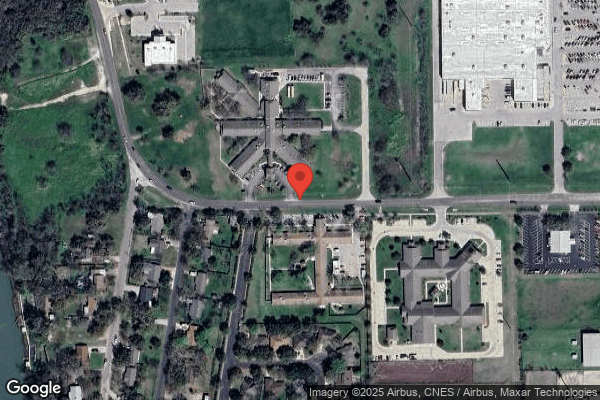
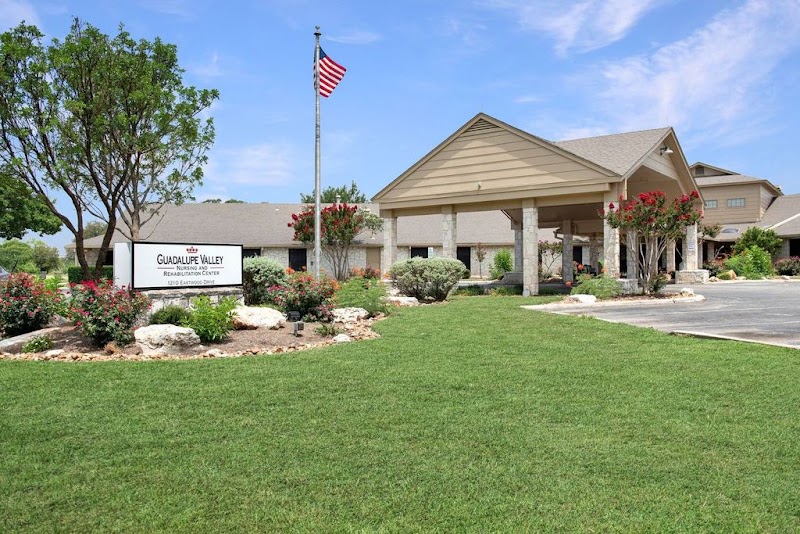
1210 EASTWOOD DR, SEGUIN, TX 78155 (830) 379-9308
Non profit - Corporation 148 Beds WELLSENTIAL HEALTH Data: November 2025 2 Immediate Jeopardy citations
Trust Grade
16/100
#725 of 1168 in TX
Last Inspection: January 2025

Within standard 12-15 month inspection cycle. Federal law requires annual inspections.

Overview

Guadalupe Valley Nursing Center has received a Trust Grade of F, indicating significant concerns about the quality of care provided, which is poor compared to other facilities. It ranks #725 out of 1168 nursing homes in Texas, placing it in the bottom half of the state, and #5 out of 8 in Guadalupe County, meaning there are only a few local options that are better. Unfortunately, the facility's situation is worsening, with the number of reported issues nearly doubling from 9 in 2024 to 18 in 2025. Staffing is a relative strength with a turnover rate of 44%, which is below the Texas average, but the overall staffing rating is only 2 out of 5 stars. The facility has faced $75,450 in fines, which is concerning and suggests ongoing compliance issues. Additionally, there are serious incidents that raise red flags, including critical failures to notify a resident's physician and family when a resident showed signs of a serious health change, potentially delaying necessary medical intervention. There were also issues in food safety practices, such as improper food storage and the presence of pests in the kitchen, which could lead to health risks for the residents. Overall, while there are some strengths in staffing stability, the facility has significant weaknesses in care quality and compliance that families should consider carefully.

Trust Score
F
16/100
In Texas
#725/1168
Bottom 38%
Safety Record
High Risk
Review needed
Inspections
Getting Worse
9 → 18 violations
Staff Stability
○ Average
44% turnover. Near Texas's 48% average. Typical for the industry.
Penalties
✓ Good
$75,450 in fines. Lower than most Texas facilities. Relatively clean record.
Skilled Nurses
⚠ Watch
Each resident gets only 18 minutes of Registered Nurse (RN) attention daily — below average for Texas. Fewer RN minutes means fewer trained eyes watching for problems.
Violations
⚠ Watch
46 deficiencies on record. Higher than average. Multiple issues found across inspections.
★★☆☆☆
2.0
Overall Rating
★★☆☆☆
2.0
Staff Levels
★★★★☆
4.0
Care Quality
★★☆☆☆
2.0
Inspection Score
Stable
2024: 9 issues
2025: 18 issues

The Good

  • 4-Star Quality Measures · Strong clinical quality outcomes
  • Full Sprinkler Coverage · Fire safety systems throughout facility
  • No fines on record
  • Staff turnover below average (44%)

    4 points below Texas average of 48%

Facility shows strength in quality measures, fire safety.

The Bad

2-Star Overall Rating

Below Texas average (2.8)

Below average - review inspection findings carefully

Staff Turnover: 44%

Near Texas avg (46%)

Typical for the industry

Federal Fines: $75,450

Well above median ($33,413)

Moderate penalties - review what triggered them

Chain: WELLSENTIAL HEALTH

Part of a multi-facility chain

Ask about local staffing decisions and management

The Ugly 46 deficiencies on record

2 life-threatening
Jun 2025 2 deficiencies
CONCERN (D) 📢 Someone Reported This

A family member, employee, or ombudsman was alarmed enough to file a formal complaint

Potential for Harm - no one hurt, but risky conditions existed

Deficiency F0583 (Tag F0583)

Could have caused harm · This affected 1 resident

Based on interview, record review, and observation, the facility failed to ensure residents have a right to personal privacy for 1 of 2 resident (Resident #6) reviewed for privacy, in that: CNA A and ...

Read full inspector narrative →
Based on interview, record review, and observation, the facility failed to ensure residents have a right to personal privacy for 1 of 2 resident (Resident #6) reviewed for privacy, in that: CNA A and CNA B did not close Resident #6's privacy curtain while providing incontinent care on 06/05/2025. This deficient practice could place residents at-risk of loss of dignity due to lack of privacy. The findings included: Record review of Resident #6's face sheet, dated 06/06/2025, revealed an admission date of 06/03/2023 and, a readmission date of 04/10/2024, with diagnoses which included: Alzheimer's disease (brain disorder that slowly destroys memory and thinking skills), Type 2 diabetes mellitus (high level of sugar in the blood), Hyperlipidemia (Elevated level of any or all lipids(fat) in the blood), Vascular dementia (problems with reasoning, planning, judgment, memory and other thought processes caused by brain damage from impaired blood flow to the brain.), Anxiety (A group of mental illnesses that cause constant fear and worry), Chronic kidney disease (gradual loss of kidney function), Major depressive disorder (mental disorder characterized by at least two weeks of pervasive low mood, low self-esteem, and loss of interest or pleasure), Non-Hodgkin lymphoma (Blood cancer). Record review of Resident #6's Quarterly MDS assessment, dated 04/08/2025, revealed the resident had a BIMS score of 11, indicating her cognition was moderately impaired. Resident #6 was always incontinent of bowel and bladder. She required extensive assistance in activities of daily living. Record review of Resident #6's care plan, dated 05/07/2025, revealed a problem of has (MIXED)bowel/ bladder incontinence r/t weakness, Alzheimer's, OAB, with a goal of The resident will remain free from skin breakdown due to incontinence and brief use through the review date and, intervention of Clean peri-area with each incontinence episode. Observation on 06/05/2025 at 2:22 p.m. revealed CNA A and CNA B did not completely close the privacy curtain while they provided incontinent care for Resident #6, exposing the resident's genital area during care. The resident's bed area was partially uncovered and the resident's roommate was in the room at the time of care. The privacy curtain was broken and could not be completely closed. During an interview with CNA B on 06/05/2025 at 2:30 p.m., CNA B confirmed the privacy curtain was not completely closed while they provided care for Resident #6 but it should have been. She confirmed she received resident rights training within the year. She did not know how long the privacy curtain had been broken because she did not usually work with Resident #6. During an interview with CNA A on 06/05/2025 at 2:39 p.m., CNA A confirmed the privacy curtain was not completely closed while they provided care for Resident #6 but it should have been. She confirmed she received resident rights training within the year. She did not know how long the privacy curtain had been broken because she did not usually work on hall 400 (Resident #6's hall). During an interview with the DON on 06/6/2025 at 9:10 a.m., the DON confirmed privacy must be provided during nursing care and Resident #6's privacy curtain should have been closed completely. He confirmed the staff had received training on resident rights within the year and the training was provided by the ADON and himself. They also checked the staff skills annually and as needed. Review of the facility's policy titled Statement of Resident Rights, undated, revealed, You have a right to: privacy, including privacy during visits and telephone calls. Review of Facility's checklist, titled incontinent care proficiency checklist (with or without Foley), undated, revealed Provide privacy (use rolling provacy screens; if there is not a privacy curtain at the foot of the bed.
CONCERN (D) 📢 Someone Reported This

A family member, employee, or ombudsman was alarmed enough to file a formal complaint

Potential for Harm - no one hurt, but risky conditions existed

Infection Control (Tag F0880)

Could have caused harm · This affected 1 resident

Based on observation, interviews, and record reviews, the facility failed to maintain an infection prevention and control program designed to provide a safe, sanitary, and comfortable environment and ...

Read full inspector narrative →
Based on observation, interviews, and record reviews, the facility failed to maintain an infection prevention and control program designed to provide a safe, sanitary, and comfortable environment and to help prevent the development and transmission of communicable disease and infection for 1 of 2 residents (Resident #6) reviewed for infection control, in that: While providing incontinent care for Resident #6, CNA A did not change her gloves or wash her hands after cleaning the resident and before touching the clean draw sheet and clean brief on 06/05/2025. This deficient practice could place residents at-risk for infection due to improper care practices. Findings included: Record review of Resident #6's face sheet, dated 06/06/2025, revealed an admission date of 06/03/2023 and, a readmission date of 04/10/2024, with diagnoses which included: Alzheimer's disease (brain disorder that slowly destroys memory and thinking skills), Type 2 diabetes mellitus (high level of sugar in the blood), Hyperlipidemia (Elevated level of any or all lipids(fat) in the blood), Vascular dementia (problems with reasoning, planning, judgment, memory and other thought processes caused by brain damage from impaired blood flow to the brain.), Anxiety (A group of mental illnesses that cause constant fear and worry), Chronic kidney disease (gradual loss of kidney function), Major depressive disorder (mental disorder characterized by at least two weeks of pervasive low mood, low self-esteem, and loss of interest or pleasure), Non-Hodgkin lymphoma (Blood cancer). Record review of Resident #6's Quarterly MDS assessment, dated 04/08/2025, revealed the resident had a BIMS score of 11, indicating her cognition was moderately impaired. Resident #6 was always incontinent of bowel and bladder. She required extensive assistance in a activities of daily living. Record review of Resident #6's care plan, dated 05/07/2025, revealed a problem of has (MIXED)bowel/ bladder incontinence r/t weakness, Alzheimer's, OAB, with a goal of The resident will remain free from skin breakdown due to incontinence and brief use through the review date and, intervention of Clean peri-area with each incontinence episode. Observation on 06/05/2025 at 2:22 p.m., revealed while providing incontinent care for Resident #6, CNA A did not change her gloves or sanitize her hands after cleaning Resident #6's buttocks and before touching the clean draw sheet and the clean brief and placing them under the resident. During an interview with CNA A on 06/05/2025 at 2:39 p.m., CNA A stated she forgot to change her gloves before touching the clean draw sheet and brief and she should have. She stated she received infection control training within the year During an interview with the DON on 06/6/2025 at 9:10 a.m., the DON stated the staff should have changed their gloves and sanitized their hands prior to touching the clean draw sheet and brief. He stated it could cause a risk of cross contamination and infection for the resident. He revealed they provided training on infection control at least once a year and as needed. He revealed they checked the skills of the staff annually and as needed with the assistance of his ADONS. Record review of the facility's CNA A competency check titled, incontinent care checklist, dated 09/06/2024, revealed 10. [ .] cleanse the entire buttock area and surrounding hip area [ .] 11. Wash/sanitize hands, Apply clean gloves. 12. Position new brief under resident. CNA A had passed competency. Review of the facility's policy, titled Infection prevention and control program, dated 05/13/2023, revealed Hand hygiene shall be performed in accordance with our facility's established hand hygiene procedures. During an interview on 06/06/2025 at 2:02 p.m. with the DON, The DON revealed there was no other policy about hand hygiene or use of gloves during care.
Jan 2025 16 deficiencies
CONCERN (D)

Potential for Harm - no one hurt, but risky conditions existed

Deficiency F0558 (Tag F0558)

Could have caused harm · This affected 1 resident

**NOTE- TERMS IN BRACKETS HAVE BEEN EDITED TO PROTECT CONFIDENTIALITY** Based on observation, interview and record review the facility failed to ensure residents received services in the facility with...

Read full inspector narrative →
**NOTE- TERMS IN BRACKETS HAVE BEEN EDITED TO PROTECT CONFIDENTIALITY** Based on observation, interview and record review the facility failed to ensure residents received services in the facility with reasonable accommodation of resident needs for 1 of 8 Residents (Resident #8) who was observed for call light placement. The facility staff failed to ensure the call light was within reach for Resident #8. This failure could affect any resident and keep them from calling for help as needed. The findings were: Record review of Resident #8's face sheet, dated 01/14/2025, revealed the resident was admitted to the facility on [DATE] with diagnoses which included: spastic hemiplegic cerebral palsy. Record review of Resident #8's Annual MDS assessment, dated 10/18/2024, revealed the resident's BIMS score was 09, which indicated moderate cognitive impairment. The Annual MDS assessment further revealed Resident #8 was dependent (helper does all of the effort) with rolling left and right, chair/bed to chair transfer, tub/shower transfer, toileting hygiene, shower/bathing, upper body dressing, lower body dressing, and personal hygiene. Record review of Resident #8's Nursing-Quarterly/PRN Nursing Evaluation, dated 10/18/2024, revealed total dependence required for bed mobility, transfers, dressing, eating, toilet use, personal hygiene, and bathing. Record review of Resident #8's care plan, revision date of 11/07/2024, revealed Resident #8 had a problem of [Resident's name] has an ADL self-care performance deficit r/t cerebral palsy and interventions read Encourage the resident to use bell to call for assistance. Care plan further revealed Resident #8 had a problem [Resident name] is at risk of falls r/t to poor balance . and interventions read Be sure the resident's call light is within reach and encourage the resident to use it for assistance as needed. The resident needs prompt response to all request for assistance. Observation and interview on 01/13/2025 at 10:50 a.m. revealed Resident #8's lying in his bed with head of bed elevated and the call light tucked in the closed top drawer of nightstand approximately a foot away from Resident #8. Resident #8 stated when he would need help, he would press the button, but right now he could not reach the button. Observation and interview on 01/13/2025 at 10:53 a.m. CNA A stated the staff typically checked on him as he had difficulty using his call light. CNA A further stated he has never really used his call light as she removed the soft touch call light from the drawer and placed it on the over bed table to the right of Resident #8. Resident #8 when asked about the soft touch call light he stated he would us it when he needed help. Resident #8 was observed to start to reach for the soft touch call light with his contracted left arm and hand with pointer finger extended attempted to push the pad. CNA A stated the staff had to put the call light in the middle of the table and moved the call light within reach. Resident #8 was then observed and was able to demonstrate the use of the soft touch call light by touching it with one finger. During an interview on 01/16/2025 at 11:37 a.m. the DON stated he was not sure if Resident #8 was able to use the call light all the time, but it should have been within reach. The DON stated it was the responsibility of staff to make sure call lights were within reach. The DON stated the importance of residents having the call light within reach was so it could be used to get help. The DON further stated, Anything could happen. by not having the call light within reach of the resident. During an interview on 01/16/2025 3:48 p.m. the ADM stated residents should have call lights within reach when they were in bed or in the room in w/c next to their beds. The ADM stated everybody was responsible for the placement of call lights. The ADM stated as far as he knew Resident #8 was able to use his call light. Record review of the facility's Call lights: Accessibility and Timely Response policy, implemented date 10/13/22, read Policy: The purpose of this policy is to assure the facility is adequately equipped with a call light at each residents' bedside, toilet, and bathing facility to allow residents to call for assistance . Policy Explanation and Compliance Guidelines: 6. The call system will accessible to residents while in their bed or other sleeping accommodations within the resident's room.
CONCERN (D)

Potential for Harm - no one hurt, but risky conditions existed

Deficiency F0561 (Tag F0561)

Could have caused harm · This affected 1 resident

**NOTE- TERMS IN BRACKETS HAVE BEEN EDITED TO PROTECT CONFIDENTIALITY** Based on observation, interview and record review the facility failed to promote and facilitate resident self-determination thro...

Read full inspector narrative →
**NOTE- TERMS IN BRACKETS HAVE BEEN EDITED TO PROTECT CONFIDENTIALITY** Based on observation, interview and record review the facility failed to promote and facilitate resident self-determination through support of resident choice, including but not limited to choose health care and providers of health care services consistent with his or her interests for 1 of 8 Residents (Resident #184) who was reviewed for services. The facility failed to meet and discuss with Resident #184, a new admission, Medicaid coverage and options for healthcare providers. This deficient practice could affect any resident who was a new admission to the facility and could result in residents not having the opportunity to participate in making decisions for health coverage and choosing health providers. The findings were: Review of Resident #184's face sheet, dated 1/16/25, revealed he was admitted to the facility on [DATE] and was re-admitted on [DATE] with diagnoses including Hemplegia and Hemiparesis following Cerebral Infarction affecting right dominant side, Other Sequelae of Cerebral Infarction and Type 2 Diabetes Mellitus with Hyperglycemia. Review of Resident #184's MDS assessment, dated 12/23/24, revealed his BIMS score was 14 of 15 reflective of minimal cognitive impairment. Review of Resident #184's Care Plan, dated 1/15/25, read: The resident had a cerebral vascular accident (CVA/Stroke) affecting (right side) and one of the interventions was Monitor/document/report PRN for neurological deficits: level of consciousness, visual function changes, aphasia, dizziness, weakness, restlessness. Review of progress notes from 12/23/24 to 1/15/25 revealed there was no documentation that staff had met with Resident #184 to discuss medical coverage or options in healthcare providers. Observation and interview on 1/13/25 at 1:13 PM revealed Resident #184 sitting in his wheelchair. He presented as being alert and oriented. Resident #184 stated he was admitted to the facility about 5 weeks ago and then was hospitalized . Resident #184 stated he talked to different staff about insurance coverage and questioned who would be his health provider. He presented a health insurance card and stated staff had told him he did not need it anymore and the BOM would take care of it Resident #184 stated staff kept telling him to talk with the BOM but she was never in her office. Resident #184 stated staff told him his insurance would change but wouldn't tell him anything else. Resident #184 stated he had a cataract on his left eye and needed surgery. He also stated he needed a tooth pulled but feel stuck because I don't know what's going on. Further observation revealed Resident #184 had a thin gray film over his left eye. Interview on 01/15/25 at 1:30 PM with the SW revealed they had a Care Plan meeting with Resident #184 and he did not mention any concerns with preference for insurance provider or concerns that no one had discussed his preferences with him. Review of Resident #184's progress notes from 12/18/24 to present did not reveal any documentation that any staff member discussed the admission process with him. Interview on 01/16/25 at 01:40 PM with the SW and the BOM revealed they initiated having transitional meetings with short stay residents and discussed expectations of the admission process with newly admitted residents. However, they did not have a transitional meeting with long-term residents. The BOM stated she usually met with new admits to discuss their financials, applying for MCD and healthcare providers within the first few days after admission. She stated she had not met with Resident #184 because she had not been able to find a family member to help with providing personal documents needed to apply for Medicaid. She stated if he was asking questions, any staff could direct him to her. The BOM stated she did not know he had questions and she and the SW stated they would go meet with him now. Review of the facility policy, Residents' Rights Nursing Facilities, provided by the Texas Health and Human Services, read in relevant part: Freedom of choice: You have the right to: make your own choices regarding personal affairs, care, benefits and services. Choose your own doctor at your own expense or through a health care plan. Manage your own financial affairs in the least restrictive method or to delegate that responsibility to another person.
CONCERN (D)

Potential for Harm - no one hurt, but risky conditions existed

Notification of Changes (Tag F0580)

Could have caused harm · This affected 1 resident

**NOTE- TERMS IN BRACKETS HAVE BEEN EDITED TO PROTECT CONFIDENTIALITY** Based on interview and record review the facility failed to immediately consult with the resident's physician when there was a n...

Read full inspector narrative →
**NOTE- TERMS IN BRACKETS HAVE BEEN EDITED TO PROTECT CONFIDENTIALITY** Based on interview and record review the facility failed to immediately consult with the resident's physician when there was a need to alter treatment significantly or to commence a new form of treatment for 1 of 8 Residents (Resident #24) whose records were reviewed for medications. Nursing staff failed to contact Resident #24's PCP/NP on 1/14/25 when realizing medication insulin Toujeo was not available for night administration per physician orders. This deficient practice could affect any resident and could contribute to resident's not receiving medications per physician orders and result in a decline in condition. The findings were: Review of Resident #24's face sheet, dated 1/16/25, revealed he was admitted to the facility on [DATE] with diagnoses including Type 2 Diabetes Mellitus (According to Mayo clinic Diabetes mellitus refers to a group of diseases that affect how the body uses blood sugar (glucose)) with Diabetic chronic kidney disease, Type 2 Diabetes Mellitus with Hyperglycemia (According to Mayo clinic Hyperglycemia is high blood sugar), Type 2 Diabetes Mellitus with other Diabetic neurological (According to Mayo clinic neurological means nervous system) complication. Review of Resident #24's MDS assessment, dated 11/14/24, revealed his BIMS score was 15 of 15 reflective of no cognitive impairment; diagnoses including Type 2 Diabetes Mellitus with Diabetic chronic kidney disease, Type 2 Diabetes Mellitus with Hyperglycemia, Type 2 Diabetes Mellitus with other Diabetic neurological complication; and he received insulin injections. Review of Resident #24's physician consolidated orders dated January 2025 revealed the following orders: Toujeo Max SoloStar Subcutaneous Solution Peninjector 300 UNIT/ML (Insulin Glargine) Inject 80 units subcutaneously at bedtime related to TYPE 2 DIABETES MELLITUS WITH HYPERGLYCEMIA () DO NOT HOLD WITHOUT CONTACTING THE I-SNP NP FIRST; Call order in for Toujeo refill every 7 days one time a day every Sat-Start Date-10/05/2024 2100; and Obtain accu-check every AM one time a day for Accu-check -Start Date-05/22/2021 0730. Review of Resident #24's skilled MAR for January 2025 revealed he did not receive 80 units, Toujeo Max SoloStar Subcutaneous Solution, on 1/14/25. Further review revealed Resident #24's glucose level on 1/15/25 was 188. Further review revealed his glucose level from 1/1/25 to 1/17/25 ranged between 124 to 178. Review of list of medications available in the Emergency Kit (refrigerated) included Lantus 3ML Pen. Interview on 1/15/25 at 10:11 AM during the group meeting Resident #24 reported he did not receive scheduled 80 units of insulin last night. He stated he was upset because someone didn't check to make sure the insulin was available and further stated it was not the first time this happened. Resident #24 stated he felt ok, but his sugars were high he would get dizzy or sick to his stomach. Interview on 01/15/25 at 4:00 PM with LVN F revealed Resident #24 was upset with her this morning because he did not receive his scheduled medication, Toujeo (pm insulin), the night before and blamed her for not re-ordering the medication. She stated he was scheduled to receive 80 units every day, at night. She stated she was not the only one responsible for ordering the medication and the night nurse, LVN G, should have ordered once learning it was not available. LVN F reviewed the MAR and stated LVN G did not order the medication on the night of 1/14/25. LVN F stated there was also no progress note indicating, he did not administer the insulin, that he took an accu-check for Resident #24 or that he called Resident #24's NP. She stated she completed all accu-checks in the morning during the day shift. LVN F stated not taking that many units of insulin could have significant adverse effects including death. LVN F stated she reported this information to the management team during the morning meeting on this date, 1/15/25. She stated the NP attended the meeting. Interview on 01/15/25 at 5:25 PM with LVN F revealed she learned pharmacy did not deliver the medication, Toujeo, because the insurance denied payment. She stated the ADON in charge of 300 hall called pharmacy and stated it was resolved. The ADON reported the medication was scheduled for delivery at night on 1/15/25. LVN F stated she talked to Resident #24's NP and the NP reported to her that she was not notified Resident #24 had not received the scheduled 80 units of Toujeo on the night of 1/14/25. Interview on 1/16/25 at 9:38 AM with Resident #24 revealed he was feeling ok this morning. He stated LVN G notified him Tuesday evening, 1/14/25, the medication, Toujeo insulin, was not available and he called the pharmacy. He stated LVN G did not take an accu-check to check in blood sugar levels. Resident #24 stated he stepped out of his room later early morning and talked with LVN G but he did not know if LVN G checked on him during the nighttime because he was sleeping. Interview on 01/16/25 at 09:49 AM with NP H revealed she had 58 residents in-house she followed including Resident #24. She stated nursing staff did not notify her the night of 1/14/25 that Resident #24 did not receive the scheduled 80 units of PM insulin/Toujeo. She stated staff notified her on 1/15/25 between 5:00 PM or 5:30 PM that the insulin was not available NP H stated she would have ordered the charge nurse to administer 80 units of Lantus available in the Emergency Kit. She further stated there was an order to specifically not hold the insulin medication, Toujeo, unless notifying the NP and there was also a standing for nursing staff to order the insulin weekly, every Saturday because there was a history of the insulin not being available. NP H stated she attended the morning meeting on 1/15/25 but came in later than she usually did and did not recall anyone reporting Resident #24's insulin not being available. She stated she would hope staff had reported directly to her, the insulin was not available. NP H reviewed Resident #24's MAR for January 2025 and stated the insulin was documented as ordered on Saturday, 1/11/25. The NP stated per science she would not expect any major adverse effects except Resident #24 would not feel well if his sugar's skyrocketed. Although, she stated she had him on several other daytime insulin medications because his Diabetes had been very difficult to control. NP H stated she expressed her concerns about not being notified to the management team this morning and the response was that they would follow up with the charge night nurse. Interview on 1/16/25 at 2:30 PM with RN/ADON I, revealed she was the ADON over the hall Resident #24 resided on. She stated on 1/15/24, LVN F reported Resident #24 told her, he missed his scheduled nighttime insulin on 1/14/25 because it was not available. ADON I stated she called pharmacy right away, clarified insurance questions and the medication was scheduled to arrive the night of 1/15/25. ADON I stated charge nurse, LVN G, was scheduled to work 11:00 PM to 6:00 AM on 1/14/25. She stated policy and protocol required he contact the pharmacy to inquire about the hold up; call the NP for direction and then to notify her and the DON. ADON I stated Lantus insulin was available in the Emergency kit to substitute for Toujeo insulin if that's what the NP ordered. ADON I stated LVN G did not call her to provide her with a report about the incident. Interview on 1/16/25 at 5:30 PM with the DON revealed he learned Resident #24 did not receive his scheduled nighttime insulin medication because it was not available on 1/14/25. He stated the charge nurse, LVN G, should have called him and the NP to obtain directives to avoid Resident #24 experiencing adverse effects. The DON stated LVN G did not call him or the NP from what he understood. He stated the insulin was not available because there was an insurance problem but ADON I called the pharmacy and took care of it. He stated the insulin arrived on 1/15/25. Review of facility policy, Notification of Changes, dated 10/24/22, read in relevant part: The purpose of this policy is to ensure the facility promptly informs the resident, consults the resident's physician; and notified, consistent with his or her authority, the resident's representative when there is a change requiring notification. 3. Circumstances that require a need to alter treatment. This may include: a. New treatment. b Discontinuation of current treatment due to: i. adverse consequences. ii. Acute condition. iii. Exacerbation of a chronic condition.
CONCERN (D)

Potential for Harm - no one hurt, but risky conditions existed

Pharmacy Services (Tag F0755)

Could have caused harm · This affected 1 resident

**NOTE- TERMS IN BRACKETS HAVE BEEN EDITED TO PROTECT CONFIDENTIALITY** Based on interview and record review the facility failed to provide routine and emergency drugs and biologicals for 1 of 8 Resid...

Read full inspector narrative →
**NOTE- TERMS IN BRACKETS HAVE BEEN EDITED TO PROTECT CONFIDENTIALITY** Based on interview and record review the facility failed to provide routine and emergency drugs and biologicals for 1 of 8 Residents (Resident #24) whose records were reviewed for pharmacy services. LVN G failed to notify LVN H, the ADON or the DON that Resident #24's insulin medication, Toujeo was not delivered by the facility pharmacy and not available for administration on 1/14/25 to avoid further delay in delivery. Resident #24 did not receive his nighttime dose (80 units) of Toujeo insulin per physician orders. This deficient practice could affect any resident and could contribute to resident's not receiving medications per physician orders and result in a decline in condition. The findings were: Review of Resident #24's face sheet, dated 1/16/25, revealed he was admitted to the facility on [DATE] with diagnoses including Type 2 Diabetes Mellitus (According to Mayo clinic Diabetes mellitus refers to a group of diseases that affect how the body uses blood sugar (glucose)) with Diabetic chronic kidney disease, Type 2 Diabetes Mellitus with Hyperglycemia (According to Mayo clinic Hyperglycemia is high blood sugar), Type 2 Diabetes Mellitus with other Diabetic neurological (According to Mayo clinic neurological means nervous system) complication. Review of Resident #24's MDS assessment, dated 11/14/24, revealed his BIMS score was 15 of 15 reflective of no cognitive impairment; diagnoses including Type 2 Diabetes Mellitus with Diabetic chronic kidney disease, Type 2 Diabetes Mellitus with Hyperglycemia, Type 2 Diabetes Mellitus with other Diabetic neurological complication; and he received daily insulin injections. Review of Resident #24's physician consolidated orders dated January 2025 revealed the following orders: Toujeo Max SoloStar Subcutaneous Solution Peninjector 300 UNIT/ML (Insulin Glargine) Inject 80 units subcutaneously at bedtime related to TYPE 2 DIABETES MELLITUS WITH HYPERGLYCEMIA. DO NOT HOLD WITHOUT CONTACTING THE I-SNP NP FIRST; Call order in for Toujeo refill every 7 days one time a day every Sat-Start Date-10/05/2024; and Obtain accu-check every AM one time a day for Accu-check -Start Date-05/22/2021. Review of nurse's progress note read: 01/15/2025 17:00 Type: NURSING - Nurse Note. Note Text : Upon arrival of shift this nurse was approached by resident visibly upset that this (myself) specific nurse did not reorder Toujeo (pm insulin) it was not given this nurse explained that she was unaware of medication not being available due to it not being this nurse to give it but that I would bring it up in morning meeting. ADON approached and this nurse explained situation and ADON explained to resident any charge nurse can order medication. ADON called pharmacy and verified medication to be delivered tonight. This nurse was not told in report about medication not being in building. order to reorder medication is in pcc and was reordered on Saturday by a different nurse. Reported medication not given. In morning meeting with ISNP and Management. All parties informed. Further review revealed LVN F was the writer. Review of Resident #24's skilled MAR for January 2025 revealed he did not receive 80 units, of Toujeo Max SoloStar Subcutaneous Solution, on 1/14/25. Review revealed Resident #24's glucose level on 1/15/25 was 188. Further review revealed his glucose level from 1/1/25 to 1/17/25 ranged between 124 to 178. Review of list of medications available in the Emergency Kit (refrigerated) included Lantus 3ML Pen. Interview on 1/15/25 at 10:11 AM during the group meeting, revealed Resident #24 reported he did not receive scheduled 80 units of insulin last night (1/14/25). He stated he was upset because someone didn't check to make sure the insulin was available and further stated it was not the first time this happened. Resident #24 stated he felt ok, but when his sugars were high he would get dizzy or sick to his stomach. Interview on 01/15/25 at 4:00 PM with LVN F revealed Resident #24 was upset with her this morning because he did not receive his scheduled medication, Toujeo (pm insulin), the night before and blamed her for not re-ordering the medication. She stated he was scheduled to receive 80 units everyday, at night. She stated she was not the only one responsible for ordering the medication and the night nurse, LVN G, should have ordered once learning it was not available. She stated LVN G did not tell her in report the medication was not available. LVN H reviewed the MAR and stated LVN G did not order the medication on the night of 1/14/25. LVN H stated there was also no progress note indicating, he did not administer the insulin, that he took an accu-check for Resident #24 or that he called the pharmacy or Resident #24's NP. She stated she completed all accu-checks in the morning during the day shift. LVN F stated not taking that many units of insulin could have significant adverse effects for Resident #24 including death. LVN F stated she reported this information to the management team, including the NP, during the morning meeting on this date, 1/15/25. Interview on 01/15/25 at 5:25 PM with LVN F revealed she learned pharmacy did not deliver the medication, Toujeo, because the insurance denied payment. She stated she told ADON I, who was in charge of 300-hall, and she called the pharmacy. ADON I told her the issue had been resolved and the medication would be delivered on the night of 1/15/25. In an interview on 1/15/25 at 9:36 p.m. LVN G stated Resident #24 did not receive his Toujeo Insulin on 1/14/25 and he documented it as not given. LVN G stated he had been off for 3 or 4 days and when he returned on 1/14/25 there was no Toujeo insulin for the resident's nightly dose. LVN G stated he checked the medication room fridge and none was available. LVN G stated he reordered it through the computer and it did not look like it had already been reordered until he did it and then he called the pharmacy about 9:00pm and spoke with them and they assured him the insulin would be delivered to the facility the same night. LVN G further stated he did not call or notify the physician or Nurse Practitioner as he thought the insulin would come. LVN G stated he did not notify the Nurse Practitioner or physician prior to leaving at the end of his shift. LVN G stated he had taken the resident's blood sugar and it was 158. LVN G did not remember if he put it on the 24 hour report but that he did tell the oncoming morning nurse LVN F in report. Interview on 1/16/25 at 9:38 AM with Resident #24 revealed he was feeling ok this morning. He stated LVN G notified him Tuesday evening, 1/14/25, his insulin medication, Toujeo, was not available and he called the pharmacy. He stated LVN G did not take an accu-check to check in blood sugar levels. Resident #24 stated he stepped out of his room later early morning and talked with LVN G but he did not know if LVN G checked on him during the nighttime because he was sleeping. Interview on 01/16/25 at 09:49 AM with NP H revealed she had 58 residents in-house she followed including Resident #24. She stated nursing staff did not notify her that Resident #24 did not receive the scheduled 80 units of PM insulin/Toujeo on the night of 1/14/25. She stated staff notified her on 1/15/25 between 5:00 PM or 5:30 PM the insulin was not available. NP H stated she would have ordered the charge nurse to administer 80 units of Lantus available in the Emergency Kit. She further stated there was an order to specifically not hold the insulin medication, Toujeo, unless notifying the NP. There was also a standing order for nursing staff to order the insulin weekly, every Saturday, because there was a history of the insulin not being available. NP H stated per science she would not expect any major adverse effects except Resident #24 would not feel well if his sugar's skyrocketed. She stated she also had him on several other daytime insulin medications because his Diabetes had been very difficult to control. NP H stated she expressed her concerns to the management team this morning (1/16/25) about not being notified and the medication not being available. The response was that they would follow up with the night nurse. Interview on 1/16/25 at 2:30 PM with RN/ADON I, revealed she was the ADON over the hall Resident #24 resided on. She stated on 1/15/24, LVN F reported Resident #24 told her, he missed his scheduled nighttime insulin on 1/14/25 because it was not available. ADON I stated she called pharmacy right away, clarified insurance questions and the medication was scheduled to arrive the night of 1/15/25. ADON I stated charge nurse, LVN G, was scheduled to work 11:00 PM to 6:00 AM on 1/14/25. She stated policy and protocol required he contact the pharmacy to inquire about the hold up; call the NP for direction and then to notify her and the DON. ADON I stated Lantus insulin was available in the Emergency kit to substitute for Toujeo insulin if that's what the NP would have ordered. ADON I stated LVN G did not call her to provide her with a report about the incident to ensure the order was clarified and to ensure it was delivered. She stated LVN G reported he called the pharmacy but there was not a progress note to support his statement. Interview on 1/16/25 at 5:30 PM with the DON revealed he learned Resident #24 did not receive his scheduled nighttime insulin medication, Toujeo, because it was not available on 1/14/25. He stated the charge nurse, LVN G, should have called the pharmacy to inquire what was going on; called him and the NP to obtain directives to avoid Resident #24 experimenting adverse affects. The DON stated LVN G did not call him or the NP from what he understood. He stated the insulin was not available because there was an insurance problem but ADON I called the pharmacy and took care of it. He stated the insulin arrived on 1/15/25. Review of facility policy, Pharmacy Provider Requirement dated 10/11/19 read in relevant part: Regular and reliable pharmaceutical service is available to provide residents with prescriptions and nonprescription medications, services, and related equipment and supplies. 4. The provider pharmacy agrees too perform the following pharmaceutical services, including but not limited to B. Accurately dispensing prescription based on authorized prescribe orders. F. Providing routine and timely pharmacy service serve days per week and emergency pharmacy service 24 hours per day, seven days per week. Review of facility policy, Unavailable Medications, dated 10/1/19, read in relevant part: Medications used by residents in the nursing facility may be unavailable for dispensing from the pharmacy on occasion. If a medication is not available, this facility will enact the following procedures. 2. Each charge nurse, nurse manager or supervisor will review the Medication Administration Records (MARs) at the end of each shift to ensure all medications have been administered. Nursing staff shall: 4. Notify the attending physician of the situation and explain the circumstances, expected availability and optional therapy (ies) that are available.
CONCERN (D)

Potential for Harm - no one hurt, but risky conditions existed

Deficiency F0943 (Tag F0943)

Could have caused harm · This affected 1 resident

Based on interview and record review, the facility failed to provide mandatory effective training on abuse, neglect, exploitation, and misappropriation training for 2 of 29 employees (Cook, CNA D) rev...

Read full inspector narrative →
Based on interview and record review, the facility failed to provide mandatory effective training on abuse, neglect, exploitation, and misappropriation training for 2 of 29 employees (Cook, CNA D) reviewed for training, in that: The facility failed to ensure effective abuse, neglect, exploitation, and misappropriation training was provided to [NAME] and CNA D annually. This failure could affect residents and place them at risk of being uninformed due to lack of staff training. The findings include: Record review of personnel records for the [NAME] revealed a hire date of 11/16/2023. Further review of a training log, provided by the HR Manager revealed no evidence of communication training, resident rights training, abuse/neglect training, dementia training, QAPI training, infection control training, ethics training, behavior health training, HIV training, fall prevention training, restraint training, or emergency preparedness training being provided annually. Record review of personnel records for CNA D revealed a hire date of 07/24/2017. Further review of a training log, provided by the HR Manager revealed no evidence of communication training, resident rights training, abuse/neglect training, QAPI training, infection control training, HIV training, fall prevention training, or restraint training, being provided annually. Interview with the HR Director, on 01/16/2025 at 12:05 PM revealed annual trainings are available to employees in Health Stream and assigned by corporate. The HR Director stated employees receive emails informing them of assigned trainings and it is up to department heads to ensure employees complete trainings in Health Stream. The HR director also stated employees that do not complete their annual trainings do not get their annual wage increase. The HR Director stated it was important that staff complete annual trainings to ensure they were up to date on policy and could affect the care residents receive. The HR director was asked for a policy on annual trainings and stated the facility did not have a policy on annual trainings or how to ensure employees complete them. Interview with the food service manager, on 01/16/2025 at 2:46 PM revealed department heads were responsible to ensure employees complete annual trainings. The food service manager stated she was new in her position and did not know where to find employee trainings or who was overdue on trainings. The food service manager was unaware how the facility ensured employees completed their annual trainings. Interview with the DON on 01/16/2025 at 3:02 PM revealed human resources was responsible to ensure employees completed annual trainings assigned to them. The DON stated corporate human resources assigned trainings to employees annually and if employees do not complete trainings, they do not get annual raises. The DON stated itwas important to complete annual trainings to ensure staff are up to date on all topics ensure the residents got quality care. Attempted phone interview with [NAME] on 01/16/2025 at 3:19 PM. Surveyor left a message requesting a call back but did not receive one. Interview with CNA D on 01/16/2025 at 3:33 PM revealed it was important to complete annual trainings to ensure she was up to date with information related to resident care. CNA D stated annual trainings were assigned by HR and the DON or ADM to ensure she completed the trainings. Interview with ADM on 01/16/2025 at 6:19 PM revealed department heads were responsible to ensure their employees completed annual trainings. ADM stated it was important to complete annual trainings to ensure they were up to date on all training topics. Surveyor requested facility policy on annual training requirements from HR Director on 01/16/2025 at 12:10 PM. No policy provided prior to exit of survey.
CONCERN (D)

Potential for Harm - no one hurt, but risky conditions existed

Deficiency F0946 (Tag F0946)

Could have caused harm · This affected 1 resident

Based on interview and record review, the facility failed to provide mandatory effective training on ethics training for 1 of 29 employees (Cook) reviewed for training, in that: The facility failed to...

Read full inspector narrative →
Based on interview and record review, the facility failed to provide mandatory effective training on ethics training for 1 of 29 employees (Cook) reviewed for training, in that: The facility failed to ensure effective ethics training was provided [NAME] annually. This failure could affect residents and place them at risk of being uninformed due to lack of staff training. The findings include: Record review of personnel records for the [NAME] revealed a hire date of 11/16/2023. Further review of a training log, provided by the HR Manager revealed no evidence of communication training, resident rights training, abuse/neglect training, dementia training, QAPI training, infection control training, ethics training, behavior health training, HIV training, fall prevention training, restraint training, or emergency preparedness training being provided annually. Interview with the HR Director, on 01/16/2025 at 12:05 PM revealed annual trainings are available to employees in Health Stream and assigned by corporate. The HR Director stated employees receive emails informing them of assigned trainings and it is up to department heads to ensure employees complete trainings in Health Stream. The HR director also stated employees that do not complete their annual trainings do not get their annual wage increase. The HR Director stated it is important that staff complete annual trainings to ensure they are up to date on policy and could affect the care residents receive. The HR director was asked for a policy on annual trainings and stated the facility did not have a policy on annual trainings or how to ensure employees complete them. Interview with the food service manager, on 01/16/2025 at 2:46 PM revealed department heads were responsible to ensure employees complete annual trainings. The food service manager stated she was new in her position and did not know where to find employee trainings or who was overdue on trainings. The food service manager was unaware how the facility ensured employees completed their annual trainings. Interview with the DON on 01/16/2025 at 3:02 PM revealed human resources was responsible to ensure employees completed annual trainings assigned to them. The DON stated corporate human resources assigned trainings to employees annually and if employees do not complete trainings, they do not get annual raises. The DON stated in was important to complete annual trainings to ensure staff are up to date on all topics ensure the residents got quality care. Attempted phone interview with [NAME] on 01/16/2025 at 3:19 PM. Surveyor left a message requesting a call back but did not receive one. Interview with ADM on 01/16/2025 at 6:19 PM revealed department heads were responsible to ensure their employees completed annual trainings. ADM stated in was important to complete annual trainings to ensure they were up to date on all training topics. Surveyor requested facility policy on annual training requirements from HR Director on 01/16/2025 at 12:10 PM. No policy provided prior to exit of survey.
CONCERN (D)

Potential for Harm - no one hurt, but risky conditions existed

Deficiency F0947 (Tag F0947)

Could have caused harm · This affected 1 resident

Based on interview and record review, the facility failed to provide mandatory effective in-service training for nurse aides on dementia for 1 of 5 nurse aides (CNA C) reviewed for training, in that: ...

Read full inspector narrative →
Based on interview and record review, the facility failed to provide mandatory effective in-service training for nurse aides on dementia for 1 of 5 nurse aides (CNA C) reviewed for training, in that: The facility failed to ensure effective dementia training was provided CNA C annually. This failure could affect residents and place them at risk of being uninformed due to lack of staff training. The findings include: Record review of personnel records for CNA C revealed a hire date of 06/01/2021. Further review of a training log, provided by the HR Manager revealed no evidence of dementia training, QAPI training, behavior health training, or emergency preparedness training being provided annually. Interview with the HR Director, on 01/16/2025 at 12:05 PM revealed annual trainings are available to employees in Health Stream and assigned by corporate. The HR Director stated employees receive emails informing them of assigned trainings and it is up to department heads to ensure employees complete trainings in Health Stream. The HR director also stated employees that do not complete their annual trainings do not get their annual wage increase. The HR Director stated it is important that staff complete annual trainings to ensure they are up to date on policy and could affect the care residents receive. The HR director was asked for a policy on annual trainings and stated the facility did not have a policy on annual trainings or how to ensure employees complete them. Interview with the DON on 01/16/2025 at 3:02 PM revealed human resources was responsible to ensure employees completed annual trainings assigned to them. The DON stated corporate human resources assigned trainings to employees annually and if employees do not complete trainings, they do not get annual raises. The DON stated in was important to complete annual trainings to ensure staff are up to date on all topics ensure the residents got quality care. Attempted phone interview with CNA C on 01/16/2025 at 3:17 PM. Surveyor left a message requesting a call back but did not receive one. Interview with ADM on 01/16/2025 at 6:19 PM revealed department heads were responsible to ensure their employees completed annual trainings. ADM stated in was important to complete annual trainings to ensure they were up to date on all training topics. Surveyor requested facility policy on annual training requirements from HR Director on 01/16/2025 at 12:10 PM. No policy provided prior to exit of survey.
CONCERN (E)

Potential for Harm - no one hurt, but risky conditions existed

Safe Environment (Tag F0584)

Could have caused harm · This affected multiple residents

**NOTE- TERMS IN BRACKETS HAVE BEEN EDITED TO PROTECT CONFIDENTIALITY** Based on observation, interview and record review the facility failed to provide housekeeping services necessary to maintain a s...

Read full inspector narrative →
**NOTE- TERMS IN BRACKETS HAVE BEEN EDITED TO PROTECT CONFIDENTIALITY** Based on observation, interview and record review the facility failed to provide housekeeping services necessary to maintain a sanitary, orderly, and comfortable interior for 1 of 1 shower room (300 hall) and 5 of 5 resident rooms (#312, #314, #315, #316 and #506) whose rooms were observed for housekeeping services. 1. Nursing staff failed to clean and sanitize the 300-hall shower room after each resident shower. 2. The facility failed to ensure Resident Rooms #312, #314, #315, #316 and #506 were thoroughly cleaned and sanitized. These deficient practices could place any residents at risk of living in an unclean and unsanitary environment and result in feelings of dissatisfaction. The findings were: 1. Review of Resident Council Meetings from July 2024 to [DATE] revealed concerns about CNA's not cleaning the 300-hall shower, leaving towels and other linens on the floor and sometimes poop. Interview on 1/14/25 at 10:11 AM during a group meeting with 12 residents including Resident #24, Resident #85 and Resident #184 revealed the 300 hall-shower was often dirty. They stated there would be dirty towels, clothes and even poop on the floor. The Resident's stated the staff did not always clean the shower room and they had to shower when it was dirty. The Resident's stated they felt bad about using a dirty shower. Residents also complained the CNA's and housekeeping staff did not maintain their rooms clean often disposing of briefs in the trash can in their rooms or bathrooms, not always cleaning the bathrooms thoroughly and not always sweeping and mopping the floor. The Resident's stated they had reported their concerns to multiple staff but they had not seen many improvement. Observation and interview on 1/14/25 at 11:25 AM in the 300-hall shower revealed dirty clothes and linens on the floor; 3 bottles of shampoo on top of a shower chair by the shower stall. The shower chair had been used. There was a shower bed with buildup white residue on it, the fabric strapped under the shower bed had dark brown stains in the middle of it; there were 2 footrests, 2 packages of wet wipes, a floor mat, a bottle of shampoo & body wash, a deodorant roll on and used towels stacked on top of the shower bed. There was a second shower chair beside the shower bed. On the floor behind it was a used brief, a used towel, a canister of sani-wipes, used and unused trash bags, a used sani-wipe and a men's shirt. The commode had dried up feces in it; there was a body wash pump on the floor between the commode and the wall. There was a used glove on the floor by the supply caddy located on the corner of the shower room upon walking in on the right side. Interview with CNA J revealed she had showered 2 residents earlier in the morning and completed the showers about 45 minutes ago. She stated she was supposed to clean the shower room after each shower including picking up all items off the floor, placing dirty linens in the dirty linen barrel, putting away supplies, and sanitizing the shower chairs, sweeping and mopping the floor. CNA J stated the shower bed and the items stacked on it had been there for a while. CNA J identified the brown substance and stains on the fabric strapped under the shower bed as feces. She stated she had not had time to come back to clean the shower room. CNA J further stated the shower room was not clean and would not like to have a family member use it because it was not sanitary. Observation and interview on 1/14/25 at 11:30 AM in the 300-hall shower revealed dirty clothes and linens on the floor; 3 bottles of shampoo on top of a shower chair by the shower stall. The shower chair had been used. There was a shower bed with buildup white residue on it, the fabric strapped under the shower bed had dark brown stains in the middle of it; there were 2 footrests, 2 packages of wet wipes, a floor mat, a bottle of shampoo & body wash, a deodorant roll on and used towels stacked on top of the shower bed. There was a second shower chair beside the shower bed. On the floor behind it was a used brief, a used towel, a canister of sani-wipes, used and unused trash bags, a used sani-wipe and a men's shirt. The commode had dried up feces in it; there was a body wash pump on the floor between the commode and the wall. There was a used glove on the floor by the supply caddy located on the corner of the shower room upon walking in on the right side. Interview with LVN F revealed the CNA's were supposed to clean the shower room after each shower and then housekeeping would deep clean later in the day. LVN F commented the shower room was not clean and disgusting. She stated it did not look like the condition of the shower room had happened overnight. She stated she did not even know the commode worked and did not know why the shower bed and all the items stacked on it was in the shower room. She stated the shower bed, to her knowledge, was not used for any residents. LVN F stated as the charge nurse she was responsible for ensuring the CNA's completed required tasks but did not come behind them after every shower. LVN F stated she would periodically do spot checks and stated she had checked the shower room maybe a day or so ago. Interview on 1/15/25 at 3:30 PM with ADON I revealed she reviewed pictures taken of the 300-hall shower. She stated the shower room was unsanitary and would not expect any resident to be happy about using the shower. She stated the condition did not happen overnight because of all the residue on the shower bed and especially the dried feces in the commode and on the fabric strapped under the shower bed with the dark brown stains and brown substance on it. ADON I stated it was probably dried up feces. ADON I stated she was the manager over 300-hall and would make rounds daily but did not go into the shower room every day. ADON I stated the charge nurses were responsible for ensuring the resident environment was clean and orderly. 2. Observation on 1/14/25 at 11:47 AM in room [ROOM NUMBER] revealed there were food crumbs on the air mattress. On top of the vanity by the sink, there were 2 packages of opened 4x4 dressing, there was a torn piece of a corner of the dressing, a bottle of shampoo and body wash, a towel and a package of non-skid socks all intermixed and on top of each other. Further observation revealed the resident was not in the room and there were no visible staff in the hallway. 3. Observation on 1/14/25 at 11:50 AM In room [ROOM NUMBER]'s bathroom revealed there were used briefs in the trash can. In the room on the window seal by bed B, there were multiple spoons, packages of crackers, sugar packets, a pink brush with hair in the bristles, writing pens, tube of ointment and an opened chocolate twinkie package all intermixed. Further observation revealed there were no visible staff in the hallway. The Resident in bed A was not in the room and the Resident in bed B presented as being alert but confused. 4. Observation on 1/14/25 at 11:57 AM In room [ROOM NUMBER] revealed there was an empty coke bottle under bed B, there were multiple empty grocery bags and multiple grocery bags with items in them on the floor by the nightstand. There were multiple boxes of bags and boxes filled with personal items all stacked in the corner by the foot of bed B. There was a used glove on top of the bedside table by bed A. Further observation revealed the resident was not in the room and there were no visible staff in the hallway. 5. Observation on 1/14/25 at 12:00 PM in room [ROOM NUMBER]'s bathroom revealed a used towel on the floor by the commode, there were 2 empty handheld urinals on top of a nightstand (in the bathroom) and 1 empty handheld urinal on the floor between the nightstand and the commode. Further observation revealed there were no visible staff in the hallway. 6. Observation and interview with CNA K on 1/14/25 at 12:16 PM in room [ROOM NUMBER] revealed, upon entering the room, there was a stack of clothes, linens, sneakers al on the floor surrounding a dresser and storage caddy. There was also a plastic bag full of clothes and a basket of clothes on the floor. There was a box of gloves, a roll of plastic trash bags and more clothes stacked on top of the storage caddy leading to the corner shelving unit where there were empty plastic bags and more clothes stuffed on the lower shelf. Underneath bed A, on the floor, there was a bag of full of individual sized chips and other food items. Beside it was an opened plastic bag with an unused dressing on the floor. There was a box of plastic gloves, clean towels, a bundled up blanket, more clean towels stacked on top of the dresser along with two basins, one had medical supplies in it. All of these items cluttered the entire left wall upon entering the room. Further observation revealed a barrel of dirty linens in the bathroom, 2 basins stacked on top of it. In one of the basins there was a toothbrush, toothpaste and a bag of wet wipes. There was a used wet wipe on the shower stall floor, and 2 handheld urinals on top of the toilet tank. Interview with CNA K revealed it was her first time working on the 500-hall. She stated the room looked very cluttered was dirty with all the clothes and supplies stacked on the furniture upon entering the room. She stated the dirty linen barrel should not be in the resident's bathroom. CNA K stated the room should be clean, floors swept and mopped, dirty clothes in the hamper and supplies put away. CNA K stated it was lunch time and would let the charge nurse know and then would return after lunch to clean up. Interview on 1/15/25 at 3:30 PM with ADON I revealed she was the manager over 300-hall. She reviewed the pictures taken of rooms #312, #314, #315, #316 and #506. ADON I stated the resident rooms looked cluttered and dirty, She stated the CNA's and housekeeping shared the responsibility of helping Residents maintain their rooms organized and clean. She stated the charge nurse's were responsible for ensuring the CNA's completed required tasks. ADON I stated she made rounds daily but did not always go into every room. She stated she talked to the DON in the past about de-cluttering the resident rooms on 300-hall but they had not come up with a plan. ADON I stated if there was an emergency in room [ROOM NUMBER] it would be difficult to evacuate either resident in a stretcher because the pathway from the door to the room was so cluttered. The ADON I stated all handheld urinals should be emptied rinsed and stored in a plastic bag with the resident's name on it. All dirty clothes should be stored in the resident's dirty hamper; dirty linens should be picked up from the floor and stored in the dirty linen barrels; dirty briefs should not be left in the room and should be disposed of in the dirty barrels. In addition, the trash on the floor should be thrown away, the floors should be swept and mopped daily. Interview on 1/16/25 at 7:42 PM with the Housekeeping Supervisor revealed there were 9 housekeeping and laundry staff. One housekeeper was assigned to each hall. She stated the housekeepers would clean the common areas in the morning, would clean the resident rooms after lunch and would check the floors and trash periodically throughout the day. The Housekeeping Supervisor stated she went into the 300-hall shower room on 1/14/25 to help clean it and it looked like it had not been cleaned in 1 to 2 weeks. She stated it was very dirty. She further stated she talked to the nurse's on 300-hall and they made rounds and talked about deep cleaning and decluttering the rooms. The Housekeeping Supervisor stated she had not felt the need to go behind the housekeeping staff to ensure they cleaned the rooms thoroughly. However, from what she saw it would be necessary to check in on them more often to ensure they maintained the rooms organized and clean. The DON was asked for a policy on housekeeping services on 1/16/25 at about 6:30 PM. He did not provide a policy.
CONCERN (E)

Potential for Harm - no one hurt, but risky conditions existed

Accident Prevention (Tag F0689)

Could have caused harm · This affected multiple residents

**NOTE- TERMS IN BRACKETS HAVE BEEN EDITED TO PROTECT CONFIDENTIALITY** Based on observation, interview and record review the facility failed to ensure the resident environment remained as free of acc...

Read full inspector narrative →
**NOTE- TERMS IN BRACKETS HAVE BEEN EDITED TO PROTECT CONFIDENTIALITY** Based on observation, interview and record review the facility failed to ensure the resident environment remained as free of accident hazards as was possible in 1 of 4 shower rooms (300-hall shower room) and in 2 of 2 Resident rooms (#308 and #516) observed for safety hazards. 1. Nursing staff failed to ensure razors were disposed of after used in the 300-hall shower room and to ensure an oxygen tank was returned to a resident room. 2. Nursing staff failed to ensure a razor was secured and not left in resident room [ROOM NUMBER]. 3. Nursing staff failed to ensure multiple sharp devices/scissors were secured and not left in resident room [ROOM NUMBER]. These deficient practices could affect resident who had access to sharps materials and could result in an avoidable accident. The findings were: 1. Observation and interview on 1/14/25 at 11:25 AM in the 300-hall shower room revealed a razor on top of a shower chair and an oxygen cylinder in a stand sitting in the middle of the shower room. CNA J stated she had showered 2 residents earlier in the morning and completed the showers about 45 minutes ago. She stated she was supposed to clean up the shower after each shower and dispose of the razor in the sharps container so no other residents would use or cut themselves. CNA J stated the should return the oxygen cylinder to the resident's room and not leave it in the shower room because it could get knocked over and possible cause an explosion. CNA J stated she had not had time to come back to secure the items. Observation and interview on 1/14/25 at 11:30 AM of the 300-hall shower room revealed a razor on top of a shower chair in the 300 and an oxygen cylinder in a stand sitting in the middle of the shower room. LVN F stated the CNA's were supposed to clean the shower room after each shower and then housekeeping would deep clean later in the day. LVN F stated the razor should be disposed of in the sharpies container and the oxygen cylinder should be returned to the resident room. She stated both items were a safety hazard. Residents could cut themselves with a razor and if the oxygen cylinder could explode if knocked over. LVN F stated as the charge nurse she was responsible for ensuring the CNA's completed required tasks but did not come behind them after every shower. LVN F stated she would periodically do spot checks and stated she had checked the shower room maybe a day or so ago. Interview on 1/14/25 at 3:30 PM revealed ADON I reviewed pictures taken of the 300-hall shower room. She also identified the razor and oxygen cylinder as safety hazards. ADON I stated the razor should be disposed of in the sharpies container. She stated all sharpies should be disposed after use or secured to prevent accidents. ADON I stated the oxygen tank should not be left in the shower room because it could explode if knocked over. ADON I stated she was the manager over 300-hall and would make rounds daily but did not go into the shower room every day. ADON I stated the charge nurses were responsible for ensuring the resident environment was free of accident hazards and that it was clean and orderly. 2. Observation and interview on 1/14/25 at 11:45 AM revealed a razor on top of the counter by the sink. Interview with LVN F revealed razors should be secured in the cabinet in the shower room and should not be left in resident rooms per facility policy. LVN F stated they were a safety hazard to the residents especially those who were cognitively impaired. She stated CNA's were to assist residents when using a razor and then should dispose of it in a sharpies container. 3. Observation and interview on 1/14/25 at 12:20 PM in room [ROOM NUMBER] revealed multiple scissors in a basin on top of the vanity by the sink. Interview with LVN K stated it was her first time working on the 500 hall. LVN K stated her understanding was that residents could not have anything sharp in their room because it was a safety risk and the residents could get cut. Interview on 1/14/25 at 3:30 PM revealed ADON I reviewed pictures taken of the scissors in a basin on top of the vanity by the sink in room [ROOM NUMBER]. ADON I stated that all sharps/scissors should be stored and not left in the resident rooms. She stated CNA's should report to the charge nurse, the charge nurse should secure the item and educate the resident about the potential safety hazards. On 1/16/25 at 6:30 PM a request was made for a policy related to accidents and supervision. The DON provided a policy on personal belongings. Review of facility policy, Oxygen Safety, dated 1/26/24 read in relevant part: It is the policy of this facility to provide a safe environment for residents, staff and the public. This policy addresses the use and storage of oxygen and oxygen equipment. 5. Handling of Oxygen Cylinders: b. Protect cylinders from damage by not storing in locations where heavy objects may strike them or fall on them, or where they can be tipped over by foot traffic or door movement.
CONCERN (E)

Potential for Harm - no one hurt, but risky conditions existed

Infection Control (Tag F0880)

Could have caused harm · This affected multiple residents

**NOTE- TERMS IN BRACKETS HAVE BEEN EDITED TO PROTECT CONFIDENTIALITY** Based on observation, interview and record review the facility failed to maintain an infection prevention and control program de...

Read full inspector narrative →
**NOTE- TERMS IN BRACKETS HAVE BEEN EDITED TO PROTECT CONFIDENTIALITY** Based on observation, interview and record review the facility failed to maintain an infection prevention and control program designed to provide a safe, sanitary, and comfortable environment and to help prevent the development and transmission of communicable diseases and infections and handle, store, process, and transport linens to prevent the spread of infection for 2 of 5 resident halls (300-hall & 500-hall) and in 2 of 2 resident rooms (#308 and #506) reviewed for infection control. 1. A dirty linen barrel on 500-hall had dirty linen spilling over the edges and the lid was sitting approximately 2.5 inches above the barrel on top of the dirty linen. 2. Dirty towels with feces were left on the floor in the shower stall and there was a lump of feces on the floor in the 300-hall shower room. 3. There were drops of blood by bed B in room [ROOM NUMBER]. 4. There were drops of blood on the floor by bed A in room [ROOM NUMBER]. There was a soiled dressing with blood on the floor, a clean bag of linens stacked on top of the barrel for disposing PPE and there was a barrel of dirty linens in the bathroom in room [ROOM NUMBER]. The linens on the bed were soiled with blood. These failures could place residents, staff, and visitors at risk of cross contamination and could contribute to the spread of infection and diseases. The findings were: 1. In an observation on 1/13/25 at 11:18 a.m. on 500-hall, outside of room [ROOM NUMBER] there was a dirty linen barrel with linen spilling over the top and side of the barrel. The lid was sitting on top of the linen in the barrel and was raised approximately 2.5 inches above the barrel. A resident bedspread was hanging over the edge about a quarter of the way down the side of the barrel and a rolled-up towel was also visible on the top of the linen. Residents, visitors, and staff were observed passing by this barrel. In an observation and interview on 1/13/25 at 11:22 a.m. on 500-hall, a dirty linen barrel remained outside of room [ROOM NUMBER] against the wall with the linen spilling over the top and side of the barrel. The lid was sitting on top of the linen in the barrel and was raised approximately 2.5 inches above the barrel. A resident bedspread was hanging over the edge and extended about a quarter of the way down the side of the barrel and a rolled-up towel was also visible on the top of the linen on the edge. CNA A stated the dirty linen barrel should not have linen spilling over and the lid should be closed. CNA A stated they were still doing first round and were just about to take the linen barrel out to the laundry because they were almost done. CNA A stated she just threw the linen in the barrel as she was in a hurry and did not get the lid closed. CNA A removed the barrel from the area. In an interview on 1/16/25 at 3:45 p.m. the DON stated he would not expect the staff to stop in the middle of rounds to get a new dirty linen barrel just because the linen was spilling over the side. The DON stated in a perfect world the lid should be closed to the dirty linen barrel and linen not spilling out and over the sides. The DON stated it was important for dirty linen not to be spilling over the sides of the barrel because it could cause cross contamination. 2. Observation and interview on 1/14/25 at 11:25 AM revealed soiled towels stacked on the floor in the shower stall and a lump of feces on the floor in the 300-hall shower room. Interview with CNA J revealed she showered two residents earlier this morning and completed the showers about 45 minutes ago. She stated she should clean and disinfect the shower room after each shower but had not had the time to do it. CNA J stated towels on the floor in the shower stall were soiled with feces and there was a lump of poop on the floor. She stated the concern would be infection control because infections and diseases could be passed from one resident to another. Observation and interview on 1/14/25 at 11:30 AM with LVN F revealed soiled towels stacked on the floor in the shower stall and a lump of feces on the floor in the 300-hall shower room. LVN F stated CNA's were supposed to clean and disinfect the shower room after every shower to prevent the spread of infection. She stated she would periodically do spot checks in the shower room but did not enter the shower room on this day, 1/14/25. Interview on 1/15/25 at 3:30 PM with ADON I revealed she reviewed pictures taken of the 300-hall shower room. She also stated the shower room was unsanitary and there was a concern for cross contamination because of the soiled towels with feces and the lump of feces on the floor. ADON I stated the CNA's should clean and disinfect the shower room after every shower and the charge nurse's were responsible for ensuring the CNA's completed required tasks. She stated she was the manager over 300-hall and would make daily rounds but did not go into the shower room every day. 3. Observation and interview on 1/14/25 at 11:45 AM in room [ROOM NUMBER] revealed there were spots of blood on the floor by bed B. Interview with LVN F revealed there were dried spots of blood on the floor by bed B. She stated she had not noticed them but stated it would be a concern for infection control. She stated some infections were passed along through blood. 4. Observation and interview on 1/14/25 at 12:16 PM in room [ROOM NUMBER] revealed there were drops of blood on the floor by bed A, a soiled dressing with blood on the floor, a clean bag of linens stacked on top of the barrel for disposing PPE and there was a barrel of dirty linen in the bathroom in room [ROOM NUMBER]. The linens on the bed were soiled with blood. Interview with CNA K revealed it was her first time working on 500-hall. She stated she made rounds about an hour ago and did not note the condition of room [ROOM NUMBER]. CNA K stated the Resident in bed A was temperamental and did not like her asking too many questions or messing with his stuff. CNA K stated it was lunch time and would report it to the charge nurse and return to clean the room. CNA K stated the hazards in room [ROOM NUMBER] included infection control and the spread of infections through the contact with blood. Interview on 1/15/25 at 3:30 PM with ADON I revealed she reviewed pictures taken of rooms #308 and #506. She stated there was a concern for cross contamination and infection control because of the blood on the floor, the soiled linens with blood, the soiled dressing with blood on the floor, the clean bag of linens stacked on top of the barrel for disposing PPE and the barrel of dirty linen in the bathroom in room [ROOM NUMBER]. ADON I stated the CNA's should be rounding resident rooms every 2 hours and should ensure the rooms were clean and free of contaminated items and ensure the dirty linen barrels were properly stored. Review of the facility infection prevention and control program policy with an implementation date of 5/23/23 indicated . This facility has established and maintains an infection prevention and control program designed to provide a safe, sanitary, and comfortable environment and to help prevent the development and transmission of communicable diseases and infections as per accepted national standards and guidelines . a. Laundry and direct care staff shall handle, store, process, and transport linens to prevent the spread of infection. soiled linen . e. Soiled linen shall be collected at the bedside and placed in a bag. When the task is complete, the bag shall be closed securely and placed in the soiled utility room/laundry barrel. Soiled linen shall not be kept in the resident's room or bathroom .
CONCERN (E)

Potential for Harm - no one hurt, but risky conditions existed

Deficiency F0940 (Tag F0940)

Could have caused harm · This affected multiple residents

Based on interview and record review the facility failed to develop, implement, and maintain an effective training program for all new and existing staff for 8 (Food Service Manager, Cook, Housekeeper...

Read full inspector narrative →
Based on interview and record review the facility failed to develop, implement, and maintain an effective training program for all new and existing staff for 8 (Food Service Manager, Cook, Housekeeper, Maintenance Assistant, CNA B, CNA C, CNA D, and CNA E) of 29 employees reviewed for training requirements. The facility failed to ensure required trainings were provided to Food Service Manager, Cook, Housekeeper, Maintenance Assistant, CNA B, CNA C, CNA D, and CNA E annually. This failure could place residents at risk of being cared for by staff who have been insufficiently trained. Findings include: Record review of the personnel records for the Food Service Manager revealed a hire date of 10/23/2021. Further review of a training log, provided by the HR Manager revealed no evidence of resident rights training being provided annually. Record review of the personnel records for the [NAME] revealed a hire date of 11/16/2023. Further review of a training log, provided by the HR Manager revealed no evidence of communication training, resident rights training, abuse/neglect training, dementia training, QAPI training, infection control training, ethics training, behavior health training, HIV training, fall prevention training, restraint training, or emergency preparedness training being provided annually. Record review of the personnel records for the Housekeeper revealed a hire date of 03/01/2023. Further review of a training log, provided by the HR Manager revealed no evidence of HIV training being provided annually. Record review of the personnel records for the Maintenance Assistant revealed a hire date of 04/25/2023. Further review of a training log, provided by the HR Manager revealed no evidence of behavior health training being provided annually. Record review of the personnel records for CNA B revealed a hire date of 03/08/2022. Further review of a training log, provided by the HR Manager revealed no evidence of communication training, resident rights training, infection control training, HIV training, or restraint training being provided annually. Record review of the personnel records for CNA C revealed a hire date of 06/01/2021. Further review of a training log, provided by the HR Manager revealed no evidence of dementia training, QAPI training, behavior health training, or emergency preparedness training being provided annually. Record review of the personnel records for CNA D revealed a hire date of 07/24/2017. Further review of a training log, provided by the HR Manager revealed no evidence of communication training, resident rights training, abuse/neglect training, QAPI training, infection control training, HIV training, fall prevention training, or restraint training, being provided annually. Record review of the personnel records for CNA E revealed a hire date of 10/28/2023. Further review of a training log, provided by the HR Manager revealed no evidence of QAPI training being provided annually. Interview with the HR Director, on 01/16/2025 at 12:05 PM revealed annual trainings were available to employees in Health Stream and assigned by corporate. The HR Director stated employees receive emails informing them of assigned trainings and it was up to department heads to ensure employees complete trainings in Health Stream. The HR director also stated employees that do not complete their annual trainings do not get their annual wage increase. The HR Director stated it was important that staff complete annual trainings to ensure they were up to date on policy and could affect the care residents receive. The HR director was asked for a policy on annual trainings and stated the facility did not have a policy on annual trainings or how to ensure employees complete them. Interview with the food service manager, on 01/16/2025 at 2:46 PM revealed department heads were responsible to ensure employees complete annual trainings. The food service manager stated she was new in her position and did not know where to find employee trainings or who was overdue on trainings. The food service manager was unaware how the facility ensured employees completed their annual trainings. Interview with the DON on 01/16/2025 at 3:02 PM revealed human resources was responsible to ensure employees completed annual trainings assigned to them. The DON stated corporate human resources assigned trainings to employees annually and if employees do not complete trainings, they do not get annual raises. The DON stated in was important to complete annual trainings to ensure staff were up to date on all topics ensure the residents got quality care. Attempted phone interview with CNA B on 01/16/2025 at 3:15 PM. Surveyor left a message requesting a call back but did not receive one. Attempted phone interview with CNA C on 01/16/2025 at 3:17 PM. Surveyor left a message requesting a call back but did not receive one. Attempted phone interview with CNA E on 01/16/2025 at 3:18 PM. Surveyor left a message requesting a call back but did not receive one. Attempted phone interview with [NAME] on 01/16/2025 at 3:19 PM. Surveyor left a message requesting a call back but did not receive one. Interview with the maintenance assistant on 01/16/2025 at 3:30 PM revealed he received emails when trainings had been assigned. The maintenance assistant stated he did not remember the last time he completed any annual trainings or any consequences for not completing them annually. Interview with CNA D on 01/16/2025 at 3:33 PM revealed it was important to complete annual trainings to ensure she was up to date with information related to resident care. CNA D stated annual trainings are assigned by HR and the DON or ADM ensure she completed the trainings. Interview with ADM on 01/16/2025 at 6:19 PM revealed department heads were responsible to ensure their employees completed annual trainings. The ADM stated in was important to complete annual trainings to ensure they were up to date on all training topics. Surveyor requested facility policy on annual training requirements from HR Director on 01/16/2025 at 12:10 PM. No policy provided prior to exit of survey.
CONCERN (E)

Potential for Harm - no one hurt, but risky conditions existed

Deficiency F0941 (Tag F0941)

Could have caused harm · This affected multiple residents

Based on interview and record review, the facility failed to provide mandatory effective training on communications training for 3 of 29 employees (Cook, CNA B, and CNA D) reviewed for training, in th...

Read full inspector narrative →
Based on interview and record review, the facility failed to provide mandatory effective training on communications training for 3 of 29 employees (Cook, CNA B, and CNA D) reviewed for training, in that: The facility failed to ensure effective communication training was provided to Cook, CNA B, and CNA D annually. This failure could affect residents and place them at risk of being uninformed due to lack of staff training. The findings include: Record review of the personnel records for the [NAME] revealed a hire date of 11/16/2023. Further review of a training log, provided by the HR Manager revealed no evidence of communication training. Record review of the personnel records for CNA B revealed a hire date of 03/08/2022. Further review of a training log, provided by the HR Manager revealed no evidence of communication training. Record review of the personnel records for CNA D revealed a hire date of 07/24/2017. Further review of a training log, provided by the HR Manager revealed no evidence of communication training. Interview with the HR Director, on 01/16/2025 at 12:05 PM revealed annual trainings were available to employees in Health Stream and assigned by corporate. The HR Director stated employees receive emails informing them of assigned trainings and it was up to department heads to ensure employees complete trainings in Health Stream. The HR director also stated employees that do not complete their annual trainings do not get their annual wage increase. The HR Director stated it was important that staff complete annual trainings to ensure they were up to date on policy and could affect the care residents receive. The HR director was asked for a policy on annual trainings and stated the facility did not have a policy on annual trainings or how to ensure employees complete them. Interview with the food service manager, on 01/16/2025 at 2:46 PM revealed department heads were responsible to ensure employees complete annual trainings. The food service manager stated she was new in her position and did not know where to find employee trainings or who was overdue on trainings. The food service manager was unaware how the facility ensured employees completed their annual trainings. Interview with the DON on 01/16/2025 at 3:02 PM revealed human resources was responsible to ensure employees completed annual trainings assigned to them. The DON stated corporate human resources assigned trainings to employees annually and if employees do not complete trainings, they do not get annual raises. The DON stated in was important to complete annual trainings to ensure staff are up to date on all topics ensure the residents got quality care. Attempted phone interview with CNA B on 01/16/2025 at 3:15 PM. Surveyor left a message requesting a call back but did not receive one. Attempted phone interview with [NAME] on 01/16/2025 at 3:19 PM. Surveyor left a message requesting a call back but did not receive one. Interview with CNA D on 01/16/2025 at 3:33 PM revealed it was important to complete annual trainings to ensure she was up to date with information related to resident care. CNA D stated annual trainings were assigned by HR and the DON or ADM ensure she completed the trainings. Interview with the ADM on 01/16/2025 at 6:19 PM revealed department heads were responsible to ensure their employees completed annual trainings. The ADM stated it was important to complete annual trainings to ensure they were up to date on all training topics. Surveyor requested facility policy on annual training requirements from HR Director on 01/16/2025 at 12:10 PM. No policy provided prior to exit of survey.
CONCERN (E)

Potential for Harm - no one hurt, but risky conditions existed

Deficiency F0942 (Tag F0942)

Could have caused harm · This affected multiple residents

Based on interview and record review, the facility failed to provide mandatory effective training on rights of the resident training for 4 of 29 employees (Food Service Manager, Cook, CNA B and CNA D)...

Read full inspector narrative →
Based on interview and record review, the facility failed to provide mandatory effective training on rights of the resident training for 4 of 29 employees (Food Service Manager, Cook, CNA B and CNA D) reviewed for training, in that: The facility failed to ensure effective rights of the resident training was provided to Food Service Manager, Cook, CNA B and CNA D annually. This failure could affect residents and place them at risk of being uninformed due to lack of staff training. The findings include: Record review of the personnel records for the Food Service Manager revealed a hire date of 10/23/2021. Further review of a training log, provided by the HR Manager revealed no evidence of resident rights training being provided annually. Record review of the personnel records for the [NAME] revealed a hire date of 11/16/2023. Further review of a training log, provided by the HR Manager revealed no evidence of resident rights training. Record review of the personnel records for CNA B revealed a hire date of 03/08/2022. Further review of a training log, provided by the HR Manager revealed no evidence of resident rights training. Record review of the personnel records for CNA D revealed a hire date of 07/24/2017. Further review of a training log, provided by the HR Manager revealed no evidence of resident rights training. Interview with the HR Director, on 01/16/2025 at 12:05 PM revealed annual trainings were available to employees in Health Stream and assigned by corporate. The HR Director stated employees receive emails informing them of assigned trainings and it was up to department heads to ensure employees complete trainings in Health Stream. The HR director also stated employees that do not complete their annual trainings do not get their annual wage increase. The HR Director stated it was important that staff complete annual trainings to ensure they were up to date on policy and could affect the care residents receive. The HR director was asked for a policy on annual trainings and stated the facility did not have a policy on annual trainings or how to ensure employees complete them. Interview with the food service manager, on 01/16/2025 at 2:46 PM revealed department heads were responsible to ensure employees complete annual trainings. The food service manager stated she was new in her position and did not know where to find employee trainings or who was overdue on trainings. The food service manager was unaware how the facility ensured employees completed their annual trainings. Interview with the DON on 01/16/2025 at 3:02 PM revealed human resources was responsible to ensure employees completed annual trainings assigned to them. The DON stated corporate human resources assigned trainings to employees annually and if employees do not complete trainings, they do not get annual raises. The DON stated in was important to complete annual trainings to ensure staff were up to date on all topics ensure the residents got quality care. Attempted phone interview with CNA B on 01/16/2025 at 3:15 PM. Surveyor left a message requesting a call back but did not receive one. Attempted phone interview with [NAME] on 01/16/2025 at 3:19 PM. Surveyor left a message requesting a call back but did not receive one. Interview with CNA D on 01/16/2025 at 3:33 PM revealed it was important to complete annual trainings to ensure she was up to date with information related to resident care. CNA D stated annual trainings were assigned by HR and the DON or ADM ensure she completed the trainings. Interview with the ADM on 01/16/2025 at 6:19 PM revealed department heads were responsible to ensure their employees completed annual trainings. The ADM stated in was important to complete annual trainings to ensure they were up to date on all training topics. Surveyor requested facility policy on annual training requirements from HR Director on 01/16/2025 at 12:10 PM. No policy provided prior to exit of survey.
CONCERN (E)

Potential for Harm - no one hurt, but risky conditions existed

Deficiency F0944 (Tag F0944)

Could have caused harm · This affected multiple residents

Based on interview and record review the facility failed to include as part of its QAPI program mandatory training that outlines and informs staff of the elements and goals of it's QAPI program for 4 ...

Read full inspector narrative →
Based on interview and record review the facility failed to include as part of its QAPI program mandatory training that outlines and informs staff of the elements and goals of it's QAPI program for 4 (Cook, CNA C, CNA D, CNA E) of 29 employees reviewed for training requirements. The facility failed to ensure required trainings were provided to Cook, CNA C, CNA D, CNA E annually. This failure could place residents at risk of being cared for by staff who have been insufficiently trained. Findings include: Record review of personnel records for the [NAME] revealed a hire date of 11/16/2023. Further review of a training log, provided by the HR Manager revealed no evidence of communication training, resident rights training, abuse/neglect training, dementia training, QAPI training, infection control training, ethics training, behavior health training, HIV training, fall prevention training, restraint training, or emergency preparedness training being provided annually. Record review of personnel records for CNA C revealed a hire date of 06/01/2021. Further review of a training log, provided by the HR Manager revealed no evidence of dementia training, QAPI training, behavior health training, or emergency preparedness training being provided annually. Record review of personnel records for CNA D revealed a hire date of 07/24/2017. Further review of a training log, provided by the HR Manager revealed no evidence of communication training, resident rights training, abuse/neglect training, QAPI training, infection control training, HIV training, fall prevention training, or restraint training, being provided annually. Record review of personnel records for CNA E revealed a hire date of 10/28/2023. Further review of a training log, provided by the HR Manager revealed no evidence of QAPI training being provided annually. Interview with the HR Director, on 01/16/2025 at 12:05 PM revealed annual trainings are available to employees in Health Stream and assigned by corporate. The HR Director stated employees receive emails informing them of assigned trainings and it is up to department heads to ensure employees complete trainings in Health Stream. The HR director also stated employees that do not complete their annual trainings do not get their annual wage increase. The HR Director stated it was important that staff complete annual trainings to ensure they are up to date on policy and could affect the care residents receive. The HR director was asked for a policy on annual trainings and stated the facility did not have a policy on annual trainings or how to ensure employees complete them. Interview with the food service manager, on 01/16/2025 at 2:46 PM revealed department heads were responsible to ensure employees complete annual trainings. The food service manager stated she was new in her position and did not know where to find employee trainings or who was overdue on trainings. The food service manager was unaware how the facility ensured employees completed their annual trainings. Interview with the DON on 01/16/2025 at 3:02 PM revealed human resources was responsible to ensure employees completed annual trainings assigned to them. The DON stated corporate human resources assigned trainings to employees annually and if employees do not complete trainings, they do not get annual raises. The DON stated in was important to complete annual trainings to ensure staff are up to date on all topics ensure the residents got quality care. Attempted phone interview with CNA C on 01/16/2025 at 3:17 PM. Surveyor left a message requesting a call back but did not receive one. Attempted phone interview with CNA E on 01/16/2025 at 3:18 PM. Surveyor left a message requesting a call back but did not receive one. Attempted phone interview with [NAME] on 01/16/2025 at 3:19 PM. Surveyor left a message requesting a call back but did not receive one. Interview with CNA D on 01/16/2025 at 3:33 PM revealed it was important to complete annual trainings to ensure she was up to date with information related to resident care. CNA D stated annual trainings are assigned by HR and the DON or ADM ensure she completed the trainings. Interview with ADM on 01/16/2025 at 6:19 PM revealed department heads were responsible to ensure their employees completed annual trainings. ADM stated in was important to complete annual trainings to ensure they were up to date on all training topics. Surveyor requested facility policy on annual training requirements from HR Director on 01/16/2025 at 12:10 PM. No policy provided prior to exit of survey.
CONCERN (E)

Potential for Harm - no one hurt, but risky conditions existed

Deficiency F0945 (Tag F0945)

Could have caused harm · This affected multiple residents

Based on interview and record review, the facility failed to provide mandatory effective training on standards, policies, and procedures for an infection prevention and control program training for 3 ...

Read full inspector narrative →
Based on interview and record review, the facility failed to provide mandatory effective training on standards, policies, and procedures for an infection prevention and control program training for 3 of 29 employees (Cook, CNA B and CNA D) reviewed for training, in that: The facility failed to ensure effective standards, policies, and procedures for an infection prevention and control program training was provided Cook, CNA B and CNA D annually. This failure could affect residents and place them at risk of being uninformed due to lack of staff training. The findings include: Record review of personnel records for the [NAME] revealed a hire date of 11/16/2023. Further review of a training log, provided by the HR Manager revealed no evidence of communication training, resident rights training, abuse/neglect training, dementia training, QAPI training, infection control training, ethics training, behavior health training, HIV training, fall prevention training, restraint training, or emergency preparedness training being provided annually. Record review of personnel records for CNA B revealed a hire date of 03/08/2022. Further review of a training log, provided by the HR Manager revealed no evidence of communication training, resident rights training, infection control training, HIV training, or restraint training being provided annually. Record review of personnel records for CNA D revealed a hire date of 07/24/2017. Further review of a training log, provided by the HR Manager revealed no evidence of communication training, resident rights training, abuse/neglect training, QAPI training, infection control training, HIV training, fall prevention training, or restraint training, being provided annually. Interview with the HR Director, on 01/16/2025 at 12:05 PM revealed annual trainings are available to employees in Health Stream and assigned by corporate. The HR Director stated employees receive emails informing them of assigned trainings and it is up to department heads to ensure employees complete trainings in Health Stream. The HR director also stated employees that do not complete their annual trainings do not get their annual wage increase. The HR Director stated it is important that staff complete annual trainings to ensure they are up to date on policy and could affect the care residents receive. The HR director was asked for a policy on annual trainings and stated the facility did not have a policy on annual trainings or how to ensure employees complete them. Interview with the food service manager, on 01/16/2025 at 2:46 PM revealed department heads were responsible to ensure employees complete annual trainings. The food service manager stated she was new in her position and did not know where to find employee trainings or who was overdue on trainings. The food service manager was unaware how the facility ensured employees completed their annual trainings. Interview with the DON on 01/16/2025 at 3:02 PM revealed human resources was responsible to ensure employees completed annual trainings assigned to them. The DON stated corporate human resources assigned trainings to employees annually and if employees do not complete trainings, they do not get annual raises. The DON stated in was important to complete annual trainings to ensure staff are up to date on all topics ensure the residents got quality care. Attempted phone interview with CNA B on 01/16/2025 at 3:15 PM. Surveyor left a message requesting a call back but did not receive one. Attempted phone interview with [NAME] on 01/16/2025 at 3:19 PM. Surveyor left a message requesting a call back but did not receive one. Interview with CNA D on 01/16/2025 at 3:33 PM revealed it was important to complete annual trainings to ensure she was up to date with information related to resident care. CNA D stated annual trainings are assigned by HR and the DON or ADM ensure she completed the trainings. Interview with ADM on 01/16/2025 at 6:19 PM revealed department heads were responsible to ensure their employees completed annual trainings. ADM stated in was important to complete annual trainings to ensure they were up to date on all training topics. Surveyor requested facility policy on annual training requirements from HR Director on 01/16/2025 at 12:10 PM. No policy provided prior to exit of survey.
CONCERN (E)

Potential for Harm - no one hurt, but risky conditions existed

Deficiency F0949 (Tag F0949)

Could have caused harm · This affected multiple residents

Based on interview and record review, the facility failed to provide mandatory effective training on behavioral health for 3 of 29 employees (Cook, Maintenance Assistant, CNA C) reviewed for training,...

Read full inspector narrative →
Based on interview and record review, the facility failed to provide mandatory effective training on behavioral health for 3 of 29 employees (Cook, Maintenance Assistant, CNA C) reviewed for training, in that: The facility failed to ensure effective behavioral health training was provided Cook, Maintenance Assistant, and CNA C annually. This failure could affect residents and place them at risk of being uninformed due to lack of staff training. The findings include: Record review of personnel records for the [NAME] revealed a hire date of 11/16/2023. Further review of a training log, provided by the HR Manager revealed no evidence of communication training, resident rights training, abuse/neglect training, dementia training, QAPI training, infection control training, ethics training, behavior health training, HIV training, fall prevention training, restraint training, or emergency preparedness training being provided annually. Record review of personnel records for the Maintenance Assistant revealed a hire date of 04/25/2023. Further review of a training log, provided by the HR Manager revealed no evidence of behavior health training being provided annually. Record review of personnel records for CNA C revealed a hire date of 06/01/2021. Further review of a training log, provided by the HR Manager revealed no evidence of dementia training, QAPI training, behavior health training, or emergency preparedness training being provided annually. Interview with the HR Director, on 01/16/2025 at 12:05 PM revealed annual trainings are available to employees in Health Stream and assigned by corporate. The HR Director stated employees receive emails informing them of assigned trainings and it is up to department heads to ensure employees complete trainings in Health Stream. The HR director also stated employees that do not complete their annual trainings do not get their annual wage increase. The HR Director stated it is important that staff complete annual trainings to ensure they are up to date on policy and could affect the care residents receive. The HR director was asked for a policy on annual trainings and stated the facility did not have a policy on annual trainings or how to ensure employees complete them. Interview with the food service manager, on 01/16/2025 at 2:46 PM revealed department heads were responsible to ensure employees complete annual trainings. The food service manager stated she was new in her position and did not know where to find employee trainings or who was overdue on trainings. The food service manager was unaware how the facility ensured employees completed their annual trainings. Interview with the DON on 01/16/2025 at 3:02 PM revealed human resources was responsible to ensure employees completed annual trainings assigned to them. The DON stated corporate human resources assigned trainings to employees annually and if employees do not complete trainings, they do not get annual raises. The DON stated in was important to complete annual trainings to ensure staff are up to date on all topics ensure the residents got quality care. Attempted phone interview with CNA C on 01/16/2025 at 3:17 PM. Surveyor left a message requesting a call back but did not receive one. Attempted phone interview with [NAME] on 01/16/2025 at 3:19 PM. Surveyor left a message requesting a call back but did not receive one. Interview with the maintenance assistant on 01/16/2025 at 3:30 PM revealed he received emails when trainings had been assigned. The maintenance assistant stated he did not remember the last time he completed any annual trainings or any consequences for not completing them annually. Interview with ADM on 01/16/2025 at 6:19 PM revealed department heads were responsible to ensure their employees completed annual trainings. ADM stated in was important to complete annual trainings to ensure they were up to date on all training topics. Surveyor requested facility policy on annual training requirements from HR Director on 01/16/2025 at 12:10 PM. No policy provided prior to exit of survey.
Dec 2024 2 deficiencies
CONCERN (D) 📢 Someone Reported This

A family member, employee, or ombudsman was alarmed enough to file a formal complaint

Potential for Harm - no one hurt, but risky conditions existed

Respiratory Care (Tag F0695)

Could have caused harm · This affected 1 resident

**NOTE- TERMS IN BRACKETS HAVE BEEN EDITED TO PROTECT CONFIDENTIALITY** Based on observation, interview, and record review the facility failed to ensure that a resident who needed respiratory care was...

Read full inspector narrative →
**NOTE- TERMS IN BRACKETS HAVE BEEN EDITED TO PROTECT CONFIDENTIALITY** Based on observation, interview, and record review the facility failed to ensure that a resident who needed respiratory care was provided such care, consistent with professional standards of practice, the comprehensive person-centered care plan, and the resident's goals and preferences for 1 of 1 resident (Resident's #2) reviewed for respiratory care. The facility failed to ensure Resident #2's oxygen tubing and nasal cannula was handled by qualified staff. This failure could place residents who receive respiratory care at risk of developing respiratory complications and a decreased quality of care. Findings included. Record review of Resident #2's face sheet, dated 12/11/24 revealed an [AGE] year-old female admitted to the facility on [DATE] and re-admitted on [DATE] with diagnoses that included heart failure, cough, need for assistance with personal care and morbid obesity due to excess calories. Record review of Resident #2's most recent quarterly MDS assessment, dated 10/25/24 revealed the resident was cognitively intact for daily decision-making skills and required oxygen therapy. Record review of Resident #2's Order Summary Report, dated 12/11/24 revealed the following order: - Oxygen at 2 LPM via NASAL CANNULA every shift for hypoxia (condition in which there is inadequate supply of oxygen to the tissues of the body to meet their metabolic needs) with order date 4/18/24 and no stop date. Record review of Resident #2's comprehensive care plan, with revision date 12/10/24 revealed the resident required oxygen therapy and received oxygen via nasal cannula continuously. During an observation on 12/11/24 at 9:57 a.m., CNA D and CNA E assisted Resident #2 transfer from the bed to the wheelchair via a sit to stand machine. Resident #2 was observed with the oxygen concentrator operating via the nasal cannula attached to her nares. Resident #2 agreed to allow CNA D to remove the nasal cannula as the resident was transferred with the sit to stand machine from the bed to the wheelchair. CNA D continued to hold the cannula in her hand during the transfer and when Resident #2 was seated on the wheelchair, CNA D took a brush and brushed the resident's hair. During this time, LVN A walked into the resident's room and Resident #2 revealed she needed the oxygen. CNA D then took the oxygen tubing and disconnected it from the oxygen concentrator and connected it to the oxygen tank attached to Resident #2's wheelchair. CNA D then took the other end of the nasal cannula and placed it over Resident #2's nares. During a joint interview on 12/11/24 at 10:04 a.m., CNA D and CNA E acknowledged they had not received any training on oxygen use or training on changing the oxygen tubing. CNA D acknowledged she had placed the oxygen tubing from the oxygen tank and placed the cannula on the resident but could not recall if she had ever had a competency training on oxygen use. During an interview on 12/11/24 at 10:15 a.m., LVN A revealed, Resident #2 had current orders for continuous oxygen and was tasked with ensuring the oxygen concentrator was operating per orders. LVN A revealed she believed the CNA staff were allowed to attach the oxygen tubing from the concentrator to the oxygen tank but were not allowed to mess with the knobs. LVN A acknowledge she had never really seen the CNA staff handle the oxygen tubing until CNA D was observed moving the oxygen tubing. LVN A stated, typically that doesn't happen. It would be a nursing task. Not sure what our facility policy is. During an interview on 12/11/24 at 10:25 a.m., the DON revealed he believed the CNAs were allowed to and had been trained to remove the oxygen tubing from the oxygen concentrator and attach to the oxygen tank and vice versa but were not allowed to adjust the oxygen settings. During a follow up interview on 12/11/24 at 10:38 a.m., the DON acknowledged the CNAs removing and/or replacing the oxygen tubing was not part of their competency evaluation training. The DON stated, they should not be doing it. The DON revealed the facility did not have a policy.
CONCERN (D) 📢 Someone Reported This

A family member, employee, or ombudsman was alarmed enough to file a formal complaint

Potential for Harm - no one hurt, but risky conditions existed

Deficiency F0761 (Tag F0761)

Could have caused harm · This affected 1 resident

**NOTE- TERMS IN BRACKETS HAVE BEEN EDITED TO PROTECT CONFIDENTIALITY** Based on observation, interview and record review, the facility failed to ensure all drugs and biologicals were stored in accord...

Read full inspector narrative →
**NOTE- TERMS IN BRACKETS HAVE BEEN EDITED TO PROTECT CONFIDENTIALITY** Based on observation, interview and record review, the facility failed to ensure all drugs and biologicals were stored in accordance with currently accepted professional principles for 1 of 5 resident rooms (Resident #1), 1 of 5 hallways, 300 hall, and 1 of 1 medication cart. 1. The facility failed to ensure medications were not left at the bedside or on the floor for Resident #1. 2. The facility failed to ensure there were no medications found on the floor and the medication cart on the 300 hall was left unlocked and unattended. This deficient practice could place residents at risk of medication misuse or drug diversion. The findings included: 1. Record review of Resident #1's face sheet, dated 12/11/24 revealed a [AGE] year old female admitted to the facility on [DATE] with diagnoses that included cerebral infarction (stroke; occurs when blood flow to part of the brain is interrupted/reduced resulting in lack of oxygen to the brain), pain in right shoulder, pain in right knee, non-displaced fracture of surgical neck of right humerus, chronic pain, and need for assistance with personal care. Record review of Resident #1's most recent MDS assessment, dated 10/1/24 revealed the resident was moderately cognitively impaired for daily decision-making skills. Record review of Resident #1's Order Summary Report, dated 12/11/24 revealed the following orders: - May crush medications and/or open capsules PRN as per pharmacy guidelines, with order date 9/16/24 and no stop date - Tylenol Extra Strength Oral Tablet 500 MG (Acetaminophen) Give 2 tablet by mouth three times a day for Pain, with order date 9/20/24 and no stop date Record review of Resident #1's comprehensive care plan, with revision date 10/4/24 revealed the resident was on pain medication therapy with an intervention to administer analgesic medications as ordered by the physician. Further review of Resident #1's comprehensive care plan revealed the resident had a fracture of the right humerus, revision date 11/8/24 and interventions that included to give pain, and anti-inflammatory medications as ordered. During an observation and interview on 12/10/24 at 10:38 a.m., Resident #1 stated the doctor had placed an arm sling observed on the right upper arm. Resident #1 was observed with a small, white, intact oval pill on the counter of the nightstand to the left of the resident's bed. Resident #1 stated the nurse had given her medications in the morning but could not identify what she had been given and was not aware of any medications left on the nightstand. During an observation and interview on 12/10/24 at 10:46 a.m., LVN A stated she started her shift at 6:00 a.m., but had not administered any medications to Resident #1. LVN A revealed the resident received scheduled medications from the MA and revealed MA B was assigned to Resident #1. LVN A stated she was not aware Resident #1 had been assessed to self-administer medications. LVN A observed the small, white, intact oval pill on the counter of the nightstand to the left of Resident #1's bed and revealed she could not identify the pill. As LVN A picked up the unidentified pill and walked to Resident #1's doorway, a beige colored capsule was observed on the floor to the right of the doorway. LVN A stated, it's not good because we don't know if the resident (Resident #1) took her scheduled medication, we don't know what they are and somebody else could pick it up and take it. LVN A further revealed, if the medication was for pain, it could affect controlling the resident's pain and if a resident took the medication and it was not prescribed to them it could cause an adverse effect. During an observation and interview on 12/10/24 at 10:58 a.m., MA B acknowledged she had administered medications to Resident #1 earlier in the morning, around 8:00 a.m. LVN A showed MA B the small, white, intact oval pill found on Resident #1's nightstand and MA B stated it appeared to be the resident's prescribed Tylenol Extra Strength Oral Tablet 500 MG. MA B could not identify the capsule found on the floor near Resident #1's doorway. MA B stated she believed the resident had pocketed her pills but was offered extra water and believed the resident had swallowed the medication. MA B stated, the problem with medications being found could signify the resident was not taking a prescribed pain medication which could result in the resident having pain and not knowing why. MA B revealed it the resident could possibly save the medication for later and results in double dosing which could cause an adverse effect. MA B further acknowledged, other residents who wander could possibly ingest the medication and it could make them sick. 2. Observation on 12/10/24 at 11:12 a.m. revealed a small, round white pill was seen on the floor in the 300 hall. During an observation and interview on 12/10/24 at 11:13 a.m., LVN C acknowledged the small, round white pill observed on the floor but could not identify it. LVN C stated, medications found on the floor could potentially be picked up by the residents and ingested which was considered a safety issue. LVN C then picked up the unidentified pill and stated she would dispose of it. LVN C was observed walking to the nurse's station from the 300 hall but did not lock her medication cart before leaving. The medication cart was left unlocked and unattended from 11:15 a.m. until 11:21 a.m., when LVN C returned to the 300 hall. LVN C acknowledged the medication cart should not have been left unlocked and unattended because anybody could have access to it just as the medication found on the floor. During an interview on 12/11/24 at 3:14 p.m., the DON acknowledged it was important to ensure all medications and carts were locked and secured to prevent unauthorized access, and anybody could have access to the medication cart but the person with a key. The DON further stated, a resident could have unauthorized access to a medication or medication cart if left unlocked and if so, a bad adverse effect could occur to the resident. Record review of the facility policy and procedure titled, Medication Administration, dated 10/24/22 revealed in part, .Medications are administered by licensed nurses, or other staff who are legally authorized to do so in this stated, as ordered by the physician and in accordance with professional standards of practice, in a manner to prevent contamination or infection .15. Observe resident consumption of medication .
Aug 2024 5 deficiencies
CONCERN (D) 📢 Someone Reported This

A family member, employee, or ombudsman was alarmed enough to file a formal complaint

Potential for Harm - no one hurt, but risky conditions existed

Deficiency F0583 (Tag F0583)

Could have caused harm · This affected 1 resident

**NOTE- TERMS IN BRACKETS HAVE BEEN EDITED TO PROTECT CONFIDENTIALITY** Based on observation, interviews, and record reviews the facility failed to ensure each resident had the right to personal priva...

Read full inspector narrative →
**NOTE- TERMS IN BRACKETS HAVE BEEN EDITED TO PROTECT CONFIDENTIALITY** Based on observation, interviews, and record reviews the facility failed to ensure each resident had the right to personal privacy for 1 of 2 residents (Resident #2) reviewed for dignity. Resident #2's bedroom door was not closed, and the privacy curtain was not completely drawn during catheter care on 8/29/24. This failure could affect residents by contributing to poor self-esteem, decreased self-worth, and quality of life. Findings included: Record review of Resident #2's admission Record, dated 8/30/24, revealed the resident was readmitted to the facility on [DATE] with diagnoses that included: UTI, Type 2 Diabetes (chronic condition that affects the way the body processes blood sugar), Morbid Obesity (disorder that involves having too much body fat) , Hemiplegia (paralysis of one side of the body) , Anxiety Disorder (feeling of dread, fear, or uneasiness) , Major Depressive Disorder (mental health disorder characterized by persistently depressed mood or loss of interest in activities), Obstructive and Reflux Uropathy (obstructed urinary flow) , Dysphagia (difficulty swallowing), Congestive Heart Failure (condition in which the heart can't pump blood well enough to meet the body's needs), Hyperlipidemia (high levels of fat in the blood) , and Hypertension (high blood pressure). Record review of Resident #2's quarterly MDS assessment, dated 7/28/24, revealed the resident's cognitive skills for daily decision making was moderately impaired. Further review of this document revealed Resident #2 had an indwelling catheter and was dependent on staff for toileting hygiene. Record review of Resident #2's Care Plan, dated 4/22/23, revealed: [Resident #2] has an ADL self-care performance deficit r/t weakness, obesity, right hemiplegia .requires substantial/maximal assistance for personal hygiene .She requires staff to provide foley catheter care . Observation of catheter care for Resident #2, on 8/29/24 beginning at 2:28 pm, revealed CNA B and CNA C gathered supplies, entered Resident #2's room, completed hand hygiene and donned PPE. CNA B and CNA C introduced themselves and explained the procedure to Resident #2. CNA B and CNA C completed catheter care while Resident #2's bedroom door was left open, and the privacy curtain was not completely drawn. During a joint interview on 8/29/24 at 2:50 pm, CNA B and CNA C both said when care was provided to residents the door and curtain should be closed to provide privacy. CNA C said she was very nervous during the observation. During an interview on 8/30/24 at 10:20 am, Resident #2 said she was bothered when the staff left the door and curtain open during catheter care on 8/29/24. Resident #2 further stated this made her feel like an animal. During an interview on 8/30/24 at 10:37 am, LVN B said it was the residents' right to have their privacy and dignity respected. She further stated all staff were expected to provide residents with privacy when providing care. LVN B said this was important because the residents could feel violated. During an interview on 8/30/24 at 11:16 am, LVN C said privacy should always be provided during resident care. LVN C further stated the bedroom door and privacy curtains should be completely closed. LVN C said when privacy was not provided it affected the residents' dignity and might make the resident feel embarrassed. LVN C said all staff were responsible for ensuring residents' dignity was respected. During an interview on 8/30/24 at 12:32 pm, the Administrator said all staff were responsible for ensuring the residents' privacy was maintained. The Administrator further stated when residents' privacy was not maintained residents could feel embarrassed. The Administrator said maintaining resident privacy was important for their dignity and wellbeing. On 8/30/24 a catheter care policy/procedure was requested. The DON was unable to locate a policy but provided the state investigator a CLINICAL COMPETENCY VALIDATION Catheter: Indwelling Urinary - Care of. Review of this document revealed: .4. Explains procedure and provides privacy . Record review of Facility Manual, revised 7/14/2020, revealed: .Statement of Resident Rights .You have a right to .privacy .
CONCERN (D) 📢 Someone Reported This

A family member, employee, or ombudsman was alarmed enough to file a formal complaint

Potential for Harm - no one hurt, but risky conditions existed

Incontinence Care (Tag F0690)

Could have caused harm · This affected 1 resident

**NOTE- TERMS IN BRACKETS HAVE BEEN EDITED TO PROTECT CONFIDENTIALITY** Based on observation, interviews, and record reviews, the facility failed to ensure a resident who is incontinent of bladder rec...

Read full inspector narrative →
**NOTE- TERMS IN BRACKETS HAVE BEEN EDITED TO PROTECT CONFIDENTIALITY** Based on observation, interviews, and record reviews, the facility failed to ensure a resident who is incontinent of bladder receives appropriate treatment and services to prevent urinary tract infections and to restore continence to the extent possible for 1 of 5 residents (Resident #2) reviewed for quality of care. The facility failed to ensure Resident #2 was provided catheter care according to professional standards; keeping the catheter anchored to prevent excessive tension on the catheter, which can lead to trauma due to urethral tears or dislodging the catheter. This failure could place residents at risk for trauma resulting in diminished quality of life. Findings included: Record review of Resident #2's admission Record, dated 8/30/24, revealed the resident was readmitted to the facility on [DATE] with diagnoses that included: UTI, Type 2 Diabetes (chronic condition that affects the way the body processes blood sugar), Morbid Obesity (disorder that involves having too much body fat) , Hemiplegia (paralysis of one side of the body) , Anxiety Disorder (feeling of dread, fear, or uneasiness) , Major Depressive Disorder (mental health disorder characterized by persistently depressed mood or loss of interest in activities), Obstructive and Reflux Uropathy (obstructed urinary flow) , Dysphagia (difficulty swallowing), Congestive Heart Failure (condition in which the heart can't pump blood well enough to meet the body's needs), Hyperlipidemia (high levels of fat in the blood) , and Hypertension (high blood pressure). Record review of Resident #2's quarterly MDS assessment, dated 7/28/24, revealed the resident's cognitive skills for daily decision making was moderately impaired. Further review of this document revealed Resident #2 had an indwelling catheter and was dependent on staff for toileting hygiene. Record review of Resident #2's Care Plan, dated 4/22/23, revealed: [Resident #2] has an ADL self-care performance deficit r/t weakness, obesity, right hemiplegia .requires substantial/maximal assistance for personal hygiene .She requires staff to provide foley catheter care . Observation of catheter care for Resident #2 , on 8/29/24 beginning at 2:28 pm, revealed CNA B and CNA C gathered supplies, entered Resident #2's room, performed hand hygiene and donned PPE. CNA B and CNA C introduced themselves and explained the procedure to Resident #2. CNA C completed perineal care, then held Resident #2's catheter close to the catheter anchor, located on Resident #2's right thigh (as opposed to holding the catheter close to the resident's urethral meatus (opening that allows urine to exit the body) to avoid trauma), and wiped from the urethral meatus in a downward motion three times. CNA B and CNA C removed gloves, sanitized their hands, placed resident in a comfortable position, removed PPE, and completed hand hygiene. During an interview on 8/29/24 at 2:50 pm, CNA C said the catheter should have been held at the insertion site to avoid cross contamination and so the catheter was not pulled out, adding the resident could be hurt because of the balloon. (Indwelling catheters are secured within the bladder with a balloon filled with sterile water. Pulling the catheter while the balloon was filled put the resident at risk for trauma). During an interview on 8/30/24 at 10:37 am, LVN B said not holding an indwelling catheter properly during catheter care put the resident at for trauma due to the inflated balloon. During an interview on 8/30/24 at 11:16 am, LVN C said when catheter care was provided, the catheter should be held 2-3 inches from the urethral meatus and cleaned without pulling on the catheter. LVN C further stated this was done to avoid trauma and infections. LVN C said the floor nurses and ADONs were responsible for ensuring staff followed policies and procedures when care was provided to residents. LVN C further stated all staff were expected to follow procedures during resident care. On 8/30/24 a catheter care policy/procedure was requested. The DON was unable to locate a policy but provided the state investigator a CLINICAL COMPETENCY VALIDATION Catheter: Indwelling Urinary - Care of. Review of this document revealed: .9.Cleanses the proximal third of the catheter .manipulating the catheter as little as possible . Review of Lippincott procedures, indwelling urinary catheter care procedure, revised 12/10/23, accessed 8/30/24, from: https://procedures.lww.com/lnp/view.do?pId=4420099, revealed: .Clean the periurethral area carefully to prevent catheter movement and urethral traction .
CONCERN (D) 📢 Someone Reported This

A family member, employee, or ombudsman was alarmed enough to file a formal complaint

Potential for Harm - no one hurt, but risky conditions existed

Deficiency F0726 (Tag F0726)

Could have caused harm · This affected 1 resident

**NOTE- TERMS IN BRACKETS HAVE BEEN EDITED TO PROTECT CONFIDENTIALITY** Based on observations, interviews, and record reviews the facility failed to ensure nurse aides were able to demonstrate compete...

Read full inspector narrative →
**NOTE- TERMS IN BRACKETS HAVE BEEN EDITED TO PROTECT CONFIDENTIALITY** Based on observations, interviews, and record reviews the facility failed to ensure nurse aides were able to demonstrate competency in skills and techniques necessary to care for residents' needs, as identified through resident assessments, and described in the plan of care for 2 of 2 staff (CNA B and CNA C) reviewed for nurse aide competencies. 1. The facility failed to ensure CNA B performed perineal care for Resident #1, on 8/29/24, according to facility policy. 2. The facility failed to ensure CNA C performed catheter care for Resident #2, on 8/29/24, according to professional standards. This failure could place residents at risk for trauma and/or infection. The findings included: 1. Record review of Resident #1's admission Record, dated 8/30/24, revealed the resident was admitted to the facility on [DATE] with diagnoses which included: Dementia (group of thinking and social symptoms that interferes with daily functioning), Hyperlipidemia (high levels of fat in the blood), and Hypertension (high blood pressure). Record review of Resident #1's Care Plan, dated 11/10/23, revealed: .The resident is able to perform hygiene tasks with setup and supervision . Record review of Resident #1's quarterly MDS assessment, dated 7/12/24, revealed the resident had a BIMS score of 12, suggesting intact cognition. Further review of this document revealed Resident #1 was continent of bladder. Observation of perineal care (washing the genitals and anal area) for Resident #1 on 8/29/24 beginning at 2:19 pm revealed CNA B and CNA C gathered supplies, entered Resident #1's room and performed hand hygiene. CNA B and CNA C introduced themselves and explained the procedure to Resident #1. During the procedure CNA B clean wiped Resident #1 glans penis five times using the same surface previously used (as opposed to a different/clean surface with each wipe). Further observation revealed CNA B did not clean the shaft of Resident #1's penis or his scrotum. During an interview on 8/29/24 at 2:41 pm, CNA B said she was told not to use the same surface when providing perineal care. CNA B further stated this was important because the surface used to wipe became dirty and reusing the same surface puts the resident at risk for infection or UTI. CNA B said she had been at the facility for 5 months and had not received training regarding perineal care. 2. Record review of Resident #2's admission Record, dated 8/30/24, revealed the resident was readmitted to the facility on [DATE] with diagnoses that included: UTI, Type 2 Diabetes (chronic condition that affects the way the body processes blood sugar), Morbid Obesity (disorder that involves having too much body fat) , Hemiplegia (paralysis of one side of the body) , Anxiety Disorder (feeling of dread, fear, or uneasiness) , Major Depressive Disorder (mental health disorder characterized by persistently depressed mood or loss of interest in activities), Obstructive and Reflux Uropathy (obstructed urinary flow) , Dysphagia (difficulty swallowing), Congestive Heart Failure (condition in which the heart can't pump blood well enough to meet the body's needs), Hyperlipidemia (high levels of fat in the blood) , and Hypertension (high blood pressure). Record review of Resident #2's quarterly MDS assessment, dated 7/28/24, revealed the resident's cognitive skills for daily decision making was moderately impaired. Further review of this document revealed Resident #2 had an indwelling catheter and was dependent on staff for toileting hygiene. Record review of Resident #2's Care Plan, dated 4/22/23, revealed: [Resident #2] has an ADL self-care performance deficit r/t weakness, obesity, right hemiplegia .requires substantial/maximal assistance for personal hygiene .She requires staff to provide foley catheter care .Is at risk for infection . Observation of catheter care for Resident #2, on 8/29/24 beginning at 2:28 pm, revealed CNA B and CNA C gathered supplies, entered Resident #2's room, performed hand hygiene and donned PPE. CNA B and CNA C introduced themselves and explained the procedure to Resident #2. CNA C completed perineal care (washing the genitals and anal area), then held Resident #2's catheter close to the catheter anchor, located on Resident #2's right thigh (as opposed to holding the catheter close to the resident's urethral meatus (opening that allows urine to exit the body) to avoid trauma and infection), and wiped from the urethral meatus in a downward motion three times. During an interview on 8/29/24 at 2:50 pm, CNA C said the catheter should have been held at the insertion site to avoid cross contamination and trauma to the resident related to the inflated balloon. During an interview on 8/30/24 at 10:37 am, LVN B said it was important for staff to provide catheter care according to procedure. LVN B further stated not following procedures could affect the residents negatively, putting them at risk for infection, such as UTIs and trauma due to the balloon. LVN B said CNAs were trained by peers during orientation. LVN B further stated there was not a nurse designated to train CNAs, orientation was provided by another CNA. LVN B said she tried to complete skill checkoffs within the first couple of months after CNAs were hired, annually and PRN. LVN B said it was important for staff to be properly trained to ensure the facility provided quality care and policies were followed. LVN B further stated the DON was responsible for ensuring all staff were properly trained and competent. During an interview on 8/30/24 at 11:16 am, LVN C said staff were expected not to wipe using the same surface of the wipe. LVN C further stated not doing so puts residents at risk for infection, such as UTIs, due to cross contamination. LVN C said when perineal care was provided for male residents the shaft of the penis and scrotum should be cleaned. LVN C said when catheter care was provided, the catheter should be held 2-3 inches from the urethral meatus to avoid the risk of infection and trauma. LVN C said LVN B was responsible for reviewing competencies and the nurses on the floor and ADONs were responsible for ensuring CNAs followed procedures when care was provided to residents. During an interview on 8/30/24 at 12:32 pm, the Administrator said the DON was responsible for ensuring staff were properly trained. On 8/30/24 the DON was not available for interview. Record review of CLINICAL COMPETENCY VALIDATION Catheter: Indwelling Urinary - Care of, annual review, dated 6/17/24, for CNA C revealed she met all requirements on the check list. Record review of INCONTINENT CARE PROFICIENCY CHECKLIST, dated 8/29/24, for CNA B revealed she met all requirements on the check list. On 8/30/24 a catheter care policy/procedure was requested. The DON was unable to locate a policy but provided the state investigator a CLINICAL COMPETENCY VALIDATION Catheter: Indwelling Urinary - Care of. Review of this document revealed: .9.Cleanses the proximal third of the catheter .manipulating the catheter as little as possible .
CONCERN (D) 📢 Someone Reported This

A family member, employee, or ombudsman was alarmed enough to file a formal complaint

Potential for Harm - no one hurt, but risky conditions existed

Medical Records (Tag F0842)

Could have caused harm · This affected 1 resident

**NOTE- TERMS IN BRACKETS HAVE BEEN EDITED TO PROTECT CONFIDENTIALITY** Based on interviews, and record review, the facility failed to ensure resident medical records were kept in accordance with acce...

Read full inspector narrative →
**NOTE- TERMS IN BRACKETS HAVE BEEN EDITED TO PROTECT CONFIDENTIALITY** Based on interviews, and record review, the facility failed to ensure resident medical records were kept in accordance with accepted professional standards and practices, the facility must maintain medical records on each resident that are complete and accurately documented for 1 of 5 residents (Resident #2) reviewed for clinical records. The facility failed to ensure Resident #2's vital signs were accurately documented in the EMR on 8/28/24. This failure could place residents at risk for improper care due to inaccurate records. Findings included: Record review of Resident #2's admission Record, dated 8/30/24, revealed the resident was readmitted to the facility on [DATE] with diagnoses that included: UTI, Type 2 Diabetes (chronic condition that affects the way the body processes blood sugar), Morbid Obesity (disorder that involves having too much body fat) , Hemiplegia (paralysis of one side of the body) , Anxiety Disorder (feeling of dread, fear, or uneasiness) , Major Depressive Disorder (mental health disorder characterized by persistently depressed mood or loss of interest in activities), Obstructive and Reflux Uropathy (obstructed urinary flow) , Dysphagia (difficulty swallowing), Congestive Heart Failure (condition in which the heart can't pump blood well enough to meet the body's needs), Hyperlipidemia (high levels of fat in the blood) , and Hypertension (high blood pressure). Record review of Resident #2's quarterly MDS assessment, dated 7/28/24, revealed the resident's cognitive skills for daily decision making was moderately impaired. Record review of Resident #2's Weights and Vitals revealed a heart rate of 37 on 8/28/24 at 8:49 am, documented by MA D. During an interview on 8/30/24 at 10:20 am, Resident #2 said she had been feeling fine and had not experienced any symptoms of low heart rate, such as dizziness or lightheadedness. During a telephone interview on 8/29/24 at 3:54 pm, MA D said the documentation of heart rate of 37 for Resident #2 on 8/28/24 was an error and should have been 87. MA D further stated she did not have her glasses on and entered 37 instead of 87, adding she obtained Resident #2's blood pressure before she administered her blood pressure medication. MA D said she had written the heart rate down on 8/28/24 but had shredded the notes. MA D said as a MA she was unable to correct the error once it was saved in the EMR and only the nurses were able to correct such errors. MA D further stated she forgot to bring the error to the nurse's attention for correction. MA D said Resident #2 was fine on 8/28/24 and did not have any signs/symptoms of low heart rate, such complaints of dizziness or lightheadedness. MA D said it was important resident records were accurately or correction as soon as possible due to safety, such as if the resident needed to be assessed by a nurse. MA D said all staff who documented in resident records were responsible for ensuring documentation was accurate. During an interview on 8/30/24 at 10:37 am, LVN B said she reviewed documentation for her assigned residents and reported any inaccuracies to the clinical team in the morning meetings. LVN B further stated when she found inaccuracies in resident records, she followed up with the staff who made the documentation and informed the DON. LVN B said all staff were responsible for ensuring accuracy of resident records. LVN B said she was made aware of the heart rate of 37 documented in Resident #2's EMR on 8/29/24, adding she did not see it because reports were pulled before 8 am. LVN B further stated a heart rate of 37 would be a flag and she would follow up with the staff that documented it. LVN B said MAs did not have the capability to make corrections to documentation in the EMR. During an interview on 8/29/24 at 2:00 pm, the DON said he was told by MA D said the documentation of heart rate of 37 in Resident #2's EMR was made in error and should have been 87. Record review of facility's policy titled Documentation in Medical Record, dated 10/24/22, revealed: Each resident's medical record shall contain an accurate representation of the actual experience of the resident and include enough information to provide a picture of the resident's progress through complete, accurate, and timely documentation .b. Documentation shall be accurate .5. Corrections to a medical record shall be made to clarify inaccurate information .
CONCERN (D) 📢 Someone Reported This

A family member, employee, or ombudsman was alarmed enough to file a formal complaint

Potential for Harm - no one hurt, but risky conditions existed

Infection Control (Tag F0880)

Could have caused harm · This affected 1 resident

**NOTE- TERMS IN BRACKETS HAVE BEEN EDITED TO PROTECT CONFIDENTIALITY** Based on observation, interview, and record review, the facility failed to maintain an infection prevention and control program ...

Read full inspector narrative →
**NOTE- TERMS IN BRACKETS HAVE BEEN EDITED TO PROTECT CONFIDENTIALITY** Based on observation, interview, and record review, the facility failed to maintain an infection prevention and control program designed to provide a safe, sanitary, and comfortable environment and to help prevent the development and transmission of communicable diseases and infections for 2 of 2 residents (Residents #1 and Resident #2) reviewed for infection control. 1. The facility failed to ensure CNA B followed proper infection control practices during perineal care for Resident #1 0n 8/29/24. 2. The facility failed to ensure CNA C followed proper infection control practices during catheter care for Resident #2 on 8/29/24. These failures could place residents at risk for exposure to pathogens causing infection resulting in diminished quality of life. Findings included: 1. Record review of Resident #1's admission Record, dated 8/30/24, revealed the resident was admitted to the facility on [DATE] with diagnoses which included: Dementia (group of thinking and social symptoms that interferes with daily functioning), Hyperlipidemia (high levels of fat in the blood), and Hypertension (high blood pressure). Record review of Resident #1's Care Plan, dated 11/10/23, revealed: .The resident is able to perform hygiene tasks with setup and supervision . Record review of Resident #1's quarterly MDS assessment, dated 7/12/24, revealed the resident had a BIMS score of 12, suggesting intact cognition. Further review of this document revealed Resident #1 was continent of bladder. Observation of perineal care (washing the genitals and anal area) for Resident #1 on 8/29/24 beginning at 2:19 pm revealed CNA B and CNA C gathered supplies but did not remove wipes from the package prior to beginning peri-care. CNA B and CNA C entered Resident #1's room and performed hand hygiene. CNA B and CNA C introduced themselves and explained the procedure to Resident #1. During the procedure CNA B removed a wipe from the package, wiped the right side of Resident #1's perineum, disposed of the wipe, removed another wipe from the package, wiped the left side of Resident #1's perineum, and disposed of the wipe. CNA B removed another wipe from the package and wiped Resident #1's glans penis five times using the same surface previously used (as opposed to a different/clean surface with each wipe). During this observation CNA B did not clean the shaft of Resident #1's penis or his scrotum. CNA B and CNA C removed their gloves and performed hand hygiene. During an interview on 8/29/24 at 2:41 pm, CNA B said she had worked at the facility for 5 months. CNA B said, regarding infection control, she was told not to use the same surface when proving perineal care. CNA B further stated this was important because the surface used to wipe became dirty and reusing the same surface puts the resident at risk for infection or UTI. CNA B said not removing wipes from the package prior to providing care and reaching into the package repeatedly during care put the resident at risk for infection due to cross contamination. 2. Record review of Resident #2's admission Record, dated 8/30/24, revealed the resident was readmitted to the facility on [DATE] with diagnoses that included: UTI, Type 2 Diabetes (chronic condition that affects the way the body processes blood sugar), Morbid Obesity (disorder that involves having too much body fat) , Hemiplegia (paralysis of one side of the body) , Anxiety Disorder (feeling of dread, fear, or uneasiness) , Major Depressive Disorder (mental health disorder characterized by persistently depressed mood or loss of interest in activities), Obstructive and Reflux Uropathy (obstructed urinary flow) , Dysphagia (difficulty swallowing), Congestive Heart Failure (condition in which the heart can't pump blood well enough to meet the body's needs), Hyperlipidemia (high levels of fat in the blood) , and Hypertension (high blood pressure). Record review of Resident #2's quarterly MDS assessment, dated 7/28/24, revealed the resident's cognitive skills for daily decision making was moderately impaired. Further review of this document revealed Resident #2 had an indwelling catheter and was dependent on staff for toileting hygiene. Record review of Resident #2's Care Plan, dated 4/22/23, revealed: [Resident #2] has an ADL self-care performance deficit r/t weakness, obesity, right hemiplegia .requires substantial/maximal assistance for personal hygiene .She requires staff to provide foley catheter care .Is at risk for infection . Observation of catheter care for Resident #2, on 8/29/24 beginning at 2:28 pm, revealed CNA B and CNA C gathered supplies but did not remove wipes from the package prior to beginning catheter care. CNA B and CNA C entered Resident #2's room, performed hand hygiene and donned PPE. CNA B and CNA C introduced themselves and explained the procedure to Resident #2. During the procedure CNA C removed a wipe from the package, wiped the right side of Resident #2's perineum, disposed of the wipe, removed another wipe from the package, wiped the left side of Resident #2's perineum, and disposed of the wipe. CNA C completed perineal care (washing the genitals and anal area), then held Resident #2's catheter close to the catheter anchor, located on Resident #2's right thigh (as opposed to holding the catheter close to the resident's urethral meatus (opening that allows urine to exit the body) to avoid trauma and infection), and wiped from the urethral meatus in a downward motion three times. CNA B and CNA C removed gloves, sanitized their hands, placed resident in a comfortable position, removed PPE, and performed hand hygiene. d During an interview on 8/29/24 at 2:50 pm, CNA C said the catheter should have been held at the insertion site to avoid cross contamination. During an interview on 8/30/24 at 10:37 am, LVN B said it was important for staff to provide catheter care according to procedure. LVN B further stated not following procedures could affect the residents negatively, putting them at risk for infection, such as UTIs. LVN B said LVN C was responsible for ensuring staff followed proper infection control practices. During an interview on 8/30/24 at 11:16 am, LVN C said she tried to provide training within the first 2-3 months after staff were hired and annually, which included infection control. LVN C said staff were expected to remove the number of wipes needed for a procedure prior to proving care to avoid contaminating the entire package of wipes and staff should not wipe using the same surface of the wipe. LVN C further stated not during so puts residents at risk for infection, such as UTIs, due to cross contamination. LVN C said when perineal care was provided for male residents the shaft of the penis and scrotum should be cleaned. LVN C said when catheter care was provided, the catheter should be held 2-3 inches from the urethral meatus to avoid the risk of infection. LVN C said the nurses on the floor and ADONs were responsible for ensuring staff followed proper infection control procedures when care was provided to residents. During an interview on 8/30/24 at 12:32 pm, the Administrator said LVN C was responsible for ensuring all staff followed proper infection control practices. The Administrator further stated when proper infection control practices were not followed it put the resident at risk for negative outcomes, such as infections. Record review of the facility's policy titled Perineal Care, dated 10/24/22, revealed: .It is the practice of this facility to provide perineal care .to promote cleanliness and comfort, prevent infection to the extent possible .7. Set up supplies .11. Females .c. cleanse perineum .d. Repeat on opposite side using .new disposable wipe with each stroke .12. Males .g. Cleanse the shaft of the penis .Use .new disposable wipe with each stroke. h. Cleanse the scrotum . Record review of the facility's policy titled, Infection Prevention and Control Program, dated 5/13/23, revealed: This facility has established and maintains an infection prevention and control program designed to provide a safe, sanitary, and comfortable environment and to help prevent the development and transmission of communicable disease and infections as per accepted national standards and guidelines .2. All staff are responsible for following all policies and procedures related to the program . Review of Lippincott procedures, indwelling urinary catheter care procedure, revised 12/10/23, accessed 8/30/24, from: https://procedures.lww.com/lnp/view.do?pId=4420099, revealed: Clinical alert:?Clean the periurethral area carefully?to prevent catheter movement and urethral traction, which increase the risk of CAUTI (catheter-associated urinary tract infection).
Apr 2024 2 deficiencies 2 IJ
CRITICAL (J) 📢 Someone Reported This

A family member, employee, or ombudsman was alarmed enough to file a formal complaint

Immediate Jeopardy (IJ) - the most serious Medicare violation

Notification of Changes (Tag F0580)

Someone could have died · This affected 1 resident

**NOTE- TERMS IN BRACKETS HAVE BEEN EDITED TO PROTECT CONFIDENTIALITY** Based on interview and record review, the facility failed to immediately inform the resident's physician and notify, consistent ...

Read full inspector narrative →
**NOTE- TERMS IN BRACKETS HAVE BEEN EDITED TO PROTECT CONFIDENTIALITY** Based on interview and record review, the facility failed to immediately inform the resident's physician and notify, consistent with his or her authority, notify a resident's representative when there was an accident involving the resident when there was a significant change in resident's physical, mental, or psychosocial status for 1 of 5 residents (Resident #1) reviewed for notification of changes in that: The facility failed to promptly notify Resident #1's physician and Resident #1's responsible party when Resident #1 exhibited right-sided facial drooping and edema and coolness to both hands on 4/20/24. These failures resulted in the identification of an Immediate Jeopardy (IJ) on 4/24/24 at 5:23 p.m. While the IJ was removed on 4/26/24 the facility remained out of compliance at a level of potential harm with a scope identified as isolated until interventions were put in place to ensure prompt notification of a resident's physician and responsible party. This deficient practice could place residents at risk of not having their RP or physician informed when there is a change in condition resulting in a delay in medical intervention and decline in health. The findings were: Record review of Resident #1's face sheet, dated 4/23/24, revealed Resident #1 was admitted to the facility on [DATE] with diagnoses of Alzheimer's Disease [a progressive disease that affects memory and other important mental functions], late onset, muscle wasting and atrophy [shrinking of muscle or nerve tissue], not elsewhere classified, multiple sites, weakness, and hypertensive heart [heart problems caused by high blood pressure] and chronic kidney disease without heart failure, with stage 1 through stage 4 chronic kidney disease, or unspecified chronic kidney disease. Record review of Resident #1's Quarterly MDS, dated [DATE], revealed Resident #1 did not have a BIMs score because Resident #1 was rarely/never understood. Record review of Resident #1's nursing progress notes revealed no progress notes for 4/20/24. There were the following nursing progress notes beginning 4/21/24: - Nursing progress note dated 4/21/24 and written by LVN A: Resident noted to having edema to right hand with coldness to touch more than left hand. [R]ight facial side drooping . [NP B] informed. Ordered venous doppler [an imaging test to check for blood flow] to [right upper extremity.] - Nursing progress note dated 4/22/24 and written by LVN A: [Physician D] was in facility doing rounds on residents. Informed him of resident right hand and facial drooping . [Physician D] saw resident, right hand not as swollen or as cold as yesterday and right side facial not as much. He ordered 3 view x-ray to right hand and wrist. - Nursing progress note dated 4/22/24 and written by the DON: [Resident #1's RP] and another individual unknown to this writer in DON office with concerns of [Resident #1.] She stated that [Resident #1] had a stroke and she knows what a stroke looks like, she asked this writer if [Resident #1] had a stroke, I explained that I was not in a position to give DX's [diagnoses] and explained what [NP B] had ordered and that [Physician D] was in not more than 3 hours ago to assess along with [n]ew orders. - Nursing progress note dated 4/23/24 and written by RN E: [Resident #1's RP] called and voiced her want to send [Resident #1] out to the ER for MRI of head . [NP B] notified of request , yet no order given to send pt to ER at this time . [NP B] voiced she tend to schedule MRI in AM. Record review of Resident #1's physician order, dated 4/23/24 revealed the following order by NP B: STAT CT OF THE BRAIN W/OUT IV CONTRAST R/O CVA. Record review of Resident #1's CT of head/brain, dated 4/23/24, revealed the following: Reason for exam: Facial Drooping . FINDINGS . There is an approximately 4 to 5 cm region of relative parenchyma hypodensity [darker portions of an imaging scan that indicate possible open or fluid-filled spots in the brain tissue] . this region of ischemia [inadequate blood supply] is new since 2021 its exact acuity [onset] is indeterminate. Suggest further evaluation with MRI of the brain . IMPRESSION . since comparison, progressive worsening of ischemic disease of cerebrum including a new cerebral infarct [blood flow disruption in the brain] involving the left parieto-occipital region [the back portion of the brain that involves vision and the brain's ability to comprehend input from your five basic sense.] During an interview on 4/23/24 at 9:07 a.m., Resident #1's RP stated she went to the facility on 4/21/24 at around 2:00 pm to 2:30 pm and found Resident #1 in her room with her (Resident #1's) face drooping on the right side. Resident #1's RP stated she reported the issue to LVN A, who did not go to assess Resident #1 at the time. Resident #1's RP stated while she was returning to Resident #1's room, CNA C stated yesterday, 4/20/24, Resident #1 had facial drooping and while she (CNA C) attempted to feed her breakfast on 4/20/24 food was falling out of Resident #1's mouth. Resident #1's RP stated when CNA C left, she noticed Resident #1's right hand were swollen and purple. Resident #1's RP stated she went out of Resident #1's room to report the findings to LVN A, who looked at Resident #1 and then left. Resident #1's RP stated another unknown nurse entered the room who stated she will report the findings to NP B. Resident #1's RP stated it was not normal for Resident #1 to have facial drooping and swollen, purple hands. Resident #1's RP stated about one year ago the facility called her (Resident #1's RP) stating Resident #1 had a stroke, but Resident #1's RP stated when she (Resident #1's RP) arrived at the facility Resident #1 was fine, but Resident #1's arm was hanging for a couple days. Resident #1's RP stated Resident #1's symptoms on 4/21/24 were worse than the issue about one year ago. Resident #1's RP stated she was not notified when the symptoms occurred on 4/20/24. During an interview and record review on 4/23/24 at 12:49 p.m., NP B stated Resident #1 had been her patient for three years. NP B stated Resident #1 had exhibited right hand weakness before in May 2023. NP B stated on Sunday at 3:33 p.m., she received a call from the nurse stating Resident #1's RP was in the facility, Resident #1's right hand was swollen, and Resident #1 had facial drooping to the right side. NP B stated, I said, well, [Resident #1's] had right-sided weakness on several occasions that have come and gone. But the cold extremities is concerning if she's not getting blood flow. So I said let's get a doppler and we'll see her the next day. NP B stated she did not believe Resident #1's symptoms was an emergent concern because Resident #1's vital signs were table and Resident #1 exhibited similar symptoms before. NP B stated, Then [Physician D] and his RN came to see [Resident #1] yesterday [4/22/24] at around 7:50 a.m. The nurse reported . [Resident #1's RP's concern], the drooping on her face, the right hand swelling and [Physician D] examined [Resident #1] and he said [Resident #1] didn't have facial drooping now, the extremities are the same temperature. But [Physician D] didn't see evidence of a stroke. I chose not to go there that morning [4/22/24] because [Resident #1 had] already been examined . At 9:30 p.m. that night I get a call from the night nurse that [Resident #1's RP] was requesting [Resident #1] to go to the ER and have an MRI of [Resident #1's] brain . NP B stated the local hospital could not do MRIs after 4:00 p.m. and instead she ordered for a CT scan the next morning, 4/23/24. NP B stated she believed it was a TIA and no irreversible brain damage was done. Resident #1's CT results of her head were reviewed with NP B at this time. In a follow-up interview on 4/23/24 at 1:57 p.m., NP B stated she spoke with [Physician D] and they felt nothing needed to be done for Resident #1 because Resident #1's symptoms resolve. During an interview on 4/24/24 at 9:59 p.m., CNA C stated she worked with Resident #1 during the weekend of 4/20/24 - 4/21/24. CNA C stated Resident #1 required total care and requires assistance with transfers. CNA C stated on 4/20/24 at around 7:00 a.m CNA C stated, Something about [Resident #1] didn't look normal.It looked like she had a stroke because her right side, her mouth was drooping on the right side. Her right arm was dangling. Her hand was ice cold. So I went and put her [right] hand over her abdomen and [Resident #1] just like-she mumbles a lot even when she was mumbling, it sounded like she was slurred. And when I fed [Resident #1], some of her food was coming out on the right side of her mouth. I went and reported to the [LVN A at around 7:00 - 7:30 a.m.] I said, 'I think she had a mild stroke or something. Maybe you can go take a look at her.' [LVN A] said, 'ok.' .[LVN A] said, 'that I let the night nurse know to keep an eye on her.' And we got busy so I assumed she went and checked on her. CNA C stated Resident #1's symptoms continued to 4/21/24 and additional on 4/21/24, Resident #1's hands became swollen. CNA C stated she only notified LVN A. During an interview on 4/24/24 at 11:04 a.m., RN F stated she was with Physician D when he examined Resident #1 on 4/22/24. RN F stated she and Physician D examined Resident #1 due to some right arm swelling. RN F stated NP B mostly followed Resident #1. RN F stated, [Physician D and I] examined her arm and [NP B] ordered a doppler. [Physician D] added an x-ray and that was basically our main focus. RN F stated Resident #1's arm was not very swollen and that Resident #1's nurse reported the symptoms started on Saturday, 4/20/24. RN F stated Resident #1 exhibited some facial drooping to the left side, which did not correlate with the swelling on Resident #1's right side. RN F stated an MRI could not be done with Resident #1 because Resident #1 could not sit still during the MRI examination. RN F stated a CT was not ordered during the examination on 4/22/24 because it wasn't the main focus of the examination. RN F stated a CT scan was ordered by [NP B]. RN F stated, [The CT] showed that it had progressive worsening and including a new cerebral infarction and it's hard to tell because they're comparing it to a CT from 2021. And from my understanding [Resident #1] had similar symptoms earlier last year. But then it kind of resolved itself. Like what happened now. By the time we saw her Monday [4/22/24], our main focus wasn't the facial drooping. [The facial drooping] seemed more like edema. And [Physician D] may have noticed some flattening but it wasn't correlating with what the CT showed.From the nurses' standpoint it had gotten better. During an interview on 4/24/24 at 1:07 p.m., LVN A stated she worked with Resident #1 during the weekend from 4/20/24 to 4/21/24. LVN A stated a change in condition was any difference from a resident's baseline. LVN A stated if she saw a resident had a change in condition she would notify [NP B] or the resident's physician as soon as she could. LVN A stated at around 10:00 a.m. on 4/20/24, [CNA C] had come and told me that [Resident #1] didn't look to good as far as-[CNA C] said [Resident #1] was kind of droopy when she was feeding her. So I didn't see when [CNA C] feed her [Resident #1] usually cries, it's a behavior thing. And I was just checking [Resident #1], I had gone in there and I was like ok, [Resident #1] was kind off on the right side her lip was a little down and doing her crying. I just kept an eye on [Resident #1] that day . [Resident #1] seemed ok and I passed it onto the night nurse [RN E.] The next day [4/21/24], [Resident #1] was up again and [Resident #1's RP] came and seemed concerned . I texted [NP B] after that and [NP B] ordered a doppler, which I put in.[Resident #1's RP] was concerned that she had a stroke. I didn't see anything indicating that. And I think that's what kind of threw her off. Like I said, I don't know what [CNA C] told her. When asked why she didn't notify Resident #1's physician or NP B, LVN A stated, At the time I didn't see a need for it. I was keeping an eye on her. When asked if there was anything she could have changed that weekend, from 4/20/24 to 4/21/24, LVN A stated, I felt I should have notified the doctor on Saturday [4/20/24.] During an interview on 4/24/24 at 1:25 p.m., the DON stated a change of condition was, anything from vital signs being abnormal to what [the resident's] normal baseline should be, discoloration, pain. Anything visual that would be different than their normal baselines.If there is an actual observed change in condition, first and foremost, if it's not a 911 issue, they'd contact the doctor . The timeframe [of the notification] would change depending on what's going on. It's time-sensitive, but it would be as quickly and as soon as possible.If there's an actual change in condition, and getting all your stuff together, it would be around 30 minutes. Unless it's more life-threatening and then you'd do it right away. When asked what he knew about what happened to Resident #1 during the weekend of 4/20/24, the DON stated, I know what [Resident #1's family told me, that they felt-they point-blank said she was having a stroke. And speaking with [LVN A] and [RN E], they both had made the comment that during Saturday day shift [4/20/24] and Saturday night to Sunday morning [4/21/24] there was no signs or symptoms of any type of facial disparity or changes. Nothing along that line. And at some point [NP B] was called.[NP B] had asked for a doppler. The doppler was done. [Physician D] was in Monday morning [4/22/24] and at that point he didn't see a sense of emergency or sense of a stroke. He did say that there's some slight swelling in her right hand. The DON stated he assessed Resident #1 and stated, the pulse was there. Very slight swelling. She was warm to touch. I didn't notice any facial changes and this was Monday morning-ish. Monday evening, about 9:30-10:00 at night. I got a call that [Resident #1's] family wanted [Resident #1] taken to the hospital for a stat MRI. [NP B] said there's no way that they're going to do a stat MRI at the hospital but she can have one done the following morning. [RN E] called the family. The family was ok with that. Tuesday morning [4/23/24], [Physician D] again came in just to lay eyes on her prior to her going out to the CT and the CT was done. [Resident #1] came back. No issues with the CT. [NP B] called the family and said maybe it was a transient type incident where it can come and go.[a] TIA absolutely could slightly trigger or resolve itself within moments. When asked if the facility had a quality assurance process to ensure physicians and nurse practitioners were promptly notified of a change in condition, the DON stated the facility had stand-up meetings every morning on Mondays through Fridays where they reviewed the nursing progress notes. When asked what sort of negative effects could occur to the residents if their physicians or nurse practitioners were not notified promptly, the DON stated, the change in condition could get worse. That's an if. During a follow-up interview on 4/24/24 at 2:00 p.m., NP B stated she would like to be notified of a change in condition at the time the change of condition was identified. NP B stated when LVN A called her on Sunday, LVN A did not state when the symptoms started. NP B stated she did not know when Resident #1's symptoms first started. NP B stated, I don't know where I heard this, I can't say, but someone has said [Resident #1's RP] came in Sunday [4/21/24] to see [Resident #1], found the change in condition, went out to notify the nurse, the [CNA] followed her into the room and said, [Resident #1] was like that yesterday [4/20/21] and I told the nurse.' But I heard that as second-hand information. I don't know that for a fact. NP B stated if there actually was a delay in notification, she would not have done anything differently for Resident #1 because Resident #1 had a history of similar symptoms before and because Resident #1's family had been verbal about not wanting aggressive care. During a follow-up interview on 4/24/24 at 3:08 p.m., the DON stated he had not done any education following 4/20/24 because he was awaiting the results of this current investigation. During an interview on 4/24/24 at 3:16 p.m., RN E stated she worked with Resident #1 during the weekend of 4/20/24 to 4/21/24. RN E stated she worked the overnight shift. RN E stated on Saturday LVN A stated CNA C made a complaint that Resident #1 was not normal for her baseline. RN E stated she did not have any facial drooping, swollen hands, or purple hands during her shift beginning on the evening of 4/20/24 to the morning of 4/21/24. RN E stated she did not notify Resident #1's RP on 4/20/24 because she did not see the symptoms CNA C described. RN E stated LVN A made a noted on the 24 hour report that Resident #1 had facial drooping. In a follow-up interview on 4/24/24 at 3:47 p.m., LVN A stated CNA C notified her of Resident #1's symptoms in the morning, around 10:00 a.m. LVN A stated since the weekend of 4/20/24, she did not receive any educational in-service. The Administrator was notified of an IJ on 4/24/24 at 5:29 p.m. and was given a copy of the IJ Template and a Plan of Removal (POR) was requested. The Plan of Removal was accepted on 4/25/24 at 4:34 p.m. and included the following: Issue: F580 Notification of Changes Licensed Nurse performed a head to toe on resident #1 on 4/24/24 with no adverse findings documented in the medical record. To Identify Any Other Residents to Have the Potential: Beginning on 4/24/24, Licensed Nurse will evaluate all other residents in the center for any change in condition. Should any changes be made, the physician will be notified. The evaluation will be documented in the residents clinical record. Education/ System Change: On 4/24/24, the Director of Nursing / designee initiated reeducated with Licensed Nurses on the following topics: - Abuse and Neglect - Notification of Changes : Changes refer to any resident who may need to have their plan of care or altered their treatment significantly. Changes can include but not limited to the use of any medical procedure or therapy that has not been used on the resident before. Direct care will notify Licensed nurse of changes of condition. Licensed nurse will notify provider once assessment is complete if change of condition is noted. Notification of changes training will be completed upon hire and subsequently. - When a licensed nurse is notified of a change in condition, they will evaluate the resident in condition and document their evaluation in the clinical record. Licensed nurses will complete assessment of resident upon on notification of changes and will notify Medical Provider. DON/Designee will monitor this training upon hire and subsequently. - On 4/24/24, the Director of Nursing / designee initiated reeducated with Certified Nurse Aides, Nurse Aides, and Medication Aides on the following topics: - Abuse and Neglect - Notification of Change; Direct care will notify Licensed nurse of changes of condition. Licensed nurse will notify provided as appropriate. How will this notification be reported or tracked? Changes will be reviewed during clinical morning meeting by DON/Designee. - Re-education will continue until 100% of nursing staff are reeducated. Those that are PRN, agency and/ or out on FMLA/ LOA will have the education completed prior to accepting assignment for their next scheduled shift. DON/Designee will provide training. DON will validate 100% training completion using an employee roster Monitoring: Beginning 4/25/24 and going forward, the Director of Nursing / designee will review the 24- hour report in the morning clinical meeting to ensure that changes of condition documented in the clinical record are identified and communicated with the physician and the resident representative. Beginning 4/25/24 and on-going, the Director of Nursing or designee will monitor compliance each weekly morning. Results of findings will be discussed in the monthly QAPI meeting for three months and the plan will be continues as needed. Beginning 4/25/24 and on-going, the Administrator will attend the morning clinical meeting to ensure the Director of Nursing or designee is reviewing the 24-hour report in the morning clinical meeting to identify changes in condition. An AdHoc QAPI was conducted on April 24, 2024, by the Administrator, with the Medical Director, Director of Nursing, and the Regional Clinical Specialist to discuss the immediate jeopardy concerning F580 Notification of Changes and plan to correct. The surveyor verification of the Plan of Removal on 4/26/24 was as follows: Observation on 4/26/24 at 11:38 a.m. revealed Resident #1 was seen awake, alert, fully-dressed, and in no acute distress. Resident #1 was not interviewable at the time of observation, but facial symmetry was intact at the time of the observation. Record review of a nursing progress note, dated 4/24/24, revealed Resident #1 was assessed with no concerns identified. Record review of daily census, dated 4/24/24, revealed all 134 residents were assessed and documented in nursing progress notes. Record review of nursing progress notes revealed no concerns or recent changes in conditions were identified. Record review of educational in-services, dated from 4/24/24 to 4/25/24, revealed all staff members had been educated on abuse and neglect. Record review of educational in-services, dated from 4/24/24 to 4/25/24, revealed the facility educated all CNAs, NAs, LVNs, RNs and administrative nurses. Record review of CNA Orientation checklist, not dated, revealed Abuse/neglect/exploitation, and change of condition notification will be included in the orientation checklist used for CNAs, NAs, and CMAs. Record review of a charge nurse orientation checklist, not dated, revealed notification of family for resident changes will be included in the skills checkoff. Record review of a document titled, Morning Clinical Meeting, not dated, revealed the DON had a log to note any changes in condition and monitor compliance. The DON stated the results of this log will go to the monthly QAPI meeting. Record review of a document titled, QAPI Meeting Attendance and Agenda, not dated, revealed the facility plans to include the IJ and POR items in future QAPI monthly meetings as well as the morning meeting. Record review of a QAPI meeting, dated 4/24/24, revealed the IJ was discussed in a QAPI meeting. During interviews conducted on 4/26/24, 22 staff members (7 LVNs, 3 RNs, 9 CNAs, 2 CMAs, 1 NA) across both shifts were interviewed. All 22 staff members confirmed they received education on abuse, neglect, and notification of changes. Licensed nurses were able to verbalize they will evaluate a change of condition and notification medical provider promptly. All other nursing staff stated when they identify a change in condition they will notify the licensed nurse promptly. During an interview on 4/26/24 at 2:05 p.m., the DON stated he educated staff on abuse, neglect, and change of condition report. DON stated new staff will have abuse, neglect, and change of condition on their new hire check-off list. The DON confirmed they will review the 24-hour report in the morning clinical meeting to ensure any changes in conditions are documented and communicate to the physician and resident representative. The DON confirmed they had a QAPI meeting wherein they discussed the IJ. During an interview on 4/26/24 at 2:29 p.m., the Administrator stated he will provide oversight to the DON by attending the clinical morning meeting and he will ensure the POR items are discussed. The Administrator confirmed they will review the 24-hour report in the morning clinical meeting to ensure any changes in conditions are documented and communicate to the physician and resident representative. The Administrator confirmed they had a QAPI meeting wherein they discussed the IJ. On 4/26/24 at 5:40 p.m., the Administrator was notified the IJ was removed. However, the facility remained out of compliance at a level of potential harm with a scope identified as isolated due to the facility's need to monitor the implementation and effectiveness of its POR.
CRITICAL (J) 📢 Someone Reported This

A family member, employee, or ombudsman was alarmed enough to file a formal complaint

Immediate Jeopardy (IJ) - the most serious Medicare violation

Quality of Care (Tag F0684)

Someone could have died · This affected 1 resident

**NOTE- TERMS IN BRACKETS HAVE BEEN EDITED TO PROTECT CONFIDENTIALITY** Based on observation, interview, and record review, the facility failed to ensure residents received treatment and care in accor...

Read full inspector narrative →
**NOTE- TERMS IN BRACKETS HAVE BEEN EDITED TO PROTECT CONFIDENTIALITY** Based on observation, interview, and record review, the facility failed to ensure residents received treatment and care in accordance with professional standards of practice for 1 of 5 residents (Resident #1) reviewed for notification of changes in that: On 4/20/24, upon the first onset of Resident #1 's symptoms, LVN A failed to recognize significant change of condition until the Resident #1's RP voiced concerns on 4/21/24. These failures resulted in the identification of an Immediate Jeopardy (IJ) on 4/24/24 at 5:23 p.m. While the IJ was removed on 4/26/24 the facility remained out of compliance at a level of potential harm with a scope identified as isolated until interventions were put in place to ensure prompt notification of a resident's physician and responsible party. This deficient practice could affect residents with a change in condition and place them at risk of a delay in medical intervention and decline in health. The findings were: Record review of Resident #1's face sheet, dated 4/23/24, revealed Resident #1 was admitted to the facility on [DATE] with diagnoses of Alzheimer's Disease [a progressive disease that affects memory and other important mental functions], late onset, muscle wasting and atrophy [shrinking of muscle or nerve tissue], not elsewhere classified, multiple sites, weakness, and hypertensive heart [heart problems caused by high blood pressure] and chronic kidney disease without heart failure, with stage 1 through stage 4 chronic kidney disease, or unspecified chronic kidney disease. Record review of Resident #1's Quarterly MDS, dated [DATE], revealed Resident #1 did not have a BIMs score because Resident #1 was rarely/never understood. Record review of Resident #1's nursing progress notes revealed no progress notes for 4/20/24. There were the following nursing progress notes beginning 4/21/24: - Nursing progress note dated 4/21/24 and written by LVN A: Resident noted to having edema to right hand with coldness to touch more than left hand. [R]ight facial side drooping . [NP B] informed. Ordered venous doppler [an imaging test to check for blood flow] to [right upper extremity.] - Nursing progress note dated 4/22/24 and written by LVN A: [Physician D] was in facility doing rounds on residents. Informed him of resident right hand and facial drooping . [Physician D] saw resident, right hand not as swollen or as cold as yesterday and right side facial not as much. He ordered 3 view x-ray to right hand and wrist. - Nursing progress note dated 4/22/24 and written by the DON: [Resident #1's RP] and another individual unknown to this writer in DON office with concerns of [Resident #1.] She stated that [Resident #1] had a stroke and she knows what a stroke looks like, she asked this writer if [Resident #1] had a stroke, I explained that I was not in a position to give DX's [diagnoses] and explained what [NP B] had ordered and that [Physician D] was in not more than 3 hours ago to assess along with [n]ew orders. - Nursing progress note dated 4/23/24 and written by RN E: [Resident #1's RP] called and voiced her want to send [Resident #1] out to the ER for MRI of head . [NP B] notified of request , yet no order given to send pt to ER at this time . [NP B] voiced she tend to schedule MRI in AM. Record review of Resident #1's physician order, dated 4/23/24 revealed the following order by NP B: STAT CT OF THE BRAIN W/OUT IV CONTRAST R/O CVA. Record review of Resident #1's CT of head/brain, dated 4/23/24, revealed the following: Reason for exam: Facial Drooping . FINDINGS . There is an approximately 4 to 5 cm region of relative parenchyma hypodensity [darker portions of an imaging scan that indicate possible open or fluid-filled spots in the brain tissue] . this region of ischemia [inadequate blood supply] is new since 2021 its exact acuity [onset] is indeterminate. Suggest further evaluation with MRI of the brain . IMPRESSION . since comparison, progressive worsening of ischemic disease of cerebrum including a new cerebral infarct [blood flow disruption in the brain] involving the left parieto-occipital region [the back portion of the brain that involves vision and the brain's ability to comprehend input from your five basic sense.] During an interview on 4/23/24 at 9:07 a.m., Resident #1's RP stated she went to the facility on 4/21/24 at around 2:00 pm to 2:30 pm and found Resident #1 in her room with her (Resident #1's) face drooping on the right side. Resident #1's RP stated she reported the issue to LVN A, who did not go to assess Resident #1 at the time. Resident #1's RP stated while she was returning to Resident #1's room, CNA C stated yesterday, 4/20/24, Resident #1 had facial drooping and while she (CNA C) attempted to feed her breakfast on 4/20/24 food was falling out of Resident #1's mouth. Resident #1's RP stated when CNA C left, she noticed Resident #1's right hand were swollen and purple. Resident #1's RP stated she went out of Resident #1's room to report the findings to LVN A, who looked at Resident #1 and then left. Resident #1's RP stated another unknown nurse entered the room who stated she will report the findings to NP B. Resident #1's RP stated it was not normal for Resident #1 to have facial drooping and swollen, purple hands. Resident #1's RP stated about one year ago the facility called her (Resident #1's RP) stating Resident #1 had a stroke, but Resident #1's RP stated when she (Resident #1's RP) arrived at the facility Resident #1 was fine, but Resident #1's arm was hanging for a couple days. Resident #1's RP stated Resident #1's symptoms on 4/21/24 were worse than the issue about one year ago. Resident #1's RP stated she was not notified when the symptoms occurred on 4/20/24. During an interview and record review on 4/23/24 at 12:49 p.m., NP B stated Resident #1 had been her patient for three years. NP B stated Resident #1 had exhibited right hand weakness before in May 2023. NP B stated on Sunday at 3:33 p.m., she received a call from the nurse stating Resident #1's RP was in the facility, Resident #1's right hand was swollen, and Resident #1 had facial drooping to the right side. NP B stated, I said, well, [Resident #1's] had right-sided weakness on several occasions that have come and gone. But the cold extremities is concerning if she's not getting blood flow. So I said let's get a doppler and we'll see her the next day. NP B stated she did not believe Resident #1's symptoms was an emergent concern because Resident #1's vital signs were table and Resident #1 exhibited similar symptoms before. NP B stated, Then [Physician D] and his RN came to see [Resident #1] yesterday [4/22/24] at around 7:50 a.m. The nurse reported . [Resident #1's RP's concern], the drooping on her face, the right hand swelling and [Physician D] examined [Resident #1] and he said [Resident #1] didn't have facial drooping now, the extremities are the same temperature. But [Physician D] didn't see evidence of a stroke. I chose not to go there that morning [4/22/24] because [Resident #1 had] already been examined . At 9:30 p.m. that night I get a call from the night nurse that [Resident #1's RP] was requesting [Resident #1] to go to the ER and have an MRI of [Resident #1's] brain . NP B stated the local hospital could not do MRIs after 4:00 p.m. and instead she ordered for a CT scan the next morning, 4/23/24. NP B stated she believed it was a TIA and no irreversible brain damage was done. Resident #1's CT results of her head were reviewed with NP B at this time. Observation on 4/23/24 at 1:28 p.m. revealed Resident #1 was seen lying in bed in position of comfort. Resident was yawning and shifting occasionally. Resident #1 was arousable, but went back to sleep. No facial drooping noted. In a follow-up interview on 4/23/24 at 1:57 p.m., NP B stated she spoke with [Physician D] and they felt nothing needed to be done for Resident #1 because Resident #1's symptoms resolve. During an interview on 4/24/24 at 9:59 p.m., CNA C stated she worked with Resident #1 during the weekend of 4/20/24 - 4/21/24. CNA C stated Resident #1 required total care and requires assistance with transfers. CNA C stated on 4/20/24 at around 7:00 a.m CNA C stated, Something about [Resident #1] didn't look normal.It looked like she had a stroke because her right side, her mouth was drooping on the right side. Her right arm was dangling. Her hand was ice cold. So I went and put her [right] hand over her abdomen and [Resident #1] just like-she mumbles a lot even when she was mumbling, it sounded like she was slurred. And when I fed [Resident #1], some of her food was coming out on the right side of her mouth. I went and reported to the [LVN A at around 7:00 - 7:30 a.m.] I said, 'I think she had a mild stroke or something. Maybe you can go take a look at her.' [LVN A] said, 'ok.' .[LVN A] said, 'that I let the night nurse know to keep an eye on her.' And we got busy so I assumed she went and checked on her. CNA C stated Resident #1's symptoms continued to 4/21/24 and additional on 4/21/24, Resident #1's hands became swollen. CNA C stated she only notified LVN A. During an interview on 4/24/24 at 11:04 a.m., RN F stated she was with Physician D when he examined Resident #1 on 4/22/24. RN F stated she and Physician D examined Resident #1 due to some right arm swelling. RN F stated NP B mostly followed Resident #1. RN F stated, [Physician D and I] examined her arm and [NP B] ordered a doppler. [Physician D] added an x-ray and that was basically our main focus. RN F stated Resident #1's arm was not very swollen and that Resident #1's nurse reported the symptoms started on Saturday, 4/20/24. RN F stated Resident #1 exhibited some facial drooping to the left side, which did not correlate with the swelling on Resident #1's right side. RN F stated an MRI could not be done with Resident #1 because Resident #1 could not sit still during the MRI examination. RN F stated a CT was not ordered during the examination on 4/22/24 because it wasn't the main focus of the examination. RN F stated a CT scan was ordered by [NP B]. RN F stated, [The CT] showed that it had progressive worsening and including a new cerebral infarction and it's hard to tell because they're comparing it to a CT from 2021. And from my understanding [Resident #1] had similar symptoms earlier last year. But then it kind of resolved itself. Like what happened now. By the time we saw her Monday [4/22/24], our main focus wasn't the facial drooping. [The facial drooping] seemed more like edema. And [Physician D] may have noticed some flattening but it wasn't correlating with what the CT showed.From the nurses' standpoint it had gotten better. During an interview on 4/24/24 at 1:07 p.m., LVN A stated she worked with Resident #1 during the weekend from 4/20/24 to 4/21/24. LVN A stated a change in condition was any difference from a resident's baseline. LVN A stated if she saw a resident had a change in condition she would notify [NP B] or the resident's physician as soon as she could. LVN A stated at around 10:00 a.m. on 4/20/24, [CNA C] had come and told me that [Resident #1] didn't look to good as far as-[CNA C] said [Resident #1] was kind of droopy when she was feeding her. So I didn't see when [CNA C] feed her [Resident #1] usually cries, it's a behavior thing. And I was just checking [Resident #1], I had gone in there and I was like ok, [Resident #1] was kind off on the right side her lip was a little down and doing her crying. I just kept an eye on [Resident #1] that day . [Resident #1] seemed ok and I passed it onto the night nurse [RN E.] The next day [4/21/24], [Resident #1] was up again and [Resident #1's RP] came and seemed concerned . I texted [NP B] after that and [NP B] ordered a doppler, which I put in.[Resident #1's RP] was concerned that she had a stroke. I didn't see anything indicating that. And I think that's what kind of threw her off. Like I said, I don't know what [CNA C] told her. When asked why she didn't notify Resident #1's physician or NP B, LVN A stated, At the time I didn't see a need for it. I was keeping an eye on her. When asked if there was anything she could have changed that weekend, from 4/20/24 to 4/21/24, LVN A stated, I felt I should have notified the doctor on Saturday [4/20/24.] During an interview on 4/24/24 at 1:25 p.m., the DON stated a change of condition was, anything from vital signs being abnormal to what [the resident's] normal baseline should be, discoloration, pain. Anything visual that would be different than their normal baselines.If there is an actual observed change in condition, first and foremost, if it's not a 911 issue, they'd contact the doctor . The timeframe [of the notification] would change depending on what's going on. It's time-sensitive, but it would be as quickly and as soon as possible.If there's an actual change in condition, and getting all your stuff together, it would be around 30 minutes. Unless it's more life-threatening and then you'd do it right away. When asked what he knew about what happened to Resident #1 during the weekend of 4/20/24, the DON stated, I know what [Resident #1's family told me, that they felt-they point-blank said she was having a stroke. And speaking with [LVN A] and [RN E], they both had made the comment that during Saturday day shift [4/20/24] and Saturday night to Sunday morning [4/21/24] there was no signs or symptoms of any type of facial disparity or changes. Nothing along that line. And at some point [NP B] was called.[NP B] had asked for a doppler. The doppler was done. [Physician D] was in Monday morning [4/22/24] and at that point he didn't see a sense of emergency or sense of a stroke. He did say that there's some slight swelling in her right hand. The DON stated he assessed Resident #1 and stated, the pulse was there. Very slight swelling. She was warm to touch. I didn't notice any facial changes and this was Monday morning-ish. Monday evening, about 9:30-10:00 at night. I got a call that [Resident #1's] family wanted [Resident #1] taken to the hospital for a stat MRI. [NP B] said there's no way that they're going to do a stat MRI at the hospital but she can have one done the following morning. [RN E] called the family. The family was ok with that. Tuesday morning [4/23/24], [Physician D] again came in just to lay eyes on her prior to her going out to the CT and the CT was done. [Resident #1] came back. No issues with the CT. [NP B] called the family and said maybe it was a transient type incident where it can come and go.[a] TIA absolutely could slightly trigger or resolve itself within moments. When asked if the facility had a quality assurance process to ensure physicians and nurse practitioners were promptly notified of a change in condition, the DON stated the facility had stand-up meetings every morning on Mondays through Fridays where they reviewed the nursing progress notes. When asked what sort of negative effects could occur to the residents if their physicians or nurse practitioners were not notified promptly, the DON stated, the change in condition could get worse. That's an if. During a follow-up interview on 4/24/24 at 2:00 p.m., NP B stated she would like to be notified of a change in condition at the time the change of condition was identified. NP B stated when LVN A called her on Sunday, LVN A did not state when the symptoms started. NP B stated she did not know when Resident #1's symptoms first started. NP B stated, I don't know where I heard this, I can't say, but someone has said [Resident #1's RP] came in Sunday [4/21/24] to see [Resident #1], found the change in condition, went out to notify the nurse, the [CNA] followed her into the room and said, [Resident #1] was like that yesterday [4/20/21] and I told the nurse.' But I heard that as second-hand information. I don't know that for a fact. NP B stated if there actually was a delay in notification, she would not have done anything differently for Resident #1 because Resident #1 had a history of similar symptoms before and because Resident #1's family had been verbal about not wanting aggressive care. During a follow-up interview on 4/24/24 at 3:08 p.m., the DON stated he had not done any education following 4/20/24 because he was awaiting the results of this current investigation. During an interview on 4/24/24 at 3:16 p.m., RN E stated she worked with Resident #1 during the weekend of 4/20/24 to 4/21/24. RN E stated she worked the overnight shift. RN E stated on Saturday LVN A stated CNA C made a complaint that Resident #1 was not normal for her baseline. RN E stated she did not have any facial drooping, swollen hands, or purple hands during her shift beginning on the evening of 4/20/24 to the morning of 4/21/24. RN E stated she did not notify Resident #1's RP on 4/20/24 because she did not see the symptoms CNA C described. RN E stated LVN A made a noted on the 24 hour report that Resident #1 had facial drooping. In a follow-up interview on 4/24/24 at 3:47 p.m., LVN A stated CNA C notified her of Resident #1's symptoms in the morning, around 10:00 a.m. LVN A stated since the weekend of 4/20/24, she did not receive any educational in-service. Observation on 4/25/24 at 11:01 a.m. revealed Resident #1 was sitting in her wheelchair by a table in the day room. Resident #1 was fully-dressed and in no acute distress and making nonsensical mumbling noises. Resident #1 did not have facial drooping. The Administrator was notified of an IJ on 4/24/24 at 5:29 p.m. and was given a copy of the IJ Template and a Plan of Removal (POR) was requested. The Plan of Removal was accepted on 4/25/24 at 4:34 p.m. and included the following: To Identify Any Other Residents to Have the Potential: Beginning on 4/24/24, Licensed Nurse will evaluate all other residents in the center for any change in condition. Should any changes be made, the physician will be notified. The evaluation will be documented in the residents clinical record. Education/ System Change: On 4/24/24, the Director of Nursing / designee initiated reeducated with Licensed Nurses on the following topics: - Abuse and Neglect - Notification of Changes : Changes refer to any resident who may need to have their plan of care or altered their treatment significantly. Changes can include but not limited to the use of any medical procedure or therapy that has not been used on the resident before. Direct care will notify Licensed nurse of changes of condition. Licensed nurse will notify provider once assessment is complete if change of condition is noted. Notification of changes training will be completed upon hire and subsequently. - When a licensed nurse is notified of a change in condition, they will evaluate the resident in condition and document their evaluation in the clinical record. Licensed nurses will complete assessment of resident upon on notification of changes and will notify Medical Provider. DON/Designee will monitor this training upon hire and subsequently. - On 4/24/24, the Director of Nursing / designee initiated reeducated with Certified Nurse Aides, Nurse Aides, and Medication Aides on the following topics: - Abuse and Neglect - Notification of Change; Direct care will notify Licensed nurse of changes of condition. Licensed nurse will notify provided as appropriate. How will this notification be reported or tracked? Changes will be reviewed during clinical morning meeting by DON/Designee. - Re-education will continue until 100% of nursing staff are reeducated. Those that are PRN, agency and/ or out on FMLA/ LOA will have the education completed prior to accepting assignment for their next scheduled shift. DON/Designee will provide training. DON will validate 100% training completion using an employee roster Monitoring: Beginning 4/25/24 and going forward, the Director of Nursing / designee will review the 24- hour report in the morning clinical meeting to ensure that changes of condition documented in the clinical record are identified and communicated with the physician and the resident representative. Beginning 4/25/24 and on-going, the Director of Nursing or designee will monitor compliance each weekly morning. Results of findings will be discussed in the monthly QAPI meeting for three months and the plan will be continues as needed. Beginning 4/25/24 and on-going, the Administrator will attend the morning clinical meeting to ensure the Director of Nursing or designee is reviewing the 24-hour report in the morning clinical meeting to identify changes in condition. An AdHoc QAPI was conducted on April 24, 2024, by the Administrator, with the Medical Director, Director of Nursing, and the Regional Clinical Specialist to discuss the immediate jeopardy concerning F580 Notification of Changes and plan to correct. The surveyor verification of the Plan of Removal on 4/26/24 was as follows: Observation on 4/26/24 at 11:38 a.m. revealed Resident #1 was seen awake, alert, fully-dressed, and in no acute distress. Resident #1 was not interviewable at the time of observation, but facial symmetry was intact at the time of the observation. Record review of a nursing progress note, dated 4/24/24, revealed Resident #1 was assessed with no concerns identified. Record review of daily census, dated 4/24/24, revealed all 134 residents were assessed and documented in nursing progress notes. Record review of nursing progress notes revealed no concerns or recent changes in conditions were identified. Record review of educational in-services, dated from 4/24/24 to 4/25/24, revealed all staff members had been educated on abuse and neglect. Record review of educational in-services, dated from 4/24/24 to 4/25/24, revealed the facility educated all CNAs, NAs, LVNs, RNs and administrative nurses. Record review of CNA Orientation checklist, not dated, revealed Abuse/neglect/exploitation, and change of condition notification will be included in the orientation checklist used for CNAs, NAs, and CMAs. Record review of a charge nurse orientation checklist, not dated, revealed notification of family for resident changes will be included in the skills checkoff. Record review of a document titled, Morning Clinical Meeting, not dated, revealed the DON had a log to note any changes in condition and monitor compliance. The DON stated the results of this log will go to the monthly QAPI meeting. Record review of a document titled, QAPI Meeting Attendance and Agenda, not dated, revealed the facility plans to include the IJ and POR items in future QAPI monthly meetings as well as the morning meeting. Record review of a QAPI meeting, dated 4/24/24, revealed the IJ was discussed in a QAPI meeting. During interviews conducted on 4/26/24, 22 staff members (7 LVNs, 3 RNs, 9 CNAs, 2 CMAs, 1 NA) across both shifts were interviewed. All 22 staff members confirmed they received education on abuse, neglect, and notification of changes. Licensed nurses were able to verbalize they will evaluate a change of condition and notification medical provider promptly. All other nursing staff stated when they identify a change in condition they will notify the licensed nurse promptly. During an interview on 4/26/24 at 2:05 p.m., the DON stated he educated staff on abuse, neglect, and change of condition report. DON stated new staff will have abuse, neglect, and change of condition on their new hire check-off list. The DON confirmed they will review the 24-hour report in the morning clinical meeting to ensure any changes in conditions are documented and communicate to the physician and resident representative. The DON confirmed they had a QAPI meeting wherein they discussed the IJ. During an interview on 4/26/24 at 2:29 p.m., the Administrator stated he will provide oversight to the DON by attending the clinical morning meeting and he will ensure the POR items are discussed. The Administrator confirmed they will review the 24-hour report in the morning clinical meeting to ensure any changes in conditions are documented and communicate to the physician and resident representative. The Administrator confirmed they had a QAPI meeting wherein they discussed the IJ. On 4/26/24 at 5:40 p.m., the Administrator was notified the IJ was removed. However, the facility remained out of compliance at a level of potential harm with a scope identified as isolated due to the facility's need to monitor the implementation and effectiveness of its POR.
Dec 2023 2 deficiencies
CONCERN (D)

Potential for Harm - no one hurt, but risky conditions existed

Assessment Accuracy (Tag F0641)

Could have caused harm · This affected 1 resident

**NOTE- TERMS IN BRACKETS HAVE BEEN EDITED TO PROTECT CONFIDENTIALITY** Based on observation, interviews and record reviews, the facility failed to ensure the assessment must accurately reflect the re...

Read full inspector narrative →
**NOTE- TERMS IN BRACKETS HAVE BEEN EDITED TO PROTECT CONFIDENTIALITY** Based on observation, interviews and record reviews, the facility failed to ensure the assessment must accurately reflect the resident's status for 1 (Resident #40) out of 8 residents reviewed for MDS assessments in that: Resident #40's MDS assessment reflected her to be frequently incontinent of bladder when she was always incontinent of bladder. This failure could affect residents who required MDS assessments and result in lack of care. The findings included: Review of Resident #40's electronic face sheet dated 12/14/2023 reflected she was admitted to the facility on [DATE]. Her diagnoses included: cerebral vascular accident ( an interruption in the flow of blood to cells in the brain), atrial fibrillation (an irregular and often very rapid heart rhythm. An irregular heart rhythm is called an arrhythmia. AFib can lead to blood clots in the heart. The condition also increases the risk of stroke, heart failure and other heart-related complications) and hemiplegia ( paralysis on one side of the body). Review of Resident #40's quarterly MDS assessment with an ARD of 10/02/2023 reflected she was frequently incontinent of bladder. Further review reflected she scored a 9/15 on her BIMS which signified she was moderately cognitively impaired, and could sometimes understand and sometimes be understood. She was totally dependent on staff for toileting. Review of Resident #40's 5 day look back of ADL notes for 09/26/23-10/02/2023 reflected one continent of bladder was checked off by CNA F. Review of Resident #40's comprehensive care plan revised date 09/23/2023 reflected Problem .resident is incontinent of bowel and bladder. Observation on 12/14/2023 at 10:53 a.m., revealed Resident #40 received incontinent care for incontinence of bladder and bowel. Interview on 12/14/2023 at 11:00 a.m. with Resident #40 she nodded when asked if she was always incontinent of urine and feces and she shook her head no when asked if staff ever took her to the toilet. Interview on 12/14/2023 at 11:30 a.m. with CNA's C and D who always work on Resident #40's hallway revealed, both CNA's stated Resident #40 was always incontinent of bladder and was not taken to the restroom for toileting. Interview on 12/14/2023 at 1:32 p.m. with LVN E who was charge nurse on Resident #40's unit, she stated that Resident #40 was always incontinent of bladder and received total care. Interview on 12/15/2023 at 12:00 p.m. with MDS G, she stated that Resident #40 could have been on therapy and being taken to the toilet during the 5 day look back. She stated CNA F was working and could verify the accuracy of the MDS. Interview on 12/15/2023 at 12:15 p.m. with CNA F who documented continent for Resident #40 on 9/23/2023 at 4:30 p.m., she stated that Resident #40 was able to tell her she was wet and that is why she coded continent, but she did not take her to the toilet. Interview on 12/15/2023 at 12:20 p.m. with the DON, he stated the MDS coding for Resident #40 was inaccurate and CNA F needed to be trained on what incontinent and continent was for the ADL sheet. He stated an audit needed to be completed on the MDS's where CNA F was working in order to correct other inaccurate MDS's. He stated that it was important to have accurate assessments because they affected the plan of care which showed what care was needed for a resident. He stated that he reviewed the MDS's for accuracy. Interview on 12/15/2023 at 12:25 p.m. the DON stated that the facility used the RAI manual as a reference and policy. Review of the CMS Long-Term Care Facility Resident Assessment Instrument 3.0 User's Manual Version 1.17.1, dated October 2019, revealed, an accurate assessment requires collecting information from multiple sources, some of which are mandated by regulations. Those sources must include the resident and direct care staff on all shifts, and should also include the resident ' s medical record, physician, and family, guardian, or significant other as appropriate or acceptable. It is important to note here that information obtained should cover the same observation period as specified by the MDS items on the assessment, and should be validated for accuracy (what the resident ' s actual status was during that observation period) by the IDT completing the assessment. As such, nursing homes are responsible for ensuring that all participants in the assessment process have the requisite knowledge to complete an accurate assessment.
CONCERN (D)

Potential for Harm - no one hurt, but risky conditions existed

Deficiency F0805 (Tag F0805)

Could have caused harm · This affected 1 resident

**NOTE- TERMS IN BRACKETS HAVE BEEN EDITED TO PROTECT CONFIDENTIALITY** Based on observation, interviews and record reviews, the facility failed to provide food prepared in a form designed to meet ind...

Read full inspector narrative →
**NOTE- TERMS IN BRACKETS HAVE BEEN EDITED TO PROTECT CONFIDENTIALITY** Based on observation, interviews and record reviews, the facility failed to provide food prepared in a form designed to meet individual needs for 1 (Resident #85) of 12 residents observed during dining observations in that: Resident #85 was served a regular consistency diet when he was ordered a pureed. This failure could affect residents with eating and swallowing disorders and result in choking. The findings included: Record review of Resident #85's electronic face sheet dated December 12, 2023 reflected he was originally admitted to the facility on [DATE] and readmitted on [DATE]. His diagnoses included: dementia (impaired ability to remember, think, or make decisions that interferes with doing everyday activities), major depressive disorder (a mood disorder that causes a persistent feeling of sadness and loss of interest), anxiety (a feeling of fear, dread, and uneasiness) and dysphagia (difficulty swallowing foods or liquids, arising from the throat and esophagus, ranging from mild difficulty to complete and painful blockage). Record review of Resident #85's annual MDS assessment with an ARD of 09/15/2023 reflected he was not a candidate for the BIMS which signified he was severely cognitively impaired. Further review reflected he required set up assistance with meals and he was on a mechanically altered diet. Record review of Resident #85's comprehensive care plan revised date 11/03/2022 reflected under Problem . has an ADL self-care performance deficit r/t dementia .Interventions .EATING .resident is able to eat meals with set up assistance and supervision .date initiated 09/15/2023. Further review reflected Problem .has potential nutritional problem r/t dementia .Interventions .regular diet, pureed texture, regular liquids consistency for aspiration precautions .revised date: 06/15/2023. Record review of Resident #85's Active Orders as of : 12/12/2023 .Regular diet Pureed texture, Regular Liquids consistency, fortified foods with every meal and house shakes bid with lunch supper Phone Active 06/20/2023. Observation on 12/12/2023 at 1:45 p.m. of Resident #85 in the dining room, he was eating a whole wheat roll with butter on it. Review of his meal ticket lying on the table reflected Regular diet Pureed Texture. Resident #85 had chopped meat, spinach, noodles and a wheat roll with butter on his tray in a regular consistency, and sliced whole strawberries with whip cream on top for dessert. Interview on 12/12/2023 at 1:50 p.m. with RN A who was in the dining room passing out trays, she stated that she and others were checking the trays, and she did not know how the pureed diet for Resident #85 was missed. She stated it was important to check the trays for the appropriate form of food because a resident could choke and aspirate. Interview on 12/13/2023 at 4:37 p.m. with RD B, she stated there was a breakdown in communication and passing out trays to residents on 12/12/2023 at lunchtime. She stated the kitchen staff and nursing staff need to be checking the meal tickets. She stated that Resident #85 could choke or aspirate on the wrong food texture due to his dysphagia. Interview on 12/15/2023 at 12:30 p.m. with the DON, he stated nursing staff needed to check meal tickets in the dining room to ensure the accurate food form and diet was provided to the appropriate resident. He stated he wasn't sure, but the staff might have mixed up the trays somehow. He stated nursing staff were trained to identify residents and their diets when passing out trays and assisting them with meals. Review of the facility policy and procedure titled Meal Service and dated October 1, 2018, reflected Placement, color and texture of foods will meet residents' needs, including vision problems and swallowing difficulties.
Sept 2023 3 deficiencies
CONCERN (D) 📢 Someone Reported This

A family member, employee, or ombudsman was alarmed enough to file a formal complaint

Potential for Harm - no one hurt, but risky conditions existed

Investigate Abuse (Tag F0610)

Could have caused harm · This affected 1 resident

**NOTE- TERMS IN BRACKETS HAVE BEEN EDITED TO PROTECT CONFIDENTIALITY** Based on interview and record review, the facility failed to ensure they had evidence that all alleged violations involving abus...

Read full inspector narrative →
**NOTE- TERMS IN BRACKETS HAVE BEEN EDITED TO PROTECT CONFIDENTIALITY** Based on interview and record review, the facility failed to ensure they had evidence that all alleged violations involving abuse were thoroughly investigated, failed to take corrective action and prevent further potential abuse for 1 of 25 residents (Resident #1 and Resident #2) reviewed for abuse and neglect, in that: The facility did not conduct an investigation after being informed Resident #2 struck Resident #1 on the back of the head. This deficient practice could place residents at risk for abuse and placed them at risk for continued and/or unrecognized abuse, injury, and emotional distress. The findings were: Record review of Resident #1's face sheet, dated 9/6/23, revealed Resident #1 was admitted to the facility on [DATE] with diagnoses of Alzheimer's disease [a progressive disease that affects memory and other important mental functions] with late onset, atherosclerotic heart disease of native coronary artery [buildup of fats in the arteries that supply blood to the heart muscle] without angina pectoris [chest pain], cerebral aneurysm [not enough blood flow to the brain], nonruptured, vertigo of central origin [a sensation of spinning. while remaining still, as a result of issues in the central nervous system (CNS)], and scotoma [a blind spot in a person's vision] involving central area, bilateral. Record review of Resident #1's quarterly MDS, dated [DATE], revealed Resident #1 had a BIMS score of 3 signifying severe cognitive impairment. Record review of Resident #1's nursing progress note, dated 8/18/23 and written by LVN C, revealed the following, [Resident #1] was sitting @ [at] her table eating breakfast in the day area, when [Resident #2] walked in the back of her et [sic] hit her in the head, with the back of her hand . Notified [the DON.] Record review of Resident #2's face sheet, dated 9/6/23, revealed Resident #2 was admitted to the facility on [DATE] with diagnoses of Alzheimer's Disease with late onset, dementia [a general term for impaired ability to remember, think, or make decisions] in other disease classified elsewhere, severe, with other behavioral disturbance, weakness, neoplasm [tumor] of unspecified behavior of bladder, and hypokalemia [low potassium levels in the blood.] Record review of Resident #2's quarterly MDS, dated [DATE], revealed Resident #2 had a BIMS score of 1, signifying severe cognitive impairment. Record review of Resident #2's nursing progress notes, dated 8/18/23 and written by LVN C, revealed the following: [Resident #2] ambulating in the dining room area where resident's [sic] are eating breakfast, et [sic] this resident hit [Resident #1] in the back of her head, using the back of her [Resident #2's] hand . Notified [the DON]. During an interview on 9/7/23 at 7:10 p.m., LVN B stated LVN C told her on the morning of 8/1823, Resident #2 struck Resident #1 on the back of the head with the back of her [Resident #2's] open hand. LVN B stated the incident was reported to the DON and it was LVN B who witnessed the incident. During an interview on 9/8/23 at 10:14 a.m., LVN C stated Resident #1 was sitting at the table and Resident #2 was walking around and hit Resident #1 with the back of her [Resident #2's open hand. LVN C stated she notified the responsible parties of both residents and the DON. When asked if she notified the Administrator, LVN C stated, the DON would have done it. During an interview on 9/8/23 at 10:54 p.m., the DON stated he was not sure if there was an incident between Resident #1 and Resident #2 on 8/18/23. When asked if he would investigate if a resident was struck on the back of the head by someone, the DON stated, Yes. During an interview on 9/8/23 at 12:14 p.m., when asked if he was aware of an incident between Resident #1 and Resident #2 on 8/18/23, the Administrator stated, I've had to review the chart. I don't know. When asked what he would have done if he was aware of the incident, the Administrator stated, separated them [the residents] and investigated it and interviewed both of them. When asked if the facility had a quality assurance process to ensure incidents were investigated, the Administrator stated, [The DON] and I, we discuss it back and forth Any incident stuff, usually they call [the DON.] Record review of a facility policy titled, FACILITY ABUSE PROHIBITION POLICY AND PROCEDURE, dated 2/2016, revealed the following, the facility management team will generally timely review all resident incident and accident reports, during the daily administrative team meeting, to identify events or occurrences that may constitute, or be a precursor, to abuse and determine the scope and direction of any investigations that may be required . Any alleged violation involving abuse, neglect or exploitation of a resident will be reported to the facility Administrator IMMEDIATELY.
CONCERN (D) 📢 Someone Reported This

A family member, employee, or ombudsman was alarmed enough to file a formal complaint

Potential for Harm - no one hurt, but risky conditions existed

Comprehensive Care Plan (Tag F0656)

Could have caused harm · This affected 1 resident

**NOTE- TERMS IN BRACKETS HAVE BEEN EDITED TO PROTECT CONFIDENTIALITY** Based on observation, interview and record review, the facility failed to develop and implement a person-centered care plan that...

Read full inspector narrative →
**NOTE- TERMS IN BRACKETS HAVE BEEN EDITED TO PROTECT CONFIDENTIALITY** Based on observation, interview and record review, the facility failed to develop and implement a person-centered care plan that included measurable objectives and timeframes to meet a resident's medical, nursing, and mental and psychosocial needs for 1 of 25 residents (Resident #3) reviewed for comprehensive care plans in that: Resident #3's care plan was not updated to reflect the aggressive behavior after he struck Resident #8 on 5/4/23. This deficient practice could affect all residents and place them at risk for not receiving appropriate treatment and services or activities: The findings were: Record review of Resident #3's face sheet, dated 9/6/23, revealed Resident #3 was admitted to the facility on [DATE] with diagnoses of vascular dementia [brain damage typically caused by multiple strokes], moderate, with psychotic disturbance, COVID-19, muscle wasting and atrophy [shrinking of muscle or nerve tissue], not elsewhere classified, multiple sites, unsteadiness of feet, and weakness. Record review of Resident #3's quarterly MDS, dated [DATE], revealed Resident #1 had a BIMS of 6, signifying severe cognitive impairment. Further record review of this document revealed the following answer to Section E, Item E0200, Behavior Symptom - Presence & Frequency, A. Physical behavioral symptom director towards others (e.g. hitting, kicking, pushing, scratching, grabbing, abusing other sexually): 1. Behavior of this type occurred 1 to 3 days. Record review of Resident #3's care plan, obtained on 9/6/23, revealed no care plan for aggressive behavior. Record review of Resident #3's social worker progress note, dated 5/4/23 and written by the SW, revealed the following, spoke with [Resident #3] about him hitting another resident. [Resident #3] says the other guy deserved it and he [the other resident] needs to leave his stuff alone. He is not scared of the other resident. Says that guy needs to fear him. Record review of Resident #8's face sheet, dated 9/6/23, revealed Resident #8 was admitted to the facility on [DATE] with diagnoses of hypertensive heart [heart problems caused by high blood pressure] and chronic kidney disease with heart failure and stage 1 through stage 4 chronic kidney disease, or unspecified chronic kidney disease, hemiplegia [paralysis of one side of the body] and hemiparesis [muscle weakness of one side of the body] following unspecified cerebrovascular disease [a group of conditions that affect the blood flow and blood vessels in the brain] affecting right dominant side, muscle wasting and atrophy, not elsewhere classified, multiple sites, and other lack of coordination. Record review of Resident #8's progress note, dated 5/4/23, revealed the following, notified by staff resident was hit in the face by another resident, resident separated, assessment completed and neuros [neurological checks] initiated, no redness or bruising noted to face at this time, per resident he was hit 'a couple times' in the face, denies pain. During an interview on 9/8/23 at 9:51 a.m., PT F stated she witnessed a physical altercation between Resident #3 and Resident #8. PT F stated, It was almost lunch time and so I was walking my patient. I had my back to them [Resident #3 and Resident #8] and then I heard some commotion, so when I turned around, I saw [Resident #3] hitting [Resident #8]. So I went over there. I said, 'stop it, don't fight.' I was trying to calm down [Resident #3] . And as long as they were separated, I went to talk to the nurse and I told them what happened . and the nurse went to assess the resident. PT F stated she did not notice if Resident #8 had any bleeding or bruises. During a joint interview on 9/8/23 at 10:38 a.m., MDS LVN D and MDS LVN E stated they were both responsible for updating the care plan and sometimes the ADONs and the DON was responsible for updating the care plan. MDS LVN D stated wandering, physical and verbal aggression or delusions were behaviors that were noted in the care plan. MDS LVN E stated refusal of care was also noted in the care plan. MDS LVN D stated Resident #3 had his wandering behavior, disorientation, inappropriate interactions with female residents, and refusal of care in his care plan. MDS LVN D stated Resident #3 currently did not have any aggressive behaviors noted in his care plan. When asked if they were aware of an incident wherein Resident #3 struck Resident #8, MDS LVN D stated, I remember vaguely, yes, I do remember. I know [Resident #8] left shortly after. MDS LVN E stated, I remember the altercation. I didn't realize that he actually made contact. When asked if Resident #3 should have a care plan about his aggressive behaviors, MDS LVN E stated, yes. When asked if the facility had a quality assurance process in place to ensure care plans were updated, MDS LVN D stated the care plans were updated quarterly and she will also update the care plans during the morning meeting as necessary. When asked what sort of negative effects could occur to the residents if care plans were not update appropriately, MDS LVN D stated, the appropriate interventions for the staff will not be noted in the care plan. Like redirecting or whatever redirection. During an interview on 9/8/23 at 11:00 a.m., the DON stated the facility did not have a policy on care plans and the facility followed the RAI manual. During an interview on 9/8/23 at 11:15 a.m. this surveyor requested for an excerpt of the RAI manual regarding updating the care plans from MDS LVN D and MDS LVN E. Record review of the facility's RAI Manual titled, CMS's RAI Version 3.0 Manual, dated October 2019, revealed the following, Residents' preferences and goals may change throughout their stay, so facilities should have ongoing discussions with the resident and resident representative, if applicable, so that changes can be reflected in the comprehensive care plan.
CONCERN (E) 📢 Someone Reported This

A family member, employee, or ombudsman was alarmed enough to file a formal complaint

Potential for Harm - no one hurt, but risky conditions existed

Infection Control (Tag F0880)

Could have caused harm · This affected multiple residents

**NOTE- TERMS IN BRACKETS HAVE BEEN EDITED TO PROTECT CONFIDENTIALITY** Based on observation, interview, and record review, the facility failed to maintain an infection prevention and control program ...

Read full inspector narrative →
**NOTE- TERMS IN BRACKETS HAVE BEEN EDITED TO PROTECT CONFIDENTIALITY** Based on observation, interview, and record review, the facility failed to maintain an infection prevention and control program designed to provide a safe, sanitary and comfortable environment and to help prevent the development and transmission of communicable diseases and infections for 4 of 25 residents (Resident #4, Resident #5, Resident #6, and Resident #7) reviewed for infection control in that: LVN A did not perform hand hygiene between passing the lunch meal trays of Resident #4, Resident #5, Resident #6, and Resident #7. This deficient practice could affect all residents and place them at risk for infection. The findings were: Record review of Resident #4's face sheet, dated 9/8/23, revealed Resident #4 was admitted to the facility on [DATE] with diagnoses of Parkinson's disease [a disorder of the nervous system that affects movement, often including tremors], muscle wasting and atrophy [shrinking of muscle or nerve tissue], not elsewhere classified, multiple sites, difficulty in walking, not elsewhere classified, unsteadiness on feet, and other lack of coordination. Record review of Resident #5's face sheet, dated 9/8/23, revealed Resident #5 was admitted to the facility on [DATE] with diagnoses of other reduction deformities of brain [congenital deformities wherein parts of the brain are missing or abnormally developed], moderate intellectual disabilities, essential (primary) hypertension, and intermittent explosive disorder [an impulse-control disorder characterized by sudden episodes of unwarranted anger]. Record review of Resident #6's face sheet, dated 9/8/2 , revealed Resident #6 was admitted to the facility on [DATE] with diagnoses of hemiplegia [paralysis of one side of the body] and hemiparesis [muscle weakness of one side of the body] following cerebral infarction [a disruption in the brain's blood flow] affecting left dominant side, essential (primary) hypertension, atherosclerotic heart disease of native coronary artery [buildup of fats in the arteries that supply blood to the heart muscle] without angina pectoris [chest pain], hypothyroidism, unspecified, and mixed receptive-expressive language disorder [problems with speaking and understanding others]. Record review of Resident #7's face sheet, dated 9/8/23, revealed Resident #7 was admitted to the facility on [DATE] with diagnoses of unspecified combined systolic (congestive) and diastolic (congestive) heart failure [when the heart is unable to adequate pump blood to the body], hypothyroidism, unspecified, rheumatoid arthritis [the body's immune system attacks the tissue in the joints and causes inflammation] with rheumatoid factor [a type of protein made by the immune system that is linked to rheumatoid arthritis and other disorders where the immune system attacks the body's issues], unspecified, mixed receptive-expressive language disorder, and cardiac murmur [abnormal heart sounds], unspecified. Observation on 9/7/23 at 12:00 p.m. revealed nine residents in the dining room area for lunch. LVN A passed a meal tray to Resident #4, did not perform hand hygiene, passed a meal try to Resident #5, did not perform hand hygiene, passed a meal tray to Resident #6, did not perform hand hygiene, and passed a meal tray to Resident #7, did not perform hand hygiene, and then exited the dining area. During an interview on 9/7/23 at 12:11 p.m., LVN A stated hand hygiene should be done before entering and after exiting the room, before passing meds and after passing meds, before administering insulin and after administering insulin, and anytime wound care was done. When asked about how she did not perform hand hygiene while passing the lunch meal trays, LVN A stated, I did hand hygiene before I came in [to the dining room.] And then I started passing trays . I didn't know I had to wash between trays. I should have washed hands between. LVN A stated she did not wash her hands between passing meal trays. LVN A stated it was important to wash hands appropriate to prevent the spread. During an interview with the DON on 9/7/23 at 5:27 p.m., when asked what his expectation was for hand hygiene during meal passes, the DON stated, wash your hands, passing trays, clean hands, don't touch anything. When asked when should the staff perform hand hygiene, the DON stated, I would say between handling trays. When asked if the facility had a quality assurance process that ensures hand hygiene is done appropriate, the DON stated their infection preventionist did hand hygiene audits. When asked what sort of negative effects could occur to residents if hand hygiene was not done appropriate, the DON stated, Cross contamination. Record review of a facility policy titled, Hand Hygiene, dated 10/24/22, revealed no verbiage regarding when to perform hand hygiene.
Jun 2023 1 deficiency
CONCERN (D) 📢 Someone Reported This

A family member, employee, or ombudsman was alarmed enough to file a formal complaint

Potential for Harm - no one hurt, but risky conditions existed

Infection Control (Tag F0880)

Could have caused harm · This affected 1 resident

**NOTE- TERMS IN BRACKETS HAVE BEEN EDITED TO PROTECT CONFIDENTIALITY** Based on observation, interview, and record review, the facility failed to maintain an infection prevention and control program ...

Read full inspector narrative →
**NOTE- TERMS IN BRACKETS HAVE BEEN EDITED TO PROTECT CONFIDENTIALITY** Based on observation, interview, and record review, the facility failed to maintain an infection prevention and control program designed to provide a safe, sanitary and comfortable environment and to help prevent the development and transmission of communicable diseases and infections for 2 of 5 residents (Resident #2 and Resident #4) reviewed for infection control in that: 1. Agency CNA B did not change gloves and perform hand hygiene appropriately while performing the perineal care of Resident #4. 2. Treatment Nurse C did not perform hand hygiene between glove changes during the wound care of Resident #2. This deficient practice could affect all residents and place them at risk for infection. The findings were: 1. Record review of Resident #4's face sheet, dated 6/29/23, revealed Resident #4 was admitted to the facility on [DATE] with diagnoses of neurocognitive disorder with Lewy bodies [a type of progressive disease associated with abnormal deposits of protein called Lewy bodies in the brain which that leads to decline in thinking, reasoning and independent function], Parkinson's Disease [a disorder of the nervous system that affects movement, often including tremors], paroxysmal atrial fibrillation [a rapid, erratic heart rate begins suddenly and then stops on its own within 7 days], essential (primary) hypertension, and age-related osteoporosis [brittle and fragile bones] without current pathological fracture [a broken bone caused by disease]. Record review of Resident #4's quarterly MDS, dated [DATE], revealed Resident #4 had a BIMS score of 2, signifying severe cognitive impairment. Observation on 6/29/23 at 11:10 a.m. revealed CNA B cleansed Resident #4's front groin area and then cleansed Resident #4's buttocks. CNA B did not remove gloves and perform hand hygiene. With the same soiled gloves, CNA B applied barrier cream to Resident #4's buttocks and groin and then secured a new, clean brief onto Resident #4. At this point, CNA B removed her soiled gloves and washed her hands. During an interview on 6/29/23 at 11:23 a.m., CNA B stated she last received hand hygiene education a couple months ago. CNA B stated hand hygiene should be done before work, before working with a resident, before putting on gloves, after removing gloves, and before leaving a resident's room. When asked if she would change gloves when moving from a dirty area of the body to a clean area, CNA B stated, Yes. If my gloves get dirty like touching dirty parts on the body or soiled with BM [bowel movement.] CNA B confirmed she did not remove her gloves and perform hand hygiene when she finished cleaning Resident #4 and before applying a clean brief. CNA B stated it was important to perform hand hygiene to prevent contamination. CNA B stated, It's test anxiety. I know what I should have done. I just got test anxiety. 2. Record review of Resident #2's face sheet, dated 6/29/23, revealed Resident #2's latest admission to the facility on 4/25/23 with diagnoses of pressure ulcer of sacral region [the area at the bottom of the spine], unstageable, mild intellectual disabilities, schizoaffective disorder, bipolar type [a chronic mental illness involving symptoms of schizophrenia and bipolar disorder and characterized by symptoms such as delusions, hallucinations, depression, and high-energy mood], schizophrenia [a chronic mental illness characterized by delusions, hallucinations, and disordered thinking], unspecified, and cataract [clouding of the eye's lenses] extraction status, unspecified eye. Record review of Resident #2's admission MDS, dated [DATE], revealed Resident #2 had a BIMS score of 6 signifying moderate cognitive impairment. Record review of Resident #2's orders, 6/29/23, revealed the following order dated 6/22/23: Cleanse surgical incision area with WC/NS pat dry and apply TRIAD [a cream used to protect the skin] BID. every [sic] shift for surgical incision. Observation on 4/29/23 at 11:30 a.m. revealed Treatment Care Nurse C cleaned Resident #2's sacral wound with wound cleanser. Treatment Care Nurse C removed her soiled gloves, did not perform hand hygiene, and put on a new pair of gloves, and proceeded to apply Triad cream onto Resident #2's sacral wound. During an interview on 6/29/23 at 11:43 a.m., Treatment Care Nurse C stated she was educated on hand hygiene every 2-3 weeks. When asked when she should perform hand hygiene during wound care, Treatment Care Nurse C stated, Before I enter and when I exit. When asked if she should perform hand hygiene during glove changes, Treatment Care Nurse C stated, it depends if they're [the gloves are] soiled with BM or with bloody. [sic] When asked if she knew what was the facility's policy on hand hygiene, Treatment Care Nurse C stated Before I enter the room and after I exit. Treatment Care Nurse C confirmed she did not perform hand hygiene between glove changes. Treatment Care Nurse C stated it was important to perform hand hygiene appropriately because of contamination. During an interview on 6/29/23 at 12:18 p.m., the DON stated the facility did not have a policy on wound care. During an interview on 6/30/23 at 10:37 a.m., the DON stated hand hygiene should be done when moving from a dirty place to a clean place and when changing gloves. The DON stated the facility's Infection Preventionist was doing 3-4 observations of hand hygiene during perineal care. When what sort of negative effects could occur to residents if hand hygiene was not done appropriately, the DON stated, Cross Contamination. Record review of a facility policy titled, Hand Hygiene, dated 10/24/22, revealed the following: The use of gloves does not replace hand hygiene. If your task requires gloves, perform hand hygiene prior to donning gloves, and immediately after removing gloves.
Apr 2023 4 deficiencies
CONCERN (D) 📢 Someone Reported This

A family member, employee, or ombudsman was alarmed enough to file a formal complaint

Potential for Harm - no one hurt, but risky conditions existed

Report Alleged Abuse (Tag F0609)

Could have caused harm · This affected 1 resident

**NOTE- TERMS IN BRACKETS HAVE BEEN EDITED TO PROTECT CONFIDENTIALITY** Based on interview and record review the facility failed to ensure all alleged violations involving abuse, neglect, exploitation...

Read full inspector narrative →
**NOTE- TERMS IN BRACKETS HAVE BEEN EDITED TO PROTECT CONFIDENTIALITY** Based on interview and record review the facility failed to ensure all alleged violations involving abuse, neglect, exploitation or mistreatment, including injuries of unknown source and misappropriation of resident property, are reported immediately, but not later than 2 hours after the allegation is made, if the events that cause the allegation involve abuse or result in serious bodily injury, or not later than 24 hours if the events that cause the allegation do not involve abuse and do not result in serious bodily injury, to the administrator of the facility and to other officials including the State Survey Agency in accordance with the State law through established procedures for 1 of 4 residents (resident #3) reviewed for reportable incidents in that: The facility did not report to HHSC (State Agency) within 24 hours when Resident #3 fell out of bed while CNA B was performing peri care. Resident #3's fall resulted in her having an injury of bruising to her right upper eyebrow, bruising to her lower jaw and the back of her head and an abrasion to her right knee. This failure placed residents at risk for neglect and incidents involving resident safety not being reported to the State Agency by the facility. The findings were: Record review of HHSC computerized program for tracking facility self-reports revealed the DON did not self-report when Resident #3 fell out of bed while CNA B was performing peri care. Resident #3's fall resulted in her having an injury of bruising to right upper eyebrow, bruising to lower jaw and back of head and an abrasion to her right knee. Record review of Resident #3's face sheet, and Health Record information revealed an admission date of 2/24/23 with diagnosis to include an 82-year female with dementia in other diseases with mood disturbance(refers to the presence of disturbed mood, behavior or thought confusion),hyperlipidemia(abnormally elevated levels of any or all lipids (fats, cholesterol, or triglycerides) or lipoproteins in the blood.), anxiety disorder(Anxiety is the mind and body's reaction to stressful, dangerous, or unfamiliar situations), lack of coordination, muscle wasting and atrophy(Loss of muscle leading to its shrinking and weakening.), personal history of other venous thrombus and embolism(Venous thromboembolism (VTE) is a condition in which a blood clot forms most often in the deep veins of the leg, groin or arm (known as deep vein thrombosis, DVT) and travels in the circulation, lodging in the lungs), unsteadiness on feet, age related physical debility, need for assistance with personal care, depression(a common mental disorder, It is characterized by persistent sadness and a lack of interest or pleasure in previously rewarding or enjoyable activities), hypertension(High pressure in the arteries (vessels that carry blood from the heart to the rest of the body). Symptoms varies from person to person and generally include unexplained fatigue and headache.), hypothyroidism (A condition resulting from decreased production of thyroid hormones. The symptoms vary between individuals. low thyroid production may cause heart disease and other symptoms,), Major depressive disorder (a common mental disorder, It is characterized by persistent sadness and a lack of interest or pleasure in previously rewarding or enjoyable activities),, single episode, severe with psychotic features, left bundle branch block(is a problem with the left branch of the electrical conduction system. The electrical signal can't travel down this path the way it normally would. The signal still gets to the left ventricle, but it is slowed down.), unspecified osteoarthritis (Inflammation of one or more joints. It is the most common form of arthritis that affects joints in the hand, spine, knees and hips.). Record review of Resident #1's MDS dated [DATE] revealed a BIMS score of 10 which indicated moderate impairment. Functional status bed mobility 2-person physical assist, transfer 2-person physical assist. Record review of Resident #1's care plan dated 3/02/2023 revealed Full code. The resident has an ADL(activities of daily living) self-care performance deficit related to impaired imbalance, limited mobility. Goal Resident will be kept clean and well-groomed with staff assistance. Interventions: Provide sponge bath when full bath or shower cannot be tolerated. Bed Mobility: The resident requires (extensive assistance) by 1-2 staff to turn and reposition in bed. The resident is bedfast most of the time. The resident is able to feed self. Personal Hygiene: the resident requires (extensive assistance) by (1-2) staff with personal hygiene. Problem: the resident has (mixed) bowel/bladder incontinence r/t impaired mobility, impaired balance. Date initiated 3/2/23 revision 4/22/23. Goal: The resident will remain free from skin breakdown due to incontinence and brief use through the review date. Interventions: Clean peri-area with each incontinence episode. Monitor/document for signs and symptoms of a urinary tract infection: pain, burning, blood-tinged urine, cloudiness, no output, deepening of urine color altered mental status, change in behavior, change in eating patterns. Record review of Resident #3's electronic nurses notes revealed on 3/29/2023- CNA B was performing peri care on Resident #3 in her bed and Resident #3 fell out of bed. Resident #3 was sent to the local emergency room for evaluation. She was released and returned to facility. Resident #3 had bruising to her right eye, right lower jaw, the back of her head, and an abrasion to her right knee. During an interview on 4/28/2023 at 3:00 p.m. the DON stated he was notified of Resident #3 on 3/29/2023 at around 12 noon that Resident #3 had fallen out of bed while care was being given by CNA B. When asked if he had reported the fall to HHSC he stated, no because it was a witnessed fall. When asked if Resident #3 had injuries, DON stated yes bruising to her face and knee, and we sent her to the hospital to be checked and she was sent back the same day with no new orders. When asked if he did an investigation on the fall he stated, I reviewed what happened and I spoke with the CNA (cna B) involved and instructed her to be careful and use 2 staff when a resident needs it. When asked if the CNA (cna B) had and training or in-services on prevention of falls or ADL care with residents, he stated, she is agency, I don't have the records. When asked if the DON had a written report for the investigation, he stated, no. Record review of accident/incident report dated 1/1/2023- 4/28/2023 revealed Resident #3 was not listed for a fall on 3/29/2023. Record review of the HHSC computerized program for tracking facility self-reports reveal no facility not self-report when Resident #3 fell out of bed while CNA B was performing peri care. Record review of the facility policy, titled Abuse, Neglect, and Exploitation , dated 8/15/2022 revealed: Section VII: A. 1. , Reporting and Response : Reporting of all alleged violations to the Administrator, state agency, adult protective services and to all other required agencies within the specified timeframes; b. no later than 24 hours if the events that caused the allegation do not involve abuse and do not result in serious bodily injury.
CONCERN (D) 📢 Someone Reported This

A family member, employee, or ombudsman was alarmed enough to file a formal complaint

Potential for Harm - no one hurt, but risky conditions existed

Investigate Abuse (Tag F0610)

Could have caused harm · This affected 1 resident

**NOTE- TERMS IN BRACKETS HAVE BEEN EDITED TO PROTECT CONFIDENTIALITY** Based on interview and record review, the facility failed to ensure that all alleged violations of abuse, neglect, exploitation,...

Read full inspector narrative →
**NOTE- TERMS IN BRACKETS HAVE BEEN EDITED TO PROTECT CONFIDENTIALITY** Based on interview and record review, the facility failed to ensure that all alleged violations of abuse, neglect, exploitation, or misappropriation of property were thoroughly investigated in order to prevent further potential abuse, neglect, exploitation or misappropriation while the investigation was in progress for 1 of 4 residents (Resident #3) reviewed for abuse and neglect, in that: The facility failed to immediately and thoroughly investigate an incident when Resident #3 fell out of bed while CNA B was performing peri care. Resident #3's fall resulted in her having an injury of bruising to right upper eyebrow, bruising to lower jaw and back of head and an abrasion to her right knee. This failure could place residents at risk for not having allegations of neglect investigated in a timely manner. The findings were: Record review of Resident #3's face sheet, and health record information revealed an admission date of 2/24/23 of an 82-year female with dementia in other diseases with mood disturbance(refers to the presence of disturbed mood, behavior or thought confusion),hyperlipidemia(abnormally elevated levels of any or all lipids (fats, cholesterol, or triglycerides) or lipoproteins in the blood.), anxiety disorder(Anxiety is the mind and body's reaction to stressful, dangerous, or unfamiliar situations), lack of coordination, muscle wasting and atrophy(Loss of muscle leading to its shrinking and weakening.), personal history of other venous thrombus and embolism(Venous thromboembolism (VTE) is a condition in which a blood clot forms most often in the deep veins of the leg, groin or arm (known as deep vein thrombosis, DVT) and travels in the circulation, lodging in the lungs), unsteadiness on feet, age related physical debility, need for assistance with personal care, depression(a common mental disorder, It is characterized by persistent sadness and a lack of interest or pleasure in previously rewarding or enjoyable activities), hypertension(High pressure in the arteries (vessels that carry blood from the heart to the rest of the body). Symptoms varies from person to person and generally include unexplained fatigue and headache.), hypothyroidism (A condition resulting from decreased production of thyroid hormones. The symptoms vary between individuals. low thyroid production may cause heart disease and other symptoms,), Major depressive disorder (a common mental disorder, It is characterized by persistent sadness and a lack of interest or pleasure in previously rewarding or enjoyable activities),, single episode, severe with psychotic features, left bundle branch block(is a problem with the left branch of the electrical conduction system. The electrical signal can't travel down this path the way it normally would. The signal still gets to the left ventricle, but it is slowed down.), unspecified osteoarthritis (Inflammation of one or more joints. It is the most common form of arthritis that affects joints in the hand, spine, knees and hips.). Record review of Resident #3's MDS dated [DATE] revealed a BIMS score of 10 which indicated moderate impairment. Functional status bed mobility 2-person physical assist. transfer 2-person physical assist. Record review of Resident #3's care plan dated 3/02/2023 revealed Full code. The resident has an ADL self-care performance deficit related to impaired imbalance, limited mobility. Goal resident will be kept clean and well-groomed with staff assistance. Interventions: Provide sponge bath when full bath or shower cannot be tolerated. Bed Mobility: The resident requires (extensive assistance) by (1-2) staff to turn and reposition in bed. The resident is bedfast most of the time. The resident can feed self. Personal Hygiene: the resident requires (extensive assistance) by (1-2) staff with personal hygiene. Problem: the resident has (mixed) bowel/bladder incontinence r/t impaired mobility, impaired balance. Date initiated 3/2/23 revision 4/22/23. Goal: The resident will remain free from skin breakdown due to incontinence and brief use through the review date. Interventions: Clean peri-area with each incontinence episode. Monitor/document for signs and symptoms of a urinary tract infection (UTI): pain, burning, blood tinged urine, cloudiness, no output ,deepening of urine color altered mental status, change in behavior, change in eating patterns. Record review of Resident #3's electronic nurses notes revealed on 3/29/2023- CNA B was performing peri care on Resident #3 in her bed and Resident #3 fell out of bed. Resident #3 was sent to the local emergency room for evaluation. She was released and returned to facility. Resident #3 had bruising to her right eye, right lower jaw, the back of her head, and an abrasion to her right knee. During an interview on 4/28/2023 at 3:00 p.m. the DON stated he was notified of Resident #3 on 3/29/2023 at around 12 noon that Resident #3 had fallen out of bed while care was being given by CNA B. When asked if he had reported the fall to HHSC he stated, no because it was a witnessed fall. When asked if Resident #3 had injuries, DON stated yes bruising to her face and knee, and we sent her to the hospital to be checked and she was sent back the same day with no new orders. When asked if he did an investigation on the fall he stated, I reviewed what happened and I spoke with the CNA (cna B) involved and instructed her to be careful and use 2 staff when a resident needs it. When asked if the CNA (cna B) had and training or in-services on prevention of falls or ADL care with residents, he stated, she is agency, I don't have the records. Record review of an accident/incident report for revealed resident #3 was not listed for fall on 3/29/2023. Record review of the facility policy, titled Abuse, Neglect, and Exploitation dated 8/15/2022 revealed: Section VII: A. 1. , Reporting and Response : Reporting of all alleged violations to the Administrator, state agency, adult protective services and to all other required agencies within the specified timeframes; b. no later than 24 hours if the events that caused the allegation do not involve abuse and do not result in serious bodily injury.
CONCERN (D) 📢 Someone Reported This

A family member, employee, or ombudsman was alarmed enough to file a formal complaint

Potential for Harm - no one hurt, but risky conditions existed

Accident Prevention (Tag F0689)

Could have caused harm · This affected 1 resident

**NOTE- TERMS IN BRACKETS HAVE BEEN EDITED TO PROTECT CONFIDENTIALITY** Based on observation, interviews, and record reviews, the facility failed to ensure each resident received adequate supervisions...

Read full inspector narrative →
**NOTE- TERMS IN BRACKETS HAVE BEEN EDITED TO PROTECT CONFIDENTIALITY** Based on observation, interviews, and record reviews, the facility failed to ensure each resident received adequate supervisions and assistive devices for 1 of 4 Residents (Resident #3) reviewed for accidents and hazards, in that: CNA B failed to adequately supervise Resident #3 when Resident #3 fell out of bed while CNA B was performing peri care. This failure could place residents at risk of harm or injury and contribute to avoidable accidents. The findings were: Record review of Resident #3's face sheet, and health record information revealed an [AGE] year old female with an admission date of 2/24/23 with diagnoses which included dementia in other diseases with mood disturbance (refers to the presence of disturbed mood, behavior or thought confusion), hyperlipidemia (abnormally elevated levels of any or all lipids (fats, cholesterol, or triglycerides) or lipoproteins in the blood.), anxiety disorder (Anxiety is the mind and body's reaction to stressful, dangerous, or unfamiliar situations), lack of coordination, muscle wasting and atrophy(Loss of muscle leading to its shrinking and weakening.), personal history of other venous thrombus and embolism(Venous thromboembolism (VTE) is a condition in which a blood clot forms most often in the deep veins of the leg, groin or arm (known as deep vein thrombosis, DVT) and travels in the circulation, lodging in the lungs), unsteadiness on feet, age related physical debility, need for assistance with personal care, depression(a common mental disorder, It is characterized by persistent sadness and a lack of interest or pleasure in previously rewarding or enjoyable activities), hypertension(High pressure in the arteries (vessels that carry blood from the heart to the rest of the body). Symptoms varies from person to person and generally include unexplained fatigue and headache.), hypothyroidism (A condition resulting from decreased production of thyroid hormones. The symptoms vary between individuals. low thyroid production may cause heart disease and other symptoms,), Major depressive disorder (a common mental disorder, It is characterized by persistent sadness and a lack of interest or pleasure in previously rewarding or enjoyable activities),, single episode, severe with psychotic features, left bundle branch block(is a problem with the left branch of the electrical conduction system. The electrical signal can't travel down this path the way it normally would. The signal still gets to the left ventricle, but it is slowed down.), unspecified osteoarthritis (Inflammation of one or more joints. It is the most common form of arthritis that affects joints in the hand, spine, knees and hips.). Record review of Resident #3's MDS dated [DATE] revealed a BIMS score of 10 which indicated moderate impairment of mental capabilities. The MDS reflected for functional status bed mobility Resident #3 required 2-person physical assist and for transfers 2-person physical assist. Record review of Resident #3's care plan dated 3/02/2023 revealed the resident had an ADL self-care performance deficit r/t impaired imbalance, limited mobility. The goal reflected the resident will be kept clean and well-groomed with staff assistance. The interventions included: Provide sponge bath when full bath or shower cannot be tolerated. Bed Mobility: The resident requires (extensive assistance) by (x1-2) staff to turn and reposition in bed. The resident is bedfast most of the time. The resident is able to feed self. Personal Hygiene: the resident requires (extensive assistance) by (1-2) staff with personal hygiene. The problem reflected: the resident has (mixed) bowel/bladder incontinence r/t impaired mobility, impaired balance, date initiated 3/2/23 revision 4/22/23. The goal reflected: The resident will remain free from skin breakdown due to incontinence and brief use through the review date. The interventions included: Clean peri-area with each incontinence episode. Monitor/document for signs and symptoms of urinary tract infection, pain, burning, blood tinged urine, cloudiness, no output, deepening of urine color altered mental status, change in behavior, change in eating patterns. Record review of Resident #3's fall risk tool dated 2/24/2023 and 4/2/2023 revealed a fall risk score of 13 which indicated she was high risk. Record review of Resident #3's electronic nurses notes revealed on 3/29/2023 - CNA B was performing peri care on Resident #3 in her bed and Resident #3 fell out of bed. Resident #3 was sent to the local eemergency room for evaluation. She was released and returned to facility. Resident #3 had bruising to her right eye, right lower jaw, the back of her head, and an abrasion to her right knee. Record review of Resident #3's fall risk tool dated 2/24/2023 and 4/2/2023 revealed a fall risk score of 13 which indicated high risk. During an observation and interview on 4/28/2023 at 9:10 a.m. with the responsible party (RP).RP of Resident #3 she revealed Resident #3 was currently in the hospital for a change in condition as of 4/26/2023. Observed Resident #3 laying in the hospital bed with oxygen on, awake. Observed dark blue coloration to her right upper eye, lower jaw and back of head. Also observed abrasion to Resident #3's right knee. The RP revealed the bruising and abrasion was from a fall she had at the facility. When asked was she informed by the facility of how and when the fall occurred, the RP stated, yes, they told me the aide was turning her in the bed and she turned her too far causing her to fall out of the bed, in between the bed and the wall. When asked why the resident was currently in the hospital the RP stated, she was at the hospital for a urinary tract infection and a change in mental status. During an interview attempt on 4/28/20223 at 9:12 a.m. with Resident #3, she did not respond to surveyor questions. During an interview on 4/28/2023 at 2:28 p.m. CNA B revealed she was performing peri care on Resident #3 on 3/29/2023 about 11:30 a.m. while she was in the bed. She stated she turned Resident #3 to the side facing the wall and when she did the resident fell out of bed. CNA B stated, I was working by myself, and the resident was a larger woman and I probably should have had another staff help me. CNA B further revealed she called for help, the resident was assessed and placed back in bed with a Hoyer lift. CNA B stated the resident was sent to the hospital to be checked for injuries. CNA B stated, I feel that I should have used another staff member working with the resident as she cannot really help herself. During an interview on 4/28/2023 at 3:00 p.m. the DON stated he was notified of Resident #3 on 3/29/2023 at around 12 noon that Resident #3 had fallen out of bed while care was being given by CNA B. When asked if he had reported the fall to HHSC he stated, no because it was a witnessed fall. When asked if Resident #3 had injuries, the DON stated yes, bruising to her face and knee, and they sent her to the hospital to be checked and she was sent back the same day with no new orders. When asked if he did an investigation on the fall he stated, I reviewed what happened and I spoke with the CNA (CNA B) involved and instructed her to be careful and use 2 staff when a resident needs it. When asked if CNA B had and training or in-services on prevention of falls or ADL care with residents, he stated, she is agency., I don't have the records. Record review of accident/incident report dated 1/1/2023- 4/28/2023 revealed Resident #3 was not listed for a fall on 3/29/2023. Record review of the facility in-service, titled Fall Mats, Fall Mat communication book. dated 10/28/2022 revealed: No signature of CNA B of attendance. Review of in-services from 10/28/2022-4/29/2023 revealed no other fall in services. Record review of facility policy, titled Fall Prevention Program dated 8/15/22, Policy: Each resident will be assessed for fall risk and will receive and services in accordance with their individualized level of risk to minimize the likelihood of falls. 7. Each resident's risk factors, and environmental hazards will be evaluated when developing the resident's comprehensive plan of care. A. Interventions will be monitored for effectiveness. B. The plan of care will be revised as needed. 8. When any resident experiences a fall, the facility will: a. Assess the resident. b. Complete a post fall assessment. c. Complete an incident report. E. Review the resident's care plan and update as indicated.
CONCERN (E) 📢 Someone Reported This

A family member, employee, or ombudsman was alarmed enough to file a formal complaint

Potential for Harm - no one hurt, but risky conditions existed

Quality of Care (Tag F0684)

Could have caused harm · This affected multiple residents

**NOTE- TERMS IN BRACKETS HAVE BEEN EDITED TO PROTECT CONFIDENTIALITY** Based on observations, interviews, and record reviews the facility failed to ensure that residents received treatment and care i...

Read full inspector narrative →
**NOTE- TERMS IN BRACKETS HAVE BEEN EDITED TO PROTECT CONFIDENTIALITY** Based on observations, interviews, and record reviews the facility failed to ensure that residents received treatment and care in accordance with professional standards of practice, the comprehensive person-centered care plan, and the resident's choices for 2 of 4 Residents (resident #1 and resident #3 ) reviewed for treatments and services. 1. The facility failed to ensure Resident #1 received treatment to her peri area when a new skin irritation was identified on 4/28/2023., until surveyor intervention on 4/28/2023. 2. The facility failed to ensure Resident #3 received treatment to her peri area and buttocks when a skin irritation was identified upon entry to hospital on 4/26/2023. This deficient practice could affect residents with new wounds and place them at risk for a delay in treatment and infection. Findings included: 1. Record review of Resident #1's electronic medical record face sheet dated 4/29/2023 revealed an [AGE] year-old female with an admission date of 2/18/2022 with diagnoses which included gout (A type of arthritis that causes inflammation of joints due to excess uric acid), hypertension (High pressure in the arteries (vessels that carry blood from the heart to the rest of the body). Symptoms varies from person to person and generally include unexplained fatigue and headache.), chronic kidney disease (A condition characterized by a gradual loss of kidney function), major depressive disorder (Mental health disorder having episodes of psychological depression.), and recurrent, unspecified dementia (A group of symptoms that affects memory, thinking and interferes with daily life.). Record review of resident #1's quarterly MDS (Minimal Data Set is an assessment, including physical and mental states.) dated 3/27/2023 revealed in section C: a. BIMS score of 9, which indicated cognitively impaired the resident was moderately cognitively impaired. Section G: functional status revealed 1 person assist for bed mobility and transfers and for. For dressing revealed extensive assist with one person. The MDS reflected the resident was incontinent of bowel and bladder wore briefs. Section M, skin conditions, indicated at risk for developing pressure ulcers/injuries. Section M was marked none for skin problems. Section M for skin conditions was marked b. for pressure reducing device for bed. Record review of resident #1's care plan date initiated 3/29/2022 revision on 4/2202023 revealed r resident #1 had mixed bowel/bladder incontinence related to impaired mobility, loss of peritoneal tone. The goal reflected: the resident will remain free from skin breakdown due to incontinence and brief use through the review date. The interventions included: clean peri area with each incontinence episode. During an observation and interview on 4/28/2023 at 1:45 p.m. revealed with Resident #1 was laying in bed in her room. Resident #1 gave permission to have peri care done by the aide and observation with the surveyor. During an observation on 4/28/2023 at 1:50 p.m. with CNA C revealed Resident #1 with a reddened peri area. When asked CNA C was asked if she was aware that Resident #1's peri area was red and had a treatment in place, she stated, no I normally do not work over here on this side. But when I do if I see something wrong with a resident, I let them know so they can get a treatment for them. Record review of resident #1's order review report dated 4/28/2023, revealed no physician's orders for ointment or skin barrier for reddened peri area. During an observation and interview on 4/29/2023 at 10:27 a.m. with the ADON revealed, Resident #1 was in her bed. The ADON and surveyor observed Resident #1's red peri area. When the ADON was asked if ADON she knew of Resident #1's peri area being red she stated no, but she would tell her nurse to get an order for something. Record review of resident #1's order review report dated 4/29/2023, revealed no physician orders for ointment or skin barrier for reddened peri area. During an interview on 4/29/2023 at 10:48 a.m. LVN A she stated she was not aware of Resident #1 having any reddened peri area. She stated if the aides saw any redness or concerns like a wound, they would let them know. She also stated that the aides you a shower sheet and would write on it and give it to the nurse if they noticed a skin concern. When LVN A was asked if the surveyor could see the sheets, she stated they were thrown away every shift. Review of current wound record revealed no skin concerns for Resident #1. Review of Resident #1's progress notes from 3/30/23-4/27/2023 revealed no skin concerns. Review of Resident #1's weekly skin report for 4/25/2023 revealed no skin concerns. During an interview on 4/28/2023 at 10:15 a.m. the DON revealed the wound care nurse did weekly skin assessments on residents and stated she checks all of the residents skin. The DON stated his expectation of the nursing staff included a skin assessment of residents when they returned from the hospital or were initially admitted to the facility. Record review of Resident #3's face sheet, and health record information revealed an admission date of 2/24/23 with diagnosis to include an 82-year female with dementia in other diseases with mood disturbance(refers to the presence of disturbed mood, behavior or thought confusion),hyperlipidemia(abnormally elevated levels of any or all lipids (fats, cholesterol, or triglycerides) or lipoproteins in the blood.), anxiety disorder(Anxiety is the mind and body's reaction to stressful, dangerous, or unfamiliar situations), lack of coordination, muscle wasting and atrophy(Loss of muscle leading to its shrinking and weakening.), personal history of other venous thrombus and embolism(Venous thromboembolism (VTE) is a condition in which a blood clot forms most often in the deep veins of the leg, groin or arm (known as deep vein thrombosis, DVT) and travels in the circulation, lodging in the lungs), unsteadiness on feet, age related physical debility, need for assistance with personal care, depression(a common mental disorder, It is characterized by persistent sadness and a lack of interest or pleasure in previously rewarding or enjoyable activities), hypertension(High pressure in the arteries (vessels that carry blood from the heart to the rest of the body). Symptoms varies from person to person and generally include unexplained fatigue and headache.), hypothyroidism (A condition resulting from decreased production of thyroid hormones. The symptoms vary between individuals. low thyroid production may cause heart disease and other symptoms,), Major depressive disorder (a common mental disorder, It is characterized by persistent sadness and a lack of interest or pleasure in previously rewarding or enjoyable activities),, single episode, severe with psychotic features, left bundle branch block(is a problem with the left branch of the electrical conduction system. The electrical signal can't travel down this path the way it normally would. The signal still gets to the left ventricle, but it is slowed down.), unspecified osteoarthritis (Inflammation of one or more joints. It is the most common form of arthritis that affects joints in the hand, spine, knees and hips.). Record review of Resident #3's MDS dated [DATE] revealed a BIMS score of 10 which indicated moderate impairment. Functional status bed mobility 2-person physical assist, transfer 2-person physical assist. Record review of Resident #3's care plan dated 3/02/2023 revealed Full code. The resident has an ADL self-care performance deficit r/t impaired imbalance, limited mobility. Goal Resident will be kept clean and well-groomed with staff assistance. Interventions: Provide sponge bath when full bath or shower cannot be tolerated. Bed Mobility: The resident requires (extensive assistance) by (1-2) staff to turn and reposition in bed. The resident is bedfast most of the time. The resident is able to feed self. Personal Hygiene: the resident requires (extensive assistance) by (1-2) staff with personal hygiene. Problem: the resident has (mixed) bowel/bladder incontinence related to impaired mobility, impaired balance. Date initiated 3/2/23 revision 4/22/23. Goal: The resident will remain free from skin breakdown due to incontinence and brief use through the review date. Interventions: Clean peri-area with each incontinence episode. Monitor/document for signs and symptoms of a urinary tract infection: pain, burning, blood-tinged urine, cloudiness, no output, deepening of urine color altered mental status, change in behavior, change in eating patterns. Record review of Resident #3's hospital record for an admission date of 4/26/2023 revealed documentation by hospital staff on 4/26/2023 at 4:54 p.m. of peri area severe skin redness with excoriation, 5:05 p.m. with excoriation and redness of sacral buttocks area. Bruising to right eyebrow, right lower jaw, back of head and lower neck and abrasion to right knee. Record review of admitting diagnosis was Sepsis, urinary tract infection, and hypoxic respiratory failure . Record review of Resident #3's admit skin note authored by LVN A dated 2/27/23 revealed right wrist with dark purple bruising and left antecubital . Fluid filled blister right hip and left buttock. Excoriation to the resident's abdominal fold, groin, and buttocks. Record review of Resident #3's physician's orders from 2/27/23 to 4/28/2023 revealed no treatment for excoriation of groin and buttocks after 3/17/2023. During an interview on 4/28/2023 at 2:28 pm with CNA B she revealed Resident #3 had a reddened excoriated peri area and buttocks on admission to facility. She stated she saw Resident #3 when she was providing her peri care after she had been admitted to facility. Interview further revealed on 4/26/2023 CNA B helped the DON do peri care on Resident #3 prior to her going to the hospital. She stated she had a peri rash on the front and back, but it wasn't as red as originally it was on admission. CNA B stated she did not recall placing any ointment or powder on the resident's peri area or buttocks. During an interview on 4/29/2023 at 11:15 a.m. with LVN A revealed she was the admitting nurse for Resident #3. She further revealed Resident #3's had a right wrist had dark purple bruising and left antecubital. Fluid filled blister right hip and left buttock. Excoriation abdominal fold, groin, and buttocks. She stated she did not recall if Resident #3 had any peri area or buttock excoriation or redness after her initial treatment of a fungal powder was done. After record review with LVN A of Resident #3 she confirmed there were no orders for any treatment of the resident's peri area or buttocks. Record review of weekly skin assessments did not indicate any skin issues for Resident #3's peri area and buttocks. During an interview on 4/29/2023 at 2:45 p.m. the DON revealed the wound care nurse does weekly skin assess on residents, she checks all of the residents skin. The DON stated his expectation of the nursing staff included a skin assessment of residents when they return from the hospital or are initially admitted to the facility. The facility DON further revealed he and CNA B provided peri care for Resident #3 prior to her being transferred to the hospital on 4/26/2023 and he did not recall her peri area or buttocks having excoriation or redness. Review of facility policy dated (8/15/22=), titled Skin Assessment; 1. A full body, or head to toe, skin assessment will be conducted by a licensed or registered nurse upon admission/re-admission, daily for three days, and weekly thereafter. page 2, Section 7. Documentation of skin assessment: b. Document observations, f. Document of other information as indicated or appropriate.
Oct 2022 9 deficiencies
CONCERN (D)

Potential for Harm - no one hurt, but risky conditions existed

Assessment Accuracy (Tag F0641)

Could have caused harm · This affected 1 resident

**NOTE- TERMS IN BRACKETS HAVE BEEN EDITED TO PROTECT CONFIDENTIALITY** Based on interview and record review the facility failed to ensure MDS assessments accurately reflected the residents' status fo...

Read full inspector narrative →
**NOTE- TERMS IN BRACKETS HAVE BEEN EDITED TO PROTECT CONFIDENTIALITY** Based on interview and record review the facility failed to ensure MDS assessments accurately reflected the residents' status for 1 of 6 residents (Resident #61) whose records were reviewed for accuracy, in that: Resident #61's quarterly MDS did not reflect that the resident was receiving antipsychotic medications. This deficient practice could affect residents receiving antipsychotic medications and could result in residents not receiving care as needed. The findings were: Review of Resident #61's face sheet, dated 10/13/22, revealed she was admitted to the facility on [DATE] with diagnoses including vascular dementia with behavioral disturbance (changes to memory, thinking, and behavior resulting from conditions that affect the blood vessels in the brain), schizoaffective disorder, depressive type (involves mood episodes that meet the criteria for major depression) and major depressive disorder; recurrent, mild. Review of Resident #61's consolidated physician orders, dated October 2022) revealed she was prescribed Zyprexa (antipsychotic medication) 10 milligrams by mouth twice daily for schizoaffective disorder with the start date, 5/26/21. Review of Resident #61's MAR, dated October 2022, revealed Resident #61 was receiving Zyprexa per physician orders. Review of Resident #61's quarterly MDS, dated [DATE], revealed the resident was not indicated to be receiving antipsychotic (A type of drug used to treat symptoms of psychosis [a severe mental disorder in which thought and emotions are so impaired that contact is lost with external reality] ) medications. Interview on 10/14/22 at 11:00 AM with LVN/MDS Coordinator E revealed upon reviewing Resident #61's quarterly MDS, dated [DATE], she did not code that Resident #61 was receiving antipsychotic medications. LVN/MDS Coordinator E stated Resident #61 was prescribed and receiving Zyprexa (used for schizoaffective disorder. Interview on 10/14/22 at 12:18 PM with LVN/MDS Coordinator D and LVN/MDS Coordinator E revealed they used the RAI manual to complete MDS'. LVN/MDS Coordinator D and LVN/MDS Coordinator E stated the facility did not have a policy.
CONCERN (D)

Potential for Harm - no one hurt, but risky conditions existed

PASARR Coordination (Tag F0644)

Could have caused harm · This affected 1 resident

**NOTE- TERMS IN BRACKETS HAVE BEEN EDITED TO PROTECT CONFIDENTIALITY** Based on interview and record review the facility failed to refer all residents with newly evident or possible serious mental di...

Read full inspector narrative →
**NOTE- TERMS IN BRACKETS HAVE BEEN EDITED TO PROTECT CONFIDENTIALITY** Based on interview and record review the facility failed to refer all residents with newly evident or possible serious mental disorder for PASARR level II evaluation upon a significant change in status assessment for 1 of 2 residents (Resident #61) whose PASARR records were reviewed, in that: Resident #61's initial PASARR screening was not updated to reflect a mental diagnoses including schizoaffective disorder, depressive type and major depressive disorder; recurrent, mild. In addtion, Resident #61 was not referred to the local authority for level II determination. This deficient practices could affect residents with a mental illness and could result in residents not receiving PASARR services. The findings were: Review of Resident #61's face sheet, dated 10/13/22, revealed she was admitted to the facility on [DATE] with diagnoses including: vascular dementia with behavioral disturbance (changes to memory, thinking, and behavior resulting from conditions that affect the blood vessels in the brain), schizoaffective disorder; depressive type (involves mood episodes that meet the criteria for major depression) and major depressive disorder; recurrent, mild. Review of Resident #61's initial screening for PASARR, dated 5/18/21, revealed the assessment did not reflect she had a mental illness. Review of quarterly MDS, dated [DATE], revealed Resident #61's cognition was moderately impaired and confirmed she had a mental illness; schizoaffective disorder. Review of Resident #61 Care Plan, dated 6/14/22, also revealed she had a mental illness; schizoaffective disorder. Interview on 10/14/22 at 11:27 AM with LVN/MDS Coordinator E revealed Resident #61's initial screening for PASARR, dated 5/18/21, did not reflect she had a mental illness. LVN/MDS Coordinator E stated she was not aware of this fact. LVN/MDS Coordinator E stated Resident #61 was not referred to the local authority for a PASARR II evaluation. LVN/MDS Coordinator E stated Resident #61 would not meet the requirement for level II services because the resident's main diagnoses was Dementia, but she should have corrected the initial PASARR to reflect Resident #61 had a mental illness. LVN/MDS Coordinator E further stated she should have then notified the local authority about the change so they could officially determine whether or not Resident #61 qualified for level II services. Interview on 10/14/22 at 12:18 PM with LVN/MDS Coordinator D and LVN/MDS Coordinator E revealed they used the RAI manual to complete the PASARR's'. LVN/MDS Coordinator D and LVN/MDS Coordinator E stated the facility did not have a policy.
CONCERN (D)

Potential for Harm - no one hurt, but risky conditions existed

Comprehensive Care Plan (Tag F0656)

Could have caused harm · This affected 1 resident

**NOTE- TERMS IN BRACKETS HAVE BEEN EDITED TO PROTECT CONFIDENTIALITY** Based on observations, interviews and record reviews, the facility failed to develop and implement a comprehensive person-center...

Read full inspector narrative →
**NOTE- TERMS IN BRACKETS HAVE BEEN EDITED TO PROTECT CONFIDENTIALITY** Based on observations, interviews and record reviews, the facility failed to develop and implement a comprehensive person-centered care plan for 1 resident of 8 residents (Resident #28) reviewed for care plans, in that: The facility failed to implement the fall intervention of placing a fall mat on the floor next to Resident #28's bed. This deficient practice could affect residents at risk for falls and could result in injury from falling to the floor from their bed. The findings were: Review of Resident #28's electronic face sheet dated 10/12/2022 revealed he was admitted to the facility on [DATE] with diagnoses of anoxic brain damage (brain damage as a result of lack of oxygen to the brain), bipolar disorder (mood swings), schizophrenia (psychological disorder) and depressive disorders (low moods). Review of Resident #28's comprehensive person-centered care plan, with a revision date of 08/16/2022, revealed, Problem .is at risk for safety hazard r/t behaviors .has a history of putting self on floor .he will put himself on the floor if he feels care is not provided quickly enough .Interventions .place fall mat next to bed to avoid .from hurting himself. Review of Resident #28's Quarterly MDS, dated [DATE], revealed the resident had a BIMS score a 10, which indicated the resident was moderately cognitively impaired. Further review revealed the resident required two people to assist for transfers and he required extensive assistance with his ADL's. Observation on 10/12/2022 at 1:00 p.m. revealed Resident #28 was lying on his bed with a standard mattress, the resident's legs and feet were close to the edge of the bed, and the resident's bed was in a lowered position. Further observation revealed there was no fall mat was on the floor by Resident #28's bed. Observation on 10/12/2022 at 2:20 p.m., with the DON present, revealed Resident #28 was in his room lying on his bed and there was no fall mat on the floor next to the resident's bed. Interview on 10/12/2022 at 2:25 p.m. with the DON revealed Resident #29 should have had a fall mat on his floor next to the bed. The DON stated he did not know why there was not a fall mat on the floor next to Resident #28's bed. The DON stated the electronic [NAME]([NAME] information shown on a kiosk in the hall where the CNA's get their information and put in their information about resident care) let the CNAs know what type of care the residents required. the DON stated the Charge Nurse informed CNAs of any changes that occurred in the residents' care. Interview with CNA B on 10/14/2022 at 8:03 a.m., CNA B revealed she mainly worked as a CNA on Resident 28's hall. CNA B stated Resident #28 needed to have a floor mat by his bed, and she had to put one at the resident's bedside the other day because he was at high risk for falls and she read the kiosk Interview with LVN C on 10/14/22 at 8:20 a.m., LVN C revealed she did not remember seeing a fall mat by Resident #28's bed and stated she would have tripped over it and she worked with him on 10/13/2022. Interview with the DON on 10/14/2022 at 12:12 p.m., the DON revealed Resident #28 needed to have a fall mat by his bed for safety reasons, and could hurt himself if he placed himself on the floor without it. The DON stated he was accountable for the nursing care in the facility and the CNAs and nurses knew how to check Resident #28's [NAME] which showed the type of care the resident required. Review of Resident #28's [NAME] information, dated 10/14/2022, which was printed out by LVN/MDS Coordinator D, revealed, place fall mat next to bed to avoid .from hurting self. Review of the CMS Long-Term Care Facility Resident Assessment Instrument 3.0 User's Manual Version 1.17.1, dated October 2019, revealed, The overall care plan should be oriented towards . Preventing avoidable declines in functioning or functional levels or otherwise clarifying why another goal takes precedence . Managing risk factors to the extent possible or indicating the limits of such interventions.
CONCERN (D)

Potential for Harm - no one hurt, but risky conditions existed

Deficiency F0657 (Tag F0657)

Could have caused harm · This affected 1 resident

**NOTE- TERMS IN BRACKETS HAVE BEEN EDITED TO PROTECT CONFIDENTIALITY** Based on interview and record review the facility interdisciplinary team failed to timely revise comprehensive care plans after ...

Read full inspector narrative →
**NOTE- TERMS IN BRACKETS HAVE BEEN EDITED TO PROTECT CONFIDENTIALITY** Based on interview and record review the facility interdisciplinary team failed to timely revise comprehensive care plans after each assessment, including both the comprehensive and quarterly review assessments for 2 of 12 residents (Resident #59 and Resident #61) whose care plans were reviewed, in that: 1. The facility failed to ensure Resident #59's comprehensive care plan was timely revised to address her current ADL Functional status for over a month after a significant change assessment was completed. 2. MDS/LVN Coordinator D and MDS/LVN Coordinator E did not timely revise Resident #61's care plan for two months after a quarterly assessment was completed. This deficient practice could affect residents with change in their physical/mental status and could contribute to residents not receiving timely care and services as needed. The findings were: 1. Record review of Resident #59's face sheet, dated 10/13/2022, revealed she was admitted to the facility on [DATE] with diagnoses which included: Alzheimer's disease (brain disorder that slowly destroys memory and thinking skills and, eventually, the ability to carry out the simplest tasks), muscle wasting and atrophy (decrease in size or wasting away of a body part or tissue) multiple sites, lack of coordination, and history of falling. Record review of Resident #59's care plan intervention revisions, dated 08/15/2022, revealed it had not been revised to reflect Resident #59's need for extensive assistance (resident involved in activity, staff provide weight-bearing support) with two persons physical assistance for bed mobility, dressing, eating, and total dependence (full staff performance ever time during entire 7-day period) with two persons physical assistance for toilet use and personal hygiene. Care plan further revealed Problem [resident's name] has an ADL self-care performance deficit r/t Alzheimer's, Impaired balance .revision on 05/25/2022 .Interventions: Bed mobility: The resident requires extensive assistance by 1 staff to turn and reposition in bed as necessary. Revision 08/15/2022 .Dressing: The resident requires extensive assist x 1 staff for dressing. Revision 08/15/2022 .Eating resident requires total assistance by 1 staff to eat. Revision 08/15/2022 .Toilet Use: The resident requires extensive assist x 1 staff for toilet use. Revision 08/15/2022 .Personal Hygiene/oral Care: The resident requires extensive assistance by 1 staff with personal hygiene and oral care. Revision on 08/15/2022. Record review of Resident #59's Significant Change MDS, dated [DATE], revealed Resident #59 had short-term memory, long-term memory problems, and needed extensive assistance (resident involved in activity, staff provide weight-bearing support) with two persons physical assistance for bed mobility, dressing, eating, and total dependence (full staff performance ever time during entire 7-day period) with two persons physical assistance for toilet use and personal hygiene. During an interview with LVN/MDS Coordinator E on 10/14/2022 at 10:36 a.m., LVN/MDS Coordinator E stated Resident #59 required max assistance with all of her ADLs. LVN/MDS Coordinator E stated generally two people provide care for Resident #59. LVN/MDS Coordinator E stated the resident's care plan should have been revised with in 14 days of the completion of Resident #59's Significant Change MDS which was 08/30/2022 making it 45 days from the completion date of the significant change MDS. LVN/MDS Coordinator E stated that it was the responsibility of the MDS Coordinators who completed the MDS to revise the residents' care plans. During an interview with the DON on 10/14/2022 at 12:30 p.m., DON stated Resident #59 required two people to assist for transfers with the use of a mechanical lift, but that it depended on Resident #59 and her behaviors at the time of care. The DON stated sometimes Resident #59 was able to roll over and hold the bar on her bed at times. The DON stated the RAI manual was used to determine update and revision time frames for care plans. The DON stated the MDS Coordinators were responsible for revisions of the residents' care plans. 2. Review of Resident #61's face sheet, dated 10/13/22, revealed she was admitted to the facility on [DATE] with diagnoses including vascular dementia with behavioral disturbance (changes to memory, thinking, and behavior resulting from conditions that affect the blood vessels in the brain), schizoaffective disorder; depressive type (involves mood episodes that meet the criteria for major depression) and major depressive disorder; recurrent, mild. Review of Resident #61's Care Plan revealed it was last revised on 6/14/22, two months prior to the Quarterly assessment dated [DATE]. Further review revealed Resident #61 required supervision to limited assistance by 1 person for eating; she had one fall during the assessment look back period and the last documented weight loss was dated: 6/1/22- 147 lbs, loss of 8.1%/13 lbs in 3 months. Review of Resident #61's quarterly MDS, dated [DATE], revealed the resident required supervision by one person for eating. Review of incident/accident log revealed Resident #61 had one fall in September 2022 and one fall in October 2022. Review of DIETARY - Nutrition/Dietary Note dated 7/15/2022 read: weight loss f/u note: Summary: Res with cont trending wt loss (insidious x30d, -8.2% x90d, -10.4% x180d). EMR reviewed. Multiple nutrition interventions in place that exceed est needs. Noted Mirtazapine for appetite stimulant started 7/7/2022 d/t cont poor PO intake. Intake seems to be improving over the last week, though remains variable and may not be adequate to meet est needs. Rec increasing Med Pass 2.0 to 120mL TID Goals: Maintain wt stability within +/-5% and skin integrity. Interview with LVN/MDS Coordinator E on 10/14/22 at 11:21 AM, LVN/MDS Coordinator E revealed Resident #61's Care Plan was past due for over two months and it was open for updates. LVN/MDS Coordinator E stated typically the Care Plan was updated right after the completion of the most recent MDS assessment. LVN/MDS Coordinator E stated Resident #61 had increased falls, weight loss and she was beginning to require more ADL care related to overall decline in condition. LVN/MDS Coordinator E stated the purpose of the Care Plan was meant to be specific to the residents' care areas. LVN/MDS Coordinator E stated the updated information on the Care Plan self populated upon completion in the computer application the CNAs accessed which guided them with the care the residents required. Interview with LVN/MDS Coordinator E on 10/14/22 at 12:18 PM, LVN/MDS Coordinator E revealed the facility did not have a Care Plan policy; they followed the RAI manual for Care Plan revisions. Review of CMS's RAI Version 3.0 Manual CH 4: CAA Process and Care Planning October 2017 Page 4-10 revealed, assessment, effective clinical decision making, and is compatible with current standards of clinical practice can provide a strong basis for optimal approaches to quality of care and quality of life needs of individual residents . A well developed and executed assessment and care plan: o Looks at each resident as a whole human being with unique characteristics and strengths; o Views the resident in distinct functional areas for the purpose of gaining knowledge about the resident's functional status (MDS); o Gives the IDT a common understanding of the resident; o Re-groups the information gathered to identify possible issues and/or conditions that the resident may have (i.e., triggers); o Provides additional clarity of potential issues and/or conditions by looking at possible causes and risks (CAA process); o Develops and implements an interdisciplinary care plan based on the assessment information gathered throughout the RAI process, with necessary monitoring and follow up; o Reflects the resident's/resident representative's input, goals, and desired outcomes; o Provides information regarding how the causes and risks associated with issues and/or conditions can be addressed to provide for a resident's highest practicable level of wellbeing (care planning); o Re-evaluates the resident's status at prescribed intervals (i.e., quarterly, annually, or if a significant change in status occurs) using the RAI and then modifies the individualized care plan as appropriate and necessary. Following the decision to address a triggered condition on the care plan, key staff or the IDT should subsequently: Review and revise the current care plan, as needed.
CONCERN (D)

Potential for Harm - no one hurt, but risky conditions existed

Deficiency F0761 (Tag F0761)

Could have caused harm · This affected 1 resident

**NOTE- TERMS IN BRACKETS HAVE BEEN EDITED TO PROTECT CONFIDENTIALITY** Based on observation and interviews, the facility failed to dispose of packaged and expired sterile dressing change kits and sup...

Read full inspector narrative →
**NOTE- TERMS IN BRACKETS HAVE BEEN EDITED TO PROTECT CONFIDENTIALITY** Based on observation and interviews, the facility failed to dispose of packaged and expired sterile dressing change kits and supplies used in conjunction with medications and enteral feedings of residents in 1 of 2 medication rooms (300 and 400 Hall Medication Room) inspected for storage of drugs and biologicals, in that: In the 300 and 400 Hall Medication Room, 12 expired dressing change kits, 2 expired dressing change trays, and an expired clog zapper with applicator for enteral feedings were found. This deficient practice could affect residents who receive medications and treatments and could result in compromised effectiveness and treatment. The findings were: Observation on [DATE] at 10:22 a.m. of 300-400 Hall Medication Room with LVN A revealed there were 12 Dressing Change Kits, with expiration dates of [DATE], and one with expiration date of [DATE] and one with expiration date of [DATE]. Further observation revealed there were Medical Devices dressing change tray, (2) with expiration dates of [DATE] (sterile dressing kits with devices), Clog Zapper with applicator (device used to unclog gastrointestinal tubes) for enteral feeding, expiration date of [DATE]. Interview with LVN A on [DATE] at 10:35 a.m., LVN A revealed that she was not aware of a process where the medication rooms were checked routinely. LVN A stated expired items should not be in the room for use because the effectiveness may have deteriorated and the sterility not guaranteed. Interview with the DON on [DATE] at 12:12 p.m., the DON revealed expired products in the medication room needed to be discarded and not available for use because of degradation. The DON stated products may not be safe to use after they have expired, to include dressings. The DON stated at present he did not have a system for checking the medication rooms for expired items. The DON stated that he was accountable, and that the facility did not have a policy or procedure to address expired items to include medications or biological's in the medication rooms.
CONCERN (D)

Potential for Harm - no one hurt, but risky conditions existed

Menu Adequacy (Tag F0803)

Could have caused harm · This affected 1 resident

Based on observation, interview and record review the facility failed to follow the menus prepared in advance during meal preparation and meal service in 1 of 1 kitchen. Dietary Staff substituted beet...

Read full inspector narrative →
Based on observation, interview and record review the facility failed to follow the menus prepared in advance during meal preparation and meal service in 1 of 1 kitchen. Dietary Staff substituted beets for coleslaw without posting or notifying the residents of the change in the menu. This deficient practice could affect residents on a regular diet and could contribute to residents being dissatisfied with the change. The findings were: Observation on 10/13/22 at 11:30 AM revealed [NAME] J taking the temperature of the cole slaw multiple times with the reading being 42 degrees; out of safe range for serving. She consulted with the DM and they decided they would hold (not serve) the cole slaw. Observation on 10/13/22 at 11:55 AM revealed the DM telling [NAME] J to substitute the cole slaw with beets. Observation on 10/13/22 at 12:00 PM revealed [NAME] J plating beets in place of the cole slaw. Interview on 10/12/22 at during a resident group meeting revealed several residents complained that at times they received food items that were not on the menu. Interview with the DM on 10/13/22 at 12:06 PM, the DM revealed she talked with one of the facility's Dietary Consultants (responsible for providing menus and authorizing substitutions) and was instructed not to serve the cole slaw and to substitute with beets. Interview with the DM on 10/13/22 at 3:05 PM, the DM revealed she did not tell nursing staff they had substituted beets for cole slaw so they could tell the residents of the change. The DM stated she did not post it either. The DM stated she knew they should notify residents of any changes, but she did not think about it because it was last minute and not planned. The DM stated they did not often substitute food items. The DM stated the menu only called for the residents on a regular diet to receive the cole slaw. Review of a facility policy, Menu Substitutions, revised June 2019, revealed, The facility believes that a well-balanced menu, planned in advanced and served as posted, is important to the well-being of its residents. The menus will be served as planned except for emergency situations when food item is unavailable. 1. The menu will be served as written unless an emergency situation arises.
CONCERN (D)

Potential for Harm - no one hurt, but risky conditions existed

Infection Control (Tag F0880)

Could have caused harm · This affected 1 resident

Based on observation, interview, and record review, the facility failed to establish and maintain an infection prevention and control program designed to provide a safe, sanitary, and comfortable envi...

Read full inspector narrative →
Based on observation, interview, and record review, the facility failed to establish and maintain an infection prevention and control program designed to provide a safe, sanitary, and comfortable environment and to help prevent the development and transmission of communicable diseases and infections for 1 of 5 halls observed for infection control. The facility failed to ensure that incontinent care products were stored properly by placing an open bag of briefs, open box of gloves, a package of wipes and three cups of pre-portioned cream on the top of a dirty linen barrel. These deficient practices could affect residents who require assistance with ADL's and could result in the transmission of viruses or bacteria. The findings were: Observation on 10/13/2022 at 2:44 p.m. of the dirty linen barrel in the 400 hallway with an opened bag of briefs, opened box of gloves, package of wipes and three cups of cream sitting on top of the lid of the barrel. During an interview on 10/13/2022 at 2:46 p.m. LVN H stated the barrels in the hallway were for dirty linen and trash. LVN H further stated the items sitting on top of the dirty linen barrel should not have been there due to risk of cross contamination. During observation and interview on 10/13/2022 beginning at 2:47 p.m. CNA F and CNA G were observed coming out of a resident's room and picking up items off the dirty linen barrel. CNA F picked up the three cups of cream while CNA G gathered up the opened bag of briefs, package of wipes and open box of gloves then placed them in the storage closet. CNA F stated the items had been left sitting on the dirty linen barrel and should not have been because of the risk of cross contamination. CNA G agreed with CNA F that the items should have not been left on the dirty linen barrel due to the risk of cross contamination. During an interview on 10/14/2022 at 9:50 a.m. ADON stated the residents rooms are stocked with supplies and if a CNA needed to carry something it should be in a bag. ADON further stated staff should not have placed items on top of the dirty linen barrels because it was considered dirty. ADON stated staff could pass organisms to others and the organisms can cause different infections. During an interview on 10/14/2022 at 12:16 p.m. DON stated each CNA transports supplies differently some CNAs would carry their supplies down to each room, some CNAs would use a bedside table placing the supplies on the bedside table to transport supplies and others would take into the rooms what they needed it just depended on how complicated the resident was. The DON further stated however, once they were placed on the dirty linen barrel, they were considered dirty. The DON stated there would have been the potential for cross contamination with the items being placed on the dirty linen barrel however the facility did not have a specific policy, for the transporting of incontinent care supplies, but it would fall on best practice. The DON further stated best practice would have been to bag the items. Record review 10/14/2022 revealed facility Infection Control Policy and Incontinent Care Policy did not specifically address the transporting of incontinent care items for use.
CONCERN (E)

Potential for Harm - no one hurt, but risky conditions existed

Deficiency F0925 (Tag F0925)

Could have caused harm · This affected multiple residents

**NOTE- TERMS IN BRACKETS HAVE BEEN EDITED TO PROTECT CONFIDENTIALITY** Based on observation, interview and record review the facility failed to maintain an effective pest control program so the facil...

Read full inspector narrative →
**NOTE- TERMS IN BRACKETS HAVE BEEN EDITED TO PROTECT CONFIDENTIALITY** Based on observation, interview and record review the facility failed to maintain an effective pest control program so the facility was free of pests for 2 of 4 survey days, in that: There were ants in the women's memory care unit and in the main conference room; there were flies and gnats in the kitchen, in the dining room and in the MDS office. This deficient practice could affect residents and could lead to the spread of diseases. The findings were: Review of the pest control log revealed the pest control provider treated rover ants on 10/12/22 in the 700 hallway. Further review revealed on 10/14/22 the provider treated for ants by the kitchenette area next to the sink in 700 hall. Documentation revealed inspected and service common areas, restrooms, storage, A/C closet, offices, employee areas, dining room, conference room, maintenance and points of entry. Inspected and serviced the cook line, prep area, dishwasher area, service line, dry storage and receiving area. Dishwashing area continues to have small fly issues. Recommend deep cleaning build up organic matter in drains to prevent small fly breeding sites. Observation on 10/11/22 at 10:54 AM revealed a line of ants crawling on the outside and along the door frame of room [ROOM NUMBER]. Interview with CNA I on 10/11/22 at 10:54 AM, at the same time, CNA I revealed there were ants crawling along the outside door frame and inside the room along the baseboard by bed A in room [ROOM NUMBER]. CNA I stated she had not noticed them, but the ants could bite the residents in the room. Observation on 10/14/22 9:30 AM and at 12:15 PM in the main conference room revealed multiple ants crawling on the counter top by the windows. Interview on 10/14/22 at 10:09 AM with the ADM revealed pest control came out monthly and as needed. The ADM stated the provider told him they couldn't really do much for gnats during his visit on 10/13/22. The ADM stated the pest control provider had treated for flies, ants and gnats for weeks and residents and staff had reported continued activity within the facility including ants in both conference rooms, the kitchen and dining room after service. Observation on 10/14/22 at 11:37 AM revealed a gnat flying around the office at the end of 300 hall. Further observation revealed LVN/MDS Coordinator D swatting at the gnat. Interview with LVN/MDS Coordinator D and LVN/MDS Coordinator E on 10/14/22 at 11:37 AM, LVN/MDS Coordinator D and LVN/MDS Coordinator E revealed this was a common problem and did not seem to get rid of the gnats even after pest control treated on a monthly basis. Interview on 10/14/22 at 10:09 AM with the ADM revealed he would look for a general pest control policy. It was not provided by the end of the survey process on 10/14/22 at 2:00 PM.
CONCERN (F)

Potential for Harm - no one hurt, but risky conditions existed

Food Safety (Tag F0812)

Could have caused harm · This affected most or all residents

Based on observation, interview and record review the facility failed to store, prepare, distribute and serve food in accordance with professional standards for food service safety during meal service...

Read full inspector narrative →
Based on observation, interview and record review the facility failed to store, prepare, distribute and serve food in accordance with professional standards for food service safety during meal service and meal preparation in 1 of 1 kitchen, in that: 1. A scoop was left inside a bin containing food thickener (used for pureeing food) and multiple wet pans were stored on the bottom shelf of the prep table across from the stove. 2. A tray of sausage, a tray of crusty chicken and a block of butter were left uncovered during the lunch meal prep and meal service. DA L did not sanitize the stem of the thermometer with a sanitizer wipe before and after he took the temperature of a piece of crusty chicken. 3. [NAME] K did not take the temperature of the alternate meal including crusty chicken, beets and corn O'Brien. 4. There were multiple gnats and flies in the kitchen and in the dining room. These deficient practices could affect residents who ate food from the kitchen and contribute to the spread of foodborne illnesses. The findings were: 1. Observation on 10/11/22 at 9:53 AM in the dry storage unit revealed a scoop in the bin containing puree food thickener. Interview with the DM on 10/11/22 at 9:53 AM, at this same time, the DM revealed a scoop was left in the bin of thickener. The DM stated it should not be placed in the bin to prevent cross contamination and residents getting sick. Observation on 10/11/22 at 10:10 AM revealed the DM was checking stacked pans stored on the bottom shelf of the prep table across from the stove. Interview with the DM on 10/11/22 at 10:10 AM, at this same time, the DM stated three pans had moisture inside them; the moisture could create bacteria and make the residents sick. The DM stated the pans should completely air dry before storing them on the bottom shelf of the prep table for use or staff could stagger them when stacking to allow the pans to finish drying. 2. Observation on 10/11/22 at 10:01 AM revealed [NAME] J blending sausage for the mechanical soft diet. [NAME] J had a tray of sausage on top of the prep table by the chopper. The tray of sausage was uncovered. Further observation revealed a block of butter on top of the prep table across from the stove. The wrap to the butter was opened. Observation on 10/11/22 at 10:06 AM revealed [NAME] J was still chopping the sausage on the tray. [NAME] J was walking back and forth completing different tasks. Interview with the DM on 10/11/22 at 10:06 AM, the DM revealed she observed [NAME] J chopping the sausage and walking away from the prep table. The DM stated [NAME] J could cover the tray of sausage with wax paper. The DM stated she also saw the block of butter left unwrapped on the prep table across the stove. The DM stated any food that sat for any amount of time or at any time dietary staff walked away from the prep area, should be covered to prevent anything airborne from landing on the food which could contaminate it. Observation on 10/13/22 at 12:03 PM revealed DA L removing the wax paper from a tray with multiple pieces of crusty chicken placed on the stove top. DA L took the temperature of one of the pieces of crusty chicken. He did not sanitize the stem of the thermometer before or after using it. He walked away from the stove after taking the temperature leaving the pieces of crusty chicken uncovered. Observation on 10/13/22 at 12:06 PM revealed the DM covered the tray of crusty chicken DA L left uncovered. The DM used the same piece of wax paper left beside the tray of crusty chicken. Interview with the DM on 10/13/22 at 3:05 PM, the DM revealed she covered the tray of crusty chicken during meal service on this date (10/13/22) because it was uncovered. The DM stated she had instructed dietary staff during on the spot training to always sanitize the stem of the thermometer before and after taking food temperatures to prevent cross contamination. 3. Observation on 10/13/22 at 12:02 PM revealed [NAME] J plating the alternative meal for multiple residents. [NAME] J did not take the temperature of the alternate meal including crusty chicken, beets and corn O'Brien before it was served to the residents. Interview with the DM on 10/13/22 at 3:05 PM, the DM revealed she did not know that [NAME] J did not take the temperature of the food items on the alternative meal. The DM stated the Cooks were primarily responsible for taking the temperature of all food prepared before serving it to the residents to make sure it was within safe range. The DM stated the residents could get seriously sick if the food was not within safe range. Interview with [NAME] J on 10/14/22 at 9:00 AM, [NAME] J revealed she did not take the temperature of the alternative lunch meal on 10/13/22 including crusty chicken, beets and corn O'Brien. [NAME] J then remembered observing DA L taking the temperature of the crusty chicken but stated she did not take the temperature of the beets and corn O'Brien before it was served to the residents. [NAME] J stated they had to take the temperature of all food before serving it to residents to make sure the temperature was within safe range. [NAME] J stated the residents could get sick if the food was out of safe range. [NAME] J stated she was distracted when the temperature of the cole slaw was high (out of safe range). [NAME] J stated that she felt like from that point on everything seemed to go wrong. 4. Review of the pest control log revealed the pest control the provider treated rover ants on 10/12/22 in the 700 hallway. Further review revealed on 10/14/22 the provider treated for ants by the kitchenette area next to the sink in 700 hall; large flies and night flyers. Documentation revealed inspected and service common areas, restrooms, storage, A/C closet, offices, employee areas, dining room, conference room, maintenance and points of entry. Inspected service cook line, prep area, dishwasher area, service line, dry storage and receiving area. Dishwashing area continues to have small fly issues. Recommend deep cleaning build up organic matter in drains to prevent small fly breeding sites. Observation on 10/11/22 at 9:35 AM, during the initial tour of the kitchen, revealed multiple gnats flying by the employee refrigerator outside the dry storage area. Interview with the DM on 10/11/22 at 9:35 AM, at the same time, the DM revealed they had a gnat problem in the kitchen for a couple of weeks even though pest control had been out a couple of time during during September and October 2022. The DM stated she had told the ADM several times since pest control provider treated there was still gnats in the kitchen. Interview with the ADM on 10/13/22 at 10:09 AM, the ADM revealed pest control came out regularly and as needed. The ADM stated the provider told him yesterday (10/12/22) they couldn't really do much for gnats. The ADM stated they had treated for flies, ants and gnats for weeks and residents and staff had reported continued activity within the facility including ants in both conference rooms, the kitchen and dining room. The ADM stated he called the pest control provider to come back and treat for reported activity or he would spray areas reported with activity using over the counter insecticides. Observation on 10/13/22 at 11:50 AM revealed a couple of flies flying throughout the kitchen during meal preparation and meal service. Interview with the DM on 10/13/22 at 11:50 AM, the DM revealed there had been a problem with flies and gnats in the kitchen for at least a couple of weeks. Interview with DA L on 10/14/22 at 9:40 AM, DA L revealed there had been flies and gnats in the kitchen for weeks. DA L stated the DM knew about the problem. DA L stated they had talked about it on several occasions. Interview with DA M on 10/14/22 at 9:49 AM, DA M revealed they had flies and gnats in the kitchen for a, couple of months, even after pest control would treat the kitchen. Observation on 10/14/22 at 10:33 AM revealed multiple gnats flying around the used coffee cups placed on the countertop by the kitchen in the dining room. Interview with the DM on 10/14/22 at 10:33 AM, the DM revealed they had been having problems with flies and gnats in the kitchen and in the dining room for months. Review of facility policy, Food Storage, revised June 2019, revealed: To ensure that all food served by the facility is of good quality and safe for consumption, all food will be prepared and handled according to the state and US Food Codes and HACCP guidelines. 1. e. Provide scoops for items stored in bins, such as sugar, flour, rice and other items. Store scoops covered in a protected area near the food containers. Review of facility policy, Food Preparation and Handling, revised June 1, 2019, revealed: To ensure that all food served by the facility is of good quality and safe for consumption, all food will be prepared and handled according to the state and US Food Codes and HACCP guidelines. 3. b. Take temperatures throughout the preparation process to ensure that food is safe. Maintain all cold prepared items at a temperature of 41 degrees F (Fahrenheit) or below until ready to serve. 7. Take and record temperatures of all hot foods and cold foods at the beginning and at mid point of tray service (if trayline is > 30 minutes or if a break is taken between dining room and hall service). Review of facility policy, General Kitchen Sanitation, dated 10/1/18, revealed, 13. Have a professional pest-control program in place.
Understanding Severity Codes (click to expand)
Life-Threatening (Immediate Jeopardy)
J - Isolated K - Pattern L - Widespread
Actual Harm
G - Isolated H - Pattern I - Widespread
Potential for Harm
D - Isolated E - Pattern F - Widespread
No Harm (Minor)
A - Isolated B - Pattern C - Widespread

Questions to Ask on Your Visit

  • "What changes have you made since the serious inspection findings?"
  • "Can I speak with families of current residents?"
  • "What's your RN coverage like on weekends and overnight?"

Our Honest Assessment

Strengths
  • • 44% turnover. Below Texas's 48% average. Good staff retention means consistent care.
Concerns
  • • Multiple safety concerns identified: 2 life-threatening violation(s), $75,450 in fines. Review inspection reports carefully.
  • • 46 deficiencies on record, including 2 critical (life-threatening) violations. These warrant careful review before choosing this facility.
  • • $75,450 in fines. Extremely high, among the most fined facilities in Texas. Major compliance failures.
  • • Grade F (16/100). Below average facility with significant concerns.
Bottom line: Trust Score of 16/100 indicates significant concerns. Thoroughly evaluate alternatives.

About This Facility

What is Guadalupe Valley Nursing Center's CMS Rating?

CMS assigns GUADALUPE VALLEY NURSING CENTER an overall rating of 2 out of 5 stars, which is considered below average nationally. Within Texas, this rating places the facility higher than 0% of the state's 100 nursing homes. A rating at this level reflects concerns identified through health inspections, staffing assessments, or quality measures that families should carefully consider.
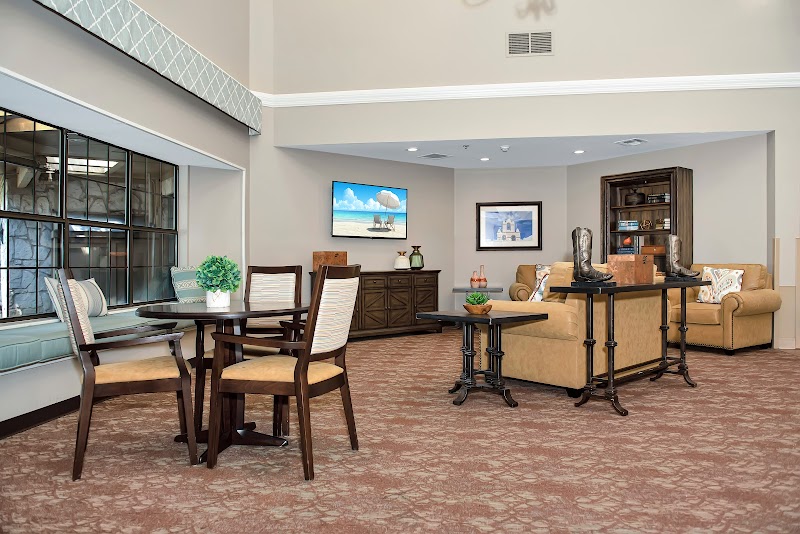
How is Guadalupe Valley Nursing Center Staffed?

CMS rates GUADALUPE VALLEY NURSING CENTER's staffing level at 2 out of 5 stars, which is below average compared to other nursing homes. Staff turnover is 44%, compared to the Texas average of 46%. This relatively stable workforce can support continuity of care.

What Have Inspectors Found at Guadalupe Valley Nursing Center?

State health inspectors documented 46 deficiencies at GUADALUPE VALLEY NURSING CENTER during 2022 to 2025. These included: 2 Immediate Jeopardy (the most serious level, indicating potential for serious harm or death) and 44 with potential for harm. Immediate Jeopardy findings are rare and represent the most serious regulatory concerns. They require immediate corrective action.
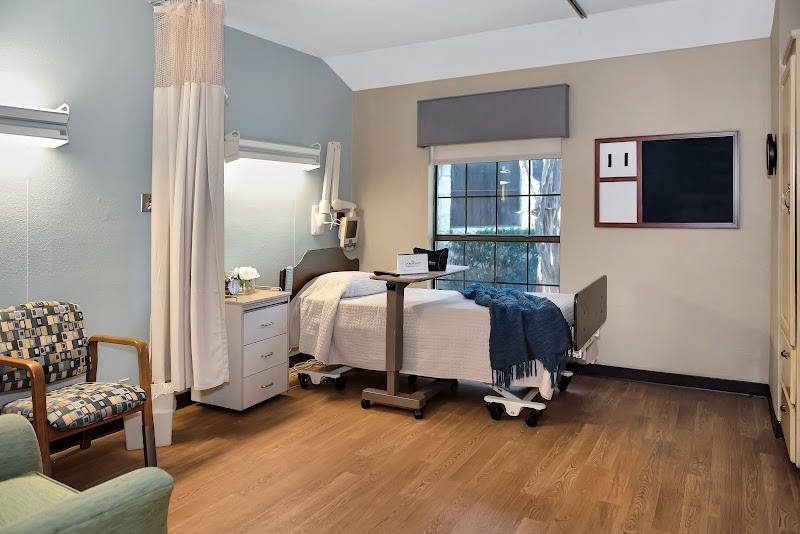
Who Owns and Operates Guadalupe Valley Nursing Center?

GUADALUPE VALLEY NURSING CENTER is owned by a non-profit organization. Non-profit facilities reinvest revenue into operations rather than distributing to shareholders. The facility is operated by WELLSENTIAL HEALTH, a chain that manages multiple nursing homes. With 148 certified beds and approximately 133 residents (about 90% occupancy), it is a mid-sized facility located in SEGUIN, Texas.
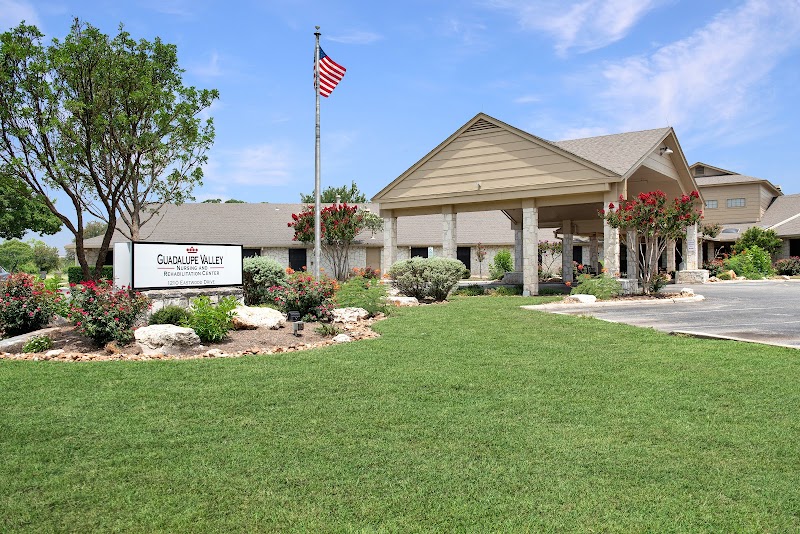
How Does Guadalupe Valley Nursing Center Compare to Other Texas Nursing Homes?

Compared to the 100 nursing homes in Texas, GUADALUPE VALLEY NURSING CENTER's overall rating (2 stars) is below the state average of 2.8, staff turnover (44%) is near the state average of 46%, and health inspection rating (2 stars) is below the national benchmark.

What Should Families Ask When Visiting Guadalupe Valley Nursing Center?

Based on this facility's data, families visiting should ask: "What changes have been made since the serious inspection findings, and how are you preventing similar issues?" "Can you walk me through typical staffing levels on day, evening, and night shifts?" "Can I visit during a mealtime to observe dining assistance and food quality?" "How do you handle medical emergencies, and what is your hospital transfer rate?" These questions are particularly relevant given the facility's Immediate Jeopardy citations and the below-average staffing rating.

Is Guadalupe Valley Nursing Center Safe?

Based on CMS inspection data, GUADALUPE VALLEY NURSING CENTER has documented safety concerns. Inspectors have issued 2 Immediate Jeopardy citations (the most serious violation level indicating risk of serious injury or death). The facility has a 2-star overall rating and ranks #100 of 100 nursing homes in Texas. Families considering this facility should ask detailed questions about what corrective actions have been taken since these incidents.

Do Nurses at Guadalupe Valley Nursing Center Stick Around?

GUADALUPE VALLEY NURSING CENTER has a staff turnover rate of 44%, which is about average for Texas nursing homes (state average: 46%). Moderate turnover is common in nursing homes, but families should still ask about staff tenure and how the facility maintains care continuity when employees leave.

Was Guadalupe Valley Nursing Center Ever Fined?

GUADALUPE VALLEY NURSING CENTER has been fined $75,450 across 1 penalty action. This is above the Texas average of $33,833. Fines in this range indicate compliance issues significant enough for CMS to impose meaningful financial consequences. Common causes include delayed correction of deficiencies, repeat violations, or care failures affecting resident safety. Families should ask facility leadership what changes have been made since these penalties.

Is Guadalupe Valley Nursing Center on Any Federal Watch List?

GUADALUPE VALLEY NURSING CENTER is not on any federal watch list. The most significant is the Special Focus Facility (SFF) program, which identifies the bottom 1% of nursing homes nationally based on persistent, serious quality problems. Not being on this list means the facility has avoided the pattern of deficiencies that triggers enhanced federal oversight. This is a positive indicator, though families should still review the facility's inspection history directly.