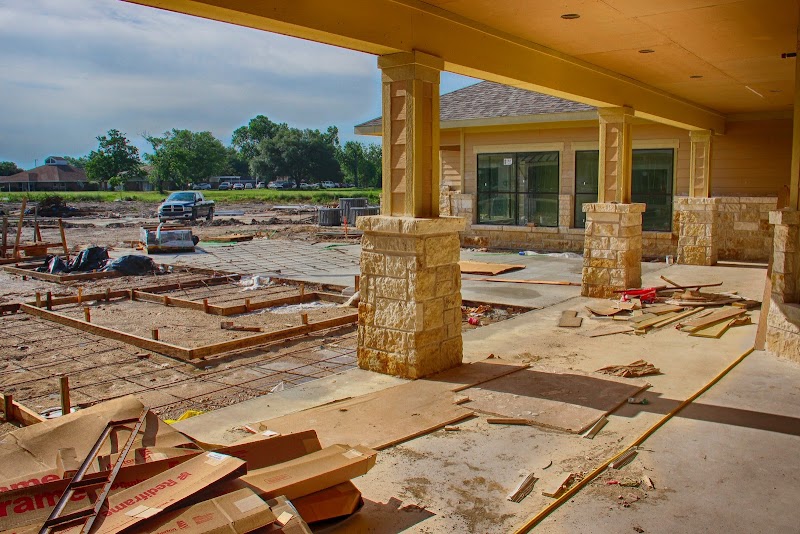
SPJST REST HOME 1

1810 OLD GRANGER ROAD, TAYLOR, TX 76574 (512) 352-6337
Non profit - Corporation 96 Beds Independent Data: November 2025 5 Immediate Jeopardy citations
Trust Grade
0/100
#1100 of 1168 in TX
Last Inspection: October 2024

Within standard 12-15 month inspection cycle. Federal law requires annual inspections.

Overview

SPJST Rest Home 1 has received a Trust Grade of F, indicating poor performance with significant concerns about care quality. Ranking #1100 out of 1168 facilities in Texas places them in the bottom half, and at #14 out of 15 in Williamson County, there is only one local option that is better. The facility is worsening, with the number of reported issues increasing from 5 in 2023 to 22 in 2024. Staffing is rated 2 out of 5, which is below average, and has a concerning turnover rate of 48%, while RN coverage is lower than 90% of Texas facilities, which can impact the quality of care. Additionally, there are serious safety concerns; for instance, staff used unsafe slings during resident transfers, leading to critical incidents where residents were at risk of falling and sustaining injuries. While the facility does have some average quality measures, the high number of fines totaling $122,722 signifies ongoing compliance problems.

Trust Score
F
0/100
In Texas
#1100/1168
Bottom 6%
Safety Record
High Risk
Review needed
Inspections
Getting Worse
5 → 22 violations
Staff Stability
⚠ Watch
48% turnover. Above average. Higher turnover means staff may not know residents' routines.
Penalties
⚠ Watch
$122,722 in fines. Higher than 82% of Texas facilities, suggesting repeated compliance issues.
Skilled Nurses
⚠ Watch
Each resident gets only 12 minutes of Registered Nurse (RN) attention daily — below average for Texas. Fewer RN minutes means fewer trained eyes watching for problems.
Violations
⚠ Watch
33 deficiencies on record. Higher than average. Multiple issues found across inspections.
★☆☆☆☆
1.0
Overall Rating
★★☆☆☆
2.0
Staff Levels
★★★☆☆
3.0
Care Quality
★☆☆☆☆
1.0
Inspection Score
Stable
2023: 5 issues
2024: 22 issues

The Good

  • Full Sprinkler Coverage · Fire safety systems throughout facility
  • No fines on record

Facility shows strength in fire safety.

The Bad

1-Star Overall Rating

Below Texas average (2.8)

Significant quality concerns identified by CMS

Staff Turnover: 48%

Near Texas avg (46%)

Higher turnover may affect care consistency

Federal Fines: $122,722

Well above median ($33,413)

Significant penalties indicating serious issues

The Ugly 33 deficiencies on record

5 life-threatening 2 actual harm
Oct 2024 14 deficiencies 1 Harm
SERIOUS (G) 📢 Someone Reported This

A family member, employee, or ombudsman was alarmed enough to file a formal complaint

Actual Harm - a resident was hurt due to facility failures

Quality of Care (Tag F0684)

A resident was harmed · This affected 1 resident

**NOTE- TERMS IN BRACKETS HAVE BEEN EDITED TO PROTECT CONFIDENTIALITY** Based on observations, interviews, and record review, the facility failed to ensure that residents received treatment and care i...

Read full inspector narrative →
**NOTE- TERMS IN BRACKETS HAVE BEEN EDITED TO PROTECT CONFIDENTIALITY** Based on observations, interviews, and record review, the facility failed to ensure that residents received treatment and care in accordance with professional standards of practice, the comprehensive person-centered care plan, and the residents' choices for one (Resident #7) of seven residents reviewed for quality of care. The facility failed to assess Resident #7 for emotional and physical distress after he was exposed to smoke inhalation after the air conditioning/heating unit began to smoke in his room and subsequently began not feeling well and had pain in his chest form smoke exposure. This failure could place residents at risk of not receiving necessary medical care, harm, and hospitalization. Findings included: Review of Resident #7's face sheet revealed an [AGE] year-old man admitted on [DATE] and diagnoses included: malignant neoplasm of prostate (cancerous tumor that forms in the prostate gland), chronic obstructive pulmonary disease (chronic lung disease that limits airflow and causes ongoing respiratory symptoms), unspecified asthma (chronic disease in which the bronchial airways in the lungs become narrowed and swollen and make it difficult to breathe), and atherosclerotic heart disease (condition that occurs when plaque builds up in the arteries, hardening them and limiting blood flow to the heart), and unspecified combined systolic heart failure (caused by other conditions that weaken the heart muscle). Review of Resident #7's quarterly MDS dated [DATE] revealed a BIMS score of 14 which indicated no cognitive impairment. Review of Resident #7 active diagnoses revealed resident had a diagnosies of asthma and/or COPD. Review of Resident #7's care plan dated 09/24/2024 revealed the resident has ineffective tissue perfusion related to potential syncope. Cardiac dysfunction and had an AEB pacemaker in place. Interventions included that resident's safety and comfort will be maintained this review period. Further review of the care plan revealed the resident was at risk for activity intolerance related to imbalance between supply oxygenation needs. Review of Resident #7's physician orders dated 07/02/2024 revealed the resident had an order for O2 per nasal cannula/mask as needed for shortness of breath, cough, or congestion. Further review of Resident #7's progress notes dated 10/14/2024 to 10/15/2024 revealed no progress note related to incident in which the resident was exposed to smoke inhalation on 10/14/2024. Review of Resident #7's progress note dated 10/16/2024 revealed the resident complained of increased pain and discomfort to the center of his chest around the sternum. Resident #7 stated that he had a slight dry cough and that the pain made it difficult to swallow. Review of Resident #7's vital signs from 10/14/2024 through 10/17/2024 revealed only Resident #7's blood pressure had been taken and recorded. There were no vitals documented for respirations, oxygen saturation, temperature, or pulse. Further review revealed that blood pressure taken during this time frame were taken by medication aides. Review of Resident #7's skin assessments from 10/14/2024 to 10/17/2024 revealed no assessment was completed following the incident with resident's air conditioning/heating unit in the room. Further review of Resident #7's chart indicated there was no trauma/psychosocial assessment completed. Review of the nurse practitioner progress note dated 10/14/2024 revealed the NP visited the resident with chief complaint as nausea and history of present illness for the visit was the resident was exposed to smoke that was coming out of the air conditioning unit in his room, per DON report, he is participating in morning activities, c/o nausea denies any sob, cp, headache. Assessment and plan included order for Zofran every 6 hours as needed for nausea. Assessment and plan for Asthma/COPD included stable, on room air without exacerbation, and to monitor respiratory status with no issues reported at the time of the assessment. During an interview on 10/17/24 at 10:08 AM LVN F stated that the incident with the smoking unit happened Monday (10/14/2024) and that she was Resident #7's nurse on Tuesday. LVN stated that his vitals were normal, lung sounds were clear, and he was at baseline. LVN F stated that if she was Resident #7's nurse when the incident happened, she would have done a head- to- toe assessment on him and full vitals. LVN F stated that normally the NP iwas there, and she would have notified her as well. LVN F stated that the head- to- toe assessments were documented as a progress note and under observations on the Resident's chart. She stated that she would have written a progress note about what happened to the resident and who was notified. LVN F viewed Resident #7's chart and stated that Resident #7 did not have a progress note for the incident and did not have skin assessment for the incident either . During an interview on 10/17/24 at 10:33 AM LVN G stated you [NAME] supposed to ensure residents were okay. LVN G stated that this included to check lung sounds and a head-to-toe assessment. LVN G stated that these should be documented under a progress note. LVN G stated that she would have monitored the resident at least every shift after incident for 3 days as this was procedure for after an incident. LVN G stated that the potential risk for not assessing the resident [NAME] that the resident could potentially get a respiratory infection from inhaling smoke or staff could miss an injury. During an interview on 10/17/24 at 10:37 AM CNA H stated that the incident happened between 9:30 AM and 10:00 AM on 10/14/2024. CNA H stated that she smelled a smokey smell and described it as when you first turn on heater for first time in the year. CNA H stated that there was a lot of smoke in Resident #7's room and the smoke came out of the room when she opened the door. CNA H stated that she was coughing heavily and had a headache the rest of her shift. CNA H stated that she believed the DON checked on Resident #7 following the incident. LVN H stated the following day Resident #7 complained about his chest and throat hurting and she notified his nurse. She stated the nurse was LVN F. During an interview on 10/17/24 at 11:08 AM the NP stated that she saw Resident #7 on 10/14/2024 because he was nauseous and stated that he drank too much water with his medication. The NP stated that other than that everything was okay. The NP stated that she did not take his vitals and reviewed the vitals from his chart, and they appeared okay. The NP stated she saw Resident #7 again this morning (10/17/2024) and he was doing therapy. The NP stated that Resident #7 had issues with acid refluex. The NP stated that a GDR was recommend for his PPI and this could have been why he felt pain in his throat. The NP stated that Resident #7 did not complain of a cough this morning. The NP stated that earlier this week staff notified her that Resident #7 complained of a cough. The NP stated that when she assessed him on 10/15/2024 his lungs were clear. She stated that his chest pain was in the center and when he ate it felt like it burned and that his nurse mentioned that his chest pain happened before the smoke exposure . During an interview on 10/17/24 at 11:13 AM LVN I stated she worked on the hall with the unit smoking. LVN I stated that after she and the CNA smelled smoke, they pulled the fire alarm, and removed residents off the hall. LVN I stated initially that she did not recall Resident #7. LVN I stated that she was assigned to that room during that shift on 10/14/2024. LVN I stated that staff went one by one and checked the residents to make sure they were okay. LVN I stated that this included checking the residents vitals and asking if they were okay. LVN I stated that the vitals were not documented. LVN I stated that she did not believe Resident #7 had a head- to- toe assessment completed after the incident. LVN I stated she did not know why an assessment was not done. said Shethen stated it was not completed because it was chaotic. LVN I's vitals [NAME] documented in the vitals tab in the residents' charts. LVN I stated that usually after an incident residents were followed for 72 hours . During an interview on 10/17/24 at 11:29 AM the DON stated that LVN I worked the hall when Resident #7's unit began to smoke. The DON stated she notified the NP that he needed to be evaluated and that the NP went and evaluated him. The DON stated that she was not sure what was done during the NP's evaluation. The DON stated that she did not see that LVN I completed an assessment with Resident #7 or vitals. The DON stated that the NP stated Resident #7's vitals needed to be checked. The DON stated that vitals [NAME] documented in a resident's chart, under the vitals tab, and by progress note. The DON stated that she doe didoes not think anyone completed a head- to- toe assessment with Resident #7. The DON stated it was a lack of education for new nurses and the nurse should have been educated on what to do in the situation. The DON stated that she was only made aware that Resident #7 had been complaining of chest pain on 10/15/2024 and she asked the NP to reach out to the nurse. The DON stated that if a resident [NAME] not assessed after an incident there was potential risk for infection, bronchitis, and pneumonia. The DON stated that she asked the NP to order a chest x-ray the day of the incident on 10/14/2024 and again 10/17/2024. The DON stated that the NP denied and stated that his lungs were clear and did not feel an x-ray was needed at this time. The DON stated she was not aware of the Resident complaining daily of GERD issues prior to the incident. The DON stated that she expected nurses to monitor a resident for three days or 9 shifts after any incident. The DON stated that she expected the staff to gather vitals, watch for new symptoms, new cough or headache, and new chest pain. The DON stated that vitals included gathering blood pressure, respiratory rate, and pulse. The DON stated that CNAAN H had a cough and shortness of breath after the incident, and she was unsure if Resident #7 had a cough. The DON stated that she was unsure if Resident #7 was assessed for emotional or psychosocial distress since the facility did not have a social worker and she thought the ADM may be responsible to for completed that assessment. During an interview on 10/17/24 at 11:53 AM Resident #7 stated that he stated that he has not been feeling well since he had all the smoke in his room. Resident #7 stated he has been having pain in his chest and motioned in the middle of his chest. Resident #7 stated that he has not had pain in his chest before the exposure to smoke. Resident #7 stated that the nurse told him he has bronchitis. Resident #7 stated that he has pain mainly when he swallows, and did not associate a number with it, just stated it was the same since the incident and not getting worse. During an interview on 10/17/24 at 12:17 PM: LVN F checked Resident #7's vitals temperature 98.7 Fahrenheit, 76 was his heart rate, 99% O2, and 142/68. LVN F stated Resident #7 was going to start taking Carafate for his GERD. During an interview on 10/17/24 at 12:21 PM the MD stated that she expected for a routine assessment which included vital signs and oxygen level to be completed after exposure to smoke inhalation. The MD stated that if a resident has COPD, inhalation could have exacerbated it. The MD stated smoke inhalation could cause a cough or chest pain like any other irritant. During an interview on 10/17/24 at 03:07 PM the ADM stated that there was not a social worker and stated that the nurse would complete the psychosocial assessment for any emotional distress. He is unsure if this was completed and who assessed the resident for emotional or psychosocial distress. He stated if there was distress the resident would be referred to psychology. The ADM stated that the NP assessed Resident #7 right away after the incident. He stated that if she would not have been here, he would have expected that the charge nurse assessed him. The ADM stated that CNA H had a headache and sat in the lobby for a few hours after the incident. The ADM stated that he expected the NP to check Resident #7's lung sounds. The ADM stated that he didoes not know what else the NP would check, and he knew the NP talked to staff after, but he was unsure what happened with Resident #7's assessment . Review of facility in-service dated 07/14/2024 included topic of skin and pain assessments. Comments included for any new incident, a skin assessment must be done to document injuries and a pain assessment should be completed to ensure resident has no pain from new events. Skin and pain assessments should be completed for any admission, any change in condition or event. Review of facility policy titled Resident Examination and Assessment dated February 2014 revealed the purpose of this procedure is to examine and assess the resident for any abnormalities in health status. Further review revealed the physical exam should include vital signs such as blood pressure, pulse, respirations, temperature, heart rate and rhythm, lung sounds, and cough. Documentation of the exam should be recorded in the resident's medical record and include the date and time the procedure was performed, name and title of the individuals who performed the procedure, and assessment data obtained during the procedure. Staff should notify the physician for worsening pain as reported by the resident and other information in accordance with facility policy and professional standards of practice. Review of facility quality of care policy titled Change in a Resident's Condition or Status dated May 2017 revealed the nurse will notify the resident's attending physician if there has been any accident or incident involving the resident. Further review revealed that prior to notification, the nurse will make detailed observations and gather relevant information including information prompted by the interact SBAR communication form. The policy revealed the nurse will record in the resident's medical record information relative to changes in the resident's medical/mental condition or status.
CONCERN (D)

Potential for Harm - no one hurt, but risky conditions existed

Resident Rights (Tag F0550)

Could have caused harm · This affected 1 resident

**NOTE- TERMS IN BRACKETS HAVE BEEN EDITED TO PROTECT CONFIDENTIALITY** Based on observations, interviews, and record review, the facility failed to ensure each resident was treated with respect and d...

Read full inspector narrative →
**NOTE- TERMS IN BRACKETS HAVE BEEN EDITED TO PROTECT CONFIDENTIALITY** Based on observations, interviews, and record review, the facility failed to ensure each resident was treated with respect and dignity by contracted staff for 1 (Resident # 69) of 1 resident reviewed for resident rights. The facility failed to ensure contracted staff did not check vital signs (blood pressure, heart rate, and temperature) while at the dining room table during meal service. This deficient practice placed the resident at risk of a decline in their sense of dignity and self-worth. Findings included: Review of Resident #69's undated face sheet revealed an [AGE] year-old female admitted to the facility on [DATE] with diagnoses that included depression, dementia (memory, thinking, difficulty), dysphagia (difficulty swallowing), and anxiety. Review of Resident #69's Quarterly MDS dated [DATE] revealed Resident #69 had a BIMS score that was not completed but, indicated the resident could not understand and could not make self-understood. An observation of the 100-hall dining room lunch service on 10/15/24 at 01:07 PM revealed RN Q, approached the table with Resident #69 and another female resident. RN Q started assessing Resident #69, including putting a blood pressure cuff on Resident's left wrist while the resident was attempting to eat a hamburger with her right hand. An interview with LVN F on 10/17/2024 at 01:50 PM revealed that she had training on resident rights and dignity. She stated that all assessments on residents including checking vital signs should be done in the resident's room. She further stated that any type of assessment, including checking vital signs, could be a dignity issue and if she had witnessed this event, she would have asked RN Q to wait until the resident was done eating, then take her to her room [for further assessment]. A phone interview with RN Q on 10/17/24 at 03:08 PM revealed that she had been trained on resident rights. She stated, It was a big mistake, but I was in a hurry .as a hospice nurse I don't need to check her vitals if she appears comfortable. She further stated that checking vital signs while the resident was eating in the dining room could affect the resident's dignity. An interview with the ADM on 10/17/24 at 3:12 PM revealed staff, including contracted staff like hospice, had been trained on resident rights. He stated hospice was another set of eyes to monitor a resident. He stated that all assessments were to be performed in the resident's room and it could affect the resident's dignity/privacy if done in the dining room during a meal. An interview with the DON on 10/17/24 at 3:55 PM revealed all contracted staff were expected to respect the resident's rights. She stated residents should be taken to their room after they were done eating for any assessment. She stated that doing any assessment in the dining room while they were eating could be inaccurate due to movement and it could affect the resident's dignity. Record review of the Facility Policy on Quality of Life-Dignity dated August 2009 revealed each resident shall be cared for in a manner that promotes and enhances quality of life, dignity, respect, and individuality. Staff shall promote, maintain, and protect resident privacy, including bodily privacy during assistance with personal care and during treatment process. Record review of undated Resident's [NAME] of Rights revealed 19.206-The facility ensures the resident's right to privacy in the following areas: 1. Medical treatment. The facility provides privacy to each resident during examinations, treatments, case discussions, and consultations. Staff treats these matters confidentially. 2. Personal care.
CONCERN (D)

Potential for Harm - no one hurt, but risky conditions existed

Deficiency F0583 (Tag F0583)

Could have caused harm · This affected 1 resident

**NOTE- TERMS IN BRACKETS HAVE BEEN EDITED TO PROTECT CONFIDENTIALITY** Based on observations, interviews, and record review, the facility failed to ensure the residents' right to privacy during perso...

Read full inspector narrative →
**NOTE- TERMS IN BRACKETS HAVE BEEN EDITED TO PROTECT CONFIDENTIALITY** Based on observations, interviews, and record review, the facility failed to ensure the residents' right to privacy during personal care for 1 of 3 residents (Resident #230) reviewed for privacy. The facility failed to ensure IP M provided privacy during peri care for Resident #230, by closing the door and fully drawing the privacy curtain. This failure could place residents at risk of having their bodies exposed to the public, resulting in low self-esteem and a diminished quality of life. The findings included: Record review of Resident #230's face sheet on 10/16/24 revealed a [AGE] year-old male who was initially admitted to the facility on [DATE]. His diagnoses were, constipation, nausea with vomiting, gastro-esophageal reflux disease (acid reflex), and generalized anxiety disorder. Record review on 10/16/24 of Resident #230's care plan dated 10/01/24 reflected the resident had alteration in his bowel elimination and constipation. The relevant intervention was monitoring bowel movements every shift and record. Record review on 10/16/24 of Resident #230's initial MDS assessment, dated 10/04/24 revealed a BIMS score of 13 indicating intact cognition. Further review of the MDS revealed Resident #230 was occasionally incontinent with bowel and bladder. During an observation on 10/16/24 at 9:30am IP M provided peri care to Resident #230 while he was lying in his bed. IP M did not close the door and drew the privacy curtain fully, of Resident #230's room during the entire process. If anybody passed by the hallway to Resident #230's room, they would see Resident #230's exposed body. During an interview on 10/16/24 at 10:00am Resident #230 stated he did not notice if the door and privacy curtain were closed properly. He said it would be embarrassing if anyone from the public observed him while receiving perineal care. During an interview on 10/16/24 at 9:50am IP M stated, by not closing the door and the curtain, the privacy and dignity of Resident #230 were compromised as anyone passed by the room could see resident's exposed body. When asked about the training she received on resident's rights, IP M stated she was fully aware of the resident's right to have privacy and received in-service on resident's rights at least once a year. During an interview on 10/17/24 at 4:35pm the DON stated privacy must be provided during nursing care and the door to Resident #230's room should have been closed completely by IP M. She said the training was an ongoing process and resident rights were one of them. The DON stated that the facility ensured all the new hires went through skill checks. Every nursing staff also had to complete an annual evaluation to ensure their nursing skills and knowledge including competency in privacy/confidentiality. During an interview on 10/17/24 at 3:30 pm the ADM stated that residents' privacy should be maintained during nursing care by closing the room door, pulling the curtains, and making sure the window blinds are closed. During the review of facility's policy Quality of Life -Dignity revised in August 2009, reflected: Staff shall promote, maintain, and protect resident privacy, including bodily privacy during assistance with personal care and during treatment procedures.
CONCERN (D)

Potential for Harm - no one hurt, but risky conditions existed

Incontinence Care (Tag F0690)

Could have caused harm · This affected 1 resident

**NOTE- TERMS IN BRACKETS HAVE BEEN EDITED TO PROTECT CONFIDENTIALITY** Based on observations, interviews and record reviews the facility failed to ensure that proper care practices related to cathete...

Read full inspector narrative →
**NOTE- TERMS IN BRACKETS HAVE BEEN EDITED TO PROTECT CONFIDENTIALITY** Based on observations, interviews and record reviews the facility failed to ensure that proper care practices related to catheterization were maintained for one of one resident(s) reviewed for catheter care, as indicated by: 1. The foley catheter bag of Resident #70 was laying on the floor. These failures can place the resident at risk for infection, urethral (the tube that carries urine from the bladder exit the body) tears or dislodging the catheter. Record review of Resident #70's undated face sheet revealed a [AGE] year-old female admitted to the facility on [DATE] with diagnoses that included but were not limited to retention of urine (inability to urinate), hypertension (high blood pressure), and muscle weakness. Record review of Resident #70's annual MDS dated [DATE] revealed a BIMS score of 4 indicating severe cognitive impairment. Record review of Resident #70's Care Plan dated 9/13/2024 reflected the resident was at risk for impaired urinary elimination related to recent urinary tract infection and antibiotic use, as well as a history of urinary retention (inability to urinate). The resident has a foley catheter for this diagnosis. The relevant interventions included: 1. Report signs/symptoms of UTI (acute confusion, urgency, frequency, bladder spasms, nocturia, burning, pain, difficulty urinating, low back/flank pain, malaise, nausea/vomiting, chills, fever, foul odor, concentrated urine, blood in urine). An observation on 10/15/24 at 07:51 AM revealed Resident #70 sitting in a recliner with the foley catheter bag on the floor under the bedside table legs. An observation on 10/15/24 at 08:41 AM revealed Resident #70 remained in the recliner and the foley catheter bag was on the floor to the right side of the recliner. An observation on 10/17/24 at 09:53 AM revealed Resident #70 sitting in a recliner with eyes closed. The foley catheter bag was laying on the floor in a dignity bag. An interview on 10/17/24 at 10:48 AM with CNA O revealed that she was responsible for ensuring all foley catheter bags are anchored below the level of the bladder but off the floor and have a dignity bag. An interview on 10/17/24 at 01:50 PM with LVN F revealed that if a foley catheter were on the floor then it should be picked up and put in a dignity bag. She stated that if a foley catheter bag were to touch the floor it could cause an infection. An interview on 10/17/24 at 03:55 PM with the DON revealed her expectation for foley catheters were to be kept at the lowest point possible without touching the floor. She stated that not doing so could cause contamination, cause a fall risk, or possible even be forcefully removed causing injury. An interview on 10/17/24 at 03:12 PM with ADM revealed foley catheters should be hung on the bed and if it touches the floor, it could cause cross contamination.
CONCERN (D)

Potential for Harm - no one hurt, but risky conditions existed

Deficiency F0805 (Tag F0805)

Could have caused harm · This affected 1 resident

Based on observations, interviews, and record reviews the facility failed to ensure food was prepared in a form designed to meet individual needs for 6 of 6 residents (Resident #14, Resident #18, Resi...

Read full inspector narrative →
Based on observations, interviews, and record reviews the facility failed to ensure food was prepared in a form designed to meet individual needs for 6 of 6 residents (Resident #14, Resident #18, Resident #24, Resident #63, Resident #70, and Resident #75) reviewed for pureed diets. Cook K failed to ensure food prepared for residents receiving a pureed diet was in the proper consistency for this diet. This failure could place residents who received pureed diets at risk of not having nutritional needs met by consuming foods that could cause poor intake, choking and decreased meal intakes. Findings included: Observation on 10/15/2024 at 12:59 PM revealed pureed peas were served on plate and appeared to have a watery consistency. The pureed peas appeared to easily pour out of the serving spoon. During an interview on 10/15/2024 at12:59 PM, DA T stated that she thought the texture of the peas should be a little thicker. Observation on 10/16/2024 at 10:50 AM revealed the chicken base contained included instruaction revealed to add 1 teaspoon to 1 cup of boiling water. Observation on 10/16/2024 at 11:59 AM revealed chicken base separated from water in measuring cup. Further observation revealed [NAME] K added more water to the measuring cup. [NAME] K did not measure additional chicken base to add and did not measure the water added. Observation revealed [NAME] K added mixture while she pureed fried chicken. Observation and interview on 10/16/2024 at 12:03 PM revealed [NAME] K transferred the pureed chicken into serving dishes. Further observation revealed small pieces of unblended chicken in the mixture. [NAME] K stated the texture of the chicken puree was smooth. [NAME] stated again that the texture was smooth. During an interview on 10/16/2024 at 12:03 PM [NAME] K stated that the texture of the chicken puree was smooth. [NAME] K stated the puree texture should be thick like mashed potatoes and stated again that the texture was smooth and there were no chunks. During an interview on 10/16/2024 12:04 PM the DM stated there were small chunks in the chicken puree. DM stated that the cook needed to puree the chicken again. The DM stated the puree should be smooth like baby food and not have any chunks. During an interview on 10/16/24 at 03:01 PM RD V stated he visited the facility twice a month. RD V stated once a month there was a quality check on how the regular texture food was prepared and that the staff was using the correct ingredients. RD V stated he had no issues with food preparation. RD V stated he observed preparation of pureed food about every 4 to 5 months and was unsure of the exact timeframe. He stated pureed food should be smooth with no lumps. He stated if a fork was put through the pureed food, the food should not easily fall through the fork. RD V stated pureed fried chicken should be smooth. RD V stated when making pureed food the staff typically want to use high calorie liquids. RD V was not sure how to make broth with the chicken base. During an interview on 10/17/24 at 01:40 PM [NAME] K stated the pureed food was supposed to be a smooth texture with no grains or chunks. [NAME] K stated she should be able to put a fork through it and it slowly drops off the fork to ensure the resident do not choke. [NAME] K stated she could add chicken broth, beef broth and milk when she made pureed food. [NAME] K stated for pureed vegetables she could use water from the cooked vegetables. [NAME] K stated she was unsure about the amount of water she needed to make the chicken or beef broth with the chicken or beef bases. [NAME] K stated she measured 1/2 to a teaspoon of chicken base to mix into the water to make broth. [NAME] K stated they are not allowed to use just water for puree because it takes the taste away from the food. [NAME] K stated she should not add water to the measuring cup without adding additional chicken base and stated that if she did it could take away from the flavor. During an interview on 10/17/24 02:00 PM the DM stated she has been the dietary manager for about 2 years. The DM stated pureed food texture should not lose its form and should be smooth almost like consistency of mashed potatoes. The DM stated the pureed food should not just fall out of serving spoon. The DM stated depending on the diet the resident could choke if it was the incorrect texture. The DM stated for pureed foods the liquid you could add depended on the type of food that was being prepared. The DM stated vegetables juice from cooked vegetables could be added, chicken or beef broth to their respective meats could be added. The DM stated she did not think cooks should add more water to existing mixture and stated she expected cooks to mix base and water according to the instructions. The DM stated if the cooks did not follow the instructions on the chicken base, it could be too watery which would affect the flavor of the food. The DM stated the last in-service complete on pureed food may have been last year, but she was unsure. During an interview on 10/17/24 at 02:14 PM [NAME] L stated he has worked at the facility for 4 days. [NAME] L stated he received training on how to make pureed food. [NAME] L stated pureed food was supposed to be smooth and stated that someone could choke if there were chunks. [NAME] L stated pureed food should not be watery. [NAME] L stated if he were to scoop it, it should not just fall through the fork or out of the serving spoon. [NAME] L stated that staff can add milk but you cannot add water because it may not have the correct calories. During an interview on 10/17/24 at 03:11 PM the ADM stated he was unsure if pureed food was supposed to have chunks in it or what the texture was supposed to be. Record review of communication form dated 08/26/2024 revealed a dietician recommendation that sometimes pureed meats have some chunks in them. Review of undated facility list of residents with altered diets revealed Resident #14, Resident #18, Resident #24, Resident #63, Resident #70, and Resident #75 recieved pureed meals. Review of facility policy titled Therapeutic Diets dated October 2017 revealed a 'therapeutic diet' is considered a diet order by a physician, practitioner, or dietician as part of treat for a disease or clinical condition, to modify specific nutrients in the diet, or to alter the texture of a diet. Examples included an altered consistency diet.
CONCERN (D) 📢 Someone Reported This

A family member, employee, or ombudsman was alarmed enough to file a formal complaint

Potential for Harm - no one hurt, but risky conditions existed

Deficiency F0813 (Tag F0813)

Could have caused harm · This affected 1 resident

**NOTE- TERMS IN BRACKETS HAVE BEEN EDITED TO PROTECT CONFIDENTIALITY** Based on observation, interview and record review, the facility failed to have a policy regarding use and storage of foods broug...

Read full inspector narrative →
**NOTE- TERMS IN BRACKETS HAVE BEEN EDITED TO PROTECT CONFIDENTIALITY** Based on observation, interview and record review, the facility failed to have a policy regarding use and storage of foods brought to residents by family and other visitors to ensure safe and sanitary storage, handling, and consumption in personal refrigerators for 1 of 1 residents. 1. The facility failed to conduct and/or document the temperature and contents of Resident #22's personal refrigerator. This deficient practice could place residents at risk for food-borne illness. Findings included: Review of undated face sheet for Resident #22 reflected an [AGE] year-old male admitted to the facility on [DATE]. His diagnoses include acquired absence of right leg below knee (below knee amputation), need for assistance with personal care, muscle weakness (lack of muscle strength), and major depressive disorder (a serious mental disorder that affects how a person feels, thinks, and acts). Review of Resident #22's quarterly MDS dated [DATE] reflected a BIMS score of 14 which indicated no cognitive impairment. Review of Resident #22's orders dated 10/17/2024 reflected assistance x 1 is required for toileting, transfers and eating. Observation and interview on 10/15/2024 at 1:40 PM revealed Resident #22 attempted to put a jar of peppers in his personal refrigerator. Further observation revealed the following: *Several uncovered drinks, *2 tomatoes that were shriveled with large black spots, *Dried food *Brown and yellow liquid spilled on bottom shelf and door of the personal refrigerator. *2 halves of a banana, *A bottle of mayonnaise with a best by date of [DATE], and * No thermometer was observed in the personal refrigerator. Resident #22 stated he did not know who, if anyone, checked his personal refrigerator. During an interview on 10/17/2024 with CNA O at 10:48 AM stated the refrigerators should be checked by dietary staff. CNA O stated if the personal refrigerators were not checked routinely by staff, then the resident could consume products and could end up with food borne illnesses. During an interview on 10/17/2024 at 1:50 PM LVN F stated she was unsure of who was supposed to check personal refrigerators. She stated if the personal refrigerators were not checked on a regular basis that the food can spoil and can cause food borne illness if consumed by residents. During an interview on 10/17/2024 at 3:12 PM the ADM stated housekeeping was supposed to check all personal refrigerators for spoiled food, but he was unsure of the frequency. The ADM stated he was unsure if personal refrigerator temperatures were being monitored at all. The ADM stated if a resident were to consume spoiled food, they could get food poisoning. During an interview on 10/17/2024 at 3:55 PM the DON stated there was not a policy for personal refrigerators at this time. She said that housekeeping was to clean and check temperatures daily in personal refrigerators for those residents with a low BIMS and incapable of checking the refrigerators themselves. She also stated that if the refrigerators were not checked it could lead to food spoilage, gastritis (an inflammation of the lining of the stomach) and illness if the food were to be ingested by the residents.
CONCERN (D)

Potential for Harm - no one hurt, but risky conditions existed

Safe Environment (Tag F0921)

Could have caused harm · This affected 1 resident

**NOTE- TERMS IN BRACKETS HAVE BEEN EDITED TO PROTECT CONFIDENTIALITY** Based on observation, interview and record review, the facility failed to provide a safe, functional, sanitary, and comfortable ...

Read full inspector narrative →
**NOTE- TERMS IN BRACKETS HAVE BEEN EDITED TO PROTECT CONFIDENTIALITY** Based on observation, interview and record review, the facility failed to provide a safe, functional, sanitary, and comfortable environment for one of one facility reviewed for environment. The facility failed to conduct and/or document the servicing of residents in room air-conditioning/heating units which resulted in the smoking of Resident #7's unit. This deficient practice could place residents at risk of a diminished quality of life due to exposure to an environment that is unpleasant, unsanitary, and unsafe. Findings included: Review of Resident #7's face sheet revealed an [AGE] year-old man admitted on [DATE] and diagnoses included: malignant neoplasm of prostate (cancerous tumor that forms in the prostate gland), chronic obstructive pulmonary disease (chronic lung disease that limits airflow and causes ongoing respiratory symptoms), unspecified asthma (chronic disease in which the bronchial airways in the lungs become narrowed and swollen and make it difficult to breathe), atherosclerotic heart disease (condition that occurs when plaque builds up in the arteries, hardening them and limiting blood flow to the heart), and unspecified combined systolic heart failure (caused by other conditions that weaken the heart muscle). Review of Resident #7's quarterly MDS dated [DATE] revealed a BIMS score of 14 which indicated no cognitive impairment. Review of Resident #7 active diagnoses revealed resident had a diagnosis of asthma and/or COPD. During an interview on 10/15/24 at 11:30 AM Resident #7 stated that the unit in his room started to smoke earlier this week. Resident denied seeing a fire but stated that there was a lot of smoke. Review of provider investigation report dated 10/14/2024 revealed CNA H smelled smoke coming from Resident #7's room. Further review revealed when CNA H opened the door the air conditioning/heating unit was smoking in the room. During an observation on 10/16/2024 at 11:17 AM, MD J turned on the unit that smoked on 10/14/2024. There were no fire but smoke was smelled coming from that unit. During an interview on 10/17/24 at 10:37 AM CNA H stated the incident happened between 9:30 AM and 10:00 AM on 10/14/2024. CNA H stated she smelled a smokey smell and described it as when you first turn on heater for first time in the year. CNA H stated there was a lot of smoke in the room of Resident #7 and the smoke came out of the room when she opened the door. CNA H stated t she turned the unit off, removed the resident and pulled the fire alarm. During an interview on 10/15/24 at 08:34 AM MD J stated he started cleaning all the air conditioning and heating units recently and was unsure of the dates. He stated the unit was cleaned but when the resident turned on the heat it started to smoke and smolder. MD J stated they cleaned the unit again and a small piece of dirt was found in it. MD J stated all units are being recleaned. During an interview on 10/16/24 at 11:17 AM MD J stated the 200 hall in-room units were cleaned about three weeks ago. The front screen was removed along with the screen inside and the units were vacuumed inside to remove any debris. MD J stated he did not log or document when the units are cleaned and stated they are cleaned every 6 months in March and October. MD J stated he knows when to clean the units based on memory. During an interview on 10/17/24 at 10:28 AM the ADM stated the maintenance department started cleaning the bottom tray of the units again after the smoke. The ADM stated the units had been cleaned already prior to the smoke but they were cleaned again this week. The ADM stated there was no documentation the units had been cleaned previously or what units had been cleaned again. During an interview on 10/17/24 at 03:07 PM the ADM stated that the in-room units were all cleaned by the end of last week. The ADM stated that he was unsure how often they were being cleaned. The ADM stated that he would not necessarily expect maintenance to document that they were cleaned. The ADM stated that MD J has worked at the facility for 42 years and he just trusts that they are cleaned to ensure that it would not happen again. The ADM stated that when the units were cleaned the bottom trays were removed and taken out along with the filers. He stated that the believed the filters were cleaned monthly and the bottom trays annually. The ADM stated that there is no facility policy regarding maintenance of air-conditioning and heating units.
CONCERN (E)

Potential for Harm - no one hurt, but risky conditions existed

Comprehensive Care Plan (Tag F0656)

Could have caused harm · This affected multiple residents

**NOTE- TERMS IN BRACKETS HAVE BEEN EDITED TO PROTECT CONFIDENTIALITY** Based on observation, interview, and record review, the facility failed to develop and implement a comprehensive person-centered...

Read full inspector narrative →
**NOTE- TERMS IN BRACKETS HAVE BEEN EDITED TO PROTECT CONFIDENTIALITY** Based on observation, interview, and record review, the facility failed to develop and implement a comprehensive person-centered care plan for 3 of 10 residents (Resident #38, Resident #48, Resident #58 , and Resident #73) reviewed for care plans. 1. The facility failed to ensure the comprehensive care plans for Resident #38 and Resident #58 included ADLs. 2. The facility failed to ensure the comprehensive care plans for Resident #48 and Resident #73 included diagnosis of mental illness. This failure could affect residents by placing them at risk of not receiving appropriate physical and psychosocial care. Findings included: Resident #38 Record review of Resident #38's Face Sheet , not dated, reflected a [AGE] year-old female admitted on [DATE] and readmitted on [DATE] with a diagnoses of vascular dementia, unspecified, without behavioral disturbance, and Alzheimer's disease, unspecified (a brain disorder that slowly destroys memory and thinking skills, and eventually, the ability to carry out the simplest task). Record review of Resident #38's Quarterly MDS Assessment, dated 07/24/2024, reflected Resident #38 was not capable of completing brief interview for mental status related to Resident #38 was rarely or never understood. Resident #38 was dependent on staff for the following: personal hygiene, dressing, bathing, shower transfer, and toileting hygiene. Resident #38 required moderate assistance (staff does less than half the effort) with oral hygiene. She required supervision with eating. Resident #38 required maximal assistance (helper does more than half the work) with transfers. Record review of Resident #38's Comprehensive Care Plan, revised on 09/24/2024, reflected Resident #38 ADLs was not care planned. Signed by the ADON. Resident # 48 Record review of Resident # 48's Face Sheet, not dated, reflected a [AGE] year-old female admitted on [DATE] and readmitted on [DATE] with a diagnosis of delusional disorders (a mental illness- condition that causes a person to have false beliefs that are not based on reality), major depressive disorder ( a mental illness- persistently depressed mood and long-term loss of pleasure or interest in life, often with other symptoms as disturbed sleep, feelings of guilt or inadequacy, and suicidal thoughts). Record review of Resident #48's MDS Annual Assessment, dated 09/03/2024, reflected Resident #48 had a BIMS score of one indicating Resident's cognition was severely impaired. Resident #48 was assessed to have a diagnosis of the following diagnoses: major depressive disorder, recurrent, severe with psychotic symptoms (mental illness- psychotic is a collection of symptoms that cause a person to lose touch with reality) and delusional disorders. Resident #48 was taking high-risk medications such as : anti-depressant (a common prescription medications that can help treat depression), and anti-psychotic (medications that treat psychosis-related conditions and symptoms). Record review of Resident #48's physician order, dated 10/16/2024, reflected Resident #48 had an order for Seroquel (quetiapine) 25 mg one tablet once a day for diagnosis of delusional disorders (order date 09/12/2024). Resident #48 had an order for Sertraline 100 mg one tablet every day for major depressive disorder, recurrent, severe with psychotic symptoms on 09/12/2024. Record review of Resident #48's Comprehensive Care Plan, dated 09/25/2024 reflected Resident #48's diagnosis of delusional disorders and major depressive disorders was not documented on the care plan. Signed by the ADON. Resident # 58 Record review of Resident # 58's Face sheet reflected a [AGE] year-old female admitted to the facility on [DATE] with the following diagnoses vascular dementia, unspecified severity, with anxiety ( symptoms changes in personality, behavior, and mood, such as depression, agitation, and anger. Vascular dementia is a type of dementia that occurs when blood flow to the brain is interrupted, damaging brain cells and impairing thinking, memory, and behavior), cerebrovascular disease, unspecified (condition that affect blood flow to your brain. Conditions include stroke, brain aneurysm, and brain bleed), and age-related physical debility ( a symptom of frailty symptoms: weakness, fatigue, slowness, poor balance, decreased physical activity, and cognitive impairment). Review of Resident #58's quarterly MDS assessment dated [DATE] reflected Resident #58 was assessed to have a BIMS score of 00 indicating severe cognitive impairment. Resident #58 was assessed to be dependent on staff for the following: personal hygiene, dressing, bathing, and toileting hygiene. Review of Resident #58's comprehensive care plan, revised on 10/13/2024 reflected ADLs was not care planned. Resident #58 had cognitive loss. She had impaired decision-making ability related to severe cognitive impairment. Intervention: Avoid use of restraints. Allow Resident #58 practice problem solving techniques. Resident #73 Record review of Resident #73's Face Sheet, not dated, reflected a [AGE] year-old male admitted to the facility on [DATE] with a diagnoses of delusional disorders (a mental illness- condition that causes a person to have false beliefs that are not based on reality). Record review of Resident #73's Quarterly MDS, dated [DATE] reflected Resident #73 had a BIMS score of 8 reflected his cognition was moderately impaired. Resident #73 had active diagnoses of delusional disorders. Resident #73 was assessed to be taking antipsychotic medication. Record review of Resident #73's Physician Orders, dated 10/2024 reflected Resident #73 was ordered Sertraline 25 mg. one tablet daily for delusional disorders on 06/28/2024. Resident #73 was ordered Quetiapine 25 mg. one tablet daily in the evening. (5:30 PM). Record review of Resident #73's Comprehensive Care Plan, dated 09/25/2024, reflected Resident #73's diagnosis of delusional disorders was not documented on the care plan. Signed by the ADON. In an interview on 10/16/2024 at 10:45 AM MDS Coordinator stated ADLs including the following personal hygiene, transfers, toileting, showers, eating abilities, dressing, repositioning in bed and type of ambulation was required to be on the comprehensive care plan. She stated if a resident had a mental illness such as delusional disorder or major depression it was to be also care planned. The MDS Coordinator stated the staff would not know the type of physical or mental care a resident needed if it was not care planned and there was a possibility a resident may become injured if the improper ADL care was given to a resident. She stated if the resident did not have any recent delusions or depression these diagnoses there was a risk for symptoms. The MDS Coordinator stated there were risks for symptoms of these diagnoses and the symptoms and medications needed to be care planned. She stated all staff was to follow the care plan to know what type of care each resident needed. The MDS Coordinator stated she and the ADON was responsible for care plans. She stated she had been in serviced on care plans but did not recall the date and time. In an interview on 10/17/2024 at 10:47 AM The ADON stated a care plan was expected to be developed for any resident with a diagnoses of delusional disorder and major depression. She stated if any resident was on anti-psychotic medications or anti-depressants for a diagnoses these medications were expected to be an intervention on the mental illness care plan. She stated delusional disorder and major depression was a mental illness. The ADON stated if a resident was experiencing any symptoms of delusions or major depression, the staff would not know what type of interventions the resident required. She stated a resident may need a special intervention to use only for that resident. The ADON stated if the staff did not have access to the specific intervention for a resident, the resident may not receive the proper care when the resident was delusional and/or had major depression. The ADON stated all residents care plans was expected to have the ADLs on their care plans. She stated it would be difficult for the staff to know what type of ADL care to give if they did not know the resident and reviewed a resident's care plan and the ADLs was not documented. The ADON stated she and the MDS Coordinator was responsible for care plans. She stated if a staff name was on the care plan the staff was the one documenting on the care plan when the staff had care plan meetings. She stated she had been inserviced on care plans but did not recall the date or time. In an interview on 10/17/2024 at 11:11 AM CNA E stated she knew about care plans and what is documented on the care plan was the type of care a resident needed. She stated if any type of mental issues it was not documented it would be difficult to know the care a resident needed. CNA E stated if it was a new resident and the ADLs was not documented on the care plan, she would ask the nurse supervisor. In an email on 10/17/2024 at 11:48 PM requested the Comprehensive Care and in an interview on 10/17/2024 at 1:20 PM requested the Comprehensive Care Plan Policy. This was not provided at time of exit.
CONCERN (E)

Potential for Harm - no one hurt, but risky conditions existed

ADL Care (Tag F0677)

Could have caused harm · This affected multiple residents

**NOTE- TERMS IN BRACKETS HAVE BEEN EDITED TO PROTECT CONFIDENTIALITY** Based on observations, interviews, and record review, the facility failed to ensure residents unable to conduct activities of da...

Read full inspector narrative →
**NOTE- TERMS IN BRACKETS HAVE BEEN EDITED TO PROTECT CONFIDENTIALITY** Based on observations, interviews, and record review, the facility failed to ensure residents unable to conduct activities of daily living (ADLs) received the necessary services to maintain good grooming and personal hygiene for four of eight residents (Resident # 31, Resident #38, Resident #43, and Resident #58) reviewed quality of life. 1. The facility failed to ensure Resident #31's facial hair was removed. 2. The facility failed to ensure Resident # 38's, Resident #43's and Resident #58's nails were cleaned and smooth around the edges. These failures could place residents at risk for poor hygiene, dignity issues, and decreased quality of life. Findings included: Resident #31 Record review of Resident # 31's Face Sheet, undated, reflected a 75 -year-old female admitted on [DATE] and readmitted on [DATE] with a diagnoses of Alzheimer's disease, unspecified ( a brain disorder that slowly destroys memory and thinking skills, and eventually, the ability to carry out the simplest task), unspecified lack of coordination ( the inability to control the position of one's limbs or posture), and unspecified osteoarthritis ( a joint disease that occurs when the cartilage in a joint breaks down over time- joint pain, stiffness, and restricted movement). Record review of Resident #31's Quarterly MDS Assessment, dated on 07/25/2024, reflected the resident had a BIMS score of 0 indicating her cognition was severely impaired. Resident #31 required staff to complete more than half the effort with personal hygiene, dressing, and bathing. Record review of Resident #31's Comprehensive Care Plan , revised on 09/25/2024 , reflected Resident #31 had ADL self -care performance deficit related to impaired memory. Intervention: Resident #31 required assistance with showers and with personal hygiene. Observation on 10/15/2024 at 9:12 AM revealed Resident #31 was sitting in her wheelchair in the dining area with other residents. She had facial hair on the right side, middle and underneath her chin. The hair was approximately 1 inch long. Observation on 10/16/2024 at 8:40 AM revealed Resident # 31 was sitting in her wheelchair in the dining area with other residents. The facial hair on and underneath her chin had not been removed. Interview on 09/17/2024 at 9:13 AM with Resident #31 she was not interview able. Resident #38 Record review of Resident #38's Face Sheet , not dated, reflected a 87 -year-old female admitted on [DATE] and readmitted on [DATE] with diagnoses of vascular dementia, unspecified, without behavioral disturbance, psychotic disturbance, mood disturbance, and anxiety (a chronic condition that occurs with the brain doesn't receive enough blood flow, which damages brain tissue and impairs thinking, and memory) and Alzheimer's disease, unspecified (a brain disorder that slowly destroys memory and thinking skills, and eventually, the ability to carry out the simplest task). Record review of Resident #38's Quarterly MDS Assessment, dated 07/24/2024, reflected Resident #38 was not capable of completing brief interview for mental status related to Resident #38 was rarely or never understood. Resident #38 was dependent on staff for the following: personal hygiene, dressing, bathing, and toileting hygiene. Record review of Resident #38's Comprehensive Care Plan, revised on 09/24/2024, reflected Resident #38 ADLs was not care planned. Resident #38 had a communication problem related to Alzheimer's and Dementia disease. Intervention: monitor/ document for nonverbal indicators of discomfort or distress, and follow-up as needed. Observation on 10/15/2024 at 9:22 AM revealed Resident #38 was in her room lying in bed. Resident # 38 had blackish/ brownish substance underneath the forefinger, ring finger and middle fingernails on her right hand. Her fore fingernail and her ring fingernail were not smooth around the edges. An attempted interview on 10/15/2024 at 9:24 AM with Resident #38 revealed she was not interview able. Resident #43 Record review of Resident # 43's Face Sheet dated, not dated, reflected a [AGE] year-old male admitted on [DATE] with diagnoses of Alzheimer's disease with late onset (developed in people at the age of 65 and older- a brain disorder that slowly destroys memory and thinking skills, and eventually, the ability to carry out the simplest task), osteoarthritis left shoulder (occurs when the cartilage in the shoulder joint wears down), and age related physical debility (a symptom of frailty such as weakness, inactivity, and depression). Record review of Resident #43's Quarterly MDS Assessment, dated 09/22/2024, reflected the resident had a BIMS score of 0 indicating his cognition was severely impaired. Resident # 43 required more than the helper's assistance with personal hygiene. Resident #43 required moderate assistance helper does half the assistance with the following: upper and lower dressing and toileting hygiene. Record review of Resident #43's Comprehensive Care Plan dated, 09/25/2024, reflected Resident #43 had impaired memory and inattention related to diagnosis of Alzheimer's and BIMS score of 0. Intervention: Administer medication as ordered. Assess Resident #43 overall cognitive function and memory. Resident #43 had an ADL self-care performance deficit. Intervention: Resident #43 required assistance with personal hygiene. Observation on 10/15/2024 at 9:43 AM revealed Resident #43 was sitting in his wheelchair watching tv in the common area of the memory care unit. He had blackish substance underneath all fingernails on his right hand. Resident #43's middle finger, ring finger and fore fingernails on his right hand was rough around the edges. In an attempted interview on 10/15/2024 at 9:45 AM Resident #43 was not interview able. Resident # 58 Record review of Resident # 58's Face sheet reflected a [AGE] year-old female admitted to the facility on [DATE] with the following diagnoses vascular dementia, unspecified severity, with anxiety ( symptoms changes in personality, behavior, and mood, such as depression, agitation, and anger. Vascular dementia is a type of dementia that occurs when blood flow to the brain is interrupted, damaging brain cells and impairing thinking, memory, and behavior), cerebrovascular disease, unspecified (condition that affect blood flow to your brain. Conditions include stroke, brain aneurysm, and brain bleed), and age-related physical debility ( a symptom of frailty symptoms: weakness, fatigue, slowness, poor balance, decreased physical activity, and cognitive impairment). Review of Resident #58's quarterly MDS assessment dated [DATE] reflected Resident #58 was assessed to have a BIMS score of 00 indicating severe cognitive impairment. Resident #58 was assessed to be dependent on staff for the following: personal hygiene, dressing, bathing, and toileting hygiene. Review of Resident #58's comprehensive care plan, revised on 10/13/2024 reflected ADLs was not care planned. Resident #58 had cognitive loss. She had impaired decision-making ability related to severe cognitive impairment. Intervention: Avoid use of restraints. Allow Resident #58 practice problem solving techniques. Observation on 10/15/2024 at 9:55 AM revealed Resident #58 was in her room lying in bed Resident #58's right hand forefinger, middle finger, and ring fingernails were not even around the edges and also had a blackish substance underneath the nails. In an attempted interview on 10/15/2024 at 9:58 AM Resident #58 was not interview able. In an interview on 10/17/2024 at 10:26 AM, RN D stated the nurses and the CNAs were responsible for nail care. She stated the nurses were responsible to trim and clean all residents' nails with a diagnosis of diabetes (a disease in which the body's ability to produce or respond to the hormone insulin was impaired) . RN D stated it was the CNA's responsibility to clean and trim all other residents' nails. She stated if there was a blackish substance underneath the residents' nails, there was a possibility the substance had bacteria underneath the residents' nails. She stated if a resident swallowed the bacteria there was a possibility a resident may become extremely ill with stomach issues such as diarrhea or vomiting. RN D stated she was not aware of, Resident #43, Resident #58 or Resident #38 refused nail care. She stated if resident has rough nails there was a possibility the resident may scratch themselves or other residents. She stated there was a possibility the resident may develop a skin tear. RN D stated if a female resident had facial hair on their chin, there was a possibility the resident may become embarrassed with their appearance and may isolate themselves in their room. In an interview on 09/17/2024 at 10:47 AM, the ADON stated it was a joint effort between the CNAs and the nurses to complete nail care on the residents. She stated the nurses was responsible for residents with diagnosis of diabetes. The ADON stated nail care was given during showers and as needed. She stated if a resident had blackish substance underneath their nails there was a possibility the substance may be some type of bacteria. The ADON stated a resident may have symptoms of vomiting, nausea, or diarrhea. She stated if a resident had rough edges around the tip of the nails a resident could scratch their eye or develop a skin tear if the resident scratched themselves. She stated if a female resident had facial hair there was a possibility the female resident may not want to leave their room due to embarrassment of the hair on their face. The ADON stated it was the nurse supervisor to monitor personal hygiene on residents. In an interview on 10/17/2024 at 11:11 AM, CNA E stated the nurses completed all diabetic fingernails and the CNAs were responsible for all other residents' nails. She stated the CNAs were responsible to complete nail care such as trimming, filing, and cleaning the nails. CNA E stated if a resident's nails needed to be cleaned, trimmed, or filed, and it was not their shower day, the staff were expected to do any type of nail care as needed. She stated if a resident had blackish substance underneath their nails, it was probably some type of bacteria. She stated if a resident swallowed bacteria it was a potential the resident may become ill with major stomach problems such as diarrhea. CNA E stated she had given care to Resident #43, Resident #58, and Resident #38 , and she was not aware of them refusing nail care. CNA E stated if a female resident had facial hair on their chin, a resident may become embarrassed over their appearance and there was a possibility the resident may isolate themselves in their room. CNA E stated it was the CNAs or nurses' responsibility to remove facial hair from the female's chin in the resident's room or during showers. CNA E stated she was not aware of any female resident refusing to allow staff to remove unwanted facial hair from their face. She stated if a resident had nails not filed correctly and had rough edges around the fingernails, there was a possibility the resident may scratch themselves or another resident. She stated she had been in-service on personal hygiene, however, did not recall the date of the in-service. Record review of the facility's Policy on Care of Fingernails revised October 2010 reflected The purpose of this procedure are to clean the nail bed, to keep nails trimmed, and to prevent infections. Review the resident's care plan to assess any special needs of the resident. Nail care includes daily cleaning and regular trimming. Trimmed and smooth nails prevent the resident from accidentally scratching and injuring his or her skin. The following information should be recorded in the resident's medical record: 1. The date and time that nail care was given. 2. The name and title of the individual (s) who administered the nail care. 3. The condition of the resident's nails and nail bed, including: a. Redness or irritation of skin of hands. b. Breaks or cracks in skin. c. Bluish or dark color of nail beds. d. Ingrown nails; e. Bleeding; and or f. Pain 4. Any difficulties in cutting the resident's nails 5. Any problems or complaints made by the resident with his/her hands. 6. If the resident refused the treatment, the reasons why and the intervention taken. 7. The signature and title of the person recording the data.
CONCERN (E)

Potential for Harm - no one hurt, but risky conditions existed

Deficiency F0679 (Tag F0679)

Could have caused harm · This affected multiple residents

Based on interview and record review, the facility failed, an ongoing program to support residents in their choice of activities, both facility-sponsored group and individual activities and independen...

Read full inspector narrative →
Based on interview and record review, the facility failed, an ongoing program to support residents in their choice of activities, both facility-sponsored group and individual activities and independent activities, designed to meet the interests of and support the physical, mental, and psychosocial well-being of each resident, encouraging both independence and interaction in the community for 12 of 12 residents on the secure unit. The facility failed to provide activities on the secured unit as scheduled on 10/05/24, 10/06/24, 10/12/24, and 10/13/24, These failures placed residents at risk of boredom, depression, increased behaviors, and diminished quality of life. Findings include: Record review of the Activity Calendar for the month of October 2024 revealed the following scheduled activities: *10/05/24 10:00 AM: Coffee Social, 11:00 AM Sensory Station, 2:00 PM: TV TIME, 3:00 PM: Coffee Social, 4:00 PM: Resident Activity Choice. *10/06/24 10:00 AM: Coffee Social, 11:00 AM: Sensory Station, 2:00 PM: Grandbaby Love, 2:30 PM Corn Hole/Basket toss, 4:00: PM Resident Activity Choice. *10/12/24 10:00 AM: Coffee Social, 11:00 AM Sensory Station, 2:00 PM: TV TIME, 3:00 PM: Coffee Social, 4:00 PM: Resident Activity Choice. *10/13/24 10:00 AM: Coffee Social, 11:00 AM: Sensory Station, 2:00 PM: Grandbaby Love, 2:30 PM Corn Hole/Basket toss, 4:00: PM Resident Activity Choice. Record Review of the resident participation records from 10/05/24 to 10/13/24 revealed activities did not occur on 10/05/24, 10/06/24, 10/12/24, and 10/13/24. In an interview on 10/17/2024 at 9:29 AM CNA C stated she did work sometimes on the weekends. She stated no one had in-service her on how to document on the participation records. She stated she did not know if the other staff worked on the memory care unit had been in-service by the activity staff. CNA C stated it was difficult sometimes to do activities with residents on weekends. She stated there was a lot to do on the memory care unit with all the residents giving ADL care. She stated she does talk to the residents on weekends and during the week. She will sit with them when they watch tv and talk to the residents but she was never told during the week to document on any type of participation record of activity being done during the week or weekends. CNA C stated she did not remember if she worked 10/05/2024 - 10/06/2024. In an interview on 10/17/2024 at 9:40 AM the Activity Director A stated anytime an activity was conducted with the residents she expected the activity to be documented on the participation record including on the memory care unit. She stated attendance records were the same as participation records. She stated if any residents attended an activity or had an in-room activity it was to be documented. Activity Director A stated she had not in-serviced all of the staff on the secure unit about documenting activity programs on the weekends. She stated if residents on the secure unit was not receiving routine activities there was a potential the residents may have a decline in cognition, increase social isolation, increase behaviors, etc. She stated it was her and the Activity memory care Coordinator duty to ensure the residents on the secure unit received activities according to the calendar and every day. She stated she had been the Activity Director at this facility more than 5 years. Activity Director A stated sometimes the activities on the calendar changes. She stated they do not make the changes on the current activity calendar on the memory care unit. In an interview on 10/17/2024 at 10:08 AM the Activity Memory Care Coordinator B stated she does leave activity items out for the staff to use on the weekends. She stated she did not recall if all the staff on the secure unit had been in-serviced on how to document on the participation record and how to do the activities on the memory care unit calendar. She stated if it was not documented on the memory care participation records of any resident attending an activity, the activity for that day did not occur on the memory care unit. Activity Memory Care Coordinator B stated if the residents did not receive routine activities every day there was a potential a resident may become bored, wander, become restless and/or have a decline in cognition. She stated it was her responsibility to ensure the residents received activities on the memory care unit and the Activity Director A was her supervisor. She stated she had been an employee at the facility approximately 1 year. She stated attendance records were the same as participation records. Record review of the Facility Policy on Documentation, Activities, revised December 2009, reflected The Activity Director/ Coordinator is responsible for maintaining appropriate departmental documentation. Recordkeeping is a vital part of the activity programs. The following records, at a minimum, are maintained by Activity Department personnel: a. Activity Assessment b. Attendance records. Record review of the Facility Policy on Group Programs and Activities Calendar, revised April 2009, reflected Group activities are available in this facility and an activities calendar is completed to inform residents, families, and staff of the activity opportunities available. Both large and small group activities are part of our activity programs. The activities calendar states all activities available for the entire month, which may also include scheduled room visits. Modifications, time changes, cancellations or substitutions are reflected on all large, posted calendars.
CONCERN (E)

Potential for Harm - no one hurt, but risky conditions existed

Respiratory Care (Tag F0695)

Could have caused harm · This affected multiple residents

**NOTE- TERMS IN BRACKETS HAVE BEEN EDITED TO PROTECT CONFIDENTIALITY** F695 Based on observation, interviews, and record reviews, the facility failed to ensure professional standards of practice for ...

Read full inspector narrative →
**NOTE- TERMS IN BRACKETS HAVE BEEN EDITED TO PROTECT CONFIDENTIALITY** F695 Based on observation, interviews, and record reviews, the facility failed to ensure professional standards of practice for respiratory care were followed. For all residents reviewed for respiratory care as indicated by: 1. The nasal cannula of Resident #34 and the CPAP of Resident #32 were not in a bag when unused. 2. The oxygen concentrator filters of Resident #32 and Resident #24 were covered in dust. These failures could place the residents at risk of infection. Findings included: Record review of Resident #34's undated face sheet revealed a [AGE] year-old female admitted to the facility on [DATE] with diagnoses that included, but were not limited to Alzheimer's disease (a brain disorder that causes memory loss), venous insufficiency (the veins have trouble sending blood from arms and legs to the heart), congestive heart failure (the heart is unable to pump blood well enough to meet the body's need). Record review of Resident #34's quarterly MDS dated [DATE] revealed a BIMS score of 3 indicating significant cognitive impairment. An observation on 10/15/24 at 07:54 AM revealed Resident #34 lying in bed sleeping. A nasal cannula was laying across the top of the oxygen concentrator and not in a bag. An observation on 10/15/24 at 10:37 AM revealed Resident #34 lying in bed sleeping. A nasal cannula was laying across the top of the oxygen concentrator and not in a bag. An observation on 10/17/24 at 09:55 AM revealed Resident #34 sitting up in bed watching tv. A nasal cannula was laying across the top of the oxygen concentrator and not in a bag. Record review of Resident #32's undated face sheet revealed a [AGE] year-old female admitted to the facility on [DATE] with diagnoses that included, but were not limited to chronic respiratory failure with hypercapnia (difficulty breathing with high levels of carbon dioxide in the blood), chronic congestive heart failure (the heart is unable to pump blood well enough to meet the body's needs), paroxysmal atrial fibrillation (irregular heart rhythm), and obstructive sleep apnea(repeated breathing interruptions during sleep). Record review of Resident #32's quarterly MDS dated [DATE] revealed a BIMS score of 15 indicating no cognitive impairment. Record review of Resident #32's Care Plan dated 12/26/2022 and edited on 9/4/2022 reflected I have altered respiratory status/difficulty breathing related to my diagnosis of acute and chronic respiratory failure, unspecified whether with hypoxia or hypercapnia and obstructive sleep apnea (adult). I have an order yet refuse to use my CPAP machine while in bed or during naps. Interventions include: 1. CPAP ordered per home settings. 2. Oxygen settings: O2 via NC PRN (as needed) to maintain O2 > 90% An observation on 10/15/24 at 11:16 AM revealed Resident #32 lying in bed watching tv. The oxygen concentrator filter was covered in dust. Also observed Resident #32's CPAP on the floor near the oxygen concentrator with mask in a bag. An observation on 10/17/24 at 10:34 AM revealed Resident #32 remained in bed watching tv. The oxygen concentrator filter continued to be covered in dust. Also observed Resident #32's CPAP remained on the floor near the oxygen concentrator with mask in bag. Record review of Resident #24's undated face sheet revealed a [AGE] year-old female admitted to the facility on [DATE] with diagnoses that included, but were not limited to vascular dementia (brain damage caused by impaired blood flow that has caused memory issues), chronic obstructive pulmonary disease (an ongoing lung disease that causes damage to the lungs), cerebral infarction due to thrombosis (blood flow was reduced or stopped to a portion of the brain due to a blood clot), and congestive heart failure (the heart is unable to pump blood well enough to meet the body's needs). Record review of Resident #24's MDS dated [DATE] revealed a BIMS assessment was not completed. Record review of Resident #24's Care Plan dated 8/5/2024 reflected Resident has shortness of breath and low oxygen sats related to COPD. Interventions included: 1. Administer oxygen at 2 liters via nasal cannula while awake and bipap while asleep. Observe oxygen precautions. 2. Keep room cool and free of irritants (smoke, dust, cleaning agents). Record review of Resident #24's orders from 10/17/2024 revealed orders clean concentrator filter monthly, once a day on the 5th of the month 11:00 PM-07:00 AM and Clean concentrator filter when it appears gray or dirty PRN, as needed. An observation on 10/16/24 at 09:46 AM revealed Resident #24 lying in bed sleeping. The oxygen concentrator filter was covered in dust. An observation on 10/17/24 at 09:50 AM revealed Resident #24 sitting up in bed. Oxygen concentrator continued with dust covering the filter. An interview on 10/17/24 at 10:48 AM with CNA O revealed the nurses were responsible for cleaning the oxygen concentrator filters. The oxygen tubing was to be kept in a bag when not in use or needs to be thrown away and a new one obtained. She stated that if a resident were to use the nasal cannula after it was just laying on top of the oxygen concentrator, it could cause the resident to develop a staph infection in their nose. An interview on 10/17/24 at 01:50 PM with LVN F stated there was an order to clean the back of all oxygen concentrators on the 11 PM-7 AM shift once a month. She stated that nasal cannulas were to be stored in a bag when not in use and all CPAP machines were supposed to be kept on the bedside table, and the mask was to be kept in a bag. If the CPAP machine was stored on the floor, it could get wet and be an electrical hazard or a fall risk. Also, if oxygen concentrator filters were covered in dust, it could be filtering unclean air and cause illness. An interview on 10/17/24 at 03:55 PM with the DON revealed she expected for the oxygen concentrator filters to be checked monthly by maintenance. She further stated that using an oxygen concentrator with a dirty filter could increase the risk of breathing in fungal spores and bacteria. She expected all nasal cannulas to be stored in a bag when not in use. The DON stated if a nasal cannula was not stored in a bag, it could increase the risk of inhaling microbes. She expected CPAP machines to be stored on the bedside table. She stated that storing a CPAP machine on the floor could cause a bug to enter the machine, could cause an infection, or even cause a tripping hazard. An interview on 10/17/24 at 03:12 PM with ADM revealed all nasal cannulas to be stored in bags when not in use and all CPAP machines to be stored on the resident's nightstand. He stated if the concentrator filters weren't cleaned, then the concentrator doesn't work sufficiently. Also, if the nasal cannulas and CPAP machines were not stored properly then it can cause contamination. Review of facility's policy titled Cleaning and disinfection of Resident care Items and Equipment revised in October 2018 reflected: Resident-care equipment, including reusable items and durable medical equipment will be cleaned and disinfected according to current CDC recommendations for disinfection and the OSHA Bloodborne Pathogens Standard.
CONCERN (E)

Potential for Harm - no one hurt, but risky conditions existed

Deficiency F0761 (Tag F0761)

Could have caused harm · This affected multiple residents

**NOTE- TERMS IN BRACKETS HAVE BEEN EDITED TO PROTECT CONFIDENTIALITY** Based on observations, interviews, and record review, the facility failed to ensure drugs and biologicals were stored and label...

Read full inspector narrative →
**NOTE- TERMS IN BRACKETS HAVE BEEN EDITED TO PROTECT CONFIDENTIALITY** Based on observations, interviews, and record review, the facility failed to ensure drugs and biologicals were stored and labeled in accordance with currently accepted professional principles for 2 of 2 medication storage rooms and 1 of 3 medication carts. A) The facility failed to ensure expired supplies were removed from the medication storage room for Halls 100 and 200 including 1 box of Colostomy (a surgical opening for the colon in the abdomen) supplies that expired 2/5/2018, 3 bisacodyl suppositories that expired 8/2024, and chlorhexidine wipes that expired 7/2/2023. B) The facility failed to ensure expired supplies were removed from the medication storage room for halls 300 and 400 including a foley catheter insertion tray with expiration date of 5/31/2023 and Normal Saline IV flush with expiration date 4/30/2023. C) The facility failed to ensure that all medication were secured in the medication cart when it was unattended by CMA N. These failures could place residents at risk of contamination causing illness, decreased effectiveness of medication, and risk of injury to other residents if medications left out were consumed. Findings included: A. Observation on 10/16/2024 at 3:10 PM of the medication storage room for Halls 100 and 200 with LVN G in attendance revealed Colostomy (a surgical opening for the colon in the abdomen) supplies that expired 2/5/2018, 3 bisacodyl suppositories that expired 8/2024, and chlorhexidine wipes that expired 7/2/2023. B. Observation on 10/16/2024 at 4:50 PM of the medication storage room for Hall 300 and 400 with LVN S in attendance revealed 1 vanilla pudding that expired on 7/28/2024, 8 Luer slip disposable syringes that expired 8/6/2024, and a closed IV catheter system (needle to start an IV) that expired 2/28/2022. In an interview on 10/17/2024 at 3:43 PM the DON stated a pharmacist checked 1 medication room and 2 medication carts each month rotating around. She stated all nurses were trained to look at expiration dates of supplies and medication prior to use and if the medication or supplies were expired to not use them. Expired supplies were to be thrown away and medications were to be given to the ADON for destruction. The DON stated that using expired medications and supplies could cause a harmful effect or have a decrease in effectiveness. In an interview on 10/17/2024 at 3:12 PM the ADM stated the pharmacist came out in July-ish and checked for expirations in the medication carts and medication rooms. He stated, I've taken expired medications myself they just might not be as effective. Review of Resident #54's undated Face Sheet reflected he was a [AGE] year-old male admitted to the facility on [DATE] and readmitted on [DATE] with diagnoses of hyperlipidemia (high amount of cholesterol in the blood), anxiety (feeling of dread, fear, and uneasiness), and CVA with right sided weakness (a conditions where blood flow to a part of the brain is stopped causing right sided weakness). A. Observation on 10/16/2024 at 08:57 AM revealed MA N locked the medication cart and walked down 200-hall out of line of sight of the medication cart. 3 medication cards with medications remained on top of the cart face down. The card on top indicated it contained Lisinopril 20mg (a medication to lower blood pressure). B. Observation on 10/16/2024 at 09:10 AM revealed MA N locked the cart and walked into a room and out of line of sight of the medication cart with Resident #54. The 3 cards of medication remained on top of the cart face down. In an interview on 10/17/2024 at 10:10AM MA N stated she has been working at the facility for about 5 years. MA N stated she later realized she left the medication cards on top of the medication cart unattended. She stated that anyone could have walked up to the cart and taken the medications. MA N stated it could be very bad. Review of a facility policy and procedure titled Storage and Expiration Dating of Medications, Biologicals dated 2008 and revised in June 2023 reflected, 3.3 The community should ensure all medications and biologicals, including treatment items, are securely stored in a locked cabinet/cart or locked medication room, inaccessible by unauthorize staff, residents, and visitors. 4. The community should ensure that medications and biologicals that: (1) have an expired date on the label; (2) have been retained longer than recommended by manufacturer or supplier guidelines; or (3) have been contaminated or deteriorated, are stored separate from other medications until destroyed or returned to the pharmacy or supplier. Review of grievances indicated no complaint or concerns voiced by residents about expired supplies, food, or medication being given/used.
CONCERN (F)

Potential for Harm - no one hurt, but risky conditions existed

Food Safety (Tag F0812)

Could have caused harm · This affected most or all residents

Based on observation, interview and record review, the facility failed to store and prepare food in accordance with professional standards for food service safety for 1 of 1 kitchen reviewed for kitch...

Read full inspector narrative →
Based on observation, interview and record review, the facility failed to store and prepare food in accordance with professional standards for food service safety for 1 of 1 kitchen reviewed for kitchen sanitization. 1. The facility failed to ensure food in the freezer, refrigerator and dry storage room were properly stored, dated and labeled. 2. The facility failed to ensure kitchen staff performed hand hygiene while preparing food. 3. The facility failed to maintain kitchen equipment in clean operating condition. 4. The facility failed to ensure refrigerators in satellite kitchens maintained appropriate temperatures. 5. The facility failed to ensure clean dishes were stored away from food preparation area and cleaning cloths were stored away from food preparation areas. These failures could place residents who were served from the kitchen at risk of food-borne illness. Observation of the freezer on 10/15/2024 at 7:06 AM revealed an undated package of molded raspberries . Observation of the dry storage on 10/15/2024 at 7:07 AM revealed jalapenos with a label that revealed refrigerate after opening with an open date of 10/7/2024. Observation of the freezer on 10/15/2024 at 7:11 AM revealed undated Ozempic (a prescription injectable medication used to treat type 2 diabetes in adults). Observation on 10/15/2024 at 7:16 AM revealed ice maker in satellite kitchen had rust and white build up on dispenser and rust on tray. Observation on 10/15/2024 at 7:17AM revealed thermometer reading 50 degrees in satellite kitchen refrigerator. There were lemon glycerin swab sticks in freezer of satellite kitchen. Further observation revealed instructions to protect from freezing. Observation on 10/15/2024 at 7:19 AM revealed drinking cups stored in cabinets of satellite kitchen-stained brown at bottoms. Observation on 10/15/2024 at 7:20 AM revealed four plastic containers of various kinds of cereal stored in cabinet of satellite kitchen with no label or date. Observation on 10/15/2024 at 11:07 AM revealed a non-functioning hand sanitizer dispenser in the satellite kitchen. Observation on 10/15/2024 at 7:23 AM revealed satellite kitchen refrigerator temperature read 70 degrees. Observation on 10/15/2015 at 12:38 PM revealed DA T wore gloves while serving dining service. Further observation revealed that DA T opened refrigerator with gloves on and proceeded to serve without changing gloves or performing hand hygiene. DA T proceeded to open Ziploc bag of small potato chips and did not perform hand hygiene before returning to serve. Observation on 10/16/2024 at 12:07 PM revealed [NAME] K prepared pureed food over exposed clean bowls. Further observation revealed clean bowls were uncovered. Observation on 10/16/2024 at 12:11 PM revealed [NAME] L touched his face mask with his gloves. [NAME] L was observed then touching the cooking utensil without performing hand hygiene. Observation on 10/16/2024 12:14 PM revealed [NAME] L removed his left glove and grabbed a thermometer. [NAME] L proceeded to put on the same used glove and did not perform hand hygiene and proceeded to take the temperature of the fried chicken. Observation on 10/16/2024 12:17 PM revealed a small red and green filled with a liquid on food preparation table while [NAME] L prepared food. Observation on 10/16/2024 at 12:19 PM revealed [NAME] K grabbed used spoon from food preparation area and added scoop of chicken base paste into measuring cup. [NAME] K proceeded to add water to existing left-over water in measuring cup. She proceeded to mix the chicken base with used spoon. Observation on 10/16/2024 at 12:21 PM revealed [NAME] K grabbed wet rag from water bucket on food preparation area and proceeded to clean food preparation area while blending pureed rice. Observation revealed clean bowls open and under food preparation area. [NAME] K placed rag into green bucket and did not perform hand hygiene before she continued to prepare puree. Observation on 10/16/2024 at 12:23 PM revealed [NAME] K grabbed blending mechanisms with her bare hands and removed it from the blender and scrapped it with the spatula. During an interview on 10/17/24 at 01:40 PM [NAME] K stated has worked at the facility for four years. [NAME] K stated she should wash her hands before preparing food, if she were to leave the food preparation area, she would grab what she needs, leave the supply and wash her hands before she begins prepping food again. [NAME] K stated clean dishes were supposed to be stored on the halls and plates as well but in the warmers. [NAME] K stated cups are stored in a container and stored upside down on halls. [NAME] K stated small dessert bowls were supposed to be covered with something over them so nothing could get on them. She stated the bowls were not covered that day and food could have gotten on them. [NAME] K stated the temperature for the freezer should be below 20 degrees and the refrigerator should stay around 36 degrees. [NAME] K stated in the satellite kitchens the refrigerator should be 32 degrees and the freezer should be 10 degrees. [NAME] K stated the freezers in the satellite kitchens usually do not go below zero. [NAME] K stated only food should be stored in the freezer in the kitchen and Ozempic should not be stored in there. [NAME] K stated if the food label stated refrigerator after opening then the food item should not be stored in dry storage because it was perishable. [NAME] K stated everyday fruits and vegetables are checked daily. [NAME] K stated if they were bad, they were thrown out. [NAME] K stated the staff that served the halls was responsible for cleaning and sanitizing the ice makers in the satellite kitchen. [NAME] K state there should not be white calcium build up or rust on the ice makers. [NAME] K stated any food stored in the satellite kitchens should have a label and expiration date. During an interview on 10/17/24 at 02:00 PM the DM stated she has been the dietary manager for about 2 years. The DM stated the cooks were responsible for checking temperatures of the refrigerator and freezers in main kitchen. The DM stated whoever goes to the satellite kitchen to serve in the hall for breakfast and dinner are responsible for checking the temperature in the refrigerator and freezers. The DM stated the temperature should be 41 or below for the refrigerator and the freezer was supposed to be at 32 or below. The DM state if staff saw temperate above what was supposed to be, they should have taken out any food and brought to the main kitchen. It was important to maintain the correct temperature, so it does not reach danger zone. The DM stated if the refrigerator or freezer was outside the correct temperature, it could cause microorganisms to grow which could make anyone who consumed the food stored in there sick. The DM stated staff were not supposed to store personal items in any of the refrigerators or freezer and only food for the residents should be stored. The DM stated food should have the date it was opened and a date to use by date. The DM stated if the label on the items has to refrigerate after opening, she would not expect that to be stored in dry storage. The DM stated hand hygiene should be performed when you come into the kitchen, change duties, and before you put gloves on and take gloves. The DM stated if staff removed a glove, they should not put it back on. The DM stated staff should not touch their face mask when they are cooking. The DM stated it could make someone sick or could cause cross contamination if not performing hand hygiene correctly. The DM stated cleaned dishes should be stored on the halls and food should not be prepared over clean dishes. The DM stated this could cause cross contamination and physical contamination if you prepare food over dishes that are cleaned. The DM stated that the ice make in satellite are maintained by maintenance and they were responsible for cleaning them. The DM stated ice makers should not have rust on them. During an interview on 10/17/24 at 02:14 PM [NAME] L stated he had worked at the facility for four days. [NAME] L stated that anything that was opened should have a date on it with oldest in front and newest in back. [NAME] L stated the cooks were responsible for labeling but anyone can label food when its opened. [NAME] L stated that cooks were responsible for labeling food in the satellite kitchens. [NAME] L stated that cleaned dishes were supposed to be stored upside down to dry and then stored downward. [NAME] L stated that food should not be prepared over cleaned dishes. [NAME] L stated if you were preparing food over clean dished staff could drop food it could dirty clean dishes. [NAME] L stated the temperature for freezer should be below 32 degrees and the refrigerator should be 68 degrees. [NAME] L state this is for the satellite kitchens as well. He stated the cooks were responsible for checking the temperatures and writing it on the log. [NAME] L stated hand hygiene should be performed all the time. [NAME] L stated you should wash your hands after touching a face mask and when change gloves. [NAME] L stated gloves should not be reused and if they were it could cause cross contamination and could spread germs and cause someone to get sick. [NAME] L stated if staff are cooking and needed to grab something else hand hygiene should be performed in between grabbing them item and starting to cook again. During an interview 10/17/24 at 03:11 PM the ADM stated the DM was responsible for checking labeling in kitchen. He stated they were supposed to do it as shipment comes in. The ADM stated that an opened date were supposed to be put on any food that was opened. The ADM stated that the facility goes through a lot of cereal and not having a label when the cereal was put in the satellite kitchens or opened would not hurt. The ADM stated temperature for the refrigerator was supposed be at 40 degrees or below and the freezer was supposed to be at 0 degrees or below. The ADM stated that this was the same for the satellite kitchen. The ADM stated that the kitchen staff was responsible for checking the satellite kitchen. The ADM stated that if the temperature is above what it should be the food would have to be disposed of. The ADM stated that he expected for hand hygiene in the kitchen to be performed before staff touched food and after they touched anything else. The ADM stated staff were not supposed to reuse gloves in the kitchen. The ADM stated reusing gloves could cause cross contamination. The ADM stated that staff should wash their hands after touching their face masks in the kitchen. Review of facility policy titled Handwashing/Hand Hygiene dated August 2015 revealed all personnel shall follow the handwashing/hand hygiene procedures to help prevent the spread of infections to other personnel, residents and visitors. Further review revealed to use alcohol-based hand rub or soap after removing gloves, before donning gloves, before and after eating or handling food. Review of facility policy titled Refrigerators and Freezers dated December 2014 revealed this facility will ensure safe refrigerator and freezer maintenance, temperatures, and sanitation, and will observe food expiration guidelines. Acceptable temperature ranges are 35 degrees Fahrenheit to 40 degrees Fahrenheit for refrigerators and less than 0 degrees Fahrenheit for freezers. The food service supervisor will take immediate action if temperatures are out of range. Supervisors will inspect refrigerators and freezers monthly for presence of rust, excess condensation and any other damage. Review of facility policy titled Food Receiving and Storage dated July 2014 revealed food shall be received and stored in a manner that complies with safe food handling practices. Non-refrigerated foods, disposable dishware and napkins will be stored in a designated dry storage unit and kept clean. Functioning of refrigeration will be monitored at designated intervals throughout the day by food and nutrition services manager or designed. Food items and snacks kept on the nursing units must be maintained at temperate of 41 degrees Fahrenheit or below and labeled with a use by date. Further review revealed toxic substances and drugs will not be stored in the kitchen area or in storerooms for food.
CONCERN (F)

Potential for Harm - no one hurt, but risky conditions existed

Infection Control (Tag F0880)

Could have caused harm · This affected most or all residents

**NOTE- TERMS IN BRACKETS HAVE BEEN EDITED TO PROTECT CONFIDENTIALITY** Based on observations, interviews, and record review, the facility failed to maintain an infection and prevention control progra...

Read full inspector narrative →
**NOTE- TERMS IN BRACKETS HAVE BEEN EDITED TO PROTECT CONFIDENTIALITY** Based on observations, interviews, and record review, the facility failed to maintain an infection and prevention control program that included, at a minimum, a system for preventing and controlling infections for all the residents reviewed for infection control, as indicated by: 1. LVN F, LVN I, and CMA N did not clean and disinfect the blood pressure monitor while using it on Resident #11, Resident #1, Resident #54, Resident #50, Resident #5, Resident #25, and Resident #46. 2. LVN F did not perform hand sanitizing before preparing medications and handling blood pressure monitor. 3. IP M handled clean items with soiled gloves while providing peri care to Resident #230 These failures could place the residents at risk of transmission of disease and infection. Findings included: Record review of Resident #230's face sheet on 10/16/24 revealed a [AGE] year-old male who was initially admitted to the facility on [DATE]. His diagnoses were, constipation, nausea with vomiting, gastro-esophageal reflux disease, and anxiety disorder, Record review on 10/16/24 of Resident #230's care plan dated 10/01/24 reflected the resident had alternation in his bowel elimination and constipation. The relevant intervention was monitoring bowel movements every shift and record. Record review on 10/16/24 of Resident #230's initial MDS assessment, dated 10/04/24 revealed a BIMS score of 13 indicating his cognition was intact. Further review of the MDS revealed Resident #230 was occasionally incontinent with bowel and bladder. During an observation on 10/16/24 at 9:30am IP M provided peri care to Resident #230 while he was lying in his bed. IP M did not change her soiled gloves before handling the clean wet wipe packet. IP M washed her hands and donned gloves. She removed some wet wipes from the packet for using at that time. She then opened the diaper and cleaned the front and back of Resident #230 with the wipes. When she needed more wipes, without changing the soiled gloves, she handled the wet wipe packet, removed more wipes, and continued to clean. She changed the old diaper with the new one. After the completion of the task, she left the contaminated wet wipe packet with remaining wipes stored on the side table and left the room. During an interview on 10/16/24 at 9:50am IP M stated she was an LVN and the IP at the facility. She stated she understood the mistake that she did not change the dirty gloves while handling clean items. She stated, though peri care was done by CNA's, she gave helping hands to them so that resident did not have to wait for long. She stated she was in a hurry and missed many steps in the procedure for peri care. She said such omissions leads to spreading diseases. Record review of Resident #50's face sheet on 10/16/24 revealed a [AGE] year-old female who was admitted to the facility on [DATE]. Her diagnoses were acute congestive heart failure, shortness of breath, hypertensive heart, chronic kidney disease, and hyperlipidemia (excessive fat in blood). Record review on 10/16/24 of Resident #50's care plan dated 08/08/24 stated Resident #50 required monitoring as she was on diuretics for congestive heart failure. Record review on 10/16/24 of Resident #50's quarterly MDS assessment dated [DATE] revealed a BIMS score of 15, indicating her cognition was intact. Record review of Resident #25's face sheet on 10/16/24 revealed an [AGE] year-old female who was admitted to the facility on [DATE]. Her diagnoses were hyperlipidemia (excessive fat in blood), dizziness, giddiness, pain, and hypertension. Record review on 10/16/24 of Resident #25's care plan dated 09/05/24 reflected the resident was at risk for decreased cardiac output related to reduced myocardial contractility. The relevant intervention was giving anti-hypertensive medications as ordered and monitoring the side effects such as orthostatic hypotension (low blood pressure) and increased heart rate. Record review on 10/16/24 of Resident #25's quarterly MDS assessment, dated 09/03/24 revealed a BIMS of 11 indicating a moderate level of cognition. An observation on 10/16/24 at 8:25am, revealed LVN F failed to sanitize the blood pressure monitor before using it on Resident #25, in between Resident #25 and Resident #50, and after Resident #50. LVN F took the blood pressure monitor from the top of the med cart and without sanitizing it, she took the blood pressure of Resident #25. LVN F then moved on to Resident #50 and took her blood pressure with the same blood pressure monitor without sanitizing it. After completing the measurement on Resident #50, without cleaning the blood pressure monitor, she kept it on the top of the med cart. During an interview on 10/16/24 at 8:45am, LVN F stated she was working at the facility for about 10 years. She said it was essential to minimize the risk of spreading contagious diseases by sanitizing the blood pressure cuff in between the residents. LVN F stated she was aware of the importance of sanitizing medical equipment, and she received training; however, did not know exactly when it was. Record review of Resident #5's face sheet on 10/16/24 revealed a [AGE] year-old female who was admitted to the facility on [DATE]. Her diagnoses were dementia, congestive heart failure, atrial fibrillation (irregular heartbeat), and hypothyroidism (low thyroid hormone). Record review on 10/16/24 of Resident #5's care plan dated 07/25/24 reflected the resident was at risk for fluid retention and activity intolerance related to congestive heart failure. The relevant intervention was administering diuretics as ordered and monitoring effectiveness and notify the provider of side effects/no changes in edema. Record review on 10/16/24 of Resident #5's quarterly MDS assessment, dated 10/04/24 revealed a BIMS score of 10 indicating moderate cognitive impairment. Record review of Resident #46's face sheet on 10/16/24 revealed an [AGE] year-old female who was admitted to the facility on [DATE]. Her diagnoses were altered mental status, pain, cerebral infarction (stroke), hyperlipidemia (high fat level in blood), and hypertension. Record review on 10/16/24 of Resident #46's quarterly MDS assessment, dated 07/11/24 revealed a BIMS score of 05 indicating her cognition was severely impaired. The MDS indicated hypertension as one of her active diagnoses. Record review on 10/16/24 of Resident #46's care plan dated 10/03/24 had not indicated for the management of hypertension. During an observation on 10/17/24 at 8:50am LVN I did not sanitize the blood pressure monitor before, in between and after using it on Resident #5 and Resident #46. She took the monitor from the med cart and measured the blood pressure of Resident #5 who was sitting in the dining area. After taking the blood pressure of Resident #5, she approached Resident #46 and applied the same monitor without sanitizing. After the completion, she kept it above the med cart and started dispensing medication for the residents. During an interview on 10/17/24 at 9:05am, LVN I stated she was working at the facility for about a month. LVN I said she was concentrating on administering medications for the residents and forgot to sanitize the blood pressure cuff before and after using it on Resident #5 and Resident #46. She stated it was important to follow infection control protocol and sanitize the blood pressure cuffs before using it on the residents. She added, this was essential to minimize the risk of spreading contagious diseases. LVN I stated she was aware of the importance of sanitizing medical equipment and received training on this during her 3 day orientation training when she started working at the facility. Review of the in-service records from 06/01/24 to 10/17/24 revealed there was no in-services on sanitizing medical devices. 2. Observation on 10/16/2024 at 7:48 AM revealed LVN F coughed and grabbed a blood pressure cuff and proceeded to enter a resident room without performing hand hygiene. Observation on 10/16/24 07:52 AM revealed LVN F prepared medications and did not perform hand hygiene prior to preparing these medications. Further observation revealed hand sanitizer was on the medication cart. Observation on 10/16/24 at 08:00 AM revealed LVN F coughed and proceeded to prepare medications for resident without performing hand hygiene. During an interview on 10/17/24 at 10:05 AM LVN F stated that hand hygiene should have been performed before and after direct care with patients. LVN F stated that hand hygiene should have been performed before medication pass and periodically during medication pass. LVN F stated that hand hygiene should have also been performed before trays were passed during meals. LVN F stated that if staff coughed or blew their nose, they should have used hand sanitize after. LVN F stated that if staff blew their nose and did not wash their hands and pass medications it could cause cross contamination and an infection control issue which could get the resident sick. LVN F stated she received training on hand hygiene and infection control but does not recall how long ago. LVN F stated that hand hygiene was reviewed monthly during in-services. LVN F stated that blood pressure cuffs were supposed to be sanitized before use of each patient and before the next. During an interview on 10/17/24 at 09:50 AM CNA O stated she has worked at the facility for a few years. CNA O stated staff should perform hand hygiene before, during and after resident care, and it depended on what the staff was doing. She stated that if staff go from one room to another, hand hygiene should be performed. CNA O stated that if staff worked with the resident, they should perform hand hygiene before they worked with another resident. During an interview on 10/17/24 at 09:53 AM CMA O stated that when she passed medications she knocked, introduced herself, washed her hands, and then prepared medication. She stated she used hand sanitizer after she prepared the medication and after she administered the medication, she washed her hands again. CMA O stated it was not okay to skip hand sanitizer and not wash hands because it was contamination. CMA O stated if she needed to blow her nose, she should wash her hands so that way nothing was contaminated. During an interview on 10/17/24 at 09:59 AM CNA T stated that she has worked at the facility for a few months. CNA T stated she has not had any training for hand hygiene. CNA T stated that staff were supposed to perform hand hygiene before and after working with residents. She stated that hand hygiene should have been performed before putting on gloves and after taking gloves off. She stated that if staff touched their face or blow their nose, they were supposed to wash their hands. 3. Record review of Resident #11's face sheet dated 10/17/2024 revealed a [AGE] year-old female admitted to the facility on [DATE] with diagnoses that included but were not limited to cerebral palsy (a condition that affects movement and posture caused by damage to the brain, most often before birth), hypertension (high blood pressure), and chronic pain. Review of Resident #1's face sheet dated 10/17/2024 revealed a [AGE] year-old female admitted to the facility on [DATE] with diagnoses that included, but were not limited to diabetes mellitus (a disorder in which the body has high blood sugar levels for prolonged periods of time), cerebral infarction (a conditions where the blood flow to the brain is compromised), hypertension (high blood pressure), and hypothyroidism (a condition where the thyroid gland does not produce enough hormones). Review of Resident #54's Face Sheet dated 10/17/2024 reflected he was a [AGE] year-old male admitted to the facility on [DATE] and readmitted on [DATE] with diagnoses of hyperlipidemia (high amount of cholesterol in the blood), anxiety, and CVA with right sided weakness (a conditions where blood flow to a part of the brain is stopped causing right sided weakness). An observation on 10/16/24 at 08:59 AM revealed CMA N sanitized her hands, then took blood pressure cuff off top of medication cart and wiped it down with a sanitizing wipe, and then walked into Resident #54's room. She applied the wrist blood pressure cuff to resident #54's wrist and checked his blood pressure. She took the blood pressure cuff off his wrist and proceeded to return it to the medication cart in the hallway. She set the blood pressure cuff down on top of the cart, sanitized her hands, then began documenting Resident #54's vital signs in the computer and pulling medication to administer. She proceeded to administer Resident #54's medication. An observation on 10/16/24 at 08:28 AM revealed CMA N pushed the medication cart down the hall and outside of Resident #11's room. She sanitized her hands, then picked up the blood pressure cuff off the top of the medication cart and approached Resident #11. She applied the blood pressure cuff to Resident #11's wrist and checked Resident # 11's blood pressure. CMA N removed the blood pressure cuff from Resident #11's wrist and returned it to the medication cart in the hall. CMA N laid the blood pressure cuff down on top of the medication cart, sanitized her hands, and proceeded to document the vital signs in the computer, then pull the medication for Resident #11. She administered the medication to Resident #11. CMA N sanitized hands and pushed medication cart down call to Resident #1's room. An observation on 10/16/24 at 08:39 AM revealed CMA N picked up the blood pressure cuff off the top of the medication cart and approached Resident #1. She proceeded to apply the blood pressure cuff to Resident #1's wrist. She then checked Resident # 1's blood pressure. CMA N then returned to the medication cart in the hallway and sat the blood pressure cuff on top of the cart. She sanitized her hands and proceeded to document the vital signs for Resident #1. CMA N then pulled medications for Resident #1. She administered the medications to Resident #1 and returned to the cart and sanitized her hands. An interview on 10/17/24 at 10:10 AM with CMA N, revealed she had been employed at this facility about 5 years off and on. CMA N acknowledged only sanitizing blood pressure cuff a total of 1 time between 3 residents whom she assessed blood pressure. She further stated that not sanitizing the wrist blood pressure cuff between using on different residents could cause contamination. An interview on 10/17/24 at 01:50 PM with LVN F revealed blood pressure cuffs were to be cleaned between residents. She stated not cleaning the blood pressure cuffs between residents can cause cross contamination. An interview on 10/17/24 at 03:55 PM with the DON revealed her expectation for checking vital signs during medication administration included disinfecting any shared vital sign machines including blood pressure cuffs. She stated failing to disinfect the blood pressure cuff between residents could result in infection. The DON stated it was her expectation that all the staff at the facility should follow infection control protocols while providing care to residents that included peri care. She said the staff were monitored for infection control compliance through annual skill checks and regular and frequent observation by the DON and the IP. She stated the staff with deficient practices were retrained and reevaluated for their skills and proficiency in controlling the infections at the facility. An interview on 10/17/24 at 03:12 PM with ADM revealed the blood pressure cuff should be disinfected between resident use, and it could pass an infection between residents if not done. The ADM stated he was not aware that the hand sanitizer dispenser in the satellite kitchen was not functional. He said hand sanitizing in the kitchen was important since the food for all the residents were dispatched from there and improper infection control practices could lead to spreading diseases to all the residents at the facility. Review of facility's policy titled Cleaning and disinfection of Resident care Items and Equipment revised in October 2018 reflected: Resident-care equipment, including reusable items and durable medical equipment will be cleaned and disinfected according to current CDC recommendations for disinfection and the OSHA Bloodborne Pathogens Standard. The purpose of this procedure is to provide guidelines for disinfection of non-critical resident care items. . 1.The following categories are used to distinguish the levels of sterilization/ disinfection necessary for items used in resident care. a. Critical items consist of items that carry a high risk of infection if contaminated with any microorganism. Objects that enter sterile tissue (e.g., urinary catheters) or the vascular system (e.g., intravenous catheters) are considered critical items and must be sterile. b. Semi-critical items consist of items that may come in contact with mucous membranes or non-intact skin (e.g., respiratory therapy equipment). Such devices should be free from all microorganisms, although small numbers of bacterial spores are permissible. (Note: Some items that may come in contact with non-intact skin for a brief period of time (e.g., hydrotherapy tanks, bed side rails) are usually considered non-critical surfaces and are disinfected with intermediate-level disinfectants.) c. Non-critical items are those that come in contact with intact skin but not mucous membranes. (1)Non-critical resident-care items include bedpans, blood pressure cuffs, crutches and computers. (2) Most non-critical reusable items can be decontaminated where they are used (as opposed to being transported to a central processing location). d. Reusable items are cleaned and disinfected or sterilized between residents (e.g., stethoscopes, durable medical equipment) . Review of facility's policy titled Influenza, prevention and control seasonal revised in August 2014 reflected: Infected Healthcare Workers: 1. The Infection Preventionist and/or designee will monitor and manage ill healthcare personnel. Staff who develop fever and respiratory symptoms will be: a. Instructed not to report to work, or if at work, to stop resident-care activities, don a facemask, and promptly notify their supervisor and the Infection Preventionist and/or designee before leaving work. b. Reminded that adherence to respiratory hygiene and cough etiquette after returning to work is always important. (1) If symptoms such as cough and sneezing are still present, staff will wear a facemask during resident-care activities. (2) The importance of performing frequent hand hygiene (especially before and after each resident contact and contact with respiratory secretions) will be reinforced . Standard Precautions: 1. During the care of any resident, all staff shall adhere to standard precautions, which are the foundation for preventing transmission of infectious agents in all healthcare settings. Hand hygiene: a. Staff will perform hand hygiene frequently, including before and after all resident contact, contact with potentially infectious material, and before putting on and upon removal of personal protective equipment, including gloves. b. Hand hygiene in healthcare settings will be performed by washing with soap and water or using alcohol-based hand rubs. If hands are visibly soiled, soap and water, not alcohol-based hand rubs, will be used. c. Supplies for performing hand hygiene are available throughout the facility.
Jul 2024 3 deficiencies 3 IJ
CRITICAL (J) 📢 Someone Reported This

A family member, employee, or ombudsman was alarmed enough to file a formal complaint

Immediate Jeopardy (IJ) - the most serious Medicare violation

Accident Prevention (Tag F0689)

Someone could have died · This affected 1 resident

**NOTE- TERMS IN BRACKETS HAVE BEEN EDITED TO PROTECT CONFIDENTIALITY** Based on observation, interviews, and record review the facility failed to ensure each resident received adequate supervision an...

Read full inspector narrative →
**NOTE- TERMS IN BRACKETS HAVE BEEN EDITED TO PROTECT CONFIDENTIALITY** Based on observation, interviews, and record review the facility failed to ensure each resident received adequate supervision and assistance devices to prevent accidents for three (Resident #1, and Resident #2) of five residents reviewed for accidents and hazards. Hospitality Aide A and CNA C observed the sling prior to entering Resident #1 room and determined at this time the sling was not safe to use. Hospitality Aide A and CNA C did not report this to anyone and used the unsafe sling on the Mechanical lift during transfer of Resident #1. Hospitality Aide A and CNA C observed the loops on the sling to be frayed. There were four green loops on the sling and three of the four green loops broke during the transfer. The bottom four blue loops were already torn and unable to use prior to hooking the sling to Mechanical lift. There were three of four purple loops frayed and was beginning to tear and these loops were used on the Mechanical lift during transfer of Resident #1. An Immediate Jeopardy (IJ) situation was identified on [DATE] at 6:27 PM. While the IJ was removed on [DATE] at 7:50 PM, the facility remained out of compliance at a severity of no actual harm that is not immediate and a scope of isolated. This failure could result in residents experience accidents, injuries, unrelieved pain, and diminished quality of life. Findings included: Record review of Resident #1's face sheet, dated [DATE], reflected Resident #1 was a [AGE] year-old-female who was admitted to the facility on [DATE] and readmitted on [DATE] with the following diagnoses of: nontraumatic intracerebral hemorrhage in cerebellum (primary, admission - a devastating condition whereby a hematoma ( swelling or clotted blood) is formed within the brain parenchyma ( functional part of an organ) with or without blood extension into the ventricles (cavities in the brain)- this is a new diagnosis after return from hospital on [DATE], the following are diagnosis prior to being admitted to hospital on [DATE]: hemiplegia and hemiparesis following cerebral infarction left non-dominant side ( paralysis or partial or total body function on one side of the body, whereas hemiparesis is characterized by one-sided weakness, but without complete paralysis), lack of coordination (not able to move different parts of the body together easily), muscle wasting and atrophy ( thinning of the muscle mass), and type 2 diabetes mellitus with diabetic neuropathy, unspecified ( nerve damage caused by high blood sugars levels over time, leading to various complications in different parts of the body). Record review of Resident #1's Annual MDS Assessment, dated [DATE], reflected Resident #1 had a BIMS score of 15 indicated her cognition was intact. Resident #1 was assessed to have limited range of motion with upper and lower extremity on one side (left side). She required assistance with ADLs such as eating, all hygiene, upper and lower dressing including assist with footwear, toileting, all transfers, and repositioning in bed. Record review of Residents #1 Comprehensive Care Plan revised on [DATE], reflected Resident #1 had impaired physical mobility related to decreased in muscle strength and recent clavicle fracture (broken collar bone). Resident #1 required two person Mechanical lift transfer assistance. Intervention dated [DATE]: staff to provide a safe environment during transfers and will use a Mechanical lift with two-person assistance. Resident #1 had impaired physical mobility related to hemiplegia and hemiparesis following cerebral infarction affecting left-dominant side. Intervention: Assess need for an provide as indicated adaptive devices, furniture, and clothing. She was assessed to be at risk for unstable blood glucose level related to Type 2 diabetes mellitus with diabetic neuropathy. Intervention: Assess blood glucose levels as ordered. Diabetes medication as ordered by doctor. Monitor/document for side effects and effectiveness. Resident #1 was assessed to be at risk for falls related to hemiplegia and hemiparesis following cerebral infarction affecting left non-dominant side. Intervention dated [DATE]: Encourage to keep bed in low position. Keep call light in reach. Keep personal belongings in reach. Increased staff supervision with intensity based on resident need. Resident # 1 had ADL self-care performance deficit. Interventions: She was total dependent on staff for bathing/showering, toileting, transfers and required extensive assistance with personal hygiene and oral care. Record review of Resident #1's Nurses Note dated [DATE] at 9:10 AM reflected DON was called to the room at 0901 (9:01 AM), upon arrival to the room, resident was laying in supine position, stating 'help me'. Noted blood and skin tear to LUE and LLE. OTA with resident on the floor. CNA's present in the room. Statements received from 3 CNA's. ADON present and at resident's head holding steady and asking resident not to move. DON conducted partial assessment for visible injuries without moving resident. Resident complaining of neck pain. Resident alert and oriented to self only. Baseline is A&O X 4. Pupils reactive to light. Right cheek bone noted to be swollen along with orbital swelling around right eye. Petechiae( a small red or purple spot caused by bleeding into the skin) noted to right cheek bone and right bicep area. Top of right shoulder with abrasion and blue bruising noted. Blue discoloration and bruising noted to top right middle knuckle. Resident breathing WNL. Vitals obtained (did not see vital entered in documentation). ADON states she will kept resident calm and talking until EMS comes and has the situation under control. DON left room with ADON and 2 aides present in room. Floor RN was on phone with 911attempting to get EMS on the way. Signed by Director of Nurses. Record review of Resident #1's Nurses Note dated [DATE] at 9:49 AM reflected, called to room by CNA- upon entering room client in prone position with face and lower extremities laying across Mechanical legs non responsive during course of log roll to supine client started groaning started neuro checks pupils non responsive client groaning and grunting- sent CNA to get DON left OTA and two other CNAs in room started process to send out to hospital-unable to reach ( she named two persons names question of these people are at the time of reading the nurses note when in the facility determined after reviewing face sheet she was referring to two family members) One family member called back as EMS was entering room-report given to them along with transfer paperwork - spoke to family member concerning the incident: client being transferred by Mechanical, Mechanical sling broke client fell to floor informed of clients condition, other family member called also given same information and updated him on where they would be taking her. Signed by RN E. Record review of Hospital Records, dated [DATE], reflected Resident #1 had new diagnosis after her CT scans. New diagnosis: back pain, brain bleed (bleeding between the brain tissue and the skull or inside the brain tissue), cerebellar hemorrhage (where the bleeding is located in a small space in the skull, found near the brainstem and cerebellum. The cerebellum is the part of the brain responsible for balance and coordinated movements. The brainstem is responsible for controlling vital body functions, such as breathing), closed head injury (rotational forces when the head twists or turns side to side or from the brain moving forward or backward inside of the skull), facial contusion (a bruise appears on your face after an injury), fall (to drop or descend under the force of gravity, as to a lower place through loss or lack of support), intraventricular hemorrhage (bleeding inside or around the ventricles-spaces in the brain that contain the cerebral spinal fluid. Bleeding in the brain can put pressure on the nerve cells and damage them. If the nerve cells are severely damaged, it can result in irreversible brain injury), right clavicle fracture (broken collar bone), right hip pain (injuries to your hip), subarachnoid hemorrhage (bleeding in the space between your brain and the membrane that covers it), traumatic intraventricular hemorrhage (an uncommon but important condition that may be a marker of severe injury in patients with blunt head trauma), traumatic subarachnoid hemorrhage (there is bleeding in the space that surrounds the brain), and traumatic subdural hemorrhage ( type of brain hemorrhage happens when blood is leaking out of a torn blood vessel and below the space of the brain and skull. This prevents the brain from getting enough oxygen). Record review of Resident #1's facility investigation dated ,[DATE], reflected skin tear to left forearm and left upper thigh, bruising noted to right middle knuckle, right side of face on cheek bone with petechiae (round spots that form on the skin), along with petechiae on right upper extremity. Resident #1 complaining of neck pain. Resident #1 kept still on ground by ADON for prevention of further injury since complaining of neck pain. The sling to Mechanical lift ripped and caused the resident to fall to the ground. The investigation findings were confirmed. Signed by DON. Record review of written statement by CNA C, dated [DATE] reflected I was working halls 500 and 600, Hospitality Aide A and I went into Resident #1's room to get her up for a shower, to get her ready to go and see religious service., we put the sling underneath it, we noticed the blue hook was already ripped so we put it on the green hook, we got her ready her arms were on her chest like she always did. CNA D walked into the room because she needed the Mechanical lift for another resident. Hospitality Aide A was on one side of the bed and I was on the other side of the bed, as Hospitality Aide A began to move the Mechanical, I began my way by the shower chair because I was going to grab Resident #1, from behind to make sure that she was sitting properly in the shower chair, and as I got by the shower chair, that was when I saw her fall, the sling broke from under her. CNA D did not sign her statement. Record review of written statement by Hospitality Aide A , dated [DATE], reflected I went into Resident #1's room to give her a shower. We (does not specify who assisted Hospitality Aide A) prepared the water to the shower, her clean clothes on the chair, I went to her bed. CNA C and I put the sling under her (Resident #1). We went to hook the sling to the Mechanical. The blue hooks were ripped. We used the green hooks. At this point, I did not report the ripped blue hooks. I would have reported the sling to RN E. The green hooks looked good. We did look for other slings but were unable to locate one. I was using the remote for the sling. On the way up, everything looked and went well. When I went to move Resident #1 to the shower chair, I heard the sling rip. It was really fast. Both hooks ripped. Resident #1 was holding her left arm, she flipped and landed face down on the Mechanical legs. CNA D went to call for help. I was trying to get Resident #1 to respond to me, but she was not responding at all. RN D came into the room with the therapy guy, and they took over care for Resident #1. Signed by Hospitality Aide A Record review of written statement by CNA D, not dated, reflected I walked into Resident #1's room [ROOM NUMBER] around 9:00 AM on [DATE] (no year documented). When I walked in Resident #1's room I saw Hospitality Aide A had the Mechanical controller in her hand and Resident #1 was on the bed. CNA C was at the foot of the bed with the shower chair in front of her. I came in and shut the door. Hospitality Aide A moved it (did not specify in her statement) out to put in front of the shower chair. The back strap broke which cuz (do not know the meaning of cuz) Resident #1 to fall and hit the floor. She hit her eye/cheek on the leg of the Mechanical. She was on her stomach. I ran out in the hallway looking for RN E. There was not a signature of CNA D or a date when she wrote the statement. Record review of written statement by DON, dated [DATE], reflected the same information from nurses note dated [DATE] by they DON was documented on the top paragraph of the statement. The second paragraph reflected DON spoke with 3 CNAs to gather information on how incident occurred. 3 CNAs were standing near restroom with Mechanical lift in resident's room. DON asked each CNA to explain what occurred in exact details. Group statement received was that CNA C was standing on the window side of the bed, Hospitality Aide A was on the opposite side of the bed with the Mechanical lift and controls. CNA C was walking around the bed and as they began to move Resident #1 by a Mechanical lift to the shower chair, the sling ripped, resident fell to the ground landing with her face on the legs of the Mechanical lift. They (did not specify in statement of who she was referring to as they) then called for help. CNA D was standing in the resident's room observing the transfer and witnessed the incident. CNAs called for help and floor RN E came. CNA (don't know which CNA did not specify) called for DON, Medical Records Coordinator F and the Receptionist G came to the conference room and informed DON and ADON that we were needed on hall 500. The sling was located by the door in the Resident #1's room. Upon inspection, the 3 green hooks and 4 blue hooks were ripped and tore. Signed by the DON. Record review on [DATE] of Hospitality Aide personnel file reflected she was a Hospitality Aide. She did receive one-on- one in-service by the DON of hospitality aide job description on [DATE] and was given a copy of the job description. She signed the original Hospitality Aide job description on [DATE]. She did not have another job description or any indication she was a CNA in her personnel file. The hospitality aide job description reflected the following: 1. Answer call lights in a timely manner; determine if request does not involve direct care and then carry out request. 2. Examples of non-direct care: helping with television, telephone, getting a personal item for a resident, giving a blanket or a pillow. 3. Be alert to resident's comfort and needs. Answer their requests promptly and report to nurse any need that exceeds your ability. 4. Uses tactful, appropriate communications in sensitive and emotional situations. 5. Observe all residents and report anything unusual or abnormal to Charge Nurse. 6. Offer fluids and encourage residents to drink (check with nurse for a list of residents with fluid restrictions or on thickened liquids). 7. Pass out meal trays and labeled snacks to residents 8. Clean and pick up rooms. 9. Stock gloves in rooms and notify housekeeping/maintenance if paper towels running low. 10. Pass ice and pick up meal trays from resident's room. 11. Empty bedside commodes. 12. Take laundry barrels to laundry room, get linens for beds, make unoccupied beds. 13. Bring residents to and from daily activities. 14. Perform other duties as assigned. 15. Treat all residents, visitors, and staff with courtesy. What you cannot do: 1. You cannot help feed residents (unless you have received training to be a feeding assistant). 2. No direct care (including changing, showering, transfers, shaving) 3. Cannot cut nails. 4. Cannot do vitals. Observation/Interview on [DATE] at 9:15 AM CNA B opened utility room door and reached for a Mechanical lift sling. Did not observe her inspecting the Mechanical lift sling. She began to walk down the hall with the staff coordinator was walking with her. Upon observation of his name tag noticed it stated staff coordinator. Asked the staffing coordinator to get two CNAs for observation of a Mechanical lift transfer. He stated he trained staff on how to transfer using Mechanical lift with the therapy department and he was qualified to do Mechanical lift transfers. It was explained to the staff coordinator preferred two CNAs to observe and not the training staff. The Staff Coordinator agreed and stated he would find another CNA. Observed someone walking down the hall and it was the same Hospitality Aide who was observed in [DATE] assisting with Mechanical lifts. Hospitality Aide A was walking toward CNA B. They entered Resident #2's room and Hospitality Aide A rolled Resident toward CNA B and placed the sling underneath Resident #2. CNA B rolled Resident #2 toward Hospitality Aide A and reached for the sling and pulled it under Resident #2. CNA B hooked the loops onto the sling and began to move resident. Hospitality Aide moved to Resident's wheelchair and assisted resident from behind as she was being lowered into the wheelchair. The legs of the Mechanical lift were widened, and the wheelchair was locked. The Hospitality Aide A and the CNA B did not inspect the sling prior to using it on the Mechanical lift. In an interview on [DATE] at 9:15 AM Hospitality Aide A stated she did not inspect the sling on the Mechanical lift, and she did not witness CNA B inspect the sling prior to using it on the Mechanical Lift. She stated her name tag was correct she was a Hospitality Aide and not a CNA. She stated she had taken written CNA test and past . Hospitality Aide A also stated she told everyone that she was nervous when she took the clinicals. Hospitality Aide A also stated she was not nervous she did not know how to do some of the clinicals, and she did not pass. She stated on most of the clinicals she guessed on how to the tasks including using Mechanical lift and transfers. She stated she does get confused on some of the slings especially which hooks to use to place on the Mechanical lift. She stated it depended on the resident which color to use and she does gets this confused sometimes. She also stated that she and CNA B obtained the sling from the closet they noticed the sling was ragged and did not look safe to use. Hospitality Aide A stated she had concern about using the sling, however, she did check the storage closet on 500 and 600 hall and did not see any more slings. She stated she did not report this to the nurse or to anyone. She stated on that particular day ([DATE]) with the incident with Resident #1 she asked CNA C and they discussed which color to use because the blue hooks were broken the purple hooks was tattered and a little torn. She stated the only option was the green hooks and she had never used the green hooks before until that day. She also stated she was not qualified to do any type of transfers including Mechanical lifts. She stated she needed to do something and asked if she could finish this interview later today. In an interview on [DATE] at 9:35AM CNA B stated she did not inspect the sling prior to using it on the Mechanical lift to transfer Resident #2. She stated she had been in-service to inspect the sling prior to placing under the resident. CNA B stated she was in serviced in July the day of incident with Resident #1. She stated She was not aware that Hospitality Aide A was not allowed to do Mechanical Lift transfers. She stated Hospitality Aide A has been doing Mechanical lift transfers over 5 months. She agreed she remembered the incident when she was observed assisting with Mechanical lift during an investigation with a surveyor U in [DATE] and she continued to do Mechanical lift transfers after the surveyor U left the facility. She stated Hospitality Aide passed her written test and did not pass her clinicals. CNA B stated the staff coordinator H was aware she was completing Mechanical lift transfers and did not say it was not ok for her to bed completing this task. In an interview on [DATE] at 9:50 AM Staff Coordinator H stated he was aware Hospitality Aide A was doing Mechanical Lift transfers and did not believe it was a problem. He stated she passed her written test but did not pass her clinicals. He stated he believed since she had passed her written test, she was a Certified CNA. He stated he was aware of the incident with this same Hospitality Aide using Mechanical Lifts during an investigation in [DATE]. He stated she did continue to use Mechanical lift after [DATE]. He stated she had been trained by CNAs and also went through training with him and the therapy department after the investigation in [DATE]. He stated he did have her on the schedule but did not put what her duties would be on the schedule. He stated only CNAs were required to use Mechanical lift and if she did not pass her clinicals she was not a Certified Nursing Assistant. He also stated prior to entering a resident room with a sling the staff was expected to check the sling and if it was torn or looked unsafe the staff was to report this to their charge nurse and the charge nurse would obtain a new sling for the staff. In an interview on [DATE] at 10:15 AM CNA C stated she was aware Hospitality Aide A was not a certified nursing assistant. She stated she was not aware Hospitality Aide A was not to assist with any type of transfers. CNA C stated she did not recall who informed her of this information. She stated the Hospitality Aide A has been doing CNA work over 4 months. She also stated she had continued to assist CNAs with Mechanical lifts and also had been performing care on residents such as: showers, peri care, assisting residents to the bathroom and everything a CNA would do without another CNA with her doing these tasks except for Mechanical Lift transfers. She stated she did not report this to anyone. CNA C also stated she thought everyone knew it especially the floor nurses. She stated the day of the incident on [DATE] Resident #1 was wanting a shower to go to a religious activity. She stated she was working with Hospitality Aide A on [DATE]. She stated she walked with Hospitality Aide to the linen closet to get obtain a sling. She stated both of them looked at the sling and saw where the blue hooks were torn. She stated they noticed the purple hooks was a little torn and tattered. She stated she did not recall if they looked at the green hooks. CNA C also stated they had concerns of the safety of the sling and went to other linen closets trying to find another sling to use due to the one they had did not look safe. She stated they did not find another sling and did not report it to the nurse on duty (RN E). She stated they were in a hurry and decided to use the sling they did not believe was safe to use. CNA C stated she entered Resident #1 room with the Hospitality Aide A. She stated she went by the window and the Hospitality Aide A was behind the Mechanical lift. She stated during the time of the transfer prior to Resident #1 being lifted off the bed CNA C entered the room to wait for the Mechanical lift to be used on another resident. She stated the blue hoops were torn and was unable to use them and the some of the purple hooks was tearing and was tattered and they discussed if the green hooks were the appropriate hooks to use. She stated they did not look closely at the green hooks and used the green ones to hook to the Mechanical lift. She stated they placed the sling under Resident #1 and Hospitality Aide began to lift her off the bed and this is when I moved from the window area to the shower chair. She stated when she placed herself by the shower chair to assist with the transfer, she heard a noise and saw Resident #1 fall to the floor hitting her face on the legs of the Mechanical lift. CNA C stated CNA D left the room to find the nurse. She also stated the RN E entered the room and began to assess the resident and within 3 minutes the DON, OTA and ADON entered the room. She stated that particular sling was not safe to use due to some of the hooks being torn and some tattered and was tearing. She also stated the sling overall was worn and beginning to tear. should have never been used on Resident #1. She stated it was not safe to use and they (Her and Hospitality Aide A) should have reported it to RN D or to the DON. She stated they knew for a fact the sling was not safe and because they did not see another one, they decided to use the unsafe sling. She stated Resident #1 was not responsive when she fell and hit her head on the legs of the Mechanical lift. CNA C stated they did have an in-service in March after the investigation by surveyor U of the hospitality aides job description. She stated in the in-service it was discussed the hospitality aide could only pass out ice, make beds, answer call lights, and never do hands on care with a resident including Mechanical lift and any type of care to a resident with a CNA or alone. In an interview on [DATE] at 10:45 AM Hospitality Aide A stated she was in serviced in March after surveyor U had left completing investigation where she was observed using a Mechanical lift. She stated she was in-serviced one on one and within a group. She stated her job description of being a hospitality aide was reviewed with her. She stated she was informed by the DON to only pass out water, answer call lights, make up beds, assist residents to the dining room in their wheelchairs and she stated it was a lot more but could not recall the rest of it at this time. She stated she was also informed during the in-service never do any type of hands-on care such as Mechanical lift, any type of care that was hands on with a resident by herself or with a CNA present. She stated she had been doing everything the CNAs does during ADL care with the residents since before [DATE] but was in-serviced in [DATE] about only doing her job description of being Hospitality Aide. She stated she continued to do Mechanical lifts and gave care to residents after being in-service in [DATE]. She stated she gave the following care without any other staff with her such as: peri-care, assisting resident to the shower and giving showers, transfer residents to the toilet, transfer residents from their bed to wheelchair and to the shower chair, feeding residents, assisted CNAs using Mechanical lifts. She stated she had been doing everything the CNAs does during ADL care with the residents since before [DATE] but was in-serviced in [DATE] about only doing her job description of being Hospitality Aide. She stated she knew she was not qualified on [DATE] and any other time she assisted to do Mechanical lifts. Hospitality Aide A stated she knew the sling was not safe and it was tearing and ripped. She stated she did not look at the green hooks prior to placing them on the Mechanical lift when transferring Resident #1. Hospitality Aide A stated she was not qualified to perform a lot of skills a CNA performed. She stated she realized this when she took her skills test and failed. Hospitality Aide A stated she told staff that she became nervous but that was not the truth. She stated she guessed at a lot of the skills tasks during the test and passed but it was not because she knew what she was doing it was just luck. She stated she did not feel she was qualified to do any of the CNA ADL care. Hospitality Aide A stated she did it because she felt she could learn if she continued to do care with the residents. She stated she did not consider the residents safety when she was giving ADL care. Hospitality Aide A stated a resident may had a serious injury due to her lack of ability and knowledge on how to operate a Mechanical lift. She also stated she should not had been the one to operate the Mechanical lift the day of [DATE] due to not knowing what to do about the sling. She stated she did not know how to use that particular sling and was confused with the hooks torn and she always used the purple hooks and was afraid to use them because they were tattered and beginning to tear. She stated she discussed it with CNA C and they decided to go with the green hooks but they did not look at the green loops to determine if they were in good condition. She stated she did not request to be removed from the Mechanical lift when they used it on Resident #1 she did not want others to know she did not know what she was doing because she was afraid that she may be asked to resign from her job until she became a CNA. Hospitality Aide A stated the Staff Coordinator was aware she had continued to assist with Mechanical Lifts over the past 4 or 5 months. She stated he had observed her go into residents' rooms and ask if she was going to assist the CNA with Mechanical lift transfer and did not say she could not do this task. She stated when she and CNA B obtained the sling from the closet, they noticed the sling was ragged and did not look safe to use. Hospitality Aide A stated she had concern about using the sling, however, she did check the storage closet on 500 and 600 hall and did not see any more slings. She stated she did not report this to the nurse or to anyone. She stated she walked with CNA B into Resident #1's room with the sling and the Mechanical lift was already in the room. Hospitality Aide A stated CNA B was by the window, and she was using the Mechanical lift. She also stated she had never used this type of sling before and one the blue hooks was broken, and they couldn't use them, and the purple hooks looked old and was frailed such as slightly tearing apart. She stated she discussed with CNA B of which hooks to use on the Mechanical lift. She also stated they had to use the purple that was frail and the green hooks. She stated she did not notice if the green hooks were tearing /frail looking like the purple hooks. Hospitality Aide A stated she placed the hooks on one side and CNA B placed hooks on the other side of Mechanical lift. She stated when she began to lift Resident #1 from the bed and was pulling the Mechanical lift away from the bed, she heard a snap and Resident #1 fell to the floor when she was in the air on the Mechanical lift. She stated the green hooks broke. Hospitality Aide A stated she was aware it was not in her job description to do Mechanical lift transfers and she had been doing them for 5 months. She stated she did not know if the director of nurses knew she was doing the Mechanical lift transfers. She stated she had been in serviced on her job description when the facility got into trouble about her using Mechanical lift in March. She stated she did CNA care thinking she was helping the staff. She stated now she realizes without being qualified she caused a resident serious injury from not knowing how to properly use a Mechanical lift with a defected sling and she had never used that type of sling before until [DATE]. She stated a resident fell and had serious injuries as a result of her not being a CNA and not being qualified to use a Mechanical lift. She stated Resident #1 could have died or any resident could have been seriously injured or died with me not being qualified to give any type of hands-on care to the residents. She stated she should have followed the Hospitality Aide job description and never completed any type of CNA care to a resident she was placing all residents she assisted in danger of being harmed. Observation and interview on [DATE] at 11: 20 AM with Resident #1. She was lying in bed. Resident #1 had bruises on her face and her shoulder. Resident #1 had burrowed eyebrows and a frown on her face. She stated she was afraid to get on that lift again. She stated she never wanted to be dropped again. Resident #1 had difficulty finishing her sentences but was able to when given time. This was not abnormal to her per staff and her medical records. Resident #1 stated she was sadder and more depressed. Resident #1 did not feel like talking about the incident and wanted to go to sleep. In an interview on [DATE] at 12:04 PM CNA D stated she entered Resident #1's room (did not recall the time) and was waiting for Hospitality Aide A and CNA C to transfer Resident #1 because she needed to use the Mechanical lift on another resident. She stated when she entered Resident #1 room the resident lying on the bed and the Hospitality Aide A had the controller in her hand to maneuver Resident #1 in the air to transfer her to the shower chair. She stated CNA C was standing behind the shower chair. When Resident #1 was being assisted in the air and Hospitality Aide A was beginning to maneuver her away from the bed this is wh[TRUNCATED]
CRITICAL (J) 📢 Someone Reported This

A family member, employee, or ombudsman was alarmed enough to file a formal complaint

Immediate Jeopardy (IJ) - the most serious Medicare violation

Deficiency F0726 (Tag F0726)

Someone could have died · This affected 1 resident

**NOTE- TERMS IN BRACKETS HAVE BEEN EDITED TO PROTECT CONFIDENTIALITY** Based on observation, interviews, and record review, the facility failed to ensure each resident received adequate supervision a...

Read full inspector narrative →
**NOTE- TERMS IN BRACKETS HAVE BEEN EDITED TO PROTECT CONFIDENTIALITY** Based on observation, interviews, and record review, the facility failed to ensure each resident received adequate supervision and assistance devices to prevent accidents for one of three residents (Resident #1 and Resident #2 .reviewed for Mechanical lift transfers. The facility failed to ensure Resident #1 was transferred with qualified staff. Hospitality Aide A knew the sling was not safe to use by observing the bottom loops were broken and three of the four top purple loops was frayed and beginning to tear. Hospitality Aide A did not report the unsafe sling to nurse prior to using the sling. Hospitality Aides were allowed to assist with resident transfers outside of the scope of their job description. An Immediate Jeopardy (IJ) situation was identified on [DATE] at 6:27 PM. While the IJ was removed on [DATE] at 7:50 PM, the facility remained out of compliance at a severity of no actual harm that is not immediate and a scope of isolated. This failure could place residents at risk for serious injury, serious harm, serious impairment, or death. Findings included : Record review of Resident #1's face sheet, dated [DATE], reflected Resident #1 was a [AGE] year-old-female who was admitted to the facility on [DATE] and readmitted on [DATE] with the following diagnoses of: nontraumatic intracerebral hemorrhage in cerebellum (primary, admission - a devastating condition whereby a hematoma ( swelling or clotted blood) is formed within the brain parenchyma ( functional part of an organ) with or without blood extension into the ventricles (cavities in the brain)- this is a new diagnosis after return from hospital on [DATE], the following are diagnosis prior to being admitted to hospital on [DATE]: hemiplegia and hemiparesis following cerebral infarction left non-dominant side ( paralysis or partial or total body function on one side of the body, whereas hemiparesis is characterized by one-sided weakness, but without complete paralysis), lack of coordination (not able to move different parts of the body together easily), muscle wasting and atrophy ( thinning of the muscle mass), and type 2 diabetes mellitus with diabetic neuropathy, unspecified ( nerve damage caused by high blood sugars levels over time, leading to various complications in different parts of the body). Record review of Resident #1's Annual MDS Assessment, dated [DATE], reflected Resident #1 had a BIMS score of 15 indicated her cognition was intact. Resident #1 was assessed to have limited range of motion with upper and lower extremity on one side (left side). She required assistance with ADLs such as eating, all hygiene, upper and lower dressing including assist with footwear, toileting, all transfers, and repositioning in bed. Record review of Residents #1 Comprehensive Care Plan revised on [DATE], reflected Resident #1 had impaired physical mobility related to decreased in muscle strength and recent clavicle fracture (broken collar bone). Resident #1 required two person Mechanical lift transfer assistance. Intervention dated [DATE]: staff to provide a safe environment during transfers and will use a Mechanical lift with two-person assistance. Resident #1 had impaired physical mobility related to hemiplegia and hemiparesis following cerebral infarction affecting left-dominant side. Intervention: Assess need for an provide as indicated adaptive devices, furniture, and clothing. She was assessed to be at risk for unstable blood glucose level related to Type 2 diabetes mellitus with diabetic neuropathy. Intervention: Assess blood glucose levels as ordered. Diabetes medication as ordered by doctor. Monitor/document for side effects and effectiveness. Resident #1 was assessed to be at risk for falls related to hemiplegia and hemiparesis following cerebral infarction affecting left non-dominant side. Intervention dated [DATE]: Encourage to keep bed in low position. Keep call light in reach. Keep personal belongings in reach. Increased staff supervision with intensity based on resident need. Resident #1 had ADL self-care performance deficit. Interventions: She was total dependent on staff for bathing/showering, toileting, transfers and required extensive assistance with personal hygiene and oral care. Record review of Resident #1's Nurses Note dated [DATE] at 9:10 AM reflected DON was called to the room at 0901 (9:01 AM), upon arrival to the room, resident was laying in supine position, stating 'help me'. Noted blood and skin tear to LUE and LLE. OTA with resident on the floor. CNA's present in the room. Statements received from 3 CNA's. ADON present and at resident's head holding steady and asking resident not to move. DON conducted partial assessment for visible injuries without moving resident. Resident complaining of neck pain. Resident alert and oriented to self only. Baseline is A&O X 4. Pupils reactive to light. Right cheek bone noted to be swollen along with orbital swelling around right eye. Petechiae( a small red or purple spot caused by bleeding into the skin) noted to right cheek bone and right bicep area. Top of right shoulder with abrasion and blue bruising noted. Blue discoloration and bruising noted to top right middle knuckle. Resident breathing WNL. Vitals obtained (did not see vital entered in documentation). ADON states she will kept resident calm and talking until EMS comes and has the situation under control. DON left room with ADON and 2 aides present in room. Floor RN was on phone with 911 attempting to get EMS on the way. Signed by Director of Nurses. Record review on [DATE] of Hospitality Aide personnel file reflected she was a Hospitality Aide. She did receive one-on- one in-service by the DON of hospitality aide job description on [DATE] and was given a copy of the job description. She signed the original Hospitality Aide job description on [DATE]. She did not have another job description or any indication she was a CNA in her personnel file. The hospitality aide job description reflected the following: 1. Answer call lights in a timely manner; determine if request does not involve direct care and then carry out request. 2. Examples of non-direct care: helping with television, telephone, getting a personal item for a resident, giving a blanket or a pillow. 3. Be alert to resident's comfort and needs. Answer their requests promptly and report to nurse any need that exceeds your ability. 4. Uses tactful, appropriate communications in sensitive and emotional situations. 5. Observe all residents and report anything unusual or abnormal to Charge Nurse. 6. Offer fluids and encourage residents to drink (check with nurse for a list of residents with fluid restrictions or on thickened liquids). 7. Pass out meal trays and labeled snacks to residents 8. Clean and pick up rooms. 9. Stock gloves in rooms and notify housekeeping/maintenance if paper towels running low. 10. Pass ice and pick up meal trays from resident's room. 11. Empty bedside commodes. 12. Take laundry barrels to laundry room, get linens for beds, make unoccupied beds. 13. Bring residents to and from daily activities. 14. Perform other duties as assigned. 15. Treat all residents, visitors, and staff with courtesy. What you cannot do: 1. You cannot help feed residents (unless you have received training to be a feeding assistant). 2. No direct care (including changing, showering, transfers, shaving) 3. Cannot cut nails. 4. Cannot do vitals. Record review on [DATE] of one-on one Inservice with the Hospitality Aide, dated [DATE] reflected Hospitality Aide A was aware and knowledgeable with which skills she was able to perform and which skills she was not to perform. Record review on [DATE] of the Inservice on the Hospitality Aide Job description given to the staff on [DATE] reflected the hospitality aides job description was reviewed with the staff. CNA B, CNA C and RN E signed the in-service. Observation/Interview on [DATE] at 9:15 AM CNA B opened utility room door and reached for a Mechanical lift sling. Did not observe her inspecting the Mechanical lift sling. She began to walk down the hall with the staff coordinator was walking with her. Upon observation of his name tag noticed it stated staff coordinator. Asked the staffing coordinator to get two CNAs for observation of a Mechanical lift transfer. He stated he trained staff on how to transfer using Mechanical lift with the therapy department and he was qualified to do Mechanical lift transfers. It was explained to the staff coordinator preferred two CNAs to observe and not the training staff. The Staff Coordinator agreed and stated he would find another CNA. Observed someone walking down the hall and it was the same Hospitality Aide who was observed in [DATE] assisting with Mechanical lifts. Hospitality Aide A was walking toward CNA B. They entered Resident #2's room and Hospitality Aide A rolled Resident toward CNA B and placed the sling underneath Resident #2. CNA B rolled Resident #2 toward Hospitality Aide A and reached for the sling and pulled it under Resident #2. CNA B hooked the loops onto the sling and began to move resident. Hospitality Aide moved to Resident's wheelchair and assisted resident from behind as she was being lowered into the wheelchair. The legs of the Mechanical lift were widened, and the wheelchair was locked. The Hospitality Aide A and the CNA B did not inspect the sling prior to using it on the Mechanical lift. In an interview on [DATE] at 9:15 AM Hospitality Aide A stated she did not inspect the sling on the Mechanical lift and she did not witness CNA B inspect the sling prior to using it on the Mechanical Lift. She stated her name tag was correct she was a Hospitality Aide and not a CNA. She stated she had taken CNA written test and past . Hospitality Aide A also stated she told everyone that she was nervous when she took the clinicals. Hospitality Aide A also stated she was not nervous she did not know how to do some of the clinicals, and she did not pass. She stated on most of the clinicals she guessed on how to the tasks including using Mechanical lift and transfers. She stated she does get confused on some of the slings especially which hooks to use to place on the Mechanical lift. She stated it depended on the resident which color to use and she does gets this confused sometimes. She also stated that she and CNA B obtained the sling from the closet they noticed the sling was ragged and did not look safe to use. Hospitality Aide A stated she had concern about using the sling, however, she did check the storage closet on 500 and 600 hall and did not see any more slings. She stated she did not report this to the nurse or to anyone. She stated on that particular day ([DATE]) with the incident with Resident #1 she asked CNA C and they discussed which color to use because the blue hooks were broken the purple hooks was tattered and a little torn. She stated the only option was the green hooks and she had never used the green hooks before until that day. She also stated she was not qualified to do any type of transfers including Mechanical lifts. She stated she needed to do something and asked if she could finish this interview later today. In an interview on [DATE] at 9:35AM CNA B stated she did not inspect the sling prior to using it on the Mechanical lift to transfer Resident #2. She stated she had been in-service to inspect the sling prior to placing under the resident. CNA B stated she was in serviced in July the day of incident with Resident #1. She stated She was not aware that Hospitality Aide A was not allowed to do Mechanical Lift transfers. She stated Hospitality Aide A has been doing Mechanical lift transfers over 5 months. She agreed she remembered the incident when she was observed assisting with Mechanical lift during an investigation with a surveyor U in [DATE] and she continued to do Mechanical lift transfers after the surveyor U left the facility. She stated Hospitality Aide passed her written test and did not pass her clinicals. CNA B stated the staff coordinator H was aware she was completing Mechanical lift transfers and did not say it was not ok for her to bed completing this task. In an interview on [DATE] at 9:50 AM Staff Coordinator H stated he was aware Hospitality Aide A was doing Mechanical Lift transfers and did not believe it was a problem. He stated she passed her written test but did not pass her clinicals. He stated he believed since she had passed her written test she was a Certified CNA. He stated he was aware of the incident with this same Hospitality Aide using Mechanical Lifts during an investigation in [DATE]. He stated she did continue to use Mechanical lift after [DATE]. He stated she had been trained by CNAs and also went through training with him and the therapy department after the investigation in [DATE]. He stated he did have her on the schedule but did not put what her duties would be on the schedule. He stated only CNAs were required to use Mechanical lift and if she did not pass her clinicals she was not a Certified Nursing Assistant. He also stated prior to entering a resident room with a sling the staff was expected to check the sling and if it was torn or looked unsafe the staff was to report this to their charge nurse and the charge nurse would obtain a new sling for the staff. In an interview on [DATE] at 10:15 AM CNA C stated she was aware Hospitality Aide A was not a certified nursing assistant. She stated she was not aware Hospitality Aide A was not to assist with any type of transfers. CNA C stated she did not recall who informed her of this information. She stated the Hospitality Aide A has been doing CNA work over 4 months. She also stated she had continued to assist CNAs with Mechanical lifts and also had been performing care on residents such as: showers, peri care, assisting residents to the bathroom and everything a CNA would do without another CNA with her doing these tasks except for Mechanical Lift transfers. She stated she did not report this to anyone. CNA C also stated she thought everyone knew it especially the floor nurses. She stated the day of the incident on [DATE] Resident #1 was wanting a shower to go to a religious activity. She stated she was working with Hospitality Aide A on [DATE]. She stated she walked with Hospitality Aide to the linen closet to get obtain a sling. She stated both of them looked at the sling and saw where the blue hooks were torn. She stated they noticed the purple hooks was a little torn and tattered. She stated she did not recall if they looked at the green hooks. CNA C also stated they had concerns of the safety of the sling and went to other linen closets trying to find another sling to use due to the one they had did not look safe. She stated they did not find another sling and did not report it to the nurse on duty RN E. She stated they were in a hurry and decided to use the sling they did not believe was safe to use. CNA C stated she entered Resident #1 room with the Hospitality Aide A. She stated she went by the window and the Hospitality Aide A was behind the Mechanical lift. She stated during the time of the transfer prior to Resident #1 being lifted off the bed CNA C entered the room to wait for the Mechanical lift to be used on another resident. She stated the blue hoops were torn and was unable to use them and the some of the purple hooks was tearing and was tattered and they discussed if the green hooks were the appropriate hooks to use. She stated they did not look closely at the green hooks and used the green ones to hook to the Mechanical lift. She stated they placed the sling under Resident #1 and Hospitality Aide began to lift her off the bed and this is when I moved from the window area to the shower chair. She stated when she placed herself by the shower chair to assist with the transfer she heard a noise and saw Resident #1 fall to the floor hitting her face on the legs of the Mechanical lift. CNA C stated CNA D left the room to find the nurse. She also stated the RN E entered the room and began to assess the resident and within 3 minutes the DON, OTA and ADON entered the room. She stated that particular sling was not safe to use due to some of the hooks being torn and some tattered and was tearing. She also stated the sling overall was worn and beginning to tear. should have never been used on Resident #1. She stated it was not safe to use and they (Her and Hospitality Aide A) should have reported it to RN D or to the DON. She stated they knew for a fact the sling was not safe and because they did not see another one they decided to use the unsafe sling. She stated Resident #1 was not responsive when she fell and hit her head on the legs of the Mechanical lift. CNA C stated they did have an in-service in March after the investigation by surveyor U of the hospitality aides job description. She stated in the in-service it was discussed the hospitality aide could only pass out ice, make beds, answer call lights, and never do hands on care with a resident including Mechanical lift and any type of care to a resident with a CNA or alone. In an interview on [DATE] at 10:45 AM Hospitality Aide A stated she was in serviced in March after surveyor U had left completing investigation where she was observed using a Mechanical lift. She stated she was in-serviced one on one and within a group. She stated her job description of being a hospitality aide was reviewed with her. She stated she was informed by the DON to only pass out water, answer call lights, make up beds, assist residents to the dining room in their wheelchairs and she stated it was a lot more but could not recall the rest of it at this time. She stated she was also informed during the in-service never do any type of hands-on care such as Mechanical lift, any type of care that was hands on with a resident by herself or with a CNA present. She stated she had been doing everything the CNAs does during ADL care with the residents since before [DATE] but was in-serviced in [DATE] about only doing her job description of being Hospitality Aide. She stated she continued to do Mechanical lifts and gave care to residents after being in-service in [DATE]. She stated she gave the following care without any other staff with her such as: peri-care, assisting resident to the shower and giving showers, transfer residents to the toilet, transfer residents from their bed to wheelchair and to the shower chair, feeding residents, assisted CNAs using Mechanical lifts. She stated she had been doing everything the CNAs does during ADL care with the residents since before [DATE] but was in-serviced in [DATE] about only doing her job description of being Hospitality Aide. She stated she knew she was not qualified on [DATE] and any other time she assisted to do Mechanical lifts. Hospitality Aide A stated she knew the sling was not safe and it was tearing and ripped. She stated she did not look at the green hooks prior to placing them on the Mechanical lift when transferring Resident #1. Hospitality Aide A stated she was not qualified to perform a lot of skills a CNA performed. She stated she realized this when she took her skills test and failed. Hospitality Aide A stated she told staff that she became nervous but that was not the truth. She stated she guessed at a lot of the skills tasks during the test and passed but it was not because she knew what she was doing it was just luck. She stated she did not feel she was qualified to do any of the CNA ADL care. Hospitality Aide A stated she did it because she felt she could learn if she continued to do care with the residents. She stated she did not consider the residents safety when she was giving ADL care. Hospitality Aide A stated a resident may had a serious injury due to her lack of ability and knowledge on how to operate a Mechanical lift. She also stated she should not had been the one to operate the Mechanical lift the day of [DATE] due to not knowing what to do about the sling. She stated she did not know how to use that particular sling and was confused with the hooks torn and she always used the purple hooks and was afraid to use them because they were tattered and beginning to tear. She stated she discussed it with CNA C and they decided to go with the green hooks but they did not look at the green loops to determine if they were in good condition. She stated she did not request to be removed from the Mechanical lift when they used it on Resident #1 she did not want others to know she did not know what she was doing because she was afraid that she may be asked to resign from her job until she became a CNA. Hospitality Aide A stated the Staff Coordinator was aware she had continued to assist with Mechanical Lifts over the past 4 or 5 months. She stated he had observed her go into residents' rooms and ask if she was going to assist the CNA with Mechanical lift transfer and did not say she could not do this task. She stated when she and CNA B obtained the sling from the closet they noticed the sling was ragged and did not look safe to use. Hospitality Aide A stated she had concern about using the sling, however, she did check the storage closet on 500 and 600 hall and did not see any more slings. She stated she did not report this to the nurse or to anyone. She stated she walked with CNA B into Resident #1's room with the sling and the Mechanical lift was already in the room. Hospitality Aide A stated CNA B was by the window and she was using the Mechanical lift. She also stated she had never used this type of sling before and one the blue hooks was broken and they couldn't use them and the purple hooks looked old and was frayed such as slightly tearing apart. She stated she discussed with CNA B of which hooks to use on the Mechanical lift. She also stated they had to use the purple that was frail and the green hooks. She stated she did not notice if the green hooks were tearing /frail looking like the purple hooks. Hospitality Aide A stated she placed the hooks on one side and CNA B placed hooks on the other side of Mechanical lift. She stated when she began to lift Resident #1 from the bed and was pulling the Mechanical lift away from the bed she heard a snap and Resident #1 fell to the floor when she was in the air on the Mechanical lift. She stated the green hooks broke. Hospitality Aide A stated she was aware it was not in her job description to do Mechanical lift transfers and she had been doing them for 5 months. She stated she did not know if the director of nurses knew she was doing the Mechanical lift transfers. She stated she had been in serviced on her job description when the facility got into trouble about her using Mechanical lift in March. She stated she did CNA care thinking she was helping the staff. She stated now she realizes without being qualified she caused a resident serious injury from not knowing how to properly use a Mechanical lift with a defected sling and she had never used that type of sling before until [DATE]. She stated a resident fell and had serious injuries as a result of her not being a CNA and not being qualified to use a Mechanical lift. She stated Resident #1 could have died or any resident could have been seriously injured or died with me not being qualified to give any type of hands-on care to the residents. She stated she should have followed the Hospitality Aide job description and never completed any type of CNA care to a resident she was placing all residents she assisted in danger of being harmed. In an interview on [DATE] at 12:04 PM CNA D stated she entered Resident #1's room (did not recall the time) and was waiting for Hospitality Aide A and CNA C to transfer Resident #1 because she needed to use the Mechanical lift on another resident. She stated when she entered Resident #1 room the resident lying on the bed and the Hospitality Aide A had the controller in her hand to maneuver Resident #1 in the air to transfer her to the shower chair. She stated CNA C was standing behind the shower chair. When Resident #1 was being assisted in the air and Hospitality Aide A was beginning to maneuver her away from the bed this is when Resident #1 fell to the floor and hit her head on the legs of the Mechanical lift. She stated she immediately left the room to find RN E or any nurse. She stated Hospitality Aide A has been using Mechanical lifts before [DATE]. She stated she was not aware of any in-service being given of the Hospitality Aide job description. CNA D stated someone told her but she did not recall who told her it was ok for Hospitality Aide A to do any type of ADL care including Mechanical lifts on residents since she passed her written test. She stated you do have to past written and skills test to be a CNA. She stated she did know Hospitality Aide A did not pass her skills test. CNA D stated she was not to touch the residents and give any type of care including Mechanical lift if she did not have her CNA certification. She also stated she is not qualified to do Mechanical lifts or any ADL care but she had been doing this before [DATE]. CNA D stated she did not report any concerns about qualifications of Hospitality Aide A to anyone. She stated she knew of two nurse supervisors knowing Hospitality Aide A was assisting with Mechanical lift and doing ADL care. She did not give any names of the nurse supervisors and stated they were not working today ([DATE]). In an interview on [DATE] at 1:10 PM RN E stated Hospitality A and CNA C did not report to her about their concerns of the safety of the sling used on Resident #1. She stated if she had known the staff felt the sling was unsafe, she had new slings she could have given them. She stated she knew Hospitality Aide A was not to use a Mechanical lift. She stated she was not aware when she worked on the hall, she was assigned to that she was assisting with transfer via Mechanical lift or doing any CNA tasks without a CNA assisting her. RN E stated she has worked with Hospitality Aide A several times but did not recall how many times a week or a month. She stated Hospitality Aide A was not qualified to use Mechanical lift or to do any type of care on a resident. RN E stated on the day Resident #1 fell CNA D came out of the room and found me and immediately went to Resident #1's room. She stated Resident #1 was not responsive and within 3 minutes DON, ADON and OTA entered the room and took over while I went to make phone calls to 911, physician, and family. She stated it was her responsibility to monitor the nursing staff working under her on the floor she was assigned to. RN E also stated she knew Hospitality Aide A was working helping CNA C on [DATE] and she did not monitor Hospitality Aide A to ensure she was not doing hands on care. RN E stated Hospitality Aide A was only to pass out ice, answer call lights, assist residents to the dining room and make up beds and this was discussed in an in-service in [DATE]. She also stated she expected all staff to check the slings prior to entering the resident's room for safety of the sling. She stated if the sling was not safe the staff was to report to nurse supervisor and if the nurse supervisor was busy the staff was to go to the ADON or DON and report the sling was not safe to use. In an interview on [DATE] at 1:35 PM LVN I stated she was aware Hospitality Aide A was doing Mechanical lifts over 6 months. She stated she was also doing CNA care alone such as: peri care, showers, grooming, feeding residents, and transfer residents to the bathroom. LVN I stated Hospitality Aide A had been doing everything a CNA does and has been doing these tasks alone except for Mechanical lifts. She stated she was informed that the Hospitality Aide A could do anything that CNAs could do due to recently she passed her written test but failed her skilled test. She stated this does not make her a CNA if she did not pass the clinicals. LVN I stated she was the nurse supervisor and had been a supervisor when Hospitality Aide A worked on her hall. She stated she did not feel she was responsible for monitoring the staff as much as the ADON and DON. She also stated the correct proper chain of command with the CNAs was the nurse supervisor, the ADON and the DON. LVN I stated she did not report Hospitality Aide A was doing Mechanical lift transfers or any other hands-on care to the residents. She stated she assumed everyone knew since the Hospitality Aide had continued to do these tasks after the incident when surveyor U came in the facility around March. She stated the Hospitality Aide A never quit doing Mechanical lifts or any CNA care. She stated she realize after the incident with Resident #1 she should have reported it to upper management. LVN I also stated they had an in-service in [DATE] related to the Hospitality Aides job description. She stated the DON read the job description and explained that Hospitality Aides are only to pass out water, answer call lights, make up beds, can push residents in wheelchairs to activities and to the dining room. The Hospitality Aide was never to do hands on care with any resident. She also stated the staff was required to check the slings before entering the resident's room to ensure they were safe to use. She stated she received in-service on the checking the slings the day of the incident with Resident #1 on [DATE]. In an interview on [DATE] at 2:00 PM the DON stated there were three CNAs in Resident #1's room on [DATE] the day of the incident with Resident #1 was not correct . DON stated in her statement she put there were 3 CNAs in the room and this was not correct. There were 2 CNAs in the room and one Hospitality Aide. She stated there were two CNAs present (CNA C and CNA D). She also stated the other staff was present was Hospitality Aide A. She stated there were never 3 CNAs in Resident #1's room and she did interview the staff that was in the room at the time of Resident #1 falling from the Mechanical lift and she interviewed Hospitality Aide A, CNA C, and CNA D). She stated she in-service Hospitality Aide A after the state investigation in [DATE]. She stated she reviewed the Hospitality Aide job description and explained to Hospitality Aide A not to give any type of direct care including Mechanical lifts to any resident. Her job description was only to pass out ice, make beds, answer call lights, assist residents to the dining room in their wheelchairs, etc. She stated Hospitality Aide A signed the in-service. DON stated she was not aware Hospitality Aide was continuing to perform Mechanical lifts on residents or giving ADL care without another CNA assisting her. She stated no one had reported this to her. She stated the nurse supervisor was to monitor the staff on their halls. The DON also stated she did not follow up on monitoring or designate anyone to monitor Hospitality Aide A after the state investigation of Hospitality Aide A using Mechanical lift in [DATE] and this was part of the facilities plan of correction. She stated if someone had been monitoring Hospitality Aide A the incident with Resident #1 may not have occurred if there was another CNA using the Mechanical lift and reported to someone the sling was damaged. She also stated the sling should not have been used on Resident #1. The DON stated it was not a safe sling and should have been thrown away by staff. She stated that she and another administrator from sister facility completed a facility wide check on all slings. The staff had slings to use that was safe and the facility ordered more new slings on [DATE]. She stated in service began on [DATE] on how to inspect slings for any imperfections prior to every use. Who purchases new slings (DON or Medical supply), what to do if a sling is not in working condition-repot sling, the concerns of chain of command (floor nurse, DON, and then the Administrator), laundry to inspect slings each wash and all remaining slings in the facility was inspected by the DON. There were no further defected slings found in the facility. The DON stated it was not in the facility policy or protocol for Hospitality Aide to give direct care to any residents. She stated the investigation was confirmed that Hospitality Aide A was not qualified to do any Mechanical lift [TRUNCATED]
CRITICAL (J) 📢 Someone Reported This

A family member, employee, or ombudsman was alarmed enough to file a formal complaint

Immediate Jeopardy (IJ) - the most serious Medicare violation

Room Equipment (Tag F0908)

Someone could have died · This affected 1 resident

**NOTE- TERMS IN BRACKETS HAVE BEEN EDITED TO PROTECT CONFIDENTIALITY** Based on observation, interview, and record review the facility failed to maintain all mechanical, electrical, and patient care ...

Read full inspector narrative →
**NOTE- TERMS IN BRACKETS HAVE BEEN EDITED TO PROTECT CONFIDENTIALITY** Based on observation, interview, and record review the facility failed to maintain all mechanical, electrical, and patient care equipment in a safe operating condition for 1 of 6 residents (Resident #1) reviewed for safe requirements. The facility failed to provide a safe sling to be used for Resident #1 on [DATE]. On [DATE], Resident #1 was being transferred by Mechanical lift and the sling broke while Resident #1 was in the air, and she fell and hit her face on the legs of the Mechanical lift. The noncompliance was identified as PNC. The IJ began on [DATE] and ended on [DATE]. The facility had corrected the noncompliance before the survey began. This failure could place residents at risk for serious injury, serious impairment, or death. Findings included: Record review of Resident #1's face sheet, dated [DATE], reflected Resident #1 was a [AGE] year-old-female who was admitted to the facility on [DATE] and readmitted on [DATE] with the following diagnoses of nontraumatic intracerebral hemorrhage in cerebellum (primary, admission - a devastating condition whereby a hematoma ( swelling or clotted blood) is formed within the brain parenchyma ( functional part of an organ) with or without blood extension into the ventricles (cavities in the brain)- this is a new diagnosis after return from hospital on [DATE], the following are diagnosis prior to being admitted to hospital on [DATE]: hemiplegia and hemiparesis following cerebral infarction left non-dominant side ( paralysis or partial or total body function on one side of the body, whereas hemiparesis is characterized by one-sided weakness, but without complete paralysis), lack of coordination (not able to move different parts of the body together easily), muscle wasting and atrophy ( thinning of the muscle mass), and type 2 diabetes mellitus with diabetic neuropathy, unspecified ( nerve damage caused by high blood sugars levels over time, leading to various complications in different parts of the body). Record review of Resident #1's Annual MDS Assessment, dated [DATE], reflected Resident #1 had a BIMS score of 15 indicated her cognition was intact. Resident #1 was assessed to have limited range of motion with upper and lower extremity on one side (left side). She required assistance with ADLs such as eating, all hygiene, upper and lower dressing including assist with footwear, toileting, all transfers, and repositioning in bed. Record review of Residents #1 Comprehensive Care Plan revised on [DATE], reflected Resident #1 had impaired physical mobility related to decreased in muscle strength and recent clavicle fracture (broken collar bone). Resident #1 required two person Mechanical lift transfer assistance. Intervention dated [DATE]: staff to provide a safe environment during transfers and will use a Mechanical lift with two assistance. Resident #1 had impaired physical mobility related to hemiplegia and hemiparesis following cerebral infarction affecting left-dominant side. Intervention: Assess need for an provide as indicated adaptive devices, furniture, and clothing. She was assessed to be at risk for unstable blood glucose level related to Type 2 diabetes mellitus with diabetic neuropathy. Intervention: Assess blood glucose levels as ordered. Diabetes medication as ordered by doctor. Monitor/document for side effects and effectiveness. Resident #1 was assessed to be at risk for falls related to hemiplegia and hemiparesis following cerebral infarction affecting left non-dominant side. Intervention dated [DATE]: Encourage to keep bed in low position. Keep call light in reach. Keep personal belongings in reach. Increased staff supervision with intensity based on resident need. Resident # 1 had ADL self-care performance deficit. Interventions: She was total dependent on staff for bathing/showering, toileting, transfers and required extensive assistance with personal hygiene and oral care. Record review of Resident #1's Nurses Note dated [DATE] at 9:10 AM reflected DON was called to the room at 0901 (9:01 AM), upon arrival to the room, resident was laying in supine position, stating 'help me'. Noted blood and skin tear to LUE and LLE. OTA with resident on the floor. CNA's present in the room. Statements received from 3 CNA's. ADON present and at resident's head holding steady and asking resident not to move. DON conducted partial assessment for visible injuries without moving resident. Resident complaining of neck pain. Resident alert and oriented to self only. Baseline is A&O X 4. Pupils reactive to light. Right cheek bone noted to be swollen along with orbital swelling around right eye. Petechiae ( small red or purple spot caused by bleeding into the skin) noted to right cheek bone and right bicep area. Top of right shoulder with abrasion and blue bruising noted. Blue discoloration and bruising noted to top right middle knuckle. Resident breathing WNL. Vitals obtained (did not see vital entered in documentation). ADON stated she would kept resident calm and talking until EMS comes and has the situation under control. DON left room with ADON and 2 aides present in room. Floor RN was on phone with 911 attempting to get EMS on the way. Signed by Director of Nurses. Record review of Resident #1's Nurses Note dated [DATE] at 9:49 AM reflected, called to room by CNA- upon entering room client in prone position with face and lower extremities laying across Mechanical legs non responsive during course of log roll to supine client started groaning started neuro checks pupils non responsive client groaning and grunting- sent CNA to get DON left OTA and two other CNAs in room started process to send out to hospital-unable to reach ( she named two persons names question of these people are at the time of reading the nurses note when in the facility determined after reviewing face sheet she was referring to two family members) One family member called back as EMS was entering room-report given to them along with transfer paperwork - spoke to family member concerning the incident: client being transferred by Mechanical, Mechanical sling broke client fell to floor informed of clients condition, other family member called also given same information and updated him on where they would be taking her. Signed by RN E. Record review of Hospital Records, dated [DATE], reflected Resident #1 had new diagnosis after her Computed Tomography scans. New diagnosis: back pain, brain bleed (bleeding between the brain tissue and the skull or inside the brain tissue), cerebellar hemorrhage (where the bleeding is located in a small space in the skull, found near the brainstem and cerebellum. The cerebellum is the part of the brain responsible for balance and coordinated movements. The brainstem is responsible for controlling vital body functions, such as breathing), closed head injury (rotational forces when the head twists or turns side to side or from the brain moving forward or backward inside of the skull), facial contusion (a bruise appears on your face after an injury), fall (to drop or descend under the force of gravity, as to a lower place through loss or lack of support), intraventricular hemorrhage (bleeding inside or around the ventricles-spaces in the brain that contain the cerebral spinal fluid. Bleeding in the brain can put pressure on the nerve cells and damage them. If the nerve cells are severely damaged, it can result in irreversible brain injury), right clavicle fracture (broken collar bone), right hip pain (injuries to your hip), subarachnoid hemorrhage (bleeding in the space between your brain and the membrane that covers it), traumatic intraventricular hemorrhage (an uncommon but important condition that may be a marker of severe injury in patients with blunt head trauma), traumatic subarachnoid hemorrhage (there is bleeding in the space that surrounds the brain), and traumatic subdural hemorrhage ( type of brain hemorrhage happens when blood is leaking out of a torn blood vessel and below the space of the brain and skull. This prevents the brain from getting enough oxygen). Record review of Resident #1's facility investigation dated ,[DATE], reflected a skin tear to left forearm and left upper thigh, bruising noted to right middle knuckle, right side of face on cheek bone with petechiae (round spots that form on the skin), along with petechiae on right upper extremity. Resident #1 complaining of neck pain. Resident #1 kept still on ground by ADON for prevention of further injury since complaining of neck pain . The sling to Mechanical lift ripped and caused the resident to fall to the ground. The investigation findings were confirmed. Signed by DON. Record review of written statement by CNA C, dated [DATE] reflected I was working halls 500 and 600, Hospitality Aide A and I went into Resident #1's room to get her up for a shower, to get her ready to go and see religious service., we put the sling underneath it, we noticed the blue hook was already ripped so we put it on the green hook, we got her ready her arms were on her chest like she always did. CNA D walked into the room because she needed the Mechanical lift for another resident. Hospitality Aide A was on one side of the bed and I was on the other side of the bed, as Hospitality Aide A began to move the Mechanical, I began my way by the shower chair because I was going to grab Resident #1, from behind to make sure that she was sitting properly in the shower chair, and as I got by the shower chair, that is when I saw her fall, the sling broke from under her. CNA D did not sign her statement. Record review of written statement by Hospitality Aide A, dated [DATE], reflected I went into Resident #1's room to give her a shower. We (does not specify who assisted Hospitality Aide A) prepared the water to the shower, her clean clothes on the chair, I went to her bed. CNA C and I put the sling under her (Resident #1). We went to hook the sling to the Mechanical. The blue hooks were ripped. We used the green hooks. At this point, I did not report the ripped blue hooks. I would have reported the sling to RN E. The green hooks looked good. We did look for other slings but were unable to locate one. I was using the remote for the sling. On the way up, everything looked went well. When I went to move Resident #1 to the shower chair, I heard the sling rip. It was really fast. Both hooks ripped. Resident #1 was holding her left arm, she flipped and landed face down on the Mechanical legs. CNA D went to call for help. I was trying to get Resident #1 to respond to me, but she was not responding at all. RN D came into the room with the therapy guy and they took over care for Resident #1. Signed by Hospitality Aide A Record review of written statement by CNA D, not dated, reflected I walked into Resident #1's around 9:00 AM on [DATE] (no year documented). When I walked in Resident #1's room I saw Hospitality Aide A had the Mechanical controller in her hand and Resident #1 was on the bed . CNA C was at the foot of the bed with the shower chair in front of her. I came in and shut the door. Hospitality Aide A moved it (did not specify in her statement) out to put in front of the shower chair. The back strap broke which cuz (do not know the meaning of cuz) Resident #1 to fall and hit the floor. She hit her eye/cheek on the leg of the Mechanical. She was on her stomach. I ran out in the hallway looking for RN E. There was not a signature of CNA D or a date when she wrote the statement. Record review of written statement by DON, dated [DATE], reflected the same information from nurses note dated [DATE] by the DON was documented on the top paragraph of the statement. The second paragraph reflected DON spoke with 3 CNAs to gather information on how incident occurred. 3 CNAs were standing near restroom with Mechanical lift in resident's room. DON asked each CNA to explain what occurred and exact details. Group statement received was that CNA C was standing on the window side of the bed, Hospitality Aide A was on the opposite side of the bed with the Mechanical lift and controls. CNA C was walking around the bed and as they began to move Resident #1 via Mechanical lift to the shower chair, the sling ripped, resident fell to the ground landing with her face on the legs of the Mechanical lift. They (did not specify in statement of who she was referring to as they) then called for help. CNA D was standing in the resident's room observing the transfer and witnessed the incident. CNAs called for help and floor RN E came. CNA (don't know which CNA did not specify) called for DON, Medical Records Coordinator F and the Receptionist G came to the conference room and informed DON and ADON that we were needed on hall 500. The sling was located by the door in Resident #1's room. Upon inspection, the 3 green hooks and 4 blue hooks were ripped and tore. Signed by the DON. Record review of maintenance of slings from the Mechanical lift manual reflected to check sling for wear; discard if worn. and to Ensure sling hardware is in good condition before each use. Observation on [DATE] at 3:30 PM of the sling used to transfer Resident #1 on [DATE] revealed there were four green loops, and three of the four green loops broke during the transfer. The bottom loops had already broken prior to using the sling. There were three out of four top purple loops frayed and was beginning to tear when the sling was used for Resident #1 transfer. In an interview on [DATE] at 10:45 AM Hospitality Aide A stated she knew the sling used on Resident #1 was not safe and it was tearing and ripped. She stated she did not look at the green hooks prior to placing them on the Mechanical lift when transferring Resident #1. Hospitality Aide A stated she was not qualified to perform a lot of skills a CNA performed. She stated she realized this when she took her skills test and failed. Hospitality Aide A stated she told staff that she became nervous but that was not the truth. She stated she guessed at a lot of the skills tasks during the test and passed but it was not because she knew what she was doing it was just luck. She stated she did not feel she was qualified to do any of the CNA ADL care. Hospitality Aide A stated she did it because she felt she could learn if she continued to do care with the residents. She stated she did not consider the residents safety when she was giving ADL care. Hospitality Aide A stated a resident may had a serious injury due to her lack of ability and knowledge on how to operate a Mechanical lift. She also stated she should not had been the one to operate the Mechanical lift the day of [DATE] due to not knowing what to do about the sling. She stated she did not know how to use that particular sling and was confused with the hooks torn and she always used the purple hooks and was afraid to use them because they were tattered and beginning to tear. She stated she discussed it with CNA C and they decided to go with the green hooks but they did not look at the green loops to determine if they were in good condition. She stated she did not request to be removed from the Mechanical lift. She stated when she and CNA B obtained the sling from the closet they noticed the sling was ragged and did not look safe to use. Hospitality Aide A stated she had concern about using the sling, however, she did check the storage closet on 500 and 600 hall and did not see any more slings. She stated she did not report this to the nurse or to anyone. She stated she walked with CNA B into Resident #1's room with the sling and the Mechanical lift was already in the room. Hospitality Aide A stated CNA B was by the window and she was using the Mechanical lift. She also stated she had never used this type of sling before and one the blue hooks was broken and they couldn't use them and the purple hooks looked old and was frayed such as slightly tearing apart. She stated she discussed with CNA B of which hooks to use on the Mechanical lift. She also stated they had to use the purple that was frail and the green hooks. She stated she did not notice if the green hooks were tearing /frail looking like the purple hooks. Hospitality Aide A stated she placed the hooks on one side and CNA B placed hooks on the other side of Mechanical lift. She stated when she began to lift Resident #1 from the bed and was pulling the Mechanical lift away from the bed she heard a snap and Resident #1 fell to the floor when she was in the air on the Mechanical lift. She stated the green hooks broke. Hospitality Aide A stated she was aware it was not in her job description to do Mechanical lift transfers and she had been doing them for 5 months. She stated she did not know if the director of nurses knew she was doing the Mechanical lift transfers. She stated she had been in serviced on her job description when the facility got into trouble about her using Mechanical lift in March. She stated she did CNA care thinking she was helping the staff. She stated now she realizes without being qualified she caused a resident serious injury from not knowing how to properly use a Mechanical lift with a defected sling and she had never used that type of sling before until [DATE]. She stated a resident fell and had serious injuries as a result of her not being a CNA and not being qualified to use a Mechanical lift. She stated Resident #1 could have died or any resident could have been seriously injured or died with me not being qualified to give any type of hands-on care to the residents. She stated she should have followed the Hospitality Aide job description and never completed any type of CNA care to a resident. Hospitality Aide A stated she was placing all residents she assisted in danger of being harmed. In an interview on [DATE] at 12:04 PM CNA D stated she entered Resident #1's room (did not recall the time) and was waiting for Hospitality Aide A and CNA C to transfer Resident #1 because she needed to use the Mechanical lift on another resident. She stated when she entered Resident #1 room the resident lying on the bed and the Hospitality Aide A had the controller in her hand to maneuver Resident #1 in the air with the Mechanical lift to transfer her to the shower chair. She stated CNA C was standing behind the shower chair. When Resident #1 was being assisted in the air and Hospitality Aide A was beginning to maneuver her away from the bed this is when Resident #1 fell to the floor and hit her head on the legs of the Mechanical lift. She stated she immediately left the room to find RN E or any nurse. She stated Hospitality Aide A has been using Mechanical lifts before [DATE]. She stated she was not aware of any in-service being given of the Hospitality Aide job description. CNA D stated someone told her, but she did not recall who told her it was ok for Hospitality Aide A to do any type of ADL care including Mechanical lifts on residents since she passed her written test. She stated you do have to past written and skills test to be a CNA. She stated she did know Hospitality Aide A did not pass her skills test. CNA D stated she was not to touch the residents and give any type of care including Mechanical lift if she did not have her CNA certification. She also stated she is not qualified to do Mechanical lifts or any ADL care, but she had been doing this before [DATE]. CNA D stated she did not report any concerns about qualifications of Hospitality Aide A to anyone. She stated she knew of two nurse supervisors knowing Hospitality Aide A was assisting with Mechanical lift and doing ADL care. She did not give any names of the nurse supervisors and stated they were not working today ([DATE]). In an interview on [DATE] at 1:10 PM RN E stated Hospitality A and CNA C did not report to her about their concerns of the safety of the sling used on Resident #1. She stated if she had known the staff felt the sling was unsafe, she had new slings she could have given them. She stated she knew Hospitality Aide A was not to use a Mechanical lift. She stated she was not aware when she worked on the hall, she was assigned to that she was assisting with transfer via Mechanical lift or doing any CNA tasks without a CNA assisting her. RN E stated she has worked with Hospitality Aide A several times but did not recall how many times a week or a month. She stated Hospitality Aide A was not qualified to use Mechanical lift or to do any type of care on a resident. RN E stated on the day Resident #1 fell CNA D came out of the room and found me and immediately went to Resident #1's room. RN E stated Resident #1 was not responsive and within 3 minutes DON, ADON and OTA entered the room and took over while I went to make phone calls to 911, physician, and family. She stated it was her responsibility to monitor the nursing staff working under her on the floor she was assigned to. RN E also stated she knew Hospitality Aide A was working helping CNA C on [DATE] and she did not monitor Hospitality Aide A to ensure she was not doing hands on care. RN E stated Hospitality Aide A was only to pass out ice, answer call lights, assist residents to the dining room and make up beds and this was discussed in an in-service in [DATE]. She also stated she expected all staff to check the slings prior to entering the resident's room for safety of the sling. She stated if the sling was not safe the staff was to report to nurse supervisor and if the nurse supervisor was busy the staff was to go to the ADON or DON and report the sling was not safe to use. In an interview on [DATE] at 1:35 PM LVN I stated no one reported to her of sling not being safe to use on [DATE] when Hospitality Aide A and CNA C transferred Resident #1 via Mechanical lift and the sling broke, and Resident #1 fell to the floor hitting her face on the legs of the Mechanical lift. She stated if the Hospitality Aide A or the CNA C reported their concern safety of the sling, she could have given them a new sling. In an interview on [DATE] at 2:00 PM the DON stated there were three CNAs in Resident #1's room on [DATE] the day of the incident with Resident #1 was not correct . She stated there were two CNAs present (CNA C and CAN D). She also stated the other staff was present was Hospitality Aide A. She stated there were never 3 CNAs in Resident #1's room and she did interview the staff that was in the room at the time of Resident #1 falling from the Mechanical lift and she interviewed Hospitality Aide A, CNA C, and CNA D). She also stated after she inspected the sling the Hospitality Aide A and CNA C used on Resident #1 date of [DATE] she did confirm the sling was unsafe to use for the transfer of Resident #1. She stated the sling was tattered and the purple hooks was beginning to tear. She stated the sling was not in safe condition to use on any resident. The DON stated no one was inspecting the Mechanical lift slings used for mechanical transfer of residents and did not have a way of ensuring worn out slings were not in use. She also stated the maintenance supervisor did check the Mechanical lifts weekly, but no one was assigned to inspect the slings. She stated she in-service Hospitality Aide A after the state investigation in [DATE]. She stated she reviewed the Hospitality Aide job description and explained to Hospitality Aide A not to give any type of direct care including Mechanical lifts to any resident. Her job description was only to pass out ice, make beds, answer call lights, assist residents to the dining room in their wheelchairs, etc. She stated Hospitality Aide A signed the in-service. DON stated she was not aware Hospitality Aide was continuing to perform Mechanical lifts on residents or giving ADL care without another CNA assisting her. She stated no one had reported this to her. She stated the nurse supervisor was to monitor the staff on their halls. The DON also stated she did not follow up on monitoring or designate anyone to monitor Hospitality Aide A after the state investigation of Hospitality Aide A using Mechanical lift in [DATE] and this was part of the facilities plan of correction. She stated if someone had been monitoring Hospitality Aide A the incident with Resident #1 may not have occurred if there was another CNA using the Mechanical lift and reported to someone the sling was damaged. She also stated the sling should not have been used on Resident #1. The DON stated it was not a safe sling and should have been thrown away by staff. She stated that she and another administrator from sister facility completed a facility wide check on all slings. The staff had slings to use that was safe and the facility ordered more new slings on [DATE]. She stated in service began on [DATE] on how to inspect slings for any imperfections prior to every use. Who purchases new slings (DON or Medical supply), what to do if a sling is not in working condition-repot sling, the concerns of chain of command (floor nurse, DON, and then the Administrator), laundry to inspect slings each wash and all remaining slings in the facility was inspected by the DON. There were no further defected slings found in the facility. The DON stated it was not in the facility policy or protocol for Hospitality Aide to give direct care to any residents. She stated the investigation was confirmed that Hospitality Aide A was not qualified to do any Mechanical lift transfers. She also stated the staff coordinator did not report to her the Hospitality Aide A was using Mechanical lifts with another CNA or completing any type of ADL care without a CNA assistance. Record review of Sling inspection protocol, not dated, reflected inspect slings prior to each use. Report sling concerns to chain of command (floor nurse, DON, and then Administrator). Action: Record review on [DATE] of documentation of the investigation reflected on [DATE], the sling that was used on failed transfer was immediately removed from employee access by the DON at the time of the incident. The hall was delivered a new sling to begin using from this point forward. Record review on [DATE] of inspecting sling in-service dated [DATE] reflected the DON was in-serviced by sister facility DON and Administrator via zoom conference call regarding manufacturer recommendations on signs of deterioration for slings such as: sling faded, illegible tags, extreme curling or permanent wrinkles or creases, strap brittleness, stiffness, surface, and edge abrasions, decomposition of edge binding, surface abrasion and color loss. Record review on [DATE] of in-service regarding inspecting slings dated on [DATE] reflected the employees were educated one-on-one by the DON or designee, this in-service included a guideline for identifying signs of deterioration which include a guideline for identifying signs of deterioration which include completely faded, missing, illegible tags, extreme curling or permanent wrinkles or creases, strap brittleness, stiffness, surface, and edge abrasions, decomposition of edge binding, surface abrasion and color loss. She stated the staff was in serviced on chain of command the floor nurse was first in command, then DON and then the Administrator and how to report faulty equipment to appropriate supervisor. All resident care staff was informed new slings were readily available in the facility for replacement of unsafe or compromised equipment. The noncompliance was identified as PNC. The IJ began on [DATE] and ended [DATE]. The facility had corrected the noncompliance before the survey began.
Jun 2024 2 deficiencies 2 IJ
CRITICAL (J) 📢 Someone Reported This

A family member, employee, or ombudsman was alarmed enough to file a formal complaint

Immediate Jeopardy (IJ) - the most serious Medicare violation

Free from Abuse/Neglect (Tag F0600)

Someone could have died · This affected 1 resident

**NOTE- TERMS IN BRACKETS HAVE BEEN EDITED TO PROTECT CONFIDENTIALITY** Based on interview and record review, the facility failed to ensure staff did not use physical abuse or corporal punishment on a...

Read full inspector narrative →
**NOTE- TERMS IN BRACKETS HAVE BEEN EDITED TO PROTECT CONFIDENTIALITY** Based on interview and record review, the facility failed to ensure staff did not use physical abuse or corporal punishment on a resident for one of three residents (Resident #1) reviewed for abuse. CNA C pulled Resident #1's hands and refused to stop when Resident #1 repeatedly stated to stop and there was a bruise on Resident #1's right hand after CNA C pulled on her hand. Resident #1 stated CNA C was hurting her while attempted to transfer her from lying position in bed to sitting position on the side of bed. Resident #1 was afraid of CNA C and isolated self in room after the incident. An Immediate Jeopardy (IJ) situation was identified on 06/03/2024 at 8:19 PM. While the IJ was removed on 06/06/2024 at 6:50 PM, the facility remained out of compliance at a severity of no actual harm that is not immediate and a scope of isolated. This failure placed residents at risk for injury, harm, psychosocial harm, and a decreased quality of life. Findings included: Record review of Resident #1's face sheet, dated 06/03/2024, reflected Resident #1 was a [AGE] year-old female admitted to the facility on [DATE] with diagnoses of rheumatoid arthritis with rheumatoid factor, unspecified (a chronic inflammatory disorder that affects more than just your joints), polyosteoarthritis, unspecified (have arthritis in five or more joints at the same time), and scoliosis, unspecified (spine deformity). Record review of Resident #1's BIMS assessment, dated 05/16/2024, reflected Resident #1 had a BIMS score of 15 which indicated her cognition was intact. Record review of Resident #1's admission Assessment, dated 05/22/2024, reflected Resident #1 had a BIMS score of 11 which indicated her cognitive status was moderately impaired. She required assistance with ADLs such as: bathing, dressing, hygiene, bed to chair transfer, sit to stand transfer, toilet transfer and shower transfer. Resident #1 was assessed to need PRN pain medication. She also had diagnosis of arthritis (joint inflammation) and medically complex conditions (usually involve multiple body systems and are often chronic in nature). Record review of Resident #1's Baseline Care Plan, dated 05/17/2024, reflected Resident #1 was alert and oriented to time, place, and person. She was at risk for pain related to scoliosis and other diagnosis. Her bed mobility, dressing, transfers, and toileting required one staff person assist. Record review of Resident #1's Comprehensive Care Plan, dated 05/22/2024, reflected Resident #1 was at risk for injury from decrease in ADLs. Intervention: Administer medication as ordered per the physician. Assess and document pain level. She had impaired physical mobility related to rheumatoid arthritis, and polyarthritis. Intervention: Encourage participation in range of motion exercises and praise accomplishments. Evaluate and treat underlying causes. PT and OT evaluations as needed. Resident is at risk for falls due to impaired mobility. Interventions: Increased staff supervision with intensity based on resident need. Monitor resident's use of side rails when repositioning and resident's ability to safely enter/exit bed. Monitor resident's use / need of side rails per protocol. Record review of Resident #1's Nurses Notes, dated 05/15/2024 at 9:24 PM reflected Resident #1 was admitted to the facility. She had a bruise on top of her right-hand brown in color. (there was not a skin assessment completed on 05/15/2024). Signed by LVN F. Record review of Resident #1's facility admission Record, dated 05/16/2024, reflected Resident #1 responded to commands. She was alert and oriented to person, place, time, and situation. Resident #1's right and left-hand grasp were weak. Her left and right foot press strength was also weak. Record review of Resident #1's facility investigation report reflected the incident occurred on 05/16/2024 at 4:00 AM Resident #1 was interviewable and had capacity to make informed decisions. She had diagnosis of rheumatoid arthritis and polyosteoarthritis. CNA C was described as the perpetrator. Description of the allegation CNA C entered Resident #1's room to change her, CNA C was telling her to sit up, he grabbed Resident #1 by her hands and was assisting her up. Resident #1 asked him (CNA C) to stop because he was hurting her. Staff member (CNA C) kept pulling her up. Assessment of Resident #1 completed by the Director of Nurses reflected there were purple discoloration to the top of right hand between the thumb and index finger. The size of the bruise on Resident #1 right hand was 5.5 cm x 3.0 cm and was tender to touch. There was not treatment provided. The investigation reflected the investigation findings was confirmed. NP, DON, and Administrator was notified. CNA C received one-on-one counseling (date counseling was completed not indicated on the facility investigation report) and was to return to facility and reassigned to work on another hall where Resident #1 was not residing. CNA C was reeducated on resident rights, abuse, and neglect. Resident wanted to notify her family. Investigation was completed by the Administrator and Director of Nurses. Record review on 06/03/2024 of Resident #1's nurses note dated 05/16/2024 at 4:24 AM reflected Resident #1 was in bed resting with eyes closed, unlabored breathing with no facial grimacing noted and arouses without difficulty. Resident #1 is alert and oriented. She is capable of verbalizing her needs. (has numbers for vitals but does not describe what type of vitals was completed). Unable to assess skin integrity at this time related to Resident #1 refusal. Signed by LVN D Record review of Resident #1's MAR reflected on 5/16/2024 LVN D administered PRN pain medication a 6:43 AM. Resident #1 pain was at an eight (on 1 being the lowest pain and 10 being highest in pain). Record review of Resident #1's nurses notes dated 05/16/2024 at 9:15 AM (recorded as a late entry on 05/22/2024 at 6:32 PM) reflected DON called to room for assessment. Resident voiced concerns with aide on previous shift. DON conducted assessment and found purple discoloration to top of right hand between the thumb and index finger. 5.5 cm x 3.0 cm. Tender to touch. Declined pain medication. NP notified of findings on exam. Signed by Director of Nurses. Record review of Resident #1's statement to the Director of Nurses on 05/16/2024 at 9:25 AM reflected he walked in and I've (Resident #1) had never done this before. He asked what do you need? Resident #1 stated she could probably go to the bathroom. He asked me if my clothes needed to be changed. Resident #1 stated if they need to. She also stated he changed my pants and got another pair of pants out of the closet. He was going to change my pants He stated to get up. He was very rude. Resident #1 stated her right wrist was sore. Resident #1 stated the CNA told her if I don't hurt you, I will hurt myself. She asked for someone else, the CNA stated he was the only one here. Record review of CNA C's written statement dated 05/16/2024 at 5:01 PM reflected CNA C went in Resident #1 room during normal rounds. She stated she wanted to get up for the day. She was trying to find her call light but was unable to locate the call light. He stated it was attached to her right-side rail and was within reach. He stated he asked her are you sure you want to get up and she stated yes. CNA C stated he picked out a pair of pants and a shirt. He stated her brief was wet and he changed her brief. He stated he was putting on her socks and she stated Owe. CNA C also stated he was putting her pants on her and rolled her to her side and she stated, 'Owe like something hurt. He stated this was his first time working with Resident #1 and he did not know if she was in actual pain. He stated he asked her if she still wanted to get up and she said yes. He stated he assisted her in sitting position on the side of the bed. Resident #1 stated she needed something to hold on to in order to sit up on her own. Resident #1 decided she did not want to get up and I assisted her to lay back down on the bed. CNA C stated he was in her room over 20 minutes and he ensured call light was within reach and he left the room. Record review of Resident #1's nurses note dated 05/16/2024 at 9:05 PM reflected Resident #1 continued to follow up for new admission from the assisted living. She is very pleasant and alert and oriented x 3 (person, place, and time). She is cooperative with care. Resident #1 had a small open area to her upper back with a band aid covering the area. When the band aid was removed prior to giving her a shower and a new band aid was applied to residents back after her shower. There was very minimal drainage noted to the area on her back. Resident #1 required extensive assistance of one staff for transfers. Resident's care remains ongoing. Written by LVN E. Record review of Resident #1's electronic medical record reflected incident/ accident report, pain assessment, skin assessment or nurses' notes was not completed on 5/16/2024 after the incident was first reported to LVN A by CNA I LVN A did document Resident #1's vital signs on 05/16/2024 at 10:03 AM. Record review of Resident #1's nurses note on 05/17/2024 at 1:56 PM reflected Resident #1 was a new admit. Resident #1 was assisted by one staff with transfers and toileting (incontinent of bladder). She was having difficulty adjusting to new environment and the need to ask for help. Resident #1 refused to come out of her room for activities and to eat in the dining room. Record review of Resident #1's nurses note from 05/17/2024 through 06/04/2024 did not mention her bruise or if she was in pain, having depression, or change in her emotional status from the incident on 05/16/2024. There were no follow-up notes to the incident with bruising on her hand on 05/16/2024. Record review of Resident #1's nurses note on 06/04/2024 at 1:24 PM reflected there was a referral for supportive care for emotional distress. Supportive services in the facility today and will visit the resident and will obtain consent for visits. Signed by LVN H. In an interview on 06/03/2024 at 8:45 AM the Director of Nurses stated she needed to ensure CNA C gave a more descriptive interview. She stated she did not want to use leading questions. The Director of Nurses stated she needed to have asked more questions to understand in detail how he assisted her from laying position to a sitting position. Record review of LVN A's written statement (not dated) reflected LVN A received a report from Resident #1 stated CNA C was rude and rough with her. Resident #1 stated CNA C entered her room to assist with toileting and dressing early this AM. (no date on the statement). Resident #1 stated during CNA C assisting her he was pulling on her hands and arms and telling her to get up. Resident #1 stated she expressed several times he was hurting her and CNA C stated he did not want to hurt his back. Resident #1 requested to be assisted by another staff and CNA C stated he would get someone for her and he left the room and did not get anyone else to come to my room at assist me. Resident #1 stated she had bruising on her hand and the bruise was not present last night when she fell asleep. Resident #1 requested a male aide not enter her room. LVN A stated she received a verbal report from LVN D. LVN A stated in the report LVN D stated Resident #1 voiced aide was moving too fast and was rough. LVN D stated she spoke to CNA C to be mindful of how he was providing assistance. In an interview on 06/03/2024 at 9:15 AM Resident #1 stated she was admitted to this facility from assisted living center owned by the same company. She stated she was admitted late afternoon on 05/15/2024. She stated during the early morning on 5/16/24 between around 3:00AM- 4:00 AM a male staff came into her room and asked her if she needed to be changed. She stated she explained to him she thought she needed to be changed but she would rather be changed later. Resident #1 stated he would not stop asking her and she finally told him to go ahead and change her. She stated he was standing at an angle by her bed and grabbed her hands and began pulling her from a laying position and attempted to pull her to sit on the side of the bed. Resident #1 stated she began to tell him he was hurting her and to stop. She stated she kept explaining to him he was hurting her and to stop. Resident #1 stated he continued to pull her hands attempting to sit her up on the side of the bed. She also stated when she kept saying you are hurting me please stop the CNA stated, I rather for you to hurt than for me to get hurt. She stated later he stated again I rather for you to hurt than for me to hurt my back. Resident #1 stated she was afraid of him. She stated she thought he was going to hurt her. Resident #1 stated she believed he was going to pull her arm out of socket he was pulling on her that hard. She also stated she was afraid he was going to break her wrist or bones in her hands or arm. Resident #1 stated she had been in hospitals and in nursing facilities but she had never experienced any type of treatment the CNA gave me. She stated she requested another aide to assist her and he explained he was the only one on duty. Resident #1 also stated he left her room and never sent anyone else in her room to assist her. She stated she described him to the Director of Nurses and another nurse worked the morning on 05/16/2024. She stated she found out CNA C was the one who hurt me. Resident #1 stated she had a bruise on her right hand and it was not there when she went to bed when she was admitted to the facility the day before. She also stated it was a new bruise and it was painful in the area where the bruise was located. Resident #1 stated a nurse came in before 7:00 AM and gave her some medication for pain. She stated the nurse who gave her the medication was the nurse that worked with CNA C. Resident #1 stated the nurse never came in her room until after the incident and wanted to see my skin. She stated she asked her why she needed to see her skin. She stated the nurse that worked the same time with CNA C stated it was something she did with everyone. Resident #1 stated she asked her about her furniture in her room. She also stated the nurse never looked at her hands. She was wanting to see her legs for something and I told her I did not have any of that on my legs. Resident #1 stated it had something to do with cells or something like that. She stated I never understood what she was wanting to look at my skin and not my hands where he had pulled on my hands. She stated she was not very clear of what she wanted to look at on her and she was afraid to let anyone touch her at that time due to being hurt by the aide. She stated she was not going to allow anyone that morning to touch her until she saw someone in charge. Resident #1 stated she was afraid to go to sleep and she did not know what the aide may do to her if he decided to move her again. She also stated she did not appreciate the tone of voice he used and making a statement he rather for me to hurt than for him to get hurt. Resident #1 stated that made me mad and she did not want to be around him. Resident #1 stated he is working on another hall and came back to work the very night this all happened to me. She stated she was afraid if she did see him in the hall and was afraid he would do something to her for reporting him. Resident #1 also stated she was so worried about the women he was taking care of on the other halls. She stated what if they cannot speak up for themselves and he hurts someone else. Resident #1 stated someone like him did not need to be taking care of anyone in a nursing home. She stated it has taken her 2 weeks or more to trust anyone in this facility. She stated when anyone comes in her room to give her care she begs them not to hurt her. She stated she asks them a lot of questions before she will agree for them to give her care. Resident #1 stated there were 2 or 3 staff that takes care of her now and she trusts them and one is a male. She said he was so gentle with her and was so good to her. She stated she did not trust not one person in the facility because she felt since they let him come back in that facility the management did not take this abuse seriously and she stated she did consider she was abused by the male aide that worked on her hall morning of 05/16/2024 and she stated his name was (she stated his name) and it was CNA C. In an interview on 06/03/2024 at 9:57 CNA J stated she had given care to Resident #1. CNA J stated Resident #1 did not trust anyone and would ask staff to please don't hurt her or give her a bruise (Resident #1). CNA J stated Resident # 1 would talk to the staff and ask the staff questions before she would allow any staff to give her care. CNA J also stated Resident #1 trusted most staff but it was approximately 2 weeks after she was admitted to the facility before she trusted anyone. She stated Resident #1 would state the male aide hurt my hands and gave me a bruise and don't hurt me like hurt me. In an interview on 06/03/2024 at 10:40 LVN A stated LVN D gave her verbal report at the change of shift the morning of 05/16/2024. She stated during the morning report LVN D stated Resident #1 stated CNA C was rough with her and moved too fast. LVN D stated if a staff is being rough with a resident during care that would be potential abuse. LVN D stated CNA I came to her and reported Resident #1 was making accusations of an aide hurting her hands and there were bruises on her hand. LVN A stated she went to Resident #1's room and observed a new bruise on top of her right hand between the thumb and index finger. She stated Resident #1 reported to her that the male aide worked last night and early this morning (05/16/2024) came into her room between 3:00 AM and 4:00 AM and asked her if she needed to be changed. She stated Resident #1 informed her CNA C grabbed her hands and attempted to transfer her from lying position to a sitting position by grabbing her hands and pulling on her hands. LVN A stated during interview with Resident #1 of what created the bruise on her hand, she stated CNA C would not stop when she asked him to stop pulling her hands because he was hurting her. She stated Resident #1 repeatedly stated you are hurting me and stop. LVN A also stated Resident #1 informed her CNA C stated, I rather for you to hurt than for me to get hurt. LVN A stated she did consider this physical and verbal abuse. She stated Resident #1 was afraid and stated she did not want any males in her room to give her care. LVN A also stated she was alert and oriented to person, place, time, and situation on the morning of 05/16/2024. She also stated Resident #1 did not trust staff in giving her care or come out of her room approximately 1-2 weeks after the incident with CNA C on 05/16/2024. LVN A stated Resident #1 would ask each staff who entered her room not to hurt her or give her a bruise. LVN A stated she did not trust anyone and would talk to the staff and question them before she would allow anyone to do any type of care for her. In an interivew with Resident #1's R/P on 06/03/2024 at 11:30 AM she stated Resident #1 was afraid of CNA C and she repeated the same report of what occurred when CNA C pulled on her hands the early morning of 05/16/2024. She stated her mother (Resident #1) had been in the facility less than 24 hours. She also stated Resident #1 would not come out of her room approximately 1 week or more due to being afraid of CNA C and was afraid he may retaliate against her for reporting the incident of abuse. In an interview on 06/03/2024 at 11:50 AM LVN D stated she was not aware any incident occurred with Resident #1 during her shift on 05/15/2024-05/16/2024. She stated CNA C did not report anything to her. LVN D stated she went to Resident #1 during her shift sometime after midnight to check on her. LVN D stated she could not remember her nurses note documented on 05/16/2024 at 4:24 AM. She stated (after her nurses note read to her) she went in Resident #1's room to check Resident #1's skin. LVN D stated she is expected to check residents' skin before 4:00 AM if it is required to be checked. She stated Resident #1 had diagnosis of cellulitis (a common skin infection caused by bacteria), and was ordered medication for the cellulitis. LVN D stated she was required to check the area of cellulitis. She stated this is what she meant in her note when it stated to assess skin integrity. She stated she went in Resident #1's room to check the area of cellulitis. She stated Resident #1 did refuse and she did not go back to her room to check her skin. LVN D stated she did not recall why she spoke to CNA C related to being mindful of the care he was giving to Resident #1. She stated later in the morning (05/16/2024) around 6:00 AM she spoke with Resident #1 about if she had been abused. She stated she did not know the reason she asked her that question and that was something they ask new admission residents. LVN D stated Resident #1 denied being abused and they talked about her personal items in her room. LVN D stated she did not ask Resident #1 if anything happened to her earlier in the morning. She stated she did not believe there was a reason to ask Resident #1 any questions about if anything occurred with her and CNA C due to nothing had been reported to her of any type of incident. LVN D stated she did give a verbal report to LVN A at the change of shift but did not recall what she reported to LVN A. She also stated she did not know why Resident #1 was in pain around 6:45 AM on 05/16/2024. She stated she did remember giving her a pill for pain but did not recall why Resident #1 was in pain. Record review of Resident #1's medical diagnosis in the electronic medical record revealed she does not have a diagnosis of cellulitis. In an interview on 06/03/2024 at 12:50 PM CNA I stated she was taking care of Resident #1 the day shift on 05/16/2024. She stated on 05/16/2024 when she entered Resident #1's room, she was not smiling and had a grimace expression on her face and immediately stated don't hurt me. CNA I stated when she spoke to Resident #1 she began saying please don't give me a bruise and hurt me. CNA I also stated Resident #1 expressed to her that she did not trust anyone in the facility. CNA I stated Resident #1 explained to her a male CNA was in her room between 3:00 AM-4:00 AM early in the morning (on 5/16/2024) and asked her if she needed assistance. CNA I stated Resident #1 kept rubbing her hands and explained the male CNA pulled on her hands when he tried to pull her up from lying in the bed to sit on the side of the bed. CNA I stated Resident #1 informed her she told the male aide to stop and he was hurting her and he would not stop pulling her hands. CNA I also stated Resident #1 explained the male aide told her I rather for you to hurt than for me to get hurt. CNA I stated she observed a bruise on her right hand on top of hand near her thumb and the finger beside the thumb. She stated Resident #1 told her it was hurting but she got something for pain. CNA I stated she reassured Resident #1 she would not hurt her and would be very slow giving her care. CNA I stated she found LVN A and reported to her what Resident #1 told her and LVN A went to Resident #1 and assessed her. CNA I stated for approximately 2 weeks after the incident on 05/16/2024 with Resident #1, she would state to every staff who entered her room please don't hurt me and give me a bruise and would repeat please don't hurt me. CNA I stated Resident #1 would talk with staff before she would allow them to do anything for her. She also stated Resident #1 did not come out of her room or interact with anyone but her family approximately 1-2 weeks after the incident on 05/16/2024. In an attempted interview with CNA C on 06/03/2024 at 1:20 PM attempted to call CNA C and left voice message. In an attempted interview with CNA C on 06/03/2024 at 3:00 PM attempted to call CNA C and left a voice message. In an interview on 06/03/2024 at 3:10 PM the Director of Nurses stated she completed the investigation of the incident with Resident #1 and CNA C. She stated abuse was confirmed during the investigation. She stated Resident #1 had a BIMS score of 15 which indicated her cognitive status was intact. She also stated Resident #1 reported the same event that occurred with CNA C each time she had spoke to her. The Director of Nurses stated Resident #1 did have difficulty trusting staff and would talk to the staff before she agreed for any type of care given to her. She also stated LVN A reported the incident to her after LVN A assessed Resident #1. She stated she completed investigation on 05/16/2024 and it was confirmed abuse did occur when CNA C pulled on Resident #1's hands when Resident #1 asked CNA C to stop numerous times. She stated Resident #1 was afraid CNA C was going to harm her such as: break her hand or pull her shoulder out of socket. Director of Nurses stated Resident #1 did not come out of her room approximately 1-2 weeks after the incident 05/16/2024. She stated she would speak to each staff who entered her room and would not allow them to give her care until she felt safe and the staff reassured her they would not hurt her. She stated she agreed Resident #1 was reporting exactly what happened early morning of 05/16/2024 and she was physically and verbally abused by CNA C. In an interview on 06/03/2024 at 3:45 PM The Administrator stated he did sign the investigation report and it was confirmed Resident #1 was abused by CNA C. He stated he did speak to Resident #1. The Administrator did not elaborate on the details of their conversation. He stated he was not aware of CNA C making a statement he rather for Resident #1 to hurt than for him to hurt. He stated he was not aware of this statement until 06/03/2024. Record review of the Facility's Resident Abuse/ Neglect Policy (not dated) reflected This facility will not tolerate resident abuse and neglect. Any reported of suspected abuse or neglect will be thoroughly investigated by administrative staff. The residents in this facility have the right to be free of verbal, sexual, physical, or mental abuse, corporal punishment, involuntary seclusion, and/ or injury of unknown source. Definitions: 1. Abuse- Any act, failure to act, or incitement to act done willingly, knowingly, or recklessly through words or physical action which causes or could cause mental or physical injury or harm or death to a resident. 2. Physical Abuse- Physical action within the definition of abuse including, but not limited to, hitting, slapping, pinching, and kicking. It also includes controlling behavior through corporal punishment. 3. Verbal Abuse- The use of any oral, written, or gesture language that includes disparaging or derogatory terms to the resident or within the resident's hearing distance, regardless of the resident's age, ability to comprehend, or disability. The Administrator was notified on 06/03/2024 at 8:19 PM, that an Immediate Jeopardy had been identified due to the above failures and an IJ template was provided. The following POR was accepted on 06/05/2024 at 06:01 PM: On 06/03/2024, an abbreviated survey was initiated at the facility. On 06/03/2024, the surveyor provided an Immediate Jeopardy (IJ) Template notification that the Regulatory Services has determined that the condition at the facility constitutes an immediate threat to resident health and safety. Plan of Removal for F600 The facility failed to ensure that the resident was free from Abuse. CNA C attempted to transfer Resident #1 from her bed by pulling her by her arms and hands causing bruising to the resident. The facility failed to assess and document the injuries of Resident #1 after advising staff her hand was tender to touch. The facility failed to immediately assess Resident #1 after the allegation of physical abuse was made to LVN A. Action: On 6/04/2024, the DON designated an LVN to make a referral to Psychological Care, and Resident #1 was evaluated by their psychologist. The psychologist reported to the DON on 06/04/2024 that resident was doing great. The psychologist will continue to visit with the resident until she discharges her from psychological services. On 06/04/2024, the DON assessed the resident's hands where injuries occurred during transfer. DON stated that the resident has no more pain and that the injuries are in the final stages of healing. No follow-up will be needed for the bruises on the resident's hands. Starting 06/04/2024, The DON or designee will in-service and retrain nursing staff on policy and procedures of transfers. Safe transfers must be performed by all staff who work in patient care areas. All CNA's and nurses are required to follow transfer procedures. Education will include stand by, one person assists, 2 person assist, sliding board, sit to stand (Sara lift), Hoyer lift, and the stand and pivot. Return demonstration will be provided by the trainee to confirm understanding. The ADON or designee will monitor 4-5 transfers per week for 3 months to verify company policies and procedures are followed thoroughly and report findings to the DON and/or administrator weekly. Starting 06/04/2024, The DON or designee will in-service and re-educate all nursing staff on when resident physical assessments should be completed, and appropriate documentation made. If a resident makes any type of physical abuse allegation, then a complete head-to-toe physical assessment must be completed by the charge nurse. If injuries are found on assessment, appropriate documentation in observations and progress notes should be made as well as documentation of provider informed. Progress notes should be made on each shift by the charge nurse stating a detailed update on the injury site. Staff will be educated on when families should be informed of injuries or findings in a timely manner. The DON and administrator will be reeducated on pain and skin assessments and following proper policies & procedures by outside DON on 06/05/2024. Starting 06/04/2024, The Director of Nursing (DON) or designee will reeducate all nursing staff on triggers to notice when a resident is in pain and what steps need to be taken. If a C.N.A. observes a resident grimacing in pain, then he/she must notify the charge nurse immediately. The charge nurse should evaluate the resident for pain and take appropriate measures. If the resident has orders in place for pain management, then the charge nurse is to follow orders and follow-up an hour after treatment is provided to determine if treatment was successful. If current orders do not seem to be effective, then the charge nurse is to call the attending physician for further treatment/recommendations. If a resident makes an allegation of physical abuse, then the charge nurse is to immediately complete a head-to-toe assessment on the resident and document his/her findings on the resident's skin. The ADON or designee will monitor all reported pain assessments, via the 24-hour reports 4-5 days per week, to ensure that policies and procedures are being followed appropriately by the nursing staff. The ADON will report her findings to the DON and/or administrator weekly unless she finds noncompliance. If noncompliance is found, she will report immediately to the DON and/or administrator. Start Date: 06/04/2024. Completion Date: The above will be completed by 06/07/2024. Responsible: Administrator, DON and ADON Monitoring: Record review on 06/06/2024 of the in-service on abuse/neglect reflected the Administrator and the Director of Nurses was in serviced by Administrator M and DON/RN K from a facility owned by the same company. They were in serviced on the following: 1. Types of Abuse and Neglect such as verbal, physical, mental, emotional, sexual, exploitation, and neglect. 2. Procedure for suspected abuse and/or
CRITICAL (J) 📢 Someone Reported This

A family member, employee, or ombudsman was alarmed enough to file a formal complaint

Immediate Jeopardy (IJ) - the most serious Medicare violation

Abuse Prevention Policies (Tag F0607)

Someone could have died · This affected 1 resident

**NOTE- TERMS IN BRACKETS HAVE BEEN EDITED TO PROTECT CONFIDENTIALITY** Based on interview, and record review, the facility failed to implement their written policies and procedures that prohibit and ...

Read full inspector narrative →
**NOTE- TERMS IN BRACKETS HAVE BEEN EDITED TO PROTECT CONFIDENTIALITY** Based on interview, and record review, the facility failed to implement their written policies and procedures that prohibit and prevent the abuse of residents for one (Resident #1) of three residents reviewed for abuse. The facility did not implement the Abuse and Neglect Policy when CNA C abused Resident #1 and CNA C was not immediately relieved of duty. This failure could place residents at risk of abuse, neglect, physical harm, pain, mental anguish, emotional distress, and serious harm. An Immediate Jeopardy (IJ) situation was identified on 06/03/2024 at 8:19 PM. While the IJ was removed on 06/06/2024 at 6:50 PM, the facility remained out of compliance at a scope of isolated with potential for more than minimal harm that is not immediate jeopardy due to the facility's need to evaluate the effectiveness of the corrective systems. Findings included: Record review of the Facility Policy of Resident Abuse/ Neglect, (not dated), reflected This facility will not tolerate resident abuse and neglect. Any reported of suspected abuse or neglect will be thoroughly investigated by administrative staff. The residents in this facility have the right to be free of verbal, sexual, physical, or mental abuse, corporal punishment, involuntary seclusion, and/ or injury of unknown source. Definitions: 1. Allegations of Abuse/Neglect (Employees): After investigation is completed, and there is reason to believe that abuse, neglect, or mistreatment of a resident has occurred, the administrator or his/her designee will notify the family, attending physician, medical director, ombudsman, and the licensing agency. The administrator will relieve the employee of duty immediately. 2.Abuse- Any act, failure to act, or incitement to act done willingly, knowingly, or recklessly through words or physical action which causes or could cause mental or physical injury or harm or death to a resident. 3. Physical Abuse- Physical action within the definition of abuse including, but not limited to, hitting, slapping, pinching, and kicking. It also includes controlling behavior through corporal punishment. 3. Verbal Abuse- The use of any oral, written, or gesture language that includes disparaging or derogatory terms to the resident or within the resident's hearing distance, regardless of the resident's age, ability to comprehend, or disability. Record review of Resident #1's face sheet, dated 06/03/2024, reflected Resident #1 was a [AGE] year-old female admitted to the facility on [DATE] with diagnoses of rheumatoid arthritis with rheumatoid factor, unspecified (a chronic inflammatory disorder that affect more than just your joints), polyosteoarthritis, unspecified (have arthritis in five or more joints at the same time), and scoliosis, unspecified (spine deformity). Record review of Resident #1's BIMS assessment, dated 05/16/2024, reflected Resident #1 had a BIMS score of 15 which indicated her cognition was intact. Record review of Resident #1's admission MDS Assessment, dated 05/22/2024, reflected Resident #1 had a BIMS score of 11 which indicated her cognitive status was moderately impaired. She required assistance with ADLs such as: bathing, dressing, hygiene, bed to chair transfer, sit to stand transfer, toilet transfer and shower transfer. Resident #1 was assessed to need PRN pain medication. She also had diagnosis of arthritis (joint inflammation) and medically complex conditions (usually involve multiple body systems and are often chronic in nature). Record review of Resident #1's Baseline Care Plan, dated 05/17/2024, reflected Resident #1 was alert and oriented to time, place, and person. She was risk for pain related to scoliosis and other diagnosis. Her bed mobility, dressing, transfers, and toileting required one staff person assist. Record review of Resident #1's Comprehensive Care Plan, dated 05/22/2024, reflected Resident #1 was at risk for injury from decrease in ADLs. Intervention: Administer medication as ordered per the physician. Assess and document pain level. She had impaired physical mobility related to rheumatoid arthritis, and polyarthritis. Intervention: Encourage participation in range of motion exercises and praise accomplishments. Evaluate and treat underlying causes. PT and OT evaluations as needed. Resident is at risk for falls due to impaired mobility. Interventions: Increased staff supervision with intensity based on resident need. Monitor resident's use of side rails when repositioning and resident's ability to safely enter/exit bed. Monitor resident's use / need of side rails per protocol. Record review of Resident #1's facility investigation report reflected the incident occurred on 05/16/2024 at 4:00 AM Resident #1 was interviewable and had capacity to make informed decisions. She had diagnosis of rheumatoid arthritis and polyosteoarthritis. CNA C was described as the perpetrator. Description of the allegation CNA C entered Resident #1's room to change her, CNA C was telling her to sit up, he grabbed Resident #1 by her hands and was assisting her up. Resident #1 asked him (CNA C) to stop because he was hurting her. Staff member (CNA C) kept pulling her up. Assessment of Resident #1 completed by the Director of Nurses reflected there were purple discoloration to the top of right hand between the thumb and index finger. The size of the bruise on Resident #1 right hand was 5.5 cm x 3.0 cm and was tender to touch. There was not treatment provided. The investigation reflected the investigation findings was confirmed. NP, DON, and Administrator was notified. CNA C received one-on-one counseling (date counseling was completed not indicated on the facility investigation report) and was to return to facility and reassigned to work on another hall where Resident #1 was not residing. CNA C was reeducated on resident rights, abuse, and neglect. Resident wanted to notify her family. Investigation was completed by the Administrator and Director of Nurses. Record review of CNA C's time sheet reflected he was allowed to return to work the night of 05/16/2024. Record review of CNA C's disciplinary action dated 05/22/2024 reflected CNA C had a final written warning for performance and policy violation. Details of the incident: see self-report (gave the intake number of this investigation). Methods by which the employee can correct the unsatisfactory behavior: No further C/O abuse by residents. Consequences: Termination. Time frame for improvement: Remaining Employment. Employee Signature: Via Phone date: -5/22/2024. Preparer's signature: Director of Nurses date: 05/22/2024. In an interview on 06/03/2024 at 2:00 PM Resident #1 stated she was happy someone was here to investigate what happened to her when she was admitted to this facility. She stated she had not seen CNA C and she hoped she never saw him for the rest of her life. Resident #1 stated if she saw him she did not know what she would do but try to get away from him. She also stated she was afraid that morning when he was pulling her hands and she kept asking him to stop. She stated her hand did hurt and she asked for a pain pill for her hand. She stated the nurse worked the same time as CNA C did not ask her anything what happened. She stated she wanted to look at her skin and did not understand what she was wanting to look at. She did not ask to look at her hands. Resident #1 stated if the nurse (LVN D) asked her to look at her hands she would have let her. Resident #1 stated she did not understand why the CNA C did not stop when she told him to stop he was hurting her hands. She stated she interviewed staff and asked them questions before she allows anyone to touch her. Resident #1 stated she was lying in bed asleep when CNA C came in the room and kept on wanting her to sit up on the bed and be changed. She stated she did not trust him by the way he talked to her in a loud tone and was not treating her like a human. Resident #1 stated he kept pulling on her hands and then told me he rather for me to hurt than from him to get hurt. She stated no one had ever treated me so bad like he did early that morning. She stated she had only been in the facility less than 24 hours. Resident #1 also stated when CNA C said to her he rather for her to hurt than for him to get hurt, she stated she felt he was the meanest person to say something like that to an elderly lady who could not care for herself. She stated it made her mad and she became more afraid of CNA C after he said he did not care if she hurt as long as he did not hurt. Resident #1 stated she did not see him again after that night he pulled on her hands. In an interview on 06/03/2024 at 3:10 PM the Director of Nurses stated she completed the investigation of the incident with Resident #1 and CNA G. She stated abuse was confirmed during the investigation. The Director of Nurses stated Resident #1 did have difficulty trusting staff and would talk to the staff before she agreed for any type of care given to her. She also stated LVN A reported the incident to her after LVN A assessed Resident #1. She stated she completed investigation on 05/16/2024 and determined abuse did occur with Resident #1 from CNA C. She stated Resident #1 was afraid CNA C was going to harm her such as: break her hand or pull her shoulder out of socket. Director of Nurses stated Resident #1 did not come out of her room approximately 1-2 weeks after the incident 05/16/2024. She stated she would speak to each staff who entered her room and would not allow them to give her care until she felt safe and the staff reassured her they would not hurt her. The Director of Nurses stated CNA C was counseled via phone on 05/22/2024. She stated the investigation was completed on 05/16/2024 and she did not counsel with him and give him a written disciplinary action until 05/22/2024 via phone. She stated she should have spoken to him face to face when she gave him the disciplinary action. The Director of Nurses stated she did not recall the reason the disciplinary action was not completed on 05/16/2024 after the investigation. She stated according to the facility policy he should have been terminated immediately and the abuse was violation of their abuse and neglect policy. In an interview on 06/03/2024 at 3:45 PM The Administrator stated he did sign the investigation report and it was confirmed Resident #1 was abused by CNA C. He stated CNA C had not been accused of abusing anyone in the facility until now. The Administrator also stated he believed CNA C had only been confirmed abuse one time and the Administrator did not agree with terminating him at that particular time. He stated according to the policy the facility was required to terminate CNA C immediately. The Administrator was notified on 06/03/2024 at 8:19 PM, that an Immediate Jeopardy had been identified due to the above failures and an IJ template was provided. The following POR was accepted on 06/05/2024 at 06:01 PM: On 06/03/2024, an abbreviated survey was initiated at the facility. On 06/03/2024, the surveyor provided an Immediate Jeopardy (IJ) Template notification that the Regulatory Services has determined that the condition at the facility constitutes an immediate threat to resident health and safety. The notification of Immediate Jeopardy states as follows: F607 The facility failed to develop and implement written policies and procedures that prohibit and prevent abuse, neglect and exploitation of residents. CNA A- attempted to transfer Resident #1 from her bed by pulling her by her arms and hands causing bruising to the resident. The facility failed to follow their policy when physical abuse was confirmed. Action: On 6/04/2024, the DON designated an LVN to make a referral to Psychological Care, and Resident #1 was evaluated by their psychologist. The psychologist reported to the DON on 6/04/2024 that resident was doing great. The psychologist will continue to visit with resident until she discharges her from psychological services. On 6/04/2024, the DON assessed the resident's hands where injuries occurred during transfer. DON stated that the resident has no more pain and that the injuries are in the final stages of healing. No follow-up will be needed for the bruises on the resident's hands. The DON and administrator will be reeducated on pain and skin assessments and following proper policies & procedures by outside DON on 6/05/2024. Starting 6/04/2024, The Director of Nursing (DON) or designee will reeducate all nursing staff on triggers to notice when a resident is in pain and what steps need to be taken. C.N.A.'s will be trained by the DON or designee on how to observe a resident that is grimacing in pain. The C.N.A. must notify the charge nurse immediately. The charge nurse should evaluate the resident for pain and take appropriate measures including documenting under pain assessment. If the resident has orders in place for pain management, then the charge nurse is to follow orders and follow-up an hour after treatment is provided to determine if treatment was successful. If current orders do not seem to be effective, then the charge nurse is to call the attending physician for further treatment/recommendations. All of this will be documented in the resident's progress notes and chart reports. The ADON or designee will monitor all reported pain assessments, via the 24-hour reports 4-5 days per week, to ensure that policies and procedures are being followed appropriately by the nursing staff. The ADON will report her findings to the DON and/or administrator weekly unless she finds noncompliance. If noncompliance is found, she will report immediately to the DON and/or administrator. Starting 6/04/2024, The DON or designee will in-service all nursing staff on when providing a thorough skin assessment is necessary and expected, such as upon admission, if a bruise or skin tear is noticed for the first time on a resident, if resident complains of roughness or states they were abused. The charge nurse will be responsible for completing and documenting a thorough skin assessment, incident report and calling the physician for orders, if necessary. Along with a skin assessment, a pain assessment must always be performed to determine the pain level of the resident. If it is determined that the resident is in pain, then the procedures for pain treatment must be followed by the charge nurse. The ADON or designee will monitor all reported bruises / skin tears to ensure company policies and procedures are followed thoroughly. Findings will be reported weekly to the DON and/or administrator unless she discovers violation of policy. If violation of company policy is found, then she will report immediately to the DON and/or administrator. Starting 06/04/2024, The DON or designee will in-service and retrain staff on policy and procedures of transfers. Safe transfers must be performed by all staff who work in patient care areas. All CNA's and nurses are required to follow transfer procedures. Education will include stand by, one person assists, 2 person assist, sliding board, sit to stand (Sara lift), Hoyer lift, and the stand and pivot. Return demonstration will be provided by the trainee to confirm understanding. The ADON or designee will monitor 4-5 transfers per week for 3 months to verify company policies and procedures are followed thoroughly. Findings will be reported to the DON and/or administrator weekly unless noncompliance is observed. If noncompliance is observed, then she will report immediately to the DON and/or administrator. The facility administrator and DON will be reeducated by outside administrator on company policies and procedures regarding resident abuse. The administrator, who is the abuse coordinator, or designee will in-service all facility staff on company policies and procedures regarding resident abuse/neglect. Administrator and DON will thoroughly review company policy and procedures regarding resident abuse and neglect for retraining purposes. If an employee witnesses an abuse allegation or if an employee is told that a resident is abused/neglected by a resident/family member or visitor, the employee will be trained by the administrator or designee to report the allegation, immediately to the administrator. If the administrator is unavailable, then the employee is to report the allegation to their immediate supervisor. It is then the supervisor's responsibility to notify the administrator. It is then the administrator's responsibility to ensure that all of the proper steps are completed, and a thorough investigation is completed, after reporting the allegation(s) to HHSC. The administrator or designee are responsible for completing the investigation and sending in the final report to HHSC in accordance with state regulatory requirements. If any of the staff are unavailable for training sessions by 6/7/2024, then each employee, including agency staff will not be able to work on the floor until they have gone through the appropriate training. C.N.A. A has been terminated from employment by the administrator, effective 6/04/2024. Start Date: 06/04/2024. Completion Date: The above will be completed by 6/7/2024. Responsible: Administrator, DON and ADON Record review on 06/06/2024 of the inservice on Resident Abuse/Neglect Policy, dated 06/04/2024, reflected 67 staff was inserviced on the abuse and neglect policy by the Administrator and DON. Record review on 06/06/2024 of CNA C personnel record reflected he was terminated on 06/04/2024. Interview on 06/06/2024 at 11:03 am the DON stated she was reeducated on pain and skin assessments and the proper policies and procedures by DON K from a sister facility. She stated she was inserviced when pain and skin assessments were to be completed after an incident with a resident. The DON stated a pain and or skin assessment should be reported when any new skin findings or abnormalities are discovered, or resident has new complaints of pain or if resident falls. The DON stated if this occurred, a skin and pain assessment should be completed, and resident should be evaluated head to toe including any report of abuse or neglect. She also stated nurses were to evaluate pain, look at non-verbal grimacing, verbal screaming, the nurses had a scale of 0 - 10 to use on residents who are verbal. She also stated reporting should be completed when there was bruises from an unexplained injury within 2 hours of discovery. The DON also stated the nurses was expected to document in the chart any administration of pain medication as ordered or needed and to notify the physician. She also stated the CNAs was expected to immediately report any abuse/neglect, change of condition or pain to the charge nurse. She stated she was in-serviced on abuse and neglect and read over the policy. She stated she learned the facility had five days to complete investigation and send in the report to HHSC. She stated if anyone reported abuse or neglect to her or the Administrator they had 2 hours to resport it to HHSC. She sated the Administrator was the abuse and neglect coordinator. The DON also stated the staff was expected and had been in serviced to report any signs of abuse or neglect to the Abuse Coordinator, the Administrator. On 6/6/2024 at 1:57 am the Administrator revealed he was reeducated on pain and skin assessments and the proper policies and procedures by RN K DON and Administer M at a sister facility. He learned pain and skin assessment should be complete anytime anything is noticed on a resident that has not been seen before. If it is noticed by the CNA, it should be report to the nurse immediately. If the CNA sees something that is red on the resident's body, and it is new it needs to be reported to the charge nurse. The charge nurse should then do a head-to-toe assessment and a pain assessment. He was also in-serviced in abuse and neglect. If someone is dismissed for abuse or neglect, the facility needs to report it to the licensing authority within 5 days. He will report abuse and neglect to HHSC as soon as possible as soon as he can get his computer up and running. On 06/06/2024 at 6:50 PM, the Administrator was notified the IJ was removed on 06/06/2024 at 6:50 PM, the facility remained at a level of with potential for more than minimal harm that is not immediate jeopardy at a scope of isolated that is not immediate jeopardy due to the facility's need to evaluate the effectiveness of the corrective systems.
Feb 2024 2 deficiencies
CONCERN (D) 📢 Someone Reported This

A family member, employee, or ombudsman was alarmed enough to file a formal complaint

Potential for Harm - no one hurt, but risky conditions existed

Accident Prevention (Tag F0689)

Could have caused harm · This affected 1 resident

**NOTE- TERMS IN BRACKETS HAVE BEEN EDITED TO PROTECT CONFIDENTIALITY** Tag: F 689 S/S= Surveyor Name(s): [NAME] Investigator VI Immediate Supervisor: [NAME] Based on observations, interviews, and r...

Read full inspector narrative →
**NOTE- TERMS IN BRACKETS HAVE BEEN EDITED TO PROTECT CONFIDENTIALITY** Tag: F 689 S/S= Surveyor Name(s): [NAME] Investigator VI Immediate Supervisor: [NAME] Based on observations, interviews, and record review the facility failed to ensure each resident received adequate supervision and assistance devices to prevent accidents for one (Resident #1) of five residents reviewed for accidents and hazards. The facility failed to ensure staff properly transferred Resident #1 from her wheelchair to the shower chair. This failure could result in residents experiencing accidents, injuries, unrelieved pain, and diminished quality of life. Findings included: Record review of Resident #1's face sheet, dated 02/29/2024, revealed Resident #1 was an [AGE] year-old-female who was admitted to the facility on [DATE] with the following diagnoses of bilateral primary osteoarthritis of the knee (when cartilage- connective tissue- in the knee joint breaks down - pain, stiffness, swelling, and decreased mobility), hereditary and idiopathic neuropathy unspecified (disorders that interfere with normal nerve function, whether motor or sensory), cerebral infarction (refers to damage to tissues in the brain due to a loss of oxygen to the area), and muscle weakness (when full effort does not produce a normal muscle contraction or movement). Record review of Resident #1's Quarterly MDS Assessment, dated 12/08/2023, reflected Resident #1 had a BIMS score of 15 which indicated the residents' cognition was intact. Resident #1 was assessed to require assistance with transfers. Staff required to complete more than half the effort during transfer. Record review of Resident #1's comprehensive care plan, completed on 02/15/2024, reflected Resident #1 was assisted to the floor on 02/13/2024 (assisted fall) pain to the left knee. No fracture per x-ray. Intervention: Education of the Sara lift/ sit to stand lift and Hoyer lift was provided to the staff (Intervention dated 02/16/2024). PT/OT to evaluate weakness. Resident #1 was also assessed to be at risk for falling related to increased weakness. Record review of Resident #1's Nurses Note dated 02/11/2024 at 1:19 PM, reflected Resident #1 required two-person assist with transfers. Signed by LVN T Record review of Resident #1's Nurses Note dated 02/13/2024 at 10:12 PM, reflected Resident #1 was being transferred from a wheelchair to the bed by CNA. Resident #1's legs became weak, and CNA assisted Resident #1 to the floor. No injuries noted. A Sara lift was used to transfer Resident #1 from the floor to the bed. Resident #1 stated her knee was twisted and was sore for a few minutes but was no longer in pain since she was lying in bed. Signed by LVN A ( LVN A stated the CNA was CNA C) Record review of Resident #1's Nurses Notes dated 02/14/2024 at 12:08 PM, reflected a CNA C entered Resident #1's room when Resident #1 began to complain about severe pain (yelling) when the CNA attempted to roll the resident to assist her out of bed. LVN B palpated her left leg and Resident #1 yelled out in pain. Resident #1 appeared visibly abnormal. There was a divot above the knee and swelling to the knee. LVN B called the Nurse Practitioner and received an order for an x-ray. LVN B called the mobile x-ray company and ordered an x-ray. Signed by LVN B Record review of Resident #1's Nurses Notes dated 02/15/2024 at 7:51 PM, reflected Resident #1 requested to remain in bed during this shift (3 PM - 11:00 PM) related to complaint of pain in her left knee. Resident # 1 had an x-ray of her left knee. The x-ray was negative (no injuries were found on the x-ray). Resident #1 had edema (swelling related to excessive fluid) noted to the knee. She had an ice pack order BID (twice a day). Medications taken as ordered without issue, resting quietly in bed watching television at this time, call light in reach, ice pack in place at this time, no needs voiced. Signed by LVN U Record review of Resident #1's Physician Orders dated 02/29/204, reflected Resident #1 was ordered Gabapentin (helps manage the effects of severe knee pain) capsule 400 mg one tablet at 7:30 AM and Gabapentin 400 mg one tablet once a morning at 9:30 AM. Resident #1 also had an order for extra strength Tylenol tablet (help treat mild to moderate pain such as arthritic pain) 500 mg two tablets twice a day between meals 9:30 AM and 7:30 PM. Ice pack to left knee BID (twice a day) 11:30 AM and 7:30 PM. Record review of Resident #1's MAR on 02/28/2024, dated 02/01/2024 thru 02/29/2024, reflected Resident #1 received her pain medication as scheduled, and ice pack as scheduled. Record review of Resident #1's non-emergency communication form on 02/28/2024, dated 02/13/2024 at 9:36 PM, Resident #1's Physician was contacted of the incident with Resident #1. LVN A reported to the Physician, Resident #1 was assisted to the floor. Resident #1's Physician response was noted. Record review of Resident #1's X-Ray report dated 02/15/2024 reflected multiple views of the left knee show a knee arthroplasty (surgical reconstruction or replacement of a joint), in normal alignment without acute fractures or dislocation. Diffuse osteopenia (low bone density- compactness of a substance- is present). The x-ray also reflected the following: 1. There were not joint bodies. 2. There were no knee region soft tissue swelling. 3. There were no joint effusion (excessive accumulation of fluid in the knee joint). 4. There were no radiopaque foreign bodies (any object that enters the body and is visible on an x-ray). Impression: No acute fracture or dislocation of the left knee. Record review of CNA C's written statement of the incident on 02/13/2024 with a transfer of Resident #1, dated 02/14/2024, reflected CNA C was preparing Resident #1 for a shower. Resident #1 was sitting in her wheelchair when CNA C positioned the wheelchair outside of the bathroom door. CNA C documented she had the stand-up lift in front of the bathroom door and the shower chair was turned right at the edge of the shower. CNA C strapped Resident #1 with the lift pads around her. She lifted CNA C from the wheelchair and was moving Resident #1 inside the bathroom. Resident #1 began stating she thought she was going down. CNA C moved around to Resident #1's backside and grabbed the remote and lowered Resident #1 to the floor. CNA C was behind Resident #1's shoulders and neck to prevent Resident #1 from hitting her head. Resident #1 stated her left leg needed to be straightened due to her knee was stuck. CNA C gathered a pillow and placed it behind her head. CNA C exited the room and went to find a nurse. CNA C did not see a nurse and walked to another hall and asked CNA D to assist her with Resident #1. CNA D asked Resident #1 if she was hurt anywhere and Resident #1 stated no, she needed her knee straightened. CNA C and CNA D straightened Resident #1's legs out across the lift and CNA C and CNA D were on both sides of the lift pad located around Resident #1. CNA C and CNA D lifted her into Resident #1's wheelchair. CNA C and CNA D transferred Resident #1 to her bed. (doesn't state how they transferred Resident #1). Resident #1 agreed to a bed bath and before CNA C began the bed bath, she exited the room, and asked LVN A to come to Resident #1's room. CNA C and CNA D explained to LVN A what occurred with Resident #1. CNA C also explained to LVN A that Resident #1 requested Tylenol. can C stated Resident #1 had explained she had a rough session with therapy that day. Resident #1 later refused a bed bath and wanted a shower. CNA C used the stand-up lift on Resident #1 to give her a shower after the incident. CNA C stated this was not the first time she had used the stand up lift on Resident #1. Record review of CNA D's written statement of the incident on 02/13/2024 with transfer of Resident #1. CNA D was asked by staff (CNA C) who was assigned to unit 1 (100 hall) if CNA D would help her with Resident #1. CNA D entered Resident #1's room and Resident #1 was on the floor. CNA D saw a mechanical lift and CNA D and CNA C attempted to use the lift to assist Resident #1 from the floor onto Resident #1's wheelchair. Resident #1 began to complain about her knee hurting and CNA C and CNA D lowered Resident #1 to the floor and removed the lift. Resident #1 continued to complain and stated get me up. CNA D placed the lift belt around Resident #1. CNA C and CNA D used the lift to assist Resident #1 in her wheelchair and later into her bed. CNA C and CNA D exited the room to find the nurse. CNA D did not witness anything prior to CNA D entering Resident #1's room. Record review of the Facility's In-service Record reflected on 01/05/2024 CNAs and Nurses were in-serviced on the Hoyer Lift Demonstration. (There was no attendance record attached with the in-service). Record review of Facility's In-service related to sling demonstration (green with Hoyer lift on 02/16/2024, reflected CNA E gave a demonstration on use of a green sling. Cross under the legs. How to transfer from W/C. Employee demonstration. In-service attendance: CNA E, CNA F, and CNA G. Staff encouraged to educate other CNAs. There was not a signature of the person completing the in-service training report. Record review of the Facility's In-service related to How to safely transfer residents dated 02/16/2024, reflected Nursing, CNAs, and CMAs were in- serviced on the following: 1. What is a patent transfer device? 2. Consider the level of assistance required. 3. Assisted Transfer. 4. Dependent Transfer 5. Best transfer aides for extra assistance: a. sit to stand lift, b. Sara Steady patient transfer aide, c. heavy-duty floor patient lift, ceiling lift, 6. Best transfer aids for beds: a. transfer sheet b. bed rail c. pole, grab bar, and assist handle. d. bed ladder 7. Best transfer aides for the bathroom a. bathroom grab bar. b. bathtubs grab bar. c. bathtub transfer bench. Observation on 02/28/2024 at 10:07 AM CNA H transferred Resident #2 with sliding board from bed to wheelchair. CNA H explained the transfer procedure with Resident #2 prior to transfer. Did not observe any concerns with transfer using sliding board. Observation on 02/28/2024 at 1:10 PM CNA I and Hospitality Aide J transferred Resident #3 from the bed to an electric wheelchair with the Hoyer lift. CNA I explained the transfer process to Resident #3 prior to transferring her with the Hoyer lift. The Hospitality aide stood behind the lift and maneuvered the electronic device to assist resident up from the bed and down onto her electric wheelchair. She widened the legs of the Hoyer lift and did not touch the resident. CNA I did the portion of the transfer where she attached the strap to the Hoyer lift and touched the resident and assisted the resident. Did not observe any concerns with the transfer or Resident #3. Observation on 02/28/2024 at 2:15 PM sign in Resident #1's room reflected Assist x 2. Observation on 02/28/2024 at 3:30 PM CNA H and CNA K transferred Resident #3 with sit to stand/ Sara lift from wheelchair to her bed. CNA H explained the transfer process prior to the transfer with Resident #3. Did not observe any issues with the transfer. Observation on 02/28/2024 at 4:45 PM CNA L transferred Resident # 4 from his wheelchair to bed using a gait belt. CNA L explained the transfer using the gait belt to Resident #4 prior to the transfer. There were no concerns with the gait belt transfer. Observation on 02/28/2024 at 5:00 PM CNA M used stand by assistance when Resident #5 was being transferred from his wheelchair to bed. CNA M explained to Resident #5 how she was going to stand by him and ensure he would not fall when transferring from his wheelchair to his bed. Resident #5 stated ok. Did not observe any concerns with the transfer. In an interview on 02/28/2024 at 10:15 AM CNA N stated Resident # 1 was a two-person transfer. She stated there was a sign in Resident #1's room reflecting Resident #1 required two staff members to transfer her. CNA N stated the sign had been in her room approximately the first week of January 2024 or the end of December 2023. She stated when she was assigned to Resident #1 there were always two people that transferred her with the sit to stand lift. She stated if one person transferred Resident #1 this was an improper transfer. CNA N stated this had been changed in the past few weeks to the Hoyer Lift since the incident in February 2024. She stated all mechanical lifts including the sit to stand lift required two people to lift the residents. CNA N stated she had been in-serviced on the Hoyer lift, sit to stand lift, and she thought the Sara lift was the same thing as the sit to stand lift beginning the year of 2023. She stated the administration staff usually had an in-service on how to use all lifts once a year and it was usually January, February, or March of every year. She stated they had not had the in-service where the therapy department demonstrated how to use lifts in 2024. She also stated she used the electronic medical records to determine how a resident required to be transferred. CNA N stated the nurses sometimes would give report at beginning of shift, but this did not occur very often. In an interview on 02/28/2024 at 12:05 PM the Director of Nurses stated the lifting machine, using a portable policy was the facilities policy for all the mechanical lifts including: [NAME]/sit to stand lift and the Hoyer lift. She stated the [NAME]/sit to stand lift was the same mechanical lift. The Director of Nurses stated this lift had two different names. She also stated when using any type of lift it was expected that two staff assist to transfer residents using any type of lift. If one staff transferred Resident #1 this would not be a correct transfer. In an interview on 02/28/2024 at 12:55 PM LVN B stated she was the nurse supervisor on the 100 hall, the same hall where Resident #1 resided. She stated Resident #1 has been a 2 person assist at least six months. She stated there was a sign in Resident #1's room stating she required 2 staff to assist her with transfers. LVN B stated all residents had signs in their rooms stating how many staff were required to transfer each resident. LVN B stated the signs were placed in the residents' room at the end of December 2023 or first of January 2024. She also stated if any of the staff used a different way to transfer a resident than what was in their room it would not be a proper transfer for that resident including Resident #1. She stated Resident #1 preferred the sit to stand lift instead of the Hoyer lift. She stated since the incident in February 2024 with the lift, Resident #1 had agreed to use the Hoyer lift instead of the [NAME]/ sit to stand lift. She stated all mechanical lifts required two people to use them including the [NAME]/sit to stand lift. In an interview on 02/28/2024 at 1:30 PM CNA I stated she had given care to Resident #1. She stated Resident #1 was a two person assist and had always been a two person assist (approximately 6 months or more). She stated there was a sign in Resident #1's room stating she was a two person assist. CNA I stated there were signs in all the residents' rooms explaining what type of transfer the resident required, one person or two people to assist, during transfers. She stated the signs were placed in residents' rooms approximately the first week of January 2024. She stated the staff also reviewed the residents' records in the electronic medical record of all the care each resident needed including transfers. CNA I stated Resident #1 was transferred with the sit to stand lift until recently and she is now a Hoyer lift transfer. CNA I stated she knew Resident #1 was a two person assist. She stated she always had someone with her when she transferred Resident #1 with the sit to stand/Sara lift but she always thought sit to stand/Sara lift only required one person to transfer and the Hoyer lift required two people. In an interview on 02/28/2024 at 1:40 PM Hospitality Aide J stated she had assisted with transferring Resident #1 with two different types of lifts. She stated one was the Hoyer lift and she did not know the name of the other lift. She stated she did not touch the resident during transfers. She would use the knob on the lift to move the resident up or down. She stated Resident #1 had a sign in her room stating she was a two person assist. She stated she had been a hospitality aide since August 2023. She stated she had been assisting since August 2023 with transfers of Resident #1 several times per month. Hospitality Aide J stated Resident #2 always was a two person assist when transferring her from bed to chair, chair to bed, or chair to shower chair. She stated the Hoyer lift was the only lift required for a two person assist with transfers. In an interview on 02/28/2024 at 2:15 PM Resident #1 stated sometimes only one staff assisted me when they were moving me from one bed to chair or moving me anywhere with the lift they used. She stated there were times two staff assisted her during transfers. Resident #1 stated the sign in her room that says two people transfer had been there since the first of January 2024. She stated it was on the wall when the staff transfer her by herself and had the accident in February of this year (2024). Resident #1 stated she preferred a certain type of lift, and this was the lift they used when transferring her in February, the day before Valentine's Day. She stated she asked the staff why she was the only staff transferring her and the staff explained to her, one person could transfer her with this type of lift. Resident #1 stated she did not question the staff any further about the transfer. Resident #1 stated she was being transferred from her wheelchair to the shower chair in her room. She stated when she was lifted in the air her feet were touching the floor, she felt like the back of the lift was going to tip over, and she thought she was falling. Resident #1 stated this was when she began to yell at the staff to get her down, she was falling, and her knee was hurting. She stated the staff got her on the floor and her left knee and leg was bent in an awkward position and it was not straight. Resident #1 stated the staff left the room to get some help to lift her off the floor. She stated a young man that worked at the facility came in the room and both staff lifted her off the floor and into the wheelchair. She stated the young man used the lift to move her from the wheelchair to the bed. She stated later the nurse came in, was asking her questions about her pain, and looked at her body for any bruises or if she was hurt anywhere. Resident #1 also stated she used the other lift and it was a lot better. She stated she did not realize the difference in the lifts they used to transfer. She stated she did not know why the girl (staff CNA) did not have someone with her when she transferred her the night of the incident in February of this year (2024). She stated the staff was having difficulty using the lift and she asked the staff to get someone to help her. She stated she was in pain for a short time the day of the transfer. In an interview on 02/28/2024 at 3:15 PM LVN A stated CNA C and CNA D asked her to assess Resident #1. She stated she entered Resident #1's room and she was in bed complaining of her left knee hurting. LVN A stated she noticed some swelling to the left knee. She stated she did a partial head to toe assessment on Resident #1. She was mostly looking at her lower extremities due to this was where Resident #1 complained pain was located. She stated she did not see any mechanical lift in Resident #1's room. She stated CNA C explained Resident #1 felt she was falling during transfer and CNA C lowered her to the floor. LVN A stated after Resident #1 was in bed for a few minutes she no longer complained of pain. She stated she did give the resident her regular pain medication. She stated she did not complete a pain assessment or a head-to-toe assessment on Resident #1. In an interview on 02/28/2024 at 3:35 PM CNA K stated she had assisted with transferring Resident #1. She stated Resident #1 did use the sit to stand/Sara lift transfer prior to mid-February after the incident. She stated Resident #1 has been a two person assist for several months. CNA K also stated signs were in every resident's room that indicated if a Resident was a one person or two person assist. She stated the signs have been in the residents' room since the end of December 2023 or first week of January of 2024. CNA K also stated Resident #1's sign in her room showed Resident #1 was required 2 person assist with transfers. She stated if you needed to know more information about each resident ADL care the CNAs referred to the electronic medical records. In an interview on 02/28/2024 at 3:46 PM CNA F stated he did not know until 02/28/2024 that the Sara lift/sit to stand lift required two person assist. He stated the Hoyer lift required two person to assist transferring residents from one surface to another surface. CNA F stated Resident #1 had a sign in her room stating she was a two person assist with transfers. He stated all residents had signs in their rooms that indicated how many staff were required to transfer the resident. CNA F stated when he transferred Resident #1, he would have someone assist him because she was not always stable during transfer. CNA F stated Resident #1 was difficult to transfer by one person. In an interview on 02/28/2024 at 4:45 PM CNA L stated she had been assigned to give care to Resident #1. She stated Resident #1 did require to be transferred with sit to stand lift. She stated the Hoyer lift was a two person assist. CNA L stated sit to stand/Sara lift required only one person to transfer with that lift. CNA L stated Resident #1 was a two person assist. She stated Resident needed more than one person to transfer due to her size and not being very mobile during transfer. She stated there was a sign in her room and all residents' rooms that stated how many staff to transfer a resident. She stated the signs had been in the residents' rooms since the beginning of January 2024. CNA L stated the sign in Resident #1's room always stated 2 person assist. In an interview on 02/28/2024 at 5:00 PM CNA M stated Resident #1 was a two person assist with transfers. She stated there was a sign in all residents' rooms alerting staff of what type of transfer the residents required. CNA M stated Resident #1 sign stated two person assist. She stated the signs had been in residents' room approximately the first week of January of 2024 and had always stated she was a two person assist. CNA M stated two staff were expected to transfer using the Hoyer lift and the sit to stand/Sara lift required one person and sometimes two people to assist according to the resident. She stated if she transferred Resident #1 with sit to stand/Sara lift she would have someone to assist her with using this lift on Resident #1. CNA M stated it would be difficult to maneuver Resident #1 and the lift at the same time. In a telephone interview on 02/28/2024 at 5:15 PM CNA C stated she was in Resident #1's room and was organizing to give Resident #1 a shower. She stated she assisted Resident #1 in her wheelchair near the bathroom door. CNA C stated she had the shower chair at the edge of the shower in Resident #1's bathroom. She stated she used the sit to stand lift and had Resident #1 strapped in with the lift pads around Resident #1. She stated as she began to lift Resident #1 her backside was in the bathroom and this was when Resident #1 began to yell, she thought she was falling. CNA C stated Resident #1's feet were on the floor. She had to move from where she was standing in front of Resident #1 to behind the sit to stand lift to lower Resident to the floor. She had to move back to where Resident #1 was and hold her head to prevent her from hitting it on anything. She stated she grabbed a pillow and placed it underneath Resident #1's head. She stated, Resident #1 stated her left knee was hurting and was not straight. CNA C stated it was difficult to describe the position her left leg was in. It was somewhat bent sideways to the left of Resident #1's body. She stated she knew she needed assistance and needed to report the incident to the nurse. CNA C stated she was not able to locate the nurse and she went to another hall and asked CNA D to assist her with Resident #1. She stated when CNA D entered Resident #1's room he asked Resident #1 if she was hurt. CNA C stated Resident #1 explained her left knee was hurting and her leg was sideways. CNA C stated she and CNA D straightened out Resident #1's left leg. She also stated CNA D assisted her in transferring Resident #1 from the floor to the wheelchair with the sit to stand lift. She stated once Resident #1 was in the wheelchair she continued to complain of pain in her left knee. She stated CNA D transferred Resident #1 without assistance from the wheelchair to the bed using the sit to stand lift. CNA C stated she lifted her with the sit to stand lift and assisted her to the shower in her room. She stated she did not ask for assistance when she transferred her the second time to the shower. CNA C stated there was a sign in the resident's room stating how many staff the resident required for transfer, but she did not recall what was on the sign. She stated she thought the sign had one person assist. CNA C stated the sign about transfers had only been in Resident #1's room about two weeks. She stated this was not the first time she had been assigned to care for Resident #1 and she had used the sit to stand lift by herself when transferring Resident #1. She stated if she had any questions about the residents care she would ask the charge nurse. CNA C stated after the incident she did not feel Resident #1 would be unsafe transferring her with one person using the sit to stand lift. She stated she had not been trained at this facility on how to use mechanical lifts. CNA C also stated the Hoyer lift was the only lift required two staff to transfer residents. In an interview on 02/29/2024 at 8:50 PM the Assistant Director of Nurses stated when it was the first day for agency staff to work at this facility the staff coordinator walks with the agency staff and explained the care each resident required on the hall the agency staff was assigned to for that day. The Assistant Director of Nurses stated if the staff coordinator was not in the facility the nurse supervisor would give report to the agency staff. He also stated that there was paper signage in each resident's room with information on how to transfer the resident. He stated at this time we do not have a program where agency staff would be trained on how to use all lifts in the facility including: Hoyer and sit to stand/Sara lifts. The Assistant Director of Nurses stated a CNA that worked at this facility for at least a year or more was assigned with the agency staff for the first and second time the agency staff was working in the facility. The Director of Nurses designates someone to place signs in each resident room. If there was a change of how a resident was transferred, she would designate someone to make changes to the sign in that resident's room. He stated that he was not aware of a system in place to monitor the transfer signs in each resident's room. The staff has access to electronic medical records for transfer information for the resident. He stated all mechanical lifts were two person assist. He stated the policy on the mechanical lifts applied to all lifts in the facility including the [NAME]/sit to stand lift and the Hoyer lift. The Assistant Director of Nurses stated the signs were placed in each resident's room referring to if a resident was a one person or two person assist beginning of January 2024. He stated Resident #1 was a two person assist and had been a two person assist for several months. In an interview on 02/29/2024 at 9:45 AM Interim Director of Therapy stated when a resident was required to be transferred using a mechanical lift it was determined by the following: a resident was not safe to transfer with a gait belt and/or stand by assistance. She stated that manual lifting was the safest transfer for the resident. She stated a [NAME] / sit to stand lift and Hoyer lift required two staff to use these lifts. She stated it was not safe to use any type of mechanical lift with one person when transferring any resident. She stated Resident #1 used a mechanical lift. She stated she used the sit to stand lift and now the Hoyer lift. She stated Resident #1 was a two person assist since she used a mechanical lift. The Interim Director of Therapy stated if one person used a lift a resident had a greater risk of having an injury due to improper transfer. In an interview on 02/29/2024 at 10:38 AM reflected CNA D was attempted to be contacted by phone and unable to a leave message. In an interview on 02/29/2024 at 10:48 AM reflected CNA D was sent a text in an attempt to interview him. In an interview on 02/29/2024 at 12:00 PM the ADON attempted to contact CNA D. In an interview on 02/29/2024 at 3:00 PM the Director of Nurses stated the facility did not have anything in place to ensure who oversaw the signs on the walls in each resident's room that stated required number of staff assistance. She stated she oversaw updating the signs and would delegate to someone to place the sign in the resident's room. She stated the mechanical lift policy included all the lifts in the facility: sit to stand/[NAME] and the Hoyer lift. The Director of Nurses stated the sit to stand/ Sara lift and the Hoyer lift required 2 staff to use the lift to transfer residents. She stated that agency staff was given report by the nurse supervisor and the CNA on the previous shift would walk with the agency staff and give report on each resident on the hall the agency staff was assigned to for that shift. She stated there had been in-services throughout the year and the facility had one big in-service with the therapy staff demonstrating how to use all lifts in the facility. She stated this in-service was done the first quarter of the year and the facility had one done in 2023. Record review of the Facility's Policy on Lifting Machines, using a Portable, dated 02/2014, reflected the purpose of this procedure is to help lift residents using a manual lifting device. Two nursing assistants are required to perform this procedure. The following equipment and supplies will be necessary when performing this procedure: 1. Portable lift 2. Sling
CONCERN (E) 📢 Someone Reported This

A family member, employee, or ombudsman was alarmed enough to file a formal complaint

Potential for Harm - no one hurt, but risky conditions existed

Deficiency F0726 (Tag F0726)

Could have caused harm · This affected multiple residents

**NOTE- TERMS IN BRACKETS HAVE BEEN EDITED TO PROTECT CONFIDENTIALITY** Based on observations, interviews, and record review, the facility failed to ensure each resident received adequate supervision ...

Read full inspector narrative →
**NOTE- TERMS IN BRACKETS HAVE BEEN EDITED TO PROTECT CONFIDENTIALITY** Based on observations, interviews, and record review, the facility failed to ensure each resident received adequate supervision and assistance devices to prevent accidents. The facility failed to ensure the safe transfer of residents when hospitality aides were allowed to assist with resident transfers outside of the scope of their job description. This failure could place residents at risk for serious injury, serious harm, serious impairment, or death. Findings included: Record review of Hospitality Aide J personnel record on 02/28/2024 reflected form titled Hospitality Aide was signed by Hospitality Aide J on 08/31/2024. The hospitality Aide form reflected the following: - Answer call lights in a timely manner; determine if request does not involve direct care and then carry out request. - Examples of non-direct care: a. Helping with TV b. Getting a personal item for a resident. c. Giving them a blanket or pillow. - Be Alert to resident's comfort and needs. Answer their request promptly and report to nurse any need that exceeds your ability. - Uses tactful, appropriate communications in sensitive and emotional situations. - Observe all residents and report anything unusual or abnormal to Charge Nurse. - Offer fluids and encourage residents to drink (check with nurse for a list of residents with fluid restrictions or on thickened liquids). - Pass out meals trays and labeled snacks to residents. - Clean and pick up rooms. - Stock gloves in rooms and notify housekeeping/ maintenance if paper towels running low. - Pass ice and pick up meal trays from resident rooms. - Empty beside commodes. - Take laundry barrels to laundry room, get linens for beds, make unoccupied beds. - Bring residents to and from daily activities. - Performs other duties as assigned. - Treat all residents, visitors, and staff with courtesy. What you cannot do: - You cannot help feed residents (unless you have received training to be a feeding assistant). - No direct care (include changing, showering, transfers, shaving). - Cannot cut nails. - Cannot do vitals. Record review on 02/28/2024 of personnel record reflected Hospitality Aide O did not sign job description of a hospitality aide. She was hired on 06/07/2023. The personnel record also reflected there was no training on transfers in her employee file. Record review on 02/28/2024 of personnel record reflected Hospitality Aide Q did not have a hospitality aide job description in her personnel file. She was hired on 03/07/2023. Hospitality Aide Q did receive training on 02/20/2024 on how to transfer with the Hoyer lift. There was a comment on her training stated needs to work on knowledge of safety protocols. Observation on 02/28/2024 at 1:10 PM CNA I and Hospitality Aide J transferred Resident #3 from the bed to an electric wheelchair with the Hoyer lift. CNA I explained the transfer process to Resident #3 prior to transferring her with the Hoyer lift. Hospitality aide J stood behind the lift and maneuvered the electronic device to assist the resident up from the bed and down onto her electric wheelchair. She widened the legs of the Hoyer lift and did not touch the resident. CNA I did the portion of the transfer where she attached the strap to the Hoyer lift and touched the resident and assisted the resident. Did not observe any concerns with the transfer of Resident #3. In an interview on 02/28/2024 at 12:50 PM LVN B stated the hospitality aides had always assisted with the CNAs using the Hoyer lift, sit to stand lift, and the Sara lift. She stated the CNAs trained the hospitality aides on how to use all the lifts during the transfer of a resident. The CNA would guide the hospitality aide on what to do when using the lift. She stated she never witnessed a hospitality aide touching the resident during the transfer. LVN B also stated she thought it was the job duty of the hospitality aide to assist the CNA in any job duties of caring for a resident. In an interview on 02/28/2024 at 1:30 PM CNA I stated hospitality aides had been assisting with transfers for approximately a year. She stated prior to February 2024 she had not received training on how to use the Hoyer lift. She stated she was trained by other CNAs when they transferred a resident. CNA I stated the hospitality aides did not know how to use the Hoyer lift or the sit to stand lift. She stated she would show the hospitality aides how to use both lifts during a transfer of a resident. In an interview on 02/28/2024 at 1:40 PM Hospitality Aide J stated she did not receive in-services or training from the therapy department or anyone in nursing administration on how to use any type of lifts such as the sit to stand lift or the Hoyer lift. Hospitality Aide J stated she thought the Sara lift and sit to stand lift were the same lift and people used different names for it. She stated she received training from a CNA during a transfer when she began working at the facility. She stated the CNA would explain to her how to use the Hoyer lift during a transfer. She stated she would follow the CNAs directions when using a lift to transfer a resident. The hospitality aide stated she did not remember if she signed a job description or information explaining duties of hospitality aide. She stated she had always assisted with transfers since she began working at the facility in 08/2023. Hospitality Aide J stated when she assisted transferring residents with a lift or a gait belt no injuries occurred with the residents she assisted with transfers. In an interview on 02/29/2024 at 9:20 AM Hospitality Aide O stated she had been an employee at this facility as a hospitality aide since 06/2023. She stated she did not recall the exact date she was hired. Hospitality Aide O stated she was trained on how to use the Hoyer lift, sit to stand lift, and Sara lift by CNAs at this facility. She stated during transfers with any of the lifts the CNAs would guide her during the transfer of a resident. She stated she did not touch the resident only the lift. Hospitality Aide O also stated she would use the electronic part of the lift to lower the resident and raise the resident from the bed or wheelchair. She stated she did not receive any training from the therapy department or from anyone else at the facility except the CNAs. She stated during her transfers of residents there was not any accidents with the residents. Hospitality Aide O stated she had not witnessed any injuries to residents during transfers she was involved in. In an interview on 02/29/2024 at 10 :00 AM CNA P stated the hospitality aides would answer call lights and did assist with transfers using the Hoyer lift and the sit to stand/ Sara lift. She stated the hospitality aides were allowed to transfer residents with the sit to stand/ [NAME] or the Hoyer lift only if a CNA was with the hospitality aide. She stated all mechanical lifts were two person assist. CNA P stated the hospitality aides were trained on how to use the sit to stand/Sara lift and the Hoyer lift by the CNAs during a transfer of a resident. She stated the hospitality aide would maneuver the resident up and down by using the knob on the lifts and would not touch the residents during the transfers. CNA P stated she would guide the hospitality aide what to do during the transfer. She also stated there were 3 hospitality aides in the facility and she had worked with all three hospitality aides with using the mechanical lifts to transfer residents. In a phone interview on 02/29/2024 at 10:20 AM Hospitality Aide Q stated she had been working as a hospitality aide at this facility since March 2023. She stated some of the hospitality aide's duties were the following: give showers, feed residents, transfer residents, and answer call lights. She stated the CNAs trained her on how to use the Hoyer lift and the sit to stand/Sara lift. Hospitality Aide Q stated if she had any questions on how to use the Hoyer lift or the other two mechanical lifts, she would ask the CNA and the CNA would guide her during the transfer of a resident. She stated she did not recall of any in-services she had with the therapy staff or with a nurse on how to use mechanical lifts. Hospitality Aide Q stated she did not touch the residents during the transfers, she assisted with lifting the residents up and down from the lift. In an interview on 02/29/2024 at 10:40 AM CNA R stated she had not worked with any hospitality aides when she worked as a CNA. She stated she was a CMA and a CNA. CNA R also stated she had witnessed hospitality aides transfer residents with another CNA using the Hoyer lift. She stated she was not aware of any accidents when hospitality aides and a CNA used a mechanical lift to transfer a resident. She stated all mechanical lifts required two staff to use all mechanical lifts in the facility. In an interview on 02/29/2024 at 12:30 PM CNA S stated the hospitality aides were trained on how to use the Hoyer lifts and the sit to stand /Sara lifts by the CNAs. She stated the CNAs would train the hospitality aides on how to use the mechanical lifts when a resident was being transferred by a mechanical lift. CNA R stated the hospitality aides would maneuver the lift when transferring a resident from one surface to another surface, such as bed or wheelchair. She also stated she was not aware of any accidents when she was with the hospitality aide during a transfer using mechanical lift. She stated she had worked at this facility for 13 years. CNA S stated the hospitality aides began working at this facility during the COVID pandemic. She stated after the pandemic was when the hospitality aides began to assist the CNAs with transferring residents with the Hoyer lift and sit to stand/Sara lift. She stated she had been trained on how to use the Hoyer lift and the sit to stand/Sara lift. She stated she did not remember the last time she received in-service on how to use mechanical lifts. In an interview on 02/29/2024 at 3:40 PM the DON stated hospitality aides job duties were not to have any type of transfer duties. She stated if there was a mishap during a transfer with a Hoyer lift the hospitality aide would not have the training to know what to do. The DON stated she was not aware the hospitality aides were transferring residents with mechanical lifts. She also stated this was not in the hospitality aides job description. The DON stated the hospitality aides job description would be considered the facilities policy for hospitality aides. She stated hospitality aides did not have the training the CNAs had on giving proper transfers and without the proper training there was a potential of improper use of mechanical and if there was a malfunction of lifts during transfer the Hospitality Aide would not have the knowledge of how to adjust the resident and possibly the resident may have a injury. In an interview on 02/29/2024 at 3:55 PM the ADON stated the hospitality aides were not to transfer any residents. He stated if a hospitality aide were to transfer a resident and something went wrong with the transfer, the hospitality aide would not have the proper training to correct the issue. He stated it was his responsibility and the DONs responsibility to ensure all staff were trained on their job duties according to their job descriptions. The hospitality aides had a greater risk of not properly transferring residents due to not being trained properly and there was a possibility of a resident endure an injury during a improper transfer. Record Review of the Facility Policy on Hospitality Aide (not dated) reflected the following: 1. Provide customer service support to residents, assist with non-hands-on tasks, and works under the direction of the supervision of a registered nurse or licensed practical nurse. 2. Assist residents with nutritional needs including service meals, snacks, and providing for proper fluid requirements by passing water/ice and ensuring that water/ice glasses are always within their reach. 3. Respond to resident requests (verbally or call lights) for assistance and attend to those needs which do not require direct care; perform all responsibilities with respect to resident's rights. 4. Relay resident needs to nursing staff. 5. Report to Charge Nurse immediately when observing any unusual or significant changes in a resident's physical or behavioral condition. 6. Wash soiled linen. 7. Clean personal equipment utilized by residents (i.e., wheelchairs, walker, eyeglasses) 8. Ensure resident devices are properly placed within their reach: call light, water /ice pitcher, and/or eyeglasses. 9. Assist wheelchair dependent residents to and from different areas within the facility and activities the resident wished to participate in.
Feb 2024 1 deficiency
CONCERN (D) 📢 Someone Reported This

A family member, employee, or ombudsman was alarmed enough to file a formal complaint

Potential for Harm - no one hurt, but risky conditions existed

Deficiency F0561 (Tag F0561)

Could have caused harm · This affected 1 resident

**NOTE- TERMS IN BRACKETS HAVE BEEN EDITED TO PROTECT CONFIDENTIALITY** Based on interviews and record reviews, the facility failed to ensure that the resident had the right to make choices about aspe...

Read full inspector narrative →
**NOTE- TERMS IN BRACKETS HAVE BEEN EDITED TO PROTECT CONFIDENTIALITY** Based on interviews and record reviews, the facility failed to ensure that the resident had the right to make choices about aspects of his or her life in the facility that were significant to the resident for 1 of 1 residents (Resident #1) whose care was reviewed in that: CNA A told Resident #1 she was going to go to bed even though Resident #1 did not want to go to bed. This failure could place residents at risk of psychosocial harm and a diminished quality of life. Findings included: Review of the face sheet for Resident #1 reflected a [AGE] year-old female admitted to the facility on 01/11/2024 with diagnoses of Cerebral infarction, pain, generalized anxiety disorder, disorders of the circulatory and respiratory systems, abnormalities of gait and mobility, unspecified lack of coordination, and cognitive communication deficit. Review of the annual MDS for Resident #1, date unknown, reflected a BIMS score of 8, indicating mild cognitive impairment. Review of the employee disciplinary form dated 11/01/23 reflected CNA A received a verbal warning because the DON received two complaints from residents because CNA A raised her voice at residents, told residents to be quiet, and spoke to residents as if they were children and told them what to do. Review of Future Performance Requirements dated 11/06/23 reflected CNA A's employment with the facility would be terminated if she did not maintain resident rights, remember she was coming into the residents' home, and not raise her voice to residents. Review of Record of Termination dated 01/23/24 reflected CNA A's employment was involuntary terminated because she failed to meet performance expectations, disregarded coworkers/ customer/clients, violated company policies/rules, violated company policies and failed evaluation period. Review of CNA A's statement dated 01/19/24 reflected CNA A told Resident #1, I explained to her there is one of me and 16 of them. Review of the interview DON had with Resident #1 dated 01/19/24 revealed Resident #1 told the DON that she told CNA A that she did not want to go to bed, and CNA A made her go to bed. Resident #1 said, I have the right to stay up if I want to. The DON told Resident #1 that she has the right to stay up if she wants to and it is the residents right to remain up or to go to bed. Resident #1 said she feels safe in the facility but is afraid of CNA A. Interview on 02/12/24 with CNA at 3:41 pm revealed she tried to get Resident #1 in bed and Resident #1 was agitated. CNA A said Resident #1 was very aggressive physically and verbally to CNA A. Interview on 02/12/24 with LVN B at 1:39 pm revealed CNA A was ready to put Resident #1 to bed but Resident #1 did not want to go to bed. LVN B said she felt CNA A was inappropriate with Resident #1 because Resident #1 did not want to go to bed. LVN B said CNA A was short tempered and had yelled at other residents, but LNV B did not reveal the residents' names of the residents LVN A was short tempered with. Interview on 02/12/24 with the DON at 3:47 pm revealed that the residents had the right to go to bed when they want to, and it was a violation of Resident #1's rights to tell her she had to go to bed. Interview on 02/12/24 with Resident #1 at 1:34 pm revealed she was not really sure what happened with CNA A. Review of the Resident Rights policy, undated, revealed it is the policy of the facility that all resident rights be followed per state and federal guidelines as well as other regulative of agencies. the resident has the right to be treated with consideration, respect, and full recognition of his or her dignity and individuality. To be free from verbal, sexual, mental or physical abuse, corporal punishment, involuntary seclusion and any physical or chemical restraint imposed for purposes of discipline or convenience or for other than treating medical symptoms.
Oct 2023 1 deficiency
CONCERN (D) 📢 Someone Reported This

A family member, employee, or ombudsman was alarmed enough to file a formal complaint

Potential for Harm - no one hurt, but risky conditions existed

Report Alleged Abuse (Tag F0609)

Could have caused harm · This affected 1 resident

**NOTE- TERMS IN BRACKETS HAVE BEEN EDITED TO PROTECT CONFIDENTIALITY** Based on observation, interview, and record review, the facility failed to ensure that all alleged violations involving abuse, n...

Read full inspector narrative →
**NOTE- TERMS IN BRACKETS HAVE BEEN EDITED TO PROTECT CONFIDENTIALITY** Based on observation, interview, and record review, the facility failed to ensure that all alleged violations involving abuse, neglect, exploitation or mistreatment, including injuries of unknown source and misappropriation of resident property, were reported immediately, but not later than 2 hours after the allegation is made, when the events that cause the allegation involved abuse or resulted in serious bodily injury for one of eight residents (Resident #1) reviewed for injury of unknown origin. The facility did not report a fracture of unknown origin to Resident #1's tibia until the fourth day after it was identified. This failure placed residents at risk of not having abuse or neglect identified swiftly and thus being subjected to further abuse or neglect. Findings included: Review of the undated face sheet for Resident #1 reflected a [AGE] year-old female admitted to the facility on [DATE] with diagnoses of multiple sclerosis (a disease that affects central nervous system), trigeminal neuralgia (chronic painful disease which affects the trigeminal nerves present in the face), and osteoporosis/osteopenia (a condition when bone strength weakens and is susceptible to fracture). Review of the Quarterly MDS for Resident #1dated 08/16/23 reflected a BIMS score of 15, indicating an intact cognitive response. It reflected she required total dependence of two people for transfer. It reflected her status for moving on and off the toilet and surface-to-surface transfers was not steady, only able to stabilize with staff assistance. Review of the care plan for Resident #1 dated 04/06/23 reflected the following: I am at risk for falls r/t my disease process and side effects of medications. I will remain fall free through my end of review date. Implement exercise program that targets strength, gait and balance as ordered. Increased staff supervision with intensity based on resident need. Keep call light within reach. Keep personal belongings within reach. It also reflected: I have chronic pain r/t my dx of Chronic pain syndrome and Multiple sclerosis. I will be free of pain, discomfort and adverse side effects this review period. Assess and note for signs and symptoms related to chronic pain such as weakness, decreased appetite, weight loss, changes in body posture, sleep pattern disturbance, anxiety, irritability, agitation, or depression. Review of an incident report for Resident #1 dated 10/05/23 and completed by the DON reflected Resident #1 had a fracture of unknown origin to the proximal tibia and fibula identified on 10/05/23 at 07:28 PM. Review of x-ray results for Resident #1 dated 10/05/23 at 04:35 PM reflected the following Examination is limited by patient positioning. There is a mildly impacted fracture of the proximal (close to the knee rather than the ankle) tibia (lower leg bone) of indeterminate age and there is a non-displaced fracture of the proximal fibula (lower leg bone) of indeterminate age . Bony structures are osteoporotic (brittle and susceptible to fracture). Osteophytes (bony growths that form in your joints) extend from the lateral tibial plateau (top of the shin at the knee). Calcification of the lateral meniscus is present. No effusion (accumulation of fluid in the knee joint) is identified. Vascular calcification (mineral deposits on the walls of your arteries and veins) is present. There is no dislocation. Review of progress notes for Resident #1 dated 10/05/23 at 07:28 PM reflected the following: Received x-ray results with impression: 1. There is a mildly impacted fracture of the proximal tibia of indeterminate age and there is a nondisplaced fracture of proximal fibula of indeterminate age. 2. There are moderate degenerative changes in the knee. Call placed to [family member] answering service and received a call back from on-call NP states to leave for facility NP in a.m. unless resident is in excruciating pain, increased, swelling, or diminished pulse. Review of an HHSC 3613 Provider Investigation Report reflected the date of the incident was 10/05/23 at 01:42 PM. The incident was reported to the state Agency on 10/09/23 and reflected the following: During wound care charge, nurse was performing wound care, and upon turning resident to her left side, charge nurse noticed a protrusion to the lateral side of Residents right lower extremity just below the knee charge. Nurse brought the findings to the DON. DON informed charge nurse to immediately have NP assessed resident. NP assessed resident in ordered stat x-rays of right lower extremity. X-ray results received at 07:28 PM stating: a mildly impacted fracture of the proximal tibia of indeterminate age, and there is a nondisplaced fracture of the proximal fibula of indeterminate age. There was (sic) moderate degenerative changes of the knee. Provider response: upon receiving results, charge, nurse, call, placed to on-call answering service and received callback from on-call NP stating to leave for facility NP in a.m. unless resident is in excruciating pain, increased swelling, or diminished pulse. Facility NP ordered for staff to call and make orthopedic appointment the following morning. Multiple orthopedic offices called and earliest appointment was booked for October 13, 2023. Staff in-serviced to inform charge nurse, DON, or NP of any changes noted in residents. Examples: discoloration of skin, protrusion to any parts of the body, foul odors, or other situation's that would need a provider to evaluate the resident. Review of the State Agency online reporting database on 10/18/23 reflected that the fracture of Resident #1's fracture was reported on 10/09/23 at 9:15 AM. Review of an orthopedist report for Resident #1 dated 10/13/23 reflected the following: Displaced, proximal, tibial plateau fracture. Displaced bicondylar (refers to a joint near the knee) fracture of right tibia. Resident has a long history of MS that has left her unable to move the lower extremities. She requires the use of a motorized chair and lift. She is unable to stand, weight-bearing, or otherwise ambulate. She has a right sided proximal tibial fracture of indeterminate age, but it does appear to be healing with bony callus (bony deposit formed between and around the broken ends of a fractured bone during normal healing). Given her above complicated medical history, no further treatment indicated. During observation and interview on 10/18/23 at 12:27 PM, revealed Resident #1 was lying in bed with her call button within reach and an overbed table across her lap with her personal belongings on it. Resident #1 stated she had been informed she had a fractured knee and was completely shocked. She stated she had been to the orthopedist on Friday 10/13/23 and had another appointment on 11/14/23. She stated she had learned at the orthopedist that the fracture was just below her knee. She stated she had thought it was somewhere between her knee and her ankle, but it was just below her knee. Resident #1 stated she got up for activities sometimes. She stated she got up once or twice a week usually if she was feeling well. Resident #1 stated she got up using a mechanical lift and two staff members were always present for the transfer. Resident #1 stated the Hoyer transfers had always felt safe, and she had never been dropped or hit her legs or anything like that. She stated she had no unusual pain. She stated since she had multiple sclerosis, she often had nerve pain, but there was no other kind of pain. She stated the DON and the ADM had asked her two different times if anything happened that she thought could have caused the fracture, but she could not think of anything. Resident #1 stated she had an electric wheelchair and drove it herself, but she did not recall hitting her leg on anything. She stated she received showers, and she was moved in the shower sling, but she never fell or hurt herself in the shower, either. She stated she took Lyrica for pain and occasionally a Tylenol. Resident #1 stated the facility staff took care of her really well. She stated they were very careful and there had been nothing that occurred that could have caused the fracture, but she thought her bones just broke easily. During an interview on 10/18/23 at 01:28 PM, the NP stated Resident #1 had severe osteoporosis and the NP believed Resident #1 had another fracture in the past not knowing how it occurred. The NP stated the fracture could have occurred with any type of movement. The NP stated she had no concerns of care by the facility. The NP stated Resident #1 required total care, so they had to move her, and a fracture could have occurred during regular movements, during therapy, or while the resident was self-ambulating. The NP stated they did not even know when the fracture occurred, because it was age-indeterminate and had already started to heal. During an interview on 10/05/23 at 02:30 PM, the ADON stated they had no idea when or how Resident #1's fracture happened. He stated he knew they had the State Agency in the building that day, and that must have been distracting. The ADON stated they should have reported any fracture from unknown cause within 24 hours. He stated he thought the ADM was close to reporting within the 24 hours but did not quite make it. The ADON stated he was not sure when they learned it was actually a fracture, since sometimes they did not get the x-ray results until the next day. When he looked at the dates and times on the incident reports, he noted that the fracture was identified four days before it was reported to the State Agency. He stated he helped to take statements from floor staff who had cared for Resident #1, and none of them knew what had happened. During an interview on 10/05/23 at 02:38 PM, the DON stated she was in her office when the wound care nurse came and notified her of a bulge on Resident #1's knee. The DON stated the first thing they did was spoke to Resident #1 that afternoon on 10/05/23, but the resident had no idea how an injury might have occurred. The DON stated they ordered an x-ray and were contacted that night (10/05/23) with the results. The DON stated the NP on call told them to wait and let the facility NP see the resident the following day and make an appointment with an orthopedist. The DON stated the day the x-rays came back was Thursday 10/05/23, a state surveyor walked in Friday morning 10/06/23 at 09:15 AM while they were in morning meeting, and that threw off her train of thought for that morning to have the ADM report it as an injury of unknown origin. The DON stated they discussed that Resident #1 had a fracture, but she did not provide details to the ADM, and she did not mention the term self-report. The DON stated she remembered on Monday morning 10/09/23 and they sat right down and made the report. The DON stated they had not performed any corrective action related to the failure to submit a self-report within time frames. She stated the ADM was responsible for overseeing the reporting process, but he relied on the clinical information she provided to determine what needed to be reported, so she had a role in the process, as well. The DON stated a possible negative outcome on the residents were more serious, the residents would have to wait longer to have abuse and/or neglect identified. During an interview on 10/05/23 at 02:56 PM, the ADM stated Resident #1 presented with a fracture of unknown origin on 10/05/23. He stated he and his management team interviewed staff and residents to see if anyone knew what had happened, and no one did, including Resident #1, on 10/05/23 and 10/06/23. The ADM stated as soon as the x-ray came back, they said they had to report to the State Agency. He stated they reported to the State Agency and continued the investigation. The ADM stated he was trying to remember if the incident was reported within the timelines. He stated he thought it might not have been, but he had to look at the incident report to remember. The ADM stated they should have reported and realized they had not on Monday 10/09/23. The ADM stated his understanding was they had 24 hours to report. He stated they did not usually wait 24 hours to report. The ADM stated ultimately it was his responsibility to oversee the incident reporting process. The ADM stated the failure could have had all sorts of negative effects on residents. He stated the fracture could have cause clots or a stroke, and that could have been fatal . Review of facility policy titled Resident Abuse/Neglect Policy reflected the following: Findings and actions: when abuse, or neglect is believed to have occurred, the administrator/designee will immediately telephone the licensing agency and other appropriate officials and will submit a written report to the licensing agency within five working days. Should the administrator not be available to make this telephone report, the next designee is the assistant administrator, the Director of Nursing, then the assistant, Director of Nursing. Should none of these designees be available, the charge nurse should telephone the licensing agency. ( .) Reporting: All alleged violations and all substantial incidents will be reported to the state agency and other agencies as required. All necessary corrective actions will be taken to prevent further occurrences. Occurrences will be analyzed to determine appropriate actions and policy and procedure changes that may be necessary.
Aug 2023 4 deficiencies 1 Harm
SERIOUS (G)

Actual Harm - a resident was hurt due to facility failures

Deficiency F0697 (Tag F0697)

A resident was harmed · This affected 1 resident

**NOTE- TERMS IN BRACKETS HAVE BEEN EDITED TO PROTECT CONFIDENTIALITY** Based on observation, record review, and interview, the facility failed to ensure that pain management was provided to residents...

Read full inspector narrative →
**NOTE- TERMS IN BRACKETS HAVE BEEN EDITED TO PROTECT CONFIDENTIALITY** Based on observation, record review, and interview, the facility failed to ensure that pain management was provided to residents who required such services, consistent with professional standards of practice, the comprehensive person-centered care plan, and the residents' goals and preferences, for one of three residents (Resident #49) reviewed for pain management. The facility failed to ensure Resident #49 was assessed, monitored, and received pain medication prior to wound care provided for a cancerous open lesion on the left side of her face. This failure could place all residents at risk for unnecessary pain and discomfort. Findings included: Review of the undated face sheet for Resident #49 reflected she was an [AGE] year-old female admitted to the facility on [DATE] and readmitted on [DATE] with diagnoses of Parkinson's Disease (a disorder of the central nervous system that affects movement, often including tremors) exacerbation, Vascular Dementia (brain damage caused by multiple strokes, causes memory loss in older adults), Cognitive Communication Disorder (difficulty communicating because of injury to the brain that control ability to think) and Malignant Neoplasm (cancerous growth) of unspecified site of unspecified female breast. Resident # 49 was noted to be on hospice services (a type of health care that focuses on the palliation [to reduce the intensity or severity] of a terminally ill patients' pain and symptoms) and had a DNR - Do Not Resuscitate - order on file. Review of the quarterly MDS dated [DATE] for Resident #49 reflected a BIMS score of 99 as the resident was unable to complete the interview. Review of the Care Plan dated 08/16/2023 for Resident #49 reflected Problem: I am being seen by wound care for a malignant area on my left side of face. Current measurements as of 08/22/2023 5.0 X 3.0 X 1.5 cm. Goal: Wound to heal without complications, Approach: Wound care to be performed according to orders. Problem: 02/17/2023 I have impaired cognitive function r/t BIMS score less than 13 and my dx of Vascular Dementia. Approach: Ask yes/no questions in order to determine the resident's needs. Review of Physician's orders dated 08/22/2023 for Resident #49 reflected Acetaminophen [OTC] tablet; 500 mg; amt: 1 tab; oral Special instructions: 1 tab PO Q 6 hours prn for pain. Acetaminophen- codeine - Schedule III [controlled substance] tablet; 300-30 mg; amt: 1 tab; oral three times a day prn. Morphine Concentrate Schedule II solution; 100 mg/5 ml (20 mg/ml); amt 0.25-1 ml every 1 hour as needed for Pain/SOB. Observation and interview on 08/30/2023 at 10:52 AM revealed LVN A prepared wound care supplies for Resident #49's cancerous open lesion to the left side of her face. The dressing was noted to cover most of the residents left side of her face. LVN A removed the dressing after squirting NS to loosen the dressing and tugging as it was stuck to the wound on the left side of the resident's face. The dressing was pulled off and the resident grimaced, made some sounds of distress, and tried to pull her face away from the painful stimuli. Her wound was dripping blood and it dripped down her chin onto her chest. LVN A pressed the 4 X 4 gauze to the wound and the resident continued to flinch and make noises. When asked if the resident had been pre-medicated for pain LVN A stated she had not but she had Morphine available as she was on hospice. CA Alginate was then placed on the wound and a silicone dressing. In an Interview on 08/30/2023 at 11:10 AM LVN A stated Resident #49 winced and yes, she was in pain. She stated she could have consoled her, maybe she could have stopped the wound care and medicated her. She stated she does respond in an appropriate manner, and she could have asked if she was in pain. In an interview on 08/31/2023 at 10:11 AM the ADON stated pain meds should be given a ½ hour to 1 hour prior to the wound care procedures and a verbal and non-verbal assessment for pain should be conducted. He stated LVN A should have stopped the procedure to see if there were orders for pian medication. He stated, We can treat the pain. Interview on 08/31/2023 at 11:01 AM the DON stated prior to wound care Resident #49 should have been pre-medicated, or the nurse should have stopped the procedure and called the Doctor. She stated the nurse should be observant for signs of pain. She stated not pre-medicating for pain could cause the resident an increased pain level, emotional distress, and an increased stress level. Review of a facility policy and Procedure titled Pain Assessment and Management dated 2001 and revised October 2010 reflected Purpose: The purposes of this procedure are to help the staff identify pain in the resident, and to develop interventions that are consistent with the residents' goals and needs that address the underlying causes of pain. General Guidelines: 1. The pain management program is based on a facility-wide commitment to resident comfort. 2. Pain management is defined as the process of alleviating the resident's pain to a level that is acceptable to the resident and is based on his or her clinical condition and established treatment goals. 3. Pain management is a multidisciplinary process that includes the following: A. Assessing the potential for pain B. Effectively recognizing the presence of pain C. Identifying the characteristics of pain D. Addressing the underlying causes of pain E. Developing and implementing approaches to pain management F. Identifying and using specific strategies for different levels and sources of pain; G. Monitoring for effectiveness of interventions; and H. Modifying approaches as necessary. Recognizing pain: 1. Observe the resident (during rest and movement) for physiologic and behavioral (non-verbal) signs of pain. Possible behavioral signs of pain: A. Verbal expressions such as groaning, crying, or screaming. B. Facial expressions such as grimacing, frowning, clenching of the jaw, etc; C. Changes in gait, skin color, and vital signs. D. Behavior such as resisting care, irritability, depression, decreased participation in usual activities. 2. Ask the resident is he/she is experiencing pain. Be aware that the resident may avoid the term pain and use other descriptors such a throbbing, aching, hurting, cramping, numbness, or tingling. Review of a facility policy and procedure titled Pain - Clinical Protocol dated 2005 and revised April 2023, reflected Assessment and recognition: 1. The physician and staff will identify individuals who have pain or are at risk for having pain. 2. The nursing staff will assess each individual for pain upon admission to the facility, at the quarterly review, whenever there is a significant change in condition, and when there is onset of new pain or worsening of existing pain. 3. The staff and physician will identify the nature (characteristics such as location, intensity, frequency, pattern, etc. and severity of pain) A. Staff will assess pain using a consistent approach and a standardized pain assessment instrument appropriate to the resident's cognitive level. B. The staff will observe the resident (during rest and movement) for evidence of pain; for example, grimacing while being repositioned or having a wound dressing changed. 4. The nursing staff will identify any situations or interventions where and increase in the resident's pain may be anticipated; for example, wound care, ambulation or repositioning.
CONCERN (D)

Potential for Harm - no one hurt, but risky conditions existed

Pharmacy Services (Tag F0755)

Could have caused harm · This affected 1 resident

**NOTE- TERMS IN BRACKETS HAVE BEEN EDITED TO PROTECT CONFIDENTIALITY** Based on interview and record review, the facility failed to provide pharmaceutical services (including procedures that assure t...

Read full inspector narrative →
**NOTE- TERMS IN BRACKETS HAVE BEEN EDITED TO PROTECT CONFIDENTIALITY** Based on interview and record review, the facility failed to provide pharmaceutical services (including procedures that assure the accurate acquiring, receiving, dispensing, and administering of all drugs and biologicals) to meet the needs of each resident for 1 of 6 residents reviewed for pharmaceutical services. (Resident #49) The facility failed to provide Resident #49 pain medication, Morphine Concentrate Schedule Solution II; 100mg/5ml (20 mg/mL); amt 1ml oral, 15 minutes prior to wound care as ordered. This failure placed the resident at risk of increased pain, poor sleep patterns, increased anxiety and depression, and decreased sense of wellbeing. Findings included: Review of the undated face sheet for Resident #49 reflected she was an [AGE] year-old female admitted to the facility on [DATE] and readmitted on [DATE] with diagnoses of Parkinson's Disease (a disorder of the central nervous system that affects movement, often including tremors) exacerbation, Vascular Dementia (brain damage caused by multiple strokes, causes memory loss in older adults), Cognitive Communication Disorder (difficulty communicating because of injury to the brain that control ability to think) and Malignant Neoplasm (cancerous growth) of unspecified site of unspecified female breast. Resident # 49 was noted to be on hospice services (a type of health care that focuses on the palliation [to reduce the intensity or severity] of a terminally ill patients' pain and symptoms) and had a DNR - Do Not Resuscitate - order on file. Review of the quarterly MDS assessment dated [DATE] for Resident #49 reflected a BIMS score of 99 as the resident was unable to complete the interview. Review of the Care Plan dated 08/16/2023 for Resident #49 reflected Problem: I am being seen by wound care for a malignant area on my left side of face. Current measurements as of 10/03/2023 5.0 X 5.0 X 1.5 cm. Goal: Wound to heal without complications, Approach: Wound care to be performed according to orders. Problem: 02/17/2023 I have impaired cognitive function r/t BIMS score less than 13 and my dx of Vascular Dementia. Approach: Ask yes/no questions in order to determine the resident's needs. Review of Physician's orders dated 09/23/2023 for Resident #49 reflected Morphine Concentrate Schedule Solution II; 100mg/5ml (20 mg/mL); amt: 1ml; oral. Special Instructions: give morphine 15 minutes prior to wound care as ordered. Review of Physician's orders dated 09/29/2023 for Resident #49 reflected Cleanse wound to check with NS [Normal Saline], Pat dry, apply calcium alg [alginate] and cover with silicone dressing every other day. Special Instructions: give morphine 15 minutes prior to wound care as ordered. Record review of the September 2023 and October 2023 MAR for Resident #49 reflected Wound care was provided to the resident on 09/29/23 by LVN A and 10/01/23 by LVN B. Record review of the September and October 2023 MAR for Resident #49 reflected blanks (no documentation) on the following medication on 09/29/23 and 10/01/23 Morphine Concentrate Schedule Solution II; 100mg/5ml (20 mg/mL); amt: 1ml; oral. Special Instructions: give morphine 15 minutes prior to wound care as ordered. Record review of the Resident Narcotic Count sheet for Resident#49 dated 06/05/23 for Morphine reflected there was no documentation for 09/29/23 and 10/01/23. During an interview on 10/06/23 at 11:45 AM, the DON stated Morphine was not given to Resident #49 prior to wound care on 9/29/23 and 10/01/23. She stated one of the nurses was an agency nurse and added she would call and provide an In Service to the nurse. During an interview on 10/06/23 at 1:47 PM, LVN A stated she provided wound care every other day to Resident #49. She stated Resident #49 had a specific order to receive Morphine 15 minutes prior to wound care. She stated she noticed Morphine relieved the pain of Resident #49 during wound care. She stated she provided wound care to Resident #49 on Friday 09/29/23 and added she did not remember if Resident #49 was in pain during wound care. She stated she did not remember why she did not administer the Morphine prior wound care. She stated maybe an aide wanted to bring the resident out of her room and she noticed the dressing was saturated and proceeded to perform wound care without administering the Morphine. She stated the expectation was to provide Resident #49 with morphine prior wound care. She stated if Morphine was not administered to the resident prior wound care, the resident could have discomfort during wound care. During a phone interview on 10/06/23 at 2:21 PM, LVN B stated she did not remember if she worked on 10/01/23 with Resident #49 or at the facility. She stated since she was an agency nurse she worked at several facilities. She stated that doctors' orders must be followed all the time unless the resident refuses to take the medications and they are supposed to document this. She stated if a resident did not receive the pain medication prior wound care they could be in pain during wound care. During an interview on 10/06/23 at 5:35 PM, the DON stated she expected for the staff to follow physician orders and document it on the MAR. She stated if a resident did not get pain medication prior wound care, the resident could experience excruciating pain during wound care, which could result in emotional and physical stress for the resident. During an interview on 10/06/23 at 5:44 PM, the ADM stated the expectation was for the staff to follow doctors' orders. He stated if the staff had any questions regarding the medication administration, they should call the doctor. He stated staff should document if the resident received the medication and if the resident refuses. There should be documentation since it would look as if it was not given or if the staff forgot to give the medication. He stated if a resident did not receive pain medication prior to wound care, it could be painful. And the purpose of the pain medication was to have minimum pain. Review of the in-service titled Administration of pain medication prior wound care dated 09/05/23 reflected the facility conducted an in service on the following: Wound care nurse or floor nurse will verify each resident receiving wound care has scheduled or PRN order for pain medications prior to wound care. Nurse to administer pain medication appropriately as ordered. If no orders for PRN pain medication, Nurse to obtain order if resident has verbal or nonverbal sign of pain. Review of the facility policy titled Administering Medication revised December 2012 reflected the following: 4. Medication must be administered in accordance with orders, including any required time frame. 18. If a drug is withheld, refused, or given at a time other than the scheduled time, the individual administering the medication shall initial and circle the MAR space provided for that drug and dose. 19. The individual administering the medication initials the resident's MAR on the appropriate line after giving each medication and before administering the next ones.
CONCERN (E)

Potential for Harm - no one hurt, but risky conditions existed

Deficiency F0761 (Tag F0761)

Could have caused harm · This affected multiple residents

**NOTE- TERMS IN BRACKETS HAVE BEEN EDITED TO PROTECT CONFIDENTIALITY** Based on observation, interview, and record review, the facility failed to ensure drugs and biologicals were stored and labeled ...

Read full inspector narrative →
**NOTE- TERMS IN BRACKETS HAVE BEEN EDITED TO PROTECT CONFIDENTIALITY** Based on observation, interview, and record review, the facility failed to ensure drugs and biologicals were stored and labeled in accordance with currently accepted professional principles for 1 of 1 medication storage rooms and 1 of 1 nurse treatment carts. A) The facility failed to ensure 4 boxes containing 2 bottles each of expired glucose control solutions were removed from the medication storage room for Halls 5 and 6. B) The facility failed to ensure the wound treatment cart was locked while unattended by LVN A. C) The facility failed to ensure a container of disinfectant wipes was not left unattended on top of the nurse wound treatment cart in the memory care unit. These failures could place residents at risk of inaccurate blood glucose readings resulting in adverse health consequences, risk of injury from access to disinfectant wipes and medications. Findings included: A. Observation on [DATE] at 3:35 PM of the medication storage room for Halls 5 and 6 with the DON in attendance revealed 4 boxes containing 2 bottles each of expired glucose control solutions with the expiration date of [DATE]. In an interview on [DATE] at 3:43 PM the DON stated the expired glucometer controls could have accidentally been used and would have given a false reading when checking for a resident's blood glucose levels. She stated checking the dates on the solutions is not specifically delegated to any staff and the nurses who work 11:00 PM -7:00 AM do the controls on the glucometers. In an interview on [DATE] at 10:11 AM the ADON stated he had been employed at the facility for over 4 years. He stated if the glucose control solutions were outdated, the calibration on the machine would not be accurate and the blood glucose values could be inaccurate. He stated the floor nurse is supposed to be checking the expiration dates and the pharmacy comes through to check dates as well. He stated the pharmacy nurse may have missed them. B. Review of Resident #45's undated Face Sheet reflected she was a [AGE] year-old female admitted to the facility on [DATE] and readmitted on [DATE] with diagnoses of unspecified Dementia (a group of thinking and social symptoms that interferes with daily functioning), and Pressure Ulcer (injury to skin and underlying tissue resulting from prolonged pressure on the skin) of unspecified site, unstageable. Observation on [DATE] at 10:35 AM LVN A left her treatment cart unlocked and out of her visual contact while she was in Resident #45's room performing wound care. Review of Resident #138's undated Face Sheet reflected she was a [AGE] year-old female admitted to the facility on [DATE] with diagnoses of Vascular Dementia (brain damage caused by multiple strokes, causes memory loss in older adults) with Anxiety (feeling of dread, fear and uneasiness), unspecified open wound right ankle, Covid-19 (infectious disease caused by the SARS CoV-2 virus) acute Respiratory Disease, age related physical debility (physical weakness) and abnormal weight loss. Observation on [DATE] at 10:44 AM LVN A left her treatment cart unlocked and out of her visual contact while she was in Resident #138's room performing wound care. Observation on [DATE] at 10:50 AM LVN A came out of Resident #138's room and locked her treatment cart. Review of the undated face sheet for Resident #49 reflected she was an [AGE] year-old female admitted to the facility on [DATE] and readmitted on [DATE] with diagnoses of Parkinson's Disease (a disorder of the central nervous system that affects movement, often including tremors) exacerbation, Vascular Dementia (brain damage caused by multiple strokes, causes memory loss in older adults), Cognitive Communication Disorder (difficulty communicating because of injury to the brain that control ability to think) and Malignant Neoplasm (cancerous growth) of unspecified site of unspecified female breast. Observation on [DATE] at 10:52 AM LVN A sanitized her hands, unlocked her cart, obtained wound care supplies for Resident #49, left her cart unlocked and walked to the middle of the hall to get a garbage bag. She was not in visual contact of her cart. C. Review of Resident #138's undated Face Sheet reflected she was a [AGE] year-old female admitted to the facility on [DATE] with diagnoses of Vascular Dementia (brain damage caused by multiple strokes, causes memory loss in older adults) with Anxiety (feeling of dread, fear, and uneasiness), unspecified open wound right ankle, Covid-19 (infectious disease caused by the SARS CoV-2 virus) acute Respiratory Disease, age related physical debility (physical weakness) and abnormal weight loss. Observation on [DATE] at 10:44 AM of a container of disinfectant wipes left on top of the nurse treatment cart while LVN A was in Resident #138's room performing wound care and out of view of the cart. Review of the undated face sheet for Resident #49 reflected she was an [AGE] year-old female admitted to the facility on [DATE] and readmitted on [DATE] with diagnoses of Parkinson's Disease (a disorder of the central nervous system that affects movement, often including tremors) exacerbation, Vascular Dementia (brain damage caused by multiple strokes, causes memory loss in older adults), Cognitive Communication Disorder (difficulty communicating because of injury to the brain that control ability to think) and Malignant Neoplasm (cancerous growth) of unspecified site of unspecified female breast. Observation on [DATE] at 10:52 AM of a container of disinfectant wipes left on top of the nurse treatment cart while LVN A was in Resident #49's room performing wound care and out of view of the cart. Observation on [DATE] at 11:00 AM of disinfectant wipes left on top of the treatment cart. The product label reflected, Precautionary statements: Hazards to humans and domestic animals, Caution: Causes moderate eye irritation. Avoid contact with eyes or clothing. Wear protective eyewear. Wash thoroughly with soap and water after handling and before eating, drinking, chewing gum, using tobacco, or using the toilet. Have the product container or label with you when calling a poison control center or doctor or going for treatment. In an Interview on [DATE] at 11:10 AM LVN A stated she had worked at the facility for 3 years. She stated technically a resident could grab the disinfectant wipes, eat them, touch them, or put it in their eyes. She stated she was not supposed to leave the wipes on top of the cart or leave the cart unlocked but there weren't any residents in the hallway. In an interview on [DATE] at 10:11 AM the ADON by leaving the treatment cart unlocked, residents could access hazardous products and ingest them. He stated this was a safety concern. He stated by leaving the disinfectant wipes on the top of the cart a resident could injure themselves. Interview on [DATE] at 11:01 AM the DON stated LVN should not have left the treatment cart unlocked if she wasn't in visual contact of the cart. She stated this could affect the safety of the residents as there are medications in the cart they could potentially ingest, could be allergic to and cause harm. She stated the disinfectant wipes could cause cancer, a burning sensation to the skin, or be an irritation to the eyes. Review of a facility policy and procedure titled Storage of Medications dated 2001 and revised in [DATE] reflected, Policy Statement: The facility shall store all drugs and biologicals in a safe, secure and orderly manner. Policy Interpretation and Implementation The nursing staff shall be responsible for maintaining medication storage and preparation areas in a safe, clean, and sanitary manner. The facility shall not use discontinued, outdated, or deteriorated drugs or biologicals. All such drugs shall be returned to the dispensing pharmacy or destroyed. Antiseptics, disinfectants, and germicides used in any aspect of resident care must have legible, distinctive labels that identify the contents and the direction for use and shall be stored separately from regular medication. Compartments (including, but not limited to, drawers, cabinets, rooms, refrigerators, carts, and boxes) containing drugs and biologicals shall be locked when not in use, and trays or carts used to transport such items shall not be left unattended if open or potentially available to others.
CONCERN (E)

Potential for Harm - no one hurt, but risky conditions existed

Infection Control (Tag F0880)

Could have caused harm · This affected multiple residents

**NOTE- TERMS IN BRACKETS HAVE BEEN EDITED TO PROTECT CONFIDENTIALITY** Based on observation, interview, and record review the facility failed to establish and maintain an infection prevention and con...

Read full inspector narrative →
**NOTE- TERMS IN BRACKETS HAVE BEEN EDITED TO PROTECT CONFIDENTIALITY** Based on observation, interview, and record review the facility failed to establish and maintain an infection prevention and control program designed to provide a safe, sanitary, and comfortable environment and to help prevent the development and transmission of communicable diseases and infections and follow accepted national standards for 3 of 3 residents (Resident's #45, #138 and #49) reviewed for infection control measures. The facility failed to ensure LVN A followed standard precautions during wound care. This failure could place residents who receive wound care at risk for the development of infections. Findings included: Review of Resident #45's undated Face Sheet reflected she was a [AGE] year-old female admitted to the facility on [DATE] and readmitted on [DATE] with diagnoses of unspecified Dementia (a group of thinking and social symptoms that interferes with daily functioning), and Pressure Ulcer (injury to skin and underlying tissue resulting from prolonged pressure on the skin) of unspecified site, unstageable. Review of Resident #45's Quarterly MDS assessment dated [DATE] reflected she was unable to complete a BIMS interview. Section M Skin Conditions indicated she had one or more unhealed pressure ulcers /injuries. Review of Resident #45's Care Plan dated 07/18/2023 reflected Problem - I have a pressure ulcer to my sacrum. Current measurements as of 08/22/2023: 5.8 X 2.7 X 2.2 cm. Goal: My wound will heal without complication or infection in this review period. Approach start date: 0718/2023 Wound to left buttock, cleanse with betadine daily and leave open to air daily until healed. Review of Resident #45's Physician's Orders dated 07/28/2023 reflected Santyl ointment, small amount; topical. Special instructions: Wound care: Cleanse with NS, pat dry, apply Santyl to wound bed, then calcium alginate and cover with silicone dressing once a day 07:00AM - 03:00 PM. Observation on 08/30/2023 at 10:35 AM LVN A sanitized her hands then placed waxed paper on top of her treatment cart. She placed a border dressing on the wax paper, then retrieved Calcium Alginate (used to provide a moist wound environment and can prevent bacterial contamination) and Santyl (removes dead tissue from wounds so they can start to heal) which she placed in a medication cup and stirred using a wooden spoon. She touched the treatment drawer, opened it and using her unsanitized hands grabbed a stack of 4 X 4 gauze and placed it on the wax paper. She then placed a tube of normal saline on the wax paper with some gloves using her unsanitized hands. She cleaned Resident #45's wound with gauze and NS, removed her gloves, did not wash or sanitize her hands, then applied Santyl, CA Alginate and a border dressing to the wound. Review of Resident #138's undated Face Sheet reflected she was a [AGE] year-old female admitted to the facility on [DATE] with diagnoses of Vascular Dementia (brain damage caused by multiple strokes, causes memory loss in older adults) with Anxiety (feeling of dread, fear, and uneasiness), unspecified open wound right ankle, Covid-19 (infectious disease caused by the SARS CoV-2 virus) acute Respiratory Disease, age related physical debility (physical weakness) and abnormal weight loss. Review of Resident #138's Quarterly MDS assessment dated [DATE] reflected a BIMS score of 3 indicating severe cognitive status. Section M Skin Conditions indicated she had one or more unhealed pressure ulcers /injuries. Review of Resident 138's Care Plan dated 08/23/2023 reflected Problem - I have a pressure ulcer on my Right Lateral Malleolus (outer part of ankle) Goal: Wound to heal without complications. Approach: Wound care to be performed as ordered. Review of Resident #138's physician's orders dated 07/28/2023 reflected Rt lateral malleolus: Cleanse with NS, pat dry, apply Anasept, mixed with collagen and cover with foam border dressing once a day on Mon, Tues, Wed, Thu, Fri 07:00 AM - 03:00 PM. Observation on 08/30/2023 at 10:44 AM LVN A placed waxed paper on top of her treatment cart and opened the drawers and placed a silicon dressing on the wax paper. She retrieved antimicrobial gel and placed it in a medication cup. She opened drawers to obtain collagen sprinkles which she mixed into the gel using a wooden spoon, then she touched a stack of 4 X 4 gauze with unsanitized hands, placed them on the wax paper, and placed several gloves under the 4 X 4 gauze on the wax paper. She sat on the floor in front of Resident #138, removed the soiled dressing from her right ankle with gloved hands and placed the soiled bandages on the bare floor. LVN A did not wash her hands or change gloves and used 4 X 4 gauze with NS to clean the wound, placed the antimicrobial gel on the wound and covered it with silicone dressing. Review of the undated Face Sheet for Resident #49 reflected she was an [AGE] year-old female admitted to the facility on [DATE] and readmitted on [DATE] with diagnoses of Parkinson's Disease (a disorder of the central nervous system that affects movement, often including tremors) exacerbation, Vascular Dementia (brain damage caused by multiple strokes, causes memory loss in older adults), Cognitive Communication Disorder (difficulty communicating because of injury to the brain that control ability to think) and Malignant Neoplasm (cancerous growth) of unspecified site of unspecified female breast. Review of the quarterly MDS dated [DATE] for Resident #49 reflected a BIMS score of 99 as the resident was unable to complete the interview. The MDS did not note any wounds. Review of the Care Plan dated 08/16/2023 for Resident #49 reflected Problem: I am being seen by wound care for a malignant area on my left side of face. Current measurements as of 08/22/2023 5.0 X 3.0 X 1.5 cm. Goal: Wound to heal without complications, Approach: Wound care to be performed according to orders. Observation on 08/30/2023 at 10:52 AM LVN A sanitized her hands, unlocked her cart, obtained wound care supplies for Resident #49, placed wax paper on top of her cart, touched drawers and grabbed a silicone dressing, CA Alginate, NS. She did not sanitize her hands and touched a stack of 4 X 4 gauze which she placed on the wax paper along with several gloves. She left her cart to walk down the hall to retrieve a plastic garbage bag. She entered the Resident's room, placed the bag in the garbage can, did not wash her hands and donned gloves. She removed the dressing from the left side of the resident's face after squirting NS to loosen the dressing. CA Alginate was placed on the wound and a silicone dressing. In an interview on 08/30/2023 at 11:20 AM the DON stated LVN A had not attended a wound care class. She stated she or the ADON would have done rounds with nurses to assess their wound care skills. She stated a clean wound care protocol should be followed during wound care. She stated by placing soiled dressings on the floor that could lead to bacteria contamination being transferred to the floor. She stated it was an infection control issue. Review of a Clean Dressing Application annual skill assessment dated [DATE] for LVN A reflected she had been observed completing wound care by the DON and her level of skill was intermediate. In an interview on 08/31/2023 at 10:11 AM the ADON stated LVN A should have washed her hands prior to donning gloves. He stated by not following hand hygiene and a clean-to-clean procedure, it could cause an infection of a residents wound. He stated the nurse placing dirty bandages on the floor could transfer bacteria to the floor. He stated a resident could roll their wheelchair over it and spread bacteria through the facility and cause cross contamination. Interview on 08/31/2023 at 11:01 AM the DON stated the treatment cart should be cleaned prior to using with disinfectant wipes, the nurse should review the orders, unlock the cart, open the drawers that have needed supplies, clean hands with sanitizer, glove or have clean hands to obtain supplies and put on a clean surface. She stated the nurse should clean hands in between opening drawers and not open sterile items. The nurse should clean a tray table or use disposable under pads and then place the wax paper with supplies on the clean surface. She stated soiled dressings should be placed in a trash receptacle and not on the floor. She stated if soiled dressings are set on the floor, they could be spreading pathogens (bacteria) around and the floor should have been cleaned. She stated by not following the proper clean-to-clean wound care procedures that could cause a resident's wound to get worse, not heal, or get infected. Review of a facility policy and procedure titled Dressings, Dry/Clean and dated 2001 and revised in February 2014 reflected, The purpose of this procedure is to provide guidelines for the application of dry, clean dressings. Steps in the Procedure: 1. Clean bedside table. Establish a clean field. 2. Place the clean equipment on the clean field. Arrange the supplies so they can be easily reached. 3. Tape a biohazard or plastic bag on the bedside stand or use a waste basket below clean field. 4. Position resident and adjust clothing to provide access to affected areas. 5. Wash and dry your hands thoroughly. 6. Put on clean gloves. Loosen tape and remove soiled dressing. 7. Pull glove over dressing and discard into biohazard or plastic bag. 8. Wash and dry your hands thoroughly. 9. Open dry, clean dressings by pulling corners of the exterior wrapping outward, touching only the exterior surface. 10. Label tape or dressing with date, time, and initials. Place on clean field. 11. Using clean technique open other products (i.e., prescribed dressing, dry clean gauze). 12. Wash and dry your hands thoroughly. 13. Put on clean gloves. 14. Assess the wound and surrounding skin for edema, redness, drainage, tissue healing and wound stage. 15. Cleanse the wound with ordered cleanser. If using gauze, use clean gauze for each cleansing stroke. Clean from the least contaminated area to the most contaminated area (usually, from the center outward) 16. Use dry gauze to pat the wound dry. 17. Apply the ordered dressing and secure with tape or bordered dressing per order. Label and date and initial to top of dressing. 18. Discard disposable items into the designated container. Wash and dry your hands thoroughly. 19. Remove disposable gloves and discard into designated container. Wash and dry your hands thoroughly. Review of a facility policy and procedure titled Dressings, Soiled/Contaminated dated 2001 and revised in April 2019 reflected, All soiled /contaminated dressings must be handled in a safe and sanitary manner and must be incinerated or disposed of following decontamination or containment. Policy Interpretation and implementation 1. Disposable items such as bandages, applicators, gauze pads, etc. that are soiled or contaminated with infective material, blood or body fluids must be placed in a plastic bag and removed from the residents room upon completion of any procedure.
Jul 2022 6 deficiencies
CONCERN (D)

Potential for Harm - no one hurt, but risky conditions existed

Deficiency F0604 (Tag F0604)

Could have caused harm · This affected 1 resident

**NOTE- TERMS IN BRACKETS HAVE BEEN EDITED TO PROTECT CONFIDENTIALITY** Based on observation, interview, and record review, the facility failed to ensure that ongoing re-evaluation of the need for res...

Read full inspector narrative →
**NOTE- TERMS IN BRACKETS HAVE BEEN EDITED TO PROTECT CONFIDENTIALITY** Based on observation, interview, and record review, the facility failed to ensure that ongoing re-evaluation of the need for restraints was documented for one of two residents (Resident #33) reviewed for physical restraints. A self-release wheelchair seatbelt was used on Resident #33 while she was in her wheelchair, and there was no documentation of: a medical symptom that required the use of the seatbelt, interventions including less restrictive alternatives that had already been attempted, informed consent of potential risks and benefits to the resident/representative, ongoing monitoring and evaluation for the continued use of the seat belt, or interventions for reducing or eventually discontinuing the use of the restraint when no longer required. This failure placed residents at risk of injury, skin breakdown, depression, and diminished quality of life. Findings included: Review of the undated face sheet for Resident #33 reflected an [AGE] year-old female admitted to the facility on [DATE] with diagnoses of Alzheimer's disease, idiopathic peripheral autonomic neuropathy (disease affecting peripheral nerves that causes weakness, numbness and pain in feet and hands), major depressive disorder, generalized anxiety disorder, hyper lipidemia, repeated falls, abnormal weight loss, anorexia, hypokalemia (low blood potassium), gastroesophageal reflux disease, cerebral infarction (brain lesion in which a cluster of brain cells die when they don't get enough blood), pain, vascular dementia without behavioral disturbance, acute respiratory failure with hypoxia (deficiency in the amount of oxygen reaching the tissues), hypothyroidism, hypertension, frontotemporal dementia, and constipation. Review of the quarterly MDS for Resident #33 dated 6/2/2022 reflected a BIMS score of 00, indicating a severe cognitive impairment. Review of Section G Functional Status reflected she required the limited assistance of one person for bed mobility, locomotion, dressing, toileting, eating, and personal hygiene and extensive assistance of two people for transfer from surface to surface. It also reflected that she used a trunk restraint in her wheelchair daily. Review of a document titled Interdisciplinary Care Plan Meeting for Resident #33 dated 6/2/2022 reflected a safety self-release seatbelt listed as a nursing item to be care planned. Review of the undated care plan for Resident #33 reflected the following: Bed mobility assist limited assistance times one; transfers extensive excess times two. Will maintain a sense of dignity by being clean, dry, odor free, and well-groomed over next 90 days. Encourage independence. Praise when attempts are made. Assist with ADLs as needed. Assist with transfer as needed. The care plan did not include any mention of the wheelchair seatbelt. Review of the physician's orders for Resident #33 dated 4/19/2022 reflected the following: Self Release seat belt while in wheelchair to aid in positioning and trunk control. Every shift, day, evening, night. Review of the TAR for Resident #33 dated 7/15/2022 to 7/28/2022 reflected the following treatment item: Self Release seat belt while in wheelchair to aid in positioning and trunk control. Every shift. It had been initialed by nurses as administered every day on lines titled Day, Evening, and Night. Review of the TAR for June and July 2022 reflected no other monitoring related to the wheelchair seatbelt. Review of informed consents for Resident #33 reflected no consent form on file related to the use of the self-release wheelchair seatbelt. Review of assessments/evaluations for Resident #33 reflected no evaluations for the use of the seatbelt. Observation on 7/28/2022 at 12:17 p.m. revealed Resident #33 asleep in her wheelchair with the lap seatbelt on. When she awakened and was asked if she could take her seatbelt off, she stated no! to indicate she refused to do so. She did not agree to demonstrate releasing the seatbelt on subsequent requests from staff and surveyor. During an interview on 7/28/22 at 10:42 a.m., RN A stated Resident #33 had a wheelchair that could tilt back and a self-release seat belt. She stated Resident #33 often got fidgety and tried to get up over and over again, so she had the seatbelt for teh medical condition of falling. She stated none of their other interventions to prevent falls were working, so they talked with the resident's family member and chose the seatbelt. She stated Resident #33 could release it and often did . She stated she had seen the resident release it before. During an interview on 7/28/2022 at 3:04 p.m., CNA H stated she had worked at the facility for 32 years and knew Resident #33 very well. She stated they just started using the wheelchair seatbelt for Resident #33, and it was helping prevent her falls. CNA H stated Resident #33 could unbuckle her seatbelt if she wanted to . She stated she had seen the resident release the seat belt herself many times. CNA H stated they were not offered any particular training or direction related to the seatbelt. She stated the previous administrator had mentioned, when it first arrived, to make sure the belt was not too tight around Resident #33's waist and to release it every now and then. She stated there was no documentation she was supposed to complete for the seat belt. During an interview on 7/28/2022 at 3:42 p.m., LVN D stated she worked as a charge nurse on the hall where Resident #33 lived, and she was aware of the resident's wheelchair self-release seatbelt. She stated she often signed off on the TAR item related to the self-release seatbelt, and her understanding was that it was asking her to sign off for it being buckled and in place while the resident was in her chair. She stated she did not know where she had derived that understanding. She stated she had not seen Resident #33 take the seatbelt off, but she knew it was easy to take off based on what other people had told her. She stated she was not sure why she knew, but that she had seen another resident with a wheelchair seatbelt take his off himself. She stated Resident #33's cognition was not the same as the other resident's and he was more cognitively intact. LVN D stated she found out about the wheelchair seatbelt by coming to work one day and reading the new TAR order. She stated she had not been given any training on monitoring or checking the state of the seatbelt. She stated it would be important to know if Resident #33 was able to open the seatbelt, because if she could not, she would be trapped against her wishes. She stated she had noticed that Resident #33 was not trying to get out of her chair anymore. She stated she could tell by looking if the seatbelt was too tight, and she had never seen it too tight. She stated she had never checked Resident #33's skin for damage from the seatbelt. She stated damage to the skin was a risk or potential impact to the resident of wearing the seatbelt. When asked if she thought there was an issue with her right to move around like she wanted to, LVN D said she did not know how to answer . During an interview on 7/28/2022 at 3:27 p.m., the ADON stated she had worked at the facility for five years. She stated that physical restraints should have been care planned. She stated she did not know beyond that what was required to have the resident use a seatbelt restraint. She stated she knew the resident had to be able to release the restraint and to demonstrate as such. She stated the previous administrator had been the one to arrange the wheelchair seat belt for Resident #33 and had been in charge of evaluating the resident, obtaining consent, and obtaining the physician's order. She stated it should also have been monitored by the staff to ensure it was on correctly. She stated she did not know what staff thought they were saying when they signed off on the TAR item related to the seatbelt. She stated she had not given any of the staff any training on the seatbelt. When asked how the staff knew how to ensure the seat belt was on safely, she stated she did not know. When asked why the seat belt was not mentioned in the care plan, she stated she was behind on care plans. She stated there was no informed consent in the medical record for Resident #33's seat belt. She stated she had been unable to find any evidence of monitoring and evaluation for the ongoing need for use of the seat belt. During an interview on 7/28/2022 at 4:05 p.m., the ADM stated it was his second day as the administrator of the facility, and he was not familiar with Resident #33 or her care plan, yet. He stated his expectation regarding a trunk restraint or self-releasing wheelchair seatbelt was that the resident could remove it when requested. He stated he would expect the resident representative to have been notified. He stated that monitoring/surveillance was required and should have been documented. He stated monitoring would have included releasing and repositioning. He stated his expectation was that staff would be trained to monitor and use the seatbelt if the resident was going to have one. He stated the nursing department would be responsible for that, so it would be the responsibility of the DON , who had gone onto leave earlier that day and was no longer in the facility. He stated a potential negative outcome was the resident could develop a sore or pressure ulcer from the seat belt. He stated he could not think of any other potential negative outcome. Review of in-services conducted from January 2022 through July 2022 reflected no in-services or training related to a self-release wheelchair belt. Review of facility policy dated April 2017 and titled Us eof Restraints reflected the following: Restraints should only be used for the safety and well-being of the resident(s) and only after other alternatives have been tried unsuccessfully. Restraints are only be used to treat residents' medical symptom(s) and never for discipline or staff convenience, or for the prevention of falls. 1. 'Physical restraints' are defined as any manual method or physical or mechanical device, material or equipment attached or adjacent to the residence body that the individual cannot remove easily, which restricts freedom of movement or restricts normal access to one's body. 5. Restraints may only be used if/when the resident has a specific medical symptom that cannot be addressed by another less restrictive intervention and a restraint is required to: a) treat the medical symptom; b) protect the resident safety; and c) help the resident attain the highest level of his/her physical or psychological well-being. 6. Prior to placing a resident in restraints, there should be a pre-restraining assessment and review to determine the need for restraints. The assessment should be used to determine possible underlying causes of the problematic medical symptom and to determine if there are less restrictive interventions programs, devices, referrals etc. that may improve the symptoms. 9. Restraints shall only be used upon the written order of a physician and after obtaining consent from the resident and/or representative. The order shall include the following: the specific reason for the restraint as it relates to the residence medical symptom; how the restraint will be used to benefit the residence medical symptoms; and the type of restraint and period of time for the use of the restraint. 12. The following safety guidelines she'll be implemented and documented while a resident is in restraints: c) A resident placed in a restraint will be observed at least every 30 minutes by nursing personnel and an account of the resident's condition shall be recorded in the resident's medical record. 14. Residents and/or surrogate/sponsor shall be informed about the potential risks and benefits of all options under consideration, including the use of restraints, not using restraints, and the alternatives to restraint use. 16. Restrained individual shall be reviewed regularly (at least quarterly) to determine whether they are candidates for street reduction, less restrictive methods of restraints, or total restraint and elimination. 17. Care plans for residence in restraints will reflect interventions that address not only the immediate medical symptoms, but the underlying problems that may be causing us sometime. 18. Care plans shall also include measures taken to systematically reduce or eliminate the need for restraint use. Documentation regarding the use of restraint shall include: a) full documentation of the episode leading to the use of the physical restraint. This includes not only the resident's symptoms but also the conditions, circumstances, and environment associated with the episode; b) a description of the resident's medical symptoms (i.e. an indication or a characteristic of a physical or psychological condition) that warranted the use of restraint; c) how the restraint used benefits the resident by addressing the medical symptoms; d) the type of the physical restraint used; e) the length of effectiveness of the restraint time; and f) observation, range of motion and repositioning flowsheets.
CONCERN (E)

Potential for Harm - no one hurt, but risky conditions existed

Comprehensive Care Plan (Tag F0656)

Could have caused harm · This affected multiple residents

**NOTE- TERMS IN BRACKETS HAVE BEEN EDITED TO PROTECT CONFIDENTIALITY** Based on observation, interview, and record review, the facility failed to ensure develop and implement a comprehensive person-c...

Read full inspector narrative →
**NOTE- TERMS IN BRACKETS HAVE BEEN EDITED TO PROTECT CONFIDENTIALITY** Based on observation, interview, and record review, the facility failed to ensure develop and implement a comprehensive person-centered care plan for each resident, consistent with the resident rights set forth at §483.10(c)(2) and §483.10(c)(3), that included measurable objectives and timeframes to meet a resident's medical, nursing, and mental and psychosocial needs that were identified in the comprehensive assessment for 5 of 24 residents reviewed (Residents #30, #33, #42, #59, and #62) for care plans. The facility failed to include goals and interventions in care plans related to one or more services that were to be furnished to Residents #30, #33, #42, #59, and #62 based on needs and conditions documented in their clinical records. The failure placed residents at risk of not attaining or maintaining their highest practicable well-being. Findings included: Review of the face sheet for Resident #30 reflected a [AGE] year-old male admitted to the facility on [DATE] with diagnoses of hypertension, pain, hyperlipidemia, atrial fibrillation (disease of the heart characterized by irregular and often faster heartbeat), gastroesophageal reflux disease, allergic rhinitis, dry eye syndrome, overactive bladder, constipation, and diarrhea. Review of the admission MDS for Resident #30 dated 5/26/2022 reflected a BIMS score of 12, indicating a mild cognitive impairment. It reflected that he was assessed for Activities and responded that having books/papers/magazines, listening to music he liked, keeping up with news, and participating in religious services were Very Important. In the Functional Status section, he was coded as requiring the limited assistance of one person for bed mobility, transferring, locomotion, dressing, toileting, and personal hygiene, as well as a need for physical assistance during part of bathing activity. It reflected that he required set up help from one person for eating. It reflected he was frequently incontinent of bladder and occasionally incontinent of bowel. It reflected he had taken an anticoagulant and a diuretic for seven of the seven days of the assessment lookback period. Review of Section V of this MDS, titled Care Area Assessment Summary, reflected the following issues were triggered and should have been included on the care plan: Cognitive Loss/Dementia, Communication, ADL Functional/Rehabilitation Potential, Urinary Continence, Psychosocial Well-Being, Activities, Falls, Nutritional Status, and Pressure Ulcer. Review of the care plan binder for hall 400, where Resident #30 resided, reflected no care plans for Resident #30. Review of the loose stack of care plan documents provided by the ADON on 7/28/2022 reflected no documents related to Resident #30. Review of the care plan tab of the EMR for Resident #30 reflected no care plan. Observation on 7/27/2022 at 11:15 a.m. revealed Resident #30 was seated in a recliner in his room and watching a church service on television. During an interview, he stated he had lived in the assisted living associated with the facility for many years and now needed more help than they could provide. He stated his heart was not doing well, and he needed help with activities of daily living and medications. He stated he had not been invited to or involved in any care plan meetings since he had moved in, but he had figured that he would find out what was going on eventually. He stated he did not have any concerns with his care. Review of the face sheet for Resident #33 reflected an [AGE] year-old female admitted to the facility on [DATE] with diagnoses of Alzheimer's disease, idiopathic peripheral autonomic neuropathy (disease affecting peripheral nerves that causes weakness, numbness and pain in feet and hands), major depressive disorder, generalized anxiety disorder, hyper lipidemia, repeated falls, abnormal weight loss, anorexia, hypokalemia (low blood potassium), gastroesophageal reflux disease, cerebral infarction (brain lesion in which a cluster of brain cells die when they don't get enough blood), pain, vascular dementia without behavioral disturbance, acute respiratory failure with hypoxia (deficiency in the amount of oxygen reaching the tissues), hypothyroidism, hypertension, frontotemporal dementia, and constipation. Review of the quarterly MDS for Resident #33 dated 6/2/2022 reflected a BIMS score of 00, indicating a severe cognitive impairmentReview of Section G Functional Status reflected she required the limited assistance of one person for bed mobility, locomotion, dressing, toileting, eating, and personal hygiene and extensive assistance of two people for transfer from surface to surface. It also reflected that she used a trunk restraint in her wheelchair daily. Review of a document titled Interdisciplinary Care Plan Meeting for Resident #33 dated 6/2/2022 reflected a safety self-release seatbelt listed as a nursing item to be care planned. Review of the undated care plan for Resident #33 reflected the following: Bed mobility assist limited assistance times one; transfers extensive excess times two. Will maintain a sense of dignity by being clean, dry, odor free, and well-groomed over next 90 days. Encourage independence. Praise when attempts are made. Assist with ADLs as needed. Assist with transfer as needed. The care plan did not include any mention of the wheelchair seatbelt. Review of the care plans tab of the EMR and the loose stack of care plan documents provided by the ADON on 7/28/2022 reflected no additional care planning for the wheelchair seatbelt. Review of physician's orders for Resident #33 dated 4/19/2022 reflected the following: Self Release seat belt while in wheelchair to aid in positioning and trunk control. Every shift, day, evening, night. Review of the TAR for Resident #33 dated 7/15/2022 to 7/28/2022 reflected the following treatment item: Self Release seat belt while in wheelchair to aid in positioning and trunk control. Every shift. had been initialed as administered every day on lines titled Day, Evening, and Night. Observation on 7/28/2022 at 12:17 p.m. revealed Resident #33 asleep in her wheelchair with the lap seatbelt on. When she awakened and was asked if she could take her seatbelt off, she stated no! to indicate she refused to do so. She did not agree to demonstrate releasing the seatbelt on subsequent requests from staff and surveyor. Review of the face sheet for Resident #42 reflected an [AGE] year-old female admitted to the facility on [DATE] with diagnoses of dementia with behavioral disturbance, age related osteoporosis, rheumatoid arthritis, constipation, bacterial infection, nausea with vomiting, cough, enterocolitis (inflammation of both the small intestine and the colon), acute vaginitis, urinary tract infection, acute conjunctivitis (inflammation of the transparent covering of the eye because of bacterial or viral infection or allergic reaction), hypokalemia, cough, diarrhea, pain in left toe, lobar pneumonia (pneumonia affecting one or more lobes of the lung), dysphasia (impairment in the production of speech resulting from brain disease or damage), age related physical debility, osteoarthritis, major depressive disorder, congestive heart failure, hypothyroidism, type two diabetes mellitus, vitamin D deficiency, hyperlipidemia, fluid overload, obstructive sleep apnea, hypertension, Barrett's esophagus without dysplasia (abnormal change of the cells present in the lower portion of the esophagus due to acid reflux, which causes the lining to thicken and inflame), and history of falling. Review of the annual MDS for Resident #42 dated 3/15/2022 reflected that she was not able to participate in the assessment, indicating a severe cognitive impairment. Section V- Care Area Assessment Summary of the assessment reflected the following should be assessed in the care plan: visual function, communication, urinary incontinence, falls, nutritional status, dehydration/fluid maintenance, pressure ulcer, and psychotropic drug use. Review of a document titled Interdisciplinary Care Plan Meeting for Resident #42 dated 6/28/2022 reflected the following issues: dysphagia, depression, diabetes, anti-anxiety medications, antidepressants, falls, mechanical soft diet, large meal portions, dairy intolerance, and coughing/swallowing problems. Review of the undated care plan for Resident #42 reflected she had care planning for dementia, antipsychotic medication, falls, advance directives, ADL assistance, urinary incontinence, and activities. There was no care planning for depression, anxiety, nutritional issues, dysphagia/swallowing issues, visual function, communication, dehydration, skin conditions, diabetes, or any other medical condition. Review of the care plans tab of the EMR and the loose stack of care plan documents provided by the ADON on 7/28/2022 reflected no additional care planning for depression, anxiety, nutritional issues, dysphagia/swallowing issues, visual function, communication, dehydration, skin conditions, diabetes, or any other medical condition. Observation on 7/26/2022 at 10:12 a.m. revealed Resident #42 sitting in her wheelchair with a small group of other residents watching a cooking show. She smiled and said hello in response to attempts to interview her, but she would not or could not participate in a full interview. Review of the face sheet for Resident #59 reflected a [AGE] year-old male admitted to the facility on [DATE] with diagnoses of Parkinson's disease, obstructive and reflux uropathy (structural or functional hindrance of normal urine flow), hypertension, hyperlipidemia, gastroesophageal reflux disease, pain, spondylosis , iron deficiency anemia, obstructive sleep apnea, impacted cerumen (excessive production of earwax by the body), major depressive disorder, open wound of right hand, pruritus (Irritation of the skin that is uncomfortable and results in scratching), restlessness and agitation, pressure ulcer of right buttock, chronic pain, hypokalemia (low blood potassium, hypoosmolality and hyponatremia (a condition where sodium levels in the blood are abnormally low), fatigue, severe sepsis (nfection of the blood stream) without septic shock, dysphasia, age-related physical debility, benign prostatic hyperplasia, acute kidney failure, cognitive communication deficit, gastrointestinal hemorrhage, sepsis, urinary tract infection, hypotension, tachycardia (a heart rhythm disorder with heartbeats faster than usual), pneumonitis due to inhalation of food and vomit, and bacteremia. Review of the significant change MDS for Resident #59 dated 4/3/2022 reflected a BIMS score of 14, indicating little or no cognitive impairment. It also reflected the resident was no longer on hospice. Review of the care plan for Resident #59 dated 4/2/2021 reflected the following: Resident requires hospice as evidenced by terminal illness of end stage Alzheimer's, dementia, Parkinson's. Hospice agency: [provider name]. Dignity will be maintained, and the resident will be kept comfortable and pain-free within one hour of intervention over next 90 days. Monitor for S/S of increased pain, discomfort- give meds, treatments, monitor for relief. Monitor for decreased appetite, weight loss, skin breakdown, N/V, etc.- report to hospice. Assist with ADLs and provide comfort measures as needed. Report declining condition to hospice agency. Turn and reposition Q2 hours. Feed resident if resident unable to do. Oral care daily and PRN. Weekly skin assessment, document findings. Review of the physician's orders for Resident #59 dated 4/02/2021 reflected he was admitted to hospice and orders were discontinued 3/22/2022. Review of a progress note for Resident #59 dated 3/24/2022 reflected hospice was discontinued on 3/22/2022. During an interview and observation on 7/26/2022 at 12:06 p.m., Resident #59 stated he had no concerns with his care. He appeared well groomed, and there were no foul odors . During an interview and record review on 7/26/2022 at 11:42 a.m., the ADON stated Resident #59 went on hospice on 4/02/2021 and came off hospice on 3/23/2022. Review of the face sheet for Resident #62 reflected a [AGE] year-old female admitted to the facility on [DATE] with diagnoses of osteoarthritis, dementia without behavioral disturbance, cerebrovascular (relating to the brain and its blood vessels) disease, age related osteoporosis, insomnia, hyperlipidemia, hypomagnesemia (deficiency of magnesium in the blood), vitamin D deficiency, atrial fibrillation (disease of the heart characterized by irregular and often faster heartbeat), chronic pain, allergic rhinitis, gout, hypertension, depression, and anxiety disorder. Review of the admission MDS for Resident #62 dated 1/14/2022 revealed Section F- Activities reflected that listening to music, doing things with groups of people, doing her favorite activities, going outside for fresh air, and participating in religious activities were Very Important to her. Review of Section V- Care Area Assessment Summary of this assessment reflected the following should be assessed in the care plan: cognitive loss/dementia, visual function, communication, ADL function/rehabilitation potential, psychosocial well-being, activities, falls, nutritional status, pressure ulcer, and psychotropic drug use. Review of the quarterly MDS for Resident #62 dated 7/17/2022 reflected a BIMS score of 4, indicating a severe cognitive impairment. It reflected that she rejected care one to three days of the lookback period. Review of a document titled Interdisciplinary Care Plan Meeting for Resident #62 dated 7/18/2022 reflected the following issues should be care planned: dementia, depression, anxiety, insomnia, pain, weight loss, walker (for ambulation), and glasses. Review of the care plan for Resident #62 dated 1/8/2022 reflected care planning for advanced directive, plans to remain in the facility, atrial fibrillation, anti-depressant medication, anticoagulant therapy, hypertension, chronic pain, weight loss, and ADL needs. It did not reflect any care planning for anxiety, behaviors, or activities. Review of the care plans tab of the EMR and the loose stack of care plan documents provided by the ADON on 7/28/2022 reflected no additional care planning for anxiety, behaviors, or activities. Observation on 7/27/2022 at 12:35 p.m. revealed Resident #62 was crying profusely and lamenting what would happen when [Name of person] found out. During an interview with Resident #62, she stated she knew the world was going to hell and nothing was right. She stated she felt overwhelming sadness and felt there was no more joy in life. During an interview on 7/28/2022 at 3:27 p.m., the ADON stated she had worked at the facility for five years. She stated her official responsibilities were checking orders, scheduling staff, reviewing pharmacy orders, reviewing dietary orders, and occasionally working the floor. She stated care planning was supposed to be the MDSN's responsibility, but the MDSN only came in one day a week. She stated they had not been able to hire anyone else. The ADON stated she should have been updating the care plans every three months, but with post-COVID-19 staffing the way it had been, she did it whenever she got time. She stated the way the care plan development process should have gone was to complete the MDS first, and then, within two weeks, have a care plan meeting with the family, resident, and care team. She stated the next step was to record decisions on a paper care plan. She stated the previous administrator liked everything to be on paper, so their care plans were not housed in the EMR. She stated the care plans were kept in her office for the staff to look at and know what was going on with the resident any time they wanted to. She stated she did not know if staff actually did look at the care plans. She stated she did not in-service staff on looking at care plans. She stated if a resident did not have a care plan for a particular issue, it could not have an impact on the resident, because the staff communicated what needed to be done and what was going on with the resident in their daily report and 24-hour reports. She stated residents should be care planned for all their health problems. She stated the system to ensure that care plans were completed was that the MDS nurse completed them. She stated she had not received any training on how and when to complete care plans. She stated she had learned by watching others. She stated she had not seen any recent in-services or trainings on care plans. During an interview on 7/28/2022 at 3:56 p.m., the MDSN stated she had been helping with the MDS assessments in the facility while they were without their own MDS nurse. She stated she filled out a care plan meeting form after completing the MDS so that the care plan team knew what to discuss and care plan, but she was not creating care plans herself. She stated she has completed a cognitive status and ADL care plan worksheet for most of the residents. She stated she turned her assessments and any additional forms in to the ADON, who she understood to be responsible for the overall care plan system in the facility. During an interview on 7/28/2022 at 4:05 p.m., the ADM stated that what needed to be care planned for each resident really depended on their individual, daily needs. He stated, as an example, if a resident had falls, he might need a care plan for fall mats. He stated all of their activities of daily living, behaviors, wandering, yelling, depression, diabetes, routine meds, PRN meds should be care planned. He stated interventions for the behaviors and moods were needed so staff knew how to respond. He stated a diabetic needed to be care planned so that staff knew what they could eat and could not. He stated activities should have been care planned. He stated wound care should be care planned, to include specific wounds, risk of wounds, and that they need wound care. He stated the people responsible for ensuring the care plan was completed were the whole care plan team, which included the dietary manager, DON/ADON, and charge nurses , as well. When asked what one person was responsible for ensuring care plans were completed in the facility, he stated it was the MDSN who was only working at the facility once per week. He stated that between the MDSN and the ADON the care plans should have been getting created in a timely manner. He stated if a resident was not care planned through admission or a change in condition, it could impact the resident in many ways. He stated mainly it could prevent them from receiving care that meets their specific needs. Review of facility policy dated December 2016 and titled Care Plans, Comprehensive Person-Centered reflected the following: A comprehensive, person-centered care plan that includes measurable objectives and timetables to meet the resident's physical, psychosocial and functional needs is developed and implemented for each resident. 1. The interdisciplinary team, in conjunction with the resident and his/her family or legal representative, develops and implements a comprehensive, person centered care plan for each resident. 2. The care plan interventions are derived from a thorough analysis of the information gathered as part of the comprehensive assessment. 7. The care planning process will: a) facilitate resident and/or representative involvement; b) include an assessment of the resident's strengths and needs; and c) incorporate the residence personal and cultural preferences and developing the goals of care. 8. The comprehensive person centered care plan will: a) include measurable objectives in time frames; b) describe the services that are to be furnished to attain or maintain the residence highest practical physical, mental, and psychosocial well-being; c) describe service is not otherwise be provided for the bed but are not provided due to resident exercising his rights, including the right to refuse treatment; e) include the resident stated goals upon admission and desired outcomes; f) include the residence stated preference and potential for future discharge, including his or her desire to return to the community and any referrals made to local agencies or other entities to sorts to desire; g) incorporate identified problem areas; h) incorporate risk factors associated with identified problems; i) build on the residents strengths; j) reflect the residents expressed wishes regarding care and treatment goals; k) reflect treatment goals timetables and objectives in measurable outcomes; l) identify the professional services that are responsible for each element of care; m) aid in preventing or reducing decline in the resident's functional status and/or functional levels; n) enhance the optimal functioning of the resident by focusing on a rehabilitative program; and 0) reflect currently recognize standards of practice for problem areas and conditions.
CONCERN (E)

Potential for Harm - no one hurt, but risky conditions existed

Deficiency F0657 (Tag F0657)

Could have caused harm · This affected multiple residents

**NOTE- TERMS IN BRACKETS HAVE BEEN EDITED TO PROTECT CONFIDENTIALITY** Based on observation, interview, and record review, the facility failed to ensure that a comprehensive care plan was developed w...

Read full inspector narrative →
**NOTE- TERMS IN BRACKETS HAVE BEEN EDITED TO PROTECT CONFIDENTIALITY** Based on observation, interview, and record review, the facility failed to ensure that a comprehensive care plan was developed within 7 days after completion of the comprehensive assessment for 2 of 24 residents reviewed (Residents #30 and #59) for care plans. 1. No comprehensive care plan had been created for Resident #30 after an admission date of 5/14/2022 and a comprehensive assessment completion date of 5/26/2022. 2. Resident #59's care plan was not updated after a significant change MDS assessment was completed on 4/3/2022. The failure placed residents at risk of not attaining or maintaining their highest practicable well-being. Findings included: 1. Review of the face sheet for Resident #30 reflected a [AGE] year-old male admitted to the facility on [DATE] with diagnoses of hypertension, pain, hyperlipidemia, atrial fibrillation (disease of the heart characterized by irregular and often faster heartbeat), gastroesophageal reflux disease, allergic rhinitis, dry eye syndrome, overactive bladder, constipation, and diarrhea. Review of the admission MDS for Resident #30 dated 5/26/2022 reflected a BIMS score of 12, indicating a mild cognitive impairment. It reflected that he was assessed for Activities and responded that having books/papers/magazines, listening to music he liked, keeping up with news, and participating in religious services were Very Important. In the Functional Status section, he was coded as requiring the limited assistance of one person for bed mobility, transferring, locomotion, dressing, toileting, and personal hygiene, as well as a need for physical assistance during part of bathing activity. It reflected that he required set up help from one person for eating. It reflected that he was frequently incontinent of bladder and occasionally incontinent of bowel. It reflected that he had taken an anticoagulant and a diuretic for seven of the seven days of the assessment lookback period. Review of Section V of this MDS, titled Care Area Assessment Summary, reflected the following issues were triggered and should have been included on the care plan: Cognitive Loss/Dementia, Communication, ADL Functional/Rehabilitation Potential, Urinary Continence, Psychosocial Well-Being, Activities, Falls, Nutritional Status, and Pressure Ulcer. Review of the care plan binder for hall 400, where Resident #30 resided, reflected no care plans for Resident #30. Review of the loose stack of care plan documents provided by the ADON on 7/28/2022 reflected no documents related to Resident #30. Review of the care plan tab of the EMR for Resident #30 reflected no care plan. Review of care conference summaries for Resdient #30 from May 2022 through July 2022 reflected no summaries or other indication that a care plan coference had been held. Observation on 7/27/2022 at 11:15 a.m. revealed Resident #30 was seated in a recliner in his room and watching a church service on television. During an interview, he stated he had lived in the assisted living associated with the facility for many years and now needed more help than they could provide. He stated his heart is not doing well, and he needs help with activities of daily living and medications. He stated he had not been invited to or involved in any care plan meetings since he had moved in, but he had figured that he would find out what was going on eventually. He stated he did not have any concerns with his care. 2. Review of the face sheet for Resident #59 reflected a [AGE] year-old male admitted to the facility on [DATE] with diagnoses of Parkinson's disease, obstructive and reflux uropathy (structural or functional hindrance of normal urine flow), hypertension, hyperlipidemia, gastroesophageal reflux disease, pain, spondylosis , iron deficiency anemia, obstructive sleep apnea, impacted cerumen (excessive production of earwax by the body), major depressive disorder, open wound of right hand, pruritus (Irritation of the skin that is uncomfortable and results in scratching), restlessness and agitation, pressure ulcer of right buttock, chronic pain, hypokalemia (low blood potassium, hypoosmolality and hyponatremia (a condition where sodium levels in the blood are abnormally low), fatigue, severe sepsis (nfection of the blood stream) without septic shock, dysphasia, age-related physical debility, benign prostatic hyperplasia, acute kidney failure, cognitive communication deficit, gastrointestinal hemorrhage, sepsis, urinary tract infection, hypotension, tachycardia (a heart rhythm disorder with heartbeats faster than usual), pneumonitis due to inhalation of food and vomit, and bacteremia. Review of the physician orders for resident #59 dated 4/02/2021 reflected he was admission to (Hospice). These orders were discontinued 3/22/2022. Review of a progress note for Resident #59 dated 3/24/2022 reflected Hospice was discontinued on 3/22/2022. Review of the significant change MDS for Resident #59 dated 4/3/2022 reflected a BIMS score of 14, indicating little or no cognitive impairment. It also reflected the resident was no longer on Hospice. Review of the care plan for Resident #59 dated 4/2/2021 reflected the following: Resident requires hospice as evidenced by terminal illness of end stage Alzheimer's, dementia, Parkinson's. Hospice agency: Texas home health. Dignity will be maintained, and the resident will be kept comfortable and pain-free within one hour of intervention over next 90 days. Monitor for S/S of increased pain, discomfort- give meds, treatments, monitor for relief. Monitor for decreased appetite, weight loss, skin breakdown, N/V, etc.- report to hospice. Assist with ADLs and provide comfort measures as needed. Report declining condition to hospice agency. Turn and reposition Q2 hours. Feed resident if resident unable to do. Oral care daily and PRN. Weekly skin assessment, document findings. During an interview and observation on 7/26/2022 at 12:06 p.m., Resident #59 stated he had no concerns with his care. He appeared well groomed, and there were no foul odors . During an interview and record review on 7/26/2022 at 11:42 a.m., the ADON stated Resident #59 went on hospice on 4/02/2021 and came off hospice on 3/23/2022. During an interview on 7/28/2022 at 3:27 p.m., the ADON stated she had worked at the facility for five years. She stated her official responsibilities were checking orders, scheduling staff, reviewing pharmacy orders, reviewing dietary orders, and occasionally working the floor. She stated care planning was supposed to be the MDSN's responsibility, but the MDSN only came in one day a week. She stated they had not been able to hire anyone else. The ADON stated she should have been updating the care plans every three months after each MDS assessment, but with post-COVID staffing the way it had been, she did it whenever she got time. She stated this was the reason why Resident #30's care plan had not been created and why Resident #59's care plan had not been updated. She stated the way the care plan development process should have gone was to complete the MDS first, and then, within two weeks, have a care plan meeting with the family, resident, and care team. She stated the next step was to record decisions on a paper care plan. She stated the previous administrator liked everything to be on paper, so their care plans were not housed in the EMR. She stated the care plans were kept in her office for the staff to look at and know what is going on with the resident any time they wanted to. She stated she did not know if staff actually did look at the care plans. She stated she did not in-service staff on looking at care plans. She stated if a resident did not have a care plan for a particular issue, it could not have an impact on the resident, because the staff communicated what needed to be done and what was going on with the resident in their daily report and 24 hour reports. She stated residents should be care planned for all their health problems. She stated the system to ensure that care plans were completed and comprehensive required the MDS nurse to complete them. She stated she had not gotten any training on how and when to complete care plans. She stated she had learned by watching others. She stated she had not seen any recent in-services or trainings on care plans. She stated the During an interview on 7/28/2022 at 3:56 p.m., the MDSN stated she had been helping with the MDS assessments in the facility while they were without their own MDS nurse. She stated she filled out a care plan meeting form after completing the MDS so that the care plan team knew what to discuss and care plan, but she was not creating care plans herself. She stated she has completed a cognitive status and ADL care plan worksheet for most of the residents. She stated she turned her assessments and any additional forms in to the ADON, who she understood to be responsible for the overall care plan system in the facility. During an interview on 7/28/2022 at 4:05 p.m., the ADM stated that what needed to be care planned for each resident really depended on their individual, daily needs. He stated, as an example, if a resident had falls, he might need a care plan for fall mats. He stated all of their activities of daily living, behaviors, wandering, yelling, depression, diabetes, routine meds, PRN meds. He stated interventions for the behaviors and moods were needed so staff knew how to respond. He stated a diabetic needed to be care planned so that staff knew what they could eat and could not. He stated activities should have been care planned. He stated wound care should be care planned, to include specific wounds, risk of wounds, and that they need wound care. He stated the people responsible for ensuring the care plan was completed were the whole care plan team, which included the dietary manager, DON/ADON, and charge nurses, as well. When asked what one person was responsible for ensuring care plans were completed in the facility, he stated it was the MDSN who was only working at the facility once per week. He stated that, between the MDSN and the ADON, the care plans should have been getting created in a timely manner. He stated if a resident was not care planned through admission or a change in condition, it could impact the resident in many ways. He stated mainly it could prevent them from receiving care that meets their specific needs. Review of facility policy dated September 2013 and titled Care Planning- Interdisciplinary Team reflected the following: Our facility's care planning/interdisciplinary team is responsible for the development of an individualized comprehensive care plan for each resident. A comprehensive care plan for each resident is developed in seven days of completion of the resident assessment. The care plan is based on the resident's comprehensive assessment and is developed by a care planning/interdisciplinary team .
CONCERN (E)

Potential for Harm - no one hurt, but risky conditions existed

Deficiency F0761 (Tag F0761)

Could have caused harm · This affected multiple residents

**NOTE- TERMS IN BRACKETS HAVE BEEN EDITED TO PROTECT CONFIDENTIALITY** Based on observation, interview, and record review the facility failed to ensure storage of medications used in the facility in ...

Read full inspector narrative →
**NOTE- TERMS IN BRACKETS HAVE BEEN EDITED TO PROTECT CONFIDENTIALITY** Based on observation, interview, and record review the facility failed to ensure storage of medications used in the facility in accordance with currently accepted professional principles and include the appropriate expiration dates to preserve their integrity for medications stored 6 of 6 residents (Resident # 7, #9, #30, #34, #54, and #70) reviewed for medication storage. 1. The facility failed to date a multi-use product (insulin pen) for Resident #54, when the product was first opened according to manufacture and professional standards. 2. The facility failed to date a multi-use product (eye medications) for Resident #7, #9, #30, and #70, when the product was first opened according to manufacture and professional standards. 3. The facility failed to date two multi-use vials (Lidocaine HCl) for Resident #34 and an unknown resident, when the product was first opened according to manufacture and professional standards and failed to label one of the multi-use vials with the resident name. These failures place residents at risk of not receiving the intended therapeutic effect of the medications or a contaminated medication. Findings Included: 1. Review of Resident #54's face sheet printed on [DATE] reflected an [AGE] year-old female readmitted to the facility on [DATE]. Her diagnoses included type 2 diabetes mellitus, late onset Alzheimer's disease, congestive heart failure, and unspecified viral infection. Review of Resident #54's quarterly MDS assessment dated [DATE] reflected a BIMS score of 11 indicating moderately impaired cognition. Review of Resident #54's physician's order dated [DATE] reflected Novolin 70/30 FlexPen U-100, amt. 13 units subcutaneous once an evening. Review of Resident #54's physician's order dated [DATE] reflected Novolin 70/30 FlexPen U-100, amt. 30 units subcutaneous once a morning. Review of Resident #54's [DATE] MAR reflected the insulin was administered as ordered. Observation on [DATE] at 8:44 AM revealed the 500-hall medication cart with a Novolin 70/30 FlexPen (insulin) for Resident #54, not labeled with an open date. During an interview on [DATE] at 8:45 AM with MA G, she stated she did not give insulin because she was not a nurse, but she knew all the medicine had to be dated when it was first opened. She stated undated medication may have been old or expired and could have caused issues. She stated some medications were good for only a month after they were opened. During an interview on [DATE] at 8:56 AM with RN A, she stated, You have no choice, if the insulin pen isn't dated, toss it. RN A stated if the insulin was old it may not work as intended. She stated the insulin had been given earlier in the morning by the nurse on the previous shift. Review of the package insert for Novolin 70/30 FlexPen insulin accessed at https://www.accessdata.fda.gov/drugsatfda_docs/label/2018/019991s075s079lbl.pdf on [DATE] reflected in-use (opened) at room temperature, the FlexPen was good for 28 days. 2. Review of Resident #9's face sheet printed on [DATE] reflected a [AGE] year-old female admitted to the facility on [DATE]. Her diagnoses included unspecified glaucoma, muscular dystrophy, Hordeolum internum right upper eyelid (a small lump on the edge of the eyelid), type 2 diabetes mellitus, and hypertension. Review of Resident #9's quarterly MDS assessment dated [DATE] reflected a BIMS score of 11 indicating moderately impaired cognition. Review of Resident #9's physician's order dated [DATE] reflected an order for Systane drops 0.4-0.3% amt. 1-2 drops three times a day after meals. Review of Resident #30's face sheet printed on [DATE] reflected a [AGE] year-old male admitted to the facility on [DATE]. His diagnoses included hypertension, dry eye syndrome, and atrial fibrillation (irregular heart beat). Review of Resident #30's admission MDS assessment dated [DATE] reflected a BIMS score of 12 indicating moderately impaired cognition. Review of Resident #30's physician's order dated [DATE] reflected an order for Systane drops 0.4-0.3% amt. one drop, each eye once a day. Review of Resident #70's face sheet printed on [DATE] reflected a [AGE] year-old male admitted to the facility on [DATE]. His diagnoses included Parkinson's disease, viral conjunctivitis (eye infection) , abnormalities of gait, and unspecified dementia with behavioral disturbance. Review of Resident #70's quarterly MDS assessment dated [DATE] reflected resident was unable to complete a BIMS assessment because he was rarely understood. Review of Resident #70's physician's order dated [DATE] reflected General Tears ointment special instructions to r eye three times a day PRN. Observation on [DATE] at 10:05 AM revealed the 400-hall medication cart with 2 vials of Systane eye drops with the hand-written names of Resident #9 and #30, and one vial of LubriFresh eye ointment with the hand-written name of Resident #70, not labeled with an open date. During an interview on [DATE] at 10:10 with RN B, he stated eye drops should be labeled with the resident's name and the date opened. He stated outdated medications could lose their potency. He stated using a medication such as a bottle of eye drops for more than one person could spread infection. He stated it was not his cart and the medication aide would have given the eye drops if they had been given that day. Observation on [DATE] at 8:44 AM revealed the 500-hall medication cart with a vial of Artificial Tears, prescribed to Resident #7 was not labeled with an open date. During an interview on [DATE] at 8:45 AM with MA G, she stated eye drop bottles should be labeled with date open by the person who opens the bottle. MA G said if she found a bottle of the over-the-counter eye drops not dated, she would have to throw it away and get a new bottle. MA G had not given medications yet. During an interview on [DATE] at 8:56 AM with RN A, she stated all eye drops, when first opened, were labeled with the resident name and the open date. 3. Review of Resident #34's face sheet printed [DATE], reflected a [AGE] year-old female admitted to the facility [DATE]. Her diagnoses included generalized anxiety disorder, hypertension, osteoarthritis, viral pneumonia, and Alzheimer's disease. Review of Resident #34's quarterly MDS assessment dated [DATE] reflected a BIMS score of 2 indicating severely impaired cognition. Review of Resident #34's active physician's orders reflected no order for Lidocaine HCl 1% injection and no evidence was provided to indicate Lidocaine HCI 1% injection had been ordered or discontinued at one point. Observation on [DATE] at 9:41 AM revealed the 100-hall medication cart with an open 10 ml multiple dose vial of Lidocaine HCl, for Resident #34, not labeled with an open date. During an interview on [DATE] at 9:43 AM with LVN C, she stated all multiple dose vials were to be dated when opened. She stated she had not given Lidocaine and she did not know how long the vial had been opened. She stated Resident #34's room was on a different hall so she did not know while the vial was on her medication cart. Observation on [DATE] at 10:05 AM revealed the 400-hall medication cart with an open 10 ml multiple dose vial of Lidocaine HCl not labeled with a resident name and not labeled with an open date. During an interview on [DATE] at 10:10 with RN B, he stated he did not know when the Lidocaine vial had been opened or which resident it had been for. During an interview on [DATE] at 2:50 PM with the DON, via phone, she stated all multiple dose vials, insulins, eye drops, or other individual medications should be dated when opened. She stated eye drops that came in boxes should have both the box and the bottle labeled with the resident name and the date opened. The DON stated most insulins and multiple dose vials were good for only 28 days after being opened. She stated beyond the expiration date, medications could lose their potency and not work as intended and the resident would not receive the intended effected. Further questions were limited due to DON being on prescheduled leave. During an interview on [DATE] at 3:25 PM with the ADON, a policy for multiple dose vials was requested. The policy was not provided prior to exit from the facility. During an interview on [DATE] at 4:10 PM with the ADM, he stated multiple dose vials and insulins should have been dated when opened. He stated some medications are good for only 30 days after opened. Review of the facility policy titled Insulin Administration, revised [DATE], reflected in part, 4. Check expiration date, if drawing from an opened multi-dose vial. If opening a new vial, record expiration date and time on the vial (follow manufacturer recommendations for expiration after opening). Review of the facility policy titled Labeling of Medication Containers, revised [DATE], reflected in part, Labels for over-the-counter drugs shall include all necessary information, such as: a. The original label; b. The resident's name; c. the expiration date when applicable.
CONCERN (F)

Potential for Harm - no one hurt, but risky conditions existed

Deficiency F0801 (Tag F0801)

Could have caused harm · This affected most or all residents

Based on observation, interview, and record review, the facility failed to designate a person to serve as the director of food and nutrition services for one of one kitchen reviewed for personnel qual...

Read full inspector narrative →
Based on observation, interview, and record review, the facility failed to designate a person to serve as the director of food and nutrition services for one of one kitchen reviewed for personnel qualifications. The facility failed to designate a person, with the required qualifications, as the director of food and nutrition services. This failure placed residents at risk of not having a qualified person oversee food preparation, service, and storage, which placed them at risk of food-borne illness. Findings included: During an interview on 7/26/2022 at 8:44 a.m., CK J stated the kitchen had not had a manger in seven to eight months. CK J stated all the dietary managers would quit after one week. During an interview on 7/26/2022 at 2:35 p.m., CK J stated CK K made the schedule and did the food orders, but he was not sure whether she was the manager. During an interview on 7/26/2022 at 2:35 p.m., the DON stated CK K was supervising the kitchen at that time, but she was not the Dietary Manager. During an interview on 7/27/2022 at 9:40 a.m., CK K stated she had her food handler's certificate, but not a food manager certificate. CK K stated the facility wanted her to take courses to become a Certified Dietary Manager, but she was not interested. CK K stated she was currently working on obtaining a ServSafe Food Safety Manager certificate. When asked when she expected to complete coursework for that, CK K stated she was not sure because she had not started working on in it yet. When asked if she had any type of foodservice management certification, CK K stated no. During an interview on 7/27/2022 at 10:05 a.m., the RD stated the facility's policy on employing a dietary manager included designating a person to be the manger and having them complete coursework, either online or in person. The RD stated the requirement for kitchen manager was a newer thing, and they were trying to get all facilities in compliance of that by a certain date. The RD stated she was not sure when that date was. When asked who they was, the RD stated, in general and in my organization . as you can tell I'm not up on the specifics of that. The RD stated she believed having a Certified Dietary Manager in facilities was a national requirement. When asked who was running the kitchen, the RD stated CK K was. When asked if CK K had completed that coursework, the RD stated no, she hasn't. When asked if CK K had any type of foodservice management certificate, the RD stated no, she does not. When asked who was responsible for ensuring kitchen staff, including the Dietary Manager, had the required credentials or certification, the RD stated I should be reviewing it and administrator should be reviewing it. Maybe there is an HR person. I don't know in this facility exactly. The RD stated kitchen staff's credentials could be reviewed by going through a binder located in the dietary office. The RD stated certificates should be posted or in a book. When asked what a potential negative outcome may be for failing to ensure an active dietary manger was employed, the RD stated the facility may be unaware of regulations. The RD stated I really think these people know. They've been cooks and dietary aides for a while. I think they know what they're doing. I don't see any serious negative consequence. During an interview on 7/27/2022 at 1:57 p.m., CK K stated she started working at the facility five years ago as a dietary aide. CK K stated she became a cook two to three months later. CK K stated the previous Administrator had asked her in February 2022 if she wanted to become the Dietary Manager, and that is when CK K took over the kitchen. CK K stated HR told her last month, in June 2022, that she was promoted to Dietary Manager. CK K stated she received a pay increase. CK K stated she never signed any paperwork to become a dietary manager, stating she was not sure whether she was a cook or a dietary manager. CK K stated she was told she was the Dietary Manager, but she had never seen it in writing. During an observation and interview on 7/27/2022 at 2:05 p.m., HR stated CK K's position was a cook. Observed HR's computer screen, which reflected a list of all kitchen staff and their respective titles. HR stated cooks, dietary aides, and dishwashers were lumped together as the position name, Dietary, and then there were position options for Certified Dietary Manager, Kitchen Manager, and Kitchen Supervisor. Observed CK K to be listed as Dietary. HR stated CK K was a cook, not a kitchen supervisor. HR stated CK K could be considered a kitchen supervisor, but she had not been hired into that role officially. HR stated CK K had been helping with menus, ordering, and running the kitchen, but she was more of a team lead without an official managerial designation. During an interview on 7/28/2022 at 2:30 p.m., the DON stated with [CK K], we are working on getting her management credentials so she can become a Kitchen Manager without a dietary degree per se. The DON stated she was not sure which qualifications or credentials were required for kitchen managers, but that she would find out. When asked if she expected dietary managers to have a foodservice management certificate, the DON stated CK K did not have it, but the facility would put her through the course. The DON stated HR was responsible for ensuring all kitchen staff, including the dietary manager, had the required credential or certification. The DON stated the facility had not had a steady dietary manager since February 2022. The DON stated there would be a negative outcome if dietary staff, including the kitchen manager, did not have the required training and credentials. The DON stated you have to be educated and trained in ways of infection control, food, etc. Undercooked chicken could cause salmonella and veggies, if not properly washed, could cause GI issues. During an interview on 7/28/2022 at 4:20 p.m., the ADM stated that typically, the kitchen manger should be a Certified Dietary Manager. The ADM stated the facility was in an interim at that time and did not have a kitchen manager. The ADM stated CK K had been running the show since the facility did not have a kitchen manager. The ADM stated HR was responsible for ensuring kitchen staff had the required credentials and certification. When asked what a potential negative outcome may be of failing to ensure the facility had a kitchen manger, the ADM stated, you have to make sure everybody knows the process for handling food such as thawing properly and if they don't have the qualifications, they might not know how to do those things. A record review of CK K's personnel file reflected she had a food handler's certificate but no certification in foodservice management. CK K's record indicated she was a cook and there were no records indicating she was promoted to dietary manager. A record review of the 2017 Food Code reflected the following: 2-102.12 Certified Food Protection Manager (A) The PERSON IN CHARGE shall be a certified FOOD protection manager who has shown proficiency of required information through passing a test that is part of an ACCREDITED PROGRAM.
CONCERN (F)

Potential for Harm - no one hurt, but risky conditions existed

Food Safety (Tag F0812)

Could have caused harm · This affected most or all residents

Based on observation, interview, and record review, the facility failed to store, prepare, distribute, and serve food in accordance with professional standards for food service safety for one of one k...

Read full inspector narrative →
Based on observation, interview, and record review, the facility failed to store, prepare, distribute, and serve food in accordance with professional standards for food service safety for one of one kitchen's reviewed for sanitation. CK J, CK K, and DA L failed to ensure all food items in the kitchen were labeled, dated, and discarded prior to their best-by or expiration date. This failure placed residents at risk of food-borne illness. Findings included: During observations of the reach-in refrigerator on 7/26/2022 at 8:16 a.m., the following items were noted: Cooked spinach in a plastic container dated 7/13/2022 with no use-by date. One and one half quarts of lime juice with a best if used by date of 5/25/2022. Pastries in a cardboard container, halfway uncovered, with no label or date. Opened/used container of barbecue sauce with no opened date. Teriyaki sauce labeled open 9/14 with no use-by date. During observations of the walk-in refrigerator on 7/26/2022 from 8:23 a.m.-8:40 a.m., the following items were noted: At 8:23 a.m., the walk-in refrigerator contained six 32 ounce tubs of yogurt with best-by dates of 7/21/2022. At 8:24 a.m., the walk-in refrigerator contained eight pounds of fruit salad with a best-by date of 7/24/2022. At 8:25 a.m., the walk-in refrigerator contained a sealed plastic bag of uncooked bacon with no label or date. At 8:25 a.m., the walk-in refrigerator contained one gallon of coleslaw dressing, opened /used, with no opened dated. At 8:26 a.m., the walk-in refrigerator contained one gallon of mayonnaise, opened, with no opened date. At 8:29 a.m., the walk-in refrigerator contained one sealed plastic bag of cooked meat with no label or date. At 8:29 a.m., the walk-in refrigerator contained one plastic container of raw meat with no label or date. At 8:30 a.m., the walk-in refrigerator contained one sealed plastic bag of cooked sausage labeled 7/05/2022. At 8:31 a.m., the walk-in refrigerator contained two sealed plastic bags of opened turkey breast deli meat with a manufacturer label of prepare or freeze by 7/20/22. At 8:32 a.m., the walk-in refrigerator contained one bag of lettuce with a best if used by date of 7/21/2022. At 8:33 a.m., the walk-in refrigerator contained eight quarts of strawberries, all containing mold. At 8:33 a.m., the walk-in refrigerator contained one bag of corn tortillas, covered with mold, with a manufacturer's label of MFJ Jun 04 21. During an interview on 7/26/2022 at 8:44 a.m., CK J stated he did not know how many days leftover items should be stored for. When asked if he received any training on labeling, dating, and food storage in the past year, CK J stated no. CK J stated he had worked in the facility for five years. When asked if all items should be labeled, dated, covered, and thrown away prior to its best-by date, CK J stated yes. CK J stated items in the reach-in and walk-in refrigerator should have been discarded prior to their best-by dates. During an interview on 7/27/2022 at 9:40 a.m., CK K stated all items in the kitchen should be labeled and dated. CK K stated leftovers should be stored for 72 hours. CK K stated she was out for two weeks, returned to work that day, and noticed many things were not stored properly. CK K stated, that's just laziness. CK K stated she monitored the kitchen for labeling, dating, and food storage. CK K stated she completed training with kitchen employees, but not on labeling and dating. She stated that was because the staff had worked at the facility for so long that they should know. During an interview on 7/27/2022 at 10:05 a.m., the RD stated the facility's policy on labeling and dating included labeling and dating items according to state regulations. The RD stated she had not seen the facility's policy on labeling and dating and did not know what it was. When asked what the state regulations were, the RD stated she did not know off the top of her head, but it seemed like leftovers should be thrown out after three days and kitchen staff should date when they opened items. When asked how leftovers should be stored, the RD stated kitchen staff should mark that day's date and then mark a use by date of three days. The RD stated if the item was too old, kitchen staff should be throwing it away. The RD stated everything should have a label and a date. When asked who oversaw monitoring the kitchen for these policies, the RD stated CK K had been the active Dietary Manager for a long time. When asked how the kitchen was monitored for these policies, the RD stated when she was in the building, she would mention things that were out of place to the cook or whoever was in the kitchen. The RD stated CK K monitored the kitchen by looking at dates, what had a label, and what was too old. When asked who was responsible for ensuring compliance of these polices, the RD stated I guess it would be a dietary manger. I would be reviewing it and looking at it also. When asked if the ADM monitored the kitchen, the RD stated, I think so, but I don't know how often. The RD stated if expired items were used, it would not be good for residents, it could cause illness, that kind of thing. When asked if kitchen staff adhered to best-by dates, the RD stated, I really don't know what they go by exactly. During an interview on 7/27/2022 at 10:26 a.m., the RD stated she would look for the facility's policy on labeling and dating. When asked if the facility adhered to the FDA Food Code, the RD stated, it may be that, but I am not sure. During an interview on 7/27/2022 at 11:01 a.m., the RD stated the facility did not have a written policy on how many days leftovers should be stored. The RD stated she would do some research and get with manager to find out whether the facility adhered to the FDA Food Code for labeling and dating. The RD stated she was a little rusty on what the regulations were, stating she had worked in nursing home for 25 years and was not sure if 72 hours for leftovers was the old regulation. During an interview on 7/27/2022 at 12:30 p.m., the RD stated the facility adhered to the TFER for labeling and dating. The RD stated the facility discarded leftovers after seven days. During an interview on 7/28/2022 at 2:30 p.m., the DON stated she did not know what the facility's policies were on labeling, dating, and storing leftovers. The DON stated the ADM, the RD, and HR were more familiar with the kitchen's policies. The DON stated a kitchen manager would be responsible for overseeing and monitoring the kitchen for those policies. When asked who was responsible for training dietary employees on labeling, dating, and food storage, the DON stated she was not sure. The DON indicated she believed, in the absence of a dietary manager, that the person with the most seniority in the kitchen would handle training employees. When asked how the kitchen was monitored for these policies, the DON stated, that would be on [CK K] with how they're doing things there and HR would partake in that. When asked who oversaw compliance of kitchen policies, the DON stated, normally the kitchen manager, but we don't have one. The DON stated a potential negative outcome of failing to properly store food would include food poisoning, diarrhea, and vomiting. The DON stated any of those things could happen. During an interview on 7/28/2022 at 4:20 p.m. The ADM stated all foods needed to be labeled and dated. The ADM stated he expected staff to discard food if it was expired. When asked who was responsible for monitoring the kitchen for labeling and dating and food storage policies, the ADM stated generally it was the dietary manager, but they did not have one at that time. When asked who was responsible for ensuring compliance of kitchen policies, the ADM stated the dietary manager, the RD, and himself. The ADM stated a dietary manager, if they had one, and the RD would oversee training employees on food storage. The ADM stated if labeling, dating and food storage policies were not followed, it could cause residents to become sick. A record review of the August 2021 version of the TFER reflected the following: (b) The department adopts by reference the U.S. Food and Drug Administration (FDA) Food Code 2017 (Food Code) and the Supplement to the 2017 Food Code. A record review of the 2017 Food Code reflected the following: (A) Except when PACKAGING FOOD using a REDUCED OXYGEN PACKAGING method as specified under § 3-502.12, and except as specified in (E) and (F) of this section, refrigerated, READY-TOEAT, TIME/TEMPERATURE CONTROL FOR SAFETY FOOD prepared and held in a FOOD ESTABLISHMENT for more than 24 hours shall be clearly marked to indicate the date or day by which the FOOD shall be consumed on the PREMISES, sold, or discarded when held at a temperature of 5ºC (41ºF) or less for a maximum of 7 days. The day of preparation shall be counted as Day 1. If TCS foods are not being cooled, they should be covered or packaged while in cold storage. A record review of the facility's policy titled Food Receiving and Storage revised July 2014 reflected the following: All foods stored in the refrigerator or freezer will be covered, labeled and dated ('use by' date). A record review of the facility's policy titled Refrigerators and Freezers revised December 2014 reflected the following: This facility will ensure safe refrigerator and freezer maintenance, temperatures, and sanitation, and will observe food expiration guidelines. All food shall be appropriately dated to ensure proper rotation by expiration dates. 'Use by' dates will be completed with expiration dates on all prepared food in refrigerators. Expiration dates on unopened food will be observed and 'use by' dates indicated once food is opened.
Understanding Severity Codes (click to expand)
Life-Threatening (Immediate Jeopardy)
J - Isolated K - Pattern L - Widespread
Actual Harm
G - Isolated H - Pattern I - Widespread
Potential for Harm
D - Isolated E - Pattern F - Widespread
No Harm (Minor)
A - Isolated B - Pattern C - Widespread

Questions to Ask on Your Visit

  • "What changes have you made since the serious inspection findings?"
  • "Can I speak with families of current residents?"
  • "What's your RN coverage like on weekends and overnight?"

Our Honest Assessment

Strengths
  • • Licensed and certified facility. Meets minimum state requirements.
Concerns
  • • Multiple safety concerns identified: 5 life-threatening violation(s), 2 harm violation(s), $122,722 in fines. Review inspection reports carefully.
  • • 33 deficiencies on record, including 5 critical (life-threatening) violations. These warrant careful review before choosing this facility.
  • • $122,722 in fines. Extremely high, among the most fined facilities in Texas. Major compliance failures.
  • • Grade F (0/100). Below average facility with significant concerns.
Bottom line: This facility has 5 Immediate Jeopardy findings. Serious concerns require careful evaluation.

About This Facility

What is Spjst Rest Home 1's CMS Rating?

CMS assigns SPJST REST HOME 1 an overall rating of 1 out of 5 stars, which is considered much below average nationally. Within Texas, this rating places the facility higher than 0% of the state's 100 nursing homes. A rating at this level reflects concerns identified through health inspections, staffing assessments, or quality measures that families should carefully consider.

How is Spjst Rest Home 1 Staffed?

CMS rates SPJST REST HOME 1's staffing level at 2 out of 5 stars, which is below average compared to other nursing homes. Staff turnover is 48%, compared to the Texas average of 46%. RN turnover specifically is 67%, which is notably high. RNs provide skilled clinical oversight, so turnover in this role can affect medical care quality.

What Have Inspectors Found at Spjst Rest Home 1?

State health inspectors documented 33 deficiencies at SPJST REST HOME 1 during 2022 to 2024. These included: 5 Immediate Jeopardy (the most serious level, indicating potential for serious harm or death), 2 that caused actual resident harm, and 26 with potential for harm. Immediate Jeopardy findings are rare and represent the most serious regulatory concerns. They require immediate corrective action.

Who Owns and Operates Spjst Rest Home 1?

SPJST REST HOME 1 is owned by a non-profit organization. Non-profit facilities reinvest revenue into operations rather than distributing to shareholders. The facility operates independently rather than as part of a larger chain. With 96 certified beds and approximately 86 residents (about 90% occupancy), it is a smaller facility located in TAYLOR, Texas.

How Does Spjst Rest Home 1 Compare to Other Texas Nursing Homes?

Compared to the 100 nursing homes in Texas, SPJST REST HOME 1's overall rating (1 stars) is below the state average of 2.8, staff turnover (48%) is near the state average of 46%, and health inspection rating (1 stars) is much below the national benchmark.

What Should Families Ask When Visiting Spjst Rest Home 1?

Based on this facility's data, families visiting should ask: "What changes have been made since the serious inspection findings, and how are you preventing similar issues?" "Can you walk me through typical staffing levels on day, evening, and night shifts?" "Can I visit during a mealtime to observe dining assistance and food quality?" "How do you handle medical emergencies, and what is your hospital transfer rate?" These questions are particularly relevant given the facility's Immediate Jeopardy citations and the below-average staffing rating.

Is Spjst Rest Home 1 Safe?

Based on CMS inspection data, SPJST REST HOME 1 has documented safety concerns. Inspectors have issued 5 Immediate Jeopardy citations (the most serious violation level indicating risk of serious injury or death). The facility has a 1-star overall rating and ranks #100 of 100 nursing homes in Texas. Families considering this facility should ask detailed questions about what corrective actions have been taken since these incidents.

Do Nurses at Spjst Rest Home 1 Stick Around?

SPJST REST HOME 1 has a staff turnover rate of 48%, which is about average for Texas nursing homes (state average: 46%). Moderate turnover is common in nursing homes, but families should still ask about staff tenure and how the facility maintains care continuity when employees leave.

Was Spjst Rest Home 1 Ever Fined?

SPJST REST HOME 1 has been fined $122,722 across 3 penalty actions. This is 3.6x the Texas average of $34,306. Fines at this level are uncommon and typically indicate a pattern of serious deficiencies, repeated violations, or failure to correct problems promptly. CMS reserves penalties of this magnitude for facilities that pose significant, documented risk to resident health or safety. Families should request specific documentation of what issues led to these fines and what systemic changes have been implemented.

Is Spjst Rest Home 1 on Any Federal Watch List?

SPJST REST HOME 1 is not on any federal watch list. The most significant is the Special Focus Facility (SFF) program, which identifies the bottom 1% of nursing homes nationally based on persistent, serious quality problems. Not being on this list means the facility has avoided the pattern of deficiencies that triggers enhanced federal oversight. This is a positive indicator, though families should still review the facility's inspection history directly.