THE BROADMOOR AT CREEKSIDE PARK
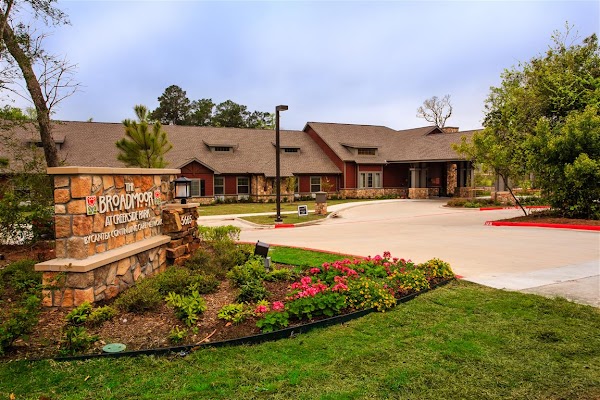

5665 CREEKSIDE FOREST DRIVE, THE WOODLANDS, TX 77389 (281) 255-8180
For profit - Corporation 112 Beds CANTEX CONTINUING CARE Data: November 2025 2 Immediate Jeopardy citations
Trust Grade
21/100
#580 of 1168 in TX
Last Inspection: December 2024

Within standard 12-15 month inspection cycle. Federal law requires annual inspections.

Overview

The Broadmoor at Creekside Park has received a Trust Grade of F, indicating significant concerns about the quality of care provided. It ranks #580 out of 1,168 facilities in Texas, placing it in the top half, but the low grade suggests that it may not be a reliable choice. The facility's performance is worsening, with 12 issues reported in 2024 compared to 11 in 2023. Staffing is a weakness, with a 2 out of 5 rating and a high turnover rate of 69%, which is concerning when compared to the Texas average of 50%. There are critical incidents reported, including failures to manage pain for residents and ensure proper care after a fall, raising serious concerns about the safety and well-being of the residents. While the RN coverage is better than 79% of Texas facilities, the overall management and care practices need significant improvement, making it essential for families to weigh these factors carefully.

Trust Score
F
21/100
In Texas
#580/1168
Top 49%
Safety Record
High Risk
Review needed
Inspections
Getting Worse
11 → 12 violations
Staff Stability
⚠ Watch
69% turnover. Above average. Higher turnover means staff may not know residents' routines.
Penalties
⚠ Watch
$36,472 in fines. Higher than 87% of Texas facilities, suggesting repeated compliance issues.
Skilled Nurses
○ Average
Each resident gets 33 minutes of Registered Nurse (RN) attention daily — about average for Texas. RNs are the most trained staff who monitor for health changes.
Violations
⚠ Watch
29 deficiencies on record. Higher than average. Multiple issues found across inspections.
★★★☆☆
3.0
Overall Rating
★★☆☆☆
2.0
Staff Levels
★★★★☆
4.0
Care Quality
★★★☆☆
3.0
Inspection Score
Stable
2023: 11 issues
2024: 12 issues

The Good

  • 4-Star Quality Measures · Strong clinical quality outcomes
  • Full Sprinkler Coverage · Fire safety systems throughout facility
  • No fines on record

Facility shows strength in quality measures, fire safety.

The Bad

3-Star Overall Rating

Near Texas average (2.8)

Meets federal standards, typical of most facilities

Staff Turnover: 69%

23pts above Texas avg (46%)

Frequent staff changes - ask about care continuity

Federal Fines: $36,472

Above median ($33,413)

Moderate penalties - review what triggered them

Chain: CANTEX CONTINUING CARE

Part of a multi-facility chain

Ask about local staffing decisions and management

Staff turnover is elevated (69%)

21 points above Texas average of 48%

The Ugly 29 deficiencies on record

2 life-threatening 1 actual harm
Dec 2024 7 deficiencies
CONCERN (D)

Potential for Harm - no one hurt, but risky conditions existed

Incontinence Care (Tag F0690)

Could have caused harm · This affected 1 resident

**NOTE- TERMS IN BRACKETS HAVE BEEN EDITED TO PROTECT CONFIDENTIALITY** Based on observation, interview, and record review, the facility failed to ensure that each resident who was incontinent of bowe...

Read full inspector narrative →
**NOTE- TERMS IN BRACKETS HAVE BEEN EDITED TO PROTECT CONFIDENTIALITY** Based on observation, interview, and record review, the facility failed to ensure that each resident who was incontinent of bowel/bladder and each resident with an indwelling catheter received appropriate treatment and services to prevent urinary tract infections, for 2 of 6 residents (Resident #18 and Resident #87) reviewed for catheter care. - The facility failed to ensure physician orders for catheter care were entered into the system for Resident #18 and Resident #87 and staff were unable to document care provided from 12/1/24 to 12/17/24. This failure could place residents with foley catheters at risk for urinary tract infections and skin break down. Findings included: 1. Record review of Resident #18's undated face sheet revealed he was a [AGE] year-old male admitted on [DATE] with diagnoses of a sacral pressure ulcer (pressure injury on the lower back and tailbone), diabetes mellitus (body does not produce insulin or resists it), quadriplegia (paralysis of upper and lower extremities), colostomy (an opening in the colon, or large intestine, through the abdomen), neuromuscular dysfunction of the bladder (inability to properly control urination), anemia, and anxiety. Record review of Resident #18's Quarterly MDS assessment from 11/6/24 revealed a BIMS score of 10 out of 15, which indicated moderately impaired cognition. The resident had impairment on both sides of his upper and lower extremities. According to the MDS, the resident was dependent (the helper does all of the effort and resident does none of the effort to complete the activity, or the assistance of 2 or more helpers is required for the activity) with all ADLs. Resident #18 had an indwelling catheter and a colostomy. The MDS revealed he had a diagnosis of neurogenic bladder, which required the indwelling catheter. Record review of Resident #18's medical record revealed a foley catheter was not care planned. Record review of Resident #18's History and Physical from MD L on 10/8/24 revealed the resident had a foley catheter. Record review of Resident #18's order summary report dated 12/01/24-12/17/24 revealed no orders for a foley catheter. Record review of Resident #18's medical record on 12/17/24, revealed no documentation of foley catheter care. In an observation and interview with Resident #18 on 12/17/24 at 9:00am, the resident was lying on his back in bed with no obvious foley catheter or colostomy visible. The resident said he had a foley catheter and a colostomy. 2. Record review of Resident #87's undated face sheet revealed a [AGE] year-old male admitted on [DATE] with diagnoses of neuromuscular dysfunction of the bladder (inability to properly control urination), paraplegia (paralysis of both upper or lower extremities), sepsis (infection throughout body), schizophrenia (mental illness that affects how a person thinks, feels, and behaves), pressure ulcer of the sacrum (pressure injury on the lower back and tailbone), muscle weakness, and muscle wasting and atrophy. Record review of Resident #87's Quarterly MDS assessment from 11/20/24 revealed a BIMS score of 10 out of 15, which indicated moderately impaired cognition. The resident had impairment on both sides of his lower extremities. According to the MDS the resident was substantial/max assist with toileting hygiene (helper does more than half the effort). Resident #87 had an indwelling catheter. The MDS revealed he had a diagnosis of neurogenic bladder, which required the indwelling catheter. Record review of Resident #87's medical record revealed a foley catheter was not care planned. Record review of Resident #87's order summary report dated 12/01/24-12/17/24 revealed no orders for a foley catheter. Record review of Resident #87's medical record on 12/17/24, revealed no documentation of foley catheter care. In an observation on 12/15/24 at 12:59pm, Resident #87 was lying on his back in bed and had a foley catheter clipped to the side of the bed. In an interview and observation with Unit Manager D on 12/17/24 at 10:35am, she checked Resident #18 and Resident #87's medical record for a foley catheter or foley care order and there were none. She said they were still trying to fix orders that did not come over correctly or that were missed all together since they switched to a new EMR on 12/1/24. In an interview with the DON on 12/17/24 at 11:15am, she said the orders should have been in the system when the order was obtained. The staff should have reviewed the orders with the provider and then the provider verified the orders. She said there was always a chance to miss treatment if the order was not in the system. She said staff were trained on order entry and in-serviced prior to her coming. She said the ADON and Unit Manager conducted 24-hour chart checks to verify orders. She said the floor staff and managers were responsible for ensuring orders were in the system. The DON said the orders for the foley catheter and the foley care should have been in the EMR. She said the nursing staff should have seen the resident had a foley catheter and noticed there were no orders for it, then asked the MD to put orders in. She said if there were no orders, care could be missed. In an interview with LVN S on 12/17/24 at 11:29am she said Resident #18 and #87 both had foley catheters. She said she had not provided foley care yet, but she was going to before her shift was over. She said she knew to provide foley care because she had had the residents for a while before. She said this was her first day back with them, so she did not know if the nurses before her provided foley care. She said if the nurse did provide foley care and there were no orders, there would not be a place to document that it was done, and no one would know if the care was done or not. Record review of the facility's policy and procedure on Catheter Care (Revised March 2019) read in part: .Cleanse area at catheter insertion well, taking care not to pull on catheter or advance further into urethra. All debris must be removed from catheter at insertion site .Ensure leg strap in place to secure tubing .Date, time, procedure, condition of the perineum and catheter insertion site .signature and title. Record review of the facility's policy and procedure on Charting and Documentation (Revised July 2017) read in part: All services provided to the resident, progress toward the care plan goals, or any changes in the resident's medical, physical, functional or psychosocial condition, shall be documented in the resident's medical record. The medical record should facilitate communication between the interdisciplinary team regarding the resident's condition and response to care .The following information is to be documented in the resident medical record: .Treatments or services performed .Documentation of procedures and treatments will include care-specific details, including: the date and time of the procedure/treatment was provided; the name and title of the individual(s) who provided the care; the assessment data and/or any unusual findings obtained during the procedure/treatment .the signature and title of the individual documenting . Record review of the facility's policy and procedure on Physician Orders (Revised January 2020) read in part: It is the policy of the facility that physician orders are maintained per state and federal regulations. All physicians' orders shall be recorded on the Patients Medical Record and must be signed electronically by the attending/prescribing physician .Physician orders include: .Treatments .Special medical procedures required for the safety and well being of the Patient .Others as necessary and appropriate .Medications, diets, therapy, or any treatment may not be administered to the Patient without a written order from the attending physician.
CONCERN (D)

Potential for Harm - no one hurt, but risky conditions existed

Deficiency F0691 (Tag F0691)

Could have caused harm · This affected 1 resident

**NOTE- TERMS IN BRACKETS HAVE BEEN EDITED TO PROTECT CONFIDENTIALITY** Based on observation, interview, and record review the facility failed to ensure residents who needed colostomy care were provid...

Read full inspector narrative →
**NOTE- TERMS IN BRACKETS HAVE BEEN EDITED TO PROTECT CONFIDENTIALITY** Based on observation, interview, and record review the facility failed to ensure residents who needed colostomy care were provided such care, consistent with professional standards of practice for 1 of 6 residents (Resident #18) reviewed for ostomies (surgical opening from an area inside the body to the outside). - The facility failed to ensure physician orders for colostomy care were entered into the system for Resident #18 and staff were unable to document care provided from 12/1/24 to 12/17/24. This failure could place residents at risk of infection, skin break down, or discomfort. Findings included: Record review of Resident #18's undated face sheet revealed he was a [AGE] year-old male admitted on [DATE] with diagnoses of a sacral pressure ulcer (pressure injury on the lower back and tailbone), diabetes mellitus (body does not produce insulin or resists it), quadriplegia (paralysis of upper and lower extremities), colostomy (an opening in the colon, or large intestine, through the abdomen), neuromuscular dysfunction of the bladder (inability to properly control urination), anemia, and anxiety. Record review of Resident #18's Quarterly MDS assessment from 11/6/24 revealed a BIMS score of 10 out of 15, which indicated moderately impaired cognition. The resident had impairment on both sides of his upper and lower extremities. According to the MDS, the resident was dependent (the helper does all of the effort and resident does none of the effort to complete the activity, or the assistance of 2 or more helpers is required for the activity) with all ADLs. Resident #18 had a colostomy. Record review of Resident #18's medical record revealed a colostomy was not care planned. Record review of Resident #18's History and Physical from MD L on 10/8/24 revealed the resident had a colostomy. Record review of Resident #18's order summary report dated 12/01/24-12/17/24 revealed no orders for a colostomy. Record review of Resident #18's medical record on 12/17/24, revealed no documentation of colostomy care. In an observation and interview with Resident #18 on 12/17/24 at 9:00am, the resident was lying on his back in bed with no obvious foley catheter or colostomy visible. The resident said he had a foley catheter and a colostomy. In an interview with Unit Manager D on 12/17/24 at 10:35am, she checked Resident #18's medical record for a colostomy or colostomy care order and said there were none. She said they were still trying to fix orders that did not come over correctly or that were missed all together since they switched to a different EMR on 12/1/24. In an interview with the DON on 12/17/24 at 11:15am, she said the orders should have been in the system when the orders were obtained. The staff should have reviewed the orders with the provider and then the provider verified the orders. She said there was always a chance to miss treatment if the order was not in the system. She said staff were trained on order entry and in-serviced prior to her coming. She said the ADON and Unit Manager conducted a 24-hour chart check to verify orders. She said the floor staff and managers were responsible for ensuring orders were in the system. The DON said the orders for the colostomy/colostomy care should have been in the EMR. She said the nursing staff should have seen the resident had a colostomy and noticed there were no orders for it and asked the MD to put orders in. She said if there were no orders, care could be missed. In an interview with LVN S on 12/17/24 at 11:29am she said Resident #18 had a colostomy. She said she had not provided colostomy care yet, but she was going to before her shift was over. She said she knew to provide colostomy care because she had had the resident for a while before. She said this was the first day back with him, so she did not know if the prior nurses provided colostomy care. She said if the nurse did provide colostomy care and there were no orders, there would not be a place to document it was done, and no one would know if the care was done or not. Record review of the facility's policy and procedure on Colostomy/Ileostomy Care (Revised October 2010) read in part: The purpose of this procedure is to provide guidelines that will aid in preventing exposure of the resident's skin to fecal matter .Remove drainage bag .Cleanse skin .Evaluate skin .Replace drainage bag .The following information should be recorded in the resident's medical record: The date and time the colostomy/ileostomy care was provided. The name and title of the individual(s) who provided the colostomy/ileostomy care. Any breaks in resident's skin, signs of infection .or excoriation of skin .The signature and title of the person recording the data . Record review of the facility's policy and procedure on Charting and Documentation (Revised July 2017) read in part: All services provided to the resident, progress toward the care plan goals, or any changes in the resident's medical, physical, functional or psychosocial condition, shall be documented in the resident's medical record. The medical record should facilitate communication between the interdisciplinary team regarding the resident's condition and response to care .The following information is to be documented in the resident medical record: .Treatments or services performed .Documentation of procedures and treatments will include care-specific details, including: the date and time of the procedure/treatment was provided; the name and title of the individual(s) who provided the care; the assessment data and/or any unusual findings obtained during the procedure/treatment .the signature and title of the individual documenting . Record review of the facility's policy and procedure on Physician Orders (Revised January 2020) read in part: It is the policy of the facility that physician orders are maintained per state and federal regulations. All physicians' orders shall be recorded on the Patients Medical Record and must be signed electronically by the attending/prescribing physician .Physician orders include: .Treatments .Special medical procedures required for the safety and well being of the Patient .Others as necessary and appropriate .Medications, diets, therapy, or any treatment may not be administered to the Patient without a written order from the attending physician.
CONCERN (D)

Potential for Harm - no one hurt, but risky conditions existed

Pharmacy Services (Tag F0755)

Could have caused harm · This affected 1 resident

**NOTE- TERMS IN BRACKETS HAVE BEEN EDITED TO PROTECT CONFIDENTIALITY** Based on observation, interview, and record review the facility failed to provide pharmaceutical services (including procedures ...

Read full inspector narrative →
**NOTE- TERMS IN BRACKETS HAVE BEEN EDITED TO PROTECT CONFIDENTIALITY** Based on observation, interview, and record review the facility failed to provide pharmaceutical services (including procedures that assure the accurate acquiring, receiving, dispensing, and administering of all drugs and biologicals) to meet the needs of 1 of 5 residents (Resident #59) reviewed for pharmaceutical services. - The facility failed to ensure Resident #59's order for Potassium Chloride was accurately transcribed when the order was entered as unsupervised self-administration. Staff documented the medication as unsupervised self-administration from 12/07/24-12/17/24 although Resident #59 did not self administer Potassium Chloride. This failure could place the resident at risk of not receiving their medication or receiving the medication more than once. Findings included: Record review of Resident #59's undated face sheet revealed she was a [AGE] year-old female admitted on [DATE] with diagnoses of kidney failure (kidney stops filtering the blood), cardiac arrhythmia (heart does not beat regularly), respiratory failure (not enough oxygen in the blood), pneumonia (infection in the lungs), and heart failure. Record review of Resident #59's Quarterly MDS assessment dated [DATE] revealed a BIMS score of 6 out of 15, which indicated severely impaired cognition. The resident was supervision and set up with all ADLs. Resident #59 was frequently incontinent of urine and always continent of bowel. The resident did not have any pressure ulcers or skin issues. Record review of Resident #59's medical record revealed her Potassium Chloride was not care planned. Record review of Resident #59's order summary report dated 12/01/24-12/17/24 revealed an order for Potassium Chloride Capsule 10meq ER, Give 1 tablet orally QD, unsupervised self-administration. Do not crush, dissolve in water. Ordered on 12/6/24. Record review of Resident #59's December 2024 MAR revealed from 12/7/24-12/17/24 the Potassium Chloride 10meq was signed off as U-SA by several different staff members. Record review of Resident #59's medical record on 12/17/24 revealed there were no assessments performed for self-administration of medication. In an observation on 12/16/24 at 8:29am Med Aide G gave Resident #59 her morning medications which were Norco, Eliquis, Spironolactone, and Pantoprazole, but not the Potassium Chloride. In an interview on 12/17/24 at 8:30am with Resident #59, she said she did not take any medications on her own and she only took whatever the staff gave her. She did not take her own Potassium Chloride. In an interview on 12/17/24 at 8:35am with Med Aide K she said she did not know the Potassium Chloride order said unsupervised self-administration and she did not question the order. She said the medication popped up on her MAR and she gave it to the resident. She did not question the resident about taking Potassium Chloride on her own or ensure she did not give the resident a double dose. In an interview and observation on 12/17/24 at 10:35am with Unit Manager D, she said they did not give unsupervised medications for self-administration. She said Resident #59's Potassium Chloride order was wrong, and someone must have checked the wrong box for self-administration on accident when they received the order. Unit Manager D was observed as she fixed the order. She said they were still trying to go through all the orders to ensure they were correct, from the old EMR to the new one that occurred on 12/1/24. In an interview with the DON on 12/17/24 at 11:15am, she said the orders should have been in the system when the orders were obtained. The staff should have reviewed the orders with the provider and then the provider verified the orders. She said there was always a chance to miss treatment if the order was not in the system. She said staff were trained on order entry and in-serviced prior to her coming. She said the ADON and Unit Manager conducted a 24-hour chart check to verify orders. She said the floor staff and managers were responsible for ensuring orders were in the system. The DON said the Potassium Chloride was on the Med Aide and the Nurse's orders so either one could have given the medication. She said on 12/16/24 the nurse had already given the medication to the resident. Record review of the facility's policy and procedure on Pharmacy Services Overview (revised April 2019) read in part: The facility shall accurately and safely provide or obtain pharmaceutical services, including the provision of routine and emergency medications .Pharmaceutical services consist of: the process of receiving and interpreting prescriber's orders; .dispensing .distributing, administering .using and/or disposing of all medications .Medications are .administered .according to all applicable state and federal laws and consistent with standards of practice. Record review of the facility's policy and procedure on Physician Orders (revised January 2020) read in part: It is the policy of this Facility that physician orders are maintained per state and federal regulations. All physicians' orders shall be recorded on the Patients Medical Record and must be signed electronically by the attending/prescribing physician. Verbal or telephone orders are considered to be in writing when dictated by the attending physician and later signed by him/her electronically once the Licensed nurses enter the order into the EMR. Orders must be signed electronically within a timely manner. Physician orders include: All medications .
CONCERN (D)

Potential for Harm - no one hurt, but risky conditions existed

Deficiency F0849 (Tag F0849)

Could have caused harm · This affected 1 resident

**NOTE- TERMS IN BRACKETS HAVE BEEN EDITED TO PROTECT CONFIDENTIALITY** Based on interview, and record review, the facility failed to collaborate with hospice representatives and coordinate the hospic...

Read full inspector narrative →
**NOTE- TERMS IN BRACKETS HAVE BEEN EDITED TO PROTECT CONFIDENTIALITY** Based on interview, and record review, the facility failed to collaborate with hospice representatives and coordinate the hospice care planning process for each resident receiving hospice services, to ensure quality of care for the resident, ensuring communication with the hospice medical director, the resident's attending physician, and others participating in the provision of care for 1 of 1 residents (Resident #18) reviewed for hospice services, in that: - The facility failed to ensure Resident #18's Hospice order was in the EMR from 12/1/24-12/17/24. This failure could place residents who receive hospice services at-risk of receiving inadequate end-of-life care, coordination of care and communication of resident needs. Findings included: Record review of Resident #18's undated face sheet revealed he was a [AGE] year-old male admitted on [DATE] with diagnoses of a sacral pressure ulcer (pressure injury on the lower back and tailbone), diabetes mellitus (body does not produce insulin or resists it), quadriplegia (paralysis of upper and lower extremities), colostomy (an opening in the colon, or large intestine, through the abdomen), neuromuscular dysfunction of the bladder (inability to properly control urination), anemia, and anxiety. Record review of Resident #18's Quarterly MDS assessment from 11/6/24 revealed a BIMS score of 10 out of 15, which indicated moderately impaired cognition. The resident had impairment on both sides of his upper and lower extremities. According to the MDS, the resident was dependent (the helper does all of the effort and resident does none of the effort to complete the activity, or the assistance of 2 or more helpers is required for the activity) with all ADLs. Resident #18 had an indwelling catheter (a tube into the bladder to drain urine) and a colostomy. The MDS revealed the resident was on Hospice care. Record review of Resident #18's medical record revealed hospice was not care planned. Record review of Resident #18's History and Physical from MD L on 10/8/24 revealed the resident was on hospice. Record review of Resident #18's order summary report dated 12/01/24-12/17/24 revealed no orders for hospice. In an interview with Unit Manager D on 12/17/24 at 10:35am, she checked Resident #18's medical record for a hospice order and said there was not one. She said she knew the resident was on hospice and looked in the previous EMR. She said the order was in the previous EMR for hospice services. The Unit Manager said they were still trying to fix orders that did not come over correctly or that were missed all together since they switched to a different EMR on 12/1/24. In an interview with the DON on 12/17/24 at 11:15am, she said the orders should have been in the system when the orders were obtained. The staff should have reviewed the orders with the provider and then the provider verified the orders. She said there was always a chance to miss treatment if the order was not in the system. She said staff were trained on order entry and in-serviced prior to her coming. She said the ADON and Unit Manager conducted a 24-hour chart check to verify orders. She said the floor staff and managers were responsible for ensuring orders were in the system. Record review of the facility's policy and procedure on Hospice Services (dated November 2016) read in part: It's the policy of this facility to provide hospice services through an agreement with one or more Medicare-certified hospices .The facility must meet the following requirements: .Have a written agreement with the hospice that is signed by an authorized representative of the hospice and an authorized representative of the facility before hospice care is furnished to any resident. The written agreement must set out at least the following: The services the hospice will provide. The hospice's responsibilities for determining the appropriate hospice plan of care. The services the facility will continue to provide based on each resident's plan of care. A communication process, including how the communication will be documented between the facility and the hospice provider, to ensure that the needs of the Patient/Resident are addressed and med 24 hours per day .Obtain the following information from the hospice: The most recent hospice plan of care specific to each patient/resident. Hospice election form. Physician certification and recertification of the terminal illness specific to each patient/resident. Names and contact information for hospice personnel involved in hospice care of each patient/resident. Instructions on how to access the hospice's 24-hour on-call system. Hospice medication information specific to each patient/resident. Hospice physician and attending physician (if any) orders specific to each patient/resident . Record review of the facility's policy and procedure on Charting and Documentation (Revised July 2017) read in part: All services provided to the resident, progress toward the care plan goals, or any changes in the resident's medical, physical, functional or psychosocial condition, shall be documented in the resident's medical record. The medical record should facilitate communication between the interdisciplinary team regarding the resident's condition and response to care .The following information is to be documented in the resident medical record: .Treatments or services performed .Documentation of procedures and treatments will include care-specific details, including: the date and time of the procedure/treatment was provided; the name and title of the individual(s) who provided the care; the assessment data and/or any unusual findings obtained during the procedure/treatment .the signature and title of the individual documenting . Record review of the facility's policy and procedure on Physician Orders (Revised January 2020) read in part: It is the policy of the facility that physician orders are maintained per state and federal regulations. All physicians' orders shall be recorded on the Patients Medical Record and must be signed electronically by the attending/prescribing physician .Physician orders include: .Treatments .Special medical procedures required for the safety and well being of the Patient .Others as necessary and appropriate .Medications, diets, therapy, or any treatment may not be administered to the Patient without a written order from the attending physician.
CONCERN (D)

Potential for Harm - no one hurt, but risky conditions existed

Infection Control (Tag F0880)

Could have caused harm · This affected 1 resident

**NOTE- TERMS IN BRACKETS HAVE BEEN EDITED TO PROTECT CONFIDENTIALITY** Based on observation, interview, and record review the facility failed to establish and maintain an infection prevention and con...

Read full inspector narrative →
**NOTE- TERMS IN BRACKETS HAVE BEEN EDITED TO PROTECT CONFIDENTIALITY** Based on observation, interview, and record review the facility failed to establish and maintain an infection prevention and control program designed to provide a safe, sanitary, and comfortable environment and to help prevent the development and transmission of communicable diseases and infections for 1 of 6 residents (Resident #23) reviewed for Infection Control. Med Aide G failed to sanitize the blood pressure cuff between residents on 12/16/24. The blood pressure cuff was used on a Resident #250 who was on EBP and then placed on Resident #23 without being sanitized first. - This failure could place residents at risk of cross-contamination and development of infections. Findings included: 1. Record review of Resident #250's undated face sheet, revealed he was a [AGE] year-old male admitted to the facility on [DATE] with diagnoses of extradural and subdural abscess (types of brain infections), bacterial meningitis (infection around the brain and spinal cord), MSSA (bacterial infection that can range from mild skin infections to more serious conditions), hemiplegia (paralysis) affecting right side following a stroke, aphasia (trouble speaking), dysphasia (trouble swallowing), neurofibromatosis (genetic disorder that causes tumors to grow in the nervous system), endocarditis (infection of the heart), epilepsy (seizures), and TIA (mini strokes). Record review of Resident #250's admission MDS assessment dated [DATE] revealed a BIMS score of 12 out of 15, which indicated moderately impaired cognition. The resident had impairment on both sides of his lower extremities and one side of his upper extremities. According to the MDS, the resident was substantial/max assist with all ADLs (helper does more than half the effort). Resident #250 was always incontinent of bowel and bladder. The MDS had diagnoses of bacterial meningitis, and MSSA. The resident had an unhealed Stage 2 (shallow open ulcer with a red or pink wound bed, without debris or intact/open blister.) pressure ulcer, according to the MDS. Resident #250 was also receiving IV antibiotics. Record review of Resident #250's medical record revealed his EBP and IV antibiotics were not care planned. Record review of Resident #250's History and Physical dated 12/9/24 from NP N, revealed the resident was at the hospital on [DATE] for a subdural empyema (brain infection) and had an evacuation with CSF (removal of spinal fluid) which was growing MSSA, and had endocarditis. The resident was going to need 6wks of IV antibiotics starting 11/22/24. Record review of the facility's Resident Matrix, printed on 12/15/24, revealed Resident #250 was on IV antibiotics. In an observation on 12/16/24 at 8:48am, Resident #250 had an EBP sign outside of his room. Med Aide G was observed as she took Resident #250's blood pressure with an electronic blood pressure cuff on his left wrist. She then took the blood pressure cuff and set it on the medication cart without cleaning it. 2. Record review of Resident #23's undated face sheet revealed she was an [AGE] year-old female who admitted to the facility on [DATE] with diagnoses of altered mental status, anxiety, urinary tract infection, atrial fibrillation (heart does not beat regularly), and type 2 diabetes mellitus (body does not produce insulin or resists it). Record review of Resident #23's admission MDS assessment dated [DATE] revealed a BIMS score of 11, which indicated moderately impaired cognition. The resident was supervision and set up with all ADLs. Resident #23 was always continent of bowel and bladder. According to the MDS, she had no pressure ulcers or skin issues. She was receiving PT/OT and was at the facility for rehabilitation after getting weak from a UTI. In an observation on 12/16/24 at 8:51am, Med Aide G was observed applying the blood pressure cuff on Resident #23's left wrist without disinfecting it first. In an interview on 12/16/24 at 9:11am with Med Aide G, she said she forgot to clean the blood pressure cuff. She said without cleaning the blood pressure cuff, it could cause cross contamination. In an interview on 12/16/24 at 9:15am with RN K, she said Resident #250 was on EBP and the blood pressure cuff should have been disinfected after each use to prevent cross contamination and for infection control. In an interview on 12/16/24 at 3:00pm with the DON, she said she in-serviced Med Aide G on infection control. She said the blood pressure cuff should have been cleaned and staff had just been in-serviced a few days earlier on EBP. Record review of the facility policy, Infection Control dated November 2017 read in part, .1. The facility must establish an infection prevention and control program (IPCP) that must include: a system for preventing, identifying, reporting, investigating, and controlling infections and communicable diseases for all patients, staff, volunteers, visitors, and other individuals providing services under a contractual arrangement based upon the facility assessment .If there are signs and/or symptoms of an infection or positive culture, standard and transmission-based precautions must be put into place to prevent the spread of infection .
CONCERN (E)

Potential for Harm - no one hurt, but risky conditions existed

ADL Care (Tag F0677)

Could have caused harm · This affected multiple residents

**NOTE- TERMS IN BRACKETS HAVE BEEN EDITED TO PROTECT CONFIDENTIALITY** Based on observation, interview and record review, the facility failed to ensure a resident who was unable to carry out activiti...

Read full inspector narrative →
**NOTE- TERMS IN BRACKETS HAVE BEEN EDITED TO PROTECT CONFIDENTIALITY** Based on observation, interview and record review, the facility failed to ensure a resident who was unable to carry out activities of daily living received the necessary services to maintain good nutrition, grooming, and personal and oral hygiene for 1 out of 6 residents (Resident #40) reviewed for ADL care. - The facility staff failed to provide scheduled showers/baths to Resident #40 on 12/7/24 and 12/14/24. - The facility failed to change Resident #40's shirt for 3 days (12/15/24, 12/16/24, and 12/17/24) when there was debris and stains on it. These failures could place residents at risk of a decline in ADL's. Findings include: Record review of Resident #40's undated face sheet revealed he was a [AGE] year-old male originally admitted to the facility on [DATE], with the most recent admission date of 2/5/21. He had diagnoses of kidney failure (kidneys stop filtering the blood), dementia neurological conditions that cause a decline in mental abilities that affects daily life), hemiplegia (paralysis) and hemiparesis (numbness) following a stroke, heart failure, diabetes mellitus (body does not produce insulin or resists it), major depression, aphasia (trouble speaking), weakness, convulsions (seizures), and muscle wasting and atrophy. Record review of Resident #40's Annual MDS assessment from 12/10/24 revealed he had a BIMS score of 8 out of 15, which indicated he had moderately impaired cognition. The resident had impairment on one side of his upper and lower extremities. According to the MDS, the resident was dependent (the helper does all of the effort and resident does none of the effort to complete the activity, or the assistance of 2 or more helpers is required for the activity) for showers/baths, toileting hygiene, and lower body dressing. The resident was substantial/max assist (helper does more than half the effort) with oral hygiene, upper body dressing, putting on/taking off footwear, and personal hygiene. According to the MDS, the resident was always incontinent of bowel and bladder. Record review of Resident #40's medical record revealed his care plan was not completed. Record review performed on 12/15/24, of the facility's shower schedule, revealed Resident #40's shower days were Tuesday, Thursday, and Saturday morning. In an interview and observation on 12/15/24 at 11:22am with Resident #40 and family, the resident was observed laying on his back in bed. The resident had white debris all over the top part of his shirt, near his collar, and his hair appeared greasy looking. The resident and family revealed he had not had a shower for the past two Saturdays (12/14/24 and 12/7/24). In an interview and observation on 12/16/24 at 1:15pm, Resident #40 said he had just got back from dialysis. His shirt still had not been changed and he had white debris near the collar of his shirt. The resident said the staff did not help him brush his teeth or clean his face. In an interview and observation on 12/17/24 at 10:29am, Resident #40 had the same shirt on with debris near his collar. He said he had asked for his shower when he woke up at 6:10am, but he still had not received it yet. In an interview with CNA J on 12/17/24 at 10:53am, she said she had not given Resident #40 a shower yet, but she would before her shift was over. She said this was the first day she worked the hall the resident was on, and she would have changed his shirt before today if there was debris on it. CNA J said she did not know if the CNAs on that hall brushed the resident's teeth, but Resident #40 would normally ask for a warm cloth for his face if he wanted one. CNA J said there was a binder at the nursing station that had the shower schedules for each resident and they knew how much assistance was needed by looking in the resident's chart and through report handoff. In an interview with the Administrator on 12/16/24 at 1:45pm, she said there were no shower sheets in the EMR because she had not had time to implement it yet. She said she would have to ask the DON who gave showers on 12/7/24 and 12/14/24. In an interview with the DON on 12/17/24 at 11:15am, she said CNA C was supposed to have showered Resident #40 on 12/14/24. She said she did not know she was supposed to check who gave showers for 12/7/24. She said she spoke to CNA J, and she was going to make sure to shower the resident today (12/17/24). She said she would pop in more often on the weekends to ensure showers were given. If showers were not given it could cause infections. Record review of the facility's policy and procedure on Activities of Daily Living (ADL), Supporting (Revised March 2018) read in part: Residents will be provided with care, treatment and services as appropriate to maintain or improve their ability to carry out activities of daily living (ADLs). Residents who are unable to carry out activities of daily living independently will receive the services necessary to maintain good nutrition, grooming and personal and oral hygiene .Appropriate care and services will be provided for residents who are unable to carry out ADLs independently, with the consent of the resident and in accordance with the plan of care, including appropriate support and assistance with: Hygiene (bathing, dressing, grooming, and oral care) .
CONCERN (E)

Potential for Harm - no one hurt, but risky conditions existed

Medical Records (Tag F0842)

Could have caused harm · This affected multiple residents

**NOTE- TERMS IN BRACKETS HAVE BEEN EDITED TO PROTECT CONFIDENTIALITY** Based on observation, interview, and record review the facility failed to maintain medical records in accordance with accepted p...

Read full inspector narrative →
**NOTE- TERMS IN BRACKETS HAVE BEEN EDITED TO PROTECT CONFIDENTIALITY** Based on observation, interview, and record review the facility failed to maintain medical records in accordance with accepted professional standards and practices that were complete, accurately documented, readily accessible, and systematically organized for 3 of 6 residents (Resident #151, Resident #18, and Residetn #27) reviewed for medical records. - The facility failed to document Resident #151's treatments into his electronic record from 12/14/24 to 12/15/24. - The facility failed to have current care plans for Resident #18 and Resident #27 in the electronic health system. This failure could cause missed treatments and a decline in health. Findings included: 1. Record review of Resident #151's face sheet dated 12/17/24 revealed a [AGE] year-old male who readmitted on [DATE]. His diagnosis included convulsions (rapid involuntary muscle contractions), malnutrition, and benign prostatic hyperplasia (an enlarged prostate). Record review of Resident #151's undated baseline care plan indicated he was lethargic and cognitively impaired. He had a history of skin integrity issues. Record review of Resident #151's Braden scale for predicting pressure ulcer risk evaluation dated 12/13/24 revealed a score of 11 which indicated he was high risk. Record review of Resident #151's paper Physician's Telephone/Verbal Order dated 12/13/24 revealed the following order: Wound is almost healed; please keep clean and cover with provided bordered gauze dressing, order date 12/13/24. Record review of Resident #151's nursing note dated 12/13/24 (unknown author) read in part, .Residents arrive to facility via [name] transport . bed bound. Total care . R thumb laceration cleaned .R/L thigh wounds cleaned w/NS and dressed w/border gauze. Record review of Resident #151's nursing note dated 12/14/24 (unknown author) read in part, .LATE ENTRY: resident received wound care with dry dressing to left hip, right hip, and right hand. No s/s of pain noted. Notified [hospice] for clarification on wound care was told a nurse would be in to visit to clarity [sic] orders. Record review of Resident #151's nursing notes revealed there was no documentation of treatments on 12/15/24. Record review of Resident #151's nursing note dated 12/16/24 (unknown author) read in part, .notified [name], nurse with [name] Hospice, need for nurses visit for clarity of orders. Record review of Resident #151's order summary report dated 12/17/24 revealed the following treatment orders were entered 3 days after admission: -Wound treatment - dry dressing every day shift cleanse wound to left hip with normal saline or skin cleanser. Pat dry. Cover with dry dressing, order date 12/16/24 -Wound treatment - dry dressing every day shift cleanse wound to right hip with normal saline or skin cleanser. Pat dry. Cover with dry dressing, order date 12/16/24. In an observation on 12/15/24 at 12:04 p.m. Resident #151 was lying in bed with towels in both hands. He did not respond to this Surveyor's questions. In an observation on 12/16/24 at 9:37 a.m. Resident #151 was lying in bed. His right hand was wrapped and dated 12/16/24. In an interview on 12/16/24 at 3:02 p.m. LVN G said she worked with Resident #151 on 12/13/24. She said she did his head-to-toe skin assessment and LVN S helped her do the wound care. She said he had a shunt on the left side that went to his stomach, two red areas on the inside of his knees, an area to his right thumb, and a pressure sore to the left thigh/hip. She said the areas did not look infected, only red and they applied a simple dry dressing change and left it open. She said he was admitted from the hospital, and they did not send any orders for his wounds and was not alerted to any wounds. She said she could not remember if she contacted anyone about his wound orders. She said she would normally contact hospice about the wounds and treatments and hospice would send orders over. She said she reported the areas to the Unit Manager who said she would help her put the orders in. LVN G said she was not able to put the orders in because she got busy. She said whatever they do not complete they pass on to the next nurse. She said she notified the next nurse about the wounds and that there were no orders for them yet. She said she was trained on admissions and entering orders into the system. In an interview on 12/16/24 at 3:19 p.m. LVN V said she worked with Resident #151 on 12/14/24. She said she did a full body assessment, changed his bandage on his hand, hip, and sacrum, and documented the wound care on a note. She said his hospice orders were in the medical records bin and posted in his room, but the order did not specify the areas. She said she received report from the night nurse on Saturday morning and was informed how to do the wound care for the resident. She said the orders were normally in the system, but the facility recently changed to a new electronic record system, and it was acting up. She said she called hospice to determine the wounds and orders but did not get a response. She said she did not document the notification. She said the orders should be inputted in the system during admission and if the orders were not in the system the facility should check with the MD. She said she did not put the actual order in the system because it was not specific, and hospice did not answer back. In an interview on 12/17/24 at 9:17 a.m. the Wound Care Nurse said she was notified of Resident #151's wounds on 12/16/24 by the floor nurse. She said he had a left and right hip wound and scar tissue/redness to the sacrum. She said the areas did not look infected and there were dressings on all the areas from the previous day. She said Resident #151 had a note, but the order was confusing and not specific to the resident. She said the floor nurse verified the order with hospice and they wanted the facility to clean the areas and cover with dry dressing. She said everything had to be verified with Hospice and if hospice could not be reached, clean the areas and cover with a dry dressing. She said the order would have to be in the system because it was an order and nursing staff would either document in a nursing note and sign out in the MAR/TAR. In an interview on 12/17/24 at 9:57 a.m. LVN S said she conducted a head-to-toe assessment on Resident #151 with LVN G on 12/13/24. She said she identified a wound to the left hip/thigh, a small rash to the right side of leg, redness behind the knee, and a right laceration from piercing his thumb. She said the hospice nurse put orders on the resident's wall for normal saline and dry dressing. She said she was training LVN G and assumed LVN G put the orders in the system for the wound. LVN S said she should have checked behind LVN G to ensure the orders were in the system. She said orders should be in the system so the next nurse and wound care nurse would know what to look for. She said she received an in-service on putting orders into system and had been trained before. In an interview on 12/17/24 at 10:55 a.m. the DON said the staff questioned the orders for Resident #151, so they did not enter them in the system. She said the Hospice orders were posted on the wall, staff saw the orders, did the actual treatment, and communicated through shift change but were waiting for clarification from hospice. She said orders should be in the system when the order is obtained and if hospice did not respond within the hour, staff should go up the chain of command. She said the orders should have been put in the system even if staff were waiting for clarification so they could follow the order. She said the ADON put the orders in on Sunday 12/15/24. She said there was always a chance to miss treatment orders if the order was not in the system. She said staff were trained on order entry and in serviced prior to her coming. She said the floor staff and managers were responsible for ensuring orders were in the system. In an attempted interview on 12/17/24 at 11:27 a.m. with Resident #151's hospice nurse was unsuccessful. In an interview on 12/17/24 at 1:17 p.m. Unit Manager D said she put Resident #151's treatment orders in the system on 12/15/24. She said she called the NP and was instructed to continue orders as directed which was: Clean and cover with dry dressing. In an interview on 12/17/24 at 1:51 p.m. the Administrator said she spoke with Resident #151's Hospice nurse about tightening up the process for implementation of orders. She said the order provided by Hospice was the way family and hospice did the treatment and clarification was needed. She said the order should have been in the system to ensure the service was not missed, and to document what service was done. She said the DON provided reeducation. Record review of Resident #151's hospice clinical charts note dated 12/17/24 written by Resident #151's hospice nurse revealed a skilled nurse daily visit was made for respite care. Respite stay from 12/13 - 12/18. Patient lying in hospital bed with head of bed elevated. Dressing is clean, dry and intact. Pressure wound to left hip is improving dramatically since the use of low air loss mattress. Wound still has some slough and mild drainage with no odor. Wound is 75% smaller now than at time of injury. Patient resting comfortably. Showing no signs of pain or discomfort at this time. Spoke with facility staff who report no unmanaged issues at this time. Updated facility staff on plan of care and encouraged them to call with any questions, concerns, change in patient condition or falls. 2. Record review of Resident #18's undated face sheet revealed he was a [AGE] year-old male admitted on [DATE] with diagnoses of a sacral pressure ulcer (pressure injury on the lower back and tailbone), diabetes mellitus (body does not produce insulin or resists it), quadriplegia (paralysis to all 4 extremities), colostomy (opening in the colon, or large intestine, through the abdomen), neuromuscular dysfunction of the bladder (inability to properly control urination), anemia, and anxiety. Record review of Resident #18's Quarterly MDS assessment from 11/6/24 revealed a BIMS score of 10 out of 15, which indicated moderately impaired cognition. The resident had impairment on both sides of his upper and lower extremities. According to the MDS, the resident was dependent (the helper does all of the effort and resident does none of the effort to complete the activity, or the assistance of 2 or more helpers is required for the activity) with all ADLs. Resident #18 had an indwelling catheter (a tube into the bladder to drain urine) and a colostomy. The MDS revealed he had a diagnosis of neurogenic bladder, which required the indwelling catheter. The resident was on Hospice care. According to the MDS, the resident had 5 Stage 4 (tissue loss with exposed bone, tendon or muscle) pressure ulcers. Record review of Resident #18's History and Physical from MD L on 10/8/24 revealed the resident had a foley catheter, a colostomy, Hospice services, and pressure ulcers. Record review of Resident #18's medical record revealed a Wound Evaluation and Management Summary from 11/22/24 from MD T, which indicated he had 5 pressure ulcers. Record review of Resident #18's medical record on 12/17/24, revealed his foley catheter, colostomy, hospice, and pressure ulcers were not care planned . In an observation and interview with Resident #18 on 12/17/24 at 9:00am, the resident was laying on his back in bed with no obvious foley catheter or colostomy visible. The resident said he did have a foley catheter and a colostomy. 3. Record review of Resident #87's undated face sheet revealed a [AGE] year-old male admitted on [DATE] with diagnoses of neuromuscular dysfunction of the bladder (inability to properly control urination), paraplegia (paralysis of either the upper or lower extremities), sepsis (infection throughout body), schizophrenia (mental illness that affects how a person thinks, feels, and behaves), pressure ulcer of the sacrum (pressure injury on the lower back and tailbone), muscle weakness, and muscle wasting and atrophy. Record review of Resident #87's Quarterly MDS assessment from 11/20/24 revealed a BIMS score of 10 out of 15, which indicated moderately impaired cognition. The resident had impairment on both sides of his lower extremities. According to the MDS the resident was substantial/max assist with toileting hygiene (helper does more than half the effort). Resident #87 had an indwelling catheter. The MDS revealed he had a diagnosis of neurogenic bladder, which required the indwelling catheter. Resident #87 had a Stage 4 pressure ulcer. Record review of Resident #87's medical record revealed his foley catheter, pressure ulcer, and wound vac (treatment that uses suction to help heal wounds) were not care planned. Record review of Resident #87's order summary report dated 12/01/24-12/17/24 revealed the following orders: - Wound Vac-Placement and Patency Check, every shift. Wound Vacuum @ 125mmHg, Check placement and ensure patency. If dislodged, re-enforce dressing or change if necessary. Ordered on 12/1/24. - Wound Treatment: Cleanse Sacrum Wound with wound cleanser or normal saline; pat dry cover with calcium alginate (type of wound treatment) and collagen sheet (type of wound treatment). Cover with Island Gauze w/ border dressing-PRN when wound vac is not in use, as needed for wound healing. Ordered on 12/1/24. - Wound Vac -Apply to Sacrum- M-W-F at -125mmhg; Cleanse with wound cleanser or normal saline; pat dry; apply wound vac foam dressing and cover with film when vac not in use refer to PRN Wound Care Order, every shift Cleanse wound with Normal Saline or Skin Cleanser. Pat dry. Apply Wound Vacuum Dressing as instructed. Apply Wound Vacuum @-125 mmHg. Ordered on 12/1/24. In an observation on 12/15/24 at 12:59pm, Resident #87 was lying on his back in bed and had a foley catheter clipped to the side of the bed. In an observation on 12/16/24 at 1:00pm, Resident #87 was lying on his back in bed and had a wound vac draining bloody drainage from his pressure ulcer to his sacrum. In an interview on 12/17/2024 at 12:45pm with RN S, he said he was responsible for completing the entrance and discharge care plans for the long-term care side and stated if the resident's care plan was not updated, the resident would fall through the cracks and proper care would not be provided. RN S also stated the annual, admissions, and discharge care plans were the responsibility of the MDS nurse. He said the acute care plans were the responsibility of the ADON and unit manager. In an interview on 12/17/2024 at 1:10pm with LVN A, she said she assisted with care plans, but it had not been further discussed and was something they had not been trained in the past to do. LVN A also stated if a care plan was not updated or completed timely something would be missed such as daily ADLs for a resident or the treatment could not be completed. Staff was made aware of care plan changes by the morning huddle and nurses pulled a report that would verify any changes to inform other staff members who also provided care to residents. LVN A said if the Care Plans were not up to date, the expectation was to meet with the DON, MDS Nurse, and the Unit Manager to develop a plan on how the care plans would be brought up to compliance. In an interview on 12/17/2024 at 1:24pm with the ADON, she stated if a care plan was not updated for a resident, the resident would fall by the wayside and would miss the opportunity to receive appropriate care. She said the care plans were updated by herself. The ADON said there had not been a chance to view the care plans and training had not been provided, since the position was just filled two weeks ago. She said the training would to be given by the DON in the upcoming weeks. As of right now, the ADON said during the transition of roles and new staff, MDS was supposed to update and complete care plans. Record review of the facility's policy on, Care Plans, Comprehensive Person-Centered, updated, March 2022 revealed, 2. The comprehensive, person-centered plan is developed within (7) days of the completion of the required MDS assessments (Admission, Annual or Significant Change in Status), and no more than 21 days after admission. 6. If the participation of the resident and his/her representative in developing the residents care plan is determined to not be practicable, an explanation is documented in the residents' medical record. The explanation should include what steps were taken to include the resident or representative in the process. 7e. The comprehensive, person-centered care plan reflects currently recognized standards of practice for problem areas and conditions. 10. When possible, interventions address the underlying source(s) of the problem area(s), not just the symptoms or triggers. 11. Assessments of residents are ongoing and care plans are revised as information about the residents and the residents' conditions change. Record review of the facility's Patient Care Management System 1, Skin policy dated July 2022 read in part, .1. A head-to-toe skin assessment will be completed on day of admission and documented by the Admitting Nurse upon admission (including re-admission) of every patient. In addition, the Admitting Nurse will notify the physician and patient representative of any identified areas, implement treatment/interventions and document in Electronic Medical Record (EMR). Record review of the facility's Charting and Documentation policy dated July 2017 read in part, .all services provided to the resident, progress toward the care plan goals, or any changes in the resident's medical, physical, functional or psychosocial condition, shall be documented in the resident's medical record. The medical record should facilitate communication between the interdisciplinary team regarding the resident's condition and response to care . Policy Interpretation and Implementation . 1. Documentation in the medical record may be electronic, manual or a combination. 2. The following information is to be documented in the resident medical record: . b. medications administered; c. treatments or services performed . Record review of the facility's Physician Orders dated January 2020 read in part, .all physicians' order shall be recorded on the patients medical record and must be signed electronically by the attending/prescribing physician . 4.The admission physician order will remain in the patient's chart at all times .
Dec 2024 4 deficiencies
CONCERN (D) 📢 Someone Reported This

A family member, employee, or ombudsman was alarmed enough to file a formal complaint

Potential for Harm - no one hurt, but risky conditions existed

Deficiency F0602 (Tag F0602)

Could have caused harm · This affected 1 resident

**NOTE- TERMS IN BRACKETS HAVE BEEN EDITED TO PROTECT CONFIDENTIALITY** Based on interview and record review, the facility failed to ensure the right to be free from misappropriation of property was p...

Read full inspector narrative →
**NOTE- TERMS IN BRACKETS HAVE BEEN EDITED TO PROTECT CONFIDENTIALITY** Based on interview and record review, the facility failed to ensure the right to be free from misappropriation of property was provided for 1 of 9 residents reviewed for misappropriation of property. (Resident #1) The facility failed to ensure Resident #1 was free from misappropriation of property when Housekeeper A gave Resident #1's purse to an unidentified individual. This failure could place residents at risk for decreased quality of life, misappropriation of property, and dignity. Findings included: Record review of Resident #1's face sheet, printed on 10/31/24, indicated she was a [AGE] year-old female with diagnoses including fracture of fourth lumbar vertebra (break in the vertebrae that extends from the hips to the chest), major depressive disorder, hyperlipidemia (high cholesterol), and COPD (progressive lung disease that makes it difficult to breathe). Resident #1 is her own responsible party. Record review of Resident #1's resident assessment and care screening MDS dated [DATE] indicated Resident #1 had a BIMS score of 15, which indicated cognitively intact. She exhibited some disorganized thinking. Resident #1 required minimal assistance with ADL care. Record review of facility's typed investigation summary dated 10/31/24 revealed Incident: Misappropriation; On the morning of 10/29/24, Senior ED was notified of an allegation of a missing purse belonging to patient Resident #1. Facility immediately launched investigation into allegation. Resident #1 was discharged to the hospital per physician order on the late evening of 10/23/24. Facility investigation notes Housekeeper A was assigned to deep clean Resident #1's room due to her discharge to the hospital. Housekeeping Supervisor noted seeing Housekeeper A holding the purse and the purse was bagged and tagged to identify it belonged to Resident #1 then placed in the Admissions Coordinators office for patient or family to retrieve. On the evening of 10/25/24 Admissions Coordinator stated employee Housekeeper A came to her office and requested the purse because the family was at the facility asking for it. Housekeeper A's statement confirms she retrieved the purse to give to the family of Resident #1. Housekeeper A then stated she gave to a resident accidentally. Facility suspended Housekeeper A pending investigation. Upon notification of missing purse, facility immediately notified the Local Police. Officer spoke to Housekeeper A, who stated the same story. Officer stated case would remain open. Facility leadership searched facility and was unable to locate the purse. SR ED spoke to patients family member who stated she did not have the purse and was unsure last time it was seen, but confirmed no usage on Resident #1's debit card since purse was missing. Facility investigation shows while employee Housekeeper A was the last facility employee in possession of the purse, there has been no indication her story of giving it to the wrong person is not true. However employee Housekeeper A was on a final write up for excessive tardiness and subsequently terminated 10/30.24. Facility investigation concludes allegation of misappropriation inconclusive. In an interview on 12/10/24 at 10:19 a.m. with Resident #1 she said she remembered her purse missing. She said she found the purse. She said the purse was left in the van (ambulance) she said her went to pick it up yesterday. She laughed and said don't quote me on that. Sometimes she cannot tell the difference in reality or dreams. In an interview on 12/10/24 at 10:25 a.m. with Housekeeping Supervisor, he said the purse was sent to the front of the building. When they discharged a resident, they take personal belongings to the front. He told surveyor she could get more information about the purse from the office staff. Housekeeper A was terminated due to attendance and tardiness not for the purse. He did not know if the purse was found later. It was bagged and tagged and taken to front. They searched for it and never found it. In a telephone interview on 12/10/24 at 2:17 pm with Housekeeper A, she said she found the purse in Resident #1's room and bagged the purse up and signed it and took to admissions front desk. About 2 or 3 weeks later the purse was still with the Admissions Coordinator and she saw a random lady she thought it was Resident #1's mother because she looked like Resident #1. Well, come to find out I gave the purse to another resident at the facility. Housekeeper A said she was so anxious to go back and get the clothes that belonged to Resident #1 to give to this lady, but when she came back the lady was gone. She said she gave it to resident name who was a resident. The room was searched and come to find out she had Dementia and the purse was nowhere to be found. She wrote her statement down. In an interview on 12/11/24 at 12:41 p.m. with current Administrator she said that the general policy and expectation, if the resident was a long-term care person, they try not to send personal valuables, unless residents want them, such as glasses, teeth, hearing aids, and purses to the hospital. Things were always lost in the ER. If they were a long-term care patient they did a bed hold and held all their stuff, if they were not returning, the resident and/or family would have to pick up their stuff. If they had valuables, they could lock it up. She did not want to be responsible for their stuff. She said she was not employed at the facility when this incident occurred and did not know any details. In an interview on 12/11/24 at 1:36 p.m. with Receptionist she stated that she was unaware of where Resident #1's purse is. She said that the family would call the facility looking for Resident #1's purse often. In an interview on 12/11/24 at 2:18 p.m. with Senior ED he said typically when someone discharged the building, and it depended on if they would come back, personal valuables were bagged and tagged until family came and picked them up. The valuables were kept in a locked closet. Identity of the person picking up items should be checked. He said it did not appear that there was any identification checked before giving Resident #1's purse to anyone. He stated that it was never recovered. If he correctly remembers correctly, Housekeeper A wrote in statement that she gave it to someone. In an interview on 12/12/24 at 1:53 p.m. with the Admissions Coordinator, she stated that the Housekeeping Supervisor came to her office and handed her the purse and the purse was wrapped up with a name tag and he asked to keep it in her office and she placed it in the closet. It was maybe a day or two later, she cannot remember how long, she thinks it was a Friday when Housekeeper A asked if anyone had seen the blue purse and Admissions Coordinator stated that she had it and the Housekeeper A said the family was there for it. She handed it over to Housekeeper A. She did not normally store the valuables in her office. Her office was at the front behind reception desk so Housekeeping Supervisor felt it was a safe place to keep it. She said she did not know if the purse was ever found. She did not know what Housekeeper A did, she just gave it to the family member asking for it. She did not really know for sure if identity should be checked. That was the first time she held valuables and had not done it since. In an interview on 12/12/ 24 at 6:16 p.m. with Resident #1 family member she said Resident #1 was concerned about not being able to find her purse. So, family member called the facility and according to the director of the facility, he said they remembered seeing the purse after leaving for the hospital and someone had asked for it and they gave it to them. He said a girl from housekeeping gave it to the female person asking for the purse. Family member also stated that Resident #1 told her later that someone contacted her and that they found her purse and it was going to be in the lost and found. The facility also called police and filed police report. Family member called the hospital and called the facility and she talked to the head of housekeeping, and he said that some housekeeper gave it to someone. She called the main transportation company that the facility used, and they did not have it. She called the receptionist at the facility and the receptionist said she would find out if the main transportation company used another service because sometimes, they had contracts . In the purse she knew for sure was Resident #1's driver's license, debit card and credit card. Family member was able to get into Resident #1's email and call the bank to let them know her purse was missing. She got a daily report from the bank via email and there had been no fraudulent charges. This made family member believe that Resident #1 was not dreaming and that someone did actually call, and the purse was sitting somewhere in a lost and found. The only family Resident #1 had was herself and her half-brother. No one went to the facility asking for the purse. Record review of revised abuse policy dated April 2019 revealed The Patient has the right to be free from Abuse, neglect, mistreatment of resident property, and exploitation.Misappropriation of Patient property means the deliberate misplacement, exploitation, or wrongful temporary or permanent use of a Patient's belongings or money without the Patient's consent.
CONCERN (D) 📢 Someone Reported This

A family member, employee, or ombudsman was alarmed enough to file a formal complaint

Potential for Harm - no one hurt, but risky conditions existed

Infection Control (Tag F0880)

Could have caused harm · This affected 1 resident

**NOTE- TERMS IN BRACKETS HAVE BEEN EDITED TO PROTECT CONFIDENTIALITY** Based on observation, interview, and record review the facility failed to establish and maintain an infection prevention and con...

Read full inspector narrative →
**NOTE- TERMS IN BRACKETS HAVE BEEN EDITED TO PROTECT CONFIDENTIALITY** Based on observation, interview, and record review the facility failed to establish and maintain an infection prevention and control program designed to provide a safe, sanitary, and comfortable environment and to help prevent the development and transmission of communicable diseases and infections for one of three residents (Resident #4) reviewed for Infection Control. 1.The facility failed to ensure CNA D changed her gloves and performed hand hygiene while providing incontinent care to Resident #4 on 12/12/2024. This failure could place residents at risk of cross-contamination and development of infections. Findings include: Record review of Resident #4's Face Sheet dated 12/12/2024 revealed a [AGE] year-old female who admitted on [DATE]. Her diagnosis included hemiplegia following cerebral infarction (one-sided paralysis or weakness following a stroke), type 2 diabetes (body does not produce insulin or resists it), and major depressive disorder. Record review of Resident #4's quarterly MDS assessment, dated 11/12/2024, revealed a BIMS score of 9 out of 15 which indicated moderate cognitive impairment. She was always incontinent of both bowel and bladder and required substantial/maximal assistance from staff with toileting hygiene. In an observation and interview on 12/12/24 at 1:17 p.m. with CNA D as she performed incontinence care on Resident #4. CNA D was observed not doing any hand hygiene prior to care. She gathered one pair of gloves and entered the Resident #4's room. She used one pair of gloves during the entire incontinence care for Resident #4. She applied barrier cream, moved pillows on the bed, adjusted the sheets and the resident using the same pair of dirty gloves. She used water to wet the wipes and said it helped get the barrier cream off the resident better. She left the resident and sheets wet. In an interview on 12/12/24 at 1:32 p.m. CNA D said she normally changed her residents every 2 hours or more frequently if needed or if they ask. She acknowledged that she did not change her gloves throughout incontinent care. She said the Surveyor made her nervous and that was not her normal practice. She said she would change her gloves after touching any bowel or if the gloves got dirty. She said she received training on the floor and on the computer about one week ago. She said she did train with two other CNAs, and someone watched her do an incontinent care on a resident about two weeks ago. In an interview on 12/12/24 at 2:02 p.m. the DON said when providing incontinent care, hand hygiene should be done first, gather all the supplies, glove up, and provide privacy for the resident. The next step is to provide the incontinent care, wash hands again, change gloves, and put on a clean brief. She said to apply barrier cream if needed. She said staff should see if the resident is soiled and move through the task from clean to dirty. She said CNA D was a newer CNA and did receive training. She said infection control was important because it may put the resident at risk for infection such as an UTI. She said all staff were responsible for infection control. Record review of the facility's Incontinent Care Skills Checklist dated 12/12/24 read in part, .4. wash hands; apply gloves .6. Assist patient to supine position and remove soiled clothing and/or brief, if needed clean soiled areas first by wiping off fecal material with dry wipes .7. remove gloves, sanitize hands and apply new gloves .Female perineal care . 2. Clean outwards from front to side . 5. Wash labia major and skin folds . 9. Wash, wiping from vagina toward rectum with one stoke, front to back, repeat, if necessary, with a new wipe as all feces must be cleaned off . 11. Wash/sanitize hands. Apply clean gloves. 12. Position new brief under patient. Apply barrier cream to perineal and buttock area, position and fasten clean brief under patient and adjust clothing . Record review of the facility policy, Infection Control dated November 2017 read in part, .1. The facility must establish an infection prevention and control program (IPCP) that must include: a. a system for preventing, identifying, reporting, investigating, and controlling infections and communicable diseases for all patients, staff, volunteers, visitors, and other individuals providing services under a contractual arrangement based upon the facility assessment .
CONCERN (E) 📢 Someone Reported This

A family member, employee, or ombudsman was alarmed enough to file a formal complaint

Potential for Harm - no one hurt, but risky conditions existed

ADL Care (Tag F0677)

Could have caused harm · This affected multiple residents

**NOTE- TERMS IN BRACKETS HAVE BEEN EDITED TO PROTECT CONFIDENTIALITY** Based on interview and record review, the facility failed to ensure residents who were unable to carry out activities of daily l...

Read full inspector narrative →
**NOTE- TERMS IN BRACKETS HAVE BEEN EDITED TO PROTECT CONFIDENTIALITY** Based on interview and record review, the facility failed to ensure residents who were unable to carry out activities of daily living received the necessary services to maintain good nutrition, grooming, and personal and oral hygiene for 2 of 3 residents (Resident #2, #3) reviewed for ADL care. The facility failed to provide timely incontinence care to Resident #2 and Resident #3. The noncompliance was identified as PNC. The noncompliance began on 4/6/24 and ended on 11/11/24. The facility had corrected the noncompliance before the survey began. This failure could place residents at risk for poor hygiene, diminished quality of life, and possible skin infections. The findings included: Record review of Resident #2's face sheet, dated 12/12/2024, reflected a [AGE] year-old female resident initially admitted on , 01/22/2024 with diagnoses including diarrhea, abnormalities of gait and mobility, epileptic seizure related to external causes, dementia (group of neurological conditions that cause a decline in mental abilities that affects daily life), disorder of urinary system, and cognitive communication deficit (communication difficulty caused by a cognitive impairment). Record review of Resident #2's MDS Assessment, dated 12/12/2024, reflected Resident #2 had a BIMS score of 9, suggesting moderate impairment. Resident #2 has been diagnosed with dementia, although the diagnosis was not present on the MDS assessment. Resident #2 MDS assessment indicated that Resident #2 was fully dependent for assistance with toileting hygiene and shower/bathe. Record review of Resident #2's Care Plan, updated, reflected interventions stating the resident had an ADL self-care performance deficit related to diagnosis of disorder of urinary system, abnormalities of gait and mobility, and diarrhea. In a telephone interview with Resident #2's family member on, 12/12/2024 at 12:31pm, he said he witnessed the facility being short staffed, which was why Resident #2's brief would constantly be soiled. The family member said he always had to find staff to change Resident #2 because they did not check on her often, and she was non-verbal and did not understand what the call light was for. Record review of Resident #3's undated face sheet revealed she was admitted to the facility on [DATE] with diagnoses of acute respiratory failure (not enough oxygen in the lungs), hemiplegia (paralysis) affecting right side from a stroke, stroke, dementia (group of neurological conditions that cause a decline in mental ability), weakness, and macular degeneration (disease that damages part of the retina that controls central vision). Record review of Resident #3's Quarterly MDS assessment from 11/28/24 revealed a BIMS of 11 out of 15, which indicated moderately impaired cognition. Resident #7 had impairment on one side of their upper and lower extremities and used a wheelchair. According to the MDS, the resident was dependent with toileting hygiene, showers/baths, lower body dressing, putting on/taking off footwear, and personal hygiene. Resident #7 was always incontinent of bowel and bladder. Record review of Resident #3's Care Plan dated 12/4/22 revealed Resident required extensive assistance with ADLs and mobility. Goal: Resident would maintain dignity by being clean, dry, and odor free for the next 90 days. Interventions: Assist with ADLs as needed. On 12/11/24 at 11:18am, the previous DON was called but he did not answer, and he never called back. In an interview with LVN V on 12/11/24 at 2:05pm, she said she had been with the facility for about 4 months. She said since the new Administration started, she had not found any resident soiled. She said they had enough staff to complete all their daily tasks. LVN V said they had in-services on customer service, call lights, and incontinence care. In an interview with LVN N on 12/12/24 at 8:57am, she said she had been with the facility for the past 2 years. She said the facility was short staffed previously and she would come to her shift at 6am and find residents completely soiled. She said the staffing is much better now with the new Administration. LVN V said they had in-services on customer service, call lights, and incontinence care. Record review performed on 12/12/24 of in-services provided by the DON on 11/18/24 revealed Customer Service, Call Lights, Incontinence Care, ANE, and Infection Control. In an interview with Resident #3 on 12/12/24 at 12:49pm, she said earlier in the year she had to wait several hours to be changed. She said she never had any skin breakdown from it. She said she would always have to wait to be changed, they would not answer call lights or the telephone. She said it was starting to get better with the new Administration. In an interview with LVN N on 12/12/24 at 8:57am, she said the facility was short staffed earlier in the year, and she would come on to her shift at 6am and find residents who were soiled and not changed. She said the staffing was much better now and she could go home on time now at 6pm. She said the new Administration had helped so much already. In an interview with the DON on 12/12/24 at 11:15am, she said she started at the facility on 11/11/24. She said she was not sure what was going on prior to her being there or what the staffing was like. She said her expectations were that staff were to put their eyes on the residents at least every 2hrs. She expected everyone to answer call lights, even housekeeping because everyone could help the resident. The DON said if a CNA was busy and could not assist the resident, then she expected someone else to help because the resident's come first. She said she in-serviced all the staff on call lights, customer service, and incontinence care on 11/18/24. The DON said to ensure the residents were taken care of she had open communication with the residents/families, she would make herself available, make rounds, call families, and be present. She said she would come to the facility on off hours as well to check on staff and residents. In a telephone interview with EMS K on, 12/12/2024 at 12:12pm he said he had responded to multiple calls for the Nursing Facility. EMS K stated he had witnessed on several occasions residents that were soiled because they were unable to get in contact with staff, so they would call 911 for help. EMS K stated when he arrived on the scene he would have to search for staff. He said he would ask the staff why residents were not being changed in a timely manner, and staff would answer that they were short staffed, or they had just changed shifts. EMS K stated the majority of the calls he responded to from the facility, were from 11pm to 1am. In a telephone interview with Chief H on 12/14/2024 at 9:46am he said he had been to the facility several times. Chief H stated he saw residents who had soiled through their adult diaper, and he had to track down staff to assist the residents. Record review of the facility's policy and procedure on Activities of Daily Living (ADL), Supporting (Revised March, 2018) read in part: Residents will be provided with care, treatment and services as appropriate to maintain or improve their ability to carry out activities of daily living (ADLs). Residents who are unable to carry out activities of daily living independently will receive the services necessary to maintain good nutrition, grooming and personal and oral hygiene .Appropriate care and services will be provided for residents who are unable to carry out ADLs independently, with the consent of the resident and in accordance with the plan of care, including appropriate support and assistance with: Hygiene (bathing, dressing, grooming, and oral care) .elimination (toileting) .
CONCERN (E) 📢 Someone Reported This

A family member, employee, or ombudsman was alarmed enough to file a formal complaint

Potential for Harm - no one hurt, but risky conditions existed

Deficiency F0725 (Tag F0725)

Could have caused harm · This affected multiple residents

**NOTE- TERMS IN BRACKETS HAVE BEEN EDITED TO PROTECT CONFIDENTIALITY** Based on interview, and record review, the facility failed to have sufficient nursing staff to provide nursing and related servi...

Read full inspector narrative →
**NOTE- TERMS IN BRACKETS HAVE BEEN EDITED TO PROTECT CONFIDENTIALITY** Based on interview, and record review, the facility failed to have sufficient nursing staff to provide nursing and related services to assure resident safety and attain or maintain the highest practicable physical, mental, and psychosocial well-being, as determined by resident assessments and individual plans of care and considering the number, acuity and diagnoses of the facility's resident population in accordance with the facility's assessment tool for 5 of 6 days (2/14/24, 2/15/24, 4/6/24, 4/7/24, and 4/9/24) reviewed for sufficient staff. The facility failed to have adequate staff to provide appropriate care to residents, resulting in multiple complaints of residents sitting in soiled briefs for 4-5 hours on 2/14/24, 2/15/24, 4/6/24, 4/7/24, and 4/9/24. The noncompliance was identified as PNC. The noncompliance began on 2/14/24 and ended on 11/18/24. The facility had corrected the noncompliance before the survey began. This failure could place residents at risk of skin breakdown, pain, and infection. Findings included: Record review of Resident #3's undated face sheet revealed she was admitted to the facility on [DATE] with diagnoses of acute respiratory failure (not enough oxygen in the lungs), hemiplegia (paralysis) affecting right side from a stroke, stroke, dementia (group of neurological conditions that cause a decline in mental ability), weakness, and macular degeneration (disease that damages part of the retina that controls central vision). Record review of Resident #3's Quarterly MDS assessment from 11/28/24 revealed a BIMS of 11 out of 15, which indicated moderately impaired cognition. Resident #7 had impairment on one side of their upper and lower extremities and used a wheelchair. According to the MDS, the resident was dependent with toileting hygiene, showers/baths, lower body dressing, putting on/taking off footwear, and personal hygiene. Resident #7 was always incontinent of bowel and bladder. Record review of Resident #3's Care Plan dated 12/4/22 revealed a Focus: Resident required extensive assistance with ADLs and mobility. Goal: Resident would maintain dignity by being clean, dry, and odor free for the next 90 days. Interventions: Assist with ADLs as needed. Focus: Resident requires extensive assistance with toileting. Goal: Resident would have toileting needs met with the assistance of 1-2 people. Interventions: Provide hygiene after urinating/having a BM. Focus: Resident was always incontinent of bowel. Goal: Resident would have incontinence managed over the next 90 days. Interventions: Patients who are incontinent of bladder and/or bowel will have incontinent care provided every 2 hours as needed. Focus Resident was always incontinent of urine. Goal: Resident would have intact skin for the next 90 days. Interventions: Check for incontinence and change if wet or soiled. Record review of the facility's most recent assessment tool, performed on 12/31/22 revealed staffing ratios were 4 nurses during the day and 4 nurses at night. The staffing ratios for CNAs were 7 during the day and 5 at night. Record review of the electronic clock-ins conducted on 12/12/24, for 2/14/24, 2/15/24, 4/6/24, 4/7/24, and 4/9/24 revealed the following information: - 2/14/24 day shift had 4 CNAs. Night shift had 4 CNAs and 3 nurses. The census for 2/14/24 was 103. - 2/15/24 day shift had 5 CNAs. - 4/6/24 day shift had 5 CNAs and 3 nurses. - 4/7/24 day shift had 6 CNAs and 3 nurses. - 4/9/24 day shift had 5 CNAs. Record review of the staff schedules for 12/10/24 and 12/11/24 revealed the following: - 12/10/24 day shift had 8 CNAs and 4 nurses. Night shift had 7 CNAs and 5 nurses. The census was 92. - 12/11/24 day shift had 8 CNAs and 5 nurses. Night shift had 7 CNAs and 5 nurses. The census was 92. Record review performed on 12/12/24 of in-services provided by the DON on 11/18/24 revealed Customer Service, Call Lights, Incontinence Care, ANE, and Infection Control. In an interview with the Senior ED on 12/11/24 at 2:43pm, he said the facility assessment was the one that was used for staffing from December 12/31/22 until the most recent one completed with the new administration. He said there could be potential negative outcomes if they had less than the number of staff they should have. He said he was not aware of any staff shortages. In an interview with LVN V on 12/11/24 at 2:05pm, she said she had been with the facility for about 4 months. She said since the new Administration started, she had not found any resident soiled. She said they had enough staff to complete all their daily tasks. LVN V said they had in-services on customer service, call lights, and incontinence care. In an interview with LVN N on 12/12/24 at 8:57am, she said she had been with the facility for the past 2 years. She said the facility was short staffed previously and she would come to her shift at 6am and find residents completely soiled. She said the staffing is much better now with the new Administration. LVN V said they had in-services on customer service, call lights, and incontinence care. In an interview with the DON on 12/12/24 at 11:35am, she said she started on 11/11/24 and immediately started implementing new policies and education. She said on 11/18/24 she gave in-services to the whole facility on infection control, customer service, incontinence care, and several others. She said she would schedule 4-5 nurses per shift and 6-7 CNAs per shift, depending on the census and the acuity of the residents. The DON said she expected her staff to call her if someone called in or they felt they were short staffed so she could fix the situation, because if she did not know she could not fix the problem. She said she would work the floor if they were short staffed. The DON said to ensure the residents were taken care of she had open communication with the residents/families, she would make herself available, make rounds, call families, and be present. She said she would come to the facility on off hours as well to check on staff and residents. In an interview with EMS K on 12/12/24 at 12:12pm, he said he did not specifically remember the time from 3/26/24 when the resident called due to not being changed because there were numerous times he would come out and find residents soiled in their briefs. He said there were numerous complaints from residents when he would respond, about the staff and not being changed. EMS K said he asked staff why residents were not changed timely, and they would tell him they were short staffed. He said he had been reassigned and did not go to the facility anymore, so he did not know if it had gotten better or not. In an interview with Resident #3 on 12/12/24 at 12:49pm, she revealed she used to have to wait several hours to be changed. The resident stated it has gotten better since the new administration started. She said she never received any skin breakdown or sores from not being changed. In an interview with Chief H on 12/13/24 at 9:46am, he said he had been to the facility many times. He said it was common for residents to call 911 when they needed assistance because they could not get a staff member to help them. He said it was always hard to find staff at the facility and they were short staffed. Record review of the facility's policy and procedure on Staffing (revised April 2007) read in part: Our facility provides adequate staffing to meet needed care and services for our resident population. Our facility maintains adequate staffing on each shift to ensure that our resident's needs and services are met. Licensed registered nursing and licensed nursing staff are available to provide and monitor the delivery of resident care services. Certified Nursing Assistants are available on each shift to provide the needed care and services of each resident as outlined on the resident's comprehensive care plan .
Apr 2024 1 deficiency 1 Harm
SERIOUS (G) 📢 Someone Reported This

A family member, employee, or ombudsman was alarmed enough to file a formal complaint

Actual Harm - a resident was hurt due to facility failures

Quality of Care (Tag F0684)

A resident was harmed · This affected 1 resident

**NOTE- TERMS IN BRACKETS HAVE BEEN EDITED TO PROTECT CONFIDENTIALITY** Based on observation, interview and record review, the facility failed to ensure residents received treatment and care in accord...

Read full inspector narrative →
**NOTE- TERMS IN BRACKETS HAVE BEEN EDITED TO PROTECT CONFIDENTIALITY** Based on observation, interview and record review, the facility failed to ensure residents received treatment and care in accordance with professional standards of practice, the comprehensive care plan, and the residents' choices based on the comprehensive assessment of resident (Resident #1) 1 of 6 residents reviewed for quality of care. -The facility failed to ensure staff remained with Resident #1 after Resident #1 was found on the floor, bleeding from his head. -The facility failed to complete an appropriate assessment for Resident #1 after an unwitnessed fall, where a laceration to the head and skin tear to the shoulder were sustained. These failures could place residents at risk of not receiving needed care and services to meet their physical, mental, and psychosocial needs. Findings include: 1. Record review of Resident #1's face sheet dated 04/16/24, revealed he was admitted to the facility on [DATE] with diagnoses of idiopathic peripheral autonomic neuropathy (peripheral nerve damage); malignant neoplasm of head, face and neck (head and neck cancer); right clavicle fracture (broken right collar bone), unsteadiness on feet; abnormalities of gait and mobility (weakness of and lower extremity muscles); chronic pain (unspecified, localized pain); and, muscle wasting and atrophy (decrease in size and wasting of muscle tissue). Record review of Resident #1's MDS dated [DATE], revealed the resident's BIMS score was 7, which indicated severe cognitive impairment. Resident #1 used a wheelchair and required maximum assistance with transferring to and from a bed to a wheelchair; moderate assistance with bathing, upper body dressing and personal hygiene; and supervision or touching assistance with eating and oral hygiene. Record review of Resident #1's care plan revealed he was at risk for fall related to decreased mobility and frequent falls at home prior to admission. Further review indicated the resident had potential for injury due to unsafe independent transfers. Interventions included assisting the resident with wearing non-slick footwear; monitoring the resident for increases in pain, redness and warmth of the legs; educating and encouraging the resident to use the call light for help with tasks requiring balance and standing positions; ensuring the resident's call light was within reach; and, transfers with assist of one to two staff with a gait belt or stand aid or, two or more staff with a mechanical lift. Record Review of Resident #1's electronic health record, revealed the following: Fall Risk Assessment on 04/14/24, the resident was considered a high fall risk and experienced 1 to 2 falls in the past 3 months; no recent changes in medication; suffered from dizziness, joint pain, and Parkinson's Disease; fall prevention protocol and care plan updated. The resident was not experiencing pain at this time but was at risk for pain due to current cancer diagnosis, history of chronic pain and previous injury. Further review revealed pain medication was administered. Record Review of Resident #1's SBAR on 04/14/24, revealed the following: The SBAR, completed by LVN A, did not reveal results of his range of motion assessment; the size, depth and amount of bleeding or drainage from Resident #1's laceration; nor, the size, amount and color/discoloration of his observed hematoma on his head. SBAR on 04/14/24, BP:109 54 Pulse:58 Respiratory Rate:18 Temperature:97.6 Oximetry %:96. No changes observed with the resident's mental status, behavioral, respiratory, cardiovascular, abdominal/GI, urine, and neurological evaluations. The resident's functional status was noted as general weakness compared to his baseline. Abrasion, laceration, skin tear and wound noted during skin evaluation. Further review of the SBAR revealed, Patient was on the floor bleeding from a hematoma to the forehead. There was also a small skin tear on the back of the right shoulder. Patient was awake, alert and oriented x 4. Talking. could recount what happened and how he fell. Trying to transfer from bed to wheelchair and lost balance. NP noted to have been notified at 4:30 PM on 04/14/24. Record Review of Resident #1's clinical notes on 04/14/24, revealed the following: The clinical note did not reveal Resident #1's pain using the 0-10 pain scale; results of Resident #1's range of motion assessment; the size, depth and amount of bleeding or drainage from Resident #1's laceration; nor, the size, amount and color/discoloration of his observed hematoma on his head. LVN A wrote, CNA responded to yelling coming from patient's room. Patient was observed on the floor adjacent to his bed bleeding from his head. Write did full head to toe assessment. Patient was alert and oriented x4. Only injuries noted was a knot above the right eyebrow on his forehead and small skin tear on the back of his right shoulder. First aid was done and TAO and dressing was applied. PRN Norco 10-325mg was also administered at this time. He reported that he was trying to get into his wheel chair to come out of the room and ask for help. SN reeducated the patient on the importance of using the call light and he verbalized understanding. Neuro check have been started and all responsible parties (RP, MD, UM & DON) were notified of incident. Care ongoing. Resident is listed as his own RP. Record Review of Resident #1's Treatment Notes, revealed the following: An order for neuro checks every 15 minutes for 1 hour; every 30 minutes for 2 hours; every hour for 5 hours; and, every 4 hours for 24 hours began on 04/14/24 at 4:15 PM. LVN A recorded Resident #1's Blood Pressure 109/54, Pulse 58, Respiration 18, Temperature 97.6, equal hand grasps, and normal motor function on 04/14/24 at 4:15 PM, 4:30 PM, 5:00 PM, 5:30 PM and 6:00 PM. Further review of Resident #1's Treatment Notes, revealed RN A recorded Blood Pressure 140/64, Pulse 64, Respiration 18, Temperature 97.6, equal hand grasps, and normal motor function on 04/14/24 at 6:30 PM; Blood Pressure 174/78, Pulse 60, Respiration 18, Temperature 97.6, equal hand grasps, and normal motor function on 04/14/24 at 7:00 PM; Blood Pressure 134/80, Pulse 62, Respiration 18, Temperature 97.8, equal hand grasps, and normal motor function on 04/14/24 at 8:00 PM. Further review of Resident #1's Treatment Notes revealed, neuro checks were not completed for Resident #1 between 8:00 PM on 04/14/24 through 8:00 AM on 04/15/24 while the resident was sent out to the hospital. Further review of clinical notes on 04/14/24, revealed: at 9:57 PM, RN A wrote, The pt was received resting in bed, alert and able to make his needs known. Outgoing nurse reported pt had a fall at about 4 pm today and had sustained head injury to the right side of his forehead with skin tear, bruising and swelling on the forehead. The nurse also reported NP was notified and had given order to monitor pt and to send pt to hospital for any change in his condition, pt on neuro-checks. The nurse also reported she had given the pt pain medication for the pain to his forehead. At about 7:30 PM neuro-checks was done, pt c/o headache to the forehead, the site of the injury, swelling to the forehead looked increased, vitals T 97.6 R 18 BP 174/78, P 60, O2 sats on room air 87-90%, initiated O2 2L via N/C, sats 95%, NP notified, order was received to send the pt to ER for evaluation. Pt. was notified, he requested to be sent to the hospital in The Woodlands, Pt was picked up by EMS at about 20:48, vitals at the time he was leaving the unit-by EMS equipment BP 197/88, R 18 P 63 O2 on room air 88-90%. This nurse attempted to reach family on the phone few times without success; .Pt alert and able to make his needs known at the time of his p/u at about 20:48, DON and ED were notified. Record Review of Resident #1's hospital records revealed the following: On 04/14/24 an MD noted the resident's CT scan results to have an age-indeterminate (timeframe not precisely determined or established) nondisplaced (broken bone not moved far enough during the break to be out of alignment) fracture at the right inferior pubic ramus (right pelvic fracture). The MD discussed resident remaining in the hospital for three days for observation. The resident preferred returning to the nursing facility for physical therapy and follow up with orthopedic surgery. The MD instructed the resident to provide the facility with pelvic fracture paperwork. Record Review of Resident #1's hospital discharge paperwork, revealed the following: On 04/14/24, the resident was diagnosed with a fall, scalp hematoma, multiple abrasions, and pelvic fracture. Record Review of Resident #1's clinical notes on 04/15/24, revealed: at 7:17 AM RN A wrote, DON was notified of pt's return and diagnosis from the ER visit. At 7:18 AM RN A wrote, Pt returned back from the hospital at about 0615 am, alert and able to make his needs known. The hospital reported diagnosis from the visit: Fall, scalp hematoma, multiple abrasions, pelvic fracture. NP notified. Vitals T 97.6 R 18 BP 150/70 O2 96% on room air. At 7 am he was given PRN pain med as per order for c/o pain on the head; endorsed to morning nurse. Further review of the treatment notes did not reveal, results of blood pressure, pulse, respiration, or temperature for Resident #1 on 04/15/24 at 8:00 AM, 12:00 PM, 4:00 PM, 8:00 PM by LVN B and 12:00 AM on 04/16/24 by LVN E. Treatment notes revealed equal hand grasps and normal motor function for Resident #1 recorded by LVN B on 04/15/23 at 8:00 AM, 12:00 PM, 8:00 PM and 12:00 AM by LVN E. In an interview with LVN B on 04/16/2024 at 1:32 PM, She said she began working at the facility on December 11, 2023, as a Unit Manager. She said on 04/14/24 at 4:33 PM, she got a text from LVN A regarding Resident #1's unwitnessed fall. She said LVN A told her the resident had a knot on top of his right eye, and skin tear on his shoulder. She said she instructed LVN A to complete an SBAR and incident/accident report in Resident #1's electronic health record, call the DON and the resident's doctor. She said she has reviewed the SBAR, and the incident/accident report completed by LVN A in Resident #1's electronic health record. She said the LVN A carried out her directives and responded to the incident with Resident #1 appropriately. She said LVN A and LVN C helped Resident #1 get back into the bed after the fall. She said it was her expectation of any nurse to assess a resident before they moved them. She said once the nurse determined it was safe to move the resident, the nurse should help get the resident into a safe place, whether that is back into a chair or wheelchair, or back into bed. She said it was not necessary for her to do much follow up with her nurses, because her staff were astute. She said it was her expectation of a CNA that found a resident on the floor to press the call light, and if no one comes to follow up or assist, call for help down the hallway to get the resident some assistance. She said once the nurse arrived and assessed the resident, the CNA could help the nurse get the resident up and into a safe place. In an interview with LVN A on 04/16/24 at 1:53 PM, she said she had worked at the facility for a year. She said she was the charge nurse for 500 hall and was the nurse on duty when Resident #1 had an unwitnessed fall. She said one of the CNA's walked into Resident #1's room and found him on the floor. She said the CNA asked LVN A to come into the resident's room. She said assessed him and saw the resident had a hematoma on the top of his forehead, and a skin tear on his shoulder. She said Resident #1 said everything was fine, and did not complain of pain, but he had a head injury, so she gave him pain medication. She said the resident asked for pain medication once or twice a day and had a PRN pain medication. She said she cleaned the resident's wounds and put bandages on them. She said LVN C, from another hall, helped her get the resident back in the bed. She said when a resident had a fall, whether it was witnessed or unwitnessed, a nurse was supposed to do a head-to-toe assessment, pain assessment, and any first aid the resident needed . She said after they got the resident back into his bed, she put the bed in the lowest position, performed a fall risk assessment, pain assessment, completed an SBAR, notified the resident's nurse practitioner, DON, administrator, and the resident's responsible party. She said she documented the assessments and everything she did for the resident in his electronic health record. She said when she notified the nurse practitioner of Resident #1's fall, the nurse practitioner asked about the size of the resident's hematoma, and whether he was on blood thinners, or not. She said she told the nurse practitioner the resident was not prescribed a blood thinner but was prescribed aspirin. She said the nurse practitioner told to her Resident #1 needed to be monitored for changes and ordered neuro checks for 72 hours . She said the Resident was fine throughout the rest of her shift. She said Resident #1's change of condition did not happen on her shift, but she knew the resident was sent out to the hospital. In an interview with CNA A on 04/16/24 at 2:32 PM, she said worked at the facility for four and a half years and worked with Resident #1 the three and a half years he had been living at the facility. She said the resident was very particular about the care he received from staff and would walk them through how he preferred to receive care. She said she was not the aide responsible for working on Resident #1's hall on 04/14/24. She said she walked over to the [NAME] unit to put out the schedules for the week when she heard yelling coming from a resident's room. She said LVN A, CNA B and CNA C were sitting at the nurse's station near where the yelling was coming from. She said she asked them who was yelling, and why. She said LVN A and CNA B told her Resident #1 was being demanding, yelling, screaming, and kicking at staff all day. She said she could not remember the exact time this occurred, but knew it was after lunch time. She said CNA B and LVN A told her they had already checked on the resident and that he was okay. She said she decided to go check on him because he was still yelling and screaming. She said she opened the door to the resident's room; she saw the resident on the floor next to his bed and saw blood on his forehead. She said she immediately went to go get LVN A from the nurse's station. She said once the nurse returned to Resident #1's room with her, the nurse got the resident into a sitting position on the floor. She said she was not sure what all LVN A did to assess the resident. She said the resident was not complaining about pain, but LVN A gave him pain medication. She said she did not stay with LVN A the whole time because she was not the aide responsible for the hall at that time and had other tasks to complete. She said she went back to the nurses station and told CNA B to go to Resident #1's room to assist LVN A. In an interview with CNA B on 04/14/24 at 2:49, she said she began working at the facility in January 2024, and had become a PRN staff as of 03/29/24. She said Resident #1 was very verbally aggressive towards women. She said Resident #1 called her stupid, ugly, and told her she had no class. She said the resident would also tell her to 'get the fuck out of his room.' She said she worked 9:00 AM to 6:00 PM on 04/14/24. She said there was another CNA, and LVN A sitting at the nurses station with her, when CNA A came and told LVN A Resident #1 was on the floor in his room. She said LVN A went to go check on Resident #1. She said she went to Resident #1's room also. She said she did not know exactly what LVN A did with Resident #1 as far as assessing him after his unwitnessed fall. She said she knew LVN A cleaned up the resident's wounds, gave him pain medication, and another nurse came and helped LVN A get the resident back into his bed. She said shortly after all of this she believed she left work for the day. In an interview with Resident #1 on 04/16/24 at 3:25 PM, he said he wasn't in the mood to be answering too many questions. He said before he fell, he was really upset, and wanted to go out into the hallway and get help. He said he did not know what he was thinking. He said he was trying to get out of his bed and into his wheelchair. He said he sat up and was sitting on his bed and the next thing, he was on the floor. He said he did not press his call light before he tried to get out of bed. He said he was just so mad, he did not think about it. He said he was just upset and wanted to talk to the nurse. He said his wheelchair was in the same spot it is currently in (about five feet away from the end of his bed, against the wall), when he fell. He said he just could not get off the floor on his own. He said now he had a whole new set of health issues and injuries to worry about. He said he was getting upset all over again. He said he no longer wanted to speak about the incident. In an interview with LVN D on 04/16/24 at 4:38 PM , she said she was familiar and had worked with Resident #1 before. She said if she had found or been notified to respond to Resident #1 being found on the floor, she would have assessed the resident first. She said she would do a visual assessment for visible injuries, make note of their size, color, amount of bleeding, etc. She said Resident #1 was alert and oriented times three, so she would have asked him about the locations of his pain, if he had any pain at all, and level of pain using the 0-10 scale. She said she would assess the resident's range of motion by having him flex his lower extremities and instructing him to grab onto her arm with his hands. She said she would check his pupils, temperature, blood pressure, pulse, and any other necessary vital sign. She said everything she observed and everything she did with the resident would be documented on an SBAR, Pain Assessment, Fall Assessment, Incident Report, and clinical notes in the resident's electronic health record. She said she would also make notifications to the doctor, DON, Administrator, and the responsible party; and document the attempts in the resident's electronic health record. She said a nurse was supposed to use their best judgment in the moment to prevent injury to the patient, but also to prevent injury to themselves. She said Resident #1 was a bigger buy, and if she assessed him after a fall, witnessed or unwitnessed, and determined it was safe to move him, she would have gotten another nurse to assist her in using a mechanical lift to get him off the floor and back into his bed. She said she would begin closely monitoring the resident for changes, follow any orders given by the physician and start neuro-checks on the resident every 15 minutes, 30 minutes, 1 hour, 2 hours, etc. for the necessary 72-hour period. She said if she was the nurse to respond to any resident who suffered an unwitnessed fall and had any sort of head injury, she would err on the side of caution and call 911. In an interview with LVN C on 4/17/24 at 9:57 AM, she said on she worked on 04/14/24, the day Resident #1 had an unwitnessed fall. She said she was coming out of room [ROOM NUMBER], LVN A was coming out of Resident #1's room and were both headed towards the nurse's station. She said LVN A asked her to help get Resident #1 off the floor in his room. She said when they went back to the resident's room, LVN A was carrying a blood pressure cuff. She said she was not sure whether LVN A had completed her assessment on Resident #1 at that point. She said when she went into the room, the resident was on the floor sitting straight up, with his legs sort of crossed. She said she did not observe any blood or active bleeding on the resident. She said the resident had a bandage on his head. She said the resident never complained about pain. She said LVN A asked Resident #1 if he was in pain before they got him up off the floor, and after they got him back into his bed. She said both times Resident #1 said he was fine. She said once they got Resident #1 back into his bed, LVN A helped her with the resident while she put briefs back on the resident. She said when Resident #1 went to turn over to the right, on the left side of his body, he could not do that on his own, so LVN A helped her turn him during putting on the briefs. She said she was not sure whether the resident being able to turn on his side was a baseline behavior for him or not. She said after they put the briefs on, the resident asked to be adjusted and scooted down in his bed. She said she asked LVN A if she needed anything else, and LVN A said no. She said she went back to working on things for her residents, LVN A stayed behind and was in Resident #1's room a little bit longer. She said she knew LVN A notified Resident #1's doctor because she heard LVN A read the message from the provider out loud, which said to monitor the resident and send him out if he had any changes in condition. In an interview with the DON on 04/17/24 at 10:45 AM, he said he had worked at the facility for four months. He said based on what he reviewed regarding the incident with Resident #1, the care Resident #1 received from staff after his unwitnessed fall was appropriate. He said if a CNA found a resident on the floor, it was his expectation for the CNA to call out for help. He said the aide could press the call light, or yell for help, but the CNA was supposed to stay with the resident until the nurse arrived to give directives. He said once the nurse arrived, the nurse was supposed to begin doing assessments and observations on the resident. He said for any fall, a nurse needed to do a visual assessment to look for obvious injuries and a head-to-toe assessment. He said a head-to-toe assessment consisted of checking neuro status by checking the patient's pupils, having them perform hand grips with the nurse and looking for any slurred speech . He said the nurse needed to identify any head trauma; look to see if the resident was on an anticoagulant or aspirin; check for abrasions and any obvious deformities on the body; and assess the resident's pain. He said a pain assessment should be done using the 0-10 scale unless the resident was could not verbalize discomfort. He said then, the nurse needed to look for signs of pain from the resident, like grimacing of the face. He said the nurse would need to notify the physician and treat the resident according to the physician's orders. He said if a resident had a head injury after any fall, they would call 911 and the resident would be sent out to the hospital. He said that nurses were also trained to use their best judgement. He said LVN A performed her assessments, spoke with the resident and the resident's doctor and the doctor gave an order to monitor the resident and send him out to the hospital if there were any changes in condition. He said the resident experienced a change in condition when he complained of pain on the next nurse's shift, the physician was notified, and the resident was sent to the hospital. He said, according to the inservices he conducted with staff yesterday, a resident who suffered a fall, had a visible fracture, or was expressing pain was not supposed to be moved by staff, instead call 911 and notify the physician. He said yesterday, the entire staff was inserviced on fall management. He said Resident #1 never complained about pain during his assessments with LVN A. He said staff were also doing extra rounding on Resident #1 to make sure he was not in any pain. He said he reviewed all the documentation completed by LVN A on 04/14/24, and she did everything right. He said he was not sure if he saw any documentation completed by LVN A regarding assessing Resident #'1 range of motion. He said he did not ask LVN A whether she assessed the resident's range of motion before moving him, but he was sure LVN A assessed his range of motion. He said if LVN A performed range of motion on the resident at the time of her assessment, it would have been documented in the clinical notes with the rest of the information assessed by the nurse. He said when documenting range of motion, the nurse needed to describe whether the resident had full or limited range of motion and the location on the resident's body. He said he would have to review the resident's electronic health record to see what LVN A documented for Resident #1's range of motion. He said he reviewed LVN A's documentation and agreed she did not document Resident #1's range of motion after his unwitnessed fall. He said not performing or not documenting a resident's range of motion could put a resident at risk of further injury or not receiving the appropriate care. Record Review of Inservice, dated 04/17/24, revealed the following: The inservice did not reveal moving residents after a fall with a head injury as a topic of discussion. All staff from all departments were trained by the administrator about falls, in that; any staff that finds a resident that has a fall, witnessed or unwitnessed, will remain with the resident until a nurse arrives to assess and give directives. In an interview with the Regional Director of Clinical Services and the Administrator on 04/19/24 at 8:55 AM, The Regional Director of Clinical Services said if a CNA or Medication Aide found a resident on the floor, they were not to touch the resident until an assessment had been completed by nurse. She said finding a resident on the floor or any other medical emergency, could have been a case-by-case scenario where staff would have to use their best judgement to get the resident the help they needed. She said sometimes, pressing the call light or calling out for help may not get help for the resident quick enough. She said the staff may have to stick their head out in the hall and yell for help. She said it was not acceptable for any staff to leave a resident with obvious injuries, especially to the head, or after an unwitnessed fall. She said however, if the staff had yelled for help to the best of their ability, and no one responded they may have to physically step away from the resident to alert the nearest staff. She said if any resident had a fall and complained of pain to the head, the resident would be sent out to the hospital. She said a resident who had an unwitnessed fall might need to be evaluated on a different level. She said the nurses used their best judgement, but ultimately the results of the nurse's neuro assessment determined whether a resident who suffered an unwitnessed fall needed to be sent to the hospital. She said her expectations of an assessment completed by a nurse after a resident had an unwitnessed fall included checking vitals (such as, blood pressure, heart rate, temperature, and respiration) checking pupils, asking the resident if they were experiencing pain. She said the resident was not able to verbalize pain, look for grimacing and wincing. She said as far as pain assessment, the nurses should have used the pain scale and documented the numerical representation of the pain level on the incident/accident report and the resident's TAR. She said nurses were also supposed to document the location of the pain. She said as far as range of motion, the nurse needed to document whether the resident had full or limited range of motion. She said for the nurse to assess range of motion they needed to slowly move all extremities and look for resident responses to those movements. She said the nurse could also do slow movements of the pelvis to assess range of motion. She said range of motion should be documented whether the resident's fall was witnessed or unwitnessed. The Clinical Director and the Administrator agreed they were unsure as to whether LVN A assessed Resident #1's range of motion after his unwitnessed fall. The administrator agreed LVN A did not document the resident's range of motion. The Clinical Director said once a nurse decided it was safe to move a resident after a fall, they needed to get assistance from at least one other staff to get the resident off the floor. She said the nurses needed to use their best judgement and help the resident with a two-person assist, a mechanical lift, or even placing a sheet underneath the resident to get them up. The Administrator said from what he read, there were improvements the nurses and the rest of the staff could make in responding to and documenting a resident incident. He said this incident highlighted that while the nurses know what to do in the moment, they were not documenting the necessary details. Record Review of Inservice, dated 04/19/24, revealed the following: All staff from all departments were trained by the administrator on the subject of falls, in that; any staff that finds a resident that has a fall, witnessed or unwitnessed, will remain with the resident until a nurse arrives to assess and give directives; and, an RN or LVN must document vital signs, neuro checks, pain using the 0-10 pain scale, range of motion, skin integrity (bruising, cuts, lacerations, hematomas, abrasions), resident interview as part of a head to toe assessment. Record review of the policy, dated November 2022, titled, Fall Management Guidelines revealed the following: 1. Definition: Unintentional change in position coming to rest on the ground, floor or onto the next lower surface .Unless there is evidence suggesting otherwise, when a resident is found on the floor, a fall is considered to have occurred .3. Complete the Intervention Checklist for Patient .6. When the Patient experiences a fall: Licensed nurse will assess the Patient. Before moving the patient, check for injury. Stabilize the Patient and provide immediate treatment if necessary. If the Patient has a serious injury, do not move the Patient. Inform the Physician, Responsible Party and call 911 for ambulance. Obtain vital signs (Temperature, Pulse, Respiration, Blood Pressure). A Head-to-Toe Assessment will be performed at the time of the fall .Document a clinical note in the electronic health record .The DON and/or Unit /Manager will ensure the Intervention Checklist, Fall Risk Care Plan and Daily Care Guide were updated as needed. Record review of the policy, revised January 2024, titled, Follow-Up for Potential Head Injury revealed the following: Responsibility Licensed Nurse Purpose To observe, record and report any condition change to the attending physician so proper treatment will be implemented .Procedure Following any head trauma, monitor the following: Observe for lacerations; if present, clean apply dry, sterile dressing. Note size, depth, and amount of bleeding or drainage. Observe for swelling and discoloration; if present, chart size, site, amount and color .Observe and inquire if patient has headache or pain .Observe for sensory weakness. Observe for generalized weakness .Observe for proper reflexes .Have someone stay with the patient while the charge nurse notifies the physician on call .Complete an incident/accident report if applicable .Documentation Date, time condition change was identified .Emergency care provided . Record review of the policy, dated November 2015, titled, Change in a Resident's Condition or Status revealed the following: 2. A significant change of condition is a decline or improvement in the resident's status that: a. Will not normally resolve itself without intervention by staff or by implementing standard disease-related clinical interventions (is not self-limiting); b. Impacts more than one area of the resident's health status; and, d. Ultimately is based on the judgment of the clinical staff and the guidelines outlined in the Resident Assessment Instrument and 42 CFR 483.20(b)(ii) .3. Prior to notifying the Physician or healthcare provider, the nurse will make detailed observations and gather relevant and pertinent information for the provider, including (for example) information prompted by the SBAR (Interact Version 4.0) Communication Form. Policy Interpretation and Implementation 1. Documentation in the medical record may be electronic, manual or a combination. 2. The following information is to be documented in the resident medical record: a. Objective observations; b. Medications administered; c. Tr[TRUNCATED]
Oct 2023 8 deficiencies 2 IJ
CRITICAL (J) 📢 Someone Reported This

A family member, employee, or ombudsman was alarmed enough to file a formal complaint

Immediate Jeopardy (IJ) - the most serious Medicare violation

Deficiency F0697 (Tag F0697)

Someone could have died · This affected 1 resident

**NOTE- TERMS IN BRACKETS HAVE BEEN EDITED TO PROTECT CONFIDENTIALITY** Based on observation, interview and record review, the facility failed to ensure pain management was provided to and monitored f...

Read full inspector narrative →
**NOTE- TERMS IN BRACKETS HAVE BEEN EDITED TO PROTECT CONFIDENTIALITY** Based on observation, interview and record review, the facility failed to ensure pain management was provided to and monitored for 2 of 4 residents (Resident #128 and Resident #228), in that: -Resident #128 experienced pain after admission without her ordered Oxycodone available for use. -Resident #228 verbalized pain that without and pharmacological or non-pharmacological treatment offered to him. An Immediate Jeopardy (IJ) was identified on 09/27/2023 at 11:15AM. While the IJ was removed on 09/29/2023 at 06:37 PM, the facility remained out of compliance at a scope and a severity level of actual harm due to the facility continuing to monitor the implementation and effectiveness of their plan of removal. This failure caused Resident #128 and #228 to experience pain that went unmanaged and placed additional residents at risk for experiencing unmanaged pain. Findings include: Resident #128 Record review of Resident #128's face sheet revealed a [AGE] year old female who was admitted into the facility on [DATE] and was diagnosed with anxiety disorder, dementia, and the presence of an artificial left hip joint. Record review of Resident #128's hospital discharge 7-day medication summary, dated 09/23/2023, revealed the resident was ordered Oxycodone 2 - 5mg tablets every 4 hours PRN for pain score 7-10 starting on 09/21/2023 with her last dose given in the hospital by 09/23/2023 at 11:52AM. Record review of Resident #128's physician's orders revealed the resident was ordered: 1. Acetaminophen 2-500 mg tablets every 6 hours on 09/04/2023 at 7AM. 2. PRN Oxycodone 5mg tablet every 4 hours as needed for pain score 7-10 starting 09/24/2023 at 7AM. 3. Tramadol 50mg tablet one time daily only one time on 09/25/23 at 11:59PM. 4. pain assessment every shift starting on 09/24/2023 Record review of Resident #128's TAR revealed the resident had orders for a pain scale assessment every shift starting on 09/24/2023. LVN J checked off that pain assessment was done on 09/24/2023 but did not document a number on the scale of 0 - 10. Record review of Resident #128's clinical note, dated 09/23/2023 11:34PM, revealed LVN H noted Resident #128, . arrived to facility via EMS . Left hip replacement. Uses walker to ambulate, Not happy about her pain meds being unavailable and wanting to go back to the hospital until we get her pain meds. Stable. Pain 10/10. Surgical wound to left hip. Resting in bed with call light within reach . Record review of Resident #128's clinical notes, revealed in September 2023, there were no other notes about the resident's pain aide from her admission note on 09/23/2023 at 11:34PM. Record review of the Resident #128's progress note, dated 09/25/2025, written by NP D, revealed he documented, . Patient is a [AGE] year-old female with past medical history of significant for longstanding left hip and back pain. She presented for elective hip surgery . Patient is seen and evaluated today while laying in bed. She is complaining of pain to left hip. Given Tylenol but not effective. Declined to attend therapy session until stronger pain medication was administered . Record review of Resident #128's hospital discharge 7-day medication summary, dated 09/23/2023, revealed the resident was ordered Oxycodone 2 - 5mg tablets every 4 hours PRN for pain score 7-10 starting on 09/21/2023 with her last dose given in the hospital by 09/23/2023 at 11:52AM. Observation of Resident #128 on 09/26/2023 at 10:52AM, revealed the resident sitting up on the side of her bed wearing a hospital gown. Interview with the Resident #128 on 09/26/2023 at 10:52AM, she said she was dumped there from the hospital on Saturday 09/23/23 where there was no in-house pharmacy to access her Oxycodone. She said .why put me here if her medications would not be here? She said she needed her pain medications to allow her to move and get physically fit enough to discharge from the nursing home. She said she was in absolute tears and in excruciating pain over the weekend from her hip replacement and all they had to offer her was Tylenol, but she kept refusing it because it did not work for her. She said they gave her some other unknown medication recently, but she was not sure if it worked because it put her to sleep shortly after. She said she rather go back to the hospital at this point to get her pain medication. Record review of Resident #128's physician's orders revealed the resident was ordered: 1. Acetaminophen 2-500 mg tablets every 6 hours on 09/04/2023 at 7AM. 2.1. PRN Oxycodone 5mg tablet every 4 hours as needed for pain score 7-10 starting 09/24/2023 at 7AM. 3.1. Tramadol 50mg tablet one time daily only one time on 09/25/23 at 11:59PM. 4.1. pain assessment every shift starting on 09/24/2023 Record review of Resident #128's clinical note, dated 09/23/2023 11:34PM, revealed LVN H noted Resident #128, . arrived to facility via EMS . Left hip replacement. Uses walker to ambulate, Not happy about her pain meds being unavailable and wanting to go back to the hospital until we get her pain meds. Stable. Pain 10/10. Surgical wound to left hip. Resting in bed with call light within reach . Record review of Resident #128's TAR revealed the resident had orders for a pain scale assessment every shift starting on 09/24/2023. LVN J checked off that pain assessment was done on 09/24/2023 but did not document a number on the scale of 0 - 10. Record review of Resident #128's clinical notes, revealed in September 2023, there were no other notes about the resident's pain aide from her admission note on 09/23/2023 at 11:34PM. Record review of the Resident #128's progress note, dated 09/25/2025, written by NP D, revealed he documented, . Patient is a [AGE] year-old female with past medical history of significant for longstanding left hip and back pain. She presented for elective hip surgery . Patient is seen and evaluated today while laying in bed. She is complaining of pain to left hip. Given Tylenol but not effective. Declined to attend therapy session until stronger pain medication was administered . In a phone interview with a Pharmacist on 09/26/23 at 2:10PM, he stated he had just received the electronic script from the doctor less than an hour ago. He said Oxycodone is a CII medication, if there was no script for it, it could not be sent out to the nursing home, and the admission nurse should have known this. If the script was sent upon admission, then the medication could have been delivered the same day. Interview with the DON on 09/26/2023 at 2:34PM, she reported that acquiring medication had been an ongoing problem since she started working in the facility in July 2023. She said she could not say how quickly she expected the scripts to be sent but the admitting nurses were responsible for calling the pharmacy and following up if a medication was needed stat. She said the situation involving Resident #128 was never brought to her attention until then. Interview with LVN Q on 09/26/2023, she said she called the pharmacy on 09/26/23 at 11:27 AM that morning. She said she worked with Resident #128 for the first time on Monday, 09/25/23. She revealed she texted the NP on 9/25/23 at 8:47AM reminding him to send a triplicate for the resident's medication, but she believed the doctor forgot to send it. She said there were orders to check Resident #128's pain level every shift but she never performed or documented pain assessments because whenever she went in her room, Resident #128 would all already be complaining of her pain. Interview with NP D, on 09/26/23 at 3:00 PM, he said he was messaged by LVN Q yesterday about Resident #128's oxycodone. He said he sent the script out on 09/25/23 but there could have been an issue with the system if the pharmacy did not receive it then. He said he was not reminded by the nurse again until that morning, on 09/26/23. He said the resident reported to him in the morning on 09/26/2023 that her pain was still at a 10/10 and the Oxycodone had been ordered today and was in route to arrive in the facility by tonight. He stated the risks of delayed acquiring of pain medication is the resident remaining in pain. Interview with LVN Q on 09/27/2023 at 1:46 PM, she said Resident #128 did not perform a pain scale assessment on 09/24/23 because the resident did not complain of pain to her only tenderness during her shift. In a phone interview with LVN H on 09/27/2023 at 2:06PM, she stated she was the admitting nurse for Resident #128 who came into the facility around 7:00PM on 09/23/2023. She stated she texted the Physician the resident's hospital discharge medication list. She said the Physician approved her to fax the medication list to the pharmacy but she did not follow up to see if the pharmacy received the fax. She said she did not bother to follow up because it typically took two days to receive ordered medications from the pharmacy over the weekends. Interview with LVN H, on 09/29/2023 at 6:22PM, she said she gave Resident #128 gabapentin and Tylenol on 09/23/2023 after she made complaints about her pain. She said when she went back an hour later to follow up with the resident, she was sleeping. She said on Sunday she reported to LVN J, the day nurse, that Resident #128 refused to take her pain meds in the morning of 09/24/2023. She said the order she received, was supposed to be faxed the pharmacy with state written on the list printed directly from the system. She said she did not call to follow up with the pharmacy and verify the fax was received. She said because it usually took days to get ordered medication in general, she did not think about acquiring the Oxycodone as soon as possible especially after Resident #128 did not have any additional complaints of pain on Sunday, 09/24/2023. Record review of Resident #128's TAR, dated September 2023, revealed resident's first dose of Oxycodone in the facility was not administered until 09/26/2023 at 8:00 PM. Resident #228 Record Review of Resident #228's Face Sheet revealed a [AGE] year-old male with a diagnosis of Acute Kidney Failure. Other diagnoses were Pain, Constipation, and other General Symptoms. Record Review of Resident # 228's Care Plan dated 9/26/2023 to present read in part . PROBLEMS . Pain Management (Acute) (Chronic) STATUS: Active (Current) . will achieve an acceptable level of pain control. Record review of Resident #228's nursing notes dated 9/23/2023 6:09pm revealed Resident #228 was admitted from hospital to facility on 9/23/2023 with diagnosis of Obstructive Uropathy (Blocked Urinary Flow), Benign Prostatic Hypertrophy (Enlarged Prostate), and Foley Catheter. Notes reveal resident had pain of 7 out of 10 under his left knee. On 9/26/2023 10:00 am Surveyor observed Resident #228 in bed moaning. Interview on 9/26/2023 at 10:01am with Resident #228 he said he was in pain and the only medication they gave him was acetaminophen and it did not work for him. He said they should have known he was in pain. On 9/26/2023 at 11:03am surveyor reviewed nursing notes dated 9/24/2023 at 11:08am for Resident #228, resident requested pain medication from nursing and was administered acetaminophen. Resident #228 had become upset when acetaminophen was offered for pain. Resident was informed acetaminophen was the only medication prescribed for his pain and resident informed nursing the acetaminophen was not enough medication to control his pain. LVN J outreached physicians phone number and was informed they do not prescribe pain medications over the weekend and the resident would have to wait until Monday when he would be seen by the physician. Resident was informed of this answer. Record review on 9/26/2023 at 2:00 pm revealed no documented follow up for Resident #228's pain control. Interview on 9/26/2023 at 4:00pm with LVN Q she said it was not relayed to her in report that Resident #228 needed something other than acetaminophen for pain over the weekend. She said the resident rating for pain on the pain scale was an 8 today and she had administered acetaminophen. Interview on 9/27/2023 at 9:03am with LVN J she said she had been a nurse for about a year and had worked at the facility since February, she said she called the NP on Sunday 9/24/2023 and spoke with two different people to get pain medication for Resident #228. She said she called more than once. She said they could not initially find Physician #1 in the system. She said they could not prescribe the resident anything and they would have to talk to the doctor on Monday. LVN J said the NP was on call the past weekend on Sunday 9/24/23. She said they told her he would not be able to call back until Monday 9/25/2023. She said the facility referred to all the nurses as charge nurses on the weekend. LVN J said there was no charge nurse or manager on the weekend. She said the DON and ADON were on call over the weekend and she did not call them because they could not do anything to help. She said when she was hired, she was not oriented to the facility and had never been in-serviced on pain management. Interview on 9/27/2023 at 9:08:am with the Unit Manager she said the nurses were in charge over the weekend. She said there was a manager on duty as well. She said she and the DON were on call over the weekend and they were in the process of hiring an ADON. She said the process for narcotics was the on-call physician prescribed narcotics over the weekend. She said the nurses go to the physician's binder and get the on-call number for the weekend. They get the order and put it in the computer, print the order, fax the order to pharmacy and do a follow up phone call. The Unit Manager said they did have some narcotics in their lock box. She said if nurses could not get pain management, they are supposed to call the DON and they would call the Medical Director. She said she had been a nurse for 26 years and had worked at the facility since July of 2023. She said the last in-service on pain management was yesterday 9/26/2023 after the surveyors arrived. She said there were no in-services on pain management prior to the surveyors arriving. She said prior to that they went by word of mouth or did a one-to-one conference. Record review of the facility's policy on pain management, dated March 2016, stated: .5. A Pain Assessment must be completed for a Patient upon admission, including re-admission, the onset or an increase in Pain, quarterly and with any significant change in the Patient's condition. 6. Every Patient must be assessed for pain utilizing the Pain Intensity Scale (Faces/ 0-10) or PAINAD for the non-verbal, cognitively impaired patient. a) Every shift 7. If a Patient's Pain intensity score is 1 or has been assessed with non-verbal/non-cognitive signs of Pain; the Pain must be addressed through pharmacological and/or non-pharmacological Pain interventions and documented. An Immediate Jeopardy (IJ) was identified on 09/27/2023 at 11:15 PM. On 09/27/2023 at 4:20PM the Administrator was notified of the IJ. The IJ template was left with the Administrator and a plan of removal (POR) was requested at that time. The POR was accepted on 09/28/2023 at 5:12 PM. The POR revealed: F-697 Pain Management Systematic Approach: Assessment Resident #128 did not receive pain management on 9-23-23. Resident has orders for Acetaminophen 500mg 2 tablets every 6 hours as needed and Oxycodone 5mg tablet every 4 hours as needed. Resident #128 was offered Acetaminophen but she refused. Oxycodone 5mg was not available. Facility received Oxycodone on afternoon of 9/26/23. Resident received Oxycodone at 8:00pm 9/26/23. Oxycodone order verified Q4hrs x 7 day. On 9/27/23 at 4:30pm Resident immediately assessed for pain, pain level noted at 0. Care plan reviewed, no changes needed. The Director of Nursing notified the facility Medical Director of the Immediate Jeopardy on 9/27/23 at 4:30 pm. All residents pain medication will be audited by the Director of Nursing, Unit Manager, Treatment Nurse and/or Patient Care Coordinator by 9/27/2023 to identify any current residents that are missing their pain medication. After completion of pain medication audit, no other residents were found to be missing pain medication. The pain medication audit includes the following information: Checking the pain medication order against the medication in the cart. The pain medication audit is to determine if any resident is missing pain medication. Who will be responsible: Nurse Managers. Who Will monitor: Director of Nursing/Regional Director of Clinical Services. Completion Date: By 9/27/23 and ongoing thereafter. Actions Actions taken for the incident involving Resident #128 include the following: All resident's were assessed for pain as of 9/27/2023 and for any for pain medication needs by the RDCS/DON/Nurse. The result of this reflected no other residents were identified with pain that was not being managed. All facility licensed nursing staff (RNs and LVNs) have received in services on pain assessments and pain management on 9/27/2023. All licensed nurses will be required to complete the in service prior to working their next shift for those who are not present in the facility on 9/27/2023. All new licensed nurses will receive the in services on pain assessments and pain management as part of the onboarding orientation process. The in-services will be completed before the employee works with residents. All newly admitted residents will have a medication review reports daily Monday - Friday during morning clinical stand-up meeting, and Wknd Supervisor and/or designee will review Saturday and Sunday to ensure pain medication that is needed has been ordered and delivered to prevent neglect related to pain management. In-Services All licensed nurses were educated on pain assessments and pain management and to notify the Physician and Director of Nursing immediately of residents' with any pain that is not being managed. This education was provided by the Regional Director of Clinical Services and/or designee by 9/28/2023. All licensed nurses will not be allowed to begin their shift until the education has been completed. The DON and RDCS will be responsible to ensure education has been completed. Each licensed nurse completed a post-test after their education was completed to ensure staff were able to identify pain management needs. If the employee did not pass the test with at least 90% correctly answered the staff member was re-educated and re-tested until at least 90% pass rate was met. A staff roster was utilized to ensure 100% of licensed nursing staff were in-serviced and tested. In-services were deemed to be effective by the in-services post-test scores and verbalization of understanding by all facility staff (clinical, non-clinical and ancillary). Who will be responsible: Nurse Managers Who Will monitor: Director of Nursing. Completion Date: 9/28/2023 Policy and Procedures Policy and procedures were reviewed by Senior [NAME] President of Operations, [NAME] President of Clinical Services, Regional Director of Clinical Services, Senior Executive Director and Director of Nursing. These policies included Neglect, Pain Management and Pharmacy Services. No policies needed any revisions. Monitoring: Record review of six sampled residents revealed pain assessments were completed by 09/27/2023. Record review of six sampled residents' clinical records revealed for all six residents, their pain medications were reconciled from hospital discharge order records, and residents had orders in place for pain scale assessments every shift. Observations of the med carts revealed that all ordered medication for six sampled residents were on the carts. Record review of in-services on 09/29/2023 revealed all nurses who worked since 09/27/2023 were trained on pain management policy and controlled substance policy, including how to order a script. Trainings were conducted by the RN, RDSC for LVNs, RNs, CMAs and the DON. 10 of 10 post-tests completed and passed. Interview with day shift nurse, LVN S and Unit Manager, on 09/29/2023 at 5:00 PM, she said the pain intensity scale should be used on residents every shift, before and an hour after administration of pain medication and after an invasive procedure. She said pain intensity scores of at least 1 should be managed through use of pharmacological and non-pharmacological methods and documented in the skilled notes. She said if she was unable to obtain and order from the doctor, that she would notify the DON. Interview with day shift nurse, LVN J, on 09/29/2023 at 5:05 PM, she said the pain intensity scale should be used on residents every shift, before and an hour after administration of pain medication and after an invasive procedure. She said pain intensity scores of at least 1 should be managed through use of pharmacological and non-pharmacological methods and documented in the skilled notes. She said if she was unable to obtain and order from the doctor, that she would notify the DON. Interview with day shift nurse, LVN L, on 09/29/2023 at 5:08 PM he said the pain intensity scale should be used on residents every shift, before and an hour after administration of pain medication and after an invasive procedure. He said pain intensity scores of at least oned should be managed through use of pharmacological and non-pharmacological methods and documented in the skilled notes. He said if he was unable to obtain and order from the doctor, that he would notify the DON. Interview with the DON on 09/29/2023 at 5:30PM, she said on the weekends, or any time, the manager on duty was in the building was to assist the nurse in acquiring scripts for the pharmacy for new and current residents. She said the pain intensity scale should be done by nurses every shift and they address the pain as ordered. If there was no ordered pain medicine, they needed to contact the physician. She said examples of non-pharmacological pain management strategies included music, distraction, repositioning, and conversation. She said a pain scale was to be assessed when the complaint was made, as well as intensity and location, and after PRN meds are administered, the system would trigger to document follow up pain assessment for effectiveness. She said new orders came from the clinician (MD or NP), and if no order was provided upon request by nurse and manager on duty, they should contact DON to escalate this issue again to the doctor. She said if pain remained unresolved after all attempts, they would have conversation to with clinician to have the resident sent out to the hospital for care. Interview with day shift nurse, RN D, on 09/29/2023 at 5:53 PM, she said to acquire and order for new medication, you could always reach an NP in the case there was no on-call doctor. She said she can also utilized the E-kit for narco, tramadol, Tylenol 3 or morphine if ordered stat. She said if nothing could be done for the patient, they would send them out to ER for pain management. She said scripts were called in by the doctor by phone, and nurses sent the fax of the script request. She said she would follow up daily with the pharmacy and doctor to ensure a script was received. Interview with day shift nurse, LVN Q, on 09/29/2023 at 6:01 PM, she said new orders were called in over the phone by the doctor and faxed orders are printed of from their system. She said a text message was not acceptable for ordering medication. Interview with night shift nurse, LVN P, on 09/29/2023 at 6:13 PM, she said she received training on pain management and was taught to assess for resident's pain every shift. She said in response to pain complaints, she would administer scheduled or PRN medications. She said she could utilize e-kit if doctor gave a new order. After the pain medication was administered, she would follow up with patient 30 minutes to an hour to reassess if pain was alleviated. She said she would offer residents needing pain management pharmacological and non-pharmacological methods to manage pain. She said to obtain an order and send a script to the pharmacy, she would call the doctor, medical director and DON if there was a failure to reach any of them, and she would call to follow up to ensure order was received. Verbal orders were put into the computer and then faxes of scripts were sent by them. Interview with night shift nurse, LVN H, on 09/29/2023 at 6:22 PM, she said she received training on pain management and was taught to notify the DON in the case she has trouble obtaining orders for pain management. She said pain assessments are to be every shift and when pain medication is administered, a pain assessment should be done within the hour afterwards to ensure medication managed the pain. The immediate Jeopardy (IJ)was lowered on 09/29/2023 at 6:37 PM. While the IJ was removed 09/29/2023 at 6:37PM, the facility remained out of compliance at a scope of actual harm. .
CRITICAL (J) 📢 Someone Reported This

A family member, employee, or ombudsman was alarmed enough to file a formal complaint

Immediate Jeopardy (IJ) - the most serious Medicare violation

Pharmacy Services (Tag F0755)

Someone could have died · This affected 1 resident

**NOTE- TERMS IN BRACKETS HAVE BEEN EDITED TO PROTECT CONFIDENTIALITY** Based on observation, interview and record review, the facility failed to provide pharmaceutical services to meet the resident ...

Read full inspector narrative →
**NOTE- TERMS IN BRACKETS HAVE BEEN EDITED TO PROTECT CONFIDENTIALITY** Based on observation, interview and record review, the facility failed to provide pharmaceutical services to meet the resident needs when the facility did not acquire the prescribed pain medications for 2 of 4 residents (Resident #128 and Resident #228) reviewed for medication administration, in that: -Resident #128 experienced pain after admission when her ordered Oxycodone was not available for use at the facility. -Resident #228 verbalized pain and was not offered pharmacological or non-pharmacological treatment to relieve his discomfort. An Immediate Jeopardy (IJ) was identified on 09/27/2023 at 11:15AM. While the IJ was removed on 09/29/2023 at 06:37 PM, the facility remained out of compliance at a scope of pattern and a severity level of actual harm due to the facility continuing to monitor the implementation and effectiveness of their plan of removal. This failure caused Resident #128 and #228 to experience pain that went unmanaged and placed additional residents at risk for experiencing unmanaged pain. Findings include: Resident #128 Record review of Resident #128's face sheet revealed a [AGE] year old female who was admitted into the facility on [DATE] and was diagnosed with anxiety disorder, dementia, and the presence of an artificial left hip joint. Record review of Resident #128's hospital discharge 7-day medication summary, dated 09/23/2023, revealed the resident was ordered Oxycodone 2 - 5mg tablets every 4 hours PRN for pain score 7-10 starting on 09/21/2023 with her last dose given in the hospital by 09/23/2023 at 11:52 AM. Record review of Resident #128's physician's orders revealed the resident was ordered: 1. Acetaminophen 2-500 mg tablets every 6 hours on 09/04/2023 at 7 AM. 2. PRN Oxycodone 5 mg tablet every 4 hours as needed for pain score 7-10 starting 09/24/2023 at 7 AM. 3. Tramadol 50mg tablet one time daily only one time on 09/25/23 at 11:59 PM. 4. pain assessment every shift starting on 09/24/2023 Record review of Resident #128's TAR revealed the resident had orders for a pain scale assessment every shift starting on 09/24/2023. LVN J checked off that pain assessment was done on 09/24/2023 but did not document a number on the scale of 0 - 10. Record review of Resident #128's clinical note, dated 09/23/2023 11:34 PM, revealed LVN H noted Resident #128, . arrived to facility via EMS . Left hip replacement. Uses walker to ambulate, Not happy about her pain meds being unavailable and wanting to go back to the hospital until we get her pain meds. Stable. Pain 10/10. Surgical wound to left hip. Resting in bed with call light within reach . Record review of Resident #128's clinical notes, revealed in September 2023, there were no other notes about the resident's pain aide from her admission note on 09/23/2023 at 11:34 PM. Record review of the Resident #128's progress note, dated 09/25/2025, written by NP D, revealed he documented, . Patient is a [AGE] year-old female with past medical history of significant for longstanding left hip and back pain. She presented for elective hip surgery . Patient is seen and evaluated today while laying in bed. She is complaining of pain to left hip. Given Tylenol but not effective. Declined to attend therapy session until stronger pain medication was administered . Record review of Resident #128's hospital discharge 7-day medication summary, dated 09/23/2023, revealed the resident was ordered Oxycodone 2 - 5mg tablets every 4 hours PRN for pain score 7-10 starting on 09/21/2023 with her last dose given in the hospital by 09/23/2023 at 11:52 AM. Observation of Resident #128 on 09/26/2023 at 10:52 AM, revealed the resident sitting up on the side of her bed wearing a hospital gown. Interview with the Resident #128 on 09/26/2023 at 10:52 AM, she said she was dumped there from the hospital on Saturday 09/23/23 where there was no in-house pharmacy to access her Oxycodone. She said .why put me here if her medications would not be here? She said she needed her pain medications to allow her to move and get physically fit enough to discharge from the nursing home. She said she was in absolute tears and in excruciating pain over the weekend from her hip replacement and all they had to offer her was Tylenol, but she kept refusing it because it did not work for her. She said they gave her some other unknown medication recently, but she was not sure if it worked because it put her to sleep shortly after. She said she rather go back to the hospital at this point to get her pain medication. In a phone interview with a Pharmacist on 09/26/23 at 2:10 PM, he said he had just received the electronic script from the doctor less than an hour ago. He said Oxycodone is a CII medication, if there was no script for it, it could not be sent out to the nursing home, and the admission nurse should have known this. If the script was sent upon admission, then the medication could have been delivered the same day. Interview with the DON on 09/26/2023 at 2:34 PM, she reported that acquiring medication had been an ongoing problem since she started working in the facility in July 2023. She said she could not say how quickly she expected the scripts to be sent but the admitting nurses were responsible for calling the pharmacy and following up if a medication was needed stat. She said the situation involving Resident #128 was never brought to her attention until then. Interview with LVN Q on 09/26/2023, she said she called the pharmacy on 09/26/23 at 11:27 AM that morning. She stated she worked with Resident #128 for the first time on Monday, 09/25/23. She revealed she texted the NP on 9/25/23 at 8:47 AM reminding him to send a triplicate for the resident's medication, but she believed the doctor forgot to send it. She said there were orders to check Resident #128's pain level every shift but she never performed or documented pain assessments because whenever she went in her room, Resident #128 would all already be complaining of her pain. Interview with NP D, on 09/26/23 at 3:00P M, he said he was messaged by LVN Q yesterday about Resident #128's oxycodone. He said he sent the script out on 09/25/23 but there could have been an issue with the system if the pharmacy did not receive it then. He said he was not reminded by the nurse again until that morning, on 09/26/23. He said the resident reported to him in the morning on 09/26/2023 that her pain was still at a 10/10 and the Oxycodone had been ordered today and is in route to arrive in the facility by tonight. He said the risks of delayed acquiring of pain medication is the resident remaining in pain. Interview with LVN Q on 09/27/2023 at 1:46 PM, she said Resident #128 did not perform a pain scale assessment on 09/24/23 because the resident did not complain of pain to her only tenderness during her shift. In a phone interview with LVN H on 09/27/2023 at 2:06 PM, she said she was the admitting nurse for Resident #128 who came into the facility around 7:00 PM on 09/23/2023. She said she texted the Physician the resident's hospital discharge medication list. She said the Physician approved her to fax the medication list to the pharmacy but she did not follow up to see if the pharmacy received the fax. She said she did not bother to follow up because it typically took two days to receive ordered medications from the pharmacy over the weekends. Interview with LVN H, on 09/29/2023 at 6:22 PM, she said she gave Resident #128 gabapentin and Tylenol on 09/23/2023 after she made complaints about her pain. She said when she went back an hour later to follow up with the resident, she was sleeping. She said on Sunday she reported to LVN J, the day nurse, that Resident #128 refused to take her pain meds in the morning of 09/24/2023. She said the order she received, was supposed to be faxed the pharmacy with state written on the list printed directly from the system. She said she did not call to follow up with the pharmacy and verify the fax was received. She said because it usually took days to get ordered medication in general, she did not think about acquiring the Oxycodone as soon as possible especially after Resident #128 did not have any additional complaints of pain on Sunday, 09/24/2023. Record review of Resident #128's TAR, dated September 2023, revealed resident's first dose of Oxycodone in the facility was not administered until 09/26/2023 at 8:00 PM. Resident #228 Record Review of Resident #228's Face Sheet revealed a [AGE] year-old male with a diagnosis of Acute Kidney Failure. Other diagnoses were Pain, Constipation, and other General Symptoms. Record Review of Resident # 228's Care Plan dated 9/26/2023 to present read in part . PROBLEMS . Pain Management (Acute) (Chronic) STATUS: Active (Current) . will achieve an acceptable level of pain control. Record review of Resident #228's nursing notes dated 9/23/2023 6:09 pm revealed Resident #228 was admitted from hospital to facility on 9/23/2023 with diagnosis of Obstructive Uropathy (Blocked Urinary Flow), Benign Prostatic Hypertrophy (Enlarged Prostate), and Foley Catheter. Notes reveal resident had pain of 7 out of 10 under his left knee. On 9/26/2023 10:00 am Surveyor observed Resident #228 in bed moaning. Interview on 9/26/2023 at 10:01 am with Resident #228 he said he was in pain and the only medication they gave him was acetaminophen and it did not work for him. He said they should have known he was in pain. On 9/26/2023 at 11:03 am surveyor reviewed nursing notes dated 9/24/2023 at 11:08am for Resident #228, resident requested pain medication from nursing and was administered acetaminophen. Resident #228 had become upset when acetaminophen was offered for pain. Resident was informed acetaminophen was the only medication prescribed for his pain and resident informed nursing the acetaminophen was not enough medication to control his pain. LVN J outreached physicians phone number and was informed they do not prescribe pain medications over the weekend and the resident would have to wait until Monday when he would be seen by the physician. Resident was informed of this answer. Record review on 9/26/2023 at 2:00 pm revealed no documented follow up for Resident #228's pain control. Interview on 9/26/2023 at 4:00 pm with LVN Q she said it was not relayed to her in report that Resident #228 needed something other than acetaminophen for pain over the weekend. She said the resident rating for pain on the pain scale was an 8 today and she had administered acetaminophen. Interview on 9/27/2023 at 9:03 am with LVN J she said she had been a nurse for about a year and had worked at the facility since February, she said she called the NP on Sunday 9/24/2023 and spoke with two different people to get pain medication for Resident #228. She said she called more than once. She said they could not initially find Physician #1 in the system. She said they could not prescribe the resident anything and they would have to talk to the doctor on Monday. LVN J said the NP was on call the past weekend on Sunday 9/24/23. She said they told her he would not be able to call back until Monday 9/25/2023. She said the facility referred to all the nurses as charge nurses on the weekend. LVN J said there was no charge nurse or manager on the weekend. She said the DON and ADON were on call over the weekend and she did not call them because they could not do anything to help. She said when she was hired, she was not oriented to the facility and had never been in-serviced on pain management. Interview on 9/27/2023 at 9:08 am with the Unit Manager she said the nurses were in charge over the weekend. She said there was a manager on duty as well. She said she and the DON were on call over the weekend and they were in the process of hiring an ADON. She said the process for narcotics was the on-call physician prescribed narcotics over the weekend. She said the nurses go to the physician's binder and get the on-call number for the weekend. They get the order and put it in the computer, print the order, fax the order to pharmacy and do a follow up phone call. The Unit Manager said they did have some narcotics in their lock box. She said if nurses could not get pain management, they are supposed to call the DON and they would call the Medical Director. She said she had been a nurse for 26 years and had worked at the facility since July of 2023. She said the last in-service on pain management was yesterday 9/26/2023 after the surveyors arrived. She said there were no in-services on pain management prior to the surveyors arriving. She said prior to that they went by word of mouth or did a one-to-one conference. Record review of the facility's policy on pain management, dated March 2016, stated: .5. A Pain Assessment must be completed for a Patient upon admission, including re-admission, the onset or an increase in Pain, quarterly and with any significant change in the Patient's condition. 6. Every Patient must be assessed for pain utilizing the Pain Intensity Scale (Faces/ 0-10) or PAINAD for the non-verbal, cognitively impaired patient. a) Every shift 7. If a Patient's Pain intensity score is 1 or has been assessed with non-verbal/non-cognitive signs of Pain; the Pain must be addressed through pharmacological and/or non-pharmacological Pain interventions and documented. An Immediate Jeopardy (IJ) was identified on 09/27/2023 at 11:15PM. On 09/27/2023 at 4:20PM the Administrator was notified of the IJ. The IJ template was left with the Administrator and a plan of removal (POR) was requested at that time. The POR was accepted on 09/28/2023 at 5:12PM. The POR revealed: F-697 Pain Management Systematic Approach: Assessment Resident #128 did not receive pain management on 9-23-23. Resident has orders for Acetaminophen 500mg 2 tablets every 6 hours as needed and Oxycodone 5mg tablet every 4 hours as needed. Resident #128 was offered Acetaminophen but she refused. Oxycodone 5mg was not available. Facility received Oxycodone on afternoon of 9/26/23. Resident received Oxycodone at 8:00pm 9/26/23. Oxycodone order verified Q4hrs x 7 day. On 9/27/23 at 4:30pm Resident immediately assessed for pain, pain level noted at 0. Care plan reviewed, no changes needed. The Director of Nursing notified the facility Medical Director of the Immediate Jeopardy on 9/27/23 at 4:30 pm. All residents pain medication will be audited by the Director of Nursing, Unit Manager, Treatment Nurse and/or Patient Care Coordinator by 9/27/2023 to identify any current residents that are missing their pain medication. After completion of pain medication audit, no other residents were found to be missing pain medication. The pain medication audit includes the following information: Checking the pain medication order against the medication in the cart. The pain medication audit is to determine if any resident is missing pain medication. Who will be responsible: Nurse Managers. Who Will monitor: Director of Nursing/Regional Director of Clinical Services. Completion Date: By 9/27/23 and ongoing thereafter. Actions Actions taken for the incident involving Resident #128 include the following: All resident's were assessed for pain as of 9/27/2023 and for any for pain medication needs by the RDCS/DON/Nurse. The result of this reflected no other residents were identified with pain that was not being managed. All facility licensed nursing staff (RNs and LVNs) have received in services on pain assessments and pain management on 9/27/2023. All licensed nurses will be required to complete the in service prior to working their next shift for those who are not present in the facility on 9/27/2023. All new licensed nurses will receive the in services on pain assessments and pain management as part of the onboarding orientation process. The in-services will be completed before the employee works with residents. All newly admitted residents will have a medication review reports daily Monday - Friday during morning clinical stand-up meeting, and Wknd Supervisor and/or designee will review Saturday and Sunday to ensure pain medication that is needed has been ordered and delivered to prevent neglect related to pain management. In-Services All licensed nurses were educated on pain assessments and pain management and to notify the Physician and Director of Nursing immediately of residents' with any pain that is not being managed. This education was provided by the Regional Director of Clinical Services and/or designee by 9/28/2023. All licensed nurses will not be allowed to begin their shift until the education has been completed. The DON and RDCS will be responsible to ensure education has been completed. Each licensed nurse completed a post-test after their education was completed to ensure staff were able to identify pain management needs. If the employee did not pass the test with at least 90% correctly answered the staff member was re-educated and re-tested until at least 90% pass rate was met. A staff roster was utilized to ensure 100% of licensed nursing staff were in-serviced and tested. In-services were deemed to be effective by the in-services post-test scores and verbalization of understanding by all facility staff (clinical, non-clinical and ancillary). Who will be responsible: Nurse Managers Who Will monitor: Director of Nursing. Completion Date: 9/28/2023 Policy and Procedures Policy and procedures were reviewed by Senior [NAME] President of Operations, [NAME] President of Clinical Services, Regional Director of Clinical Services, Senior Executive Director and Director of Nursing. These policies included Neglect, Pain Management and Pharmacy Services. No policies needed any revisions. Monitoring: Record review of six sampled residents revealed pain assessments were completed by 09/27/2023. Record review of six sampled residents' clinical records revealed for all six residents, their pain medications were reconciled from hospital discharge order records, and residents had orders in place for pain scale assessments every shift. Observations of the med carts revealed that all ordered medication for six sampled residents were on the carts. Record review of in-services on 09/29/2023 revealed all nurses who worked since 09/27/2023 were trained on pain management policy and controlled substance policy, including how to order a script. Trainings were conducted by the RN, RDSC for LVNs, RNs, CMAs and the DON. 10 of 10 post-tests completed and passed. Interview with day shift nurse, LVN S and Unit Manager, on 09/29/2023 at 5:00 PM, she said the pain intensity scale should be used on residents every shift, before and an hour after administration of pain medication and after an invasive procedure. She said pain intensity scores of at least 1 should be managed through use of pharmacological and non-pharmacological methods and documented in the skilled notes. She said if she was unable to obtain and order from the doctor, that she would notify the DON. Interview with day shift nurse, LVN J, on 09/29/2023 at 5:05 PM, she said the pain intensity scale should be used on residents every shift, before and an hour after administration of pain medication and after an invasive procedure. She said pain intensity scores of at least 1 should be managed through use of pharmacological and non-pharmacological methods and documented in the skilled notes. She said if she was unable to obtain and order from the doctor, that she would notify the DON. Interview with day shift nurse, LVN L, on 09/29/2023 at 5:08 PM he said the pain intensity scale should be used on residents every shift, before and an hour after administration of pain medication and after an invasive procedure. He said pain intensity scores of at least oned should be managed through use of pharmacological and non-pharmacological methods and documented in the skilled notes. He said if he was unable to obtain and order from the doctor, that he would notify the DON. Interview with the DON on 09/29/2023 at 5:30 PM, she said on the weekends, or any time, the manager on duty was in the building was to assist the nurse in acquiring scripts for the pharmacy for new and current residents. She said the pain intensity scale should be done by nurses every shift and they address the pain as ordered. If there was no ordered pain medicine, they needed to contact the physician. She said examples of non-pharmacological pain management strategies included music, distraction, repositioning, and conversation. She said a pain scale was to be assessed when the complaint was made, as well as intensity and location, and after PRN meds are administered, the system would trigger to document follow up pain assessment for effectiveness. She stated new orders came from the clinician (MD or NP), and if no order was provided upon request by nurse and manager on duty, they should contact DON to escalate this issue again to the doctor. She said if pain remained unresolved after all attempts, they would have conversation to with clinician to have the resident sent out to the hospital for care. Interview with day shift nurse, RN D, on 09/29/2023 at 5:53 PM, she said to acquire and order for new medication, you could always reach an NP in the case there was no on-call doctor. She said she can also utilized the E-kit for narco, tramadol, Tylenol 3 or morphine if ordered stat. She said if nothing could be done for the patient, they would send them out to ER for pain management. She said scripts were called in by the doctor by phone, and nurses sent the fax of the script request. She said she would follow up daily with the pharmacy and doctor to ensure a script was received. Interview with day shift nurse, LVN Q, on 09/29/2023 at 6:01 PM, she said new orders were called in over the phone by the doctor and faxed orders are printed of from their system. She said a text message was not acceptable for ordering medication. Interview with night shift nurse, LVN P, on 09/29/2023 at 6:13 PM, she said she received training on pain management and was taught to assess for resident's pain every shift. She said in response to pain complaints, she would administer scheduled or PRN medications. She said she could utilize e-kit if doctor gave a new order. After the pain medication was administered, she would follow up with patient 30 minutes to an hour to reassess if pain was alleviated. She said she would offer residents needing pain management pharmacological and non-pharmacological methods to manage pain. She said to obtain an order and send a script to the pharmacy, she would call the doctor, medical director and DON if there was a failure to reach any of them, and she would call to follow up to ensure order was received. Verbal orders were put into the computer and then faxes of scripts were sent by them. Interview with night shift nurse, LVN H, on 09/29/2023 at 6:22 PM, she said she received training on pain management and was taught to notify the DON in the case she has trouble obtaining orders for pain management. She said pain assessments are to be every shift and when pain medication is administered, a pain assessment should be done within the hour afterwards to ensure medication managed the pain. The immediate Jeopardy (IJ)was lowered on 09/29/2023 at 6:37 PM. While the IJ was removed 09/29/2023 at 6:37PM, the facility remained out of compliance at a scope of actual harm. .
CONCERN (D) 📢 Someone Reported This

A family member, employee, or ombudsman was alarmed enough to file a formal complaint

Potential for Harm - no one hurt, but risky conditions existed

Notification of Changes (Tag F0580)

Could have caused harm · This affected 1 resident

**NOTE- TERMS IN BRACKETS HAVE BEEN EDITED TO PROTECT CONFIDENTIALITY** Based on interview and record review, the facility failed to immediately inform the resident's representative of a significant c...

Read full inspector narrative →
**NOTE- TERMS IN BRACKETS HAVE BEEN EDITED TO PROTECT CONFIDENTIALITY** Based on interview and record review, the facility failed to immediately inform the resident's representative of a significant change in 1 of 4 residents (CR #133) physical and mental status. -The facility failed to ensure LVN G notified CR #133's representative of the resident's change in condition. This failure places residents at risk of not having the psychosocial and medical needs met as preferred. Findings include: Record review of the CR #133's face sheet revealed a [AGE] year-old male who was admitted into the facility on [DATE] and was diagnosed with type II diabetes mellitus, kidney failure, and blindness in right eye. The resident was later discharged from the facility on 07/18/2023. Record review of CR #133's clinical notes revealed on 07/08/2023, LVN G wrote, . arrived to residents room to perform schedule BGL . heard him make a grunting sound on calling out to him. He was observed seated in [front] of toilet, slumped forward, pale and drooling on himself . he could not voice anything other than he needed to have a BM and [hasn't] for days . notified MD/NP and called 911 . resident unable to answer historical [questions] clearly. He was transferred into care of EMS . no RP noted in e chart . DON/ED notified. In a phone interview with CR #133's family member, she revealed the resident was found on the floor of his bathroom unconscious in July but she did not learn about the incident until after the resident's hospital portal was updated to reflect his visit. Interview with the DON on 10/02/23 at 3:09 PM, she said a change of condition should result in a notification to physician and the family to update them on what was happening with their loved one. She stated the nurse should have let the DON or someone else know that they were not able to get in touch with the responsible party to ensure he later followed up as soon as possible. Record review of the facility's policy on Significant Change in Patient Status, dated February 2010, revealed, . as a significant in patient condition occurs, the charge nurse will notify the physician, family or other appropriate person/agency, of the significant change immediately . .
CONCERN (D) 📢 Someone Reported This

A family member, employee, or ombudsman was alarmed enough to file a formal complaint

Potential for Harm - no one hurt, but risky conditions existed

Deficiency F0655 (Tag F0655)

Could have caused harm · This affected 1 resident

**NOTE- TERMS IN BRACKETS HAVE BEEN EDITED TO PROTECT CONFIDENTIALITY** Based on observation, interview, and record review, the facility failed to develop a baseline care plan within 48 hours that inc...

Read full inspector narrative →
**NOTE- TERMS IN BRACKETS HAVE BEEN EDITED TO PROTECT CONFIDENTIALITY** Based on observation, interview, and record review, the facility failed to develop a baseline care plan within 48 hours that included the minimum healthcare information necessary to properly care for the immediate needs of 1 of 18 residents, (Resident #131), in that: -The facility failed to ensure Resident #131's ADLs were included in her baseline care plan. This failure placed residents at risk of not receiving adequate care in a timely manner. Findings include: Record review of Resident #131's face sheet revealed a [AGE] year-old female who was admitted into the facility on 9/25/2023 and was diagnosed with hyperlipidemia, Crohn's disease (chronic inflammatory disease of the intestines), type II diabetes mellitus and presence of an artificial left knee joint. Record review of Resident #131's baseline care plan, undated, revealed the resident did not have a care plan documented to inform staff of what level of assistance was needed for all ADLs, including toileting. Interview with Resident #131 on 09/26/2023 at 3:50 PM, she said her concern at this facility was that she waited a while to be changed. Interview with Medical Records on 09/29/2023 at 2:10 PM, she said she reviewed Resident #131's medical records upon request of the surveyor, made by 0/29/2023 at 2:05 PM, and found there was no baseline care plan for her. Interview with the DON on 10/02/2023 at 2:00PM, she said baseline care plans were supposed to be in place within 48 hours. She said she just learned today, that admitting nurses were responsible for adding care areas to the baseline care plan under assessment. She said there was no one person in charge of ensuring care plans were done, but care plans and MDS for residents were to be completed by the nurse management team, including herself, the MDS nurse, and unit managers. She said before the recent change in facility management, they used to have two MDS nurses to help with care plans, but found out 30 -45 days into her role as the DON that she and nursing management should have been involved in updating the resident's care plans. She said, oxygen use, tube feeding care, dementia care and ADLs were all care areas that were supposed to be care planned to inform the nursing team on what care was to be provided to the residents. She said without a care plan in place, the staff may not be able to know the details of which care was to be provided to each patient. Interview with the MDS Nurse on 10/02/2023 at 2:17PM, he said he had been here for 2.5 months. Baseline care plans were supposed to be started within 48 hours. He said he did not do the care plans as much as he had done in other facilities, but the unit managers at the facility did most of the care planning, alongside the DON. He said he had no part in auditing or monitoring to ensure care plans were completed on time. He said, however, he could add to care plans during morning meetings if there was an issue mentioned during the meeting. He also said he had a hard time completing MDS assessments due to the nurses not completing the weekly nursing assessments, which was the main document he referred to for the MDS in general. Record review of the facility's policy on Patient Care Management System, undated, revealed, 4. A Baseline, Person-centered Plan of Care for each patient that includes the instructions needed to provide effective and person-centered care of the patient that meet professional standards of quality care. The baseline care plan must be initiated within 48 hours of admission (including re-admission). The care plan must include Initial goals be based on admission orders, physician orders, dietary orders, therapy services, social services and PASRR recommendation if applicable. The Baseline Care Plan must be derived from the Nursing Assessment Form, Fall Assessment, Braden Assessment, Bowel/Bladder Assessment, Pain Assessment and Medication orders. If the comprehensive, Person-centered plan of care is developed within 48 hours of admission the baseline care plan is not required . The interdisciplinary Care Plan team members includes but is not limited to the attending physician, the RN with responsibility for the Patient/Resident, a nurse aide with responsibility for the Patient/Resident, a member of food and nutrition services staff, participation of the Patient/Resident and Patient's/Resident's representative, and other appropriate staff or professionals as determined by the Patient's/Resident's needs. ? Consultation with the Patient and the Patient's representative must include: 1. The Patient's goals for admission and desired outcomes. .
CONCERN (D) 📢 Someone Reported This

A family member, employee, or ombudsman was alarmed enough to file a formal complaint

Potential for Harm - no one hurt, but risky conditions existed

Infection Control (Tag F0880)

Could have caused harm · This affected 1 resident

**NOTE- TERMS IN BRACKETS HAVE BEEN EDITED TO PROTECT CONFIDENTIALITY** Based on observation, interview, and record review, the facility failed to maintain an infection prevention and control program ...

Read full inspector narrative →
**NOTE- TERMS IN BRACKETS HAVE BEEN EDITED TO PROTECT CONFIDENTIALITY** Based on observation, interview, and record review, the facility failed to maintain an infection prevention and control program designed to provide a safe, sanitary, and comfortable environment and to help prevent the development and transmission of communicable diseases and infections for 1 of 6 Residents (Resident #9) reviewed for infection control - RN C failed to ensure he used appropriate infection control practices while administering insulin to Resident #9. This failure could place residents at risk of skin infections. Findings include: Resident #9 Record review of Resident #9's Face Sheet dated 09/29/23 revealed, a [AGE] year-old male who admitted to the facility on [DATE] with diagnoses which included: type 2 diabetes and COPD. Record review of Resident #9's Quarterly MDS assessment dated [DATE] revealed, moderately impaired cognition as indicated by a BIMS score of 09 out of 15, independent with most ADLs, occasionally incontinent of bladder and always continent of bowel. Record review of Resident #9's undated Care Plan printed 09/29/23 revealed, problem- extensive assistance with ADLs and functional mobility; intervention- assist with ADLs as needed. Problem- risk of hyper or hypoglycemic episodes secondary to diabetes; intervention- medication as ordered. Record review of Resident #9's Physician Order Sheet dated 09/29/23 revealed, Trelegy Ellipta- 1 blister (1 pudd) with inhalation device rinse and spit after dose; Frequency- one time daily starting 07/27/22 scheduled for 09:00 AM. Humalog Insulin 100 unit/mL vial- Check Blood Sugar and follow sliding scale: 61-150 = 0 units 151-200 = 2 units 201-250 = 4 units 251-300 = 6 units 301-350 = 8 units 351-400 = 10 units 401or greater = 12 units and Re-check Blood Sugar in 15 Minutes. If Blood Sugar still401 or greater, CALL MD; frequency- two times daily starting 03/13/23 scheduled for 07:00 AM and 08:00 PM. Lantus Insulin- 35 units to times daily starting 09/19/23, scheduled for 06:30 AM and 08:00 AM. An observation and interview at starting at 09/27/23 at 07:21 AM revealed, RN C preparing medication for administration to Resident #9. He entered the room and measured Resident #9's blood sugar with result 152 mg/dL. RN C returned to his nursing cart and retrieved a vial of Lantus, retrieved a packaged alcohol wipe with his bare hands, opened the wipe touching both sides with his bare hands and wiped the septum (the rubber stopper) of the vial. He then inserted an insulin syringe into the vial and withdrew 35 units, when RN C pulled out the syringe from the vial the needle was bent so he inserted the needle back into the vial injecting the 35 units he withdrew prior back into the vial. RN C retrieved a second syringe and withdrew 35 units from the vial without wiping down the septum of the vial. RN C entered into Resident #9's room and administered 35 units SC to Resident #9 in his left lower abdomen. An attempt was made on 09/27/23 at 02:30 PM to interview RN C, the DON informed the surveyor that the staff member had been suspended. Interview on 10/02/23 at 12:38 PM, the DON said prior to insulin administration nurses must check the resident's blood sugar to ensure the medication to be administered was within the ordered parameters. She said after performing hand hygiene the nurse must put on a pair of gloves and then wipe the septum of the vial with an alcohol wipe. The DON said holding the alcohol wipe with bare hands would contaminate the wipe and anything the wipe is used on. She said once a volume was withdrawn from an insulin vial it should not be reinjected back into the vial because the needle could have debris in the needle that could be injected into the insulin and wiping the rubber septum with a contaminated wipe was a risk of infection. Record review of RN C's Medication Administration Clinical Checklist dated 08/02/23 revealed, the form was left blank, there was no documented satisfactory completion date or indication of needs more training, there was no documented employee signature or date. The assessment included task 12-A Maintained security of medications during medication administration, that section was left unchecked. Record review of the facility policy titled Infection Control revised 11/2017 revealed, no specific instructions regarding infection control during injectable medication preparation. Record review of the facility policy titled Injection (Subcutaneous) revised 09/2016 revealed, wash your hands, gather equipment and take to bedside. The policy did not address infection control practices during injectable medication preparation. Record review of the facility policy titled Medication Administration with no revision date revealed, The 6 Rights of Medication Administration a. Right Patient. Identify correct patient before preparing medications and check patient location to ensure your patient ready to receive medications . 12. ADMINISTRATION OF INJECTABLE MEDICATION a. WASH HANDS and dawn gloves, b. Clean the application site with alcohol wipe and clean vial with separate alcohol wipe. .
CONCERN (E) 📢 Someone Reported This

A family member, employee, or ombudsman was alarmed enough to file a formal complaint

Potential for Harm - no one hurt, but risky conditions existed

Comprehensive Care Plan (Tag F0656)

Could have caused harm · This affected multiple residents

**NOTE- TERMS IN BRACKETS HAVE BEEN EDITED TO PROTECT CONFIDENTIALITY** Based on observation, interview, and record review, the facility failed to develop a comprehensive person-centered care plan des...

Read full inspector narrative →
**NOTE- TERMS IN BRACKETS HAVE BEEN EDITED TO PROTECT CONFIDENTIALITY** Based on observation, interview, and record review, the facility failed to develop a comprehensive person-centered care plan describing services that are to be furnished to attain or maintain the resident's highest practicable physical, mental, and psychosocial well-being for 2 of 18 residents, (Resident #132 and Resident #40), in that: - Resident #132 was not care for dementia diagnosis. - Resident #40 was not care planned for PEG tube and oxygen use. This failure placed residents at risk of not receiving adequate medical care in a timely manner. Findings include: Resident #132 Record review of Resident #132's face sheet revealed an [AGE] year-old female admitted on [DATE] and was diagnosed with dementia, major depressive disorder, restless leg syndrome and GERD. Record review of Resident #132's MDS assessment, dated 09/08/2023, revealed the resident's BIMS score was 8, indicating the resident's cognition was moderately impaired and the resident was marked to have non-alzheimer's dementia. Record review of the care plan on 09/27/2023, revealed the resident did not have care areas and interventions related to dementia. Observations of Resident #132 on 09/26/2023 at 10:37AM, revealed the resident sitting in her wheelchair at the nurses stations behind LVN R. Interview with RN B Won 09/26/2023 at 10:37AM, he stated the resident had to sit out at the nurses stations because she needed increased supervision for her falls. Resident #40 Record review of Resident #40's face sheet revealed a [AGE] year-old male who was admitted into the facility on [DATE] and was diagnosed with Parkinson's disease and dysphagia (difficulty swallowing). Record review of admission MDS, undated but accepted 9/4/23, revealed the resident was assessed to have a BIMS score of 14, indicating the resident's cognition was intact. The resident was assessed to have a feeding tube. Record review of Resident #40's physician orders revealed the resident was ordered Oxygen at 4L/min per nasal cannula by shift starting 08/31/2023. Record review of Resident #40's care plan, undated, revealed the care plan did not mention tube feeding care or oxygen use. Record review of Resident #40's physician orders revealed the resident had an order for -Isosource HN 0.05 gram-1.2 kcal/mL liquid for tube feed every shift at 75ML/he via G-tube. -Oxygen per nasal cannula at 4L/min every shift. Observations of Resident #40 revealed the resident was lying in bed with his tube feeding running via PEG tube and his oxygen cannula on with oxygen set to 4 L/min. Record review of the facility's policy on Patient Care Management System, undated, revealed, . 6. A Comprehensive, Person-centered Plan of Care, consistent with the resident rights must be completed by the 21st day after admission (or, within 7 days of the CAA completion date), and must include discharge planning, as appropriate. Each Care Plan must be reviewed and updated by the interdisciplinary Care Plan team quarterly, upon each change in condition and upon re-admission. The care plan must be based on assessments completed within the previous 15 months in the Patient's/Resident/s active record and use the results of the assessments to develop, review and revise the Patient's/Resident's comprehensive care plan. The interdisciplinary Care Plan team members includes but is not limited to the attending physician, the RN with responsibility for the Patient/Resident, a nurse aide with responsibility for the Patient/Resident, a member of food and nutrition services staff, participation of the Patient/Resident and Patient's/Resident's representative, and other appropriate staff or professionals as determined by the Patient's/Resident's needs. ? Consultation with the Patient and the Patient's representative must include: 1. The Patient's goals for admission and desired outcomes. 2. The Patient's preference and potential for future discharge. (Documentation of the Patient's desire to return to the community was assessed and any referrals to local contact agencies and/or other appropriate entities). 3. Discharge plans in the comprehensive care plan. .
CONCERN (E) 📢 Someone Reported This

A family member, employee, or ombudsman was alarmed enough to file a formal complaint

Potential for Harm - no one hurt, but risky conditions existed

Unnecessary Medications (Tag F0759)

Could have caused harm · This affected multiple residents

**NOTE- TERMS IN BRACKETS HAVE BEEN EDITED TO PROTECT CONFIDENTIALITY** Based on observation, interview, and record review the facility failed to ensure that the medication error rate was not five per...

Read full inspector narrative →
**NOTE- TERMS IN BRACKETS HAVE BEEN EDITED TO PROTECT CONFIDENTIALITY** Based on observation, interview, and record review the facility failed to ensure that the medication error rate was not five percent or greater. The facility had a medication error rate of 8 % based on 3 errors out of 35 opportunities, which involved 2 of 6 residents (Resident #9 and Resident #13) reviewed for medication errors. - RN C failed to observe Resident #13 self-administer her Fioricet with Codeine, a control substance used to treat headaches. - RN C failed to observe Resident #9 self-administer his Trelegy Ellipta inhaler, an inhaler used to treat COPD. - RN C failed to administer pre-meal HumaLOG insulin to Resident #9 due to the medication being unavailable. These failures could place residents at risk of not receiving the desired therapeutic effect of their medications and uncontrolled health conditions. Findings Include: Resident #13 Record review of Resident #13's Face Sheet dated 09/28/23 revealed, an [AGE] year-old female who admitted to the facility on [DATE] with diagnoses which included: muscle weakness, pain and migraines. Record review of Resident #13's Quarterly MDS dated [DATE] revealed, severely impaired cognition as indicated by a BIMS score of 05 out of 15, independent with most ADLs, always continent of bladder and occasionally incontinent of bowel. Record review of Resident #13's undated Care Plan revealed, Problem- Resident #13 has had recent deterioration in behaviors as evidenced by hoarding items in her room, yelling at staff, episodes of anger and refusing showers. Problem- Resident #13 complains of increased pain/discomfort and is at risk for injury from decreased ADLs due to joint pain. Migraines were not identified as a problem for Resident #13 Record review of Resident #13's Physician Order Sheet dated 09/29/23 revealed, Fioricet with Codeine- 1 capsule every 6 hours as needed for migraine; do not give with Gabapentin 600 mg. The order was started on 09/13/23. Record review of Resident #13's Nursing Notes dated 09/19/23 signed by LVN J revealed, Housekeeping reported sweeping up red/white jelly-like pills in residents' room for the past 3 days. Showed them a stool softener& they confirmed that is what they'd been finding in the resident's room. Changed the order to PRN stool softeners because the resident stated she did not want a stool softener every day. Informed resident to tell staff when she does not want her medicine instead of holding it in her mouth and throwing it around the room when we leave. The resident verbalized understanding and went to sleep. ADON notified of the change. Record review of Resident #13's EMR revealed, no documented assessment for the self-administration of medication. An observation on 09/27/23 at 07:15 AM revealed, RN C standing at his nursing cart close to the [NAME] Hall nursing station. Resident #13 walked to RN C using her walker and asked for her migraine medication. She said she was in pain and wanted her medication. RN C retrieved Resident #13's Fioricet with codeine, placed it in a medication cup and handed it to Resident #13. RN C said he didn't have water for Resident #13 to take her medication to which the resident said she had water in her room and started to walk towards her room. As the surveyor observed Resident #13 walking to down the hall and entering her room, RN C returned to working with his medication cart and started preparing medications for Resident #9, he did not watch Resident #13 walking down the hall, enter her room or take her medication. Interview and observation on 09/27/23 at 07:35 AM with RN C, Resident #13 said she took her Fioricet when she returned to her room. She would not answer questions about self-administration of medications and would deflect questions and start talking about her old pain management doctor. Interview on 10/2/23 at 02:30 PM, Resident #13 said she remembered a few days ago the nurse came to give her medications, it was dark as always and when taking her pills, she felt the one that was the stool softener. Resident #13 said she didn't take it and put in back into the plastic cup, she told the nurse she didn't want the stool softener and it must have fallen out of the cup because housekeeping told her they found the pill. Resident #13 said the nurses always watch her take her meds, do not leave her alone until she takes the medications. She said she didn't throw her medications away or spit them out when the nurses leave. Resident #9 Record review of Resident #9's Face Sheet dated 09/29/23 revealed, a [AGE] year-old male who admitted to the facility on [DATE] with diagnoses which included: type 2 diabetes and COPD. Record review of Resident #9's Quarterly MDS dated [DATE] revealed, moderately impaired cognition as indicated by a BIMS score of 09 out of 15, independent with most ADLs, occasionally incontinent of bladder and always continent of bowel. Record review of Resident #9's undated Care Plan printed 09/29/23 revealed, problem- extensive assistance with ADLs and functional mobility; intervention- assist with ADLs as needed. Problem- risk of hyper or hypoglycemic (low blood sugar) episodes secondary to diabetes; intervention- medication as ordered. Record review of Resident #9's Physician Order Sheet dated 09/29/23 revealed, Trelegy Ellipta- 1 blister (1 pudd) with inhalation device rinse and spit after dose; Frequency- one time daily starting 07/27/22 scheduled for 09:00 AM. Humalog Insulin 100 unit/mL vial- Check Blood Sugar and follow sliding scale: 61-150 = 0 units 151-200 = 2 units 201-250 = 4 units 251-300 = 6 units 301-350 = 8 units 351-400 = 10 units 401or greater = 12 units and Re-check Blood Sugar in 15 Minutes. If Blood Sugar still401 or greater, CALL MD; frequency- two times daily starting 03/13/23 scheduled for 07:00 AM and 08:00 PM. Lantus Insulin- 35 units to times daily starting 09/19/23, scheduled for 06:30 AM and 08:00 AM. Record review of Resident #9's 9/29/23 MAR completed at 10:00 AM revealed, RN C documented administration of 2 units of HumaLOG insulin to Resident #9. An observation and interview at starting at on 09/27/23 at 07:21 AM revealed, RN C preparing medication for administration to Resident #9. He entered the room and measured Resident #his blood sugar with result 152 mg/dL. RN C returned to his nursing cart and retrieved a vial of Lantus, retrieved a packaged alcohol wipe with his bare hands, opened the wipe touching both sides with his bare hands and wiped the septum (the rubber stopper) of the vial. He then inserted an insulin syringe into the vial and withdrew 35 units, when RN C pulled out the syringe from the vial the needle was bent so he inserted the needle back into the vial injecting the 35 units he withdrew prior back into the vial. RN C retrieved a second syringe and withdrew 35 units from the vial without wiping down the septum of the vial. RN C entered into Resident #9's room and administered 35 units SC to Resident #9 in his left lower abdomen. RN C then returned to his cart to retrieve the Resident #9's HumaLOG insulin but there was none present, he then went to the medication room fridge but there was no HumaLOG Insulin available for Resident #9. RN C then grabbed a vial of HumaLOG and when the surveyor asked is the insulin was prescribed and dispensed for Resident #9, he said it did not belong to the resident and he would have to contact the pharmacy for a replacement and returned it to the fridge. RN C returned to his nursing cart and retrieved a Trelegy inhaler labeled for Resident #9, entered into the resident's room (leaving his nursing cart unlocked) and placed the inhaler on the bedside table. RN C said he needed a stethoscope to listen to the resident's breathing sounds, walked out of the room to the nursing station leaving the inhaler on the bedside table. While RN C was at the nursing station, the surveyor observed Resident #9 administer 1 inhalation of his Trelegy inhaler. RN C returned to Resident #9's room, listened to the resident's breathing sounds, retrieved the inhaler and then exited the resident's room. The surveyor notified RN C that he left his nursing cart unlocked at 07:30 AM. RN C said nursing carts are expected to be locked at all times to prevent unauthorized access to the carts. Interview on 09/27/23 at 07:32 AM, RN C said he knew Resident #9 and Resident #13 were capable to self-administer their own medications, so he was comfortable allowing them to do so without supervision. RN C said that Resident #9 and Resident #13 were assessed for the self-administration of medication and knew them very well but he wouldn't allow other residents to administer their own medications unsupervised. When asked what the facility policy for medication administration and self-administration of medication, RN C said he was not familiar with the policy. When asked how he was sure Resident #9 actually took her medication, didn't pocket it or didn't choke on the medication, he said he didn't know, and he would go check on the resident. As RN C left to check on Resident #13, he left his cart unlocked. Interview on 09/27/23 at 10:10 AM, the DON said the facility did not have an emergency kit for insulin and RN C had not informed her of HumaLOG being unavailable for Resident #9. Interview on 09/27/23 at 10:24 AM, the DON said prior to medication administration nursing staff were expected to follow the rights, to ensure it's the right resident, right medication, right route and once all of that is verified, they were to watch the resident take their medication. She said failure to observe residents take their medication could place them at risk for choking or hoarding of medication. The DON said each resident had their own medications and insulin should not be used for multiple resident's since it could lead to incorrect medications being administered or infections. Interview on 10/02/23 at 12:38 PM, the DON said there was no documentation of Resident #9 and Resident #13 being assessed for self-administration of medication. She said nursing staff were expected to observe resident's when administering medications to ensure the resident's do not pocket the medication or choke on the medication. The DON said that nursing carts were expected to be locked at all times, to prevent unauthorized access by staff or residents. When asked the risk to patients of leaving carts unlocked, the DON would not answer, she just repeated carts must be locked to prevent unauthorized access to the cart. Record review of RN C's Medication Administration Clinical Checklist dated 08/02/23 revealed, the form was left blank, there was no documented satisfactory completion date or indication of needs more training, there was no documented employee signature or date. The assessment included task 12-A Maintained security of medications during medication administration, that section was left unchecked. Record review of the facility policy titled Medication Administration with no revision date revealed, The 6 Rights of Medication Administration a. Right Patient. Identify correct patient before preparing medications and check patient location to ensure your patient ready to receive medications. ADMINISTRATION OF INHALERS Shake well, Place mouthpiece on resident mouth, (or allow them to hold if self-administration order/assessment/care plan on file), Instruct them as follows: Exhale completely, Breathe in slowly and deeply while depressing the container to administer dose, Hold breath as long as comfortably possible before exhaling, Clean the mouthpiece before placing back in med cart, Once diskus has been clicked it MUST REMAIN LEVEL - DO NOT SHAKE, Wait 1 minute between puffs of same medication, Wait 5 minutes between puffs of different medications, Store inhalers separate from other routes of administration in med cart, can be the same drawer utilizing clear dividers and date when open on container, Rinse/spit after the use of steroids to prevent thrush. .
CONCERN (E) 📢 Someone Reported This

A family member, employee, or ombudsman was alarmed enough to file a formal complaint

Potential for Harm - no one hurt, but risky conditions existed

Deficiency F0761 (Tag F0761)

Could have caused harm · This affected multiple residents

**NOTE- TERMS IN BRACKETS HAVE BEEN EDITED TO PROTECT CONFIDENTIALITY** Based upon observation interview and record review, drugs and biologicals used in the facility must be secured in locked compart...

Read full inspector narrative →
**NOTE- TERMS IN BRACKETS HAVE BEEN EDITED TO PROTECT CONFIDENTIALITY** Based upon observation interview and record review, drugs and biologicals used in the facility must be secured in locked compartments, labeled in accordance with currently accepted professional principles, and included the appropriate accessory and cautionary instructions, and the expiration date when applicable for 3 of 4 medication carts (500 Hall Nursing Cart, 200 Hall Nursing Cart, and 2-4 Med Aide Cart,) reviewed for drug labeling and storage. - The facility failed to ensure the 500 Hall Nursing Cart did not contain prescription medication with an illegible label. - RN C failed to ensure the 500 Hall Nursing Cart was locked when not in use and failed to ensure medication was not left at a Resident #9's bedside. - The facility failed to ensure Resident #133's Tramadol, a controlled substance pain medication, was behind a double lock in the 200 Hall Nursing Cart did not contain. - The facility failed to ensure the 2-4 Med Aide Cart did not contain unlabeled prescription eye drops for Resident #130. These failures could place residents at risk of adverse medication reactions. Findings Include: 500 Hall Nursing Cart An observation and interview at starting at on [DATE] at 07:21 AM revealed, RN C preparing medication for administration to Resident #9. After administering insulin to Resident #9. RN C returned to his nursing cart and retrieved a Trelegy inhaler labeled for Resident #9, entered into the resident's room (leaving his nursing cart unlocked) and placed the inhaler on the bedside table. RN C said he needed a stethoscope to listen to the resident's breathing sounds, walked out of the room to the nursing station leaving the inhaler on the bedside table. While RN C was at the nursing station, the surveyor observed Resident #9 administer 1 inhalation of his Trelegy inhaler. RN C returned to Resident #9's room, listened to the resident's breathing sounds, retrieved the inhaler, and then exited the resident's room. The surveyor notified RN C that he left his nursing cart unlocked at 07:30 AM. RN C said nursing carts are expected to be locked at all times to prevent unauthorized access to the carts. He said medications should be locked in the carts and not left at the resident's bedside. In an observation on [DATE] at 07:34 AM, after the surveyor completed an interview with RN C, the nurse said he would go check on Resident #13, when he walked to the resident's room RN C left his cart unlocked. The surveyor notified RN C that he left his cart unlocked at 07:36 AM. An observation and interview on [DATE] at 02:45 PM, inventory of the 500 Hall Nursing Cart with LVN A revealed: - A pharmacy liquid bottle with an illegible label pharmacy label. There was no visible resident name, drug name, expiration date, administration instructions, the text was washed out. - A bottle of OTC Refresh Eye Drops with no resident's name. LVN A said nursing staff were expected to check their carts daily as used for expired and inappropriately labeled medications. She said all prescription medications should have a pharmacy label indicating the resident and medication information and stock bottle OTC medications like eye drops should have resident identifiers. LVN A said since the bottle of unknown liquid prescription medication and the stock eyedrops did not have patient identifiers or a prescription label they could not be used and must be discarded in the drug disposal bin located in the med room. She said inadequately labeled medications could be used on the wrong patient or administered at the wrong dose placing residents at risk for side effects. 200 Hall Nursing Cart An observation and interview on [DATE] at 02:45 PM, inventory of the 200 Hall Nursing Cart with RN A revealed: - A large Ziplock bag containing multiple prescription vials included a bottle of Tramadol 50 mg for Resident #133 in the 2nd drawer. The medication was not locked in the secure compartment used to store controlled medication. RN A said the resident's medication was just delivered and she did not have a chance to look through the medications yet. She said all controlled medications should be logged and secured in the locked compartment used for controlled substances in the cart. RN A said multiple staff members have the code to enter the cart but only the assigned employee working with the cart had the key to the locked compartment. She said failure to account for and secure controlled substances in the designated locked compartment placed residents at risk for side effects if the medications were accessed as well as drug diversion. 2-4 Med Aide Cart An observation and interview on [DATE] at 03:1- PM, inventory of the 2-4 Medication Aide Cart with MA B revealed: - An unlabled Ziplock bag containing and open an in use vial of GenTeal Tears, a lubricant eye drop, with no resident identifiers; an open and in use bottle of Moxifloxacin eye drops, an antibiotic eyedrop, with no resident identifiers; and an open and in use bottle of Dorzolamide 2% eye drops used to treat high pressure in the eye labeled for Resident #130. MA B said she believed the medication belonged to Resident #130. She said all prescription medications should have a pharmacy label that included the resident identifiers, directions for use, drug information and all stock medications should have resident identifiers. She said nursing staff check their carts daily for expired and inappropriately labeled medications. MA B said since the medications were not labeled, they could not be used and must be discarded in the drug destruction bin located in the med room. She said inappropriately labeled medications could place residents at risk of adverse reactions or infection if the medications are used incorrectly, on the wrong patient or on multiple patients. Interview on [DATE] at 12:38 PM, the DON said that medications should not be left at a resident's bedside and must be in locked medication carts when not in use. She said all medications should have appropriate pharmacy labels that provided resident identifiers, medication information and directions for use. The DON said nursing staff are expected to check their carts daily as used for loose pills, expired, and inappropriately labeled medications. She said if a medication did not have adequate labeled it must be removed from the nursing cart and discarded in the drug disposal bin located in the medication storage rooms. The DON said failure to have adequate labeling on prescription and OTC medications could lead to the medication being used on the wrong resident, the medication being used on multiple residents, or the wrong dose being administered placing residents at risk for adverse reactions or infections. The DON said all controlled substances should be logged in and behind a double lock in the control locked box located in the nursing cart. The DON said that medications are to be in nursing carts when not in use or under the supervision of nursing staff and nursing carts were expected to be locked at all times, to prevent unauthorized access by staff or residents. When asked the risk to patients of leaving carts unlocked, the DON would not answer, she just repeated carts must be locked to prevent unauthorized access to the cart. Record review of the facility policy titled Storage of Medications revised 04/2007 revealed, 2. The nursing staff shall be responsible for maintaining medication storage AND preparation areas in a clean, safe, and sanitary manner. 3.Drug containers that have missing, incomplete, improper, or incorrect labels shall be returned to the pharmacy for proper labeling before storing 7. Compartments (including, but not limited to, drawers, cabinets, rooms, refrigerators, carts, and boxes.) containing drugs and biologicals shall be locked when not in use, and trays or carts used to transport such items shall not be left unattended if open or otherwise potentially available to others. Record review of the facility policy titled Labeling of Medication Containers revised 04/2019 revealed, 1. Medication labels must be legible at all times. 2. Any medication packaging or containers that are inadequately or improperly labeled are returned to the issuing pharmacy. 3. Labels for individual resident medications include all necessary information, such as: a. the resident's name. b. the prescribing physician's name. c. the name, address, and telephone number of the issuing pharmacy. d. the name, strength, and quantity of the drug. e. the prescription number (if applicable). f. the date that the medication was dispensed. g. appropriate accessory and cautionary statements. h. the expiration date when applicable; and i. directions for use. 4. Labels for stock medications include all necessary information, such as: a. the name and strength of the drug. b. the lot and control number. c. the expiration date when applicable. d. appropriate accessory and cautionary statements; and e. directions for use. Record review of the facility policy titled Management of Controlled Medications revised 03/2016 revealed, 2- upon receipt, controlled medications will be logged on a control receipt/record/disposition form if the form did not come from pharmacy. 30 controlled medications will immediately be laced under double lock, in the appropriate medication cart. .
Jun 2023 2 deficiencies
CONCERN (D) 📢 Someone Reported This

A family member, employee, or ombudsman was alarmed enough to file a formal complaint

Potential for Harm - no one hurt, but risky conditions existed

Deficiency F0572 (Tag F0572)

Could have caused harm · This affected 1 resident

**NOTE- TERMS IN BRACKETS HAVE BEEN EDITED TO PROTECT CONFIDENTIALITY** Based on interview and record review the facility failed to inform residents, both orally and in writing in a language that the ...

Read full inspector narrative →
**NOTE- TERMS IN BRACKETS HAVE BEEN EDITED TO PROTECT CONFIDENTIALITY** Based on interview and record review the facility failed to inform residents, both orally and in writing in a language that the resident understands, of his or her rights and all rules and regulations governing resident conduct and responsibilities during the stay in the facility for 1 of 7 residents (Resident #1) reviewed for resident rights. The facility failed to maintain written acknowledgment that Residents #1 was informed prior to or at admission of their rights, the rules governing resident conduct, and their responsibilities during their stay at the facility. This deficient practice could place residents at risk of not being aware of their rights, responsibilities, and the facility's policies. The findings included: Review Resident #1's face sheet, dated 06/21/23, revealed an [AGE] year-old female with an admission date of 03/28/23, with diagnoses of respiratory failure, hypertension, and anxiety disorder. Review of Resident #1's facility record revealed there was no signed acknowledgement that Resident #1 was informed of his rights and responsibilities. Interview with the Administrator on 06/21/23 at 2:00 PM confirmed there was no evidence that resident #1 was provided with written information regarding her resident rights. She stated she was not aware that Resident #1 was not provided her residents rights because the resident was admitted to the facility prior to her hire. She stated she had looked through the residents file and she was not able to find anything regarding resident's rights. A policy on resident rights was requested. A policy on resident rights was not provided before exit.
CONCERN (D) 📢 Someone Reported This

A family member, employee, or ombudsman was alarmed enough to file a formal complaint

Potential for Harm - no one hurt, but risky conditions existed

Deficiency F0578 (Tag F0578)

Could have caused harm · This affected 1 resident

**NOTE- TERMS IN BRACKETS HAVE BEEN EDITED TO PROTECT CONFIDENTIALITY** Based on record review and interview, the facility failed to provide written information to an adult resident concerning the rig...

Read full inspector narrative →
**NOTE- TERMS IN BRACKETS HAVE BEEN EDITED TO PROTECT CONFIDENTIALITY** Based on record review and interview, the facility failed to provide written information to an adult resident concerning the right to accept or refuse medical or surgical treatment and, at the resident's opinion formulate an advance directive for 1 of 7 Residents (#1) reviewed for advanced directives in that: The facility did not provide Resident #1 written information concerning the right to formulate an advanced directive. This deficient practice could affect residents admitted in the last 60 days and put them at risk of not having their wishes known, which could delay emergency treatment. The findings include: Review Resident #1's face sheet, dated 06/21/23, revealed an [AGE] year-old female with an admission date of 03/28/23, with diagnoses of respiratory failure, hypertension, and anxiety disorder. Review of resident's clinical record revealed Resident #1 was not provided written documentation of his right to formulate advance directives. Review of Resident #1's care plan, dated 03/29/23 revealed she was a full code status. Interview with the Administrator on 06/21/23 at 2:00 PM said there was no evidence that Resident #1 was provided with written information regarding her rights to formulate an advanced directive. She stated she was not aware that Resident #1 did not have an advanced directive because the resident was admitted to the facility prior to her hire. She stated she has looked through the residents file and she was not able to find the form . She stated the risk of not having an advanced directive could affect the residents' medical decisions. A policy related to notifying residents of their rights related to advance directives was requested. A policy was not provided for Resident Rights/Advanced Directives before exit.
May 2023 1 deficiency
CONCERN (D) 📢 Someone Reported This

A family member, employee, or ombudsman was alarmed enough to file a formal complaint

Potential for Harm - no one hurt, but risky conditions existed

Pharmacy Services (Tag F0755)

Could have caused harm · This affected 1 resident

**NOTE- TERMS IN BRACKETS HAVE BEEN EDITED TO PROTECT CONFIDENTIALITY** Based on observation, interview, and record review, the facility failed to provide pharmaceutical services including procedures ...

Read full inspector narrative →
**NOTE- TERMS IN BRACKETS HAVE BEEN EDITED TO PROTECT CONFIDENTIALITY** Based on observation, interview, and record review, the facility failed to provide pharmaceutical services including procedures that assure the accurate acquiring, receiving, dispensing, and administering of all drugs and biologicals to meet the needs of each resident for 1 of 2 residents (Resident #1) reviewed for pharmacy services. The facility administered crushed Nifedipine Extended-Release tablet (a medication designed to release over a period of time to treat high blood pressure and should not be crushed). The facility crushed medications without a physician's order. This failure could place residents who receive medications at risk of not receiving the intended therapeutic benefit of the medications, increased side effects or a decline in health. Findings include: Record review of Resident #1's face sheet revealed a [AGE] year-old female who was admitted to the facility on [DATE]. Her diagnoses included dementia (decline in cognitive abilities), atrial fibrillation (abnormal heart rhythm), visual disturbances, hypertension (elevated blood pressure), vitamin deficiency, diabetes (elevated blood sugar levels for prolonged periods), chronic pain, polyneuropathy (degeneration of peripheral nerves), hypokalemia (deficiency of potassium in the bloodstream), anemia (deficiency of red blood cells in blood) and depression. Record review of Resident #1's quarterly MDS, signed by the DON as completed on 03/09/2023, revealed the resident was usually able to make herself understood and was usually able to understand others. Her BIMS score was 00 out of 15 indicating her cognition was severely impaired. She required extensive assistance with bed mobility, toilet use and personal hygiene. She required limited assistance with dressing and transfers. She required set up only for eating. She required a mechanically altered therapeutic diet. Record review of Resident #1's care plan with the effective date 2/21/2022 to present, revealed she had a history of hypertension and was currently taking hypertensive medications. Interventions included to give medications per order. Record review of Resident #1's May 2023 Physician Order Sheet revealed the following orders for oral medications: Vitamin D3 50mcg scheduled daily at 9:00AM, docusate sodium 100mg two times daily at 9:00AM and 9:00PM; Losartan 100mg daily at 9:00AM for hypertension, hold for DBP <60, pulse <60, SBP <110; Pepcid 20mg once daily; Nifedipine ER (extended release) 90mg, release 24hr, every morning at 9:00AM for hypertension; Carvedilol 12.5mg twice daily at 8:00AM and 8:00PM for hypertension, hold for DBP <60, pulse <60, SBP <110 and polyethylene glycol (Miralax) 17gm oral powder twice daily at 8:00AM and 8:00PM. Further review of the Physician Orders revealed there was no order to crush oral medications. Record review of Resident #1's May 2023 MAR revealed the following meds were documented as administered by MA A on 05/24/2023 Carvedilol 12.5mg at 9:00AM. Vitamin D3 50mcg at 9:00AM, docusate sodium 100mg at 9:00AM, Losartan 100mg at 9:00AM, Pepcid 20mg at 7:00AM, Nifedipine ER 90mg at 9:00AM and polyethylene glycol 17gm oral powder at 8:00AM. Resident #1's BP at 9:00AM was documented as 149/93 and pulse was 75. During an observation and interview on 05/24/2023 at 9:00 AM, MA A crushed the medications for Resident #1. MA A crushed the Losartan, Carvedilol, Nifedipine ER, Famotidine (Pepcid), docusate sodium and Vitamin D3. MA A stated she crushed the medications because this was how the resident takes it. MA A mixed the crushed medications with apple sauce and administered to Resident #1. In an interview on 05/24/2023 at 6:20 PM, the DON stated MA A should not have crushed the Nifedipine ER because it was time released and crushing would potentiate the effect of the drug. The DON stated there was no physician order to crush medications for Resident #1. The DON stated she had one on one in-service in the past with MA A for crushing medications without an order. The DON stated she will conduct in-service with MA A and the other nursing staff as well. Record review of the facility policy for Administering Medications, Nursing Services Policy and Procedure Manual for Long-Term Care, revised on date April 2019 read in part: Policy Statement: Medications are administered in a safe and timely manner and as prescribed 2. The director of nursing supervises and directs all personnel who administer medications and/or have related functions .4. Medications are administered in accordance with prescriber orders, including any required time frame 10. The individual administering the medication checks the label THREE (3) times to verify the right resident, right medication, right dosage, right time and right method (route) of administration before giving the medication Record review of the package insert downloaded on 5/24/2023 for Nifedipine sustained-release-oral, read in part: .How to use: .swallow the tablets whole. Do not crush or chew the tablets. Doing so can release all of the drug at once, increasing the risk of side effects .
Aug 2022 6 deficiencies
CONCERN (D)

Potential for Harm - no one hurt, but risky conditions existed

Abuse Prevention Policies (Tag F0607)

Could have caused harm · This affected 1 resident

Based on interview and record review the facility failed to develop and implement written policies and procedures for 2 (CNA C and the HK Supervisor ) of 18 employees reviewed for Abuse, Neglect and E...

Read full inspector narrative →
Based on interview and record review the facility failed to develop and implement written policies and procedures for 2 (CNA C and the HK Supervisor ) of 18 employees reviewed for Abuse, Neglect and Exploitation procedures. -The facility failed to complete an Employee Misconduct Registry/Nurse Aide Registry check prior to hire for, CNA C and the HK Supervisor. This failure could place residents at risk of abuse, neglect, and exploitation. Findings included: Record review of the facility's policy [company name]Continuing Care Network- Patient Care Management System 15 (dated 11/2017) revealed the following in part: Personnel d. once a job offer has been extended, the Facility must .complete the Misconduct Registry/Nurse Aide Registry/License . Record review of the facility's policy Abuse Protocol dated 11/2016 revealed the following in part: 3. Our facility will screen potential employees for a history of abuse, neglect, or mistreatment of Patient/Resident as defined by the applicable legal requirements. This will include .checking with the appropriate . and registries. Record review of Employee files revealed the following: -CNA C - DOH was 7/6/2022 - Initial EMR/NAR check in the personnel file was after hire dated 7/11/2022. - The HK Supervisor- DOH was 8/24/2021 - Initial EMR/NAR check in the personnel file was after hire dated 9/2/2021. Interview on 8/5/2022 at 2:15 p.m. with HR said, she does not run the EMR/NAR checks until the staff was hired and show up for orientation. She said she does not run the checks before the staff was hired to cut down on paper because they don't show up to work often. She said cut down on paper meant she wanted to save on paper. She said she was not aware the checks had to be run on or prior to hire. She said it was important to check the EMR/NAR registry to ensure the residents are safe and the potential staff was not barred from employment in a health care facility. Interview on 8/5/2022 at 2:33 p.m. with the Administrator said the EMR/NAR should have been ran on or prior to hire. He said the has been at the facility for 4 months and was not aware of the checks that had not been made.
CONCERN (D)

Potential for Harm - no one hurt, but risky conditions existed

Deficiency F0645 (Tag F0645)

Could have caused harm · This affected 1 resident

**NOTE- TERMS IN BRACKETS HAVE BEEN EDITED TO PROTECT CONFIDENTIALITY** Based on interview, and record review, the facility failed to ensure the Pre-admission Screening and Resident Review (PASRR) Lev...

Read full inspector narrative →
**NOTE- TERMS IN BRACKETS HAVE BEEN EDITED TO PROTECT CONFIDENTIALITY** Based on interview, and record review, the facility failed to ensure the Pre-admission Screening and Resident Review (PASRR) Level I assessment accurately reflected the resident's status for 1 of 7 residents (Residents #49) reviewed for PASRR Level I screenings. The facility failed to ensure the accuracy of the PASRR Level 1 screen for Resident #49, which resulted in the resident not receiving a PASRR Level II assessment Evaluation. This failure could place residents who had a mental illness at risk of not receiving individualized specialized service to meet their needs. Findings included: Review of Resident #49's face sheet, dated 8/4/2022, revealed a [AGE] year-old female admitted on [DATE] with diagnoses including bipolar disorder (mental illness characterized by extreme mood swings - active 6/10/2022) and anxiety, major depressive disorder, current episode hypomanic (condition in which you display a revved-up energy or activity level, mood or behavior). Record review of Resident #49's MDS assessment dated [DATE] revealed a BIMS score of 15 out of 15 indicating she was cognitively intact. Review of Resident #49's PASRR Level 1 screen dated 6/10/2022 (completed by discharging hospital), revealed the following in part: .C0100. Mental Illness: Is there evidence or an indicator this is an individual that has a mental illness? The answer was No. Interview on 8/04/2022 at 10:17 a.m., MDS A said Resident #49's diagnoses should have been reviewed to ensure the PL1 was accurate. She said if the resident came from the hospital, then the hospital discharge documents should have been reviewed for mental illness diagnosis. She said if Resident #49 had a diagnosis of bipolar, it would have been considered a mental illness and a correction should have been made with the form 1012(Form 1012 assists Nursing Facilities (NF) in determining if a previously negative Preadmission Screening and Resident Review (PASRR) Level I (PL1) Screening form, that has already been submitted to the Long-Term Care (LTC) Portal, needs to be changed to a positive PL1 for Mental Illness (MI)). She said the form 1012 should have been sent the LIDDA to indicate the resident needed a PASRR evaluation completed. She said the correction should have been made immediately or soon as possible so services are not delayed. She said if the PL1 was not accurate related to mental illness diagnosis then the resident may not receive specialized services needed. Interview on 8/05/2022 at 10:12 a.m., MDS B said we upload, and we review the diagnosis on the PL1 to make sure they are accurate. A positive diagnosis of a mental illness would require a to be completed. She said Resident #49 was supposed to be discharged in 21 days but she remained in the facility so the local authority should have been notified that the resident had a mental illness diagnosis. She said a form 1012 should have been completed to make sure the diagnosis of bipolar, which is a mental illness, was added. She could possibly not have gotten the resources from the community needed for her diagnosis of bi-polar. She said she or the other MDS nurse were responsible to review the diagnosis and fill out the PASRR documents accurately. She said in the morning meeting the diagnosis will flagged and we should have contacted the local authority. Interview on 8/4/2022 at 3:06 p.m., the Administrator said the MDS nurses were responsible for completing the PASRR's. The Administrator said resident diagnosis should be reviewed at admission to complete PASRR's accurately. He said there was one MDS nurse that was on vacation, but MDS B was responsible since the other MDS was on vacation, to update or notify the local authority. He said if the PASRR information entered was not accurate it could prevent resident's from getting specialized services. The Administrator said after requested that the facility did not have a specific facility policy on PASRR's. Record review of Texas Health and Human Services Detailed Item by Item Guide for completing the PASRR Level I Screening Form for Referring Entities Version 1.0 dated November 2019 provided by the Administrator read in part, .Section C: PASRR Screen . Intent: this section is to be completed by the referring entity for people suspected of having mental illness, or an intellectual or developmental disability. Steps for Assessment: A. conduct psychiatric diagnostic evaluation or identify current diagnoses . C 0100. Mental Illness . a mental illness is defined as the following: a schizophrenic, mood paranoid, panic or other severe anxiety disorder; somatoform disorder; personality disorder; other psychotic disorder; or another mental disorder that may lead to a chronic disability. Record review of Texas Health and Human Services Mental Illness/Dementia Resident Review form dated September 2018 provided by the social worker read in part, .Definition of MI: a schizophrenic, mood, paranoid, panic or other severe anxiety disorder; somatoform disorder; personality disorder; other psychotic disorder; or another mental disorder that may lead to a chronic disability; but not a primary diagnosis of dementia, including Alzheimer's disease or a related disorder, or a non-primary diagnosis of dementia unless the primary diagnosis is a major mental disorder . No policy for PASRR screening was provided before exit on 8/5/2022 at 3:58 p.m.
CONCERN (D)

Potential for Harm - no one hurt, but risky conditions existed

Comprehensive Care Plan (Tag F0656)

Could have caused harm · This affected 1 resident

**NOTE- TERMS IN BRACKETS HAVE BEEN EDITED TO PROTECT CONFIDENTIALITY** Based on interview and record review, the facility failed to develop and implement a person-centered care plan that included mea...

Read full inspector narrative →
**NOTE- TERMS IN BRACKETS HAVE BEEN EDITED TO PROTECT CONFIDENTIALITY** Based on interview and record review, the facility failed to develop and implement a person-centered care plan that included measurable objectives and timeframes to meet a resident's medical, nursing, and mental and psychosocial needs for 1 of 17 residents (CR #1 reviewed for comprehensive care plans in that: CR #1 did not have a comprehensive care plan when she changed to Palliative care. This deficient practice could affect all residents and place them at risk for not receiving appropriate treatment and services or activities: The findings were: Record review of CR #1's face sheet revealed a [AGE] year-old female admitted to the facility on [DATE] with diagnoses of dementia (group of symptoms that affects memory), anxiety disorder, hypertension (elevated blood pressure), Pancreatitis (inflammation of the pancreas), Anorexia (an eating disorder), Metabolic Encephalopathy (a chemical imbalance in the blood caused by illness and organ failure creating a problem in the brain such as personality changes). Review of CR#1's face sheet revealed she expired [DATE]. Record review of CR#1's comprehensive care plans effective dated [DATE]- present revealed no care plan for the resident's palliative care. Record review of CR #1's admission MDS, dated [DATE], revealed CR #1 had a BIMS score of 1, which indicated severe cognitive impairment. CR#1's Active Diagnoses revealed diagnoses included Medically Complex Conditions, Non-Alzheimer's Dementia. Record review of CR#1's NP progress note dated [DATE] revealed . Discussion between husband and I on patient's current status and prognosis, as patient is continuing to decline. Hospice/palliative discussed. Patient's husband wishes for patient to be placed on palliative services, he does not want the patient to go back to the hospital, no labs or IV's, all meds except for Nystatin, Cefdinir and comfort meds to be discontinued . Record review of CR#1's physician's order dated [DATE] revealed Palliative Care continuous started date [DATE]. In an interview on [DATE] at 12:10 PM LVN B stated a resident newly admitted to palliative care should have a comprehensive care plan to reflect that change. The care plans were reviewed quarterly and as needed for any changes. LVN B stated the resident's notes were reviewed daily in the clinical meeting and the care plans were updated if needed. She continued and stated if the care plans were not updated and accurate there was a risk of the resident not receiving the appropriate care. LVN B stated this new order should have been reviewed and the care plan started. LVN B stated she was out at this time and her coworker should have updated the change but it was did not done. In an interview on [DATE] at 12:56 PM with DON she stated a lot of information goes into developing the resident's care plan including, resident's diagnosis, orders, medications, behaviors, family concerns were part of the process for the comprehensive care plan. The DON stated the care plan was the guide or plan of care for the resident's care. The MDS was responsible for making sure the care plans were accurate and updated. The risk to not having an updated accurate care plan was there would not be a guide to follow for the resident's care and risk the resident would not receive the care desired. When a resident changed to palliative care the care plan should reflex that change. In an interview on [DATE] at 01:06 PM the Administrator stated the MDS team was responsible for making sure the care plan was accurate. The MDS team makes sure the care plan was updated with changes. When a resident changed to palliative status the care plan should have been changed. When a resident was on palliative care the goal for the resident was different. It was important to have an updated care plan for the resident's care and goals. In an interview on [DATE] at 01:31 PM the Administrator stated his expectation was we were at 100% compliance with all changes and accuracy of care plans. He continued and stated to prevent this from occurring again we will do more follow up, review the 24-hour reports and clinical records to make sure the changes were relayed to the care plan team. He stated he and the DON would need to do chart reviews and follow up for changes. Record review of the facility policy titled Patient Care Management System 12 dated [DATE] read in part: .6. Each Care Plan must be reviewed and updated by the interdisciplinary Care Plan team quarterly, upon each change in condition and up re-admission . 11. A Care Plan must be used as a guide when a Patient/Resident presents a change in condition .
CONCERN (D)

Potential for Harm - no one hurt, but risky conditions existed

Pharmacy Services (Tag F0755)

Could have caused harm · This affected 1 resident

**NOTE- TERMS IN BRACKETS HAVE BEEN EDITED TO PROTECT CONFIDENTIALITY** Based on observation, interview, and record review, the facility failed to provide pharmaceutical services including procedures ...

Read full inspector narrative →
**NOTE- TERMS IN BRACKETS HAVE BEEN EDITED TO PROTECT CONFIDENTIALITY** Based on observation, interview, and record review, the facility failed to provide pharmaceutical services including procedures that assure the accurate acquiring, receiving, dispensing, and administering of all drugs and biologicals to meet the needs of each resident for 2 of 5 residents (Resident #48 and #23) reviewed for pharmacy services. -The facility failed to ensure Resident #48 medications were available and administered as ordered by the physician. -The facility failed to ensure Resident #23's scheduled medications were accounted for. This failure could place residents at risk of not receiving the intended therapeutic benefits of the medications. Finding included: Resident #48 Record review of the admission sheet for Resident #48 revealed a [AGE] year-old-female admitted to the facility on [DATE]. Her diagnosis included dementia, polyneuropathy (damage to multiple peripheral nerves), spinal stenosis (a condition where spinal column narrows and compresses the spinal cord), asthma, heart disease, type 2 diabetes mellitus with hyperglycemia, hypertension, anemia (a condition in which blood lacks adequate healthy red blood cells), hyperlipidemia (abnormally high concentration of fats or lipids in the blood), hemiplegia (paralysis on one side of body) following a stroke, chronic kidney disease, stage, GERD (gastro esophageal reflux disease) (liquid contents of stomach refluxes into the esophagus) and morbid obesity. Record review of Resident#48's Comprehensive admission MDS, completion date 07/05/2022 revealed a BIMS score 06 out of 15 indicating severely impaired cognitively. She required extensive assistance with bed mobility, dressing, toilet use, and personal hygiene. Record review of Resident #48's Care plan effective 06/14/22 to present revealed the following: Problem: Resident is diabetic and at risk for frequent infections and pressure ulcers. Goal: Diabetic status will remain stable as evidenced by blood sugars staying within the normal limits over the next 90 days. Interventions included: Give meds per order, monitor labs - report abnormal results to MD. Problem: Resident is receiving antidepressant drugs on a regular basis, Remeron. Goal: symptoms of depression will be controlled/managed with minimal side effects over the next 90 days. Interventions included: Plan with Resident #48 and the physician for a trial period of dose reduction. Further review of Resident #48's care plan revealed there was no care plan for polyneuropathy. Record review of Resident #48's physician orders dated 06/11/22 revealed the following orders: -Polyethylene glycol 17 grams; oral every 24 hours for constipation. - Aspirin 81 mg tablet, delayed release (1 tablet), oral; every 24 hours for severe chest pain. - Clopidogrel 75 mg tablet, (1 tablet), oral; every 24 hours for history of transient ischemic attack (mini stroke). - Ezetimibe 10 mg tablet, (1 tablet), oral; every 24 hours for hyperlipidemia. - ferrous sulfate 325 mg tablet, delayed release, (1 tablet), oral; every 24 hours for anemia. - Lisinopril 40 mg tablet (1tablet), oral; every 24 hours for history of transient ischemic attack (mini stroke). - Nateglinide 60 mg tablet (1 tablet), oral; every 24 hours for diabetes. - Nifedipine ER 30 mg tablet, extended release 24 hour (1 tablet); every 12 hours for hypertension. pantoprazole 20 mg tablet, delayed release (1 tablet), oral; every 24 hours for GERD. Record review of Resident #48's physician order dated 06/13/22 revealed an order to administer Duloxetine 60 mg capsule, delayed release (1 cap), oral, every 24 hours for polyneuropathy (damage to multiple peripheral nerves). Anti-depressant/psychotropic side effect monitoring. Notes - no target behaviors required. Side effect monitoring only, medication=Duloxetine, every shift. Record review of Resident #48's physician order dated 07/04/22 revealed an order to administer memantine 10 mg tablet (1 tablet), oral; two times daily for dementia. Record review of Resident #48's physician order dated 07/10/22 revealed an order to administer Colace 100 mg capsule (1 capsule), oral; two times daily for constipation. Record review of Resident #48's physician order dated 07/27/22 revealed the following orders: -Carvedilol 25 mg tablet (1 tablet), oral; every 12 hours for hypertension. - Furosemide 20 mg tablet, (1 tablet), oral; two times daily for history of transient ischemic attack (mini stroke). Resident #23 Record review of the admission sheet for Resident #23 revealed an [AGE] year-old female admitted to the facility on [DATE]. Her diagnoses included Alzheimer's disease, cognitive communication deficit, hypertension and anxiety disorder. Record review of Resident #23's care plan effective 12/02/21 to present date revealed in part: . Problem: Resident #23 is currently taking psychotropic medications as evidenced by depression and anxiety Goals: Resident #23 will not experience adverse side effects over the next 90 days. Interventions: Encourage appropriate behavior, discourage inappropriate behavior. Record review of Resident #23's physician order sheet for August 2022 revealed an order for Lorazepam 1 mg tablet (0.5 mg), oral, as needed every six hours for anxiety. The order was dated 06/20/22. Record review of Resident #23's July 2022 Medication Administration Records revealed there were no documented administrations. During an observation of a medication pass on 08/04/22 at 7:15 AM, MA B failed to administer the prescribed medication Duloxetine 60 mg capsule (1 cap), delayed release to Resident #48 that was ordered to give every 24 hours and scheduled for 8:00 AM. During an observation and interview on 08/04/22 at 10:50 AM of the medication cart MA B used during med pass, there were blister packets with Resident #48's name. There was no blister packet for Duloxetine 60 mg. MA B stated she only gave meds that show up yellow in the computer. She stated red color means medications are late, gray color means it was too early to give and yellow means it was time to give. She stated she did give the Duloxetine. After checking the medications cart with the Surveyor for the Duloxetine, she stated she would check to see if it was ordered. She stated she would be unable to see in the computer for the next scheduled time for Duloxetine until tomorrow. She stated she will notify the nurse about the Duloxetine. Record review of Resident #48's August 2022 Medication Administration record revealed the following oral medications scheduled for 8:00AM were administered on 08/04/22 by MA B: -Duloxetine 60 mg capsule (1 cap), delayed release -Ezetimibe 10mg tablet (1 tablet) -Ferrous sulfate 325mg tablet, delayed release -Lisinopril 40mg tablet (1 tablet) -Nateglinide 60mg tablet (1 tablet) -Nifedipine ER 30mg, extended release 24hr, (1 tablet) -Memantine 10mg tablet (1 tablet) -Colace 100mg capsule (1 capsule) -Carvedilol 25mg tablet (1 tablet) -Furosemide 20mg tablet (1 tablet) -Polyethylene glycol powder, 17 grams -Aspirin 81 mg tablet, delayed release (1 tablet) -Clopidogrel 75mg tablet, (1tablet) Medication scheduled for 7:00 AM: -Pantoprazole 20MG tablet, delayed release (1 tablet) In an interview on 08/04/22 at 4:15 PM, Resident #48 stated she was doing fine, and she did not remember the pills given to her in the morning. She stated she forgets things since her stroke. She said she only takes 5-6 pills. She said she takes a pill for her depression. Due to resident's diagnosis of Dementia, the Surveyor opted not to potentially alarm her by telling her she did not receive the medication for depression. In an interview on 08/04/22 at 4:23 PM, the DON stated during medication pass she expected the nursing staff to check the right time, right ordered medications, the 5 rights, entire process of med safety including administration and to inform the resident of side effects and effects of the medication. She stated if the medication was not available in the cart the medication may be available to be taken from the eKit (emergency medication kit). The nursing staff should then reorder the medication, let the provide know and also document. She stated a missed dose was a medication error. Also, she would ask the pharmacist about the reorder and when notifying the provider, ask if the time of the administration can be changed. She stated there should not be any issues. She stated she was not made aware of the missed Duloxetine dose, that it was the first time she had learned of this. She stated she would follow up with the nurse manager. Since the medication was more for mood and therapeutic effects, the risks to the resident could be irritability and labile moods. The medication aide should have reported the missed medication to the unit manager. In an interview on 08/05/22 at 9:00 AM, MA B stated she learned yesterday that the Duloxetine was ordered for Resident #48 and that it was available in the eKit as well. She stated it was given for depression and if missed it could worsen the depression. She stated that yesterday she did notify the unit manager about the Duloxetine. In a telephone interview on 08/05/22 at 12:25 PM, the Pharmacist Consultant stated if Duloxetine was missed the side effects can be different for each individual. One missed dose may not cause anything since it was a slow release. She stated there probably was no effect from missing a dose. She stated she would tell patients if a dose was missed, to not double up but wait to take it at the next scheduled time. She stated the half-life of Duloxetine was 12 hours. Resident #23 Record review of the admission sheet for Resident #23 revealed an [AGE] year-old female admitted to the facility on [DATE]. Her diagnoses included Alzheimer's disease, cognitive communication deficit, hypertension and anxiety disorder. Record review of Resident #23's care plan effective 12/02/21 to present date revealed in part: . Problem: Resident #23 is currently taking psychotropic medications as evidenced by depression and anxiety Goals: Resident #23 will not experience adverse side effects over the next 90 days. Interventions: Encourage appropriate behavior, discourage inappropriate behavior. Record review of Resident #23's physician order sheet for August 2022 revealed an order for Lorazepam 1 mg tablet (0.5 mg), oral, as needed every six hours for anxiety. The order was dated 06/20/22. Record review of Resident #23's July 2022 Medication Administration Records revealed there were no documented administrations. During an observation of the nurse's medication carts and interview on 08/04/22 at 12:50 PM, the nurse's cart used for 600 and 700 hall, contained a blister pack of Lorazepam 1 mg tablet (1/2 tab), oral tablets labeled for Resident #23. The label's quantity was 15 (1 mg) tablets. The blister pack contained ½ tabs in each cavity/pocket. There were 28 of the half tablets. The cavity/pocket #25, contained no tablet and was not pierced. The cavity/pocket #20 had no tablet and was pierced. The last tablet was in cavity/pocket #30. LVN D stated he will notify the charge nurse about the discrepancy, after he was asked why the Lorazepam count was off. Review of Resident #23's Lorazepam controlled substance count sheet date unknown revealed there was a quantity of 30. There were no administrations documented. Review of the facility's Controlled Drugs-Count Record for the nurses 600-700 hall chart dated August 2022 revealed all three shifts (7:00 AM -3:00 PM, 3:00 PM-11:00 PM, 11:00 PM-7:00 AM) had been signed by the nurses performing the medication count. In an observation and interview on 08/04/22 at 12:55 PM, the unit manager LVN E was notified by LVN D. LVN E examined the blister pack and asked LVN D why the count was off and that this should not have happened. LVN E stated the nurses should be counting exact pills. LVN D did not have a comment. LVN E stated she will check with the other nurses to see if the Lorazepam had been administered and was not logged. LVN E stated she will be contacting the night shift nurse who signed to come in right away because of this. LVN D stated Resident #23 had only been receiving Morphine and not Lorazepam. LVN D stated they (the nurses) are responsible for maintaining the med cart. In an interview on 08/05/22 at 12:25 PM the Pharmacist Consultant stated the storage gets audited by pharmacy every month during onsite visits. She stated when she conducts audits, she would do a system check and will then give her feedback to the facility. She said she was at the facility last on 07/14/22 and the most recent visit on 08/01/22 was performed by another pharmacy company she contracted with. She stated the records are documented for the facility's QA(Quality Assurance) for the facility to do their POC (plan of correction) if needed. She stated she also documents her recommendations in the monthly report. In a telephone interview on 08/05/22 at 1:07 PM, LVN D stated on 08/04/22 her counted with the night nurse, LVN I. LVN D stated he looked at the Lorazepam blister pack during the count. In an interview on 08/05/22 at 1:50 PM, LVN E stated LVN D was responsible for the narcotic count. She stated during shift change, the off going nurse would have the narcotic book and the oncoming nurse would be looking at the narcotics. She stated this was the process. She stated the medications are documented on the individual resident sheets only during medication administration. She stated the Controlled Drugs -Count Record was where each nurse signed that they did the count together and at shift change. She stated she did not know what happened to the Lorazepam and that all the nurses have yet to be interviewed, so the incident remained under investigation. Record review of facility's policy and procedure dated March 2016 titled Management of Controlled Medications, read in part, Policy: The facility staff will follow the method of accounting for controlled medications through receiving, administration, storage and destruction, which meets the requirements of state and federal narcotic enforcement agencies Procedure: .Shift-to-shift Count: 1. Controlled medications will be counted every shift change (scheduled or incidental) by an authorized staff member (RN/LVN/CMA) reporting on duty with an authorized staff member reporting off duty .4. The authorized staff member reporting on duty counts the amount of remaining controlled medications (bubble pack or bottle) and announces the number out loud. 5. Steps 3 and 4 are repeated for each controlled medication and/or Controlled Drug Receipt/Record/Disposition Form. 6. Both the authorized staff member reporting off duty and the authorized staff member reporting on duty verify that the count of all controlled medications and Controlled Drug Receipt/Record/Disposition Forms are correct and sign the Controlled Medication Count Sheet. 7. In counting controlled medications, the authorized staff member reporting on duty is alert for any evidence of a substitution. a. Inspect tablets and solutions closely. Note any defects in medication container. b. Immediately report any suspicion of substitution or tampering with controlled medications to the Director of Nursing. Generate the appropriate incident reports . Record review of the facility's undated policy, Inservice, Medication Administration read in part, .2. The 6 rights of medication administration, a. Right Patient .Right Drug. Verify prescription label to [DATE] times in different ways: i. Drug name, ii: Drug Strength, iii. Directions for use . c. Right Dose .d. Right Dosage Form .e. Right Time. Confirm med-pass time window (1 hour before to 1 hour after administration time on MAR) 3. Oral Administration .g. You must administer medication and sign the MAR according to facility policy (either pop-sign-give) or (pop-give-sign), please ask and know your facility prior to passing medications. 3(h). You must document on MAR and/or notes why dose not given . Record review of facility's undated policy, Nursing Facility admission and Financial Agreement, read in part, .10. Prescription and Pharmacy Services .e. All medications must be administered according to physician's orders .
CONCERN (E)

Potential for Harm - no one hurt, but risky conditions existed

Deficiency F0813 (Tag F0813)

Could have caused harm · This affected multiple residents

Based on observation, interview, and record review the facility failed develop a policy to ensure safe and sanitary storage of resident's food items for 3 of 6 resident personal refrigerators reviewed...

Read full inspector narrative →
Based on observation, interview, and record review the facility failed develop a policy to ensure safe and sanitary storage of resident's food items for 3 of 6 resident personal refrigerators reviewed for food safety (Resident #11,#13, #70). The facility did not implement the personal food policy related to personal refrigerators for Residents #11,#13, #70. The refrigerator for Resident #70 and #11 had food that had mold present and food that was not labeled or dated. Resident's #13 did not have themometers in the refrigerators. These failures could place the residents at risk for food borne illnesses. Findings included: 1.Observation of Resident #70's mini refrigerator on 8/4/2022 at 11:27 a.m. revealed it did not have a thermometer inside of it. There was a clear plastic cup with a caramel-colored hard substance that filled the cup halfway and in the middle of the unknown substance was a gray hairy substance rising from it. Interview on 8/4/2022 at 11:30 a.m., Resident #70 said he has not seen staff check or monitor his refrigerator. He said he has never seen a thermometer in it. He said the refrigerator does not stay very cool. He said it does not keep his sodas cold. He said he did not know what was in the plastic container or how long it had been in there. Interview on 8/4/2022 at 11:38 a.m., the Activities Director said she performed daily rounds to resident rooms and Resident #70 was one of the residents that she visited daily. She said it was her responsibility to inspect the residents' mini refrigerators to ensure expired or spoiled food did not remain in the refrigerator. She said the food could pose a health risk to the residents if they were to eat food that was spoiled or expired. She said she put food in Resident #70's refrigerator but did not inspect to see if there was food that was spoiled or expired. She said she did not have a reason why she did not inspect the refrigerator. Interview on 8/04/2022 at 2:01 p.m., HK A said when he started his position he was told to clean and disinfect the rooms. He said he was also told to check for old food in the residents' rooms because it could be spoiled, and they are forgetful. He said he was not able to look in Resident #70's refrigerator and he was not the housekeeper for the other residents today. Record review of Rounding Check List for Resident #70 dated 8/3/2022 indicated a check mark that Resident #70's personal food was checked for expiration or spoilage. Record review of Rounding Check List for Resident #70 dated 8/4/22 was not filled out. 2.Observation of Resident #13's mini refrigerator on 8/4/2022 at 11:40 a.m. revealed a dried red substance on the bottom shelf of the refrigerator. There was no thermometer observed in the refrigerator. 3.Observation on of Resident #11's mini refrigerator and interview on 8/4/2022 at 11:44 a.m. revealed a container of salsa (1/3 left in jar) with an expiration date of 03/30/22. There was also a piece of cake that was not covered. Resident #11 said she was not sure how long her food had been in the mini refrigerator. She said she had eaten the salsa within the past two weeks. She said she has seen the staff (housekeeping and nursing staff) look into her refrigerator. Interview on 8/4/2022 at 11:46 a.m. with the Activities Director said she did not inspect Resident #11's mini refrigerator. She said she forgot. She said Resident #11 could become sick if she ingested the expired salsa. She said she did not check the resident mini refrigerator on 8/3/2022 for expired food. Record review of Rounding Check List for Resident #11 dated 8/3/2022 indicated Ok, that Resident #11's personal food was checked for expiration or spoilage. Record review of Rounding Check List for Resident #11 dated 8/4/22 was not filled out. Interview on 8/04/2022 1:52 p.m., the Housekeeping Supervisor said the mini refrigerators are checked for spoiled or expired food during the Angel Rounds (documented on Rounding Check List). She said the Angel Rounds was when staff assigned to monitor and check on the resident care separate from the nursing staff. She said residents could get food poisoning if expired or spoiled food was left in the refrigerators for residents to eat. Interview on 8/04/2022 4:04 p.m., the Administrator said that it was the responsibility and his expectation that the staff who perform the Angel Rounds throughout the day were to inspect the mini refrigerator for spoiled or expired food. He said it would not be safe if a resident had expired food in their room. Interview on 8/5/2022 at 3:45 p.m., the Administrator stated it was the resident's family responsibility to date and label the food. He did not have an answer if the resident's family does not come on a regular basis. He said it was the facilities responsibility to ensure residents had safe food to eat. He was asked for a policy related to the mini refrigerators provided by the facility and said they did not have a policy specific to the maintenance and monitoring of the food in the mini refrigerators. He said a thermometer should be kept in the mini refrigerators to ensure the temperature was maintained at an acceptable level to keep food safely stored. He said he would have to check with his corporate team to clarify who should maintain the mini refrigerators. Interview on 8/5/2022 at 4:10 p.m. the Administrator said the facility did not have a policy to address how to clean or maintain the resident mini refrigerators. Record review of facility's policy Statement of Patient's Rights (undated) revealed in part the following: .Safe environment. The resident has a right to a safe, clean, .and homelike environment, including but not limited to receiving treatment and supports for daily living safely. The facility must provide - 1. A safe, clean, comfortable, and homelike environment, allowing the resident to use his or her personal belongings to the extent possible. This includes ensuring that the resident can receive care and services safely and that the physical layout of the facility maximizes resident independence and does not pose a safety risk. 2. Housekeeping and maintenance services necessary to maintain a sanitary, orderly and comfortable interior. House cleaning - Patients will allow the facility representative to quarterly or more frequently if needed, house clean the Patient's room, .to ensure a safe and sanitary environment. Record review of the Residents # 11, 13,and 70 applications which included sections 1 and 2 of the facility's Statement of Patients' rights, revealed they were signed on the following dates: -Resident 11's Application dated 5/11/2021, -Resident #13's Application dated 4/29/2021 and, - Resident #70's Application dated 6/17/2021
CONCERN (F)

Potential for Harm - no one hurt, but risky conditions existed

Food Safety (Tag F0812)

Could have caused harm · This affected most or all residents

Based on observation, interview and record review, the facility failed to Store, prepare, distribute and serve food in accordance with professional standards for food service safety for 1 of 1 refrige...

Read full inspector narrative →
Based on observation, interview and record review, the facility failed to Store, prepare, distribute and serve food in accordance with professional standards for food service safety for 1 of 1 refrigerators and 1 of 1 freezers in that - The facility stored unlabeled food in the refrigerator. The facility stored unlabeled food in the freezer. These failures had the potential that could place 66 residents that eat from the kitchen at risk of risk serious complications from foodborne illness as a result of their compromised health status Findings include: Observation and interview on 08/03/22 starting at 9:07 a.m. revealed at that time of the walk in refrigerator, revealed 1 bag of off-white powder was not labled or dated. In the walk-in freezer there was an unlabeled bag of what appeared to be frozen meatballs. The Dietary Manager looked and said the off-white powder was cake mix, and the other unlabeled bag was meatballs. She tossed the two bags in the trash. She said the opened items should have an open date and label for what the contents were. Interview with the Nutrition Supervisor on 08/03/2022 at 09:10 a.m., reported that cooked food is thrown away after 2 days, uncooked food is thrown away after 7 days. Whoever puts the food in the fridge is supposed to label. The importance of labeling is so that staff don't give any bad food to residents. The cook prepares the desert and mechanical ground and if it's puree she does that. Record review of the Facility's Food Storage Policy states that All food items should be dated with the received date, unless labeled with a readable label from the food vendor. The Policy also states that, Leftover food is stored in containers or wrapped carefully and securely. Each item is clearly labeled and dated before being refrigerated. Leftover food is used within 2-3 days or discarded. Regarding frozen foods the Policy states, Foods should be covered, labeled and dated. Record review indicates that In-service training of Labeling and Dating was held on 07/29/2022. Labeling Foods put in Cooler/ Freezer In-Service training was conducted on 06/27/2022. Labeling Foods, Snacks In-Service training was conducted on 05/24/2022. In-Service training was conducted on Throwing Away leftovers- Labeling with Dates on 04/28/2022
Understanding Severity Codes (click to expand)
Life-Threatening (Immediate Jeopardy)
J - Isolated K - Pattern L - Widespread
Actual Harm
G - Isolated H - Pattern I - Widespread
Potential for Harm
D - Isolated E - Pattern F - Widespread
No Harm (Minor)
A - Isolated B - Pattern C - Widespread

Questions to Ask on Your Visit

  • "What changes have you made since the serious inspection findings?"
  • "Why is there high staff turnover? How do you retain staff?"
  • "Can I speak with families of current residents?"
  • "What's your RN coverage like on weekends and overnight?"

Our Honest Assessment

Strengths
  • • Licensed and certified facility. Meets minimum state requirements.
Concerns
  • • Multiple safety concerns identified: 2 life-threatening violation(s), 1 harm violation(s), $36,472 in fines. Review inspection reports carefully.
  • • 29 deficiencies on record, including 2 critical (life-threatening) violations. These warrant careful review before choosing this facility.
  • • $36,472 in fines. Higher than 94% of Texas facilities, suggesting repeated compliance issues.
  • • Grade F (21/100). Below average facility with significant concerns.
Bottom line: Trust Score of 21/100 indicates significant concerns. Thoroughly evaluate alternatives.

About This Facility

What is The Broadmoor At Creekside Park's CMS Rating?

CMS assigns THE BROADMOOR AT CREEKSIDE PARK an overall rating of 3 out of 5 stars, which is considered average nationally. Within Texas, this rating places the facility higher than 99% of the state's 100 nursing homes. This mid-range rating indicates the facility meets federal standards but may have areas for improvement.
How is The Broadmoor At Creekside Park Staffed?

CMS rates THE BROADMOOR AT CREEKSIDE PARK's staffing level at 2 out of 5 stars, which is below average compared to other nursing homes. Staff turnover is 69%, which is 23 percentage points above the Texas average of 46%. High turnover can affect care consistency as new staff learn residents' individual needs. RN turnover specifically is 65%, which is notably high. RNs provide skilled clinical oversight, so turnover in this role can affect medical care quality.

What Have Inspectors Found at The Broadmoor At Creekside Park?

State health inspectors documented 29 deficiencies at THE BROADMOOR AT CREEKSIDE PARK during 2022 to 2024. These included: 2 Immediate Jeopardy (the most serious level, indicating potential for serious harm or death), 1 that caused actual resident harm, and 26 with potential for harm. Immediate Jeopardy findings are rare and represent the most serious regulatory concerns. They require immediate corrective action.
Who Owns and Operates The Broadmoor At Creekside Park?

THE BROADMOOR AT CREEKSIDE PARK is owned by a for-profit company. For-profit facilities operate as businesses with obligations to shareholders or private owners. The facility is operated by CANTEX CONTINUING CARE, a chain that manages multiple nursing homes. With 112 certified beds and approximately 98 residents (about 88% occupancy), it is a mid-sized facility located in THE WOODLANDS, Texas.
How Does The Broadmoor At Creekside Park Compare to Other Texas Nursing Homes?

Compared to the 100 nursing homes in Texas, THE BROADMOOR AT CREEKSIDE PARK's overall rating (3 stars) is above the state average of 2.8, staff turnover (69%) is significantly higher than the state average of 46%, and health inspection rating (3 stars) is at the national benchmark.

What Should Families Ask When Visiting The Broadmoor At Creekside Park?

Based on this facility's data, families visiting should ask: "What changes have been made since the serious inspection findings, and how are you preventing similar issues?" "How do you ensure continuity of care given staff turnover, and what is your staff retention strategy?" "Can you walk me through typical staffing levels on day, evening, and night shifts?" "Can I visit during a mealtime to observe dining assistance and food quality?" These questions are particularly relevant given the facility's Immediate Jeopardy citations, the facility's high staff turnover rate, and the below-average staffing rating.

Is The Broadmoor At Creekside Park Safe?

Based on CMS inspection data, THE BROADMOOR AT CREEKSIDE PARK has documented safety concerns. Inspectors have issued 2 Immediate Jeopardy citations (the most serious violation level indicating risk of serious injury or death). The facility has a 3-star overall rating and ranks #1 of 100 nursing homes in Texas. Families considering this facility should ask detailed questions about what corrective actions have been taken since these incidents.

Do Nurses at The Broadmoor At Creekside Park Stick Around?

Staff turnover at THE BROADMOOR AT CREEKSIDE PARK is high. At 69%, the facility is 23 percentage points above the Texas average of 46%. Registered Nurse turnover is particularly concerning at 65%. RNs handle complex medical decisions and coordinate care — frequent RN changes can directly impact care quality. High turnover means new staff may not know residents' individual needs, medications, or preferences. It can also be disorienting for residents, especially those with dementia who rely on familiar faces. Families should ask: What is causing the turnover? What retention programs are in place? How do you ensure care continuity during staff transitions?

Was The Broadmoor At Creekside Park Ever Fined?

THE BROADMOOR AT CREEKSIDE PARK has been fined $36,472 across 1 penalty action. The Texas average is $33,444. While any fine indicates a compliance issue, fines under $50,000 are relatively common and typically reflect isolated problems that were subsequently corrected. Families should ask what specific issues led to these fines and confirm they've been resolved.

Is The Broadmoor At Creekside Park on Any Federal Watch List?

THE BROADMOOR AT CREEKSIDE PARK is not on any federal watch list. The most significant is the Special Focus Facility (SFF) program, which identifies the bottom 1% of nursing homes nationally based on persistent, serious quality problems. Not being on this list means the facility has avoided the pattern of deficiencies that triggers enhanced federal oversight. This is a positive indicator, though families should still review the facility's inspection history directly.