The Woodlands Healthcare Center


4650 S Panther Creek Drive, The Woodlands, TX 77381 (281) 363-3535
Non profit - Corporation 214 Beds WELLSENTIAL HEALTH Data: November 2025 1 Immediate Jeopardy citation
Trust Grade
51/100
#602 of 1168 in TX
Last Inspection: August 2024

Within standard 12-15 month inspection cycle. Federal law requires annual inspections.

Overview

The Woodlands Healthcare Center has a Trust Grade of C, meaning it is average and sits in the middle of the pack for nursing homes. It ranks #602 out of 1,168 facilities in Texas, placing it in the bottom half, and #7 out of 11 in Montgomery County, indicating that only a few local options are better. Unfortunately, the facility is showing a worsening trend, with the number of issues increasing from 4 in 2024 to 5 in 2025. Staffing is rated below average at 2 out of 5 stars, with a 55% turnover rate, which is concerning as it means a significant number of staff leave frequently. Additionally, there have been serious incidents reported, including one resident developing maggots and roaches in a wound due to inadequate care, and food safety violations related to improperly stored items that could lead to foodborne illness. While the quality measures score excellently at 5 out of 5, there are clear areas that need significant improvement.
Trust Score
C
51/100
In Texas
#602/1168
Bottom 49%
Safety Record
High Risk
Review needed
Inspections
Getting Worse
4 → 5 violations
Staff Stability
⚠ Watch
55% turnover. Above average. Higher turnover means staff may not know residents' routines.
Penalties
✓ Good
$14,765 in fines. Lower than most Texas facilities. Relatively clean record.
Skilled Nurses
⚠ Watch
Each resident gets only 27 minutes of Registered Nurse (RN) attention daily — below average for Texas. Fewer RN minutes means fewer trained eyes watching for problems.
Violations
⚠ Watch
19 deficiencies on record. Higher than average. Multiple issues found across inspections.
★★★☆☆
3.0
Overall Rating
★★☆☆☆
2.0
Staff Levels
★★★★★
5.0
Care Quality
★★☆☆☆
2.0
Inspection Score
Stable
2024: 4 issues
2025: 5 issues

The Good

  • 5-Star Quality Measures · Strong clinical quality outcomes
  • Full Sprinkler Coverage · Fire safety systems throughout facility
  • No fines on record

Facility shows strength in quality measures, fire safety.

The Bad

3-Star Overall Rating

Near Texas average (2.8)

Meets federal standards, typical of most facilities

Staff Turnover: 55%

Near Texas avg (46%)

Higher turnover may affect care consistency

Federal Fines: $14,765

Below median ($33,413)

Minor penalties assessed

Chain: WELLSENTIAL HEALTH

Part of a multi-facility chain

Ask about local staffing decisions and management

The Ugly 19 deficiencies on record

1 life-threatening
Sept 2025 1 deficiency
CONCERN (D) 📢 Someone Reported This

A family member, employee, or ombudsman was alarmed enough to file a formal complaint

Potential for Harm - no one hurt, but risky conditions existed

Report Alleged Abuse (Tag F0609)

Could have caused harm · This affected 1 resident

**NOTE- TERMS IN BRACKETS HAVE BEEN EDITED TO PROTECT CONFIDENTIALITY** The facility failed to ensure that all alleged violations involving abuse, neglect, exploitation or mistreatment, including inju...

Read full inspector narrative →
**NOTE- TERMS IN BRACKETS HAVE BEEN EDITED TO PROTECT CONFIDENTIALITY** The facility failed to ensure that all alleged violations involving abuse, neglect, exploitation or mistreatment, including injuries of unknown source were reported immediately, but not later than 2 hours after the allegation is made, if the events that cause the allegation involve abuse or result in serious bodily injury, or not later than 24 hours if the events that cause the allegation do not involve abuse and do not result in serious bodily injury, to the administrator of the facility and to other officials (including to the State Survey Agency and adult protective services where state law provides for jurisdiction in long-term care facilities) in accordance with State law through established procedures for 1 of 12 (Resident #1) reviewed for abuse. - The facility failed to report to the State Survey Agency a suspicious injury of unknown origin suffered when Resident #1 was found on the floor of his room on 07/29/25 with a deep 10 cm (3.9 inch) laceration (a tear or cut in skin and other tissues that causes bleeding) to the top of his head that required hospitalization and 15 staples. This failure could result in the state agency being unaware of alleged incidents of injury of unknown origin. Findings included: Record review of the HHSC TULIP (system to which providers report accidents and incidents) on 09/04/25 revealed, facility staff did not submit a submit a report of Resident #1's suspicious injury of unknown origin (deep 10 cm) laceration to the top of his head that required hospitalization and 15 staples.Record review of Resident #1's Face Sheet dated 08/26/25 revealed, a [AGE] year-old male who admitted to the facility on [DATE] with diagnoses which included: heart failure, dementia, depression, high cholesterol, acid reflux, arthritis, abnormality in gait (how a person walks) and mobility and repeated falls.Record review of Resident #1's Quarterly MDS dated [DATE] revealed, minimal difficulty hearing, clear speech, moderately impaired cognition as indicated by a BIMS score of 10 out of 15, no upper or lower extremity functional limitation in range of motion and the use of a walker. Resident #1 required setup or clean-up assistance with putting on/taking off footwear and was independent for: roll left to right; moving from sitting to lying; moving from lying to sitting; sit to stand; chair/bed-to-chair transfer; toilet transfer; and the ability to walk 150 feet in a corridor or similar space. Resident #1 had 1 fall since the prior assessment that resulted in minor injuries.Record review of Resident #1's undated Care Plan revealed, Focus: ADL self-care performance deficit r/t Impaired balance, impulse control, and desired Independence, Resident #1 does not like to ask for assistance; Intervention: Resident uses rollator for ambulation independently and does not like to request assistance when ambulating or transfers, Res uses rollator for ambulation independently and does not like to request assistance when ambulating or transfers, The resident requires supervision by (1) staff to move between surfaces. Focus: he resident is High risk for falls r/t Gait/balance problems; Goal: The resident will not sustain serious injury through the review date; Intervention: Ensure that The resident is wearing appropriate footwear when ambulating or mobilizing in w/c. Focus: The resident is High risk for falls r/t Gait/balance problems, 5/29/2023: Fall with laceration to Left side of head, transferred to hospital returned with seven sutures to area, 1/07/25 while trying to charge hearing aids - no injury, 1/15/25 fall- no injury noted, Goal: The resident will resume usual activities without further incident; Interventions: 1/15/25 fall educated resident to call for assistance, therapy to screen, 1/7/25- attempted to relocate hearing aids near resident refused and wants items to stay where they are. Nursing staff are to anticipate needs with hearing aid care, 11/12/24: Fall with minor injury (abrasion to right knee)- educate resident on using call light for assistance.Record review of Resident #1's Change of Condition Communication Form dated 07/29/25 at 11:18 AM signed by LVN A revealed, on 07/29/25 the resident had a suspected fall with head laceration & uncontrolled bleeding.Record review of Resident #1's Fall Risk Evaluation dated 07/29/25 at 11:42 AM revealed, low fall risk as indicated by a score of 03.Record review of Resident #1's Provider Progress Note dated 07/29/25 revealed, fall with head laceration. He is being seen today for management of multiple medical issues including fall with head laceration. Patient is found lying on the floor in his room with a head laceration to his scalp that is bleeding. Staff applied pressure for the bleeding and another staff called 911. Patient was lying in his back when assessed and was talking and answering questions. Staff advised not to pick up the patient from the ground as EMS needs to assess him and apply neck brace due to the fall. A dressing was applied to the scalp laceration to keep the area clean as the bleeding had improved. Patient being sent to the hospital for evaluation and treatment and staples will be needed for the head laceration. Fall was unwitnessed as stated by staff. He is not on any blood thinners. He does not think he lost consciousness. Review of Systems- Neurological: no loss of consciousness; skin: laceration to the scalp. Physical Exam- General: elderly male lying on the floor; Skin: Head laceration to scalp; Neurological- alert, oriented, denies headaches. Diagnosis and Assessment: Laceration of scalp without foreign body, initial encounter. Send to the ER for evaluation and treatment due to head laceration from fall.Record review of Resident #1's Progress Notes revealed,- 07/29/25 at 11:13 AM signed by LVN A: Resident left via 911- 07/29/25 at 11:15 AM signed by LVN A: Heard a loud thump at resident's room and observed resident on the floor, on his back. Resident has 1 shoe on and 1 shoe off. Noted resident with head laceration and uncontrolled bleeding. Pressure applied immediately on his head. NP in the facility notified. 911 was called and 2 personnel arrived. RP & ADON made aware. Report given to ER charge nurse.Record review of pictures of Resident #1's injuries revealed,- 07/29/25 at 03:09 PM- a deep sickle shaped laceration to the top of the resident's head. The laceration started at the crown of the head that curved toward the front of his right temple. The entire laceration was behind the resident's hairline and limited to the top of the head.-08/02/25 at 12:39 PM- there were injuries or bruising to the residents face, neck, back of head, or torso. The only other indication of injury outside of the laceration were the 2 circular bruises on the right forearm. Record review of the facility Incident Investigation dated 07/29/25 revealed, LVN A started an incident report for an un-witnessed fall for Resident #1. The report included witness statements from LVN A. The facility constructed a room diagram during an interview with LVN A and CNA A validated the location of Resident #1, the location of the roommates fall mat and the fact that Resident #1's roommate was in bed. Nursing Description: Heard a loud thump at resident's room and observed resident on the floor, on his back. Resident has 1 shoe on and 1 shoe off. Noted resident with head laceration and uncontrolled bleeding. Pressure applied immediately on his head. Resident Description: Resident Unable to give Description. Injury type: Laceration; location- top of the scalp. - LVN A's statement read: Nurse stated she was on the hall and heard a thump. As she approached she heard someone yell help. Upon entering the room, the resident was observed laying diagonally on his back with his head approximately a foot away from the roommates foot of bed and he was bleeding from a laceration noted to his head. Resident had one shoe on and one off. His head was on the floor and his shoulder was halfway laying on the roommates fall mat. During this interview we constructed a drawing to map out the location to clearly understand exactly where he was. Pressure was applied to the laceration while ADON called 911. Resident was getting upset because he wanted to get up, but he was able to be redirected & remained on the floor until EMS arrived to transport to the ER for further evaluation. Resident was unable to explain what happened and he became agitated when asked questions. He could have been walking or just lost balance and fell back, I don't know how he fell. Resident was present in bed and he is unable to get up without assistance. There were no other residents in the room.- CNA A's statement read I was coming from a room and heard someone call help. I saw the nurse approaching from the other end of the hall. We met up together and entered resident's room together to check on resident. He was on the floor and was bleeding from his head. He started saying Help me up and we had to tell him that he was bleeding and we needed him to stay there until the ambulance arrived. The nurse held pressure to his head and I assisted with keeping him calm & still until help arrived. He never said what he was doing or how he fell. He had slept in this morning and refused breakfast. That's not unusual, we typically reheat or offer something when he's ready to get up. The ADON came to the room and I left to check on other patients because she said she would stay with the nurse. As I was leaving the room EMS were arriving. I showed her the room diagram that was constructed during Nurse interview & she validated that it was correct for the positioning of the resident, the location of the roommates fall mat, and that the roommate was in his bed. However, she could not recall the shoes, bedside table placement, or walker location. She said she was just focused on the resident himself and keeping him calm.Notes: 07/30/25- IDT Team reviewed & discussed resident fall and hospitalization. Care plan updated. Resident was up ambulating in room without assistance; walker was by his side. ADON searched area for blood spatter or item with blood on them to identify what resident might have struck his head on; there was no blood found anywhere near him. The only plausible explanation from the shape of the laceration and proximity of the resident's fall; was that he hit his head on the corner of the resident's roommate's bed. Resident has history of agitation and refusal of care along with verbal aggression with staff; staff will utilize behavioral interventions to attempt to assist resident when he'll allow & back off & reapproach when he is upset. Record review of Resident #1's Hospital Records with admission date of 07/29/25 revealed,07/29/25- CT ( medical imaging test that creates detailed images of the body) head without contrast; findings: no evidence of brain bleed, mass, or acute infarct (sudden blockage of blood flow to an organ or tissue leading to cell death); impression: No CT evidence of acute brain abnormality; small right frontal scalp laceration.07/29/25- Chief complaint: Fall; resident arrived to the hospital at 11:46 AM with a 10 cm laceration to the top of his scalp with no active bleeding and blood pressure of 191/79. Patient with a 10 cm scalp laceration repaired with 15 staples in the ER. Neosporin applied compressive wrap ordered. In an interview on 08/26/25 at 11:04 AM, Family Member #1 said Resident #1 admitted to the facility 2 years ago and prior to the fall the resident and his roommate were moved to a new room due to scheduled maintenance of his old room. She said the facility called her on 07/29/25 to notify her that Resident #1 had an unsupervised fall, and he was supposedly found on his back with a huge laceration and no other bruising except 2 spots on his arm. Family Member #1 said while the resident had dementia, he remembered what happened when he had previous falls but, in this situation he could not remember anything. She said Resident #1 had no recollection of the fall, he just remembered waking up in the hospital. Family Member #1 said Resident #1 was verbally aggressive, cursed a lot so she was concerned someone did something to him because on all his previous falls he had some other bruising on his body. An observation and interview 08/26/25 at 12:08 PM revealed, Resident #1 sitting at his bed with a visiting family member with a healed sickle shaped area on the top on the top his heard covered with hair. He could not answer what happened to him, but he was pleasant. Resident #1 was observed with steady balance and slow gait as used his walker to use the bathroom and returned. Resident #1 was able to self-transfer himself in and out of bed with no difficulty. In an interview on 08/26/25 at 1:40 PM, LVN A said on 07/29/25 she and a CNA heard the sound of a fall and then observed Resident #1's laying on his back with his head close to his roommate's bed. She said the resident had one shoe off and his head was bleeding, so staff held pressure to his head and called 911. LVN A said she and the ADON inspected the residents room to identify what the resident could have hit his head on and there wasn't any blood splatter on any furniture, the bedside tables were not close to the resident, there were no items on the floor and Resident #1's head was over a foot away from his roommate's bed. LVN A said there were no fall mats around the residents bed because he was independent and wanted to have as much control as possible so a fall mat was a greater risk than benefit for the resident. She said during the investigation she recreated the incident with nursing administration and they were unable to determine how the injury occurred. In an interview on 08/26/25 at 2:03 PM, the ADON said she heard LVN A yelling so she went into the room and observed Resident #1 lying on the floor. She said when the resident was assessed and asked what happened he said, I don't know what the fuck happened, nothing was hurting and told the staff to get the fuck out. The ADON said the resident had both of his shoes on, and when she inspected the room there wasn't any blood on any surfaces in the room except for the spot Resident #1 was lying. There was nothing on the dresser and she could not identify what the resident possibly have hit his head on. In an interview on 08/26/25 at 2:33 PM, the Administrator said he was responsible for reporting and investigating incidents of abuse, neglect and injuries of unknow origin. He said all allegations of abuse and neglect must be reported but he was only required to report injuries of unknown origin that were suspicious in nature. The Administrator said he used the HHSC provider letter to determine the kind of incidents he reported, and he did not report the laceration to the top of Resident #1's head because after investigation he did not find it to be suspicious because the resident . He said Resident #1 was independent and his roommate could not get out of the bed to harm him. He said Resident #1 did not suffer from any fractures or broken bones so the incident did not require reporting even though the facility was unable to identify how Resident #1 got the laceration on his head. In an interview on 08/28/25 at 03:23 PM, the DON said the facility immediately lunched an investigation following Resident #1's laceration at the top of his head. She said following Resident #1's injury the facility place interventions of increased monitoring to preemptively meet the resident's needs and nursing staff also received in-servicing. In an interview on 08/28/25 at 03:23 PM, CNA A said she provided care to Resident #1 30 minutes prior to his fall. She said she heard someone say help and went she went to the room she saw Resident #1 lying on the floor saying help. CNA A said nursing staff asked Resident #1 what happened, but he was unable to answer. CNA A said Resident #1 was found on his back with his head partially on his roommate's fall mat and the other portion on the floor (over a foot away from the footboard); there was no blood splatter or drops of blood observed anywhere in the room except for where the resident's head lay. In an interview on 09/04/25 at 12:39 PM, the DON said the administrator was the abuse coordinator and a suspicious injury of unknown origin would be anything that could not be explained, bruising in unusual locations like the torso, or a resident with multiple bruises at different stages of healing. She said the facility investigation could not determine how the resident got the laceration on the top of his head, and there was no evidence he hit his head on anything. In an interview on 09/04/25 at 01:22 PM, the Administrator said suspicious injuries were any injuries that could not be explained or something like fingerprint bruising. He said any suspicious injuries of unknown origin, neglect and abuse must be reported within 2 hours. The Administrator said no one saw how Resident #1 got the laceration to his head, there was no evidence he hit any furnishings, and there was nothing on the floor that could have contributed to the floor like water etc. The Administrator said he used deductive reasoning to rule out a suspicious injury of unknown origin. He could not confirm that Resident #1's fall was not due to the injury, or that the fall occurred at the same time the injury occurred, but he said no one was in the hall around the time the resident was found on the floor. He said failure to timely report alleged injuries of unknown origin could place the facility at risk of receiving a citation.Record review of the facility policy titled Incident and Accidents revised 08/15/22 revealed, Policy: It is the policy of this facility for staff to report, investigate, and review any accidents or incidents that occur or allegedly occur, on facility property and may involve or allegedly involve a resident. 3. Incidents that rise to the level of abuse, misappropriation, or neglect, will be managed and reported according to the facility's abuse prevention policy. 4. The following incidents/accidents require an incident/accident report but are not limited to: Unobserved injuries. 6. Any injuries will be assessed by the licensed nurse or practitioner and the affected individual will not be moved until safe to do so. First aid will be given for minor injuries such as cuts or abrasions.7. The supervisor or other designee will be notified of the incident/accident. If necessary, law enforcement may be contacted for specific events. 14. If an incident/accident was witnessed by other people, the supervisor or designee will obtain written documentation of the event by those that witnessed it and submit that documentation to the Director of Nursing and/or Administrator.Record revie of the HHSC provider letter titled Abuse, Neglect, Exploitation, Misappropriation of Resident Property and Other Incidents that a Nursing Facility (NF) Must Report to the Health and Human Services Commission (HHSC) revised 08/29/24 revealed, A NF must report to CII the following types of incidents, in accordance with applicable state and federal requirements: Suspicious injuries of unknown source. Reportable Incidents and Timeframes: Do Report: abuse (with or without serious bodily injury) an incident that results in serious bodily injury and that involves any of the following: neglect exploitation mistreatment injuries of unknown source misappropriation of resident property. When to Report: Immediately, but not later than two hours after the incident occurs or is suspected. Do Not Report: an injury that is not suspicious or of unknown source. Injuries of unknown source: Note: an injury should be classified as an injury of unknown source when ALL of the following conditions are met: The source of the injury was not observed by any person; and The source of the injury could not be explained by the resident; and The injury is suspicious because of: the extent of the injury; or the location of the injury (e.g., the injury is located in an area not generally vulnerable to trauma); or the number of injuries observed at one point in time; or the incidence of injuries over time.
Aug 2025 1 deficiency
CONCERN (D) 📢 Someone Reported This

A family member, employee, or ombudsman was alarmed enough to file a formal complaint

Potential for Harm - no one hurt, but risky conditions existed

ADL Care (Tag F0677)

Could have caused harm · This affected 1 resident

**NOTE- TERMS IN BRACKETS HAVE BEEN EDITED TO PROTECT CONFIDENTIALITY** Based on interviews and record review, the facility failed to ensure a resident who was unable to carry out activities of daily ...

Read full inspector narrative →
**NOTE- TERMS IN BRACKETS HAVE BEEN EDITED TO PROTECT CONFIDENTIALITY** Based on interviews and record review, the facility failed to ensure a resident who was unable to carry out activities of daily living received necessary services to maintain good personal hygiene for 1 of 14 residents reviewed for ADL care (Residents #1). Facility staff failed to provide personal hygiene care to Resident #1 on 10/31/24. This failure could place residents at risk of not receiving necessary care and assistance when needed.Findings include:Record review of Resident #1's undated face sheet revealed a 73year-old female, originally admitted [DATE] and readmitted [DATE], with diagnoses including cerebral infarction (brain tissue death caused by a blocked artery supplying blood to the brain, leading to a lack of oxygen), spinal stenosis (space inside backbone is too small), respiratory failure (not enough oxygen in the body), hypothyroidism (thyroid gland does not make enough hormone).Record review of Resident #1's MDS Quarterly assessment, dated 05/28/25, revealed her cognitive level (BIMS) score was 0 (severely impaired). Section B: Hearing, Speech, and Vision revealed resident#1 is rarely/never understood and rarely/never understands others. Section C: Cognitive Patterns revealed Resident#1 unable to participate in the assessment because of rarely/never understood. Section GG: Functional Abilities revealed resident totally dependent on staff for all for all areas of ADL. Resident#1 was impaired of both sides of the lower extremity and uses a wheelchair. Record review of Resident # 1's care plan, dated 05/21/25, revealed ADLs Functional Status/Rehabilitation Potential: Resident #1 was dependent with all ADLs. Bed mobility with two to three persons assist, for transfers required total assistance with 3 staff, dressing was total assistance with 2 staff, and personal hygiene required 2 staff assist.Problem: The resident has an ADL self-care performance deficit r/t history of cerebral infarction (blood flow to the brain is interrupted, leading to tissue damage), confusion, impaired mobility, wheelchair bound, Adult Failure to Thrive (unexplained weight loss, malnutrition, decreased physical activity, and functional decline). 8/30/2024: Family requesting only bed baths. Date Initiated: 10/7/2022. Revision on 8/30/2024.Goal: The resident will maintain current level of function through the review date. Date initiated: 8/30/2024. Revision on: 8/30/2024. Target date: 8/16/2025.Interventions: Res with low air mattress with bolsters. Date initiated: 1/3/2024. BATHING/SHOWERING: The resident requires total assist by 2 staff with (bathing/showering) 3x a week and as necessary. Date Initiated: 10/07/2022. Revision on: 06/02/2025., BED MOBILITY: The resident requires air mattress and is Extensive assist by 2 staff to turn and reposition in bed and as necessary. Date Initiated: 10/07/2022. Revision on: 08/16/2024. BED MOBILITY: The resident uses enabler for positioning to maximize independence with turning and repositioning in bed. Date Initiated: 05/08/2023. Revision on: 05/08/2023. DRESSING: The resident requires Extensive assist by 2 staff to dress. Date Initiated: 10/07/2022. Revision on: 06/02/2025. NPO diet, NPO texture, NPO (Nothing by Mouth) consistency Date Initiated: 10/07/2022. Revision on: 4/23/2025. PERSONAL HYGIENE: The resident requires Extensive assist by 1 staff with personal hygiene and oral care.Date Initiated: 10/07/2022. Problem: The resident has limited physical mobility r/t Stroke, Weakness. Date Initiated: 01/11/2024. Revision on: 01/11/2024.Goal: The resident will remain free of complications related to immobility, including contractures, thrombus formation, skin-breakdown, fall related injury through the next review date. Date Initiated: 01/11/2024. Target Date: 08/16/2025Intervention: LOCOMOTION: The resident is totally dependent on 1 staff for locomotion usingwheelchair. Date Initiated: 01/11/2024. Revision on: 01/11/2024. Monitor/document/report PRN any s/sx of immobility: contractures forming or worsening, thrombus formation, skin-breakdown, fall related injury. Date Initiated: 01/11/2024.Provide gentle range of motion as tolerated with daily care. Date Initiated: 01/11/2024. Provide supportive care, assistance with mobility as needed. Document assistance as needed. Date Initiated: 01/11/2024. Problem: The resident has a communication problem related to Aphasia, non-verbal, unable to voice needs, able to nod head yes/no to simple yes/no questions at times. Date Initiated: 12/07/2023. Revision on: 12/07/2023Goal: The residents needs will be met on a daily basis through the review date. Date Initiated: 12/07/2023. Revision on: 12/07/2023. Target Date: 08/16/2025.Interventions: Anticipate and meet needs. Date Initiated: 12/07/2023. COMMUNICATION: Allow adequate time to respond, Repeat as necessary, Do not rush, Request clarification from the resident to ensure understanding, Face whenspeaking, make eye contact, Turn off TV/radio to reduce environmental noise, Ask yes/no questions if appropriate, Use simple, brief, consistent words/cues, Use alternative communication tools as needed. Date Initiated: 12/07/2023. Ensure/provide a safe environment: Call light in reach, Adequate low glare light, Bed in lowest position and wheels locked, Avoid isolation. Date Initiated: 12/07/2023. Monitor/document for physical/ nonverbal indicators of discomfort or distress, and follow-up as needed. Date Initiated: 12/07/2023. Refer to speech therapy for evaluation and treatment as ordered.Date Initiated: 12/07/2023. Speak on an adult level, speaking clearly and slower than normal. Date Initiated: 12/07/2023. Problem: Family made allegations of potential neglect. Date Initiated: 01/06/2025. Revision on: 07/25/2025 Goal: Resident will be provided timely and appropriate care based on needs. Date Initiated: 01/06/2025. Target Date: 08/16/2025.Interventions: 10/31/24: Allegation that CNA did not provide care. Immediately received a full, head to toe, assessment thereafter by a licensed nurse and personal hygiene was provided. There were no new skin issues identified during her physical assessment. Date Initiated: 07/29/2025. 5/5/25: Had a care plan with Hospice, family, and facility to determine best plan of care to address allegation of neglect. Family agreed for res to be up by 10:30am daily with agreement to put back to bed at or before 3PM and provide care by 2 staff at all times. Date Initiated: 01/06/2025. Revision on: 07/25/2025. CNA to notified nurse for any G-tube (small tube in abdomen to deliver nutrition and medication) disconnection needs with ADL care. Date Initiated: 07/25/2025. Record review of the facility Investigation Report (#542162) dated 11/7/2024, revealed the CNA did not provide incontinent care to resident on 10/31/24 during her shift (6a-3p). The findings from the facility's investigation were Unsupported because the resident was not harmed, did not have skin break down, and was cared for by the nurse on duty. In a telephone interview on 8/12/25 at 12:28pm, the FM stated Resident #1 was not changed from 5am-5pm according to the Electronic Monitoring camera footage in her room. The FM stated she reviewed the camera footage for 10/31/24, at 5:00 am until 10/31/24 at 5:18 pm. She stated Resident #1's undergarments and night gown were never changed, she was never taken out of bed, nor was her face washed. The FM stated she called the facility and spoke with the nurse (RN) on duty to find out why these services had not been done by CNA A. The FM stated the RN could not give her a response as to the reason incontinent care was not provided to Resident #1. The FM stated at this time, she requested to speak with the DON or ADON and was informed they were not available to speak with her. FM stated according to the camera, there were two people that entered the room. The FM stated one of the two people who entered Resident #1's room was the Nurse (RN) who administered meds, and the second person was a male that came to take Resident #1's blood and afterwards he walked out. The FM stated there were no nurses or aides that entered Resident #1's room to check on her throughout the day. The FM stated the camera footage from this date as well that was recorded; however, the DON stated she would investigate. The FM stated there are still issues with CNAs not going in to check on Resident #1 and she sent multiple emails to the facility, particularly the DON and Administrator, and the Ombudsman. The FM stated just last week (unable to recall the day or dated) Resident #1 was changed about 4:00pm in the evening and was not changed until 4:00am the next morning. The FM stated 12 hours had gone by. FM stated she has had to call Resident #1's CNAs to put her in proper position. She stated on one occasion they left her in an uncomfortable position with the covers almost covering her head. FM said per care planning meeting, Resident #1 was to be out of bed at 10:30a-11:00a daily for 4 hours. She stated this was discussed in the care plan meetings with facility.During an observation on 08/15/25 at 8:34am, Resident #1 was observed in the wheelchair facing the outside corridor window located in the visitor's area. Resident#1's eyes were closed and appeared to be sleeping. Her physical appearance revealed face washed and clean, dressed in clean clothes with a clean blanket over her lap, and free of marks and bruises. In a telephone interview on 8/15/25 at 4:45pm, CNA A stated she worked a double shift that day (10/31/2024). She stated she assumed she was to work in a certain hall and didn't realize she was working on the wrong hall. She agreed with the provider investigation. She stated she started working at the facility the end of September 2024 and was confused by the schedule. She stated it was an honest mistake and did not provide care 10/31/2024 during her 6:00am-2:00pm shift, which she was responsible for Resident#1's care. CNA A was terminated from the facility for unrelated reasons. In an interview on 8/17/25 at 10:30am, the OMB stated there are some issues with incontinent care not happening in nine hours. The OMB stated this was going on for about a year. The OMB stated the FM is being blown off (concerns dismissed) by facility. The OMB stated the OMB A had been more involved with the facility. The OMB stated she asked the facility to allow her to do resident rights training with facility staff, but the facility declined indicating they will do their own training. She stated the ADON typically responds to the FM and the OMB A's concerns. She believed there was a culture with aides doing whatever they want to without consequences.In a telephone interview on 8/17/25 at 11:12am, OMB Asst said during the care plan meeting a year ago the resident was supposed to be turned every two hours. These issues have been going on for over a year. She stated there has been 2 care plan meetings on Resident #1. The facility has stated they are doing training. The FM has spoken with Admin, DON, and corporate through the corporate hotline. OMB Asst stated the only response the facility gives to concerns are, staff are receiving training. OMB Asst stated she cannot say there was a staffing issue its just there is a staffing accountability. She stated she has not had other complaints from other residents at this time. OMB Asst stated there was not enough supervision from charge nurse on floor and believes there may be a leadership issue where the CNAs don't respect that authority; however, she can't say for sure. OMB Asst stated in the past she has received photos from FM showing Resident#1's neck extended, or wedges not put appropriately in place while she is in the bed. She stated FM has had to call the facility and have CNA's go into Resident#1's room and reposition her. OMB Asst stated Resident #1 is out of bed daily since the care plan meeting. She stated she has not observed Resident#1 soaked in urine. OMB Asst stated she arrives at the facility around 10:30am and observe Resident#1 completely and appropriately dressed.In a telephone interview on 8/19/25 at 12:10 pm with DON - She stated she was not employed at the facility at this time. However, the negative outcome for a resident not being changed or given incontinent care can cause skin breakdown. She stated between CNA's and Nurses a resident should be seen every two hours and repositioned. She stated charge nurses should ensure this by checking the POC on the karmex (CNA documentation) at that beginning of resident shift, middle and end of CNA's shift. [NAME] shift nurse should check the POC between 12:00pm -1:00pm. In an Interview with ADON on 8/19/25 at 1:45pm-She stated she is aware of the issues with Resident #1 not receiving in continent care on the 6am-2:00pm shift. She states the nurse completed a head-to-toe assessment after hearing about this. She stated the facility completed a report, investigation and training was provided to staff regarding this issue. She stated the negative outcome for a resident not receiving incontinent care can cause skin breakdown. In a telephone interview on 8/25/25 at10:43am CNA B, stated she has been working with Resident #1 since January 2025. CNA B stated she has never observed Resident #1 in her chair for hours. She stated she has experience in the past few months that Resident #1 tends to have a bowel movement before getting showers. She stated she has observed Resident #1 with a bowel movement and pamper soiled; however, she is unable to say how long her pamper has been soiled, which is why she never brought this concern to the attention of the facility. In a telephone interview on 8/25/25 at12:37pm CNA C stated she has been working with Resident #1 since March 2025. CNA C stated she has never observed Resident #1 in her chair for hours. However, she has noticed her pamper soiled when she and her partner arrives to give Resident #1 her shower. She stated she has not said anything to the facility because they are giving her a shower anyway, and she cannot say how long Resident #1's pamper has been soiled. Record review of the facility's Activities of Daily Living (ADL) Policy dated based 5/26/23 revealed, the facility will, based on the resident's comprehensive assessment and consistent with the residents needs and choices, ensure resident's abilities in ADL's do not deteriorate unless deterioration reaction is unavoidable. Care and services will be provided for the following activities of daily living:1. Bathing, dressing, grooming and oral care;2. Transfer and ambulation;3. Toileting;4. Eating to include meals and snacks; and5. Using speech, language, or other functional communication systems.
Jun 2025 1 deficiency 1 IJ (1 affecting multiple)
CRITICAL (K) 📢 Someone Reported This

A family member, employee, or ombudsman was alarmed enough to file a formal complaint

Immediate Jeopardy (IJ) - the most serious Medicare violation

Quality of Care (Tag F0684)

Someone could have died · This affected multiple residents

**NOTE- TERMS IN BRACKETS HAVE BEEN EDITED TO PROTECT CONFIDENTIALITY** Based on interviews and records reviewed, the facility failed to ensure that residents received treatment and care in accordance...

Read full inspector narrative →
**NOTE- TERMS IN BRACKETS HAVE BEEN EDITED TO PROTECT CONFIDENTIALITY** Based on interviews and records reviewed, the facility failed to ensure that residents received treatment and care in accordance with professional standards of practice for 1 (CR #1) of 3 residents reviewed for quality of care. - The facility failed to ensure treatment and care was provided to CR #1 consistent with professional standards of practice. CR #1's left stump was found with maggots and roaches on 06/07/25. The wound was also found with roaches in addition to the maggots per the findings. CR #1 was transported to the hospital where she later had an above the knee amputation. An Immediate Jeopardy (IJ) was identified on 06/13/25. The IJ template was provided to the facility on [DATE] at 10:51 a.m. While the IJ was removed on 06/15/25, the facility remained out of compliance at a scope of pattern and a severity level of no actual harm with potential for more than minimal harm due to the facility continuing to monitor the implementation and effectiveness of their Plan of Removal (POR). This failure could place residents at risk of not receiving necessary medical care, infection, a decline in health, the need for hospitalization and/or death. The findings included: Record review of CR #1's admission Record, dated 06/11/25, revealed a [AGE] year-old female who was admitted to the facility on [DATE]. Her diagnoses included metabolic encephalopathy (brain dysfunction caused by underlying condition that affects metabolism), cardiac arrest (sudden loss of heart function), peripheral vascular disease (disorder that restricts blood flow to the arms, legs, or other body parts), acquired absence of left leg below knee, and infection of amputation stump. Record review of CR #1's MDS Quarterly Assessment, dated 04/10/25, revealed a BIMS score of 15, indicating she was cognitively intact. Further review revealed resident required a helper to complete toileting, shower/bathe, and lower body dressing. Record review of CR #1's care plan report, undated, revealed the resident had a left BKA stump infection, date initiated: 04/27/25, and interventions included to administer antibiotic and antipyretic as per MD orders. Resident was on IV medications for infection of left stump for 6 weeks r/t stump infection, date initiated and revision on 03/28/25. Resident was on antibiotic therapy r/t wound infection. Resident had potential/actual impairment to skin integrity to the left BKA r/t ulcer. Resident was at risk for impaired skin integrity related to non-compliance with treatment to left BKA. Interventions included resident returned from hospital and refused recommended treatment options while admitted , date initiated: 04/04/25, administer medications as ordered, conduct skin inspections / examinations weekly and as needed, encourage resident participation and compliance with plan of care, if resident refuses treatment, discuss with resident / family / IDT to determine why and try alternative methods / interventions to gain compliance, date initiated for these interventions was 06/08/25. Record review of CR #1's physician orders, undated, revealed the following orders: if resident leaves the building or goes outside-apply dressing to wound for protection as needed, every 2 hours as needed, start date: 06/07/2025 . Removed maggots gently on left leg stump, clean with wound cleanser, applied idone [sic], let dry and covered with dry dressing, one time only for stump infection for 1 day, start 06/07/2025 .ceftriaxone sodium injection solution reconstituted 1 GM, inject 1 gram intramuscularly one time a day for skin infection for 3 days, start 06/07/2025, .amoxicillin-pot clavulanate oral tablet 875-125 MG, give 1 tablet by mouth two times a day for wound infection for 1 month, start 06/07/2025 .Left BKA: Cleanse with NS/wound cleanser, pat dry. Apply iodine, leave open to air, one time a day for skin mgmt., start : 03/05/25 .weekly skin evaluation one time a day every Thu, start date 02/06/25 .doxycycline hyclate oral tablet 100 MG, give 1 tablet by mouth two times a day for wound infection for 1 month, start 04/28/25, end 05/28/25 .amoxicillin-pot clavulanate tablet 875-125 MG, give 1 tablet by mouth two times a day for wound infection for 1 month, start 04/28/25, end 05/28/25 . Record review of CR #1's progress notes, dated 06/07/25 at 13:36 (1:36 p.m.), Type: Change of Condition, Author: Nurse A, read in part .Maggots on stump left leg, started 06/07/2025, since started it has gotten: Stayed the same .Removed maggots, clean with wound cleanser, applied idone [sic] let dry and covered with dry dressing .Notifications: [family member] 06/07/2025 1:40 PM, Dr [name] 06/07/2025 1:40 PM . Record review of CR #1's progress notes, dated 06/07/25 at 14:32 (2:32 p.m.), Author: Nurse A, read in part .For [family member's] request res was sent to [hospital name], 911 was called @ 14:00 [2:00 p.m.], arrive @ 14:08 [2:08 p.m.], res was lying on bed, alert, oriented x3, res no complains of pain or discomfort, left stump was already clean and covered by Dr orders, VSNL, SPO2 98% 3L n/c, no distress or SOB . Record review of CR #1's hospital records, dated 06/07/25, read in part .Pt arrives EMS from [nursing facility name] with reports of possible wound infection. Pt had a BKA a couple of years ago. Pt had cardiac arrest in January and was in the hospital for 9 days then went to rehab. While in the hospital the physician stated she needs AKA and pt has refused. Pt has maggots and roaches in the wound according to EMS. Both insects were visualized . During an interview on 06/11/25 at 10:13 a.m., Treatment Nurse B said it was her understanding that Nurse A saw something concerning and grabbed Nurse C and sent the resident to the hospital. She said when the resident was moving around, the maggots were not visible, but when the resident was still and her leg was not moving, they got close and that was when they saw movement on the backside of the wound. She said they notified the physician and when talking with the family they decided to send her out to the hospital. She said she spoke to Nurse A over the telephone on Saturday, 06/07/25, around 4:00 p.m. or 5:00 p.m. and told her to keep her updated. She said the nurse from the hospital called and reported to Nurse A there were maggots in CR #1's stump. She said CR #1's wound treatment was done daily. She said she did not know if the treatment nurse had already performed wound care for the day. She said neither Treatment Nurse B nor Nurse B reported any wound care concerns to her for CR #1 for the month of June 2025. She said CR #1's wound was very hard, scabbed, and had eschar (a hardened, dry, black, or brown dead tissue that forms a scab-like covering over deep wounds). She said if a wound had maggots, it was a sign of infestation. She said CR #1 had been on long term antibiotics and believed it recently switched to by mouth. She said the eggs could be present in the wound from 0-24 hours but said she did not know what the development was until they transitioned into a fly. During a telephone interview on 06/11/25 at 10:53 a.m., Treatment Nurse C said she did not provide wound care to CR #1 on 06/07/25 nor had she seen her on this day. She said Nurse A told her there might be maggots in CR #1's wound. She said Nurse A and Nurse C said they were going to send CR #1 out to the hospital. She said they wrapped her leg and moved her roommate out of the room. She said the resident was very non-compliant with her dressing and was always tearing it off and would not keep it wrapped. She said the resident was a heavy smoker. She said the life cycle of a maggot was approximately 3-4 days from the time they lay eggs. She said the last time she provided wound care to CR #1 was on Tuesday morning, 06/03/25, and it looked fine. She said the wound was hard like tree bark. During an interview on 06/11/25 at 11:07 a.m., Nurse A said around 10 something in the morning on 06/07/25 CR #1 was outside in the smoking area when one of the staff came to her and told her the resident was outside and was not feeling well. She said she went outside, took her vitals and her BP and O2 were low. She said she took CR #1 back to her room and she and a CNA put her on her bed. She said she contacted the NP, did everything that was ordered, and called the family. She said she did not recall the time, but later when she was checking on CR #1, CR #1 asked her to cover her leg and when she went to cover her leg, she saw more than 5 but less than 10 maggots coming from her left stump. She said the resident did not feel any pain, was verbal, oriented, and alert. She said she went and told ADON B who told her to call the doctor. She said the doctor gave an order to clean area, apply iodine, and cover with dry dressing. She said before cleaning the area, she contacted CR #1's family member who said he would like for her to go to the hospital. She said she did not see any other insects/bugs in the wound. She said when CR #1 was in a resting position, the maggots would come out and when she moved the maggots would go back inside. She said she observed small holes, but the skin was hard. She said she did her rounds around 1:30 p.m. During an interview on 06/11/25 at 11:28 a.m., Treatment Nurse A said he has been working for the facility since October of last year (2024) and working as a Treatment Nurse since 06/02/25. He said he provided wound care to CR #1 on 06/06/25 and the wound was fine. He said he did not see any drainage or maggots. He said the wound was dark and hard. During a telephone interview on 06/11/25 at 11:37 a.m., Nurse C said she was at the nurse's station on 06/07/25 (did not recall the time) when a resident came and said CR #1 was not feeling well. She said she assisted Nurse A take CR #1 back to her room. She said she did not remember what time but approximately 45 minutes later, Nurse A asked her for assistance with wrapping CR #1's leg. She said she saw a little bit of blood and about 5-10 maggots on the underside of CR #1's stump. During a telephone interview on 06/11/25 at 12:06 p.m., the Wound Care Doctor who said CR #1 had really bad peripheral vascular disease and had recommended further amputation, but CR #1 declined. He said she had dry gangrene, and they were waiting for it to progress to wet gangrene because she refused surgery. He said it would take a couple of days to see maggots. He said they could [NAME] underneath if there was no drainage but as they multiply, they could come out. He said CR #1's stump was all one big piece of necrotic, dead, dry tissue. During an interview on 06/11/25 at 1:40 p.m., CR #1, said they were not doing wound care at the facility. She said the Wound Care Doctor would go and see her. She said she did not know she had maggots. She said they had to do surgery. During an interview on 6/11/25 at 1:47 p.m., the Hospital Nurse who said he took care of CR #1 the day after she was admitted , 06/08/25, and saw maggots on the floor. He said her stump was necrotic, black, had gangrene, and maggots were coming out. During an interview on 06/11/25 at 2:05 p.m., the Hospital MD , who said it was unexpected to have a patient to come from a NF with maggots in a wound. He said it also depended on the compliance of the patient. He said it probably takes 3 or so days to develop maggots. He said going outside could cause exposure to other things. He said when they talked to CR #1 about surgery, she said yes and did not hesitate. He said CR #1 had an above knee amputation. During an interview on 06/12/25 at 7:28 a.m., CNA A said she worked 06/07/25 and was assigned to CR #1. She said she first saw CR #1 during her first round around 6:30 a.m.-7:00 a.m. She said she was providing incontinent care, CR #1 was turned towards the wall, lying on her right side, and as she was wiping her, she happened to look down and saw that her wound was leaking blood and saw something moving on the left side of her wound. She said she asked the resident if she was hurting, and CR #1 said yes, her leg was hurting and said CR #1 always said her leg hurt. She said she finished incontinence care and went and told Nurse A she saw something moving and CR #1 said she was hurting. She said Nurse A went to CR #1's room and looked at the wound and then left the room and went back to her cart which was right outside of the room. She said she saw CR #1 after breakfast, approximately around 9:30 a.m.-10:00 a.m., and the resident was in bed and had an IV. She said CR #1 was usually quiet, she would get up for smoke breaks, was not too fond of the food, and slept the majority of the day if she was not up smoking a cigarette. She said she saw her during lunch, and she was the same. CNA A said when she would check on CR #1, she would say she was okay, but she was out of it and would go back to sleep. During an interview on 06/12/25 at 8:12 a.m., the DON who said at first CR #1 would not allow a lot of dressing changes. She said there were times where they could not find her or times where she would be outside smoking and would tell them she was not going back inside for wound care. She said when the wound care doctor would come, they would ask him to see her first in case she refused and that way he could check back before he left. She said the hospital talked to her about having additional surgery back in April of 2025, but CR #1 declined. She said the resident also declined palliative care. She said Nurse A called her around 1:00 p.m. on 06/07/25, and said it was like she saw a worm and when CR #1 moved, it went back in, so she told her to lie still. She said she went and got Nurse C and she had CR #1 lie still and they started coming out. She said Nurse A called the doctor and the family. She said the brother wanted CR #1 to go to the hospital, so they called 911 and sent her out. She said the Physician gave an order to clean, betadine, cover, and contact family. She said her graph was already occluded and would require surgery. During a telephone interview on 06/12/25 at 9:23 a.m., the Physician who said CR #1 would refuse to get dressing changes. He said the nurse called him immediately (he did not recall the exact day and time). He said he gave an order to clean the wound, apply iodine, wrap, and to talk to the family. He said maggots are unexpected and it was not acceptable to see them in a wound, but maggots per se helps clean a wound. He said maggots were not preventable and if they were going to happen, they were going to happen. He said keeping it clean was the only way to prevent but it did not not provide 100% protection. He said there would always be some kind of contamination if a resident was going outside or to other places. He said he did not know the life cycle of a maggot, but it could not be long, maybe 24 to 48 hours. During a follow-up interview on 06/12/25 at 10:06 a.m., Nurse A said on the morning of 06/07/25, around 7:00 a.m., CNA A told her she saw something in CR #1's wound. She said the wound was open to air and that she moved the leg and looked around and did not see anything. She said they were in the process of changing her brief and clothing her so they could transfer her to her wheelchair. During a follow-up interview on 06/14/25 at 8:44 a.m., the Physician who said maggots reflected the dirtiness of the wound. He said he had been telling CR #1 to have the amputation for more than a year. He said he knew she liked to go outside, sit in her wheelchair, the flies could go and smell the wound, and could land on it. He said the wound was already necrotic for a long time. He said he repeatedly talked to her about getting surgery for the past year, he thinks, more or less, and she would refuse. He said the last time he talked to her about surgery was about 3 months ago, her family member was present in the room, she refused, just kept complaining about the pain, and was requesting pain medication. He said her family member verbalized that was the way she was and would probably be better off with hospice because she was not going to agree with any treatment and was suffering with a lot of pain from the wound. He said her wound was dead necrotic tissue and it was a rich medium for infection for the maggots to come in. He said any creatures could smell the dead tissue and go by smell. He said she may not have been refusing the wound care treatment, but she was refusing the surgery. Physician said one of the reasons you leave the wound open to air was to allow the oxygen to reach the wound. During a telephone interview on 06/17/25 at 8:18 a.m., CR #1's family member said there had been refusals from CR #1 from the beginning of January of this year. He said when CR #1 should not be smoking, she would be smoking which probably led to the problem she had. He said she was outside in the heat with an uncovered wound. He said there would be times that he would be sitting outside with CR #1 and flies would land on her wound and he would have to shoo them away. He said he never mentioned it to the facility. He said he had never spoken to the wound care doctor directly. He said a long time ago, he thought about 6 months ago, when CR #1 first entered the facility, he talked to the doctor. He said the doctor did not say anything about her wound. He said he just talked about her status. He said CR #1 had just come off from having a devastating heart attack and the doctor mentioned about her going on hospice, but it would be her choice. He said CR #1 and he decided not to do hospice. He said hospice was always on the table, offered several times, but did not recall when the last time was that the facility brought up hospice again. He said something he did not understand was why the doctor did not send CR #1 to the hospital. He said Nurse A called him and told him there were maggots coming out of CR #1's leg and the doctor said to clean and cover, and that was the end of their conversation. He said he spoke to his significant other and said to her why was CR #1 not in the hospital. He said he called the facility back and spoke to Nurse A and told her to send CR #1 to the hospital. He said he was never contacted by the doctor. He said CR #1 has refused treatment from the doctor, hospital, wound care doctor, and everywhere she has gone. He said CR #1 was a person who was non-compliant and did not accept help from anyone. He said he saw her earlier that week, probably on Thursday, 06/05/25. He said he did not notice anything different with the wound. He said there was no smell coming from the wound. He said the wound was just dark, hard, and looked like a big scab over CR #1's knee. He said the only thing he questioned to himself was why the doctor did not say send CR #1 to the hospital when he heard the word maggots come out of Nurse A's mouth. He said he was baffled. Record review of the facility's Treatment Nurse Job Description, undated, read in part .The treatment nurse will provide quality of care to prevent and promote healing of alterations and skin integrity at each residence as determined by resident assistance and individual plans of care . The Administrator was notified on 06/13/25 at 10:51 a.m. that an IJ was identified due to the above failures and the IJ template was provided. The following Plan of Removal (POR) was accepted on 06/13/25 at 8:10 p.m.: June 13, 2025 [Nursing Facility Name] LETTER OF CREDIBLE ALLEGATION FOR REMOVAL OF IMMEDIATE JEOPARDY Attention Sir or Madam: On June 13, 2025, the Facility was notified by the surveyor that immediate jeopardy had been called and the Facility needed to submit a letter of removal. The Facility respectfully submits this Letter for a Plan of Removal pursuant to Federal and State regulatory requirements. The alleged Immediate jeopardy allegations are as follows: Issue: F684 - Quality of Care The facility failed to ensure treatment and care was provided to CR#1 consistent with professional standards of practice. CR#1's left stump was found with maggots on 6/7/25. CR#1 was transported to the hospital where she later had an above the knee amputation. Actions for Resident Involved -Resident CR#1 was discharged to the hospital on 6/7/25. -On 6/7/25, Resident CR#1's room was inspected by Maintenance Director or designee for insects/pests and there were none identified. The room was deep cleaned on 6/8/25. -On 6/7/25, Resident CR#1's beddings and clothing were removed by charge nurse and sent to [NAME] for wash. -On 6/7/25, Maintenance Director or Designee was called by Administrator and serviced room [ROOM NUMBER] for pest control. Identify residents who could be affected: -On 6/7/25, All current residents with wounds were checked and visualized by the Director of Nursing and/or Designee to ensure that there are no signs of insects/pests and that wounds are treated and are covered with dressings as ordered. There were no other findings noted. -On 6/8/25, DON/Designee completed a review of wound care orders and care plan updates. Residents with wound orders with no wound dressings i.e., open to air and/or residents refusing wound care treatments/non-compliance will be referred to physician for review of orders, document and care plan will be updated. -On 6/7/25, ADONs completed room checks to identify presence of pests/insects and there were none noted. Action Taken/ System Change: -On 6/7/25 and 6/13/25, All Facility staff were re-educated by the Administrator or designee on: o Abuse and Neglect Prohibition o Observing and immediately reporting any observation of insects/pests in the facility. -On 6/7/25 and 6/13/25, 100% of licensed nurses were re-educated on the following: o Wound inspection for presence of pests/insects in wounds/impaired skin integrity o Ensure wounds are covered with wound dressings as ordered. o Wound treatments with no wound dressing orders i.e., open to air, will be referred to the physician especially if residents leave the facility or go outside. o Residents refusing wound treatments/wound dressings and non-compliant with wound care will have the physician and RP notified and care plan updated. -Beginning 6/13/25, licensed nurses who are out on PTO/ FMLA/ Leave of Absence will have the re-education completed prior to the start of their next scheduled shift. -Beginning 6/13/25 and ongoing, newly hired licensed nurses will receive this training during orientation prior to providing care to residents. The training will include the above-stated educational components. -New Admissions/Readmissions will be reviewed during morning clinical meetings to ensure that wound treatments are ordered and carried out. Residents refusing wound treatments will be reviewed, ensure that physicians and RPs are notified and care plan updated. -Completion date: 6/13/25 Monitoring: -Beginning 6/13/25 and going forward, the Director of Nursing/Designee will monitor compliance with wound treatments to include wounds are covered with dressings according to physician's orders and to ensure that any change in the wound condition/presence of pests that the physician is notified, and plan of care is updated. -Beginning 6/13/25 and going forward, Director/Designee will review that treatments are performed and documented as ordered to include residents who refuse wound treatments will be re-evaluated, physician and RP will be notified, and care plan is updated. -Beginning 6/13/25, the Director of Nursing or designee will monitor compliance each weekly morning. -On 6/7/2025 and 6/13/25, An Ad Hoc QAPI meeting was held with the Medical Director, Facility Administrator, Director of Nursing, and Regional Clinical Specialist to discuss the immediate jeopardy and review the plan of removal. We respectfully submit this action plan for the removal of Immediate Jeopardy. Sincerely, [Name], Administrator On 06/14/25-06/15/25, surveyor confirmed the facility implemented their plan or removal (POR) to sufficiently remove the IJ by the following: Record review of the Abuse & Neglect and Pest Control in-service training report, dated 06/07/25, reflected 146 staff members were reeducated on the facilities Abuse and Neglect Policy and Procedure, as well as observing for and immediately reporting the presence of pest in the facility with examples provided. Reeducation included immediately reporting observations to the Administrator and/or DON, as well as department supervisor. Record review of the Observation of Wounds and Orders in-service training report, dated 06/07/25, reflected 31 licensed nurses were educated on the etiology and appearance of maggots, as well as observing for and immediately reporting the presence of maggots in wounds / open skin conditions. The reeducation included obtaining orders for wounds to be covered with a dressing when residents leave the building, including wounds with orders to leave open to air. Record review of the Abuse & Neglect and Pest Control in-service training report, dated 06/13/25, reflected 130 staff members were reeducated on the facility's Abuse and Neglect Policy and Procedure, as well as observing for and immediately reporting the presence of pest in the facility with examples provided. Reeducation included immediately reporting observations to the Administrator and/or DON, as well as department supervisor. Record review of Observation of Wounds and Orders in-service training report, dated 06/13/25, reflected 31 licensed nurses, LVNs and RNs, were reeducated on observing for the presence of pests/insects in wounds and open skin conditions. The reeducation included immediately reporting any observation of pest/insects and/or abnormality in a wound to the MD and initiating a change in condition. Licensed nurses were also reeducated on following physician orders and informing the MD of any refusals and/or non-compliance related to wounds and wound care. Reeducation also included ensuring wound care orders included covering wounds and consulting the physician whenorders for wounds to be left open to air. Record review of CR #1's progress notes, entered by Nurse A, on 06/07/25, reflected that the beds were stripped, room was checked for any food or perishable products that would attract insects, all bedding and clothing was sent to laundry, and the room would be treated and deep cleaned. Record review revealed an undated typed statement by the Environmental Supervisor that read he deep cleaned CR #1's room on 06/07/25, after she discharged , and he did not see any signs of pests in the room at the time of cleaning or after cleaning the room. Record review of progress notes, dated 06/07/25, reflected the DON or designee checked and visualized all current residents with wounds and none were found to have signs of insects/pests and their wounds were treated and covered with dressing(s) as ordered. Record review of the care plan audit, dated 06/07/25, reflected 48 residents who had a wound identified. Record review of the wound care order audit, dated 06/07/25, reflected 48 residents whose orders were reviewed. Interviews were conducted from 06/14/25 to 06/15/25 with staff from all shifts (6:00 a.m.to 6:00 p.m., 6:00 p.m. to 6:00 a.m., 6:00 a.m. to 2:00 p.m., 2:00 p.m. to 10:00 p.m., and 10:00 p.m. to 6:00 a.m.). Staff interviewed included the following: Administrator, DON, ADON B, Environmental Supervisor, Maintenance Assistant, Nurses B, D, E, F, G, and H, MA A, CNAs B, C, D, E, F, G, H, I, J, K, L, M, N, O, and P, and Nursing Assistant in Training. All staff interviewed verbalized an understanding of the facility's Abuse and Neglect Policy and Procedure, as well as observing for and immediately reporting the presence of pest in the facility to the Administrator and/or DON, and department supervisor. Licensed nurses verbalized an understanding on wound inspection for presence of pests/insects in wounds/impaired skin integrity, ensuring wounds are covered with wound dressings as ordered, wound treatments with no wound dressing orders, residents who refuse wound treatments/wound dressings and non-compliance with wound care. During an interview on 06/14/25 at 8:19 a.m., Environmental Supervisor said one of the maintenance guys (not sure who) called him and told him the room was ready for deep cleaning. He said he did not recall what time he was notified. He said he checked trash cans, observed the room, dust, broomed, mopped, and after sweeping and cleaning, used DC33, a disinfectant cleaner, on hand to surface areas throughout the room that were commonly touched by residents and staff, i.e. doorknobs, dresser handles, anything hand to surface. He said he wiped down the beds, handrails, sanitized/mopped down the floors. He said he did not find anything that he could recall during the deep cleaning process. He said he believed the deep cleaning occurred on 06/07/25. During an interview on 06/14/25 at 9:18 a.m., the Maintenance Assistant who said he received a call last Saturday, 06/07/25, from the Administrator around 3:00 p.m.-4:00 p.m. and he told him that CR #1's room had a complaint that they had seen some pests or something like that. He said he went to the facility around 6:00 p.m.-6:30 p.m. He said he checked the room from side to side and did not see anything. He said he used some disinfectant wipes, the linens had already been removed, and he wiped down the mattress. He said after that he requested a deep cleaning for the room through the department heads via text. During an interview on 06/14/25 at 10:51 a.m., the DON who said they put their eyes on all the residents with wounds on 06/07/25 and made sure all were checked. She said Treatment Nurse C, ADON A, ADON B, ADON C, and her helped. She said they looked at orders and sites on Saturday, 06/07/25, and on Sunday, 06/08/25, they made sure the care plans were updated and matched the orders and sites. She said CR #1 was the only one who was consistently refusing wound care. She said none of the residents had to be referred to physician for non-compliance of wound care. She said the medical director said if they have a resident that has an order for leave open to air that to PRN cover if they are going to go outside and/or leave the building for right now. She said as of today, all open wounds have an order to be covered. She said it is part of the in-service for new admissions, and/or if they return from a doctor's appointment with a new order to leave open to air they have to call and clarify with the physician to see if they can cover it, and if not then to document. She said the preferred treatment is for the wound to always be covered. She said on 06/07/25 at about 3:30 p.m. Nurse A and she moved out the other resident from the room, stripped the beds, she checked their drawers and bedside tables for any food or open items, then took all laundry and bedding to laundry and had them rewash everything. She said the Maintenance Assistance came later that evening, around 6:44 p.m., and treated the room. She said the ADONs and her started conducting in-service on 06/07/25 with licensed nursing staff on wound inspection for presence of pests/insects in wounds/impaired skin integrity, ensuring wounds are covered with wound dressings as ordered, wound treatments with no wound dressing orders, residents who refuse wound treatments/wound dressings and non-compliance with wound care. She said if they see any changes to the skin site they do a change in condition, or if a resident is being non-compliant and going outside with an exposed wound then it needed to be documented and notifications needed to be made appropriately and care plan updated by nursing. She said she was running the TAR every morning for missed documentation, refusals, and a full order listing report to ensure that it was a complete order, and a dressing was part of the order. She said they reviewed all new admission charts, and they would ensure that the orders had dressings in place or ask for clarification at that time. She said if they were identified as a refusal, she would ensure documentation was done and the wound would be reassessed at that time. She said it was part of the morning clinical meeting to review all residents a[TRUNCATED]
Jun 2025 1 deficiency
CONCERN (E) 📢 Someone Reported This

A family member, employee, or ombudsman was alarmed enough to file a formal complaint

Potential for Harm - no one hurt, but risky conditions existed

Infection Control (Tag F0880)

Could have caused harm · This affected multiple residents

**NOTE- TERMS IN BRACKETS HAVE BEEN EDITED TO PROTECT CONFIDENTIALITY** Based on observation, interview and record review, the facility failed to establish and maintain an infection prevention and con...

Read full inspector narrative →
**NOTE- TERMS IN BRACKETS HAVE BEEN EDITED TO PROTECT CONFIDENTIALITY** Based on observation, interview and record review, the facility failed to establish and maintain an infection prevention and control program designed to provide a safe, sanitary, and comfortable environment and to help prevent the development and transmission of communicable diseases and infections including hand hygiene procedures to be followed by staff involved in direct resident contact for 2 (Resident #1 and Resident #2) of 6 residents reviewed for infection control. 1.-The facility failed to ensure proper hand hygiene and infection control procedures, when LVN A applied clean dressing without washing/sanitizing her hands or changing her gloves during Resident #1's catheter care on 06/05/2025. 2.-The facility failed to ensure proper hand hygiene and infection control procedures, when RN B initiated catheter care for Resident #2 without washing/sanitizing her hands prior to donning gloves at the start of care. RN B failed to remove her gloves and wash/sanitize her hands throughout Resident #2's catheter care on 06/05/2025. This failure could place residents at risk of cross-contamination and development of infections. Findings included: Record review of Resident #1s face sheet dated 06/05/2025 reflected Resident #1 was a [AGE] year-old male admitted on [DATE] with a primary diagnosis of Acute Cystitis without Hematuria (a bacterial infection of the bladder, without blood in the urine), and secondary diagnosis of infection and inflammatory reaction due to indwelling urethral catheter (a hollow tube inserted through the urethra into the urinary bladder to drain urine.) Record review of Resident #1's Entry Minimum Data Set (MDS) assessment dated [DATE] revealed Resident #1's admission MDS assessment was not due for completion. Record review of Resident # 1's undated care plan revealed the following: Problem: The resident has a suprapubic catheter r/t(related to) benign prostatic hyperplasia without lower urinary tract symptoms. Goal: The resident will show no s/sx (sign and symptoms) of urinary infection through review date. The resident will be/remain free from catheter-related trauma through review date. Interventions: Suprapubic cath (catheter) care q (each) shift and PRN (as needed). Record review of Resident #2's face sheet dated 06/03/2025 reflected Resident #2 was a [AGE] year-old male admitted on [DATE] with a primary diagnosis of Flaccid Hemiplegia Affecting Left Dominant Side (a condition where the left side of the body, experiences paralysis with limp, floppy muscles due to neurological damage). Record review of Resident #2's quarterly MDS assessment, dated 04/01/2025, revealed a BIMS (Brief Interview for Mental Status) score of 13 out of 15 which suggests intact cognitive function. Record review of Resident # 2's undated care plan revealed the following: Problem: The resident has a suprapubic catheter and is at risk for infection/trauma Goal: The resident will be free of catheter related trauma through review date. Interventions: Suprapubic cath care q shift and PRN. In an observation on 06/05/2025at 10:13 am with LVN A as she performed suprapubic catheter care on Resident #1. LVN A washed her hands, donned (process of putting on protective gear) a gown, and applied clean gloves. LVN A cleaned the table with sani-wipes, removed gloves, washed hands, and then applied new gloves. LVN A applied Normal Saline to a cup with 4x4 gauze inside, then cleaned around the site from the inside to the outside with one 4 x 4 gauze at a time, and then took a 4x4 gauze and cleaned the foley line from starting from the entrance site and going outwards a few inches. LVN A applied a new, clean dressing without sanitizing her hands or changing her gloves. In an observation on 06/05/2025at 10:29 am with RN B as she performed suprapubic catheter care on Resident #2. RN B put clean gloves on and put 4x4 gauzes into a cup without first sanitizing or washing her hands. RN B then donned a gown and new gloves without first sanitizing or washing her hands. RN B then picked up a trash can with the same gloves and proceed to remove the old dressing. RN B assessed the site which looked red and crusty. RN B removed her gloves and applied new gloves without sanitizing or washing her hands. RN B cleaned the site from the inside to the outside with one 4x4 gauze each time and then the actual catheter line starting with the closest end to the site and going outward. RN B then applied a clean dressing without washing/sanitizing her hands or changing gloves. In an interview on 06/05/2025 at 11:15 am with RN B, she said she forgot to wash/sanitize her hands before starting Resident #2's catheter care and by not doing so infection could happen. RN B said she forgot to change her gloves and wash/sanitize her hands before putting on a clean dressing also, and that could cause an infection. RN B said washing/sanitizing hands was to prevent infection. RN B said that she had been trained on infection control prior to entrance. In an interview on 06/05/2025 at 11:17am with LVN A, she said she forgot to change her gloves and wash/sanitize her hands before putting on a clean dressing during Resident #1's catheter care. LVN A said the reason for changing gloves was to prevent cross contamination. LVN A said the reason for washing/sanitizing hands was to prevent germs. In an interview on 06/05/2025 at 11:15am with RN B, she said she forgot to wash/sanitize her hands before starting Resident #2's catheter care and by not doing so infection could happen. RN B said she forgot to change her gloves and wash/sanitize her hands before putting on a clean dressing also, and that could cause an infection. RN B said washing/sanitizing hands was to prevent infection. LVNA said that she had been trained on infection control prior to entrance. In an interview on 06/05/2025 at 11:29 with the DON, she said there wasn't a specific procedure for suprapubic catheter care, it was done with routine Activities of Daily Living (ADL) care, and not specific site care. She said that it was her expectation that nursing staff wash/sanitize their hands first prior to care. She said that the nurse should then apply gloves, remove the dirty dressing, take off the dirty gloves, wash/sanitize hands, and apply clean gloves. She said that the nurse should then use 1 4x4 gauze soaked with normal saline, at a time and clean from the inside to the outside of the stoma site. She said that the nurse should use 1 4x4 gauze to wipe at a time and clean the drainage tube starting closest to the stoma and going outwards. She said that the nurse would remove the dirty gloves, wash/sanitize their hands, apply clean gloves, and then apply the clean dressing. She said that by not washing/sanitizing hands and changing gloves could cause an infection control issue. Record review of the facility's policy titled Hand Hygiene dated 10/24/2022 read in part, All staff will perform proper hand hygiene procedures to prevent the spread of infection to other personnel, residents, and visitors. This applies to all staff working in all location within the facility. Definitions: Hand hygiene is a general term for leaning your hands by handwashing with soap and water or the use of an antiseptic hand rub, also known as alcohol-based hand rub. Policy Explanation and Compliance Guidelines: 1. Staff will perform hand hygiene when indicated, using proper technique consistent with accepted standards of practice. 2. Hand Hygiene is indicated and will be performed under the conditions listed in, but not limited to , the attached hand hygiene table . Hygiene table, CDC(Center for Disease Control) recommendations for hand hygiene, Prior to direct contact with residents, Before donning sterile gloves for procedures, after contact with a resident's skin, after contact with blood or body fluids, and after removing gloves .6. Additional considerations: a. The use of gloves does not replace hand hygiene. If your task requires gloves, perform hand hygiene prior to donning gloves, and immediately after removing gloves
Apr 2025 1 deficiency
CONCERN (D) 📢 Someone Reported This

A family member, employee, or ombudsman was alarmed enough to file a formal complaint

Potential for Harm - no one hurt, but risky conditions existed

Pharmacy Services (Tag F0755)

Could have caused harm · This affected 1 resident

**NOTE- TERMS IN BRACKETS HAVE BEEN EDITED TO PROTECT CONFIDENTIALITY** Based on observation, interview, and record review, the facility failed to provide pharmaceutical services, including procedures...

Read full inspector narrative →
**NOTE- TERMS IN BRACKETS HAVE BEEN EDITED TO PROTECT CONFIDENTIALITY** Based on observation, interview, and record review, the facility failed to provide pharmaceutical services, including procedures that assure the accurate acquiring, receiving, dispensing, and administering of all drugs and biologicals to meet the needs of each resident for 1 of 10 residents (Resident #1) reviewed for pharmaceutical services. RN A failed to request a refill of Resident #1's prescribed Testosterone medication (administered every two weeks) timely and resulted in a missed dose on 03/25/2025 until one week later (04/01/2025). This failure placed residents at risk of experiencing worsening symptoms/conditions, pain, and possible infection from missed doses of prescribed medication. Findings include: Record review of Resident #1's face sheet dated 04/03/2025 revealed he was a [AGE] year-old male who was admitted to the facility on [DATE]. He was diagnosed with Multiple Sclerosis (a disease in which the immune system eats away at the protective covering of nerves), quadriplegia (paralysis in all four limbs), neuralgic amyotrophy (multifocal inflammatory neuropathy that usually affects the upper limbs), neuromuscular dysfunction of bladder (urinary bladder problems due to nerve damage or injury), and essential hypertension (a chronic cardiovascular disease that causes abnormally high blood pressure for unknown reasons). Record review of Resident #1's quarterly MDS dated [DATE] revealed he had a BIMS score of 15 (cognitively intact); Resident #1 did not exhibit behaviors related to hallucinations, delusions, behavioral symptoms, or rejection of care; Resident #1 was wheelchair bound (motorized); Resident #1 was dependent on staff for oral hygiene, toileting hygiene, showers, dressing, and personal hygiene; Resident #1 had an indwelling catheter; Resident #1 was always incontinent of bowel; and Resident #1 occasionally experienced pain. Record review of Resident #1's care plan revised on 03/14/2025 revealed the following care areas: * The resident has an ADL self-care performance deficit related to Multiple Sclerosis, HTN, depression (a group of conditions associated with the elevation or lowering of a person's mood): Goal included: The resident will maintain current level of function in ADL's. Interventions included: Resident with low air mattress with bolters. Resident may use enabler as indicated for bed mobility. Transfers: The resident requires mechanical lift with x 2 staff assistance. Bathing/Showering: The resident requires total assistance with 2-person assistance with bath/shower 3x per week and as necessary. Toilet Use: The resident requires extensive assistance of 1 person for incontinence care. * The resident has potential for exhibiting attention for sexual inappropriate behaviors towards females. Goal included: The resident will have no evidence of behavior problems. Interventions included: If reasonable, discuss the resident's behavior. Explain/reinforce why behavior is inappropriate and/or unacceptable to the resident. Intervene as necessary to protect the rights and safety of others. Record review of Resident #1's physician's orders for March 2025 revealed: * Testosterone Cypionate 200 mg/ml to inject 1.25 ml IM every 2 weeks in the morning, every 2 weeks on Tuesday for hypogonadism (a failure of the gonads, testes, or ovaries, to function properly). Order date: 09/10/2024. Start date: 09/24/2024. Record review of Resident #1's Mar for March 2025 revealed: * Testosterone Cypionate 200 mg/ml to inject 1.25 ml IM every 2 weeks in the morning, every 2 weeks on Tuesday for hypogonadism. Start date: 09/24/2024. D/C Date: 04/01/2025. The medication was administered as prescribed on 03/11/2025 by RN A. The medication was not given on 03/25/2025. RN A indicated to see the resident's progress notes for the reason why it was not administered. Record review of Resident #1's MAR for April 2025 revealed: * Testosterone Cypionate 200 mg/ml to inject 1.25 ml IM every 2 weeks in the morning, every 2 weeks on Tuesday for hypogonadism. Start date: 04/01/2025. This medication was administered on 04/01/2025. Record review of Resident #1's nursing progress notes for March 2025 revealed: * On 03/25/2025, at 11:45 a.m., RN A wrote, Testosterone Cypionate 200 mg/ml to inject 1.25 ml IM every 2 weeks in the morning, every 2 weeks on Tuesday for hypogonadism pending for pharmacy delivery. Observation and interview with Resident #1 on 04/03/2025 at 10:00 a.m. revealed he was alert, oriented, and ambulated via motorized wheelchair. He stated RN A did not give him his prescribed testosterone injection two weeks ago until yesterday (04/02/2025, but it was administered on 04/01/2025). He said RN A told him there were no more refills on the injection, so he had to call the pharmacy. He said on the night after he missed the dose, a night nurse told him the medication was available in the building, but nobody offered to give him the injection until 04/02/2025 (it was administered on 04/01/2025). He said he never felt any different from not getting the injection. In an interview with RN A on 04/03/2025, at 11:30 a.m., he stated Resident #1 missed a dose of Testosterone last week because the nurse who administered the last dose did not reorder the medication. He said he did not know who gave Resident #1 the last dose of Testosterone (on 03/11/2025), but then on his shift (on 03/25/2025), there was no medication available to administer. He said he told Resident #1 he would call the pharmacy and get the medication. He said the pharmacy delivered the medication Wednesday night (03/26/2025), but since Resident #1 took the medication every other week, he did not get it until the next Tuesday (04/01/2025). He said usually, he would reorder medication when a resident had one dose left. He said you would not wait to reorder until you administer the last dose of medication because you may not have it in time for the next dose. He said which ever charge nurse saw that the medication was running low should reorder the medication. He said he normally reordered medication through their computer system. He said any negative affects of missing a medication dose would depend on the medication. He said he did not know why Resident #1 was prescribed Testosterone because he was already aggressive. He said he did not think Resident #1 would experience any negative affects from not taking a dose of Testosterone. In a follow-up interview with RN A on 04/03/2025, at 12:30 p.m., he stated, Oh yeah, I remembered what happened. He said he was the last nurse who administered Resident #1's Testosterone. He said he saw it was Resident #1's last dose on 03/11/2025 and he reordered it through the computer system. He said since it was not a daily medication, he did not remember to check on it until it was time to give it again on 03/25/2025. He said he had to call the pharmacy, and then they sent the medication. He said from now on, he will order the medication and call the pharmacy on the same day. In an interview with the DON on 04/03/2025, at 12:40 p.m., she stated she knew the ADON had to reorder the Testosterone because there were no more refills, but she did not know when RN A tried to reorder it and found out that there were no more refills. She said she would contact the pharmacy to find out when RN A placed the order because there was no documentation in Resident #1's progress notes to show when it was done. In an interview with the DON and ADON on 04/03/2025, at 1:30 p.m., the DON said the pharmacy representative told her if any order was made by phone, they did not have a record of it. The ADON said she called the pharmacy on 03/25/2025 to reorder the medication and it was received in the facility and signed for on 03/26/2025, at 1:23 a.m. The DON said she asked RN A about the incident, and he told her he tried to administer the injection the next day on 03/26/2025, but Resident #1 refused. The DON said she had not spoken to RN A about it that day (04/03/2025), but she could not recall the day she spoke with him about it. The DON said RN A had a text message in his phone to Resident #1's NP asking if it was okay to administer the medication on 03/26/2025 (this text nor the answer from the NP were provided during the investigation), but there was no documentation about it in Resident #1's chart. The DON said Resident #1 told her RN A did not offer him the injection on 03/26/2025. The DON said the medication was discontinued on Resident #1's MAR and then restarted the next Tuesday to get him back on the two-week routine. The DON said RN A told her everything was done (the medication was reordered) by phone. The DON said RN A did not tell her he tried to reorder the medication electronically. The ADON said RN A could have pushed the button to reorder the medication through the computer system but since Testosterone was a controlled substance, only she (an ADON) or the DON could have reordered it. The DON said this medication should have been reordered when the last dose was given since it was administered every 14 days. The DON said she was not sure why Resident #1 received Testosterone because he was aggressive. She stated Resident #1 did not experience any negative effects when he missed the dose of medication. An attempt was made to contact Resident #1's NP on 04/03/2025, at 1:43 p.m. A voicemail message was left but the call was not returned prior to the survey exit. Record review of the facility's policy titled, Ordering and Receiving Medications from Pharmacy, revised on 10/01/2019 revealed, . It will be the responsibility of the facility to re-order the medication to avoid any lapse in therapy . 6. Refill Medication Ordering - Maintenance Reorders: . B. The refill order is used for ordering maintenance medications. All refills must be ordered before the last dose is administered. Reorder medications 3 to 4 days in advance of need to assure an adequate supply is on hand .
Aug 2024 4 deficiencies
CONCERN (D) 📢 Someone Reported This

A family member, employee, or ombudsman was alarmed enough to file a formal complaint

Potential for Harm - no one hurt, but risky conditions existed

Deficiency F0760 (Tag F0760)

Could have caused harm · This affected 1 resident

**NOTE- TERMS IN BRACKETS HAVE BEEN EDITED TO PROTECT CONFIDENTIALITY** Based on observation, interview, and record review the facility failed to provide pharmaceutical services, which included proced...

Read full inspector narrative →
**NOTE- TERMS IN BRACKETS HAVE BEEN EDITED TO PROTECT CONFIDENTIALITY** Based on observation, interview, and record review the facility failed to provide pharmaceutical services, which included procedures that assured the accurate acquiring, receiving, dispensing, and administering of all drugs and biologicals, to meet the needs of each resident for 1 of 29 residents (Residents #2) reviewed for pharmacy services. The facility failed to ensure Midodrine (a blood pressure (BP) medication given to elevate hypotension (low blood pressure) was administered to Resident #2 as ordered by the physician. This failure could place residents at risk of not receiving desired therapeutic outcomes, increased side effects, or a decline in health. Findings included: Record review of Resident #2's admission face sheet, undated, reflected an [AGE] year-old female admitted to the facility on [DATE] and readmitted [DATE] with diagnoses which included: hypertension (elevated blood pressure), congestive heart failure (a chronic condition in which the heart not pumping blood as well as it should), respiratory failure, Percutaneous Endoscopic Gastrostomy (G-tube) ( a flexible feeding tube placed through the abdominal wall to allow nutrition, fluids and medications to be put directly into the stomach), chronic atrial fibrillation (an irregular rapid heart ratee that causes poor blood flow). Record review of Resident #2's care plan revision updated 06/10/2024 reflected: Problem: Resident #2 had hypertension. Resident #2 was at risk for ineffective peripheral tissue perfusion (passage of fluid through the circulatory system); Goal: Resident will remain free of signs and symptoms of hypertension. Interventions: Give antihypertensive medications as ordered. Monitor for side effects such as orthostatic hypotension (a form of low blood pressure) and increased heart rate. Record review of Resident #2's care plan revision updated 06/10/2024 reflected: Focus: Resident #2 had coronary artery disease related to atrial fibrillation. Resident #2 was at risk for decreased cardiac output (heart does not pump enough blood to meet the body needs). Goal: The resident will be free from signs and symptoms of complications of cardiac problems. Interventions: Give all cardiac medications as ordered by the physician. Record review of Resident #2's July 2024 Medication Administration Record (MAR) dated 07/01/2024-7/31/2024 reflected, the resident was administered Midodrine 5 mg outside of physician set parameter of SBP over 130 on: 07/24/2024 at 8:00 AM with BP 139/67 by RN B 07/25/2024 at 8:00 AM with BP 133/62 and at 4:00 PM with BP 133/62 by RN A 07/26/2024 at 4:00 AM with BP 133/64 by RN A Record review of Resident #2's quarterly Minimum Data Set (MDS) dated [DATE] reflected the resident's Brief Interview for Mental Status (BIMS) was not scored. The resident's cognitive skills for daily decision making was scored as three which indicted the resident's mental state was severely impaired. The resident was dependent on staff for her bed mobility, transfers, and dressing. The MDS identified Resident #2's active diagnosis was medically complex conditions. Record review of Resident #2's Physician Orders, dated 08/01/2024, revealed, Midodrine 5 mg. Give one tablet by G-tube three times a day. Hold for systolic blood pressure (SBP) (the top blood pressure number which measures the pressure in the arteries when the heart beats) greater than 130. Order start dated 07/12/2024. In an interview and record review on 08/01/2024 at 11:50 AM RN A stated he reviewed the physicians orders. RN A stated he checked the resident's blood pressure to assess if the blood pressure was outside of the ordered parameters. At this time RN A reviewed Resident #2's MAR. RN #2 stated the order was not to administer the medication if the resident's SBP was greater than 130. RN A stated the medication should not have been given because the resident's SBP was 133. RN A stated the purpose of the medication was to elevate the residents blood pressure. The RN stated the risk was causing the resident's blood pressure too high. The RN stated he did administer the medication according to the MAR. RN A stated if he had not given the medication, it the MAR would be documented with the number 4 to indicate the medication was held due to being outside ordered parameters. RN A stated he did not know why he gave it. In an interview on 08/01/2024 at 12:10 PM with the Pharmacist she stated Midodrine was to be given for low blood pressure. She stated the hold order for the SBP was to prevent the medication from going too high. The Pharmacist stated when the medication was given over the SBP parameters it was a risk of the blood pressure going too high for the resident. The Pharmacist stated she monitored the MARS monthly, if she found an error, she would bring it to the nurse's attention and sometimes write a recommendation and report it to the DON. Observation on 08/01/2024 at 12:15 PM revealed Resident #2 in bed. Resident #2's head of her bed was elevated with tube feeding (liquid form of food carried through the body) running on a pump. Resident #2 was nonverbal and unable to be interviewed. In a phone interview on 08/01/24 at 12:37 PM the NP caring for Resident #2 stated the parameters to hold for SBP at 130 were ordered from the hospital. She stated the order was continued at the facility. The NP stated the resident had low blood pressure. The NP stated the medication was to elevate the resident's blood pressure. The risk was the blood pressure could get too high. In an interview and record review on 08/01/24 at 1:04 PM the DON stated her expectations was the medication was administered as ordered by the physician. Midodrine was given to elevate blood pressure. The DON stated the order was to hold when the SBP was over 130. She stated according to the blood pressures the medications were not to be given. The DON reviewed the electronic medication administration record. She stated the medication was documented as administered at those times by RN A and RN B. The DON stated the medication administration was monitor monthly by the ADON, DON and pharmacist. She stated if they identified a problem it was addressed with the staff. In an interview on 08/01/2024 at 1:42 the Administrator stated he was aware the medication was given to elevate low blood pressure. He stated the DON and ADON monitor MARS and physician's orders monthly. We have clinical meetings to discuss identified administration problems. The risk was the medication could cause the resident's blood pressure from going to high. We plan to educate to prevent this again. In an interview and record review on 08/01/2024 at 1:47 PM RN B reviewed Resident #2's MAR. She stated she followed steps to administer medications. She checked the resident's blood pressure. She reviewed the physician order. She stated she did not know why it was administered. She stated it should not have been given. The risk was the resident's blood pressure could go high. RN B stated she will go through the steps more carefully to prevent a mistake. Record review of the facility policy titled Medication Administration Date implemented, 10/24/2022, reflected, Policy: Medications are administered by licensed nurses, or other staff who are legally authorized to do so in this state, as ordered by the physician and in accordance with professional standards of practice, in a manner to prevent contamination or infection . Policy Explanation and Compliance Guidelines: 8. Obtain and record vital signs, when applicable or per physician orders. When applicable, hold medication for those vital signs outside the physician's prescribed parameters .
CONCERN (D)

Potential for Harm - no one hurt, but risky conditions existed

Deficiency F0761 (Tag F0761)

Could have caused harm · This affected 1 resident

**NOTE- TERMS IN BRACKETS HAVE BEEN EDITED TO PROTECT CONFIDENTIALITY** Based on observation, interviews, and record review the facility failed to ensure all drugs and biologicals were stored securely...

Read full inspector narrative →
**NOTE- TERMS IN BRACKETS HAVE BEEN EDITED TO PROTECT CONFIDENTIALITY** Based on observation, interviews, and record review the facility failed to ensure all drugs and biologicals were stored securely for one (400 Hall Nurse Medication Cart) of four medication carts reviewed for storage of medications. The Nurse Medication Cart for 400 Hall had torn protective seals on the back of Resident #103's Tramadol HCL 50mg (a narcotic used to treat moderately severe pain) medication blister pill card (a type of medication packaging, with multiple small, sealed compartments that hold individual doses of medication) found in the locked narcotic drawer during review of medication carts. This failure could place all residents at risk of not receiving the therapeutic benefit of medications, adverse reactions to medications, infection, and drug diversion. Findings included: Record review of Resident #103's face sheet dated 08/01/2024 reflected an [AGE] year-old female first admitted to the facility on [DATE] and readmitted on [DATE]. Her diagnoses included Alzheimer's disease, dementia, depression, anxiety, arthritis, and stroke. Record review of Resident #103's quarterly MDS dated [DATE], reflected she had severely impaired cognitive skills. She required moderate assistance from staff for eating, oral hygiene, and personal hygiene. She was dependent on staff for toileting, showering and dressing. She received scheduled pain medication in the last 5 days. Record review of Resident #103's undated care plan reflected she had interventions for chronic pain that included anticipate the resident's need for pain relief. Record review of Resident #103's active physician orders as of 07/31/2024 reflected an order for Tramadol HCL 50mg, one tablet by mouth every 8 hours as needed for pain scale 5 to 10, start date 10/13/2023. Record review of Resident #103's MAR for July 2024 reflected no administration of Tramadol HCL 50mg as needed for pain scale of 5 to 10. Observation and interview on 07/31/2024 at 11:56 AM revealed the narcotic storage of Resident #103's Tramadol HCL 50mg tablets #4, #8, #11, #13 and #19 out of 29 tablets in the blister pill card, had torn protective seals. The nurse assigned to the nurse cart for 400 Hall was LVN Q. LVN Q stated if the seals were torn, they should never be taped closed, or left in the pack with torn seals. LVN Q stated the reason was that the pills could be replaced by a different tablet, and another reason would be a break in infection control. LVN Q stated all the nurses were responsible to ensure accuracy of the narcotic count and integrity of the drugs. LVN Q explained that when she counts narcotics, she did not necessarily look at the integrity of the package and was surprised that 5 tablets had torn seals. In an interview on 08/01/2024 at 8:20 AM, the DON stated the nurses should be checking the backs of the blister cards to make sure the seals are intact, no tears or holes are present. The DON stated the risks are that the narcotic could be removed and replaced with another pill and due to infection control reasons. The DON stated if 5 tablets were wasted due to torn seals then she would contact the pharmacy to have tablets credited to the resident. Record review of the facility staff in-service training report for Medication Administration dated 07/31/2024 and conducted by staff including the DON reflected in part: .if medications are compromised and/or opened in the blister pack, DO NOT administer those medications. Medications that appear opened or resealed must be wasted with a witness and pharmacy should be notified to credit the resident for the wasted medication . Record review of the facility policy and procedure for Medication Administration, date implemented on 10/24/2022, read in part: Policy: Medications are administered by licensed nurses, or other staff who are legally authorized to do so in this state, as ordered by the physician and in accordance with professional standards of practice, in a manner to prevent contamination or infection .
CONCERN (E)

Potential for Harm - no one hurt, but risky conditions existed

Infection Control (Tag F0880)

Could have caused harm · This affected multiple residents

**NOTE- TERMS IN BRACKETS HAVE BEEN EDITED TO PROTECT CONFIDENTIALITY** Based on observation, interview, and record review, the facility did not maintain an infection prevention program designed to pr...

Read full inspector narrative →
**NOTE- TERMS IN BRACKETS HAVE BEEN EDITED TO PROTECT CONFIDENTIALITY** Based on observation, interview, and record review, the facility did not maintain an infection prevention program designed to provide a safe, sanitary, and comfortable environment to help prevent the development and transmission of communicable diseases and infections for 3 of 3 residents (Resident #4, #14 and #10) reviewed for infection control. MA S failed to perform hand hygiene between Resident #4, #14 and #10 during medication pass. This failure could place residents at risk for cross contamination, infection and decline in health. Findings included: Record review of Resident #4's face sheet dated 08/01/2024 reflected a [AGE] year-old female admitted to the facility on [DATE] and originally admitted on [DATE]. Her diagnoses included Alzheimer's disease, diabetes, resistance to multiple antibiotics, stroke, one sided paralysis following stroke, dementia, hypertension, and malnutrition. Record review of Resident #4's quarterly MDS (a Resident Assessment and Care Screening tool) dated 06/06/2024 reflected a BIMS score of 4 out of 15 indicating severe cognitive impairment. She was dependent on staff for assistance with all ADLs. She had impairment with functional limitation in range of motion to one side of upper and lower extremities. Record review of Resident #4's active physician orders as of 07/31/2024 reflected an order for Carvedilol tablet 6.25mg, give 1 tablet by mouth two times a day for Hypertension, hold for BP less than 110/50, order date was 03/06/24. Record review of Resident #4's MAR for July 2024 reflected Carvedilol 6.25mg was administered on 07/31/2024 at 4:00 PM by MA S. Resident #4's vital signs were documented as BP 122/54 and pulse of 67. Record review of Resident #14's face sheet dated 07/31/2024 reflected a [AGE] year-old male admitted to the facility on [DATE] and originally admitted on [DATE]. His diagnoses included diabetes, heart failure, HTN, heart disease, chronic pain and chronic kidney disease. Record review of Resident #14's quarterly MDS dated [DATE] reflected a BIMS score of 14 out of 15 indicating intact cognition. He was independent with most ADLs. Record review of Resident #14's undated care plan reflected he had coronary artery disease r/t HTN and interventions included to give all cardiac medications as ordered by the physician. Resident #14 had chronic pain r/t chronic pain syndrome and interventions included to administer analgesics as ordered by the physician. Record review of Resident #14's active physician orders as of 07/31/2024 reflected an order for CoQ10 (Coenzyme Q10 is an antioxidant that the body produces naturally and that might help treat certain heart conditions, migraines and diabetes) oral capsule 50mg, give 1 capsule by mouth two times a day for congestive heart failure, order date was 07/02/2024. Nifedipine ER 60mg, given by mouth two times a day r/t HTN. Hold for BP less than 110/60, order date was 04/29/2024. Norco (Hydrocodone-Acetaminophen), give 1 tablet by mouth every 8 hours for pain, order date was 04/27/2024. Record review of Resident #14's MAR for July 2024 reflected CoQ10 50mg, Nifedipine ER 60mg and Norco tablet 10-325mg was documented as administered on 07/31/2024 at 4:00 PM by MA S. Resident #14's vitals were documented as BP 115/78 and pulse56. Record review of Resident #10's face sheet dated 07/31/2024 reflected a [AGE] year-old female admitted to the facility on [DATE] and originally admitted on [DATE]. Her diagnoses included acute respiratory failure, pneumonia, heart failure, HTN, breast cancer, adult failure to thrive, malnutrition, GERD and COPD. Record review of Resident #10's quarterly MDS dated [DATE] reflected a BIMS score of 10 out of 15 indicating moderate cognitive impairment. She required supervision to moderate assistance with most ADLs. Record review of Resident #10's undated care plan reflected she was at high risk for communicable respiratory infections, and she was dependent on staff for all her needs. Resident #10 has GERD and at risk for dysfunctional GI motility. Interventions included give medications as ordered. Record review of Resident #10's active physician orders as of 07/31/2024 reflected an order for Sennosides 8.6mg, give 1 tablet by mouth two times a day for constipation, order date was 07/22/2024. Guaifenesin liquid 100mg/5ml, give 10ml by mouth every 4 hours for cough. Order date was 07/02/2024. Med Pass 2.0, three times a day for protein calorie malnutrition until 08/08/2024. Order date was 07/08/2024. Record review of Resident #10's MAR for July 2024 reflected the Sennosides 8.6 mg tablet, the Med Pass 2.0 90ml, and the Guaifenesin Liquid was documented as administered by MA S at 4:00 pm. During observation and interview on 07/31/2024 between 3:31 PM and 3:50 PM revealed MA S administered Carvedilol 6.25mg tablet by mouth to Resident #4. MA S then moved on the Resident #14, checked his BP and pulse, administered Coenzyme Q10, Nifedipine ER 60mg and Hydrocodone-acetaminophen 10-325mg. MA S moved on to Resident #10 and administered Sennosides 8.6mg, Guaifenesin 10ml liquid and 90ml of Med Pass 2.0. MA S did not perform hand hygiene between Residents #4 and #14. MA S did not perform hand hygiene after Resident #10. MA S stated she was nervous and forgot to sanitize her hands between residents. MA S stated hand hygiene is doe to help prevent transfer of germs from one resident to another. In an interview on 08/01/2024 at 12:45 PM, the DON stated she expected MA S to have performed hand hygiene. The DON stated hand hygiene/hand sanitization during medication pass between residents is done to prevent the spread of infection. The DON stated the Infection Preventionist monitors staff for compliance with infection control practices and that 15 staff are checked for competency every month as well as during annual competency skills checks. The DON states she also performs infection control spot checks when the opportunity arises during resident care. The DON stated moving forward she plans to do more infection control competency checks and observations. Interview on 08/01/2024 at 1:15PM, the Infection Preventionist (IP) stated the staff were supposed to wash hands in between resident care and usually staff carry pocket hand sanitizers. IP stated she did staff in-service once a month, about 15 to 20 staff competency check lists. IP stated she would also do random observations of hand hygiene. IP stated she plans to conduct infection control in-service for MA S. Record review of MA S's Oral Medication Administration Competency Evaluation Worksheet checklist dated 1/10/2024 reflected she met the performance criteria including performing hand hygiene. Record review of the facility policy and procedure for Medication Administration, date implemented on 10/24/2022, read in part: Policy: Medications are administered by licensed nurses, or other staff who are legally authorized to do so in this state, as ordered by the physician and in accordance with professional standards of practice, in a manner to prevent contamination or infection 4. Wash hands prior to administering medication per facility protocol and product 15. Observe resident consumption of medication. 16.Wash hands using facility protocol and product
CONCERN (F)

Potential for Harm - no one hurt, but risky conditions existed

Food Safety (Tag F0812)

Could have caused harm · This affected most or all residents

Based on observation, interview, and record review, the facility failed to store, prepare, distribute, and serve food in accordance with professional standards for food service safety in the facility'...

Read full inspector narrative →
Based on observation, interview, and record review, the facility failed to store, prepare, distribute, and serve food in accordance with professional standards for food service safety in the facility's only kitchen. The facility did not store, prepare, or distribute food in a safe and sanitary manner: Dry storage contained undated food/drink items; Refrigerator contained undated drink items; Freezer contained opened/not sealed food items. These failures could place residents at risk of foodborne illness. Findings included: During an initial tour of the kitchen on 07/30/24 at 8:15 AM, the following food/drink items were found in the dry storage: *9, 14.5oz can of Diced Red Peppers with no expiration date located on can *2pkgs, 24oz of Strawberry Gelatin with no expiration date on the packages *6pkgs, 24oz of Grape Drink Mix with no expiration date on the packages *6pkgs, 24oz of Fruit Punch Drink mix with no expiration date on the packages *2pkgs, 24oz of Pink Lemonade Drink mix with no expiration date on the packages *2pkgs, 24oz of Lemonade Drink mix with no expiration date on the packages *10 packets, .49oz of [NAME] Crackers with no expiration date on the packages During an initial tour of the kitchen on 07/30/24 at 8:48 AM, the following food items were found in the refrigerator: *3pkgs of unknown kind of sandwich meat with no expiration date on the packages During an initial tour of the kitchen on 07/30/24 at 8:54 AM, the following food items were found in the freezer: *Approximately 15 Fish Patties opened/not sealed, with freezer burn *Approximately 75 pieces of Catfish Nuggets opened/not sealed *Approximately 75-100 Turkey Breakfast Sausage Patties opened/not sealed *10lb box of Pork Sausage opened/not sealed *8 slabs of Beef Liver opened/not sealed During a tour of the kitchen on 07/31/24 at 2:34 PM, the following food items were found in the freezer: *Approximately 50 pieces of Turkey Sausage Patties opened/not sealed *5lb bag of Peas/Carrots opened/not sealed Interview on 7/30/24 at 9:11 AM with Dietary Supervisor stated she has worked at facility for a year. She said she did not know when the food items without expiration dates were to expire or needed to be used by. When asked about the Strawberry Gelatin and Drink Mixes, she said I heard they have a 90-day shelf life. The Dietary Supervisor said the storage/label/seal/date policy was when the food was delivered it was supposed to be labeled and put in appropriate area. She also said to ensure all food/drink items are labeled/stored/sealed/dated properly a staff person will be assigned to each area; dry goods, refrigerator, and freezer to make sure all food/drink items are dated, stored and sealed properly, and if any expired items are found they are to be discarded. The Dietary Manager said the risk to residents if they are served food that is expired could cause illness, food poisoning, or even death. Review of facility policy titled Food Storage, dated 12/01/11 reflected .Policy: The consultant dietitian will monitor the storage of foods to ensure that all food served by the facility is of good quality and safe consumption All food will be stored according to the state and Federal Food codes. The following guidelines should be followed. 1. Dry Storage rooms .d. To ensure freshness, opened and bulk items are stored in tightly covered containers. All containers are labeled and dated. f. Where possible, items are left in the original cartons placed with the date visible. 2. Refrigerators .a. All refrigerated foods are stored per state and federal guidelines. e. All refrigerated foods are dated, labeled and tightly sealed, including leftovers, using clean, nonabsorbent, covered containers that are approved for food storage. Use all leftovers and refrigerated, ready-to-eat food shall be discarded by their expiration date or within 7 days. Freezers .e. Frozen foods are stored in moisture-proof wrap or containers that are labeled and dated.
May 2023 6 deficiencies
CONCERN (D)

Potential for Harm - no one hurt, but risky conditions existed

Comprehensive Care Plan (Tag F0656)

Could have caused harm · This affected 1 resident

**NOTE- TERMS IN BRACKETS HAVE BEEN EDITED TO PROTECT CONFIDENTIALITY** Based on observation, interview, and record review the facility failed to develop and implement a comprehensive, person-centered...

Read full inspector narrative →
**NOTE- TERMS IN BRACKETS HAVE BEEN EDITED TO PROTECT CONFIDENTIALITY** Based on observation, interview, and record review the facility failed to develop and implement a comprehensive, person-centered care plan for each resident that included measurable objectives and time frames to meet, attain, and/or maintain the resident's highest practicable physical, mental, and psychosocial well-being for 1 of 12 residents (Residents #113) reviewed for care plans. -Resident #113 did not have a care plan addressing his use of smokeless tobacco. This failure could affect the resident by placing him at risk of not receiving individualized care and services to meet his specific needs. The findings include: Record review of Resident #113's admission Record dated 5/16/2023 revealed a [AGE] year-old male admitted on [DATE]. His diagnoses included: cerebral infarction (a stroke), unspecified sequelae of unspecified cerebrovascular disease (residual effects or conditions produced after the acute phase of an illness or injury has ended), hemiplegia (paralysis of one side of the body) and hemiparesis (weakness or the inability to move on one side of the body), dysphagia (swallowing difficulties), polyneuropathy (he simultaneous malfunction of many peripheral nerves throughout the body), type 2 diabetes mellitus (a chronic disease characterized by high levels of sugar in the blood), need for assistance with personal care, and dysarthria (speech difficulties due to muscle weakness) following cerebral infarction (stroke). Record review of Resident #113's admission MDS dated [DATE] with an ARD of 4/24/2023 revealed a BIMS of 13 out of 15 indicating minimal cognitive impairment. He required limited to extensive assistance from one or two caregivers with bed mobility, transfers, locomotion, dressing, eating, toileting, and personal hygiene. He was frequently incontinent of bladder and bowel but was not on a toileting program. The MDS noted he held food in his mouth and/or cheeks after meals. His diet was mechanically altered and used a feeding tube for 25% or less of his food and 500 cc's or less of fluids. Resident #113 received speech, occupational, and physical therapies, and did not use tobacco products. Record review of Resident #113's Care Plan dated 4/28/2023 revealed a focus on his ADL decline with interventions including assistance with bathing, mobility, dressing, personal hygiene, toileting, transfers, and requiring one staff to assist him with eating. A focus was on his noncompliance with diet and included interventions including of medication administration, education of the importance of adhering to the diet. Resident #113's feeding tube was removed on 4/26/2023 in spite of a swallowing problem related to food hoarding in his mouth with interventions including staff education related to dietary and safety needs, staff to check his mouth following each meal, instructing Resident #113 to sit upright when eating, eat slowly, and chew each bite thoroughly, keeping his head at a 45° during meals and thirty minutes after, staff monitoring for choking signs or symptoms, and a referral to speech therapy. The care plan did not address Resident #113's smokeless tobacco use. Record review of Resident #113's speech therapy referral revealed a change to a mechanical soft diet dated 4/19/2023. The referral documented effective swallowing techniques, a seating requirement for any intake by mouth during and 45 minutes after noting the resident is at risk for aspiration, and the physicians review of the recommendations dated 4/19/2023. The physician's review revealed Resident #113 was at risk for life limiting or threatening dysphagia with feeding difficulties, risk of aspiration, and risk of silent aspiration. The Conclusion revealed a high risk for aspiration pneumonia, and a severe overall dysphagia. The recommendations revealed a mechanical soft diet, monitoring pulmonary status, and skilled a dysphagia feeding, exercise, and/or management plan. Observation on 5/16/2023 at 9:35 of Resident #113 revealed he had two cans of smokeless tobacco and spit refuse in a cup with paper towels from smokeless tobacco use on his bedside table. Interview on 5/17/2023 at 8:48 AM with Resident #113 he said he had used his smokeless tobacco since he had been admitted and it was not a new practice. \ He said the facility was aware he had the smokeless tobacco in his room, and he used the smokeless tobacco in the facility. Observation on 5/17/2023 at 8:48 AM of Resident #113 revealed had two cans of smokeless tobacco on his bedside table. The spit refuse cup was no longer on the table and was not observed in the room. Interview on 5/17/2023 at 10:42 AM with Resident #113 he said his family member emptied his spit refuse cup or CNA A would do it. Interview on 5/17/2023 at 10:58 AM with CNA A, she said she was assigned as the CNA for Resident #113. CNA A said she was aware he used smokeless tobacco. CNA A said she had placed a disposable cup in Resident #113's room to use as a spit refuse container, and she would throw the cup away after Resident #113 used it. Interview on 5/17/2023 at 11:24 AM with LVN A, he said he was the assigned nurse to Resident #113. LVN A said this was the second or third time Resident #113 had been admitted to the facility. LVN A said he was unaware of Resident #113 using smokeless tobacco. Interview on 5/18/2023 at 8:55 AM with MDS A and MDS B both said the facility policy for care plan creation required the care plan to be created after the MDS assessment was completed and was based on the MDS and the IDT recommendations. MDS B said the MDS team was not solely responsible for creation of a care plan. MDS A said smokeless tobacco may not be noted on an admission MDS if the resident was cognitive because it was based on the resident's responses. MDS A said the residents were asked if he/she/they had used tobacco in the seven days prior to the creation of the MDS and if the resident denied it then it would not be identified. MDS A said if it was determined a resident did use tobacco after the MDS was created the use should be noted as a focus on the care plan. Interview on 5/18/2023 at 12:17 PM the Admin said he had been the Administrator for approximately six months. He said he was unaware Resident #113 used smokeless tobacco until the survey team was onsite. The Admin said he was unsure why the Nursing Assistants had not provided information to the Nurses about Resident #113's smokeless tobacco use. The Admin said Resident #113 denied use of tobacco when he was asked by the MDS Nurse. The Admin said he did not know how Resident #113's use of smokeless tobacco use was not noticed since he had been admitted to the facility. Interview on 5/18/2023 at 12:58 PM with the DON she said the facility creates a baseline care plan for each resident within 24 hours of admission, and a full care plan is created after the MDS was completed. The DON said the care plan was created in utilizing an interdisciplinary team approach and were updated with MDS reviews and any known changes. The DON said smokeless tobacco use by a resident would be addressed in the care plan. The DON said if a Nurse was aware a resident was using smokeless tobacco, the Nurse would be responsible for informing the staff responsible for updating the care plans. The DON said if a CNA was aware a resident was using smokeless tobacco, they should inform the Nurse. The DON said when the facility became aware of a resident using smokeless tobacco, the facility would address it with the resident. Record review of the facility's undated MDS Policy read The Woodlands Nursing and Rehabilitation utilizes the RAI Manual for the MDS policy. Record review of the facility's Comprehensive Care Plans policy dated 10/24/2022 revealed a policy statement which read in part .to develop and implement a comprehensive person-centered care plan for each resident . The policy's explanation and compliance guidelines read in part .will include an assessment of the resident's strengths and needs ., .will be developed within 7 days after the completion of the comprehensive MDS assessment. All Care Assessment Areas (CAAs) triggered by the MDS will be considered ., and .will be reviewed and revised by the interdisciplinary team after each comprehensive and quarterly MDS assessment .
CONCERN (D)

Potential for Harm - no one hurt, but risky conditions existed

Deficiency F0760 (Tag F0760)

Could have caused harm · This affected 1 resident

**NOTE- TERMS IN BRACKETS HAVE BEEN EDITED TO PROTECT CONFIDENTIALITY** Based on observation, interview, and record review, the facility failed to ensure that 1 of 11 residents (Resident #120) was fre...

Read full inspector narrative →
**NOTE- TERMS IN BRACKETS HAVE BEEN EDITED TO PROTECT CONFIDENTIALITY** Based on observation, interview, and record review, the facility failed to ensure that 1 of 11 residents (Resident #120) was free from significant medication errors. MA A administered the wrong dose of Hydralazine and Losartan (two blood pressure medications used to lower blood pressure) to Resident #120. She also administered Sennosides instead of Sennosides with Docusate, Ferrous sulfate instead of Ferrous Gluconate, and did not administer Finasteride to Resident #120 as ordered by the Physician. Findings included: Record review of Resident #120's face sheet revealed a [AGE] year-old male readmitted to the facility on [DATE]. His diagnoses included atherosclerotic heart disease (a condition where the arteries become narrowed and hardened due to buildup of plaque (fats) in the artery wall), hypertension (high blood pressure), benign prostatic hyperplasia (a condition in which the flow of urine is blocked due to the enlargement of prostate gland), and constipation. Record review of Resident #120's quarterly MDS assessment dated [DATE] revealed a BIMS score of 14 out of 15 which indicated intact cognition. He required supervision of one person for ADL care. Record review of Resident #120's undated care plan revealed he had hypertension and was at risk for fluctuations in blood pressure readings. His interventions were to give anti-hypertensive medications as ordered. He had coronary artery disease related to hypertension. His intervention was to give all cardiac medications as ordered by the physician. Record review of Resident #120's Physician Order Report for May 2023 revealed the following orders: Hydralazine 50 mg give 2 tablets by mouth every 8 hours for hypertension, order date 5/17/23, Losartan potassium 50 mg give 2 tablets by mouth one time a day for hypertension, order date 5/17/23, Finasteride 5 mg give 1 tablet by mouth one time a day for prostate, order date 5/17/23, Ferrous Gluconate 324 mg (38 FE) give 1 tablet by mouth one time a day for supplementation, order date 5/17/23, Sennosides-Docusate 8.6-50 mg give 1 tablet by mouth two times a day for constipation, order date 5/17/23. In an observation on 5/18/23 at 9:13 a.m. MA A checked Resident #120's blood pressure which was 130 (SBP) / 65 (DBP) and the heart rate was 75. She prepared Ferrous sulfate 325 mg (65 FE) - 1 tablet, Sennosides 8.6 mg (without docusate 50 mg) - 1 tablet, metformin 500 mg - 1 tablet, Sertraline 100 mg - 1 tablet, Ciprofloxacin 500 mg - 1 tablet, Gabapentin 100 mg - 1 tablet, chewable Aspirin 81 mg - 1 tablet, Acidophilus - 1 tablet, Magnesium oxide 400 mg - 1 tablet, and Amlodipine 10 mg 1 tablet. MA showed this Surveyor the medication blister pack for Finasteride 5 mg but did not place a tablet in the medication cup. MA A said there were 10 tablets in the medication cup and 10 tablets were observed in the medication cup. MA entered the room and administered the medication to Resident #120. In an observation and interview on 5/18/23 at 9:48 a.m. MA A signed off the medications on the computer, including the Finasteride, to indicate they were administered to Resident #120. Upon medication reconciliation with this Surveyor, MA A reviewed Resident #120's eMAR and said she was supposed to administer 11 tablets but said she only prepared and administered 10 tablets. MA A said she was unsure what medication was missed. MA A removed the blister packs and said the Finasteride was missed because the blister was full and there were no pills removed. MA A placed a Finasteride tablet into the medication cup. Continued observation at 9:54 a.m. revealed LVN D gave MA A Losartan and Hydralazine tablets that were retrieved from the emergency medication kit. MA A prepared Losartan 25 mg - 2 tablets, and Hydralazine 25 mg - 2 tablets for Resident #120. MA A said she would give 2 tablets of each medication according to the Physician orders. MA A administered the blood pressure medication and Finasteride to Resident #120. In an observation and interview on 5/18/23 at 9:56 a.m., MA A signed the medications on the computer to indicate they were administered. She said each Hydralazine tablet was 25 mg and two 25 mg tablets would equal 50 mg. She said she was supposed to administer two of the 50 mg tablets because the Physician's order was written for a total of 100 mg. She said it was the same mistake for Losartan. The Losartan tablet was 25 mg and two were administered to equal 50 mg. Resident #120's Physician order for Losartan was two 50 mg tablets for a total of 100 mg. She said she was overwhelmed when she prepared the resident's medication because some of his medications were not available. She said both Losartan and Hydralazine were used for hypertension (high blood pressure) and the resident did not receive the full prescribed dose. She said she was trained to verify the right dose, time and name when she administered medication. In an interview on 5/18/23 at 10:03 a.m., MA A said she was supposed to administer Sennosides 8.6 mg - 50 mg. to Resident #120 instead of Sennosides 8.6 without the Docusate 50 mg. She said the medication strength on the bottle could be used to ensure accuracy. She said the medication was used for constipation and the resident could be at risk of receiving a lower, less effective dose. She said she should have looked at the dose very well when she prepared the medication and said it was a medication error. MA A said she administered Ferrous sulfate to Resident #120 which was not the same as Ferrous gluconate. She said Ferrous gluconate was available on the cart, but said she only read the Ferrous portion of the Physician's order. She said she should have looked at the order very well. MA A said she was trained monthly on medication administration which included verifying the right patient, dosage, time, and documentation. In an interview on 5/18/23 at 11:34 a.m., LVN D said MA A told her Resident #120 needed Losartan 50 mg and Hydralazine 50 mg but did not say the quantity. She said the emergency medication kit only contained 25 mg of Losartan and Hydralazine. She said she pulled the medication from the emergency kit and handed the medication to MA A. She said she did not conduct a verbal exchange and said it was her mistake. In an interview on 5/18/23 at 3:30 p.m., the DON said she expected medication aides and nurses to verify the right dose, time, route, and resident on the eMAR when administering medication. She said she expected nursing staff to administer medications according to physician orders because that was the standard of care. The DON said she expected MA A to administer Ferrous gluconate to Resident #120 as ordered by the Physician. She said Ferrous gluconate and Ferrous sulfate were different medications and it was considered a medication error if not given per physician orders. She said MA A should have counted her medications and compared them to the eMAR to ensure all medications were given, including the Finasteride. She said the nurse, LVN D, should have verified the Physician's order when she removed the blood pressure medications from the emergency kit. She said MA A was responsible to check the medications against the Physician orders for accuracy. She said the blood pressure medications were used for hypertension and the resident could be at risk of not receiving the desired effect of the medication which was to control his blood pressure. In an interview on 5/18/23 at 3:58 p.m., the Administrator said he expected nursing staff to follow the medication administration rights which included the right dose, medication, and route. He said he expected staff to follow the Physician orders for the resident's health and safety. He said if the Physicians order was not followed an adverse effect could occur or sometimes nothing could happen. Record review of the facility's Medication Administration dated 10/1/19 read in part, .medications are administered as prescribed in accordance with good nursing principles and practices .Procedure: . D. 10 rights of medication administration - 2. Right medication - check the medication supply and compare it to the doctor's orders to make sure it is the right one . 3. Right Dosage - this is one of the most important in the 10 rights of medication administration. Check the doctor's orders/MAR against the medication on hand .
CONCERN (E)

Potential for Harm - no one hurt, but risky conditions existed

Pharmacy Services (Tag F0755)

Could have caused harm · This affected multiple residents

**NOTE- TERMS IN BRACKETS HAVE BEEN EDITED TO PROTECT CONFIDENTIALITY** Based on observation, interview and record review the facility failed to provide pharmaceutical services, which included procedu...

Read full inspector narrative →
**NOTE- TERMS IN BRACKETS HAVE BEEN EDITED TO PROTECT CONFIDENTIALITY** Based on observation, interview and record review the facility failed to provide pharmaceutical services, which included procedures that assured the accurate acquiring, receiving, dispensing, and administering of all drugs and biologicals, to meet the needs of each resident for 1 of 25 residents (Residents #86) reviewed for pharmacy services. The facility failed to ensure Midodrine (a blood pressure (BP) medication given to elevate hypotension (low blood pressure) was administered to Resident #86 as ordered by the physician. This failure could place residents at risk of not receiving desired therapeutic outcomes, increased side effects, or a decline in health. Findings include: Record review of Resident #86's admission face sheet, undated, revealed a [AGE] year-old male admitted to the facility on [DATE] with diagnoses which included: hypotension ( low blood pressure), hypertension (elevated blood pressure), atherosclerotic heart disease of native coronary artery without angina pectoris (coronary artery disease (CAD) related to plague buildup in arteries), tracheostomy (an opening surgically created through the neck into the windpipe to allow air to fill the lungs), heart failure ( heart not pumping blood as well as it should), respiratory failure, Percutaneous Endoscopic Gastrostomy (PEG) ( a flexible feeding tube placed through the abdominal wall to allow nutrition, fluids and medications to be put directly into the stomach). Record review of Resident #86's Minimum Data Set (MDS) dated [DATE] revealed the resident's Brief Interview for Mental Status (BIMS) was not scored. The resident's cognitive skills for daily decision making was scored as three which indicted the resident's mental state was severely impaired. The resident required extensive assistance of two staff for his bed mobility, transfers, dressing, toilet use. The MDS identified an active diagnosis of hypertension, hypotension and medically complex conditions. Record review of Resident #86's care plan updated 05/14/2023 revealed: Focus: Resident #86 had a diagnosis of hypertension and was at risk for fluctuations in blood pressure; Goal: Resident will remain free of signs and symptoms complications of hypertension; Interventions: Give antihypertensive medications as ordered. Record review of Resident #86's care plan updated 05/14/2023 revealed: Focus: Resident #86 had coronary artery disease related to hypertension; Goal: The resident will be free from signs and symptoms of complications of cardiac problems; Interventions: Monitor BP. Notify physician of any abnormal readings Record review of Resident #86's Physician Orders, dated 05/17/2023, revealed, Midodrine 10 mg. Give one tablet by PEG every eight hours for hypotension. Hold for systolic blood pressure (SBP) (the top blood pressure number which measures the pressure in the arteries when the heart beats) greater than 120. Order start dated 11/16/2022. Record review of Resident #86's April 2023 Medication Administration Record (MAR) revealed, the resident was administered Midodrine 10 mg outside of physician set parameter of SBP over 120 on: 04/01/2023 at 8:00 AM with BP 122/67 and at 4:00 PM with BP 125/71 by LVN B 04/02/2023 at 4:00 PM with BP 123/69 by LVN B 04/03/2023 at 4:00 AM with BP 123/69 by LVN B 04/05/2023 at 4:00 AM with BP 122/78 by LVN A 04/06/2023 at 8:00 AM with BP 121/71 and at 4:00 PM with BP 125/69 by LVN B 04/12/2023 at 4:00 PM with BP 123/69 by LVN B 04/15/2023 at 4:00 PM with BP 123/71 by LVN B 04/16/2023 at 8:00 AM with BP 127/61 by LVN B 04/17/2023 at 8:00 AM with BP 123/74 by LVN B 04/20/2023 at 8:00 AM with BP 123/71 by LVN B 04/21/2023 at 4:00 PM with BP 127/68 by LVN B 04/22/2023 at 8:00 AM with BP 122/79 and at 4:00PM 131/63 by LVN B 04/26/2023 at 8:00 AM with BP 123/71 by LVN B 04/29/2023 at 8:00 AM with BP 125/75 by LVN B 04/30/2023 at 8:00 AM with BP 123/69 by LVN B Record review of Resident #86's May 2023 MAR revealed, the resident was administered Midodrine 10 mg outside of physician set parameter of SBP over 120 on: 05/01/2023 at 8:00 AM with BP 124/69 and at 4:00 PM with BP 127/71 by LVN B 05/09/2023 at 4:00 PM with BP 123/65 by LVN B 05/10/2023 at 4:00 PM with BP 123/74 by LVN B 05/11/2023 at 8:00 AM with BP 125/74 by LVN C 05/13/2023 at 8:00 AM with BP 121/63 by LVN B 05/15/2023 at 4:00 PM with BP 121/71 by LVN B In an interview and record review of Resident #86's MAR on 05/17/2023 at 1:30 PM LVN A stated on 04/05/2023 at 4:00 PM Resident #86's Midodrine was checked and initialed it was given by her. LVN A stated she checks the resident's BP prior to administering. LVN A stated if the resident's BP was outside the ordered parameter she would not administer it. The LVN stated Resident #86's BP was outside the parameter the Midodrine should not have been given. LVN A stated maybe she documented incorrectly. LVN A stated she would not give medication that should not be given. LVN A stated the risk of giving this medication was the resident's BP could go too high. It could cause the resident to have a stroke. LVN A stated to prevent this from occurring again she would double check prior to documenting. In an interview and record review of Resident #86's MAR on 05/17/2023 at 1:55PM LVN C stated on 05/11/2023 at 8:00 AM Resident #86's SBP was 125. LVN C stated the MAR was checked and initialed by him which documented the Midodrine was administered by him. LVN C stated he checks the resident's BP and orders for parameters before giving. The LVN stated he may have documented incorrectly. The medication should not have been given. The resident's BP was too high. The risk was the resident's BP could elevate too high. To prevent this again LVN C stated he would pay more attention to the documentation. In an interview and record review of Resident #86's MAR on 05/18/2023 at 9:03AM LVN B stated it was his initials and check on the MAR which indicated he did give the Midodrine. LVN B stated he felt terrible about giving the medication. LVN B stated the parameters were to hold the medication for SBP greater than 120. LVN B stated he read the order incorrectly. The medication should not have been given. LVN B stated the medication could cause the resident's BP to get too high. LVN B stated he had been in-serviced on medication administration regarding following the physician's orders and the resident's rights. Observation on 05/18/2023 at 9:24 AM revealed Resident #86 in bed on his left side with the head of his bed elevated. Resident #86 had oxygen by tracheostomy. The resident's tube feeding was turned off. Resident #86 was nonverbal. In an Interview on 05/18/2023 at 10:18 AM the DON stated she identified the issue with Midodrine for Resident #86. The medication was given outside the ordered parameters. The DON stated the check mark on the MAR indicted the medication was given. The initials indicated which nurse administered the medication. The DON stated her expectation was the medication was given as ordered by the physician. This medication was given to treat low blood pressure. The DON stated the risk was it could cause the resident's BP could go to high. The staff have been inserviced on medication administration. Inservices included following the physician's orders, following the resident rights for medication administration . The DON stated to prevent this from occurring again we would provide inservices on this medication the risk and the importance of reading the order correctly. In an interview on 05/18/2023 at 10:54 AM the Administrator stated he expected the physician's orders were followed during medication administration. The Administrator stated there was an issue concerning this medication being administered outside the ordered parameters. The risk to the resident was the BP could increase too much. To prevent this we need to educate. In a phone interview on 05/18/2023 at 1:35 PM the facility's pharmacy consultant stated Midodrine was a medication used to treat hypotension. The purpose was to raise a resident's blood pressure. She continued and stated the physician ordered parameters to hold the medication because it should not be given if the blood pressure was already high enough. The risk of giving the medication was the blood pressure could elevate too much. In an interview on 05/18/2023 at 4:00 PM the Administrator stated the nurses monitor medication administration. The charge nurse monitors the MARS to make sure the medications were administered correctly. Record review of the facility policy titled Medication Administration revised, 10/01/2019, revealed, Policy: Medications are administered as prescribed in accordance with good nursing principles and practices and only by persons legally authorized to do so . Procedures: 2. Administration Medications are administered in accordance with written orders of the prescriber .
CONCERN (E)

Potential for Harm - no one hurt, but risky conditions existed

Unnecessary Medications (Tag F0759)

Could have caused harm · This affected multiple residents

**NOTE- TERMS IN BRACKETS HAVE BEEN EDITED TO PROTECT CONFIDENTIALITY** Based on observation, interview, and record review, the facility failed to ensure that the medication error rate was not five pe...

Read full inspector narrative →
**NOTE- TERMS IN BRACKETS HAVE BEEN EDITED TO PROTECT CONFIDENTIALITY** Based on observation, interview, and record review, the facility failed to ensure that the medication error rate was not five percent (%) or greater. The facility had a medication error rate of 23% based on 8 errors out of 34 opportunities, which involved 4 of 11 (Residents #120, #1, #4 and #72) residents reviewed for medication errors. 1.MA A administered the wrong dose of Hydralazine and Losartan (two blood pressure medications used to lower blood pressure) to Resident #120. She also administered Sennosides instead of Sennosides with Docusate (a medication used to treat constipation), Ferrous sulfate instead of Ferrous Gluconate (an iron supplement) and did not administer Finasteride to Resident #120 (a medication used to shrink an enlarged prostate) as ordered by the Physician. 2.MA B administered the wrong dose of Miralax to Resident #1. 3.MA C administered the wrong dose of Flonase to Resident #4. 4.MA D administered Sennosides to Resident #72 instead of Sennosides with Docusate as ordered by the Physician. These failures could place residents at risk of not receiving the intended therapeutic benefits of prescribed medications. Findings included: 1.Record review of Resident #120's face sheet revealed a [AGE] year-old male readmitted to the facility on [DATE]. His diagnosis included atherosclerotic heart disease (a condition where the arteries become narrowed and hardened due to buildup of plaque (fats) in the artery wall), hypertension (high blood pressure), benign prostatic hyperplasia (a condition in which the flow of urine is blocked due to the enlargement of prostate gland), and constipation. Record review of Resident #120's quarterly MDS assessment dated [DATE] revealed a BIMS score of 14 out of 15 which indicated intact cognition. He required supervision of one person for ADL care. Record review of Resident #120's undated care plan revealed he had hypertension and was at risk for fluctuations in blood pressure readings. His interventions were to give anti-hypertensive medications as ordered. He had coronary artery disease related to hypertension. His intervention was to give all cardiac medications as ordered by the physician. Record review of Resident #120's Physician Order Report for May 2023 revealed the following orders: Hydralazine 50 mg give 2 tablets by mouth every 8 hours for hypertension, order date 5/17/23, Losartan potassium 50 mg give 2 tablets by mouth one time a day for hypertension, order date 5/17/23, Finasteride 5 mg give 1 tablet by mouth one time a day for prostate, order date 5/17/23, Ferrous Gluconate 324 mg (38 FE) give 1 tablet by mouth one time a day for supplementation, order date 5/17/23, Sennosides-Docusate 8.6-50 mg give 1 tablet by mouth two times a day for constipation, order date 5/17/23. In an observation on 5/18/23 at 9:13 a.m. MA A checked Resident #120's blood pressure which was 130 (SBP) / 65 (DBP) and the heart rate was 75. She prepared Ferrous sulfate 325 mg (65 FE) - 1 tablet, Sennosides 8.6 mg (without docusate 50 mg) - 1 tablet, metformin 500 mg - 1 tablet, Sertraline 100 mg - 1 tablet, Ciprofloxacin 500 mg - 1 tablet, Gabapentin 100 mg - 1 tablet, chewable Aspirin 81 mg - 1 tablet, Acidophilus - 1 tablet, Magnesium oxide 400 mg - 1 tablet, and Amlodipine 10 mg 1 tablet. MA showed this Surveyor the medication blister pack for Finasteride 5 mg but did not place a tablet in the medication cup. MA A said there were 10 tablets in the medication cup and 10 tablets were observed in the medication cup. MA entered the room and administered the medication to Resident #120. In an observation and interview on 5/18/23 at 9:48 a.m. MA A signed off the medications on the computer, including the Finasteride, to indicate they were administered to Resident #120. Upon medication reconciliation with this Surveyor, MA A reviewed Resident #120's eMAR and said she was supposed to administer 11 tablets but said she only prepared and administered 10 tablets. MA A said she was unsure what medication was missed. MA A removed the blister packs and said the Finasteride was missed because the blister was full and there were no pills removed. MA A placed a Finasteride tablet into the medication cup. Continued observation at 9:54 a.m. revealed LVN D gave MA A Losartan and Hydralazine tablets that were retrieved from the emergency medication kit. MA A prepared Losartan 25 mg - 2 tablets, and Hydralazine 25 mg - 2 tablets for Resident #120. MA A said she would give 2 tablets of each medication according to the Physician orders. MA A administered the blood pressure medication and Finasteride to Resident #120. In an observation and interview on 5/18/23 at 9:56 a.m., MA A signed the medications on the computer to indicate they were administered. She said each Hydralazine tablet was 25 mg and two 25 mg tablets would equal 50 mg. She said she was supposed to administer two of the 50 mg tablets because the Physician's order was written for a total of 100 mg. She said it was the same mistake for Losartan. The Losartan tablet was 25 mg and two were administered to equal 50 mg. Resident #120's Physician order for Losartan was two 50 mg tablets for a total of 100 mg. She said she was overwhelmed when she prepared the resident's medication because some of his medications were not available. She said both Losartan and Hydralazine were used for hypertension (high blood pressure) and the resident did not receive the full prescribed dose. She said she was trained to verify the right dose, time and name when she administered medication. In an interview on 5/18/23 at 10:03 a.m., MA A said she was supposed to administer Sennosides 8.6 mg - 50 mg. to Resident #120 instead of Sennosides 8.6 without the Docusate 50 mg. She said the medication strength on the bottle could be used to ensure accuracy. She said the medication was used for constipation and the resident could be at risk of receiving a lower, less effective dose. She said she should have looked at the dose very well when she prepared the medication and said it was a medication error. MA A said she administered Ferrous sulfate to Resident #120 which was not the same as Ferrous gluconate. She said Ferrous gluconate was available on the cart, but said she only read the Ferrous portion of the Physician's order. She said she should have looked at the order very well. MA A said she was trained monthly on medication administration which included verifying the right patient, dosage, time, and documentation. In an interview on 5/18/23 at 11:34 a.m., LVN D said MA A told her Resident #120 needed Losartan 50 mg and Hydralazine 50 mg but did not say the quantity. She said the emergency medication kit only contained 25 mg of Losartan and Hydralazine. She said she pulled the medication from the emergency kit and handed the medication to MA A. She said she did not conduct a verbal exchange and said it was her mistake. In an interview on 5/18/23 at 3:30 p.m., the DON said she expected medication aides and nurses to verify the right dose, time, route, and resident on the eMAR when administering medication. She said she expected nursing staff to administer medications according to physician orders because that was the standard of care. The DON said she expected MA A to administer Ferrous gluconate to Resident #120 as ordered by the Physician. She said Ferrous gluconate and Ferrous sulfate were different medications and it was considered a medication error if not given per physician orders. She said MA A should have counted her medications and compared them to the eMAR to ensure all medications were given, including the Finasteride. She said the nurse, LVN D, should have verified the Physician's order when she removed the blood pressure medications from the emergency kit. She said MA A was responsible to check the medications against the Physician orders for accuracy. She said the blood pressure medications were used for hypertension and the resident could be at risk of not receiving the desired effect of the medication which was to control his blood pressure. 2. Record review of Resident #1's face sheet revealed a [AGE] year-old female readmitted on [DATE]. Her diagnoses included constipation, dementia (a group of symptoms that affects memory, thinking and interferes with daily life), anxiety (the mind and body's reaction to stressful, dangerous, or unfamiliar situations), and hypertension. Record review of Resident #1's quarterly MDS assessment dated [DATE] revealed a BIMS score of 3 out of 15 which indicated severe cognitive impairment. She required extensive assistance of 1-2 staff for transfers, dressing, eating, toilet use, and personal hygiene. Record review of Resident #1's undated care plan revealed she had constipation. Her interventions were to administer bowel medications as ordered. Record review of Resident #1's Physician Orders for May 2023 revealed an order for Miralax packet 17 gm give 1 packet by mouth two times a day for constipation, order date 7/18/21. In an observation and interview on 5/17/23 at 3:36 p.m., MA B retrieved Clearlax 3350 from the medication cart for Resident #1. MA B removed the top and pointed to a line that was well below the 17-gm line marked inside of the medication cap. MA B poured approximately 9 grams of Clearlax powder into the medication cup. The 17 gm line was still visible. MA B mixed the Clearlax with water and administered it to Resident #1. In an interview on 5/17/23 at 3:46 p.m. MA B said she thought the 17-gram mark was at the middle line and did not realize the arrow pointed up to the top of the medication cup. She said this Surveyor was the first person who told her that. She said the powder should be at the top of the white line. She said the MAR told her how much Clearlax to administer. She said Clearlax was used for a stool softener and said Resident #1 received a little less because she did not fill it to the 17-gram line. In an interview on 5/18/23 at 3:30 p.m., the DON said Miralax should be used as directed and the powder should be poured to the 17-gram line. She said Miralax was a laxative and said Resident #1 could be at risk of constipation or could not receive the desired effect of the prescribed medication. 3. Record review of Resident #4's face sheet revealed a [AGE] year-old male readmitted to the facility on [DATE]. His diagnoses included dementia, respiratory failure (a syndrome in which the respiratory system fails in one or both of its gas exchange functions: oxygenation and carbon dioxide elimination), and acute kidney failure (a condition when an abrupt reduction in kidneys' ability to filter waste products occurs within a few hours or a few days). Record review of Resident #4's quarterly MDS assessment dated [DATE] revealed a BIMS score of 11 out of 15 which indicated moderate cognitive impairment. He required extensive assistance of one staff for ADL care. Record review of Resident #4's Physician Orders for May 2023 revealed an order for Flonase allergy relief nasal suspension 50 mcg/act 1 spray in both nostrils two times a day for seasonal allergies, order dated 4/19/23. In an observation and interview on 5/16/23 at 4:11 p.m., MA C prepared Fluticasone 50 mcg for Resident #4. She entered the resident's room and administered one spray of Fluticasone 50 mcg in each nostril. She then asked Resident #4 if he wanted another spray in each nostril. MA C administered an additional spray in each nostril for a total of 2 sprays in each nostril. MA C said Resident #4 sometimes wants two sprays in each nostril instead of one and will say one spray does not help him. She said she previously notified the nurse that the physician's order should be for one or two sprays. She said the current Physician's order, which was written next to the dispensed supply on the eMAR, was two sprays in each nostril. She said the one spray per each nostril that was also written on the eMAR above the dispensed supply was when it was first ordered on an unknown date. She said she always asked the resident if he wanted one or two sprays in each nostril for his seasonal allergies. In an interview on 5/18/23 at 3:30 p.m., the DON said the Physician's order for Resident #4's Flonase was 1 spray in each nostril. She said there should have been a change in dose sticker placed on the medication bottle. She said she expected nursing staff to follow the Physician's order. 4. Record review of Resident #72's face sheet revealed a [AGE] year-old female readmitted to the facility on [DATE]. Her diagnoses included constipation and Alzheimer's Disease. Record review of Resident #72's annual MDS assessment dated [DATE] revealed a staff assessment for mental status score of 3 which indicated severely impairment. She required extensive assistance of one staff for personal hygiene, toilet use, dressing, bed mobility, and transfers. Record review of Resident #72's Physician Orders for May 2023 revealed an order for Senna-Docusate 8.6-50 mg give 1 tablet by mouth two times a day for constipation, order date 2/26/21. In an observation and interview on 5/17/23 at 3:09 p.m., MA D administered Senna 8.6 mg (without docusate) - 1 tablet to Resident #72. She said she did not give the Senna - S (with Docusate sodium 50 mg) to Resident #72 because it contained other ingredients such as natural vegetable, laxative, stool softener, and docusate sodium 50 mg which she did not see on the MAR. She said she was trained to only use Senna unless the MAR specified the extra ingredients. MA D said Resident #72's physician order was written for Senna 8.6 mg and Docusate 50 mg. She said the medication she administered did not have Docusate 50 mg, just the Sennosides 8.6 mg. She said she should have administered the Senna S because it contained both Docusate 50 mg and Sennoside 8.6 mg. MA D said when she administered medications she verified the right patient, medication, dose, and compared the medication to the MAR. She said Senna-Docusate was used for constipation and Senna with docusate would be more powerful because it had two medications. In an interview on 5/18/23 at 3:58 p.m., the Administrator said he expected nursing staff to follow the medication administration rights which included the right dose, medication, and route. He said he expected staff to follow the Physician orders for the resident's health and safety. He said if the Physicians order was not followed an adverse effect could occur or sometimes nothing could happen. Record review of the facility's Medication Administration dated 10/1/19 read in part, .medications are administered as prescribed in accordance with good nursing principles and practices .Procedure: . D. 10 rights of medication administration - 2. Right medication - check the medication supply and compare it to the doctor's orders to make sure it is the right one . 3. Right Dosage - this is one of the most important in the 10 rights of medication administration. Check the doctor's orders/MAR against the medication on hand .
CONCERN (E)

Potential for Harm - no one hurt, but risky conditions existed

Food Safety (Tag F0812)

Could have caused harm · This affected multiple residents

Based on observation, interview, and record review, the facility failed to store, prepare, distribute, and serve food in accordance with professional standards for food service safety in 1 of 1 kitche...

Read full inspector narrative →
Based on observation, interview, and record review, the facility failed to store, prepare, distribute, and serve food in accordance with professional standards for food service safety in 1 of 1 kitchen reviewed for food procurement in that: Food items were found in the kitchen with expired and beyond the use by date. Potentially hazardous /time control for safety food on the work counter With temperature of 66.5 degrees Fahrenheit. These failures could affect residents who ate food from the facility kitchen and place them at risk of food borne illness and disease. Findings include: Observation of the facility's kitchen and interview on 05/16/23 between 9:00 am and 9:45 am with the Dietary Food Service Manager revealed the following: A plastic container of Low-fat Cottage Cheese with an expiry date of 4/21/23 in the walk-in refrigerator. A plastic container of Cherry Pie Filling with a used by date 04/15/23 in the walk-in refrigerator. A plastic container of Mandarin Oranges with a used by date 04/19/23 in the walk-in refrigerator. A plastic container of Chicken Salad with an expiry date of 4/12/23 in the refrigerator. A pan of Pureed Pork with a temperature of 66.5 degrees Fahrenheit on the worktable counter. Interview with the Dietary Food Service Manager on 05/16/23 at 9:00 AM she stated that the dietary staff Should have used or discarded the food prior to the used by date. Record review of facility's Policy on Food Storage dated 05/10/18 Read in part .Leftover food is stored in covered containers or wrapped carefully and securely. Each item is clearly labeled and dated before being refrigerated. Leftover food is used within 48 hours or discarded. .potentially hazardous /time control for safety food hot food with a holding temperature of 135 degrees higher or cold food with a holding temperature of 41 degrees or lower.
CONCERN (F)

Potential for Harm - no one hurt, but risky conditions existed

Garbage Disposal (Tag F0814)

Could have caused harm · This affected most or all residents

Based on observation, interview and record review, the facility must dispose of garbage and refuse properly for 1 of 1 dumpster reviewed for garbage disposal. -The facility failed to ensure the dumpst...

Read full inspector narrative →
Based on observation, interview and record review, the facility must dispose of garbage and refuse properly for 1 of 1 dumpster reviewed for garbage disposal. -The facility failed to ensure the dumpster lids and doors were secured. This failure could place residents at risk of infection from improperly disposed garbage. Findings include: Observation on 05-16-23 at 9:20 AM am, with the Food Service Manager revealed the facility's dumpster area, which was in the lot behind the dietary department had a commercial -size dumpster and the lid and door were open. Interview on 5-16-23 at 9:20 am, with the Food Service Manager she stated that the dumpster lids always must be closed to keep vermin, pests, and insects out of the dumpster and from entering the facility. She stated that she is responsible for all requirements be met in the Food Service Department. She will in-service the dietary staff on following the Policy and Procedure for Garbage Disposal. Policy and Procedure of Food Service Department for Garbage Receptacles dated June 1, 2019, read in part .7. Outside dumpsters provided by garbage pick-up services shall have tight fitting lids, doors or covers and stored in a manner that is inaccessible to insect and rodents with doors/lids kept closed.
Mar 2023 1 deficiency
CONCERN (D) 📢 Someone Reported This

A family member, employee, or ombudsman was alarmed enough to file a formal complaint

Potential for Harm - no one hurt, but risky conditions existed

Notification of Changes (Tag F0580)

Could have caused harm · This affected 1 resident

**NOTE- TERMS IN BRACKETS HAVE BEEN EDITED TO PROTECT CONFIDENTIALITY** Based on interview and record review, the facility failed to immediately inform the resident's physician of a significant change...

Read full inspector narrative →
**NOTE- TERMS IN BRACKETS HAVE BEEN EDITED TO PROTECT CONFIDENTIALITY** Based on interview and record review, the facility failed to immediately inform the resident's physician of a significant change in a resident's need to alter treatment for 1 of 4 sampled residents (Resident #1) for notification. LVN A and MA B failed to immediately inform Reisdent#1's physician when abnormal vital signs requiring a change in medication regimen were present. This failure could place residents at risk for receiving inadequate medical care. Findings included: Record review of Resident #1's face sheet revealed, an [AGE] year-old male resident who was admitted on [DATE] and was diagnosed with chronic heart failure, vascular dementia and paroxysmal atrial fibrillation. Record review of Resident #1's physician's orders, dated December 2022, revealed resident had an order of Digoxin tablet 125mg one time a day for heart failure started on 10/03/2022 and an order of Amiodarone HCL table 200mg for Atrial fibrillation started on 12/27/2022. Both medications had instructions to hold medication for pulse less than 60. Record review of Resident #1's vital signs, dated December 2022, revealed the residents pulse were as follows: from 78 at 10:26AM to 128 bpm at 10:26AM on 12/20/2022 and from 78 at 8:21PM on 12/20/2021 to 124 bpm at 9:33AM on 12/21/2022. It was noted on the record that a, . High of 100.0 exceeded at those times. A normal resting heart rate is between 60 and 100 per the American Heart Association. Record review of Resident #1's nurses note, 12/26/2022 revealed . Note Text: Family with concerns for tachycardic episodes with pulse above 120. [Physician] here and saw patient. Received new order for EKG and to add Amiodarone 200mg 1 tab PO QD, hold for Pulse less than 60. [family members] aware of new orders . Further review of the December2022 nurses notes revealed there was no documentation or the uptick in pulse. Record review of nurse schedule revealed LVN A worked on 12/20/2022, 12/21/2022 and 12/26/2022. MA B worked on 12/20/2022, 12/21/2022. In a telephone interview on 03/30/2023 at , LVN A stated a pulse reading above 100 was considered tachycardic and should be reported to the doctor. She said if she saw a resident's pulse that high, she would continue to watch them and update the doctor of any changes. LVN A stated if the resident was diagnosed with a medical issue that affected their pulse then an uptick in pulse was not considered a change in condition, but she would go back in an hour or so to check if the pulse was still high. She stated Resident #1 was known to have pulse that escalated. LVN A stated the family member has fussed at her in the past about the resident's pulse, although LVN A was not sure how the family member knew the pulse went up. LVN A said whenever she checked the resident's pulse, it was normal. LVN A stated as a result of the pulse change, the doctor did change Resident #1's medication regimen. The resident was on digoxin at that time, but another medication was added. She stated she did not remember MA B reporting an uptick the resident's pulse to her on those dates (12/20/2022 - 12/21/2022, but if the resident's pulse was not within range, the MA was to report to her so she could notify the doctor. In a telephone interview on 03/30/2023 at 3:48PM, MA B stated a pulse of greater than 100 was too high and she would notify the charge nurse if she saw a resident at 100 bpm or above. She stated it said on the orders, a HR above a certain number wound be communicated to the nurse. She stated she remembered seeing an uptick in Resident #1's pulse because the medication she used to administer to the resident was changed to be designated for the LVNs to administer because they needed to use their stethoscope. MA B stated she remembered reporting to the LVN on duty of the resident's rise in pulse but did not remember who she told or if they responded to the matter. In an interview with the DON on 03/30/2023 at 3:40PM, the DON stated a pulse of 120 alone would not prompt her to call the doctor but she would expect for the nurse to do a reassessment to see if there was stimuli causing the pulse to go up. The DON said in this case, at the least Resident #1's reading of >120 should have been reported by the MA to the LVN and it should have prompted a reassessment. She stated the risk of the resident's changes in condition not being communicated to the physician could be the development of a possible adverse effect of the resident. Record review of the facility's policy on Notification of Changes, dated on 10/24/22, revealed, . The purpose of this policy is to ensure the facility promptly informs the resident, consults the resident's physician . when there is a change requiring notifications . The facility must inform, the resident, consult with the resident's physician and/or notify the resident's family member when there is a change requiring such notification . circumstances requiring notification include: . b. clinical complications 3. Circumstances that require a need to alter treatment. This may include a. new treatment
Mar 2022 3 deficiencies
CONCERN (D)

Potential for Harm - no one hurt, but risky conditions existed

Deficiency F0645 (Tag F0645)

Could have caused harm · This affected 1 resident

**NOTE- TERMS IN BRACKETS HAVE BEEN EDITED TO PROTECT CONFIDENTIALITY** Based on interview and record review, the facility failed to ensure all Pre-admission Screening and Resident Review (PASARR) Lev...

Read full inspector narrative →
**NOTE- TERMS IN BRACKETS HAVE BEEN EDITED TO PROTECT CONFIDENTIALITY** Based on interview and record review, the facility failed to ensure all Pre-admission Screening and Resident Review (PASARR) Level I residents with a mental illness was completed correctly and were provided with a PASARR Level II assessment for 1 (Resident #104) of 2 residents reviewed for PASARR assessments, in that: -Resident #104's PASARR Level l did not indicated a diagnosis of mental illness, although diagnosis was present upon admission. This failure could place all residents who had a mental illness at risk for not receiving needed assessment, care, and services to meet their needs. Findings include: Record review of Resident #104's face sheet revealed a [AGE] year-old male admitted to the facility on [DATE] with diagnoses which included: Major Depressive Disorder, Recurrent Amyotrophic Lateral Sclerosis, Pseudobulbar Affect, and other symptoms and signs involving emotional state. Record review of Resident #104's Quarterly MDS, dated [DATE], revealed a staff assessment of cognitive patterns indicating short- and long-term memory problems, and severely impaired for daily decision making. Staff assessment for mood disorder which indicated no mood problems. His Active diagnoses included Depression other than bipolar. Medication received were Antidepressant. Record review of Resident #104's PASRR Level I Screening, dated 08/20/2021, revealed Mental Illness is there evidence or an indicator this is an individual that has a Mental Illness? NO. Record review of Resident #104's Physician History and Physical, dated 08/23/2021, revealed review of systems; psychiatric: depression. Record review of Resident #104's Psychiatric Periodic Evaluation, dated 11/09/2021, revealed mood: depressed, affect: depressed. Current Psychiatric Medications: Sertraline HCL tablet 25 mg, Temazepam cap 7.5 mg, nudexia capsule, 20-10 mg, and lorazepam .5 mg. Diagnosis, assessment and plan Moderate episode of recurrent major depressive disorder Zoloft 25 mg and generalized anxiety disorder Lorazepam .5 mg. Record review of Resident #104's Psychiatric Periodic Evaluation, dated 03/15/2022, revealed diagnosis assessment and plan, Moderate episode of recurrent major depressive disorder Zoloft 25 mg and generalized anxiety disorder lorazepam .5mg. In an interview with MDS LVN D on 03/24/2022 at 09:49 AM revealed she was responsible for doing PASRR. Diagnosis such as schizophrenia, major depressive disorder, and bipolar would qualify for a positive PASRR level I. She believed Resident #104 had a diagnosis of dementia No diagnosis of dementia was in the list of residents current active diagnosis on his face sheet. She wasn't sure why the previous MDS nurse who handled his PASARR didn't do a forum and not sure what her reasoning for not coding him for a positive level I. MDS LVN D has been at the facility since May 2019. She stated the previous MDS Nurse last day was last week. The risk of not having a correctly coded level I was the resident not being put on PASRR services and she couldn't say yes or no to if it would negatively impact the resident. In an interview with the Administrator on 03/24/2022 at 10:01 AM revealed PASARR level I needed to be done correctly. If the MDS Nurse saw a diagnosis that the resident were PASRR positive, then the MDS Nurse would need to code it that way. The Hospital did their own PASRR. If the Hospital doesn't code it correctly then the MDS Nurse should update it from there to make sure the information was correct. The MDS Nurse scheduled with the facilities case manager in the community to update anything. In an interview with the Regional Care Manager on 03/24/2022 at 11:00 AM revealed resident # 104's Major depressive disorder was not his main diagnosis. She stated she tried to justify why they didn't code is level I correctly, but was not sure why it wasn't positive.
CONCERN (E)

Potential for Harm - no one hurt, but risky conditions existed

Unnecessary Medications (Tag F0759)

Could have caused harm · This affected multiple residents

**NOTE- TERMS IN BRACKETS HAVE BEEN EDITED TO PROTECT CONFIDENTIALITY** Based on observation, interview, and record review the facility failed to ensure the medication error rates were not five percen...

Read full inspector narrative →
**NOTE- TERMS IN BRACKETS HAVE BEEN EDITED TO PROTECT CONFIDENTIALITY** Based on observation, interview, and record review the facility failed to ensure the medication error rates were not five percent (%) or greater. The facility had a medication error rate of 6 %, based on two errors out of 32 opportunities, which involved 2 of 5 residents (Resident #6 and Resident #44); and 2 of 4 staff (MA A and LVN B reviewed for medication errors. 1. MA A failed to administer the correct medication to Resident #6 by administering Systane Eye Drops containing Polyethylene Glycol 400 and Propylene Glycol instead of Refresh Eye Drops containing Carboxymethylcellulose. 2. LVN B failed to administer the correct medication to Resident #44 by administering a muscle relief cream containing Menthol and Methyl Salicylate instead of Capsaicin 0.075% as ordered. These failures could place residents at risk of inadequate therapeutic outcomes, increased negative side effects, and a decline in health. 1. Record review of Resident #6's face sheet, dated 03/23/22, revealed a [AGE] year-old female admitted to the facility on [DATE] with diagnoses which included: dementia without behavioral disturbance, type 2 diabetes without complications, insomnia and atopic conjunctivitis (inflammation of the lining of the eye). Record review of Resident #6's Quarterly MDS, dated [DATE], revealed impaired vision, severe cognitive impairment as indicated by a BIMS score of 6 out of 15, supervision for most ADLs and occasionally incontinent of both bladder and bowel. Record review of Resident #6's, undated, Care Plan revealed Problem- resident is receiving Refresh Tears and Lubricant Eye Ointment for Dry Eyes. 11/05/21 Resident has impaired vision per eye exam 08/25/21. Goal- the resident will have no indications of acute eye problems through the review date. Interventions- Administer eye medications prescribed. Record review of Resident #6's Physician Order, dated 10/22/21, revealed Refresh Tears Solution (Carboxymethylcellulose) instill 1 drop in both eyes three times a day for dry eyes. In an observation on 03/23/22 at 09:37 AM, MA A prepared eye drops for administration to Resident #6. She looked over the resident's MAR and then retrieved a box of Systane Eye Drops labeled for Resident #6. MA A entered into the resident's room and administered 1 drop of Systane eye drops in each eye, exited the resident's room and documented administration in the resident's chart. In an interview on 03/23/22 at 12:00 PM, MA A said prior to administering medication staff must check the contents of the medication against the MAR. She said she did not notice the Systane eyedrops she administered to Resident #6 contained Propylene and Polyethylene Glycol instead of carboxymethylcellulose as ordered and the medication administered was the only one available at the facility. MA A said even though that was what the facility had available since it was not the same medication, she should not have administered it. She said since it was not the same medication, she would inform her nurse of the medication error so the MD could be contacted for clarification of the order. 2. Record review of Resident #44's face sheet, dated 03/23/22, revealed an [AGE] year-old female admitted to the facility on [DATE] with diagnoses which included: depression, anxiety disorder, high cholesterol and type 2 diabetes. Record review of Resident #44's Quarterly MDS, dated [DATE], revealed impaired vision, use of corrective lenses, severely impaired cognition as indicated by a BIMS score of 7 out of 15, extensive assistance with most ADLs and always incontinent of bladder and bowel. Record review of Resident #44's Care Plan with no revision date revealed care areas of: PASRR Positive, specialized services, insulin dependent diabetes mellitus, and an ADL self-care deficit. Record review of Resident #44's Physician Order, dated 11/05/19, revealed Muscle Relief Cream 0.075% (Capsaicin) Apply to area of pain topically every 8 hours as needed for pain In an observation on 03/23/22 at 09:37 AM, LVN B prepared medication for administration to Resident #44 after she was alerted about the resident having leg cramps by a CNA. She looked at the resident's chart/orders, retrieved a tube of muscle pain cream from her cart and emptied it into a medication cup. LVN B entered into Resident #44's room, donned gloves and applied the cream to the resident's left leg. She exited the resident's room and documented the cream administration on the resident's chart. In an interview on 03/23/22 at 11:55 AM, LVN B said prior to administering medication nursing staff were expected to check the medication to be administered against the MAR (right dose, right medication and right time) and alert the MD if there were any discrepancies. She said the muscle relief cream she applied to Resident #44 was the only one available and she did not notice it had a different ingredient (Menthol and Methyl Salicylate) than what was ordered (Capsaicin 0.075%). She said that since the cream she applied did not contain Capsaicin 0.075% it was the wrong medication, so she would contact the MD to get the order changed to the muscle pain relief cream with methyl salicylate and menthol that was available at the facility. In an interview on 03/23/22 at 11:39 AM, the DON said prior to administering medication nursing staff were expected to check the medication against the order and since there were different names for OTC medications nursing staff must make sure the contents were the same. She said carboxymethylcellulose eyedrops was not the same as propylene glycol + polyethylene glycol eye drops and menthol + methylsalycylate was not the same as capsaicin so neither product (eyedrops or cream) were interchangeable. She said failure to administer residents the correct medication placed them at risk for inadequate therapeutic outcomes. Record review of the facility policy titled Medication Administration, revised 10/01/19, revealed D-10 Rights of Medication Administration .2- Right Medication- check the medication supply and compare it to the doctor's orders to make sure it is the right one. E- Prior to administration, the medication and dosage schedule on the resident's medication administration recorded (MAR) are compared with the medication label.
CONCERN (E)

Potential for Harm - no one hurt, but risky conditions existed

Deficiency F0761 (Tag F0761)

Could have caused harm · This affected multiple residents

Based on observation, interview, and record review the facility failed to ensure drugs and biologicals used in the facility were labeled in accordance with currently accepted professional principles, ...

Read full inspector narrative →
Based on observation, interview, and record review the facility failed to ensure drugs and biologicals used in the facility were labeled in accordance with currently accepted professional principles, and included the appropriate accessory and cautionary instructions, the expiration date when applicable and stored all drugs and biologicals in locked compartments and under proper temperature controls, and permitted only authorized personnel to have access to the keys for 4 out of 6 medication carts ( Station 2-A Nursing Cart, Station 2-A Medication Aide Cart, Station 3 Nursing Cart and Station 4 Nursing Cart) reviewed for medication storage. 1. The facility failed to ensure the Station 2-A Nursing Cart did not contain loose pills, and Acidophilus (a probiotic) stored outside of manufacturer specified temperature ranges. 2. The facility failed to ensure the Station 2-A Medication Aide Cart, Station 3 Nursing Cart and the Station 4 Nursing Cart did not contain a probiotic stored outside of manufacturer specified temperature ranges. 3. The facility failed to ensure all medications in the Station 3 Nursing Cart were locked and inaccessible when not in use. These failures could place residents at risk of adverse medication reactions. Findings include: 1. In an observation and interview on 03/23/22 at 09:30 PM, inventory of the Station 2-A Nursing Cart with LVN B revealed: - 5 loose pills in the cart drawer - An open bottle of Acidophilus, a probiotic, at room temperature in the drawer with manufacturer instructions of Refrigerate After Opening. LVN B said staff were expected to check their carts for loose pills, expired medications, and medications at the wrong temperature every 2 weeks. She said all pills must be labeled and loose pills should be discarded in the secured sharps containers. LVN B said she didn't know the Acidophilus had to be refrigerated and since it wasn't it could no longer be used. She said when stored at the wrong temperature medications could lose their potency, so they must be discarded in the drug disposal bin in the medication storage room. She said the risk of loose pills and medications stored at the wrong temperature was misappropriation if left unsecured and ineffective therapy and adverse reactions if administered to a resident. 2. In an observation and interview on 03/23/22 at 09:40 AM, inventory of the Station 2-A Medication Aide Cart with MA A revealed: - An open bottle of Acidophilus, a probiotic, at room temperature in the drawer with manufacturer instructions of Refrigerate After Opening. MA A said staff were expected to check their carts daily as used for medication storage temperatures. She said she didn't know the probiotic had to be refrigerated and when refrigerated medications were left at room temperature they could deteriorate, so they should not be used. MA A said inappropriately stored medications should be discarded in the drug disposal bin located in the medication storage room because if administered to a resident they would not get a full dose since the medication was not fully active. 3. An observation and interview on 03/23/22 at 08:58 AM revealed, an unattended cart with a bottle of fluticasone on the top of the Station 3 nursing cart. When LVN C returned to the cart she said medications should always be locked in the cart when not in use and unattended/unsecure medications created the risk for misappropriation or adverse reactions if taken by a resident. In an observation and interview on 03/23/22 at 10:07 AM, inventory of the Station 3 Nursing Cart with LVN C revealed. - An open bottle of Acidophilus, a probiotic, at room temperature in the drawer with manufacturer instructions of Refrigerate After Opening. LVN C said she didn't know the Acidophilus had to be refrigerated and it could no longer be used because it could lose potency at room temperature. She said nursing staff were expected to check their carts weekly for expired medications and medications stored at the wrong temperature and all such medications should be discarded in the drug disposal bin located in the medication storage room. She said the use of medications stored at the wrong temperature like the Acidophilus could place resident's at risk of side effects or insufficient supplementation. 4. In an observation and interview on 03/23/22 at 10:07 AM, inventory of the Station 4 Nursing Cart with LVN E revealed. - An open bottle of Acidophilus, a probiotic, at room temperature in the drawer with manufacturer instructions of Refrigerate After Opening. LVN E said she didn't know the bottle of Acidophilus had to be refrigerated. She said since it was not refrigerated, it could not be used and had to be discarded in the drug disposal bin located in the medication storage room because it could lose potency/efficacy at room temperature. LVN E said the risk of using medication stored at the wrong temperature was adverse reactions and insufficient drug therapy. In an interview on 03/23/22 at 11:41 AM, the DON said nursing staff were expected to check their carts for loose pills, expired medications, and inappropriately stored medications at the beginning of each shift. She said all medications should be secured when not in used and all carts must be locked when unattended. The DON said all refrigerated medications should be stored in the fridge and failure to do so could result in a decrease in potency. She said medications stored at the wrong temperature must be discarded in the drug disposal bin located in the medication storage room while loose pills were discarded using a 2-person destruction process. She said loose pills and medications stored at the wrong temperature could lead to misappropriation and/or decreased therapeutics. Record review of the facility policy titled Destruction of Medications, revised 10/01/19, revealed 1- unused, unwanted, non-returnable medications should be removed from their storage are and secured until destroyed. Record review of the facility policy titled Labeling of Medications, revised 10/01/19, revealed 1- prescription drugs will be kept in container labeled by a pharmacist or in the original manufacturer's container. 12- Medication containers having soiled, damaged, incomplete, illegible, confusing, or make-shift labels should be returned or disposed of in accordance with facility policies and re-ordered. 13- Improperly or inaccurately labeled medications are rejected and returned to the dispensing pharmacy.
Understanding Severity Codes (click to expand)
Life-Threatening (Immediate Jeopardy)
J - Isolated K - Pattern L - Widespread
Actual Harm
G - Isolated H - Pattern I - Widespread
Potential for Harm
D - Isolated E - Pattern F - Widespread
No Harm (Minor)
A - Isolated B - Pattern C - Widespread

Questions to Ask on Your Visit

  • "What changes have you made since the serious inspection findings?"
  • "Can I speak with families of current residents?"
  • "What's your RN coverage like on weekends and overnight?"

Our Honest Assessment

Strengths
  • • Licensed and certified facility. Meets minimum state requirements.
Concerns
  • • Multiple safety concerns identified: 1 life-threatening violation(s). Review inspection reports carefully.
  • • 19 deficiencies on record, including 1 critical (life-threatening) violation. These warrant careful review before choosing this facility.
  • • $14,765 in fines. Above average for Texas. Some compliance problems on record.
  • • Grade C (51/100). Below average facility with significant concerns.
Bottom line: Mixed indicators with Trust Score of 51/100. Visit in person and ask pointed questions.

About This Facility

What is The Woodlands Healthcare Center's CMS Rating?

CMS assigns The Woodlands Healthcare Center an overall rating of 3 out of 5 stars, which is considered average nationally. Within Texas, this rating places the facility higher than 99% of the state's 100 nursing homes. This mid-range rating indicates the facility meets federal standards but may have areas for improvement.
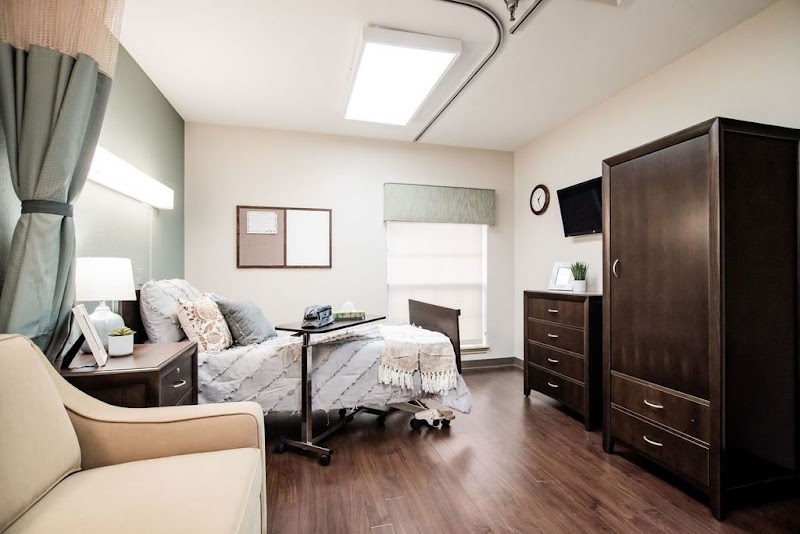
How is The Woodlands Healthcare Center Staffed?

CMS rates The Woodlands Healthcare Center's staffing level at 2 out of 5 stars, which is below average compared to other nursing homes. Staff turnover is 55%, compared to the Texas average of 46%. RN turnover specifically is 56%, which is notably high. RNs provide skilled clinical oversight, so turnover in this role can affect medical care quality.

What Have Inspectors Found at The Woodlands Healthcare Center?

State health inspectors documented 19 deficiencies at The Woodlands Healthcare Center during 2022 to 2025. These included: 1 Immediate Jeopardy (the most serious level, indicating potential for serious harm or death) and 18 with potential for harm. Immediate Jeopardy findings are rare and represent the most serious regulatory concerns. They require immediate corrective action.

Who Owns and Operates The Woodlands Healthcare Center?

The Woodlands Healthcare Center is owned by a non-profit organization. Non-profit facilities reinvest revenue into operations rather than distributing to shareholders. The facility is operated by WELLSENTIAL HEALTH, a chain that manages multiple nursing homes. With 214 certified beds and approximately 159 residents (about 74% occupancy), it is a large facility located in The Woodlands, Texas.

How Does The Woodlands Healthcare Center Compare to Other Texas Nursing Homes?

Compared to the 100 nursing homes in Texas, The Woodlands Healthcare Center's overall rating (3 stars) is above the state average of 2.8, staff turnover (55%) is near the state average of 46%, and health inspection rating (2 stars) is below the national benchmark.

What Should Families Ask When Visiting The Woodlands Healthcare Center?

Based on this facility's data, families visiting should ask: "What changes have been made since the serious inspection findings, and how are you preventing similar issues?" "Can you walk me through typical staffing levels on day, evening, and night shifts?" "Can I visit during a mealtime to observe dining assistance and food quality?" "How do you handle medical emergencies, and what is your hospital transfer rate?" These questions are particularly relevant given the facility's Immediate Jeopardy citations and the below-average staffing rating.

Is The Woodlands Healthcare Center Safe?

Based on CMS inspection data, The Woodlands Healthcare Center has documented safety concerns. Inspectors have issued 1 Immediate Jeopardy citation (the most serious violation level indicating risk of serious injury or death). The facility has a 3-star overall rating and ranks #1 of 100 nursing homes in Texas. Families considering this facility should ask detailed questions about what corrective actions have been taken since these incidents.

Do Nurses at The Woodlands Healthcare Center Stick Around?

The Woodlands Healthcare Center has a staff turnover rate of 55%, which is 9 percentage points above the Texas average of 46%. Moderate turnover is common in nursing homes, but families should still ask about staff tenure and how the facility maintains care continuity when employees leave.

Was The Woodlands Healthcare Center Ever Fined?

The Woodlands Healthcare Center has been fined $14,765 across 1 penalty action. This is below the Texas average of $33,227. While any fine indicates a compliance issue, fines under $50,000 are relatively common and typically reflect isolated problems that were subsequently corrected. Families should ask what specific issues led to these fines and confirm they've been resolved.

Is The Woodlands Healthcare Center on Any Federal Watch List?

The Woodlands Healthcare Center is not on any federal watch list. The most significant is the Special Focus Facility (SFF) program, which identifies the bottom 1% of nursing homes nationally based on persistent, serious quality problems. Not being on this list means the facility has avoided the pattern of deficiencies that triggers enhanced federal oversight. This is a positive indicator, though families should still review the facility's inspection history directly.