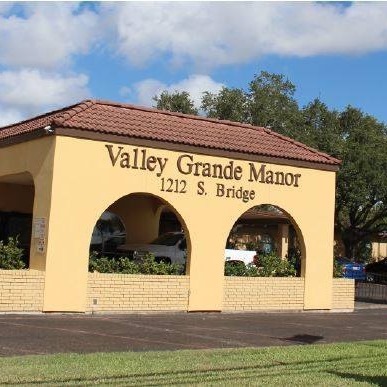

Valley Grande Manor

1212 S Bridge, Weslaco, TX 78596 (956) 968-2121
For profit - Corporation 147 Beds BOOKER HOSPITAL DISTRICT Data: November 2025 4 Immediate Jeopardy citations
Trust Grade
0/100
#1146 of 1168 in TX
Last Inspection: May 2024

Within standard 12-15 month inspection cycle. Federal law requires annual inspections.

Overview

Valley Grande Manor has received a Trust Grade of F, indicating significant concerns about the quality of care provided. Ranked #1146 out of 1168 facilities in Texas, they are in the bottom half of all nursing homes in the state and at the bottom of the list in Hidalgo County. Although the facility is showing improvement in terms of fewer issues reported over the past year, with a decrease from 13 to 10 problems, the overall situation remains troubling. Staffing is a weak point, with only 1 out of 5 stars and concerningly low RN coverage compared to other Texas facilities, which raises alarms about potential gaps in care. Specific incidents include a failure to protect residents from abuse, where one resident physically assaulted others multiple times, and a critical failure to notify medical staff about a resident's condition, which led to a risk of delayed medical treatment. While the turnover rate is slightly below average at 49%, the overall picture still raises serious concerns for families considering this facility.

Trust Score
F
0/100
In Texas
#1146/1168
Bottom 2%
Safety Record
High Risk
Review needed
Inspections
Getting Better
13 → 10 violations
Staff Stability
⚠ Watch
49% turnover. Above average. Higher turnover means staff may not know residents' routines.
Penalties
✓ Good
$79,357 in fines. Lower than most Texas facilities. Relatively clean record.
Skilled Nurses
⚠ Watch
Each resident gets only 5 minutes of Registered Nurse (RN) attention daily — below average for Texas. Fewer RN minutes means fewer trained eyes watching for problems.
Violations
⚠ Watch
35 deficiencies on record. Higher than average. Multiple issues found across inspections.
★☆☆☆☆
1.0
Overall Rating
★☆☆☆☆
1.0
Staff Levels
★★☆☆☆
2.0
Care Quality
★☆☆☆☆
1.0
Inspection Score
Stable
2024: 13 issues
2025: 10 issues

The Good

  • Full Sprinkler Coverage · Fire safety systems throughout facility
  • No fines on record

Facility shows strength in fire safety.

The Bad

1-Star Overall Rating

Below Texas average (2.8)

Significant quality concerns identified by CMS

Staff Turnover: 49%

Near Texas avg (46%)

Higher turnover may affect care consistency

Federal Fines: $79,357

Well above median ($33,413)

Moderate penalties - review what triggered them

Chain: BOOKER HOSPITAL DISTRICT

Part of a multi-facility chain

Ask about local staffing decisions and management

The Ugly 35 deficiencies on record

4 life-threatening 2 actual harm
Jul 2025 1 deficiency 1 IJ (1 affecting multiple)
CRITICAL (K) 📢 Someone Reported This

A family member, employee, or ombudsman was alarmed enough to file a formal complaint

Immediate Jeopardy (IJ) - the most serious Medicare violation

Free from Abuse/Neglect (Tag F0600)

Someone could have died · This affected multiple residents

**NOTE- TERMS IN BRACKETS HAVE BEEN EDITED TO PROTECT CONFIDENTIALITY** Based on observation, interview, and record review, the facility failed to protect the residents' right to be free from were ver...

Read full inspector narrative →
**NOTE- TERMS IN BRACKETS HAVE BEEN EDITED TO PROTECT CONFIDENTIALITY** Based on observation, interview, and record review, the facility failed to protect the residents' right to be free from were verbal and physical abuse by a resident for 6 of 6 residents (Residents #5, #71, #82, #88, #95, #99) reviewed for abuse, in that: 1.The facility failed to ensure Resident #71 was free abuse when Resident #88 hit Resident #71 on the head on 01/24/25. 2. The facility failed to ensure Resident #71 was free from abuse when Resident #88 had a physical altercation with Resident #71 on 04/05/25. 3. The facility failed to ensure Resident #82, and Resident #99 were free from abuse when Resident #88 had a physical altercation with Resident #82 and Resident #99 on 06/04/25. 4.The facility failed to ensure Resident #5 was free from abuse when Resident #88 entered Resident #5's room and attempted to pull Resident #5 from her wheelchair on 06/22/25. 5.The facility failed to ensure Resident #95 was free from abuse when Resident #88 went up to Resident #95 and attempted to remove her from her wheelchair. Resident #88 shook Resident #95 and then slapped her on the side of her head on 06/28/25. An IJ that occurred in the past was identified. The IJ began on 01/24/25 and removed on 06/28/25. The facility took action to remove the IJ before survey began. While the IJ was removed on 06/28/25, the facility remained out of compliance at a scope of pattern and a severity level of no actual harm with a potential for more than minimal harm because all staff had not been trained on abuse/neglect. This failure has the potential to result in serious injury or death as a result of abuse and neglect. 1. Record review of Resident #88's Face Sheet dated 07/24/25 revealed she was a [AGE] year-old female admitted to facility on 10/24/24 with diagnoses of Alzheimer's disease (a progressive disease that destroys the memory and other important mental functions), anxiety disorder, unspecified psychosis (a mental health condition characterized by a loss of contact with reality, often involving symptoms like hallucinations and delusions), and major depressive disorder, recurrent, severe with psychotic symptoms. Record review of Resident #88's quarterly MDS dated [DATE] revealed Resident #88 was usually understood by others and usually was able to understand others. She had a BIMS score of 02 which indicated severe cognitive impairment. Resident had physical behavioral symptoms directed toward others (hitting, kicking, scratching, grabbing), verbal behavioral symptoms directed toward others (screaming at others, cursing at others) and other behavioral symptoms not directed toward others (physical symptoms such as hitting, pacing, rummaging or verbal symptoms like screaming, disruptive sounds). Record review of Resident #88's comprehensive care plan revised on 05/28/25 revealed Resident #88 has been physically aggressive (hitting staff or other resident) r/t dementia: 01/24/25 - Resident became physically aggressive toward another resident The care plan included the following interventions:-When resident becomes agitated: intervene before agitation escalates; guide away from source of distress; engage calmly in conversation; if response is aggressive, staff to walk away calmly and approach later. Record review of Resident #88's Physician's Order Summary for July 2025 revealed orders for: --Gabapentin oral capsule 100 mg, give two capsules by mouth three times a day related to emotional lability, order date 06/09/25.Haldol Decanoate intramuscular solution 50 mg/ml, inject 50 mg intramuscularly monthly starting on the 10th and ending on the 10th every month for agitation, order date 07/06/25 and start date on 07/10/25.Latuda oral tablet 20 mg, give 1 tablet by mouth two times a day related to major depressive disorder, recurrent, severe with psychotic symptoms, order date 06/11/25 and start date 06/12/25.Zyprexa oral tablet 5 mg (Olanzapine), give 5 mg by mouth two times a day related to unspecified psychosis, order date 06/13/14 and start date 06/14/25. Record review of Resident #88's progress notes dated from 06/28/25 to 07/25/25 revealed Resident #88 was put on a continuous one-to-one monitoring until Resident #88 was admitted to a facility in San [NAME]. Record review of Resident #71's Face Sheet dated 07/24/25 indicated she was [AGE] year-old female admitted to the facility on [DATE] with diagnoses of Alzheimer's disease (a progressive disease that destroys memory and other important mental functions.), anemia (a problem in which the blood does not have enough healthy blood cells to carry oxygen to throughout the body), and hypertension (when the blood pressure in the blood vessels is too high). Record review of Resident #71 quarterly MDS dated [DATE] indicated Resident #71 was understood by others, and was able to understand others, did not have any behaviors, and had a BIMS score of 05 which indicated she had moderate cognitive impairment. Record review of facility's Provider Investigation Report dated 01/24/25 revealed Incident date and time: 01/24/25 at 4:00 pm. Nurse Aide saw Resident #88 go hit Resident #71's in the back of the head and pull her hair. Record review of the Provider Action Taken Post Investigation dated 01/24/25: Head to toe assessment performed on 01/24/25 for Resident #71 revealed no other visible injuries noted. Employees were in-serviced on resident-to-resident abuse and resident de-escalation techniques. Social Services did resident safe interviews. Resident behaviors care planned. Staff will keep both residents apart when in close proximity or when doing social activities. Care Plans for both residents updated. Observation of 07/21/25 at 9:32 am revealed Resident #88 in bed on her side with the lights off and a CNA in the room. Resident #88 was still in her pajamas and shoes on. Resident #88 did not respond to greeting and questions regarding incident with Resident #71. In an interview on 07/21/25 9:57 am CNA K said Resident #88 was able to walk and wandered throughout the building, but they had to shadow her to prevent aggressive behaviors toward other residents. If resident was on her own, she would fight with other residents. CNA K said Resident #88 cried a lot and the other residents became impatient with her and then she became aggressive. CNA K said when resident was on her own in her room, she was ok. CNA K said if they gave her colors and pages to color, she would do it. 2. Record review of Incident Report dated 04/05/25 revealed Resident #88 hit Resident #71 on her back and took some coloring pages from her. Resident #88 was separated from Resident #71. Head to toe evaluation of both residents by LVN revealed no injuries to either resident. Record review of Resident #88's care plan was revised on 04/08/25 to include incident on 04/05/25 with aggressive behavior with interventions to monitor for sundowning behavior, continue sertraline100 mg daily (antidepressant), follow up counseling and psych recommendations and monitor behavior. Record review of Psychiatric Progress Note dated 04/24/25 by NP revealed Resident #88 was tearful, confused and wanted to go home to see her mother and father. Patient has many altercations with female residents. The NP last saw Resident #88 on 04/24/25. 3. Record review of Resident #82's Face Sheet dated 07/24/24 revealed Resident #82 was a [AGE] year-old female admitted to facility on 10/24/24 with diagnoses of unspecified dementia (progressive or persistent loss of intellectual functioning), muscle wasting and atrophy, and muscle weakness. Record review of Resident #82's Quarterly MDS dated [DATE] revealed Resident #82 was usually understood by others, and usually understands others, BIMS of 03, and does not have behaviors and was able to ambulate independently. Record review of Resident #82's care plan dated 06/05/25 revealed Resident #82 has a behavior problem (labile moods) r/t dementia. On 06/04/25 Resident had altercation withanother female resident (#88) and grabbed the other female (88) by her shirt and other resident (#88) lost her balance and fell. Interventions included administer medications as ordered, monitor/document for side effects and effectiveness. Explain/reinforce why behaviors are inappropriate and/or unacceptable. Record review of Resident #99's Face Sheet dated 06/10/25 revealed Resident #99 was an [AGE] year-old female admitted to the facility on [DATE] with diagnoses of muscle wasting and atrophy, anxiety disorder, and major depressive disorder. Record review of facility's Provider Investigation Report revealed Incident Date/Time: 06/04/24 at 7:45 pm. Resident #88 was attempting to grab another female resident (#99) and Resident #82 started yelling at Resident #88 to stop harassing the other resident. Resident #88 then went towards Resident #82. Resident #82 grabbed Resident #88 by her shirt and Resident #88 was not able to keep her balance and fell landing on her right lateral side. Nurse aide ran toward altercation but was not able to stop Resident #88 from falling. Resident #88 suffered a small cut to her right eyebrow, no other visible injuries noted. Resident #88 sent to ER for further evaluation per physician's orders. Record review of Health Status Note dated 06/04/25 at 11:09 pm revealed Resident #88 returned from the ER with swelling to right eye and light purple discoloration due to fall. Dermabond was applied to laceration for closure. CT was negative. Resident will be on neuro checks due to fall. Bed at lowest position with call light within reach. Record review of facility's Provider Investigation Report revealed Incident Date/Time:06/07/25 at 8:29 am. Resident #88 was in the dining room and attempted to assist Resident #5 in the wheelchair. Resident #5 said she did not want the assistance. Resident #88 became aggressive and pulled Resident #5's hair. The residents were separated and both Residents were taken to their rooms. Both Residents were assessed by LVN N. After the altercation Resident #88 was taken to the nurse's station for the remainder of the shift.Investigation Summary: After investigation it was determined Resident #82 attempted to stop Resident #88 from harassing another resident and Resident #88 lunged at Resident #82. Resident #82 grabbed Resident #88 by the shirt and Resident #88 lost her balance. The NP, family and the police were notified of the incident. Provider action taken post-investigation: Performed resident interviews and Follow-up with the psych NP as needed. In an interview on 07/21/25 at 12:54 pm Resident #82 said she did not fight with anyone, and she did not recall any incidents when another Resident tried to hit her. Resident #82 said she kept to herself and participated in her own activities. In an interview on 07/22/25 at 4:28 pm CNA J said she was walking toward the nurse's station when she saw Resident #82 pull Resident 88's shirt and push her toward the floor. CNA said Resident #88 must have done something to Resident #82 because Resident #82 did not usually fight. CNA J said the CNA in front of her ran toward Resident #88 and then asked her to get the nurse. CNA J said she went to look for the nurse, but he was providing care to a resident, and he asked CNA J to get the nurse from the back hall. CNA J said she went to get LVN N and then LVN N went and attended to Resident #88. Observation on 07/23/25 at 12:55 pm revealed Resident #88 was walking up A [NAME] Wing. CNA S was holding Resident #88's hand as they ambulated through the hallway. 07/23/25 1:25 pm CNA S said he had been on a one to one with Resident #88 since 07/22/25 through 07/25/25. CNA S said Resident #88 was on a one-to-one monitoring for the 2-10 shift. CNA S said he went everywhere Resident #88 went. CNA S said if Resident #88 became aggressive with another resident, he would intervene and if necessary, would get between the two residents so she would not hit the other resident. He would redirect Resident #88 toward another direction and keep walking with her. 4. Record review of Resident #5 Face Sheet dated 06/10/25 revealed Resident #5 was a [AGE] year-old female admitted to the facility on [DATE] with diagnoses of hemiplegia (weakness to one side of the body) and hemiparesis (weakness to one side of the body), muscle wasting and atrophy, and unspecified dementia. Record review of Resident #5's quarterly MDS dated [DATE] revealed Resident #5 was sometimes understood by others, usually understood others, had a BIMS of 08 indicating she had moderate cognitive impairment and did not have any behaviors and required substantial/maximal assistance with her ADLs. Record review of facility's Provider Investigation Report dated 06/22/25 revealed Incident date and time: 06/22/25 at 7:20 pm. Nurse Aide saw Resident #88 go into Resident #5's room. Nurse Aide followed her into the room. Nurse Aide saw that Resident #88 was attempting to get Resident #5 out of her wheelchair while she was in it. Resident #5 shoved/pushed Resident #88 with her right hand (arm in splint) causing Resident #88 to re-open her wound to her right eyebrow. Nurse Aide immediately separated residents. Head to toe assessments performed by LVN R for both residents. Resident #88 re-opened wound to right eyebrow, no other visible injuries noted. Notified MD/RP/Administrator. Reported to police. Self-report to HHSC.Resident #88 had Latuda (aggression) increased on 06/12/25 to BID and Zyprexa (antipsychotic) 5mg BID on 06/14/25. Provider Action Taken Post-investigation: 06/22/25 Charge nurse placed her WOW in front of resident's room throughout the rest of shift and 10-6 shift. 5.Record review of Resident #95's Face Sheet dated 07/24/25 revealed Resident #95 was a [AGE] year-old female admitted to the facility on [DATE] with diagnoses of unspecified dementia, muscle wasting and atrophy, muscle weakness, and Parkinson's Disease (a progressive neurodegenerative disorder that primarily affects movement). Record review of Resident #95's quarterly MDS dated [DATE] revealed Resident #95 is usually understood by others, usually able to understand others, has a BIMS of 00 meaning she has severe cognitive impairment and does not have any behaviors. Record review of Resident #95's comprehensive care plan dated 07/29/20 revealed Resident #95 requires staff assistance with ADLs due to diagnosis of Parkinson's at risk for decline in ADL function. Record review of Resident #95's progress note dated 06/28/25 at 10:50 am revealed late entry: Resident A came up to resident during service, shook this resident, and slapped resident on the side of the head. Resident A was immediately stopped and separated was sent to her room. Record review of facility's Provider Investigation Report revealed Resident #88 came up to Resident #95 who was sitting in her wheelchair during service, shook resident and slapped resident on the side of her head. Resident #88 was immediately stopped and separated, went back to her room with nurse.Head to toe assessment performed by nurse (Resident #95).Provider Response:Resident (#88) was placed on a one-to-one, family came to stay with her for 1-2 hours. Labs ordered UA to rule out UTI, and CBC, CMP to rule out any infection. Reported it to police with case number 25-16894. Started abuse and neglect in-service. Resident continues on psych services with medication adjustments.Provider Action Taken Post-investigationStarted looking for other facility placement for resident. Given 30-day notice. Safety survey done, continue with 1 to 1 monitoring. Record review of Resident#88's electronic medical record dated 06/28/25 through 07/25/25 revealed Resident #88 was on a one-to-one monitoring all three shifts. A CNA is with Resident #88 at all times. Observation on 07/21/25 at 9:07 am revealed Resident #95 was in her room sitting in her wheelchair. Resident #95 had tremors in her head and hands. Resident #95 was talking to herself. Surveyor attempted to interview Resident #95, but she has garbled speech and was difficult to understand. In an interview on 07/22/25 at 3:25 pm Resident #60 said she was in the dining room when she saw Resident #88 approach Resident #95. Resident #88 was yelling at Resident #95 and then she shook Resident #95. Resident #60 said then she saw Resident #88 slap Resident #95 on the face. Resident #60 said the staff intervened and took Resident #88 to her room. Resident #60 said the police were called and interviewed her, but nothing was done because the police said Resident #88 had dementia. In an interview on 07/22/25 at 5:28 pm CNA L said Resident #88 would walk around the facility. CNA L said Resident #88 was currently on a one-to-one because she was in an altercation with another resident. Resident #88 slapped another resident and was put on a one to one. Before being on a one-to-one Resident #88 would wander into different rooms and they would have to redirect her before she got upset and started a fight with a resident. They have in-services on ANE every month. CNA L said if she witnessed any person abusing a resident she would intervene and then make sure resident was safe. CNA said she would report it to her supervisor. The Abuse Coordinator was the Administrator.In an interview on 07/22/25 at 5:41 pm LVN E said he worked PRN for 2 or 3 months. LVN said he was familiar with Resident #88. LVN said Resident #88 needed a lot of redirections. LVN E said if someone got in her way, she became upset. If it was a person in a wheelchair, Resident #88 would try to push them around because she thought she was helping them. LVN E said they tried to verbally deescalate the situation and redirect Resident #88. Usually if they offered food, drink, or candy it would help redirect Resident #88 from the situation. LVN E said they also had her at the nurse's station with the nurse. Resident would stay a while then would get up again. Resident #88 was currently on a one to one in her room. Resident was allowed to come out and walk around the facility with the sitter following Resident #88. LVN E said they have in-services on abuse/neglect monthly. In an interview on 07/23/25 at 5:00 pm, the Psychiatric NP said she had not seen Resident #88 since April. The NP said she did not know that Resident #88 was on more than one antipsychotic. Surveyor asked NP what the behavioral plan for Resident #88 was and she said they had to rule out medical issues, see if something physiologically was causing the behaviors. The NP said then they could prescribe medications at a medium dose and see how the resident was doing on them. Then they needed to see if the resident's family was supportive of resident taking the medications. The NP said the resident could benefit with psychological counseling.In an interview on 07/24/25 at 4:40 pm the Administrator said his responsibility was to know what was going on in the facility. The Administrator said they had morning meetings, and, in the afternoon, they had stand down meetings. They discussed any concerns regarding resident care or grievances from families. The Administrator said they educated staff on the need to report any and all abuse. They tell staff that they needed to report abuse and if they did not report it then they were just as guilty as the person abusing a resident. They would investigate all incidents and reported any incident that could be considered abuse, neglect, or misappropriation. The Administrator said Resident #88 had been getting aggressive more often and that was the reason they had provided a 30-day discharge notice to the family. Resident #88 has been seen by a psychiatric NP and was put on a one-to-one monitoring since 06/28/25. Record review of Resident #88's 30-day notice of discharge revealed the Notice of Involuntary Transfer or Discharge and Opportunity for Appeal was provided to Resident #88's Responsible Party on 07/07/25. The notice indicated the reason for the notice was This discharge, or transfer is necessary for your welfare because your needs can not be met in this facility, as documented in your clinical record by your physician. 42C.F.R.S483.15(C)(1)(A); 40 Tex. Admin. Code 19.502(b)(1).In an interview on 07/07/25 at 8:56 am LVN A has been employed about three months. LVN A said her responsibilities were to make sure the residents were safe, and their needs were met. LVN A said she would report to the physician any change of condition to the residents and make sure the labs were done and results sent to physician. LVN A said she also supervises the CNAs to make sure they were treating residents kindly and interacting with them gently. They have in-services on abuse/neglect frequently and there was a resident on the other side of the hall that has behaviors and would fight with other residents. They would have an in-service on abuse/neglect after each incident. They had an in-service on abuse/neglect last week. The abuse Coordinator was the Administrator. LVN A said if a resident hit another resident that was considered abuse. LVN A said the residents needed to be separated and assessed for injuries. Then she would document and would report any change in condition to the RP, physician, DON and the Administrator. LVN A said an aggressive resident needs to be monitored frequently. LVN A said she would contact the physician, and they might give orders for an antipsychotic medication, call the RP to inform of the incident and request consent before administering the medication.In an interview on 07/25/25 at 9:56 am CNA M said her responsibilities were to attend to the resident's needs. Whatever the resident needs she would attend to them. CNA M said they would check on a resident with aggressive behavior or wandering into other resident room often. CNA M said they would offer snacks or give Resident #88 activities to do. CNA M said Resident #88 liked to push the residents in the wheelchairs but when resident would refuse the help Resident #88 would get mad. CNA M said they would redirect her by telling her Let's go to the dining room for coffee or let's go do an activity then the resident would go with her. Resident #88 liked coloring, and they would provide coloring pages and crayons. Resident #88 would be taken to the Activity room, and she would sit there to color pages. The nurses also kept her at the nurse's station with them. CNA M said the types of abuse were physical verbal, sexual and when a resident asked them to be showered, or for water and the staff ignored the resident then that was neglect. CNA M said if she saw a resident being abused, she would separate the resident from that person and then she would report it to her supervisor. The Administrator was the Abuse Coordinator. CNA M said she would report the abuse right away. In an interview on 07/25/25 at 10:12 am the SW said Resident #88 needed redirection by distracting resident to do something else. The SW said she would take Resident #88 to her office and gave her a pen, notebook, and a snack. Resident #88 would finish eating the cookie and she would want to get up and leave. The SW said she tried to get resident to write in a notebook, but she would only write for a few seconds and then would get up and walk away. The SW said it was constant redirections. SW said Resident #88 had a short attention span of a few seconds. Resident #88 had difficulty focusing on a task and following directions. Directions had to be broken down in small steps. The SW said the family did attend the care plan meeting via phone and lately in the facility. The last care plan meeting was at the facility. The daughter came in with the Ombudsman. The SW said the daughter was informed of the incidents Resident #88 had with other residents. The family was fine with whatever medications the doctor prescribed. The facility asked that the family to come more often to stay with resident, but they did not come very often. The SW said the DON made a power point in-service on dementia. It addressed the medical and personal effects of dementia and the different types of behaviors. The SW said Resident #88 was sent to the hospital on [DATE] to be cleared medically and then sent to the behavioral center to be stabilized. Resident #88 would then be sent to a long-term care facility in San [NAME] with a memory unit. In an interview on 07/25/25 at 10:54 am the DON said when a resident was identified with behaviors, they would monitor the resident by keeping her close to a nurse or with the DON in her office. They encouraged the resident to be taken to activities and for the family to visit her. The DON said they would ask resident if she wanted to go color. Redirection was used for the resident to do tasks or activities that she liked doing. Maybe make a bed, fold clothes, or color pages. The DON said they needed to be able to find the triggers that sets Resident #88 off. DON said she asked the daughter, but the daughter said Resident #88 did not have any triggers. DON said the daughter was not able to help them find what caused the resident's aggression. She would do an in-service on whatever the incident was about. If it was abuse/neglect or misappropriation she would train staff on it. The DON said she had conducted a presentation earlier this year on dementia and behaviors. The DON said they did train on abuse/neglect monthly and whenever there was an incident. The DON said Resident #88 was discharged to the hospital to clear her medically before she was sent to the Behavioral Center. Record review of her Immediate Discharge Notice dated 07/24/25 with Effective Date of Discharge 07/24/25 and the reason was for the health and safety of resident or others and the location was to a local hospital. Based on observation, interview, and record review, the facility failed to protect the residents' right to be free from were verbal and physical abuse by a resident for 6 of 6 residents (Residents #5, #71, #82, #88, #95, #99) reviewed for abuse, in that: 1.The facility failed to ensure Resident #71 was free abuse when Resident #88 hit Resident #71 on the head on 01/24/25. 2. The facility failed to ensure Resident #71 was free from abuse when Resident #88 had a physical altercation with Resident #71 on 04/05/25. 3. The facility failed to ensure Resident #82, and Resident #99 were free from abuse when Resident #88 had a physical altercation with Resident #82 and Resident #99 on 06/04/25. 4.The facility failed to ensure Resident #5 was free from abuse when Resident #88 entered Resident #5's room and attempted to pull Resident #5 from her wheelchair on 06/22/25. 5.The facility failed to ensure Resident #95 was free from abuse when Resident #88 went up to Resident #95 and attempted to remove her from her wheelchair. Resident #88 shook Resident #95 and then slapped her on the side of her head on 06/28/25. An IJ that occurred in the past was identified. The IJ began on 01/24/25 and removed on 06/28/25. The facility took action to remove the IJ before survey began. While the IJ was removed on 06/28/25, the facility remained out of compliance at a scope of K and a severity level of no actual harm with a potential for more than minimal harm because all staff had not been trained on abuse/neglect. This failure has the potential to result in serious injury or death as a result of abuse and neglect. The findings were: 1. Record review of Resident #88's Face Sheet dated 07/24/25 revealed she was a [AGE] year-old female admitted to facility on 10/24/24 with diagnoses of Alzheimer's disease (a progressive disease that destroys the memory and other important mental functions), anxiety disorder, unspecified psychosis (a mental health condition characterized by a loss of contact with reality, often involving symptoms like hallucinations and delusions), and major depressive disorder, recurrent, severe with psychotic symptoms. Record review of Resident #88's quarterly MDS dated [DATE] revealed Resident #88 was usually understood by others and usually was able to understand others. She had a BIMS score of 02 which indicated severe cognitive impairment. Resident had physical behavioral symptoms directed toward others (hitting, kicking, scratching, grabbing), verbal behavioral symptoms directed toward others (screaming at others, cursing at others) and other behavioral symptoms not directed toward others (physical symptoms such as hitting, pacing, rummaging or verbal symptoms like screaming, disruptive sounds). Record review of Resident #88's comprehensive care plan revised on 05/28/25 revealed Resident #88 has been physically aggressive (hitting staff or other resident) r/t dementia: 01/24/25 - Resident became physically aggressive toward another resident The care plan included the following interventions:-When resident becomes agitated: intervene before agitation escalates; guide away from source of distress; engage calmly in conversation; if response is aggressive, staff to walk away calmly and approach later. Record review of Resident #88's Physician's Order Summary for July 2025 revealed orders for: --Gabapentin oral capsule 100 mg, give two capsules by mouth three times a day related to emotional lability, order date 06/09/25.Haldol Decanoate intramuscular solution 50 mg/ml, inject 50 mg intramuscularly monthly starting on the 10th and ending on the 10th every month for agitation, order date 07/06/25 and start date on 07/10/25.Latuda oral tablet 20 mg, give 1 tablet by mouth two times a day related to major depressive disorder, recurrent, severe with psychotic symptoms, order date 06/11/25 and start date 06/12/25.Zyprexa oral tablet 5 mg (Olanzapine), give 5 mg by mouth two times a day related to unspecified psychosis, order date 06/13/14 and start date 06/14/25. Record review of Resident #88's progress notes dated from 06/28/25 to 07/25/25 revealed Resident #88 was put on a continuous one-to-one monitoring until Resident #88 was admitted to a facility in San [NAME]. Record review of Resident #71's Face Sheet dated 07/24/25 indicated she was [AGE] year-old female admitted to the facility on [DATE] with diagnoses of Alzheimer's disease (a progressive disease that destroys memory and other important mental functions.), anemia (a problem in which the blood does not have enough healthy blood cells to carry oxygen to throughout the body), and hypertension (when the blood pressure in the blood vessels is too high). Record review of Resident #71 quarterly MDS dated [DATE] indicated Resident #71 was understood by others, and was able to understand others, did not have any behaviors, and had a BIMS score of 05 which indicated she had moderate cognitive impairment. Record review of facility's Provider Investigation Report dated 01/24/25 revealed Incident date and time: 01/24/25 at 4:00 pm. Nurse Aide saw Resident #88 go hit Resident #71's in the back of the head and pull her hair. Record review of the Provider Action Taken Post Investigation dated 01/24/25: Head to toe assessment performed on 01/24/25 for Resident #71 revealed no other visible injuries noted. Employees were in-serviced on resident-to-resident abuse and resident de-escalation techniques. Social Services did resident safe interviews. Resident behaviors care planned. Staff will keep both residents apart when in close proximity or when doing social activities. Care Plans for both residents updated. Observation of 07/21/25 at 9:32 am revealed Resident #88 in bed on her side with the lights off and a CNA in the room. Resident #88 was still in her pajamas and shoes on. Resident #88 did not respond to greeting and questions regarding incident with Resident #71. In an interview on 07/21/25 9:57 am CNA K said Resident #88 was able to walk and wandered throughout the building, but they had to shadow her to prevent aggressive behaviors toward other residents. If resident was on her own, she would fight with other residents. CNA K said Resident #88 cried a lot and the other residents became impatient with her and then she became aggressive. CNA K said when resident was on her own in her room, she was ok. CNA K said if they gave her colors and pages to color, she would do it. 2. Record review of Incident Report dated 04/05/25 revealed Resident #88 hit Resident #71 on her back and took some coloring pages from her. Resident #88 was separated from Resident #71. Head to toe evaluation of both residents by LVN revealed no injuries to either resident. Record review of Resident #88's care plan was revised on 04/08/25 to include incident on 04/05/25 with aggressive behavior with interventions to monitor for sundowning behavior, continue sertraline100 mg daily (antidepressant), follow up counseling and psych recom
Jun 2025 4 deficiencies 2 Harm
SERIOUS (G) 📢 Someone Reported This

A family member, employee, or ombudsman was alarmed enough to file a formal complaint

Actual Harm - a resident was hurt due to facility failures

Free from Abuse/Neglect (Tag F0600)

A resident was harmed · This affected 1 resident

**NOTE- TERMS IN BRACKETS HAVE BEEN EDITED TO PROTECT CONFIDENTIALITY** Based on record review and interview, the facility failed to ensure residents were free from neglect for 1 (Resident #1) of 5 re...

Read full inspector narrative →
**NOTE- TERMS IN BRACKETS HAVE BEEN EDITED TO PROTECT CONFIDENTIALITY** Based on record review and interview, the facility failed to ensure residents were free from neglect for 1 (Resident #1) of 5 residents reviewed for abuse/neglect, in that: The facility failed to ensure Resident #1, who required 2 or more staff per her care plan was provided with the appropriate number of staff while in the shower chair. As a result, the resident had a fall when she was left unattended and sustained a broken toe. This failure could place residents at risk of emotional distress, fear, decreased quality of life, and further neglect. Findings included: Record review of Resident #1's admission record revealed she was an [AGE] year-old female with an admission date of 01/13/21. Diagnoses included dementia (the loss of cognitive functioning - thinking, remembering, and reasoning - to such an extent that it interferes with a person's daily life and activities), stroke, type 2 diabetes mellitus, epilepsy (seizure disorder), and hypertension (high blood pressure). Record review of Resident #1's Quarterly MDS on 01/03/25 revealed: -A BIMS of 03 which indicated severe cognitive impairment. -Shower/bathe: Dependent (Helper does ALL of the effort. Resident does none of the effort to complete the activity Or, the assistance of 2 or more helpers is required for the resident to complete the activity). -TRANSFER: The resident is dependent on (2) staff for transferring Dependent (Helper does ALL of the effort. Resident does none of the effort to complete the activity Or, the assistance of 2 or more helpers is required for the resident to complete the activity). Record review of Resident #1's Care Plan dated 01/03/2025, revealed: FOCUS: -Resident #1 has an ADL self-care performance deficit r/t Confusion, Dementia, Impaired balance, seizure disorder, CVA with left hemiplegia (paralysis affecting only one side of the body) Date Initiated: 01/14/2021 GOALS: -Will be clean/dry, well groomed, appropriately dressed and well nourished on a daily basis through next review. Date Initiated: 01/14/2021 Target Date: 02/03/2025 o The resident will maintain current level of function in (ADLs) through the review date. Date Initiated: 01/14/2021 INTERVENTIONS/TASKS: -Functional Limitation in Range of Motion -Upper extremity (Impairment on one side) -Lower extremity (Impairment on one side) Date Initiated: 10/20/2023 CNA RN LVN -GG (Section on MDS) Shower bathe: 2 personal Hygiene: 2 Date Initiated: 01/08/2024 Revision on: 05/10/2024 CNA -Tub/shower transfer: Dependent 01 RN LVN Date Initiated: 10/20/2023 Revision on: 08/13/2024 -The resident requires the use of Geri Chair when OOB Date Initiated: 04/28/2021 RN LVN CNA -BATHING/SHOWERING: The resident is dependent by (1) staff with (Bathing) (QOD) and as necessary. Date Initiated: 01/22/2021 Revision on: 12/20/2022 CNA RN -TRANSFER: The resident is dependent on (2) staff for transferring Date Initiated: 01/14/2021 Revision on: 10/20/2023 CNA RN -TRANSFER: The resident requires Mechanical HOYER Lift with (X2) staff assistance for transfers. Date Initiated: 01/14/2021 Revision on: 04/26/2024 CNA RN FOCUS: Resident #1 is at risk for falls r/t poor safety awareness d/t dementia Date Initiated: 01/14/2021 GOALS: - The resident will not sustain serious injury through the review date. Date Initiated: 01/14/2021 Target Date: 07/29/2025 INTERVENTIONS/TASKS: - Monitor closely during care rounds to ensure safety. Date Initiated: 01/14/2021 Revision on: 01/14/2021 Record review of x-rays taken on 02/05/25 of right foot and results on 02/05/25 revealed: -IMPRESSION: Acute fractures of the great toe at the base and the P1 segment and first metatarsal at the base (first bone just behind the big toe. The thickest and strongest of the bones in the toe). -IMPRESSION: Acute fractures of the great toe at the base and the P1 segment and first metatarsal at the base (first bone just behind the big toe. The thickest and strongest of the bones in the toe). Record review of Resident #1's Progress Note on 02/05/25 at 10:42 am written by LVN B revealed, SN was called into Resident #1's room to inform of fall. SN questioned Resident #1 on how she fell. Resident #1 was unable to provide an answer and only repeating No se (I do not know). SN assessed Resident #1. Resident #1 had a laceration to top lip and discoloration to right foot. Resident #1 complained of pain to (right) foot, PRN analgesic was administered. Record review of Progress Note on 02/06/25 at 05:11 am written by LVN H revealed, LVN H noticed Resident #1 tossing and turning. LVN H asked Resident #1 if she had any pain. Resident #1 said, Si, me duele mi pie (Yes, my foot has pain). LVN H administered PRN acetaminophen 650mg as ordered. Record review on 02/06/25 Physician's order for Tramadol 50mg tablet Give 50mg tablet by mouth every 4 hours for pain for 14 days. Record review of Progress Note on 02/06/25 at 09:07 am written by LVN B revealed, new order for PRN tramadol 50mg x 14 days and referral to orthopedics (branch of medicine dealing with the correction of deformities of bones or muscles). Record review of Progress Note on 02/06/25 at 03:03 pm MD/NP Progress Note written by PA I revealed Subjective: Fall, sustained right great toe fracture Patient seen today at bedside alert, complaining of right great toe pain. Right great toe fracture: pain medication, supportive care, consider ortho consult. In an interview on 06/04/25 at 01:35 pm CNA A stated she was with Resident #1 the day she fell back in February (2025) and broke her toe. CNA A stated she had Resident #1 in the shower chair and was going to transfer her to her bed. She said she turned her back on the resident for just a second to get the mechanical lift and Resident #1 threw herself forward and fell out of the shower chair. CNA A stated she was the only CNA with Resident #1 even though she was a 2-person assist and the mechanical lift was always a 2-person assist. CNA A stated when 1 person had done a 2 person assist, accidents could happen, and the resident could fall. CNA A stated when Resident #1 fell, she was in-serviced by LVN B on not leaving the resident alone, the mechanical lift, 1- or 2-person assist, not rushing, and being careful. CNA A stated she received an in-service on A/N last month. She said about the A/N in-service, If you don't give the resident anything they ask for, talk to them bad, not change them, it is neglect. CNA A stated she reports A/N to the person in the front but did not know their name. CNA A did not know the name of the abuse coordinator. There was no documentation of the in-service CNA A stated she received from LVN B. In an interview on 06/04/25 at 03:23 pm LVN C stated the nurse was responsible for CNA supervision on whether they are using the correct 1- or 2-person assist. LVN C stated the resident or staff could be injured if only one person was helping a resident who was a 2-person assist. In an interview on 06/04/25 at 03:38 pm CNA D stated she would not do a 2-person assist by herself. She said she would wait for her partner. CNA D stated she would not endanger her resident or herself. In an interview on 06/05/25 at 09:04 am the Administrator stated the facility did not do any in-servicing after Resident #1's fall (02/05/25) because it was a witnessed fall. He said in the case of Abuse or Neglect, they would in-service. The Administrator provided in-service documentation dated 01/31/25 for Abuse & Neglect. In an interview on 06/05/25 at 09:32 am the DON stated she was not at the facility when the fall occurred with Resident #1 (02/05/25). She said she had read over the notes and the notes showed CNA A had brought Resident #1 back from her shower, who was a 1-person assist for showers, and was waiting on her partner to transfer Resident #1 back to bed. The DON said the fall was not reported because it was a witnessed fall. In an interview on 06/05/25 at 12:45 pm CNA A stated back at that time (February 2025), they were short on staff so several times she had to do a 2-person assist by herself. Record review of the facility's Abuse, Neglect and Exploitation policy (PL 2024-14) dated 08/29/24 reflected: Type of Incident Do report: -An incident that results in serious bodily injury and that involves any of the following: -neglect When to report: Immediately, but not later than two hours after the incident occurs or is suspected. Neglect: HHSC rules define neglect as, the failure to provide goods or services, including medical services that are necessary to avoid physical or emotional harm, pain, or mental illness. CMS defines neglect as, the failure of the facility, its employees or service providers to provide goods and services to a resident that are necessary to avoid physical harm, pain, mental anguish, or emotional distress. To determine whether neglect may have occurred, a NF must decide if an injury, emotional harm, pain, or death of a resident was due to the NF's failure to provide goods or services to a resident. Example of neglect: A resident, per his care plan, requires a two-person transfer from his bed to a chair. Only one staff member assists the resident in transferring him from his bed to a chair and the resident falls, resulting in extensive bruising to his thigh that was determined to be a serious injury. Record review of the facility's Resident Safety policy, 2001 Med Pass, Inc. Revised July 2017 reflected: Policy Statement Our facility strives to make the environment as free from accident hazards as possible. Resident safety and supervision and assistance to prevent accidents are facility-wide priorities.
SERIOUS (G) 📢 Someone Reported This

A family member, employee, or ombudsman was alarmed enough to file a formal complaint

Actual Harm - a resident was hurt due to facility failures

Comprehensive Care Plan (Tag F0656)

A resident was harmed · This affected 1 resident

**NOTE- TERMS IN BRACKETS HAVE BEEN EDITED TO PROTECT CONFIDENTIALITY** Based on observation, interview, and record review the facility failed to develop and implement a comprehensive person-centered ...

Read full inspector narrative →
**NOTE- TERMS IN BRACKETS HAVE BEEN EDITED TO PROTECT CONFIDENTIALITY** Based on observation, interview, and record review the facility failed to develop and implement a comprehensive person-centered care plan for each resident, consistent with the resident rights, that included measurable objectives and timeframes to meet a resident's medical, nursing, mental and psychosocial needs that were identified in the comprehensive assessment for 1 of 5 residents (Residents #1) reviewed for care plans. 1.The facility failed to implement the care plan to ensure Resident #1's was a 2 person assist for shower/bath. 2. The facility failed to implement the care plan to ensure Resident #1's was a 2 person assist for transferring. These failures could place residents at risk of not receiving the necessary care and services. Findings include: Record review of Resident #1's admission record revealed she was an [AGE] year-old female with an admission date of 01/13/21. Diagnoses included dementia (the loss of cognitive functioning - thinking, remembering, and reasoning - to such an extent that it interferes with a person's daily life and activities), stroke, type 2 diabetes mellitus, epilepsy (seizure disorder), and hypertension (high blood pressure). Record review of Resident #1's Quarterly MDS on 01/03/25 revealed: -A BIMS of 03 which indicated severe cognitive impairment. -Shower/bathe: Dependent (Helper does ALL of the effort. Resident does none of the effort to complete the activity Or, the assistance of 2 or more helpers is required for the resident to complete the activity). -TRANSFER: The resident is dependent on (2) staff for transferring Dependent (Helper does ALL of the effort. Resident does none of the effort to complete the activity Or, the assistance of 2 or more helpers is required for the resident to complete the activity). Record review of Resident #1's Care Plan dated 01/03/2025, revealed: FOCUS: -Resident #1 has an ADL self-care performance deficit r/t Confusion, Dementia, Impaired balance, seizure disorder, CVA with left hemiplegia (paralysis affecting only one side of the body) Date Initiated: 01/14/2021 GOALS: -Will be clean/dry, well groomed, appropriately dressed and well nourished on a daily basis through next review. Date Initiated: 01/14/2021 Target Date: 02/03/2025 o The resident will maintain current level of function in (ADLs) through the review date. Date Initiated: 01/14/2021 INTERVENTIONS/TASKS: -Functional Limitation in Range of Motion -Upper extremity (Impairment on one side) -Lower extremity (Impairment on one side) Date Initiated: 10/20/2023 CNA RN LVN -GG (Section on MDS) Shower bathe: 2 personal Hygiene: 2 Date Initiated: 01/08/2024 Revision on: 05/10/2024 CNA -Tub/shower transfer: Dependent 01 RN LVN Date Initiated: 10/20/2023 Revision on: 08/13/2024 -The resident requires the use of Geri Chair when OOB Date Initiated: 04/28/2021 RN LVN CNA -BATHING/SHOWERING: The resident is dependent by (1) staff with (Bathing) (QOD) and as necessary. Date Initiated: 01/22/2021 Revision on: 12/20/2022 CNA RN -TRANSFER: The resident is dependent on (2) staff for transferring Date Initiated: 01/14/2021 Revision on: 10/20/2023 CNA RN -TRANSFER: The resident requires Mechanical Lift with (X2) staff assistance for transfers. Date Initiated: 01/14/2021 Revision on: 04/26/2024 CNA RN. FOCUS: Resident #1 is at risk for falls r/t poor safety awareness d/t dementia Date Initiated: 01/14/2021 GOALS: - The resident will not sustain serious injury through the review date. Date Initiated: 01/14/2021 Target Date: 07/29/2025 INTERVENTIONS/TASKS: - Monitor closely during care rounds to ensure safety. Date Initiated: 01/14/2021 Revision on: 01/14/2021. Record review of Resident #1's Progress Note on 02/05/25 at 10:42 am written by LVN B revealed, SN was called into Resident #1's room to inform of fall. SN questioned Resident #1 on how she fell. Resident #1 was unable to provide an answer and only repeating No se (I do not know). SN assessed Resident #1. Resident #1 had a laceration to top lip and discoloration to right foot. Resident #1 complained of pain to (right) foot, PRN analgesic was administered. Record review of x-rays taken on 02/05/25 of right foot and results on 02/05/25 revealed: -IMPRESSION: Acute fractures of the great toe at the base and the P1 segment and first metatarsal at the base (first bone just behind the big toe. The thickest and strongest of the bones in the toe). In an interview on 06/04/25 at 01:35 pm CNA A stated she was with Resident #1 the day she fell back in February (2025) and broke her toe. CNA A stated she had Resident #1 in the shower chair and was going to transfer her to her bed. She said she turned her back on the resident for just a second to get the mechanical lift and Resident #1 threw herself forward and fell out of the shower chair. CNA A stated she was the only CNA with Resident #1 even though she was a 2-person assist and the mechanical lift was always a 2-person assist. CNA A stated when 1 person had done a 2 person assist, accidents could happen, and the resident could fall. CNA A stated when Resident #1 fell, she was in-serviced by LVN B on not leaving the resident alone, the mechanical lift, 1- or 2-person assist, not rushing, and being careful. There was no documentation of the in-service CNA A stated she received from LVN B. In an interview on 06/04/25 at 03:23 pm LVN C stated the nurse was responsible for CNA supervision on whether they are using the correct 1- or 2-person assist. LVN C stated the resident or staff could be injured if only one person was helping a resident who was a 2-person assist. In an interview on 06/04/25 at 03:38 pm CNA D stated she would not do a 2-person assist by herself. She said she would wait for her partner. CNA D stated she would not endanger her resident or herself. In an interview on 06/05/25 at 09:32 am the DON stated she was not at the facility when the fall occurred with Resident #1 (02/05/25). She said she had read over the notes and the notes showed CNA A had brought Resident #1 back from her shower, who was a 1-person assist for showers, and was waiting on her partner to transfer Resident #1 back to bed. In an interview on 06/05/25 at 12:45 pm CNA A stated on the day Resident #1 fell (02/05/25), she had given her a shower by herself. CNA A stated back at that time (February 2025), they were short on staff so several times she had to do a 2-person assist by herself. No Care Plan policy was obtained.
CONCERN (D) 📢 Someone Reported This

A family member, employee, or ombudsman was alarmed enough to file a formal complaint

Potential for Harm - no one hurt, but risky conditions existed

Abuse Prevention Policies (Tag F0607)

Could have caused harm · This affected 1 resident

**NOTE- TERMS IN BRACKETS HAVE BEEN EDITED TO PROTECT CONFIDENTIALITY** Based on interview and record review, the facility failed to implement its written policies and procedures to prohibit and preve...

Read full inspector narrative →
**NOTE- TERMS IN BRACKETS HAVE BEEN EDITED TO PROTECT CONFIDENTIALITY** Based on interview and record review, the facility failed to implement its written policies and procedures to prohibit and prevent abuse, neglect, and exploitation of residents and misappropriation of resident property, for 1 of 5 residents (Resident#1) reviewed for abuse and neglect, in that: The facility failed to implement their Abuse Neglect Exploitation (ANE) policy when the facility failed to ensure Resident #1, who required 2 or more staff per her care plan was provided with the appropriate number of staff while in the shower chair. As a result, the resident had a fall when she was left unattended and sustained a broken toe. This failure could place residents at risk of abuse and neglect. The findings included: Record review of Resident #1's admission record revealed she was an [AGE] year-old female with an admission date of 01/13/21. Diagnoses included dementia (the loss of cognitive functioning - thinking, remembering, and reasoning - to such an extent that it interferes with a person's daily life and activities), stroke, type 2 diabetes mellitus, epilepsy (seizure disorder), and hypertension (high blood pressure). Record review of Resident #1's Quarterly MDS on 01/03/25 revealed: -A BIMS of 03 which indicated severe cognitive impairment. -Shower/bathe: Dependent (Helper does ALL of the effort. Resident does none of the effort to complete the activity Or, the assistance of 2 or more helpers is required for the resident to complete the activity). -TRANSFER: The resident is dependent on (2) staff for transferring Dependent (Helper does ALL of the effort. Resident does none of the effort to complete the activity Or, the assistance of 2 or more helpers is required for the resident to complete the activity). Record review of Resident #1's Care Plan dated 01/03/2025, revealed: FOCUS: -Resident #1 has an ADL self-care performance deficit r/t Confusion, Dementia, Impaired balance, seizure disorder, CVA with left hemiplegia (paralysis affecting only one side of the body) Date Initiated: 01/14/2021 GOALS: -Will be clean/dry, well groomed, appropriately dressed and well nourished on a daily basis through next review. Date Initiated: 01/14/2021 Target Date: 02/03/2025 o The resident will maintain current level of function in (ADLs) through the review date. Date Initiated: 01/14/2021 INTERVENTIONS/TASKS: -Functional Limitation in Range of Motion -Upper extremity (Impairment on one side) -Lower extremity (Impairment on one side) Date Initiated: 10/20/2023 CNA RN LVN -GG (Section on MDS) Shower bathe: 2 personal Hygiene: 2 Date Initiated: 01/08/2024 Revision on: 05/10/2024 CNA -Tub/shower transfer: Dependent 01 RN LVN Date Initiated: 10/20/2023 Revision on: 08/13/2024 -The resident requires the use of Geri Chair when OOB Date Initiated: 04/28/2021 RN LVN CNA -BATHING/SHOWERING: The resident is dependent by (1) staff with (Bathing) (QOD) and as necessary. Date Initiated: 01/22/2021 Revision on: 12/20/2022 CNA RN -TRANSFER: The resident is dependent on (2) staff for transferring Date Initiated: 01/14/2021 Revision on: 10/20/2023 CNA RN -TRANSFER: The resident requires Mechanical HOYER Lift with (X2) staff assistance for transfers. Date Initiated: 01/14/2021 Revision on: 04/26/2024 CNA RN FOCUS: Resident #1 is at risk for falls r/t poor safety awareness d/t dementia Date Initiated: 01/14/2021 GOALS: - The resident will not sustain serious injury through the review date. Date Initiated: 01/14/2021 Target Date: 07/29/2025 INTERVENTIONS/TASKS: - Monitor closely during care rounds to ensure safety. Date Initiated: 01/14/2021 Revision on: 01/14/2021 Record review of x-rays taken on 02/05/25 of right foot and results on 02/05/25 revealed: -IMPRESSION: Acute fractures of the great toe at the base and the P1 segment and first metatarsal at the base (first bone just behind the big toe. The thickest and strongest of the bones in the toe). -IMPRESSION: Acute fractures of the great toe at the base and the P1 segment and first metatarsal at the base (first bone just behind the big toe. The thickest and strongest of the bones in the toe). Record review of Resident #1's Progress Note on 02/05/25 at 10:42 am written by LVN B revealed, SN was called into Resident #1's room to inform of fall. SN questioned Resident #1 on how she fell. Resident #1 was unable to provide an answer and only repeating No se (I do not know). SN assessed Resident #1. Resident #1 had a laceration to top lip and discoloration to right foot. Resident #1 complained of pain to (right) foot, PRN analgesic was administered. Record review of Progress Note on 02/06/25 at 05:11 am written by LVN H revealed, LVN H noticed Resident #1 tossing and turning. LVN H asked Resident #1 if she had any pain. Resident #1 said, Si, me duele mi pie (Yes, my foot has pain). LVN H administered PRN acetaminophen 650mg as ordered. Record review on 02/06/25 Physician's order for Tramadol 50mg tablet Give 50mg tablet by mouth every 4 hours for pain for 14 days. Record review of Progress Note on 02/06/25 at 09:07 am written by LVN B revealed, new order for PRN tramadol 50mg x 14 days and referral to orthopedics (branch of medicine dealing with the correction of deformities of bones or muscles). Record review of Progress Note on 02/06/25 at 03:03 pm MD/NP Progress Note written by PA I revealed Subjective: Fall, sustained right great toe fracture Patient seen today at bedside alert, complaining of right great toe pain. Right great toe fracture: pain medication, supportive care, consider ortho consult. In an interview on 06/04/25 at 01:35 pm CNA A stated she was with Resident #1 the day she fell back in February (2025) and broke her toe. CNA A stated she had Resident #1 in the shower chair and was going to transfer her to her bed. She said she turned her back on the resident for just a second to get the mechanical lift and Resident #1 threw herself forward and fell out of the shower chair. CNA A stated she was the only CNA with Resident #1 even though she was a 2-person assist and the mechanical lift was always a 2-person assist. CNA A stated when 1 person had done a 2 person assist, accidents could happen, and the resident could fall. CNA A stated when Resident #1 fell, she was in-serviced by LVN B on not leaving the resident alone, the mechanical lift, 1- or 2-person assist, not rushing, and being careful. CNA A stated she received an in-service on A/N last month. She said about the A/N in-service, If you don't give the resident anything they ask for, talk to them bad, not change them, it is neglect. CNA A stated she reports A/N to the person in the front but did not know their name. CNA A did not know the name of the abuse coordinator. There was no documentation of the in-service CNA A stated she received from LVN B. In an interview on 06/04/25 at 03:23 pm LVN C stated the nurse was responsible for CNA supervision on whether they are using the correct 1- or 2-person assist. LVN C stated the resident or staff could be injured if only one person was helping a resident who was a 2-person assist. In an interview on 06/04/25 at 03:38 pm CNA D stated she would not do a 2-person assist by herself. She said she would wait for her partner. CNA D stated she would not endanger her resident or herself. In an interview on 06/05/25 at 09:04 am the Administrator stated the facility did not do any in-servicing after Resident #1's fall (02/05/25) because it was a witnessed fall. He said in the case of Abuse or Neglect, they would in-service. The Administrator provided in-service documentation dated 01/31/25 for Abuse & Neglect. In an interview on 06/05/25 at 09:32 am the DON stated she was not at the facility when the fall occurred with Resident #1 (02/05/25). She said she had read over the notes and the notes showed CNA A had brought Resident #1 back from her shower, who was a 1-person assist for showers, and was waiting on her partner to transfer Resident #1 back to bed. The DON said the fall was not reported because it was a witnessed fall. In an interview on 06/05/25 at 12:45 pm CNA A stated back at that time (February 2025), they were short on staff so several times she had to do a 2-person assist by herself. Record review of the facility's Abuse, Neglect and Exploitation policy (PL 2024-14) dated 08/29/24 reflected: Type of Incident Do report: -An incident that results in serious bodily injury and that involves any of the following: -neglect When to report: Immediately, but not later than two hours after the incident occurs or is suspected. Neglect: HHSC rules define neglect as, the failure to provide goods or services, including medical services that are necessary to avoid physical or emotional harm, pain, or mental illness. CMS defines neglect as, the failure of the facility, its employees or service providers to provide goods and services to a resident that are necessary to avoid physical harm, pain, mental anguish, or emotional distress. To determine whether neglect may have occurred, a NF must decide if an injury, emotional harm, pain, or death of a resident was due to the NF's failure to provide goods or services to a resident. Example of neglect: A resident, per his care plan, requires a two-person transfer from his bed to a chair. Only one staff member assists the resident in transferring him from his bed to a chair and the resident falls, resulting in extensive bruising to his thigh that was determined to be a serious injury. Record review of the facility's Resident Safety policy, 2001 Med Pass, Inc. Revised July 2017 reflected: Policy Statement Our facility strives to make the environment as free from accident hazards as possible. Resident safety and supervision and assistance to prevent accidents are facility-wide priorities.
CONCERN (D) 📢 Someone Reported This

A family member, employee, or ombudsman was alarmed enough to file a formal complaint

Potential for Harm - no one hurt, but risky conditions existed

Report Alleged Abuse (Tag F0609)

Could have caused harm · This affected 1 resident

**NOTE- TERMS IN BRACKETS HAVE BEEN EDITED TO PROTECT CONFIDENTIALITY** Based on interview and record review, the facility failed to ensure that all alleged violations involving neglect, were reported...

Read full inspector narrative →
**NOTE- TERMS IN BRACKETS HAVE BEEN EDITED TO PROTECT CONFIDENTIALITY** Based on interview and record review, the facility failed to ensure that all alleged violations involving neglect, were reported immediately to the State Survey Agency, not later than 24 hours if the events that cause the allegation do not involve abuse and do not result in serious bodily injury, for 1 of 5 residents (Resident #1) reviewed for abuse/neglect. The facility failed to report Resident #1's fall with injury on 02/05/25, where Resident #1 sustained a fractured right great toe. State Survey Agency was not notified of the fall with injury within 2 hours. The incident occurred on 02/05/25 at 10:42 am and was not reported. The facility failed to report Resident #1's FM's allegation of resident neglect related to the Resident #1's fall with injury on 02/05/25, where Resident #1 sustained a fractured right great toe. FM alleged resident neglect. The incident occurred on 02/05/25 at 10:43 am and was not reported. These failures could place all residents at increased risk for potential abuse due to not having allegations reported as required. The findings included: Record review of Resident #1's admission record revealed she was an [AGE] year-old female with an admission date of 01/13/21. Diagnoses included dementia (the loss of cognitive functioning - thinking, remembering, and reasoning - to such an extent that it interferes with a person's daily life and activities), stroke, type 2 diabetes mellitus, epilepsy (seizure disorder), and hypertension (high blood pressure). Record review of Resident #1's Quarterly MDS on 01/03/25 revealed: -A BIMS of 03 which indicated severe cognitive impairment. -Shower/bathe: Dependent (Helper does ALL of the effort. Resident does none of the effort to complete the activity Or, the assistance of 2 or more helpers is required for the resident to complete the activity). -TRANSFER: The resident is dependent on (2) staff for transferring Dependent (Helper does ALL of the effort. Resident does none of the effort to complete the activity Or, the assistance of 2 or more helpers is required for the resident to complete the activity). Record review of Resident #1's Care Plan dated 01/03/2025, revealed: FOCUS: o Resident #1 has an ADL self-care performance deficit r/t Confusion, Dementia, Impaired balance, seizure disorder, CVA with left hemiplegia (paralysis affecting only one side of the body) Date Initiated: 01/14/2021 GOALS: o Will be clean/dry, well groomed, appropriately dressed and well nourished on a daily basis through next review. Date Initiated: 01/14/2021 Target Date: 02/03/2025 o The resident will maintain current level of function in (ADLs) through the review date. Date Initiated: 01/14/2021 INTERVENTIONS/TASKS: o Functional Limitation in Range of Motion -Upper extremity (Impairment on one side) -Lower extremity (Impairment on one side) Date Initiated: 10/20/2023 CNA RN LVN o GG (Section on MDS) Shower bathe: 2 personal Hygiene: 2 Date Initiated: 01/08/2024 Revision on: 05/10/2024 CNA o Tub/shower transfer: Dependent 01 RN LVN Date Initiated: 10/20/2023 Revision on: 08/13/2024 o The resident requires the use of Geri Chair when OOB Date Initiated: 04/28/2021 RN LVN CNA o BATHING/SHOWERING: The resident is dependent by (1) staff with (Bathing) (QOD) and as necessary. Date Initiated: 01/22/2021 Revision on: 12/20/2022 CNA RN o TRANSFER: The resident is dependent on (2) staff for transferring Date Initiated: 01/14/2021 Revision on: 10/20/2023 CNA RN o TRANSFER: The resident requires Mechanical HOYER Lift with (X2) staff assistance for transfers. Date Initiated: 01/14/2021 Revision on: 04/26/2024 CNA RN FOCUS: Resident #1 is at risk for falls r/t poor safety awareness d/t dementia Date Initiated: 01/14/2021 GOALS: o The resident will not sustain serious injury through the review date. Date Initiated: 01/14/2021 Target Date: 07/29/2025 INTERVENTIONS/TASKS: o Monitor closely during care rounds to ensure safety. Date Initiated: 01/14/2021 Revision on: 01/14/2021 Record review of x-rays taken the day of the fall on 02/05/25 right foot x-ray with results on 02/05/25 revealed: -IMPRESSION: Acute fractures of the great toe at the base and the P1 segment and first metatarsal at the base (first bone just behind the big toe. The thickest and strongest of the bones in the toe). Record review of Resident #1's Progress Note on 02/05/25 at 10:42 am written by LVN B revealed, SN was called into Resident #1's room to inform of fall. SN questioned Resident #1 on how she fell. Resident #1 was unable to provide an answer and only repeating No se (I do not know). SN assessed Resident #1. Resident #1 had a laceration to top lip and discoloration to right foot. Resident #1 complained of pain to (right) foot, PRN analgesic was administered. Record review of Resident #1's Progress Note on 02/05/25 at 10:43 am written by LVN B revealed, LVN B received a call from Resident #1's FM. LVN B informed FM of fall resident had. FM became upset and stated, This is neglect. FM stated accidents were unacceptable and should not be happening when patients are under 24hr care of a facility. LVN B offered to transfer FM to ADON to further discuss his concerns. FM declined and stated No, this needs to go further. I am going to be calling the state today. Record review of Progress Note on 02/06/25 at 05:11 am written by LVN H revealed, LVN H noticed Resident #1 tossing and turning. LVN H asked Resident #1 if she had any pain. Resident #1 said, Si, me duele mi pie (Yes, my foot has pain). LVN H administered PRN acetaminophen 650mg as ordered. Record review on 02/06/25 Physician's order for Tramadol 50mg tablet Give 50mg tablet by mouth every 4 hours for pain for 14 days. Record review of Progress Note on 02/06/25 at 09:07 am written by LVN B revealed, new order for PRN tramadol 50mg x 14 days and referral to ortho. Record review of Progress Note on 02/06/25 at 03:03 pm MD/NP Progress Note written by PA I revealed Subjective: Fall, sustained right great toe fracture Patient seen today at bedside alert, complaining of right great toe pain. Right great toe fracture: pain medication, supportive care, consider ortho consult. Record review of Progress Note on 02/06/25 at 05:04 pm written by DON revealed, the DON and the Administrator placed a call to FM to give him an update from incident yesterday. FM was given an explanation of how witnessed fall occurred, reassured him that resident was not unattended during incident. FM voiced understanding and stated facility was not neglectful but needed to be more careful to avoid another accident. In an interview on 06/03/25 at 11:42 am FM stated he had nothing more to add concerning his mother's fall and that what could the surveyor do about it. He said, It was done and nobody could do anything to change it. In an interview on 06/04/25 at 01:35 pm CNA A stated she was with Resident #1 the day she fell back in February (2025) and broke her toe. CNA A stated she had Resident #1 in the shower chair and was transferring her to her bed. She said she turned her back on the resident for just a second to get the mechanical lift and Resident #1 threw herself forward and fell out of the shower chair. CNA A stated she was the only CNA with Resident #1 even though she was a 2-person assist and the mechanical lift was always a 2-person assist. CNA A stated if she did not know a resident, she would see if the resident was heavy. She said if a resident was heavy, the CNA would let the nurse know so that resident could be a 2-person assist. CNA A stated when 1 person had done a 2 person assist, accidents could happen, and the resident could fall. CNA A stated when Resident #1 fell, she was in-serviced by LVN B on not leaving the resident alone, the Hoyer Lift, 1- or 2-person assist, not rushing, and being careful. A phone interview on 06/04/25 at 3:55 pm was attempted with LVN B. The surveyor was unable to leave a message. In an interview on 06/05/25 at 09:04 am the Administrator stated Resident #1's FM had originally claimed neglect, but he recanted the allegation the next day and said for them to be more careful. He did not report the allegation of neglect due to the FM had recanted the allegation. The Administrator stated the CNA was not doing a transfer when the resident fell. In an interview on 06/05/25 at 09:32 am the DON stated she was not at the facility when the fall occurred with Resident #1 (02/05/25). She said she had read over the notes, and they said CNA A was bringing Resident #1 back from her shower, who was a 1-person assist for showers, and waiting on her partner to transfer Resident #1 back to bed. She said it was not reported because it was a witnessed fall. In an interview on 06/05/25 at 12:40 pm The DON stated if a family member or a resident alleged abuse or neglect, she would right away tell the Administrator and start the investigation. The DON stated that it would be a reportable and they would have to report it in less than two hours. In an interview on 06/05/25 at 12:45 pm CNA A stated Resident #1 was a 2-person assist for transfers because the mechanical lift was used. CNA A stated back at that time (February 2025), they were short on staff so several times she would do a 2-person assist by herself. She said it was better now and she did not have to do that anymore. Record review of the facility's Abuse, Neglect and Exploitation policy (PL 2024-14) dated 08/29/24 reflected: Type of Incident Do Report: -An incident that results in serious bodily injury and that involves and of the following: -Neglect When to report: Immediately, but not later than two hours after the incident occurs or is suspected. Do report: -An incident that does not results in serious bodily injury but that involves any of the following: -Neglect When to report: Immediately, but not later than 24 hours after the incident occurs or is suspected. Neglect: HHSC rules define neglect as, the failure to provide goods or services, including medical services that are necessary to avoid physical or emotional harm, pain, or mental illness. CMS defines neglect as, the failure of the facility, its employees or service providers to provide goods and services to a resident that are necessary to avoid physical harm, pain, mental anguish, or emotional distress. To determine whether neglect may have occurred, a NF must decide if an injury, emotional harm, pain, or death of a resident was due to the NF's failure to provide goods or services to a resident. Example of neglect: A resident, per his care plan, requires a two-person transfer from his bed to a chair. Only one staff member assists the resident in transferring him from his bed to a chair and the resident falls, resulting in extensive bruising to his thigh that was determined to be a serious injury. 3.0 Background / History State and federal law requires an owner or employee of a NF that has cause to believe that the physical or mental health or welfare of a resident has been or may be adversely affected by abuse, neglect, or exploitation (ANE) caused by another person to report the abuse, neglect, or exploitation. NFs must report all suspected or alleged incidents involving abuse, neglect, exploitation, or mistreatment, including injuries of unknown sourse and misappropriation of resident property.
May 2025 2 deficiencies
CONCERN (D) 📢 Someone Reported This

A family member, employee, or ombudsman was alarmed enough to file a formal complaint

Potential for Harm - no one hurt, but risky conditions existed

Pharmacy Services (Tag F0755)

Could have caused harm · This affected 1 resident

**NOTE- TERMS IN BRACKETS HAVE BEEN EDITED TO PROTECT CONFIDENTIALITY** Based on interview and record review, the facility failed to provide pharmaceutical services (including procedures that assure t...

Read full inspector narrative →
**NOTE- TERMS IN BRACKETS HAVE BEEN EDITED TO PROTECT CONFIDENTIALITY** Based on interview and record review, the facility failed to provide pharmaceutical services (including procedures that assure the accurate acquiring, receiving, dispensing, and administering of all drugs and biologicals) to meet the needs of each resident for 1 of 3 residents (Resident #1), reviewed for pharmaceutical services, in that: LVN C failed to verify Resident #1's morphine was accounted for when completing a narcotic count on 12/06/24. Resident #1's Morphine Sulfate Oral Solution 20mg/5ml was missing and not found. This failure could place residents at risk for not receiving medication as ordered. The findings included: Record review of Resident #1's face sheet, dated 05/22/25, revealed the resident was a [AGE] year-old female who was admitted to the facility on [DATE] with diagnoses that included: Poly osteoarthritis (when 5 or more joints have arthritis),unspecified, adult osteomalacia (softening of bones), unspecified, osteophyte (bony lumps that grow on the bones in the spine or around joints), unspecified joint, and unspecified dementia (a group of conditions characterized by impairment of at least two brain functions, such as memory loss and judgment), unspecified severity, without behavioral disturbance, psychotic disturbance, mood disturbance, and anxiety. Record review of Resident #1's quarterly Minimum Data Set assessment dated [DATE] revealed Resident #1 had a BIMS score of 03 indicating severe cognitive impairment. Record review of Resident #1's care plan, with an initiation date of 07/13/23 had a focus that stated Resident #1 had a terminal prognosis related to senile degeneration of brain with a goal of The residents comfort will be maintained through the review date and a intervention stating, Work cooperatively with hospice team to ensure the resident's spiritual, emotional, intellectual, physical and social needs are met. Resident #1's focus, goal and intervention all had an initiation date of 06/26/24. Resident #1's care plan included a focus stating Resident #1 was at risk for pain related to polyosteoarthritis and osteomalacia with an intervention to anticipate the resident's need for pain relief and respond immediately to any complaint of pain, both Resident #1's focus and intervention had an initiation date of 09/03/23. Record review of Resident #1's physician's orders, retrieved on 05/22/25, revealed an order for Morphine Sulfate Oral Solution 20MG/5ML to be provided as needed (PRN) every 4 hours with a dose of 0.1 ML for pain with start date on 06/25/24 and an end date of indefinite. Record review of Resident #1's November 2024 Medication Administration Record (MAR) revealed Resident #1 was last provided her order for Morphine Sulfate Oral solution on 11/25/24 at 9:57am by LVN G. Record review of Resident #1's pain tool with an effective date of 12/06/24 indicated the resident had no pain based on the use of face scale where face with No Hurt underneath was selected. Record review of document titled, NARACOTICS AND DACA [Anticancer Agent]DRUGS Eight - Hour Verification Record at Nurses Station with December 2024 written on top of document revealed the following nurses signed for the narcotic counts. On 12/05/24 the off-going nurse who signed for the 6am-2pm shift was LVN B and the oncoming nurse who signed was LVN C. On 12/05/24 the off-going nurse who signed for the 2pm-10pm shift was LVN C and the oncoming nurse who signed was LVN D. On 12/05/24 the off-going nurse who signed for the 10pm-6am shift was LVN D and the oncoming nurse who signed was LVN B. On 12/06/24 the off-going nurse who signed for the 6am - 2pm shift was LVN B and the oncoming nurse who signed was LVN C. On 12/06/24 the off-going nurse who signed for the 2pm-10pm shift was LVN C and the oncoming nurse spot was left unsigned. Record review of undated statement written by LVN D stated she counted narcotics on 12/05/24 with the 10pm-6am nurse (LVN B) and stated the count was accurate at that time. On 12/06/24 while doing narcotic count with LVN C, LVN C told LVN D that LVN B told her the morphine was in the fridge. LVN C and LVN B went to the fridge to check if morphine was in there and it was not in the fridge. Record review of statement written by LVN B on 12/06/24 stated on 12/05/24 she took shift over from LVN D and completed narcotic count and stated morphine was in the cart. Statement stated at 6:00am (12/06/24) she completed narcotic count with LVN C who was at the box while LVN B called out the medications. LVN B stated she signed narcotic count and LVN C took over shift. Record review of a statement written by LVN C and dated 12/06/24 stated, This morning while counting narcotics with LVN B I asked her are [Residents #1's] narcs [narcotics] in the fridge she replied yes. I did not physically go check narc box in fridge before signing narcotic book. Observation of facility staff nurses, LVN H and LVN I completing a narcotic count on 05/22/25 at 3:55pm revealed they followed appropriate procedures and had no discrepancies, LVN C was attempted to be reached via telephone call on 05/21/25 at 9:34am, 10:12am and 3:26pm on 05/22/25 at 2:06pm and 2:42pm with all attempts unsuccessful. During an interview with LVN B on 05/21/25 at 2:40pm she stated the process to complete a narcotic count was when getting to their shift they to go over all the medication and narcotic record by name and amount left and to look in the cart to ensure it was accurate and would then sign the narcotic sheet. LVN B stated narcotic counts were completed at start and end of all shifts with 2 nurses. LVN B stated narcotics were stored in the locked medication cart inside another locked area. LVN B stated if medication needed to be refrigerator, they also had a lock box in the fridge. LVN B stated only the nurses and ADON and DON had the keys to access the medications. LVN B denied any occurrence of the locks/securements not functioning as they should. LVN B stated if the narcotic count was ever inaccurate, they would get the ADON and DON so they could figure out what was missing and why. LVN B stated morphine was included in the narcotic count and stated it would not be stored in the refrigerator and would be stored in the narcotic box in the nurse's cart. LVN B stated she did not recall Resident #1 and when asked if she worked on 12/05/24 from 10:00pm-6:00AM she stated, Yes, I work at night, LVN B stated it had been a while, but she had probably done a narcotic count at start and end of her shift and then stated, usually yes. LVN B then stated she did not remember if she accounted for all the narcotics but stated more than likely yes, she did. LVN B stated again that she did not recall Resident #1, did not recall who completed the narcotic count and stated she did not recall any morphine, LVN B stated she did not recall anyone telling her morphine was in the fridge and did not recall looking through the fridge on 12/05/24 during narcotic count. LVN B stated she was asked if she had put the morphine in the fridge but did not remember and stated she would not put the morphine in the fridge. LVN B stated it had been a while and was unable to remember the last time she saw Resident #1's morphine during a narcotic count. LVN B stated she had been trained over narcotic counts and had demonstrated competency on narcotic counts but did not recall when or who provided her with the education or competency. During an interview with LVN D on 05/21/25 at 4:40pm she stated the process to complete a narcotic count was when she was coming to work she would be counting medication while another nurse was on the binder and they would confirm the patient, the medication, dosage and amount of it, and stated they would count the medication, check the boxes or patches and check the fridge to make sure everything was in order and accurate. LVN D stated narcotic counts were completed at start and end shift and was completed by the nurses. LVN D stated narcotics were stored in a metal lock box in the nurses cart and a lock box that was in the fridge. LVN D stated the nurses had the keys to access the medications. LVN D denied any occurrence of the locks/securements not functioning as they should. LVN D stated if the narcotic count was ever inaccurate, they would report to the DON and ask the nurse and see what happened. LVN D stated morphine was included in the narcotic count and stated it would not be stored in the refrigerator and would be stored in the nurse's cart. LVN D stated Resident #1 had morphine at the facility and still had one but stated it was rare that she would take it. LVN D stated Residents #1's morphine was stored in the narcotic box in the nurses cart. LVN D said she worked on 12/05/24 and 12/06/24 from 2:00pm-10:00pm and stated she completed a narcotic count on both days at start and end of her shift. LVN D stated on 12/05/24 her and LVN B did a narcotic count at around 10:30/10:40pm when LVN B came in and stated Resident #1's morphine was there. LVN D stated on 12/06/24 when she came in her and LVN C started a narcotic count but the morphine was missing. LVN D stated LVN B had said LVN C told her the morphine was in the fridge however when LVN D and LVN C went to check it was not there. LVN D stated she did not recall if LVN C said she had checked for the morphine at the start of her shift. LVN D stated they made the DON E and the previous ADON, ADON F aware and started to search for the morphine but stated nothing was found. LVN D stated the last time she had seen Resident #1's morphine was on 12/05/24 when she did narcotic count with LVN B and LVN B was coming in and LVN D was leaving. LVN D stated she had been trained over narcotic counts and had demonstrated competency on narcotic counts, LVN D stated education and competencies were completed provided by the DON and ADON, but she did not recall the last time. LVN D stated signing off but not verifying all mediation were accounted for during a narcotic count could negatively impact the residents because the count could be wrong and residents may not have their medication or not have enough. During an interview on 05/22/25 at 2:25pm with the previous DON, DON E she stated narcotic counts were completed at start and end of all nursing shifts with the nurse who was on coming and the nurse who is leaving with 1 on the book and 1 opening the box and counting. DON E stated narcotics were under double lock in the medication carts and in the fridge and stated only the nurses had access to the medications. DON E stated she was not aware of any occurrences of the locks no functioning as they should. DON E stated if the count was not accurate, they had to report to their immediate supervisor either the DON or the ADON. DON E stated morphine was included in the narcotic count and stated Resident #1 did have morphine. DON E stated on 12/06/24 LVN D was doing a narcotic count with LVN C during change of shift between 2:30pm and 3:00pm when they went to check and the morphine was not found. DON E stated on 12/06/24 LVN C told her she took LVN B's word who had said the morphine was in the fridge and stated LVN C stated she should have been more careful and checked but did not. DON E stated LVN C should have checked the fridge for the morphine. DON E stated they looked everywhere and did not find it but hospice replaced the medication. The DON stated Resident #1 did not go without any pain medication and stated during that time she had not requested anything for pain. DON E stated the facility policy stated narcotics had to be accounted for at the beginning and end of the shift and had to be confirmed by both nurses that the medication was there, and any discrepancy had to be reported DON E stated by LVN C signing the narcotic sheet but not physically seeing the medication she had no followed the policy. The DON was not sure if trainings had been done prior to the incident with missing morphine but she stated they did do one after and stated staff had demonstrated competency with narcotic count but did not say when but stated the ADON or DON would be the ones who would check that. DON E was asked how signing off but not verifying all medications were account for during a narcotic count could negatively impact the resident and she stated, Resident #1 was not affected due to the medication not being routine and not having any pain. During an interview the facility DON on 05/22/25 at 5:07pm, the DON stated she started working at the facility on 04/07/25 and was not working at time of this incident. The DON stated narcotic counts should be completed at start and end of each shift with 2 nurses, with 1 with the book and the other looking at the medication. The DON stated staff should read out the name, medication and amount of medication and confirm before moving on to the next one. The DON stated narcotics were stored under double lock in the fridge and nurses cart and are accessed with a key that the nurses have. The DON stated if the narcotic count was off staff should report to the DON right away. The DON stated morphine was included in the narcotic count and should be placed in the nursing cart at room temperature and should not be in the fridge. The DON stated LVN C should have physically checked and verified amount of morphine. The DON stated signing off but not verifying all medications were account for during a narcotic count could negatively impact the resident if the resident was in pain and that was the only pain medication they had then they would be in pain. LVN G was attempted to be reached via telephone on 05/22/25 at 5:37pm, attempt was unsuccessful. Record review of inservice training covering controlled substances, narcotic count and security of med [medication] carts, dated 12/06/24 revealed LVN G, LVN B, LVN C and LVN D had received the training. Record review of facility policy titled Controlled Substances with a revised date of April 2019 stated, 12. At the End of Each Shift: a. Controlled medications are counted at end of each shift. The nursing coming on duty and the nurse going off duty determine the count together. B. Any discrepancies in the controlled substance count are documented and reported to the director of nursing services immediately.
CONCERN (D) 📢 Someone Reported This

A family member, employee, or ombudsman was alarmed enough to file a formal complaint

Potential for Harm - no one hurt, but risky conditions existed

Food Safety (Tag F0812)

Could have caused harm · This affected 1 resident

Based on observation, interview, and record review, the facility failed to prepare, store, distribute, and serve foods in accordance with professional standards for food service safety in the facility...

Read full inspector narrative →
Based on observation, interview, and record review, the facility failed to prepare, store, distribute, and serve foods in accordance with professional standards for food service safety in the facility's only kitchen. Dietary Aide A failed to effectively restrain her hair while getting snacks in the kitchen. This failure placed the 92 residents, who received their meals from the facility's only kitchen, at risk for food contamination and food borne illness. Findings included: Observation on 5/20/25 at 4:10 p.m. revealed Dietary Aide A was getting snacks from the kitchen and was not wearing a hairnet. During an interview on 5/20/25 at 4:20 p.m. Dietary Aide A stated that she was late, and she entered the kitchen through the back door and forgot to use a hair net. Dietary Aide A stated that she knew she had to use a hair net when entering the kitchen. Dietary Aide A stated that by not using the hair net the food could get infected or a hair could fall into the food. During an interview on 5/20/25 at 4:30 p.m. the DM stated that all staff knew that a hair net was required when entering the kitchen. The DM stated that hair net was used to prevent the contamination of the food. The DM stated that a hair could fall into the food. DM stated he reminded staff on using hair nets during the monthly meetings. During an interview on 5/20/25 at 5:35 p.m. The ADM stated that all staff should wear a hair net while in the kitchen. The ADM stated that the food could get contaminated if a hair touches the food. The ADM stated that the DM was in charge to monitor and inservice the staff regarding using hair nets to prevent food contamination. Record review of the facility's policy named Food Preparation and Service with a revised date April 2019, revealed Food and nutrition services employees prepare and serve food in a manner that complies with safe and food handling practices. Food and nutrition services staff wear hair restraints (hair net, hat, beard restraints, etc.) so that hair does not contact food.
Feb 2025 3 deficiencies
CONCERN (D) 📢 Someone Reported This

A family member, employee, or ombudsman was alarmed enough to file a formal complaint

Potential for Harm - no one hurt, but risky conditions existed

Comprehensive Care Plan (Tag F0656)

Could have caused harm · This affected 1 resident

**NOTE- TERMS IN BRACKETS HAVE BEEN EDITED TO PROTECT CONFIDENTIALITY** Based on interviews and record review, the facility failed to develop and implement a person-centered care plan for each residen...

Read full inspector narrative →
**NOTE- TERMS IN BRACKETS HAVE BEEN EDITED TO PROTECT CONFIDENTIALITY** Based on interviews and record review, the facility failed to develop and implement a person-centered care plan for each resident that included measurable objectives and timeframes to meet a resident's medical, nursing, and mental and psychosocial needs that were identified in the comprehensive assessment for 2 of 4 residents (Resident #1 and Resident #3) reviewed for comprehensive care plans. 1. The facility did not include Resident #1's rash on her care plan. 2. The facility did not include Resident #3's rash on her care plan. This failure could place residents at risk for not receiving appropriate treatment and services. The findings included: 1. Record review of Resident #1's face sheet, dated 02/21/25, revealed the resident was a [AGE] year-old female who was initially admitted to the facility on [DATE] with diagnoses that included: Alzheimer's disease (memory loss, cognitive decline, language problems, behavioral changes and difficulty with daily tasks), unspecified, Anxiety disorder, unspecified (intense, excessive, and persistent worry and fear about everyday situations), dysphagia (difficulty swallowing) and polyneuropathy, (a condition affecting multiple peripheral nerves, causing damage and dysfunction), unspecified. Record review of Resident #1's quarterly Minimum Data Set assessment, dated 12/09/24, revealed Resident #1 had a BIMS score of 00, indicating her cognition was severely impaired. Section M - skin conditions reflected Resident #1 was at risk for developing pressure ulcers/injuries, had 0 unhealed pressure ulcers/injuries, 0 venous and arterial ulcers present and had application of ointments/medications other than to feet. Record review of Resident #1's physician's orders revealed orders for weekly skin assessment, with a frequency of every day shift every Thu (Thursday) for skin integrity with a start date of 12/05/24 and end date of indefinite. Record review of Resident #1's NP (Nurse Practitioner) note with an effective date of 12/31/24 stated, Skin: generalized scattered rash. Record review of Resident #1's NP (Nurse Practitioner) note with an effective date of 01/03/24 stated, Skin: generalized scattered rash. Record review of Resident #1's NP (Nurse Practitioner) note with an effective date of 01/16/25 stated, Skin: generalized scattered rash. Record review of Resident #1's NP (Nurse Practitioner) note with an effective date of 01/27/24 stated, Noted to have diffuse psoriatic rash all over body and circular for [SIC] rashes with central clearing all over the back. Record review of Resident #1's NP (Nurse Practitioner) note with an effective date of 01/30/25 stated, Skin: generalized scattered rash. Record review of Resident #1's care plan with a closed date of 02/05/25 did not include verbiage of rash. 2. Record review of Resident #3's face sheet, dated 02/18/25, revealed the resident was an [AGE] year-old female who was originally admitted to the facility on [DATE] with diagnoses that included: parkinsonism (motor symptoms found in Parkinson's disease; tremor, bradykinesia (slowed movements), rigidity and postural instability), unspecified, peripheral vascular disease (narrowed or blocked arteries or veins that reduce blood flow to the extremities), unspecified, chronic kidney disease, stage 3, (moderate kidney damage, where the kidneys are not functioning optimally) unspecified, vascular dementia (changes to memory, thinking and behavior resulting from condition that affect the blood vessels in the brain), unspecified severity, with other behavioral disturbance, type 2 diabetes mellitus (high blood sugars) with unspecified complication and hemiplegia (paralysis to one side of body) and hemiparesis (weakness on one side of body) following cerebral infarction (stroke) affecting left non-dominant side. Record review of Resident #3's quarterly minimum data set assessment (MDS), dated [DATE], revealed Resident #3 had a BIMS score of 10, indicating the resident's cognition was moderately impaired. Resident #3's section M - skin conditions reflected Resident #3 was at risk for developing pressure ulcers/injuries, had 0 unhealed pressure ulcers/injuries, 0 venous and arterial ulcers present and had skin problem of skin tears and had application of ointments/medications other than to feet. Record review of Resident #3's physician's orders revealed orders for weekly skin assessment on: Thursday, with a frequency of every day shift every Thu (Thursday) with a start date of 07/11/24 and an end date of indefinite. Record review of Resident #3's change in condition dated 01/21/25 was completed by the wound care nurse, LVN B stated, new onset rash noted to upper and lower back. Record review of Resident #3's NP note with an effective date of 01/22/25 stated, Skin .generalized scattered pruritic rash. Record review of Resident #3's care plan with an initiated date of 03/28/22 and next review date of 02/11/25 revealed no verbiage regarding Resident #3 rash. During an interview and record review with the MDS nurse on 02/21/25 at 2:34 p.m., he stated he had just started working at the facility recently on 01/27/25. The MDS nurse stated was responsible for completing and updating the care plans and stated they should be updated on the same day a resident had a change. The MDS nurse stated rashes should be on the care plans. The MDS nurse stated he would get notified of any changes by the wound care department during their morning meetings and stated he also reviewed wound care notes daily. The MDS nurse reviewed Resident #1's chart and stated there was documentation indicating she had rash in-between November 2024 - January 2025. The MDS nurse stated he was not aware of Resident #1 having a rash. The MDS nurse reviewed Resident #3's chart and stated there was an unspecified rash indicated in January 2025 and stated he did not know of any rashes Resident #3 had. The MDS nurse reviewed both Resident #1 and Resident #3's care plan and stated their [NAME] were not mentioned on their care plans. The MDS nurse stated they must have not been updated properly and stated rashes should be reflected on the care plans because it helped involved the whole team and so they could have the proper care. The MDS nurse stated he was currently being trained by the regional MDS nurse. The MDS nurse did not know the facility care plan policy. The MDS nurse stated the DON monitored the care plans daily to ensure they accurately reflected the residents skin changes, conditions, and rashes. The MDS nurse added that not accurately reflecting a resident's skin changes, condition or rashes on the care plan could negatively impact residents because the resident's health and healing can be delayed due to not getting the proper care that is needed in a timely manner. During an interview and record review with the ADON on 02/21/25 at 6:38 p.m., she stated the MDS nurse was responsible for completing and updating the care plan and LVN B was responsible for anything related to resident's skin on their care plan. The ADON stated care plans were updated any time a resident had a change. The ADON stated rashes should be on the care plans. The ADON reviewed Resident #1's chart and stated it seemed she had rash on and off during November 2024 - January 2025 and stated she was aware that Resident #1 had a rash. The ADON reviewed Resident #3's chart and stated she had a change in condition in January 2025 that noted a rash. The ADON stated she was sure she was made aware of Resident #3's rash but did not know when she was told. The ADON reviewed both Resident #1 and #3's care plan and sated there was no verbiage related to their rash. The ADON did not know why the care plans did not reflect resident's rash and stated it should be reflected in the care plan because it was to show they were making a plan for the patient and to set a goal. The ADON stated the DON had trained both her and the MDS nurse over completing and updating care plans. The ADON Stated she did not know the facility exact policy regarding accurate and updated care plans but stated she knew they should be updated as things changed, and new things come about. The ADON stated she and staff had followed the care plan policy. The ADON stated the DON monitored the care plans to ensure they accurately reflected the residents skin changes, conditions, and rashes. The ADON stated the DON would complete quarterly reviews. The ADON added that not accurately reflecting a resident's skin changes, condition or rashes on the care plan could negatively impact residents because the facility may not be meeting their needs or doing what they are supposed to do. During an interview and record review with LVN B on 02/21/25 at 7:25 p.m, she stated she was responsible for completing and updating anything related to resident's skin which included rashes on their care plan. LVN B stated care plans were updated whenever residents had anything new. LVN B stated rashes should be on the care plans and stated she was aware that Resident #1 had a rash between November 2024 and January 2025. LVN B reviewed Resident #1's care plan and stated there was no mention of a rash. LVN B reviewed Resident #3's care plan and stated it also did not mention any rash. LVN B reviewed a change in condition that she completed for Resident #3 dated 01/21/25 that indicated at that time Resident #3 had a new onset of a rash. LVN B did not know why Resident #1 and Resident #3's rash was not reflected on their care plans and stated rashes should be on the care plan and was important so they could carry out the treatment and the effectiveness of the treatment. LVN B stated she had previously been trained on resident care plans but a previous employee. LVN B stated she did not know the facility policy regarding accurate and updated care plans. LVN B stated she was responsible for monitoring the care plans to ensure they accurately reflected the resident's skin changes and conditions and stated she tried to complete it weekly. LVN B stated there was treatment in place for the residents and was not sure how the care plan not reflecting a resident's skin changes, condition or rash could negatively impact them. During an interview with the ADON on 02/21/25 at 7:40 p.m., the MDS nurse did not have any training over care plans documented and stated everything had been on the job training. Record review of facility policy titled Care Plans, Comprehensive Person - Centered with a revised date of December 2016 included a section titled, Policy Statement that included the following verbiage: A comprehensive, person - center care plan that includes measurable objectives and timetables to meet the resident's physical, psychosocial and functional needs is developed and implemented for each resident .12. Assessments of residents are ongoing and care plans are revised as information about the resident sand the residents' conditions change.
CONCERN (D) 📢 Someone Reported This

A family member, employee, or ombudsman was alarmed enough to file a formal complaint

Potential for Harm - no one hurt, but risky conditions existed

Medical Records (Tag F0842)

Could have caused harm · This affected 1 resident

**NOTE- TERMS IN BRACKETS HAVE BEEN EDITED TO PROTECT CONFIDENTIALITY** Based on interview and record review, the facility failed to maintain clinical records in accordance with accepted professional ...

Read full inspector narrative →
**NOTE- TERMS IN BRACKETS HAVE BEEN EDITED TO PROTECT CONFIDENTIALITY** Based on interview and record review, the facility failed to maintain clinical records in accordance with accepted professional standards and practices that are complete and accurately documented for 1 of 4 residents (Resident #1) reviewed for medical records accuracy, in that: The facility failed to ensure Resident #1's skin observation tool documentation accurately reflected Resident #1's rash. This deficient practice could affect residents whose records are maintained by the facility and could place them at risk for errors in care, and treatment. The findings included: Record review of Resident #1's face sheet, dated 02/21/25, revealed the resident was a [AGE] year-old female who was initially admitted to the facility on [DATE] with diagnoses that included: Alzheimer's disease (memory loss, cognitive decline, language problems, behavioral changes and difficulty with daily tasks), unspecified, Anxiety disorder, unspecified (intense, excessive, and persistent worry and fear about everyday situations), dysphagia (difficulty swallowing) and polyneuropathy, (a condition affecting multiple peripheral nerves, causing damage and dysfunction), unspecified. Record review of Resident #1's quarterly MDS assessment, dated 12/09/24, revealed Resident #1 had a BIMS score of 00, indicating her cognition was severely impaired. Resident #1's section M - skin conditions reflected Resident #1 was at risk for developing pressure ulcers/injuries, had 0 unhealed pressure ulcers/injuries, 0 venous and arterial ulcers present and had application of ointments/medications other than to feet. Record review of Resident #1's physician's orders revealed orders for weekly skin assessment, with a frequency of every day shift every Thu (Thursday) for skin integrity with a start date of 12/05/24 and end date of indefinite. Record review of Resident #1's skin observation tool dated 01/02/25, 01/04/25, 01/09/25 and 01/16/25 revealed no verbiage of a rash. Record review of Resident #1's NP (Nurse Practitioner) note with an effective date of 12/31/24 stated, Skin: generalized scattered rash. Record review of Resident #1's NP (Nurse Practitioner) note with an effective date of 01/03/24 stated, Skin: generalized scattered rash. Record review of Resident #1's NP (Nurse Practitioner) note with an effective date of 01/16/25 stated, Skin: generalized scattered rash. Record review of Resident #1's care plan with a closed date of 02/05/25 did not include verbiage of rash. During an interview and record review with LVN A on 02/21/25 at 1:20 p.m., she stated the nurses were responsible for completing skin assessments. LVN A stated she completed the skin assessments for Resident #1 on 01/02/25 and 01/04/25. LVN A reviewed both skin assessments and stated neither included any documentation regarding a rash on Resident #1. LVN A stated on 01/02/25 and 01/04/25 she was not notified of any rash and did not recall observing any rash on Resident #1. LVN A reviewed the NPs note dated 12/31/24 and 01/03/25 and stated they had both identified a rash on Resident #1. LVN A did not know why the NP notes identified a rash and her skin assessments did not. LVN A stated she may have overlooked it but did not recall a rash on Resident #1. LVN A stated when completing a skin assessment, they needed to observe the resident's entire body and should include any rash. LVN A stated the facility policy over skin assessments stated to include any rashes, LVN A stated she felt like she did follow the policy. LVN A stated she had been trained over completing accurate skin assessments by the DON. LVN A stated the ADON and DON both monitored and oversaw the skin assessments to ensure accuracy. LVN A stated not documenting complete and accurate skin assessments could cause residents discomfort or further complications. During an interview and record review on 02/21/25 at 6:27 p.m., with the ADON she stated the floor nurses were responsible for completing skin assessments. The ADON reviewed Resident #1's skin observation tools from 01/09/25 and 01/16/25 and stated she completed them and did not include any documentation of a rash on Resident #1. The ADON stated she did not remember if Resident #1 had a rash at the time her skin assessments. The ADON reviewed Resident #1 skin observation tool from 01/02/25 and 01/04/25 and stated they were both completed by LVN A and did not include verbiage of a rash on Resident #1. The ADON reviewed NP noted from 12/31/24, 01/03/25, and 01/16/25 and stated all included verbiage of a rash on Resident #1. The ADON stated she did not know why the NP noted mentioned a rash with the nurse's skin observations did not. The ADON stated its possible they copied and pasted from previous skin assessments or were focused on something more acute because the rash was being treated. The ADON stated she could not visually recall if Resident #1 had a rash between 12/21/24 and 01/03/25 but stated she wanted to say yes because she was being treated. The ADON stated when nurses completed a skin assessment, they should observe the resident's entire body and any rashes should be documentation on their skin assessments. The ADON stated accurate skin assessments were important because they had to document the truth and what was going on and for the NP to know that they are doing things accurately. The ADON stated the facility policy over skin assessments stated a skin assessment had to be completed from head to toe, front and back. The ADON stated her and LVN A had not followed the policy due to not mentioning Resident #1's rash. The ADON stated both her and LVN A had been trained over completing accurate skin assessments by LVN B. The ADON stated both the DON and LVN B both monitored and oversaw the skin assessments to ensure accuracy. The ADON stated not documenting complete and accurate skin assessments could cause residents to not get the treatment they needed and stated it could get worse before they got treatment. The NP was attempted to be reached via phone call on 02/21/25 at 5:16 p.m. but was unsuccessful. Record review of facility in-service dated 09/03/24 revealed the training covered daily skin assessments and was completed by LVN A Record review of facility in-service dated 11/14/24 revealed the training covered daily skin assessments and was completed by the ADON. Record review of facility policy titled, Charting and Documentation with a revised date of July 2017 included verbiage that reflected, 3. Documentation in the medical record will be objective (not opinionated or speculative), complete and accurate.
CONCERN (E) 📢 Someone Reported This

A family member, employee, or ombudsman was alarmed enough to file a formal complaint

Potential for Harm - no one hurt, but risky conditions existed

Tube Feeding (Tag F0693)

Could have caused harm · This affected multiple residents

**NOTE- TERMS IN BRACKETS HAVE BEEN EDITED TO PROTECT CONFIDENTIALITY** Based on interview and record review the facility failed to ensure that a resident who is fed by enteral means receives the appr...

Read full inspector narrative →
**NOTE- TERMS IN BRACKETS HAVE BEEN EDITED TO PROTECT CONFIDENTIALITY** Based on interview and record review the facility failed to ensure that a resident who is fed by enteral means receives the appropriate treatment and services to prevent complications of enteral feeding including but not limited to aspiration pneumonia, diarrhea, vomiting, dehydration, metabolic abnormalities and nasal pharyngeal ulcers for 1 of 1 resident (Resident #2) reviewed for gastrostomy feedings in that: The facility did not transcribe and initiate Resident #2's enteral feeding order of 65ml for 22 hours, leading to 6 pound weight loss between 10/11/24 and 12/09/24. This failure placed resident at risk for not receiving their required daily nutritional intake placing the resident at risk for weight loss. The findings included: Record review of Resident #2's face sheet dated 02/18/25 revealed a [AGE] year-old- female who was initially admitted to the facility on [DATE]. Resident diagnoses included the following: cerebral infarction (decreased blood flow to the brain), dysphagia (difficulty in swallowing) following cerebral infarction (stroke), gastrostomy status (surgical procedure that creates an opening in the abdominal wall and into the stomach) and type 2 diabetes mellitus (high blood sugar) with out complications. Record review of Resident #2's quarterly MDS dated [DATE] revealed Resident #2 had a BIMS score of 03 indicating Resident #2's cognition was severely impaired. Record review of section K - Swallowing/Nutritional Status reflected that Resident #2 had a feeding tube while a resident at the facility. Record review of Resident #2's care plan retrieved 02/18/25 revealed Resident #2 had a focus of The resident required tube feeding) [SIC] r/t dysphagia, with an initiation date of 01/10/24 and focus of The resident has unplanned weight loss r/t dependent on staff for nutrition, with an initiation date of 12/05/24. Record review of Resident #2's notes dated 12/11/24 revealed the following weight change note: Resident receiving continuous feedings of diabetasource [SIC] @ 65cc/hr x 22 hours to provide 1430ml/1716kcal in 24 hours .Formula increased in November per dietary recommendation d/t initial trigger for weight loss. Record review of Resident #2's dietary consult dated 10/10/24 revealed a recommendation to discharge diabetisource at 50ml for 20 hours and begin diabetisource at 65ml for 22 hours to provide 1430 ML VTBD, 1716kcal, 86 GM protein and 1167ML fluid. On 10/11/24 this recommendation was agreed on by the PA (physician assistant). Record review of Resident #2's physician order dated 10/11/24 revealed the ADON had entered an enteral feed order for diabetisource [SIC] AC continuous feeding 65ML/HR x 20 HRS to provide 1430ML VTBS, 1716KCALS, 86GM protein and 1167ML fluids. Physician order had an end date of 12/09/24. Resident #2's physician order dated for enteral feedings did not accurately reflect previous dietary recommendations that were agreed on 10/11/24. Record review of Resident #2's physician order dated 12/09/24 revealed the DON had entered an enteral feed order for diabetisource [SIC] AC continuous feeding 65ML/HR x 22 HRS to provide 1430ML VTBS, 1716KCALS, 86GM protein and 1167ML fluids. Physician order had an end date of 02/13/25. Record review of Resident #2's MAR for the months of October, November and December 2024 reflected Resident #2 was receiving continuous feedings of 65ml/hr for 20 hours from 10/11/24 till 12/09/24. Record review of Resident #2's weights revealed the following: 08/01/24 - 143lbs 09/01/24 -137lbs 10/01/24 - 133lbs (*weight loss triggered) 11/06/24 - 130lbs 11/19/24 - 126lbs 11/26/24 - 126lbs 12/01/24 - 127lbs 12/10/24 - 127lbs 12/17/24 - 127lbs 12/31/24 - 127lbs 01/07/25 - 127lbs 02/05/25 - 128lbs 02/12/25 - 128lbs Record review of Resident #2's weights revealed Resident #2 continued to lose 6lbs between 10/01/24 and 12/10/24 while receiving enteral feedings for 20 hours instead of the recommendation and agreed on 22 hours. Record review of Resident #2's weights from 12/10/24 until 02/12/25 reflected a 1-pound weight gain. During an interview on 02/21/25 at 3:53 p.m., the RD (registered dietician) stated she was unable to recall Resident #2 and did not have access to resident records unless she was on site. The RD stated if a resident did not receive their feedings for the right amount of time the resident would not get their calories and if were not meeting their nutritional needs there could be weight loss. During an interview and record review with the ADON on 02/21/25 at 7:02 p.m., she stated Resident #2 had a feeding tube in place and did not eat anything by mouth. The ADON stated dietary consultations occurred 2 to 3 times a month and stated Resident #2 was being seen by the dietitian. The ADON stated on 10/11/24 Resident #2 was identified to have weight loss and stated in response they changed the rate ad hours of feedings. The ADON stated the dietary recommendation was for 65ml for 22 hours and stated the doctor had agreed to the recommendation. The ADON stated after a recommendation is agreed by the doctor it will then be given to herself or the nurses. The ADON reviewed Residents #2's physician orders and stated she input the order on 10/11/24 for 65ml an hour for 20 hours and stated It should have been said 22 hours, the ADON Stated the hours input were incorrect. The ADON Stated it was important to ensure the recommendation and orders were reflected accurately so that residents would get enough calories and everything they needed. The ADON she input the order incorrectly because she did it too fast and stated she should have double checked. The ADON was not sure if staff was providing only 20 hours of feeding as stated in the order. The ADON stated the DON brought it to her attention in December and that was when they corrected the physician order to reflect the dietary recommendations agreed on. The ADON stated between the time of the original order on 10/11/24 and when the order was corrected on 12/17/24 Resident #2 had a 6lb weight loss. The ADON stated since the correction to Resident #2's enteral feeding order she had gained 1 lb. The ADON stated both the DON and her were responsible for monitoring and ensuring orders were correctly input and stated they completed this daily. The ADON was not able to recall the facility policy related to inputting accurate orders. The ADON stated she had been trained on inputting order accurately and monitoring and maintaining weights by the DON. The ADON stated not accurately inputting enteral feed orders could cause residents to not get the calories and protein they need. During an interview with the ADON on 02/21/25 at 7:40 p.m., she stated she did not have any training over weights and accurate orders documented and stated everything had been on the job training. Record review of facility policy titled, Charting and Documentation with a revised date of July 2017 included verbiage that reflected, 3. Documentation in the medical record will be objective (not opinionated or speculative), complete and accurate.
May 2024 8 deficiencies
CONCERN (D)

Potential for Harm - no one hurt, but risky conditions existed

Transfer Notice (Tag F0623)

Could have caused harm · This affected 1 resident

**NOTE- TERMS IN BRACKETS HAVE BEEN EDITED TO PROTECT CONFIDENTIALITY** Based on interview and record review, the facility failed to notify the resident's representative of a transfer or discharge and...

Read full inspector narrative →
**NOTE- TERMS IN BRACKETS HAVE BEEN EDITED TO PROTECT CONFIDENTIALITY** Based on interview and record review, the facility failed to notify the resident's representative of a transfer or discharge and the reasons for the move in writing and in a language and manner they understand and failed to send a copy of the notice to the Office of the State Long-Term Care Ombudsman, for 1 Resident (Resident #97) of 24 residents reviewed for hospitalizations. The facility failed to send a written notice of a transfer to Resident #97's RP and to the Office of the State Long-Term Care Ombudsman as soon as practicable after Resident #97 was transferred to the hospital. These failures could place residents at risk of not having access to available advocacy services, discharge/transfer options, and appeal processes. Findings included: Record review of Resident #97's physician's orders revealed R#97 was admitted to the facility on [DATE] and readmitted on [DATE]. R#97's diagnoses included Alzheimer's disease (progressive disease that destroys memory and other important mental functions), encephalopathy (a group of conditions that cause brain dysfunction), pneumonia (an infection that inflames the air sacs in one or both lungs), Type 2 Diabetes Mellitus (a chronic condition that affects the way the body processes blood sugar). Record review of Resident #97's annual MDS assessment, dated 04/29/24, indicated Resident #97 had clear speech, was usually understood by others, was usually able to understand others, and had moderate cognitive impairment. Record review of Resident #97's Progress Notes, dated 04/23/24 revealed: Patient labs came back with critical potassium at 2.5, was sent out to micro hospital. Record review of R#97's clinical record revealed no documentation that the Ombudsman or R#97's RP were informed in writing that the resident was transferred to the hospital. In an interview on 05/16/24 at 10:50 AM, the local Ombudsman revealed the facility was not sending notices of discharges or transfers to her. In an interview on 05/17/24 at 4:35 PM RN I said when a resident is sent to the hospital the nurse would call the RP and provide information via telephone. RN, I said they do not give anything in writing to the RP. In an interview on 05/17/24 at 5:55 PM the DON said the facility does not provide anything in writing to the RP when they transfer a resident to the hospital. In an interview on 05/17/24 at 6:05 PM, the BOM said she does not provide a copy of the Bed Hold Policy when a resident is transferred to the hospital or anything in writing about why the resident was transferred. The nurses do that. In an interview on 05/17/24 at 6:35 p.m. with a FM of another resident, the FM said the facility did not provide anything in writing when her resident was sent to the hospital. Record review of the facility's revised policy on Transfer or Discharge Notice dated December 2016 revealed: Policy Interpretation and Implementation 2. Under the following circumstances, the notice will be given as soon as is practicable but before the transfer or discharge: f. An immediate transfer or discharge is required by the resident's urgent medical needs. 3.The resident and/or representative (sponsor) will be notified in writing of the following information: a. The reason for the transfer or discharge. b. The effective date of the transfer or discharge. c. The location to which the resident is being transferred or discharged . d. A statement of the resident's rights to appeal the transfer or discharge, including.' (1) the name, address, email, and telephone number of the entity which receives such requests. (2) information about how to obtain, complete and submit the appeal form; and (3) how to get assistance completing the appeal process. f. The name, address, and telephone number of the Office of the State Long-term Care Ombudsman. 4. A copy of the notice will be sent to the Office of the State Long-Term Care Ombudsman.
CONCERN (D)

Potential for Harm - no one hurt, but risky conditions existed

Deficiency F0625 (Tag F0625)

Could have caused harm · This affected 1 resident

**NOTE- TERMS IN BRACKETS HAVE BEEN EDITED TO PROTECT CONFIDENTIALITY** Based on interview and record review, the facility failed to provide to the resident and the RP a written a notice of bed-hold p...

Read full inspector narrative →
**NOTE- TERMS IN BRACKETS HAVE BEEN EDITED TO PROTECT CONFIDENTIALITY** Based on interview and record review, the facility failed to provide to the resident and the RP a written a notice of bed-hold policy before, or at the time of transfer for 1 Resident (Resident #97) of four residents reviewed for transfers. The facility did not provide written information on the facility's bed-hold policies to Resident #97 or to his RP when resident was sent to the hospital. This failure could place residents at risk for not receiving a notice of the facility's bed hold policy before/upon transfer and not having the necessary information to decide on whether to incur bed hold payments and have the opportunity for the resident to return to the facility. The findings were: Record review of Resident #97's physician's orders revealed R#97 was admitted to the facility on [DATE] and readmitted on [DATE]. R#97's diagnoses included Alzheimer's disease (progressive disease that destroys memory and other important mental functions), encephalopathy (a group of conditions that cause brain dysfunction), pneumonia (an infection that inflames the air sacs in one or both lungs), Type 2 Diabetes Mellitus (a chronic condition that affects the way the body processes blood sugar). Record review of Resident #97's annual MDS assessment, dated 04/29/24, indicated Resident #97 had clear speech, was usually understood by others, was usually able to understand others, and had moderate cognitive impairment. Record review of Resident #97's Progress Notes, dated 04/23/24 revealed: Patient labs came back with critical potassium at 2.5, was sent out to micro hospital. Record review of R#97's clinical record revealed no documentation that Resident #97 or his RP were provided a copy of the bed-hold policy in writing when the resident was transferred to the hospital. In an interview on 05/17/24 at 4:35 PM RN I said when a resident was sent to the hospital the nurse would call the RP and provide information via telephone. RN I said they do not give anything in writing to the RP. In an interview on 05/17/24 at 5:55 PM the DON said they do not provide anything in writing to the RP when they transfer a resident to the hospital. The DON said nursing did not provide the bed hold form during transfer, the Business office does that. In an interview on 05/17/24 at 6:05 PM, the BOM said she does not provide a copy of the Bed Hold Policy when a resident was transferred to the hospital or anything in writing about why the resident was transferred. The nurses do that. On 05/17/24 at 6:34 PM, Surveyor attempted to contact Resident 97's RP but was unsuccessful. In an interview on 05/17/24 at 6:35 p.m. with a FM of another resident, the FM said the facility did not provide anything in writing when her resident was sent to the hospital. Record review of the facility's revised policy on Transfer or Discharge Notice dated December 2016 revealed: Policy Interpretation and Implementation 2. Under the following circumstances, the notice will be given as soon as is practicable but before the transfer or discharge: 3.The resident and/or representative (sponsor) will be notified in writing of the following information: a. The reason for the transfer or discharge. b. The effective date of the transfer discharge. c. The location to which the resident is being transferred or discharged . d. A statement of the resident's rights to appeal the transfer or discharge, including.' (1) the name, address, email, and telephone number of the entity which receives such requests. (2) information about how to obtain, complete and submit the appeal form; and (3) how to get assistance completing the appeal process. e. The facility bed-hold policy. f. The name, address, and telephone number of the Office of the State Long-term Care Ombudsman. 4. A copy of the notice will be sent to the Office of the State Long-Term Care Ombudsman.
CONCERN (D)

Potential for Harm - no one hurt, but risky conditions existed

Comprehensive Care Plan (Tag F0656)

Could have caused harm · This affected 1 resident

**NOTE- TERMS IN BRACKETS HAVE BEEN EDITED TO PROTECT CONFIDENTIALITY** Based on observations, interviews, and record reviews the facility failed to develop and implement a comprehensive person-center...

Read full inspector narrative →
**NOTE- TERMS IN BRACKETS HAVE BEEN EDITED TO PROTECT CONFIDENTIALITY** Based on observations, interviews, and record reviews the facility failed to develop and implement a comprehensive person-centered care plan that includes measurable objectives and time frames to meet a resident's medical and nursing needs and describes the services to be furnished to attain or maintain the resident's highest practicable physical, mental, and psychosocial well-being for 1 of 6 residents (Resident #40), reviewed for care plans. The facility failed to ensure Resident #40's comprehensive care plan dated 04/17/2024 reflected she had an order for O2 at 2 Lpm via N/C continuously. These deficient practices could place residents in the facility at risk of not being provided with the necessary care or services and no having personalized plans developed to address their specific needs. The Findings included: 1. Record review of Resident #40's face sheet dated 05/15/2024 revealed the resident was an [AGE] year-old female with an admission date of 01/06/2024. Resident #40's relevant diagnoses included: chronic obstructive pulmonary disease (a group of lung diseases that block airflow and make it difficult to breathe), transient ischemic attack (a short period of symptoms like those of a stroke), and hypertension. Record review of Resident #40's quarterly MDS assessment dated [DATE] revealed a BIMS score of 12, indicating Resident #40's cognition was moderately intact. Record review of Resident #40's oxygen order revealed O2 at 2L via N/C Continuously. Date ordered 03/07/2024 and end date was indefinite. An observation on 05/14/24 at 11:30 a.m., revealed the signage on Resident #40's door read Oxygen in Use. Resident #40 was lying in her bed with O2 via nasal cannula set at 2.5 Lpm. An interview on 05/14/2024 at 11:33 a.m., Resident #40 said she had been placed on oxygen sometime ago. She said she had felt better since being on oxygen. An observation/interview on 05/15/2024 at 3:37 p.m., ADON was not able to say if Resident #40 had any negative outcome for not having her O2 order care planned. An interview on 05/16/2024 at 10:00 a.m., the DON was not able to say if Resident #40 had any negative outcome for not having her O2 order care planned. Record review of facility's Care Plans, Comprehensive Person-Centered policy dated 03/2022 revealed no mention of Resident #40 had an order for oxygen. Policy Statement: A comprehensive, person-centered plan that includes measurable objectives and timetables to meet the resident's physical, psychosocial and functional needs is developed and implemented for each resident. Policy Interpretation and Implementation: 7. The comprehensive, person-centered care plan a. Includes measurable objectives and timeframes. b. Describes the services that are to be furnished to attain or maintain the resident's highest practicable physical, mental, and psychosocial well-being: c. Includes the resident's stated goals upon admission and desired outcomes. d. Builds on the resident's strengths; and e. Reflects currently recognized standards of practice for problem areas and conditions.
CONCERN (D)

Potential for Harm - no one hurt, but risky conditions existed

Respiratory Care (Tag F0695)

Could have caused harm · This affected 1 resident

**NOTE- TERMS IN BRACKETS HAVE BEEN EDITED TO PROTECT CONFIDENTIALITY** Based on observation, interview, and record review, the facility failed to ensure that a resident who needs respiratory care was...

Read full inspector narrative →
**NOTE- TERMS IN BRACKETS HAVE BEEN EDITED TO PROTECT CONFIDENTIALITY** Based on observation, interview, and record review, the facility failed to ensure that a resident who needs respiratory care was provided such care consistent with professional standards of practice for 2 of 6 residents (Resident #40, and Resident #3) reviewed for oxygen in that: 1. Resident #40's oxygen was administered at 2.5 Lpm instead of 2.0 Lpm via nasal cannula as ordered by physician. 2. Resident #3's oxygen was administered at 4 Lpm instead of 2 Lpm via nasal cannula as ordered by the physician. This failure could place residents who received oxygen at risk of developing respiratory complications and a decreased qualify of care. The findings included: 1. Record review of Resident #40's face sheet dated 05/15/2024 revealed the resident was an [AGE] year-old female with an admission date of 01/06/2024. Resident #40's relevant diagnoses included: chronic obstructive pulmonary disease (a group of lung diseases that block airflow and make it difficult to breathe), transient ischemic attack (a short period of symptoms like those of a stroke), and hypertension. Record review of Resident #40's quarterly MDS assessment dated [DATE] revealed a BIMS score of 12, indicating Resident #40's cognition moderately impaired. Record review of Resident #40's oxygen order revealed O2 at 2L via N/C Continuously. Date ordered was 03/07/2024 and end date was indefinite. An observation on 05/14/24 at 11:30 a.m., revealed the signage on Resident #40's door read Oxygen in Use. Resident #40 was lying in her bed with O2 via nasal cannula set at 2.5 Lpm. An interview on 05/14/2024 at 11:33 a.m., Resident #40 said she had been on oxygen sometime ago. She said she felt better now that she was on oxygen. An observation/interview on 05/15/2024 at 3:30 PM LVN C was observed checking Resident #40's oxygenator and said it was set at 2.5 Lpm. She then checked Resident #40's order on PCC and said prior to 05/15/2024 her O2 order was for her to receive 2.0 Lpm continuously via nasal cannula. LVN C said effective 05/15/2024 Resident #40's oxygen order was to receive 2 Lpm PRN via nasal cannula. LVN C said there were no negative effects to Resident #40 if she received 2.5 Lpm instead of 2.0 Lpm of oxygen. An observation/interview on 05/15/2024 at 3:37 p.m., ADON was observed in Resident #40's room and checked her oxygenator and said it was set at 2.5 Lpm. Resident #40 was not receiving O2 at time of observation, but the oxygenator was on and set at 2.5 Lpm. ADON was then observed walking over to her office to check Resident #40's order on PCC and said prior to 05/15/2024 her O2 order was for her to receive 2.0 Lpm continuously via nasal cannula. ADON said effective 05/15/2024 Resident #40's oxygen order was to receive 2 Lpm PRN via nasal cannula. ADON said there were no negative effects to Resident #40 if she received 2.5 Lpm instead of 2.0 Lpm of oxygen as ordered. An interview on 05/16/2024 at 10:00 a.m., the DON said there was no negative outcome to Resident #40 who received 2.5 Lpm of oxygen instead of 2.0 Lpm as ordered by physician. 2. Record review of Resident #3's electronic face sheet dated 05/17/2024 reflected he was originally admitted to the facility on [DATE] and readmitted on [DATE]. His diagnoses included: Unspecified fracture of lower end of left tibia(left shin bone) , hyperlipidemia (high cholesterol), basal cell carcinoma of skin of face (type of skin cancer on the face), Alzheimer's, hypertension (high blood pressure), congestive heart failure(the heart cannot pump enough blood), hemiplegia (one sided muscle paralysis or weakness), dysphagia (difficulty swallowing), peripheral vascular disease (reduced circulation of blood to a body part, other than the brain or heart, due to a narrowed or blocked blood vessel). Record review of Resident #3's quarterly MDS assessment dated [DATE] reflected he scored a 00 on his BIMS which signified he was severely cognitively impaired. Record review of Resident #3's comprehensive person-centered care plan, date initiated 12/14/23 reflected Focus Resident #3 has altered respiratory status/difficulty breathing r/t congestive heart failure. Goal: The resident will have no s/sx of poor oxygen absorption through the review date. The resident will have no complications related to SOB through the review date. Intervention: . Oxygen settings: Continuous oxygen via nasal cannula at 2LPM every shift for SOB. Record review of Resident #3's Physician Order, dated 1/26/24, reflected there was an order for oxygen administration O2 via nasal cannula continuous at 2 L/Min every shift. During an observation on 05/15/24 at 09:20am, Resident # 3 was lying in her bed with O2 via nasal cannula. Resident #3 observed in no distress. Resident #3's oxygen was set at 4 L/min. During an observation on 05/15/24 at 01:26pm, Resident # 3 was lying in her bed with O2 via nasal cannula. Resident #3 observed in no distress. Resident #3's oxygen was set at 4 L/min. In an interview and observation on 05/15/24 at 1:30pm, LVN G, stated she is the nurse for Resident #3. She walked with the surveyor to Resident #3's room and verified the oxygen setting. LVN G stated the oxygen setting was at 4L/min. LVN G then logged onto her computer, reviewed Resident #3's oxygen setting physician order and stated it has 2L/min. LVN G stated she checked Resident #3's oxygen setting this morning around breakfast time and it was at 4L/min . She also checked Resident #3's O2 saturation and stated it was good. LVN G stated she checks the resident's oxygen setting every shift. She stated the negative outcome to keeping Resident #3's oxygen setting at 4L/min is that it would cause Resident #3 to have more respiratory issues. In an interview on 05/15/24 at 1:45pm the DON stated that the nurses are responsible for checking the O2 setting on the concentrator. She stated that the O2 setting should be checked every shift when they walk in to make sure it is as prescribed. The DON stated that she has managers that do room rounds and are instructed to check everything. She stated that some managers are not clinical staff so they might not be checking everything. She stated the manager that does room rounds in Resident #3's room is the CS . The DON stated that the nurses are provided training for oxygen administration upon hire. She is currently working with a respiratory therapist to come and do training on an annual basis. The DON stated the negative outcome to keeping Resident #3's oxygen setting at 4L/min would be that I want to make sure Resident #3 oxygen saturation is between 95-100%. In an interview on 05/15/24 at 1:59pm, CS stated that she does morning rounds every day in the D wing. This was the hall where Resident #3's room was located. She stated that she checks the rooms that the call lights are in place, restrooms are clean, and trash cans have bags. CS also asks the residents if they need anything. She stated she does not check the oxygen setting. CS stated she checks the oxygen concentrator that they are clean, makes sure it is working properly and not beeping. If the concentrator is beeping, then she will call the nurse. She stated she did her morning rounds today, 05/15/24. Record review of the facility's policy subject titled, Oxygen Administration, revised October 2010, revealed, The purpose of this procedure is to provide guidelines for safe oxygen administering. Preparation: 1. Verify that there is a physician's order for this procedure. Review the physicians' orders . Record review of the facility's policy subject titled, Medication and Treatment Orders, reviewed, July 2016, revealed, Orders for medications and treatment will be consistent with principles of safe and effective order writing. 1. Medications shall be administered only upon the written order .
CONCERN (D)

Potential for Harm - no one hurt, but risky conditions existed

Infection Control (Tag F0880)

Could have caused harm · This affected 1 resident

**NOTE- TERMS IN BRACKETS HAVE BEEN EDITED TO PROTECT CONFIDENTIALITY** Based on observation, interviews, and record review, the facility failed to establish and maintain an infection prevention and c...

Read full inspector narrative →
**NOTE- TERMS IN BRACKETS HAVE BEEN EDITED TO PROTECT CONFIDENTIALITY** Based on observation, interviews, and record review, the facility failed to establish and maintain an infection prevention and control program, designed to provide a safe, sanitary, and comfortable environment and to help prevent the development and transmission of communicable diseases and infections, for 2 of 2 Residents (Resident #17, and Resident #11) that were reviewed for infection control and transmission-based precautions policies and practices, in that: The facility failed to ensure CNA K performed proper pericare (incontinent care) for Resident #17 and #11. The facility failed to ensure CNA K performed hand hygiene during incontinent care on Resident #17. The facility failed to ensure CNA L performed hand hygiene during incontinent care on Resident #11. These deficient practices could place residents in the facility at risk for infections due to improper incontinent care and lead to the spread of infection to residents, resident illness, and/or resident distress. Findings included: 1.Record review of Resident #17's electronic face sheet dated 05/17/2024 revealed the resident was an [AGE] year-old male admitted to the facility on [DATE] and original date 03/17/2022. His diagnoses included Displaced Fracture of Olecranon (elbow fracture), Alzheimer's, Hypothyroidism, Type 2 Diabetes Mellitus, Anxiety Disorder, Dementia, Essential Hypertension (high blood pressure), Peripheral Vascular Disease (reduced circulation of blood to a body part, other than the brain or heart), Muscle weakness, chronic kidney disease, stage 3. Record review of Resident #17's comprehensive MDS assessment, dated 05/02/2024 revealed a BIMS score of 01, indicating Resident #17 was severely cognitively impaired. Resident #17's urinary incontinence is always incontinent, and bowels is always incontinent. Record review of Resident #17's comprehensive person-centered care plan, dated on 03/20/2022 reflected Focus Resident #17 has bowel and bladder incontinence related to Dementia, Alzheimer's, Poor toileting habits. Intervention Resident #17 clean peri-area with each incontinence episode. Observation on 05/15/24 at 02:45pm, revealed CNA K performed incontinent care for Resident #17, and did not clean the penis, scrotum, and inner thighs. She used one wipe to clean underneath the scrotum from side to side, while Resident #17 was logged rolled to one side. CNA K then removed dirty gloves and put on clean gloves without sanitizing her hands. 2.Record review of Resident #11's electronic face sheet dated 05/17/2024 revealed the resident was an [AGE] year-old female admitted to the facility on [DATE]. Her diagnoses included Heart Failure, Need for Assistance with Personal Care, Muscle Weakness, Dementia, Dysphagia (difficulty swallowing), Essential Hypertension (high blood pressure), Malignant Melanoma of Skin Unspecified (a type of skin cancer), Rhabdomyolysis (the breakdown of muscle tissue that leads to the release of muscle fiber contents into the blood), Major Depressive Disorder. Record review of Resident #11's quarterly MDS assessment, dated 02/14/2024 revealed a BIMS score of 06, indicating Resident #11 was severely cognitively impaired. Resident #11's urinary incontinence is always incontinent, and bowels is always incontinent. Record review of Resident #11's comprehensive person-centered care plan, dated on 10/20/2023 reflected Focus Resident #11 has bowel and bladder incontinence related to Dementia, Disease process, and impaired mobility. Intervention Resident #11 clean peri-area with each incontinence episode. Observation on 05/15/24 at 03:03pm, revealed CNA K used one wipe to clean left and right inner thighs on Resident #11. CNA K then removed dirty gloves and put on clean gloves without sanitizing her hands. CNA K did not rinse or dry the perineal area. CNA L also removed dirty gloves and put on clean gloves without sanitizing his hands. In an Interview on 05/15/24 at 03:15 PM with CNA K, stated she forgot to clean Residents #17's penis, scrotum, and inner thighs because she was nervous. She stated the front area should be cleaned first. She stated she did not have enough wipes to use, and this was why she only used one to clean both sides. CNA K stated she forgot to rinse and dry Resident #11's perineal area because she was nervous. CNA K stated she forgot to use hand sanitizer between glove changes on both residents. She stated the potential negative outcome was infection. She stated she has been trained on incontinent care. CNA K stated she has competency checks for incontinent care once a year. She does not remember when the last in-service for infection control was done. In an interview on 05/15/24 at 03:21pm with CNA L, stated he completely forgot to use hand sanitizer between glove change with Resident #11. CNA L stated the potential negative outcome of not sanitizing hands in between glove changes was infection. He stated that he had been trained on incontinent care. CNA L stated, wound care nurse does competency checks for incontinent care once a year. He stated in service for infection control was done about twice a month. In an interview on 05/15/24 at 3:31pm with LVN M, the wound care nurse, stated she does not do incontinent care skill check offs. In an interview on 05/15/24 at 04:45pm with the DON, she stated that the CNAs always have access to supplies to include wipes. She stated CNAs have competency checks for incontinent care done yearly and as needed. The DON stated that the CNAs should have sanitized their hands in between glove changes to prevent infection. The DON stated she could not remember when the last in-service for infection control was done. Surveyor requested a copy of the most recent in service. Copy was not provided. Record review of CNA K, Perineal Care Performance Skills Checklist dated 04/29/24 revealed she performed satisfactory with providing incontinent care to male and female residents in accordance with the facility's standard of practice. Record review of CNA L, Perineal Care Performance Skills Checklist dated 04/29/24 revealed he performed satisfactory with providing incontinent care to male and female residents in accordance with the facility's standard of practice. Record review of the policy titled Perineal Care date revised February 2018 revealed the following: The purposes of this procedure are to provide cleanliness and comfort to the resident, to prevent infections and skin irritation, and to observe the resident's skin condition. Steps in the Procedure for a female resident: a. (2) Continue to cleanse the perineum moving from inside outward to the thighs. Rinse perineum thoroughly in same direction, using disposable wipes. (4) Gently dry perineum. Steps in the Procedure for a male resident: (e) Cleanse perineal area starting with urethra and working outward. (i) Continue to clean the perineal area including the penis, scrotum and inner thighs.
CONCERN (E) 📢 Someone Reported This

A family member, employee, or ombudsman was alarmed enough to file a formal complaint

Potential for Harm - no one hurt, but risky conditions existed

Deficiency F0578 (Tag F0578)

Could have caused harm · This affected multiple residents

**NOTE- TERMS IN BRACKETS HAVE BEEN EDITED TO PROTECT CONFIDENTIALITY** Based on interview and record review, the facility failed to to ensure all residents had the right to formulate an advance direc...

Read full inspector narrative →
**NOTE- TERMS IN BRACKETS HAVE BEEN EDITED TO PROTECT CONFIDENTIALITY** Based on interview and record review, the facility failed to to ensure all residents had the right to formulate an advance directive for three (Residents #30, #3, and #57) of 24 reviewed for advanced directives, in that: 1. The facility failed to ensure Resident #30's OOH-DNR was completed correctly. The OOH-DNR form did not have the physician's signature in the appropriate place. 2. The facility failed to ensure Resident #3''s OOH-DNR was completed correctly. The OOH-DNR form did not hat the physician's signature in the appropriate place. 3. The facility failed to ensure Resident #57's OOH-DNR was completed correctly. The OOH-DNR form did not have the signature for witness 2 in section E. These failures could affect all residents who have implemented Advance Directives and established their choice not to be resuscitated at risk of receiving CPR against their wishes. The findings were: 1.Record review of Resident #30's admission Record dated [DATE] revealed Resident #30 was an [AGE] year-old male admitted to facility on [DATE] with diagnoses of Alzheimer's disease glaucoma, hypertension, and a code status of DNR. Record review of Resident #30's Significant Change in Status MDS assessment dated [DATE] indicated Resident #30 was usually understood by others and usually able to understand others and had moderate cognitive impairment. Record review of Resident #30's care plan dated [DATE] indicated Resident #30 chose to have a DNR code status. Interventions included to inform staff of code status. Record review of Resident #30's DNR form dated [DATE] revealed the form was signed by the resident's FM and two witnesses on [DATE]. Resident 30's physician signed on the section for the Physician Statement and signed on section F which was Directive by two physicians on behalf of the adult, who is incompetent or unable to communicate and without guardian, agent, proxy or relative. The Physician failed to sign below where the statement All persons who have signed above must sign below, acknowledging that this document has been properly completed. 2. Record review of Resident #3's electronic face sheet dated [DATE] reflected he was originally admitted to the facility on [DATE] and readmitted on [DATE]. His diagnoses included: Unspecified fracture of lower end of left tibia (left shin bone), hyperlipidemia (high cholesterol), basal cell carcinoma of skin of face (type of skin cancer on the face), Alzheimer's, hypertension (high blood pressure), congestive heart failure (the heart cannot pump enough blood), dysphagia (difficulty swallowing), peripheral vascular disease (reduced circulation of blood to a body part, other than the brain or heart, due to a narrowed or blocked blood vessel). Resident #3's electronic face sheet reflected he had DNR status. Record review of Resident #3's significant change MDS assessment dated [DATE] reflected he scored a 00 on his BIMS which signified he was severely impaired. He required extensive assistance with his ADL's. Record review of Resident #3's comprehensive care plan, dated [DATE] reflected Focus: the resident/family have chosen to have DNR status, Goal: resident will be kept safe and comfortable but will not receive artificial resuscitation through next review, Interventions: DNR will be respected through next review date. Record review of Resident #3's physician order dated [DATE] reflected Code Status: DNR. Record review of Resident #3's DNR form dated [DATE] revealed the form was signed by the resident's FM and two witnesses on [DATE]. The physicians failed to sign section F which was Directive by two physicians on behalf of the adult, who is incompetent or unable to communicate and without guardian, agent, proxy or relative. The Physician failed to sign below where the statement All persons who have signed above must sign below, acknowledging that this document has been properly completed. 3. Record review of Resident #57's electronic face sheet dated [DATE] reflected he was admitted to the facility on [DATE]. His diagnoses included: Unspecified Dementia (a group of symptoms caused by disorders that affect the brain in which a person loses the ability to think, remember, learn, make decisions, and solve problems), muscle wasting and atrophy (decrease in size or wasting away of a body part, tissue or muscles), other lack of coordination, cerebral infarction (damage to tissues in the brain due to a loss of oxygen to the area) due to embolism (obstruction of an artery) of other cerebral artery (any of the arteries supplying the cerebral cortex), bipolar disorder (mental illness that causes unusual shifts in a person's mood, energy, activity levels, and concentration), hyperlipidemia (an abnormally high concentration of fats or lipids in the blood), and chronic systolic congestive heart failure (a specific type of heart failure that occurs in the heart's left ventricle). Resident #57's electronic face sheet reflected he had DNR status. Record review of Resident #57's quarterly MDS assessment dated [DATE] reflected he scored a 02 on his BIMS which signified he was severely cognitively impaired. He required substantial assistance with his ADL's. Record review of Resident #57's comprehensive care plan revealed, Focus: Resident #57 chose Advance Directive as DNR. Date initiated: [DATE]. Goal: status will be maintained through next review date. Date initiated: [DATE] and Target date: [DATE], Interventions: Inform staff of code status. Document and report any decrease in change of condition to MD and responsible party. Date Initiated: [DATE] Revision on: [DATE]. Keep DNR status posted in medical record at all times. Date Initiated: [DATE], Revision on: [DATE]. Notify family/Doctor of any changes. Date Initiated: [DATE], Revision on: [DATE]. Record review of Resident #57's physician order dated [DATE] reflected DNR uploaded under MISC Advance Directive. Record review of Resident #57's OOH-DNR form dated [DATE] revealed the form was signed by one of two witnesses on [DATE] in Section E. The second witness failed to sign section E - Two Witnesses: We have witnessed the above-noted competent adult person or authorized declarant making his/her signature above and, if applicable, the above-noted adult person making an OOH-DNR by nonwritten communication to the attending physician. The Physician, guardian and witnesses signed the All Persons section at the bottom of the page where the statement All persons who have signed above must sign below, acknowledging that this document has been properly completed. In an interview on [DATE] at 9:46 AM, LVN D said that she checked the DNR orders in PCC under miscellaneous. LVN D said if there was a code, she made sure the form was on PCC. She said without the form the resident was a full code. LVN D said a completed form should have the MD signature, Resident/RP signature, and witnesses' signatures. If any signature was missing on the form, the DNR was void and the resident would be a full code. She said the negative effect would be performing CPR on someone who didn't want it done. In an interview on [DATE] at 2:30 PM, LVN C said that she checked the DNR orders in PCC. LVN C said if there was a code, she would ask for help since she was PRN and not fully familiar with all the residents here. She said if there were no power, she knew that the Social Worker had a binder with hard copies. LVN C said since the DNR was a legal document, it must be witnessed. She said if anything was missing then the DNR would not be valid, but the Social Worker would ensure the form was completed for them. LVN C said the nurse that took the intake was responsible for placing the code status in PCC. She said if the DNR was not valid and the resident coded, they could be legally accountable for incorrect care they provide. In an interview on [DATE] at 2:07 PM, the DON said the DNR form was initiated by the SW. The DON said even if they come from the hospital the facility wanted their own DNR forms. The SW ensured the forms were filled out correctly. The DON said the SW does edit but does not know how thorough she was. Every time they have care plans, they also ask the resident or family if they still want the code status of a DNR. The DON said they followed the doctor's orders, and the doctor signed the telephone orders. The nurses will follow the doctor's order so they would not look for the DNR form in the miscellaneous tab. In an interview on [DATE] at 2:31 PM LVN G said he would check the computer first, then he would ask the ADON or the DON for the code status. LVN G said they have a DNR binder at the nurse's station so he would look in the binder. If the power goes out, they will look in the binder for a resident's code status. If a DNR form is missing a signature, he was trained that the form was not valid. If that occurred, he would call the DON and she would give him guidance on what to do next. In an interview on [DATE] at 2:45 PM RN I said the DNR is in PCC and there is an additional form uploaded in PCC. There is a binder at the nurse's station with the DNR forms. If the resident is coding, they will look for the miscellaneous tab in PCC to look at the form to check if it had all signatures and was signed by a doctor. If a resident did not have the DNR form signed by a doctor the resident would be considered full code. In an interview on [DATE] at 3:00 PM, the SW said the Admissions Director would ask the resident or family about DNR status. If the resident wanted to be a DNR, they would sign the form. The SW would send the form to the doctor's office for his signature. Once the doctor signed the form, the doctor would send the signed form to the facility. The Medical Records Clerk would make sure the form was signed correctly. The NP would also ensure the forms were signed by the doctor. The SW or Medical Records Clerk would upload the form onto PCC. The IDT would also review the code status with the resident or family during the care plan meeting. The facility would keep a binder at the nurse's station, but they were told by the corporate that the binder was not necessary because the facility was going paperless. In an interview on [DATE] at 4:35 PM, The Medical Records Clerk said she did not handle the DNR forms. The SW did the DNR process. The SW would have the forms completed and would obtain the physician's signature. The Medical Records Clerk said she only obtained the signatures for transportation and the physician's orders. The Medical Records Clerk would place the folders at the front desk once the forms are signed and the forms would be uploaded to PCC. Once uploaded to PCC the forms would be put in the shred box. In an interview on [DATE] at 4:40 PM, LVN/MDS J and said that the Social Worker is responsible for informing resident/family about the DNR in admissions packet, ensuring it is completed by family and MD, and uploading it into PCC under miscellaneous. He said that his job is just to ensure that it is care planned once it is uploaded. In an interview on [DATE] at 04:49 PM, the Administrator said the Social Services department was responsible for completing the DNR forms for the resident or family at admission. The SW was responsible to verify that the forms are signed correctly on the appropriate spaces. The Administrator said the SW reviewed the DNR forms regularly. Record review of the facility's policy subject titled, Advance Directives, revised [DATE], revealed Policy Statement Advanced directives will be respected in accordance with state law and facility policy. Policy Interpretation and Implementation 15. (e) Do Not Resuscitate- indicates that, in case of respiratory or cardiac failure, the resident, legal guardian, health care proxy, or representative (sponsor) has directed that no cardiopulmonary resuscitation (CPR) or other life-sustaining treatments or methods are to be used.
CONCERN (E) 📢 Someone Reported This

A family member, employee, or ombudsman was alarmed enough to file a formal complaint

Potential for Harm - no one hurt, but risky conditions existed

Pharmacy Services (Tag F0755)

Could have caused harm · This affected multiple residents

Based on interviews and record review, the facility failed to provide pharmaceutical services (including procedures that assure the accurate acquiring, receiving, dispensing, and administering of all ...

Read full inspector narrative →
Based on interviews and record review, the facility failed to provide pharmaceutical services (including procedures that assure the accurate acquiring, receiving, dispensing, and administering of all drugs and biologicals) to meet the needs of each resident for 25 residents who receive insulin services. The facility failed to keep an updated calibration log documenting the control solution testing results for the facility's blood glucose meters. This failure could result in not determining if the glucometers were functioning properly and/or obtaining false glucometer readings. The findings included: Record review of the facility's Resident Matrix dated 5/13/24 revealed the facility had 25 residents who were insulin dependent. Record review of the facility's Blood Glucose Monitoring System User's Guide for Control Solution Testing revealed that the intended use for the control solution is as a quality control check to verify the accuracy of blood glucose test results. Use Control Solution: Before testing with the system for the first time. When you open a new bottle of test strips. Whenever you suspect the meter or test strips may not be functioning properly. If test results appear to be abnormally high or low or are not consistent with clinical symptoms. The test strip bottle has been left open or has been exposed to light, temperatures below 39 F (4 C) or above 86 F (30 C), or humidity levels above 80%. To check your technique. When the meter has been dropped or stored below 32 F (0 C) or above 122 F (50 C). Each time the batteries are changed. Record review of Glucometer logs from March 2024 to May 2024 for A and D wing. A wing glucometer logs missing: 3/18-3/31 and the month of April of 2024. D wing glucometer logs missing: 3/18-3/31 and 4/1-4/10 of 2024. Record review of Glucometer logs from March 2024 to May 2024 for B and C wing. B wing glucometer logs missing months of March and April. C wing glucometer logs missing: 3/22-3/28, 4/1-4/2, 4/10-4/13, and 4/26-4/28 for 2024. Interview on 05/15/24 at 01:45 PM with LVN D and she said that the night shift completes glucometer calibrations and updates glucometer logs daily. LVN D also said that glucometer calibrations are also completed anytime a new bottle is opened. As per LVN D, if glucometers are not calibrated, the glucometers may not provide a true reading. Interview on 5/15/24 at 2:20 PM with LVN N and he said that usually the 10-to-6-night shift completes glucometer calibrations and logs. He said uncalibrated glucometers could give bad glucose readings. As per LVN N, he has not been aware of any glucometer readings that are out of the resident's normal parameters. Interview on 5/15/24 at 2:24 pm with the DON and she said that the night shift is responsible for glucometer calibration checks. She said they also complete glucometer calibrations when they open a new bottle. She said the negative effect could be inconsistencies in the functioning of the glucometer and the glucose readings. Record review of the facility's policy on Obtaining a Fingerstick Glucose Level revised October 2011 revealed: The purpose of this procedure is to obtain a blood sample to determine the resident's blood glucose level. Preparation 4. Ensure that the equipment and devices are working properly by performing any calibrations or checks as instructed by the manufacturer.
CONCERN (E)

Potential for Harm - no one hurt, but risky conditions existed

Deficiency F0922 (Tag F0922)

Could have caused harm · This affected multiple residents

**NOTE- TERMS IN BRACKETS HAVE BEEN EDITED TO PROTECT CONFIDENTIALITY** Based on observation and interview the facility failed to establish procedures to ensure that water was available to essential a...

Read full inspector narrative →
**NOTE- TERMS IN BRACKETS HAVE BEEN EDITED TO PROTECT CONFIDENTIALITY** Based on observation and interview the facility failed to establish procedures to ensure that water was available to essential areas when there is loss of normal water supply. The facility failed to ensure the emergency water supply was readily available and stored in a safe and sanitary manner. The facility's emergency water supply was stored two blocks from the facility in a warehouse. This failure could place residents at risk of serious risk for complications from water that might be contaminated due to poor sanitary conditions. In an interview on 05/14/24 at 3:00 PM, The DM said the emergency water supply was across the street in the laundry department. The kitchen has a 7-day supply of food and once hurricane season starts she would order extra supplies of foam plates, cups, utensils and would order extra food supplies. On 05/16/24 at 9:21 AM, Surveyor conducted an observation of the laundry department located 0.2 miles from the facility. The water supply was in a warehouse type building. The laundry was at the front of the building. The emergency water supply was in a room at the back of the building. There were approximately 100 5-[NAME] jugs on pallets. Surveyor was unable to count all the jugs because there were too many boxes on top of the jugs along the back wall on the west side. Surveyor also observe an opened package of blue plastic lids on top of one of the boxes. There were 36 water jugs on pallets alongside the wall by the door and 4 jugs off the pallet. The rest of the jugs were toward the back wall of the building. There was dust on the 5-gallon jugs. Surveyor observed five jugs did not have caps, two jugs had what looked like a white paper napkin around the opening of the jug and a rubber band around the paper. Surveyor observed three jugs with dusty transparent plastic around the opening of the jugs and the cap over the plastic. The back wall had two vent openings to the outside and no air conditioning. In an interview on 05/17/24 at 10:23 AM, the Maintenance Supervisor said he checks the emergency water supply every two months. The Maintenance Supervisor said the building does not have air conditioning, but the weather has not been too hot, it's been around 85 degrees and the water bottles are not in direct sunlight. The Maintenance Supervisor said he did not know that some of the jugs did not have caps. The Maintenance Supervisor said he had new caps and would put them on. The Maintenance Supervisor said he would move the water supply to a room in the back of the facility that is air conditioned. In an interview on 05/17/24 at 11:48 AM, the Dietary Manager said the Maintenance Supervisor was responsible for the emergency water supply. The DM said they rotate the water jugs often. The Maintenance Supervisor would bring them to the kitchen for use and the Rehab department also uses the water. The Dietary Manager said she didn't know what the Rehab department uses the water for. The Dietary Manager said if they get notice of a hurricane or a notice that the water will be shut off, she and the staff will start filling the large pots and pans with water. In an interview on 05/17/24 at 1:36 PM, the SLP said they do not use the facility's emergency water supply, they have their own bottles of water. The therapy department kept the jugs of 5 gallons on site. They used it for the hydrocollator (The hydrocollator, first introduced in 1947 by the Chattanooga Pharmaceutical Company, consists of a thermostatically controlled water bath for placing bentonite-filled cloth heating pads. When the pads are removed from the bath, they are placed in covers and placed on the patient). They do not use the water for drinking. In an interview on 05/17/24 at 4:49 PM, the Administrator said the Maintenance director was responsible for the emergency water supply. The Administrator said he did not know some of the water jugs did not have lids. Record review of the facility's policy for emergency water supply dated 2019 revealed: Preparing/Using Water Containers 1. Use food grade water storage containers made specifically for water storage. 2. Clean and sanitize containers prior to use. 6. Store in a cool dark place. Source: Federal Emergency Management Agency. Ready.gov Web site. Water. Updated 4/9/14. http://www.ready.gov/water. Accessed March 4, 2019.
Apr 2024 5 deficiencies 1 IJ
CRITICAL (J) 📢 Someone Reported This

A family member, employee, or ombudsman was alarmed enough to file a formal complaint

Immediate Jeopardy (IJ) - the most serious Medicare violation

Accident Prevention (Tag F0689)

Someone could have died · This affected 1 resident

**NOTE- TERMS IN BRACKETS HAVE BEEN EDITED TO PROTECT CONFIDENTIALITY** Based on observation, interview and record review, the facility failed to ensure the resident environment remained as free of ac...

Read full inspector narrative →
**NOTE- TERMS IN BRACKETS HAVE BEEN EDITED TO PROTECT CONFIDENTIALITY** Based on observation, interview and record review, the facility failed to ensure the resident environment remained as free of accident hazards as possible and each resident received adequate supervision to prevent accidents for 1 of 2 residents (Resident #1 ) reviewed for accidents and supervision, in that: 1. The facility failed to ensure Resident #1 received supervision to prevent Resident #1 from eloping from the facility undetected on 04/29/2023. The non-compliance for Resident #1 was identified as Past Non-Compliance. The Immediate Jeopardy (IJ) began on 04/29/2023 and ended on 05/01/2023. The facility corrected the non-compliance before the investigation began. This failure could place the residents with exit seeking behaviors and repeated falls at risk for injury or death. The findings were: Record review of Resident #1's face sheet dated 04/24/2023 revealed the resident was a [AGE] year-old male with an admission date of 04/29/2023 and a discharge date of 04/30/2023. The resident's diagnoses included Alzheimer's disease, and dementia. Record review of Resident #1's entry MDS assessment dated [DATE] reflected only section A (identification information) was completed. Record review of Resident #1's initial assessment dated conducted by nursing staff on 04/29/2023 reflected he required limited assistance with bed mobility, and with transfer. For mobility, he required limited assistance with walk in room/self-performance. For mobility walk in corridor, activity did not occur. Record review of Resident #1's incident report dated 04/29/2023 completed by LVN A at 11:40 p.m. reflected: Incident Description: New admission unknown type of behavior. [Resident #1] was seen walking back and forth in B wing north, resident was calm and relax in no distress, no signs of exit seeking. Immediate action: Started checking each room, closet, restrooms, called ADON informed him of situation went outside the building and started searching for resident. All Managers alerted to report to facility. Area searched, 911 notified, police department arrived and provided canine support, family here. Patient found adjacent to facility in church property. Patient taken to hospital for evaluation. Record review of Resident #1's hospital records dated 04/30/2023 reflected [AGE] year-old male with worsening dementia and mood disorder who comes here brought because he actually walked out of the skilled unit he was discharged too yesterday [04/29/2023]. Apparently he spent the night outside of the nursing home. The patient apparently found on the grass where he apparently slept all night. He appears to be definitely much more lethargic then yesterday when he left. He appeared to be shivering a lot and having some dry cough. He was unable to provide history. He was brought here for evaluation after being found. Hospital notes also revealed family refused to allow Resident #1 go back to facility. Hospital records were only from the emergency department, they did not reveal any treatment received or if resident was admitted . Record review of a police report dated 04/30/2023 reflected the police were dispatched to the facility at 1:01 a.m. in reference to a missing person. At approximately 11:00 p.m. to 11:20 p.m., a resident identified as Resident #1 had left the facility. Resident #1 was last seen wearing a black sweater and blue jeans and he suffered from Alzheimer's and dementia. On Sunday April 30, 2023, at 7:47 a.m., the police officer was searching the back parking lot of a local church located next to the facility. The report reflected when I noticed an elderly male subject trapped behind a chain link fence. I then made contact with the male subject and noticed that it was [Resident #1] who had been reported missing. I then had one of the officers cut the chain to the gate and we were able to get [Resident #1] out. An interview on 04/23/2024 at 9:45 a.m., the SW said Resident #1 had been admitted to the facility the evening of 04/29/2023 (Friday) from a local hospital. She said the only assessment done on that day was the initial screening by chare nurse. The SW said the facility did not know if Resident #1 had any exit seeking behaviors at the time he was admitted . She said she received a text at about 3:30 a.m. on 04/30/2023 from the facility's Administrator who requested for her to report to the facility to assist with the search for Resident #1. The SW said she did not see the text message until 04/30/2023 at 5:00 a.m. and at that time called the Administrator who told her she was not needed anymore. The SW said Resident #1 was found in the back yard of a church next to the facility on [DATE] (not sure of the time). An interview on 04/24/23 at 10:21 a.m., the Administrator said he was not able to comment on Resident #1's elopement because he was not employed at the facility at the time. He referred the surveyor to the facility's Regional Director of Operations who he said was more familiar with the incident. In an interview on 04/24/2024 at 10:15 a.m., the Regional Director of Operations said Resident #1 was admitted (did not give date) without a warning that he was an exit seeker. She said Resident #1 was found in the backyard of a church next to the facility the next day. She stated Resident #1 had spent the night outside. She said Resident #1 had not sustain any injuries but was taken to hospital to be evaluated. She said the facility investigated the incident and determined Resident #1 must have exited the building by a side exit door that led to the patio because it was the only door that did not have an alarm. She said that staff and resident used door to go out to the patio. She said what might have happened was one of the residents messed with the door and did not close it right allowing Resident #1 to exit the building. She said they removed the dead bolt and installed magnetic lock/keypad on 05/01/23. An observation/interview on 04/24/2024 at 3:00 pm, the Maintenance Director said after Resident #1's elopement the side door lock was changed. He said the dead bolt was removed and replaced with a keypad, and a code alert was installed. He said if a resident with a wander guard would try to open the side door an alarm would go off and lock the door. The Maintenance Director took a wander guard and attempted to exit the facility's doors and an alarm was activated and doors locked. LVN A said Resident #1 was admitted on the evening (not sure what time) of 04/29/2023 and eloped before 11:00 p.m., on the same day. LVN A said CNA B advised him between 10:45 p.m. and 11:00 p.m. that while she was doing her rounds, she noticed Resident #1 was not in his room. He said he had immediately activated the facility's elopement code (code silver) and the search ensued. LVN A said he advised the CNA's to search every room in the facility while he and other male staff searched outside the building. LVN A said he also called his ADON to let him know Resident #1 was missing and the local police department to report Resident #1 as a missing person. He said he also notified Resident #1's RP. LVN A said at some point all department heads were also called to report to the facility to assist in the search for Resident #1. LVN A said the facility's staff, Resident #1's family, and police department search all night for him city wide. He said his shift ended at 6:00 a.m. and by that time Resident #1 had still not been found. LVN A said he was told by other staff members; Resident #1 was found in the backyard of a church next to the facility. LVN A said all staff were in-serviced on the topic of elopement the next day. An interview on 04/24/2024 at 3:54 pm, CNA B said when she clocked in at 10:00 pm on 04/29/2023, she was given the report by the outgoing CNA that Resident #1 did not walk and that his bed needed to be kept at the lowest position. CNA B said she started doing her rounds and when she got to his room (around 11:00 p.m.) she noticed Resident #1 was not there. CNA B said she started looking for him and also informed LVN A. She said another CNA (did not remember name) told her she had seen a man that she did not recognize walking towards the kitchen. CNA B said she headed towards the kitchen but did not see anybody. She said the facility's staff searched all night but were not able to locate Resident #1 until the next day. CNA B said all staff were in-serviced on their elopement procedures on 04/30/2023. CNA B said the in-service covered what to do when a resident went missing, who they need to notify, and the code used over the intercom to alert all staff a resident is missing. Record review of facility's Elopements policy revised on December 2007 reflected: Policy Statement: Staff shall investigate and report all cases of missing residents. Policy Interpretation: 1 Staff shall promptly report any resident who tries to leave the premises or is suspected of being missing to the Charge Nurse or Director of Nursing. 4. If an employee discovers that a resident is missing from the facility, he/she shall: a. Determine if the resident is out on an authorized leave or pass; b. If the resident was not authorized to leave, initiate a search of the building(s) and premises; c. If the resident is not located, notify the Administrator and the Director of Nursing Services, the resident's legal representative (sponsor), the Attending Physician, law enforcement officials, and (as necessary) volunteer agencies (i.e., Emergency Management, Rescue Squads, etc.); d. Provide search teams with resident identification information; and e. Initiate an extensive search of the surrounds area. Record review of facility in-services revealed the following in-services were conducted with staff from all three shifts after the incident: Topic: 04/30/2023 Elopement-staff shall promptly report any resident who tried to leave premises or is suspected of leaving to the charge nurse. Topic: 04/30/2023 and 05/01/2023: all new admissions with diagnosis of dementia will need a wander guard for 72 hours. Topic: 04/30/2023 and 05/01/2023: Nurse's and CNA's are to do a walking round at start and at the end of their shifts. Record review of facility's purchase order dated 05/01/2023 reflected: The only door without an alarm was replaced with a magnetic lock with power supply, an all-weather keypad, and a 24V supply with back-up battery port. Record review of facility's elopement binder reflected all 11 residents who were at risk of wandering had a current face sheet and demographic information in binder. An observation on 04/25/2024 at 11:00 a.m., the surveyor accompanied the DON who verified all 11 residents who were at risk of wandering had their wander guard on. An observation on 04/25/2024 at 3:30 p.m., revealed the Maintenance Director tested all exit doors and ensured the alarm was activated if a resident with a wander guard tried to exit. An interview on 04/24/24 CNA T, B, C, U, V, and G said they had been in-serviced said they had been in serviced on the topics of facility policy and procedure related to identifying residents with exit seeking tendencies, redirecting, and the facility's code used for elopements. They said she was aware of the elopement binder kept in the nurse's station and knew all residents listed on the binder had a wander guard. An interview on 04/23/24 LVN W, X, Y, J, S and ADON E said they had been in-serviced said they had been in serviced on the topics of facility policy and procedure related to identifying residents with exit seeking tendencies, redirecting, and the facility's code used for elopements. They said she was aware of the elopement binder kept in the nurse's station and knew all residents listed on the binder had a wander guard. An interview on 04/25/24 DON said she had been in-serviced said she had been in serviced on the topics of facility policy and procedure related to identifying residents with exit seeking tendencies, redirecting, and the facility's code used for elopements. She said she was aware of the elopement binder kept in the nurse's station and knew all residents listed on the binder had a wander guard. Policy Statement All reports of resident abuse (including injuries of unknown origin), neglect, exploitation, or theft/misappropriation of resident property are reported to local, state, and federal agencies (as required by current regulations) and thoroughly investigated by facility management. Findings of all investigations are documented and reported. Policy Interpretation and Implementation Reporting Allegations to the Administrator and Authorities 3. Immediately is defined as: a. within two hours of an allegation involving abuses or result in serious bodily injury; or b. within 24 hours of an allegation that does not involve abuse or result in serious bodily injury. Record review of Resident #4's 01/10/24 at 01:00 pm Health Status Note written by LVN N reflected, Note Text: Received call from MD at ER O (Emergency Room) to report resident had CT of Head done. CT clear. Resident will be admitted with Dx: bradycardia. Called RP to inform.
CONCERN (D) 📢 Someone Reported This

A family member, employee, or ombudsman was alarmed enough to file a formal complaint

Potential for Harm - no one hurt, but risky conditions existed

Deficiency F0552 (Tag F0552)

Could have caused harm · This affected 1 resident

**NOTE- TERMS IN BRACKETS HAVE BEEN EDITED TO PROTECT CONFIDENTIALITY** Based on interview, and record review, the facility failed to inform residents in advance of the risks and benefits of proposed ...

Read full inspector narrative →
**NOTE- TERMS IN BRACKETS HAVE BEEN EDITED TO PROTECT CONFIDENTIALITY** Based on interview, and record review, the facility failed to inform residents in advance of the risks and benefits of proposed care and treatment for 1 of 5 residents (Resident #4) reviewed for resident rights, in that: The facility failed to ensure consent forms were properly completed or signed by a responsible party prior to administration of an antipsychotic medication (Nuplazid) for Resident #4. This failure could place residents who received psychoactive medications without informed consents and placed additional 27 residents who received psychoactive medications at risk of receiving treatments without informed consent. Findings include: Record review of Resident #4's admission Record dated 04/25/24, revealed a [AGE] year old female, admitted to facility on 01/11/24. Her diagnoses included: Dementia (a general term for a group of diseases that cause a loss of cognitive functioning, such as thinking, remembering, and reasoning, to the point that it interferes with daily life) with other behavioral disturbance, Parkinson's Disease (a progressive disorder that affects the nervous system and the parts of the body controlled by the nerves), heart disease, type 2 diabetes mellitus, chronic kidney disease, macular degeneration, bilateral (an eye disease that slowly destroys sharp central vision). Record review of Resident #4's admission MDS dated [DATE] revealed a BIMS score of 00, indicating severe impaired cognition. Record review of Resident #4's Care Plan dated 04/12/24, revealed: FOCUS: The resident uses psychotropic medications (NUPLAZID) r/t Behavior management Date Initiated: 04/22/2024 GOALS: o The resident will be/remain free of psychotropic drug related complications, including movement disorder, discomfort, hypotension, gait disturbance, constipation/impaction or cognitive/behavioral impairment through review date. Date Initiated: 04/22/2024 INTERVENTIONS/TASKS: o Administer PSYCHOTROPIC medications as ordered by physician. Monitor for side effects and effectiveness Q-SHIFT. Date Initiated: 04/22/2024 LPN RN o Consult with pharmacy, MD to consider dosage reduction when clinically appropriate at least quarterly. Date Initiated: 04/22/2024 LPN RN o Monitor/document/report PRN any adverse reactions of PSYCHOTROPIC medications: unsteady gait, tardive dyskinesia, EPS (shuffling gait, rigid muscles, shaking), frequent falls, refusal to eat, difficulty swallowing, dry mouth, depression, CNA LPN RN. (EPS - Extrapyramidal Symptoms - common adverse effect of dopamine-receptor blocking agents, also known as drug induced movement disorder) Record review of Resident #4's Order Summary dated 04/25/24 revealed, Resident #4 had the following orders: Start Date: 04/19/24 11:55 am ordered by NP H for MD I Nuplazid Oral Capsule 34 MG (Pimavanserin Tartrate) Give 1 capsule by mouth one time a day for Parkinson's associated delusions. Medication Class: Antipsychotic/Antimanic Agents Black Box Warning: Warning: Increased mortality in elderly patients with dementia-related psychosis Elderly patients with dementia-related psychosis treated with antipsychotic drugs are at an increased risk of death. Pimavanserin is not approved for the treatment of patients with dementia who experience psychosis unless their hallucinations and delusions are related to Parkinson disease. Record review on 04/25/24 revealed no consent for antipsychotic Nuplazid. Record review on 04/25/24 of April 2024 MAR revealed Resident #4 had received Nuplazid Oral Capsule 34mg once a day on 04/20/24 through 04/25/24 with no consent signed by RP. Record review of Resident #4's progress note written on 04/25/24 01:20 pm Health Status Note written by LVN J: Note Text: Followed up with RP regarding need to sign consent for new medication Nuplazid. RP stated he had not had time but offered to have it signed today 04/25/24 by end of day. Medication was again verbally reviewed with the RP and questions answered regarding potential side effects. In an observation on 04/26/24 at 07:10 pm Resident #4 sitting in wheelchair trying to move down the hallway. Resident smacking lips. In an interview on 04/30/24 at 01:58 pm LVN J stated Resident #4's left eye has had discharge since she started working here about a year ago. LVN J said has even Resident #4 had eye antibiotics and still had a discharge. LVN J stated Resident #4 had always smacked her lips since she started working here. LVN J said Resident #4 was served pureed food and had been seen by speech therapy for evaluation. LVN J stated she did not know if it were a habit or not. LVN J stated the provider was aware and following on it. In an interview on 04/30/24 at 06:00 pm, the DON stated things (signing of consent forms) does not happen immediately. She stated there was a time period from when the doctor writes the order for an antipsychotic and when the RP signed the consent. The DON stated they put a note in the computer on 04/25/24 showing they had spoken to the RP, and he was going to try to come in to sign the consent for Resident #4 but he had not made it in yet. Review of facility's policy Antipsychotic Medication Use 2001 MED-PASS, Inc. (Revised July 2022) revealed: Policy Statement Residents will not receive medications that are not are not clinically indicated to treat a specific condition. Antipsychotic medications will be prescribed at the lowest possible dosage for the shortest period of time and are subject to gradual dose reduction and re-review. Policy Interpretatin and Implementation 1.Residents will only receive antipsychotic medications when necessary to treat specific conditions for which they are indicated and effective. 2.The attending physician and other staff will gather and document information to clarify a resident's behavior, mood, function, medical condition, specific symptoms, and risks to the resident and others. 4.The attending physician and facility staff will identify acute psychiatric episodes, and will differentiate them from enduring psychiatric conditions. 6.Diagnosis of a specific condition for which antipsychotic medications are necessary to treat will be based on a comprehensive assessment of the resident. 7.Antipsychotic medications shall generally be used only for the following conditions/diagnoses as documented in the record, consistent with the definition(s) in the Diagnostic and Statistical Manual of Mental Disorders (current or subsequent editions): a. Schizophrenia; b. Schizoaffective disorder; Schizophreniform disorder; d. Delusional disorder; e. Mood disorders (e.g., bipolar disorder, depression with psychotic features, and treatment refractory major depression); f. Psychosis in the absence of dementia; g. Medical illnesses with psychotic symptoms and/or treatment-related psychosis or mania (e.g., high-dose steroids); h. Tourette's Disorder; i. Huntington Disease; j. Hiccups (not induced by other medications); or k. Nausea and vomiting associated with cancer or chemotherapy. 8.Diagnoses alone do not warrant the use of antipsychotic medication. In addition to the above criteria, antipsychotic medications will generally only be considered if the following conditions are also met: a. The behavioral symptoms present a danger to the resident or others; AND: (1)the symptoms are identified as being due to mania or psychosis (such as auditory, visual, or other hallucinations; delusions, paranoia or grandiosity); or (2)Behavioral interventions have been attempted and included in the plan of care, except in and emergency (see below). 12.Antipsychotic medications will not be used if the only symptoms are one or more of the following: a. Wandering; b. Poor self-care; c. Restlessness; d. Impaired memory; e. Mild anxiety; f. Insomnia; g. Inattention or indifference to surroundings; h. Sadness or crying alone that is not related to depression or other psychiatric disorders; i. Fidgeting; j. Nervousness; or k. Uncooperativeness. 13.Residents (and/or resident representatives) will be informed of the recommendation, risks, benefits, purpose and potential adverse consequences of antipsychotic medication use. Residents (and/or representatives) may refuse medications of any kind. Review of facility's Resident Rights policy 2001 MED-PASS, Inc. (Revised December 2016) revealed: Policy Interpretation and Implementation 1.Federal and state law as guarantee certain basic rights to all residents of this facility. These rights include the resident's right to: o. be notified of his or her medical condition and of any changes in his or her condition; p. be informed of, and participate in, his or her care planning and treatment;
CONCERN (D) 📢 Someone Reported This

A family member, employee, or ombudsman was alarmed enough to file a formal complaint

Potential for Harm - no one hurt, but risky conditions existed

Abuse Prevention Policies (Tag F0607)

Could have caused harm · This affected 1 resident

**NOTE- TERMS IN BRACKETS HAVE BEEN EDITED TO PROTECT CONFIDENTIALITY** Based on observation, record review and interview the facility failed to develop and implement written policies and procedures t...

Read full inspector narrative →
**NOTE- TERMS IN BRACKETS HAVE BEEN EDITED TO PROTECT CONFIDENTIALITY** Based on observation, record review and interview the facility failed to develop and implement written policies and procedures that prohibit and prevent abuse, neglect, and exploitation of residents and misappropriation of resident property for one resident (Resident #3) of five residents reviewed for abuse, neglect, and exploitation. The facility failed to conduct an investigation of Resident # 3's transfer by a mechanical life when the straps tore, and Resident #3 was placed at potential of injury. This deficient practice could place residents at risk for abuse, neglect, and not having their needs met. The findings included: Record review of Resident #3's admission Record dated 04/25 /2024 revealed she was a [AGE] year-old female originally admitted to the facility 03/19/20 with a most recent admission date of 02/16/24. Resident #3's diagnosis included benign neoplasm of the brain ( non-cancerous tumor ), diabetes, hyperaldosteronism (endocrine disorder that causes high blood pressure), morbid obesity (body mass index of 40 or higher ), major depressive disorder, anxiety disorder, drug induced polyneuropathy (damage or disease affecting peripheral nerves), and lymphedema (condition of localized swelling.) Record review of Resident #3's quarterly MDS assessment dated [DATE] reflected. -BMIS score was 15 (independent-decisions consistent/reasonable) -had impairment on both sides of the lower extremity (hip, knee, ankle, foot) -required maximal assistance for toileting hygiene, shower, upper and lower body dressing, putting on and off footwear. -dependent on assistance for all transfers by two persons. Interview on 04/25/24 at 10:09 am with Resident #3 revealed on 04/17/24 CNA C and CNA D provided her with a transfer from her bed to the shower chair using a Hoyer lift. Resident #3 said CNA C and CNA D placed the sling under her body and then attached the sling to the Hoyer lift (assistive device for transfers) on the four corners using the first of four loops on the straps. She said the shower chair was close to her bed and CNA D was managing the Hoyer lift remote to lift her and CNA C was away from her, close to the shower chair. Resident #3 said as CNA D began to lift her off her bed about a foot and away from her bed about half a foot where her body was still over the bed, the four loops on each of the three straps tore and she was left dangling above her bed and partially away sideways from her bed. CNA D using her own body weight pushed Resident #3 directly above her bed and then using the remote on the Hoyer lift she lowered Resident #3 into her bed as the fourth strap tore the four loops. Resident #3 said she was very frightened that she could have fallen onto the floor or on top of CNA D. Resident #3 said she asked both CNAs if they were going to report the incident and both CNAs replied they were not going to report the incident. Resident #3 was asked by both CNAs if she still wanted to go to shower room using another sling for the Hoyer lift and Resident #3 replied she did not because she was frightened. Resident #3 said she received a bed bath that day. Resident #3 said the day Activity Director came and told her they were going to get someone to check all slings used on the Hoyer lift for wear and tear and were going to date them when they were checked. Record review of the facility incident report files revealed no evidence of an investigation of an incident on 04/17/24 involving Resident #3. Observation on 04/25/24 at 10:30 am revealed a sling that appeared new, with Resident #3's name on bathroom. The sling indicated it was good for a maximum of 600 pounds. Interview on 04/25/24 at 11:15 am with the Administrator revealed the incident had been reported to the charge nurse and to the DON. The incident was not further investigated or reported as neglect because the incident occurred rapidly and no injuries had occurred, and it was witnessed by the staff. Interview on 04/25/24 at 1:17 pm with ADON E revealed CNA C and CNA D informed her that on 04/17/24 they had attempted to transfer Resident #3 from her bed to shower chair and that a loop on one strap of the hoyer sling tore and they moved her back over the bed and one more loop on another strap tore as she was placed on her bed. ADON E said Resident #3 was assessed and no injuries were noted. The incident was reported to the DON first by the CNAs. Interview on 04/25/24 at 2:04 pm with CNA D revealed on the day of the incident with Resident #3 she and CNA C were preparing to take Resident #3 to her shower using a Hoyer lift. Resident #3 told them to check the Hoyer lift sling to make sure the sling was not torn. CNA D said they both checked the sling for Resident #3 in front of her and then placed the sling under resident's body while she laid in bed. CNA D said as they lifted Resident #3 with the Hoyer lift, two loops on one strap tore and Resident #3 was immediately placed back on her bed. CNA D said there was no injury to the resident. CNA D said the incident was reported to LVN F. Interview on 04/25/24 at 2:15 pm with Central Supply G revealed she would order the slings for the Hoyer lift and was not involved in assessing the slings. The slings used for each resident was based on the maximum weight needed. Central Supply G said she did not remember the sling that was returned for a new one for Resident #3. The torn sling was thrown away. Interview on 04/25/24 at 2:25 pm with the DON revealed she was informed of the incident with Resident #3's sling loops being torn when she was transferred. The DON said she did not know why that had occurred. The correct sling for 600-pound maximum weight was used. Resident #3 did talk to her and told her two loops for two straps had torn. Resident #3 did not tell her all three straps had torn. Resident #3 was more concerned she was not going to get showered. The DON said she interviewed CNA D that day and CNA D told her only loops had torn from two different straps and only one complete strap tore. The DON said she reported the incident to the Administrator and an in-service was provided to direct care staff to check the slings before placing on Hoyer lift. Interview on 04/25/24 at 3:31 pm with the Activity Director revealed she was not aware of the incident with Hoyer lift for Resident #3. Interview and observation on 04/25/24 at 4:07 pm with Resident #3 and the DON revealed Resident #3 demonstrated how she thought the loops and straps had torn. Observation of sling revealed four straps on each corner of the sling. Each strap had four loops, different colored loops. Resident #3 said she was lifted halfway up off her bed and all four loops on two straps tore. CNA C and CNA D guided her completely back to her bed and when she was over her bed, the third strap tore all four loops. The DON said she was not sure what ADON E and the Administrator understood of the extent of the torn loops or straps. The DON said she was sure the torn sling had been thrown away. Interview on 04/26/24 at 9:41 am with CNA C revealed on the day of the incident, the sling had been checked before placing it on Resident #3. CNA C said two loops tore on one strap and then when the resident was placed on the bed another loop tore from another strap. The straps with torn loops were holding Resident #3 from the shoulders. At no time did the straps tear from the lift. CNA C said they immediately pushed Resident #3 back into bed with no injury. Observation on 04/26/24 at 3:02 pm revealed CNA F and CNA G transferred Resident #3 from her bed to her wheelchair using the Hoyer lift. The CNAs inspected the sling for wear and tear, placed the sling under the resident and lifted Resident #3 into her wheelchair. Resident #3 appeared calm and in no concern. Interview on 04/26/24 at 5:22 pm with the DON revealed failure to investigate a possible incident of neglect placed a potential risk of a similar incident to occur with other slings used for Hoyer lift. Record review of the facility policy titled Abuse, Neglect, Exploitation or Misappropriation-Reporting and Investigating dated April 2022, reflected; Investigating Allegations, all investigations are thoroughly investigated. The administrator initiates investigations.
CONCERN (D) 📢 Someone Reported This

A family member, employee, or ombudsman was alarmed enough to file a formal complaint

Potential for Harm - no one hurt, but risky conditions existed

Report Alleged Abuse (Tag F0609)

Could have caused harm · This affected 1 resident

**NOTE- TERMS IN BRACKETS HAVE BEEN EDITED TO PROTECT CONFIDENTIALITY** Based on interview and record review, the facility failed to ensure that all alleged violations involving neglect, were reported...

Read full inspector narrative →
**NOTE- TERMS IN BRACKETS HAVE BEEN EDITED TO PROTECT CONFIDENTIALITY** Based on interview and record review, the facility failed to ensure that all alleged violations involving neglect, were reported immediately to the State Survey Agency, not later than 24 hours if the events that cause the allegation do not involve abuse and do not result in serious bodily injury, for 1 of 6 residents (Resident #4) reviewed for abuse/neglect. The facility failed to report Resident #4 had an unwitnessed fall on 09/03/23. Resident #4 sustained a laceration to right eyebrow and acute fifth metacarpal neck fracture (little finger fracture). The facility failed to report Resident #4 was observed on 09/28/23 with redness to right forehead and right eyelid with no mention of how the redness occurred. The facility failed to report Intake #477220 to State Survey Agency within 24 hours for Resident #4's injury of unknown origin. Incident occured on 01/10/2024 at 7:30 p.m. Facility emailed report on 01/16/2024. This failure could place all residents at increased risk for potential abuse to unreported allegations of abuse and neglect. The findings included: Record review of Resident #4's admission Record dated 04/25/24, revealed a [AGE] year-old female, admitted to facility on 01/11/24. Her diagnoses included: Dementia (a general term for a group of diseases that cause a loss of cognitive functioning, such as thinking, remembering, and reasoning, to the point that it interferes with daily life) with other behavioral disturbance, Parkinson's Disease (a progressive disorder that affects the nervous system and the parts of the body controlled by the nerves), heart disease, type 2 diabetes mellitus, chronic kidney disease, macular degeneration, bilateral (an eye disease that slowly destroys sharp central vision). Record review of Resident #4's quarterly MDS dated [DATE] revealed a BIMS score of 00, indicating severe impaired cognition. Resident #4 was a total dependent for transfer, toileting, and shower. Record review of Resident #4's Care Plan dated 04/12/24, revealed: FOCUS: o (Resident #4) is at risk for falls r/t impaired mobility and incontinence. Date Initiated: 07/29/2020 GOALS: o Will have minimal to no falls through next review date. Date Initiated: 07/29/2020 Target Date: 04/30/2024 INTERVENTIONS/TASKS: o Anticipate and meet The resident's needs. Date Initiated: 07/29/2020 CNA LPN RN o Be sure The resident's call light is within reach and encourage the resident to use it for assistance as needed. The resident needs prompt response to all requests for assistance. Date Initiated: 07/29/2020 CNA LPN RN to Ensure proper footwear is worn at all times while out of bed. Date Initiated: 07/29/2020 Revision on: 07/29/2020 ACTA CNA o Follow facility protocol in the event of a fall. Date Initiated: 07/29/2020 Revision on: 07/29/2020 RN o Resident attempts to get out of bed on a regular basis. Bed in lowest position. Resident attempts to get out of bed and moves herself onto floor. Date Initiated: 01/15/2024 ADON. Record review of Resident #4's progress note written on 09/03/23 at 01:22 am Incident Note written by LVN L reflected; Note Text: Patient [Resident #4] found in floor by CNA. Patient [Resident #4] had a fall was on right side of body, right arm under. Patient noted with right eyebrow laceration about 3cm x 0.2cm and right-hand swelling. Incident reported to NP K/MD I knew orders for wound care cleanse with wound cleanser, pat dry apply Steris trips and TAO QD and prn, Tylenol 325mg 2 tabs (650mg) PO Q6H x 2 days. Xray of right hand. RP called no answer, left voicemail. Wound care performed, patient tolerated well with minimal pain, Tylenol administered. Patient continues awake agitated wanting to leave. Reported to [NP K] with no new orders. Neuro checks initiated, Will continue to monitor. Record review of Resident #4's progress notes written on 09/03/23 at 03:22 pm Health Status Note written by LVN J reflected Note Text: Xray results received and reviewed by [NP K]. New orders received to place Ice Pack Q Shift X 3 days, Immobilize/ Splint 5th digit to right hand, and Referral for Consult to Hand Specialist. Record review of Resident #4's progress notes written on 09/27/23 at 11:07 pm Incident Note written by RN M reflected: Note Text: Informed [NP K] at 2252 (10:22 pm). Pending call back. neuro v/s initiated. Resident is calm and asleep at this time. Bed kept at lowest position. call light within reach. Record review of Resident #4's progress notes written on 09/28/23 at 11:02 pm Incident Note written by RN M reflected, Note Text: Redness to right forehead and right eyelid are fading away. No untoward signs and symptoms noted. No evidence of pain noted. Bed kept at lowest position. Call light within reach. Record review of facility self-report for Resident #4 report #477220 dated 01/16/24 reflected, the Administrator wrote on the incident submission, Hello, I sent this the wrong address. This should have been submitted on 1/10/2024. Report #477220 brief summary reflected; Nurse Aide noticed discoloration on resident's head along hairline. Aide took resident to Nurse to access. Nurse Practitioner was called, she recommended a CT scan. Resident was sent out to local hospital for CT scan. Record review of Resident #4's 01/10/24 at 01:00 pm Health Status Note written by LVN N reflected, Note Text: Received call from MD at ER O (Emergency Room) to report resident had CT of Head done. CT clear. Resident will be admitted with Dx: bradycardia. Called RP to inform. Record review of Resident #4's progress notes written on 01/11/2024 at 07:50 a.m., Incident Note written by LVN N reflected, Resident brought to nurse's station by CNA show large area of purple and red discoloration to rt eye extending from hairline to temple to zygomatic bone (help give structure to the face and are connected to the jaw and bones near the ears, forehead, and skull). Area noted with moderate swelling, measuring approx 9x9 cm. Received order to transfer to local hospital for possible CT due to discoloration and swelling to right side of face. 911 activated. Record review of Resident #4's progress notes dated 01/11/2024 at 4:40 p.m. Incident Noted written by LVN Q reflected resident readmitted from [NAME] medical center via Ems stretcher. v/s within normal limits. assessments performed. MD reviewed medication list, resident to continue on medications. resident presents with right orbital ecchymosis and edema. redness to the left wrist, discoloration to right side of forehead and right antecubital. In an interview on 04/30/24 at 04:11 pm the DON stated allegation of abuse or neglect, injuries of unknown origin, certain resident-to resident altercations, misappropriation of property, and elopement were reportable. The DON stated the Administrator always took the lead and reported to State. The DON stated she was notified of all falls (witnessed and unwitnessed). The DON stated she would go over all falls or incidences with the administrator and he would decide whether it was reportable or not. In an interview on 04/30/24 at 04:25 pm the Administrator stated abuse, neglect, injury of unknown origin, and those types of things were reported. The Administrator was notified by surveyor of unreported incidences. The Administrator stated he would look into them. Review of facility's Abuse, Neglect, Exploitation or Misappropriation - Reporting and Investigating 2001 MED-PASS, Inc. (Revised April 2022) revealed: Record review of TULIP (a state database where intakes are tracked) on 04/29/2024 reflected no records of Resident #4's incidents for 09/03/2023 and 09/28/2023. Resident #4's Intake #477220 reflected a report date of 01/16/2024. Policy Statement All reports of resident abuse (including injuries of unknown origin), neglect, exploitation, or theft/misappropriation of resident property are reported to local, state, and federal agencies (as required by current regulations) and thoroughly investigated by facility management. Findings of all investigations are documented and reported. Policy Interpretation and Implementation Reporting Allegations to the Administrator and Authorities 3. Immediately is defined as: a. within two hours of an allegation involving abuses or result in serious bodily injury; or b. within 24 hours of an allegation that does not involve abuse or result in serious bodily injury.
CONCERN (D) 📢 Someone Reported This

A family member, employee, or ombudsman was alarmed enough to file a formal complaint

Potential for Harm - no one hurt, but risky conditions existed

Investigate Abuse (Tag F0610)

Could have caused harm · This affected 1 resident

**NOTE- TERMS IN BRACKETS HAVE BEEN EDITED TO PROTECT CONFIDENTIALITY** Based on observation, record reviews and interviews, the facility failed to thoroughly investigate allegations of abuse and negl...

Read full inspector narrative →
**NOTE- TERMS IN BRACKETS HAVE BEEN EDITED TO PROTECT CONFIDENTIALITY** Based on observation, record reviews and interviews, the facility failed to thoroughly investigate allegations of abuse and neglect for 1 of 5 residents (Resident #3) reviewed. The facility did not have evidence a thorough investigation was completed for Resident #3 who had an incident during a transfer with the use of a mechanical lift. This failure could place residents at risk of incidents not being thoroughly investigated. The findings included: Record review of Resident #3's admission Record dated 04/25 /2024 revealed she was a [AGE] year-old female originally admitted to the facility 03/19/20 with a most recent admission date of 02/16/24. Resident #3's diagnosis included benign neoplasm of the brain ( non-cancerous tumor ), diabetes, hyperaldosteronism (endocrine disorder that causes high blood pressure), morbid obesity (body mass index of 40 or higher ), major depressive disorder, anxiety disorder, drug induced polyneuropathy (damage or disease affecting peripheral nerves), and lymphedema (condition of localized swelling.) Record review of Resident #3's quarterly MDS assessment dated [DATE] reflected. -BMIS score was 15 (independent-decisions consistent/reasonable) -had impairment on both sides of the lower extremity (hip, knee, ankle, foot) -required maximal assistance for toileting hygiene, shower, upper and lower body dressing, putting on and off footwear. -dependent on assistance for all transfers by two persons. Interview on 04/25/24 at 10:09 am with Resident #3 revealed on 04/17/24 CNA C and CNA D provided her with a transfer from her bed to the shower chair using a Hoyer lift. Resident #3 said CNA C and CNA D placed the sling under her body and then attached the sling to the Hoyer lift (asssitive device for transfers) on the four corners using the first of four loops on the straps. She said the shower chair was close to her bed and CNA D was managing the Hoyer lift remote to lift her and CNA C was away from her, close to the shower chair. Resident #3 said as CNA D began to lift her off her bed about a foot and away from her bed about half a foot where her body was still over the bed, the four loops on each of the three straps tore and she was left dangling above her bed and partially away sideways from her bed. CNA D using her own body weight pushed Resident #3 directly above her bed and then using the remote on the Hoyer lift she lowered Resident #3 into her bed as the fourth strap tore the four loops. Resident #3 said she was very frightened that she could have fallen onto the floor or on top of CNA D. Resident #3 said she asked both CNAs if they were going to report the incident and both CNAs replied they were not going to report the incident. Resident #3 was asked by both CNAs if she still wanted to go to shower room using another sling for the Hoyer lift and Resident #3 replied she did not because she was frightened. Resident #3 said she received a bed bath that day. Resident #3 said the day Activity Director came and told her they were going to get someone to check all slings used on the Hoyer lift for wear and tear and were going to date them when they were checked. Record review of the facility incident report files revealed no evidence of an investigation of an incident on 04/17/24 involving Resident #3. Observation on 04/25/24 at 10:30 am revealed a sling that appeared new, with Resident #3's name on bathroom. The sling indicated it was good for a maximum of 600 pounds. Interview on 04/25/24 at 11:15 am with the Administrator revealed the incident had been reported to the charge nurse and to the DON. The incident was not further investigated or reported as neglect because the incident occurred rapidly and no injuries had occurred, and it was witnessed by the staff. Interview on 04/25/24 at 1:17 pm with ADON E revealed CNA C and CNA D informed her that on 04/17/24 they had attempted to transfer Resident #3 from her bed to shower chair and that a loop on one strap of the hoyer sling tore and they moved her back over the bed and one more loop on another strap tore as she was placed on her bed. ADON E said Resident #3 was assessed and no injuries were noted. The incident was reported to the DON first by the CNAs. Interview on 04/25/24 at 2:04 pm with CNA D revealed on the day of the incident with Resident #3 she and CNA C were preparing to take Resident #3 to her shower using a Hoyer lift. Resident #3 told them to check the Hoyer lift sling to make sure the sling was not torn. CNA D said they both checked the sling for Resident #3 in front of her and then placed the sling under resident's body while she laid in bed. CNA D said as they lifted Resident #3 with the Hoyer lift, two loops on one strap tore and Resident #3 was immediately placed back on her bed. CNA D said there was no injury to the resident. CNA D said the incident was reported to LVN F. Interview on 04/25/24 at 2:15 pm with Central Supply G revealed she would order the slings for the Hoyer lift and was not involved in assessing the slings. The slings used for each resident was based on the maximum weight needed. Central Supply G said she did not remember the sling that was returned for a new one for Resident #3. The torn sling was thrown away. Interview on 04/25/24 at 2:25 pm with the DON revealed she was informed of the incident with Resident #3's sling loops being torn when she was transferred. The DON said she did not know why that had occurred. The correct sling for 600-pound maximum weight was used. Resident #3 did talk to her and told her two loops for two straps had torn. Resident #3 did not tell her all three straps had torn. Resident #3 was more concerned she was not going to get showered. The DON said she interviewed CNA D that day and CNA D told her only loops had torn from two different straps and only one complete strap tore. The DON said she reported the incident to the Administrator and an in-service was provided to direct care staff to check the slings before placing on Hoyer lift. Interview on 04/25/24 at 3:31 pm with the Activity Director revealed she was not aware of the incident with Hoyer lift for Resident #3. Interview and observation on 04/25/24 at 4:07 pm with Resident #3 and the DON revealed Resident #3 demonstrated how she thought the loops and straps had torn. Observation of sling revealed four straps on each corner of the sling. Each strap had four loops, different colored loops. Resident #3 said she was lifted halfway up off her bed and all four loops on two straps tore. CNA C and CNA D guided her completely back to her bed and when she was over her bed, the third strap tore all four loops. The DON said she was not sure what ADON E and the Administrator understood of the extent of the torn loops or straps. The DON said she was sure the torn sling had been thrown away. Interview on 04/26/24 at 9:41 am with CNA C revealed on the day of the incident, the sling had been checked before placing it on Resident #3. CNA C said two loops tore on one strap and then when the resident was placed on the bed another loop tore from another strap. The straps with torn loops were holding Resident #3 from the shoulders. At no time did the straps tear from the lift. CNA C said they immediately pushed Resident #3 back into bed with no injury. Observation on 04/26/24 at 3:02 pm revealed CNA F and CNA G transferred Resident #3 from her bed to her wheelchair using the Hoyer lift. The CNAs inspected the sling for wear and tear, placed the sling under the resident and lifted Resident #3 into her wheelchair. Resident #3 appeared calm and in no concern. Interview on 04/26/24 at 5:22 pm with the DON revealed failure to investigate a possible incident of neglect placed a potential risk of a similar incident to occur with other slings used for Hoyer lift. Record review of the facility policy titled Abuse, Neglect, Exploitation or Misappropriation-Reporting and Investigating dated April 2022, reflected; Investigating Allegations, all investigations are thoroughly investigated. The administrator initiates investigations.
Dec 2023 4 deficiencies 2 IJ (2 affecting multiple)
CRITICAL (K) 📢 Someone Reported This

A family member, employee, or ombudsman was alarmed enough to file a formal complaint

Immediate Jeopardy (IJ) - the most serious Medicare violation

Notification of Changes (Tag F0580)

Someone could have died · This affected multiple residents

**NOTE- TERMS IN BRACKETS HAVE BEEN EDITED TO PROTECT CONFIDENTIALITY** Based on interview and record review the facility failed to consult with the resident's physician when there was a significant c...

Read full inspector narrative →
**NOTE- TERMS IN BRACKETS HAVE BEEN EDITED TO PROTECT CONFIDENTIALITY** Based on interview and record review the facility failed to consult with the resident's physician when there was a significant change in the resident's physical, mental or psychological status for 1 of 3 residents (Resident #1) reviewed for notification of change of condition. The facility failed to notify the resident's physician when Resident #1 was noticed with discoloration to her outer lower leg on 11/29/2023. On 12/19/2023 at 3:40 p.m., an Immediate Jeopardy (IJ) was identified. While the IJ was removed on 12/21/2023, the facility remained out of compliance at a severity level of actual harm and a scope of pattern due to the facility continuing to monitor the implementation and effectiveness of their Plan of Removal. This failure could affect residents with injuries by placing them at risk of delayed medical treatment, hospitalization, and decline in condition. Findings included: Record review of Resident #1's face sheet dated 12/13/2023 reflected she was a [AGE] year-old female who was admitted on [DATE]. Relevant diagnosis were right ankle contracture, muscle wasting and atrophy, muscle weakness, lack of coordination, speech and language deficits, vascular dementia, and Alzheimer's disease. Record review of Resident #1's quarterly MDS dated [DATE] reflected her: Hearing was moderate difficulty Speech clarity was unclear Sometimes understood/understand Vision was moderately impaired BIMS score of 00 (severly impaired) Functional limitation in range of motion: Upper extremity was impaired on one side; Lower extremity was impaired on both sides. Required substantial/maximal assistance with shower/bathe, upper body dressing, lower body dressing, and putting on/off footwear. Dependent for roll left and right, sit to lying, chair/bet-to-chair transfer and tub/shower transfer. Record review of Resident #1's comprehensive care plan reflected she was a 2 person assist with transfer and mobility. In a hospital observation on 12/13/2023 at 12:45 p.m. Resident #1 was lying in bed, eyes closed and was receiving a breathing treatment. She had a urinary catheter and was on intravenous therapy. In an interview on 12/13/2023 at 12:55 p.m., hospital RN AA said Resident #1 had been admitted with a diagnosis of a closed left ankle fracture. She said Resident #1 was ready to be discharged they were just waiting for the paperwork to be completed. In a hospital interview on 12/13/2023 at 1:00 p.m., Resident #1 whispered she was in pain and complained her left foot was hurting. She kept repeating she was in pain and then closed her eyes. She was not able to answer any questions related to the discoloration to her outer lower left leg. In an interview on 12/14/2023 at 8:45 a.m., the NP said she had been Resident #1's NP since before she was admitted to the nursing facility. She said she was notified on 12/09/2023, Resident #1 had swelling and discoloration to her left ankle. She said she also received a picture, LVN F had taken of Resident #1's ankle. The NP said from looking at the picture she was sent, Resident #1's ankle did not look deformed but had swelling and was discolored. She said she gave orders for x-rays and when the results came back as acute distal tibial and fibular fractures with no significant displacement to the left ankle, she gave an order for Resident #1 to be sent to the hospital for further evaluation. The NP said she asked LVN F how Resident #1 had sustained the injury and was told they did not know how it had happened. The NP said she was not surprised of the fracture Resident #1 sustained given her frailty and any wrong movement might have caused a fracture. She said, with that being said, she still needs to be handled with care. the NP said that 12/09/2023 was the first time she was notified of Resident #1's discoloration. In an interview on 12/14/2023 at 5:00 p.m., LVN B said she was the wound care nurse. She said she provided wound care to Resident #1 on a daily basis. She said she did not noticed any discoloration or swelling to Resident #1's outer left leg or ankle. She said Resident #1 had a stage IV pressure ulcer to the coccyx area that required daily care. She said when she would first arrive at Resident #1's room, she would reposition her to her left side (side Resident #1 preferred) and lower the flat sheet to down to Resident #1's knees and started with the wound care. She said she never noticed any discoloration and/or swelling to Resident #1's outer lower leg or ankle. LVN B said Resident #1 would show signs of pain whenever she was performing wound care. LVN B said she would not remove Resident #1's heel protector during wound care to the coccyx area. LVN B said she would also do weekly skin assessments and never noticed any discoloration or swelling to Resident #1's out left leg or ankle. In an interview on 12/14/2023 at 5:18 p.m., CNA H said she saw Resident #1 one time while in the covid hall. She said on 11/29/2023 she remembered LVN B telling RN A that Resident #1 had a yellowing bruise to the top of her left ankle and above the heel protector boot. She said RN A and her went over to Resident #1's room where RN A uncovered her, assessed her, and said oh yes, she has a little bruising but did not remove the heel protector. She said Resident #1 was not complaining of pain during that time. CNA H said RN A give Resident #1 pain medication and that was all she did. In an interview on 12/14/2023 at 5:30 p.m., RN A said on 11/29/2023 was assigned to the Covid unit because she had just returned to work due to having Covid herself. She said on 11/29/2023 she was advised by LVN B that while doing wound care she noticed, Resident #1 had a light to medium discoloration to her outer left leg. RN A said she went over to Resident #1's room, assessed her. She described the discoloration as being yellowish in color. She said Resident #1 was wearing a heel protector on her left ankle. She said when she touched Resident #1's lower leg she was very sensitive. She said she thought her sensitivity was due to Resident #1 being Covid positive. RN A said Resident # 1 was crying and had facial grimacing so she decided to give her pain medication and monitor her as that was all I could do. RN A said she was not sure why she did not remove Resident #1's heel protector to assess her ankle. RN A said she documented her finding on PCC under MAR or progress notes. She said she did not inform the incoming nurse because she took it for granted the incoming nurse would read her notes. RN A said that was the first and only day she worked in the covid unit and had contact with Resident #1. In an interview on 12/18/2023 at 2:18 p.m., the DON said since Resident #1 was always in pain due to her stage IV coccyx pressure ulcer the nursing staff might have confused Resident #1's fractured ankle pain to her stage IV coccyx pressure ulcer pain. The DON said there were no negative outcome on Resident #1's delay to assess, notify the NP, and document on progress notes of discoloration which was first noticed on 11/29/2023 and later identified as an acute distal tibial and fibular fractures to the left ankle on 12/09/2023 because she was being assessed for pain and given pain medication when needed. She said that was all they could do since Resident #1 did not require surgery. In an interview on 12/18/2023 at 4:00 p.m., the Administrator said the information he collected during his investigation was conflicting in regards to Resident #1's discoloration to her lower left leg. He said RN A told him LVN B advised her that while she was doing wound care, she noticed the discoloration, but LVN B denied ever telling RN A. The Administrator said RN A told him she failed to document her findings, notify NP, and notify in-coming nurse. He said he was not able to say if Resident #1 suffered any negative effects because that was a clinical question. Record review of facility's policy on Change in a Resident's Condition or Status revised on February 2021 reflected: Our facility promptly notifies the resident, his or her attending physician, and the resident representative of changes in the resident's medical/mental condition and/or status (e.g., changes in level of care, billing/payments, resident rights, etc.) Policy Interpretation and Implementation 1. The nurse will notify the resident's attending physician or physician on call when there has been a (an): Accident or incident involving resident Discovery of injuries of an unknown source Significant change in the resident's physical/emotional/mental condition This was determined to be an Immediate Jeopardy (IJ) on 12/19/2023 at 3:40 p.m. The Administrator was notified. The Administrator was provided with the IJ template on 12/19/2023 at 3:40 p.m. The following Plan of Removal submitted by the facility was accepted on 12/21/2023 at 4:00 p.m. Immediate action taken On 12/19/2023 the Charge Nurse who failed to notify the physician of the discoloration was terminated. By 12/19/2023 all residents have updated pain assessments completed by the DON, the ADON, the MDS, and the Treatment Nurse. By 12/19/2023 all residents have updated skin observations documents by the DON, the ADON, the MDS, and the Treatment Nurse. By 12/19/2023 all direct care staff have been in-serviced by the DON, the ADON, the MDS, and Treatment Nurse on immediate notification of any skin observation, new onset of pain, and/or change of condition. 1. The nurse will notify the resident's attending physician or physician on call when there has been a (an): Accident or incident involving resident Discovery of injuries of an unknown source Significant change in the resident's physical/emotional/mental condition 2. A significant change of condition is a major decline or improvement in the resident's status that: Will not normally resolve itself without intervention by staff or by implementing standard disease-related clinical interventions (is not self-limiting) Impacts more than one areas of the residents health status Requires interdisciplinary review and/or revision to the care plan 3. Prior to notifying the physician or health care provider, the nurse will make detailed observations and gather relevant and pertinent information for the provider, including (for example) information prompted by Interact SBAR communication form. Except in medical emergencies, notifications will be made within twenty-four (24) hours of a change occurring in the residence medical/ mental condition or status. As of 12/19/2023 the DON, the ADON, the MDS, and the Treatment Nurse educated CNA's on notifying the Charge Nurse regarding any new skin issue identified. The CNA will verbally inform Charge Nurse, and Nurses will document skin issue in Point Click Care and CNA's will document new skin issues or injuries in Point Click Care. Monitoring/Supervision As of 12/19/2023 the DON and the ADON review 24-hour report for documentation and pain/skin assessment daily during the morning clinical meetings. DON and ADON will review Point Click Care documentation during morning clinical meeting. As of 12/19/2023 the DON, the ADON, or the MDS will assess all nonverbal bedridden patients twice a week for a month to verify compliance and then monthly x 3 months. Any new direct care employee will be educated on immediate notification of any new skin observation, new onset of pain, and/or change of condition prior to working with residents. All the above-mentioned education/in-services should serve to resolve questions regarding steps taken during a change of condition. In addition to procedures for monitoring and initiating interventions to ensure residents safety. Verification: started on 12/20/2023 at 2:30 p.m. and included: The following observations, record reviews and interviews were conducted to ensure CNA's and licensed staff's understanding of in-service training received by 12/19/2023. Observations on 12/20/2023 and 12/21/2023 of 3 skin assessment conducted by RN I and LVN J. Record review of all direct care staff In-Serviced Sign In Sheet for the topic of: Notification of changes in condition and new skin issues conducted by the DON/ADON reflected 1of 2 RN's (1 is the DON), 19 of 20 LVN's (1 was out of the country), 23 of 23 CNA's and 6 of 6 Med Aides were in-serviced from all shifts. Interviews on 12/20/2023 and12/21/2023 with the following CNA's C, D, E, G, H, K, L, M, N, O, and P. All stated they were in-serviced on immediate notification of any new skin observations, new onset of pain and/or change of conditions. All understood they were to notify their charge nurse in case they observed any new skin condition and document their findings in PCC. Interviews on 12/20/2023 and 12/21/2023 with the following LVN's/RN F, I, J, Q, R, S, T, U, V, W, X, Y and Z. All stated they were in-serviced on immediate notification of any new skin observations, new onset of pain and/or change of conditions. All understood if a CNA informed them a resident has a new skin observation, new onset of pain and/or change of condition they are to do a head-to-toe assessment, notify their physician, document in PCC, and carry out any new orders. They were to also do a 24-hour report and verbally notify the in-coming nurse to any new discoveries. They also needed to complete an SBAR assessment. The Administrator was informed the Immediate Jeopardy was removed on 12/21/2023 at 4:00 p.m. The facility remained out of compliance at the severity of actual harm with a scope of pattern due to the facility's need to evaluate the effectiveness of the corrective systems that were put into place.
CRITICAL (K) 📢 Someone Reported This

A family member, employee, or ombudsman was alarmed enough to file a formal complaint

Immediate Jeopardy (IJ) - the most serious Medicare violation

Quality of Care (Tag F0684)

Someone could have died · This affected multiple residents

**NOTE- TERMS IN BRACKETS HAVE BEEN EDITED TO PROTECT CONFIDENTIALITY** Based on observation, interview, and record review, the facility failed to ensure that residents received treatment and care in ...

Read full inspector narrative →
**NOTE- TERMS IN BRACKETS HAVE BEEN EDITED TO PROTECT CONFIDENTIALITY** Based on observation, interview, and record review, the facility failed to ensure that residents received treatment and care in accordance with professional standards of practice, the comprehensive person-centered care plan, and the residents' choices for one (Resident #1) of three residents reviewed for quality of care, in that: The facility failed to ensure Resident #1 was accurately assessed after being discovered with abnormal discoloration to her lower outer left leg on 11/29/2023. Between 11/29/2023 to 12/08/2023, Resident #1 was observed crying and with facial grimacing. Resident #1 was diagnosed with a left ankle fracture. On 12/19/2023 at 3:40 p.m., an Immediate Jeopardy (IJ) was identified. While the IJ was removed on 12/21/2023, the facility remained out of compliance at a severity level of actual harm and a scope of pattern due to the facility continuing to monitor the implementation and effectiveness of their Plan of Removal. This failure could place residents at risk of experiencing unmanaged pain, a decreased quality of life and hospitalization. Findings included: Record review of Resident #1's face sheet dated 12/13/2023 reflected she was a [AGE] year-old female who was admitted on [DATE]. Relevant diagnosis were right ankle contracture, muscle wasting and atrophy, muscle weakness, lack of coordination, speech and language deficits, vascular dementia, and Alzheimer's disease. Record review of Resident #1's quarterly MDS assessment dated [DATE] reflected her: Hearing was moderate difficulty Speech clarity was unclear Sometimes understood/understand Vision was moderately impaired BIMS score of 00 (severely impaired) Functional limitation in range of motion: Upper extremity; lower extremity was impaired on both sides. Required substantial/maximal assistance with shower/bathe, upper body dressing, lower body dressing, and putting on/off footwear. Dependent for roll left and right, sit to lying, chair/bet-to-chair transfer and tub/shower transfer. Record review of Resident #1's comprehensive care plan reflected she was a 2 person assist with transfer and mobility. Record review of Resident #1's bathing history reflected she was bathed/showered a total of 10 times between 11/29/2023 and 12/08/2023. Record review of Resident #1's skin assessments history reflected there was one done on 12/05/2023 that only addressed her sacral wound. Record review dated 12/09/2023 of Mobile X-Rays on Demand results reflected, Resident #1 had 3 views of left ankle x-rays completed with findings of an acute distal tibial and fibular fractures with no significant displacement to the left ankle. Record review of Resident #1's progress notes from 11/29/2023 to 12/08/2023 did not reflect any documentation on the discoloration first noticed on 11/29/2023 to her outer lower left leg. In a telephone interview on 12/12/2023 at 5:35 p.m., RN BB (complainant) said he was the charge nurse at the ER department where Resident #1 was seen. He said Resident #1 was transferred from nursing facility to be evaluated for a diagnosis of a fractured left ankle. He said he was concerned because Resident #1 was a bedridden resident and unable to say what had happened due to her history of Alzheimer's. He said when he called the nursing facility (he did not get the name of staff who he spoke with) he was told Resident #1 had been crying for 2 weeks and they had no record as to how she had sustained the injury to her left ankle. The Complainant said Resident #1 was admitted to hospital due to an ankle fracture and elevated blood pressure. He said he was not able to describe how Resident #1's ankle looked like or the exact time she was seen at the ER department because he was at home and did not have access to her medical records. He said Resident #1 was seen at the ER department between 6 am-2 pm shift. In an interview on 12/13/2023 at 11:41 a.m., CNA C stated Resident #1 was a bedridden resident and required total assistance with all ADL's. CNA C said Resident #1 as only able to answer yes and no questions. She said on 12/09/2023 she had been assigned to shower residents. She said Resident #1 arrived at the shower room sitting on a shower chair. She said she did not remember if Resident #1 was wearing a heel protector when she first arrived. She said was transferred by CNA's D and E. She said when she started showering Resident #1, she noticed she was whining and had facial grimacing and when she got to her feet, she stated she noticed discoloration to her lower outer left leg and ankle. She said she asked Resident #1 if she was in pain and Resident #1 nodded yes and started to cry. She said as soon as CNA's D and E took Resident #1 back to her room, she went and notified her charge nurse, LVN F of her findings. She said LVN F and herself immediately went over to Resident #1's room where LVN F assessed her. CNA C said about 2 hours later she went back to Resident #1's room to reposition and feed her. She said asked Resident #1 if she was in pain and she nodded yes. CNA C said she went to tell LVN F Resident #1 was still in pain. LVN F told her she had already given her pain medication, called the NP and x-rays had been ordered. In an observation at the hospital on [DATE] at 12:45 p.m. revealed Resident #1 was lying in bed; eyes closed and was receiving a breathing treatment. She had a urinary catheter and was on intravenous therapy. In an interview on 12/13/2023 at 12:55 p.m., hospital RN AA said Resident #1 had been admitted with the diagnosis of a closed left ankle fracture. She said Resident #1 was ready to be discharged they were just waiting for the paperwork to be completed. In an interview at the hospital on [DATE] at 1:00 p.m., Resident #1 whispered she was in pain and complained her left foot was hurting. She kept repeating she was in pain and then closed her eyes. She was not able to answer any questions related to the discoloration of her outer lower left leg. In an interview on 12/13/2023 at 2:35 p.m., CNA E said Resident #1 was a bedridden resident. She said on 12/09/2023 she and her partner CNA D had transferred Resident #1 from her bed to the shower chair. She said Resident #1 was a 2 person assist and required total assistance. She said with the assistance of a gait belt, she, and her partner each put one hand under her shoulder and the other hand under Resident #1's knees and transferred her in a sitting position to the shower chair. CNA E said at no time did Resident #1's feet touch the floor and denied seeing any discoloration to Resident #1's lower outer left leg. She said she did not remember if Resident #1 had a heel protector on her left foot. In a telephone interview on 12/13/2023 at 2:45 p.m., CNA D said Resident #1 was bedridden resident. She said on 12/09/2023 she and her partner CNA E had transferred Resident #1 from her bed to the shower chair with the assistance of a gait belt. She said she and her partner each put one hand under her shoulder and other hand under Resident #1's knees and transferred her in a sitting position to the shower chair. CNA D said Resident #1 did not complain of pain nor cried during the transfer. She said she did not notice any discoloration to Resident #1's left outer foot or ankle. She said she did not remember if Resident #1 was wearing a heel protector at the time of transfer. She stated if she did, it would be CNA's C responsibility to remove it prior to starting the shower. In an interview on 12/13/2023 at 3:51 p.m., CNA G said Resident #1 was bedridden resident and required total assistance with all ADL's. She said she cared for Resident #1 while she was in the COVID unit from November 28, 2023, to December 8, 2023. She said she would sponge bathe Resident #1 because she had pneumonia and was too weak to be transferred to the shower room. She said she did not notice any discoloration to Resident #1's left outer leg. She said Resident #1 wore a heel protector on her left foot the whole time she was in the covid unit. CNA G said Resident #1 never complained of pain or showed any physical signs she was in pain. She said Resident #1 had a pressure ulcer in her coccyx area and was receiving daily wound care. CNA G said as far as she remembered, Resident #1 did not sustain any injury while in the covid unit. In an interview on 12/14/2023 at 8:45 a.m., the NP said she had been Resident #1's NP since before she was admitted to the nursing facility. She said she was notified on 12/09/2023, Resident #1 had swelling and discoloration to her left ankle. She said she also received a picture, LVN F had taken of Resident #1's ankle. The NP said from looking at the picture she was sent, Resident #1's ankle did not look deformed but was swollen and discolored. She said she gave orders for x-rays and when the results came back as acute distal tibial and fibular fractures with no significant displacement to the left ankle, she gave an order for Resident #1 to be sent to the hospital for further evaluation. The NP said she asked LVN F how Resident #1 had sustained the injury and was told they did not know how it had happened. The NP said she was not surprised with the fracture Resident #1 sustained given her frailty and any wrong movement might have caused a fracture. She said, with that being said, she still needs to be handled with care. The NP said that 12/09/2023 was the first time she was notified of Resident #1's discoloration. In an interview on 12/14/2023 at 9:00 a.m., LVN F said on 12/09/2023 she was advised by CNA C that Resident #1 had discomfort to her left ankle. She said she immediately went to Resident #1's room where she did a head-to-toe assessment and compared both her right and left ankle. She said her left ankle/outer left leg looked swollen and had discoloration. LVN F said based on the color of Resident #1's discoloration (bluish, greenish, and yellowish) on outer lower leg and ankle the injury looked days old. She said Resident #1 would complain of pain when her left ankle was moved. LVN F said she gave Resident #1 pain medication and called the NP. She said she also sent the NP a picture of Resident #1's lower left foot and ankle. LVN F said the NP ordered x-rays and to advise of results. LVN F said mobile x-rays were called to the facility and the results showed Resident #1's ankle was fracture. She said when she relayed the results to the NP, she was ordered to send Resident #1 to the ER for further evaluation. LVF said she did not know how Resident #1 sustained the fracture to her left ankle. LVN F claimed Resident #1 was not showered or transferred out of her bed on 12/09/2023. LVN said she followed facility's protocol and documented her findings on Resident #1's medical record (PCC) under progress notes, 24-hour report, SBAR and incident log. In an interview on 12/14/2023 at 5:00 p.m., LVN B said she was the wound care nurse. She said she would provide wound care to Resident #1 on a daily basis. She said she never noticed any discoloration or swelling to Resident #1's outer left leg or ankle. She said Resident #1 had a stage IV pressure ulcer to the coccyx area that required daily care. She said when she would first arrive at Resident #1's room, she would reposition her to her left side (side Resident #1 preferred) and lower the flat sheet to down to Resident #1's knees and started with the wound care. She said she never noticed any discoloration and/or swelling to Resident #1's outer lower leg or ankle. LVN B said Resident #1 would show signs of pain whenever she was performing wound care. LVN B said she would not remove Resident #1's heel protector during wound care to the coccyx area. LVN B said she would also do weekly skin assessments and never noticed any discoloration or swelling to Resident #1's out left leg or ankle. In an interview on 12/14/2023 at 5:18 p.m., CNA H said she saw Resident #1 one time while in the covid hall. She said on 11/29/2023 she remembered LVN B telling RN A that Resident #1 had a yellowing bruise to the top of her left ankle and above the heel protector boot. She said RN A and her went over to Resident #1's room where RN A uncovered her, assessed her, and said oh yes, she has a little bruising but did not remove the heel protector. She said Resident #1 was not complaining of pain during that time. CNA H said RN A gave Resident #1 pain medication and that was all she did. In an interview on 12/14/2023 at 5:30 p.m., RN A said on 11/29/2023 she was assigned to the COVID unit because she had just returned to work due to having Covid herself. She said on 11/29/2023 she was advised by LVN B that while doing wound care she noticed, Resident #1 had a light to medium discoloration to her outer left leg. RN A said she went over to Resident #1's room, assessed her. She described the discoloration as being yellowish in color. She said Resident #1 was wearing a heel protector on her left ankle. She said when she touched Resident #1's lower leg she was very sensitive. She said she thought her sensitivity was due to Resident #1 being Covid positive. RN A said Resident # 1 was crying and had facial grimacing so she decided to give her pain medication and monitor her as that was all I could do. RN A said she was not sure why she did not remove Resident #1's heel protector to assess her ankle. RN A said she documented her finding on PCC under MAR or progress notes. She said, she did not inform the incoming nurse because she took it for granted the incoming nurse would read her notes. RN A said that was the first and only day she worked on the COVID unit and had contact with Resident #1. In an interview on 12/18/2023 at 2:18 p.m., the DON said since Resident #1 was always in pain due to her stage IV coccyx pressure ulcer the nursing staff might have confused Resident #1's fractured ankle pain with her stage IV coccyx pressure ulcer pain. The DON said there were no negative effects on Resident #1's delay to assess, notify the NP, and document on the progress notes the discoloration of her ankle, which was first noticed on 11/29/2023 and later identified on an x-ray as an acute distal tibial and fibular fractures to the left ankle on 12/09/2023. The DON stated there were no negative outcomes because she was being assessed for pain and given pain medication when needed. She said that was all they could do since Resident #1 did not require surgery. In an interview on 12/18/2023 at 2:45 p.m., the NP said she did not order a heel protector for Resident #1 as it was considered part of the basic care the facility would provide. She said she was glad Resident #1 had been wearing one. In an interview on 12/18/2023 at 4:00 p.m., the Administrator said the information he collected during his investigation was conflicting in regard to Resident #1's discoloration. He said RN A told him LVN B advised her that while she was doing wound care, she noticed the discoloration, but LVN B denied ever telling RN A. The Administrator said RN A told him she failed to document her findings, notify the NP, and notify the in-coming nurse. He said he was not able to say if Resident #1 suffered any negative effects because that was a clinical question. Record review of facility's policy on Change in a Resident's Condition or Status revised on February 2021 reflected: Our facility promptly notifies the resident, his or her attending physician, and the resident representative of changes in the resident's medical/mental condition and/or status (e.g., changes in level of care, billing/payments, resident rights, etc.) Policy Interpretation and Implementation 1. The nurse will notify the resident's attending physician or physician on call when there has been a (an): Accident or incident involving resident Discovery of injuries of an unknown source Significant change in the resident's physical/emotional/mental condition 2. A significant change of condition is a major decline or improvement in the resident's status that: Will not normally resolve itself without intervention by staff or by implementing standard disease-related clinical interventions (is not self-limiting) Impacts more than one areas of the residents health status Requires interdisciplinary review and/or revision to the care plan 3. Prior to notifying the physician or health care provider, the nurse will make detailed observations and gather relevant and pertinent information for the provider, including (for example) information prompted by Interact SBAR communication form. 5. Except in medical emergencies, notifications will be made within twenty-four (24) hours of a change occurring in the residence medical/ mental condition or status. 8. The nurse will record in the resident's medical record information relative to changes in the resident's medical/mental condition or status. Record review of facility's Charting and Documentation revised on July 2017 reflected: All services provided to the resident, progress towards the care plan goals, or changes in the residence medical, physical, functional, or psychosocial condition, shall be documented in the residence medical record. The medical record should facilitate communication between the interdisciplinary team regarding the resident's condition and response to care. Policy Interpretation and Implementation 2. The following information is to be documented in the resident medical record: d. changes in the resident's condition. e. events, incidents or accidents involving the resident. 7. Documentation of procedures and treatments will include care-specific details, including. c. assessment data and/or any unusual findings obtained during the procedure/treatment This was determined to be an Immediate Jeopardy (IJ) on 12/19/2023 at 3:40 p.m. The Administrator was notified. The Administrator was provided with the IJ template on 12/19/2023 at 3:40 p.m. The following Plan of Removal submitted by the facility was accepted on 12/21/2023 at 4:00 p.m. Immediate action taken On 12/19/2023 the Charge Nurse who failed to notify the physician of the discoloration was terminated. By 12/19/2023 all residents have updated pain assessments completed by the DON, the ADON, the MDS, and the Treatment Nurse. By 12/19/2023 all residents have updated skin observations documents by the DON, the ADON, the MDS, and the Treatment Nurse. By 12/19/2023 all direct care staff have been in-serviced by the DON, the ADON, the MDS, and Treatment Nurse on immediate notification of any skin observation, new onset of pain, and/or change of condition. 1. The nurse will notify the resident's attending physician or physician on call when there has been a (an): Accident or incident involving resident Discovery of injuries of an unknown source Significant change in the resident's physical/emotional/mental condition 2. A significant change of condition is a major decline or improvement in the resident's status that: Will not normally resolve itself without intervention by staff or by implementing standard disease-related clinical interventions (is not self-limiting) Impacts more than one areas of the residents health status Requires interdisciplinary review and/or revision to the care plan 3. Prior to notifying the physician or health care provider, the nurse will make detailed observations and gather relevant and pertinent information for the provider, including (for example) information prompted by Interact SBAR communication form. Except in medical emergencies, notifications will be made within twenty-four (24) hours of a change occurring in the residence medical/ mental condition or status. As of 12/19/2023 the DON, the ADON, the MDS, and the Treatment Nurse educated CNA's on notifying the Charge Nurse regarding any new skin issue identified. The CNA will verbally inform Charge Nurse, and Nurses will document skin issue in Point Click Care and CNA's will document new skin issues or injuries in Point Click Care. Monitoring/Supervision As of 12/19/2023 the DON and the ADON review 24-hour report for documentation and pain/skin assessment daily during the morning clinical meetings. DON and ADON will review Point Click Care documentation during morning clinical meeting. As of 12/19/2023 the DON, the ADON, or the MDS will assess all nonverbal bedridden patients twice a week for a month to verify compliance and then monthly x 3 months. Any new direct care employee will be educated on immediate notification of any new skin observation, new onset of pain, and/or change of condition prior to working with residents. All the above-mentioned education/in-services should serve to resolve questions regarding steps taken during a change of condition. In addition to procedures for monitoring and initiating interventions to ensure residents safety. Verification: started on 12/20/2023 at 2:30 p.m. and included: The following observations, record reviews and interviews were conducted to ensure CNA's and licensed staff's understanding of in-service training received by 12/19/2023. Observations on 12/20/2023 and 12/21/2023 of 3 skin assessment conducted by RN I and LVN J. Record review of all direct care staff In-Serviced Sign In Sheet for the topic of: Notification of changes in condition and new skin issues conducted by the DON/ADON reflected 1of 2 RN's (1 is the DON), 19 of 20 LVN's (1 was out of the country), 23 of 23 CNA's and 6 of 6 Med Aides were in-serviced from all shifts. Interviews on 12/20/2023 and12/21/2023 with the following CNA's C, D, E, G, H, K, L, M, N, O, and P. All stated they were in-serviced on immediate notification of any new skin observations, new onset of pain and/or change of conditions. All understood they were to notify their charge nurse in case they observed any new skin condition and document their findings in PCC. Interviews on 12/20/2023 and 12/21/2023 with the following LVN's/RN F, I, J, Q, R, S, T, U, V, W, X, Y and Z. All stated they were in-serviced on immediate notification of any new skin observations, new onset of pain and/or change of conditions. All understood if a CNA informed them a resident has a new skin observation, new onset of pain and/or change of condition they are to do a head-to-toe assessment, notify their physician, document in PCC, and carry out any new orders. They were to also do a 24-hour report and verbally notify the in-coming nurse to any new discoveries. They also needed to complete an SBAR assessment. The Administrator was informed the Immediate Jeopardy was removed on 12/21/2023 at 4:00 p.m. The facility remained out of compliance at the severity of actual harm with a scope of pattern due to the facility's need to evaluate the effectiveness of the corrective systems that were put into place.
CONCERN (D) 📢 Someone Reported This

A family member, employee, or ombudsman was alarmed enough to file a formal complaint

Potential for Harm - no one hurt, but risky conditions existed

Pharmacy Services (Tag F0755)

Could have caused harm · This affected 1 resident

**NOTE- TERMS IN BRACKETS HAVE BEEN EDITED TO PROTECT CONFIDENTIALITY** Based on interview and record review the facility failed to ensure drug records were in order and that an account of all control...

Read full inspector narrative →
**NOTE- TERMS IN BRACKETS HAVE BEEN EDITED TO PROTECT CONFIDENTIALITY** Based on interview and record review the facility failed to ensure drug records were in order and that an account of all controlled drugs were maintained and periodically reconciled for 2 of 4 residents (Resident #1 and Resident #2) being reviewed for pharmacy services. The Facility did not ensure that Resident #1 and Resident #2's narcotics were reconciled as being given from the resident's eMAR to the resident's narcotic reconciliation form on the medication cart. This failure could place residents at risk of not receiving their narcotic medications and drug diversion. The findings included: Record review of Resident #1's face sheet dated 12/13/2023 reflected she was a [AGE] year-old female who was admitted on [DATE]. Relevant diagnosis were right ankle contracture, muscle wasting and atrophy, muscle weakness, lack of coordination, speech and language deficits, vascular dementia (brain damaged caused by multiple strokes), tube feeding, and Alzheimer's disease. Record review of Resident #1's quarterly MDS assessment dated [DATE] reflected her: Hearing was moderate difficulty Speech clarity was unclear Sometimes understood/understand Vision was moderately impaired BIMS score of 00 (severely impaired) Functional limitation in range of motion: Upper extremity was impaired on one side; lower extremity was impaired on both sides. Required substantial/maximal assistance with shower/bathe, upper body dressing, lower body dressing, and putting on/off footwear. Dependent for roll left and right, sit to lying, chair/bet-to-chair transfer and tub/shower transfer. Record review of Resident #1's Physician's order reflected: Acetaminophen-Codeine Oral Tablet 300-30 MG, give 1 tablet by mouth every 4 hours as needed for pain, start date of 08/30/2023 with no end date. Record review of Resident #1's MAR for the month of 10/2023 reflected: Acetaminophen-Codeine was not signed off on 10/03/2023 at 08:00 am, 10/08/2023 at 11:45 am, 10/09/2023 at 09:45 am, 10/13/2023 at 08:30 am, 10/17/2023 at 1:23 pm, and 10/30/2023 at 08:00am. Record review of Resident #1's MAR for the month of 11/2023 reflected: Acetaminophen-Codeine was not signed off on 11/06/2023 at 09:00 am, 11/10/2023 (unable to read time), 11/14/2023 at 4:00 am, 11/14/2023 9:00 am, 11/15/2023 (unable to read time), 11/16/2023 (unable to read time), 11/16/2023 at 5:23 pm, and 11/20/2023 at 2:00 pm. Record review of Resident #1's MAR for the month of 12/2023 reflected: Acetaminophen-Codeine was not signed off on 12/02/2023 at 9:15 am. Record review of Resident #2's face sheet dated 12/14/2023 reflected she was a [AGE] year-old female who was admitted on [DATE] with relevant diagnosis of multiple sclerosis, dementia, seizures, and transient ischemic attacks. Record review of Resident #2's annual MDS assessment dated [DATE] reflected she had a BIMS score of 09 (moderate cognitive impairment) and was a 2 person assist with all ADL's. Record review of Resident #2's Physician's order reflected: Tylenol with Codeine #3 tablet 300-30 MG, give 1 tablet via PEG-Tube every 6 hours as needed for moderate pain, start date of 07/16/2023 with no end date. Record review of Resident #2's MAR for the month of 10/2023 reflected: Acetaminophen-Codeine was not signed off on 10/03/2023 at 8:00 am, 10/08/2023 at 8:00 am, 10/09/2023 at 9:15 am, 10/15/2023 at 12:00 pm, 12/15/2023 at 8:30 pm, 10/18/2023 at 12:00 pm, and 10/24/2023 at 8:00 am. Record review of Resident #2's MAR for the month of 11/2023 reflected: Acetaminophen-Codeine was not signed off on 11/06/2023 at 8:00 pm, 11/07/2023 at 9:00 am, 11/08/2023 at 9:00 am, 11/11/2023 at 8:00 am, 11/13/2023 at 8:00 am, 11/14/2023 at 8:00 am, 11/17/2023 at 8:00 am, 11/18/2023 at 8:00 am, 11/19/2023 at 8:00 am, 11/26/2023 at 8:00 am, and 11/29/2023 at 7:45 am. Record review of Resident #2's MAR for the month of 12/2023 reflected: Acetaminophen-Codeine was not signed off on 12/07/2023 5:25 pm, 12/08/2023 8:25 pm. 12/11/2023 at 9:00 am and 12/13/2023 9:00 am. In an interview on 12/14/2023 at 3:00 p.m., the DON said the discrepancies were found on PRN orders which makes it harder for LVN's/Med Aides to remember to sign them off on the MAR because the system does not prompt them to do so like it does for the scheduled medications. She said LVN's/Med Aides take out the medication and sign them off on the narcotic sheet and she could see them forgetting to go into PCC under the MAR and sign them off. She said there was no negative outcome to Resident #1 and Resident #2 if LVN/Med Aide forget to sign off their PRN Acetaminophen-Codeine on the MAR because they are receiving their pain medication and their pain is being taken care of. She said for an outsider it might look like the resident was not receiving their pain medication because their records do not reflect the same information. We were not denying the resident pain medication, they were assessing for pain and given as needed but it is not reflective on the MARS. She said she and/or the ADON try to do random audits on a weekly basis by comparing the narcotic sheets and by counting the medication. She said they do not check the MARs during those audits. The DON identified the staff member who failed to sign off the Acetaminophen-Codeine for Resident #1 and #2's MAR as LVN Q. In an interview on 12/14/2023 at 3:30 p.m., LVN Q said she followed the facility's protocol to sign off any resident's medication given/refused on their MAR. She said if a resident received, refused, or did not receive scheduled or PRN medication she would always sign it off on their MAR. LVN Q was not able to say what negative outcomes on Resident #1 and Resident #2 if their narcotics were not signed off on the MAR. In an observation on 12/14/2023 at 3:40 p.m., LVN Q reconciled narcotics on her medication cart with the in-coming LVN and, no discrepancies were noted. Record review of facility's policy on Administering Medications revised on 04/2019 reflected: Policy Statement Medications are administered in a safe and timely manner, and as prescribed. Policy Interpretation and Implementation 22. The individual administering the medication initials the resident's MAR on the appropriate line after giving each medication and before administering the next ones.
CONCERN (D) 📢 Someone Reported This

A family member, employee, or ombudsman was alarmed enough to file a formal complaint

Potential for Harm - no one hurt, but risky conditions existed

Medical Records (Tag F0842)

Could have caused harm · This affected 1 resident

**NOTE- TERMS IN BRACKETS HAVE BEEN EDITED TO PROTECT CONFIDENTIALITY** Based on interview, and record review, the facility failed to ensure medical records were accurately documented, for one Residen...

Read full inspector narrative →
**NOTE- TERMS IN BRACKETS HAVE BEEN EDITED TO PROTECT CONFIDENTIALITY** Based on interview, and record review, the facility failed to ensure medical records were accurately documented, for one Resident (Resident #1) of 3 residents reviewed for accuracy of medical records. The facility failed to document Resident #1's discoloration to her outer lower left leg in the Progress Notes. This failure could place all residents with discoloration of not receiving adequate care and services. The findings were: Record review of Resident #1's face sheet dated 12/13/2023 reflected she was a [AGE] year-old female who was admitted on [DATE]. Relevant diagnosis were right ankle contracture, muscle wasting and atrophy, muscle weakness, lack of coordination, speech and language deficits, vascular dementia, and Alzheimer's disease. Record review of Resident #1's quarterly MDS dated [DATE] reflected her: Hearing was moderate difficulty Speech clarity was unclear Sometimes understood/understand Vision was moderately impaired BIMS score of 00 (severely impaired) Functional limitation in range of motion: Upper extremity was impaired on one side; Lower extremity was impaired on both sides. Required substantial/maximal assistance with shower/bathe, upper body dressing, lower body dressing, and putting on/off footwear. Dependent for roll left and right, sit to lying, chair/bet-to-chair transfer and tub/shower transfer. Record review of Resident #1's comprehensive care plan reflected she was a 2 person assist with all ADL's. Record review of Resident #1's bathing history reflected she was bathed/showered a total of 10 times between 11/29/2023 and 12/08/2023. Record review of Resident #1's skin assessments history reflected there was one done on 12/05/2023 that only addressed her sacral wound. Record review dated 12/09/2023 of Mobile X-Rays on Demand results reflected, Resident #1 had 3 views of left ankle x-rays completed with findings of an acute distal tibial and fibular fractures with no significant displacement to the left ankle. Record review of Resident #1's progress notes from 11/29/2023 to 12/08/2023 did not reflect any documentation on the discoloration first noticed on 11/29/2023 to her outer lower left leg. In an observation at the hospital on [DATE] at 12:45 p.m. Resident #1 was lying in bed, eyes closed and was receiving a breathing treatment. She had a urinary catheter and was on Intravenous therapy. In an interview on 12/13/2023 at 12:55 p.m., hospital RN AA said Resident #1 had been admitted with the diagnosis of a closed left ankle fracture. She said Resident #1 was ready to be discharged they were just waiting for the paperwork to be completed. In an interview at the hospital on [DATE] at 1:00 p.m., Resident #1 whispered she was in pain and complained her left foot was hurting. She kept repeating she was in pain and then closed her eyes. She was not able to answer any questions related to the discoloration to her outer lower left leg. In an interview on 12/14/2023 at 8:45 a.m., the NP said she had been Resident #1's NP since before she was admitted to the nursing facility. She said she was notified on 12/09/2023, Resident #1 had swelling and discoloration to her left ankle. She said she received a picture, LVN F had taken of Resident #1's ankle. NP said from looking at the picture she was sent, Resident #1's ankle did not look deformed but was swollen and discolored. She said she gave orders for x-rays and when the results came back as acute distal tibial and fibular fractures with no significant displacement to the left ankle, she gave an order for Resident #1 to be sent to the hospital for further evaluation. The NP said she asked LVN F how Resident #1 had sustained the injury and was told they did not know how it had happened. The NP said she was not surprised with the fracture Resident #1 sustained given her frailty and any wrong movement might have caused a fracture. She said, with that being said, she still needs to be handled with care. The NP said that 12/09/2023 was the first time she was notified of Resident #1's discoloration. In an interview on 12/14/2023 at 5:00 p.m., LVN B said she was the wound care nurse. She said she would provide wound care to Resident #1 on a daily basis. She said she never noticed any discoloration or swelling to Resident #1's outer left leg or ankle. She said Resident #1 had a stage IV pressure ulcer to the coccyx area that required daily care. She said when she would first arrive at Resident #1's room, she would reposition her to her left side (side Resident #1 preferred) and lower the flat sheet to down to Resident #1's knees and started with the wound care. She said she never noticed any discoloration and/or swelling to Resident #1's outer lower leg or ankle. LVN B said Resident #1 would show signs of pain whenever she was performing wound care. LVN B said she would not remove Resident #1's heel protector during wound care to the coccyx area. LVN B said she would also do weekly skin assessments and never noticed any discoloration or swelling to Resident #1's out left leg or ankle. In an interview on 12/14/2023 at 5:18 p.m., CNA H said she saw Resident #1 one time while in the covid hall. She said on 11/29/2023 she remembered LVN B telling RN A that Resident #1 had a yellowing bruise to the top of her left ankle and above the heel protector boot. She said RN A and her went over to Resident #1's room where RN A uncovered her, assessed her, and said oh yes, she has a little bruising but did not remove the heel protector. She said Resident #1 was not complaining of pain during that time. CNA H said RN A give Resident #1 pain medication and that was all she did. In an interview on 12/14/2023 at 5:30 p.m., RN A said on 11/29/2023 she was assigned to the COVID unit because she had just returned to work due to having Covid herself. She said on 11/29/2023 she was advised by LVN B that while doing wound care she noticed, Resident #1 had a light to medium discoloration to her outer left leg. RN A said she went over to Resident #1's room, assessed her. She described the discoloration as being yellowish in color. She said Resident #1 was wearing a heel protector on her left ankle. She said when she touched Resident #1's lower leg she was very sensitive. She said she thought her sensitivity was due to Resident #1 being Covid positive. RN A said Resident # 1 was crying and had facial grimacing so she decided to give her pain medication and monitor her as that was all I could do. RN A said she was not sure why she did not remove Resident #1's heel protector to assess her ankle. RN A said she documented her finding on PCC under MAR or progress notes. She said she did not inform the incoming nurse because she took it for granted the incoming nurse would read her notes. RN A said that was the first and only day she worked in the covid unit and had contact with Resident #1. In an interview on 12/18/2023 at 2:18 p.m., the DON said since Resident #1 was always in pain due to her stage IV coccyx pressure ulcer the nursing staff might have confused Resident #1's fractured ankle pain to her stage IV coccyx pressure ulcer pain. The DON said there were no negative effects on Resident #1's delay to assess, notify the NP, and document on progress notes of the discoloration of her ankle which was first noticed on 11/29/2023 and later identified on x-ray as an acute distal tibial and fibular fractures to the left ankle on 12/09/2023 because she was being assessed for pain and given pain medication when needed. She said that was all they could do since Resident #1 did not require surgery. In an interview on 12/18/2023 at 4:00 p.m., the Administrator said the information he collected during his investigation was conflicting in regard to Resident #1's discoloration. He said RN A told him LVN B advised her that while she was doing wound care, she noticed the discoloration, but LVN B denied ever telling RN A. The Administrator said RN A did say she failed to document her findings, notify NP, and notify in-coming nurse. He said he was not able to say if Resident #1 suffered any negative affects because that was a clinical question. Record review of facility's policy on Change in a Resident's Condition or Status revised on February 2021 reflected: Our facility promptly notifies the resident, his or her attending physician, and the resident representative of changes in the resident's medical/mental condition and/or status (e.g., changes in level of care, billing/payments, resident rights, etc.) Policy Interpretation and Implementation been a (an): Accident or incident involving resident 1. The nurse will notify the resident's attending physician or physician on call when there has Discovery of injuries of an unknown source Significant change in the resident's physical/emotional/mental condition 2. A significant change of condition is a major decline or improvement in the resident's status that: Will not normally resolve itself without intervention by staff or by implementing standard disease-related clinical interventions (is not self-limiting) Impacts more than one areas of the residents health status Requires interdisciplinary review and/or revision to the care plan 3. Prior to notifying the physician or health care provider, the nurse will make detailed observations and gather relevant and pertinent information for the provider, including (for example) information prompted by Interact SBAR communication form. 5. Except in medical emergencies, notifications will be made within twenty-four (24) hours of a change occurring in the residence medical/ mental condition or status. 8. The nurse will record in the resident's medical record information relative to changes in the resident's medical/mental condition or status. Record review of facility's Charting and Documentation revised on July 2017 reflected: All services provided to the resident, progress towards the care plan goals, or changes in the residence medical, physical, functional, or psychosocial condition, shall be documented in the residence medical record. The medical record should facilitate communication between the interdisciplinary team regarding the resident's condition and response to care. Policy Interpretation and Implementation 2. The following information is to be documented in the resident medical record: d. changes in the resident's condition. e. events, incidents or accidents involving the resident. 7. Documentation of procedures and treatments will include care-specific details, including. c. assessment data and/or any unusual findings obtained during the procedure/treatment
Apr 2023 3 deficiencies
CONCERN (D) 📢 Someone Reported This

A family member, employee, or ombudsman was alarmed enough to file a formal complaint

Potential for Harm - no one hurt, but risky conditions existed

Resident Rights (Tag F0550)

Could have caused harm · This affected 1 resident

**NOTE- TERMS IN BRACKETS HAVE BEEN EDITED TO PROTECT CONFIDENTIALITY** Based on observation, interview, and record review, the facility failed to treat each resident with respect and dignity and care...

Read full inspector narrative →
**NOTE- TERMS IN BRACKETS HAVE BEEN EDITED TO PROTECT CONFIDENTIALITY** Based on observation, interview, and record review, the facility failed to treat each resident with respect and dignity and care for each resident in a manner and in an environment that promotes maintenance or enhancement of his or her quality of life for one (Resident #1) of six residents who were reviewed for dignity. The facility failed to provide for Resident #1, a bed (mattress was on the floor with Resident #1 lying on it), a privacy covering for Resident #1's urinary catheter drainage bag or to provide clean sheets for Resident #1's mattress. These failures could affect residents in the facility adversely and place them at risk for diminished quality of life, self-esteem, dignity and increase risk for isolation. The findings included: Record review of Resident #1's face sheet dated 04/14/23, documented an [AGE] year-old male admitted [DATE], and readmitted [DATE], with diagnoses including fracture of unspecified part of neck of right femur, type 2 diabetes mellitus (high blood sugar levels) with unspecified complications, Alzheimer's Disease (a progressive disease beginning with mild memory loss and possibly leading to loss of the ability to carry on a conversation and respond to the environment. Alzheimer's disease involves parts of the brain that control thought, memory, and language), dementia (a condition characterized by progressive or persistent loss of intellectual functioning, especially with impairment of memory and abstract thinking, and often with personality change, resulting from organic disease of the brain), peripheral vascular disease (a circulatory condition in which narrowed blood vessels reduce blood flow to the limbs), chronic kidney disease, stage 3 (kidneys have mild to moderate damage, and they are less able to filter waste and fluid out of the blood). Record review of Resident #1's Annual MDS dated [DATE], revealed he had a BIMS score of 01, indicating he had severe cognitive impairment. It indicated he used an indwelling catheter at the time of the assessment. Record review of Resident #1's Order Summary dated 04/14/2023 documented: Privacy bag for drainage bag at all times while in bed, while walking or in wheelchair. Record review of Resident #1's comprehensive care plan dated 01/23/23 documented: The resident has indwelling Catheter: Atonal bladder and urine retention. Date Initiated: 04/12/2023. Care plan was initiated on 01/23/23 and was revised on 04/12/23. It documented the following interventions: Catheter: The resident has 16Fr indwelling Position catheter bag and tubing below the level of the bladder and away from entrance room door, . On observation and interview in Resident #1's room on 04/14/23 at 10:43 a.m., Resident #1 was lying on the floor on top a mattress. Bottom sheet with approximately 12 inch diameter area on sheet where dark yellow-brown staining. Bottom sheet with shoeprints (approximately six shoeprints) showing on the sheet. Catheter bag lying on floor with part of tubing not in sheath touching the floor and part of tubing closest to Resident #1's body, not covered with sheath, touching the soiled sheet. Catheter bag not in a privacy cover with urine side facing up. Fall mat at mattress left side. Call light hanging from the light pull of the light above the head of the bed. Room smelled of urine. Resident #1 was wearing an adult brief only. Resident #1 was unkempt. Resident #1 stated he was ok. Resident #1 said he did not know why he was on a mattress on the floor. Resident #1 stated he was cold and wanted to be covered. In an observation and interview on 04/14/23 at 10:50 a.m., Resident #2, who was the roommate of Resident #1, and in the room of the time of surveyor's observation, was lying in bed with head of bed inclined. Resident was well-groomed. The call light within reach. Resident #2 stated room smelled of urine. Resident #2 stated his roommate (Resident #1) a lot of times refuses to be changed or provided care. Resident #2 stated the nurses and CNAs put a bedside table in the closet to prevent Resident #1 from crawling in the closet. Resident #2 stated they also have a bedside table in front of the bathroom door because Resident #1 crawls into the bathroom and empties his foley all over the floor. Resident #2 stated, They just don't care and neither does he (Resident #1). In an interview on 04/14/23 at 11:04 a.m., CNA A stated she had been working at the facility for thirteen years. CNA A stated she checks on residents every hour or two. CNA A stated she checked on Resident #1 about 09:50 a.m. CNA A stated the sheets were changed almost every time incontinent care was done or when they check on him (Resident #1) because he gets the sheets wet. CNA A stated, Sometimes the catheter bag will leak, but I think they changed it (catheter). CNA A did not say when she thought the nurses changed Resident #1's catheter. CNA A would not say, when asked, if the catheter bag or tubing should be on the floor or below the resident's bladder. CNA A stated The call light is supposed to be by the resident, but (Resident #1) will use it to stand up and he (Resident #1) cannot stand up. He will grab anything to stand up. The bedside table is in the closet to be away from him so he does not try to use it to stand up. Resident will also use the curtains to grab onto to stand up. Bedside table is in front of the bathroom door because Resident also uses that to try to stand up. CNA A stated the roommate does not use the restroom. CNA A said they change Resident #2 when he needs it. CNA A stated Resident #1 had not had a bed since he returned from the hospital maybe last week (04/08/23). Interview on 04/14/23 at 11:23 a.m., DON stated they had ordered and were getting Resident #1 a low bed. The DON stated they were going to change the resident's sheets immediately. The DON said the foley catheter bag was on the floor and should not be and the tubing was touching the ground with parts of the tubing with no sheath. The DON said the call light was hanging out of reach of the Resident #1. The DON stated the room smelled like urine. The DON stated they were going to correct everything. The DON stated the negative outcome for finding Resident #1 like that could be a dignity issue and also an infection control issue. In an interview on 04/14/23 at 04:53 p.m., LVN B stated when Resident #1 came back from the hospital, LVN B put the mattress on the floor because Resident #1 was attempting to get up out of bed and he had just had surgery. LVN B stated Resident #1 would say he needed to go to the restroom and Resident #1 had a Foley catheter. LVN B stated if Resident #1 fell off the mattress, there was a fall mat beside the mattress. LVN B stated when Resident #1 was readmitted , he did not have a Foley, but when he came in for one of the next shifts on Monday (April 10, 2023), Resident had a Foley. In an interview on 04/14/23 08:00 p.m., the DON stated he was notified when Resident #1 was sent out to the hospital. The DON stated Resident #1 returned to the facility on [DATE]. The DON stated sheets were to be changed when soiled and at the time the resident is bathed. The DON stated mattresses should not be on the floor, but in certain circumstances (if care planned or doctor ordered), it is allowable, but it has to be care planned (Resident #1's mattress being on the floor was care planned after surveyor's observation). Mattress on the floor for Resident #1. The DON stated the catheter was not to be on the floor. The DON stated catheters were to be up off the floor below bladder level in an independent position so it can drain, and the catheter needs to have a privacy bag to preserve dignity. The DON stated the negative outcome could be infection or UTI if harmful bacteria / sepsis from catheter bag and tubing being on the floor. The tubing for the catheter could also be a trip hazard. In an interview on 04/14/23 at 09:45 PM, the Administrator stated the negative outcome for Resident #1 concerning his catheter bag being on the floor was infection control and Administrator stated Resident #1's call light needs to be closer. Record review of facility's Resident Rights policy 2001 MED-PASS, INC (Revised February 2021) revealed: Policy Statement: Employees shall treat all resident with kindness, respect, and dignity. 1.Federal and state laws guarantee certain basic rights to all residents of this facility. These rights include the resident's right to: a. a dignified existence; b. be treated with respect, kindness, and dignity .
CONCERN (D) 📢 Someone Reported This

A family member, employee, or ombudsman was alarmed enough to file a formal complaint

Potential for Harm - no one hurt, but risky conditions existed

Safe Environment (Tag F0584)

Could have caused harm · This affected 1 resident

**NOTE- TERMS IN BRACKETS HAVE BEEN EDITED TO PROTECT CONFIDENTIALITY** Based on observation, record review, and interview, the facility failed to ensure resident had a safe, clean, comfortable, and h...

Read full inspector narrative →
**NOTE- TERMS IN BRACKETS HAVE BEEN EDITED TO PROTECT CONFIDENTIALITY** Based on observation, record review, and interview, the facility failed to ensure resident had a safe, clean, comfortable, and homelike environment, for 1 (Resident #1) of 6 residents observed for safe, comfortable, homelike environment. The facility failed to place clean linens on Resident #1's mattress and to provide Resident #1 with a bed. These failures could place residents at risk of being uncomfortable and being in an institutional environment versus a homelike environment. The findings were: Record review of Resident #1's face sheet dated 04/14/23, documented an [AGE] year-old male admitted [DATE], and readmitted [DATE], with diagnoses including fracture of unspecified part of neck of right femur, type 2 diabetes mellitus (high blood sugar levels) with unspecified complications, Alzheimer's Disease (a progressive disease beginning with mild memory loss and possibly leading to loss of the ability to carry on a conversation and respond to the environment. Alzheimer's disease involves parts of the brain that control thought, memory, and language), dementia (a condition characterized by progressive or persistent loss of intellectual functioning, especially with impairment of memory and abstract thinking, and often with personality change, resulting from organic disease of the brain), peripheral vascular disease (a circulatory condition in which narrowed blood vessels reduce blood flow to the limbs), chronic kidney disease, stage 3 (kidneys have mild to moderate damage, and they are less able to filter waste and fluid out of the blood), psychotic disturbance (have trouble staying in touch with reality and often are unable to handle daily life), mood disturbance, and anxiety. Record review of Resident #1's Annual Minimum Data Set assessment, dated 03/24/23, revealed he had a BIMS score of 01, indicating he had severe cognitive impairment. Annual MDS revealed Resident #1 was usually able to make self-understood, usually able to understand others, totally dependent on two staff for bed mobility and transfers, required extensive assistance for dressing and toilet use with assistance from two staff, and required extensive assistance with one staff for eating and personal hygiene. Resident #1 was always incontinent of bowel and bladder. Resident #1 had a Foley catheter. Record review of Resident #1's revised Care Plan, dated 03/30/23, revealed Resident #1 has a communication problem related to impaired ability to make self-understood through verbal and nonverbal expression. Interventions included: Anticipate and meet needs; ensure/provide a safe environment: Call light in reach, adequate low glare light, bed in lowest position and wheels locked, avoid isolation; monitor/document for physical/ nonverbal indicators of discomfort or distress, and follow-up as needed; monitor/document/report PRN any changes in: Ability to communicate, Potential contributing factors for communication problems, potential for improvement; speak on an adult level, speaking clearly and slower than normal; validate resident's message by repeating aloud. Observation and interview on 04/14/23 at 10:43 a.m., revealed Resident #1's room was directly across from the nurse's station. Resident #1 was lying on the floor on top of a mattress. Bottom sheet with approximately 12 inch diameter area on sheet where a yellow/brown liquid had dried. Catheter bag not in a privacy cover, lying on floor with part of tubing not in sheath touching the floor and part of tubing not in sheath touching soiled sheet. Room smelled strongly of urine. Resident stated he was ok. Resident did not know why he was on a mattress on the floor. Resident stated he was cold and wanted covered. 04/14/23 10:50 a.m., Resident #2, roommate of Resident #1, lying in bed with head of bed inclined. Resident #2 stated room smelled of urine. Resident stated his roommate (Resident #1) lots of times refuses to be changed or have care provided. Resident #2 stated the nurses and CNAs put a bedside table in the closet to prevent Resident #1 from crawling in the closet. Resident #2 stated they also have a bedside table in front of the bathroom door because Resident #1 crawls into the bathroom and empties his foley all over the floor. Resident #2 stated, They just don't care and neither does he (Resident #1). In an interview on 04/14/23 at 11:04 a.m., CNA A stated she had been working at the facility for thirteen years. CNA A stated she checks on residents every hour or two. CNA A stated she checked on Resident #1 at about 09:50 a.m. CNA A stated the sheets are changed almost every time incontinent care is done (on Resident #1) or when they check on him (Resident #1) because he (Resident #1) gets the sheets wet. CNA A stated sometimes the catheter bag will leak, but she thought they (nurses) had changed it. CNA A did not say when she thought the nurses changed Resident #1's catheter. CNA A stated Resident #1 had not had a bed since he returned from the hospital maybe last week (04/08/23). In an interview on 04/14/23 on 11:23 a.m., the DON stated they were getting Resident #1 a low bed. The DON stated they were going to change the Resident #1's sheets. The DON stated the room smelled like urine. Housekeeping was waiting outside Resident #1's room for DON and surveyor to leave to go in to clean it. In an interview on 04/14/23 at 04:53 p.m. LVN B stated on 04/04/23, LVN B stated when Resident #1 came back from the hospital, LVN B put the mattress on the floor because Resident #1 was attempting to get up out of bed and he had just had surgery. LVN B stated Resident #1 would say he needed to go to the restroom and try to get up. LVN B stated Resident #1 had a Foley catheter. LVN B stated if Resident #1 fell off the mattress, there was a fall mat beside the mattress. In an interview on 04/14/23 at 08:00 p.m., the DON stated CNAs were to change sheets when sheets were soiled and also at the time the resident is bathed. The DON stated mattresses should not be on the floor, but in certain circumstances, it is allowable, but it had to be care planned. Interview on 04/14/23 at 09:45 PM the Administrator did not comment on Resident #1's mattress being on the floor.
CONCERN (D) 📢 Someone Reported This

A family member, employee, or ombudsman was alarmed enough to file a formal complaint

Potential for Harm - no one hurt, but risky conditions existed

Incontinence Care (Tag F0690)

Could have caused harm · This affected 1 resident

**NOTE- TERMS IN BRACKETS HAVE BEEN EDITED TO PROTECT CONFIDENTIALITY** Based on observation, interview, and record review, the facility failed to ensure a resident with an indwelling urinary catheter...

Read full inspector narrative →
**NOTE- TERMS IN BRACKETS HAVE BEEN EDITED TO PROTECT CONFIDENTIALITY** Based on observation, interview, and record review, the facility failed to ensure a resident with an indwelling urinary catheter received treatment and services for 1 (Resident #1) of 4 residents reviewed for indwelling urinary catheters. The facility failed to ensure Resident #1's urinary drainage bag tubing and bag were kept from touching and resting on the floor. This failure could affect resident with an indwelling urinary catheter and place them at risk of developing or increased UTIs. The findings included: Record review of Resident #1's face sheet dated 04/14/23, documented an [AGE] year-old male admitted [DATE], and readmitted [DATE], with diagnoses including fracture of unspecified part of neck of right femur, hypertension (high blood pressure), Alzheimer's Disease (a progressive disease beginning with mild memory loss and possibly leading to loss of the ability to carry on a conversation and respond to the environment. Alzheimer's disease involves parts of the brain that control thought, memory, and language), dementia (a condition characterized by progressive or persistent loss of intellectual functioning, especially with impairment of memory and abstract thinking, and often with personality change, resulting from organic disease of the brain), chronic kidney disease, stage 3 (kidneys have mild to moderate damage, and they are less able to filter waste and fluid out of the blood), psychotic disturbance (have trouble staying in touch with reality and often are unable to handle daily life). Record review of Resident #1's Annual Minimum Data Set assessment, dated 03/24/23, revealed he had a BIMS score of 01, indicating he had severe cognitive impairment. Annual MDS revealed Resident #1 was usually able to make self-understood, usually able to understand others, and totally dependent on two staff for bed mobility and transfers, required extensive assistance for dressing and toilet use with assistance from two staff, and required extensive assistance with one staff for eating and personal hygiene. Resident #1 was always incontinent of bowel and bladder. Resident #1 had a Foley catheter. Record review of Resident #1's Comprehensive Care plan, dated 01/23/23, revealed Resident #1 had an indwelling catheter: Atonal bladder and urine retention (Date initiated: 04/12/23) which included the intervention Position catheter bag and tubing below the level of the bladder and away from entrance room door. Observation and interview on 04/14/23 at 10:43 a.m., revealed Resident #1's room was directly across from the nurse's station. Resident #1 was lying on the floor on top of a mattress. The Catheter bag was not in a privacy cover, catheter bag and tubing were lying on the floor with part of tubing not in sheath touching the floor and part of tubing not in sheath touching soiled sheet. In an interview on 04/14/23 at 11:04 a.m., CNA A stated she had been working at the facility for thirteen years. CNA A stated she checks on residents every hour or two. CNA A stated she checked on Resident #1 at about 09:50 a.m. (04/14/23). CNA A stated sometimes the catheter bag will leak, but she thought they (nurses) had changed it. CNA A did not say when she thought the nurses changed Resident #1's catheter. CNA A would not say, when asked, if the catheter bag or tubing should be on the floor or below the resident's bladder. In an interview on 04/14/23 on 11:23 a.m., DON said the foley catheter bag for Resident #1's was on the floor and should not be and the tubing was touching the ground with parts of the tubing that had no sheath. DON stated they Foley bag being on the floor was an infection control issue especially since there was no sheath on part of the tubing and it was on the ground and the bag was below Resident #1's bladder. In an interview on 04/14/23 at 08:00 p.m., DON stated Resident #1's catheter was not to be on the floor. DON stated catheters were to be up off the floor, below bladder level in an independent position so it can drain and the catheter needs to have a privacy bag to preserve dignity. DON stated the negative outcome could be infection or UTI if harmful bacteria / sepsis from catheter bag and tubing being on the floor. The tubing for the catheter could also be a trip hazard. 04/14/23 09:45 PM Administrator stated the negative outcome for Resident #1's catheter bag being on the floor was infection control. Record review of facility's Urinary Tract Infections (Catheter-Associated), Guidelines for Preventing policy 2001 MED-PASS, INC (Revised February 2021) revealed: Purpose: The purpose of this procedure is to provide guidelines for the prevention of catheter-associated urinary tract infections (CAUTIs). Steps in the procedure 6. Maintain unobstructed urine flow c. Keep drainage bag below the level of the bladder at all times. Do not place the drainage bag on the floor. Record review of Lippincott procedures, Indwelling urinary catheter (Foley) care and management revised 11/27/22, Lippincott procedures - Indwelling urinary catheter (Foley) care and management (lww.com), quoted in part, Keep the drainage bag below the level of the patient's bladder to prevent backflow of urine into the bladder, which increases the risk of CAUTI (catheter associated urinary tract infection) . However, don't place the drainage bag on the floor to reduce the risk of contamination and subsequent CAUTI.
Mar 2023 1 deficiency
CONCERN (E)

Potential for Harm - no one hurt, but risky conditions existed

Pharmacy Services (Tag F0755)

Could have caused harm · This affected multiple residents

**NOTE- TERMS IN BRACKETS HAVE BEEN EDITED TO PROTECT CONFIDENTIALITY** FACILITY Medication Storage and Labeling Based on observation, interview, and record review, the facility failed to ensure all d...

Read full inspector narrative →
**NOTE- TERMS IN BRACKETS HAVE BEEN EDITED TO PROTECT CONFIDENTIALITY** FACILITY Medication Storage and Labeling Based on observation, interview, and record review, the facility failed to ensure all drugs and biologicals used within the facility were labeled and stored in accordance with currently accepted professional standards, which included the appropriate cautionary instructions with the expiration date, for 4 of 6 medication storage locations (nurse medication cart D wing, nurse medication cart A wing, nurse medication cart C wing, and back station medication storage room). 1. The facility failed to prevent nurse medication cart D wing from containing 3 (three) expired dicyclomine (used to treat certain types of intestinal problems such as irritable bowel syndrome) capsules 10 milligrams (mg) in an opened bag with an expiration date of 09/2022. 2. The facility failed to prevent nurse medication cart A wing from containing 1(one) bottle of opened clonidine (used to treat high blood pressure) 0.1 milligram (mg) tablets with expiration date 06/30/22. 3. The facility failed to prevent nurse medication cart A wing from containing 1 (one) expired meclizine (used to treat nausea, vomiting, dizziness associated with motion sickness) tablet 25 milligram (mg) in an opened bag with an expiration date of 03/2022. 4. The facility failed to prevent nurse medication cart C wing from containing 4 (four) expired baclofen (used to treat muscle spasms caused by certain conditions) tablets 10 milligrams in an opened bag with an expiration date of 10/2022. 5. The facility failed to prevent back station medication storage room from containing 16 (sixteen) 0.9 Sodium Chloride Injection USP IV flushes (liquid solution composed of water and salt used for clearing intravenous lines, central lines or arterial lines of any medicine or other perishable liquids to keep the lines and any entry are clean, sterile, and patent) Sterile Fluid & Path 10 milliliters (mL) single use Rx only with an expiration date of 02/01/23. The facility's failure could place residents at risk of not receiving the benefit of medications, adverse reactions to medications, accidental dispensing of unidentified drugs, incorrect administration of medications, drug diversion, exposure to expired drugs, and/or accidental or intentional administration to the wrong resident. Findings included: During an observation on 03/02/23 at 02:16 p.m., of nurse medication cart D wing assigned to LVN A, located in hall 100 to the left of the front nurse's station, the following items were identified: In the third drawer from the top, an open bag of dicyclomine capsules with 3 (three) capsules remaining for Resident #54. The bag was labeled as such: Resident #54, room [ROOM NUMBER]-B, CMA Back R, [Facility] Fill date [DATE], bag 2 of 2, # Description: Qty (quantity) 5, Dr. X, Rx 185920, remaining in bag 3 dicyclomine capsule 10 milligram (mg), [NAME] NDC (national drug code) 903787610, Lot 1021307062, Expiration Date Sep 2022. An interview with LVN A, on 03/02/23 at 02:35 p.m., revealed she was not sure how long the dicyclomine had been in the medication cart for Resident #54. She stated if given to the resident it may have caused an adverse reaction, the resident might get sick, he/she might get sick or show no symptoms at all depending on the health of the resident. She stated she would be taking the medication out of the medication cart now and asking the DON to see about location of disposal because she did not want to be giving an expired medication to the resident. During an observation on 03/02/23 at 02:45 p.m., of nurse medication cart A wing assigned to RN A, located in hall 100 to the right of the front nurse's station, the following items were identified: In the 2nd drawer from the top, an opened bottle of Resident #60's home medication bottle containing clonidine 0.1 milligram (mg) tablets, Rx 1663832, refills, and discard by date 06/30/22. In the 3rd drawer from the top, an open bag of meclizine 25 milligram (mg) tablets with 5 (five) tablets remaining for Resident #41, Rx # 6944952 Expiration date March 2022. An interview with RN A on 03/02/23 at 03:05 p.m., revealed if an expired medication was given to the resident, she would be checking on the resident for any adverse reaction to the medication. She stated she would inform the doctor, the DON, and the resident's RP. She acknowledged that the meclizine had been in the cart that was assigned to her that afternoon since 05/2021. She stated she was responsible for checking her medication cart daily. RN A stated that during her review that day we just missed looking at the expiration date. RN A also stated the DON randomly reminded nurses to check their carts for expired medications. During an observation on 03/02/23 at 03:30 p.m. of nurse medication cart C wing assigned to LVN B, located in hall 300 to the left of the back nurse's station, the following items were identified: In the 2nd drawer from the top, an open bag of baclofen 10 milligrams (mg) tablets with 4 (four) tablets remaining for Resident #33, Rx # 39394, Expiration date October 2022. An interview with LVN B on 03/02/23 at 03:45 p.m., revealed he was responsible for checking his medication cart for expired medications daily upon assigning of the cart. He stated when giving medications that were expired to residents, the mediations could cause adverse reactions or may have lost their potency. He stated it was important to monitor the resident, notify the physician, and the resident's representative after recognizing such an error. During an observation on 03/02/2023 at 04:00 p.m. of back nurse's station medication storage room located between hall 200 and 300, the following items were identified: In the top 5th cabinet from the left on the bottom shelf in a clear unmarked bin, one bag of 16 (sixteen) 0.9 Sodium chloride injection USP (U.S. Pharmacopeia) IV (intravenous) flushes, only sterile fluid & path 10 mL (milliliters), single use Rx only Lot 3139515, Expiration 02/01/2023. An interview with the ADON/LVN on 03/02/23 at 03:40 p.m., revealed nurses were responsible for inspecting their carts daily for expired medications. The ADON/LVN stated expired medications that are given to residents are ineffective. He stated, We do not know how much medication the resident is getting. An interview with the DON on 03/02/23 at 04:10 p.m., revealed he was responsible for overseeing the nurses are performing their daily duties including checking the medication carts for expired medications. The DON stated medication carts should be inspected every shift by the nurses and their pharmacy does an audit once a month. He stated, I have no explanation for why they [expired medications] have been there that long. The DON stated, We [facility] should do monthly review of storage of medications. He acknowledged the DON and ADON were responsible for remediation of their staff if this duty [medication storage review] was not being done. He stated expired medications lose efficacy. The DON stated if expired medications were given to a resident, the physician and resident representative would have to be notified. He stated poison control might also have to be notified, depending on the drug. The DON stated the resident would have to be monitored the entire time. Record review of the facility policy and practices titled, Storage of Medications with a revised date of 11/2020, quoted in part, The facility stores all drugs ad biologicals in a safe, secure and orderly manner .(3) the nursing staff is responsible for maintaining medication storage and preparation areas in a clean, safe and sanitary manner .(4) drug containers that have missing, incomplete, improper or incorrect labels are returned to the pharmacy for proper labeling before storing. Discontinued, outdated, or deteriorated drugs or biologicals are returned to the dispensing pharmacy or destroyed.
Dec 2021 4 deficiencies
CONCERN (D)

Potential for Harm - no one hurt, but risky conditions existed

Deficiency F0761 (Tag F0761)

Could have caused harm · This affected 1 resident

**NOTE- TERMS IN BRACKETS HAVE BEEN EDITED TO PROTECT CONFIDENTIALITY** Based on observation, interview, and record review, the facility failed to provide pharmaceutical services, that assured the acc...

Read full inspector narrative →
**NOTE- TERMS IN BRACKETS HAVE BEEN EDITED TO PROTECT CONFIDENTIALITY** Based on observation, interview, and record review, the facility failed to provide pharmaceutical services, that assured the accurate and administering of all drugs to meet the needs of each resident, for 1 of 6 resident (Resident #51) reviewed for medications, in that: The facility left #51's medication on her bedside table. This failure could place residents at risk of not receiving their medications as ordered by the physician. The findings were: Record review of Resident #51's admission Record, dated 12/08/21, revealed he was a [AGE] year old male who had a diagnoses of Spondylolisthesis, lumbar region (disorder of the spinal cord, which causes pain in lower back or legs), Intervertebral disc degeneration, thoracolumbar region (a condition where one or more discs in the spine deteriorates due to age), and Sciatica (severe pain that radiates from the back into the hip and outer side of the leg caused by compression of the sciatic nerve). Record review of Resident #51's admission MDS, dated [DATE] revealed Resident #51 was usually able to make himself understood, and was usually able to understand others. Record review of Resident #51's Careplan, revealed Resident #51 is at risk for pain r/t Intervertebral disc degeneration, sciatica, spondylolsthesis, lumbar region. Interventions included: Administer analgesia as per orders Observation on 12/05/21 at 10:13 a.m. revealed Resident #51 was in bed, and on the resident's bedside table there was a pink, dry, intact pill. In an interview, at the time of the observation, Resident #51 said the nurse from last night (12/04/21) left it there. Resident #51 said the pill is a narcotic (a drug, in moderate doses, dulls the senses, relieves pain, and induces profound sleep). Resident #51 said he asked for Tylenol, because he was having a headache. Resident #51 said he told the nurse that was not Tylenol, and he was not going to take it. Resident #51 said the nurse just left it on his bedside table and left. In an interview on 12/05/21 at 10:26 a.m. LVN A said that when you are administering medications to residents, you are to ensure that they take the medications. LVN A said if the resident refuses or does not take them, then you are to destroy the medications. LVN A said he has not given Resident#51 any narcotics today and did not see the one that was on Resident#51's bedside table. Compared medication tablet with Resident#51 narcotic medications, medication found is tramadol/APAP 37.5/325mg (medication used for pain). In an interview on 12/05/21 at 2:55 p.m. DON said that the procedure for medication administration, was to sign off on the medication once a medication aide or nurse ensures that the resident has taken the medication. Record review of facility policy, titled Administering Medications, revised on December 2012, revealed: Medications must be administered in accordance with the orders, including any required time frame. Medications must be administered within one hour of their prescribed time, unless otherwise specified. If a drug is withheld, refused, or given at a time other than the scheduled time, the individual administering the medication shall initial and circle the MAR space provided for that drug and dose. The individual administering the medication must initial the resident's MAR on the appropriate line after giving each medication and before administering the next ones.
CONCERN (D)

Potential for Harm - no one hurt, but risky conditions existed

Garbage Disposal (Tag F0814)

Could have caused harm · This affected 1 resident

Based on observation and interview, the facility failed to dispose of garbage and refuse properly for 1 of 1 kitchen, in that: Dumpster lids were not closed and trash was on the ground. These deficien...

Read full inspector narrative →
Based on observation and interview, the facility failed to dispose of garbage and refuse properly for 1 of 1 kitchen, in that: Dumpster lids were not closed and trash was on the ground. These deficient practices posed a sanitary and safety hazard that could result in the attraction of vermin and rodents, affecting residents residing in the facility by exposing them to germs and diseases carried by vermin and rodents. The findings were: Observation on 12/05/2021 at 10:24 a.m., during initial tour, revealed 4 dumpsters outside the kitchen. The 4th dumpster had one of two of it's lids opened with 2 small black bags of trash in it. During an interview and observation with Dietary Worker on 12/05/21 at 10:33 am, Dietary Worker confirmed the 4th dumpster's lid was not closed. Dietary Worker tried to close the lid but it was so close to the 3rd dumpster that the lid was blocked from being closed. During an interview on 12/08/21 at 9:11 at the Maintenance Director agreed the dumpsters positioning was partially on the grass. The Maintenance Director reported the garbage company picked up the trash every day. He was not aware that the dumpsters were not completely on a non-porous surface. But he indicated that there is enough space on the parking lot asphalt to move the dumpsters off the grassy area and completely on the asphalt. During an observation with the Maintenance Director on 12/08/21 at 9:18 AM of the facility dumpster revealed to the right of the facility were 4 dumpsters. completely closed, the lid was bent in. During an interview with the Dietary Worker on 12/04/2021, the Dietary [NAME] confirmed that the four dumpsters outside the kitchen door in the back were not placed properly. She said on January 1, 2022 sanitation services would be provided by the city of Weslaco and no longer Republic Service. The Dietary [NAME] stated the city had or already delivered their dumpsters making the area more crowded and more difficult for dumpsters to be situated appropriately. The Dietary [NAME] said maintenance should be able to fix them so they could sit better on the concrete. During an observation with Maintenance Director the lid on dumpster #4 appeared bent and did not close properly. Review of the facility's policy Food - Related Garbage and Rubbish Disposal reveals it was not met. The policy statement reads as follows: Food- related garbage and rubbish shall be disposed of in accordance with the current state laws regulating such matters. Policy and Implementation further states: All garbage and rubbish containers shall be provided with tight-fitting lids or covers and must be kept covered when stored or not in continuous use.
CONCERN (E)

Potential for Harm - no one hurt, but risky conditions existed

Medical Records (Tag F0842)

Could have caused harm · This affected multiple residents

**NOTE- TERMS IN BRACKETS HAVE BEEN EDITED TO PROTECT CONFIDENTIALITY** Based on interview and record review the facility failed in accordance with accepted professional standards and practices mainta...

Read full inspector narrative →
**NOTE- TERMS IN BRACKETS HAVE BEEN EDITED TO PROTECT CONFIDENTIALITY** Based on interview and record review the facility failed in accordance with accepted professional standards and practices maintain medical records on each resident that are accurately documented for 2 of 21 residents (Residents #350 and #43) reviewed for resident records in that: 1. Resident #350's December 2021 MAR had blanks for physician ordered medications without any documentation or explanation 2. Resident #43's September 2021 MAR had blanks for physician ordered medications without any documentation or explanation These failures could place residents at risk for inaccurate and incomplete records. The findings include: 1. Record review of Resident #350's face sheet, dated 12/06/2021, revealed Resident #350 was a [AGE] year old male who was initially admitted to the facility on [DATE] and readmitted on [DATE] with diagnoses that included: Urinary tract infection, Diabetes Mellitus due to underlying condition with hyperglycemia, Dementia in other diseases classified elsewhere with behavioral disturbance, anxiety, hypertension, chronic kidney disease and legal blindness. Record review of Resident #350's MDS, dated [DATE], revealed the resident had a BIMS score of 9, which meant the resident was moderately cognitively impaired. Further record review of Resident #350's MDS dated [DATE], revealed resident was receiving insulin, antidepressants, antibiotic and antianxiety medication. Record review of Resident #350's care plan, last revised 09/29/2021, revealed - The resident has hypertension (HTN) r/t lifestyle choices. with an intervention to Give anti-hypertensive medications as ordered. - the resident has potential nutritional problem r/t dementia, legal blindness, Chronic Kidney Disease. with an intervention to administer medications as ordered and monitor/document for side effects and effectiveness. Record review of Resident #350's patient depart summary from hospital revealed he was discharged to hospital on [DATE] and readmitted to facility on 12/02/2021 at 5:24PM Record review of Resident #350's order summary, dated 12/7/2021, revealed orders for the following medication: - Januvia Tablet 50MG (SITagliptin Phosphate) Give 1 tablet by mouth one time a day for DM with a start date of 03/10/2021 and no end date. - Melatonin Tablet 10MG Give 1 tablet by mouth at bedtime for Insomnia with a start date of 03/17/2021 and no end date. - Metoprolol Succinate ER Tablet Extended Release 24 Hour 25 MG Give 1 tablet by mouth at bedtime for HTN hold is sbp<100, pulse <60 with a start date of 03/04/2021 and no end date - Rena-Vite Tablet (B Complex-C-Folic Acid) Give 1 tablet by mouth one time a day for Health Maintenance with a start date of 08/27/2021 and no end date. - traZODone HCl Tablet 100 MG Give 1 tablet by mouth at bedtime for restlessness with a start date of 05/06/2021 and no end date. - Vitamin C Tablet (Ascorbic Acid) Give 500 mg by mouth one time a day for supplement with a start date of 02/03/2021 and no end date. - Vitamin D Tablet (Cholecalciferol) Give 5000 IU by mouth one time a day for Nutritional Supplement with a start date of 10/01/2021 and no end date. - ZyPREXA Tablet (OLANZapine) Give 2.5 mg by mouth in the morning for bipolar with a start date of 10/01/2021 and no end date. - ZyPREXA Tablet (OLANZapine)Give 5 mg by mouth at bedtime for bipolar with a start date of 09/30/2021 and no end date. - Acetaminophen Tablet Give 650 tablet by mouth two times a day for pain mgmt, BLE with a start date of 09/14/2021 no end date. - busPIRone HCl Tablet 10 MG Give 1 tablet by mouth two times a day for Anxiety with a start date of 02/04/2021 and no end date - Colace Capsule 100 MG (Docusate Sodium) Give 1 capsule by mouth two times a day for stool softener with a start date of 02/03/2021 no end date. - Doxycycline Hyclate Tablet 100 MG Give 1 tablet by mouth two times a day for osteomyelitis (Inflammation of bone caused by infection) until 12/03/2021 23:59 (11:59 pm) with a start date of 10/22/2021 and end date of 12/03/2021. - Flagyl Tablet 500MG (metroNIDAZOLE) Give 1 tablet by mouth two times a day for osteomyelitis (Inflammation of bone caused by infection) for 6 Weeks till 12/03/21 with a start date of 10/22/2021 and end date of 12/03/2021. - Lactulose Solution 20 GM/30ML Give 30 ml by mouth two times a day for constipation with a start date of 09/18/2021 and no end date. - Namenda Tablet 5 MG (Memantine HCl) Give 1 tablet by mouth two times a day for DEMENTIA with a start date of 02/19/2021 and no end date. - Senna Tablet 8.6 MG (Sennosides) Give 1 tablet by mouth two times a day for CHRONIC CONSTIPATION HOLD IF PT HAS DIARRHEA with a start date of 07/18/2021 and no end date. - cloNIDine HCl Tablet 0.1 MG Give 0.1 mg by mouth three times a day for Hypertension hold if sbp<100 with a start date of 03/11/2021 and no end date. - Ferrous Sulfate Tablet 325 (65 Fe) MG Give 1 tablet by mouth three times a day for Anemia with meals with a start date of 02/03/2021 and no end date. - hydrALAZINE HCl Tablet 25 MG Give 1 tablet by mouth three times a day for HTN hold if sbp<100 with a start date of 03/04/2021 and no end date. - Lactobacillus Capsule Give 1 capsule by mouth three times a day for Dx Loose stools. with a start date of 06/19/2021 and no end date. - Acetaminophen Tablet 500 MG Give 500 mg by mouth every 6 hours as needed for Pain with a start date of 02/03/2021 and no end date. Record review of Resident #350's December 2021 MAR Record, dated 12/06/2021, revealed blanks for the following medication: - Januvia Tablet 50MG (SITagliptin Phosphate) Give 1 tablet by mouth one time a day for DM with a start date of 03/10/2021 and discontinuation date of 12/03/2021. On 12/01/2021 and 12/02/2021 at 8:00 am this medication was left blank not indicating if the medication was administered, refused or held. There was no written note or explanation on this record. - Melatonin Tablet 10MG Give 1 tablet by mouth at bedtime for Insomnia with a start date of 03/17/2021 and discontinuation date of 12/03/2021. On 12/01/2021 and 12/02/2021 at 8:00 pm this medication was left blank not indicating if the medication was administered, refused or held. There was no written note or explanation on this record. - Metoprolol Succinate ER Tablet Extended Release 24 Hour 25 MG Give 1 tablet by mouth at bedtime for HTN hold is sbp<100, pulse <60 with a start date of 03/04/2021 and discontinuation date of 12/03/2021. On 12/01/2021 and 12/02/2021 at 8:00 pm this medication was left blank not indicating if the medication was administered, refused or held. There was no written note or explanation on this record. - Rena-Vite Tablet (B Complex-C-Folic Acid) Give 1 tablet by mouth one time a day for Health Maintenance with a start date of 08/27/2021 and discontinuation date of 12/03/2021. On 12/01/2021 and 12/02/2021 at 8:00 am this medication was left blank not indicating if the medication was administered, refused or held. There was no written note or explanation on this record. - traZODone HCl Tablet 100 MG Give 1 tablet by mouth at bedtime for restlessness with a start date of 05/06/2021 and discontinuation date of 12/03/2021. On 12/01/2021 and 12/02/2021 at 8:00 pm this medication was left blank not indicating if the medication was administered, refused or held. There was no written note or explanation on this record. - Vitamin C Tablet (Ascorbic Acid) Give 500 mg by mouth one time a day for supplement with a start date of 02/03/2021 and discontinuation date of 12/03/2021. On 12/01/2021 and 12/02/2021 at 8:00 am this medication was left blank not indicating if the medication was administered, refused or held. There was no written note or explanation on this record. -Vitamin D Tablet (Cholecalciferol) Give 5000 IU by mouth one time a day for Nutritional Supplement with a start date of 10/01/2021 and discontinuation date of 12/03/2021. On 12/01/2021 and 12/02/2021 at 9:30 am this medication was left blank not indicating if the medication was administered, refused or held. There was no written note or explanation on this record. - ZyPREXA Tablet (OLANZapine) Give 2.5 mg by mouth in the morning for bipolar with a start date of 10/01/2021 and discontinuation date of 12/03/2021. On 12/01/2021 and 12/02/2021 at 8:00 am this medication was left blank not indicating if the medication was administered, refused or held. There was no written note or explanation on this record. - ZyPREXA Tablet (OLANZapine)Give 5 mg by mouth at bedtime for bipolar with a start date of 09/30/2021 and discontinuation date of 12/03/2021. On 12/01/2021 and 12/02/2021 at 8:00 pm this medication was left blank not indicating if the medication was administered, refused or held. There was no written note or explanation on this record. - Acetaminophen Tablet Give 650 tablet by mouth two times a day for pain mgmt, BLE with a start date of 09/14/2021 and discontinuation date of 12/03/2021.On 12/01/2021 and 12/02/2021 at 8:00 am and 4:00 pm this medication was left blank not indicating if the medication was administered, refused or held. There was no written note or explanation on this record. -busPIRone HCl Tablet 10 MG Give 1 tablet by mouth two times a day for Anxiety with a start date of 02/04/2021 and discontinuation date of 12/03/2021.On 12/01/2021 and 12/02/2021 at 8:00 am and 4:00 pm this medication was left blank not indicating if the medication was administered, refused or held. There was no written note or explanation on this record. - Colace Capsule 100 MG (Docusate Sodium) Give 1 capsule by mouth two times a day for stool softener with a start date of 02/03/2021 and discontinuation date of 12/03/2021. On 12/01/2021 and 12/02/2021 at 8:00 pm and 4:00 pm this medication was left blank not indicating if the medication was administered, refused or held. There was no written note or explanation on this record. - Doxycycline Hyclate Tablet 100 MG Give 1 tablet by mouth two times a day for osteomyelitis (Inflammation of bone caused by infection) until 12/03/2021 23:59 (11:59 pm) with a start date of 10/22/2021 and discontinuation date of 12/03/2021. On 12/01/2021 and 12/02/2021 at 8:00 am and 8:00 pm this medication was left blank not indicating if the medication was administered, refused or held. There was no written note or explanation on this record. - Flagyl Tablet 500MG (metroNIDAZOLE) Give 1 tablet by mouth two times a day for osteomyelitis (Inflammation of bone caused by infection) for 6 Weeks till 12/03/21 with a start date of 10/22/2021 and discontinuation date of 12/03/2021. On 12/01/2021 and 12/02/2021 at 8:00 am and 8:00 pm this medication was left blank not indicating if the medication was administered, refused or held. There was no written note or explanation on this record. - Lactulose Solution 20 GM/30ML Give 30 ml by mouth two times a day for constipation with a start date of 09/18/2021 and discontinuation date of 12/03/2021. On 12/01/2021 and 12/02/2021 at 8:00 am and 8:00 pm this medication was left blank not indicating if the medication was administered, refused or held. There was no written note or explanation on this record. - Namenda Tablet 5 MG (Memantine HCl) Give 1 tablet by mouth two times a day for DEMENTIA with a start date of 02/19/2021 and discontinuation date of 12/03/2021. On 12/01/2021 and 12/02/2021 at 8:00 am and 4:00 pm this medication was left blank not indicating if the medication was administered, refused or held. There was no written note or explanation on this record. - Senna Tablet 8.6 MG (Sennosides) Give 1 tablet by mouth two times a day for CHRONIC CONSTIPATION HOLD IF PT HAS DIARRHEA with a start date of 07/18/2021 and discontinuation date of 12/03/2021.On 12/01/2021 and 12/02/2021 at 8:00 am and 8:00 pm this medication was left blank not indicating if the medication was administered, refused or held. There was no written note or explanation on this record. - cloNIDine HCl Tablet 0.1 MG Give 0.1 mg by mouth three times a day for Hypertension hold if sbp<100 with a start date of 03/11/2021 and discontinuation date of 12/03/2021. On 12/01/2021 and 12/02/2021 at 8:00 am, 12:00 pm and 4:00 pm this medication was left blank not indicating if the medication was administered, refused or held. There was no written note or explanation on this record. - Ferrous Sulfate Tablet 325 (65 Fe) MG Give 1 tablet by mouth three times a day for Anemia with meals with a start date of 02/03/2021 and discontinuation date of 12/03/2021. On 12/01/2021 and 12/02/2021 at 8:00 am, 12:00 pm and 4:00 pm this medication was left blank not indicating if the medication was administered, refused or held. There was no written note or explanation on this record. - hydrALAZINE HCl Tablet 25 MG Give 1 tablet by mouth three times a day for HTN hold if sbp<100 with a start date of 03/04/2021 and discontinuation date of 12/03/2021. On 12/01/2021 and 12/02/2021 at 8:00 am, 12:00 pm and 4:00 pm this medication was left blank not indicating if the medication was administered, refused or held. There was no written note or explanation on this record. - Lactobacillus Capsule Give 1 capsule by mouth three times a day for Dx Loose stools. with a start date of 06/19/2021 and discontinuation date of 12/03/2021. On 12/01/2021 and 12/02/2021 at 8:00 am, 12:00 pm and 4:00 pm this medication was left blank not indicating if the medication was administered, refused or held. There was no written note or explanation on this record. - Acetaminophen Tablet 500 MG Give 500 mg by mouth every 6 hours as needed for Pain with a start date of 02/03/2021 and discontinuation date of 12/03/2021. On 12/01/2021, 12/02/2021 and 12/03/2021 this medication was left blank not indicating if the medication was administered, refused or held. There was no written note or explanation on this record. 2. Record review of Resident #43's face sheet, dated 12/08/2021, revealed Resident #43 was a [AGE] year old female who was originally admitted to the facility on [DATE] and readmitted on [DATE] with diagnoses that included: benign neoplasm of the brain, lymphedema, (swelling in an arm or leg due to fluid build-up) not elsewhere classified, type 2 diabetes, peripheral vascular disease, un specified, chronic kidney disease and heart failure Record review of Resident #43's Quarterly MDS, dated [DATE], revealed the resident had a BIMS score of 15, which meant the resident was cognitively intact. Record review of Resident #43's care plan, dated last revised 8/31/2021, revealed - I have seizure disorder r/t disease process Benign Neoplasm of the Brain with an intervention to Give medications as ordered. Monitor/document for effectiveness and side effects. - The resident has hypertension (HTN) with an intervention to Give anti-hypertensive medications as ordered. Record review of Resident #43's electronic progress notes revealed on 9/2/2021 at 8:53 am, resident was Transferred out to [physician's office] via wheelchair appointment at 1000(10:00 am) then [to another physician's office] appointment @1445(2:45 pm). 9/02/2021 at 2:26 p.m., revealed Returned from [physician's office] Record review of Resident #43's electronic progress notes for 09/04/2021 revealed resident was in facility and has no documentation of being out of facility. The progress notes did not reveal an explanations/justification for the medications not being documented and left blank on the resident's MAR. Record review of Resident #43's September 2021 MAR, dated 12/08/2021, revealed blanks for the following medication: - Chlorthalidone tablet 25 MG Give 1 tablet by mouth one time a day for edema with a start date of 12/15/2020 and no discontinuation date. On 09/02/2021 and 09/04/2021 at 9:30 am, this medication was left blank not indicating if the medication was administered, refused or held - Effexor XR Capsule Extended Release 24 Hour 150 MG (Venlafaxine HCI ER) Give 1 capsule by mouth one time a day related to MAJOR DEPRESSIVE DISORDER, RECURRENT, UNSPECIFIED (F33.9) with a start date of 12/15/2021 and no discontinuation date. On 09/02/2021 and 09/04/2021 at 9:30 am, this medication was left blank not indicating if the medication was administered, refused or held. - Furosemide Tablet 40 MG Give 1 tablet by mouth one time a day for Edeme [Edema] with a start date of 3/10/2021 and no discontinuation date. On 09/02/2021 and 09/04/2021 at 9:30 am, this medication was left blank not indicating if the medication was administered, refused or held - Juven one time a day for Promotion of wound healing for 45 Days Mix with 8 oz of water with a start date of 07/28/2021 and no discontinuation date. On 09/02/2021 and 09/04/2021 at 9:30 am, this medication was left blank not indicating if the medication was administered, refused or held. - Lexapro Tablet 10 MG (Escitalopram Oxalate) Give 1 tablet by mouth one time a day for depression with a start date of 08/14/2021 and no discontinuation date. On 09/02/2021 and 09/04/2021 at 9:30 am, this medication was left blank not indicating if the medication was administered, refused or held. - Lisinopril Tablet 5MG Give 5 MG by mouth one time a day related to ESSENTIAL (PRIMARY) HYPERTENSION (I10) hold if systolic is less than 100 with a start date of 12/15/2020 and a discontinue date of 09/23/2021. On 09/02/2021 and 09/04/2021 at 9:30 am, this medication was left blank not indicating if the medication was administered, refused or held. - Metoprolol succinate ER Tablet Extended Release 24 Hour 50mg Give 1 tablet by mouth one time a day related to ESSENTIAL (PRIMARY) HYPERTENSION (I10) hold if pulse is less than 60 With a start date of 12/15/2020 and a discontinuation date of 09/23/2021. On 09/02/2021 and 09/04/2021 at 9:30 am, this medication was left blank not indicating if the medication was administered, refused or held. - Multivitamin Tablet (Multiple Vitamin) give 1 tablet by mouth one time a day for nutritional supplement Mix with 10 oz of water with a start date of 07/28/2021 and no discontinuation date. On 09/02/2021 and 09/04/2021 at 9:30 am, this medication was left blank not indicating if the medication was administered, refused or held. - Potassium Chloride ER Capsule Extended Release 8MEG Give 1 capsule by mouth one time a day for mineral/electrolyte with a start date of 03/10/2021 and no discontinuation date. On 09/02/2021 and 09/04/2021 at 9:30 am, this medication was left blank not indicating if the medication was administered, refused or held. - Vitamin C Tablet (Asorbic Acid) Give 500 mg by mouth one time a day for health maintenance with a start date of 07/15/2021 and no discontinuation date. On 09/02/2021 and 09/04/2021 at 9:30 am, this medication was left blank not indicating if the medication was administered, refused or held. - Vitamin D Tablet (Cholecaliferol) Give 5000 IU by mouth one time a day for nutritional supplement with a start date of 07/28/2021 and no discontinuation date. On 09/02/2021 and 09/04/2021 at 9:30 am, this medication was left blank not indicating if the medication was administered, refused or held. - Ellquis Tablet 5 MG (Apixaban) Give 1 tablet by mouth two times a day for DVT with a start date of 12/15/2020 and no discontinuation date. On 09/02/2021 and 09/04/2021 at 8:00 am, this medication was left blank not indicating if the medication was administered, refused or held. - Keppra Tablet 500 MG (levetiracetam) Give 1 tablet by mouth two times a day for seizures with a start sate of 12/15/2021 and no discontinuation date. On 09/02/2021 and 09/04/2021 at 8:00 am, this medication was left blank not indicating if the medication was administered, refused or held. During an interview with the DON on 12/08/2021 at 9:56 am, the DON confirmed Resident #350's December MAR had blanks for multiple medications and said nursing staff were unable to document on Resident #350 MAR due to Resident #350 being discharged out of the facility when transferred to the hospital. The DON further said that residents who are discharged out of facility and transferred to the hospital will not populate in their system and nurses/medication aides won't be able to document on the MAR for that resident. The DON, however, did confirm that on the MAR there was numerical codes to indicate when a resident was absent from home without meds (1) and with meds (3) in addition to when a resident was hospitalized (6). But again reported that because their system did not populate the resident's record when the nursing staff were completing their medication pass on 12/01/2021 and 12/02/2021 even though the document has the ability to be coded when the resident is hospitalized (6) they are not able to use it and there for it was left blank. During an interview on 12/08/2021 at 1:10 pm with the DON and the ADON, the DON confirmed the blanks on Resident #43's September medication administration record on 09/02/2021 and 09/04/2021. The DON said she was not sure if Resident #43 had been given her medications when out for appointments on 9/02/2021 and on 09/04/2021 when she was in the facility. The DON agreed Resident #43's MAR should not have been left blank for 09/04/2021 and for the time she was out at physician's appointments on 09/02/2021 and should have been coded that she was absent from the facility. The ADON said the system performs audits multiple times a week and will provide the facility with a report of missing items such as signatures. During an interview with Resident #43 on 12/08/2021, Resident #43 said she usually liked to select which medications to take before going to her physician appointments and then hold the rest until she arrived back at the facility. Resident #43 reported she could not remember the days specifically in September that she was out of the facility but said she could not remember a time that she has not received her medication when she returned from the appointments. Record review of the facility's policy titled Administering Medication, revision date December 2012, revealed If a drug is withheld, refuses or given at a time other than the scheduled time, the individual administering the medication shall initial and circle the MAR space provided for that drug and dose. Record review of the facility's policy titled Documentation of Medication Administration revision date April 2007, revealed 3. Documentation must include, as a minimum: e. Reason(s) why a medication was withheld, not administered, or refused (as applicable);
CONCERN (E)

Potential for Harm - no one hurt, but risky conditions existed

Safe Environment (Tag F0921)

Could have caused harm · This affected multiple residents

Based on observation, interview and record review the facility failed to provide a safe, functional, sanitary, and comfortable environment for 1 of 1 facility in that: The smoking area, near the back ...

Read full inspector narrative →
Based on observation, interview and record review the facility failed to provide a safe, functional, sanitary, and comfortable environment for 1 of 1 facility in that: The smoking area, near the back of the facility, had a red metal trash can (metal container with self-closing cover device which ashtrays can be emptied) located in the grass with multiple cigarette butts littered around the red metal container. The smoke area did not have a fire blanket. The smoke area also had a tower or chimney-type ashtray with cigarette butts inside. These deficient practices could affect residents who smoke and could result in a fire or resident injury. Findings include: 1. Observation of the smoke area on 12/06/2021 at 08:51 a.m., during resident smoke break, revealed 2 residents smoking with staff supervision. The observation also revealed red metal container located in the grass area with multiple cigarette butts littered in the grass around the red metal container, no fire blanket, and chimney-type ashtray. In an interview on 12/06/2021 at 08:55 a.m., Activity assistant B confirmed this was the only smoking area and 2 residents were smoking today. Activity Assistant B confirmed they utilized the red metal container that was in the grass to place the used cigarette butts. Activity Assistant B stated the residents used the red metal self-closing ashtrays to put out their cigarette butts. Observation on 12/06/2021 at 1:40 p.m. in the smoking area revealed 3 residents smoking. This observation also revealed the red metal container still on grass. Further observation revealed residents throwing their cigarette butts towards the red metal container but not reaching it and landing on the ground. There was still no observed fire blanket and or a chimney-type ashtray. Observation on 12/07/2021 at 8:47 a.m. in the smoking area revealed 3 residents smoking. This observation revealed the red metal container was on the sidewalk, with 20 cigarette butts still in the grass, no fire blanket, and no tower or chimney-type ashtray. In an interview on 12/08/2021 at 9:30 a.m. the Maintenance Supervisor confirmed the red metal container was in the grass and numerous cigarette butts were in the grass around the red ash tray. Maintenance Director said he kept the grass cut around the facility and that since Activity Department oversaw smoke break, they should be responsible for cleaning up the cigarette butts. The Maintenance Supervisor also noted and confirmed they used the plastic chimney-type ashtray for resident to put out their cigarettes. In an interview on 12/08/2021 at 12:21 p.m., the Administrator revealed that he did not have anyone assigned to clean up cigarette butts. In an interview on 12/08/2021 at 2:19p.m., Administrator revealed they did not currently have a smoking blanket in the smoke area, and he would get with the Maintenance Director to see if they have one to place there. Record review of the Policy Statement- Grounds (dated revised May 2008) revealed under Policy Interpretation and Implementation number 1. Maintenance shall be responsible for keeping the grounds free of litter. Record review of Maintenance Inspection Checklist (undated) revealed ashtrays as part of the inspection. Record review of Smoking Policy-Residents (Revised December 2016) revealed under policy statement This facility shall establish and maintain safe resident smoking practices. Record review of Maintenance Service policy under section 2. H. Maintenance department is responsible for maintaining the grounds, sidewalks, parking lots, etc., in good order.
Understanding Severity Codes (click to expand)
Life-Threatening (Immediate Jeopardy)
J - Isolated K - Pattern L - Widespread
Actual Harm
G - Isolated H - Pattern I - Widespread
Potential for Harm
D - Isolated E - Pattern F - Widespread
No Harm (Minor)
A - Isolated B - Pattern C - Widespread

Questions to Ask on Your Visit

  • "What changes have you made since the serious inspection findings?"
  • "What safeguards are in place to prevent abuse and neglect?"
  • "Can I speak with families of current residents?"
  • "What's your RN coverage like on weekends and overnight?"

Our Honest Assessment

Strengths
  • • Licensed and certified facility. Meets minimum state requirements.
Concerns
  • • Multiple safety concerns identified: Federal abuse finding, 4 life-threatening violation(s), 2 harm violation(s), $79,357 in fines. Review inspection reports carefully.
  • • 35 deficiencies on record, including 4 critical (life-threatening) violations. These warrant careful review before choosing this facility.
  • • $79,357 in fines. Extremely high, among the most fined facilities in Texas. Major compliance failures.
  • • Grade F (0/100). Below average facility with significant concerns.
Bottom line: This facility has a substantiated abuse finding. Extreme caution advised. Explore alternatives.

About This Facility

What is Valley Grande Manor's CMS Rating?

CMS assigns Valley Grande Manor an overall rating of 1 out of 5 stars, which is considered much below average nationally. Within Texas, this rating places the facility higher than 0% of the state's 100 nursing homes. A rating at this level reflects concerns identified through health inspections, staffing assessments, or quality measures that families should carefully consider.

How is Valley Grande Manor Staffed?

CMS rates Valley Grande Manor's staffing level at 1 out of 5 stars, which is much below average compared to other nursing homes. Staff turnover is 49%, compared to the Texas average of 46%.

What Have Inspectors Found at Valley Grande Manor?

State health inspectors documented 35 deficiencies at Valley Grande Manor during 2021 to 2025. These included: 4 Immediate Jeopardy (the most serious level, indicating potential for serious harm or death), 2 that caused actual resident harm, and 29 with potential for harm. Immediate Jeopardy findings are rare and represent the most serious regulatory concerns. They require immediate corrective action.

Who Owns and Operates Valley Grande Manor?

Valley Grande Manor is owned by a for-profit company. For-profit facilities operate as businesses with obligations to shareholders or private owners. The facility is operated by BOOKER HOSPITAL DISTRICT, a chain that manages multiple nursing homes. With 147 certified beds and approximately 96 residents (about 65% occupancy), it is a mid-sized facility located in Weslaco, Texas.

How Does Valley Grande Manor Compare to Other Texas Nursing Homes?

Compared to the 100 nursing homes in Texas, Valley Grande Manor's overall rating (1 stars) is below the state average of 2.8, staff turnover (49%) is near the state average of 46%, and health inspection rating (1 stars) is much below the national benchmark.

What Should Families Ask When Visiting Valley Grande Manor?

Based on this facility's data, families visiting should ask: "What changes have been made since the serious inspection findings, and how are you preventing similar issues?" "What safeguards and monitoring systems are in place to protect residents from abuse or neglect?" "Can you walk me through typical staffing levels on day, evening, and night shifts?" "Can I visit during a mealtime to observe dining assistance and food quality?" These questions are particularly relevant given the facility's Immediate Jeopardy citations, the substantiated abuse finding on record, and the below-average staffing rating.

Is Valley Grande Manor Safe?

Based on CMS inspection data, Valley Grande Manor has documented safety concerns. The facility has 1 substantiated abuse finding (meaning confirmed case of resident harm by staff or other residents). Inspectors have issued 4 Immediate Jeopardy citations (the most serious violation level indicating risk of serious injury or death). The facility has a 1-star overall rating and ranks #100 of 100 nursing homes in Texas. Families considering this facility should ask detailed questions about what corrective actions have been taken since these incidents.

Do Nurses at Valley Grande Manor Stick Around?

Valley Grande Manor has a staff turnover rate of 49%, which is about average for Texas nursing homes (state average: 46%). Moderate turnover is common in nursing homes, but families should still ask about staff tenure and how the facility maintains care continuity when employees leave.

Was Valley Grande Manor Ever Fined?

Valley Grande Manor has been fined $79,357 across 3 penalty actions. This is above the Texas average of $33,872. Fines in this range indicate compliance issues significant enough for CMS to impose meaningful financial consequences. Common causes include delayed correction of deficiencies, repeat violations, or care failures affecting resident safety. Families should ask facility leadership what changes have been made since these penalties.

Is Valley Grande Manor on Any Federal Watch List?

Valley Grande Manor is not on any federal watch list. The most significant is the Special Focus Facility (SFF) program, which identifies the bottom 1% of nursing homes nationally based on persistent, serious quality problems. Not being on this list means the facility has avoided the pattern of deficiencies that triggers enhanced federal oversight. This is a positive indicator, though families should still review the facility's inspection history directly.